

Tunisia Travel
Halal Travel Guide: Kairouan, Tunisia - Great Mosque and Jumu'ah (Part 1)
Articles • ali2007fr posted the article • 0 comments • 225 views • 2026-05-19 22:56
Summary: This first part follows a visit to the Great Mosque of Kairouan for Jumu'ah in one of Tunisia's most important Islamic cities. It keeps the original prayer experience, mosque history, photographs, and travel details for readers interested in Muslim heritage in North Africa.
On Friday, we left from the Louage station south of Sousse and reached Kairouan, the most important ancient city in Tunisia, in just one hour. The Louage station in Kairouan is on the west side of the city, but you can ask the driver to drop you off right at the gate of the Great Mosque of Kairouan.
When we arrived at the Great Mosque at twelve o'clock, it was already closed. A young man at the gate told us that other mosques in Kairouan hold Jumu'ah prayer at one o'clock, but only the Great Mosque holds it at three, so he suggested we come back later.
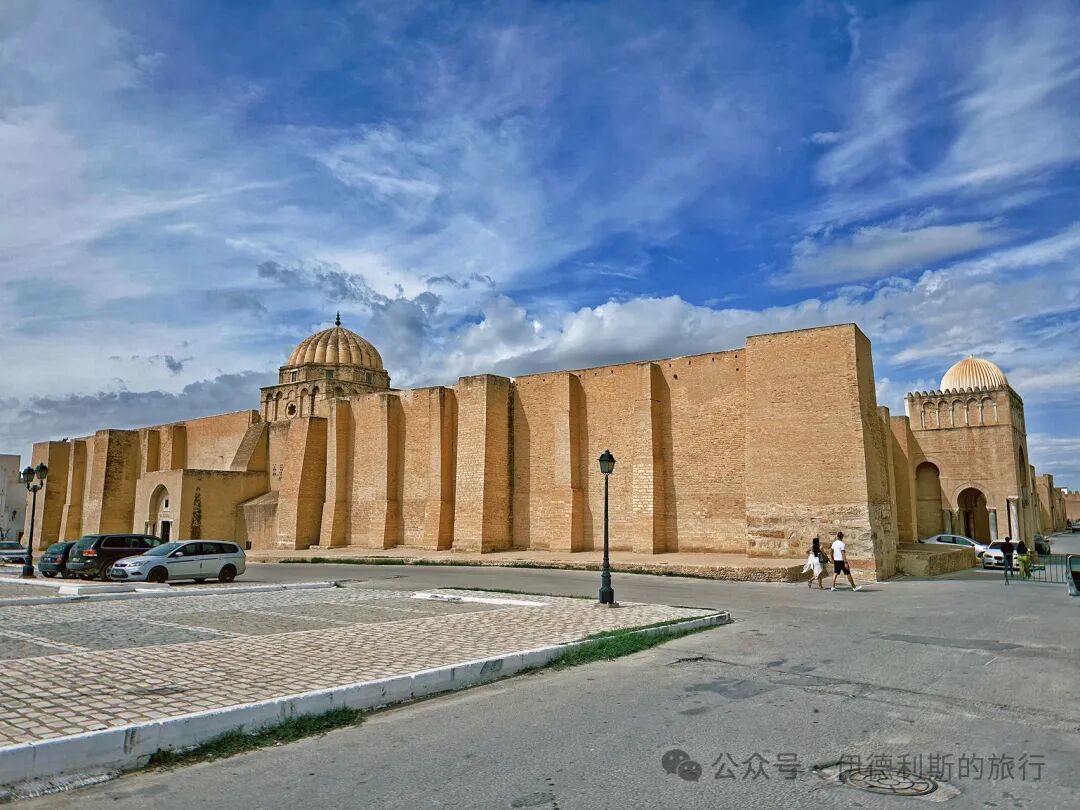
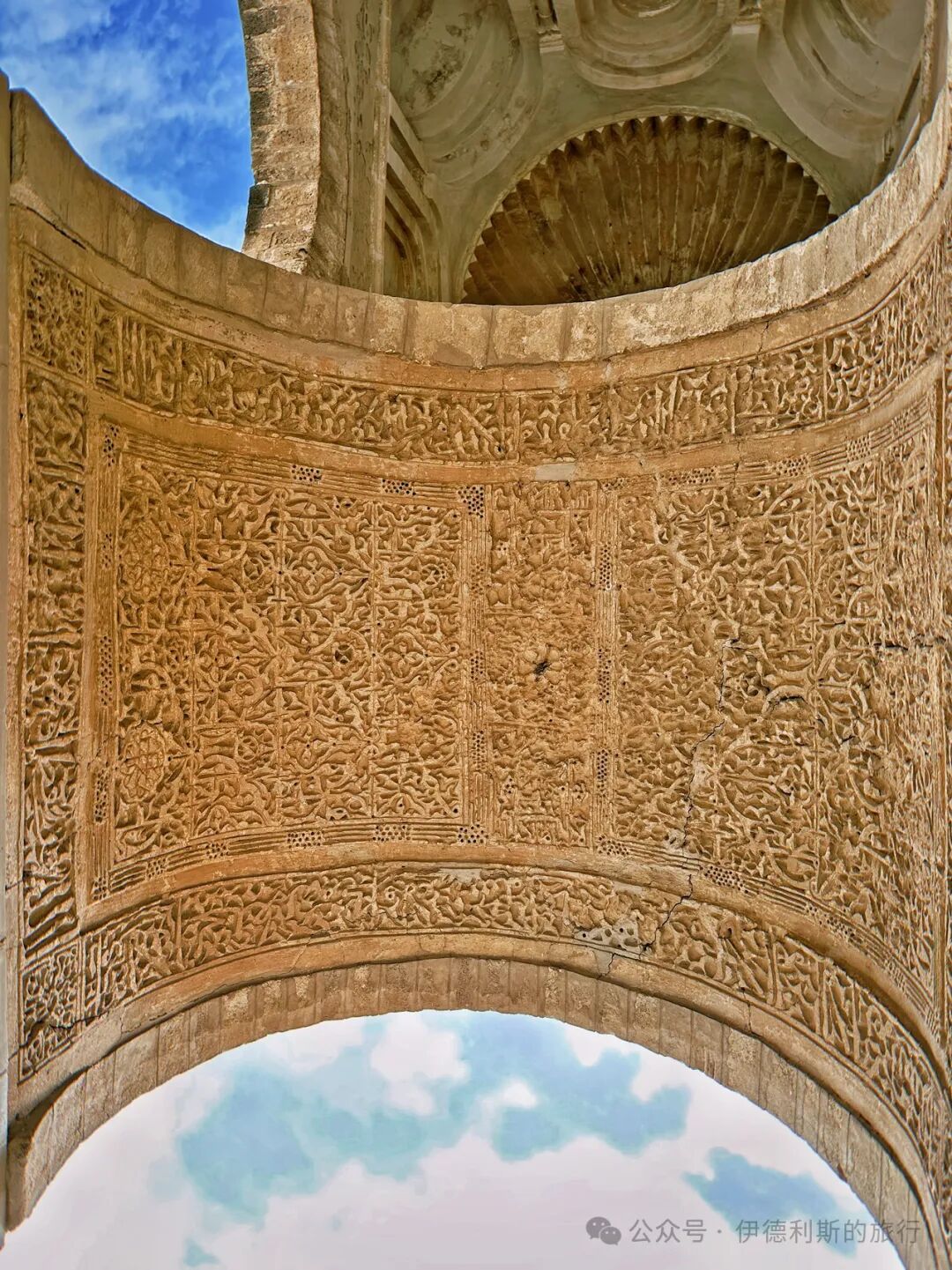
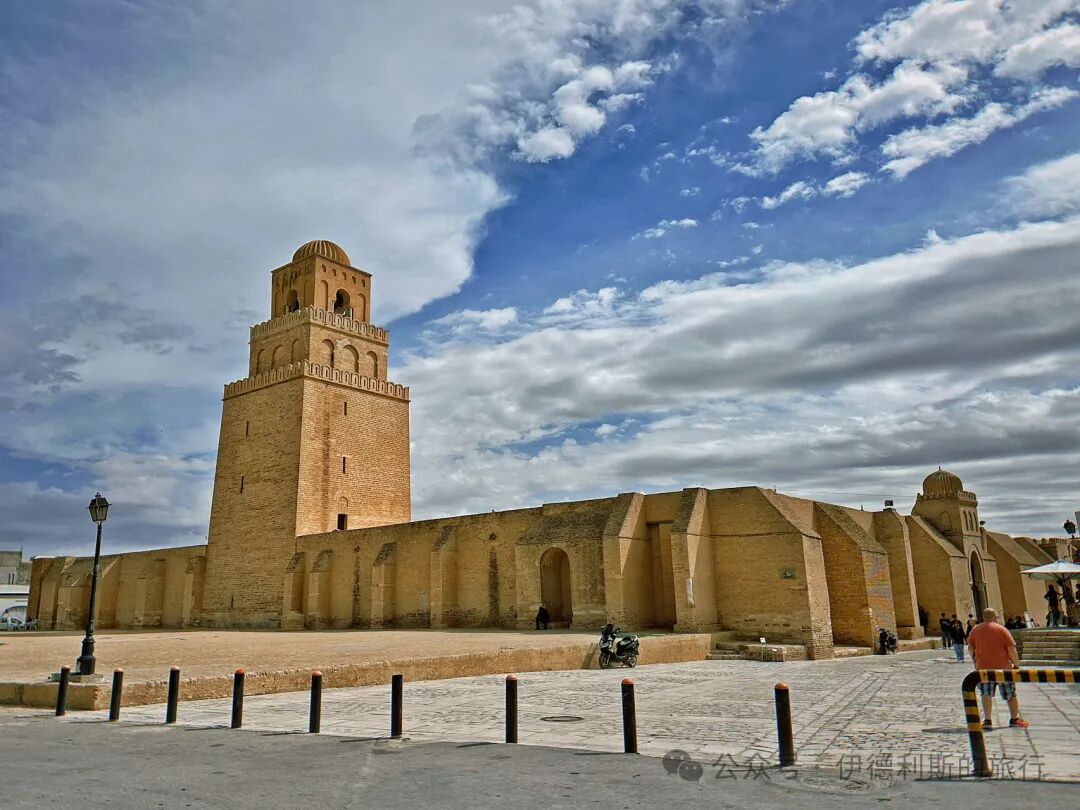
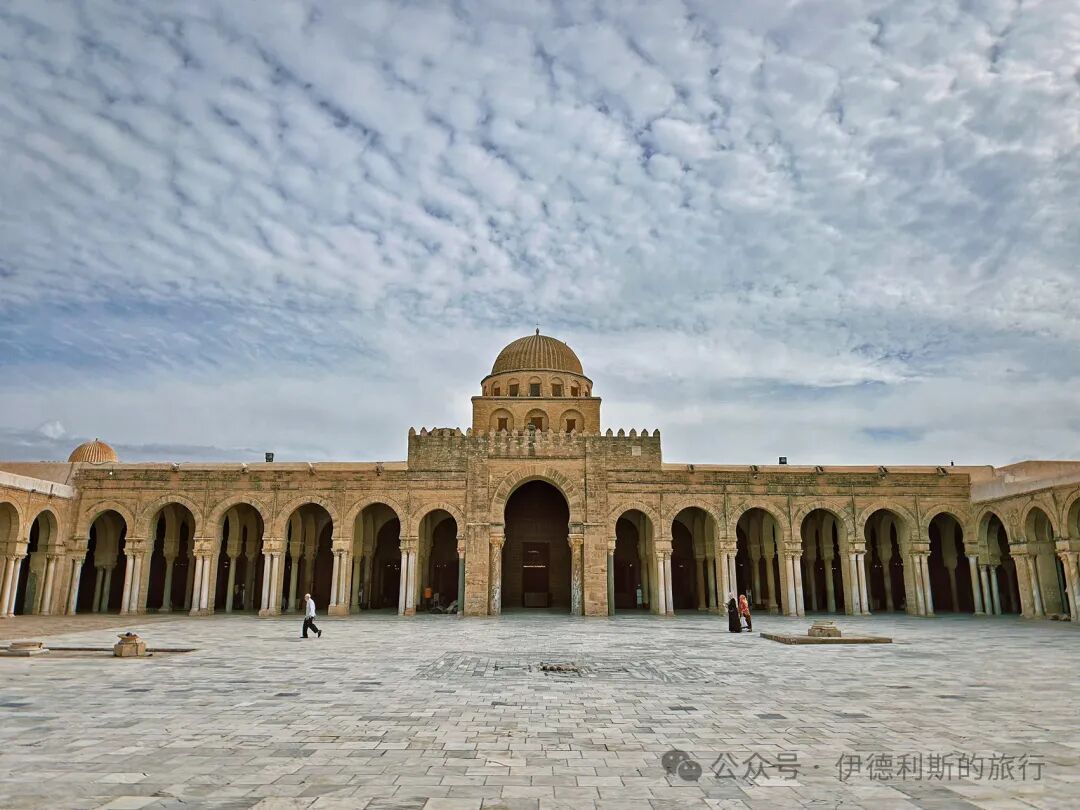
We used this time to look at the exterior of the mosque. The Great Mosque of Kairouan is the oldest and most spectacular Jumu'ah mosque in Tunisia. It was first built in 670 by order of Uqba ibn Nafi, a general of the Arab Umayyad Caliphate. It was destroyed by Christian Berbers in 690 and rebuilt by the Umayyad Caliphate in 703. As the Arab population in Tunisia grew, the number of Muslims in Kairouan increased. The Great Mosque was rebuilt and renovated many times between 724-728, 774, 836, 862-863, and 875, finally taking its current form in the 9th century.
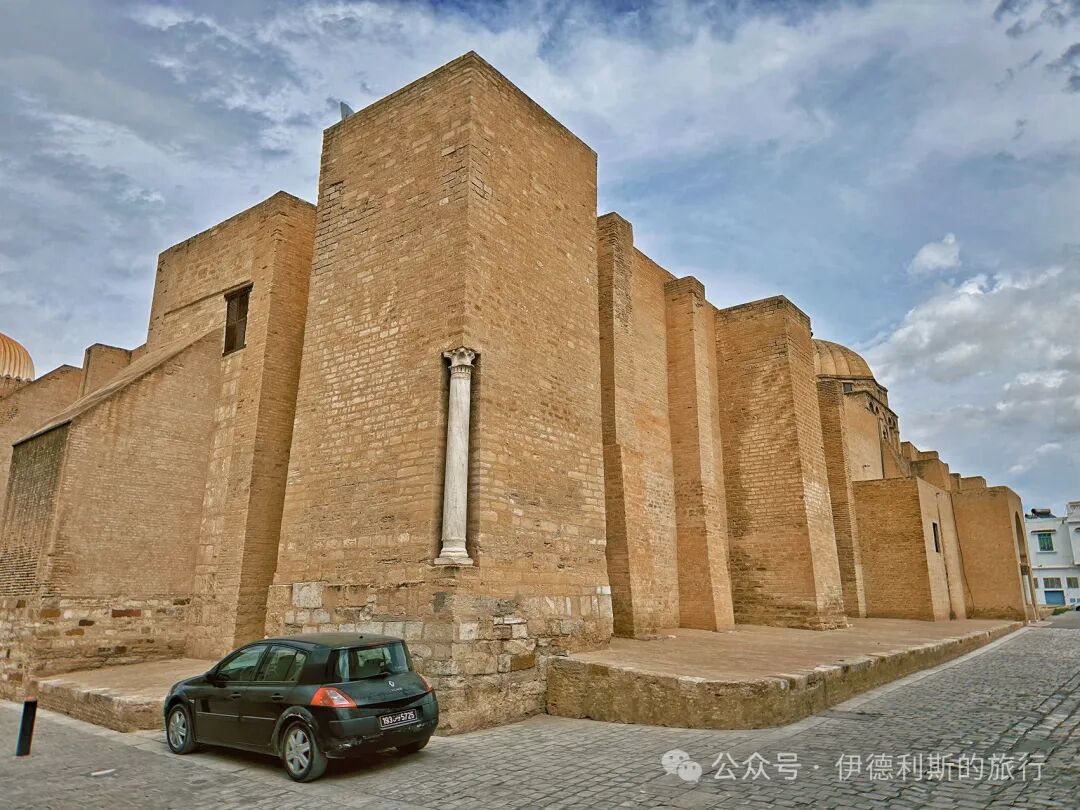
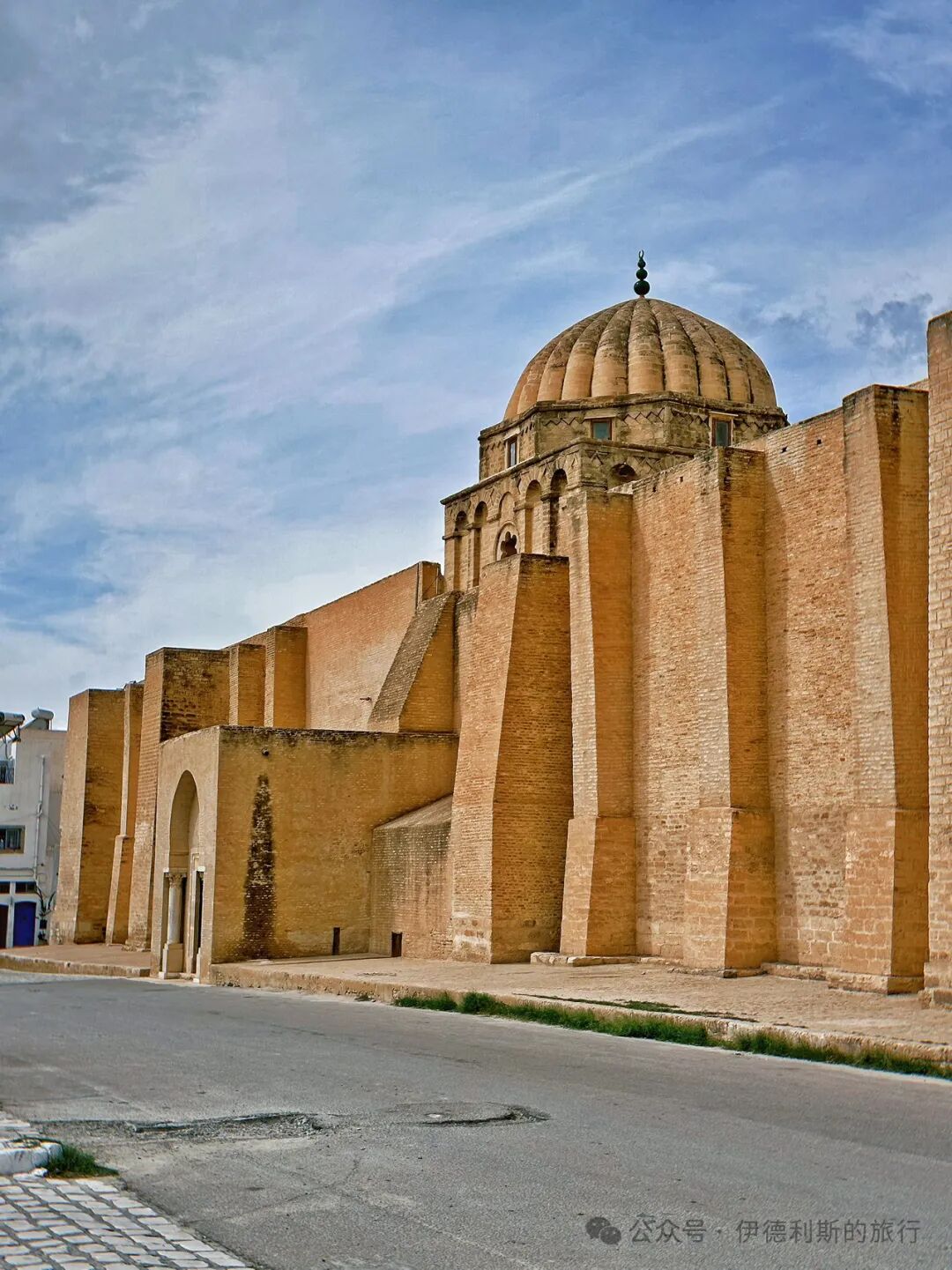
The Great Mosque is a huge, irregular quadrilateral with a perimeter of 405 meters, looking like a fortress from the outside. The outer walls are 1.9 meters thick and built from stone, rubble, and bricks. Because the ground is quite soft, many buttresses were built on the outer walls to increase stability.
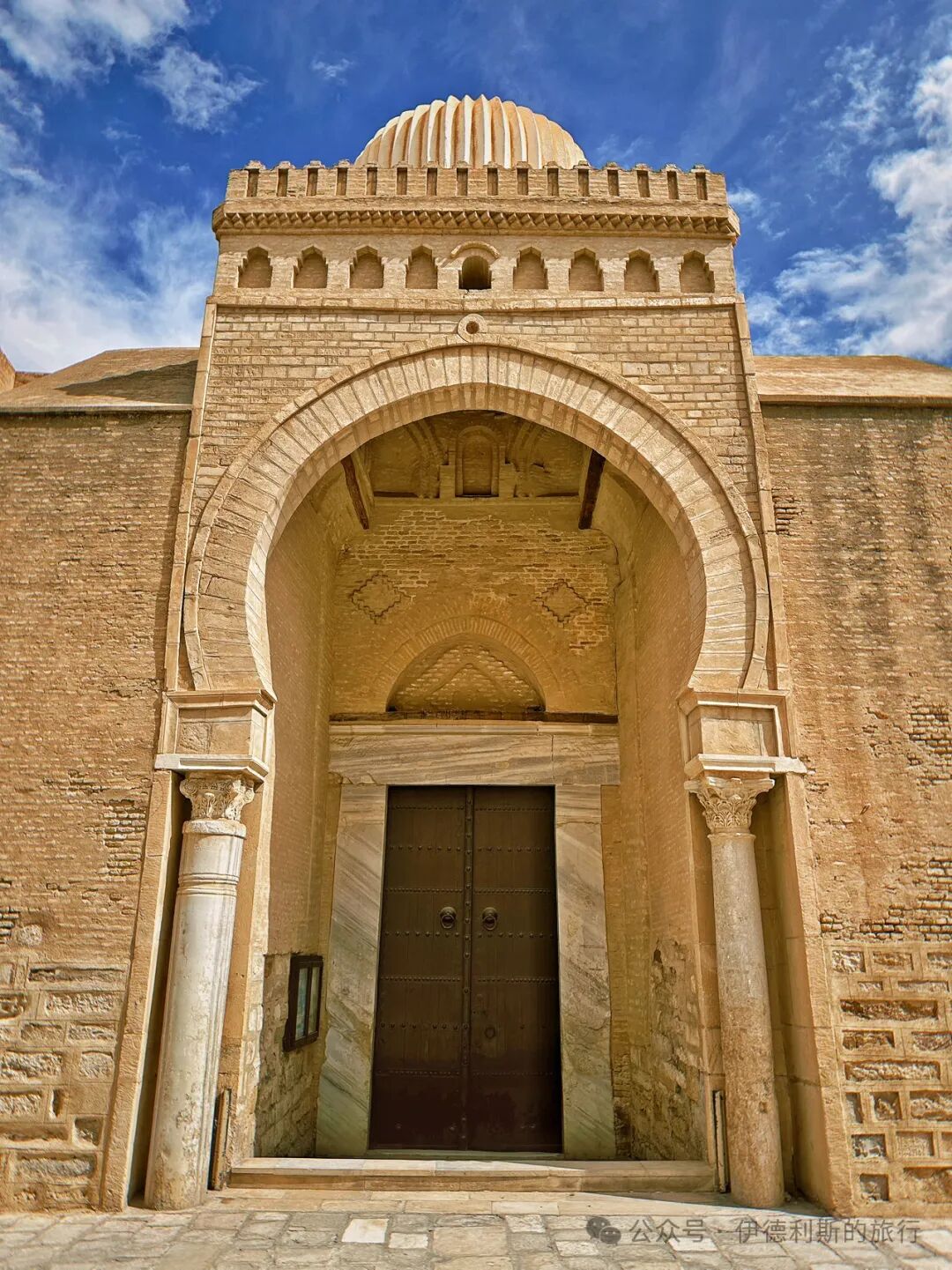
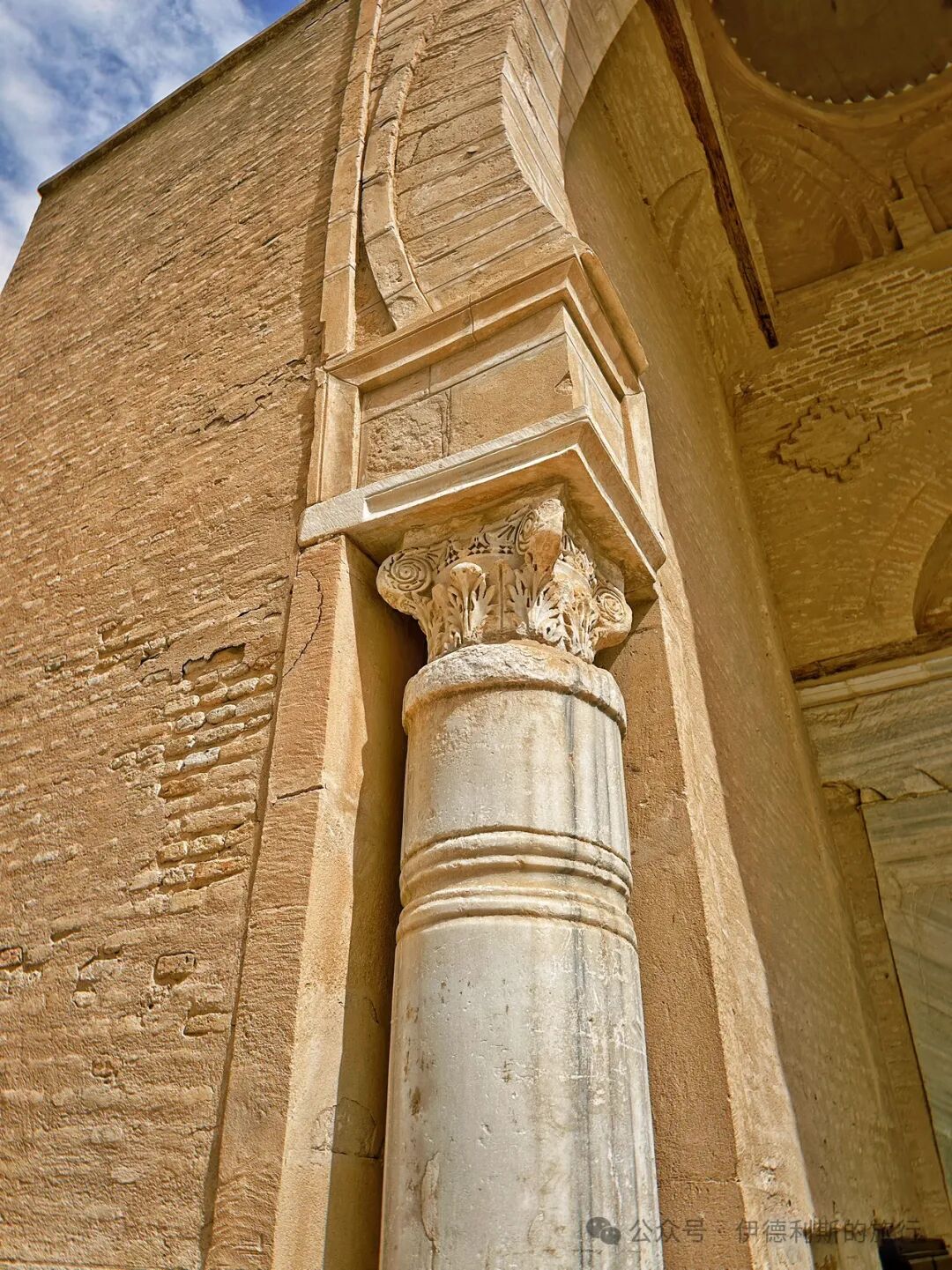
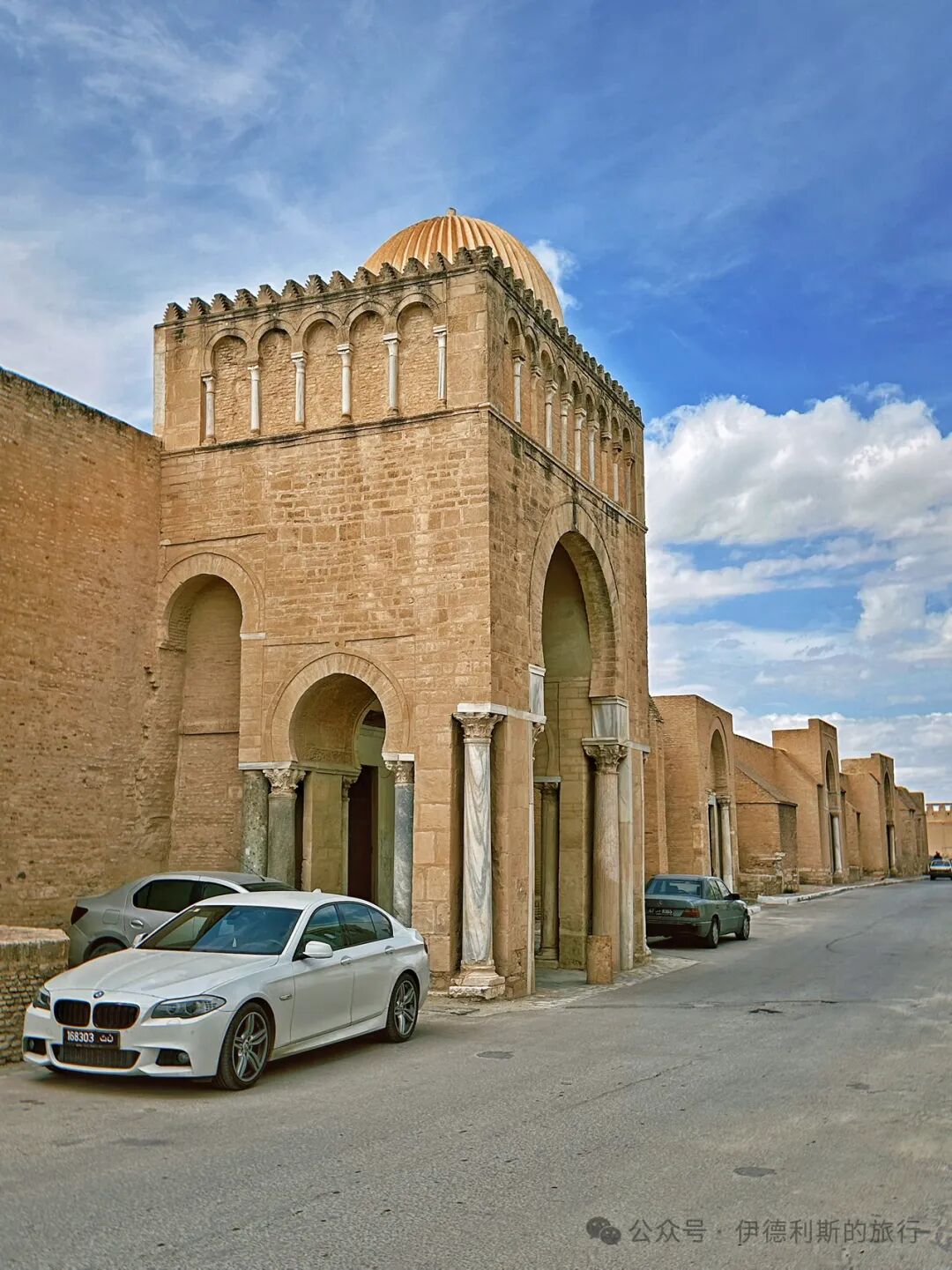
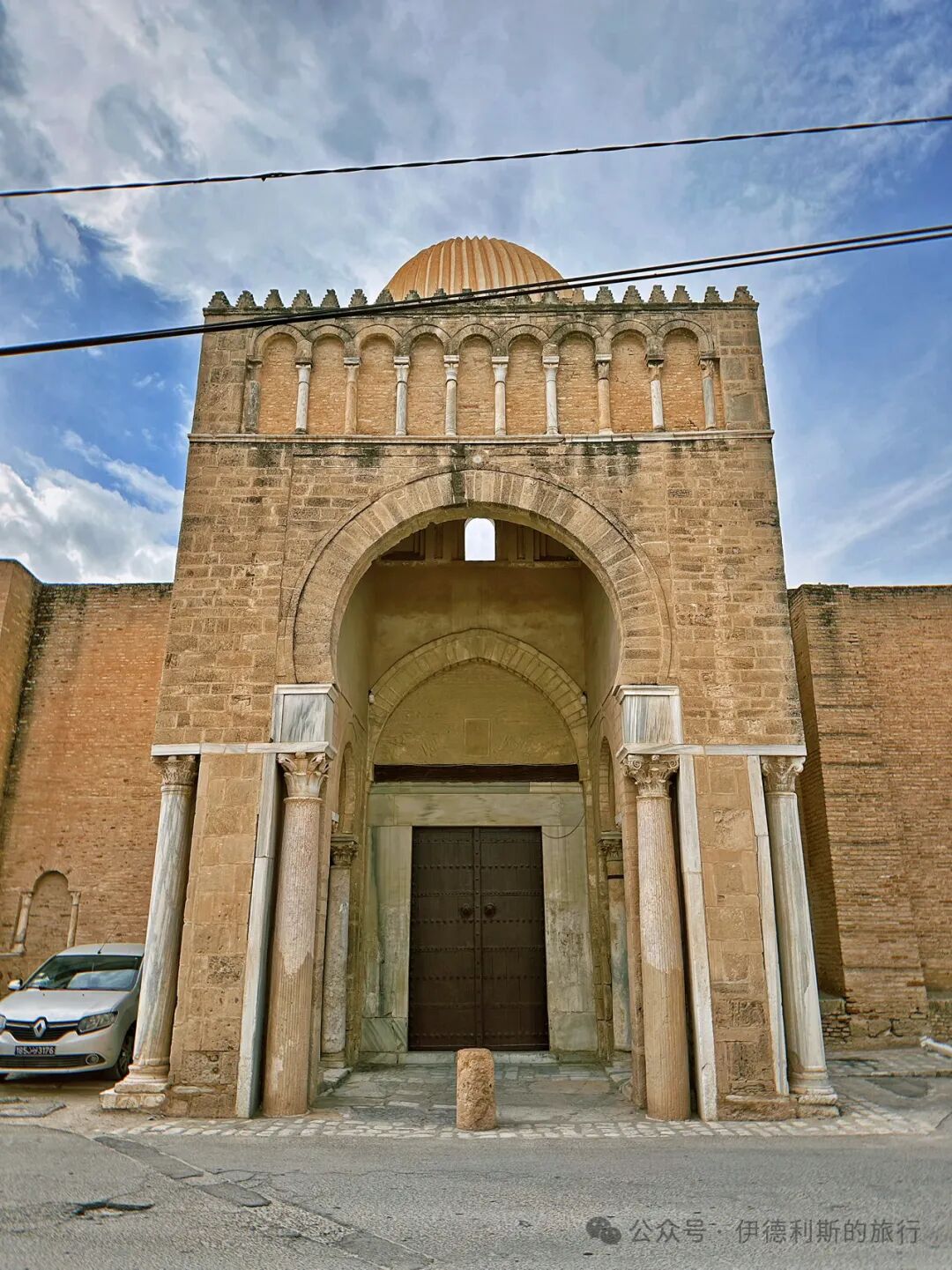
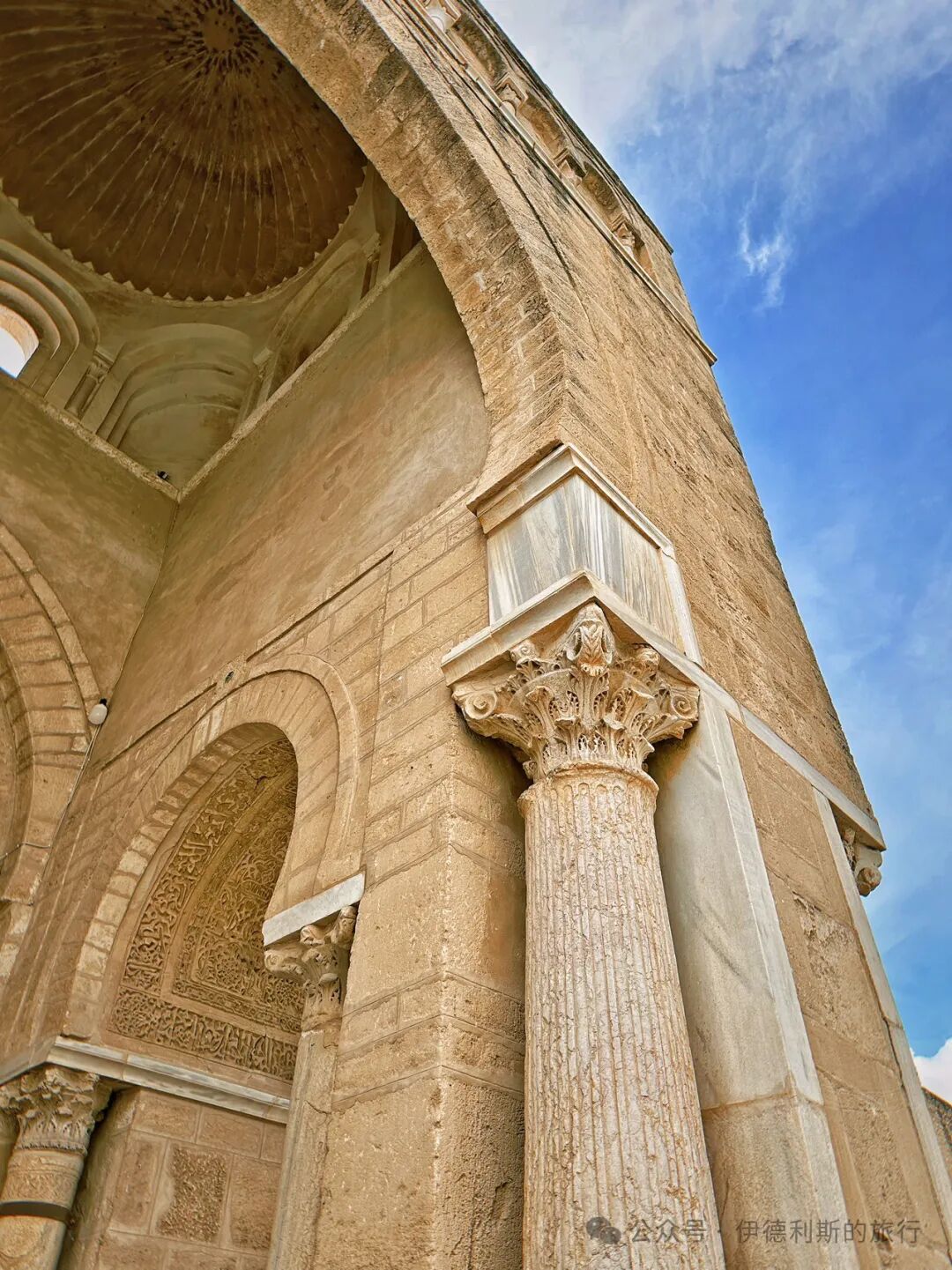
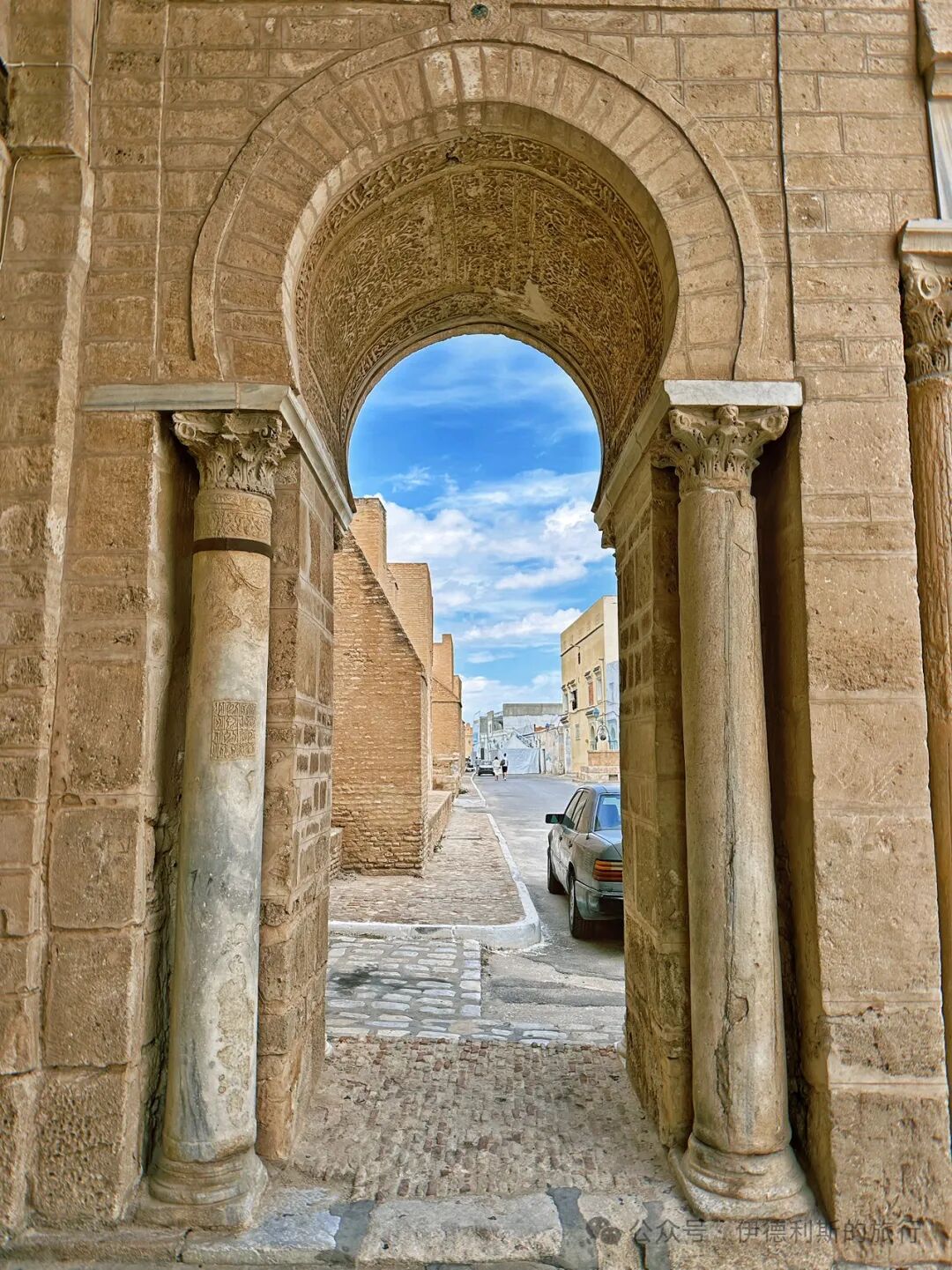
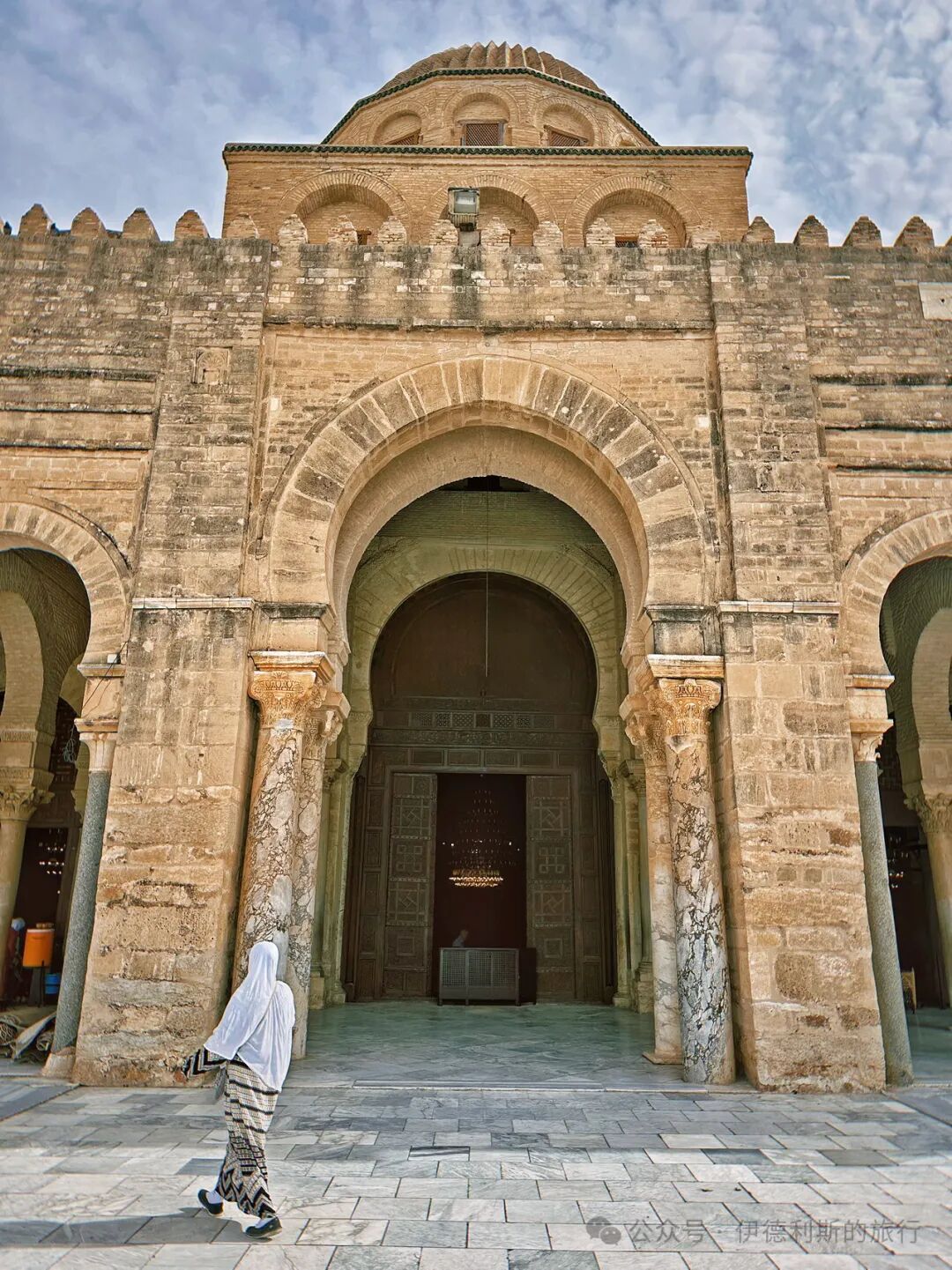
The Great Mosque has nine gates, some of which have porches and spiral-shaped domes. Bab Lalla Rihana on the southeast side was built in 1293 during the Hafsid dynasty. It features a horseshoe arch and ancient stone columns that blend perfectly with the 9th-century walls.
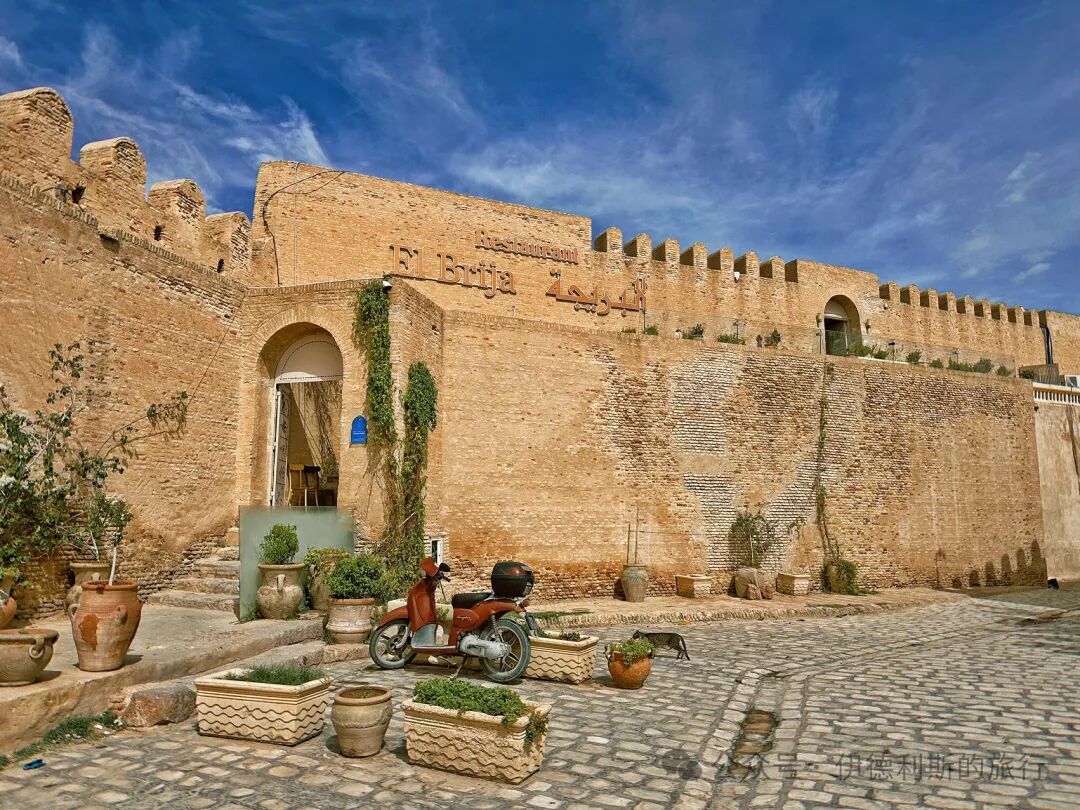
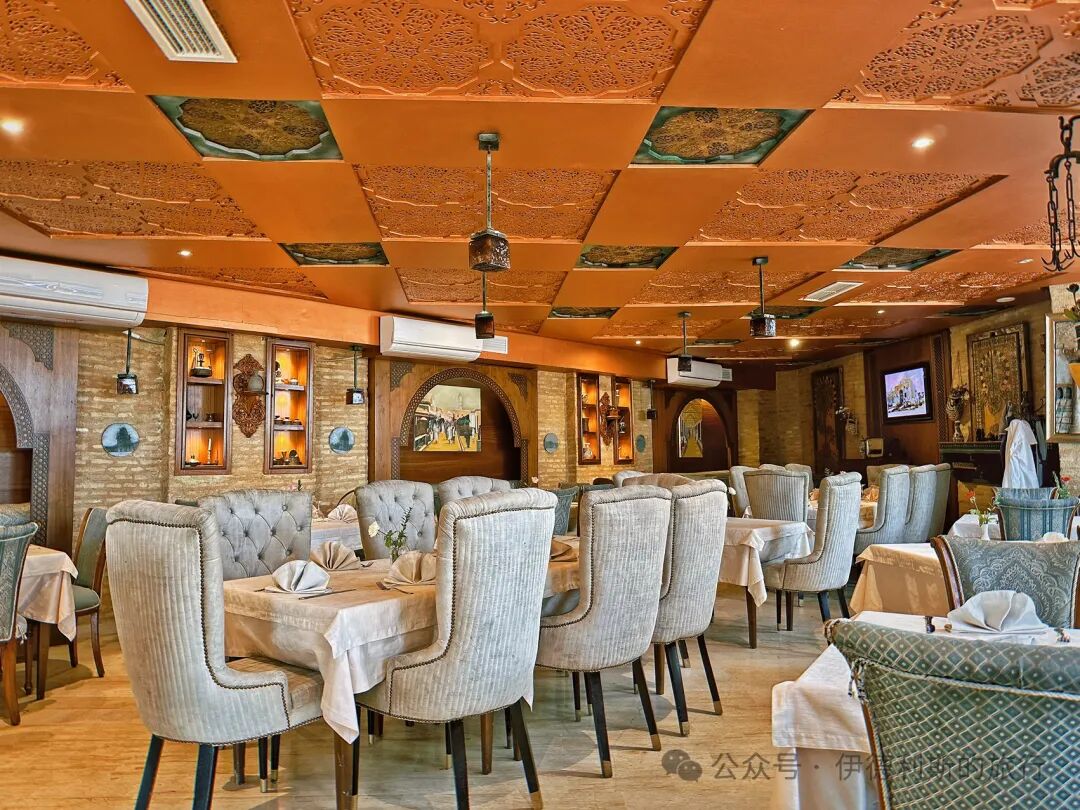
While waiting for Jumu'ah, we had lunch at El Brija Restaurant, located on the city wall next to the Great Mosque. The atmosphere and service were both good, and they serve traditional Tunisian food. I recommend eating here when visiting the Great Mosque.
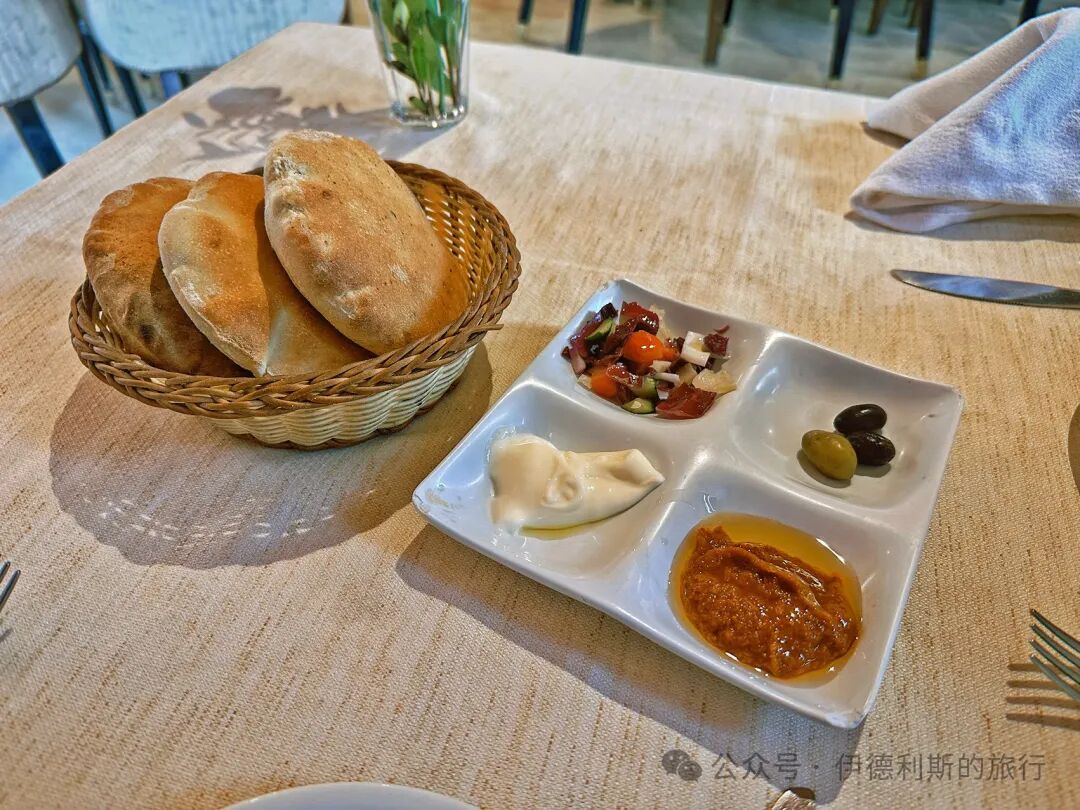
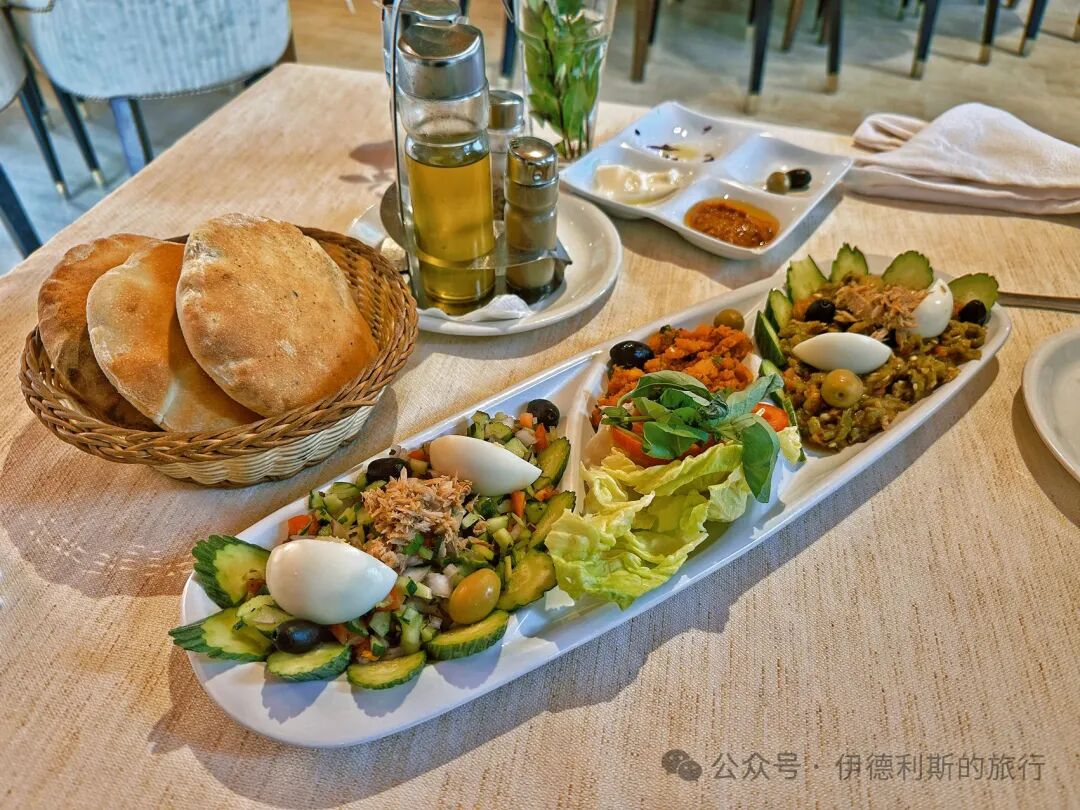
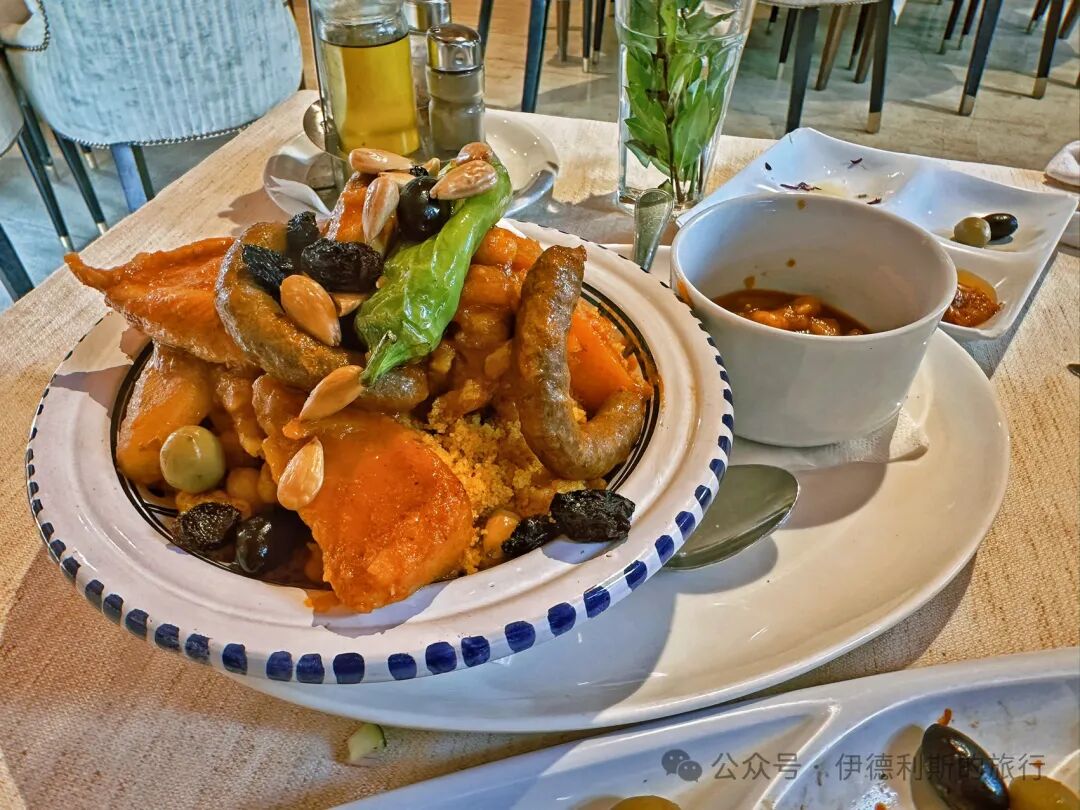
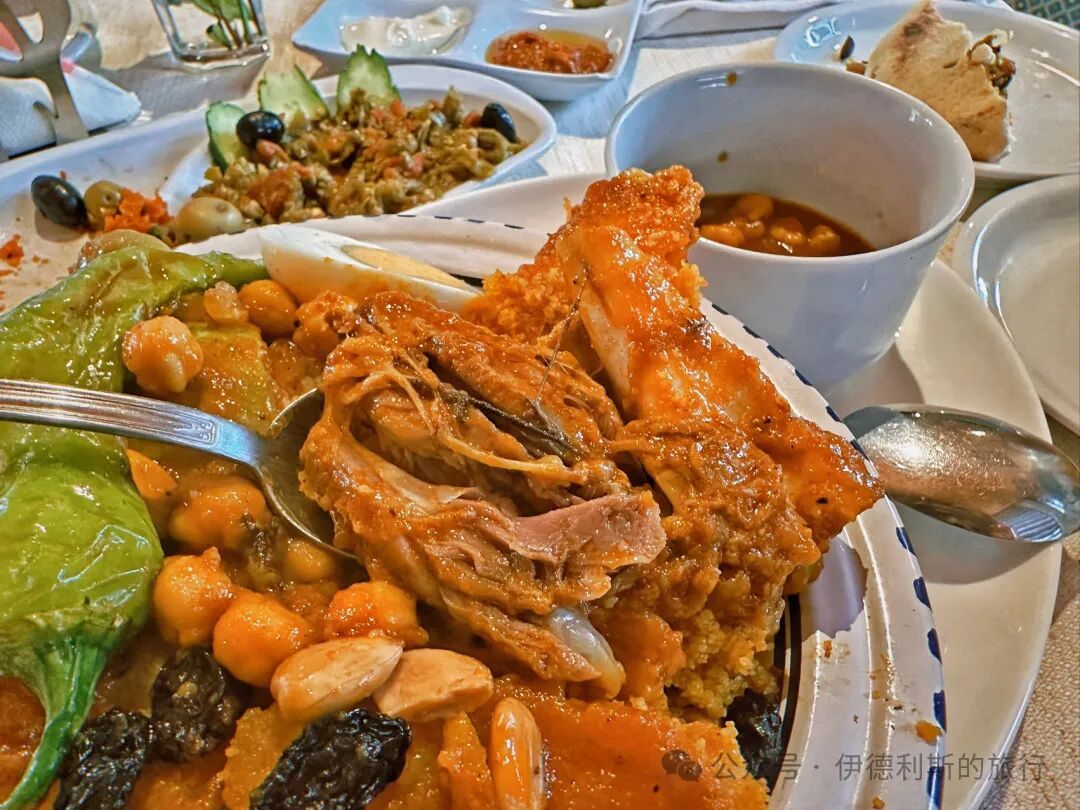
We ordered a traditional appetizer platter and a mixed couscous stew. When eating at a proper restaurant in Tunisia, you really only need to order the main course, as most places provide side dishes and bread.
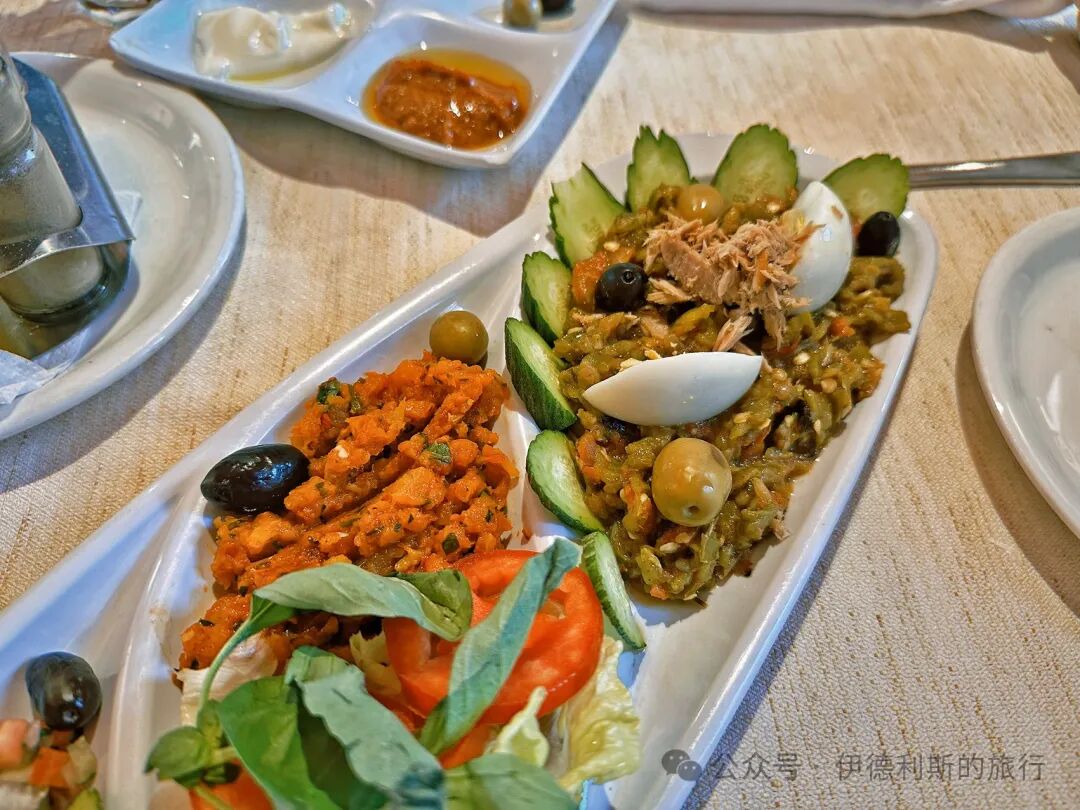
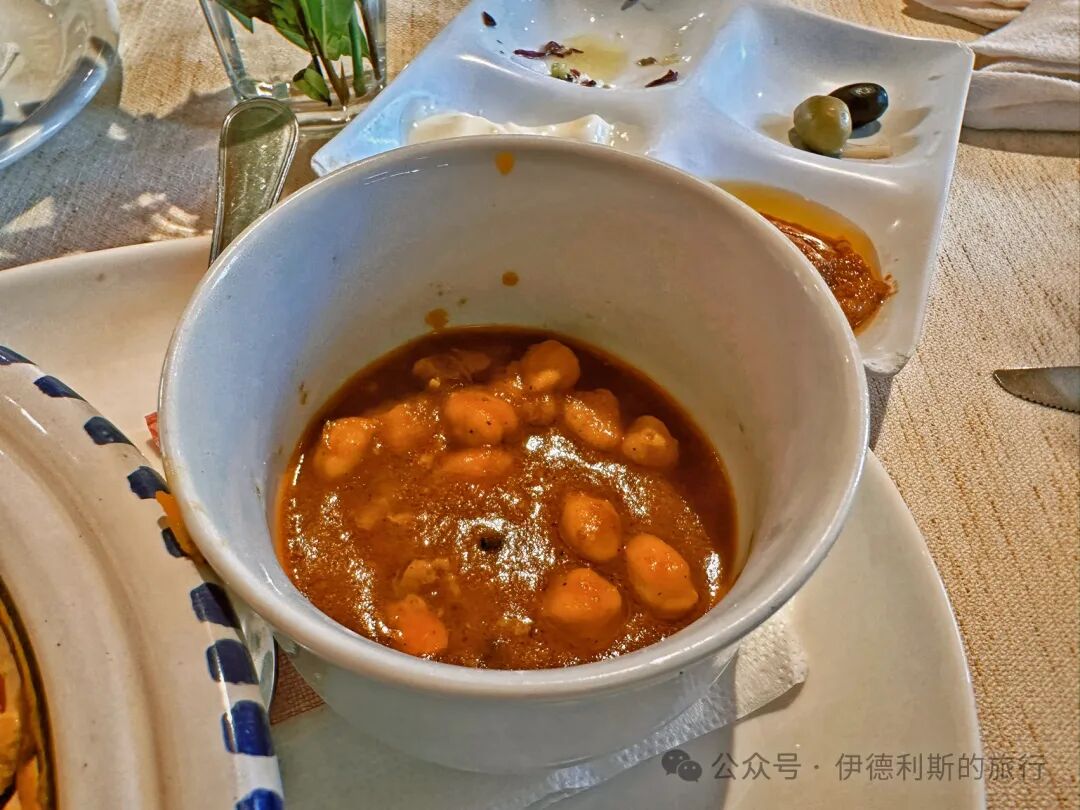
Our appetizer platter included Tunisian salad, Houria carrot salad, and Mechouia green pepper salad. We ate these three dishes almost every day in Tunisia. Tunisian salad is made of diced cucumbers, tomatoes, and onions mixed with olive oil, topped with boiled eggs and tuna. Mechouia salad contains green peppers, tomatoes, onions, garlic, and more. Tunisians love it, and it is rich in vitamins and very healthy. The couscous stew was very rich, containing lamb, Merguez sausage, chicken, beef, dried fruits, and preserved fruits. The Merguez sausage is seasoned with cumin and chili, making it very flavorful.
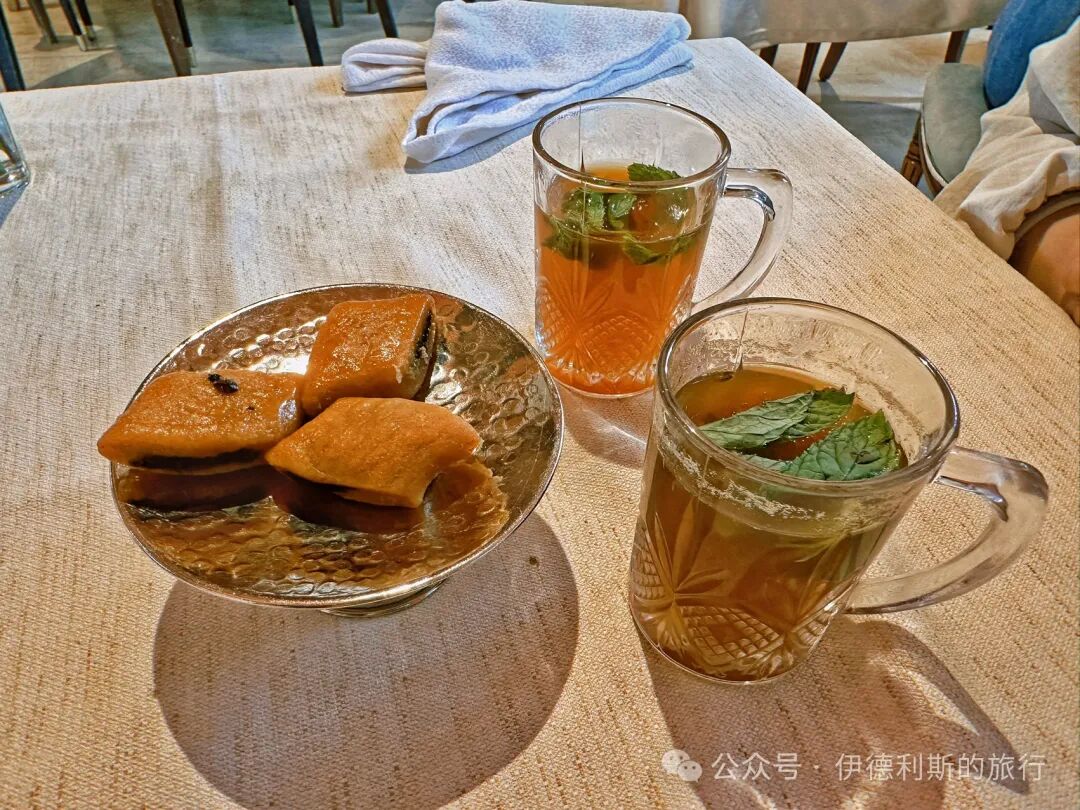
After the meal, we were served mint tea and Makroudh dessert. Makroudh is a classic North African Maghreb snack for breaking the fast. It is made of semolina on the outside, filled with date paste and dried fruits, then baked and soaked in syrup.
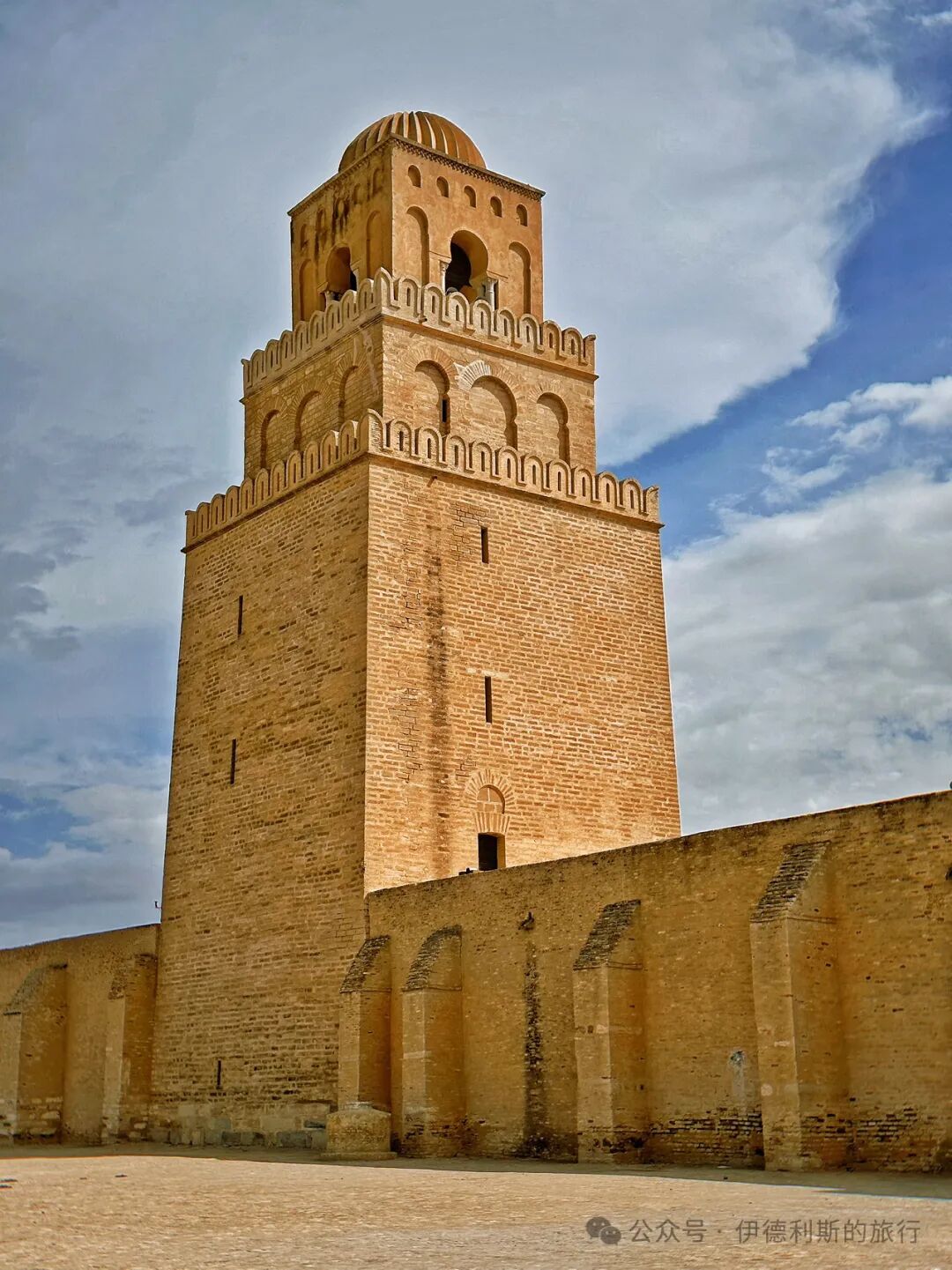
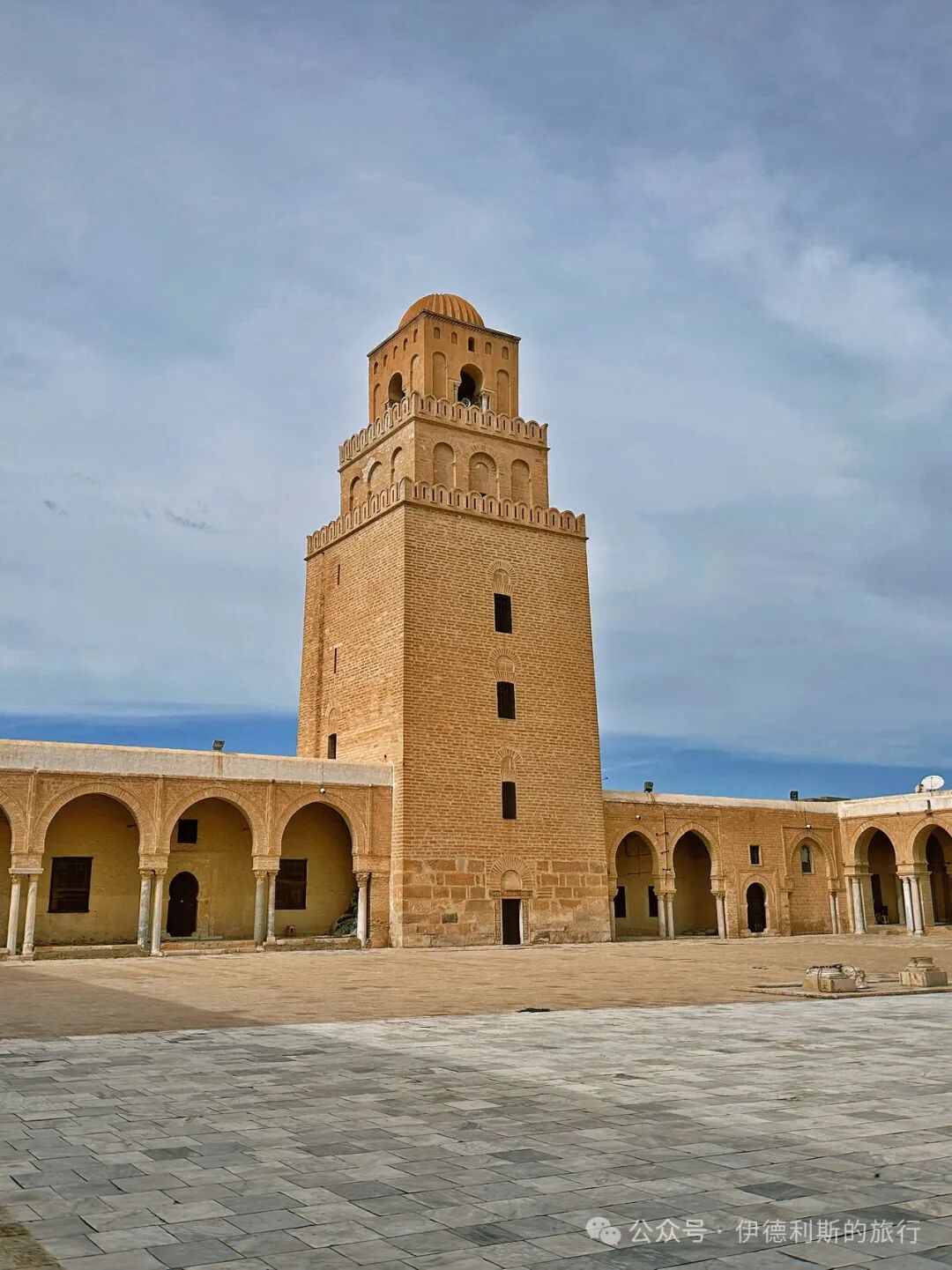
We returned to the Great Mosque after two o'clock, and people were already entering the prayer hall. Once inside the courtyard, the first thing you see is the oldest minaret (bangke ta) still in existence today. The minaret of the Great Mosque of Kairouan was built between the 8th and 9th centuries. The current structure mostly dates back to 836. It is one of the three most important early minarets, alongside the spiral minaret of the Great Mosque of Samarra in Iraq, built between 848 and 852, and the spiral minaret of the Abu Dulaf Mosque in Iraq, built in 859. These three served as models for later minarets across Andalusia and the Maghreb.
There were no minarets during the time of the Prophet and the four Caliphs. People called for prayer (adhan) from the mosque entrance or the roof. Platforms for calling the adhan appeared during the Umayyad dynasty in the 7th century, but true minarets did not emerge until the Abbasid dynasty in the 8th century. There is no final conclusion on the origin of the minaret. Some say it mimics the towers of Syrian churches, while others suggest it was inspired by the Lighthouse of Alexandria or Mesopotamian ziggurats. Four towers were built during the reconstruction of the Sacred Mosque in Mecca in the late 8th century, but they have not survived. The earliest surviving minarets are the one at the Great Mosque of Kairouan and the two in Iraq. The Bride's Minaret at the Umayyad Mosque in Damascus may also date to the 9th century, but there is no clear record of this.
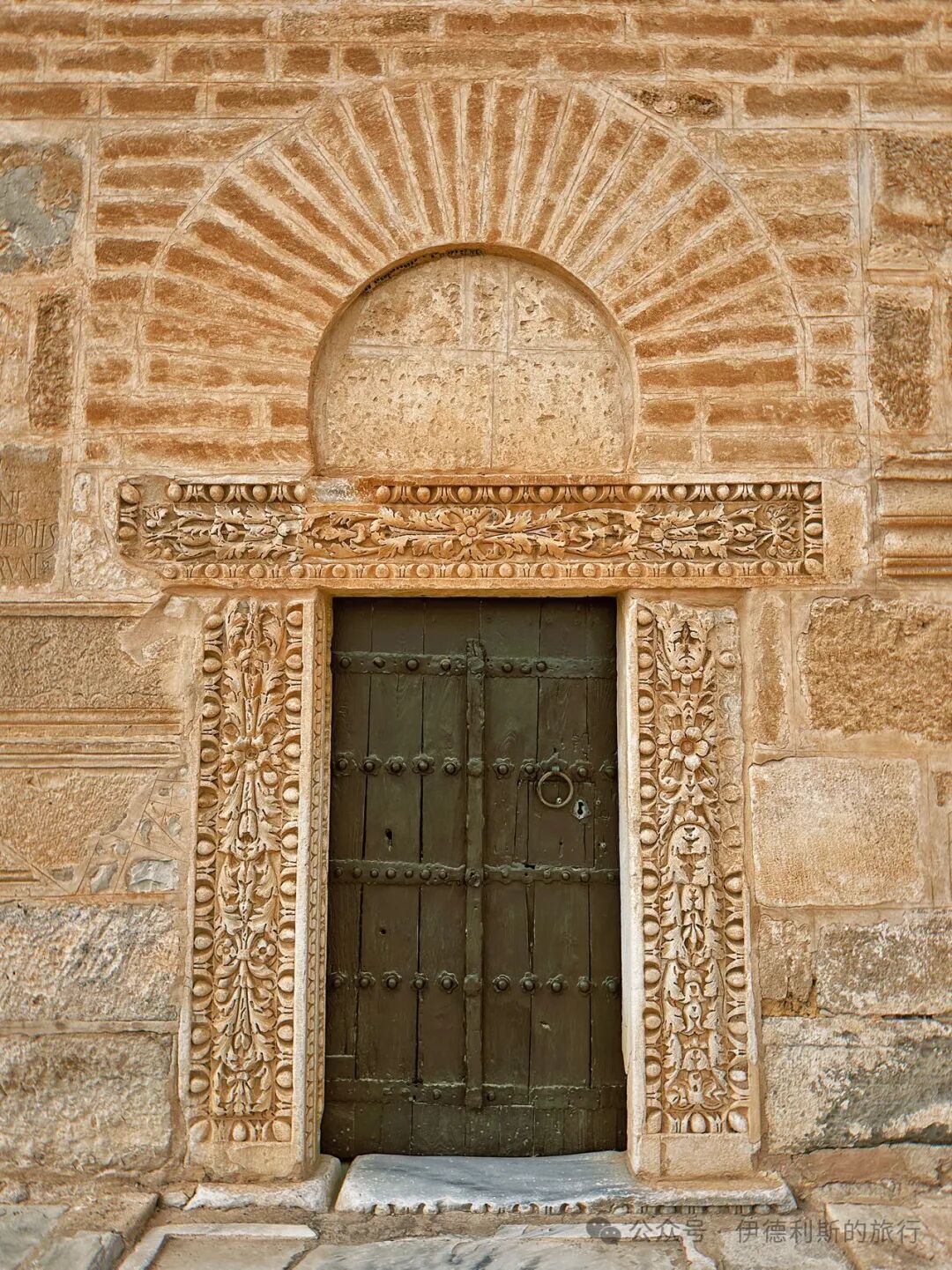
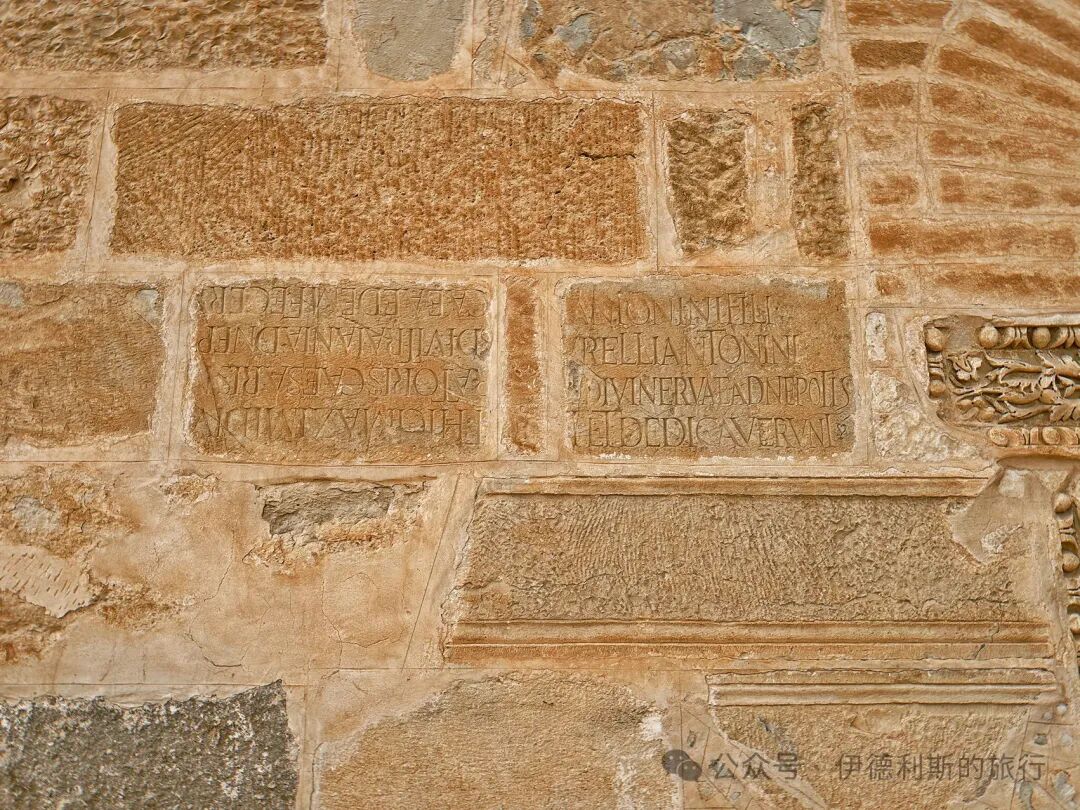
The minaret of the Great Mosque of Kairouan is 31.5 meters tall. Its base dates back to the Umayyad period in 725, and you can see Latin inscriptions from the Roman era on the walls. The first and second levels of the minaret were built in 836 using carefully cut stone. The side facing the courtyard has windows, while the other three sides have arrow slits. The third level of the minaret is a four-arched structure (chahartaq), which was likely added later.
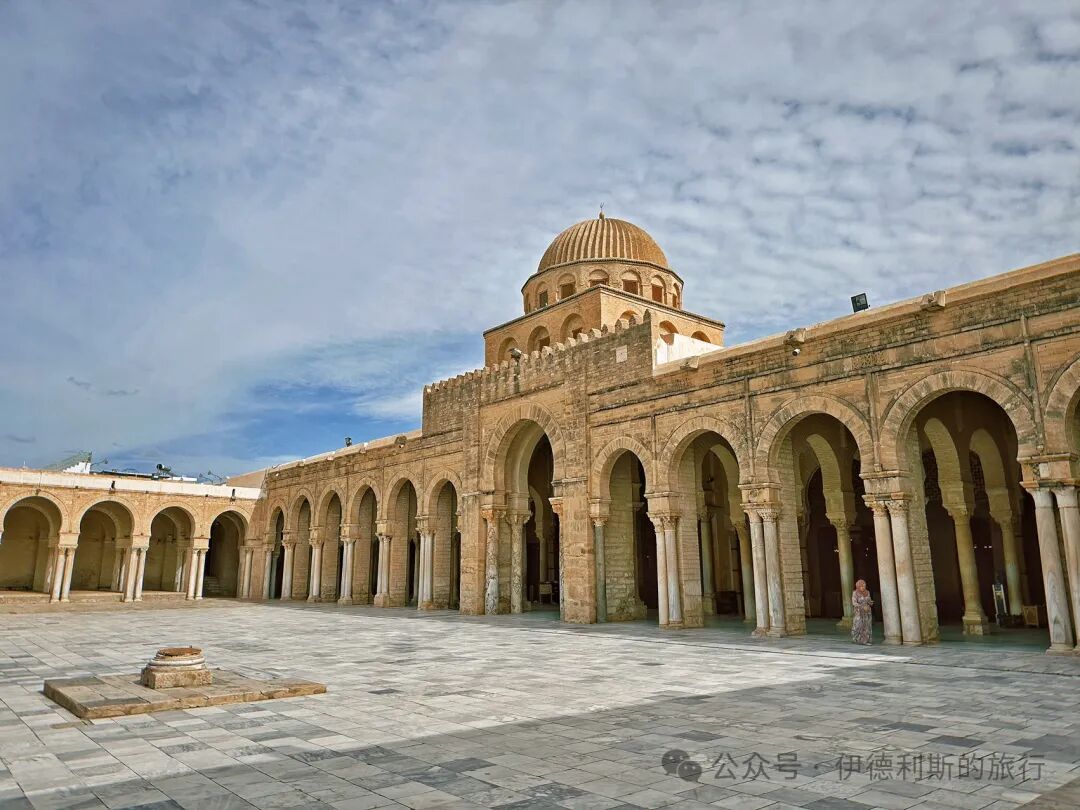
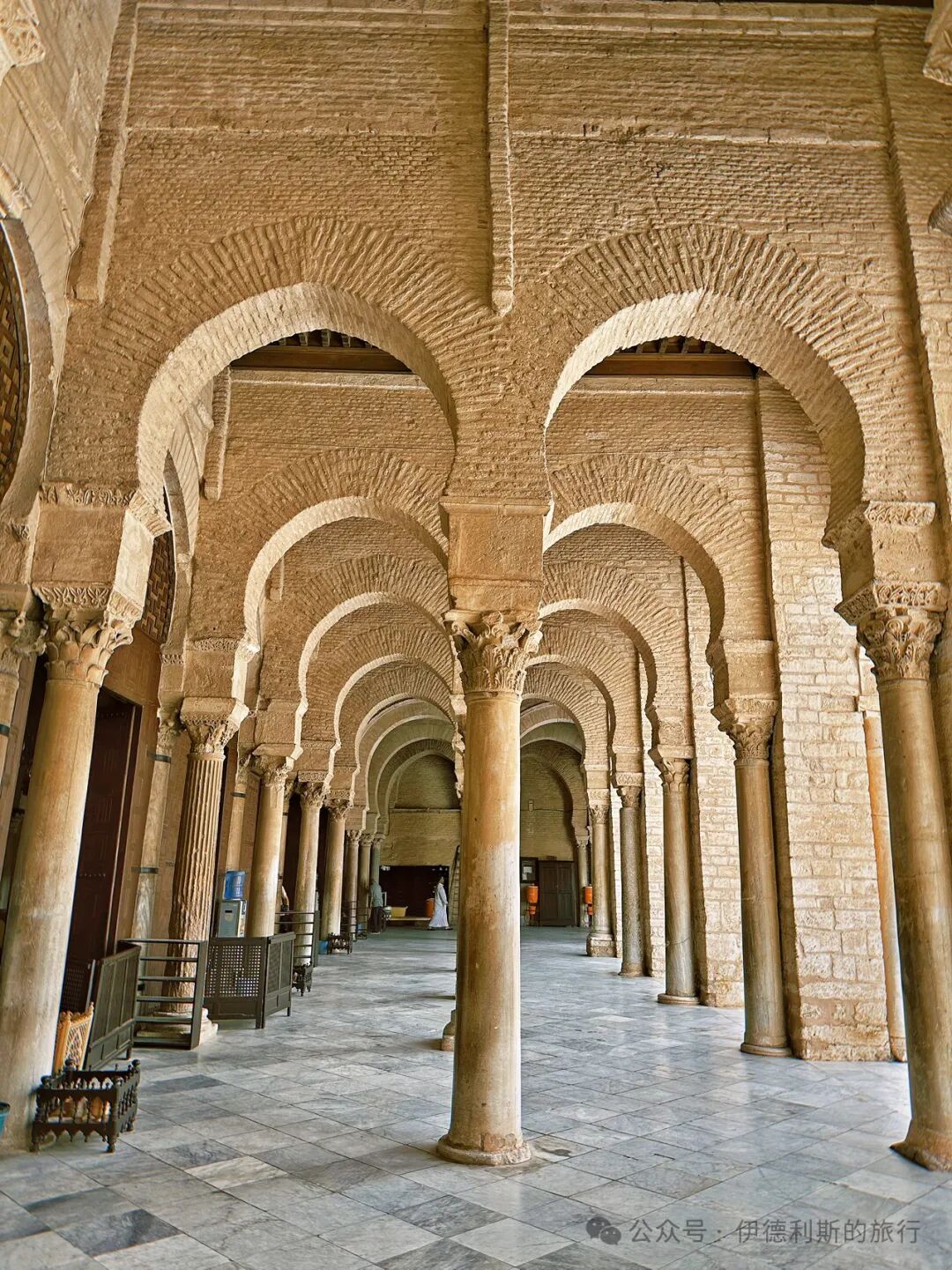
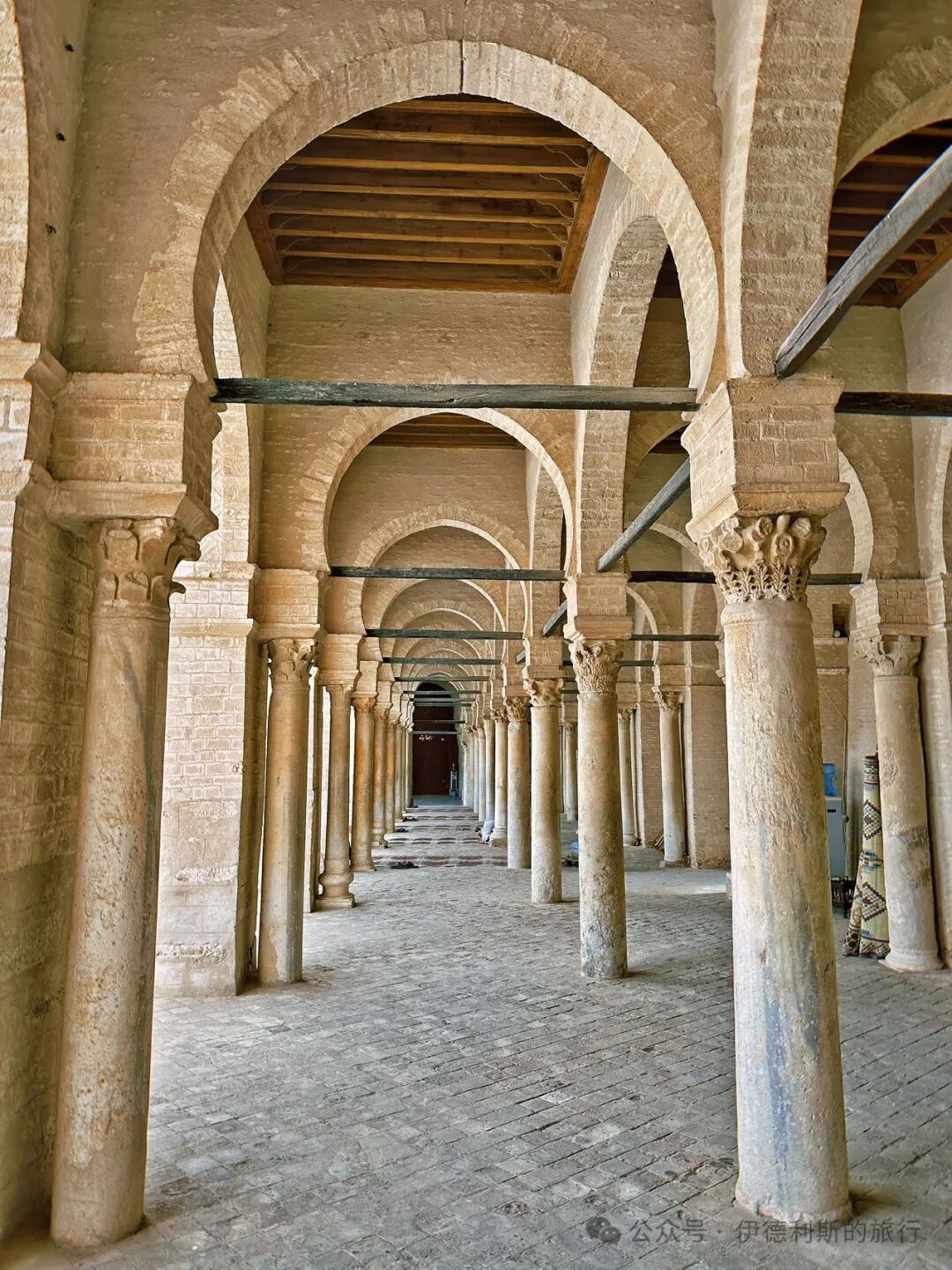
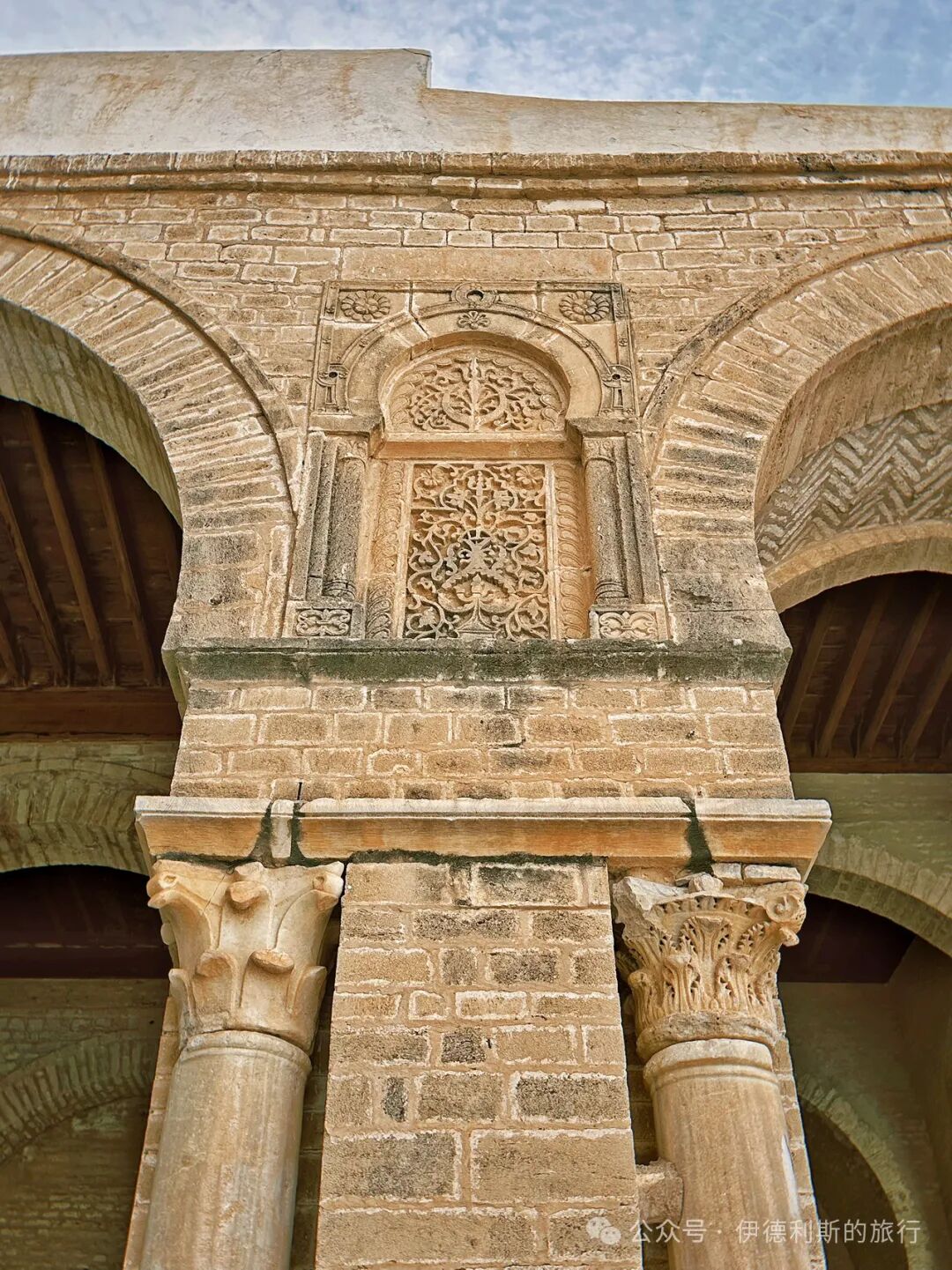
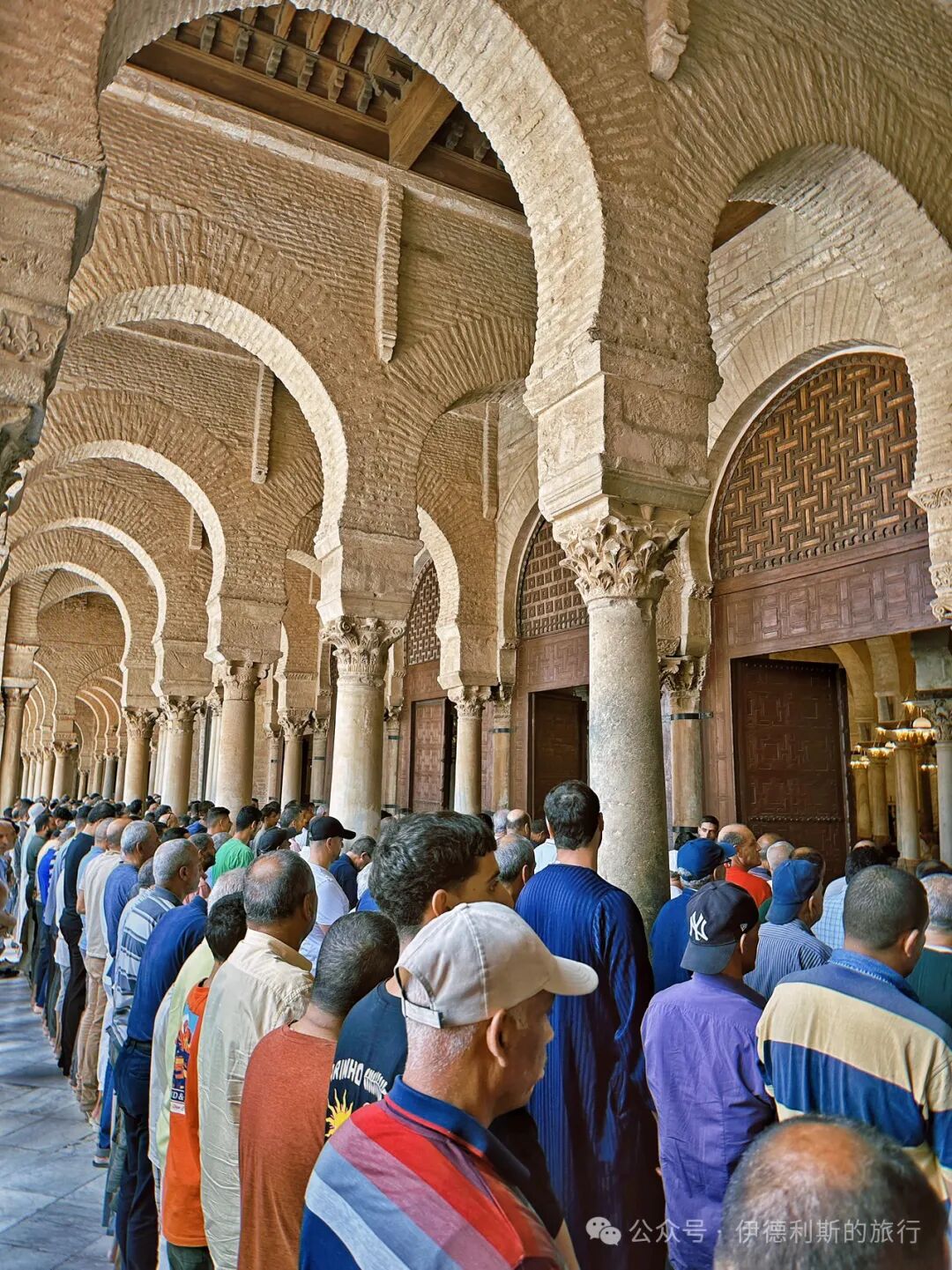
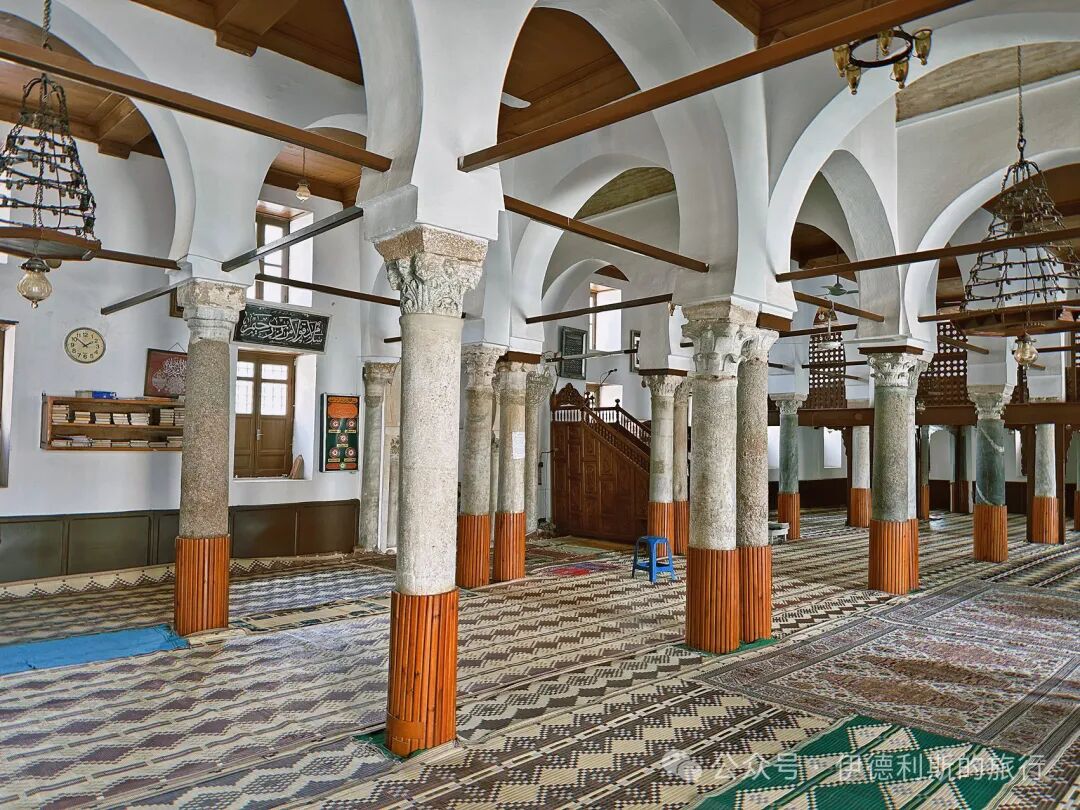
Three sides of the Great Mosque are surrounded by double-row horseshoe-shaped arcades. The columns come from various ancient Roman and Byzantine ruins, including some from the famous site of Carthage.
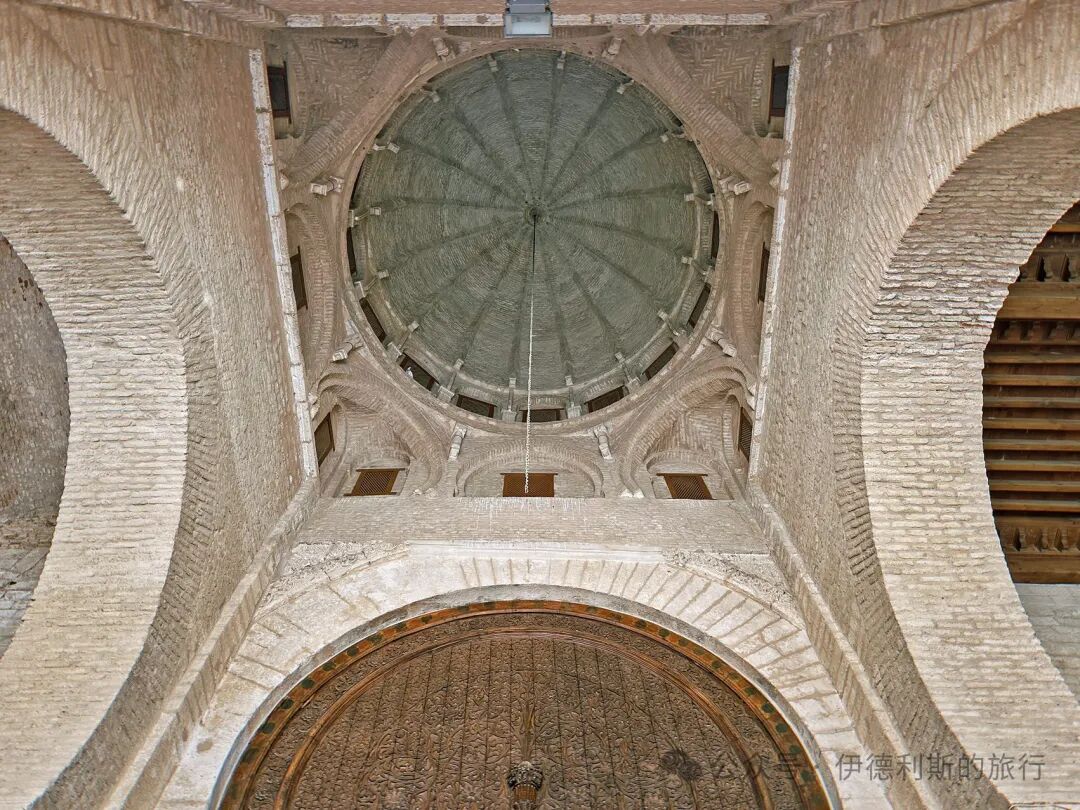
There is a dome above the main entrance of the prayer hall and another above the mihrab. These domes, built in 836, are important examples of early mosque domes.
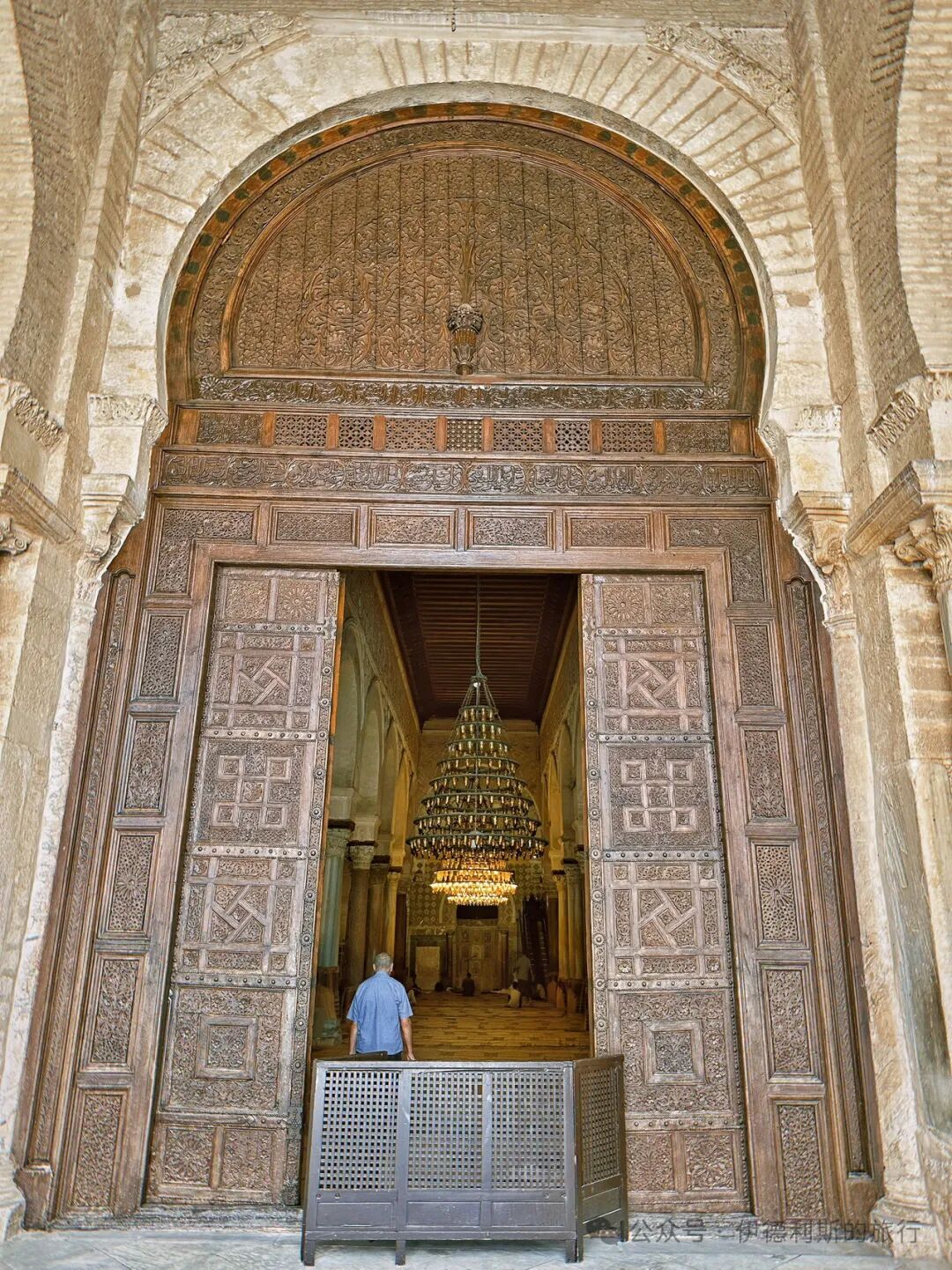
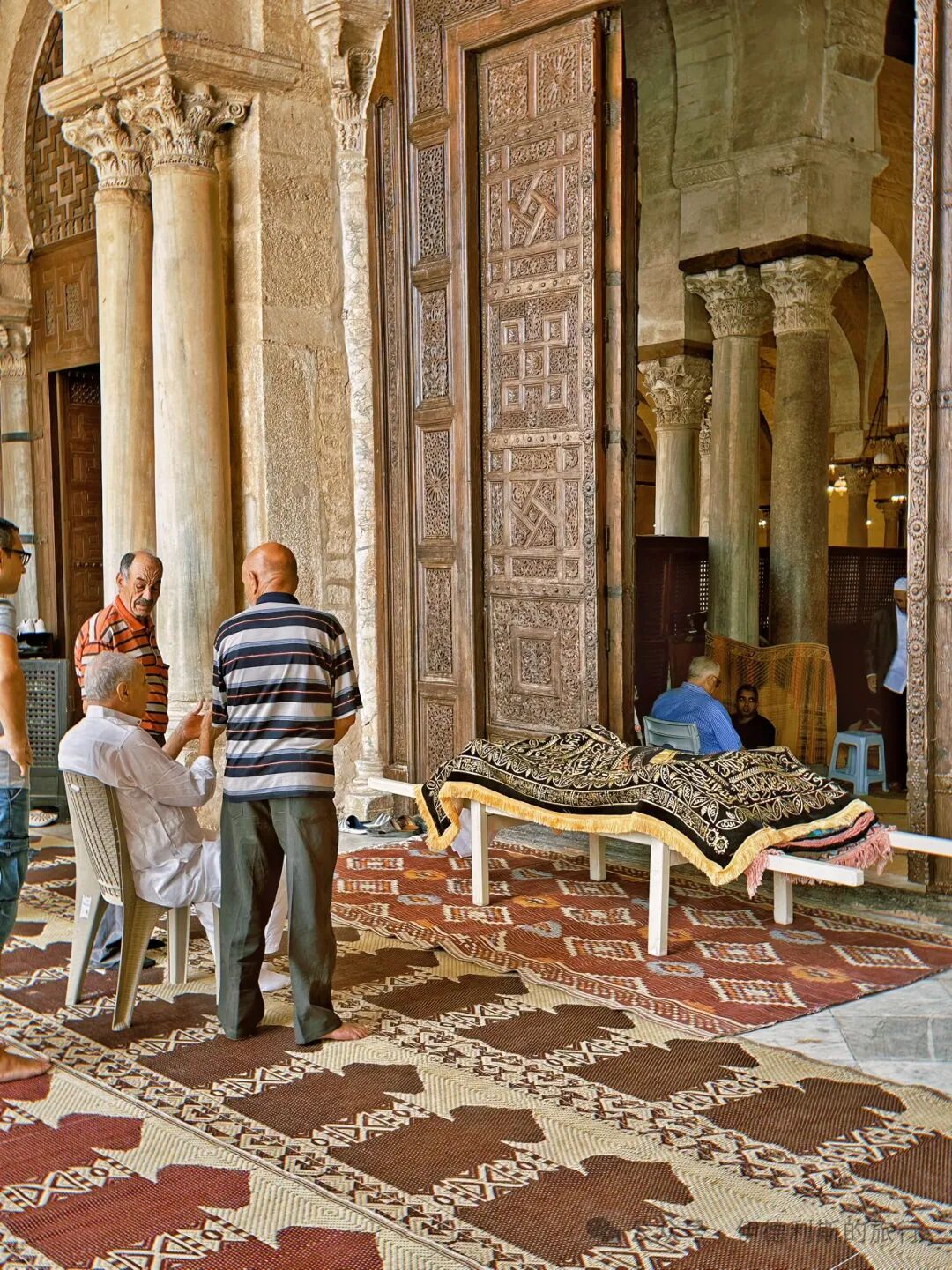
The prayer hall connects to the arcades through 17 carved wooden doors. The most beautiful one in the center was built in 1828 and features rich geometric and floral patterns.
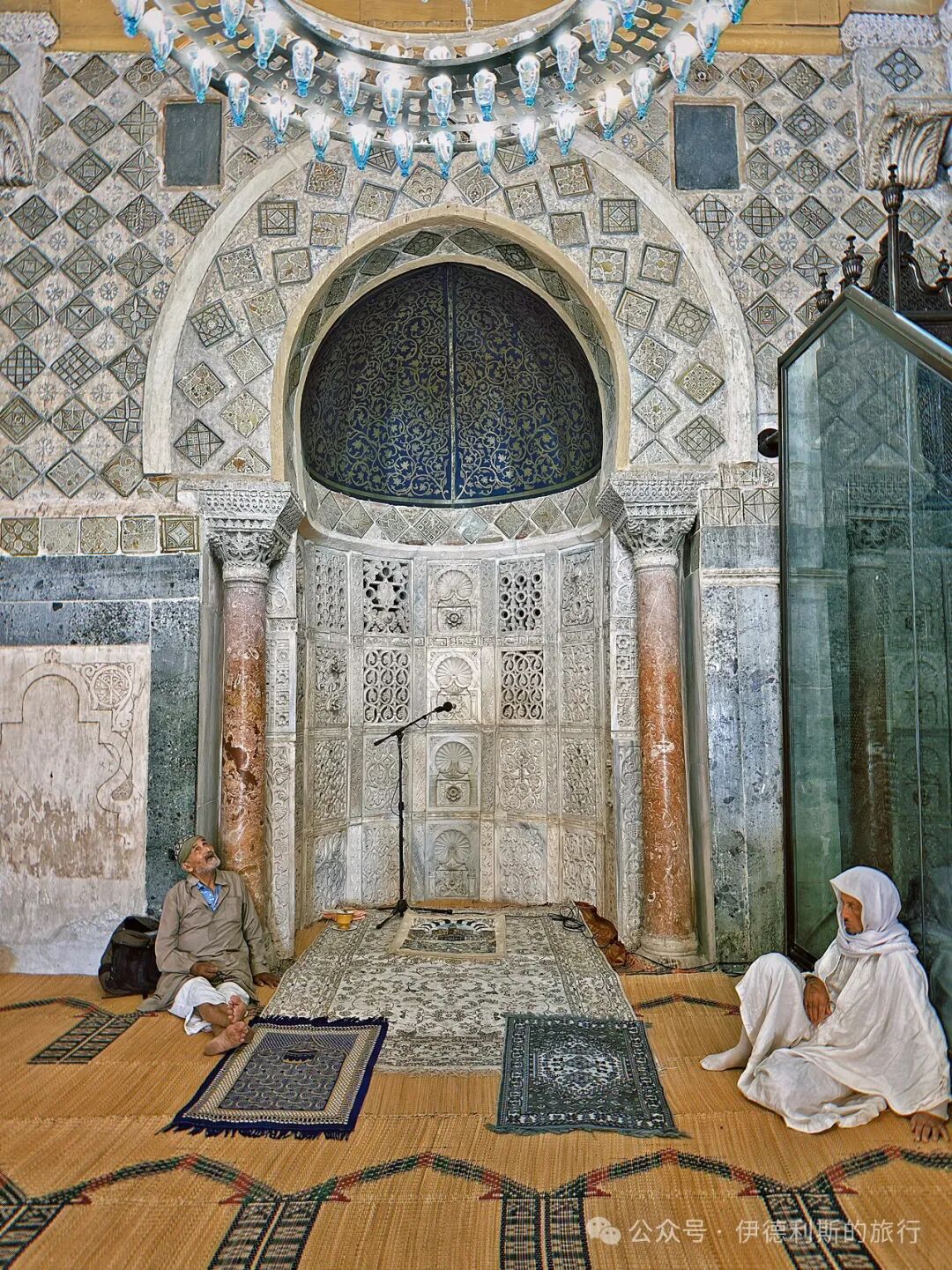
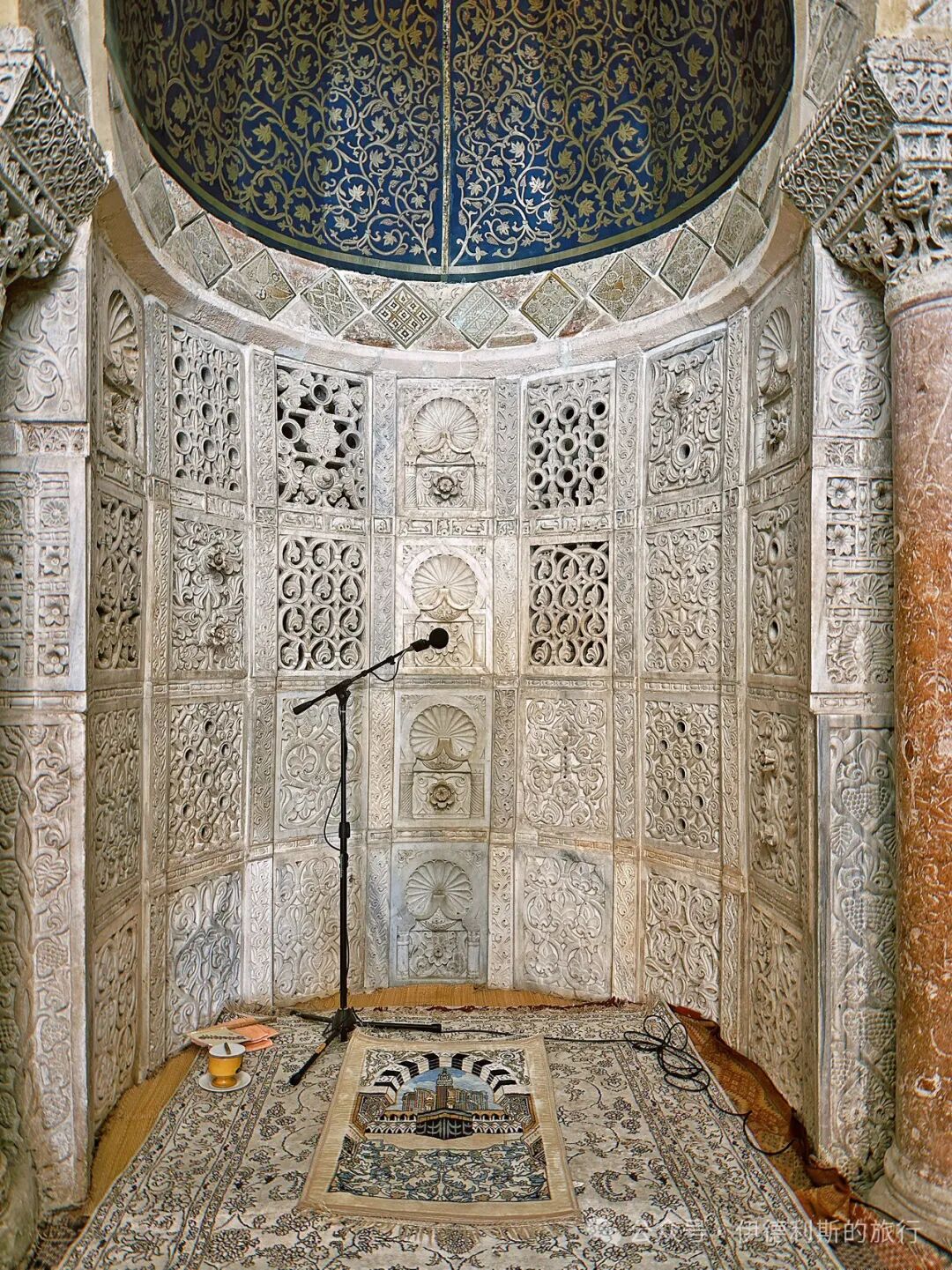
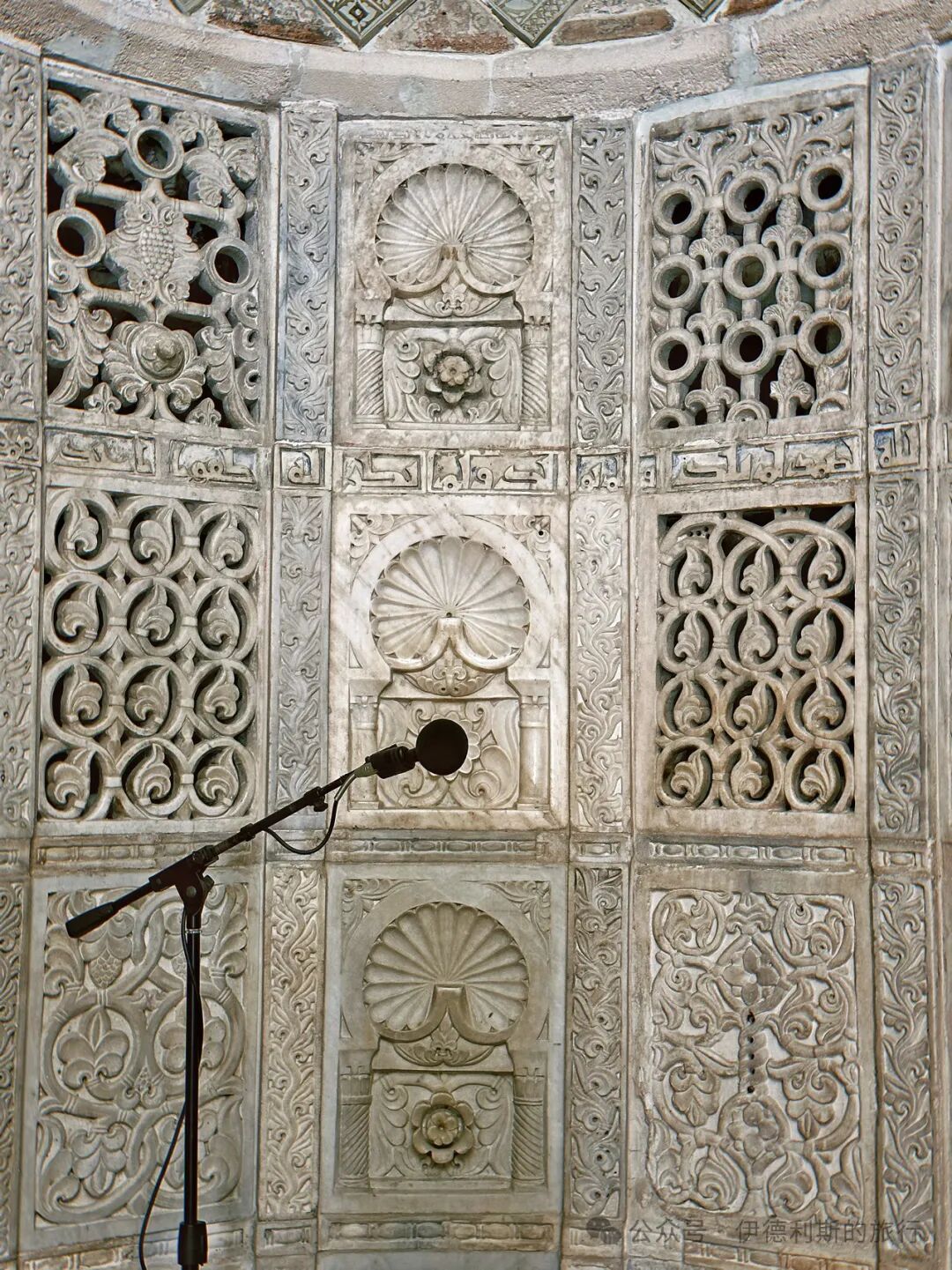
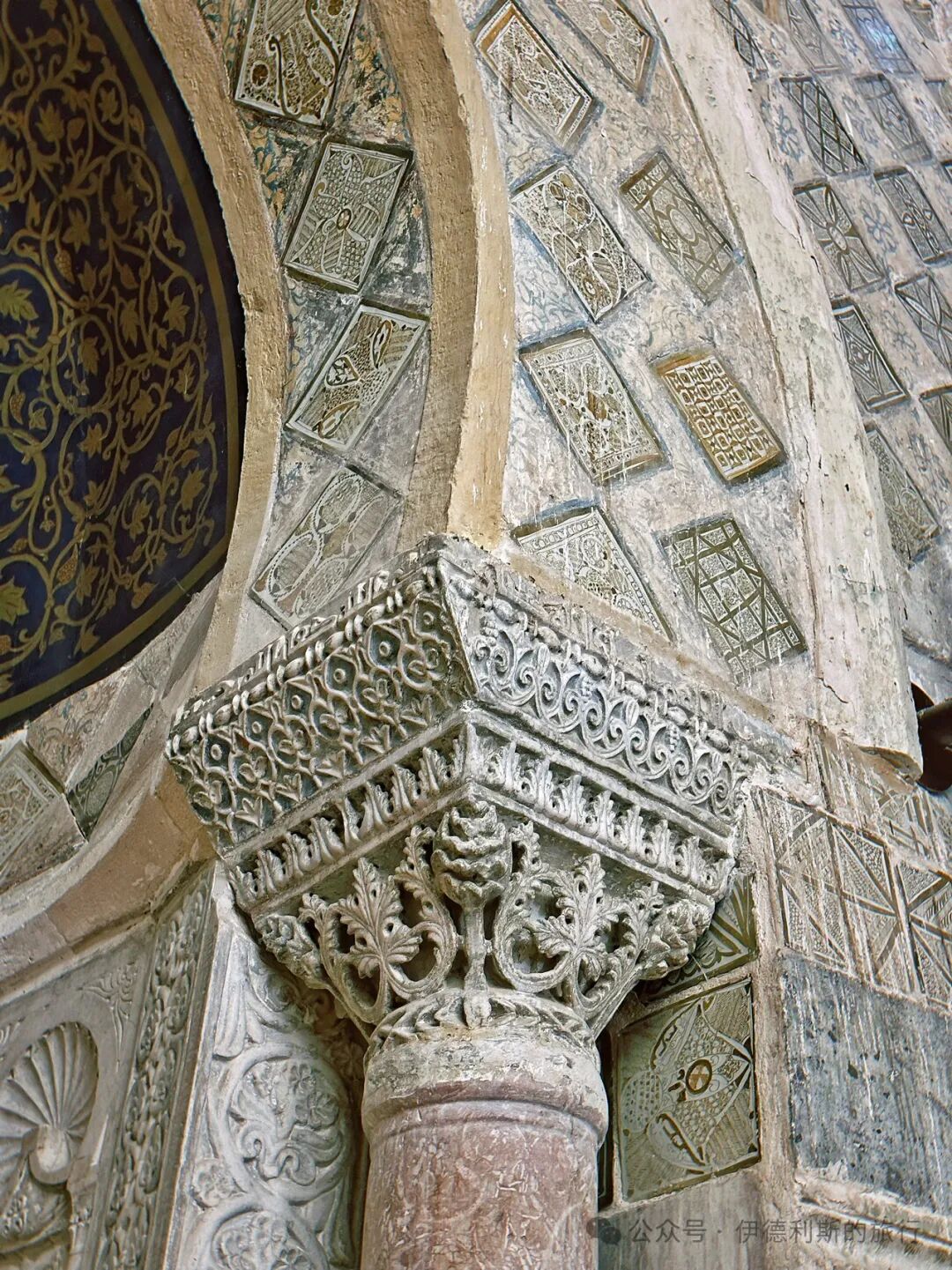
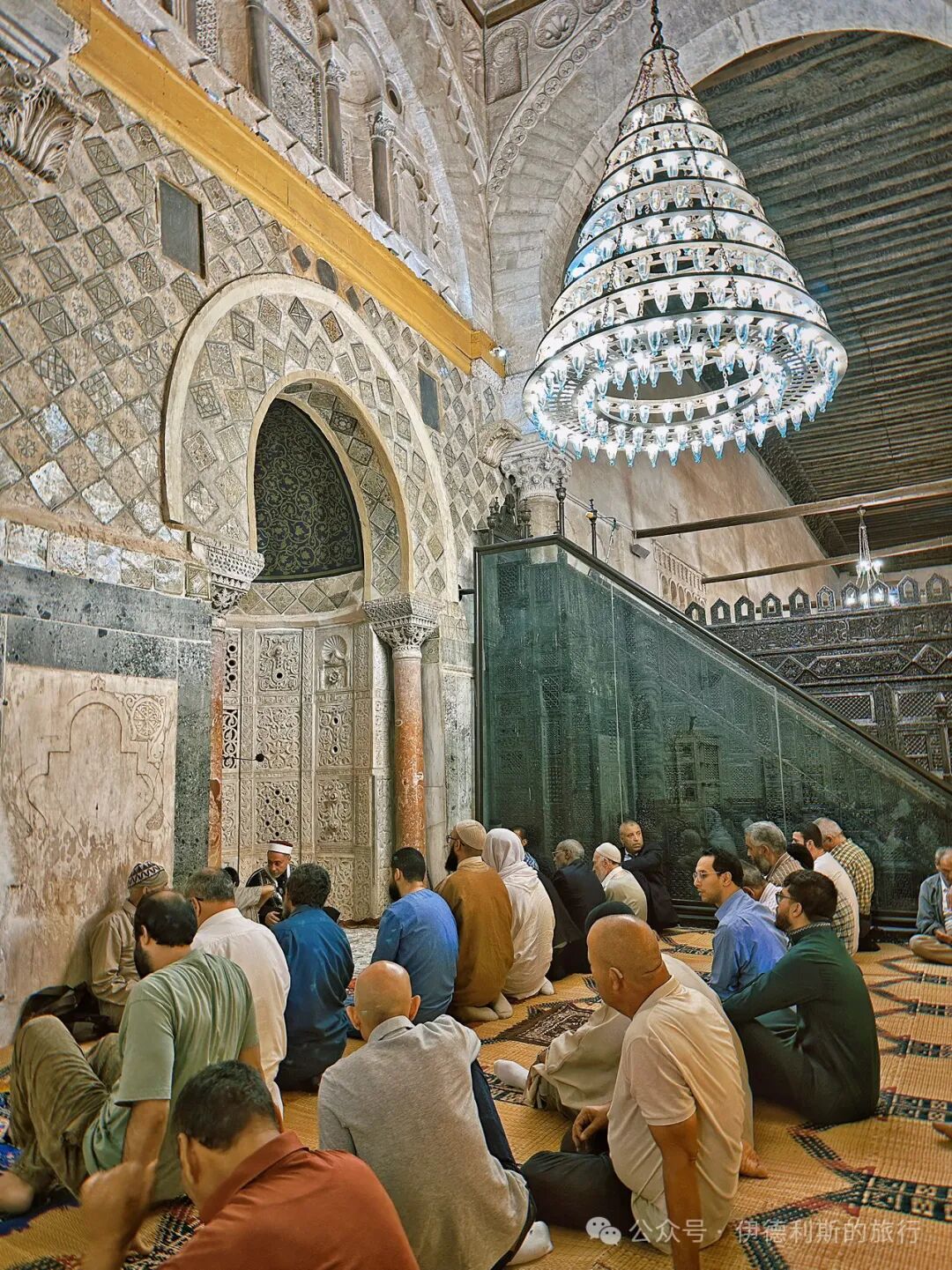
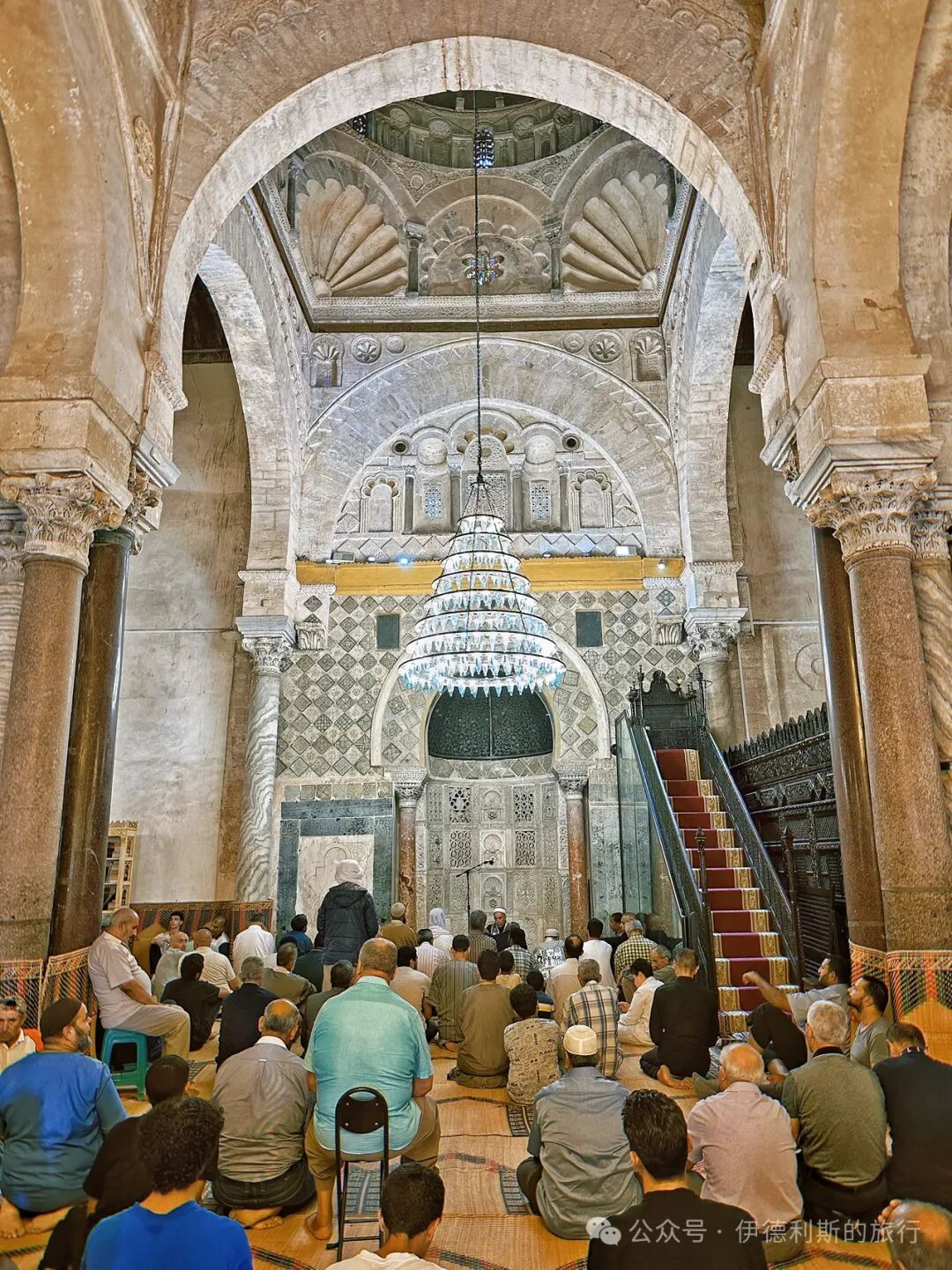
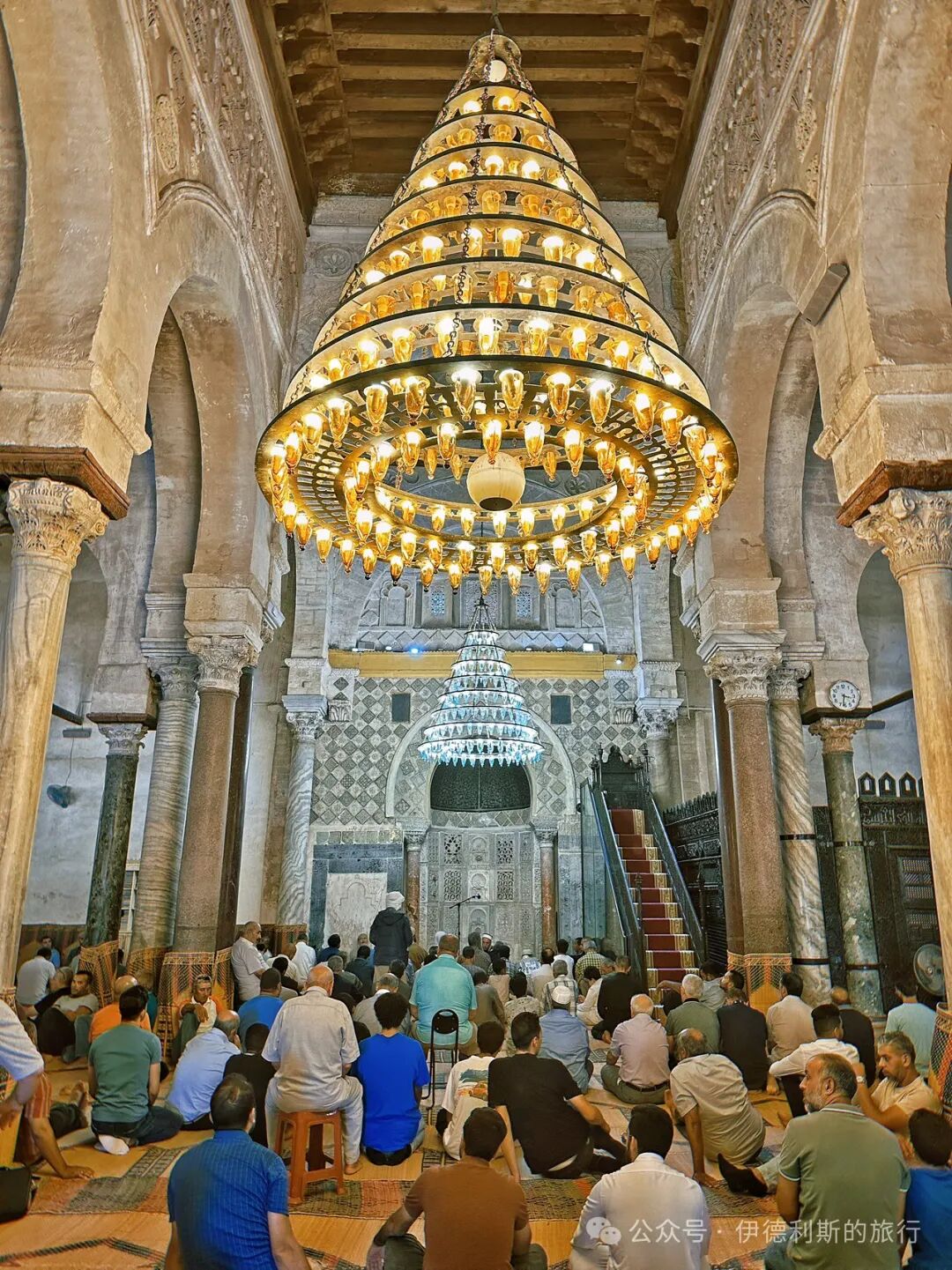
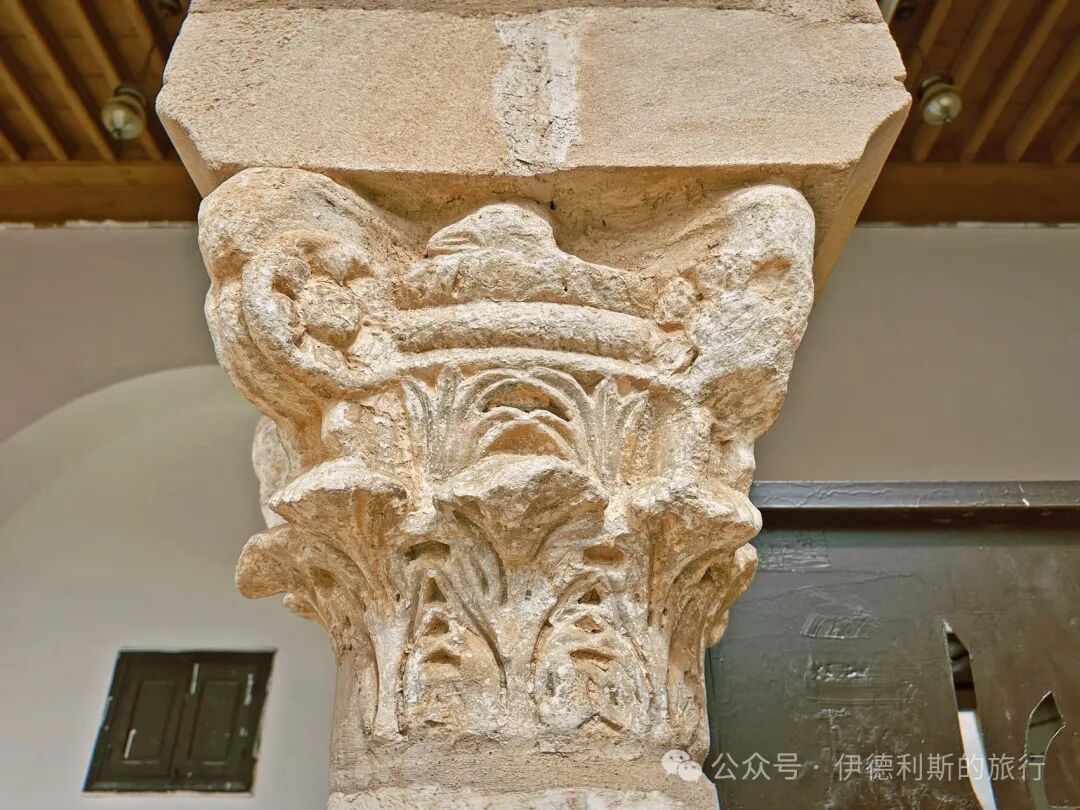
The mihrab of the Great Mosque is 5.1 meters high. It was built in 863 and is the oldest concave mihrab in the world. The main body of the mihrab is a horseshoe arch supported by two red marble columns. The columns have Byzantine-style capitals with very fine carvings.
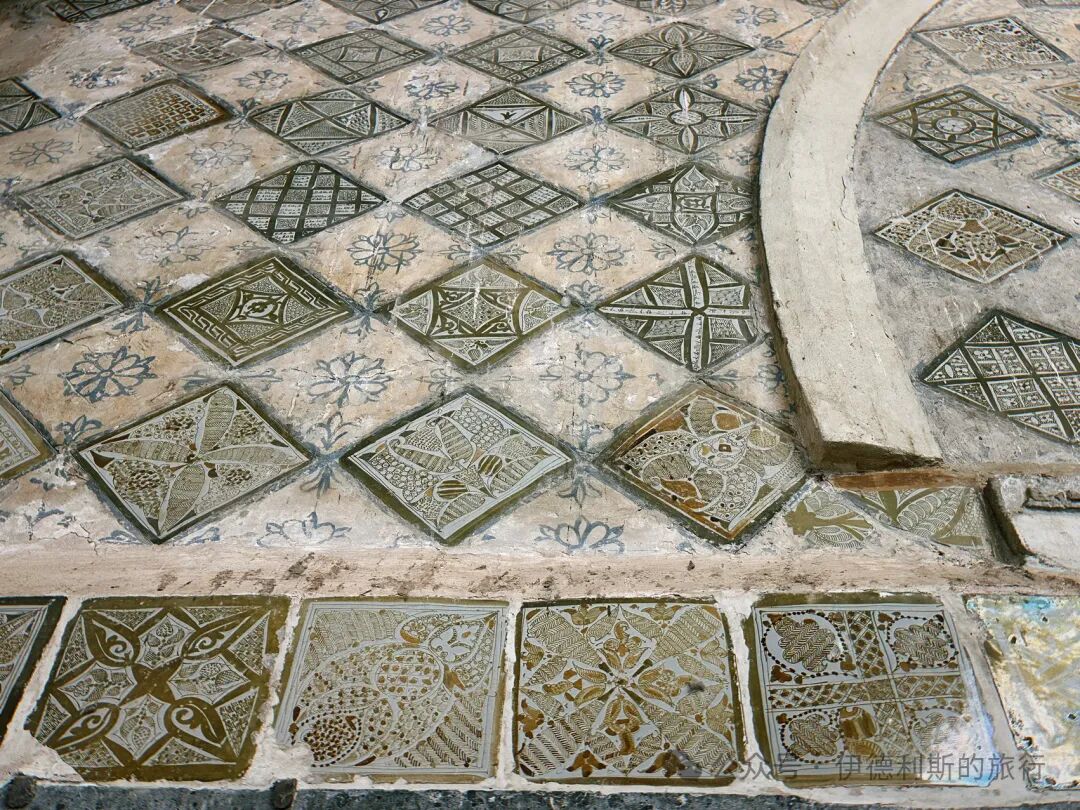
The upper part of the mihrab features 139 iridescent ceramic tiles fired in the second half of the 9th century. This metallic-lustre glazed pottery originated in Abbasid-ruled Iraq and was traded throughout West Asia and North Africa. It is not yet certain whether the iridescent tiles of the Great Mosque of Kairouan were fired in Iraq or if Iraqi craftsmen were invited to Kairouan to make them.
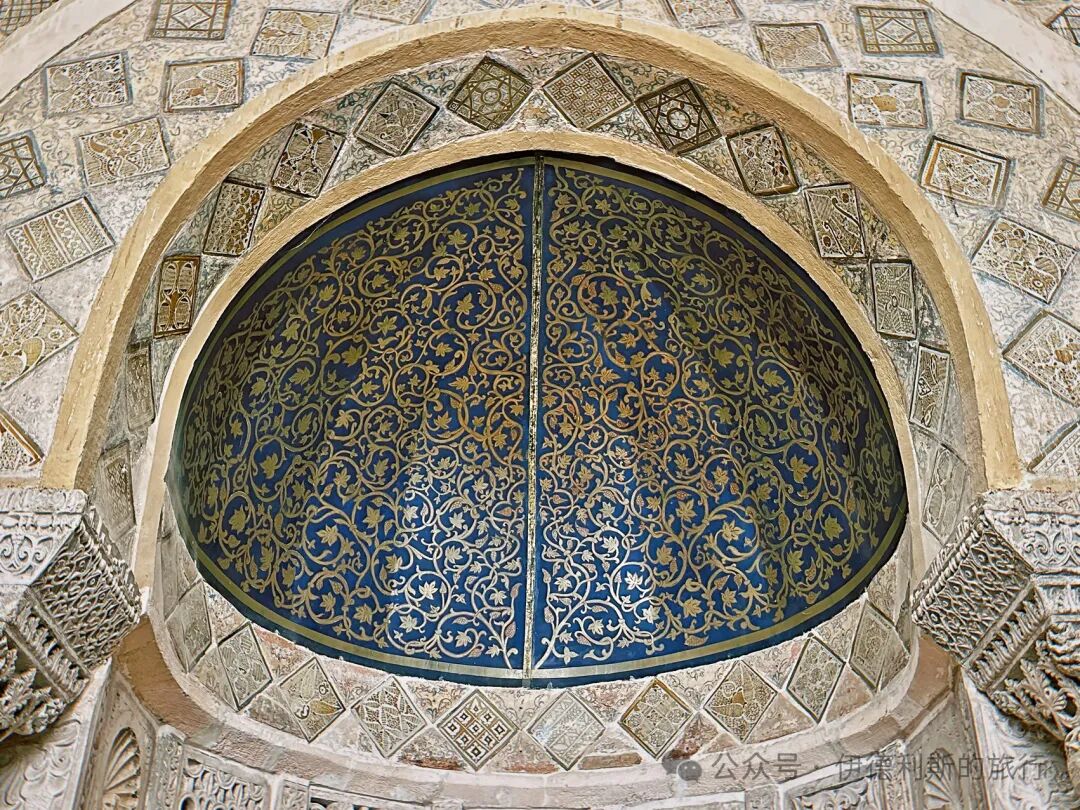
The concave center of the upper part is made of painted wood, featuring complex vine patterns in yellow on a blue background. The lower part is inlaid with 28 white marble slabs carved with complex floral and geometric patterns, including stylized grape leaves, flowers, and shells.
Next to the mihrab are the pulpit (minbar) for the Friday sermon and the enclosure (maqsurah) used by kings and nobles.
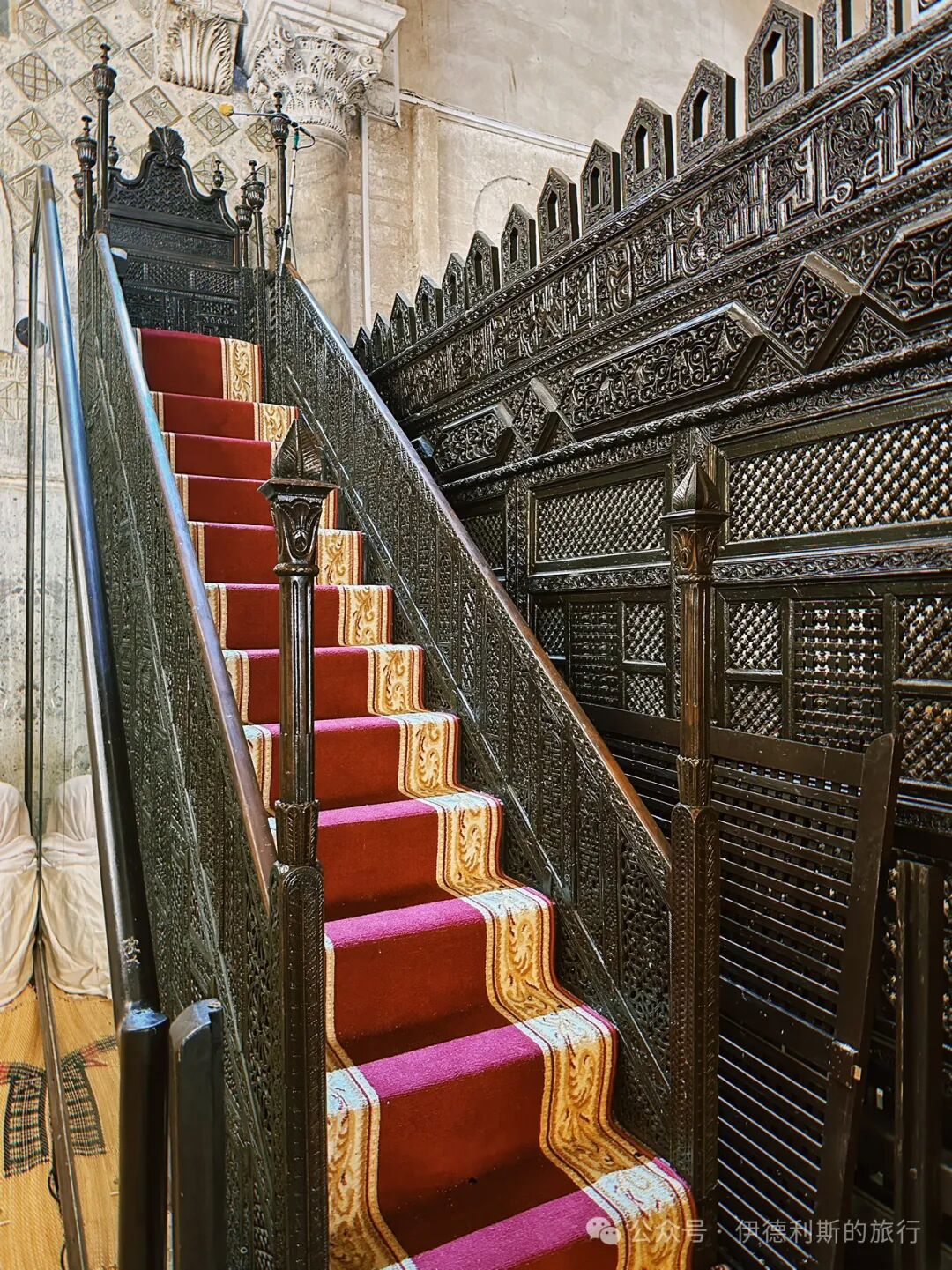
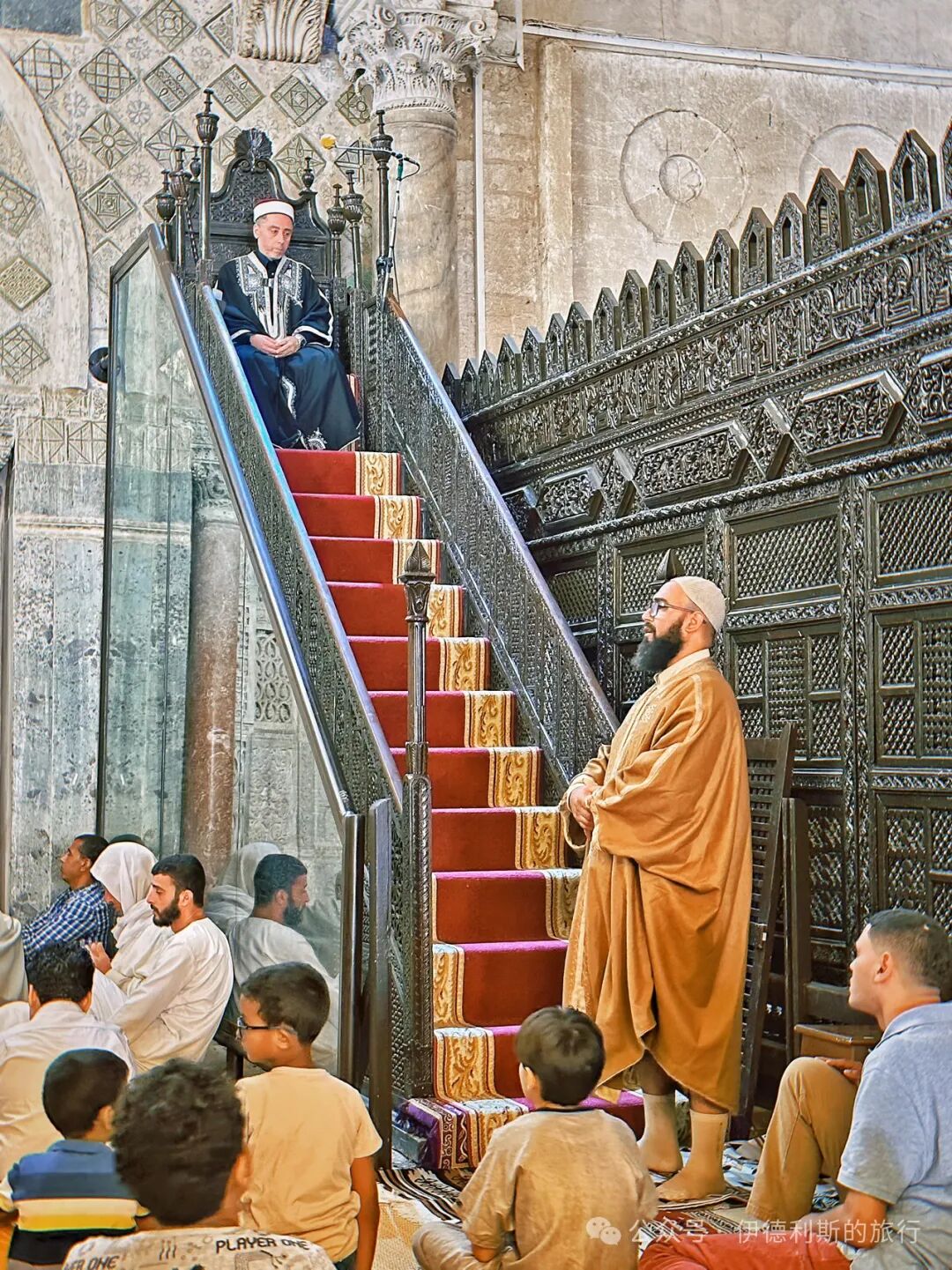
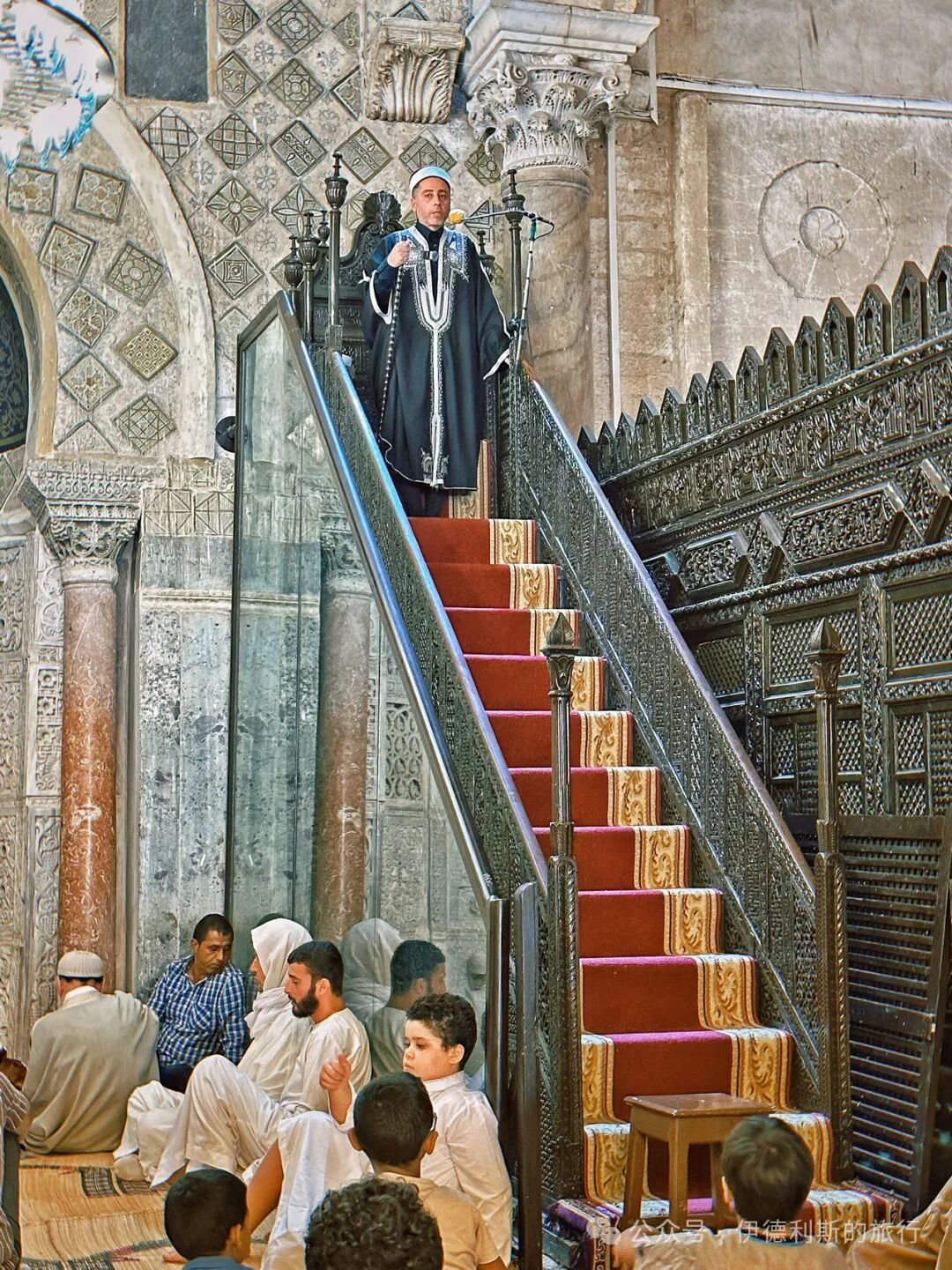
The minbar of the Great Mosque of Kairouan was also built in 863 and is the oldest surviving minbar in the world. The minbar is made of teak imported from India and is assembled from over 300 wooden panels carved with floral and geometric patterns. Although it was restored in the early 20th century, all but nine of the wooden panels are original pieces from over a thousand years ago. Today, the sides of the minbar are protected by glass, making it difficult to take photos due to the reflection.
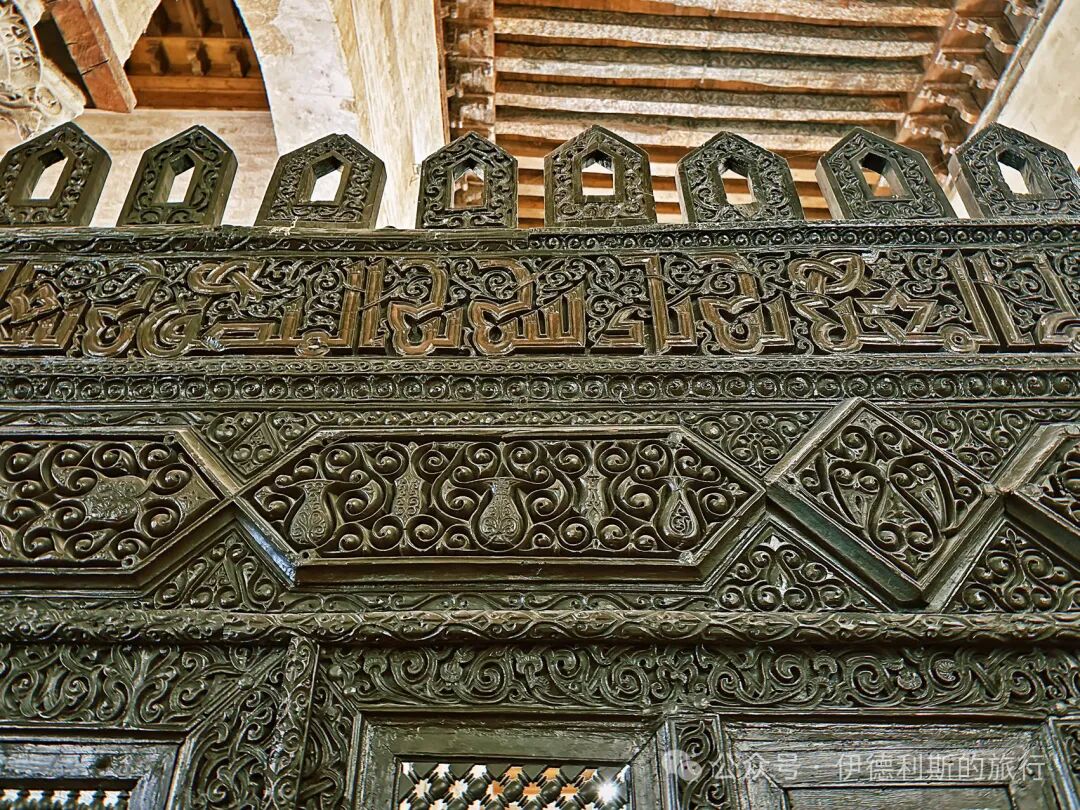
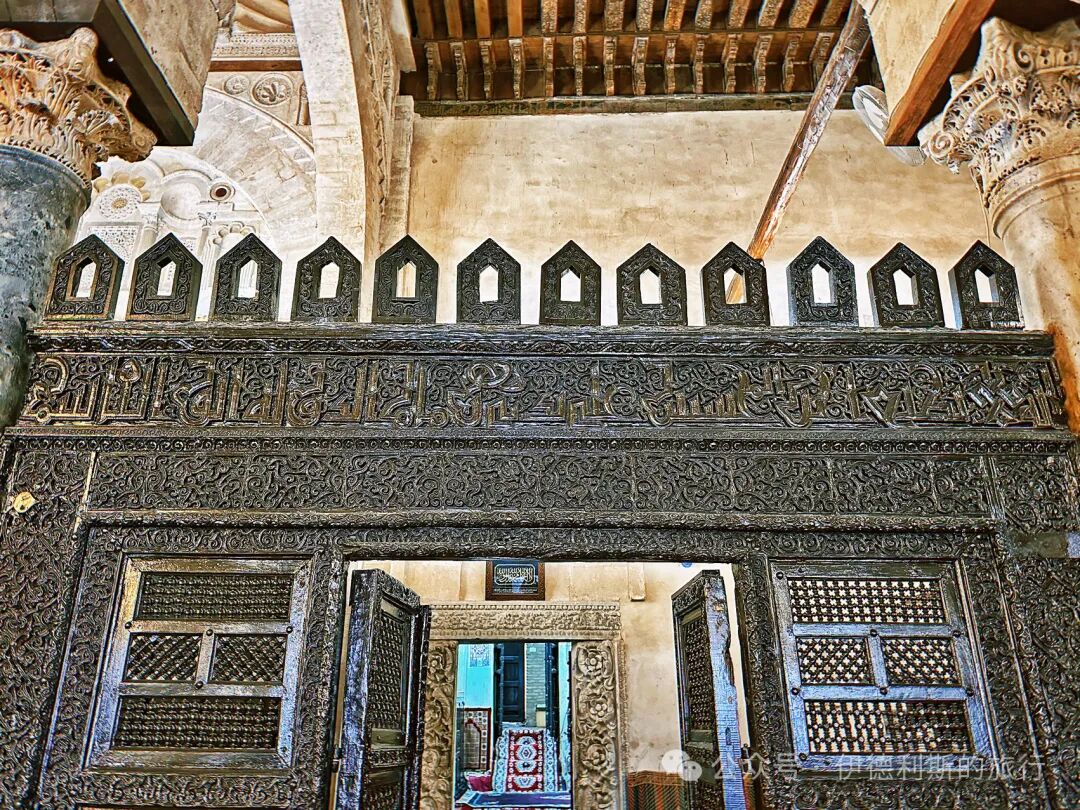
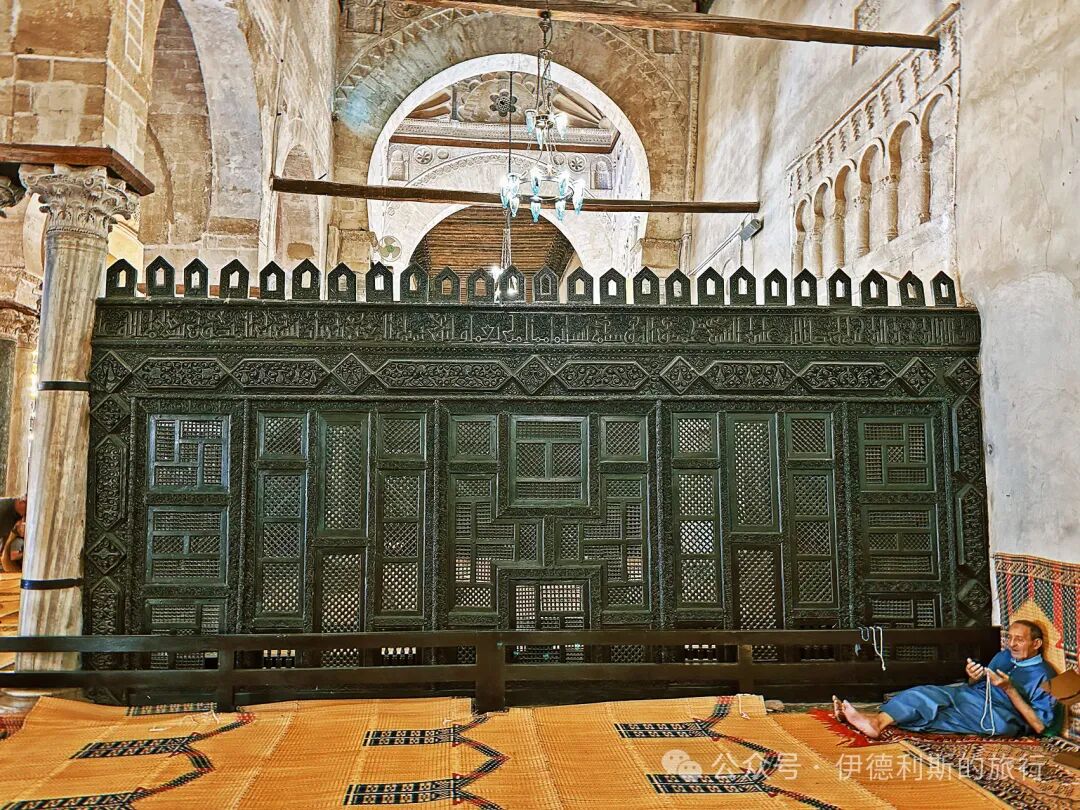
The maksura at the Great Mosque of Kairouan was built in the first half of the 11th century. It is the oldest maksura in the world still in use. The maksura at the Great Mosque of Cordoba in Spain was built in 965, but it is no longer used today. The maksura is made of cedar and is 14 meters long. It is carved with ornate Kufic calligraphy and floral patterns, representing the highest achievement in Tunisian carving art at that time.
The maksura originated during the time of Caliph Uthman in the mid-7th century. After Caliph Umar was assassinated inside the prayer hall, Uthman built a partition wall inside the hall to protect himself. Later, mosques where the Caliph resided would all have a maksura built inside.
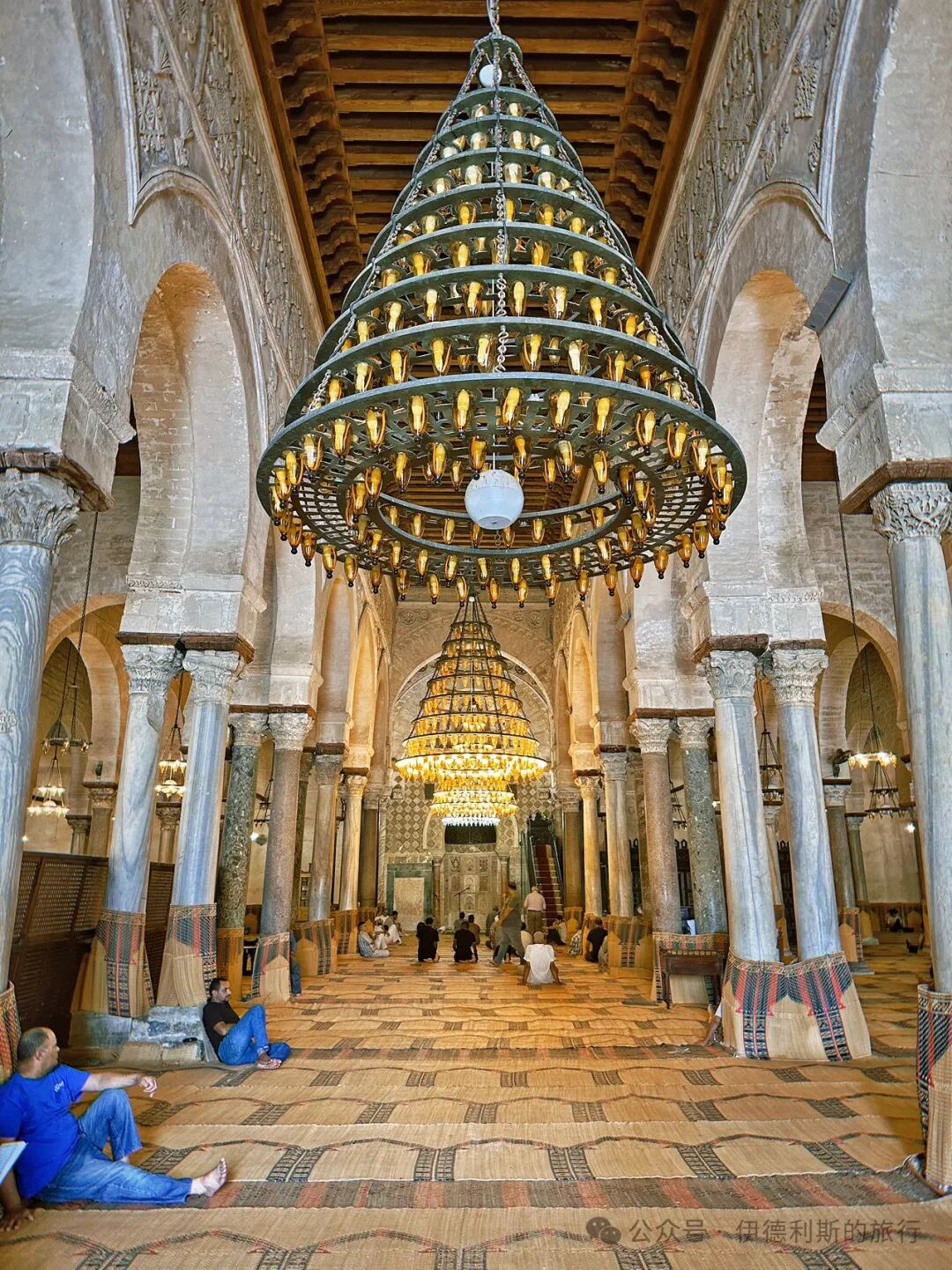
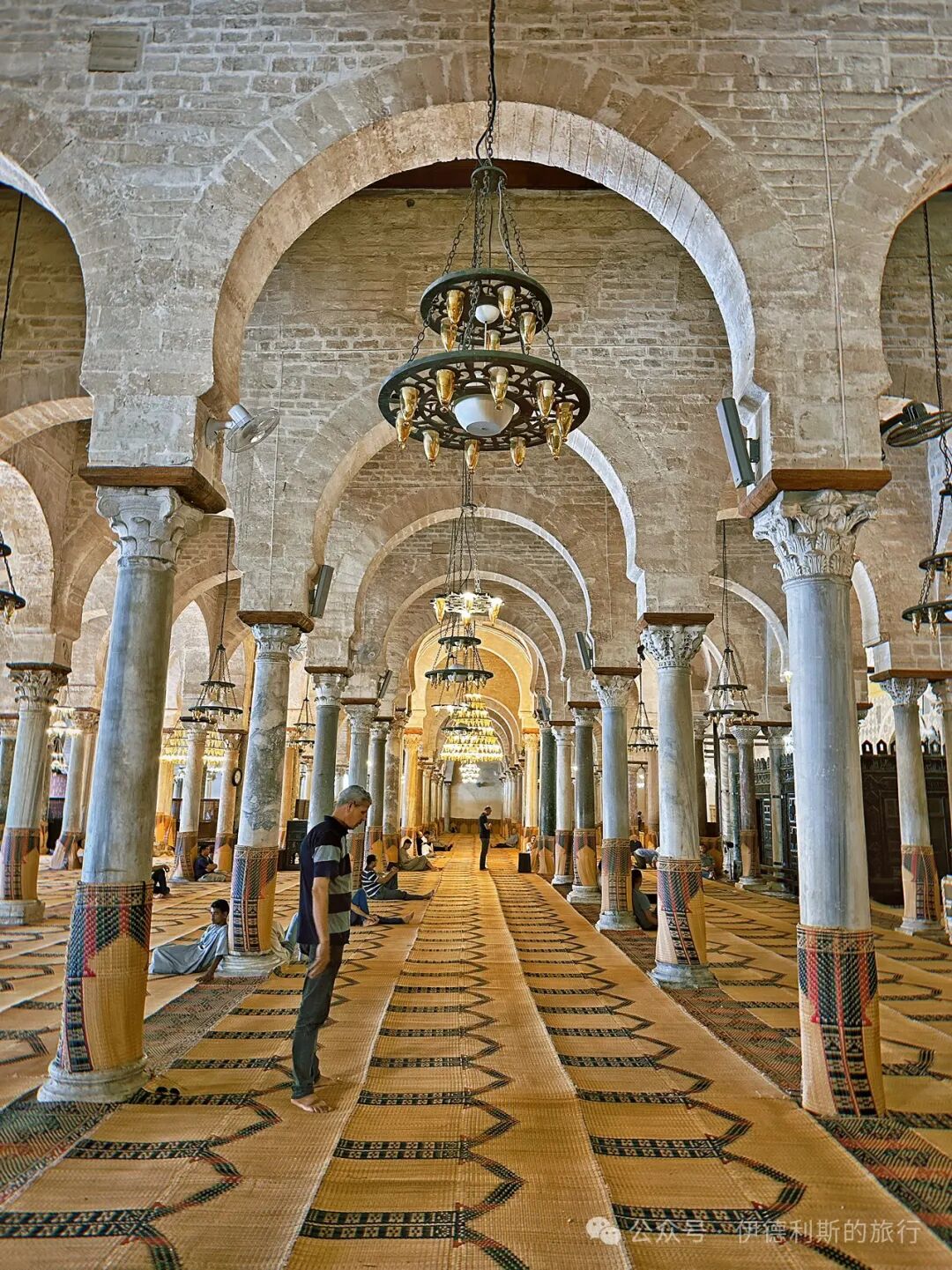
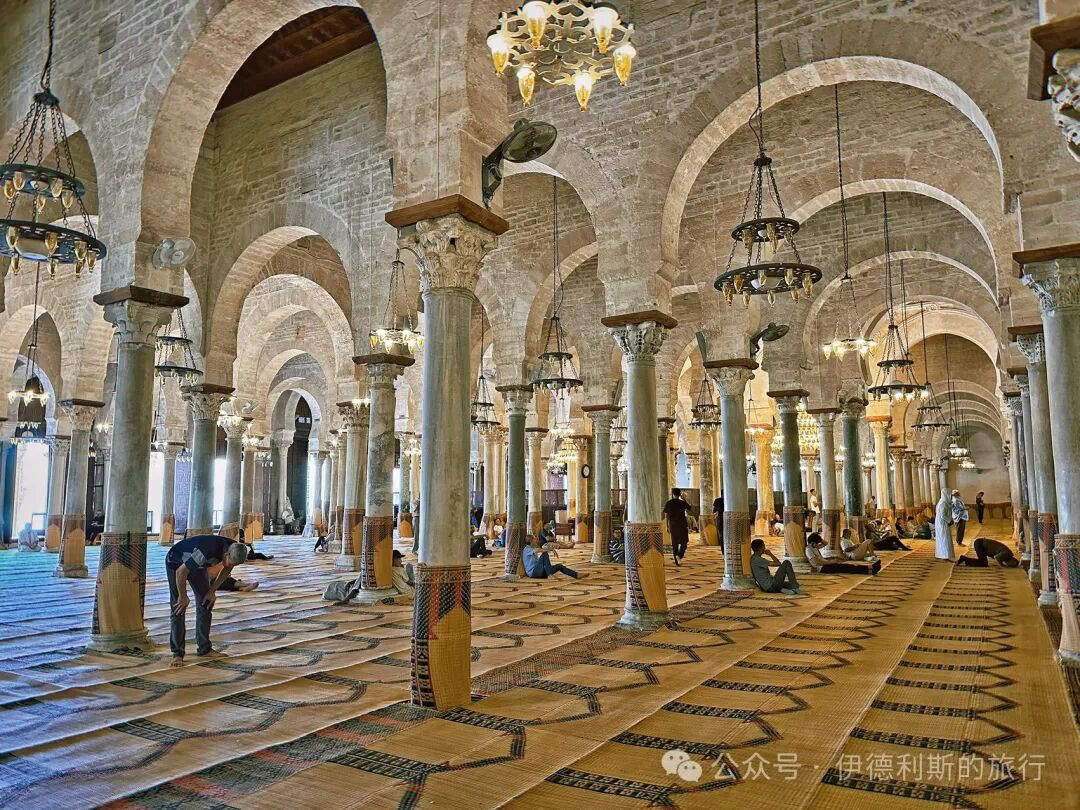
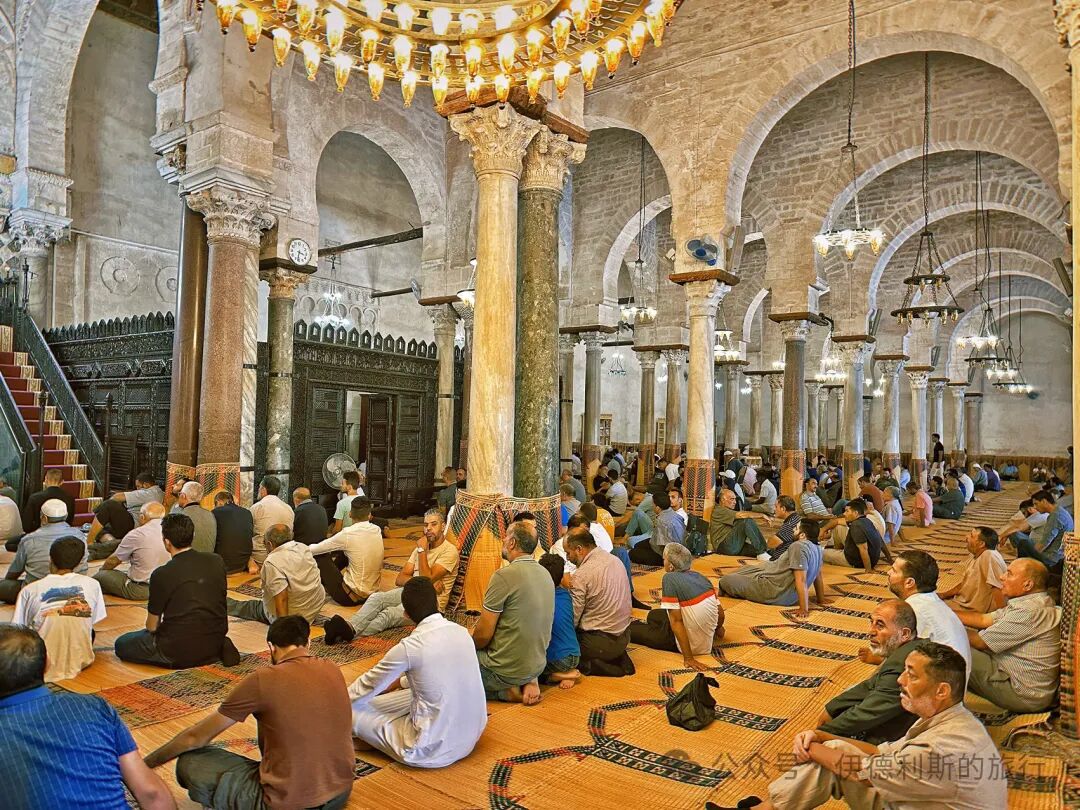
The prayer hall of the Great Mosque of Kairouan is 70.6 meters wide and 37.5 meters deep. It consists of 17 aisles, with the aisle directly facing the mihrab being the tallest and widest. This layout was later adopted by major mosques across the Maghreb and Andalusia.
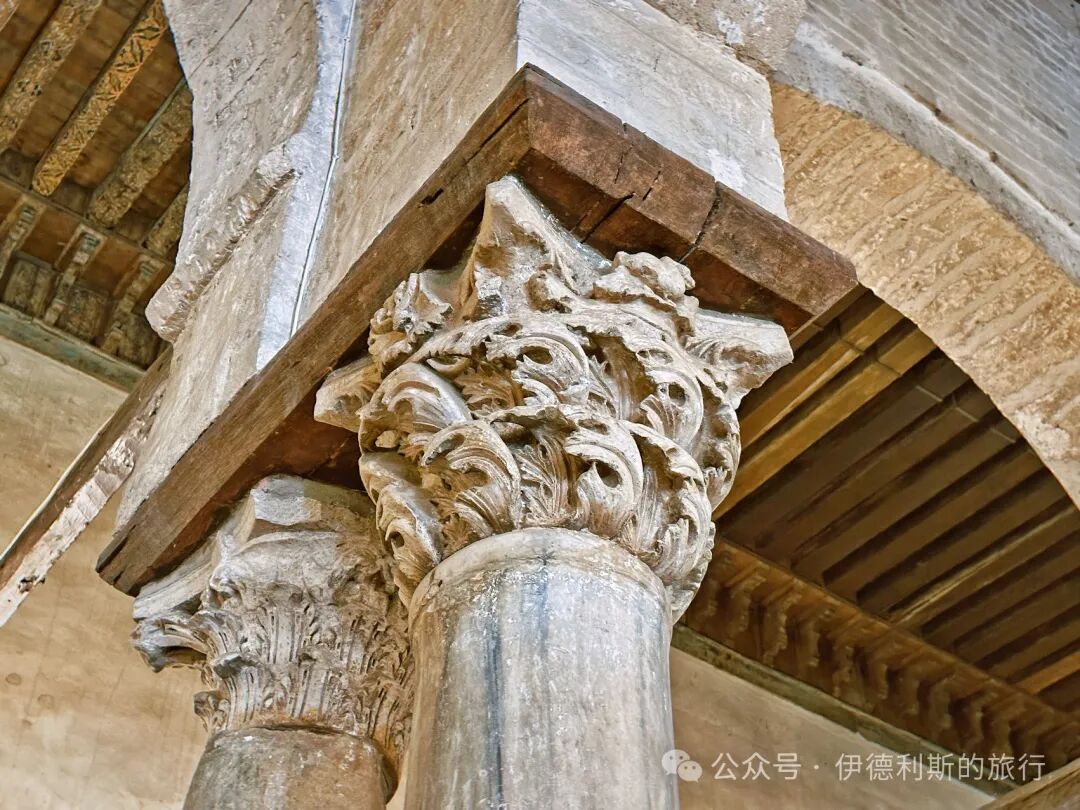
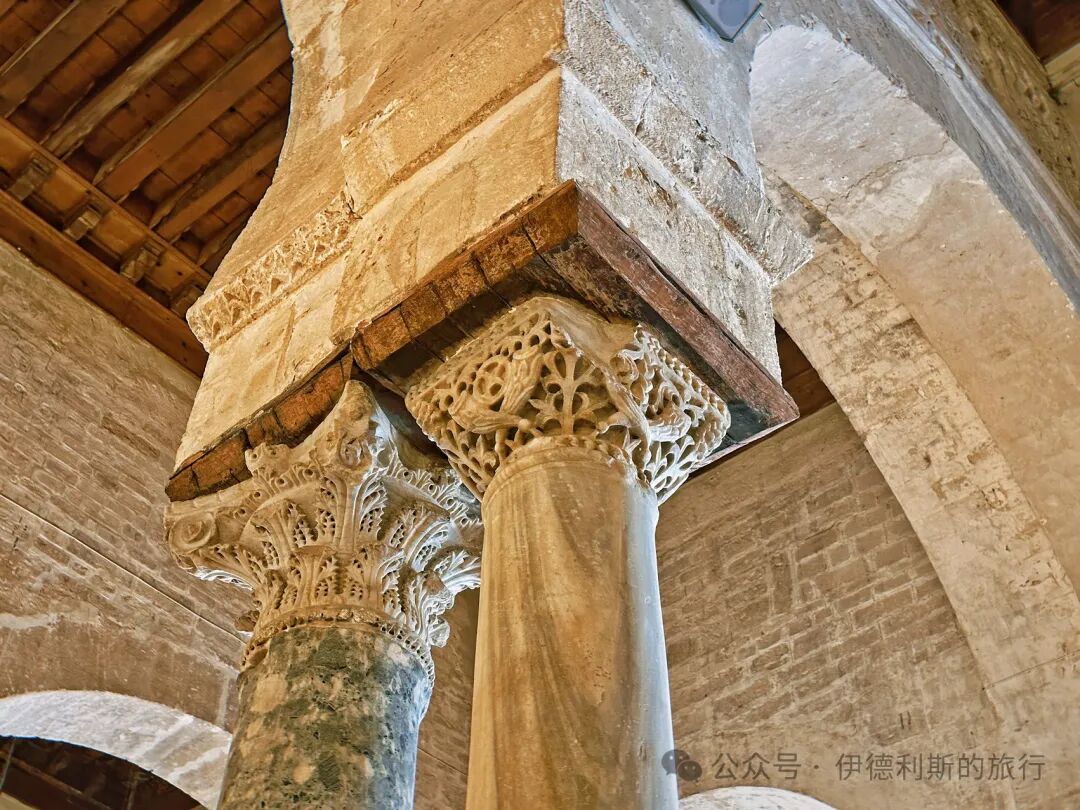
There are 414 stone columns inside the prayer hall. They are made of marble, granite, and porphyry, with capitals in styles including Corinthian, Ionic, and Composite. Some capitals were carved specifically for the prayer hall, while many others came from ancient Roman, Phoenician, and Byzantine sites in Tunisia, including the famous ancient city of Carthage.
The door inside the prayer hall's maksura is decorated with marble floral carvings. This door leads to the library behind the qibla wall, which is also where the imam usually stays. The imam only comes out from here to lead the prayer and deliver the khutbah.
The grand scene of Jumu'ah at the Great Mosque of Kairouan. After the adhan is finished, the imam slowly walks up the minbar to begin the khutbah. In Arabic-speaking regions, everyone understands the khutbah, so there is no sermon session beforehand.
Tunisia follows the Maliki school of thought. Their namaz movements are quite similar to our Hanafi school, including the initial takbir, but the main difference is that they also fold their arms when making intention.
After the prayer, we stood for janazah outside the prayer hall door. Because Jumu'ah was at three o'clock, we immediately returned to the prayer hall to perform Dhuhr after finishing.
From the 9th to the 11th century, the Great Mosque of Kairouan was the academic center for the entire Maghreb region and the Maliki school. to religious courses, it offered subjects like mathematics, astronomy, medicine, and botany. In 1045, the Zirid dynasty court in Kairouan announced its conversion to Sunni Islam. Upon hearing this, the Shi'a Fatimid dynasty in Egypt sent a group of Arab tribes to invade Kairouan. In 1057, these Arab tribes occupied and destroyed Kairouan. The Great Mosque of Kairouan declined from then on and did not slowly recover until after the 13th century.
After leaving the Great Mosque of Kairouan, we started exploring the ancient medina of Kairouan. Besides the Great Mosque, the other ancient mosque remaining in Kairouan is the Mosque of the Three Doors (Masjid al-Thalathat Abwab), built in 866. This mosque has the oldest decorated facade of any religious building in the world.
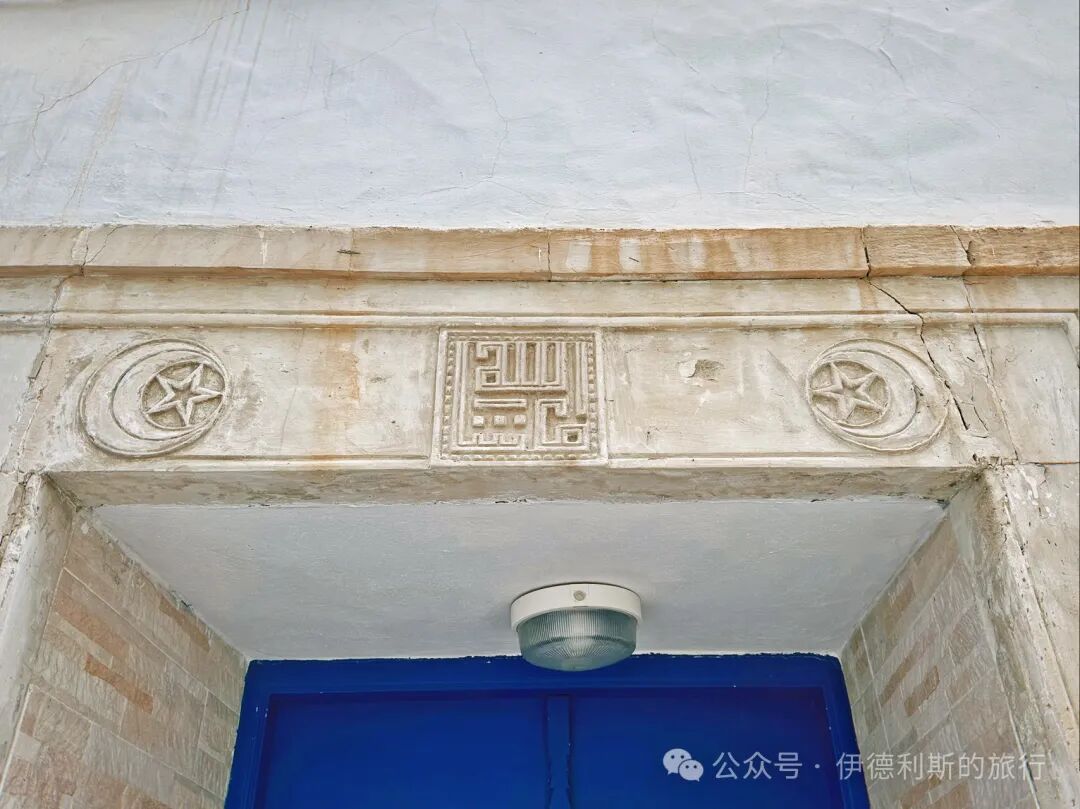
Today, only the facade of the Mosque of the Three Doors retains its 9th-century appearance, while the minaret next to it was added in 1440. The gate of the Mosque of the Three Doors consists of three horseshoe arches and features four ancient stone columns. The arch is carved with floral patterns and Kufic calligraphy, which includes verses from the Quran and the name of the builder, Muhammad ibn Khairun. Muhammad ibn Khairun was a scholar and merchant from Andalusia who traveled through Iraq and Egypt to reach Kairouan, Tunisia. When the minaret was added in 1440, the original 9th-century inscriptions were rearranged to make room for the new text.
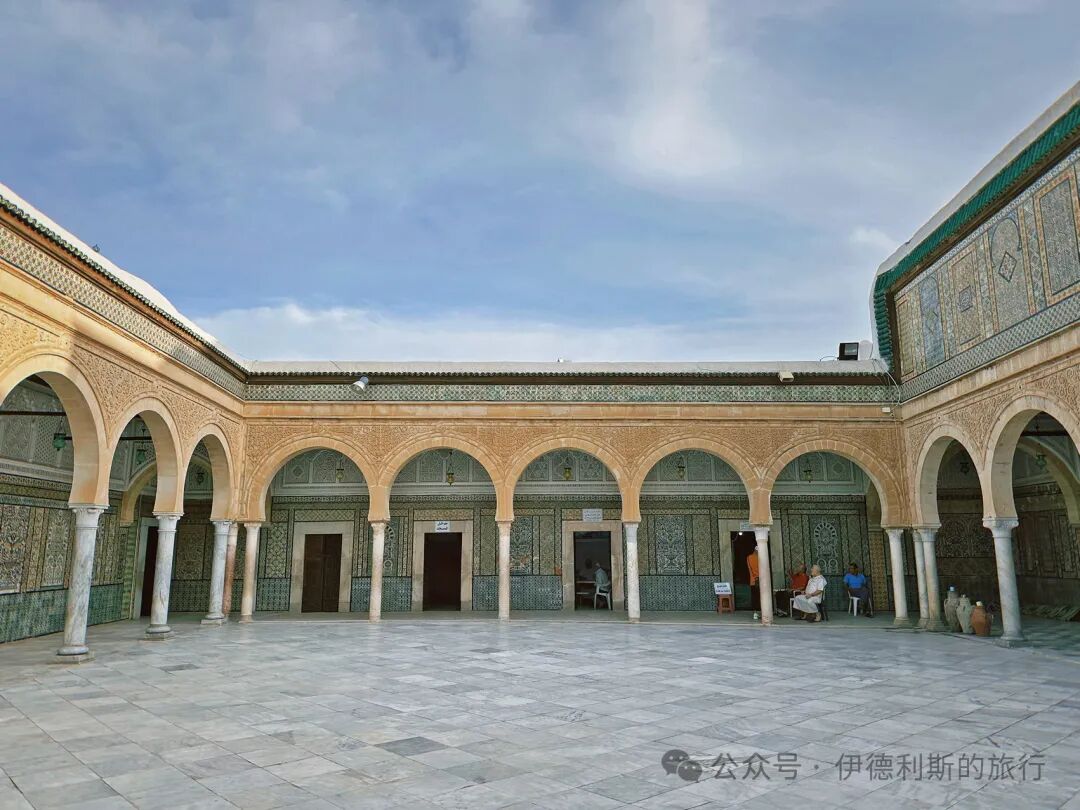
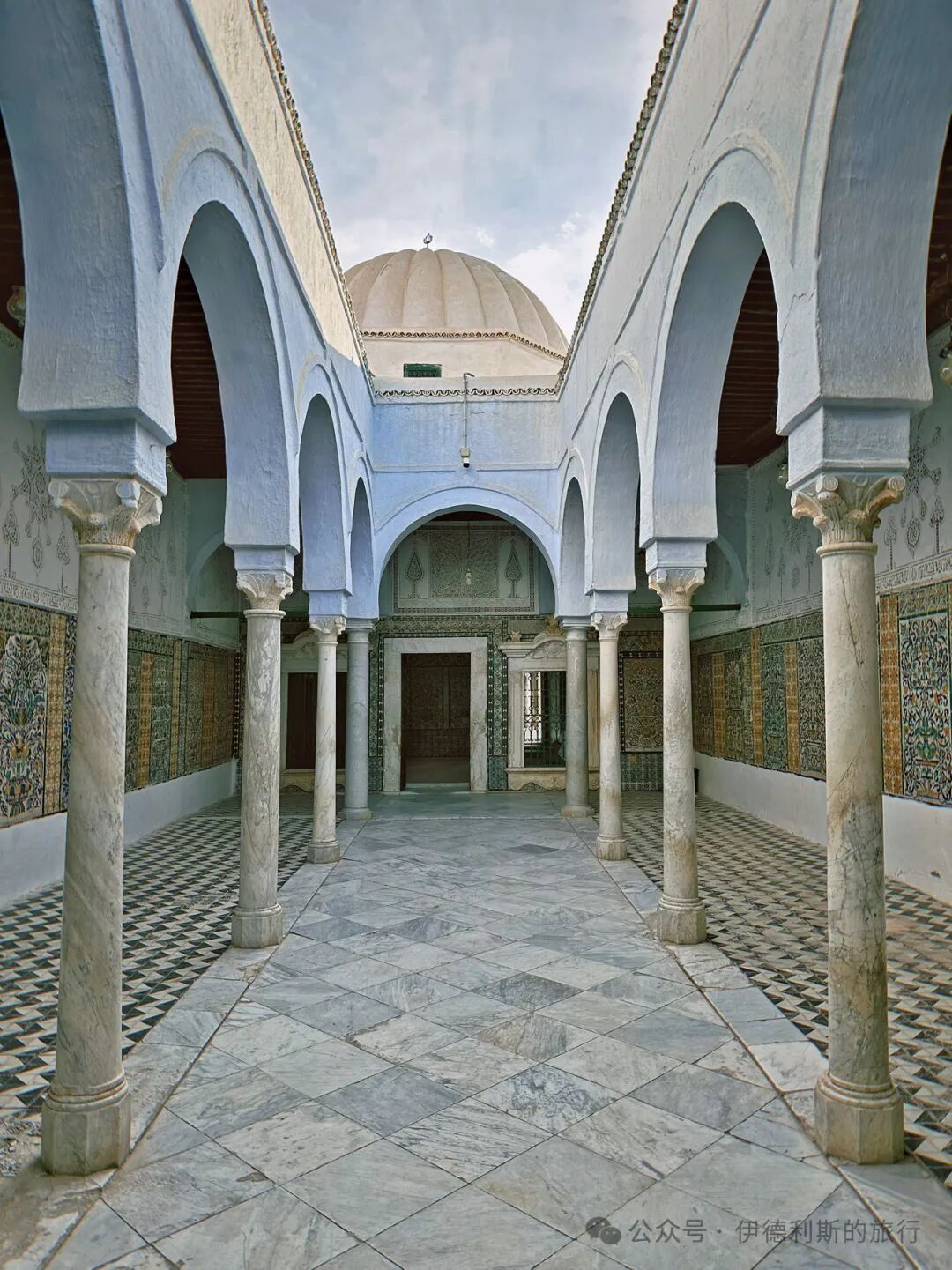
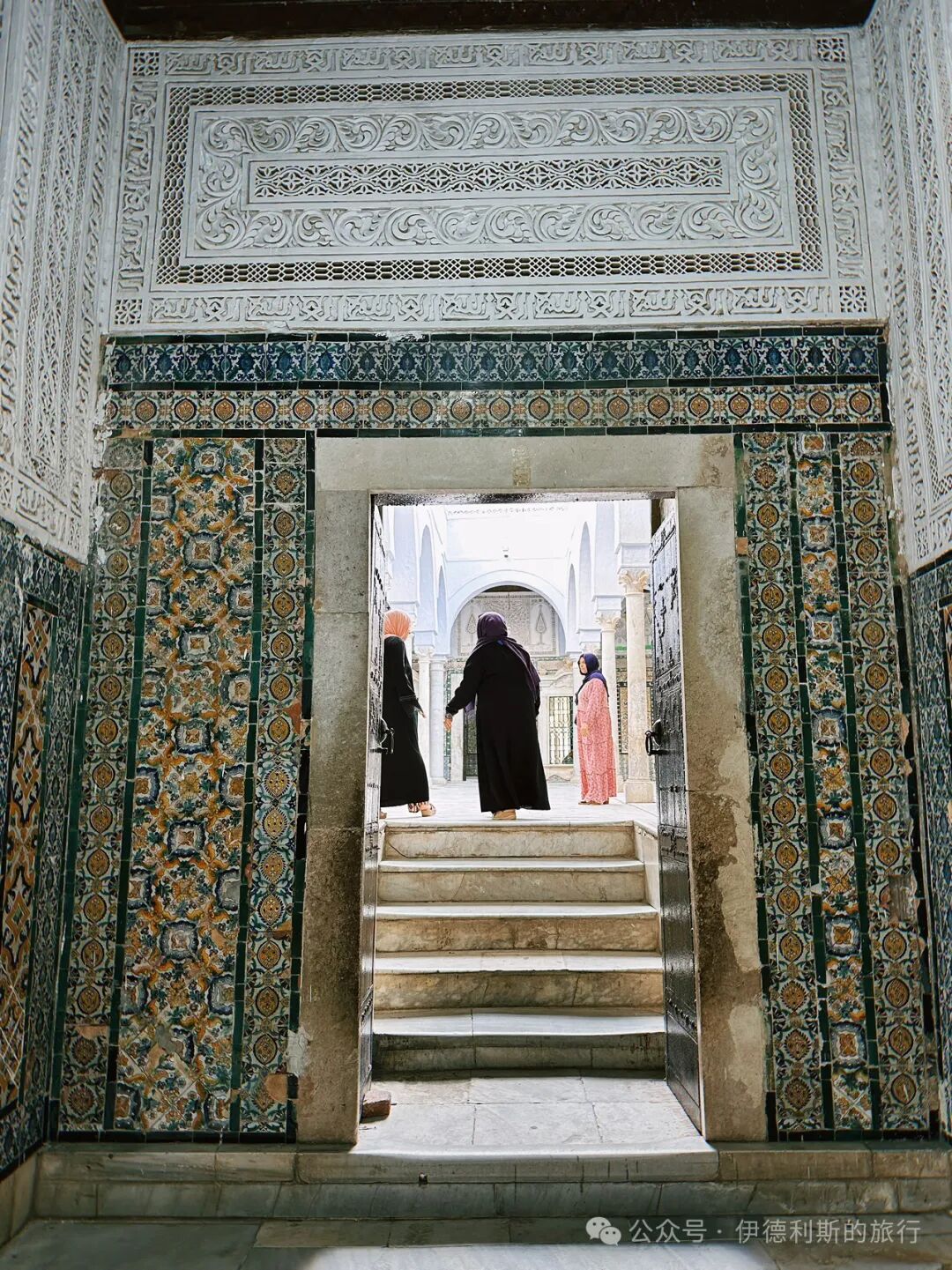
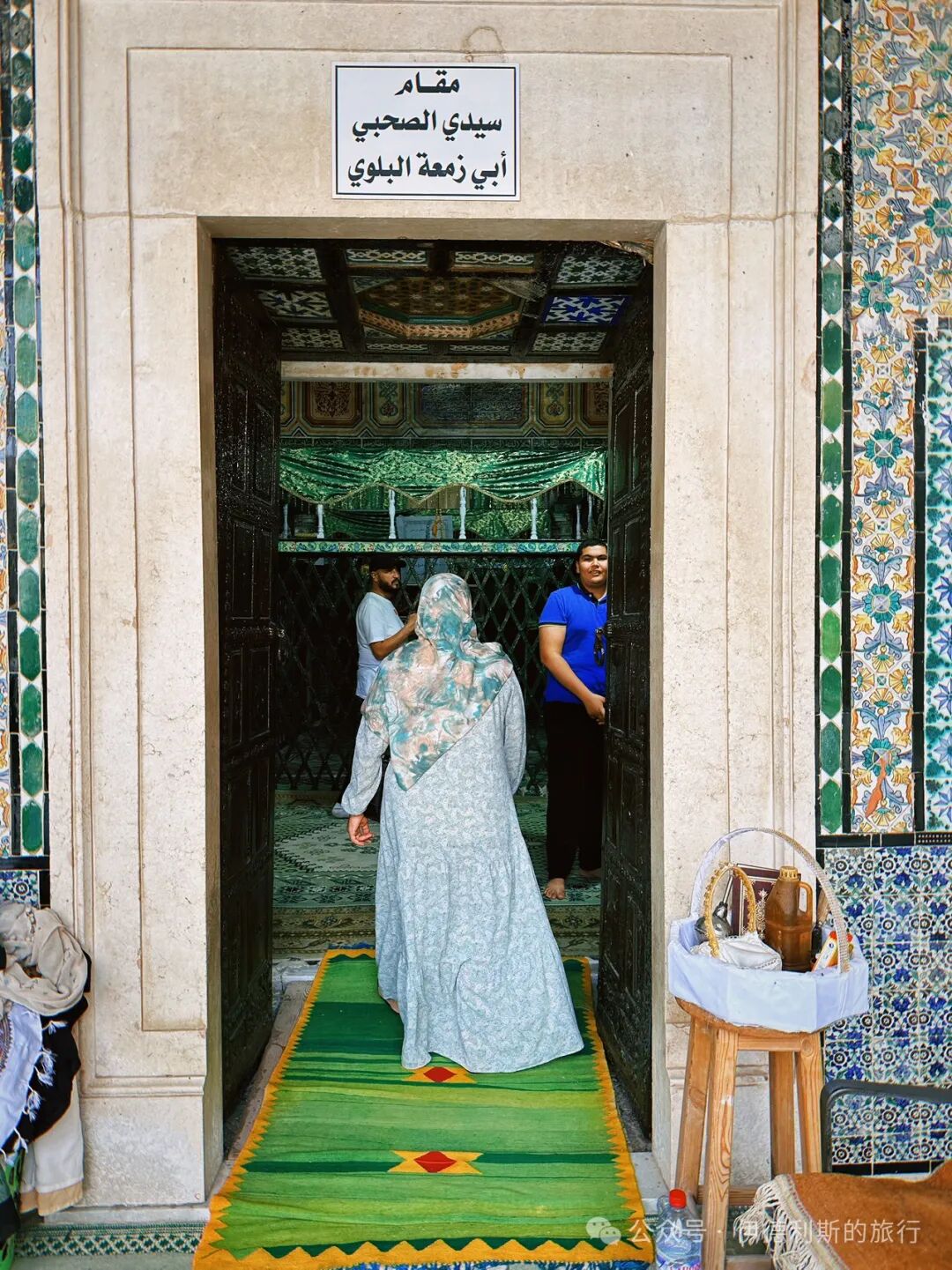
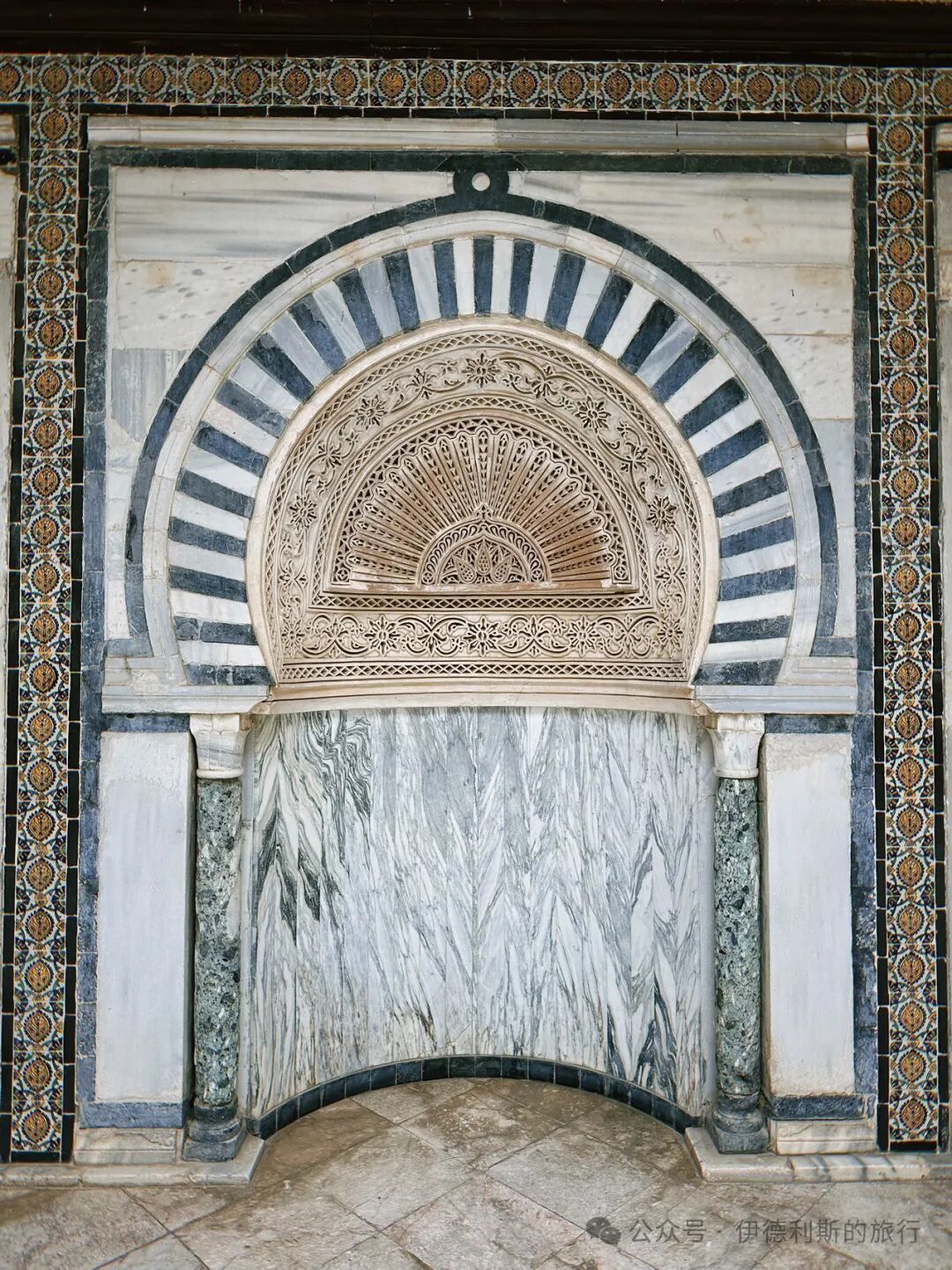
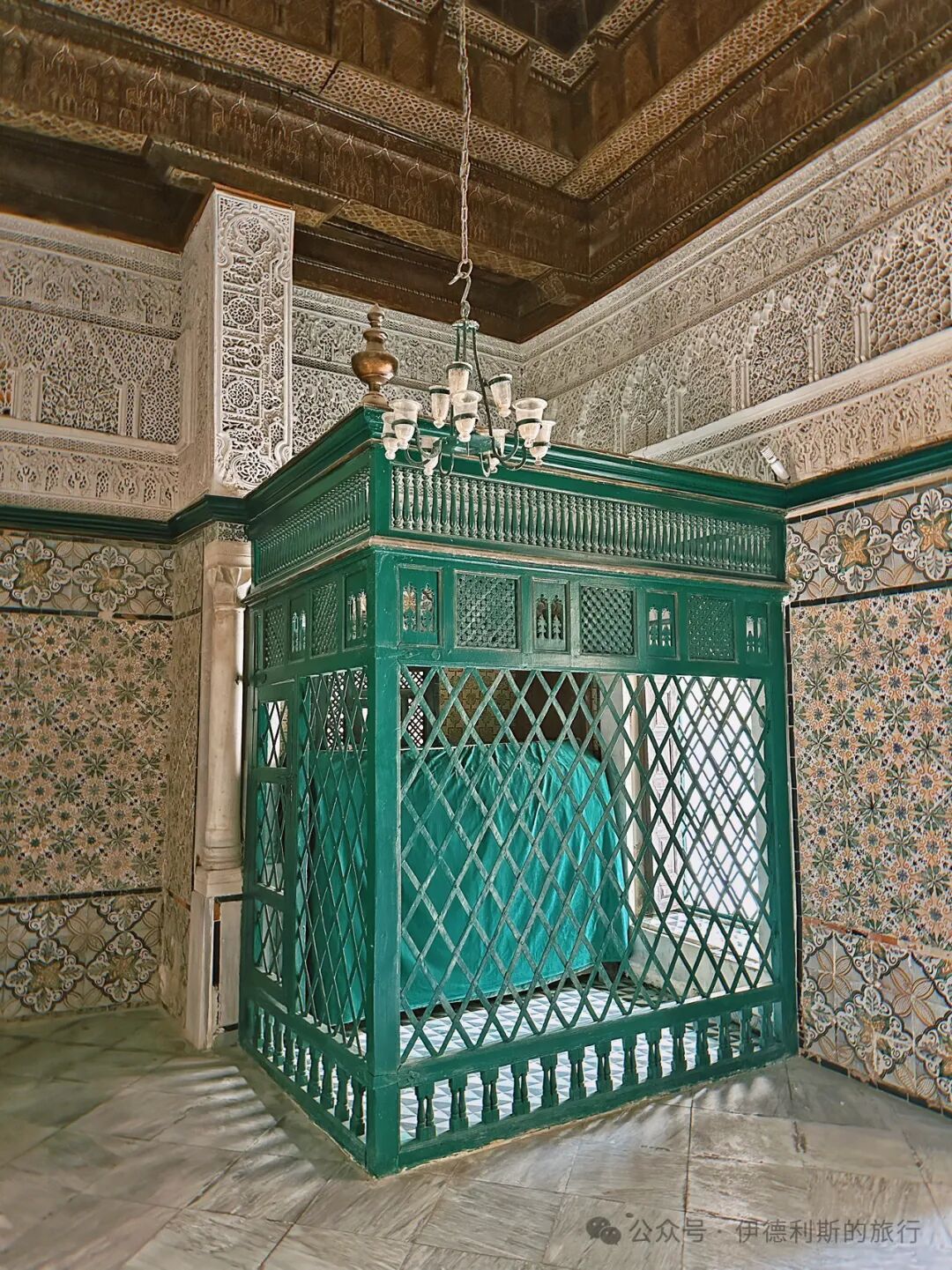
In the northwest of the Kairouan Medina stands an important tomb for Sidi Sahib, a companion of the Prophet and his barber, which is why it is also called the Barber Mosque.
Legend says Sidi Sahib died in a battle in 654 and was buried here. By the 11th century, this place had become a famous holy site, and the tomb shrine (gongbei) was built in the 14th century. The Bey of Tunis, Hammuda Pasha (reigned 1631-66), expanded the tomb significantly in 1629 and built a new main hall. Another Bey, Mohamed (reigned 1675-96), built the minaret and a religious school (madrasa) between 1690 and 1695. Since the 19th century, the tomb of Sidi Sahib has undergone several renovations, but it still keeps its 17th-century architectural style.
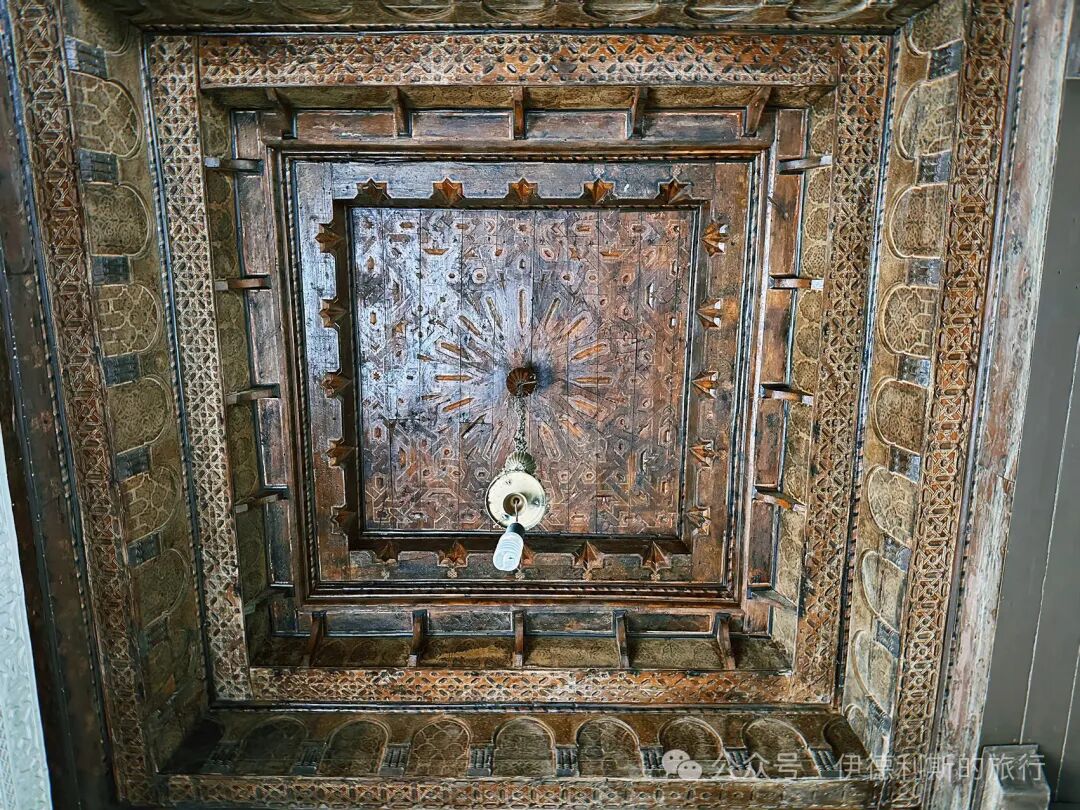
The tomb of Sidi Sahib in Kairouan blends Andalusian, Italian Renaissance, and local Kairouan architectural styles. The interior features many classic 17th-century Tunisian Qallalin tiles and rich plaster carvings.
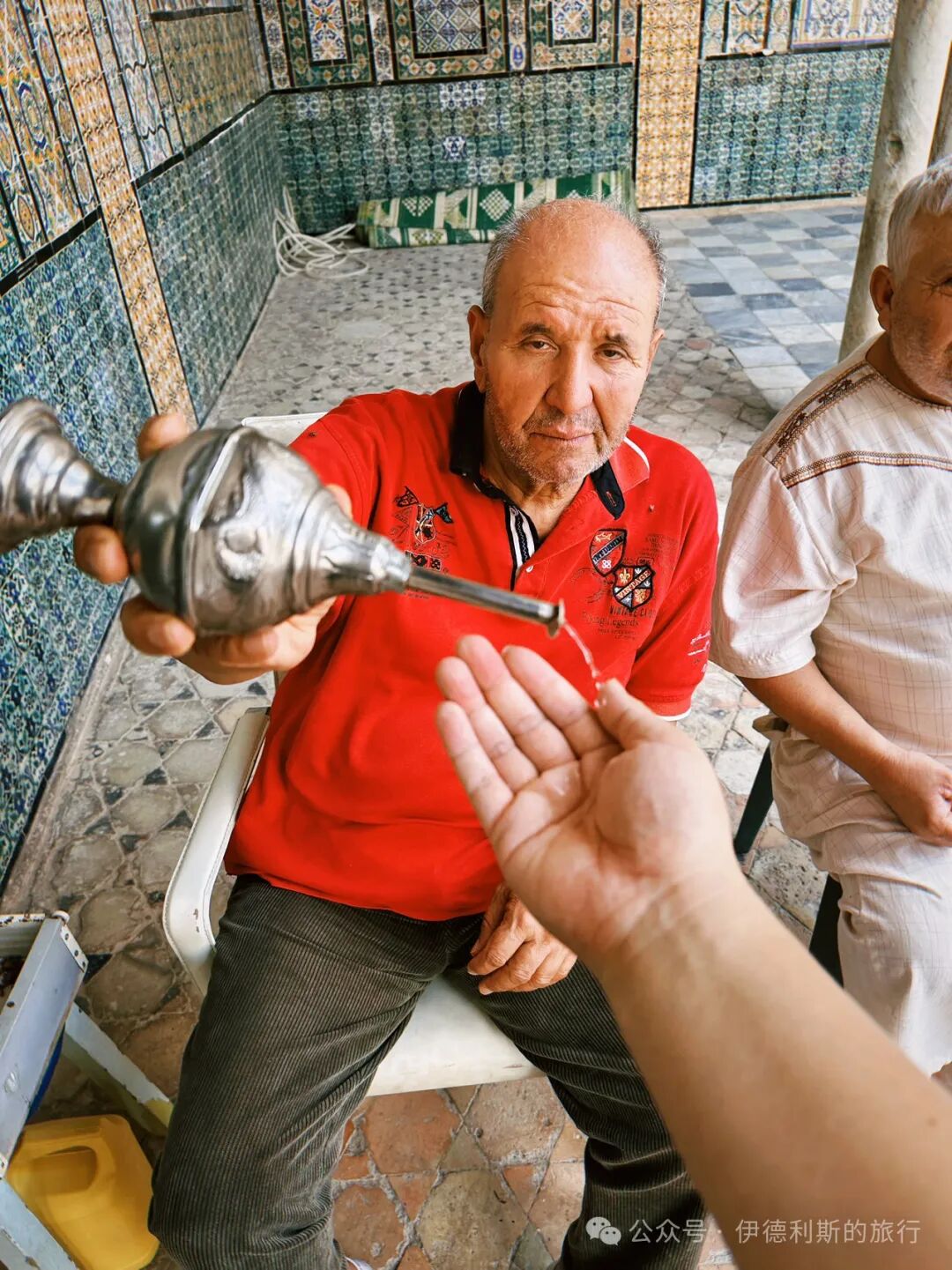
At the minaret, gate, and main hall of the Sidi Sahib tomb in Kairouan, an old man in the courtyard pours perfume into the hands of every visitor (dosti) who comes to pay their respects.
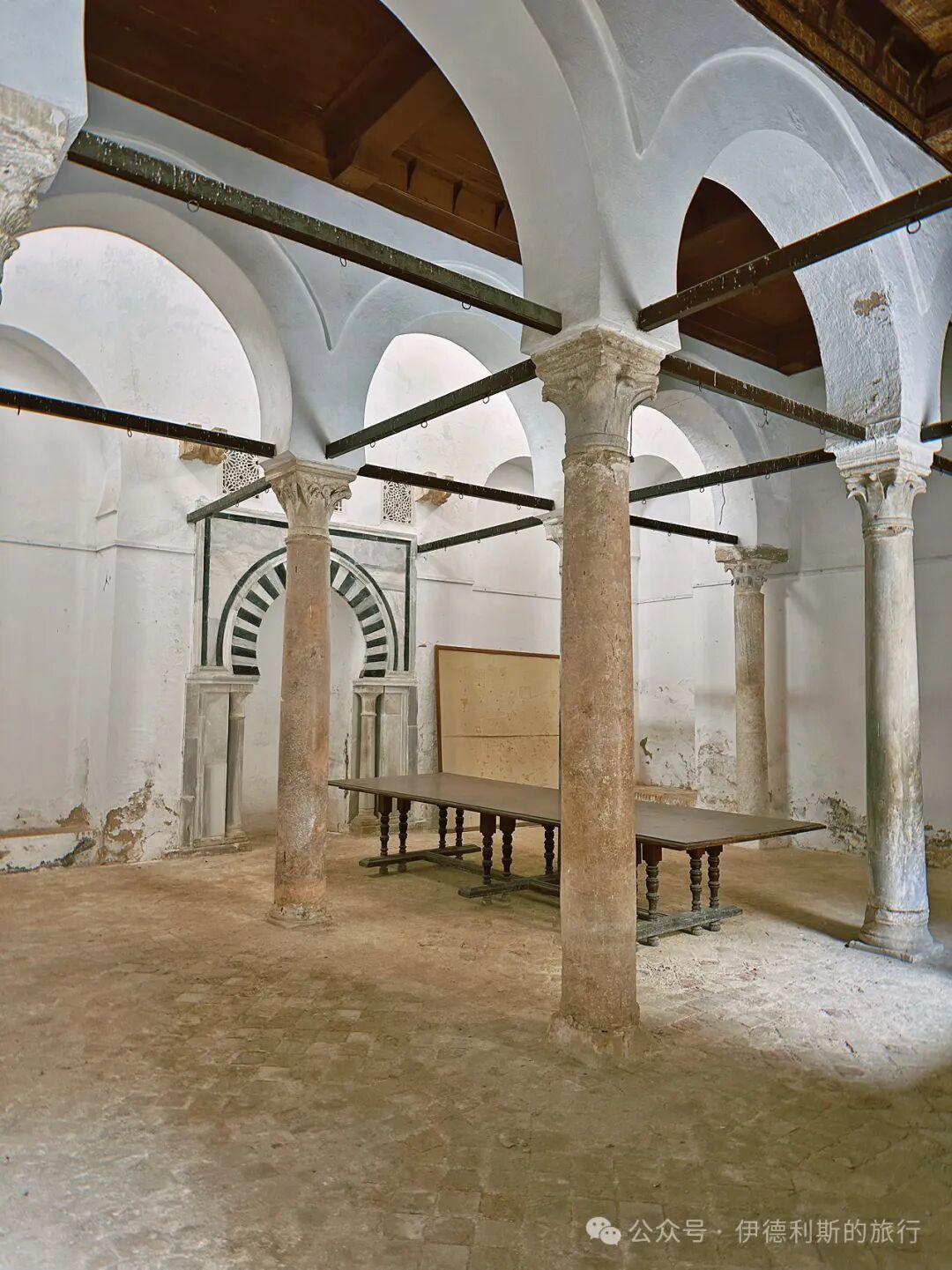
The Sidi Abid al-Ghariani school (madrasa) and shrine (zawiya) inside the Kairouan Medina were founded in the 14th century and expanded significantly in the 17th century. Abid al-Ghariani was a scholar, and his teacher, Al-Jadidi, was a famous judge in Kairouan. Al-Jadidi passed away in 1384 while on the Hajj pilgrimage in Mecca. Abid al-Ghariani took over his teacher's role to continue teaching in Kairouan, and after he died in 1402, he was buried next to the school.
Besides Abid al-Ghariani, the Hafsid dynasty Caliph Moulay Hasan (reigned 1526-1543) is also buried here. In 1534, the famous pirate Barbarossa led a fleet to invade Tunisia. Moulay Hasan eventually took back Tunisia with the help of the Holy Roman Empire, but he had to sign a treaty to become a vassal of Spain. In 1542, while Moulay Hasan was traveling to Italy to collect weapons and ammunition, his son usurped the throne, and he was eventually exiled. He lived in Naples and Sicily for several years and later met with the Holy Roman Emperor and the Pope, becoming the most well-known Arab monarch to Europeans of that era.
The city walls and gates of the Kairouan Medina.
Kairouan was founded in 670 by the Arab Umayyad general Uqba ibn Nafi, who chose the site to serve as a military base for the Arab conquest of Tunisia. Over the next hundred years, the Berbers launched wave after wave of uprisings against the Arabs. After surviving many attacks, Kairouan was finally captured by the Berbers in 745 and was not retaken until the end of the 8th century. view all
Summary: This first part follows a visit to the Great Mosque of Kairouan for Jumu'ah in one of Tunisia's most important Islamic cities. It keeps the original prayer experience, mosque history, photographs, and travel details for readers interested in Muslim heritage in North Africa.
On Friday, we left from the Louage station south of Sousse and reached Kairouan, the most important ancient city in Tunisia, in just one hour. The Louage station in Kairouan is on the west side of the city, but you can ask the driver to drop you off right at the gate of the Great Mosque of Kairouan.
When we arrived at the Great Mosque at twelve o'clock, it was already closed. A young man at the gate told us that other mosques in Kairouan hold Jumu'ah prayer at one o'clock, but only the Great Mosque holds it at three, so he suggested we come back later.
We used this time to look at the exterior of the mosque. The Great Mosque of Kairouan is the oldest and most spectacular Jumu'ah mosque in Tunisia. It was first built in 670 by order of Uqba ibn Nafi, a general of the Arab Umayyad Caliphate. It was destroyed by Christian Berbers in 690 and rebuilt by the Umayyad Caliphate in 703. As the Arab population in Tunisia grew, the number of Muslims in Kairouan increased. The Great Mosque was rebuilt and renovated many times between 724-728, 774, 836, 862-863, and 875, finally taking its current form in the 9th century.
The Great Mosque is a huge, irregular quadrilateral with a perimeter of 405 meters, looking like a fortress from the outside. The outer walls are 1.9 meters thick and built from stone, rubble, and bricks. Because the ground is quite soft, many buttresses were built on the outer walls to increase stability.
The Great Mosque has nine gates, some of which have porches and spiral-shaped domes. Bab Lalla Rihana on the southeast side was built in 1293 during the Hafsid dynasty. It features a horseshoe arch and ancient stone columns that blend perfectly with the 9th-century walls.
While waiting for Jumu'ah, we had lunch at El Brija Restaurant, located on the city wall next to the Great Mosque. The atmosphere and service were both good, and they serve traditional Tunisian food. I recommend eating here when visiting the Great Mosque.
We ordered a traditional appetizer platter and a mixed couscous stew. When eating at a proper restaurant in Tunisia, you really only need to order the main course, as most places provide side dishes and bread.
Our appetizer platter included Tunisian salad, Houria carrot salad, and Mechouia green pepper salad. We ate these three dishes almost every day in Tunisia. Tunisian salad is made of diced cucumbers, tomatoes, and onions mixed with olive oil, topped with boiled eggs and tuna. Mechouia salad contains green peppers, tomatoes, onions, garlic, and more. Tunisians love it, and it is rich in vitamins and very healthy. The couscous stew was very rich, containing lamb, Merguez sausage, chicken, beef, dried fruits, and preserved fruits. The Merguez sausage is seasoned with cumin and chili, making it very flavorful.
After the meal, we were served mint tea and Makroudh dessert. Makroudh is a classic North African Maghreb snack for breaking the fast. It is made of semolina on the outside, filled with date paste and dried fruits, then baked and soaked in syrup.
We returned to the Great Mosque after two o'clock, and people were already entering the prayer hall. Once inside the courtyard, the first thing you see is the oldest minaret (bangke ta) still in existence today. The minaret of the Great Mosque of Kairouan was built between the 8th and 9th centuries. The current structure mostly dates back to 836. It is one of the three most important early minarets, alongside the spiral minaret of the Great Mosque of Samarra in Iraq, built between 848 and 852, and the spiral minaret of the Abu Dulaf Mosque in Iraq, built in 859. These three served as models for later minarets across Andalusia and the Maghreb.
There were no minarets during the time of the Prophet and the four Caliphs. People called for prayer (adhan) from the mosque entrance or the roof. Platforms for calling the adhan appeared during the Umayyad dynasty in the 7th century, but true minarets did not emerge until the Abbasid dynasty in the 8th century. There is no final conclusion on the origin of the minaret. Some say it mimics the towers of Syrian churches, while others suggest it was inspired by the Lighthouse of Alexandria or Mesopotamian ziggurats. Four towers were built during the reconstruction of the Sacred Mosque in Mecca in the late 8th century, but they have not survived. The earliest surviving minarets are the one at the Great Mosque of Kairouan and the two in Iraq. The Bride's Minaret at the Umayyad Mosque in Damascus may also date to the 9th century, but there is no clear record of this.
The minaret of the Great Mosque of Kairouan is 31.5 meters tall. Its base dates back to the Umayyad period in 725, and you can see Latin inscriptions from the Roman era on the walls. The first and second levels of the minaret were built in 836 using carefully cut stone. The side facing the courtyard has windows, while the other three sides have arrow slits. The third level of the minaret is a four-arched structure (chahartaq), which was likely added later.
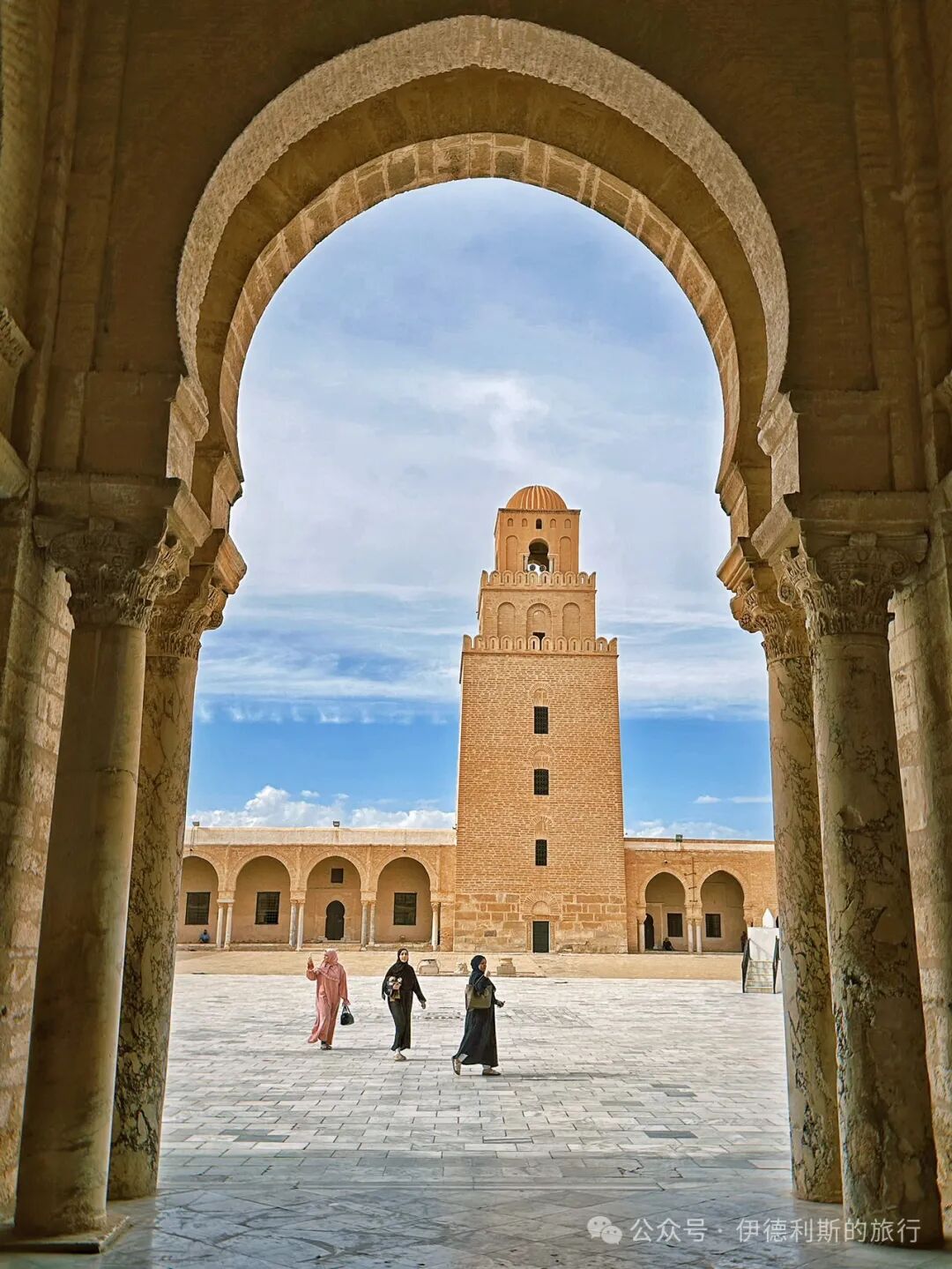
Three sides of the Great Mosque are surrounded by double-row horseshoe-shaped arcades. The columns come from various ancient Roman and Byzantine ruins, including some from the famous site of Carthage.
There is a dome above the main entrance of the prayer hall and another above the mihrab. These domes, built in 836, are important examples of early mosque domes.
The prayer hall connects to the arcades through 17 carved wooden doors. The most beautiful one in the center was built in 1828 and features rich geometric and floral patterns.
The mihrab of the Great Mosque is 5.1 meters high. It was built in 863 and is the oldest concave mihrab in the world. The main body of the mihrab is a horseshoe arch supported by two red marble columns. The columns have Byzantine-style capitals with very fine carvings.
The upper part of the mihrab features 139 iridescent ceramic tiles fired in the second half of the 9th century. This metallic-lustre glazed pottery originated in Abbasid-ruled Iraq and was traded throughout West Asia and North Africa. It is not yet certain whether the iridescent tiles of the Great Mosque of Kairouan were fired in Iraq or if Iraqi craftsmen were invited to Kairouan to make them.
The concave center of the upper part is made of painted wood, featuring complex vine patterns in yellow on a blue background. The lower part is inlaid with 28 white marble slabs carved with complex floral and geometric patterns, including stylized grape leaves, flowers, and shells.
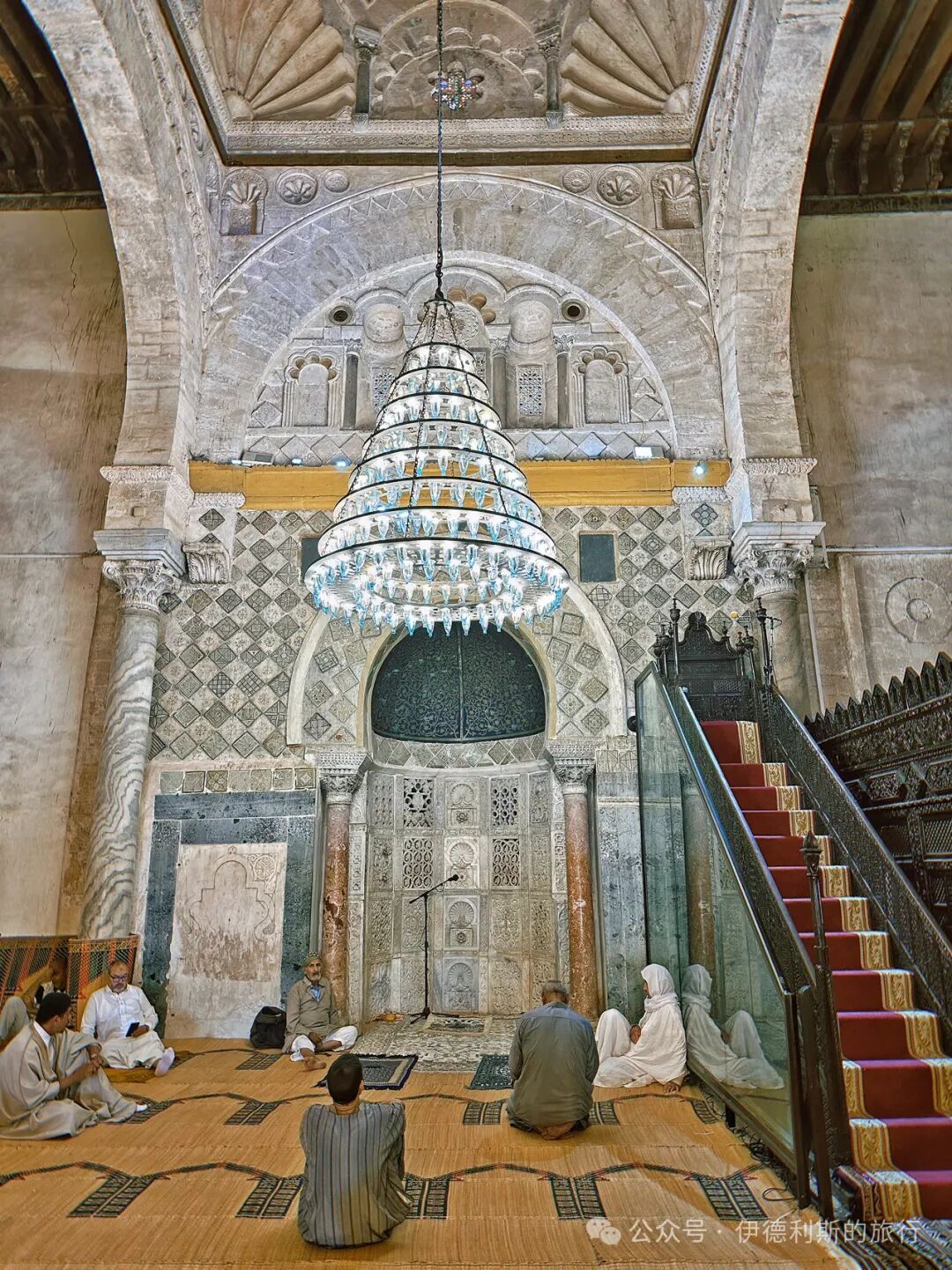
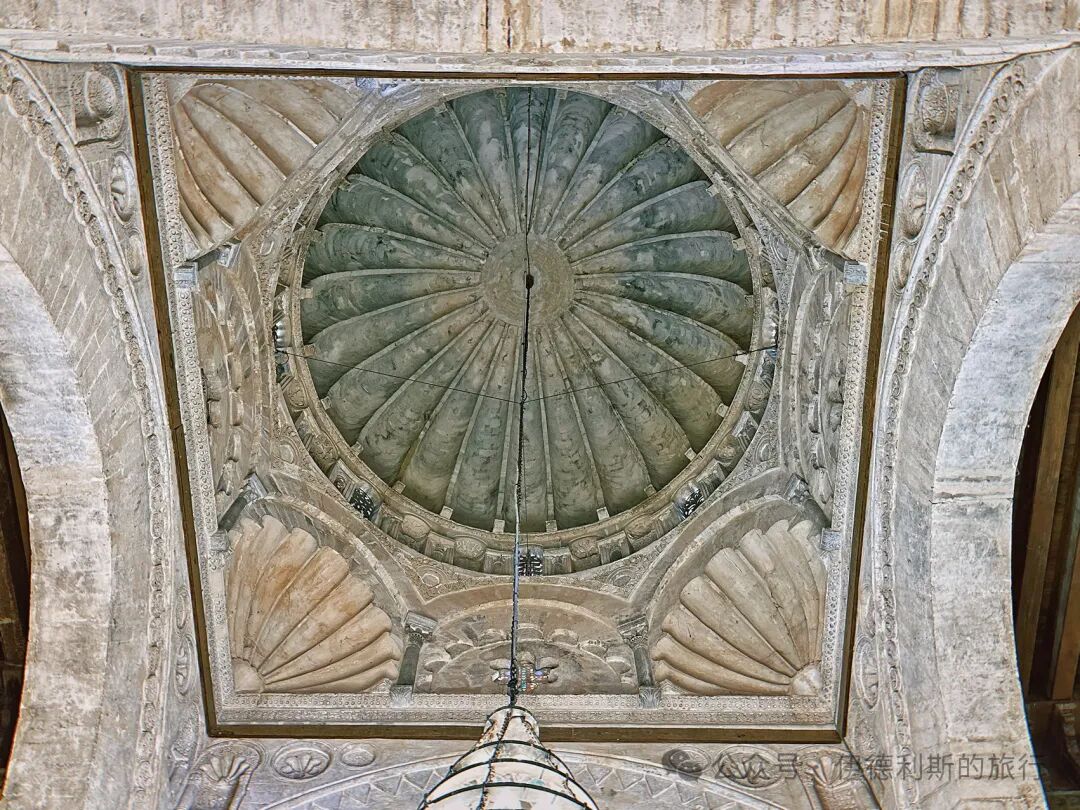
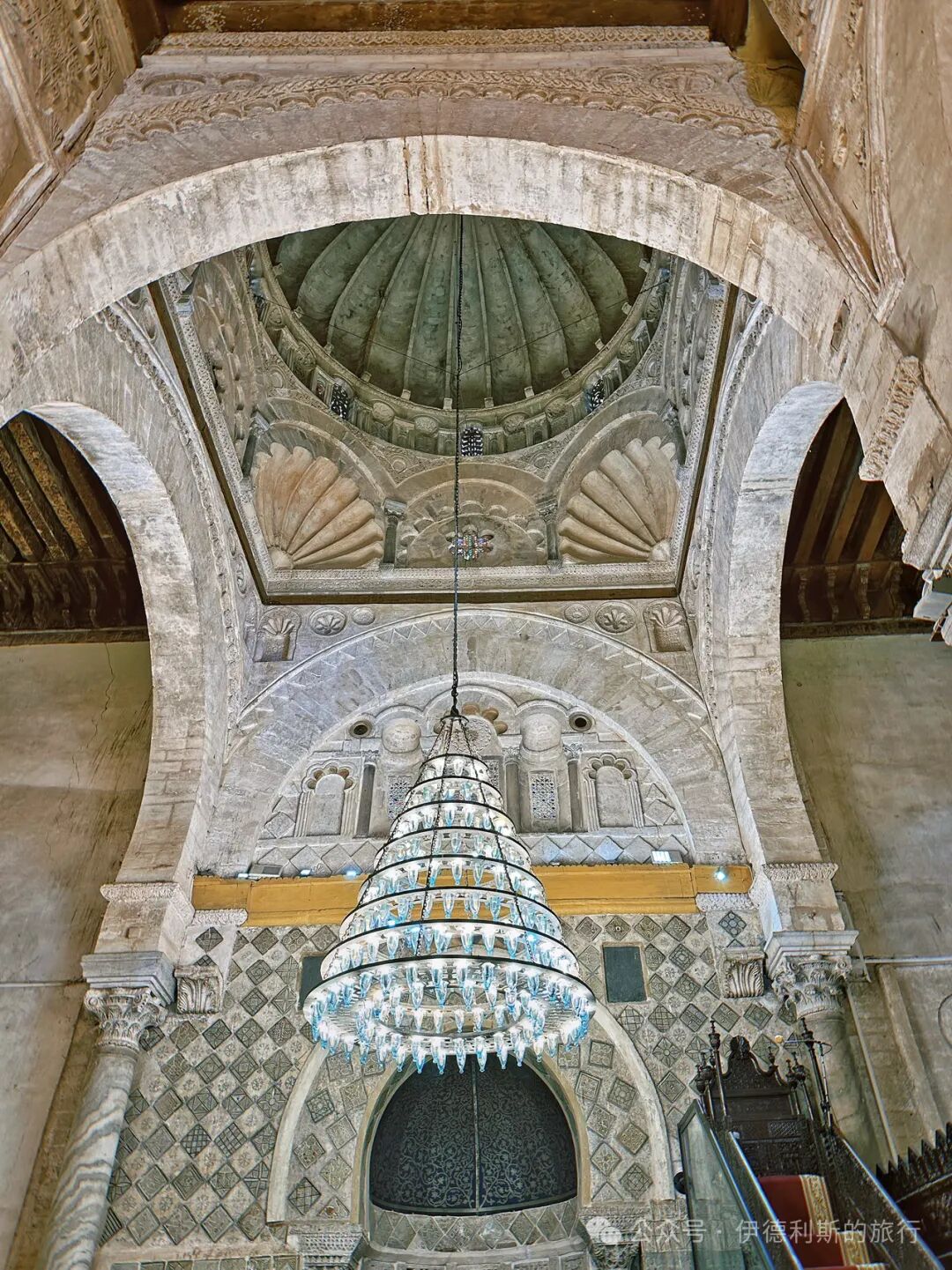
Next to the mihrab are the pulpit (minbar) for the Friday sermon and the enclosure (maqsurah) used by kings and nobles.
The minbar of the Great Mosque of Kairouan was also built in 863 and is the oldest surviving minbar in the world. The minbar is made of teak imported from India and is assembled from over 300 wooden panels carved with floral and geometric patterns. Although it was restored in the early 20th century, all but nine of the wooden panels are original pieces from over a thousand years ago. Today, the sides of the minbar are protected by glass, making it difficult to take photos due to the reflection.
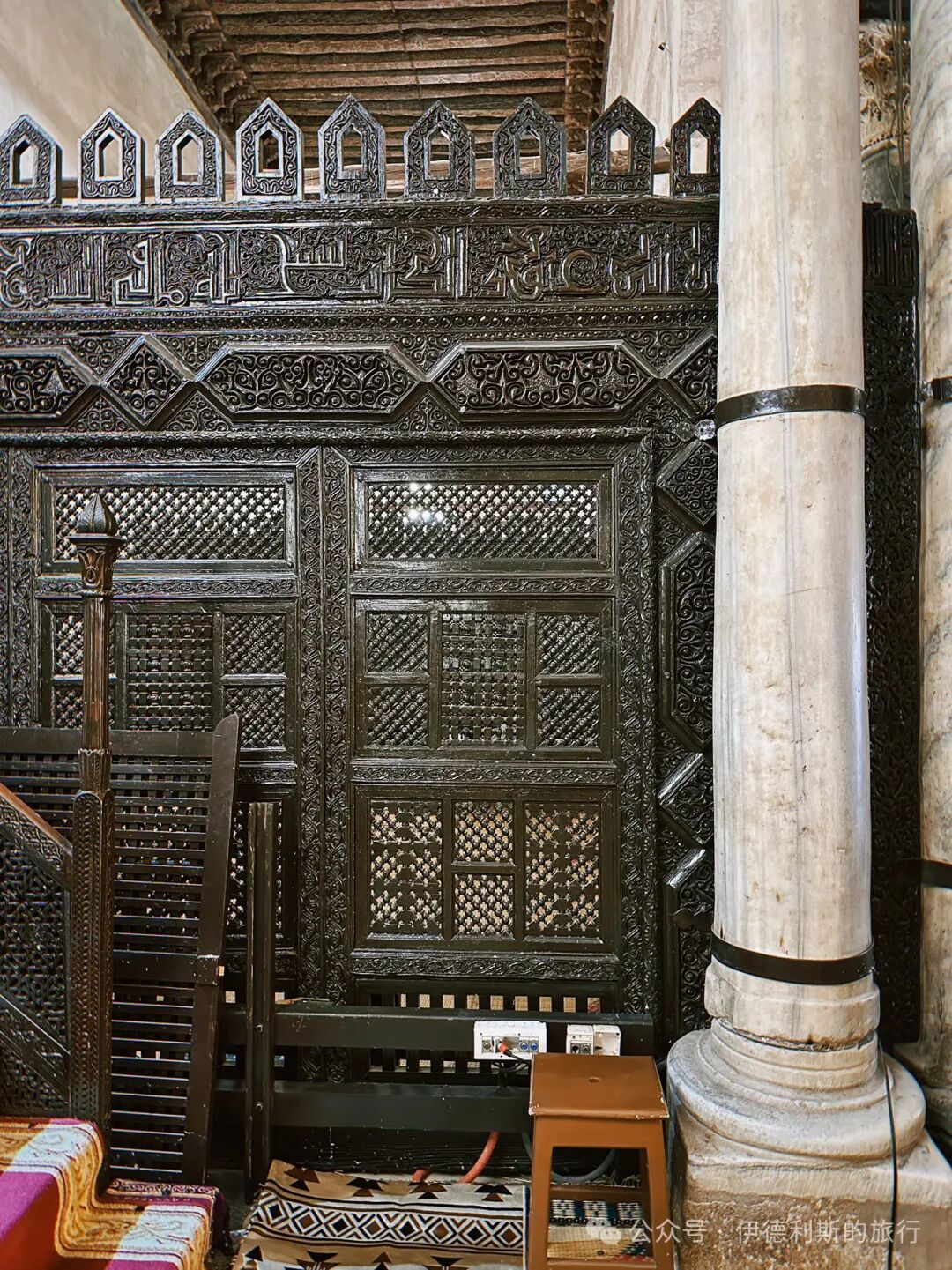
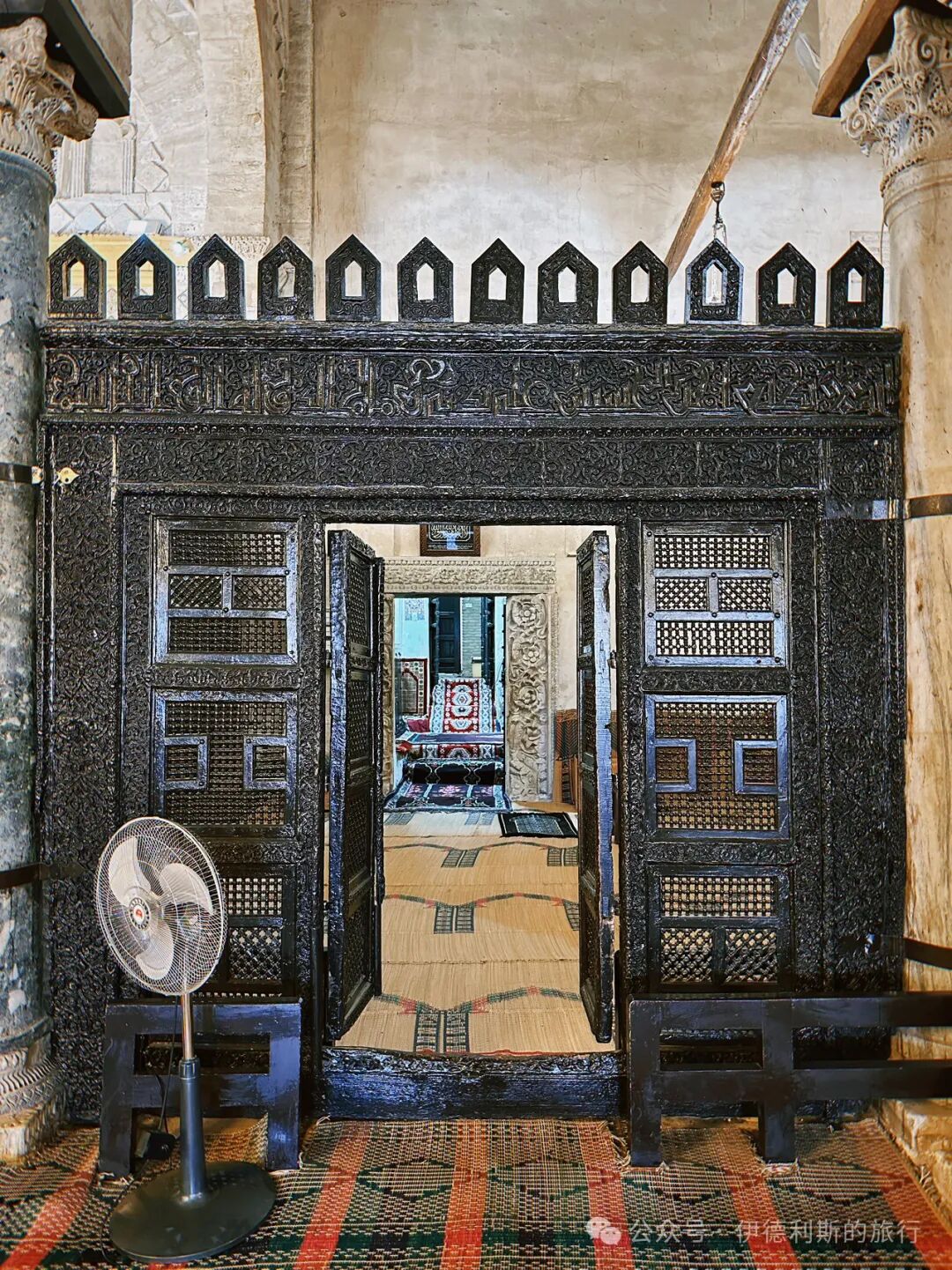
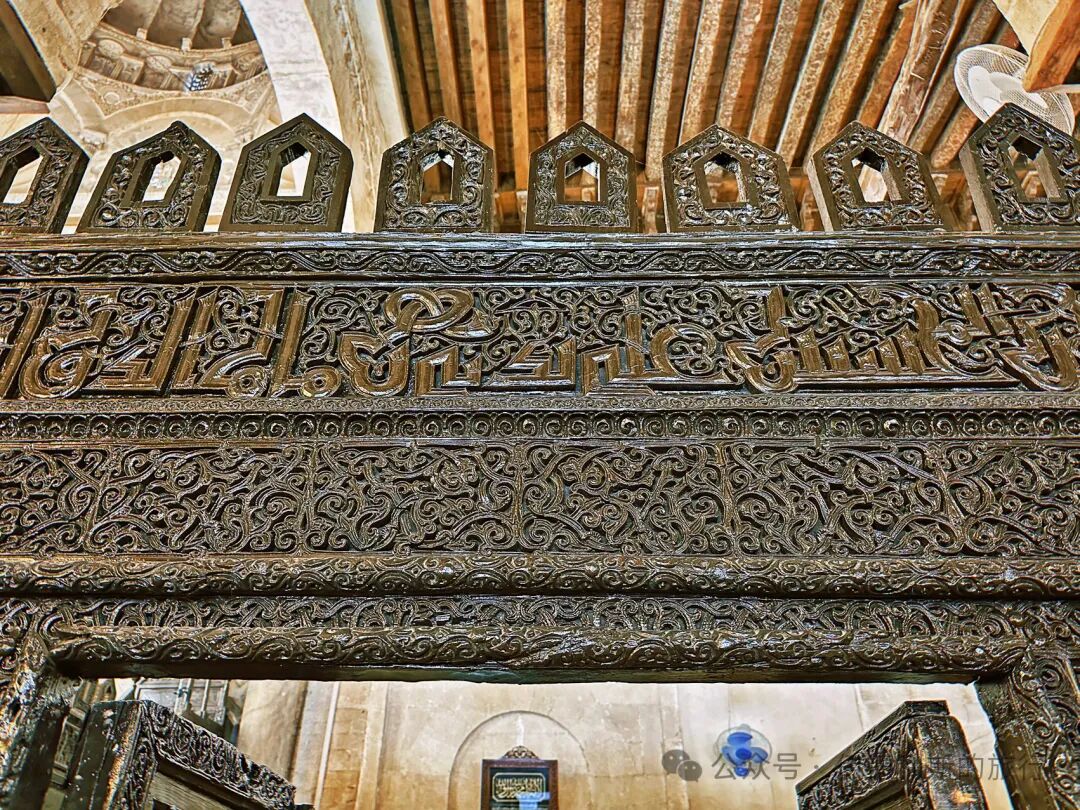
The maksura at the Great Mosque of Kairouan was built in the first half of the 11th century. It is the oldest maksura in the world still in use. The maksura at the Great Mosque of Cordoba in Spain was built in 965, but it is no longer used today. The maksura is made of cedar and is 14 meters long. It is carved with ornate Kufic calligraphy and floral patterns, representing the highest achievement in Tunisian carving art at that time.
The maksura originated during the time of Caliph Uthman in the mid-7th century. After Caliph Umar was assassinated inside the prayer hall, Uthman built a partition wall inside the hall to protect himself. Later, mosques where the Caliph resided would all have a maksura built inside.
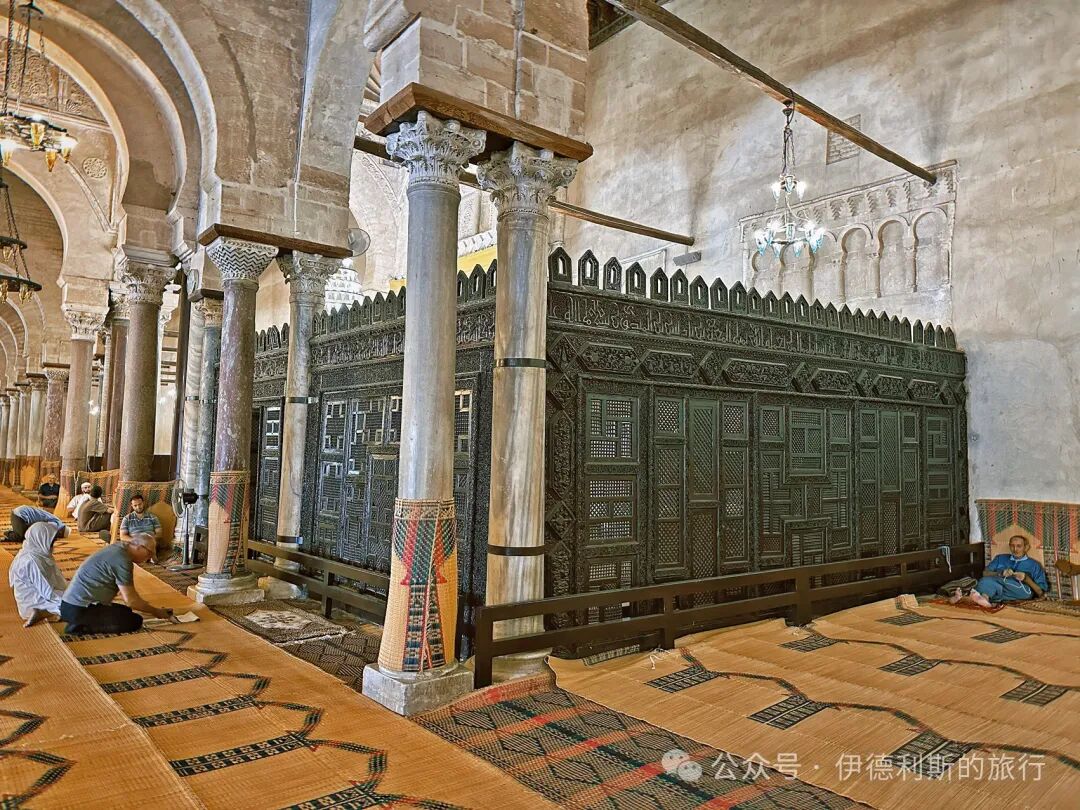
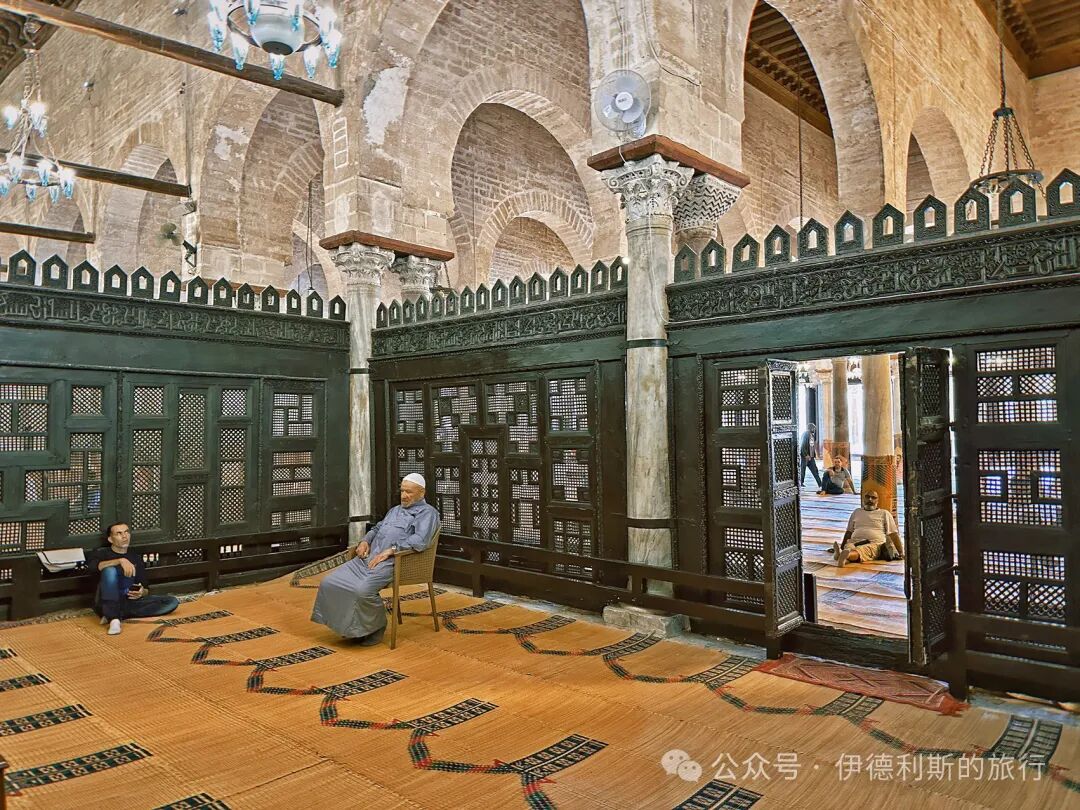
The prayer hall of the Great Mosque of Kairouan is 70.6 meters wide and 37.5 meters deep. It consists of 17 aisles, with the aisle directly facing the mihrab being the tallest and widest. This layout was later adopted by major mosques across the Maghreb and Andalusia.
There are 414 stone columns inside the prayer hall. They are made of marble, granite, and porphyry, with capitals in styles including Corinthian, Ionic, and Composite. Some capitals were carved specifically for the prayer hall, while many others came from ancient Roman, Phoenician, and Byzantine sites in Tunisia, including the famous ancient city of Carthage.
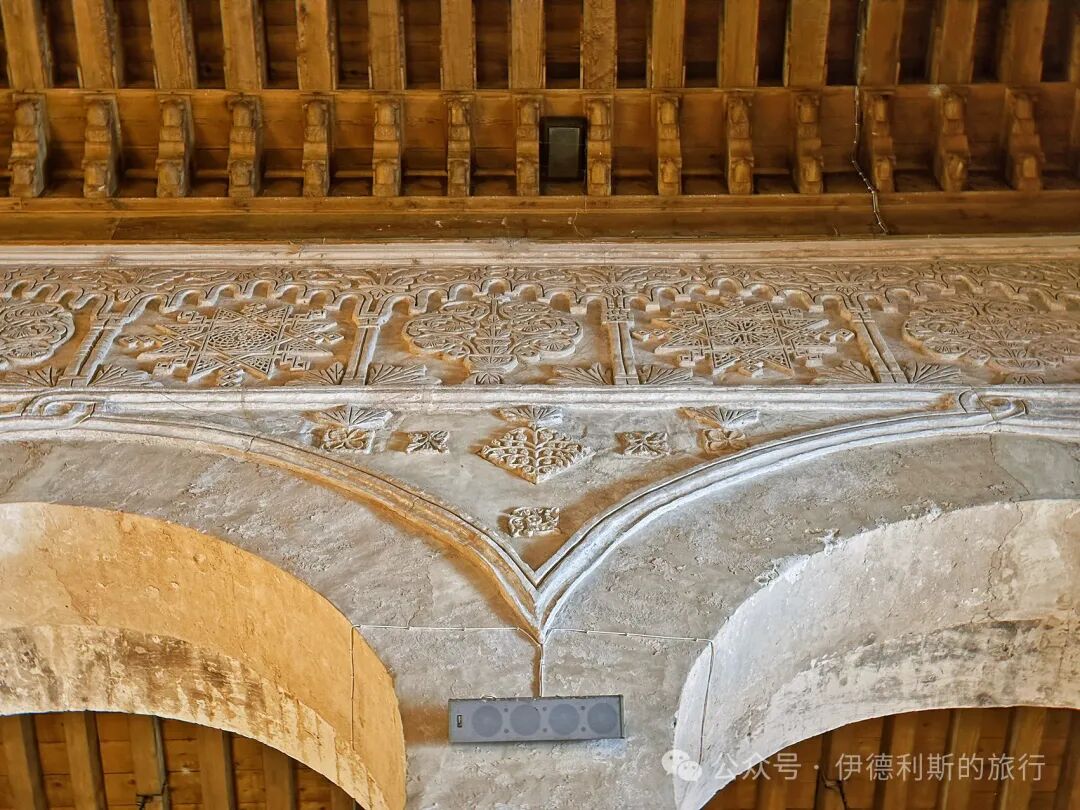
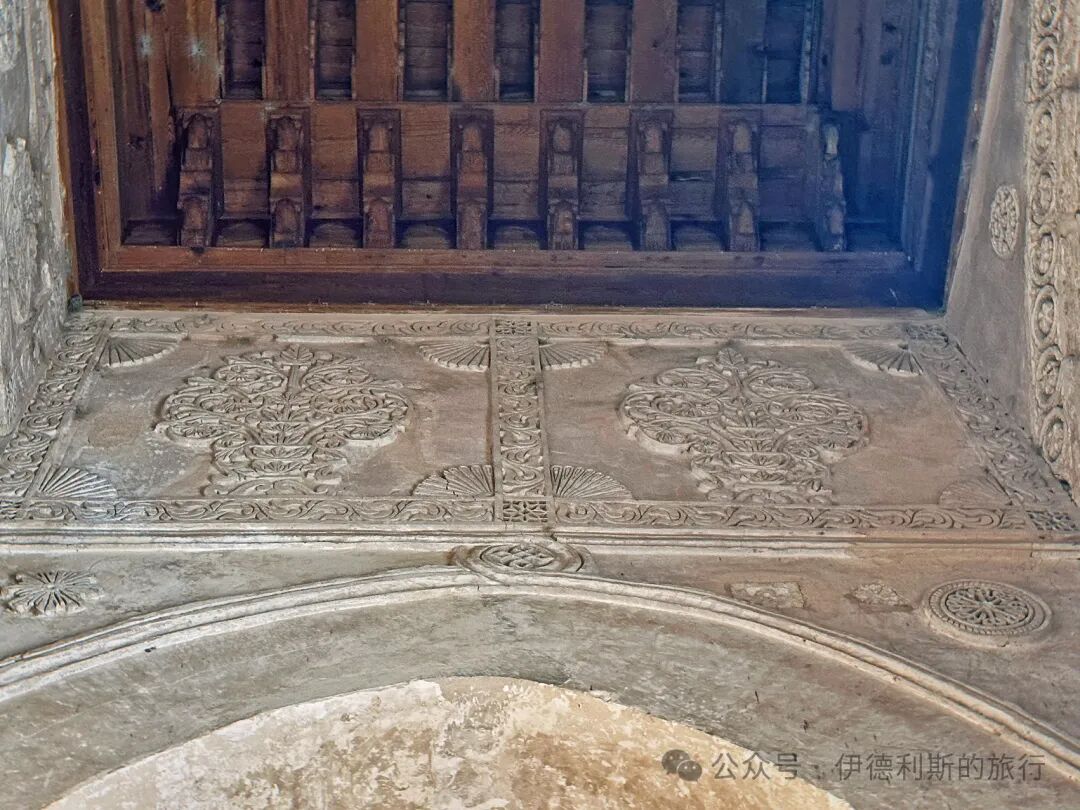
The door inside the prayer hall's maksura is decorated with marble floral carvings. This door leads to the library behind the qibla wall, which is also where the imam usually stays. The imam only comes out from here to lead the prayer and deliver the khutbah.
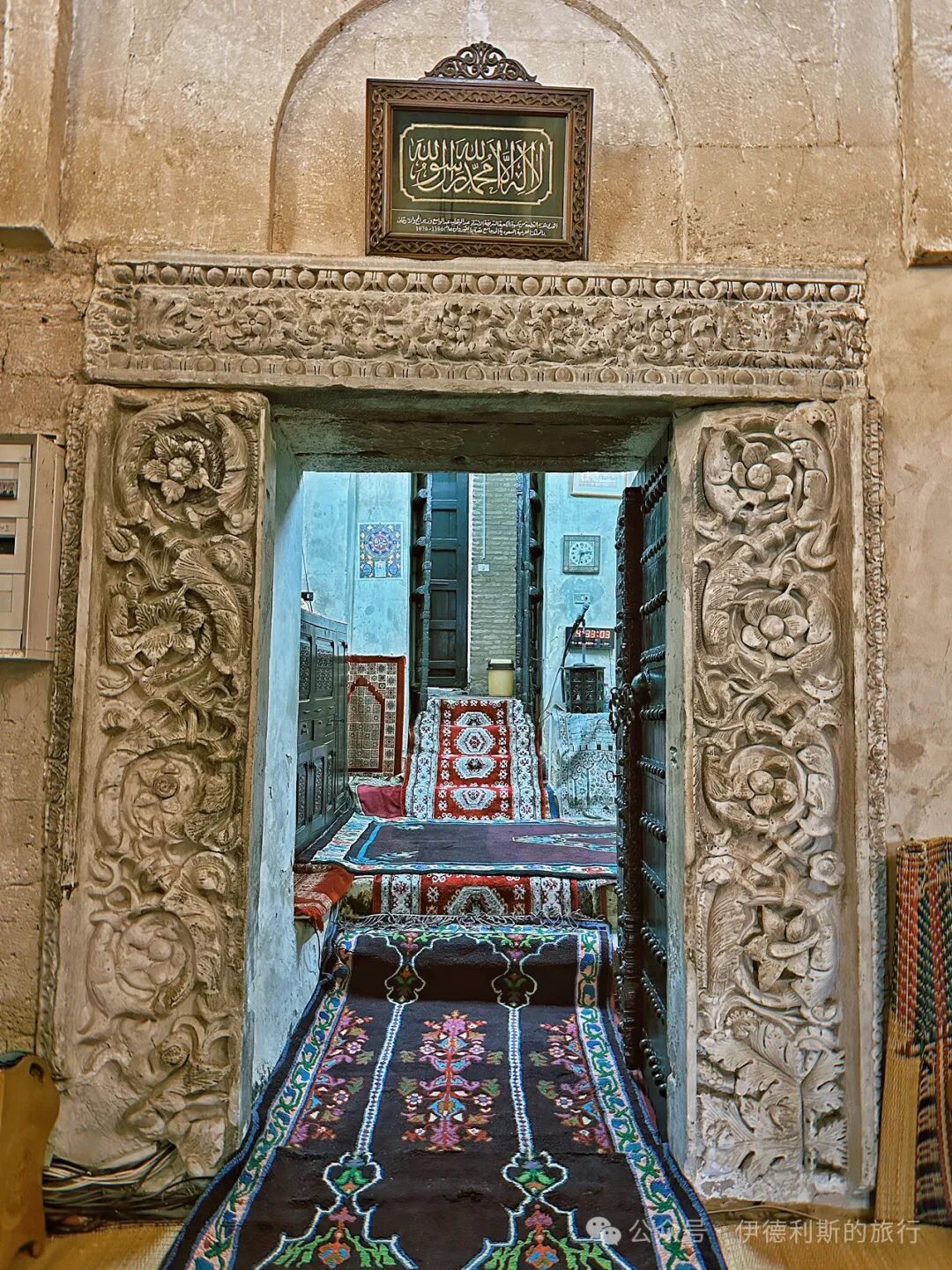
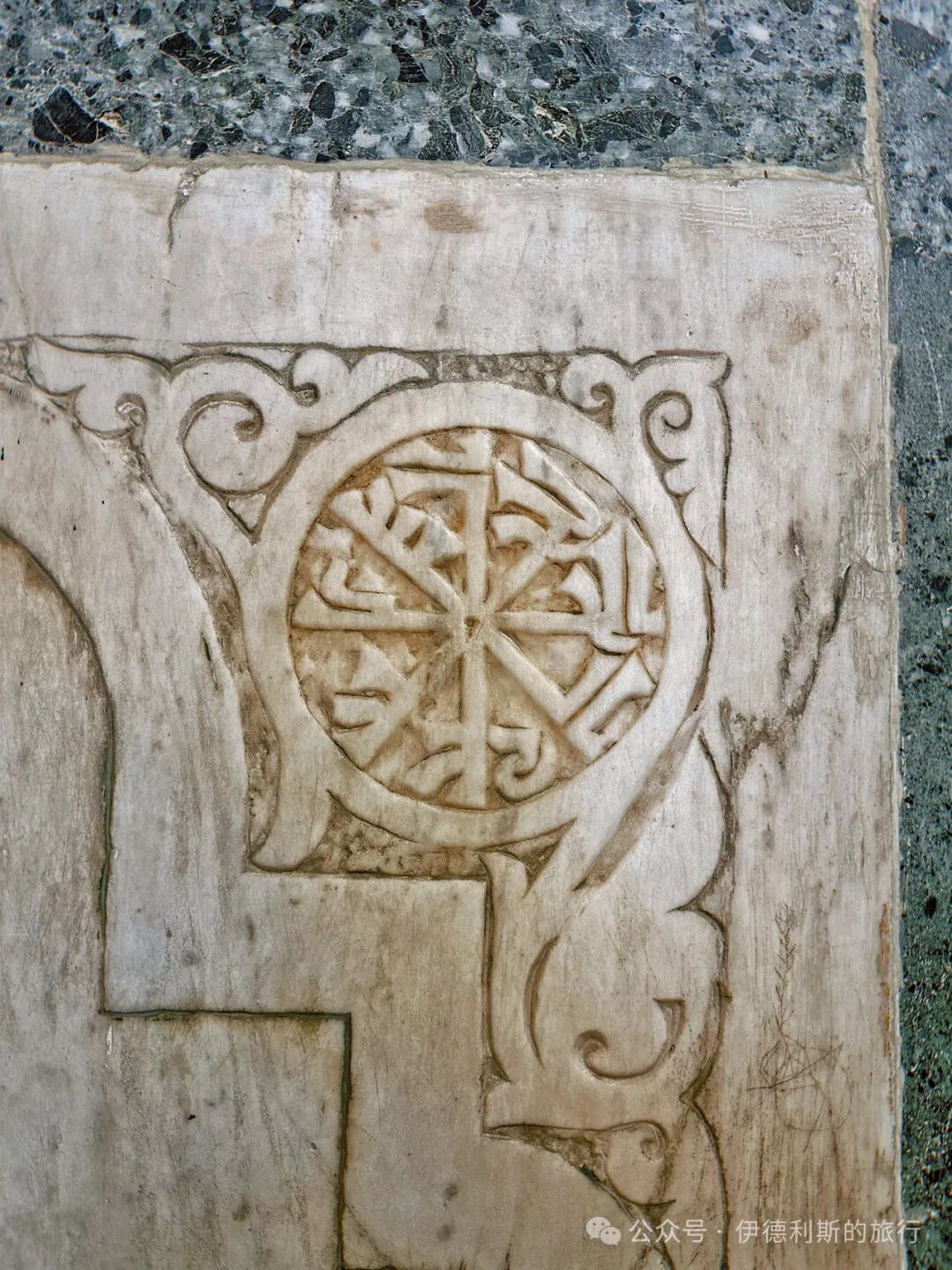
The grand scene of Jumu'ah at the Great Mosque of Kairouan. After the adhan is finished, the imam slowly walks up the minbar to begin the khutbah. In Arabic-speaking regions, everyone understands the khutbah, so there is no sermon session beforehand.
Tunisia follows the Maliki school of thought. Their namaz movements are quite similar to our Hanafi school, including the initial takbir, but the main difference is that they also fold their arms when making intention.
After the prayer, we stood for janazah outside the prayer hall door. Because Jumu'ah was at three o'clock, we immediately returned to the prayer hall to perform Dhuhr after finishing.
From the 9th to the 11th century, the Great Mosque of Kairouan was the academic center for the entire Maghreb region and the Maliki school. to religious courses, it offered subjects like mathematics, astronomy, medicine, and botany. In 1045, the Zirid dynasty court in Kairouan announced its conversion to Sunni Islam. Upon hearing this, the Shi'a Fatimid dynasty in Egypt sent a group of Arab tribes to invade Kairouan. In 1057, these Arab tribes occupied and destroyed Kairouan. The Great Mosque of Kairouan declined from then on and did not slowly recover until after the 13th century.
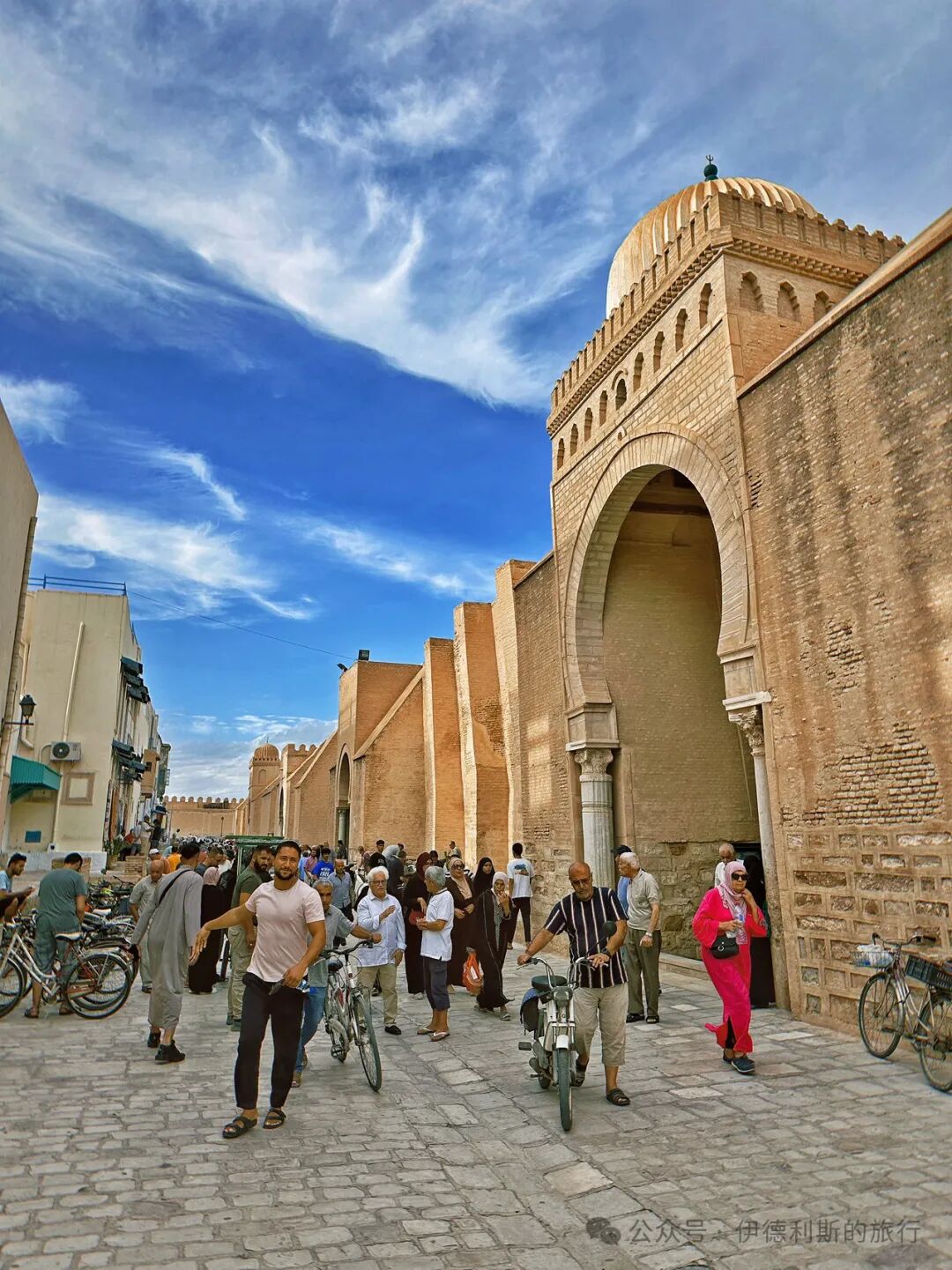
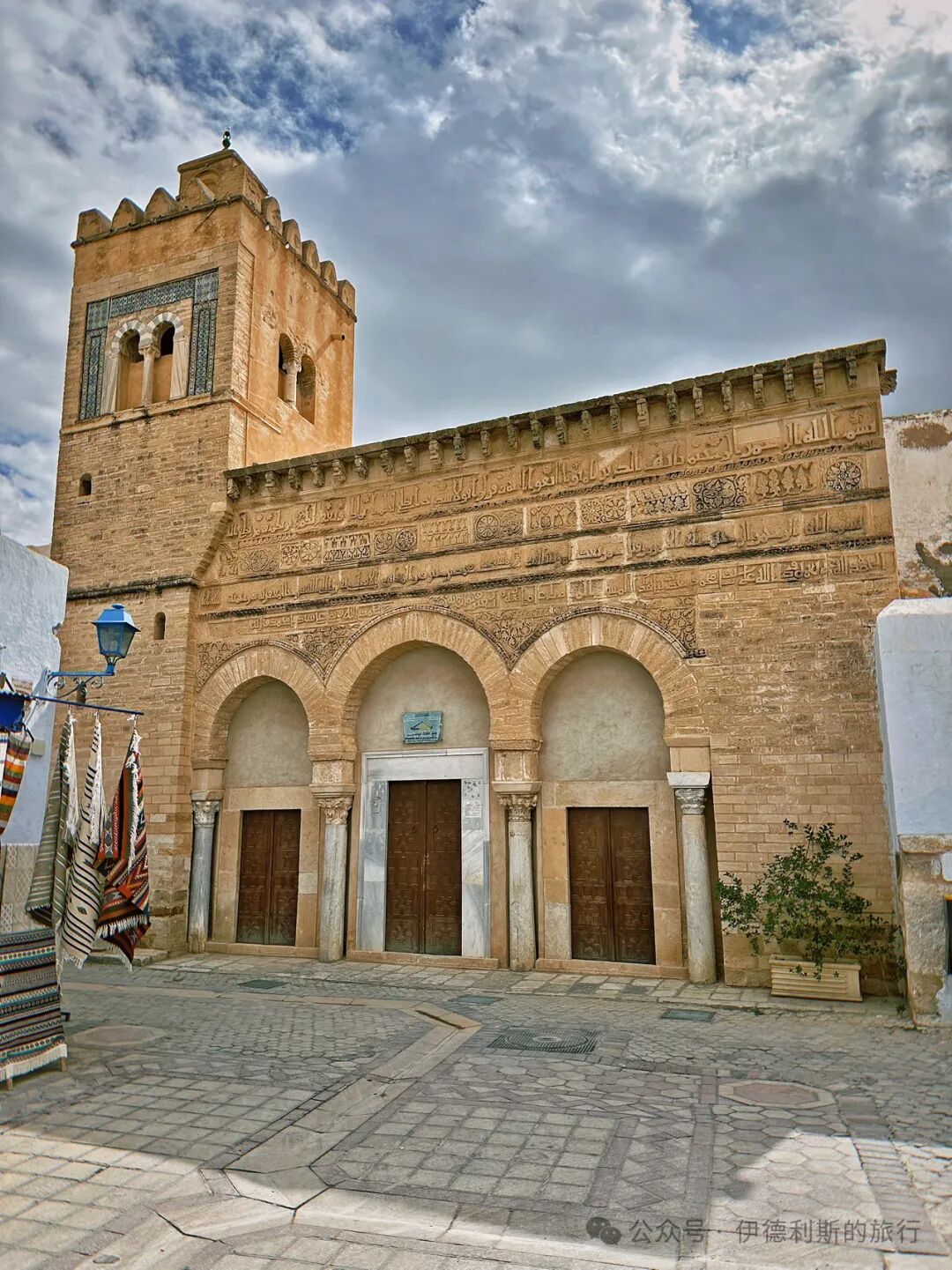
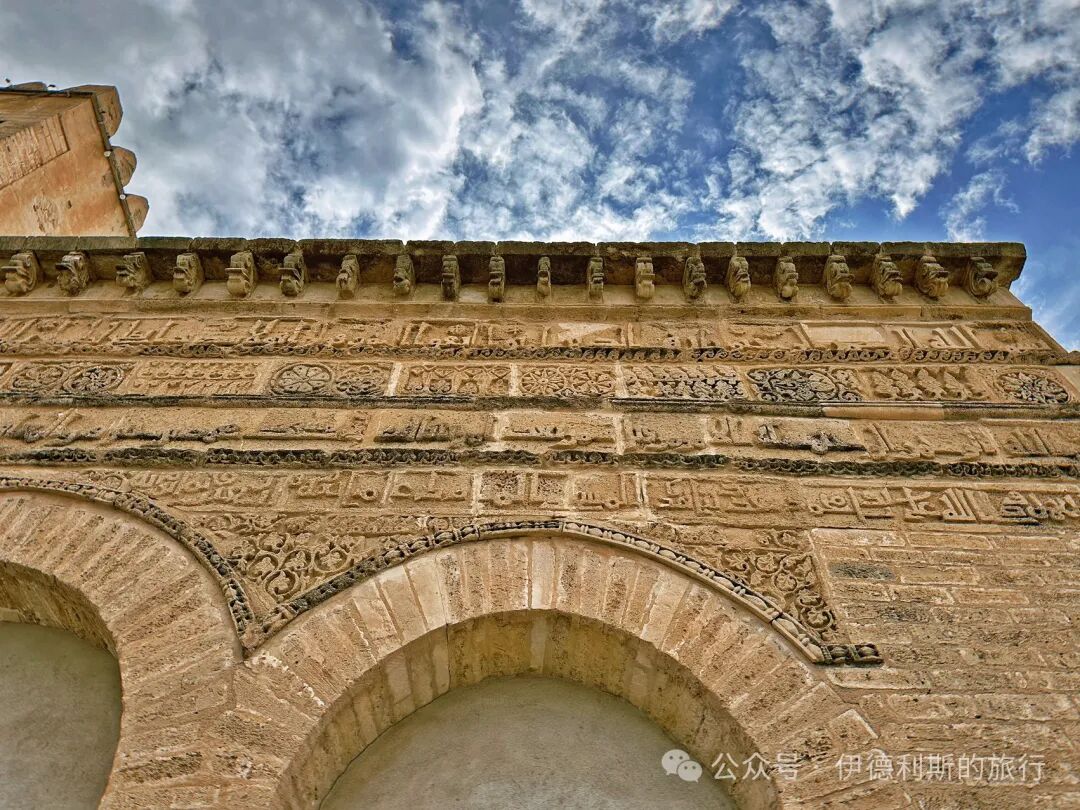
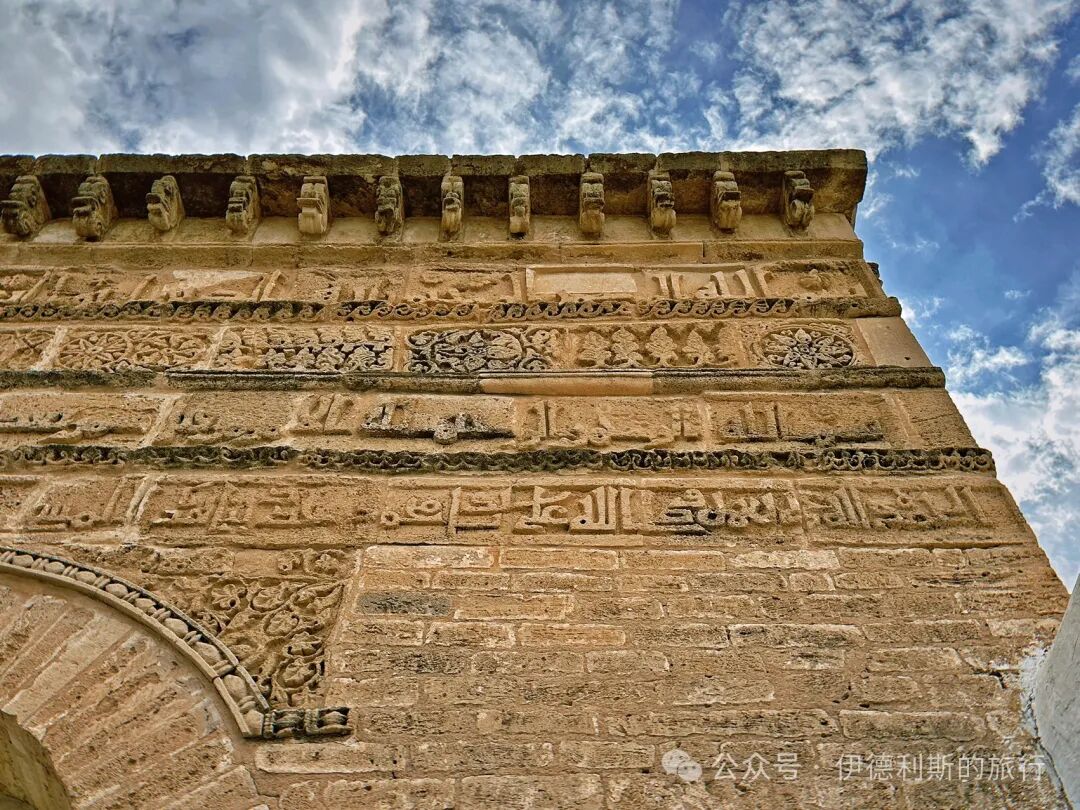
After leaving the Great Mosque of Kairouan, we started exploring the ancient medina of Kairouan. Besides the Great Mosque, the other ancient mosque remaining in Kairouan is the Mosque of the Three Doors (Masjid al-Thalathat Abwab), built in 866. This mosque has the oldest decorated facade of any religious building in the world.
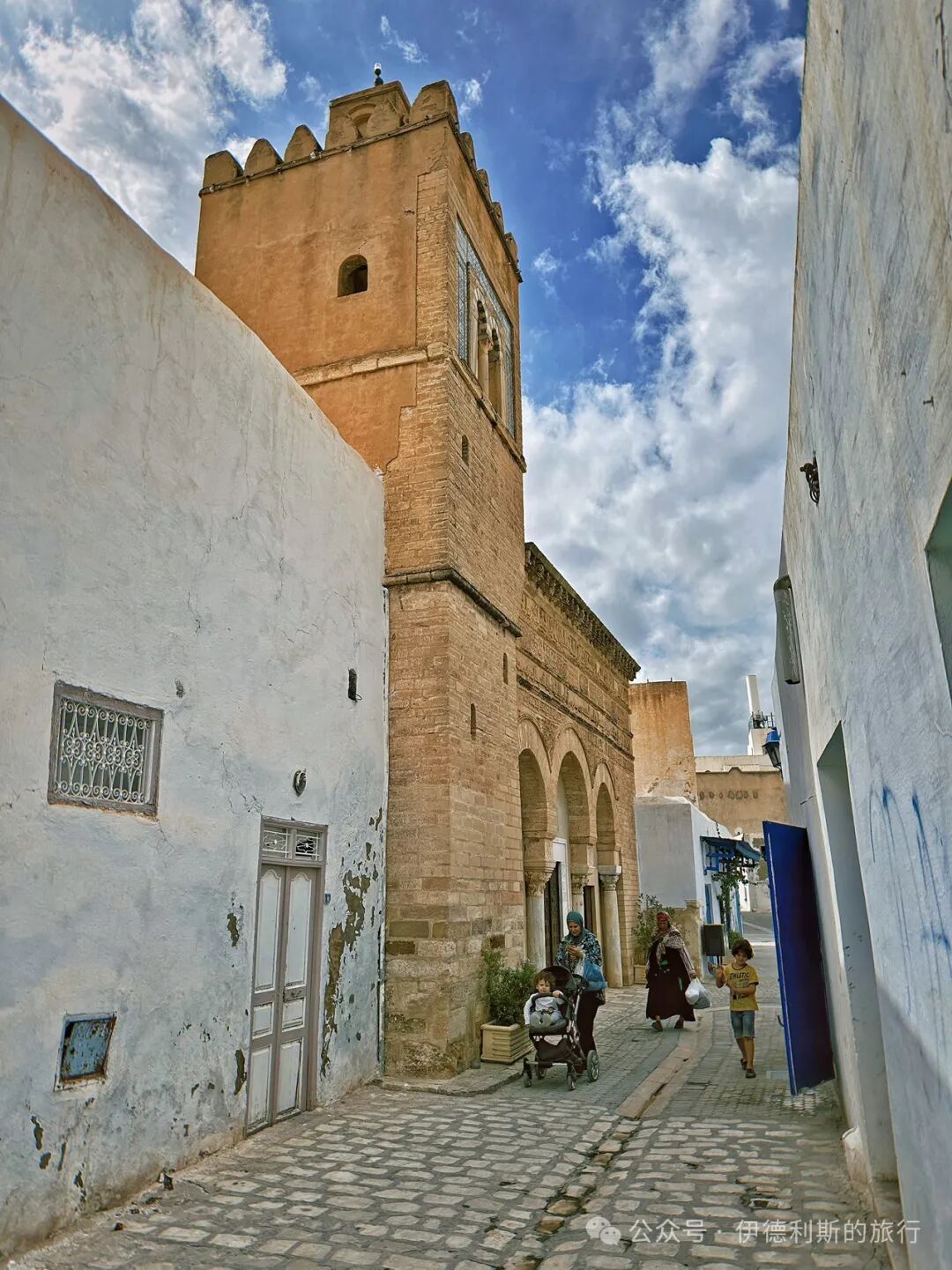
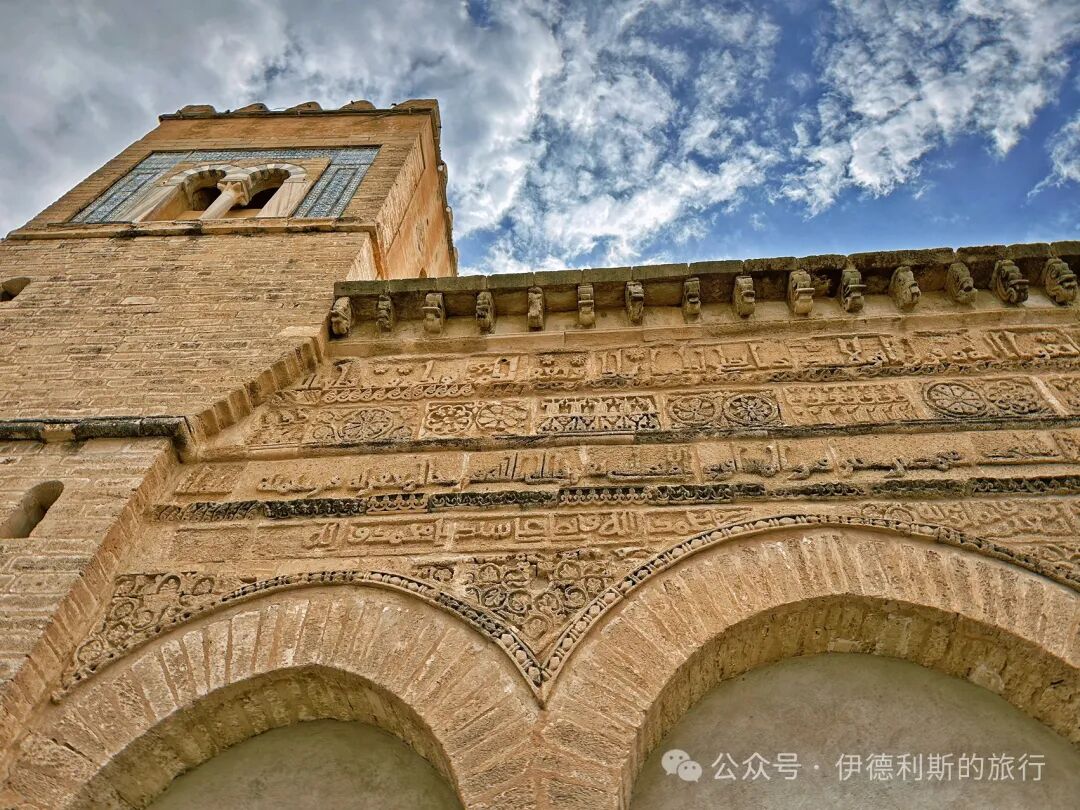
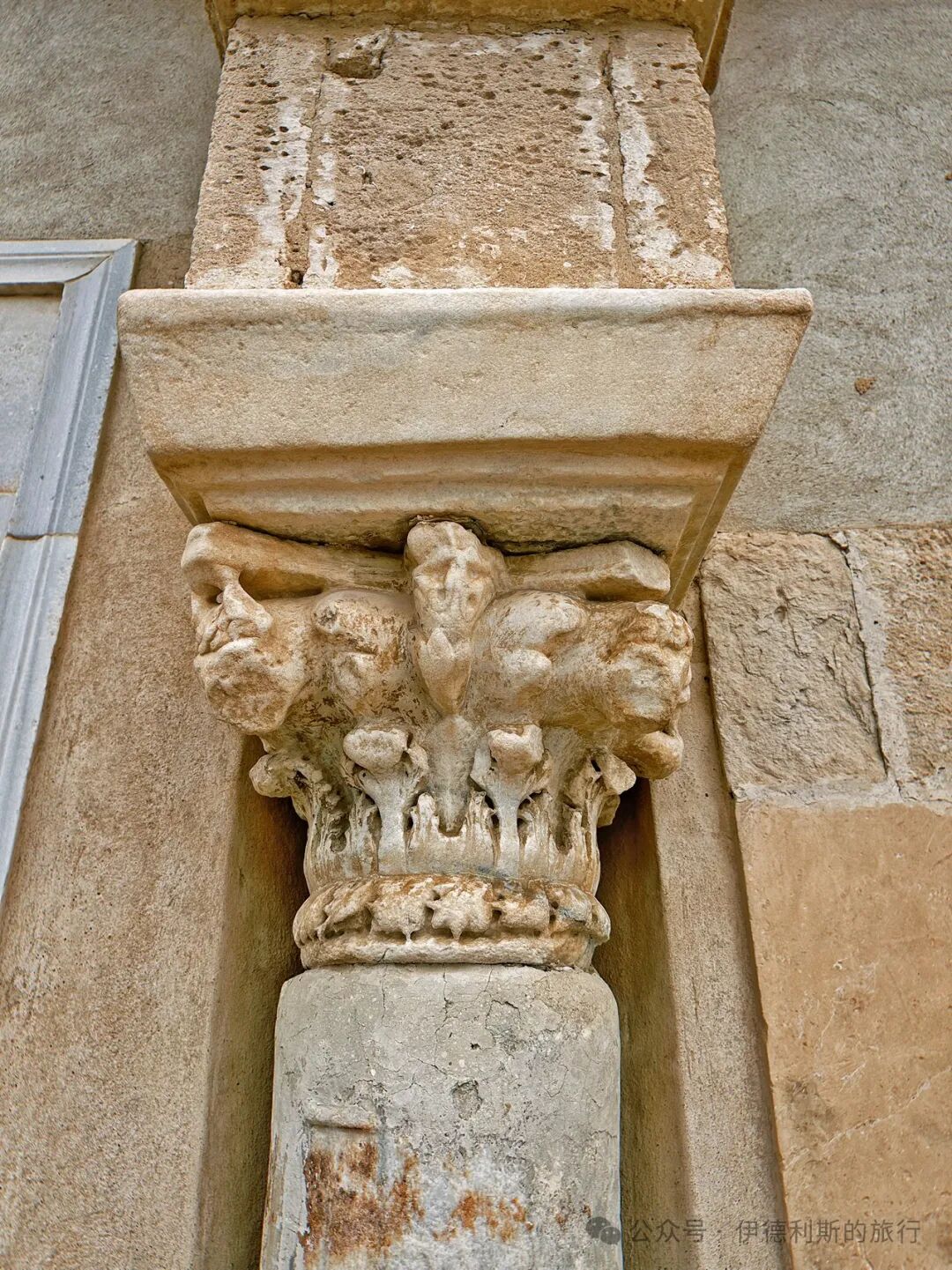
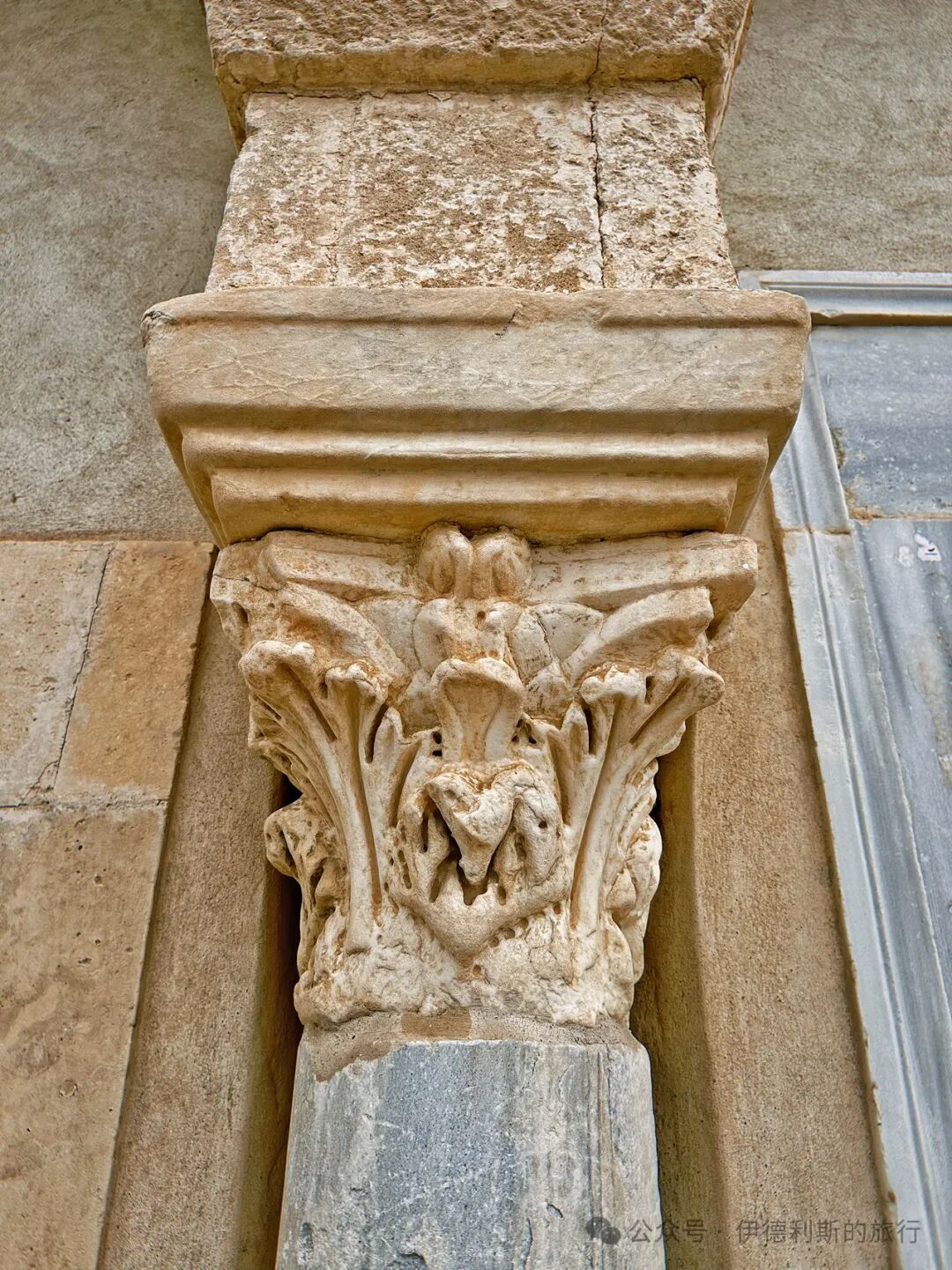
Today, only the facade of the Mosque of the Three Doors retains its 9th-century appearance, while the minaret next to it was added in 1440. The gate of the Mosque of the Three Doors consists of three horseshoe arches and features four ancient stone columns. The arch is carved with floral patterns and Kufic calligraphy, which includes verses from the Quran and the name of the builder, Muhammad ibn Khairun. Muhammad ibn Khairun was a scholar and merchant from Andalusia who traveled through Iraq and Egypt to reach Kairouan, Tunisia. When the minaret was added in 1440, the original 9th-century inscriptions were rearranged to make room for the new text.
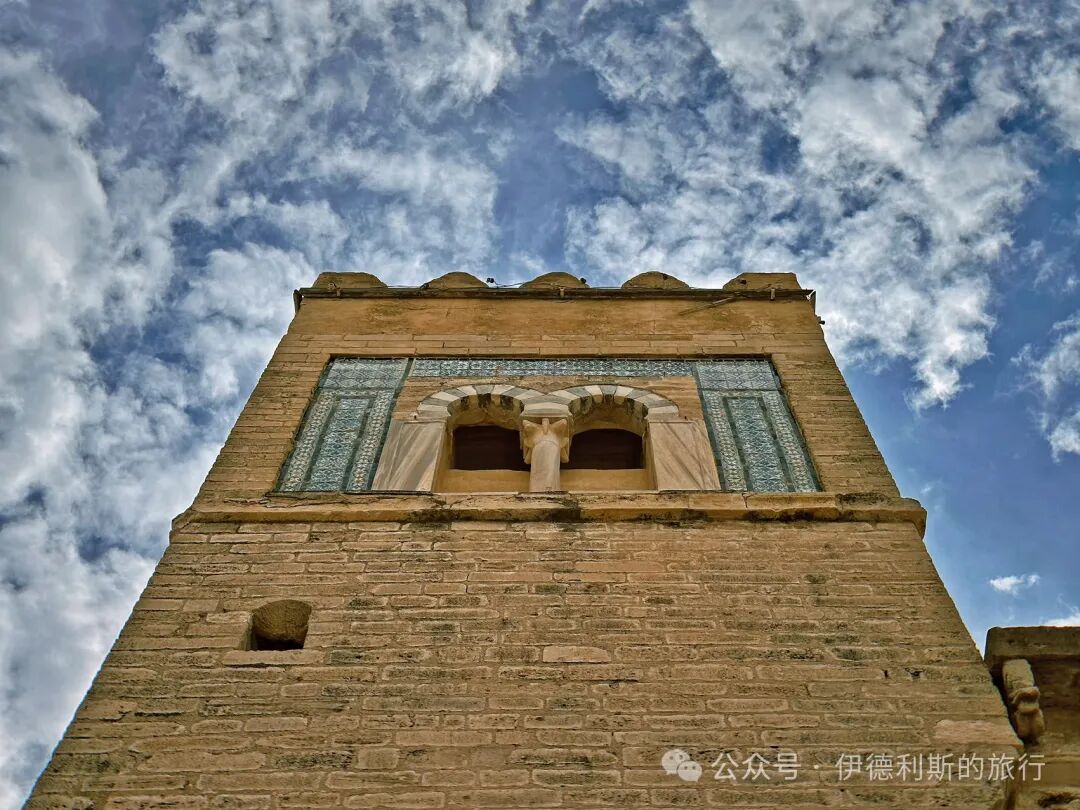
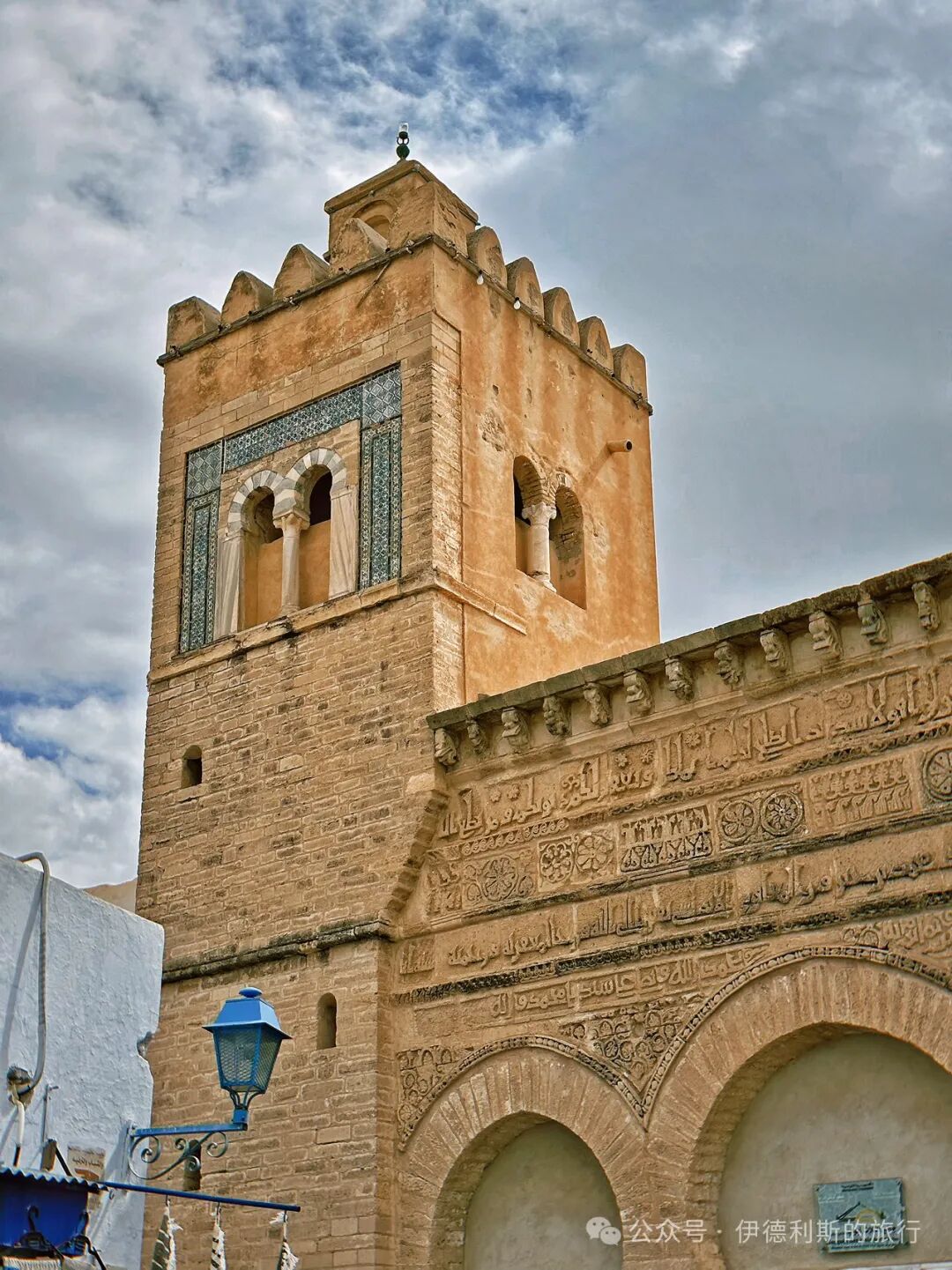
In the northwest of the Kairouan Medina stands an important tomb for Sidi Sahib, a companion of the Prophet and his barber, which is why it is also called the Barber Mosque.
Legend says Sidi Sahib died in a battle in 654 and was buried here. By the 11th century, this place had become a famous holy site, and the tomb shrine (gongbei) was built in the 14th century. The Bey of Tunis, Hammuda Pasha (reigned 1631-66), expanded the tomb significantly in 1629 and built a new main hall. Another Bey, Mohamed (reigned 1675-96), built the minaret and a religious school (madrasa) between 1690 and 1695. Since the 19th century, the tomb of Sidi Sahib has undergone several renovations, but it still keeps its 17th-century architectural style.
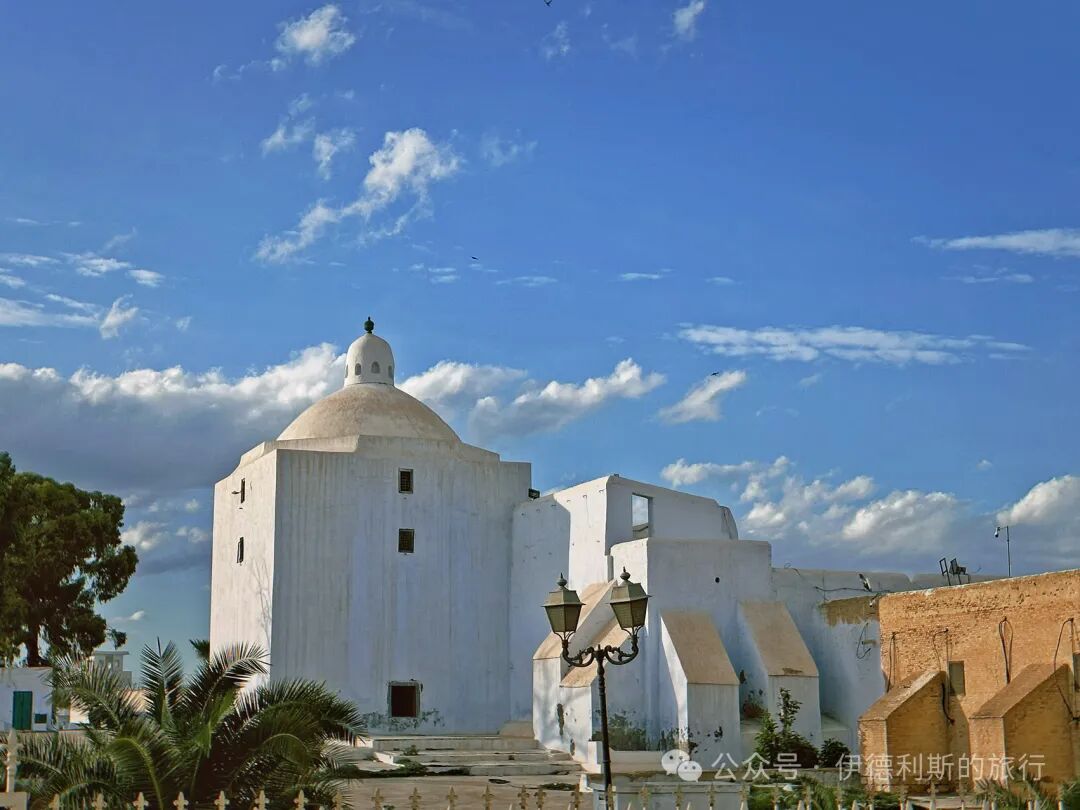
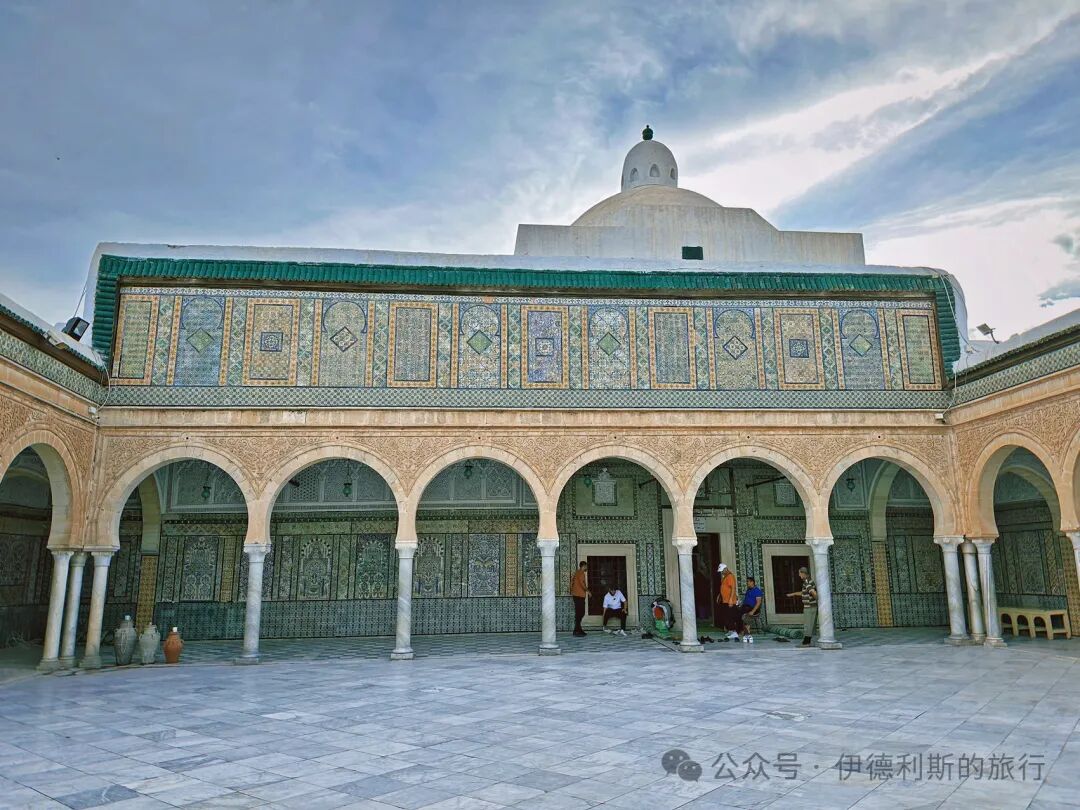
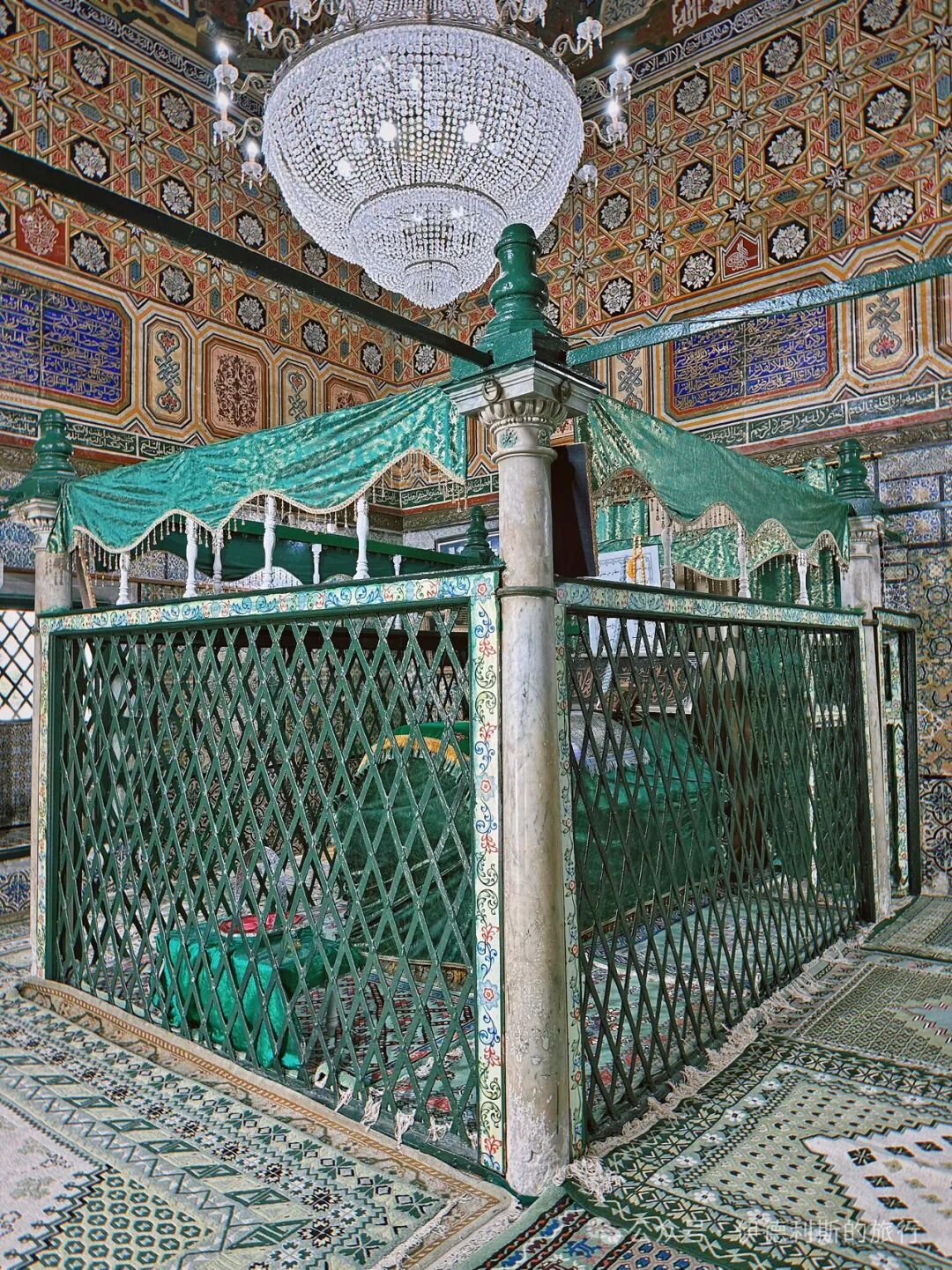
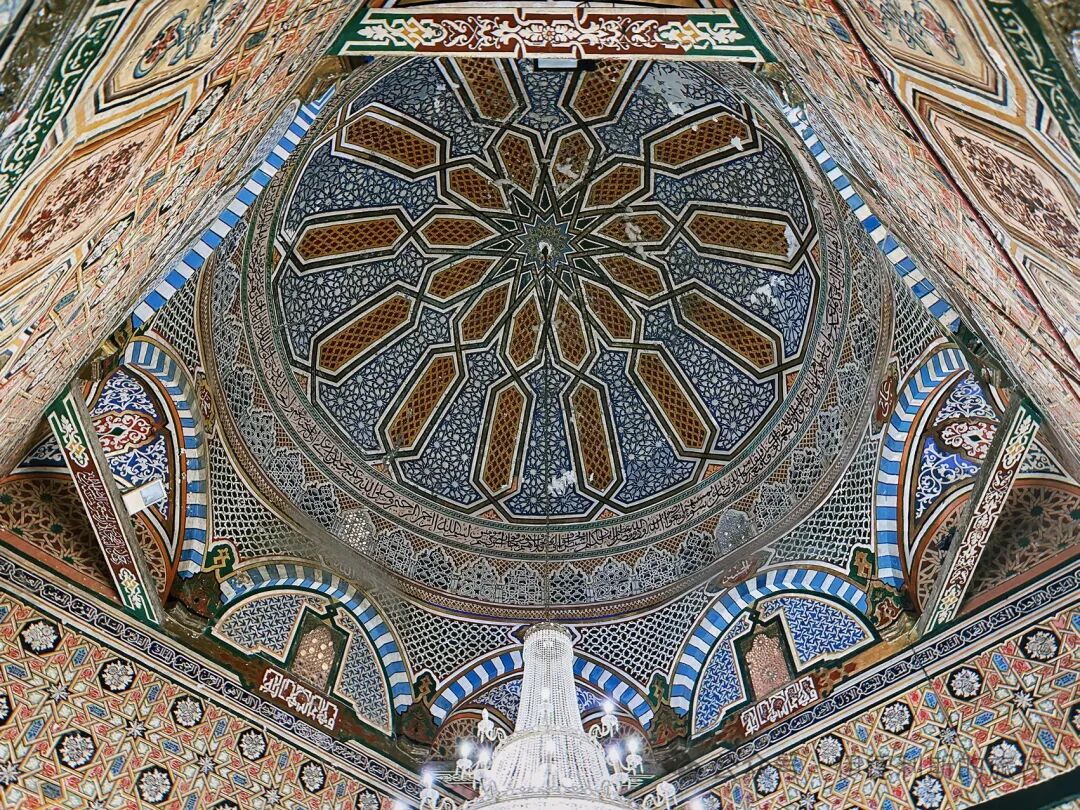
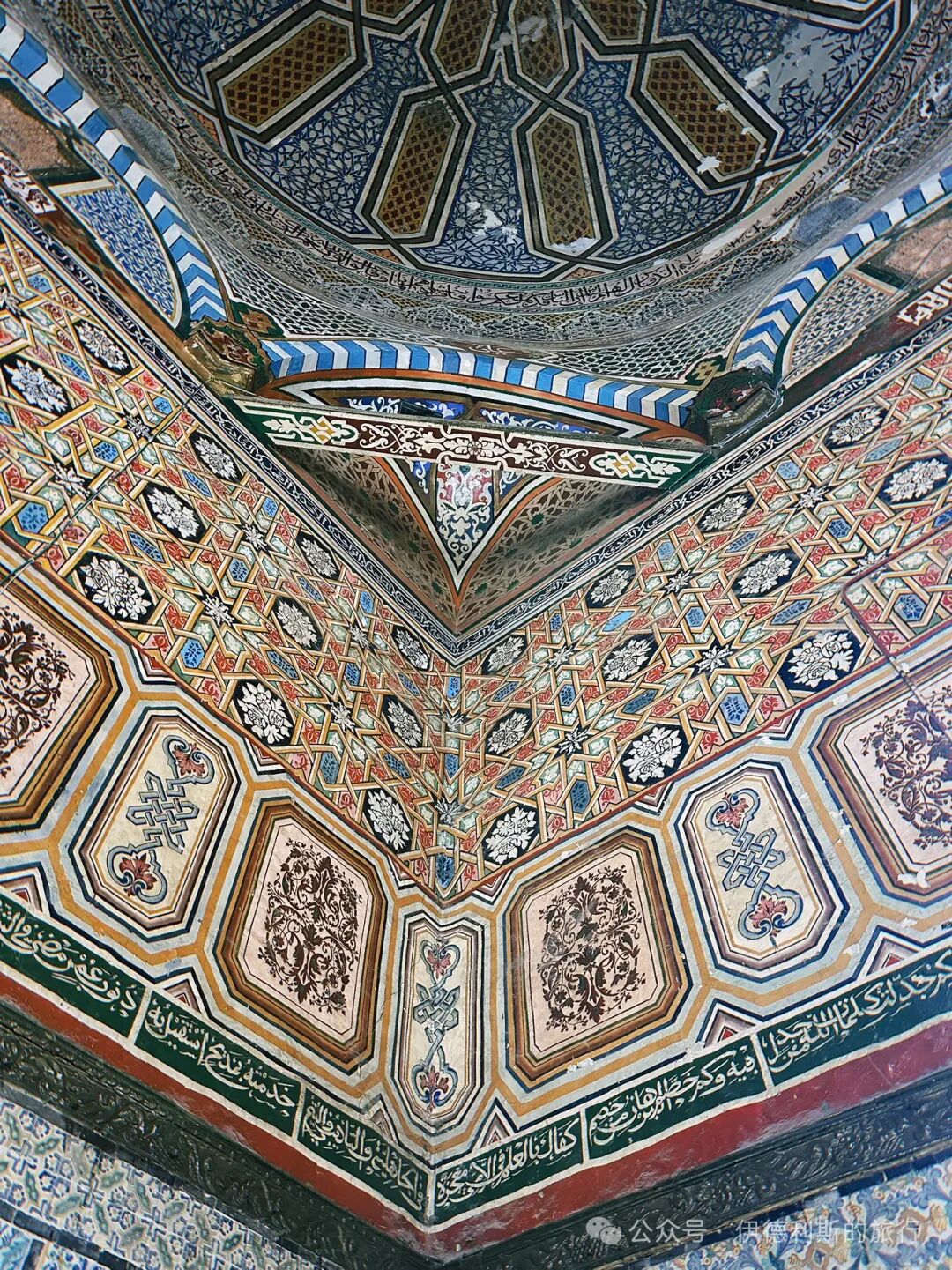
The tomb of Sidi Sahib in Kairouan blends Andalusian, Italian Renaissance, and local Kairouan architectural styles. The interior features many classic 17th-century Tunisian Qallalin tiles and rich plaster carvings.
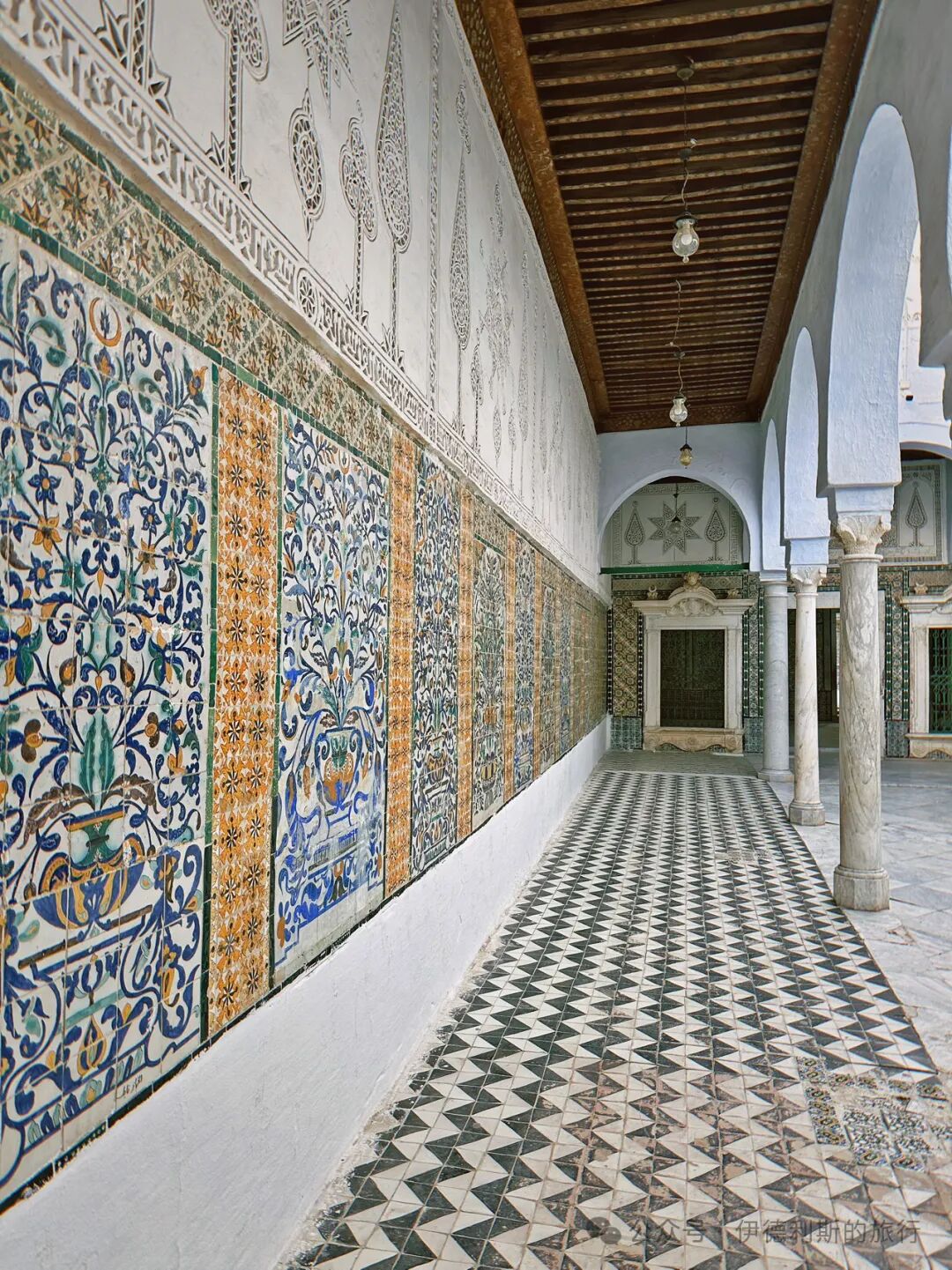
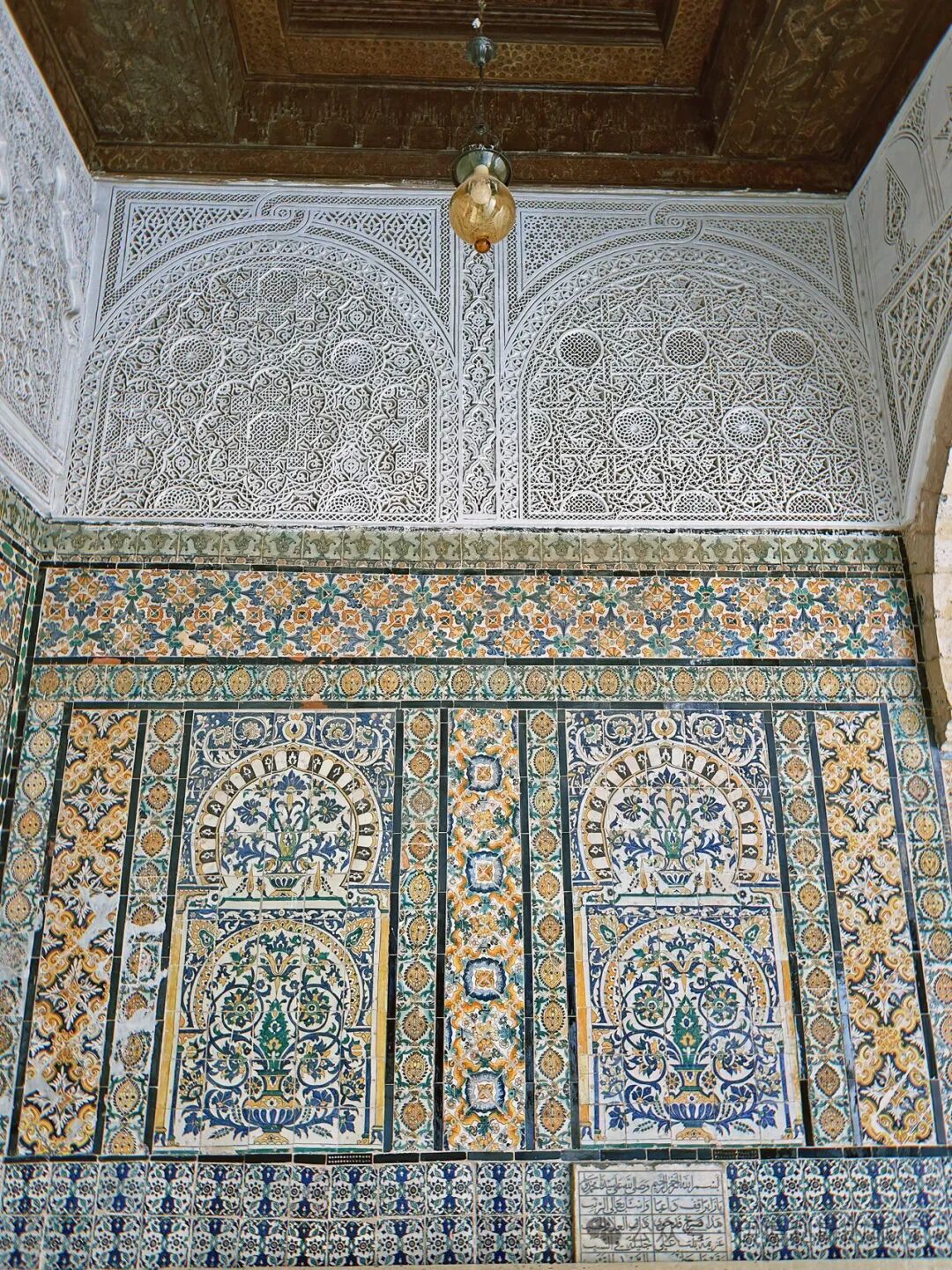
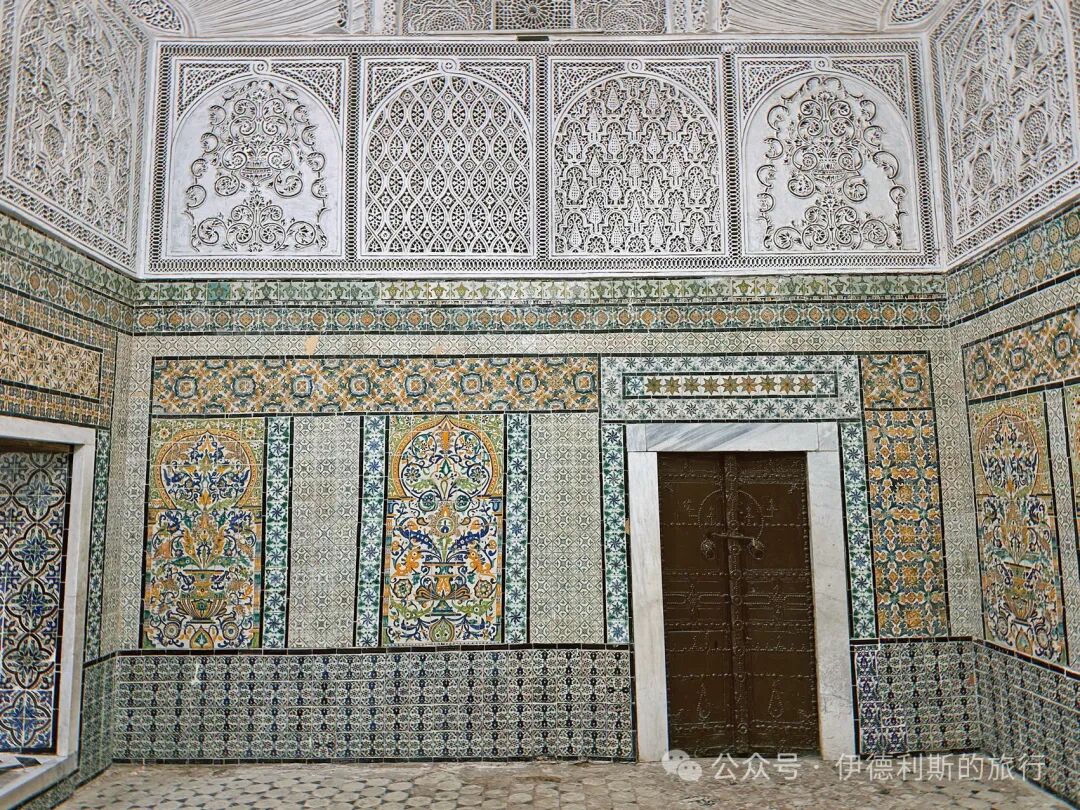
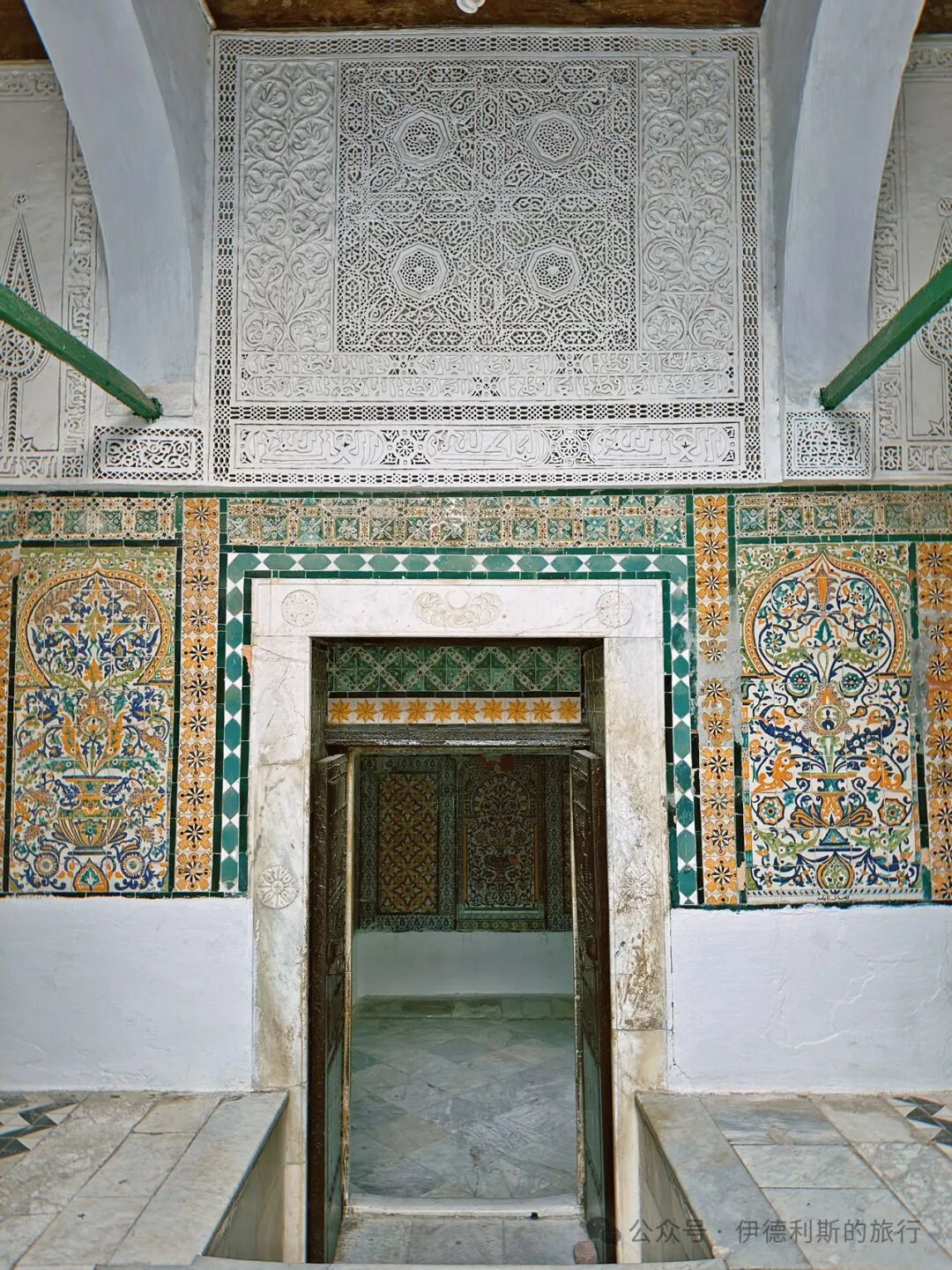
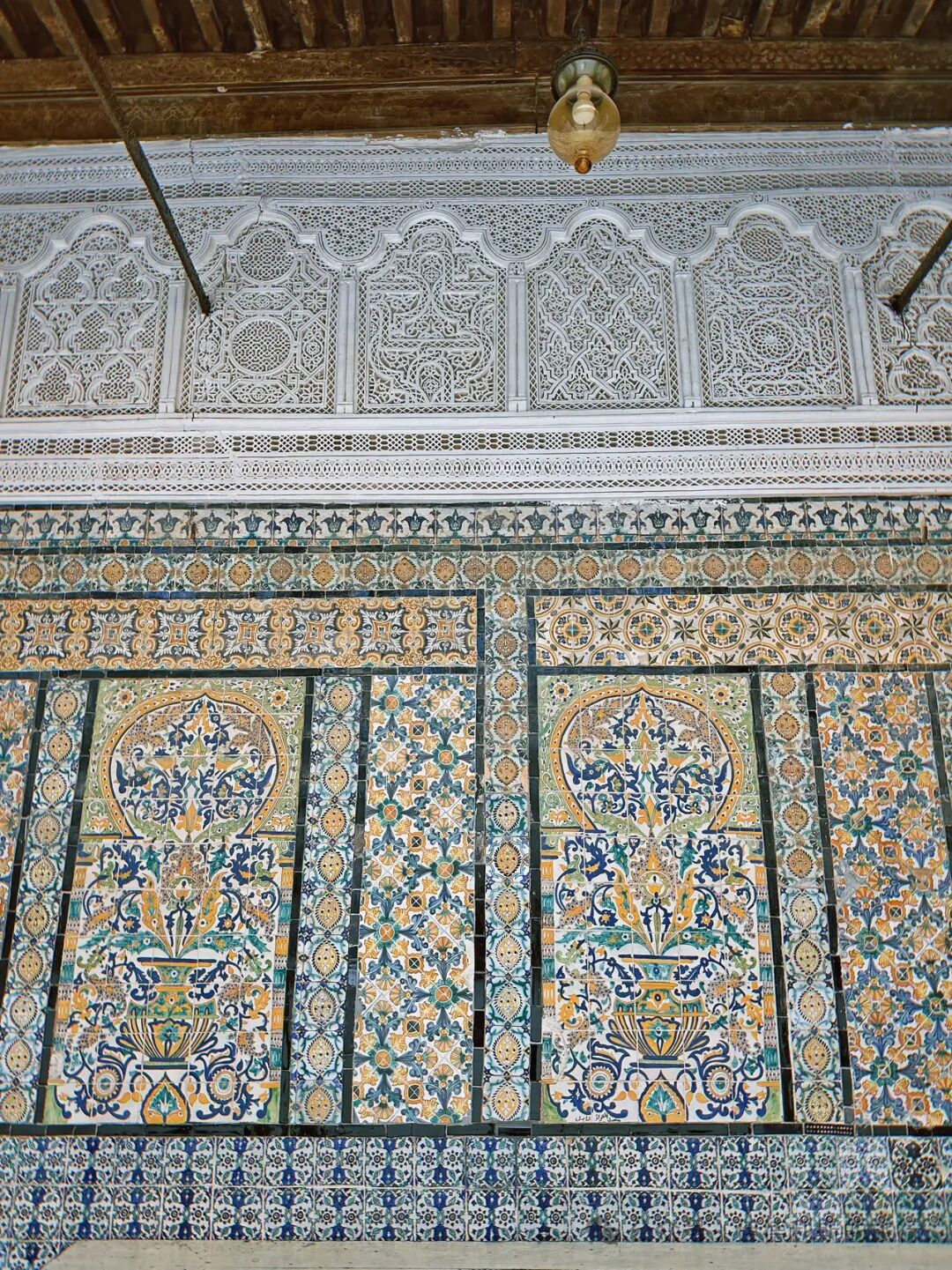
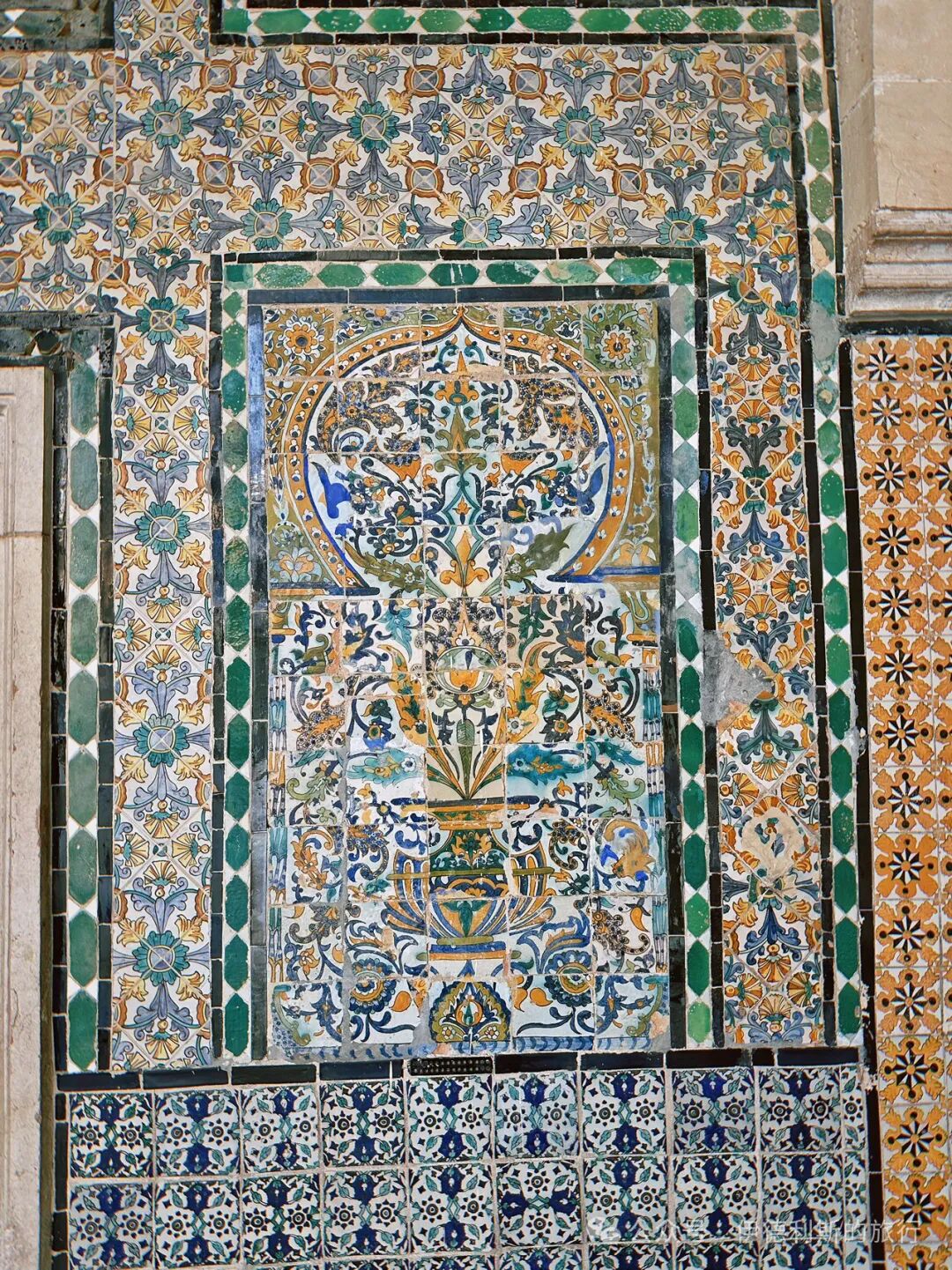
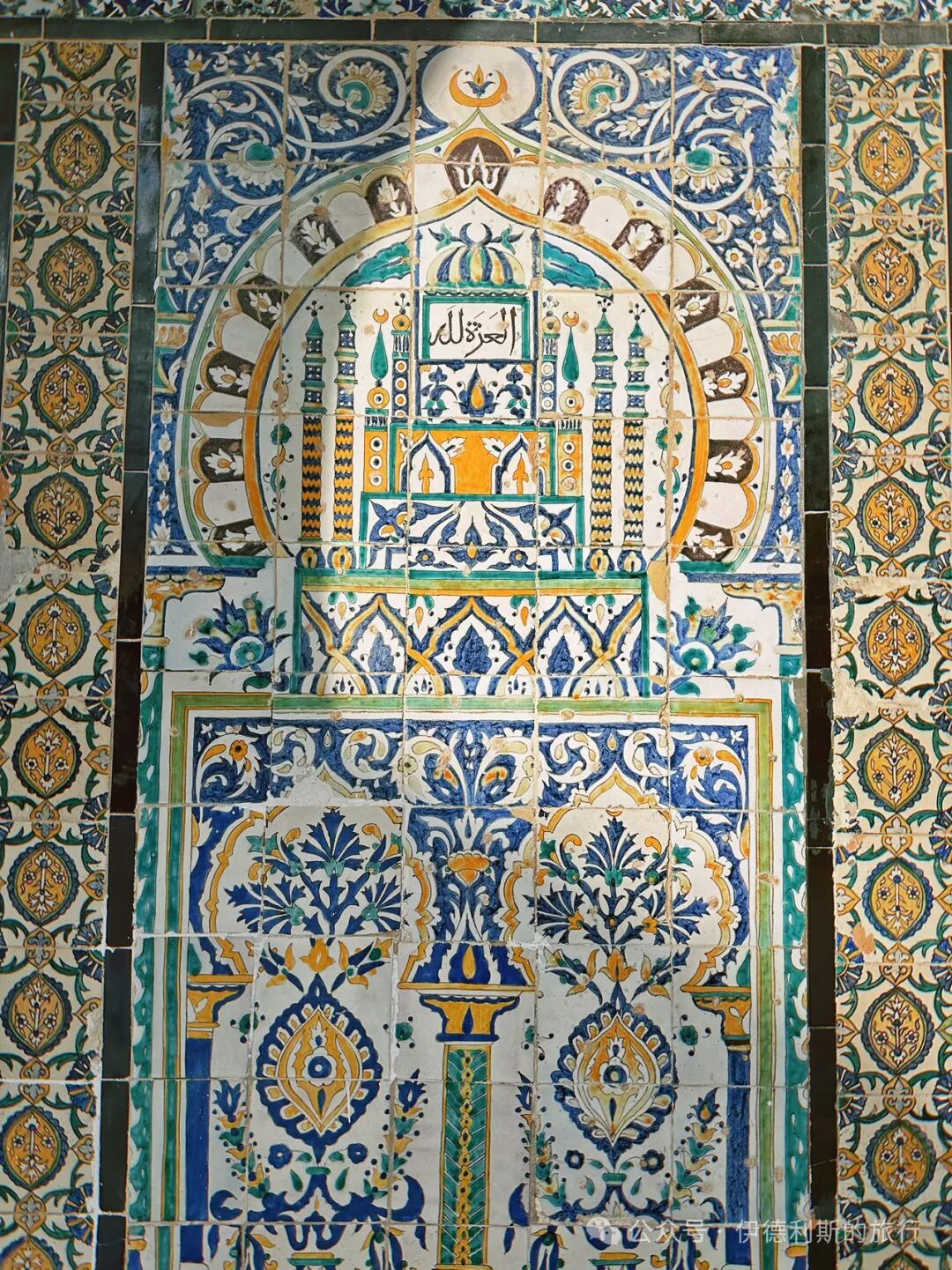
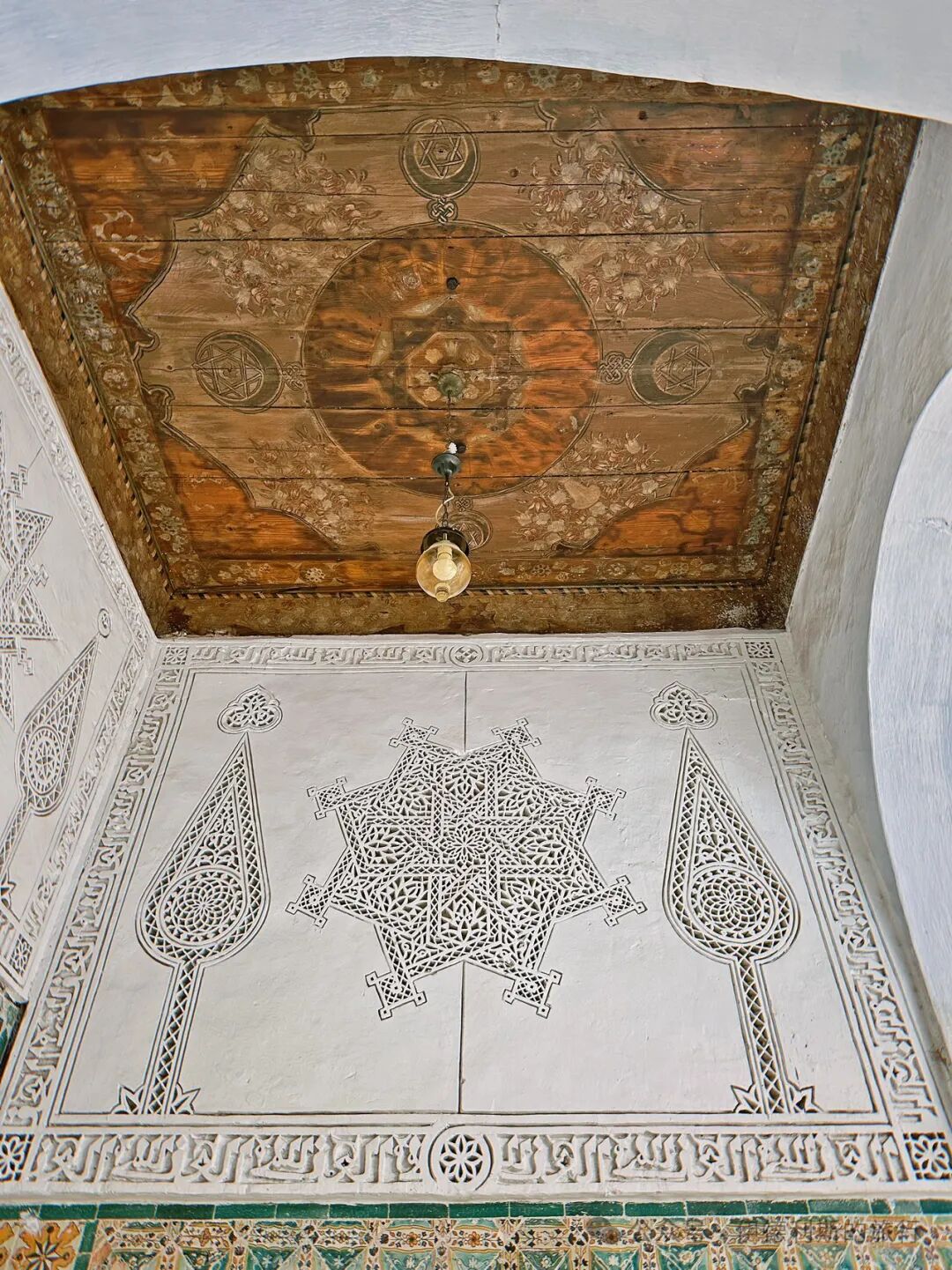
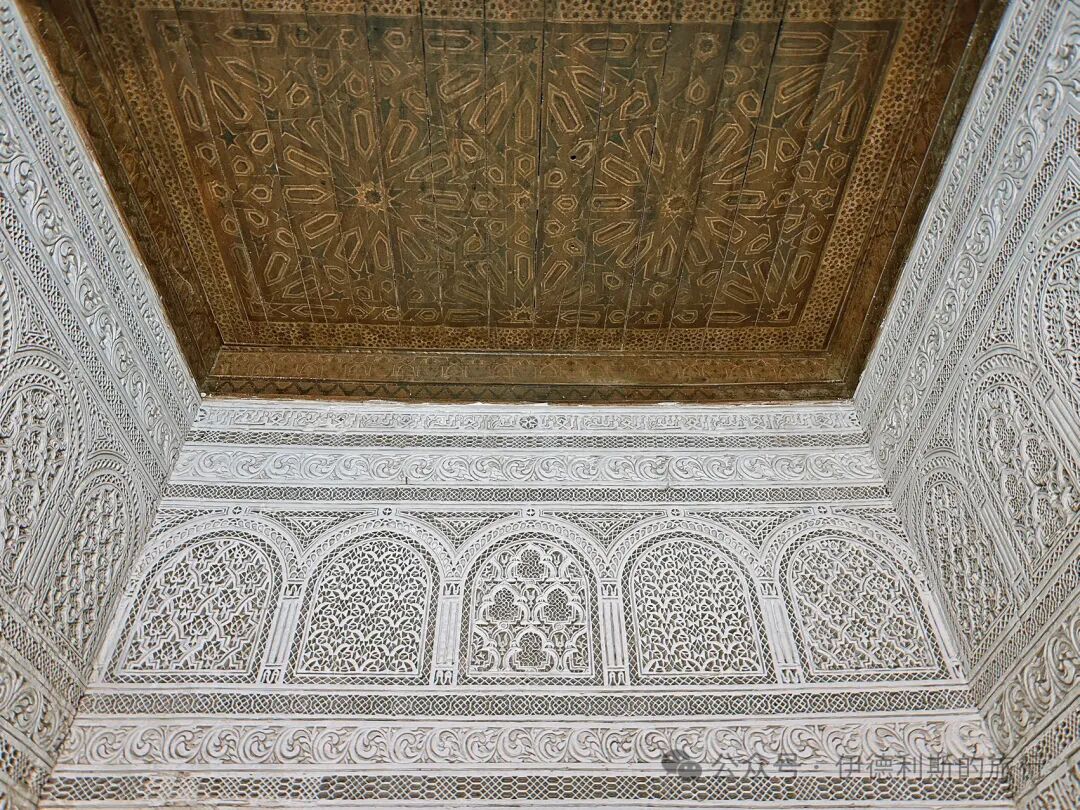
At the minaret, gate, and main hall of the Sidi Sahib tomb in Kairouan, an old man in the courtyard pours perfume into the hands of every visitor (dosti) who comes to pay their respects.
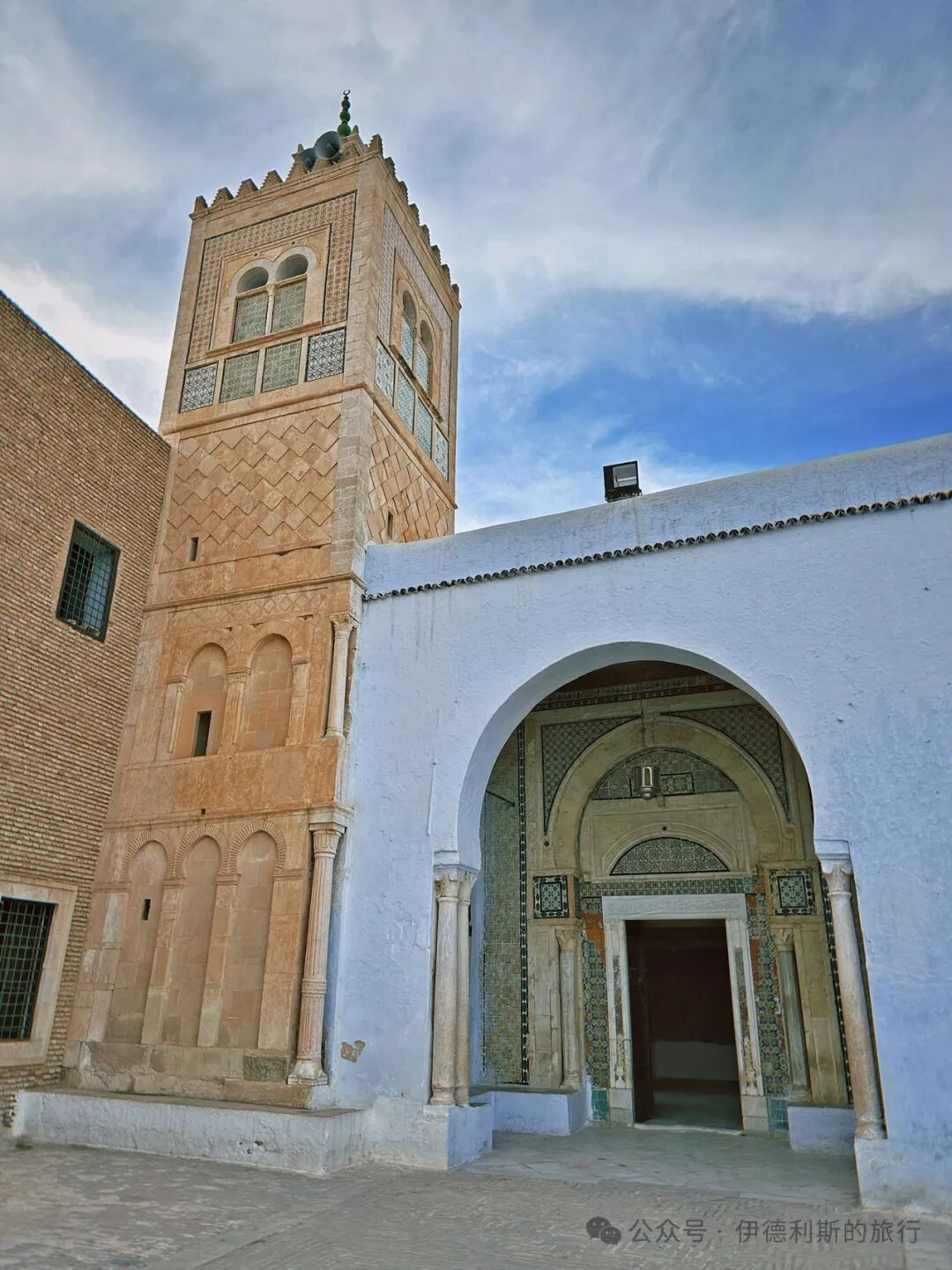
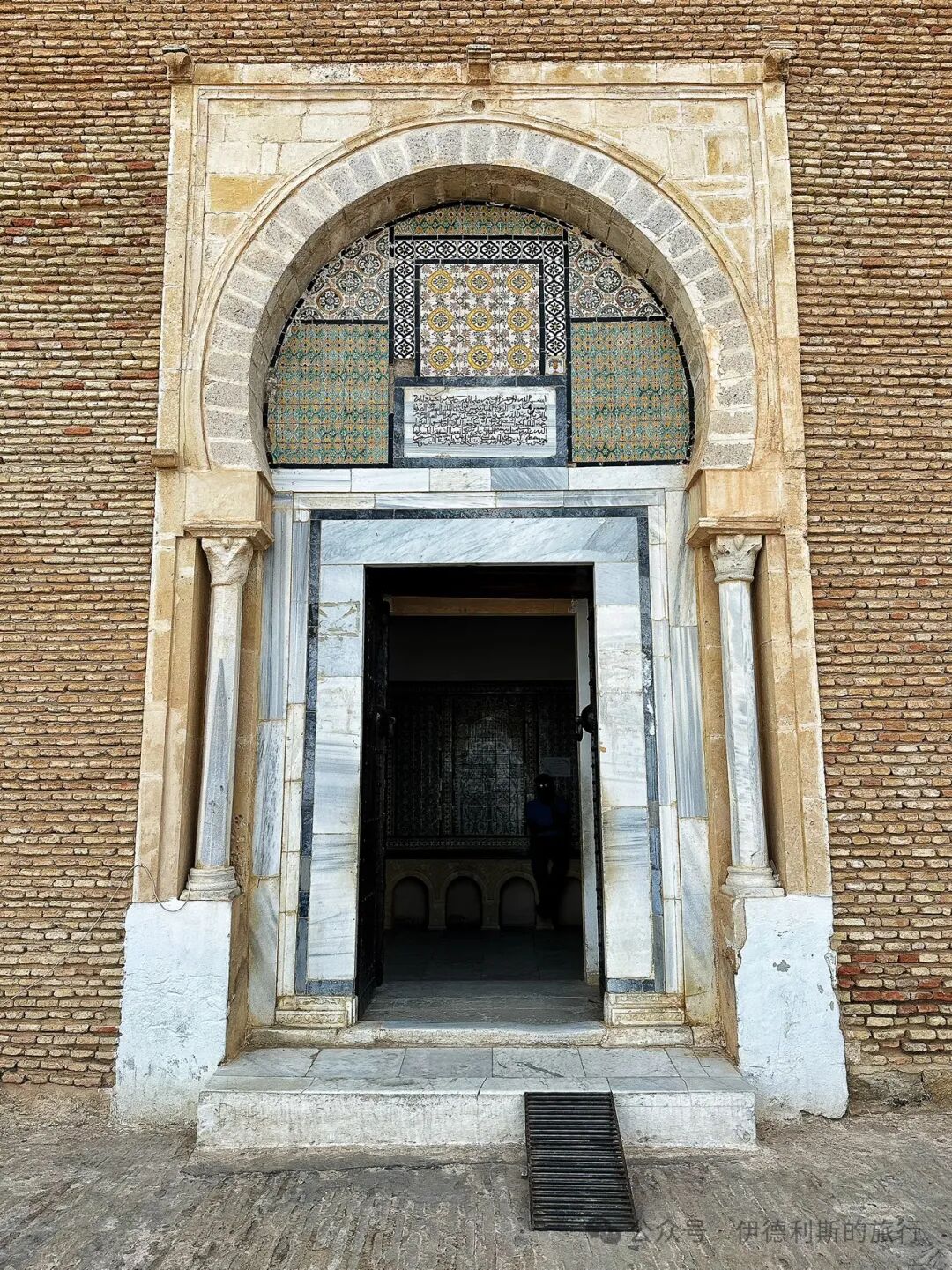
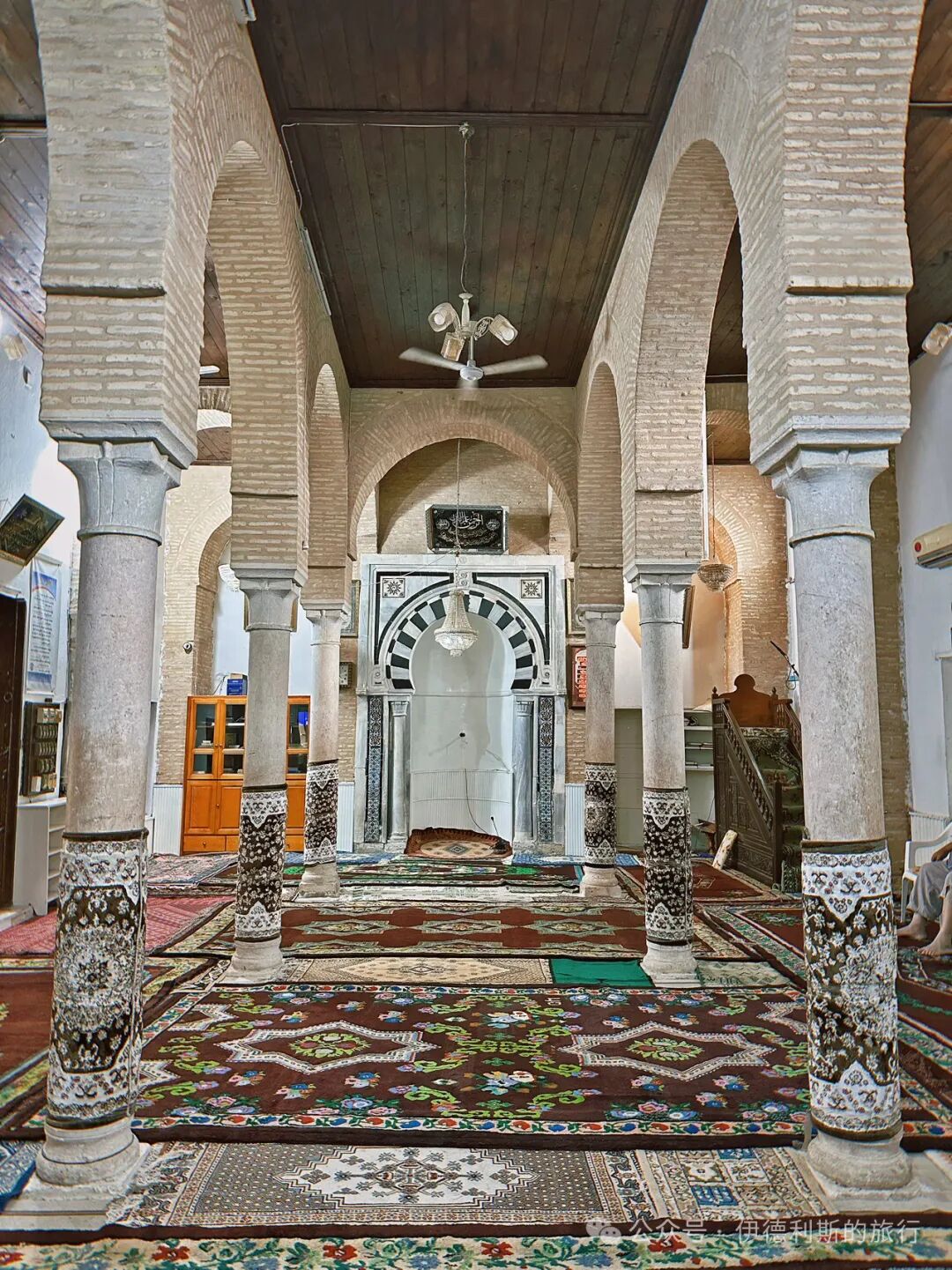
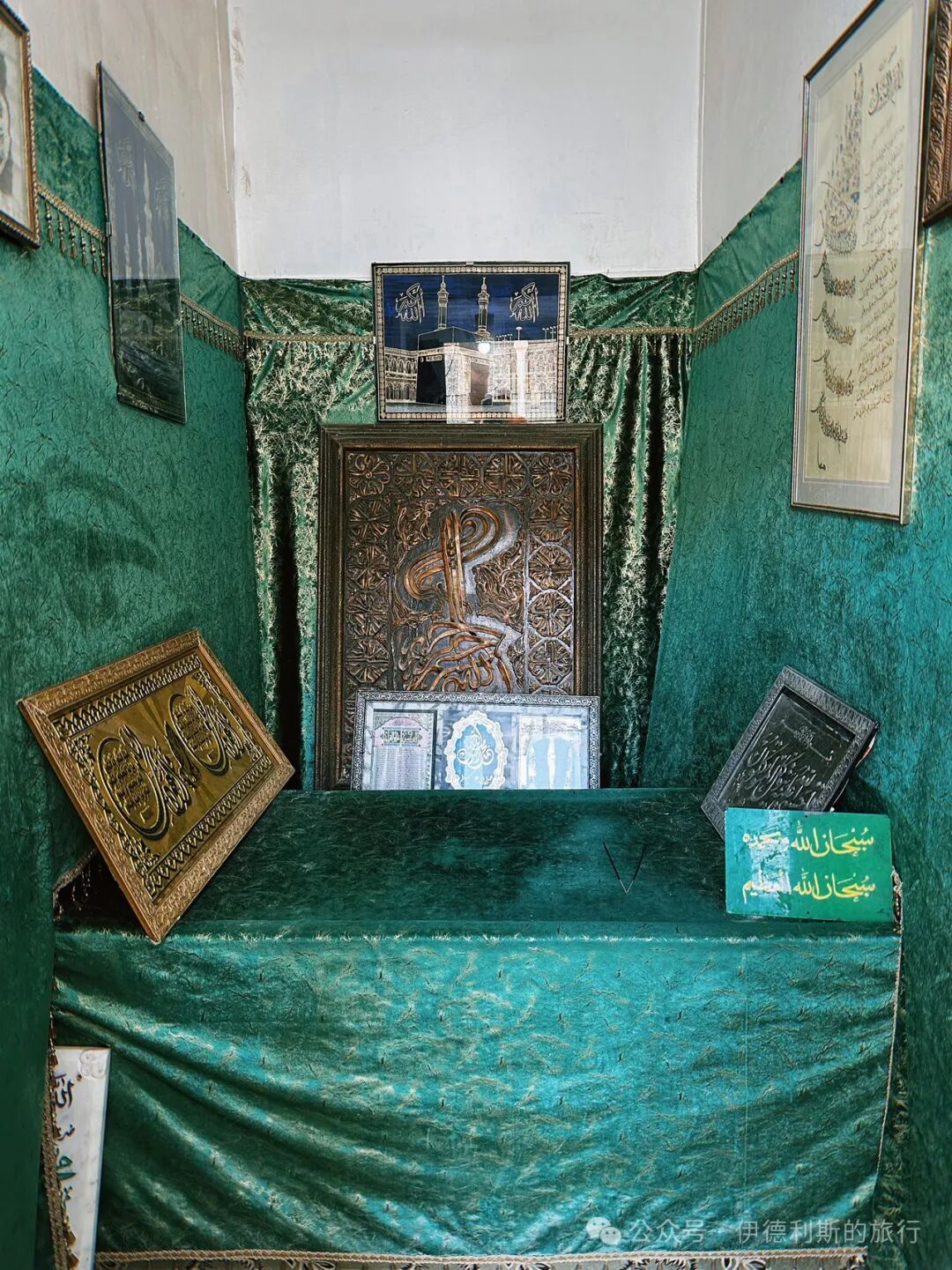
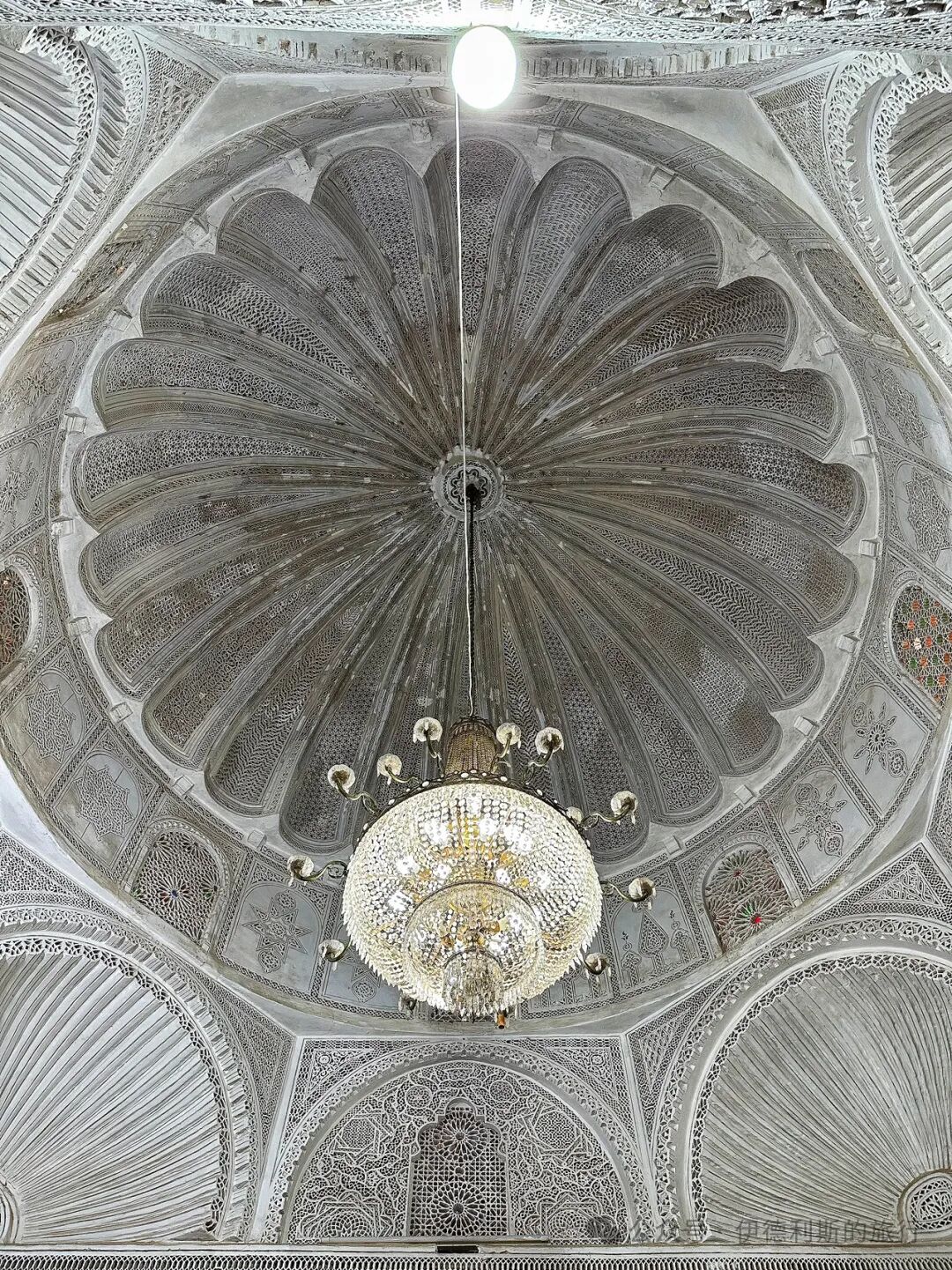
The Sidi Abid al-Ghariani school (madrasa) and shrine (zawiya) inside the Kairouan Medina were founded in the 14th century and expanded significantly in the 17th century. Abid al-Ghariani was a scholar, and his teacher, Al-Jadidi, was a famous judge in Kairouan. Al-Jadidi passed away in 1384 while on the Hajj pilgrimage in Mecca. Abid al-Ghariani took over his teacher's role to continue teaching in Kairouan, and after he died in 1402, he was buried next to the school.
Besides Abid al-Ghariani, the Hafsid dynasty Caliph Moulay Hasan (reigned 1526-1543) is also buried here. In 1534, the famous pirate Barbarossa led a fleet to invade Tunisia. Moulay Hasan eventually took back Tunisia with the help of the Holy Roman Empire, but he had to sign a treaty to become a vassal of Spain. In 1542, while Moulay Hasan was traveling to Italy to collect weapons and ammunition, his son usurped the throne, and he was eventually exiled. He lived in Naples and Sicily for several years and later met with the Holy Roman Emperor and the Pope, becoming the most well-known Arab monarch to Europeans of that era.
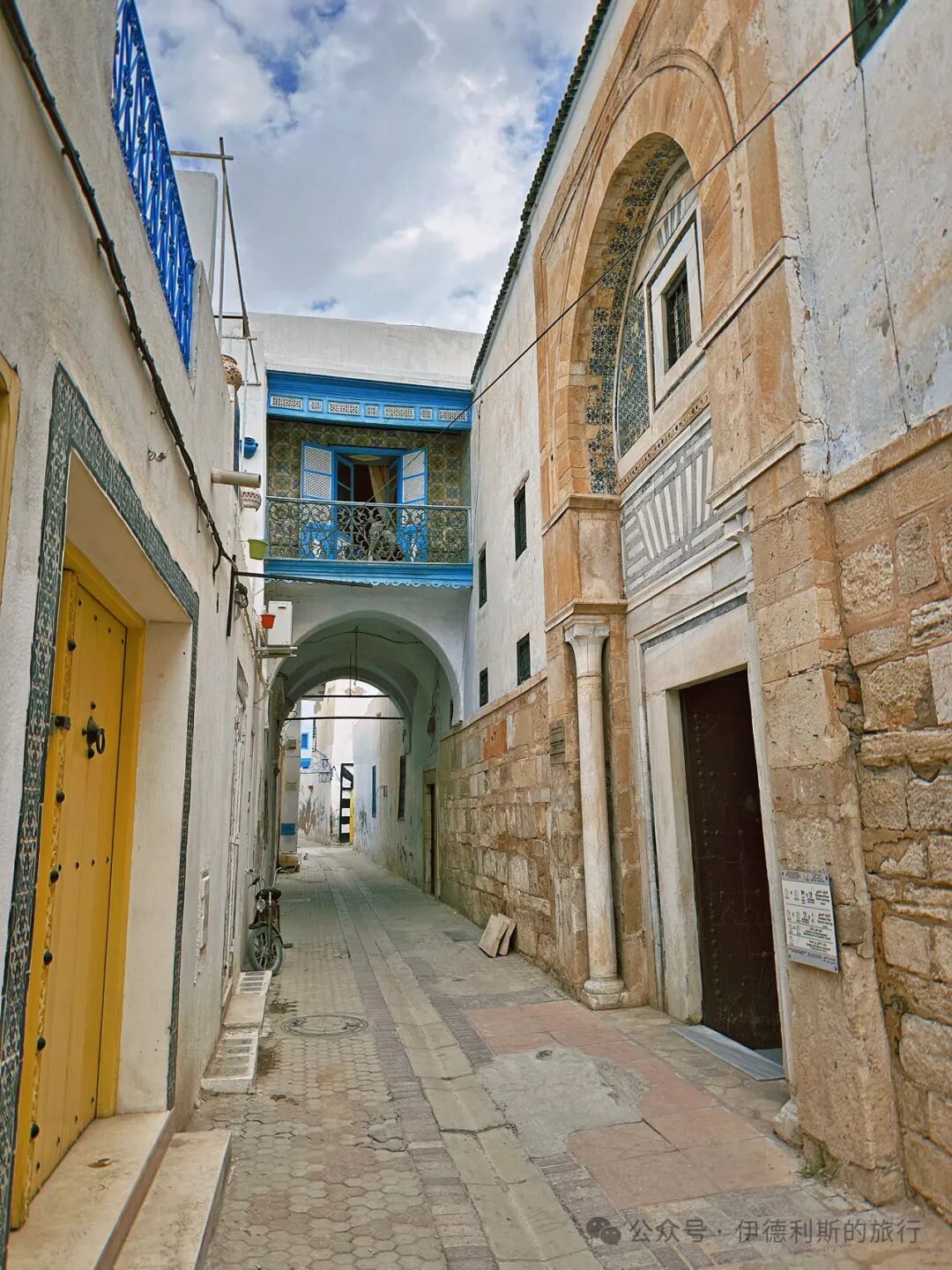
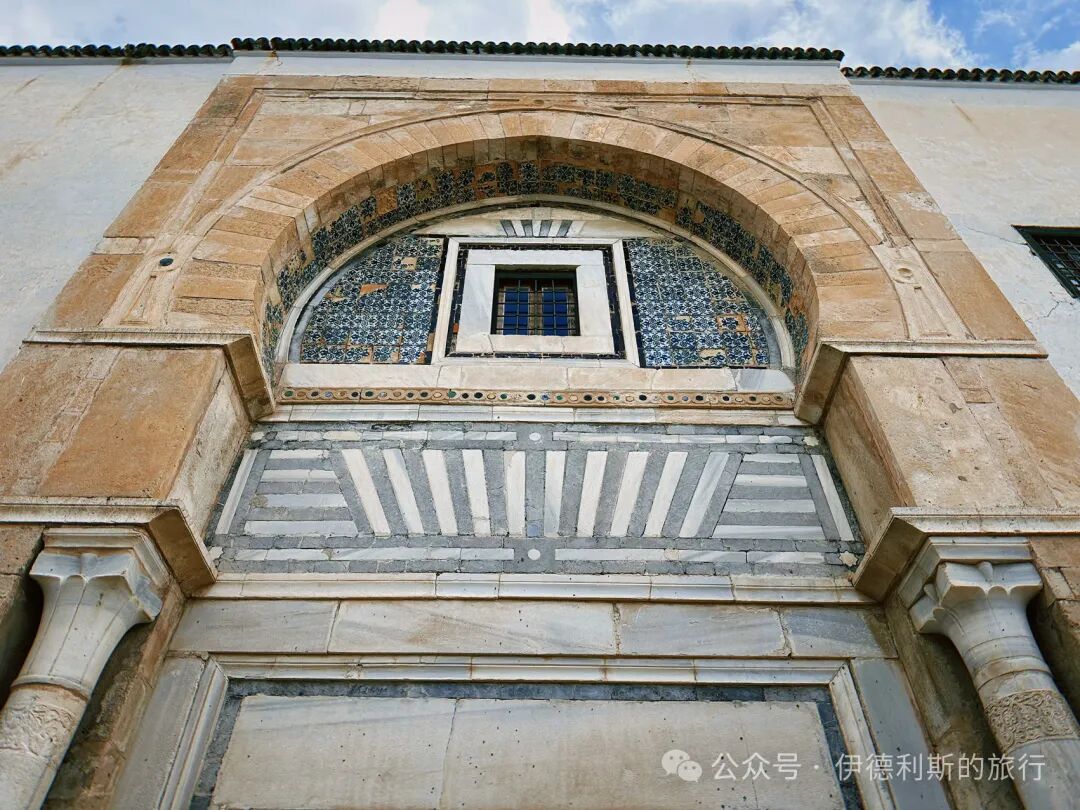
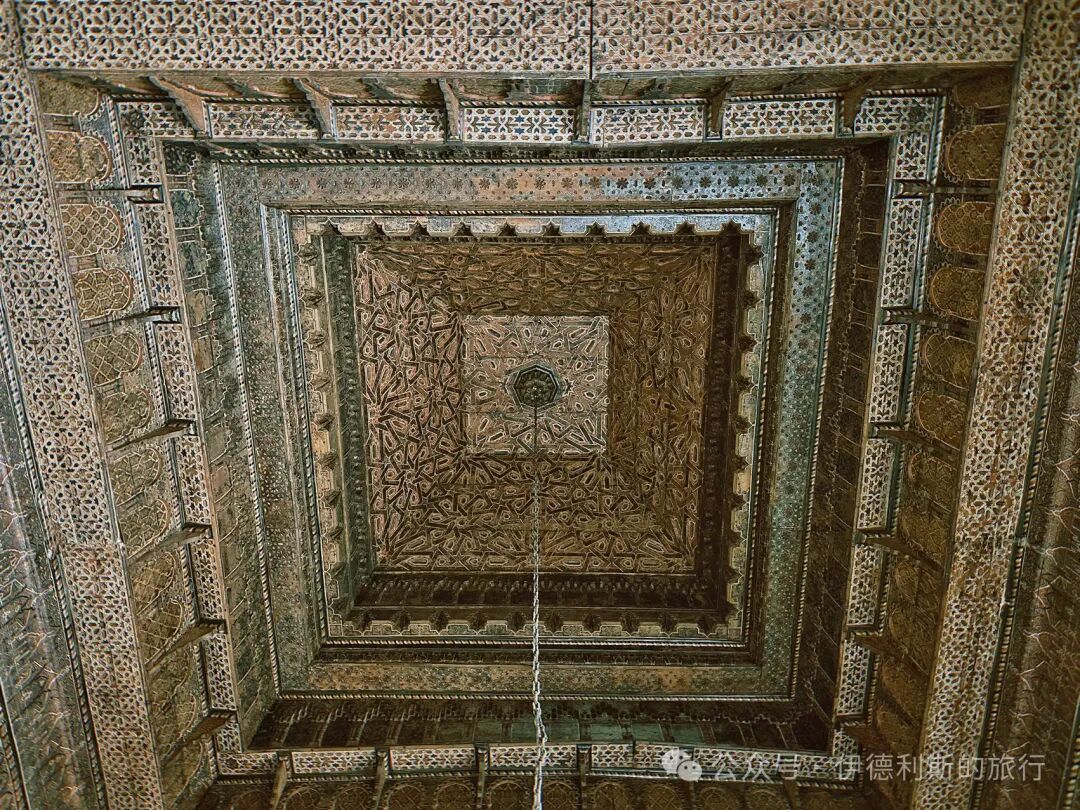
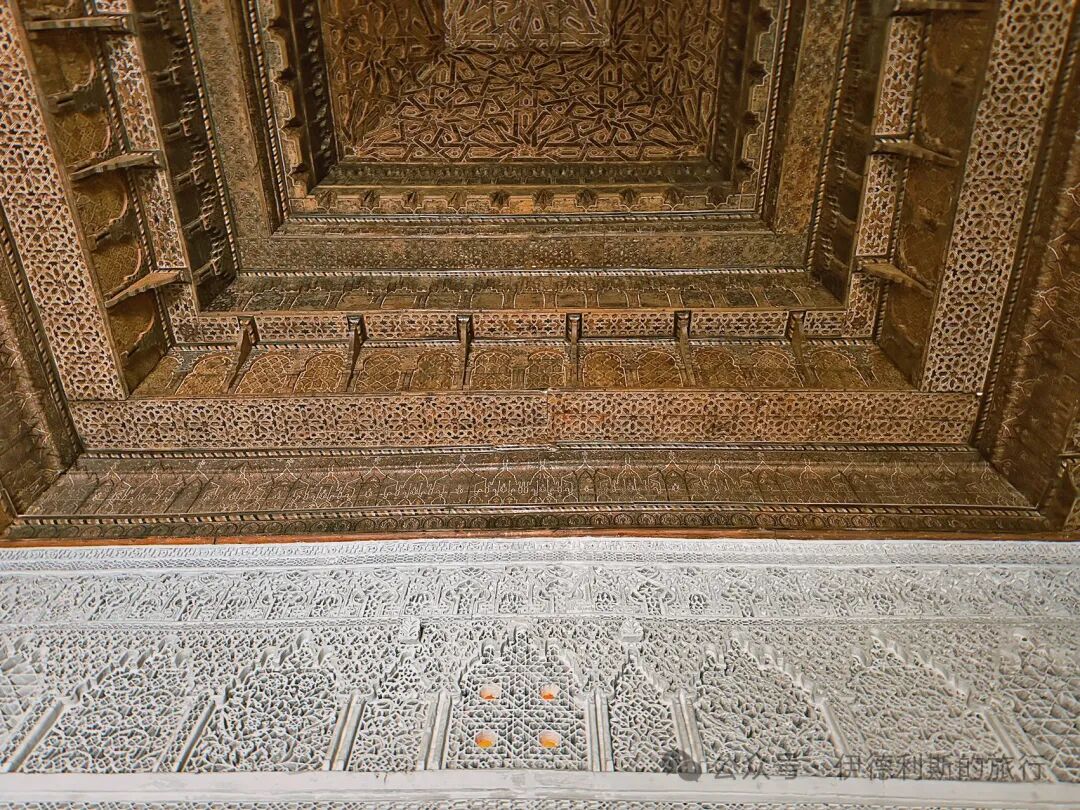
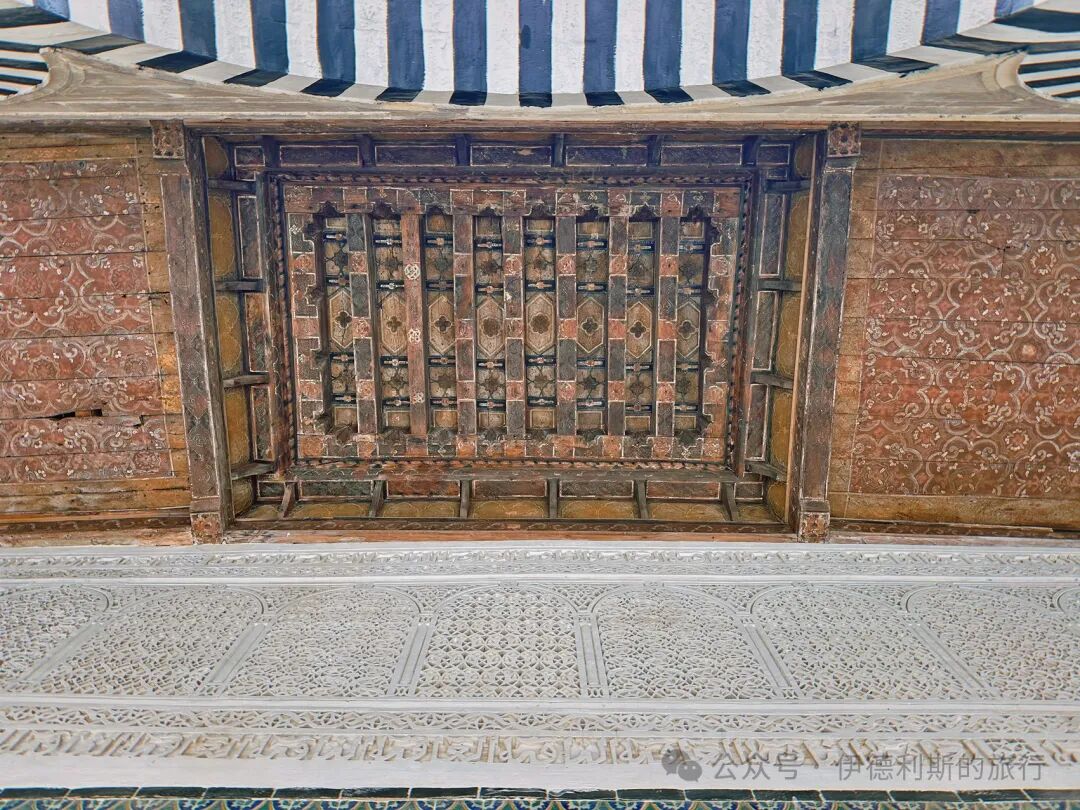
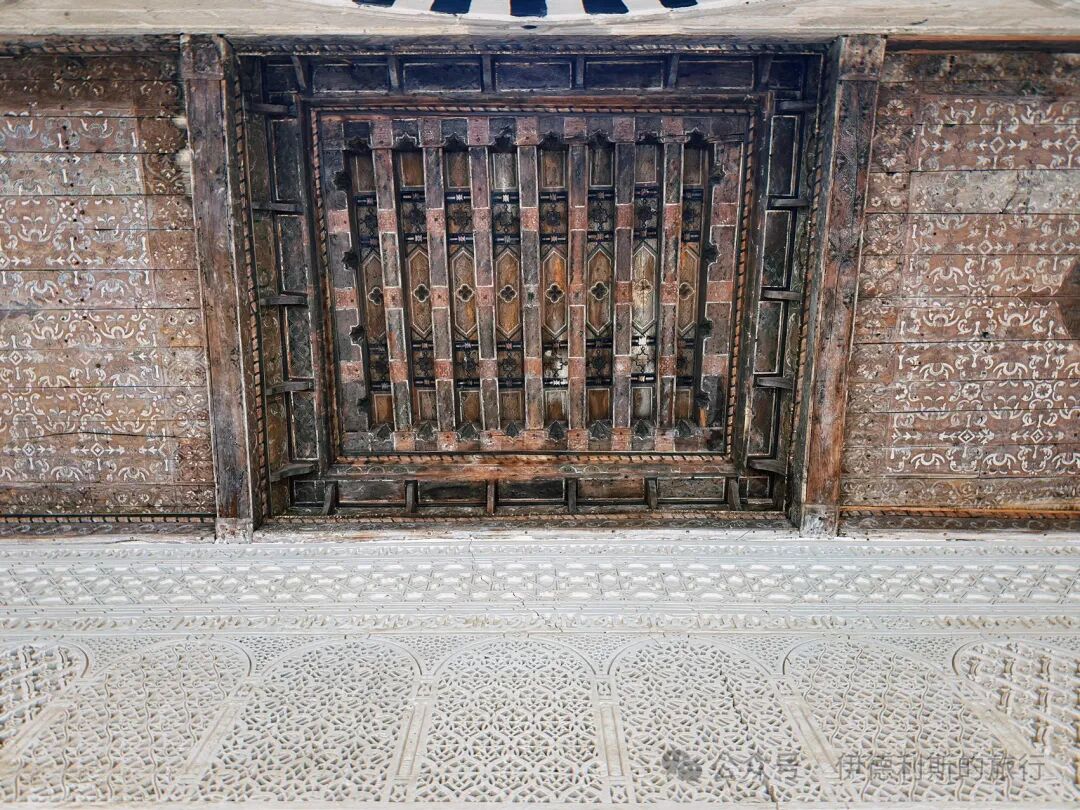
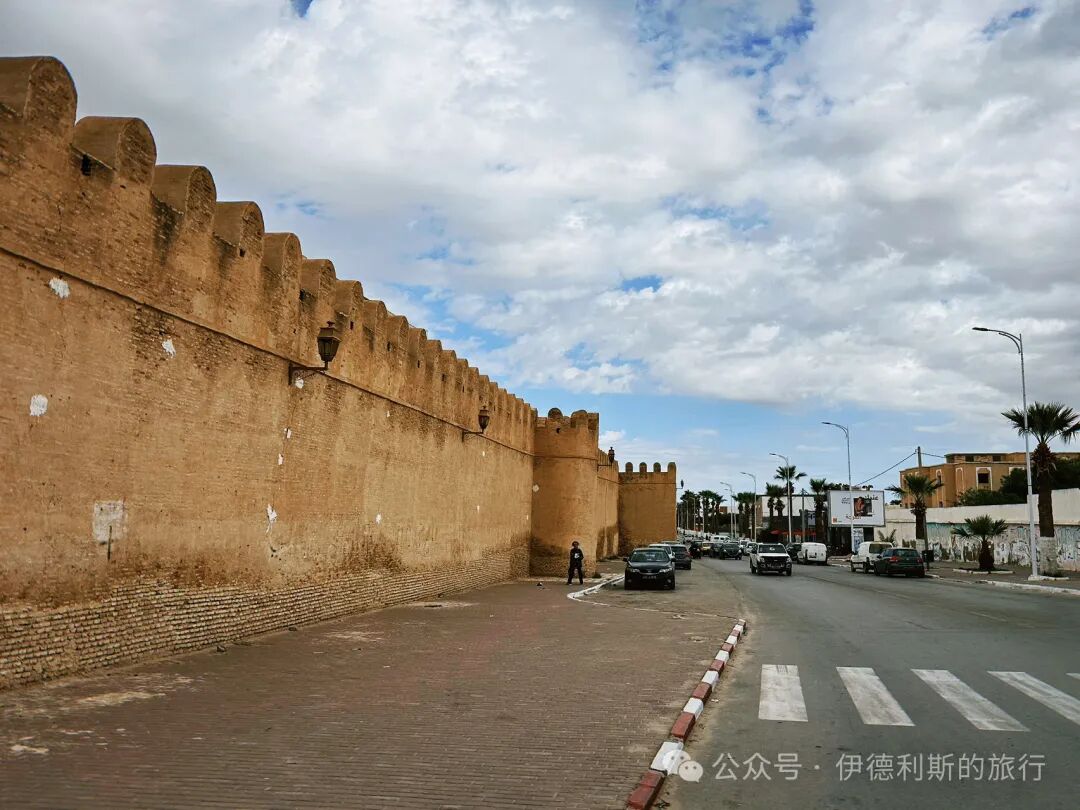
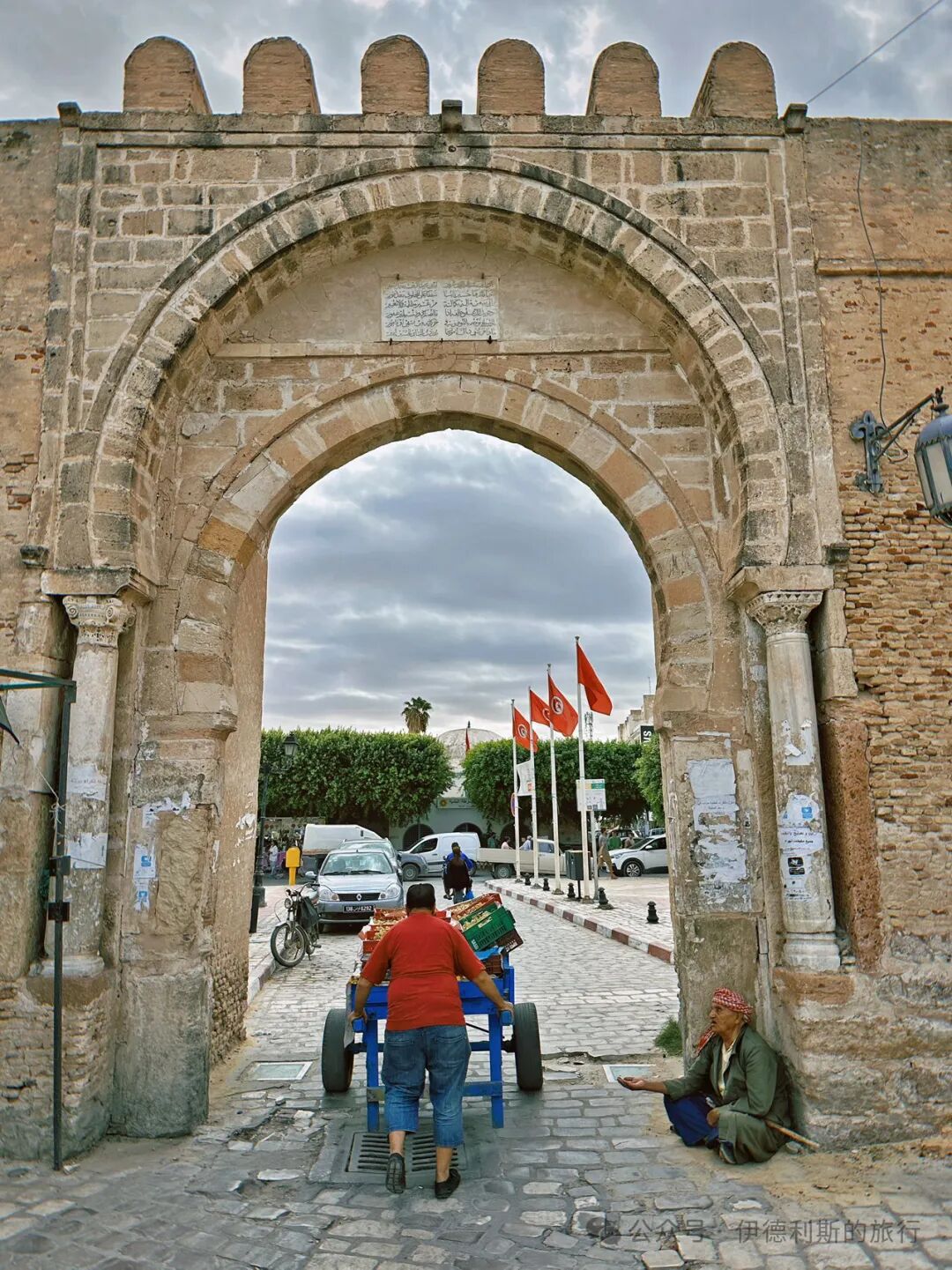
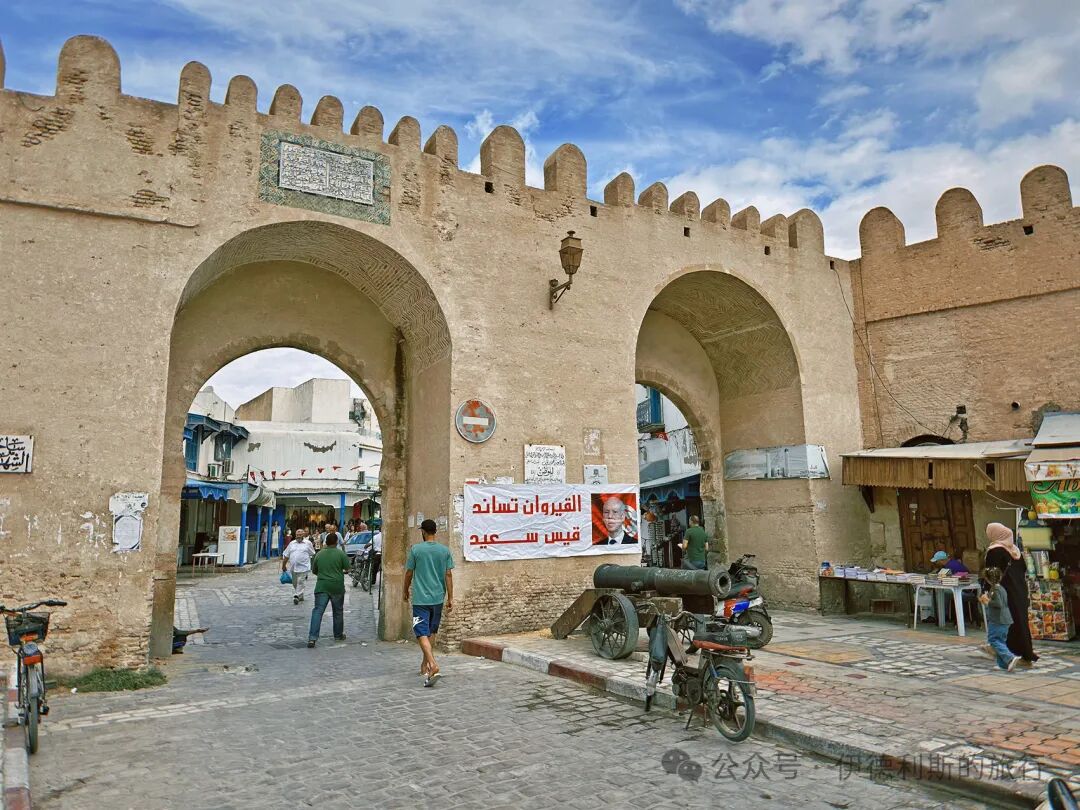
The city walls and gates of the Kairouan Medina.
Kairouan was founded in 670 by the Arab Umayyad general Uqba ibn Nafi, who chose the site to serve as a military base for the Arab conquest of Tunisia. Over the next hundred years, the Berbers launched wave after wave of uprisings against the Arabs. After surviving many attacks, Kairouan was finally captured by the Berbers in 745 and was not retaken until the end of the 8th century.
Museum Guide: Tunis Bardo National Museum - Palace, Mosaics and History
Articles • ali2007fr posted the article • 0 comments • 251 views • 2026-05-19 22:20
Summary: This article visits the Bardo National Museum in Tunis, a major museum set inside a former palace and known for its historical collections and mosaics. It keeps the original museum details, photographs, object notes, and travel observations for readers interested in Tunisia's cultural heritage.
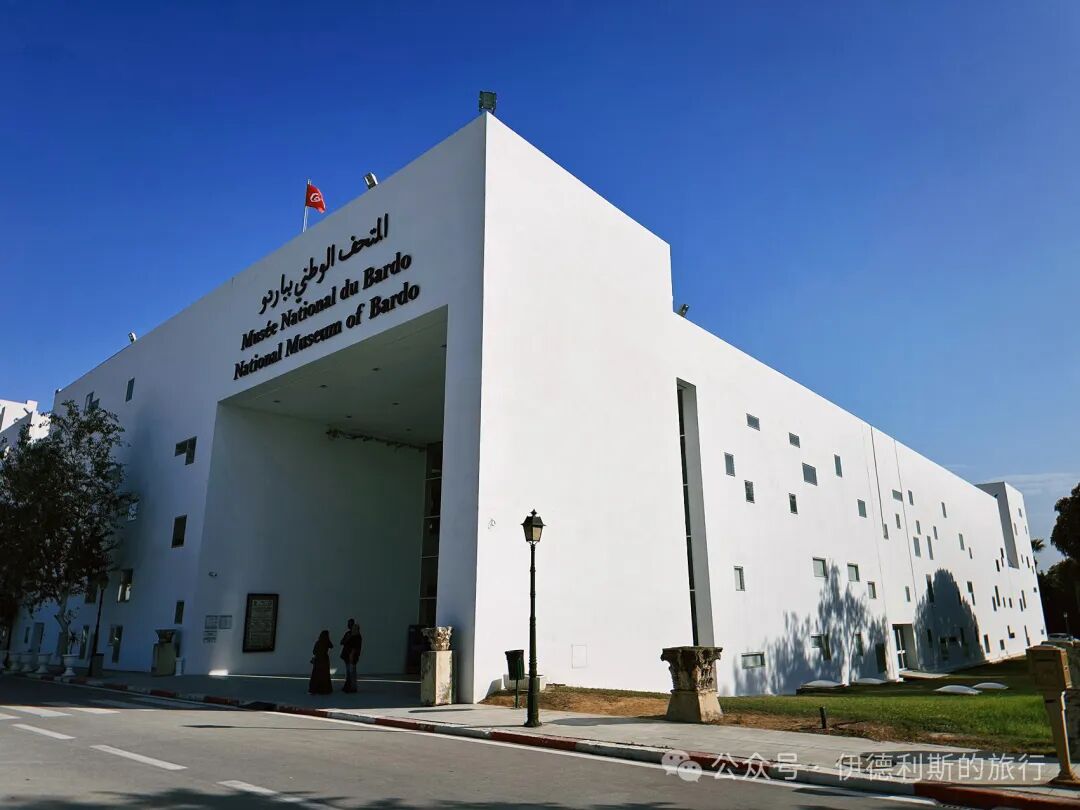
The National Museum of Tunisia is located inside the Bardo Palace, 4 kilometers west of the old Medina. The palace was first built in the 15th century. After the Ottoman dynasty took over in the 16th century, it was rebuilt and expanded many times, eventually becoming the main residence of the Husainid Beys (1705-1957).
The Husainid dynasty was a Beylik nominally under the Ottoman Empire. Its founder, Husain, was an Ottoman officer of Greek Cretan descent. He was granted the title of Bey by the Ottoman Sultan in 1705 and began his rule over Tunisia. After the 19th century, the Husainid dynasty began trading heavily with European merchants, and in 1861, they issued the first constitution in the Arab world. However, economic decline and social unrest in the late 19th century led to Tunisia becoming a French protectorate in 1881.
In 1882, Tunisia and France jointly established the Tunisian Office of Antiquities and Arts, which immediately began converting the old harem of the Bardo Palace into a museum. After six years of restoration and collecting, the museum officially opened in 1888.
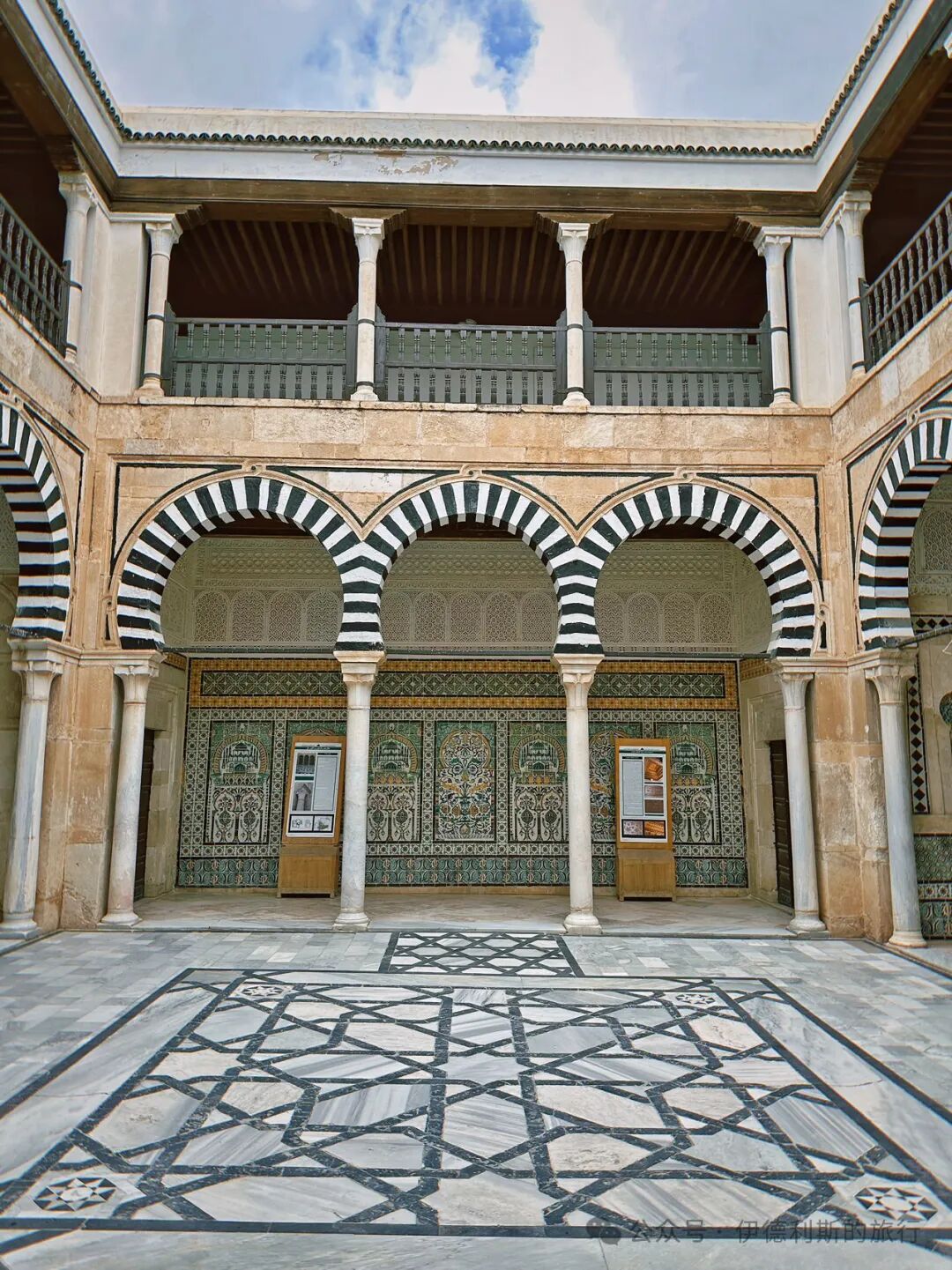
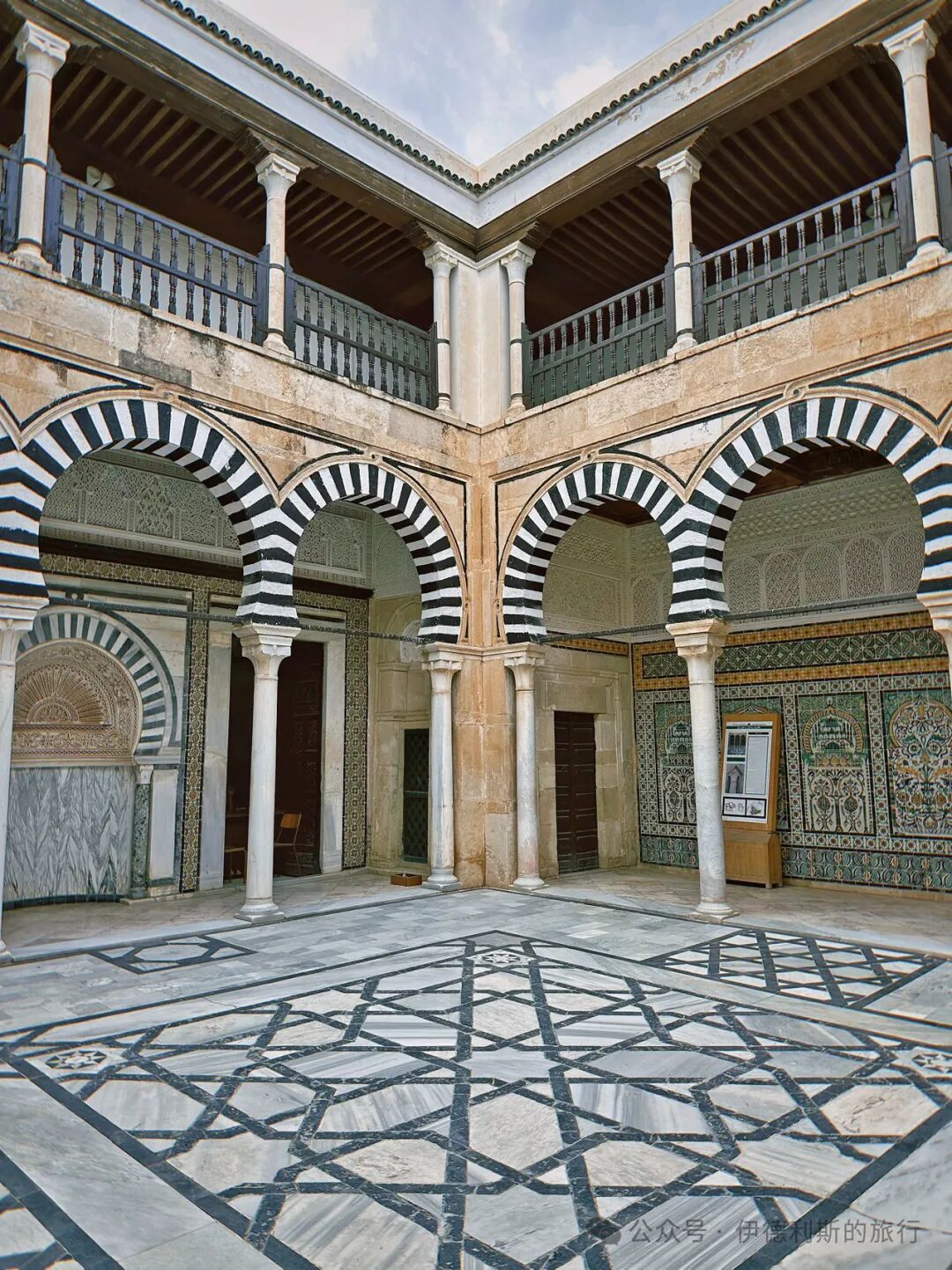
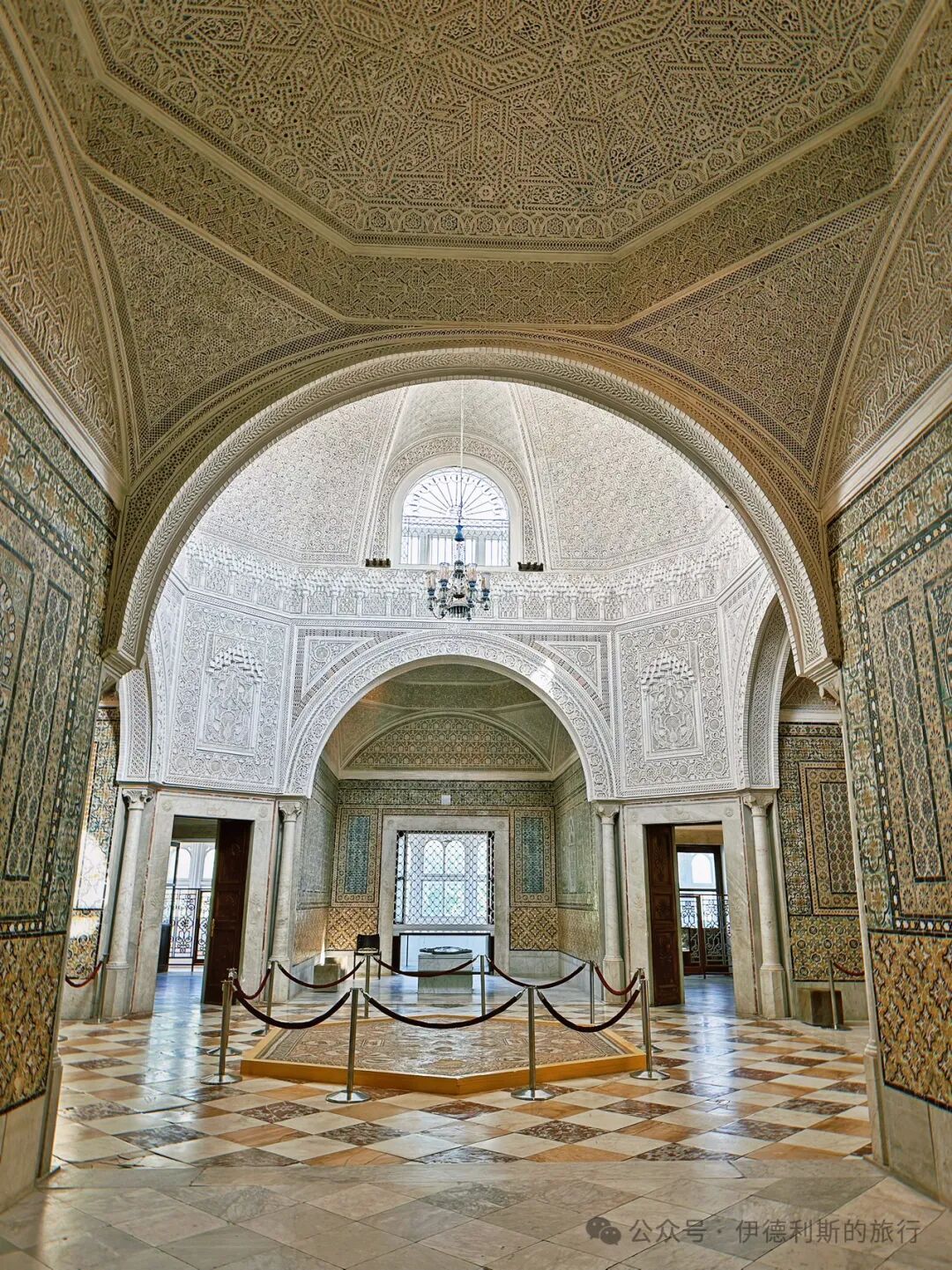
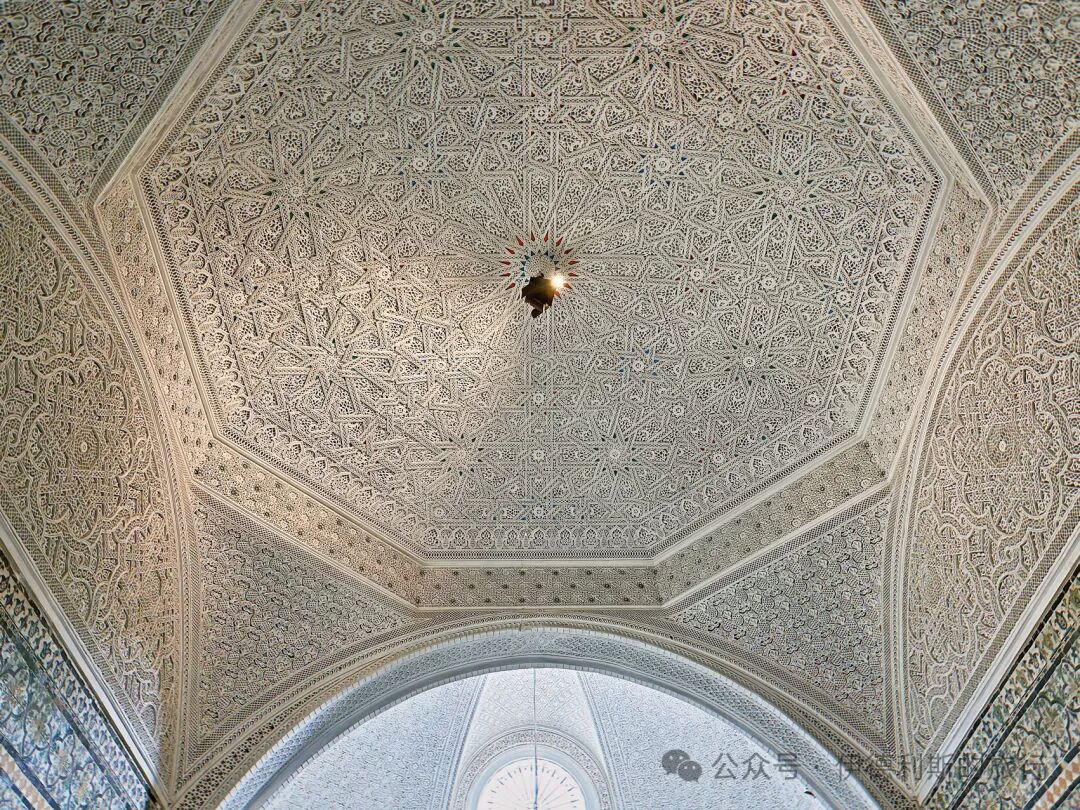
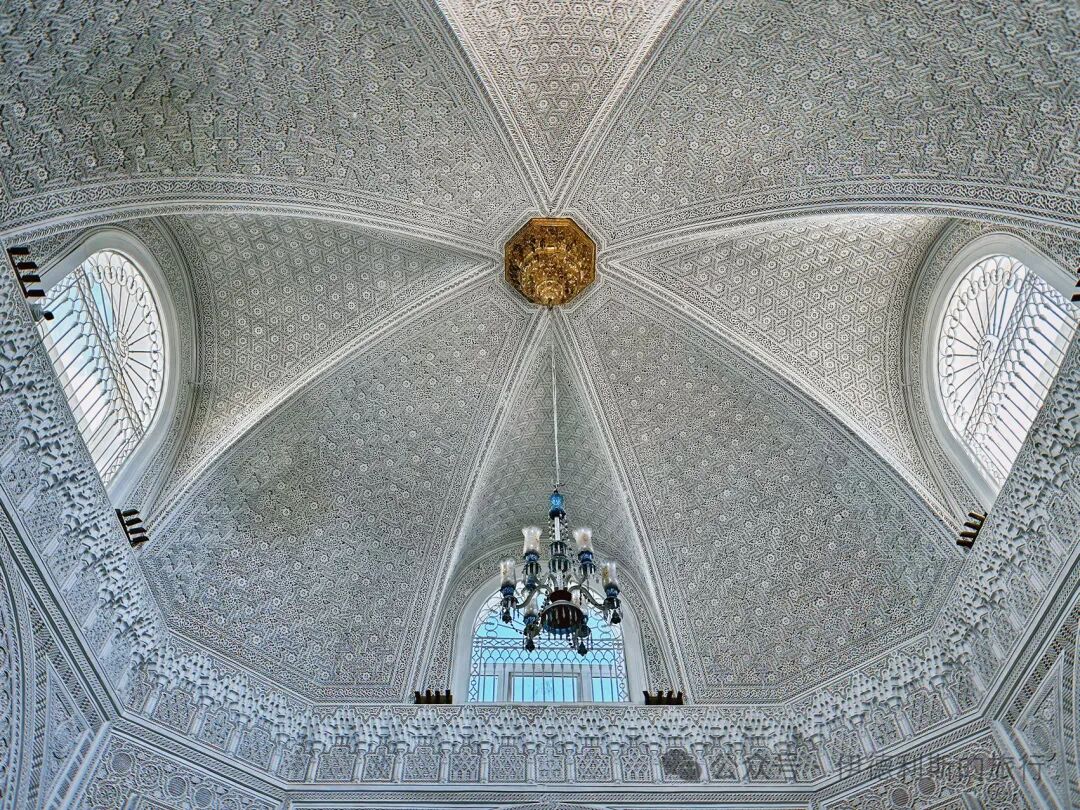
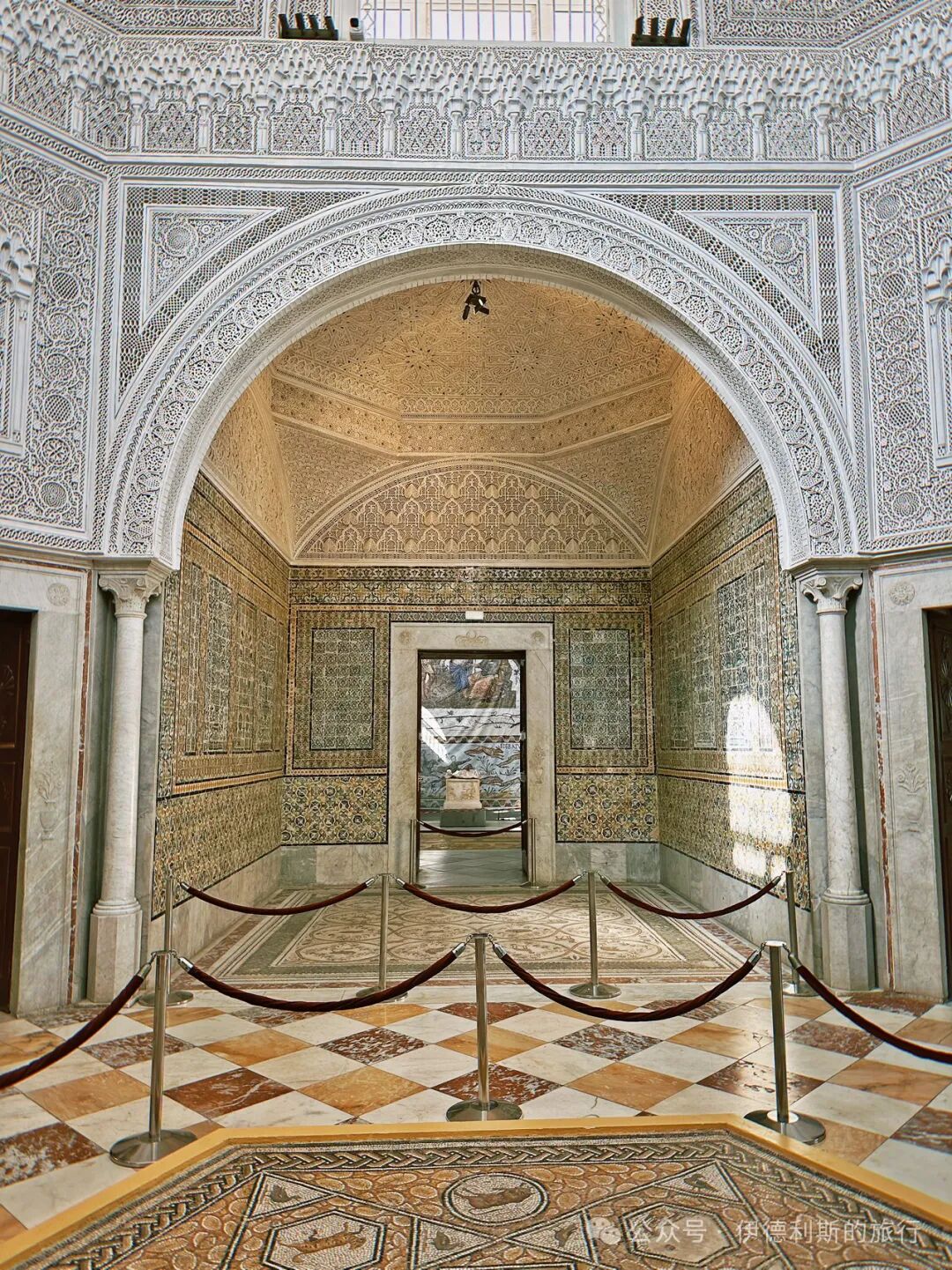
The museum houses the Small Palace, built by Husain II Bey between 1824 and 1835. The palace was built in the Andalusian Moorish style, featuring a T-shaped main hall and a central courtyard with a pool.
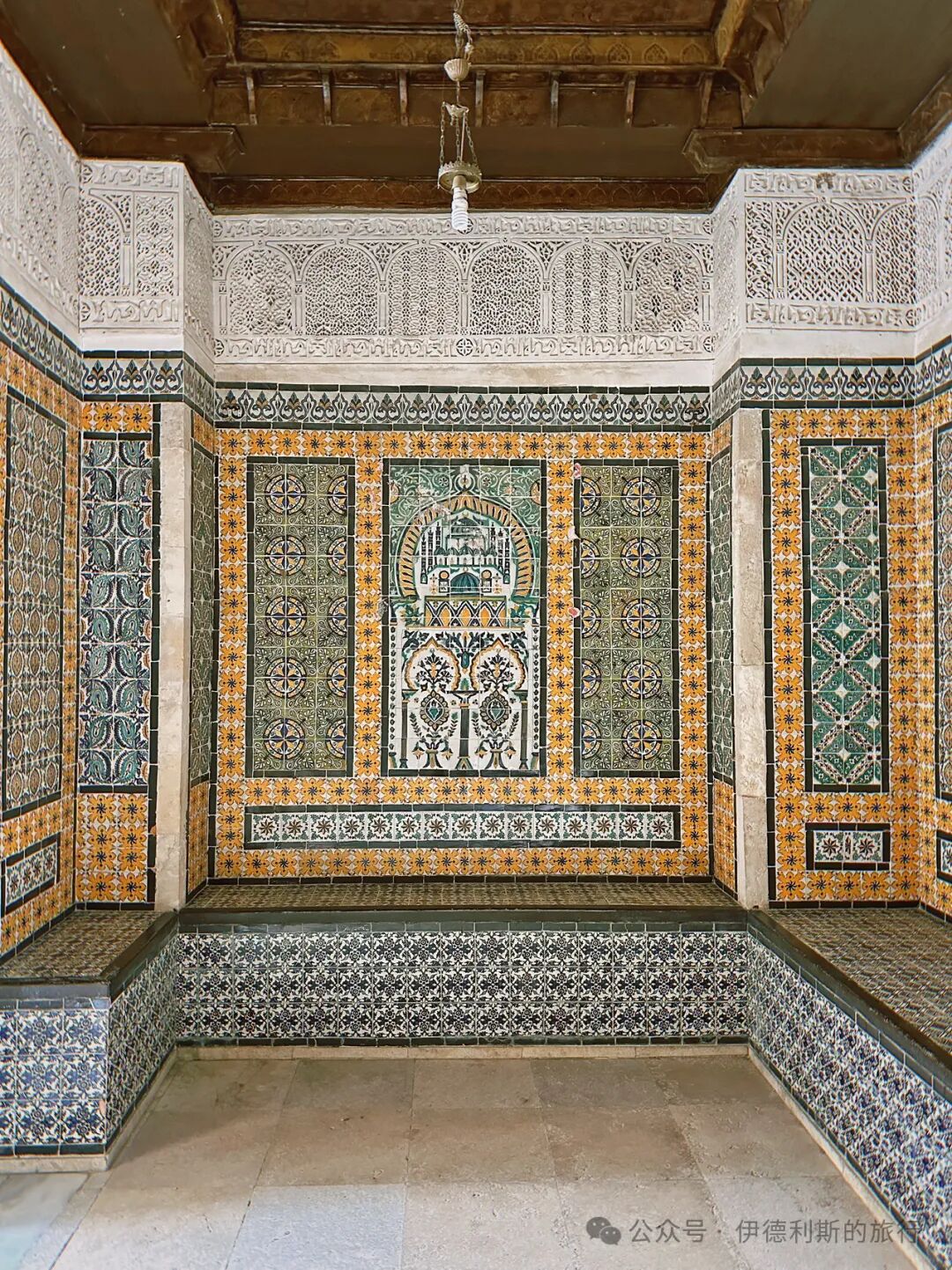
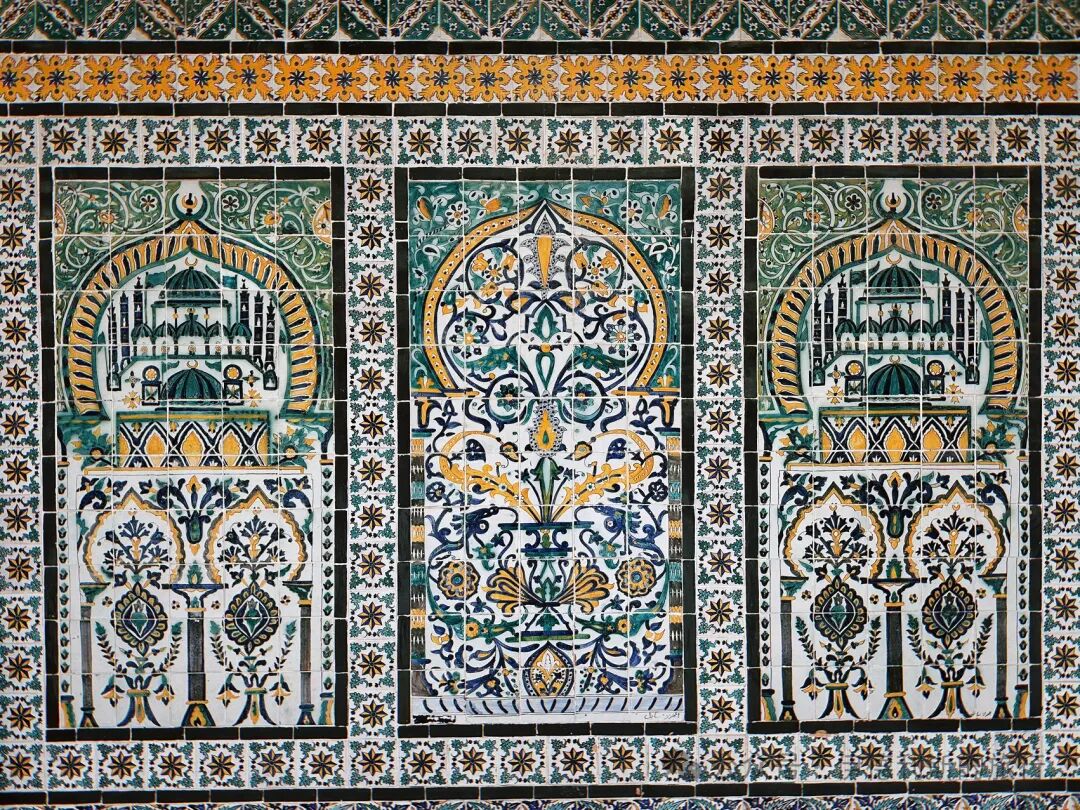
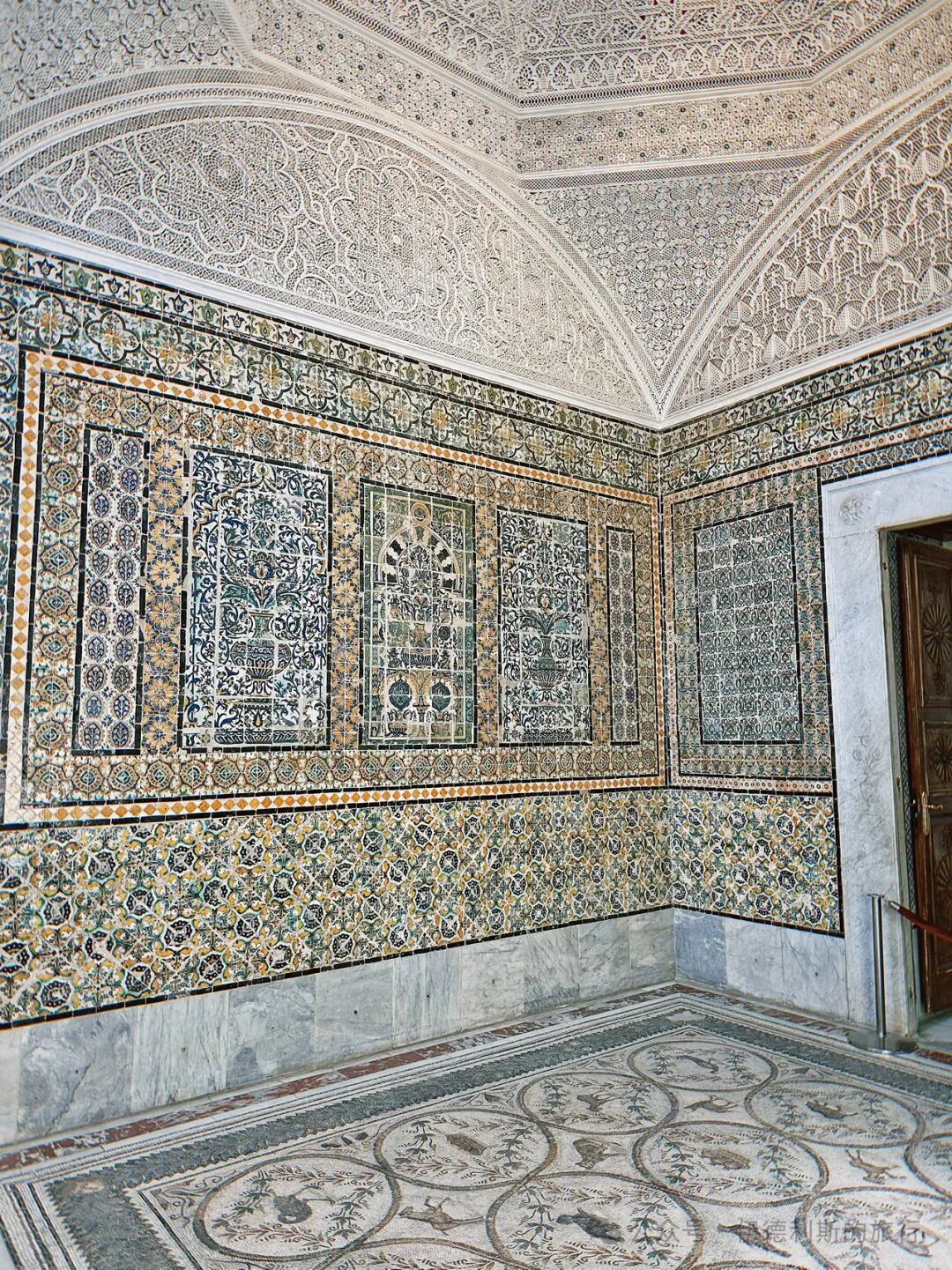
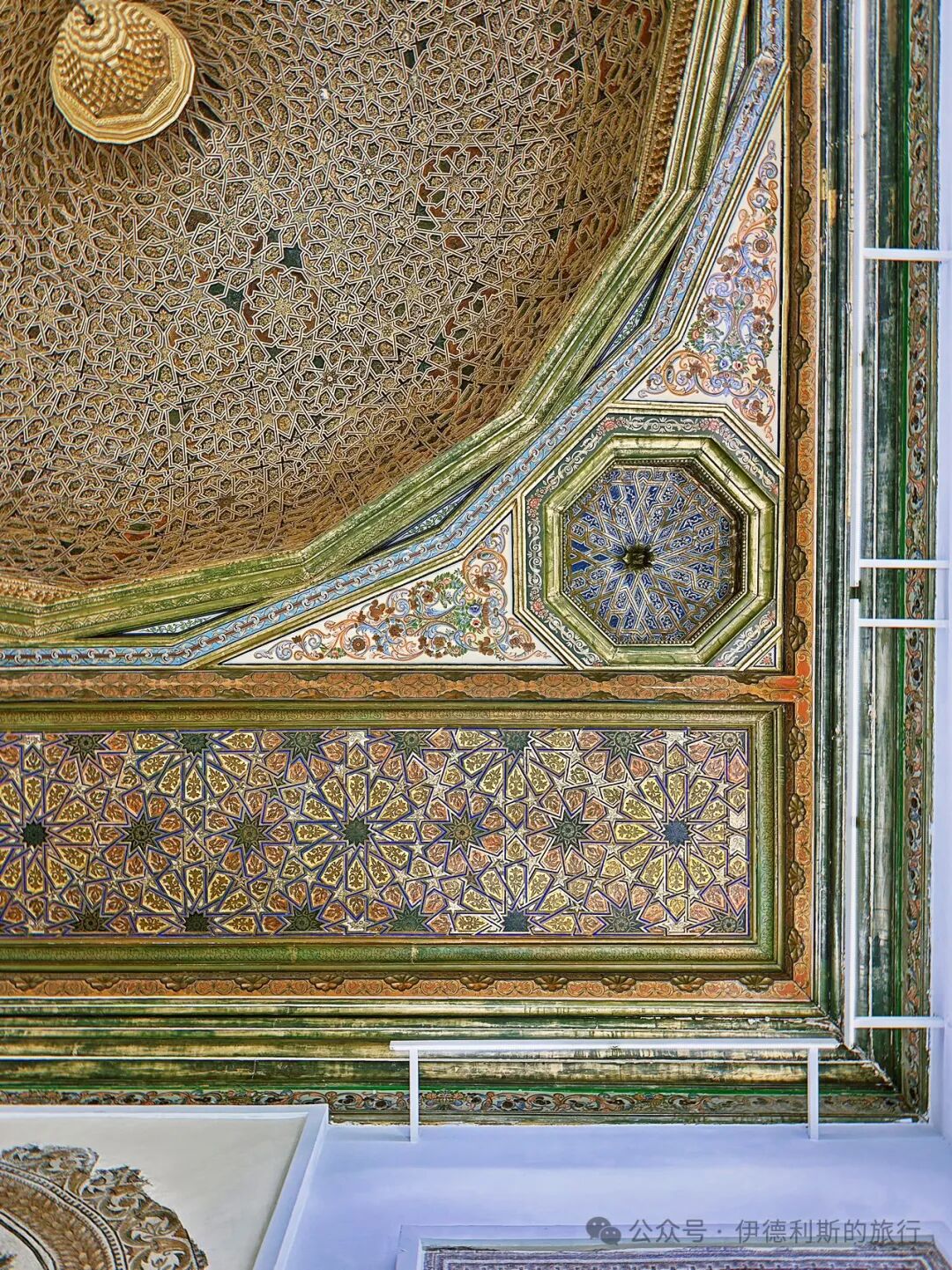
Tile and plaster decorations inside the Small Palace of Husain II.
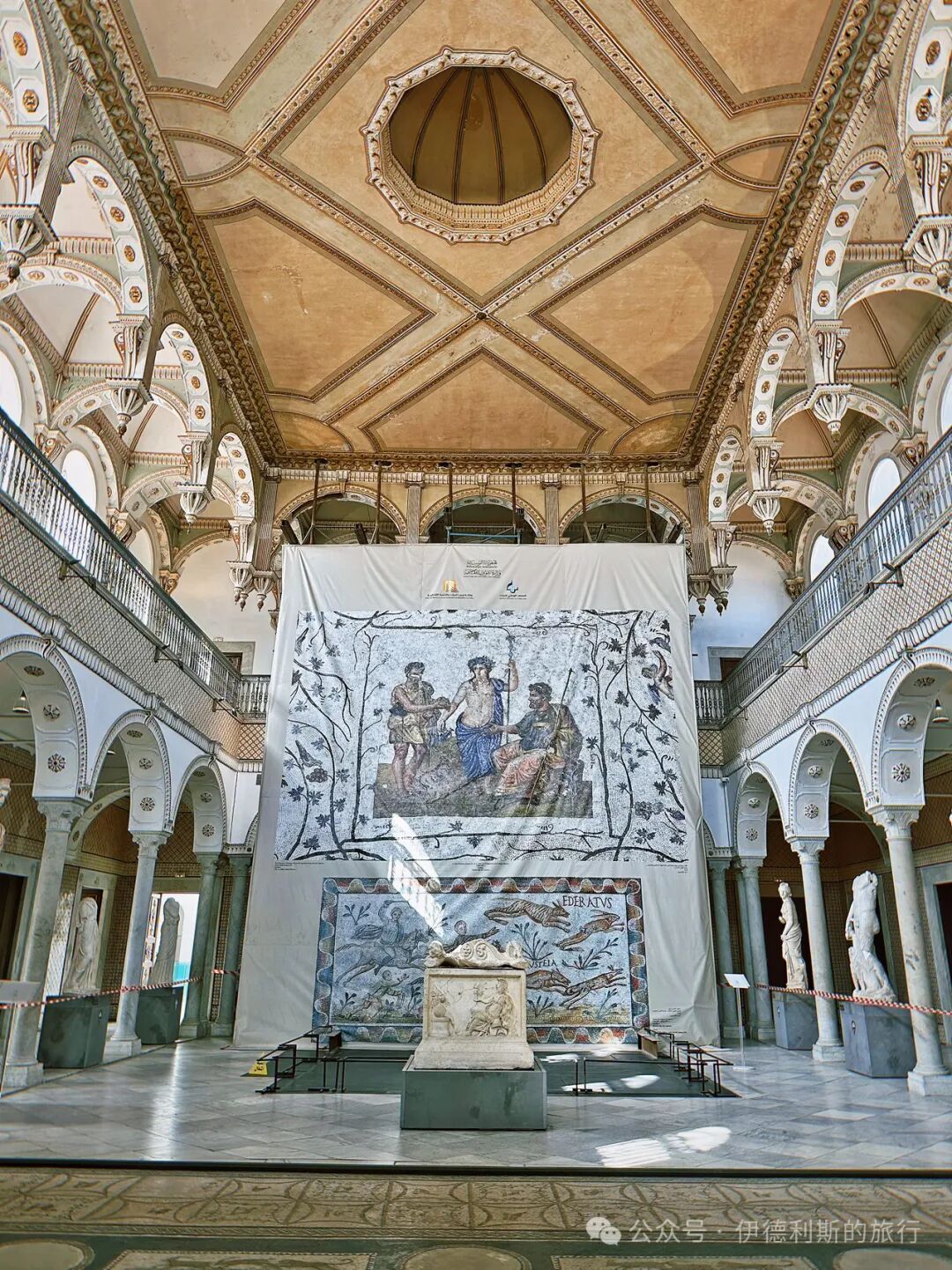
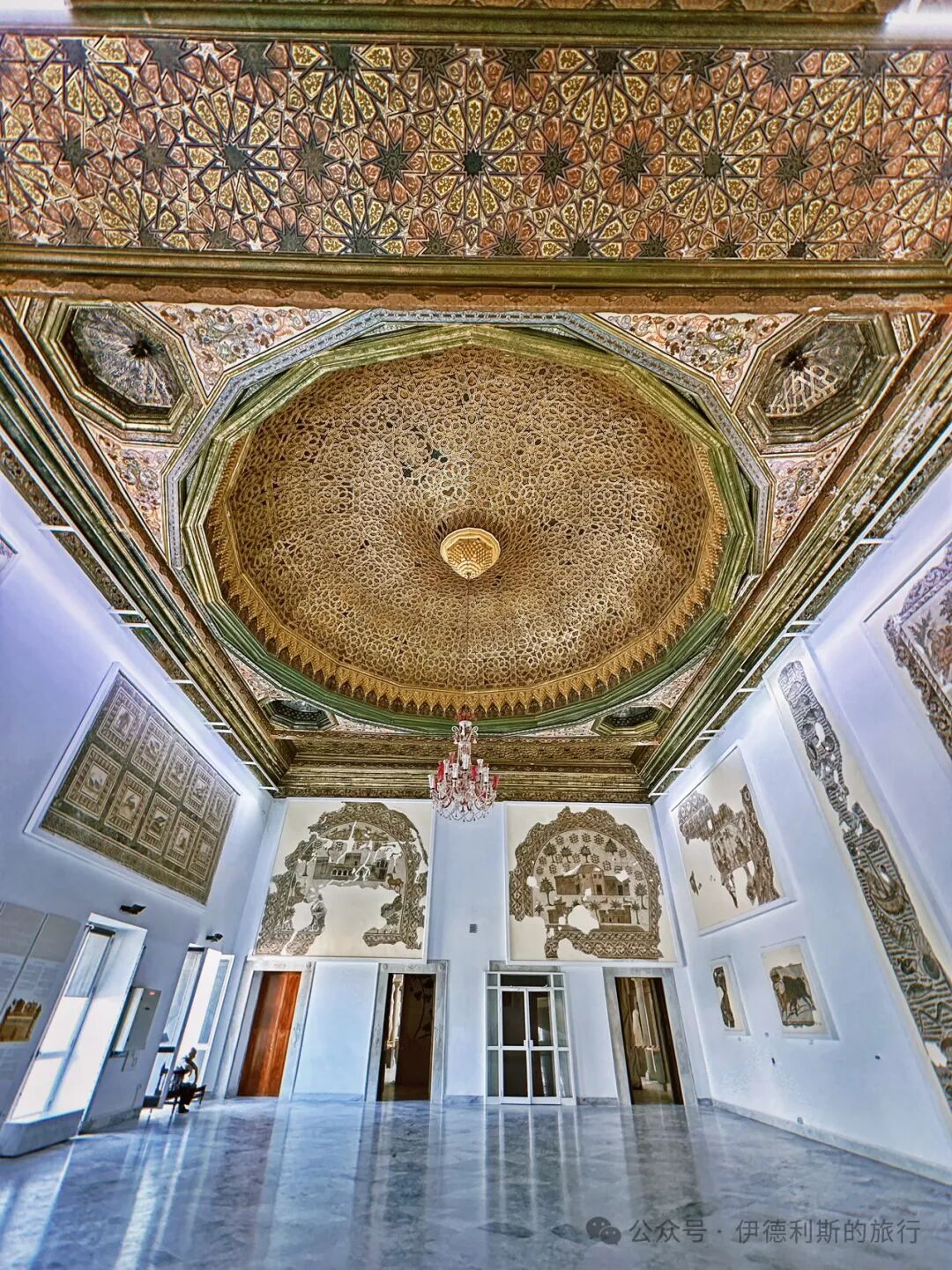
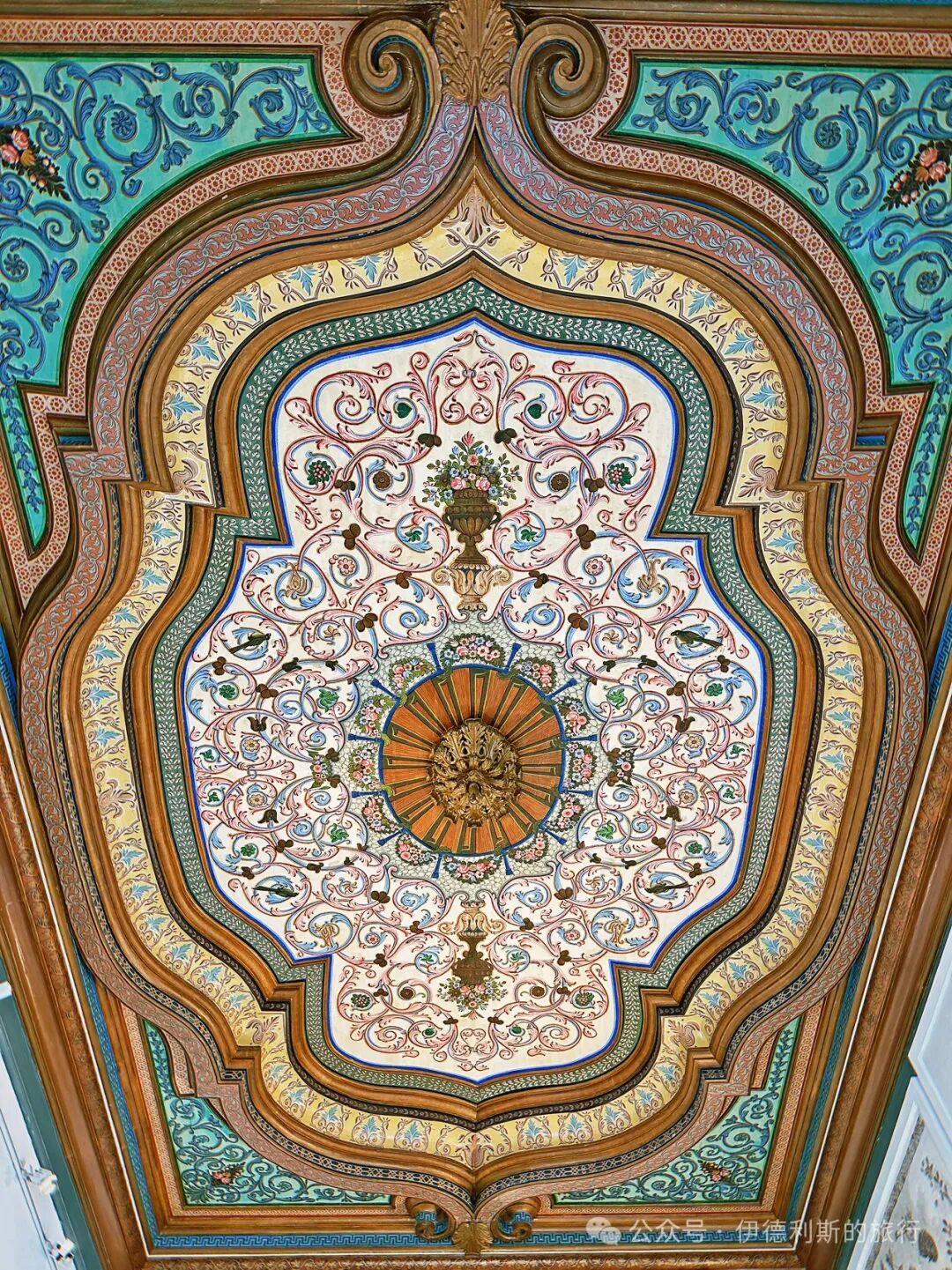
The reception hall and harem built by Muhammad III Bey between 1859 and 1864 feature both Italian and Tunisian styles.
Muhammad III Bey issued the first written constitution in the Arab world in 1861, which separated executive, legislative, and judicial powers and guaranteed equal rights for Muslims, Christians, and Jews. After the new constitution was issued, European merchants and secular schools began to appear in Tunisia.
The Blue Quran manuscript in the National Museum of Tunisia is a very famous religious manuscript in the world. This scripture uses parchment dyed with indigo, with ink outlining the text and gold leaf applied on top. The calligraphy is in the early Kufic script, which lacks sharp angles and vowel marks.
The origin of the Blue Quran is still highly debated, with theories pointing to Kairouan in Tunisia, Cordoba in Spain, Mashhad in Iran, or Iraq, dating back to the 9th or 10th century. The records say the Blue Quran was kept in the Great Mosque of Kairouan after the 14th century. It was broken up during the Ottoman period, but most of it remains in Kairouan, while other parts are held by major museums and collectors.
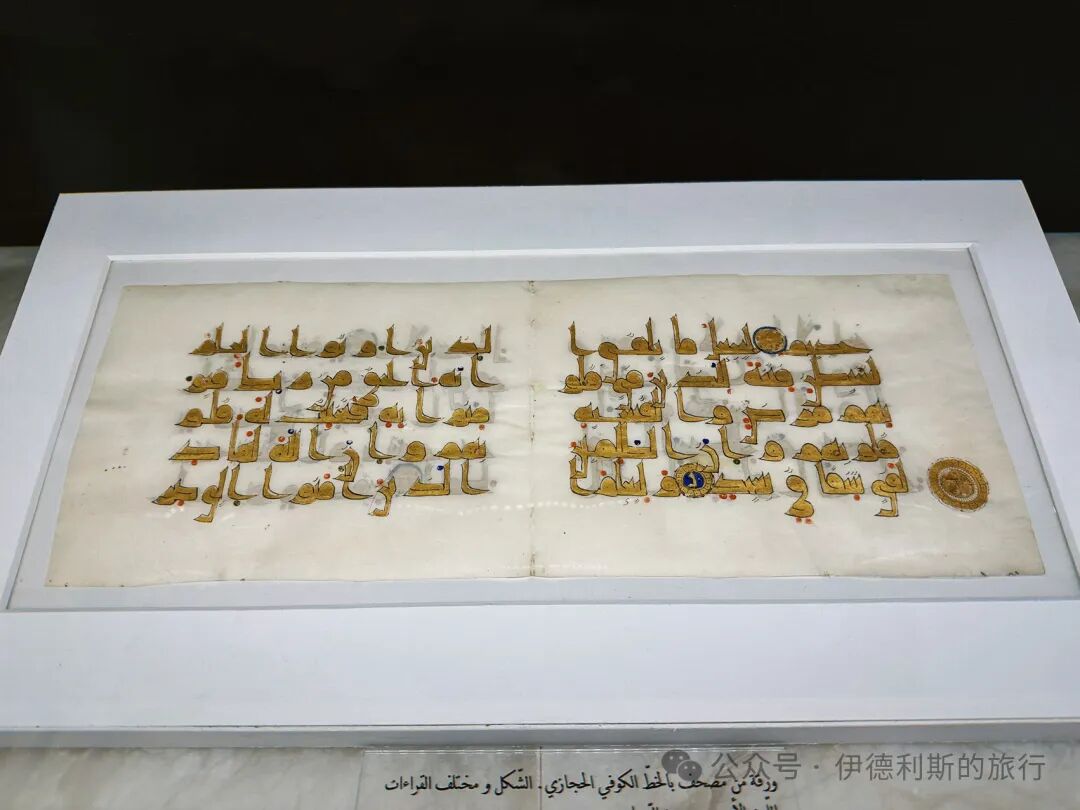
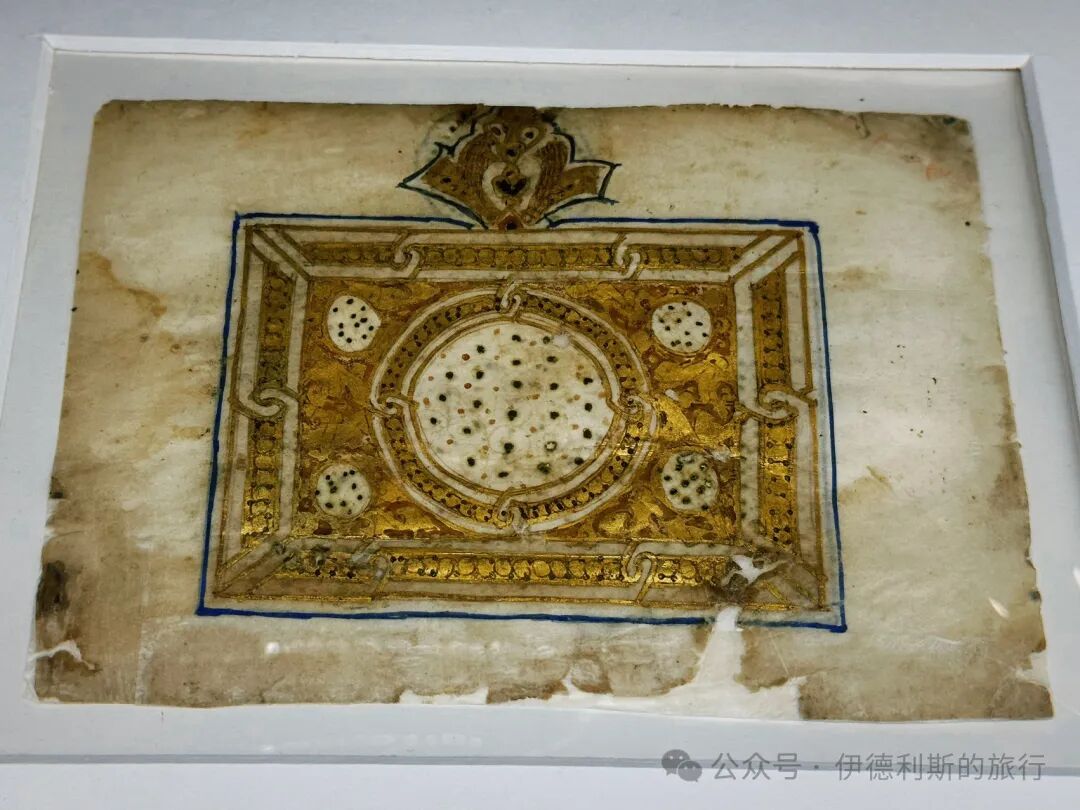
Quran manuscripts from the 8th to 12th centuries held by the Great Mosque of Kairouan in Tunisia.
The library of the Great Mosque of Kairouan holds a large number of manuscripts and established a catalog as early as the 13th century. to scriptures, these manuscripts include books related to the Maliki school of thought, which are also the oldest documents of the Maliki school.
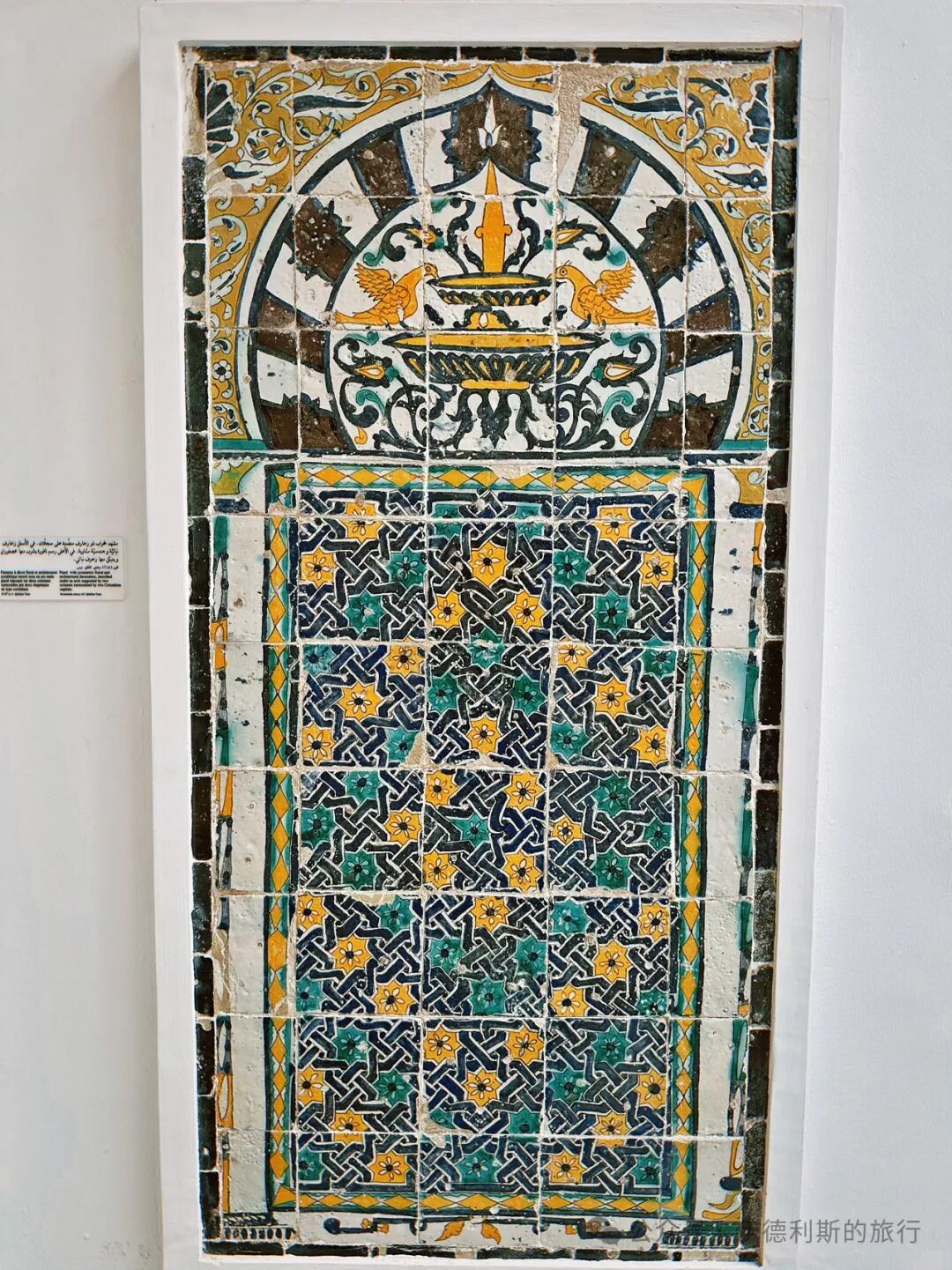
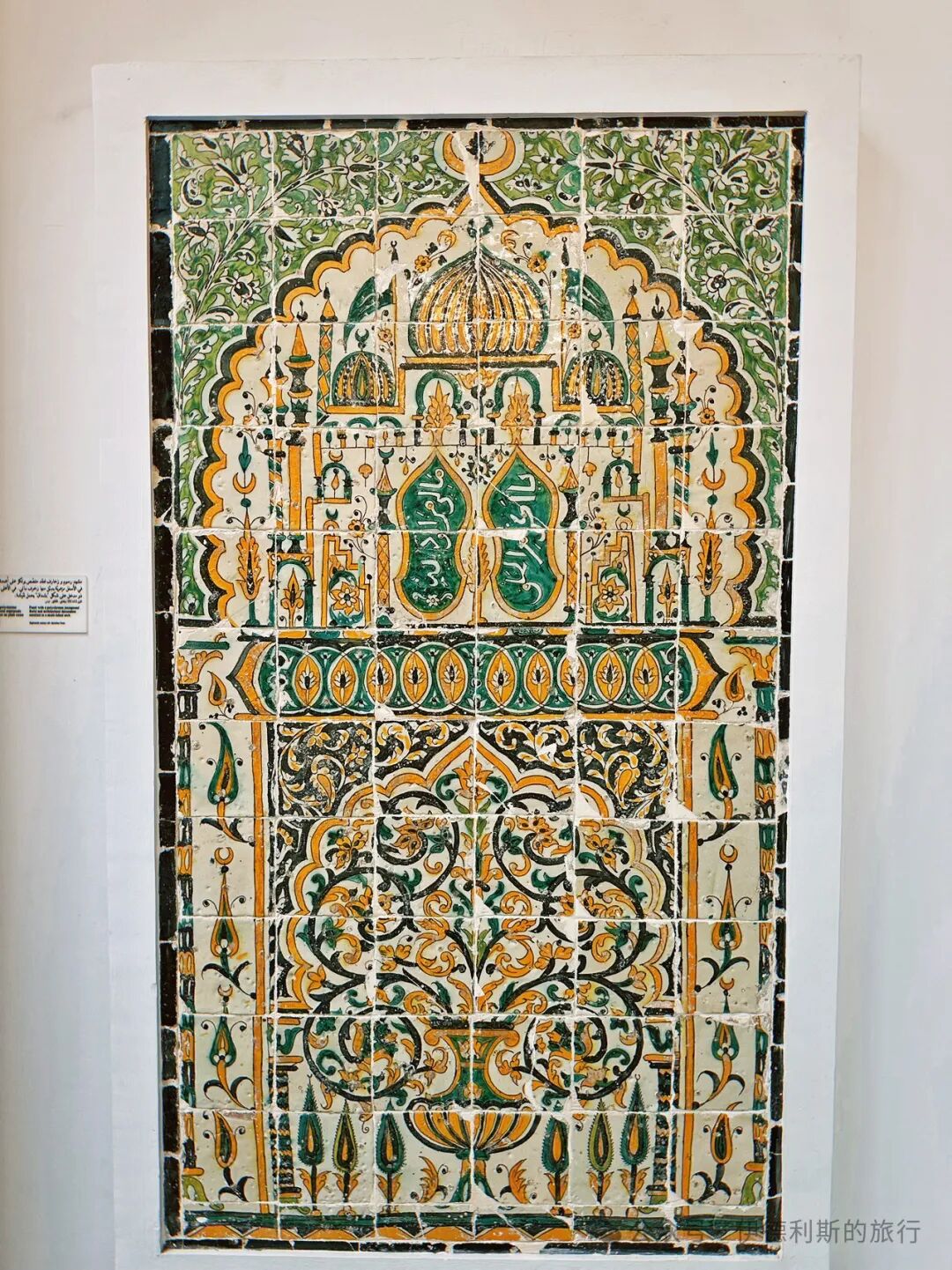
Tunisian Qallaline tiles from the 17th and 18th centuries. These tiles are named after the Qallaline region of Tunisia. They were influenced by Ottoman tile art but developed their own unique style.
A marble carving from the 10th-century Fatimid period in Mahdia, Tunisia, depicting a Fatimid prince. A glazed bowl with Kufic script from the Fatimid dynasty period in Mahdia.
The ancient city of Mahdia was built by the Fatimid dynasty between 916 and 921, and it became the capital of the Tunisia region after its completion. Before this, the capital of the Tunisia region was Kairouan, which was dominated by Sunnis. Because of this, the Shia Fatimid dynasty built a new capital on the Mediterranean coast, far away from Kairouan. Once finished, Mahdia included thick city walls, palaces, a harbor, and a great mosque. Unfortunately, none of the surface buildings survived. Now, you can only see artifacts unearthed through archaeological excavations in museums.
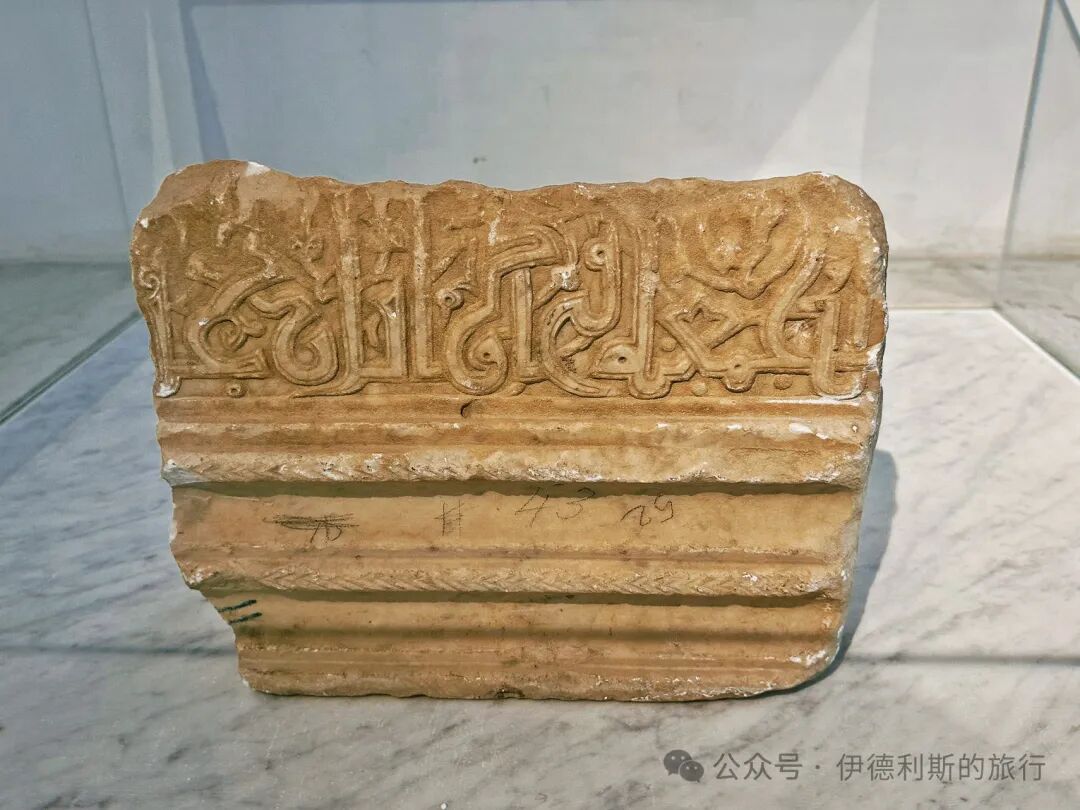
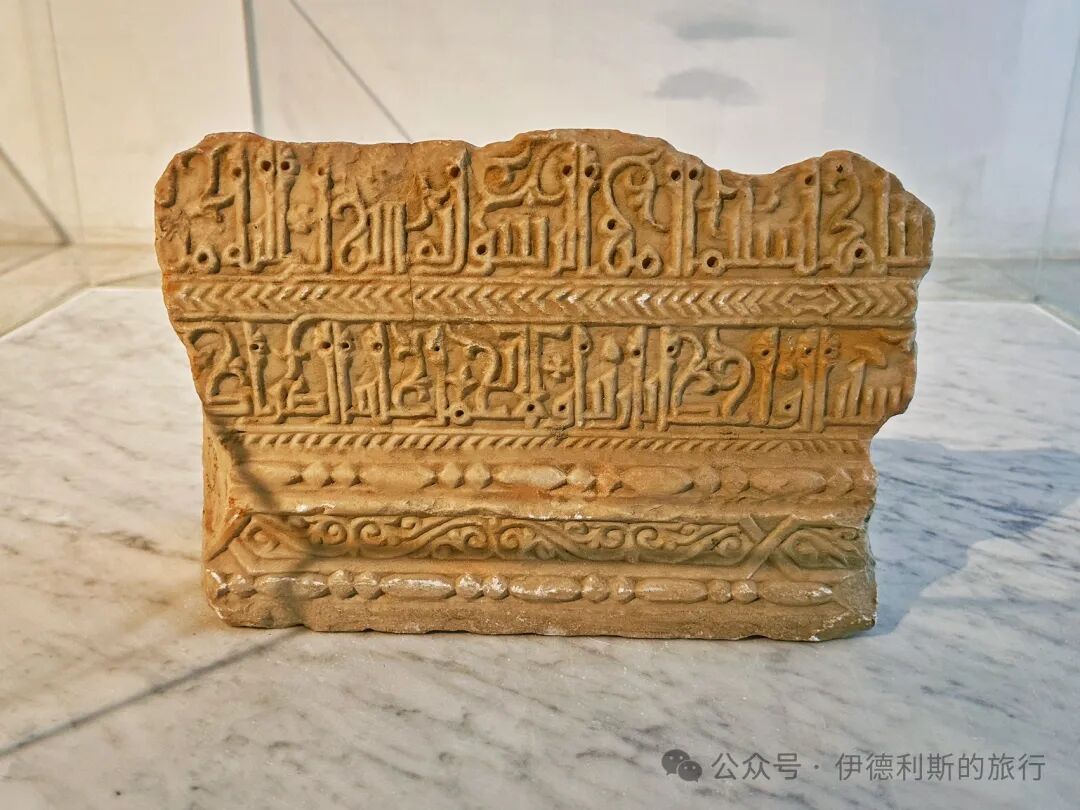
Exquisite 11th-century marble carvings with Kufic script.
A 10th-century wood carving from Egypt.
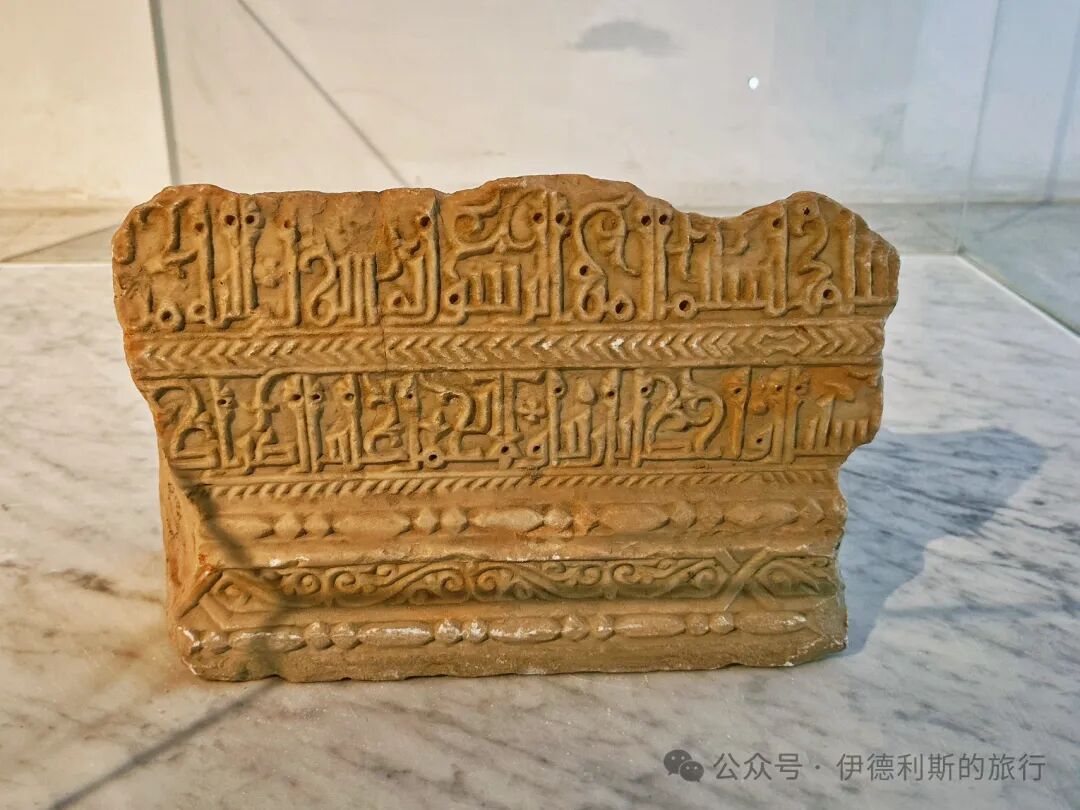
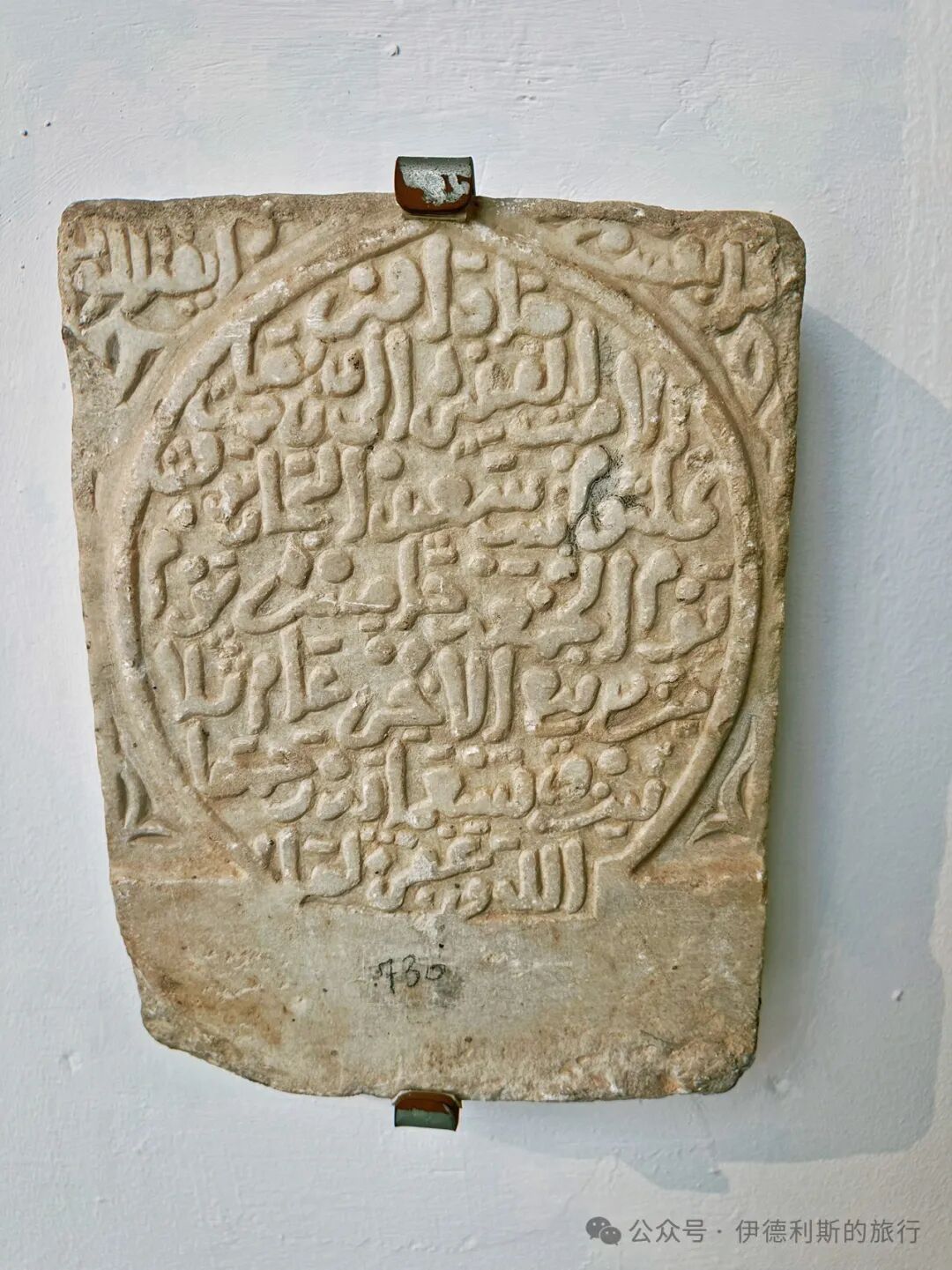
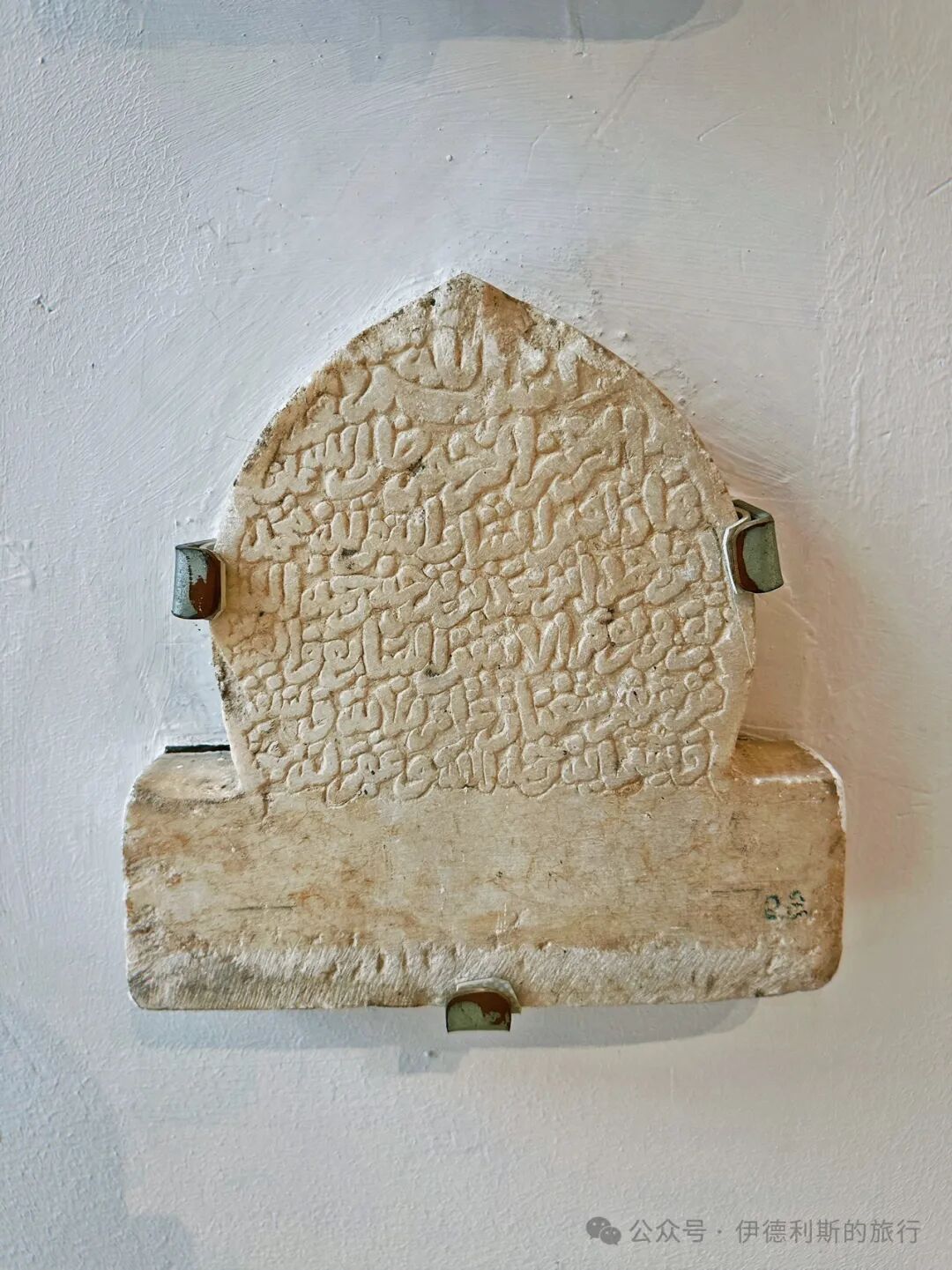
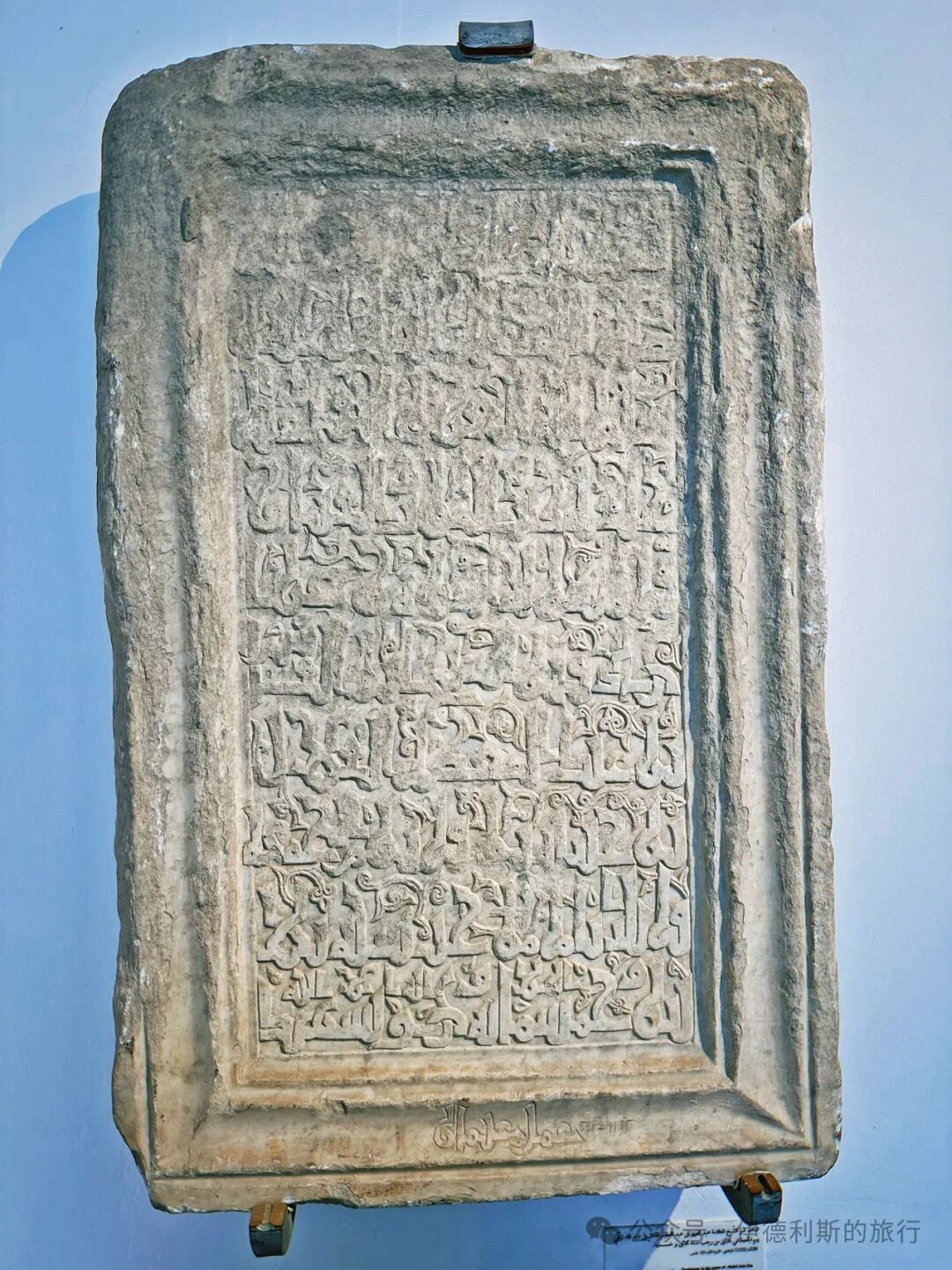
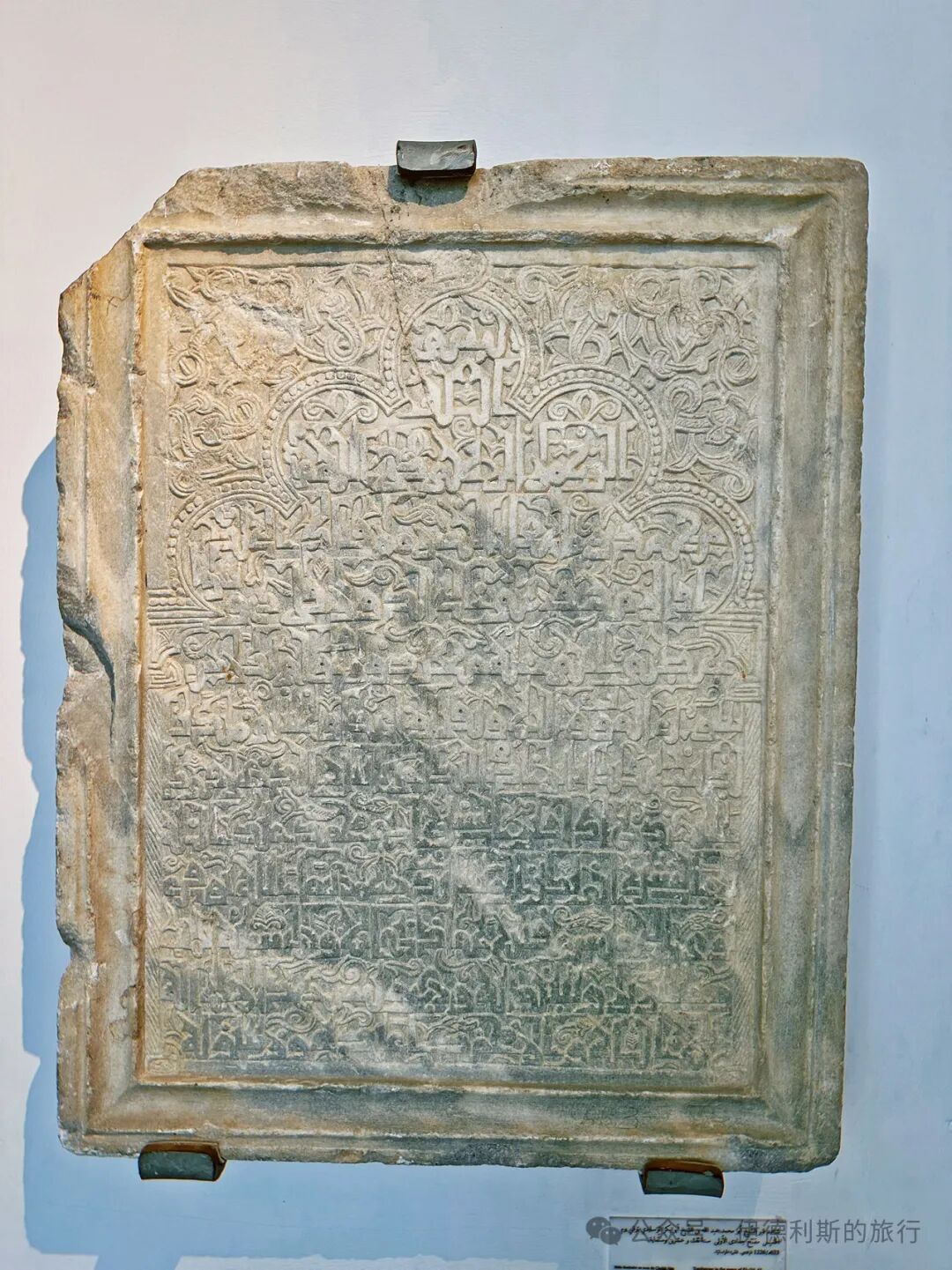
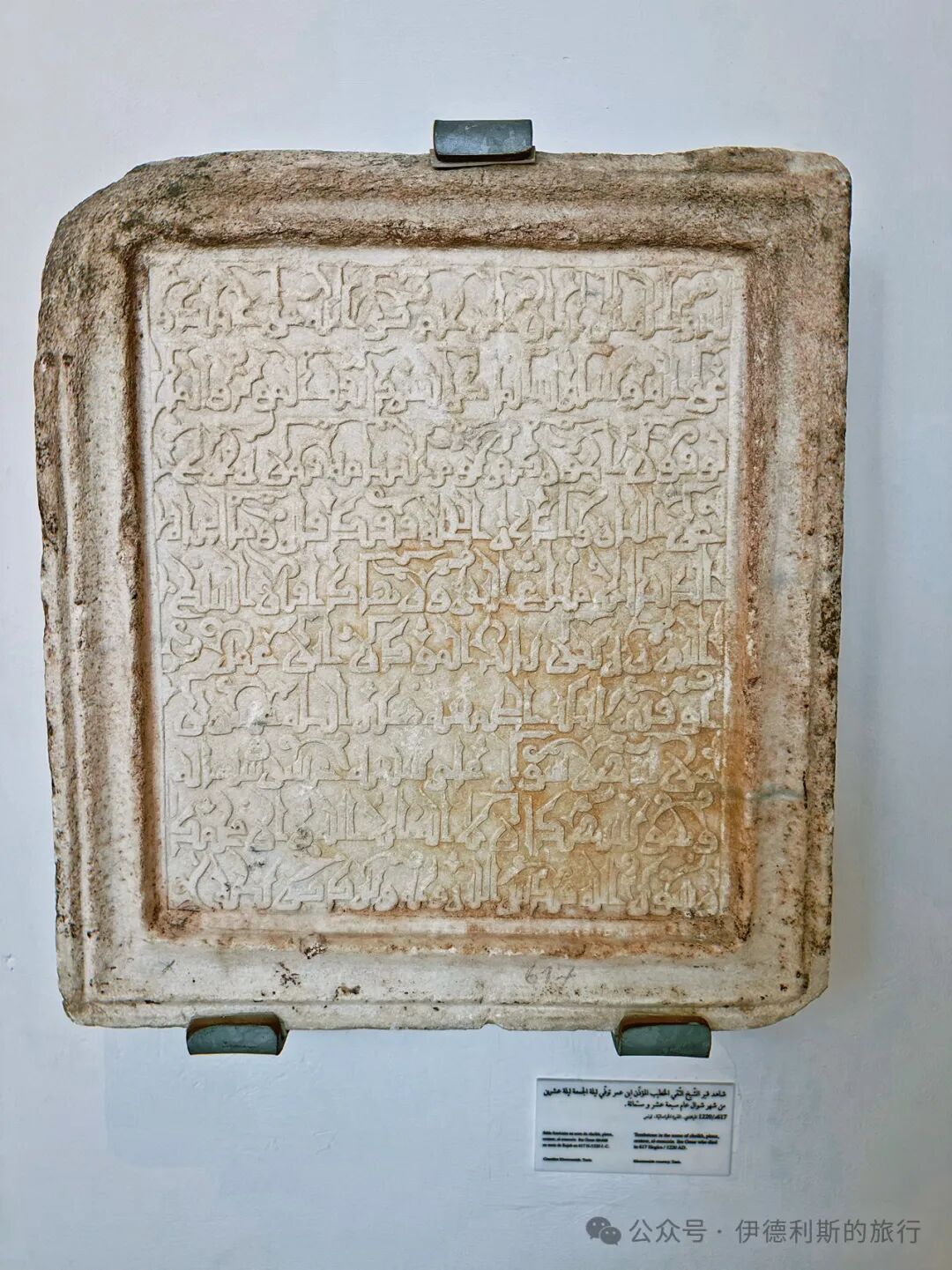
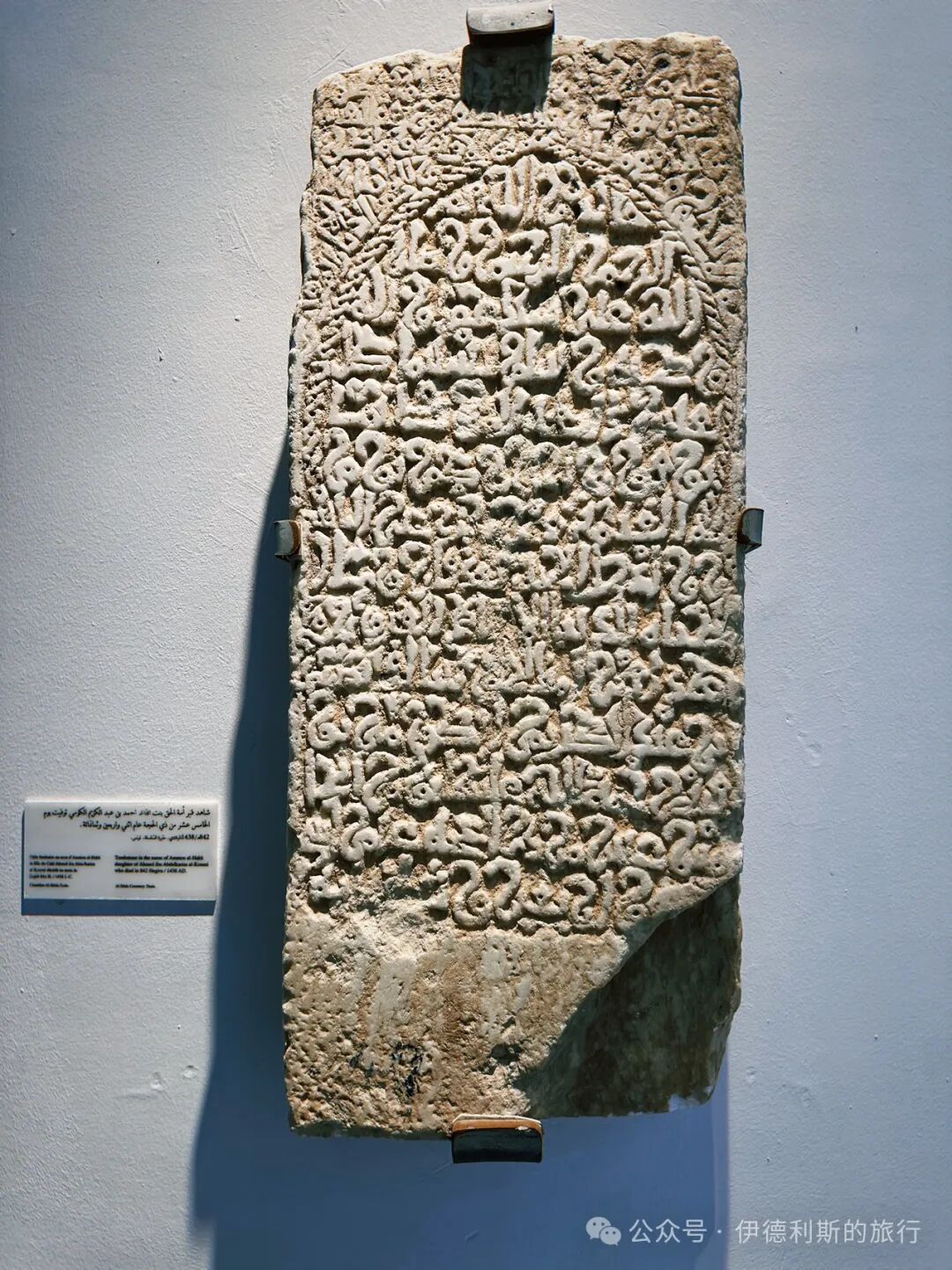
A 13th to 16th-century tombstone from Tunisia where you can see the local style of Arabic calligraphy.
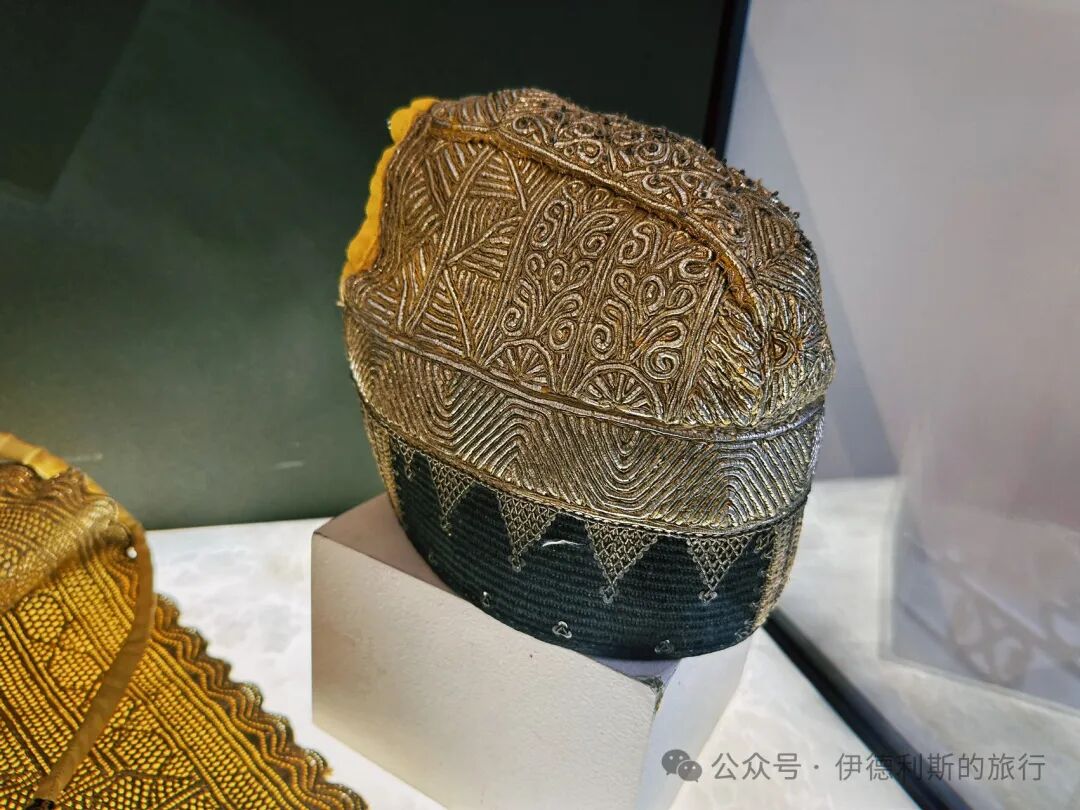
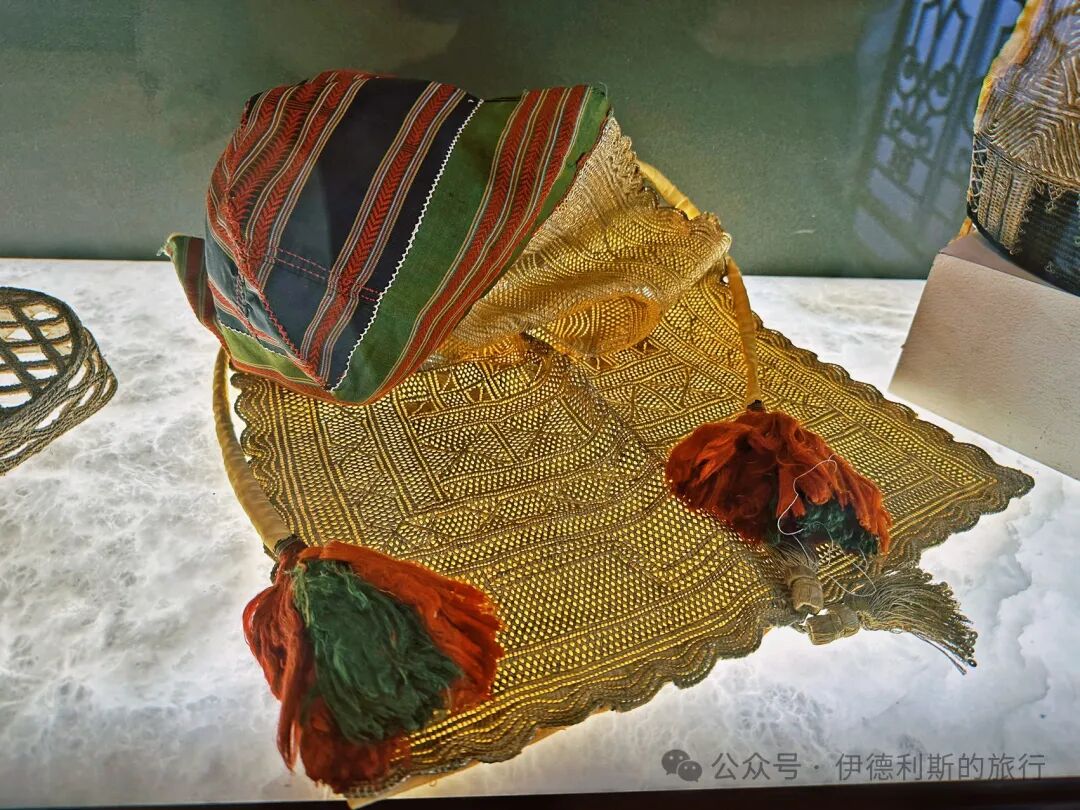
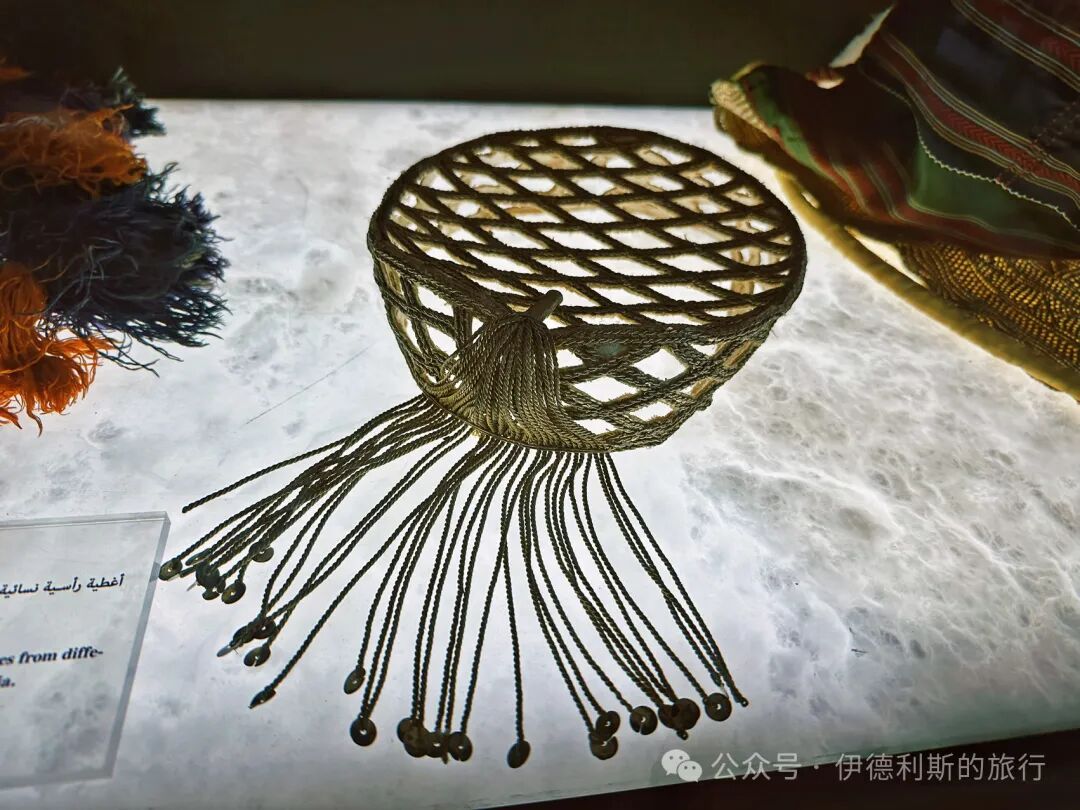
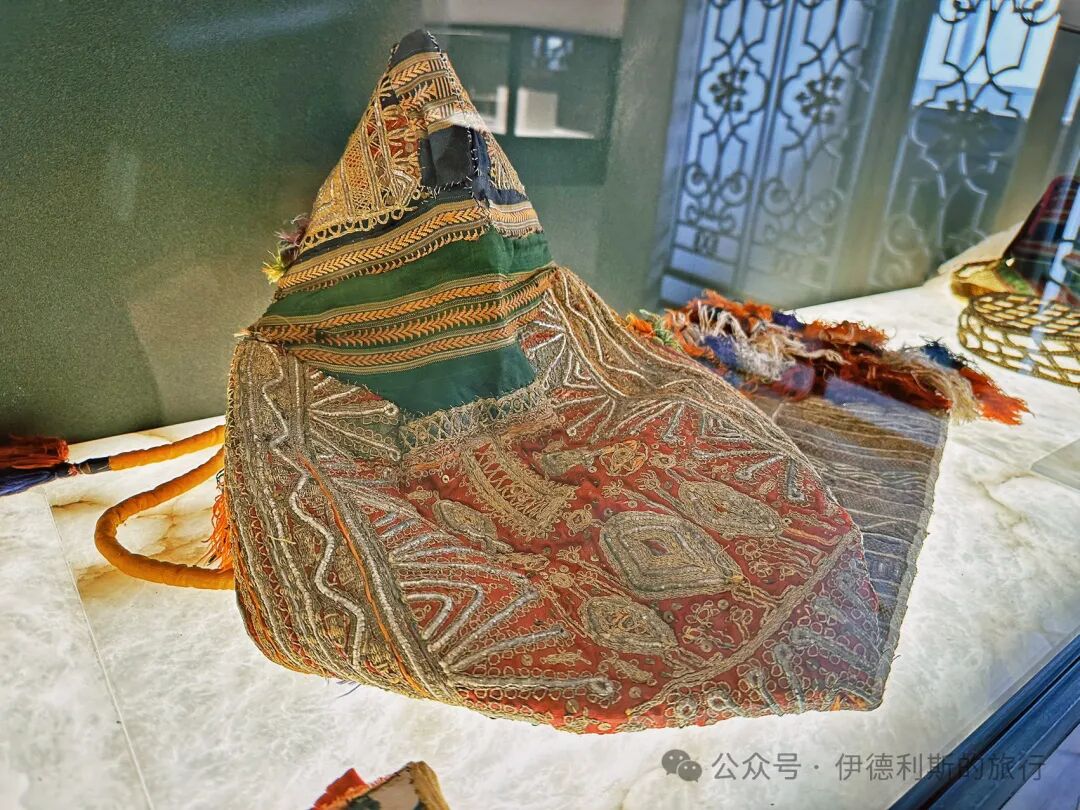
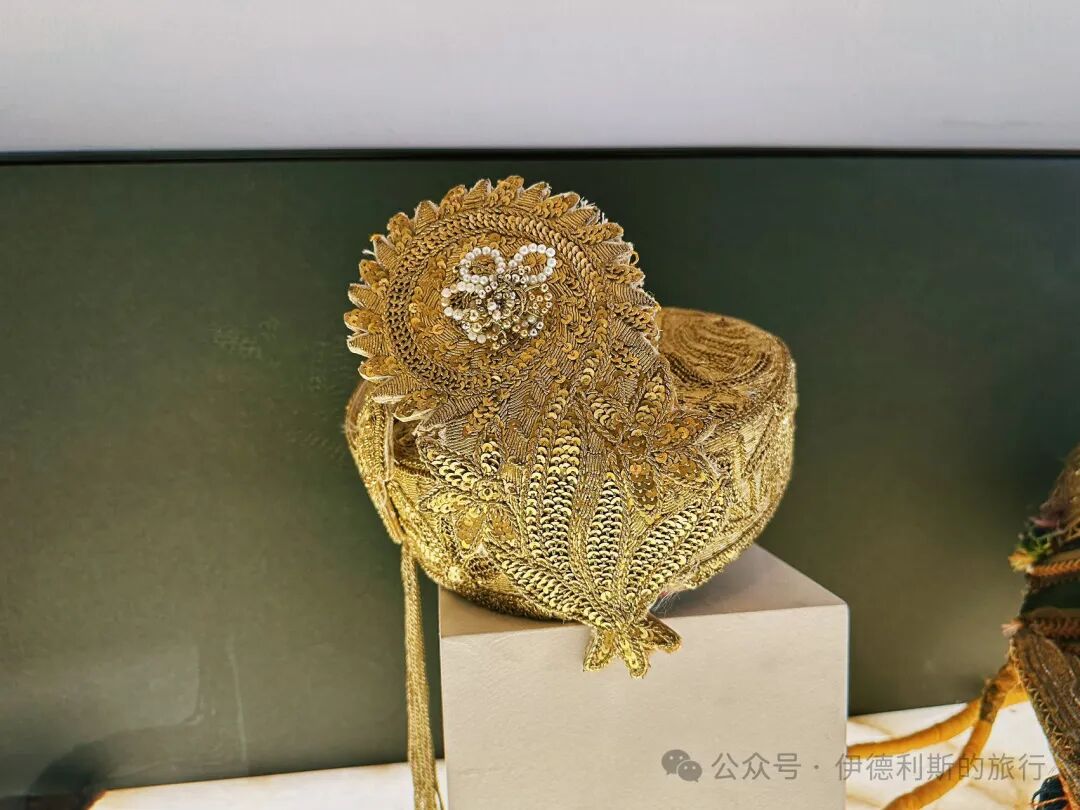
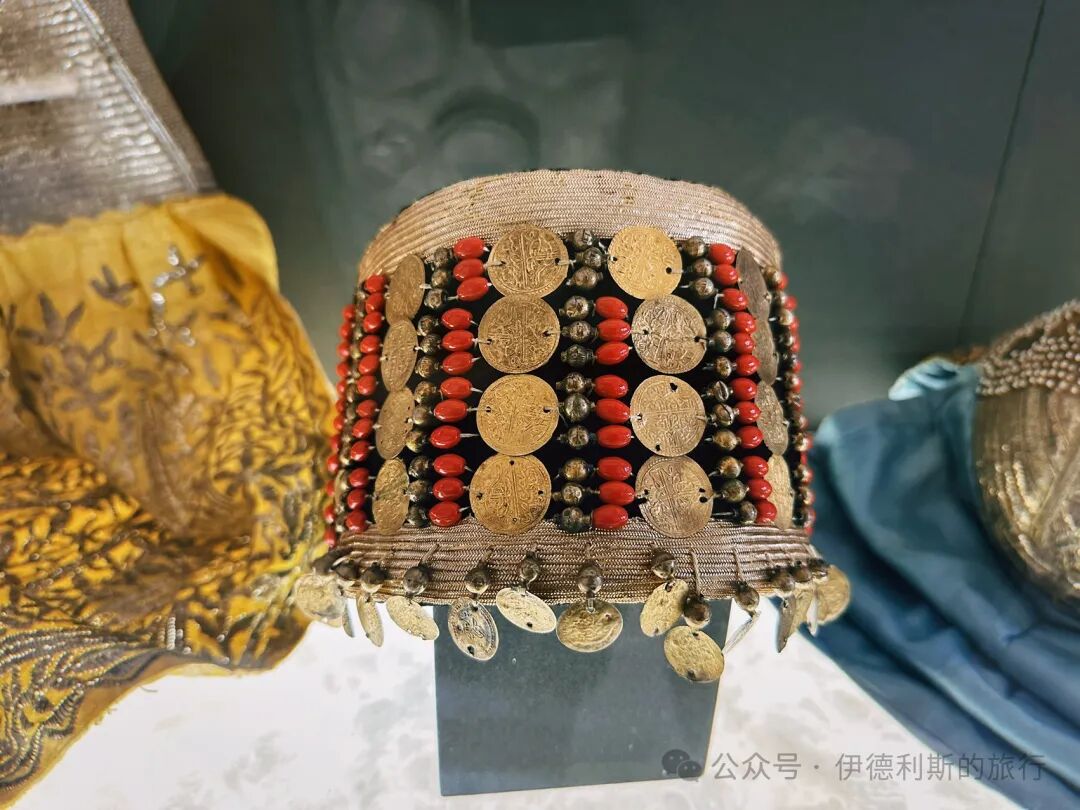
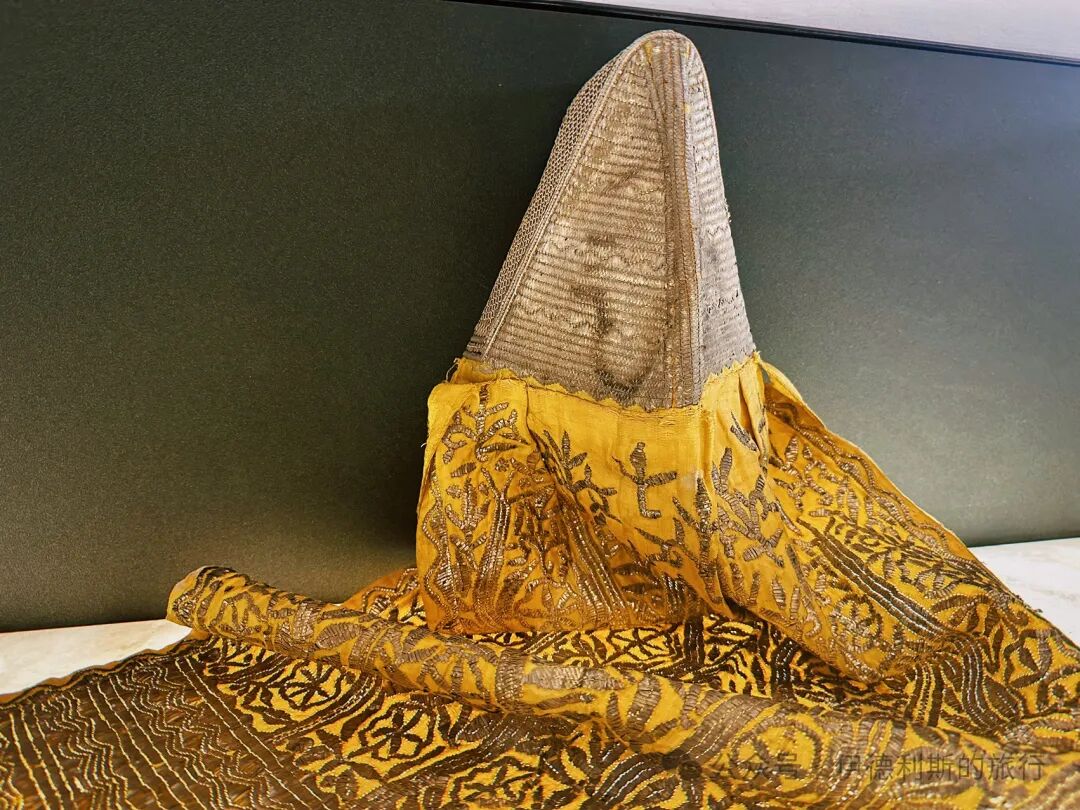
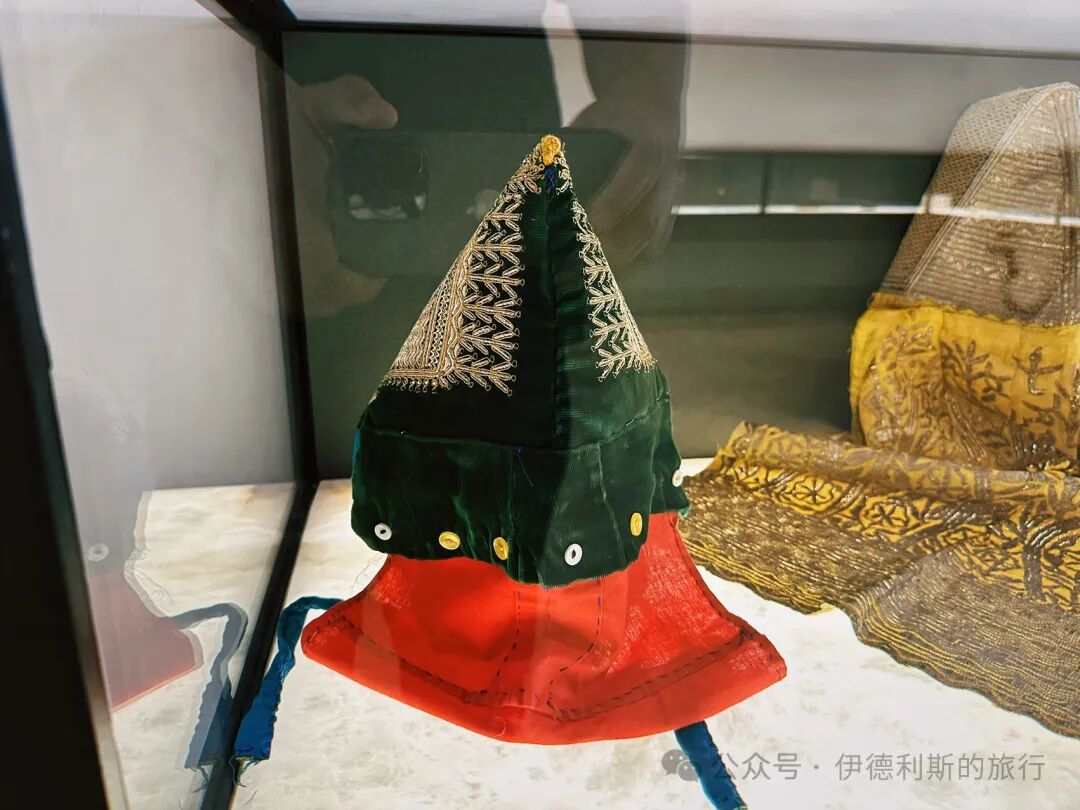
A traditional Tunisian women's headpiece. view all
Summary: This article visits the Bardo National Museum in Tunis, a major museum set inside a former palace and known for its historical collections and mosaics. It keeps the original museum details, photographs, object notes, and travel observations for readers interested in Tunisia's cultural heritage.
The National Museum of Tunisia is located inside the Bardo Palace, 4 kilometers west of the old Medina. The palace was first built in the 15th century. After the Ottoman dynasty took over in the 16th century, it was rebuilt and expanded many times, eventually becoming the main residence of the Husainid Beys (1705-1957).
The Husainid dynasty was a Beylik nominally under the Ottoman Empire. Its founder, Husain, was an Ottoman officer of Greek Cretan descent. He was granted the title of Bey by the Ottoman Sultan in 1705 and began his rule over Tunisia. After the 19th century, the Husainid dynasty began trading heavily with European merchants, and in 1861, they issued the first constitution in the Arab world. However, economic decline and social unrest in the late 19th century led to Tunisia becoming a French protectorate in 1881.
In 1882, Tunisia and France jointly established the Tunisian Office of Antiquities and Arts, which immediately began converting the old harem of the Bardo Palace into a museum. After six years of restoration and collecting, the museum officially opened in 1888.
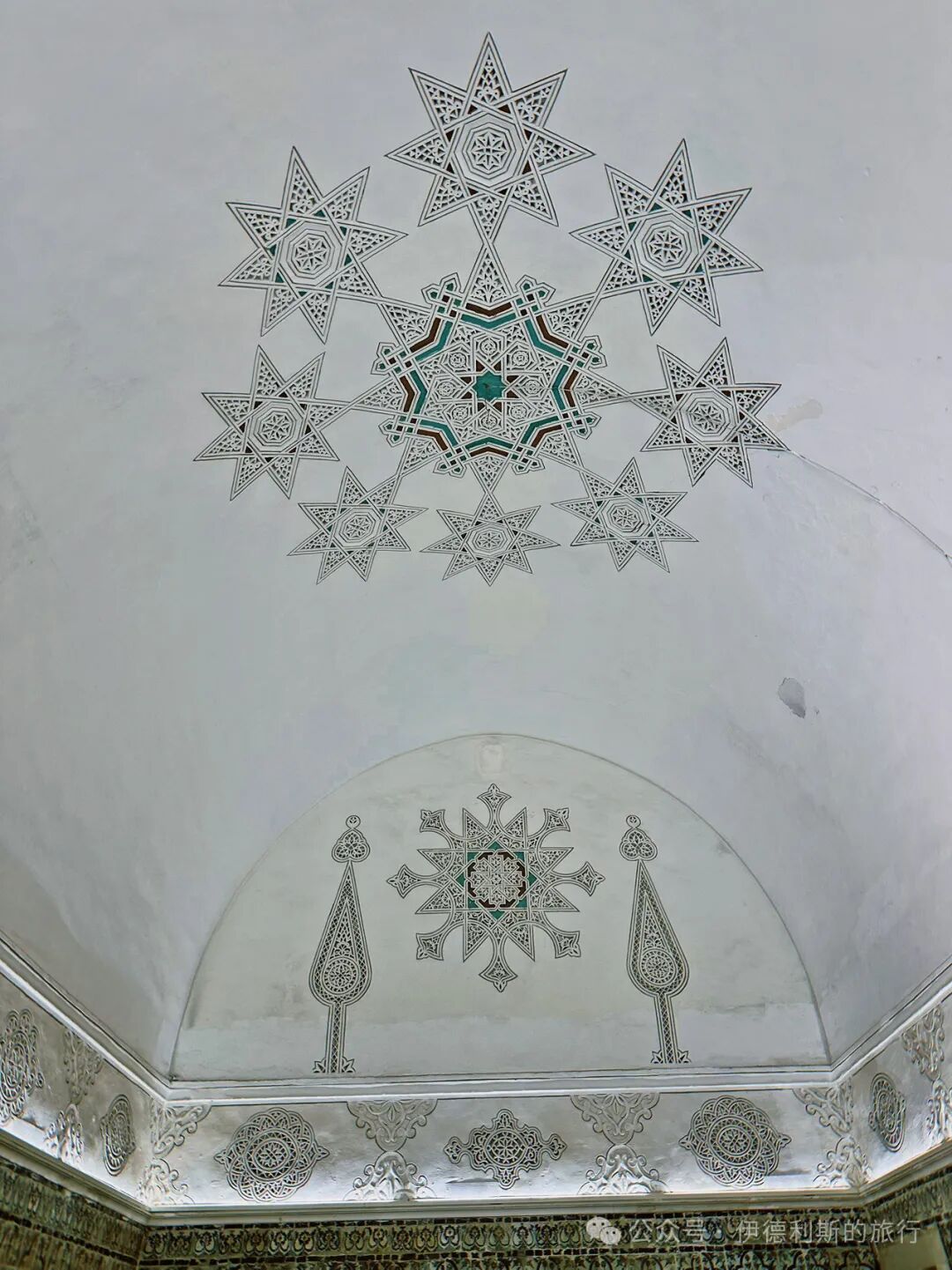
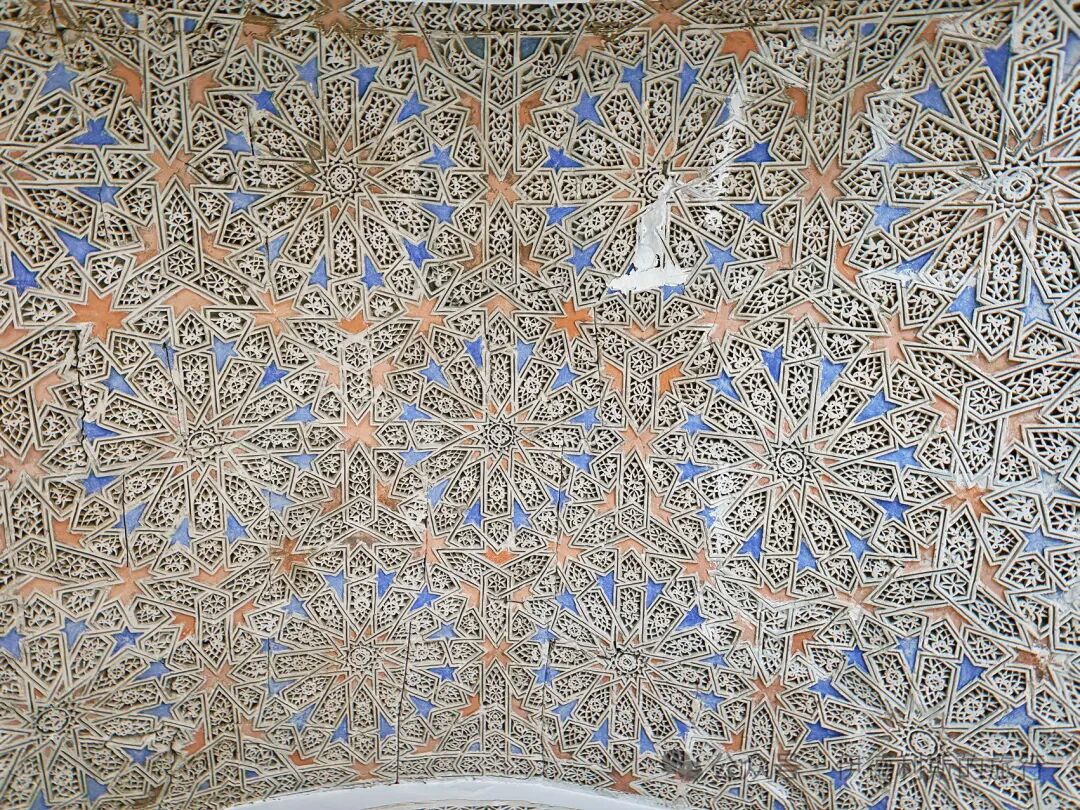
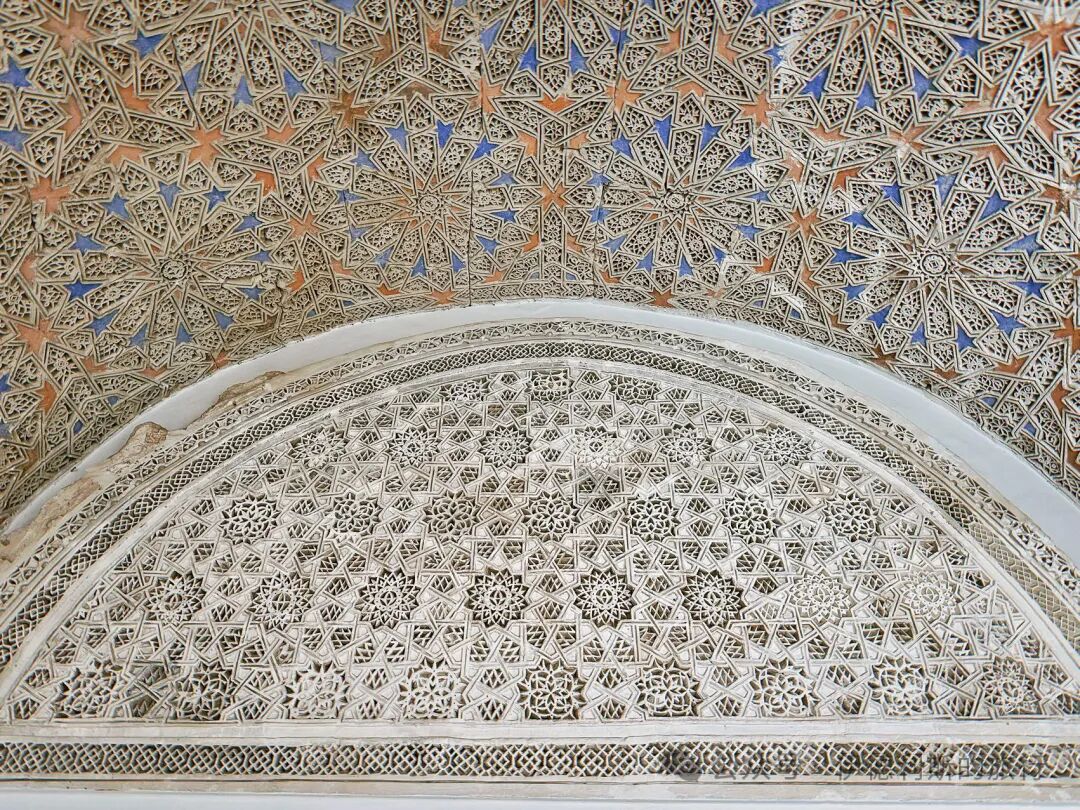
The museum houses the Small Palace, built by Husain II Bey between 1824 and 1835. The palace was built in the Andalusian Moorish style, featuring a T-shaped main hall and a central courtyard with a pool.
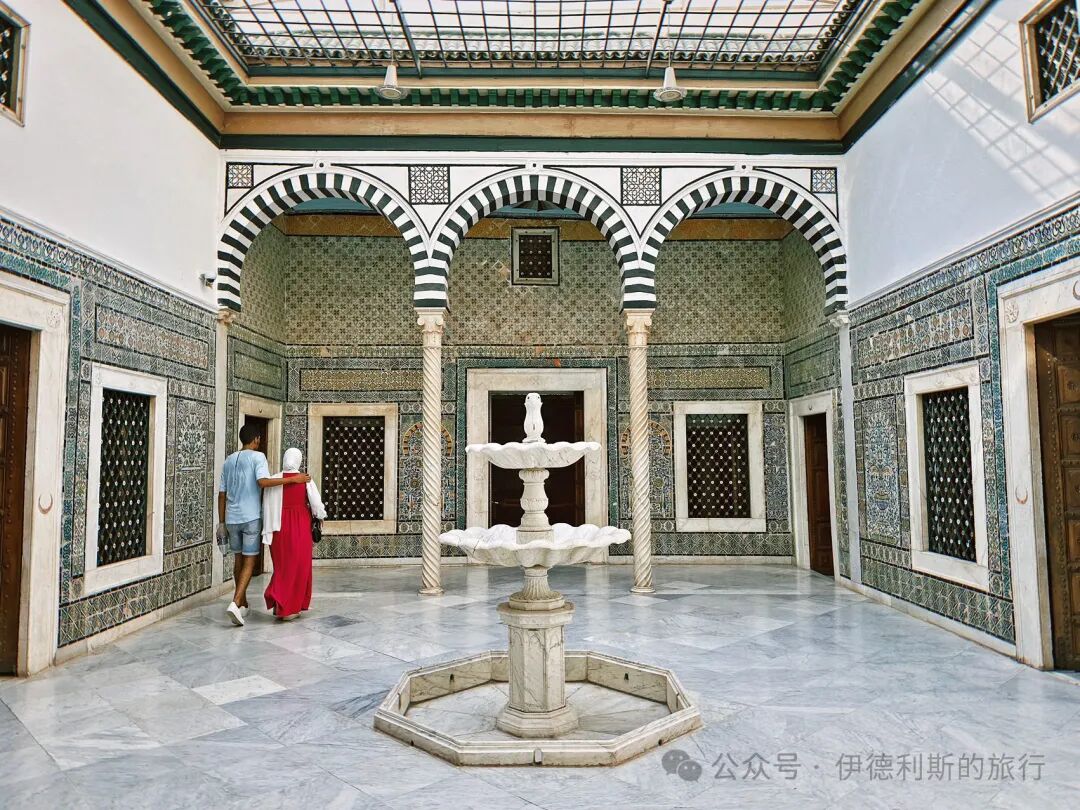
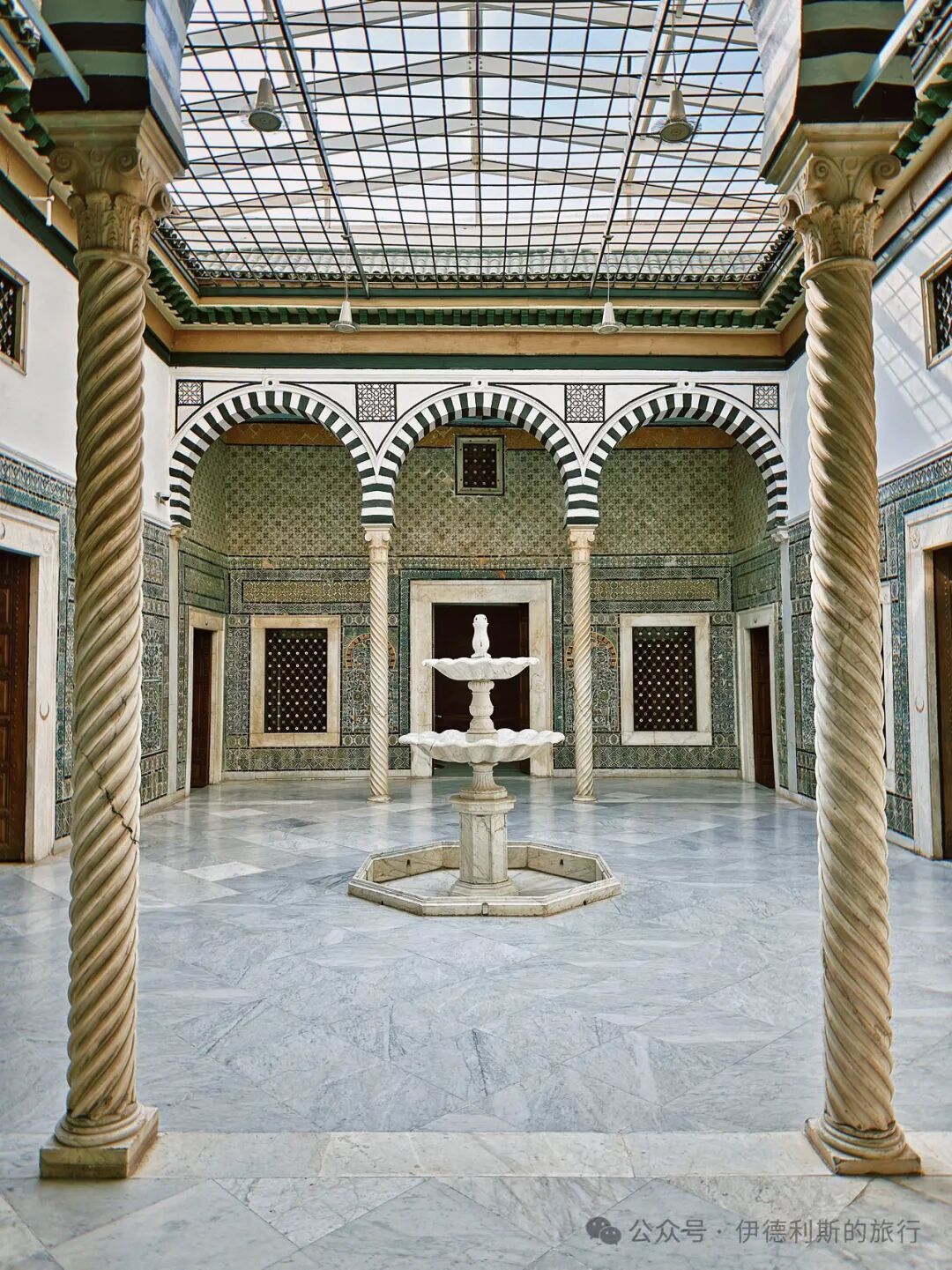
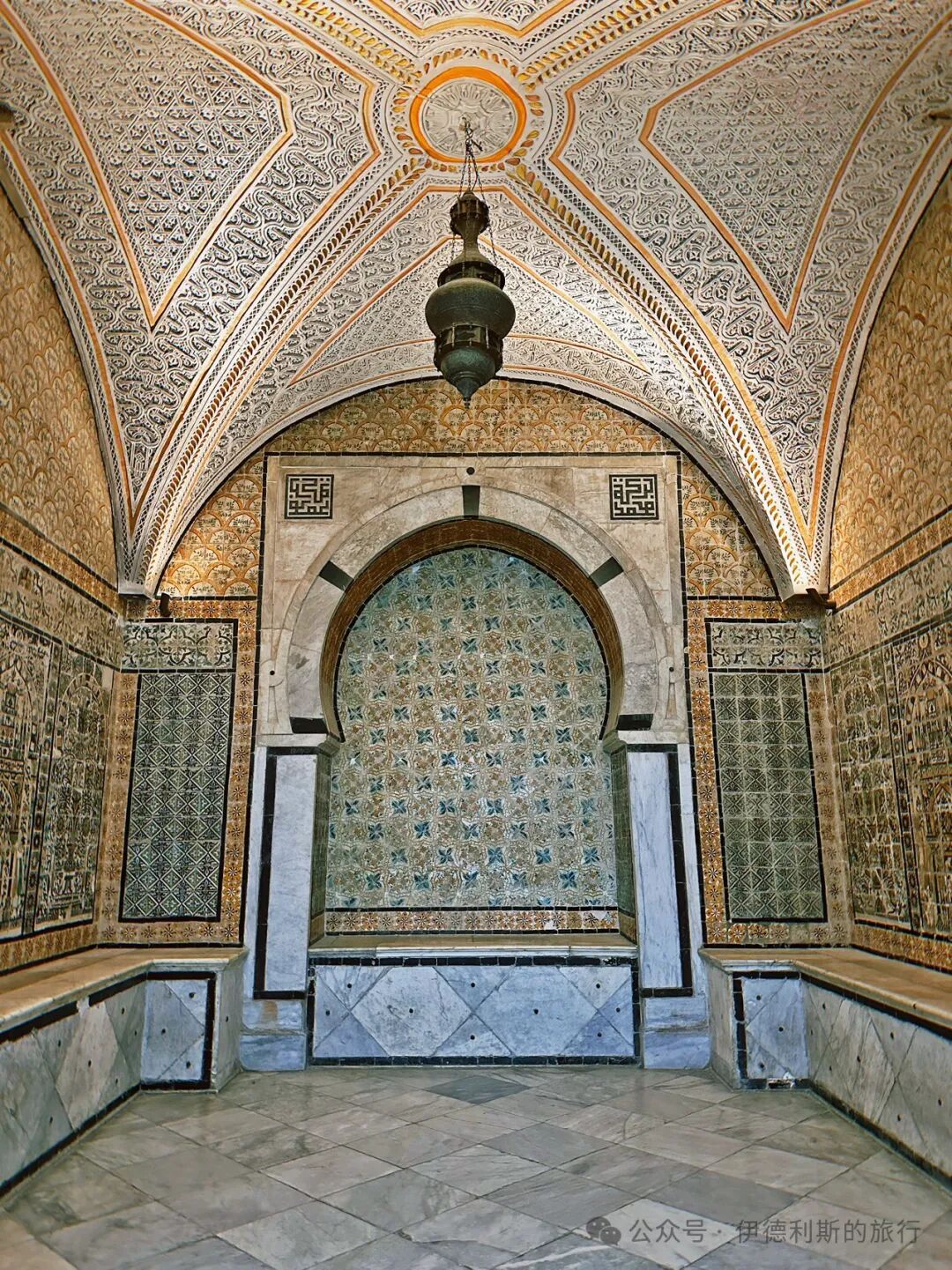
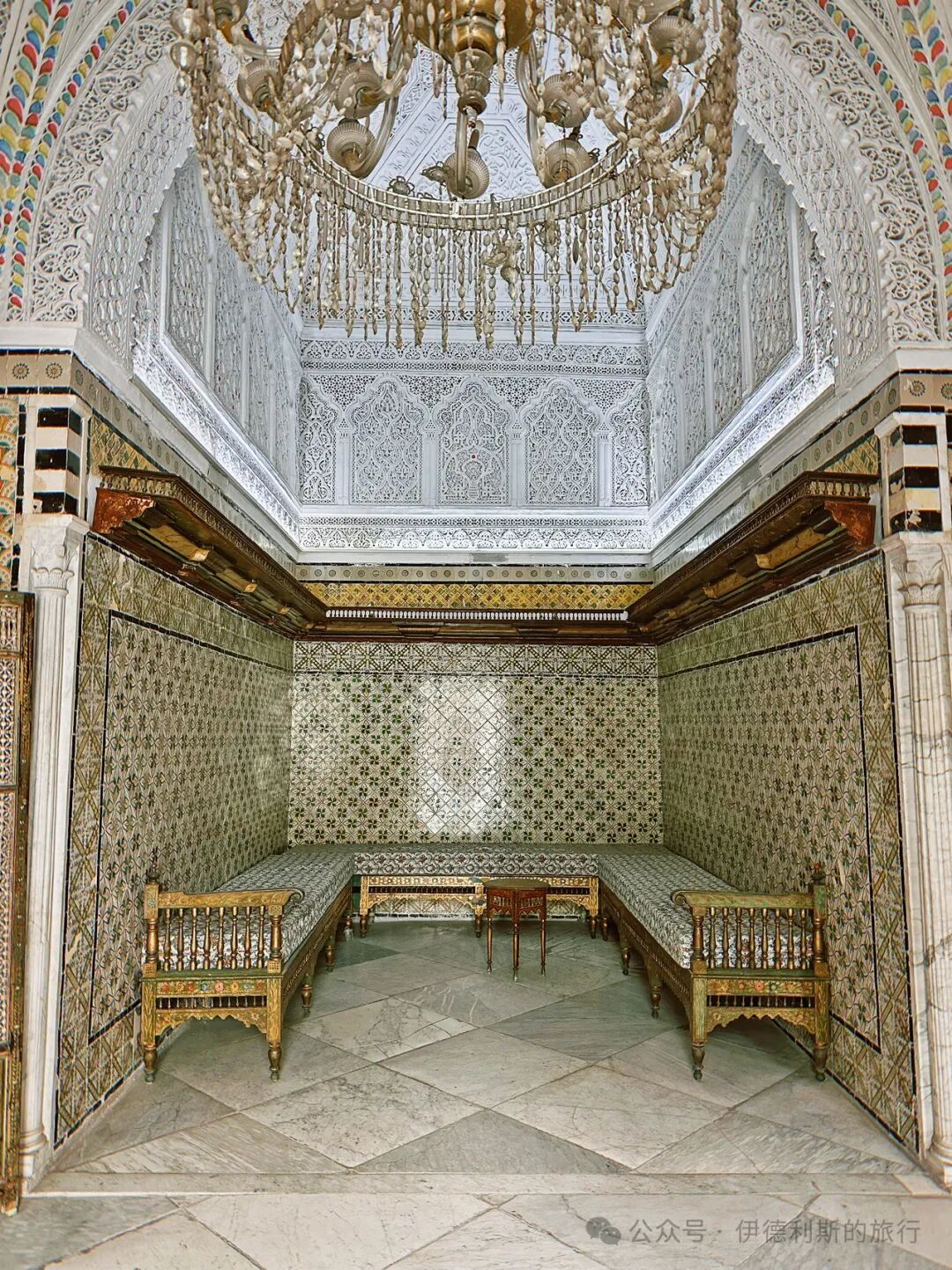
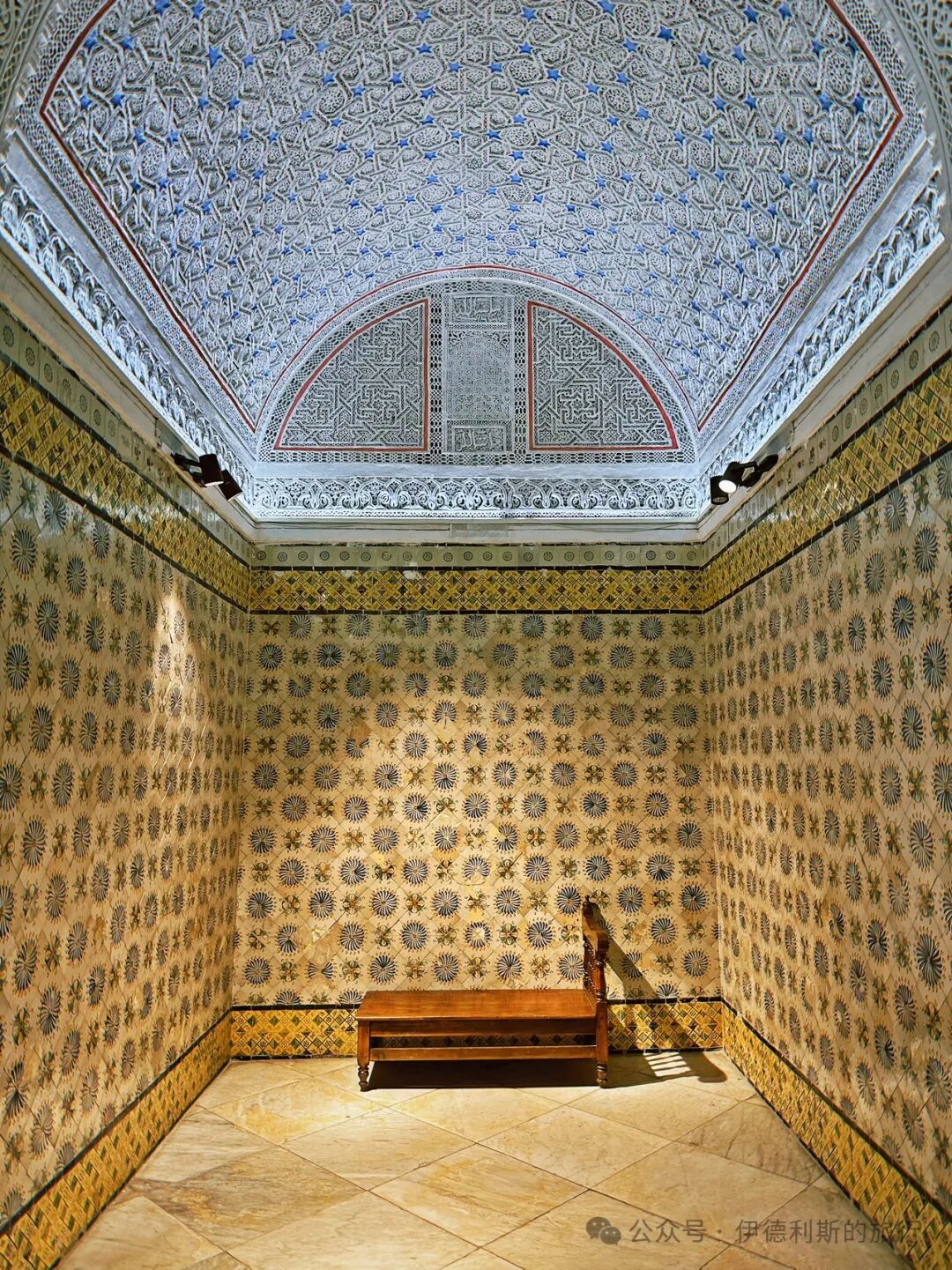
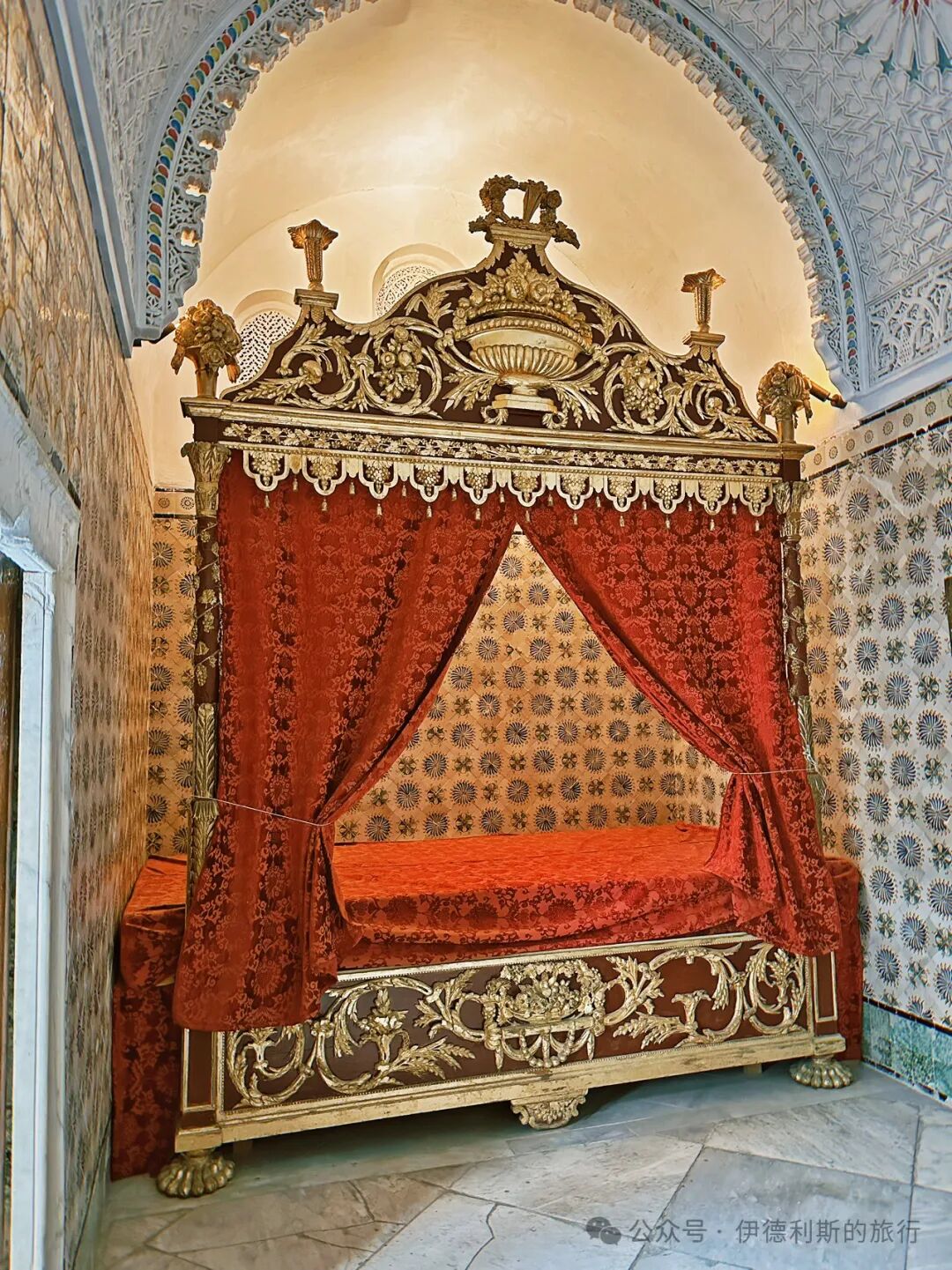
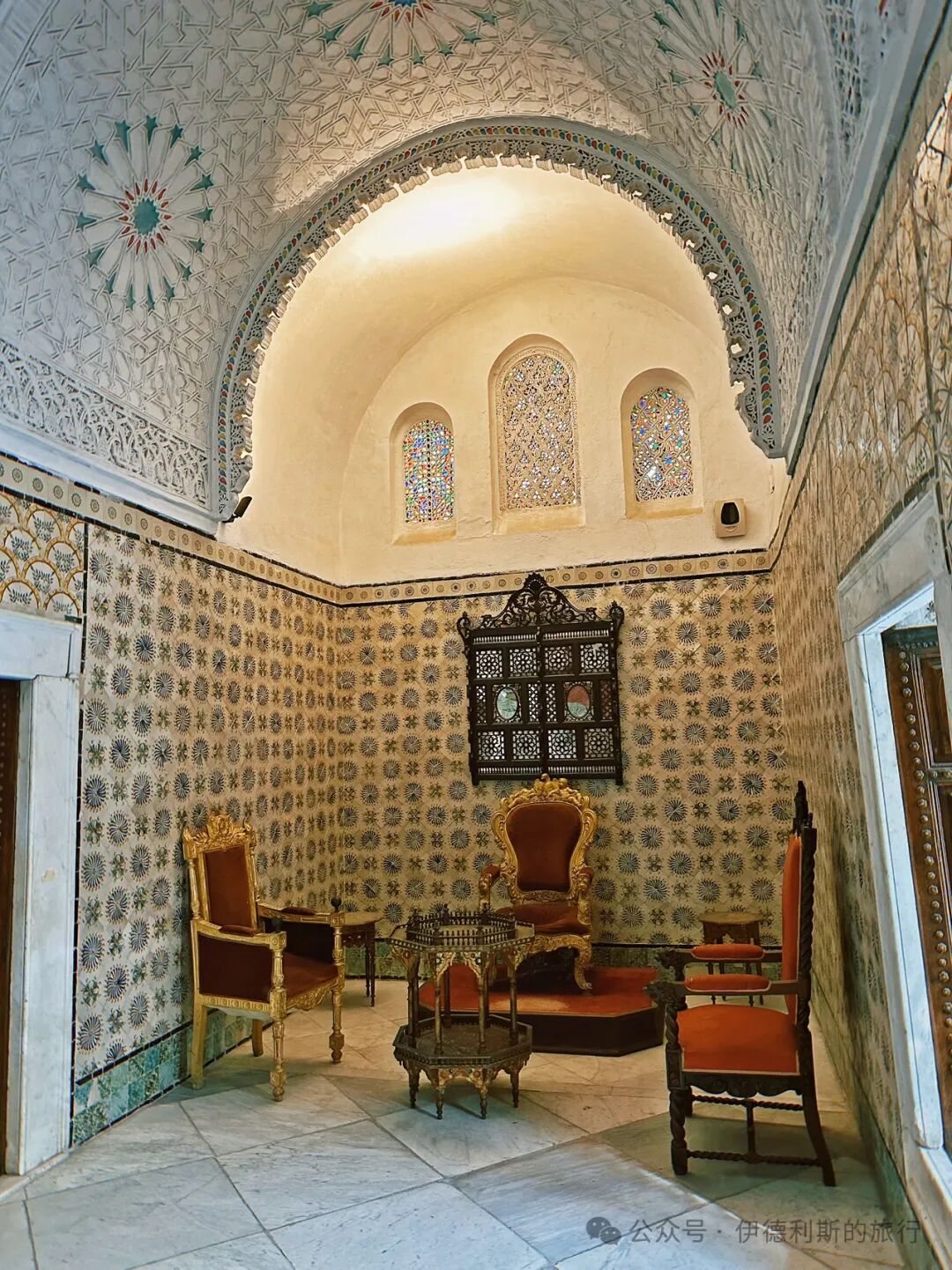
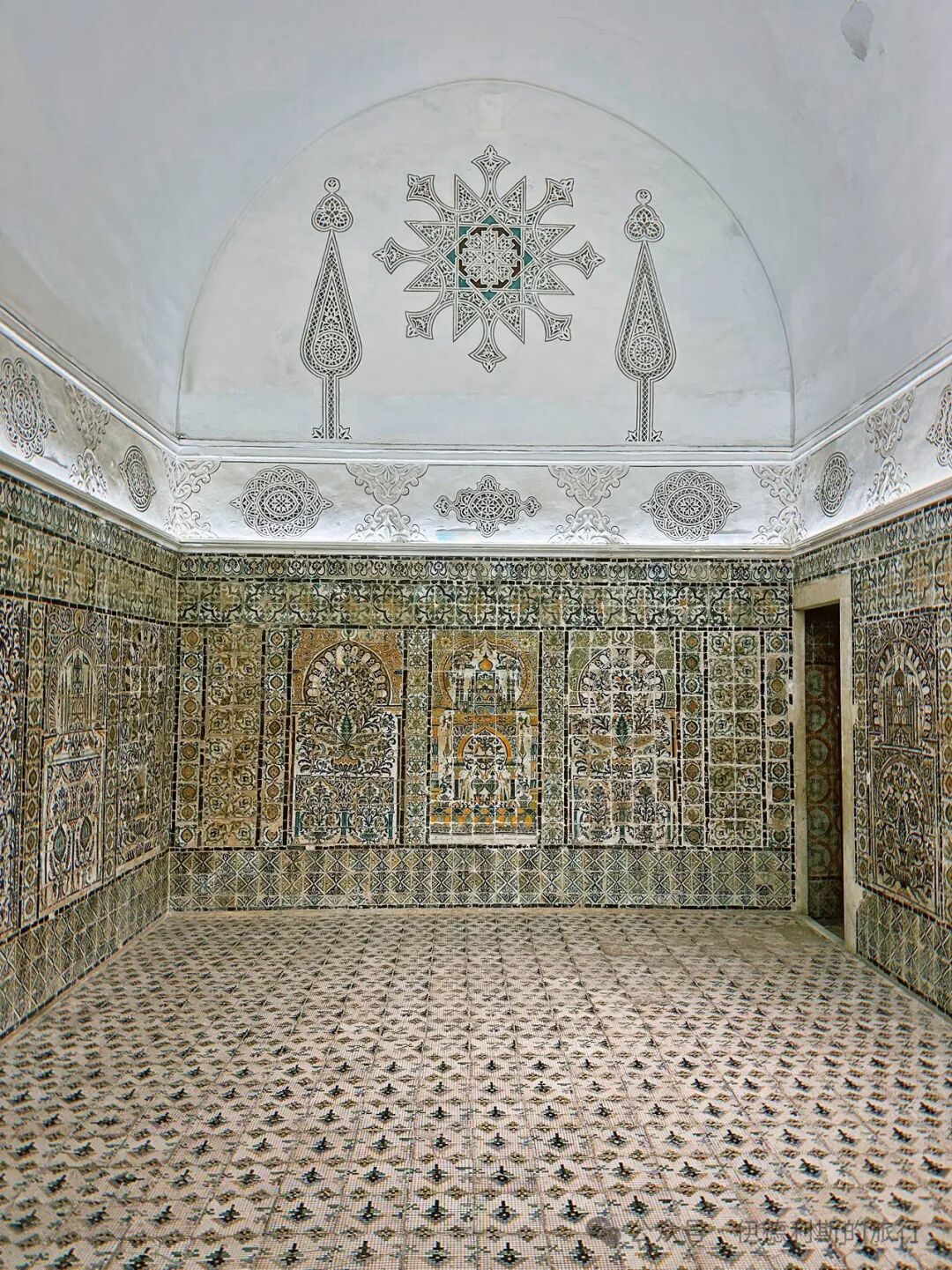
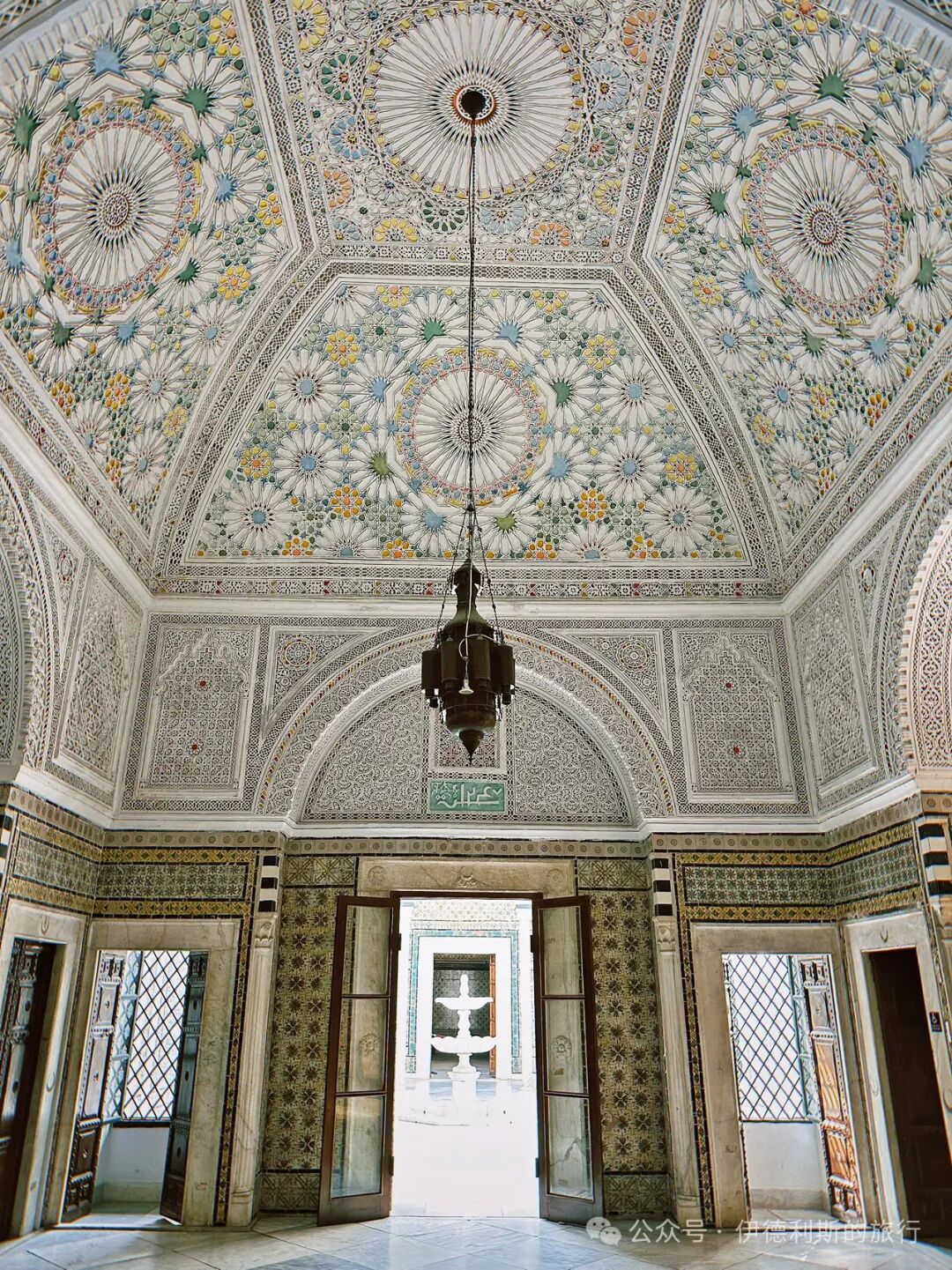
Tile and plaster decorations inside the Small Palace of Husain II.
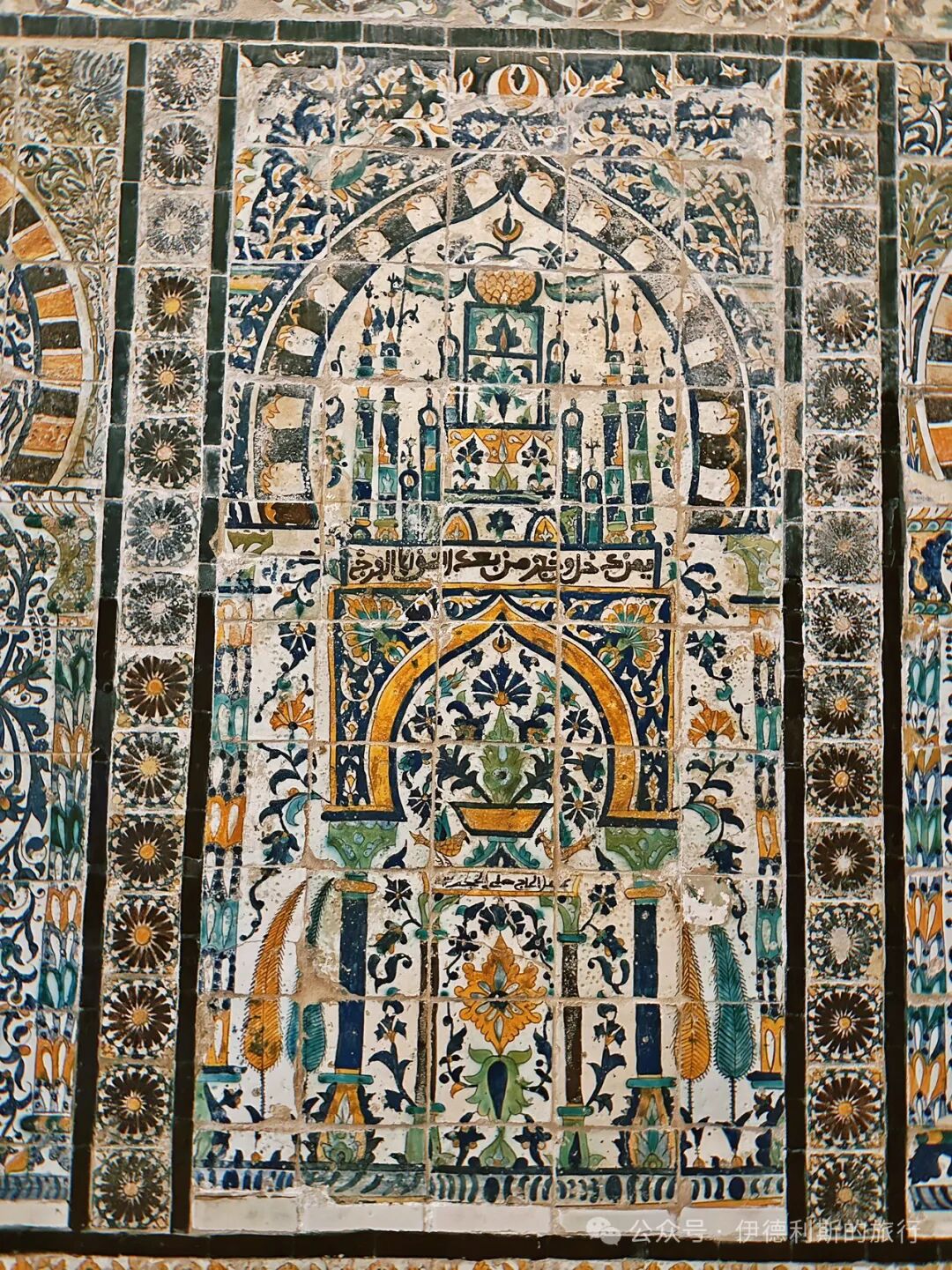
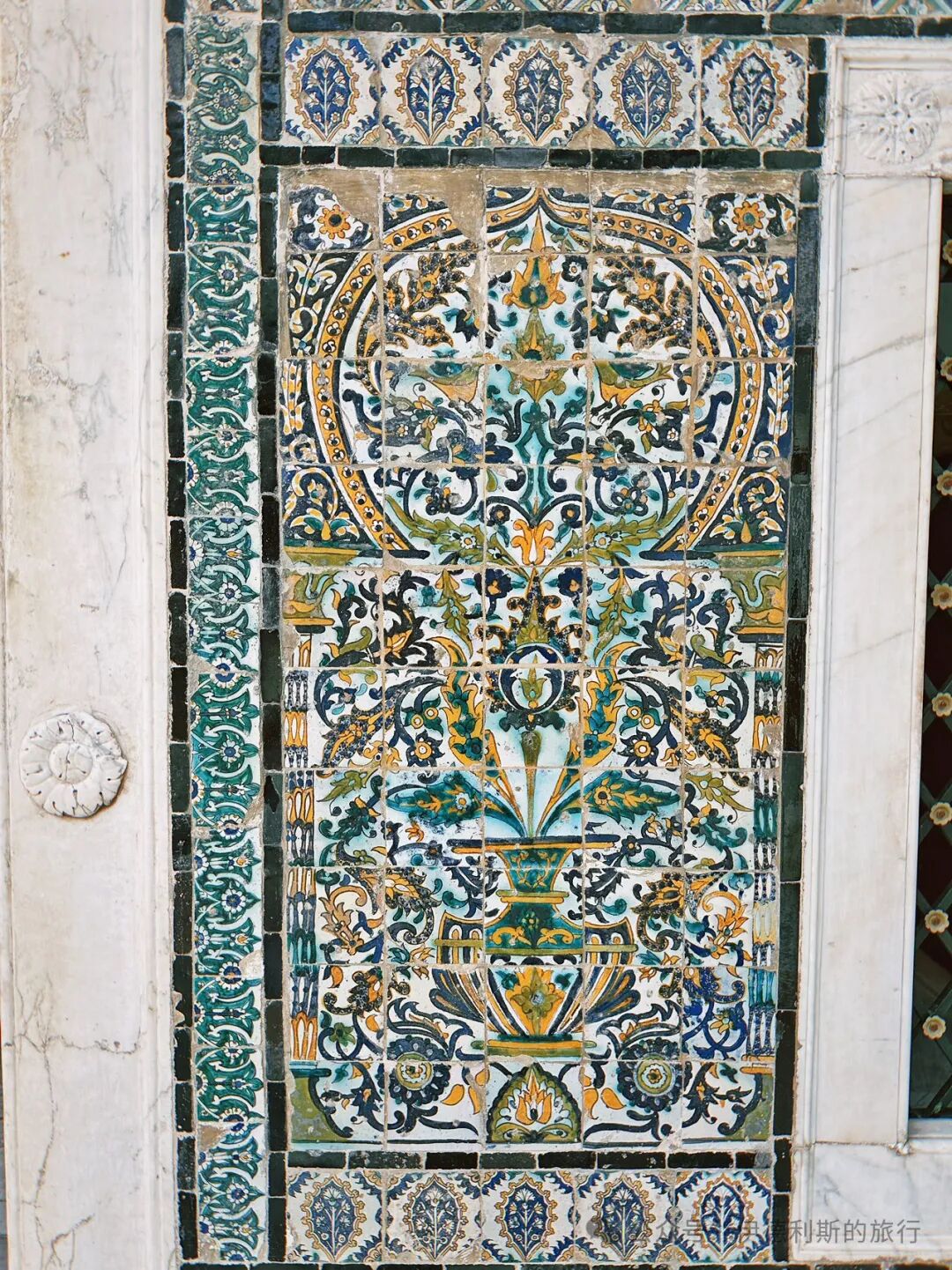
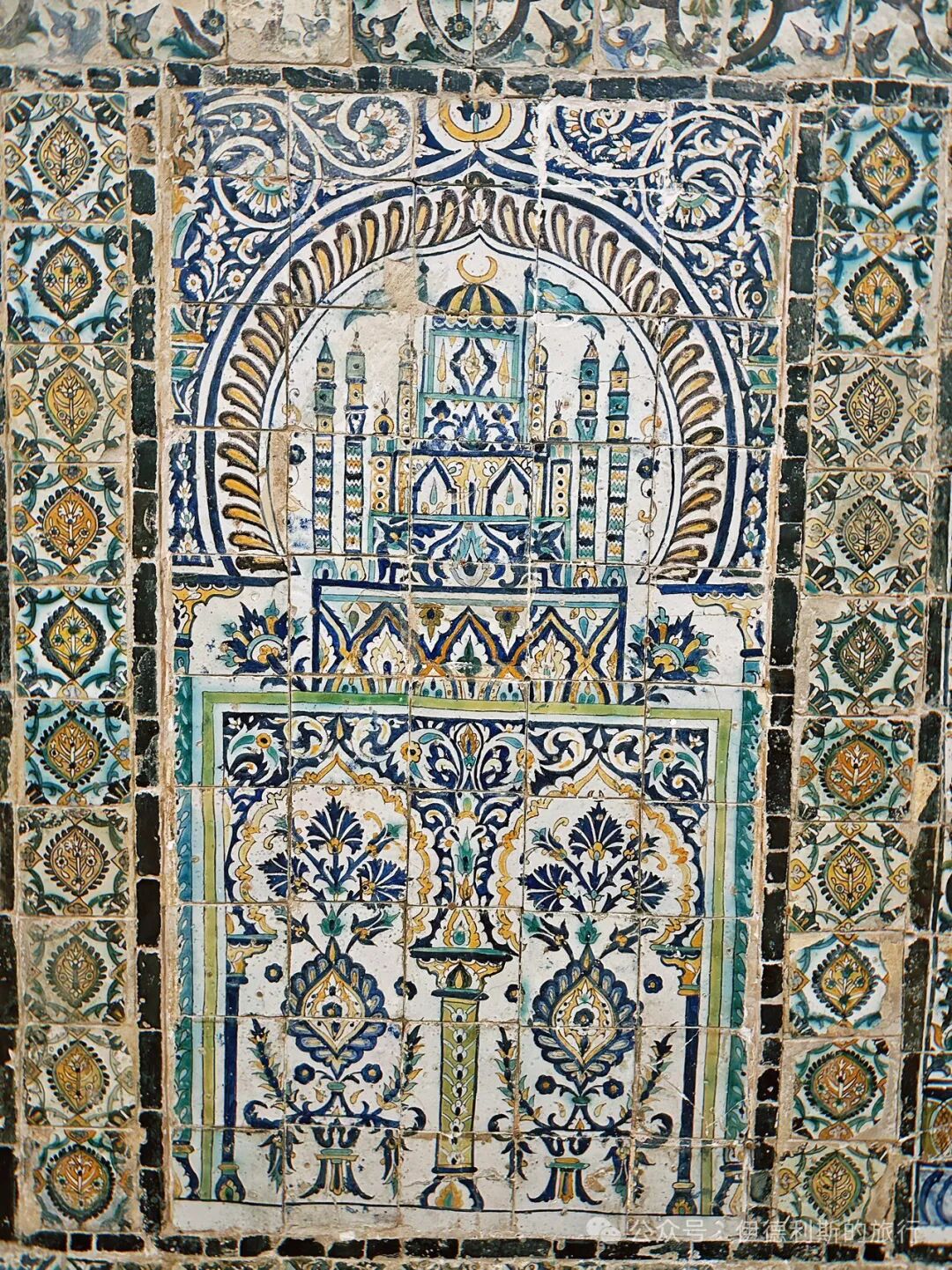
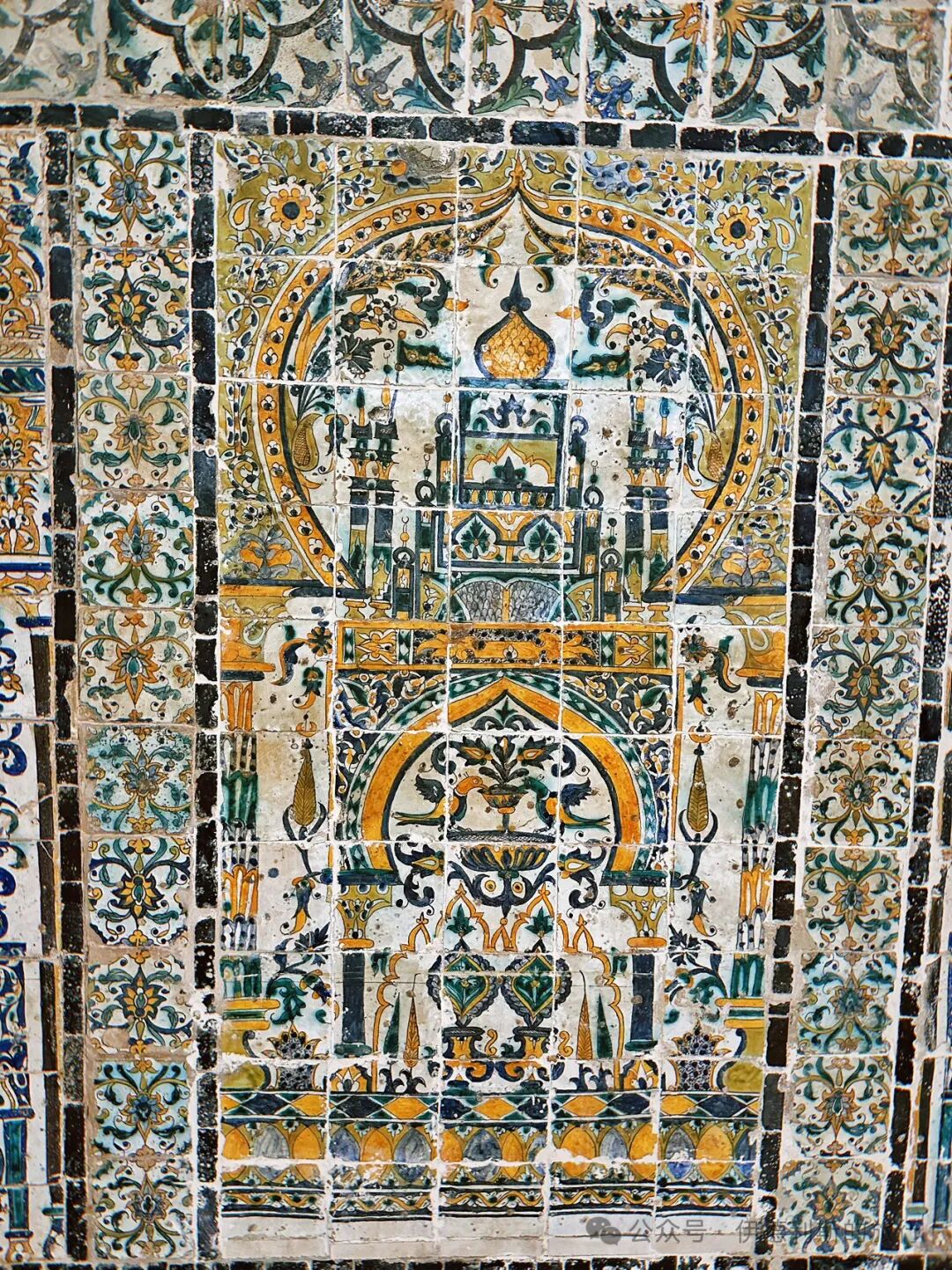
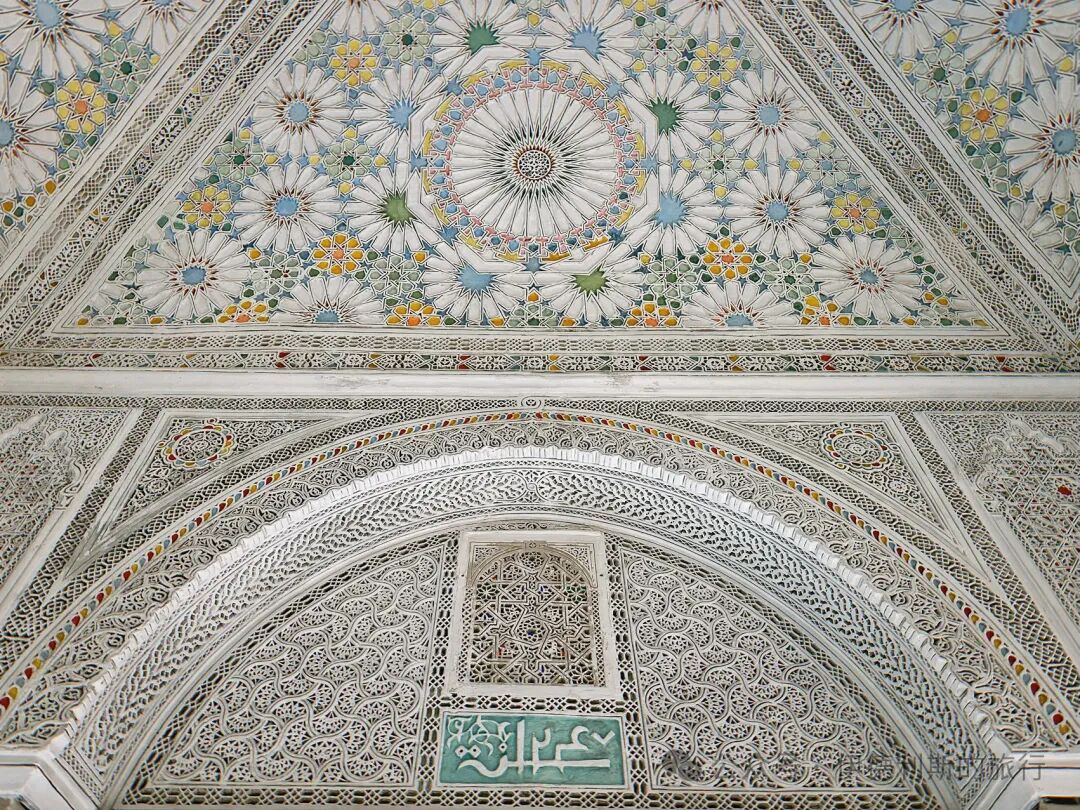
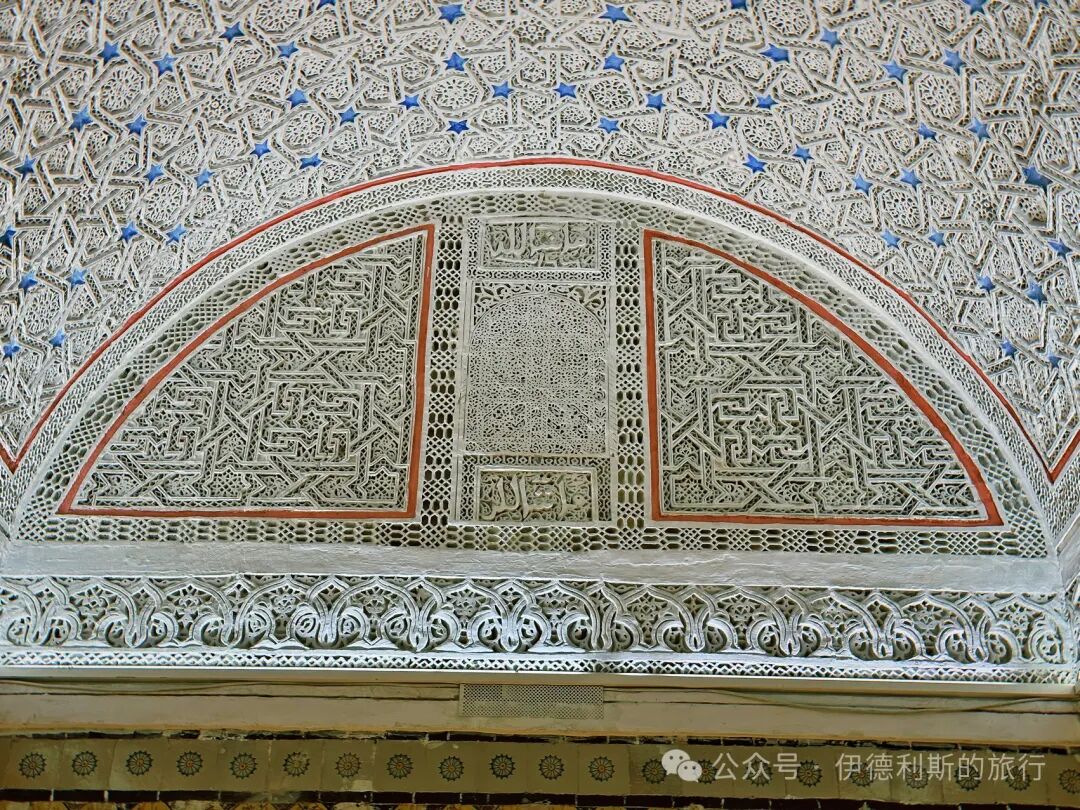
The reception hall and harem built by Muhammad III Bey between 1859 and 1864 feature both Italian and Tunisian styles.
Muhammad III Bey issued the first written constitution in the Arab world in 1861, which separated executive, legislative, and judicial powers and guaranteed equal rights for Muslims, Christians, and Jews. After the new constitution was issued, European merchants and secular schools began to appear in Tunisia.
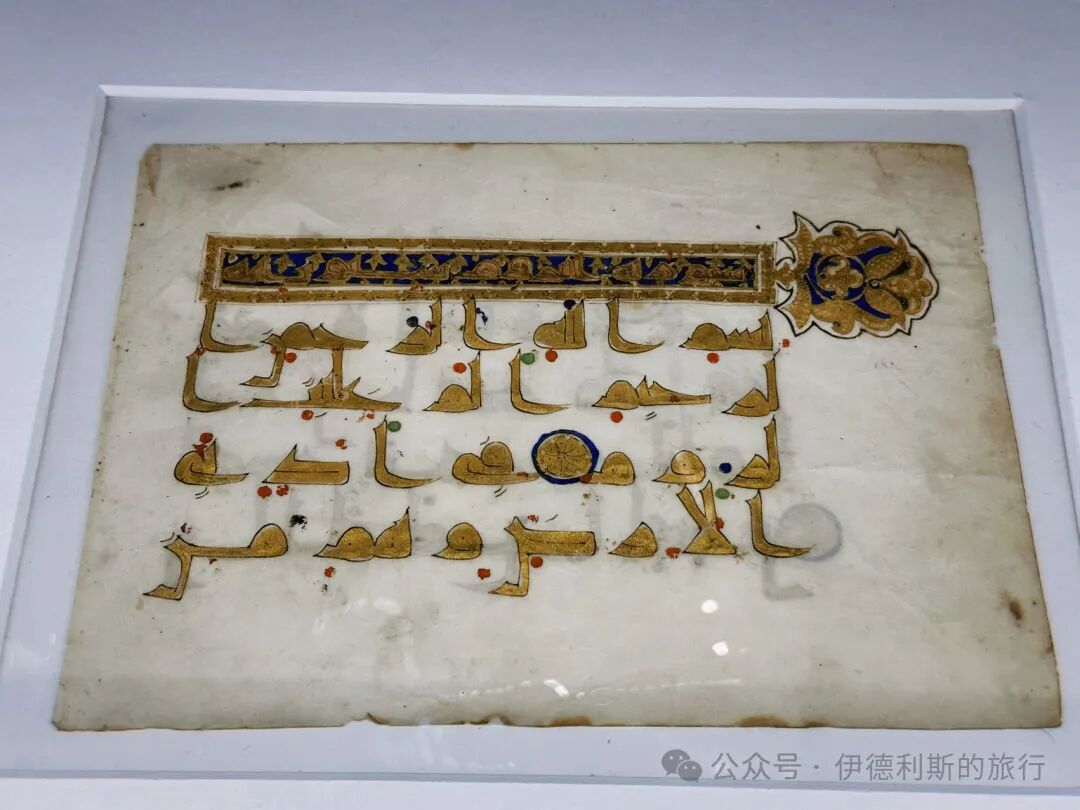
The Blue Quran manuscript in the National Museum of Tunisia is a very famous religious manuscript in the world. This scripture uses parchment dyed with indigo, with ink outlining the text and gold leaf applied on top. The calligraphy is in the early Kufic script, which lacks sharp angles and vowel marks.
The origin of the Blue Quran is still highly debated, with theories pointing to Kairouan in Tunisia, Cordoba in Spain, Mashhad in Iran, or Iraq, dating back to the 9th or 10th century. The records say the Blue Quran was kept in the Great Mosque of Kairouan after the 14th century. It was broken up during the Ottoman period, but most of it remains in Kairouan, while other parts are held by major museums and collectors.
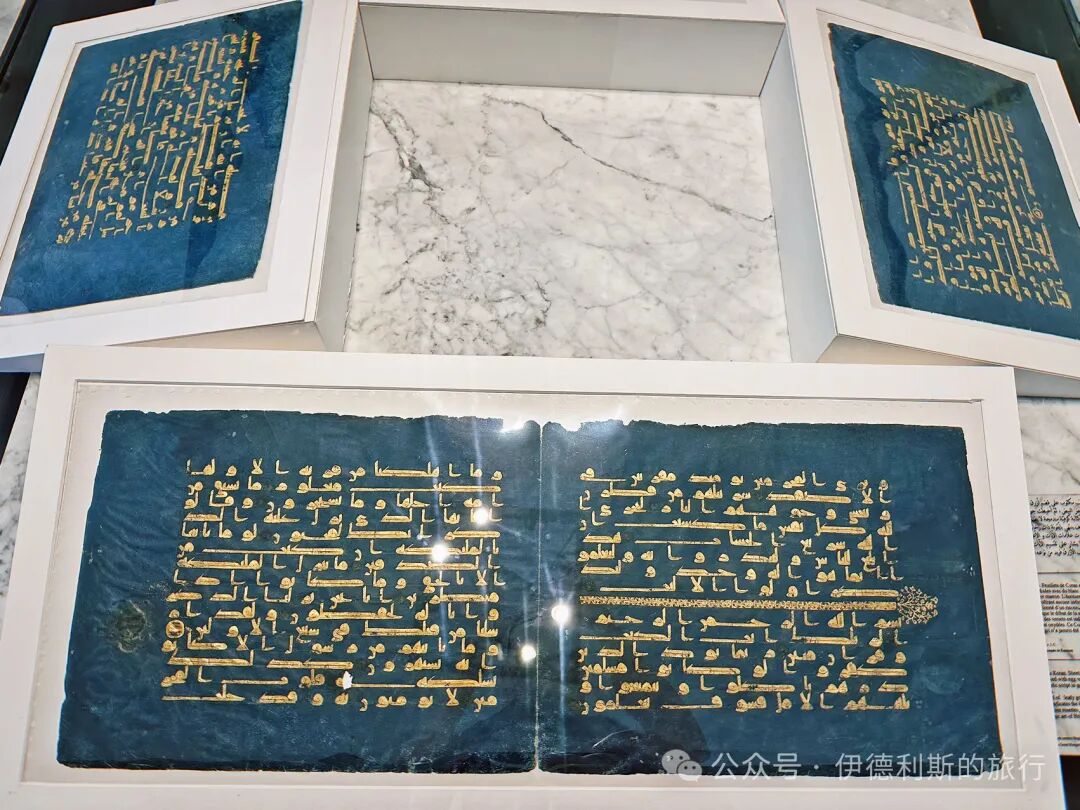
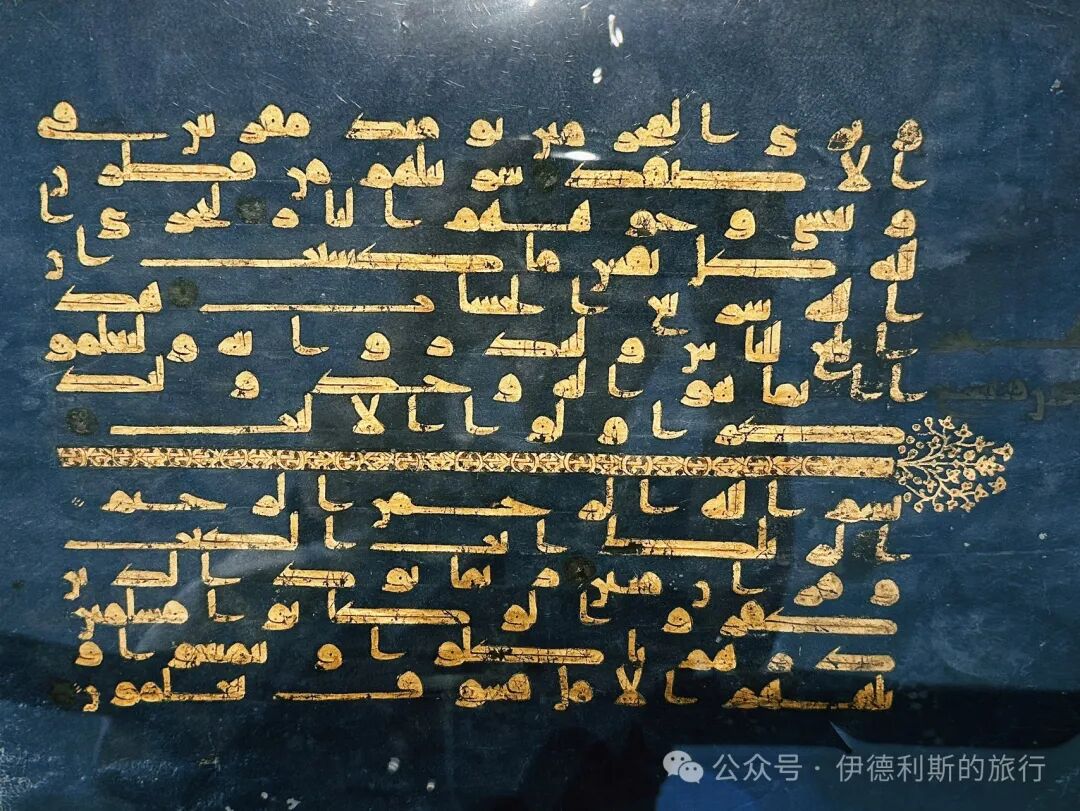
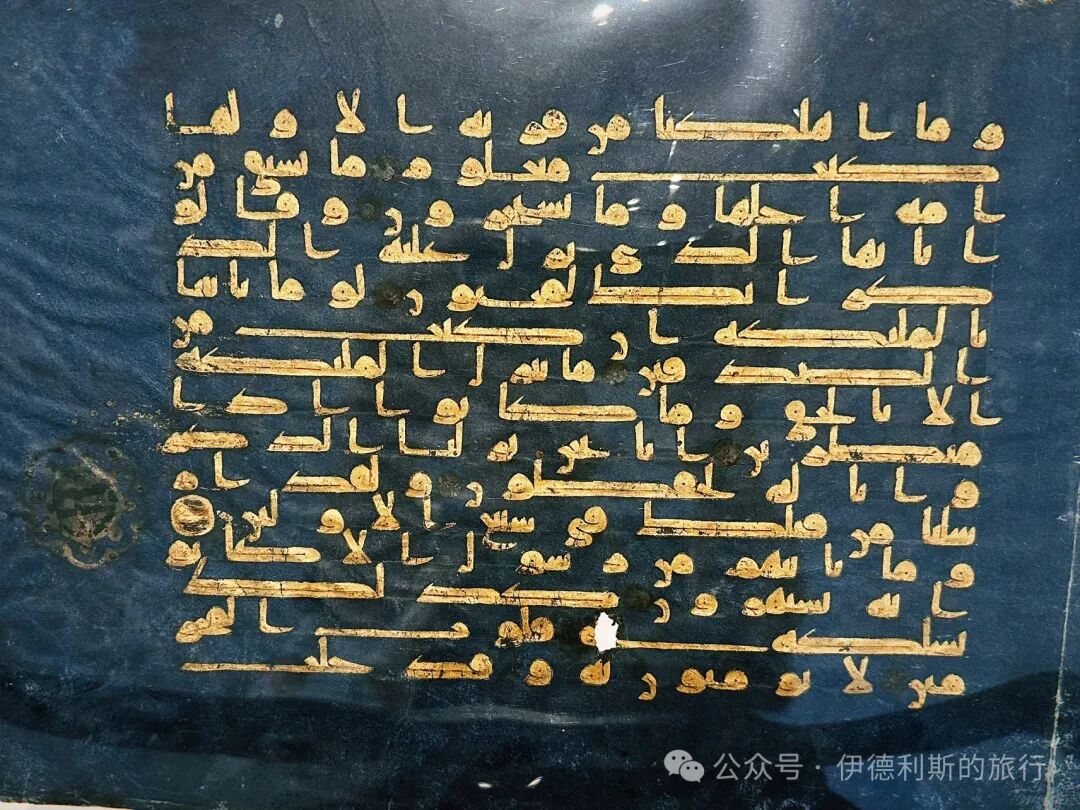
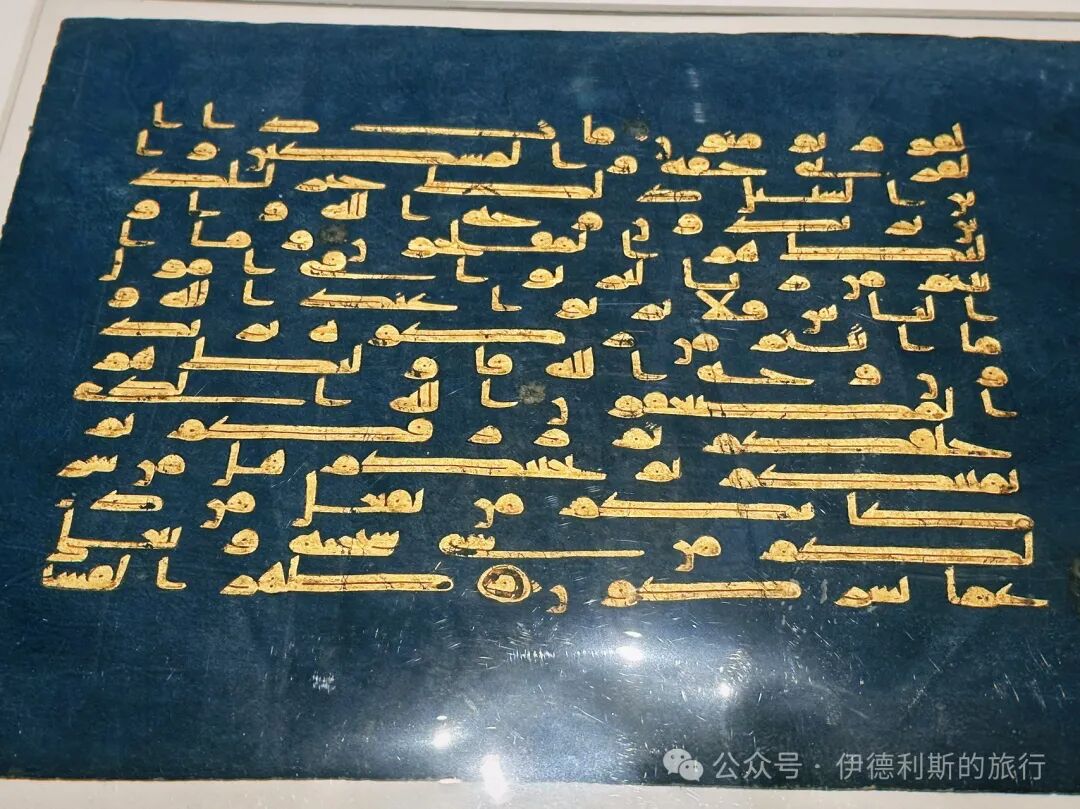
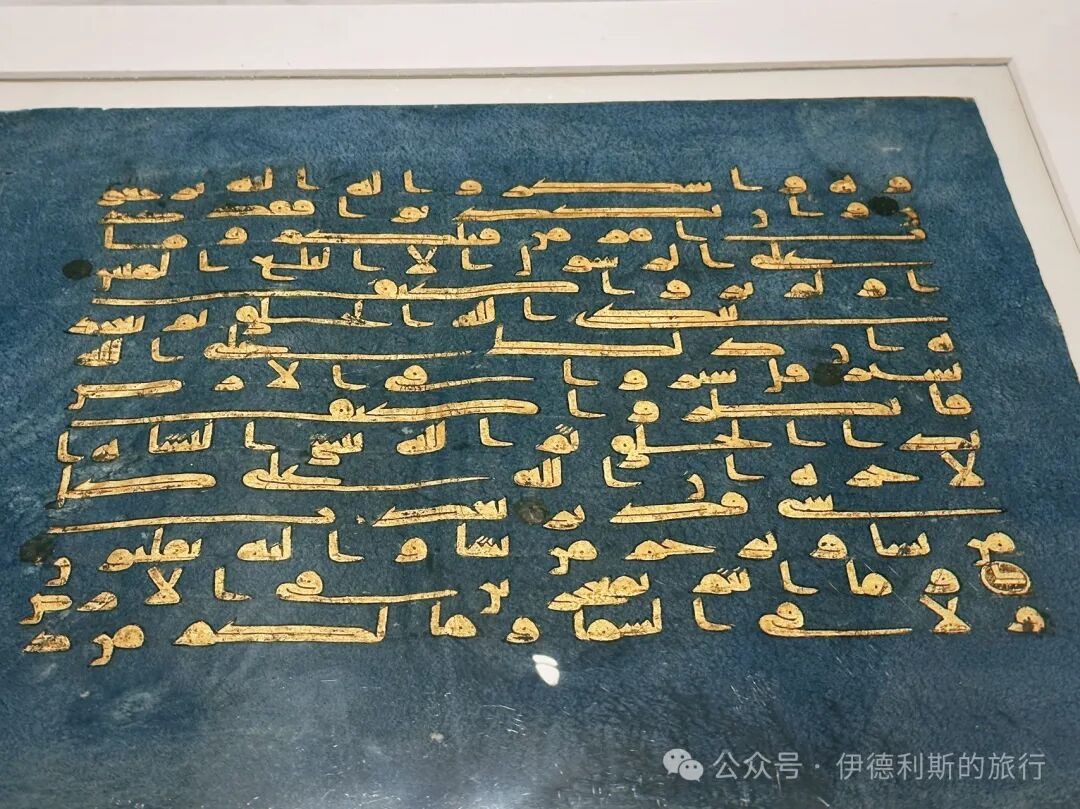
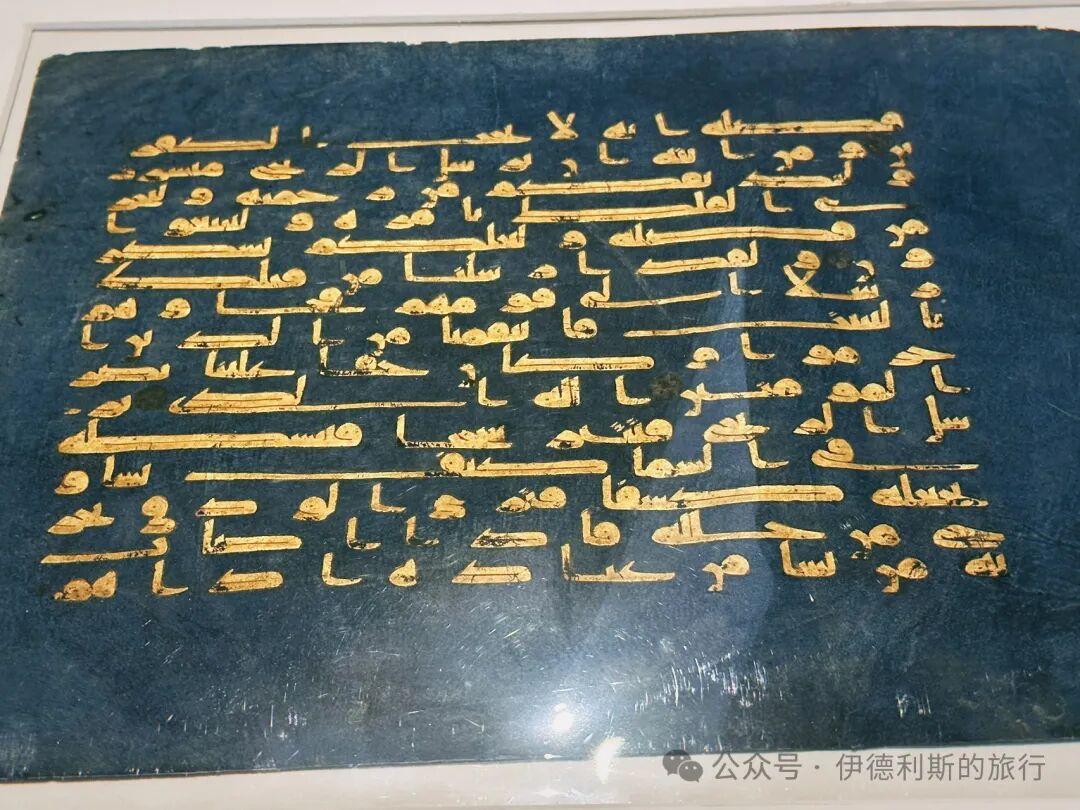
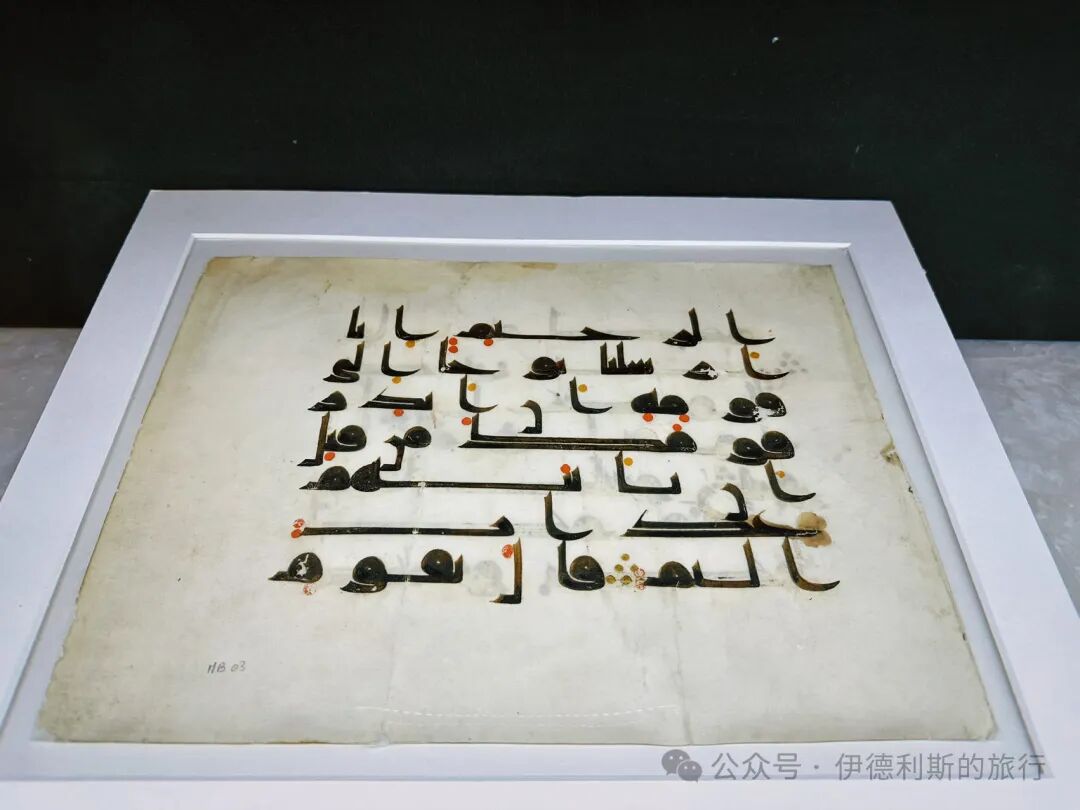
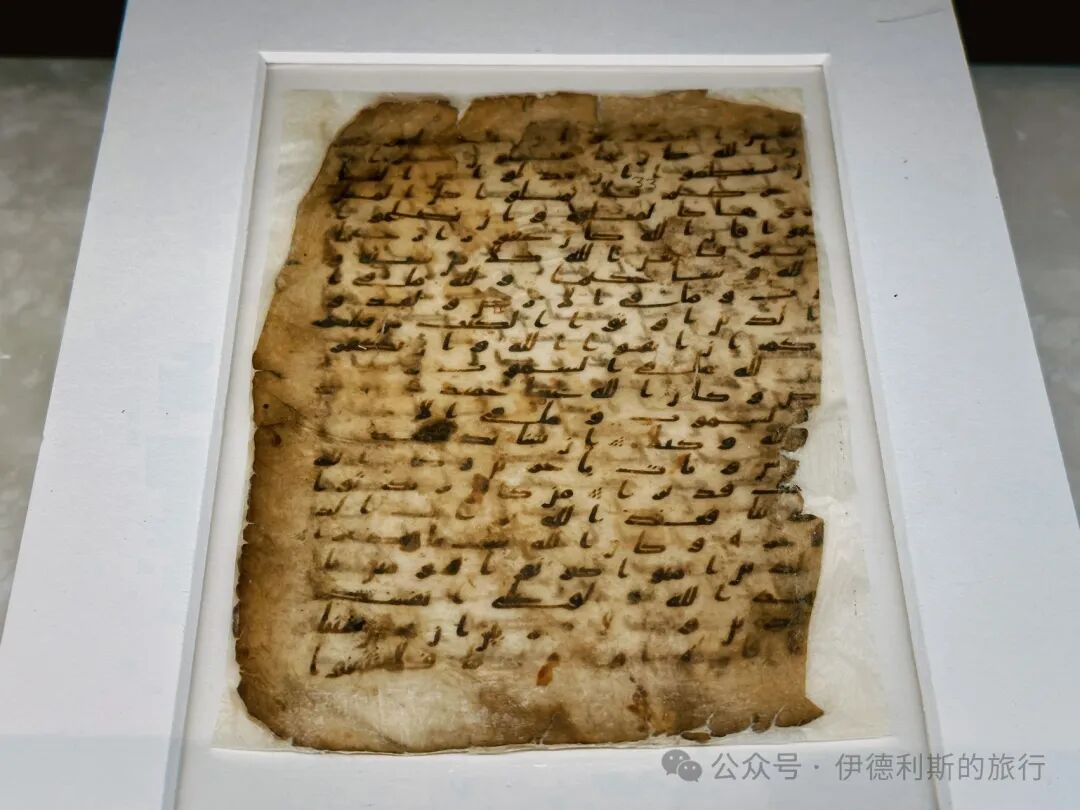
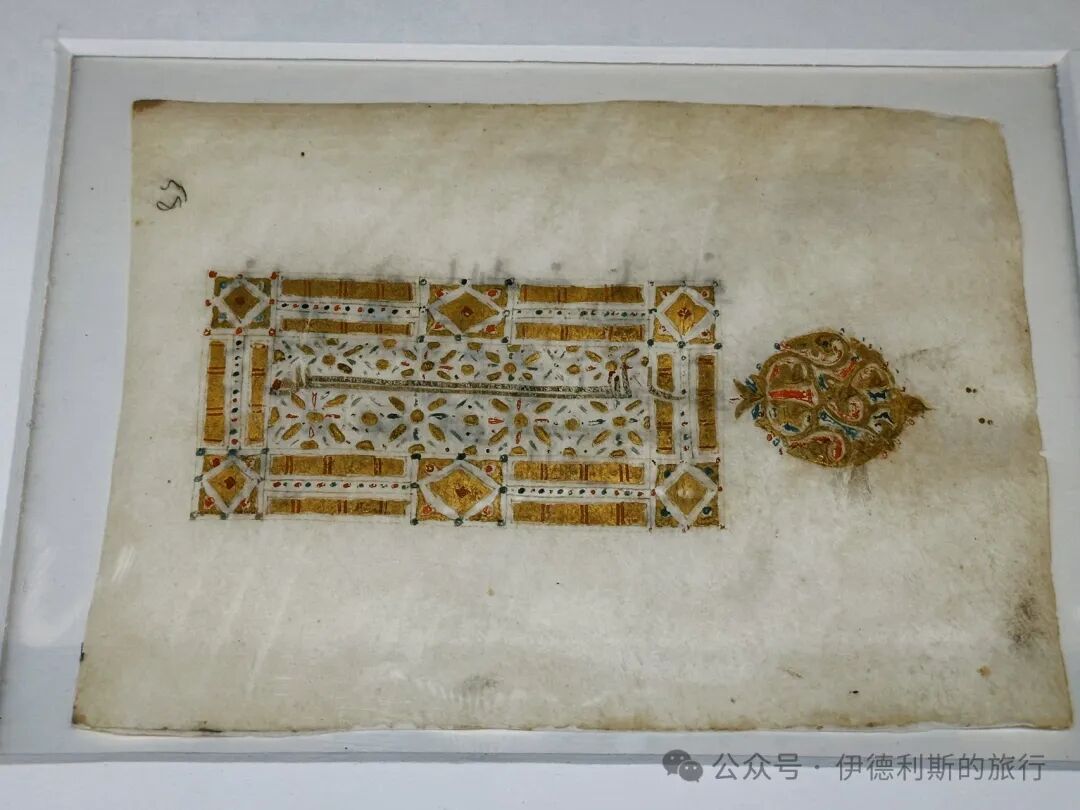
Quran manuscripts from the 8th to 12th centuries held by the Great Mosque of Kairouan in Tunisia.
The library of the Great Mosque of Kairouan holds a large number of manuscripts and established a catalog as early as the 13th century. to scriptures, these manuscripts include books related to the Maliki school of thought, which are also the oldest documents of the Maliki school.
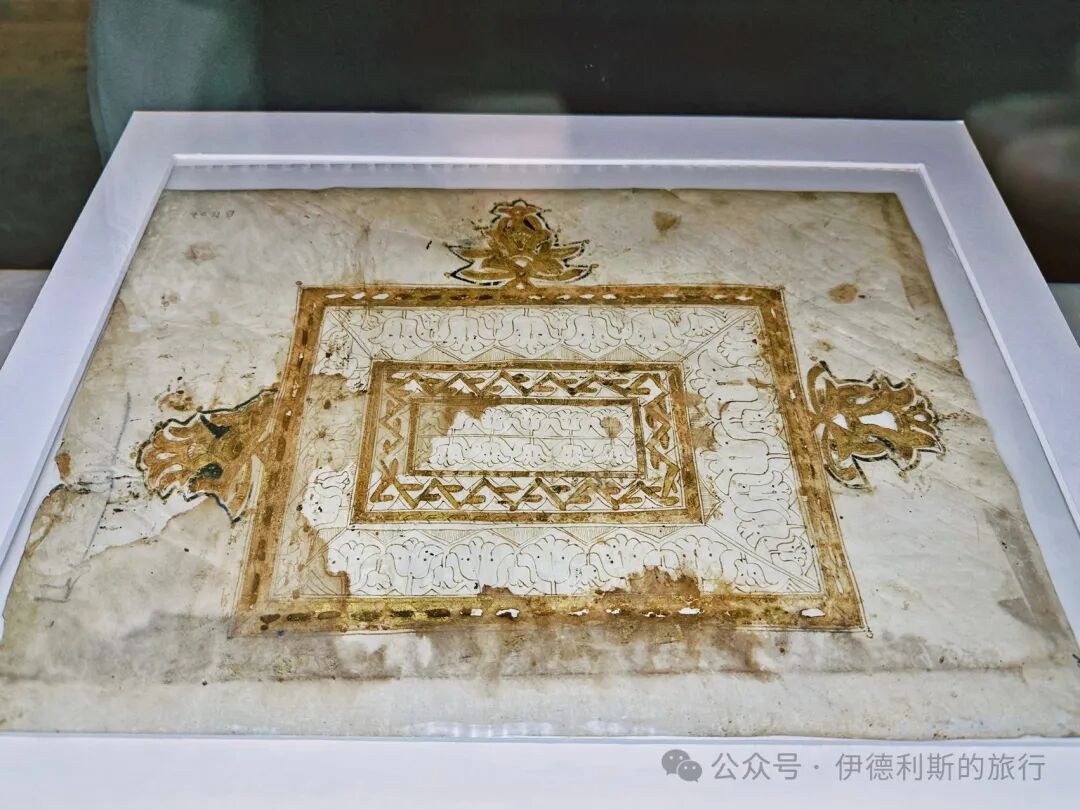
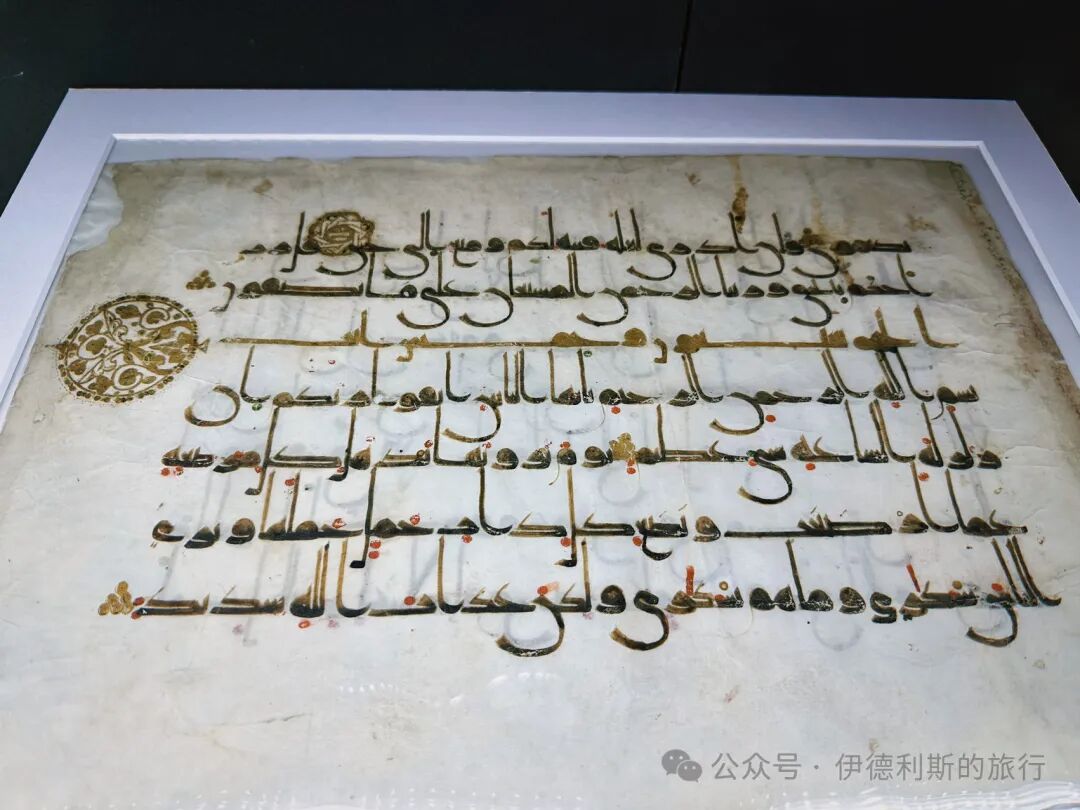
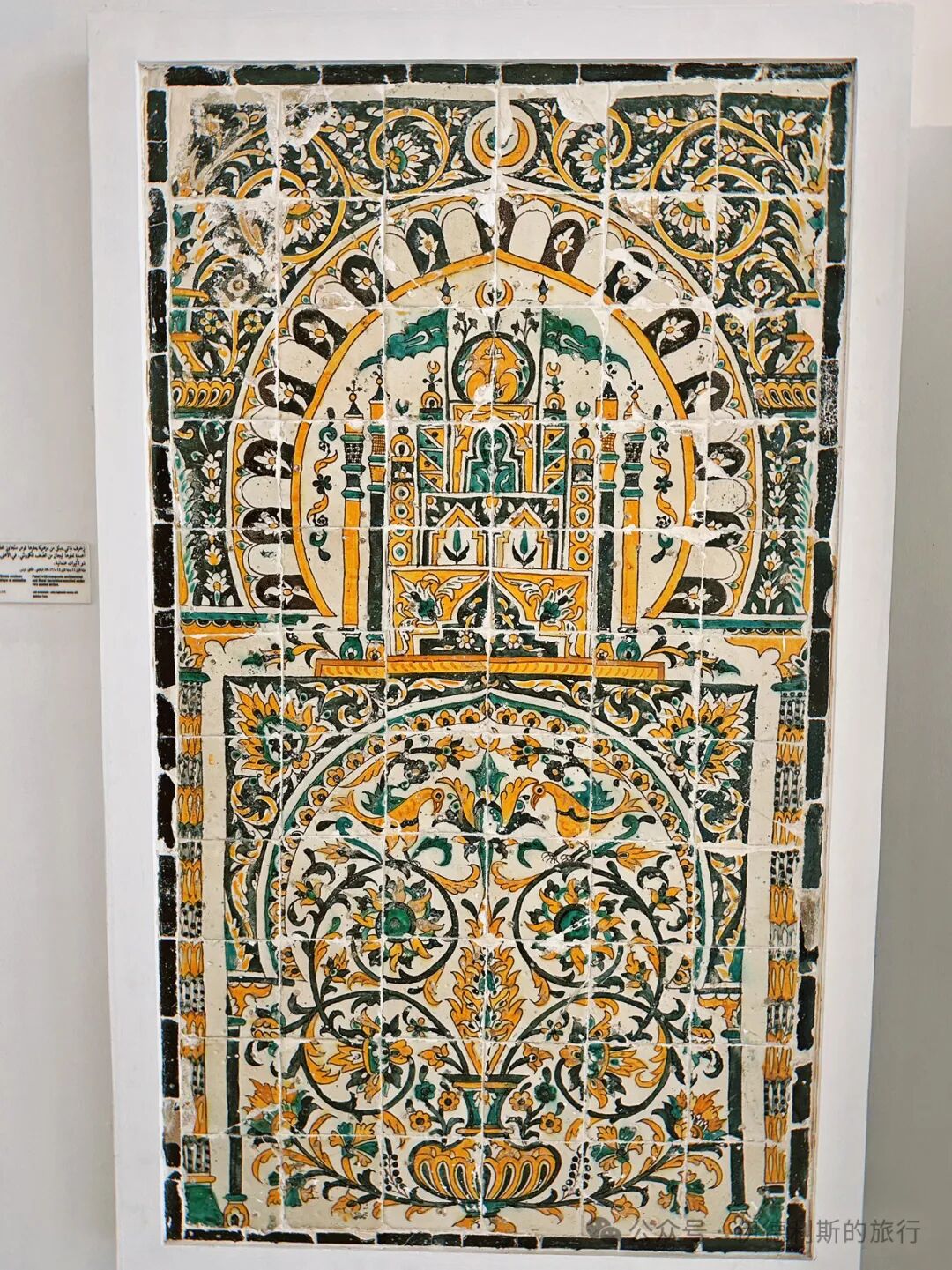
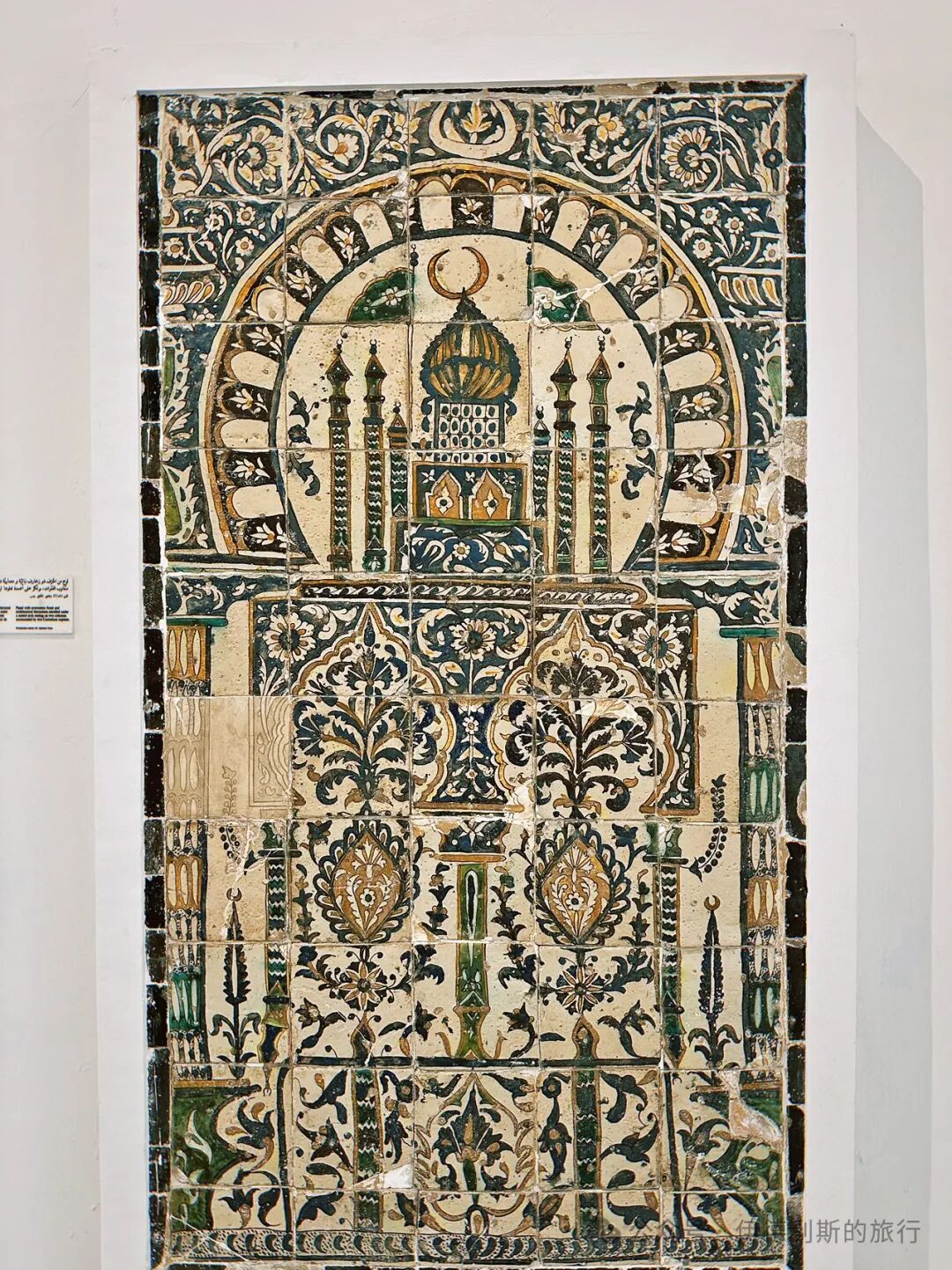
Tunisian Qallaline tiles from the 17th and 18th centuries. These tiles are named after the Qallaline region of Tunisia. They were influenced by Ottoman tile art but developed their own unique style.
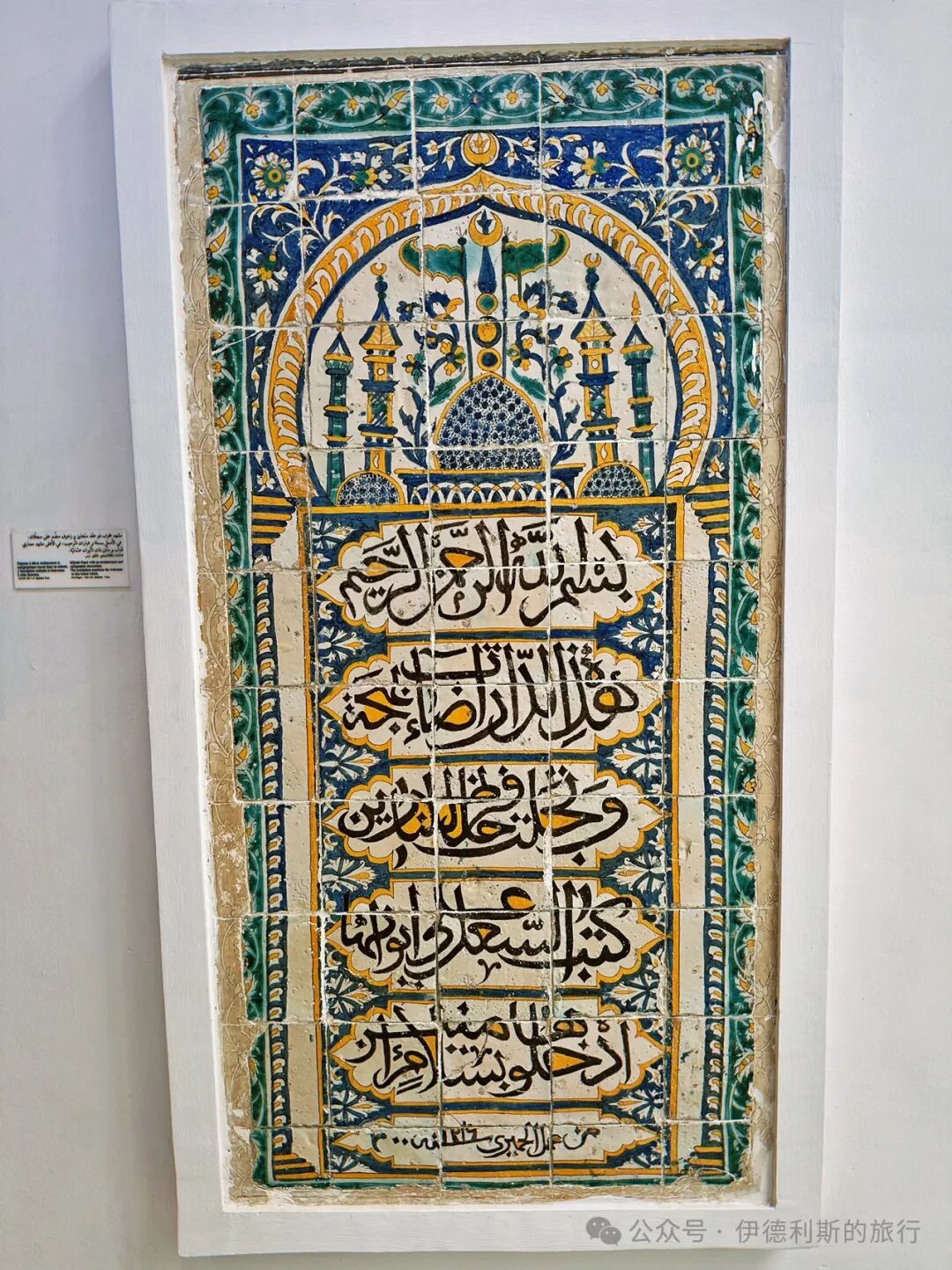
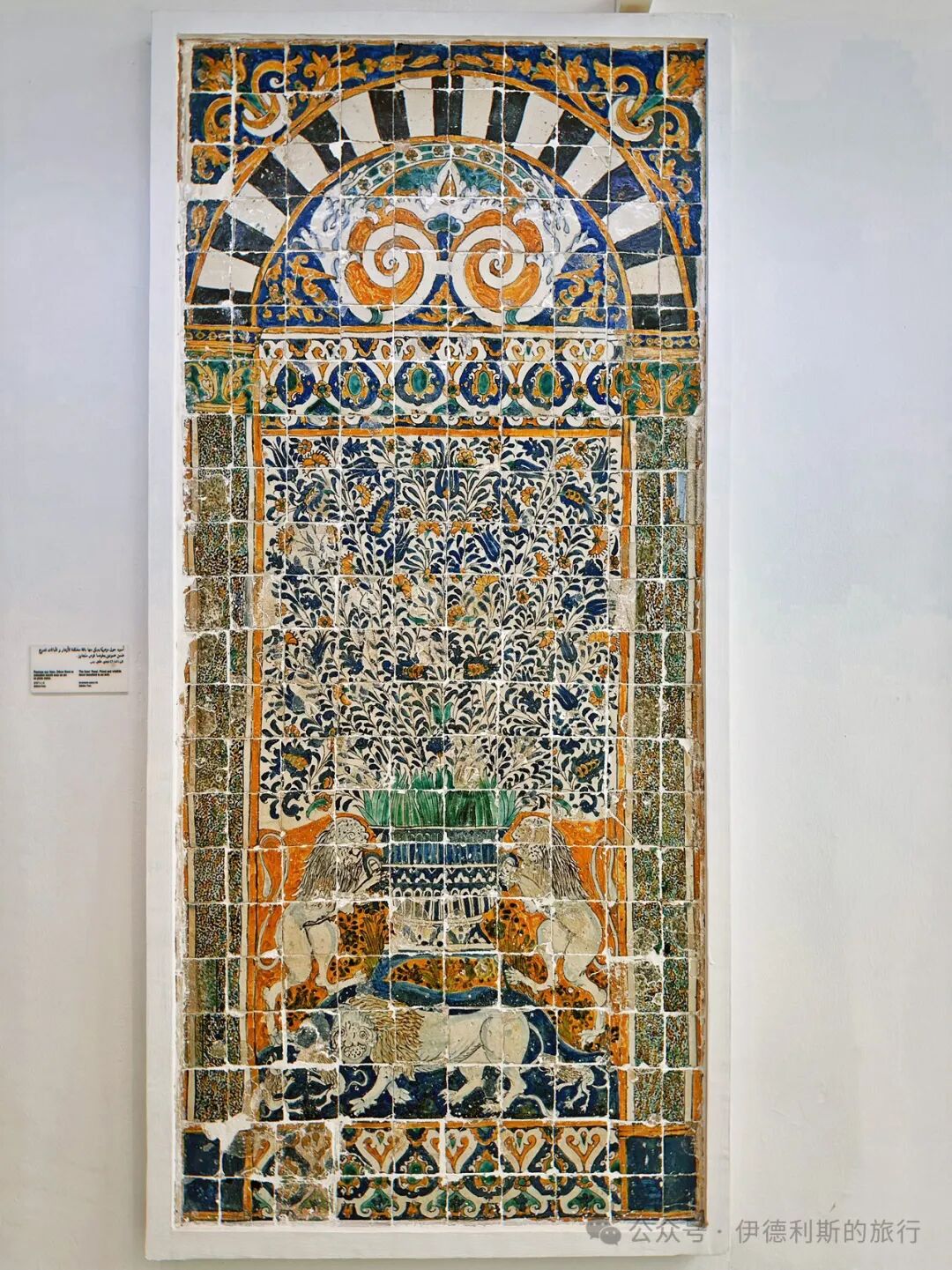
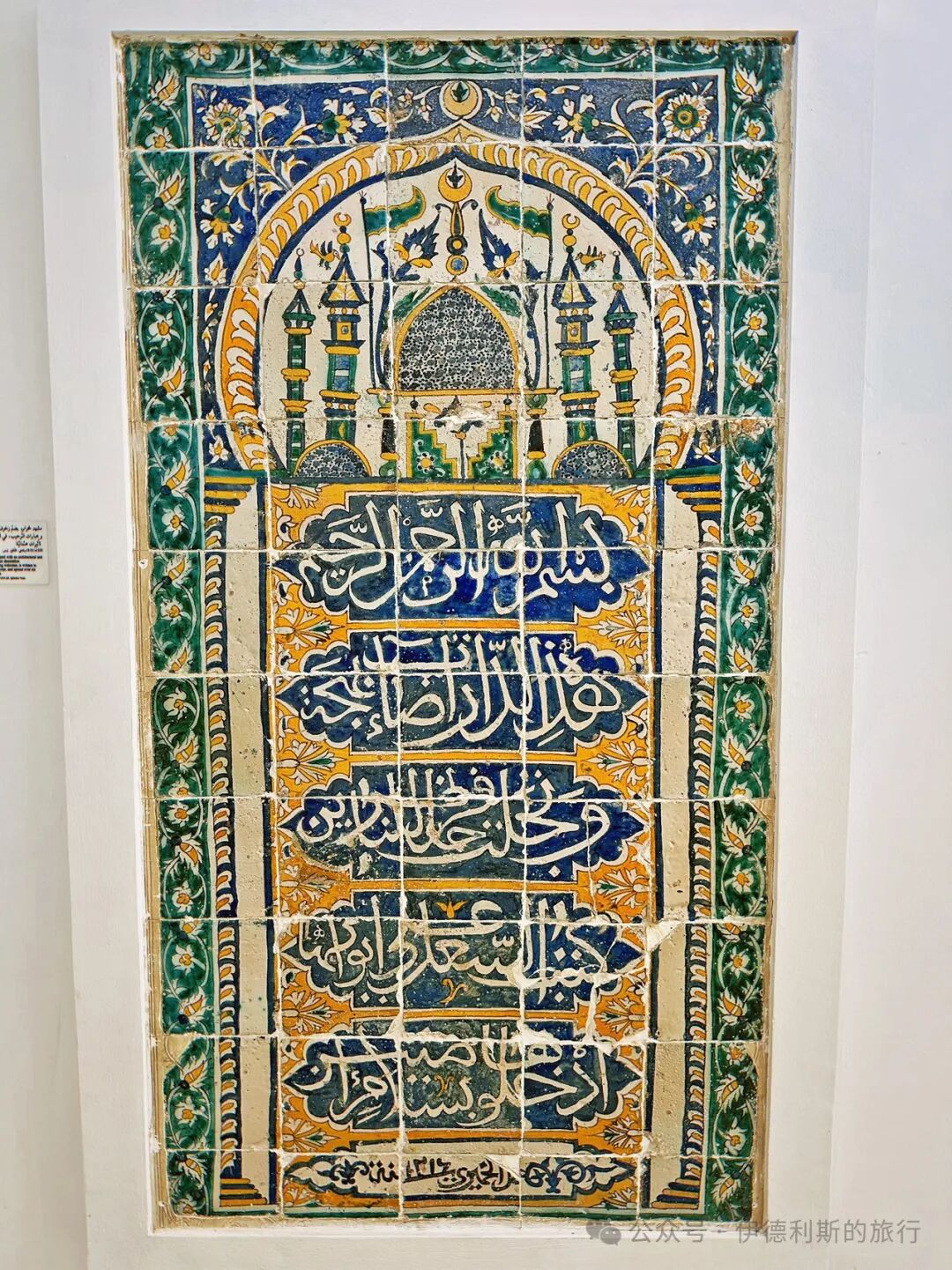
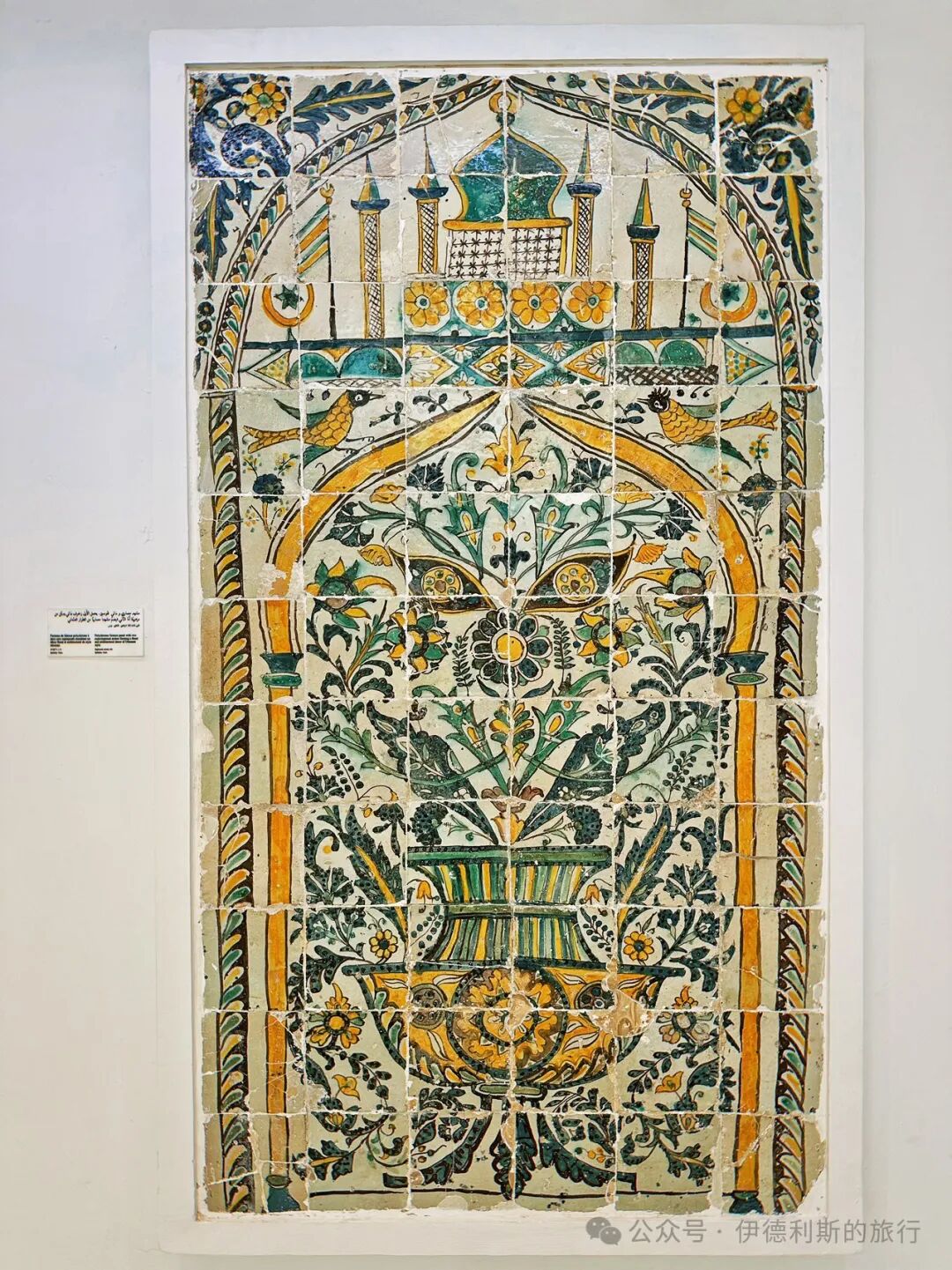
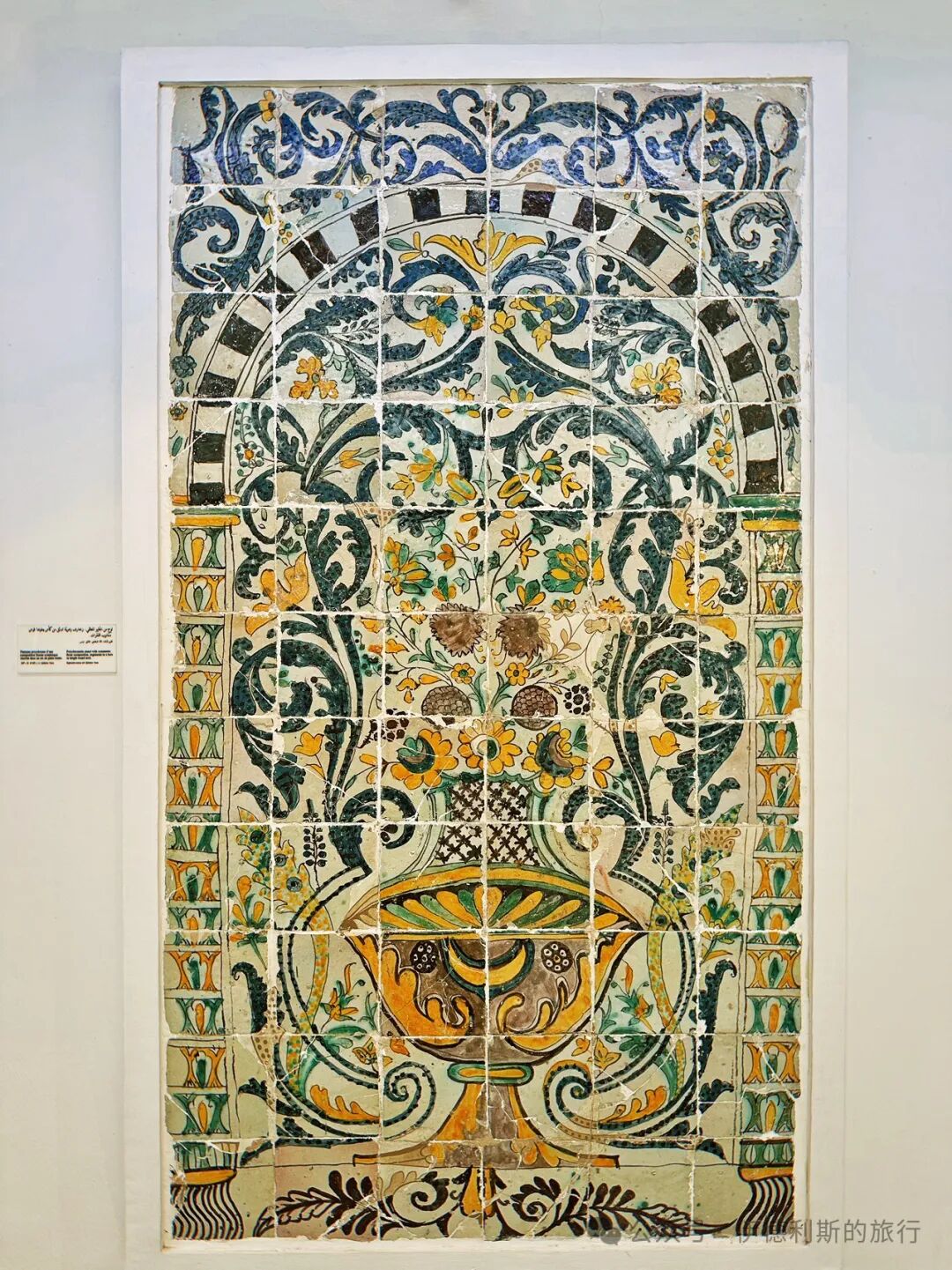
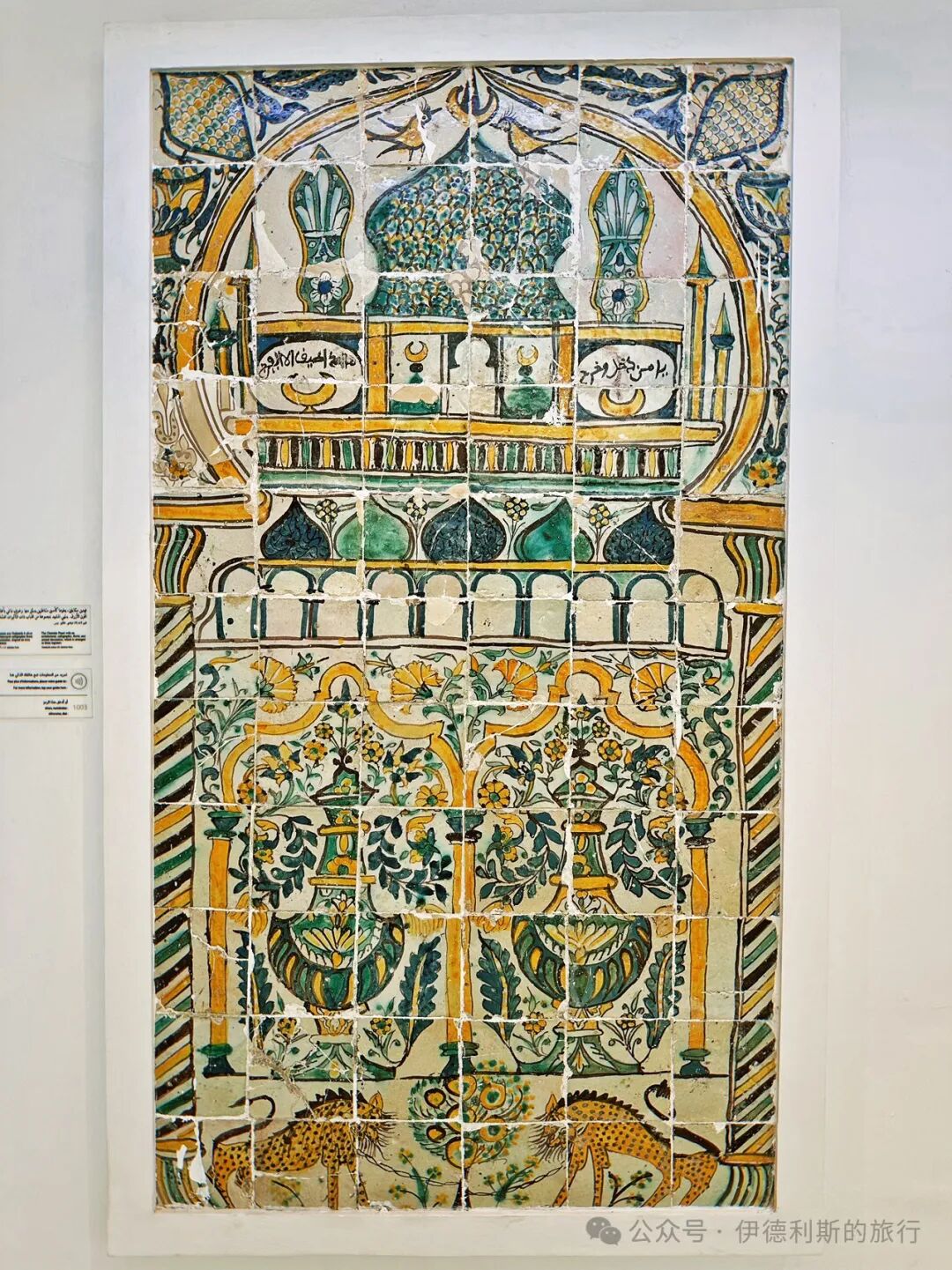
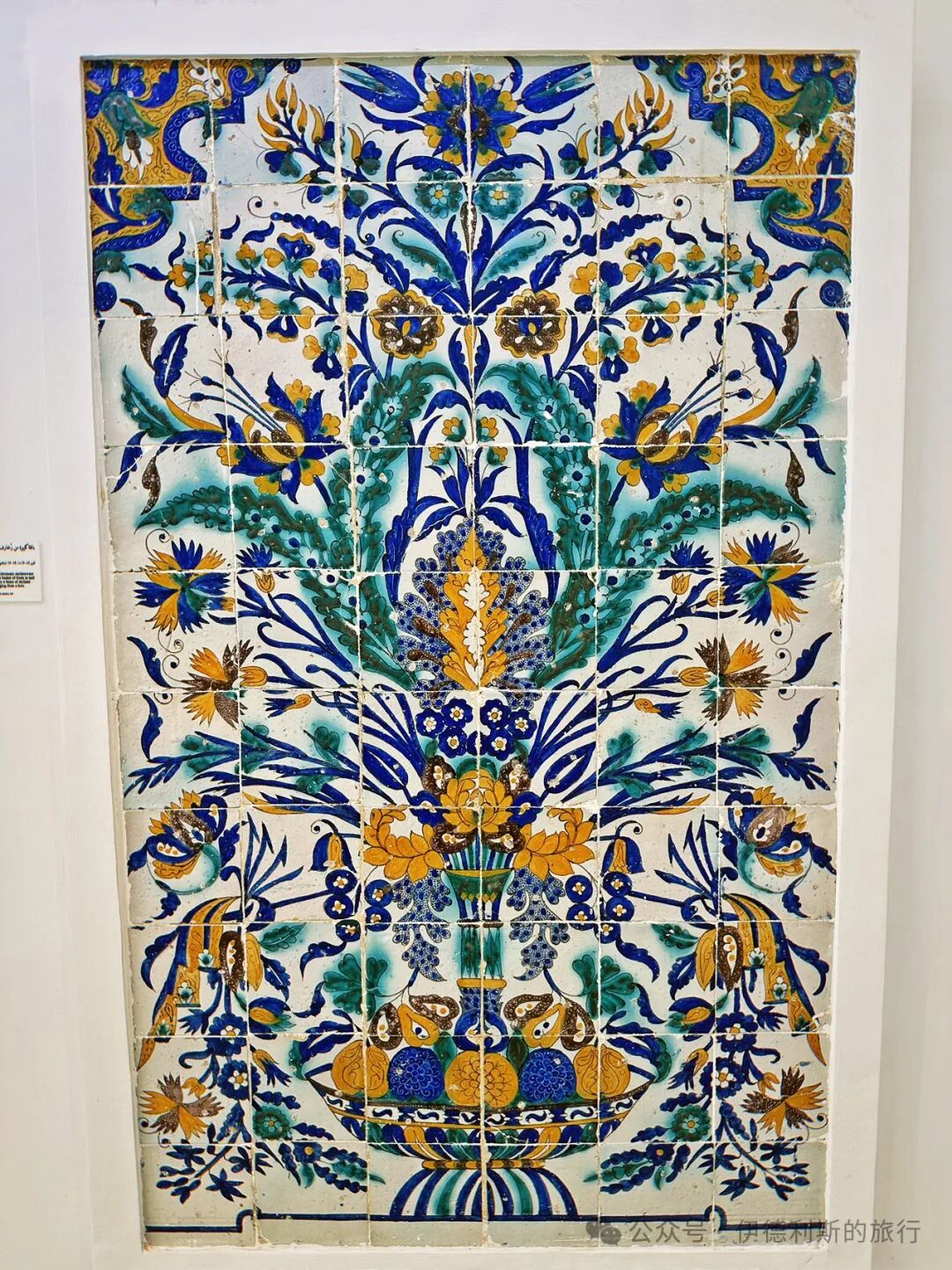
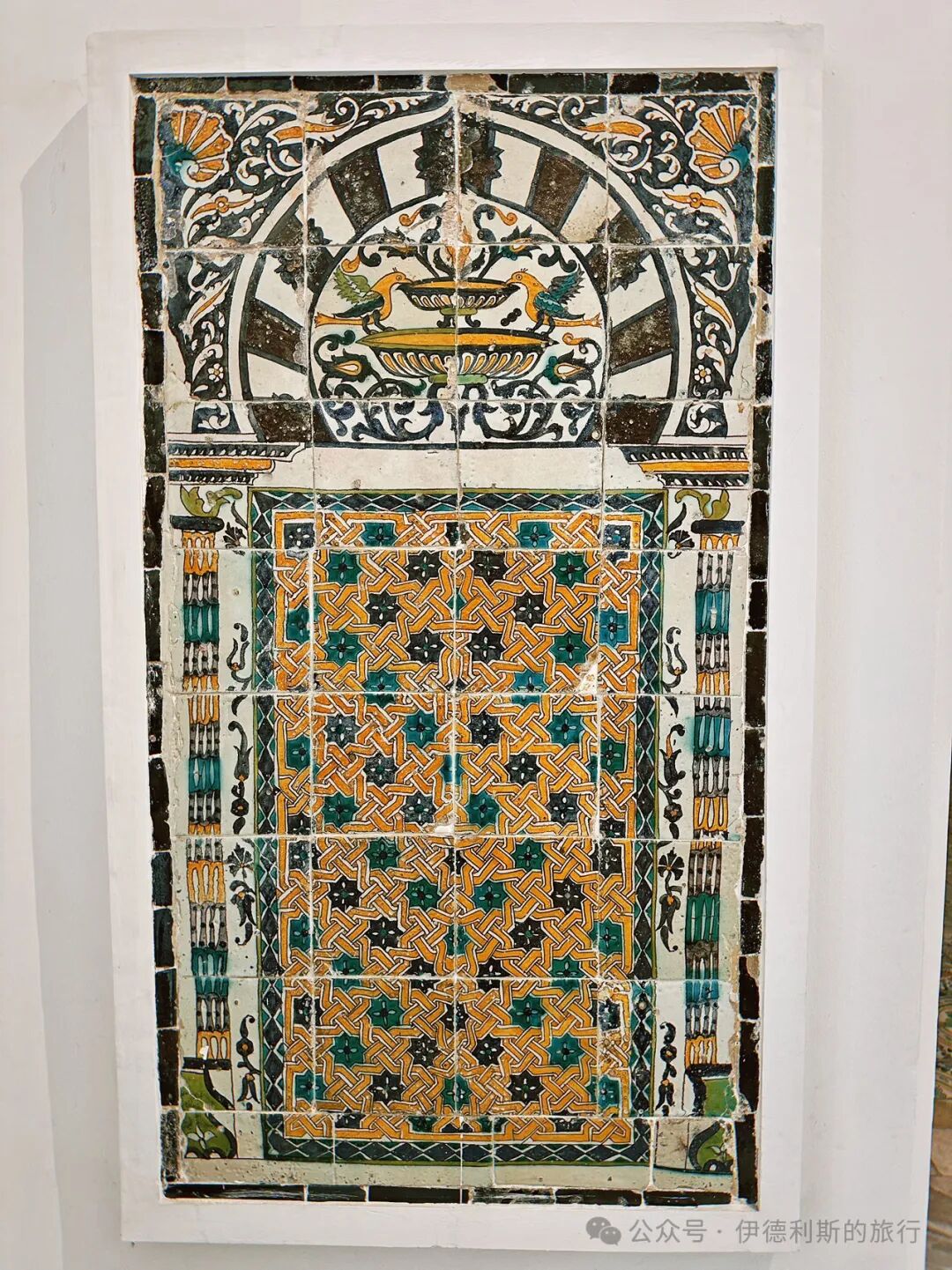
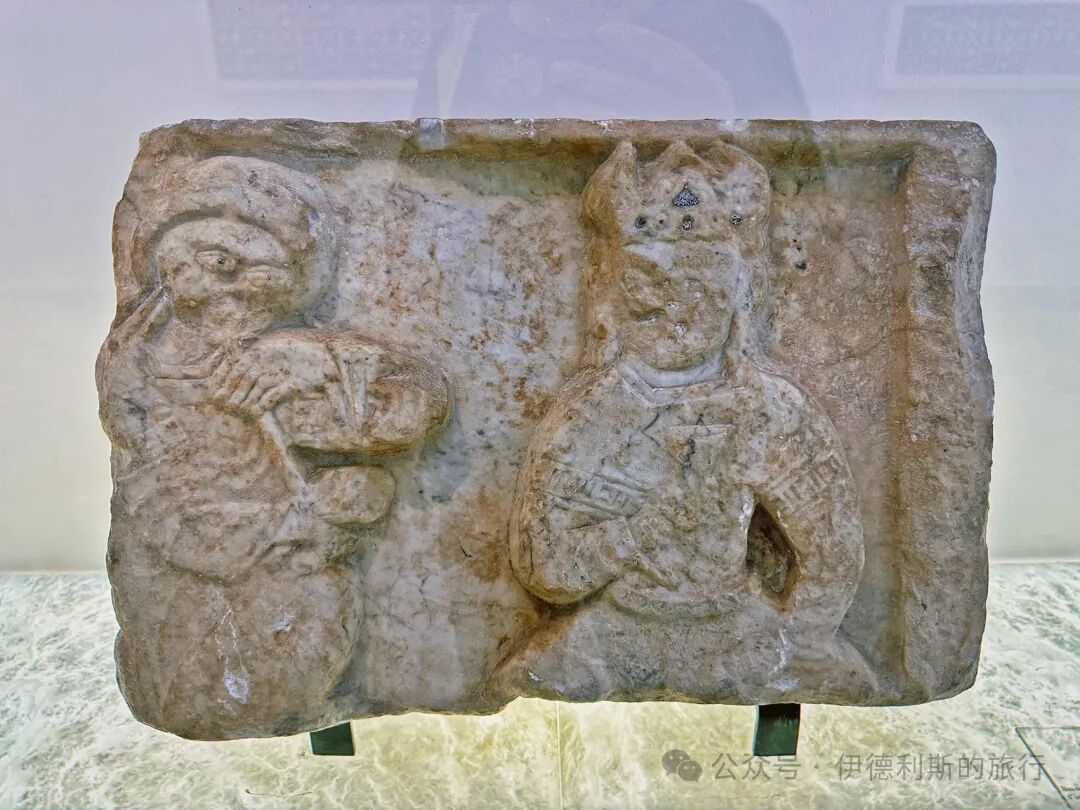
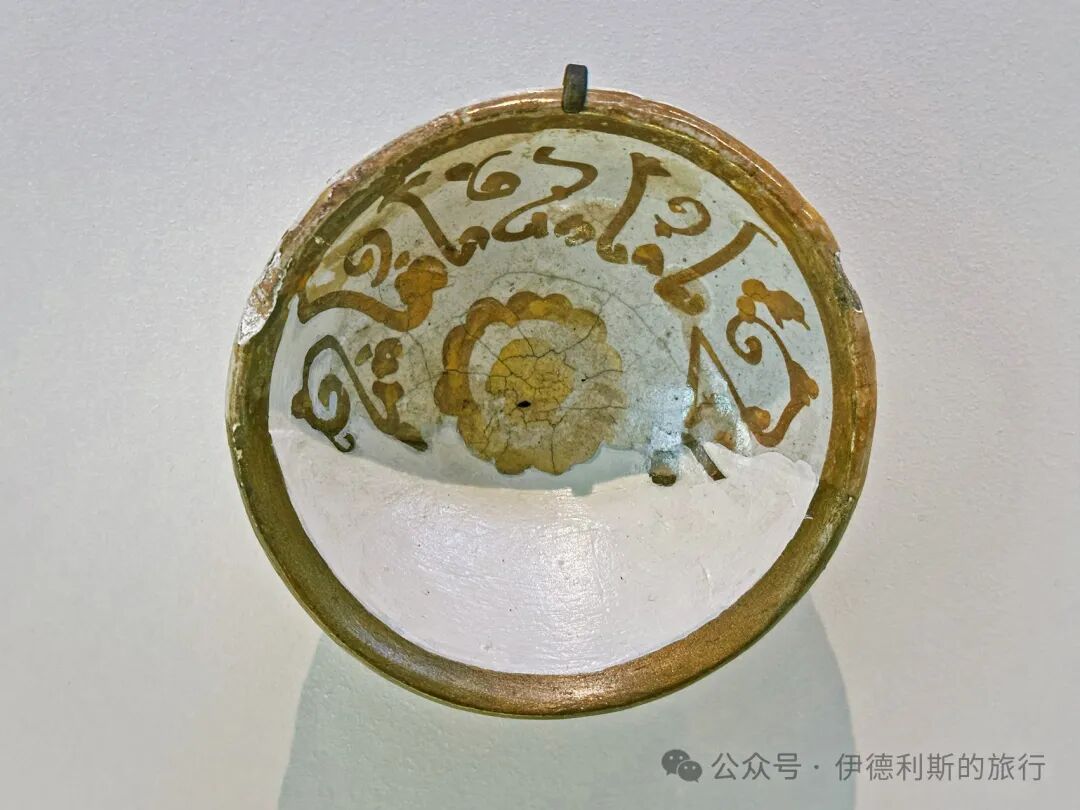
A marble carving from the 10th-century Fatimid period in Mahdia, Tunisia, depicting a Fatimid prince. A glazed bowl with Kufic script from the Fatimid dynasty period in Mahdia.
The ancient city of Mahdia was built by the Fatimid dynasty between 916 and 921, and it became the capital of the Tunisia region after its completion. Before this, the capital of the Tunisia region was Kairouan, which was dominated by Sunnis. Because of this, the Shia Fatimid dynasty built a new capital on the Mediterranean coast, far away from Kairouan. Once finished, Mahdia included thick city walls, palaces, a harbor, and a great mosque. Unfortunately, none of the surface buildings survived. Now, you can only see artifacts unearthed through archaeological excavations in museums.
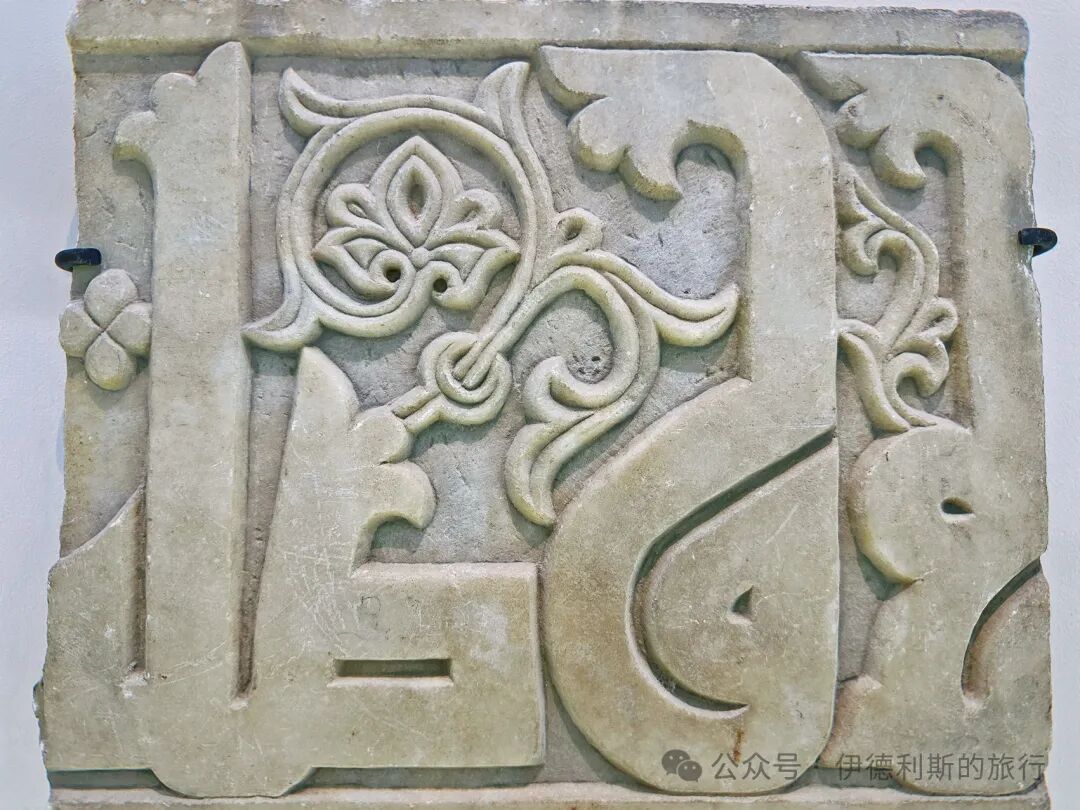
Exquisite 11th-century marble carvings with Kufic script.
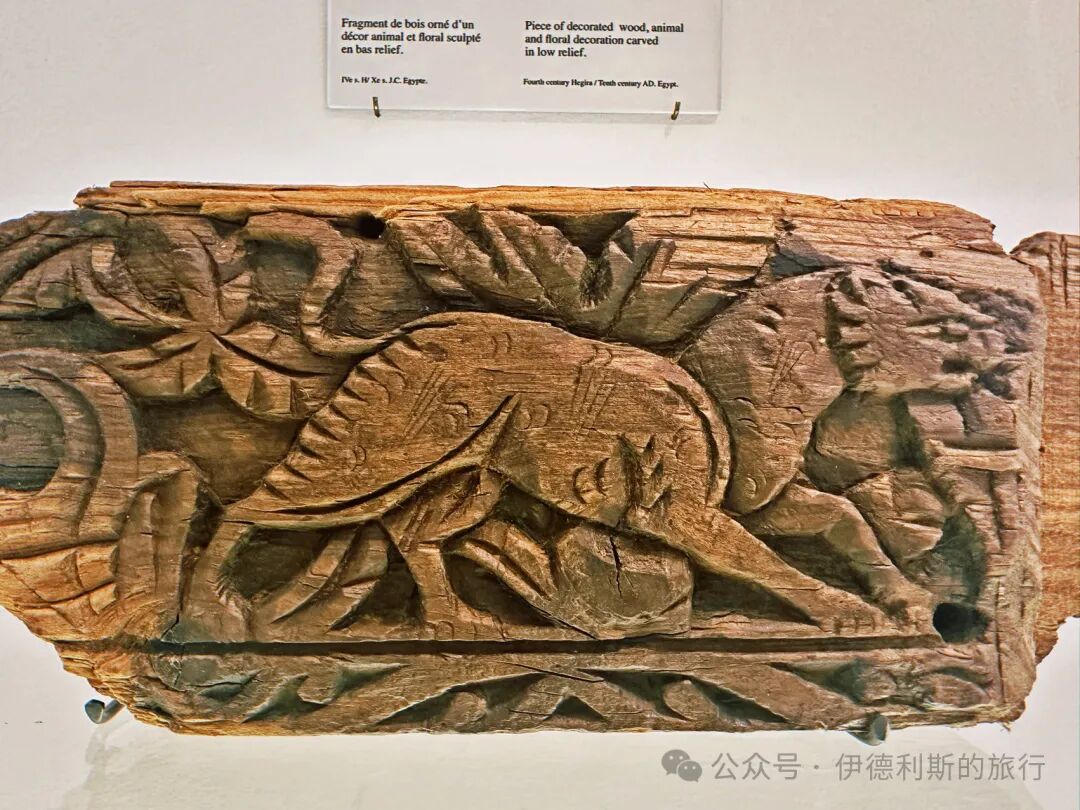
A 10th-century wood carving from Egypt.
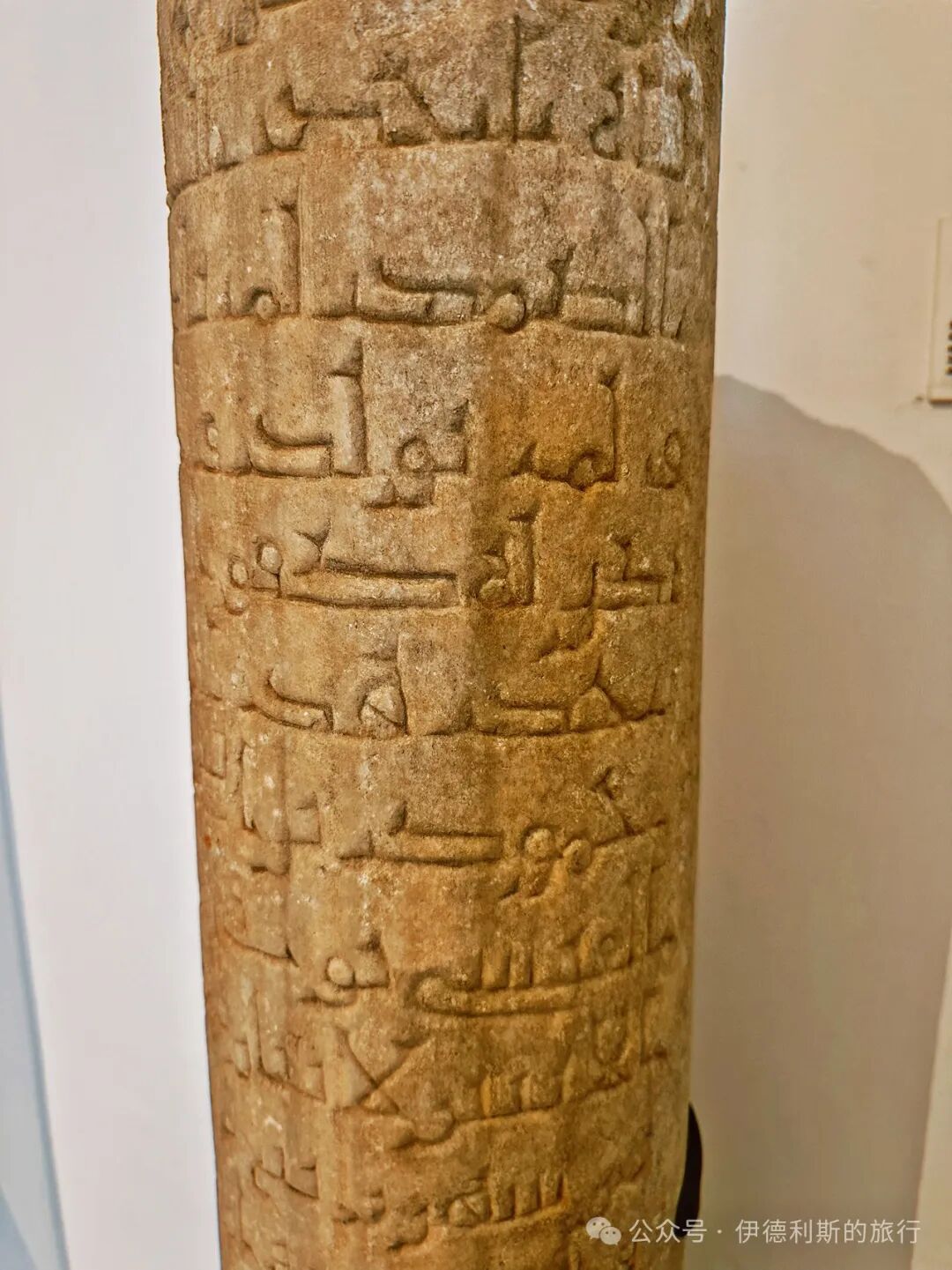
A 13th to 16th-century tombstone from Tunisia where you can see the local style of Arabic calligraphy.
A traditional Tunisian women's headpiece.
Halal Travel Guide: Kairouan, Tunisia - Great Mosque and Jumu'ah (Part 2)
Articles • ali2007fr posted the article • 0 comments • 139 views • 2026-05-19 22:19
Summary: This second part of the Kairouan travel account continues around the Great Mosque and the old city after Jumu'ah. It keeps the original mosque details, street scenes, photographs, and Muslim travel observations for readers interested in Tunisia's Islamic heritage.
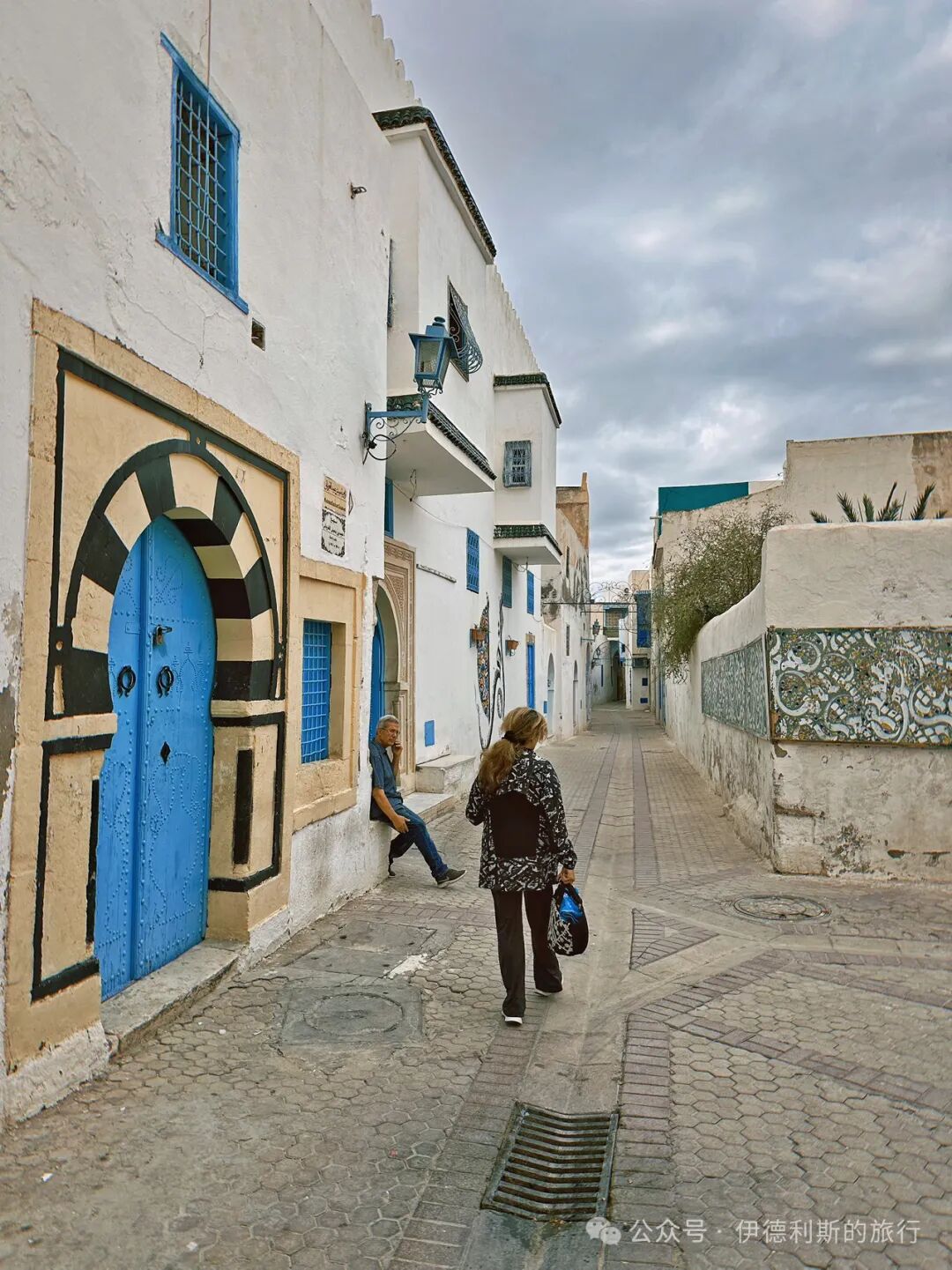
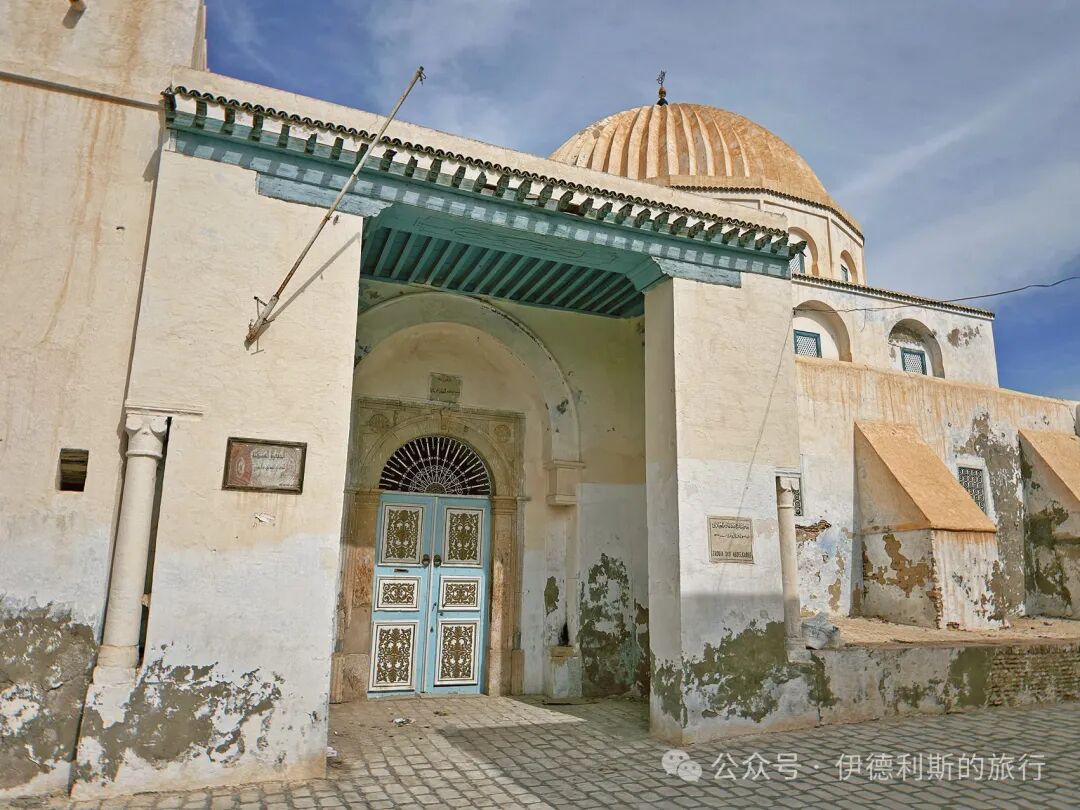
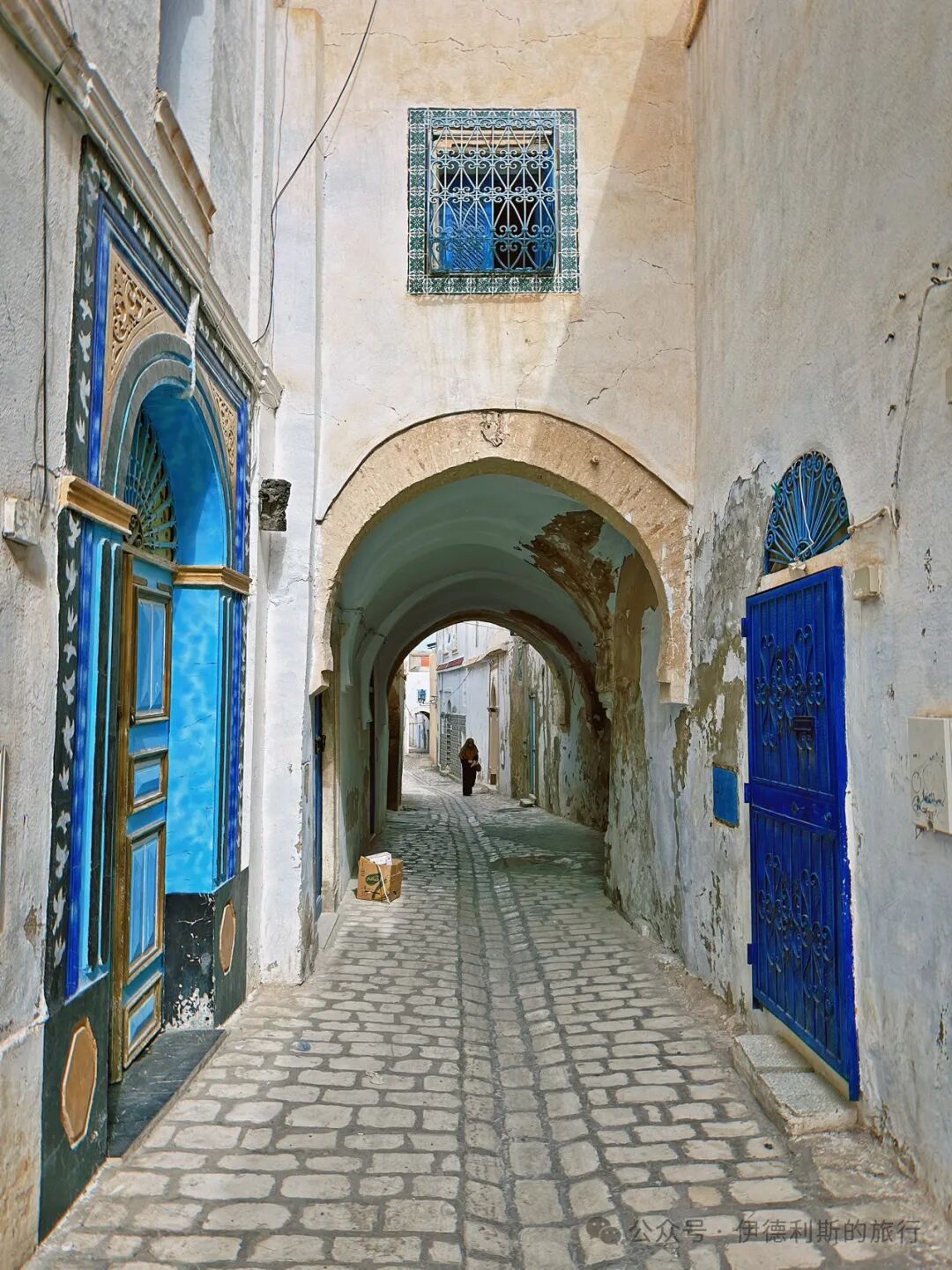
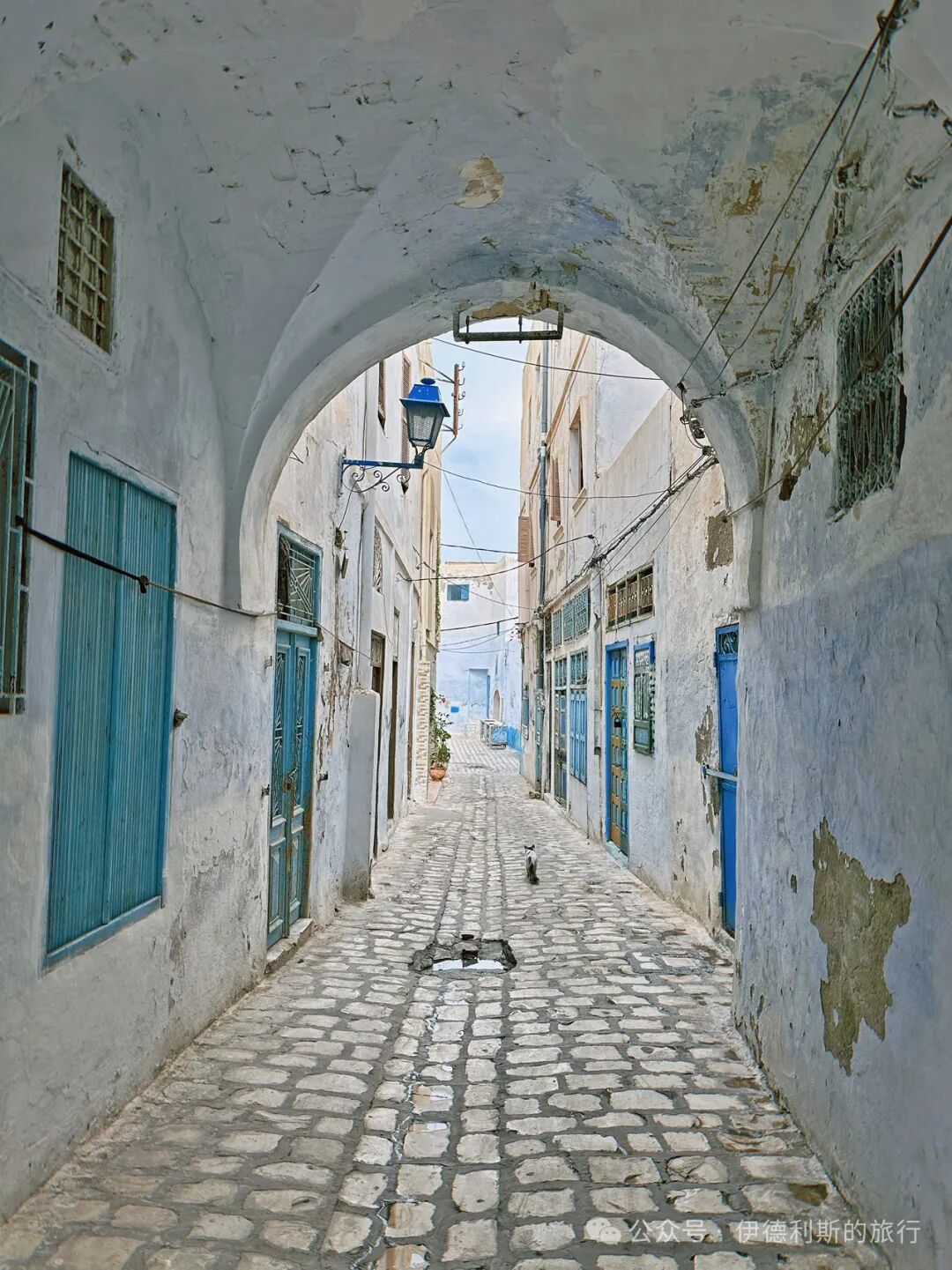
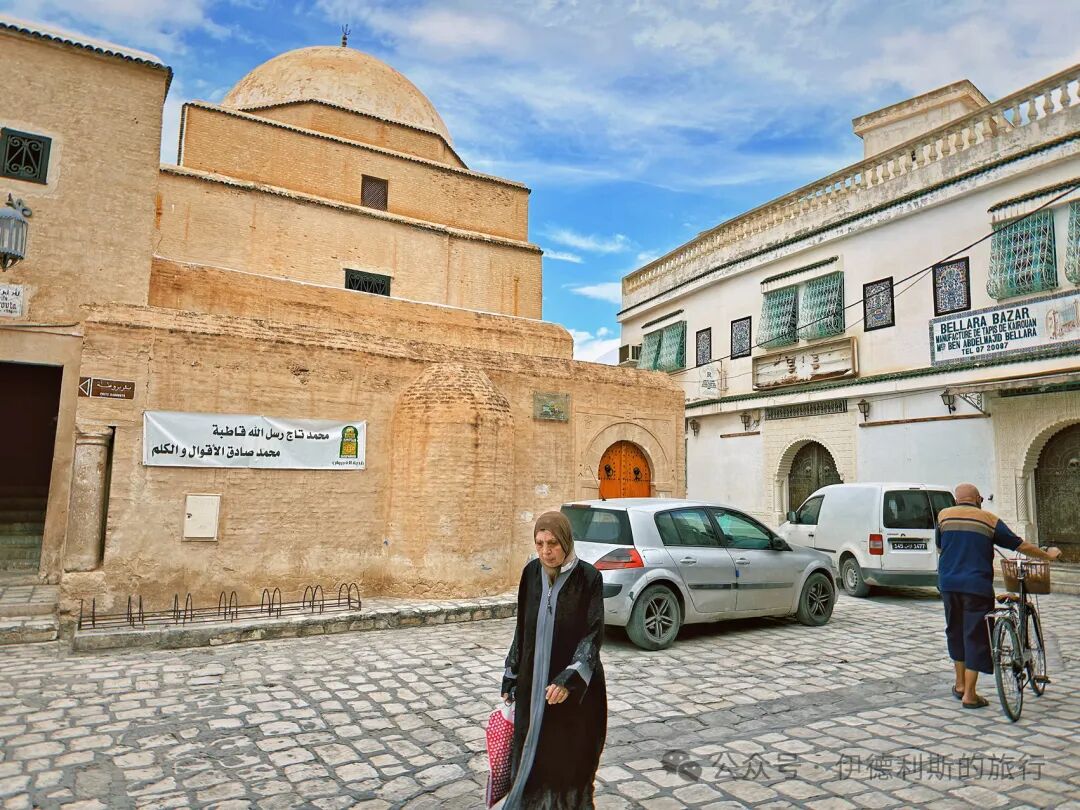
Street views of the old medina in Kairouan.
Kairouan was the capital of the Aghlabid and Zirid dynasties between the 9th and 11th centuries. The Aghlabid dynasty was an Arab emirate nominally under the Abbasid Caliphate. Kairouan grew quickly during this time and became known for its wealth and prosperity, rivaling cities like Basra and Kufa within the Abbasid realm. The Zirid dynasty was a Berber emirate nominally under the Fatimid Caliphate. Kairouan reached its peak in art, trade, and agriculture during this period, with education flourishing in particular. In the 1040s, the Zirid dynasty declared independence from the Fatimid Caliphate and recognized the Abbasid Caliphate. The Fatimid Caliphate then sent a group of Arab tribes to invade Kairouan. In 1057, these Arab tribes captured and destroyed Kairouan. The Zirid dynasty was forced to move its capital to Mahdia, and Kairouan never regained its former prosperity.
In the Kairouan medina market, various sweets are very popular, especially the date-filled pastry known as Makroudh.
They also sell fresh dates here. They are quite sweet, though slightly more astringent than the dried ones.
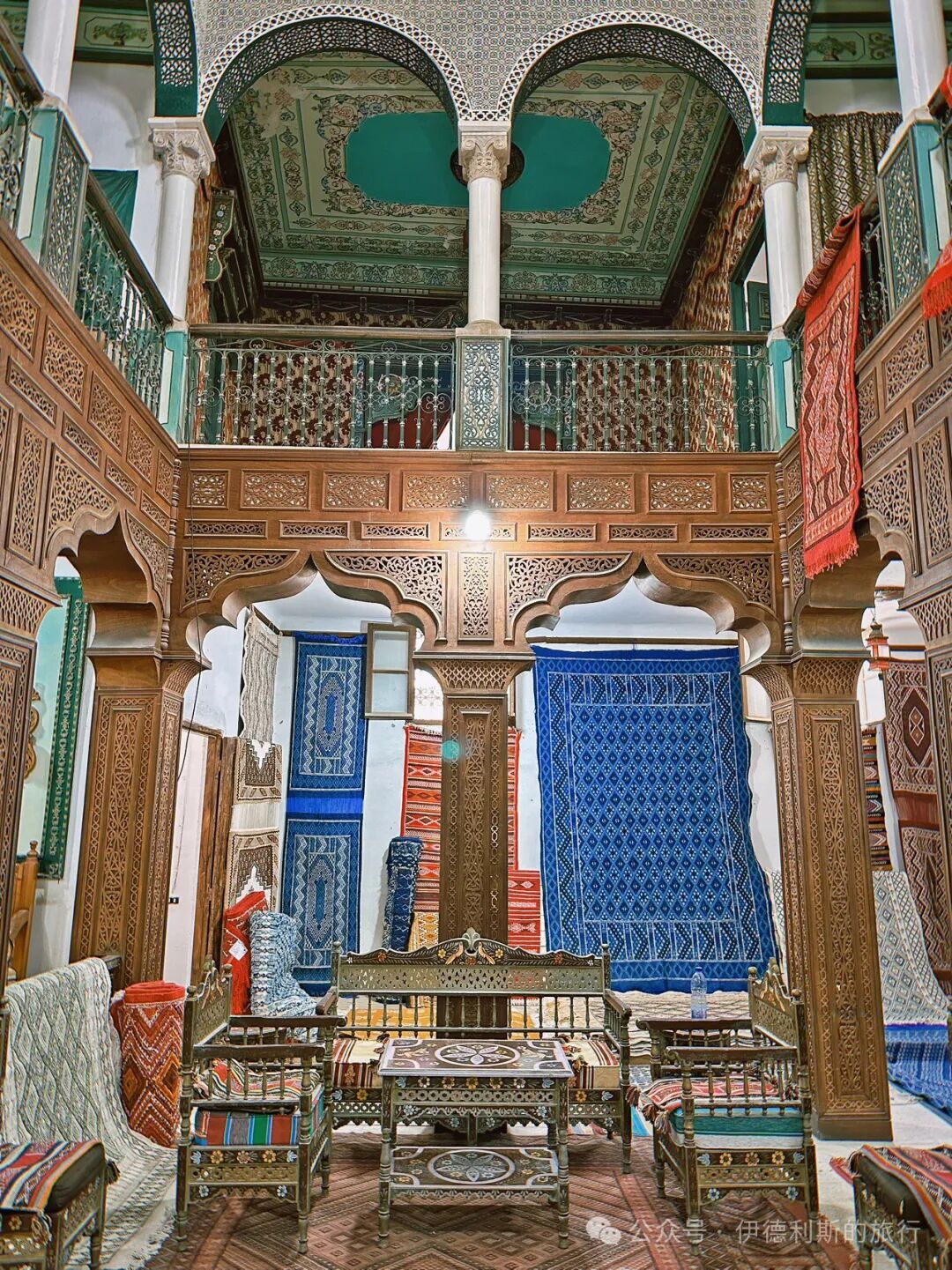
The 18th-century Kairouan Bey residence, Dar El Bey, is now a carpet shop. The residence has 18 rooms inside with very ornate ceilings. However, if you do not plan to buy a carpet, the staff might not let you see all the rooms.
The office of the Kairouan Poetry Association; this kind of ornate ceiling is a signature feature of Kairouan.
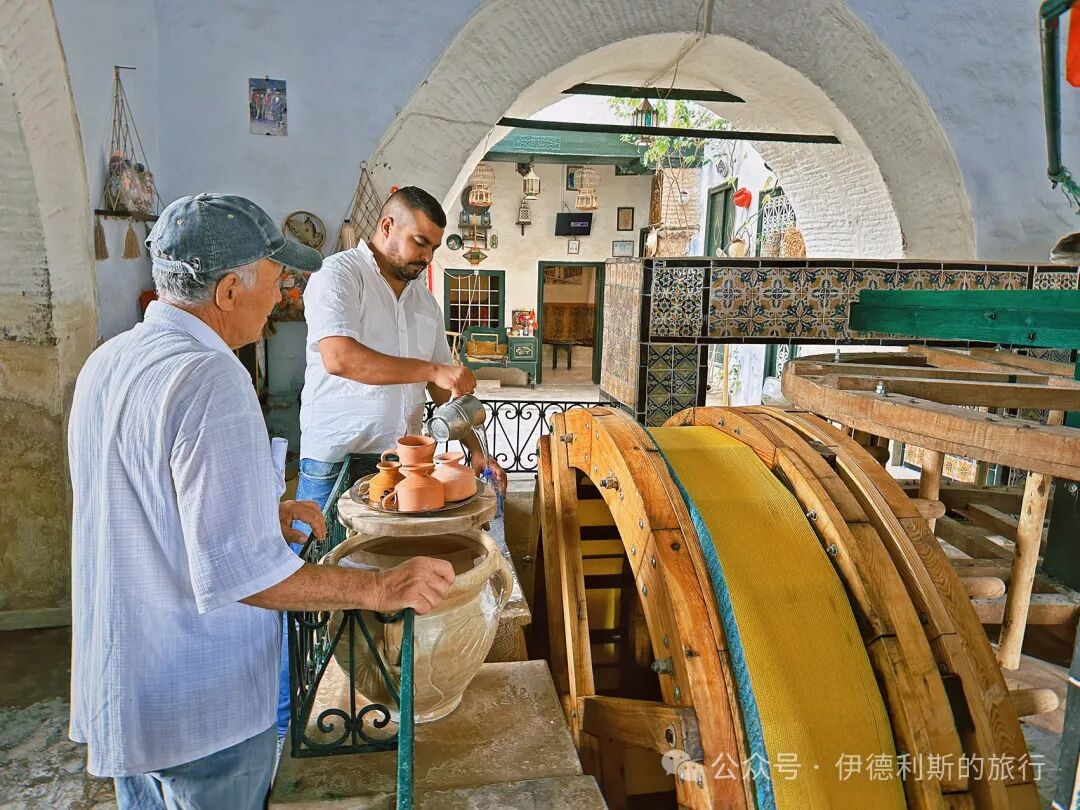
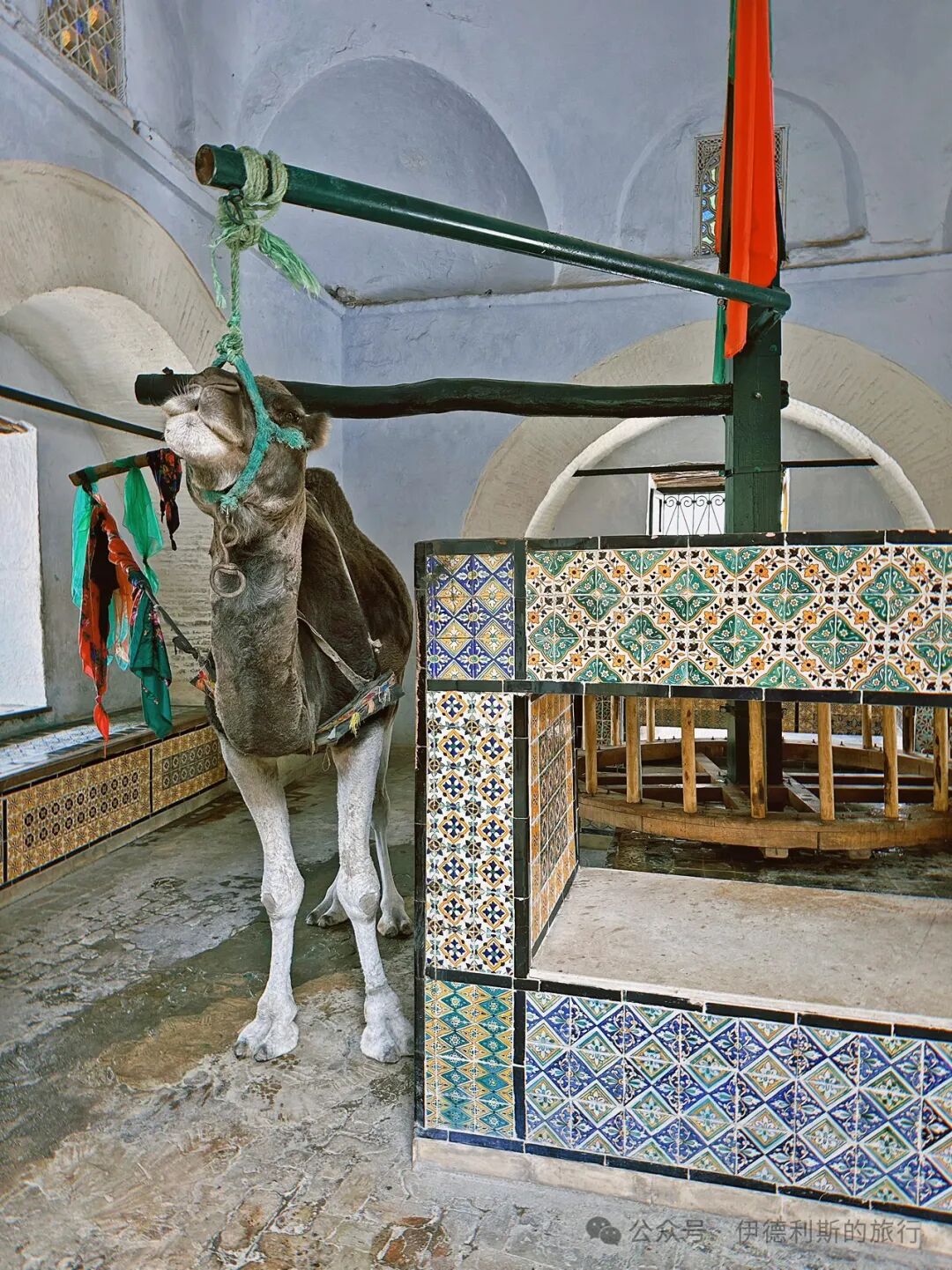
The ancient Bir Barrouta well in Kairouan. Legend says it was dug by the Abbasid governor Ibn El Ayoun in 796, and the current domed structure was rebuilt by the Bey of Tunis, Mohamed, in 1690. It is still in operation today, using a camel to power a water wheel (noria) to draw water, which people collect in clay pots.
A gongbei built in 1829 in the old medina of Kairouan.
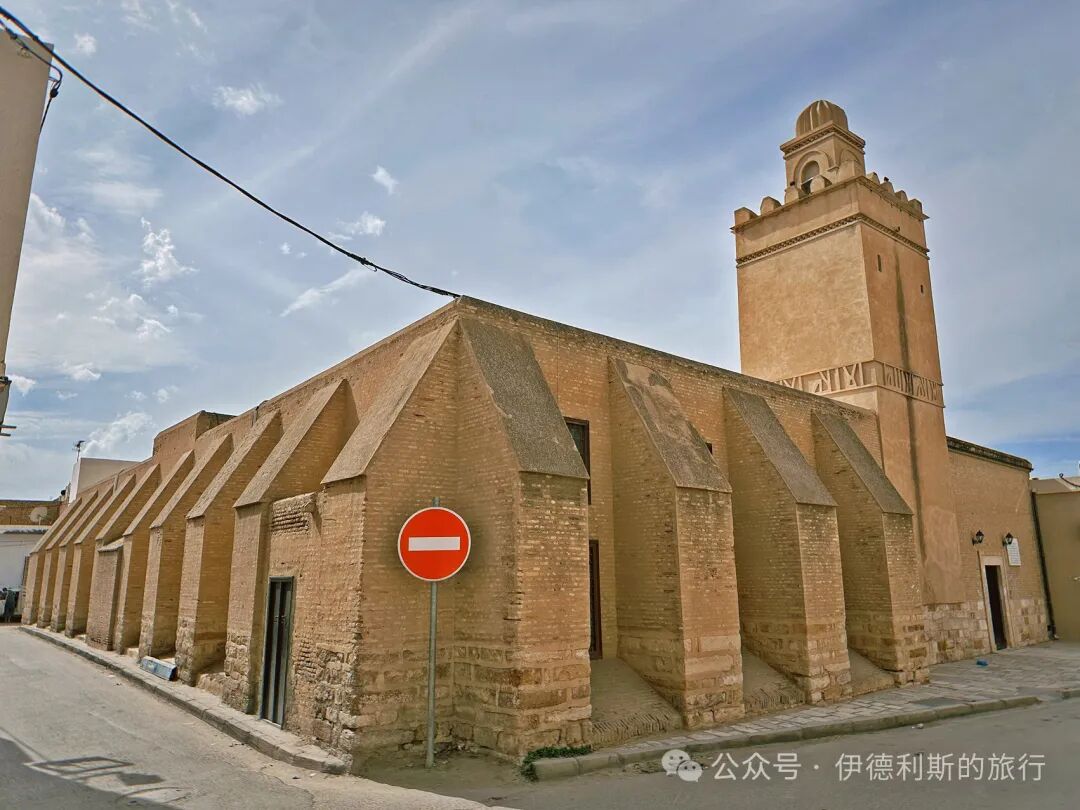
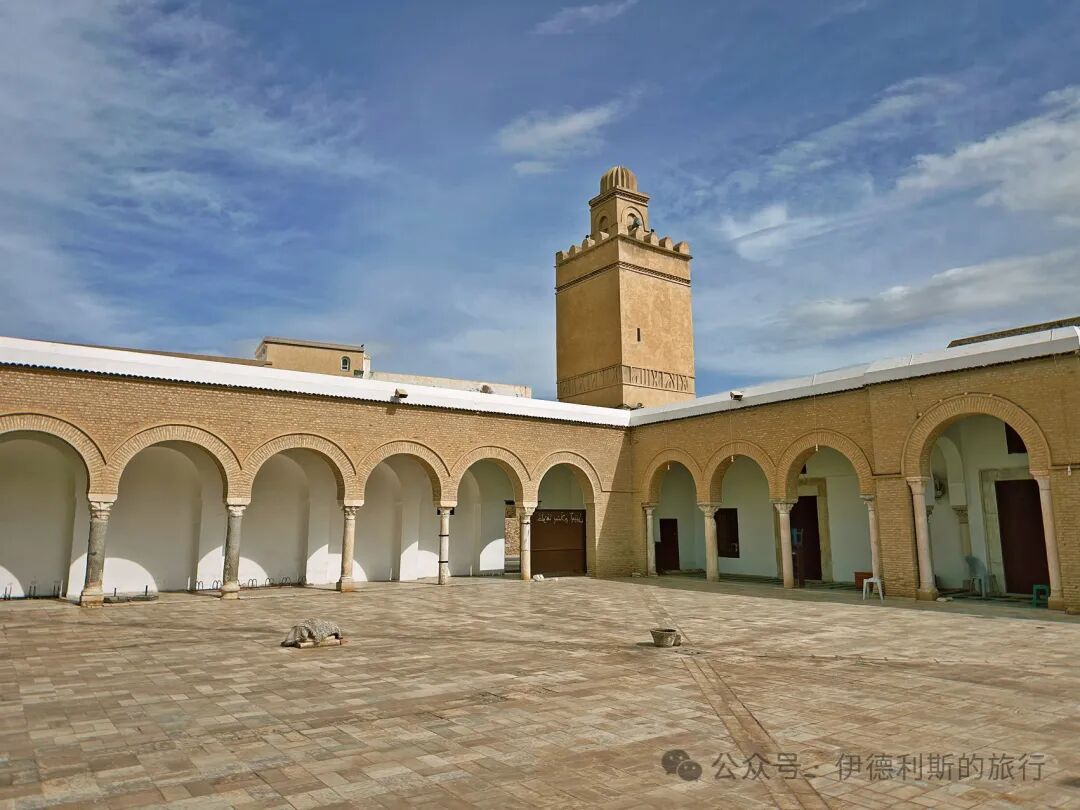
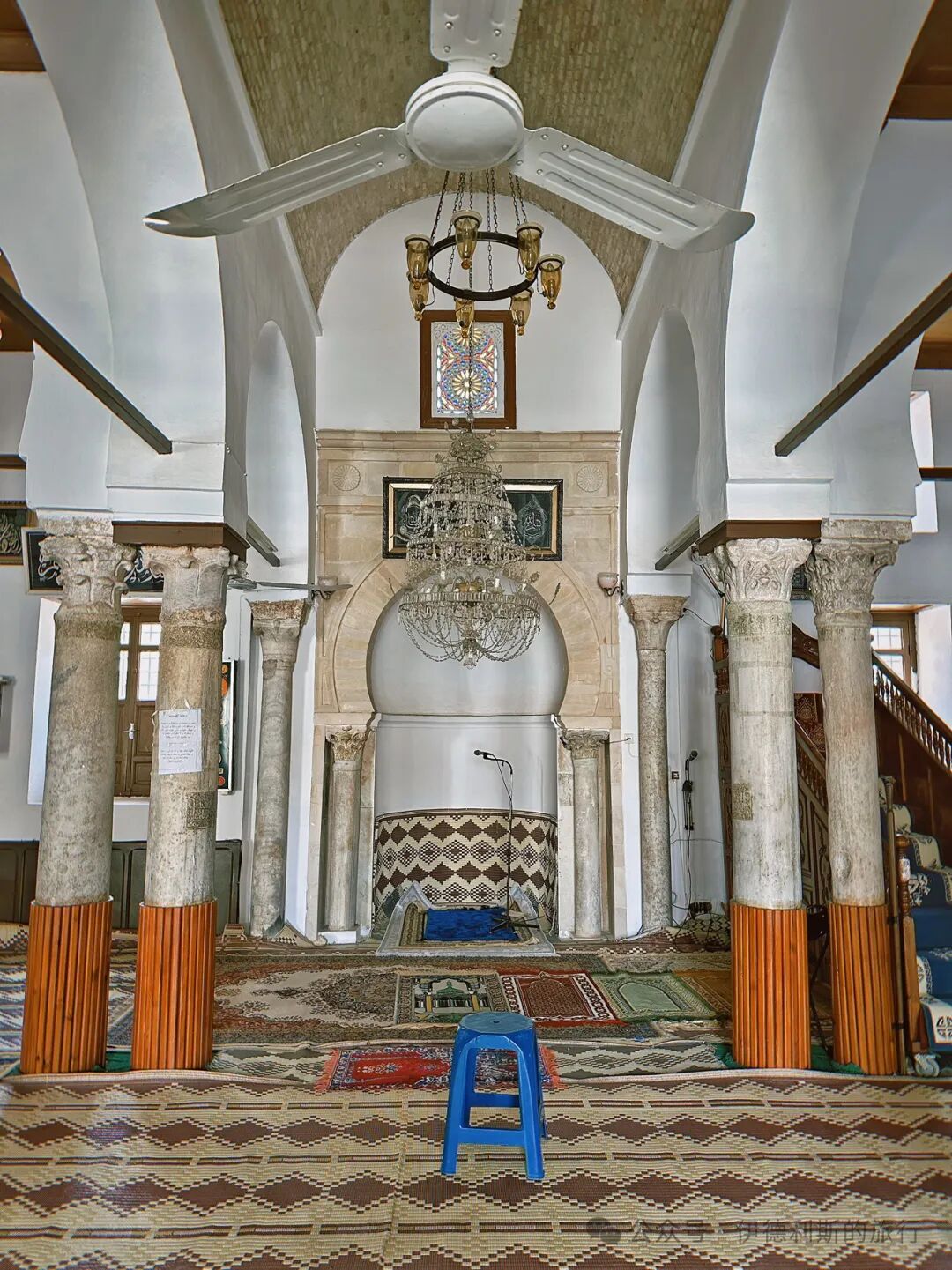
The Zeitouna Mosque outside the west gate of the old medina in Kairouan. Its architectural style is similar to the Great Mosque of Kairouan, but it is smaller in scale. view all
Summary: This second part of the Kairouan travel account continues around the Great Mosque and the old city after Jumu'ah. It keeps the original mosque details, street scenes, photographs, and Muslim travel observations for readers interested in Tunisia's Islamic heritage.
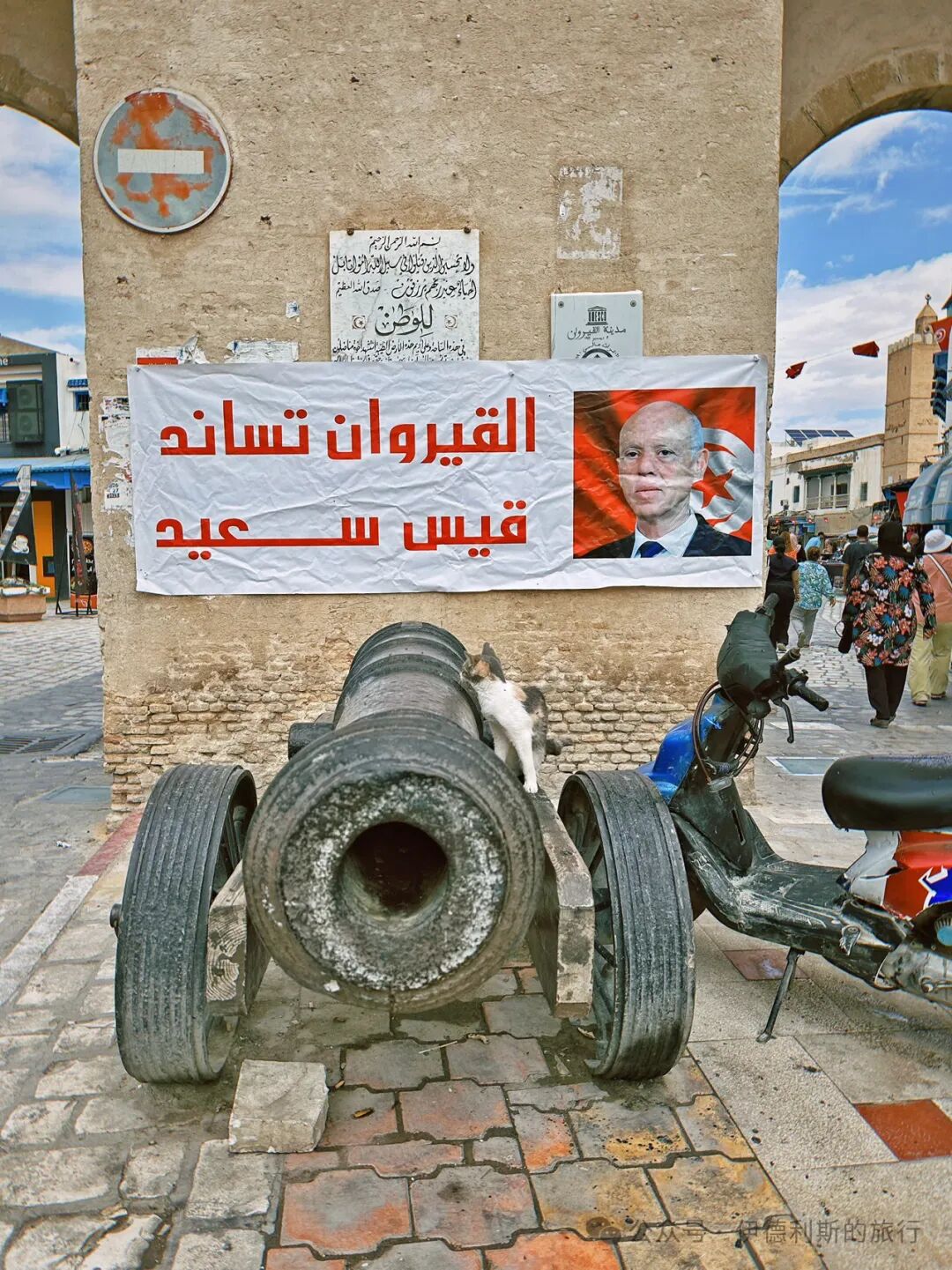
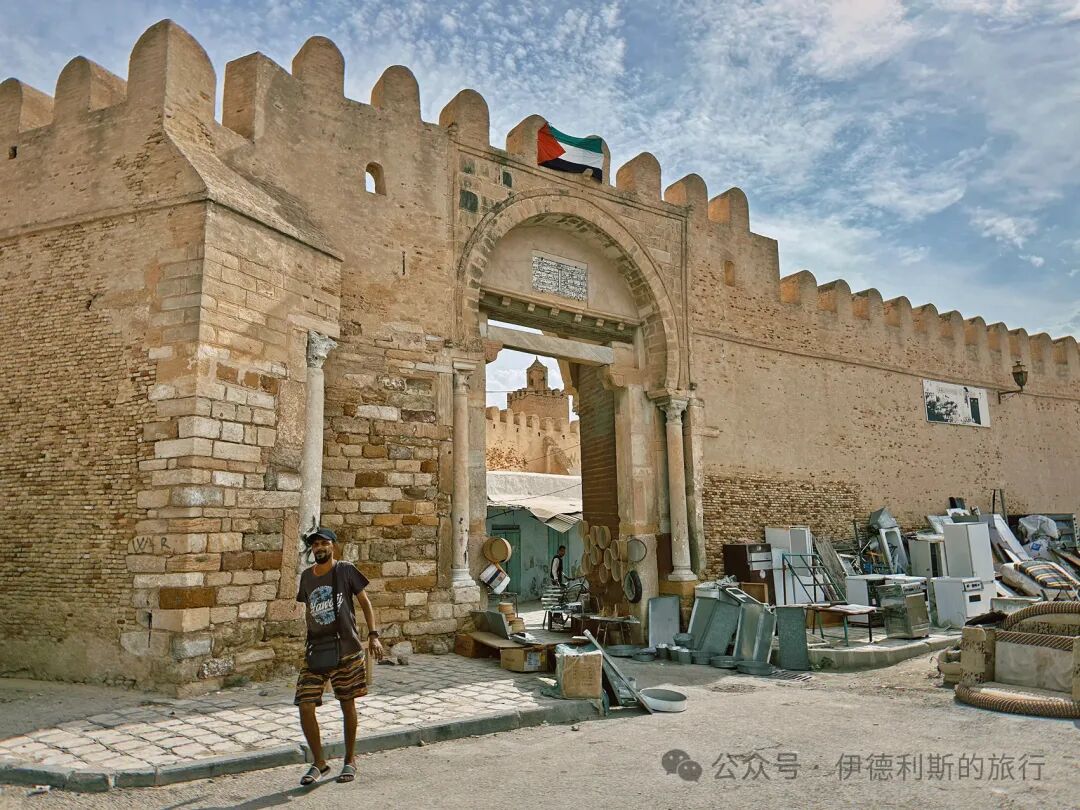
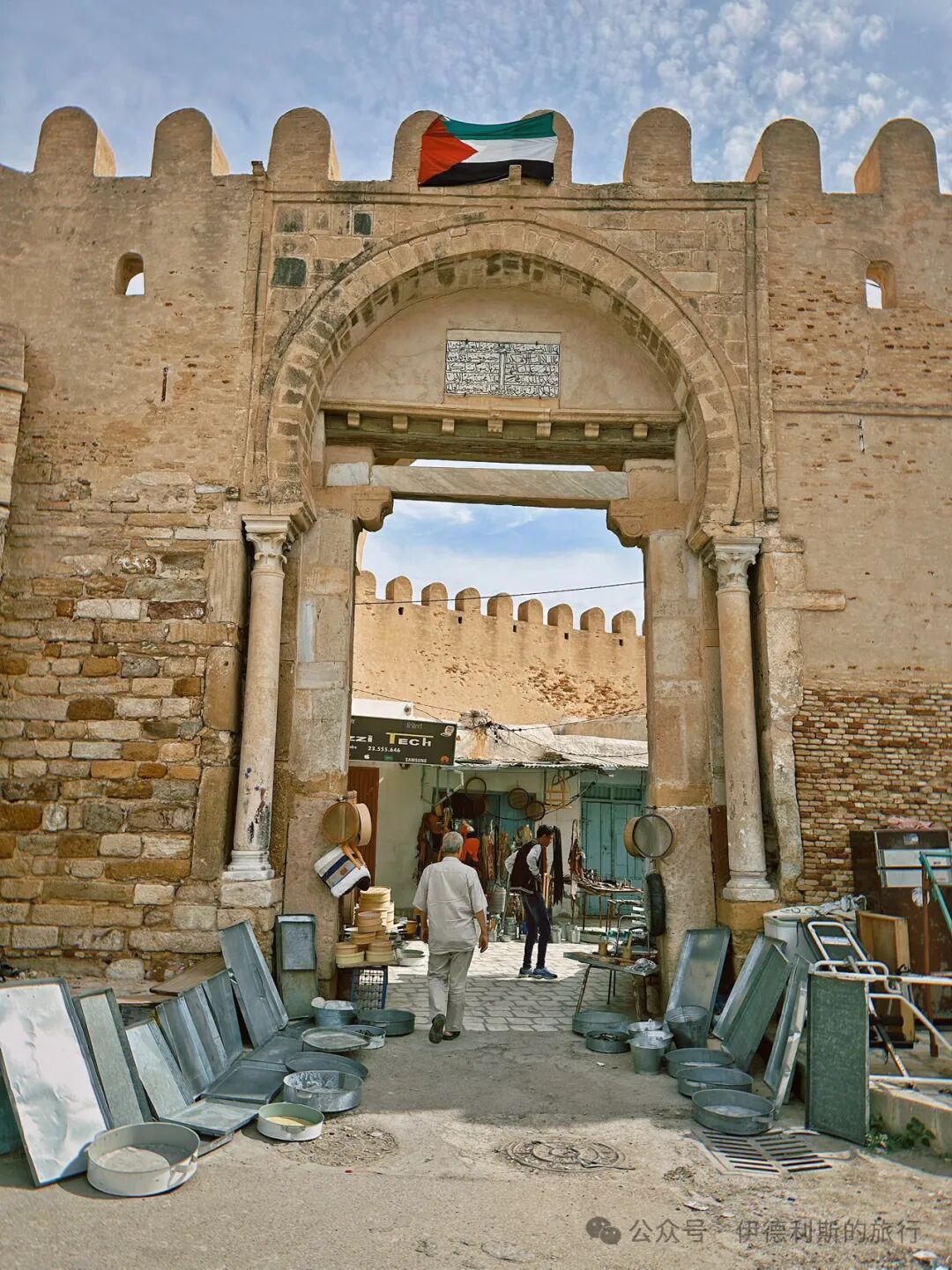
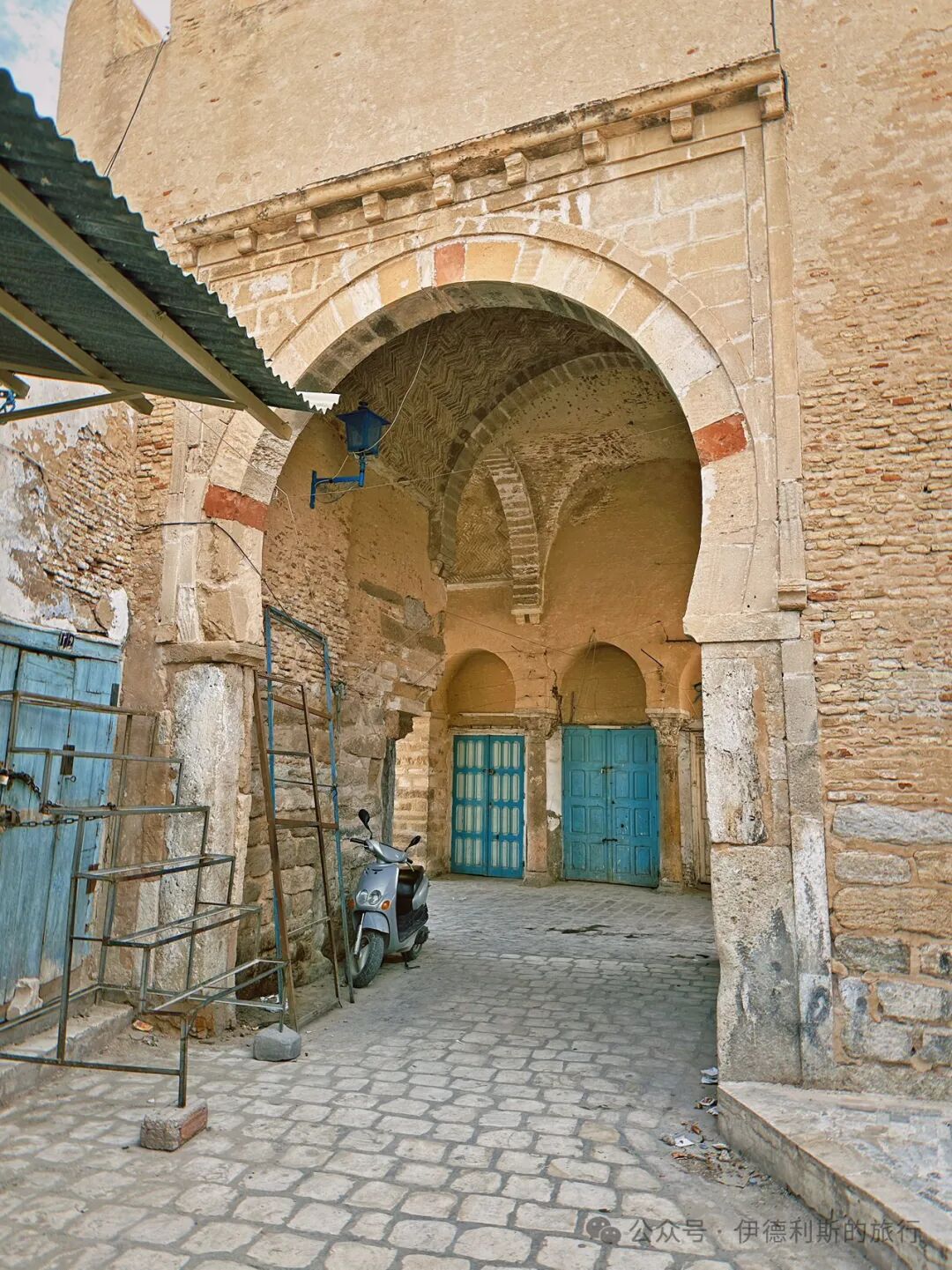
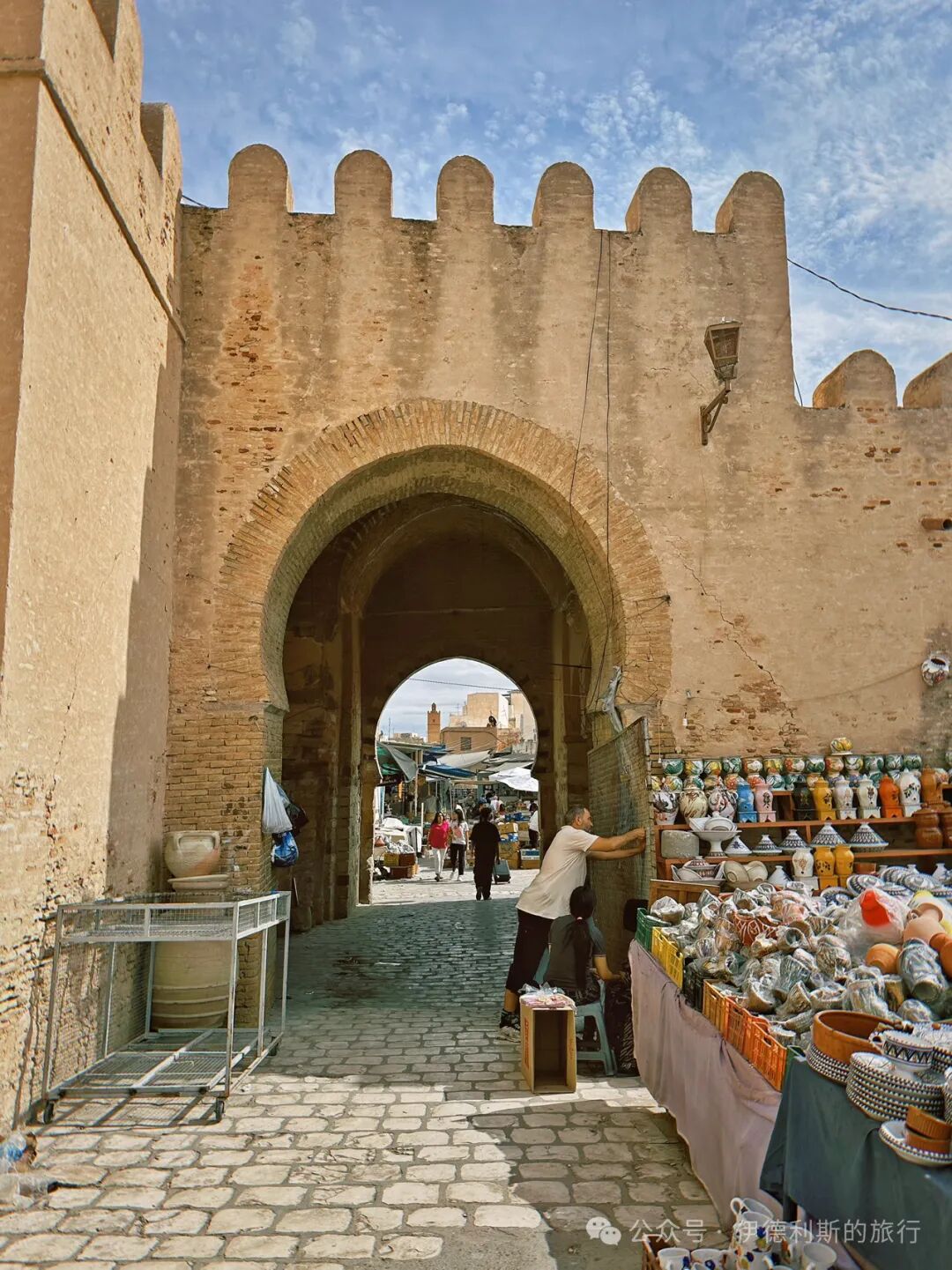
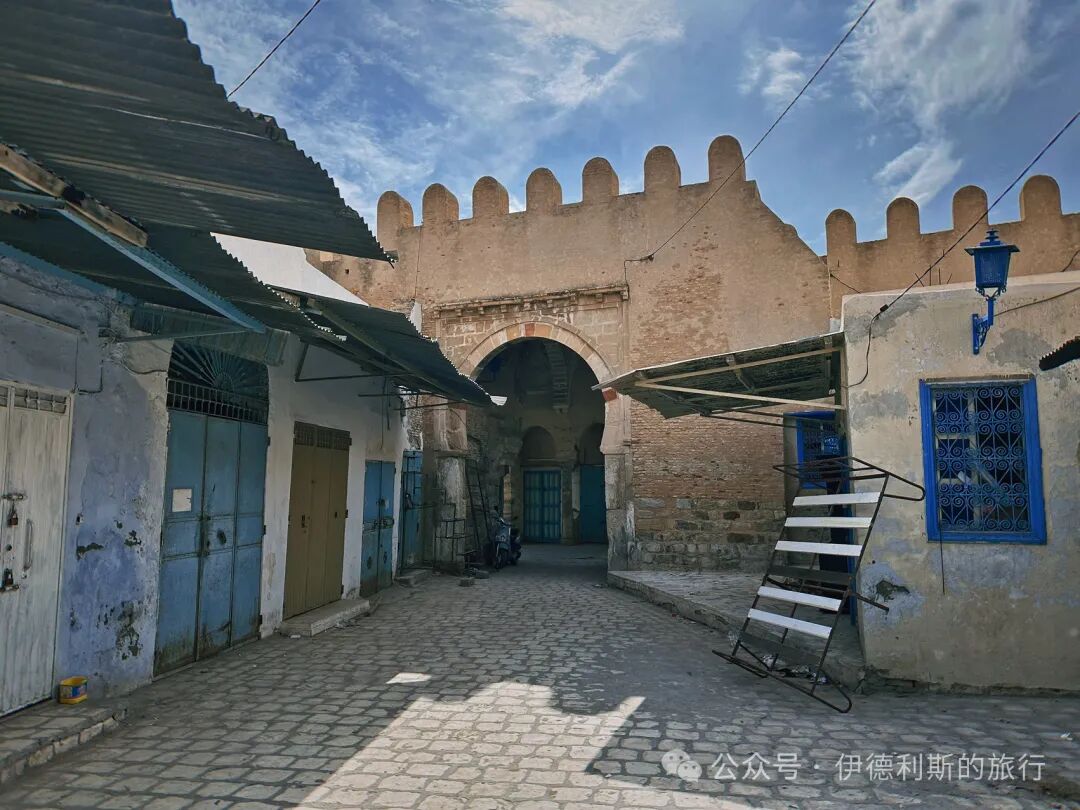
Street views of the old medina in Kairouan.
Kairouan was the capital of the Aghlabid and Zirid dynasties between the 9th and 11th centuries. The Aghlabid dynasty was an Arab emirate nominally under the Abbasid Caliphate. Kairouan grew quickly during this time and became known for its wealth and prosperity, rivaling cities like Basra and Kufa within the Abbasid realm. The Zirid dynasty was a Berber emirate nominally under the Fatimid Caliphate. Kairouan reached its peak in art, trade, and agriculture during this period, with education flourishing in particular. In the 1040s, the Zirid dynasty declared independence from the Fatimid Caliphate and recognized the Abbasid Caliphate. The Fatimid Caliphate then sent a group of Arab tribes to invade Kairouan. In 1057, these Arab tribes captured and destroyed Kairouan. The Zirid dynasty was forced to move its capital to Mahdia, and Kairouan never regained its former prosperity.
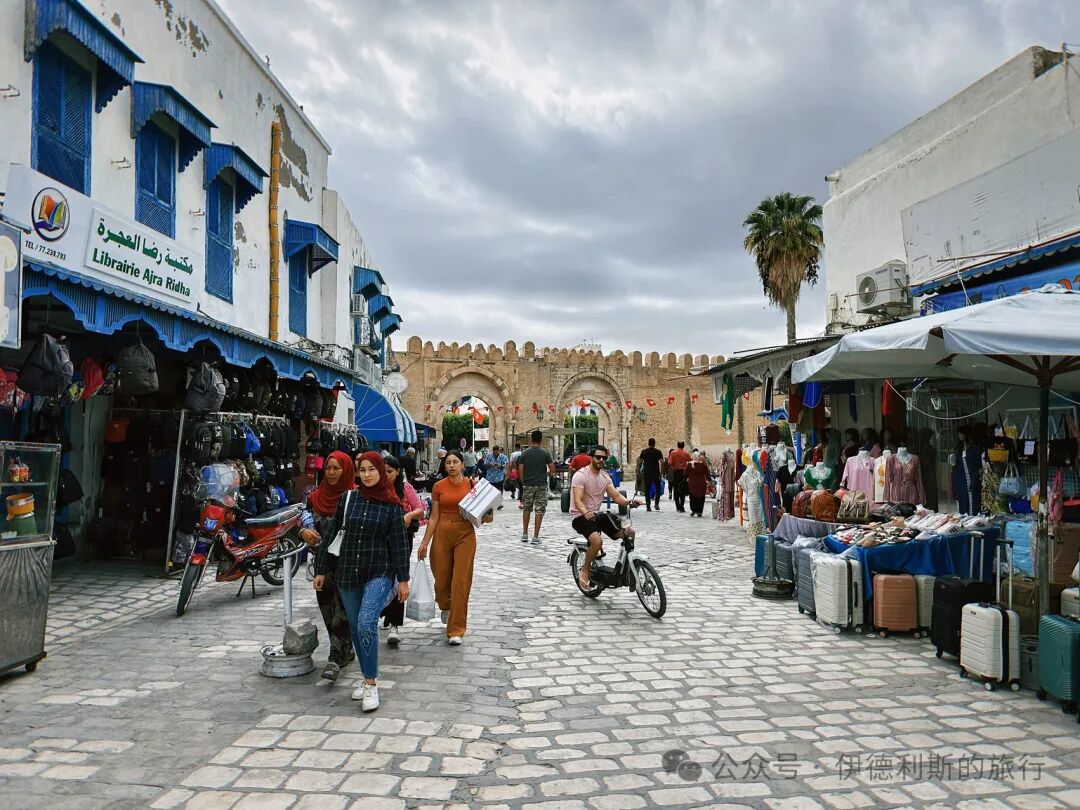
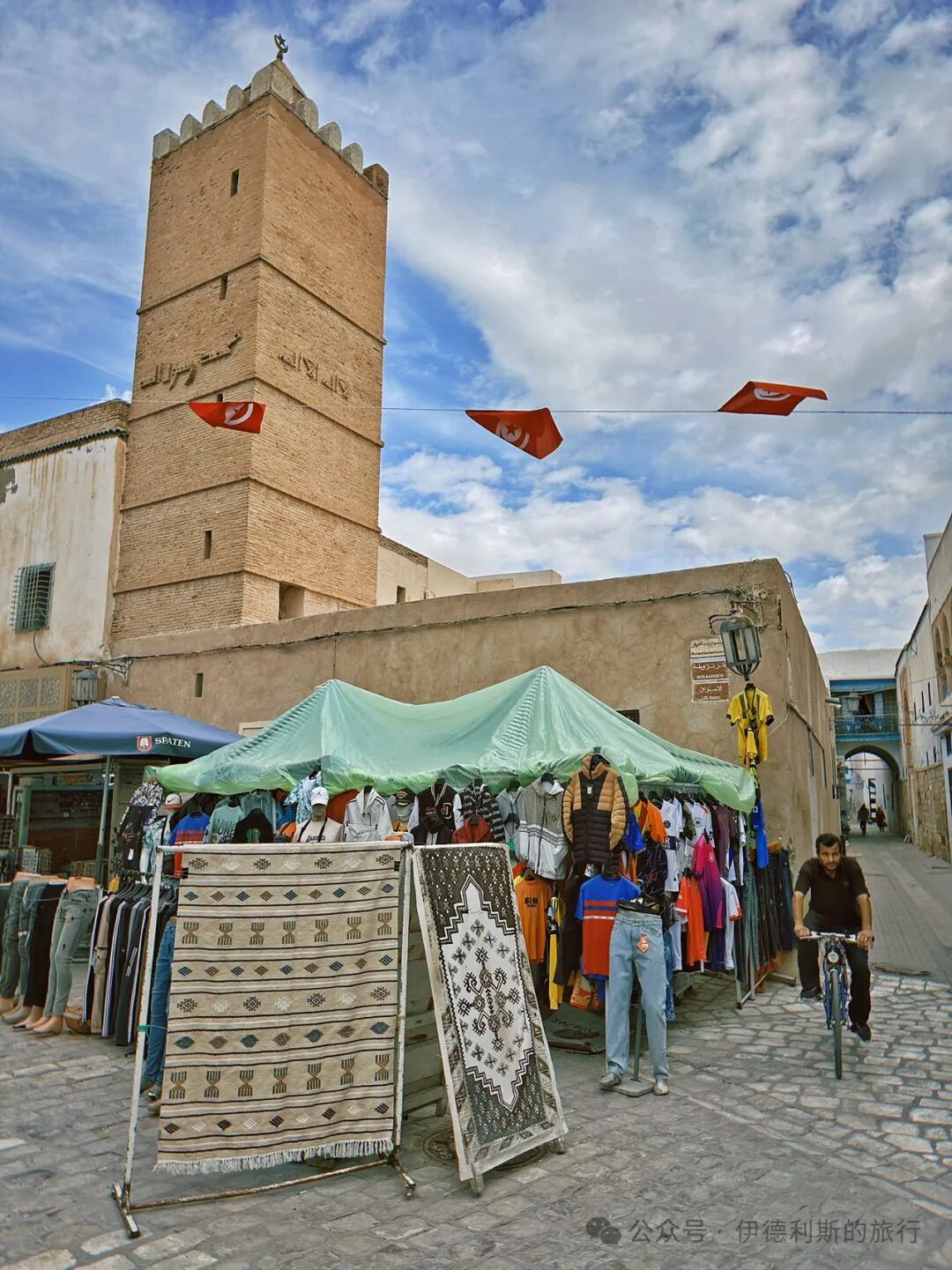
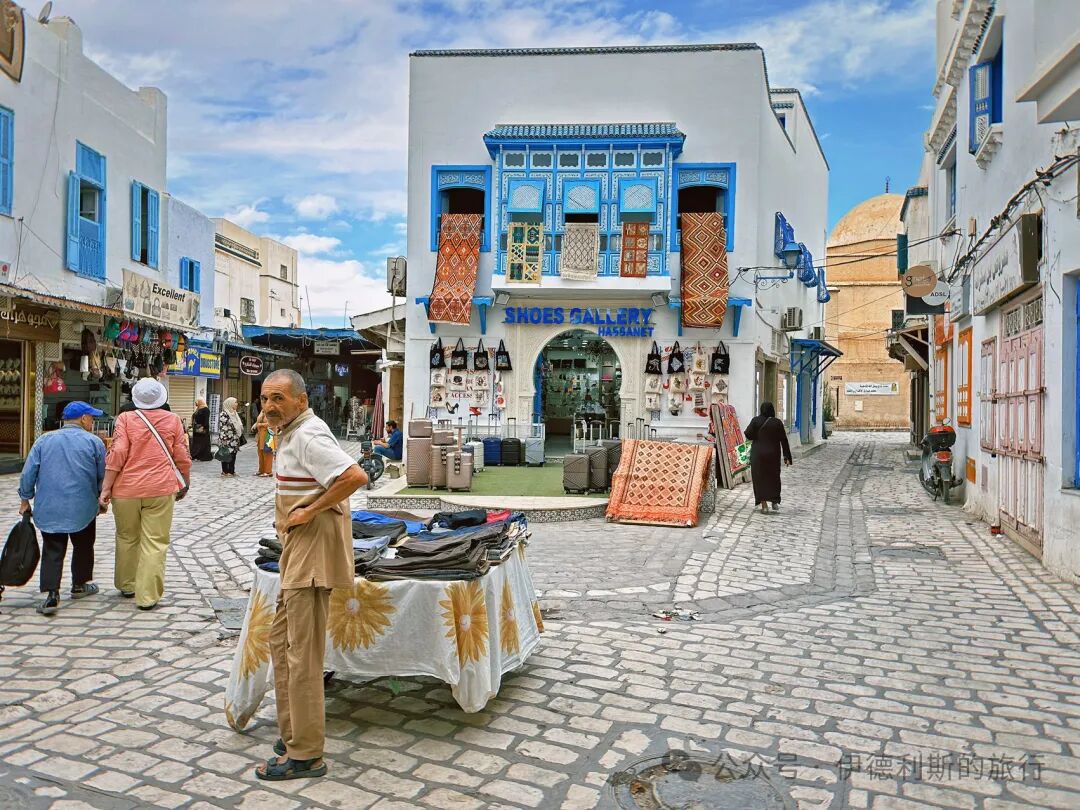
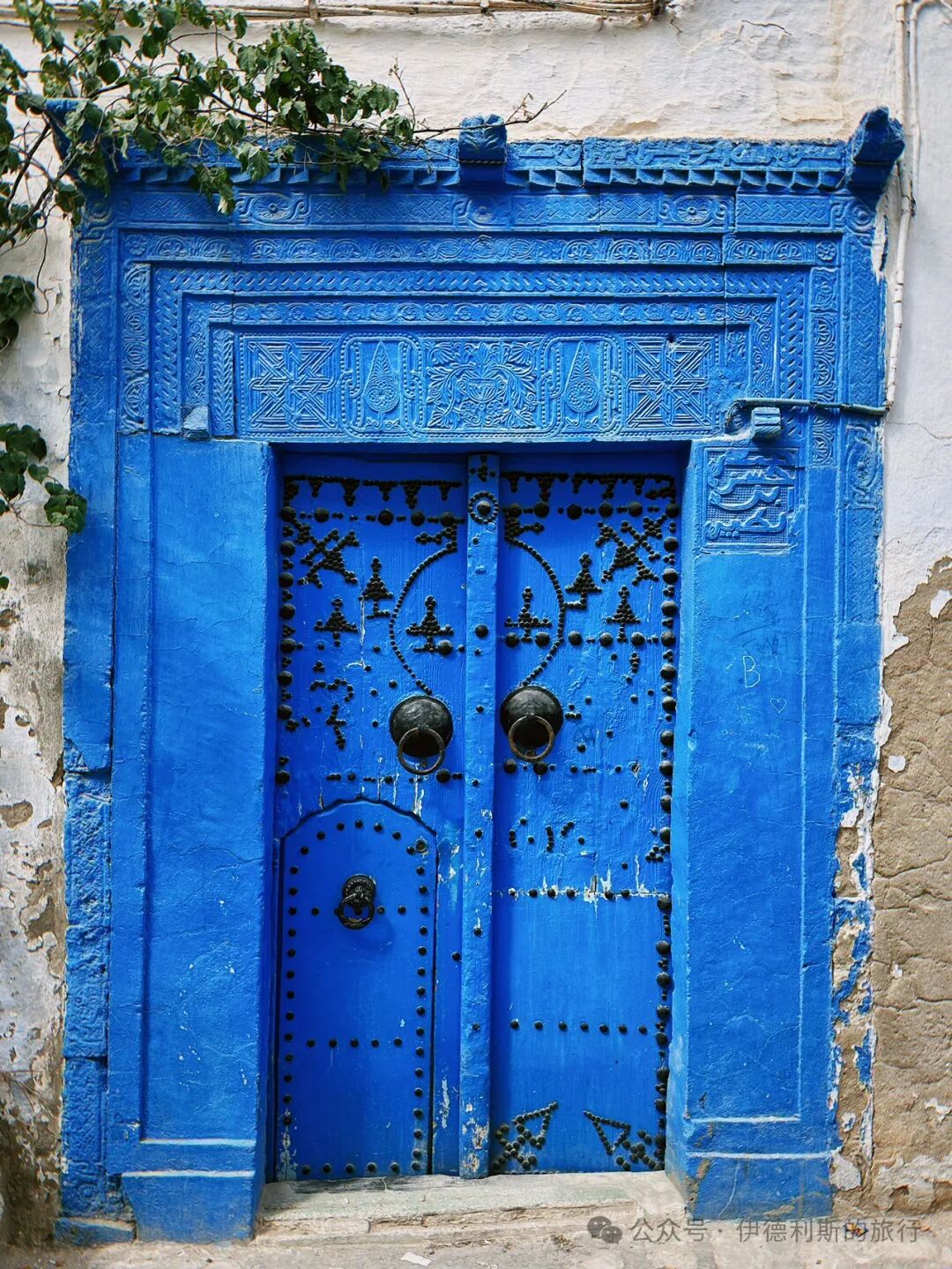
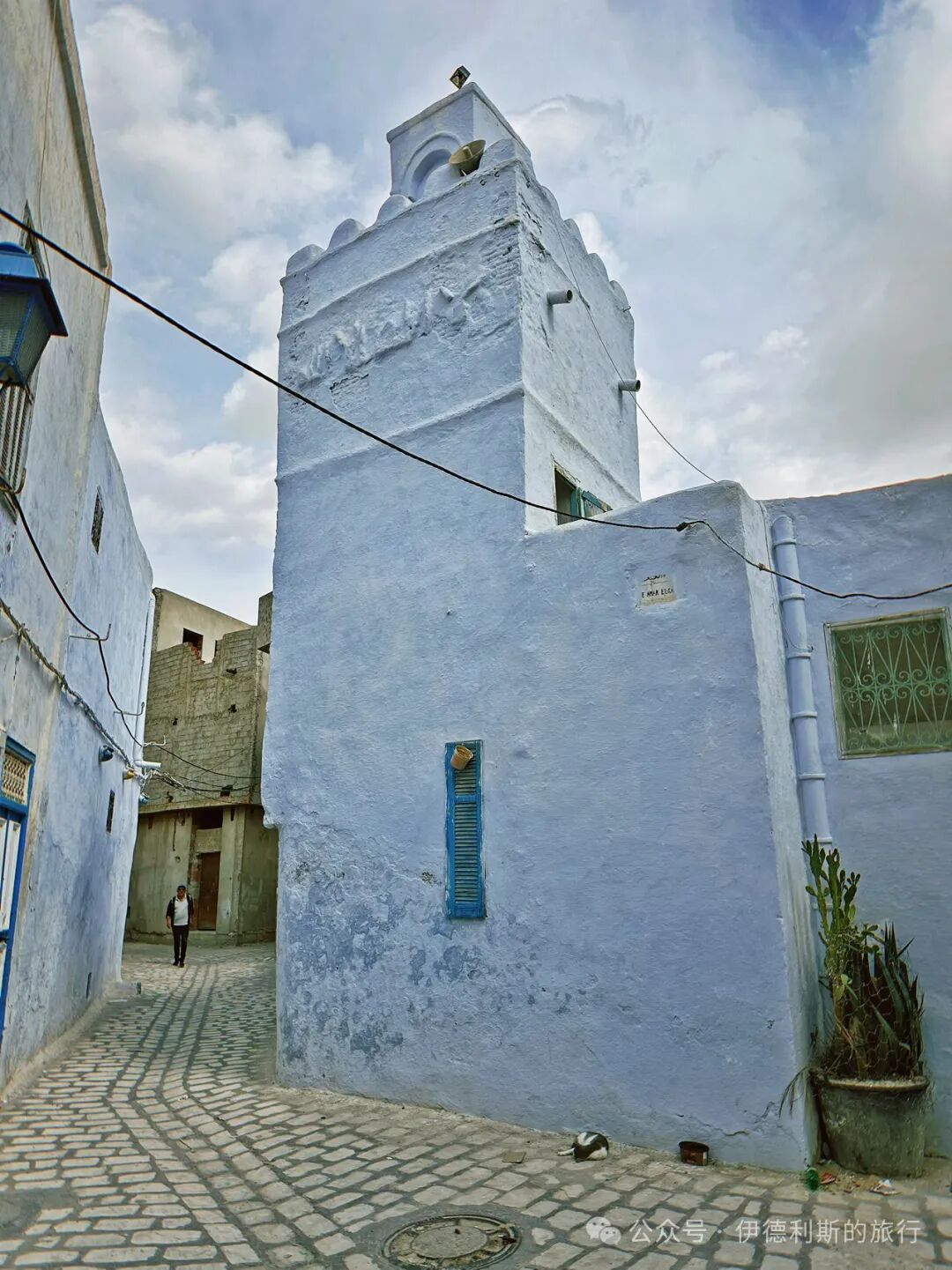
In the Kairouan medina market, various sweets are very popular, especially the date-filled pastry known as Makroudh.
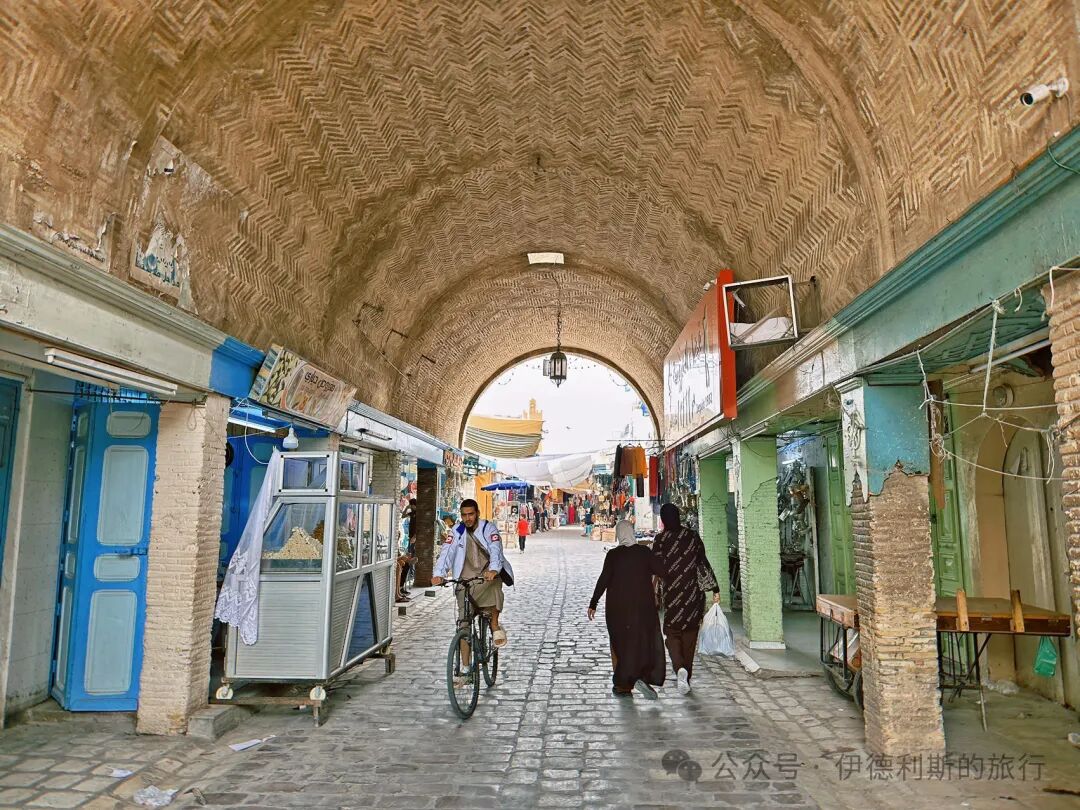
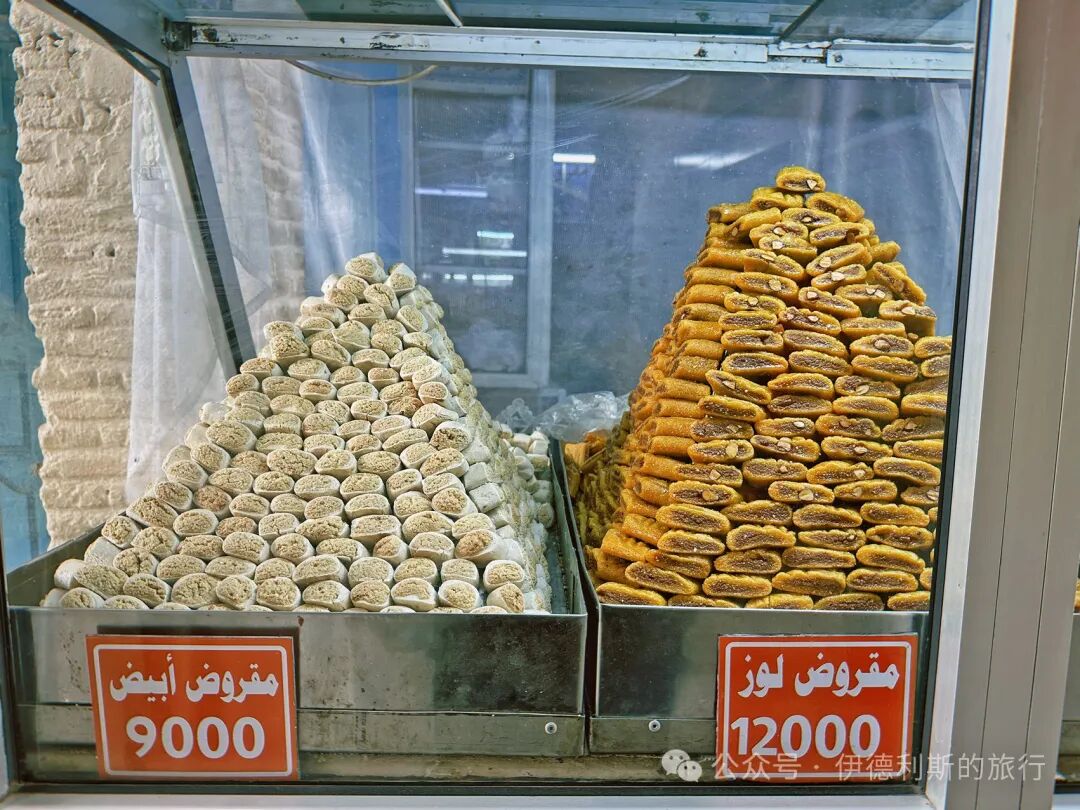
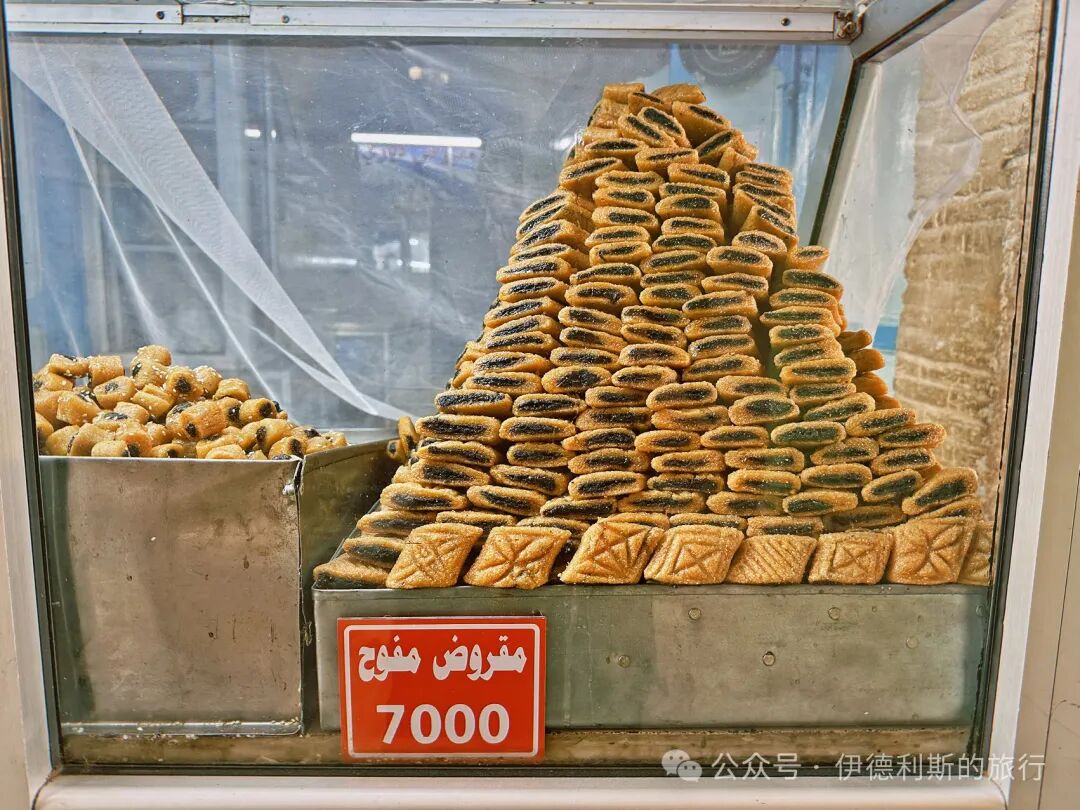
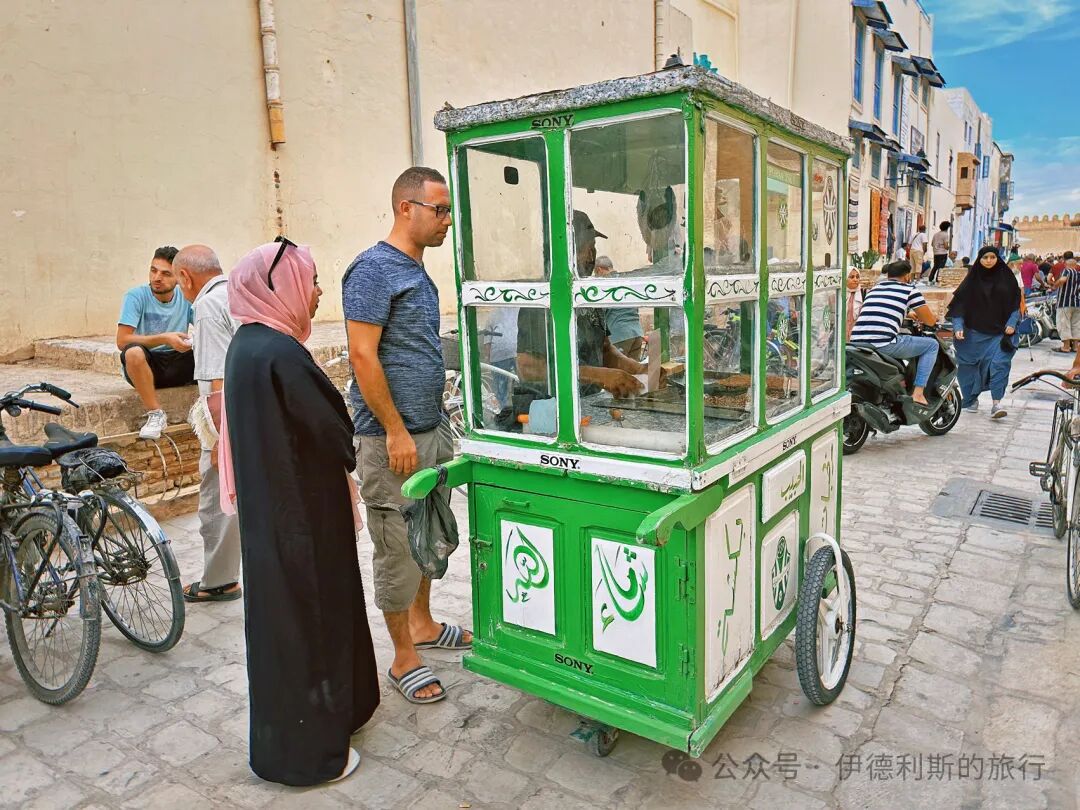
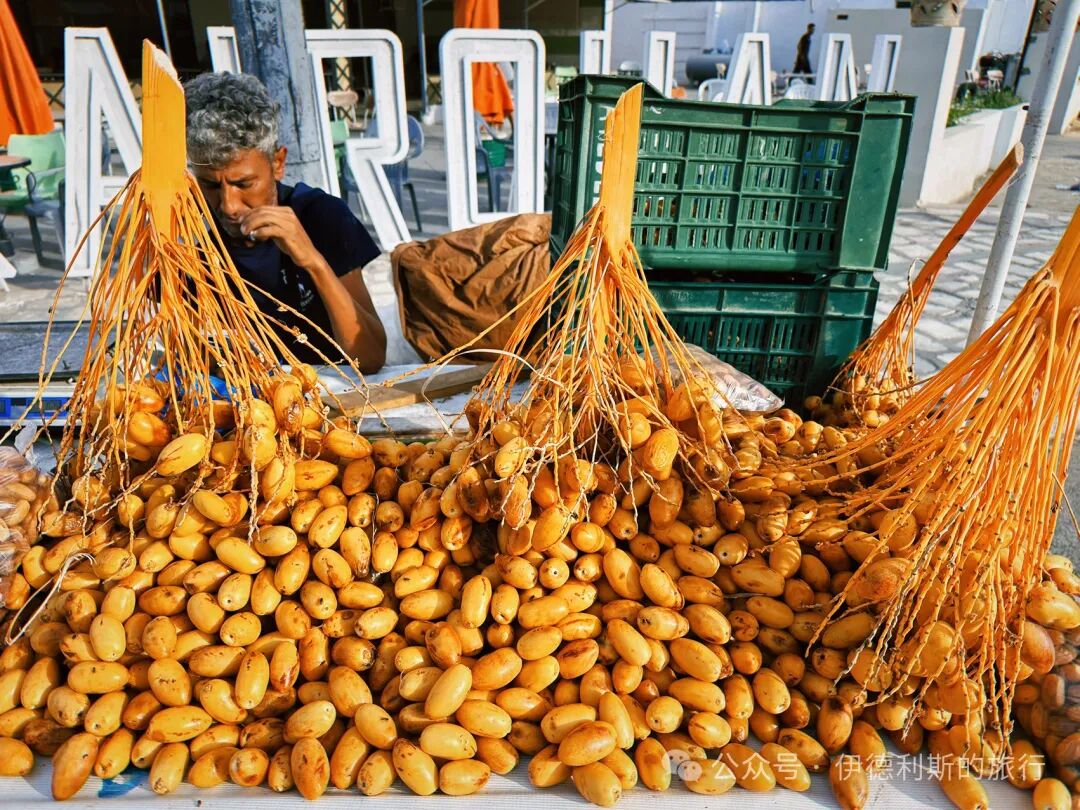
They also sell fresh dates here. They are quite sweet, though slightly more astringent than the dried ones.
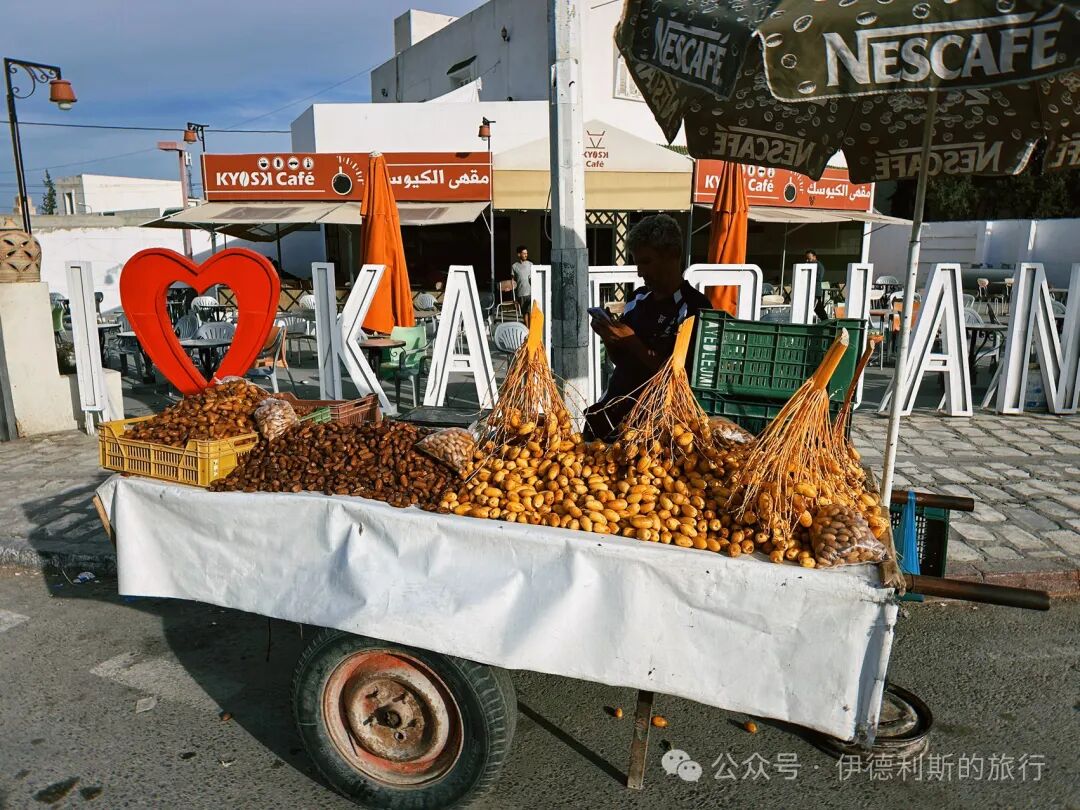
The 18th-century Kairouan Bey residence, Dar El Bey, is now a carpet shop. The residence has 18 rooms inside with very ornate ceilings. However, if you do not plan to buy a carpet, the staff might not let you see all the rooms.
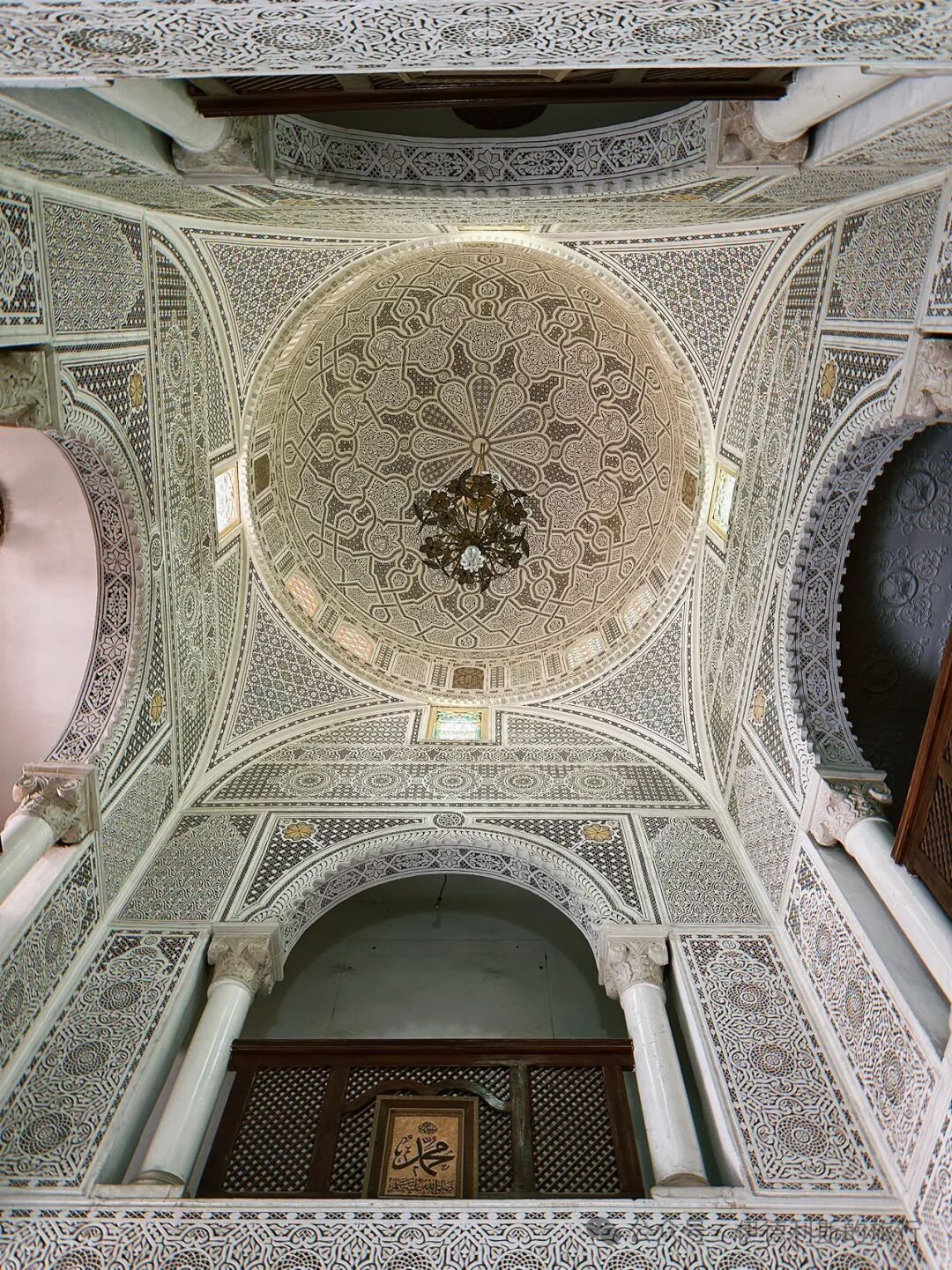
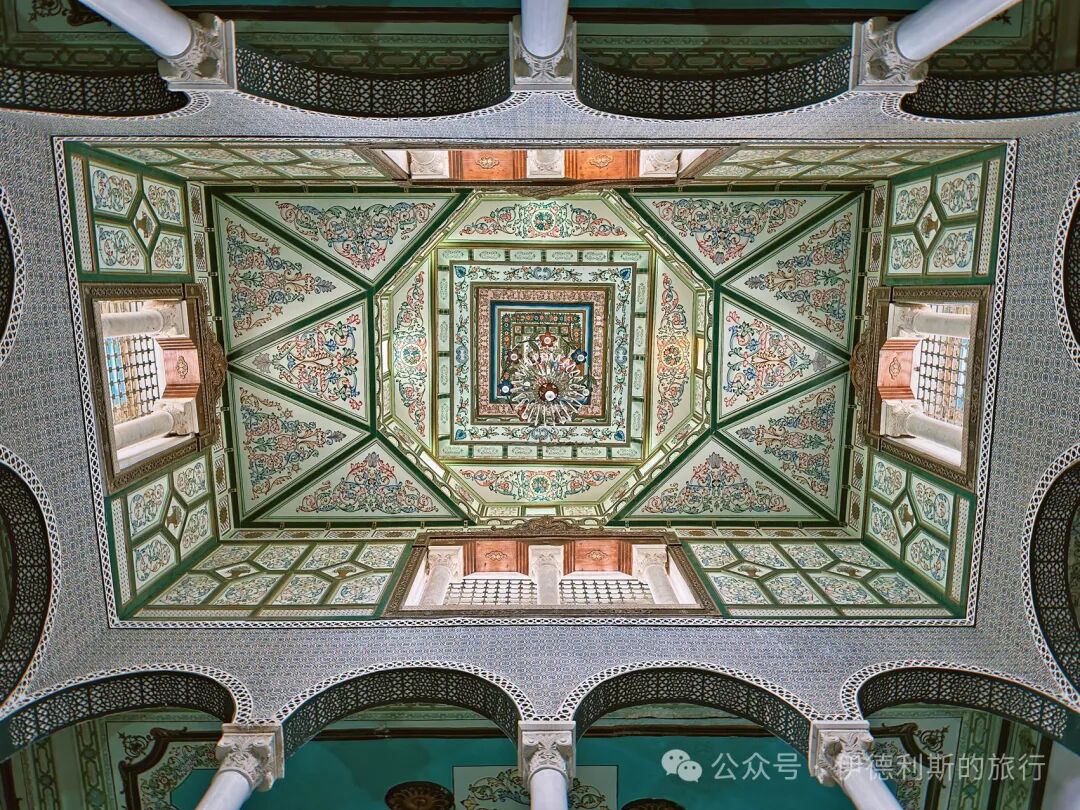
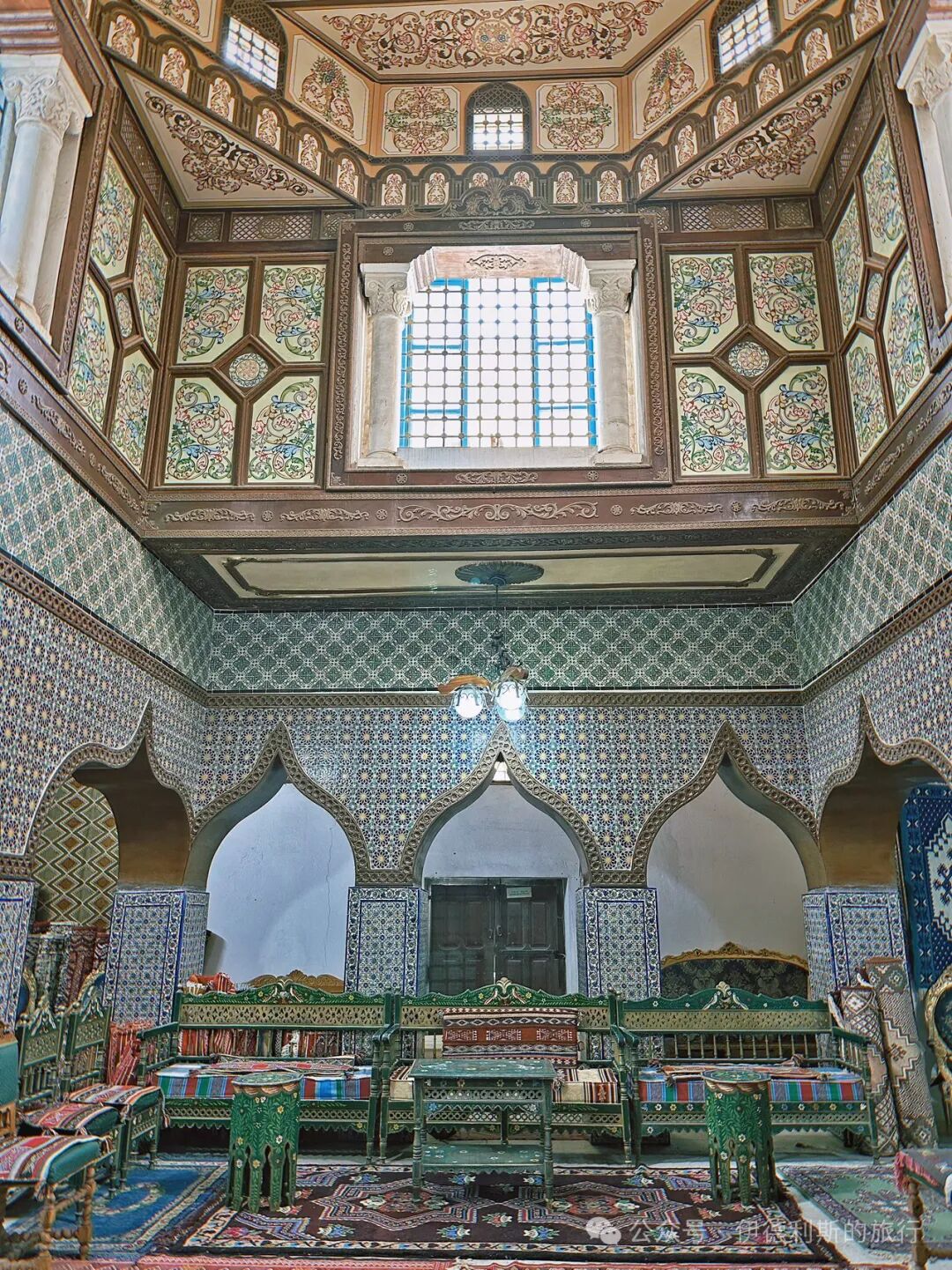
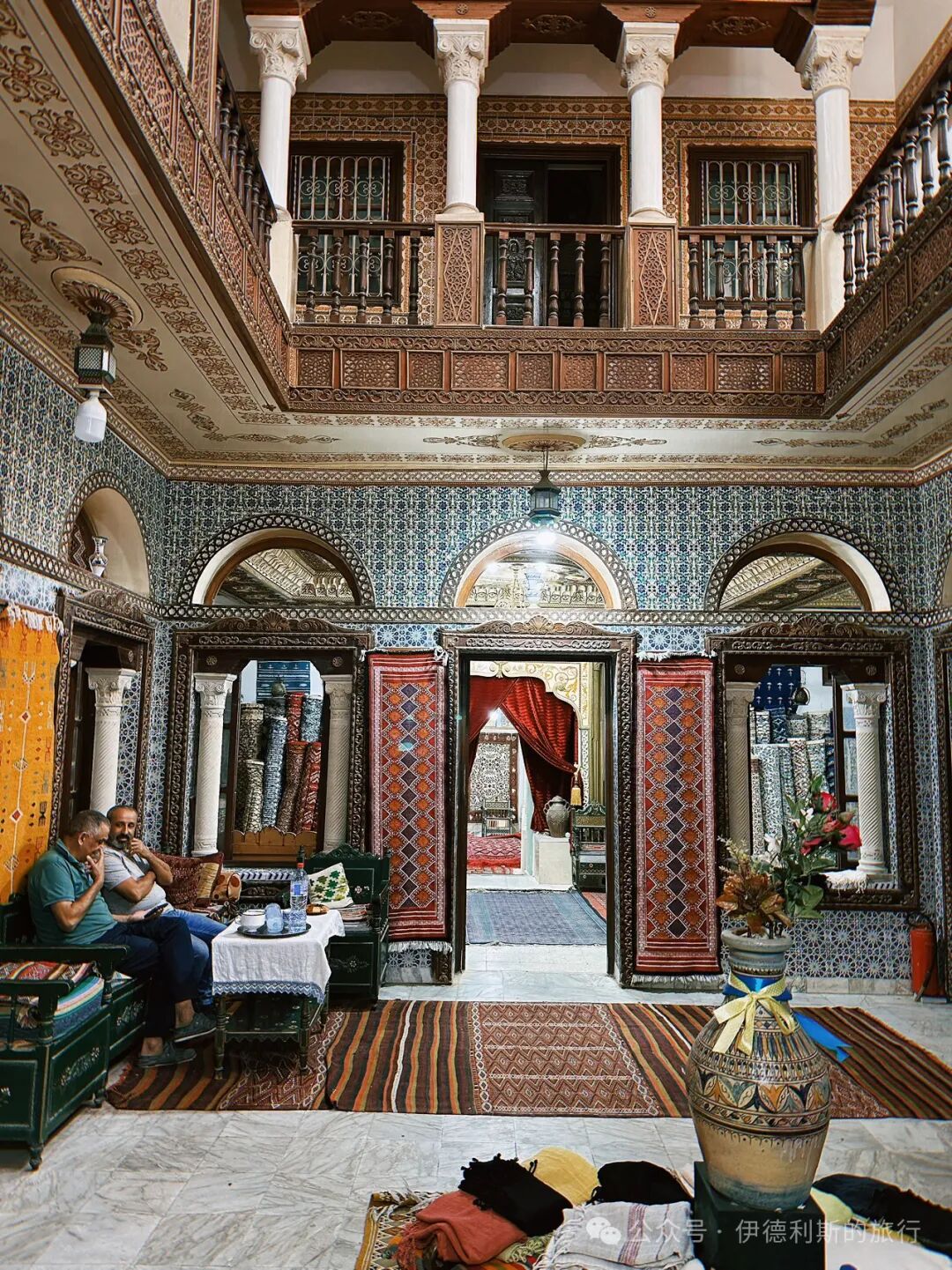
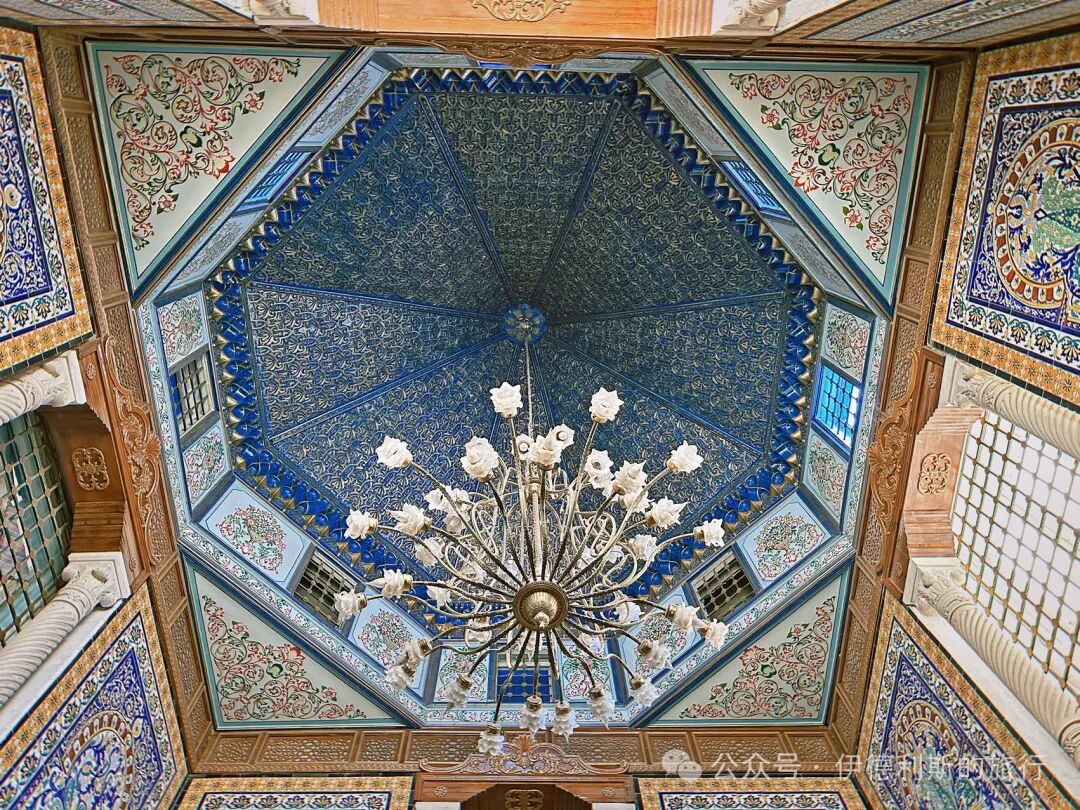
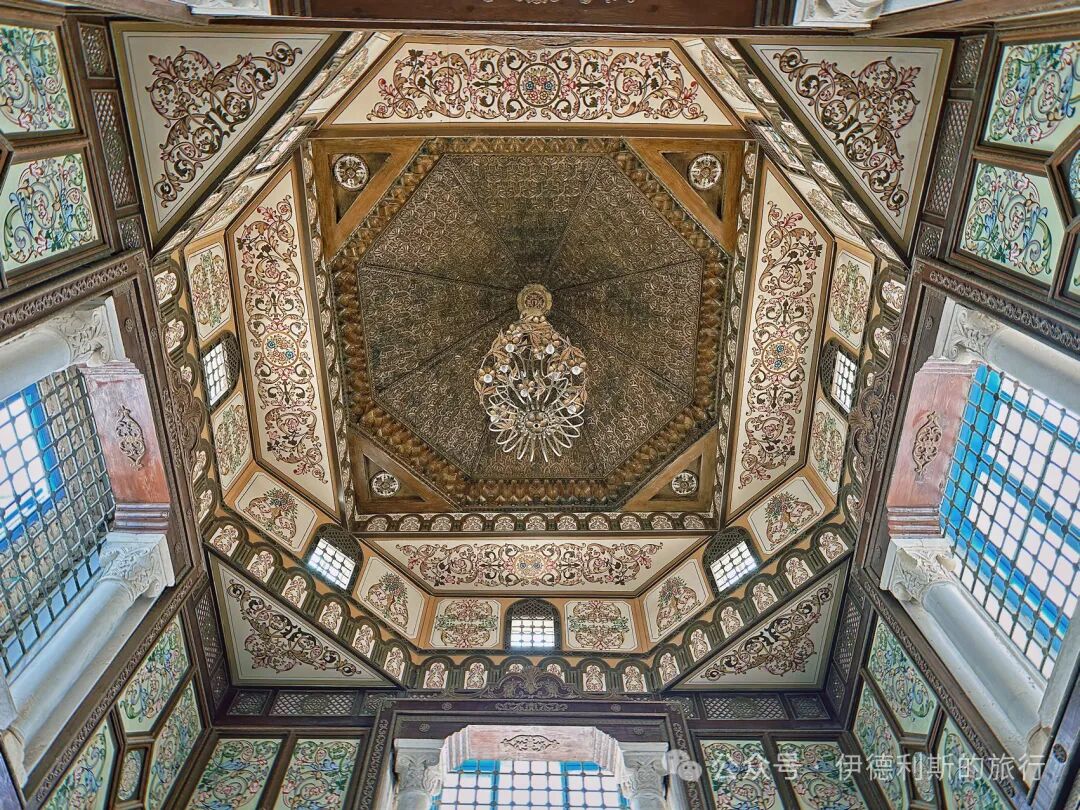
The office of the Kairouan Poetry Association; this kind of ornate ceiling is a signature feature of Kairouan.
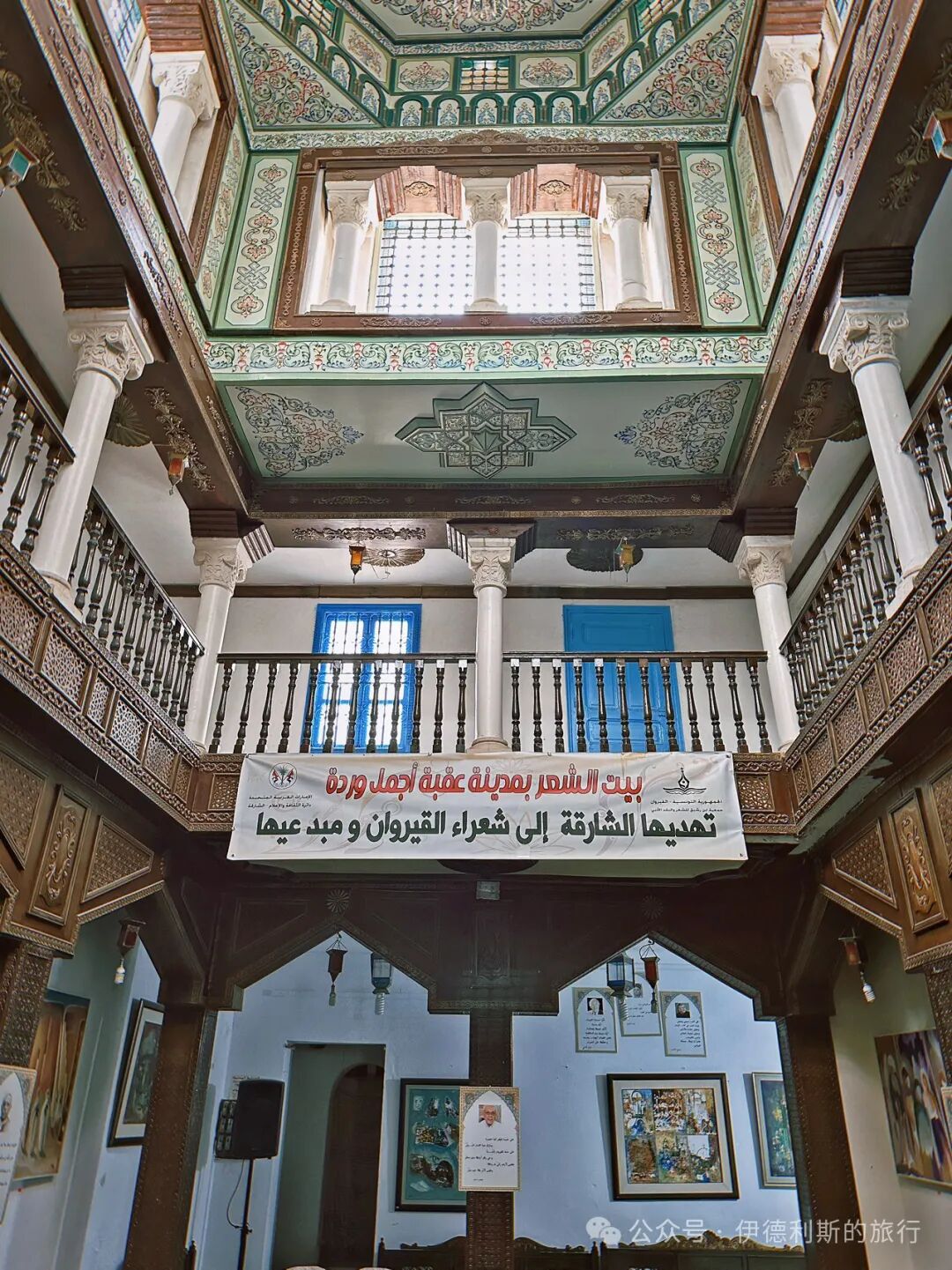
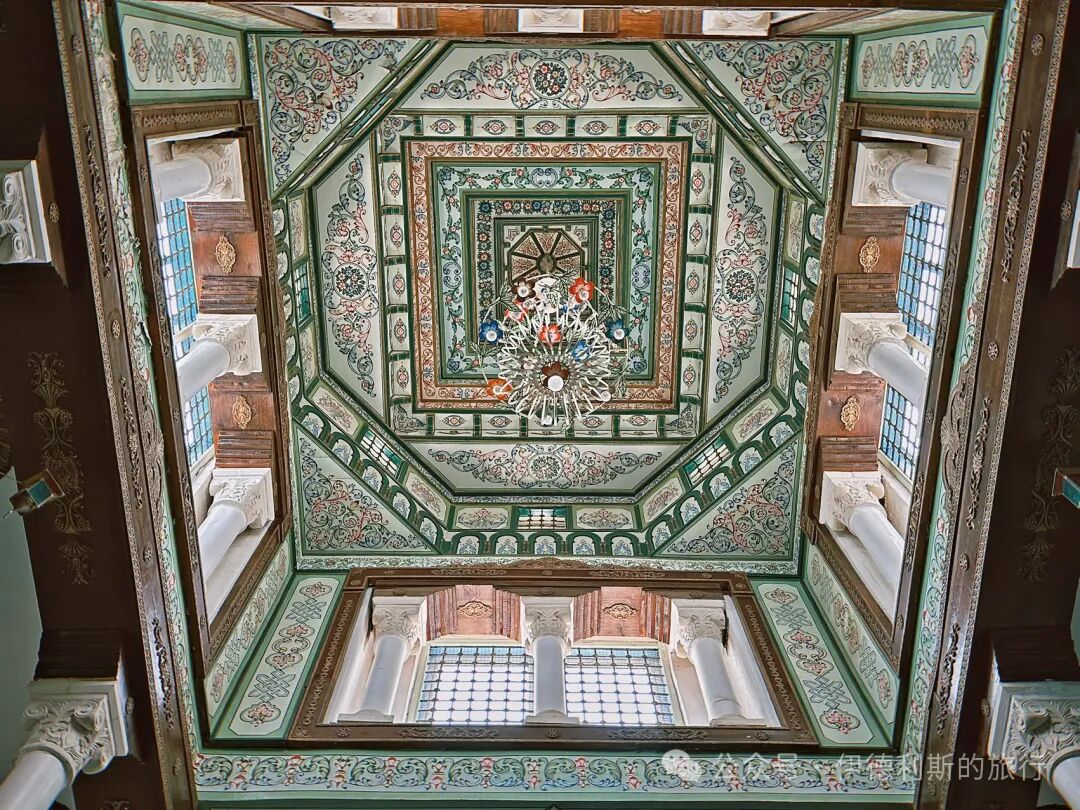
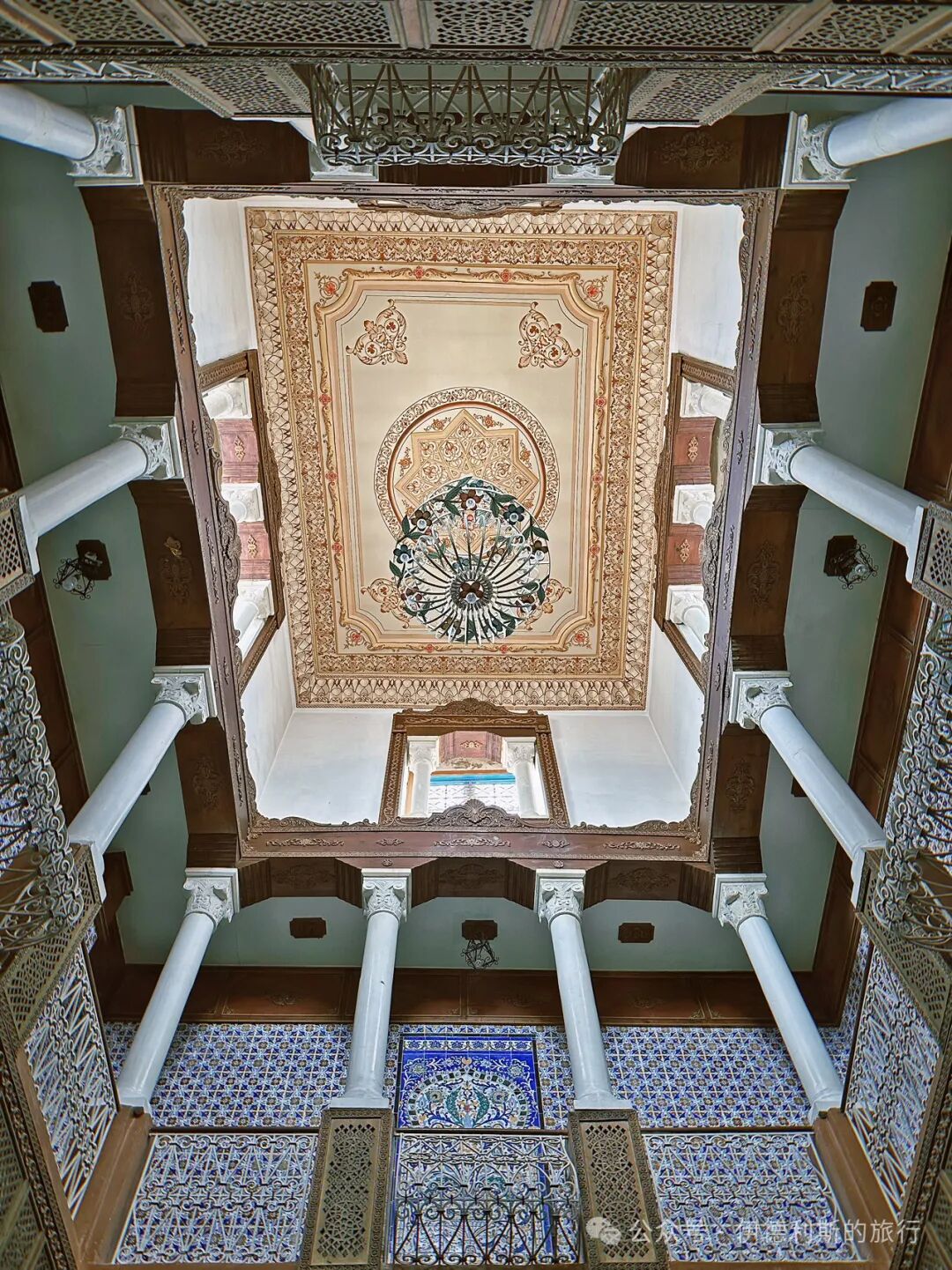
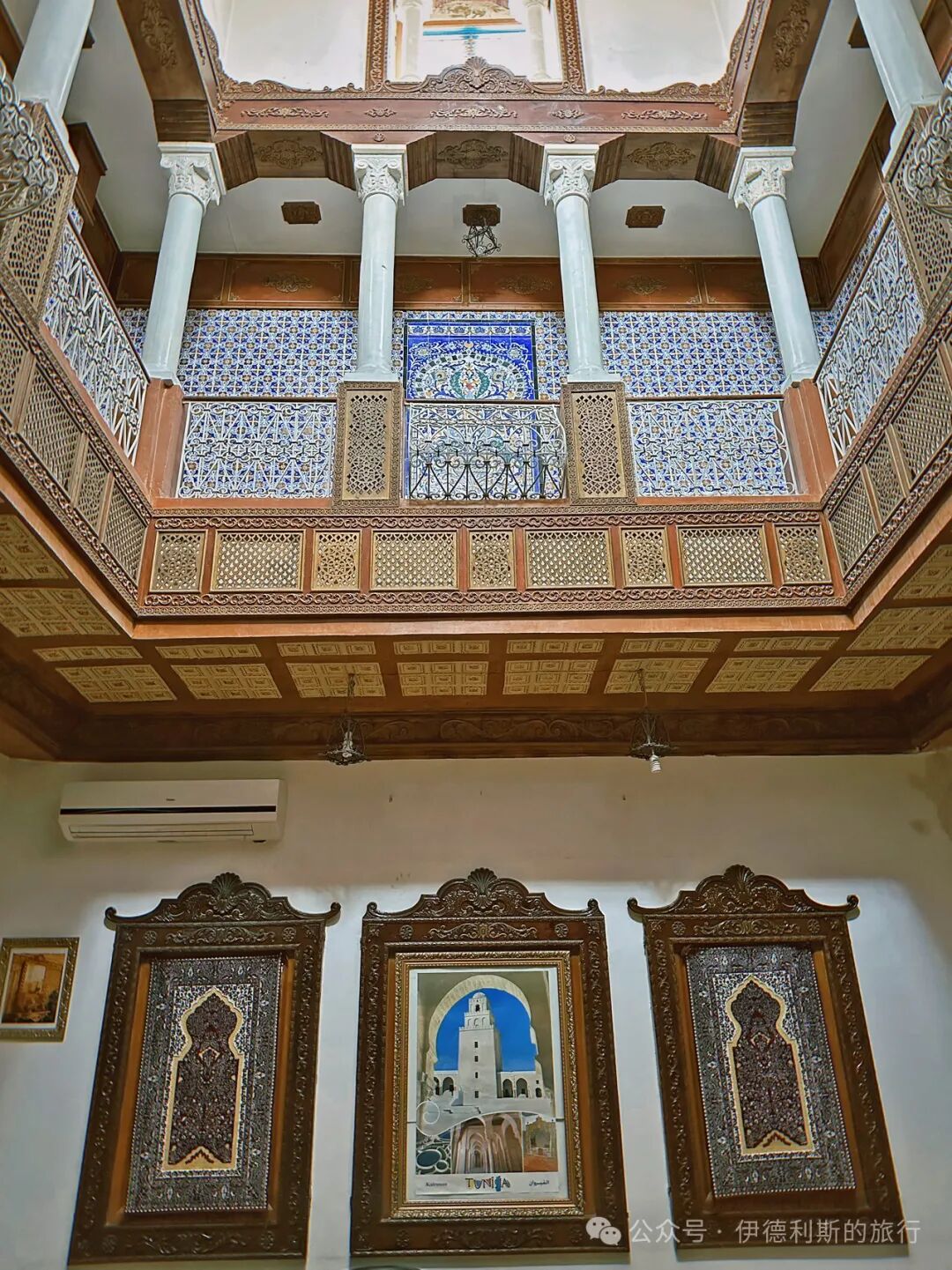
The ancient Bir Barrouta well in Kairouan. Legend says it was dug by the Abbasid governor Ibn El Ayoun in 796, and the current domed structure was rebuilt by the Bey of Tunis, Mohamed, in 1690. It is still in operation today, using a camel to power a water wheel (noria) to draw water, which people collect in clay pots.
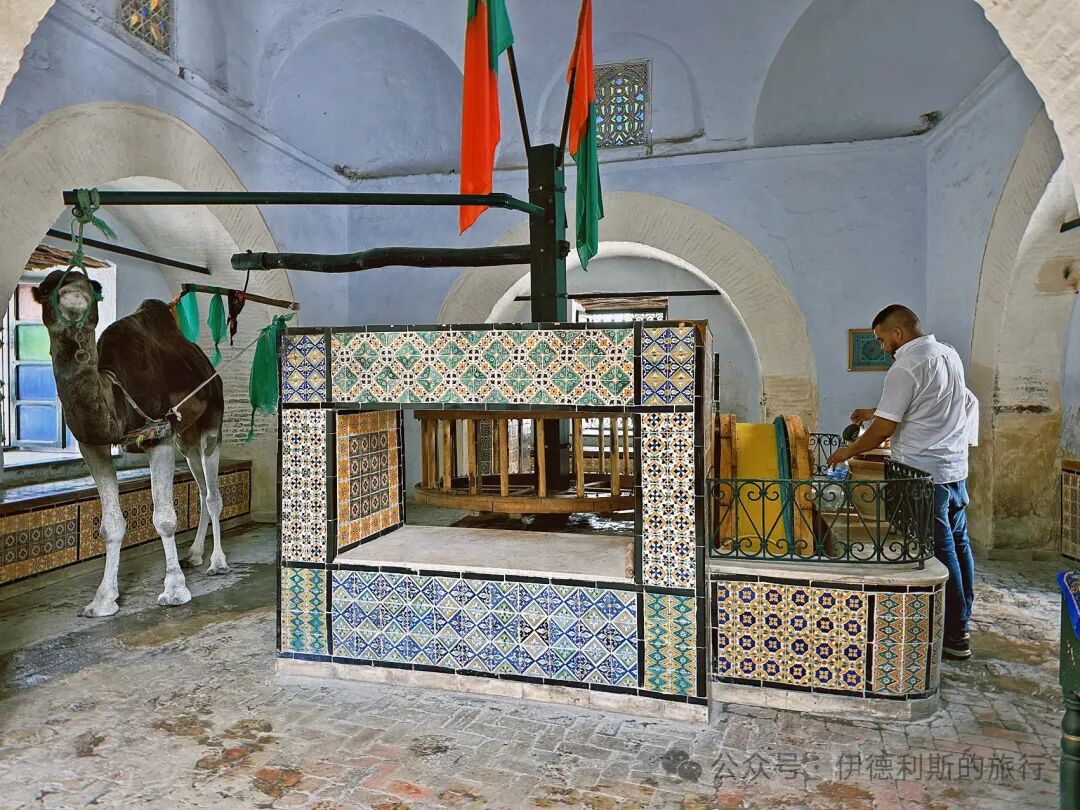
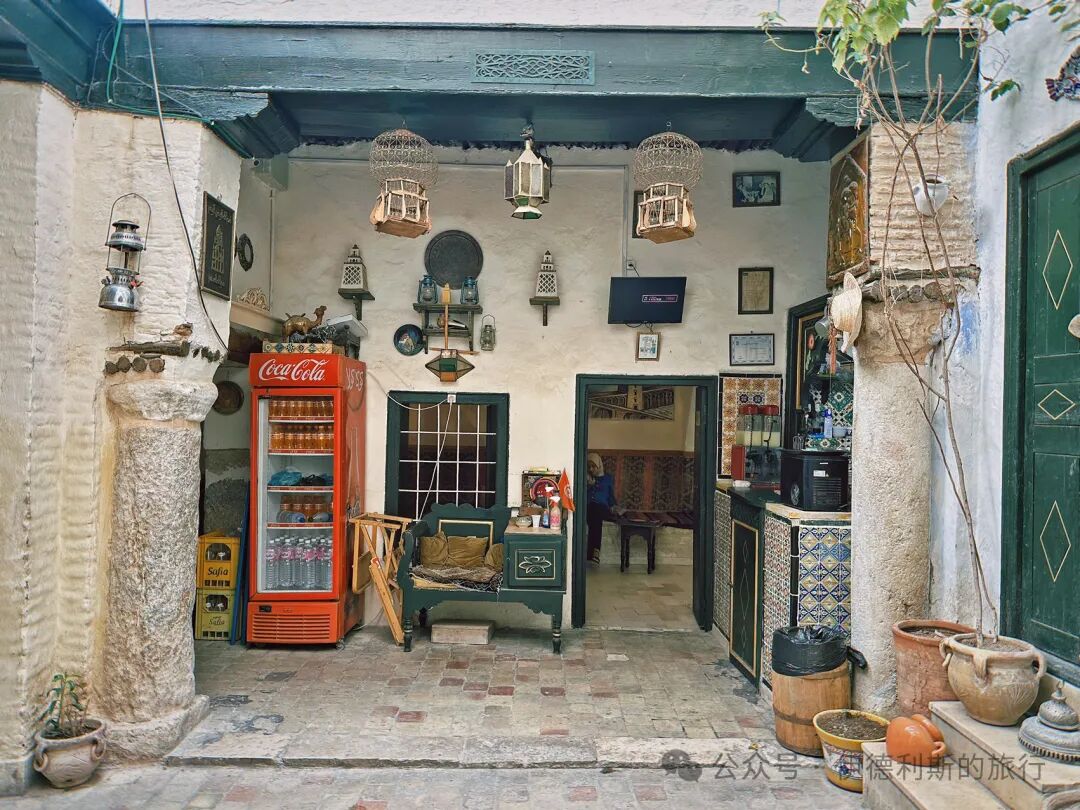
A gongbei built in 1829 in the old medina of Kairouan.
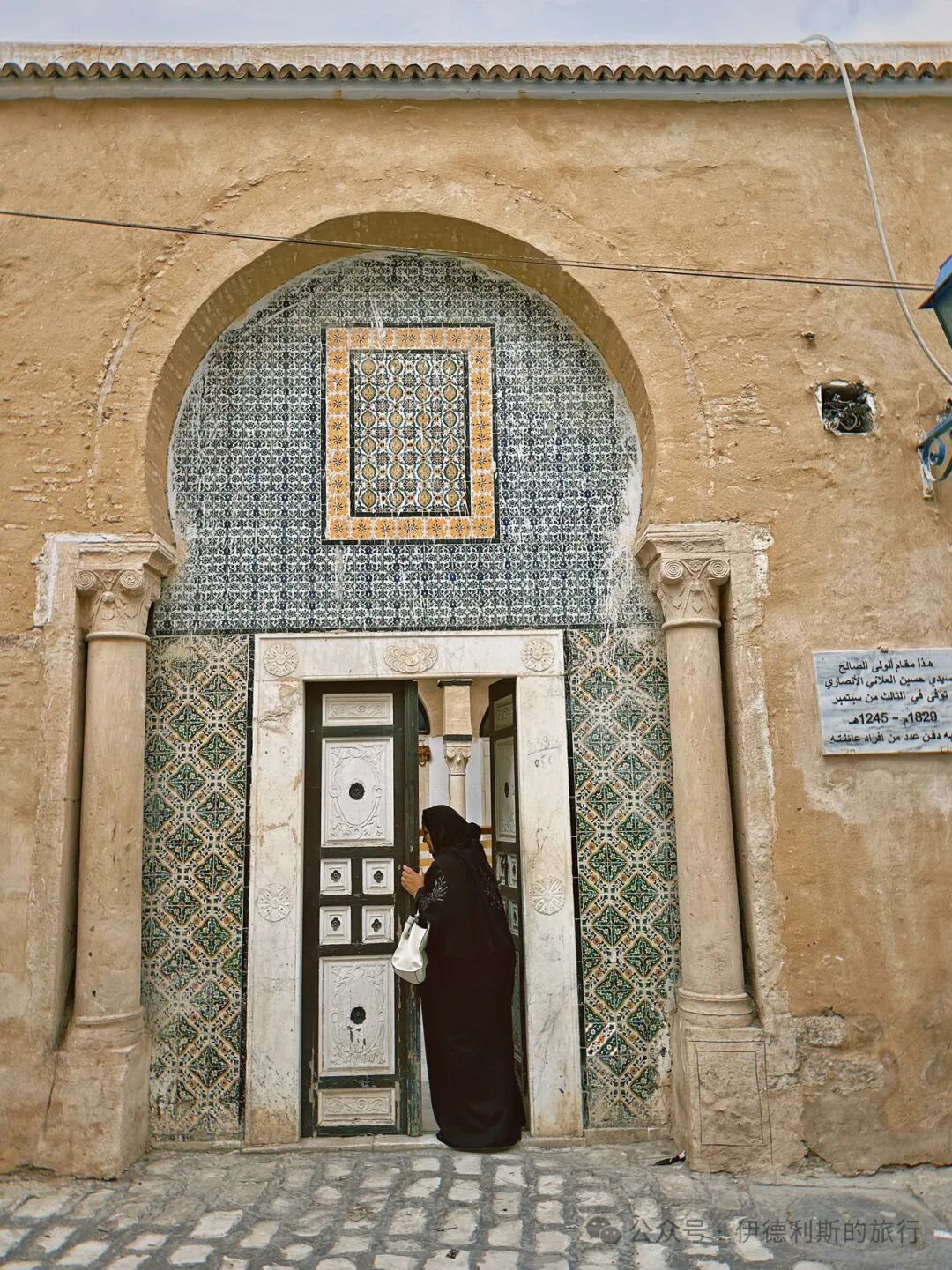
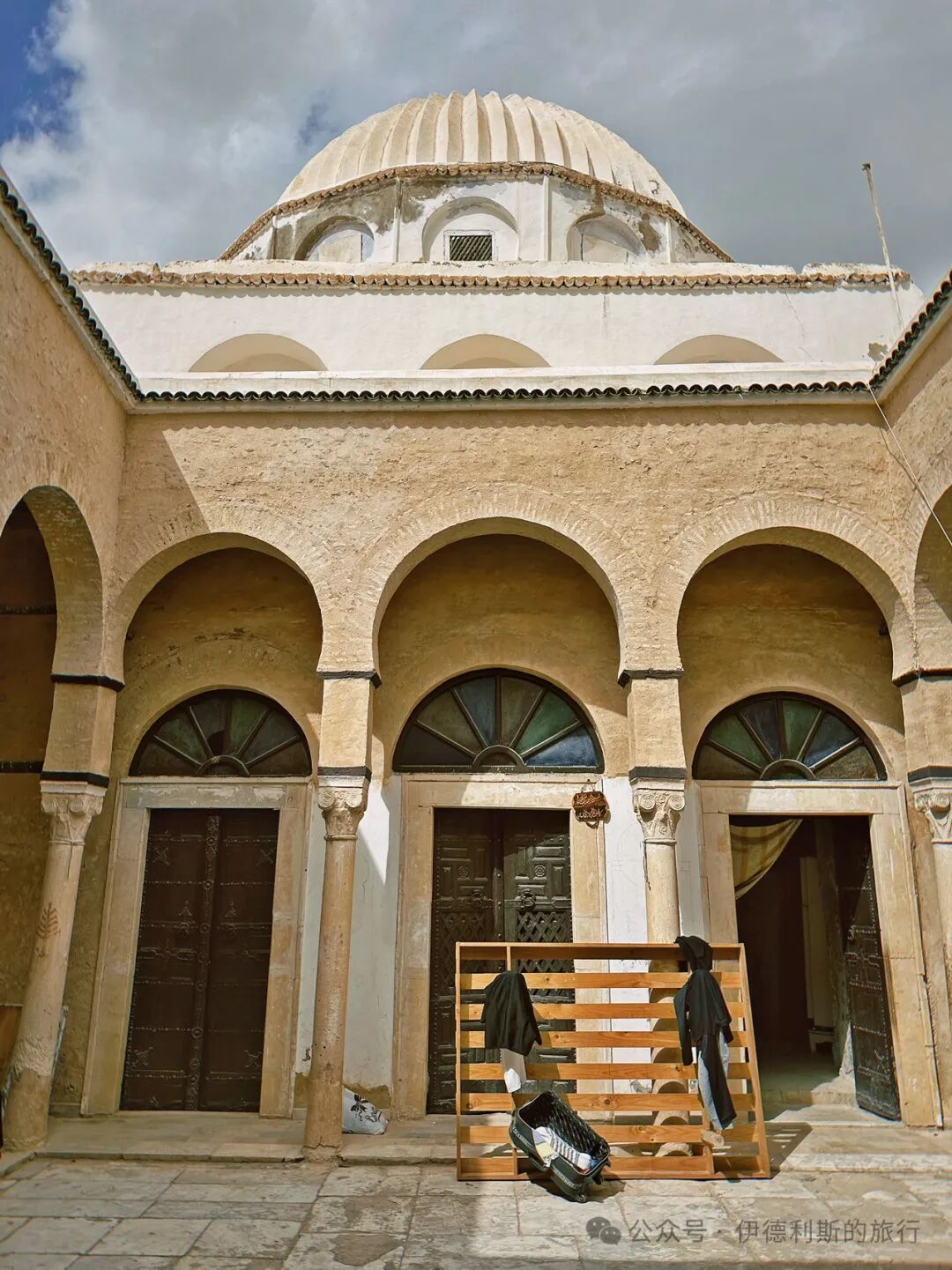
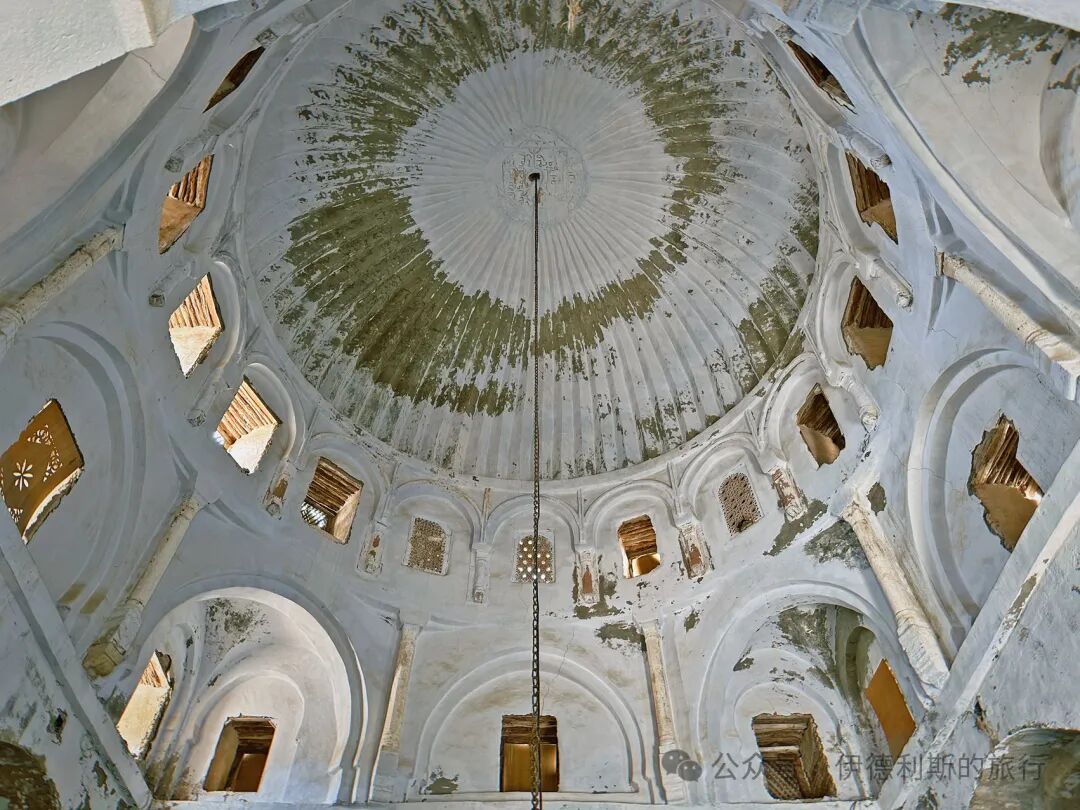
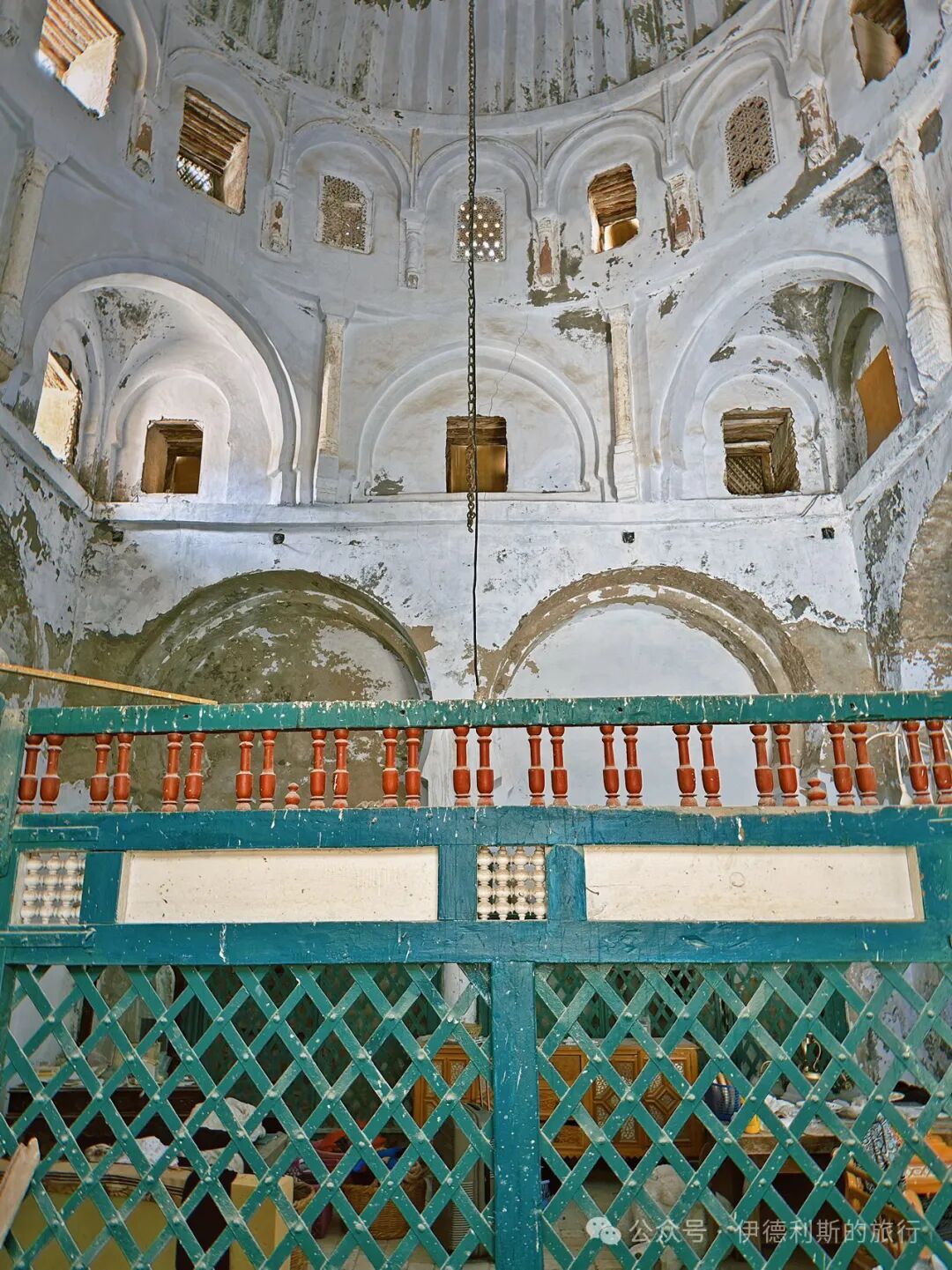
The Zeitouna Mosque outside the west gate of the old medina in Kairouan. Its architectural style is similar to the Great Mosque of Kairouan, but it is smaller in scale.
Halal Travel Guide: Hammamet, Tunisia - Ancient Medina, Beach and Muslim Heritage
Articles • ali2007fr posted the article • 0 comments • 133 views • 2026-05-19 21:38
Summary: Hammamet, Tunisia - Ancient Medina, Beach and Muslim Heritage is presented as a clear English travel account for readers interested in Muslim life, halal food, architecture, and local history. The article keeps the original names, food details, photographs, and cultural context while focusing on Hammamet, Tunisia Travel, Muslim Heritage.
Hammamet sits halfway between Tunisia's two major cities, Tunis and Sousse, and it is very easy to reach by shared taxi (louage) from either one. Hammamet has been a resort destination since the 1990s, with countless hotels lining the beach and streets full of European faces. The old walled city (medina) here is only about 200 meters long, but it is the most crowded one I have ever seen.
At noon, we caught a ride from the shared taxi station (Station Louage de Sousse) in the southern suburbs of Sousse and arrived at the Hammamet Sud intersection on the west side of Hammamet an hour later, then took a taxi to the old medina. Be aware that Hammamet has two medinas; one is a new replica built by the sea in the 1990s, and we went to the wrong one at first. To get to the old medina, we had to tell the taxi driver we were going to the Hammamet fortress before he understood.
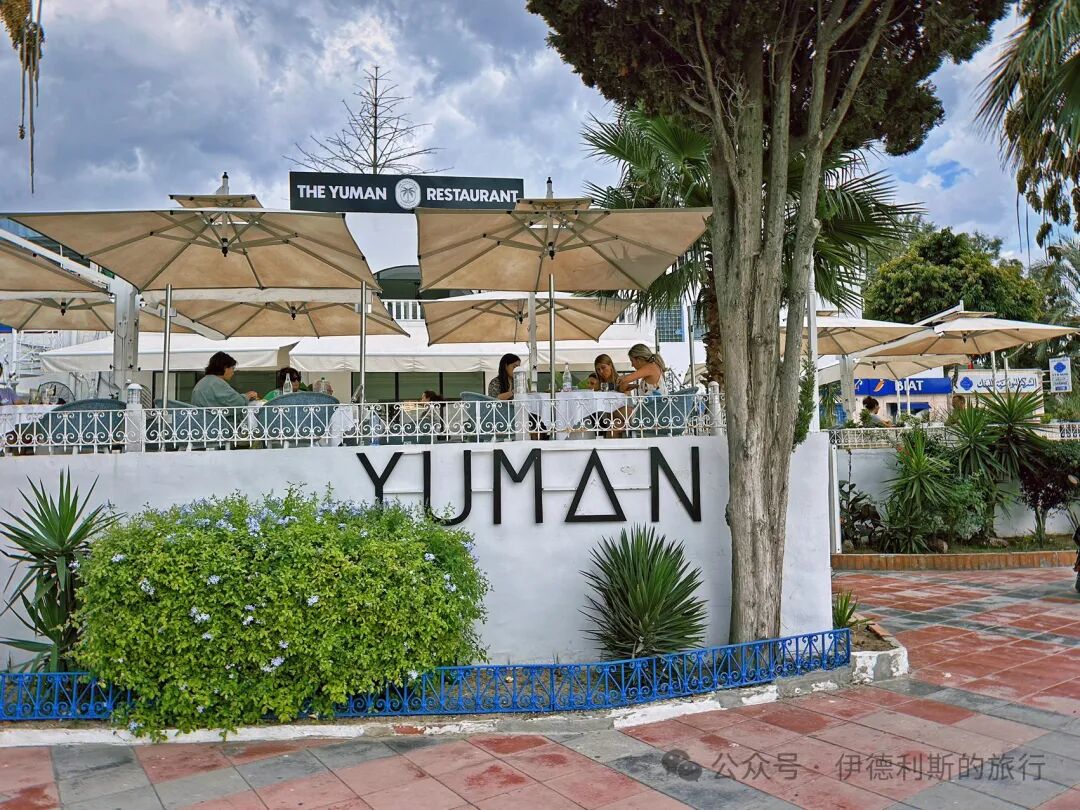
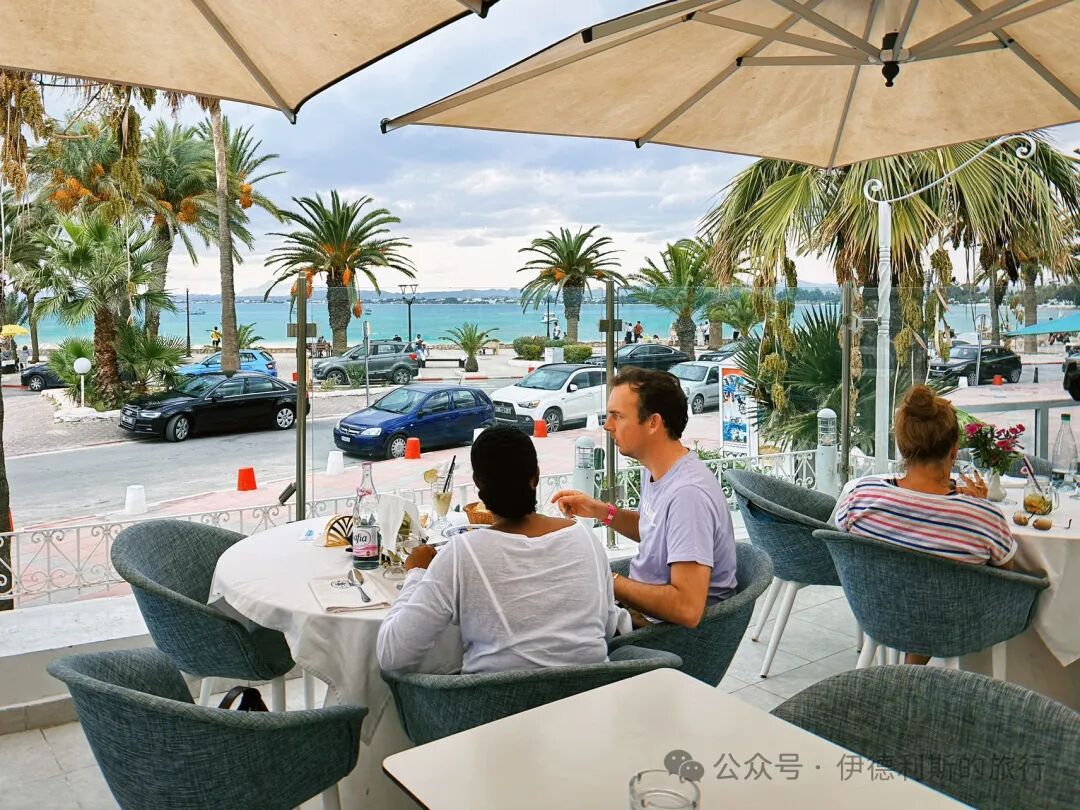
Restaurants near the medina are mostly clustered outside the north wall, serving a mix of Tunisian food and Western dishes. We went to Restaurant Yuman, which has a great view of the fortress and the beach. We ordered pan-fried sea bass and a mixed grill platter. The grill included North African sausage (Merguez), steak, lamb chops, and chicken, all classic dishes from the Tunisian coast.
When ordering at a restaurant in Tunisia, you basically only need to order the main course. Appetizers and staples are served for free. After we placed our order, they first brought us thick soup, followed by a baguette and an appetizer platter. The appetizers included Tunisian salad, carrot salad (Houria), and green pepper salad (Mechouia). We ate these three almost every day in Tunisia. Tunisian salad is just diced cucumber, tomato, and onion mixed with olive oil. Higher-end versions also include boiled eggs and tuna. Green pepper salad (Mechouia) contains green peppers, tomatoes, onions, garlic, and other ingredients. Tunisians love it, and it is rich in vitamins and very healthy.
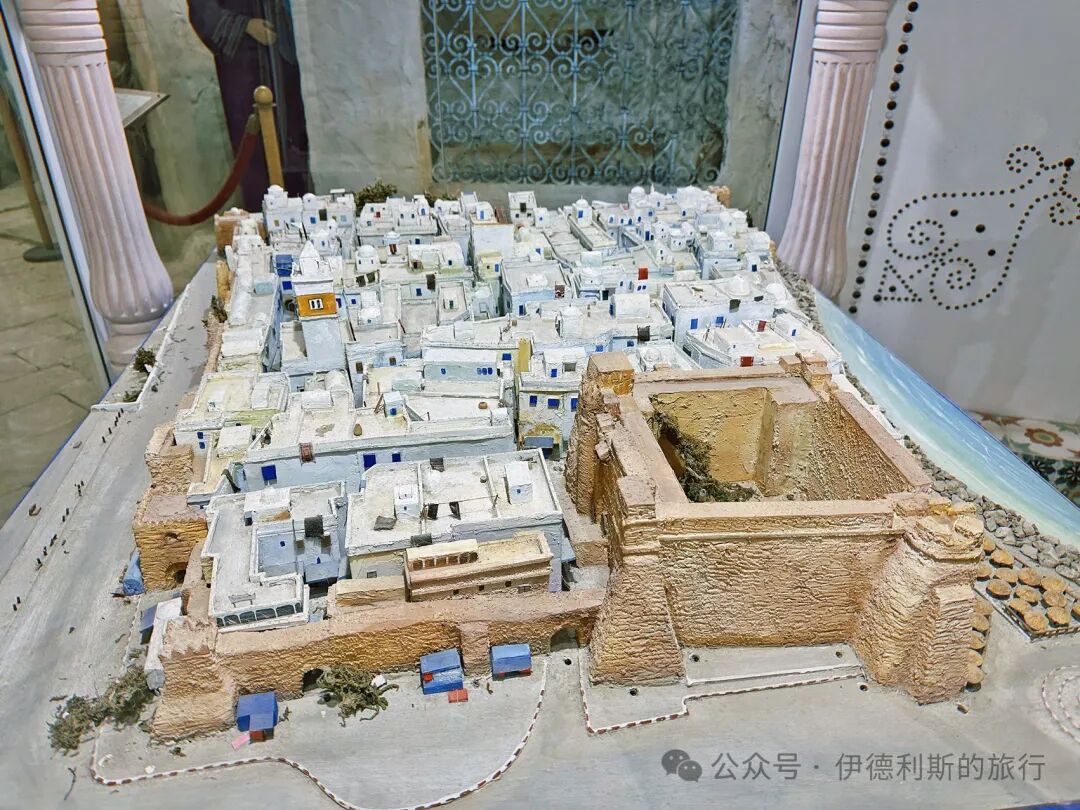
Hammamet Fortress was first built in 893 AD by order of Ibrahim II, an emir of the Arab Aghlabid dynasty. During this period, the Aghlabid dynasty was constantly conquering Sicily, which was under the control of the Byzantine Empire, while also suppressing Berber uprisings.
The Hammamet Fortress is very sturdy and was built mainly to defend against pirate raids from places like Catalonia and Malta. The fortress was destroyed by the Spanish in the 12th century, rebuilt twice in the 14th and 15th centuries, and the upper walls were strengthened by the Ottoman Empire during the 16th and 17th centuries.
In 1605, a joint fleet from the Spanish Empire, the Kingdom of Sicily, and the Knights Hospitaller attacked the Ottoman-controlled Hammamet Fortress. A heavy rainstorm destroyed their ships and caused massive casualties for the allied forces, making this the most famous battle at the fortress.
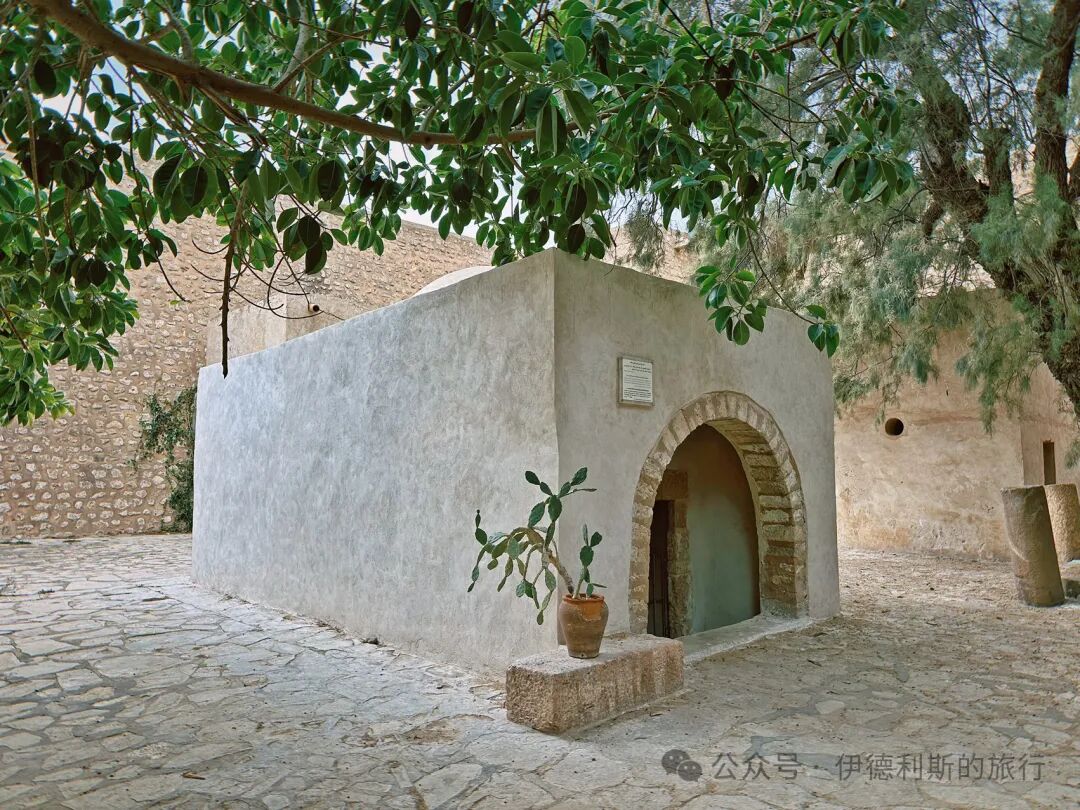
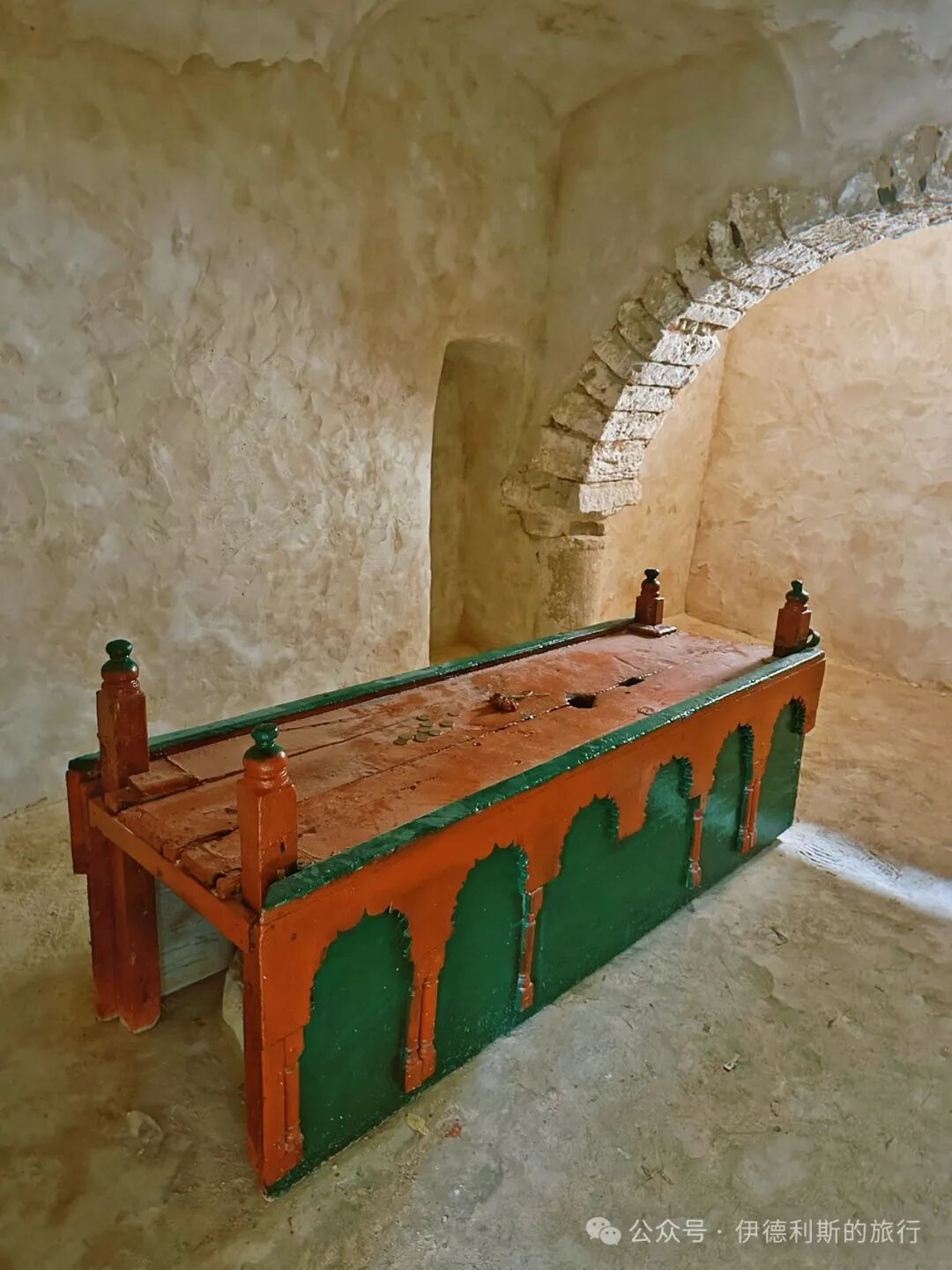
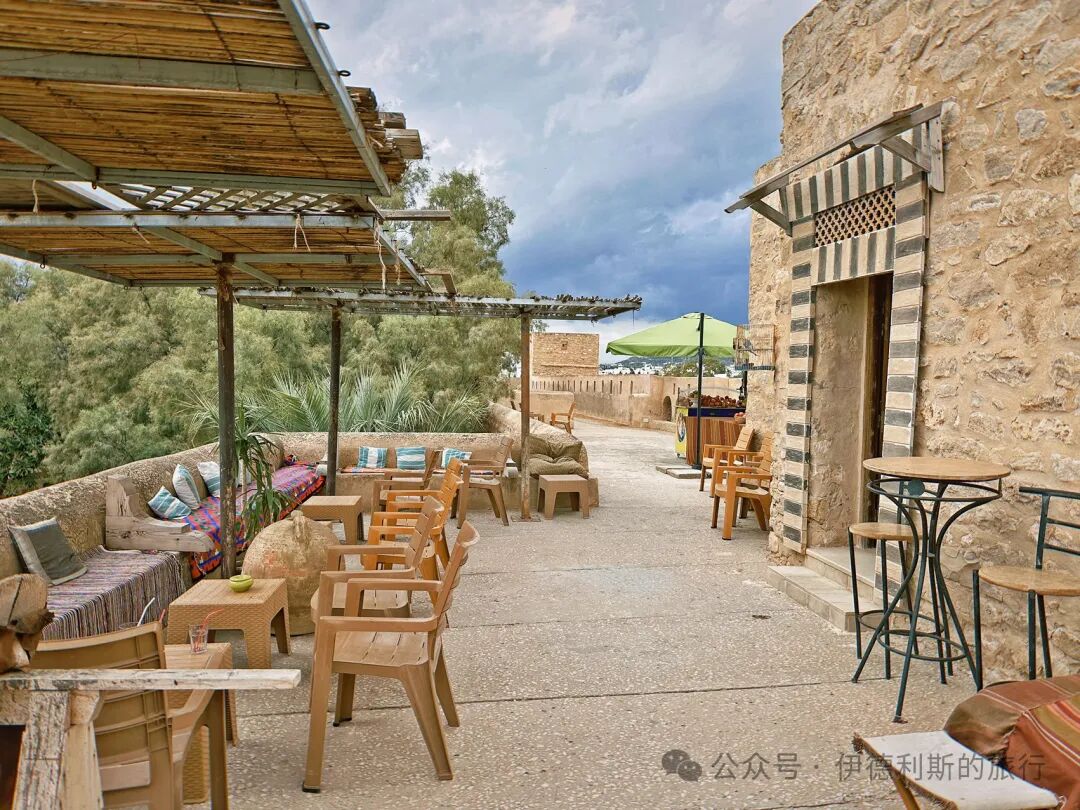
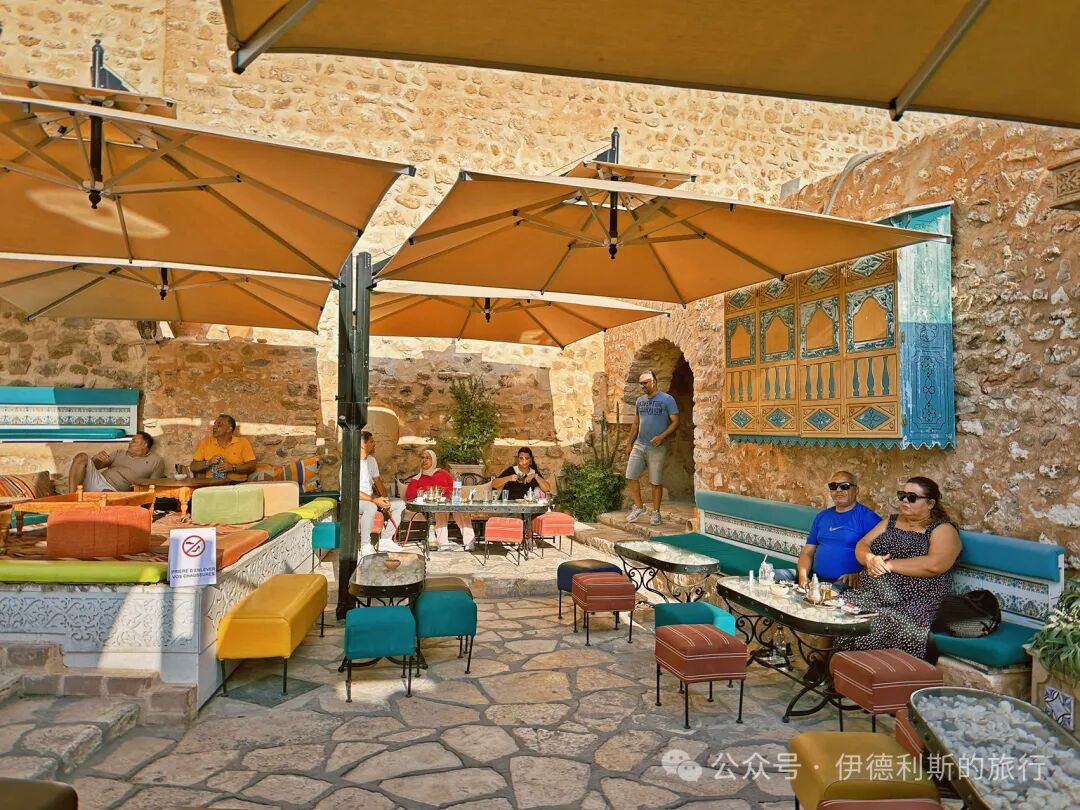
Inside the fortress, there are quite a few pine trees, which is rare. There is also a teahouse on the city walls with a great view. In the center of the fortress stands a tomb from the late 15th century. The person buried there, Sidi Bou-Ali Mohamed, was once stationed here and was very devout in his faith.
The walls and gates of the old medina in Hammamet. Hammamet grew from a military fortress into a medina city in the 13th century, so walls were built around the residential area of the medina in the mid-13th century.
The Haouara Gate by the sea was built by the Berber Haouara tribe in the 15th century. They attacked the Hammamet Medina from the sea and saved the city from the enemy.
Sidi Bouhdid Gate leads to the gongbei (Zawiya) of the saint Sidi Bouhdid, which was built in the 18th century. Sidi Bouhdid was a Moroccan who came to Hammamet in the 12th century and spent his time guarding the safety of fishermen by the sea. He died fighting the Normans in 1178 and was buried by the city walls. Today, there is a very popular cafe here.
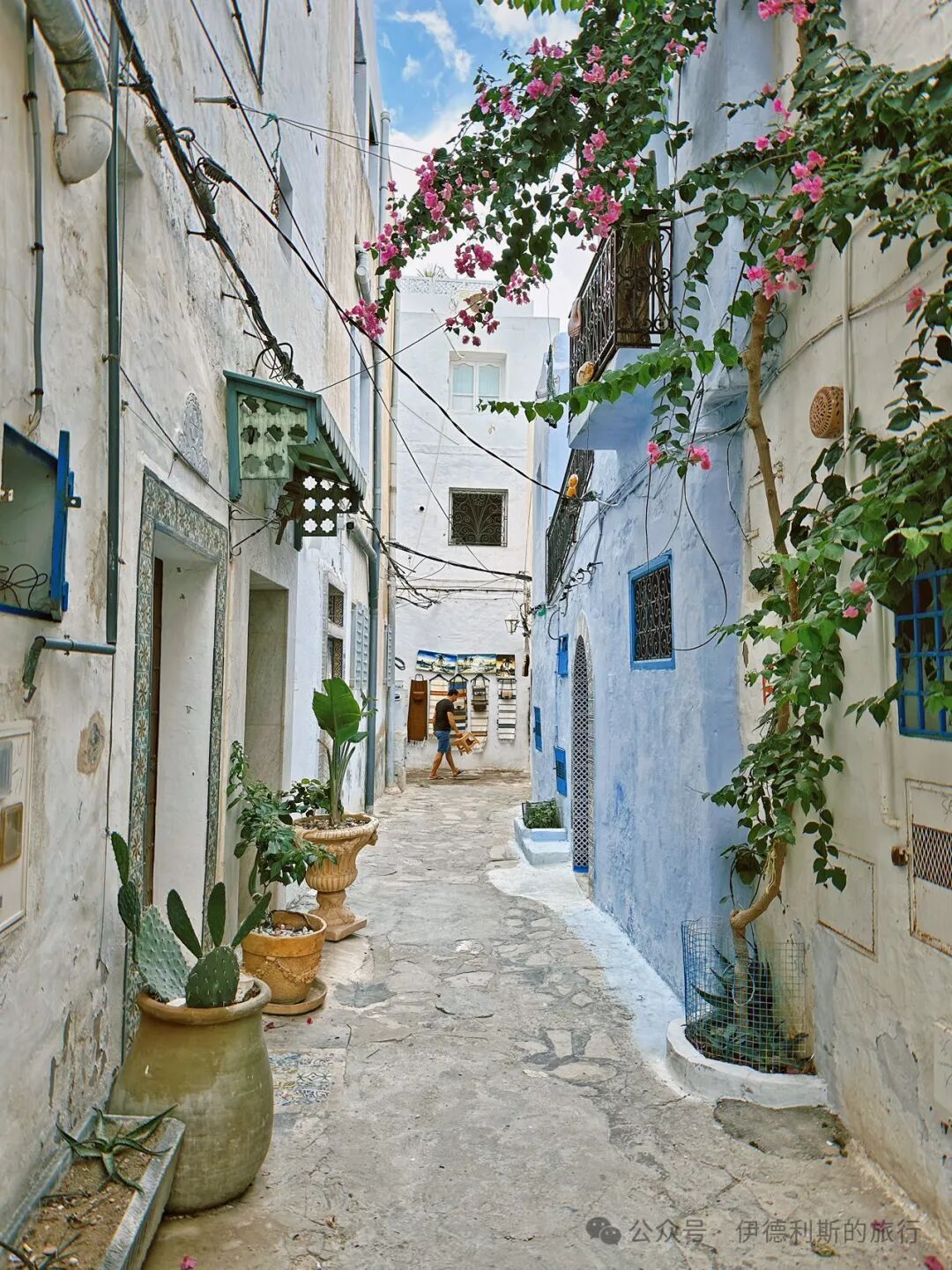
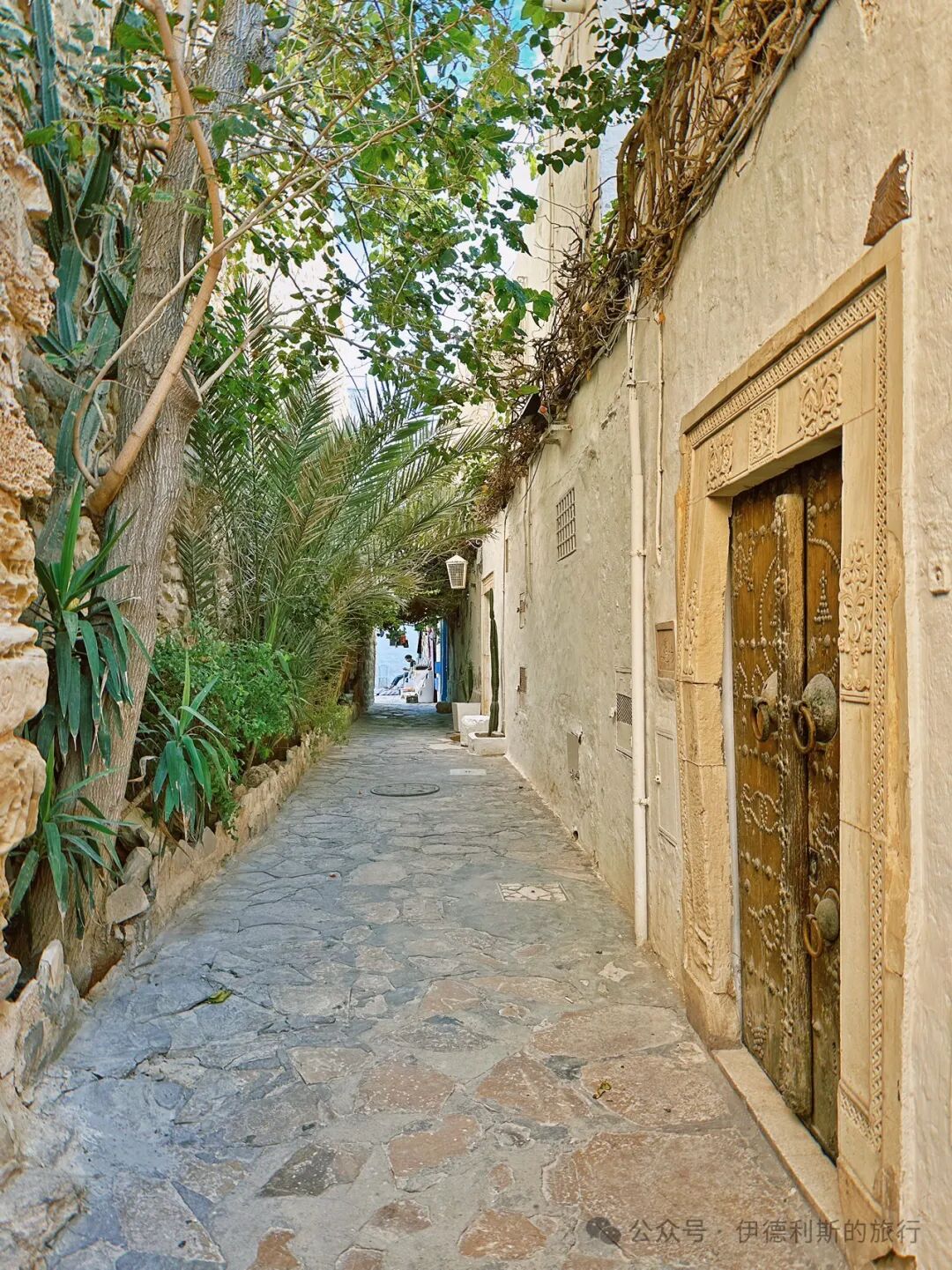
The streets of the old Hammamet Medina have the classic Tunisian blue-and-white town style, with bougainvillea planted along the streets and iron nails decorating the wooden doors. Hammamet Medina reached its peak in the 14th century, which was also the period when pirate raids from Pisa and Catalonia were most frequent.
After the Ottoman Empire conquered Hammamet in 1574, many Ottoman officers and soldiers were stationed in the city. These Ottomans were strongly influenced by Tunisian culture and were quickly assimilated. The descendants of Ottoman officers and Tunisian women are called Kouloughlis, and many of them have paternal roots in Izmir, Turkey. Unlike the local Tunisians who follow the Maliki school, the Kouloughlis still follow the Hanafi school.
The only date palm tree in the old city is located in the center of Errahba Square. This square was originally the site of two houses belonging to the Bennila family, which were destroyed by bombing during World War II, leaving only the date palm tree behind.
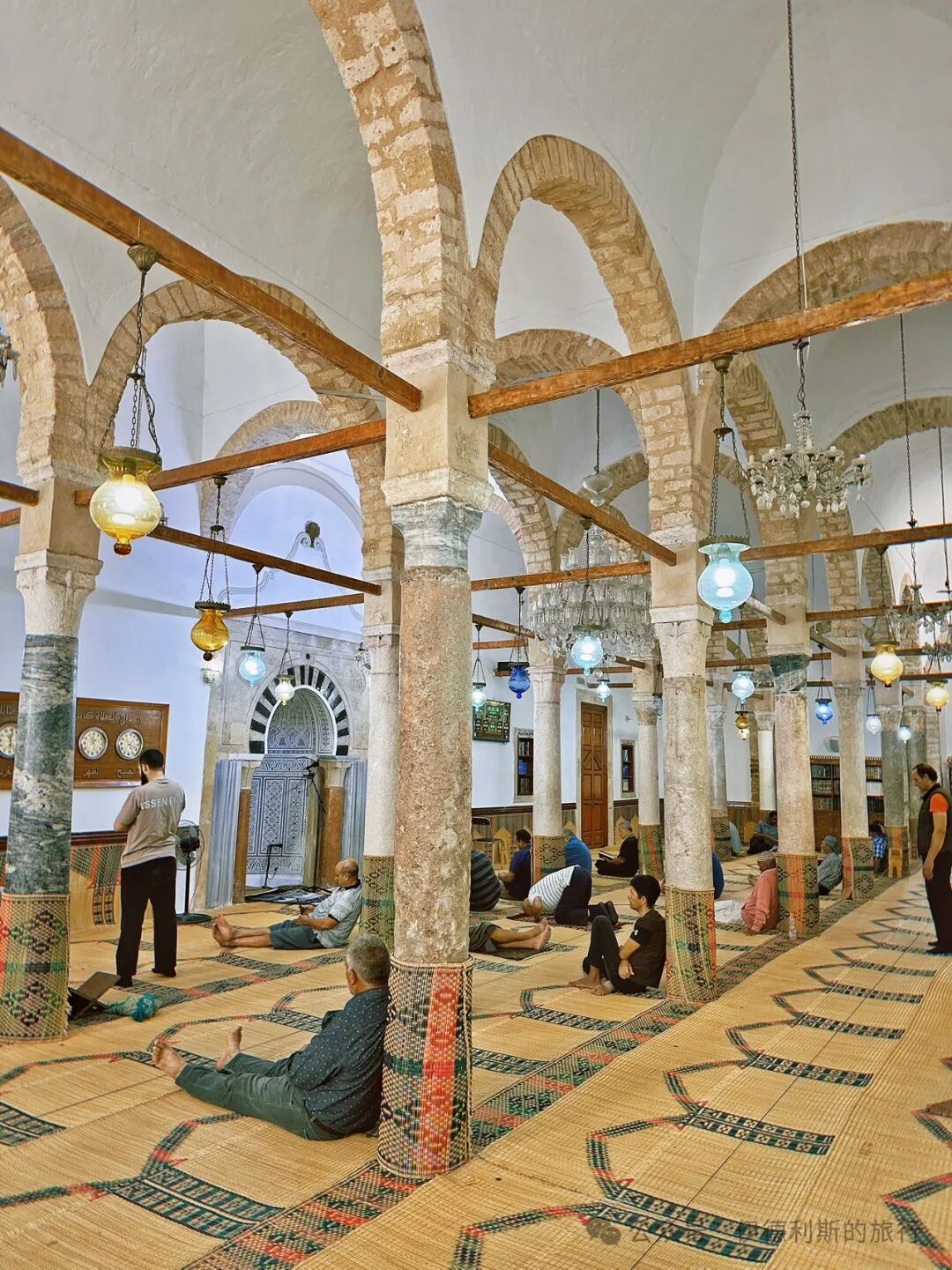
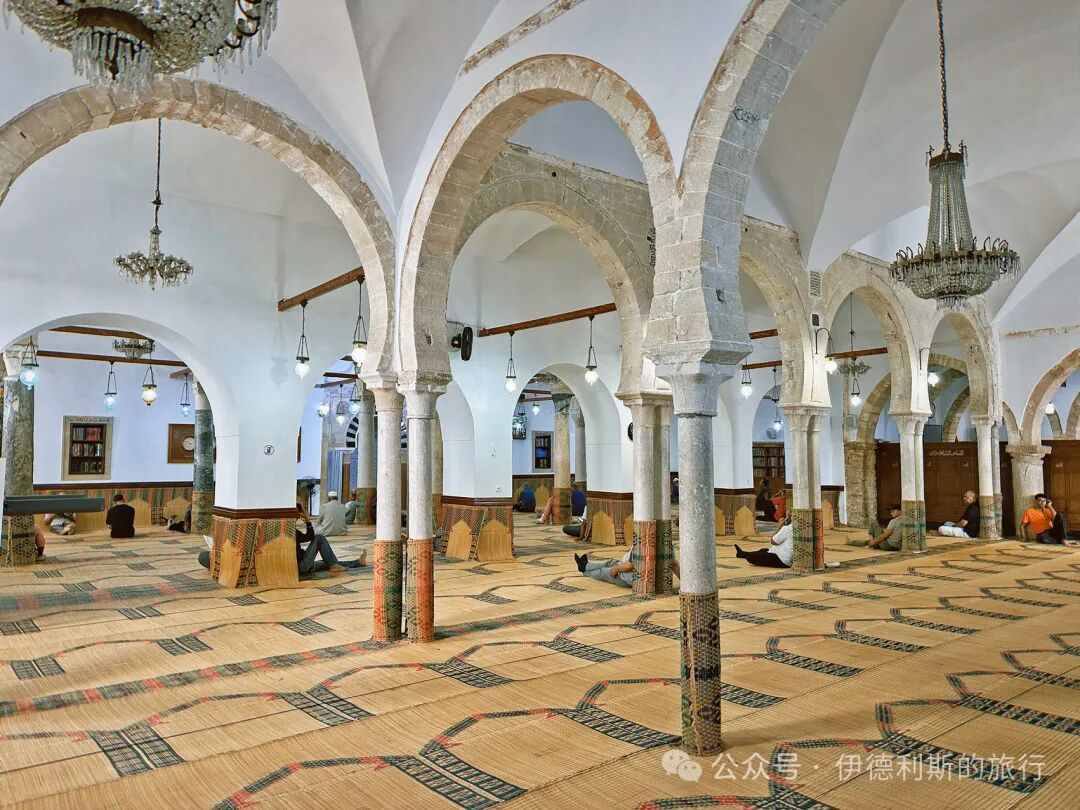
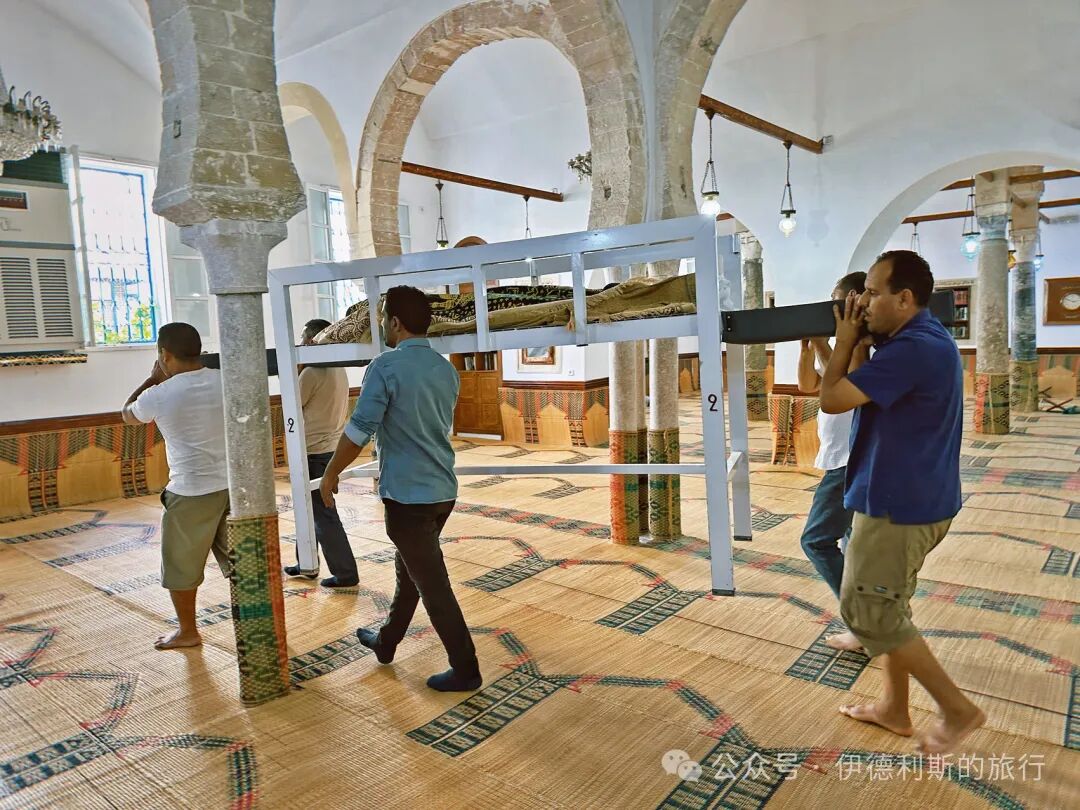
I performed the afternoon namaz at the Great Mosque of Hammamet. Tunisia follows the Maliki school, where the practice of raising the hands once (for the imam) and raising the hands once or three times (for others) coexist peacefully. After the prayer, people stood for the funeral prayer (namaz) right inside the main hall, and the body (mayyit) was kept there too. This is quite different from our Hanafi practice.
The Great Mosque of Hammamet was started in the 12th century and finished in the 13th century. The minaret (bangke ta) was added later in 1463. During this same period, Hammamet grew from a coastal fortress into a residential medina city area. The stone pillars in the Great Mosque of Hammamet are different colors because many were collected from nearby ancient Roman ruins.
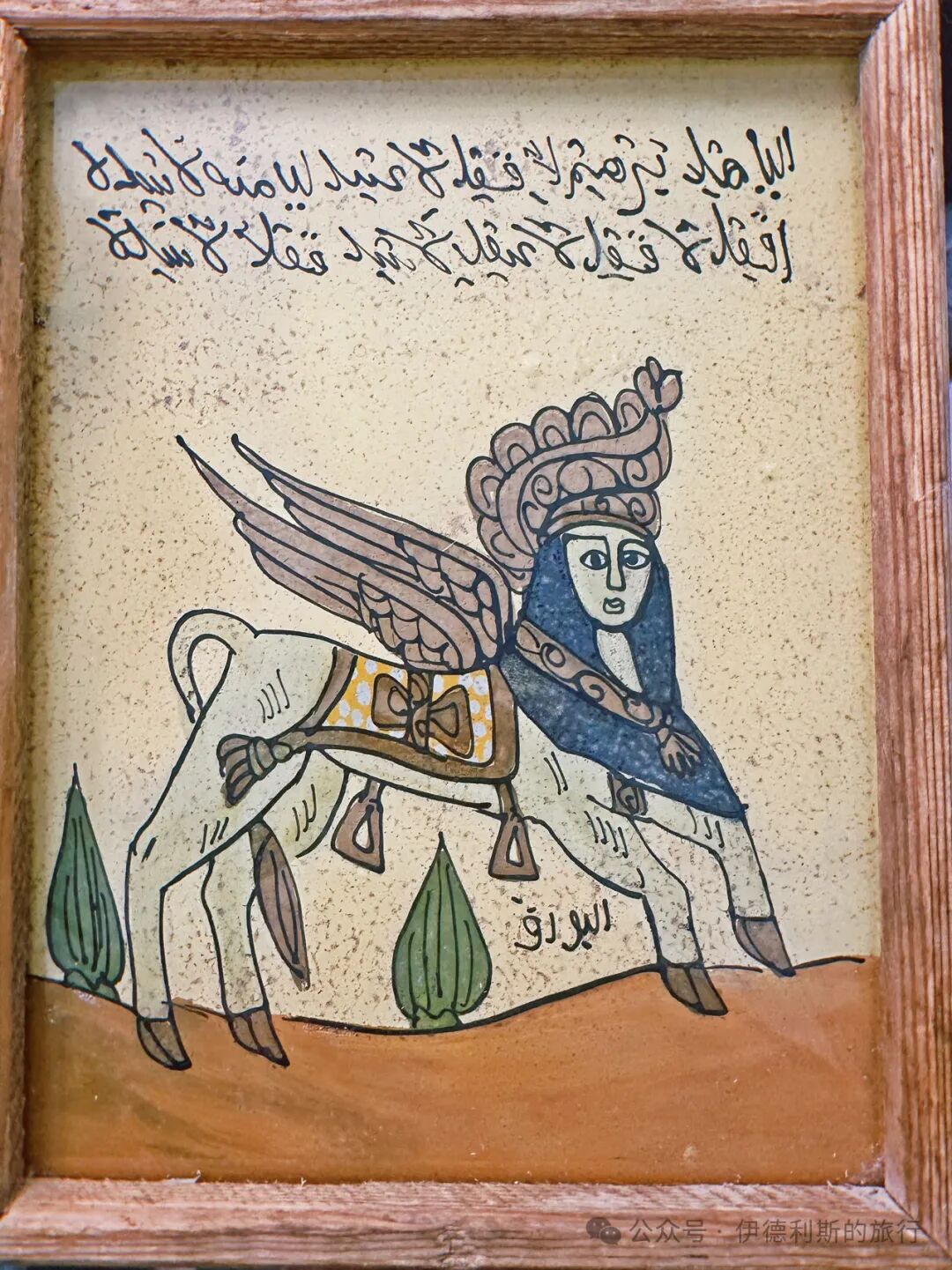
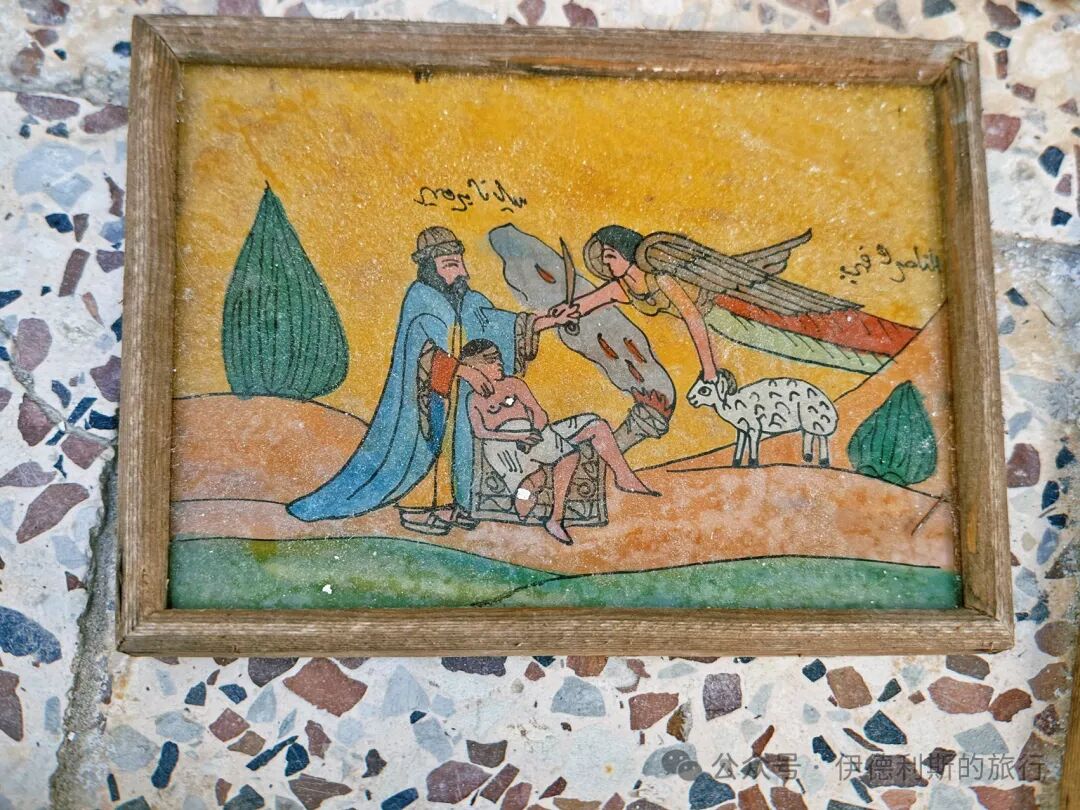
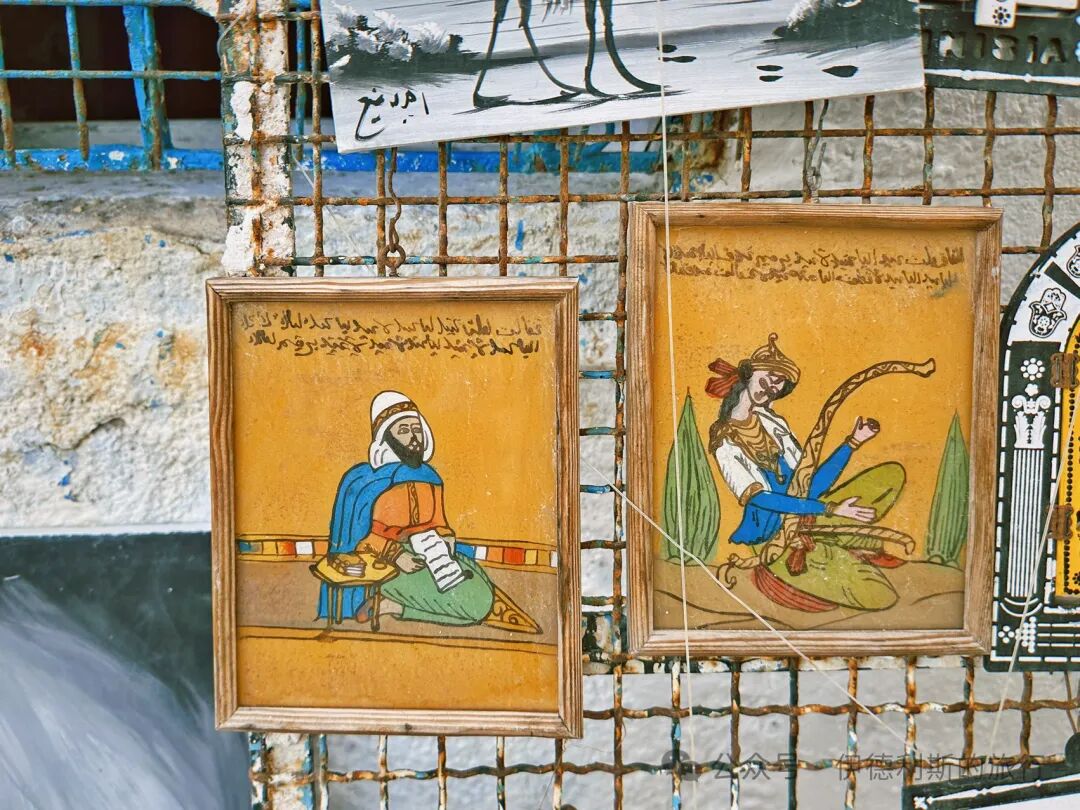
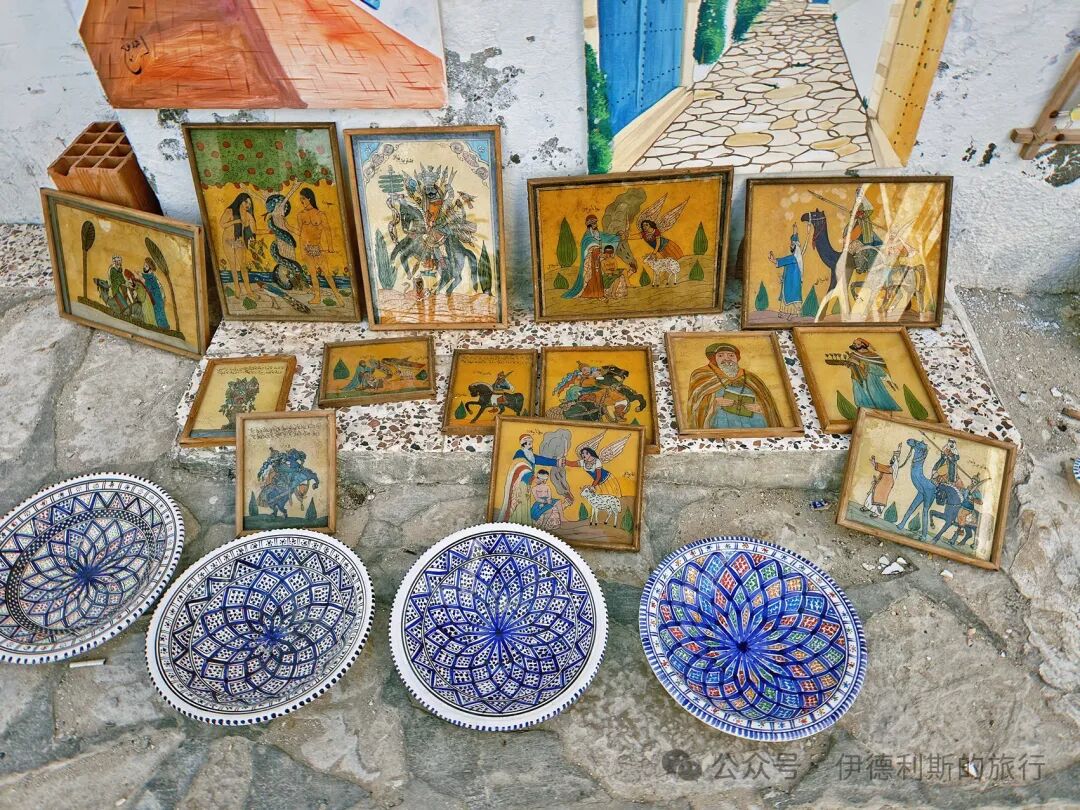
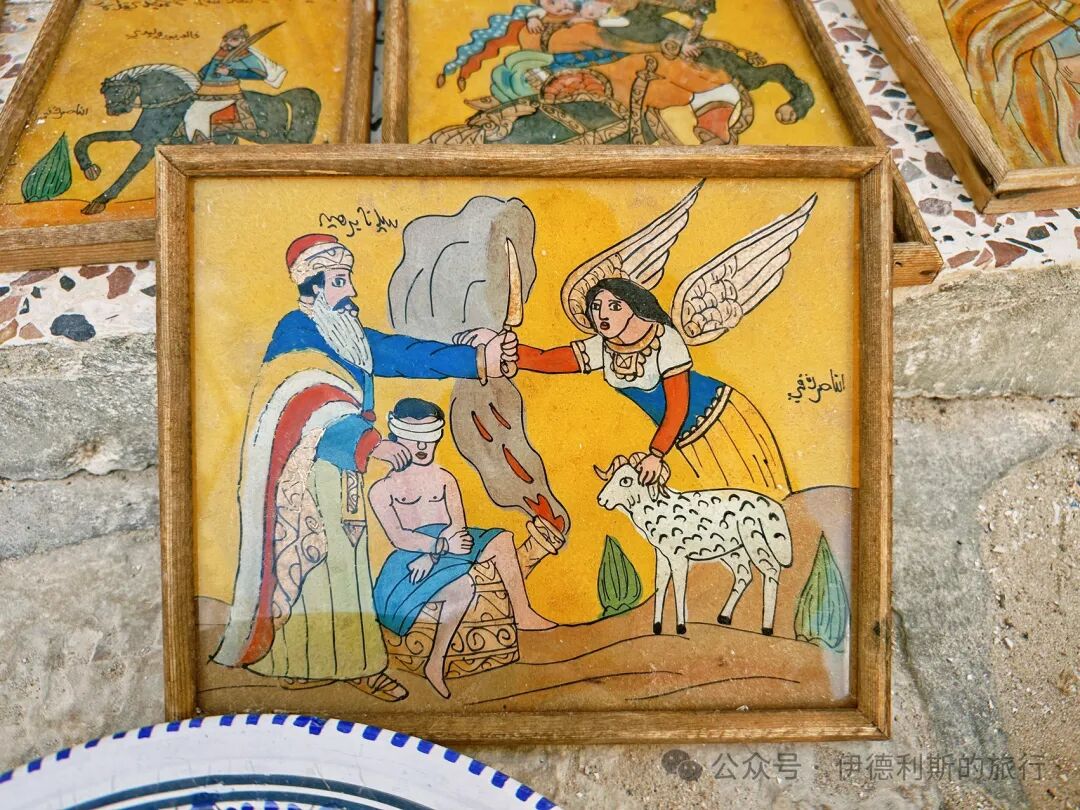
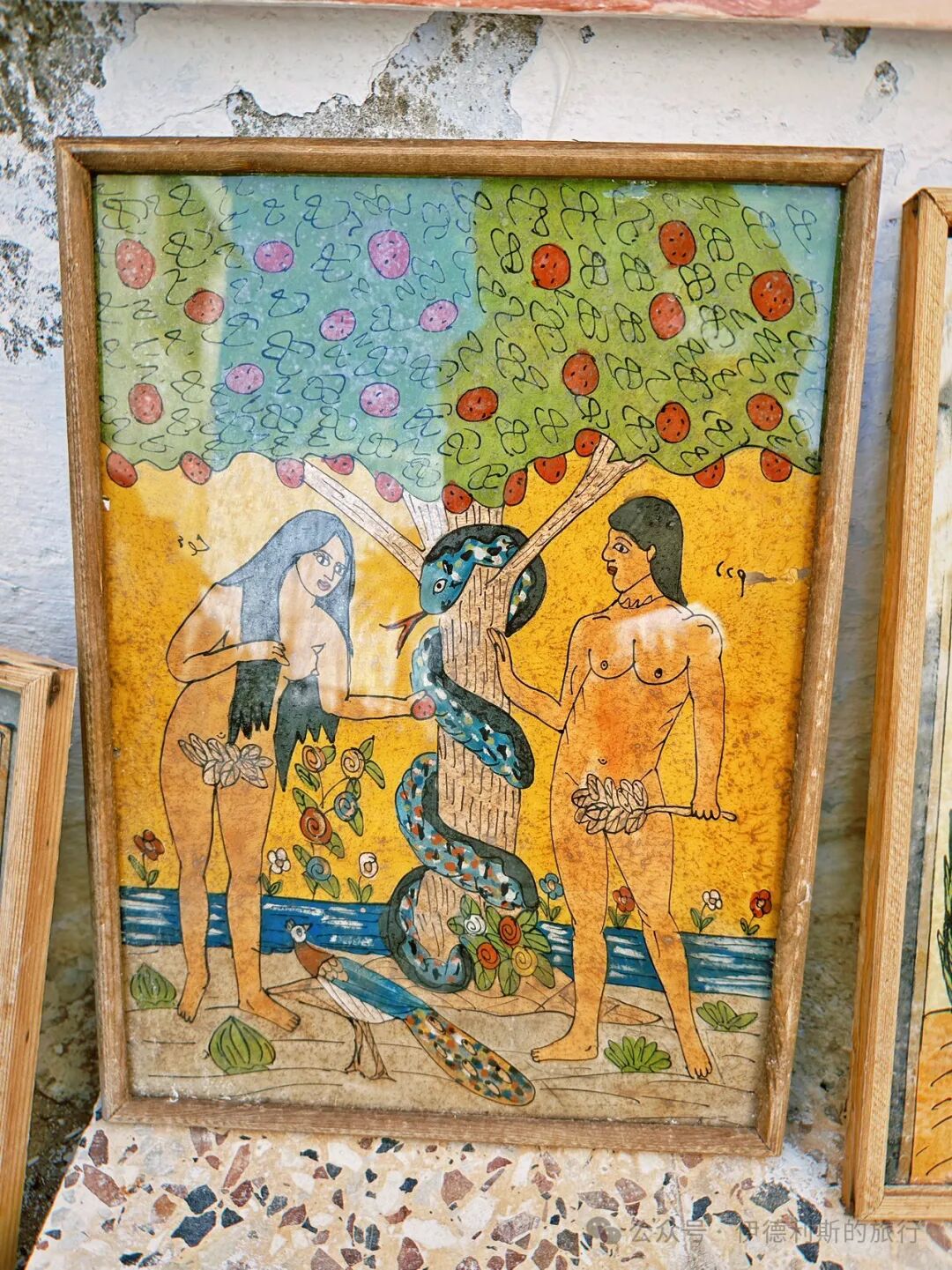
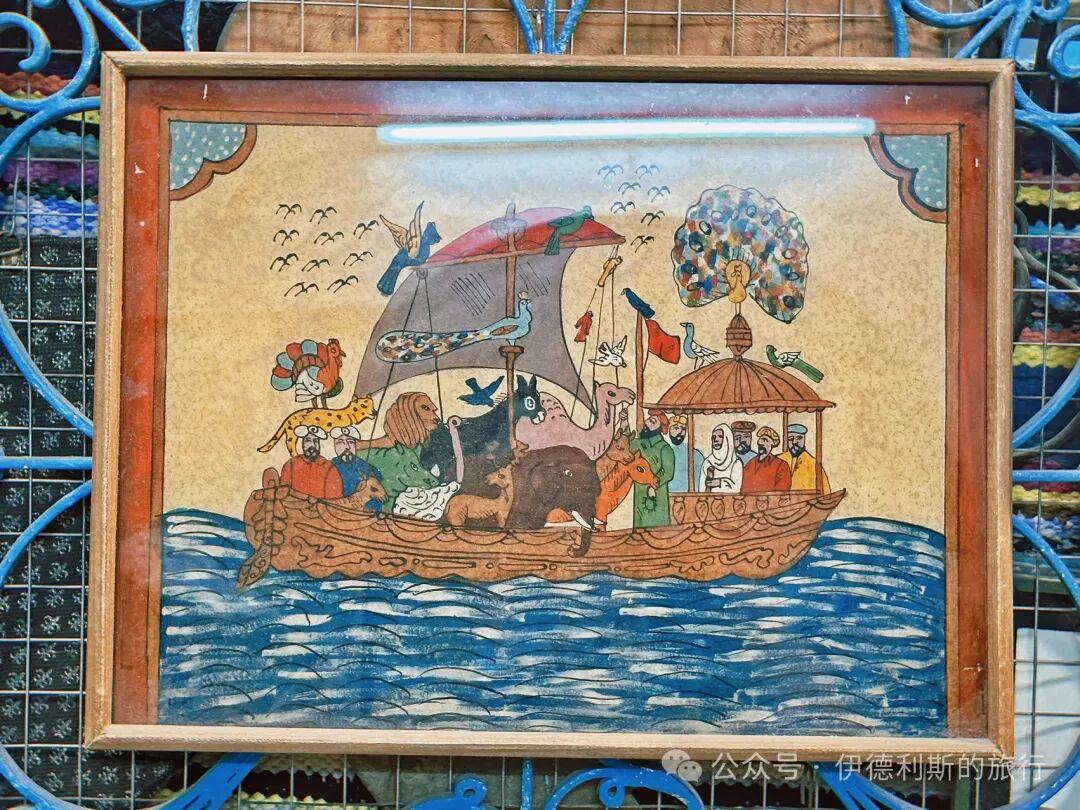
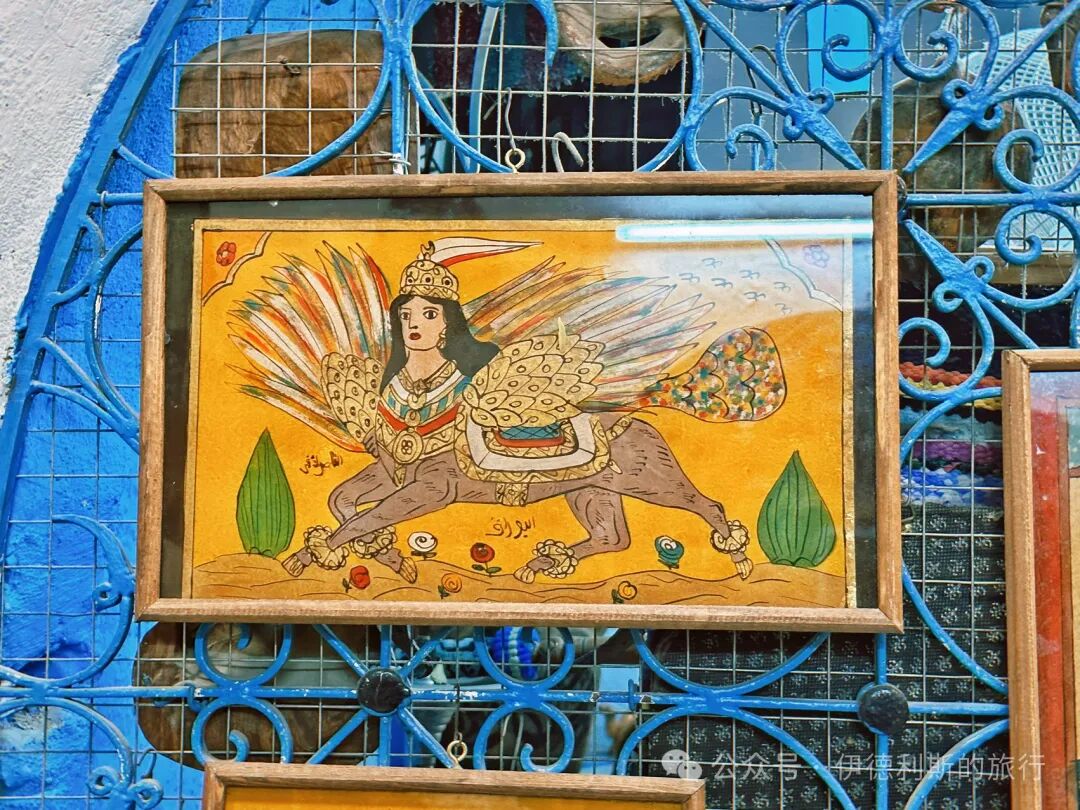
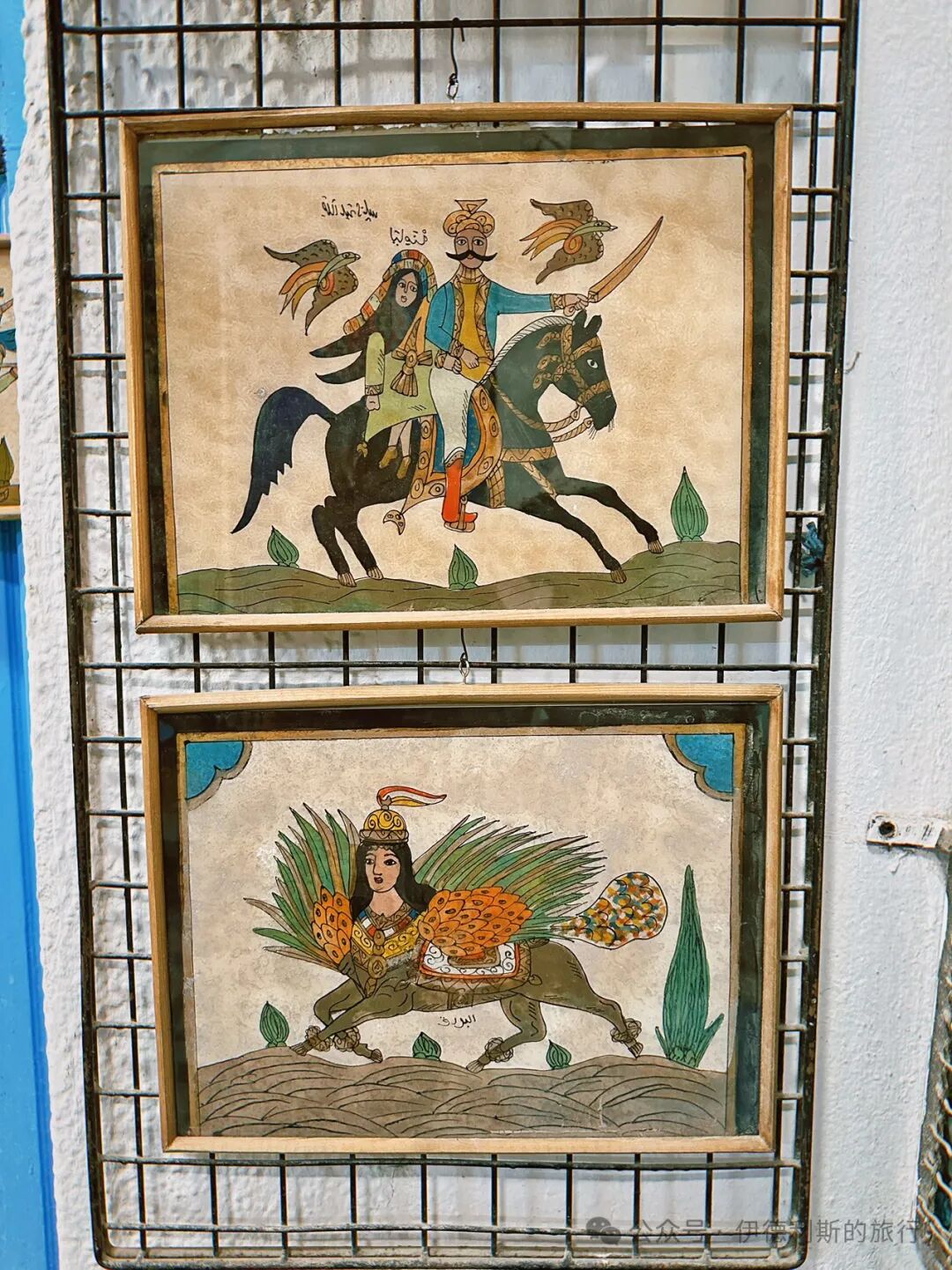
In the bazaars of the old city in Tunisia, you often see religious paintings. They show scenes like the Prophet Adam, the sacrifice of Ibrahim, and the Ark of Nuh. The art style is very cute. In the old city of Hammamet, I bought a painting of the Buraq, the creature the noble Prophet rode during his Night Journey (Mi'raj). Although the Hadith does not describe the Buraq's face, it mentions it had a handsome face. Because of this, Persian and South Asian miniature paintings often show the Buraq with a human face and a horse's body. In the Mindanao region of the southern Philippines, people even carve wooden statues of the Buraq.
The bazaars and streets inside the ancient medina of Hammamet.
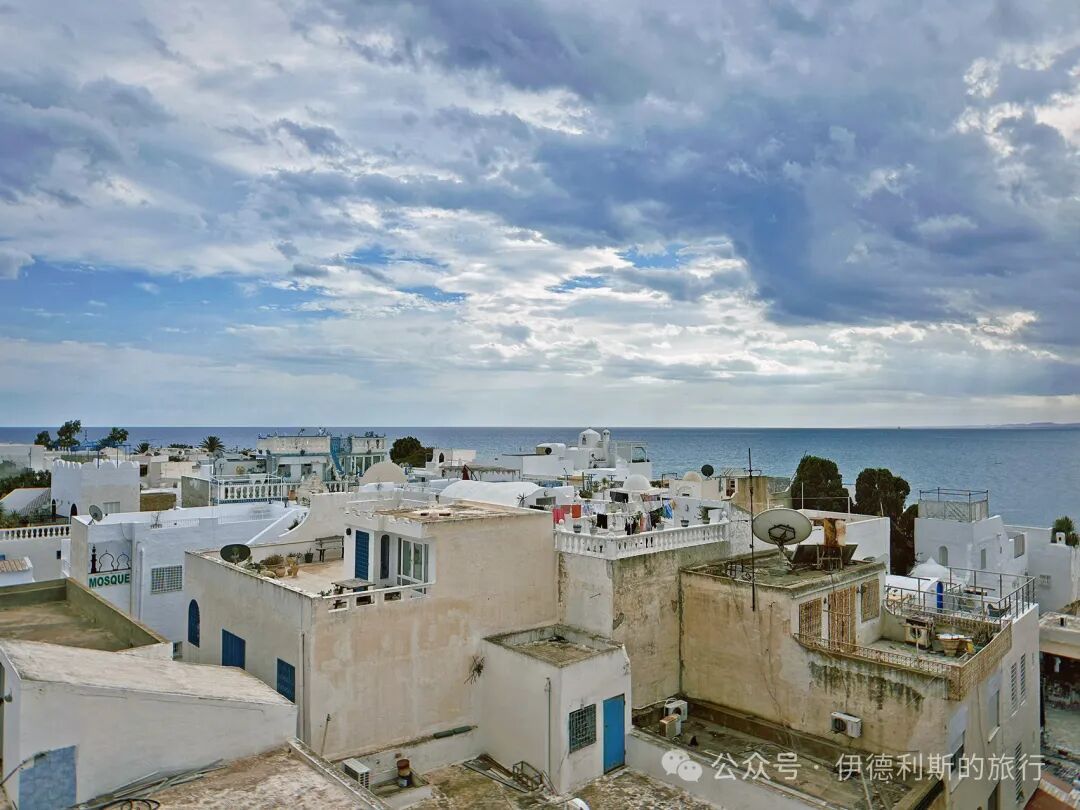
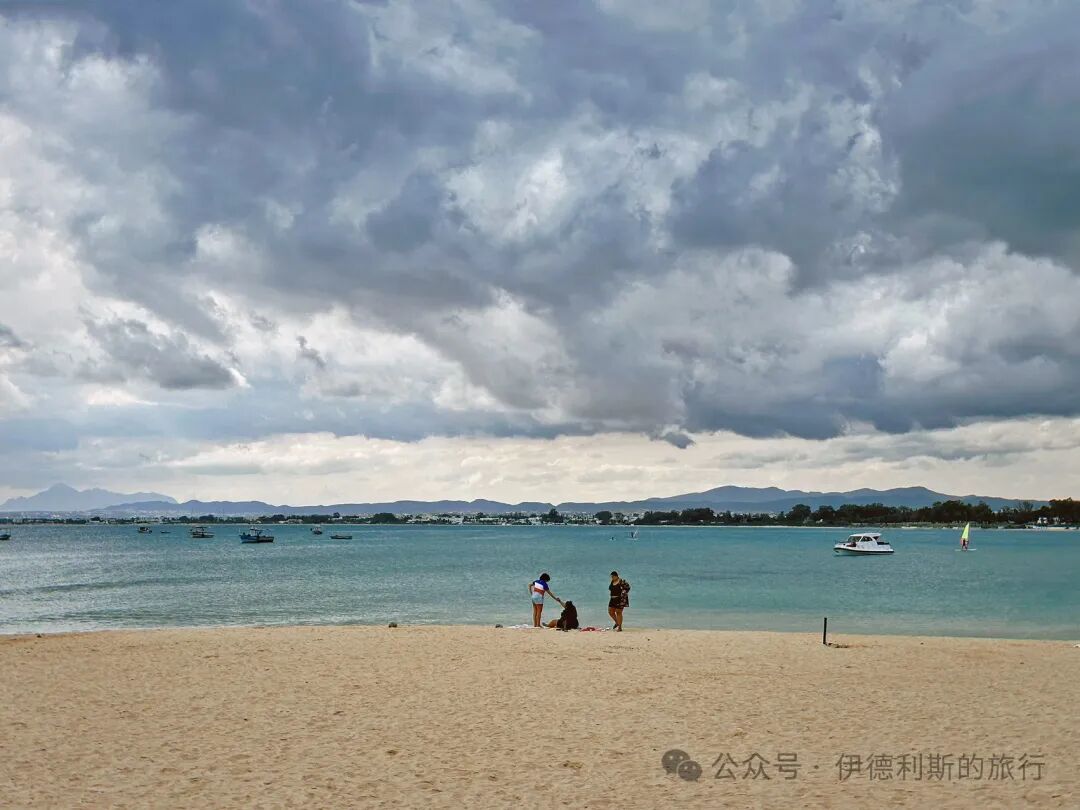
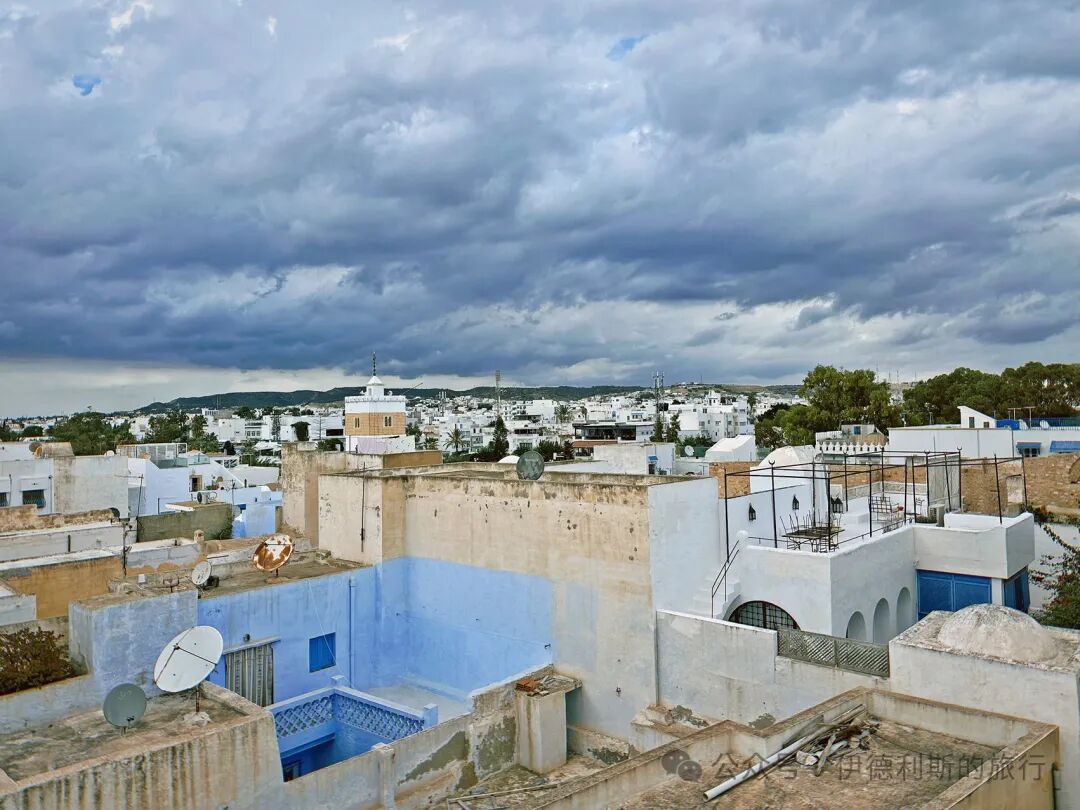
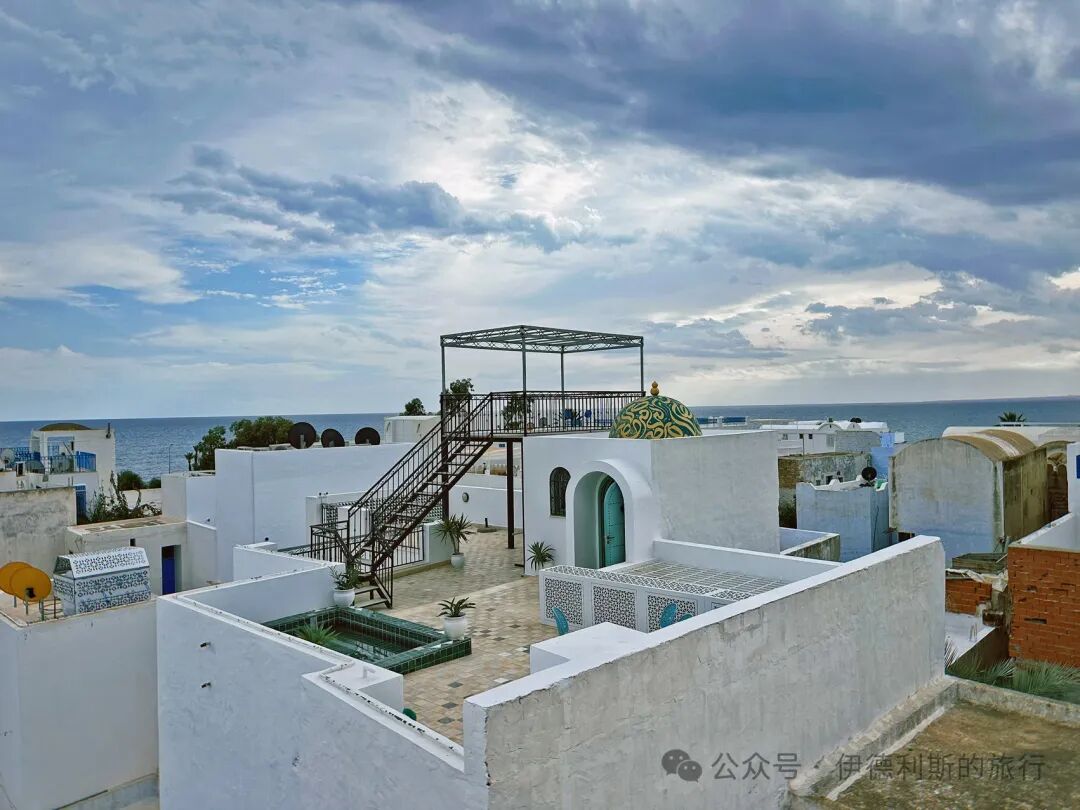
Looking out at the Mediterranean Sea from the ancient walled city (medina) of Hammamet. This place is just over 200 kilometers from Sicily, Italy. It has been a key spot for controlling the Mediterranean since ancient times, but today it serves as a backyard getaway for European tourists.
Some old houses inside the medina of Hammamet.
The public bathhouse across from the Great Mosque, built in the early 17th century by Abul-l-Gayth al-Qashache. In 1602, Hammamet was attacked by the Knights Hospitaller and many people were taken captive. It was Abul-l-Gayth who paid the ransom to bring them home.
The Islamic school (madrasa) behind the Great Mosque, where children were having class when we visited.
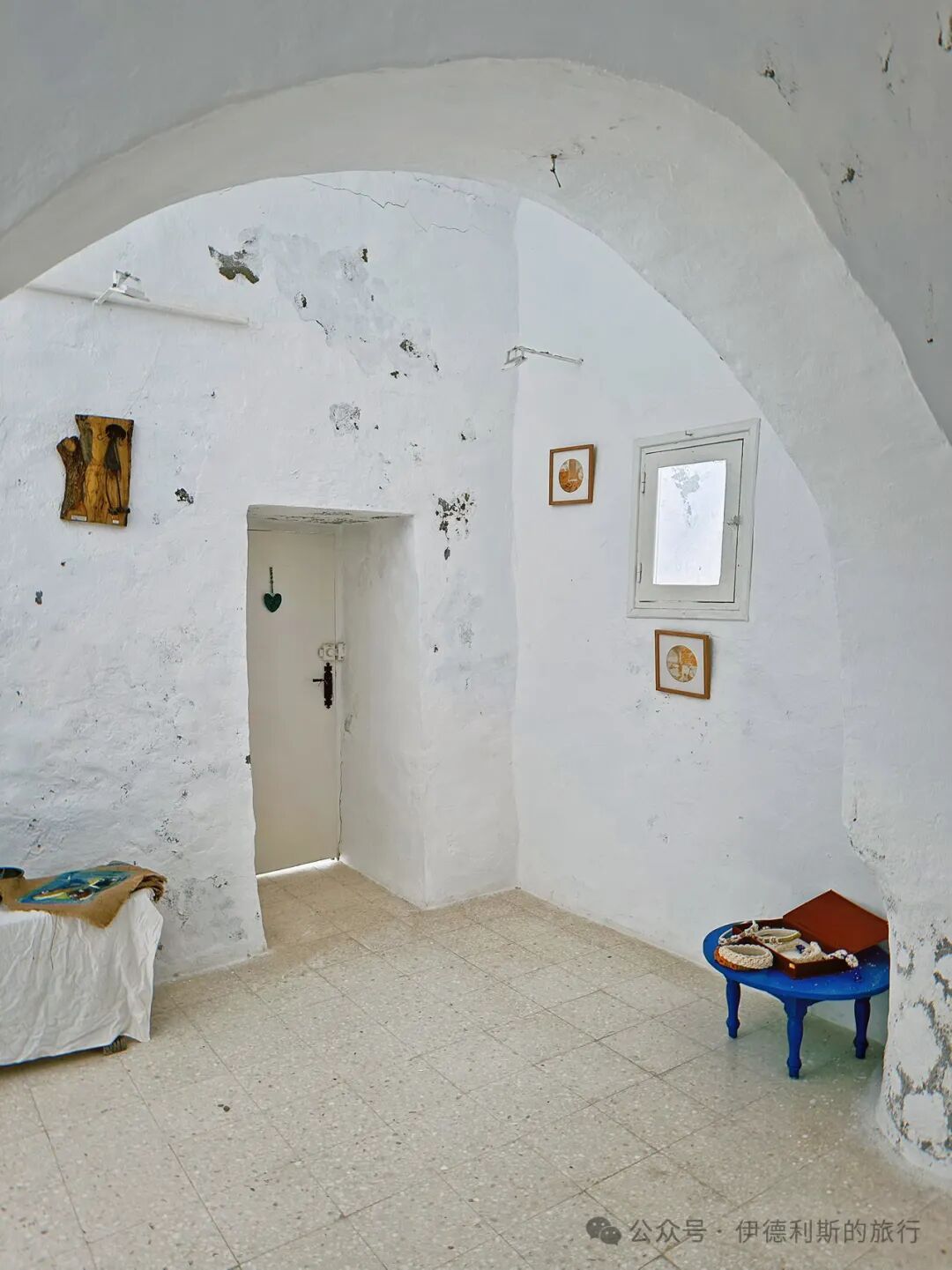
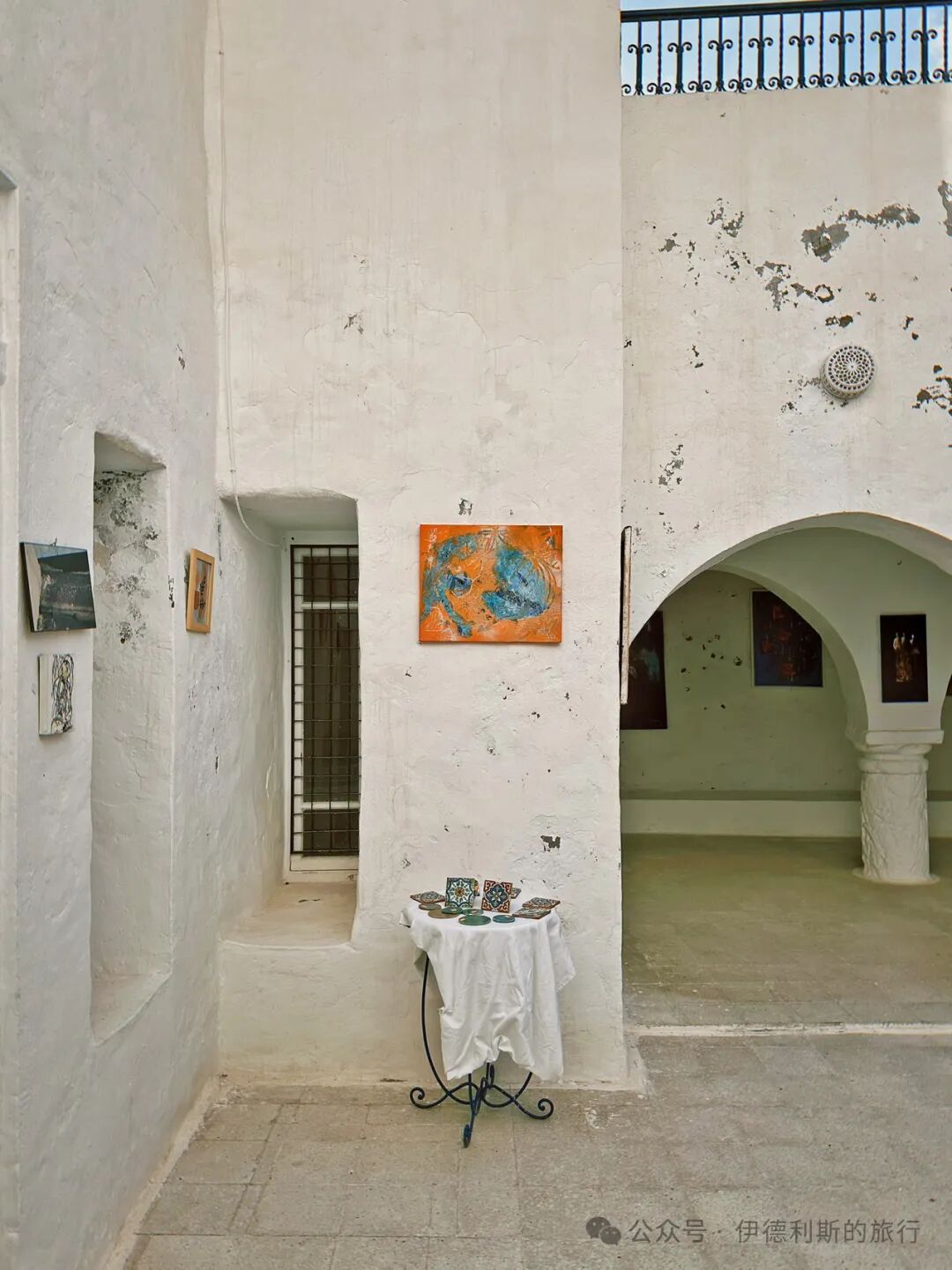
An art studio with an artist-in-residence painting inside.
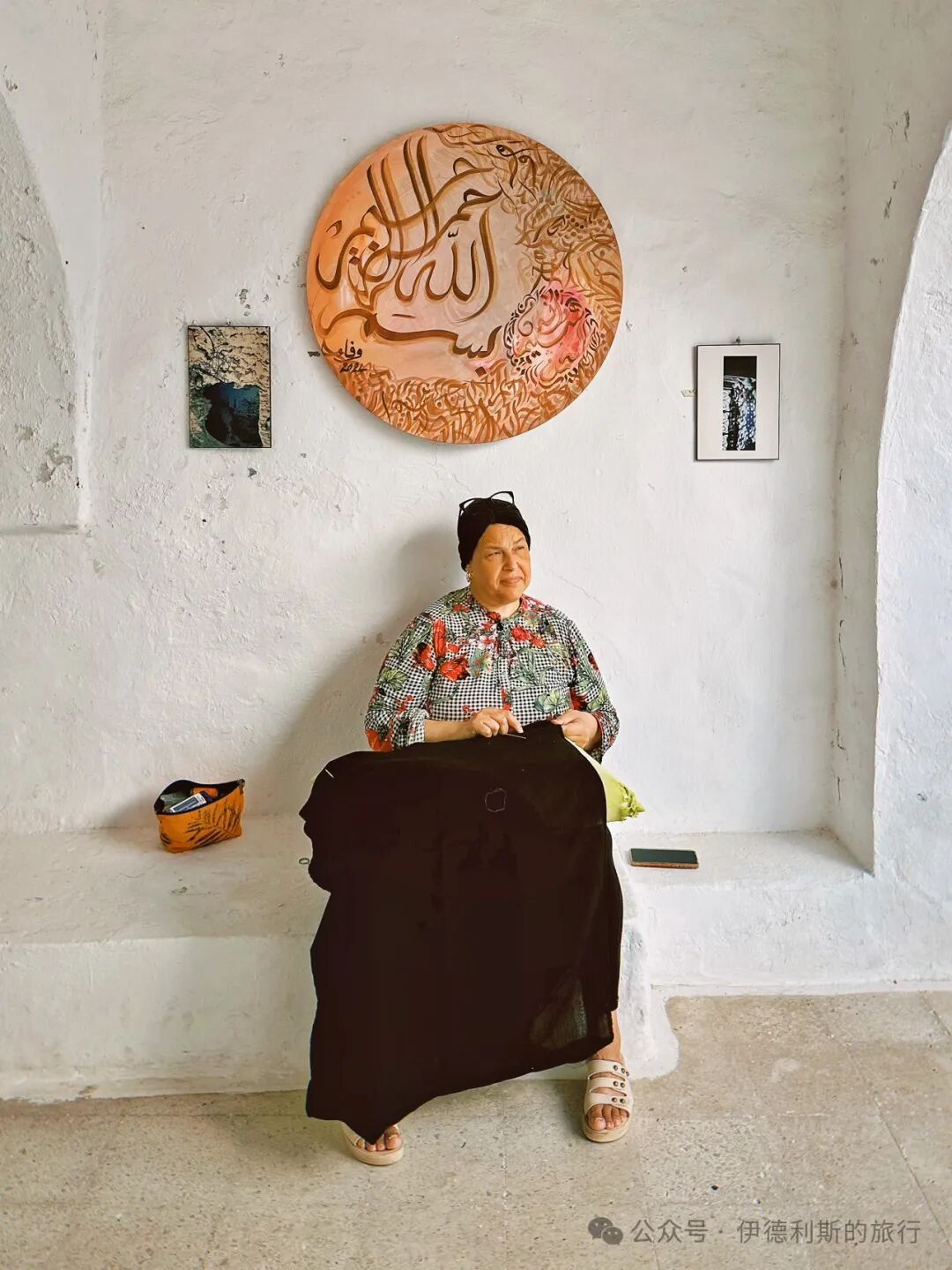
Another gallery, where we saw a woman making traditional clothing during our visit.
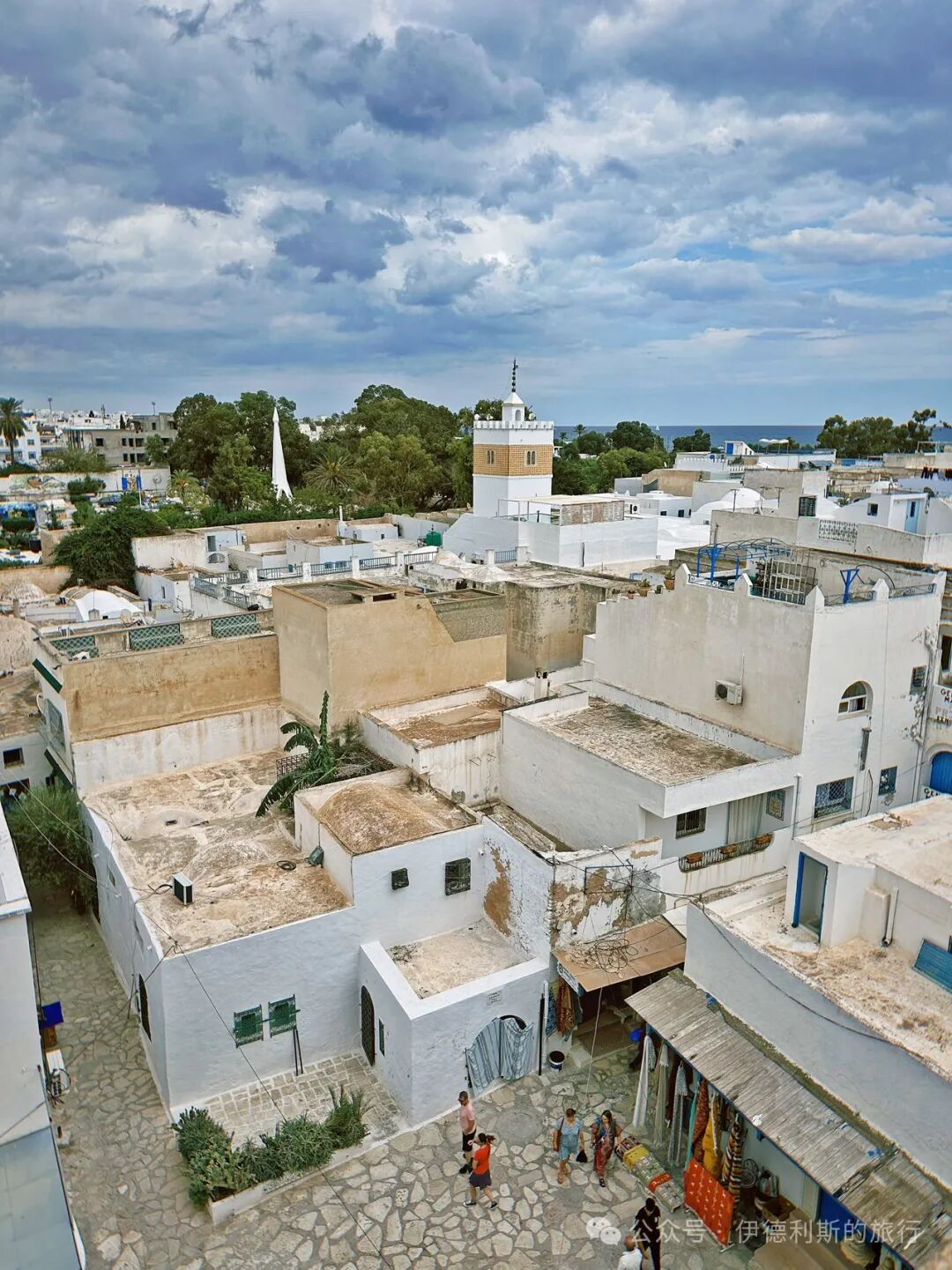
A view overlooking the old city view all
Summary: Hammamet, Tunisia - Ancient Medina, Beach and Muslim Heritage is presented as a clear English travel account for readers interested in Muslim life, halal food, architecture, and local history. The article keeps the original names, food details, photographs, and cultural context while focusing on Hammamet, Tunisia Travel, Muslim Heritage.
Hammamet sits halfway between Tunisia's two major cities, Tunis and Sousse, and it is very easy to reach by shared taxi (louage) from either one. Hammamet has been a resort destination since the 1990s, with countless hotels lining the beach and streets full of European faces. The old walled city (medina) here is only about 200 meters long, but it is the most crowded one I have ever seen.
At noon, we caught a ride from the shared taxi station (Station Louage de Sousse) in the southern suburbs of Sousse and arrived at the Hammamet Sud intersection on the west side of Hammamet an hour later, then took a taxi to the old medina. Be aware that Hammamet has two medinas; one is a new replica built by the sea in the 1990s, and we went to the wrong one at first. To get to the old medina, we had to tell the taxi driver we were going to the Hammamet fortress before he understood.
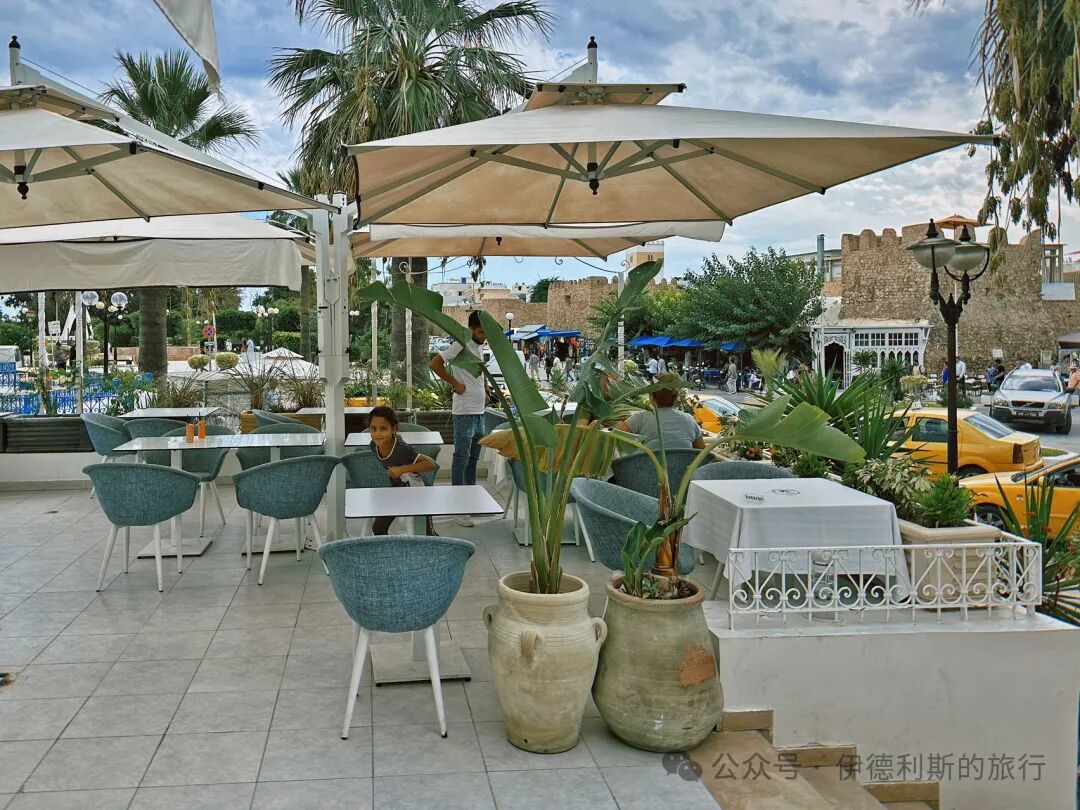
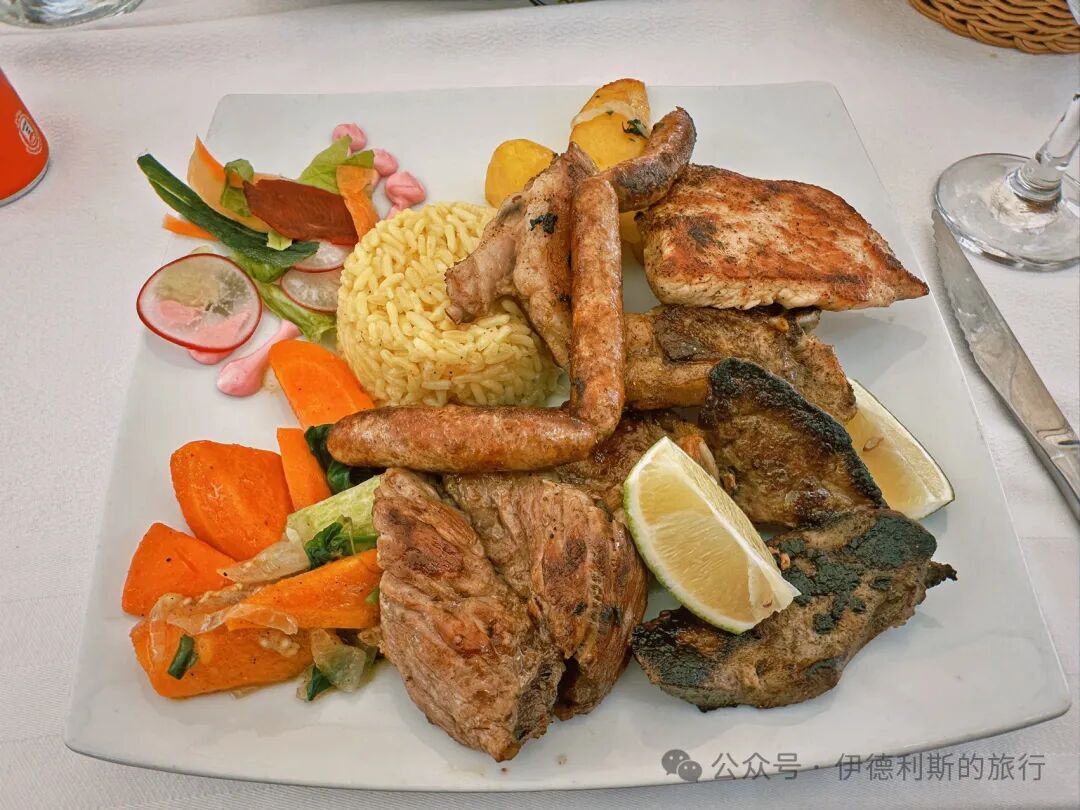
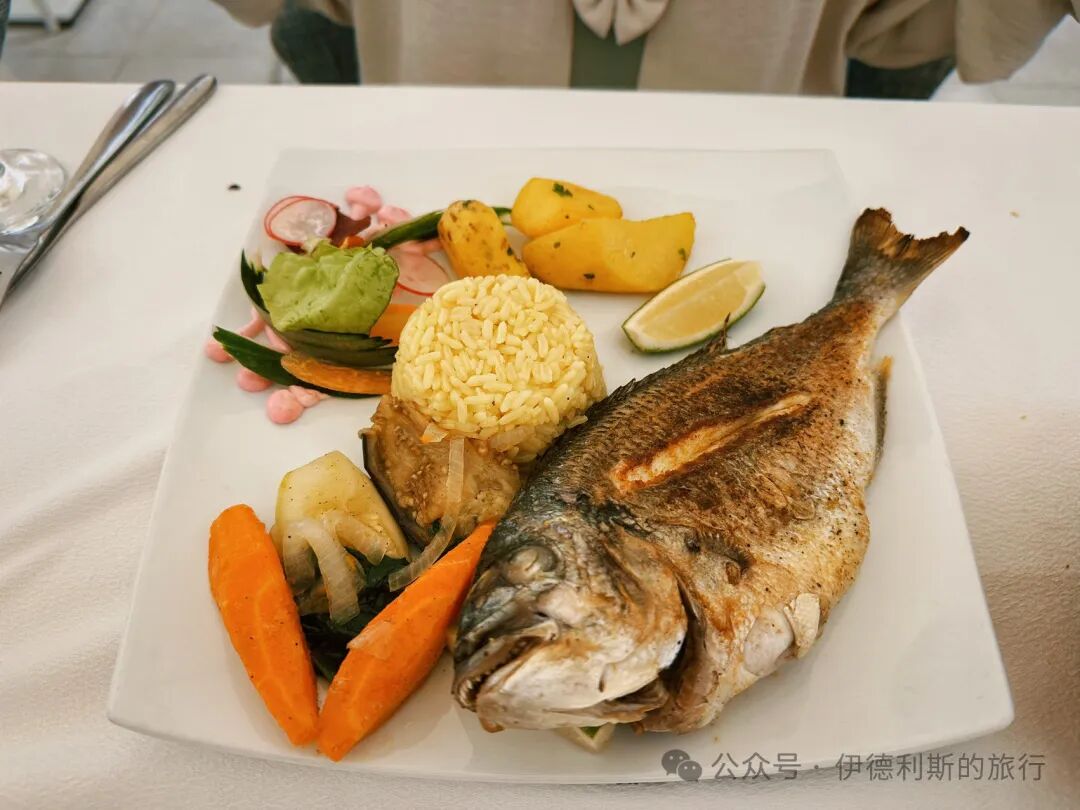
Restaurants near the medina are mostly clustered outside the north wall, serving a mix of Tunisian food and Western dishes. We went to Restaurant Yuman, which has a great view of the fortress and the beach. We ordered pan-fried sea bass and a mixed grill platter. The grill included North African sausage (Merguez), steak, lamb chops, and chicken, all classic dishes from the Tunisian coast.
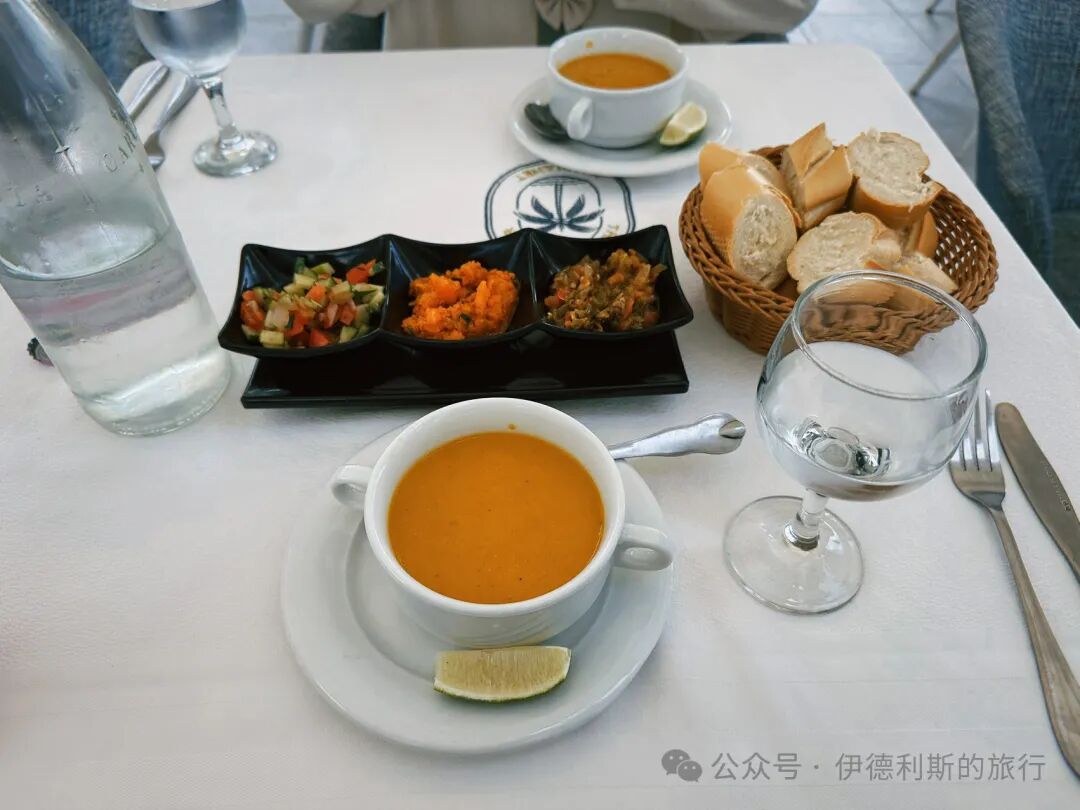
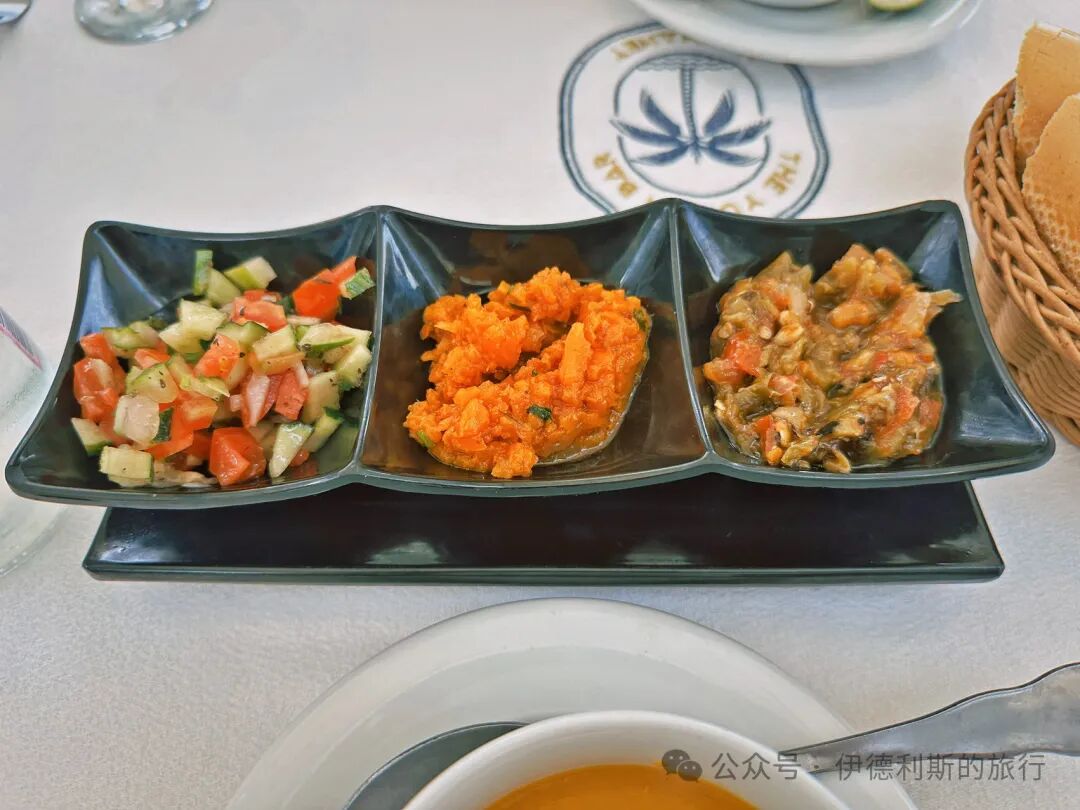
When ordering at a restaurant in Tunisia, you basically only need to order the main course. Appetizers and staples are served for free. After we placed our order, they first brought us thick soup, followed by a baguette and an appetizer platter. The appetizers included Tunisian salad, carrot salad (Houria), and green pepper salad (Mechouia). We ate these three almost every day in Tunisia. Tunisian salad is just diced cucumber, tomato, and onion mixed with olive oil. Higher-end versions also include boiled eggs and tuna. Green pepper salad (Mechouia) contains green peppers, tomatoes, onions, garlic, and other ingredients. Tunisians love it, and it is rich in vitamins and very healthy.

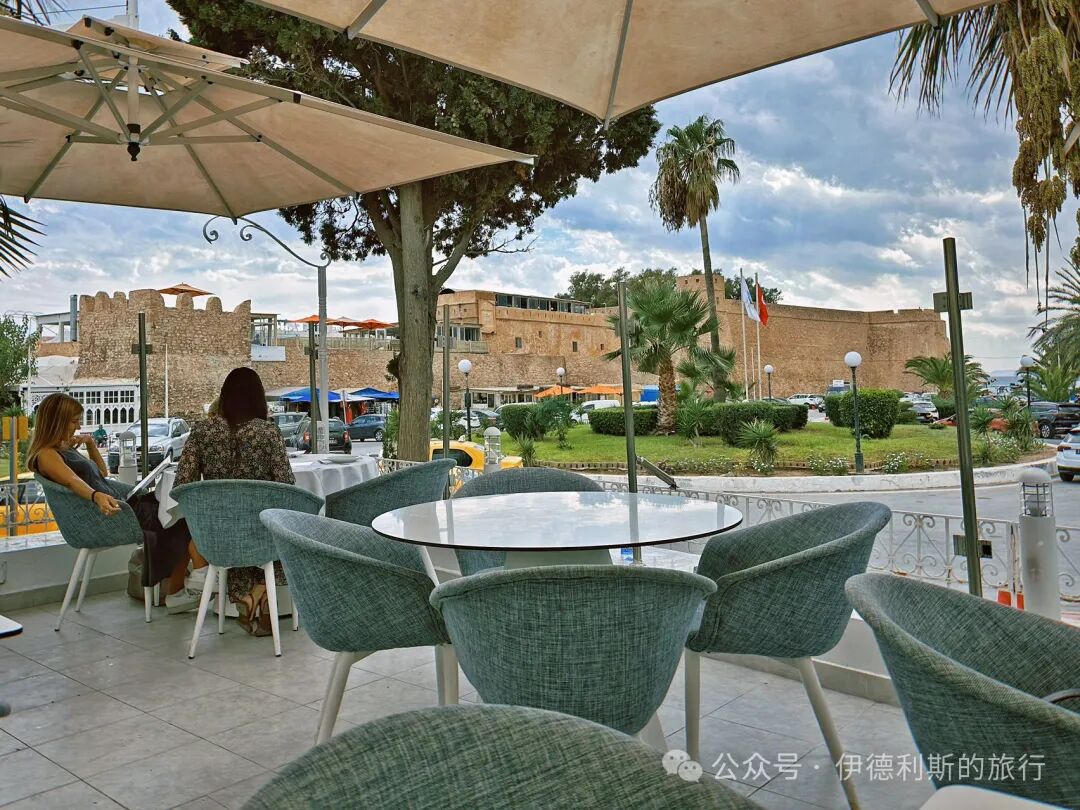
Hammamet Fortress was first built in 893 AD by order of Ibrahim II, an emir of the Arab Aghlabid dynasty. During this period, the Aghlabid dynasty was constantly conquering Sicily, which was under the control of the Byzantine Empire, while also suppressing Berber uprisings.
The Hammamet Fortress is very sturdy and was built mainly to defend against pirate raids from places like Catalonia and Malta. The fortress was destroyed by the Spanish in the 12th century, rebuilt twice in the 14th and 15th centuries, and the upper walls were strengthened by the Ottoman Empire during the 16th and 17th centuries.
In 1605, a joint fleet from the Spanish Empire, the Kingdom of Sicily, and the Knights Hospitaller attacked the Ottoman-controlled Hammamet Fortress. A heavy rainstorm destroyed their ships and caused massive casualties for the allied forces, making this the most famous battle at the fortress.
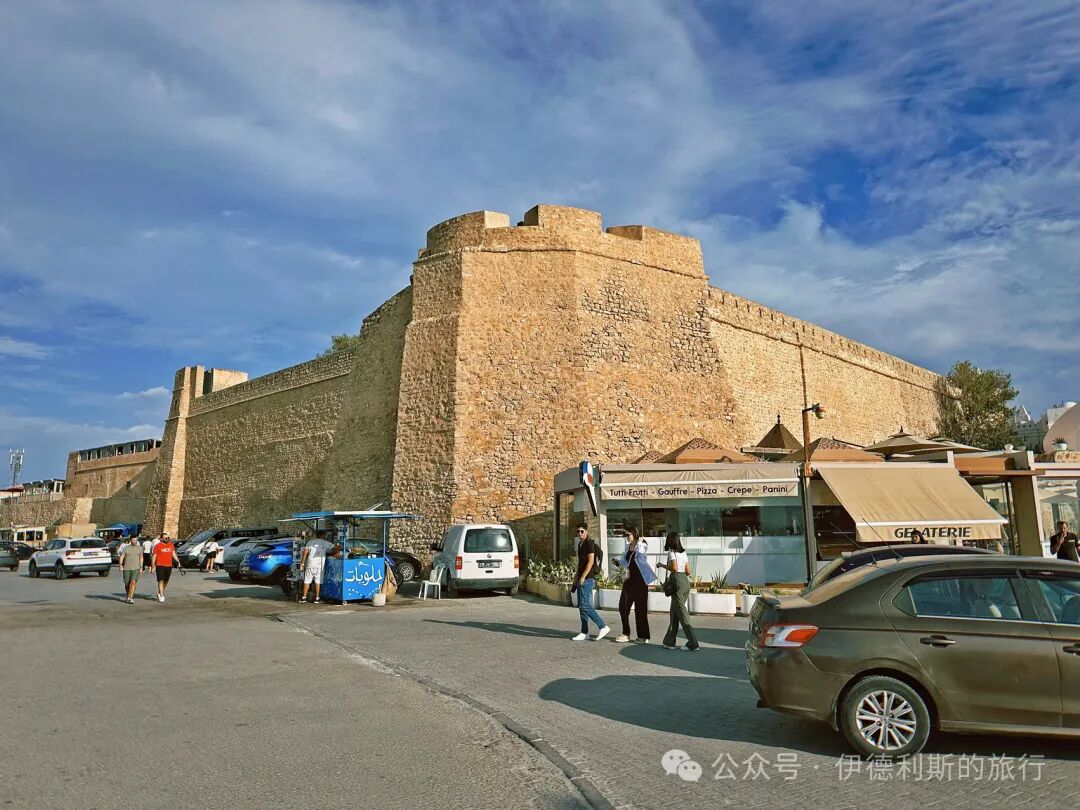
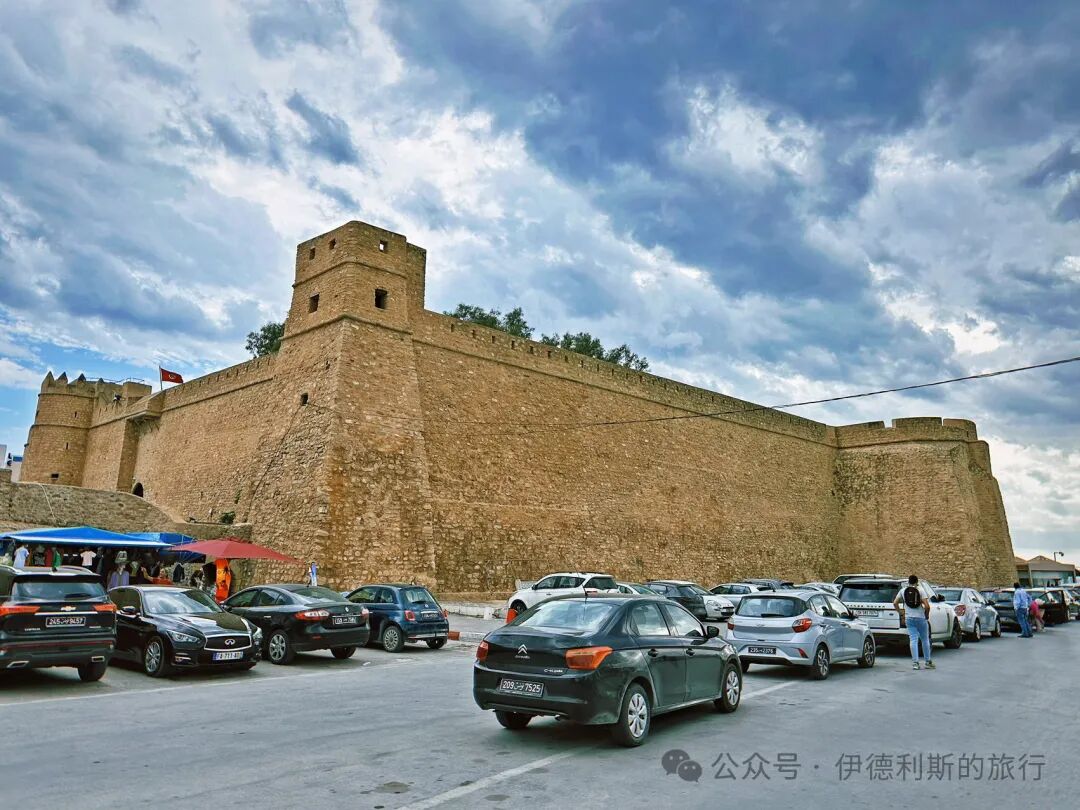
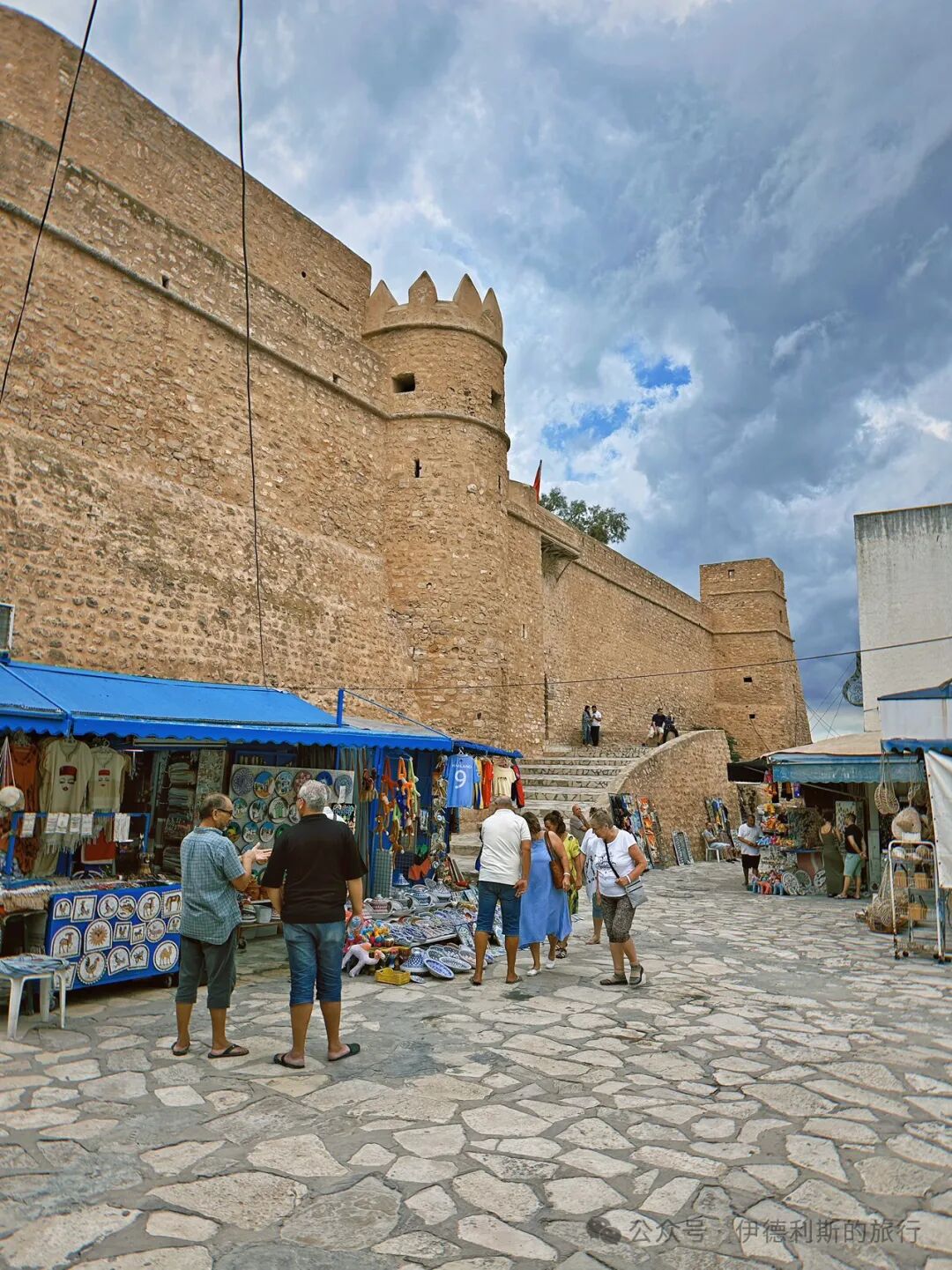
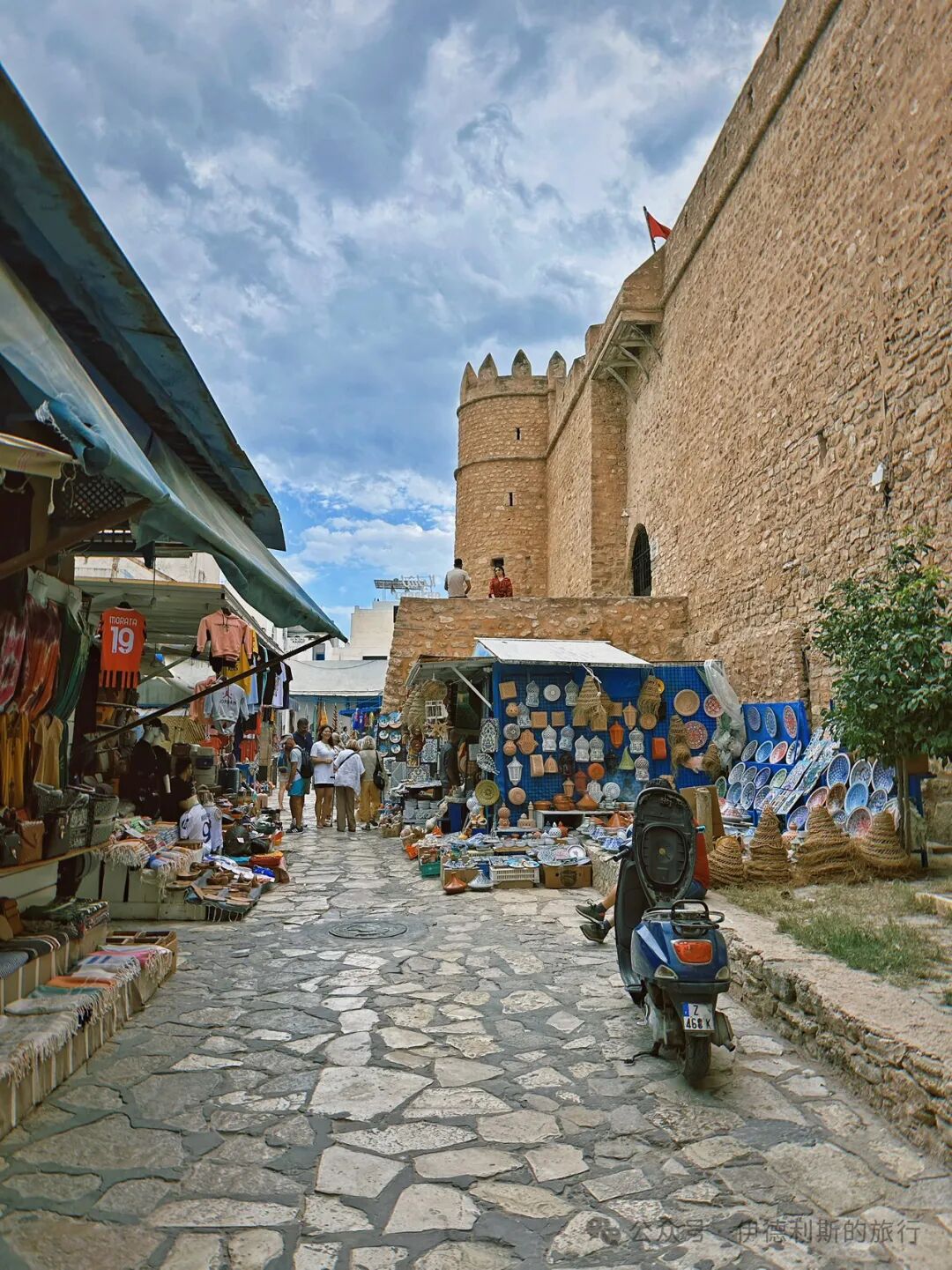
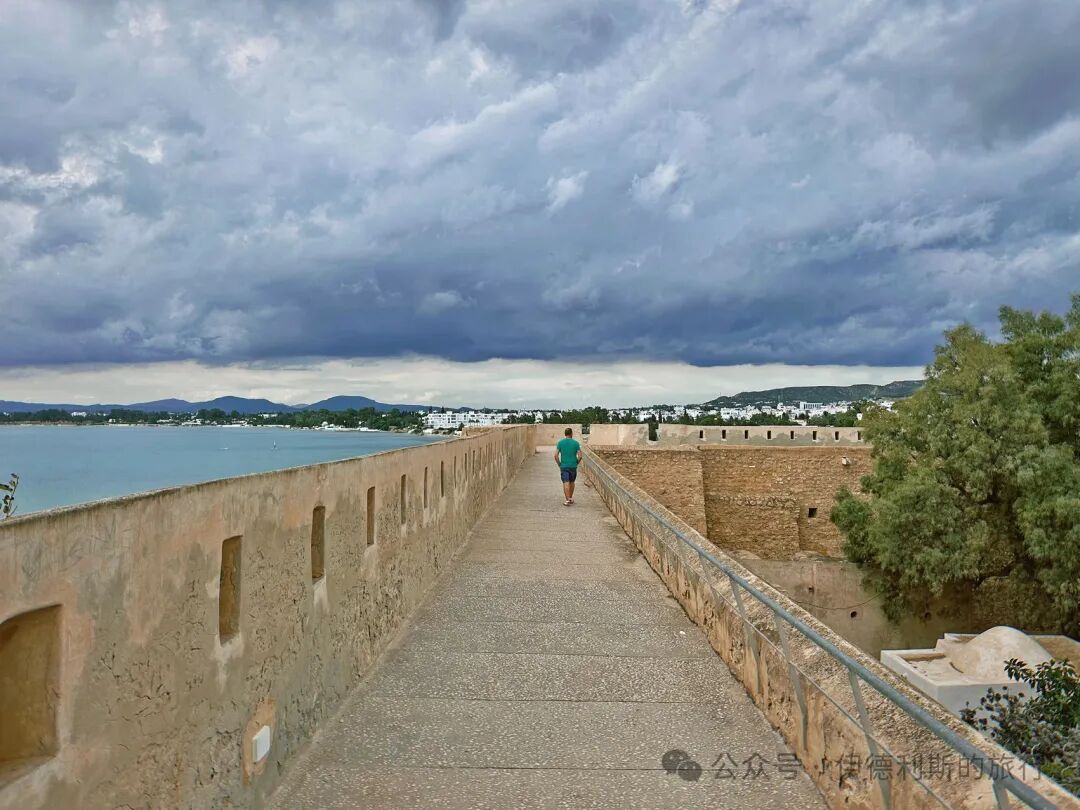
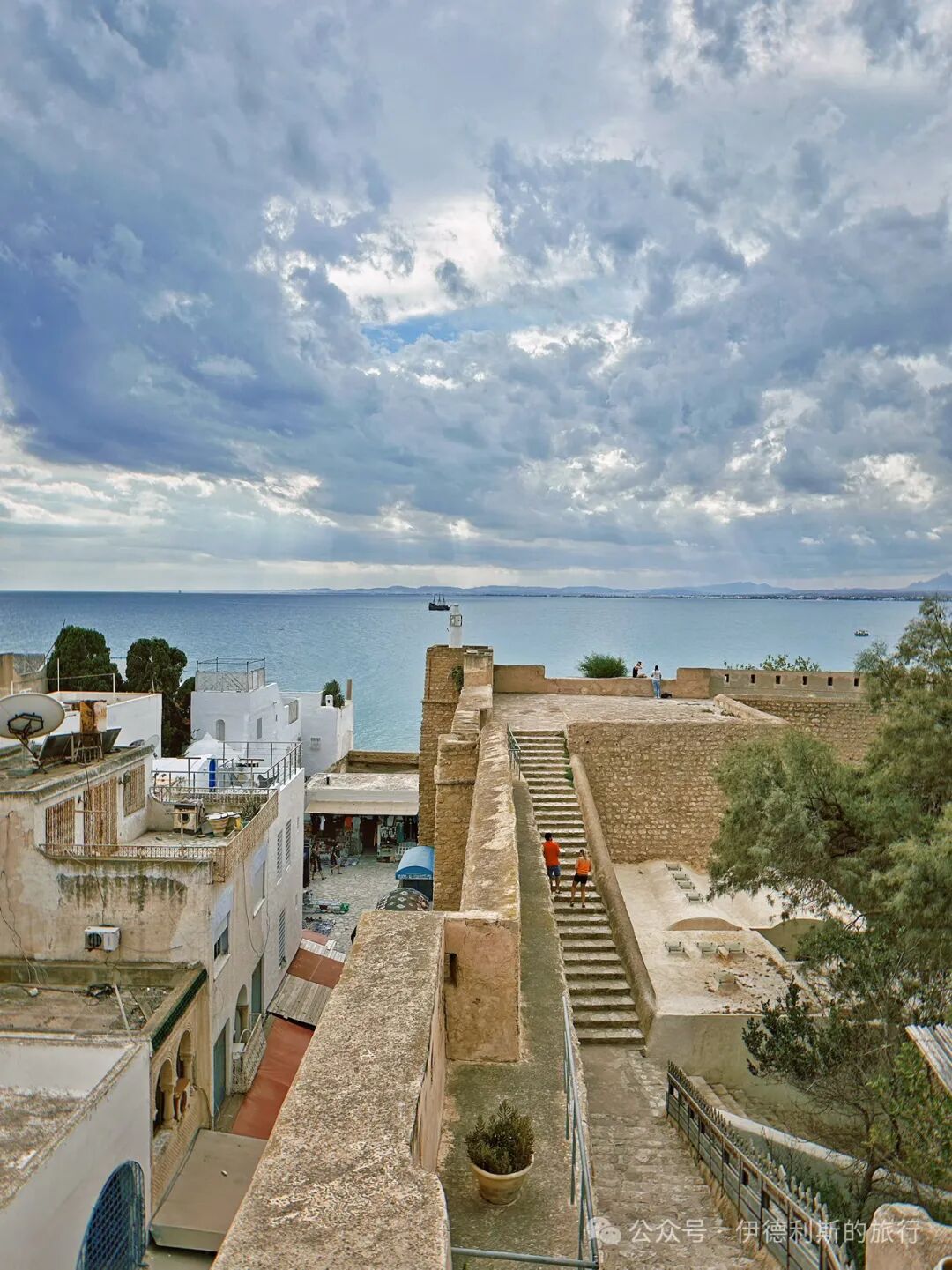
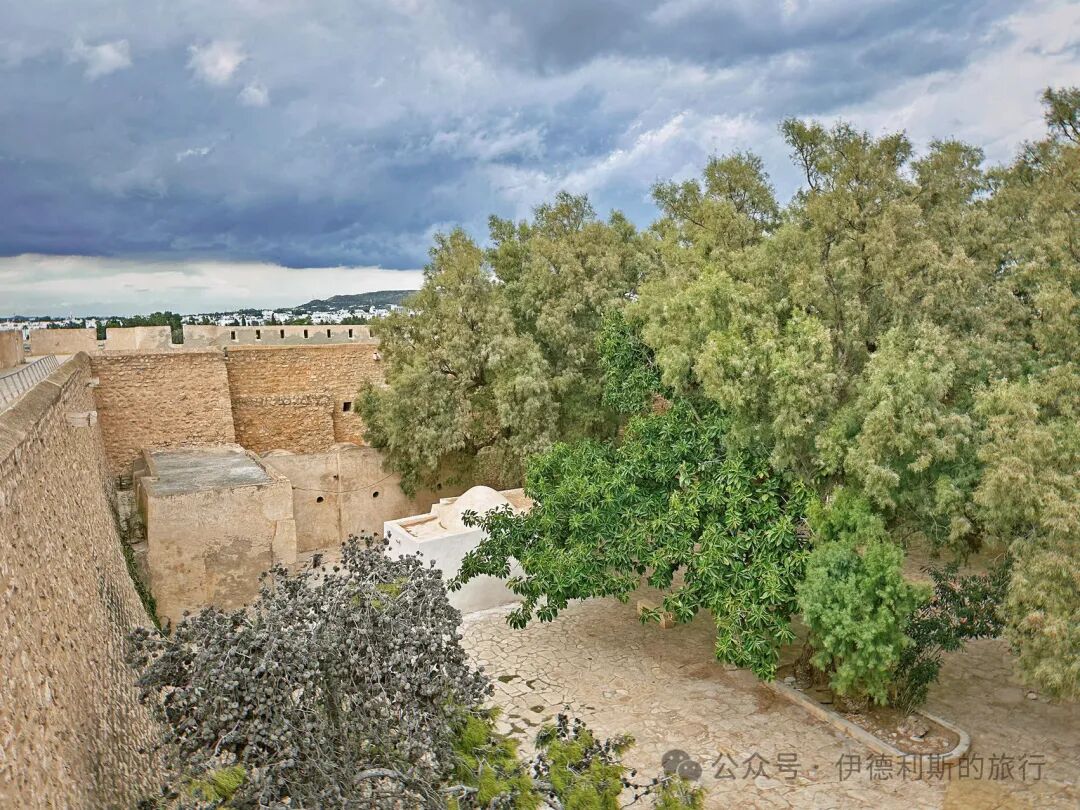
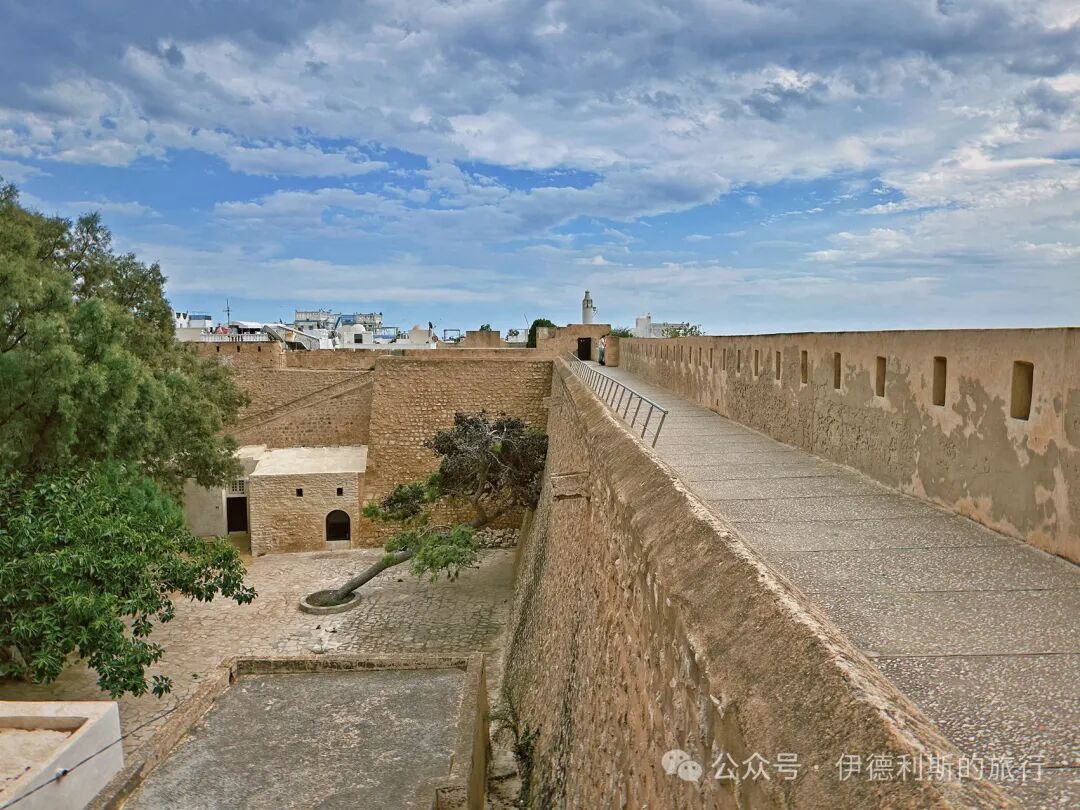
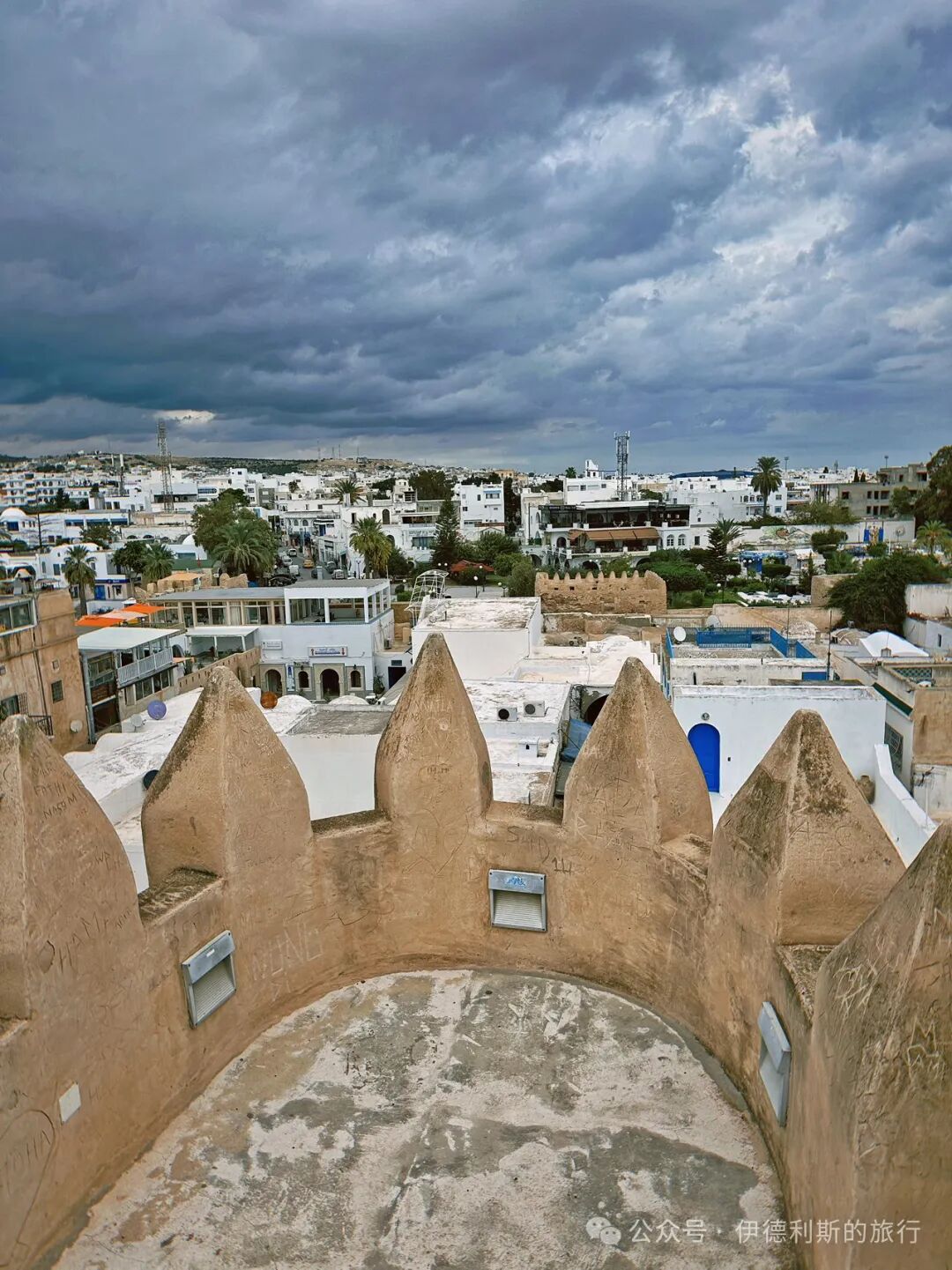
Inside the fortress, there are quite a few pine trees, which is rare. There is also a teahouse on the city walls with a great view. In the center of the fortress stands a tomb from the late 15th century. The person buried there, Sidi Bou-Ali Mohamed, was once stationed here and was very devout in his faith.
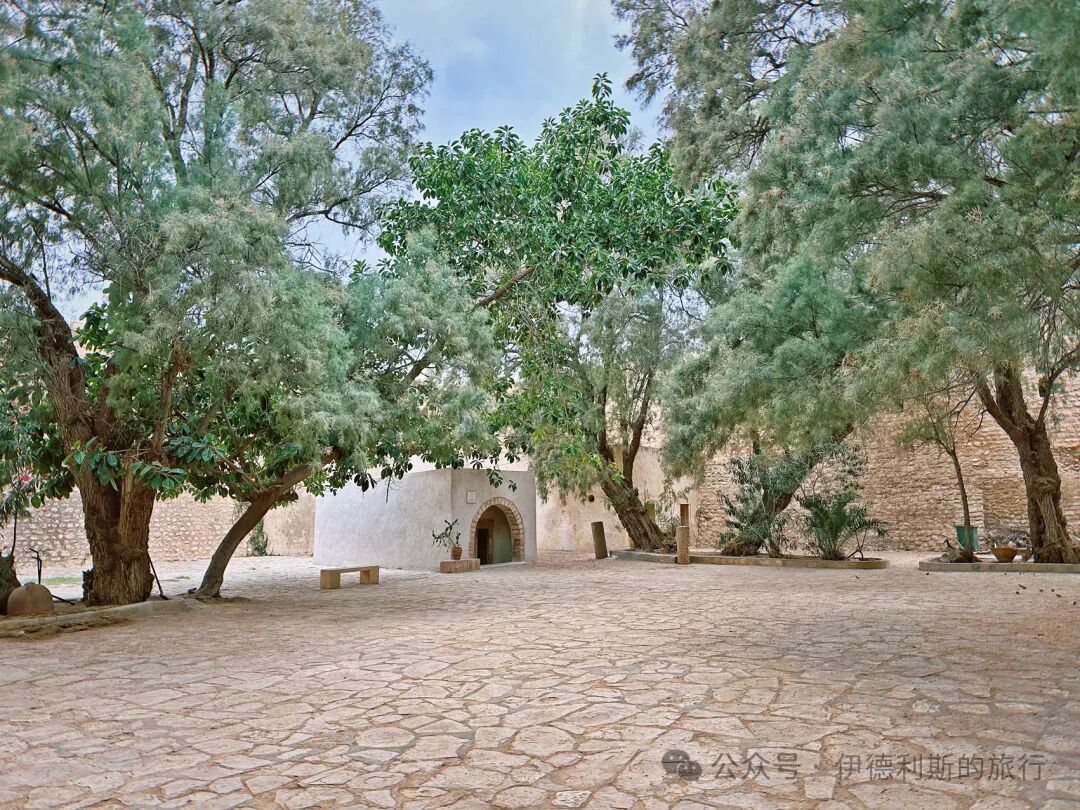
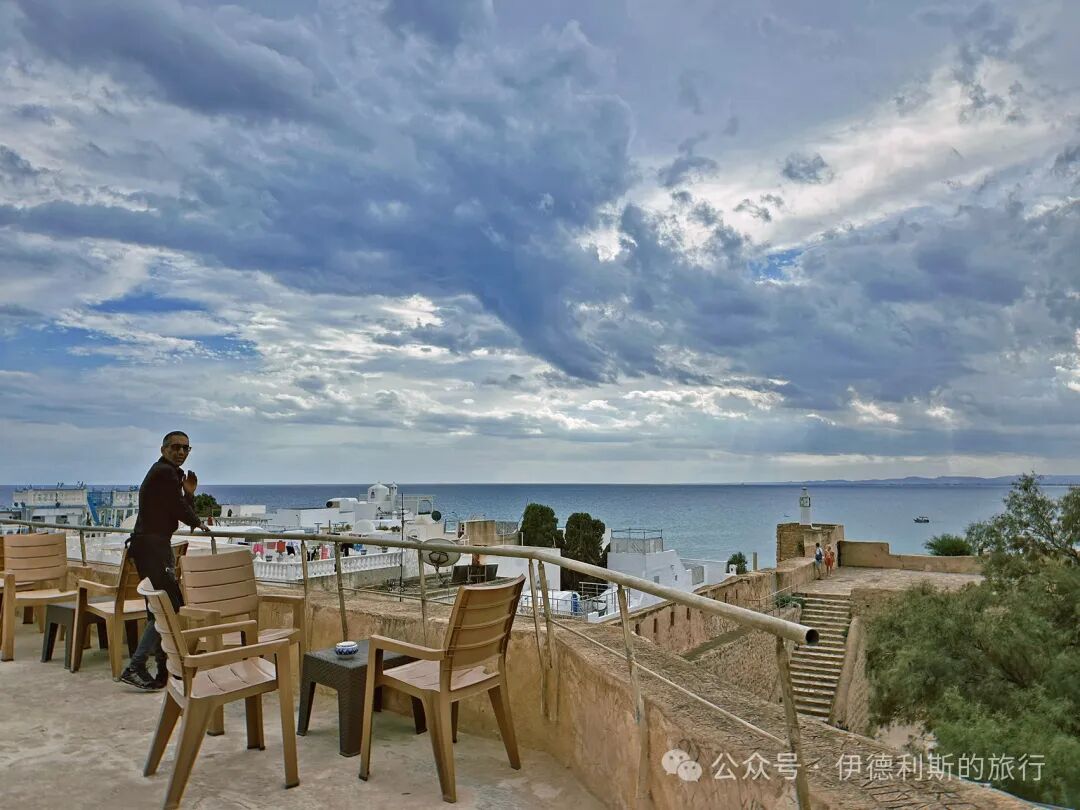
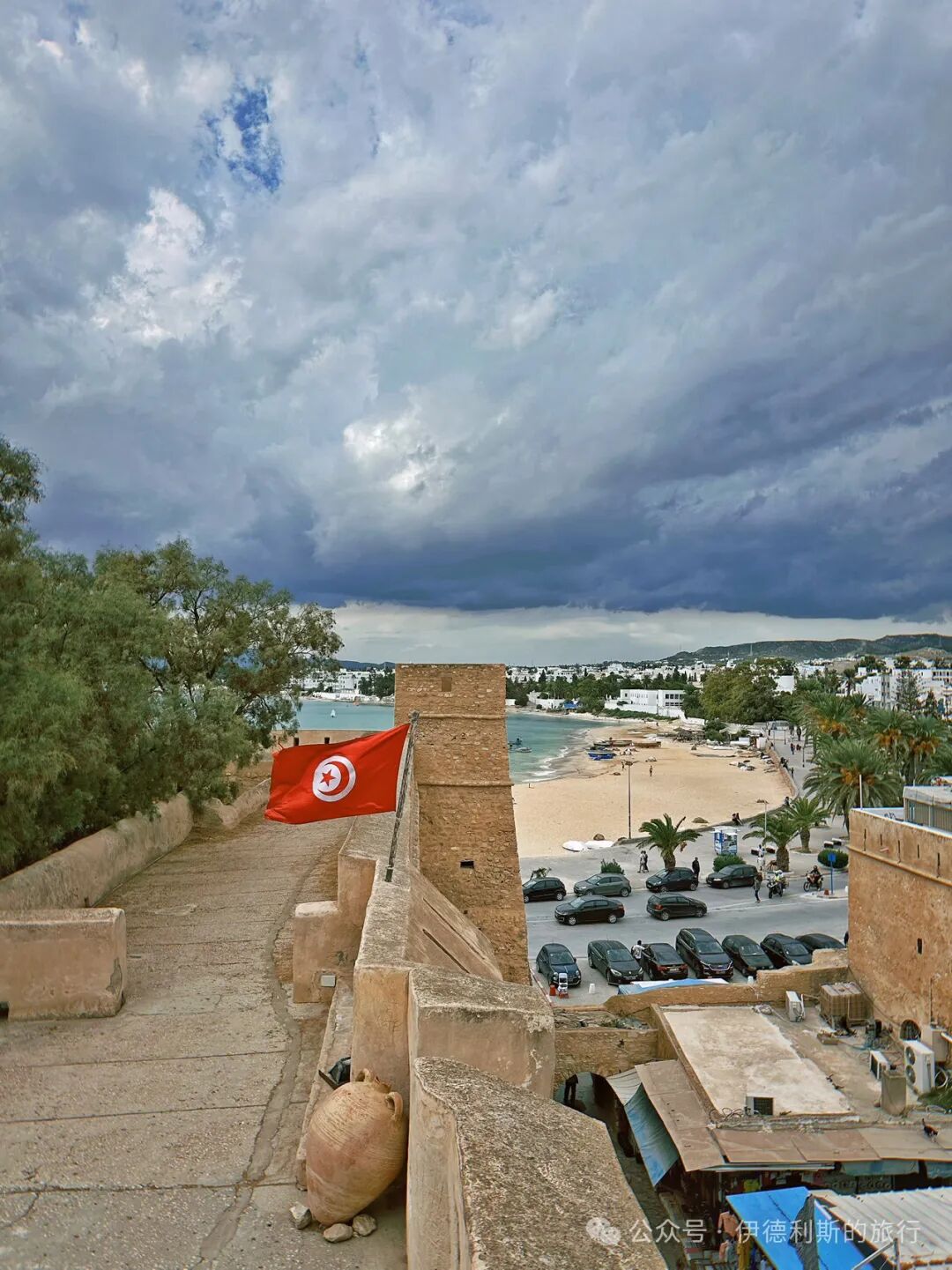
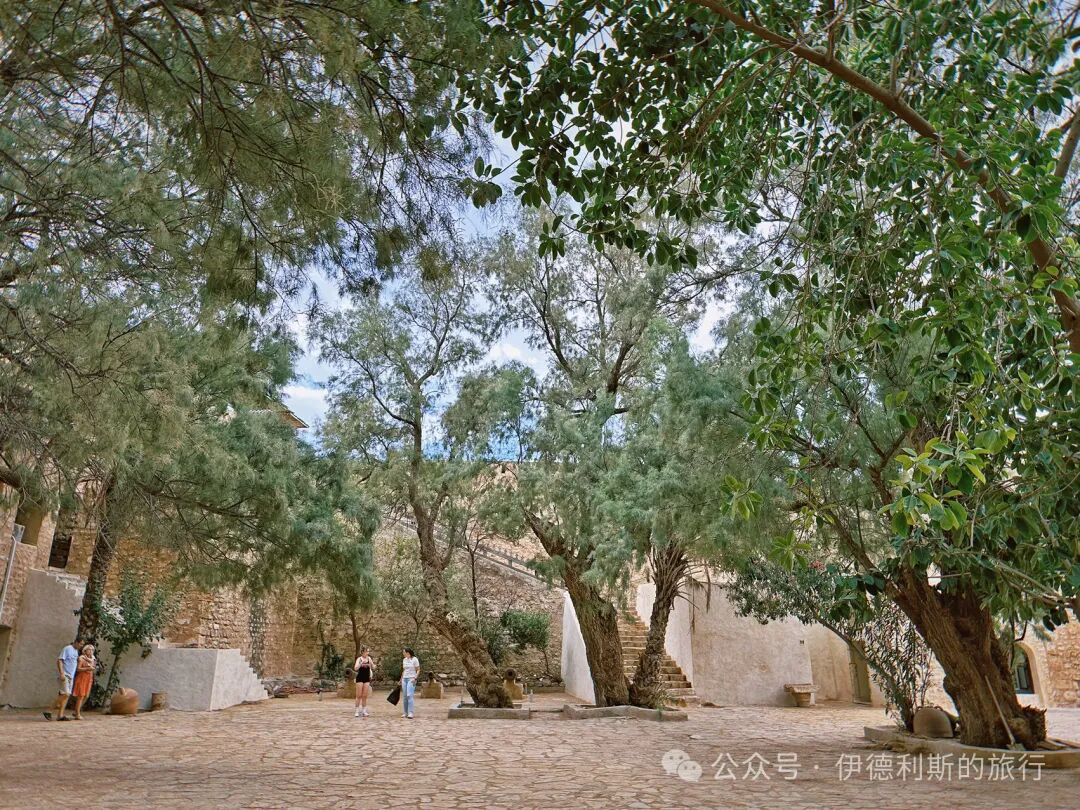
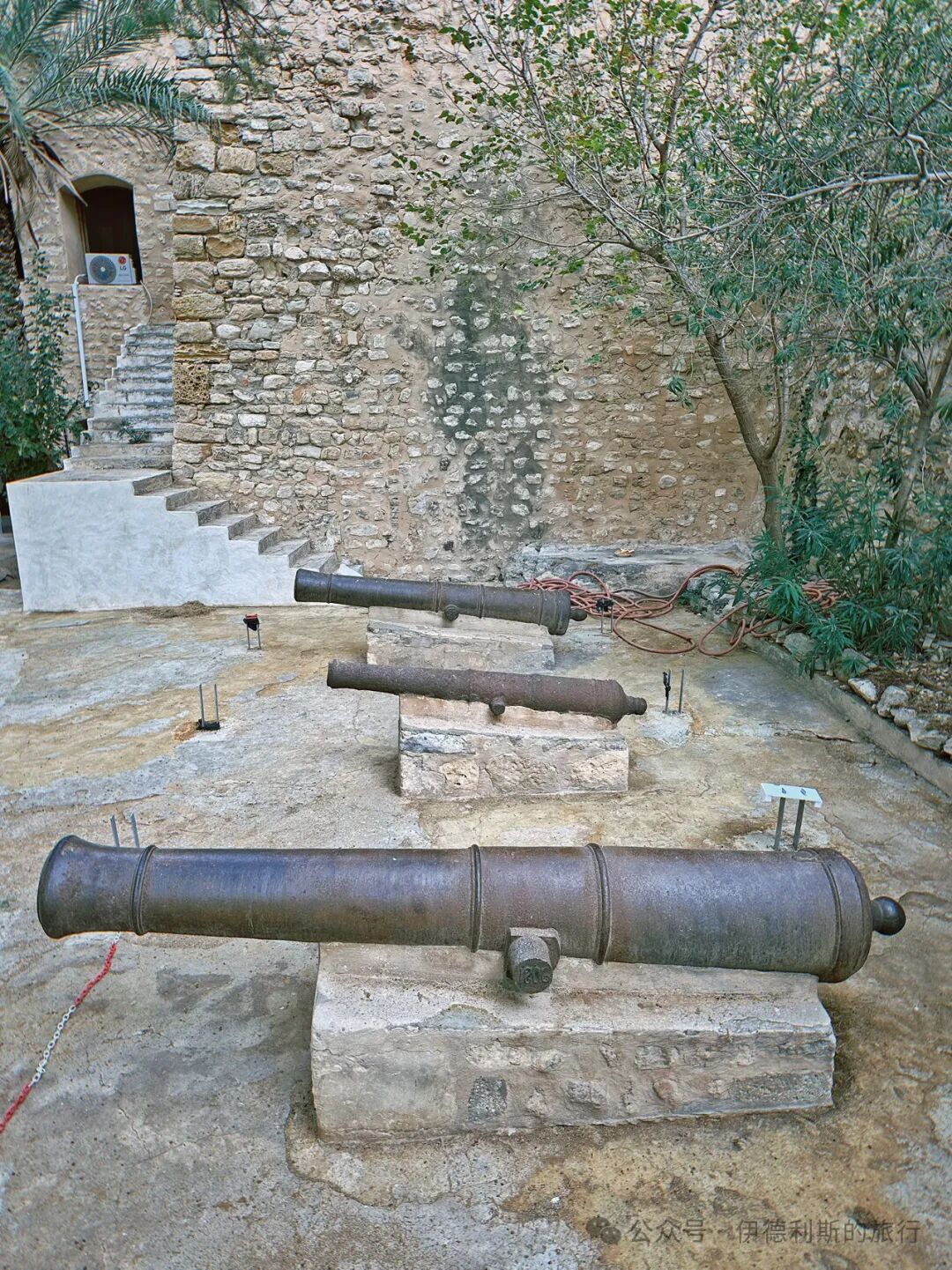
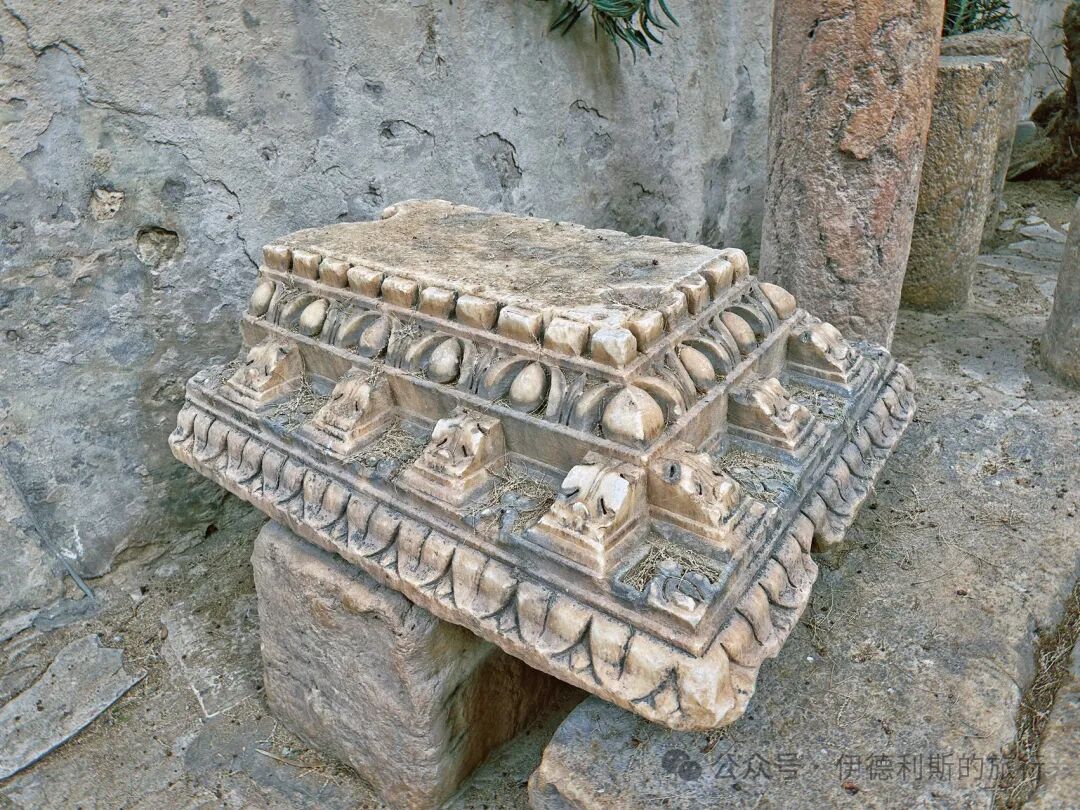
The walls and gates of the old medina in Hammamet. Hammamet grew from a military fortress into a medina city in the 13th century, so walls were built around the residential area of the medina in the mid-13th century.
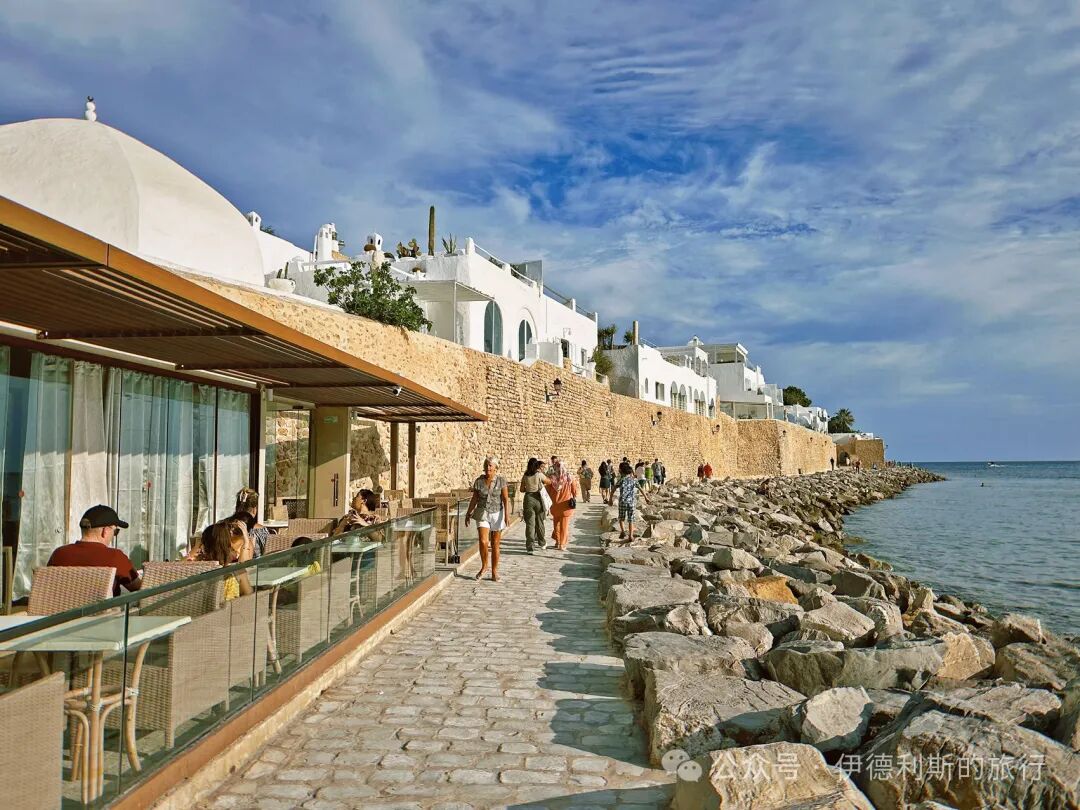
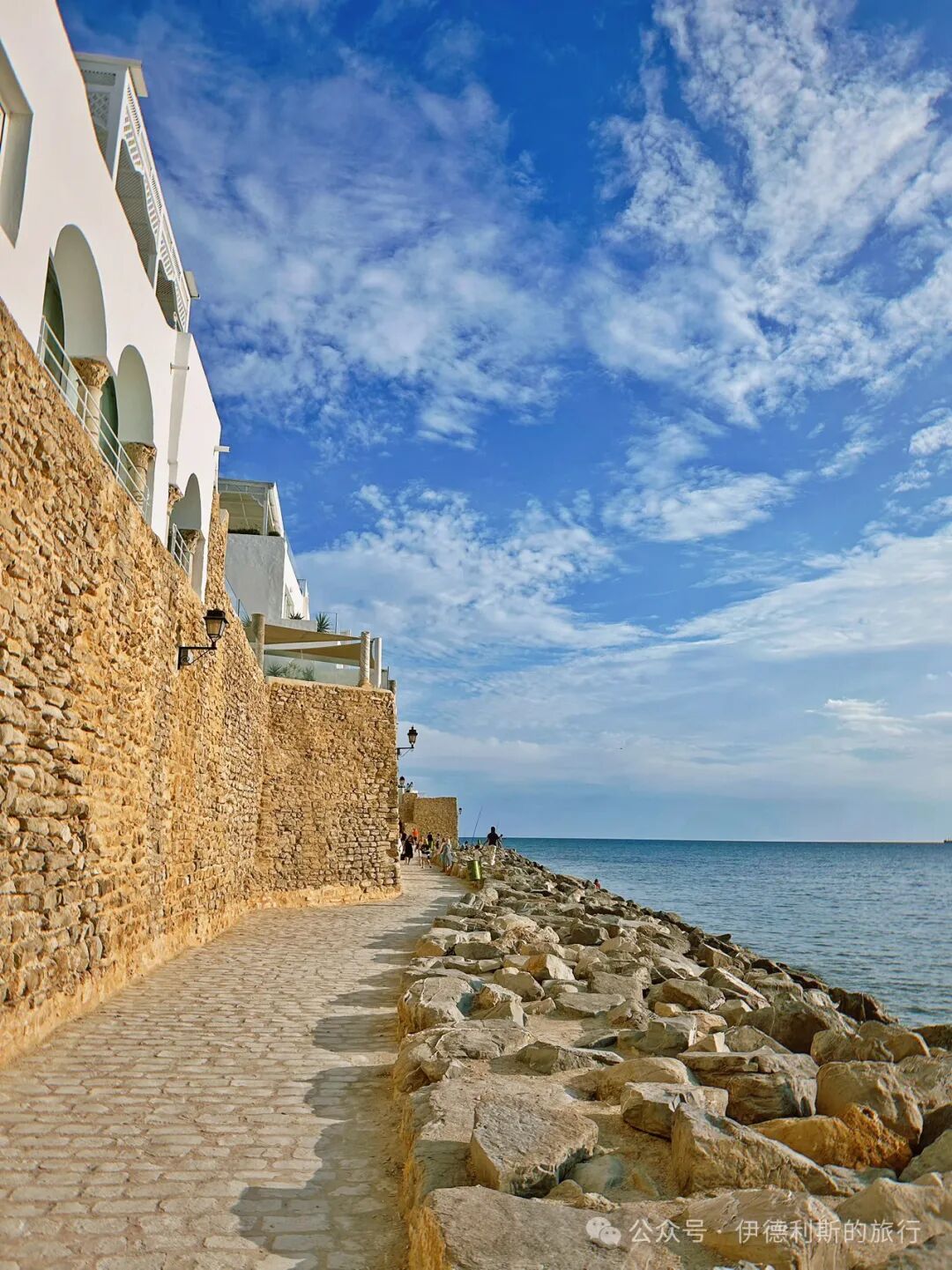
The Haouara Gate by the sea was built by the Berber Haouara tribe in the 15th century. They attacked the Hammamet Medina from the sea and saved the city from the enemy.
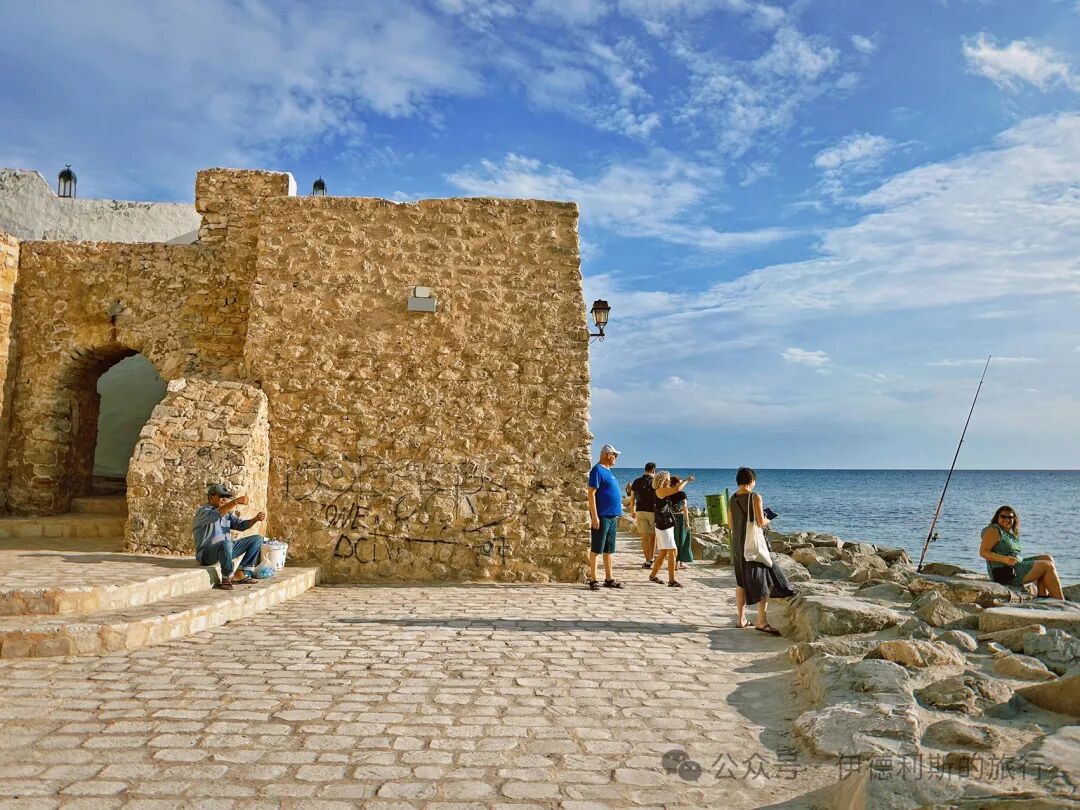
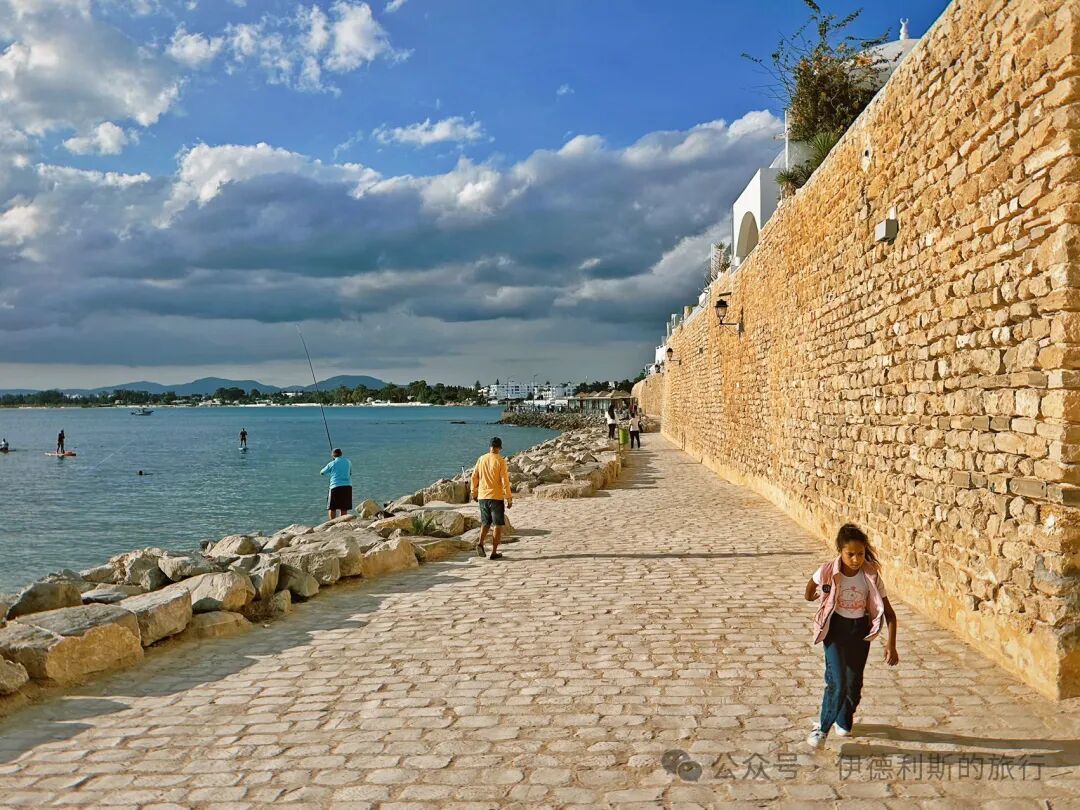
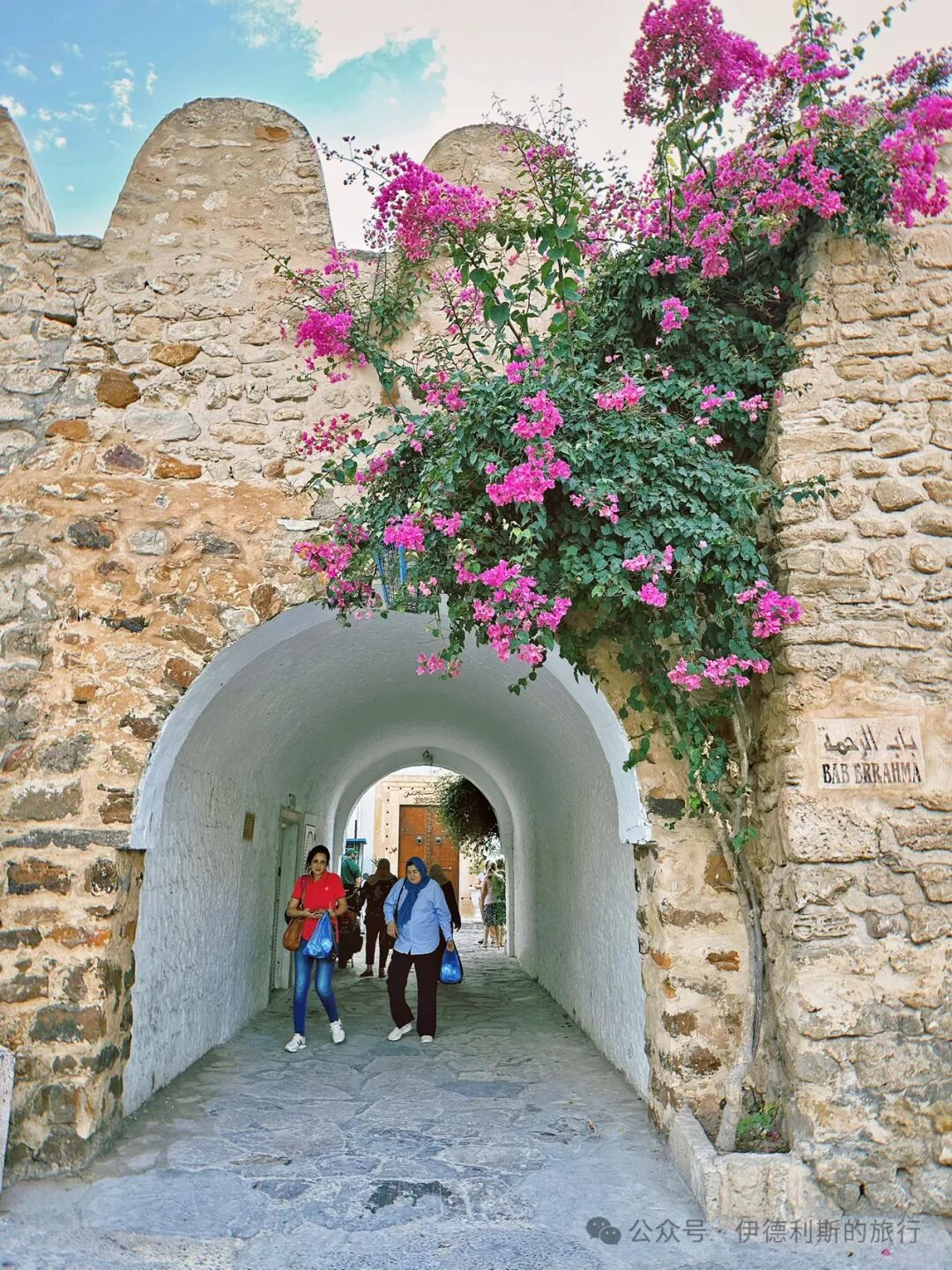
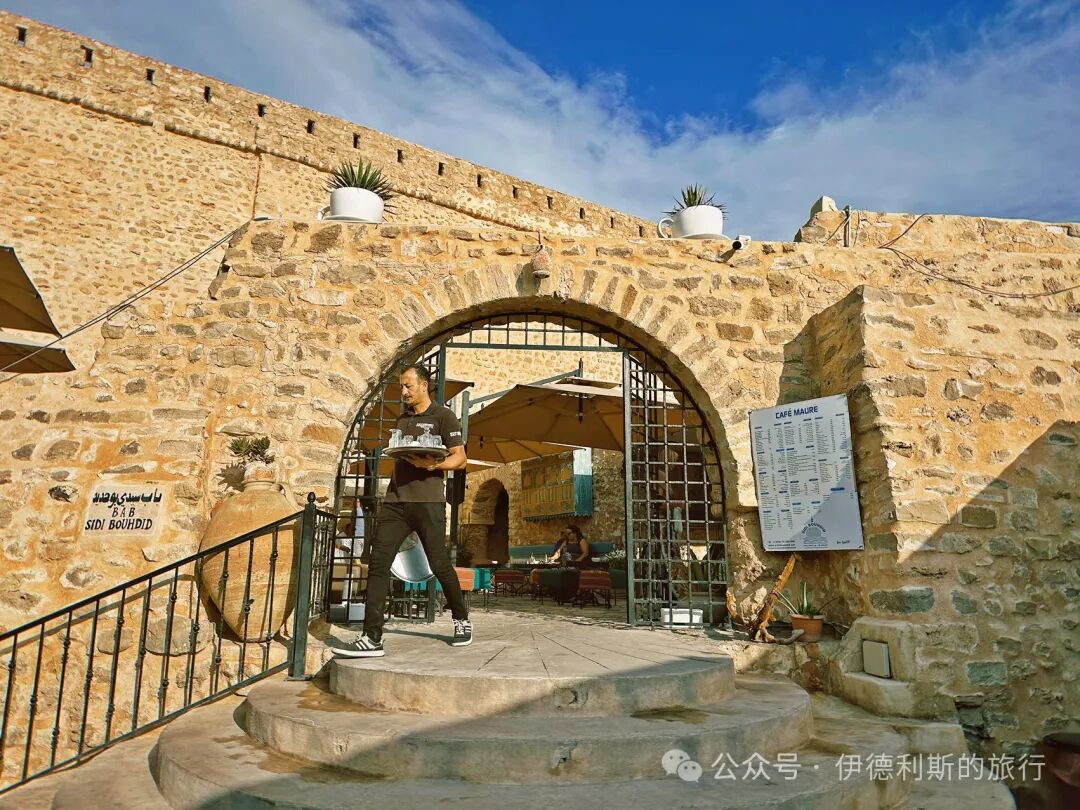
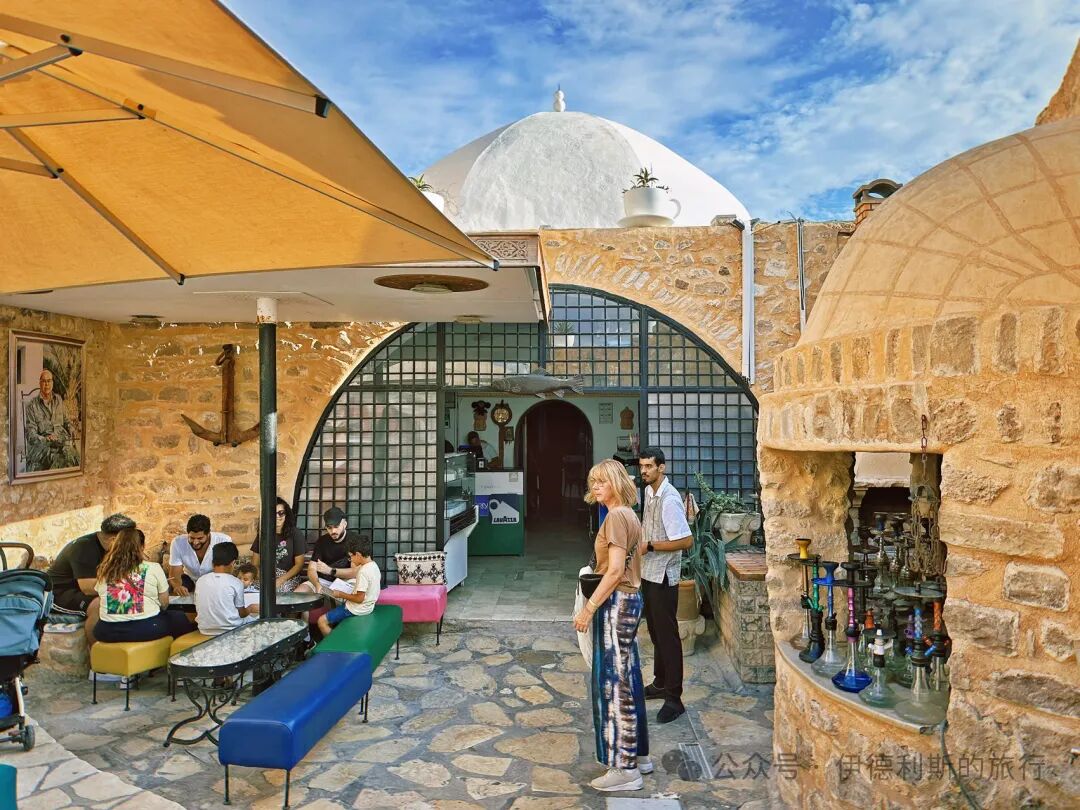
Sidi Bouhdid Gate leads to the gongbei (Zawiya) of the saint Sidi Bouhdid, which was built in the 18th century. Sidi Bouhdid was a Moroccan who came to Hammamet in the 12th century and spent his time guarding the safety of fishermen by the sea. He died fighting the Normans in 1178 and was buried by the city walls. Today, there is a very popular cafe here.
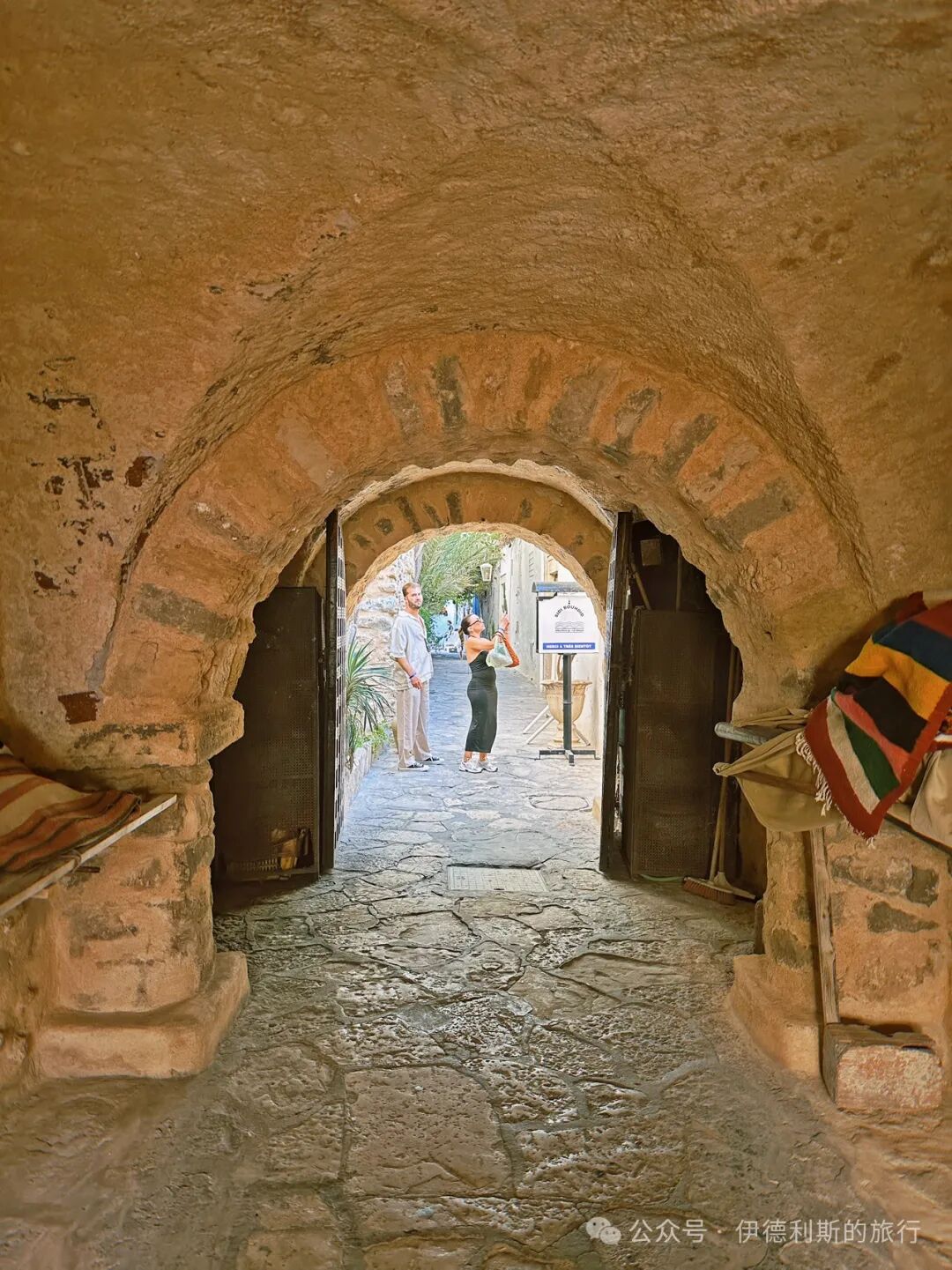
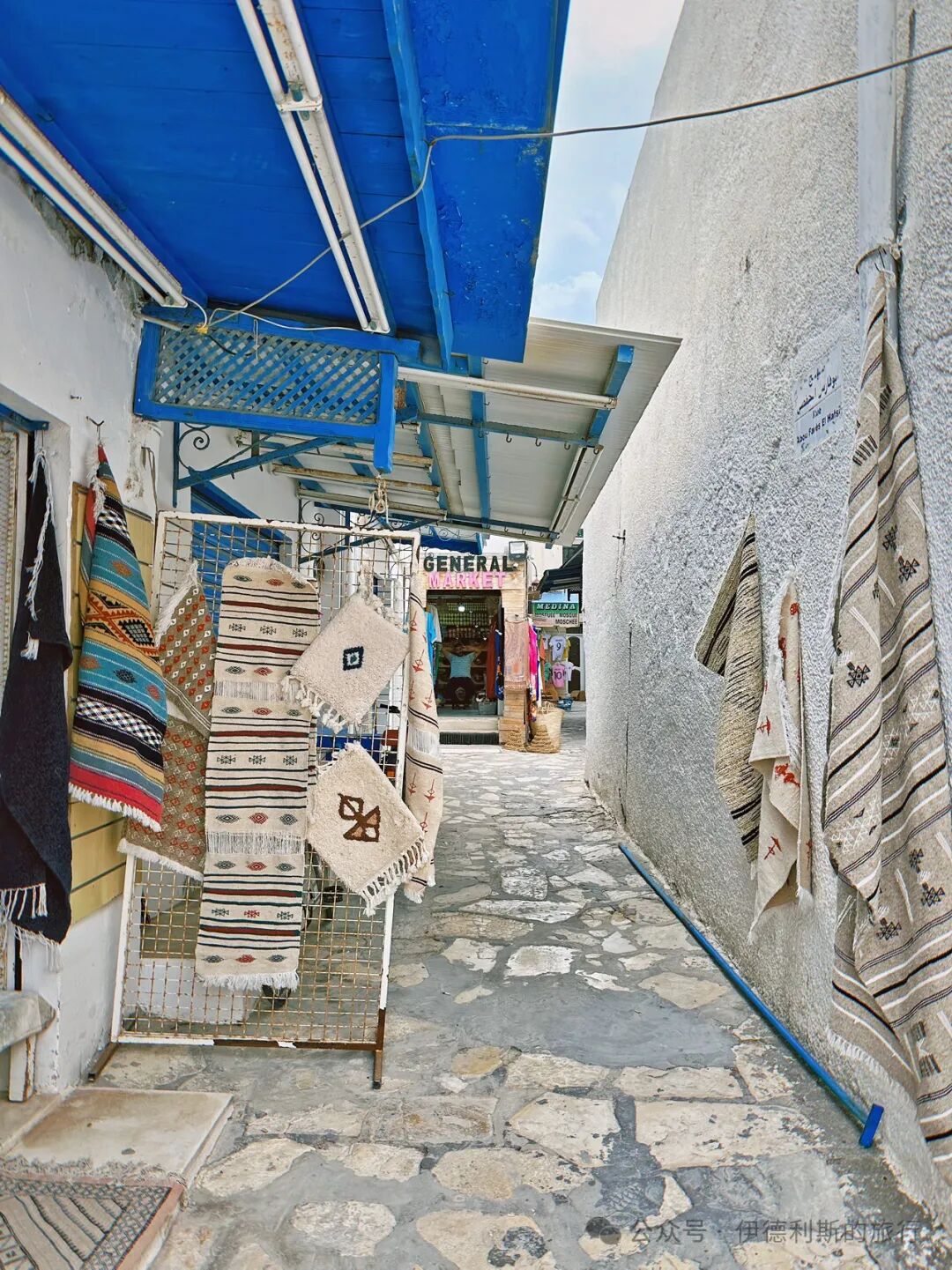
The streets of the old Hammamet Medina have the classic Tunisian blue-and-white town style, with bougainvillea planted along the streets and iron nails decorating the wooden doors. Hammamet Medina reached its peak in the 14th century, which was also the period when pirate raids from Pisa and Catalonia were most frequent.
After the Ottoman Empire conquered Hammamet in 1574, many Ottoman officers and soldiers were stationed in the city. These Ottomans were strongly influenced by Tunisian culture and were quickly assimilated. The descendants of Ottoman officers and Tunisian women are called Kouloughlis, and many of them have paternal roots in Izmir, Turkey. Unlike the local Tunisians who follow the Maliki school, the Kouloughlis still follow the Hanafi school.
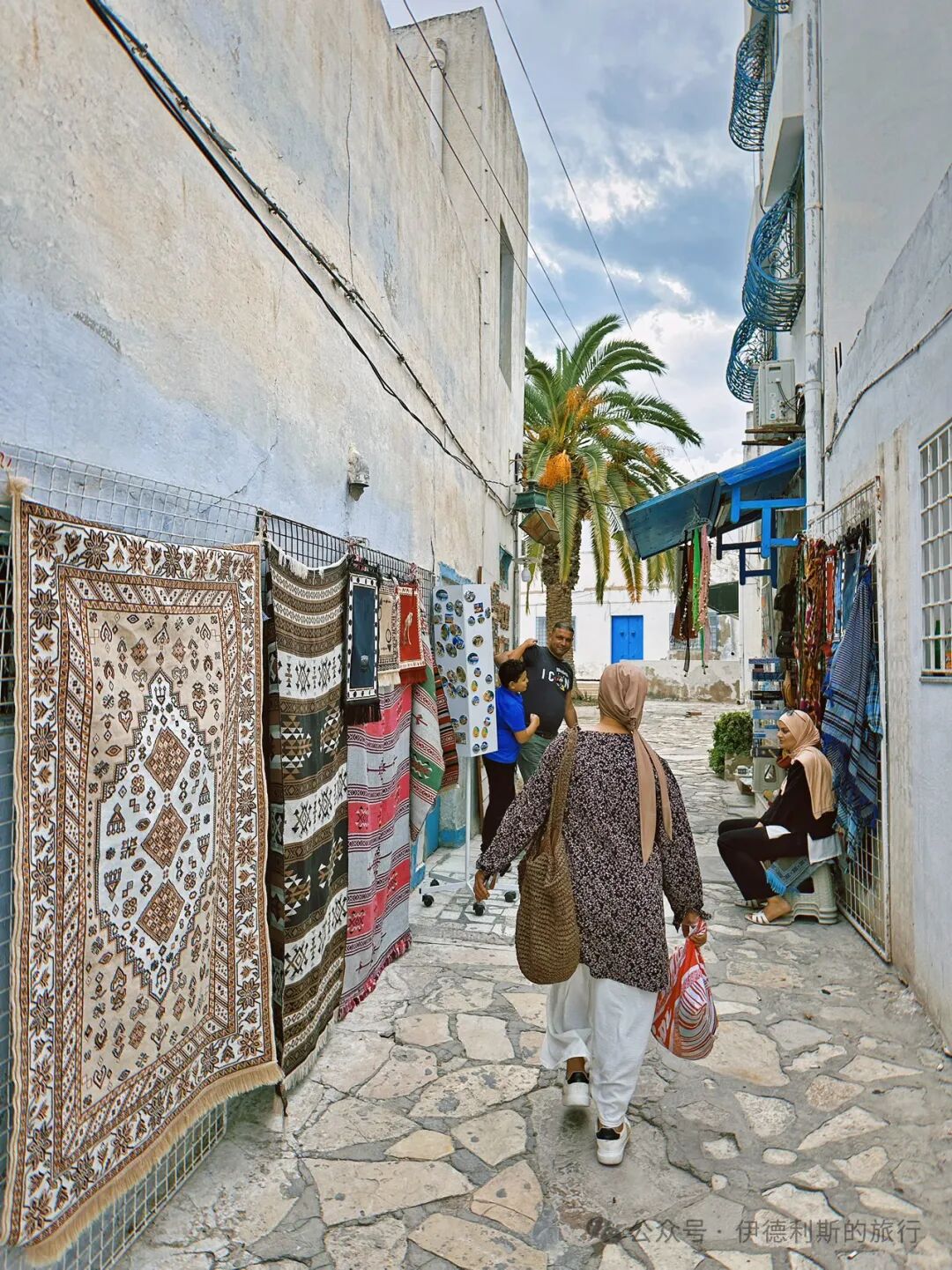
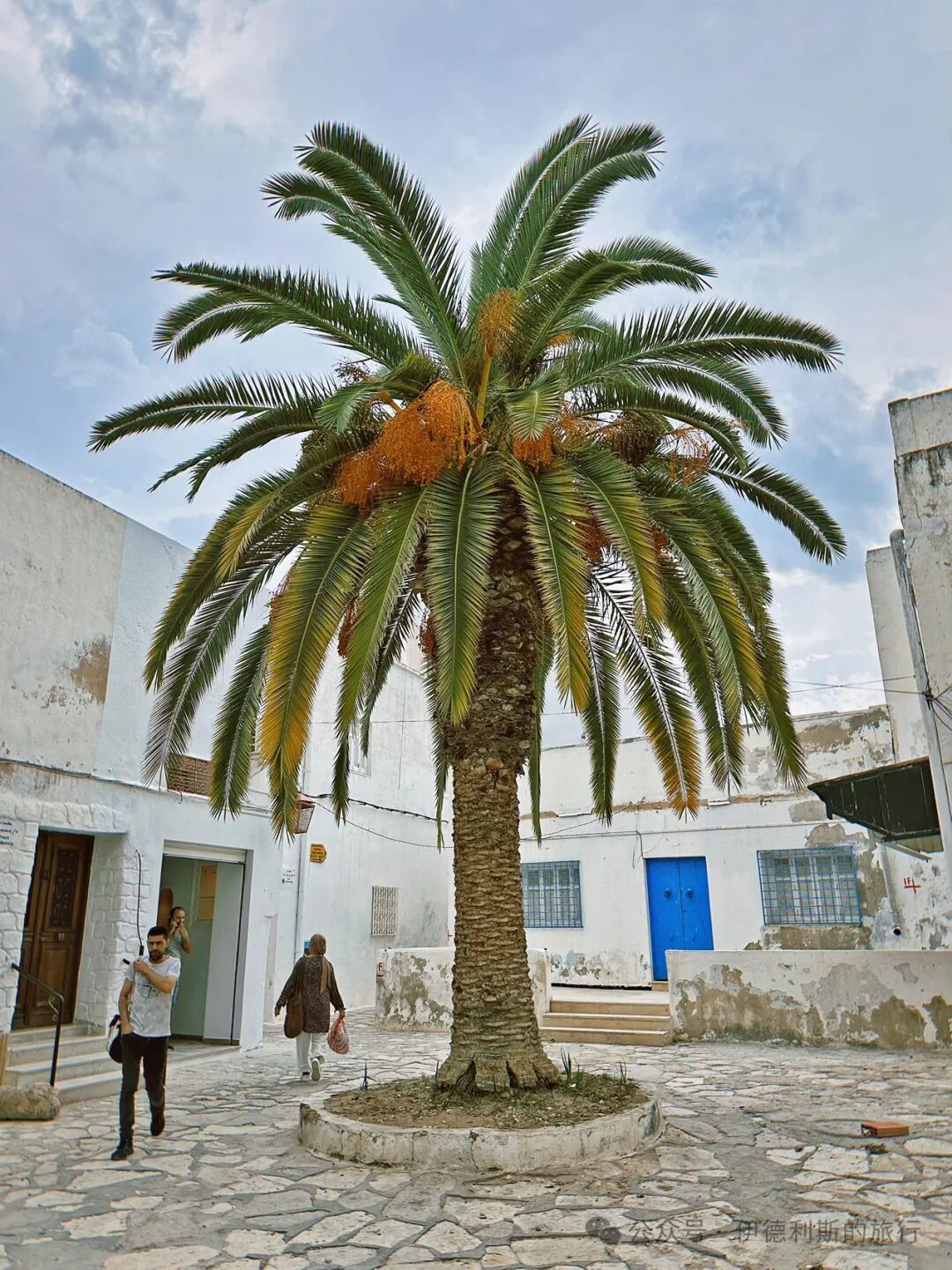
The only date palm tree in the old city is located in the center of Errahba Square. This square was originally the site of two houses belonging to the Bennila family, which were destroyed by bombing during World War II, leaving only the date palm tree behind.
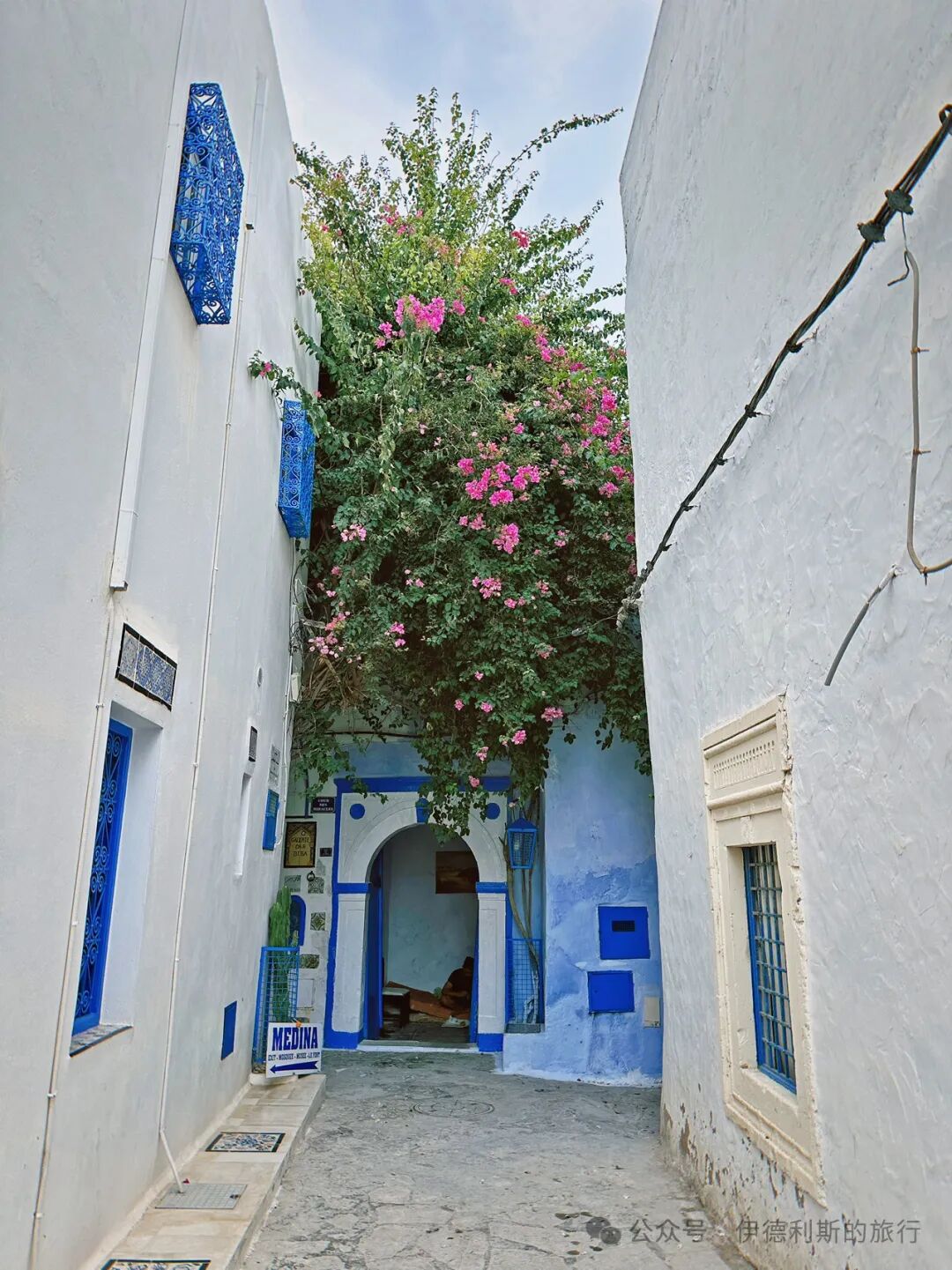
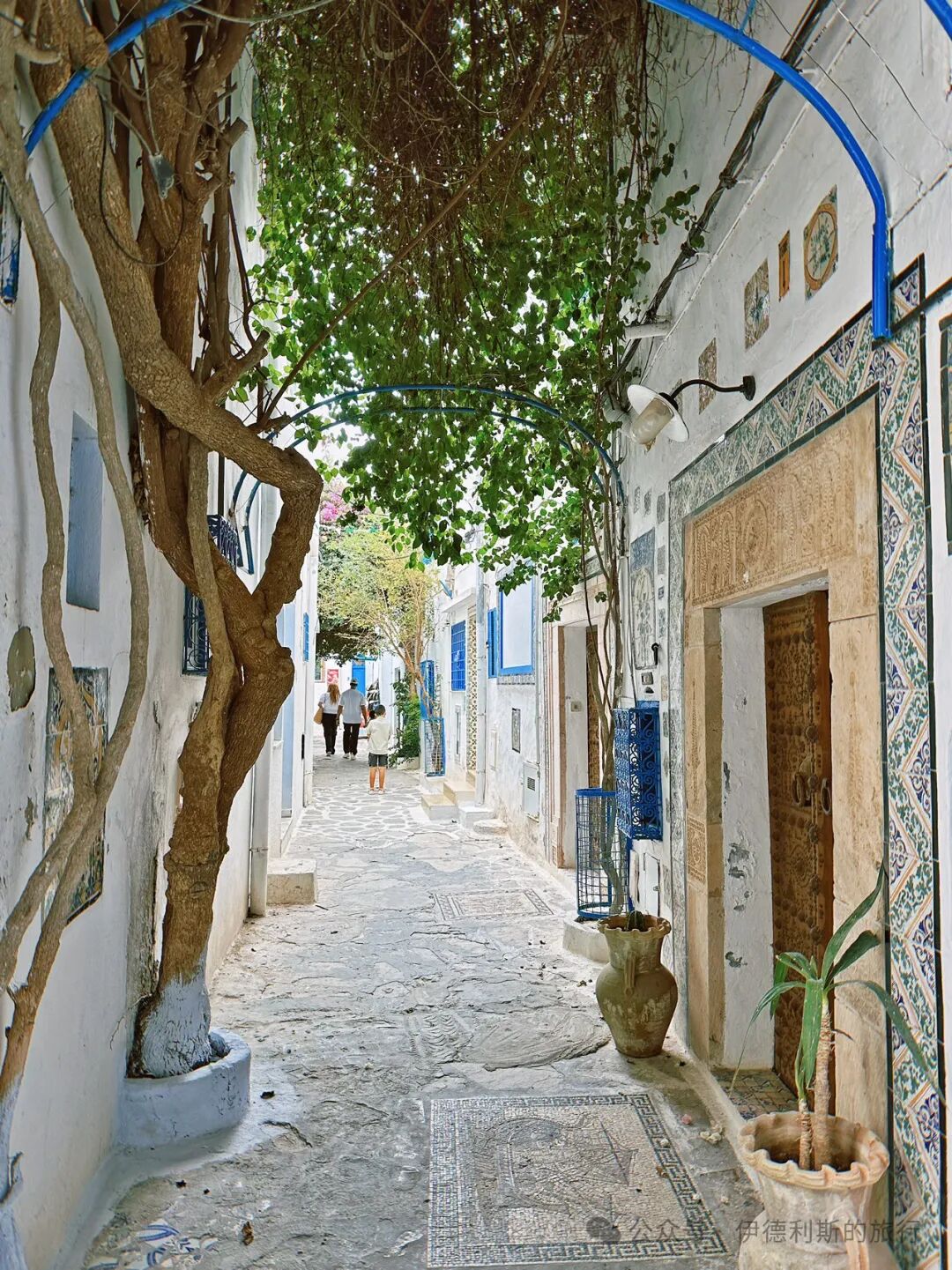
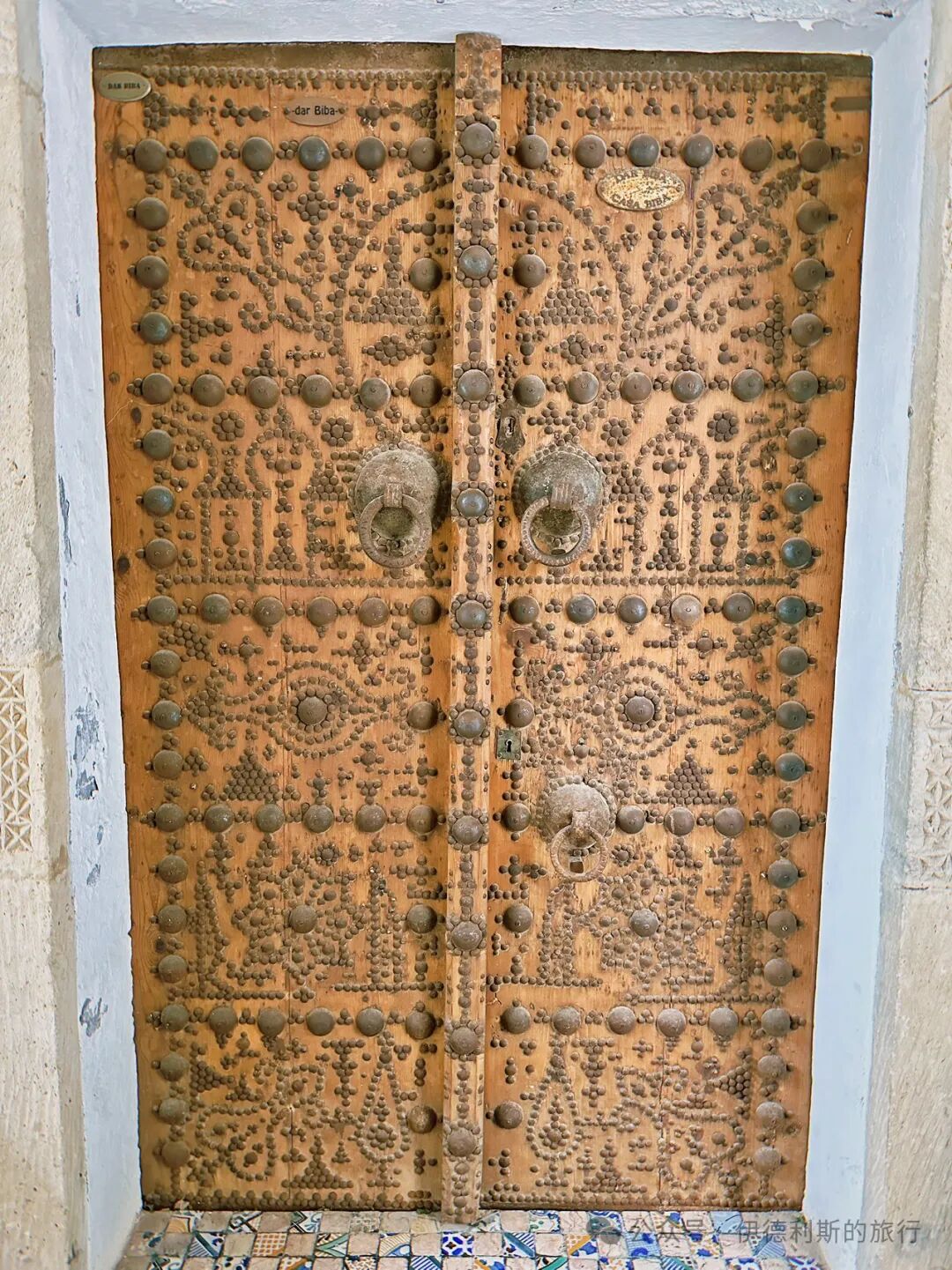
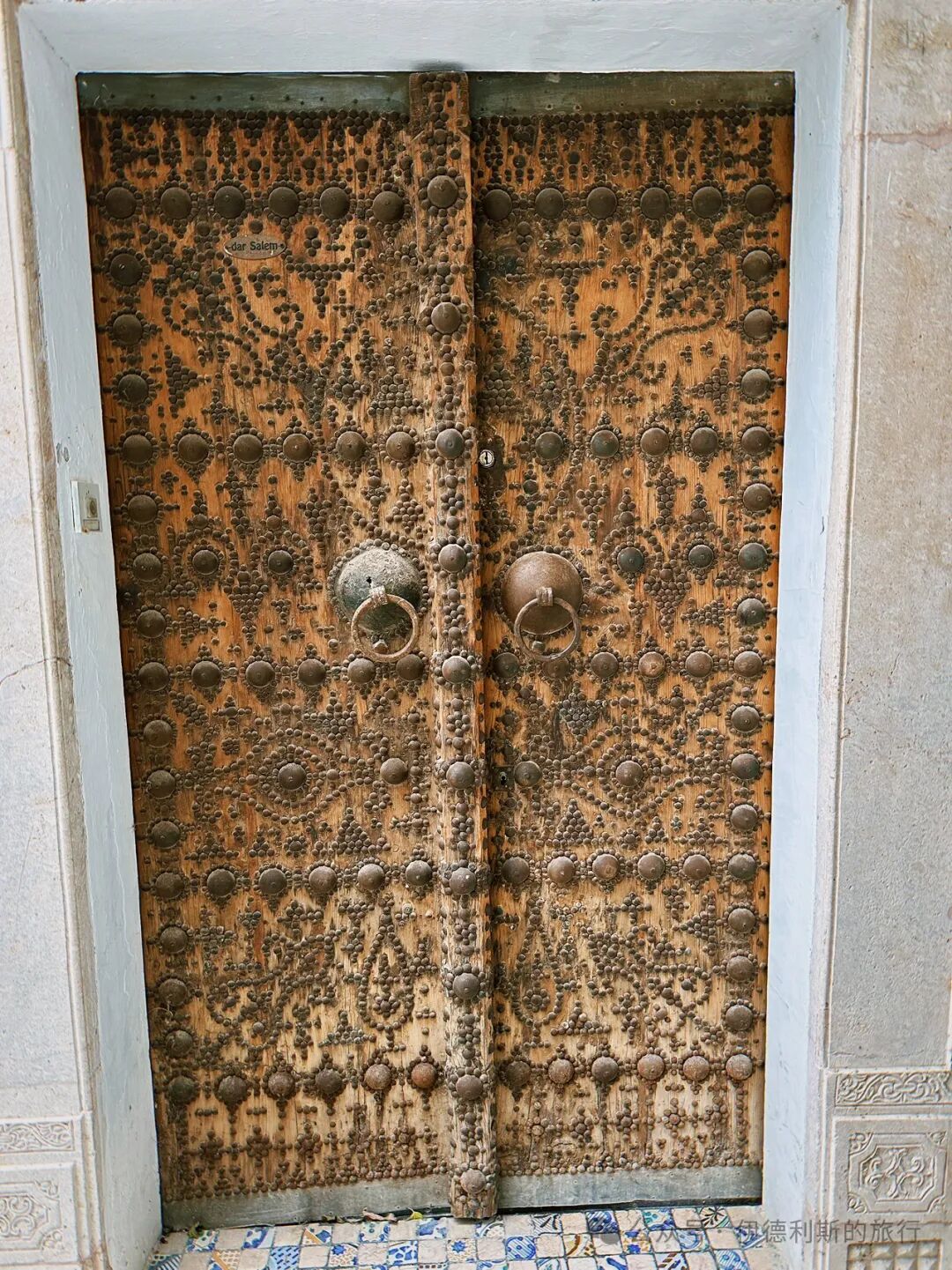
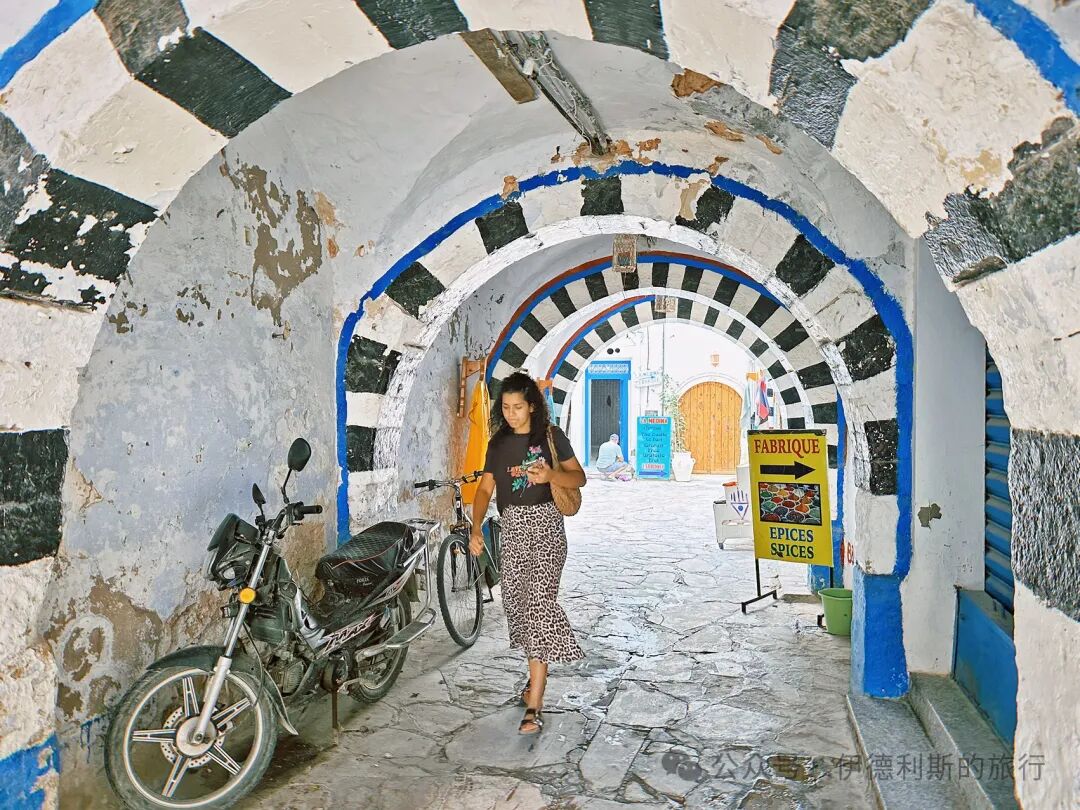
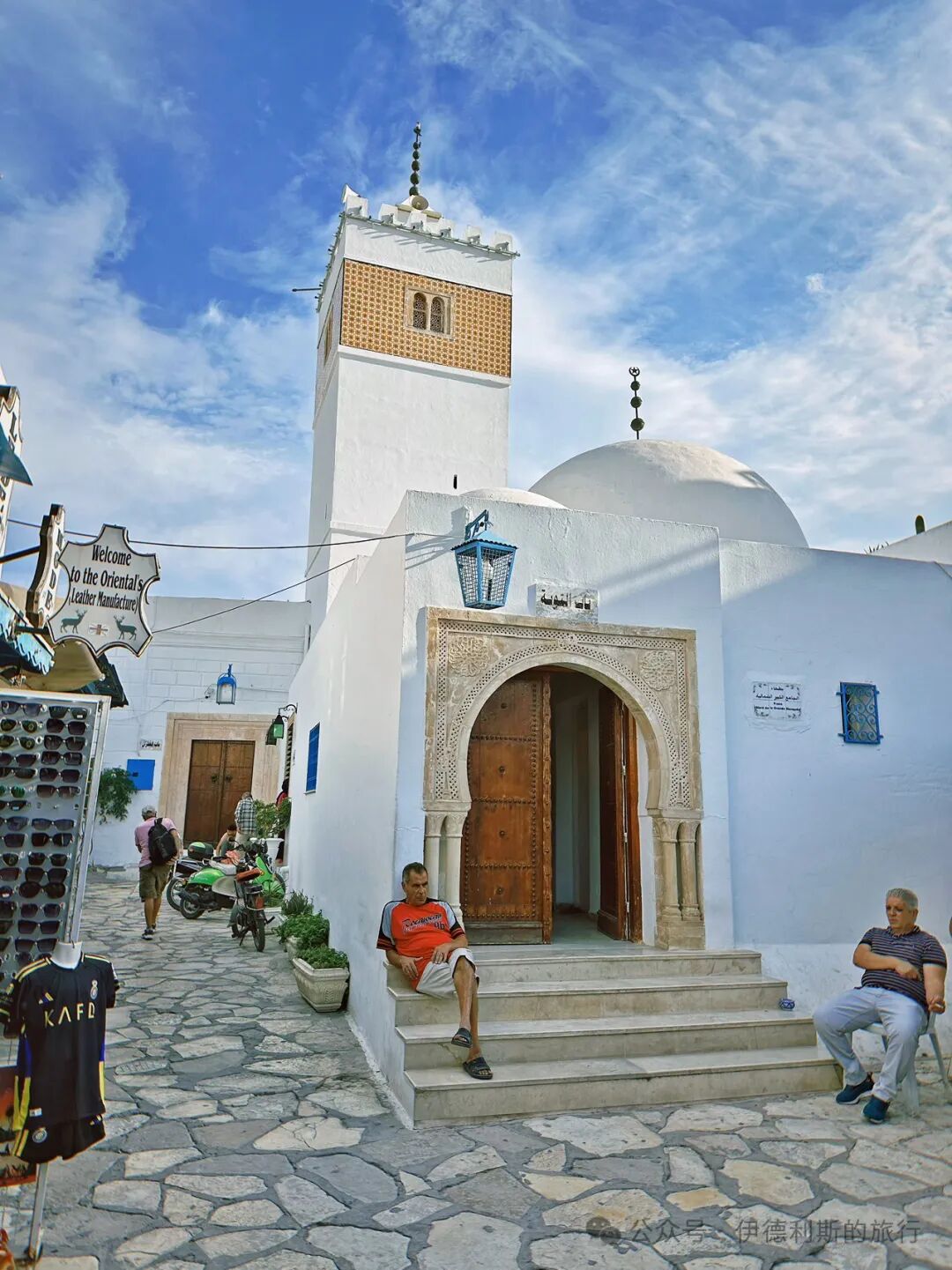
I performed the afternoon namaz at the Great Mosque of Hammamet. Tunisia follows the Maliki school, where the practice of raising the hands once (for the imam) and raising the hands once or three times (for others) coexist peacefully. After the prayer, people stood for the funeral prayer (namaz) right inside the main hall, and the body (mayyit) was kept there too. This is quite different from our Hanafi practice.
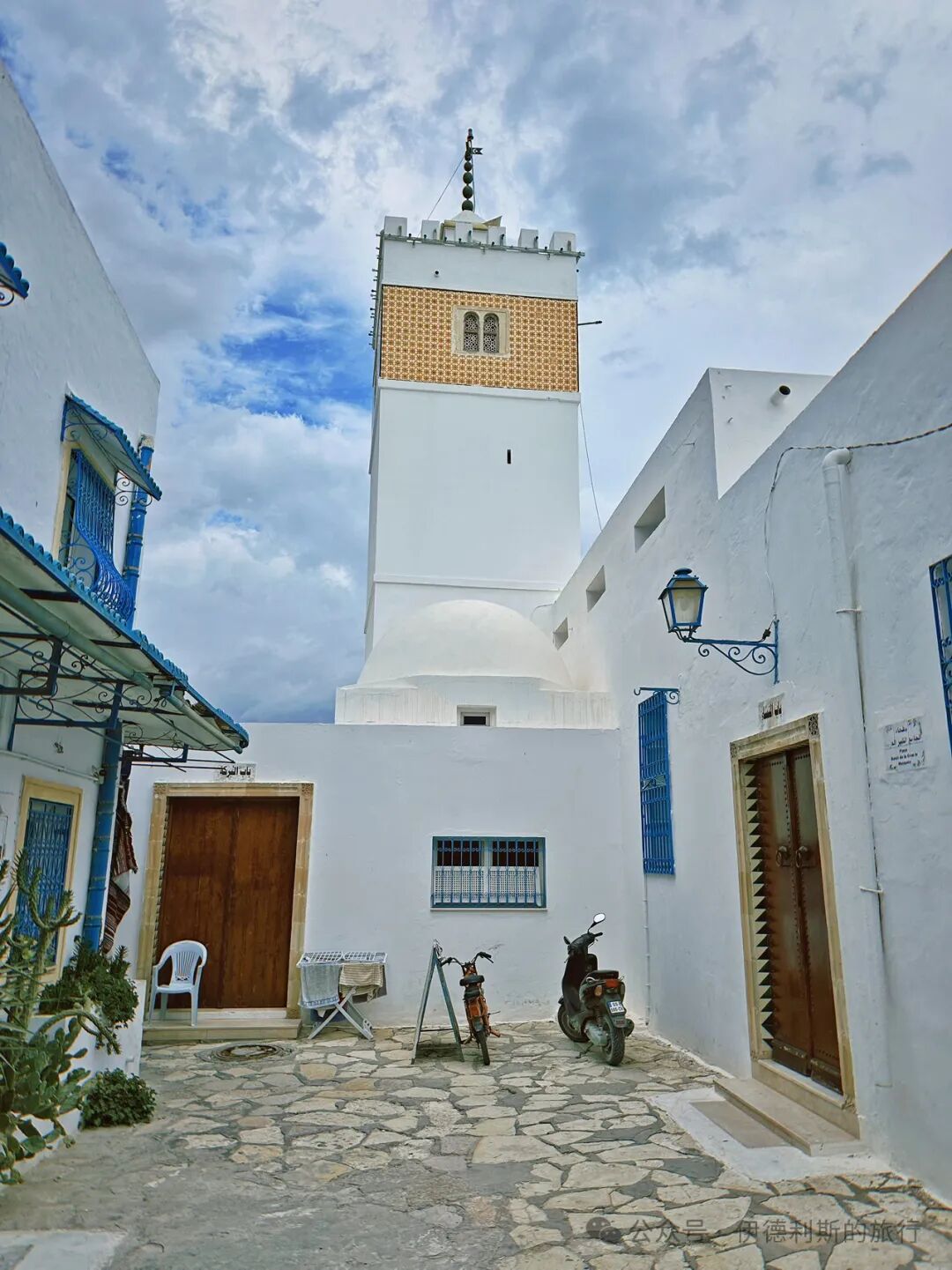
The Great Mosque of Hammamet was started in the 12th century and finished in the 13th century. The minaret (bangke ta) was added later in 1463. During this same period, Hammamet grew from a coastal fortress into a residential medina city area. The stone pillars in the Great Mosque of Hammamet are different colors because many were collected from nearby ancient Roman ruins.
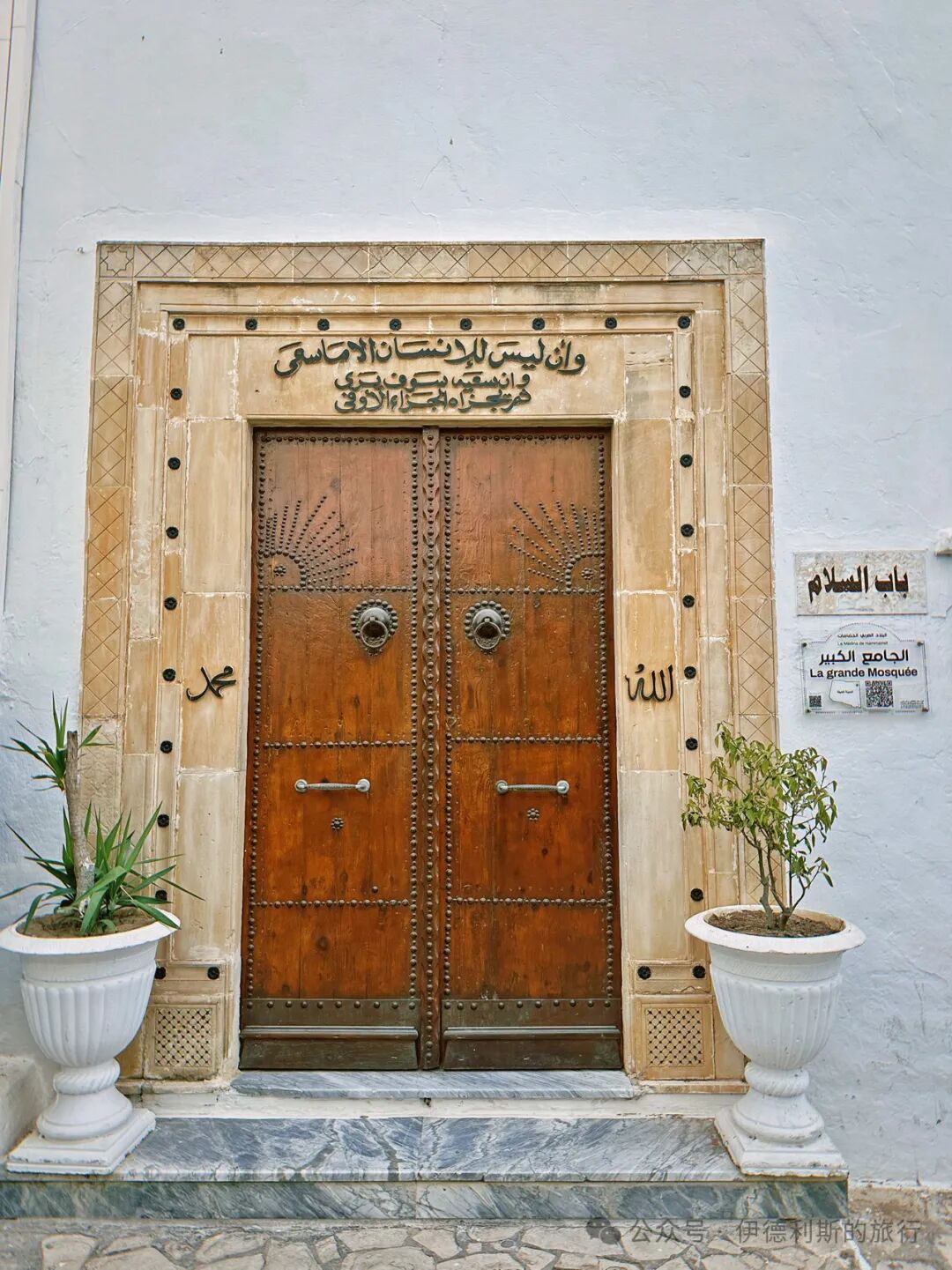
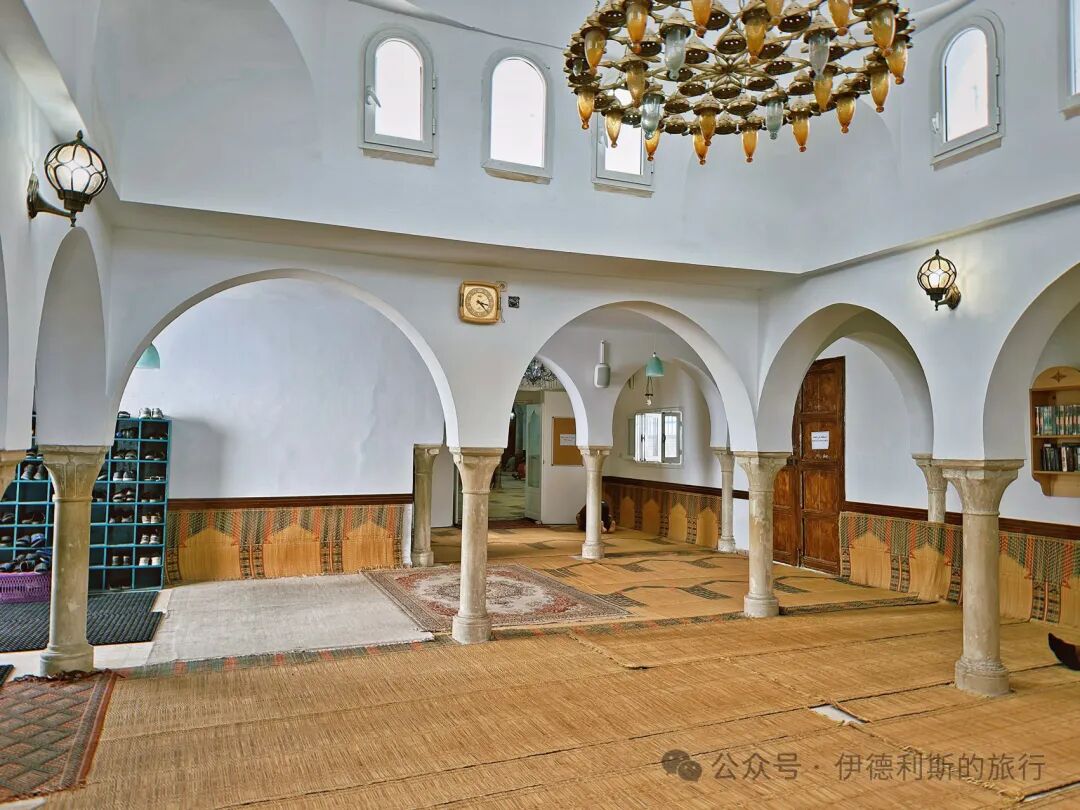
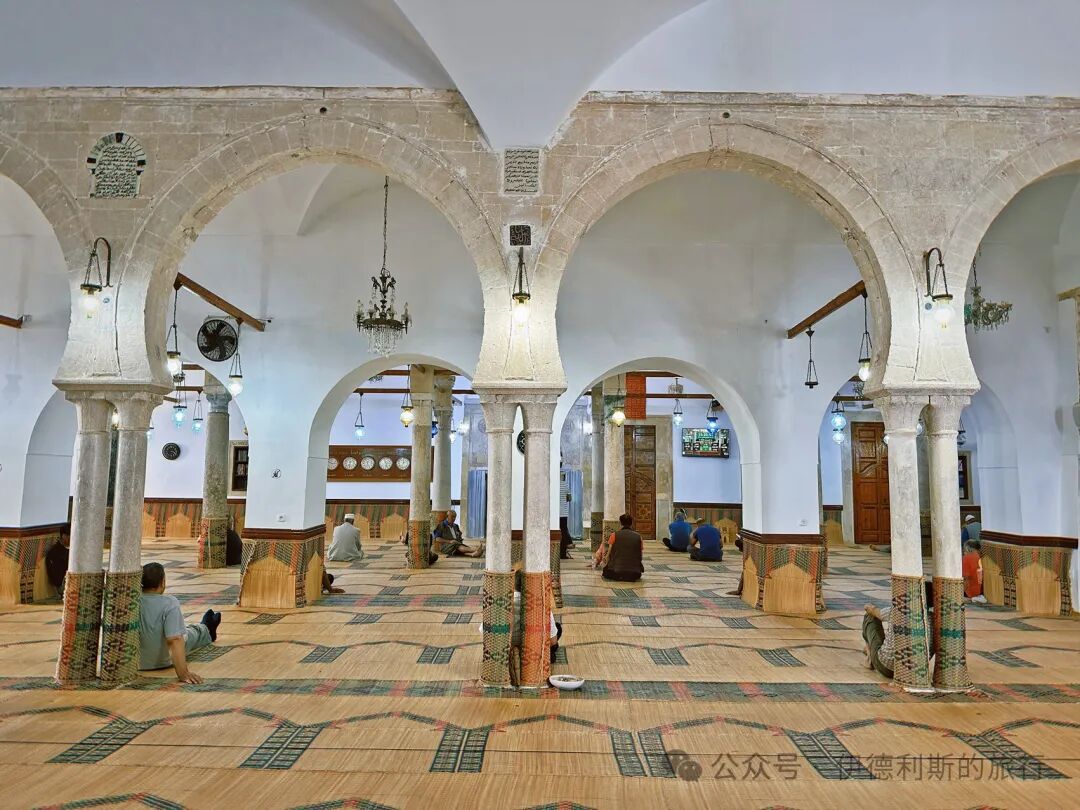
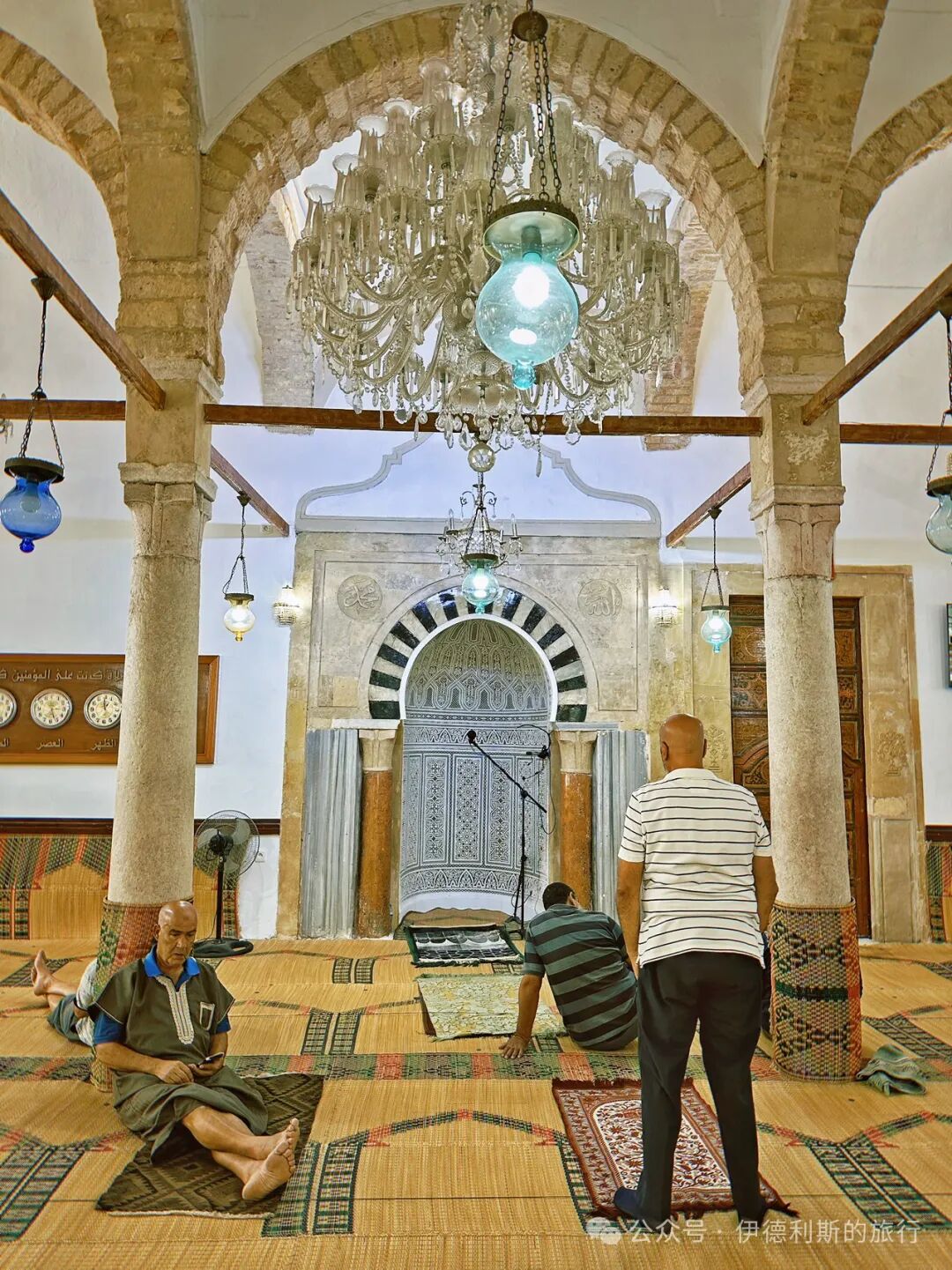
In the bazaars of the old city in Tunisia, you often see religious paintings. They show scenes like the Prophet Adam, the sacrifice of Ibrahim, and the Ark of Nuh. The art style is very cute. In the old city of Hammamet, I bought a painting of the Buraq, the creature the noble Prophet rode during his Night Journey (Mi'raj). Although the Hadith does not describe the Buraq's face, it mentions it had a handsome face. Because of this, Persian and South Asian miniature paintings often show the Buraq with a human face and a horse's body. In the Mindanao region of the southern Philippines, people even carve wooden statues of the Buraq.
The bazaars and streets inside the ancient medina of Hammamet.
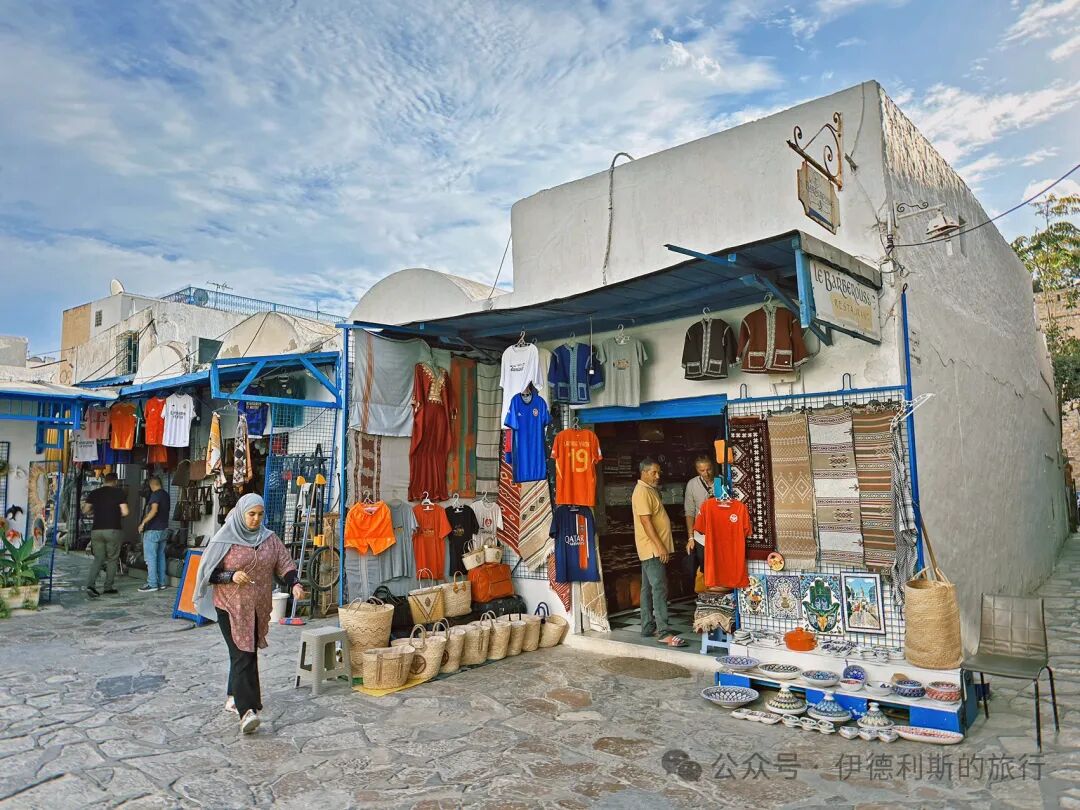
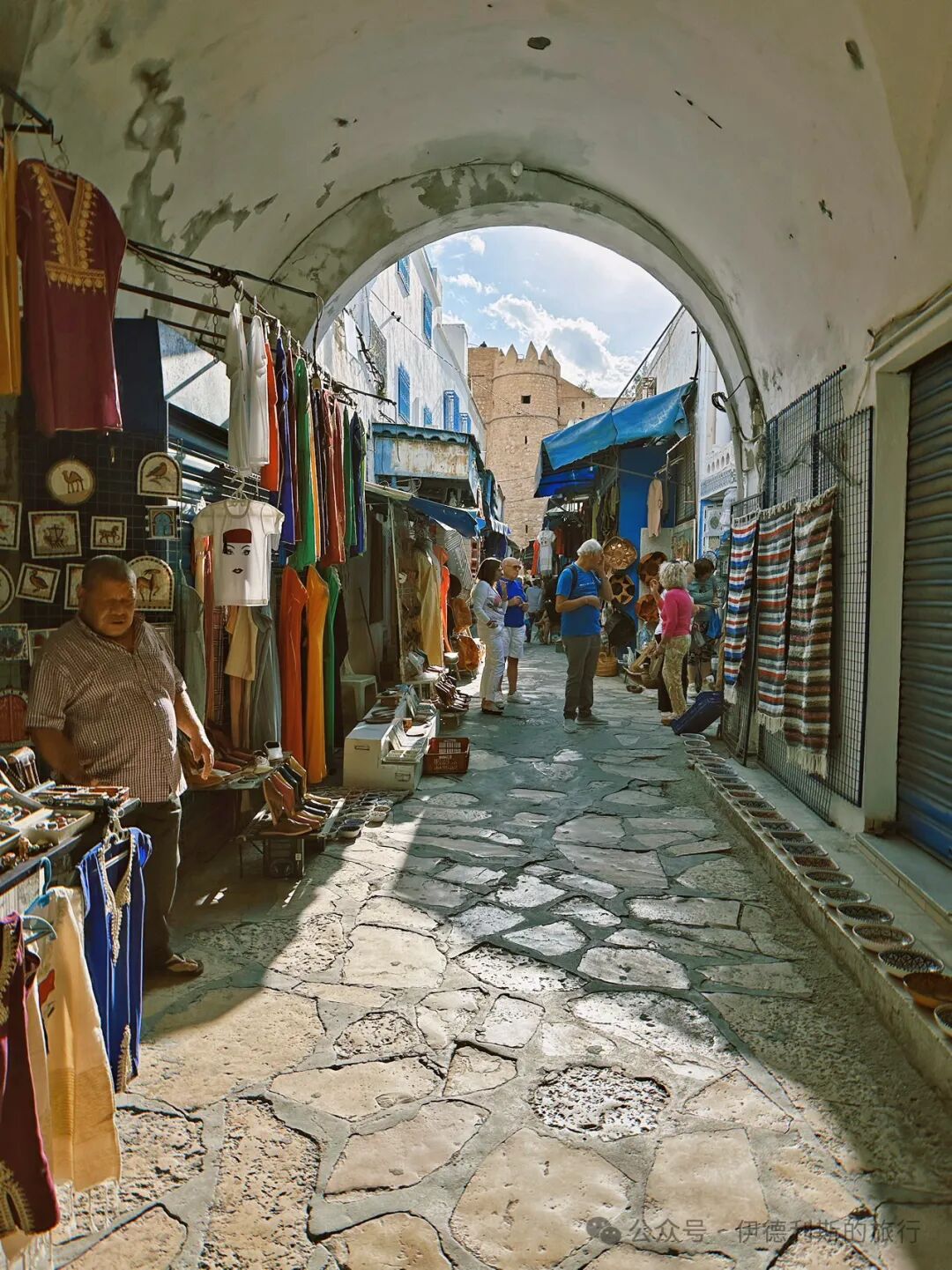
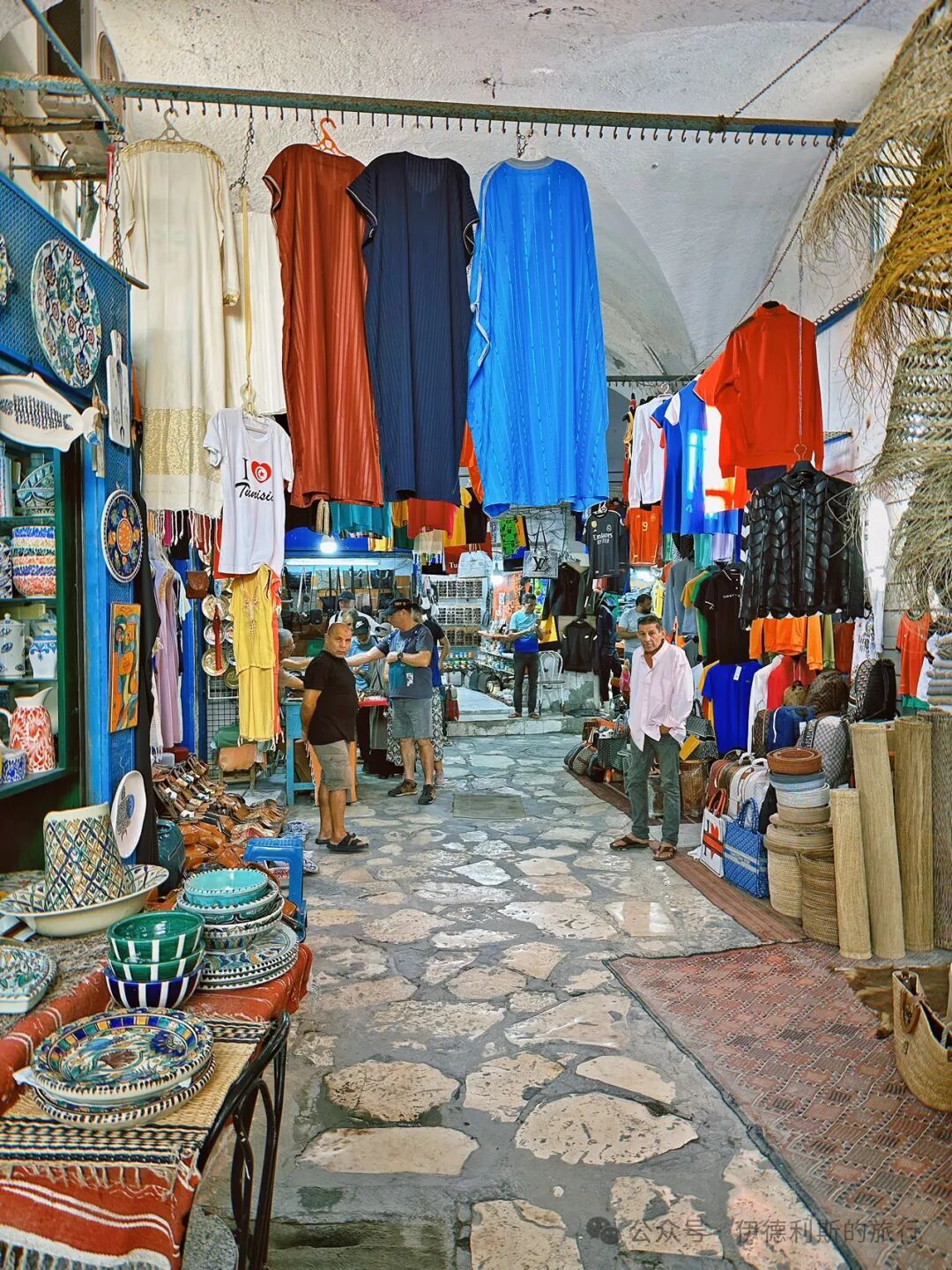
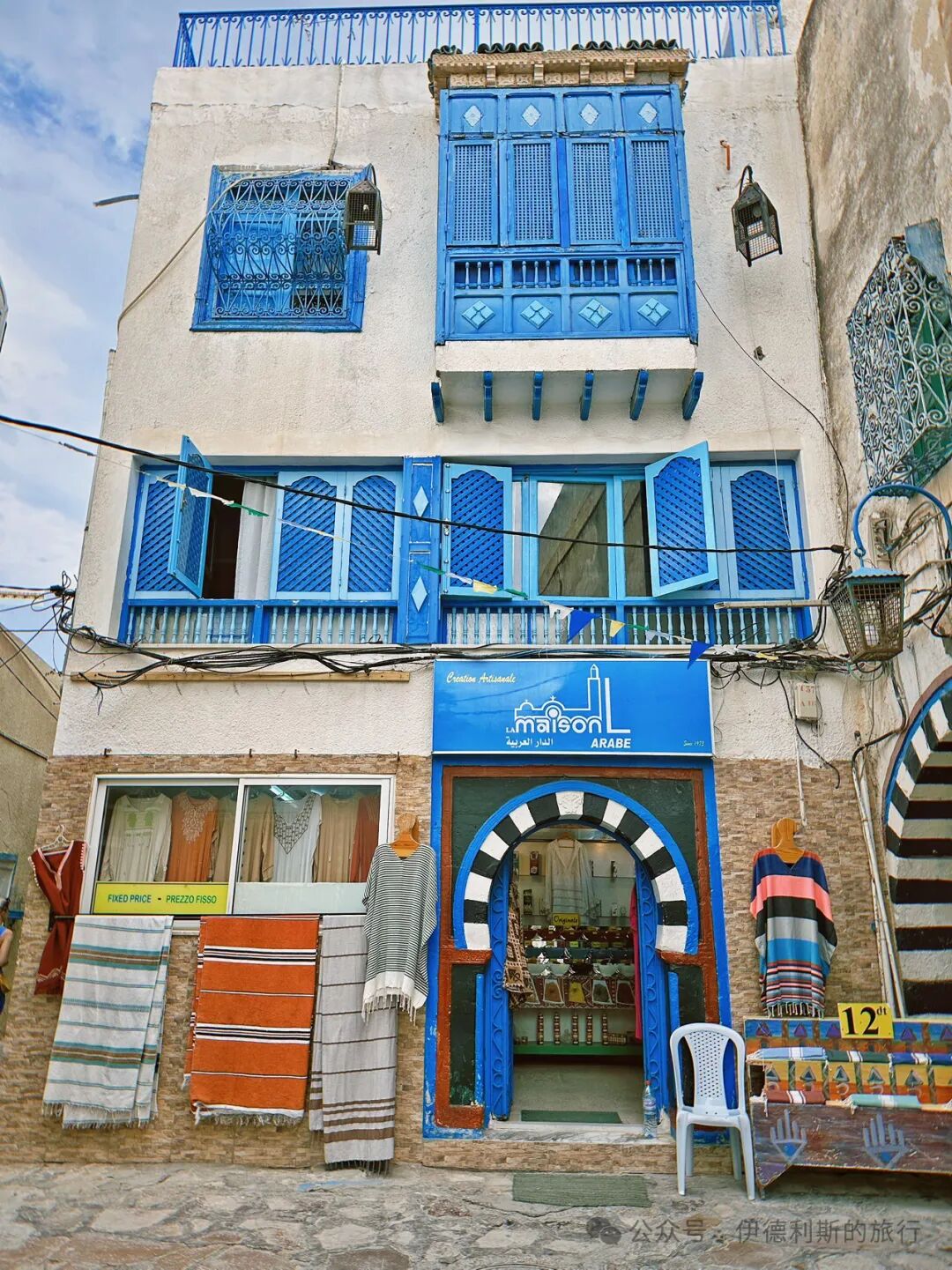
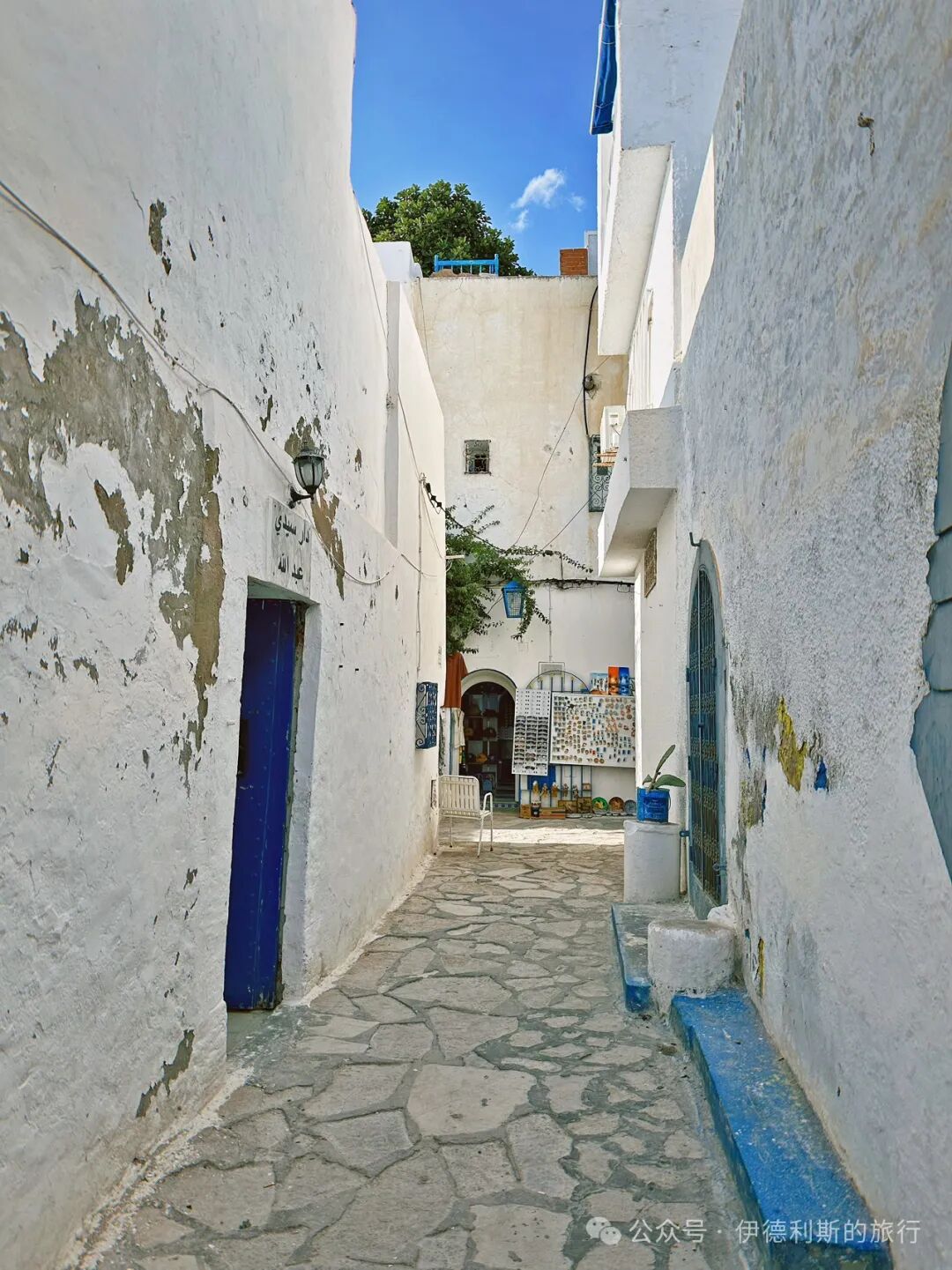
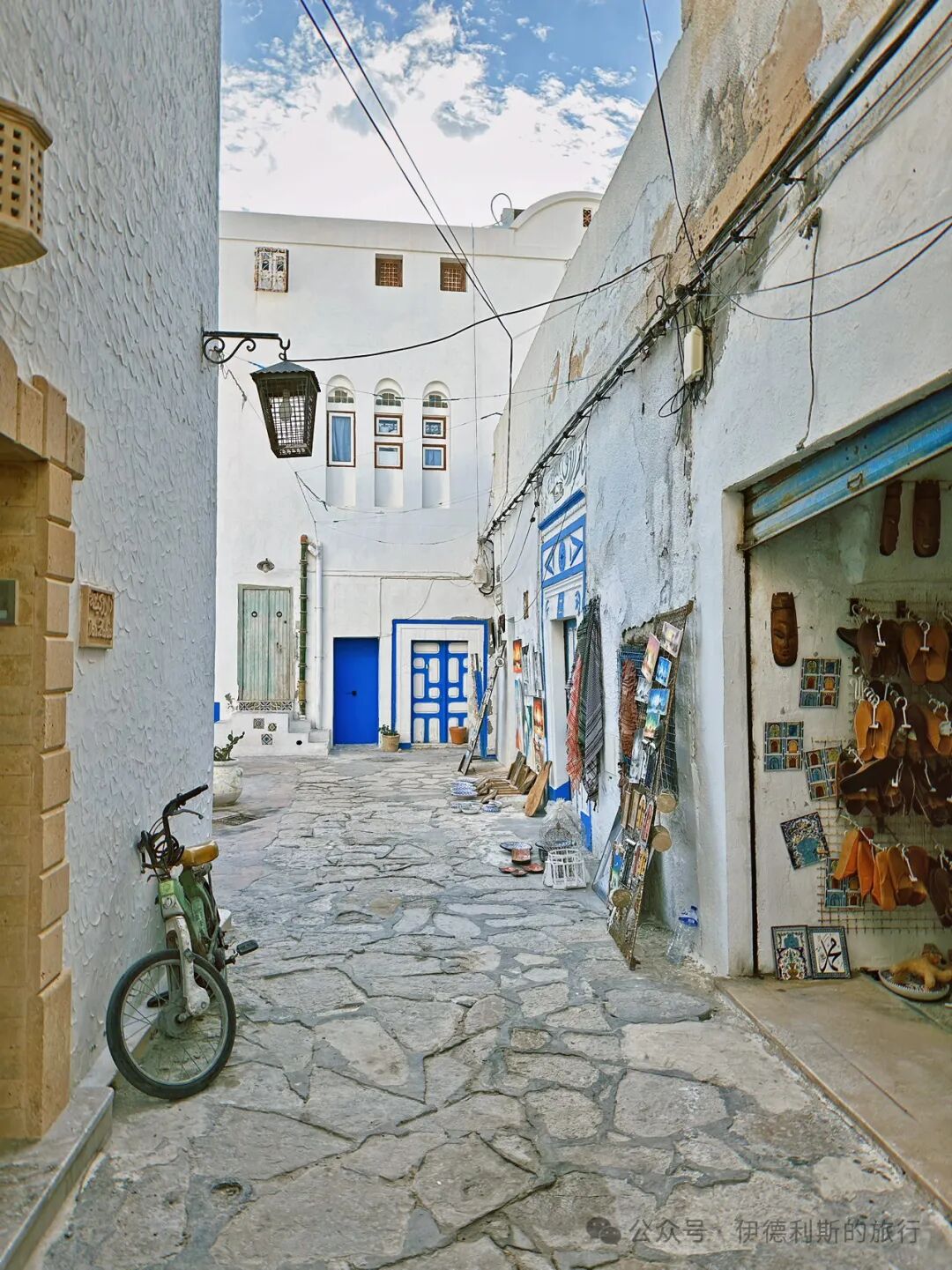
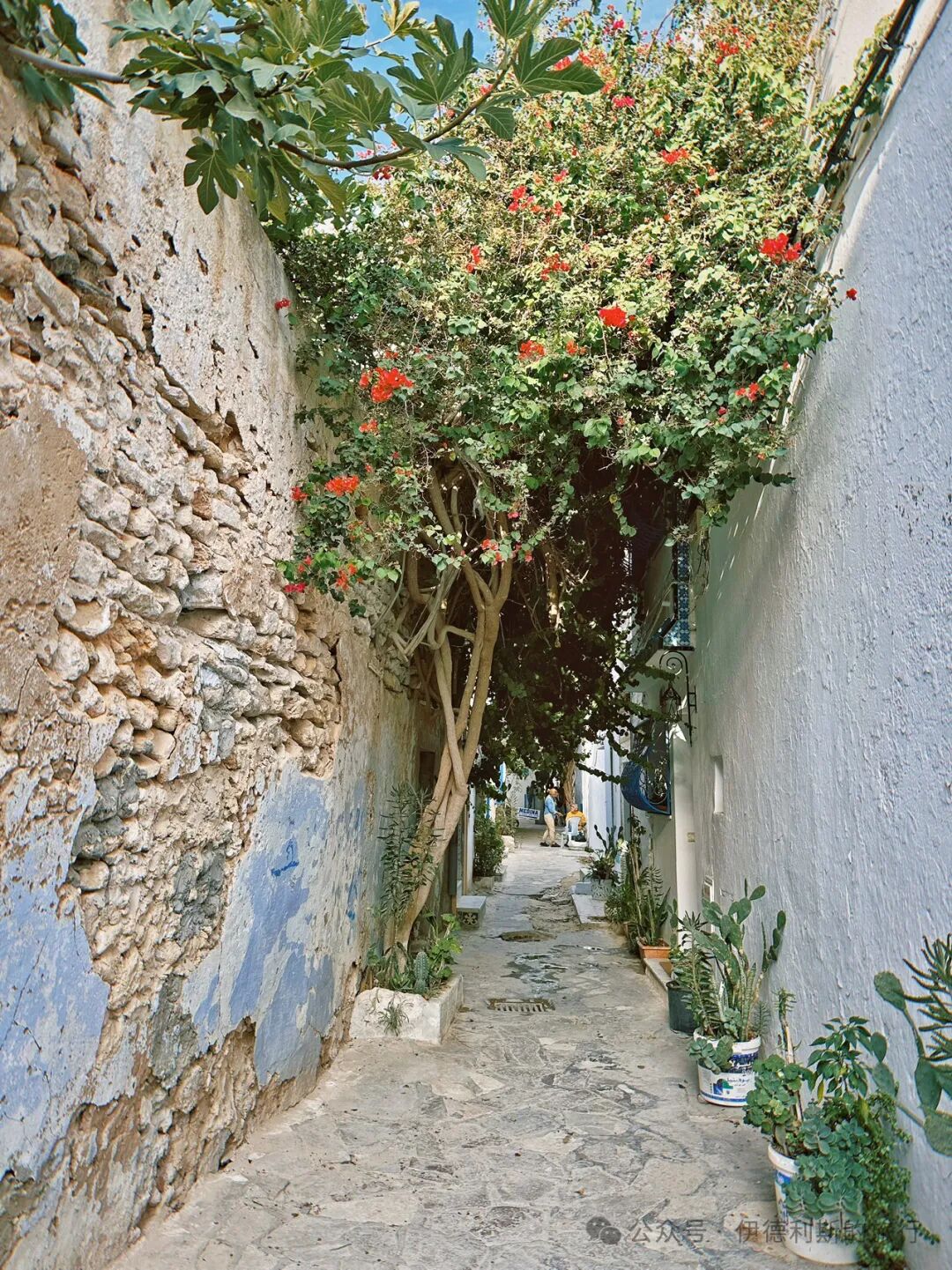
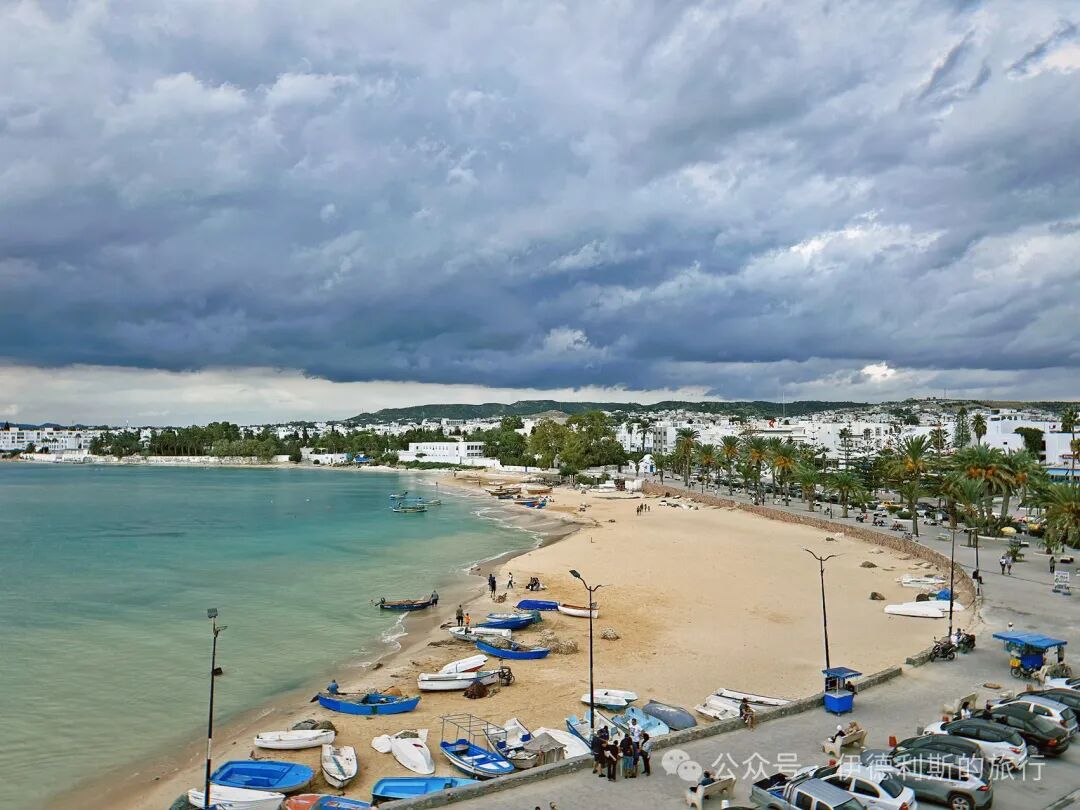
Looking out at the Mediterranean Sea from the ancient walled city (medina) of Hammamet. This place is just over 200 kilometers from Sicily, Italy. It has been a key spot for controlling the Mediterranean since ancient times, but today it serves as a backyard getaway for European tourists.
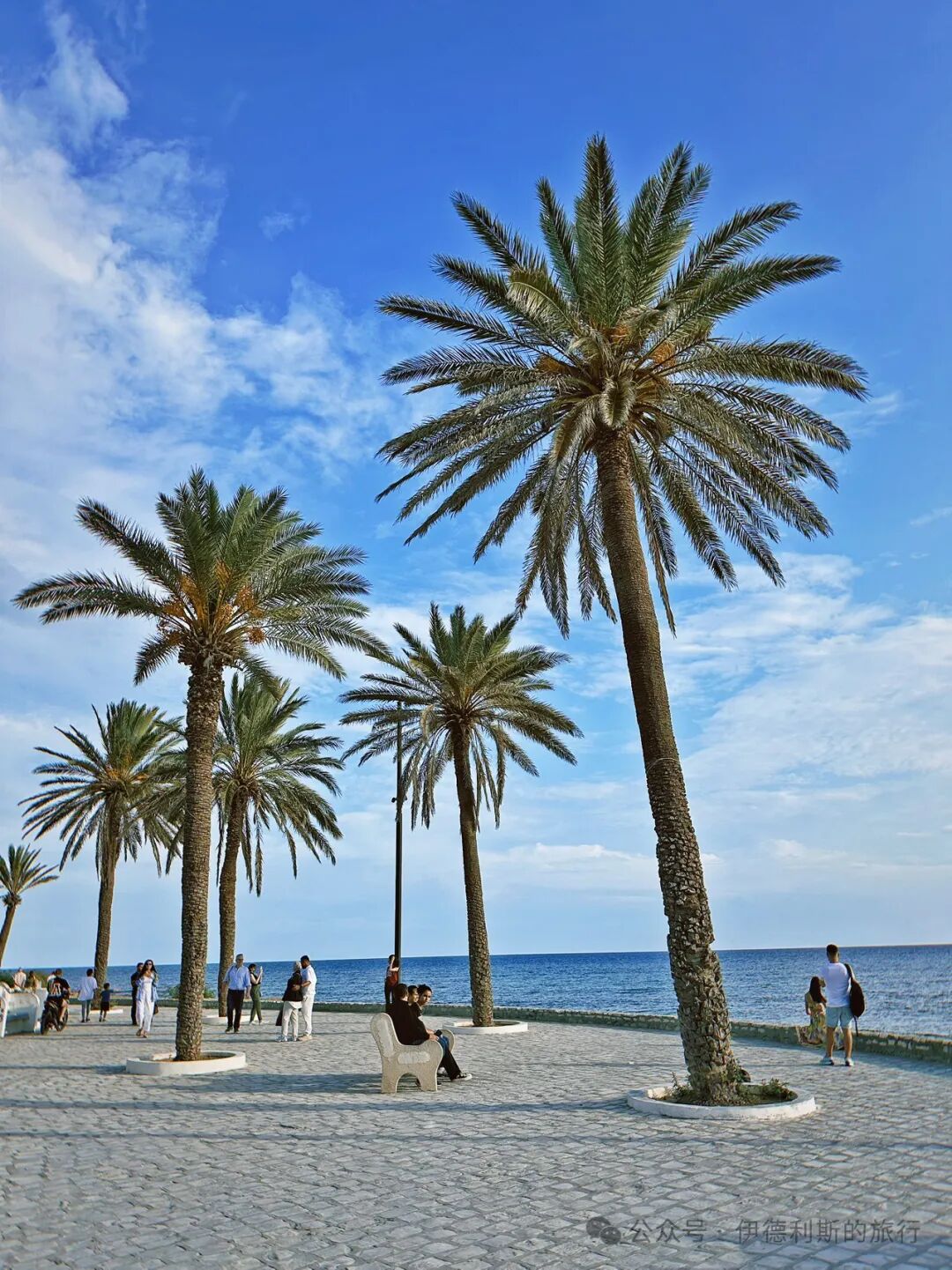
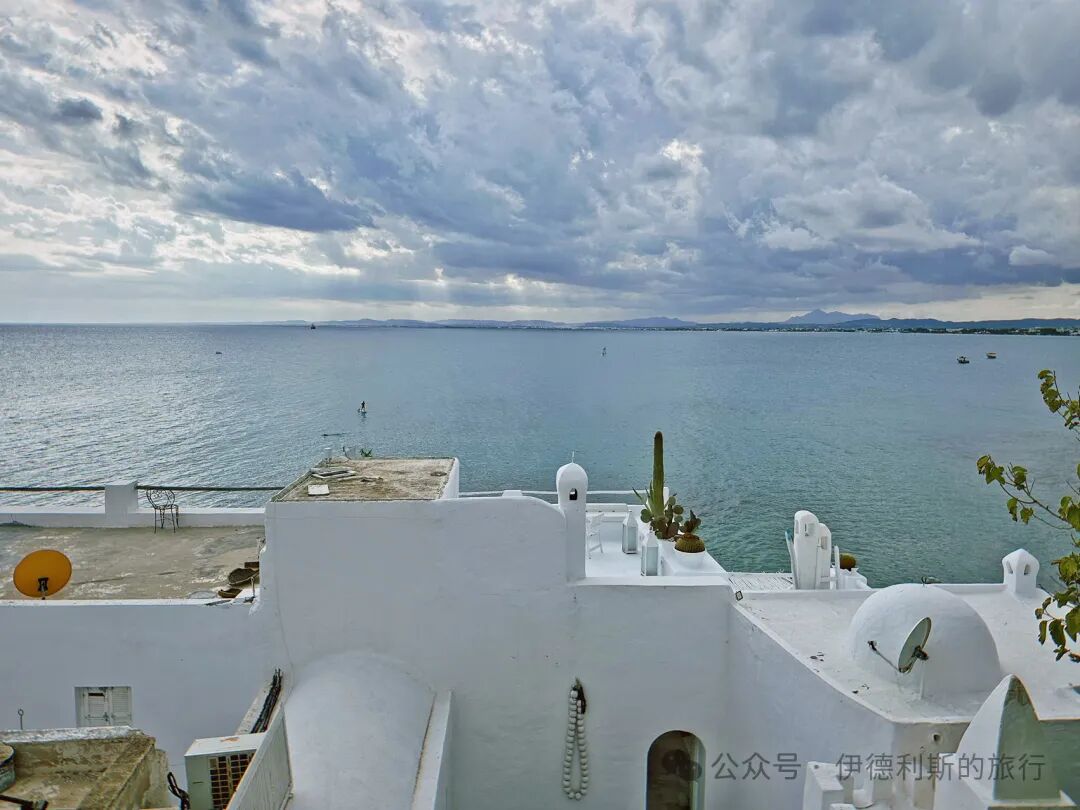
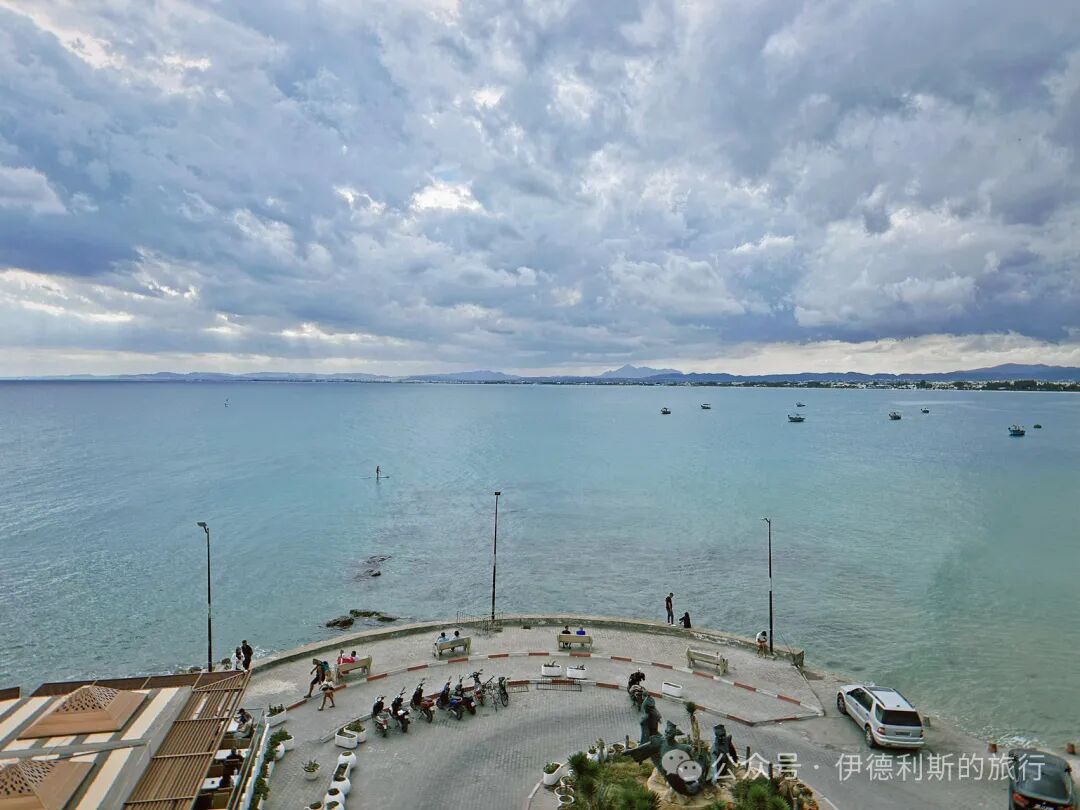
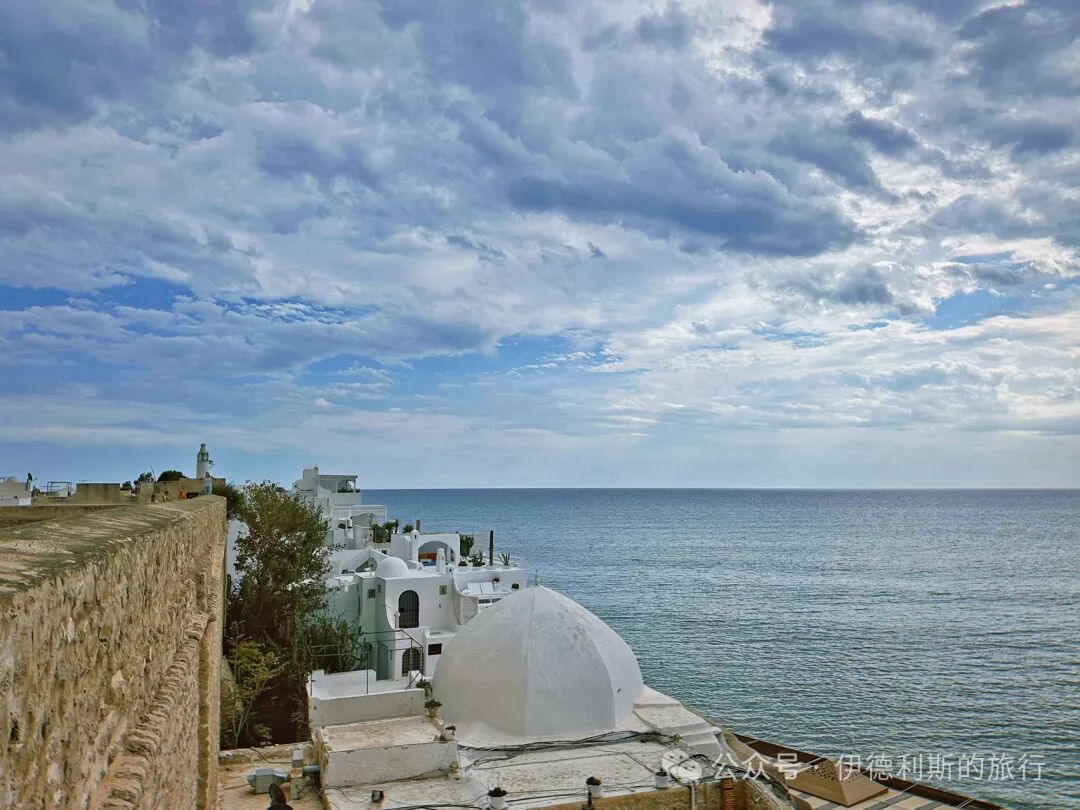
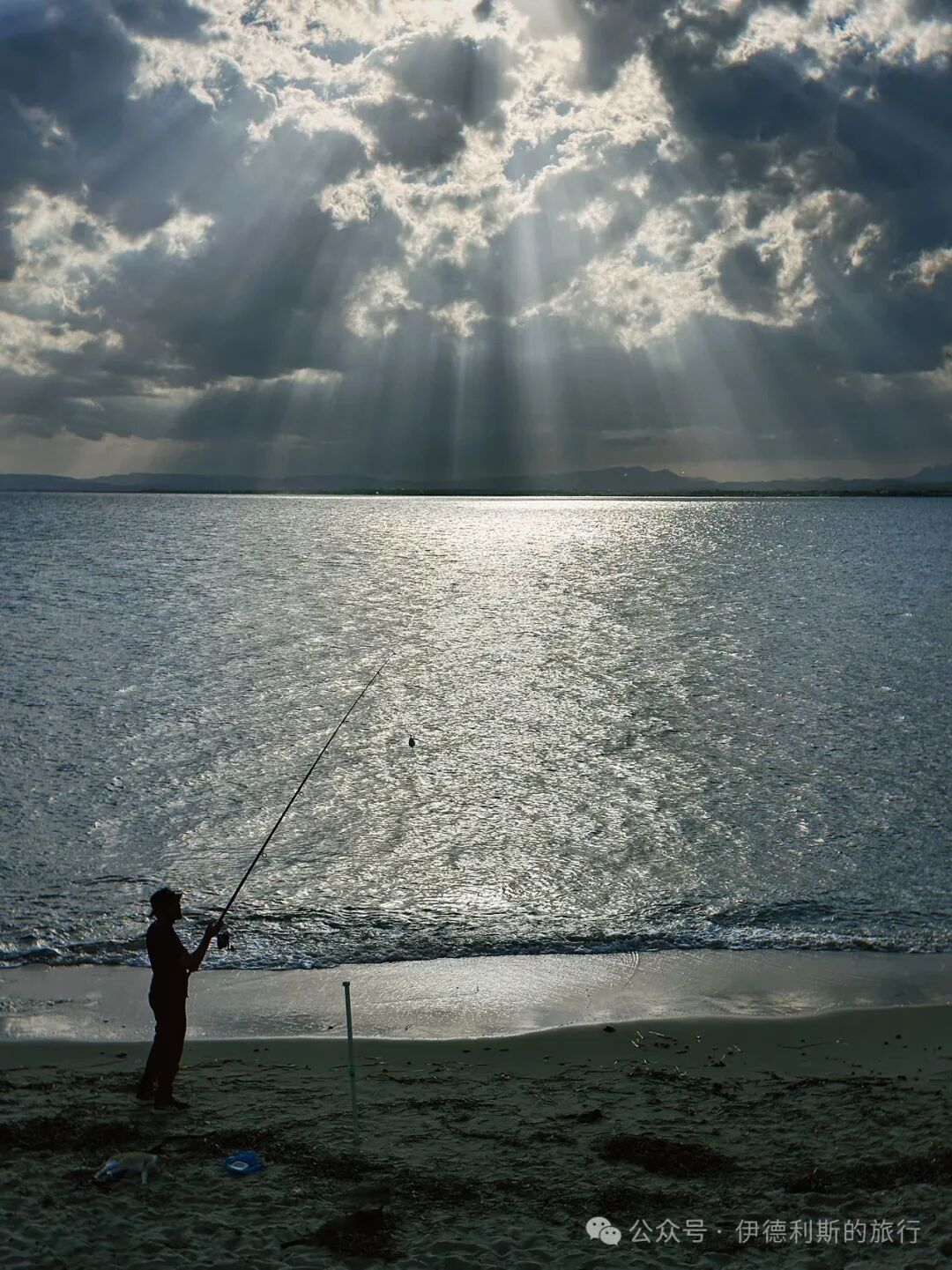
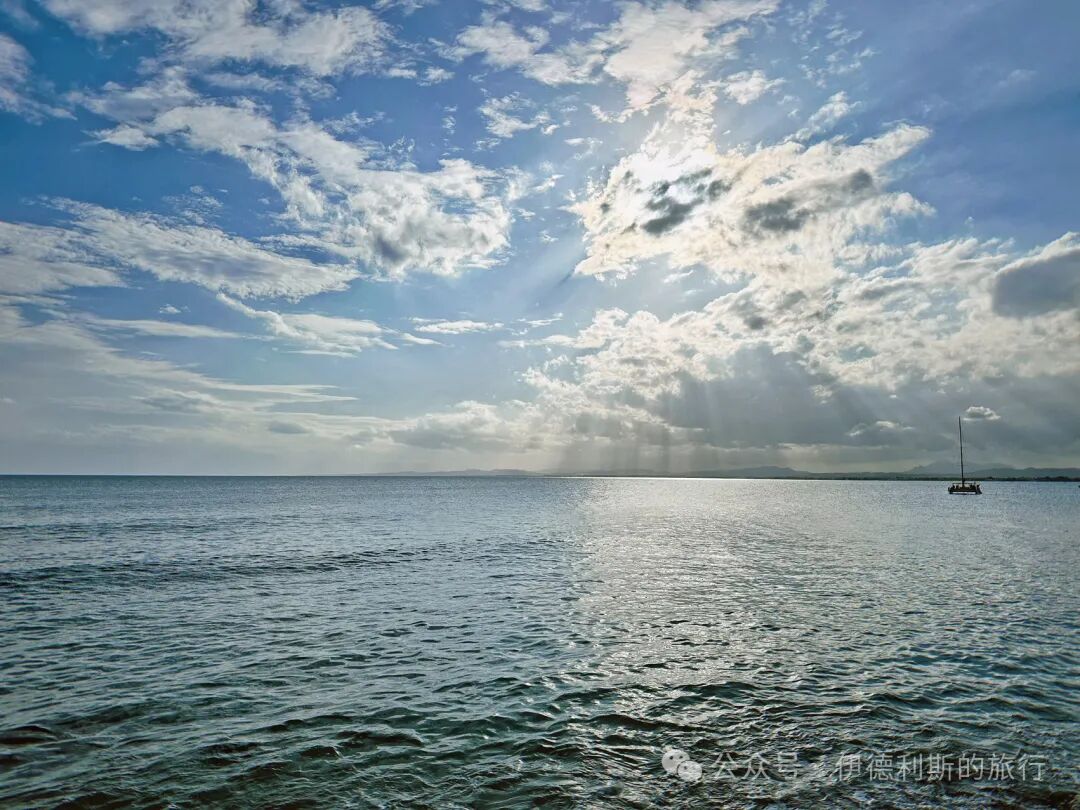
Some old houses inside the medina of Hammamet.
The public bathhouse across from the Great Mosque, built in the early 17th century by Abul-l-Gayth al-Qashache. In 1602, Hammamet was attacked by the Knights Hospitaller and many people were taken captive. It was Abul-l-Gayth who paid the ransom to bring them home.
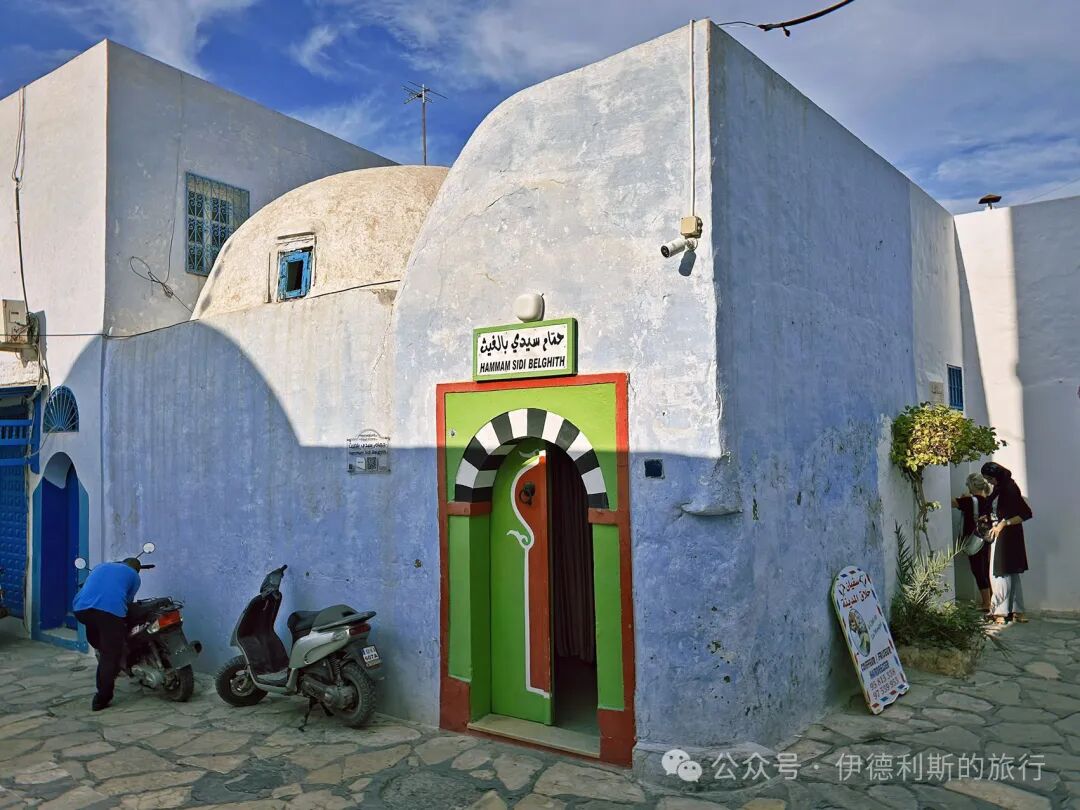
The Islamic school (madrasa) behind the Great Mosque, where children were having class when we visited.
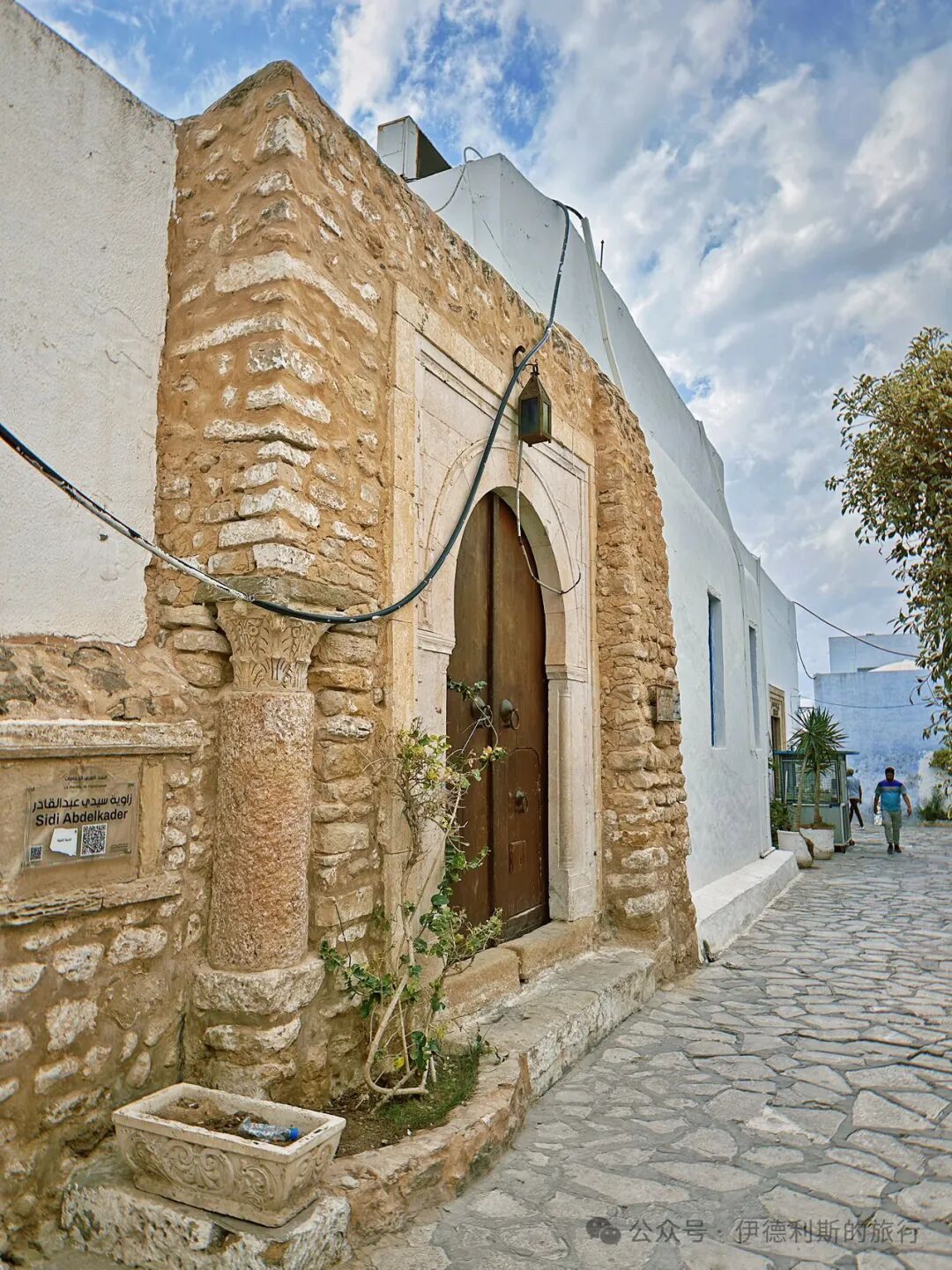
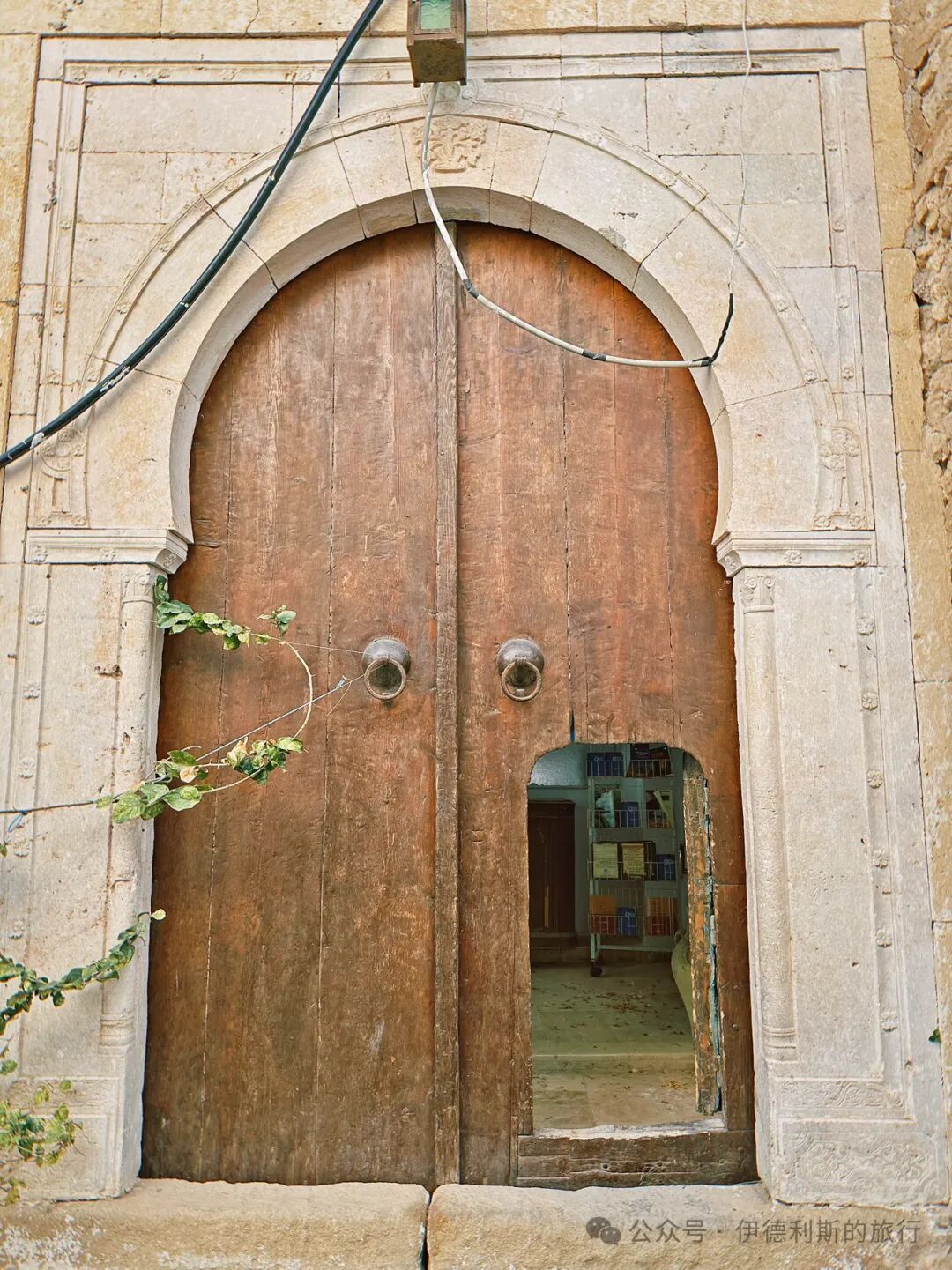
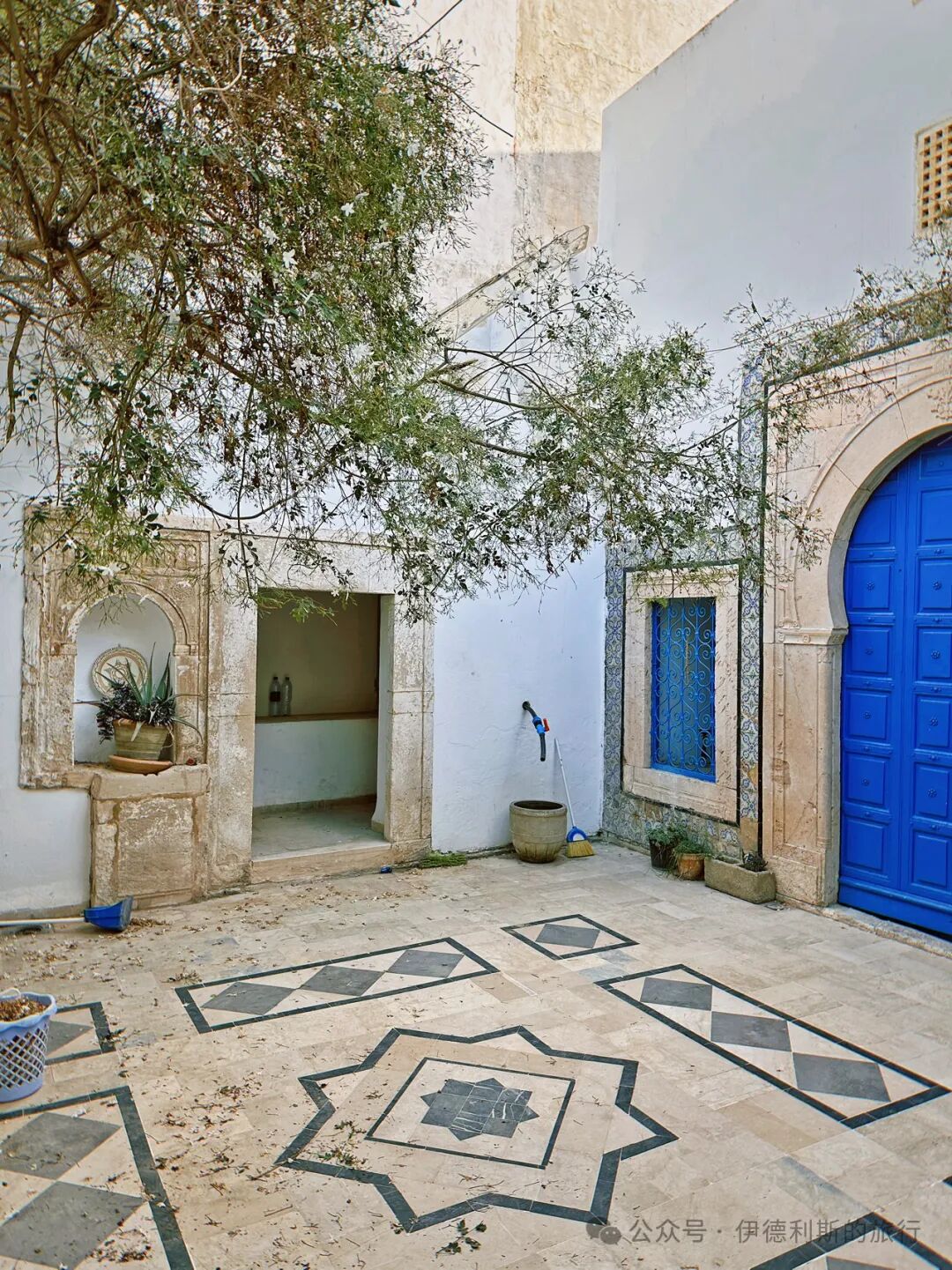
An art studio with an artist-in-residence painting inside.
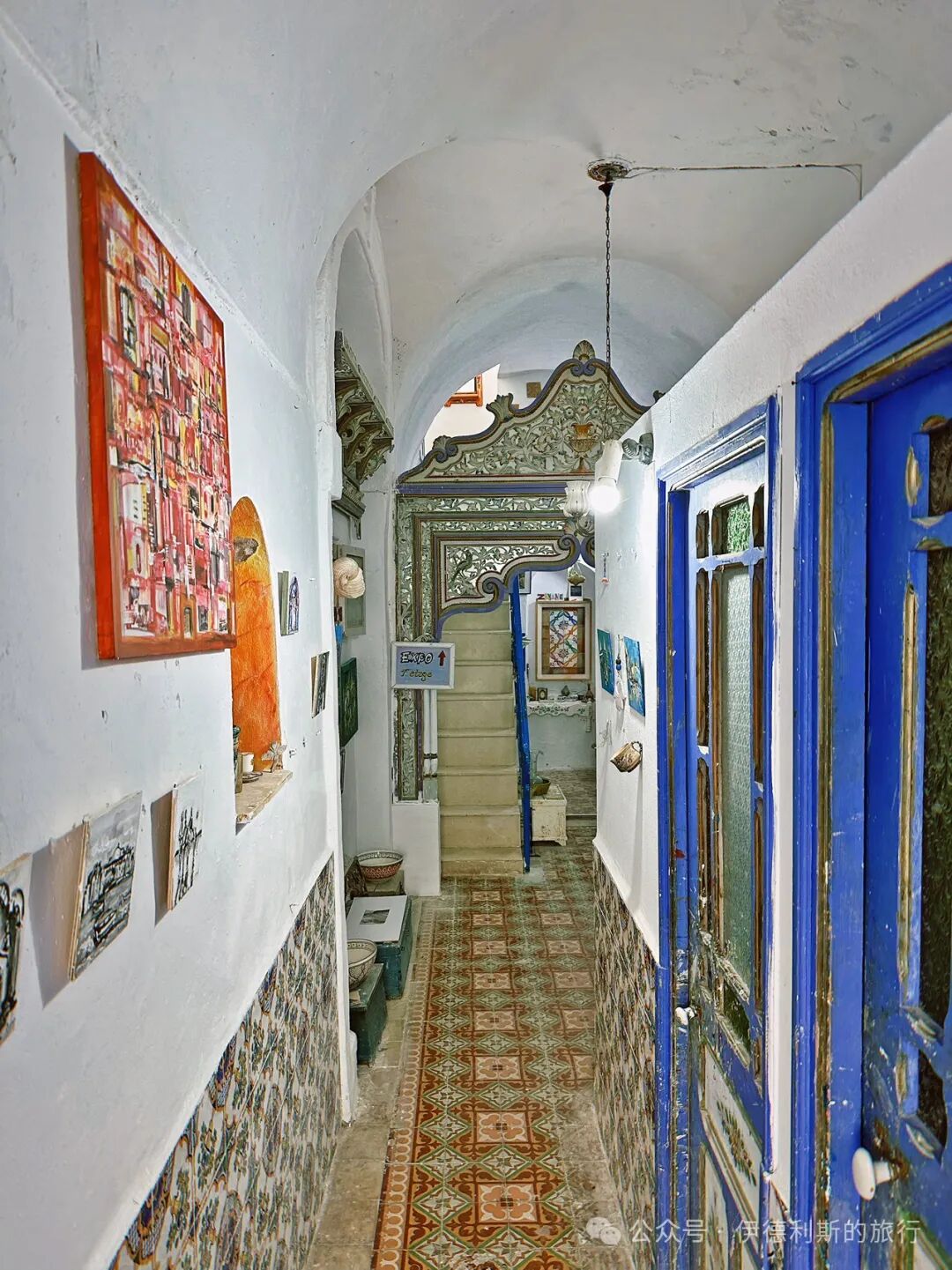
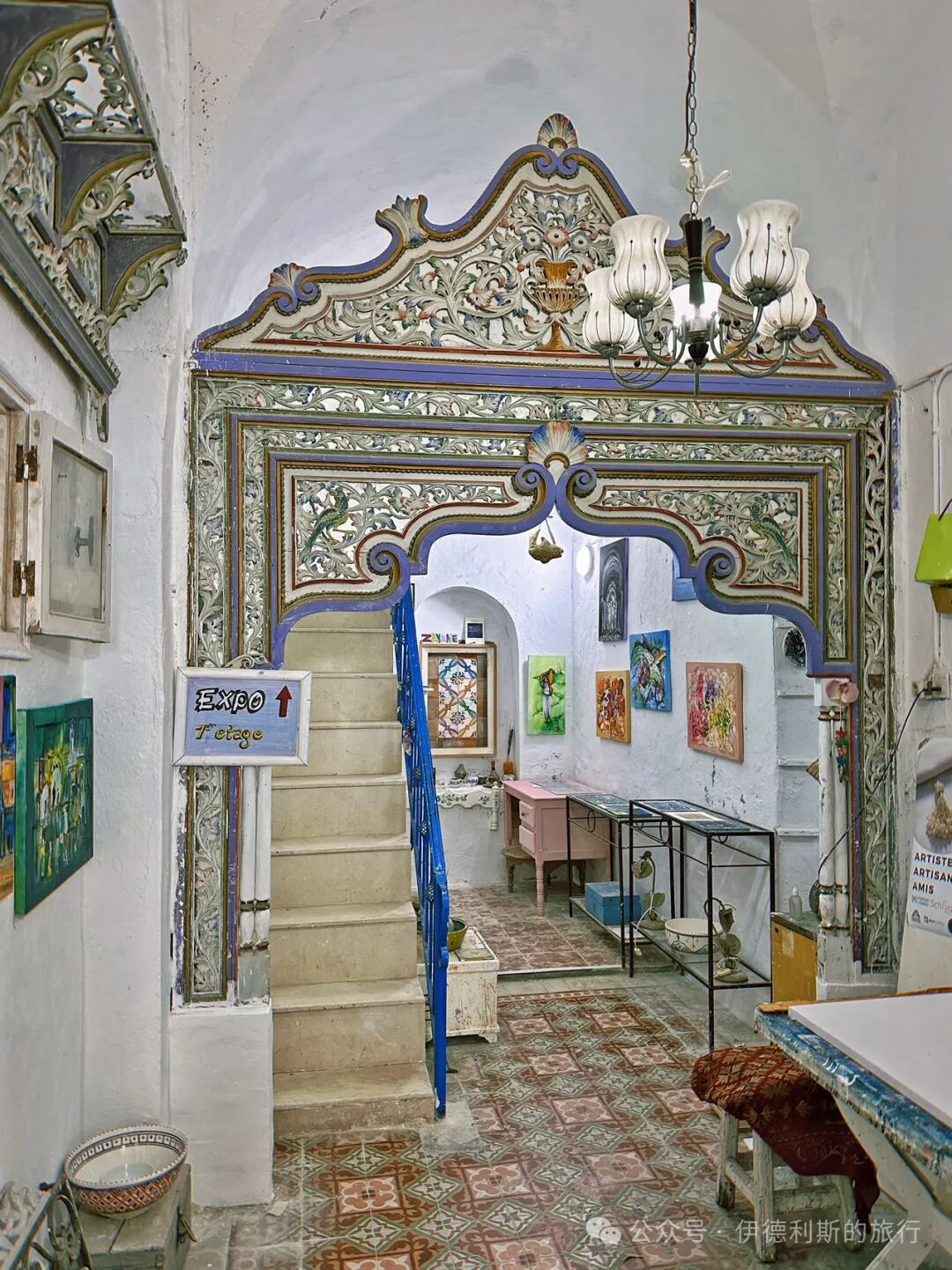
Another gallery, where we saw a woman making traditional clothing during our visit.
A view overlooking the old city
Halal Travel Guide: Kairouan, Tunisia - Great Mosque and Jumu'ah (Part 1)
Articles • ali2007fr posted the article • 0 comments • 225 views • 2026-05-19 22:56
Summary: This first part follows a visit to the Great Mosque of Kairouan for Jumu'ah in one of Tunisia's most important Islamic cities. It keeps the original prayer experience, mosque history, photographs, and travel details for readers interested in Muslim heritage in North Africa.
On Friday, we left from the Louage station south of Sousse and reached Kairouan, the most important ancient city in Tunisia, in just one hour. The Louage station in Kairouan is on the west side of the city, but you can ask the driver to drop you off right at the gate of the Great Mosque of Kairouan.
When we arrived at the Great Mosque at twelve o'clock, it was already closed. A young man at the gate told us that other mosques in Kairouan hold Jumu'ah prayer at one o'clock, but only the Great Mosque holds it at three, so he suggested we come back later.
We used this time to look at the exterior of the mosque. The Great Mosque of Kairouan is the oldest and most spectacular Jumu'ah mosque in Tunisia. It was first built in 670 by order of Uqba ibn Nafi, a general of the Arab Umayyad Caliphate. It was destroyed by Christian Berbers in 690 and rebuilt by the Umayyad Caliphate in 703. As the Arab population in Tunisia grew, the number of Muslims in Kairouan increased. The Great Mosque was rebuilt and renovated many times between 724-728, 774, 836, 862-863, and 875, finally taking its current form in the 9th century.
The Great Mosque is a huge, irregular quadrilateral with a perimeter of 405 meters, looking like a fortress from the outside. The outer walls are 1.9 meters thick and built from stone, rubble, and bricks. Because the ground is quite soft, many buttresses were built on the outer walls to increase stability.
The Great Mosque has nine gates, some of which have porches and spiral-shaped domes. Bab Lalla Rihana on the southeast side was built in 1293 during the Hafsid dynasty. It features a horseshoe arch and ancient stone columns that blend perfectly with the 9th-century walls.
While waiting for Jumu'ah, we had lunch at El Brija Restaurant, located on the city wall next to the Great Mosque. The atmosphere and service were both good, and they serve traditional Tunisian food. I recommend eating here when visiting the Great Mosque.
We ordered a traditional appetizer platter and a mixed couscous stew. When eating at a proper restaurant in Tunisia, you really only need to order the main course, as most places provide side dishes and bread.
Our appetizer platter included Tunisian salad, Houria carrot salad, and Mechouia green pepper salad. We ate these three dishes almost every day in Tunisia. Tunisian salad is made of diced cucumbers, tomatoes, and onions mixed with olive oil, topped with boiled eggs and tuna. Mechouia salad contains green peppers, tomatoes, onions, garlic, and more. Tunisians love it, and it is rich in vitamins and very healthy. The couscous stew was very rich, containing lamb, Merguez sausage, chicken, beef, dried fruits, and preserved fruits. The Merguez sausage is seasoned with cumin and chili, making it very flavorful.
After the meal, we were served mint tea and Makroudh dessert. Makroudh is a classic North African Maghreb snack for breaking the fast. It is made of semolina on the outside, filled with date paste and dried fruits, then baked and soaked in syrup.
We returned to the Great Mosque after two o'clock, and people were already entering the prayer hall. Once inside the courtyard, the first thing you see is the oldest minaret (bangke ta) still in existence today. The minaret of the Great Mosque of Kairouan was built between the 8th and 9th centuries. The current structure mostly dates back to 836. It is one of the three most important early minarets, alongside the spiral minaret of the Great Mosque of Samarra in Iraq, built between 848 and 852, and the spiral minaret of the Abu Dulaf Mosque in Iraq, built in 859. These three served as models for later minarets across Andalusia and the Maghreb.
There were no minarets during the time of the Prophet and the four Caliphs. People called for prayer (adhan) from the mosque entrance or the roof. Platforms for calling the adhan appeared during the Umayyad dynasty in the 7th century, but true minarets did not emerge until the Abbasid dynasty in the 8th century. There is no final conclusion on the origin of the minaret. Some say it mimics the towers of Syrian churches, while others suggest it was inspired by the Lighthouse of Alexandria or Mesopotamian ziggurats. Four towers were built during the reconstruction of the Sacred Mosque in Mecca in the late 8th century, but they have not survived. The earliest surviving minarets are the one at the Great Mosque of Kairouan and the two in Iraq. The Bride's Minaret at the Umayyad Mosque in Damascus may also date to the 9th century, but there is no clear record of this.
The minaret of the Great Mosque of Kairouan is 31.5 meters tall. Its base dates back to the Umayyad period in 725, and you can see Latin inscriptions from the Roman era on the walls. The first and second levels of the minaret were built in 836 using carefully cut stone. The side facing the courtyard has windows, while the other three sides have arrow slits. The third level of the minaret is a four-arched structure (chahartaq), which was likely added later.
Three sides of the Great Mosque are surrounded by double-row horseshoe-shaped arcades. The columns come from various ancient Roman and Byzantine ruins, including some from the famous site of Carthage.
There is a dome above the main entrance of the prayer hall and another above the mihrab. These domes, built in 836, are important examples of early mosque domes.
The prayer hall connects to the arcades through 17 carved wooden doors. The most beautiful one in the center was built in 1828 and features rich geometric and floral patterns.
The mihrab of the Great Mosque is 5.1 meters high. It was built in 863 and is the oldest concave mihrab in the world. The main body of the mihrab is a horseshoe arch supported by two red marble columns. The columns have Byzantine-style capitals with very fine carvings.
The upper part of the mihrab features 139 iridescent ceramic tiles fired in the second half of the 9th century. This metallic-lustre glazed pottery originated in Abbasid-ruled Iraq and was traded throughout West Asia and North Africa. It is not yet certain whether the iridescent tiles of the Great Mosque of Kairouan were fired in Iraq or if Iraqi craftsmen were invited to Kairouan to make them.
The concave center of the upper part is made of painted wood, featuring complex vine patterns in yellow on a blue background. The lower part is inlaid with 28 white marble slabs carved with complex floral and geometric patterns, including stylized grape leaves, flowers, and shells.
Next to the mihrab are the pulpit (minbar) for the Friday sermon and the enclosure (maqsurah) used by kings and nobles.
The minbar of the Great Mosque of Kairouan was also built in 863 and is the oldest surviving minbar in the world. The minbar is made of teak imported from India and is assembled from over 300 wooden panels carved with floral and geometric patterns. Although it was restored in the early 20th century, all but nine of the wooden panels are original pieces from over a thousand years ago. Today, the sides of the minbar are protected by glass, making it difficult to take photos due to the reflection.
The maksura at the Great Mosque of Kairouan was built in the first half of the 11th century. It is the oldest maksura in the world still in use. The maksura at the Great Mosque of Cordoba in Spain was built in 965, but it is no longer used today. The maksura is made of cedar and is 14 meters long. It is carved with ornate Kufic calligraphy and floral patterns, representing the highest achievement in Tunisian carving art at that time.
The maksura originated during the time of Caliph Uthman in the mid-7th century. After Caliph Umar was assassinated inside the prayer hall, Uthman built a partition wall inside the hall to protect himself. Later, mosques where the Caliph resided would all have a maksura built inside.
The prayer hall of the Great Mosque of Kairouan is 70.6 meters wide and 37.5 meters deep. It consists of 17 aisles, with the aisle directly facing the mihrab being the tallest and widest. This layout was later adopted by major mosques across the Maghreb and Andalusia.
There are 414 stone columns inside the prayer hall. They are made of marble, granite, and porphyry, with capitals in styles including Corinthian, Ionic, and Composite. Some capitals were carved specifically for the prayer hall, while many others came from ancient Roman, Phoenician, and Byzantine sites in Tunisia, including the famous ancient city of Carthage.
The door inside the prayer hall's maksura is decorated with marble floral carvings. This door leads to the library behind the qibla wall, which is also where the imam usually stays. The imam only comes out from here to lead the prayer and deliver the khutbah.
The grand scene of Jumu'ah at the Great Mosque of Kairouan. After the adhan is finished, the imam slowly walks up the minbar to begin the khutbah. In Arabic-speaking regions, everyone understands the khutbah, so there is no sermon session beforehand.
Tunisia follows the Maliki school of thought. Their namaz movements are quite similar to our Hanafi school, including the initial takbir, but the main difference is that they also fold their arms when making intention.
After the prayer, we stood for janazah outside the prayer hall door. Because Jumu'ah was at three o'clock, we immediately returned to the prayer hall to perform Dhuhr after finishing.
From the 9th to the 11th century, the Great Mosque of Kairouan was the academic center for the entire Maghreb region and the Maliki school. to religious courses, it offered subjects like mathematics, astronomy, medicine, and botany. In 1045, the Zirid dynasty court in Kairouan announced its conversion to Sunni Islam. Upon hearing this, the Shi'a Fatimid dynasty in Egypt sent a group of Arab tribes to invade Kairouan. In 1057, these Arab tribes occupied and destroyed Kairouan. The Great Mosque of Kairouan declined from then on and did not slowly recover until after the 13th century.
After leaving the Great Mosque of Kairouan, we started exploring the ancient medina of Kairouan. Besides the Great Mosque, the other ancient mosque remaining in Kairouan is the Mosque of the Three Doors (Masjid al-Thalathat Abwab), built in 866. This mosque has the oldest decorated facade of any religious building in the world.
Today, only the facade of the Mosque of the Three Doors retains its 9th-century appearance, while the minaret next to it was added in 1440. The gate of the Mosque of the Three Doors consists of three horseshoe arches and features four ancient stone columns. The arch is carved with floral patterns and Kufic calligraphy, which includes verses from the Quran and the name of the builder, Muhammad ibn Khairun. Muhammad ibn Khairun was a scholar and merchant from Andalusia who traveled through Iraq and Egypt to reach Kairouan, Tunisia. When the minaret was added in 1440, the original 9th-century inscriptions were rearranged to make room for the new text.
In the northwest of the Kairouan Medina stands an important tomb for Sidi Sahib, a companion of the Prophet and his barber, which is why it is also called the Barber Mosque.
Legend says Sidi Sahib died in a battle in 654 and was buried here. By the 11th century, this place had become a famous holy site, and the tomb shrine (gongbei) was built in the 14th century. The Bey of Tunis, Hammuda Pasha (reigned 1631-66), expanded the tomb significantly in 1629 and built a new main hall. Another Bey, Mohamed (reigned 1675-96), built the minaret and a religious school (madrasa) between 1690 and 1695. Since the 19th century, the tomb of Sidi Sahib has undergone several renovations, but it still keeps its 17th-century architectural style.
The tomb of Sidi Sahib in Kairouan blends Andalusian, Italian Renaissance, and local Kairouan architectural styles. The interior features many classic 17th-century Tunisian Qallalin tiles and rich plaster carvings.
At the minaret, gate, and main hall of the Sidi Sahib tomb in Kairouan, an old man in the courtyard pours perfume into the hands of every visitor (dosti) who comes to pay their respects.
The Sidi Abid al-Ghariani school (madrasa) and shrine (zawiya) inside the Kairouan Medina were founded in the 14th century and expanded significantly in the 17th century. Abid al-Ghariani was a scholar, and his teacher, Al-Jadidi, was a famous judge in Kairouan. Al-Jadidi passed away in 1384 while on the Hajj pilgrimage in Mecca. Abid al-Ghariani took over his teacher's role to continue teaching in Kairouan, and after he died in 1402, he was buried next to the school.
Besides Abid al-Ghariani, the Hafsid dynasty Caliph Moulay Hasan (reigned 1526-1543) is also buried here. In 1534, the famous pirate Barbarossa led a fleet to invade Tunisia. Moulay Hasan eventually took back Tunisia with the help of the Holy Roman Empire, but he had to sign a treaty to become a vassal of Spain. In 1542, while Moulay Hasan was traveling to Italy to collect weapons and ammunition, his son usurped the throne, and he was eventually exiled. He lived in Naples and Sicily for several years and later met with the Holy Roman Emperor and the Pope, becoming the most well-known Arab monarch to Europeans of that era.
The city walls and gates of the Kairouan Medina.
Kairouan was founded in 670 by the Arab Umayyad general Uqba ibn Nafi, who chose the site to serve as a military base for the Arab conquest of Tunisia. Over the next hundred years, the Berbers launched wave after wave of uprisings against the Arabs. After surviving many attacks, Kairouan was finally captured by the Berbers in 745 and was not retaken until the end of the 8th century. view all
Summary: This first part follows a visit to the Great Mosque of Kairouan for Jumu'ah in one of Tunisia's most important Islamic cities. It keeps the original prayer experience, mosque history, photographs, and travel details for readers interested in Muslim heritage in North Africa.
On Friday, we left from the Louage station south of Sousse and reached Kairouan, the most important ancient city in Tunisia, in just one hour. The Louage station in Kairouan is on the west side of the city, but you can ask the driver to drop you off right at the gate of the Great Mosque of Kairouan.
When we arrived at the Great Mosque at twelve o'clock, it was already closed. A young man at the gate told us that other mosques in Kairouan hold Jumu'ah prayer at one o'clock, but only the Great Mosque holds it at three, so he suggested we come back later.
We used this time to look at the exterior of the mosque. The Great Mosque of Kairouan is the oldest and most spectacular Jumu'ah mosque in Tunisia. It was first built in 670 by order of Uqba ibn Nafi, a general of the Arab Umayyad Caliphate. It was destroyed by Christian Berbers in 690 and rebuilt by the Umayyad Caliphate in 703. As the Arab population in Tunisia grew, the number of Muslims in Kairouan increased. The Great Mosque was rebuilt and renovated many times between 724-728, 774, 836, 862-863, and 875, finally taking its current form in the 9th century.
The Great Mosque is a huge, irregular quadrilateral with a perimeter of 405 meters, looking like a fortress from the outside. The outer walls are 1.9 meters thick and built from stone, rubble, and bricks. Because the ground is quite soft, many buttresses were built on the outer walls to increase stability.
The Great Mosque has nine gates, some of which have porches and spiral-shaped domes. Bab Lalla Rihana on the southeast side was built in 1293 during the Hafsid dynasty. It features a horseshoe arch and ancient stone columns that blend perfectly with the 9th-century walls.
While waiting for Jumu'ah, we had lunch at El Brija Restaurant, located on the city wall next to the Great Mosque. The atmosphere and service were both good, and they serve traditional Tunisian food. I recommend eating here when visiting the Great Mosque.
We ordered a traditional appetizer platter and a mixed couscous stew. When eating at a proper restaurant in Tunisia, you really only need to order the main course, as most places provide side dishes and bread.
Our appetizer platter included Tunisian salad, Houria carrot salad, and Mechouia green pepper salad. We ate these three dishes almost every day in Tunisia. Tunisian salad is made of diced cucumbers, tomatoes, and onions mixed with olive oil, topped with boiled eggs and tuna. Mechouia salad contains green peppers, tomatoes, onions, garlic, and more. Tunisians love it, and it is rich in vitamins and very healthy. The couscous stew was very rich, containing lamb, Merguez sausage, chicken, beef, dried fruits, and preserved fruits. The Merguez sausage is seasoned with cumin and chili, making it very flavorful.
After the meal, we were served mint tea and Makroudh dessert. Makroudh is a classic North African Maghreb snack for breaking the fast. It is made of semolina on the outside, filled with date paste and dried fruits, then baked and soaked in syrup.
We returned to the Great Mosque after two o'clock, and people were already entering the prayer hall. Once inside the courtyard, the first thing you see is the oldest minaret (bangke ta) still in existence today. The minaret of the Great Mosque of Kairouan was built between the 8th and 9th centuries. The current structure mostly dates back to 836. It is one of the three most important early minarets, alongside the spiral minaret of the Great Mosque of Samarra in Iraq, built between 848 and 852, and the spiral minaret of the Abu Dulaf Mosque in Iraq, built in 859. These three served as models for later minarets across Andalusia and the Maghreb.
There were no minarets during the time of the Prophet and the four Caliphs. People called for prayer (adhan) from the mosque entrance or the roof. Platforms for calling the adhan appeared during the Umayyad dynasty in the 7th century, but true minarets did not emerge until the Abbasid dynasty in the 8th century. There is no final conclusion on the origin of the minaret. Some say it mimics the towers of Syrian churches, while others suggest it was inspired by the Lighthouse of Alexandria or Mesopotamian ziggurats. Four towers were built during the reconstruction of the Sacred Mosque in Mecca in the late 8th century, but they have not survived. The earliest surviving minarets are the one at the Great Mosque of Kairouan and the two in Iraq. The Bride's Minaret at the Umayyad Mosque in Damascus may also date to the 9th century, but there is no clear record of this.
The minaret of the Great Mosque of Kairouan is 31.5 meters tall. Its base dates back to the Umayyad period in 725, and you can see Latin inscriptions from the Roman era on the walls. The first and second levels of the minaret were built in 836 using carefully cut stone. The side facing the courtyard has windows, while the other three sides have arrow slits. The third level of the minaret is a four-arched structure (chahartaq), which was likely added later.
Three sides of the Great Mosque are surrounded by double-row horseshoe-shaped arcades. The columns come from various ancient Roman and Byzantine ruins, including some from the famous site of Carthage.
There is a dome above the main entrance of the prayer hall and another above the mihrab. These domes, built in 836, are important examples of early mosque domes.
The prayer hall connects to the arcades through 17 carved wooden doors. The most beautiful one in the center was built in 1828 and features rich geometric and floral patterns.
The mihrab of the Great Mosque is 5.1 meters high. It was built in 863 and is the oldest concave mihrab in the world. The main body of the mihrab is a horseshoe arch supported by two red marble columns. The columns have Byzantine-style capitals with very fine carvings.
The upper part of the mihrab features 139 iridescent ceramic tiles fired in the second half of the 9th century. This metallic-lustre glazed pottery originated in Abbasid-ruled Iraq and was traded throughout West Asia and North Africa. It is not yet certain whether the iridescent tiles of the Great Mosque of Kairouan were fired in Iraq or if Iraqi craftsmen were invited to Kairouan to make them.
The concave center of the upper part is made of painted wood, featuring complex vine patterns in yellow on a blue background. The lower part is inlaid with 28 white marble slabs carved with complex floral and geometric patterns, including stylized grape leaves, flowers, and shells.
Next to the mihrab are the pulpit (minbar) for the Friday sermon and the enclosure (maqsurah) used by kings and nobles.
The minbar of the Great Mosque of Kairouan was also built in 863 and is the oldest surviving minbar in the world. The minbar is made of teak imported from India and is assembled from over 300 wooden panels carved with floral and geometric patterns. Although it was restored in the early 20th century, all but nine of the wooden panels are original pieces from over a thousand years ago. Today, the sides of the minbar are protected by glass, making it difficult to take photos due to the reflection.
The maksura at the Great Mosque of Kairouan was built in the first half of the 11th century. It is the oldest maksura in the world still in use. The maksura at the Great Mosque of Cordoba in Spain was built in 965, but it is no longer used today. The maksura is made of cedar and is 14 meters long. It is carved with ornate Kufic calligraphy and floral patterns, representing the highest achievement in Tunisian carving art at that time.
The maksura originated during the time of Caliph Uthman in the mid-7th century. After Caliph Umar was assassinated inside the prayer hall, Uthman built a partition wall inside the hall to protect himself. Later, mosques where the Caliph resided would all have a maksura built inside.
The prayer hall of the Great Mosque of Kairouan is 70.6 meters wide and 37.5 meters deep. It consists of 17 aisles, with the aisle directly facing the mihrab being the tallest and widest. This layout was later adopted by major mosques across the Maghreb and Andalusia.
There are 414 stone columns inside the prayer hall. They are made of marble, granite, and porphyry, with capitals in styles including Corinthian, Ionic, and Composite. Some capitals were carved specifically for the prayer hall, while many others came from ancient Roman, Phoenician, and Byzantine sites in Tunisia, including the famous ancient city of Carthage.
The door inside the prayer hall's maksura is decorated with marble floral carvings. This door leads to the library behind the qibla wall, which is also where the imam usually stays. The imam only comes out from here to lead the prayer and deliver the khutbah.
The grand scene of Jumu'ah at the Great Mosque of Kairouan. After the adhan is finished, the imam slowly walks up the minbar to begin the khutbah. In Arabic-speaking regions, everyone understands the khutbah, so there is no sermon session beforehand.
Tunisia follows the Maliki school of thought. Their namaz movements are quite similar to our Hanafi school, including the initial takbir, but the main difference is that they also fold their arms when making intention.
After the prayer, we stood for janazah outside the prayer hall door. Because Jumu'ah was at three o'clock, we immediately returned to the prayer hall to perform Dhuhr after finishing.
From the 9th to the 11th century, the Great Mosque of Kairouan was the academic center for the entire Maghreb region and the Maliki school. to religious courses, it offered subjects like mathematics, astronomy, medicine, and botany. In 1045, the Zirid dynasty court in Kairouan announced its conversion to Sunni Islam. Upon hearing this, the Shi'a Fatimid dynasty in Egypt sent a group of Arab tribes to invade Kairouan. In 1057, these Arab tribes occupied and destroyed Kairouan. The Great Mosque of Kairouan declined from then on and did not slowly recover until after the 13th century.
After leaving the Great Mosque of Kairouan, we started exploring the ancient medina of Kairouan. Besides the Great Mosque, the other ancient mosque remaining in Kairouan is the Mosque of the Three Doors (Masjid al-Thalathat Abwab), built in 866. This mosque has the oldest decorated facade of any religious building in the world.
Today, only the facade of the Mosque of the Three Doors retains its 9th-century appearance, while the minaret next to it was added in 1440. The gate of the Mosque of the Three Doors consists of three horseshoe arches and features four ancient stone columns. The arch is carved with floral patterns and Kufic calligraphy, which includes verses from the Quran and the name of the builder, Muhammad ibn Khairun. Muhammad ibn Khairun was a scholar and merchant from Andalusia who traveled through Iraq and Egypt to reach Kairouan, Tunisia. When the minaret was added in 1440, the original 9th-century inscriptions were rearranged to make room for the new text.
In the northwest of the Kairouan Medina stands an important tomb for Sidi Sahib, a companion of the Prophet and his barber, which is why it is also called the Barber Mosque.
Legend says Sidi Sahib died in a battle in 654 and was buried here. By the 11th century, this place had become a famous holy site, and the tomb shrine (gongbei) was built in the 14th century. The Bey of Tunis, Hammuda Pasha (reigned 1631-66), expanded the tomb significantly in 1629 and built a new main hall. Another Bey, Mohamed (reigned 1675-96), built the minaret and a religious school (madrasa) between 1690 and 1695. Since the 19th century, the tomb of Sidi Sahib has undergone several renovations, but it still keeps its 17th-century architectural style.
The tomb of Sidi Sahib in Kairouan blends Andalusian, Italian Renaissance, and local Kairouan architectural styles. The interior features many classic 17th-century Tunisian Qallalin tiles and rich plaster carvings.
At the minaret, gate, and main hall of the Sidi Sahib tomb in Kairouan, an old man in the courtyard pours perfume into the hands of every visitor (dosti) who comes to pay their respects.
The Sidi Abid al-Ghariani school (madrasa) and shrine (zawiya) inside the Kairouan Medina were founded in the 14th century and expanded significantly in the 17th century. Abid al-Ghariani was a scholar, and his teacher, Al-Jadidi, was a famous judge in Kairouan. Al-Jadidi passed away in 1384 while on the Hajj pilgrimage in Mecca. Abid al-Ghariani took over his teacher's role to continue teaching in Kairouan, and after he died in 1402, he was buried next to the school.
Besides Abid al-Ghariani, the Hafsid dynasty Caliph Moulay Hasan (reigned 1526-1543) is also buried here. In 1534, the famous pirate Barbarossa led a fleet to invade Tunisia. Moulay Hasan eventually took back Tunisia with the help of the Holy Roman Empire, but he had to sign a treaty to become a vassal of Spain. In 1542, while Moulay Hasan was traveling to Italy to collect weapons and ammunition, his son usurped the throne, and he was eventually exiled. He lived in Naples and Sicily for several years and later met with the Holy Roman Emperor and the Pope, becoming the most well-known Arab monarch to Europeans of that era.
The city walls and gates of the Kairouan Medina.
Kairouan was founded in 670 by the Arab Umayyad general Uqba ibn Nafi, who chose the site to serve as a military base for the Arab conquest of Tunisia. Over the next hundred years, the Berbers launched wave after wave of uprisings against the Arabs. After surviving many attacks, Kairouan was finally captured by the Berbers in 745 and was not retaken until the end of the 8th century.
Museum Guide: Tunis Bardo National Museum - Palace, Mosaics and History
Articles • ali2007fr posted the article • 0 comments • 251 views • 2026-05-19 22:20
Summary: This article visits the Bardo National Museum in Tunis, a major museum set inside a former palace and known for its historical collections and mosaics. It keeps the original museum details, photographs, object notes, and travel observations for readers interested in Tunisia's cultural heritage.
The National Museum of Tunisia is located inside the Bardo Palace, 4 kilometers west of the old Medina. The palace was first built in the 15th century. After the Ottoman dynasty took over in the 16th century, it was rebuilt and expanded many times, eventually becoming the main residence of the Husainid Beys (1705-1957).
The Husainid dynasty was a Beylik nominally under the Ottoman Empire. Its founder, Husain, was an Ottoman officer of Greek Cretan descent. He was granted the title of Bey by the Ottoman Sultan in 1705 and began his rule over Tunisia. After the 19th century, the Husainid dynasty began trading heavily with European merchants, and in 1861, they issued the first constitution in the Arab world. However, economic decline and social unrest in the late 19th century led to Tunisia becoming a French protectorate in 1881.
In 1882, Tunisia and France jointly established the Tunisian Office of Antiquities and Arts, which immediately began converting the old harem of the Bardo Palace into a museum. After six years of restoration and collecting, the museum officially opened in 1888.
The museum houses the Small Palace, built by Husain II Bey between 1824 and 1835. The palace was built in the Andalusian Moorish style, featuring a T-shaped main hall and a central courtyard with a pool.
Tile and plaster decorations inside the Small Palace of Husain II.
The reception hall and harem built by Muhammad III Bey between 1859 and 1864 feature both Italian and Tunisian styles.
Muhammad III Bey issued the first written constitution in the Arab world in 1861, which separated executive, legislative, and judicial powers and guaranteed equal rights for Muslims, Christians, and Jews. After the new constitution was issued, European merchants and secular schools began to appear in Tunisia.
The Blue Quran manuscript in the National Museum of Tunisia is a very famous religious manuscript in the world. This scripture uses parchment dyed with indigo, with ink outlining the text and gold leaf applied on top. The calligraphy is in the early Kufic script, which lacks sharp angles and vowel marks.
The origin of the Blue Quran is still highly debated, with theories pointing to Kairouan in Tunisia, Cordoba in Spain, Mashhad in Iran, or Iraq, dating back to the 9th or 10th century. The records say the Blue Quran was kept in the Great Mosque of Kairouan after the 14th century. It was broken up during the Ottoman period, but most of it remains in Kairouan, while other parts are held by major museums and collectors.
Quran manuscripts from the 8th to 12th centuries held by the Great Mosque of Kairouan in Tunisia.
The library of the Great Mosque of Kairouan holds a large number of manuscripts and established a catalog as early as the 13th century. to scriptures, these manuscripts include books related to the Maliki school of thought, which are also the oldest documents of the Maliki school.
Tunisian Qallaline tiles from the 17th and 18th centuries. These tiles are named after the Qallaline region of Tunisia. They were influenced by Ottoman tile art but developed their own unique style.
A marble carving from the 10th-century Fatimid period in Mahdia, Tunisia, depicting a Fatimid prince. A glazed bowl with Kufic script from the Fatimid dynasty period in Mahdia.
The ancient city of Mahdia was built by the Fatimid dynasty between 916 and 921, and it became the capital of the Tunisia region after its completion. Before this, the capital of the Tunisia region was Kairouan, which was dominated by Sunnis. Because of this, the Shia Fatimid dynasty built a new capital on the Mediterranean coast, far away from Kairouan. Once finished, Mahdia included thick city walls, palaces, a harbor, and a great mosque. Unfortunately, none of the surface buildings survived. Now, you can only see artifacts unearthed through archaeological excavations in museums.
Exquisite 11th-century marble carvings with Kufic script.
A 10th-century wood carving from Egypt.
A 13th to 16th-century tombstone from Tunisia where you can see the local style of Arabic calligraphy.
A traditional Tunisian women's headpiece. view all
Summary: This article visits the Bardo National Museum in Tunis, a major museum set inside a former palace and known for its historical collections and mosaics. It keeps the original museum details, photographs, object notes, and travel observations for readers interested in Tunisia's cultural heritage.
The National Museum of Tunisia is located inside the Bardo Palace, 4 kilometers west of the old Medina. The palace was first built in the 15th century. After the Ottoman dynasty took over in the 16th century, it was rebuilt and expanded many times, eventually becoming the main residence of the Husainid Beys (1705-1957).
The Husainid dynasty was a Beylik nominally under the Ottoman Empire. Its founder, Husain, was an Ottoman officer of Greek Cretan descent. He was granted the title of Bey by the Ottoman Sultan in 1705 and began his rule over Tunisia. After the 19th century, the Husainid dynasty began trading heavily with European merchants, and in 1861, they issued the first constitution in the Arab world. However, economic decline and social unrest in the late 19th century led to Tunisia becoming a French protectorate in 1881.
In 1882, Tunisia and France jointly established the Tunisian Office of Antiquities and Arts, which immediately began converting the old harem of the Bardo Palace into a museum. After six years of restoration and collecting, the museum officially opened in 1888.
The museum houses the Small Palace, built by Husain II Bey between 1824 and 1835. The palace was built in the Andalusian Moorish style, featuring a T-shaped main hall and a central courtyard with a pool.
Tile and plaster decorations inside the Small Palace of Husain II.
The reception hall and harem built by Muhammad III Bey between 1859 and 1864 feature both Italian and Tunisian styles.
Muhammad III Bey issued the first written constitution in the Arab world in 1861, which separated executive, legislative, and judicial powers and guaranteed equal rights for Muslims, Christians, and Jews. After the new constitution was issued, European merchants and secular schools began to appear in Tunisia.
The Blue Quran manuscript in the National Museum of Tunisia is a very famous religious manuscript in the world. This scripture uses parchment dyed with indigo, with ink outlining the text and gold leaf applied on top. The calligraphy is in the early Kufic script, which lacks sharp angles and vowel marks.
The origin of the Blue Quran is still highly debated, with theories pointing to Kairouan in Tunisia, Cordoba in Spain, Mashhad in Iran, or Iraq, dating back to the 9th or 10th century. The records say the Blue Quran was kept in the Great Mosque of Kairouan after the 14th century. It was broken up during the Ottoman period, but most of it remains in Kairouan, while other parts are held by major museums and collectors.
Quran manuscripts from the 8th to 12th centuries held by the Great Mosque of Kairouan in Tunisia.
The library of the Great Mosque of Kairouan holds a large number of manuscripts and established a catalog as early as the 13th century. to scriptures, these manuscripts include books related to the Maliki school of thought, which are also the oldest documents of the Maliki school.
Tunisian Qallaline tiles from the 17th and 18th centuries. These tiles are named after the Qallaline region of Tunisia. They were influenced by Ottoman tile art but developed their own unique style.
A marble carving from the 10th-century Fatimid period in Mahdia, Tunisia, depicting a Fatimid prince. A glazed bowl with Kufic script from the Fatimid dynasty period in Mahdia.
The ancient city of Mahdia was built by the Fatimid dynasty between 916 and 921, and it became the capital of the Tunisia region after its completion. Before this, the capital of the Tunisia region was Kairouan, which was dominated by Sunnis. Because of this, the Shia Fatimid dynasty built a new capital on the Mediterranean coast, far away from Kairouan. Once finished, Mahdia included thick city walls, palaces, a harbor, and a great mosque. Unfortunately, none of the surface buildings survived. Now, you can only see artifacts unearthed through archaeological excavations in museums.
Exquisite 11th-century marble carvings with Kufic script.
A 10th-century wood carving from Egypt.
A 13th to 16th-century tombstone from Tunisia where you can see the local style of Arabic calligraphy.
A traditional Tunisian women's headpiece.
Halal Travel Guide: Kairouan, Tunisia - Great Mosque and Jumu'ah (Part 2)
Articles • ali2007fr posted the article • 0 comments • 139 views • 2026-05-19 22:19
Summary: This second part of the Kairouan travel account continues around the Great Mosque and the old city after Jumu'ah. It keeps the original mosque details, street scenes, photographs, and Muslim travel observations for readers interested in Tunisia's Islamic heritage.
Street views of the old medina in Kairouan.
Kairouan was the capital of the Aghlabid and Zirid dynasties between the 9th and 11th centuries. The Aghlabid dynasty was an Arab emirate nominally under the Abbasid Caliphate. Kairouan grew quickly during this time and became known for its wealth and prosperity, rivaling cities like Basra and Kufa within the Abbasid realm. The Zirid dynasty was a Berber emirate nominally under the Fatimid Caliphate. Kairouan reached its peak in art, trade, and agriculture during this period, with education flourishing in particular. In the 1040s, the Zirid dynasty declared independence from the Fatimid Caliphate and recognized the Abbasid Caliphate. The Fatimid Caliphate then sent a group of Arab tribes to invade Kairouan. In 1057, these Arab tribes captured and destroyed Kairouan. The Zirid dynasty was forced to move its capital to Mahdia, and Kairouan never regained its former prosperity.
In the Kairouan medina market, various sweets are very popular, especially the date-filled pastry known as Makroudh.
They also sell fresh dates here. They are quite sweet, though slightly more astringent than the dried ones.
The 18th-century Kairouan Bey residence, Dar El Bey, is now a carpet shop. The residence has 18 rooms inside with very ornate ceilings. However, if you do not plan to buy a carpet, the staff might not let you see all the rooms.
The office of the Kairouan Poetry Association; this kind of ornate ceiling is a signature feature of Kairouan.
The ancient Bir Barrouta well in Kairouan. Legend says it was dug by the Abbasid governor Ibn El Ayoun in 796, and the current domed structure was rebuilt by the Bey of Tunis, Mohamed, in 1690. It is still in operation today, using a camel to power a water wheel (noria) to draw water, which people collect in clay pots.
A gongbei built in 1829 in the old medina of Kairouan.
The Zeitouna Mosque outside the west gate of the old medina in Kairouan. Its architectural style is similar to the Great Mosque of Kairouan, but it is smaller in scale. view all
Summary: This second part of the Kairouan travel account continues around the Great Mosque and the old city after Jumu'ah. It keeps the original mosque details, street scenes, photographs, and Muslim travel observations for readers interested in Tunisia's Islamic heritage.
Street views of the old medina in Kairouan.
Kairouan was the capital of the Aghlabid and Zirid dynasties between the 9th and 11th centuries. The Aghlabid dynasty was an Arab emirate nominally under the Abbasid Caliphate. Kairouan grew quickly during this time and became known for its wealth and prosperity, rivaling cities like Basra and Kufa within the Abbasid realm. The Zirid dynasty was a Berber emirate nominally under the Fatimid Caliphate. Kairouan reached its peak in art, trade, and agriculture during this period, with education flourishing in particular. In the 1040s, the Zirid dynasty declared independence from the Fatimid Caliphate and recognized the Abbasid Caliphate. The Fatimid Caliphate then sent a group of Arab tribes to invade Kairouan. In 1057, these Arab tribes captured and destroyed Kairouan. The Zirid dynasty was forced to move its capital to Mahdia, and Kairouan never regained its former prosperity.
In the Kairouan medina market, various sweets are very popular, especially the date-filled pastry known as Makroudh.
They also sell fresh dates here. They are quite sweet, though slightly more astringent than the dried ones.
The 18th-century Kairouan Bey residence, Dar El Bey, is now a carpet shop. The residence has 18 rooms inside with very ornate ceilings. However, if you do not plan to buy a carpet, the staff might not let you see all the rooms.
The office of the Kairouan Poetry Association; this kind of ornate ceiling is a signature feature of Kairouan.
The ancient Bir Barrouta well in Kairouan. Legend says it was dug by the Abbasid governor Ibn El Ayoun in 796, and the current domed structure was rebuilt by the Bey of Tunis, Mohamed, in 1690. It is still in operation today, using a camel to power a water wheel (noria) to draw water, which people collect in clay pots.
A gongbei built in 1829 in the old medina of Kairouan.
The Zeitouna Mosque outside the west gate of the old medina in Kairouan. Its architectural style is similar to the Great Mosque of Kairouan, but it is smaller in scale.
Halal Travel Guide: Hammamet, Tunisia - Ancient Medina, Beach and Muslim Heritage
Articles • ali2007fr posted the article • 0 comments • 133 views • 2026-05-19 21:38
Summary: Hammamet, Tunisia - Ancient Medina, Beach and Muslim Heritage is presented as a clear English travel account for readers interested in Muslim life, halal food, architecture, and local history. The article keeps the original names, food details, photographs, and cultural context while focusing on Hammamet, Tunisia Travel, Muslim Heritage.
Hammamet sits halfway between Tunisia's two major cities, Tunis and Sousse, and it is very easy to reach by shared taxi (louage) from either one. Hammamet has been a resort destination since the 1990s, with countless hotels lining the beach and streets full of European faces. The old walled city (medina) here is only about 200 meters long, but it is the most crowded one I have ever seen.
At noon, we caught a ride from the shared taxi station (Station Louage de Sousse) in the southern suburbs of Sousse and arrived at the Hammamet Sud intersection on the west side of Hammamet an hour later, then took a taxi to the old medina. Be aware that Hammamet has two medinas; one is a new replica built by the sea in the 1990s, and we went to the wrong one at first. To get to the old medina, we had to tell the taxi driver we were going to the Hammamet fortress before he understood.
Restaurants near the medina are mostly clustered outside the north wall, serving a mix of Tunisian food and Western dishes. We went to Restaurant Yuman, which has a great view of the fortress and the beach. We ordered pan-fried sea bass and a mixed grill platter. The grill included North African sausage (Merguez), steak, lamb chops, and chicken, all classic dishes from the Tunisian coast.
When ordering at a restaurant in Tunisia, you basically only need to order the main course. Appetizers and staples are served for free. After we placed our order, they first brought us thick soup, followed by a baguette and an appetizer platter. The appetizers included Tunisian salad, carrot salad (Houria), and green pepper salad (Mechouia). We ate these three almost every day in Tunisia. Tunisian salad is just diced cucumber, tomato, and onion mixed with olive oil. Higher-end versions also include boiled eggs and tuna. Green pepper salad (Mechouia) contains green peppers, tomatoes, onions, garlic, and other ingredients. Tunisians love it, and it is rich in vitamins and very healthy.
Hammamet Fortress was first built in 893 AD by order of Ibrahim II, an emir of the Arab Aghlabid dynasty. During this period, the Aghlabid dynasty was constantly conquering Sicily, which was under the control of the Byzantine Empire, while also suppressing Berber uprisings.
The Hammamet Fortress is very sturdy and was built mainly to defend against pirate raids from places like Catalonia and Malta. The fortress was destroyed by the Spanish in the 12th century, rebuilt twice in the 14th and 15th centuries, and the upper walls were strengthened by the Ottoman Empire during the 16th and 17th centuries.
In 1605, a joint fleet from the Spanish Empire, the Kingdom of Sicily, and the Knights Hospitaller attacked the Ottoman-controlled Hammamet Fortress. A heavy rainstorm destroyed their ships and caused massive casualties for the allied forces, making this the most famous battle at the fortress.
Inside the fortress, there are quite a few pine trees, which is rare. There is also a teahouse on the city walls with a great view. In the center of the fortress stands a tomb from the late 15th century. The person buried there, Sidi Bou-Ali Mohamed, was once stationed here and was very devout in his faith.
The walls and gates of the old medina in Hammamet. Hammamet grew from a military fortress into a medina city in the 13th century, so walls were built around the residential area of the medina in the mid-13th century.
The Haouara Gate by the sea was built by the Berber Haouara tribe in the 15th century. They attacked the Hammamet Medina from the sea and saved the city from the enemy.
Sidi Bouhdid Gate leads to the gongbei (Zawiya) of the saint Sidi Bouhdid, which was built in the 18th century. Sidi Bouhdid was a Moroccan who came to Hammamet in the 12th century and spent his time guarding the safety of fishermen by the sea. He died fighting the Normans in 1178 and was buried by the city walls. Today, there is a very popular cafe here.
The streets of the old Hammamet Medina have the classic Tunisian blue-and-white town style, with bougainvillea planted along the streets and iron nails decorating the wooden doors. Hammamet Medina reached its peak in the 14th century, which was also the period when pirate raids from Pisa and Catalonia were most frequent.
After the Ottoman Empire conquered Hammamet in 1574, many Ottoman officers and soldiers were stationed in the city. These Ottomans were strongly influenced by Tunisian culture and were quickly assimilated. The descendants of Ottoman officers and Tunisian women are called Kouloughlis, and many of them have paternal roots in Izmir, Turkey. Unlike the local Tunisians who follow the Maliki school, the Kouloughlis still follow the Hanafi school.
The only date palm tree in the old city is located in the center of Errahba Square. This square was originally the site of two houses belonging to the Bennila family, which were destroyed by bombing during World War II, leaving only the date palm tree behind.
I performed the afternoon namaz at the Great Mosque of Hammamet. Tunisia follows the Maliki school, where the practice of raising the hands once (for the imam) and raising the hands once or three times (for others) coexist peacefully. After the prayer, people stood for the funeral prayer (namaz) right inside the main hall, and the body (mayyit) was kept there too. This is quite different from our Hanafi practice.
The Great Mosque of Hammamet was started in the 12th century and finished in the 13th century. The minaret (bangke ta) was added later in 1463. During this same period, Hammamet grew from a coastal fortress into a residential medina city area. The stone pillars in the Great Mosque of Hammamet are different colors because many were collected from nearby ancient Roman ruins.
In the bazaars of the old city in Tunisia, you often see religious paintings. They show scenes like the Prophet Adam, the sacrifice of Ibrahim, and the Ark of Nuh. The art style is very cute. In the old city of Hammamet, I bought a painting of the Buraq, the creature the noble Prophet rode during his Night Journey (Mi'raj). Although the Hadith does not describe the Buraq's face, it mentions it had a handsome face. Because of this, Persian and South Asian miniature paintings often show the Buraq with a human face and a horse's body. In the Mindanao region of the southern Philippines, people even carve wooden statues of the Buraq.
The bazaars and streets inside the ancient medina of Hammamet.
Looking out at the Mediterranean Sea from the ancient walled city (medina) of Hammamet. This place is just over 200 kilometers from Sicily, Italy. It has been a key spot for controlling the Mediterranean since ancient times, but today it serves as a backyard getaway for European tourists.
Some old houses inside the medina of Hammamet.
The public bathhouse across from the Great Mosque, built in the early 17th century by Abul-l-Gayth al-Qashache. In 1602, Hammamet was attacked by the Knights Hospitaller and many people were taken captive. It was Abul-l-Gayth who paid the ransom to bring them home.
The Islamic school (madrasa) behind the Great Mosque, where children were having class when we visited.
An art studio with an artist-in-residence painting inside.
Another gallery, where we saw a woman making traditional clothing during our visit.
A view overlooking the old city view all
Summary: Hammamet, Tunisia - Ancient Medina, Beach and Muslim Heritage is presented as a clear English travel account for readers interested in Muslim life, halal food, architecture, and local history. The article keeps the original names, food details, photographs, and cultural context while focusing on Hammamet, Tunisia Travel, Muslim Heritage.
Hammamet sits halfway between Tunisia's two major cities, Tunis and Sousse, and it is very easy to reach by shared taxi (louage) from either one. Hammamet has been a resort destination since the 1990s, with countless hotels lining the beach and streets full of European faces. The old walled city (medina) here is only about 200 meters long, but it is the most crowded one I have ever seen.
At noon, we caught a ride from the shared taxi station (Station Louage de Sousse) in the southern suburbs of Sousse and arrived at the Hammamet Sud intersection on the west side of Hammamet an hour later, then took a taxi to the old medina. Be aware that Hammamet has two medinas; one is a new replica built by the sea in the 1990s, and we went to the wrong one at first. To get to the old medina, we had to tell the taxi driver we were going to the Hammamet fortress before he understood.
Restaurants near the medina are mostly clustered outside the north wall, serving a mix of Tunisian food and Western dishes. We went to Restaurant Yuman, which has a great view of the fortress and the beach. We ordered pan-fried sea bass and a mixed grill platter. The grill included North African sausage (Merguez), steak, lamb chops, and chicken, all classic dishes from the Tunisian coast.
When ordering at a restaurant in Tunisia, you basically only need to order the main course. Appetizers and staples are served for free. After we placed our order, they first brought us thick soup, followed by a baguette and an appetizer platter. The appetizers included Tunisian salad, carrot salad (Houria), and green pepper salad (Mechouia). We ate these three almost every day in Tunisia. Tunisian salad is just diced cucumber, tomato, and onion mixed with olive oil. Higher-end versions also include boiled eggs and tuna. Green pepper salad (Mechouia) contains green peppers, tomatoes, onions, garlic, and other ingredients. Tunisians love it, and it is rich in vitamins and very healthy.
Hammamet Fortress was first built in 893 AD by order of Ibrahim II, an emir of the Arab Aghlabid dynasty. During this period, the Aghlabid dynasty was constantly conquering Sicily, which was under the control of the Byzantine Empire, while also suppressing Berber uprisings.
The Hammamet Fortress is very sturdy and was built mainly to defend against pirate raids from places like Catalonia and Malta. The fortress was destroyed by the Spanish in the 12th century, rebuilt twice in the 14th and 15th centuries, and the upper walls were strengthened by the Ottoman Empire during the 16th and 17th centuries.
In 1605, a joint fleet from the Spanish Empire, the Kingdom of Sicily, and the Knights Hospitaller attacked the Ottoman-controlled Hammamet Fortress. A heavy rainstorm destroyed their ships and caused massive casualties for the allied forces, making this the most famous battle at the fortress.
Inside the fortress, there are quite a few pine trees, which is rare. There is also a teahouse on the city walls with a great view. In the center of the fortress stands a tomb from the late 15th century. The person buried there, Sidi Bou-Ali Mohamed, was once stationed here and was very devout in his faith.
The walls and gates of the old medina in Hammamet. Hammamet grew from a military fortress into a medina city in the 13th century, so walls were built around the residential area of the medina in the mid-13th century.
The Haouara Gate by the sea was built by the Berber Haouara tribe in the 15th century. They attacked the Hammamet Medina from the sea and saved the city from the enemy.
Sidi Bouhdid Gate leads to the gongbei (Zawiya) of the saint Sidi Bouhdid, which was built in the 18th century. Sidi Bouhdid was a Moroccan who came to Hammamet in the 12th century and spent his time guarding the safety of fishermen by the sea. He died fighting the Normans in 1178 and was buried by the city walls. Today, there is a very popular cafe here.
The streets of the old Hammamet Medina have the classic Tunisian blue-and-white town style, with bougainvillea planted along the streets and iron nails decorating the wooden doors. Hammamet Medina reached its peak in the 14th century, which was also the period when pirate raids from Pisa and Catalonia were most frequent.
After the Ottoman Empire conquered Hammamet in 1574, many Ottoman officers and soldiers were stationed in the city. These Ottomans were strongly influenced by Tunisian culture and were quickly assimilated. The descendants of Ottoman officers and Tunisian women are called Kouloughlis, and many of them have paternal roots in Izmir, Turkey. Unlike the local Tunisians who follow the Maliki school, the Kouloughlis still follow the Hanafi school.
The only date palm tree in the old city is located in the center of Errahba Square. This square was originally the site of two houses belonging to the Bennila family, which were destroyed by bombing during World War II, leaving only the date palm tree behind.
I performed the afternoon namaz at the Great Mosque of Hammamet. Tunisia follows the Maliki school, where the practice of raising the hands once (for the imam) and raising the hands once or three times (for others) coexist peacefully. After the prayer, people stood for the funeral prayer (namaz) right inside the main hall, and the body (mayyit) was kept there too. This is quite different from our Hanafi practice.
The Great Mosque of Hammamet was started in the 12th century and finished in the 13th century. The minaret (bangke ta) was added later in 1463. During this same period, Hammamet grew from a coastal fortress into a residential medina city area. The stone pillars in the Great Mosque of Hammamet are different colors because many were collected from nearby ancient Roman ruins.
In the bazaars of the old city in Tunisia, you often see religious paintings. They show scenes like the Prophet Adam, the sacrifice of Ibrahim, and the Ark of Nuh. The art style is very cute. In the old city of Hammamet, I bought a painting of the Buraq, the creature the noble Prophet rode during his Night Journey (Mi'raj). Although the Hadith does not describe the Buraq's face, it mentions it had a handsome face. Because of this, Persian and South Asian miniature paintings often show the Buraq with a human face and a horse's body. In the Mindanao region of the southern Philippines, people even carve wooden statues of the Buraq.
The bazaars and streets inside the ancient medina of Hammamet.
Looking out at the Mediterranean Sea from the ancient walled city (medina) of Hammamet. This place is just over 200 kilometers from Sicily, Italy. It has been a key spot for controlling the Mediterranean since ancient times, but today it serves as a backyard getaway for European tourists.
Some old houses inside the medina of Hammamet.
The public bathhouse across from the Great Mosque, built in the early 17th century by Abul-l-Gayth al-Qashache. In 1602, Hammamet was attacked by the Knights Hospitaller and many people were taken captive. It was Abul-l-Gayth who paid the ransom to bring them home.
The Islamic school (madrasa) behind the Great Mosque, where children were having class when we visited.
An art studio with an artist-in-residence painting inside.
Another gallery, where we saw a woman making traditional clothing during our visit.
A view overlooking the old city