

Urumqi Halal Food
Best Halal Food Urumqi: Hui Muslim Street, Beiliang Mosque and Xinjiang Meals During Sha'ban
Articles • yusuf908 posted the article • 0 comments • 248 views • 2026-05-23 23:30
Summary: This Urumqi Sha'ban account begins on February 12, 2026, before Ramadan, and covers family meals, Jumu'ah at Shaanxi Grand Mosque, Beiliang Mosque history, and local Hui Muslim food. It keeps the source's dates, mosque history, dishes, religious gatherings, and photographs.
I flew from Beijing to Urumqi for the Spring Festival holiday on February 12, 2026. With a few days left before Ramadan, I attended some religious gatherings (ermei) and sat for several meals. I am sharing my experiences here.
February 13.
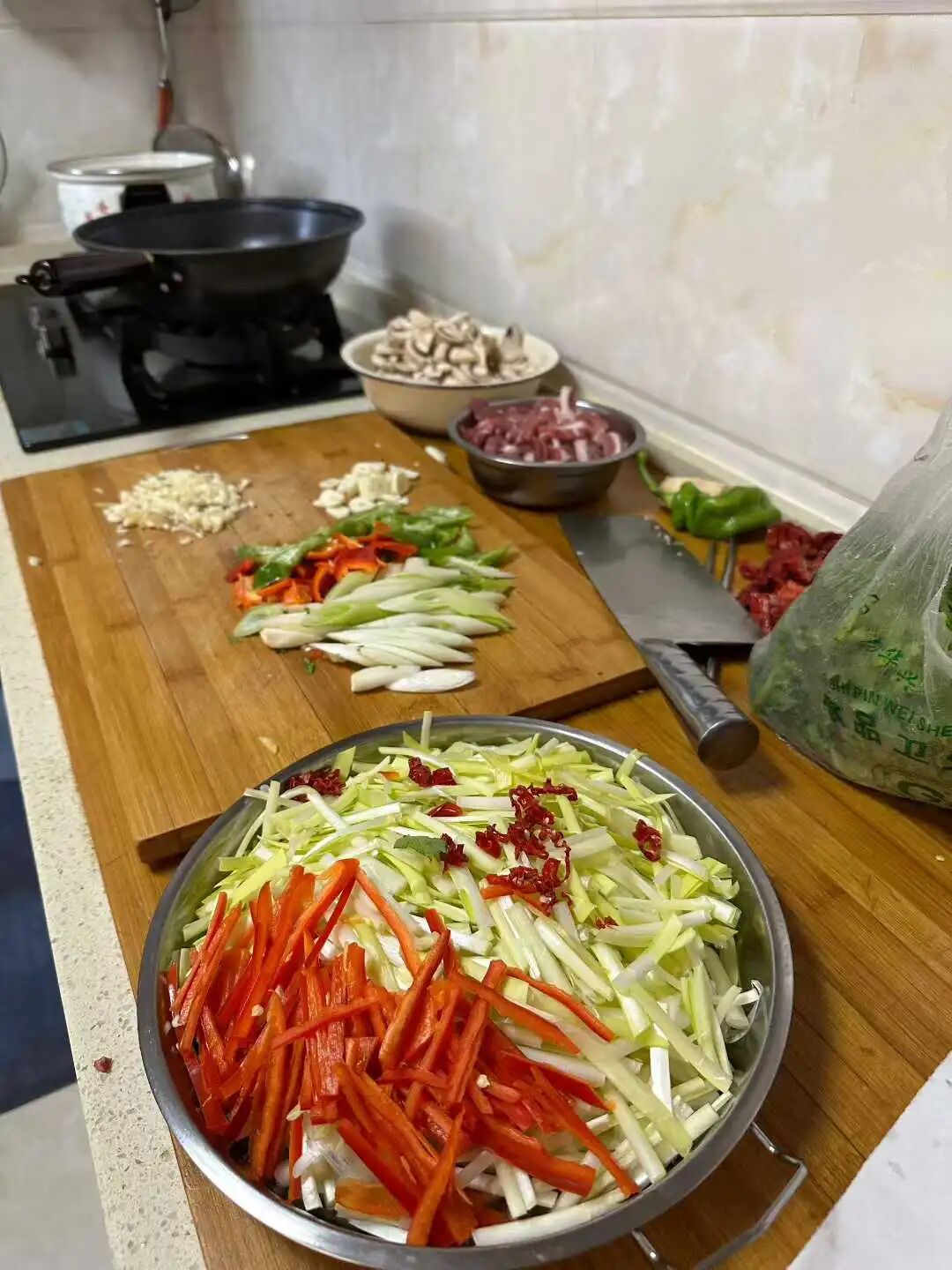
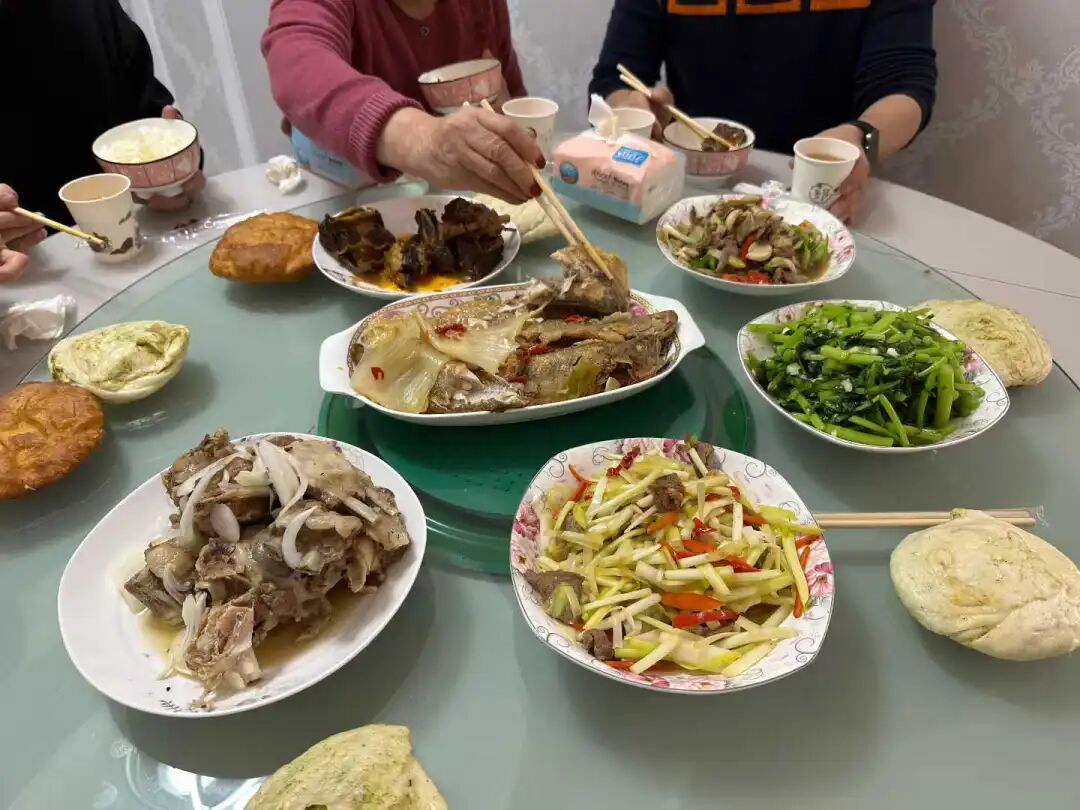
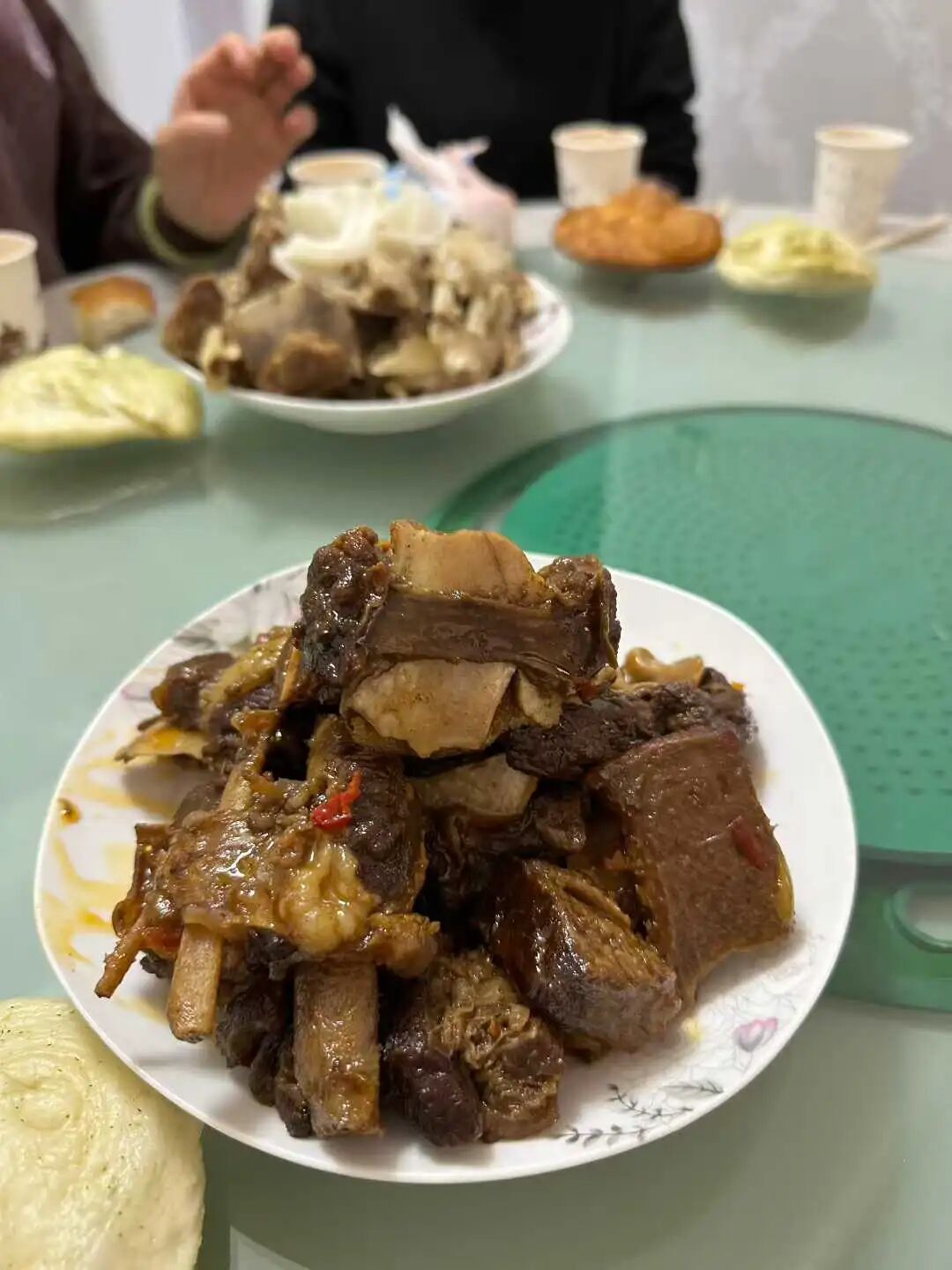
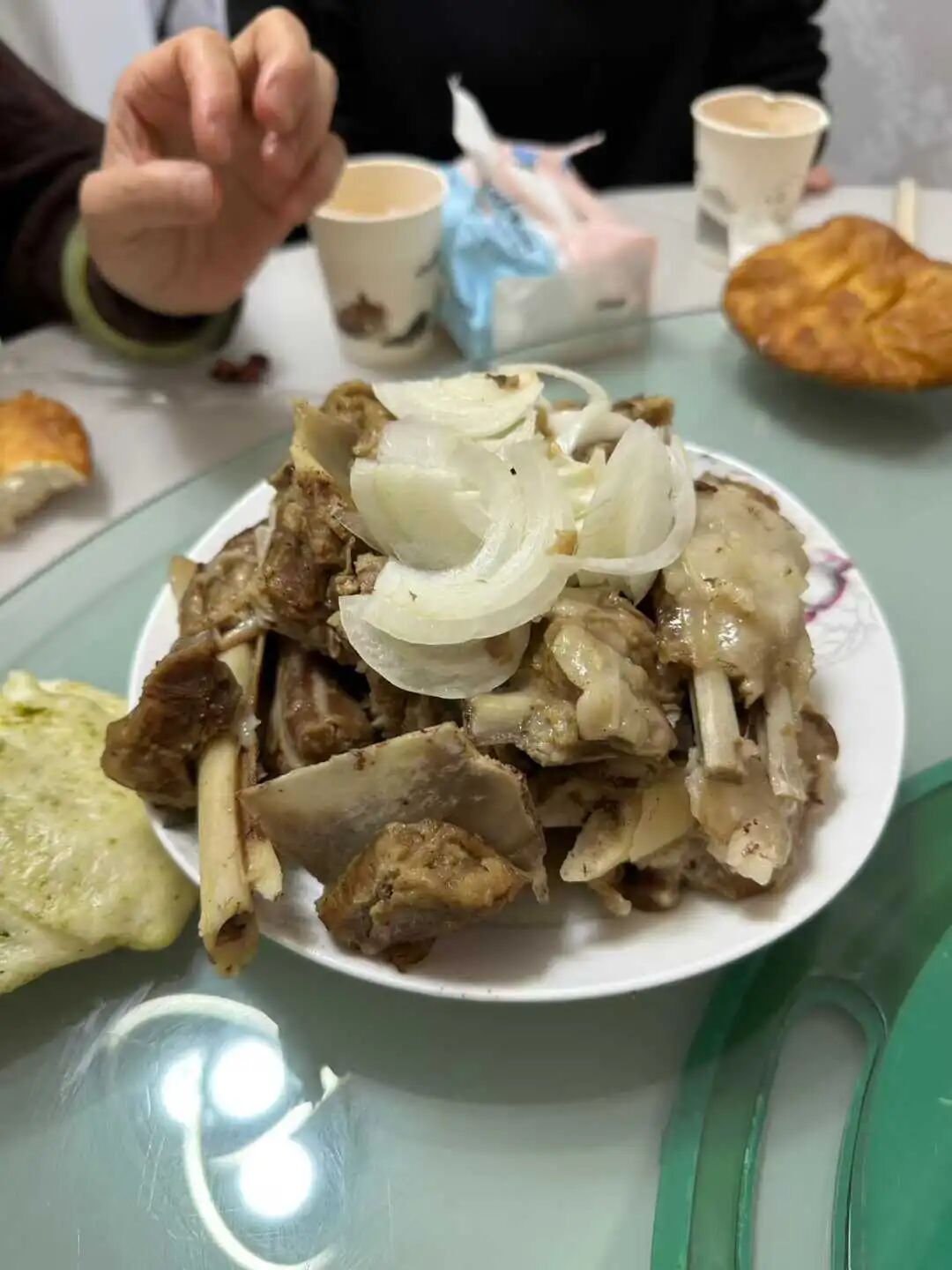
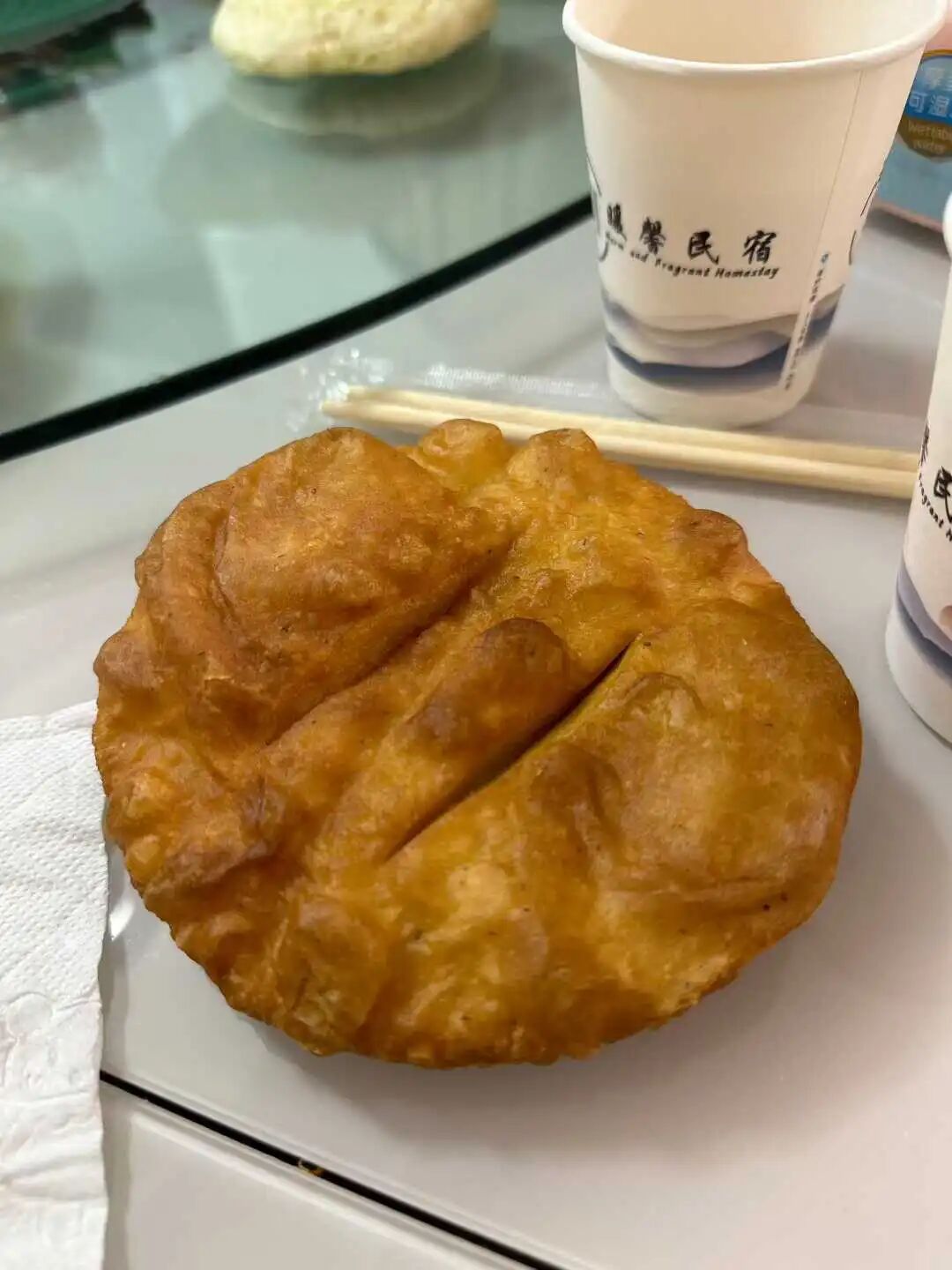
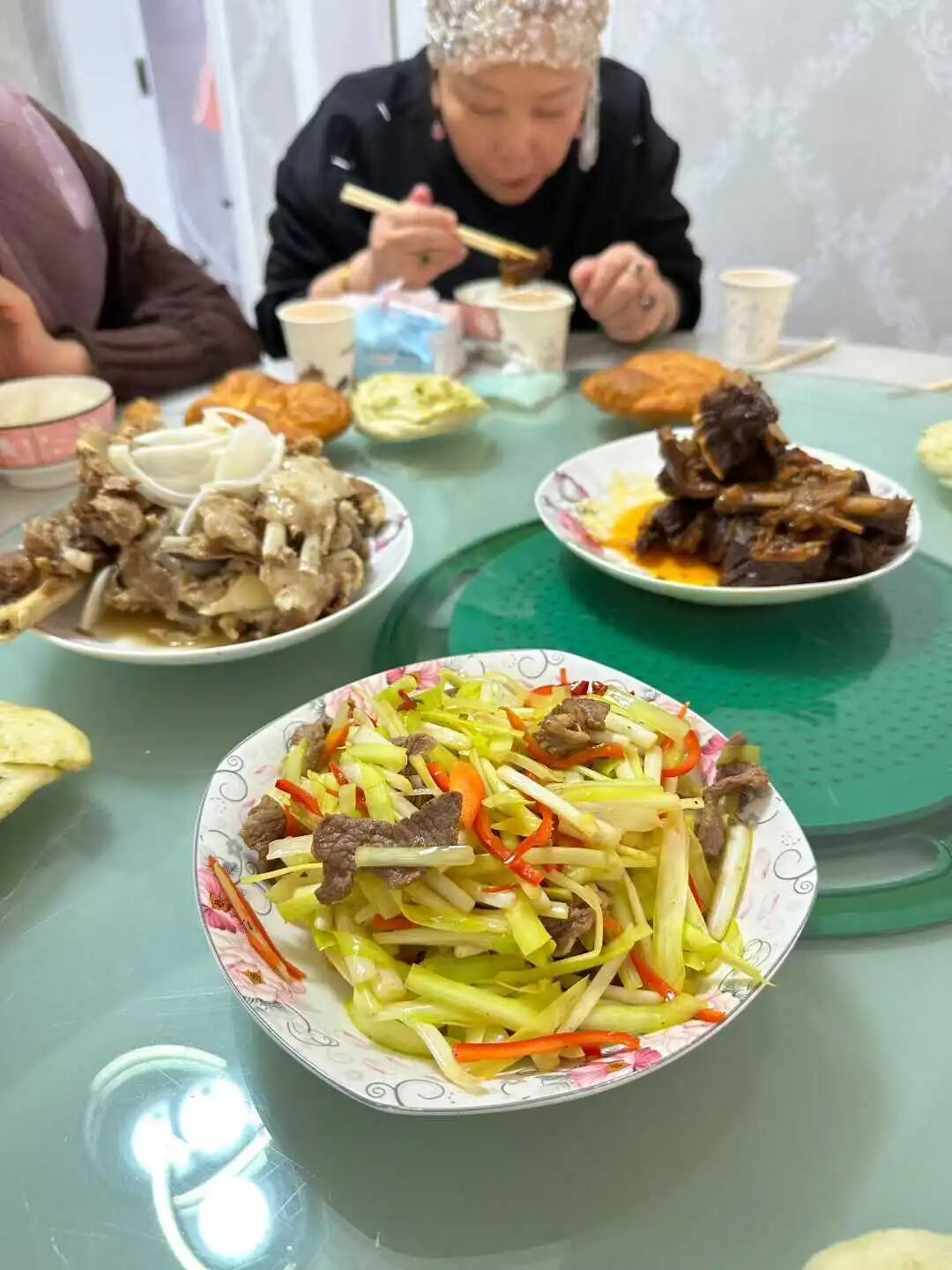
I spent the morning at home reciting prayers (nianye). We had braised beef steak, clear-stewed lamb, and braised fish. The fried dough (youxiang) had been prepared the day before.
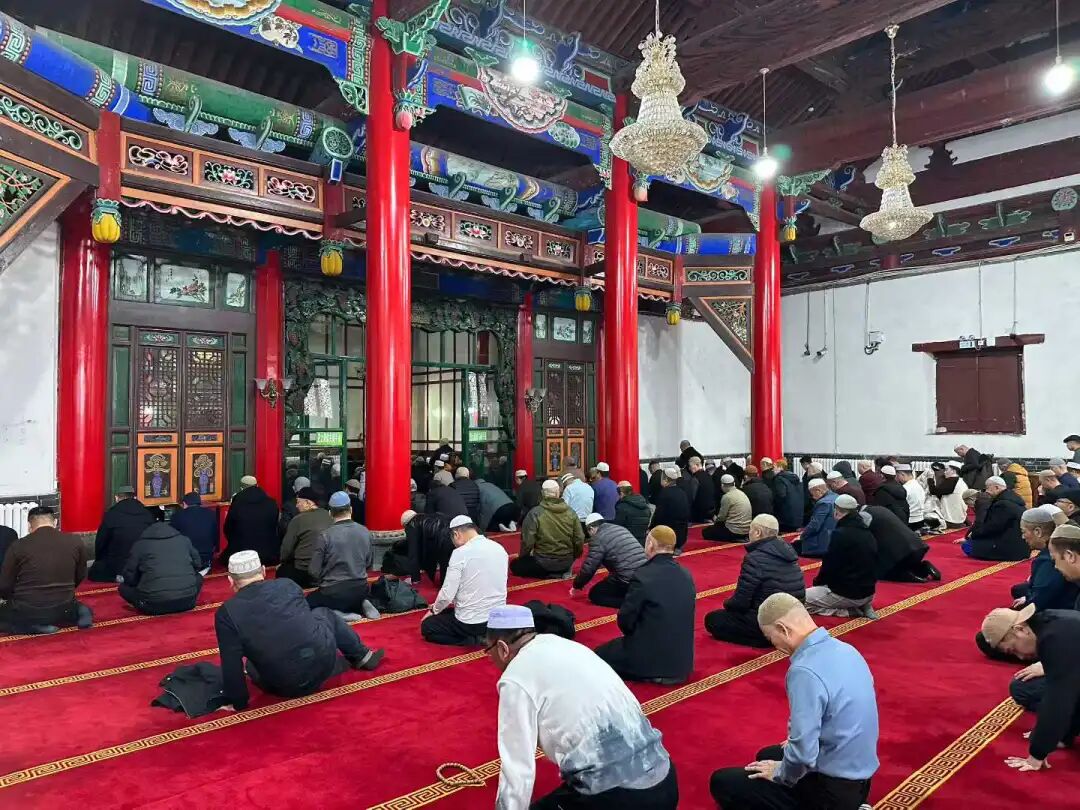
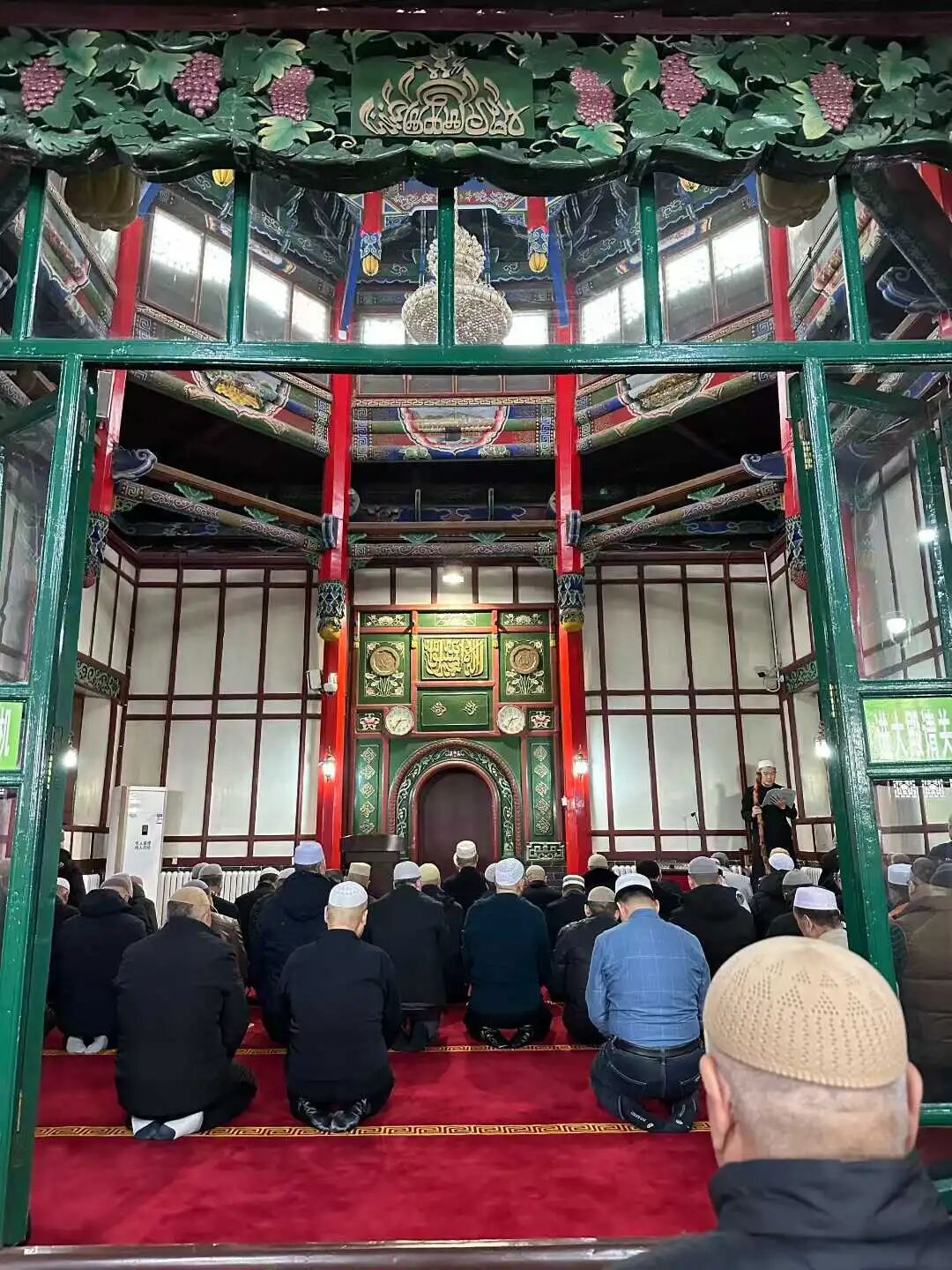
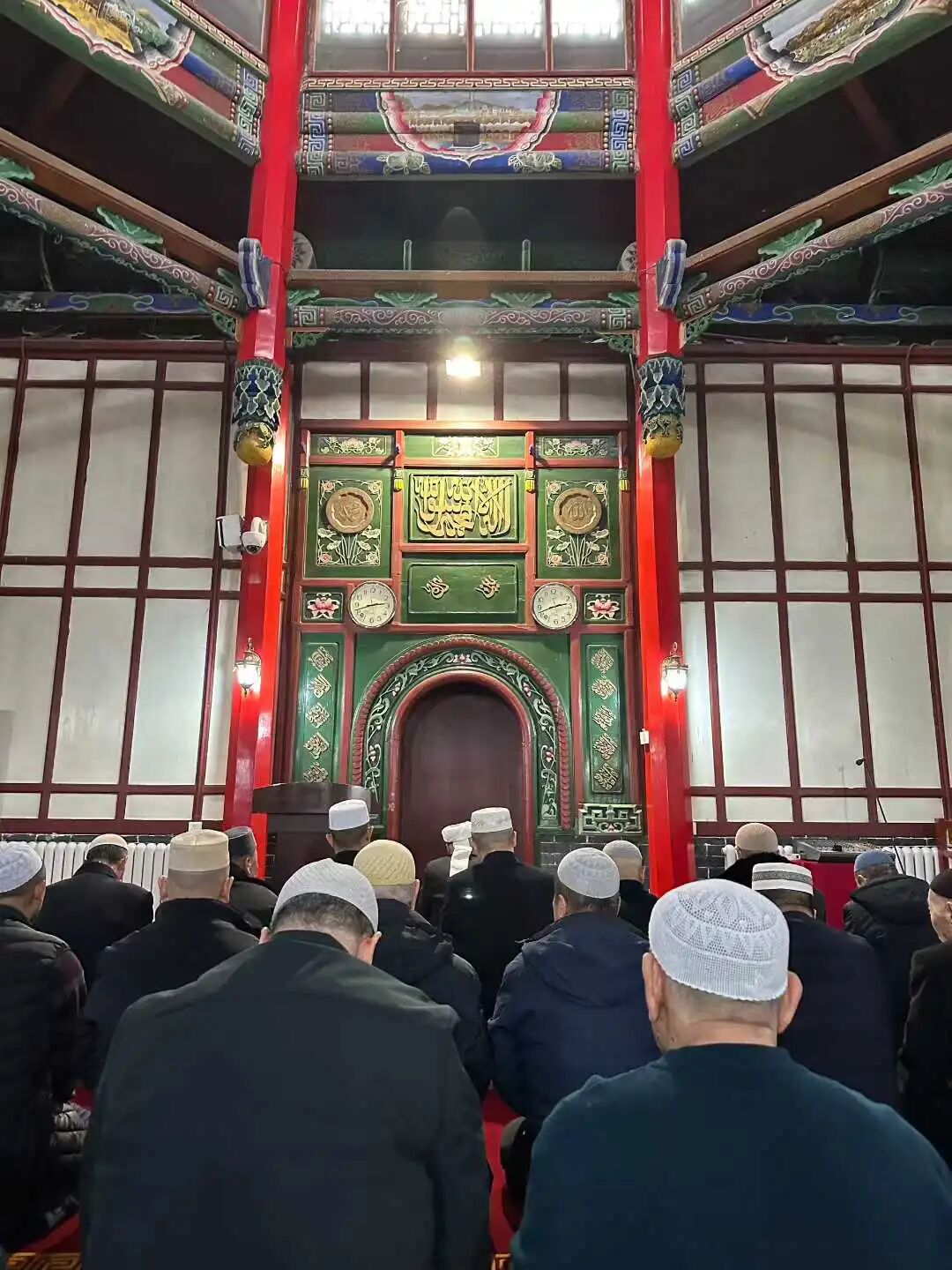
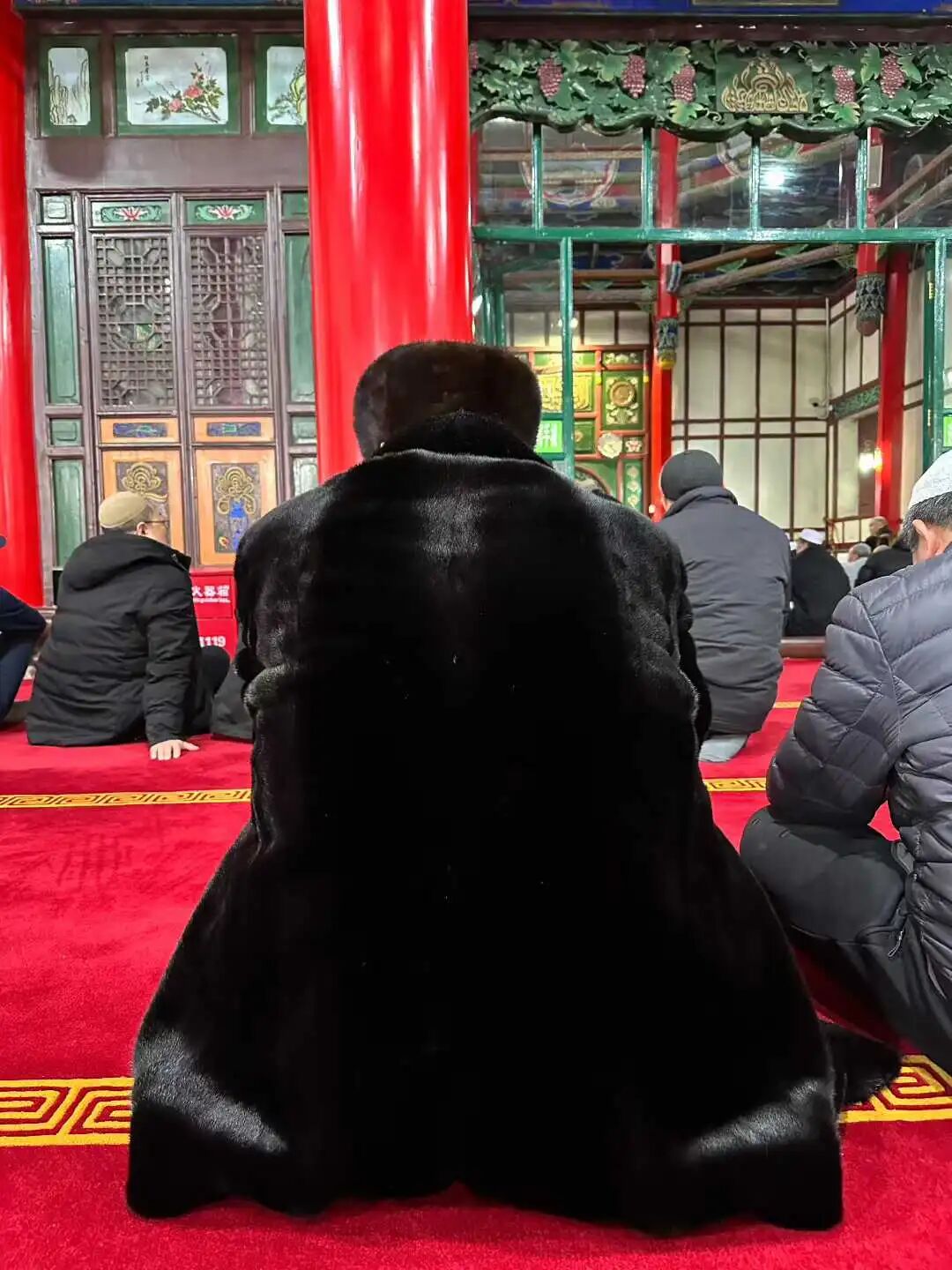
At noon, I went to the Shaanxi Grand Mosque in Urumqi for Friday prayers (Jumu'ah). This was the last Friday prayer before Ramadan. It was very crowded, and the main hall was almost full.
The restaurants behind the Shaanxi Grand Mosque are all delicious. I wrote about them in my previous article, '2025 Urumqi Hui Muslim Street Tour'.
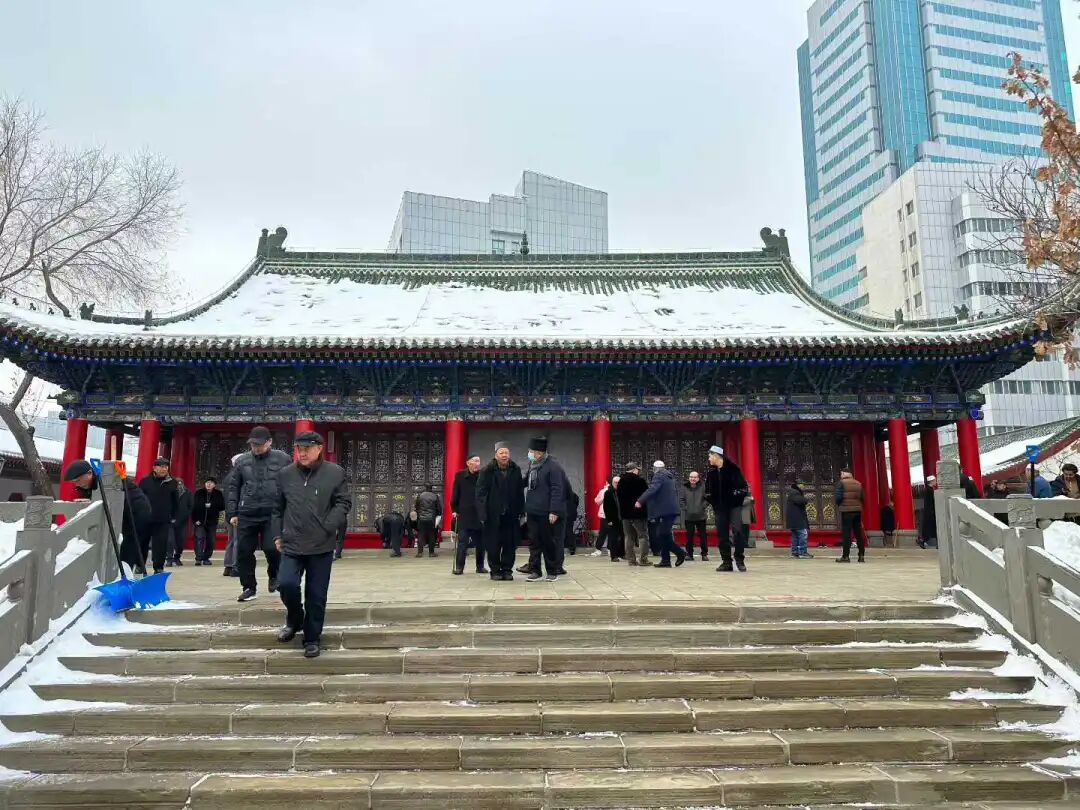
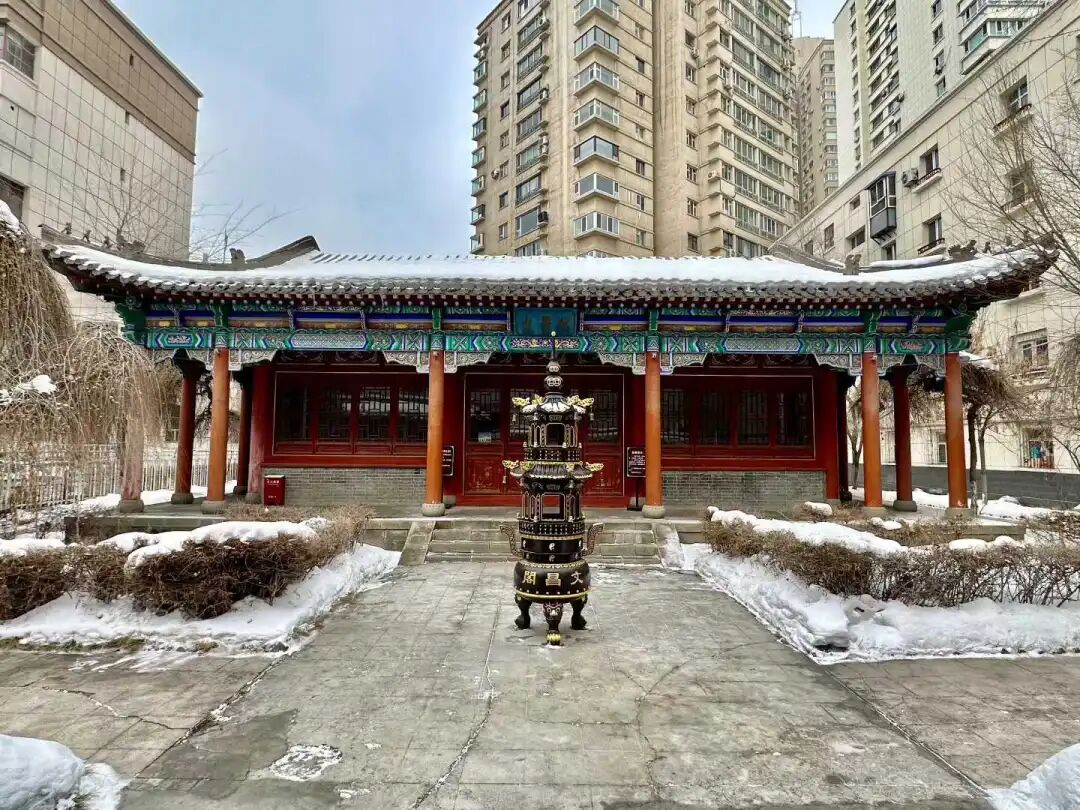
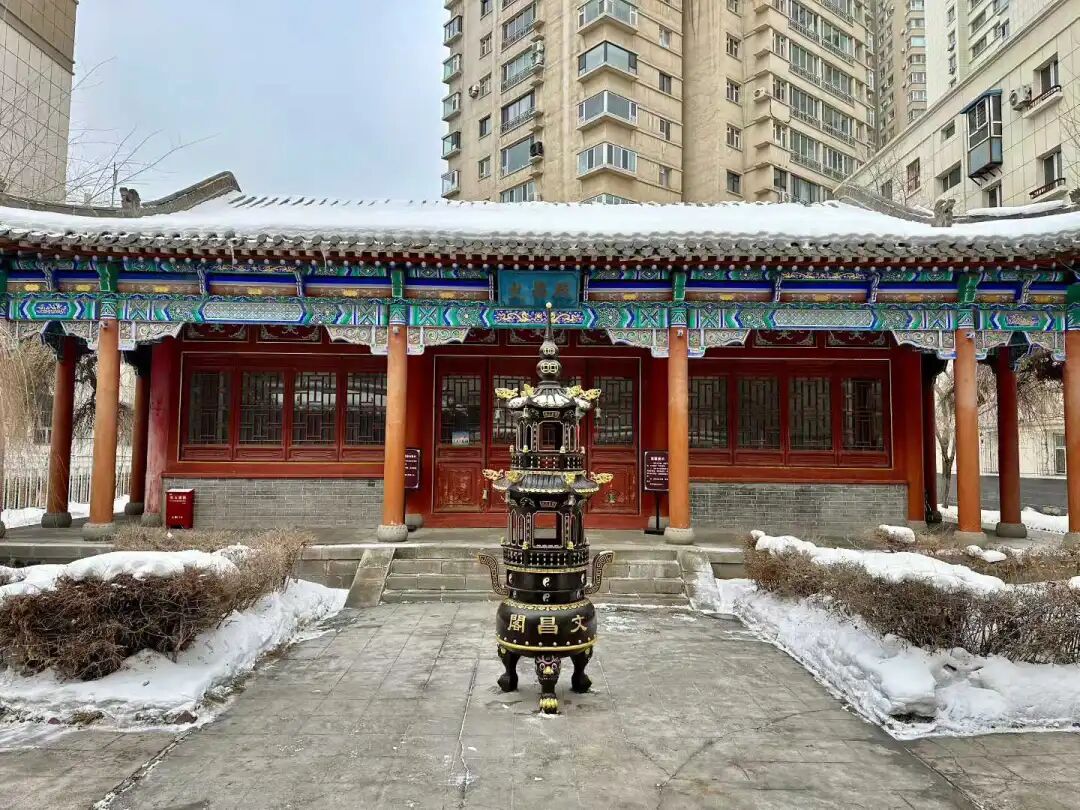
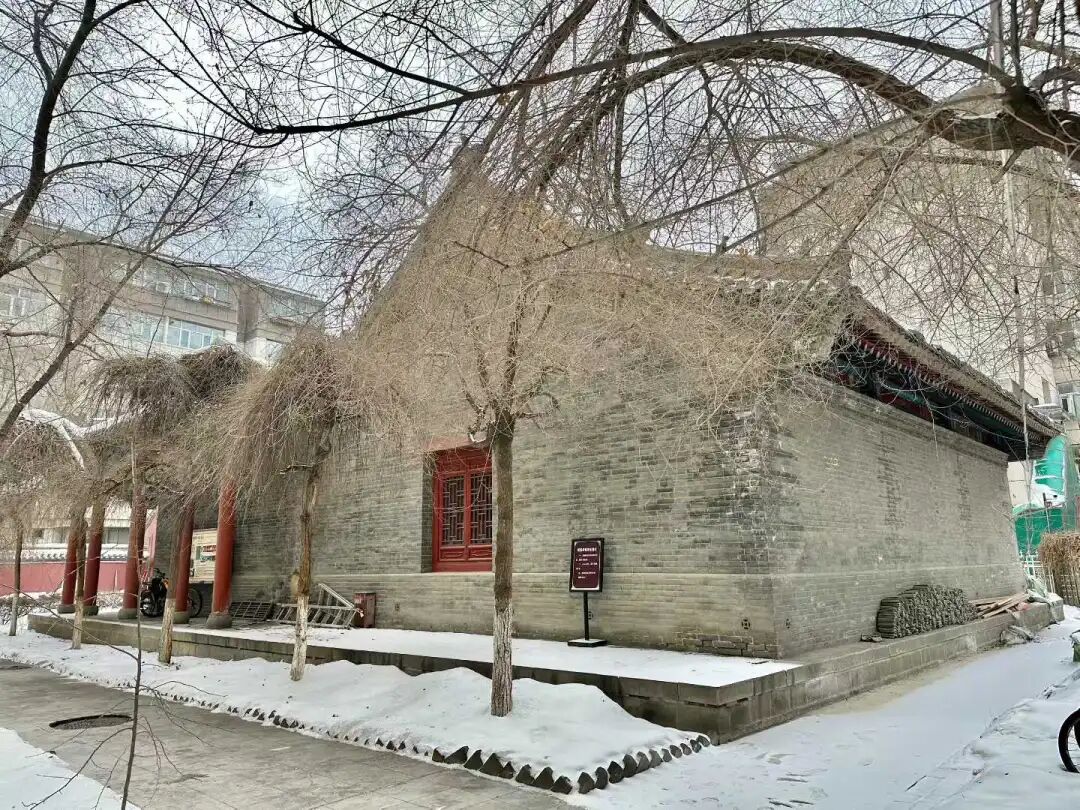
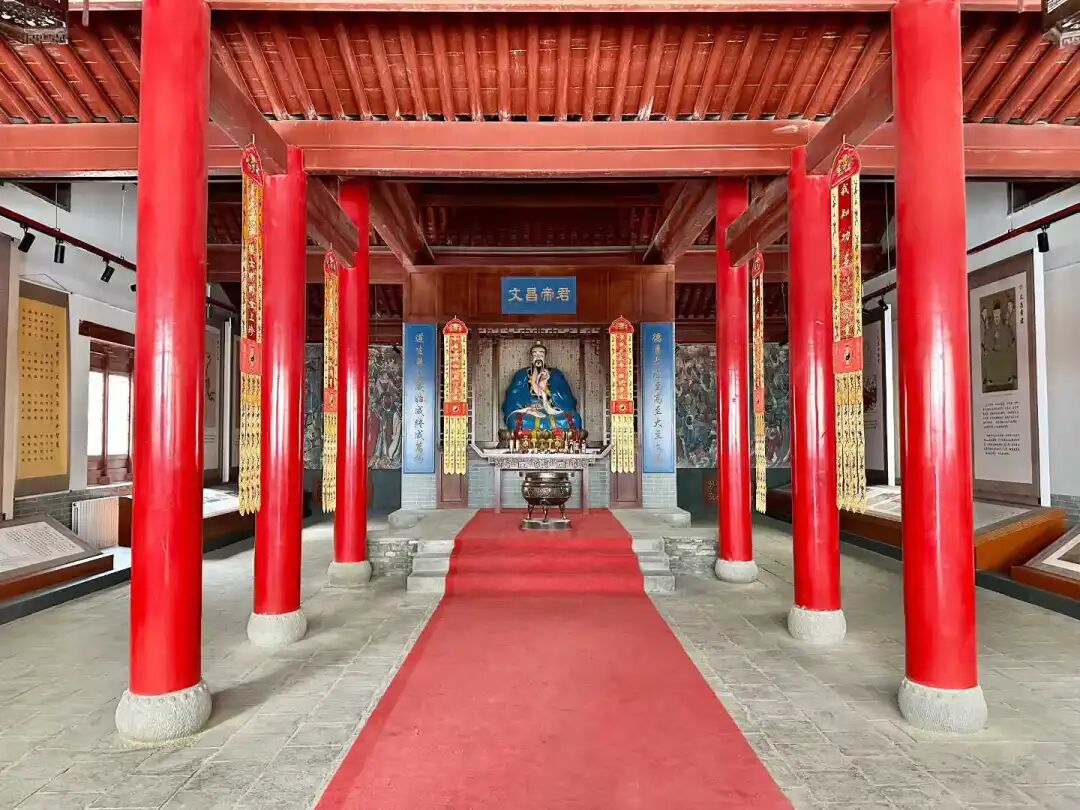
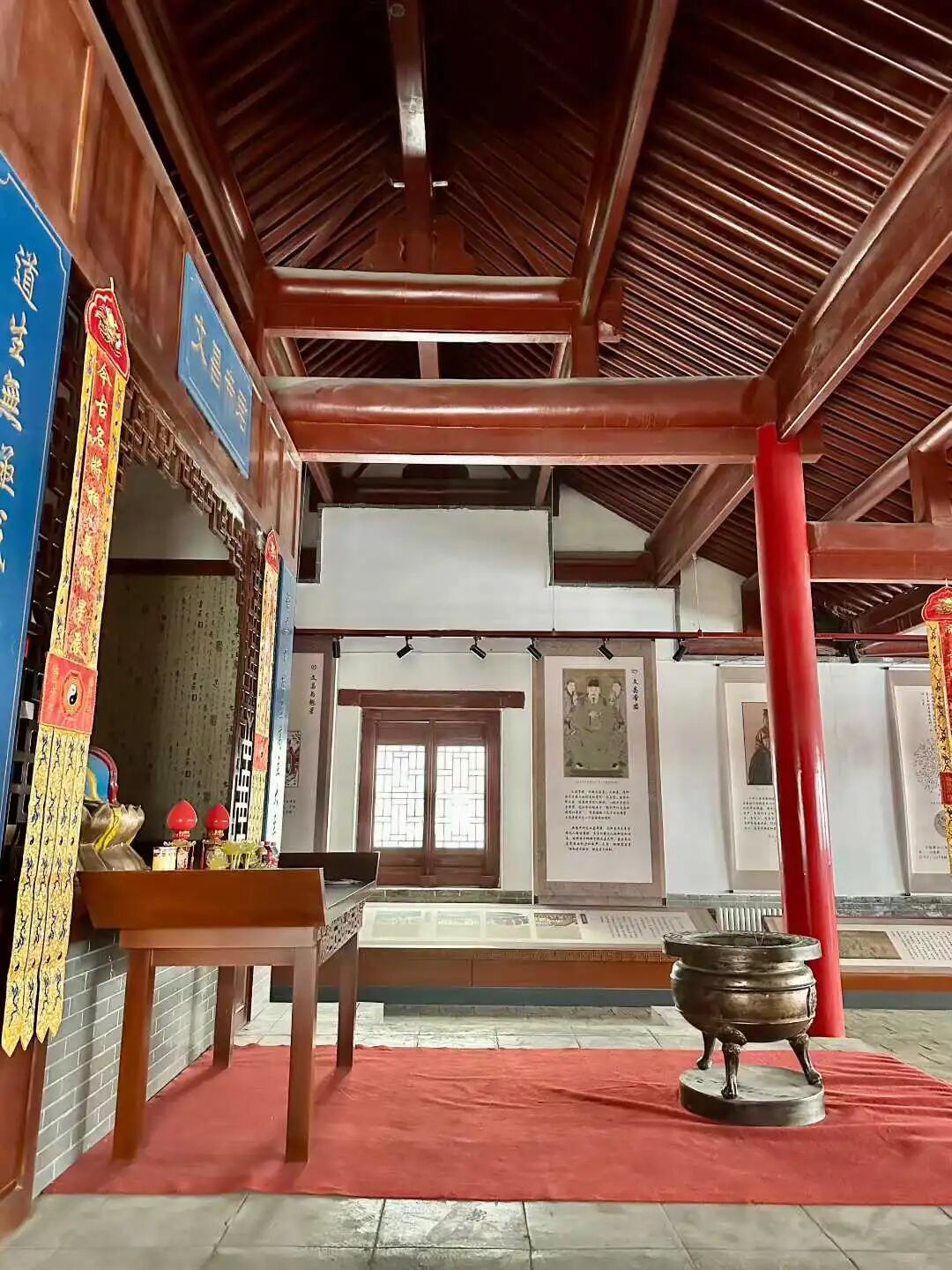
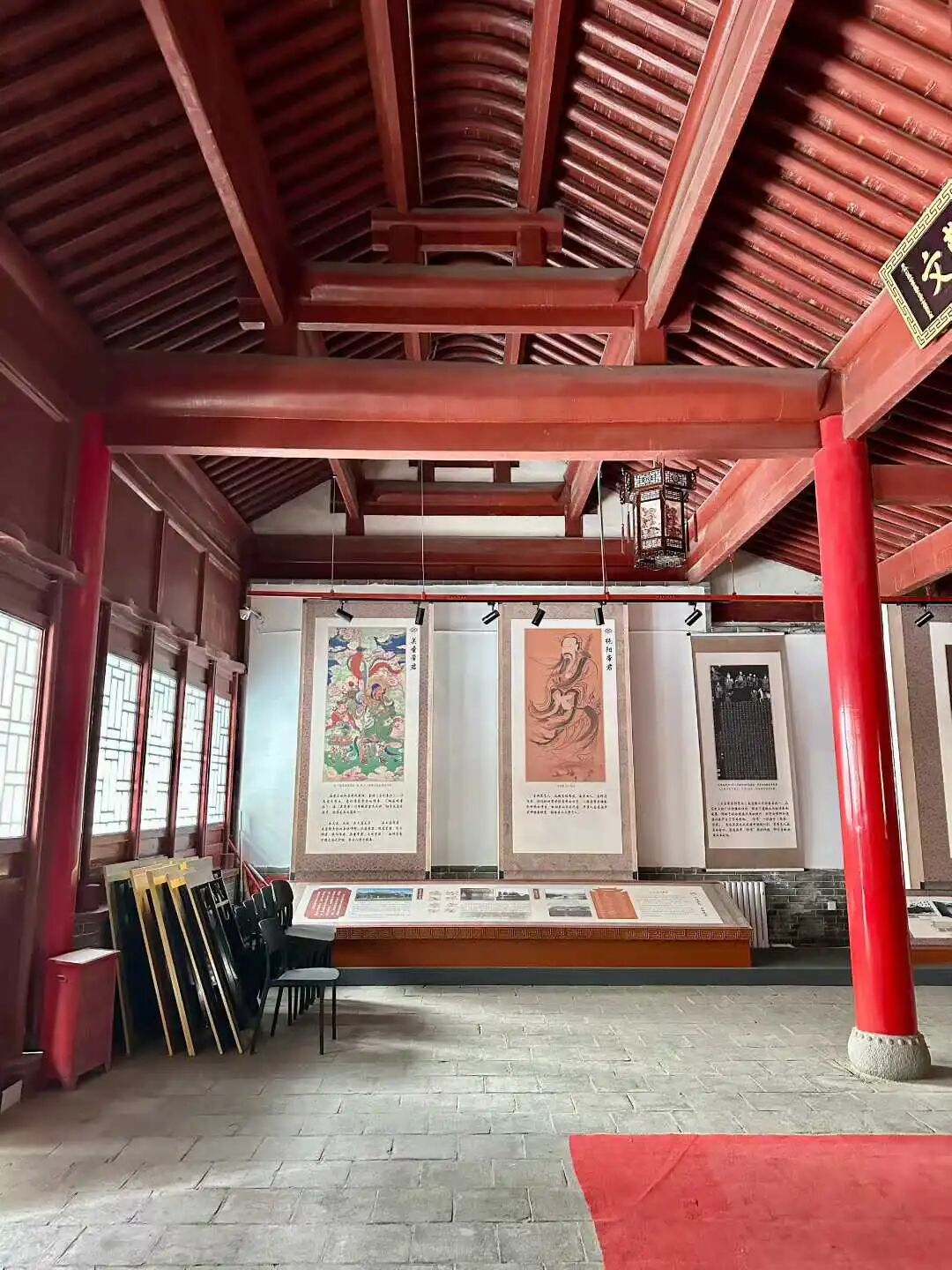
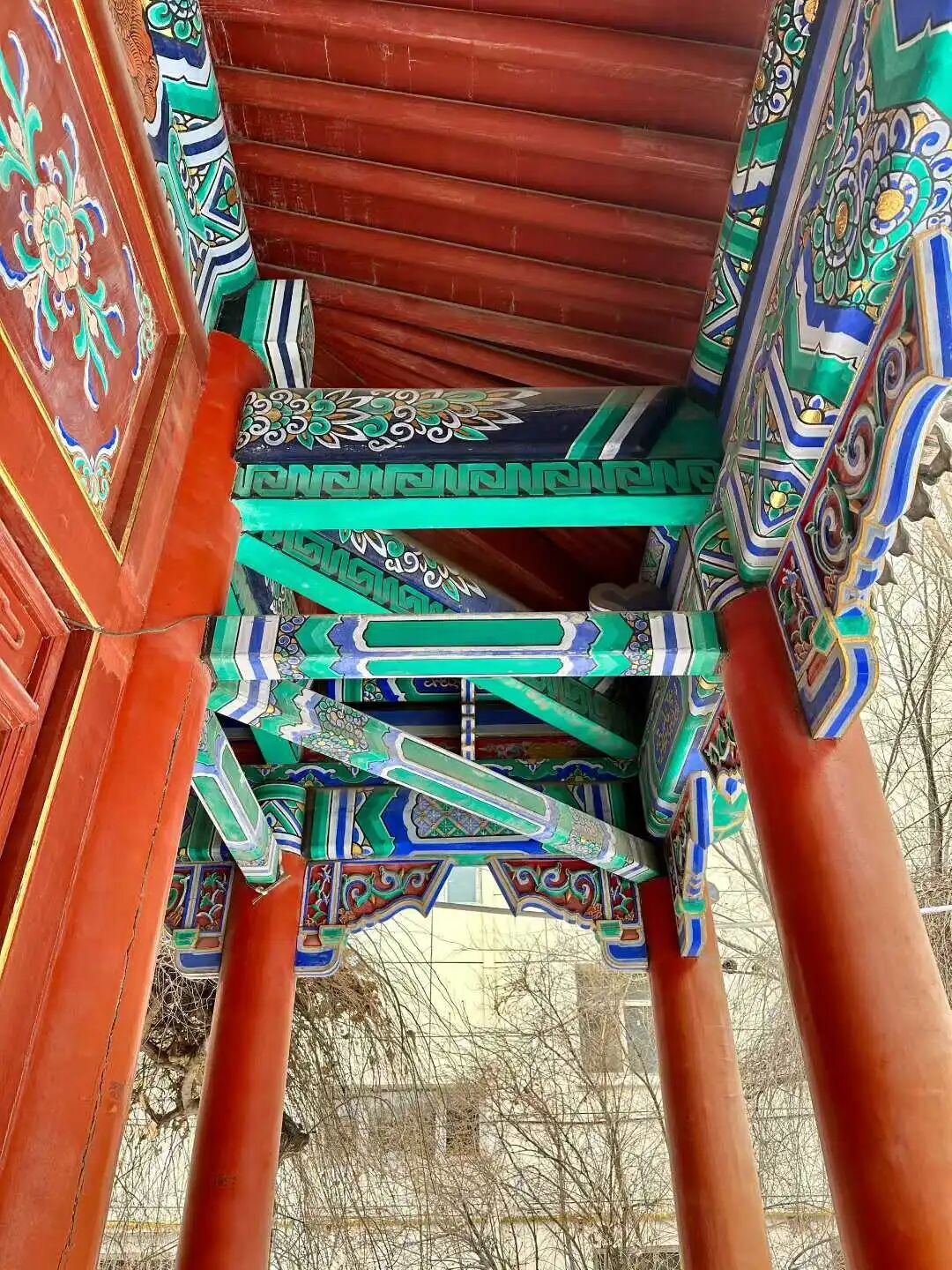
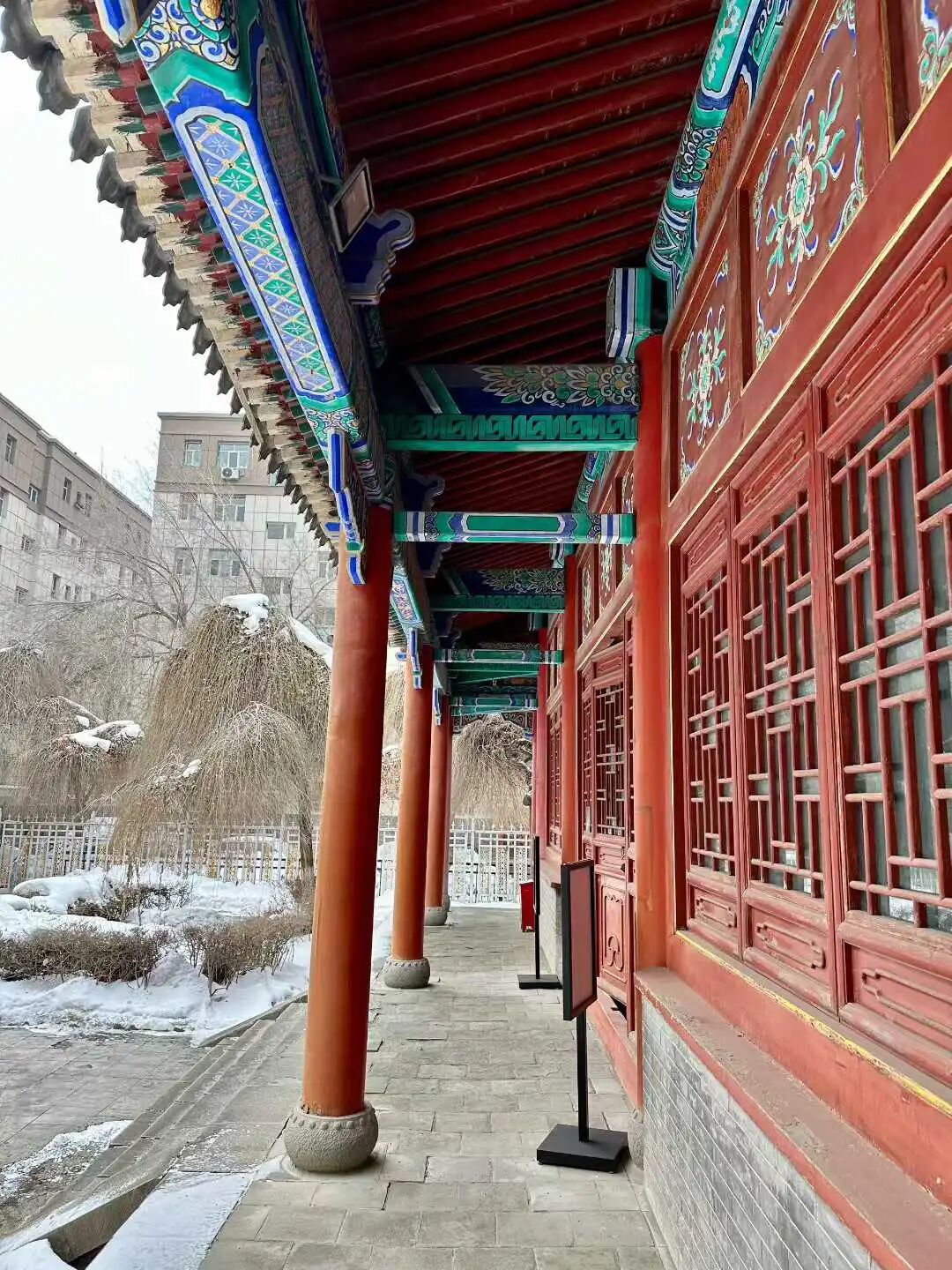
I only learned last year that the main hall of Urumqi's first mosque, Beiliang Mosque, still exists. It is now open to the public as the Wenchang Pavilion. After Friday prayers at the Shaanxi Grand Mosque, I took the subway one stop from South Gate to North Gate to visit it.
After the Qing Dynasty built Dihua City in Urumqi in 1758, it promoted policies to station troops and settle immigrants for border defense. Since then, Hui Muslims from the northwest moved there to settle. In 1780, they built Beiliang Mosque on a small hill inside the North Gate of Dihua City, making it the first mosque in Urumqi.
The first imam of Beiliang Mosque was an elder from the Weijiapu area, who belonged to the Salar people from Xunhua. When the elder from Weijiapu was young, he studied at the Jiezi Gongbei and the Grand Mosque in Xunhua. In 1763, he left to seek enlightenment during the Hehuang menhuan conflicts. He traveled through Linxia, Lanzhou, and Wuwei, eventually reaching Hami and Turpan to teach. In 1780, he was officially invited to Beiliang Mosque as its first imam.
In the mid-18th century, Yihewan Gali, a disciple of the Indian Sufi leader Imam Rabbani, entered Aksu to teach the Khufiyya doctrine. Ma Fang, a Qing military officer stationed in Aksu, accepted his teachings. Later, Ma Fang resigned from his post to preach across Xinjiang. He took five students, one of whom was Ma Pei, who went to Urumqi to preach. The elder from Weijiapu became his student. The elder from Weijiapu taught at Beiliang Mosque for nearly 30 years. He taught religious knowledge to ordinary community members and guided Khufiyya followers in their spiritual practice. He balanced the relationships between different groups well and was respected by everyone.
Beiliang Mosque existed for 94 years in total. Its last imam was Ma Zongfu. Ma Zongfu came from Datong, Qinghai. People called him the Datong Elder. When he was young, he taught at various mosques in Qinghai and practiced the Khufiyya path. Later, because he opposed the planting and selling of opium, he was persecuted by local wealthy landowners. In 1850, he led his family through great hardships to Xinjiang and settled at Beiliang Mosque. At that time, the mosque's religious leader, Qitaizhou, was the second-generation disciple of Ma Pei. Imam Ma Zongfu then became his student. In 1852, Ma Zongfu became the imam of Beiliang Mosque and oversaw its renovation in 1861.
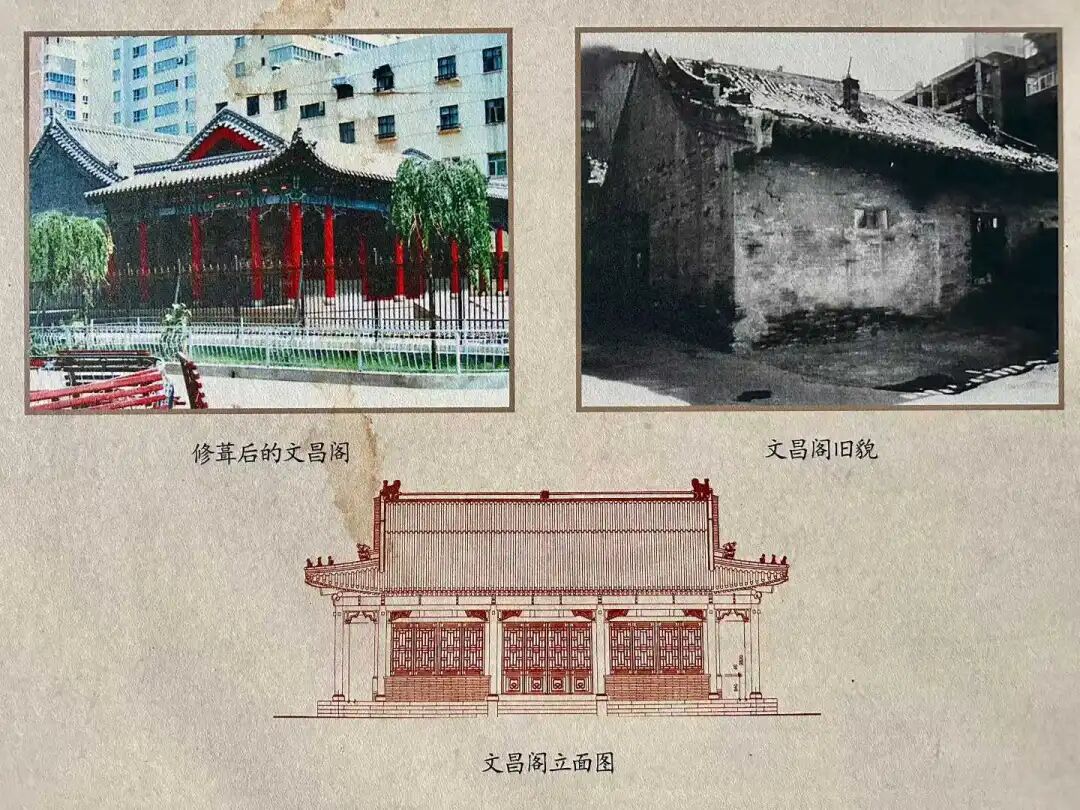
In 1876, Zuo Zongtang sent Liu Jintang to lead the Qing army west, where they defeated Yaqub Beg and recaptured Urumqi. After the Qing army entered the city, they occupied Beiliang Mosque. In 1884, Xinjiang Governor Liu Jintang renamed it Wenchang Pavilion. Beiliang Mosque was not used as the Wenchang Pavilion for very long. During the Republic of China era, it was occupied by Kuomintang communication troops. After 1949, it was taken over by the People's Liberation Army communication troops and used as a military factory for a long time. It was not returned to the cultural heritage department for management until 2002.
In 2003, the cultural heritage department renovated the only remaining main hall of Beiliang Mosque. Citing 'site constraints and ease of public access,' they changed the traditional east-west orientation of the Hui Muslim hall to face south. Today, it is open as a place to introduce Taoist Wenchang culture.
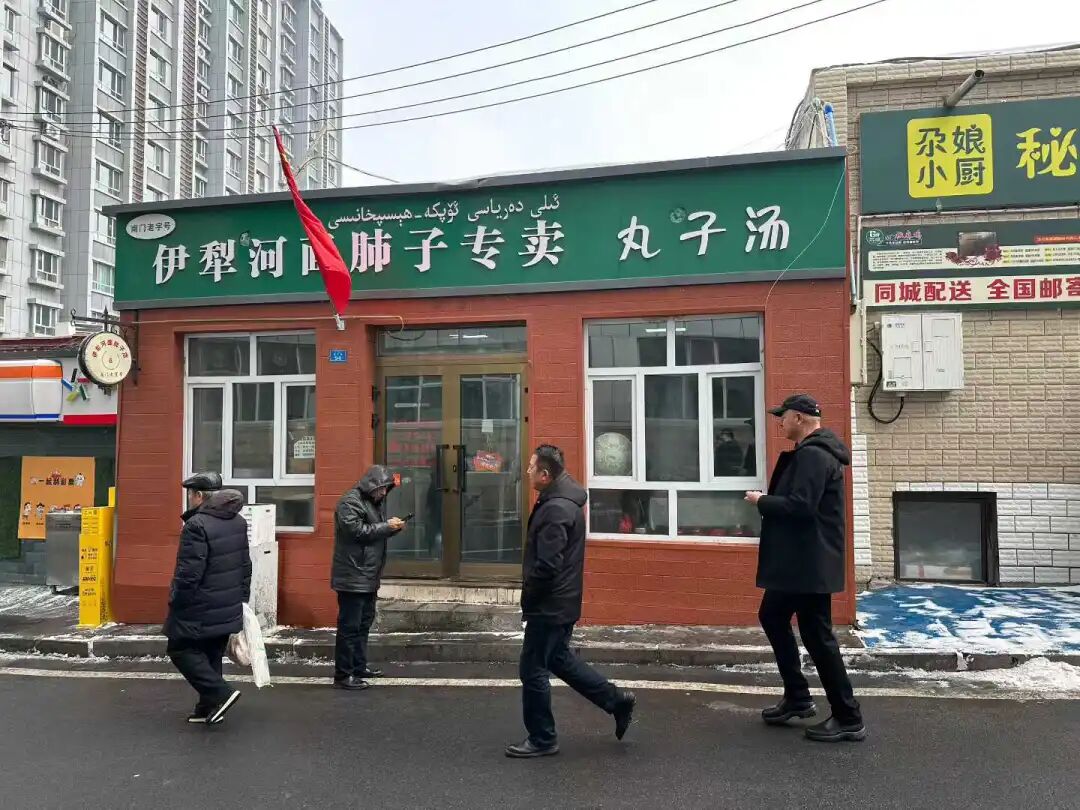
Hidden in the storefronts of the Guangyuan residential complex on Zhujiang Road in Urumqi is Li Yingping's Meatball and Vermicelli Soup (wanzifen tang). The owner has been selling meatball soup in the neighborhood for over twenty years and only moved to the Guangyuan complex in the last two years. This area is far from the food streets, so mostly only locals know about it.
Their signature dish is braised beef meatball noodle soup served with a steamed flower roll (huajuan). The beef is stewed until very flavorful and has a great texture, served with tofu, starch noodles, and wood ear mushrooms. I first thought their 'wonton dumplings' were two separate dishes, but I later learned they are dumplings shaped like wontons made by the owner. They have a lamb and onion (piyazi) filling, and you can eat them dry or in soup. The soup dumplings are served in the beef noodle soup, which I think is especially comforting in winter. I also tried their lentil noodle squares (biandou mianqizi). Small flag-shaped dough pieces simmer in the soup, paired with the creamy texture of lentils. It is a winter staple that warms the stomach for people in Xinjiang.
February 14
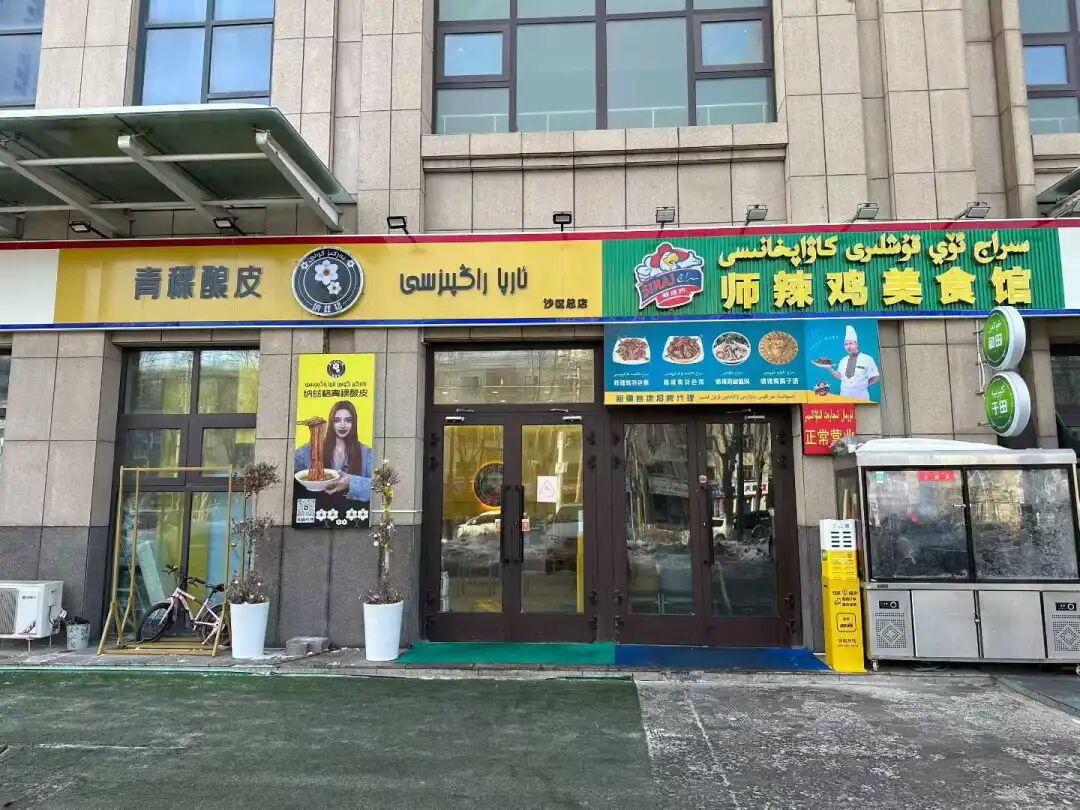
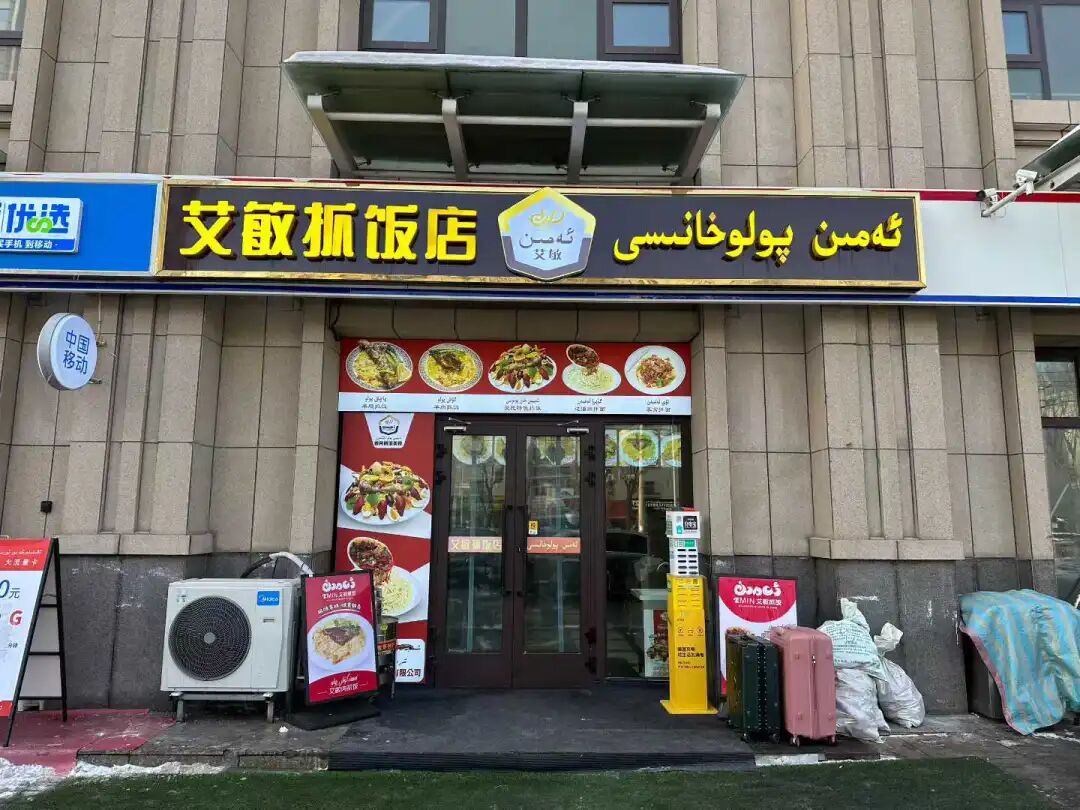
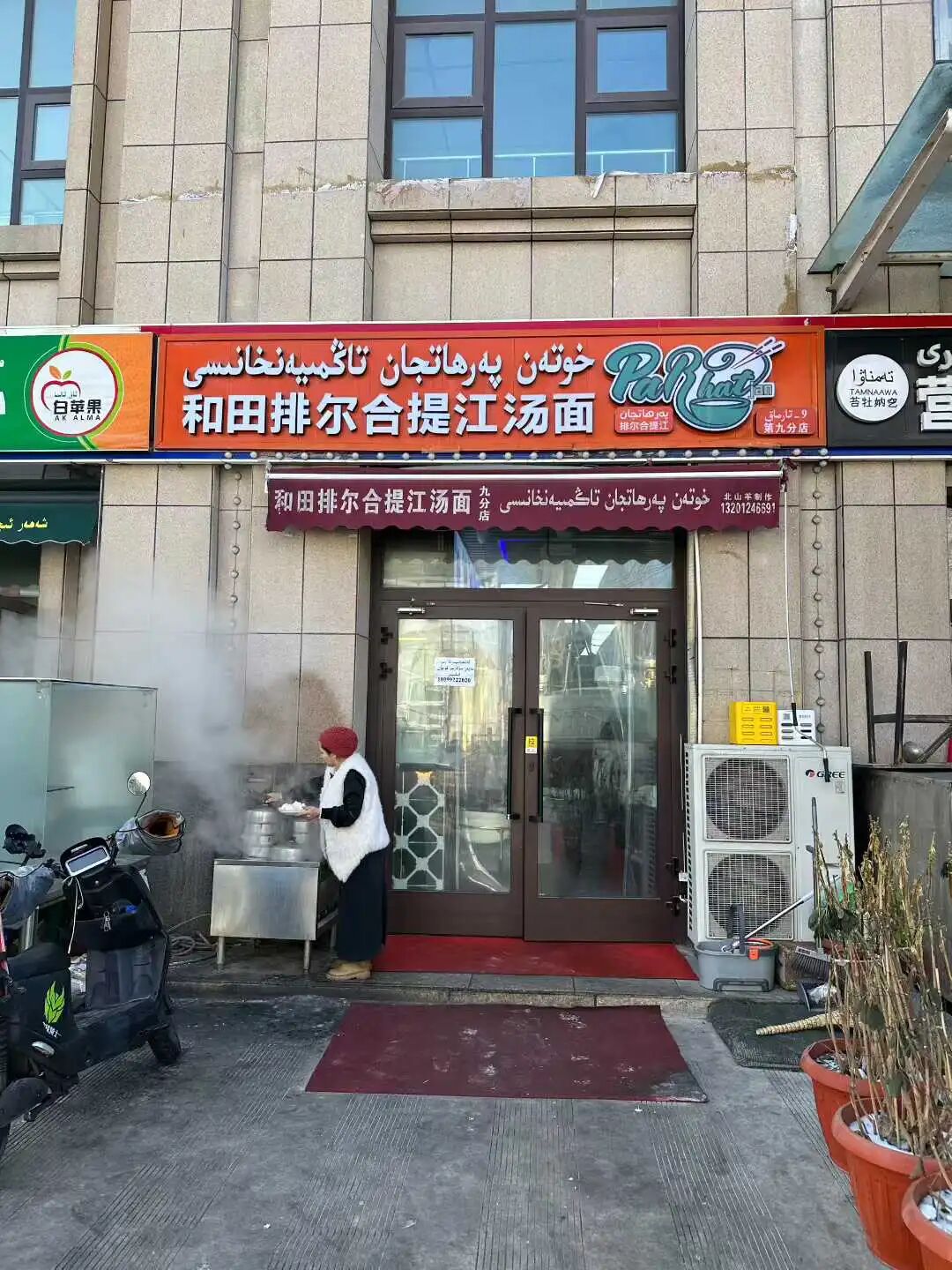
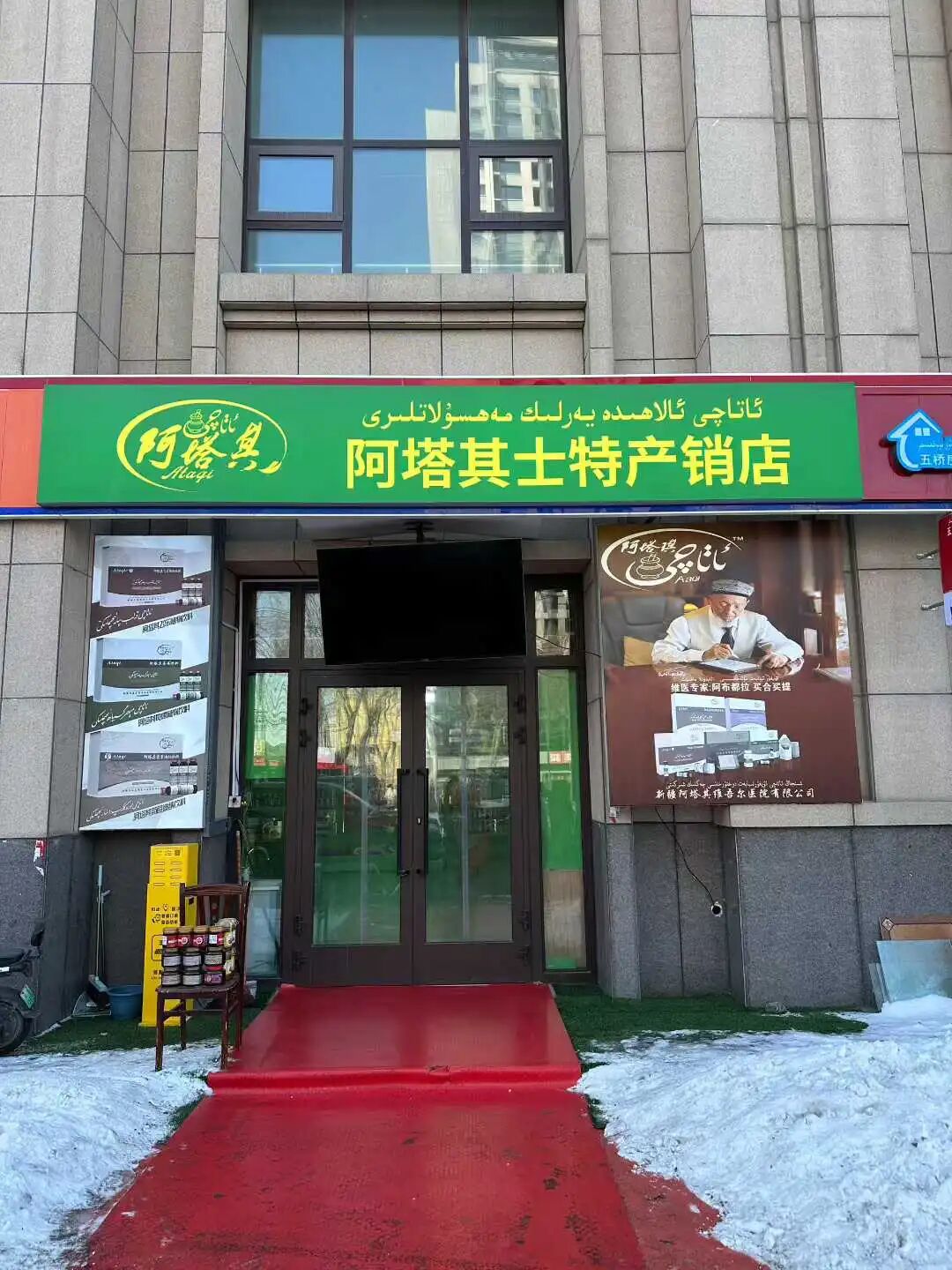
Urumqi has so many food streets. From the early days of Shanxi Alley and Erdaoqiao to the later Lingguan Alley and Hotan Street, more and more places have become popular spots for food lovers. My biggest discovery on this trip back to Urumqi is that the area from Yingawati Road toward Zhujiang Road is getting busier. The ground-floor shops in the new residential area near the plastic factory are all restaurants newly opened by people from Hotan, each with its own unique style.
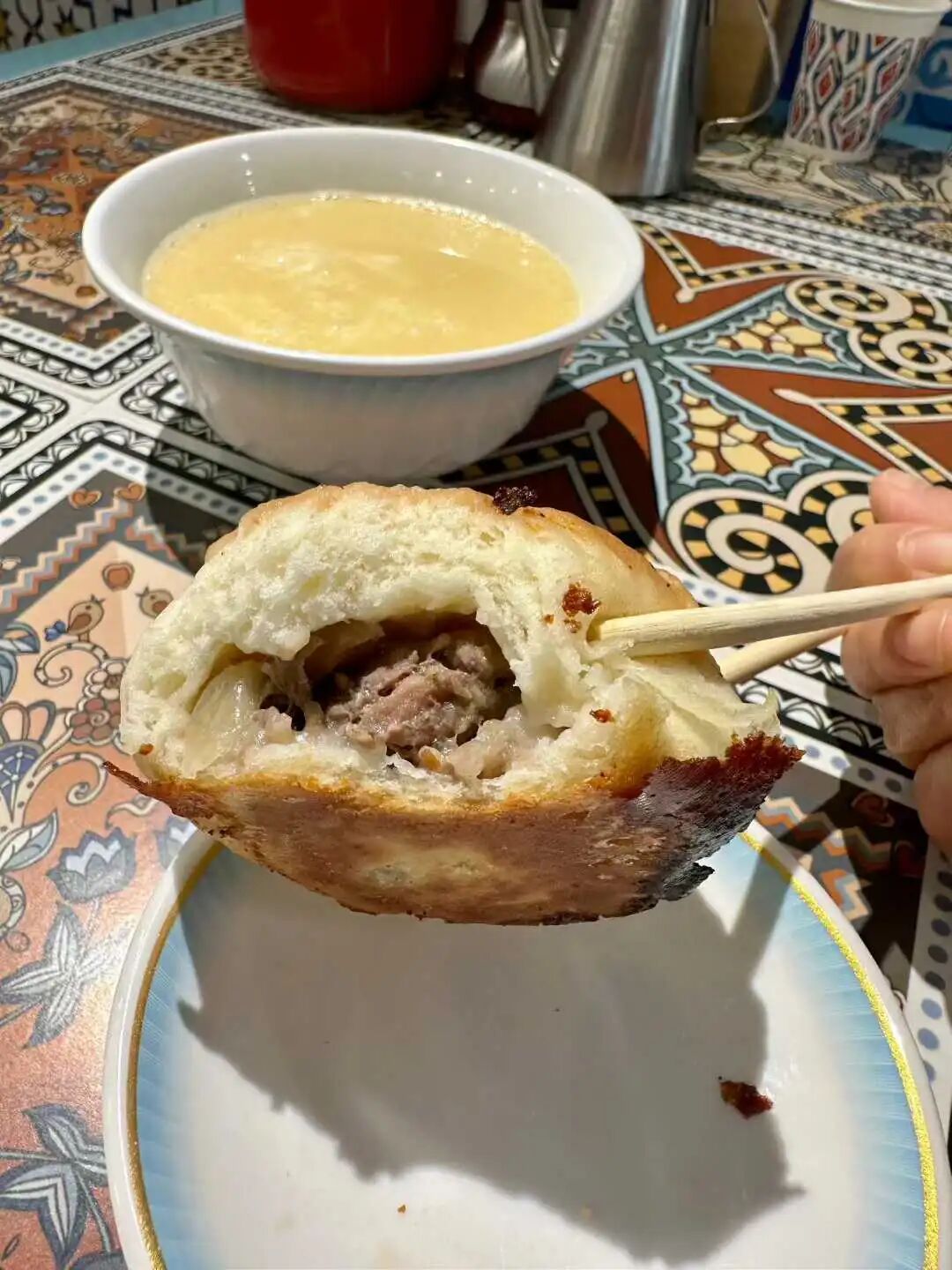
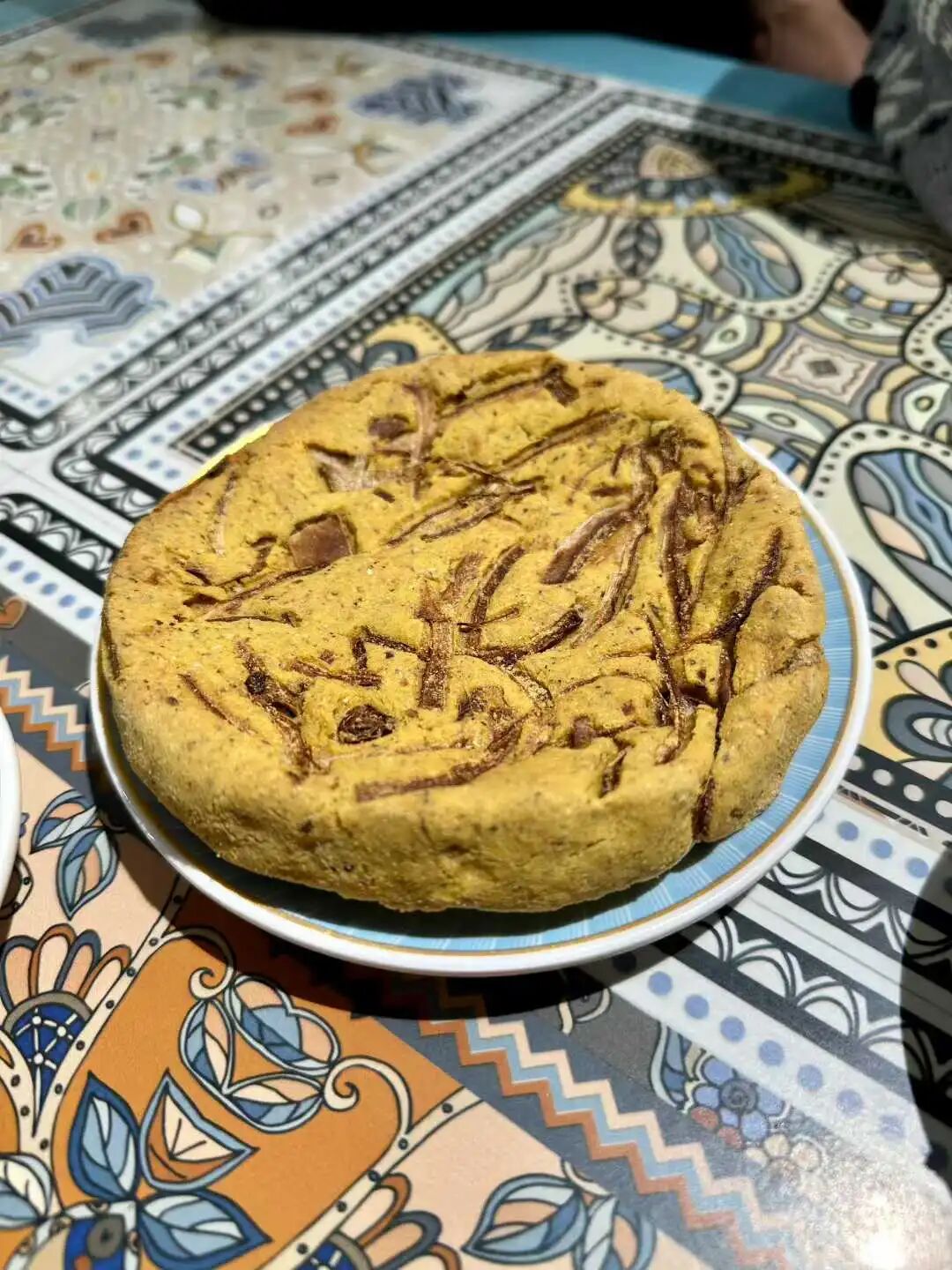
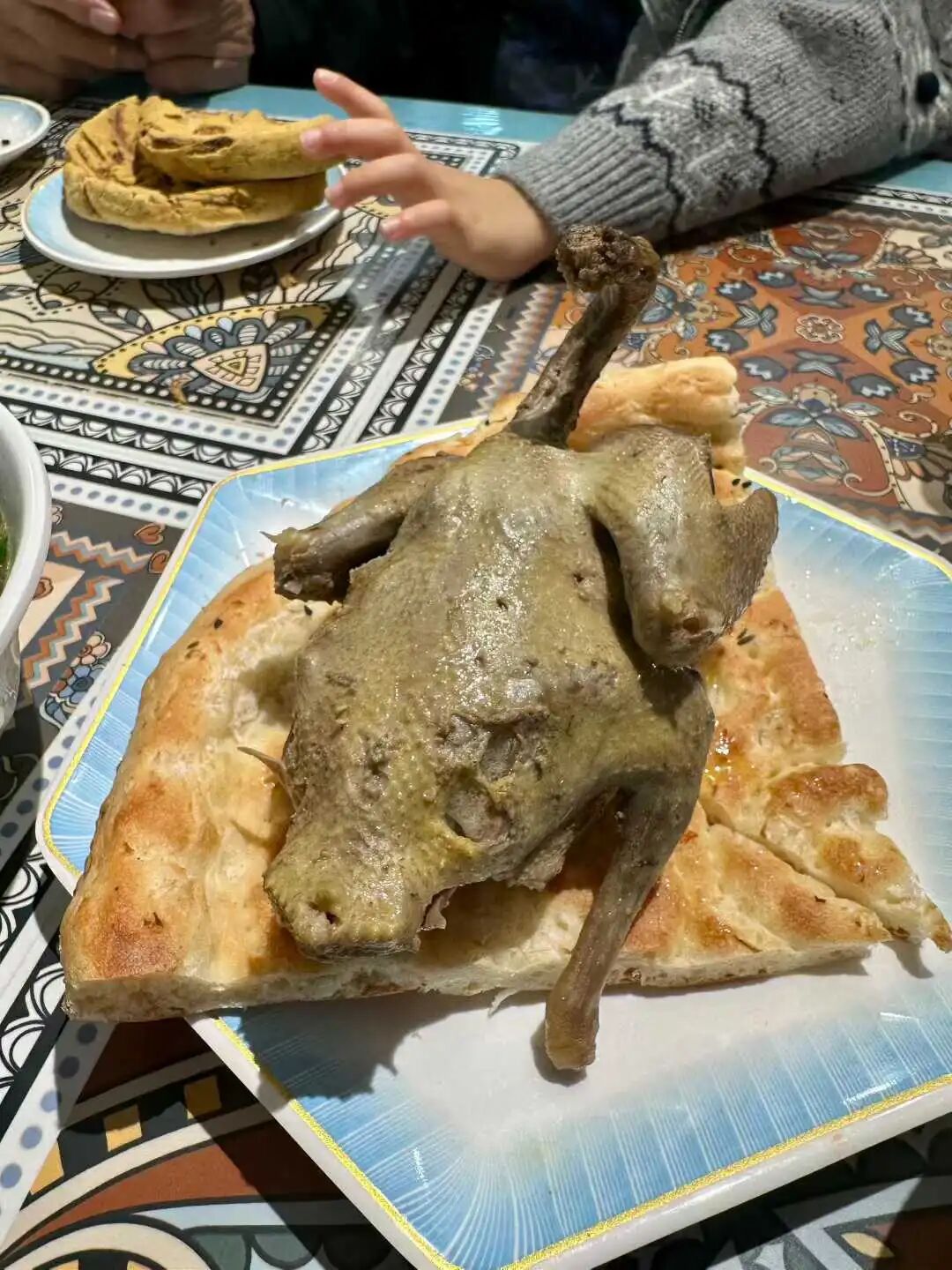
We first ate at this 1980s-style pan-fried bun (shuijianbao) shop. Pan-fried buns are a specialty of Ili, but this shop also sells Hotan-style corn naan (baogu nang) and old pigeon soup, making it a mix of northern and southern Xinjiang styles.
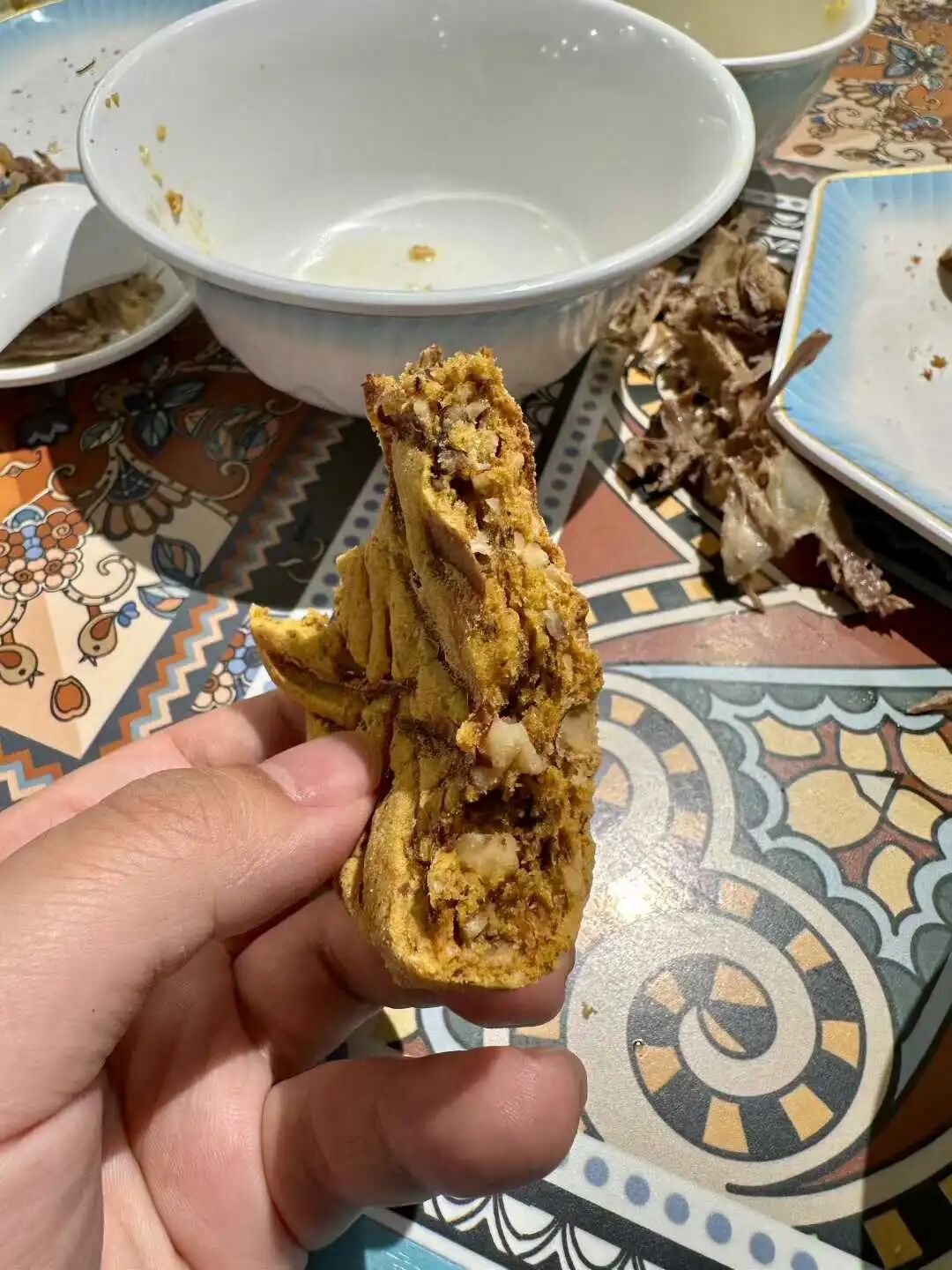
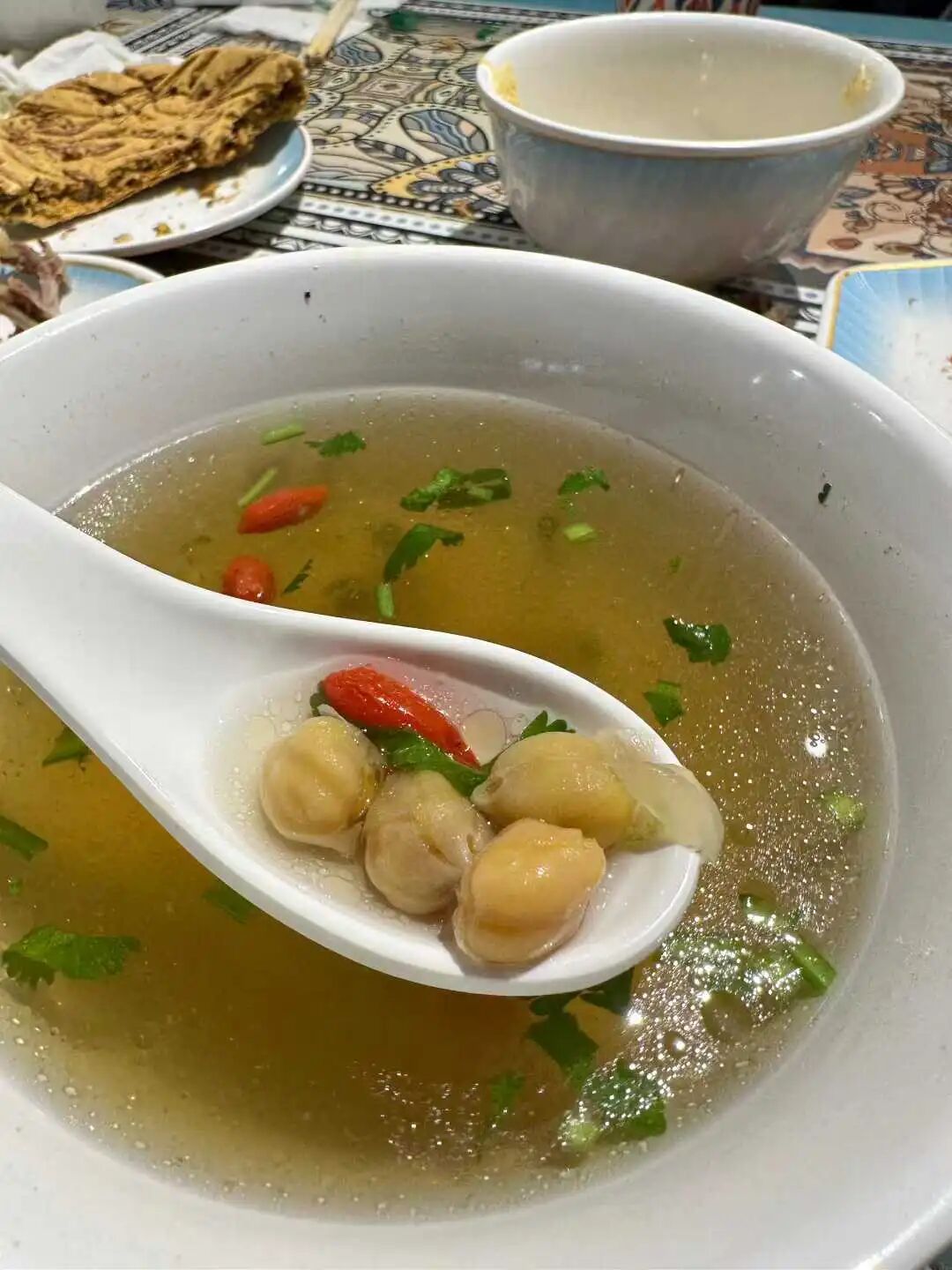
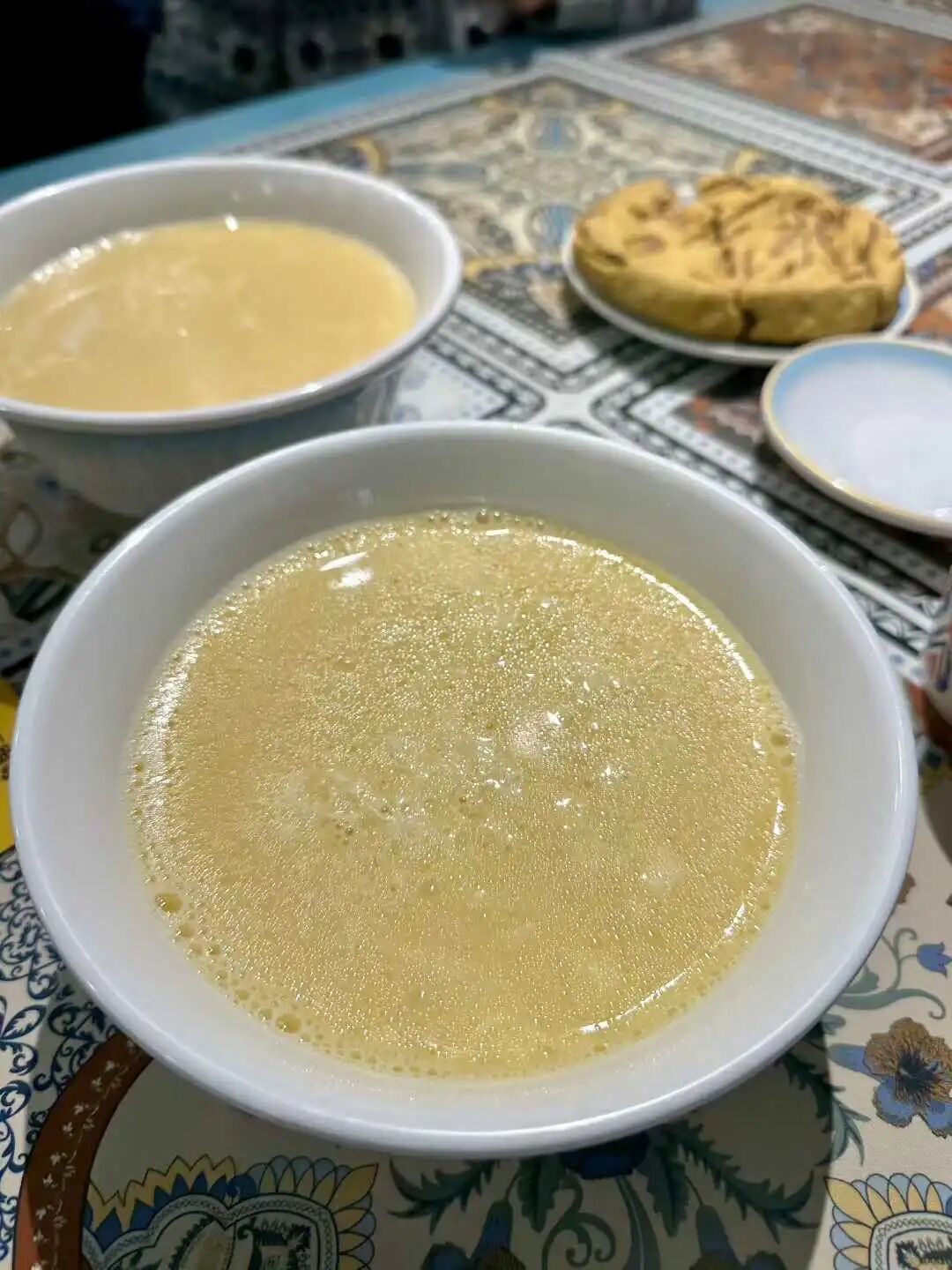
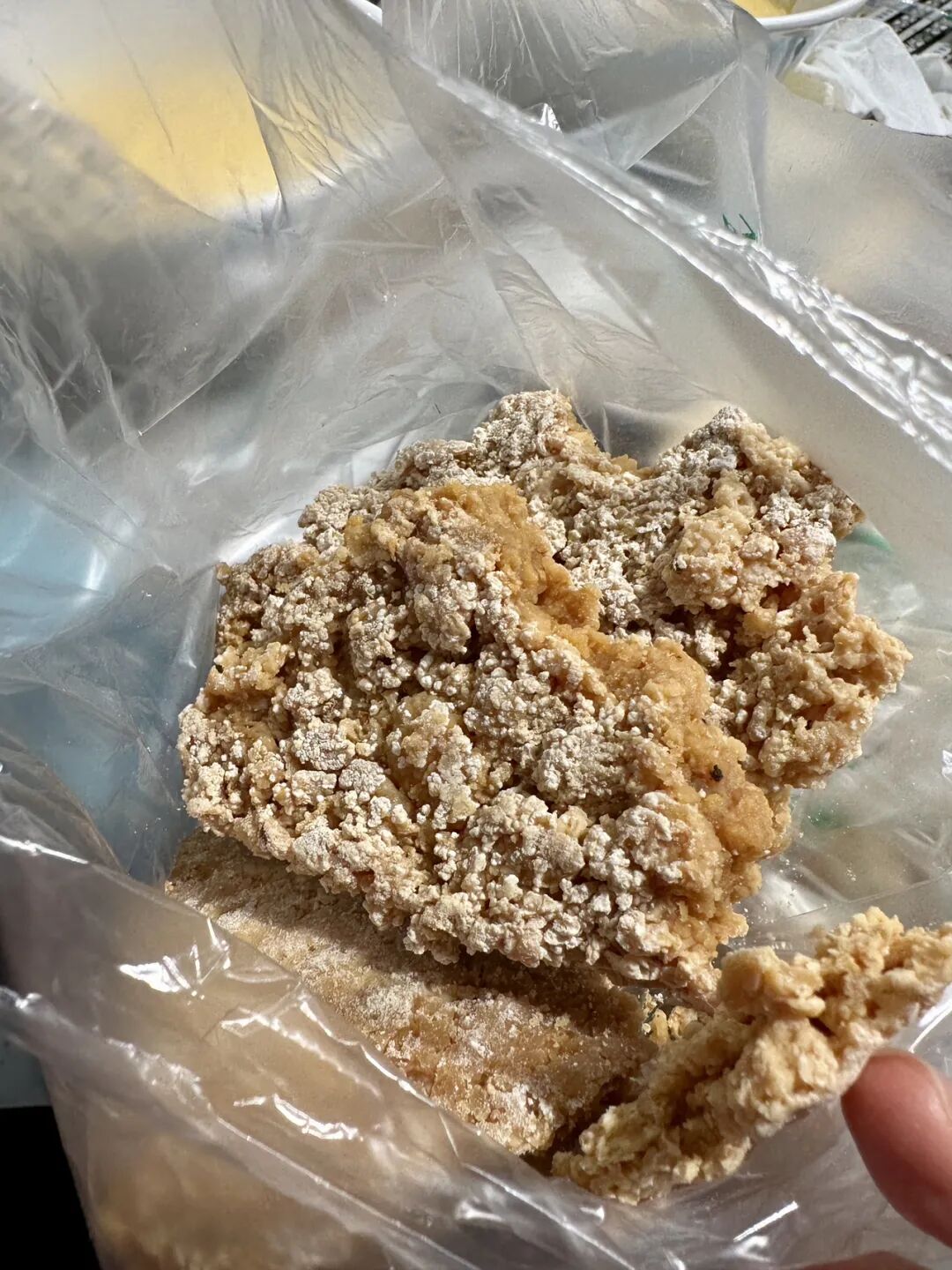
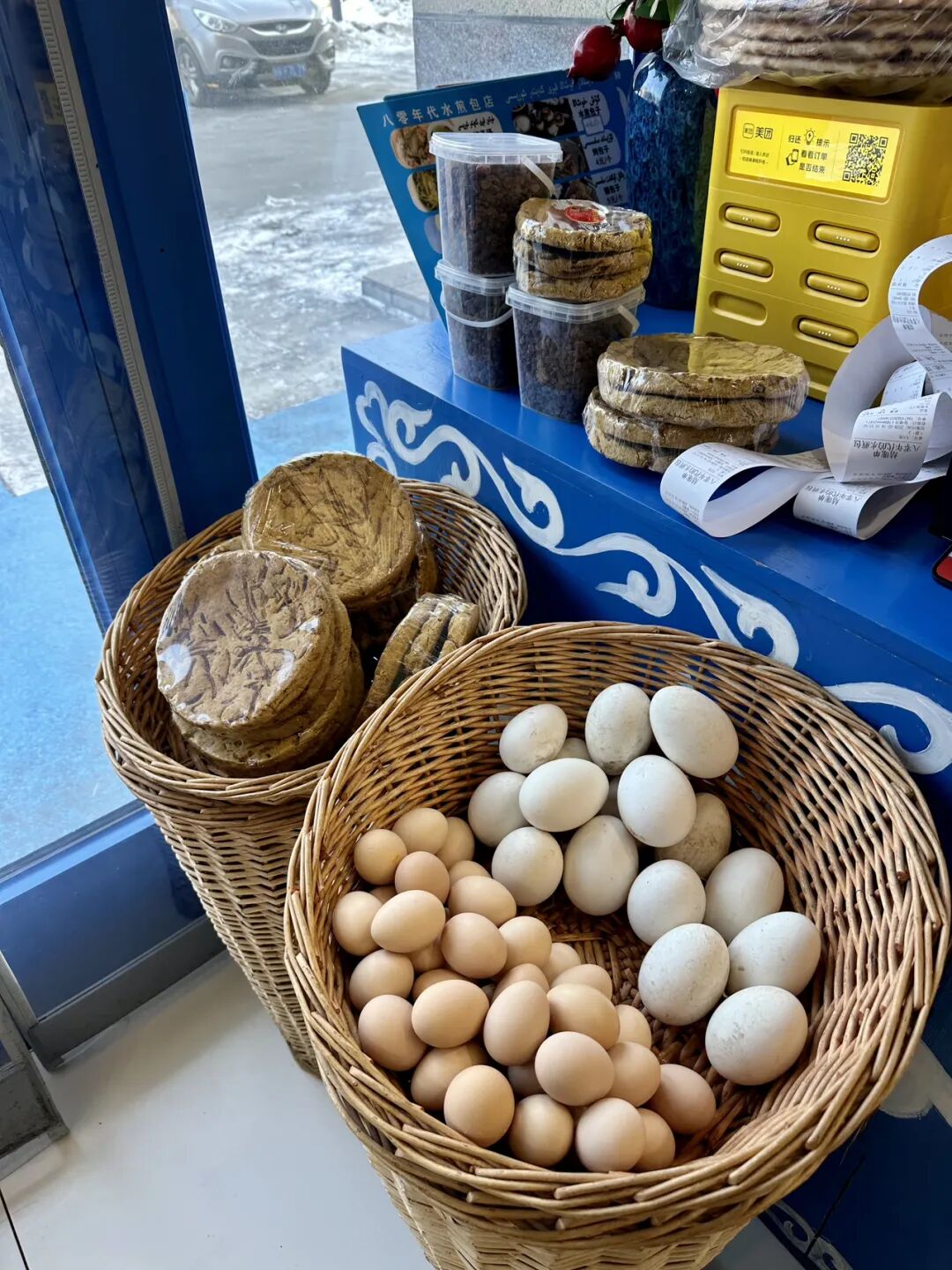
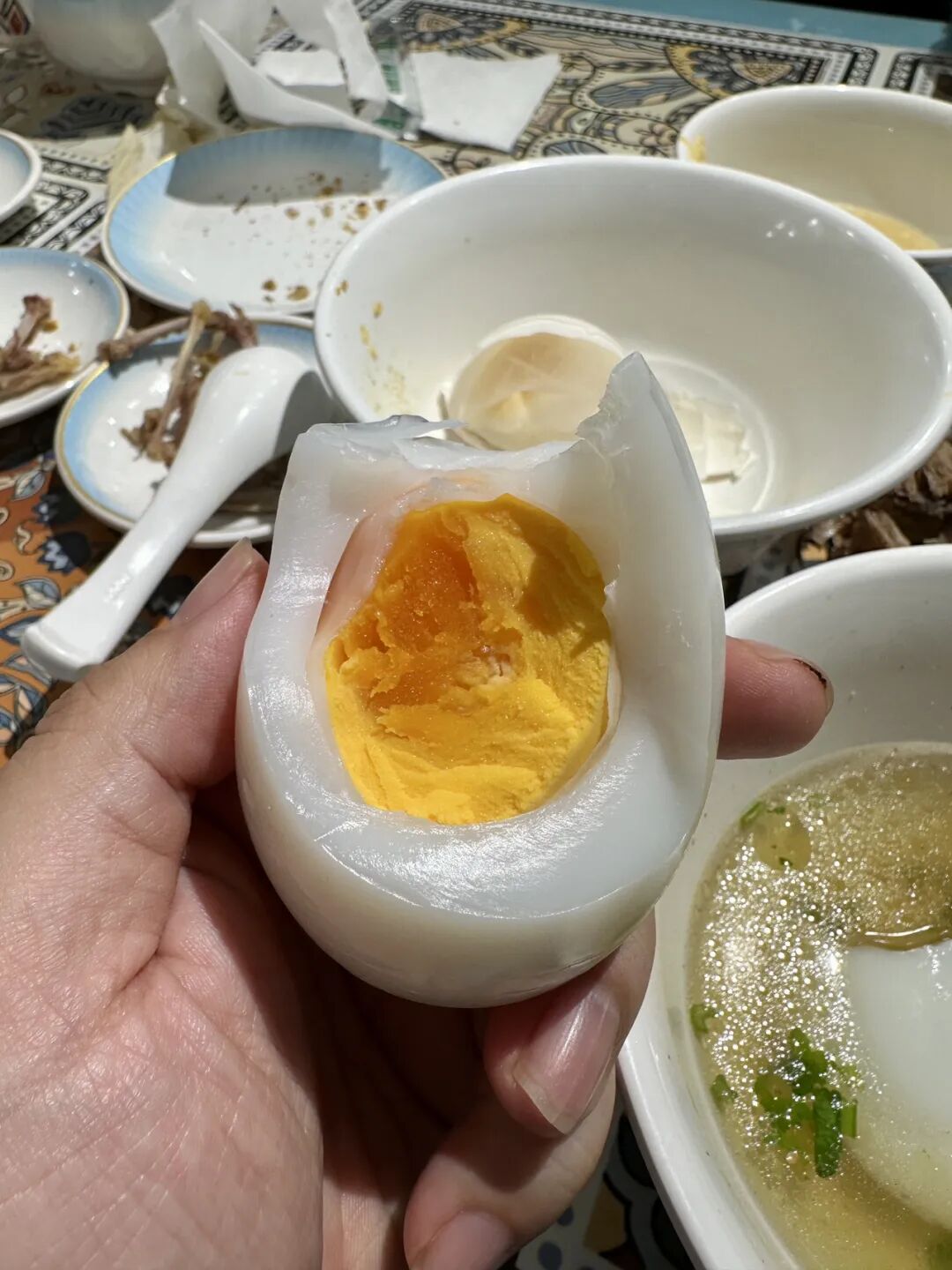
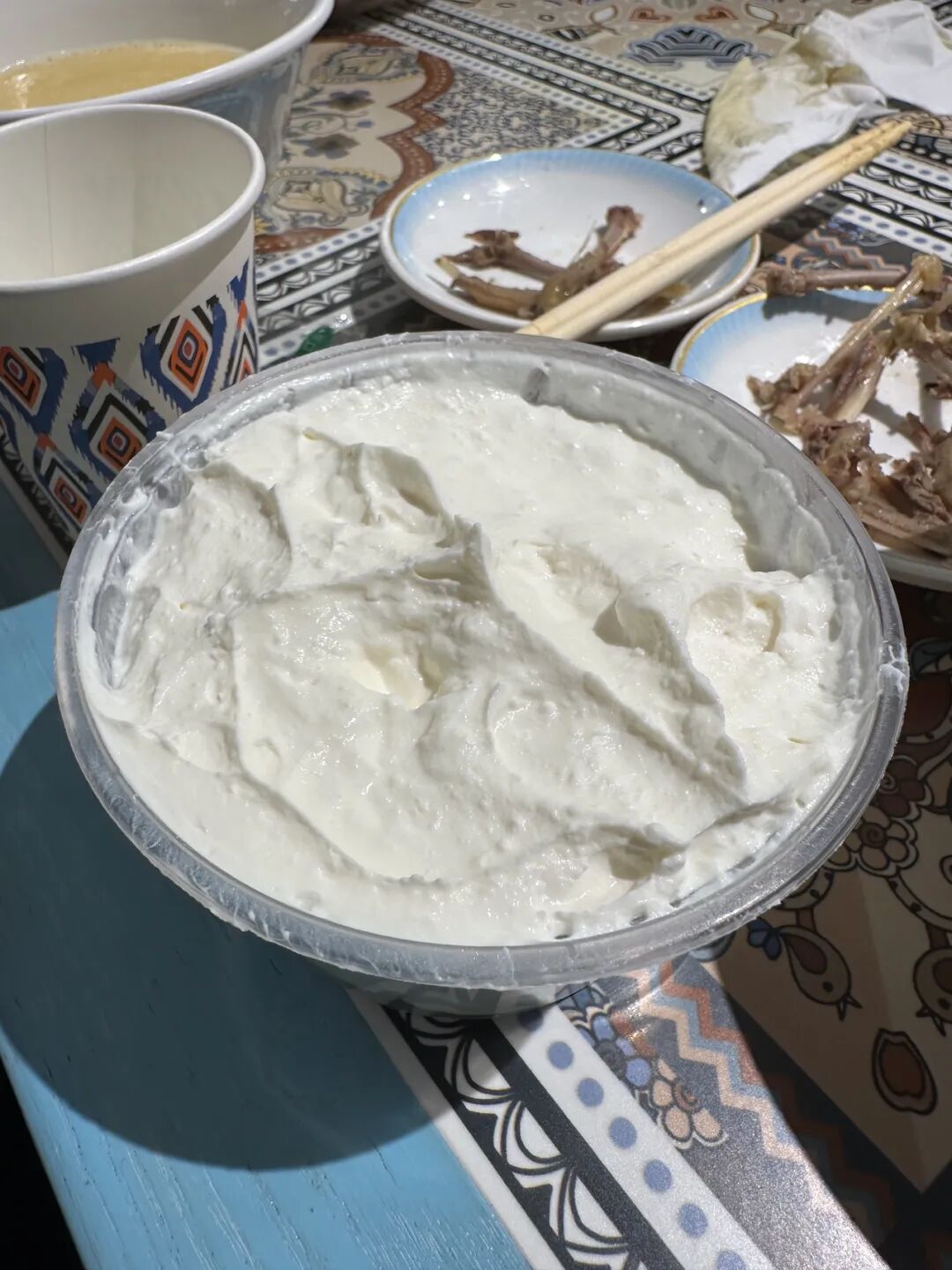
We ordered old pigeon soup, goose eggs, corn naan with milk tea, pan-fried buns, yogurt, and dried milk curds (naigeda). The old pigeon was delicious and very fragrant, though the soup was a little salty. The goose egg was large and looked crystal clear. The corn naan with milk tea is an incredible combination. The corn naan is a purely healthy food. The corn dough is filled with walnuts and topped with fried onions. It is a bit hard when dry, but it becomes soft on the outside and crispy on the inside when soaked in milk tea. Their milk tea is also very fresh. Of course, you can find fresh milk everywhere on the streets of Urumqi, so fresh milk tea is a given. They also sell various types of dried milk curds, including sheep milk, cow milk, and yogurt versions, some sour and some milder.
I had only eaten Henan-style pan-fried buns before. The biggest difference with Ili pan-fried buns is the use of a lamb and onion filling, seasoned with cumin and pepper. The dough is made with sourdough starter and fried in a flat pan just like in Henan, but it is served with salty milk tea instead of spicy soup. Ili pan-fried buns taste a bit like a leavened version of a baked bun (kaobaozi). Many people here love them and buy a lot at once.
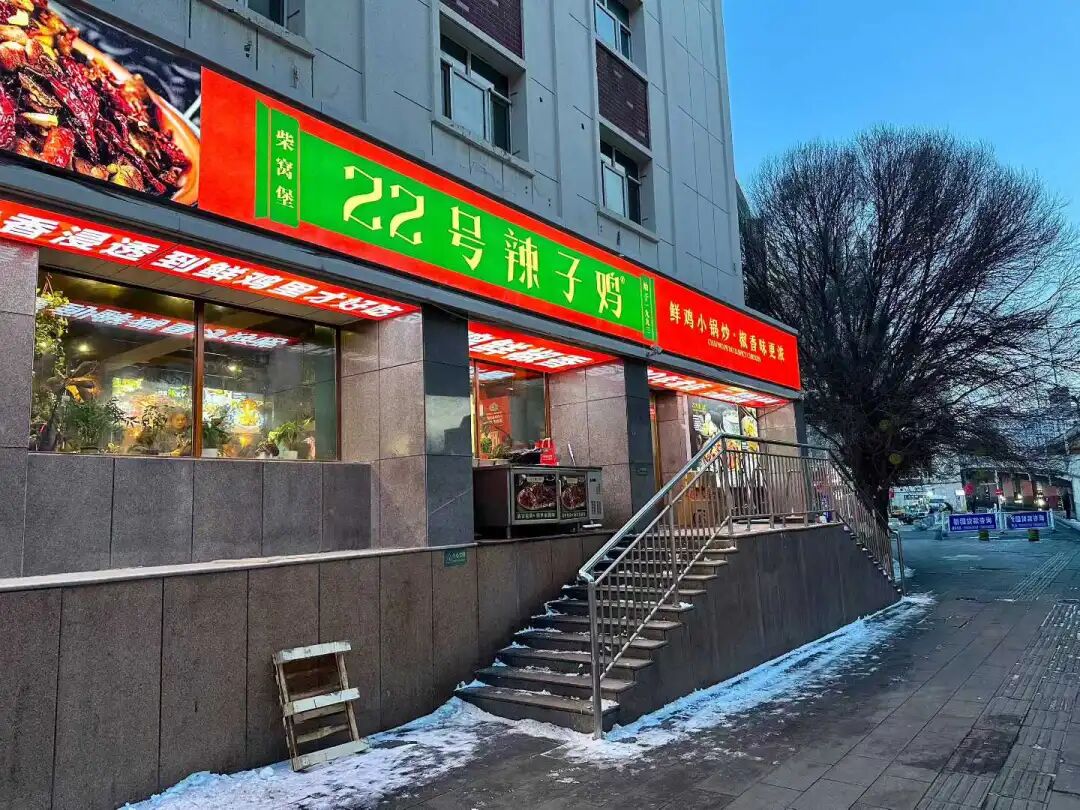
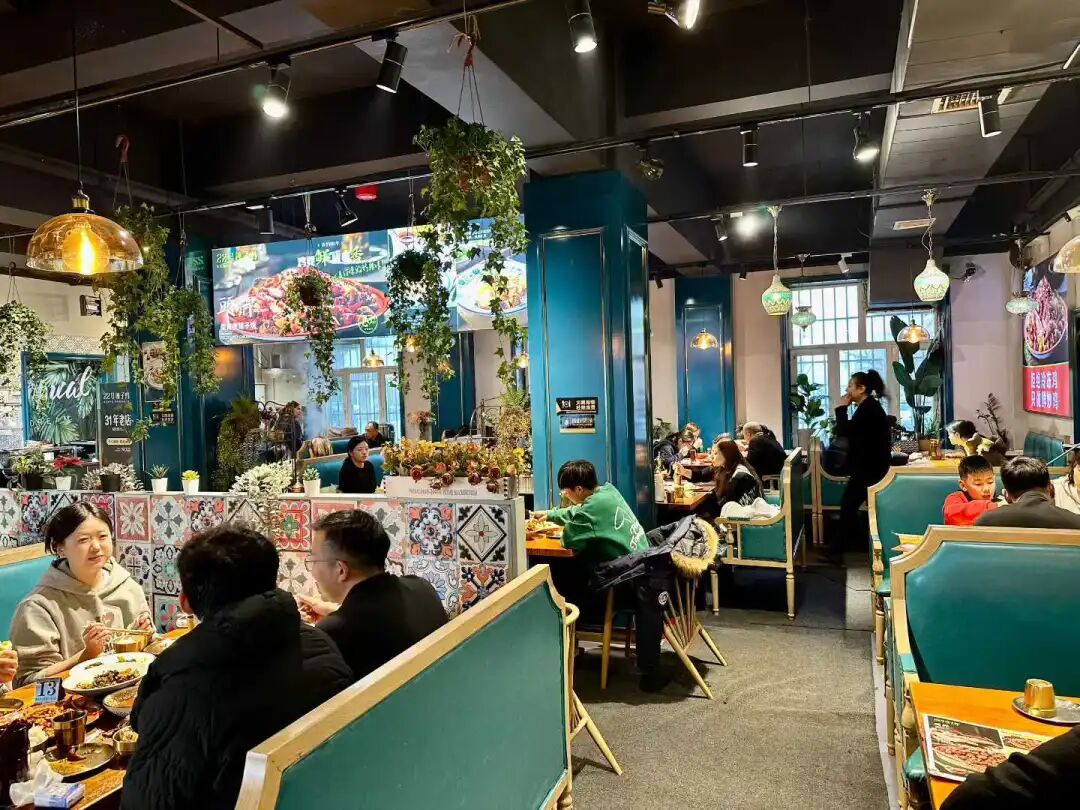
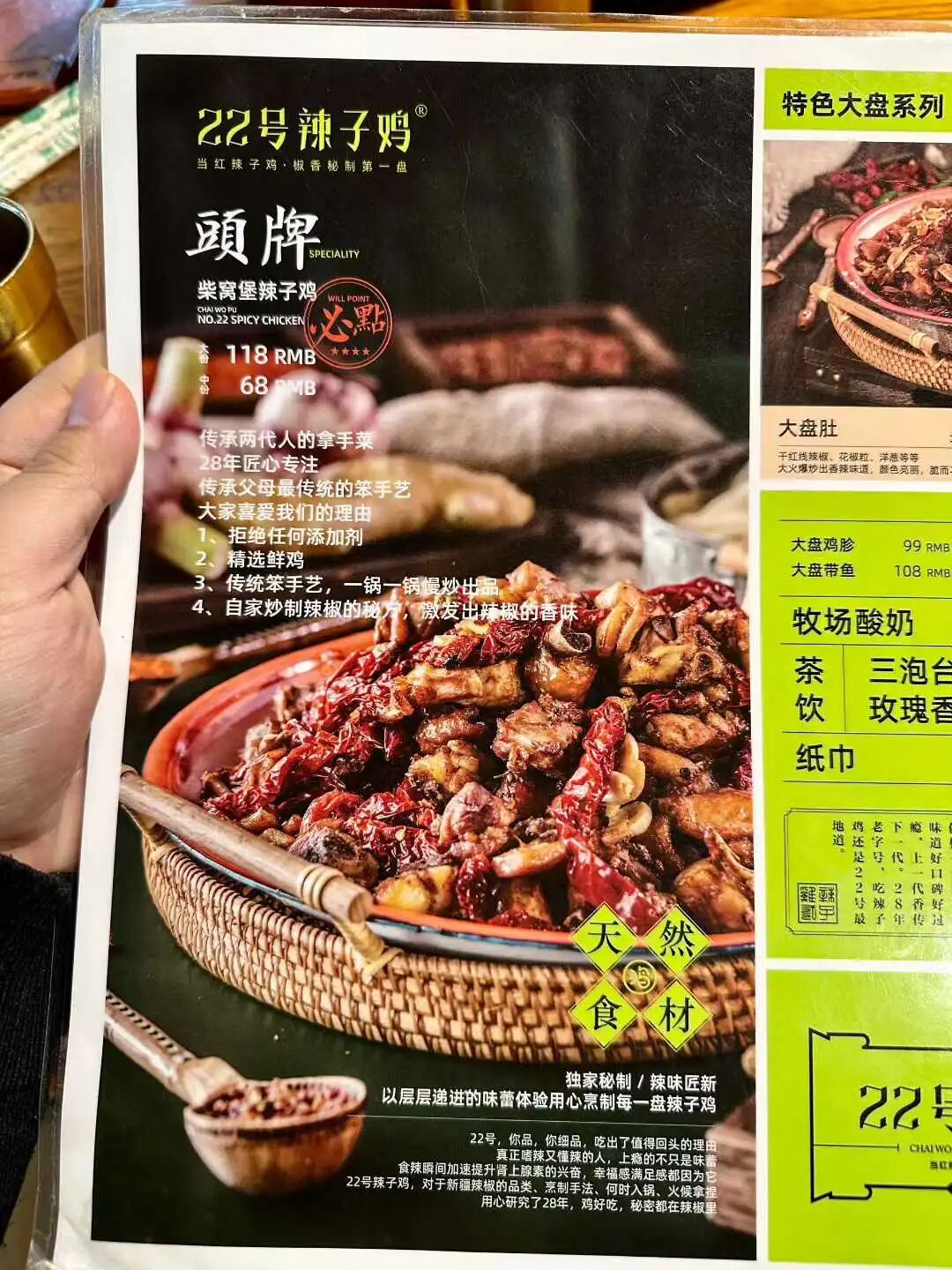
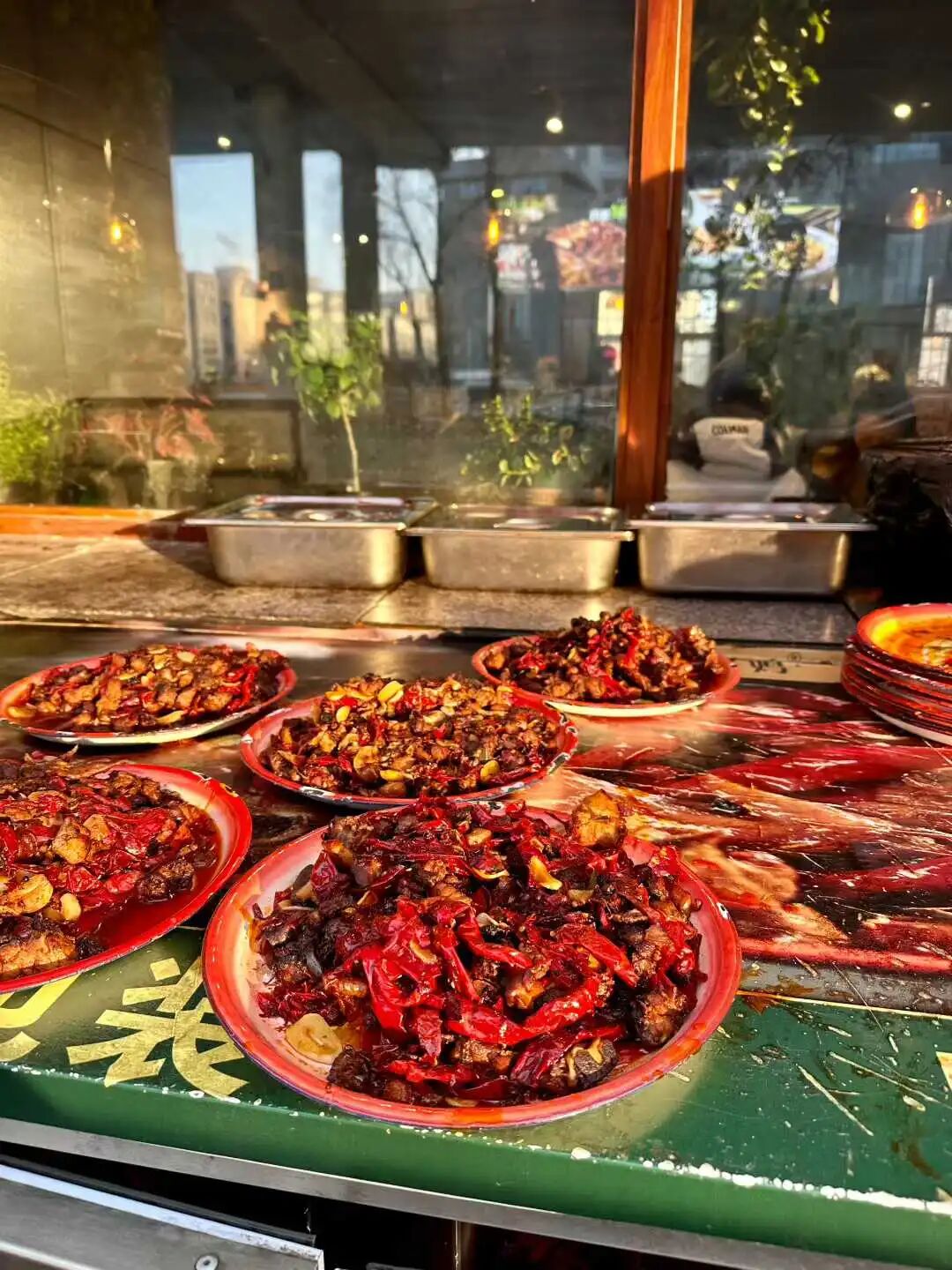
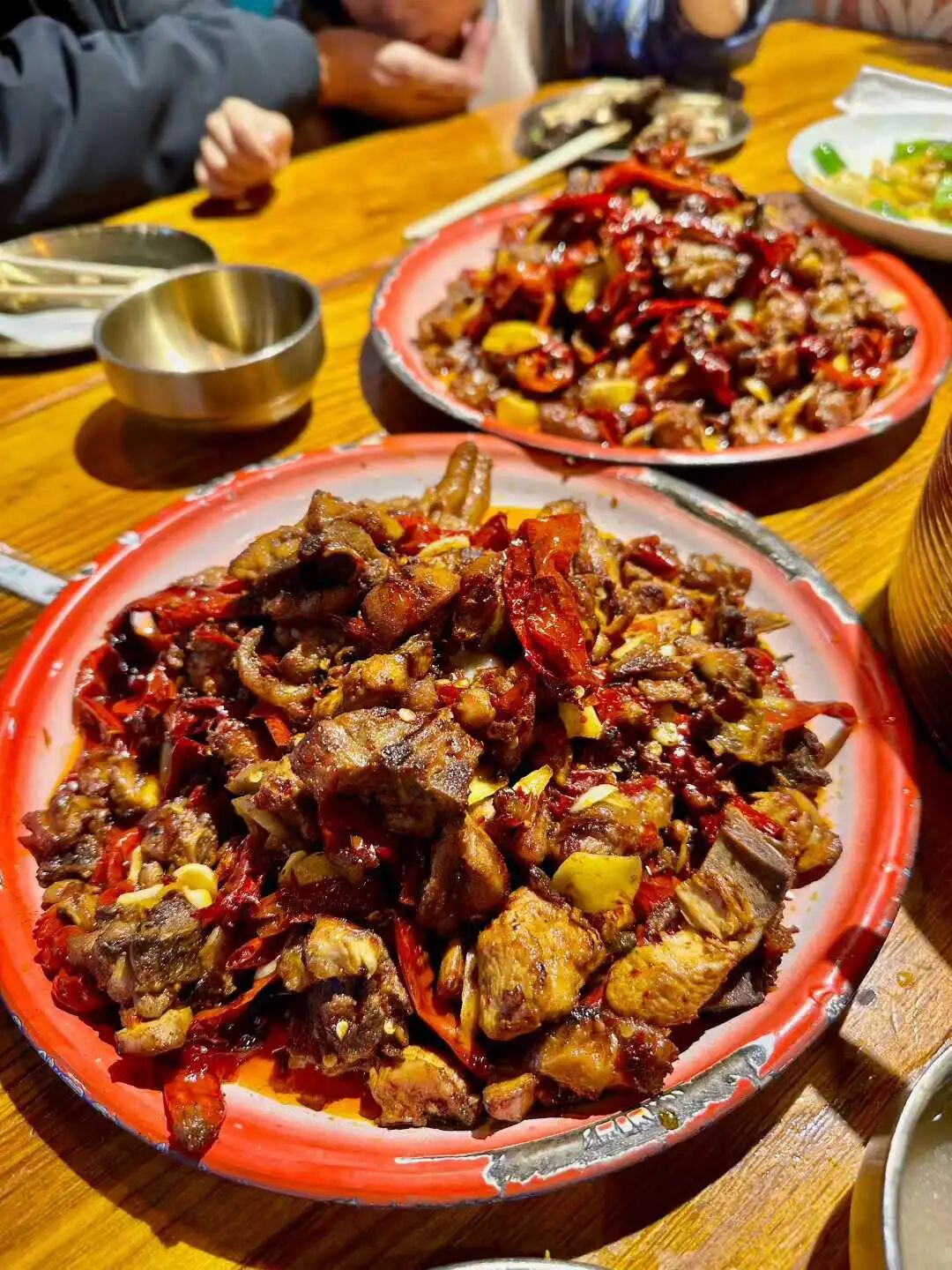
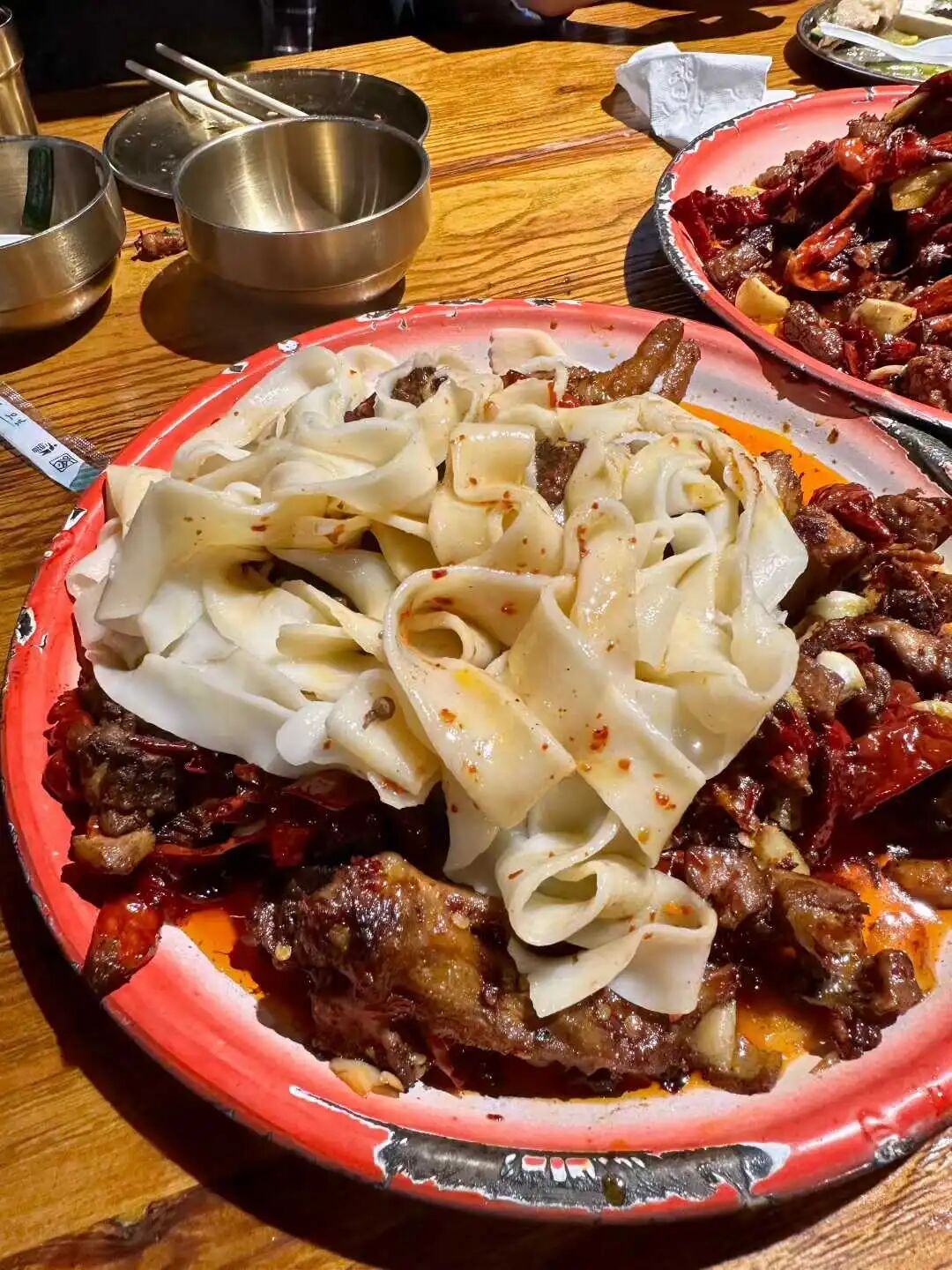
In the afternoon, while visiting relatives, we passed by the Chaiwopu No. 22 Spicy Chicken on Wuxing South Road. It is a 30-year-old shop, and it was packed with people and very lively. They serve Hui Muslim-style Xinjiang cuisine. A large portion of spicy chicken is a whole bird, and a medium portion is half. It is stir-fried to order, so it takes a while and you have to wait when it is busy, but the taste is better than Yang Le. Adding wide belt noodles (pidai mian) to it is very satisfying. Because the kids couldn't eat spicy food, we also ordered the mixed vegetable soup (dazahuai tang), which has beef meatballs, fried egg strips (jiasha), tofu, and wood ear mushrooms. The portion was large, and it was very warming in the winter. We also ordered stir-fried chestnut squash (banligua). The salty, fragrant, stir-fried squash was soft, waxy, and sweet. It was my first time eating it prepared this way, and it was quite good. The place is always too crowded and the service is just average, but the food is truly excellent. You cannot find this kind of spicy chicken (lazi ji) in Beijing.
In the evening, we went to the cute Xinjiang Silk Road Feast (Silu Yan) at Shengda Plaza near the high-speed railway station. It is great for family gatherings. They have song and dance performances at night, and the menu is a fusion of many different things.
February 15
In the morning, I took Suleiman to the top of Yaomo Mountain in Urumqi. It was his first time climbing a snow-covered mountain. We entered through the southeast gate. The path up to Yunmantai is quite gentle and the shortest route, so both the elderly and children can climb it. We took a dirt path going up and the paved road coming down. The scenery on both sides was different, and we even saw a pheasant on the way down.
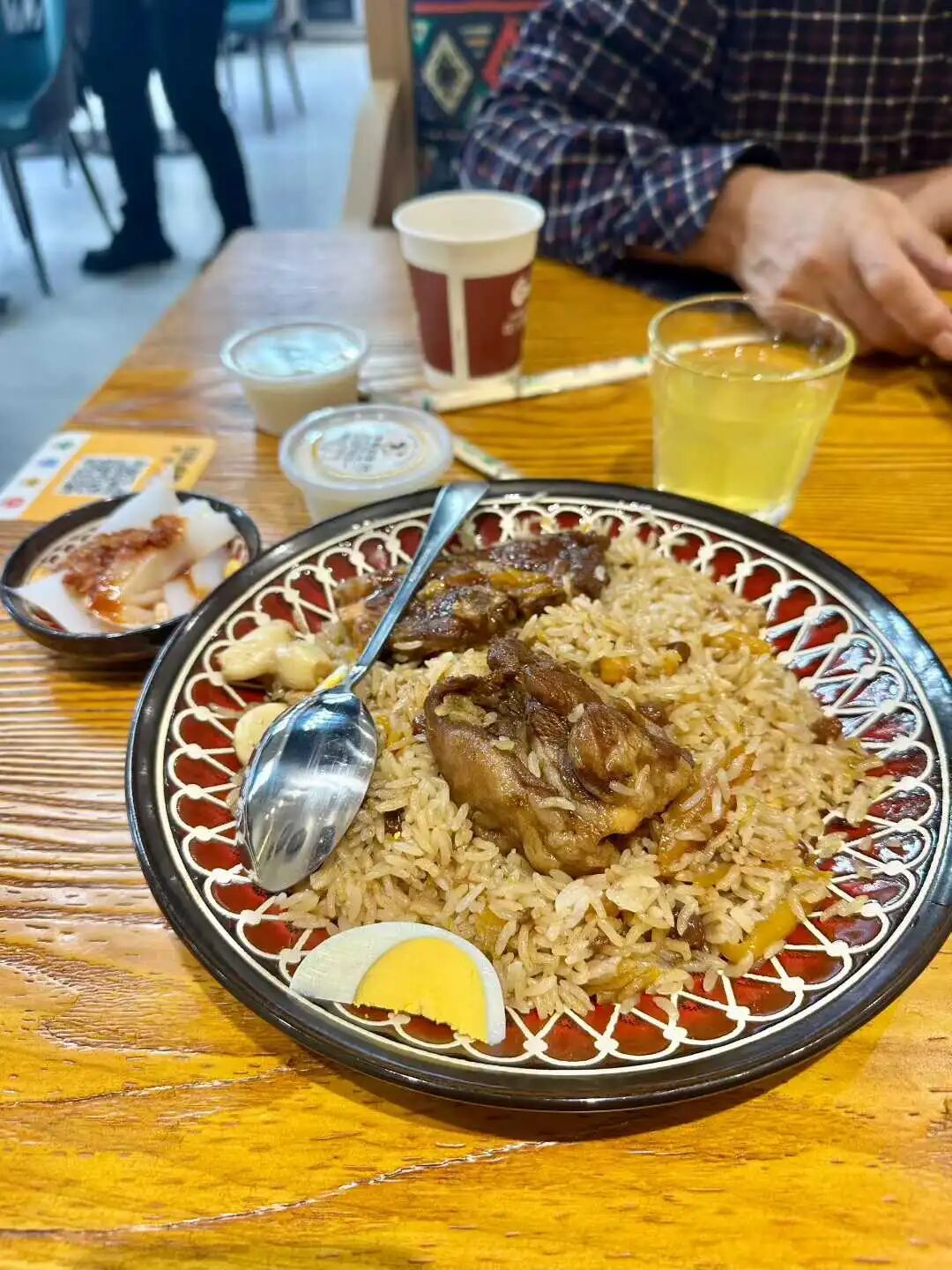
Another restaurant on Zhujiang Road, Hotan Flower Black Pilaf (Heizhuafan), is also very unique. It was my first time eating black pilaf in Urumqi. They only sell it at noon. We asked at 10 a.m. and 6 p.m. and it was sold out both times. We finally got to eat it when we went after 4 p.m.
Black pilaf is made by frying onions (piyazi) until they are completely charred and caramelized, rather than frying them to a light golden color like regular pilaf. They also add whole garlic cloves for flavor. Black pilaf has a richer flavor than white pilaf. I had it before in Tashkent and loved it, so I was happy to eat it again this time. You can actually find black pilaf in Southern Xinjiang, Uzbekistan, and Tajikistan, but it is rare in Northern Xinjiang. My relatives said an elderly Uzbek man used to sell black pilaf on Zhujiang Road, but we don't know if he is still there.
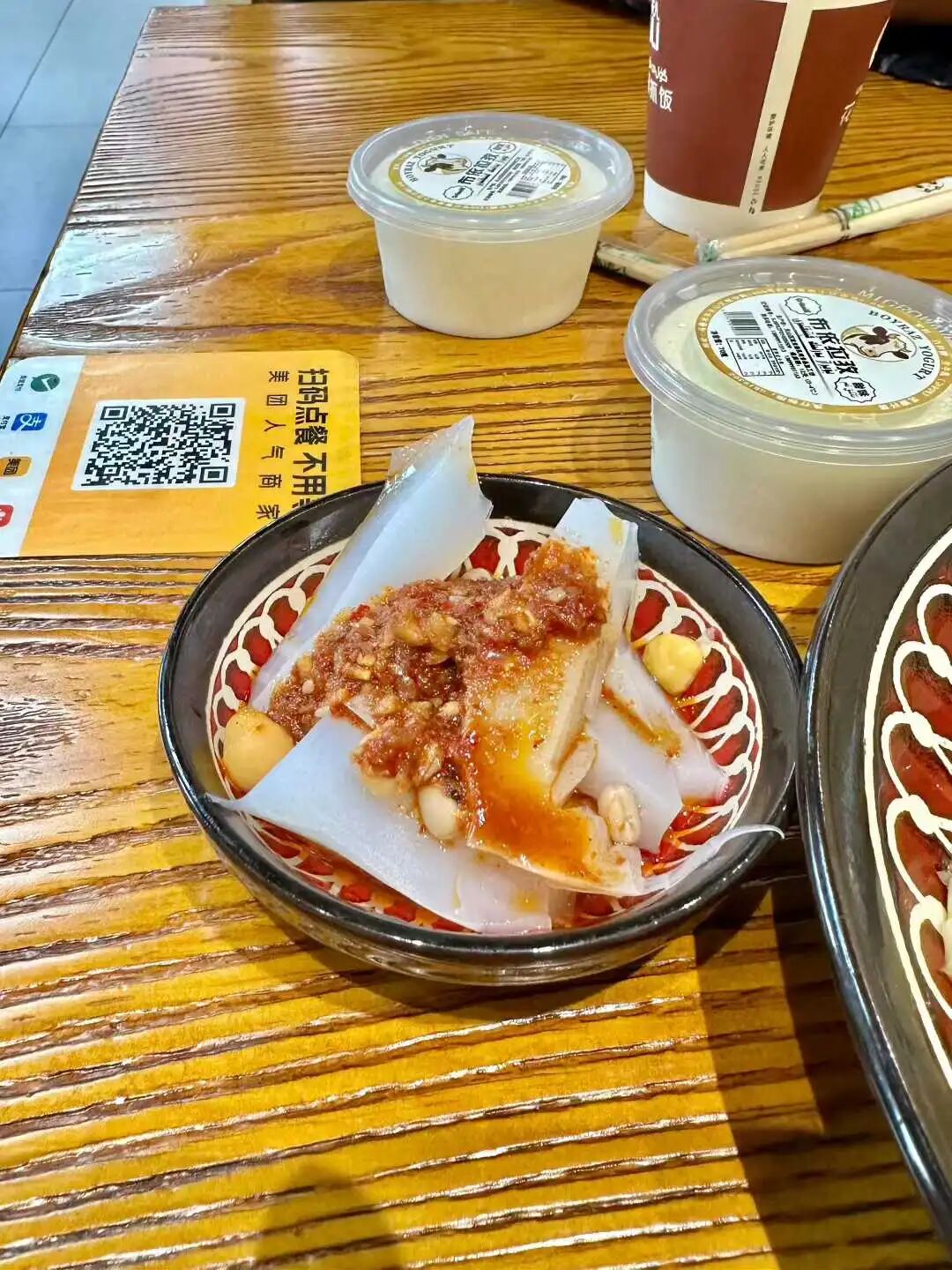
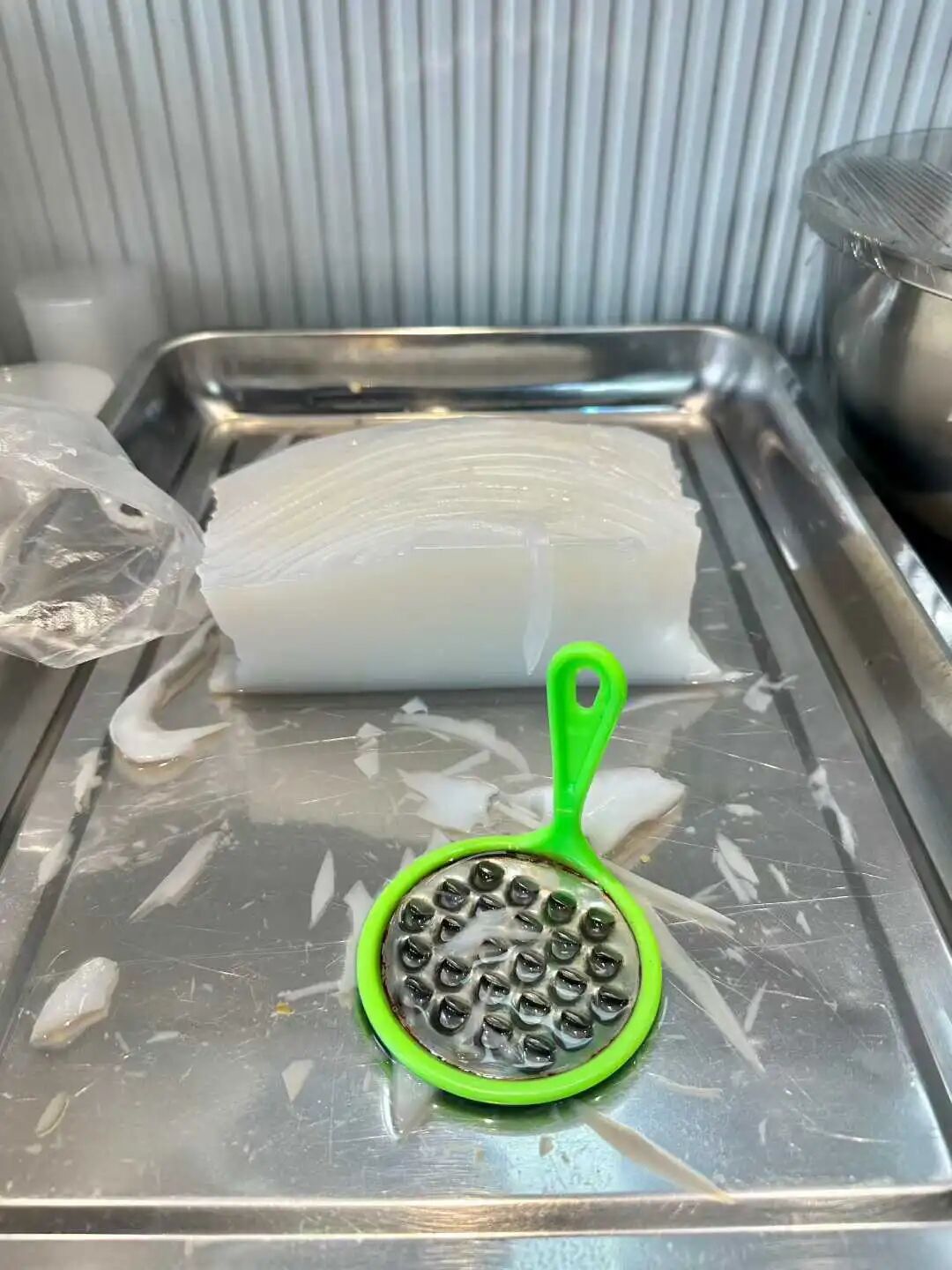
Their black pilaf comes with lemonade, yogurt, and mung bean jelly (liangfen). The spicy vinegar in the jelly adds a great kick. The waiter will come over and ask if you want more rice.
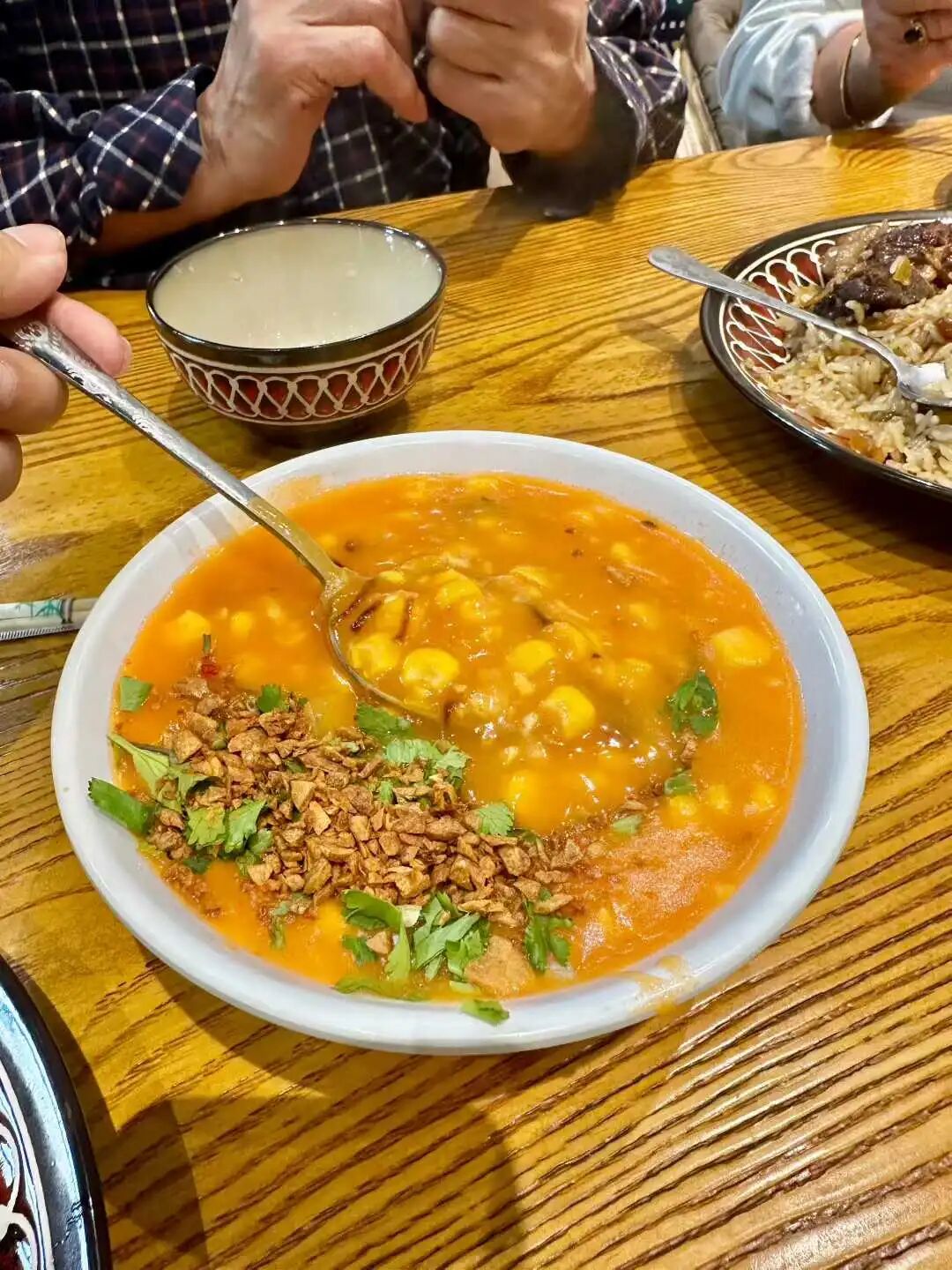
We also ordered the Hotan-style corn porridge. Hotan corn porridge is called 'umash' in the Uyghur language. To make it, you stir-fry onions in lamb fat, add diced lamb, then pour in lamb broth and bring it to a boil. You also add fresh corn kernels. It is completely different from the clear corn porridge in inland China. It is salty, rich, and full of ingredients, making it very warming in autumn and winter.
There are some new Uyghur restaurants on Zhujiang Road. I want to try this Hotan noodle soup next time.
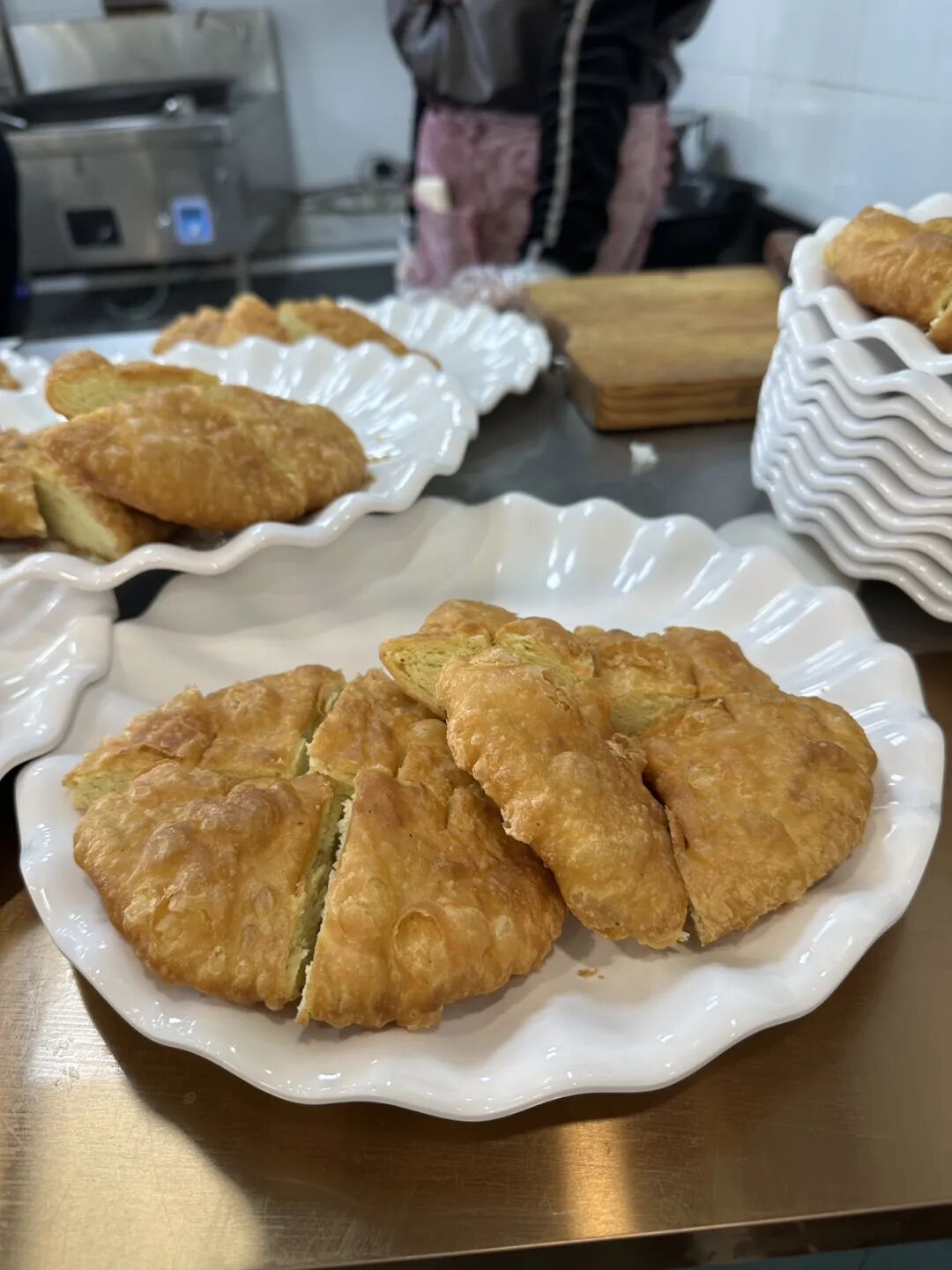
In the evening, we had a meal at a relative's house, eating meatball soup and slow-cooked beef bone marrow. The homemade meatballs have lots of meat and very little starch; you really can't find this taste in restaurants. The beef bone marrow was stewed until soft and flavorful, so even the elderly could eat it easily. Steamed oil bread (youxiang) is a specialty of Xinjiang Hui Muslims. It is not deep-fried, making it healthier. It is fluffy in layers and carries the unique aroma of vegetable oil and fragrant clover (xiangdouzi).
February 16
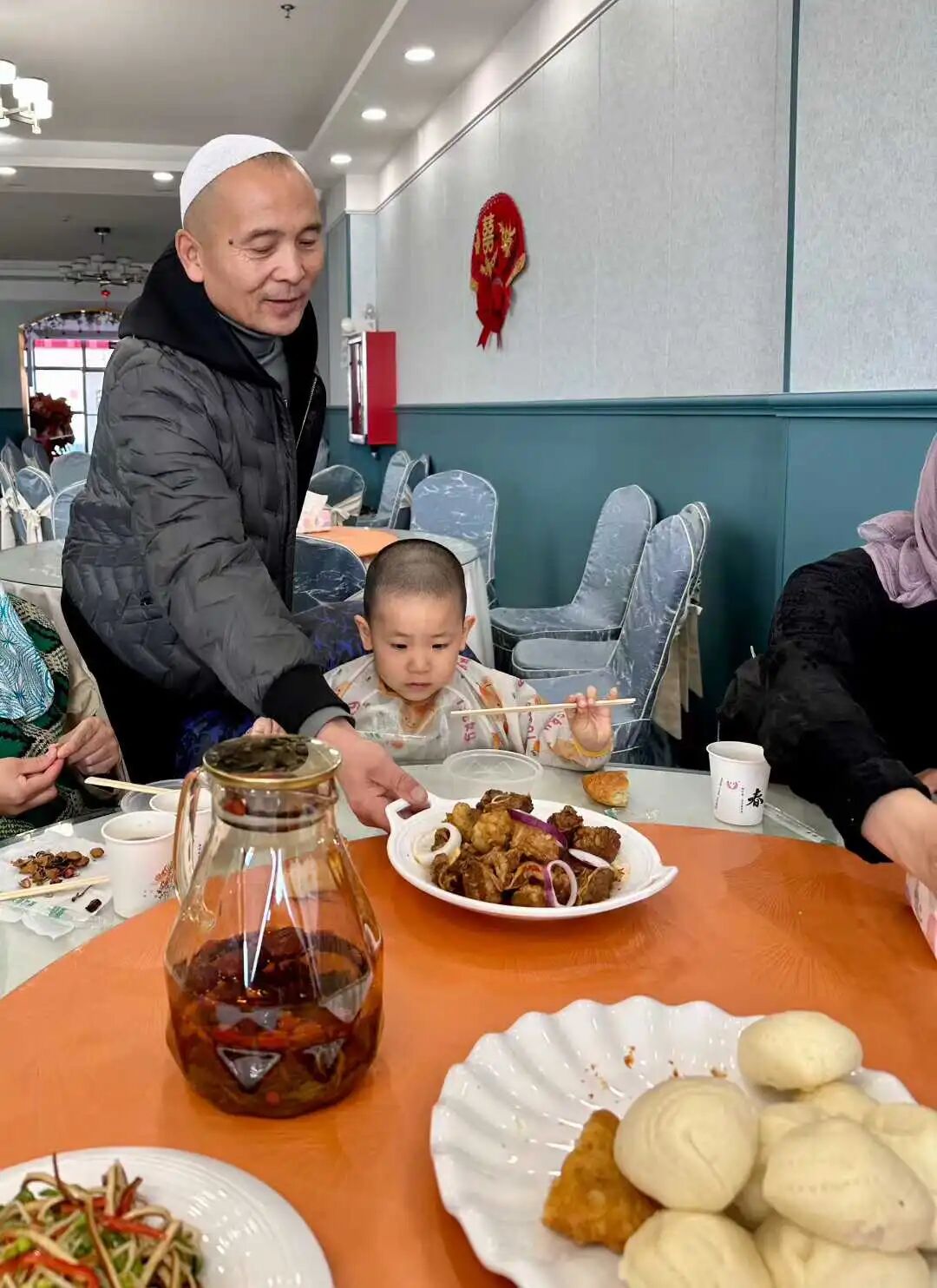
In the morning, we attended a meal at the Huashenglou Banquet Hall, located across from the Changsheng Brigade Mosque in the southern suburbs of Urumqi. This land originally belonged to my wife's relatives, but later it was rented to a friend (dost) from Midong to open a restaurant. Whenever the family hosts a banquet, they replace the kitchen staff with relatives to cook and serve their friends and family themselves.
Changsheng is located at the southern foot of Yamalike Mountain. Under the Qing Dynasty's policy of settling soldiers to farm the border and the migration waves during the Republic of China, Hui Muslims from Shaanxi, Ningxia, and Gansu arrived here to clear wasteland and farm, gradually forming a village. After the founding of New China, these Hui Muslim farming households were organized into the Changsheng Brigade, creating a stable Hui Muslim community. Compared to Hui Muslims living scattered in the city, the people here have kept more traditional customs, and their banquets are much larger.
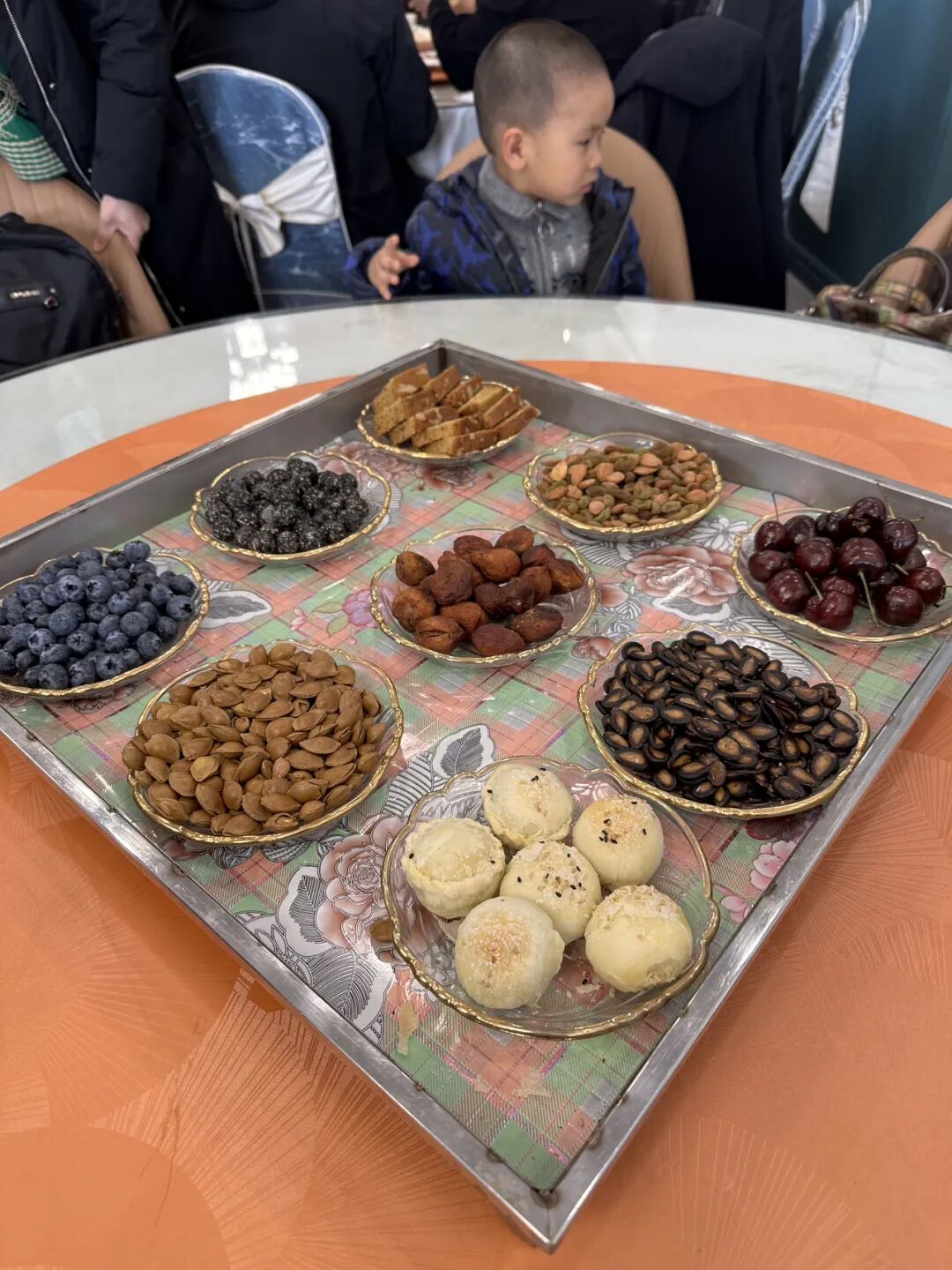
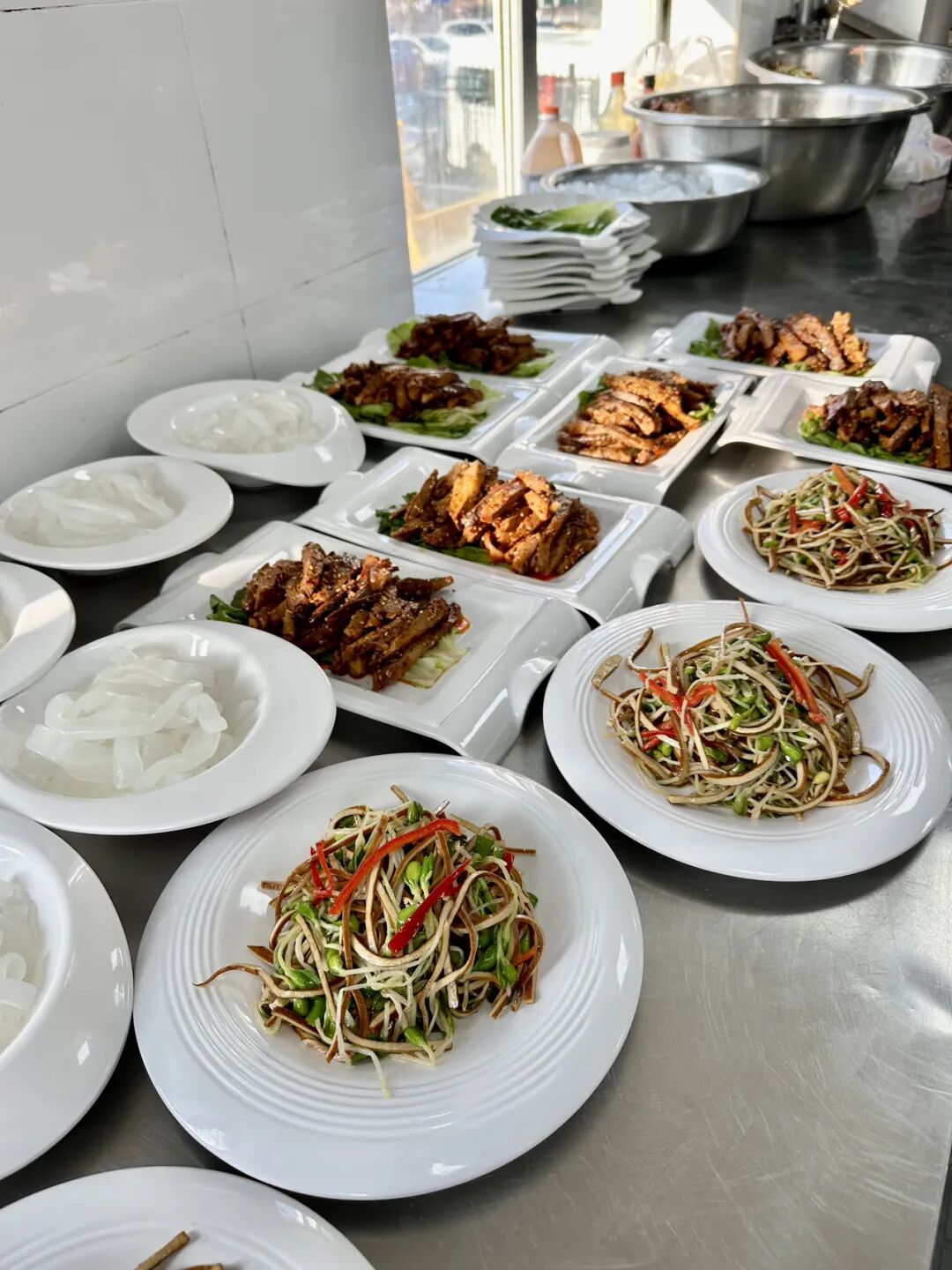
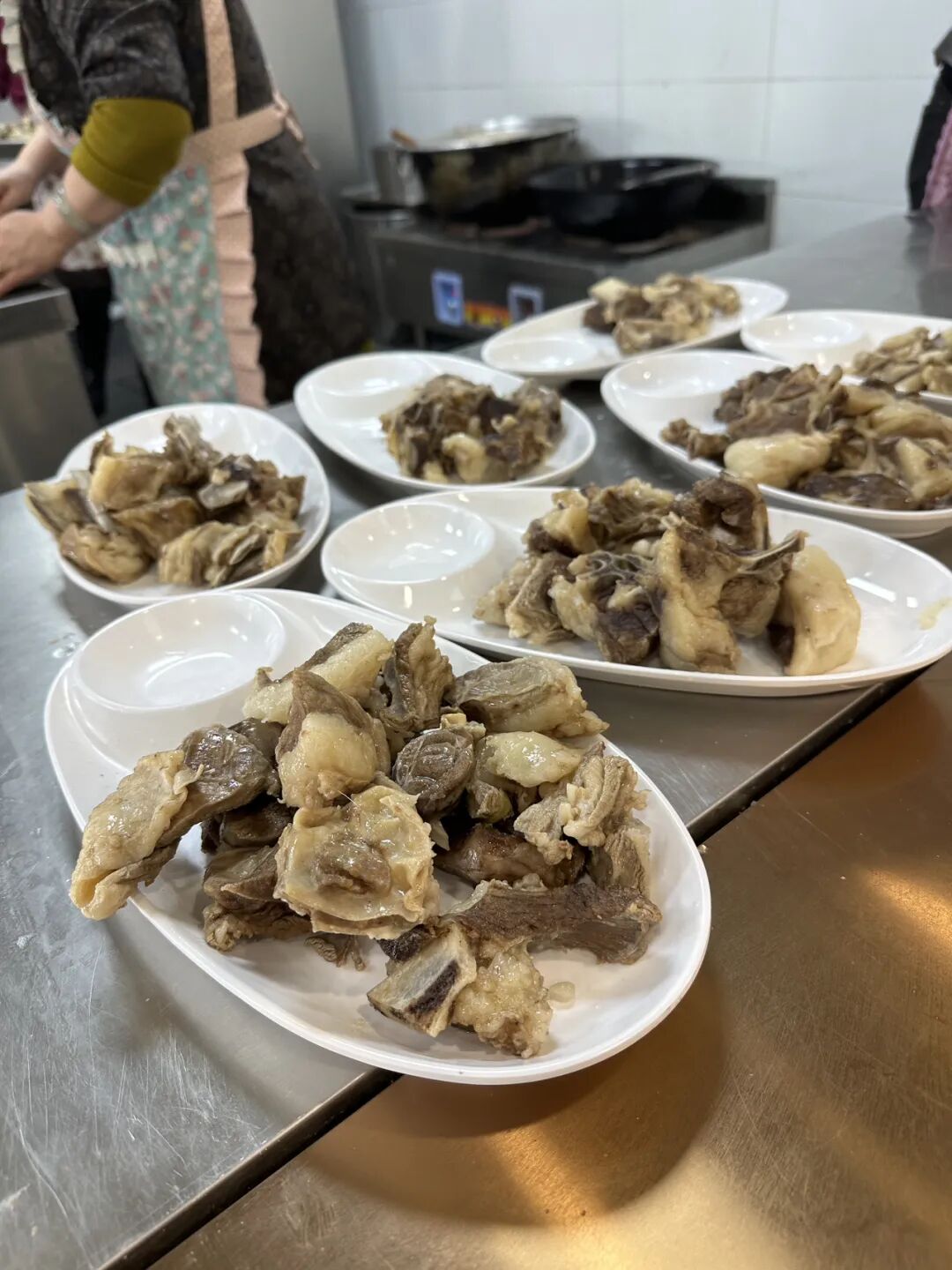
Following the order, nine small plates are served first while waiting for the main dishes, so people can drink tea and chat. The small plates contain things like dried fruits, snacks, and candied fruit. Then the small plates are cleared away and cold dishes are served, such as spiced dried tofu (xianggan), mung bean jelly (liangfen), and cold-tossed beef. Next come the stir-fried and stewed dishes, including clear-stewed lamb, braised beef steak, braised eggplant, pickled cabbage with lamb, fried hairtail fish, oil-seared meat (guoyourou), sauced meat-stuffed egg slices (jiashajiasha), stir-fried chives, and braised meatballs. These are all very traditional and have the true taste of a family banquet. Finally, they serve a sweet plate, also called eight-treasure rice (babaofan), which is very satisfying when drizzled with syrup.
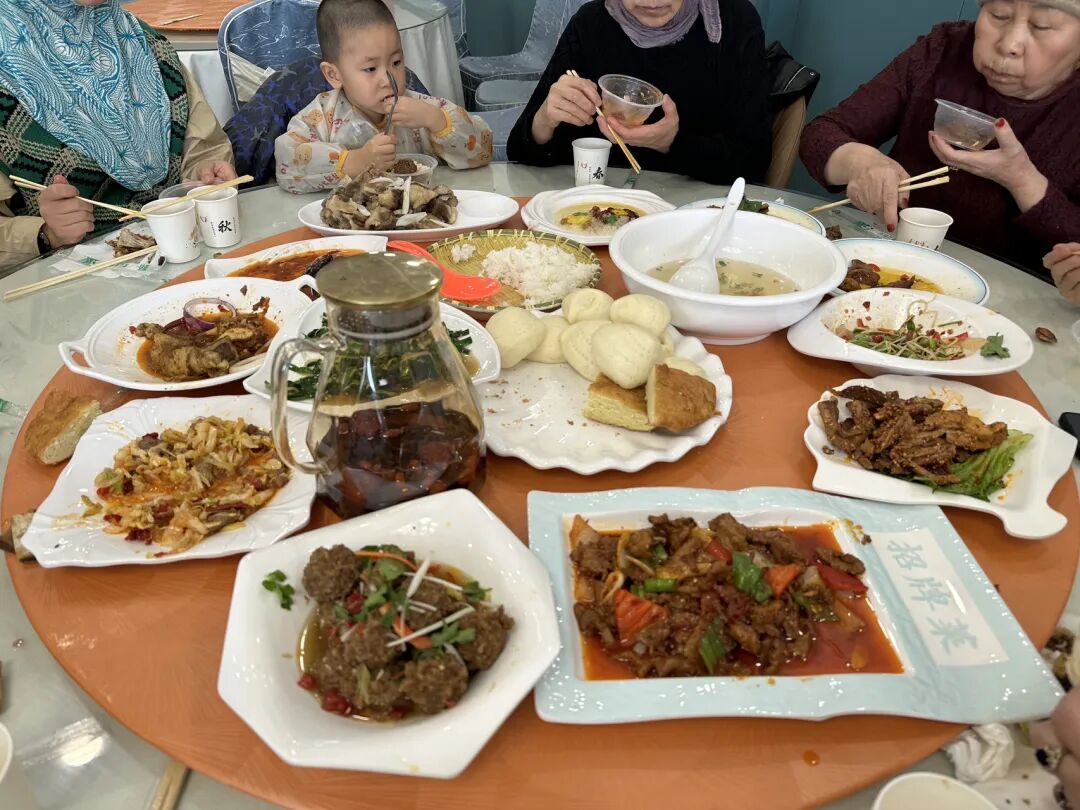
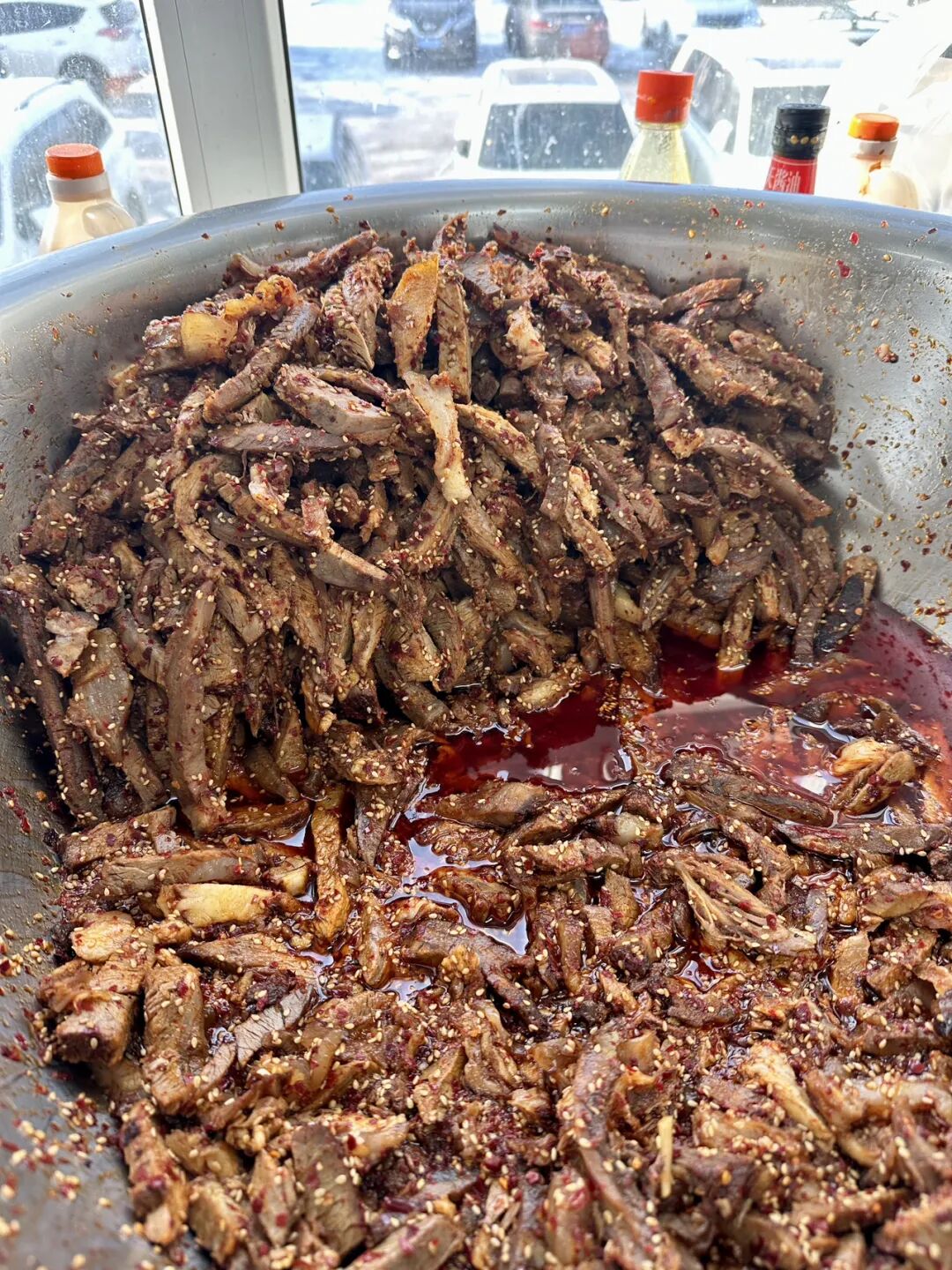
At noon, we had a gathering at Ma Laosan Huixiangge Restaurant in the Sangong area of Urumqi. The restaurant is near the northern edge of the city and specializes in Xinjiang Hui Muslim banquet dishes.
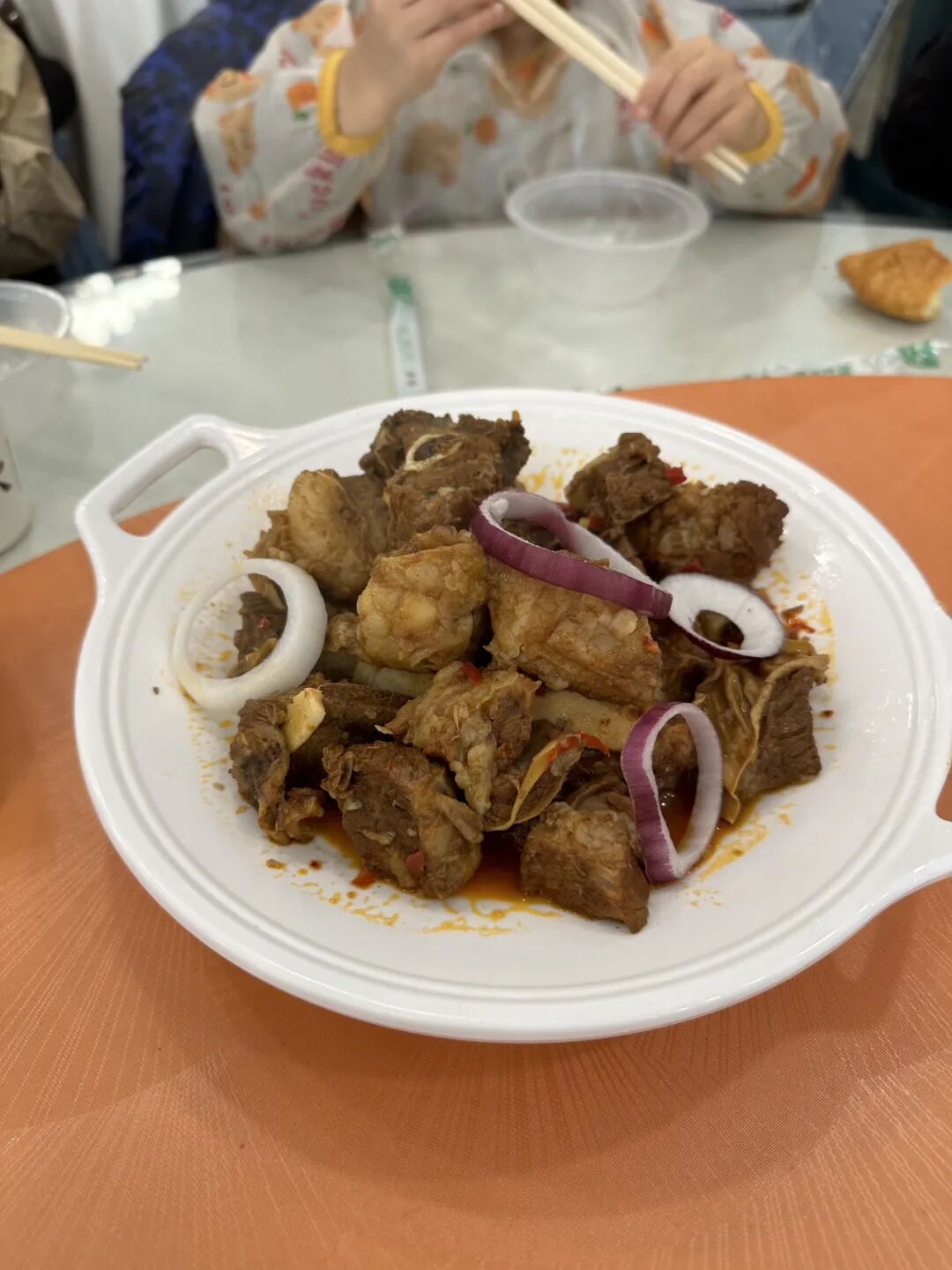
We ate the nine-bowl three-row banquet (jiuwan sanxingzi), which included sauced meat-stuffed egg slices, braised fish chunks, pearl meatballs, braised beef steak, sweet plate, yellow-braised beef, braised meatballs, spicy chicken chunks, and sauced jelly (menzi). The nine-bowl three-row banquet comes in large and small sizes. Ordering a small portion along with a few other dishes is just right. We had light dishes like shrimp with snow peas and wontons, as well as bold-flavored dishes like peppercorn fish and peppercorn chicken. The restaurant also gave us complimentary chive and meat dumplings. view all
Summary: This Urumqi Sha'ban account begins on February 12, 2026, before Ramadan, and covers family meals, Jumu'ah at Shaanxi Grand Mosque, Beiliang Mosque history, and local Hui Muslim food. It keeps the source's dates, mosque history, dishes, religious gatherings, and photographs.
I flew from Beijing to Urumqi for the Spring Festival holiday on February 12, 2026. With a few days left before Ramadan, I attended some religious gatherings (ermei) and sat for several meals. I am sharing my experiences here.
February 13.
I spent the morning at home reciting prayers (nianye). We had braised beef steak, clear-stewed lamb, and braised fish. The fried dough (youxiang) had been prepared the day before.
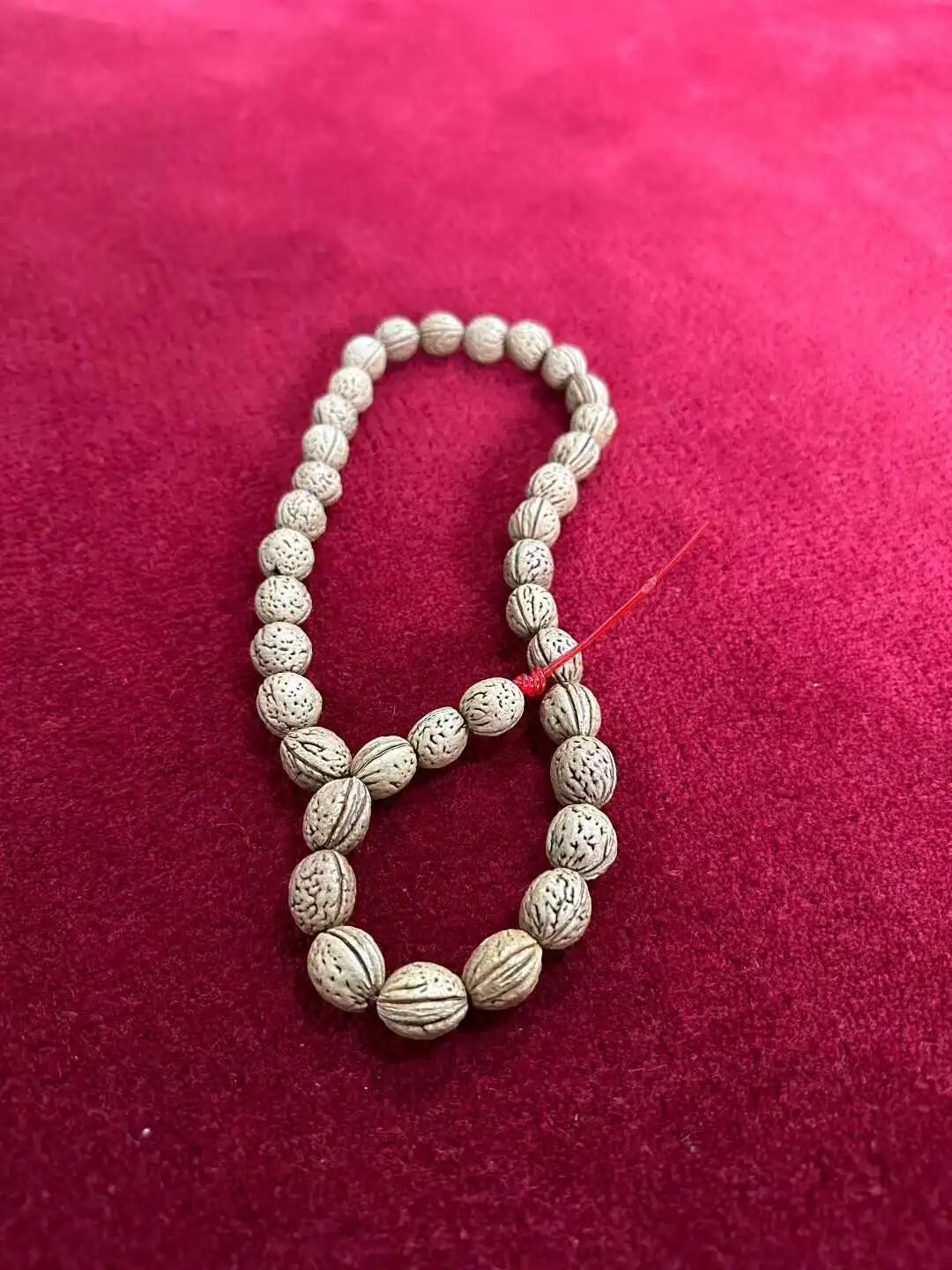
At noon, I went to the Shaanxi Grand Mosque in Urumqi for Friday prayers (Jumu'ah). This was the last Friday prayer before Ramadan. It was very crowded, and the main hall was almost full.
The restaurants behind the Shaanxi Grand Mosque are all delicious. I wrote about them in my previous article, '2025 Urumqi Hui Muslim Street Tour'.
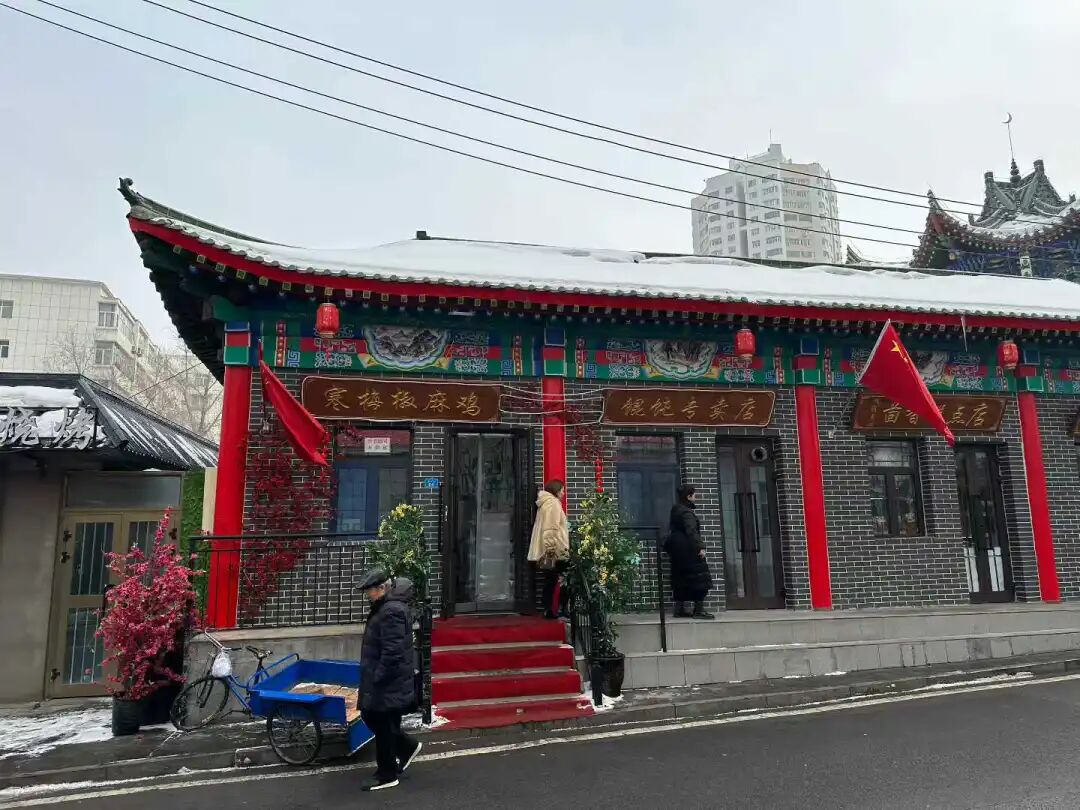
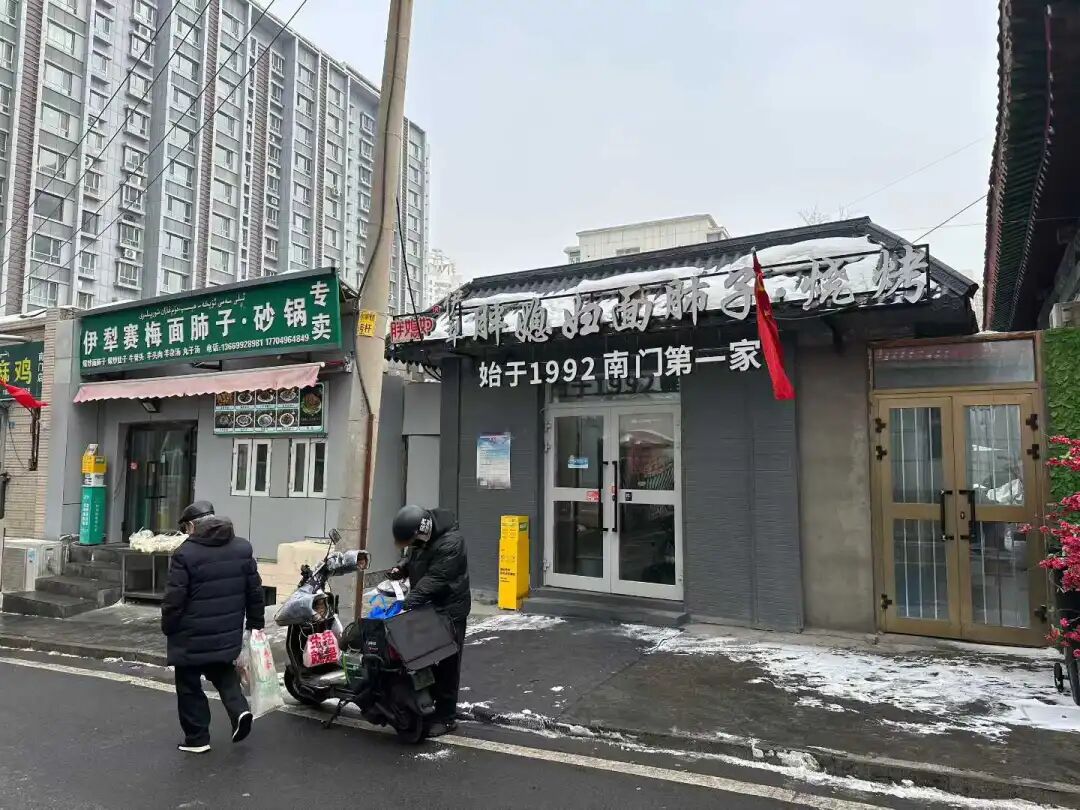
I only learned last year that the main hall of Urumqi's first mosque, Beiliang Mosque, still exists. It is now open to the public as the Wenchang Pavilion. After Friday prayers at the Shaanxi Grand Mosque, I took the subway one stop from South Gate to North Gate to visit it.
After the Qing Dynasty built Dihua City in Urumqi in 1758, it promoted policies to station troops and settle immigrants for border defense. Since then, Hui Muslims from the northwest moved there to settle. In 1780, they built Beiliang Mosque on a small hill inside the North Gate of Dihua City, making it the first mosque in Urumqi.
The first imam of Beiliang Mosque was an elder from the Weijiapu area, who belonged to the Salar people from Xunhua. When the elder from Weijiapu was young, he studied at the Jiezi Gongbei and the Grand Mosque in Xunhua. In 1763, he left to seek enlightenment during the Hehuang menhuan conflicts. He traveled through Linxia, Lanzhou, and Wuwei, eventually reaching Hami and Turpan to teach. In 1780, he was officially invited to Beiliang Mosque as its first imam.
In the mid-18th century, Yihewan Gali, a disciple of the Indian Sufi leader Imam Rabbani, entered Aksu to teach the Khufiyya doctrine. Ma Fang, a Qing military officer stationed in Aksu, accepted his teachings. Later, Ma Fang resigned from his post to preach across Xinjiang. He took five students, one of whom was Ma Pei, who went to Urumqi to preach. The elder from Weijiapu became his student. The elder from Weijiapu taught at Beiliang Mosque for nearly 30 years. He taught religious knowledge to ordinary community members and guided Khufiyya followers in their spiritual practice. He balanced the relationships between different groups well and was respected by everyone.
Beiliang Mosque existed for 94 years in total. Its last imam was Ma Zongfu. Ma Zongfu came from Datong, Qinghai. People called him the Datong Elder. When he was young, he taught at various mosques in Qinghai and practiced the Khufiyya path. Later, because he opposed the planting and selling of opium, he was persecuted by local wealthy landowners. In 1850, he led his family through great hardships to Xinjiang and settled at Beiliang Mosque. At that time, the mosque's religious leader, Qitaizhou, was the second-generation disciple of Ma Pei. Imam Ma Zongfu then became his student. In 1852, Ma Zongfu became the imam of Beiliang Mosque and oversaw its renovation in 1861.
In 1876, Zuo Zongtang sent Liu Jintang to lead the Qing army west, where they defeated Yaqub Beg and recaptured Urumqi. After the Qing army entered the city, they occupied Beiliang Mosque. In 1884, Xinjiang Governor Liu Jintang renamed it Wenchang Pavilion. Beiliang Mosque was not used as the Wenchang Pavilion for very long. During the Republic of China era, it was occupied by Kuomintang communication troops. After 1949, it was taken over by the People's Liberation Army communication troops and used as a military factory for a long time. It was not returned to the cultural heritage department for management until 2002.
In 2003, the cultural heritage department renovated the only remaining main hall of Beiliang Mosque. Citing 'site constraints and ease of public access,' they changed the traditional east-west orientation of the Hui Muslim hall to face south. Today, it is open as a place to introduce Taoist Wenchang culture.
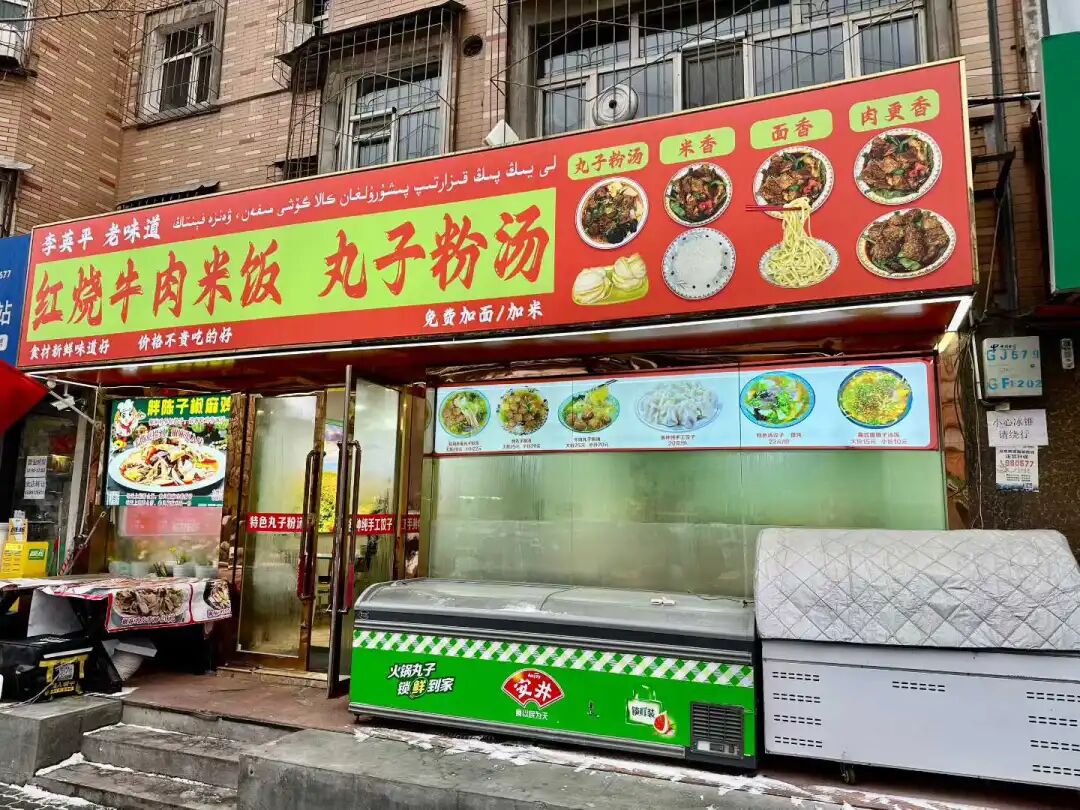
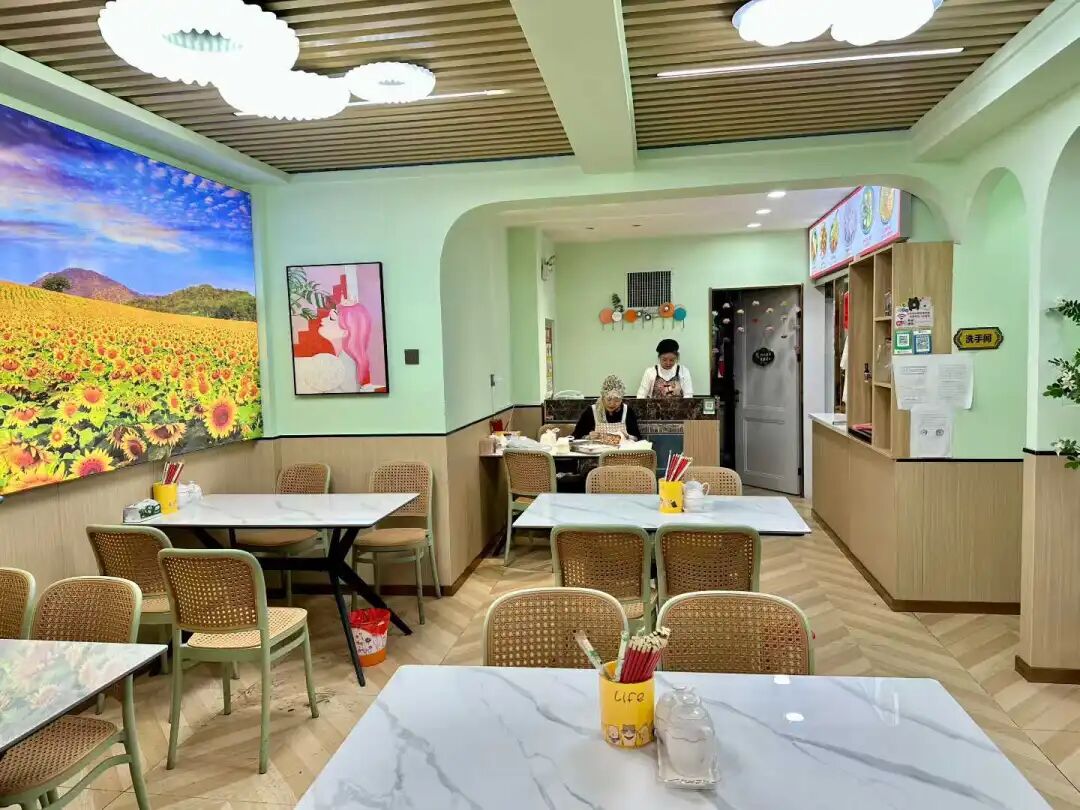
Hidden in the storefronts of the Guangyuan residential complex on Zhujiang Road in Urumqi is Li Yingping's Meatball and Vermicelli Soup (wanzifen tang). The owner has been selling meatball soup in the neighborhood for over twenty years and only moved to the Guangyuan complex in the last two years. This area is far from the food streets, so mostly only locals know about it.
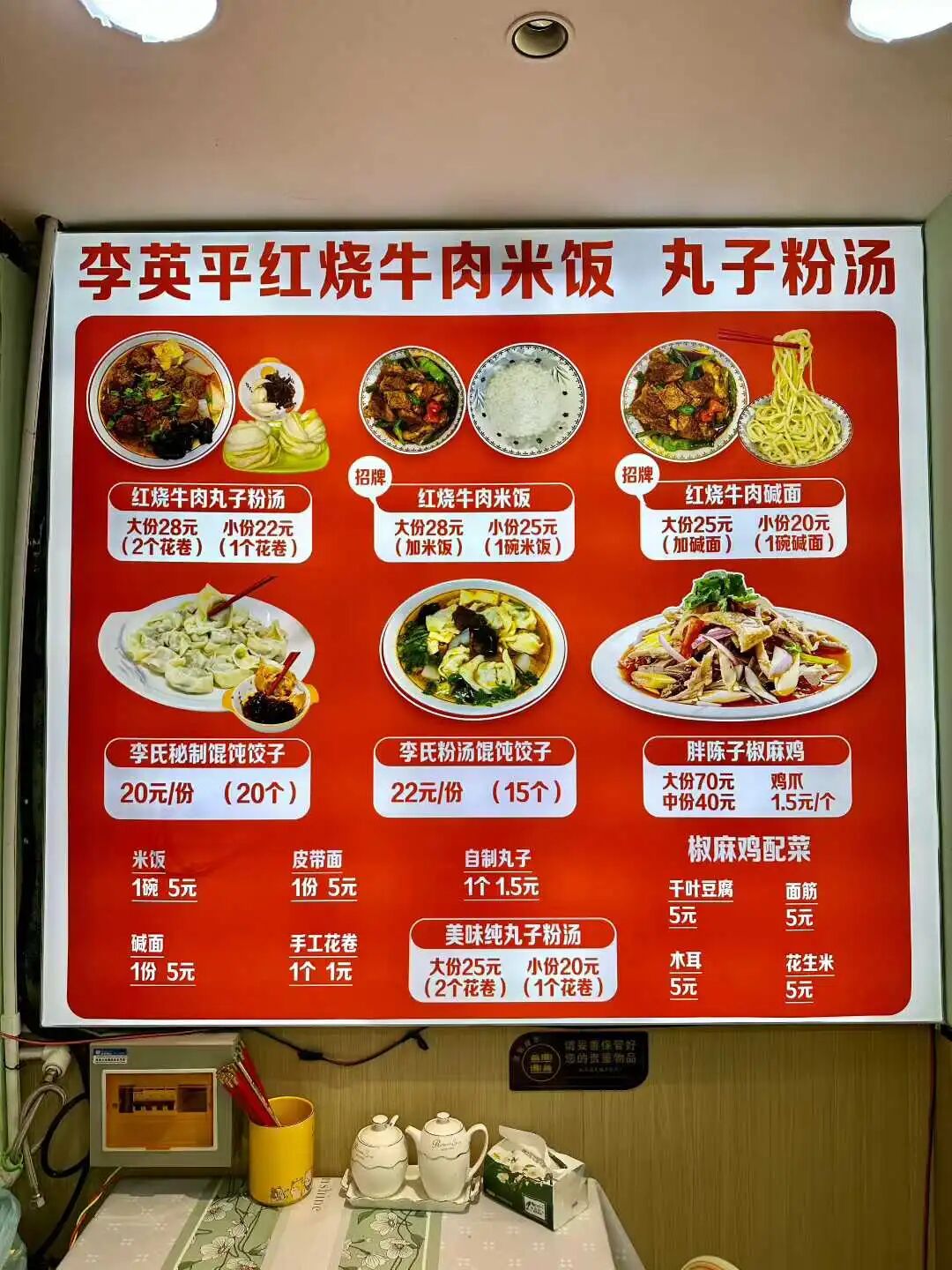
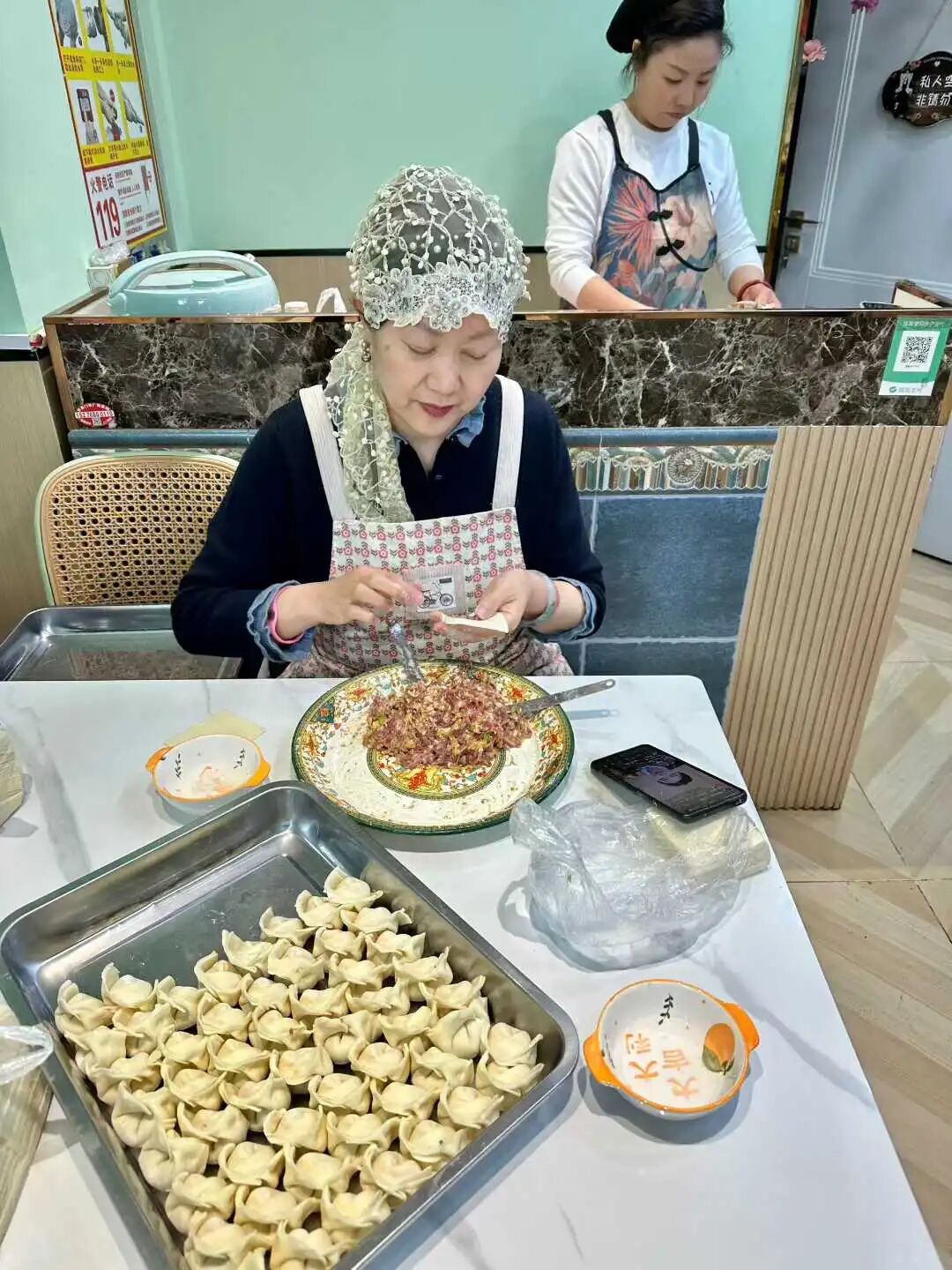
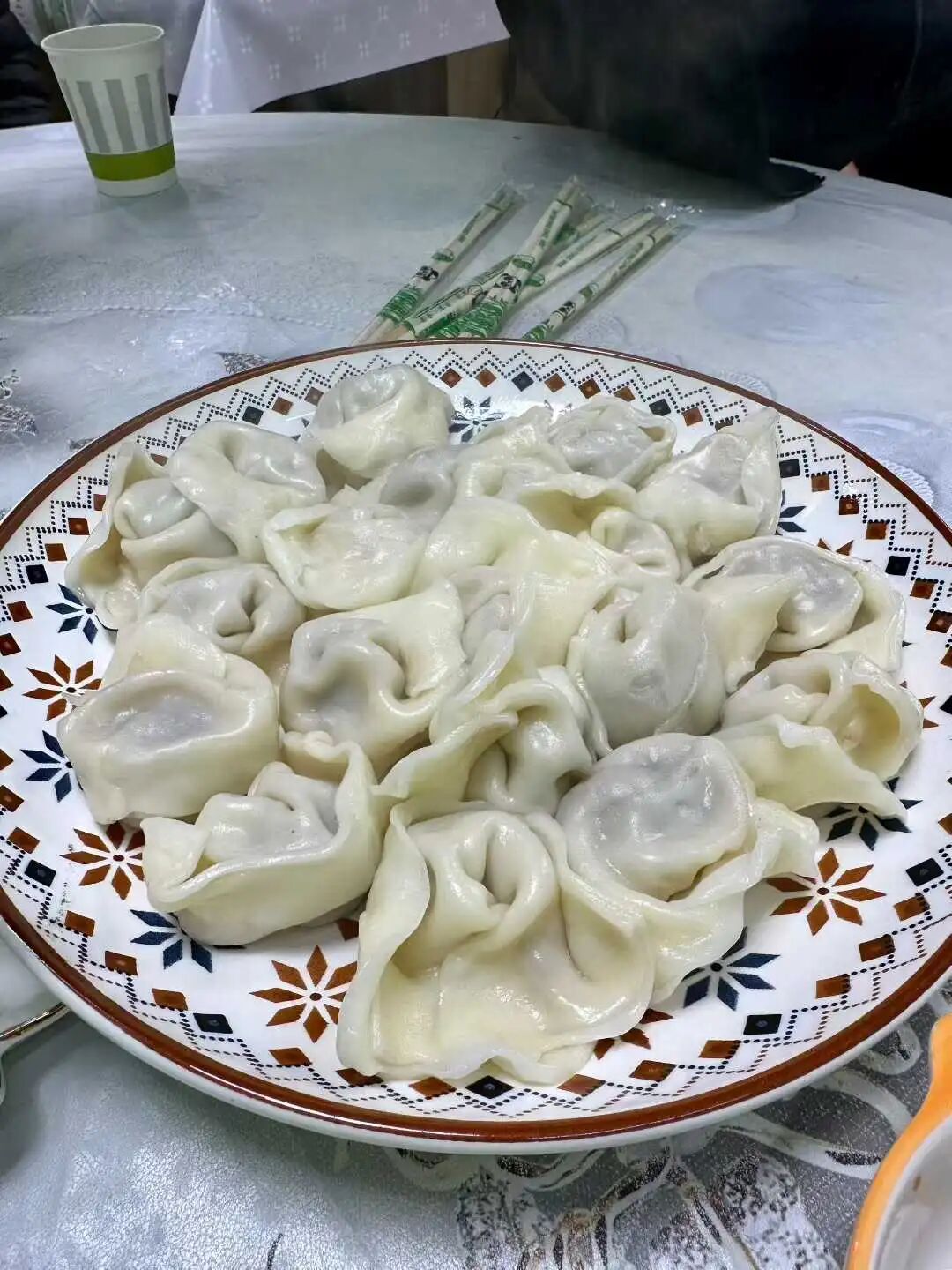
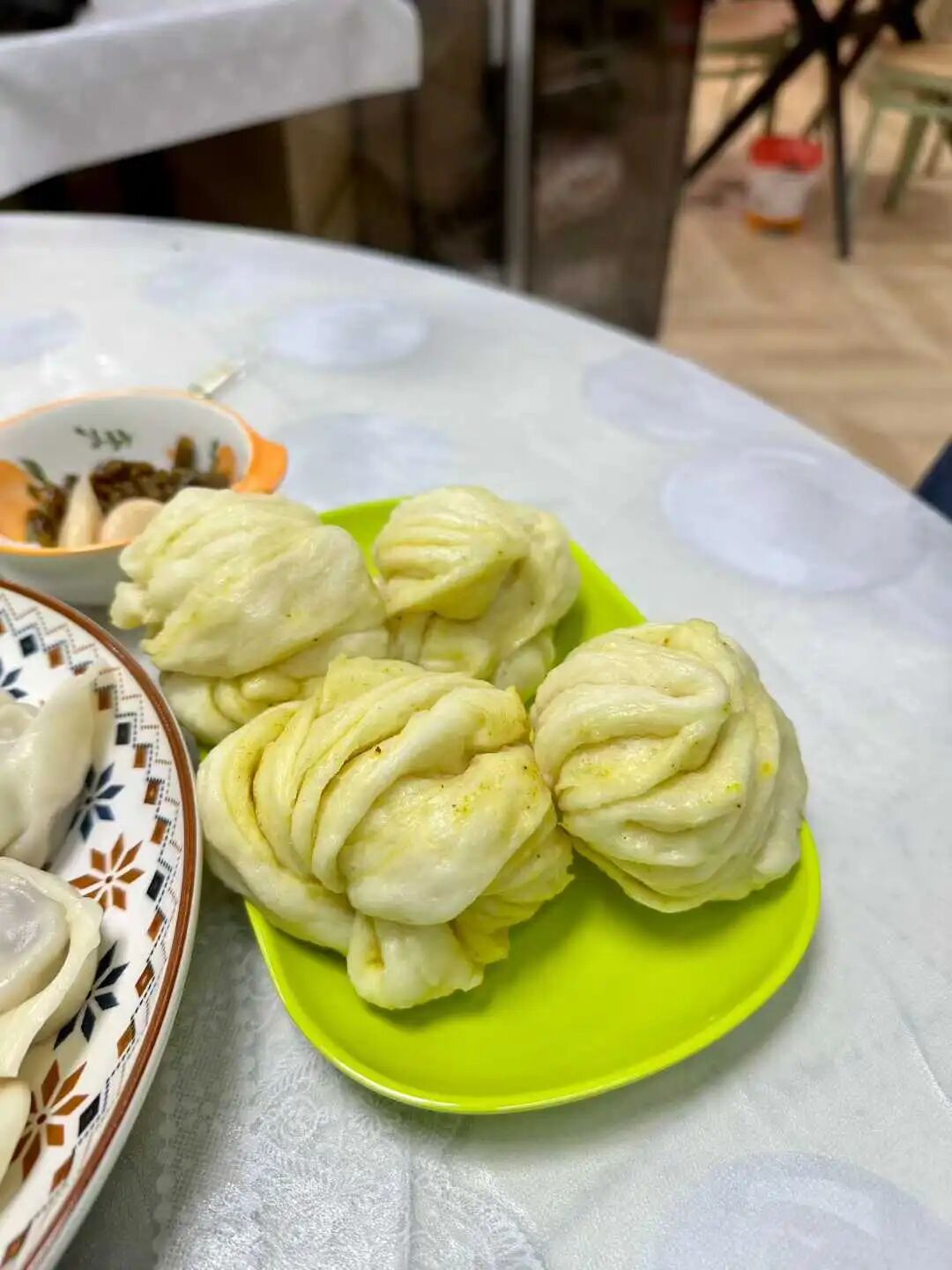
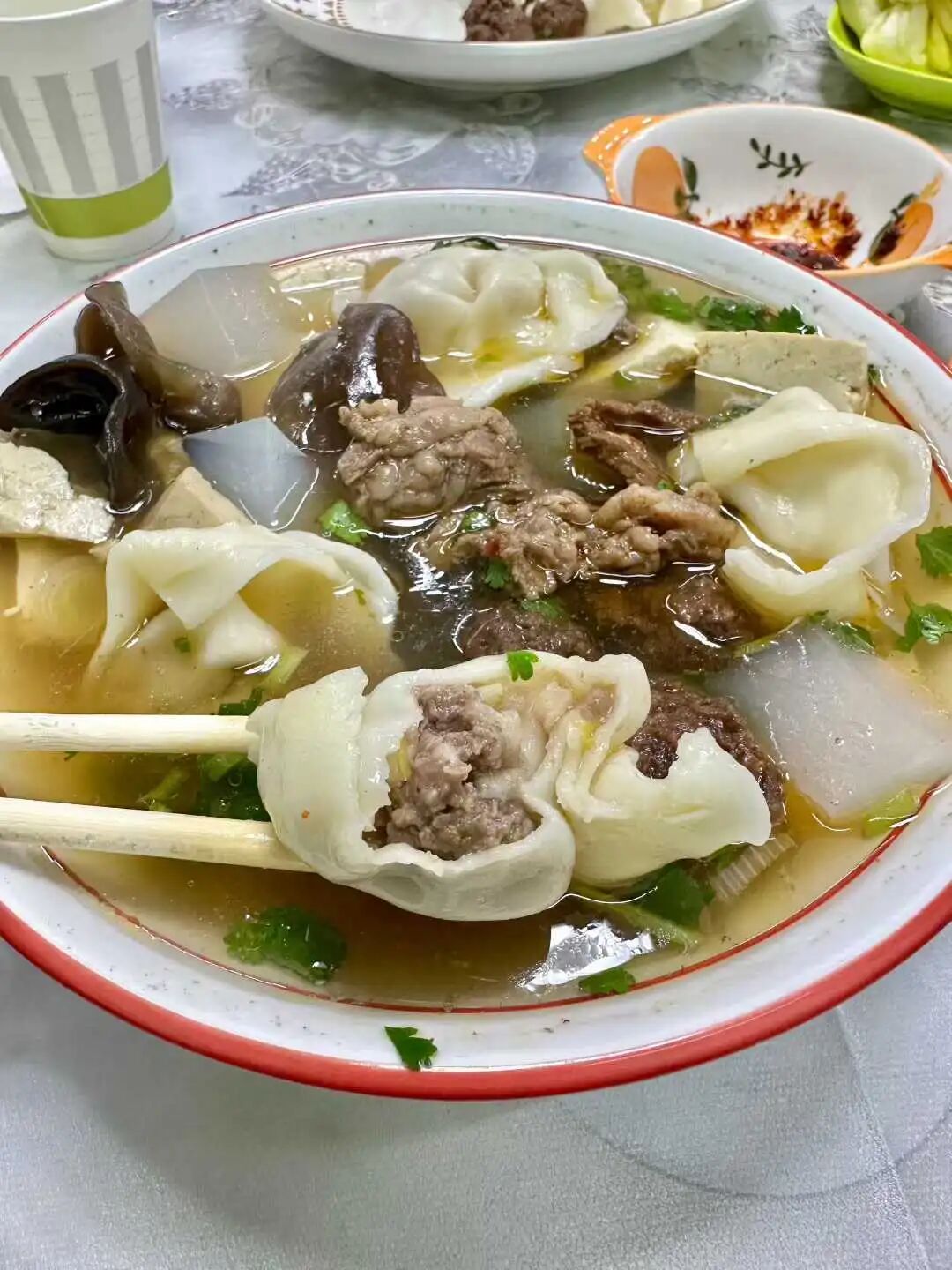
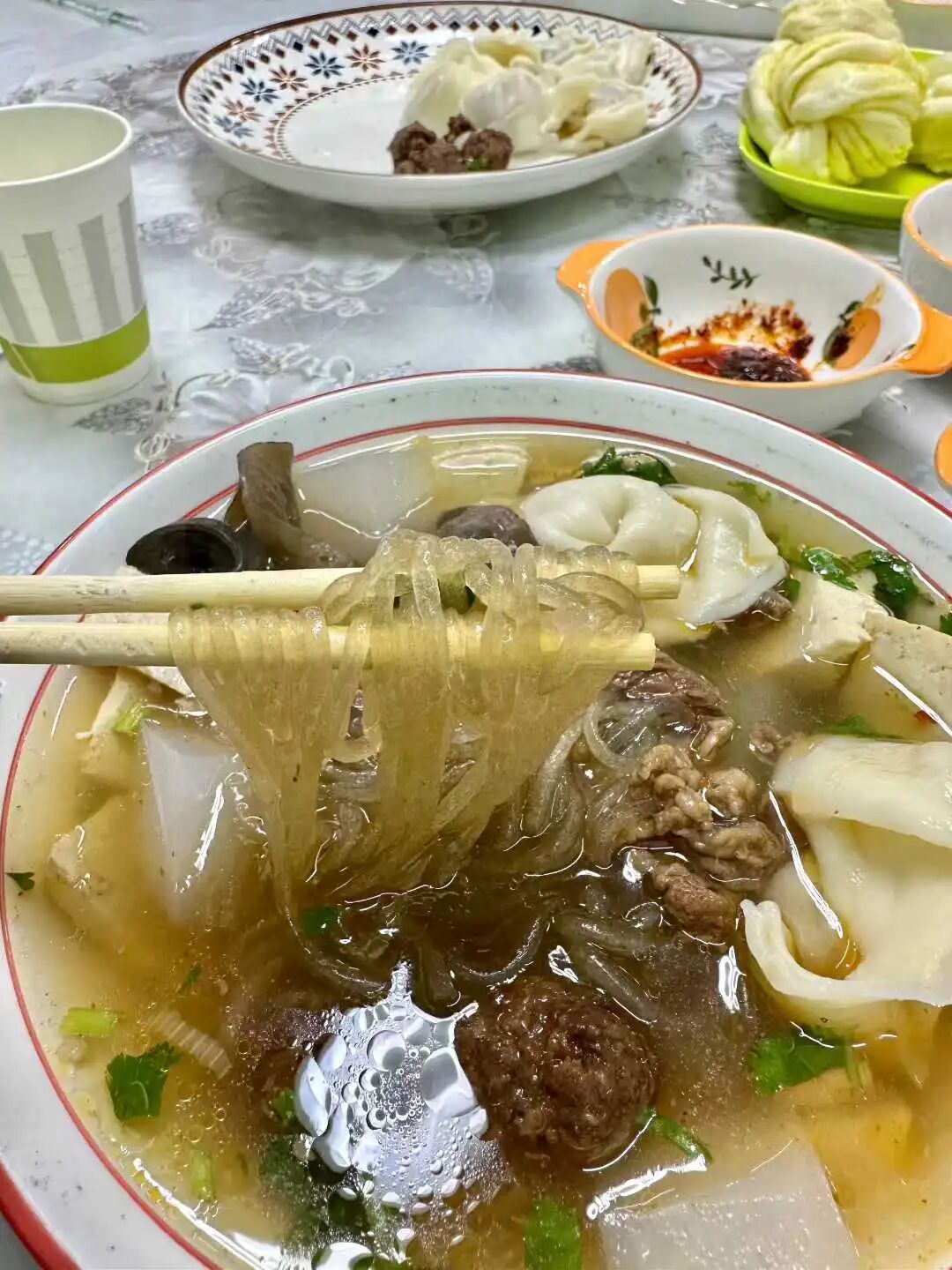
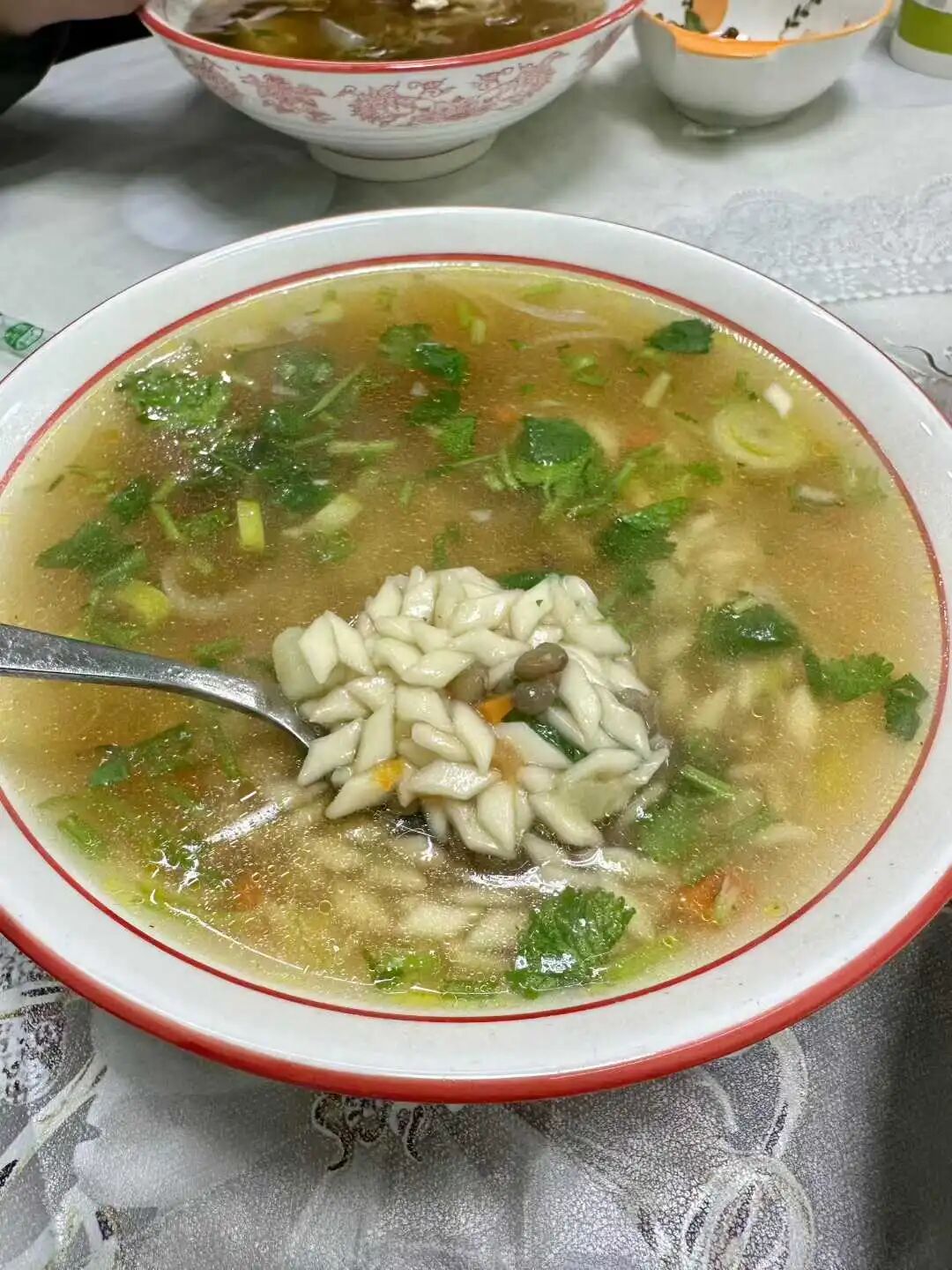
Their signature dish is braised beef meatball noodle soup served with a steamed flower roll (huajuan). The beef is stewed until very flavorful and has a great texture, served with tofu, starch noodles, and wood ear mushrooms. I first thought their 'wonton dumplings' were two separate dishes, but I later learned they are dumplings shaped like wontons made by the owner. They have a lamb and onion (piyazi) filling, and you can eat them dry or in soup. The soup dumplings are served in the beef noodle soup, which I think is especially comforting in winter. I also tried their lentil noodle squares (biandou mianqizi). Small flag-shaped dough pieces simmer in the soup, paired with the creamy texture of lentils. It is a winter staple that warms the stomach for people in Xinjiang.
February 14
Urumqi has so many food streets. From the early days of Shanxi Alley and Erdaoqiao to the later Lingguan Alley and Hotan Street, more and more places have become popular spots for food lovers. My biggest discovery on this trip back to Urumqi is that the area from Yingawati Road toward Zhujiang Road is getting busier. The ground-floor shops in the new residential area near the plastic factory are all restaurants newly opened by people from Hotan, each with its own unique style.
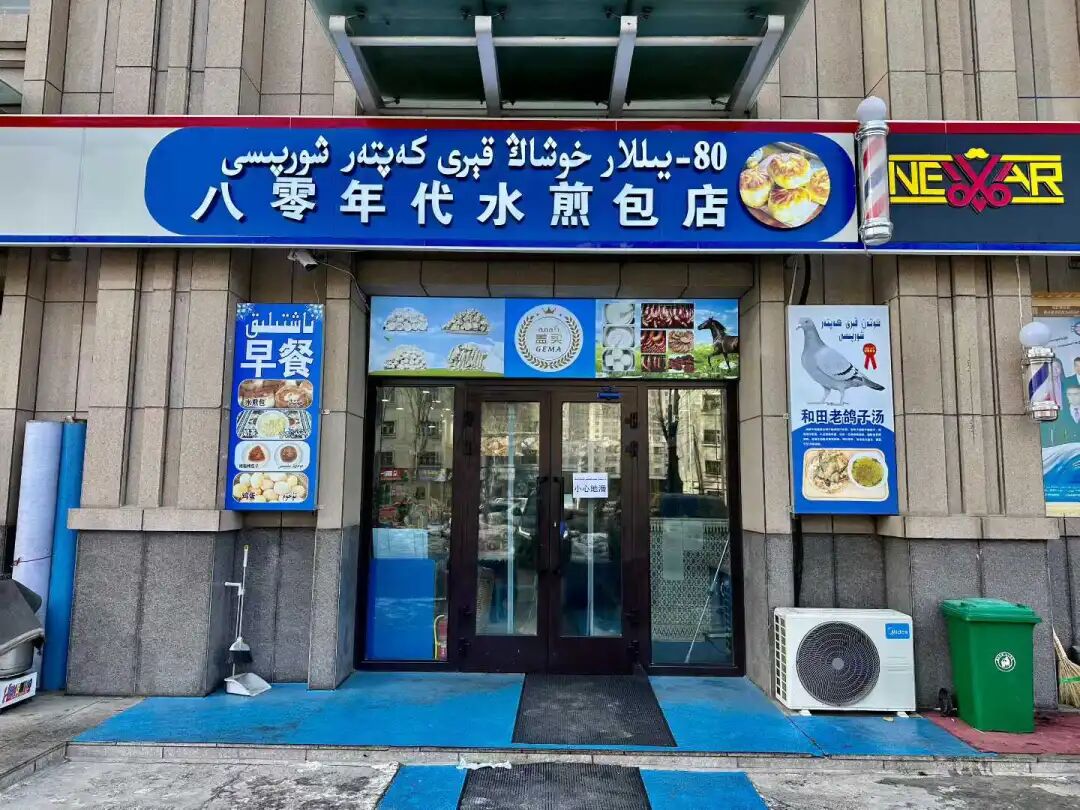
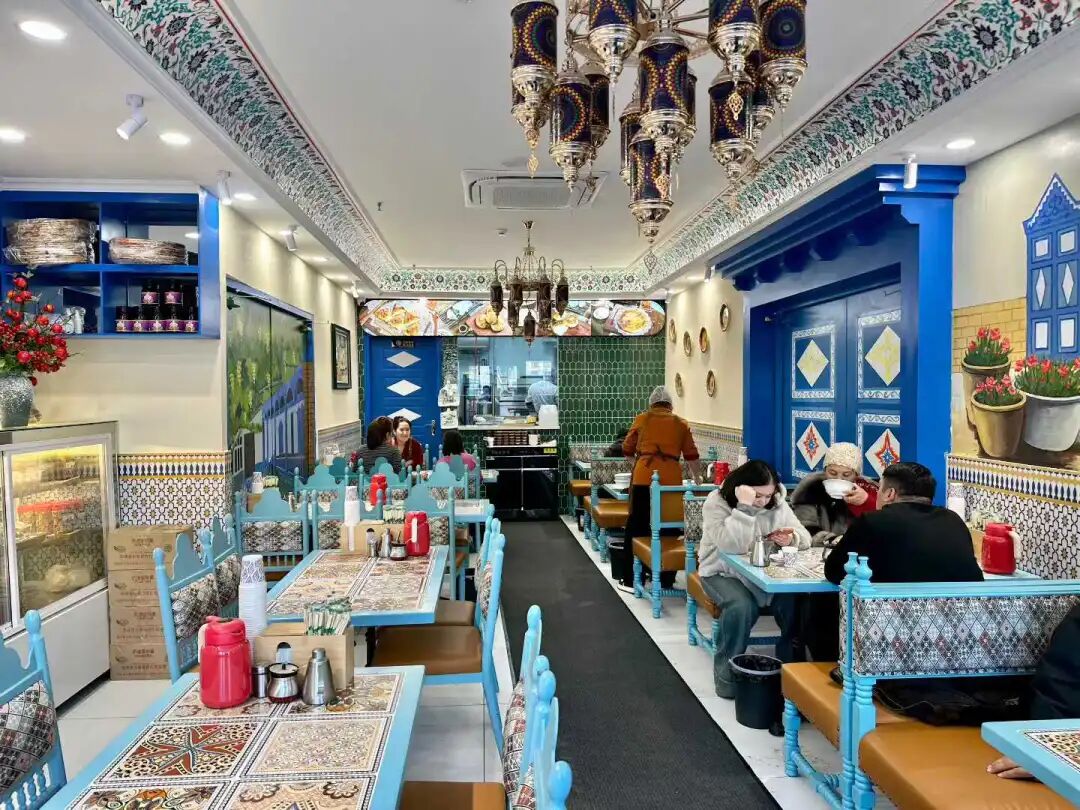
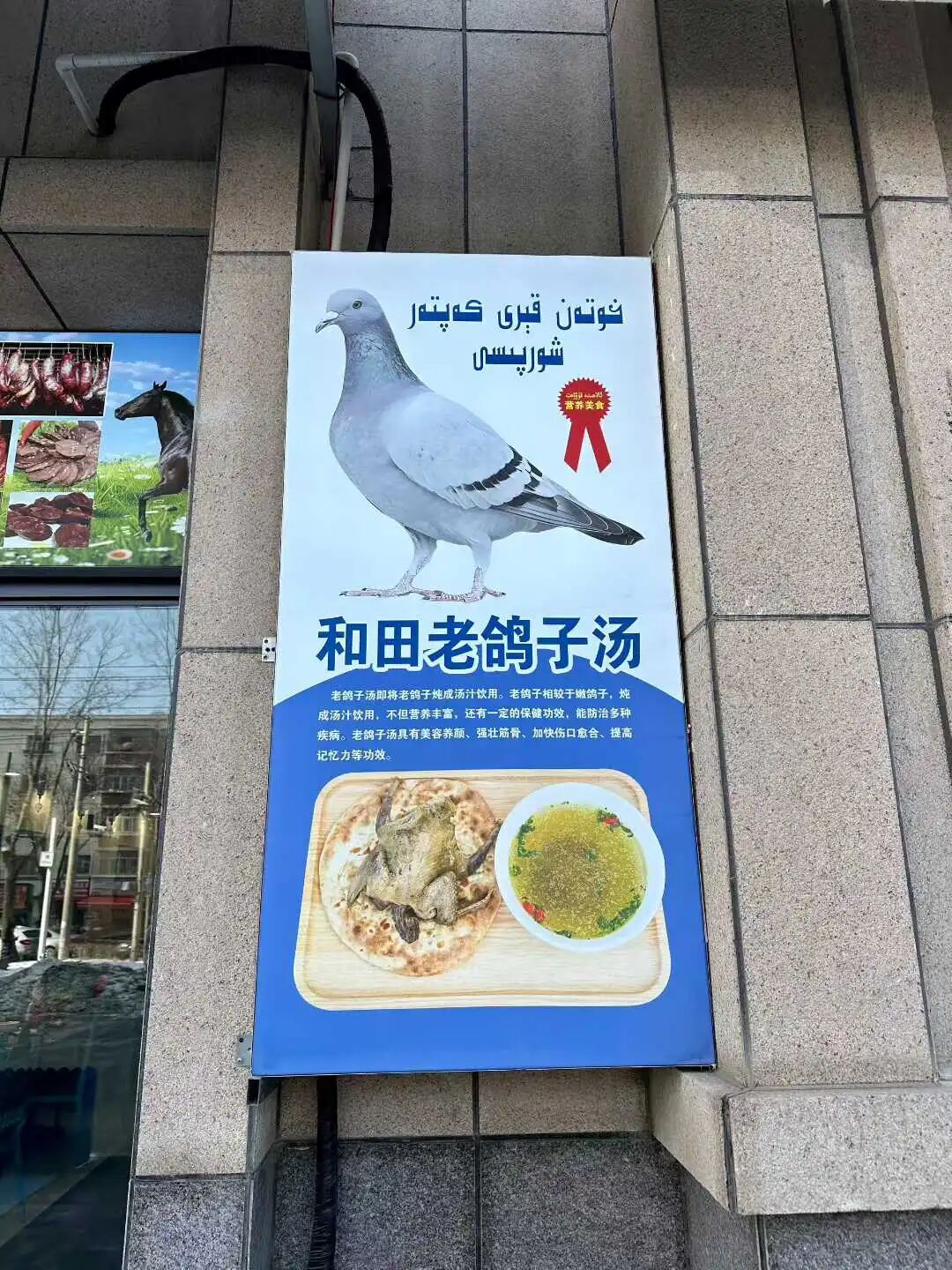
We first ate at this 1980s-style pan-fried bun (shuijianbao) shop. Pan-fried buns are a specialty of Ili, but this shop also sells Hotan-style corn naan (baogu nang) and old pigeon soup, making it a mix of northern and southern Xinjiang styles.
We ordered old pigeon soup, goose eggs, corn naan with milk tea, pan-fried buns, yogurt, and dried milk curds (naigeda). The old pigeon was delicious and very fragrant, though the soup was a little salty. The goose egg was large and looked crystal clear. The corn naan with milk tea is an incredible combination. The corn naan is a purely healthy food. The corn dough is filled with walnuts and topped with fried onions. It is a bit hard when dry, but it becomes soft on the outside and crispy on the inside when soaked in milk tea. Their milk tea is also very fresh. Of course, you can find fresh milk everywhere on the streets of Urumqi, so fresh milk tea is a given. They also sell various types of dried milk curds, including sheep milk, cow milk, and yogurt versions, some sour and some milder.
I had only eaten Henan-style pan-fried buns before. The biggest difference with Ili pan-fried buns is the use of a lamb and onion filling, seasoned with cumin and pepper. The dough is made with sourdough starter and fried in a flat pan just like in Henan, but it is served with salty milk tea instead of spicy soup. Ili pan-fried buns taste a bit like a leavened version of a baked bun (kaobaozi). Many people here love them and buy a lot at once.
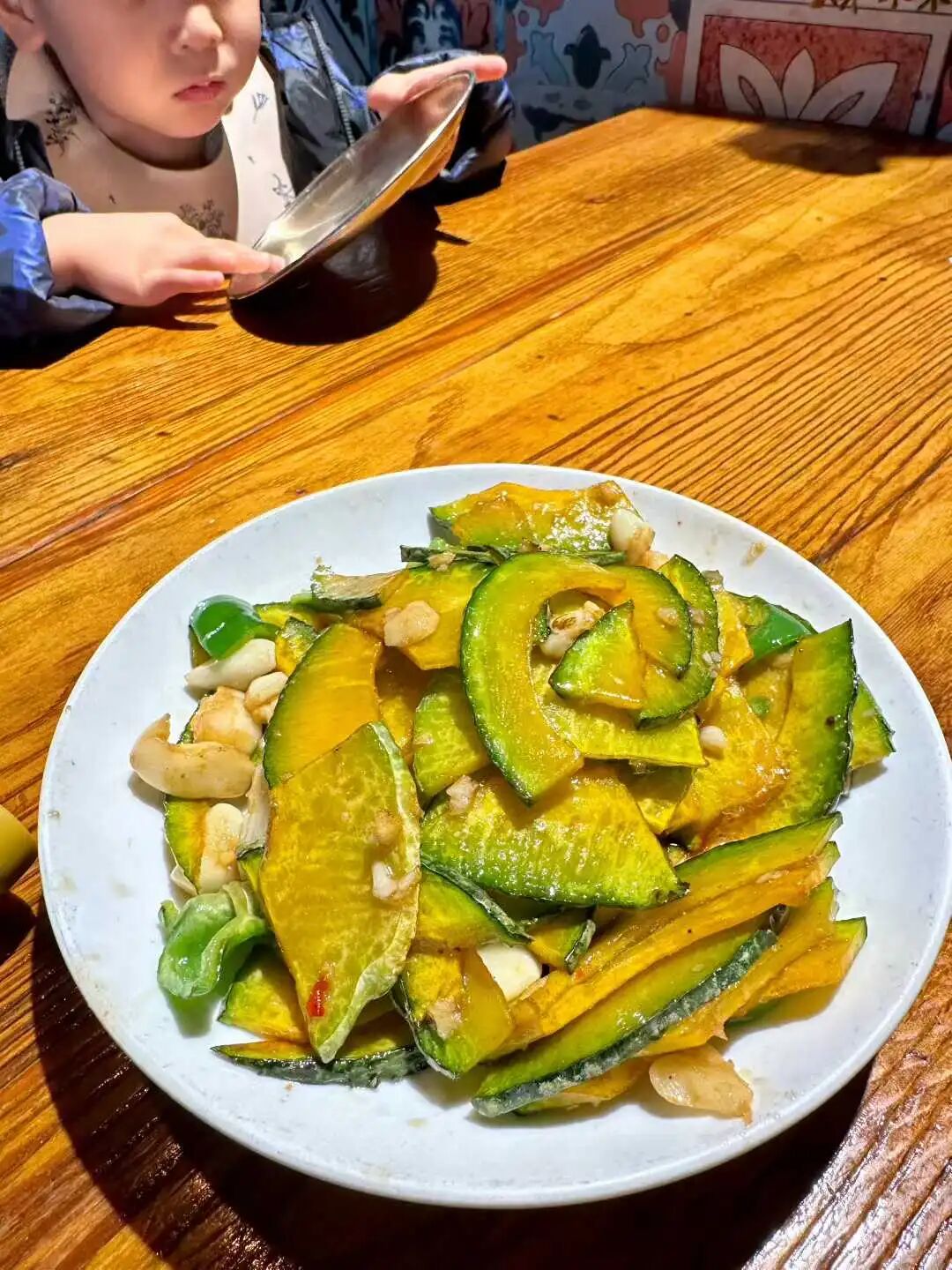
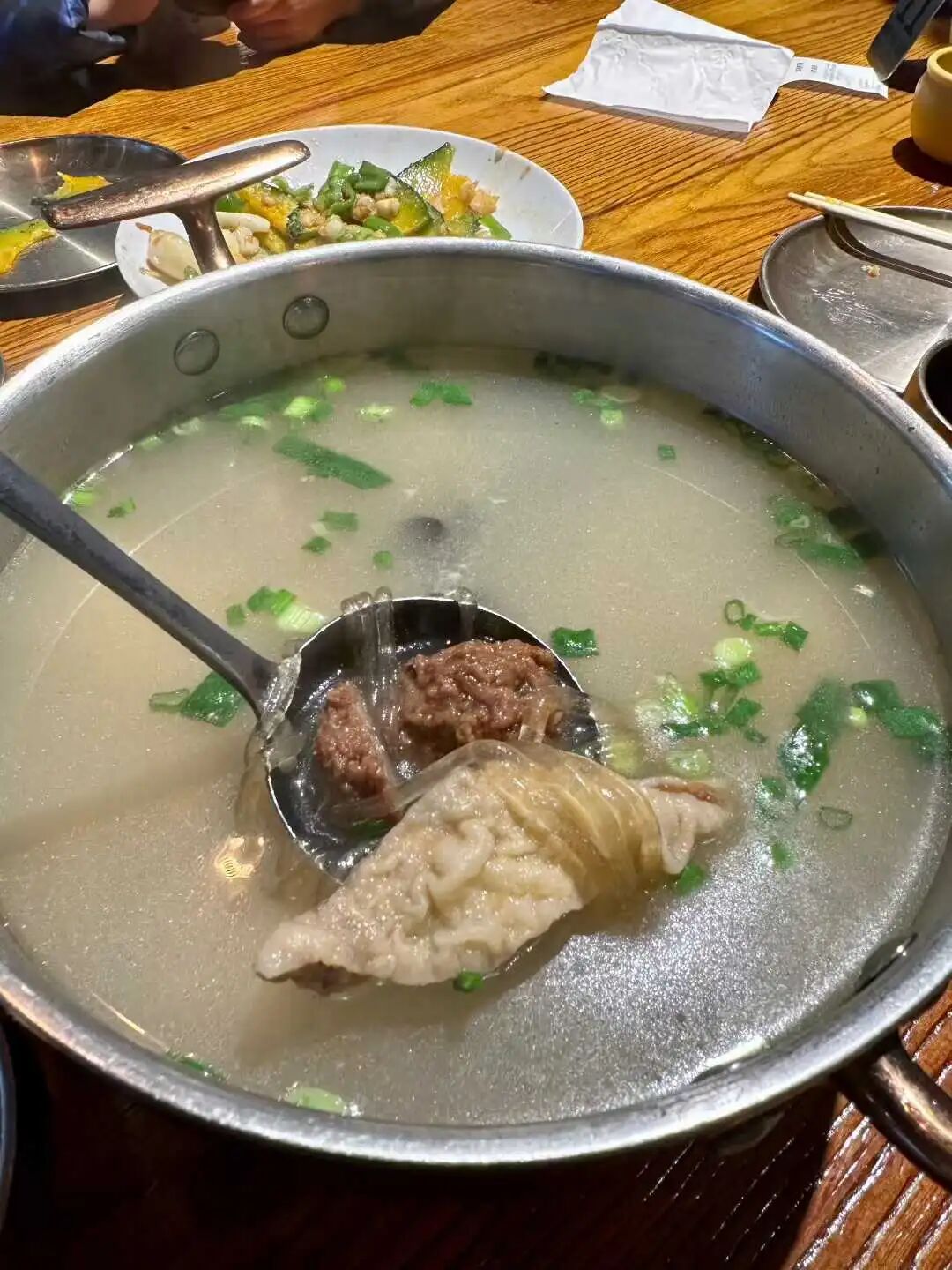
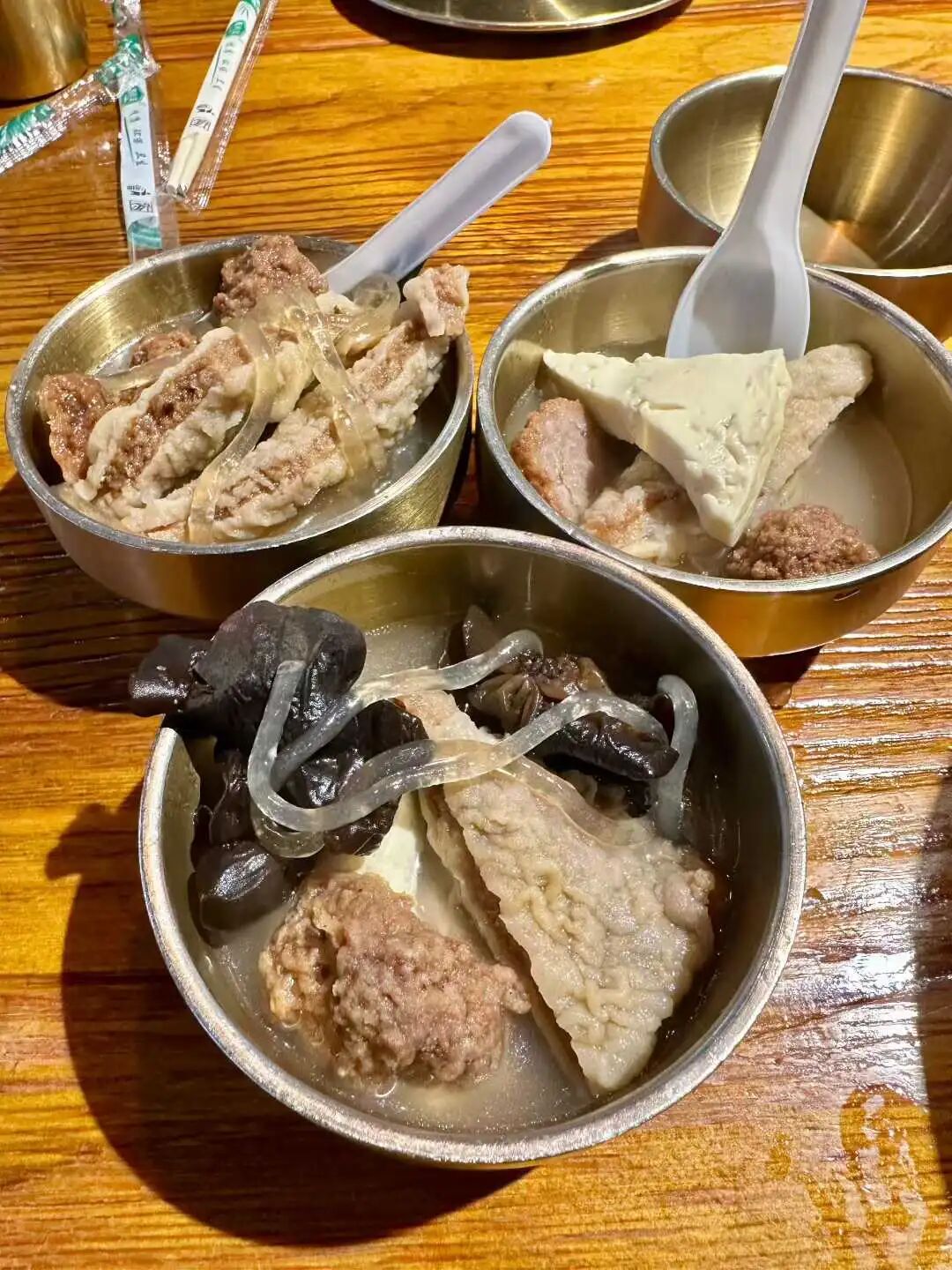
In the afternoon, while visiting relatives, we passed by the Chaiwopu No. 22 Spicy Chicken on Wuxing South Road. It is a 30-year-old shop, and it was packed with people and very lively. They serve Hui Muslim-style Xinjiang cuisine. A large portion of spicy chicken is a whole bird, and a medium portion is half. It is stir-fried to order, so it takes a while and you have to wait when it is busy, but the taste is better than Yang Le. Adding wide belt noodles (pidai mian) to it is very satisfying. Because the kids couldn't eat spicy food, we also ordered the mixed vegetable soup (dazahuai tang), which has beef meatballs, fried egg strips (jiasha), tofu, and wood ear mushrooms. The portion was large, and it was very warming in the winter. We also ordered stir-fried chestnut squash (banligua). The salty, fragrant, stir-fried squash was soft, waxy, and sweet. It was my first time eating it prepared this way, and it was quite good. The place is always too crowded and the service is just average, but the food is truly excellent. You cannot find this kind of spicy chicken (lazi ji) in Beijing.
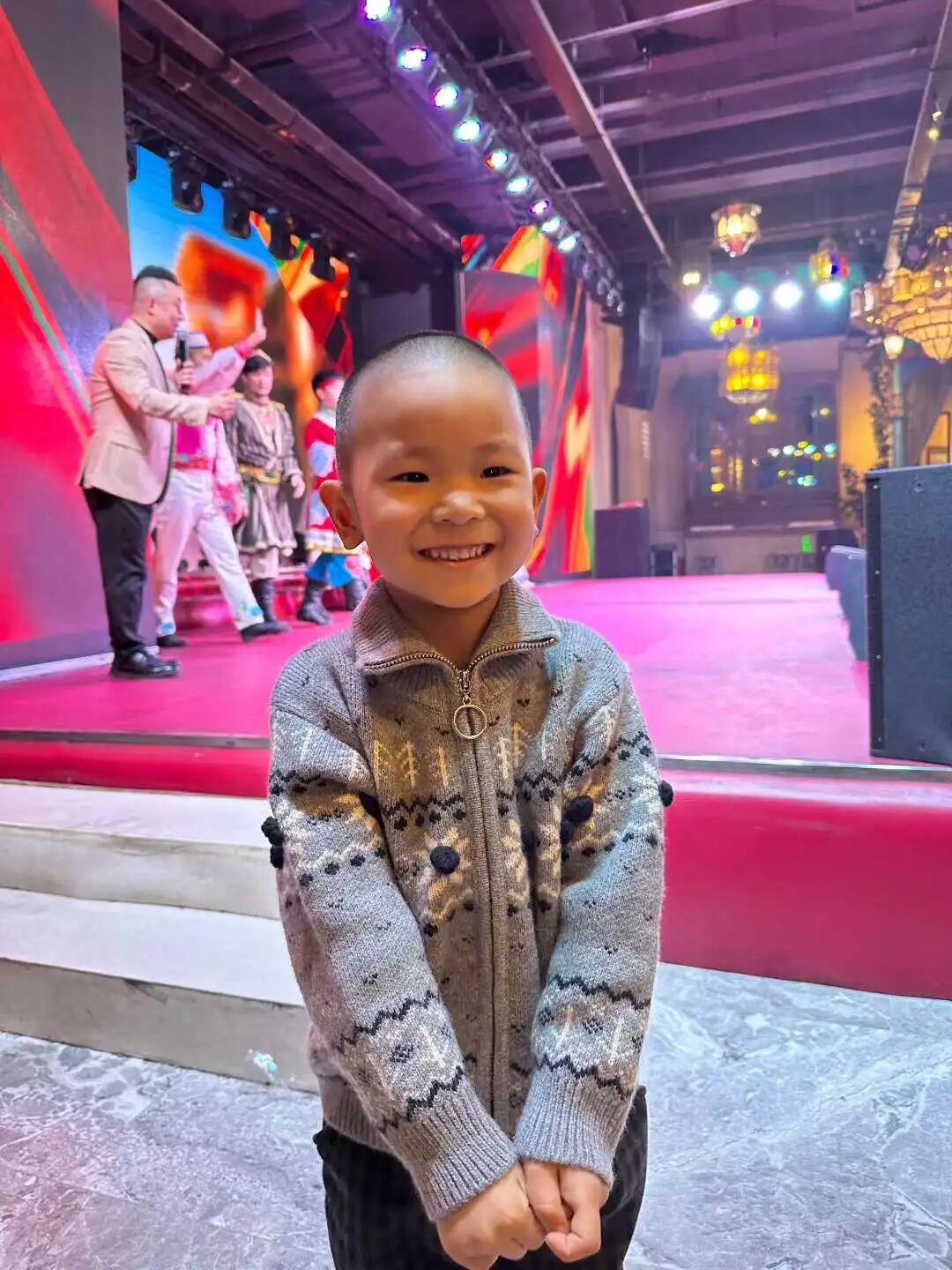
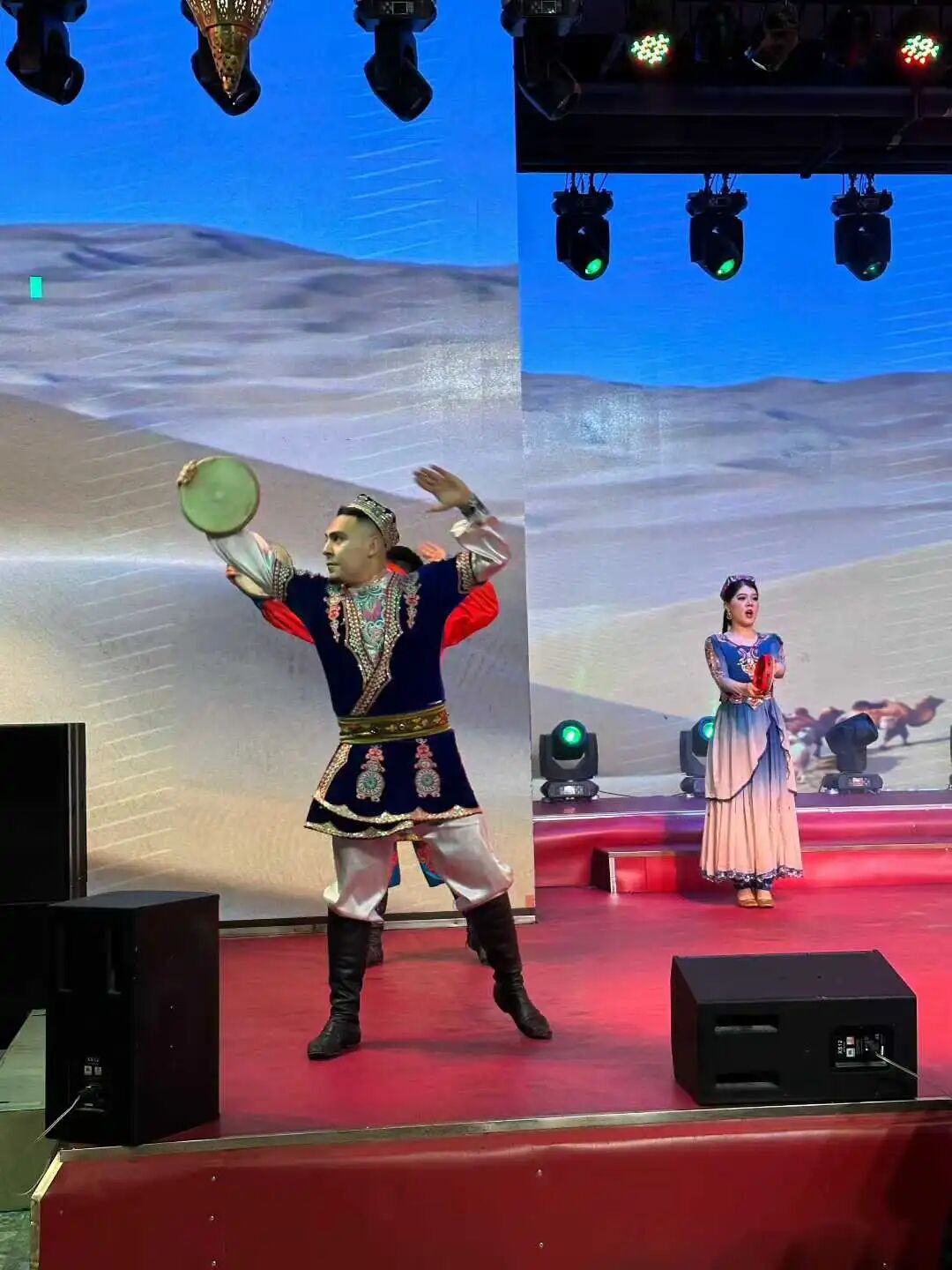
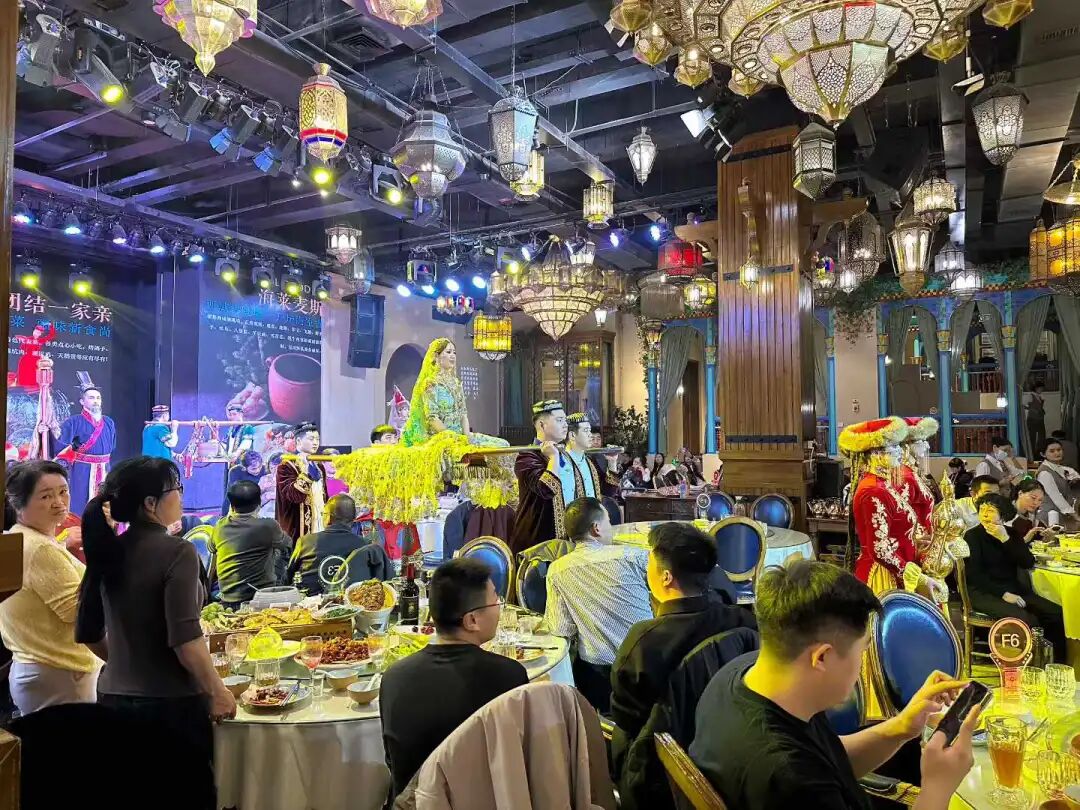
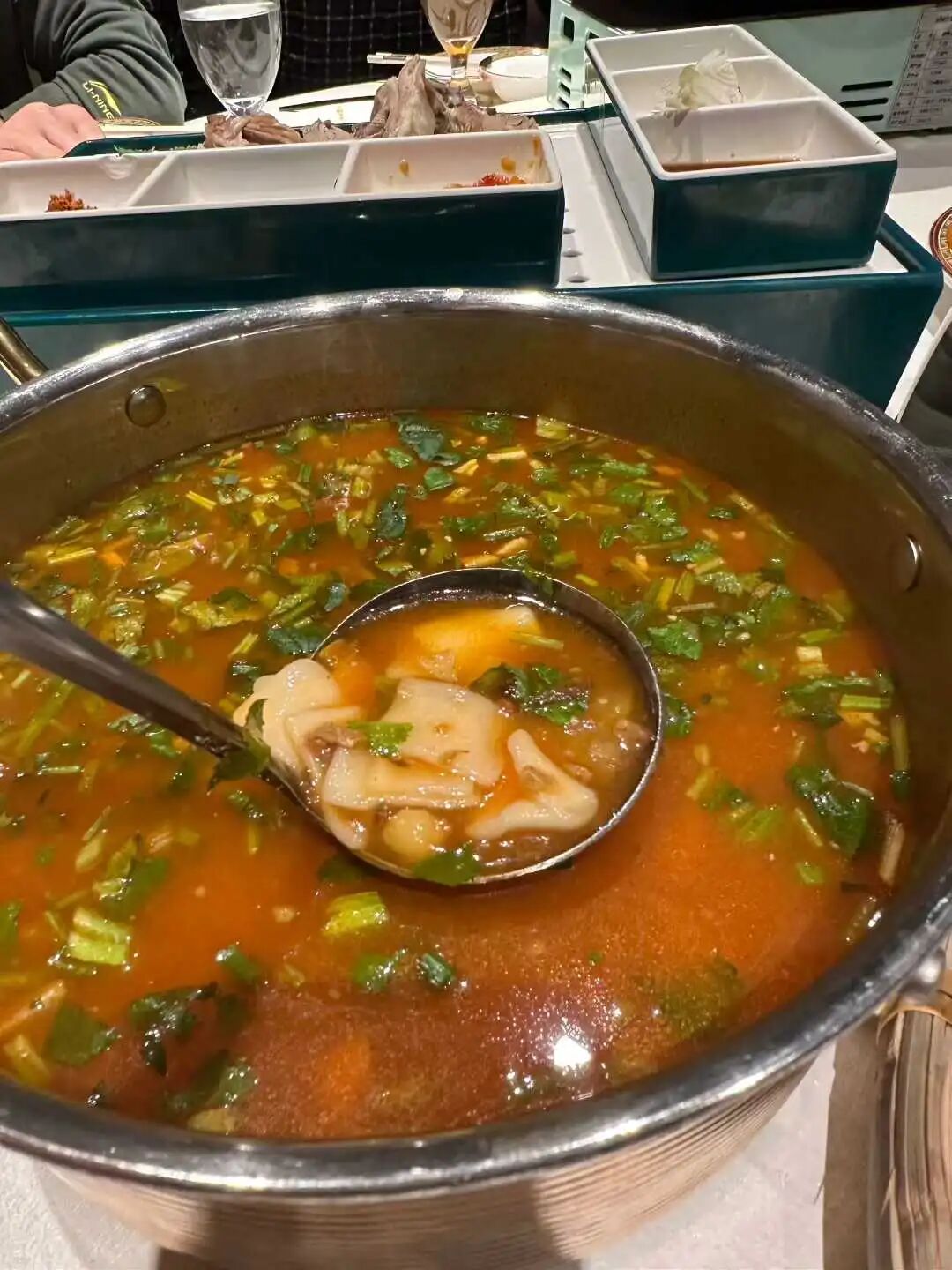
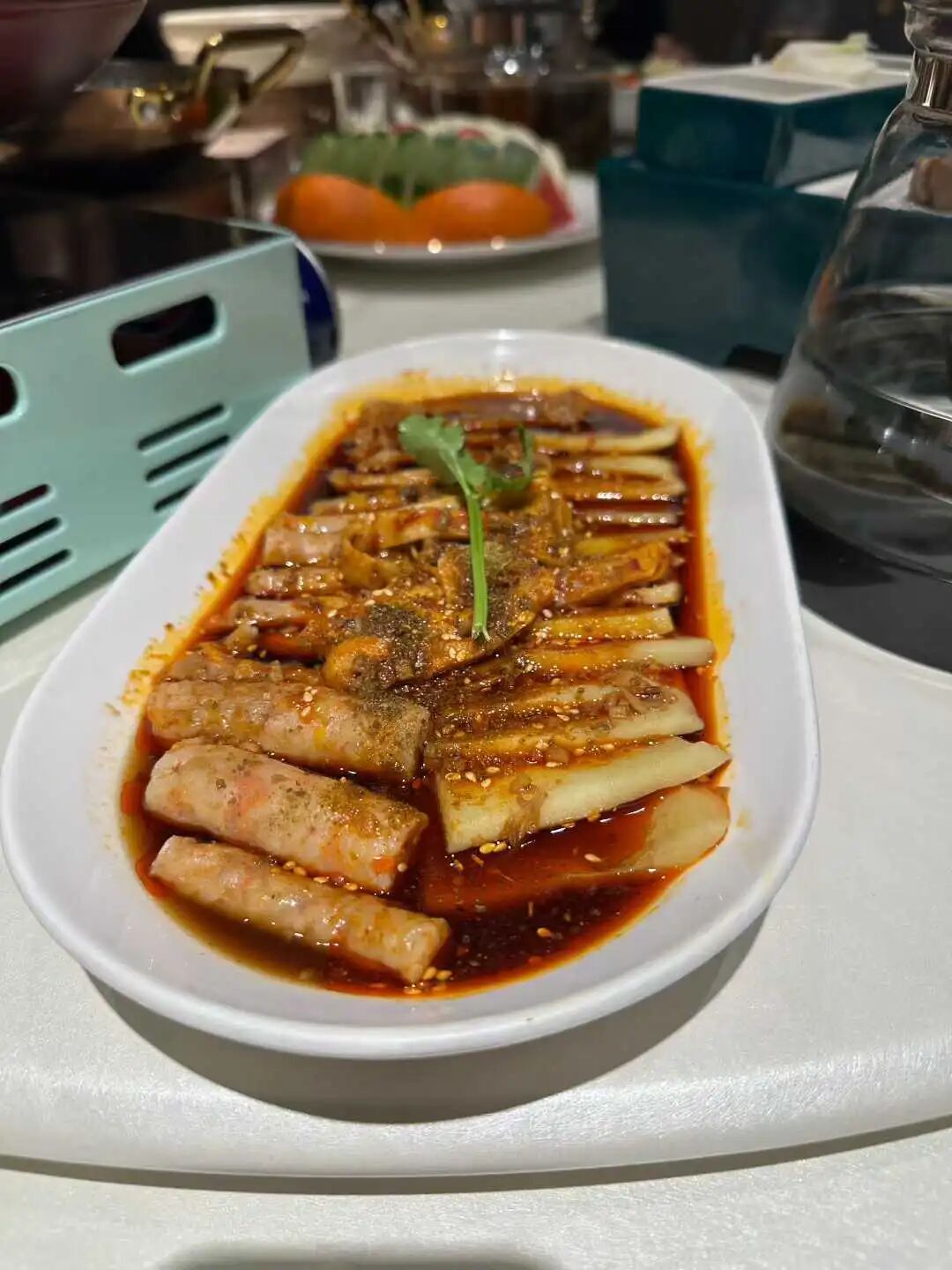
In the evening, we went to the cute Xinjiang Silk Road Feast (Silu Yan) at Shengda Plaza near the high-speed railway station. It is great for family gatherings. They have song and dance performances at night, and the menu is a fusion of many different things.
February 15
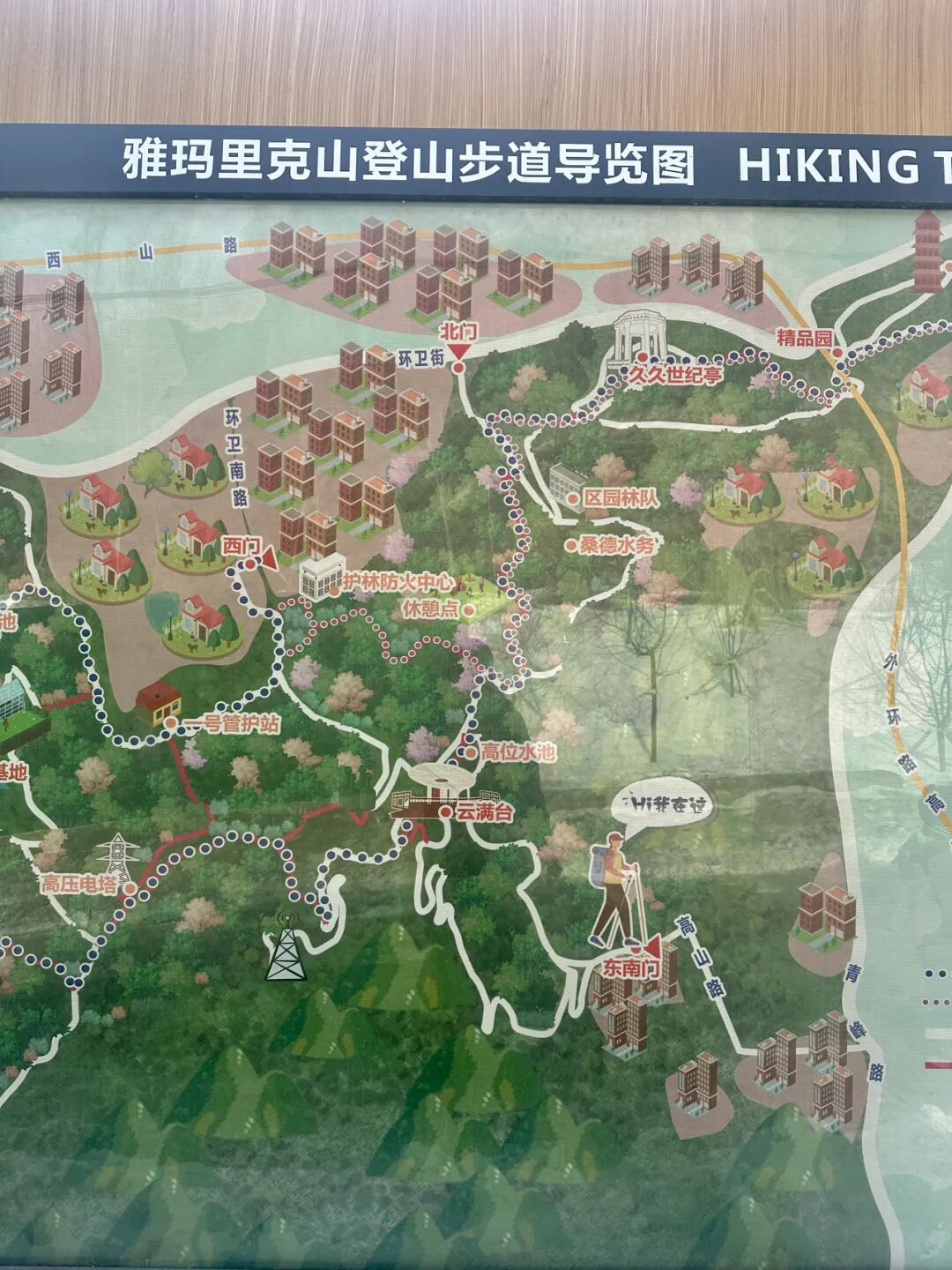
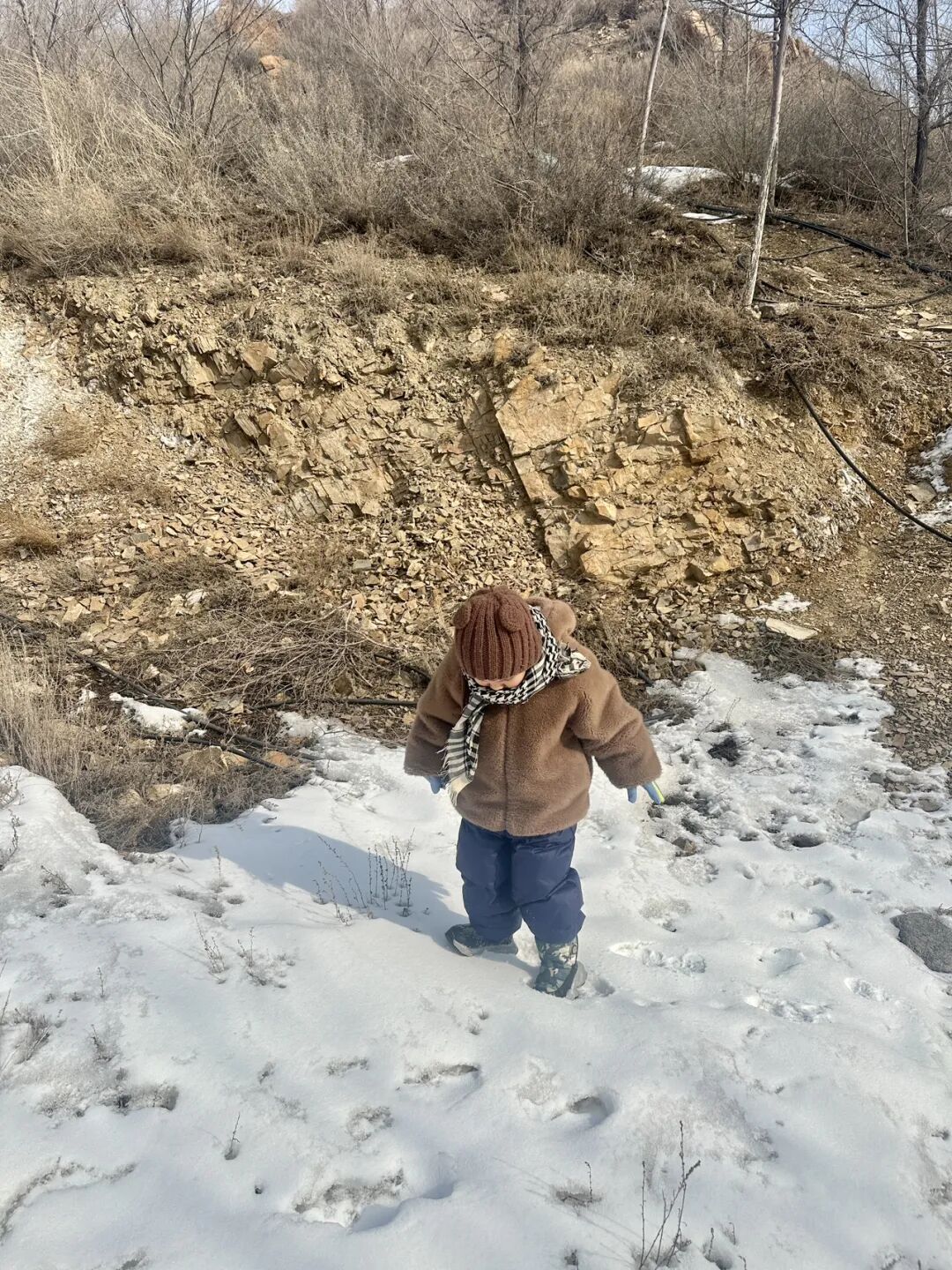
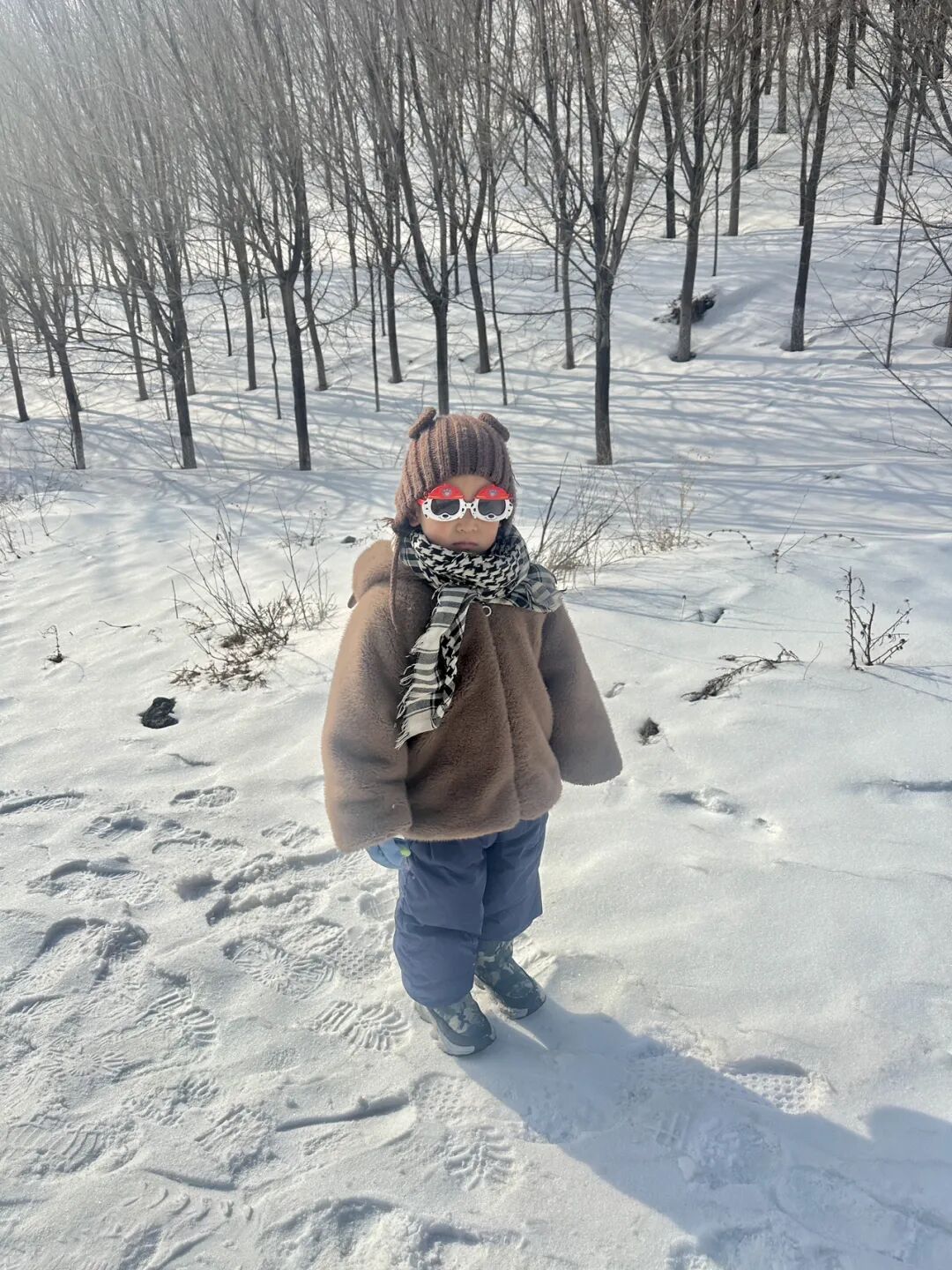
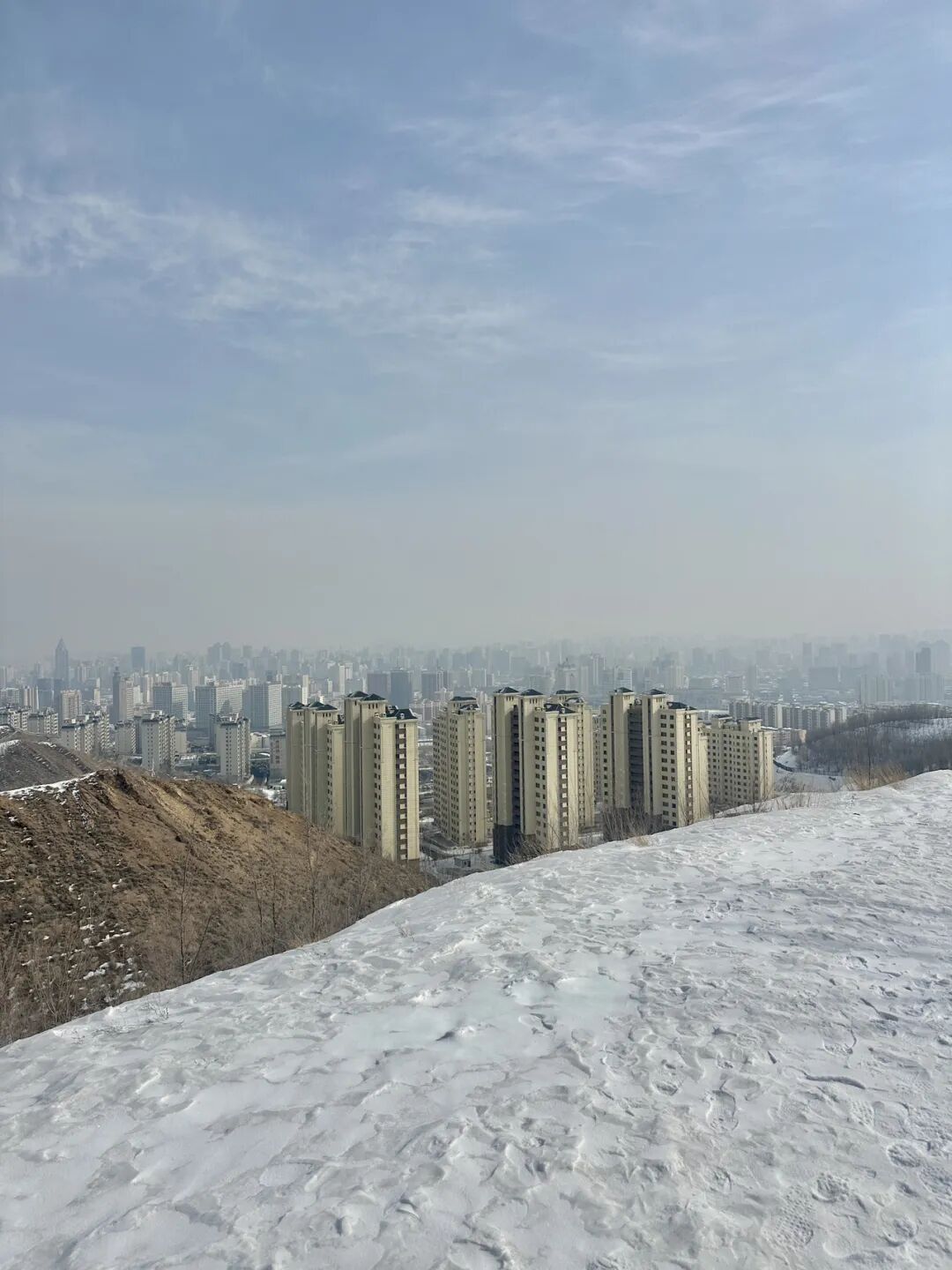
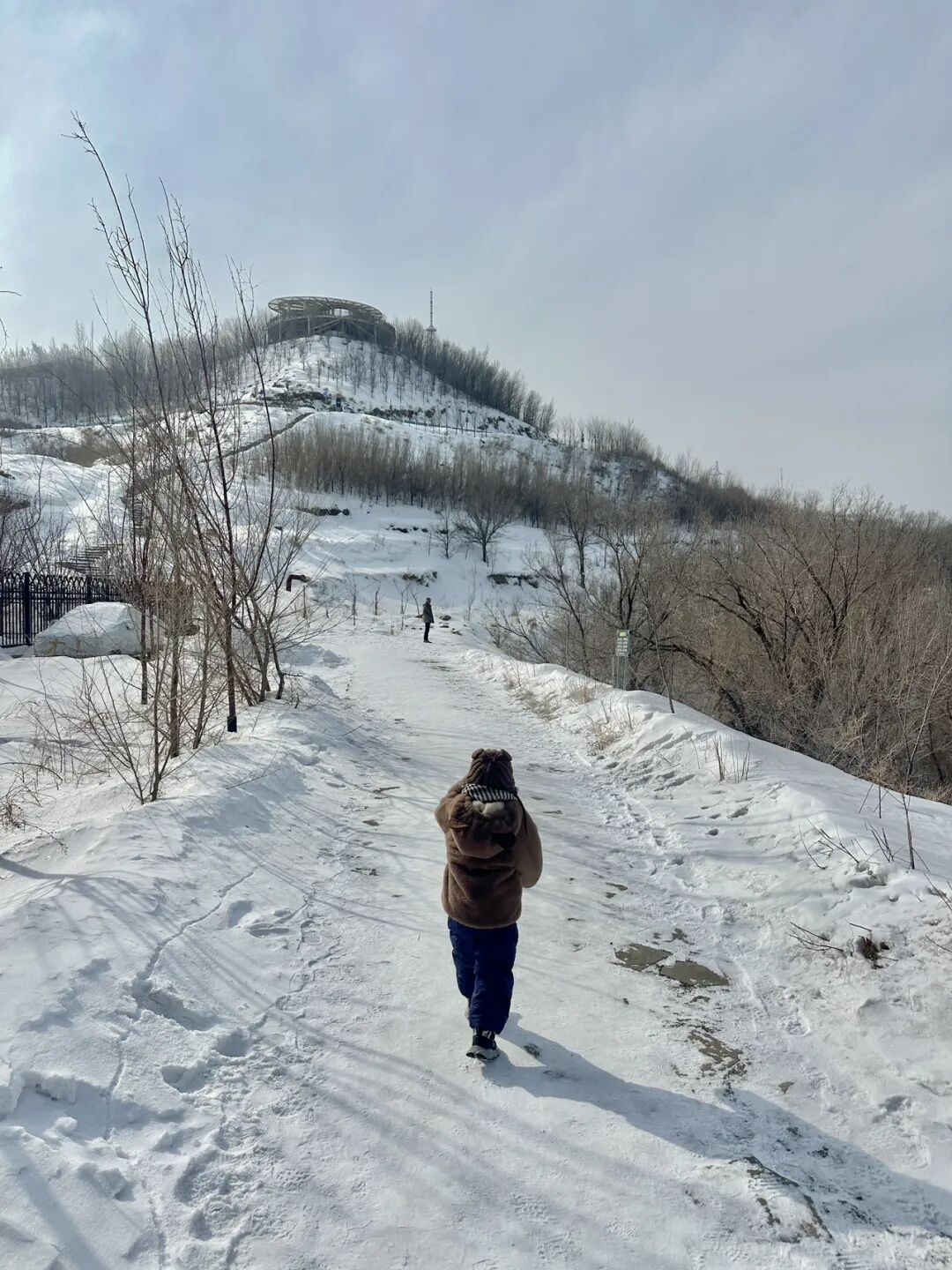
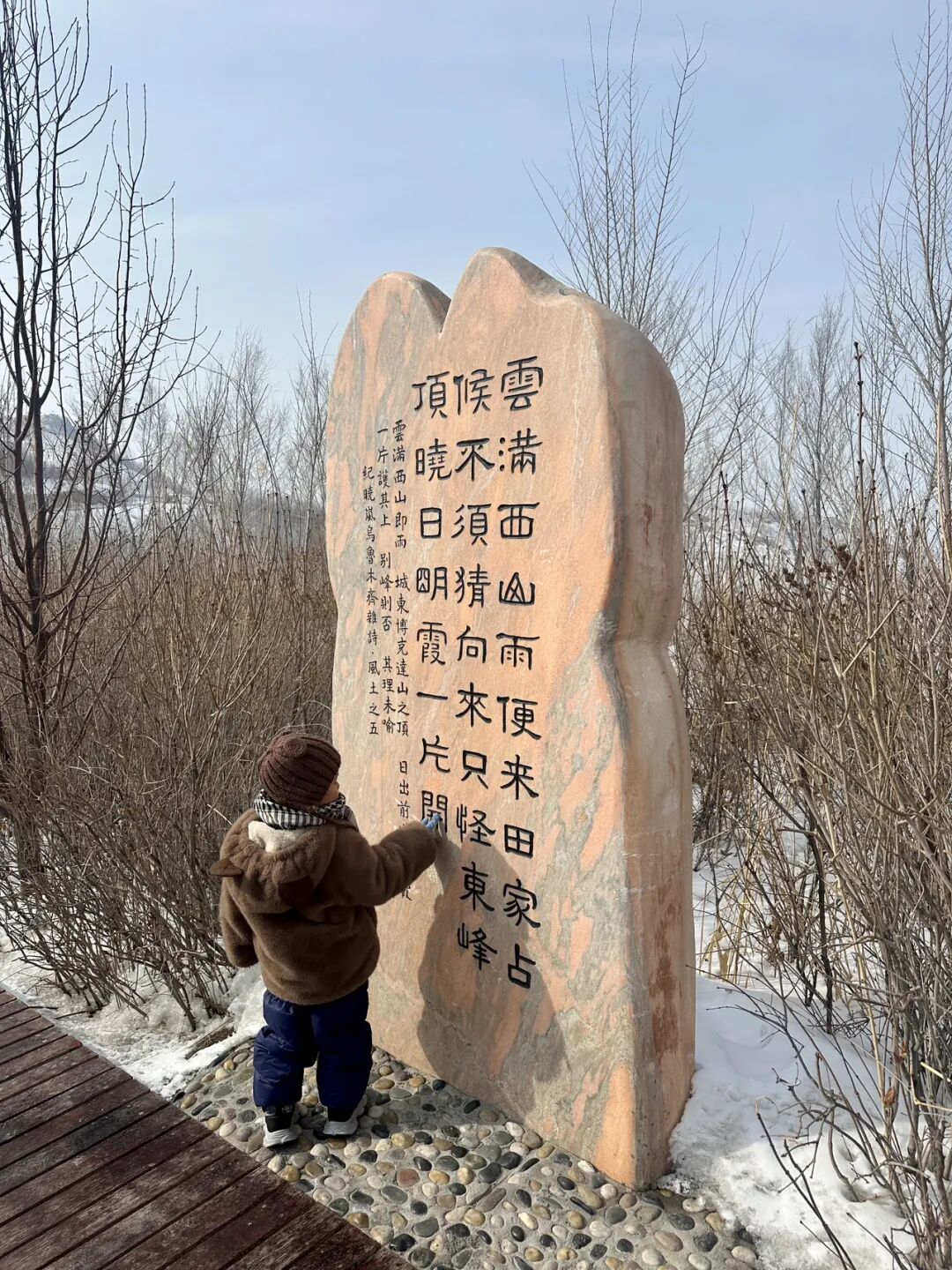
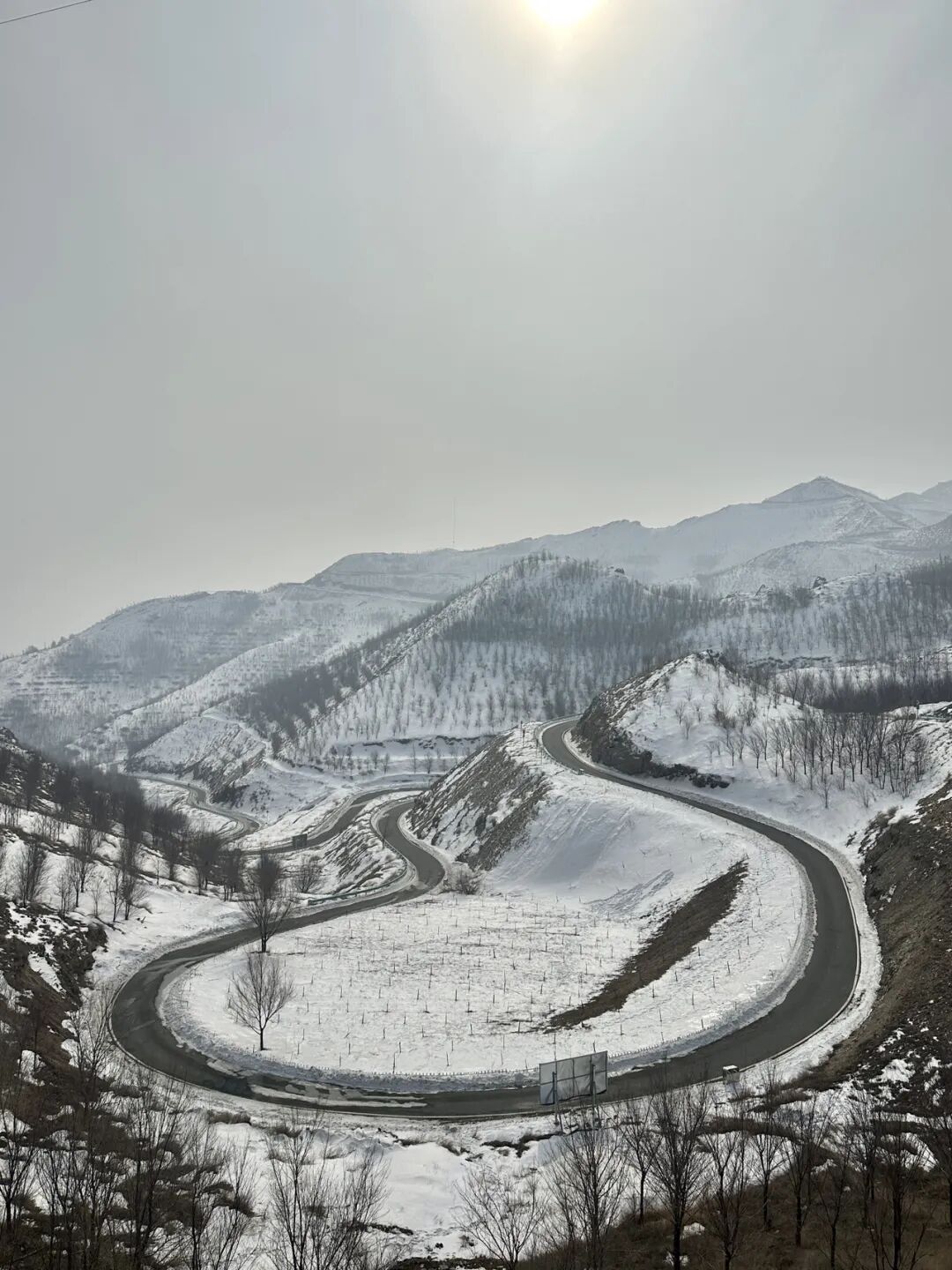
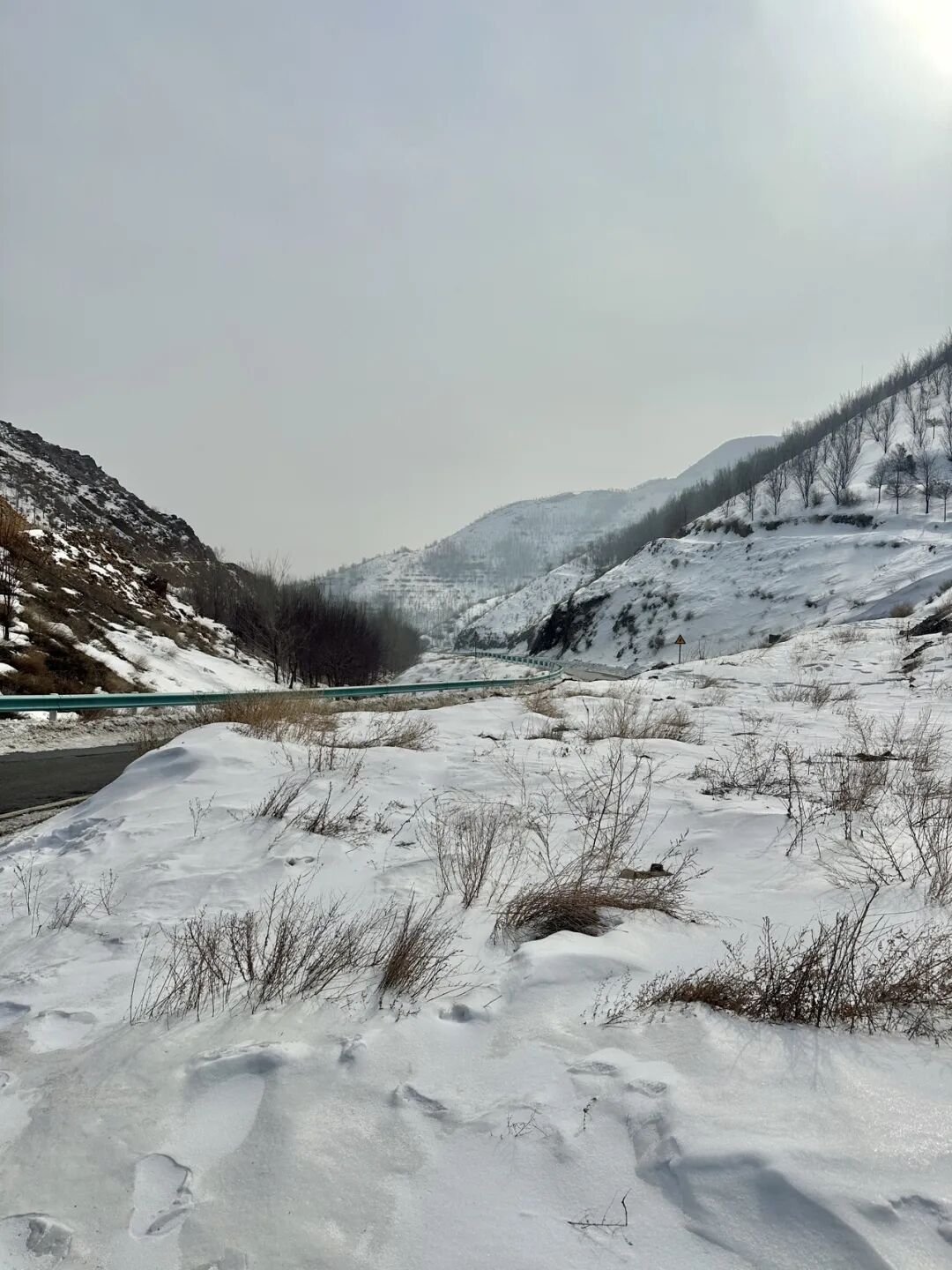
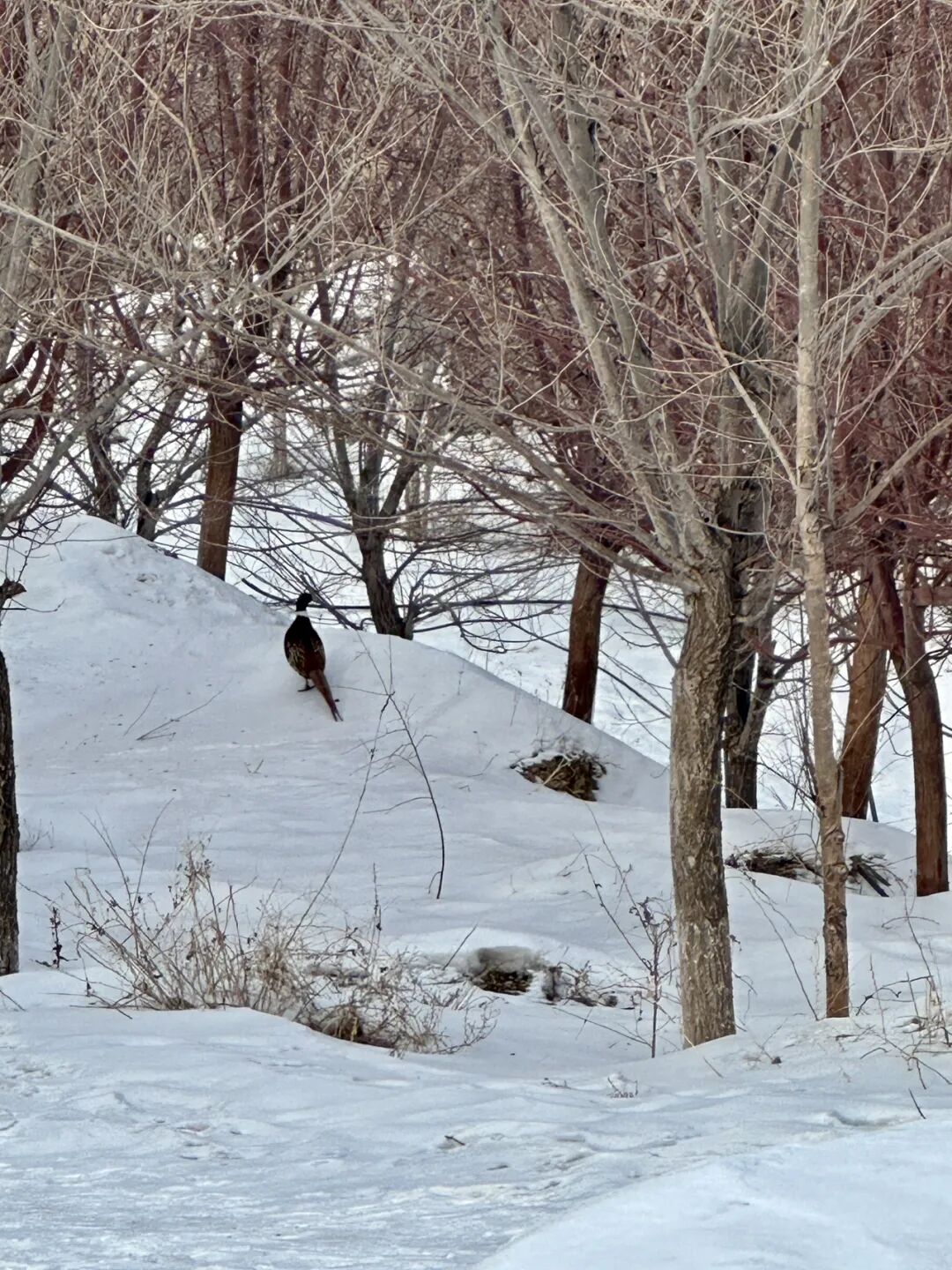
In the morning, I took Suleiman to the top of Yaomo Mountain in Urumqi. It was his first time climbing a snow-covered mountain. We entered through the southeast gate. The path up to Yunmantai is quite gentle and the shortest route, so both the elderly and children can climb it. We took a dirt path going up and the paved road coming down. The scenery on both sides was different, and we even saw a pheasant on the way down.
Another restaurant on Zhujiang Road, Hotan Flower Black Pilaf (Heizhuafan), is also very unique. It was my first time eating black pilaf in Urumqi. They only sell it at noon. We asked at 10 a.m. and 6 p.m. and it was sold out both times. We finally got to eat it when we went after 4 p.m.
Black pilaf is made by frying onions (piyazi) until they are completely charred and caramelized, rather than frying them to a light golden color like regular pilaf. They also add whole garlic cloves for flavor. Black pilaf has a richer flavor than white pilaf. I had it before in Tashkent and loved it, so I was happy to eat it again this time. You can actually find black pilaf in Southern Xinjiang, Uzbekistan, and Tajikistan, but it is rare in Northern Xinjiang. My relatives said an elderly Uzbek man used to sell black pilaf on Zhujiang Road, but we don't know if he is still there.
Their black pilaf comes with lemonade, yogurt, and mung bean jelly (liangfen). The spicy vinegar in the jelly adds a great kick. The waiter will come over and ask if you want more rice.
We also ordered the Hotan-style corn porridge. Hotan corn porridge is called 'umash' in the Uyghur language. To make it, you stir-fry onions in lamb fat, add diced lamb, then pour in lamb broth and bring it to a boil. You also add fresh corn kernels. It is completely different from the clear corn porridge in inland China. It is salty, rich, and full of ingredients, making it very warming in autumn and winter.
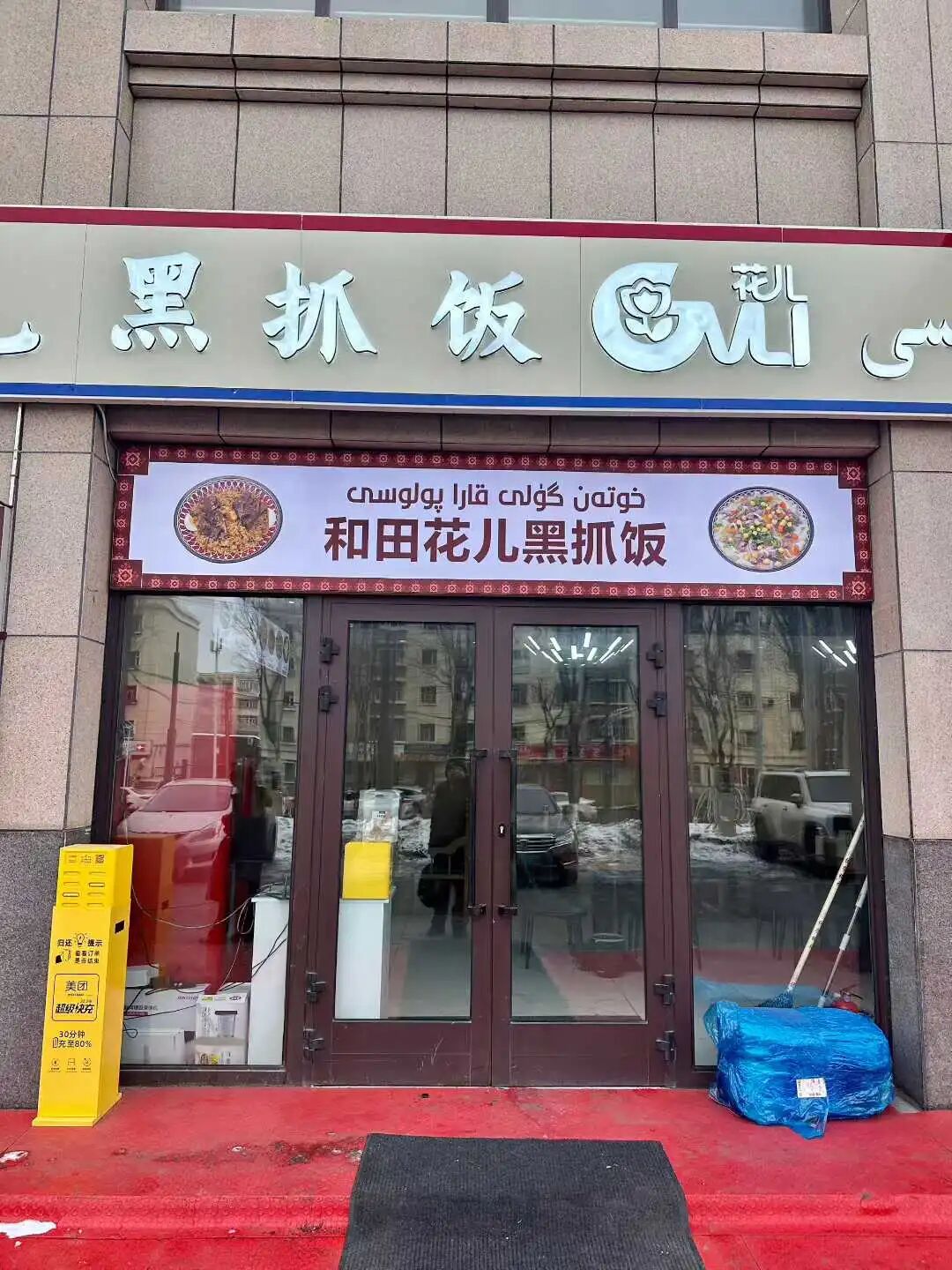
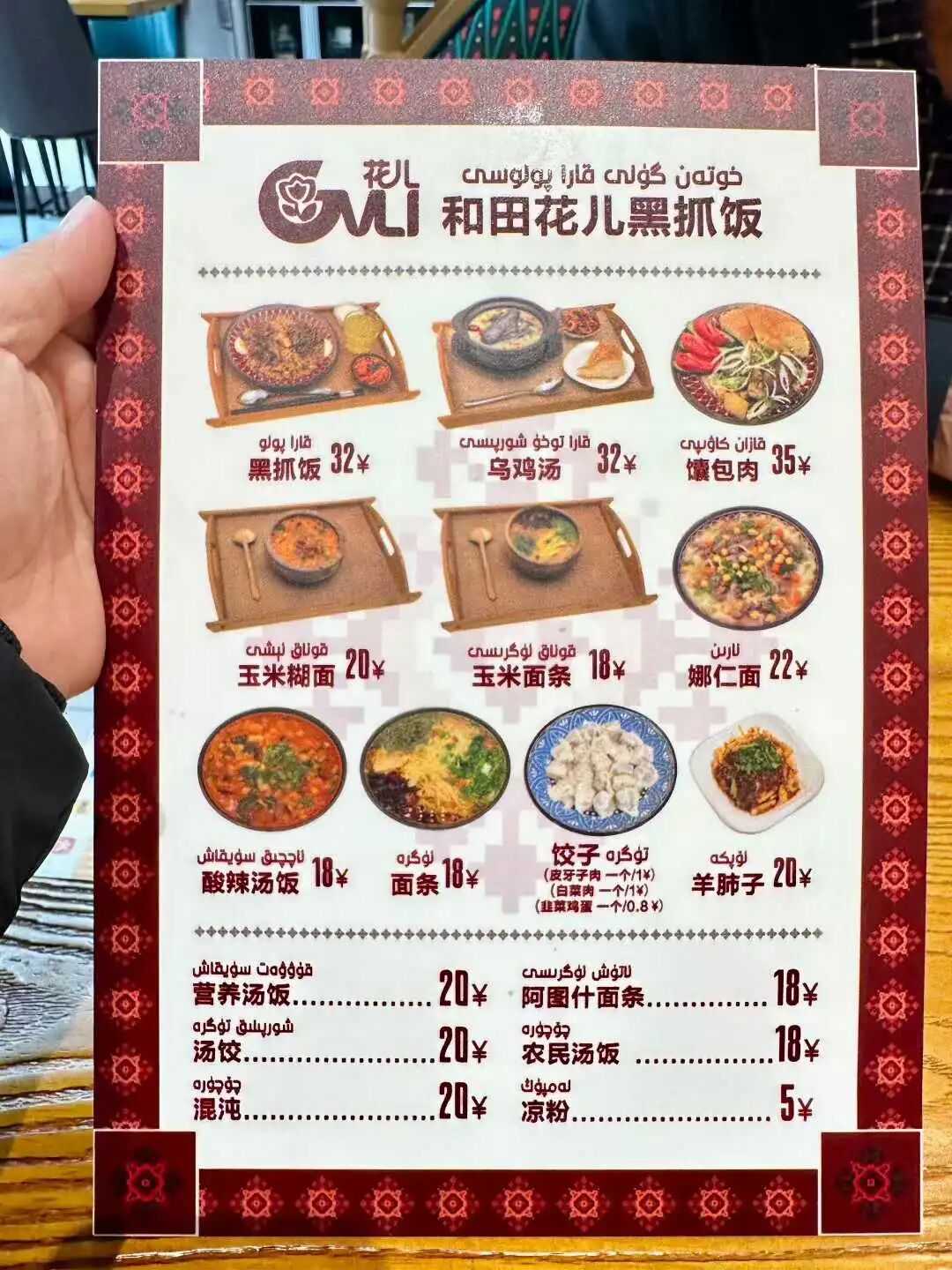
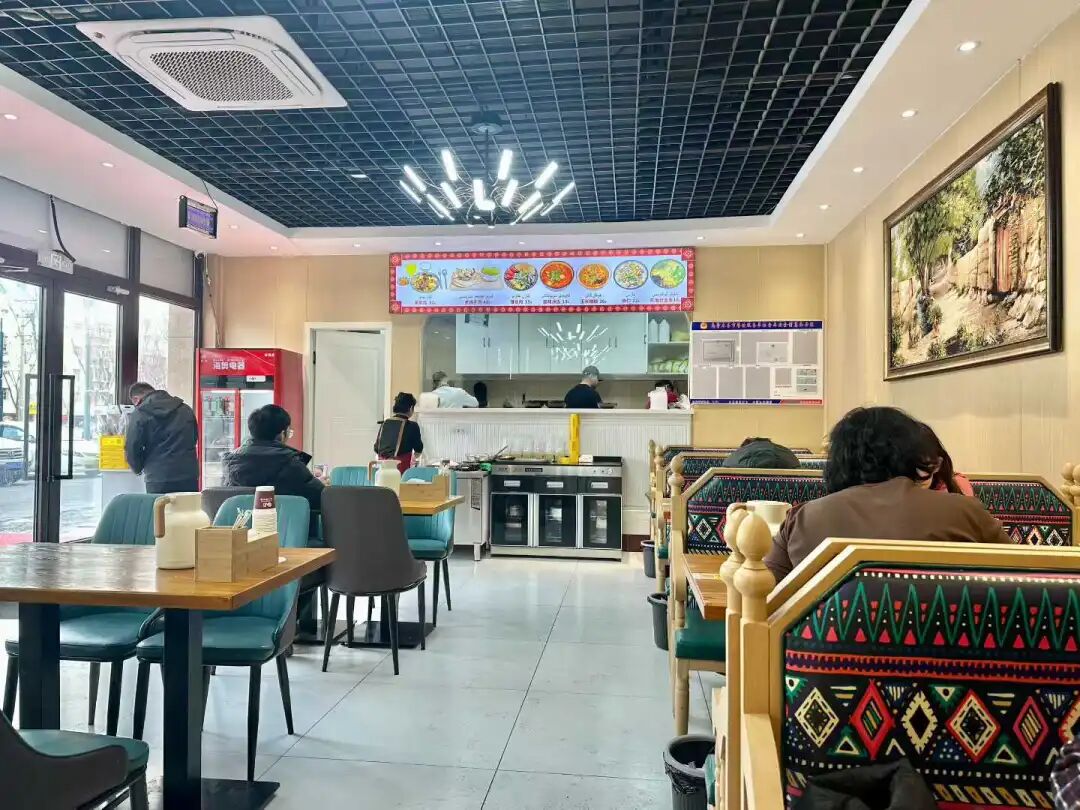
There are some new Uyghur restaurants on Zhujiang Road. I want to try this Hotan noodle soup next time.
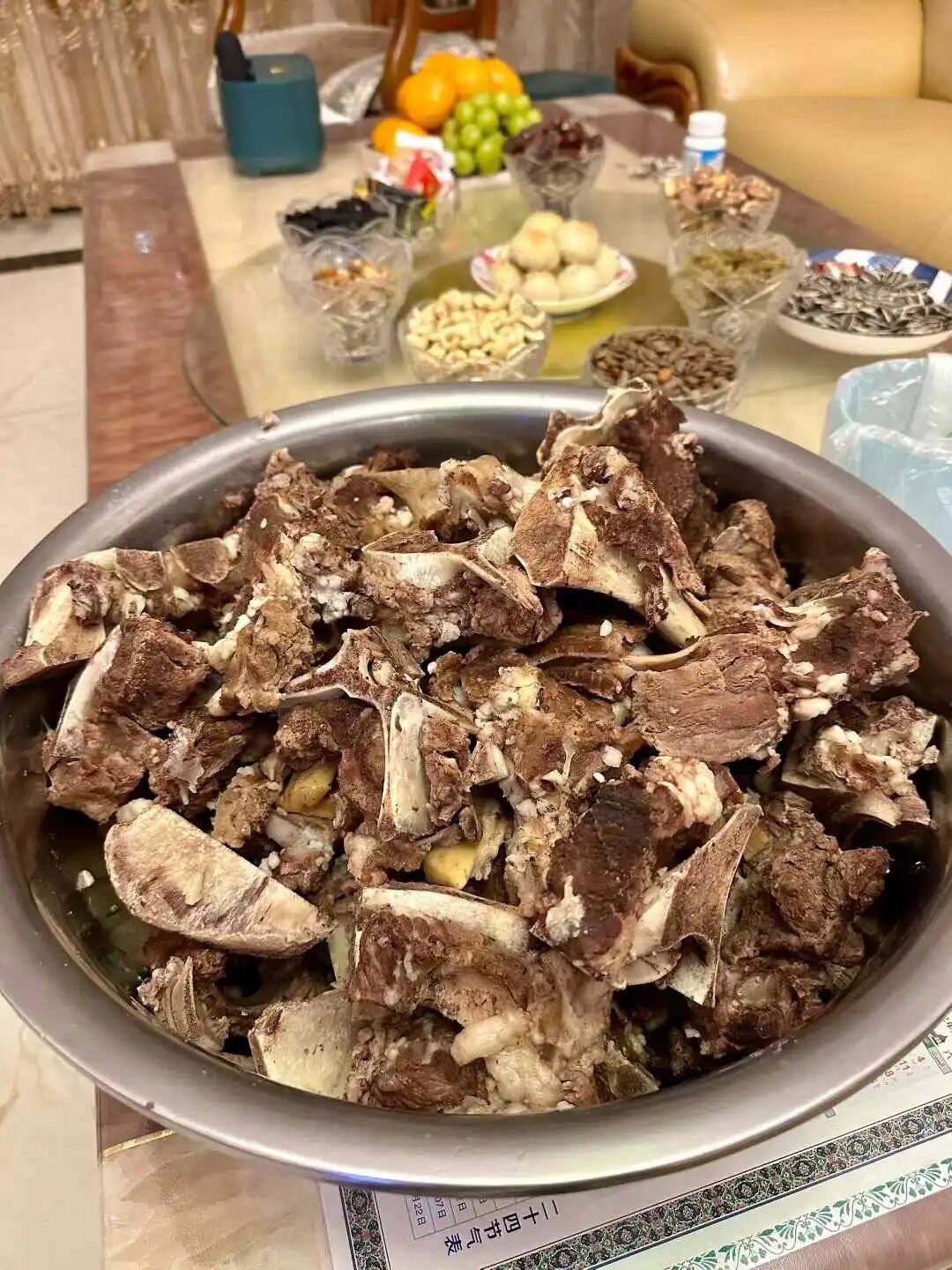
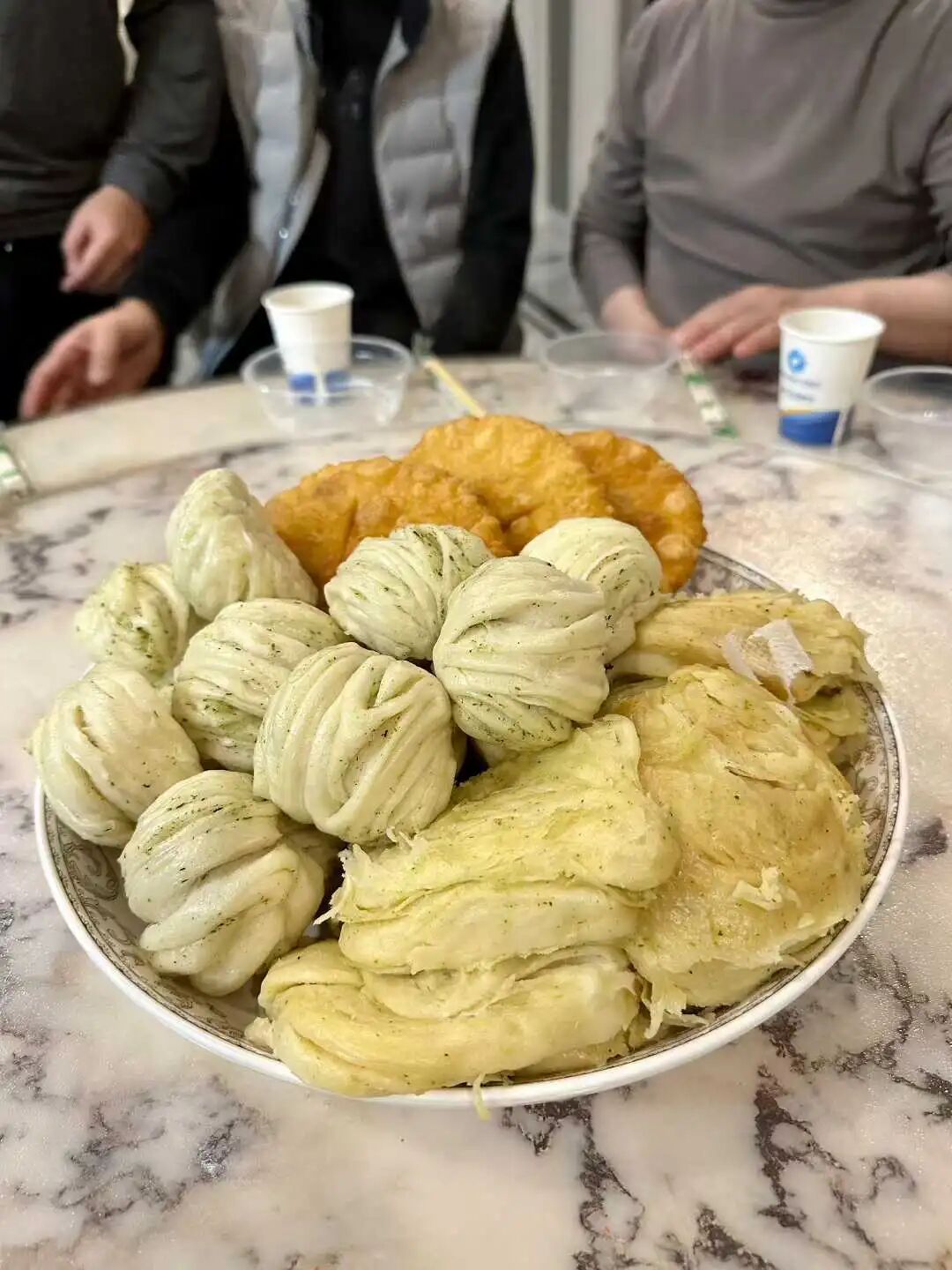
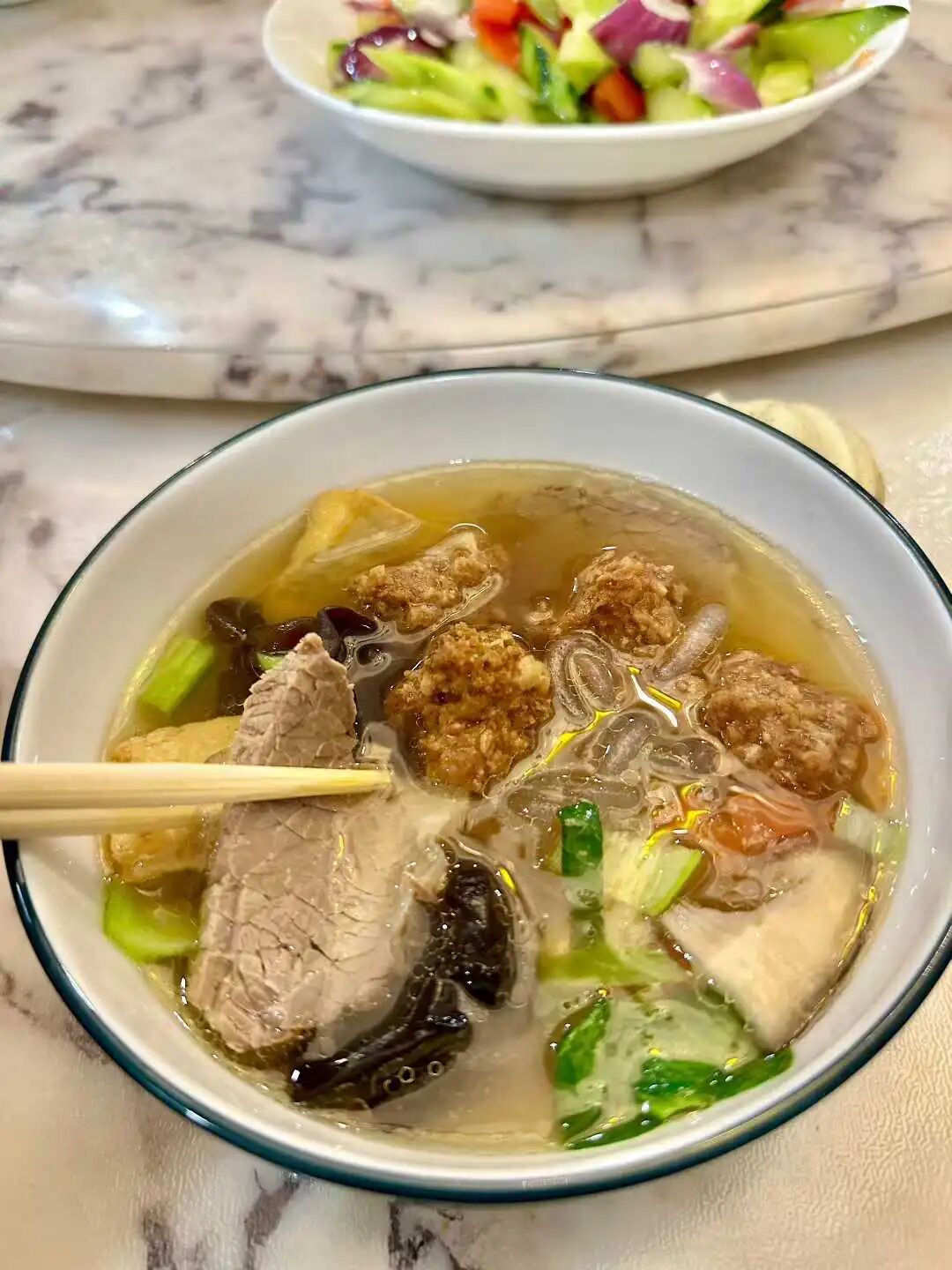
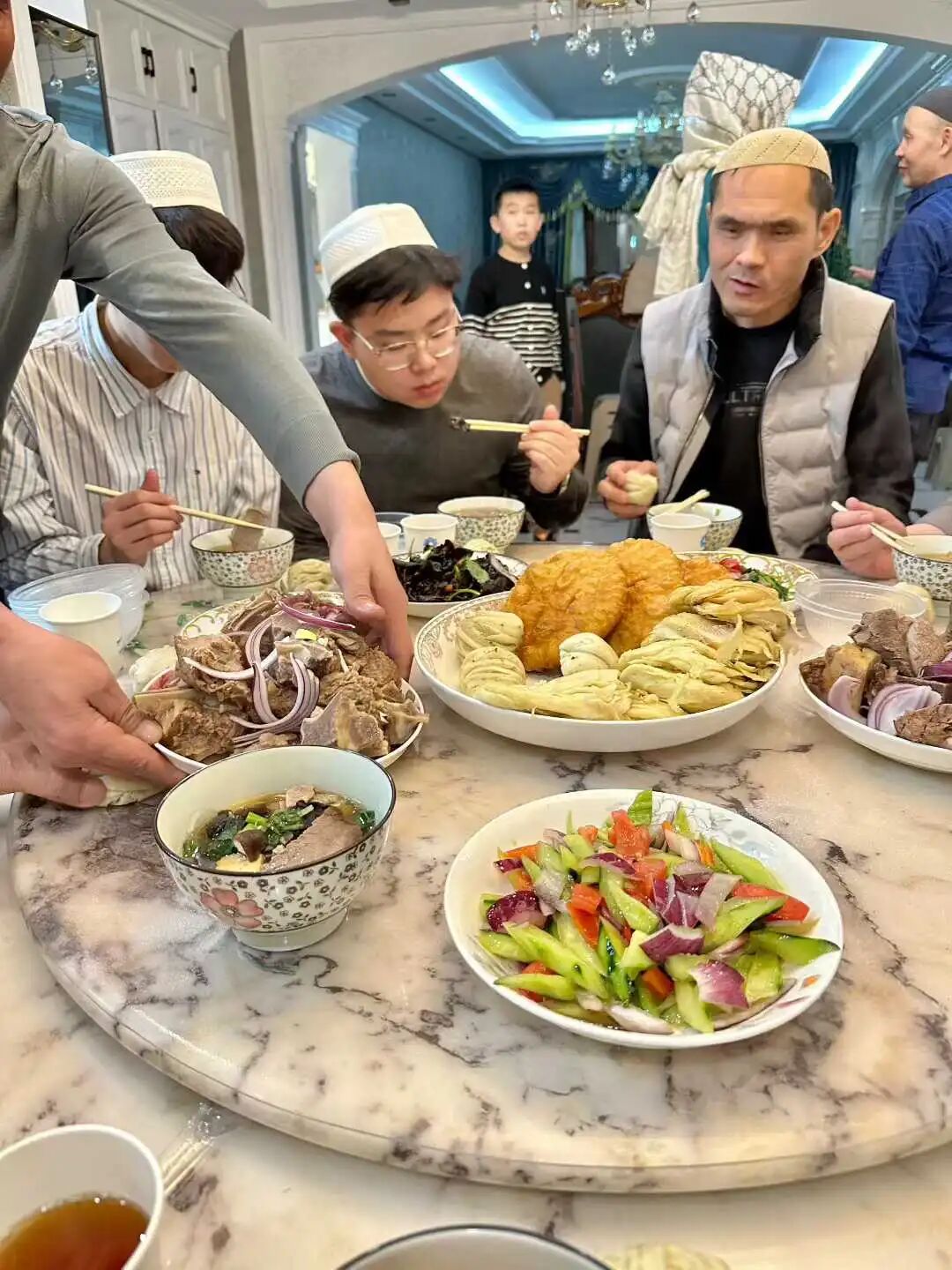
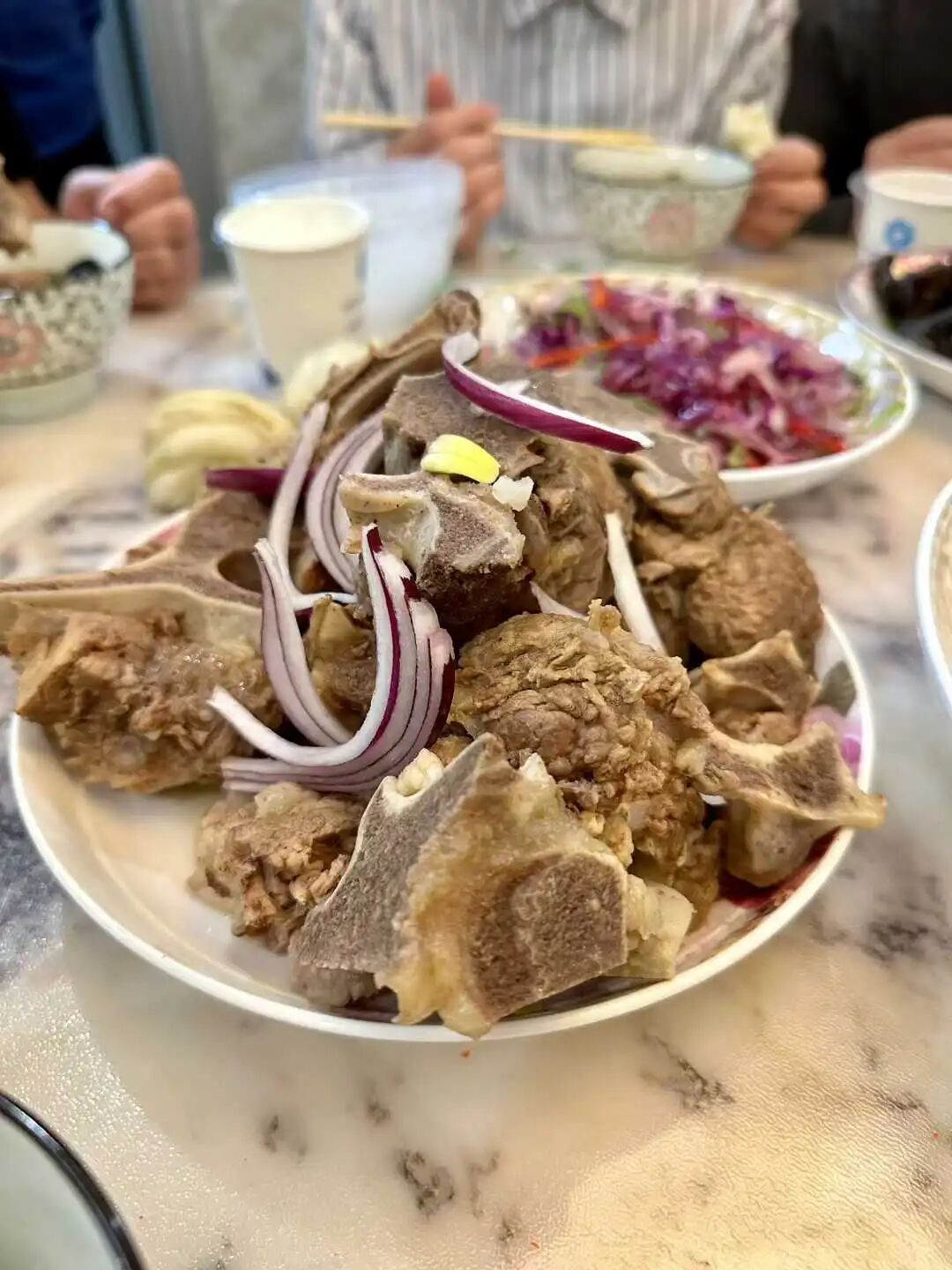
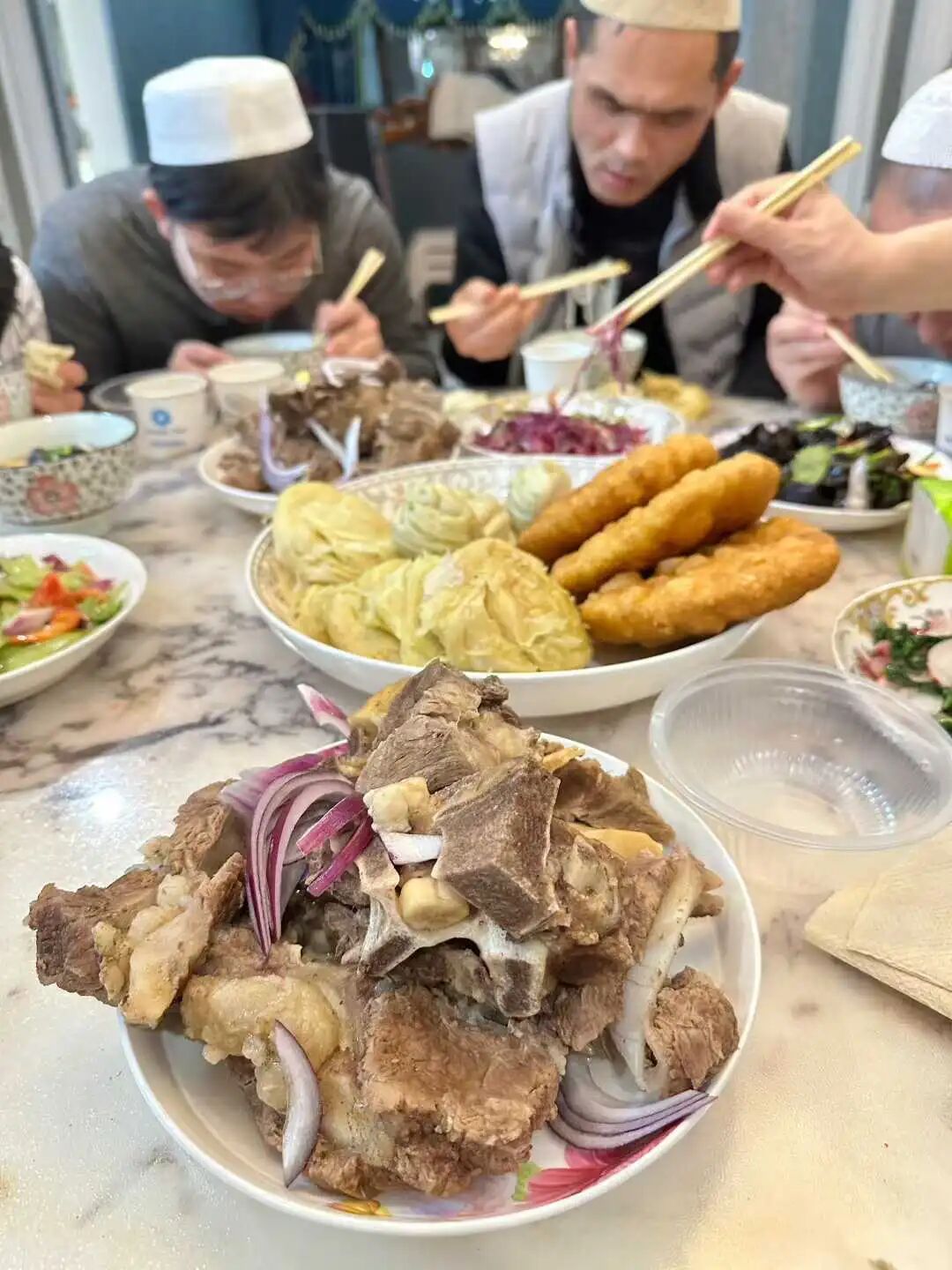
In the evening, we had a meal at a relative's house, eating meatball soup and slow-cooked beef bone marrow. The homemade meatballs have lots of meat and very little starch; you really can't find this taste in restaurants. The beef bone marrow was stewed until soft and flavorful, so even the elderly could eat it easily. Steamed oil bread (youxiang) is a specialty of Xinjiang Hui Muslims. It is not deep-fried, making it healthier. It is fluffy in layers and carries the unique aroma of vegetable oil and fragrant clover (xiangdouzi).
February 16
In the morning, we attended a meal at the Huashenglou Banquet Hall, located across from the Changsheng Brigade Mosque in the southern suburbs of Urumqi. This land originally belonged to my wife's relatives, but later it was rented to a friend (dost) from Midong to open a restaurant. Whenever the family hosts a banquet, they replace the kitchen staff with relatives to cook and serve their friends and family themselves.
Changsheng is located at the southern foot of Yamalike Mountain. Under the Qing Dynasty's policy of settling soldiers to farm the border and the migration waves during the Republic of China, Hui Muslims from Shaanxi, Ningxia, and Gansu arrived here to clear wasteland and farm, gradually forming a village. After the founding of New China, these Hui Muslim farming households were organized into the Changsheng Brigade, creating a stable Hui Muslim community. Compared to Hui Muslims living scattered in the city, the people here have kept more traditional customs, and their banquets are much larger.
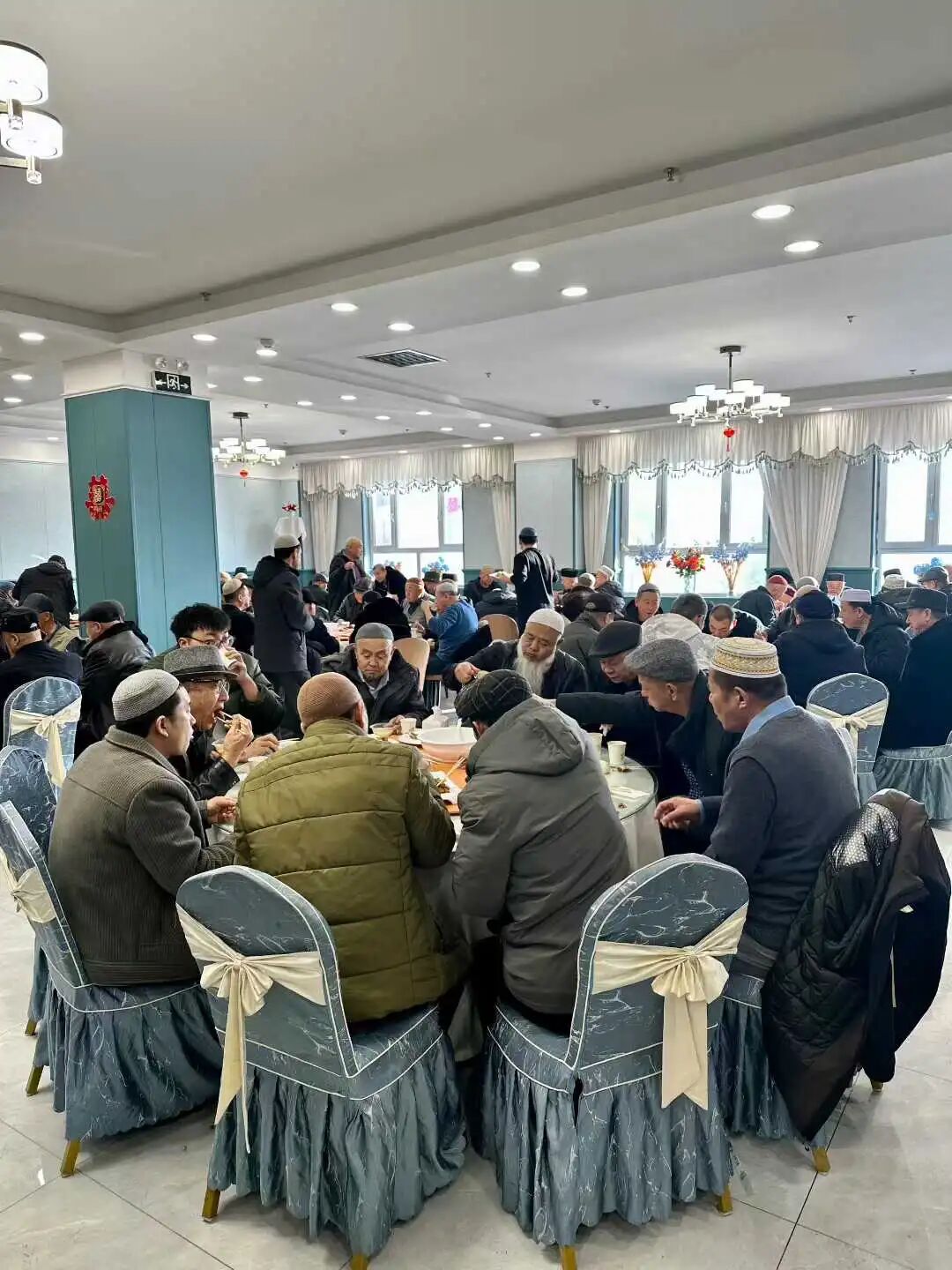
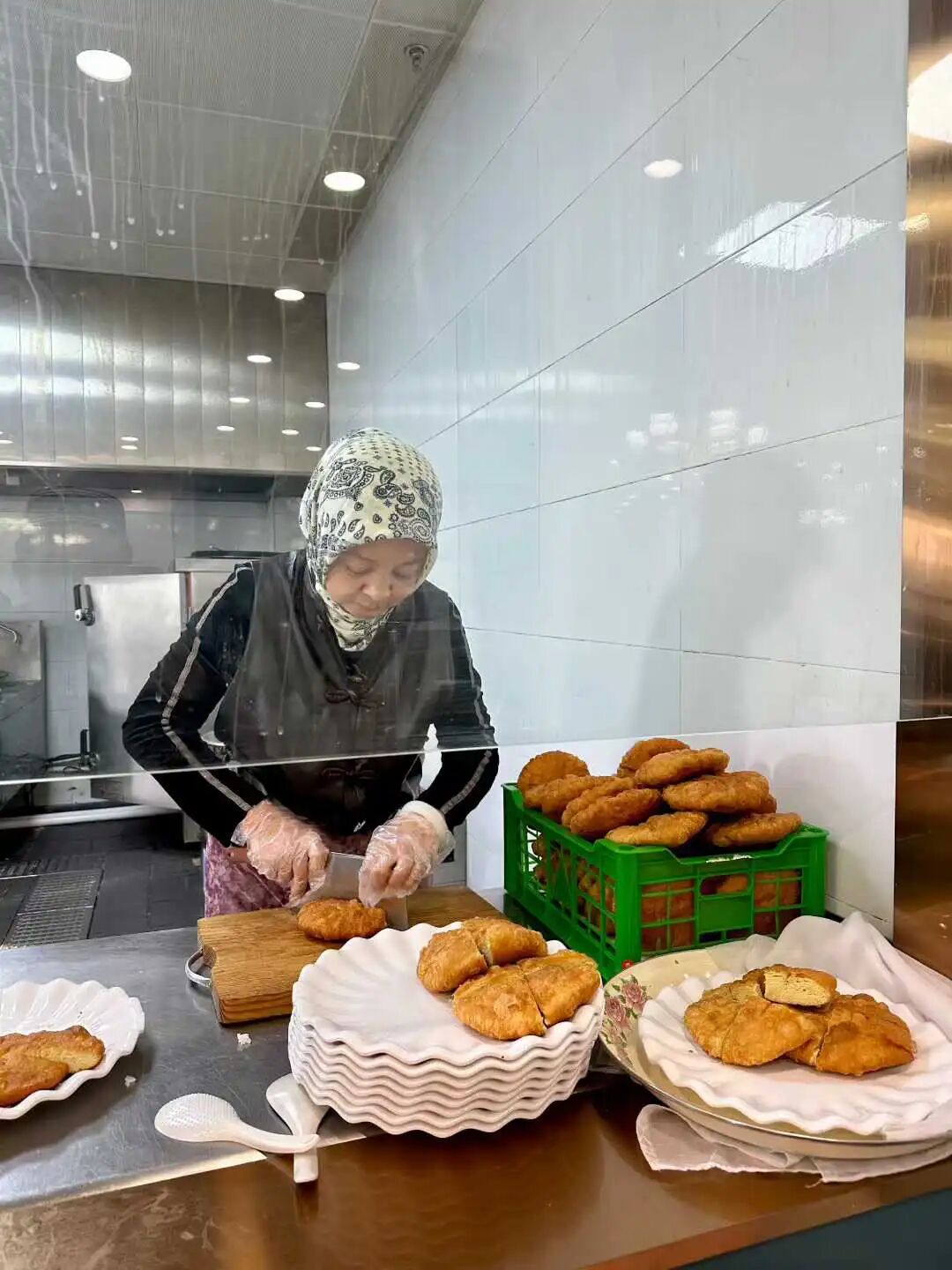
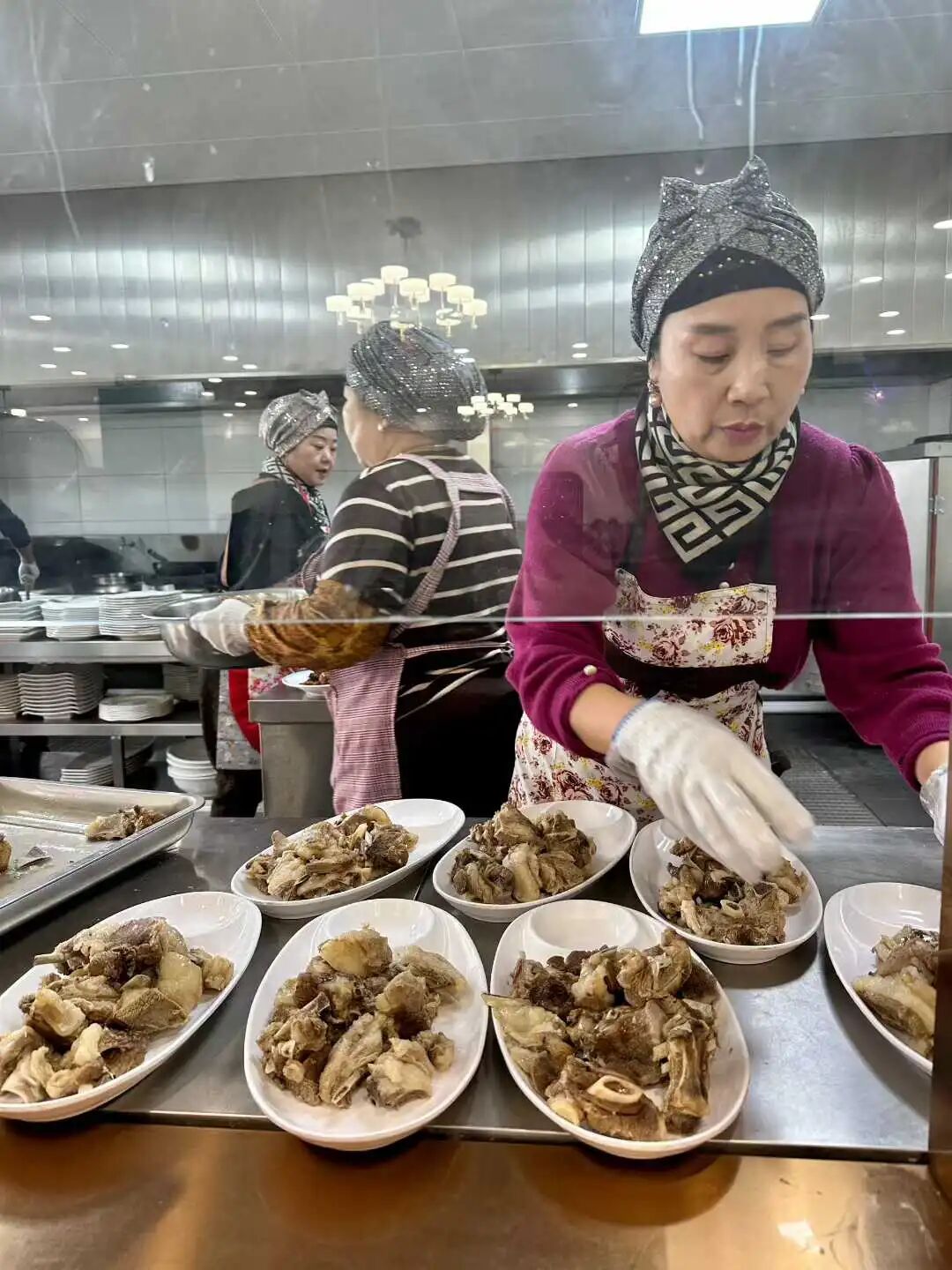
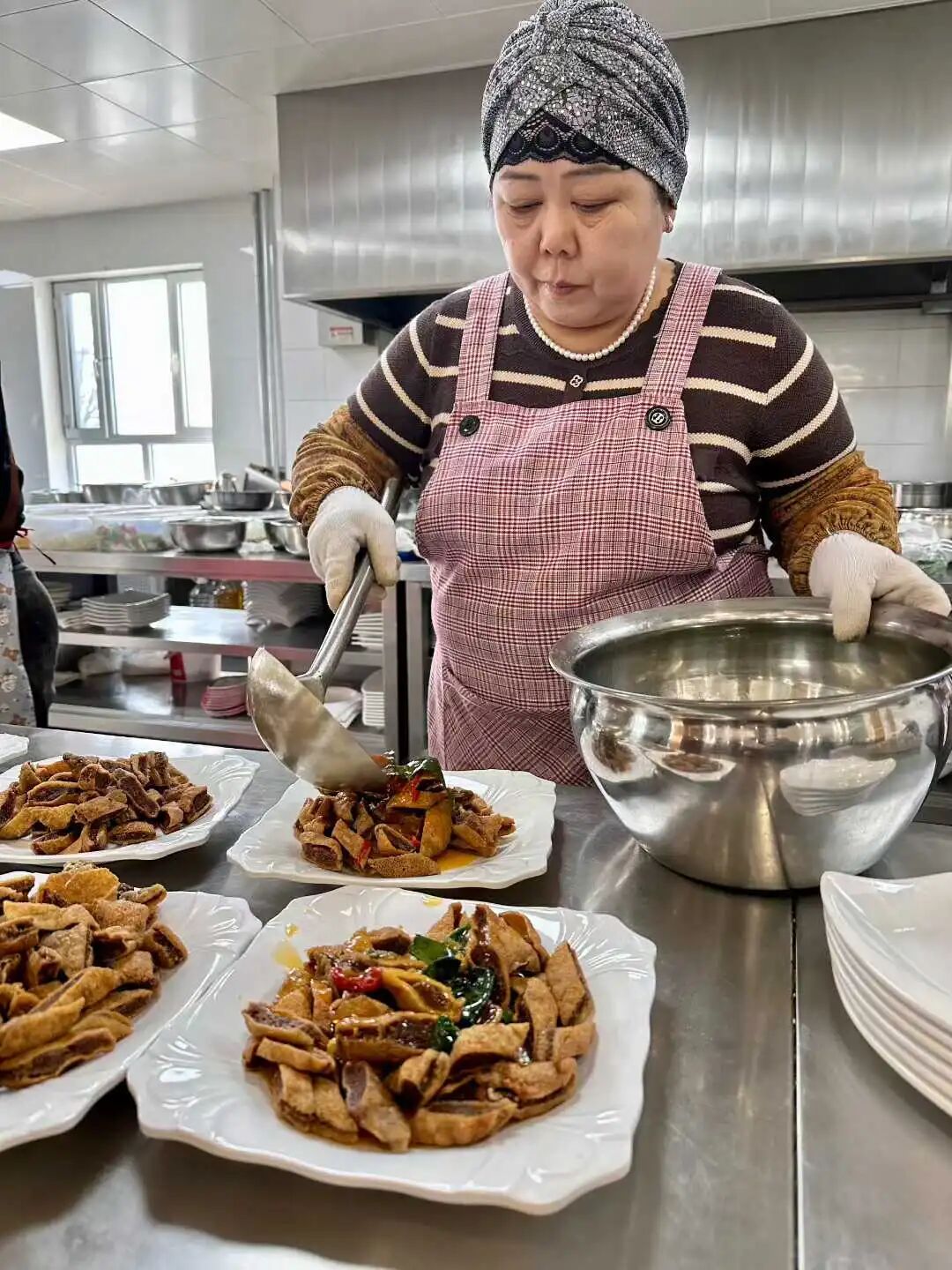
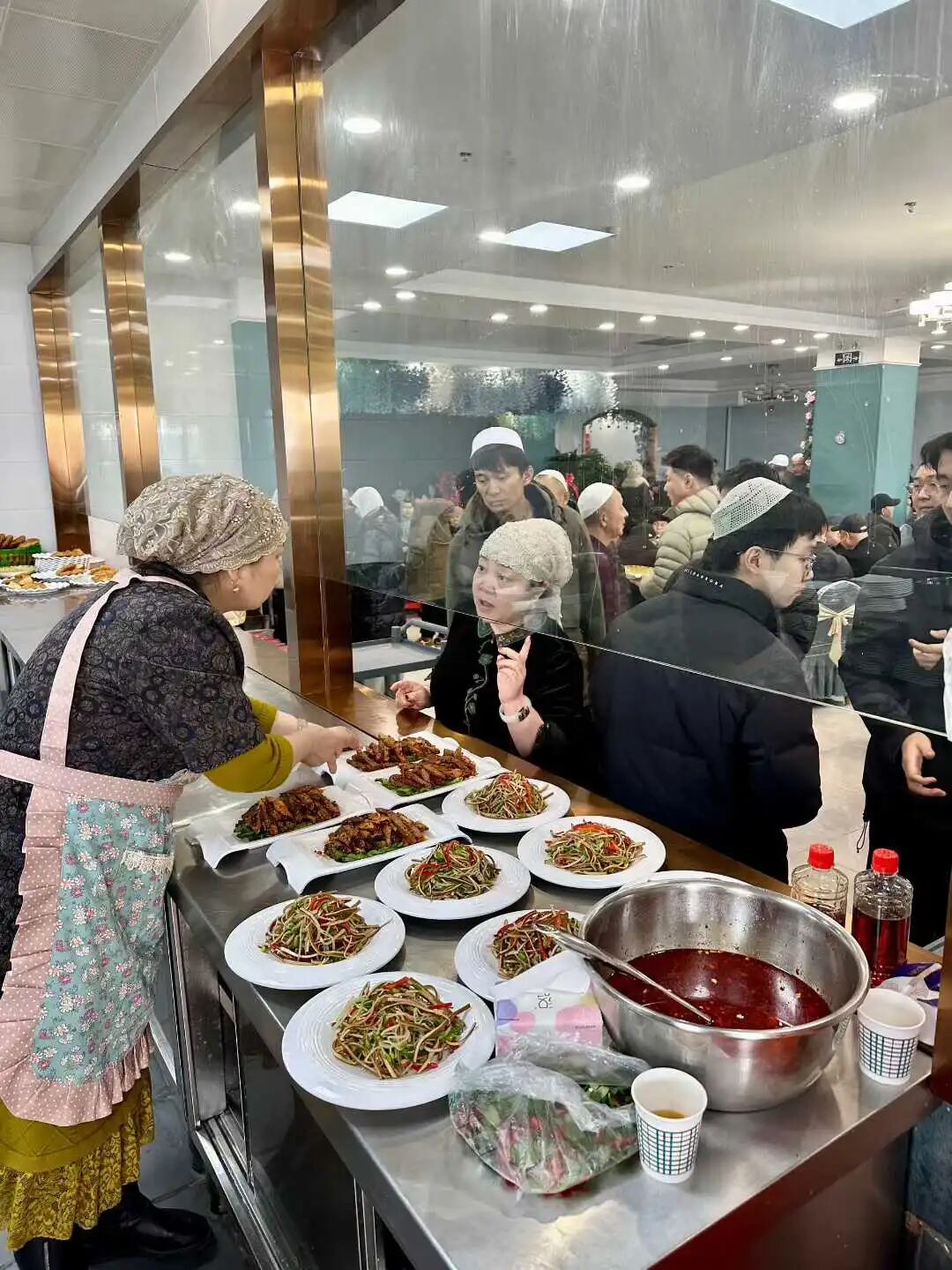
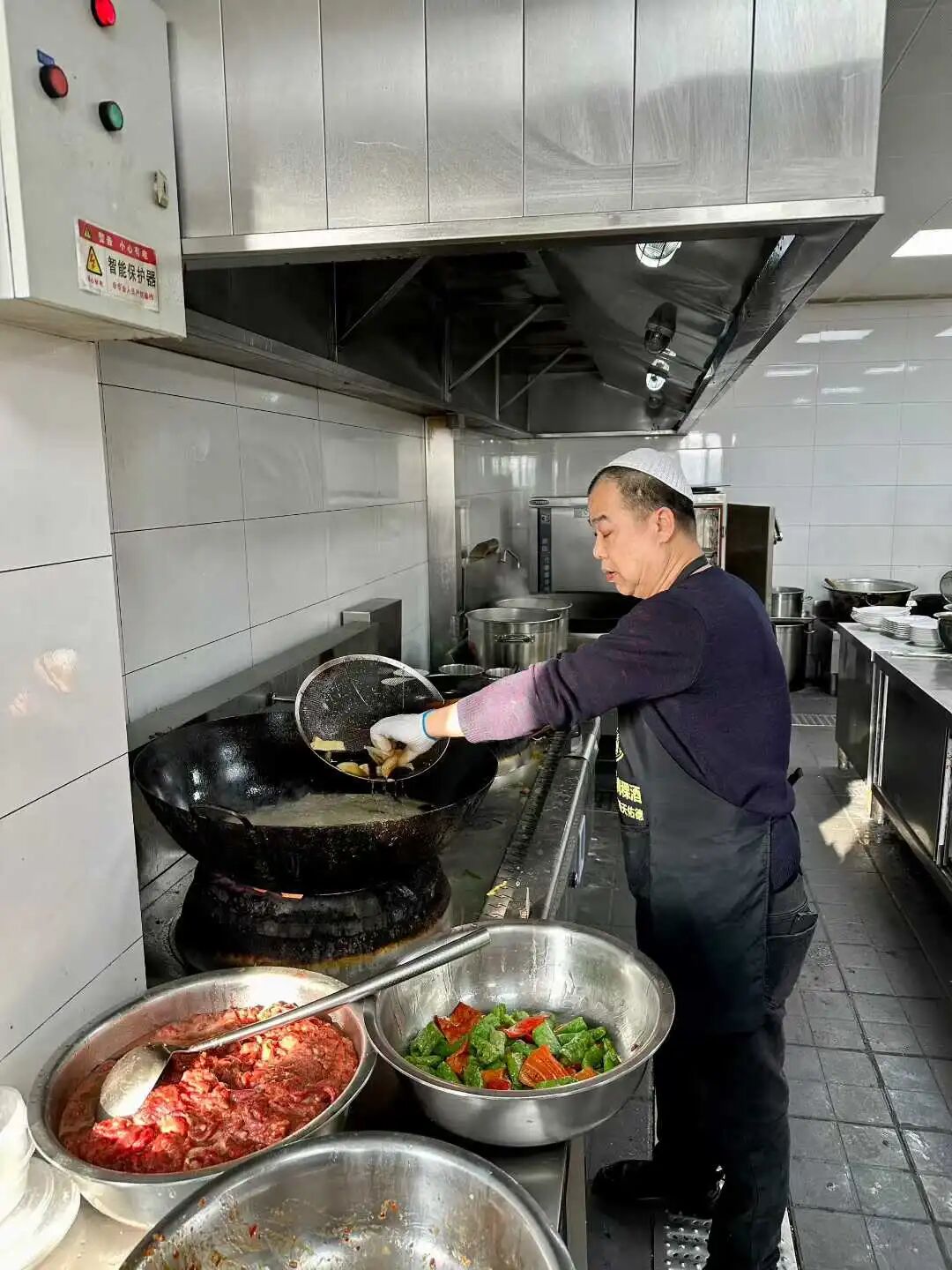
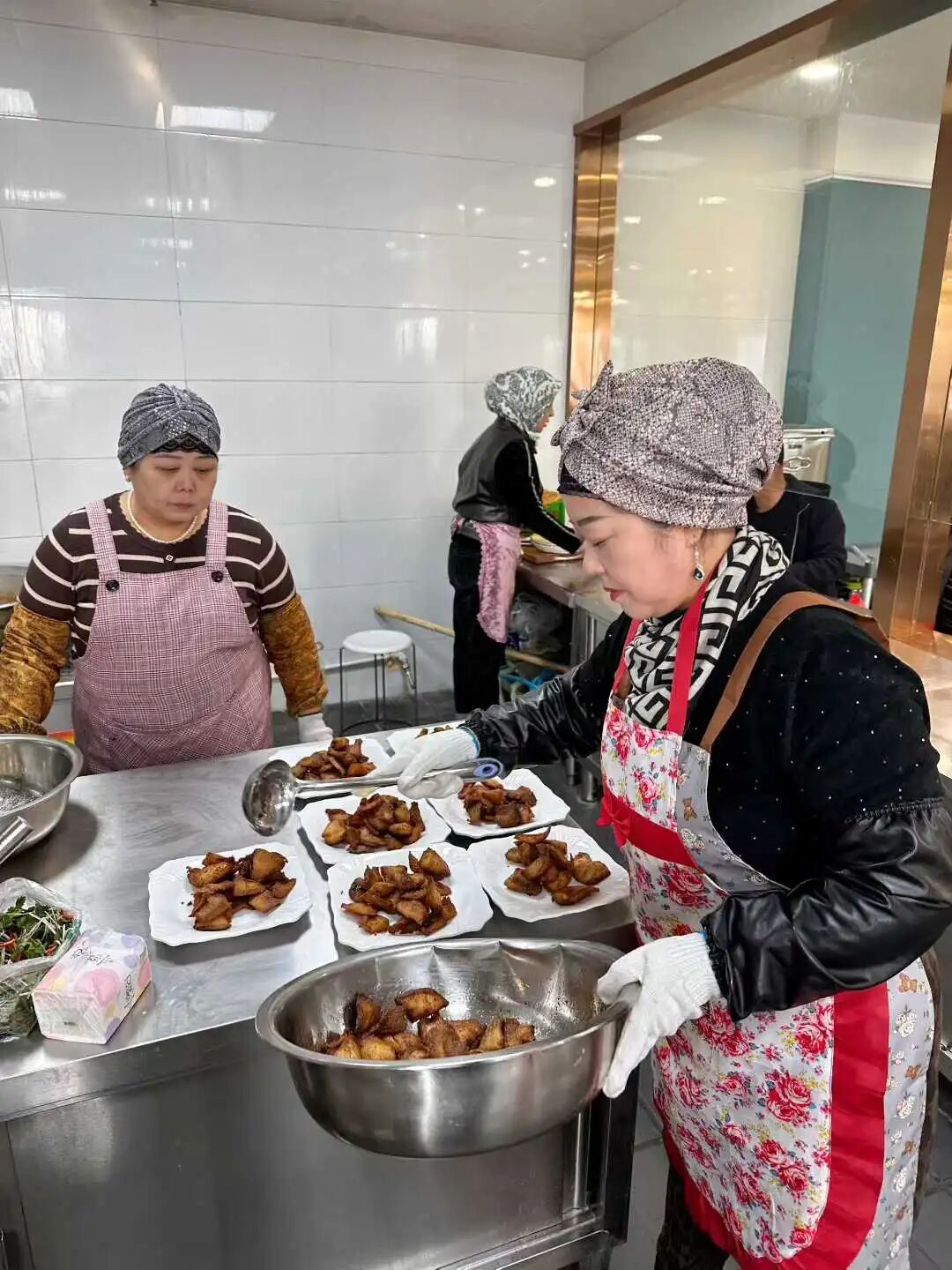
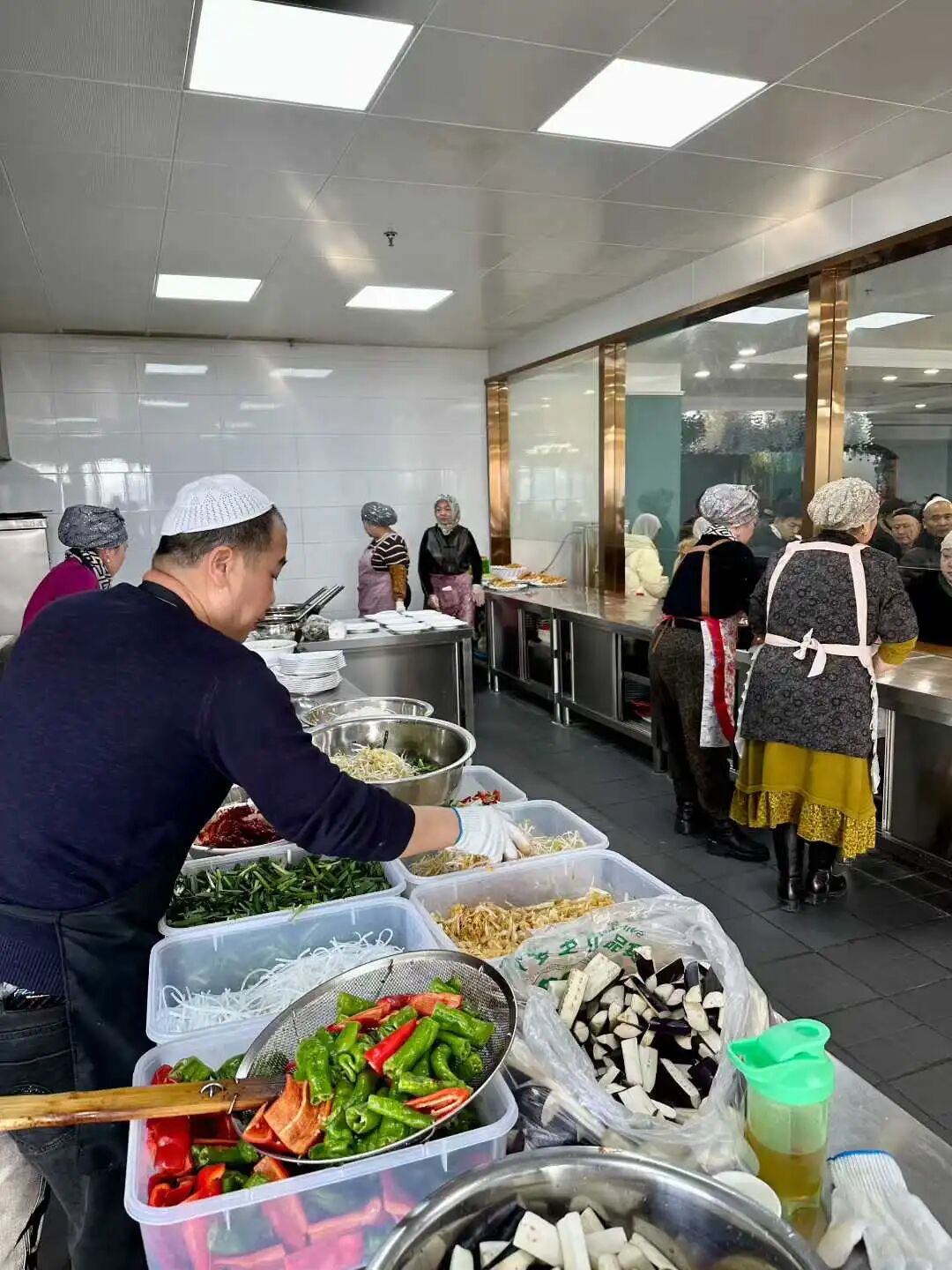
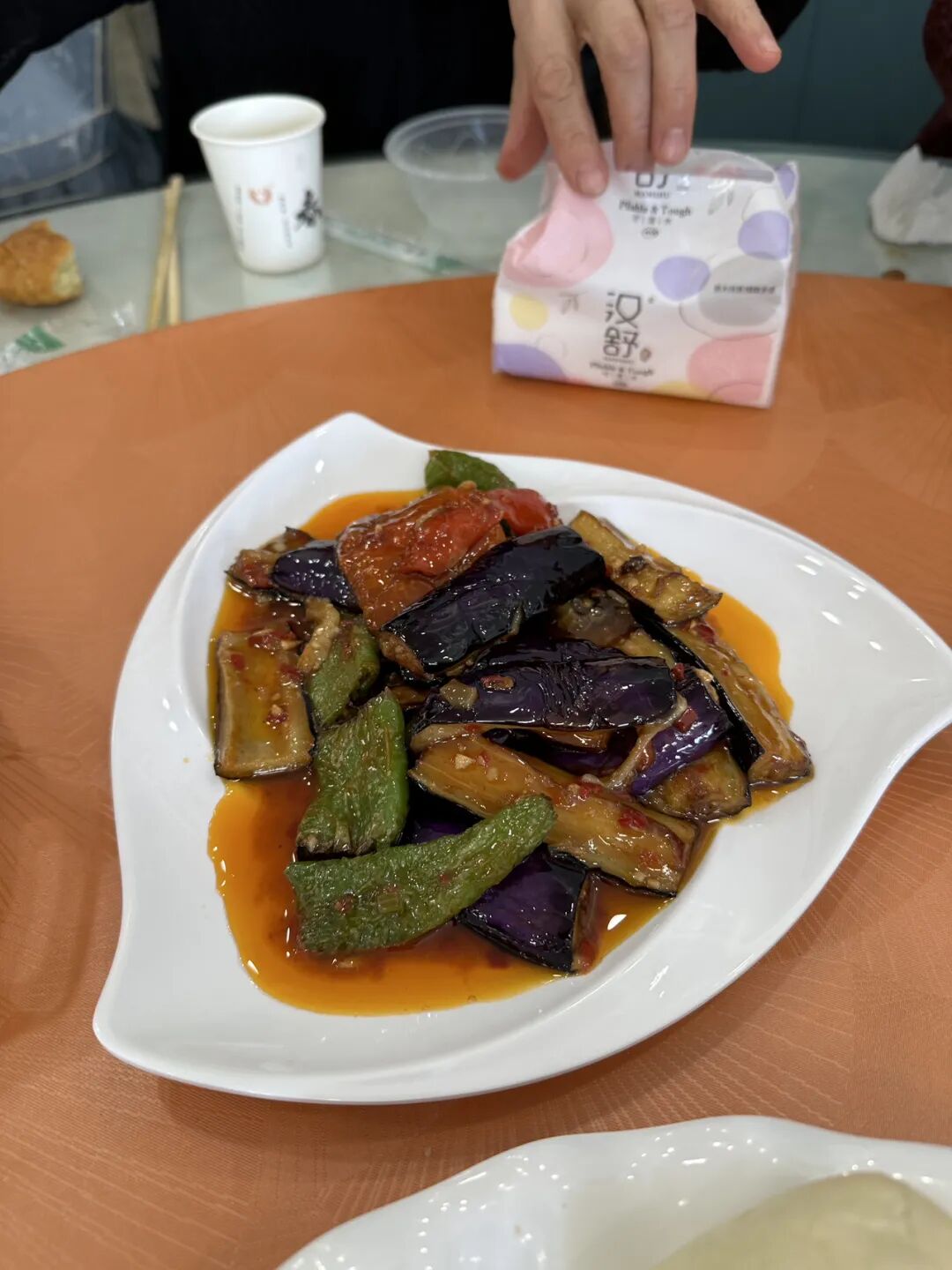
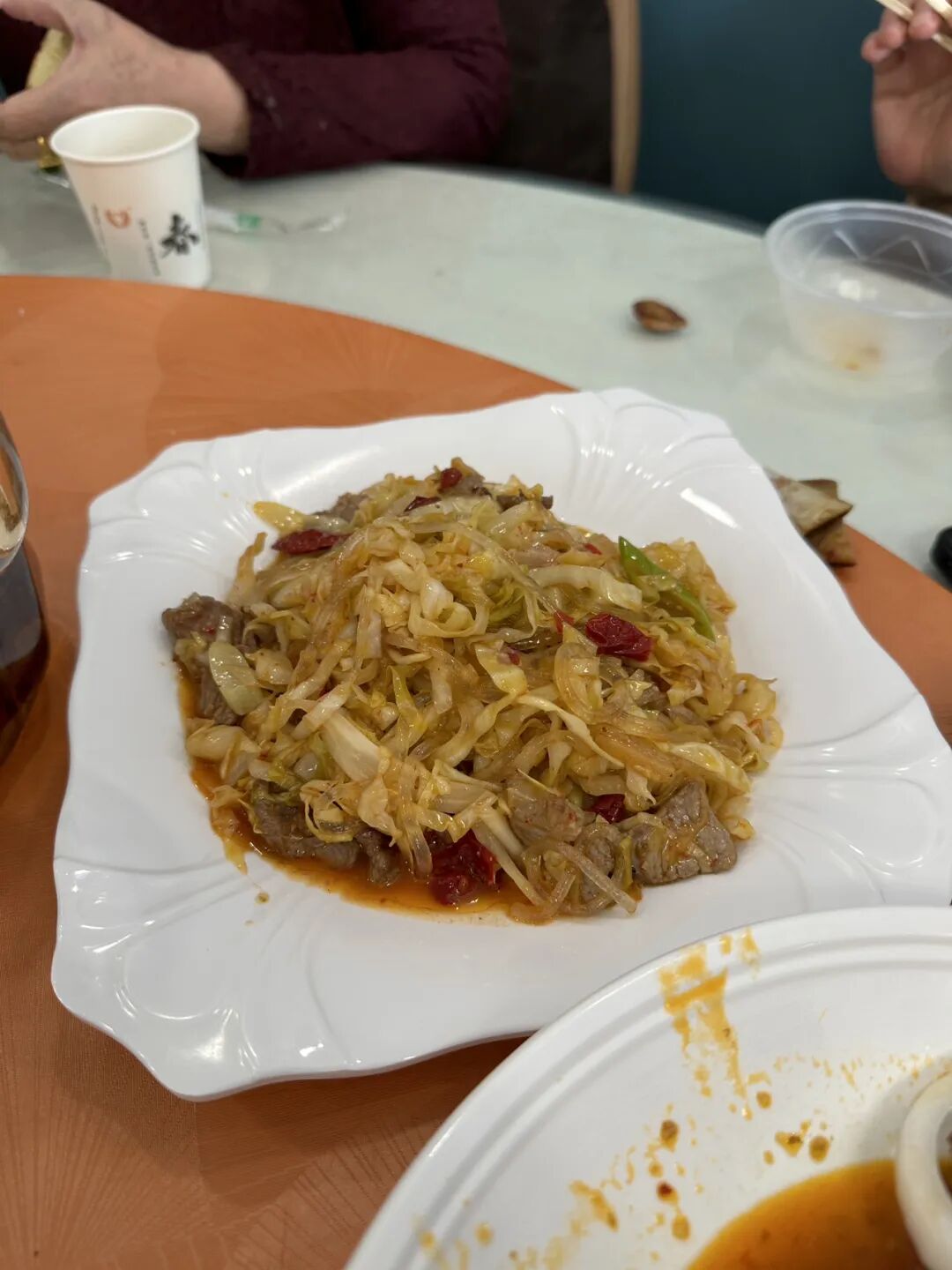
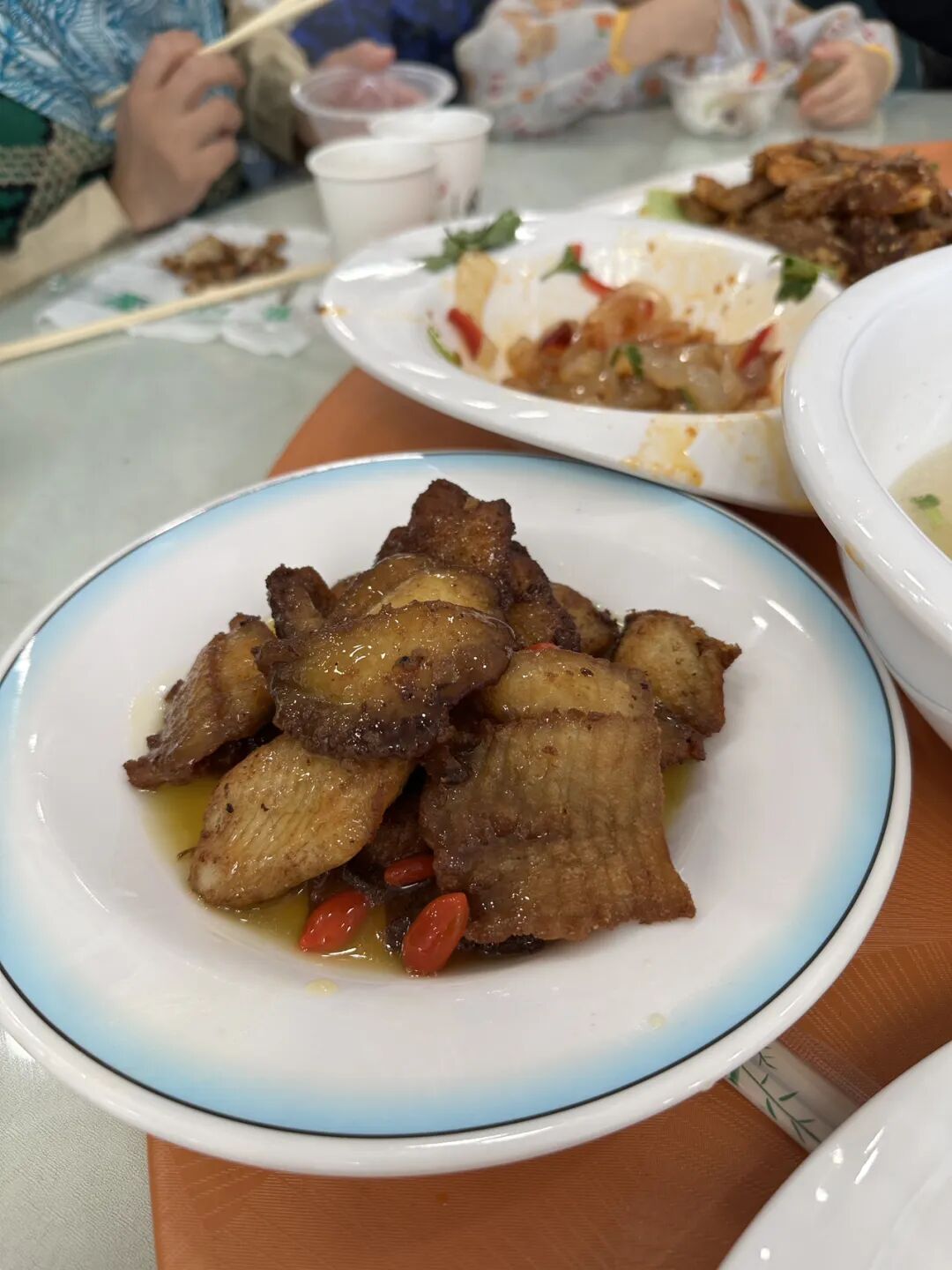
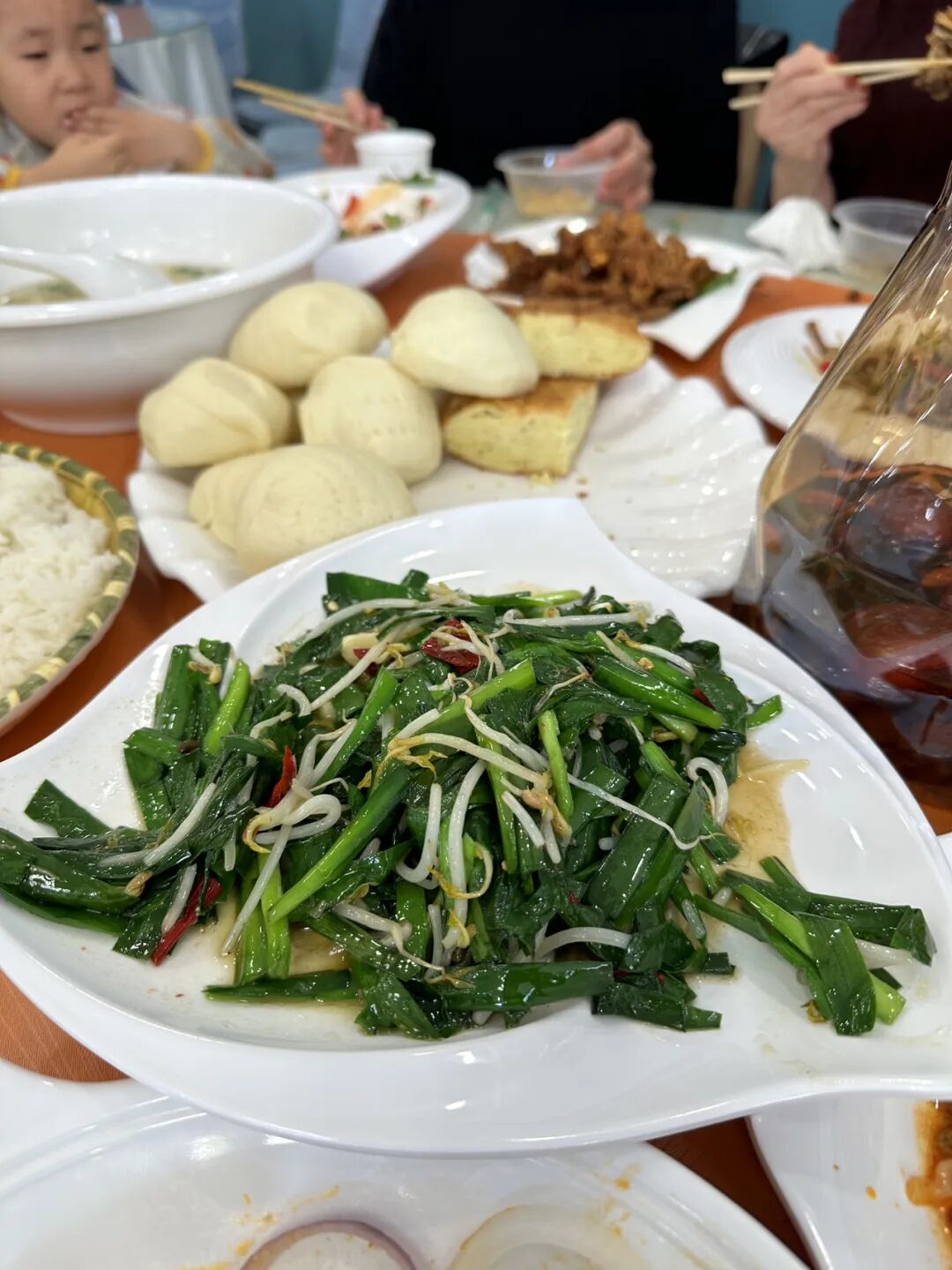
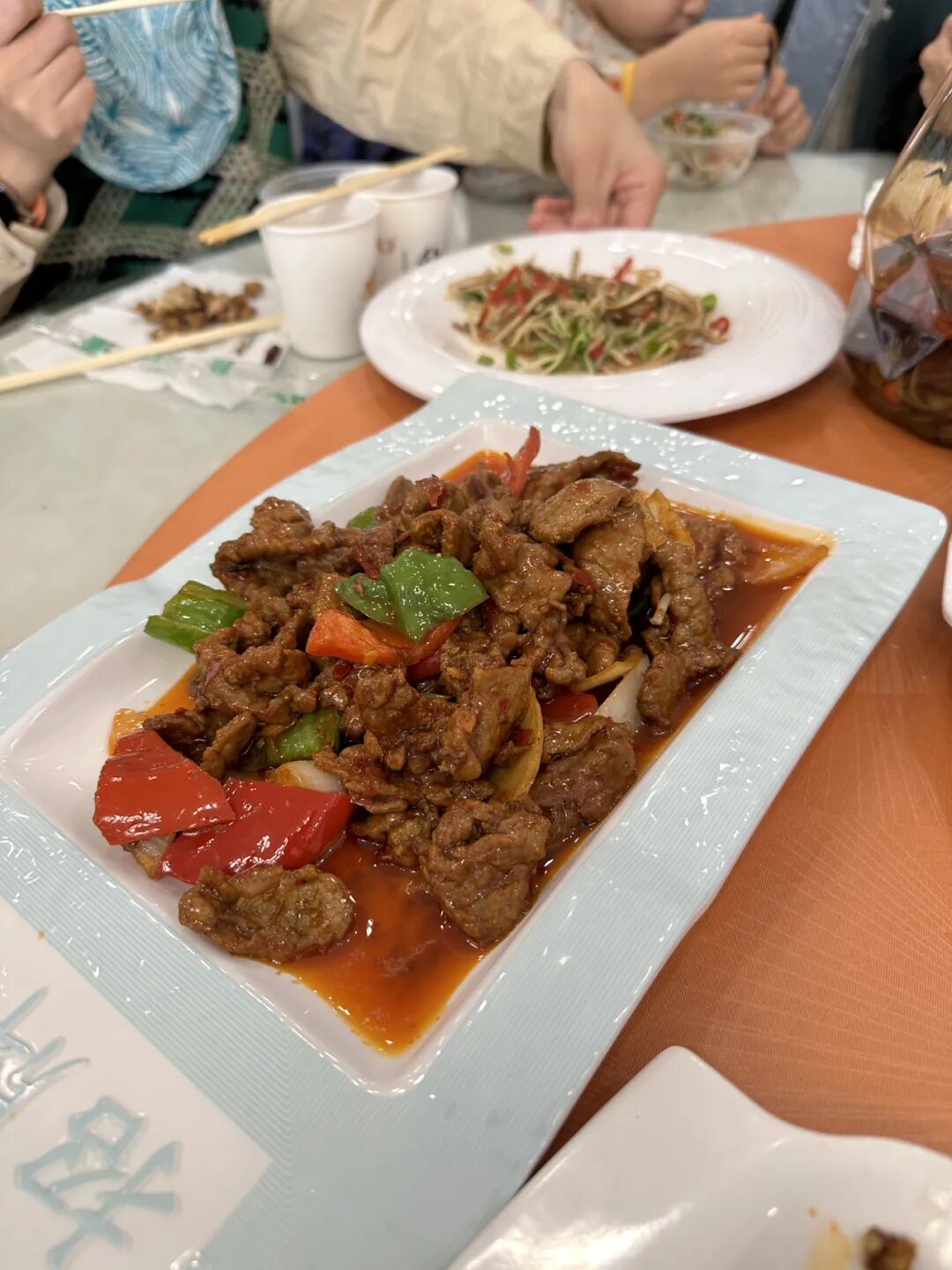
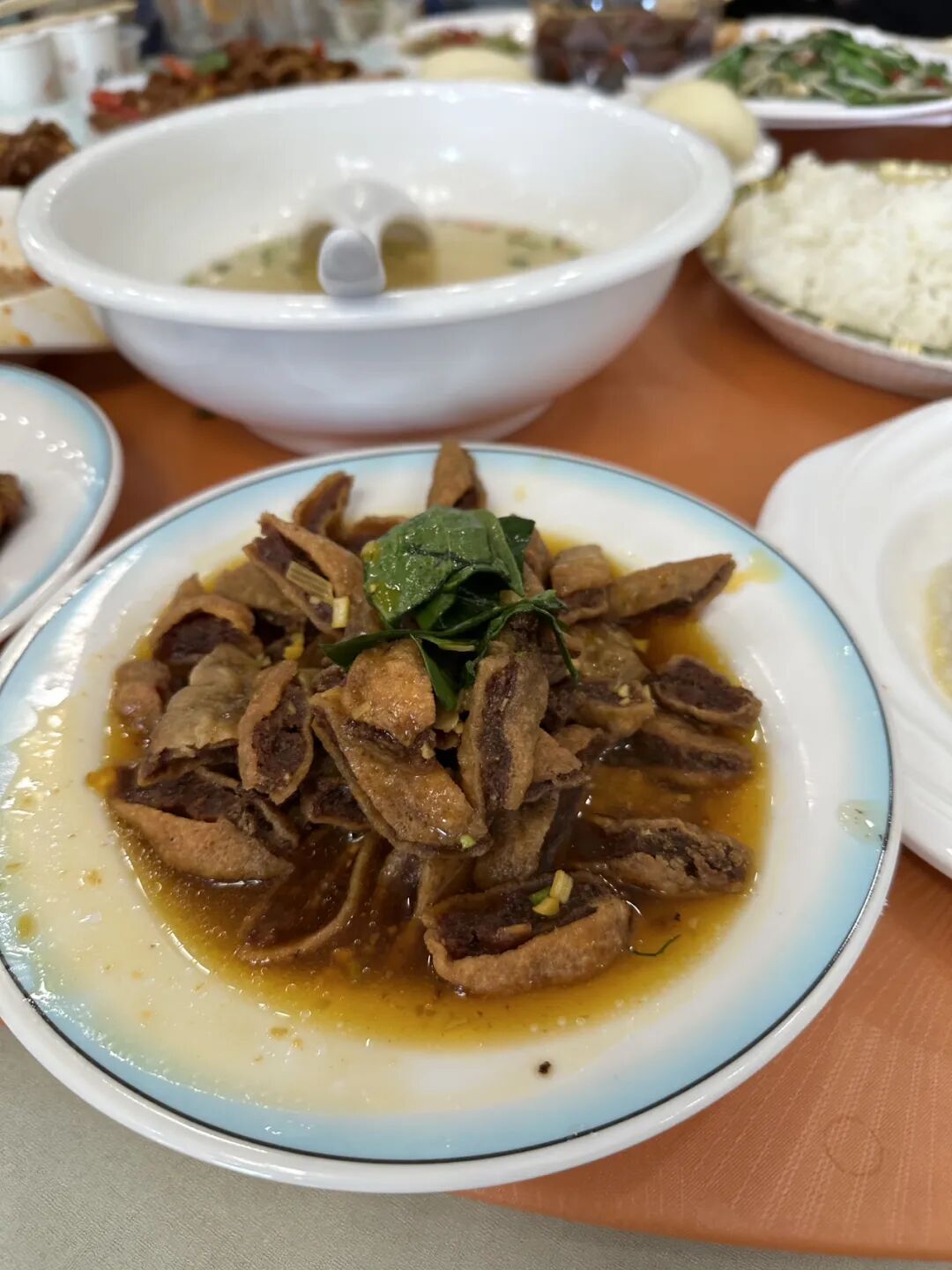
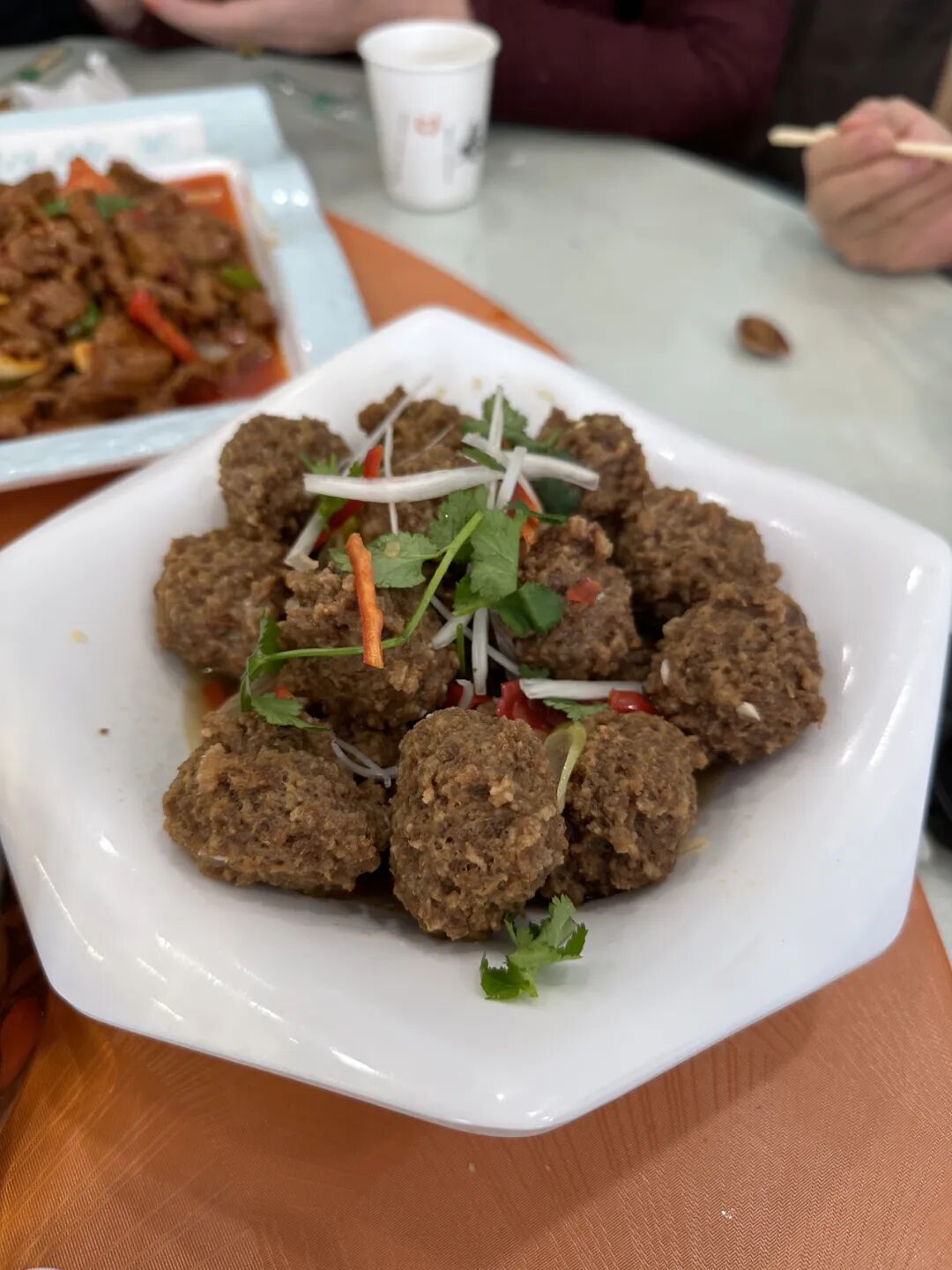
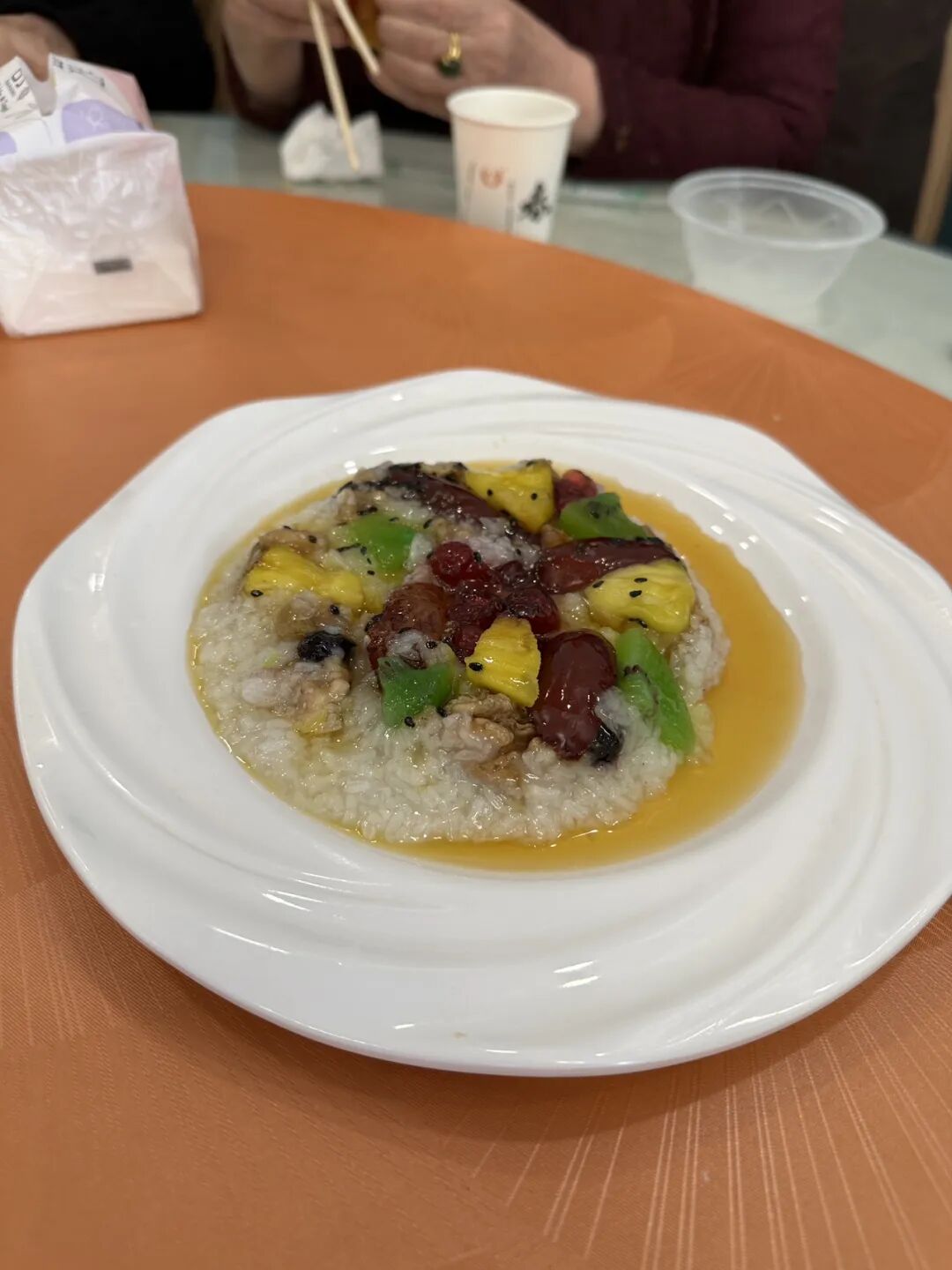
Following the order, nine small plates are served first while waiting for the main dishes, so people can drink tea and chat. The small plates contain things like dried fruits, snacks, and candied fruit. Then the small plates are cleared away and cold dishes are served, such as spiced dried tofu (xianggan), mung bean jelly (liangfen), and cold-tossed beef. Next come the stir-fried and stewed dishes, including clear-stewed lamb, braised beef steak, braised eggplant, pickled cabbage with lamb, fried hairtail fish, oil-seared meat (guoyourou), sauced meat-stuffed egg slices (jiashajiasha), stir-fried chives, and braised meatballs. These are all very traditional and have the true taste of a family banquet. Finally, they serve a sweet plate, also called eight-treasure rice (babaofan), which is very satisfying when drizzled with syrup.
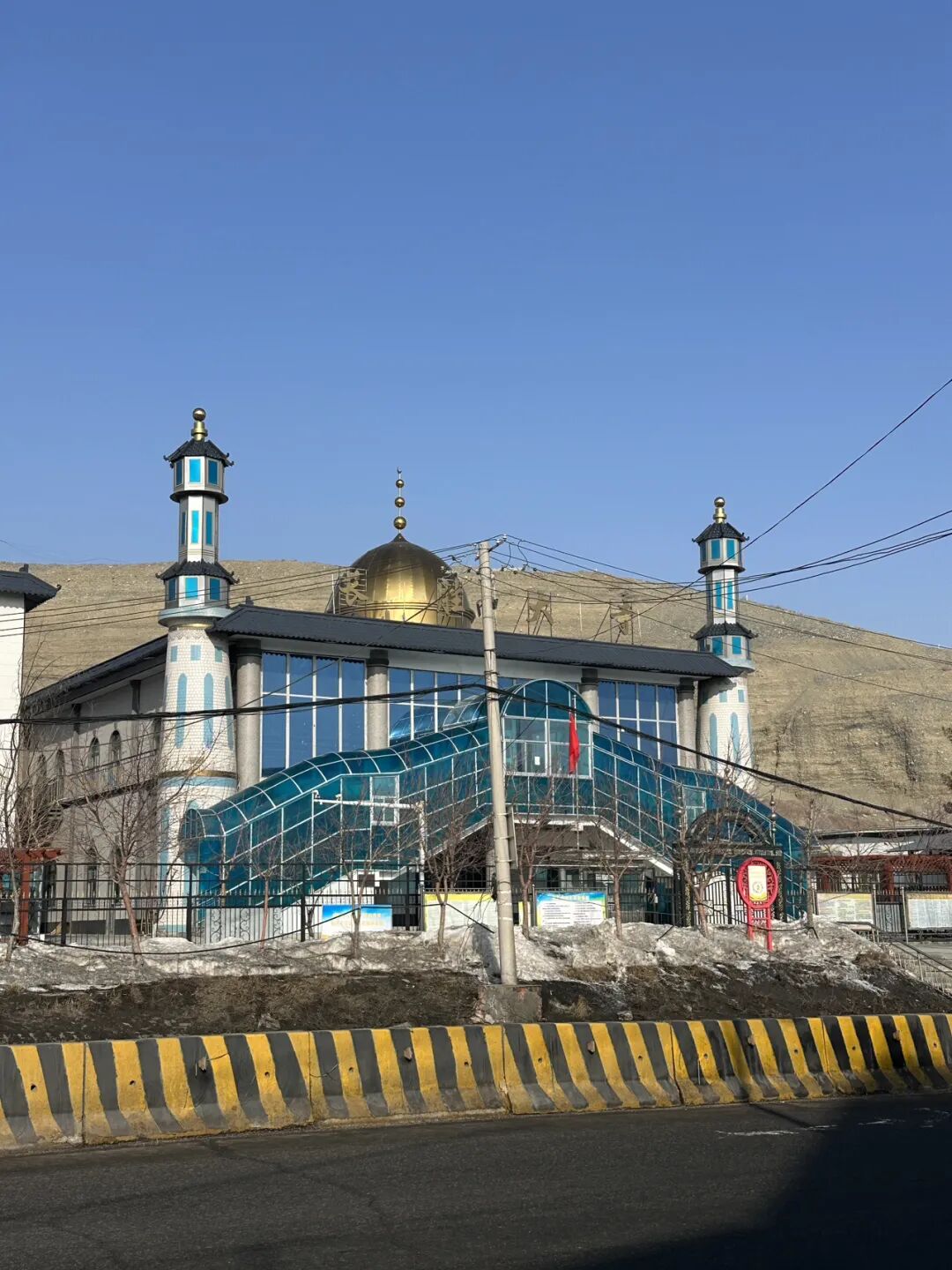
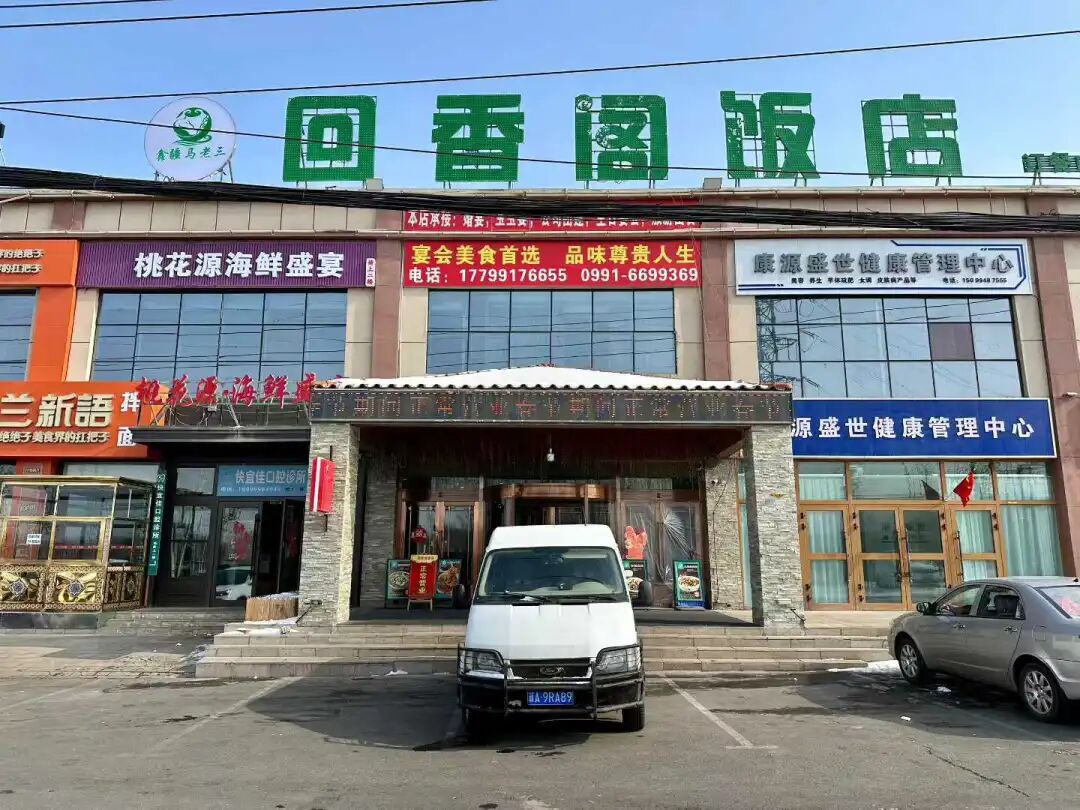
At noon, we had a gathering at Ma Laosan Huixiangge Restaurant in the Sangong area of Urumqi. The restaurant is near the northern edge of the city and specializes in Xinjiang Hui Muslim banquet dishes.
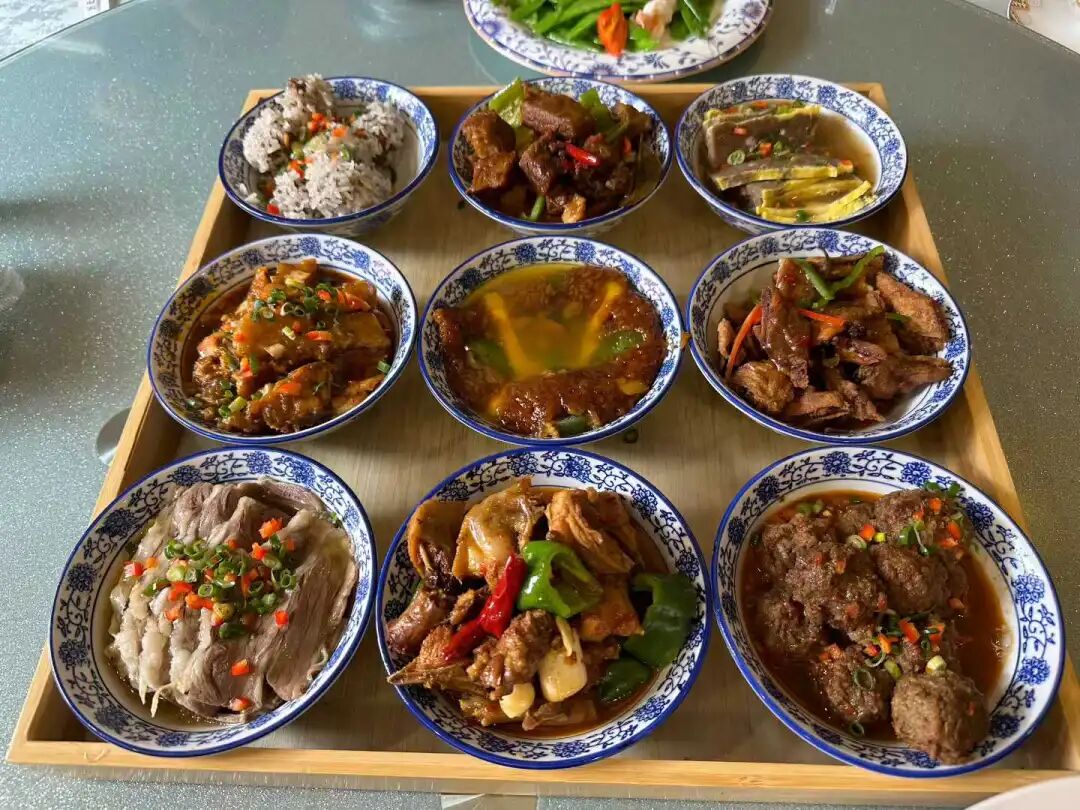
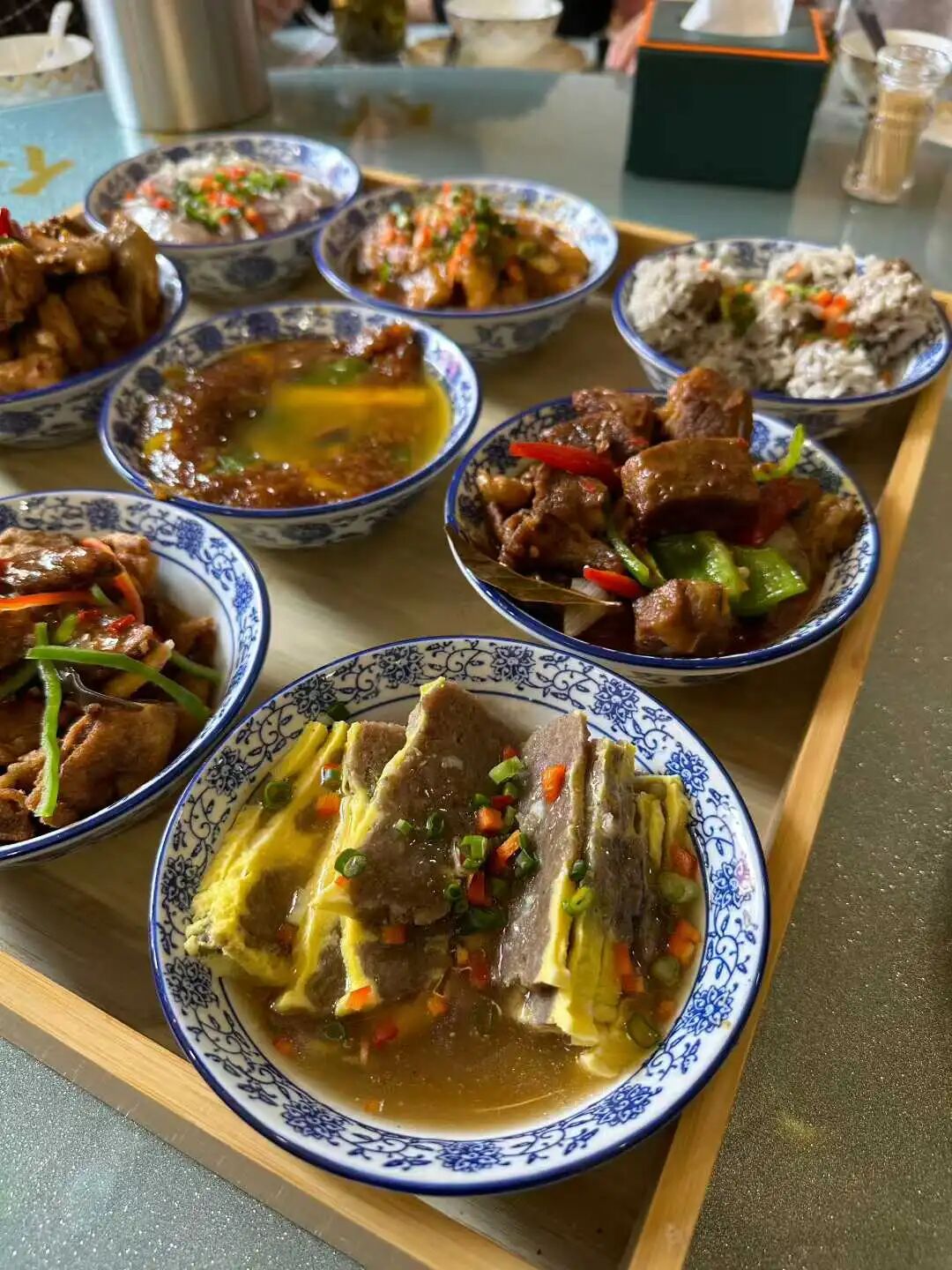
We ate the nine-bowl three-row banquet (jiuwan sanxingzi), which included sauced meat-stuffed egg slices, braised fish chunks, pearl meatballs, braised beef steak, sweet plate, yellow-braised beef, braised meatballs, spicy chicken chunks, and sauced jelly (menzi). The nine-bowl three-row banquet comes in large and small sizes. Ordering a small portion along with a few other dishes is just right. We had light dishes like shrimp with snow peas and wontons, as well as bold-flavored dishes like peppercorn fish and peppercorn chicken. The restaurant also gave us complimentary chive and meat dumplings.
Best Halal Food in Urumqi: Xinjiang Uyghur Dishes, Hui Muslim Restaurants and Local Food
Articles • ali2007fr posted the article • 0 comments • 257 views • 2026-05-21 08:42
Summary: This Urumqi halal food map highlights Xinjiang dishes, Uyghur food, Hui Muslim restaurants, bazaars, and local food stops for Muslim travelers in the city.
1. International Grand Bazaar
When you come to Urumqi, the International Grand Bazaar is your first stop. If you want to experience local ethnic culture, head to the Tianshan District. Many ethnic minority residents live here, especially around Erdaoqiao. Grab a glass of pomegranate juice to soothe your throat or a slice of watermelon to quench your thirst. Xinjiang fruit is top-tier, and the fresh-pressed pomegranate juice is thick, sweet, and sour with no added water.
You will see fruit stands like this everywhere in Xinjiang. They display cut fruit on the roadside; you just walk up, pick it up, and eat. When you are done, you wipe your mouth and pay. A slice of watermelon is only 2 yuan, and the Hami melon is so sweet you will need water to wash it down.
The Grand Bazaar's ice porridge (muzdog) is a must-have summer cooler for Uyghurs. They use an awl to chip ice off a large block and add yogurt. It is natural and delicious.
2. Shanxi Lane
Shanxi Lane is right next to the Erdaoqiao International Grand Bazaar. You could call it a street of Xinjiang delicacies, and it is a gathering place for Uyghurs.
If you love lamb, you must come here. Lamb skewers are called roasted meat (kaorou) here because the word 'skewer' sounds too small. Xinjiang people are generous, and they eat their meat in big chunks.
Take every chance you get to try Xinjiang yogurt. Tianshan yogurt is only sold in Xinjiang.
This is authentic Xinjiang big plate chicken (dapanji). You can choose a whole or half chicken and add noodles. I heard that in the past, adding noodles was free, but it is rare to find shops that do that now.
I came here for the famous baked buns (kaobaozi). It is best to come during the day because they are often sold out by night.
A famous Xinjiang dish is pilaf (zhuafan). You do not actually have to eat it with your hands. The pilaf here is completely different from what you find in the interior of China.
I have to brag a little: a Kazakh uncle made this pilaf for me at his home. Pilaf must include raisins, dried apricots, green peppers, and carrots.
Let me share another home-cooked meal made by the Kazakh uncle. The most authentic Xinjiang food is what your Xinjiang friends cook at home.
Shanxi Lane is very short. A Uyghur friend brought me to this lamb shop. It is easy to find, and it is the best lamb I have ever eaten. The meat is topped with onions, which are called piyazi in Xinjiang.
3. Hantengri Mijiti Baked Buns
This is a long-standing shop in Urumqi. The owner is from Southern Xinjiang, where most Uyghurs in Erdaoqiao are from. He has been making baked buns for decades. They only make a limited amount each day, and they do not keep leftovers. If you come late, they are gone.
The crust of the baked bun is crispy, and it is filled with lamb. When you bite into it, it is steaming hot and smells amazing. Baked buns are the thing I miss most after leaving Xinjiang.
Address: Inside Yucai Lane, Tianshan District, Urumqi
4. Bogelahan Restaurant
A friend told me this shop closed before I published this. I am still posting it because if you eat at an ethnic restaurant in Urumqi, the authentic Xinjiang food will not taste bad, but you should try some of their specialties.
For spicy chicken (laziji), the quality of Xinjiang chili peppers and the quality of the chicken are both excellent. The two are a perfect match.
This is also a flatbread (nang). It is not just the plain white flour bread you see every day. There are many kinds of flatbread, including some for dipping in milk tea, some that are easy to carry, and this kind which has a filling.
5. Masanyuan Beef Noodles
A very popular Lanzhou beef noodle shop in Urumqi, located near Daximen.
After eating a lot of beef and lamb, sometimes I want some flour-based food to cleanse my stomach.
Address: No. 66 Renmin Road (next to the Industry and Commerce Bureau).
6. Blake Coffee
Next to Hengchang Garden in Dawan, Urumqi, there is a Blake Coffee. The shop has a resident ethnic band, and the lead singer has a unique, charming voice. Almost all the customers here are from ethnic minorities, and you hear Uyghur spoken all around you. If you want to experience local ethnic culture, you have to come to a place like this.
Uyghur people have a natural talent for music. They rarely listen to pop songs from inland China; they prefer ethnic music and Western-style music. Almost every Uyghur can dance, and they start moving as soon as they hear a rhythmic beat.
7. Qia'erbage Restaurant
The scene downstairs is typical of daily life for Uyghur people: a big group of friends and family gathering to eat, drink tea, and chat.
Qia'erbage is a Western-style restaurant opened by a friend of my Uyghur friend. Because the cultures are similar, Western food is easily accepted by Uyghurs. The environment here is quiet with many private booths, and the diners are mostly Uyghur.
This baked bun (kaobaozi) is an improved version, and it looks a bit like bread.
Address: Inside South Park, South Xinhua Road, Tianshan District.
8. Ma's Peppery Chicken (Ma Ji Jiao Ma Ji)
A friend from Turpan took me to eat this peppery chicken, and it tasted amazing. Every meal I had in Urumqi was carefully selected by friends. Actually, I should have written a guide for Han-style food in Urumqi. The Han-style restaurants here are specially marked, but some ethnic restaurants don't even have a halal sign.
Address: No. 134 Cangfanggou Road, Shayibake District, Urumqi, Xinjiang Uyghur Autonomous Region. view all
Summary: This Urumqi halal food map highlights Xinjiang dishes, Uyghur food, Hui Muslim restaurants, bazaars, and local food stops for Muslim travelers in the city.
1. International Grand Bazaar
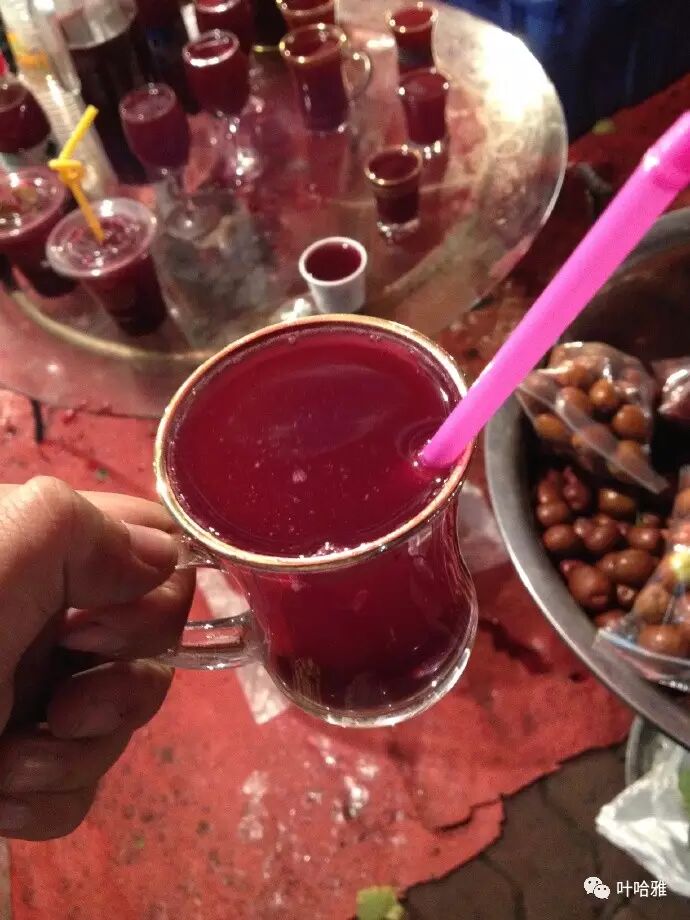
When you come to Urumqi, the International Grand Bazaar is your first stop. If you want to experience local ethnic culture, head to the Tianshan District. Many ethnic minority residents live here, especially around Erdaoqiao. Grab a glass of pomegranate juice to soothe your throat or a slice of watermelon to quench your thirst. Xinjiang fruit is top-tier, and the fresh-pressed pomegranate juice is thick, sweet, and sour with no added water.
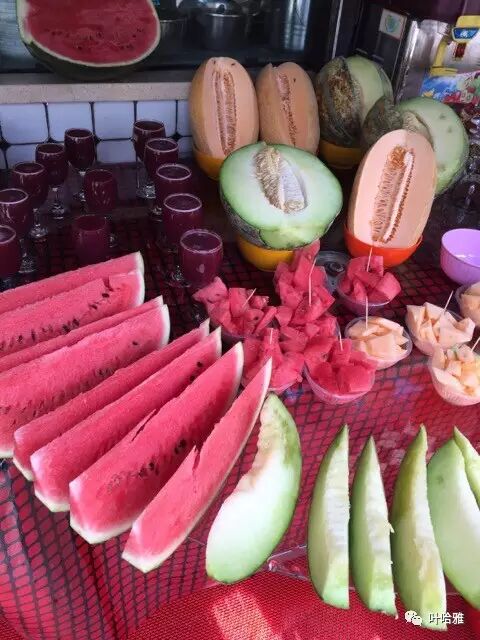
You will see fruit stands like this everywhere in Xinjiang. They display cut fruit on the roadside; you just walk up, pick it up, and eat. When you are done, you wipe your mouth and pay. A slice of watermelon is only 2 yuan, and the Hami melon is so sweet you will need water to wash it down.
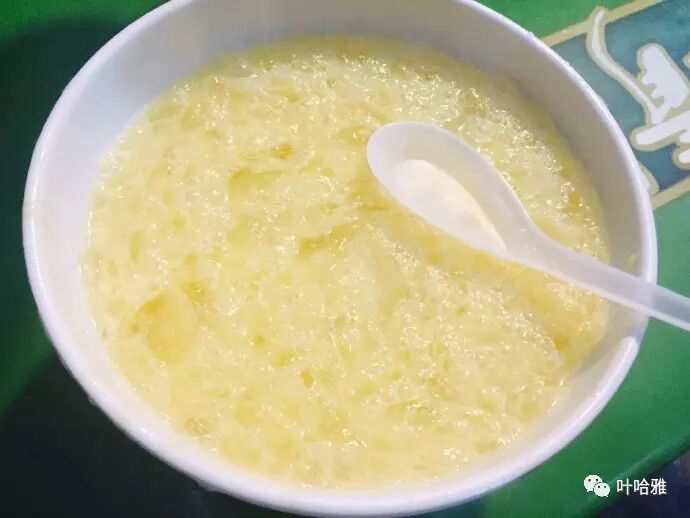
The Grand Bazaar's ice porridge (muzdog) is a must-have summer cooler for Uyghurs. They use an awl to chip ice off a large block and add yogurt. It is natural and delicious.
2. Shanxi Lane
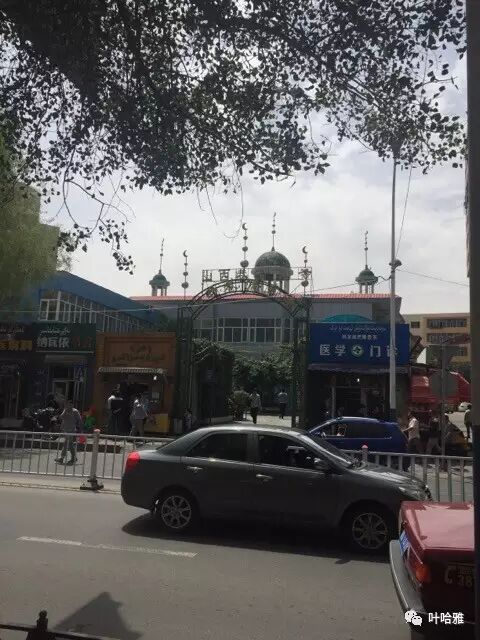
Shanxi Lane is right next to the Erdaoqiao International Grand Bazaar. You could call it a street of Xinjiang delicacies, and it is a gathering place for Uyghurs.
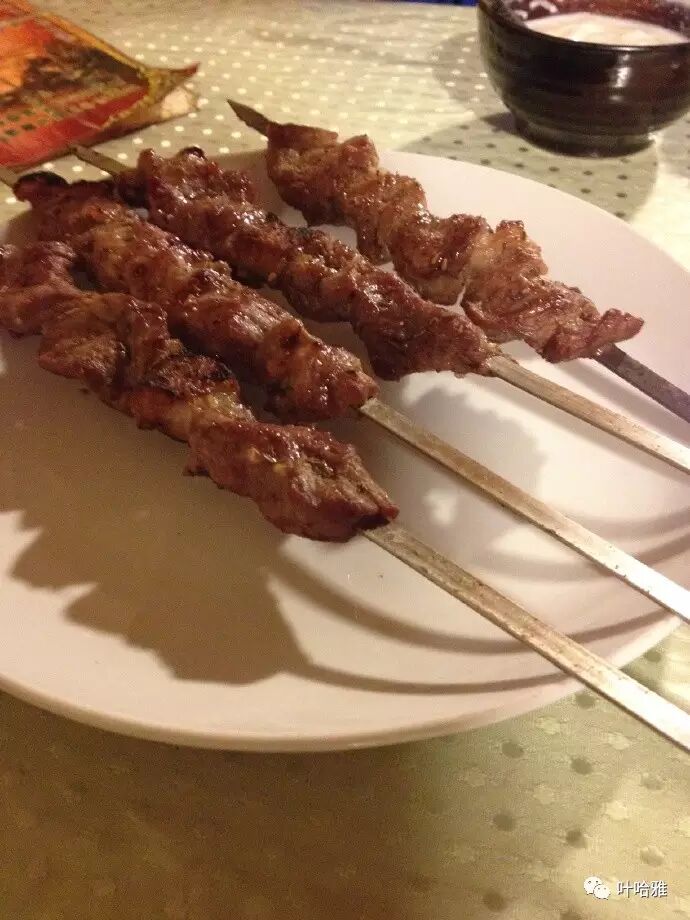
If you love lamb, you must come here. Lamb skewers are called roasted meat (kaorou) here because the word 'skewer' sounds too small. Xinjiang people are generous, and they eat their meat in big chunks.
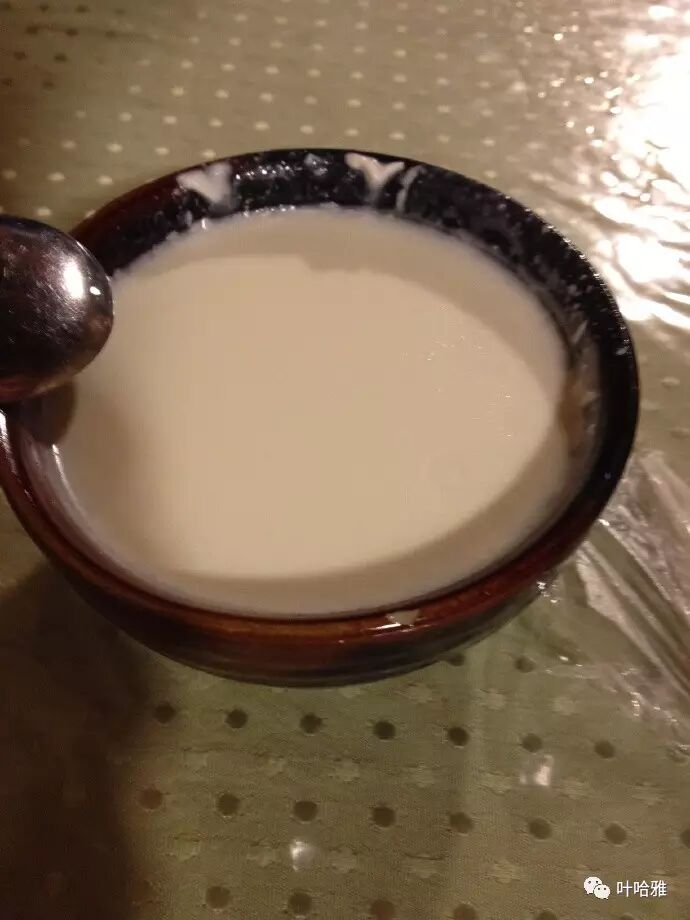
Take every chance you get to try Xinjiang yogurt. Tianshan yogurt is only sold in Xinjiang.
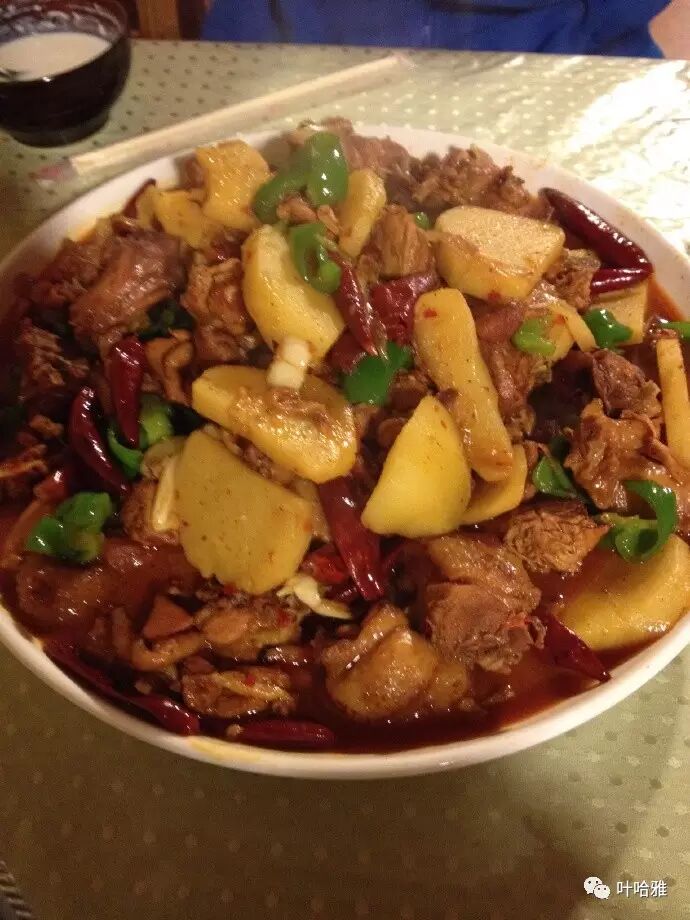
This is authentic Xinjiang big plate chicken (dapanji). You can choose a whole or half chicken and add noodles. I heard that in the past, adding noodles was free, but it is rare to find shops that do that now.
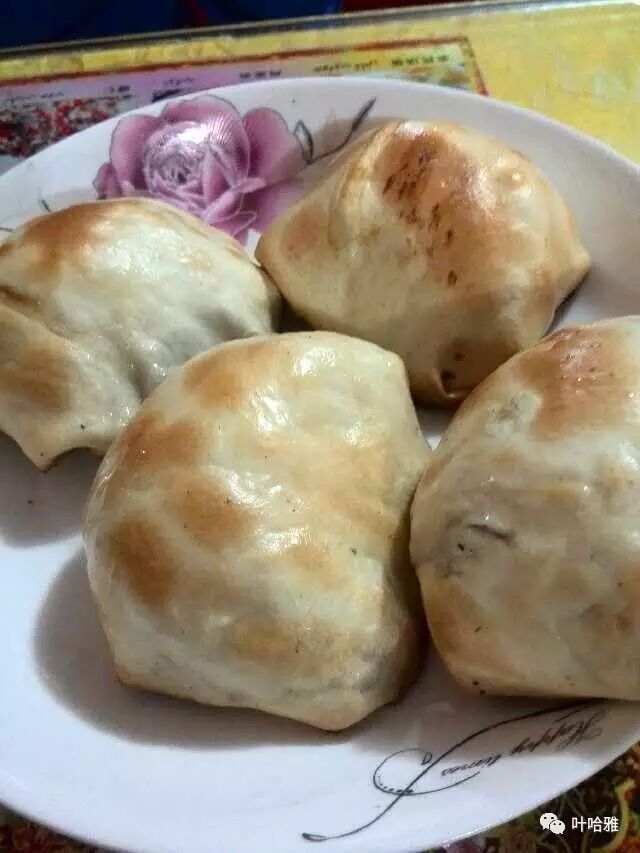
I came here for the famous baked buns (kaobaozi). It is best to come during the day because they are often sold out by night.
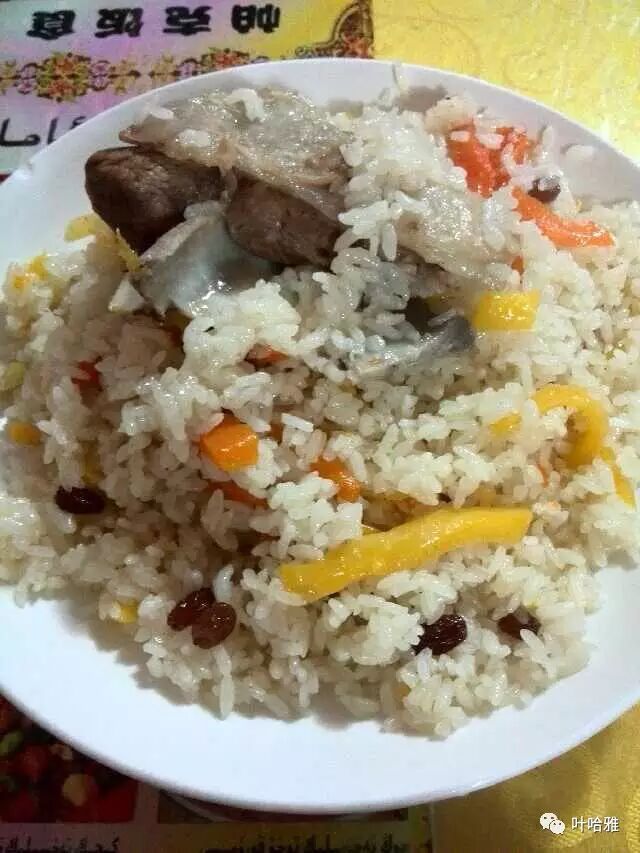
A famous Xinjiang dish is pilaf (zhuafan). You do not actually have to eat it with your hands. The pilaf here is completely different from what you find in the interior of China.
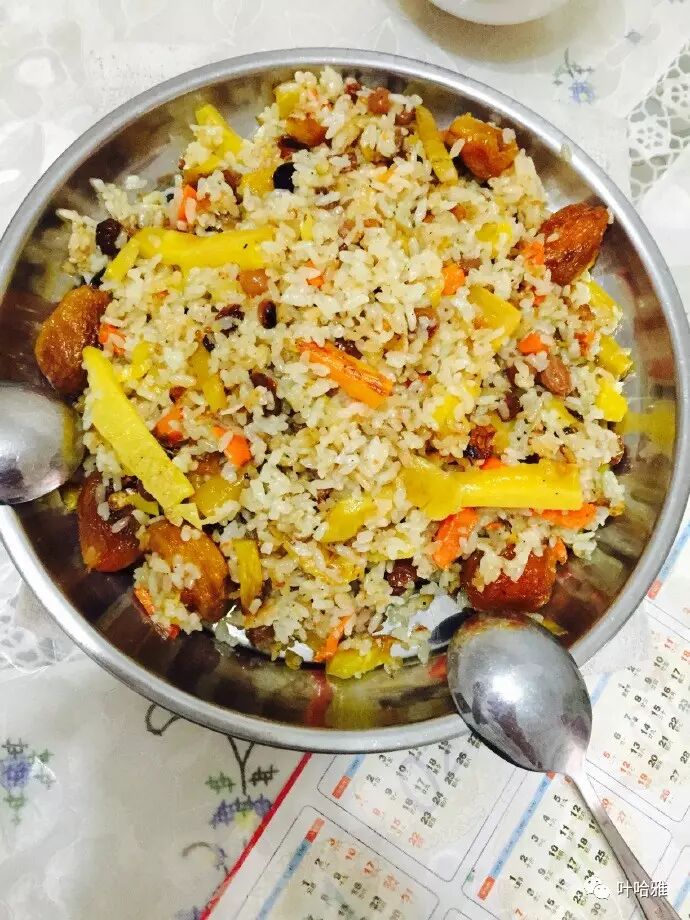
I have to brag a little: a Kazakh uncle made this pilaf for me at his home. Pilaf must include raisins, dried apricots, green peppers, and carrots.
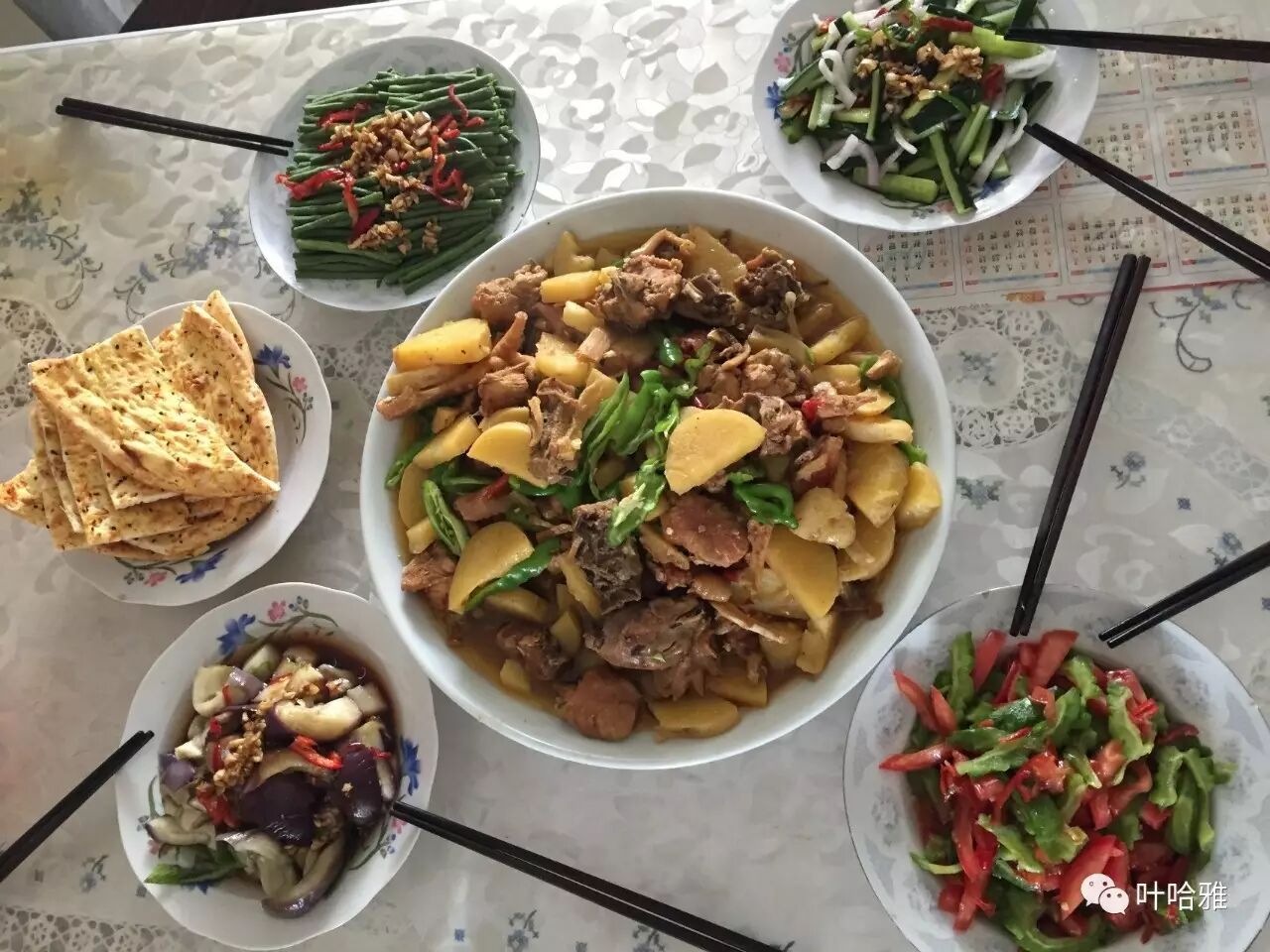
Let me share another home-cooked meal made by the Kazakh uncle. The most authentic Xinjiang food is what your Xinjiang friends cook at home.
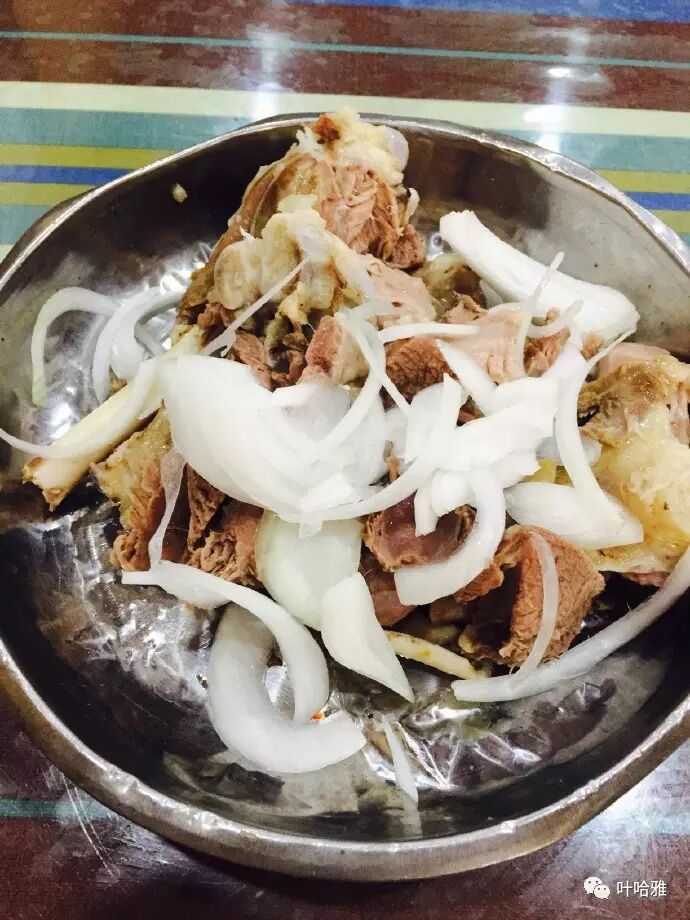
Shanxi Lane is very short. A Uyghur friend brought me to this lamb shop. It is easy to find, and it is the best lamb I have ever eaten. The meat is topped with onions, which are called piyazi in Xinjiang.
3. Hantengri Mijiti Baked Buns
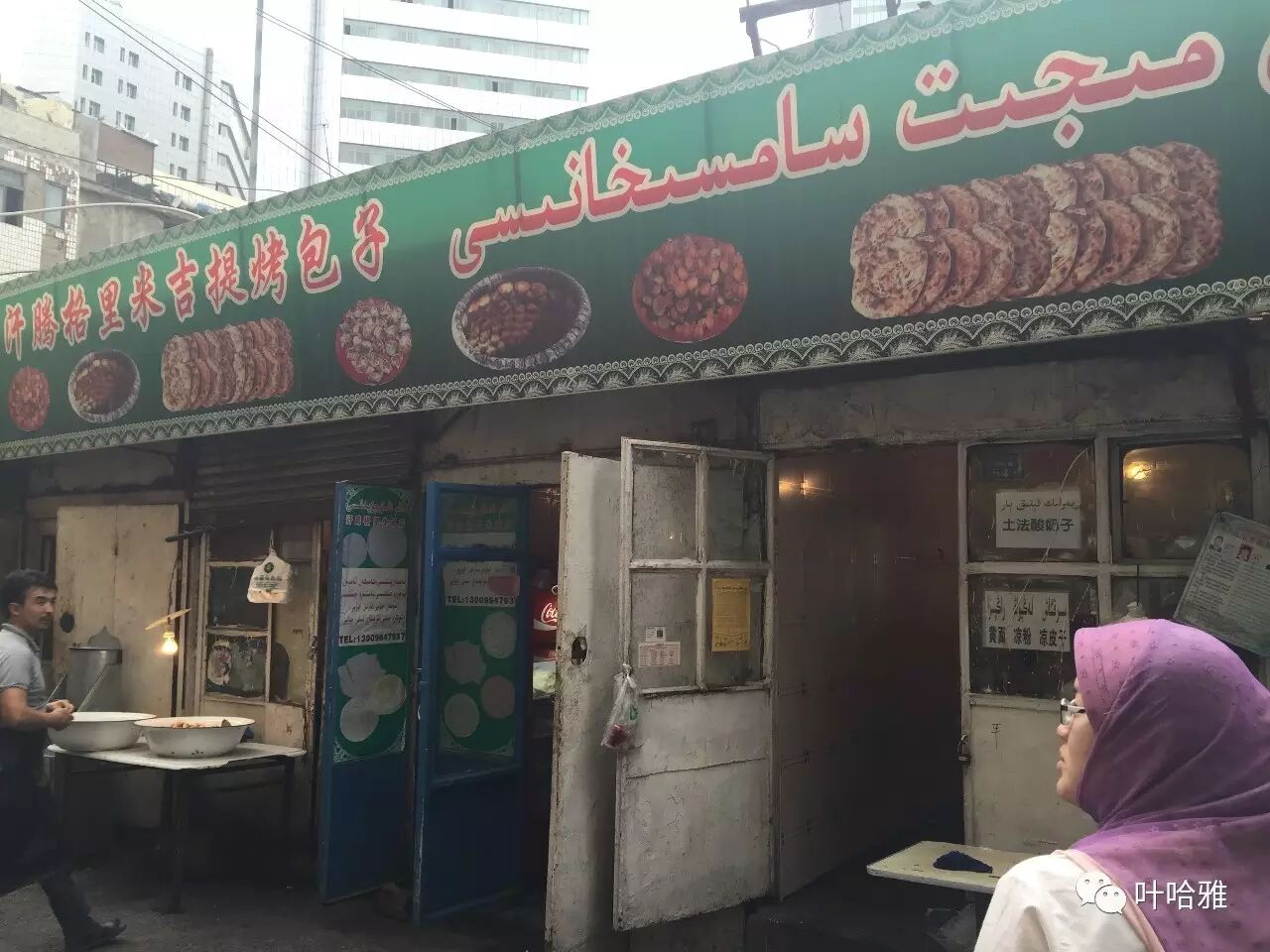
This is a long-standing shop in Urumqi. The owner is from Southern Xinjiang, where most Uyghurs in Erdaoqiao are from. He has been making baked buns for decades. They only make a limited amount each day, and they do not keep leftovers. If you come late, they are gone.
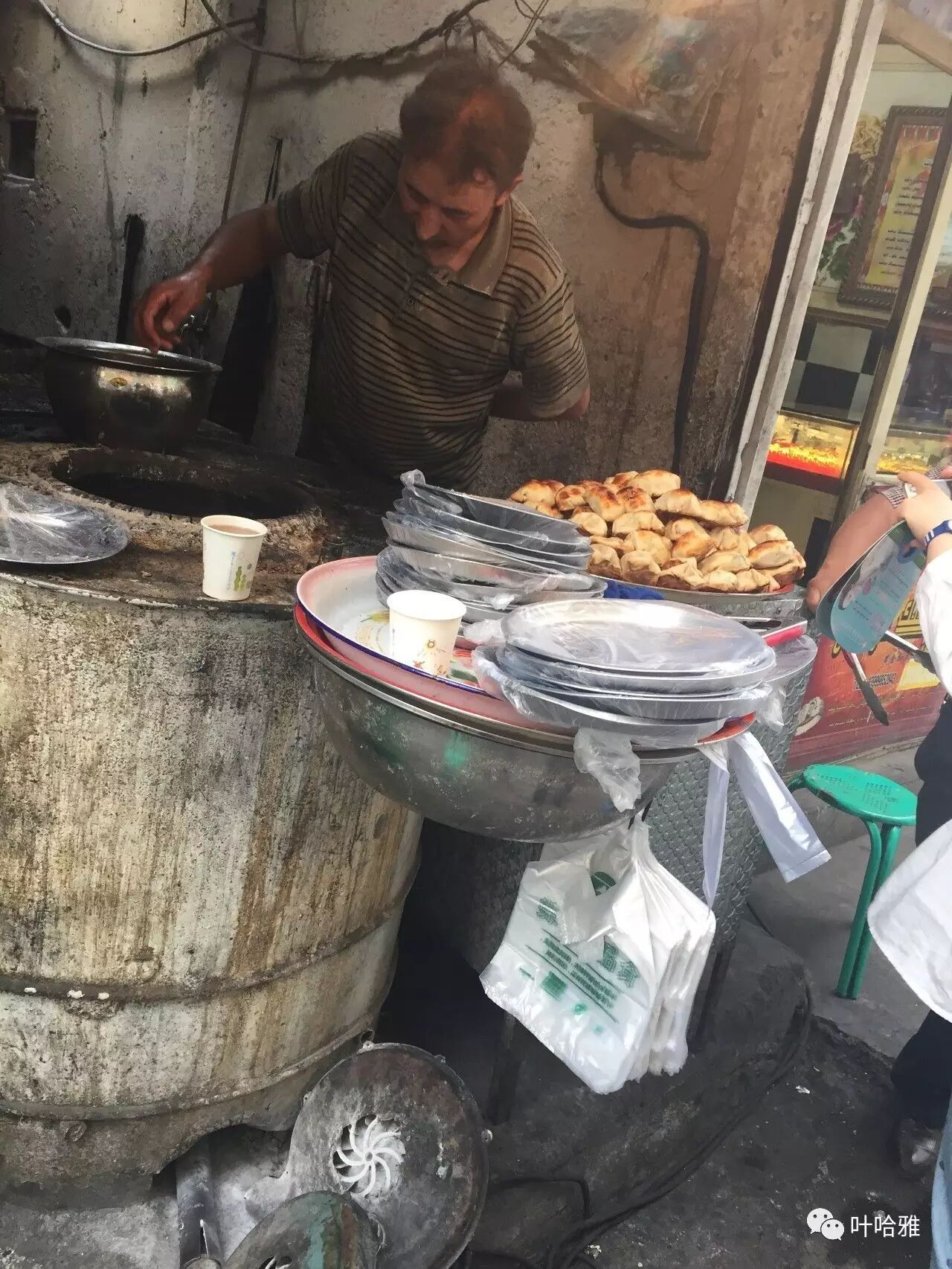
The crust of the baked bun is crispy, and it is filled with lamb. When you bite into it, it is steaming hot and smells amazing. Baked buns are the thing I miss most after leaving Xinjiang.
Address: Inside Yucai Lane, Tianshan District, Urumqi
4. Bogelahan Restaurant
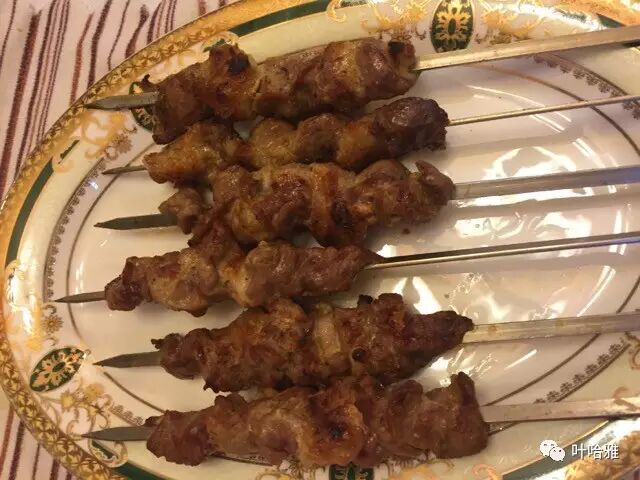
A friend told me this shop closed before I published this. I am still posting it because if you eat at an ethnic restaurant in Urumqi, the authentic Xinjiang food will not taste bad, but you should try some of their specialties.
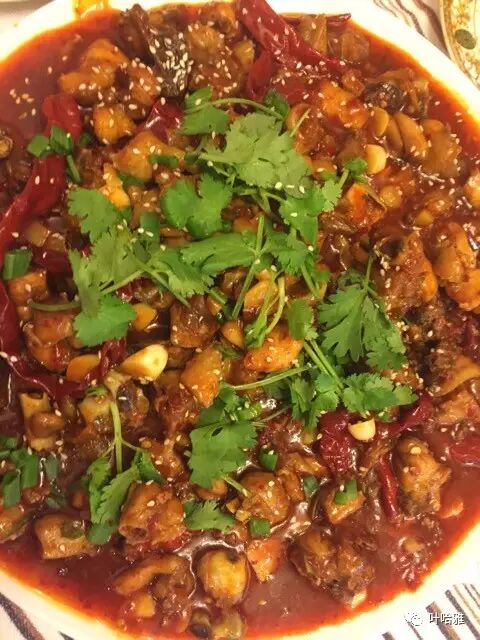
For spicy chicken (laziji), the quality of Xinjiang chili peppers and the quality of the chicken are both excellent. The two are a perfect match.
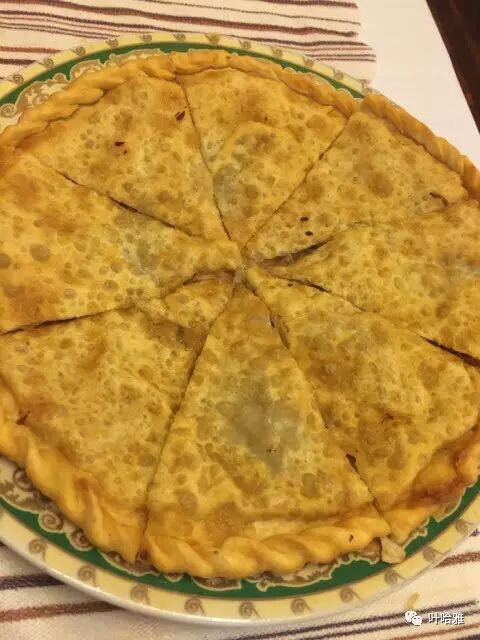
This is also a flatbread (nang). It is not just the plain white flour bread you see every day. There are many kinds of flatbread, including some for dipping in milk tea, some that are easy to carry, and this kind which has a filling.
5. Masanyuan Beef Noodles
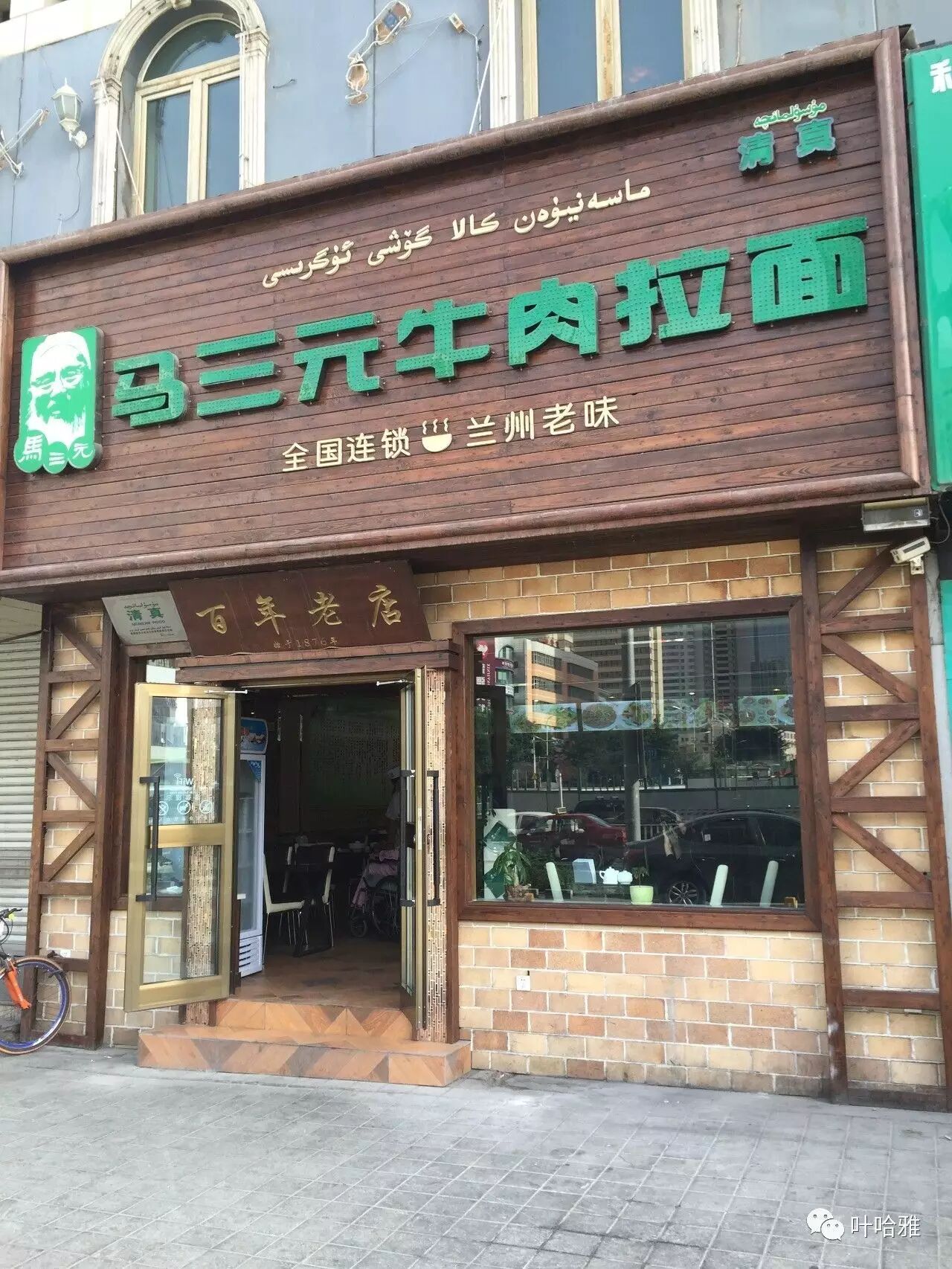
A very popular Lanzhou beef noodle shop in Urumqi, located near Daximen.
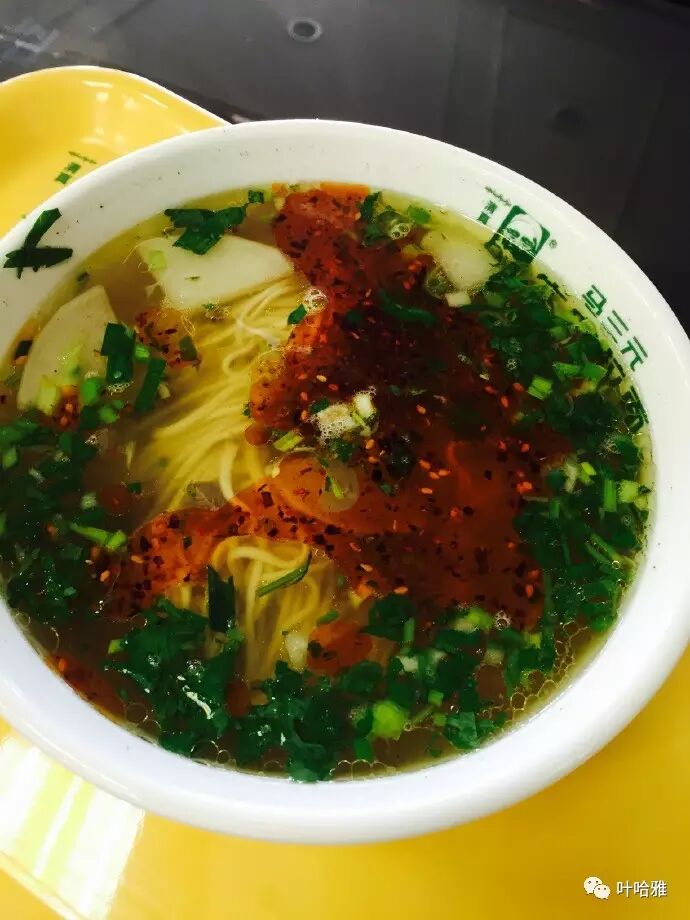
After eating a lot of beef and lamb, sometimes I want some flour-based food to cleanse my stomach.
Address: No. 66 Renmin Road (next to the Industry and Commerce Bureau).
6. Blake Coffee
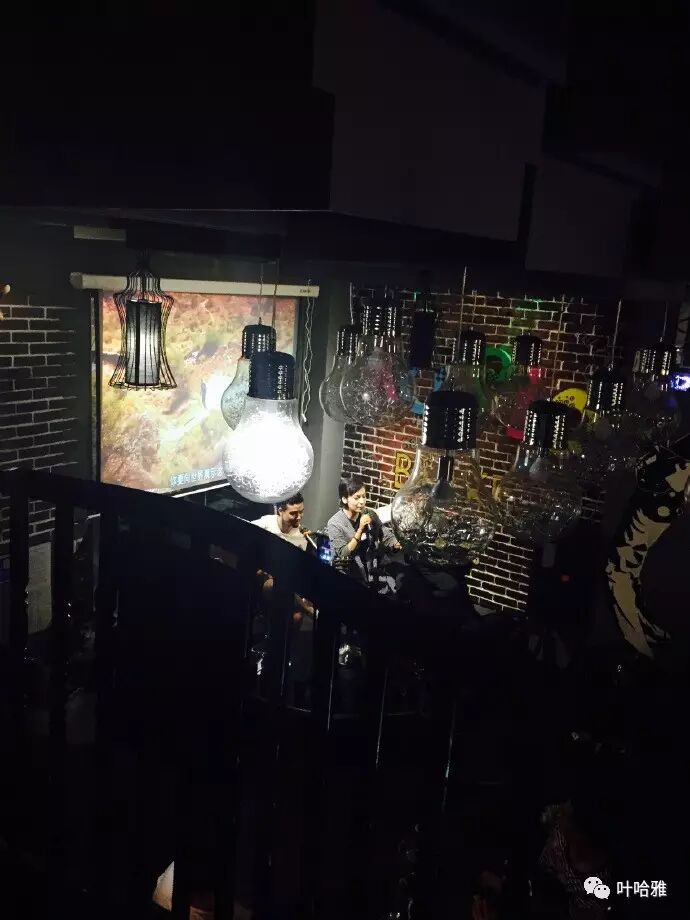
Next to Hengchang Garden in Dawan, Urumqi, there is a Blake Coffee. The shop has a resident ethnic band, and the lead singer has a unique, charming voice. Almost all the customers here are from ethnic minorities, and you hear Uyghur spoken all around you. If you want to experience local ethnic culture, you have to come to a place like this.
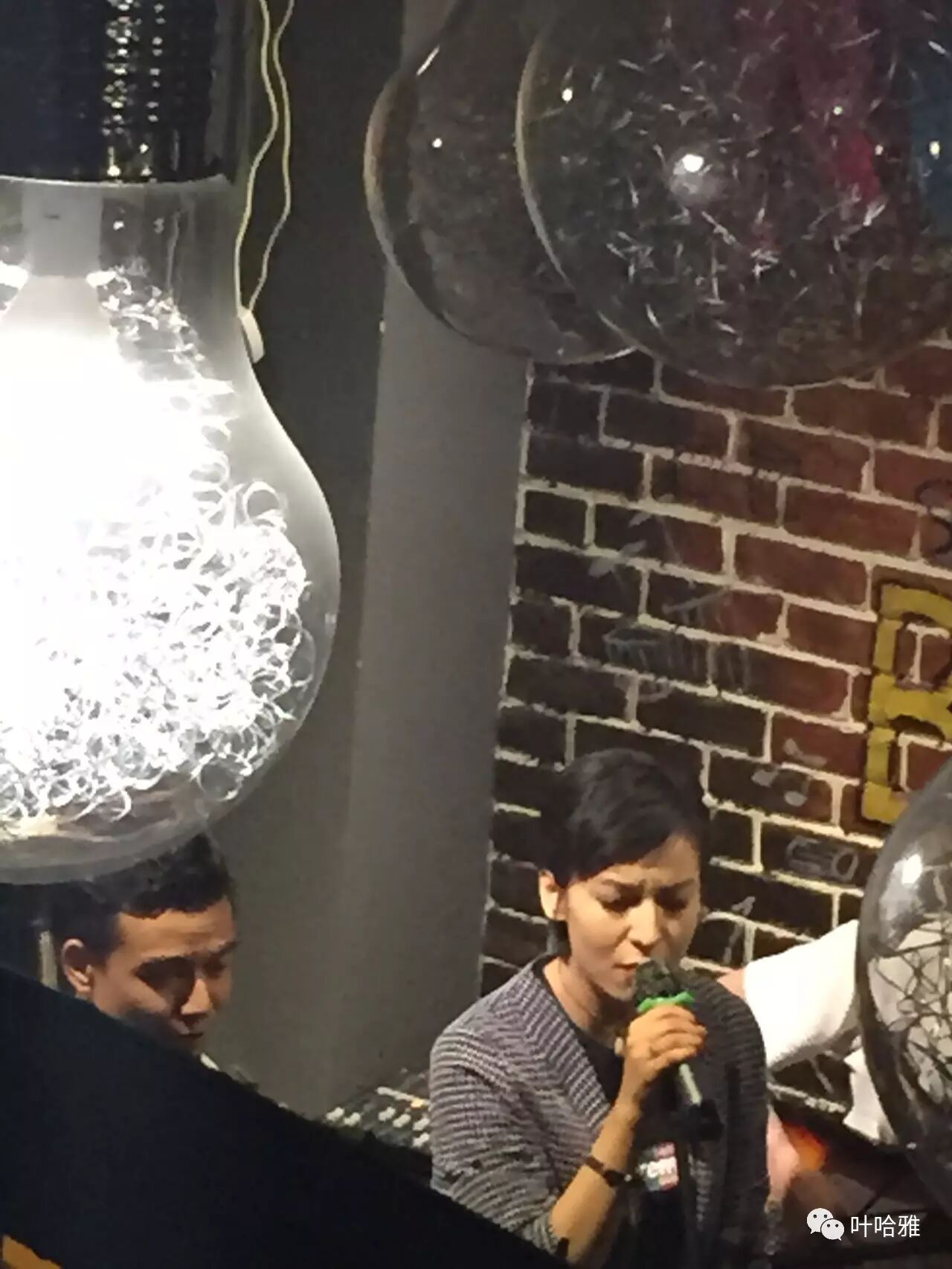
Uyghur people have a natural talent for music. They rarely listen to pop songs from inland China; they prefer ethnic music and Western-style music. Almost every Uyghur can dance, and they start moving as soon as they hear a rhythmic beat.
7. Qia'erbage Restaurant
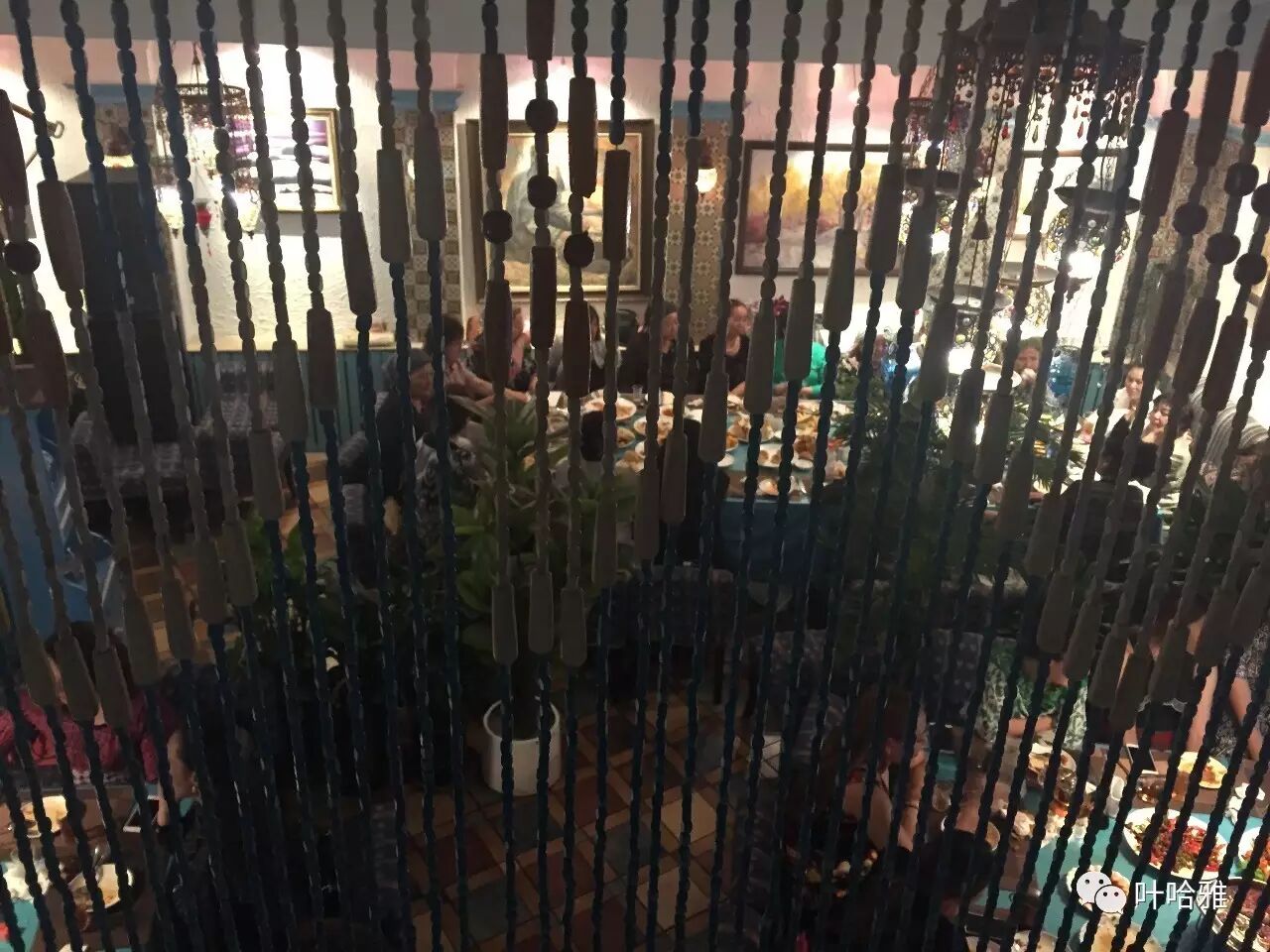
The scene downstairs is typical of daily life for Uyghur people: a big group of friends and family gathering to eat, drink tea, and chat.
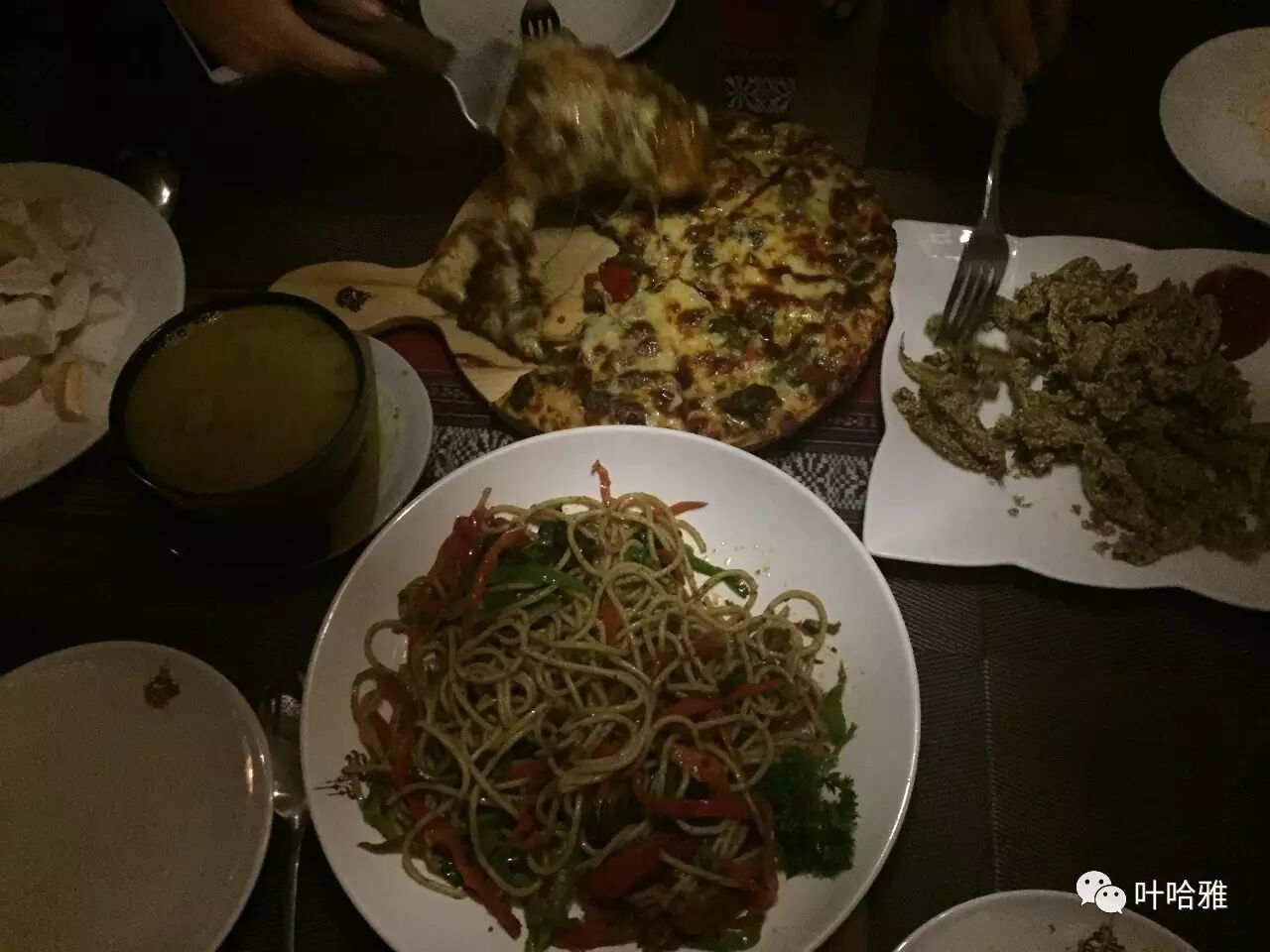
Qia'erbage is a Western-style restaurant opened by a friend of my Uyghur friend. Because the cultures are similar, Western food is easily accepted by Uyghurs. The environment here is quiet with many private booths, and the diners are mostly Uyghur.
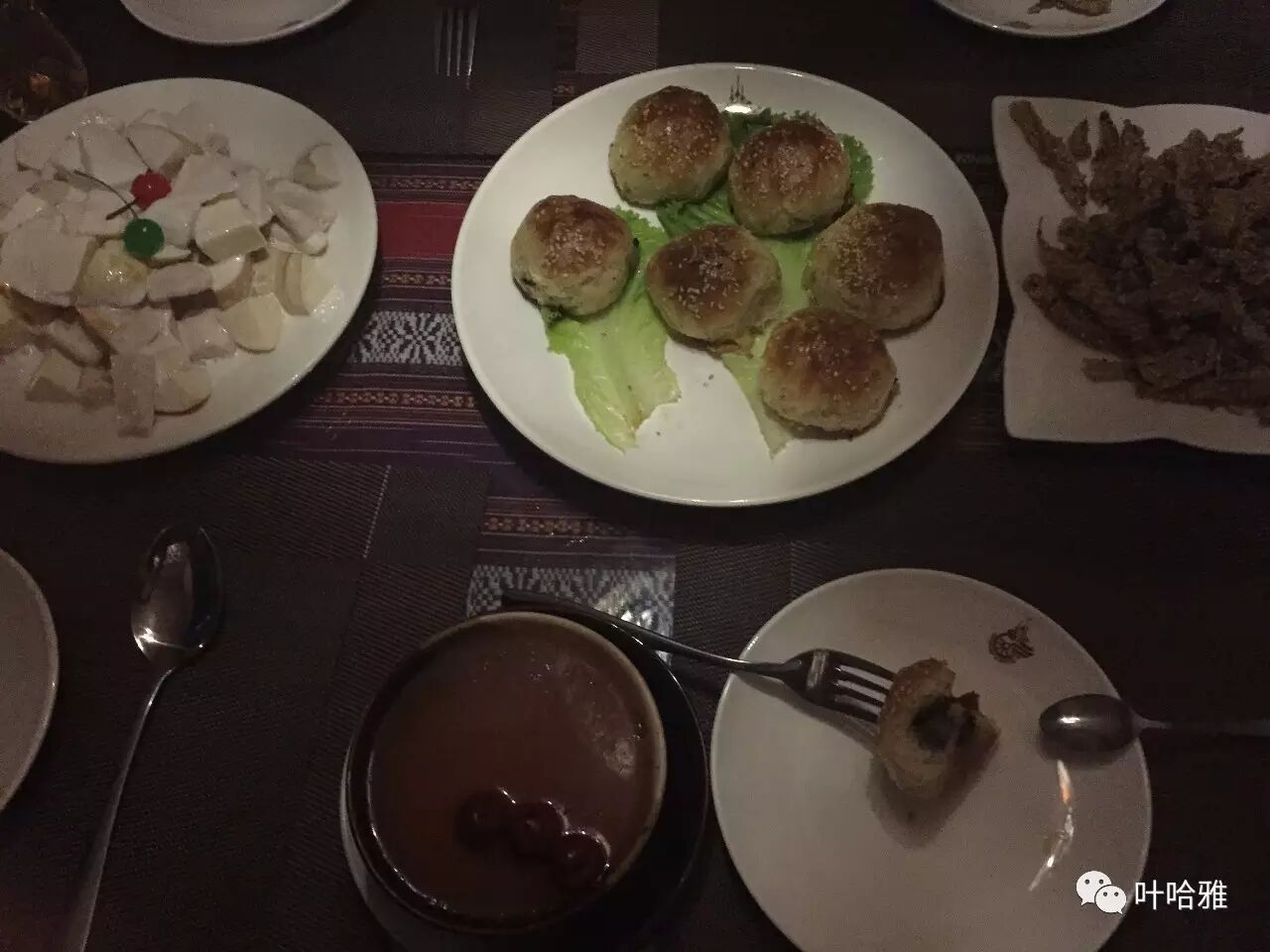
This baked bun (kaobaozi) is an improved version, and it looks a bit like bread.
Address: Inside South Park, South Xinhua Road, Tianshan District.
8. Ma's Peppery Chicken (Ma Ji Jiao Ma Ji)
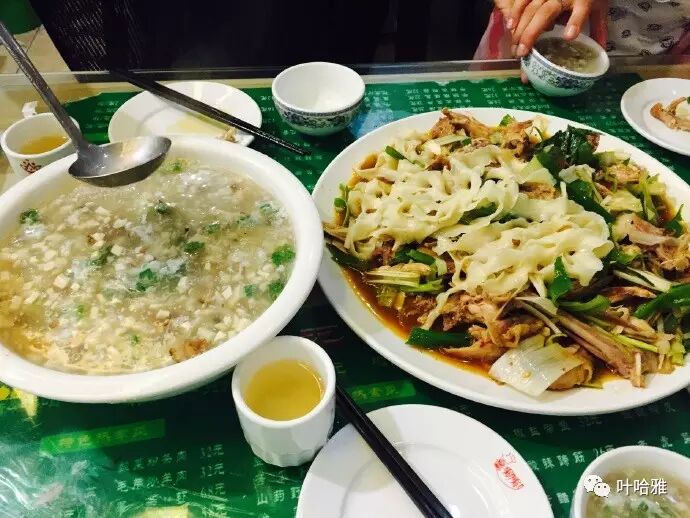
A friend from Turpan took me to eat this peppery chicken, and it tasted amazing. Every meal I had in Urumqi was carefully selected by friends. Actually, I should have written a guide for Han-style food in Urumqi. The Han-style restaurants here are specially marked, but some ethnic restaurants don't even have a halal sign.
Address: No. 134 Cangfanggou Road, Shayibake District, Urumqi, Xinjiang Uyghur Autonomous Region.
Best Halal Food in Urumqi During Sha'ban: Hui Muslim Street, Beiliang Mosque and Xinjiang Meals
Articles • ali2007fr posted the article • 0 comments • 204 views • 2026-05-21 06:23
Summary: This Urumqi Sha'ban account begins on February 12, 2026, before Ramadan, and covers family meals, Jumu'ah at Shaanxi Grand Mosque, Beiliang Mosque history, and local Hui Muslim food. It keeps the source's dates, mosque history, dishes, religious gatherings, and photographs.
I flew from Beijing to Urumqi for the Spring Festival holiday on February 12, 2026. With a few days left before Ramadan, I attended some religious gatherings (ermei) and sat for several meals. I am sharing my experiences here.
February 13.
I spent the morning at home reciting prayers (nianye). We had braised beef steak, clear-stewed lamb, and braised fish. The fried dough (youxiang) had been prepared the day before.
At noon, I went to the Shaanxi Grand Mosque in Urumqi for Friday prayers (Jumu'ah). This was the last Friday prayer before Ramadan. It was very crowded, and the main hall was almost full.
The restaurants behind the Shaanxi Grand Mosque are all delicious. I wrote about them in my previous article, '2025 Urumqi Hui Muslim Street Tour'.
I only learned last year that the main hall of Urumqi's first mosque, Beiliang Mosque, still exists. It is now open to the public as the Wenchang Pavilion. After Friday prayers at the Shaanxi Grand Mosque, I took the subway one stop from South Gate to North Gate to visit it.
After the Qing Dynasty built Dihua City in Urumqi in 1758, it promoted policies to station troops and settle immigrants for border defense. Since then, Hui Muslims from the northwest moved there to settle. In 1780, they built Beiliang Mosque on a small hill inside the North Gate of Dihua City, making it the first mosque in Urumqi.
The first imam of Beiliang Mosque was an elder from the Weijiapu area, who belonged to the Salar people from Xunhua. When the elder from Weijiapu was young, he studied at the Jiezi Gongbei and the Grand Mosque in Xunhua. In 1763, he left to seek enlightenment during the Hehuang menhuan conflicts. He traveled through Linxia, Lanzhou, and Wuwei, eventually reaching Hami and Turpan to teach. In 1780, he was officially invited to Beiliang Mosque as its first imam.
In the mid-18th century, Yihewan Gali, a disciple of the Indian Sufi leader Imam Rabbani, entered Aksu to teach the Khufiyya doctrine. Ma Fang, a Qing military officer stationed in Aksu, accepted his teachings. Later, Ma Fang resigned from his post to preach across Xinjiang. He took five students, one of whom was Ma Pei, who went to Urumqi to preach. The elder from Weijiapu became his student. The elder from Weijiapu taught at Beiliang Mosque for nearly 30 years. He taught religious knowledge to ordinary community members and guided Khufiyya followers in their spiritual practice. He balanced the relationships between different groups well and was respected by everyone.
Beiliang Mosque existed for 94 years in total. Its last imam was Ma Zongfu. Ma Zongfu came from Datong, Qinghai. People called him the Datong Elder. When he was young, he taught at various mosques in Qinghai and practiced the Khufiyya path. Later, because he opposed the planting and selling of opium, he was persecuted by local wealthy landowners. In 1850, he led his family through great hardships to Xinjiang and settled at Beiliang Mosque. At that time, the mosque's religious leader, Qitaizhou, was the second-generation disciple of Ma Pei. Imam Ma Zongfu then became his student. In 1852, Ma Zongfu became the imam of Beiliang Mosque and oversaw its renovation in 1861.
In 1876, Zuo Zongtang sent Liu Jintang to lead the Qing army west, where they defeated Yaqub Beg and recaptured Urumqi. After the Qing army entered the city, they occupied Beiliang Mosque. In 1884, Xinjiang Governor Liu Jintang renamed it Wenchang Pavilion. Beiliang Mosque was not used as the Wenchang Pavilion for very long. During the Republic of China era, it was occupied by Kuomintang communication troops. After 1949, it was taken over by the People's Liberation Army communication troops and used as a military factory for a long time. It was not returned to the cultural heritage department for management until 2002.
In 2003, the cultural heritage department renovated the only remaining main hall of Beiliang Mosque. Citing 'site constraints and ease of public access,' they changed the traditional east-west orientation of the Hui Muslim hall to face south. Today, it is open as a place to introduce Taoist Wenchang culture.
Hidden in the storefronts of the Guangyuan residential complex on Zhujiang Road in Urumqi is Li Yingping's Meatball and Vermicelli Soup (wanzifen tang). The owner has been selling meatball soup in the neighborhood for over twenty years and only moved to the Guangyuan complex in the last two years. This area is far from the food streets, so mostly only locals know about it.
Their signature dish is braised beef meatball noodle soup served with a steamed flower roll (huajuan). The beef is stewed until very flavorful and has a great texture, served with tofu, starch noodles, and wood ear mushrooms. I first thought their 'wonton dumplings' were two separate dishes, but I later learned they are dumplings shaped like wontons made by the owner. They have a lamb and onion (piyazi) filling, and you can eat them dry or in soup. The soup dumplings are served in the beef noodle soup, which I think is especially comforting in winter. I also tried their lentil noodle squares (biandou mianqizi). Small flag-shaped dough pieces simmer in the soup, paired with the creamy texture of lentils. It is a winter staple that warms the stomach for people in Xinjiang.
February 14
Urumqi has so many food streets. From the early days of Shanxi Alley and Erdaoqiao to the later Lingguan Alley and Hotan Street, more and more places have become popular spots for food lovers. My biggest discovery on this trip back to Urumqi is that the area from Yingawati Road toward Zhujiang Road is getting busier. The ground-floor shops in the new residential area near the plastic factory are all restaurants newly opened by people from Hotan, each with its own unique style.
We first ate at this 1980s-style pan-fried bun (shuijianbao) shop. Pan-fried buns are a specialty of Ili, but this shop also sells Hotan-style corn naan (baogu nang) and old pigeon soup, making it a mix of northern and southern Xinjiang styles.
We ordered old pigeon soup, goose eggs, corn naan with milk tea, pan-fried buns, yogurt, and dried milk curds (naigeda). The old pigeon was delicious and very fragrant, though the soup was a little salty. The goose egg was large and looked crystal clear. The corn naan with milk tea is an incredible combination. The corn naan is a purely healthy food. The corn dough is filled with walnuts and topped with fried onions. It is a bit hard when dry, but it becomes soft on the outside and crispy on the inside when soaked in milk tea. Their milk tea is also very fresh. Of course, you can find fresh milk everywhere on the streets of Urumqi, so fresh milk tea is a given. They also sell various types of dried milk curds, including sheep milk, cow milk, and yogurt versions, some sour and some milder.
I had only eaten Henan-style pan-fried buns before. The biggest difference with Ili pan-fried buns is the use of a lamb and onion filling, seasoned with cumin and pepper. The dough is made with sourdough starter and fried in a flat pan just like in Henan, but it is served with salty milk tea instead of spicy soup. Ili pan-fried buns taste a bit like a leavened version of a baked bun (kaobaozi). Many people here love them and buy a lot at once.
In the afternoon, while visiting relatives, we passed by the Chaiwopu No. 22 Spicy Chicken on Wuxing South Road. It is a 30-year-old shop, and it was packed with people and very lively. They serve Hui Muslim-style Xinjiang cuisine. A large portion of spicy chicken is a whole bird, and a medium portion is half. It is stir-fried to order, so it takes a while and you have to wait when it is busy, but the taste is better than Yang Le. Adding wide belt noodles (pidai mian) to it is very satisfying. Because the kids couldn't eat spicy food, we also ordered the mixed vegetable soup (dazahuai tang), which has beef meatballs, fried egg strips (jiasha), tofu, and wood ear mushrooms. The portion was large, and it was very warming in the winter. We also ordered stir-fried chestnut squash (banligua). The salty, fragrant, stir-fried squash was soft, waxy, and sweet. It was my first time eating it prepared this way, and it was quite good. The place is always too crowded and the service is just average, but the food is truly excellent. You cannot find this kind of spicy chicken (lazi ji) in Beijing.
In the evening, we went to the cute Xinjiang Silk Road Feast (Silu Yan) at Shengda Plaza near the high-speed railway station. It is great for family gatherings. They have song and dance performances at night, and the menu is a fusion of many different things.
February 15
In the morning, I took Suleiman to the top of Yaomo Mountain in Urumqi. It was his first time climbing a snow-covered mountain. We entered through the southeast gate. The path up to Yunmantai is quite gentle and the shortest route, so both the elderly and children can climb it. We took a dirt path going up and the paved road coming down. The scenery on both sides was different, and we even saw a pheasant on the way down.
Another restaurant on Zhujiang Road, Hotan Flower Black Pilaf (Heizhuafan), is also very unique. It was my first time eating black pilaf in Urumqi. They only sell it at noon. We asked at 10 a.m. and 6 p.m. and it was sold out both times. We finally got to eat it when we went after 4 p.m.
Black pilaf is made by frying onions (piyazi) until they are completely charred and caramelized, rather than frying them to a light golden color like regular pilaf. They also add whole garlic cloves for flavor. Black pilaf has a richer flavor than white pilaf. I had it before in Tashkent and loved it, so I was happy to eat it again this time. You can actually find black pilaf in Southern Xinjiang, Uzbekistan, and Tajikistan, but it is rare in Northern Xinjiang. My relatives said an elderly Uzbek man used to sell black pilaf on Zhujiang Road, but we don't know if he is still there.
Their black pilaf comes with lemonade, yogurt, and mung bean jelly (liangfen). The spicy vinegar in the jelly adds a great kick. The waiter will come over and ask if you want more rice.
We also ordered the Hotan-style corn porridge. Hotan corn porridge is called 'umash' in the Uyghur language. To make it, you stir-fry onions in lamb fat, add diced lamb, then pour in lamb broth and bring it to a boil. You also add fresh corn kernels. It is completely different from the clear corn porridge in inland China. It is salty, rich, and full of ingredients, making it very warming in autumn and winter.
There are some new Uyghur restaurants on Zhujiang Road. I want to try this Hotan noodle soup next time.
In the evening, we had a meal at a relative's house, eating meatball soup and slow-cooked beef bone marrow. The homemade meatballs have lots of meat and very little starch; you really can't find this taste in restaurants. The beef bone marrow was stewed until soft and flavorful, so even the elderly could eat it easily. Steamed oil bread (youxiang) is a specialty of Xinjiang Hui Muslims. It is not deep-fried, making it healthier. It is fluffy in layers and carries the unique aroma of vegetable oil and fragrant clover (xiangdouzi).
February 16
In the morning, we attended a meal at the Huashenglou Banquet Hall, located across from the Changsheng Brigade Mosque in the southern suburbs of Urumqi. This land originally belonged to my wife's relatives, but later it was rented to a friend (dost) from Midong to open a restaurant. Whenever the family hosts a banquet, they replace the kitchen staff with relatives to cook and serve their friends and family themselves.
Changsheng is located at the southern foot of Yamalike Mountain. Under the Qing Dynasty's policy of settling soldiers to farm the border and the migration waves during the Republic of China, Hui Muslims from Shaanxi, Ningxia, and Gansu arrived here to clear wasteland and farm, gradually forming a village. After the founding of New China, these Hui Muslim farming households were organized into the Changsheng Brigade, creating a stable Hui Muslim community. Compared to Hui Muslims living scattered in the city, the people here have kept more traditional customs, and their banquets are much larger.
Following the order, nine small plates are served first while waiting for the main dishes, so people can drink tea and chat. The small plates contain things like dried fruits, snacks, and candied fruit. Then the small plates are cleared away and cold dishes are served, such as spiced dried tofu (xianggan), mung bean jelly (liangfen), and cold-tossed beef. Next come the stir-fried and stewed dishes, including clear-stewed lamb, braised beef steak, braised eggplant, pickled cabbage with lamb, fried hairtail fish, oil-seared meat (guoyourou), sauced meat-stuffed egg slices (jiashajiasha), stir-fried chives, and braised meatballs. These are all very traditional and have the true taste of a family banquet. Finally, they serve a sweet plate, also called eight-treasure rice (babaofan), which is very satisfying when drizzled with syrup.
At noon, we had a gathering at Ma Laosan Huixiangge Restaurant in the Sangong area of Urumqi. The restaurant is near the northern edge of the city and specializes in Xinjiang Hui Muslim banquet dishes.
We ate the nine-bowl three-row banquet (jiuwan sanxingzi), which included sauced meat-stuffed egg slices, braised fish chunks, pearl meatballs, braised beef steak, sweet plate, yellow-braised beef, braised meatballs, spicy chicken chunks, and sauced jelly (menzi). The nine-bowl three-row banquet comes in large and small sizes. Ordering a small portion along with a few other dishes is just right. We had light dishes like shrimp with snow peas and wontons, as well as bold-flavored dishes like peppercorn fish and peppercorn chicken. The restaurant also gave us complimentary chive and meat dumplings. view all
Summary: This Urumqi Sha'ban account begins on February 12, 2026, before Ramadan, and covers family meals, Jumu'ah at Shaanxi Grand Mosque, Beiliang Mosque history, and local Hui Muslim food. It keeps the source's dates, mosque history, dishes, religious gatherings, and photographs.
I flew from Beijing to Urumqi for the Spring Festival holiday on February 12, 2026. With a few days left before Ramadan, I attended some religious gatherings (ermei) and sat for several meals. I am sharing my experiences here.
February 13.
I spent the morning at home reciting prayers (nianye). We had braised beef steak, clear-stewed lamb, and braised fish. The fried dough (youxiang) had been prepared the day before.
At noon, I went to the Shaanxi Grand Mosque in Urumqi for Friday prayers (Jumu'ah). This was the last Friday prayer before Ramadan. It was very crowded, and the main hall was almost full.
The restaurants behind the Shaanxi Grand Mosque are all delicious. I wrote about them in my previous article, '2025 Urumqi Hui Muslim Street Tour'.
I only learned last year that the main hall of Urumqi's first mosque, Beiliang Mosque, still exists. It is now open to the public as the Wenchang Pavilion. After Friday prayers at the Shaanxi Grand Mosque, I took the subway one stop from South Gate to North Gate to visit it.
After the Qing Dynasty built Dihua City in Urumqi in 1758, it promoted policies to station troops and settle immigrants for border defense. Since then, Hui Muslims from the northwest moved there to settle. In 1780, they built Beiliang Mosque on a small hill inside the North Gate of Dihua City, making it the first mosque in Urumqi.
The first imam of Beiliang Mosque was an elder from the Weijiapu area, who belonged to the Salar people from Xunhua. When the elder from Weijiapu was young, he studied at the Jiezi Gongbei and the Grand Mosque in Xunhua. In 1763, he left to seek enlightenment during the Hehuang menhuan conflicts. He traveled through Linxia, Lanzhou, and Wuwei, eventually reaching Hami and Turpan to teach. In 1780, he was officially invited to Beiliang Mosque as its first imam.
In the mid-18th century, Yihewan Gali, a disciple of the Indian Sufi leader Imam Rabbani, entered Aksu to teach the Khufiyya doctrine. Ma Fang, a Qing military officer stationed in Aksu, accepted his teachings. Later, Ma Fang resigned from his post to preach across Xinjiang. He took five students, one of whom was Ma Pei, who went to Urumqi to preach. The elder from Weijiapu became his student. The elder from Weijiapu taught at Beiliang Mosque for nearly 30 years. He taught religious knowledge to ordinary community members and guided Khufiyya followers in their spiritual practice. He balanced the relationships between different groups well and was respected by everyone.
Beiliang Mosque existed for 94 years in total. Its last imam was Ma Zongfu. Ma Zongfu came from Datong, Qinghai. People called him the Datong Elder. When he was young, he taught at various mosques in Qinghai and practiced the Khufiyya path. Later, because he opposed the planting and selling of opium, he was persecuted by local wealthy landowners. In 1850, he led his family through great hardships to Xinjiang and settled at Beiliang Mosque. At that time, the mosque's religious leader, Qitaizhou, was the second-generation disciple of Ma Pei. Imam Ma Zongfu then became his student. In 1852, Ma Zongfu became the imam of Beiliang Mosque and oversaw its renovation in 1861.
In 1876, Zuo Zongtang sent Liu Jintang to lead the Qing army west, where they defeated Yaqub Beg and recaptured Urumqi. After the Qing army entered the city, they occupied Beiliang Mosque. In 1884, Xinjiang Governor Liu Jintang renamed it Wenchang Pavilion. Beiliang Mosque was not used as the Wenchang Pavilion for very long. During the Republic of China era, it was occupied by Kuomintang communication troops. After 1949, it was taken over by the People's Liberation Army communication troops and used as a military factory for a long time. It was not returned to the cultural heritage department for management until 2002.
In 2003, the cultural heritage department renovated the only remaining main hall of Beiliang Mosque. Citing 'site constraints and ease of public access,' they changed the traditional east-west orientation of the Hui Muslim hall to face south. Today, it is open as a place to introduce Taoist Wenchang culture.
Hidden in the storefronts of the Guangyuan residential complex on Zhujiang Road in Urumqi is Li Yingping's Meatball and Vermicelli Soup (wanzifen tang). The owner has been selling meatball soup in the neighborhood for over twenty years and only moved to the Guangyuan complex in the last two years. This area is far from the food streets, so mostly only locals know about it.
Their signature dish is braised beef meatball noodle soup served with a steamed flower roll (huajuan). The beef is stewed until very flavorful and has a great texture, served with tofu, starch noodles, and wood ear mushrooms. I first thought their 'wonton dumplings' were two separate dishes, but I later learned they are dumplings shaped like wontons made by the owner. They have a lamb and onion (piyazi) filling, and you can eat them dry or in soup. The soup dumplings are served in the beef noodle soup, which I think is especially comforting in winter. I also tried their lentil noodle squares (biandou mianqizi). Small flag-shaped dough pieces simmer in the soup, paired with the creamy texture of lentils. It is a winter staple that warms the stomach for people in Xinjiang.
February 14
Urumqi has so many food streets. From the early days of Shanxi Alley and Erdaoqiao to the later Lingguan Alley and Hotan Street, more and more places have become popular spots for food lovers. My biggest discovery on this trip back to Urumqi is that the area from Yingawati Road toward Zhujiang Road is getting busier. The ground-floor shops in the new residential area near the plastic factory are all restaurants newly opened by people from Hotan, each with its own unique style.
We first ate at this 1980s-style pan-fried bun (shuijianbao) shop. Pan-fried buns are a specialty of Ili, but this shop also sells Hotan-style corn naan (baogu nang) and old pigeon soup, making it a mix of northern and southern Xinjiang styles.
We ordered old pigeon soup, goose eggs, corn naan with milk tea, pan-fried buns, yogurt, and dried milk curds (naigeda). The old pigeon was delicious and very fragrant, though the soup was a little salty. The goose egg was large and looked crystal clear. The corn naan with milk tea is an incredible combination. The corn naan is a purely healthy food. The corn dough is filled with walnuts and topped with fried onions. It is a bit hard when dry, but it becomes soft on the outside and crispy on the inside when soaked in milk tea. Their milk tea is also very fresh. Of course, you can find fresh milk everywhere on the streets of Urumqi, so fresh milk tea is a given. They also sell various types of dried milk curds, including sheep milk, cow milk, and yogurt versions, some sour and some milder.
I had only eaten Henan-style pan-fried buns before. The biggest difference with Ili pan-fried buns is the use of a lamb and onion filling, seasoned with cumin and pepper. The dough is made with sourdough starter and fried in a flat pan just like in Henan, but it is served with salty milk tea instead of spicy soup. Ili pan-fried buns taste a bit like a leavened version of a baked bun (kaobaozi). Many people here love them and buy a lot at once.
In the afternoon, while visiting relatives, we passed by the Chaiwopu No. 22 Spicy Chicken on Wuxing South Road. It is a 30-year-old shop, and it was packed with people and very lively. They serve Hui Muslim-style Xinjiang cuisine. A large portion of spicy chicken is a whole bird, and a medium portion is half. It is stir-fried to order, so it takes a while and you have to wait when it is busy, but the taste is better than Yang Le. Adding wide belt noodles (pidai mian) to it is very satisfying. Because the kids couldn't eat spicy food, we also ordered the mixed vegetable soup (dazahuai tang), which has beef meatballs, fried egg strips (jiasha), tofu, and wood ear mushrooms. The portion was large, and it was very warming in the winter. We also ordered stir-fried chestnut squash (banligua). The salty, fragrant, stir-fried squash was soft, waxy, and sweet. It was my first time eating it prepared this way, and it was quite good. The place is always too crowded and the service is just average, but the food is truly excellent. You cannot find this kind of spicy chicken (lazi ji) in Beijing.
In the evening, we went to the cute Xinjiang Silk Road Feast (Silu Yan) at Shengda Plaza near the high-speed railway station. It is great for family gatherings. They have song and dance performances at night, and the menu is a fusion of many different things.
February 15
In the morning, I took Suleiman to the top of Yaomo Mountain in Urumqi. It was his first time climbing a snow-covered mountain. We entered through the southeast gate. The path up to Yunmantai is quite gentle and the shortest route, so both the elderly and children can climb it. We took a dirt path going up and the paved road coming down. The scenery on both sides was different, and we even saw a pheasant on the way down.
Another restaurant on Zhujiang Road, Hotan Flower Black Pilaf (Heizhuafan), is also very unique. It was my first time eating black pilaf in Urumqi. They only sell it at noon. We asked at 10 a.m. and 6 p.m. and it was sold out both times. We finally got to eat it when we went after 4 p.m.
Black pilaf is made by frying onions (piyazi) until they are completely charred and caramelized, rather than frying them to a light golden color like regular pilaf. They also add whole garlic cloves for flavor. Black pilaf has a richer flavor than white pilaf. I had it before in Tashkent and loved it, so I was happy to eat it again this time. You can actually find black pilaf in Southern Xinjiang, Uzbekistan, and Tajikistan, but it is rare in Northern Xinjiang. My relatives said an elderly Uzbek man used to sell black pilaf on Zhujiang Road, but we don't know if he is still there.
Their black pilaf comes with lemonade, yogurt, and mung bean jelly (liangfen). The spicy vinegar in the jelly adds a great kick. The waiter will come over and ask if you want more rice.
We also ordered the Hotan-style corn porridge. Hotan corn porridge is called 'umash' in the Uyghur language. To make it, you stir-fry onions in lamb fat, add diced lamb, then pour in lamb broth and bring it to a boil. You also add fresh corn kernels. It is completely different from the clear corn porridge in inland China. It is salty, rich, and full of ingredients, making it very warming in autumn and winter.
There are some new Uyghur restaurants on Zhujiang Road. I want to try this Hotan noodle soup next time.
In the evening, we had a meal at a relative's house, eating meatball soup and slow-cooked beef bone marrow. The homemade meatballs have lots of meat and very little starch; you really can't find this taste in restaurants. The beef bone marrow was stewed until soft and flavorful, so even the elderly could eat it easily. Steamed oil bread (youxiang) is a specialty of Xinjiang Hui Muslims. It is not deep-fried, making it healthier. It is fluffy in layers and carries the unique aroma of vegetable oil and fragrant clover (xiangdouzi).
February 16
In the morning, we attended a meal at the Huashenglou Banquet Hall, located across from the Changsheng Brigade Mosque in the southern suburbs of Urumqi. This land originally belonged to my wife's relatives, but later it was rented to a friend (dost) from Midong to open a restaurant. Whenever the family hosts a banquet, they replace the kitchen staff with relatives to cook and serve their friends and family themselves.
Changsheng is located at the southern foot of Yamalike Mountain. Under the Qing Dynasty's policy of settling soldiers to farm the border and the migration waves during the Republic of China, Hui Muslims from Shaanxi, Ningxia, and Gansu arrived here to clear wasteland and farm, gradually forming a village. After the founding of New China, these Hui Muslim farming households were organized into the Changsheng Brigade, creating a stable Hui Muslim community. Compared to Hui Muslims living scattered in the city, the people here have kept more traditional customs, and their banquets are much larger.
Following the order, nine small plates are served first while waiting for the main dishes, so people can drink tea and chat. The small plates contain things like dried fruits, snacks, and candied fruit. Then the small plates are cleared away and cold dishes are served, such as spiced dried tofu (xianggan), mung bean jelly (liangfen), and cold-tossed beef. Next come the stir-fried and stewed dishes, including clear-stewed lamb, braised beef steak, braised eggplant, pickled cabbage with lamb, fried hairtail fish, oil-seared meat (guoyourou), sauced meat-stuffed egg slices (jiashajiasha), stir-fried chives, and braised meatballs. These are all very traditional and have the true taste of a family banquet. Finally, they serve a sweet plate, also called eight-treasure rice (babaofan), which is very satisfying when drizzled with syrup.
At noon, we had a gathering at Ma Laosan Huixiangge Restaurant in the Sangong area of Urumqi. The restaurant is near the northern edge of the city and specializes in Xinjiang Hui Muslim banquet dishes.
We ate the nine-bowl three-row banquet (jiuwan sanxingzi), which included sauced meat-stuffed egg slices, braised fish chunks, pearl meatballs, braised beef steak, sweet plate, yellow-braised beef, braised meatballs, spicy chicken chunks, and sauced jelly (menzi). The nine-bowl three-row banquet comes in large and small sizes. Ordering a small portion along with a few other dishes is just right. We had light dishes like shrimp with snow peas and wontons, as well as bold-flavored dishes like peppercorn fish and peppercorn chicken. The restaurant also gave us complimentary chive and meat dumplings.
Halal Food Guide: Urumqi - Two Small Hui Muslim Restaurants Worth Knowing
Articles • ali2007fr posted the article • 0 comments • 145 views • 2026-05-19 07:26
Summary: This Urumqi food note introduces two small Hui Muslim restaurants the author visited during the trip. It preserves the original restaurant details, dishes, flavors, and local food observations while keeping the English simple and direct.
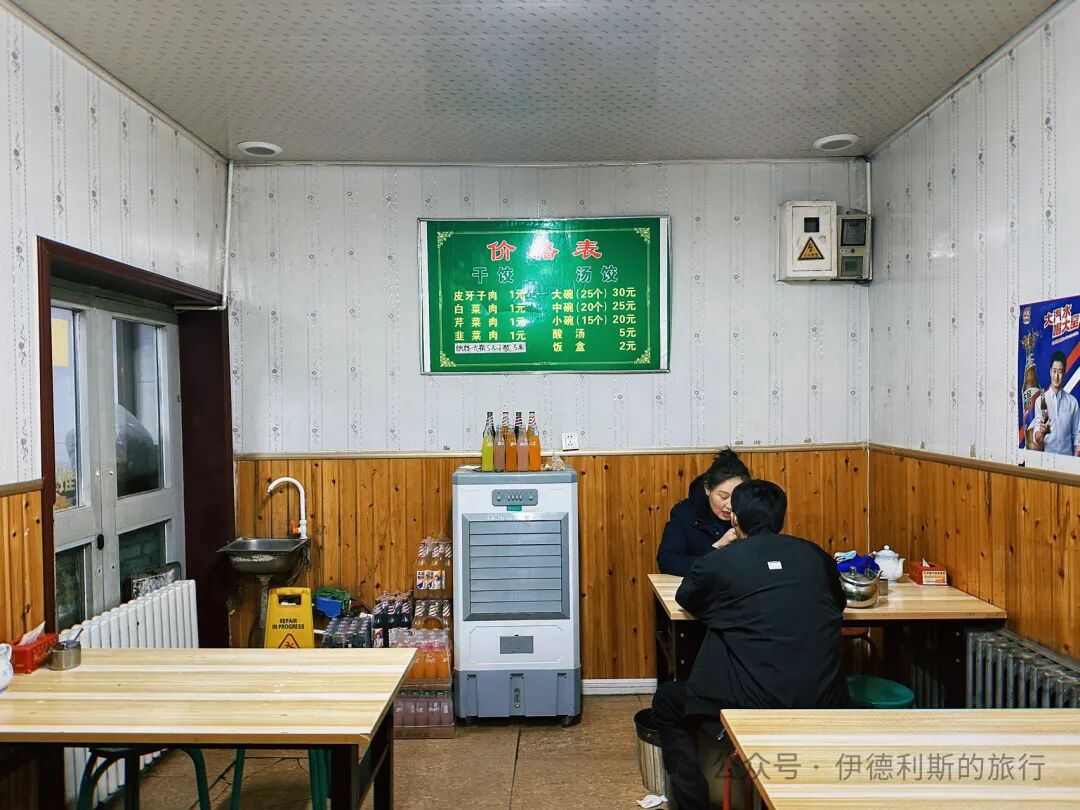
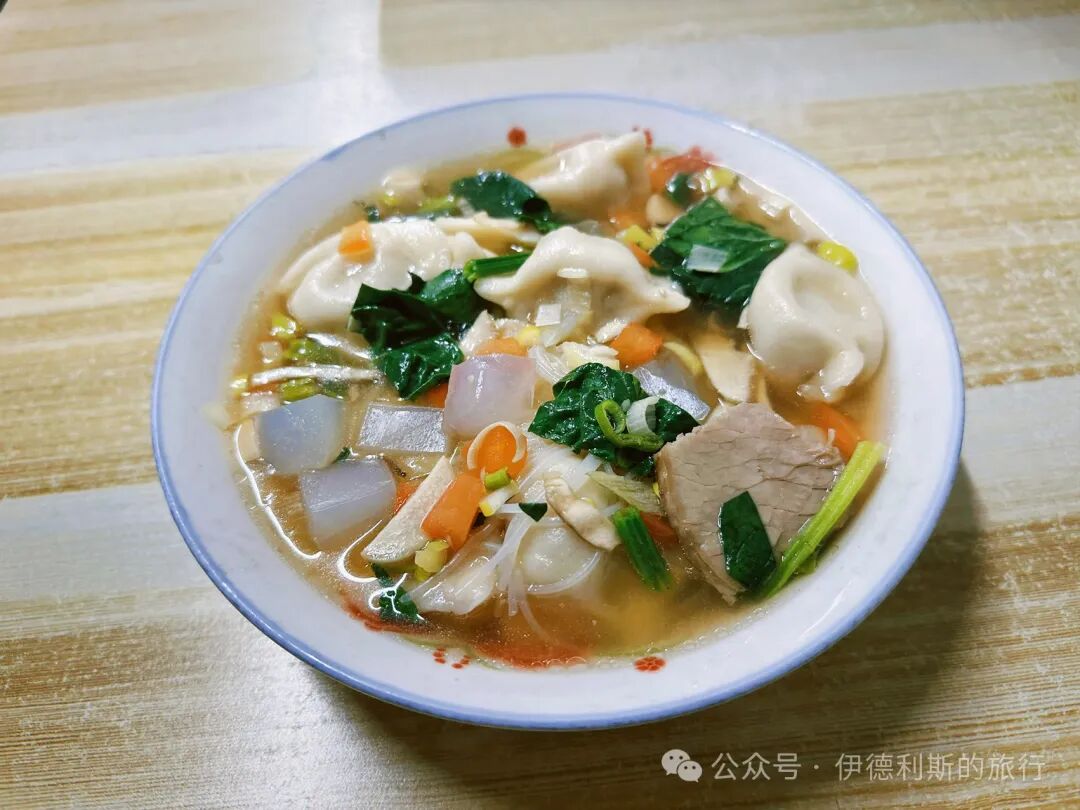
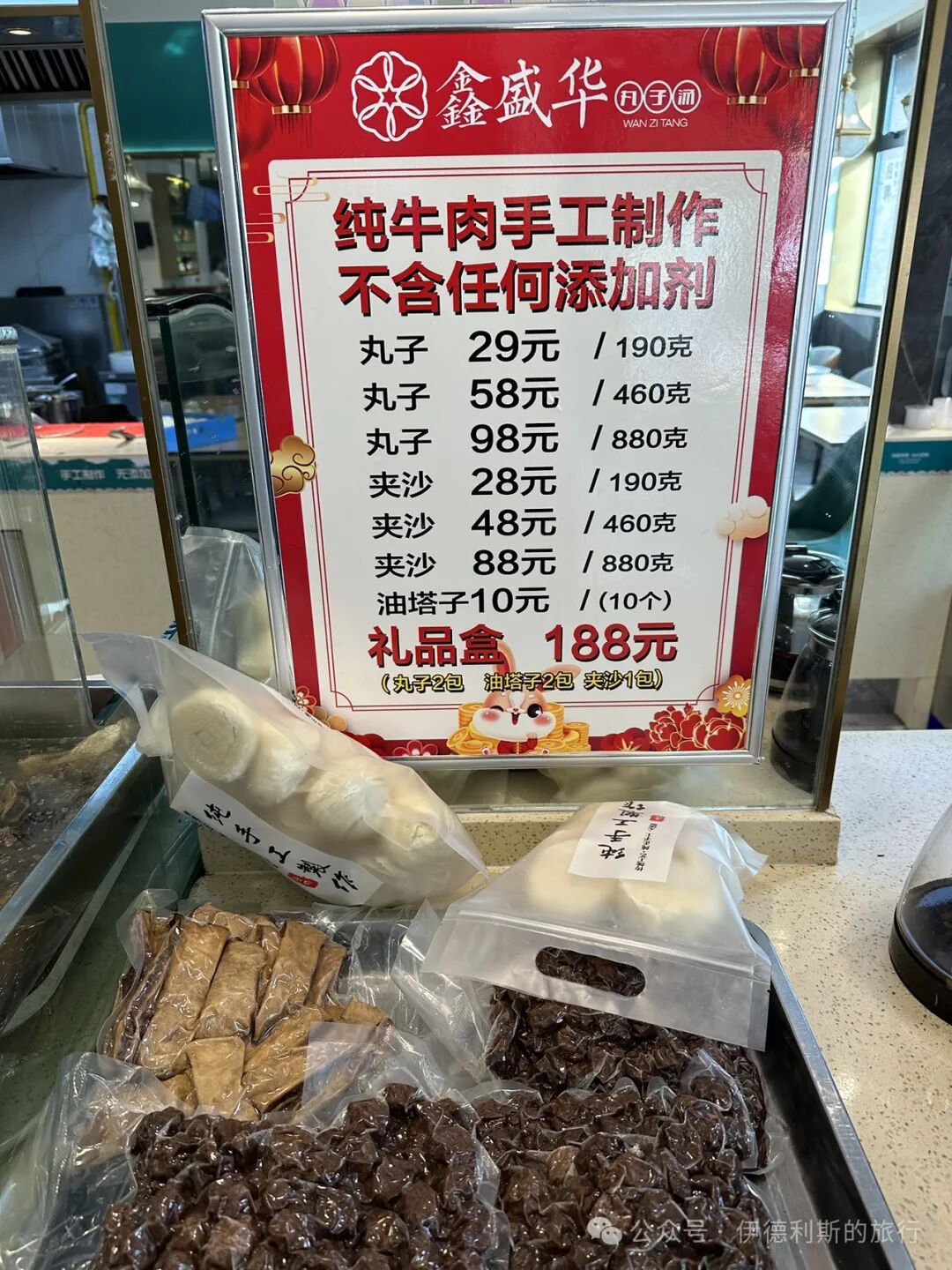
Even though I was busy with night prayers (dua) during this trip to Urumqi, I still found time to visit two small Hui Muslim eateries. The first one was a childhood favorite of Zainab's: Hepingqiao Dumpling Restaurant. It is a rare, old-school Hui Muslim sour soup dumpling shop in Urumqi. It used to be called Yiqing Dumpling Restaurant, but after they were no longer allowed to use that name, everyone just started calling it Hepingqiao Dumpling Restaurant. The old-school Hui Muslim sour soup contains tomatoes, spinach, starch jelly blocks (fenkuai), vermicelli (fentiao), mushrooms, and sliced meat. Zainab said that while the taste hasn't changed much, they used to put a lot more meat in the sour soup when she was a child, but now they give too little. They have four types of dumpling fillings: onion and meat (piyanzi rou), cabbage and meat, celery and meat, and chive and meat, which are the most common types eaten by Hui Muslims in Urumqi. I ordered a small bowl of onion and meat dumplings, and the Sichuan peppercorn flavor really stood out, which is a signature feature of Xinjiang dumplings.
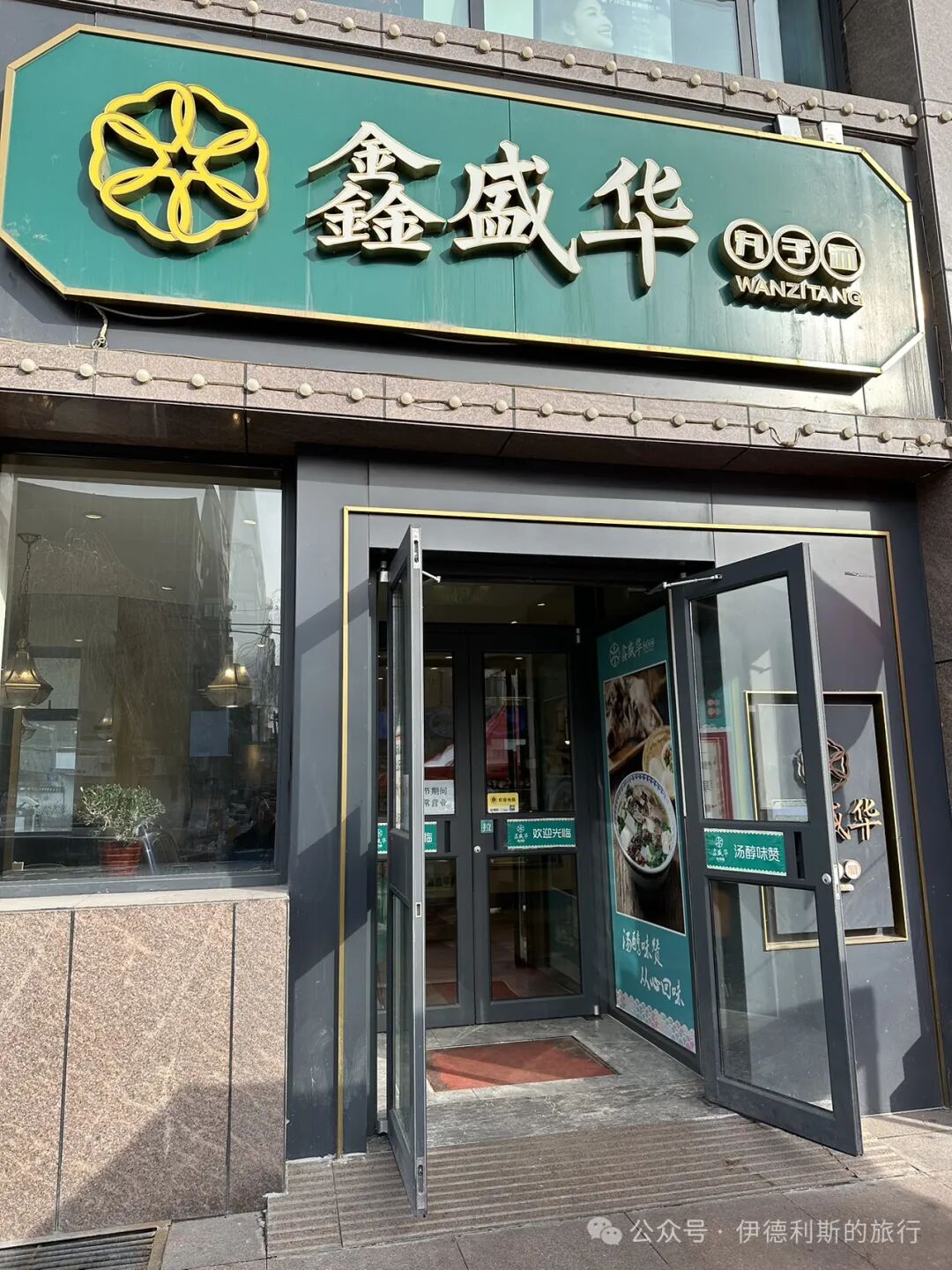
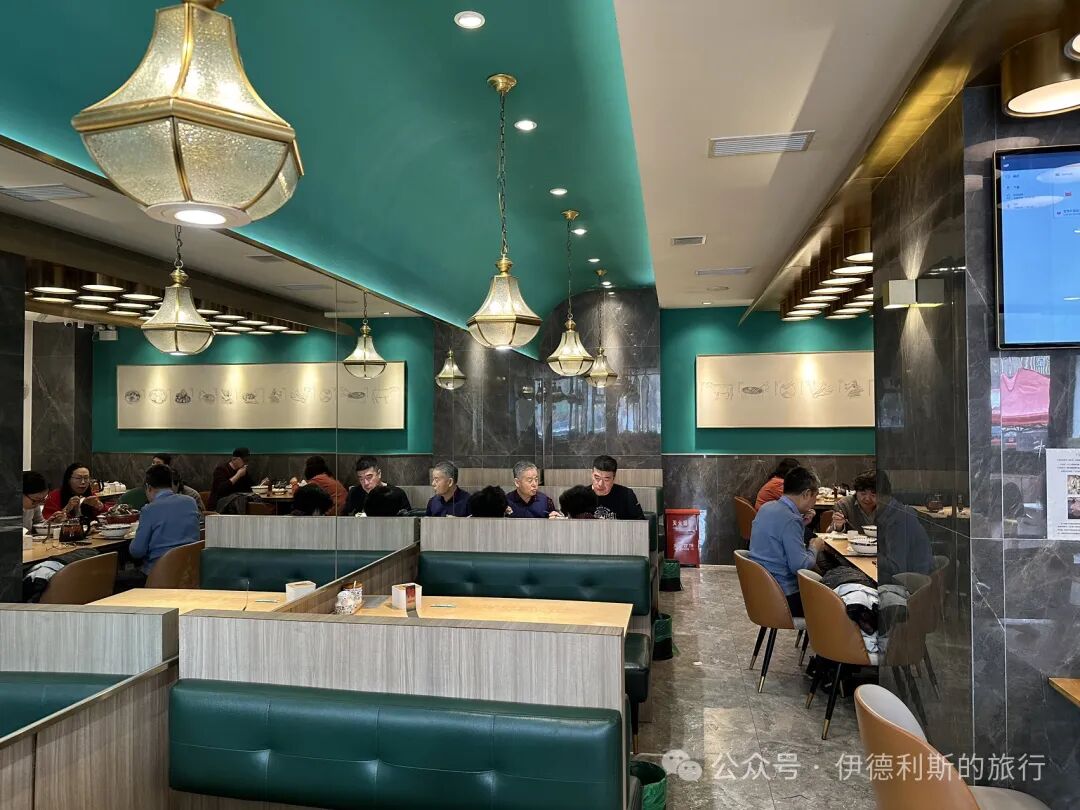
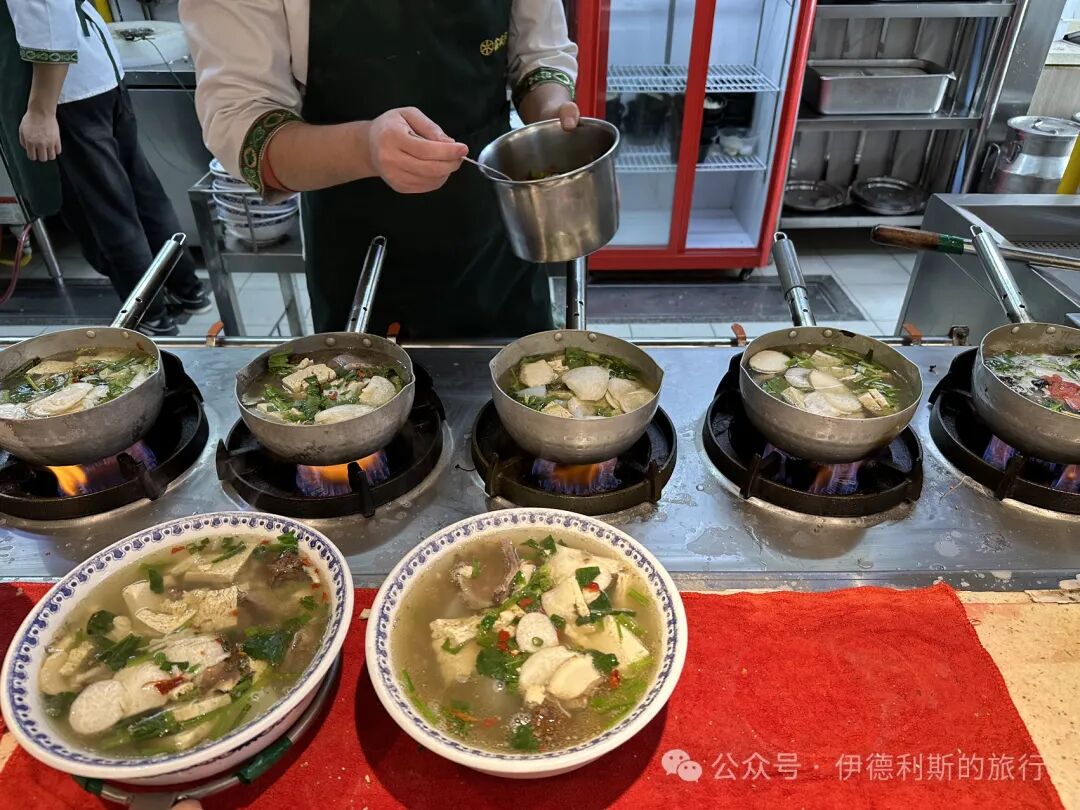
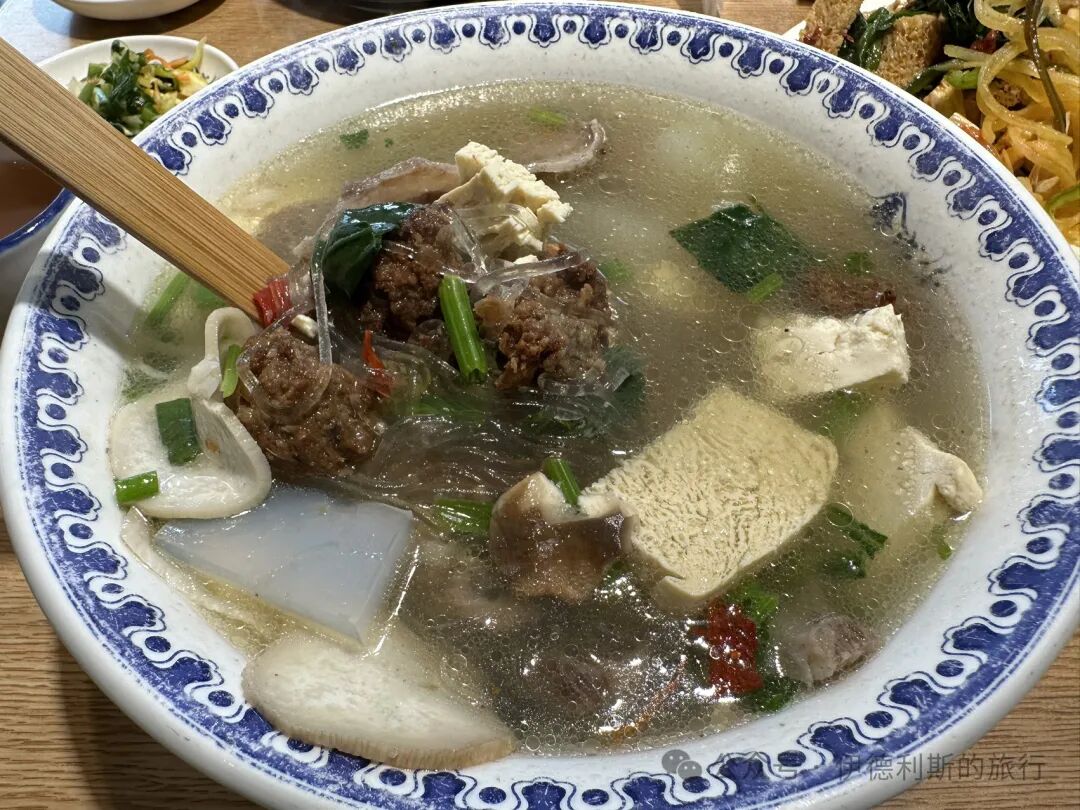
The second place was Xinshenghua, a Changji Hui Muslim meatball soup (wanzi tang) restaurant. When I first came to Urumqi ten years ago, I ate at Forty-Nine Meatball Soup, but later the taste there went downhill, and I hadn't had a really good meatball soup in Urumqi since. This time, on the recommendation of an older sister, we went to Xinshenghua Meatball Soup near the Normal University. It is a traditional Changji Hui Muslim meatball soup shop with a nice environment, an open kitchen, and good service, though the prices are higher than at typical small eateries.
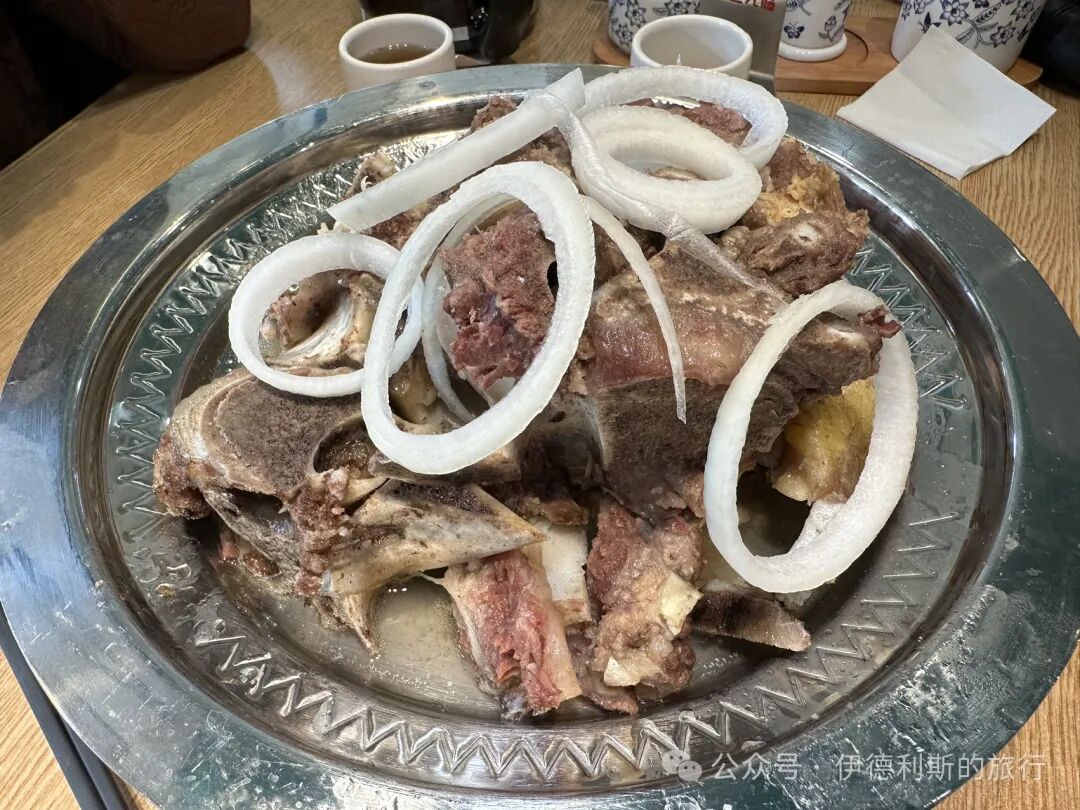
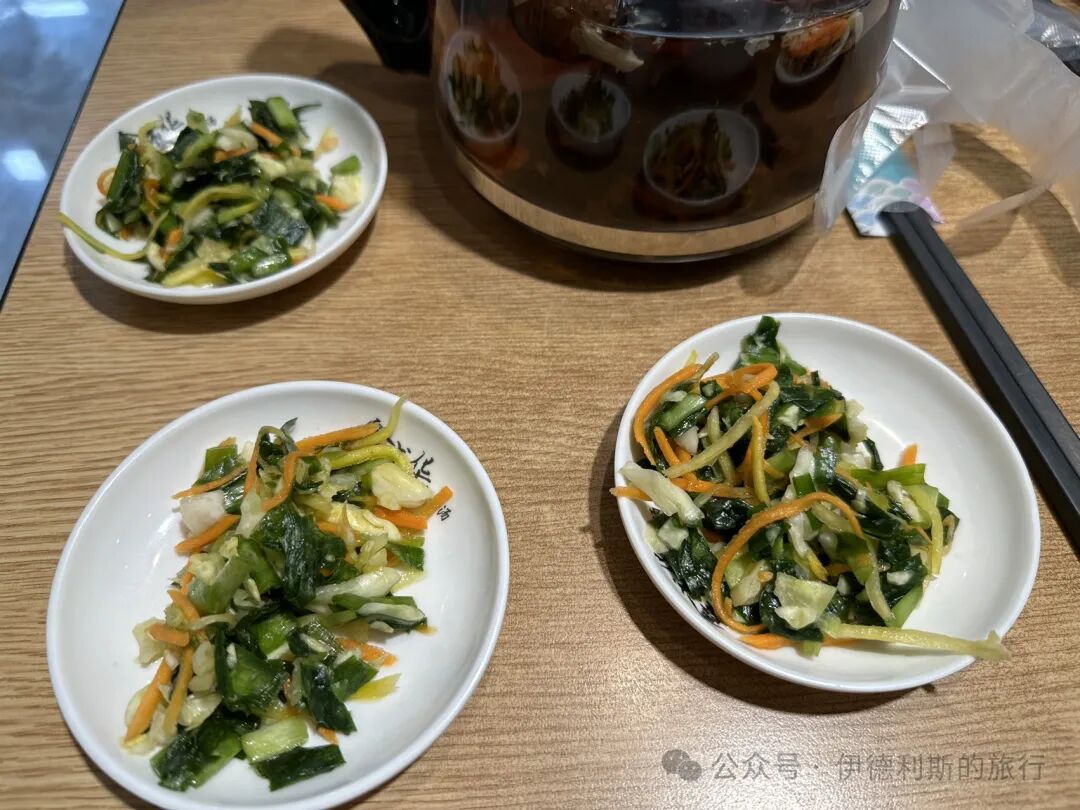
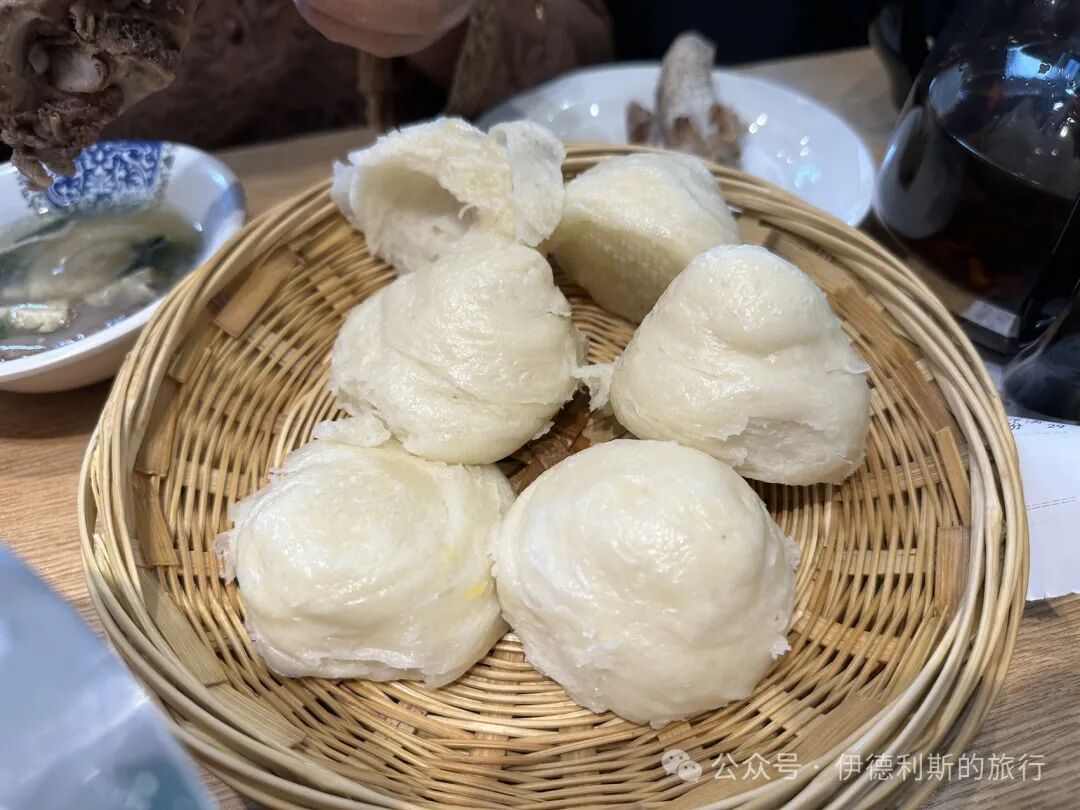
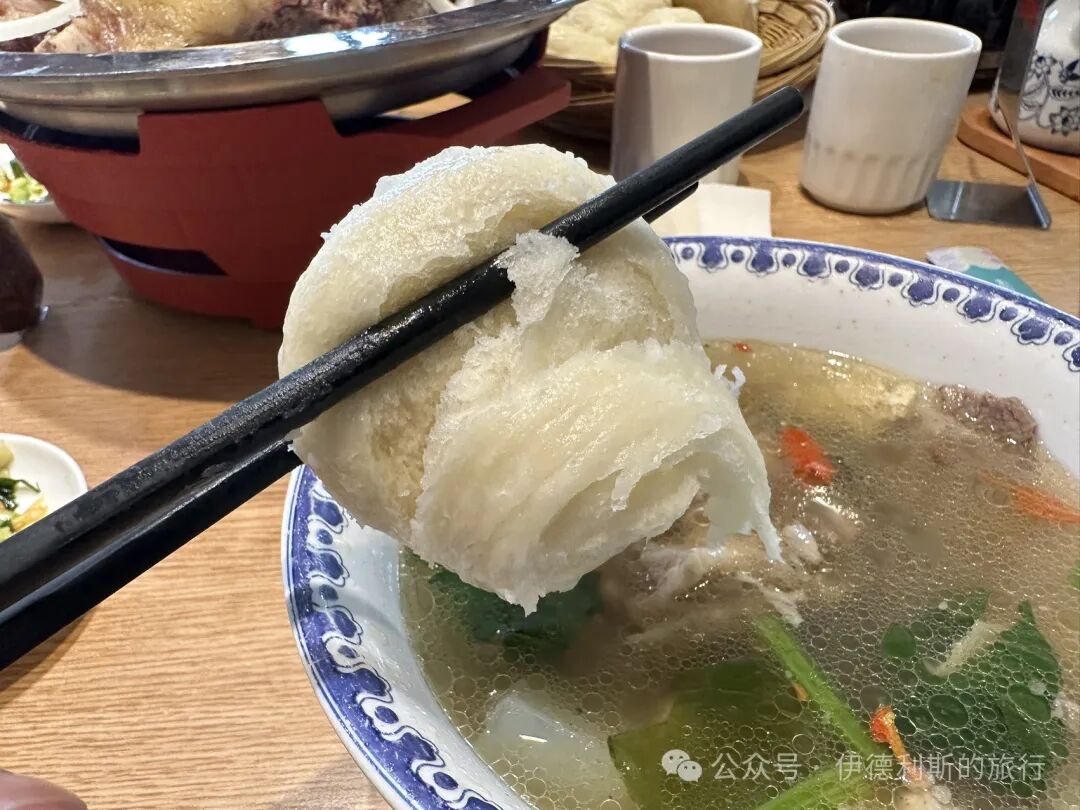
We ordered a set meal that included meatball soup, a small portion of beef bones, and cold dishes, with all-you-can-eat steamed layered buns (youtazi). The meatball soup tasted quite authentic, though they didn't give many meatballs, which seems to be a common situation these days. The steamed layered buns were delicious. I missed them so much while in Beijing; the flavor from the rendered lamb fat makes them much more fragrant than regular steamed rolls (huajuan). The beef bones were also excellent, stewed until fragrant and tender, and they gave us a good amount of meat; a small portion was enough for the four of us.
Overall, Xinshenghua's meatball soup is pretty good. My family also recommended Ma Guilian Sisters Meatball Soup on Ying'awati Road, so I will try to go there next time I have the chance. view all
Summary: This Urumqi food note introduces two small Hui Muslim restaurants the author visited during the trip. It preserves the original restaurant details, dishes, flavors, and local food observations while keeping the English simple and direct.
Even though I was busy with night prayers (dua) during this trip to Urumqi, I still found time to visit two small Hui Muslim eateries. The first one was a childhood favorite of Zainab's: Hepingqiao Dumpling Restaurant. It is a rare, old-school Hui Muslim sour soup dumpling shop in Urumqi. It used to be called Yiqing Dumpling Restaurant, but after they were no longer allowed to use that name, everyone just started calling it Hepingqiao Dumpling Restaurant. The old-school Hui Muslim sour soup contains tomatoes, spinach, starch jelly blocks (fenkuai), vermicelli (fentiao), mushrooms, and sliced meat. Zainab said that while the taste hasn't changed much, they used to put a lot more meat in the sour soup when she was a child, but now they give too little. They have four types of dumpling fillings: onion and meat (piyanzi rou), cabbage and meat, celery and meat, and chive and meat, which are the most common types eaten by Hui Muslims in Urumqi. I ordered a small bowl of onion and meat dumplings, and the Sichuan peppercorn flavor really stood out, which is a signature feature of Xinjiang dumplings.
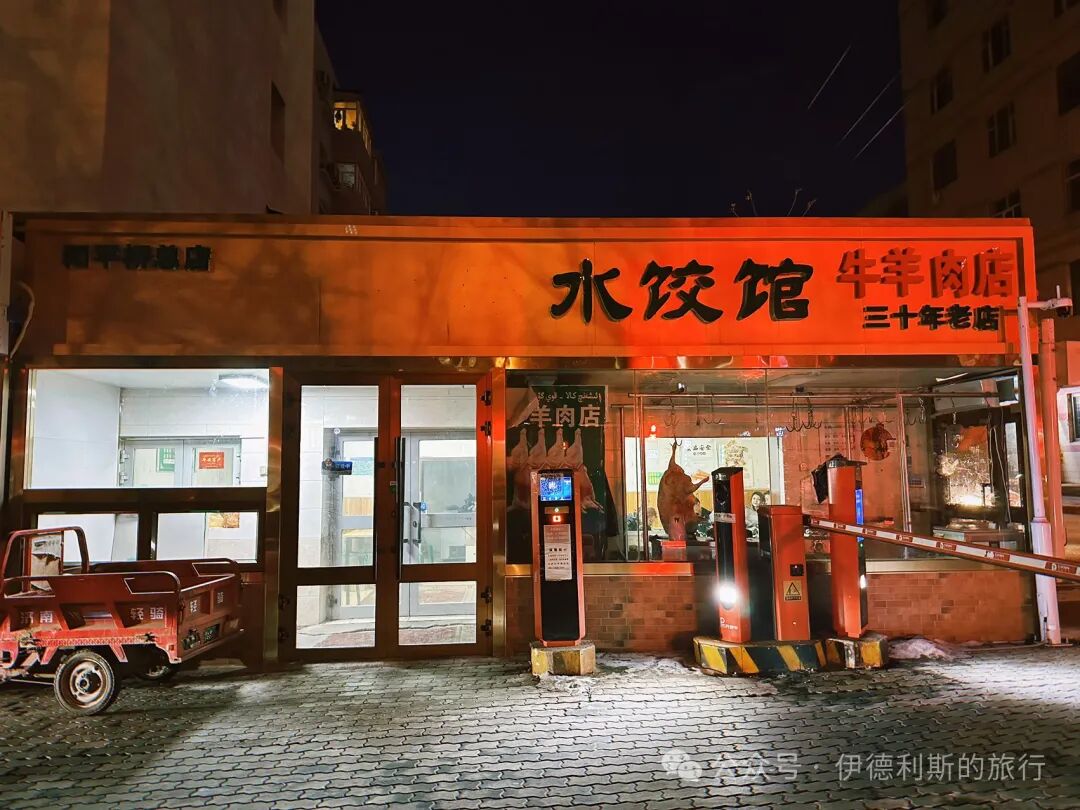
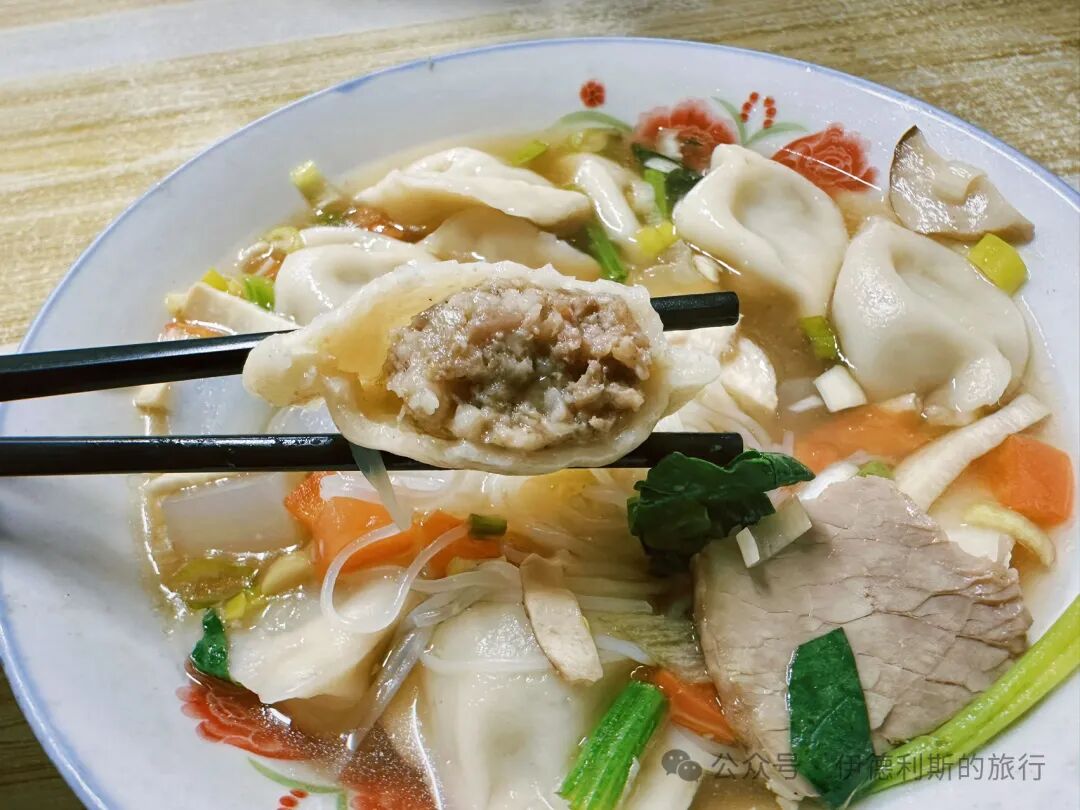
The second place was Xinshenghua, a Changji Hui Muslim meatball soup (wanzi tang) restaurant. When I first came to Urumqi ten years ago, I ate at Forty-Nine Meatball Soup, but later the taste there went downhill, and I hadn't had a really good meatball soup in Urumqi since. This time, on the recommendation of an older sister, we went to Xinshenghua Meatball Soup near the Normal University. It is a traditional Changji Hui Muslim meatball soup shop with a nice environment, an open kitchen, and good service, though the prices are higher than at typical small eateries.
We ordered a set meal that included meatball soup, a small portion of beef bones, and cold dishes, with all-you-can-eat steamed layered buns (youtazi). The meatball soup tasted quite authentic, though they didn't give many meatballs, which seems to be a common situation these days. The steamed layered buns were delicious. I missed them so much while in Beijing; the flavor from the rendered lamb fat makes them much more fragrant than regular steamed rolls (huajuan). The beef bones were also excellent, stewed until fragrant and tender, and they gave us a good amount of meat; a small portion was enough for the four of us.
Overall, Xinshenghua's meatball soup is pretty good. My family also recommended Ma Guilian Sisters Meatball Soup on Ying'awati Road, so I will try to go there next time I have the chance.
Halal Food Guide: Urumqi — Home-Style Peppercorn Chicken and Xinjiang Flavor
Articles • ali2007fr posted the article • 0 comments • 163 views • 2026-05-19 03:00
Summary: Urumqi home-style peppercorn chicken is a Xinjiang halal dish built around chicken, peppercorn aroma, and everyday family cooking. This short food note keeps the original recipe-style details and photos while presenting them in clear English.
My parents-in-law came to Beijing this weekend to visit Suleiman and made us spicy numbing chicken (jiaomaji). I want to share how Hui Muslims in Urumqi make this home-style dish, which is different from what you buy in restaurants:
1. Buy a small free-range chicken weighing about 1.5 kilograms. Wash it, chop it in half, remove the tail and the tips of the claws, and clean the neck, gizzard, and liver.
2. Put the chicken in a pressure cooker, add enough water to cover it, then add a few red chili peppers, a large handful of Sichuan peppercorns, some salt, a few bay leaves, a little cinnamon, and a few ginger slices. Stew for 15 minutes.
3. Take the chicken out, put it in a basin to cool, shred it by hand, and spread a chopped green onion over the top.
4. Heat oil in a pan. Once hot, turn off the heat and add seven chopped dried chili peppers (lapizi), four spoonfuls of Sichuan peppercorns, four spoonfuls of salt, and half a spoonful of white pepper. Stir well.
5. Pour three tablespoons of chicken broth into the chili oil, then pour the mixture over the chicken in the basin. Mix well, cover with a lid, and let it sit for a while before eating.
6. Pull a large plate of wide belt noodles (pidaimian) and put them into the basin with the spicy numbing chicken. The noodles soak up the sauce and taste amazing.
I will also share how to make the belt noodles:
Put a bowl of flour into a mixing bowl, sprinkle in half a small spoonful of salt, and add a little water. Use your fingers to stir the flour and water until it forms small, crumbly bits.
Gather the crumbly bits into a ball, adding a little water at a time to the remaining dry flour until all the bits are incorporated into one dough ball.
Knead the dough until the surface is smooth, then cover it with the mixing bowl and let it rest for 10 minutes. Repeat the resting process 2 to 3 times, then roll the dough into a large round sheet about 1 centimeter thick. Brush both sides with raw oil and cover it with the bowl again; the dough is now ready.
If you are not eating it right away, cover the dough with plastic wrap. view all
Summary: Urumqi home-style peppercorn chicken is a Xinjiang halal dish built around chicken, peppercorn aroma, and everyday family cooking. This short food note keeps the original recipe-style details and photos while presenting them in clear English.
My parents-in-law came to Beijing this weekend to visit Suleiman and made us spicy numbing chicken (jiaomaji). I want to share how Hui Muslims in Urumqi make this home-style dish, which is different from what you buy in restaurants:
1. Buy a small free-range chicken weighing about 1.5 kilograms. Wash it, chop it in half, remove the tail and the tips of the claws, and clean the neck, gizzard, and liver.
2. Put the chicken in a pressure cooker, add enough water to cover it, then add a few red chili peppers, a large handful of Sichuan peppercorns, some salt, a few bay leaves, a little cinnamon, and a few ginger slices. Stew for 15 minutes.
3. Take the chicken out, put it in a basin to cool, shred it by hand, and spread a chopped green onion over the top.
4. Heat oil in a pan. Once hot, turn off the heat and add seven chopped dried chili peppers (lapizi), four spoonfuls of Sichuan peppercorns, four spoonfuls of salt, and half a spoonful of white pepper. Stir well.
5. Pour three tablespoons of chicken broth into the chili oil, then pour the mixture over the chicken in the basin. Mix well, cover with a lid, and let it sit for a while before eating.
6. Pull a large plate of wide belt noodles (pidaimian) and put them into the basin with the spicy numbing chicken. The noodles soak up the sauce and taste amazing.
I will also share how to make the belt noodles:
Put a bowl of flour into a mixing bowl, sprinkle in half a small spoonful of salt, and add a little water. Use your fingers to stir the flour and water until it forms small, crumbly bits.
Gather the crumbly bits into a ball, adding a little water at a time to the remaining dry flour until all the bits are incorporated into one dough ball.
Knead the dough until the surface is smooth, then cover it with the mixing bowl and let it rest for 10 minutes. Repeat the resting process 2 to 3 times, then roll the dough into a large round sheet about 1 centimeter thick. Brush both sides with raw oil and cover it with the bowl again; the dough is now ready.
If you are not eating it right away, cover the dough with plastic wrap.
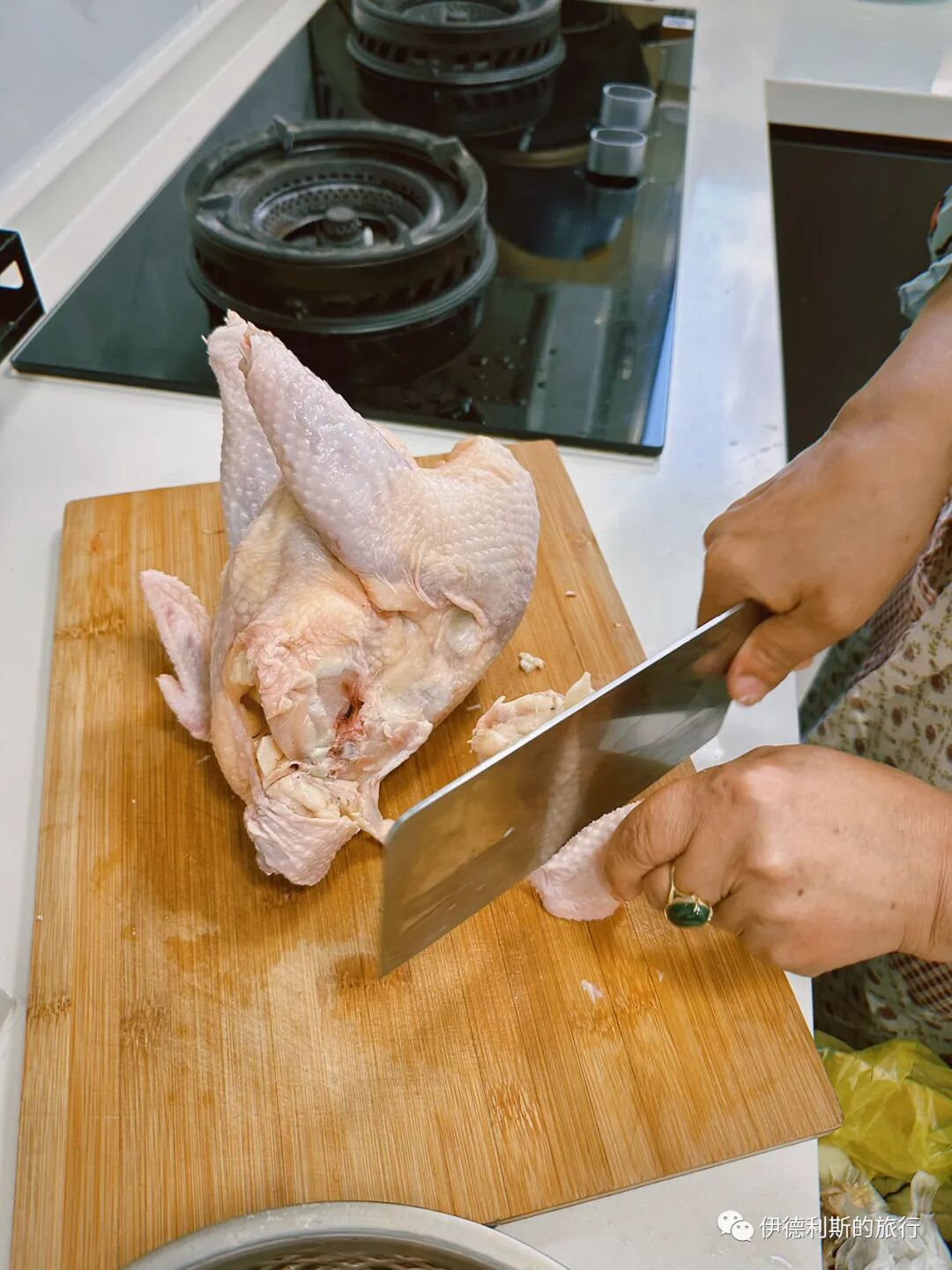
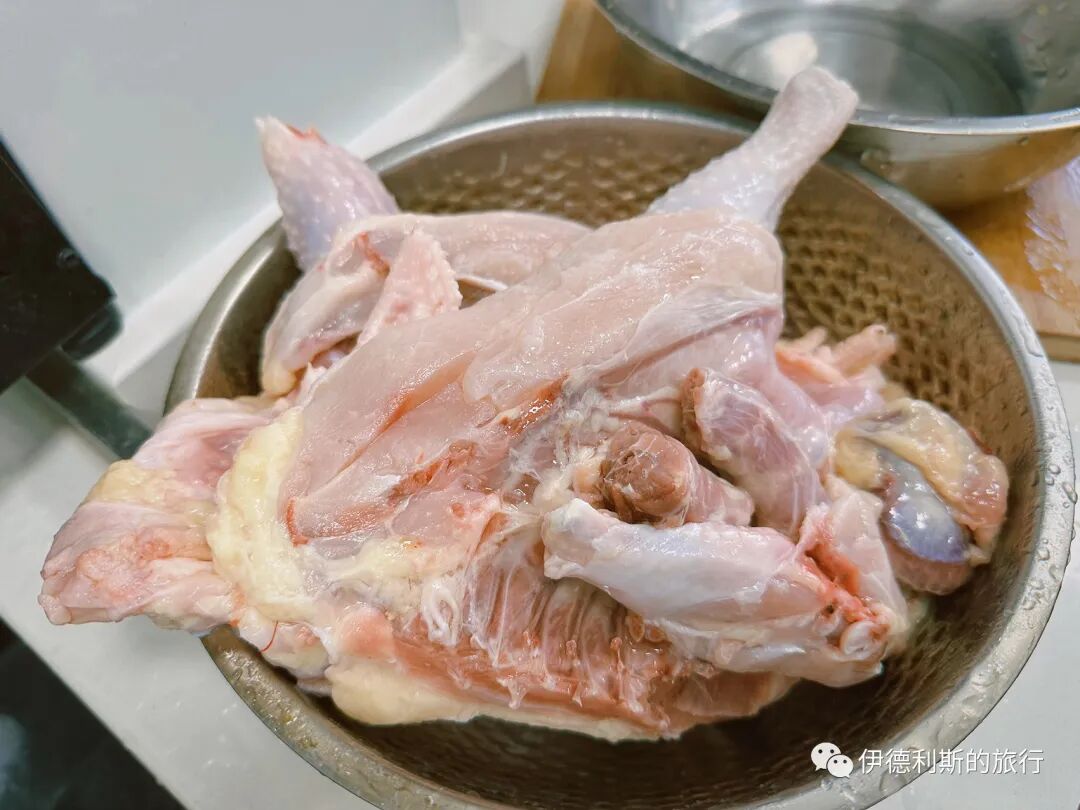
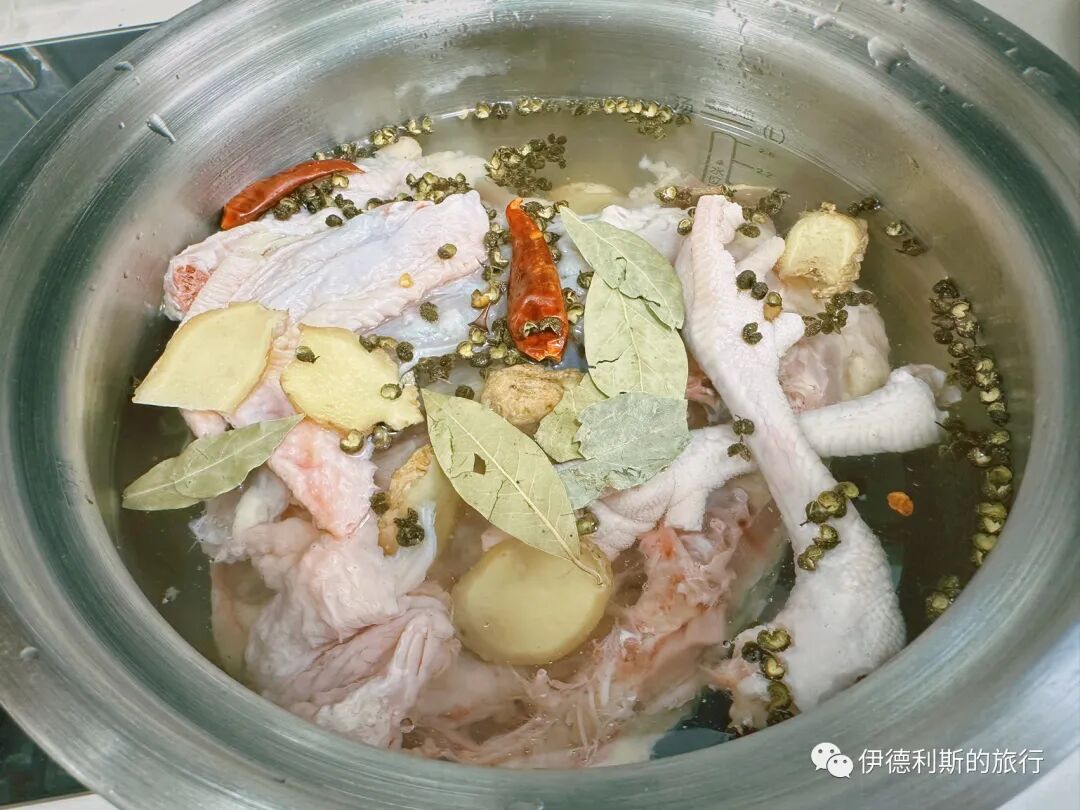
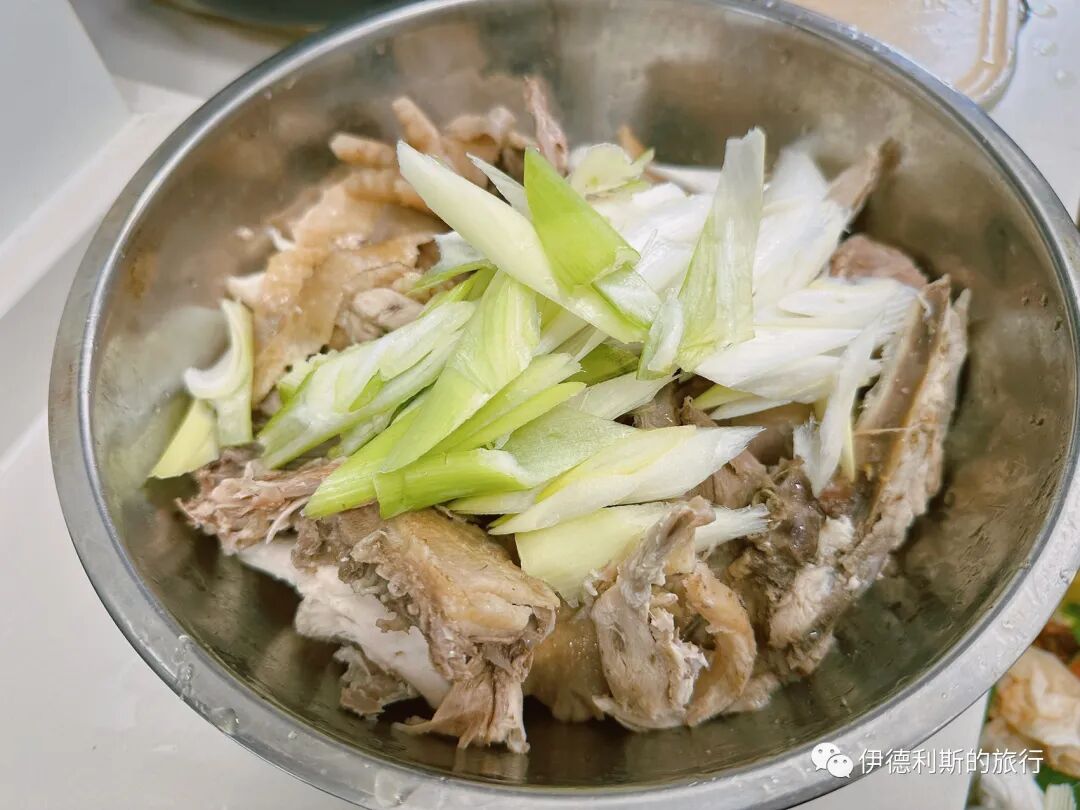
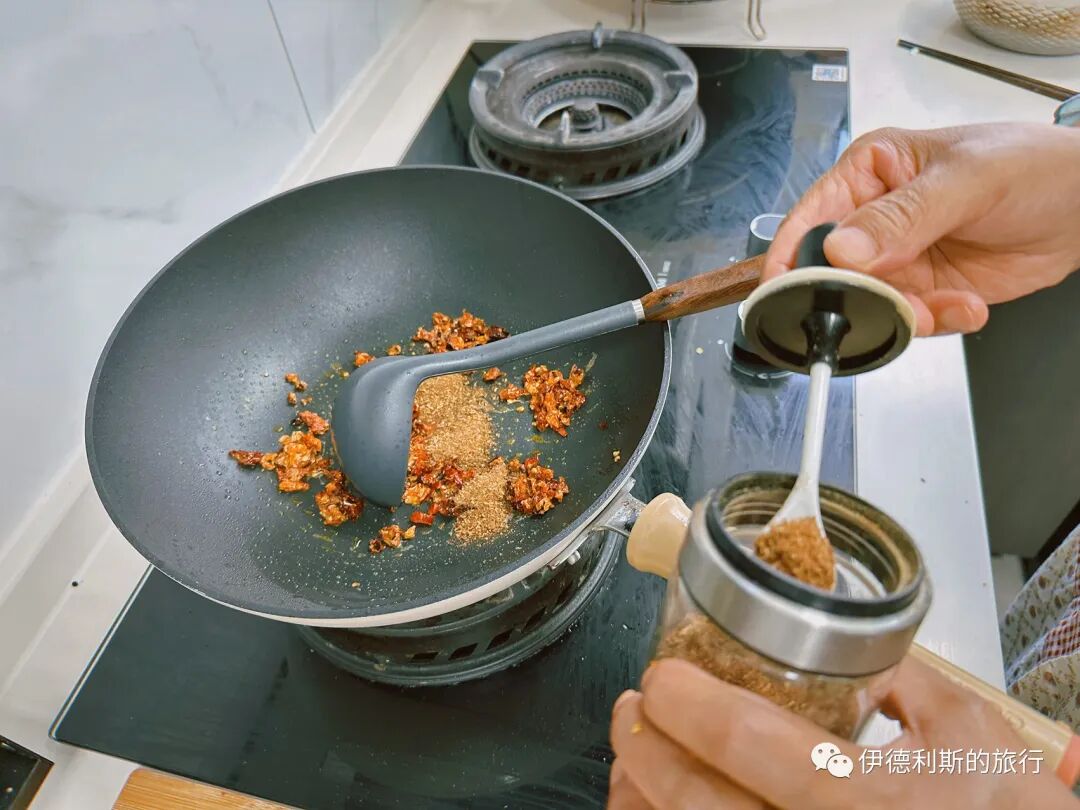
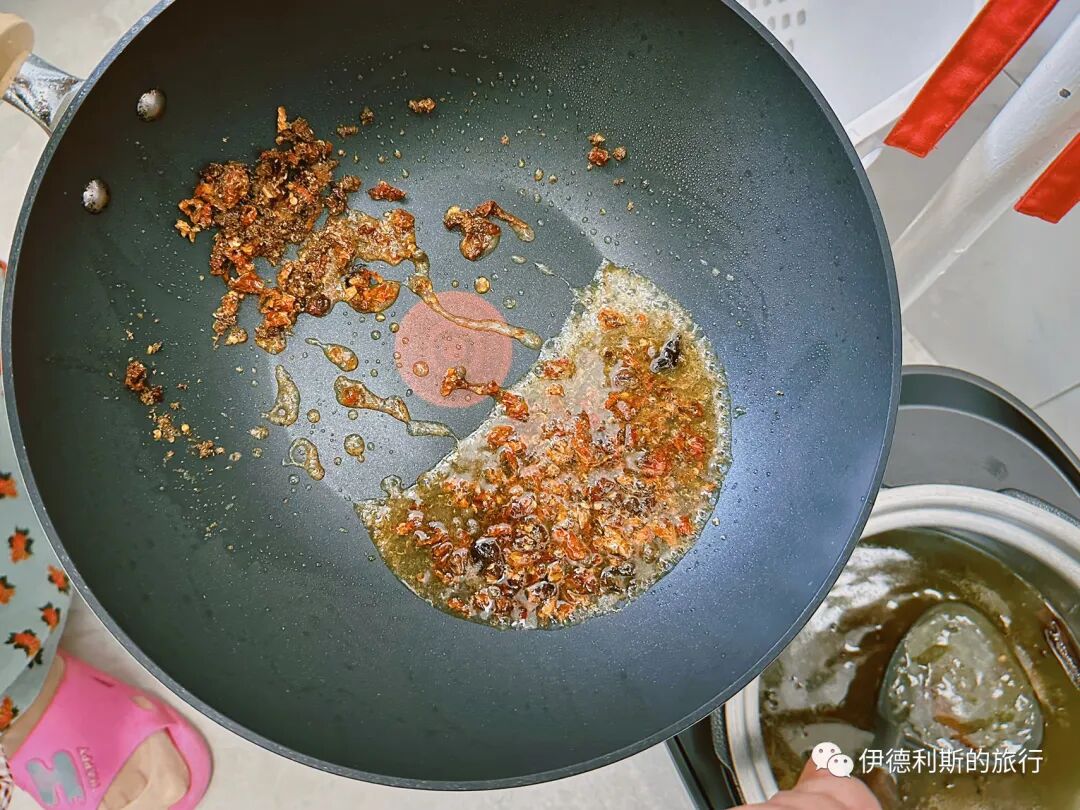
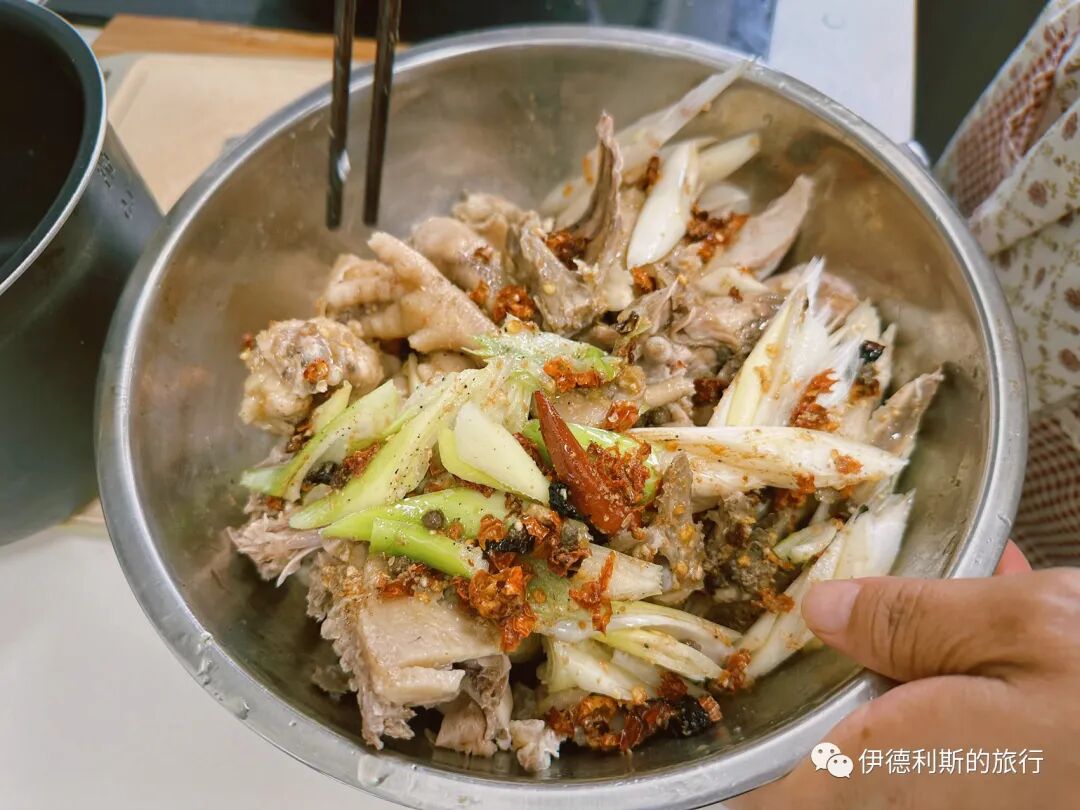
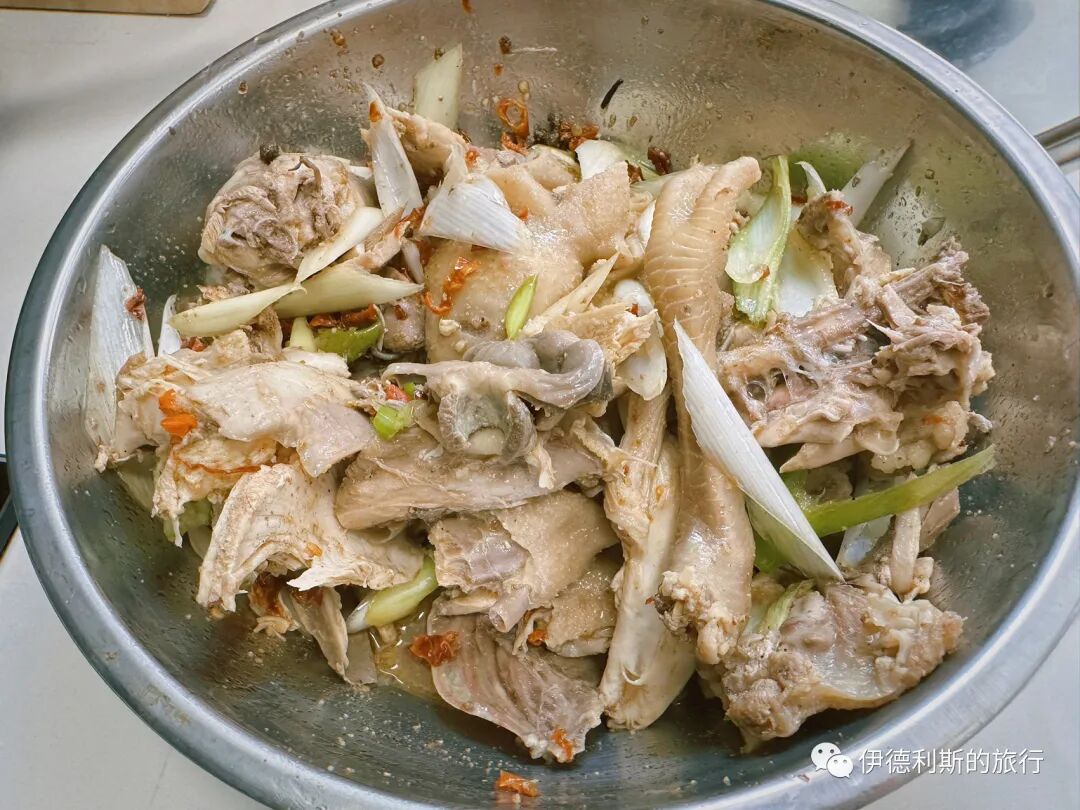
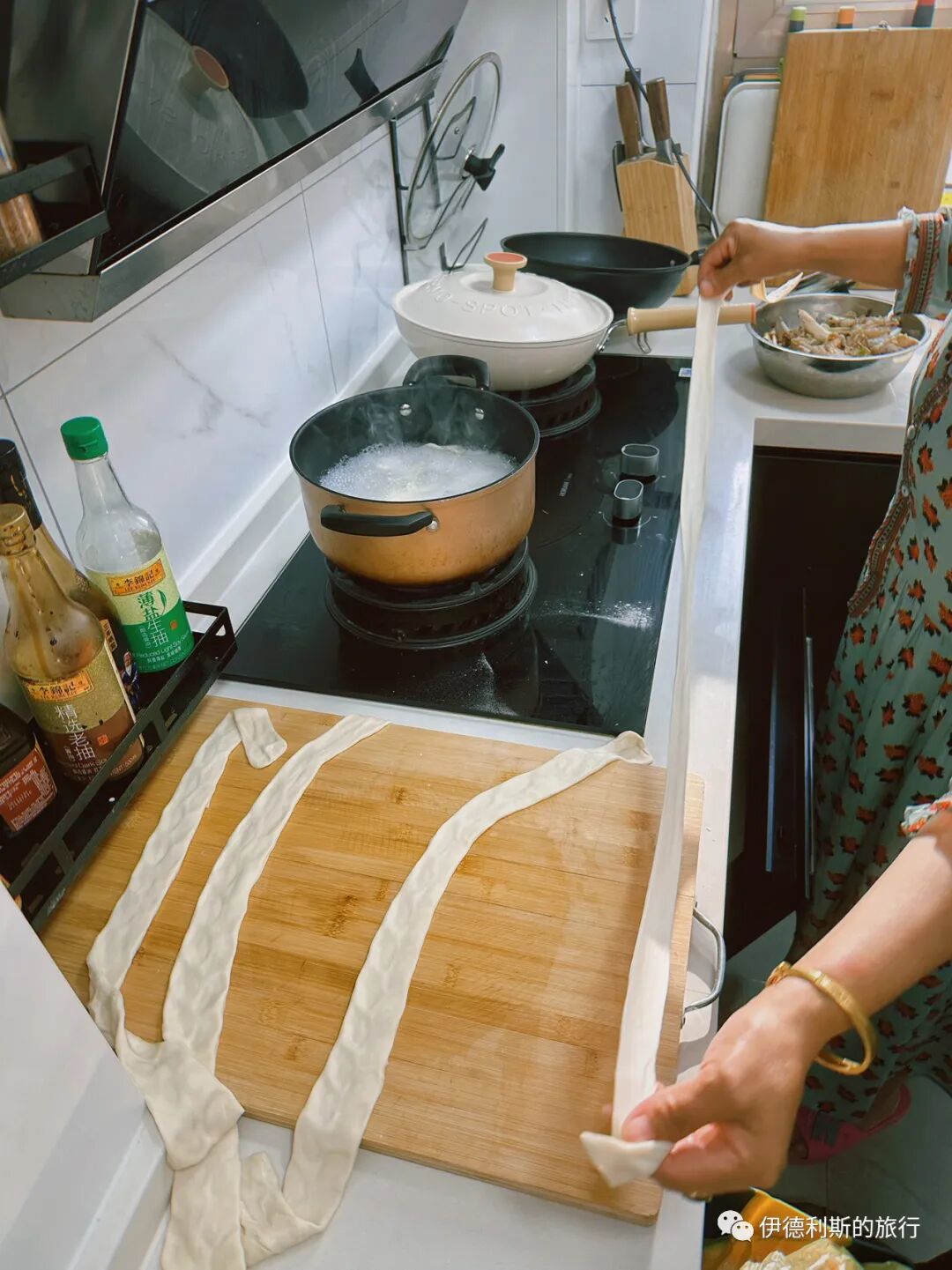
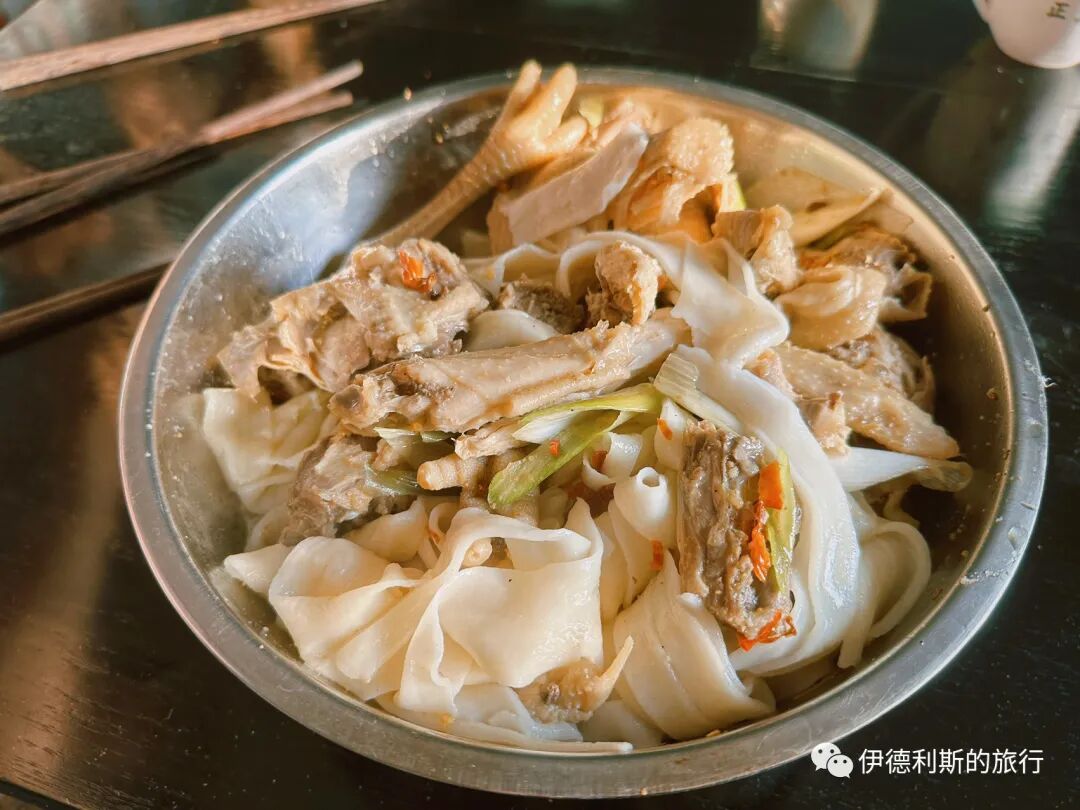
Halal Food Guide: Urumqi Hui Muslims — Fried Youxiang and Family Cooking
Articles • ali2007fr posted the article • 0 comments • 152 views • 2026-05-18 20:26
Summary: Halal Food Guide: Urumqi Hui Muslims — Fried Youxiang and Family Cooking is presented here as a firsthand travel account in clear English, beginning with this scene: A few days ago, my family made fried dough (youxiang). I recorded the process, which is the Urumqi Hui Muslim version. It is likely similar to how it is made in many parts of the Northwest. The account keeps its focus on Urumqi Halal Food, Hui Muslim Food, Xinjiang Travel while preserving the names, places, food, and historical details from the Chinese source.
A few days ago, my family made fried dough (youxiang). I recorded the process, which is the Urumqi Hui Muslim version. It is likely similar to how it is made in many parts of the Northwest.
First, make the leavened dough. After it rises, use hot oil to scald a small portion of the dough. Add a little baking soda and blue fenugreek powder (xiangdoufen) to the scalded dough and mix well. This makes the fried dough crispy on the outside. Place the mixed scalded dough onto the leavened dough, knead them together evenly, cover the basin, and let it rest for fifteen minutes.
Knead the rested dough into a long strip, pinch off small pieces, roll them into balls, and flatten them into discs. Use a knife to cut four small slits in each, then they are ready to be fried in oil. In some places, people say the slits represent the knife marks made by a believer.
Fry for a while, then flip them over. Wait a bit longer, then pick one up and tap the edge with chopsticks. If it makes a crisp, hollow sound, it is ready to be taken out.
Also, you must perform wudu (abdest) before frying the dough, and recite the Tasmiyah before frying each piece. When eating, break the dough apart. You should also recite the Tasmiyah before eating each piece.
Besides this classic fried dough, Urumqi Hui Muslims also make steamed fried dough (zheng youxiang) and scalded dough fried dough (tangmian youxiang). Steamed fried dough is usually made when you do not fry the dough during a religious gathering (soer); you can steam it instead. Scalded dough fried dough is made entirely from scalded dough. I will share more about that when I have the chance.
For other Urumqi Hui Muslim home-cooked dishes, you can check my previous diaries, '15 Urumqi Hui Muslim Dishes My Mother-in-law Made (Part 1)' and '15 Urumqi Hui Muslim Dishes My Mother-in-law Made (Part 2).' view all
Summary: Halal Food Guide: Urumqi Hui Muslims — Fried Youxiang and Family Cooking is presented here as a firsthand travel account in clear English, beginning with this scene: A few days ago, my family made fried dough (youxiang). I recorded the process, which is the Urumqi Hui Muslim version. It is likely similar to how it is made in many parts of the Northwest. The account keeps its focus on Urumqi Halal Food, Hui Muslim Food, Xinjiang Travel while preserving the names, places, food, and historical details from the Chinese source.
A few days ago, my family made fried dough (youxiang). I recorded the process, which is the Urumqi Hui Muslim version. It is likely similar to how it is made in many parts of the Northwest.
First, make the leavened dough. After it rises, use hot oil to scald a small portion of the dough. Add a little baking soda and blue fenugreek powder (xiangdoufen) to the scalded dough and mix well. This makes the fried dough crispy on the outside. Place the mixed scalded dough onto the leavened dough, knead them together evenly, cover the basin, and let it rest for fifteen minutes.
Knead the rested dough into a long strip, pinch off small pieces, roll them into balls, and flatten them into discs. Use a knife to cut four small slits in each, then they are ready to be fried in oil. In some places, people say the slits represent the knife marks made by a believer.
Fry for a while, then flip them over. Wait a bit longer, then pick one up and tap the edge with chopsticks. If it makes a crisp, hollow sound, it is ready to be taken out.
Also, you must perform wudu (abdest) before frying the dough, and recite the Tasmiyah before frying each piece. When eating, break the dough apart. You should also recite the Tasmiyah before eating each piece.
Besides this classic fried dough, Urumqi Hui Muslims also make steamed fried dough (zheng youxiang) and scalded dough fried dough (tangmian youxiang). Steamed fried dough is usually made when you do not fry the dough during a religious gathering (soer); you can steam it instead. Scalded dough fried dough is made entirely from scalded dough. I will share more about that when I have the chance.
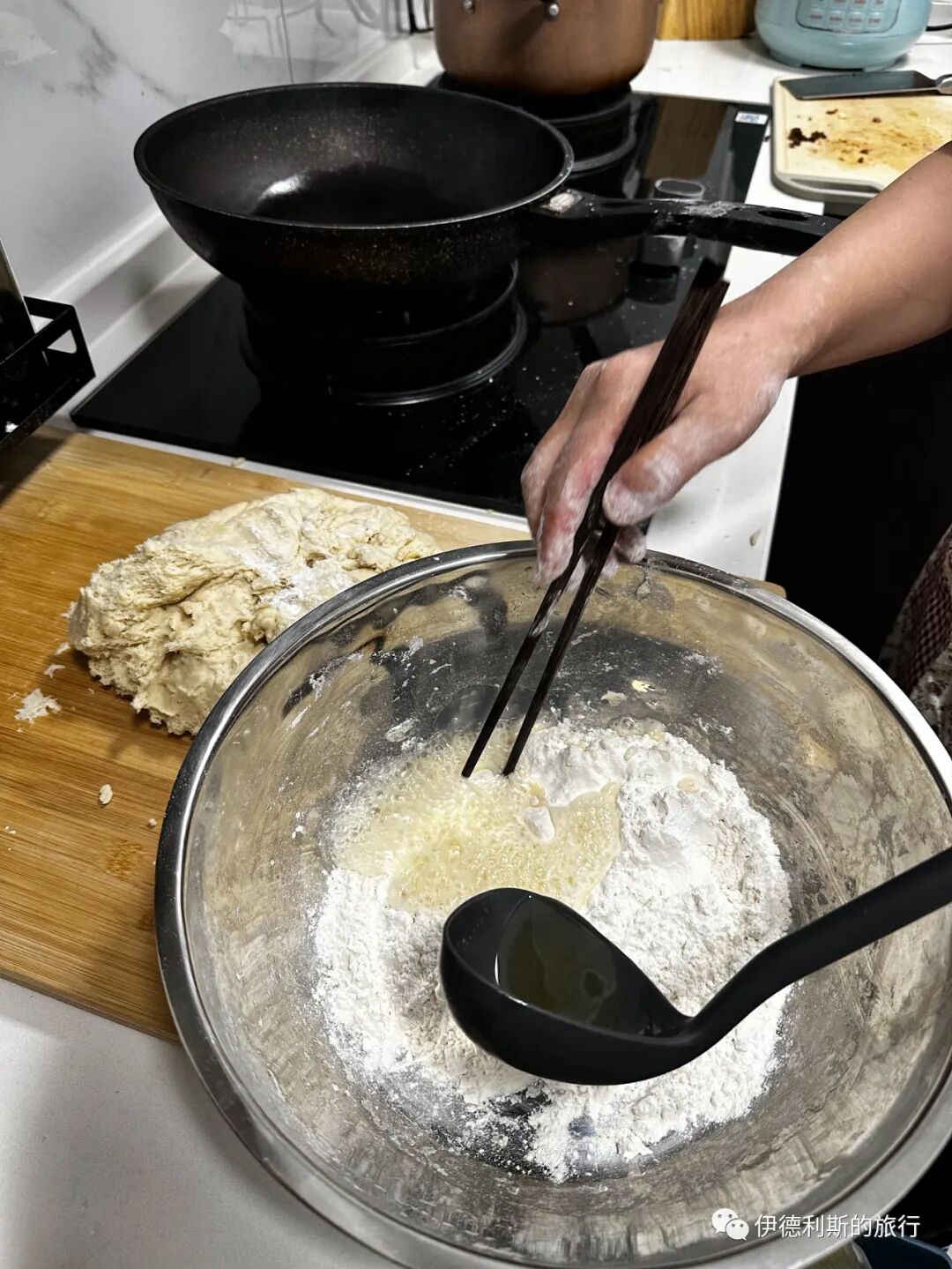
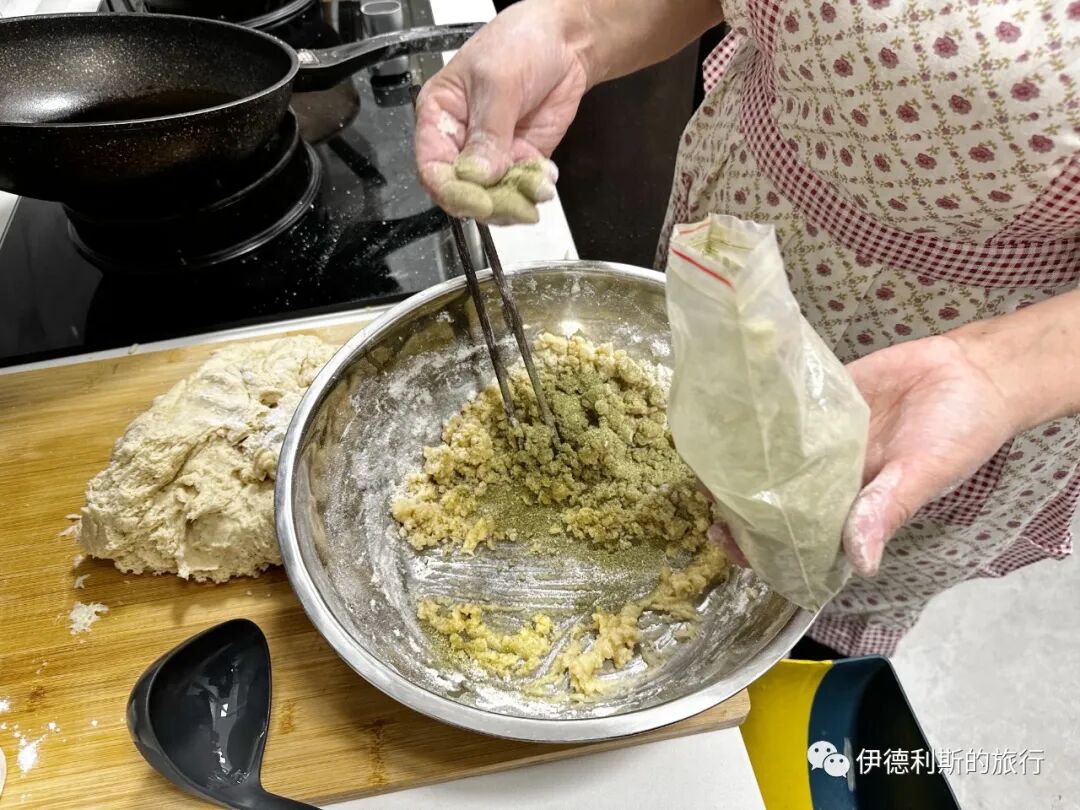
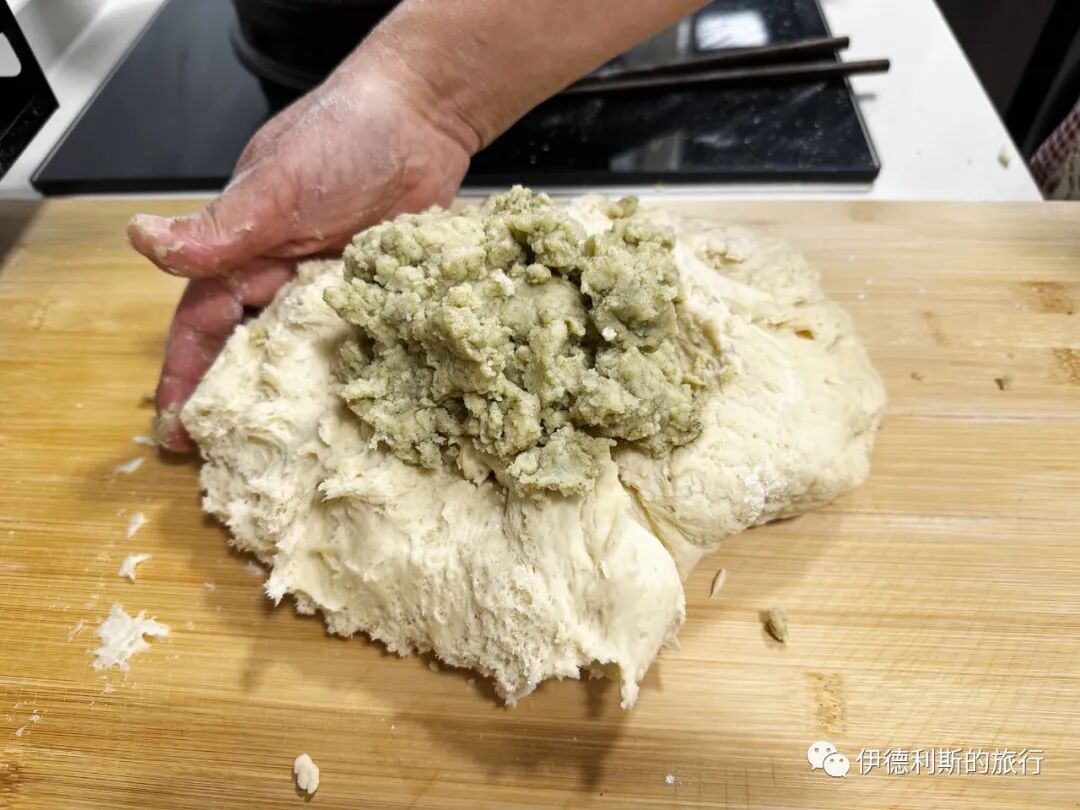
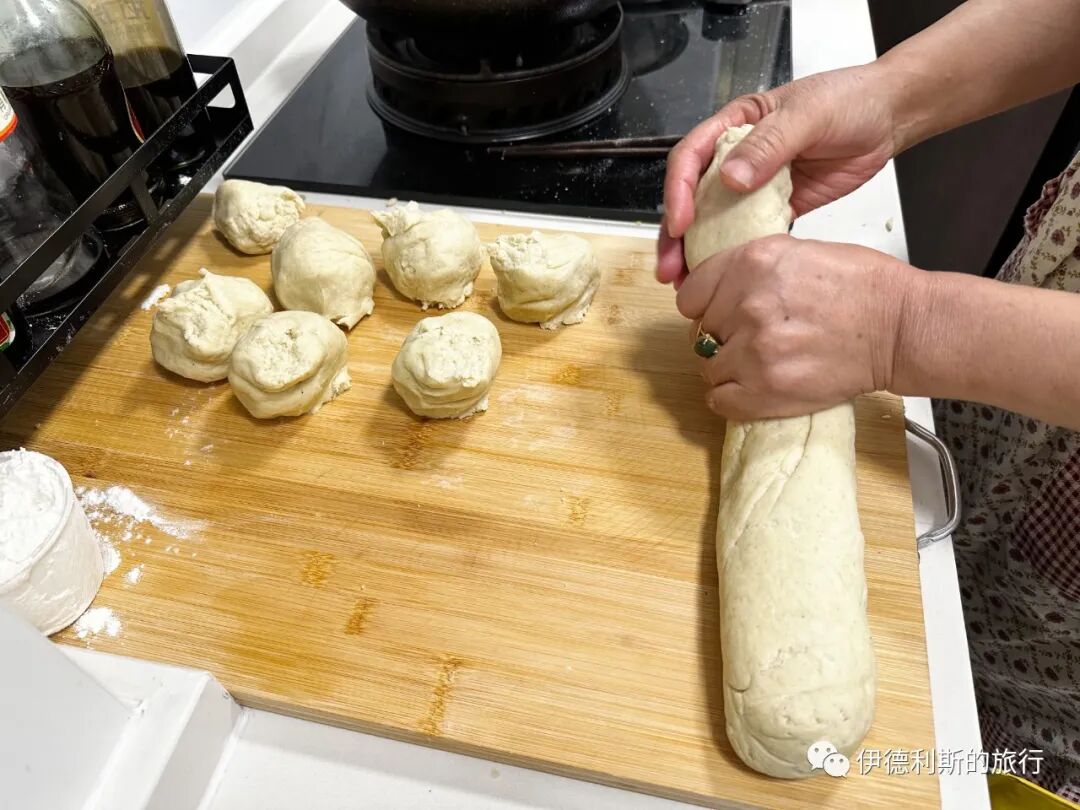
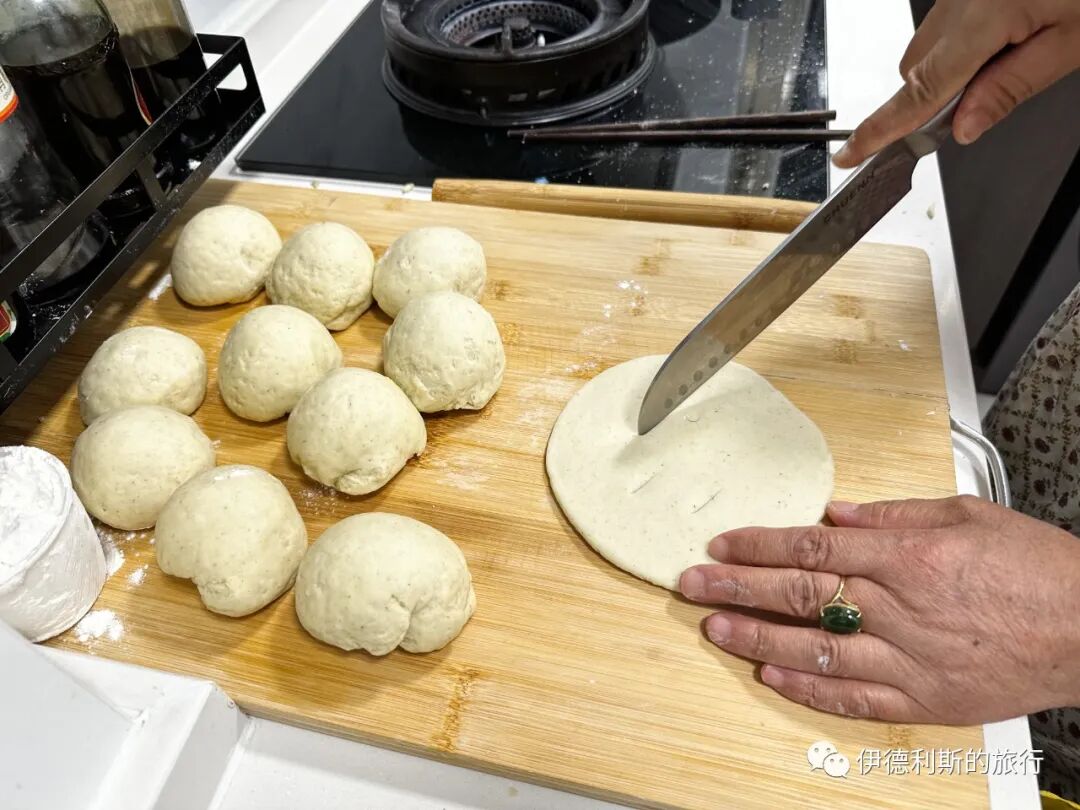
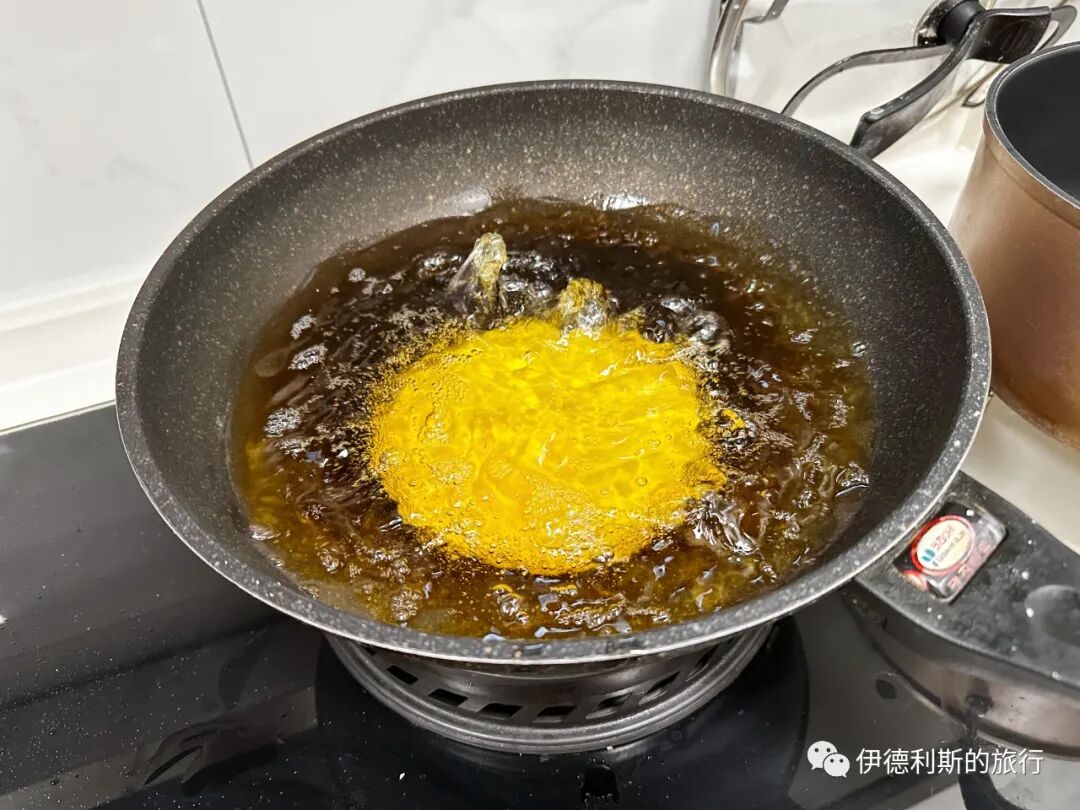
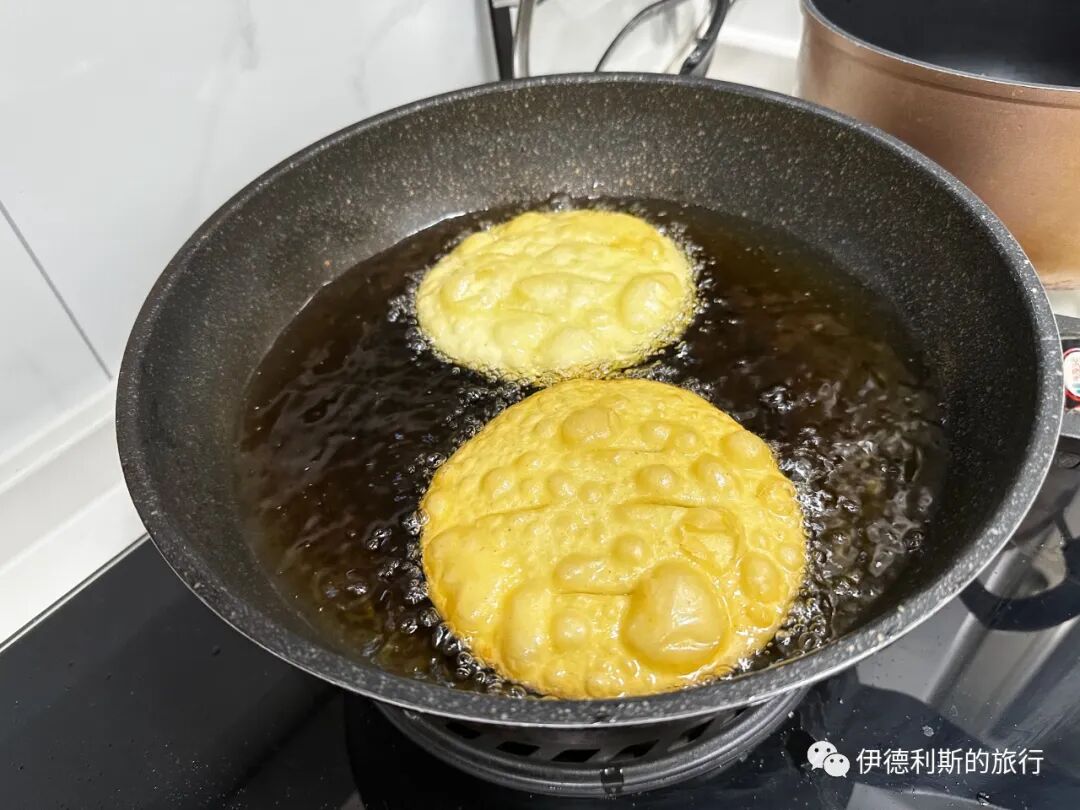
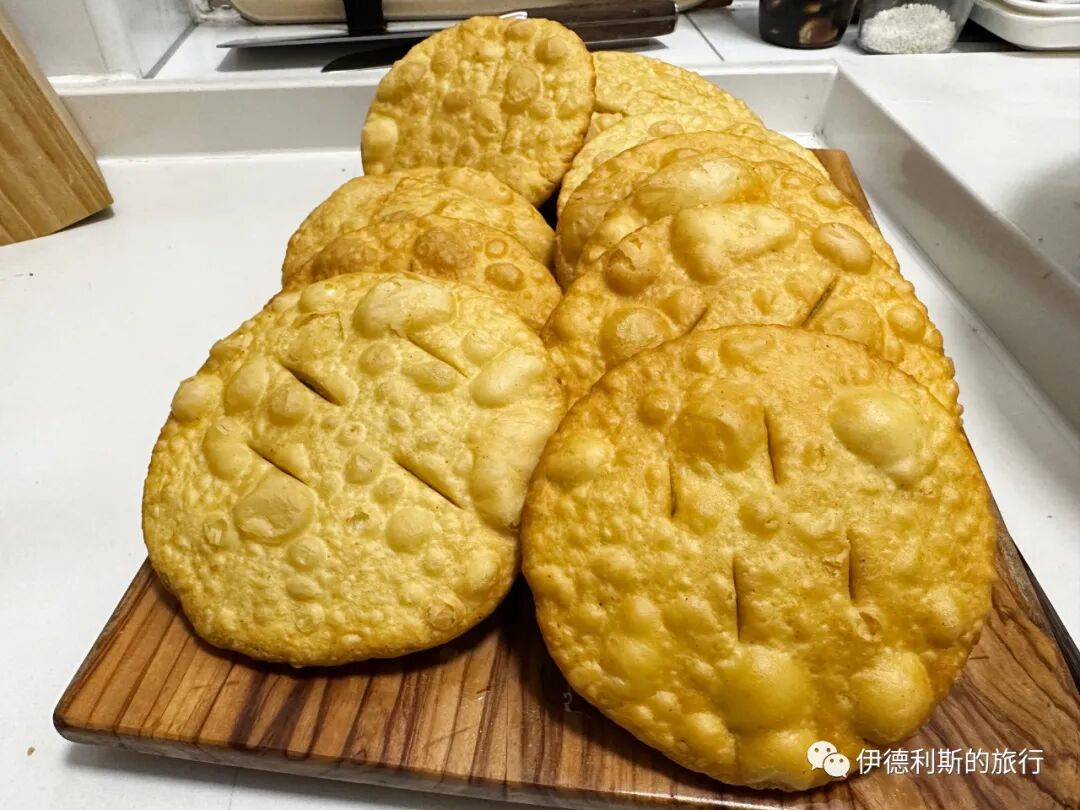
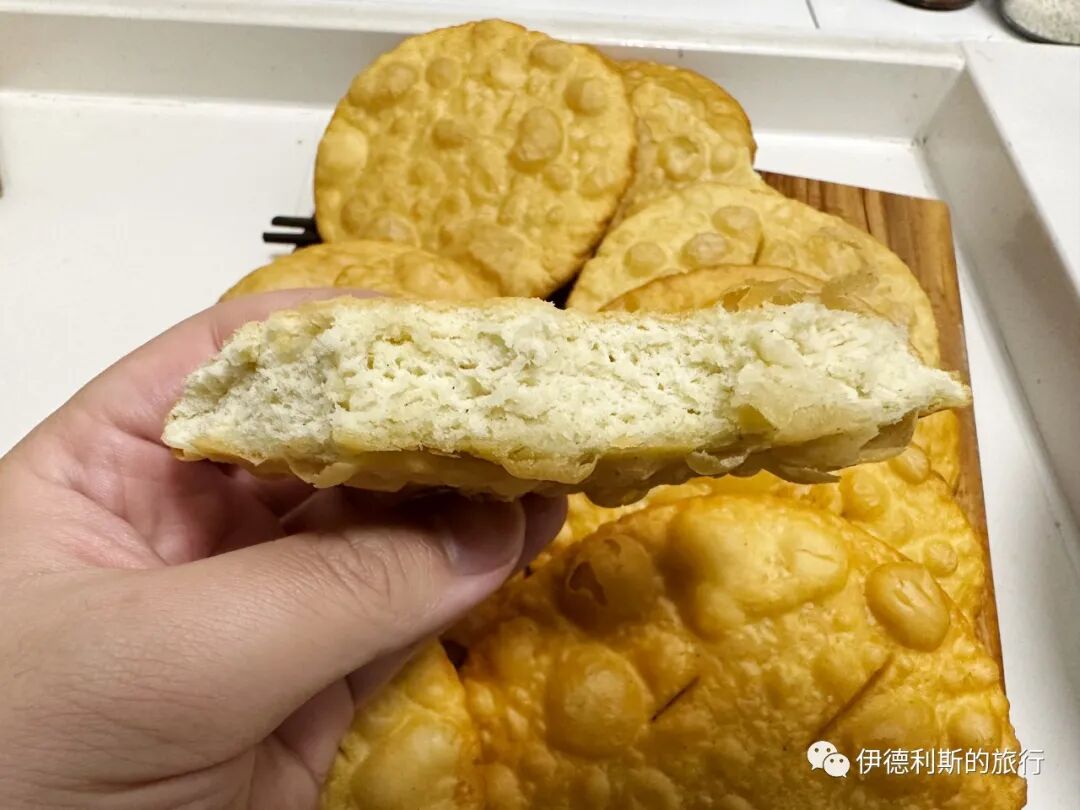
For other Urumqi Hui Muslim home-cooked dishes, you can check my previous diaries, '15 Urumqi Hui Muslim Dishes My Mother-in-law Made (Part 1)' and '15 Urumqi Hui Muslim Dishes My Mother-in-law Made (Part 2).'
Urumqi Hui Muslim Home Cooking: 15 Halal Dishes (Part 1)
Articles • ali2007fr posted the article • 0 comments • 148 views • 2026-05-18 03:19
Summary: Urumqi Hui Muslim Home Cooking: 15 Halal Dishes is presented here as a firsthand travel account in clear English, beginning with this scene: My mother-in-law came to Beijing in March and made us 15 Urumqi Hui Muslim dishes: big plate chicken with belt noodles (dapanji pidaimian), lamb hand-torn noodle soup (yangrou jiupianzi), Xinjiang meatball soup. The account keeps its focus on Urumqi Halal Food, Hui Muslim Food, Xinjiang Travel while preserving the names, places, food, and historical details from the Chinese source.
My mother-in-law came to Beijing in March and made us 15 Urumqi Hui Muslim dishes: big plate chicken with belt noodles (dapanji pidaimian), lamb hand-torn noodle soup (yangrou jiupianzi), Xinjiang meatball soup (xinjiang wanzitang), dry-mixed noodles with lamb bean paste (yangrou zhajiang ganbanmian), lamb sour soup wontons (yangrou suantang huntun), Jingzhe oil tea eggs (jingzhe youcha dan), thin-skinned buns (baopi baozi), lamb vermicelli soup (yangrou fentang), cold-dressed chicken (liangban ji), diced stir-fried noodles (dingding chaomian), sour soup noodles with minced meat (suantang saozi mian), fragrant bean flower rolls (xiangdou huajuan), plate noodles (panzi mian), flavored fried starch jelly (fengwei zha menzi), and lamb and celery dumplings (yangrou qincai jiaozi). Since the official account can only insert 10 video channel clips, I will share the first 8 this time.
1. Big plate chicken with belt noodles (dapanji pidaimian)
My mother-in-law brought free-range chicken all the way from Urumqi. First, stir-fry the chicken with plenty of oil. Add chicken pieces, dried chili skins (lapizi), and ginger slices to the pot. Then add salt, Sichuan peppercorn powder, black pepper powder, tomato paste, bean paste, green onions, and garlic. Stir-fry until the blood is gone, then add soy sauce. Next, stew the chicken in a pressure cooker, adding water, the chicken, and potato chunks. After opening the pot, take out the potatoes, then add green onions, garlic, and vinegar.
Once finished, stretch the belt noodles; they taste best soaked in the big plate chicken broth.
2. Lamb hand-torn noodle soup (yangrou jiupianzi)
First, stir-fry lamb slices with tomatoes (yangshizi), green onions, and garlic. Add soy sauce and stir-fried potato slices, then add water. Stretch the dough and tear off small pieces into the pot. Finally, add black pepper powder and cilantro, and finish with a splash of vinegar.
3. Xinjiang meatball soup (xinjiang wanzitang)
For the Iftar meal, my mother-in-law made this Xinjiang specialty meatball soup using meat ground fresh at the Ma family shop in Douban Alley. The secret to the fried meatballs is pouring hot oil over the black pepper powder while mixing the filling. The best base for the meatball soup is broth made from beef marrow bones. You can add side dishes like spinach, king oyster mushrooms, tofu, carrots, or wood ear mushrooms.
4. Dry-mixed noodles with lamb bean paste (yangrou zhajiang ganbanmian)
Zainab said Urumqi has its own local version of bean paste noodles. I had never noticed it before and was very curious, so I finally got to eat it this time. These are hand-rolled cut noodles; our cutting board is still not quite big enough. Besides lamb, the bean paste sauce includes potatoes, carrots, and celery. It uses Pixian bean paste, so the flavor is completely different from Beijing-style bean paste noodles.
5. Lamb sour soup wontons (yangrou suantang huntun)
I especially love the stewed lamb sour soup wontons (hong dong) made by Xinjiang Hui Muslims. After the lamb is stewed, add tomatoes, spinach, scallions, and cilantro. The wontons have the classic lamb and onion (piyazi) filling.
6. Jingzhe oil tea eggs (jingzhe youcha dan)
March 5th is the Awakening of Insects (Jingzhe), when all things come back to life. In the morning, we ate this seasonal Xinjiang Hui Muslim delicacy, Jingzhe oil tea eggs. Stir-fry eggs with dried fruits like raisins and walnut kernels, then pour in brewed brick tea and add rock sugar. Traditional oil tea with egg (youcha dan) must be stir-fried with mutton fat, but we use olive oil.
7. Thin-skinned steamed buns (baopi baozi)
Thin-skinned steamed buns (manti) filled with mutton and onions. Manti is a classic Silk Road snack. It spread to Central and West Asia with Turkic soldiers during the Mongol conquests and was later spread further by the Ottoman Empire. The word manti comes from mantou. Even today, the Wu dialect uses mantou to refer to meat-filled flour dishes. In 1330, the first year of the Zhishun era of the Yuan Dynasty, the imperial physician Hu Sihui wrote the Principles of Correct Diet (Yinshan Zhengyao). It records many ways to make mantou, all using mutton, mutton fat, green onions, dried tangerine peel, and salt for the filling. It even mentions the term thin-skinned mantou.
8. Mutton noodle soup (yangrou fentang)
This is the festive noodle soup made during the Mawlid (Zhuo Bailati). First, braise the mutton, then stir the pea starch and let it sit overnight before cutting it into starch blocks. Next, make a topping with cabbage, small radishes, mutton slices, and tomatoes. When you eat it, soak some fried dough (youxiang) in the soup. view all
Summary: Urumqi Hui Muslim Home Cooking: 15 Halal Dishes is presented here as a firsthand travel account in clear English, beginning with this scene: My mother-in-law came to Beijing in March and made us 15 Urumqi Hui Muslim dishes: big plate chicken with belt noodles (dapanji pidaimian), lamb hand-torn noodle soup (yangrou jiupianzi), Xinjiang meatball soup. The account keeps its focus on Urumqi Halal Food, Hui Muslim Food, Xinjiang Travel while preserving the names, places, food, and historical details from the Chinese source.
My mother-in-law came to Beijing in March and made us 15 Urumqi Hui Muslim dishes: big plate chicken with belt noodles (dapanji pidaimian), lamb hand-torn noodle soup (yangrou jiupianzi), Xinjiang meatball soup (xinjiang wanzitang), dry-mixed noodles with lamb bean paste (yangrou zhajiang ganbanmian), lamb sour soup wontons (yangrou suantang huntun), Jingzhe oil tea eggs (jingzhe youcha dan), thin-skinned buns (baopi baozi), lamb vermicelli soup (yangrou fentang), cold-dressed chicken (liangban ji), diced stir-fried noodles (dingding chaomian), sour soup noodles with minced meat (suantang saozi mian), fragrant bean flower rolls (xiangdou huajuan), plate noodles (panzi mian), flavored fried starch jelly (fengwei zha menzi), and lamb and celery dumplings (yangrou qincai jiaozi). Since the official account can only insert 10 video channel clips, I will share the first 8 this time.
1. Big plate chicken with belt noodles (dapanji pidaimian)
My mother-in-law brought free-range chicken all the way from Urumqi. First, stir-fry the chicken with plenty of oil. Add chicken pieces, dried chili skins (lapizi), and ginger slices to the pot. Then add salt, Sichuan peppercorn powder, black pepper powder, tomato paste, bean paste, green onions, and garlic. Stir-fry until the blood is gone, then add soy sauce. Next, stew the chicken in a pressure cooker, adding water, the chicken, and potato chunks. After opening the pot, take out the potatoes, then add green onions, garlic, and vinegar.
Once finished, stretch the belt noodles; they taste best soaked in the big plate chicken broth.
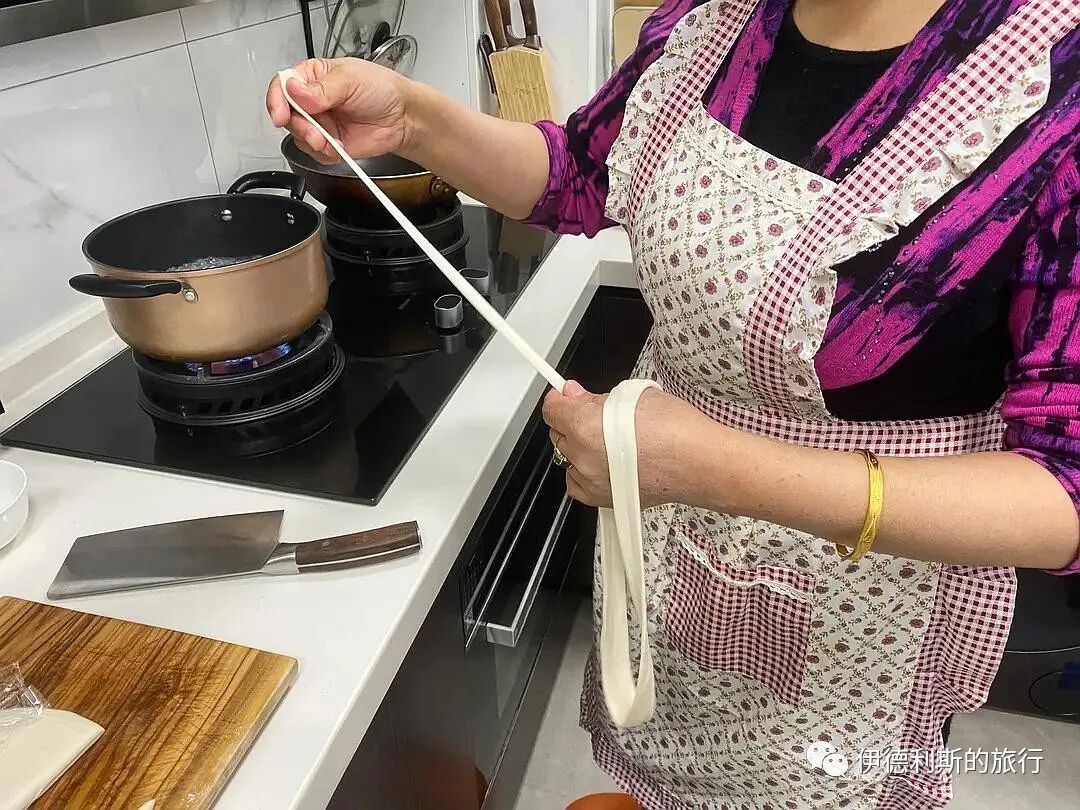
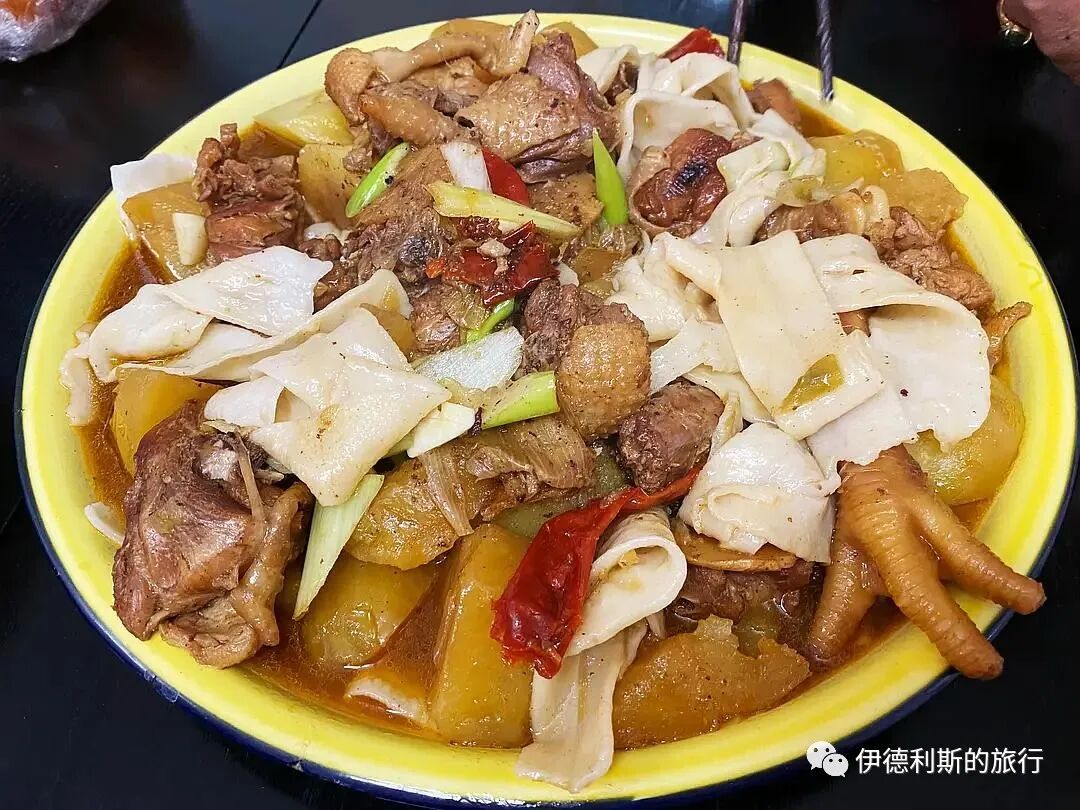
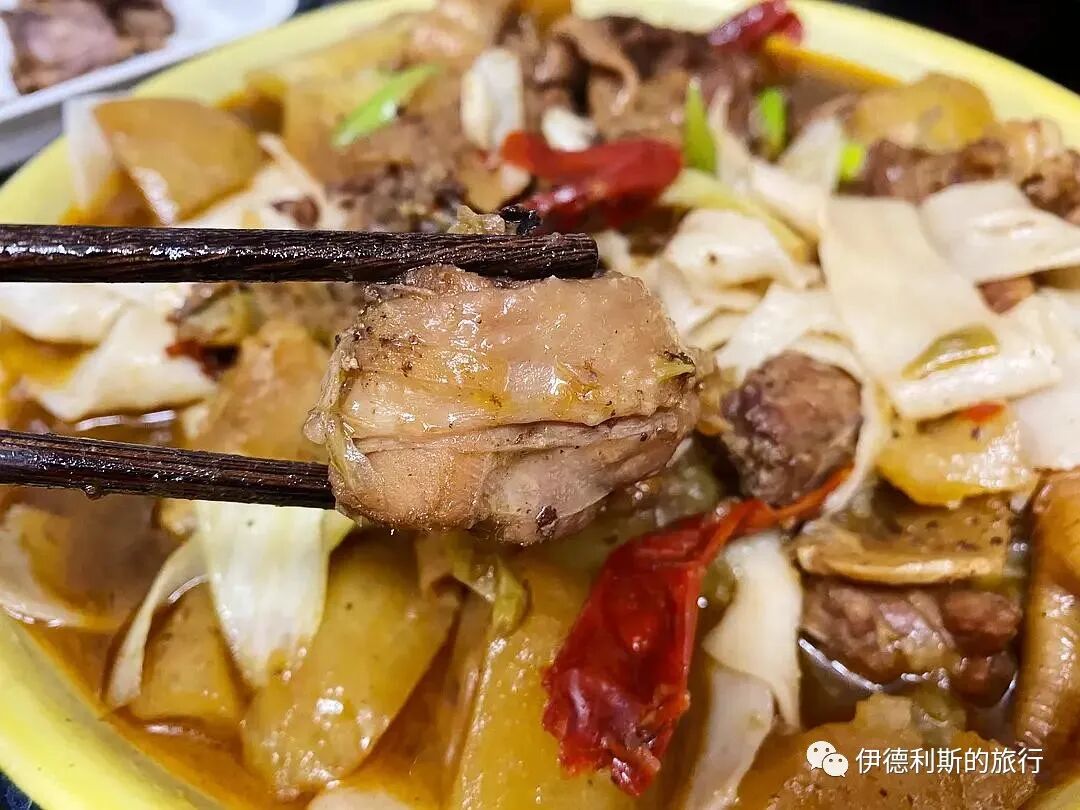
2. Lamb hand-torn noodle soup (yangrou jiupianzi)
First, stir-fry lamb slices with tomatoes (yangshizi), green onions, and garlic. Add soy sauce and stir-fried potato slices, then add water. Stretch the dough and tear off small pieces into the pot. Finally, add black pepper powder and cilantro, and finish with a splash of vinegar.
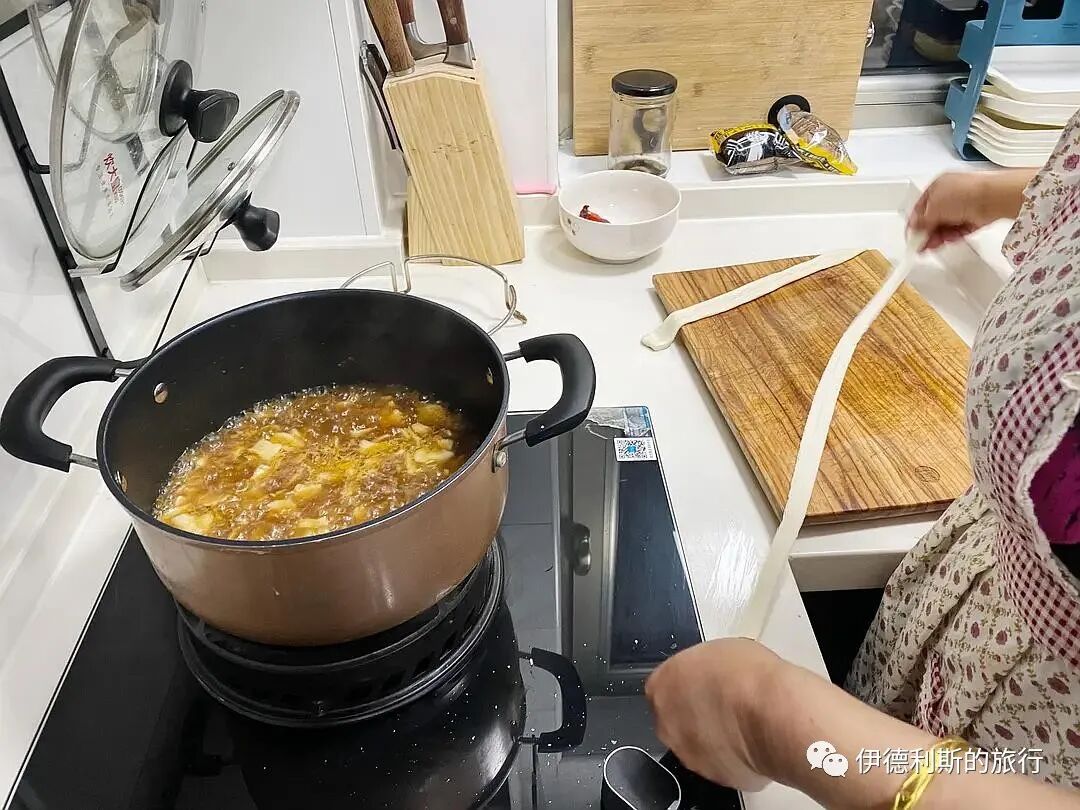
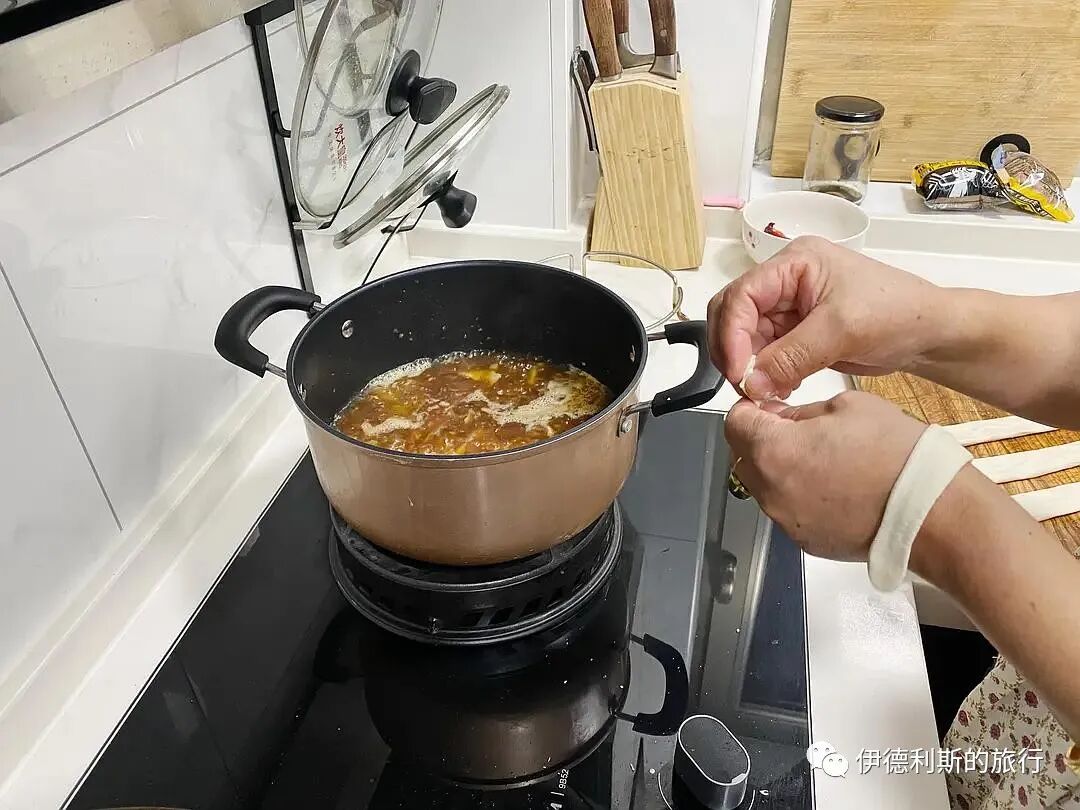
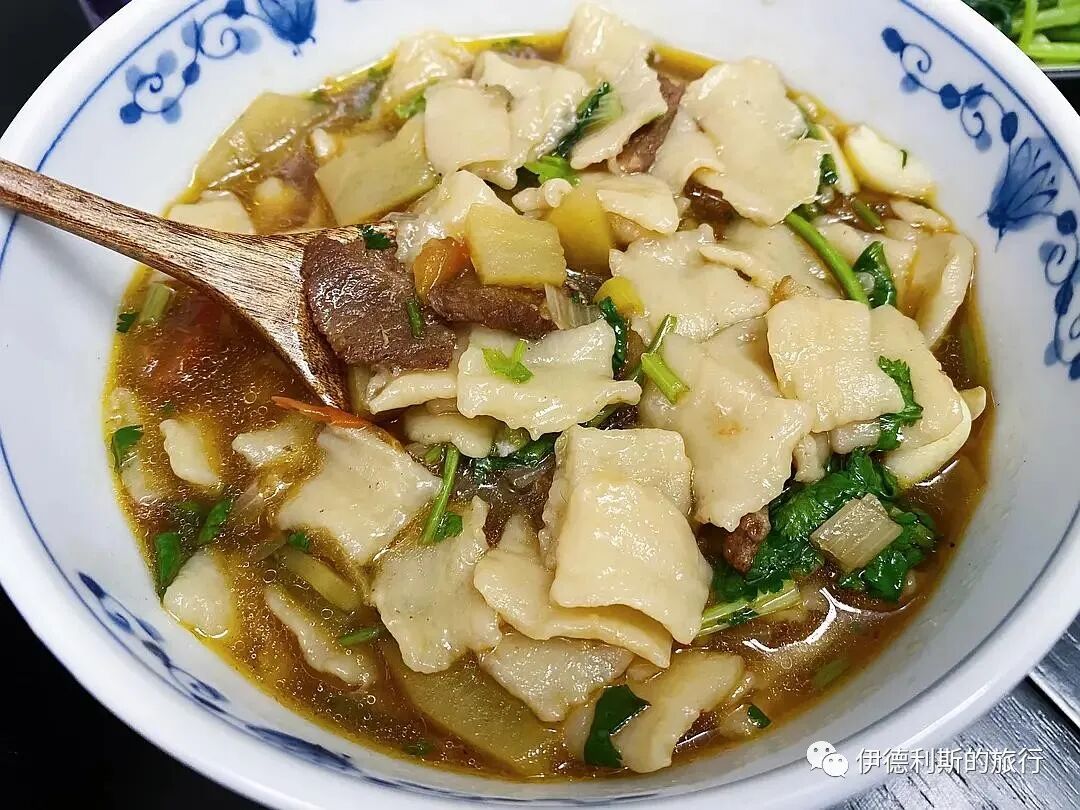
3. Xinjiang meatball soup (xinjiang wanzitang)
For the Iftar meal, my mother-in-law made this Xinjiang specialty meatball soup using meat ground fresh at the Ma family shop in Douban Alley. The secret to the fried meatballs is pouring hot oil over the black pepper powder while mixing the filling. The best base for the meatball soup is broth made from beef marrow bones. You can add side dishes like spinach, king oyster mushrooms, tofu, carrots, or wood ear mushrooms.
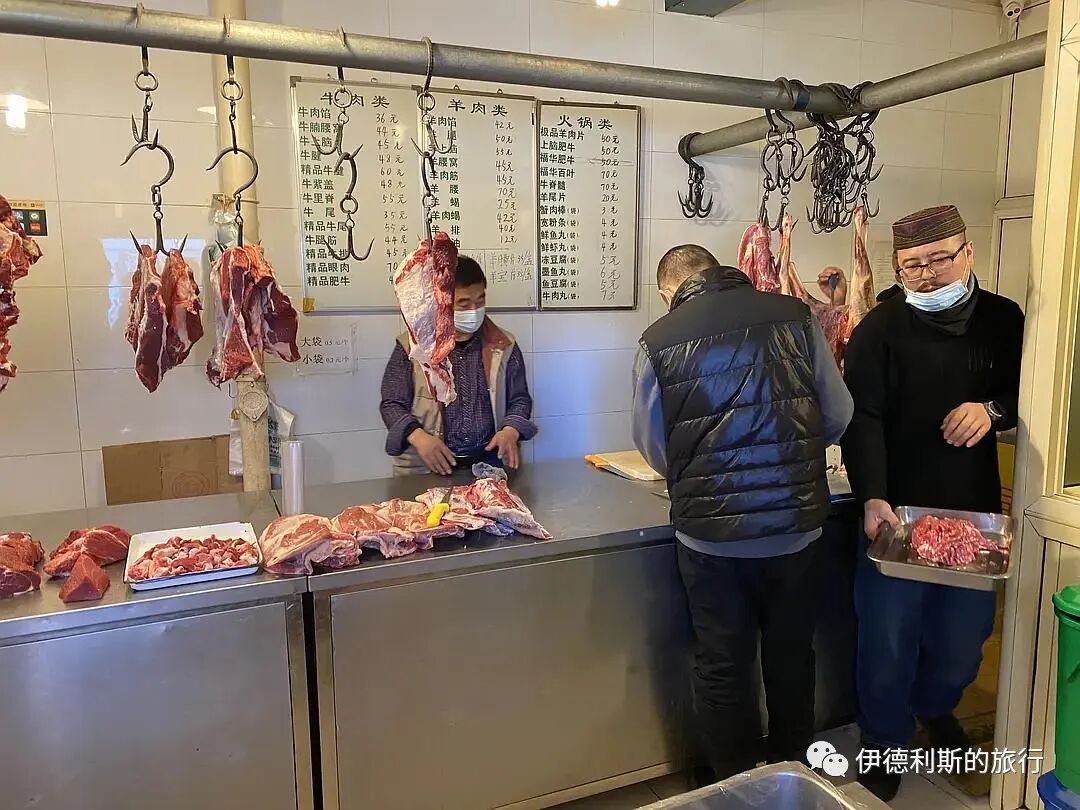
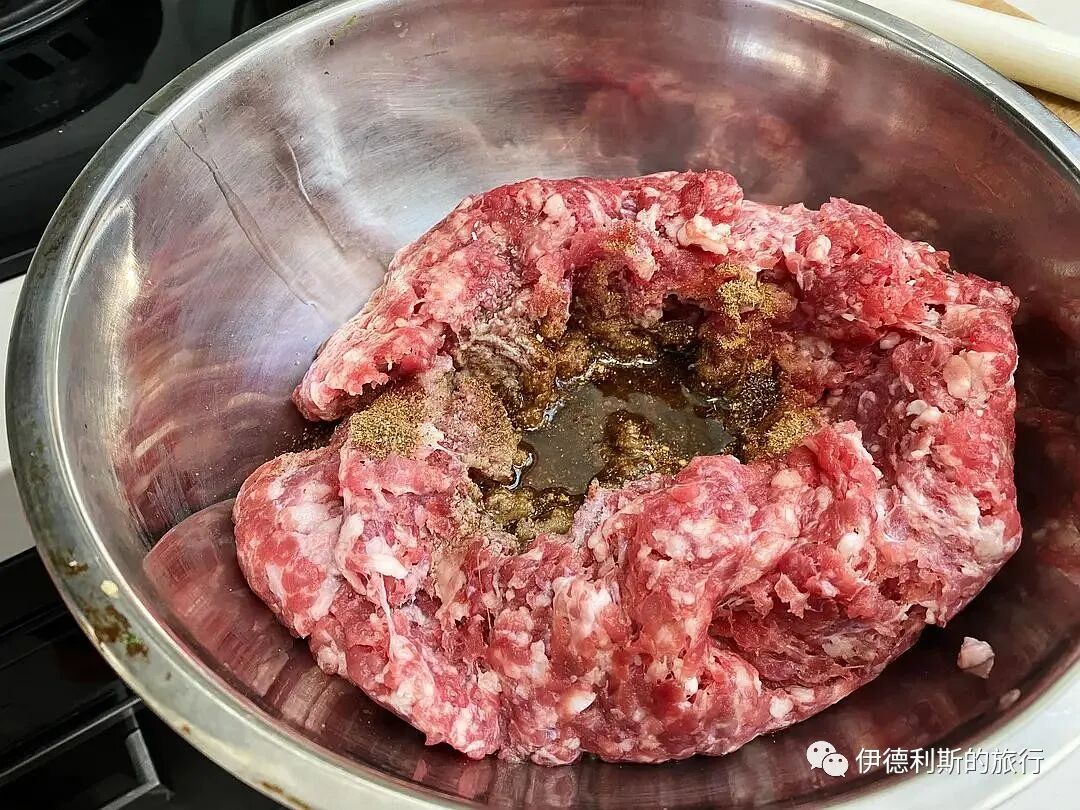
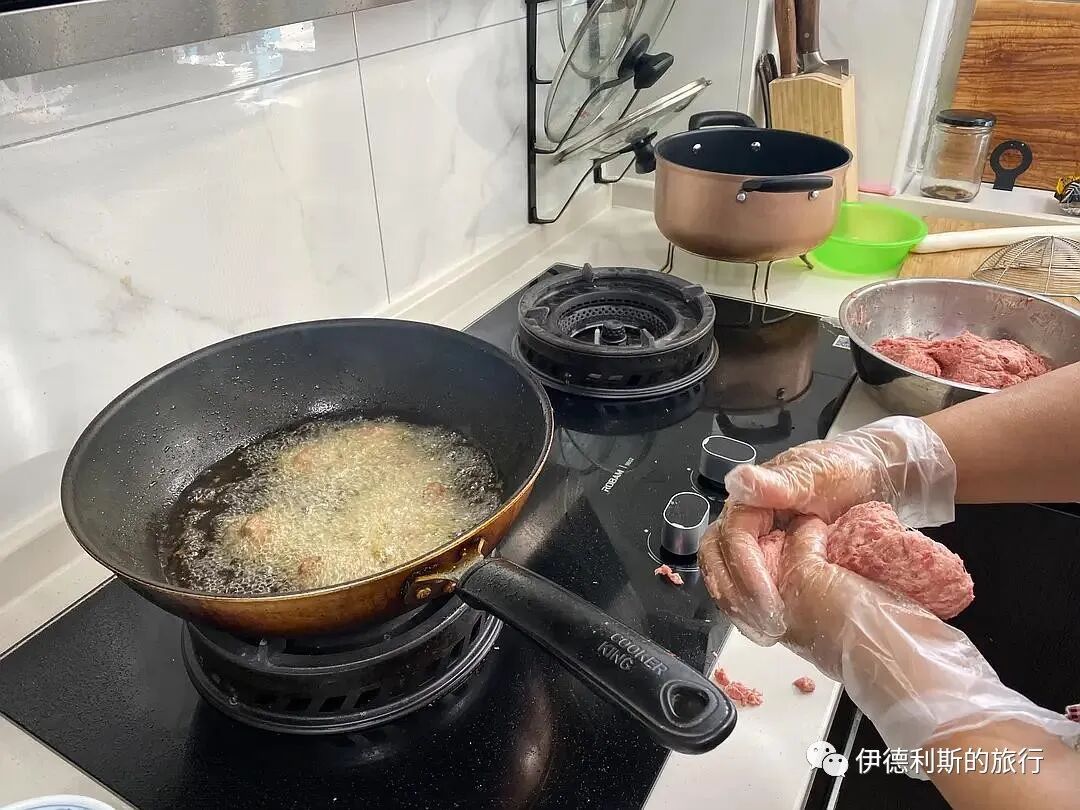
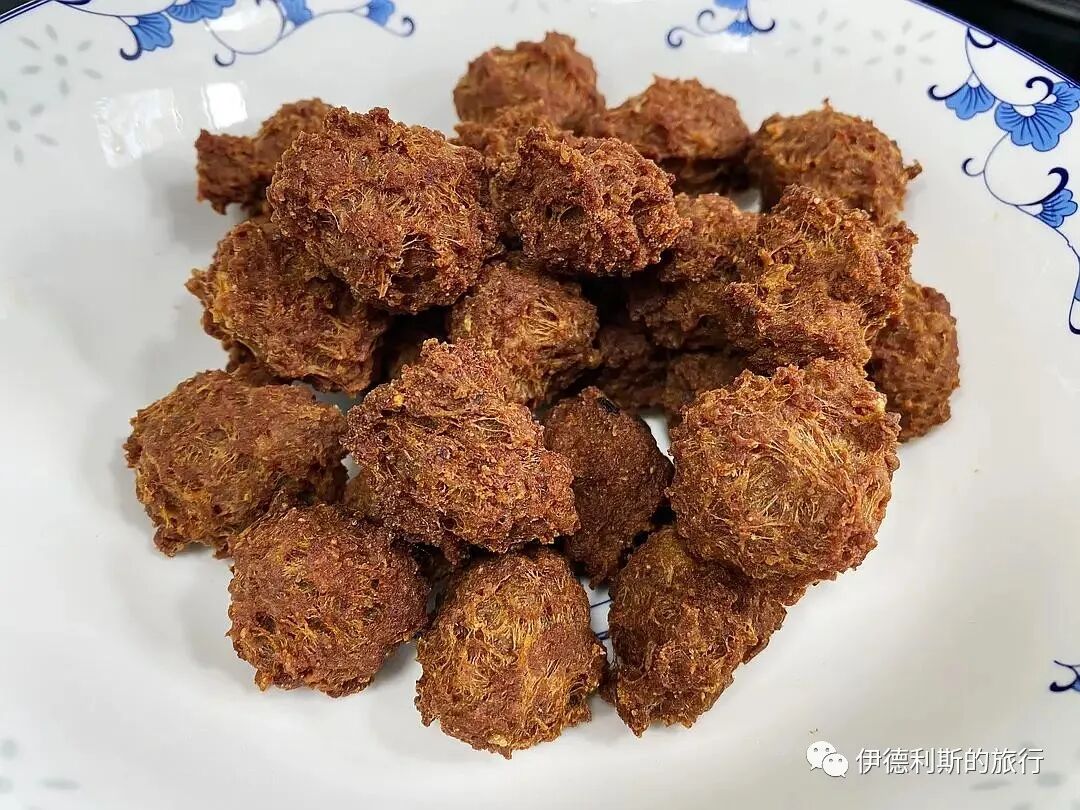
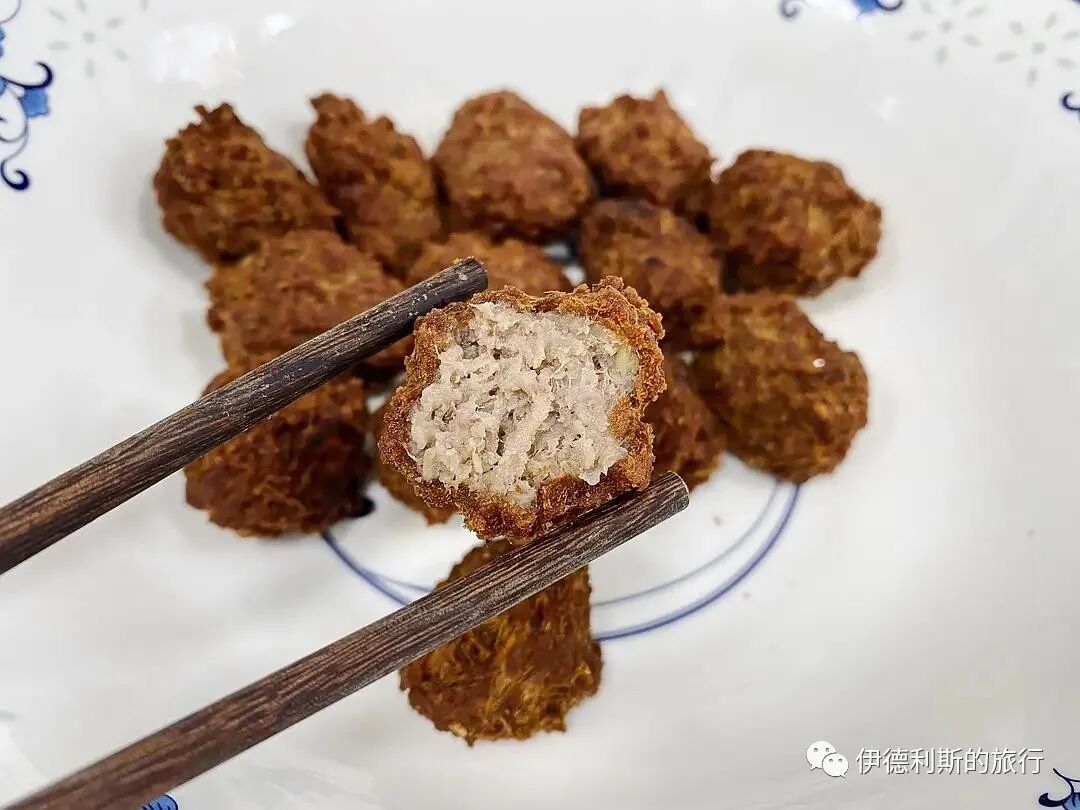
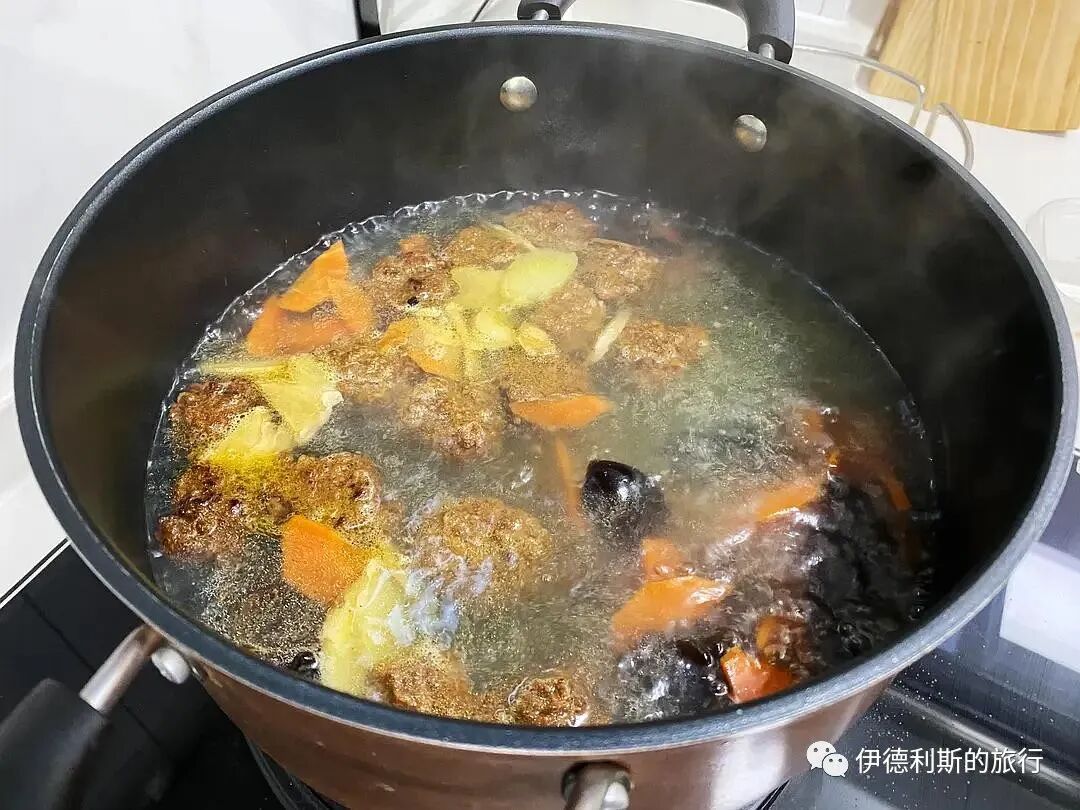
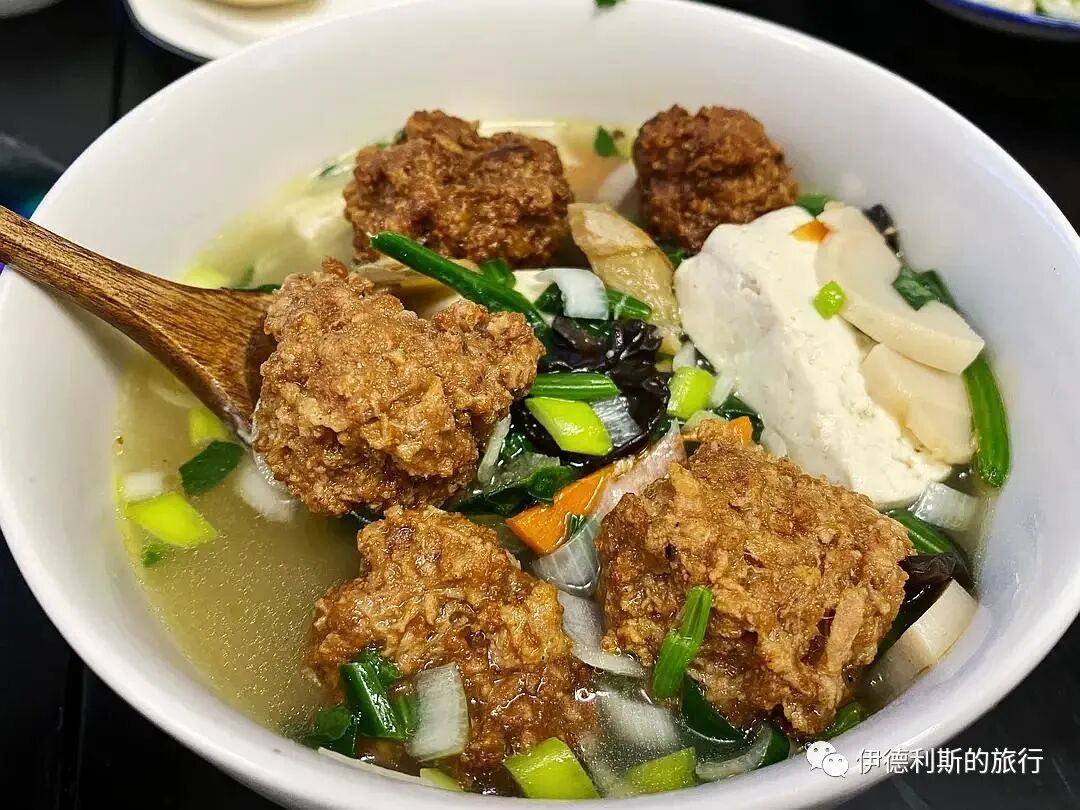
4. Dry-mixed noodles with lamb bean paste (yangrou zhajiang ganbanmian)
Zainab said Urumqi has its own local version of bean paste noodles. I had never noticed it before and was very curious, so I finally got to eat it this time. These are hand-rolled cut noodles; our cutting board is still not quite big enough. Besides lamb, the bean paste sauce includes potatoes, carrots, and celery. It uses Pixian bean paste, so the flavor is completely different from Beijing-style bean paste noodles.
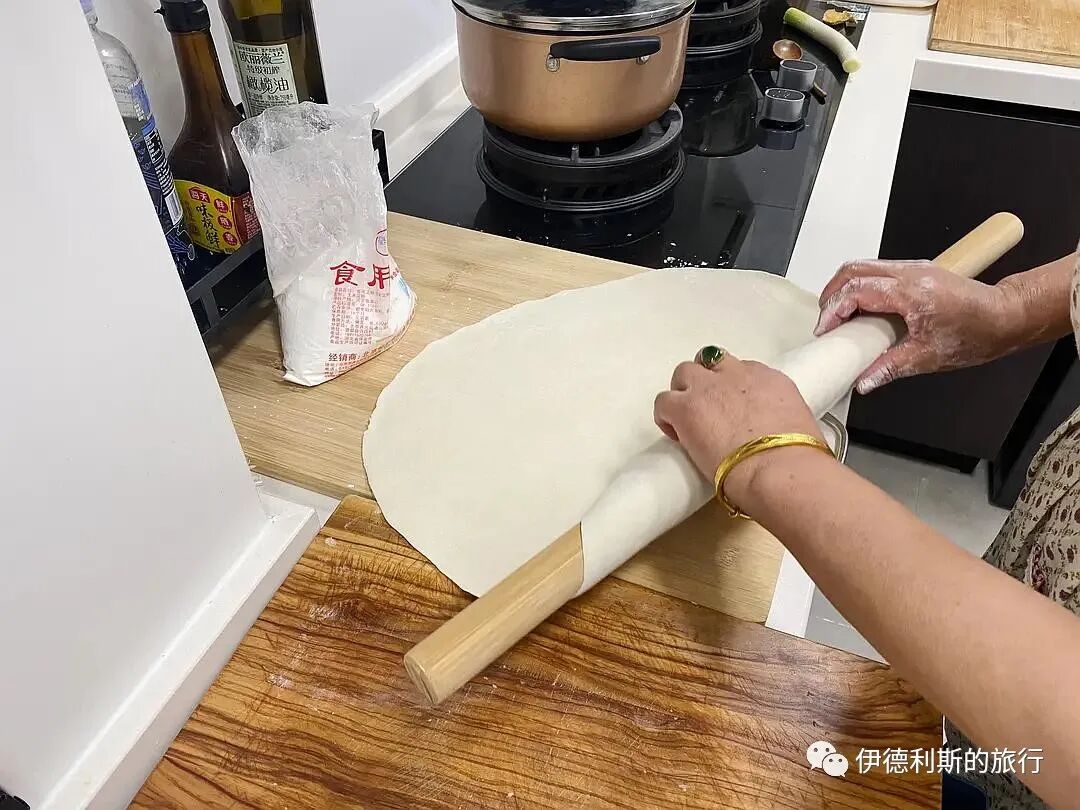
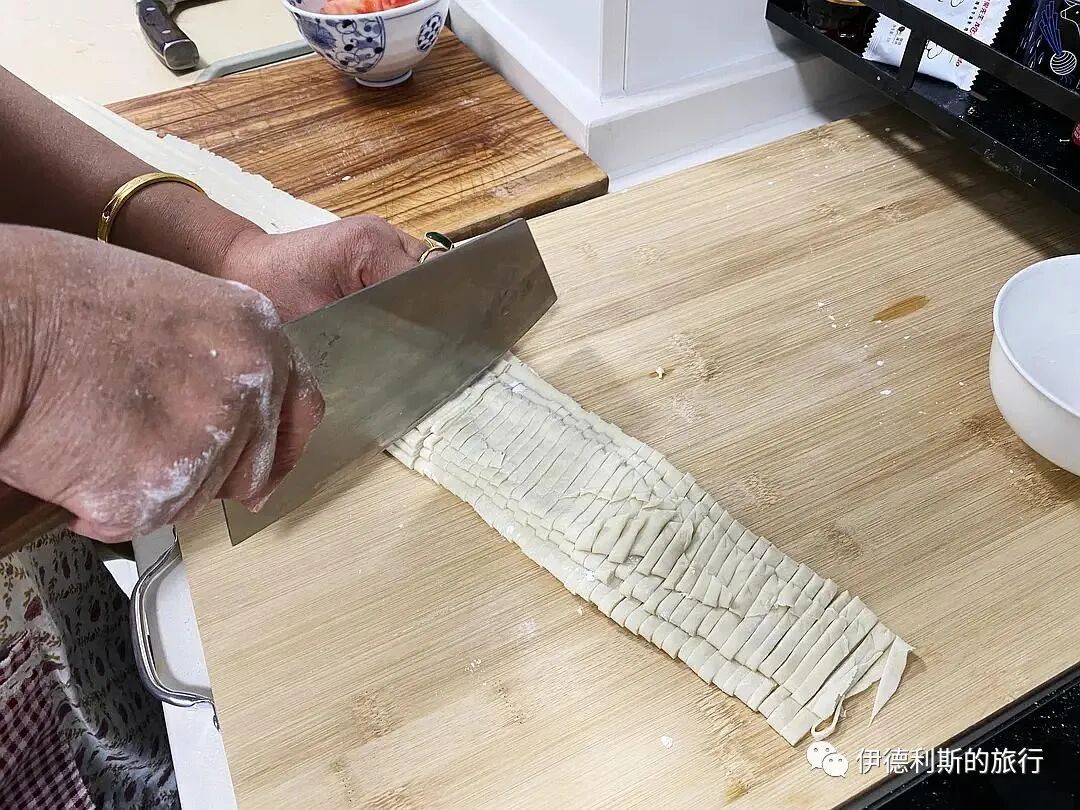
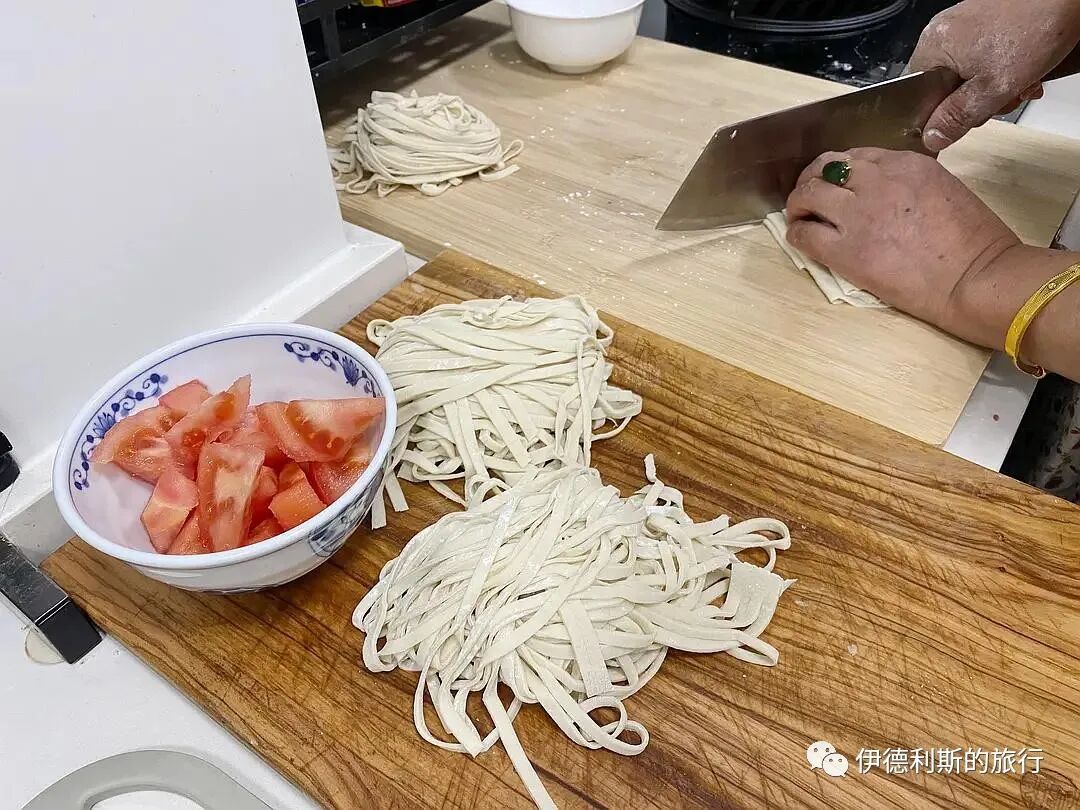
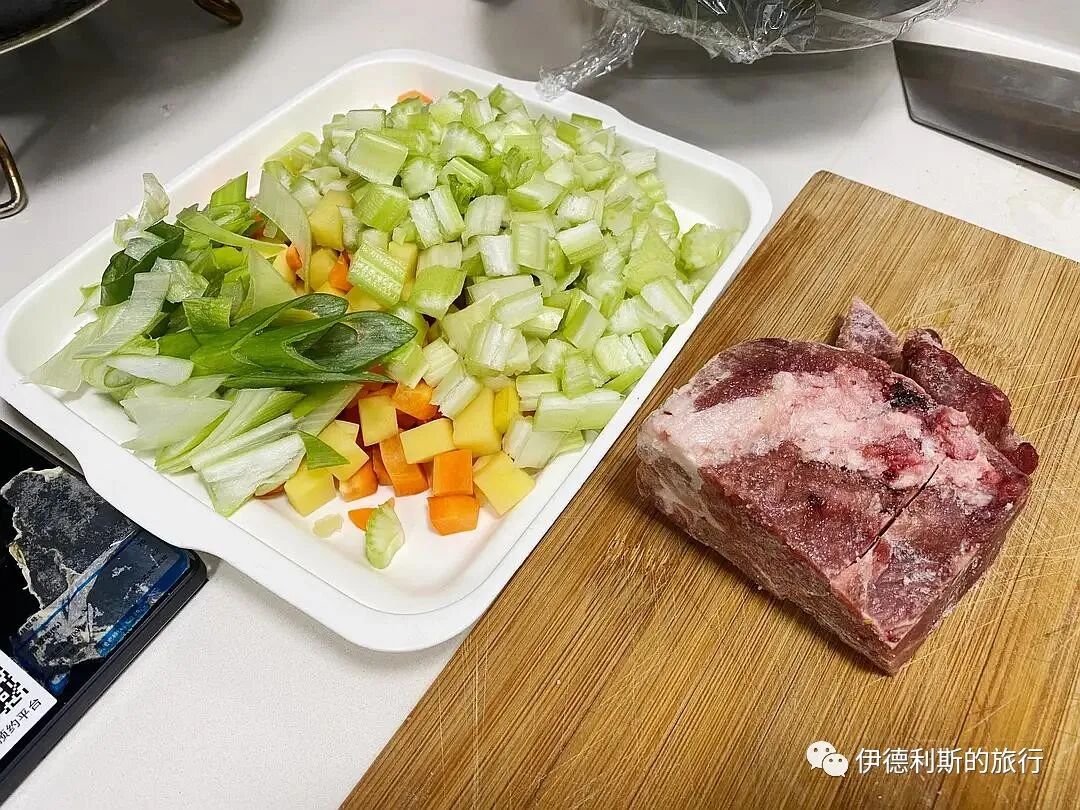
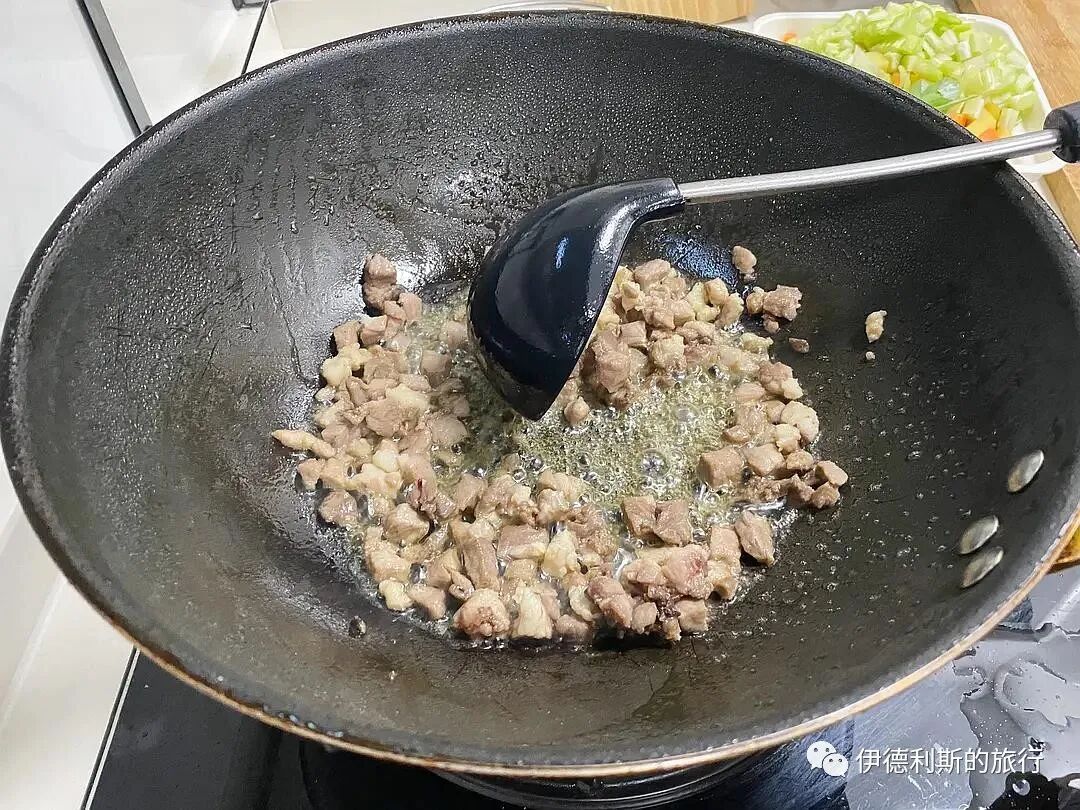
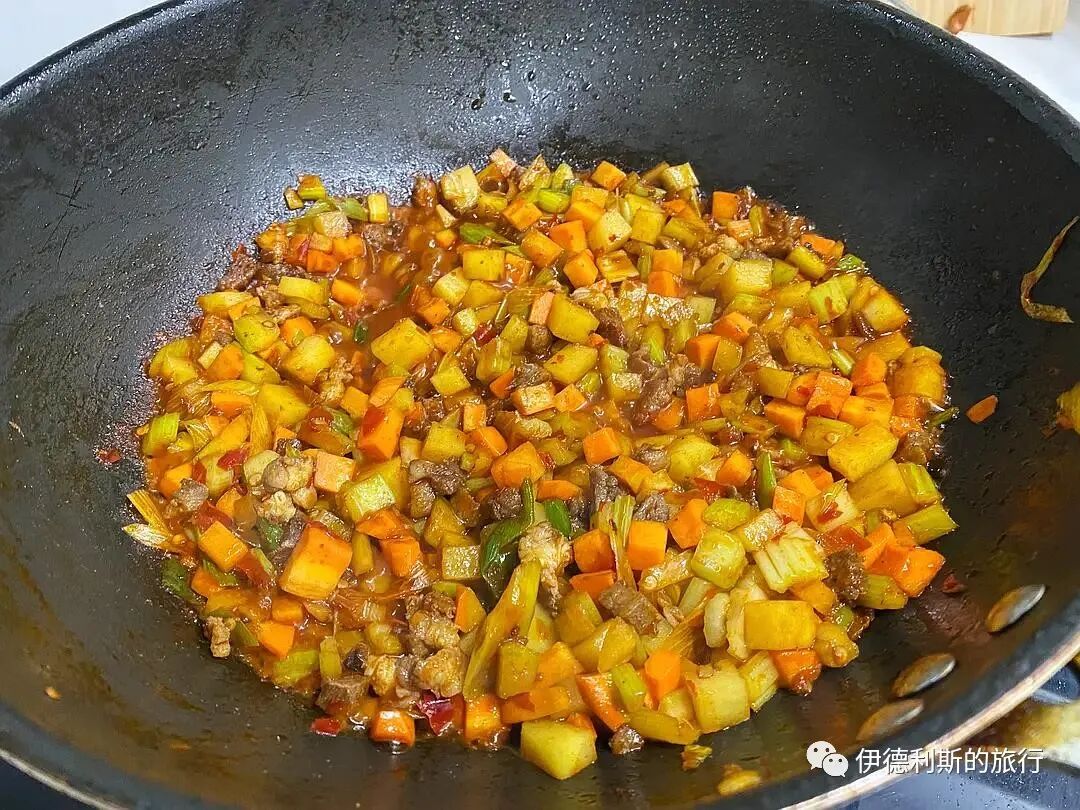
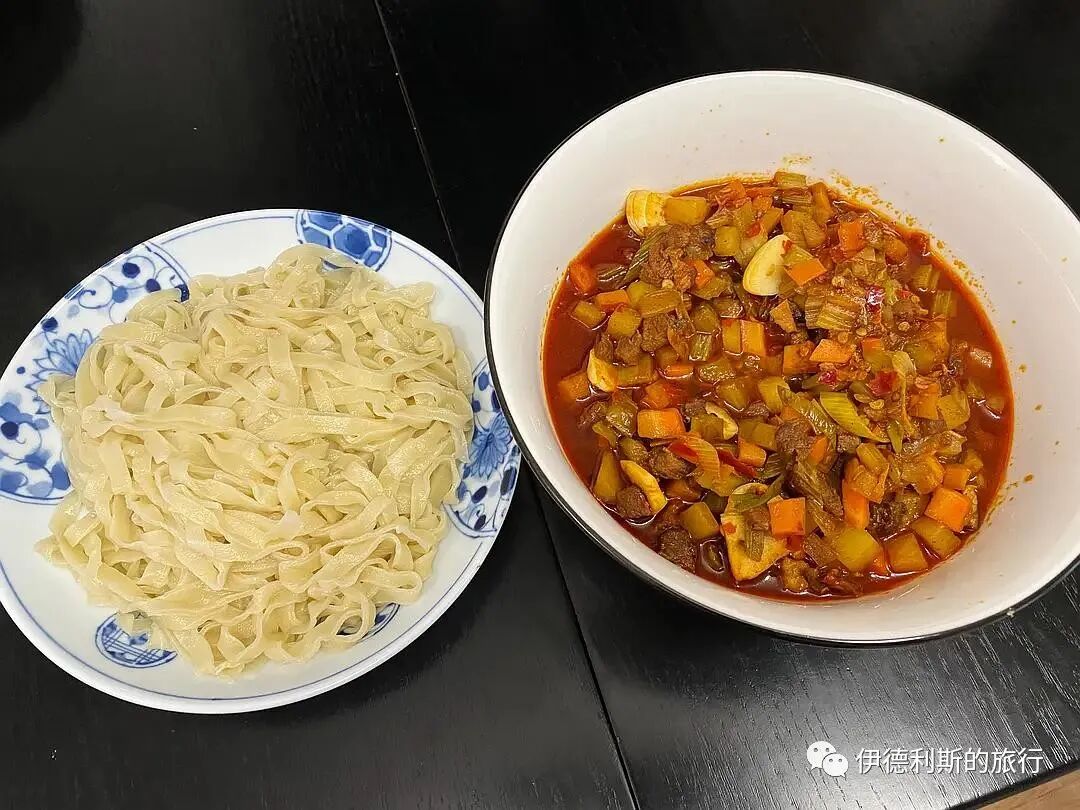
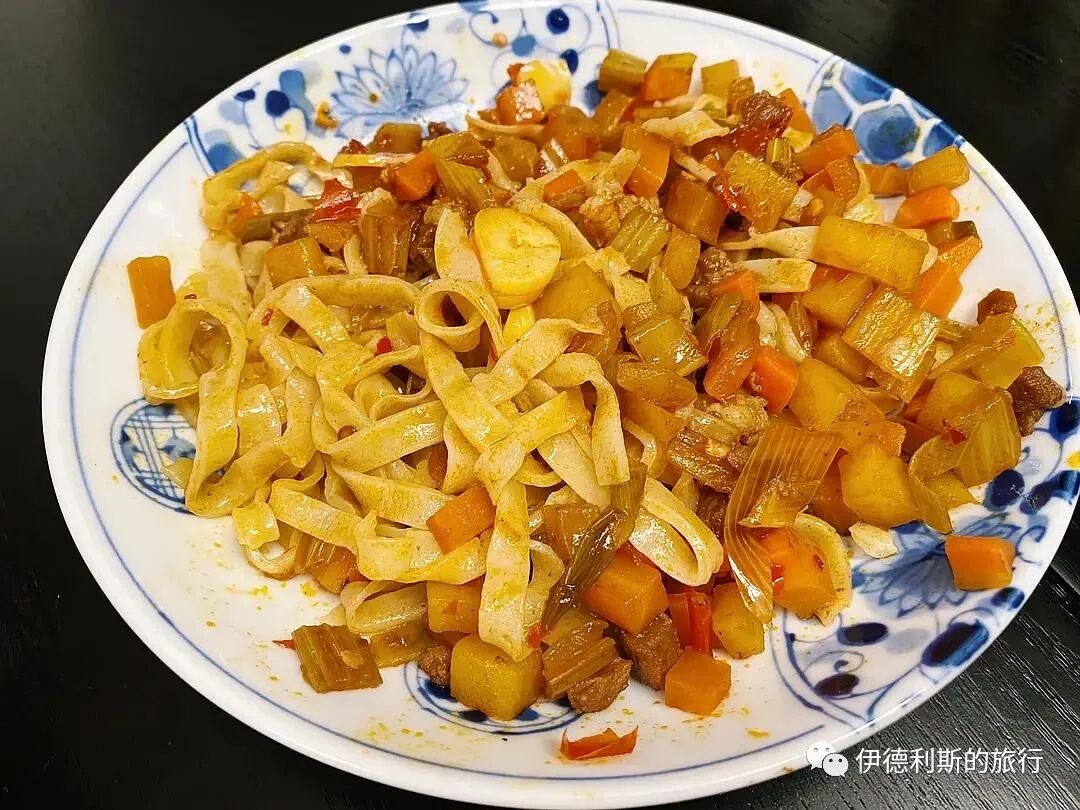
5. Lamb sour soup wontons (yangrou suantang huntun)
I especially love the stewed lamb sour soup wontons (hong dong) made by Xinjiang Hui Muslims. After the lamb is stewed, add tomatoes, spinach, scallions, and cilantro. The wontons have the classic lamb and onion (piyazi) filling.
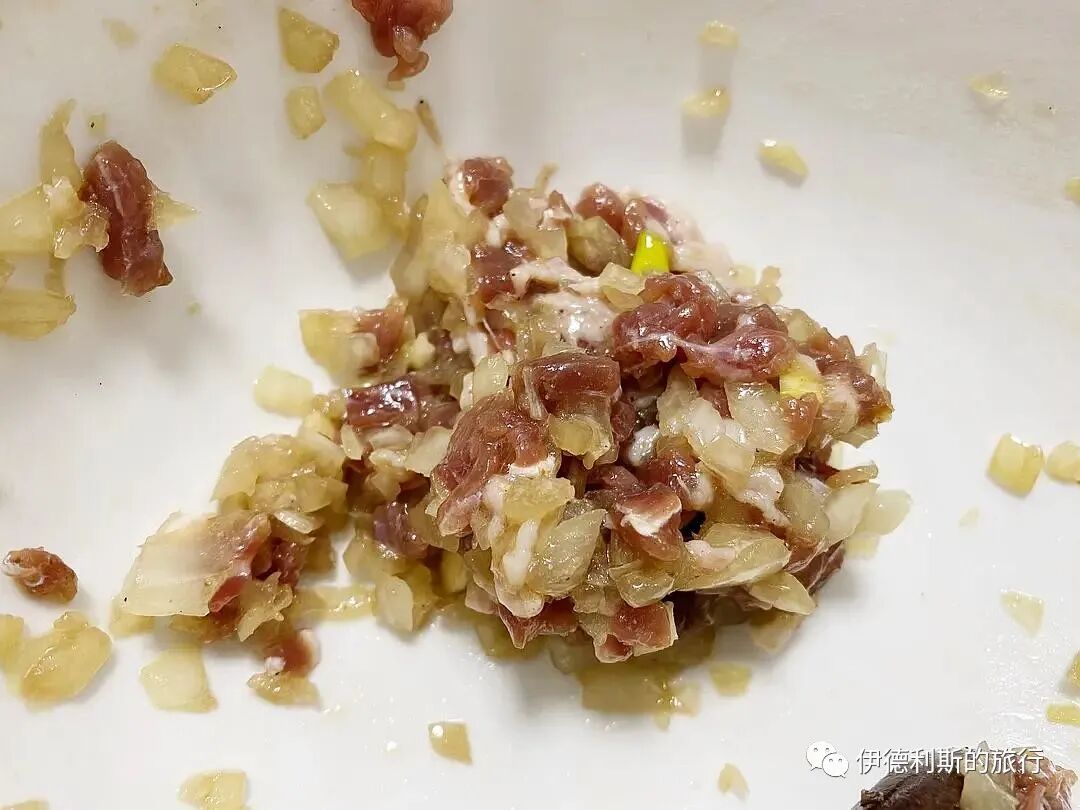
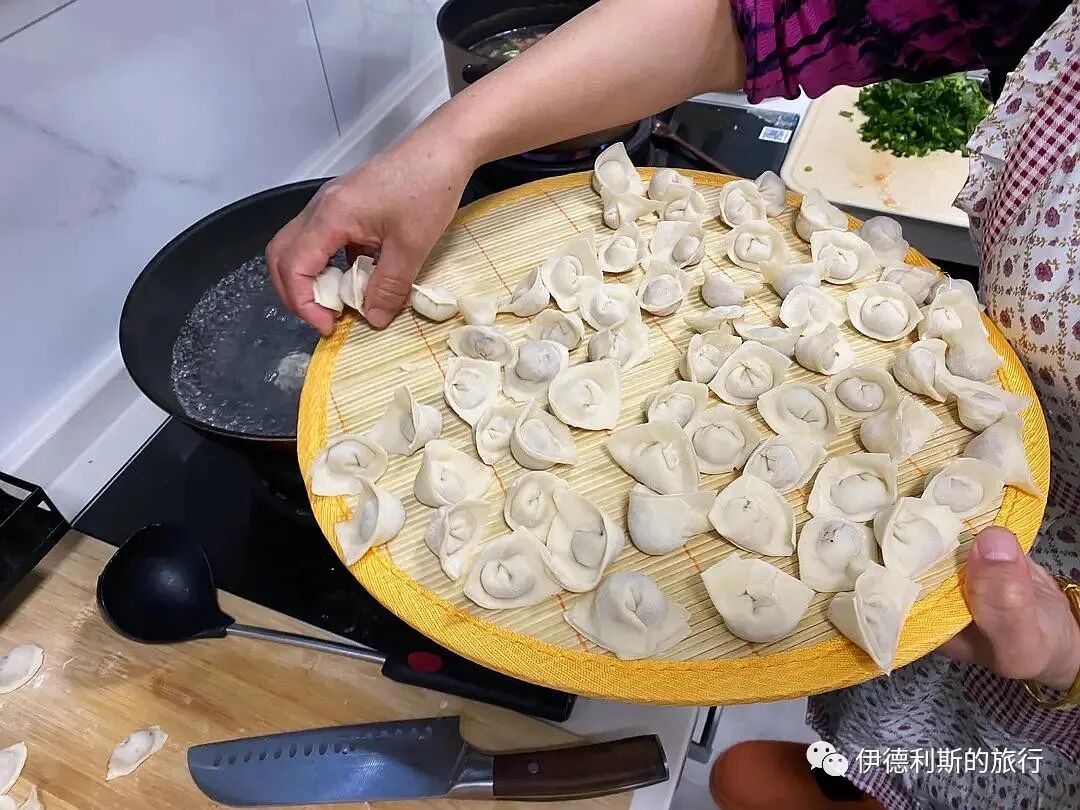
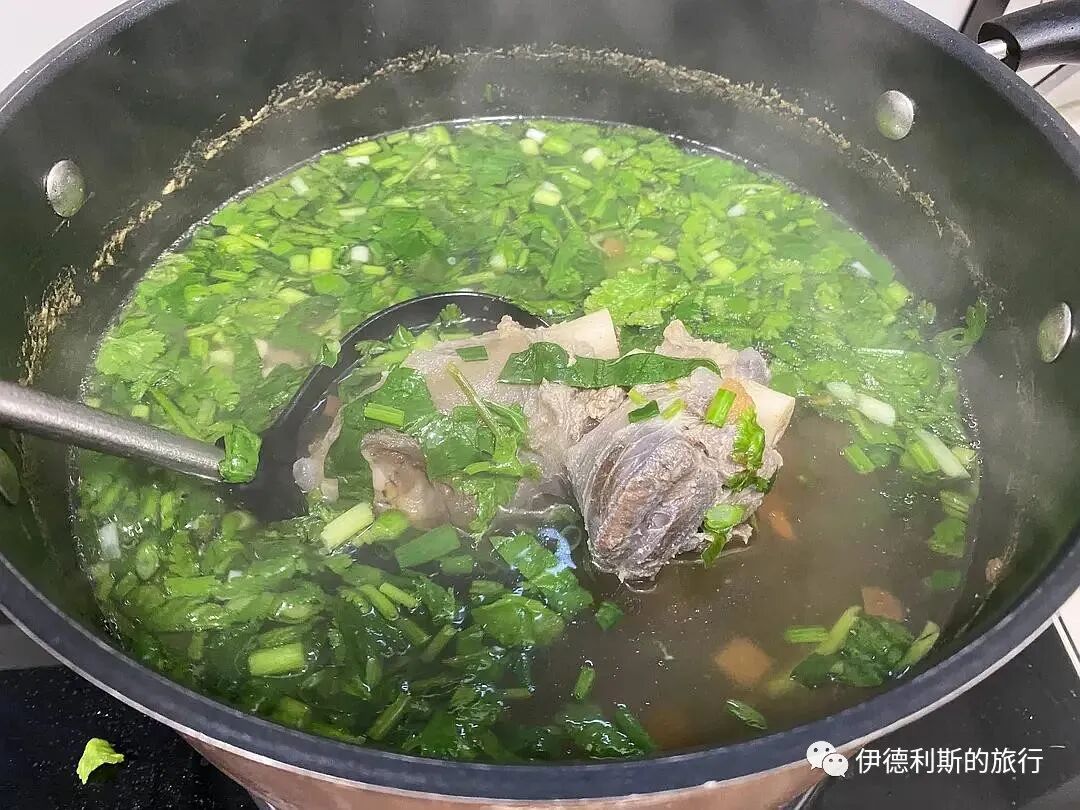
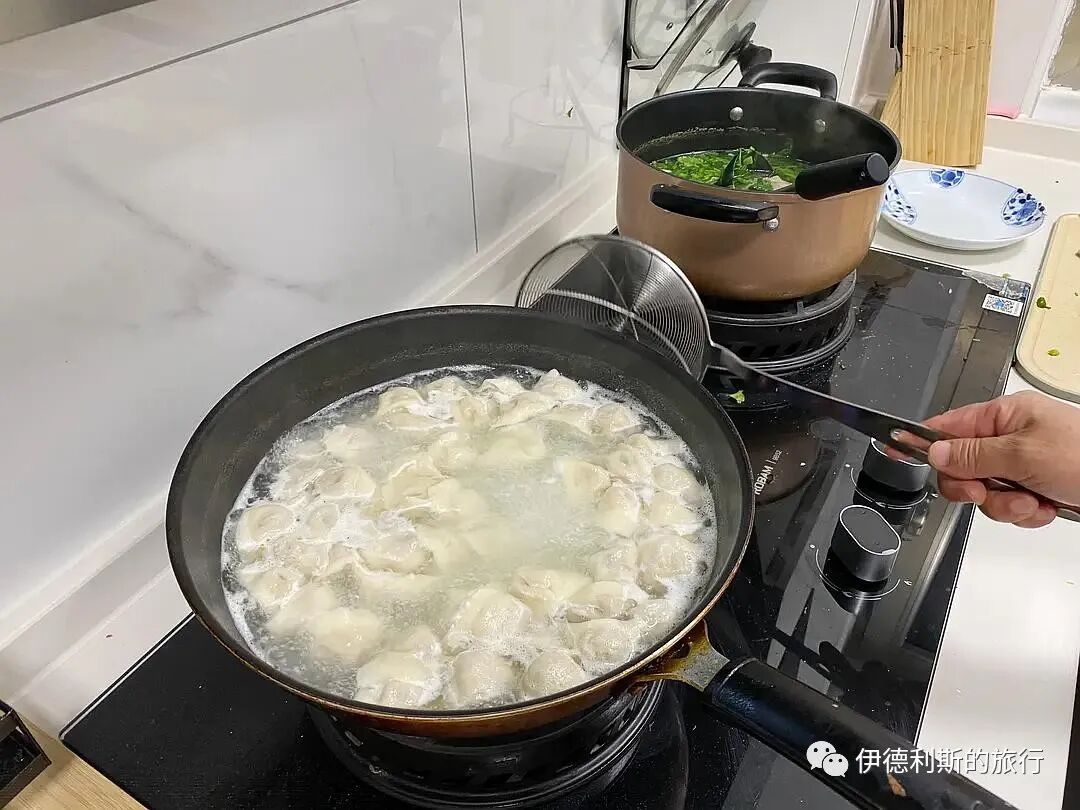
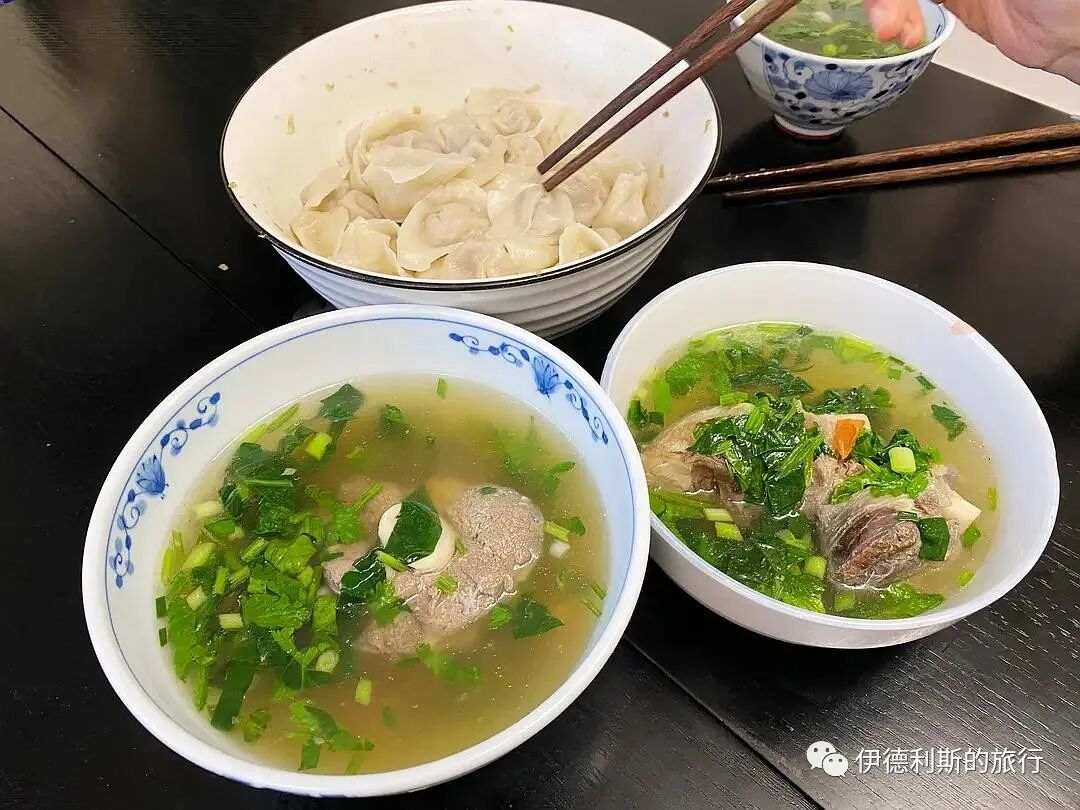
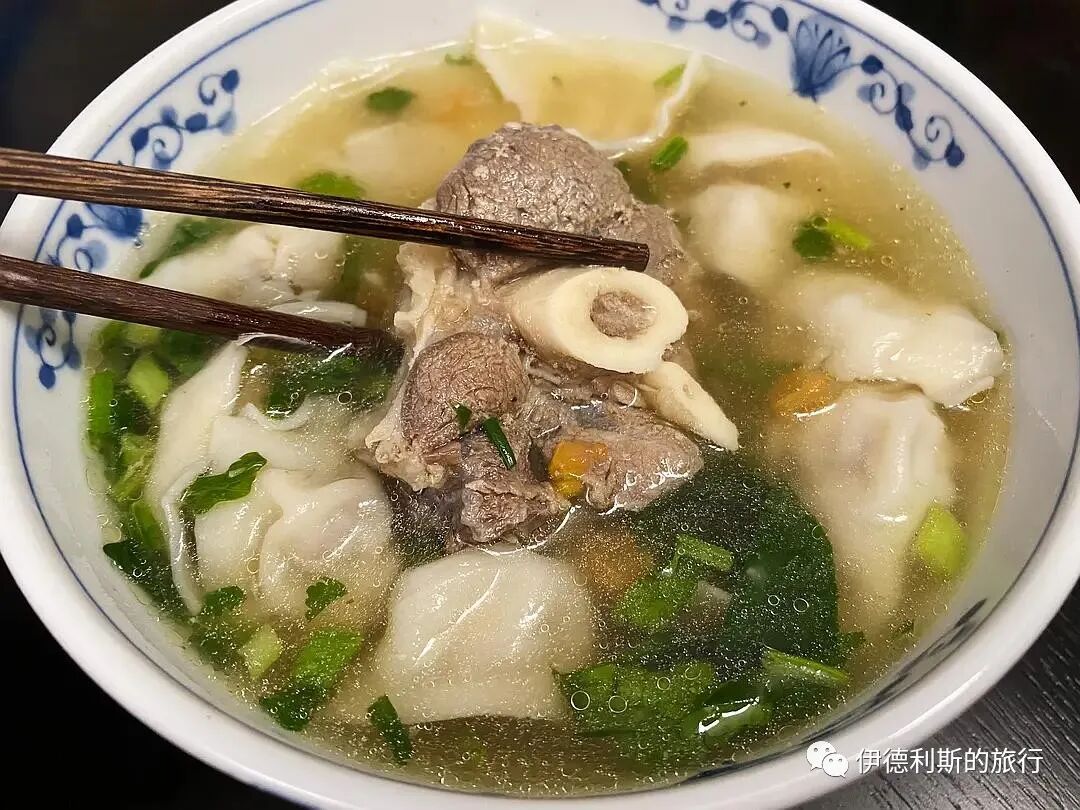
6. Jingzhe oil tea eggs (jingzhe youcha dan)
March 5th is the Awakening of Insects (Jingzhe), when all things come back to life. In the morning, we ate this seasonal Xinjiang Hui Muslim delicacy, Jingzhe oil tea eggs. Stir-fry eggs with dried fruits like raisins and walnut kernels, then pour in brewed brick tea and add rock sugar. Traditional oil tea with egg (youcha dan) must be stir-fried with mutton fat, but we use olive oil.
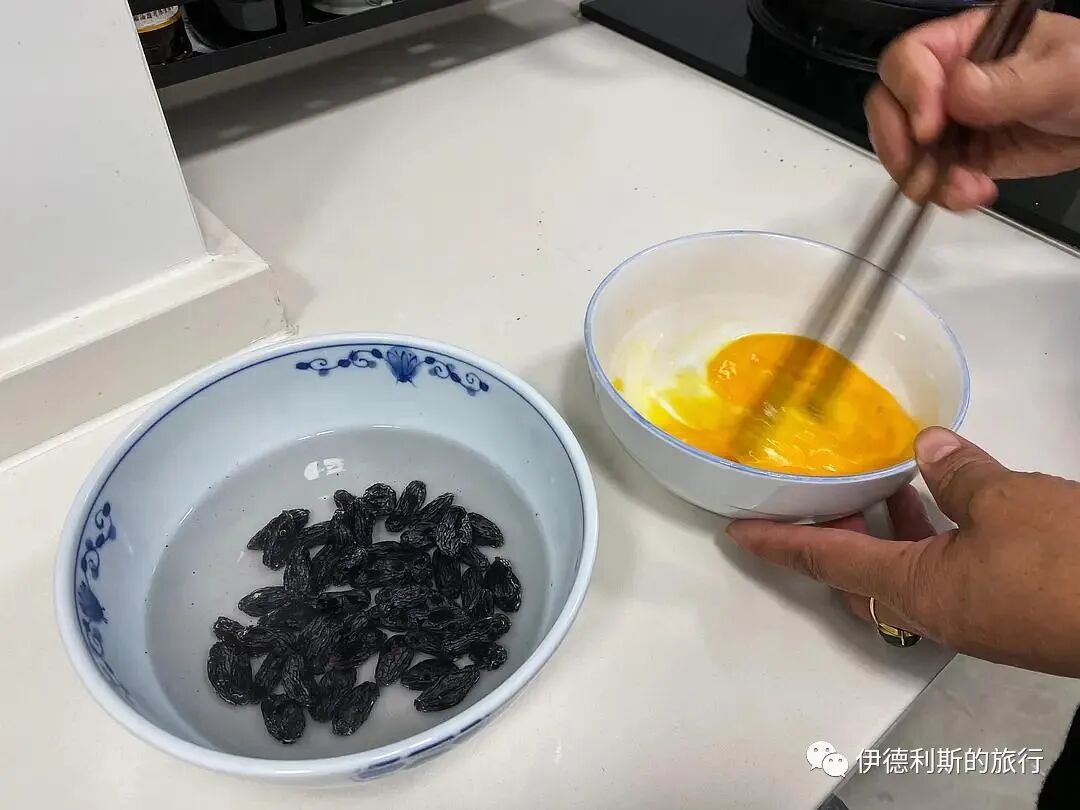
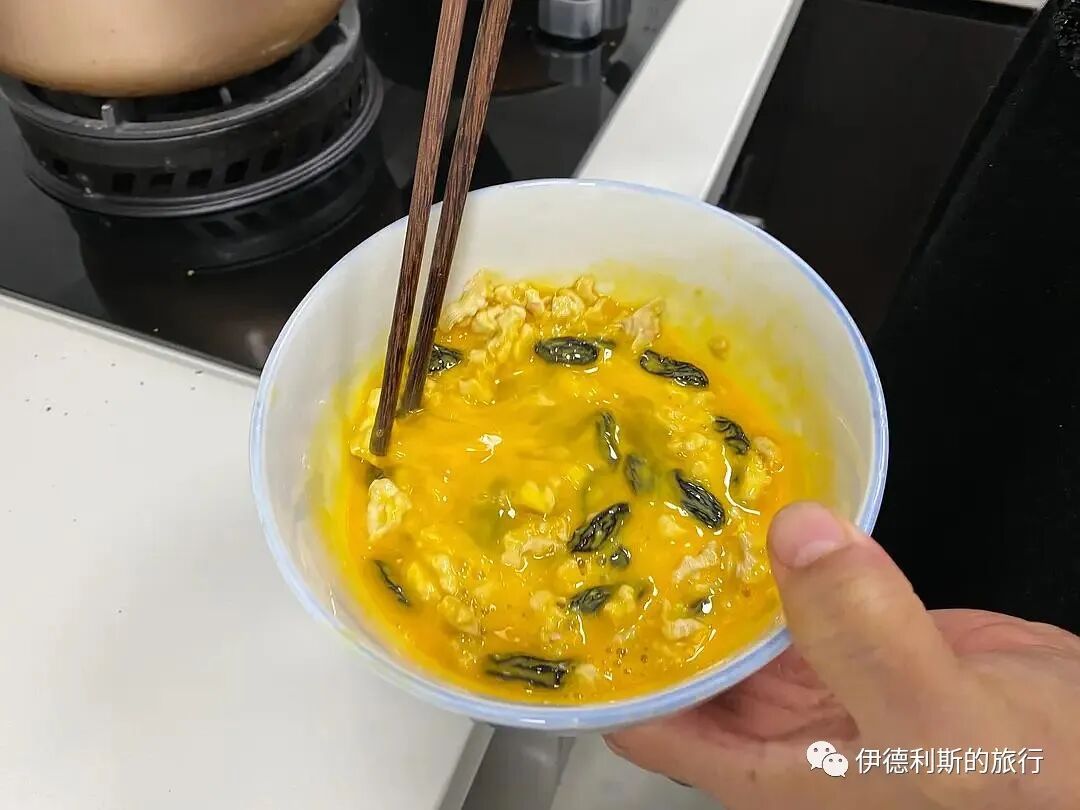
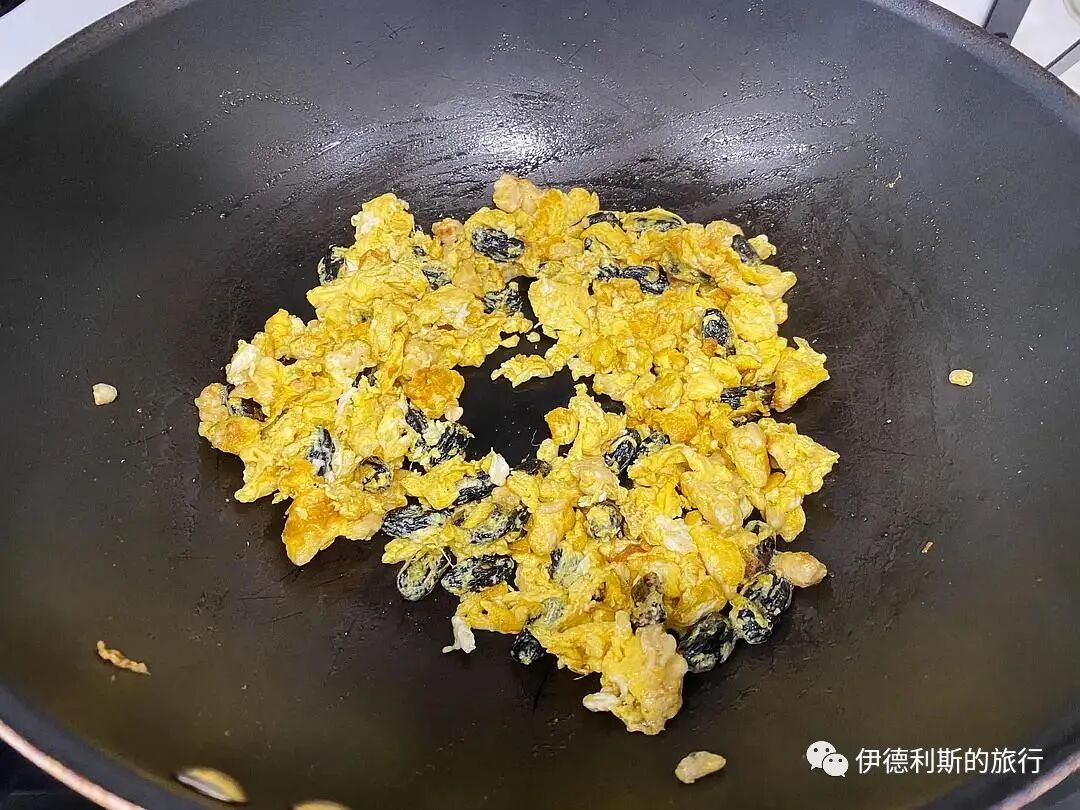
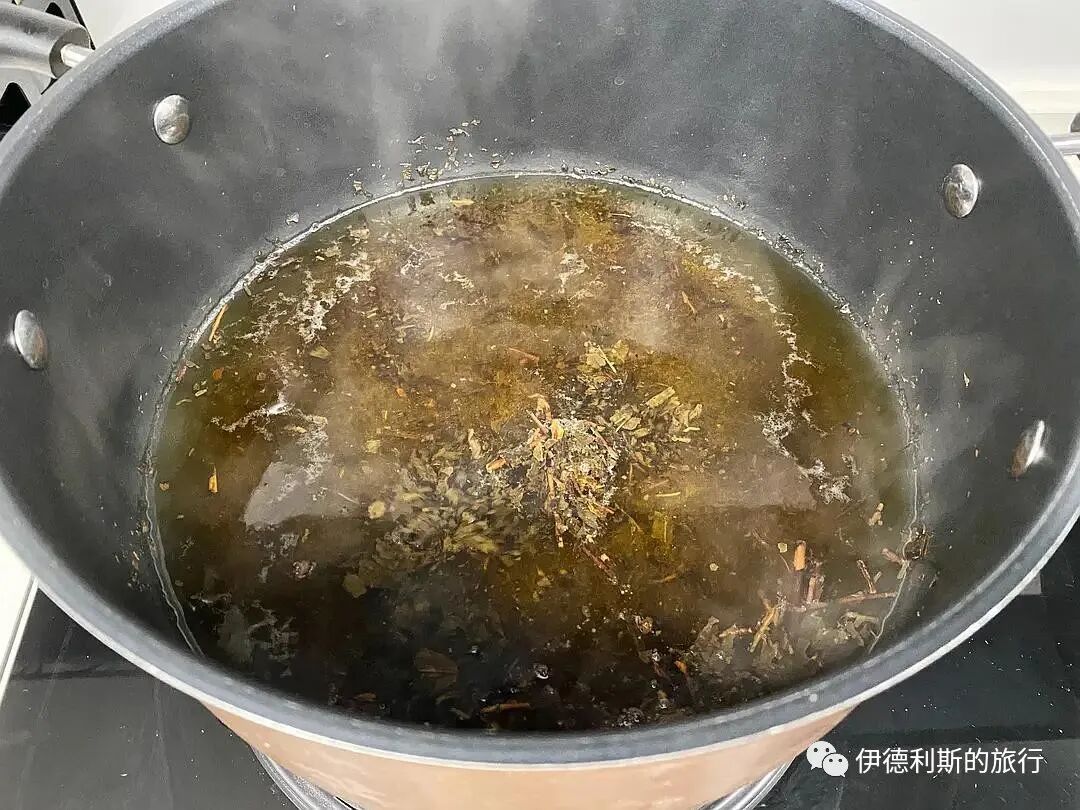
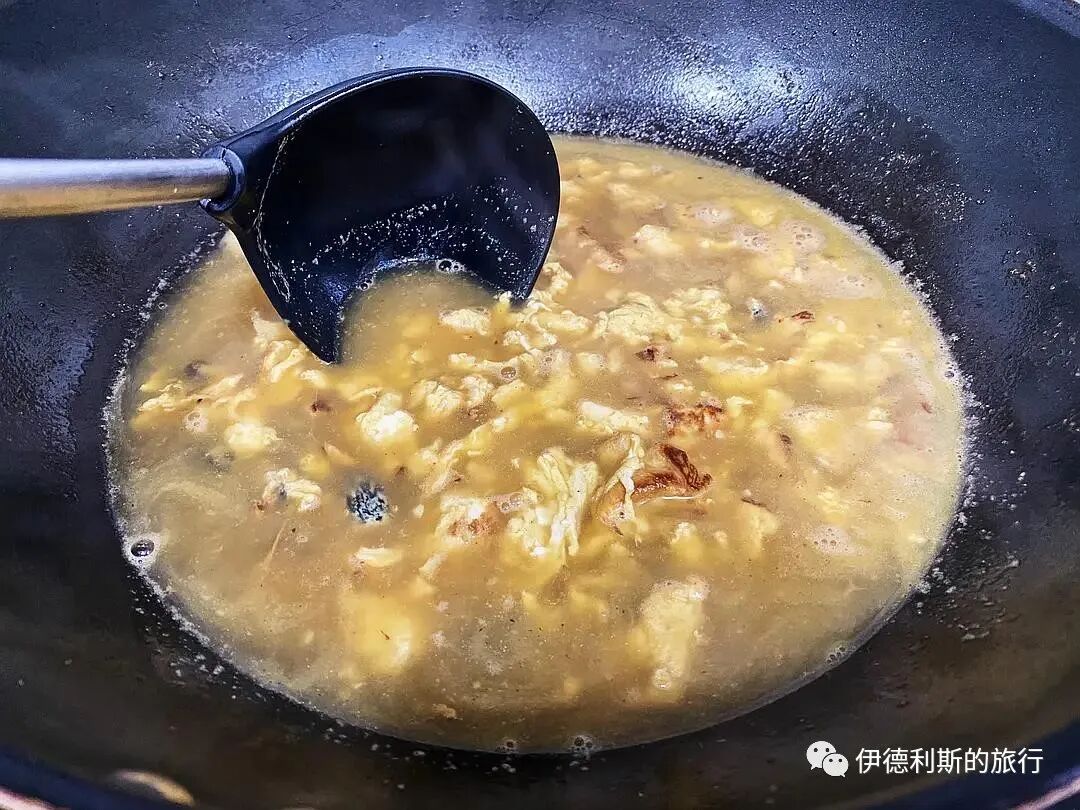
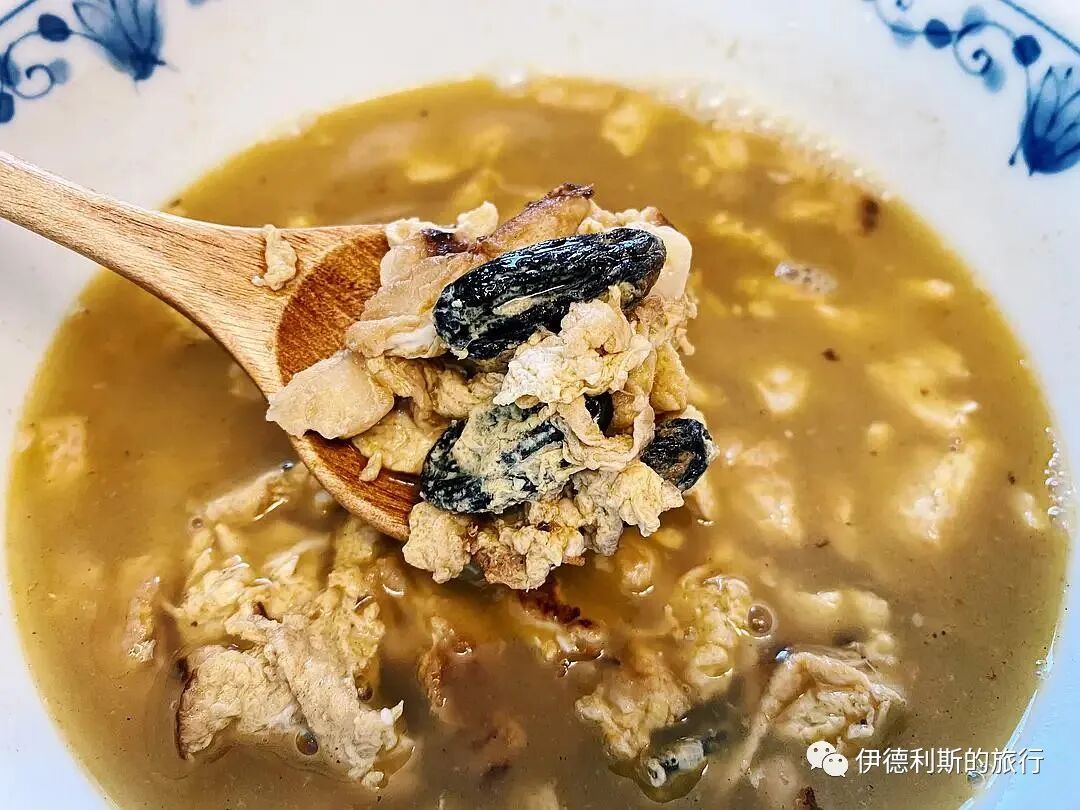
7. Thin-skinned steamed buns (baopi baozi)
Thin-skinned steamed buns (manti) filled with mutton and onions. Manti is a classic Silk Road snack. It spread to Central and West Asia with Turkic soldiers during the Mongol conquests and was later spread further by the Ottoman Empire. The word manti comes from mantou. Even today, the Wu dialect uses mantou to refer to meat-filled flour dishes. In 1330, the first year of the Zhishun era of the Yuan Dynasty, the imperial physician Hu Sihui wrote the Principles of Correct Diet (Yinshan Zhengyao). It records many ways to make mantou, all using mutton, mutton fat, green onions, dried tangerine peel, and salt for the filling. It even mentions the term thin-skinned mantou.
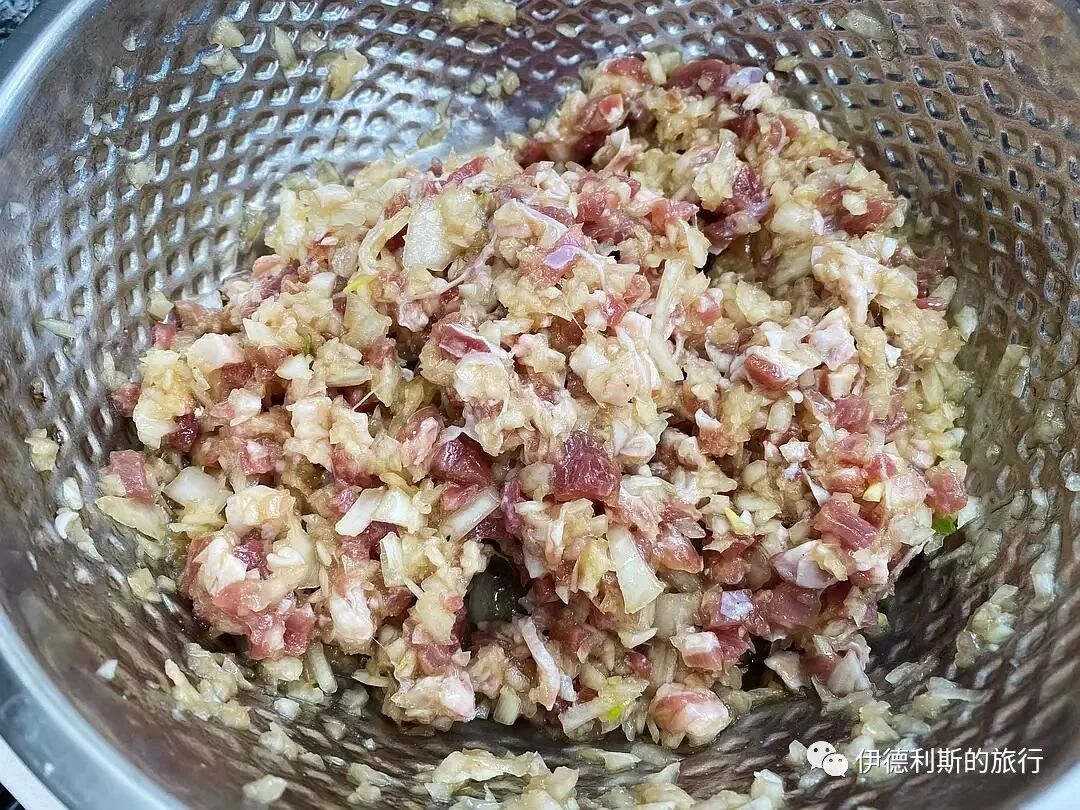
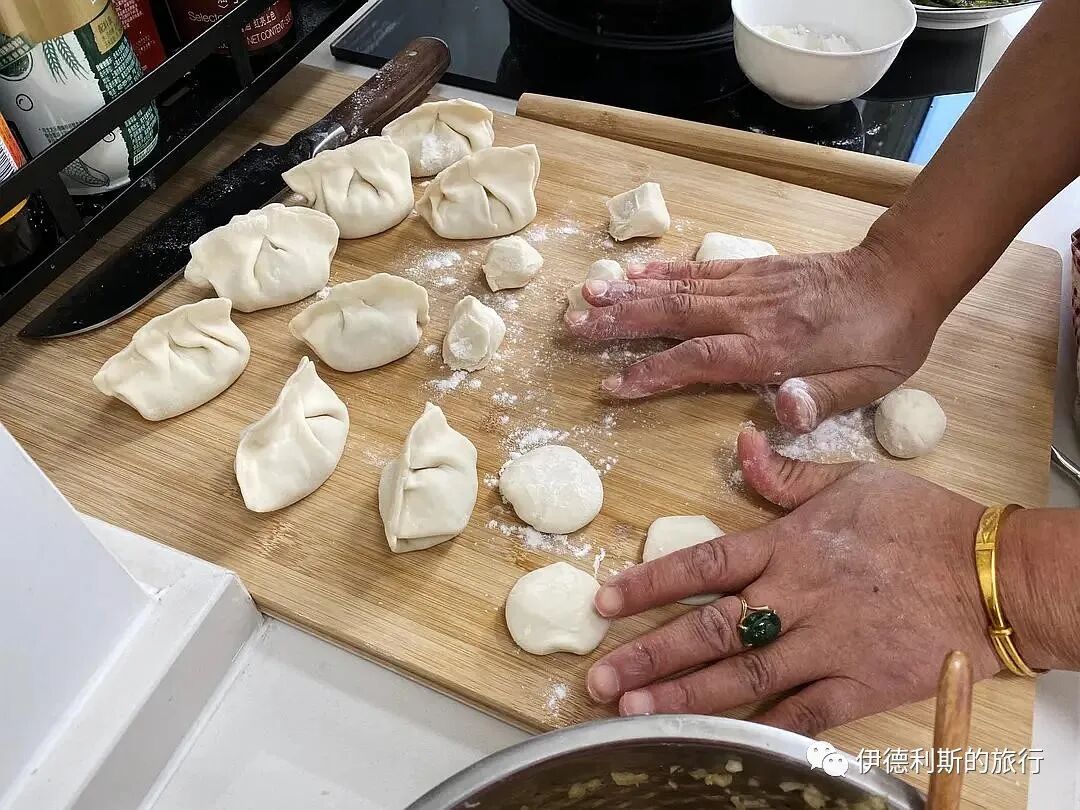
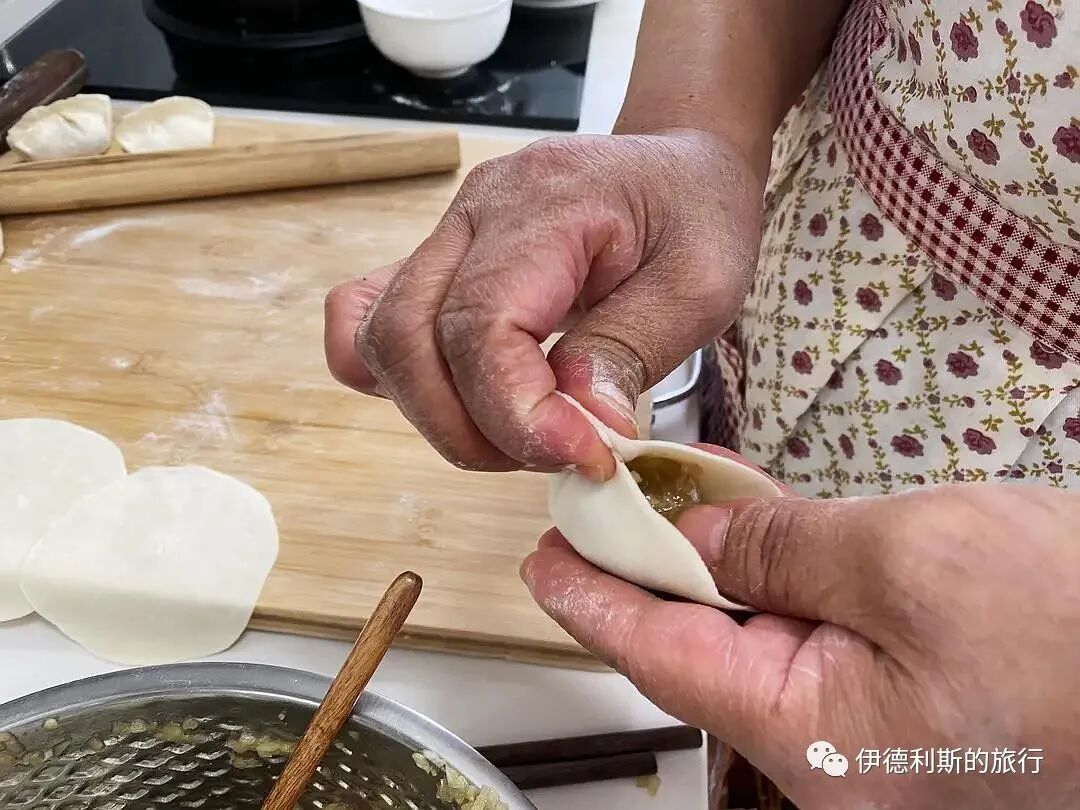
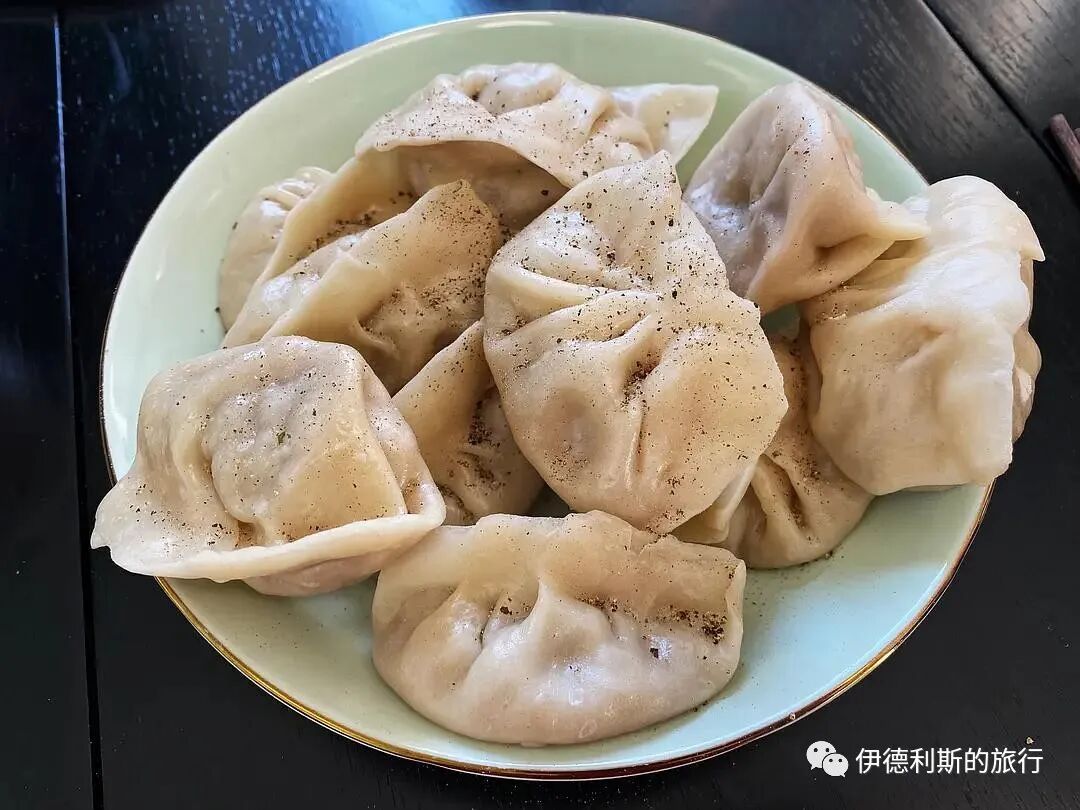
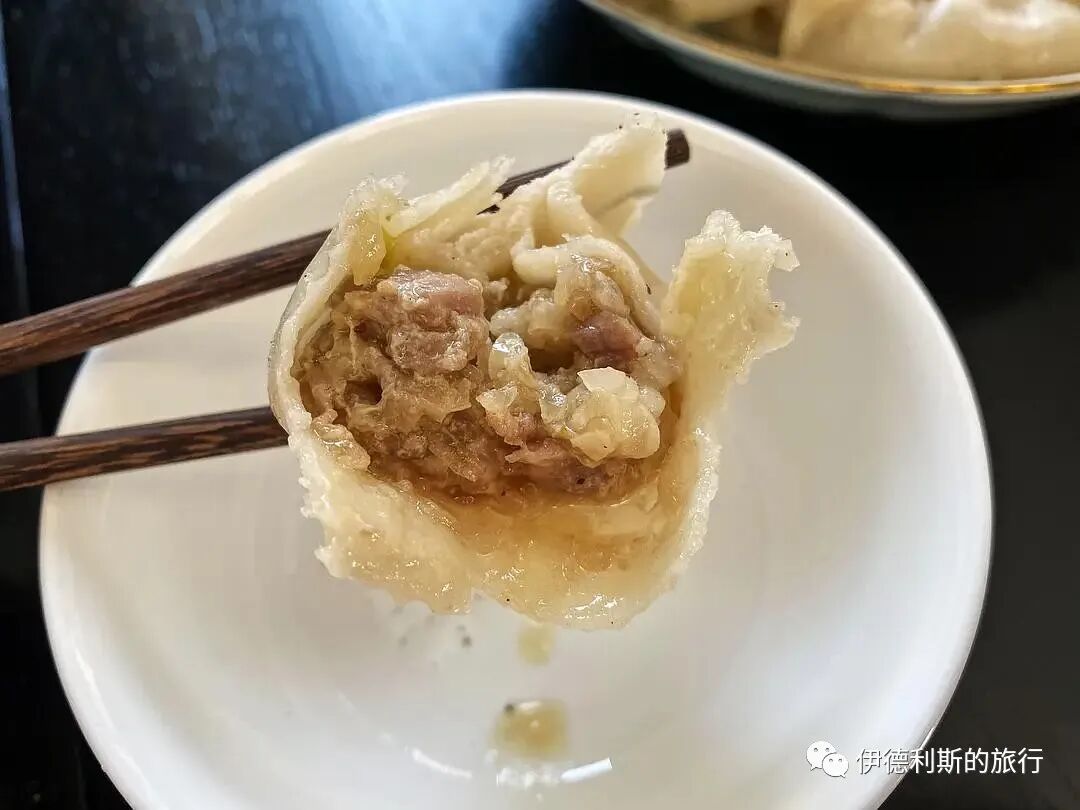
8. Mutton noodle soup (yangrou fentang)
This is the festive noodle soup made during the Mawlid (Zhuo Bailati). First, braise the mutton, then stir the pea starch and let it sit overnight before cutting it into starch blocks. Next, make a topping with cabbage, small radishes, mutton slices, and tomatoes. When you eat it, soak some fried dough (youxiang) in the soup.
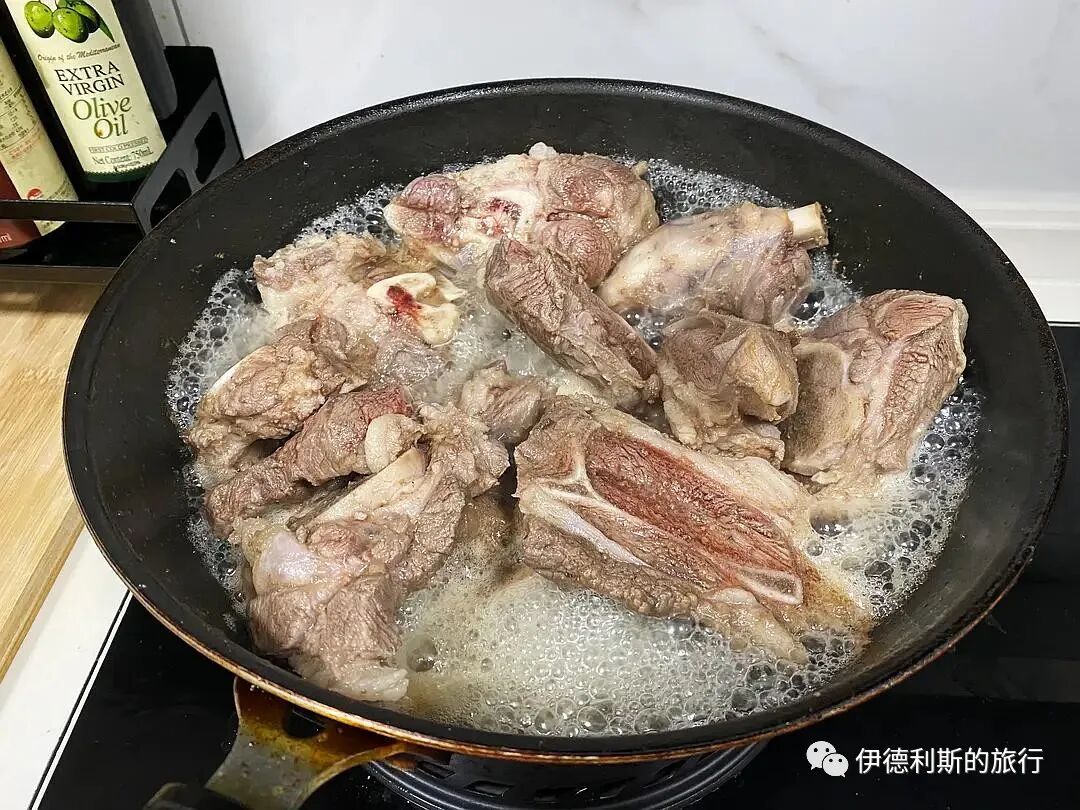
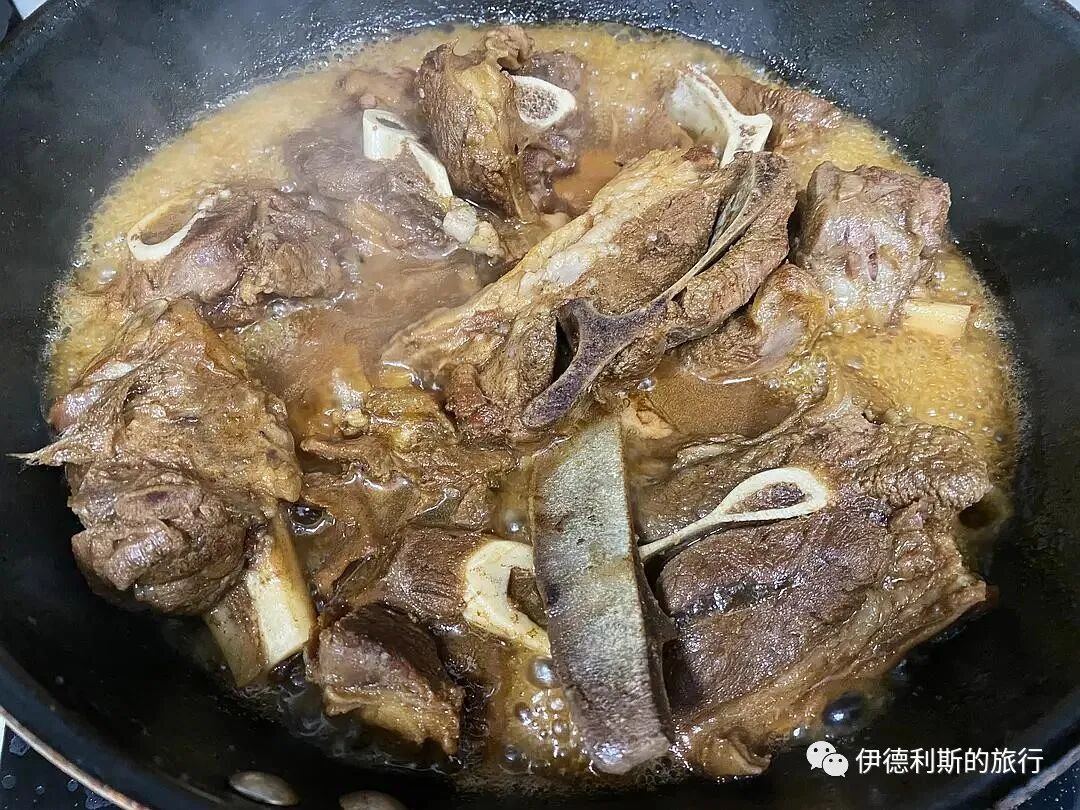
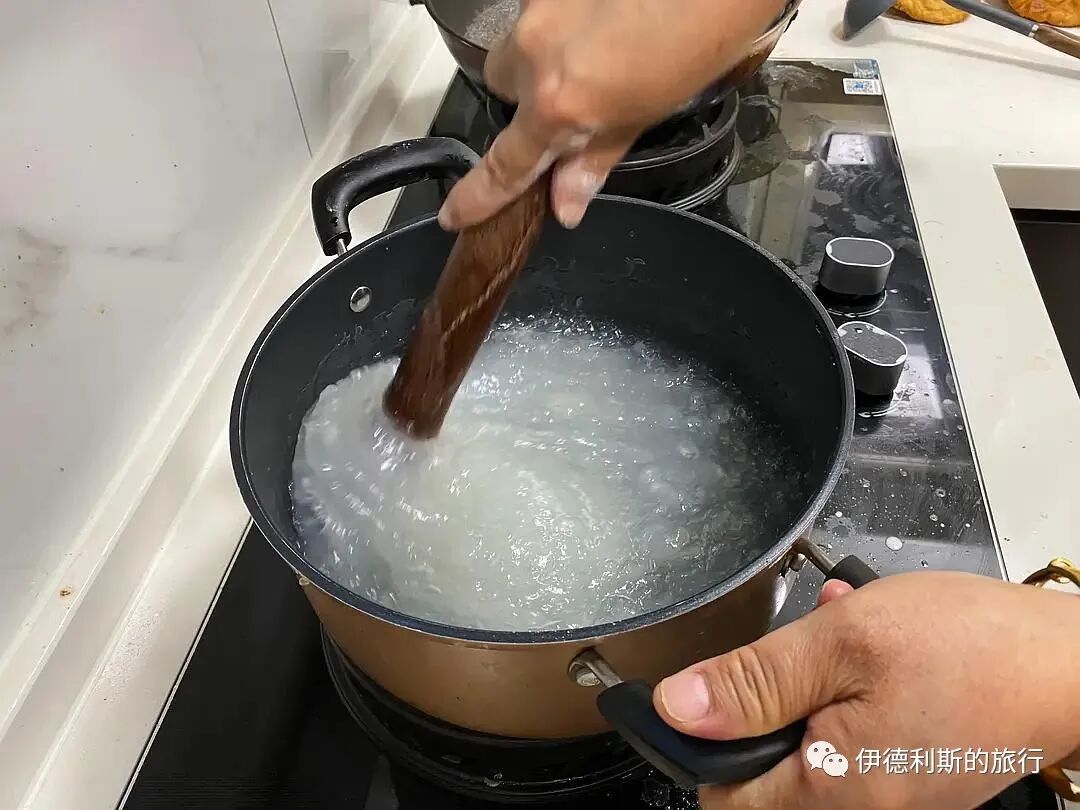
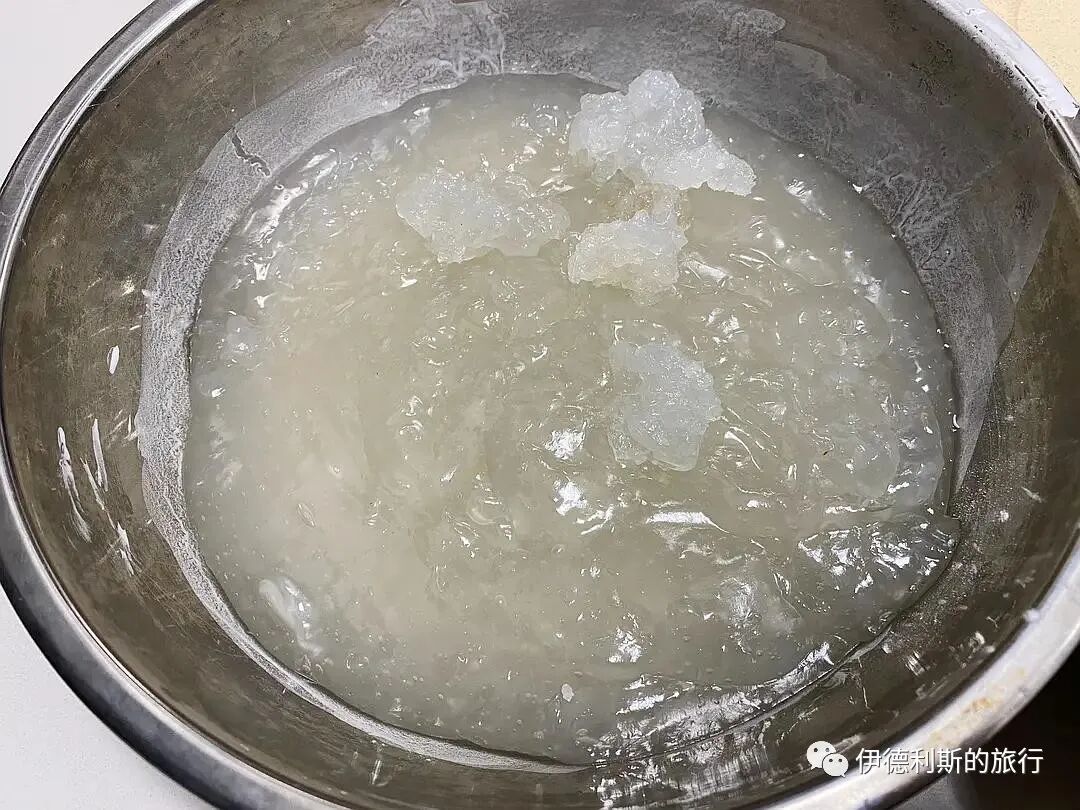
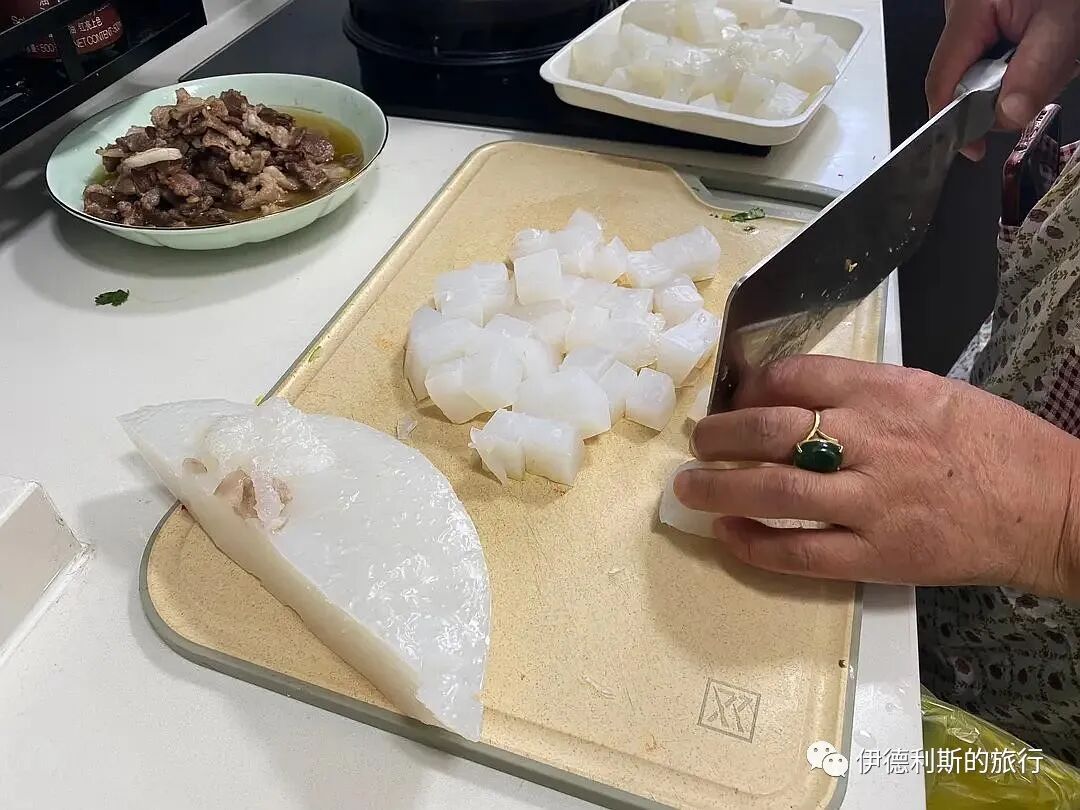
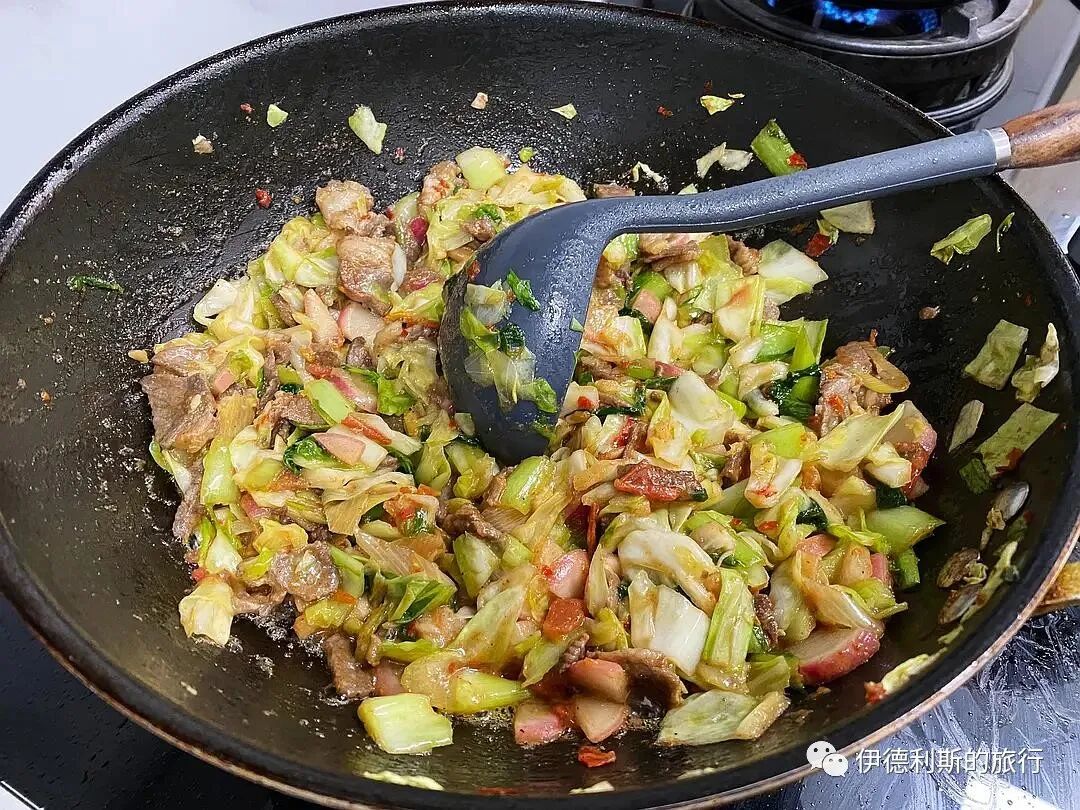
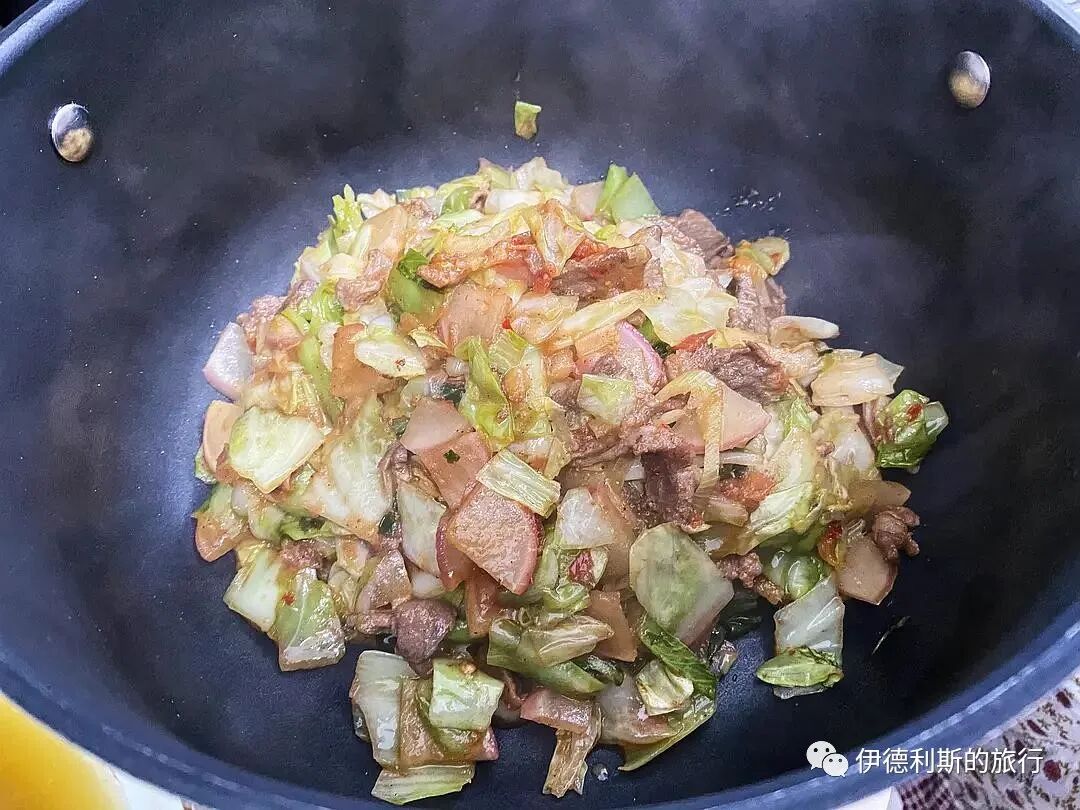
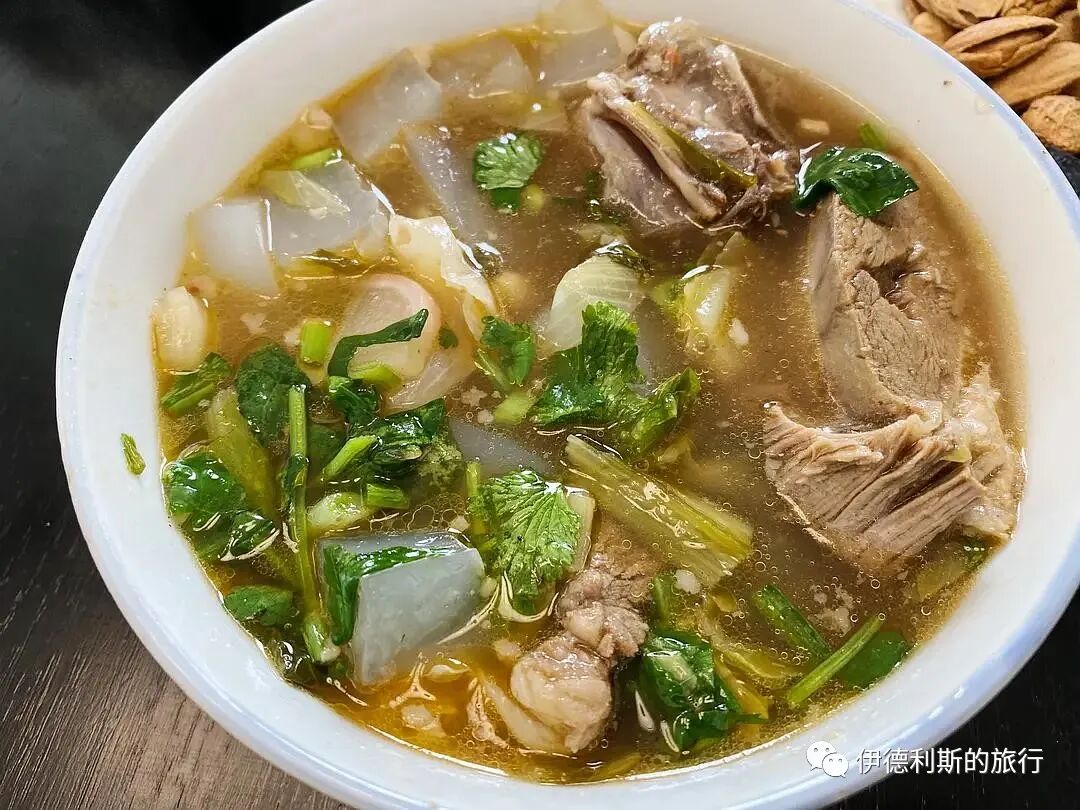
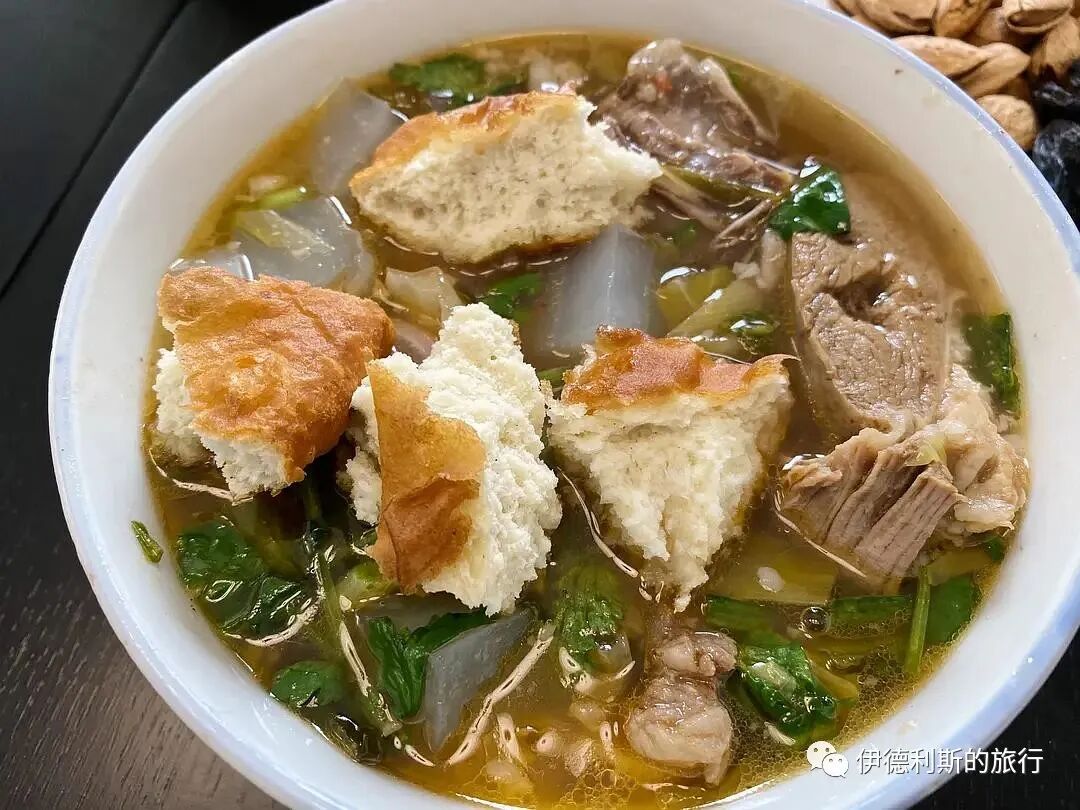
Urumqi Hui Muslim Home Cooking: 15 Halal Dishes (Part 2)
Articles • ali2007fr posted the article • 0 comments • 157 views • 2026-05-18 03:18
Summary: Urumqi Hui Muslim Home Cooking: 15 Halal Dishes is presented here as a firsthand travel account in clear English, beginning with this scene: My mother-in-law came to Beijing in March and made us 15 Urumqi Hui Muslim dishes. The account keeps its focus on Urumqi Halal Food, Hui Muslim Food, Xinjiang Travel while preserving the names, places, food, and historical details from the Chinese source.
My mother-in-law came to Beijing in March and made us 15 Urumqi Hui Muslim dishes. They are big plate chicken with belt noodles (dapanji pidaimian), lamb hand-torn noodles (yangrou jiupianzi), Xinjiang meatball soup (Xinjiang wanzi tang), dry-mixed noodles with lamb bean sauce (yangrou zhajiang ganbanmian), lamb sour soup wontons (yangrou suantang huntun), Jingzhe oil tea eggs (Jingzhe youcha dan), thin-skinned buns (baopi baozi), lamb vermicelli soup (yangrou fentang), cold shredded chicken (liangban ji), diced stir-fried noodles (dingding chaomian), sour soup minced meat noodles (suantang saozi mian), fragrant bean flour rolls (xiangdou huajuan), plate noodles (panzi mian), flavored fried starch jelly (fengwei zha menzi), and lamb and celery dumplings (yangrou qincai jiaozi). Yesterday I shared the first 8 dishes in '15 Urumqi Hui Muslim Dishes Made by My Mother-in-law (Part 1)', and today I will continue with the remaining 7.
9. Cold shredded chicken (liangban ji)
The cold shredded chicken made in Xinjiang Hui Muslim homes is actually the same as the pepper-numbing chicken (jiaoma ji) in restaurants, but it is not as salty or heavy. First, you must choose free-range chicken, not yellow-feathered broiler chicken (sanhuang ji). You should buy a whole chicken, stew it, and tear it by hand, but I went to the market and had the butcher chop it for me, haha. When stewing the chicken, you must add chili peppers and Sichuan peppercorns, and when making the dressing, you must also fry Sichuan peppercorn oil first.
I bought the chicken at the Dazhang Halal Free-range Chicken specialty store in Changying Market.
10. Diced stir-fried noodles (dingding chaomian)
For these classic diced stir-fried noodles, we usually don't use tomato paste at home, just fresh tomatoes.
11. Sour soup minced meat noodles (suantang saozi mian)
The Urumqi Hui Muslim version of sour soup minced meat noodles also uses hand-rolled cut noodles.
12. Fragrant bean flour rolls (xiangdou huajuan)
These are steamed rolls made with fragrant bean flour (xiangdou fen) and rapeseed oil. It is hard to buy fragrant bean flour in Beijing, so I bought it online specifically.
Steamed rolls served with shredded potatoes and corn grits are a classic Urumqi Hui Muslim breakfast.
13. Plate noodles (panzi mian)
Xinjiang pulled noodles (latiaozi) come in two types: plate noodles and stretched noodles (zhangzi mian); plate noodles are chewier than stretched noodles.
They are served with bamboo shoots and meat, or bok choy and meat; it seems rare to find these two types of Xinjiang mixed noodles in local Xinjiang restaurants.
14. Flavored fried starch jelly (fengwei zha menzi)
Flavored fried starch jelly is a banquet dish for Xinjiang Hui Muslims; the last time I ate it was at my engagement banquet with Zainab.
The starch jelly (menzi) is made with minced beef. When mixing the filling, you must beat it repeatedly, then shape it into a cylinder, pinch the top to look like a fence, pour egg into the center, and steam it. Once steamed, slice the jelly, coat it in egg wash, and fry it. Take it out, sprinkle with cumin, chili powder, and salt, and a delicious plate of flavored fried starch jelly is ready.
15. Lamb and celery dumplings (jiaozi).
There is a saying that you eat dumplings before a trip and noodles when you return home. My mother-in-law is leaving, so she made us lamb and celery dumplings for her final meal. She added eggs to the dough, which gave it a slightly yellow color.
You have to eat them with chili oil (youpo lazi). view all
Summary: Urumqi Hui Muslim Home Cooking: 15 Halal Dishes is presented here as a firsthand travel account in clear English, beginning with this scene: My mother-in-law came to Beijing in March and made us 15 Urumqi Hui Muslim dishes. The account keeps its focus on Urumqi Halal Food, Hui Muslim Food, Xinjiang Travel while preserving the names, places, food, and historical details from the Chinese source.
My mother-in-law came to Beijing in March and made us 15 Urumqi Hui Muslim dishes. They are big plate chicken with belt noodles (dapanji pidaimian), lamb hand-torn noodles (yangrou jiupianzi), Xinjiang meatball soup (Xinjiang wanzi tang), dry-mixed noodles with lamb bean sauce (yangrou zhajiang ganbanmian), lamb sour soup wontons (yangrou suantang huntun), Jingzhe oil tea eggs (Jingzhe youcha dan), thin-skinned buns (baopi baozi), lamb vermicelli soup (yangrou fentang), cold shredded chicken (liangban ji), diced stir-fried noodles (dingding chaomian), sour soup minced meat noodles (suantang saozi mian), fragrant bean flour rolls (xiangdou huajuan), plate noodles (panzi mian), flavored fried starch jelly (fengwei zha menzi), and lamb and celery dumplings (yangrou qincai jiaozi). Yesterday I shared the first 8 dishes in '15 Urumqi Hui Muslim Dishes Made by My Mother-in-law (Part 1)', and today I will continue with the remaining 7.
9. Cold shredded chicken (liangban ji)
The cold shredded chicken made in Xinjiang Hui Muslim homes is actually the same as the pepper-numbing chicken (jiaoma ji) in restaurants, but it is not as salty or heavy. First, you must choose free-range chicken, not yellow-feathered broiler chicken (sanhuang ji). You should buy a whole chicken, stew it, and tear it by hand, but I went to the market and had the butcher chop it for me, haha. When stewing the chicken, you must add chili peppers and Sichuan peppercorns, and when making the dressing, you must also fry Sichuan peppercorn oil first.
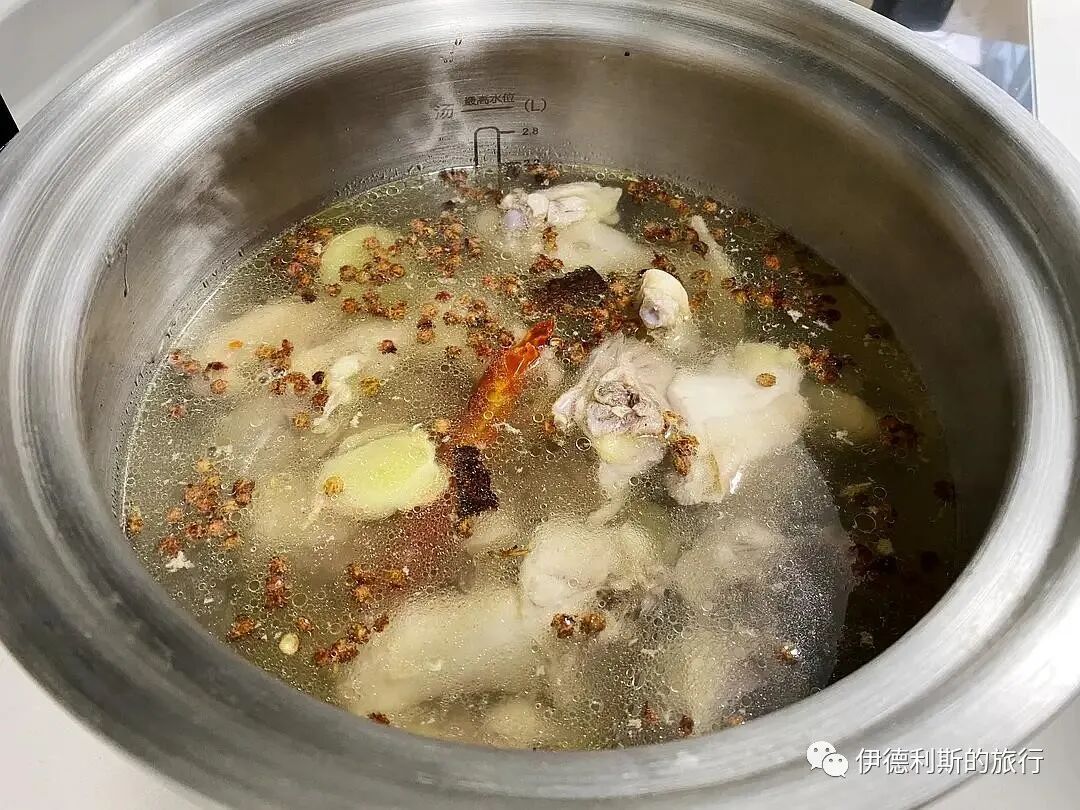
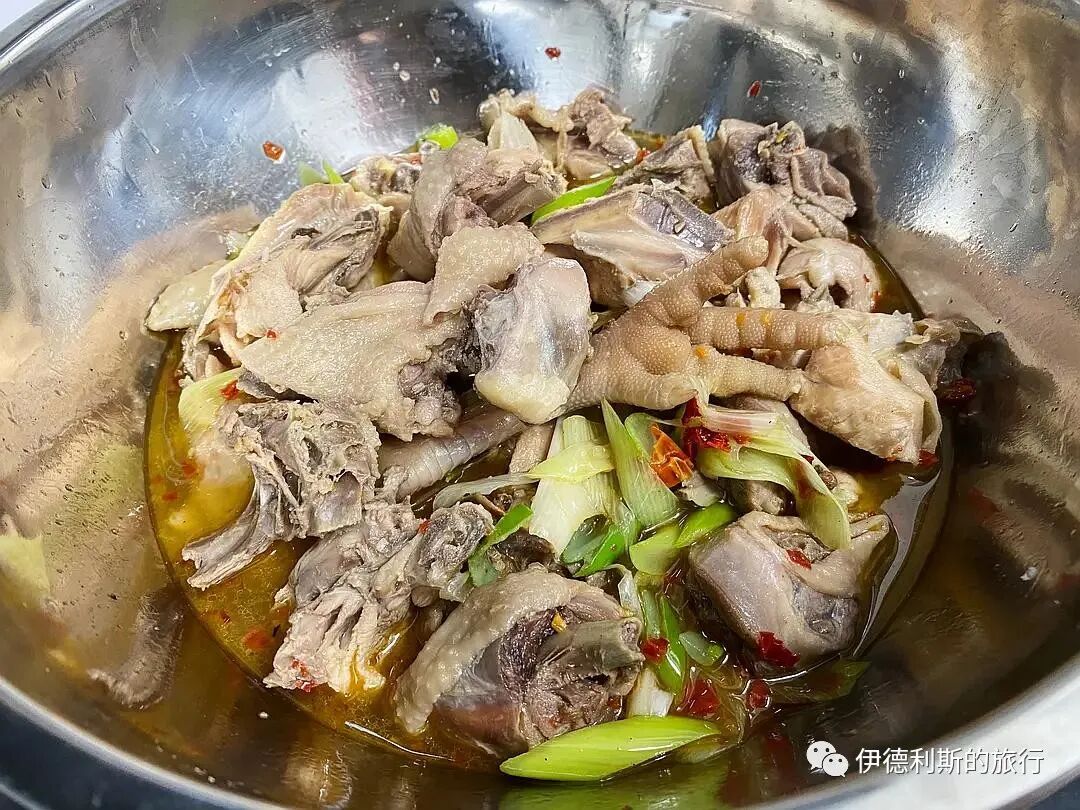
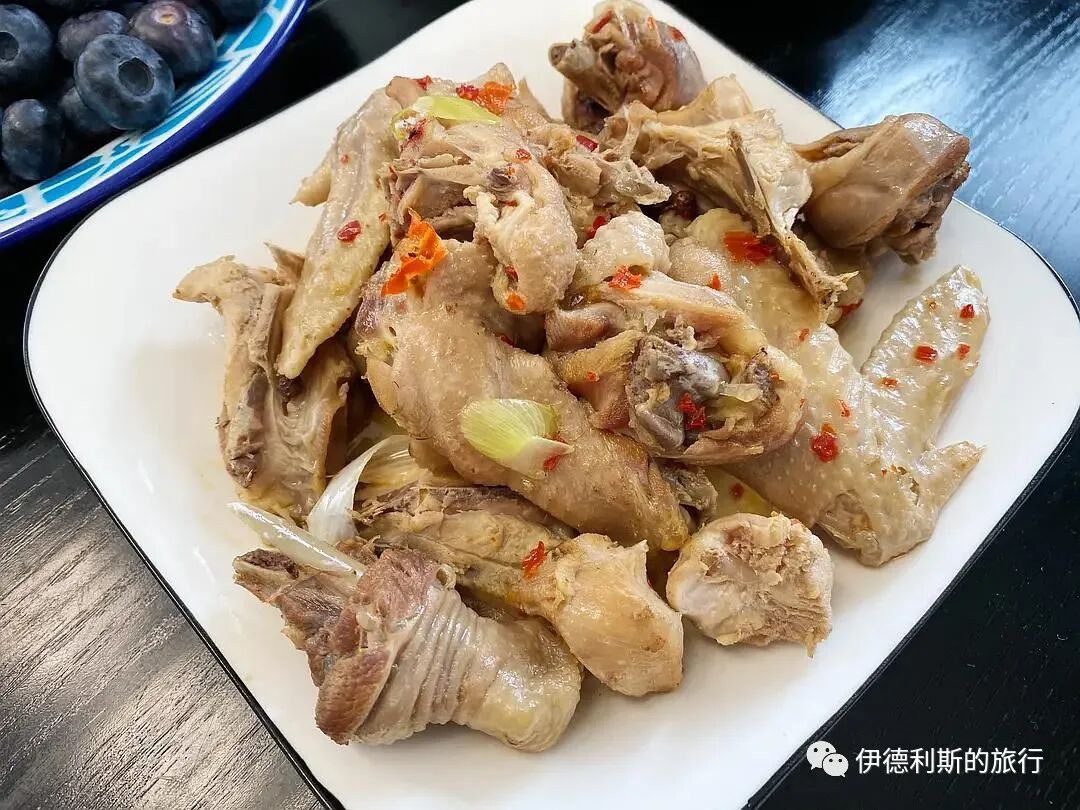
I bought the chicken at the Dazhang Halal Free-range Chicken specialty store in Changying Market.
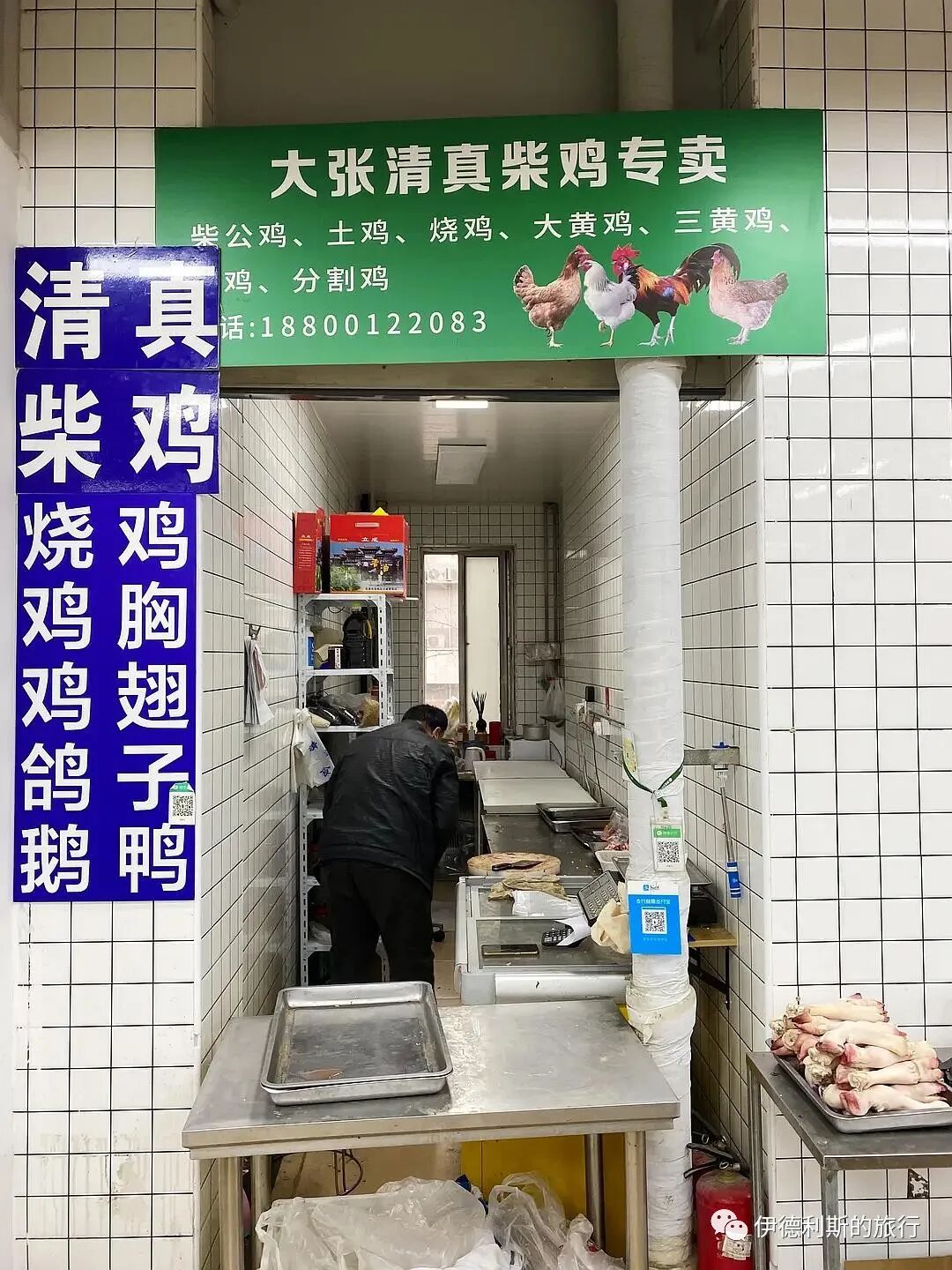
10. Diced stir-fried noodles (dingding chaomian)
For these classic diced stir-fried noodles, we usually don't use tomato paste at home, just fresh tomatoes.
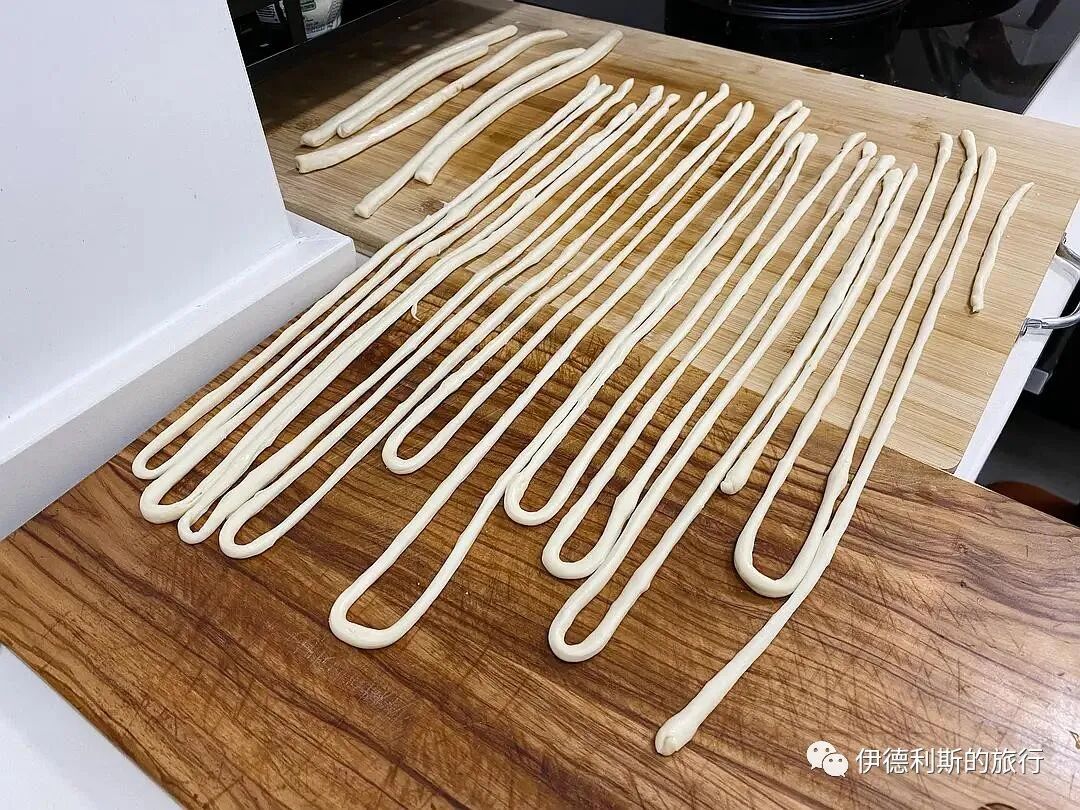
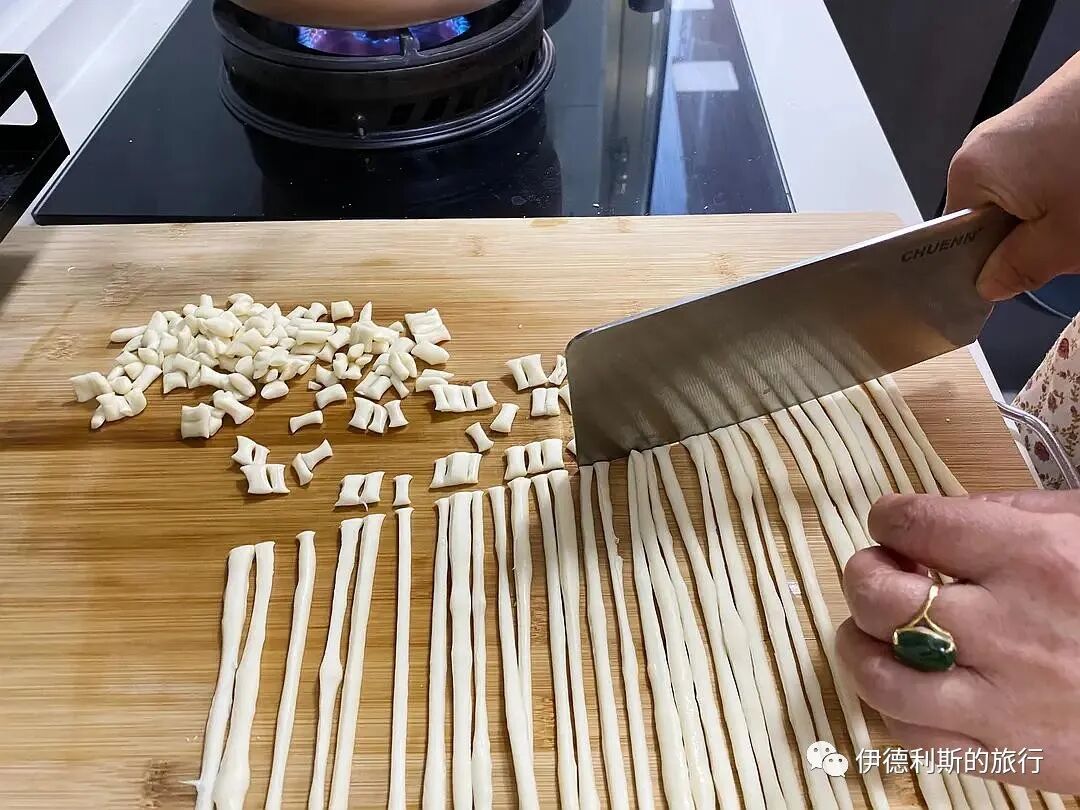
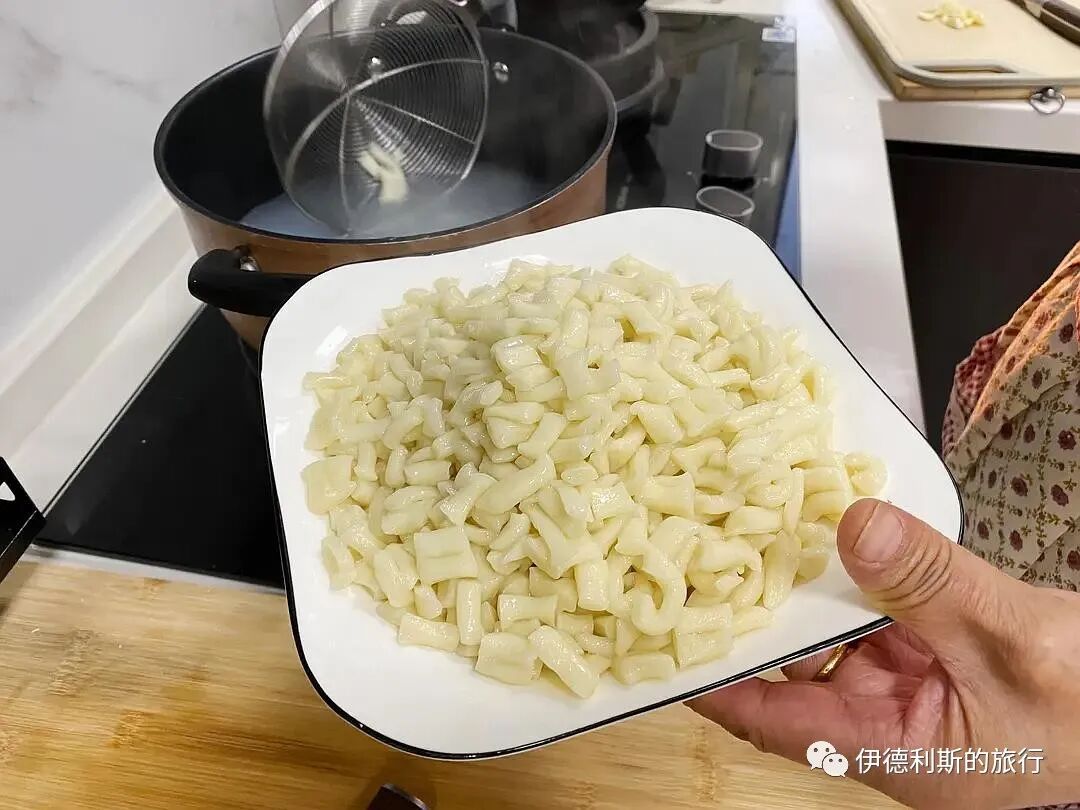
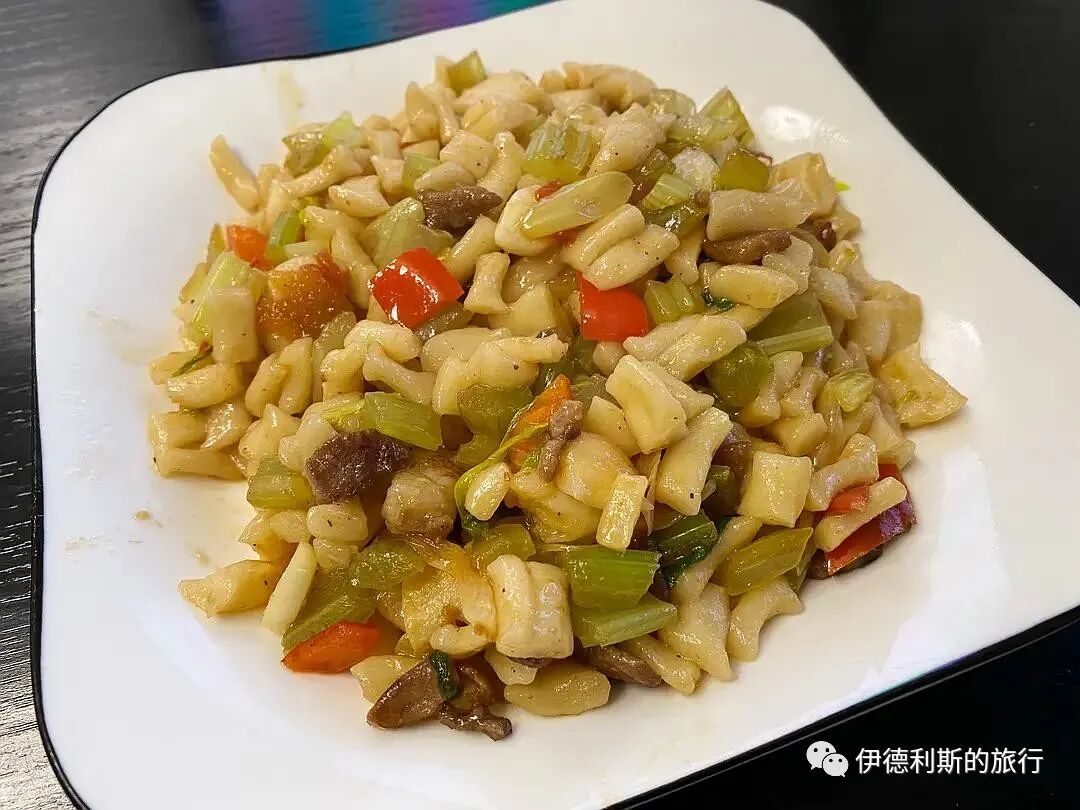
11. Sour soup minced meat noodles (suantang saozi mian)
The Urumqi Hui Muslim version of sour soup minced meat noodles also uses hand-rolled cut noodles.
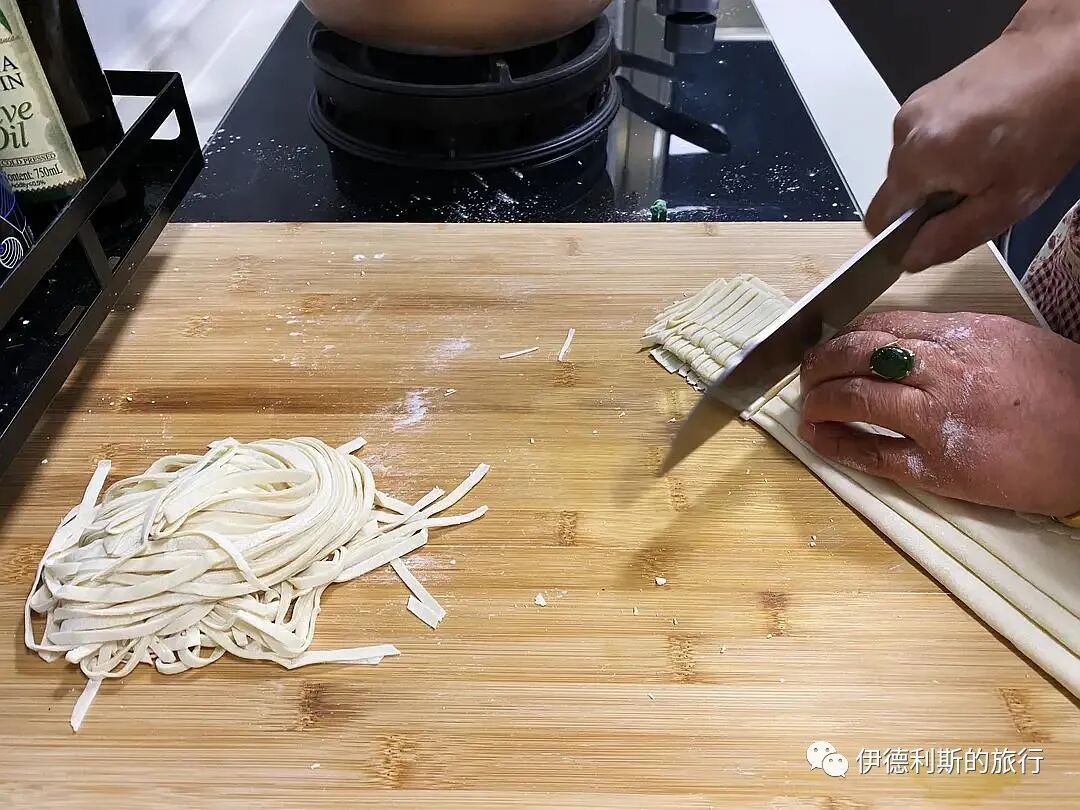
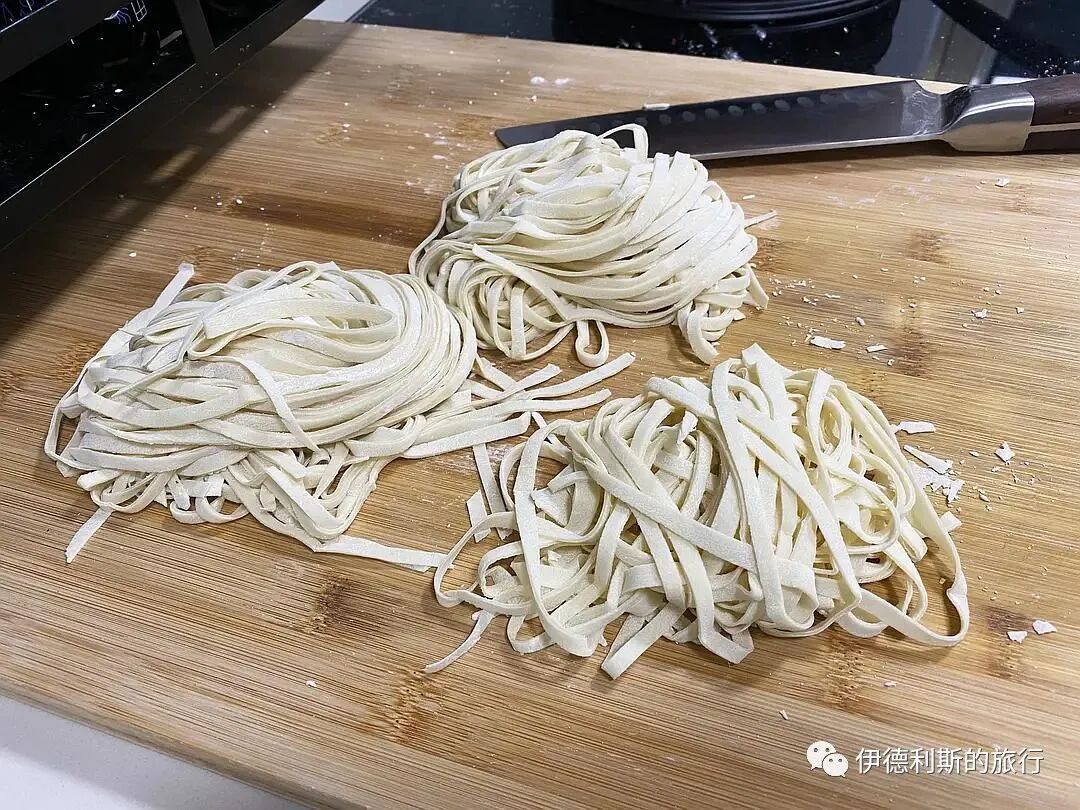
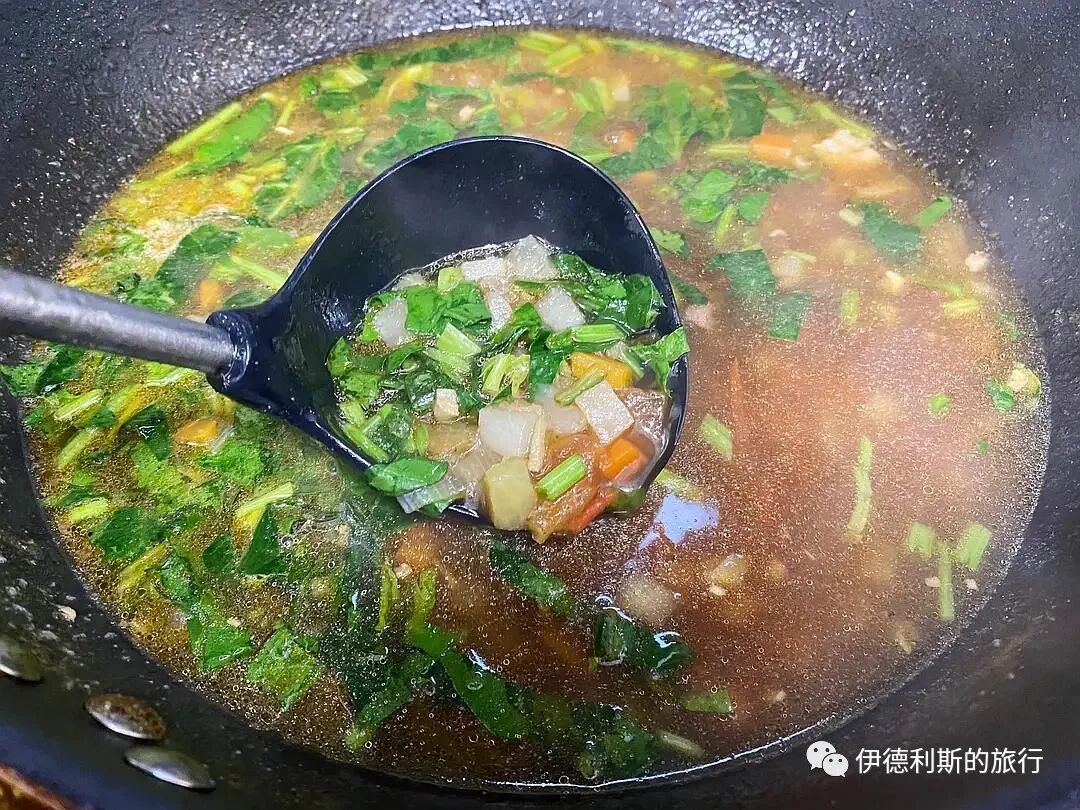
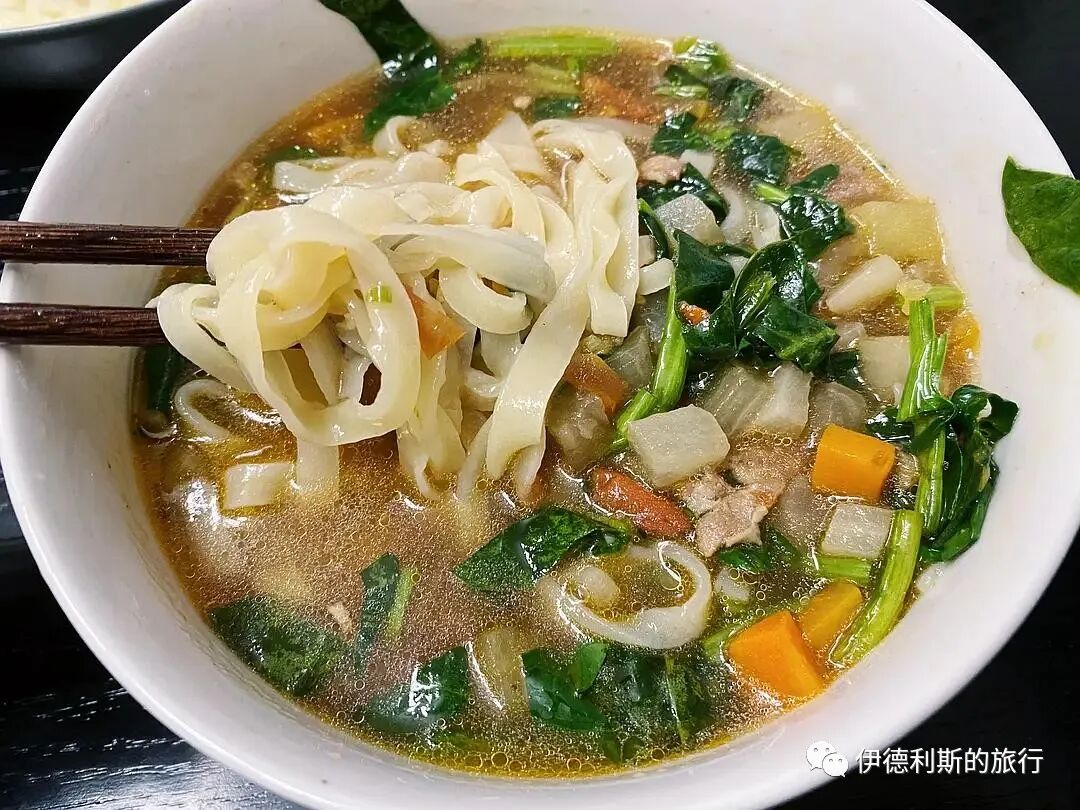
12. Fragrant bean flour rolls (xiangdou huajuan)
These are steamed rolls made with fragrant bean flour (xiangdou fen) and rapeseed oil. It is hard to buy fragrant bean flour in Beijing, so I bought it online specifically.
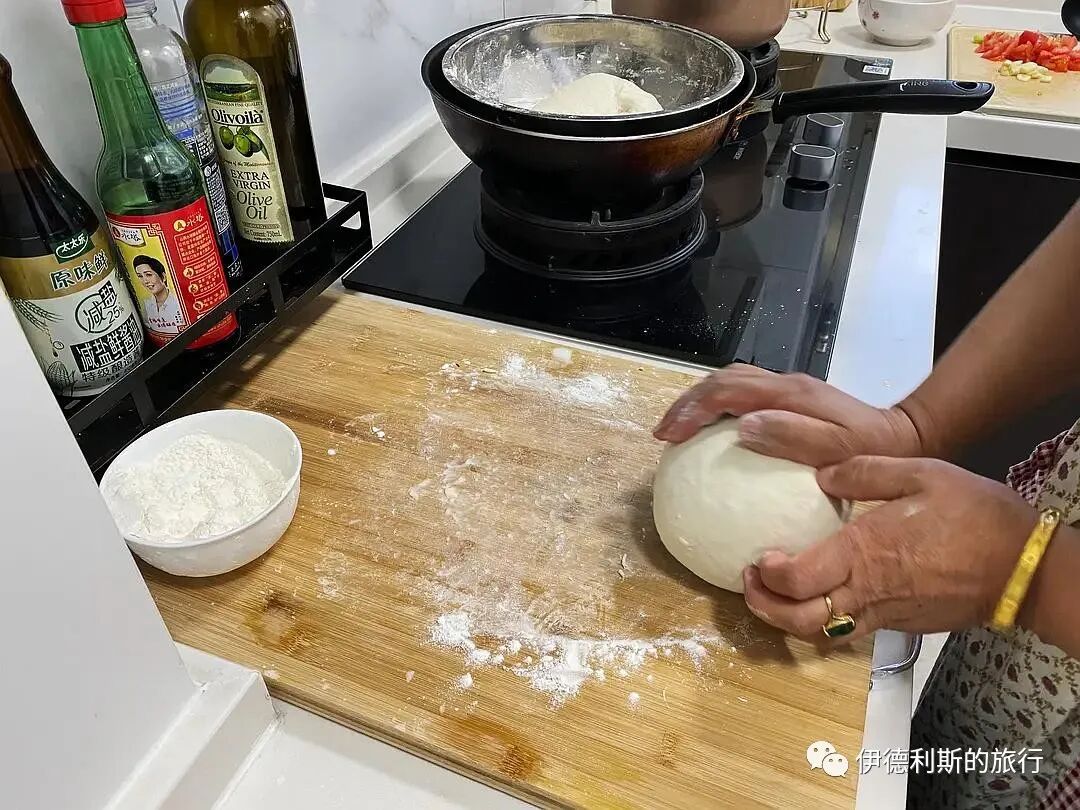
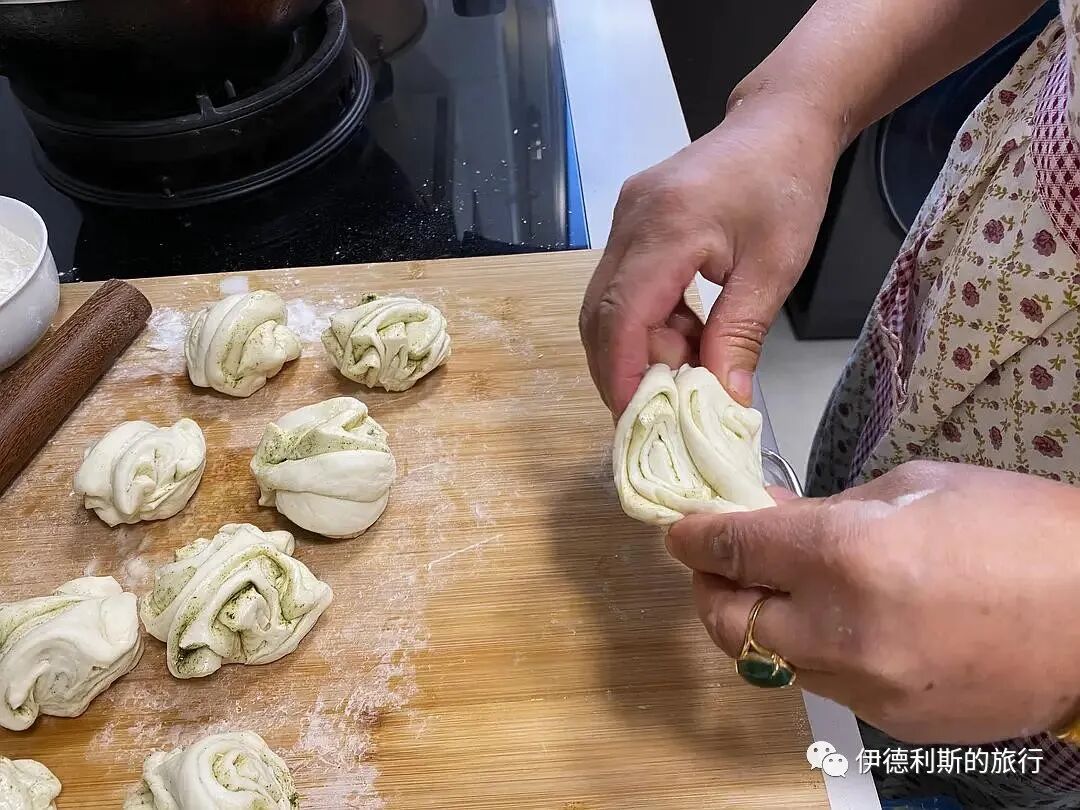
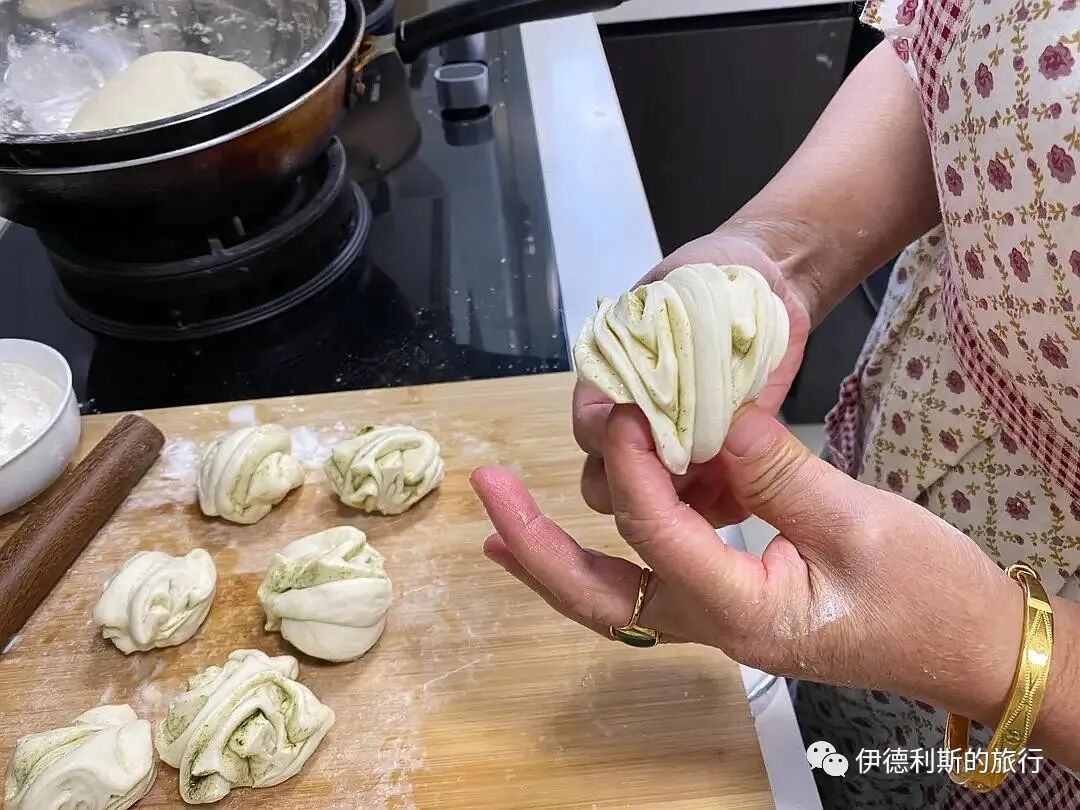
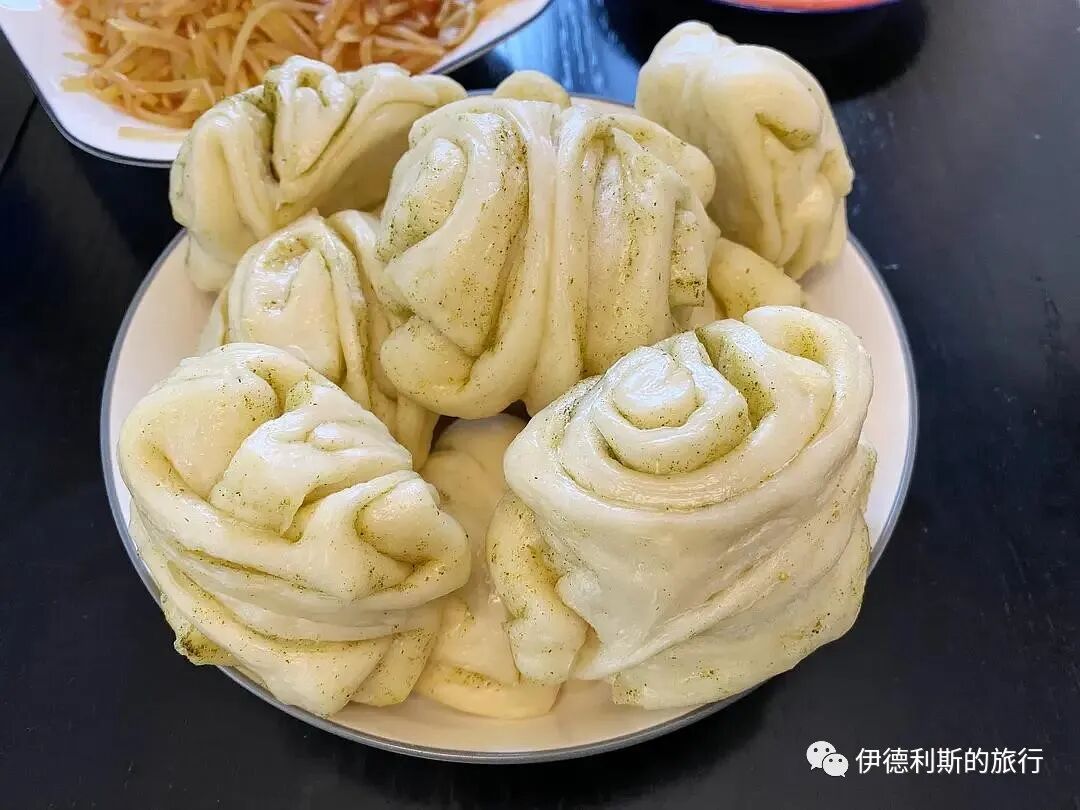
Steamed rolls served with shredded potatoes and corn grits are a classic Urumqi Hui Muslim breakfast.
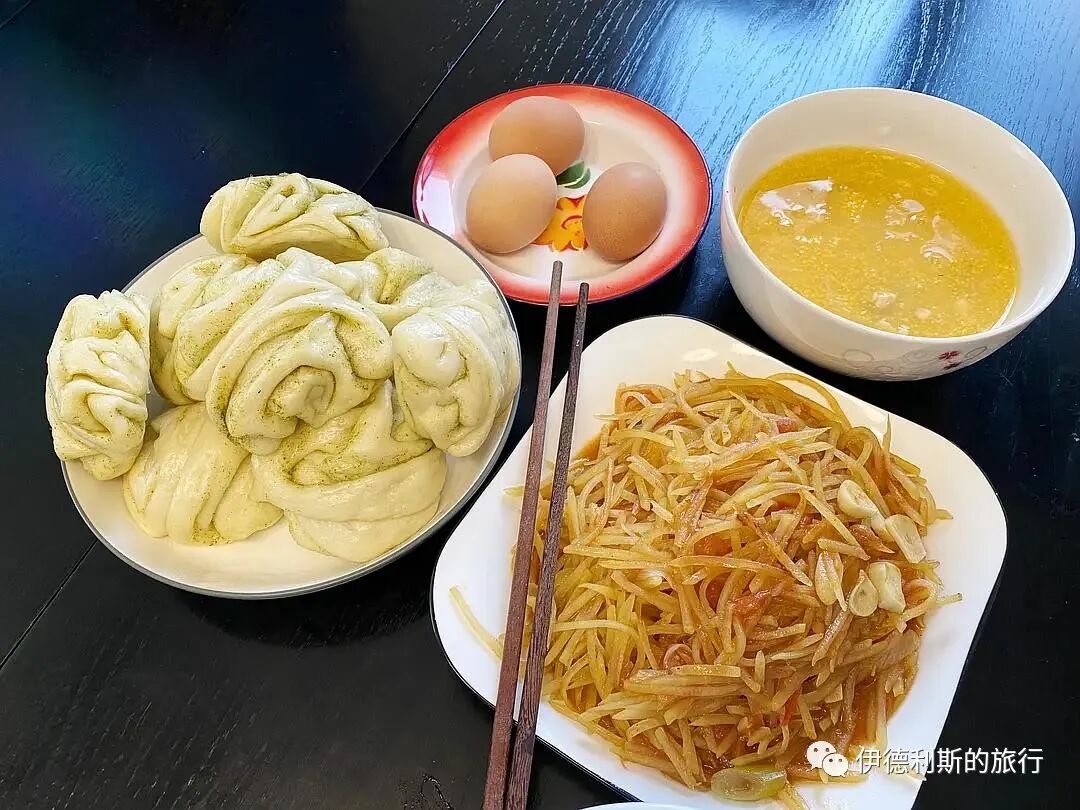
13. Plate noodles (panzi mian)
Xinjiang pulled noodles (latiaozi) come in two types: plate noodles and stretched noodles (zhangzi mian); plate noodles are chewier than stretched noodles.
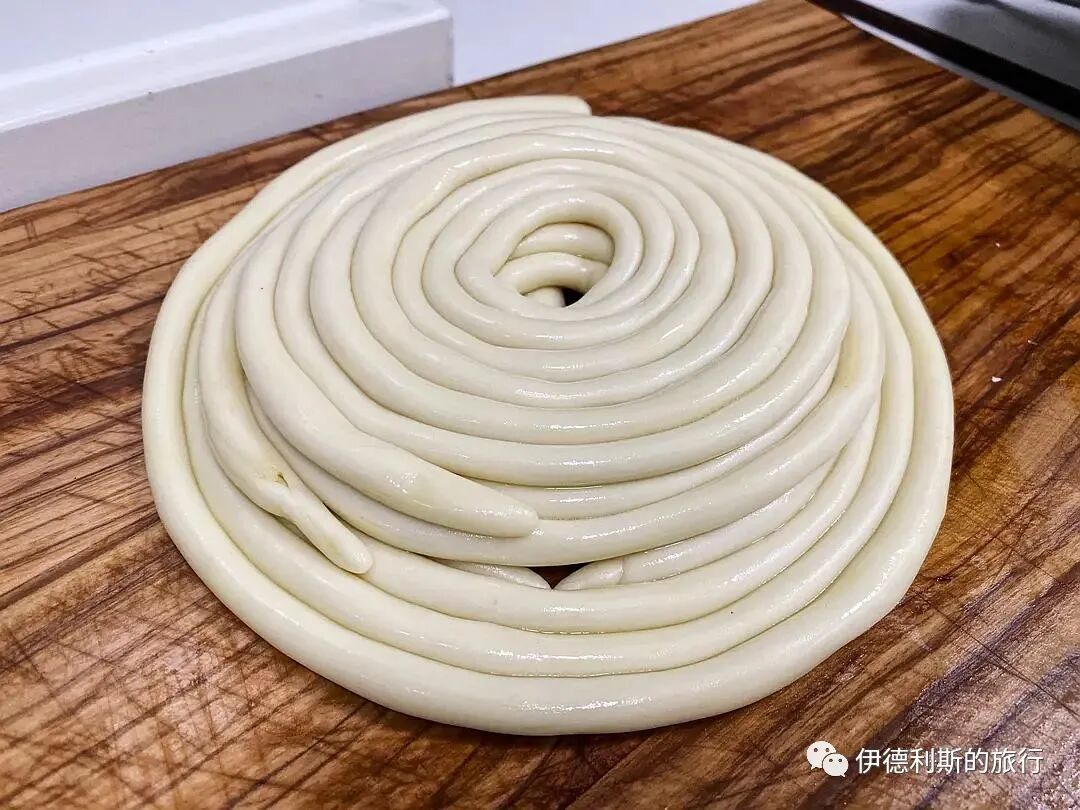
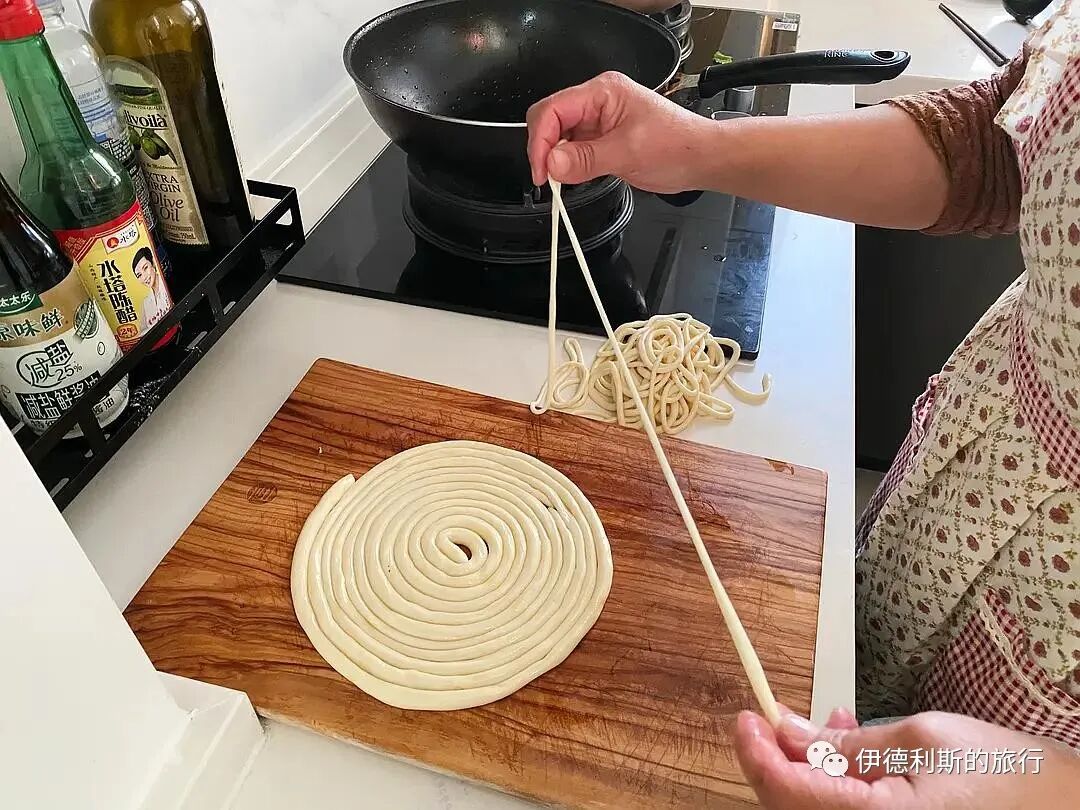
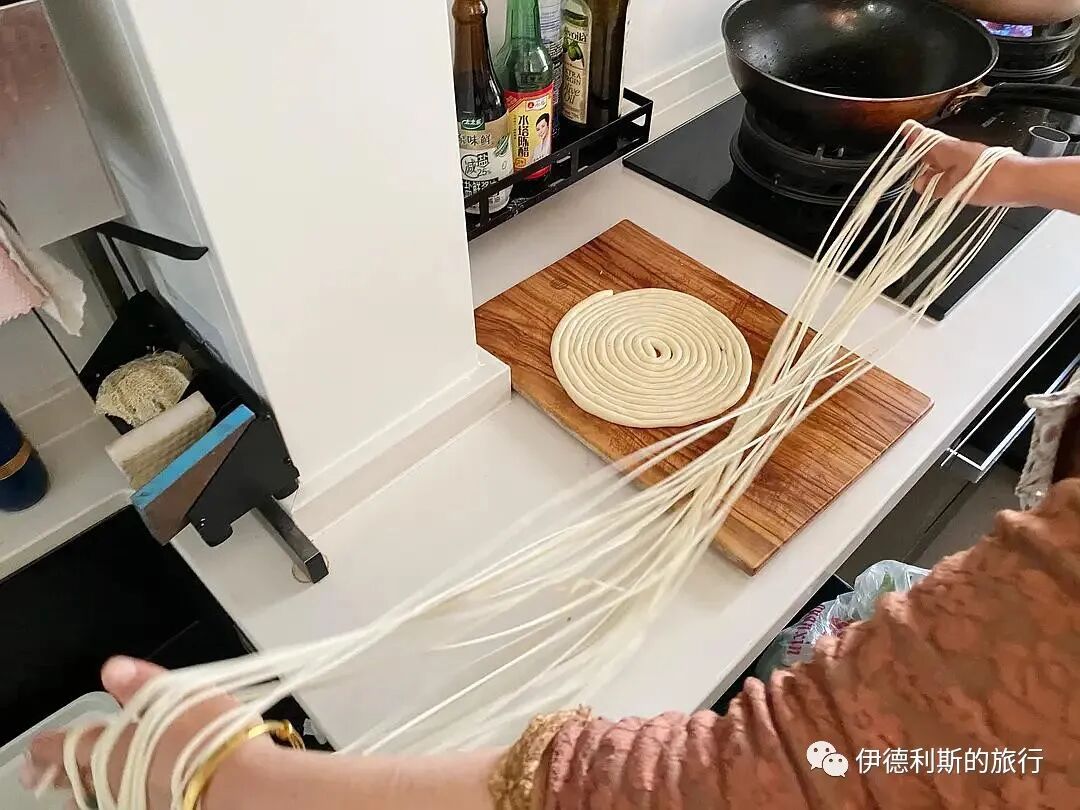
They are served with bamboo shoots and meat, or bok choy and meat; it seems rare to find these two types of Xinjiang mixed noodles in local Xinjiang restaurants.
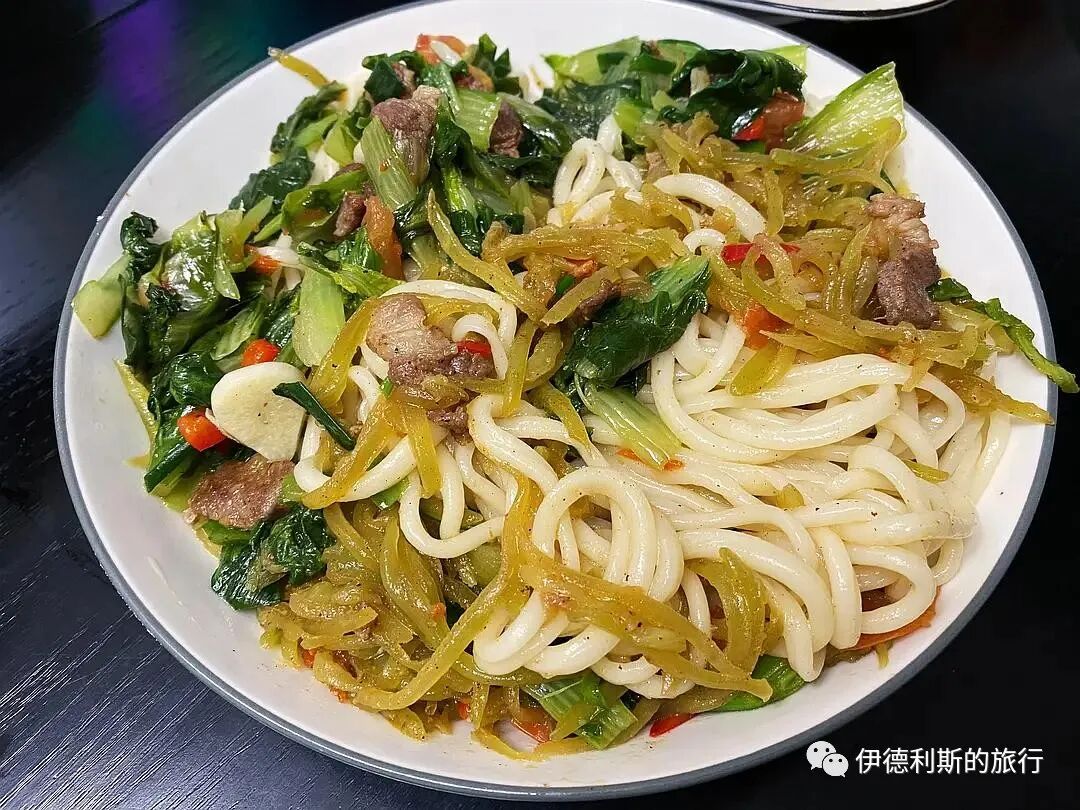
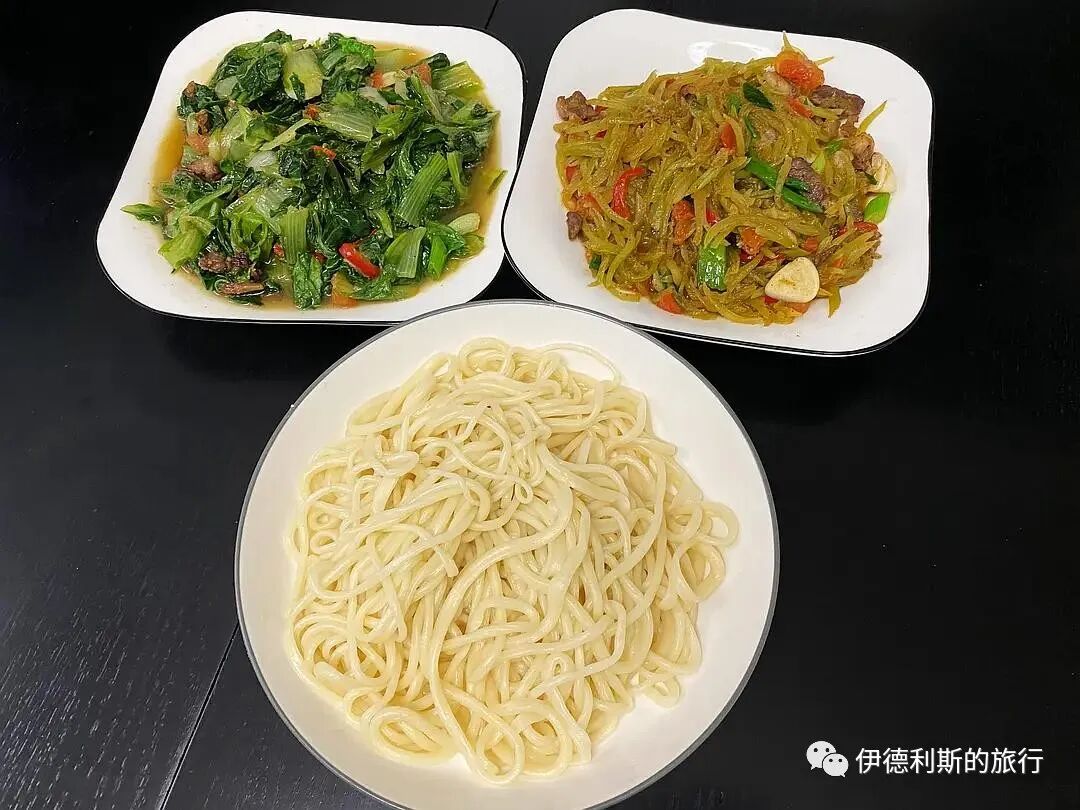
14. Flavored fried starch jelly (fengwei zha menzi)
Flavored fried starch jelly is a banquet dish for Xinjiang Hui Muslims; the last time I ate it was at my engagement banquet with Zainab.
The starch jelly (menzi) is made with minced beef. When mixing the filling, you must beat it repeatedly, then shape it into a cylinder, pinch the top to look like a fence, pour egg into the center, and steam it. Once steamed, slice the jelly, coat it in egg wash, and fry it. Take it out, sprinkle with cumin, chili powder, and salt, and a delicious plate of flavored fried starch jelly is ready.
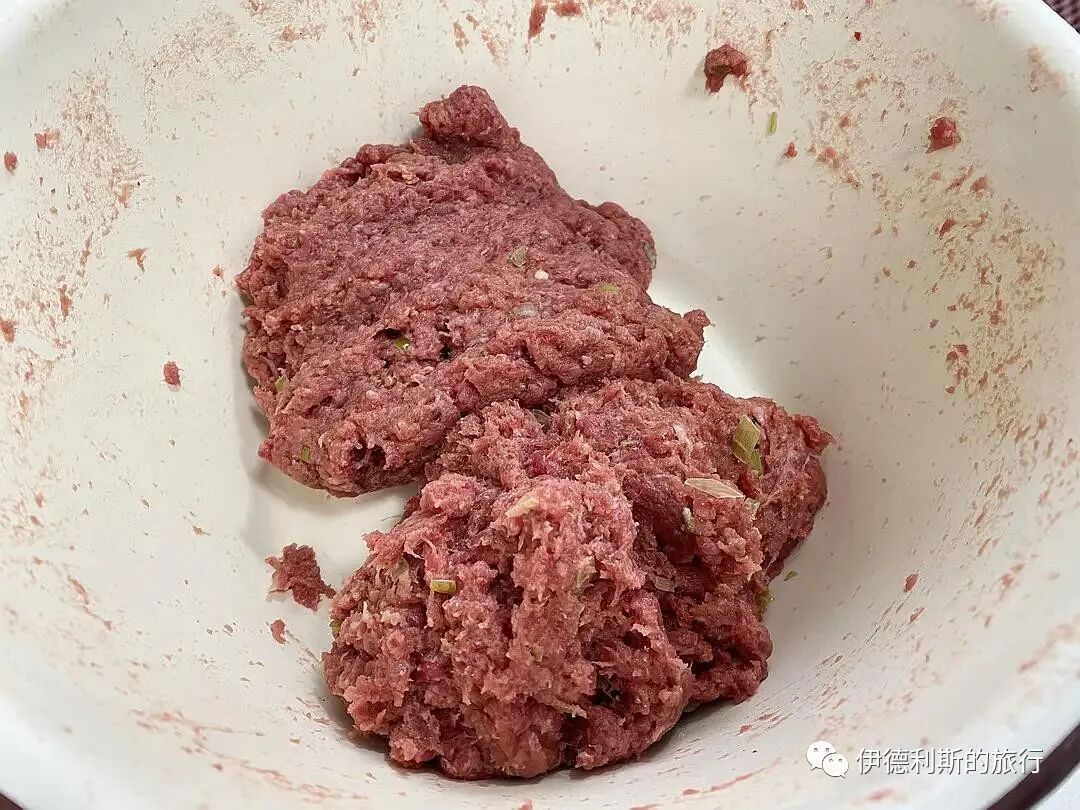
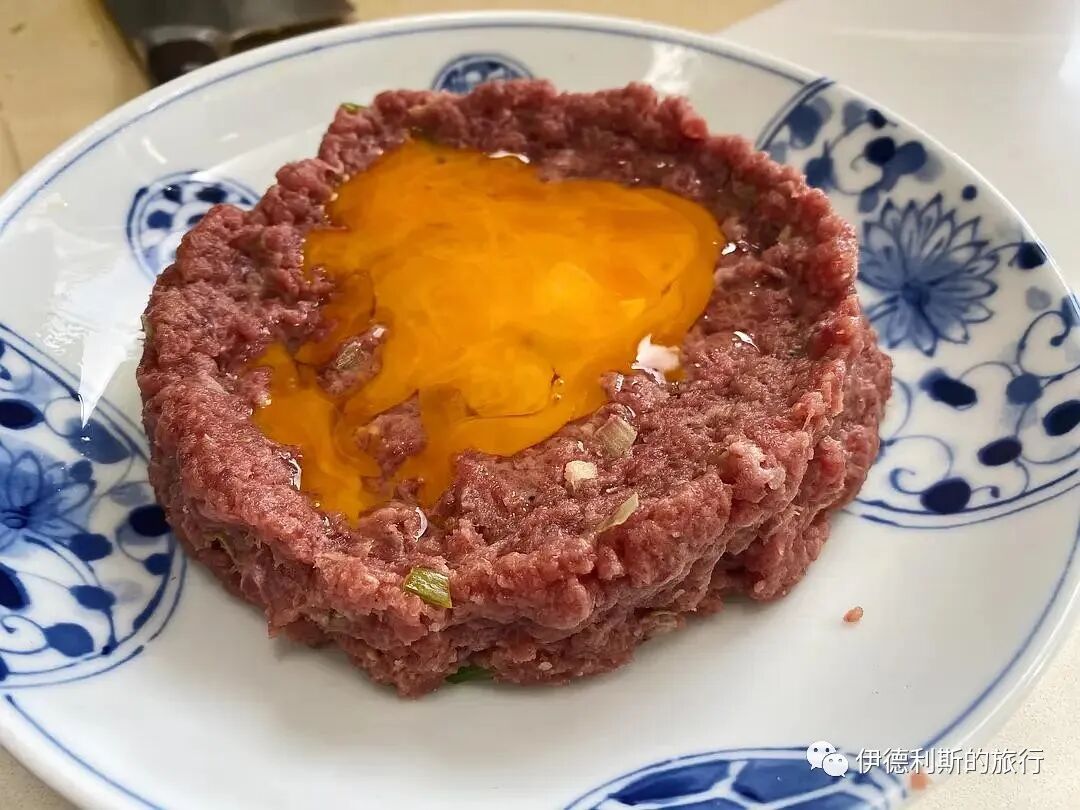
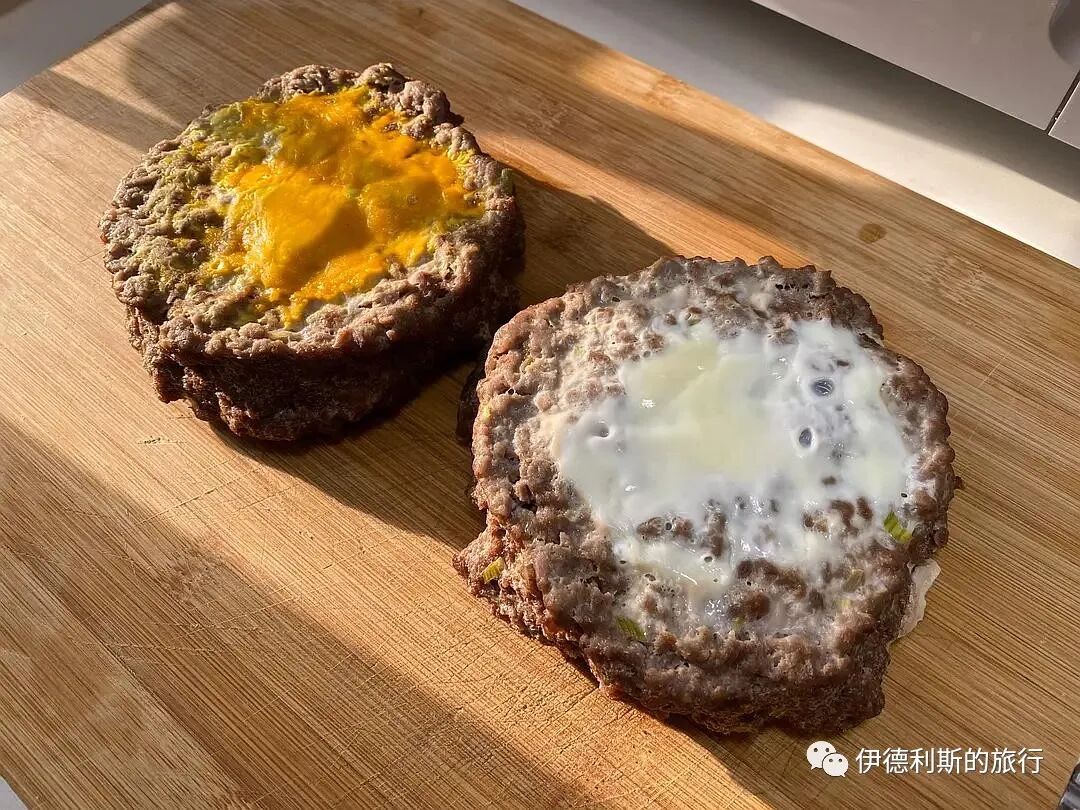
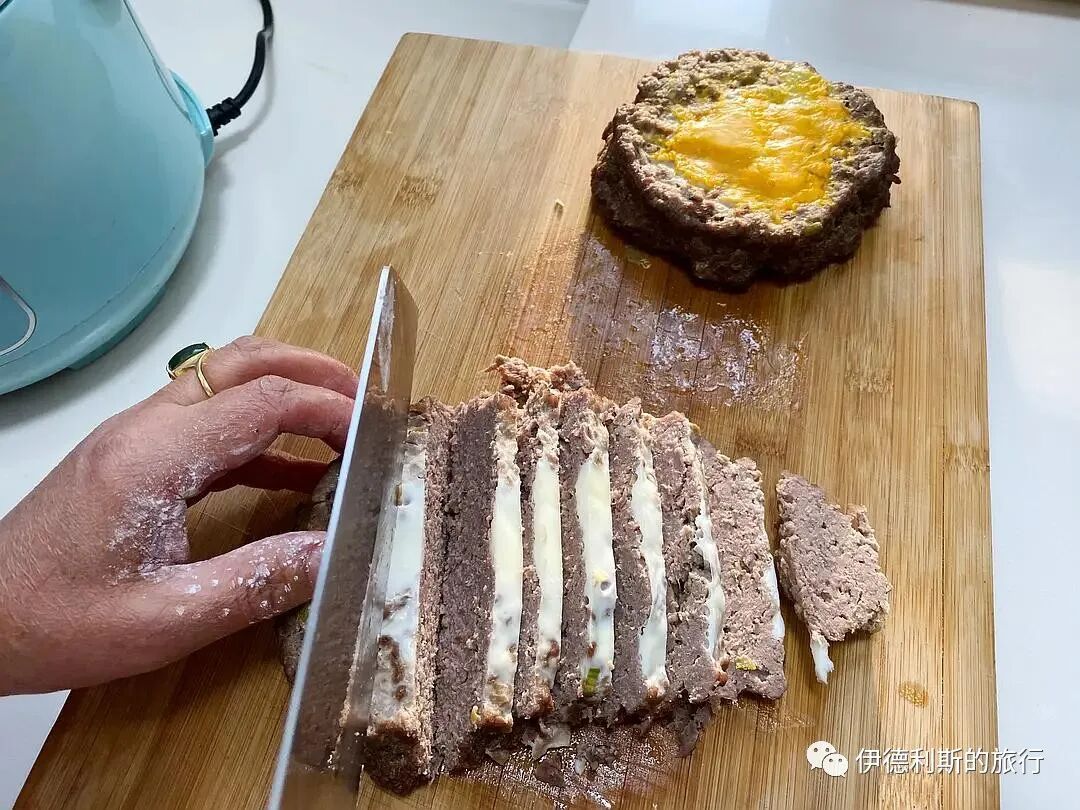
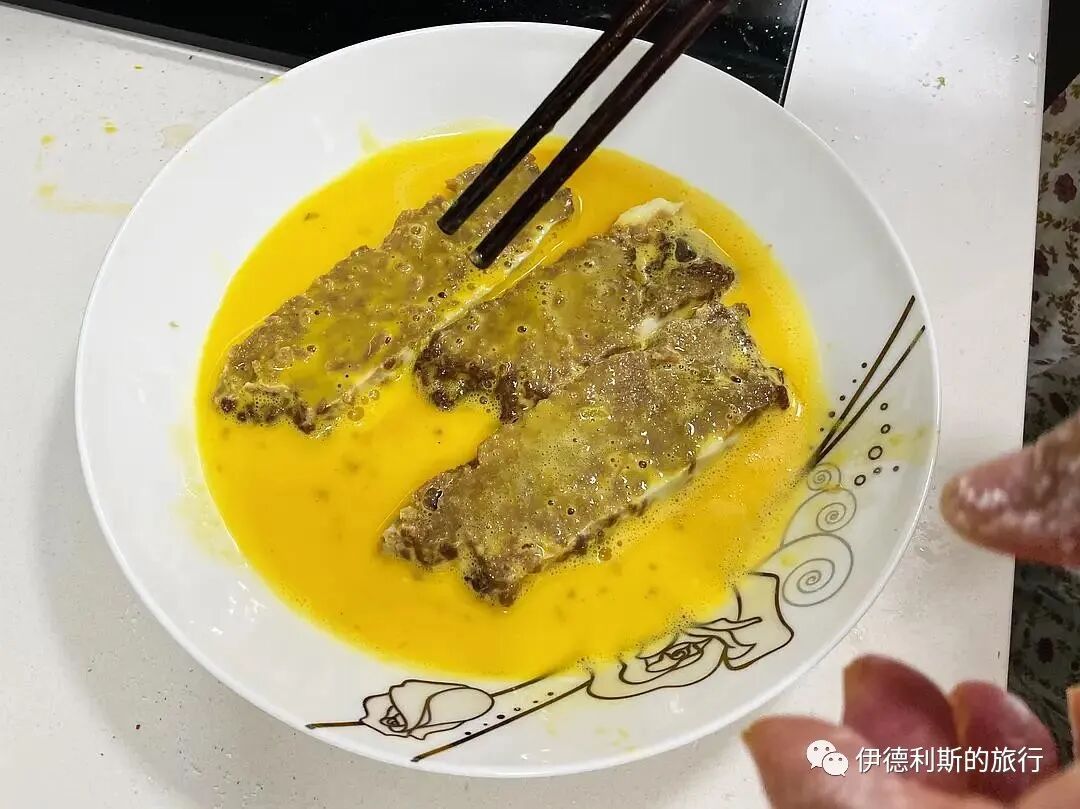
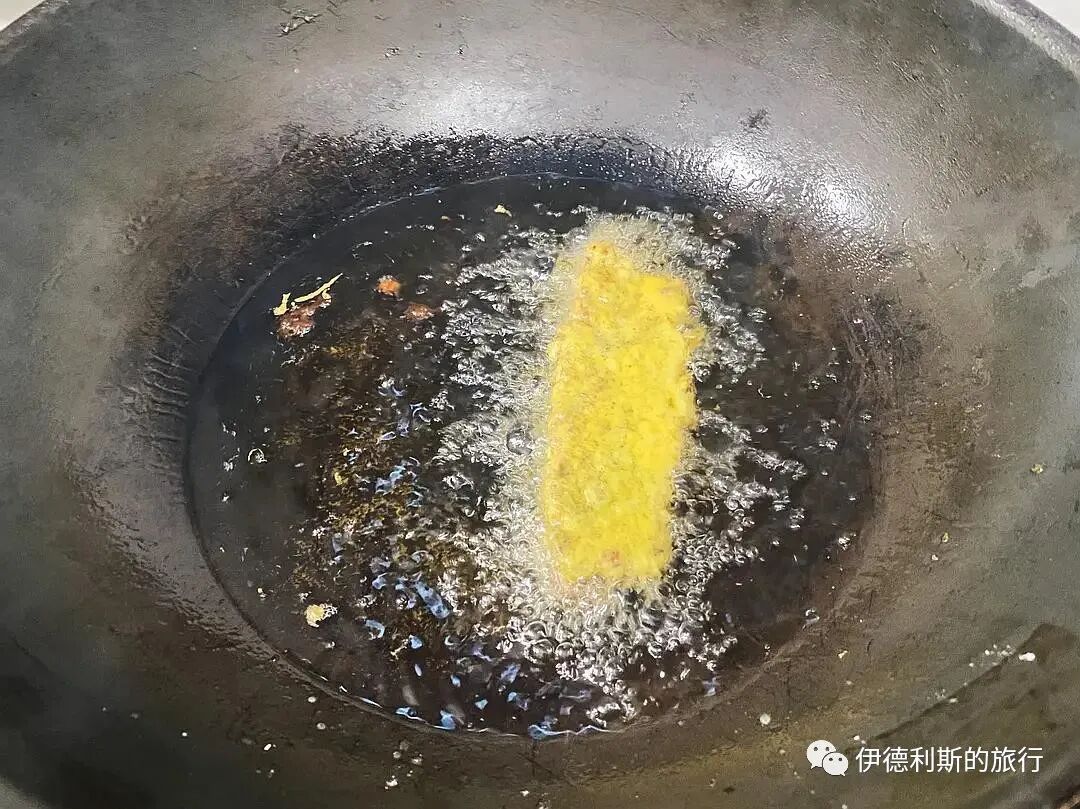
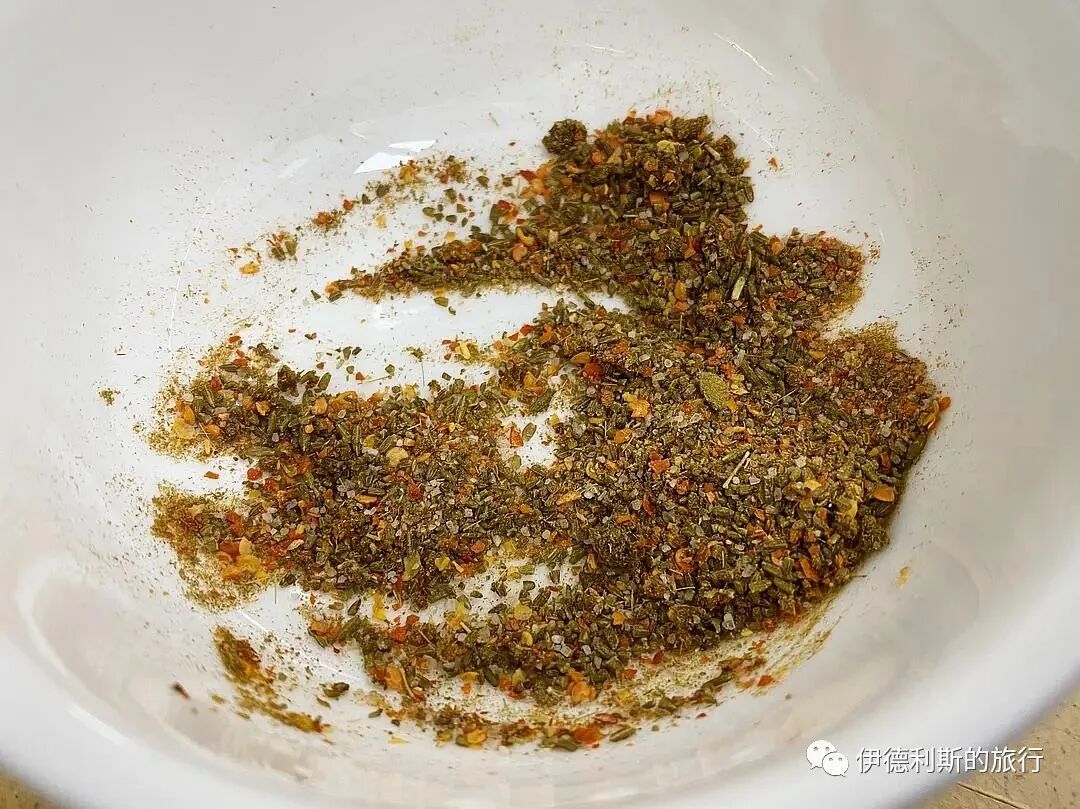
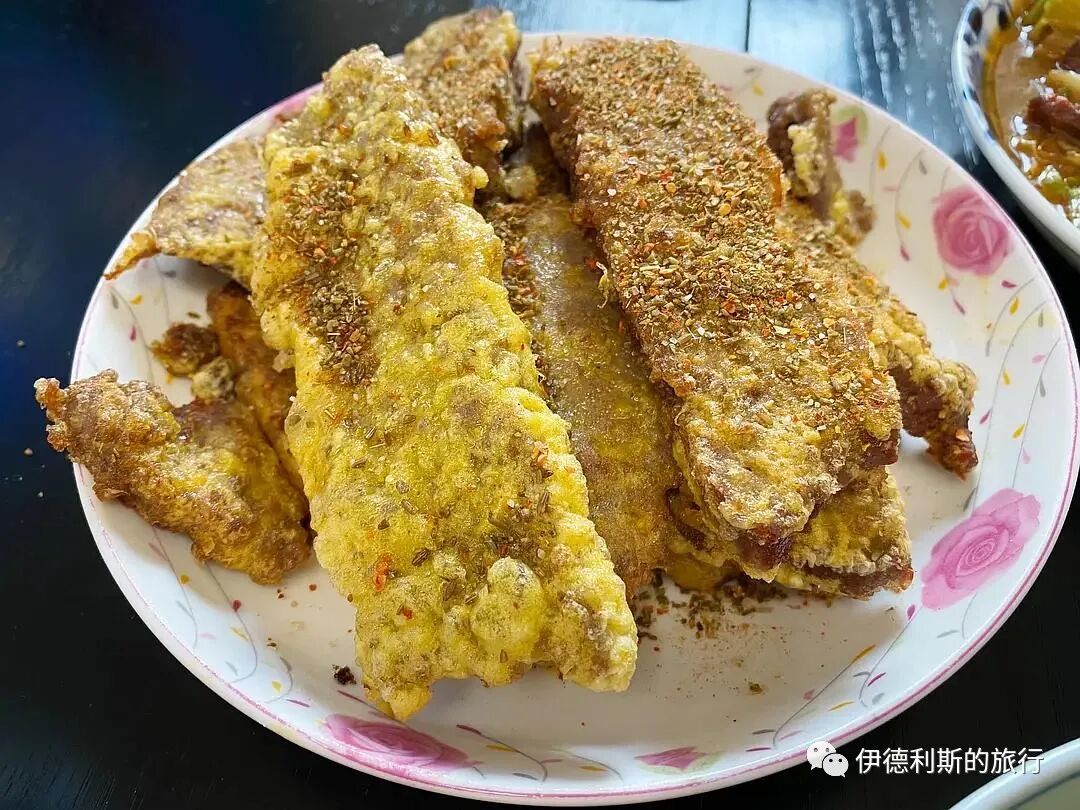
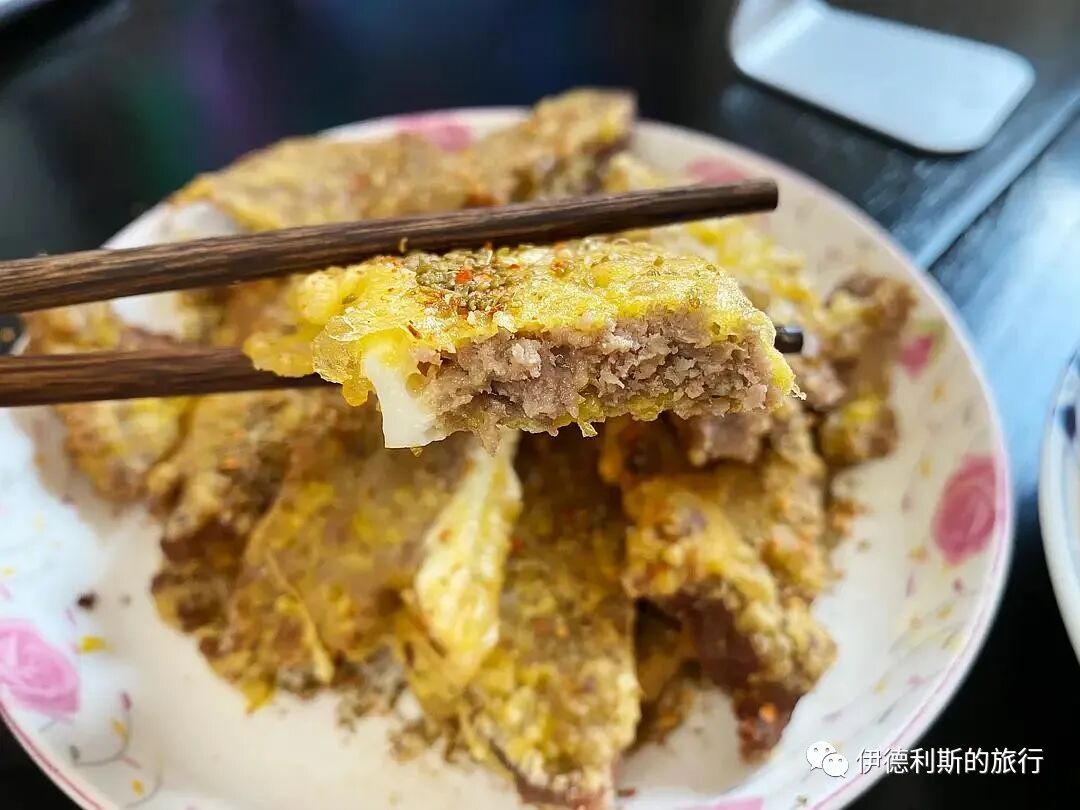
15. Lamb and celery dumplings (jiaozi).
There is a saying that you eat dumplings before a trip and noodles when you return home. My mother-in-law is leaving, so she made us lamb and celery dumplings for her final meal. She added eggs to the dough, which gave it a slightly yellow color.
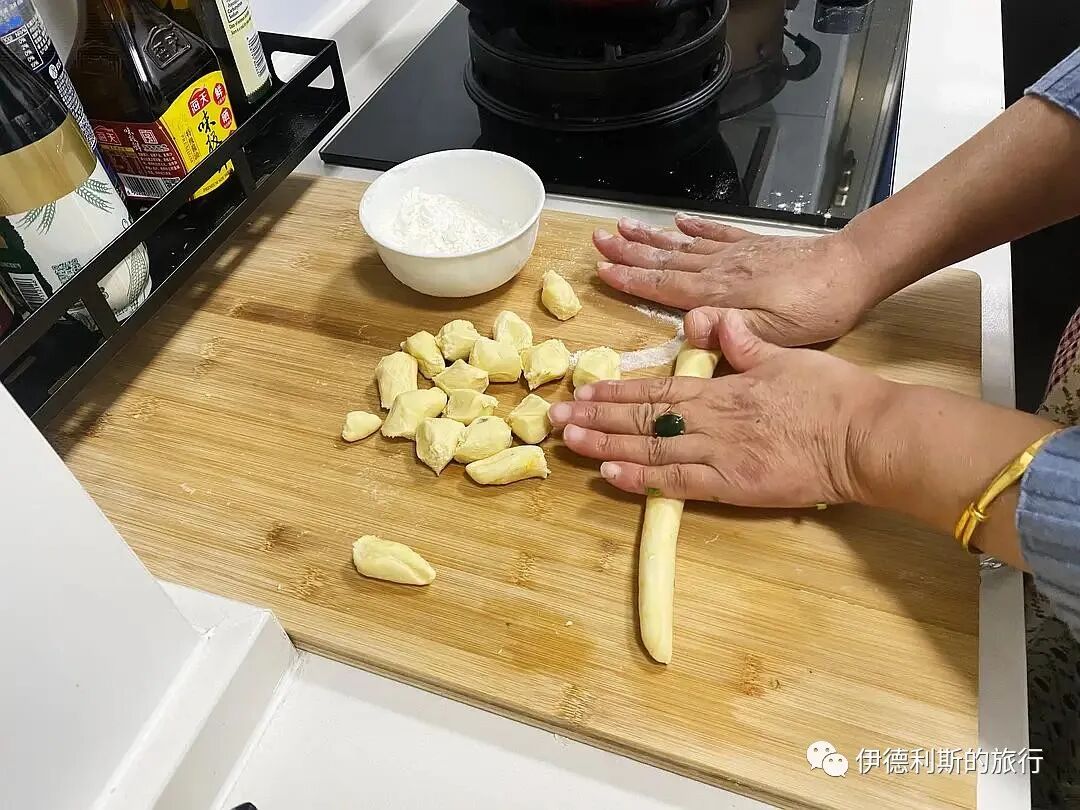
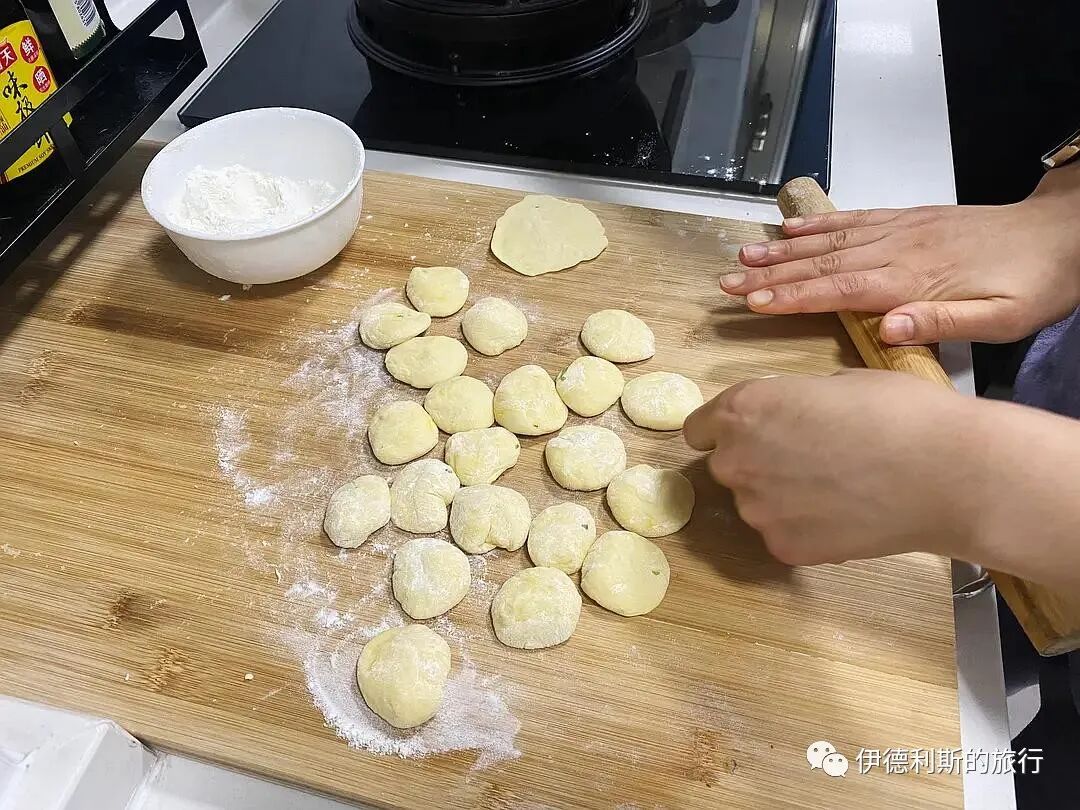
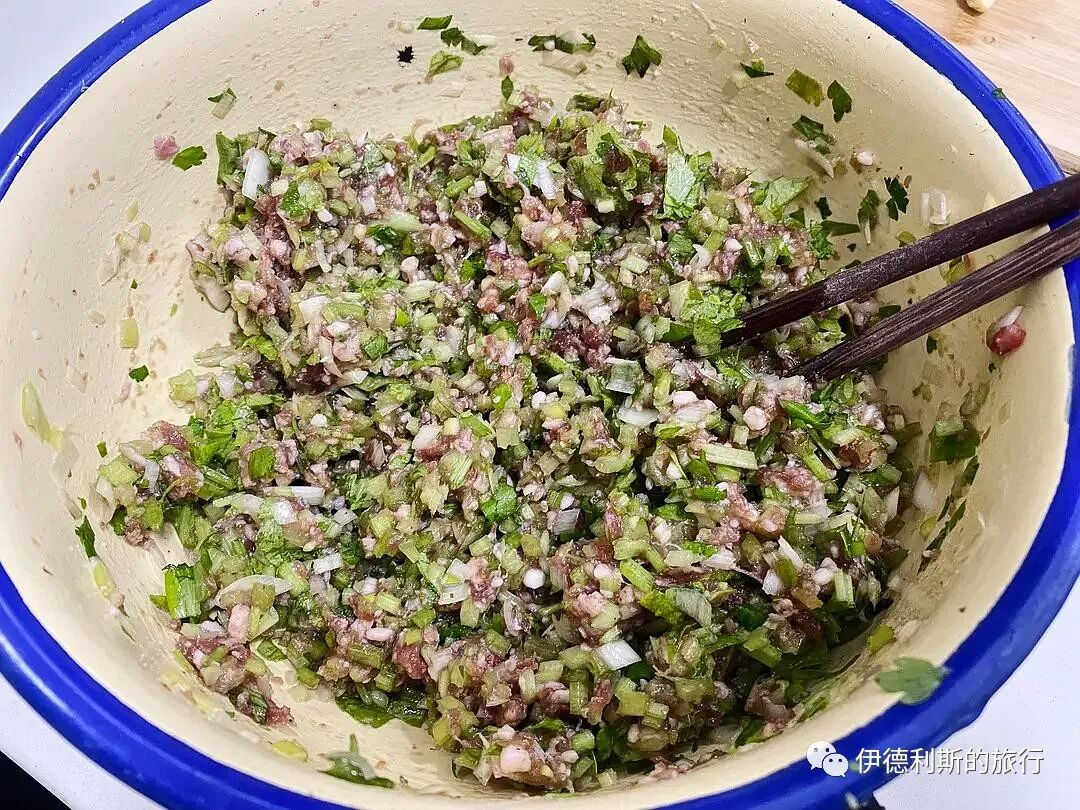
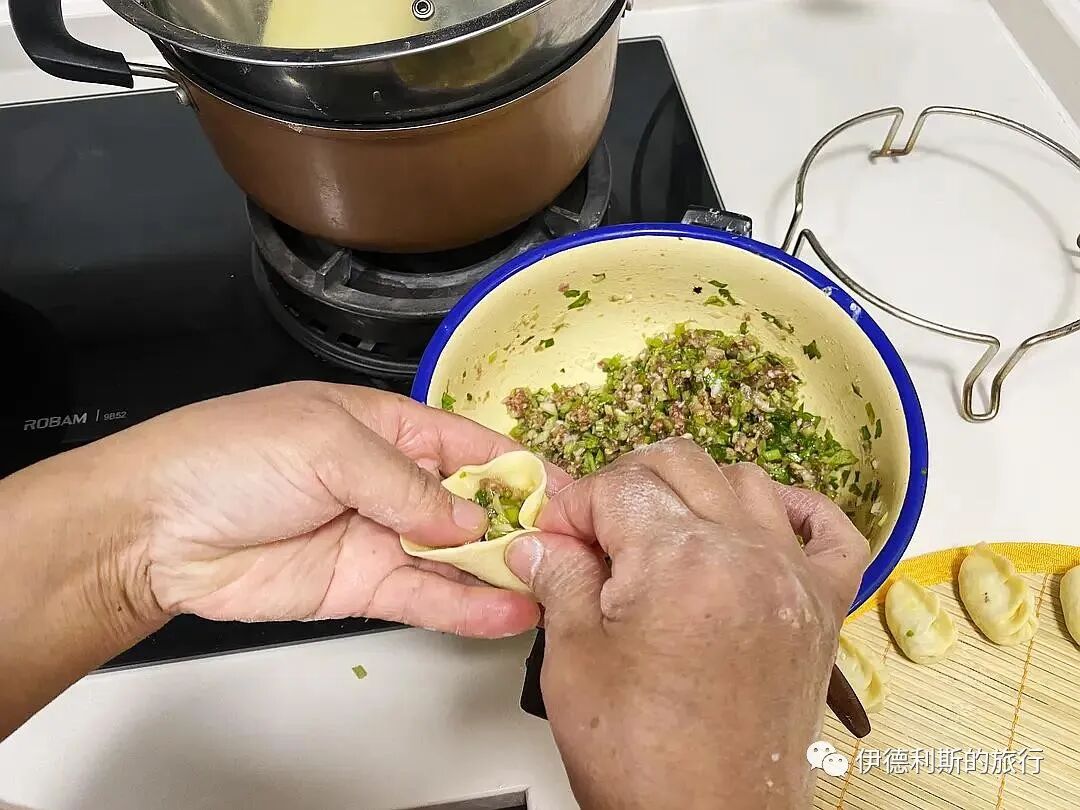
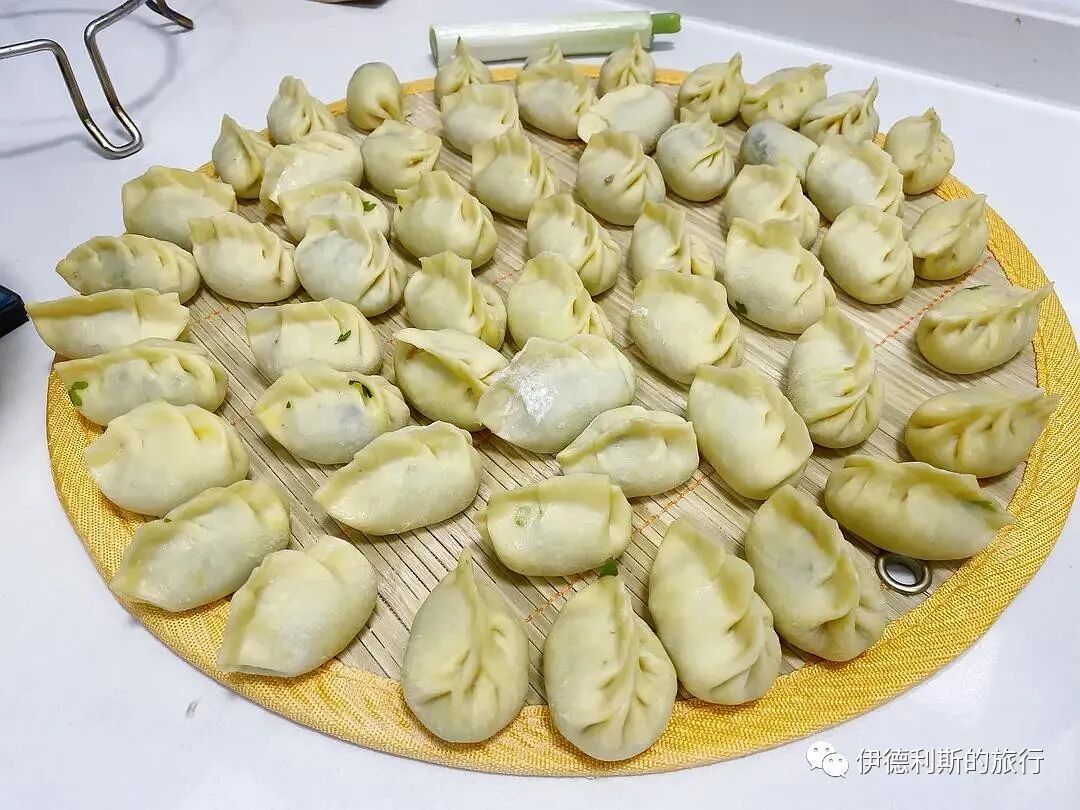
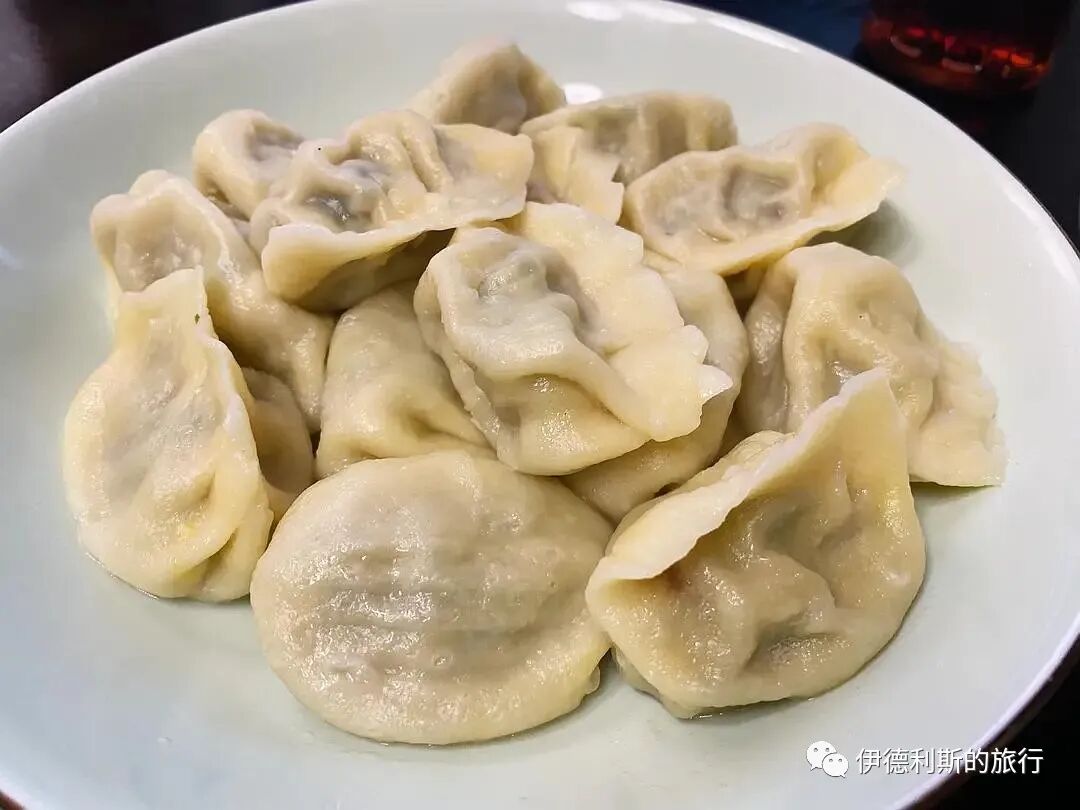
You have to eat them with chili oil (youpo lazi).
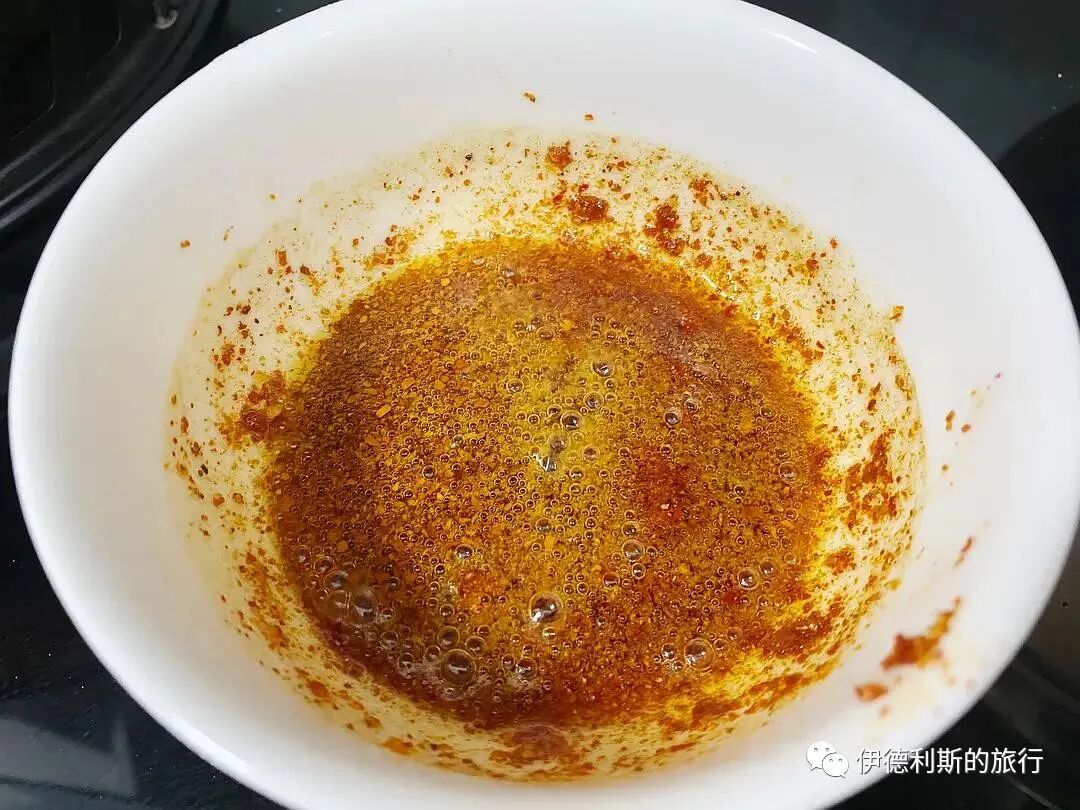
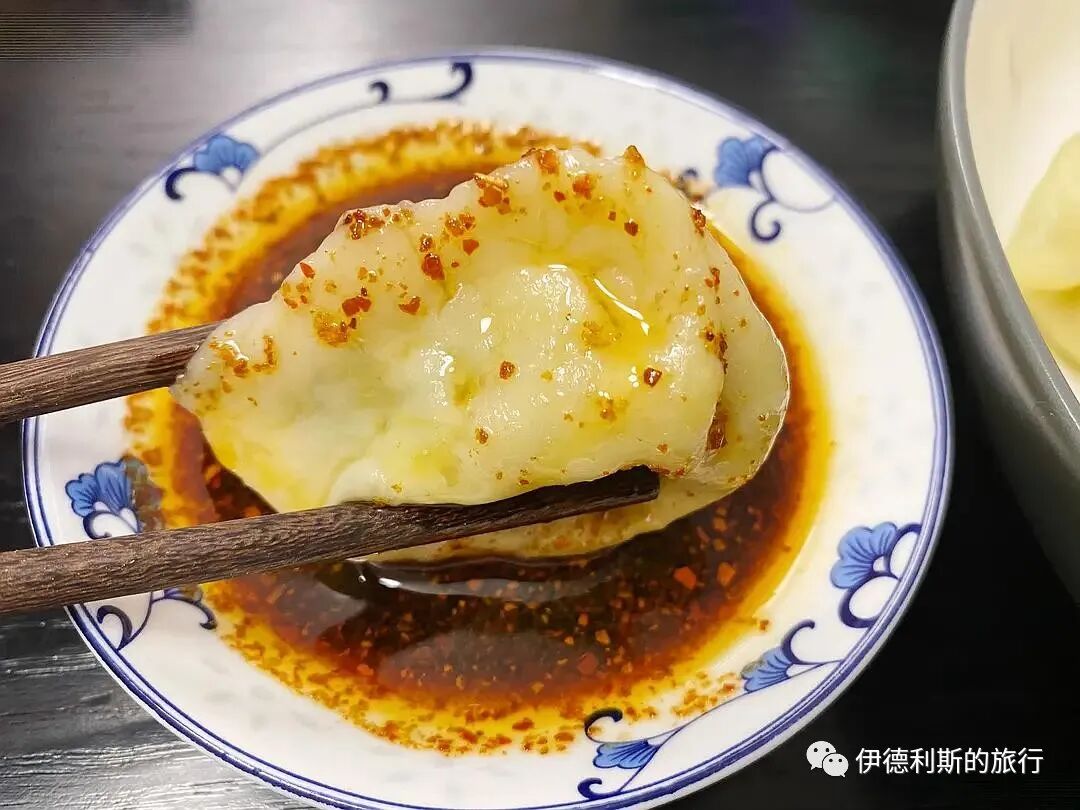
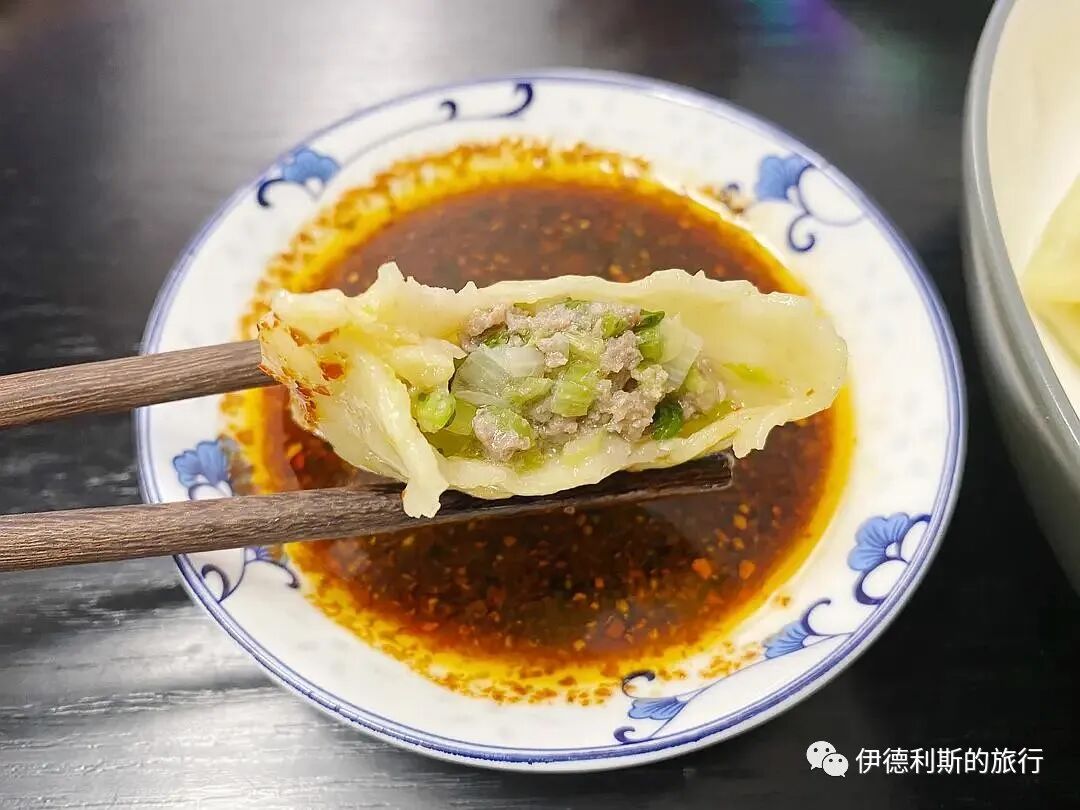
Urumqi Hui Muslim Banquet: Xinjiang Halal Food and Local Muslim Culture
Articles • ali2007fr posted the article • 0 comments • 164 views • 2026-05-17 05:56
Summary: This travel note introduces Urumqi Hui Muslim Banquet: Xinjiang Halal Food and Local Muslim Culture. On January 24, 2020, I attended a welcome banquet at Zainab's home in Urumqi and met her extended family. Next, I will share with everyone what we ate at this banquet. It is useful for readers interested in Urumqi Halal Food, Hui Muslims, Xinjiang Travel.
On January 24, 2020, I attended a welcome banquet at Zainab's home in Urumqi and met her extended family. Next, I will share with everyone what we ate at this banquet.
The food at the banquet was divided into two categories. Before eating the main meal, thirteen small plates were placed on the table containing various dried fruits and snacks, which are called 'thirteen little plates'. After everyone finished chatting, the plates were cleared and replaced with the main courses. Thirteen dishes were served in order, making a total of twenty-six types of food.
Thirteen little plates
The pronunciation here is die-die-zi, which is also a common tone combination in the Xinjiang dialect.
First, the list: dried figs, Medina dates mixed with dried apricots (hen), Tatar pastries, Hui Muslim Ma-style snacks, Kazakh kurt (dried yogurt balls), candied walnuts, pistachios, almonds, cashews, melon seeds, dried apricot (hen) skins mixed with tangningningzi (fried dough twists), raisins, and loose sugar.
On the morning of the banquet, the plates were arranged in a room, which is called 'setting the little plates'.
This is what it looked like after being set.
Candied walnuts made by my mother-in-law; they are sweet.
The dried apricot (hen) skins and tangningningzi were also made by my mother-in-law. Tangningningzi is what Xinjiang Hui Muslims call them; the general term is youguozi (fried dough snacks).
The figs in Xinjiang are truly incredibly delicious, but fresh ones are only available in the summer. Most of the time, we eat dried figs, which really feel like candy inside.
Zainab and I bought Tatar-style cream cakes and walnut pie at the Marhaba Tatar Pastry Shop on Linguan Lane, Heba Third Alley.
The Tatar ethnic group is the smallest ethnic group in China, with only about 3,000 people. Most of the Tatar people in China come from the Kazan Tatars. From the 19th century to the early 20th century, they moved successively from Kazan on the banks of the Volga River to settle in Urumqi, Yining, and Tacheng in Xinjiang. At that time, most of the Tatar people were intellectuals or merchants, and they played an important role in promoting the establishment of modern education in Xinjiang.
Today, many Tatar people in Xinjiang have moved abroad. The places where you can most intuitively experience their culture are the Tatar embroidery shops in Yining and the Tatar pastry shops in Urumqi.
The Tatar pastry shop in Urumqi is located on the site of a former Russian trading port. 100 years ago, this was a place where Russians, Tatars, and various Central Asian merchants traded, somewhat similar to Sanlitun in Beijing. The Tatar pastry shop is also a witness to this history.
Their most classic cake consists of six layers of dough with six layers of cream. The dough is made of milk, eggs, ghee, and honey, without adding water, and it tastes especially fragrant.
Ma-style snacks is one of the most famous traditional Hui Muslim snack shops in Urumqi, and it has been open for over a decade. Zainab's mother also used molds to make them herself when she was a child, but now fewer and fewer Hui Muslims in Urumqi make them themselves.
2. Thirteen dishes
Meat dishes: braised beef ribs, clear-stewed mutton, fish-drilling-net (fried meat jelly), braised meatballs, cold-dressed chicken, steamed fish
Hot dishes: pickled cabbage with meat, daylily with wood ear mushrooms, celery with lily bulbs, garlic sprouts with meat
Cold dishes: sweet platter, lotus root with wood ear mushrooms (lotus pond moonlight), bean curd skin with red chili
The staple foods were fried youxiang (leavened flatbread), momo (steamed buns), and rice.
The presentation looked like this:
1. Braised beef ribs
First, blanch the beef ribs. After they turn white, take them out. Heat oil, add the meat, ginger, a little cinnamon, star anise, and bean paste. Stir-fry for a while, then add fresh chili peppers. After the meat dries out, put it in a pressure cooker and stew for 25 minutes.
2. Clear-stewed mutton
First, skim off the blood foam, then stew. When serving, sprinkle a little raw onion on top.
Braised meatballs
The beef for the meatballs and the meat jelly was bought at a Uyghur shop in the market across from our residential compound.
The night before the banquet, we fried the meatballs, and on the morning of the banquet, we braised them.
This is what it looked like after being braised the next day.
Fish-drilling-net (fried meat jelly)
'Fish-drilling-net' is just fried meat jelly. When buying the meat, have the Uyghur uncle grind it into mince (xuanzi). The mince for the meat jelly needs to be finer than that for the meatballs; it must go through the meat grinder twice. The night before the banquet, steam the mince into meat jelly, then slice it. On the morning of the banquet, coat the slices in egg and starch and fry them in a pan. Finally, sprinkle with cumin, chili, and salt.
Cold-dressed chicken
The cold-dressed chicken was stewed the day before and placed on the windowsill, then dressed on the morning of the banquet. Cold-dressed chicken is actually chicken without the numbing pepper flavor of jiaoma chicken.
The chicken feet and gizzards were picked out and eaten beforehand.
The next morning, cut the chicken, add green onions, onions, and chili, then pour chicken broth over it to finish.
Pickled cabbage with meat
The pickled cabbage was made at home.
Sweet platter
The sweet platter was made the night before and wrapped up, then sprinkled with sugar syrup the next morning.
The next morning, boil the sugar syrup and pour it over.
Fried youxiang
To fry youxiang, first knead the dough.
Zainab and I went out shopping while they were being fried, and they were already done when we returned. Youxiang must be eaten by breaking it apart; you cannot eat it whole. After the banquet, if there is any left over, it can be soaked in various soups, rice noodles, or noodle soups. view all
Summary: This travel note introduces Urumqi Hui Muslim Banquet: Xinjiang Halal Food and Local Muslim Culture. On January 24, 2020, I attended a welcome banquet at Zainab's home in Urumqi and met her extended family. Next, I will share with everyone what we ate at this banquet. It is useful for readers interested in Urumqi Halal Food, Hui Muslims, Xinjiang Travel.
On January 24, 2020, I attended a welcome banquet at Zainab's home in Urumqi and met her extended family. Next, I will share with everyone what we ate at this banquet.
The food at the banquet was divided into two categories. Before eating the main meal, thirteen small plates were placed on the table containing various dried fruits and snacks, which are called 'thirteen little plates'. After everyone finished chatting, the plates were cleared and replaced with the main courses. Thirteen dishes were served in order, making a total of twenty-six types of food.
Thirteen little plates
The pronunciation here is die-die-zi, which is also a common tone combination in the Xinjiang dialect.
First, the list: dried figs, Medina dates mixed with dried apricots (hen), Tatar pastries, Hui Muslim Ma-style snacks, Kazakh kurt (dried yogurt balls), candied walnuts, pistachios, almonds, cashews, melon seeds, dried apricot (hen) skins mixed with tangningningzi (fried dough twists), raisins, and loose sugar.
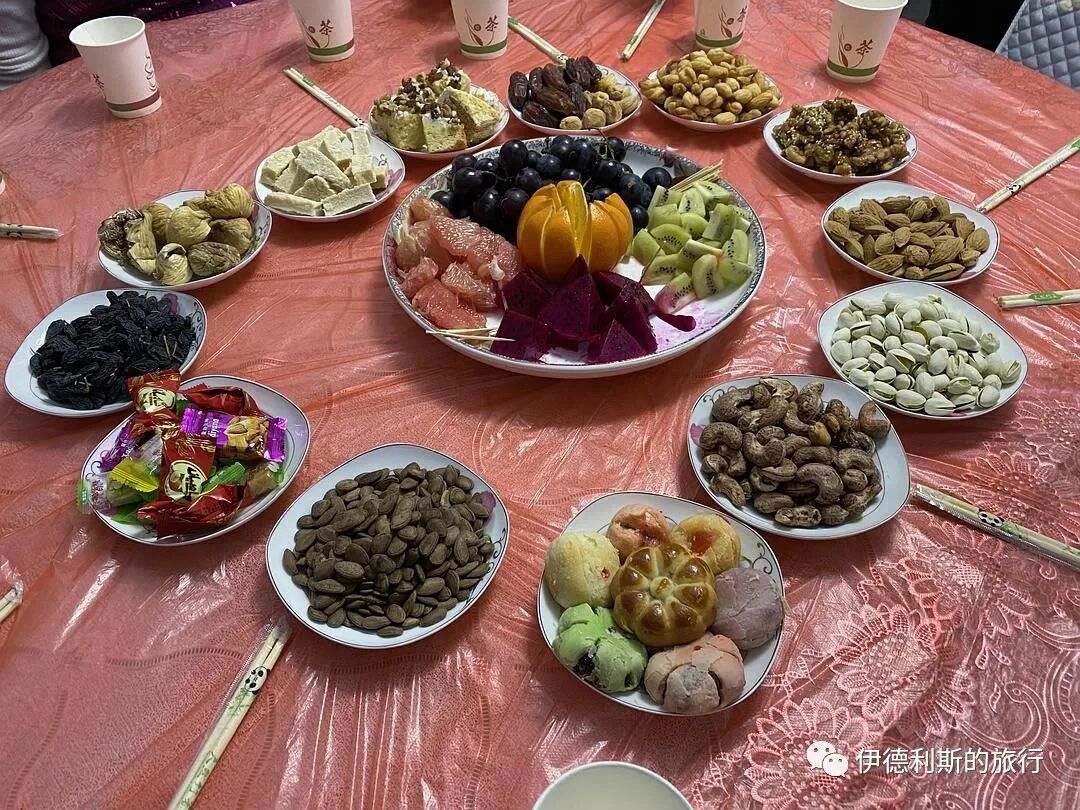
On the morning of the banquet, the plates were arranged in a room, which is called 'setting the little plates'.
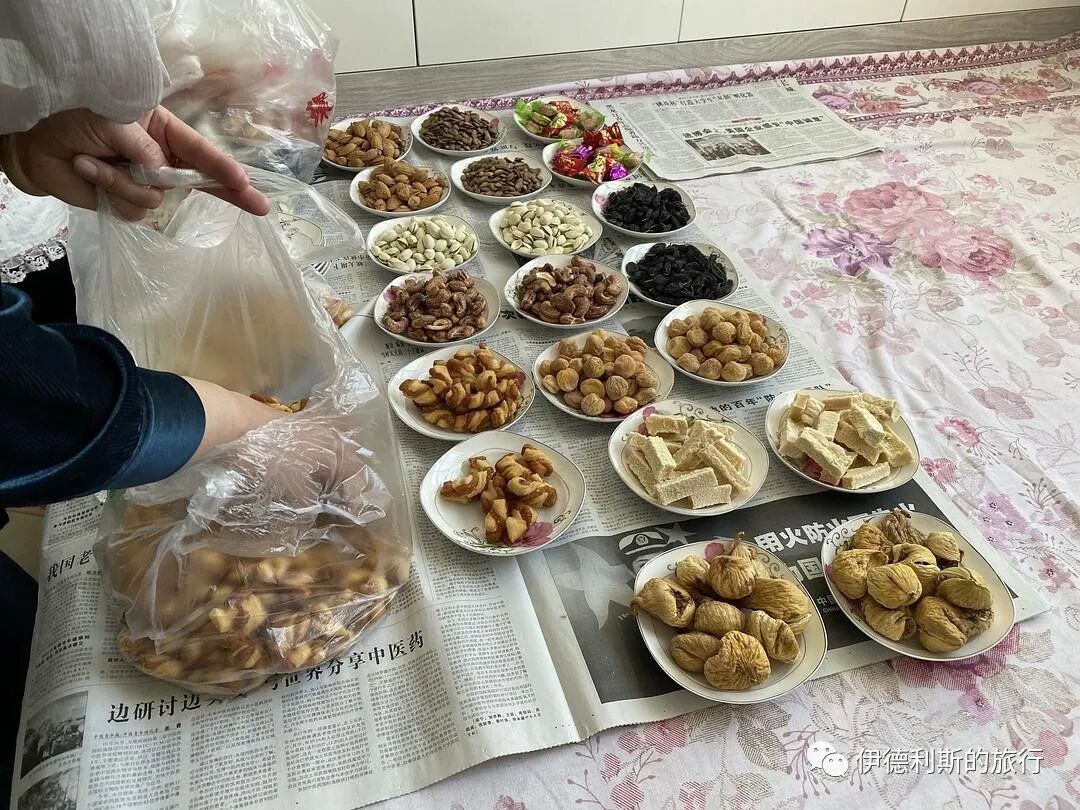
This is what it looked like after being set.
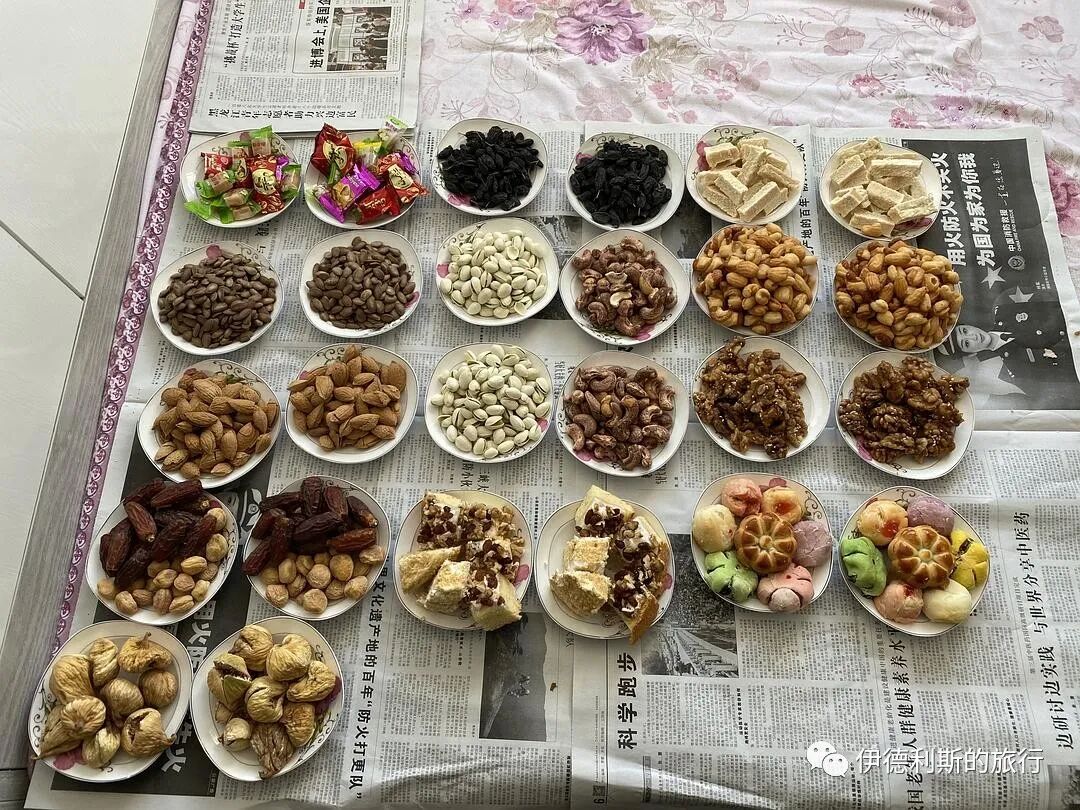
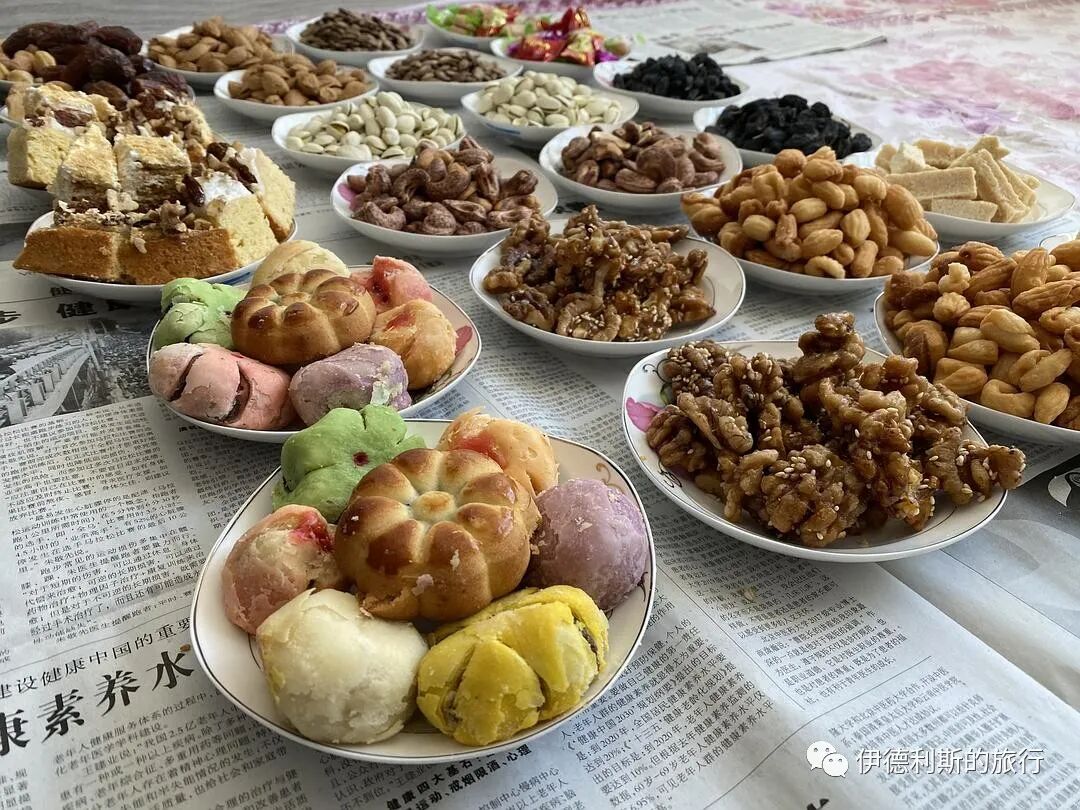
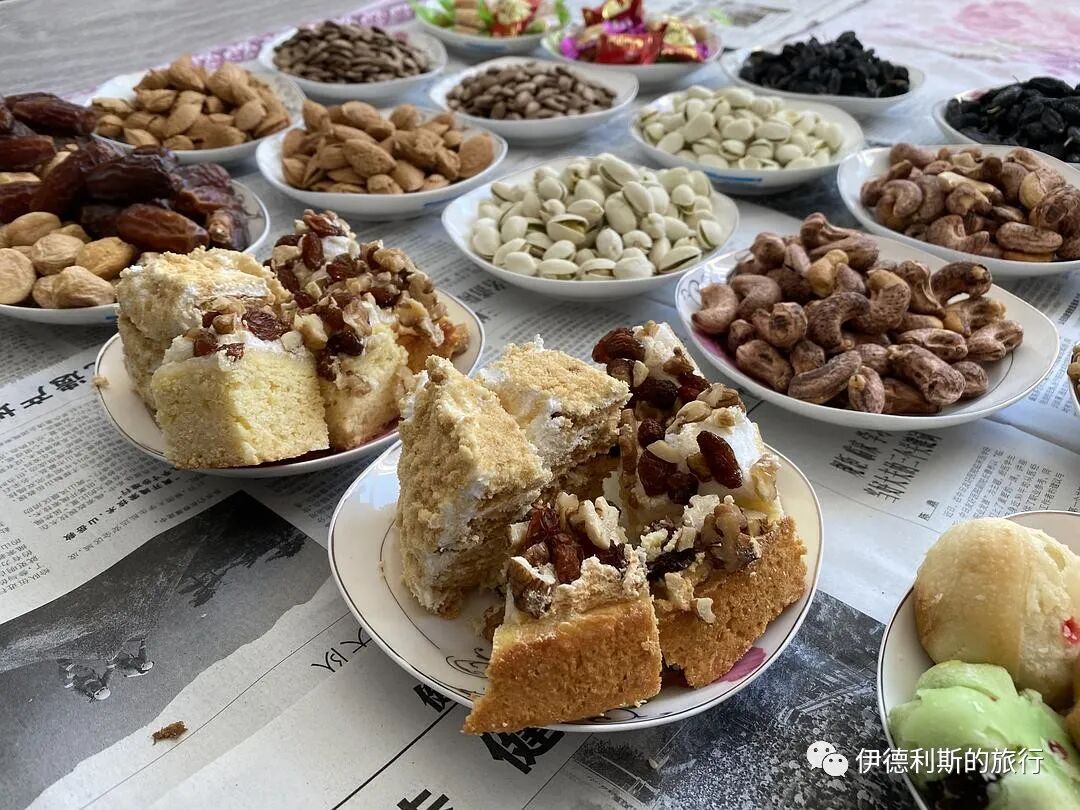
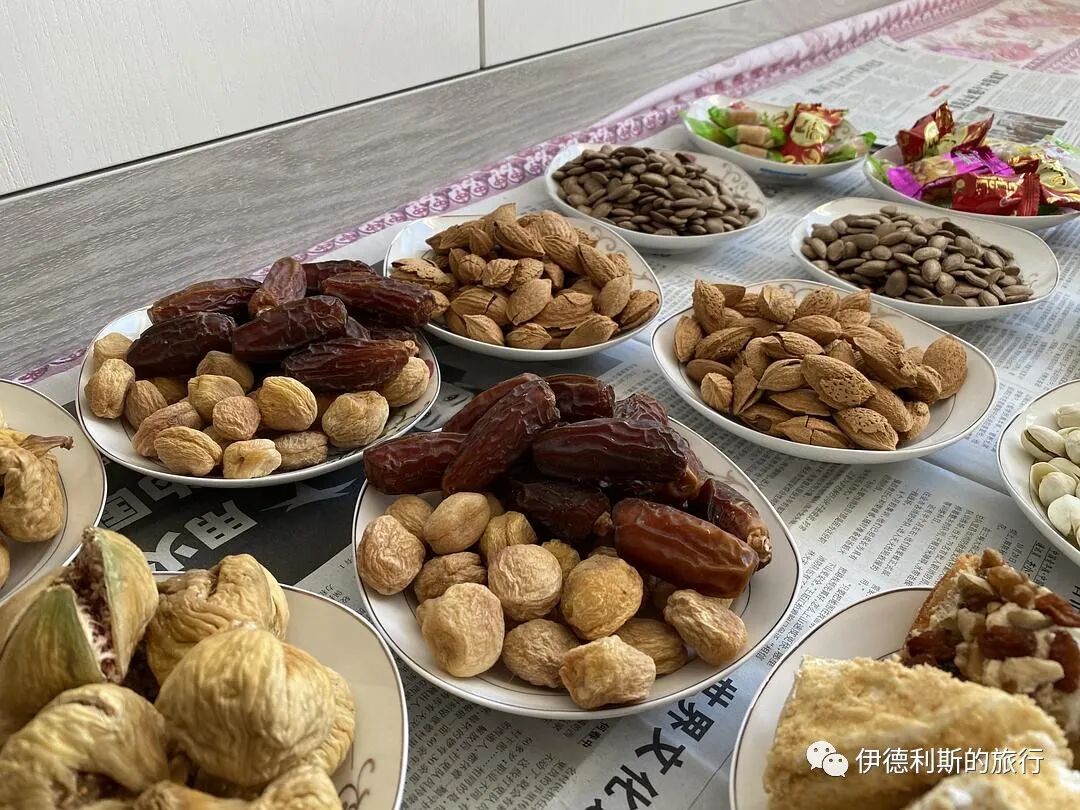
Candied walnuts made by my mother-in-law; they are sweet.
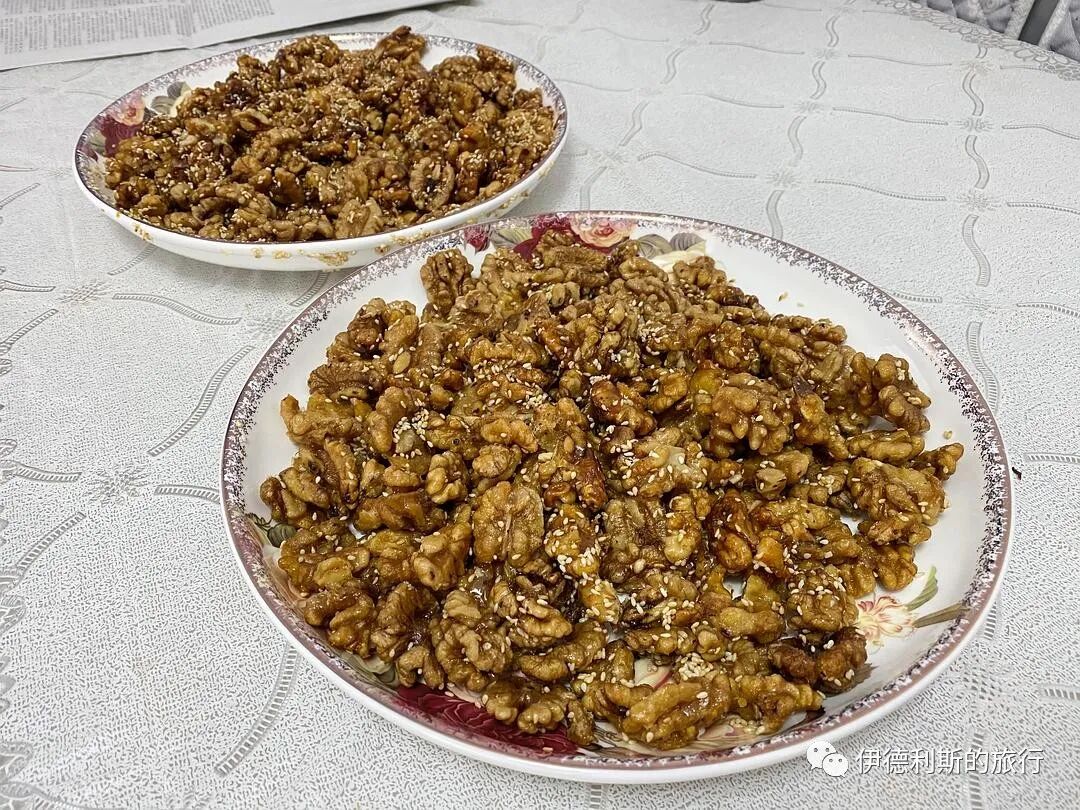
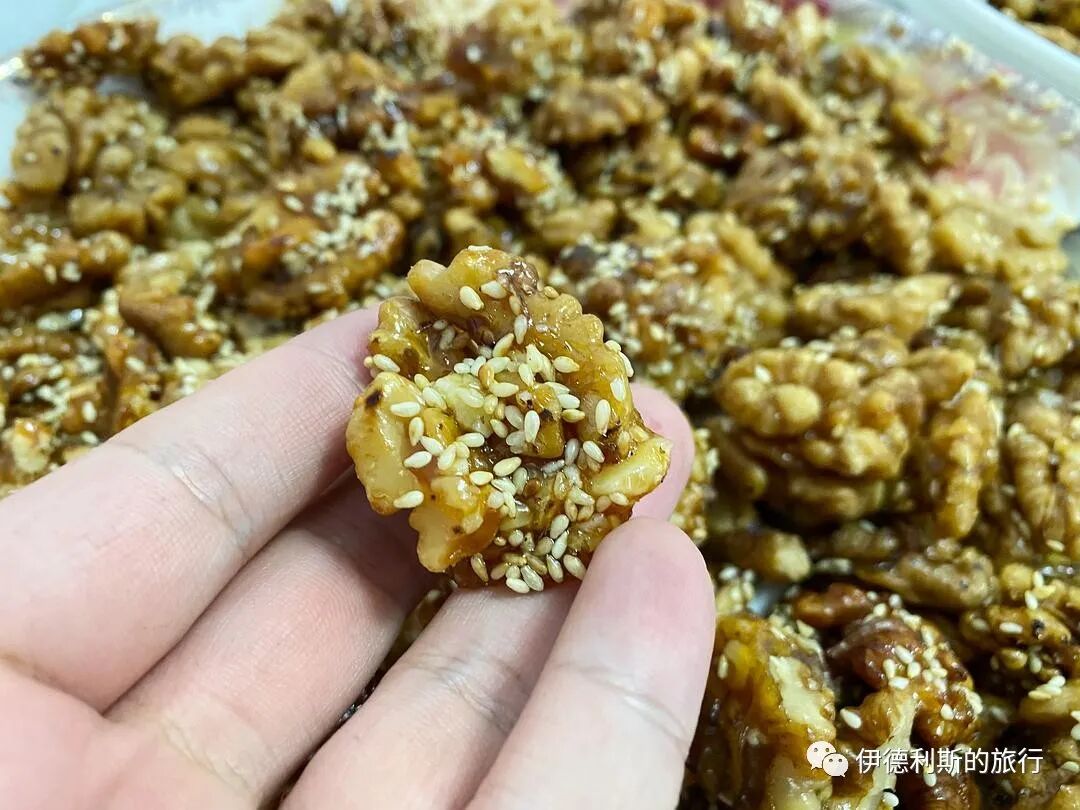
The dried apricot (hen) skins and tangningningzi were also made by my mother-in-law. Tangningningzi is what Xinjiang Hui Muslims call them; the general term is youguozi (fried dough snacks).
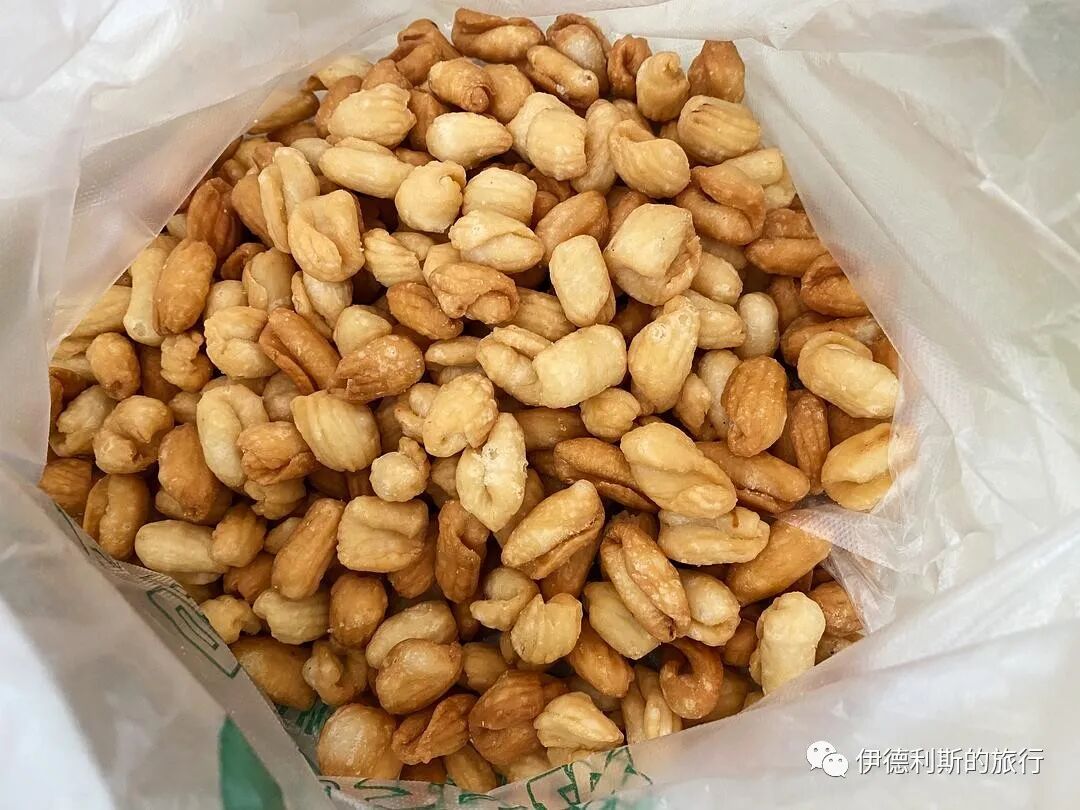
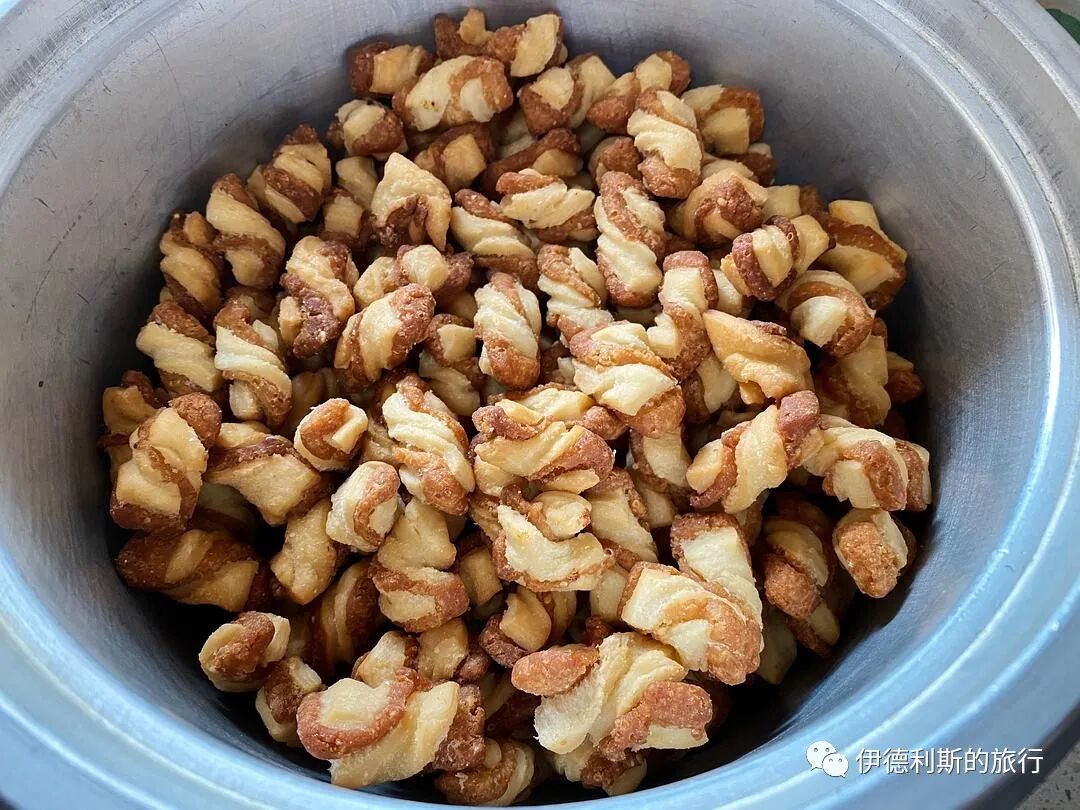
The figs in Xinjiang are truly incredibly delicious, but fresh ones are only available in the summer. Most of the time, we eat dried figs, which really feel like candy inside.
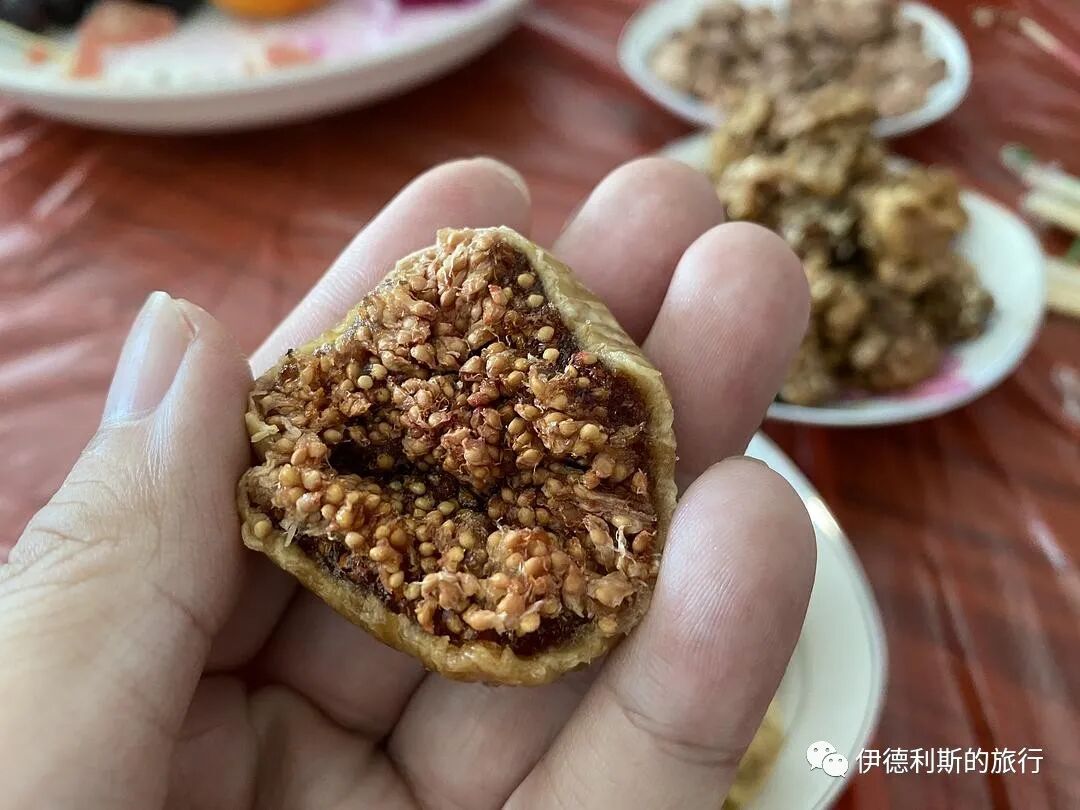
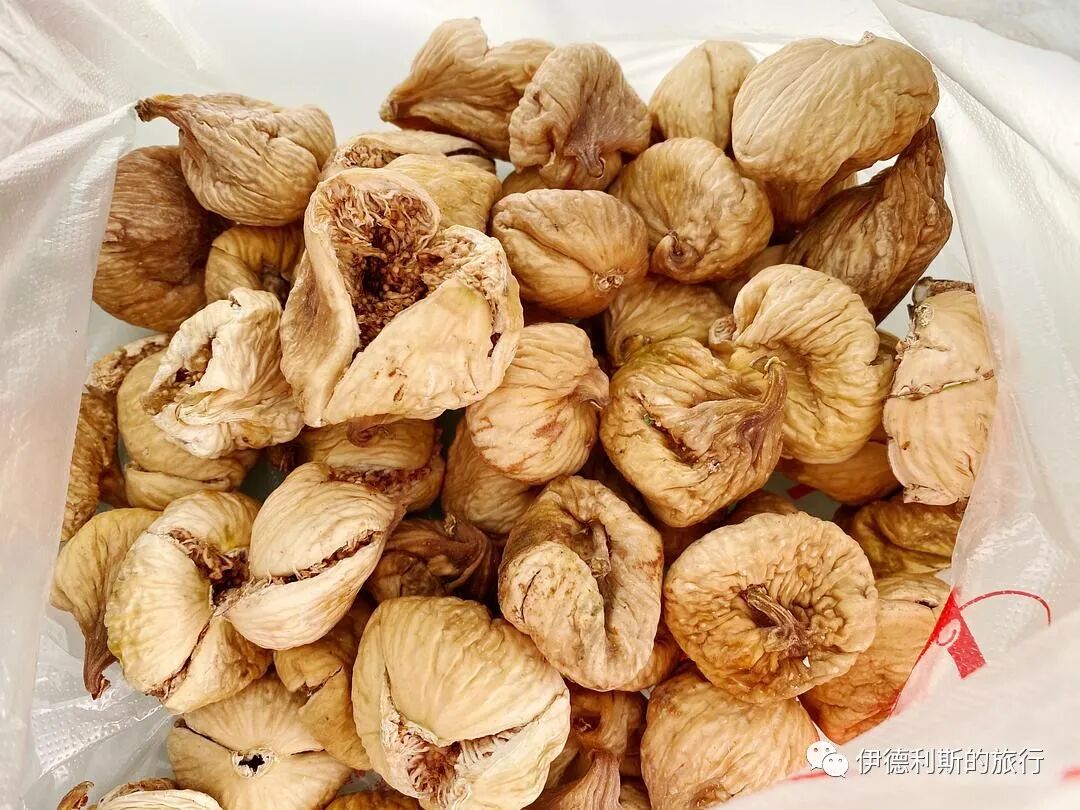
Zainab and I bought Tatar-style cream cakes and walnut pie at the Marhaba Tatar Pastry Shop on Linguan Lane, Heba Third Alley.
The Tatar ethnic group is the smallest ethnic group in China, with only about 3,000 people. Most of the Tatar people in China come from the Kazan Tatars. From the 19th century to the early 20th century, they moved successively from Kazan on the banks of the Volga River to settle in Urumqi, Yining, and Tacheng in Xinjiang. At that time, most of the Tatar people were intellectuals or merchants, and they played an important role in promoting the establishment of modern education in Xinjiang.
Today, many Tatar people in Xinjiang have moved abroad. The places where you can most intuitively experience their culture are the Tatar embroidery shops in Yining and the Tatar pastry shops in Urumqi.
The Tatar pastry shop in Urumqi is located on the site of a former Russian trading port. 100 years ago, this was a place where Russians, Tatars, and various Central Asian merchants traded, somewhat similar to Sanlitun in Beijing. The Tatar pastry shop is also a witness to this history.
Their most classic cake consists of six layers of dough with six layers of cream. The dough is made of milk, eggs, ghee, and honey, without adding water, and it tastes especially fragrant.
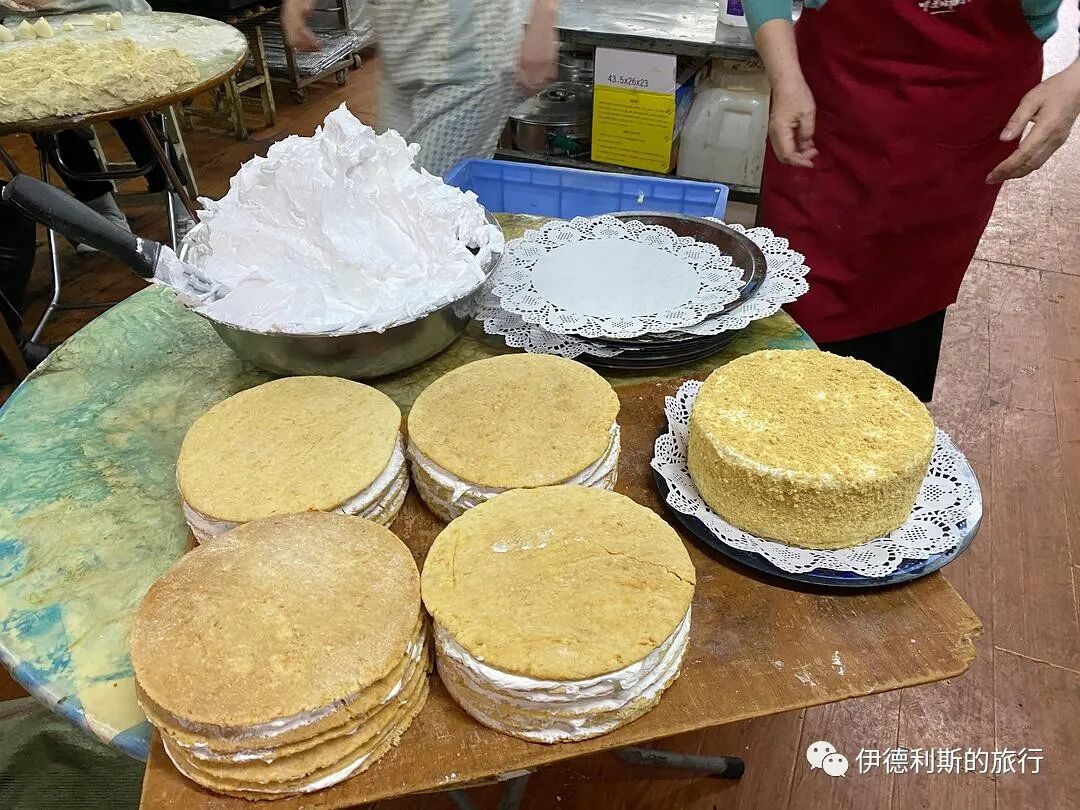
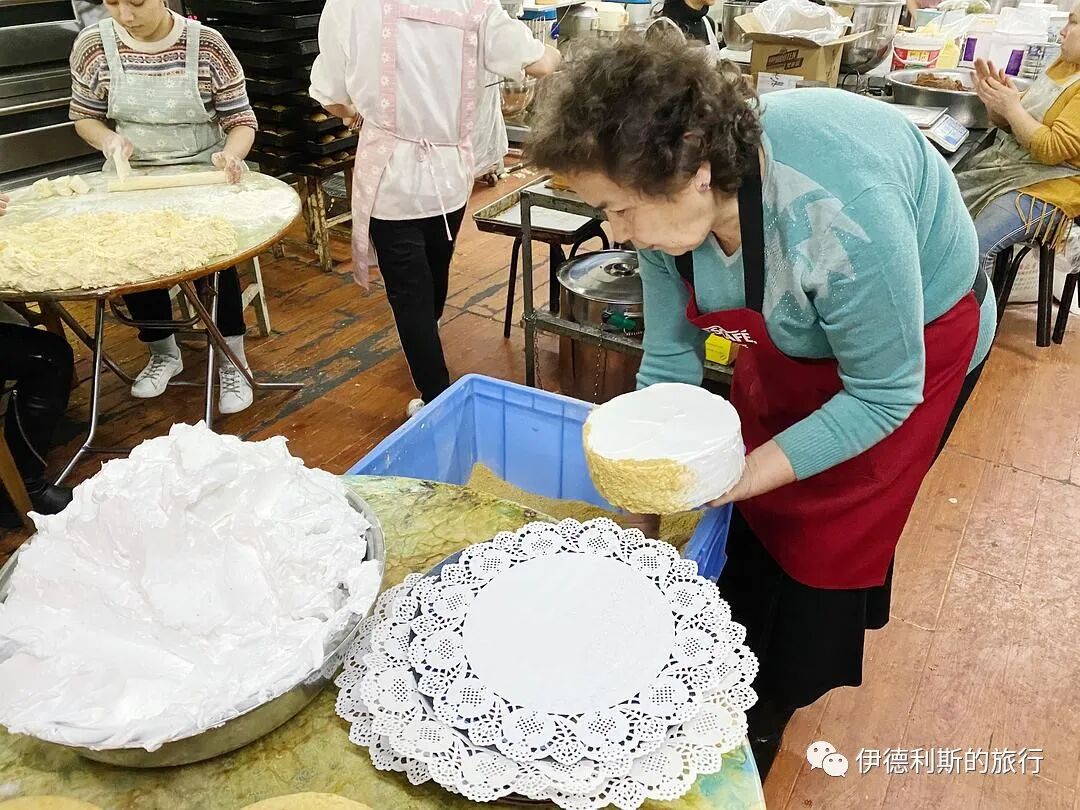
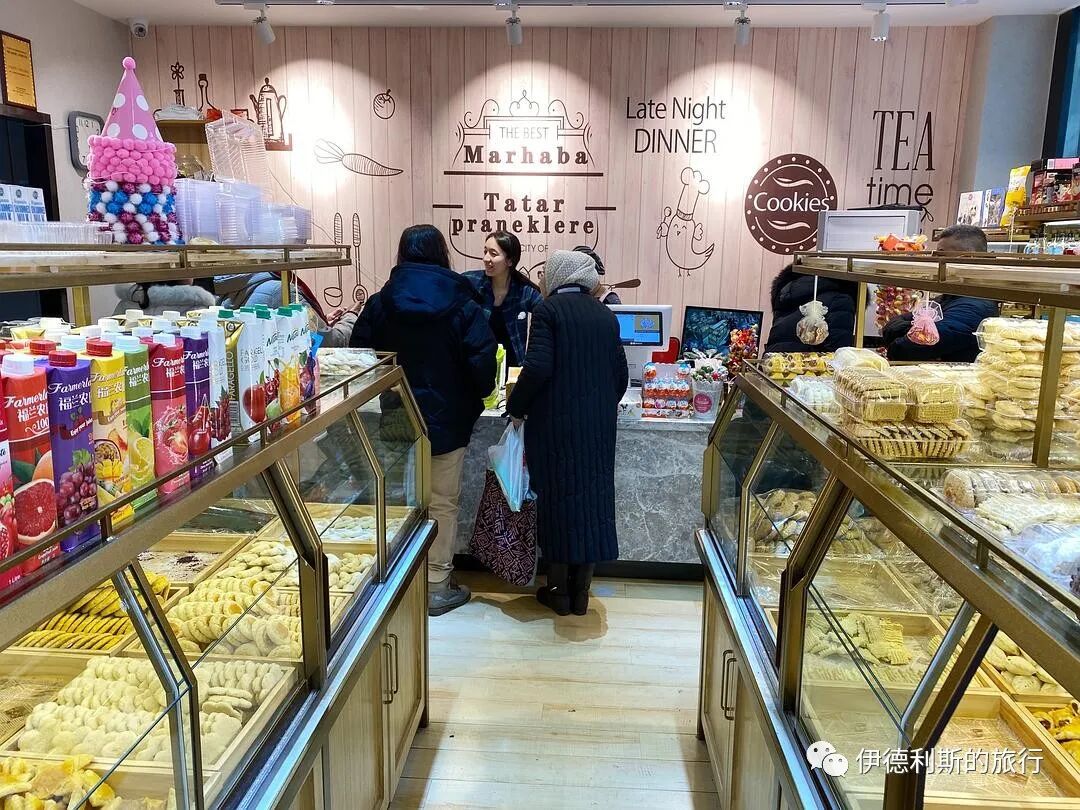
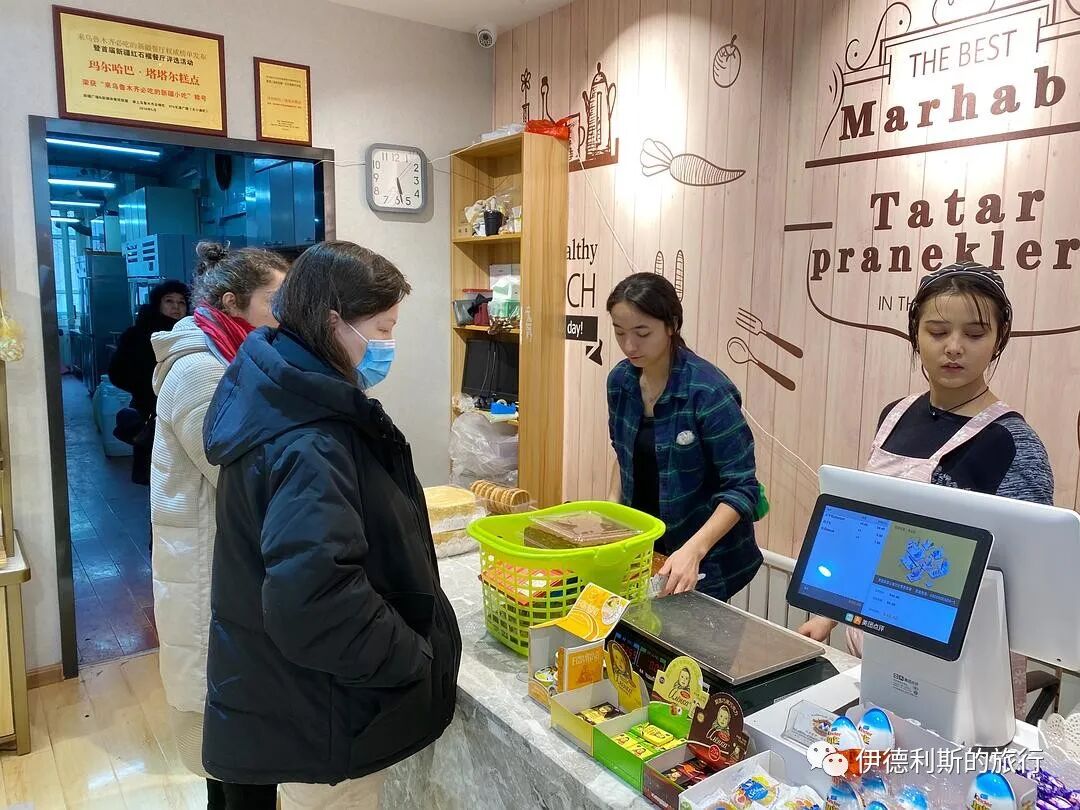
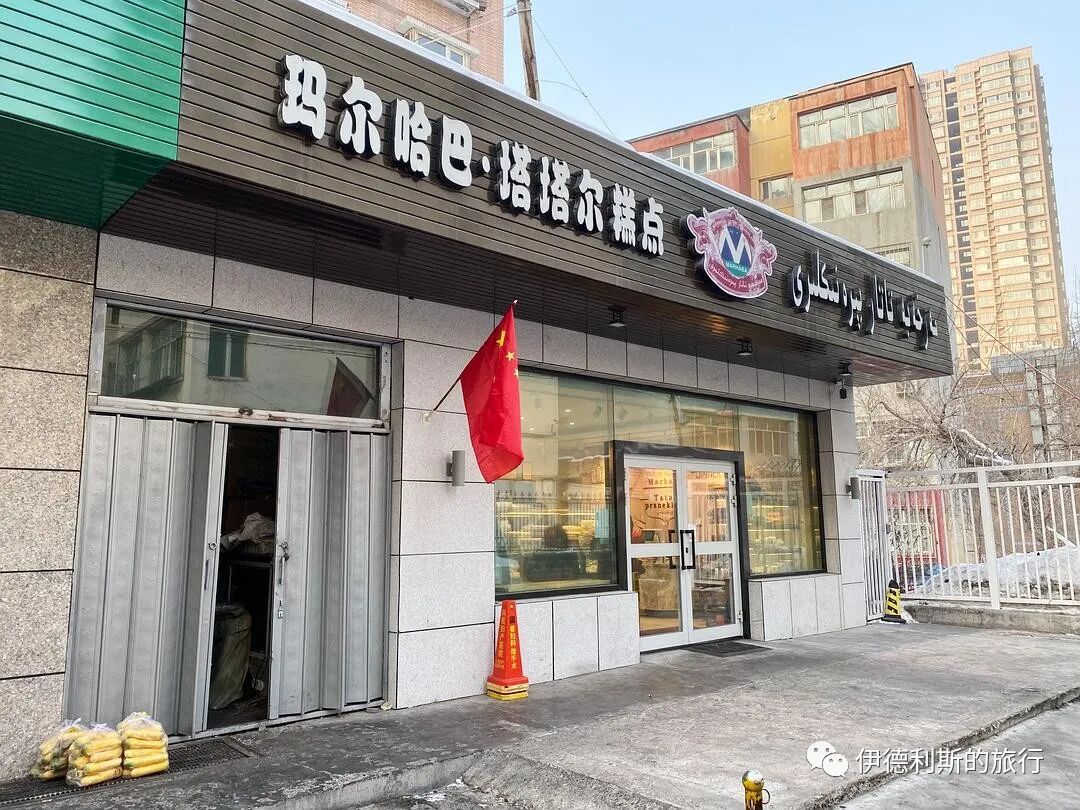
Ma-style snacks is one of the most famous traditional Hui Muslim snack shops in Urumqi, and it has been open for over a decade. Zainab's mother also used molds to make them herself when she was a child, but now fewer and fewer Hui Muslims in Urumqi make them themselves.
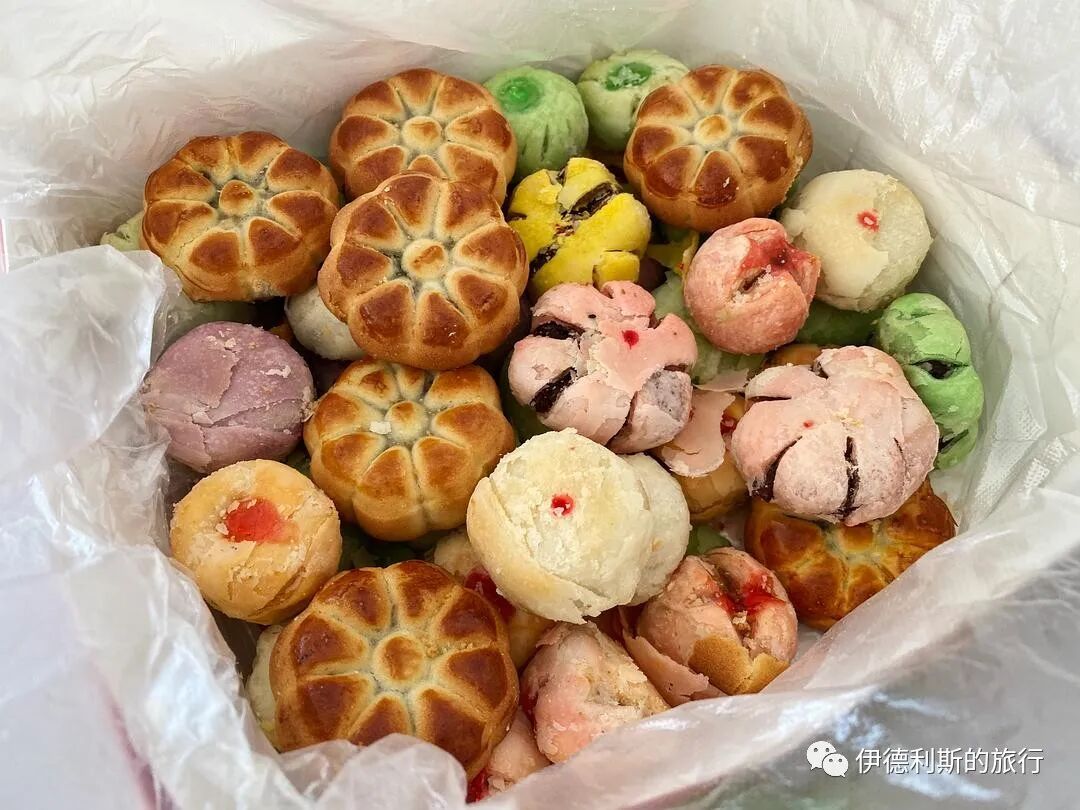
2. Thirteen dishes
Meat dishes: braised beef ribs, clear-stewed mutton, fish-drilling-net (fried meat jelly), braised meatballs, cold-dressed chicken, steamed fish
Hot dishes: pickled cabbage with meat, daylily with wood ear mushrooms, celery with lily bulbs, garlic sprouts with meat
Cold dishes: sweet platter, lotus root with wood ear mushrooms (lotus pond moonlight), bean curd skin with red chili
The staple foods were fried youxiang (leavened flatbread), momo (steamed buns), and rice.
The presentation looked like this:
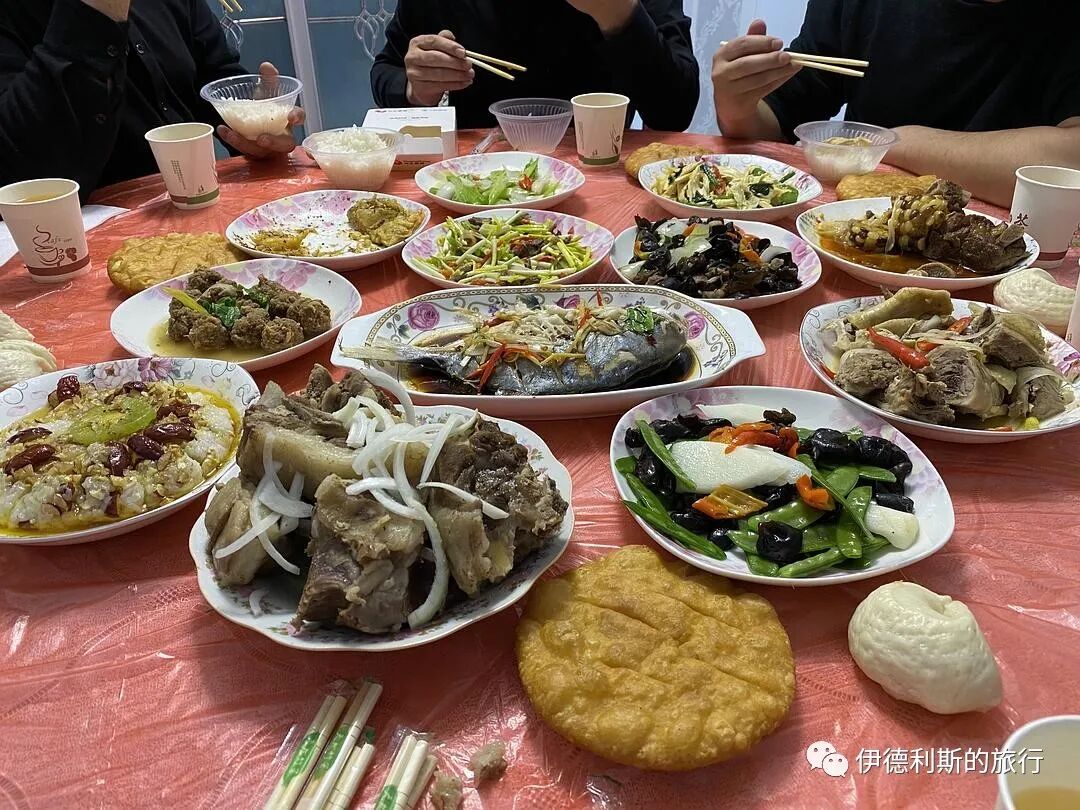
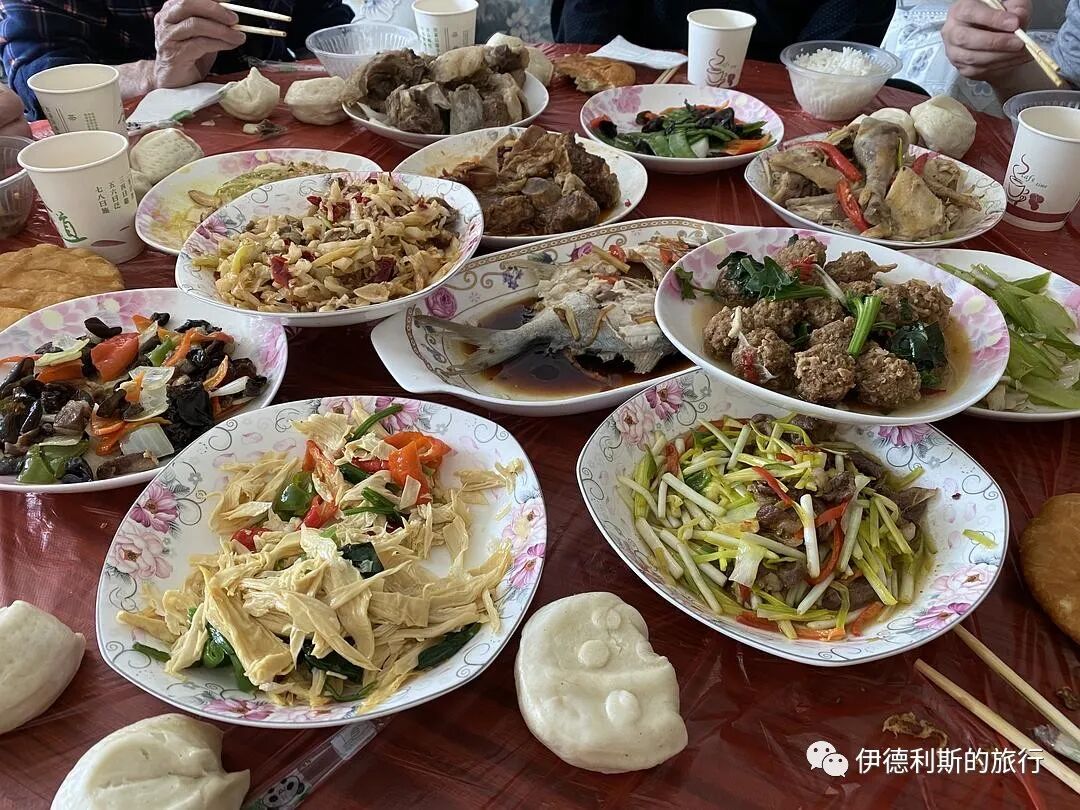
1. Braised beef ribs
First, blanch the beef ribs. After they turn white, take them out. Heat oil, add the meat, ginger, a little cinnamon, star anise, and bean paste. Stir-fry for a while, then add fresh chili peppers. After the meat dries out, put it in a pressure cooker and stew for 25 minutes.
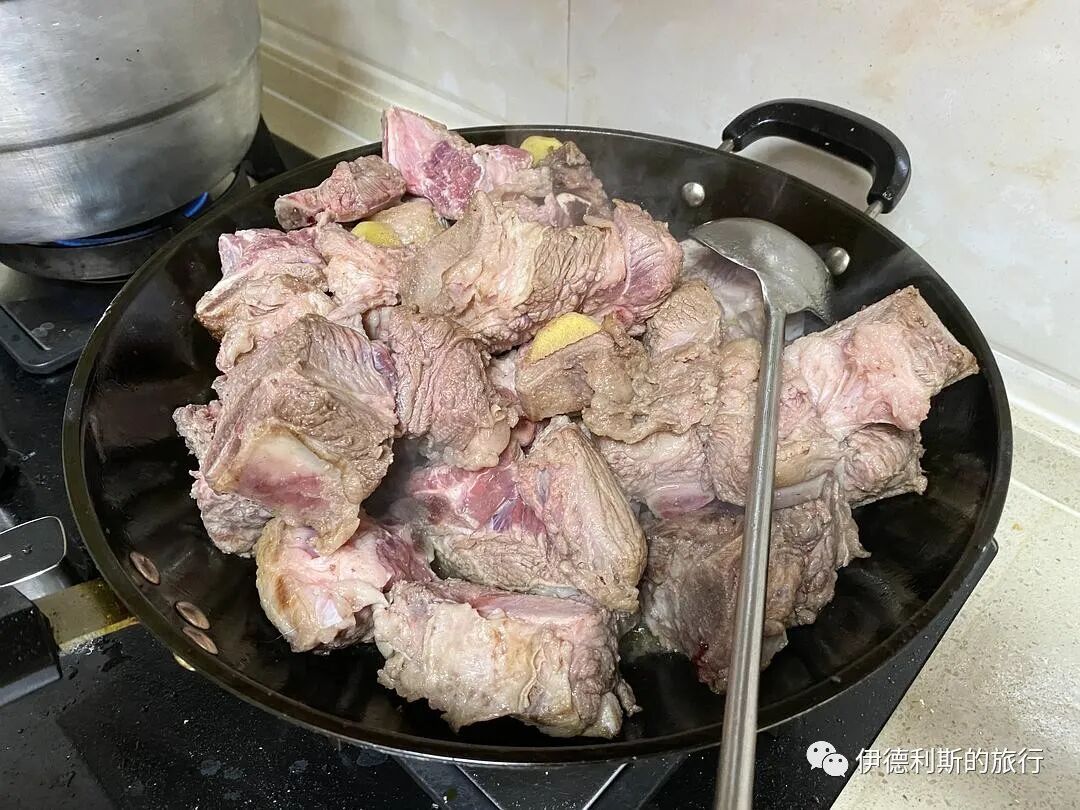
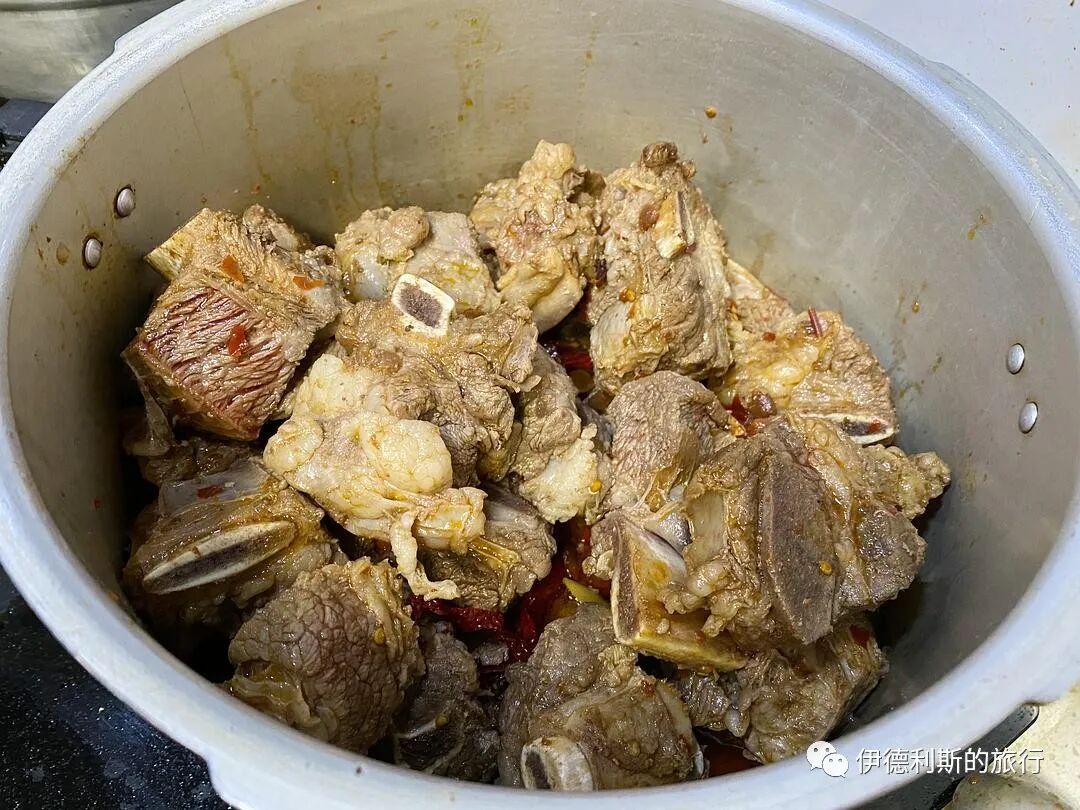
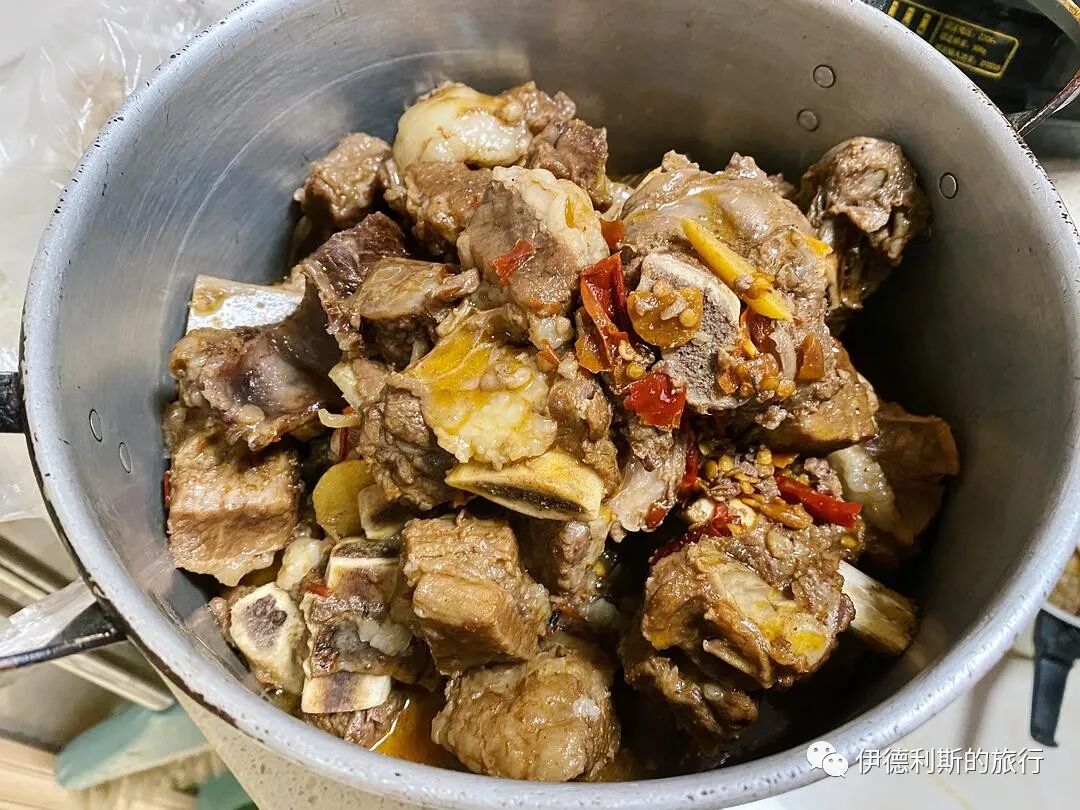
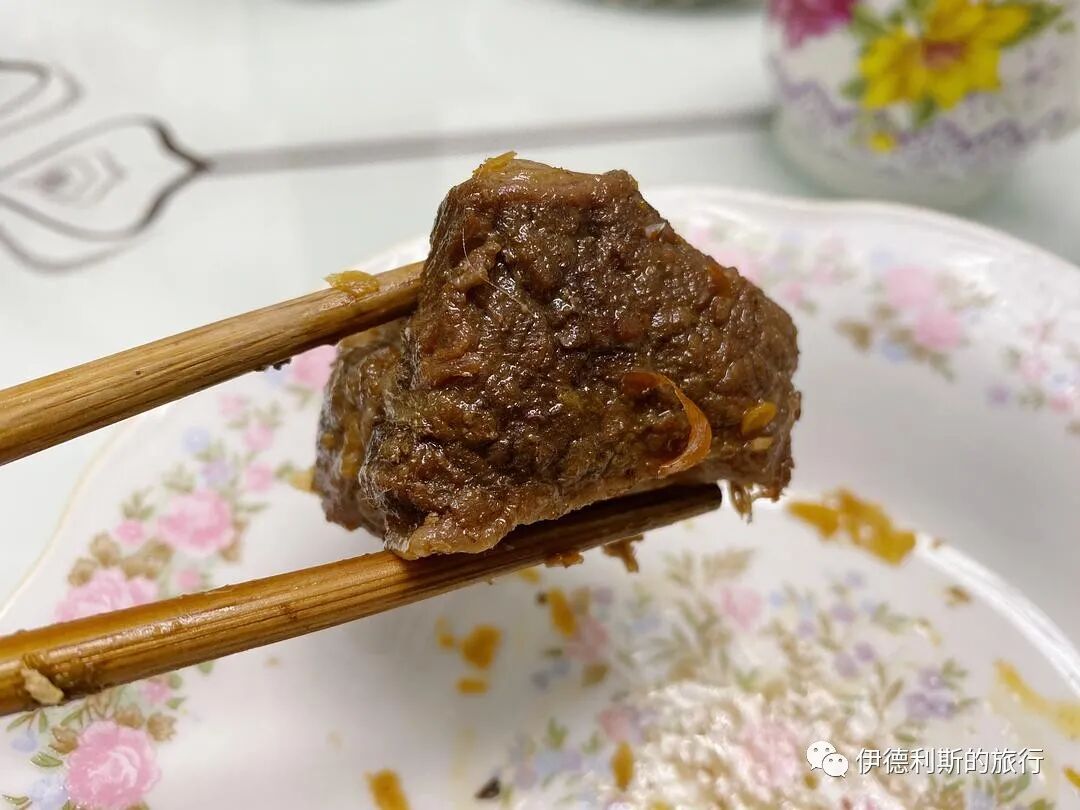
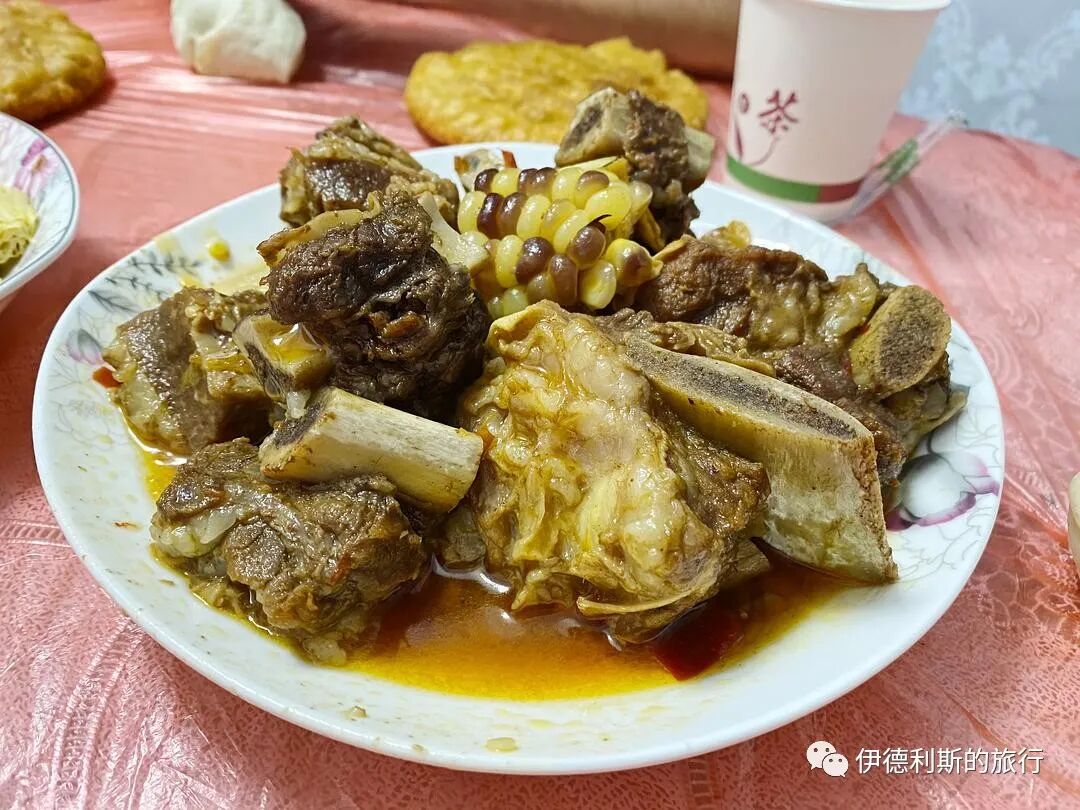
2. Clear-stewed mutton
First, skim off the blood foam, then stew. When serving, sprinkle a little raw onion on top.
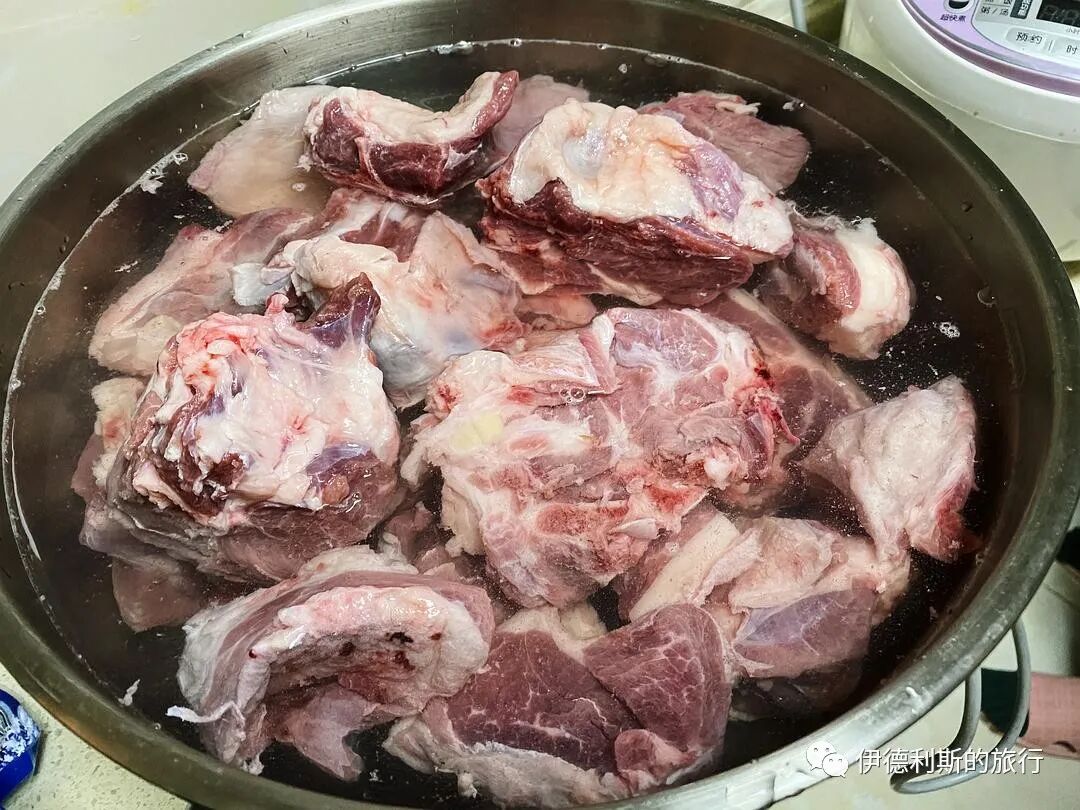
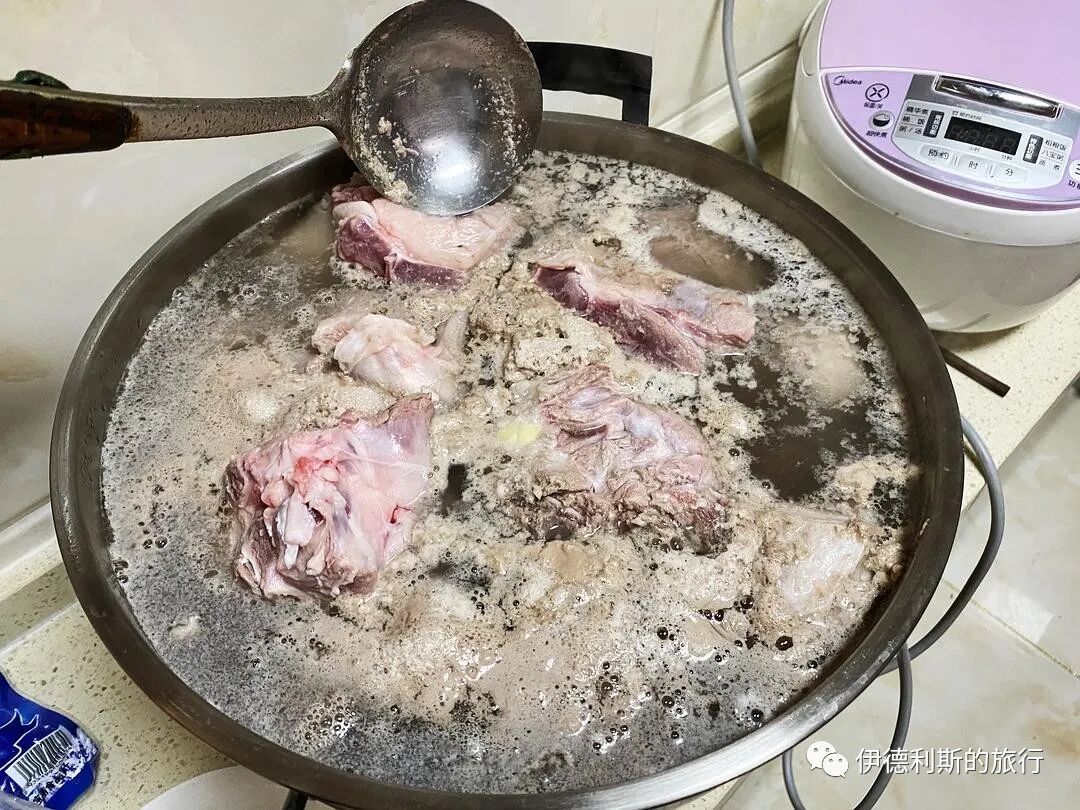
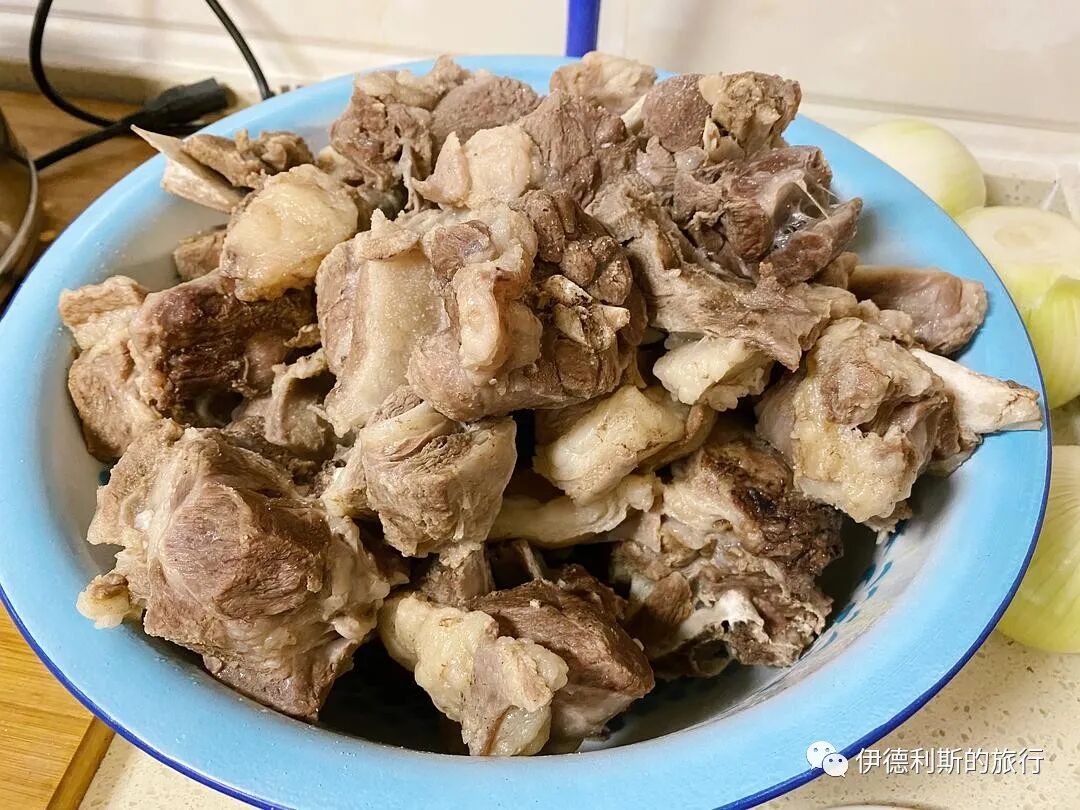
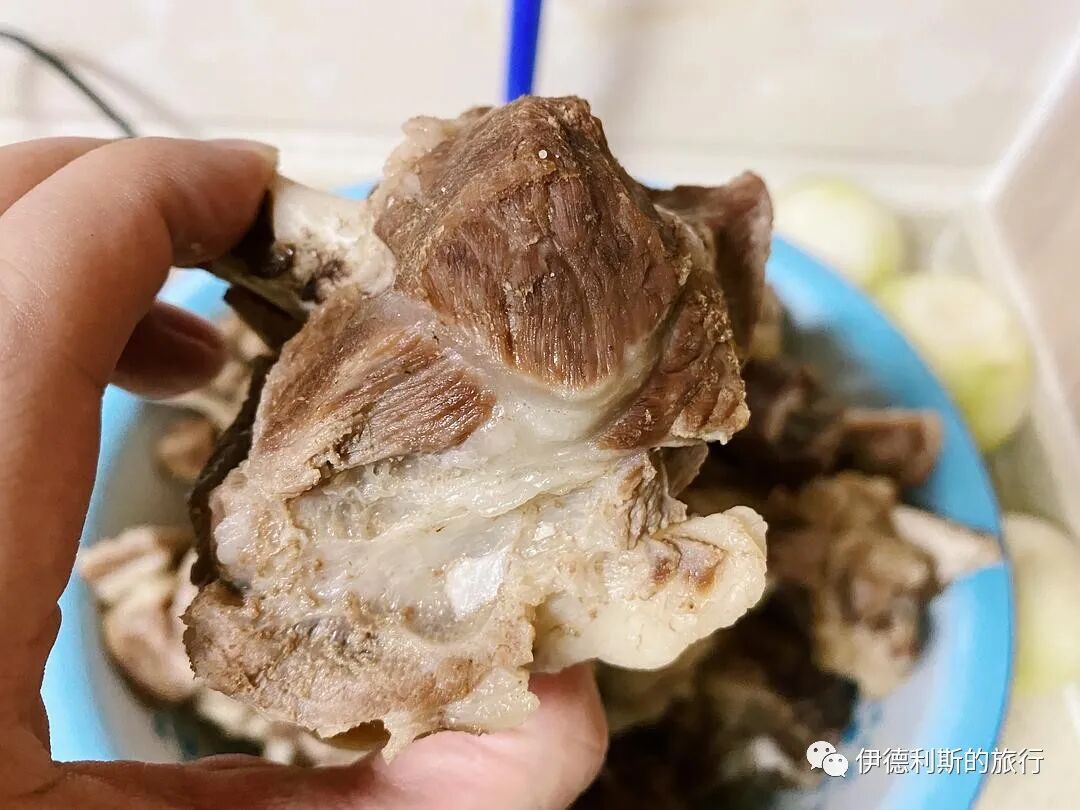
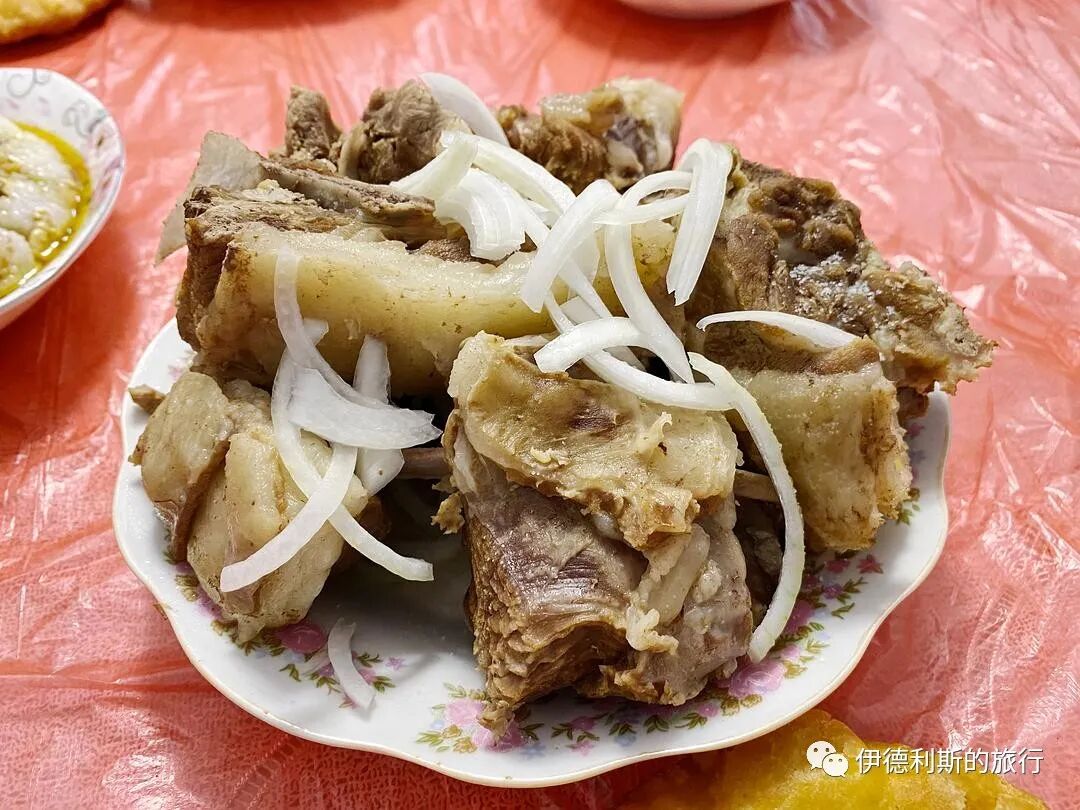
Braised meatballs
The beef for the meatballs and the meat jelly was bought at a Uyghur shop in the market across from our residential compound.
The night before the banquet, we fried the meatballs, and on the morning of the banquet, we braised them.
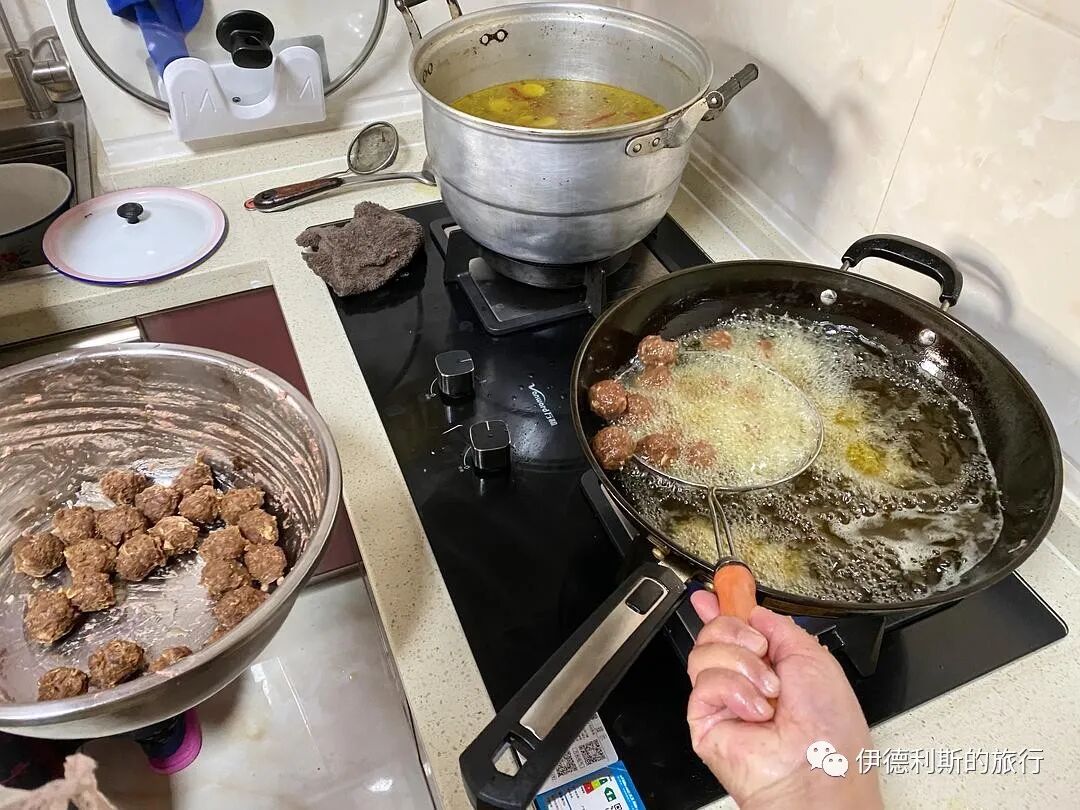
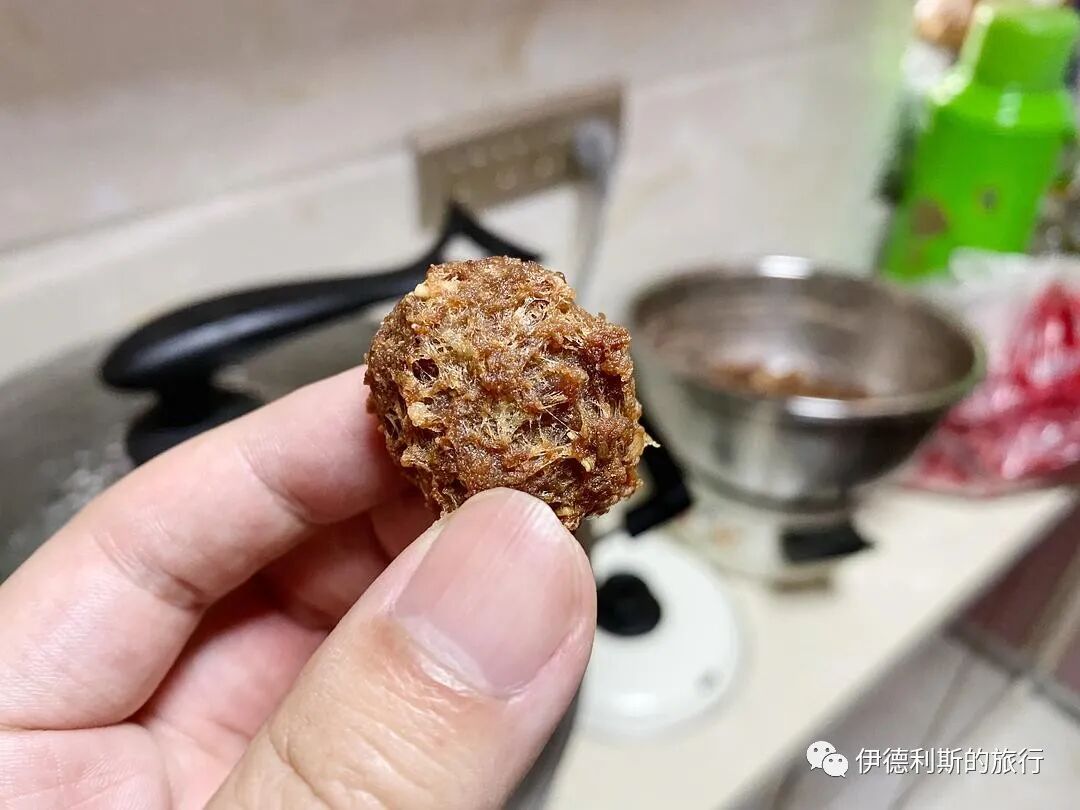
This is what it looked like after being braised the next day.
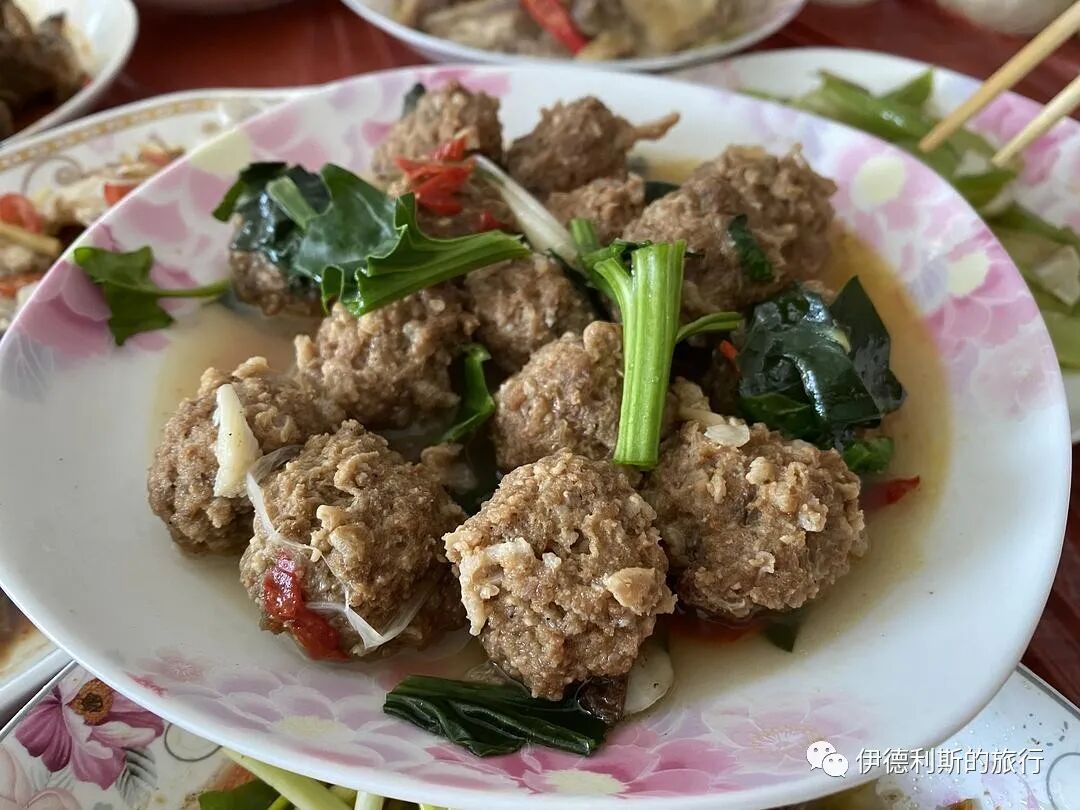
Fish-drilling-net (fried meat jelly)
'Fish-drilling-net' is just fried meat jelly. When buying the meat, have the Uyghur uncle grind it into mince (xuanzi). The mince for the meat jelly needs to be finer than that for the meatballs; it must go through the meat grinder twice. The night before the banquet, steam the mince into meat jelly, then slice it. On the morning of the banquet, coat the slices in egg and starch and fry them in a pan. Finally, sprinkle with cumin, chili, and salt.
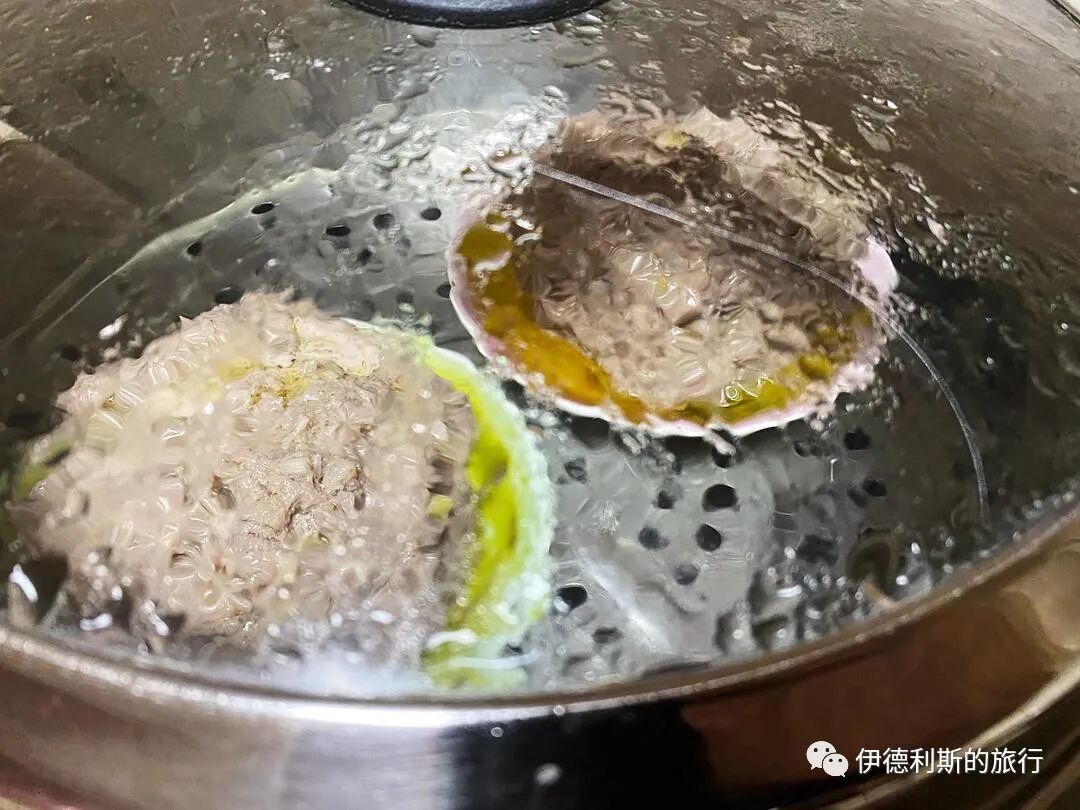
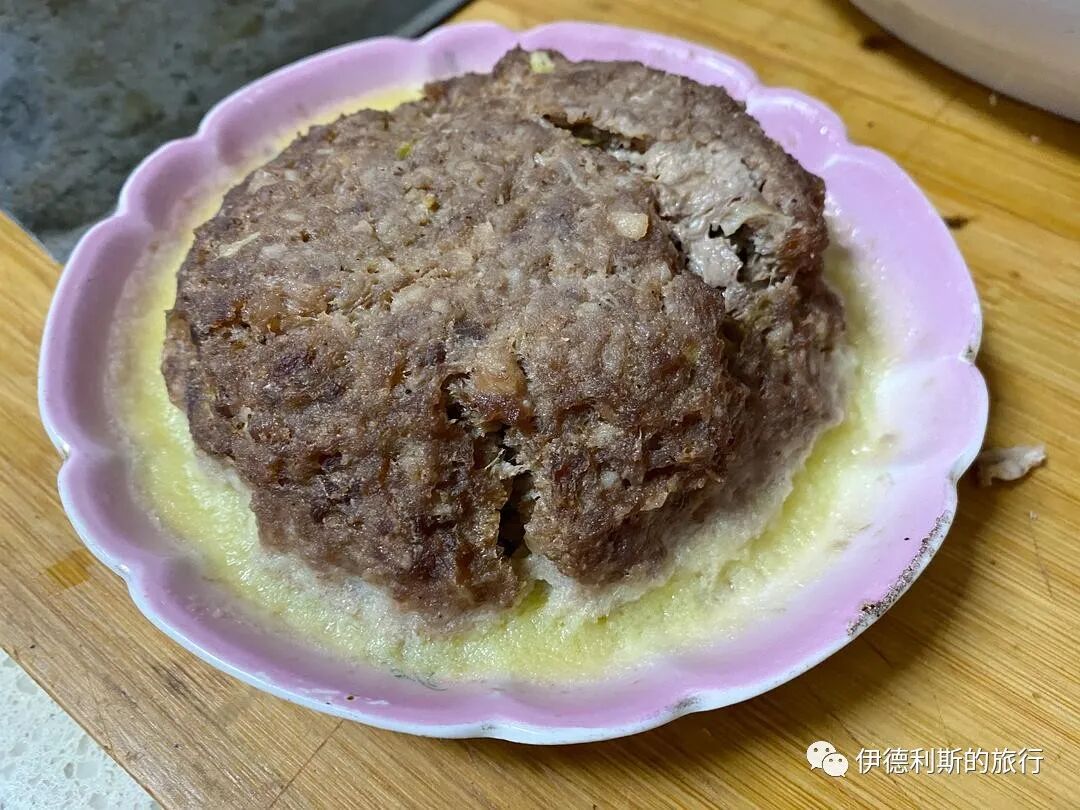
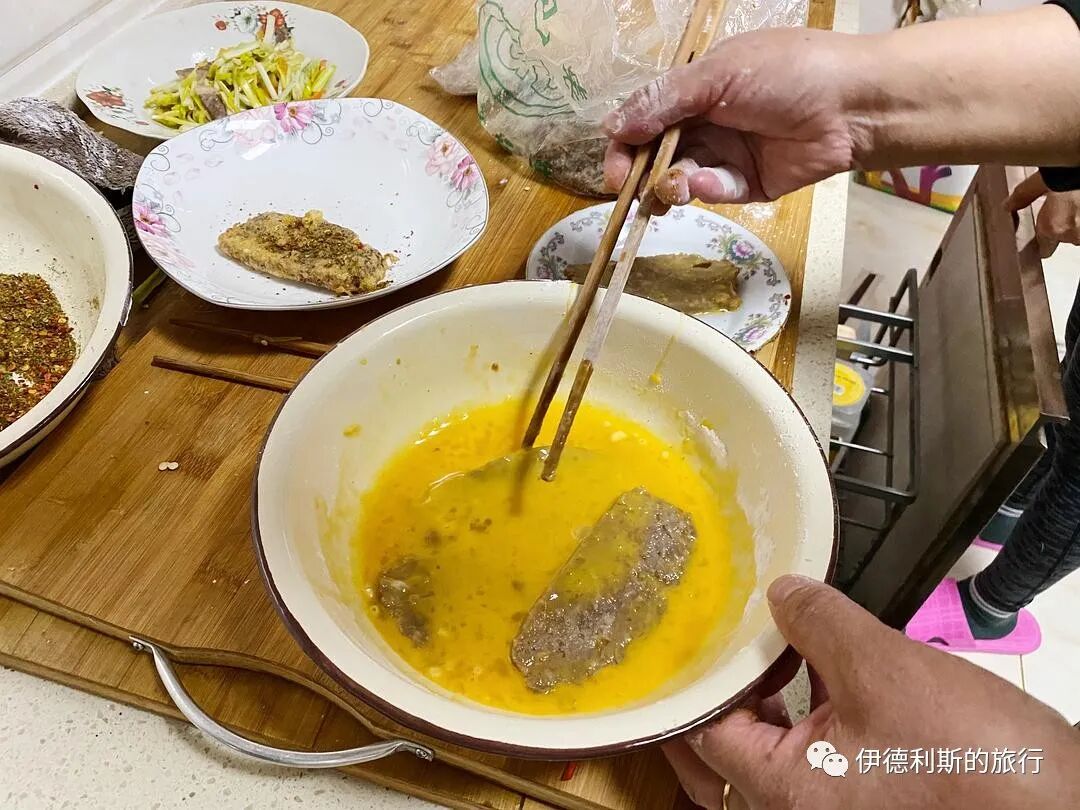
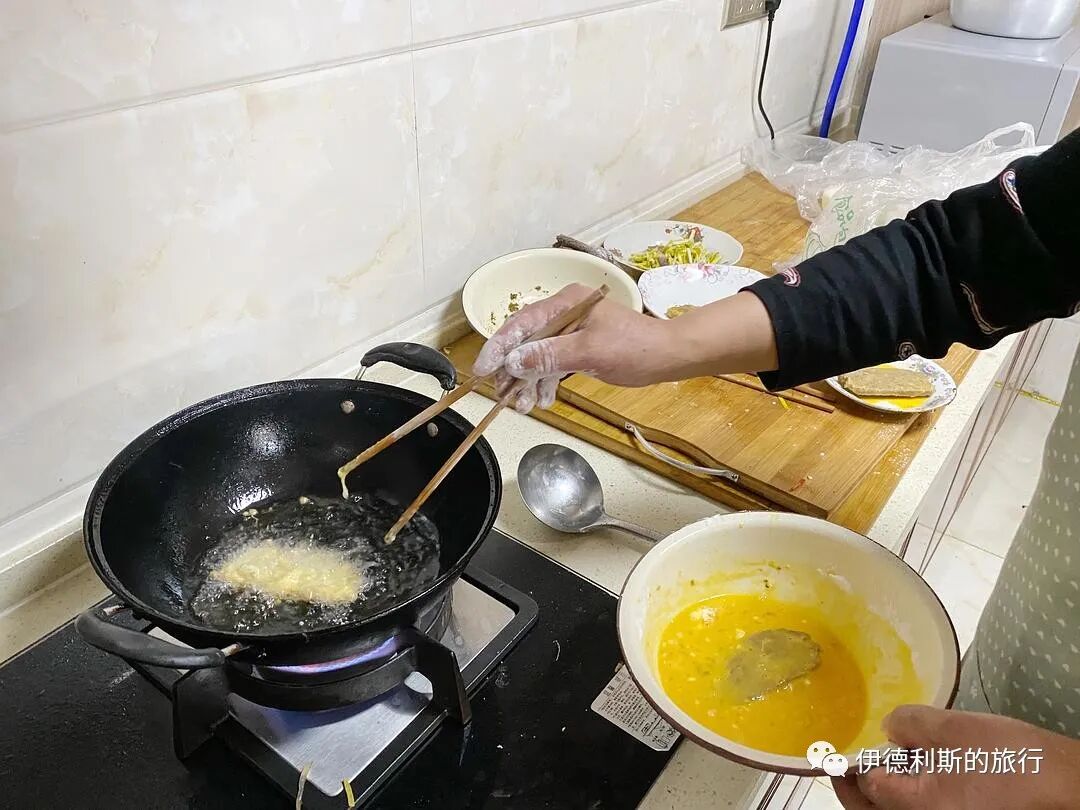
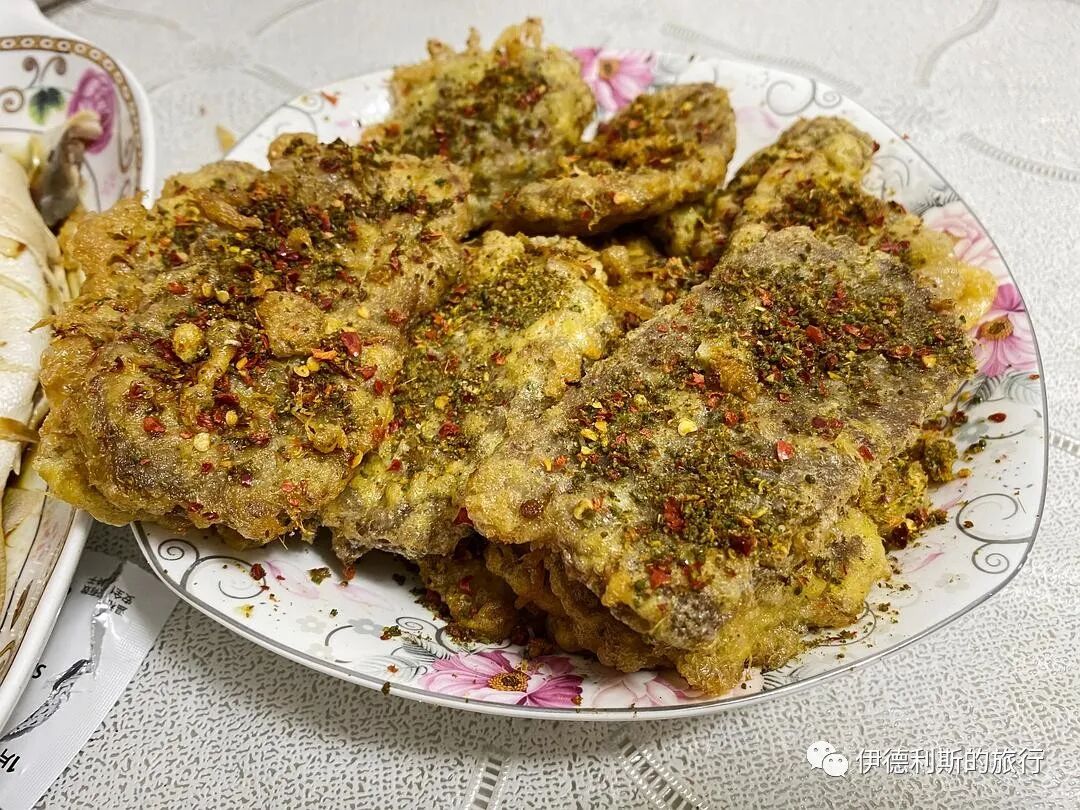
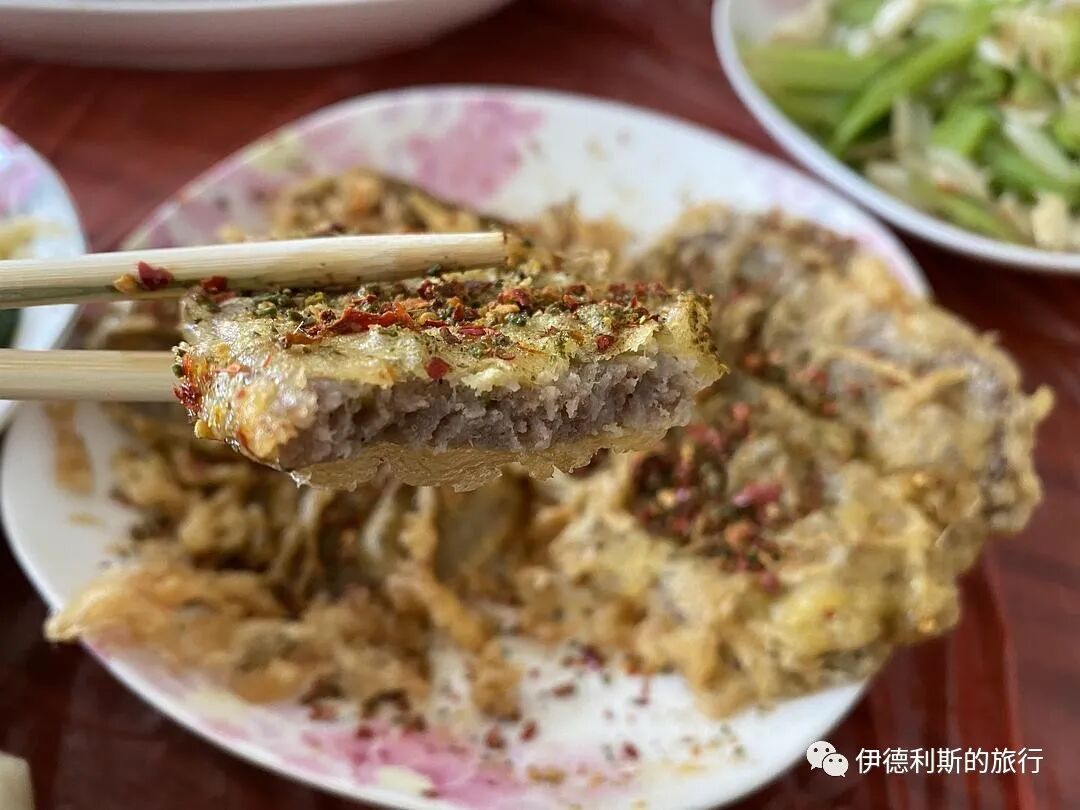
Cold-dressed chicken
The cold-dressed chicken was stewed the day before and placed on the windowsill, then dressed on the morning of the banquet. Cold-dressed chicken is actually chicken without the numbing pepper flavor of jiaoma chicken.
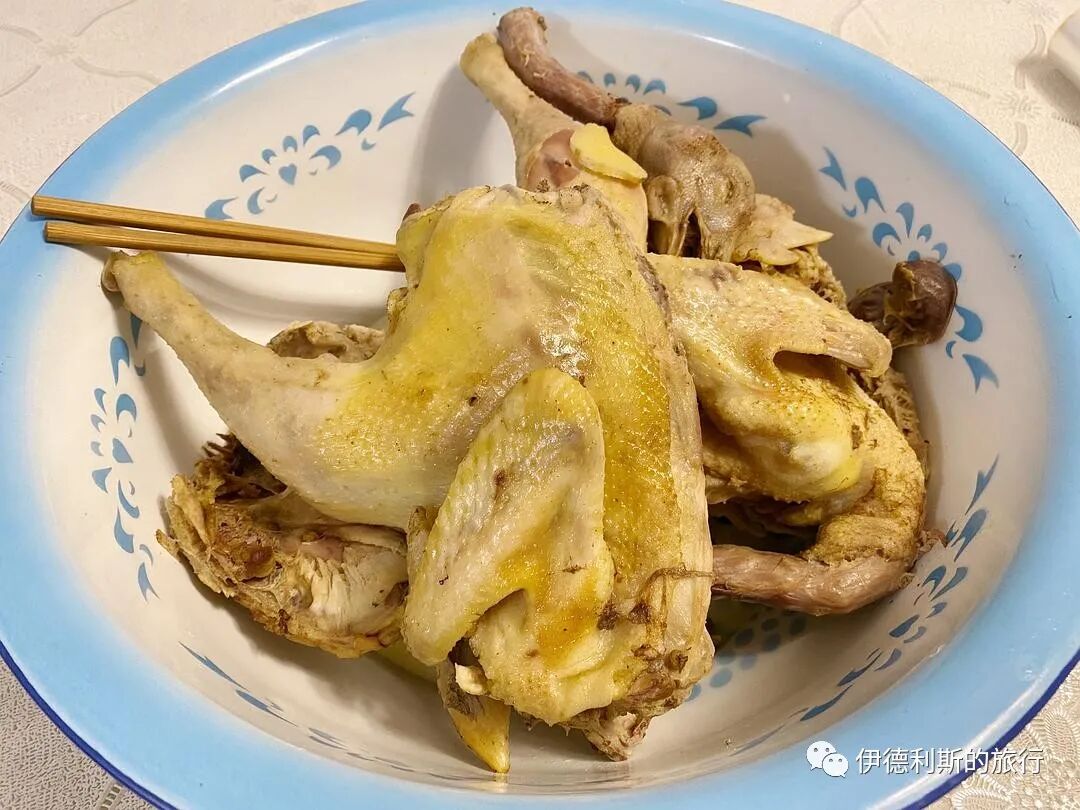
The chicken feet and gizzards were picked out and eaten beforehand.
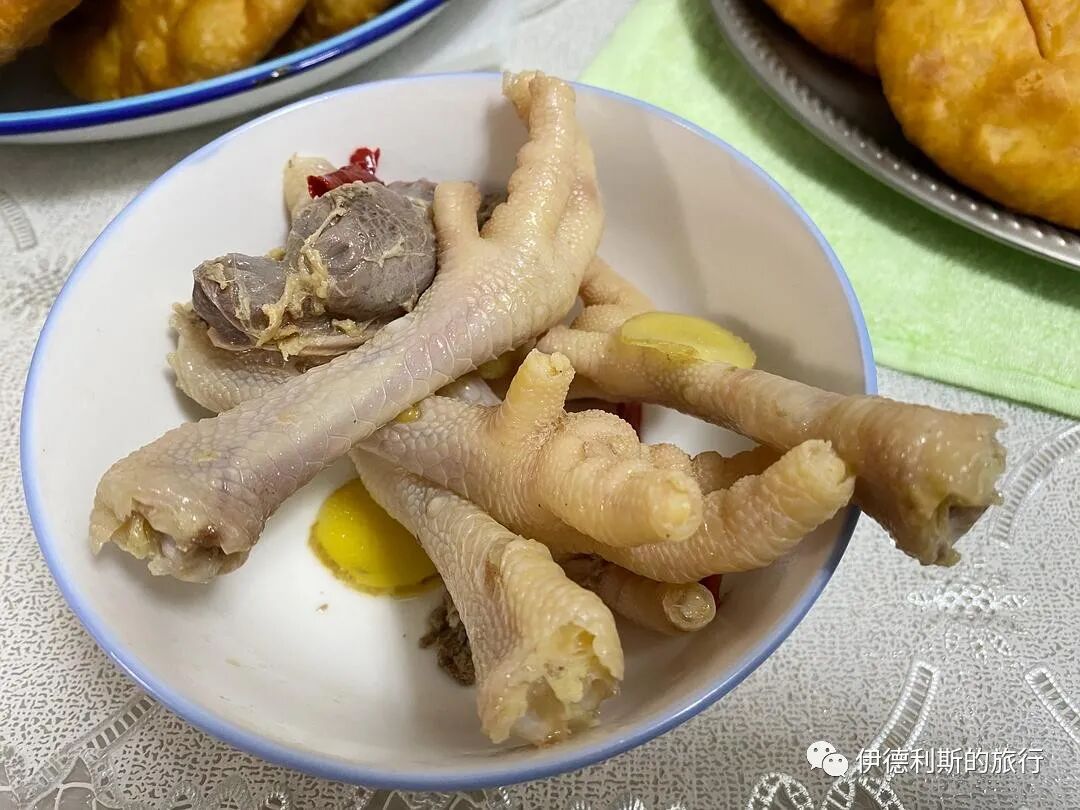
The next morning, cut the chicken, add green onions, onions, and chili, then pour chicken broth over it to finish.
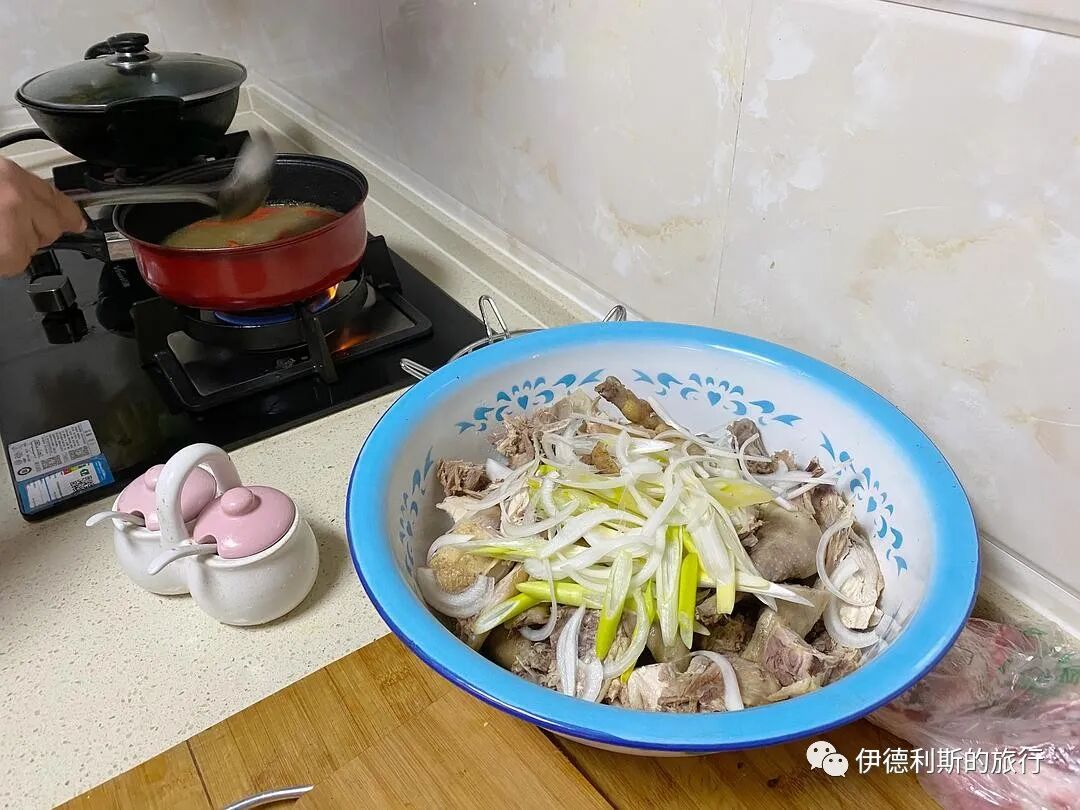
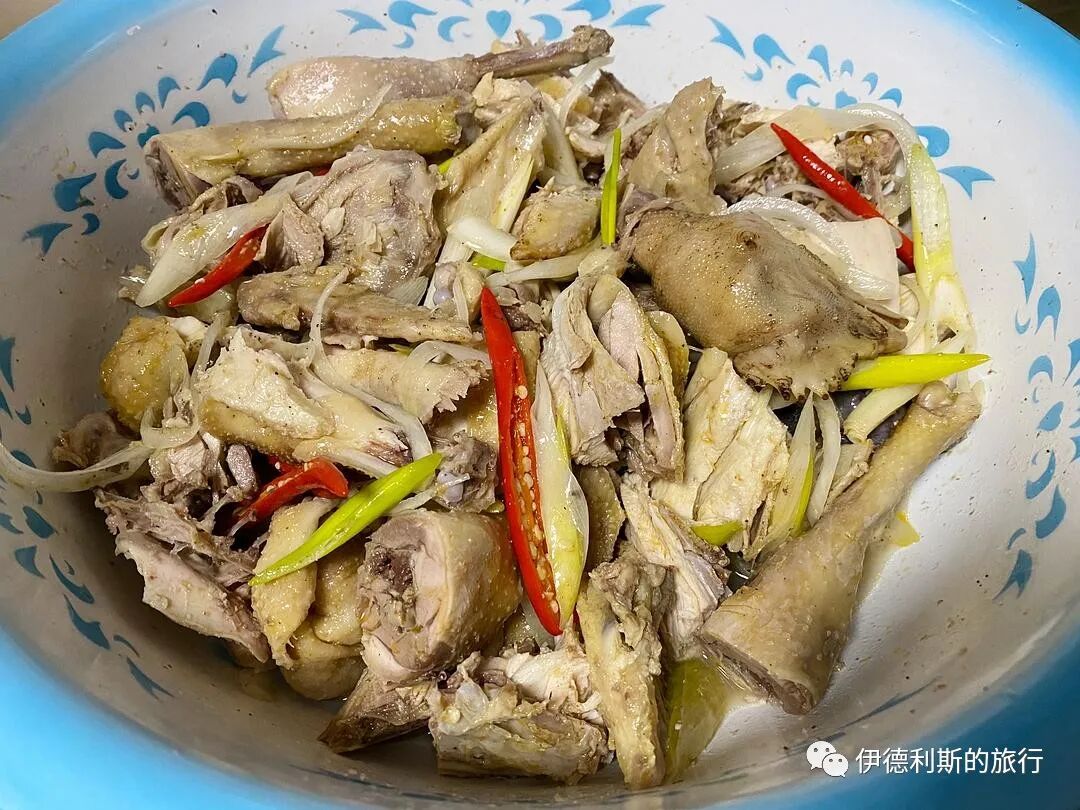
Pickled cabbage with meat
The pickled cabbage was made at home.
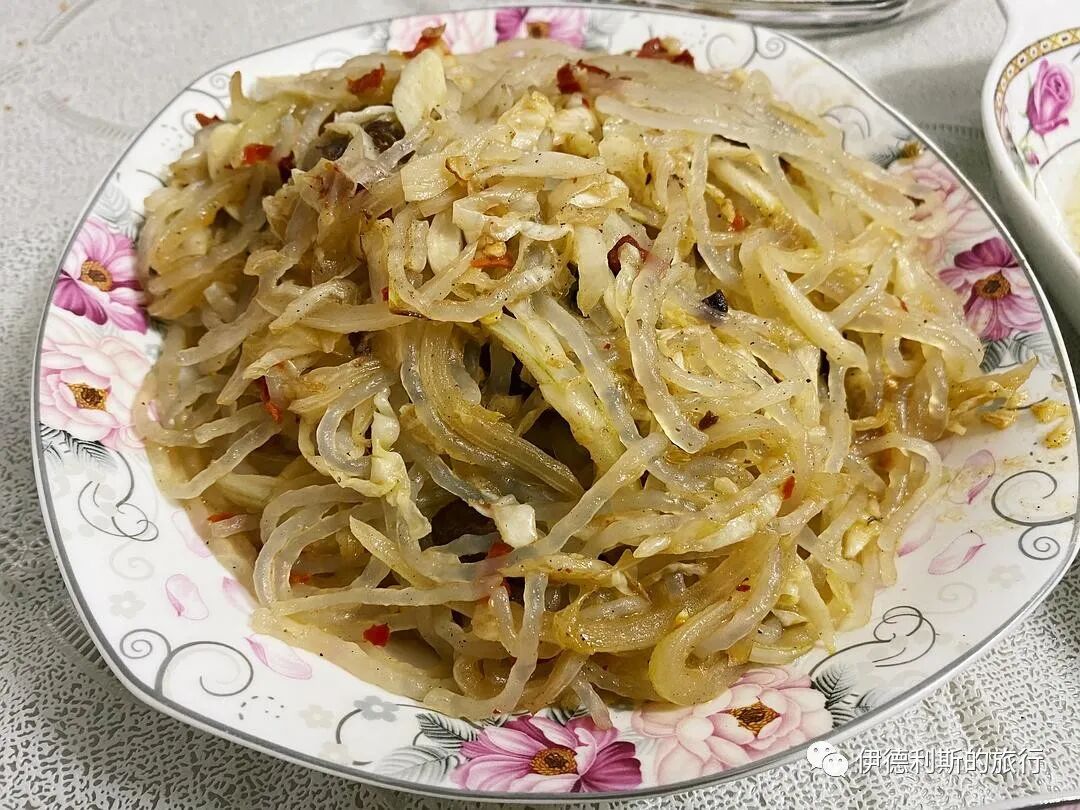
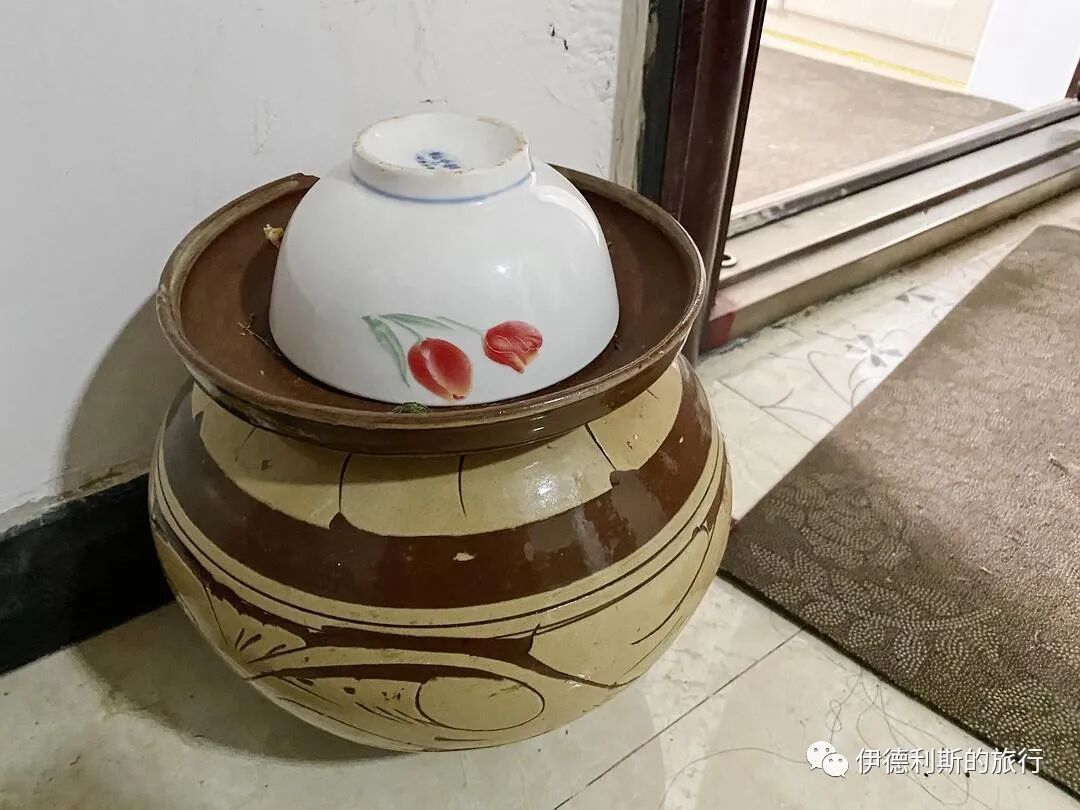
Sweet platter
The sweet platter was made the night before and wrapped up, then sprinkled with sugar syrup the next morning.
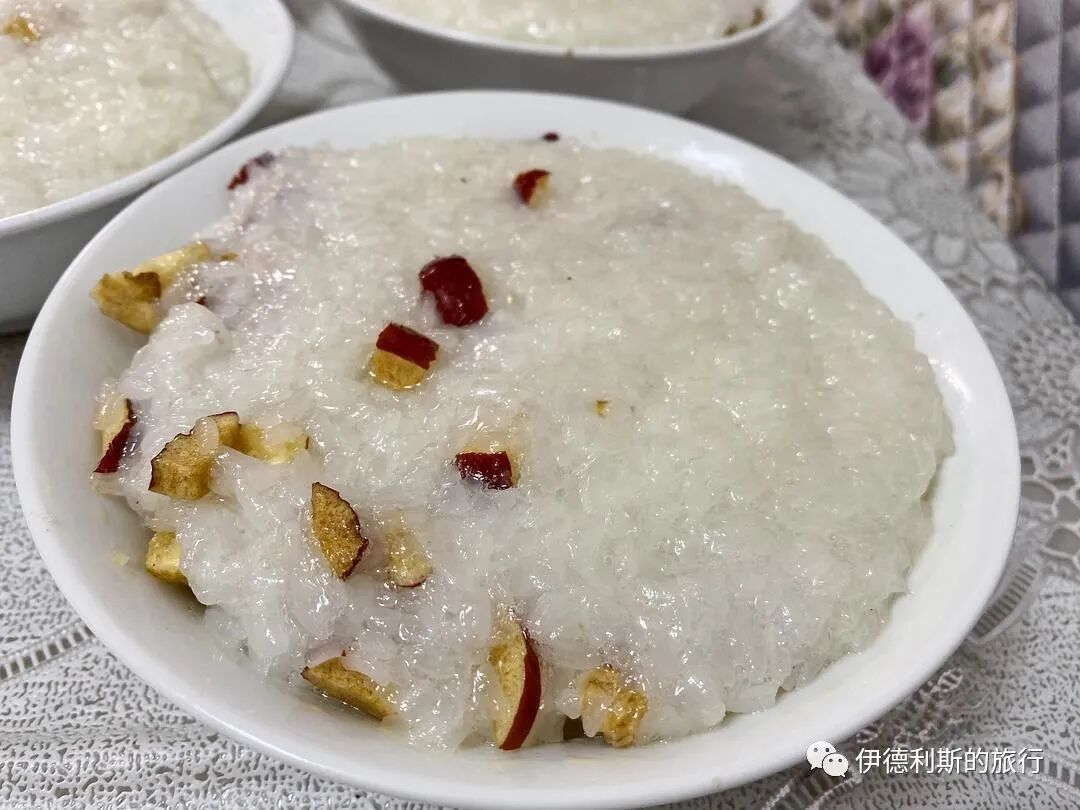
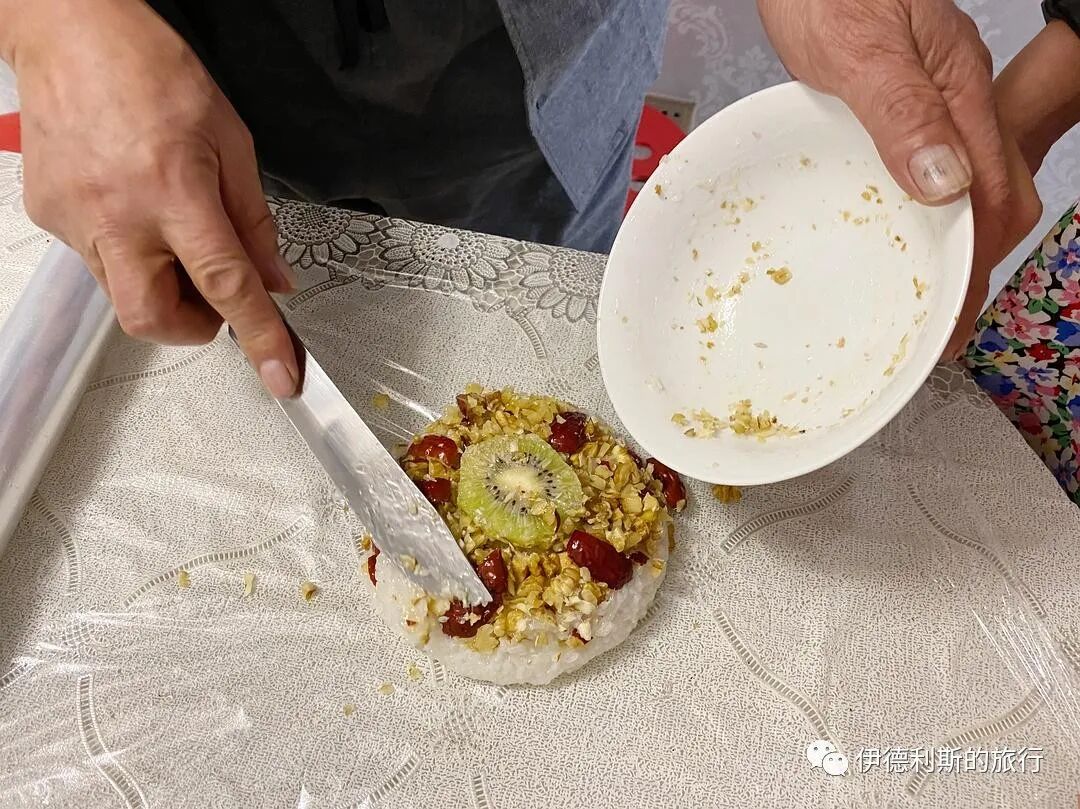
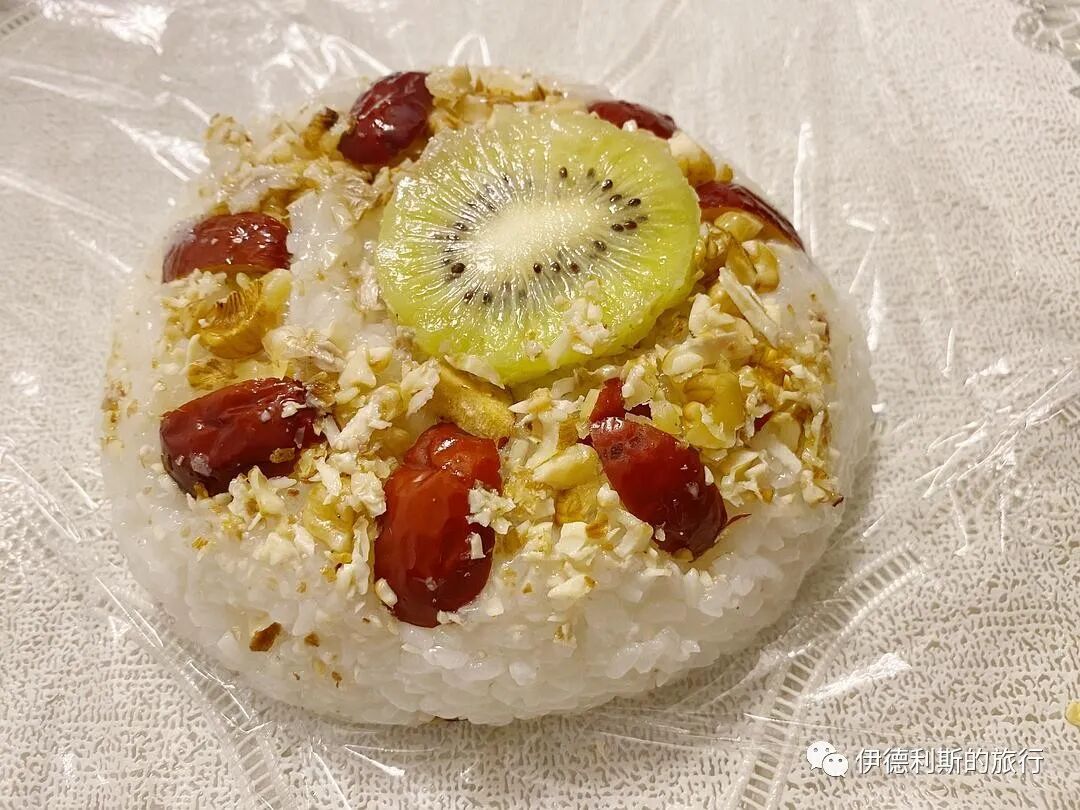
The next morning, boil the sugar syrup and pour it over.
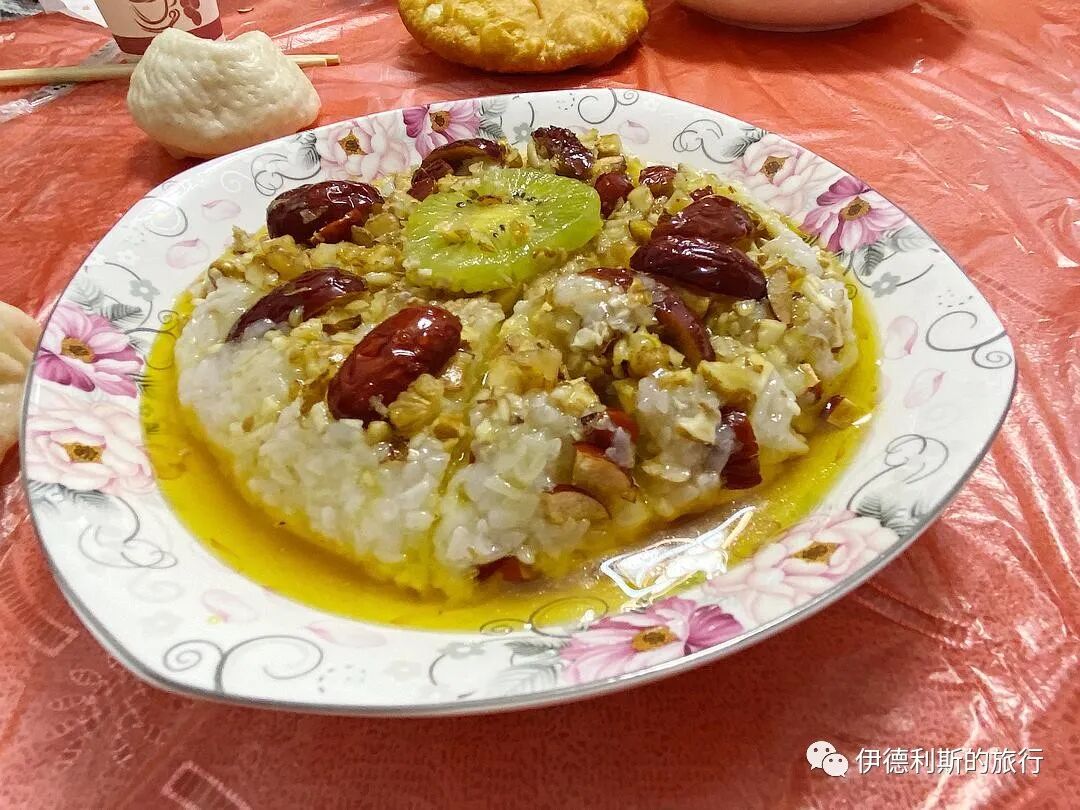
Fried youxiang
To fry youxiang, first knead the dough.
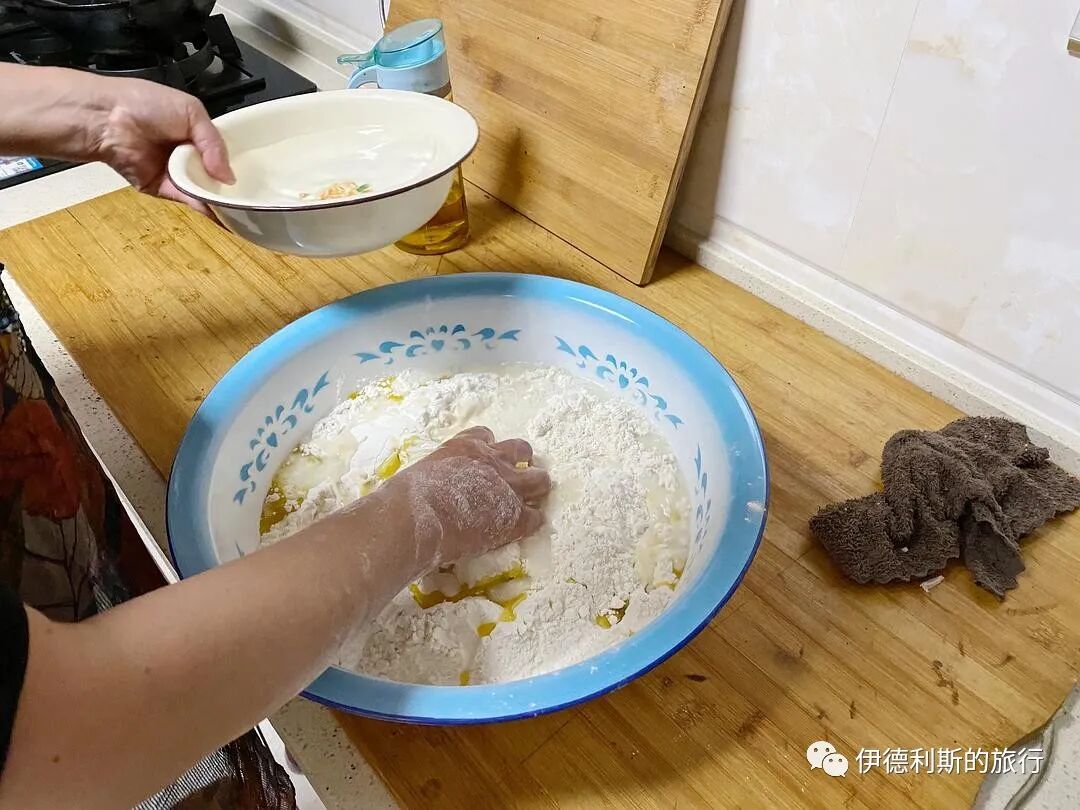
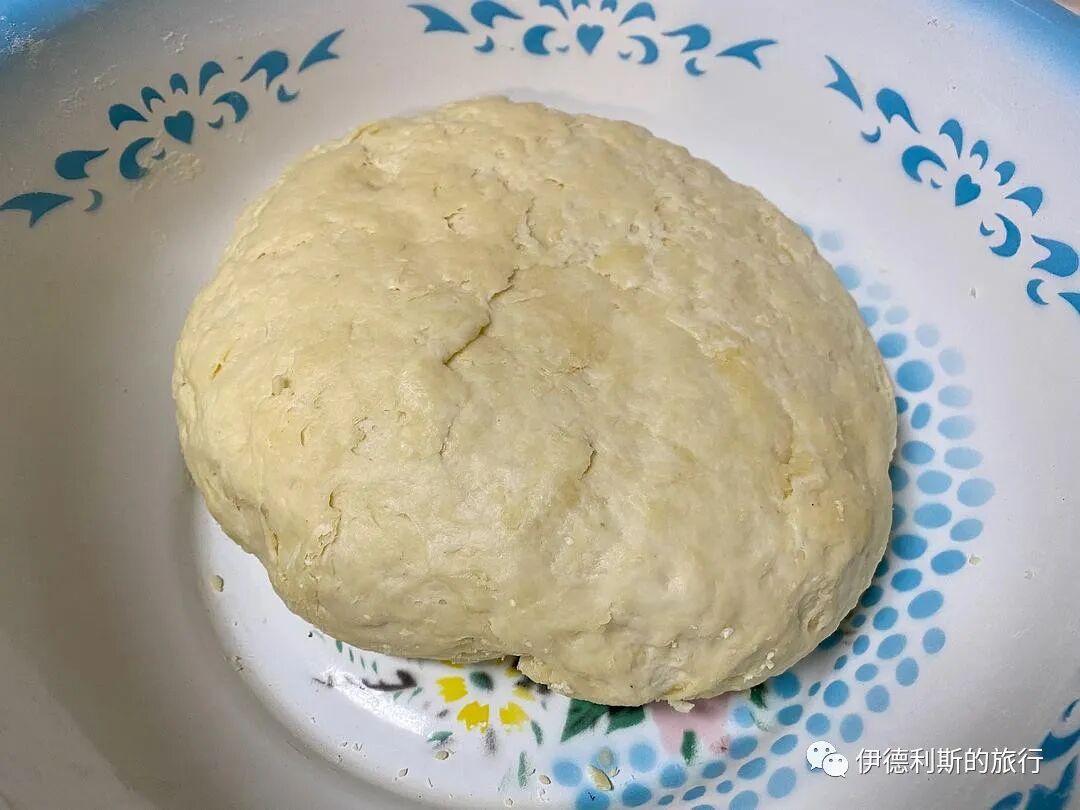
Zainab and I went out shopping while they were being fried, and they were already done when we returned. Youxiang must be eaten by breaking it apart; you cannot eat it whole. After the banquet, if there is any left over, it can be soaked in various soups, rice noodles, or noodle soups.
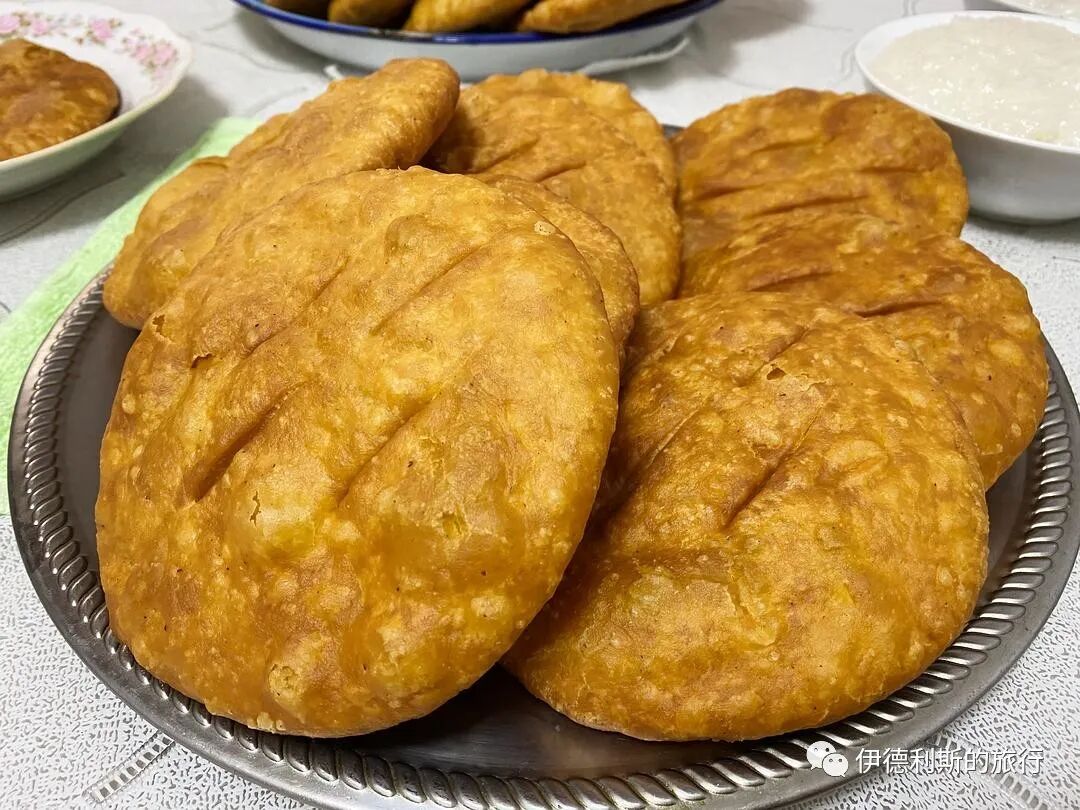
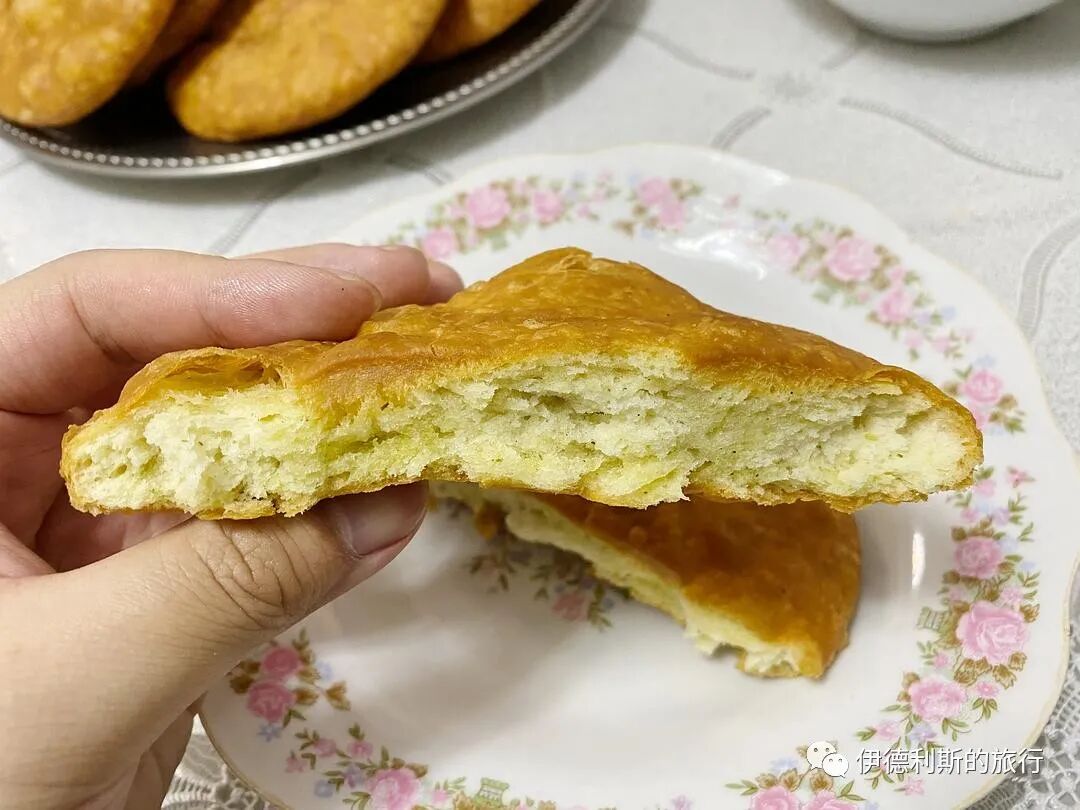
Best Halal Food Urumqi: Hui Muslim Street, Beiliang Mosque and Xinjiang Meals During Sha'ban
Articles • yusuf908 posted the article • 0 comments • 248 views • 2026-05-23 23:30
Summary: This Urumqi Sha'ban account begins on February 12, 2026, before Ramadan, and covers family meals, Jumu'ah at Shaanxi Grand Mosque, Beiliang Mosque history, and local Hui Muslim food. It keeps the source's dates, mosque history, dishes, religious gatherings, and photographs.
I flew from Beijing to Urumqi for the Spring Festival holiday on February 12, 2026. With a few days left before Ramadan, I attended some religious gatherings (ermei) and sat for several meals. I am sharing my experiences here.
February 13.
I spent the morning at home reciting prayers (nianye). We had braised beef steak, clear-stewed lamb, and braised fish. The fried dough (youxiang) had been prepared the day before.
At noon, I went to the Shaanxi Grand Mosque in Urumqi for Friday prayers (Jumu'ah). This was the last Friday prayer before Ramadan. It was very crowded, and the main hall was almost full.
The restaurants behind the Shaanxi Grand Mosque are all delicious. I wrote about them in my previous article, '2025 Urumqi Hui Muslim Street Tour'.
I only learned last year that the main hall of Urumqi's first mosque, Beiliang Mosque, still exists. It is now open to the public as the Wenchang Pavilion. After Friday prayers at the Shaanxi Grand Mosque, I took the subway one stop from South Gate to North Gate to visit it.
After the Qing Dynasty built Dihua City in Urumqi in 1758, it promoted policies to station troops and settle immigrants for border defense. Since then, Hui Muslims from the northwest moved there to settle. In 1780, they built Beiliang Mosque on a small hill inside the North Gate of Dihua City, making it the first mosque in Urumqi.
The first imam of Beiliang Mosque was an elder from the Weijiapu area, who belonged to the Salar people from Xunhua. When the elder from Weijiapu was young, he studied at the Jiezi Gongbei and the Grand Mosque in Xunhua. In 1763, he left to seek enlightenment during the Hehuang menhuan conflicts. He traveled through Linxia, Lanzhou, and Wuwei, eventually reaching Hami and Turpan to teach. In 1780, he was officially invited to Beiliang Mosque as its first imam.
In the mid-18th century, Yihewan Gali, a disciple of the Indian Sufi leader Imam Rabbani, entered Aksu to teach the Khufiyya doctrine. Ma Fang, a Qing military officer stationed in Aksu, accepted his teachings. Later, Ma Fang resigned from his post to preach across Xinjiang. He took five students, one of whom was Ma Pei, who went to Urumqi to preach. The elder from Weijiapu became his student. The elder from Weijiapu taught at Beiliang Mosque for nearly 30 years. He taught religious knowledge to ordinary community members and guided Khufiyya followers in their spiritual practice. He balanced the relationships between different groups well and was respected by everyone.
Beiliang Mosque existed for 94 years in total. Its last imam was Ma Zongfu. Ma Zongfu came from Datong, Qinghai. People called him the Datong Elder. When he was young, he taught at various mosques in Qinghai and practiced the Khufiyya path. Later, because he opposed the planting and selling of opium, he was persecuted by local wealthy landowners. In 1850, he led his family through great hardships to Xinjiang and settled at Beiliang Mosque. At that time, the mosque's religious leader, Qitaizhou, was the second-generation disciple of Ma Pei. Imam Ma Zongfu then became his student. In 1852, Ma Zongfu became the imam of Beiliang Mosque and oversaw its renovation in 1861.
In 1876, Zuo Zongtang sent Liu Jintang to lead the Qing army west, where they defeated Yaqub Beg and recaptured Urumqi. After the Qing army entered the city, they occupied Beiliang Mosque. In 1884, Xinjiang Governor Liu Jintang renamed it Wenchang Pavilion. Beiliang Mosque was not used as the Wenchang Pavilion for very long. During the Republic of China era, it was occupied by Kuomintang communication troops. After 1949, it was taken over by the People's Liberation Army communication troops and used as a military factory for a long time. It was not returned to the cultural heritage department for management until 2002.
In 2003, the cultural heritage department renovated the only remaining main hall of Beiliang Mosque. Citing 'site constraints and ease of public access,' they changed the traditional east-west orientation of the Hui Muslim hall to face south. Today, it is open as a place to introduce Taoist Wenchang culture.
Hidden in the storefronts of the Guangyuan residential complex on Zhujiang Road in Urumqi is Li Yingping's Meatball and Vermicelli Soup (wanzifen tang). The owner has been selling meatball soup in the neighborhood for over twenty years and only moved to the Guangyuan complex in the last two years. This area is far from the food streets, so mostly only locals know about it.
Their signature dish is braised beef meatball noodle soup served with a steamed flower roll (huajuan). The beef is stewed until very flavorful and has a great texture, served with tofu, starch noodles, and wood ear mushrooms. I first thought their 'wonton dumplings' were two separate dishes, but I later learned they are dumplings shaped like wontons made by the owner. They have a lamb and onion (piyazi) filling, and you can eat them dry or in soup. The soup dumplings are served in the beef noodle soup, which I think is especially comforting in winter. I also tried their lentil noodle squares (biandou mianqizi). Small flag-shaped dough pieces simmer in the soup, paired with the creamy texture of lentils. It is a winter staple that warms the stomach for people in Xinjiang.
February 14
Urumqi has so many food streets. From the early days of Shanxi Alley and Erdaoqiao to the later Lingguan Alley and Hotan Street, more and more places have become popular spots for food lovers. My biggest discovery on this trip back to Urumqi is that the area from Yingawati Road toward Zhujiang Road is getting busier. The ground-floor shops in the new residential area near the plastic factory are all restaurants newly opened by people from Hotan, each with its own unique style.
We first ate at this 1980s-style pan-fried bun (shuijianbao) shop. Pan-fried buns are a specialty of Ili, but this shop also sells Hotan-style corn naan (baogu nang) and old pigeon soup, making it a mix of northern and southern Xinjiang styles.
We ordered old pigeon soup, goose eggs, corn naan with milk tea, pan-fried buns, yogurt, and dried milk curds (naigeda). The old pigeon was delicious and very fragrant, though the soup was a little salty. The goose egg was large and looked crystal clear. The corn naan with milk tea is an incredible combination. The corn naan is a purely healthy food. The corn dough is filled with walnuts and topped with fried onions. It is a bit hard when dry, but it becomes soft on the outside and crispy on the inside when soaked in milk tea. Their milk tea is also very fresh. Of course, you can find fresh milk everywhere on the streets of Urumqi, so fresh milk tea is a given. They also sell various types of dried milk curds, including sheep milk, cow milk, and yogurt versions, some sour and some milder.
I had only eaten Henan-style pan-fried buns before. The biggest difference with Ili pan-fried buns is the use of a lamb and onion filling, seasoned with cumin and pepper. The dough is made with sourdough starter and fried in a flat pan just like in Henan, but it is served with salty milk tea instead of spicy soup. Ili pan-fried buns taste a bit like a leavened version of a baked bun (kaobaozi). Many people here love them and buy a lot at once.
In the afternoon, while visiting relatives, we passed by the Chaiwopu No. 22 Spicy Chicken on Wuxing South Road. It is a 30-year-old shop, and it was packed with people and very lively. They serve Hui Muslim-style Xinjiang cuisine. A large portion of spicy chicken is a whole bird, and a medium portion is half. It is stir-fried to order, so it takes a while and you have to wait when it is busy, but the taste is better than Yang Le. Adding wide belt noodles (pidai mian) to it is very satisfying. Because the kids couldn't eat spicy food, we also ordered the mixed vegetable soup (dazahuai tang), which has beef meatballs, fried egg strips (jiasha), tofu, and wood ear mushrooms. The portion was large, and it was very warming in the winter. We also ordered stir-fried chestnut squash (banligua). The salty, fragrant, stir-fried squash was soft, waxy, and sweet. It was my first time eating it prepared this way, and it was quite good. The place is always too crowded and the service is just average, but the food is truly excellent. You cannot find this kind of spicy chicken (lazi ji) in Beijing.
In the evening, we went to the cute Xinjiang Silk Road Feast (Silu Yan) at Shengda Plaza near the high-speed railway station. It is great for family gatherings. They have song and dance performances at night, and the menu is a fusion of many different things.
February 15
In the morning, I took Suleiman to the top of Yaomo Mountain in Urumqi. It was his first time climbing a snow-covered mountain. We entered through the southeast gate. The path up to Yunmantai is quite gentle and the shortest route, so both the elderly and children can climb it. We took a dirt path going up and the paved road coming down. The scenery on both sides was different, and we even saw a pheasant on the way down.
Another restaurant on Zhujiang Road, Hotan Flower Black Pilaf (Heizhuafan), is also very unique. It was my first time eating black pilaf in Urumqi. They only sell it at noon. We asked at 10 a.m. and 6 p.m. and it was sold out both times. We finally got to eat it when we went after 4 p.m.
Black pilaf is made by frying onions (piyazi) until they are completely charred and caramelized, rather than frying them to a light golden color like regular pilaf. They also add whole garlic cloves for flavor. Black pilaf has a richer flavor than white pilaf. I had it before in Tashkent and loved it, so I was happy to eat it again this time. You can actually find black pilaf in Southern Xinjiang, Uzbekistan, and Tajikistan, but it is rare in Northern Xinjiang. My relatives said an elderly Uzbek man used to sell black pilaf on Zhujiang Road, but we don't know if he is still there.
Their black pilaf comes with lemonade, yogurt, and mung bean jelly (liangfen). The spicy vinegar in the jelly adds a great kick. The waiter will come over and ask if you want more rice.
We also ordered the Hotan-style corn porridge. Hotan corn porridge is called 'umash' in the Uyghur language. To make it, you stir-fry onions in lamb fat, add diced lamb, then pour in lamb broth and bring it to a boil. You also add fresh corn kernels. It is completely different from the clear corn porridge in inland China. It is salty, rich, and full of ingredients, making it very warming in autumn and winter.
There are some new Uyghur restaurants on Zhujiang Road. I want to try this Hotan noodle soup next time.
In the evening, we had a meal at a relative's house, eating meatball soup and slow-cooked beef bone marrow. The homemade meatballs have lots of meat and very little starch; you really can't find this taste in restaurants. The beef bone marrow was stewed until soft and flavorful, so even the elderly could eat it easily. Steamed oil bread (youxiang) is a specialty of Xinjiang Hui Muslims. It is not deep-fried, making it healthier. It is fluffy in layers and carries the unique aroma of vegetable oil and fragrant clover (xiangdouzi).
February 16
In the morning, we attended a meal at the Huashenglou Banquet Hall, located across from the Changsheng Brigade Mosque in the southern suburbs of Urumqi. This land originally belonged to my wife's relatives, but later it was rented to a friend (dost) from Midong to open a restaurant. Whenever the family hosts a banquet, they replace the kitchen staff with relatives to cook and serve their friends and family themselves.
Changsheng is located at the southern foot of Yamalike Mountain. Under the Qing Dynasty's policy of settling soldiers to farm the border and the migration waves during the Republic of China, Hui Muslims from Shaanxi, Ningxia, and Gansu arrived here to clear wasteland and farm, gradually forming a village. After the founding of New China, these Hui Muslim farming households were organized into the Changsheng Brigade, creating a stable Hui Muslim community. Compared to Hui Muslims living scattered in the city, the people here have kept more traditional customs, and their banquets are much larger.
Following the order, nine small plates are served first while waiting for the main dishes, so people can drink tea and chat. The small plates contain things like dried fruits, snacks, and candied fruit. Then the small plates are cleared away and cold dishes are served, such as spiced dried tofu (xianggan), mung bean jelly (liangfen), and cold-tossed beef. Next come the stir-fried and stewed dishes, including clear-stewed lamb, braised beef steak, braised eggplant, pickled cabbage with lamb, fried hairtail fish, oil-seared meat (guoyourou), sauced meat-stuffed egg slices (jiashajiasha), stir-fried chives, and braised meatballs. These are all very traditional and have the true taste of a family banquet. Finally, they serve a sweet plate, also called eight-treasure rice (babaofan), which is very satisfying when drizzled with syrup.
At noon, we had a gathering at Ma Laosan Huixiangge Restaurant in the Sangong area of Urumqi. The restaurant is near the northern edge of the city and specializes in Xinjiang Hui Muslim banquet dishes.
We ate the nine-bowl three-row banquet (jiuwan sanxingzi), which included sauced meat-stuffed egg slices, braised fish chunks, pearl meatballs, braised beef steak, sweet plate, yellow-braised beef, braised meatballs, spicy chicken chunks, and sauced jelly (menzi). The nine-bowl three-row banquet comes in large and small sizes. Ordering a small portion along with a few other dishes is just right. We had light dishes like shrimp with snow peas and wontons, as well as bold-flavored dishes like peppercorn fish and peppercorn chicken. The restaurant also gave us complimentary chive and meat dumplings. view all
Summary: This Urumqi Sha'ban account begins on February 12, 2026, before Ramadan, and covers family meals, Jumu'ah at Shaanxi Grand Mosque, Beiliang Mosque history, and local Hui Muslim food. It keeps the source's dates, mosque history, dishes, religious gatherings, and photographs.
I flew from Beijing to Urumqi for the Spring Festival holiday on February 12, 2026. With a few days left before Ramadan, I attended some religious gatherings (ermei) and sat for several meals. I am sharing my experiences here.
February 13.
I spent the morning at home reciting prayers (nianye). We had braised beef steak, clear-stewed lamb, and braised fish. The fried dough (youxiang) had been prepared the day before.
At noon, I went to the Shaanxi Grand Mosque in Urumqi for Friday prayers (Jumu'ah). This was the last Friday prayer before Ramadan. It was very crowded, and the main hall was almost full.
The restaurants behind the Shaanxi Grand Mosque are all delicious. I wrote about them in my previous article, '2025 Urumqi Hui Muslim Street Tour'.
I only learned last year that the main hall of Urumqi's first mosque, Beiliang Mosque, still exists. It is now open to the public as the Wenchang Pavilion. After Friday prayers at the Shaanxi Grand Mosque, I took the subway one stop from South Gate to North Gate to visit it.
After the Qing Dynasty built Dihua City in Urumqi in 1758, it promoted policies to station troops and settle immigrants for border defense. Since then, Hui Muslims from the northwest moved there to settle. In 1780, they built Beiliang Mosque on a small hill inside the North Gate of Dihua City, making it the first mosque in Urumqi.
The first imam of Beiliang Mosque was an elder from the Weijiapu area, who belonged to the Salar people from Xunhua. When the elder from Weijiapu was young, he studied at the Jiezi Gongbei and the Grand Mosque in Xunhua. In 1763, he left to seek enlightenment during the Hehuang menhuan conflicts. He traveled through Linxia, Lanzhou, and Wuwei, eventually reaching Hami and Turpan to teach. In 1780, he was officially invited to Beiliang Mosque as its first imam.
In the mid-18th century, Yihewan Gali, a disciple of the Indian Sufi leader Imam Rabbani, entered Aksu to teach the Khufiyya doctrine. Ma Fang, a Qing military officer stationed in Aksu, accepted his teachings. Later, Ma Fang resigned from his post to preach across Xinjiang. He took five students, one of whom was Ma Pei, who went to Urumqi to preach. The elder from Weijiapu became his student. The elder from Weijiapu taught at Beiliang Mosque for nearly 30 years. He taught religious knowledge to ordinary community members and guided Khufiyya followers in their spiritual practice. He balanced the relationships between different groups well and was respected by everyone.
Beiliang Mosque existed for 94 years in total. Its last imam was Ma Zongfu. Ma Zongfu came from Datong, Qinghai. People called him the Datong Elder. When he was young, he taught at various mosques in Qinghai and practiced the Khufiyya path. Later, because he opposed the planting and selling of opium, he was persecuted by local wealthy landowners. In 1850, he led his family through great hardships to Xinjiang and settled at Beiliang Mosque. At that time, the mosque's religious leader, Qitaizhou, was the second-generation disciple of Ma Pei. Imam Ma Zongfu then became his student. In 1852, Ma Zongfu became the imam of Beiliang Mosque and oversaw its renovation in 1861.
In 1876, Zuo Zongtang sent Liu Jintang to lead the Qing army west, where they defeated Yaqub Beg and recaptured Urumqi. After the Qing army entered the city, they occupied Beiliang Mosque. In 1884, Xinjiang Governor Liu Jintang renamed it Wenchang Pavilion. Beiliang Mosque was not used as the Wenchang Pavilion for very long. During the Republic of China era, it was occupied by Kuomintang communication troops. After 1949, it was taken over by the People's Liberation Army communication troops and used as a military factory for a long time. It was not returned to the cultural heritage department for management until 2002.
In 2003, the cultural heritage department renovated the only remaining main hall of Beiliang Mosque. Citing 'site constraints and ease of public access,' they changed the traditional east-west orientation of the Hui Muslim hall to face south. Today, it is open as a place to introduce Taoist Wenchang culture.
Hidden in the storefronts of the Guangyuan residential complex on Zhujiang Road in Urumqi is Li Yingping's Meatball and Vermicelli Soup (wanzifen tang). The owner has been selling meatball soup in the neighborhood for over twenty years and only moved to the Guangyuan complex in the last two years. This area is far from the food streets, so mostly only locals know about it.
Their signature dish is braised beef meatball noodle soup served with a steamed flower roll (huajuan). The beef is stewed until very flavorful and has a great texture, served with tofu, starch noodles, and wood ear mushrooms. I first thought their 'wonton dumplings' were two separate dishes, but I later learned they are dumplings shaped like wontons made by the owner. They have a lamb and onion (piyazi) filling, and you can eat them dry or in soup. The soup dumplings are served in the beef noodle soup, which I think is especially comforting in winter. I also tried their lentil noodle squares (biandou mianqizi). Small flag-shaped dough pieces simmer in the soup, paired with the creamy texture of lentils. It is a winter staple that warms the stomach for people in Xinjiang.
February 14
Urumqi has so many food streets. From the early days of Shanxi Alley and Erdaoqiao to the later Lingguan Alley and Hotan Street, more and more places have become popular spots for food lovers. My biggest discovery on this trip back to Urumqi is that the area from Yingawati Road toward Zhujiang Road is getting busier. The ground-floor shops in the new residential area near the plastic factory are all restaurants newly opened by people from Hotan, each with its own unique style.
We first ate at this 1980s-style pan-fried bun (shuijianbao) shop. Pan-fried buns are a specialty of Ili, but this shop also sells Hotan-style corn naan (baogu nang) and old pigeon soup, making it a mix of northern and southern Xinjiang styles.
We ordered old pigeon soup, goose eggs, corn naan with milk tea, pan-fried buns, yogurt, and dried milk curds (naigeda). The old pigeon was delicious and very fragrant, though the soup was a little salty. The goose egg was large and looked crystal clear. The corn naan with milk tea is an incredible combination. The corn naan is a purely healthy food. The corn dough is filled with walnuts and topped with fried onions. It is a bit hard when dry, but it becomes soft on the outside and crispy on the inside when soaked in milk tea. Their milk tea is also very fresh. Of course, you can find fresh milk everywhere on the streets of Urumqi, so fresh milk tea is a given. They also sell various types of dried milk curds, including sheep milk, cow milk, and yogurt versions, some sour and some milder.
I had only eaten Henan-style pan-fried buns before. The biggest difference with Ili pan-fried buns is the use of a lamb and onion filling, seasoned with cumin and pepper. The dough is made with sourdough starter and fried in a flat pan just like in Henan, but it is served with salty milk tea instead of spicy soup. Ili pan-fried buns taste a bit like a leavened version of a baked bun (kaobaozi). Many people here love them and buy a lot at once.
In the afternoon, while visiting relatives, we passed by the Chaiwopu No. 22 Spicy Chicken on Wuxing South Road. It is a 30-year-old shop, and it was packed with people and very lively. They serve Hui Muslim-style Xinjiang cuisine. A large portion of spicy chicken is a whole bird, and a medium portion is half. It is stir-fried to order, so it takes a while and you have to wait when it is busy, but the taste is better than Yang Le. Adding wide belt noodles (pidai mian) to it is very satisfying. Because the kids couldn't eat spicy food, we also ordered the mixed vegetable soup (dazahuai tang), which has beef meatballs, fried egg strips (jiasha), tofu, and wood ear mushrooms. The portion was large, and it was very warming in the winter. We also ordered stir-fried chestnut squash (banligua). The salty, fragrant, stir-fried squash was soft, waxy, and sweet. It was my first time eating it prepared this way, and it was quite good. The place is always too crowded and the service is just average, but the food is truly excellent. You cannot find this kind of spicy chicken (lazi ji) in Beijing.
In the evening, we went to the cute Xinjiang Silk Road Feast (Silu Yan) at Shengda Plaza near the high-speed railway station. It is great for family gatherings. They have song and dance performances at night, and the menu is a fusion of many different things.
February 15
In the morning, I took Suleiman to the top of Yaomo Mountain in Urumqi. It was his first time climbing a snow-covered mountain. We entered through the southeast gate. The path up to Yunmantai is quite gentle and the shortest route, so both the elderly and children can climb it. We took a dirt path going up and the paved road coming down. The scenery on both sides was different, and we even saw a pheasant on the way down.
Another restaurant on Zhujiang Road, Hotan Flower Black Pilaf (Heizhuafan), is also very unique. It was my first time eating black pilaf in Urumqi. They only sell it at noon. We asked at 10 a.m. and 6 p.m. and it was sold out both times. We finally got to eat it when we went after 4 p.m.
Black pilaf is made by frying onions (piyazi) until they are completely charred and caramelized, rather than frying them to a light golden color like regular pilaf. They also add whole garlic cloves for flavor. Black pilaf has a richer flavor than white pilaf. I had it before in Tashkent and loved it, so I was happy to eat it again this time. You can actually find black pilaf in Southern Xinjiang, Uzbekistan, and Tajikistan, but it is rare in Northern Xinjiang. My relatives said an elderly Uzbek man used to sell black pilaf on Zhujiang Road, but we don't know if he is still there.
Their black pilaf comes with lemonade, yogurt, and mung bean jelly (liangfen). The spicy vinegar in the jelly adds a great kick. The waiter will come over and ask if you want more rice.
We also ordered the Hotan-style corn porridge. Hotan corn porridge is called 'umash' in the Uyghur language. To make it, you stir-fry onions in lamb fat, add diced lamb, then pour in lamb broth and bring it to a boil. You also add fresh corn kernels. It is completely different from the clear corn porridge in inland China. It is salty, rich, and full of ingredients, making it very warming in autumn and winter.
There are some new Uyghur restaurants on Zhujiang Road. I want to try this Hotan noodle soup next time.
In the evening, we had a meal at a relative's house, eating meatball soup and slow-cooked beef bone marrow. The homemade meatballs have lots of meat and very little starch; you really can't find this taste in restaurants. The beef bone marrow was stewed until soft and flavorful, so even the elderly could eat it easily. Steamed oil bread (youxiang) is a specialty of Xinjiang Hui Muslims. It is not deep-fried, making it healthier. It is fluffy in layers and carries the unique aroma of vegetable oil and fragrant clover (xiangdouzi).
February 16
In the morning, we attended a meal at the Huashenglou Banquet Hall, located across from the Changsheng Brigade Mosque in the southern suburbs of Urumqi. This land originally belonged to my wife's relatives, but later it was rented to a friend (dost) from Midong to open a restaurant. Whenever the family hosts a banquet, they replace the kitchen staff with relatives to cook and serve their friends and family themselves.
Changsheng is located at the southern foot of Yamalike Mountain. Under the Qing Dynasty's policy of settling soldiers to farm the border and the migration waves during the Republic of China, Hui Muslims from Shaanxi, Ningxia, and Gansu arrived here to clear wasteland and farm, gradually forming a village. After the founding of New China, these Hui Muslim farming households were organized into the Changsheng Brigade, creating a stable Hui Muslim community. Compared to Hui Muslims living scattered in the city, the people here have kept more traditional customs, and their banquets are much larger.
Following the order, nine small plates are served first while waiting for the main dishes, so people can drink tea and chat. The small plates contain things like dried fruits, snacks, and candied fruit. Then the small plates are cleared away and cold dishes are served, such as spiced dried tofu (xianggan), mung bean jelly (liangfen), and cold-tossed beef. Next come the stir-fried and stewed dishes, including clear-stewed lamb, braised beef steak, braised eggplant, pickled cabbage with lamb, fried hairtail fish, oil-seared meat (guoyourou), sauced meat-stuffed egg slices (jiashajiasha), stir-fried chives, and braised meatballs. These are all very traditional and have the true taste of a family banquet. Finally, they serve a sweet plate, also called eight-treasure rice (babaofan), which is very satisfying when drizzled with syrup.
At noon, we had a gathering at Ma Laosan Huixiangge Restaurant in the Sangong area of Urumqi. The restaurant is near the northern edge of the city and specializes in Xinjiang Hui Muslim banquet dishes.
We ate the nine-bowl three-row banquet (jiuwan sanxingzi), which included sauced meat-stuffed egg slices, braised fish chunks, pearl meatballs, braised beef steak, sweet plate, yellow-braised beef, braised meatballs, spicy chicken chunks, and sauced jelly (menzi). The nine-bowl three-row banquet comes in large and small sizes. Ordering a small portion along with a few other dishes is just right. We had light dishes like shrimp with snow peas and wontons, as well as bold-flavored dishes like peppercorn fish and peppercorn chicken. The restaurant also gave us complimentary chive and meat dumplings.
Best Halal Food in Urumqi: Xinjiang Uyghur Dishes, Hui Muslim Restaurants and Local Food
Articles • ali2007fr posted the article • 0 comments • 257 views • 2026-05-21 08:42
Summary: This Urumqi halal food map highlights Xinjiang dishes, Uyghur food, Hui Muslim restaurants, bazaars, and local food stops for Muslim travelers in the city.
1. International Grand Bazaar
When you come to Urumqi, the International Grand Bazaar is your first stop. If you want to experience local ethnic culture, head to the Tianshan District. Many ethnic minority residents live here, especially around Erdaoqiao. Grab a glass of pomegranate juice to soothe your throat or a slice of watermelon to quench your thirst. Xinjiang fruit is top-tier, and the fresh-pressed pomegranate juice is thick, sweet, and sour with no added water.
You will see fruit stands like this everywhere in Xinjiang. They display cut fruit on the roadside; you just walk up, pick it up, and eat. When you are done, you wipe your mouth and pay. A slice of watermelon is only 2 yuan, and the Hami melon is so sweet you will need water to wash it down.
The Grand Bazaar's ice porridge (muzdog) is a must-have summer cooler for Uyghurs. They use an awl to chip ice off a large block and add yogurt. It is natural and delicious.
2. Shanxi Lane
Shanxi Lane is right next to the Erdaoqiao International Grand Bazaar. You could call it a street of Xinjiang delicacies, and it is a gathering place for Uyghurs.
If you love lamb, you must come here. Lamb skewers are called roasted meat (kaorou) here because the word 'skewer' sounds too small. Xinjiang people are generous, and they eat their meat in big chunks.
Take every chance you get to try Xinjiang yogurt. Tianshan yogurt is only sold in Xinjiang.
This is authentic Xinjiang big plate chicken (dapanji). You can choose a whole or half chicken and add noodles. I heard that in the past, adding noodles was free, but it is rare to find shops that do that now.
I came here for the famous baked buns (kaobaozi). It is best to come during the day because they are often sold out by night.
A famous Xinjiang dish is pilaf (zhuafan). You do not actually have to eat it with your hands. The pilaf here is completely different from what you find in the interior of China.
I have to brag a little: a Kazakh uncle made this pilaf for me at his home. Pilaf must include raisins, dried apricots, green peppers, and carrots.
Let me share another home-cooked meal made by the Kazakh uncle. The most authentic Xinjiang food is what your Xinjiang friends cook at home.
Shanxi Lane is very short. A Uyghur friend brought me to this lamb shop. It is easy to find, and it is the best lamb I have ever eaten. The meat is topped with onions, which are called piyazi in Xinjiang.
3. Hantengri Mijiti Baked Buns
This is a long-standing shop in Urumqi. The owner is from Southern Xinjiang, where most Uyghurs in Erdaoqiao are from. He has been making baked buns for decades. They only make a limited amount each day, and they do not keep leftovers. If you come late, they are gone.
The crust of the baked bun is crispy, and it is filled with lamb. When you bite into it, it is steaming hot and smells amazing. Baked buns are the thing I miss most after leaving Xinjiang.
Address: Inside Yucai Lane, Tianshan District, Urumqi
4. Bogelahan Restaurant
A friend told me this shop closed before I published this. I am still posting it because if you eat at an ethnic restaurant in Urumqi, the authentic Xinjiang food will not taste bad, but you should try some of their specialties.
For spicy chicken (laziji), the quality of Xinjiang chili peppers and the quality of the chicken are both excellent. The two are a perfect match.
This is also a flatbread (nang). It is not just the plain white flour bread you see every day. There are many kinds of flatbread, including some for dipping in milk tea, some that are easy to carry, and this kind which has a filling.
5. Masanyuan Beef Noodles
A very popular Lanzhou beef noodle shop in Urumqi, located near Daximen.
After eating a lot of beef and lamb, sometimes I want some flour-based food to cleanse my stomach.
Address: No. 66 Renmin Road (next to the Industry and Commerce Bureau).
6. Blake Coffee
Next to Hengchang Garden in Dawan, Urumqi, there is a Blake Coffee. The shop has a resident ethnic band, and the lead singer has a unique, charming voice. Almost all the customers here are from ethnic minorities, and you hear Uyghur spoken all around you. If you want to experience local ethnic culture, you have to come to a place like this.
Uyghur people have a natural talent for music. They rarely listen to pop songs from inland China; they prefer ethnic music and Western-style music. Almost every Uyghur can dance, and they start moving as soon as they hear a rhythmic beat.
7. Qia'erbage Restaurant
The scene downstairs is typical of daily life for Uyghur people: a big group of friends and family gathering to eat, drink tea, and chat.
Qia'erbage is a Western-style restaurant opened by a friend of my Uyghur friend. Because the cultures are similar, Western food is easily accepted by Uyghurs. The environment here is quiet with many private booths, and the diners are mostly Uyghur.
This baked bun (kaobaozi) is an improved version, and it looks a bit like bread.
Address: Inside South Park, South Xinhua Road, Tianshan District.
8. Ma's Peppery Chicken (Ma Ji Jiao Ma Ji)
A friend from Turpan took me to eat this peppery chicken, and it tasted amazing. Every meal I had in Urumqi was carefully selected by friends. Actually, I should have written a guide for Han-style food in Urumqi. The Han-style restaurants here are specially marked, but some ethnic restaurants don't even have a halal sign.
Address: No. 134 Cangfanggou Road, Shayibake District, Urumqi, Xinjiang Uyghur Autonomous Region. view all
Summary: This Urumqi halal food map highlights Xinjiang dishes, Uyghur food, Hui Muslim restaurants, bazaars, and local food stops for Muslim travelers in the city.
1. International Grand Bazaar
When you come to Urumqi, the International Grand Bazaar is your first stop. If you want to experience local ethnic culture, head to the Tianshan District. Many ethnic minority residents live here, especially around Erdaoqiao. Grab a glass of pomegranate juice to soothe your throat or a slice of watermelon to quench your thirst. Xinjiang fruit is top-tier, and the fresh-pressed pomegranate juice is thick, sweet, and sour with no added water.
You will see fruit stands like this everywhere in Xinjiang. They display cut fruit on the roadside; you just walk up, pick it up, and eat. When you are done, you wipe your mouth and pay. A slice of watermelon is only 2 yuan, and the Hami melon is so sweet you will need water to wash it down.
The Grand Bazaar's ice porridge (muzdog) is a must-have summer cooler for Uyghurs. They use an awl to chip ice off a large block and add yogurt. It is natural and delicious.
2. Shanxi Lane
Shanxi Lane is right next to the Erdaoqiao International Grand Bazaar. You could call it a street of Xinjiang delicacies, and it is a gathering place for Uyghurs.
If you love lamb, you must come here. Lamb skewers are called roasted meat (kaorou) here because the word 'skewer' sounds too small. Xinjiang people are generous, and they eat their meat in big chunks.
Take every chance you get to try Xinjiang yogurt. Tianshan yogurt is only sold in Xinjiang.
This is authentic Xinjiang big plate chicken (dapanji). You can choose a whole or half chicken and add noodles. I heard that in the past, adding noodles was free, but it is rare to find shops that do that now.
I came here for the famous baked buns (kaobaozi). It is best to come during the day because they are often sold out by night.
A famous Xinjiang dish is pilaf (zhuafan). You do not actually have to eat it with your hands. The pilaf here is completely different from what you find in the interior of China.
I have to brag a little: a Kazakh uncle made this pilaf for me at his home. Pilaf must include raisins, dried apricots, green peppers, and carrots.
Let me share another home-cooked meal made by the Kazakh uncle. The most authentic Xinjiang food is what your Xinjiang friends cook at home.
Shanxi Lane is very short. A Uyghur friend brought me to this lamb shop. It is easy to find, and it is the best lamb I have ever eaten. The meat is topped with onions, which are called piyazi in Xinjiang.
3. Hantengri Mijiti Baked Buns
This is a long-standing shop in Urumqi. The owner is from Southern Xinjiang, where most Uyghurs in Erdaoqiao are from. He has been making baked buns for decades. They only make a limited amount each day, and they do not keep leftovers. If you come late, they are gone.
The crust of the baked bun is crispy, and it is filled with lamb. When you bite into it, it is steaming hot and smells amazing. Baked buns are the thing I miss most after leaving Xinjiang.
Address: Inside Yucai Lane, Tianshan District, Urumqi
4. Bogelahan Restaurant
A friend told me this shop closed before I published this. I am still posting it because if you eat at an ethnic restaurant in Urumqi, the authentic Xinjiang food will not taste bad, but you should try some of their specialties.
For spicy chicken (laziji), the quality of Xinjiang chili peppers and the quality of the chicken are both excellent. The two are a perfect match.
This is also a flatbread (nang). It is not just the plain white flour bread you see every day. There are many kinds of flatbread, including some for dipping in milk tea, some that are easy to carry, and this kind which has a filling.
5. Masanyuan Beef Noodles
A very popular Lanzhou beef noodle shop in Urumqi, located near Daximen.
After eating a lot of beef and lamb, sometimes I want some flour-based food to cleanse my stomach.
Address: No. 66 Renmin Road (next to the Industry and Commerce Bureau).
6. Blake Coffee
Next to Hengchang Garden in Dawan, Urumqi, there is a Blake Coffee. The shop has a resident ethnic band, and the lead singer has a unique, charming voice. Almost all the customers here are from ethnic minorities, and you hear Uyghur spoken all around you. If you want to experience local ethnic culture, you have to come to a place like this.
Uyghur people have a natural talent for music. They rarely listen to pop songs from inland China; they prefer ethnic music and Western-style music. Almost every Uyghur can dance, and they start moving as soon as they hear a rhythmic beat.
7. Qia'erbage Restaurant
The scene downstairs is typical of daily life for Uyghur people: a big group of friends and family gathering to eat, drink tea, and chat.
Qia'erbage is a Western-style restaurant opened by a friend of my Uyghur friend. Because the cultures are similar, Western food is easily accepted by Uyghurs. The environment here is quiet with many private booths, and the diners are mostly Uyghur.
This baked bun (kaobaozi) is an improved version, and it looks a bit like bread.
Address: Inside South Park, South Xinhua Road, Tianshan District.
8. Ma's Peppery Chicken (Ma Ji Jiao Ma Ji)
A friend from Turpan took me to eat this peppery chicken, and it tasted amazing. Every meal I had in Urumqi was carefully selected by friends. Actually, I should have written a guide for Han-style food in Urumqi. The Han-style restaurants here are specially marked, but some ethnic restaurants don't even have a halal sign.
Address: No. 134 Cangfanggou Road, Shayibake District, Urumqi, Xinjiang Uyghur Autonomous Region.
Best Halal Food in Urumqi During Sha'ban: Hui Muslim Street, Beiliang Mosque and Xinjiang Meals
Articles • ali2007fr posted the article • 0 comments • 204 views • 2026-05-21 06:23
Summary: This Urumqi Sha'ban account begins on February 12, 2026, before Ramadan, and covers family meals, Jumu'ah at Shaanxi Grand Mosque, Beiliang Mosque history, and local Hui Muslim food. It keeps the source's dates, mosque history, dishes, religious gatherings, and photographs.
I flew from Beijing to Urumqi for the Spring Festival holiday on February 12, 2026. With a few days left before Ramadan, I attended some religious gatherings (ermei) and sat for several meals. I am sharing my experiences here.
February 13.
I spent the morning at home reciting prayers (nianye). We had braised beef steak, clear-stewed lamb, and braised fish. The fried dough (youxiang) had been prepared the day before.
At noon, I went to the Shaanxi Grand Mosque in Urumqi for Friday prayers (Jumu'ah). This was the last Friday prayer before Ramadan. It was very crowded, and the main hall was almost full.
The restaurants behind the Shaanxi Grand Mosque are all delicious. I wrote about them in my previous article, '2025 Urumqi Hui Muslim Street Tour'.
I only learned last year that the main hall of Urumqi's first mosque, Beiliang Mosque, still exists. It is now open to the public as the Wenchang Pavilion. After Friday prayers at the Shaanxi Grand Mosque, I took the subway one stop from South Gate to North Gate to visit it.
After the Qing Dynasty built Dihua City in Urumqi in 1758, it promoted policies to station troops and settle immigrants for border defense. Since then, Hui Muslims from the northwest moved there to settle. In 1780, they built Beiliang Mosque on a small hill inside the North Gate of Dihua City, making it the first mosque in Urumqi.
The first imam of Beiliang Mosque was an elder from the Weijiapu area, who belonged to the Salar people from Xunhua. When the elder from Weijiapu was young, he studied at the Jiezi Gongbei and the Grand Mosque in Xunhua. In 1763, he left to seek enlightenment during the Hehuang menhuan conflicts. He traveled through Linxia, Lanzhou, and Wuwei, eventually reaching Hami and Turpan to teach. In 1780, he was officially invited to Beiliang Mosque as its first imam.
In the mid-18th century, Yihewan Gali, a disciple of the Indian Sufi leader Imam Rabbani, entered Aksu to teach the Khufiyya doctrine. Ma Fang, a Qing military officer stationed in Aksu, accepted his teachings. Later, Ma Fang resigned from his post to preach across Xinjiang. He took five students, one of whom was Ma Pei, who went to Urumqi to preach. The elder from Weijiapu became his student. The elder from Weijiapu taught at Beiliang Mosque for nearly 30 years. He taught religious knowledge to ordinary community members and guided Khufiyya followers in their spiritual practice. He balanced the relationships between different groups well and was respected by everyone.
Beiliang Mosque existed for 94 years in total. Its last imam was Ma Zongfu. Ma Zongfu came from Datong, Qinghai. People called him the Datong Elder. When he was young, he taught at various mosques in Qinghai and practiced the Khufiyya path. Later, because he opposed the planting and selling of opium, he was persecuted by local wealthy landowners. In 1850, he led his family through great hardships to Xinjiang and settled at Beiliang Mosque. At that time, the mosque's religious leader, Qitaizhou, was the second-generation disciple of Ma Pei. Imam Ma Zongfu then became his student. In 1852, Ma Zongfu became the imam of Beiliang Mosque and oversaw its renovation in 1861.
In 1876, Zuo Zongtang sent Liu Jintang to lead the Qing army west, where they defeated Yaqub Beg and recaptured Urumqi. After the Qing army entered the city, they occupied Beiliang Mosque. In 1884, Xinjiang Governor Liu Jintang renamed it Wenchang Pavilion. Beiliang Mosque was not used as the Wenchang Pavilion for very long. During the Republic of China era, it was occupied by Kuomintang communication troops. After 1949, it was taken over by the People's Liberation Army communication troops and used as a military factory for a long time. It was not returned to the cultural heritage department for management until 2002.
In 2003, the cultural heritage department renovated the only remaining main hall of Beiliang Mosque. Citing 'site constraints and ease of public access,' they changed the traditional east-west orientation of the Hui Muslim hall to face south. Today, it is open as a place to introduce Taoist Wenchang culture.
Hidden in the storefronts of the Guangyuan residential complex on Zhujiang Road in Urumqi is Li Yingping's Meatball and Vermicelli Soup (wanzifen tang). The owner has been selling meatball soup in the neighborhood for over twenty years and only moved to the Guangyuan complex in the last two years. This area is far from the food streets, so mostly only locals know about it.
Their signature dish is braised beef meatball noodle soup served with a steamed flower roll (huajuan). The beef is stewed until very flavorful and has a great texture, served with tofu, starch noodles, and wood ear mushrooms. I first thought their 'wonton dumplings' were two separate dishes, but I later learned they are dumplings shaped like wontons made by the owner. They have a lamb and onion (piyazi) filling, and you can eat them dry or in soup. The soup dumplings are served in the beef noodle soup, which I think is especially comforting in winter. I also tried their lentil noodle squares (biandou mianqizi). Small flag-shaped dough pieces simmer in the soup, paired with the creamy texture of lentils. It is a winter staple that warms the stomach for people in Xinjiang.
February 14
Urumqi has so many food streets. From the early days of Shanxi Alley and Erdaoqiao to the later Lingguan Alley and Hotan Street, more and more places have become popular spots for food lovers. My biggest discovery on this trip back to Urumqi is that the area from Yingawati Road toward Zhujiang Road is getting busier. The ground-floor shops in the new residential area near the plastic factory are all restaurants newly opened by people from Hotan, each with its own unique style.
We first ate at this 1980s-style pan-fried bun (shuijianbao) shop. Pan-fried buns are a specialty of Ili, but this shop also sells Hotan-style corn naan (baogu nang) and old pigeon soup, making it a mix of northern and southern Xinjiang styles.
We ordered old pigeon soup, goose eggs, corn naan with milk tea, pan-fried buns, yogurt, and dried milk curds (naigeda). The old pigeon was delicious and very fragrant, though the soup was a little salty. The goose egg was large and looked crystal clear. The corn naan with milk tea is an incredible combination. The corn naan is a purely healthy food. The corn dough is filled with walnuts and topped with fried onions. It is a bit hard when dry, but it becomes soft on the outside and crispy on the inside when soaked in milk tea. Their milk tea is also very fresh. Of course, you can find fresh milk everywhere on the streets of Urumqi, so fresh milk tea is a given. They also sell various types of dried milk curds, including sheep milk, cow milk, and yogurt versions, some sour and some milder.
I had only eaten Henan-style pan-fried buns before. The biggest difference with Ili pan-fried buns is the use of a lamb and onion filling, seasoned with cumin and pepper. The dough is made with sourdough starter and fried in a flat pan just like in Henan, but it is served with salty milk tea instead of spicy soup. Ili pan-fried buns taste a bit like a leavened version of a baked bun (kaobaozi). Many people here love them and buy a lot at once.
In the afternoon, while visiting relatives, we passed by the Chaiwopu No. 22 Spicy Chicken on Wuxing South Road. It is a 30-year-old shop, and it was packed with people and very lively. They serve Hui Muslim-style Xinjiang cuisine. A large portion of spicy chicken is a whole bird, and a medium portion is half. It is stir-fried to order, so it takes a while and you have to wait when it is busy, but the taste is better than Yang Le. Adding wide belt noodles (pidai mian) to it is very satisfying. Because the kids couldn't eat spicy food, we also ordered the mixed vegetable soup (dazahuai tang), which has beef meatballs, fried egg strips (jiasha), tofu, and wood ear mushrooms. The portion was large, and it was very warming in the winter. We also ordered stir-fried chestnut squash (banligua). The salty, fragrant, stir-fried squash was soft, waxy, and sweet. It was my first time eating it prepared this way, and it was quite good. The place is always too crowded and the service is just average, but the food is truly excellent. You cannot find this kind of spicy chicken (lazi ji) in Beijing.
In the evening, we went to the cute Xinjiang Silk Road Feast (Silu Yan) at Shengda Plaza near the high-speed railway station. It is great for family gatherings. They have song and dance performances at night, and the menu is a fusion of many different things.
February 15
In the morning, I took Suleiman to the top of Yaomo Mountain in Urumqi. It was his first time climbing a snow-covered mountain. We entered through the southeast gate. The path up to Yunmantai is quite gentle and the shortest route, so both the elderly and children can climb it. We took a dirt path going up and the paved road coming down. The scenery on both sides was different, and we even saw a pheasant on the way down.
Another restaurant on Zhujiang Road, Hotan Flower Black Pilaf (Heizhuafan), is also very unique. It was my first time eating black pilaf in Urumqi. They only sell it at noon. We asked at 10 a.m. and 6 p.m. and it was sold out both times. We finally got to eat it when we went after 4 p.m.
Black pilaf is made by frying onions (piyazi) until they are completely charred and caramelized, rather than frying them to a light golden color like regular pilaf. They also add whole garlic cloves for flavor. Black pilaf has a richer flavor than white pilaf. I had it before in Tashkent and loved it, so I was happy to eat it again this time. You can actually find black pilaf in Southern Xinjiang, Uzbekistan, and Tajikistan, but it is rare in Northern Xinjiang. My relatives said an elderly Uzbek man used to sell black pilaf on Zhujiang Road, but we don't know if he is still there.
Their black pilaf comes with lemonade, yogurt, and mung bean jelly (liangfen). The spicy vinegar in the jelly adds a great kick. The waiter will come over and ask if you want more rice.
We also ordered the Hotan-style corn porridge. Hotan corn porridge is called 'umash' in the Uyghur language. To make it, you stir-fry onions in lamb fat, add diced lamb, then pour in lamb broth and bring it to a boil. You also add fresh corn kernels. It is completely different from the clear corn porridge in inland China. It is salty, rich, and full of ingredients, making it very warming in autumn and winter.
There are some new Uyghur restaurants on Zhujiang Road. I want to try this Hotan noodle soup next time.
In the evening, we had a meal at a relative's house, eating meatball soup and slow-cooked beef bone marrow. The homemade meatballs have lots of meat and very little starch; you really can't find this taste in restaurants. The beef bone marrow was stewed until soft and flavorful, so even the elderly could eat it easily. Steamed oil bread (youxiang) is a specialty of Xinjiang Hui Muslims. It is not deep-fried, making it healthier. It is fluffy in layers and carries the unique aroma of vegetable oil and fragrant clover (xiangdouzi).
February 16
In the morning, we attended a meal at the Huashenglou Banquet Hall, located across from the Changsheng Brigade Mosque in the southern suburbs of Urumqi. This land originally belonged to my wife's relatives, but later it was rented to a friend (dost) from Midong to open a restaurant. Whenever the family hosts a banquet, they replace the kitchen staff with relatives to cook and serve their friends and family themselves.
Changsheng is located at the southern foot of Yamalike Mountain. Under the Qing Dynasty's policy of settling soldiers to farm the border and the migration waves during the Republic of China, Hui Muslims from Shaanxi, Ningxia, and Gansu arrived here to clear wasteland and farm, gradually forming a village. After the founding of New China, these Hui Muslim farming households were organized into the Changsheng Brigade, creating a stable Hui Muslim community. Compared to Hui Muslims living scattered in the city, the people here have kept more traditional customs, and their banquets are much larger.
Following the order, nine small plates are served first while waiting for the main dishes, so people can drink tea and chat. The small plates contain things like dried fruits, snacks, and candied fruit. Then the small plates are cleared away and cold dishes are served, such as spiced dried tofu (xianggan), mung bean jelly (liangfen), and cold-tossed beef. Next come the stir-fried and stewed dishes, including clear-stewed lamb, braised beef steak, braised eggplant, pickled cabbage with lamb, fried hairtail fish, oil-seared meat (guoyourou), sauced meat-stuffed egg slices (jiashajiasha), stir-fried chives, and braised meatballs. These are all very traditional and have the true taste of a family banquet. Finally, they serve a sweet plate, also called eight-treasure rice (babaofan), which is very satisfying when drizzled with syrup.
At noon, we had a gathering at Ma Laosan Huixiangge Restaurant in the Sangong area of Urumqi. The restaurant is near the northern edge of the city and specializes in Xinjiang Hui Muslim banquet dishes.
We ate the nine-bowl three-row banquet (jiuwan sanxingzi), which included sauced meat-stuffed egg slices, braised fish chunks, pearl meatballs, braised beef steak, sweet plate, yellow-braised beef, braised meatballs, spicy chicken chunks, and sauced jelly (menzi). The nine-bowl three-row banquet comes in large and small sizes. Ordering a small portion along with a few other dishes is just right. We had light dishes like shrimp with snow peas and wontons, as well as bold-flavored dishes like peppercorn fish and peppercorn chicken. The restaurant also gave us complimentary chive and meat dumplings. view all
Summary: This Urumqi Sha'ban account begins on February 12, 2026, before Ramadan, and covers family meals, Jumu'ah at Shaanxi Grand Mosque, Beiliang Mosque history, and local Hui Muslim food. It keeps the source's dates, mosque history, dishes, religious gatherings, and photographs.
I flew from Beijing to Urumqi for the Spring Festival holiday on February 12, 2026. With a few days left before Ramadan, I attended some religious gatherings (ermei) and sat for several meals. I am sharing my experiences here.
February 13.
I spent the morning at home reciting prayers (nianye). We had braised beef steak, clear-stewed lamb, and braised fish. The fried dough (youxiang) had been prepared the day before.
At noon, I went to the Shaanxi Grand Mosque in Urumqi for Friday prayers (Jumu'ah). This was the last Friday prayer before Ramadan. It was very crowded, and the main hall was almost full.
The restaurants behind the Shaanxi Grand Mosque are all delicious. I wrote about them in my previous article, '2025 Urumqi Hui Muslim Street Tour'.
I only learned last year that the main hall of Urumqi's first mosque, Beiliang Mosque, still exists. It is now open to the public as the Wenchang Pavilion. After Friday prayers at the Shaanxi Grand Mosque, I took the subway one stop from South Gate to North Gate to visit it.
After the Qing Dynasty built Dihua City in Urumqi in 1758, it promoted policies to station troops and settle immigrants for border defense. Since then, Hui Muslims from the northwest moved there to settle. In 1780, they built Beiliang Mosque on a small hill inside the North Gate of Dihua City, making it the first mosque in Urumqi.
The first imam of Beiliang Mosque was an elder from the Weijiapu area, who belonged to the Salar people from Xunhua. When the elder from Weijiapu was young, he studied at the Jiezi Gongbei and the Grand Mosque in Xunhua. In 1763, he left to seek enlightenment during the Hehuang menhuan conflicts. He traveled through Linxia, Lanzhou, and Wuwei, eventually reaching Hami and Turpan to teach. In 1780, he was officially invited to Beiliang Mosque as its first imam.
In the mid-18th century, Yihewan Gali, a disciple of the Indian Sufi leader Imam Rabbani, entered Aksu to teach the Khufiyya doctrine. Ma Fang, a Qing military officer stationed in Aksu, accepted his teachings. Later, Ma Fang resigned from his post to preach across Xinjiang. He took five students, one of whom was Ma Pei, who went to Urumqi to preach. The elder from Weijiapu became his student. The elder from Weijiapu taught at Beiliang Mosque for nearly 30 years. He taught religious knowledge to ordinary community members and guided Khufiyya followers in their spiritual practice. He balanced the relationships between different groups well and was respected by everyone.
Beiliang Mosque existed for 94 years in total. Its last imam was Ma Zongfu. Ma Zongfu came from Datong, Qinghai. People called him the Datong Elder. When he was young, he taught at various mosques in Qinghai and practiced the Khufiyya path. Later, because he opposed the planting and selling of opium, he was persecuted by local wealthy landowners. In 1850, he led his family through great hardships to Xinjiang and settled at Beiliang Mosque. At that time, the mosque's religious leader, Qitaizhou, was the second-generation disciple of Ma Pei. Imam Ma Zongfu then became his student. In 1852, Ma Zongfu became the imam of Beiliang Mosque and oversaw its renovation in 1861.
In 1876, Zuo Zongtang sent Liu Jintang to lead the Qing army west, where they defeated Yaqub Beg and recaptured Urumqi. After the Qing army entered the city, they occupied Beiliang Mosque. In 1884, Xinjiang Governor Liu Jintang renamed it Wenchang Pavilion. Beiliang Mosque was not used as the Wenchang Pavilion for very long. During the Republic of China era, it was occupied by Kuomintang communication troops. After 1949, it was taken over by the People's Liberation Army communication troops and used as a military factory for a long time. It was not returned to the cultural heritage department for management until 2002.
In 2003, the cultural heritage department renovated the only remaining main hall of Beiliang Mosque. Citing 'site constraints and ease of public access,' they changed the traditional east-west orientation of the Hui Muslim hall to face south. Today, it is open as a place to introduce Taoist Wenchang culture.
Hidden in the storefronts of the Guangyuan residential complex on Zhujiang Road in Urumqi is Li Yingping's Meatball and Vermicelli Soup (wanzifen tang). The owner has been selling meatball soup in the neighborhood for over twenty years and only moved to the Guangyuan complex in the last two years. This area is far from the food streets, so mostly only locals know about it.
Their signature dish is braised beef meatball noodle soup served with a steamed flower roll (huajuan). The beef is stewed until very flavorful and has a great texture, served with tofu, starch noodles, and wood ear mushrooms. I first thought their 'wonton dumplings' were two separate dishes, but I later learned they are dumplings shaped like wontons made by the owner. They have a lamb and onion (piyazi) filling, and you can eat them dry or in soup. The soup dumplings are served in the beef noodle soup, which I think is especially comforting in winter. I also tried their lentil noodle squares (biandou mianqizi). Small flag-shaped dough pieces simmer in the soup, paired with the creamy texture of lentils. It is a winter staple that warms the stomach for people in Xinjiang.
February 14
Urumqi has so many food streets. From the early days of Shanxi Alley and Erdaoqiao to the later Lingguan Alley and Hotan Street, more and more places have become popular spots for food lovers. My biggest discovery on this trip back to Urumqi is that the area from Yingawati Road toward Zhujiang Road is getting busier. The ground-floor shops in the new residential area near the plastic factory are all restaurants newly opened by people from Hotan, each with its own unique style.
We first ate at this 1980s-style pan-fried bun (shuijianbao) shop. Pan-fried buns are a specialty of Ili, but this shop also sells Hotan-style corn naan (baogu nang) and old pigeon soup, making it a mix of northern and southern Xinjiang styles.
We ordered old pigeon soup, goose eggs, corn naan with milk tea, pan-fried buns, yogurt, and dried milk curds (naigeda). The old pigeon was delicious and very fragrant, though the soup was a little salty. The goose egg was large and looked crystal clear. The corn naan with milk tea is an incredible combination. The corn naan is a purely healthy food. The corn dough is filled with walnuts and topped with fried onions. It is a bit hard when dry, but it becomes soft on the outside and crispy on the inside when soaked in milk tea. Their milk tea is also very fresh. Of course, you can find fresh milk everywhere on the streets of Urumqi, so fresh milk tea is a given. They also sell various types of dried milk curds, including sheep milk, cow milk, and yogurt versions, some sour and some milder.
I had only eaten Henan-style pan-fried buns before. The biggest difference with Ili pan-fried buns is the use of a lamb and onion filling, seasoned with cumin and pepper. The dough is made with sourdough starter and fried in a flat pan just like in Henan, but it is served with salty milk tea instead of spicy soup. Ili pan-fried buns taste a bit like a leavened version of a baked bun (kaobaozi). Many people here love them and buy a lot at once.
In the afternoon, while visiting relatives, we passed by the Chaiwopu No. 22 Spicy Chicken on Wuxing South Road. It is a 30-year-old shop, and it was packed with people and very lively. They serve Hui Muslim-style Xinjiang cuisine. A large portion of spicy chicken is a whole bird, and a medium portion is half. It is stir-fried to order, so it takes a while and you have to wait when it is busy, but the taste is better than Yang Le. Adding wide belt noodles (pidai mian) to it is very satisfying. Because the kids couldn't eat spicy food, we also ordered the mixed vegetable soup (dazahuai tang), which has beef meatballs, fried egg strips (jiasha), tofu, and wood ear mushrooms. The portion was large, and it was very warming in the winter. We also ordered stir-fried chestnut squash (banligua). The salty, fragrant, stir-fried squash was soft, waxy, and sweet. It was my first time eating it prepared this way, and it was quite good. The place is always too crowded and the service is just average, but the food is truly excellent. You cannot find this kind of spicy chicken (lazi ji) in Beijing.
In the evening, we went to the cute Xinjiang Silk Road Feast (Silu Yan) at Shengda Plaza near the high-speed railway station. It is great for family gatherings. They have song and dance performances at night, and the menu is a fusion of many different things.
February 15
In the morning, I took Suleiman to the top of Yaomo Mountain in Urumqi. It was his first time climbing a snow-covered mountain. We entered through the southeast gate. The path up to Yunmantai is quite gentle and the shortest route, so both the elderly and children can climb it. We took a dirt path going up and the paved road coming down. The scenery on both sides was different, and we even saw a pheasant on the way down.
Another restaurant on Zhujiang Road, Hotan Flower Black Pilaf (Heizhuafan), is also very unique. It was my first time eating black pilaf in Urumqi. They only sell it at noon. We asked at 10 a.m. and 6 p.m. and it was sold out both times. We finally got to eat it when we went after 4 p.m.
Black pilaf is made by frying onions (piyazi) until they are completely charred and caramelized, rather than frying them to a light golden color like regular pilaf. They also add whole garlic cloves for flavor. Black pilaf has a richer flavor than white pilaf. I had it before in Tashkent and loved it, so I was happy to eat it again this time. You can actually find black pilaf in Southern Xinjiang, Uzbekistan, and Tajikistan, but it is rare in Northern Xinjiang. My relatives said an elderly Uzbek man used to sell black pilaf on Zhujiang Road, but we don't know if he is still there.
Their black pilaf comes with lemonade, yogurt, and mung bean jelly (liangfen). The spicy vinegar in the jelly adds a great kick. The waiter will come over and ask if you want more rice.
We also ordered the Hotan-style corn porridge. Hotan corn porridge is called 'umash' in the Uyghur language. To make it, you stir-fry onions in lamb fat, add diced lamb, then pour in lamb broth and bring it to a boil. You also add fresh corn kernels. It is completely different from the clear corn porridge in inland China. It is salty, rich, and full of ingredients, making it very warming in autumn and winter.
There are some new Uyghur restaurants on Zhujiang Road. I want to try this Hotan noodle soup next time.
In the evening, we had a meal at a relative's house, eating meatball soup and slow-cooked beef bone marrow. The homemade meatballs have lots of meat and very little starch; you really can't find this taste in restaurants. The beef bone marrow was stewed until soft and flavorful, so even the elderly could eat it easily. Steamed oil bread (youxiang) is a specialty of Xinjiang Hui Muslims. It is not deep-fried, making it healthier. It is fluffy in layers and carries the unique aroma of vegetable oil and fragrant clover (xiangdouzi).
February 16
In the morning, we attended a meal at the Huashenglou Banquet Hall, located across from the Changsheng Brigade Mosque in the southern suburbs of Urumqi. This land originally belonged to my wife's relatives, but later it was rented to a friend (dost) from Midong to open a restaurant. Whenever the family hosts a banquet, they replace the kitchen staff with relatives to cook and serve their friends and family themselves.
Changsheng is located at the southern foot of Yamalike Mountain. Under the Qing Dynasty's policy of settling soldiers to farm the border and the migration waves during the Republic of China, Hui Muslims from Shaanxi, Ningxia, and Gansu arrived here to clear wasteland and farm, gradually forming a village. After the founding of New China, these Hui Muslim farming households were organized into the Changsheng Brigade, creating a stable Hui Muslim community. Compared to Hui Muslims living scattered in the city, the people here have kept more traditional customs, and their banquets are much larger.
Following the order, nine small plates are served first while waiting for the main dishes, so people can drink tea and chat. The small plates contain things like dried fruits, snacks, and candied fruit. Then the small plates are cleared away and cold dishes are served, such as spiced dried tofu (xianggan), mung bean jelly (liangfen), and cold-tossed beef. Next come the stir-fried and stewed dishes, including clear-stewed lamb, braised beef steak, braised eggplant, pickled cabbage with lamb, fried hairtail fish, oil-seared meat (guoyourou), sauced meat-stuffed egg slices (jiashajiasha), stir-fried chives, and braised meatballs. These are all very traditional and have the true taste of a family banquet. Finally, they serve a sweet plate, also called eight-treasure rice (babaofan), which is very satisfying when drizzled with syrup.
At noon, we had a gathering at Ma Laosan Huixiangge Restaurant in the Sangong area of Urumqi. The restaurant is near the northern edge of the city and specializes in Xinjiang Hui Muslim banquet dishes.
We ate the nine-bowl three-row banquet (jiuwan sanxingzi), which included sauced meat-stuffed egg slices, braised fish chunks, pearl meatballs, braised beef steak, sweet plate, yellow-braised beef, braised meatballs, spicy chicken chunks, and sauced jelly (menzi). The nine-bowl three-row banquet comes in large and small sizes. Ordering a small portion along with a few other dishes is just right. We had light dishes like shrimp with snow peas and wontons, as well as bold-flavored dishes like peppercorn fish and peppercorn chicken. The restaurant also gave us complimentary chive and meat dumplings.
Halal Food Guide: Urumqi - Two Small Hui Muslim Restaurants Worth Knowing
Articles • ali2007fr posted the article • 0 comments • 145 views • 2026-05-19 07:26
Summary: This Urumqi food note introduces two small Hui Muslim restaurants the author visited during the trip. It preserves the original restaurant details, dishes, flavors, and local food observations while keeping the English simple and direct.
Even though I was busy with night prayers (dua) during this trip to Urumqi, I still found time to visit two small Hui Muslim eateries. The first one was a childhood favorite of Zainab's: Hepingqiao Dumpling Restaurant. It is a rare, old-school Hui Muslim sour soup dumpling shop in Urumqi. It used to be called Yiqing Dumpling Restaurant, but after they were no longer allowed to use that name, everyone just started calling it Hepingqiao Dumpling Restaurant. The old-school Hui Muslim sour soup contains tomatoes, spinach, starch jelly blocks (fenkuai), vermicelli (fentiao), mushrooms, and sliced meat. Zainab said that while the taste hasn't changed much, they used to put a lot more meat in the sour soup when she was a child, but now they give too little. They have four types of dumpling fillings: onion and meat (piyanzi rou), cabbage and meat, celery and meat, and chive and meat, which are the most common types eaten by Hui Muslims in Urumqi. I ordered a small bowl of onion and meat dumplings, and the Sichuan peppercorn flavor really stood out, which is a signature feature of Xinjiang dumplings.
The second place was Xinshenghua, a Changji Hui Muslim meatball soup (wanzi tang) restaurant. When I first came to Urumqi ten years ago, I ate at Forty-Nine Meatball Soup, but later the taste there went downhill, and I hadn't had a really good meatball soup in Urumqi since. This time, on the recommendation of an older sister, we went to Xinshenghua Meatball Soup near the Normal University. It is a traditional Changji Hui Muslim meatball soup shop with a nice environment, an open kitchen, and good service, though the prices are higher than at typical small eateries.
We ordered a set meal that included meatball soup, a small portion of beef bones, and cold dishes, with all-you-can-eat steamed layered buns (youtazi). The meatball soup tasted quite authentic, though they didn't give many meatballs, which seems to be a common situation these days. The steamed layered buns were delicious. I missed them so much while in Beijing; the flavor from the rendered lamb fat makes them much more fragrant than regular steamed rolls (huajuan). The beef bones were also excellent, stewed until fragrant and tender, and they gave us a good amount of meat; a small portion was enough for the four of us.
Overall, Xinshenghua's meatball soup is pretty good. My family also recommended Ma Guilian Sisters Meatball Soup on Ying'awati Road, so I will try to go there next time I have the chance. view all
Summary: This Urumqi food note introduces two small Hui Muslim restaurants the author visited during the trip. It preserves the original restaurant details, dishes, flavors, and local food observations while keeping the English simple and direct.
Even though I was busy with night prayers (dua) during this trip to Urumqi, I still found time to visit two small Hui Muslim eateries. The first one was a childhood favorite of Zainab's: Hepingqiao Dumpling Restaurant. It is a rare, old-school Hui Muslim sour soup dumpling shop in Urumqi. It used to be called Yiqing Dumpling Restaurant, but after they were no longer allowed to use that name, everyone just started calling it Hepingqiao Dumpling Restaurant. The old-school Hui Muslim sour soup contains tomatoes, spinach, starch jelly blocks (fenkuai), vermicelli (fentiao), mushrooms, and sliced meat. Zainab said that while the taste hasn't changed much, they used to put a lot more meat in the sour soup when she was a child, but now they give too little. They have four types of dumpling fillings: onion and meat (piyanzi rou), cabbage and meat, celery and meat, and chive and meat, which are the most common types eaten by Hui Muslims in Urumqi. I ordered a small bowl of onion and meat dumplings, and the Sichuan peppercorn flavor really stood out, which is a signature feature of Xinjiang dumplings.
The second place was Xinshenghua, a Changji Hui Muslim meatball soup (wanzi tang) restaurant. When I first came to Urumqi ten years ago, I ate at Forty-Nine Meatball Soup, but later the taste there went downhill, and I hadn't had a really good meatball soup in Urumqi since. This time, on the recommendation of an older sister, we went to Xinshenghua Meatball Soup near the Normal University. It is a traditional Changji Hui Muslim meatball soup shop with a nice environment, an open kitchen, and good service, though the prices are higher than at typical small eateries.
We ordered a set meal that included meatball soup, a small portion of beef bones, and cold dishes, with all-you-can-eat steamed layered buns (youtazi). The meatball soup tasted quite authentic, though they didn't give many meatballs, which seems to be a common situation these days. The steamed layered buns were delicious. I missed them so much while in Beijing; the flavor from the rendered lamb fat makes them much more fragrant than regular steamed rolls (huajuan). The beef bones were also excellent, stewed until fragrant and tender, and they gave us a good amount of meat; a small portion was enough for the four of us.
Overall, Xinshenghua's meatball soup is pretty good. My family also recommended Ma Guilian Sisters Meatball Soup on Ying'awati Road, so I will try to go there next time I have the chance.
Halal Food Guide: Urumqi — Home-Style Peppercorn Chicken and Xinjiang Flavor
Articles • ali2007fr posted the article • 0 comments • 163 views • 2026-05-19 03:00
Summary: Urumqi home-style peppercorn chicken is a Xinjiang halal dish built around chicken, peppercorn aroma, and everyday family cooking. This short food note keeps the original recipe-style details and photos while presenting them in clear English.
My parents-in-law came to Beijing this weekend to visit Suleiman and made us spicy numbing chicken (jiaomaji). I want to share how Hui Muslims in Urumqi make this home-style dish, which is different from what you buy in restaurants:
1. Buy a small free-range chicken weighing about 1.5 kilograms. Wash it, chop it in half, remove the tail and the tips of the claws, and clean the neck, gizzard, and liver.
2. Put the chicken in a pressure cooker, add enough water to cover it, then add a few red chili peppers, a large handful of Sichuan peppercorns, some salt, a few bay leaves, a little cinnamon, and a few ginger slices. Stew for 15 minutes.
3. Take the chicken out, put it in a basin to cool, shred it by hand, and spread a chopped green onion over the top.
4. Heat oil in a pan. Once hot, turn off the heat and add seven chopped dried chili peppers (lapizi), four spoonfuls of Sichuan peppercorns, four spoonfuls of salt, and half a spoonful of white pepper. Stir well.
5. Pour three tablespoons of chicken broth into the chili oil, then pour the mixture over the chicken in the basin. Mix well, cover with a lid, and let it sit for a while before eating.
6. Pull a large plate of wide belt noodles (pidaimian) and put them into the basin with the spicy numbing chicken. The noodles soak up the sauce and taste amazing.
I will also share how to make the belt noodles:
Put a bowl of flour into a mixing bowl, sprinkle in half a small spoonful of salt, and add a little water. Use your fingers to stir the flour and water until it forms small, crumbly bits.
Gather the crumbly bits into a ball, adding a little water at a time to the remaining dry flour until all the bits are incorporated into one dough ball.
Knead the dough until the surface is smooth, then cover it with the mixing bowl and let it rest for 10 minutes. Repeat the resting process 2 to 3 times, then roll the dough into a large round sheet about 1 centimeter thick. Brush both sides with raw oil and cover it with the bowl again; the dough is now ready.
If you are not eating it right away, cover the dough with plastic wrap. view all
Summary: Urumqi home-style peppercorn chicken is a Xinjiang halal dish built around chicken, peppercorn aroma, and everyday family cooking. This short food note keeps the original recipe-style details and photos while presenting them in clear English.
My parents-in-law came to Beijing this weekend to visit Suleiman and made us spicy numbing chicken (jiaomaji). I want to share how Hui Muslims in Urumqi make this home-style dish, which is different from what you buy in restaurants:
1. Buy a small free-range chicken weighing about 1.5 kilograms. Wash it, chop it in half, remove the tail and the tips of the claws, and clean the neck, gizzard, and liver.
2. Put the chicken in a pressure cooker, add enough water to cover it, then add a few red chili peppers, a large handful of Sichuan peppercorns, some salt, a few bay leaves, a little cinnamon, and a few ginger slices. Stew for 15 minutes.
3. Take the chicken out, put it in a basin to cool, shred it by hand, and spread a chopped green onion over the top.
4. Heat oil in a pan. Once hot, turn off the heat and add seven chopped dried chili peppers (lapizi), four spoonfuls of Sichuan peppercorns, four spoonfuls of salt, and half a spoonful of white pepper. Stir well.
5. Pour three tablespoons of chicken broth into the chili oil, then pour the mixture over the chicken in the basin. Mix well, cover with a lid, and let it sit for a while before eating.
6. Pull a large plate of wide belt noodles (pidaimian) and put them into the basin with the spicy numbing chicken. The noodles soak up the sauce and taste amazing.
I will also share how to make the belt noodles:
Put a bowl of flour into a mixing bowl, sprinkle in half a small spoonful of salt, and add a little water. Use your fingers to stir the flour and water until it forms small, crumbly bits.
Gather the crumbly bits into a ball, adding a little water at a time to the remaining dry flour until all the bits are incorporated into one dough ball.
Knead the dough until the surface is smooth, then cover it with the mixing bowl and let it rest for 10 minutes. Repeat the resting process 2 to 3 times, then roll the dough into a large round sheet about 1 centimeter thick. Brush both sides with raw oil and cover it with the bowl again; the dough is now ready.
If you are not eating it right away, cover the dough with plastic wrap.
Halal Food Guide: Urumqi Hui Muslims — Fried Youxiang and Family Cooking
Articles • ali2007fr posted the article • 0 comments • 152 views • 2026-05-18 20:26
Summary: Halal Food Guide: Urumqi Hui Muslims — Fried Youxiang and Family Cooking is presented here as a firsthand travel account in clear English, beginning with this scene: A few days ago, my family made fried dough (youxiang). I recorded the process, which is the Urumqi Hui Muslim version. It is likely similar to how it is made in many parts of the Northwest. The account keeps its focus on Urumqi Halal Food, Hui Muslim Food, Xinjiang Travel while preserving the names, places, food, and historical details from the Chinese source.
A few days ago, my family made fried dough (youxiang). I recorded the process, which is the Urumqi Hui Muslim version. It is likely similar to how it is made in many parts of the Northwest.
First, make the leavened dough. After it rises, use hot oil to scald a small portion of the dough. Add a little baking soda and blue fenugreek powder (xiangdoufen) to the scalded dough and mix well. This makes the fried dough crispy on the outside. Place the mixed scalded dough onto the leavened dough, knead them together evenly, cover the basin, and let it rest for fifteen minutes.
Knead the rested dough into a long strip, pinch off small pieces, roll them into balls, and flatten them into discs. Use a knife to cut four small slits in each, then they are ready to be fried in oil. In some places, people say the slits represent the knife marks made by a believer.
Fry for a while, then flip them over. Wait a bit longer, then pick one up and tap the edge with chopsticks. If it makes a crisp, hollow sound, it is ready to be taken out.
Also, you must perform wudu (abdest) before frying the dough, and recite the Tasmiyah before frying each piece. When eating, break the dough apart. You should also recite the Tasmiyah before eating each piece.
Besides this classic fried dough, Urumqi Hui Muslims also make steamed fried dough (zheng youxiang) and scalded dough fried dough (tangmian youxiang). Steamed fried dough is usually made when you do not fry the dough during a religious gathering (soer); you can steam it instead. Scalded dough fried dough is made entirely from scalded dough. I will share more about that when I have the chance.
For other Urumqi Hui Muslim home-cooked dishes, you can check my previous diaries, '15 Urumqi Hui Muslim Dishes My Mother-in-law Made (Part 1)' and '15 Urumqi Hui Muslim Dishes My Mother-in-law Made (Part 2).' view all
Summary: Halal Food Guide: Urumqi Hui Muslims — Fried Youxiang and Family Cooking is presented here as a firsthand travel account in clear English, beginning with this scene: A few days ago, my family made fried dough (youxiang). I recorded the process, which is the Urumqi Hui Muslim version. It is likely similar to how it is made in many parts of the Northwest. The account keeps its focus on Urumqi Halal Food, Hui Muslim Food, Xinjiang Travel while preserving the names, places, food, and historical details from the Chinese source.
A few days ago, my family made fried dough (youxiang). I recorded the process, which is the Urumqi Hui Muslim version. It is likely similar to how it is made in many parts of the Northwest.
First, make the leavened dough. After it rises, use hot oil to scald a small portion of the dough. Add a little baking soda and blue fenugreek powder (xiangdoufen) to the scalded dough and mix well. This makes the fried dough crispy on the outside. Place the mixed scalded dough onto the leavened dough, knead them together evenly, cover the basin, and let it rest for fifteen minutes.
Knead the rested dough into a long strip, pinch off small pieces, roll them into balls, and flatten them into discs. Use a knife to cut four small slits in each, then they are ready to be fried in oil. In some places, people say the slits represent the knife marks made by a believer.
Fry for a while, then flip them over. Wait a bit longer, then pick one up and tap the edge with chopsticks. If it makes a crisp, hollow sound, it is ready to be taken out.
Also, you must perform wudu (abdest) before frying the dough, and recite the Tasmiyah before frying each piece. When eating, break the dough apart. You should also recite the Tasmiyah before eating each piece.
Besides this classic fried dough, Urumqi Hui Muslims also make steamed fried dough (zheng youxiang) and scalded dough fried dough (tangmian youxiang). Steamed fried dough is usually made when you do not fry the dough during a religious gathering (soer); you can steam it instead. Scalded dough fried dough is made entirely from scalded dough. I will share more about that when I have the chance.
For other Urumqi Hui Muslim home-cooked dishes, you can check my previous diaries, '15 Urumqi Hui Muslim Dishes My Mother-in-law Made (Part 1)' and '15 Urumqi Hui Muslim Dishes My Mother-in-law Made (Part 2).'
Urumqi Hui Muslim Home Cooking: 15 Halal Dishes (Part 1)
Articles • ali2007fr posted the article • 0 comments • 148 views • 2026-05-18 03:19
Summary: Urumqi Hui Muslim Home Cooking: 15 Halal Dishes is presented here as a firsthand travel account in clear English, beginning with this scene: My mother-in-law came to Beijing in March and made us 15 Urumqi Hui Muslim dishes: big plate chicken with belt noodles (dapanji pidaimian), lamb hand-torn noodle soup (yangrou jiupianzi), Xinjiang meatball soup. The account keeps its focus on Urumqi Halal Food, Hui Muslim Food, Xinjiang Travel while preserving the names, places, food, and historical details from the Chinese source.
My mother-in-law came to Beijing in March and made us 15 Urumqi Hui Muslim dishes: big plate chicken with belt noodles (dapanji pidaimian), lamb hand-torn noodle soup (yangrou jiupianzi), Xinjiang meatball soup (xinjiang wanzitang), dry-mixed noodles with lamb bean paste (yangrou zhajiang ganbanmian), lamb sour soup wontons (yangrou suantang huntun), Jingzhe oil tea eggs (jingzhe youcha dan), thin-skinned buns (baopi baozi), lamb vermicelli soup (yangrou fentang), cold-dressed chicken (liangban ji), diced stir-fried noodles (dingding chaomian), sour soup noodles with minced meat (suantang saozi mian), fragrant bean flower rolls (xiangdou huajuan), plate noodles (panzi mian), flavored fried starch jelly (fengwei zha menzi), and lamb and celery dumplings (yangrou qincai jiaozi). Since the official account can only insert 10 video channel clips, I will share the first 8 this time.
1. Big plate chicken with belt noodles (dapanji pidaimian)
My mother-in-law brought free-range chicken all the way from Urumqi. First, stir-fry the chicken with plenty of oil. Add chicken pieces, dried chili skins (lapizi), and ginger slices to the pot. Then add salt, Sichuan peppercorn powder, black pepper powder, tomato paste, bean paste, green onions, and garlic. Stir-fry until the blood is gone, then add soy sauce. Next, stew the chicken in a pressure cooker, adding water, the chicken, and potato chunks. After opening the pot, take out the potatoes, then add green onions, garlic, and vinegar.
Once finished, stretch the belt noodles; they taste best soaked in the big plate chicken broth.
2. Lamb hand-torn noodle soup (yangrou jiupianzi)
First, stir-fry lamb slices with tomatoes (yangshizi), green onions, and garlic. Add soy sauce and stir-fried potato slices, then add water. Stretch the dough and tear off small pieces into the pot. Finally, add black pepper powder and cilantro, and finish with a splash of vinegar.
3. Xinjiang meatball soup (xinjiang wanzitang)
For the Iftar meal, my mother-in-law made this Xinjiang specialty meatball soup using meat ground fresh at the Ma family shop in Douban Alley. The secret to the fried meatballs is pouring hot oil over the black pepper powder while mixing the filling. The best base for the meatball soup is broth made from beef marrow bones. You can add side dishes like spinach, king oyster mushrooms, tofu, carrots, or wood ear mushrooms.
4. Dry-mixed noodles with lamb bean paste (yangrou zhajiang ganbanmian)
Zainab said Urumqi has its own local version of bean paste noodles. I had never noticed it before and was very curious, so I finally got to eat it this time. These are hand-rolled cut noodles; our cutting board is still not quite big enough. Besides lamb, the bean paste sauce includes potatoes, carrots, and celery. It uses Pixian bean paste, so the flavor is completely different from Beijing-style bean paste noodles.
5. Lamb sour soup wontons (yangrou suantang huntun)
I especially love the stewed lamb sour soup wontons (hong dong) made by Xinjiang Hui Muslims. After the lamb is stewed, add tomatoes, spinach, scallions, and cilantro. The wontons have the classic lamb and onion (piyazi) filling.
6. Jingzhe oil tea eggs (jingzhe youcha dan)
March 5th is the Awakening of Insects (Jingzhe), when all things come back to life. In the morning, we ate this seasonal Xinjiang Hui Muslim delicacy, Jingzhe oil tea eggs. Stir-fry eggs with dried fruits like raisins and walnut kernels, then pour in brewed brick tea and add rock sugar. Traditional oil tea with egg (youcha dan) must be stir-fried with mutton fat, but we use olive oil.
7. Thin-skinned steamed buns (baopi baozi)
Thin-skinned steamed buns (manti) filled with mutton and onions. Manti is a classic Silk Road snack. It spread to Central and West Asia with Turkic soldiers during the Mongol conquests and was later spread further by the Ottoman Empire. The word manti comes from mantou. Even today, the Wu dialect uses mantou to refer to meat-filled flour dishes. In 1330, the first year of the Zhishun era of the Yuan Dynasty, the imperial physician Hu Sihui wrote the Principles of Correct Diet (Yinshan Zhengyao). It records many ways to make mantou, all using mutton, mutton fat, green onions, dried tangerine peel, and salt for the filling. It even mentions the term thin-skinned mantou.
8. Mutton noodle soup (yangrou fentang)
This is the festive noodle soup made during the Mawlid (Zhuo Bailati). First, braise the mutton, then stir the pea starch and let it sit overnight before cutting it into starch blocks. Next, make a topping with cabbage, small radishes, mutton slices, and tomatoes. When you eat it, soak some fried dough (youxiang) in the soup. view all
Summary: Urumqi Hui Muslim Home Cooking: 15 Halal Dishes is presented here as a firsthand travel account in clear English, beginning with this scene: My mother-in-law came to Beijing in March and made us 15 Urumqi Hui Muslim dishes: big plate chicken with belt noodles (dapanji pidaimian), lamb hand-torn noodle soup (yangrou jiupianzi), Xinjiang meatball soup. The account keeps its focus on Urumqi Halal Food, Hui Muslim Food, Xinjiang Travel while preserving the names, places, food, and historical details from the Chinese source.
My mother-in-law came to Beijing in March and made us 15 Urumqi Hui Muslim dishes: big plate chicken with belt noodles (dapanji pidaimian), lamb hand-torn noodle soup (yangrou jiupianzi), Xinjiang meatball soup (xinjiang wanzitang), dry-mixed noodles with lamb bean paste (yangrou zhajiang ganbanmian), lamb sour soup wontons (yangrou suantang huntun), Jingzhe oil tea eggs (jingzhe youcha dan), thin-skinned buns (baopi baozi), lamb vermicelli soup (yangrou fentang), cold-dressed chicken (liangban ji), diced stir-fried noodles (dingding chaomian), sour soup noodles with minced meat (suantang saozi mian), fragrant bean flower rolls (xiangdou huajuan), plate noodles (panzi mian), flavored fried starch jelly (fengwei zha menzi), and lamb and celery dumplings (yangrou qincai jiaozi). Since the official account can only insert 10 video channel clips, I will share the first 8 this time.
1. Big plate chicken with belt noodles (dapanji pidaimian)
My mother-in-law brought free-range chicken all the way from Urumqi. First, stir-fry the chicken with plenty of oil. Add chicken pieces, dried chili skins (lapizi), and ginger slices to the pot. Then add salt, Sichuan peppercorn powder, black pepper powder, tomato paste, bean paste, green onions, and garlic. Stir-fry until the blood is gone, then add soy sauce. Next, stew the chicken in a pressure cooker, adding water, the chicken, and potato chunks. After opening the pot, take out the potatoes, then add green onions, garlic, and vinegar.
Once finished, stretch the belt noodles; they taste best soaked in the big plate chicken broth.
2. Lamb hand-torn noodle soup (yangrou jiupianzi)
First, stir-fry lamb slices with tomatoes (yangshizi), green onions, and garlic. Add soy sauce and stir-fried potato slices, then add water. Stretch the dough and tear off small pieces into the pot. Finally, add black pepper powder and cilantro, and finish with a splash of vinegar.
3. Xinjiang meatball soup (xinjiang wanzitang)
For the Iftar meal, my mother-in-law made this Xinjiang specialty meatball soup using meat ground fresh at the Ma family shop in Douban Alley. The secret to the fried meatballs is pouring hot oil over the black pepper powder while mixing the filling. The best base for the meatball soup is broth made from beef marrow bones. You can add side dishes like spinach, king oyster mushrooms, tofu, carrots, or wood ear mushrooms.
4. Dry-mixed noodles with lamb bean paste (yangrou zhajiang ganbanmian)
Zainab said Urumqi has its own local version of bean paste noodles. I had never noticed it before and was very curious, so I finally got to eat it this time. These are hand-rolled cut noodles; our cutting board is still not quite big enough. Besides lamb, the bean paste sauce includes potatoes, carrots, and celery. It uses Pixian bean paste, so the flavor is completely different from Beijing-style bean paste noodles.
5. Lamb sour soup wontons (yangrou suantang huntun)
I especially love the stewed lamb sour soup wontons (hong dong) made by Xinjiang Hui Muslims. After the lamb is stewed, add tomatoes, spinach, scallions, and cilantro. The wontons have the classic lamb and onion (piyazi) filling.
6. Jingzhe oil tea eggs (jingzhe youcha dan)
March 5th is the Awakening of Insects (Jingzhe), when all things come back to life. In the morning, we ate this seasonal Xinjiang Hui Muslim delicacy, Jingzhe oil tea eggs. Stir-fry eggs with dried fruits like raisins and walnut kernels, then pour in brewed brick tea and add rock sugar. Traditional oil tea with egg (youcha dan) must be stir-fried with mutton fat, but we use olive oil.
7. Thin-skinned steamed buns (baopi baozi)
Thin-skinned steamed buns (manti) filled with mutton and onions. Manti is a classic Silk Road snack. It spread to Central and West Asia with Turkic soldiers during the Mongol conquests and was later spread further by the Ottoman Empire. The word manti comes from mantou. Even today, the Wu dialect uses mantou to refer to meat-filled flour dishes. In 1330, the first year of the Zhishun era of the Yuan Dynasty, the imperial physician Hu Sihui wrote the Principles of Correct Diet (Yinshan Zhengyao). It records many ways to make mantou, all using mutton, mutton fat, green onions, dried tangerine peel, and salt for the filling. It even mentions the term thin-skinned mantou.
8. Mutton noodle soup (yangrou fentang)
This is the festive noodle soup made during the Mawlid (Zhuo Bailati). First, braise the mutton, then stir the pea starch and let it sit overnight before cutting it into starch blocks. Next, make a topping with cabbage, small radishes, mutton slices, and tomatoes. When you eat it, soak some fried dough (youxiang) in the soup.
Urumqi Hui Muslim Home Cooking: 15 Halal Dishes (Part 2)
Articles • ali2007fr posted the article • 0 comments • 157 views • 2026-05-18 03:18
Summary: Urumqi Hui Muslim Home Cooking: 15 Halal Dishes is presented here as a firsthand travel account in clear English, beginning with this scene: My mother-in-law came to Beijing in March and made us 15 Urumqi Hui Muslim dishes. The account keeps its focus on Urumqi Halal Food, Hui Muslim Food, Xinjiang Travel while preserving the names, places, food, and historical details from the Chinese source.
My mother-in-law came to Beijing in March and made us 15 Urumqi Hui Muslim dishes. They are big plate chicken with belt noodles (dapanji pidaimian), lamb hand-torn noodles (yangrou jiupianzi), Xinjiang meatball soup (Xinjiang wanzi tang), dry-mixed noodles with lamb bean sauce (yangrou zhajiang ganbanmian), lamb sour soup wontons (yangrou suantang huntun), Jingzhe oil tea eggs (Jingzhe youcha dan), thin-skinned buns (baopi baozi), lamb vermicelli soup (yangrou fentang), cold shredded chicken (liangban ji), diced stir-fried noodles (dingding chaomian), sour soup minced meat noodles (suantang saozi mian), fragrant bean flour rolls (xiangdou huajuan), plate noodles (panzi mian), flavored fried starch jelly (fengwei zha menzi), and lamb and celery dumplings (yangrou qincai jiaozi). Yesterday I shared the first 8 dishes in '15 Urumqi Hui Muslim Dishes Made by My Mother-in-law (Part 1)', and today I will continue with the remaining 7.
9. Cold shredded chicken (liangban ji)
The cold shredded chicken made in Xinjiang Hui Muslim homes is actually the same as the pepper-numbing chicken (jiaoma ji) in restaurants, but it is not as salty or heavy. First, you must choose free-range chicken, not yellow-feathered broiler chicken (sanhuang ji). You should buy a whole chicken, stew it, and tear it by hand, but I went to the market and had the butcher chop it for me, haha. When stewing the chicken, you must add chili peppers and Sichuan peppercorns, and when making the dressing, you must also fry Sichuan peppercorn oil first.
I bought the chicken at the Dazhang Halal Free-range Chicken specialty store in Changying Market.
10. Diced stir-fried noodles (dingding chaomian)
For these classic diced stir-fried noodles, we usually don't use tomato paste at home, just fresh tomatoes.
11. Sour soup minced meat noodles (suantang saozi mian)
The Urumqi Hui Muslim version of sour soup minced meat noodles also uses hand-rolled cut noodles.
12. Fragrant bean flour rolls (xiangdou huajuan)
These are steamed rolls made with fragrant bean flour (xiangdou fen) and rapeseed oil. It is hard to buy fragrant bean flour in Beijing, so I bought it online specifically.
Steamed rolls served with shredded potatoes and corn grits are a classic Urumqi Hui Muslim breakfast.
13. Plate noodles (panzi mian)
Xinjiang pulled noodles (latiaozi) come in two types: plate noodles and stretched noodles (zhangzi mian); plate noodles are chewier than stretched noodles.
They are served with bamboo shoots and meat, or bok choy and meat; it seems rare to find these two types of Xinjiang mixed noodles in local Xinjiang restaurants.
14. Flavored fried starch jelly (fengwei zha menzi)
Flavored fried starch jelly is a banquet dish for Xinjiang Hui Muslims; the last time I ate it was at my engagement banquet with Zainab.
The starch jelly (menzi) is made with minced beef. When mixing the filling, you must beat it repeatedly, then shape it into a cylinder, pinch the top to look like a fence, pour egg into the center, and steam it. Once steamed, slice the jelly, coat it in egg wash, and fry it. Take it out, sprinkle with cumin, chili powder, and salt, and a delicious plate of flavored fried starch jelly is ready.
15. Lamb and celery dumplings (jiaozi).
There is a saying that you eat dumplings before a trip and noodles when you return home. My mother-in-law is leaving, so she made us lamb and celery dumplings for her final meal. She added eggs to the dough, which gave it a slightly yellow color.
You have to eat them with chili oil (youpo lazi). view all
Summary: Urumqi Hui Muslim Home Cooking: 15 Halal Dishes is presented here as a firsthand travel account in clear English, beginning with this scene: My mother-in-law came to Beijing in March and made us 15 Urumqi Hui Muslim dishes. The account keeps its focus on Urumqi Halal Food, Hui Muslim Food, Xinjiang Travel while preserving the names, places, food, and historical details from the Chinese source.
My mother-in-law came to Beijing in March and made us 15 Urumqi Hui Muslim dishes. They are big plate chicken with belt noodles (dapanji pidaimian), lamb hand-torn noodles (yangrou jiupianzi), Xinjiang meatball soup (Xinjiang wanzi tang), dry-mixed noodles with lamb bean sauce (yangrou zhajiang ganbanmian), lamb sour soup wontons (yangrou suantang huntun), Jingzhe oil tea eggs (Jingzhe youcha dan), thin-skinned buns (baopi baozi), lamb vermicelli soup (yangrou fentang), cold shredded chicken (liangban ji), diced stir-fried noodles (dingding chaomian), sour soup minced meat noodles (suantang saozi mian), fragrant bean flour rolls (xiangdou huajuan), plate noodles (panzi mian), flavored fried starch jelly (fengwei zha menzi), and lamb and celery dumplings (yangrou qincai jiaozi). Yesterday I shared the first 8 dishes in '15 Urumqi Hui Muslim Dishes Made by My Mother-in-law (Part 1)', and today I will continue with the remaining 7.
9. Cold shredded chicken (liangban ji)
The cold shredded chicken made in Xinjiang Hui Muslim homes is actually the same as the pepper-numbing chicken (jiaoma ji) in restaurants, but it is not as salty or heavy. First, you must choose free-range chicken, not yellow-feathered broiler chicken (sanhuang ji). You should buy a whole chicken, stew it, and tear it by hand, but I went to the market and had the butcher chop it for me, haha. When stewing the chicken, you must add chili peppers and Sichuan peppercorns, and when making the dressing, you must also fry Sichuan peppercorn oil first.
I bought the chicken at the Dazhang Halal Free-range Chicken specialty store in Changying Market.
10. Diced stir-fried noodles (dingding chaomian)
For these classic diced stir-fried noodles, we usually don't use tomato paste at home, just fresh tomatoes.
11. Sour soup minced meat noodles (suantang saozi mian)
The Urumqi Hui Muslim version of sour soup minced meat noodles also uses hand-rolled cut noodles.
12. Fragrant bean flour rolls (xiangdou huajuan)
These are steamed rolls made with fragrant bean flour (xiangdou fen) and rapeseed oil. It is hard to buy fragrant bean flour in Beijing, so I bought it online specifically.
Steamed rolls served with shredded potatoes and corn grits are a classic Urumqi Hui Muslim breakfast.
13. Plate noodles (panzi mian)
Xinjiang pulled noodles (latiaozi) come in two types: plate noodles and stretched noodles (zhangzi mian); plate noodles are chewier than stretched noodles.
They are served with bamboo shoots and meat, or bok choy and meat; it seems rare to find these two types of Xinjiang mixed noodles in local Xinjiang restaurants.
14. Flavored fried starch jelly (fengwei zha menzi)
Flavored fried starch jelly is a banquet dish for Xinjiang Hui Muslims; the last time I ate it was at my engagement banquet with Zainab.
The starch jelly (menzi) is made with minced beef. When mixing the filling, you must beat it repeatedly, then shape it into a cylinder, pinch the top to look like a fence, pour egg into the center, and steam it. Once steamed, slice the jelly, coat it in egg wash, and fry it. Take it out, sprinkle with cumin, chili powder, and salt, and a delicious plate of flavored fried starch jelly is ready.
15. Lamb and celery dumplings (jiaozi).
There is a saying that you eat dumplings before a trip and noodles when you return home. My mother-in-law is leaving, so she made us lamb and celery dumplings for her final meal. She added eggs to the dough, which gave it a slightly yellow color.
You have to eat them with chili oil (youpo lazi).
Urumqi Hui Muslim Banquet: Xinjiang Halal Food and Local Muslim Culture
Articles • ali2007fr posted the article • 0 comments • 164 views • 2026-05-17 05:56
Summary: This travel note introduces Urumqi Hui Muslim Banquet: Xinjiang Halal Food and Local Muslim Culture. On January 24, 2020, I attended a welcome banquet at Zainab's home in Urumqi and met her extended family. Next, I will share with everyone what we ate at this banquet. It is useful for readers interested in Urumqi Halal Food, Hui Muslims, Xinjiang Travel.
On January 24, 2020, I attended a welcome banquet at Zainab's home in Urumqi and met her extended family. Next, I will share with everyone what we ate at this banquet.
The food at the banquet was divided into two categories. Before eating the main meal, thirteen small plates were placed on the table containing various dried fruits and snacks, which are called 'thirteen little plates'. After everyone finished chatting, the plates were cleared and replaced with the main courses. Thirteen dishes were served in order, making a total of twenty-six types of food.
Thirteen little plates
The pronunciation here is die-die-zi, which is also a common tone combination in the Xinjiang dialect.
First, the list: dried figs, Medina dates mixed with dried apricots (hen), Tatar pastries, Hui Muslim Ma-style snacks, Kazakh kurt (dried yogurt balls), candied walnuts, pistachios, almonds, cashews, melon seeds, dried apricot (hen) skins mixed with tangningningzi (fried dough twists), raisins, and loose sugar.
On the morning of the banquet, the plates were arranged in a room, which is called 'setting the little plates'.
This is what it looked like after being set.
Candied walnuts made by my mother-in-law; they are sweet.
The dried apricot (hen) skins and tangningningzi were also made by my mother-in-law. Tangningningzi is what Xinjiang Hui Muslims call them; the general term is youguozi (fried dough snacks).
The figs in Xinjiang are truly incredibly delicious, but fresh ones are only available in the summer. Most of the time, we eat dried figs, which really feel like candy inside.
Zainab and I bought Tatar-style cream cakes and walnut pie at the Marhaba Tatar Pastry Shop on Linguan Lane, Heba Third Alley.
The Tatar ethnic group is the smallest ethnic group in China, with only about 3,000 people. Most of the Tatar people in China come from the Kazan Tatars. From the 19th century to the early 20th century, they moved successively from Kazan on the banks of the Volga River to settle in Urumqi, Yining, and Tacheng in Xinjiang. At that time, most of the Tatar people were intellectuals or merchants, and they played an important role in promoting the establishment of modern education in Xinjiang.
Today, many Tatar people in Xinjiang have moved abroad. The places where you can most intuitively experience their culture are the Tatar embroidery shops in Yining and the Tatar pastry shops in Urumqi.
The Tatar pastry shop in Urumqi is located on the site of a former Russian trading port. 100 years ago, this was a place where Russians, Tatars, and various Central Asian merchants traded, somewhat similar to Sanlitun in Beijing. The Tatar pastry shop is also a witness to this history.
Their most classic cake consists of six layers of dough with six layers of cream. The dough is made of milk, eggs, ghee, and honey, without adding water, and it tastes especially fragrant.
Ma-style snacks is one of the most famous traditional Hui Muslim snack shops in Urumqi, and it has been open for over a decade. Zainab's mother also used molds to make them herself when she was a child, but now fewer and fewer Hui Muslims in Urumqi make them themselves.
2. Thirteen dishes
Meat dishes: braised beef ribs, clear-stewed mutton, fish-drilling-net (fried meat jelly), braised meatballs, cold-dressed chicken, steamed fish
Hot dishes: pickled cabbage with meat, daylily with wood ear mushrooms, celery with lily bulbs, garlic sprouts with meat
Cold dishes: sweet platter, lotus root with wood ear mushrooms (lotus pond moonlight), bean curd skin with red chili
The staple foods were fried youxiang (leavened flatbread), momo (steamed buns), and rice.
The presentation looked like this:
1. Braised beef ribs
First, blanch the beef ribs. After they turn white, take them out. Heat oil, add the meat, ginger, a little cinnamon, star anise, and bean paste. Stir-fry for a while, then add fresh chili peppers. After the meat dries out, put it in a pressure cooker and stew for 25 minutes.
2. Clear-stewed mutton
First, skim off the blood foam, then stew. When serving, sprinkle a little raw onion on top.
Braised meatballs
The beef for the meatballs and the meat jelly was bought at a Uyghur shop in the market across from our residential compound.
The night before the banquet, we fried the meatballs, and on the morning of the banquet, we braised them.
This is what it looked like after being braised the next day.
Fish-drilling-net (fried meat jelly)
'Fish-drilling-net' is just fried meat jelly. When buying the meat, have the Uyghur uncle grind it into mince (xuanzi). The mince for the meat jelly needs to be finer than that for the meatballs; it must go through the meat grinder twice. The night before the banquet, steam the mince into meat jelly, then slice it. On the morning of the banquet, coat the slices in egg and starch and fry them in a pan. Finally, sprinkle with cumin, chili, and salt.
Cold-dressed chicken
The cold-dressed chicken was stewed the day before and placed on the windowsill, then dressed on the morning of the banquet. Cold-dressed chicken is actually chicken without the numbing pepper flavor of jiaoma chicken.
The chicken feet and gizzards were picked out and eaten beforehand.
The next morning, cut the chicken, add green onions, onions, and chili, then pour chicken broth over it to finish.
Pickled cabbage with meat
The pickled cabbage was made at home.
Sweet platter
The sweet platter was made the night before and wrapped up, then sprinkled with sugar syrup the next morning.
The next morning, boil the sugar syrup and pour it over.
Fried youxiang
To fry youxiang, first knead the dough.
Zainab and I went out shopping while they were being fried, and they were already done when we returned. Youxiang must be eaten by breaking it apart; you cannot eat it whole. After the banquet, if there is any left over, it can be soaked in various soups, rice noodles, or noodle soups. view all
Summary: This travel note introduces Urumqi Hui Muslim Banquet: Xinjiang Halal Food and Local Muslim Culture. On January 24, 2020, I attended a welcome banquet at Zainab's home in Urumqi and met her extended family. Next, I will share with everyone what we ate at this banquet. It is useful for readers interested in Urumqi Halal Food, Hui Muslims, Xinjiang Travel.
On January 24, 2020, I attended a welcome banquet at Zainab's home in Urumqi and met her extended family. Next, I will share with everyone what we ate at this banquet.
The food at the banquet was divided into two categories. Before eating the main meal, thirteen small plates were placed on the table containing various dried fruits and snacks, which are called 'thirteen little plates'. After everyone finished chatting, the plates were cleared and replaced with the main courses. Thirteen dishes were served in order, making a total of twenty-six types of food.
Thirteen little plates
The pronunciation here is die-die-zi, which is also a common tone combination in the Xinjiang dialect.
First, the list: dried figs, Medina dates mixed with dried apricots (hen), Tatar pastries, Hui Muslim Ma-style snacks, Kazakh kurt (dried yogurt balls), candied walnuts, pistachios, almonds, cashews, melon seeds, dried apricot (hen) skins mixed with tangningningzi (fried dough twists), raisins, and loose sugar.
On the morning of the banquet, the plates were arranged in a room, which is called 'setting the little plates'.
This is what it looked like after being set.
Candied walnuts made by my mother-in-law; they are sweet.
The dried apricot (hen) skins and tangningningzi were also made by my mother-in-law. Tangningningzi is what Xinjiang Hui Muslims call them; the general term is youguozi (fried dough snacks).
The figs in Xinjiang are truly incredibly delicious, but fresh ones are only available in the summer. Most of the time, we eat dried figs, which really feel like candy inside.
Zainab and I bought Tatar-style cream cakes and walnut pie at the Marhaba Tatar Pastry Shop on Linguan Lane, Heba Third Alley.
The Tatar ethnic group is the smallest ethnic group in China, with only about 3,000 people. Most of the Tatar people in China come from the Kazan Tatars. From the 19th century to the early 20th century, they moved successively from Kazan on the banks of the Volga River to settle in Urumqi, Yining, and Tacheng in Xinjiang. At that time, most of the Tatar people were intellectuals or merchants, and they played an important role in promoting the establishment of modern education in Xinjiang.
Today, many Tatar people in Xinjiang have moved abroad. The places where you can most intuitively experience their culture are the Tatar embroidery shops in Yining and the Tatar pastry shops in Urumqi.
The Tatar pastry shop in Urumqi is located on the site of a former Russian trading port. 100 years ago, this was a place where Russians, Tatars, and various Central Asian merchants traded, somewhat similar to Sanlitun in Beijing. The Tatar pastry shop is also a witness to this history.
Their most classic cake consists of six layers of dough with six layers of cream. The dough is made of milk, eggs, ghee, and honey, without adding water, and it tastes especially fragrant.
Ma-style snacks is one of the most famous traditional Hui Muslim snack shops in Urumqi, and it has been open for over a decade. Zainab's mother also used molds to make them herself when she was a child, but now fewer and fewer Hui Muslims in Urumqi make them themselves.
2. Thirteen dishes
Meat dishes: braised beef ribs, clear-stewed mutton, fish-drilling-net (fried meat jelly), braised meatballs, cold-dressed chicken, steamed fish
Hot dishes: pickled cabbage with meat, daylily with wood ear mushrooms, celery with lily bulbs, garlic sprouts with meat
Cold dishes: sweet platter, lotus root with wood ear mushrooms (lotus pond moonlight), bean curd skin with red chili
The staple foods were fried youxiang (leavened flatbread), momo (steamed buns), and rice.
The presentation looked like this:
1. Braised beef ribs
First, blanch the beef ribs. After they turn white, take them out. Heat oil, add the meat, ginger, a little cinnamon, star anise, and bean paste. Stir-fry for a while, then add fresh chili peppers. After the meat dries out, put it in a pressure cooker and stew for 25 minutes.
2. Clear-stewed mutton
First, skim off the blood foam, then stew. When serving, sprinkle a little raw onion on top.
Braised meatballs
The beef for the meatballs and the meat jelly was bought at a Uyghur shop in the market across from our residential compound.
The night before the banquet, we fried the meatballs, and on the morning of the banquet, we braised them.
This is what it looked like after being braised the next day.
Fish-drilling-net (fried meat jelly)
'Fish-drilling-net' is just fried meat jelly. When buying the meat, have the Uyghur uncle grind it into mince (xuanzi). The mince for the meat jelly needs to be finer than that for the meatballs; it must go through the meat grinder twice. The night before the banquet, steam the mince into meat jelly, then slice it. On the morning of the banquet, coat the slices in egg and starch and fry them in a pan. Finally, sprinkle with cumin, chili, and salt.
Cold-dressed chicken
The cold-dressed chicken was stewed the day before and placed on the windowsill, then dressed on the morning of the banquet. Cold-dressed chicken is actually chicken without the numbing pepper flavor of jiaoma chicken.
The chicken feet and gizzards were picked out and eaten beforehand.
The next morning, cut the chicken, add green onions, onions, and chili, then pour chicken broth over it to finish.
Pickled cabbage with meat
The pickled cabbage was made at home.
Sweet platter
The sweet platter was made the night before and wrapped up, then sprinkled with sugar syrup the next morning.
The next morning, boil the sugar syrup and pour it over.
Fried youxiang
To fry youxiang, first knead the dough.
Zainab and I went out shopping while they were being fried, and they were already done when we returned. Youxiang must be eaten by breaking it apart; you cannot eat it whole. After the banquet, if there is any left over, it can be soaked in various soups, rice noodles, or noodle soups.