
North China Muslim Life in Old Railway Photos: Hui Food, Shops and Streets
Reposted from the web
Summary: North China Muslim Life in Old Railway Photos: Hui Food, Shops and Streets is presented here as a firsthand travel account in clear English, beginning with this scene: On February 12, 2019, the Institute for Research in Humanities at Kyoto University released 35,000 old photos from 1939-1945 held by the North China Transportation Company. The account keeps its focus on Hui Muslims, Old Photos, North China while preserving the names, places, food, and historical details from the Chinese source.
On February 12, 2019, the Institute for Research in Humanities at Kyoto University released 35,000 old photos from 1939-1945 held by the North China Transportation Company. These photos, known as the North China Transportation Photographs, show the customs, folk culture, and lost landscapes of North China from 80 years ago.
The North China Transportation Company was founded in Beijing in April 1939 under the management of the Japanese Army. It managed railways, roads, rivers, and ports in North China while also producing propaganda, including the North China (Beizhi) pictorial magazine. Most of the North China Transportation Photographs were taken for the North China (Beizhi) pictorial.
The online address for the North China Transportation Photographs is: http://codh.rois.ac.jp/north-c ... zh-cn
Below, I share some scenes of Hui Muslim life in North China from the North China Transportation Company collection.
Beijing
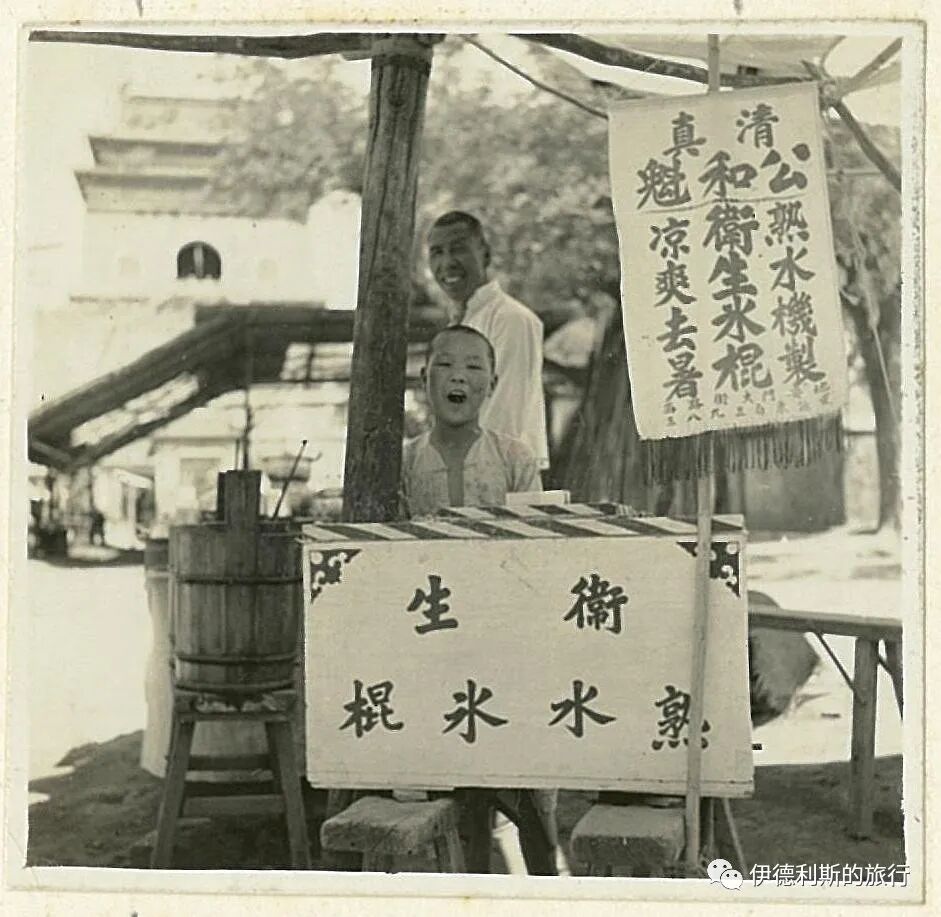
A photo of the halal shop Gonghekui taken at the square in front of the Bell Tower on June 14, 1939.
The halal pastry shop Gonghekui opened in 1894 (the 20th year of the Guangxu reign). It was founded by Zhang Jishan, and the shop was located at the east entrance of Yandai Xiejie on the street outside Di'anmen. The main difference with halal pastries is that they use vegetable oil instead of animal fat. Gonghekui was known for making different pastries according to the season, including sweet rice balls (yuanxiao) for the Lantern Festival, sun cakes (taiyanggao) on the first day of the third lunar month, elm coin cakes (yuchiangao) in the third month, fresh rose cakes and fresh wisteria cakes in the fourth month, five-poison cakes (wudubing) for the Dragon Boat Festival, mung bean cakes and pea flour cakes (wandouhuang) in the sixth month, tuckahoe cakes (fulingbing) in the seventh month, mooncakes in the eighth month, honey twists (mimahua) and unicorn pastries (qilin su) in the ninth month, flower cakes (huagao) for the Double Ninth Festival, and ginger juice fried dough (jiangzhi paixia) during the Muslim month of Ramadan.
Besides pastries, Gonghekui also made its own popsicles in the summer. This is shown in the old photo, where the sign reads: "Machine-made, hygienic popsicles, cool and refreshing for summer," with smaller text below saying: West side of Di'anmen Street.
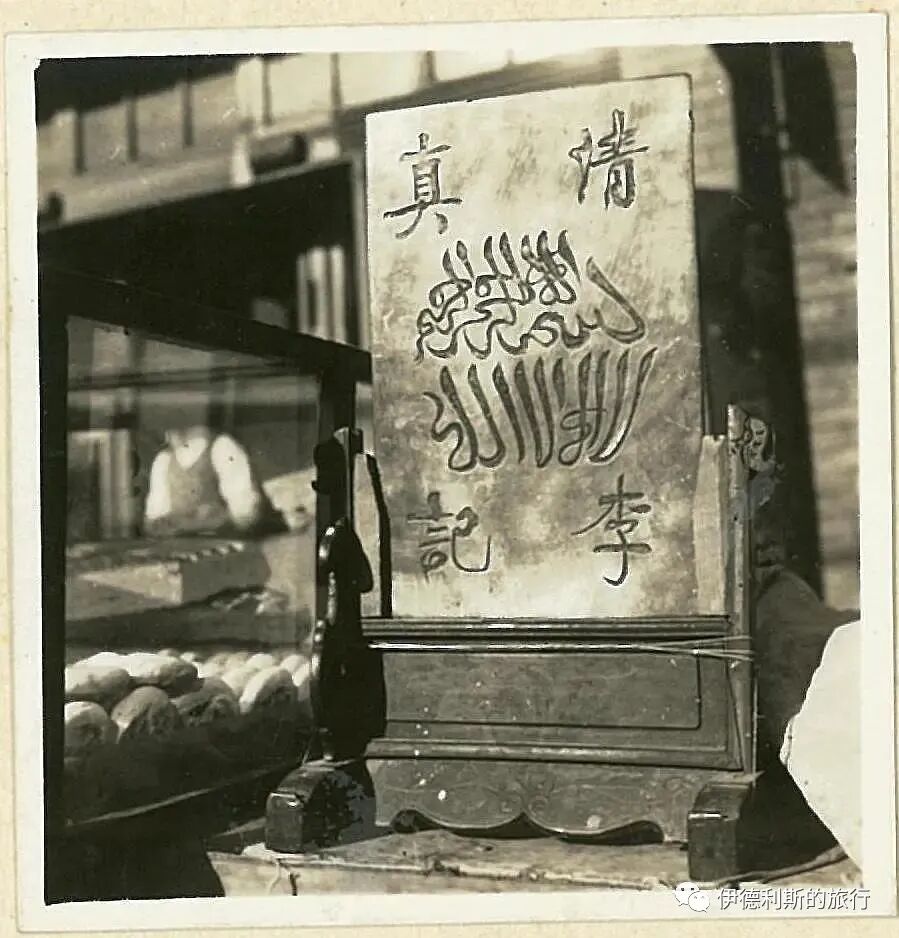
The halal Li Ji copper plaque in March 1941.
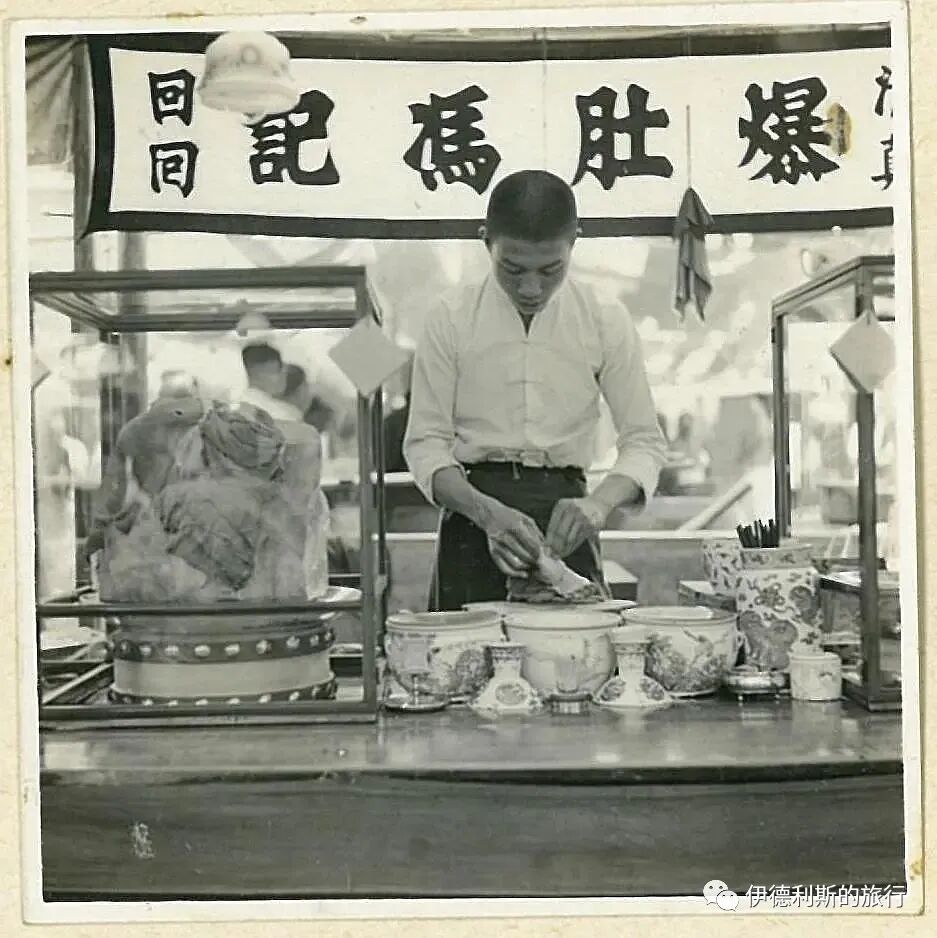
Baodu Feng in September 1941.
Here is an excerpt about Jinshenglong Baodu Feng from the book History of Beijing Dong'an Market (Huanhui Jisheng - Beijing Dong'an Shichang Shi):
Not long after the Dong'an Market opened, two Hui Muslims named Wang and Feng set up stalls selling tripe (baodu). Although the two families were cousins and their skills were similar, the competition was fierce as each tried to create unique features and attract customers. Later, Baodu Wang became famous first and by the 1940s had developed into the Xideshun Lamb Restaurant with two storefronts. Baodu Feng continued to run a stall until after the liberation, when they built a shed, hung the Jinshenglong sign, and continued to specialize in tripe.
Selling tripe is hard work. Jinshenglong founder Feng Tianjie worked alongside his wife and children. The beef and lamb tripe they used was bought from the slaughterhouses (niuguohuo) and lamb shops located between Chaoyangmen and Dongbianmen. The supply was not fixed, and families had to compete to buy it, often running around and humbly asking people for stock, only to sometimes come back empty-handed. When they bought tripe, they would get 40 to 50 jin at most, or 20 to 30 jin at least. Without transport, they had to carry bamboo baskets on their arms and walk several miles to bring it home. Cleaning tripe is even harder work. The Feng family lived in the slums outside Chaoyangmen near the South River bank. There was a bitter-water well nearby. For over thirty years, Feng Tianjie's wife went to the well almost every day with buckets and basins to wash tripe. Each piece of tripe had to be washed seven times, turning it inside out three times and right-side out four times, cleaning every leaf of the omasum (baiye) one by one. In winter, the water was freezing, leaving her hands red and swollen. Sometimes even her shoes would freeze to the well platform. After cleaning the tripe, she had to carry a basket and walk five or six li to sell it at the Dong'an Market.
Quick-boiled tripe (baodu) must be fresh; the fresher, the better. It is usually sold out the same day, within twenty-four hours. When the weather is warm, the cleaned tripe must be kept on ice to stay fresh. In cold weather, it must be protected from freezing. Because it is hard to store, the price changes. When supply is low, they sell it sparingly, but when there is too much or few customers due to bad weather, they have to sell it off cheaply. Every year after spring begins, there is less cattle and sheep slaughter, so the baodu business enters a slow season. In midsummer, when the mutton shops close their counters and the mutton carts stop, the baodu sellers have to put away their pots and temporarily sell things like mung bean jelly (liangfen) and rice cakes (paigao) to get through the slow season.
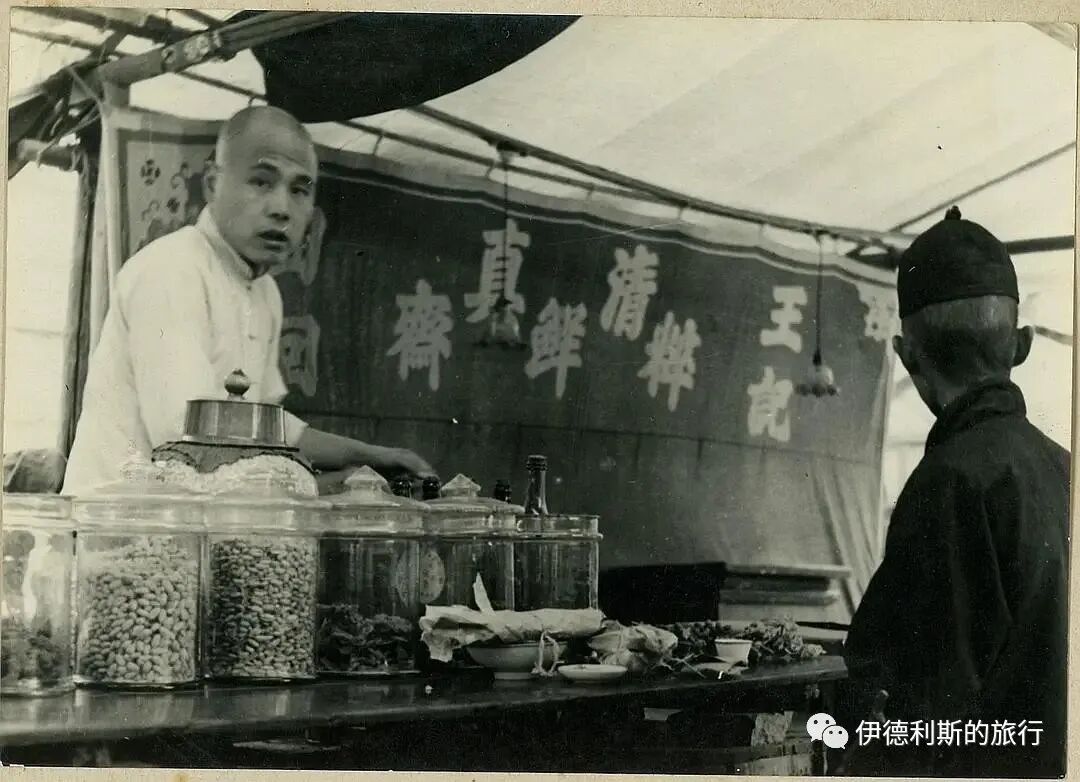
Wang's Halal Cuixianzhai.
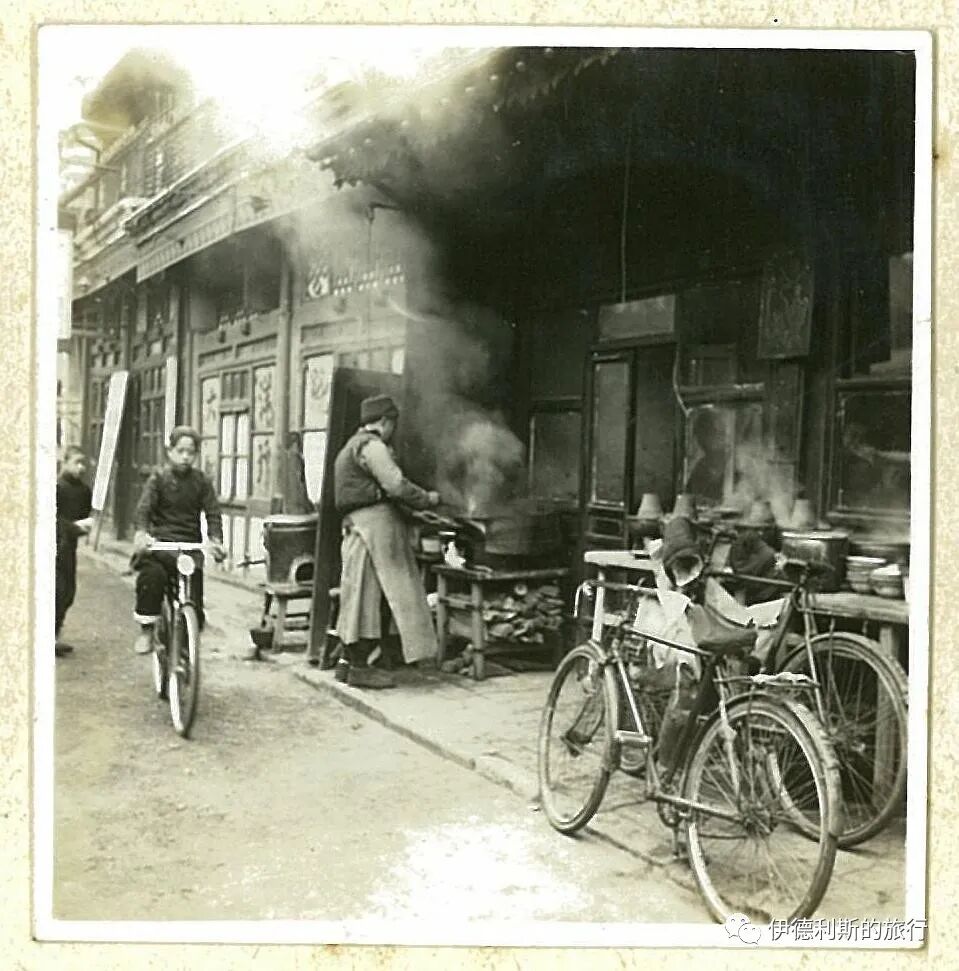
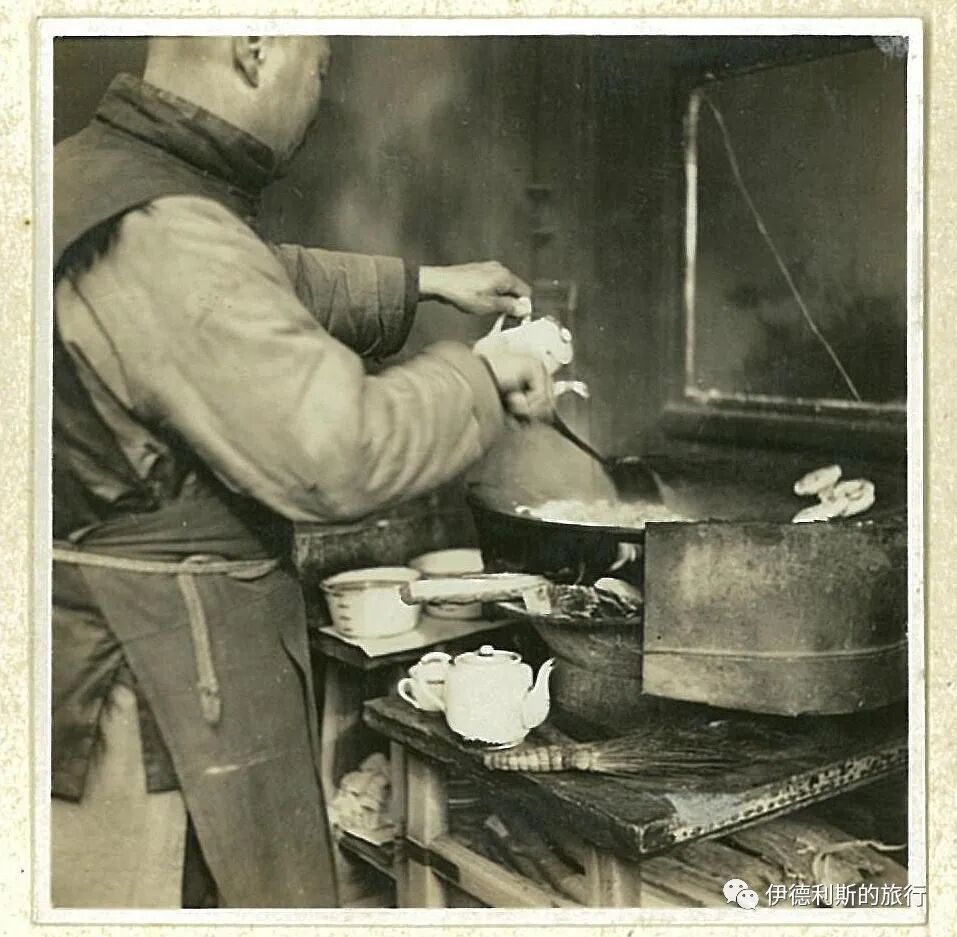
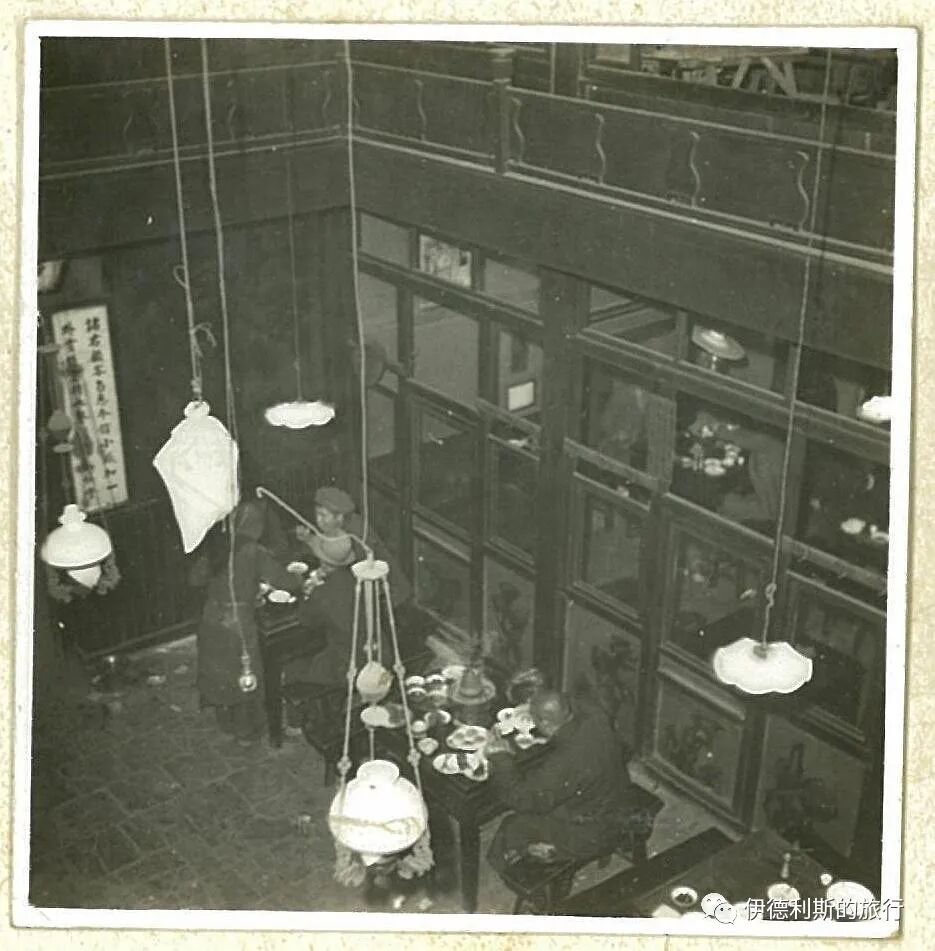
In December 1940, a halal roasted mutton shop on Meishi Street outside Qianmen, where you can faintly see a water pitcher (tangping) image.
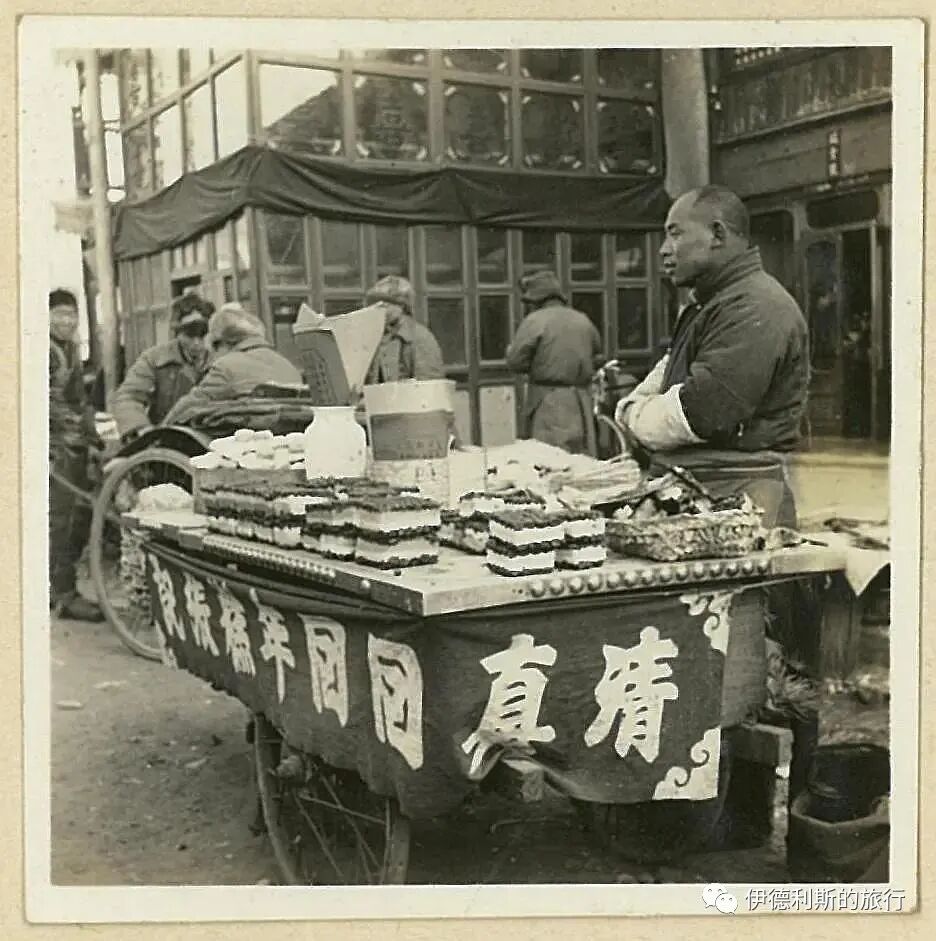
In January 1941, Zhang's Halal Hui Muslim rice cakes, during the first lunar month when rice cakes are in season.
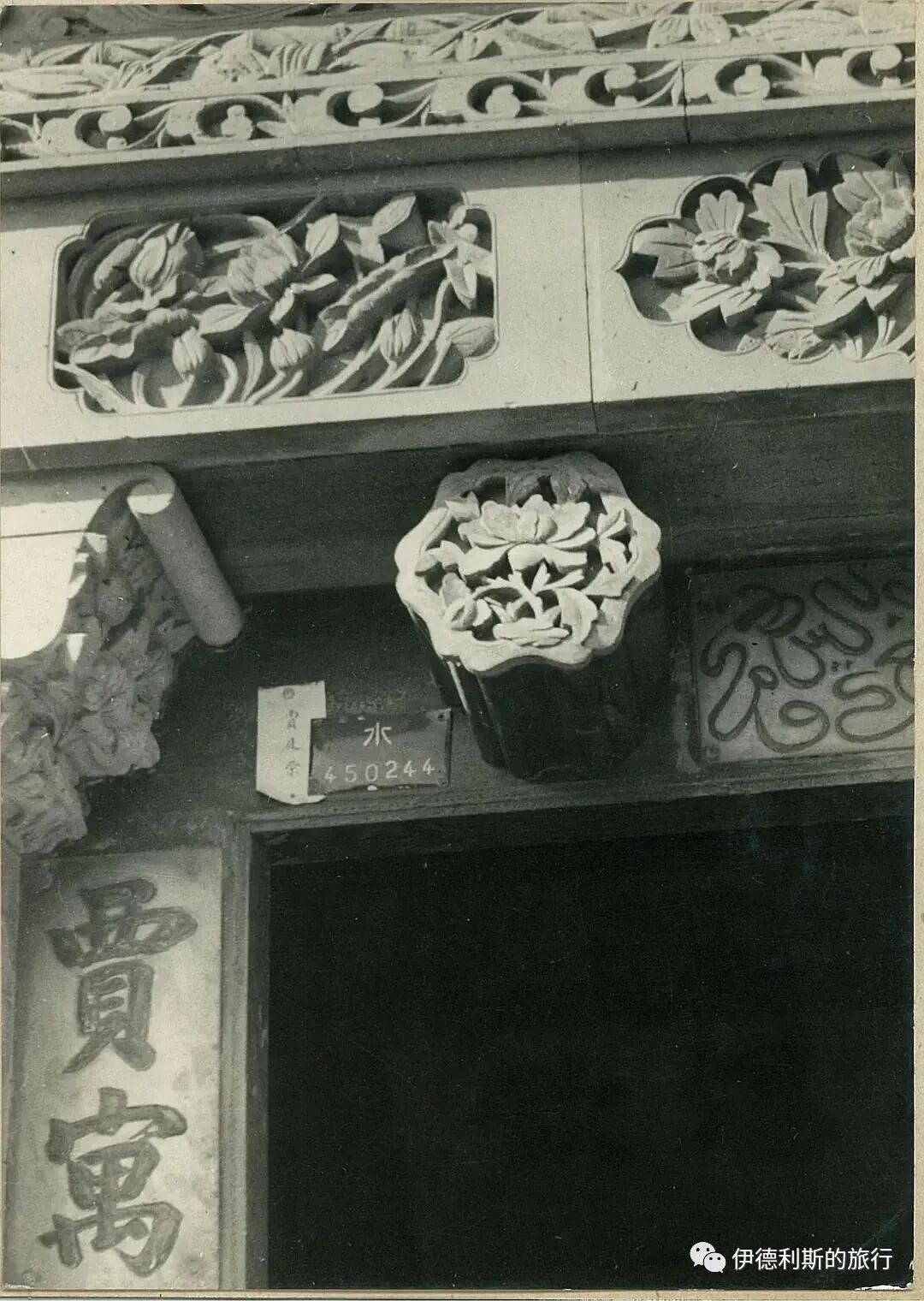
On the storefront of a Hui Muslim family, you can see the owner is named Jia Tingrong.
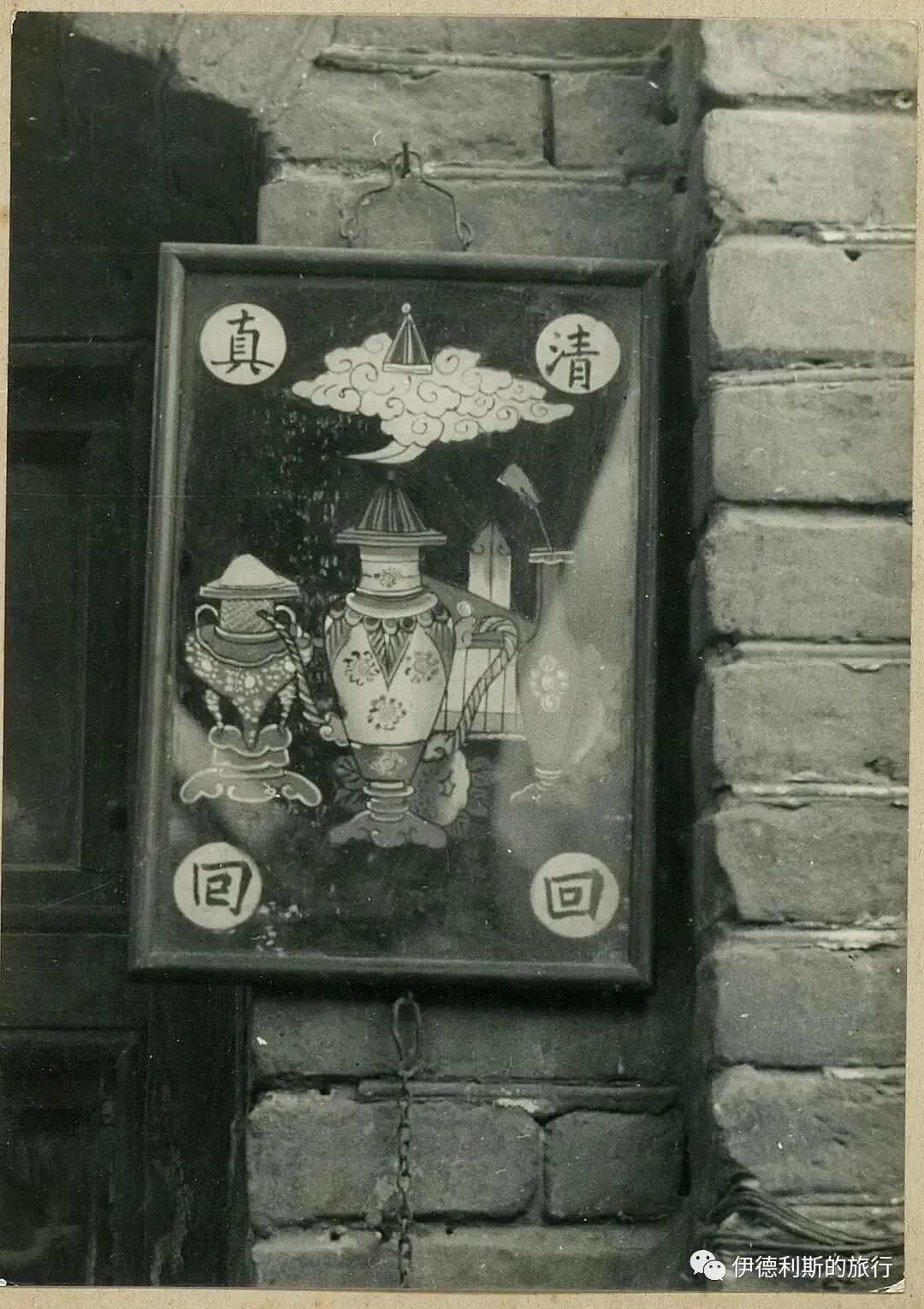
The halal sign is very pointed. Inside are the three types of incense burners (luping sanshi). On the auspicious clouds above, there should be the pointed hat worn by an imam.
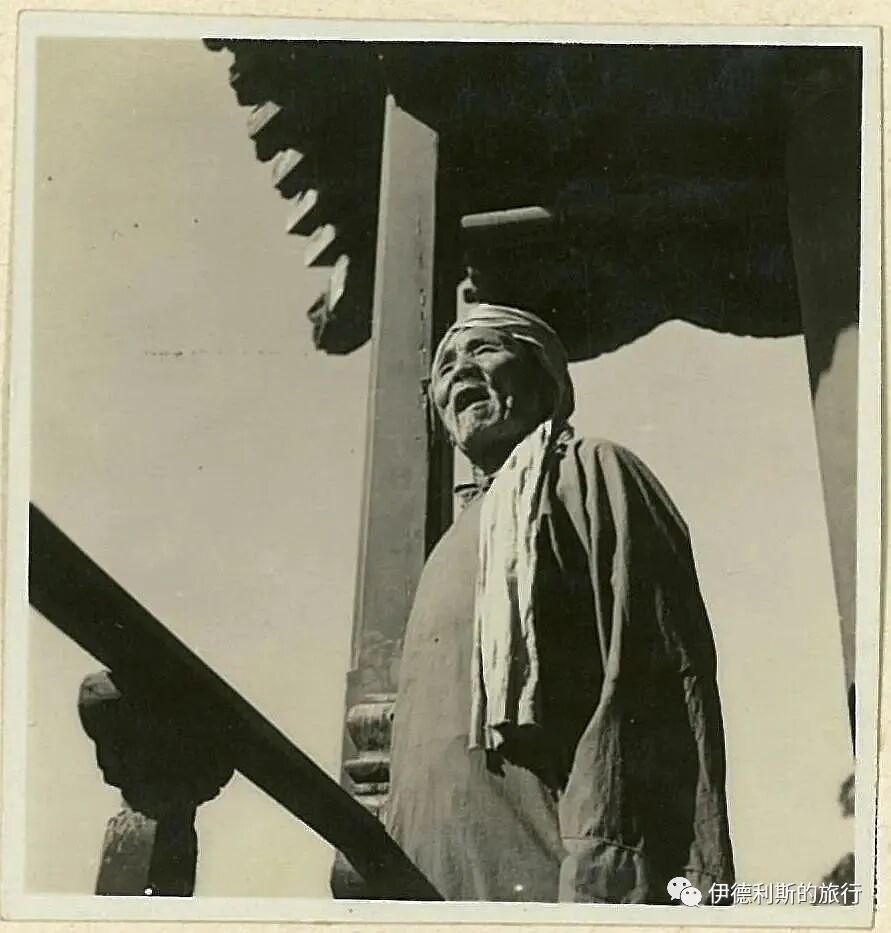
October 1941, calling the adhan at the Niujie Mosque.
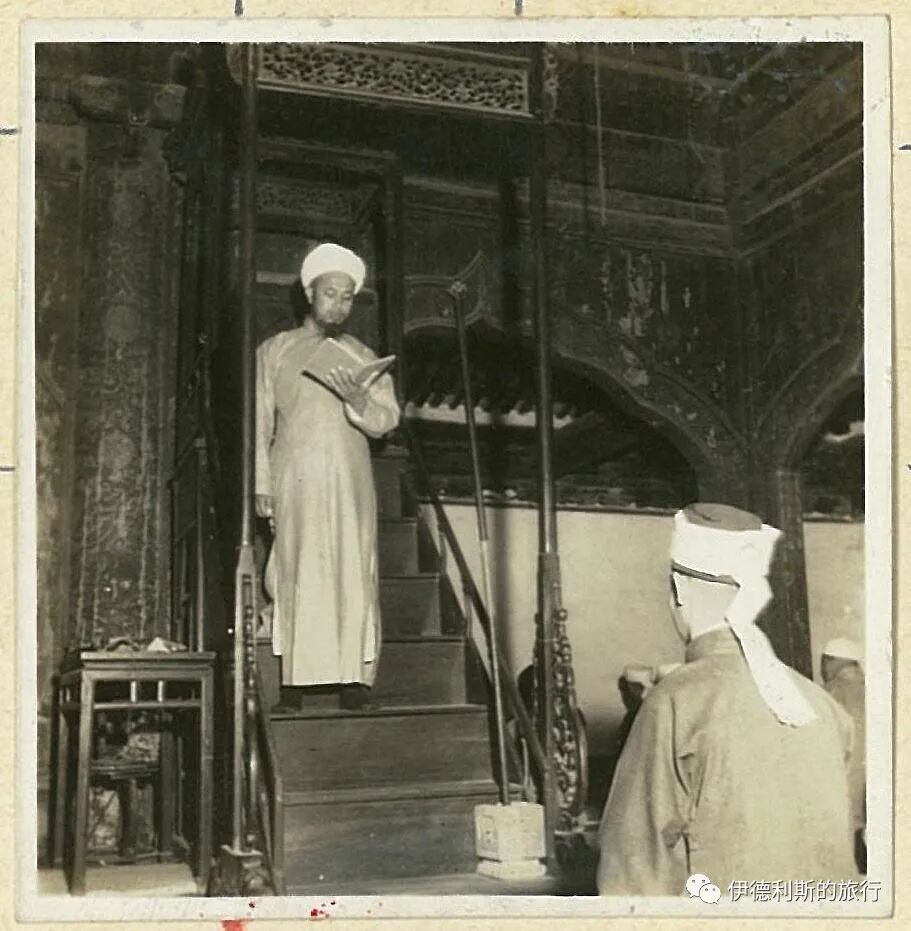
The Niujie Mosque in October 1941.
The Niujie Mosque in March 1941.
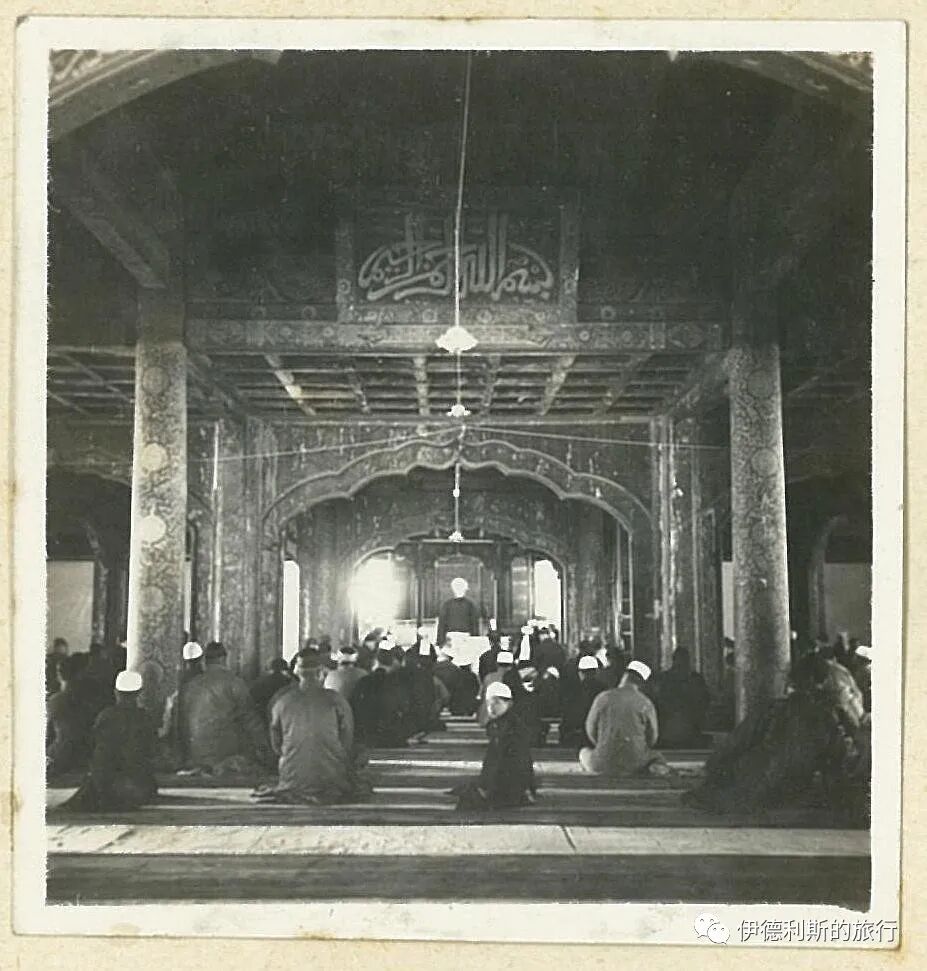
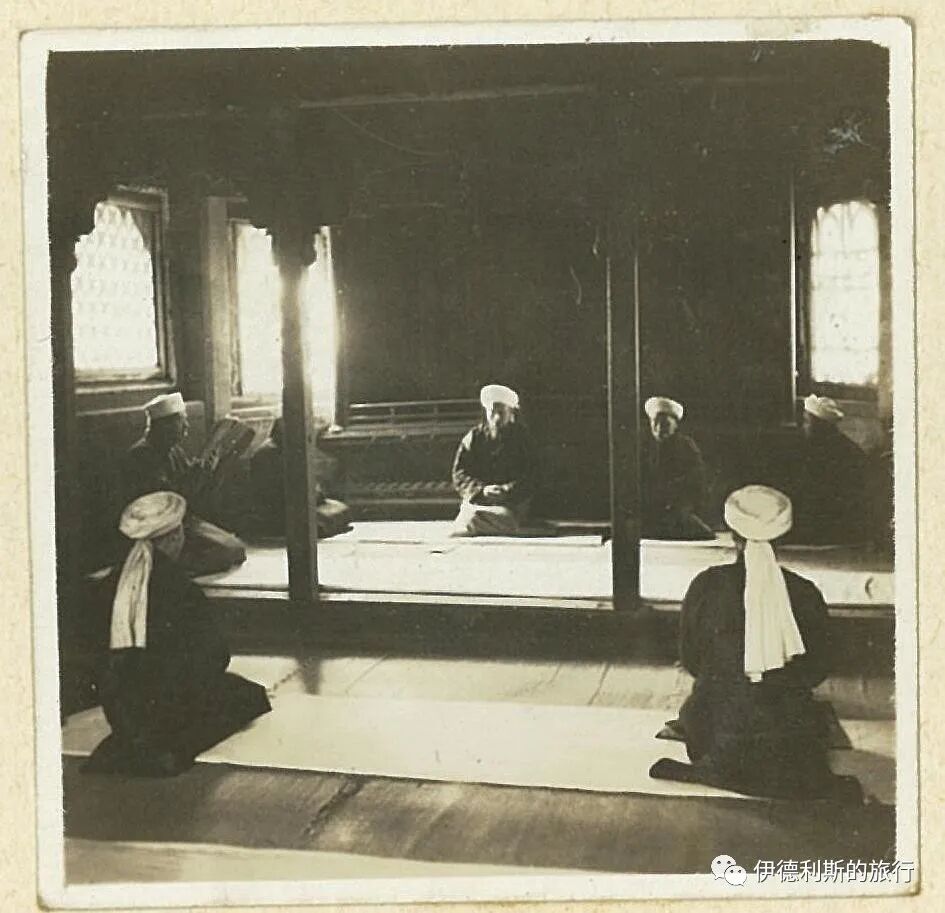
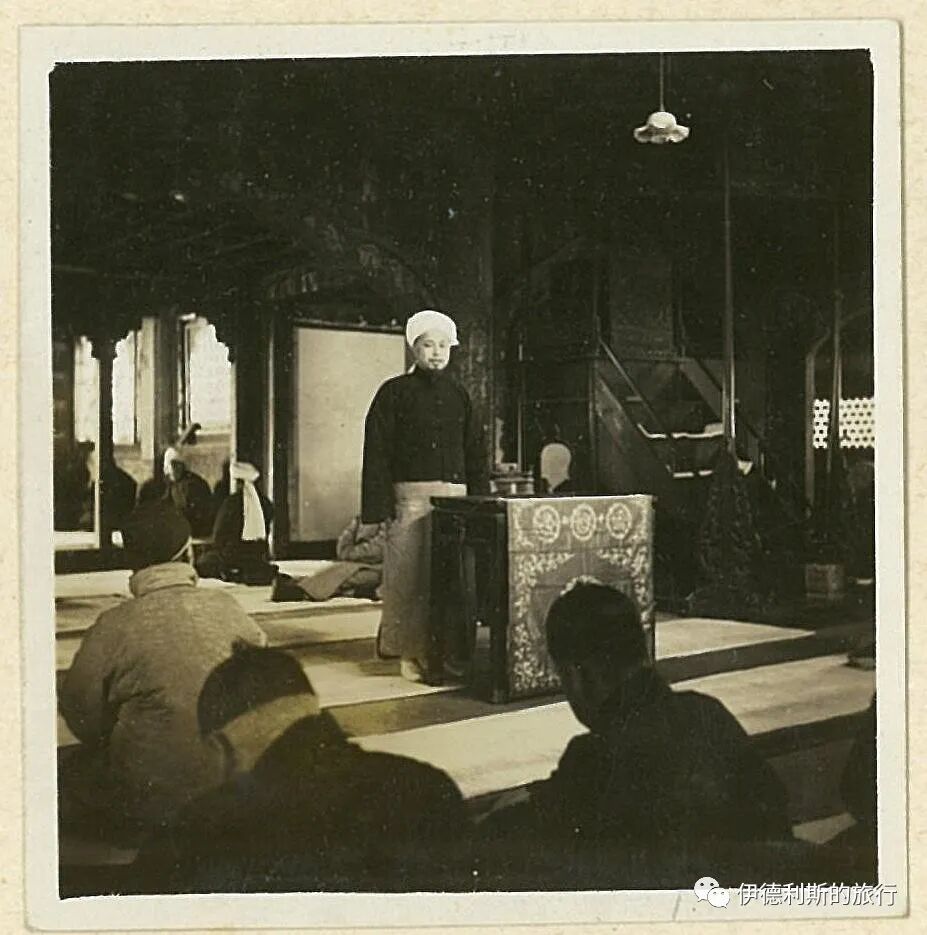
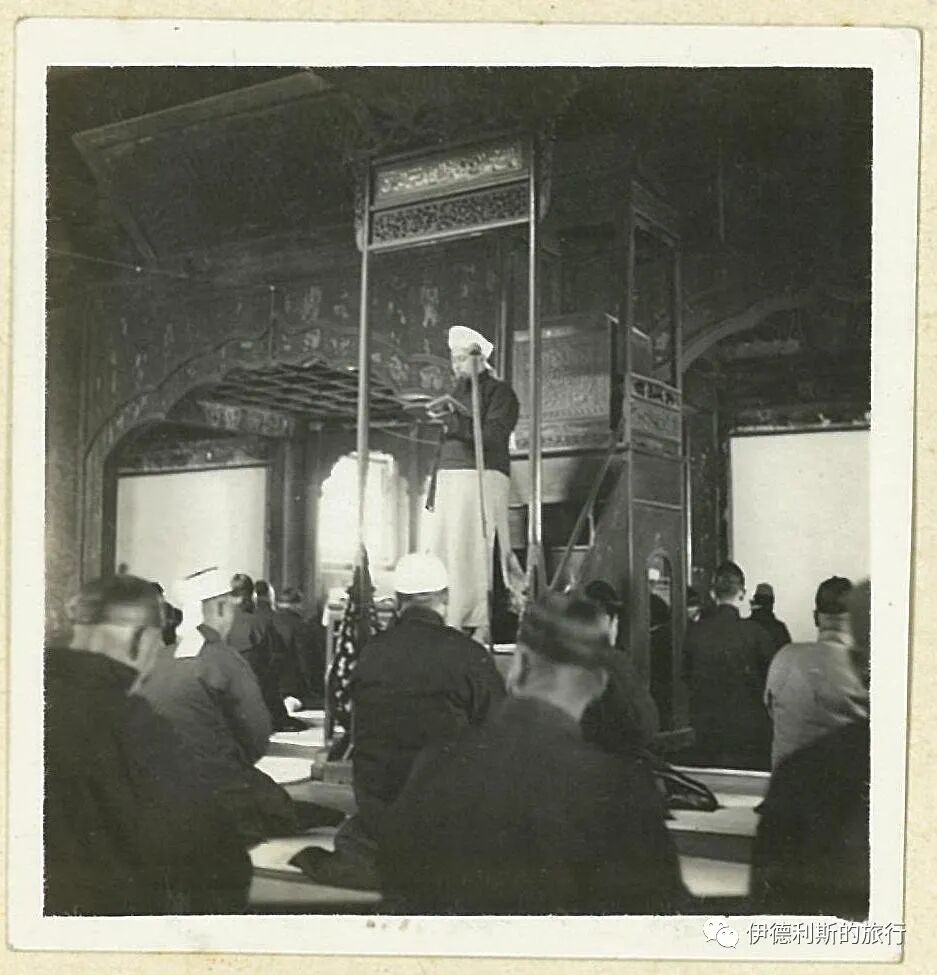
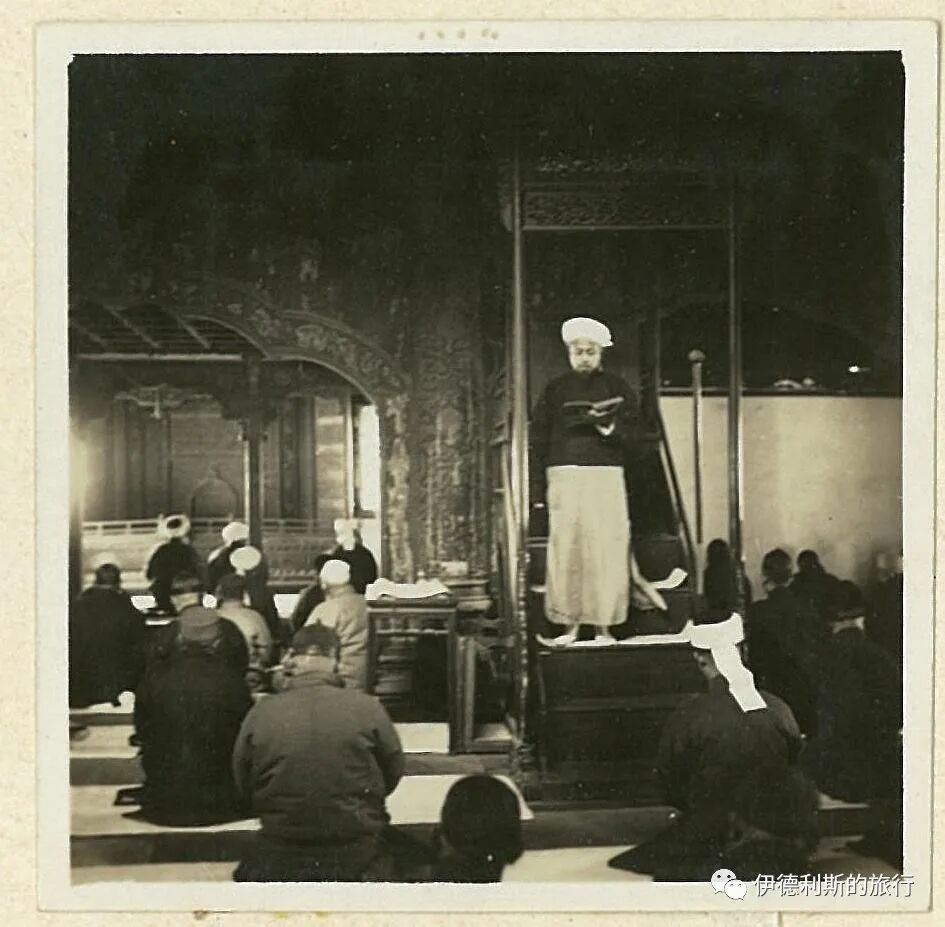
The Niujie Mosque in April 1941.
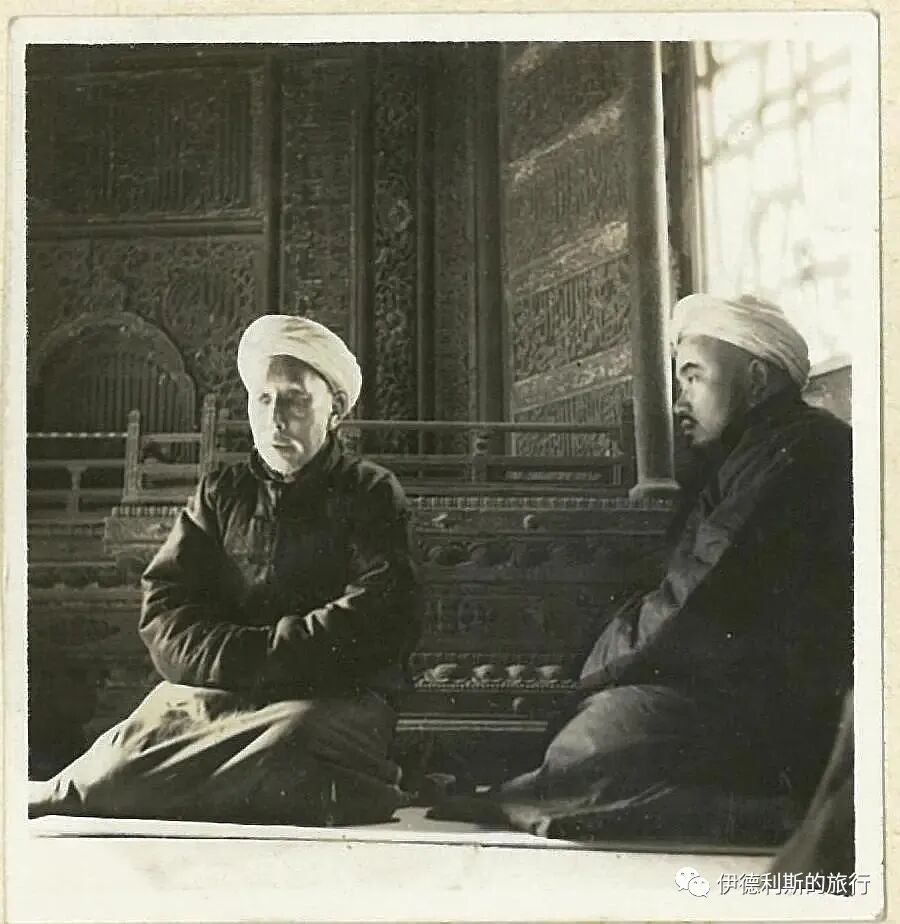
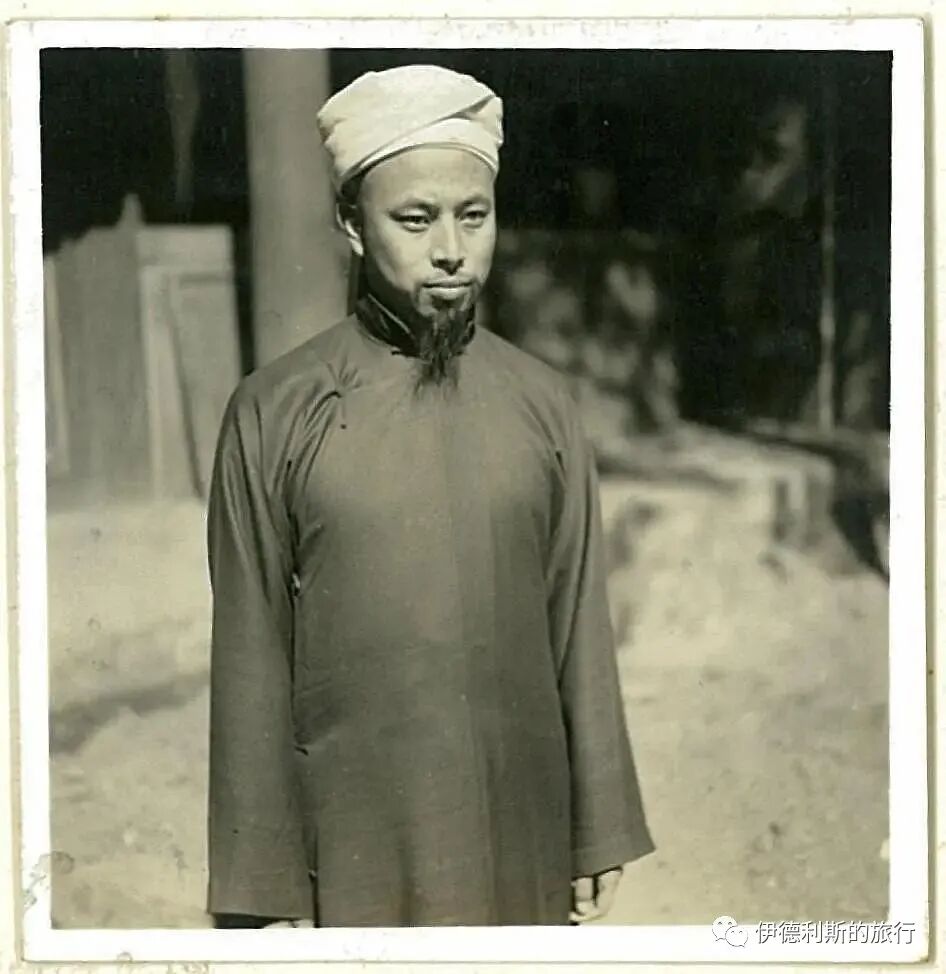
September 1939, the imam of the Niujie Mosque.
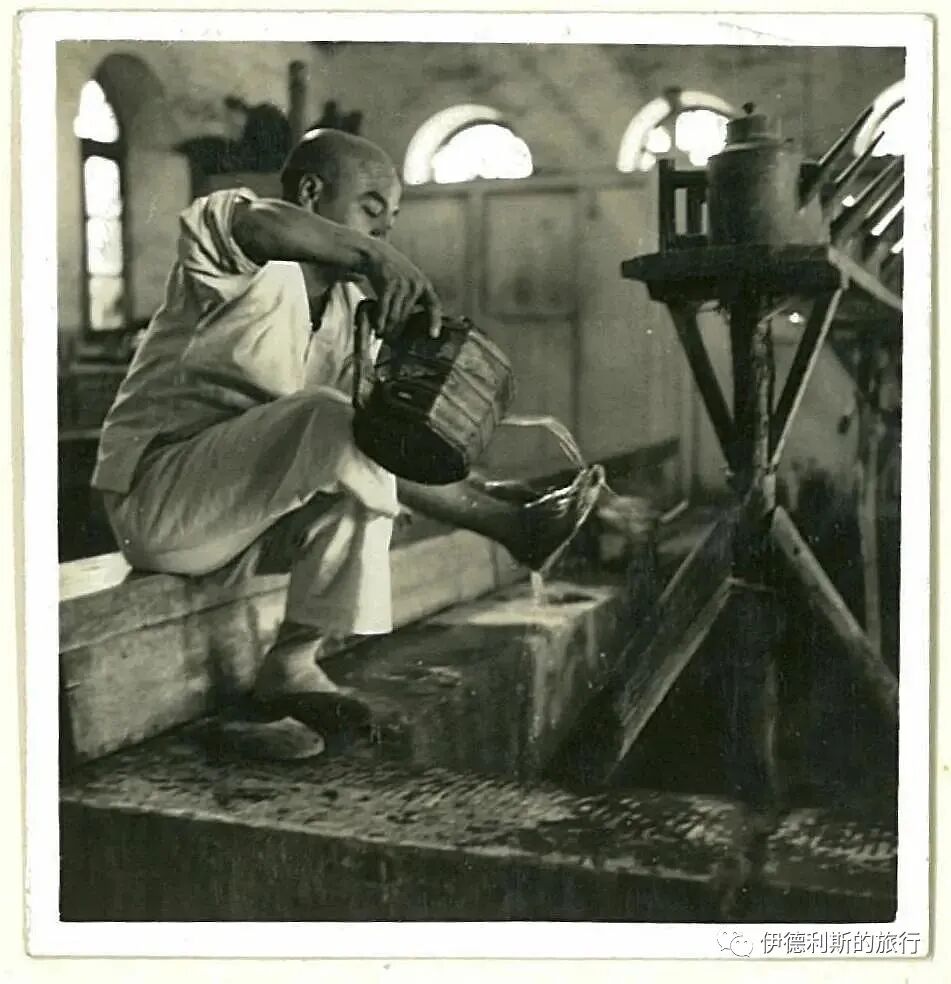
September 1939, performing minor ablution (wudu) at the Niujie Mosque.
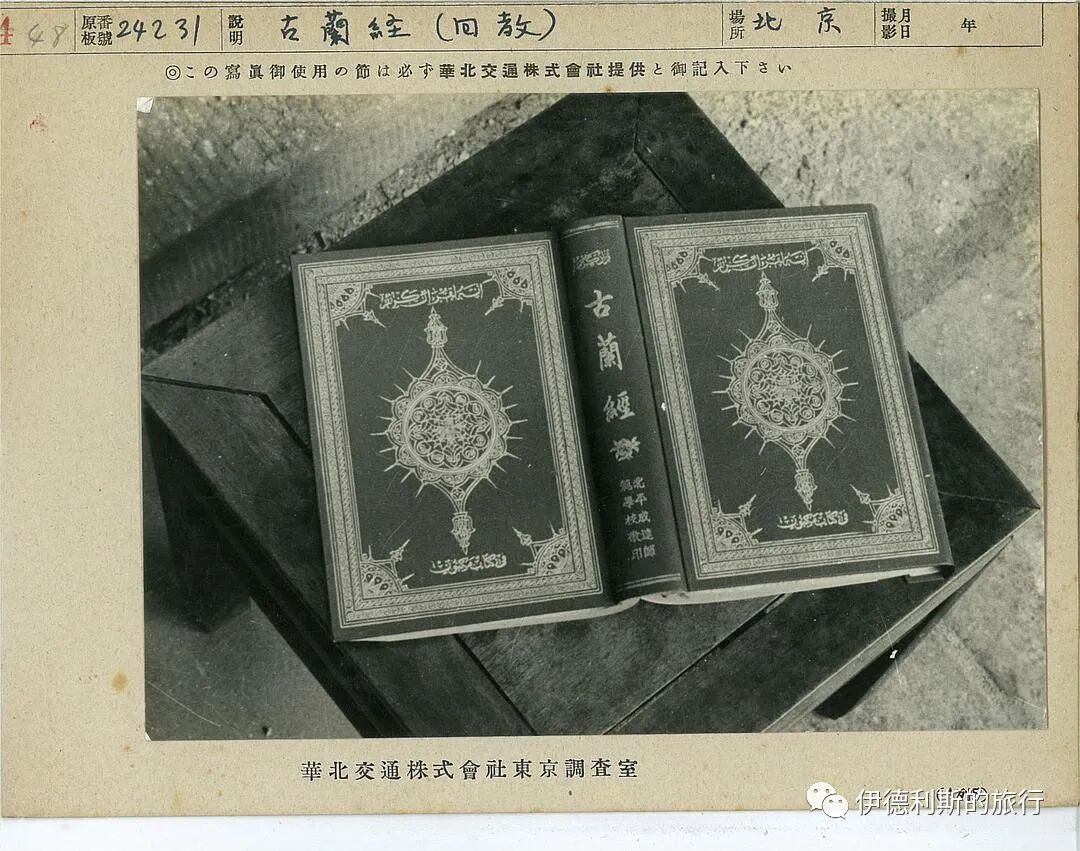
September 1939, the Quran (Guer'ani) at the Niujie Mosque, printed by the Beiping Chengda Normal School.
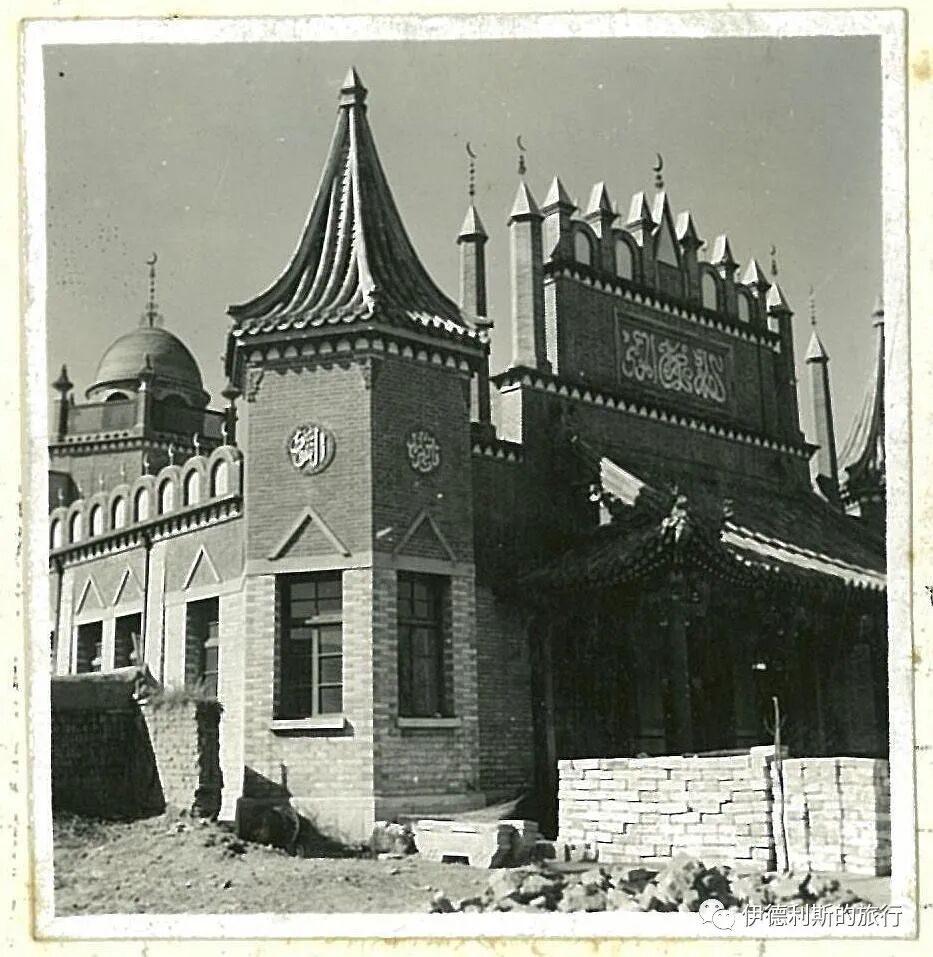
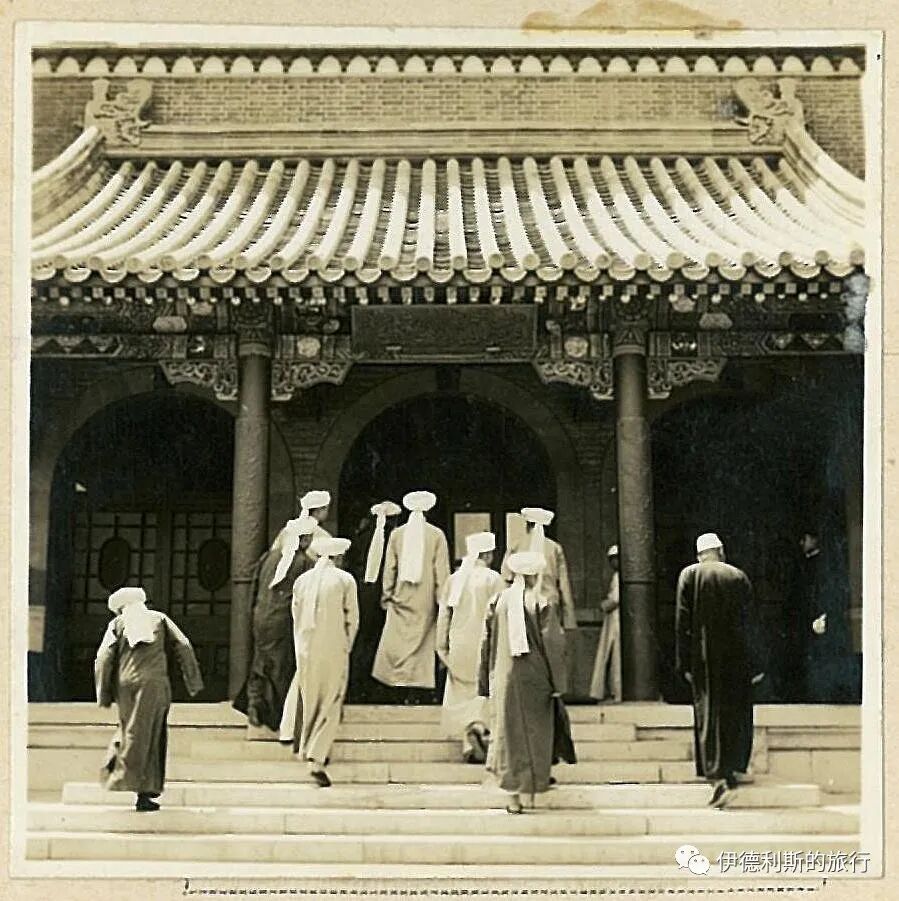
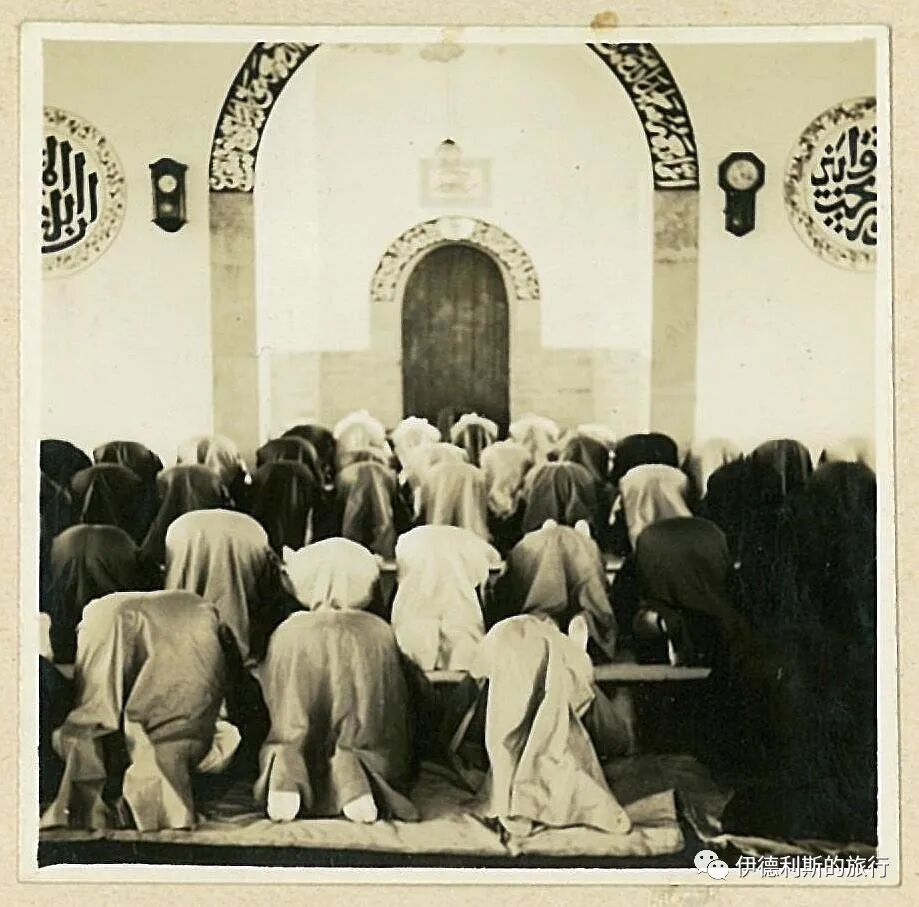
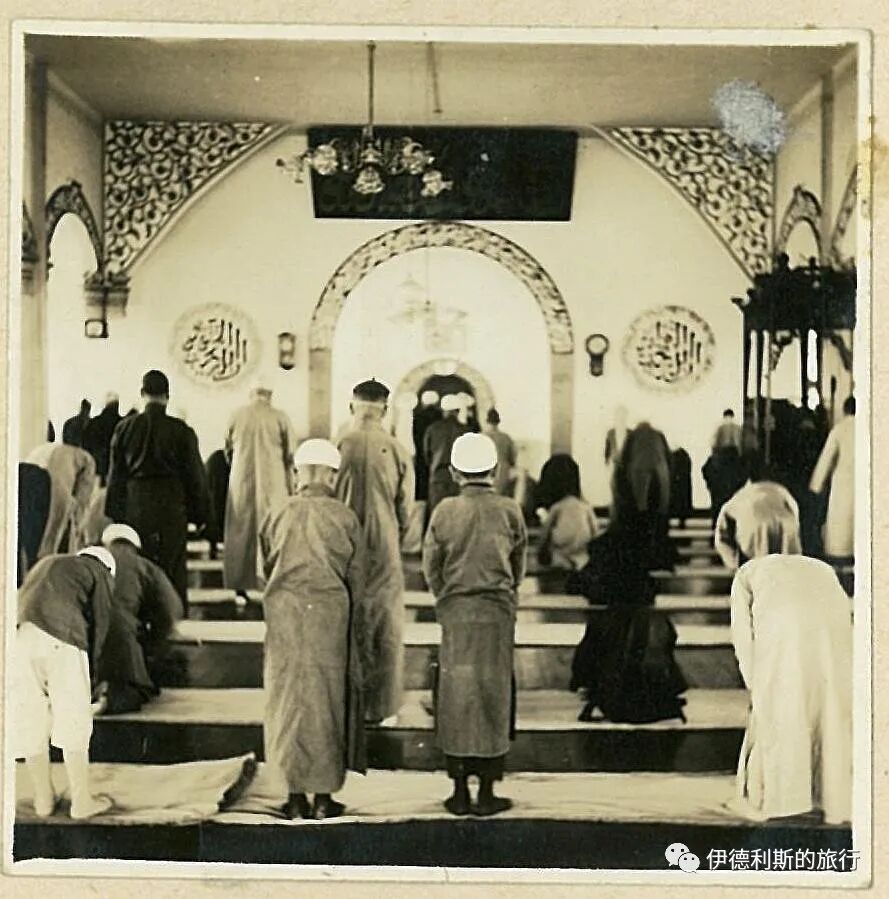
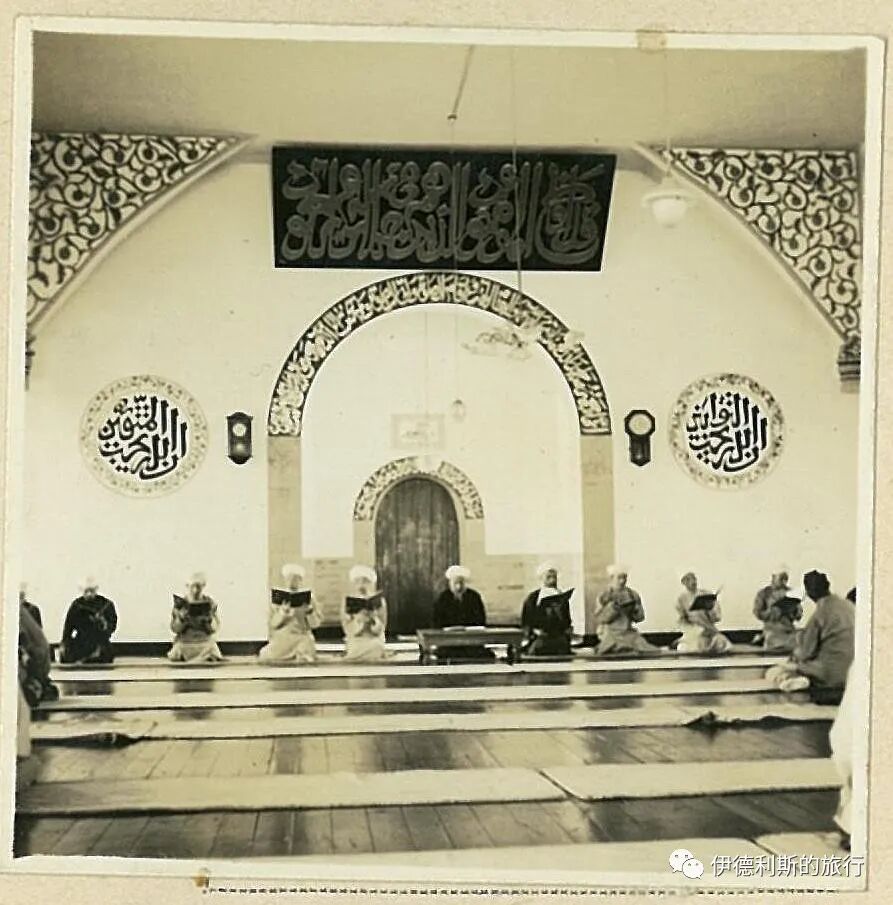
The Tianqiao Mosque in March 1939.
Tianqiao Mosque was located north of the mosque of Agriculture (Xiannongtan) between Fuchang Street Fourth and Fifth Lanes. It was built in 1926. Its demolition date is unknown, and the original site is now the Beijing Institute of Economics.
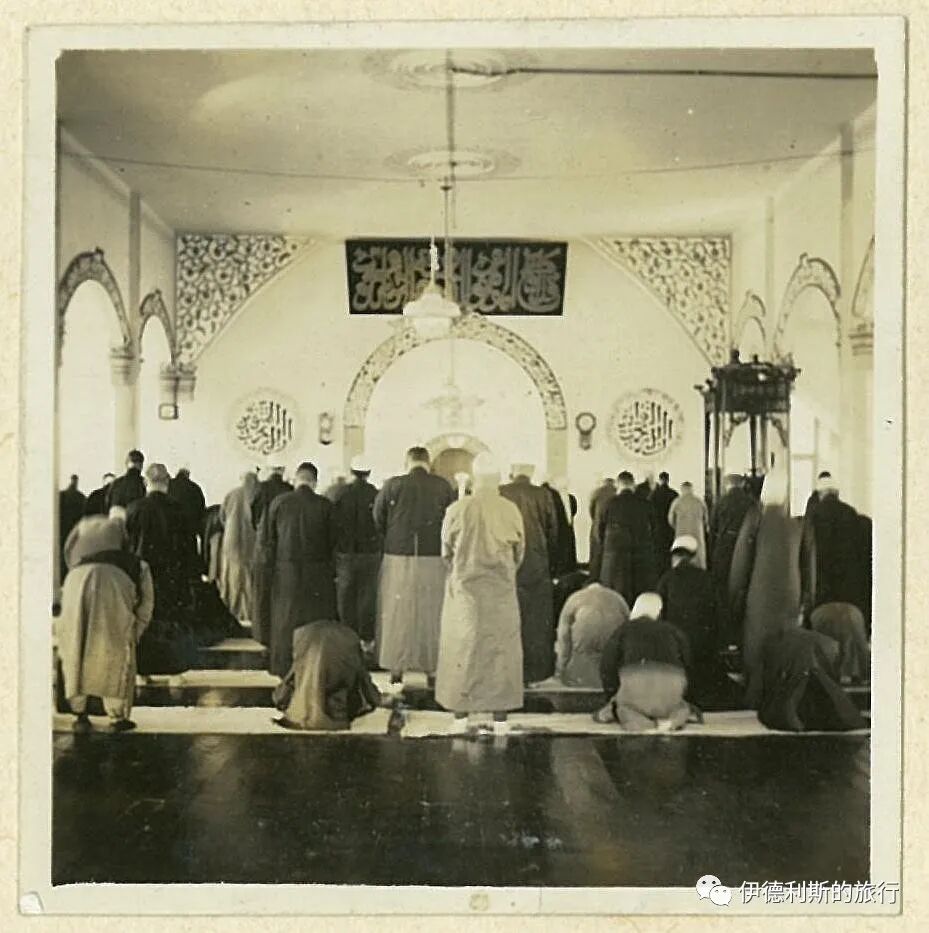
Tianqiao Mosque in March 1941.
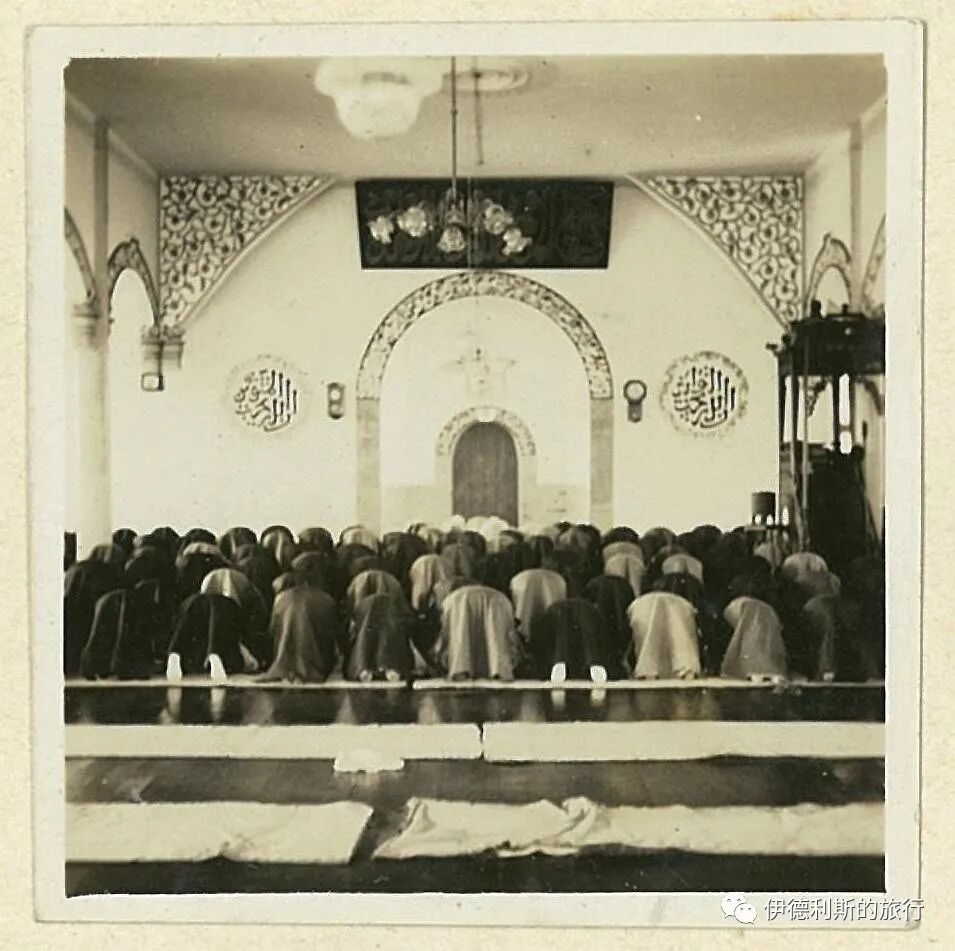
Tianqiao Mosque in July 1941.
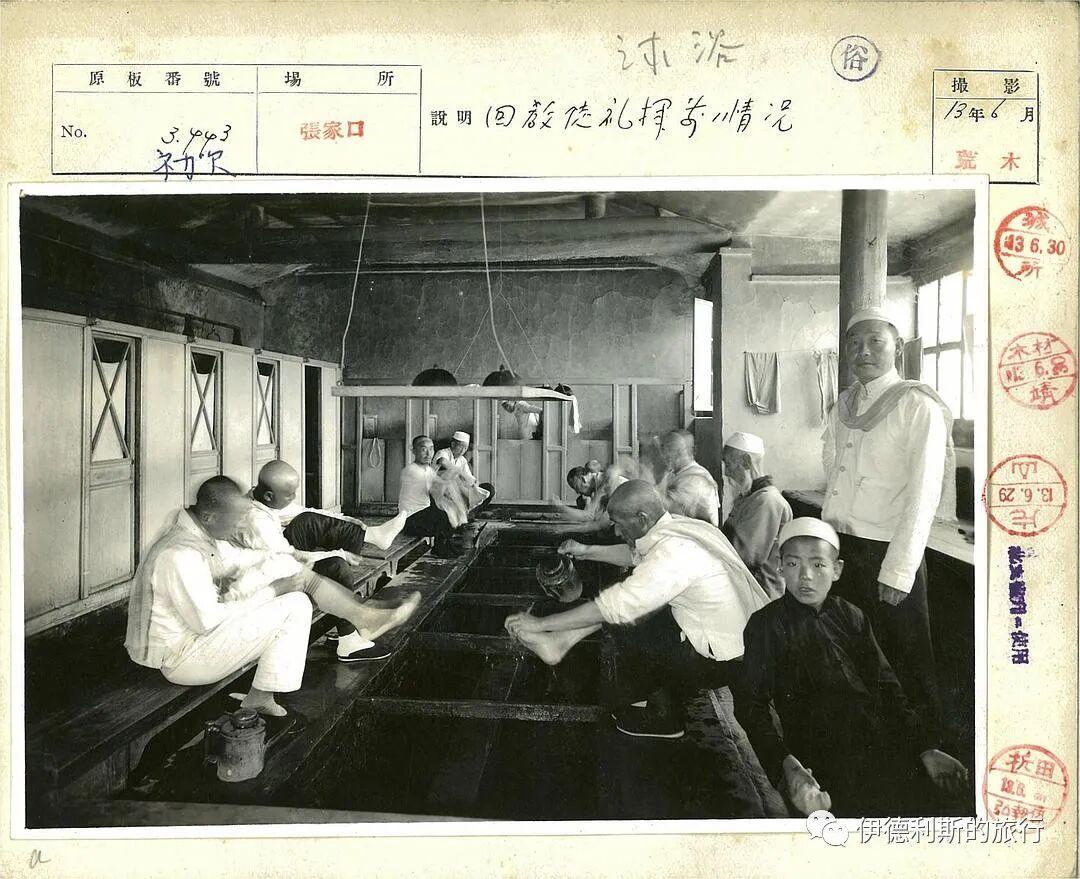
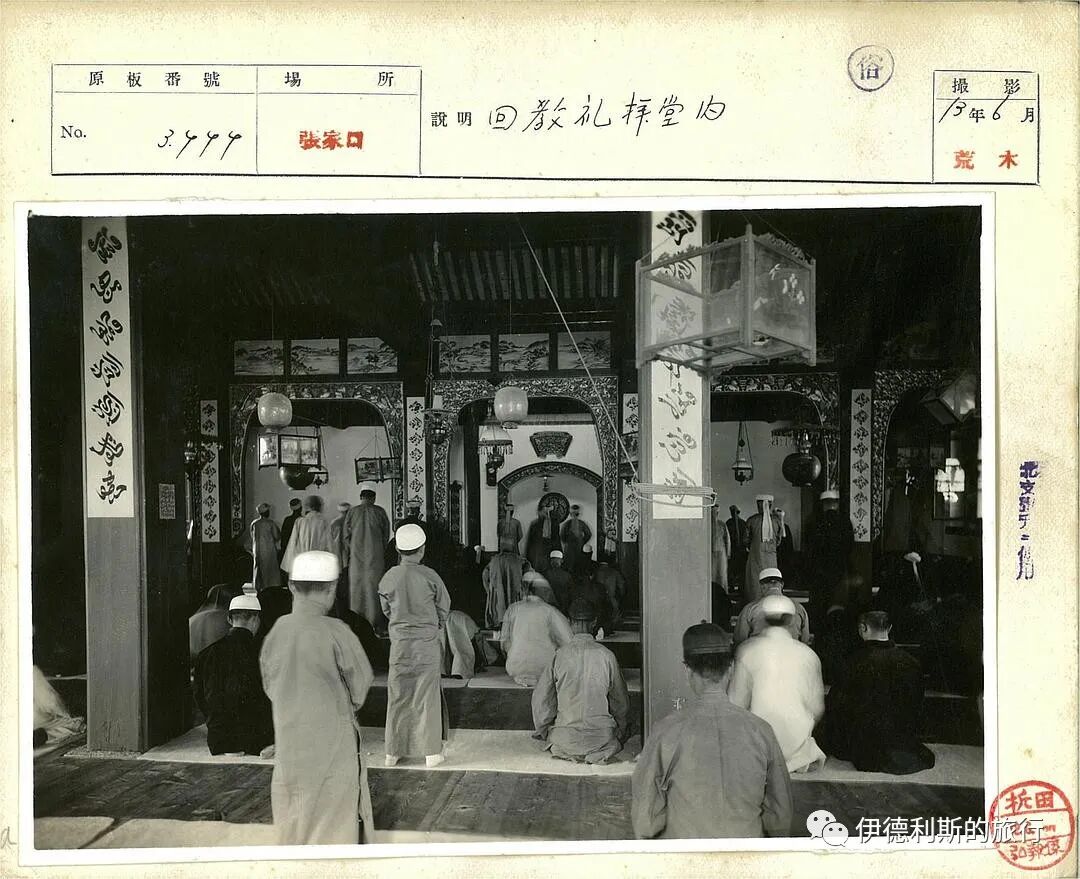
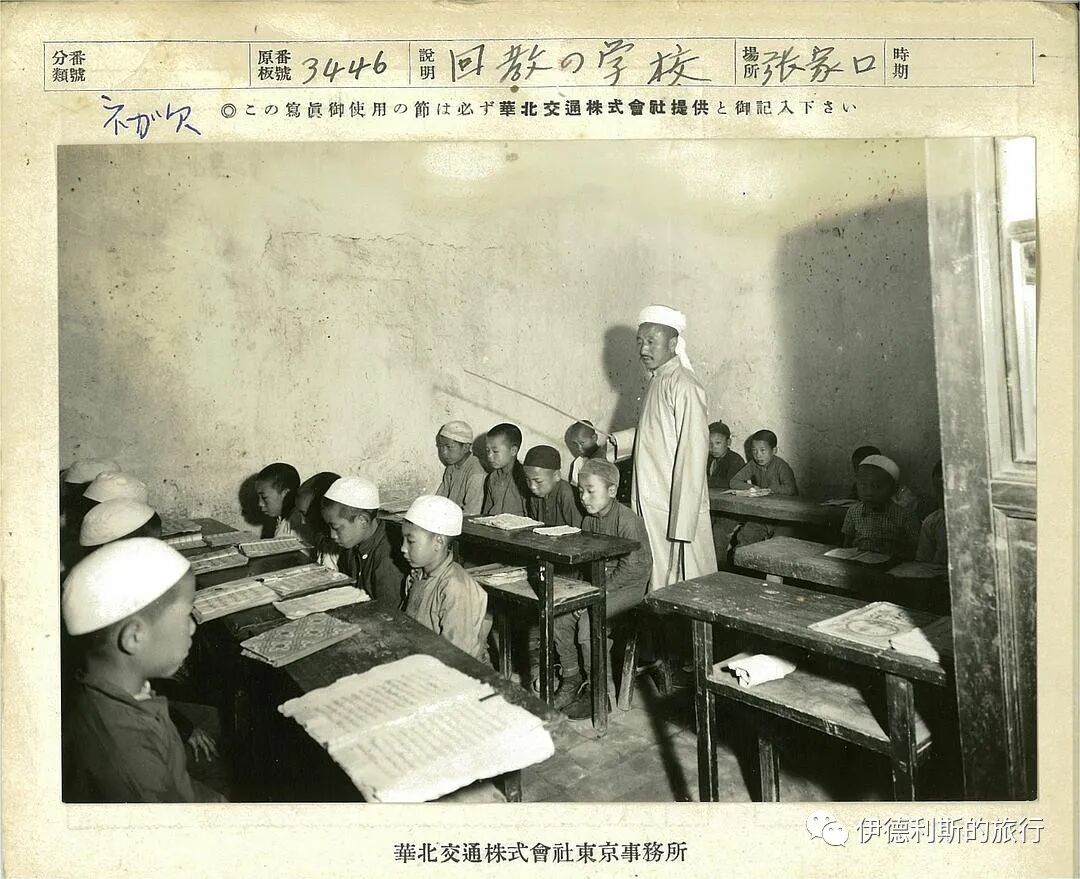
Zhangjiakou.
June 1938, performing wudu (ritual washing).
Mosque.
Islamic school (jingxuexiao).
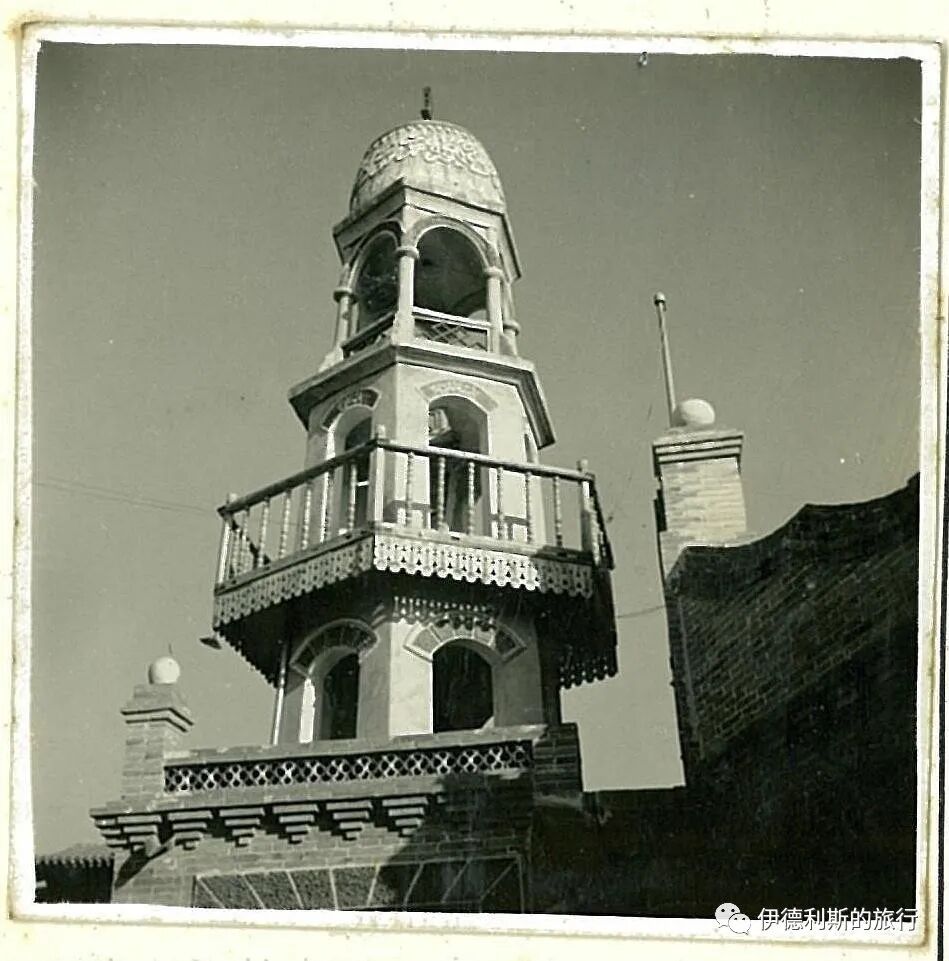
Hohhot.
The minaret (bangkelou) on the gate of the Gansui Mosque in Hohhot in November 1939.
The Gansui Mosque, also known as the North Mosque (Qingzhen Beisi), was built during the Xianfeng era and started as a small Islamic primary school. In 1921, Hui Muslims from the Northwest who had recently arrived in Hohhot, including Li Fengzao and Su Jinpo, joined local Hui Muslims to buy 12 mu of land at the Wang Family Vegetable Garden outside the North Gate of Suiyuan on Tongdao Street. They rebuilt it over three and a half years and named it Gansui Mosque, commonly known as the North Mosque. Afterward, the North Mosque became the center for the Yihewani sect of Hui Muslims in Hohhot.
The North Mosque was demolished in 1962 and merged with the West Mosque to form the Northwest Mosque, which was rebuilt in 1986.
Summary: North China Muslim Life in Old Railway Photos: Hui Food, Shops and Streets is presented here as a firsthand travel account in clear English, beginning with this scene: On February 12, 2019, the Institute for Research in Humanities at Kyoto University released 35,000 old photos from 1939-1945 held by the North China Transportation Company. The account keeps its focus on Hui Muslims, Old Photos, North China while preserving the names, places, food, and historical details from the Chinese source.
On February 12, 2019, the Institute for Research in Humanities at Kyoto University released 35,000 old photos from 1939-1945 held by the North China Transportation Company. These photos, known as the North China Transportation Photographs, show the customs, folk culture, and lost landscapes of North China from 80 years ago.
The North China Transportation Company was founded in Beijing in April 1939 under the management of the Japanese Army. It managed railways, roads, rivers, and ports in North China while also producing propaganda, including the North China (Beizhi) pictorial magazine. Most of the North China Transportation Photographs were taken for the North China (Beizhi) pictorial.
The online address for the North China Transportation Photographs is: http://codh.rois.ac.jp/north-c ... zh-cn
Below, I share some scenes of Hui Muslim life in North China from the North China Transportation Company collection.
Beijing
A photo of the halal shop Gonghekui taken at the square in front of the Bell Tower on June 14, 1939.
The halal pastry shop Gonghekui opened in 1894 (the 20th year of the Guangxu reign). It was founded by Zhang Jishan, and the shop was located at the east entrance of Yandai Xiejie on the street outside Di'anmen. The main difference with halal pastries is that they use vegetable oil instead of animal fat. Gonghekui was known for making different pastries according to the season, including sweet rice balls (yuanxiao) for the Lantern Festival, sun cakes (taiyanggao) on the first day of the third lunar month, elm coin cakes (yuchiangao) in the third month, fresh rose cakes and fresh wisteria cakes in the fourth month, five-poison cakes (wudubing) for the Dragon Boat Festival, mung bean cakes and pea flour cakes (wandouhuang) in the sixth month, tuckahoe cakes (fulingbing) in the seventh month, mooncakes in the eighth month, honey twists (mimahua) and unicorn pastries (qilin su) in the ninth month, flower cakes (huagao) for the Double Ninth Festival, and ginger juice fried dough (jiangzhi paixia) during the Muslim month of Ramadan.
Besides pastries, Gonghekui also made its own popsicles in the summer. This is shown in the old photo, where the sign reads: "Machine-made, hygienic popsicles, cool and refreshing for summer," with smaller text below saying: West side of Di'anmen Street.
The halal Li Ji copper plaque in March 1941.
Baodu Feng in September 1941.
Here is an excerpt about Jinshenglong Baodu Feng from the book History of Beijing Dong'an Market (Huanhui Jisheng - Beijing Dong'an Shichang Shi):
Not long after the Dong'an Market opened, two Hui Muslims named Wang and Feng set up stalls selling tripe (baodu). Although the two families were cousins and their skills were similar, the competition was fierce as each tried to create unique features and attract customers. Later, Baodu Wang became famous first and by the 1940s had developed into the Xideshun Lamb Restaurant with two storefronts. Baodu Feng continued to run a stall until after the liberation, when they built a shed, hung the Jinshenglong sign, and continued to specialize in tripe.
Selling tripe is hard work. Jinshenglong founder Feng Tianjie worked alongside his wife and children. The beef and lamb tripe they used was bought from the slaughterhouses (niuguohuo) and lamb shops located between Chaoyangmen and Dongbianmen. The supply was not fixed, and families had to compete to buy it, often running around and humbly asking people for stock, only to sometimes come back empty-handed. When they bought tripe, they would get 40 to 50 jin at most, or 20 to 30 jin at least. Without transport, they had to carry bamboo baskets on their arms and walk several miles to bring it home. Cleaning tripe is even harder work. The Feng family lived in the slums outside Chaoyangmen near the South River bank. There was a bitter-water well nearby. For over thirty years, Feng Tianjie's wife went to the well almost every day with buckets and basins to wash tripe. Each piece of tripe had to be washed seven times, turning it inside out three times and right-side out four times, cleaning every leaf of the omasum (baiye) one by one. In winter, the water was freezing, leaving her hands red and swollen. Sometimes even her shoes would freeze to the well platform. After cleaning the tripe, she had to carry a basket and walk five or six li to sell it at the Dong'an Market.
Quick-boiled tripe (baodu) must be fresh; the fresher, the better. It is usually sold out the same day, within twenty-four hours. When the weather is warm, the cleaned tripe must be kept on ice to stay fresh. In cold weather, it must be protected from freezing. Because it is hard to store, the price changes. When supply is low, they sell it sparingly, but when there is too much or few customers due to bad weather, they have to sell it off cheaply. Every year after spring begins, there is less cattle and sheep slaughter, so the baodu business enters a slow season. In midsummer, when the mutton shops close their counters and the mutton carts stop, the baodu sellers have to put away their pots and temporarily sell things like mung bean jelly (liangfen) and rice cakes (paigao) to get through the slow season.
Wang's Halal Cuixianzhai.
In December 1940, a halal roasted mutton shop on Meishi Street outside Qianmen, where you can faintly see a water pitcher (tangping) image.
In January 1941, Zhang's Halal Hui Muslim rice cakes, during the first lunar month when rice cakes are in season.
On the storefront of a Hui Muslim family, you can see the owner is named Jia Tingrong.
The halal sign is very pointed. Inside are the three types of incense burners (luping sanshi). On the auspicious clouds above, there should be the pointed hat worn by an imam.
October 1941, calling the adhan at the Niujie Mosque.
The Niujie Mosque in October 1941.
The Niujie Mosque in March 1941.
The Niujie Mosque in April 1941.
September 1939, the imam of the Niujie Mosque.
September 1939, performing minor ablution (wudu) at the Niujie Mosque.
September 1939, the Quran (Guer'ani) at the Niujie Mosque, printed by the Beiping Chengda Normal School.
The Tianqiao Mosque in March 1939.
Tianqiao Mosque was located north of the mosque of Agriculture (Xiannongtan) between Fuchang Street Fourth and Fifth Lanes. It was built in 1926. Its demolition date is unknown, and the original site is now the Beijing Institute of Economics.
Tianqiao Mosque in March 1941.
Tianqiao Mosque in July 1941.
Zhangjiakou.
June 1938, performing wudu (ritual washing).
Mosque.
Islamic school (jingxuexiao).
Hohhot.
The minaret (bangkelou) on the gate of the Gansui Mosque in Hohhot in November 1939.
The Gansui Mosque, also known as the North Mosque (Qingzhen Beisi), was built during the Xianfeng era and started as a small Islamic primary school. In 1921, Hui Muslims from the Northwest who had recently arrived in Hohhot, including Li Fengzao and Su Jinpo, joined local Hui Muslims to buy 12 mu of land at the Wang Family Vegetable Garden outside the North Gate of Suiyuan on Tongdao Street. They rebuilt it over three and a half years and named it Gansui Mosque, commonly known as the North Mosque. Afterward, the North Mosque became the center for the Yihewani sect of Hui Muslims in Hohhot.
The North Mosque was demolished in 1962 and merged with the West Mosque to form the Northwest Mosque, which was rebuilt in 1986.
