

Old Photos
Carter Holton's Old Photos of Kaligang Tibetan Hui Muslims
Articles • ali2007fr posted the article • 0 comments • 149 views • 2026-05-18 02:39
Summary: Carter Holton's Old Photos of Kaligang Tibetan Hui Muslims is presented here as a firsthand travel account in clear English, beginning with this scene: Pastor Hai Yingguang was an American missionary whose original name was Carter Holton. The account keeps its focus on Tibetan Hui Muslims, Old Photos, Muslim Heritage while preserving the names, places, food, and historical details from the Chinese source.
Pastor Hai Yingguang was an American missionary whose original name was Carter Holton. He worked in Northwest China from 1923 to 1949 and left behind over 5,000 precious photographs. After Pastor Hai Yingguang passed away, his daughter Lora Jean Heurlin donated these materials to the Harvard-Yenching Library in the early 1990s. The library finished digitizing them in 2011.
Online address: library.harvard.edu/collections/carter-d-holton-collection
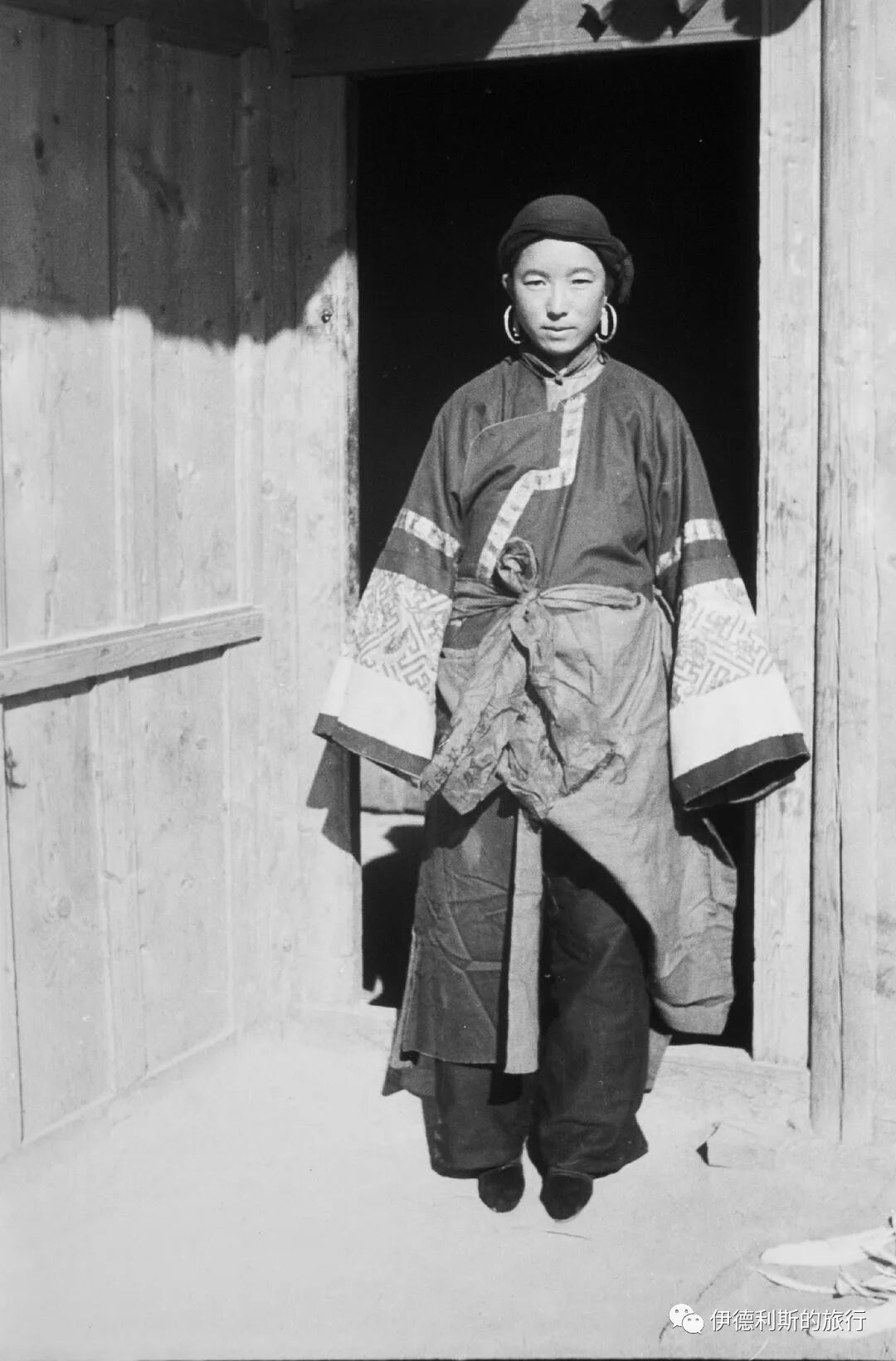
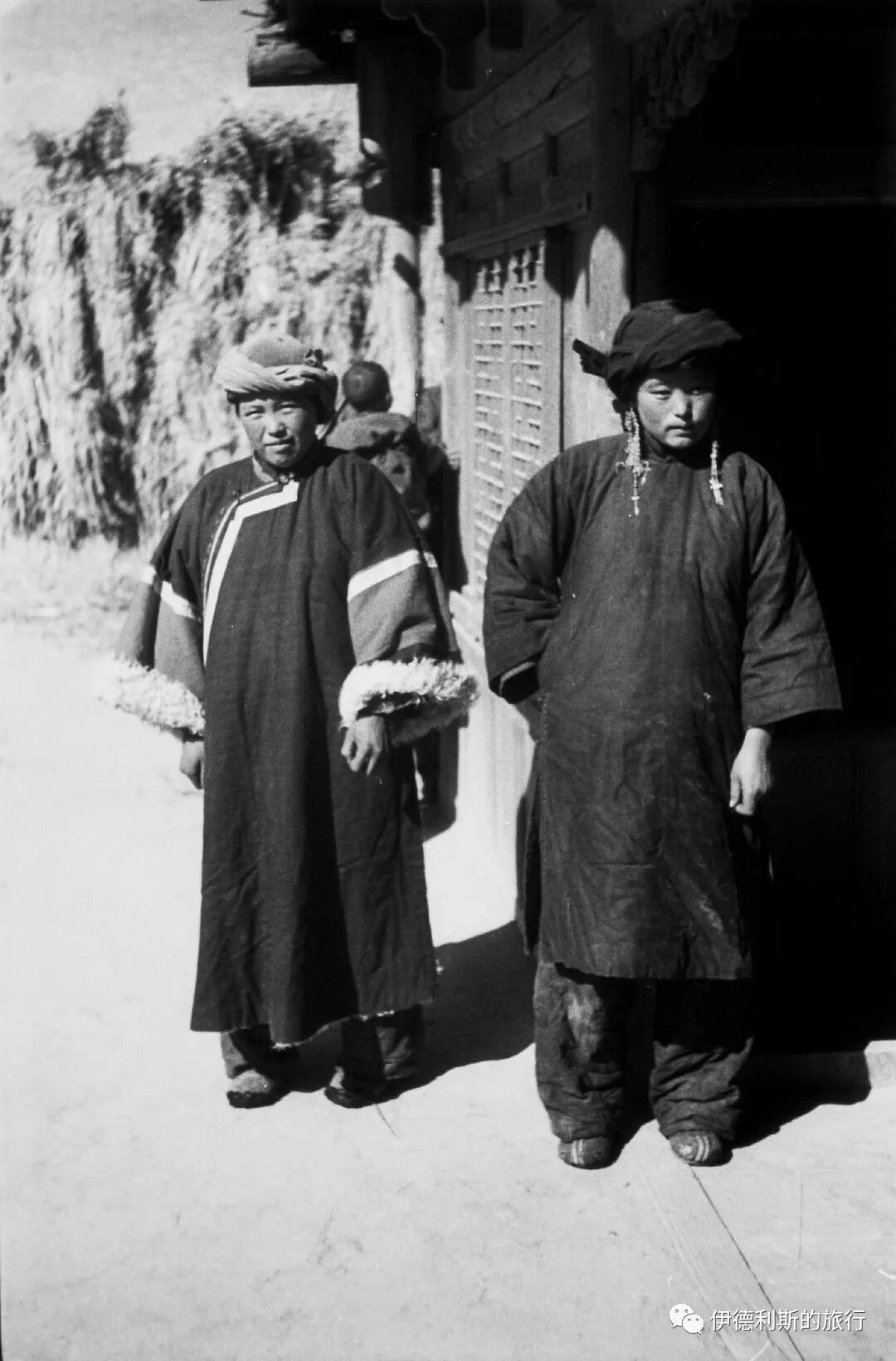
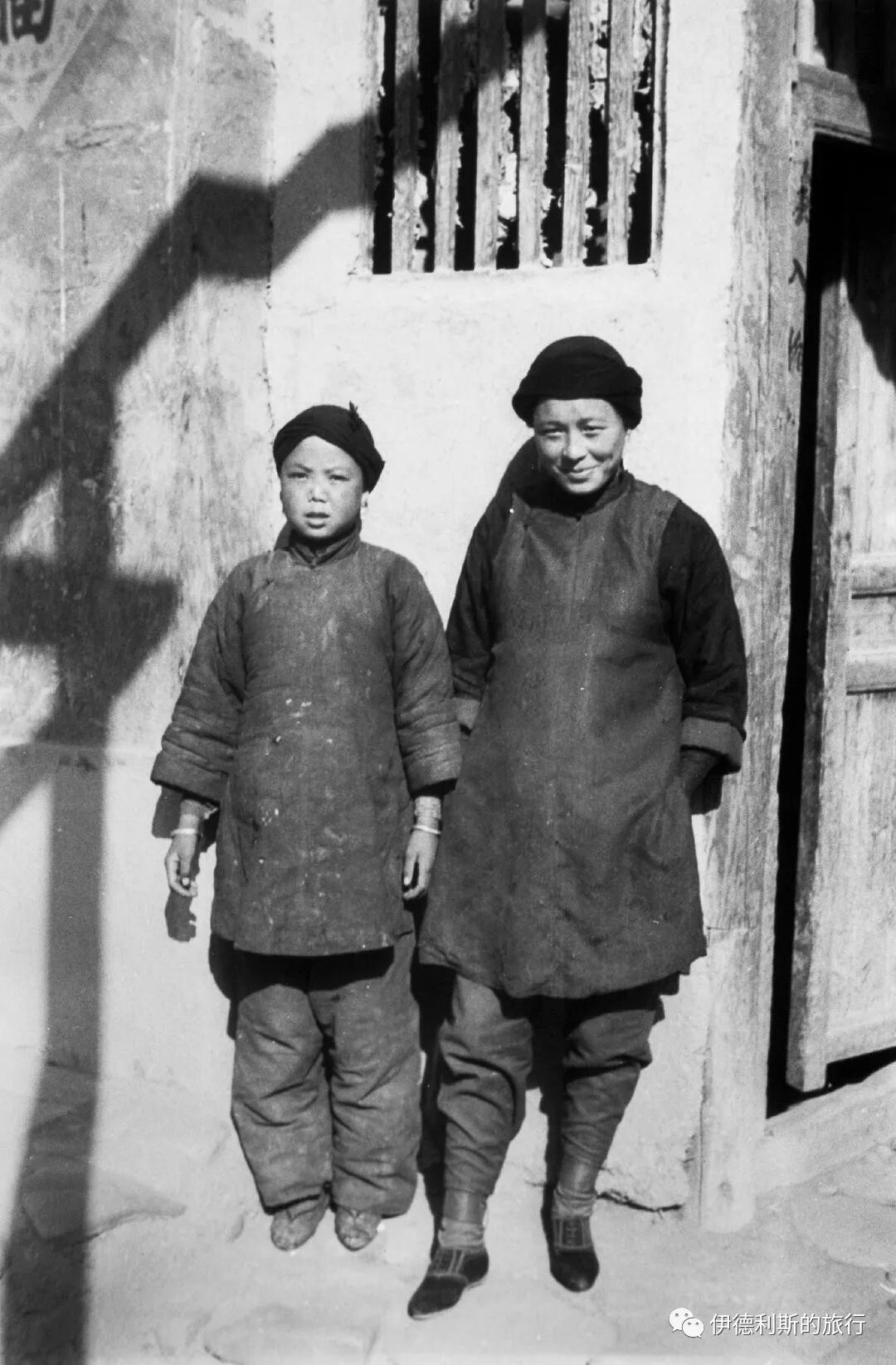
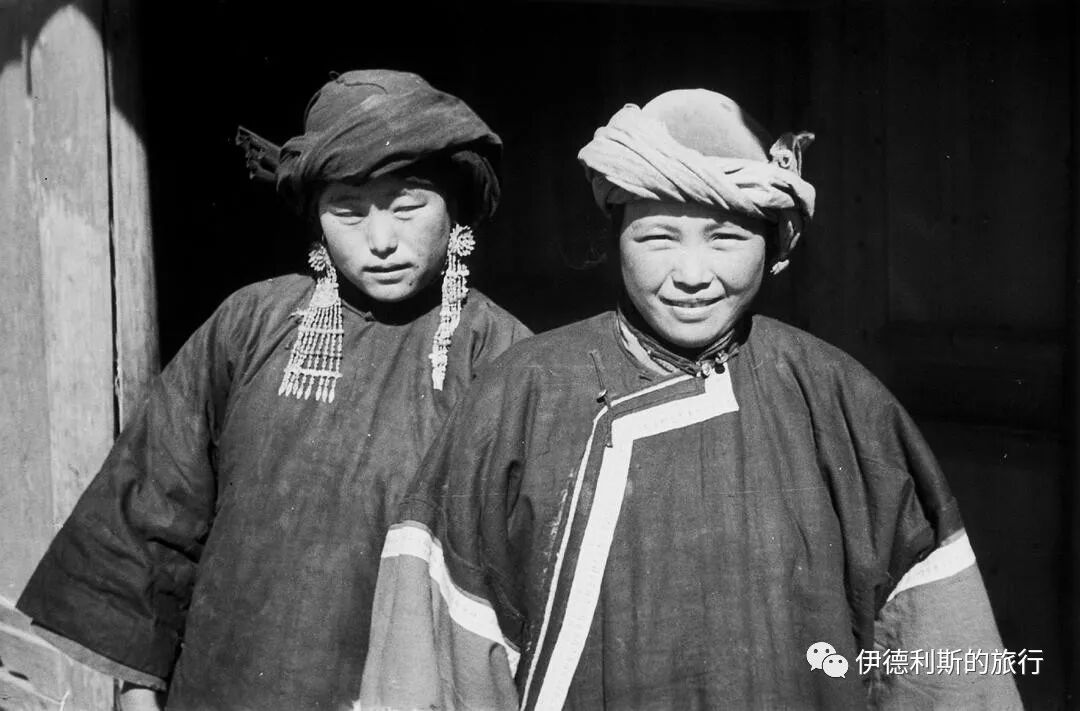
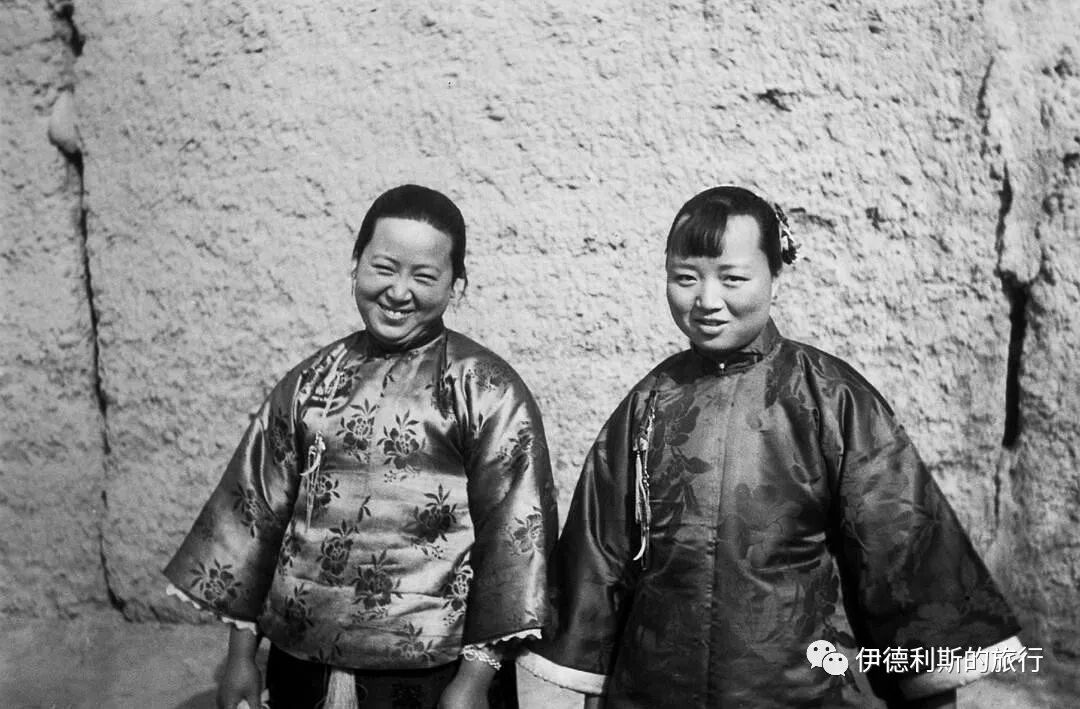
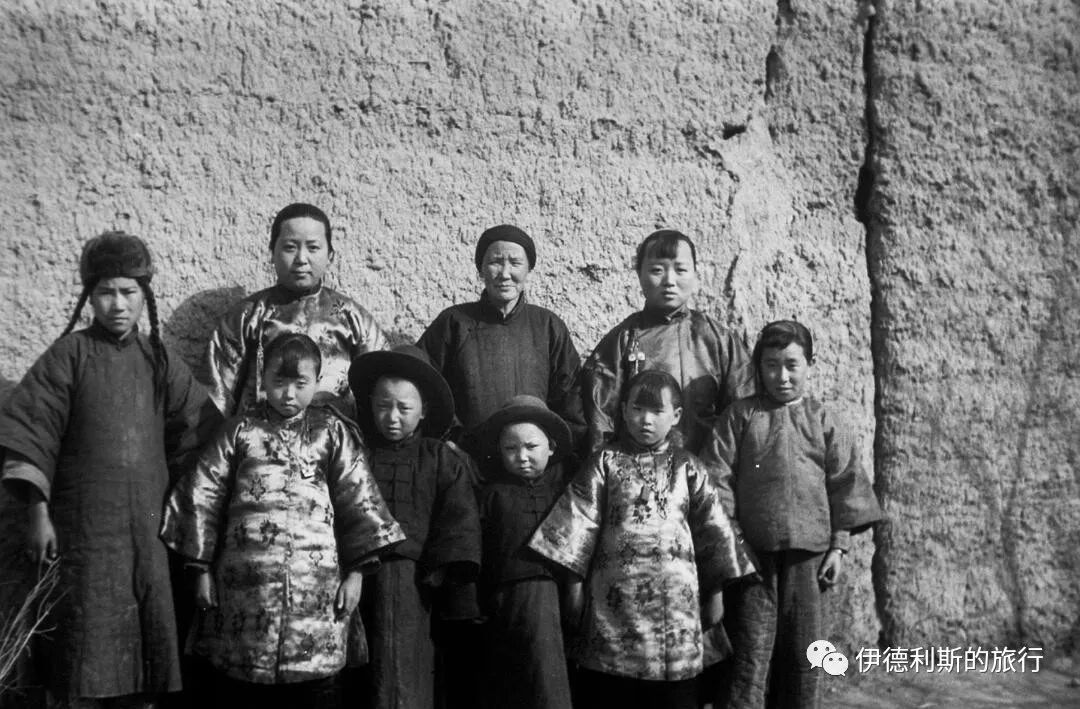
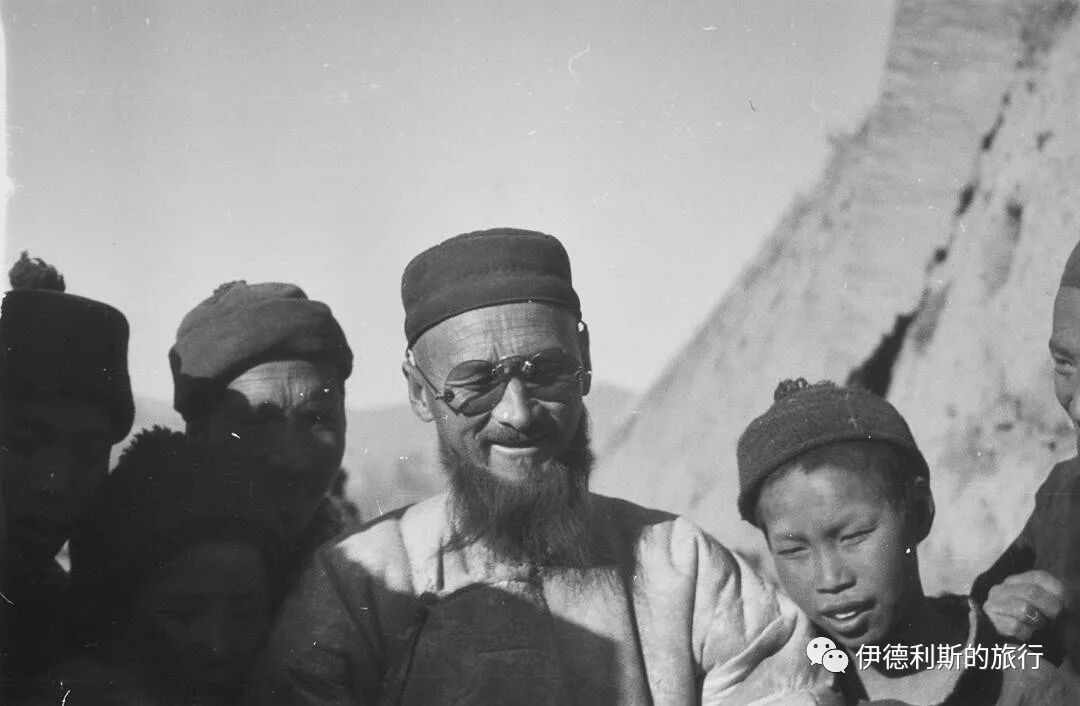
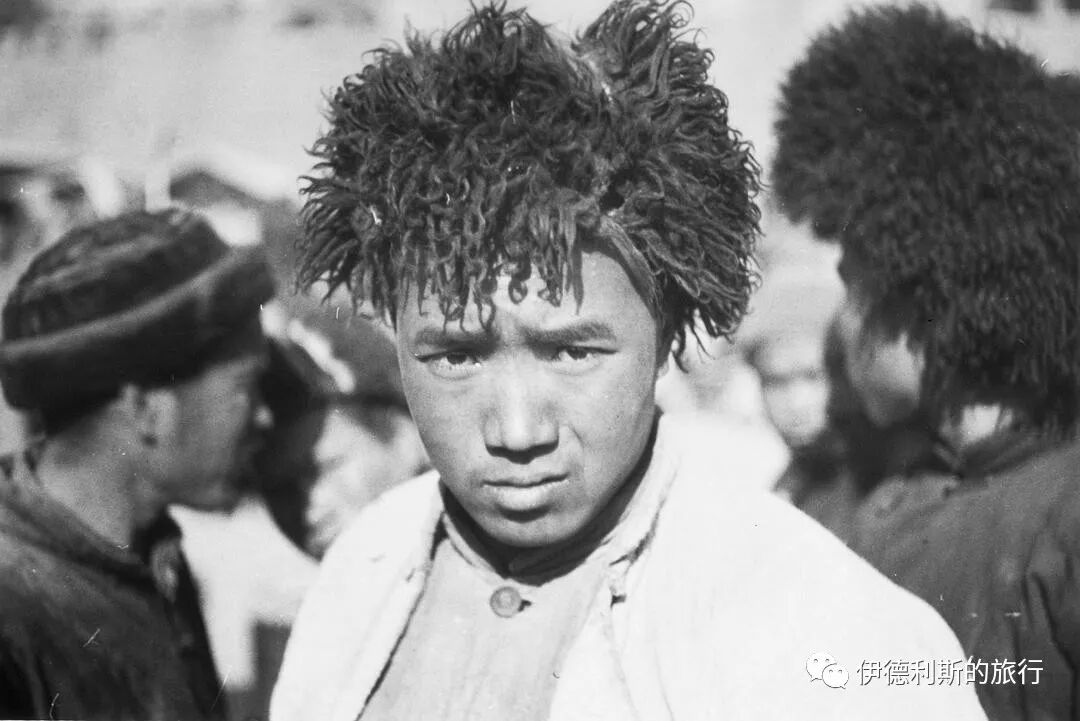
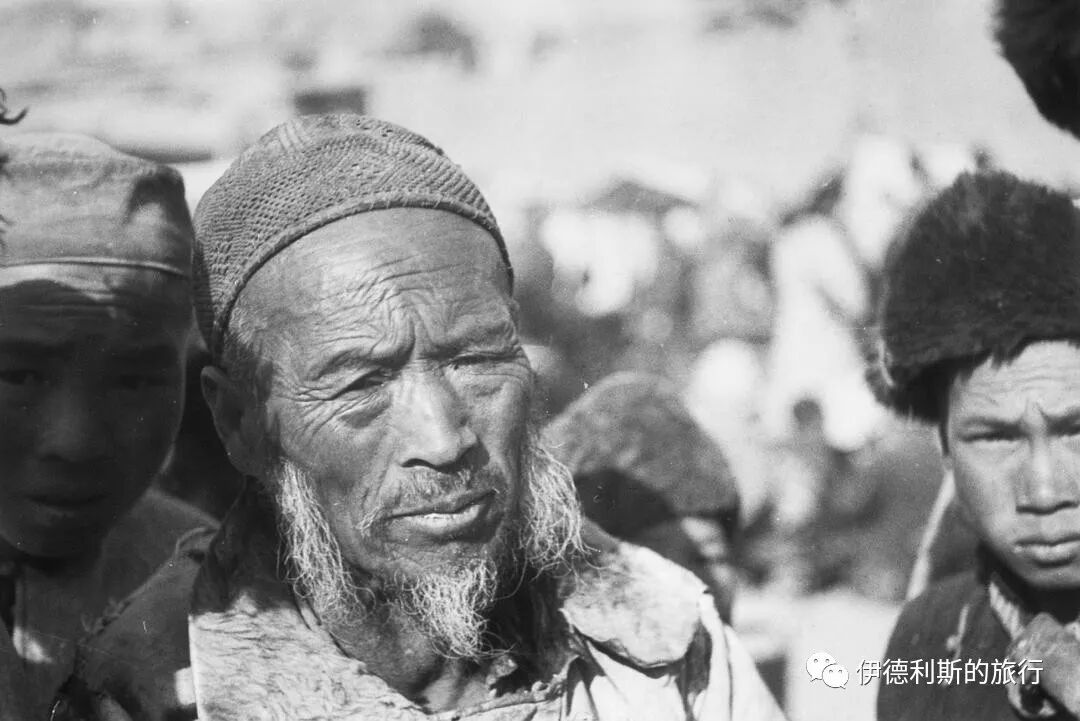
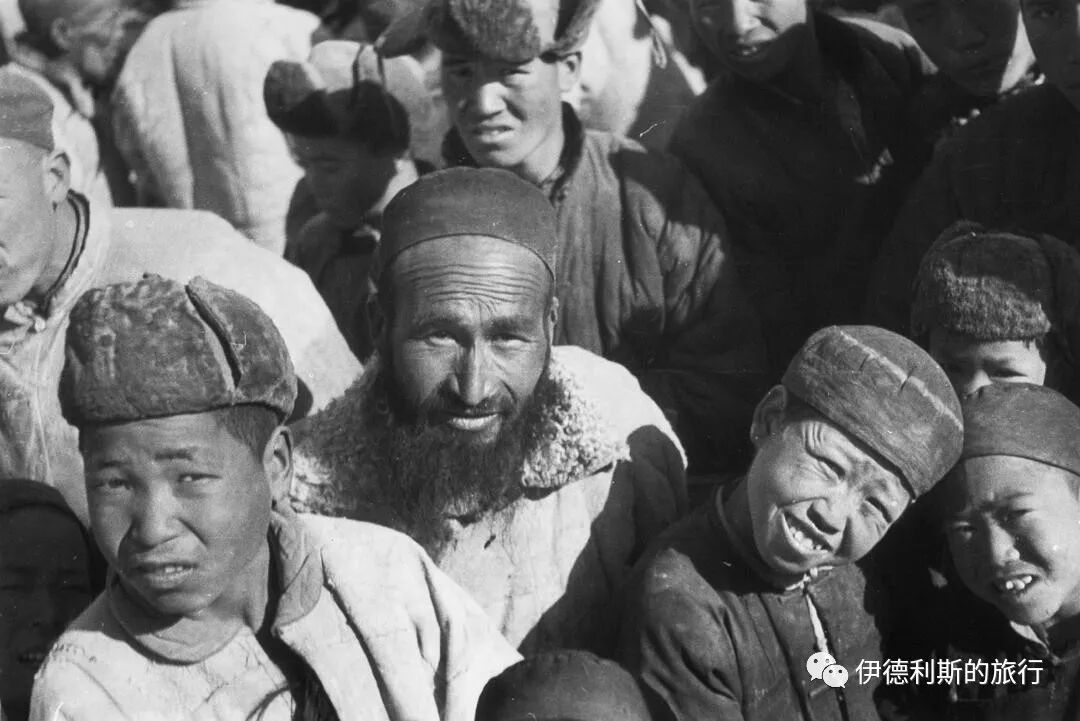
In 1930, Pastor Hai Yingguang and his family returned to Xunhua, Qinghai, for missionary work. Between 1932 and 1934, he took some precious photos of the Kaligang Tibetan Hui Muslims. Kaligang is located in the southwest of Hualong, Qinghai. Kaligang means big mountain in the Tibetan language. The area is full of high mountains and deep gullies, making transportation very difficult. In 1756, Ma Laichi, the founder of the Huasi menhuan, went to the Kaligang area to preach. This led local Tibetan people to convert to Islam, forming the unique Kaligang Tibetan Hui Muslims.
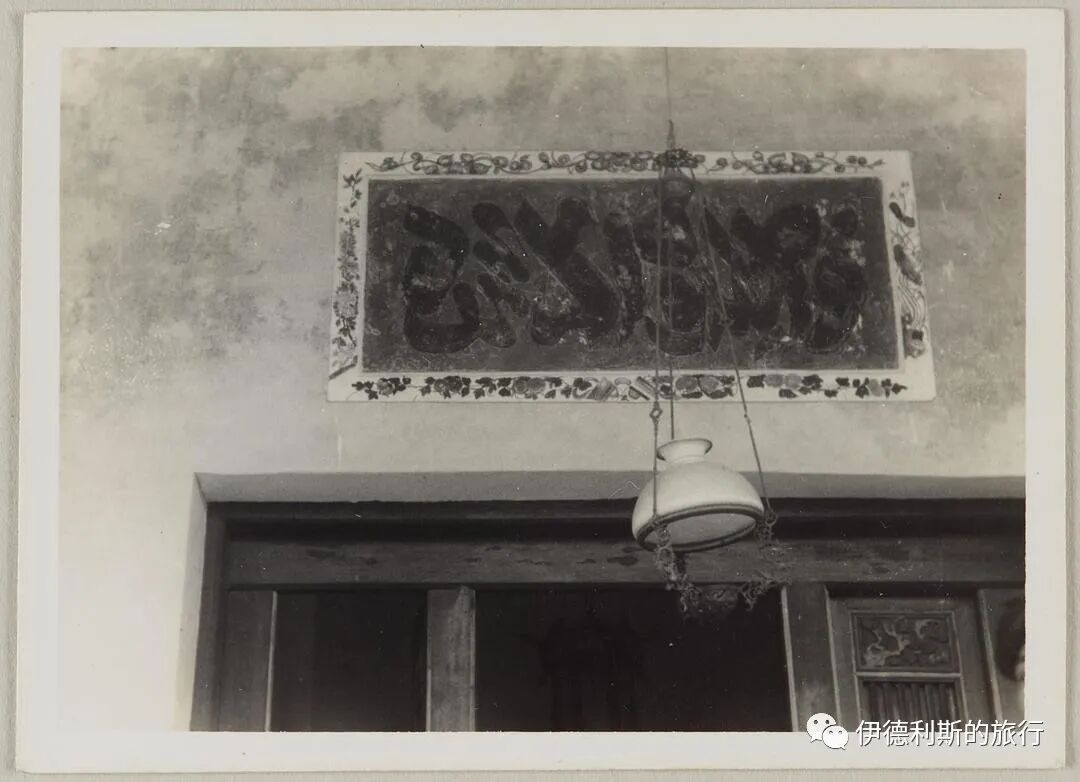
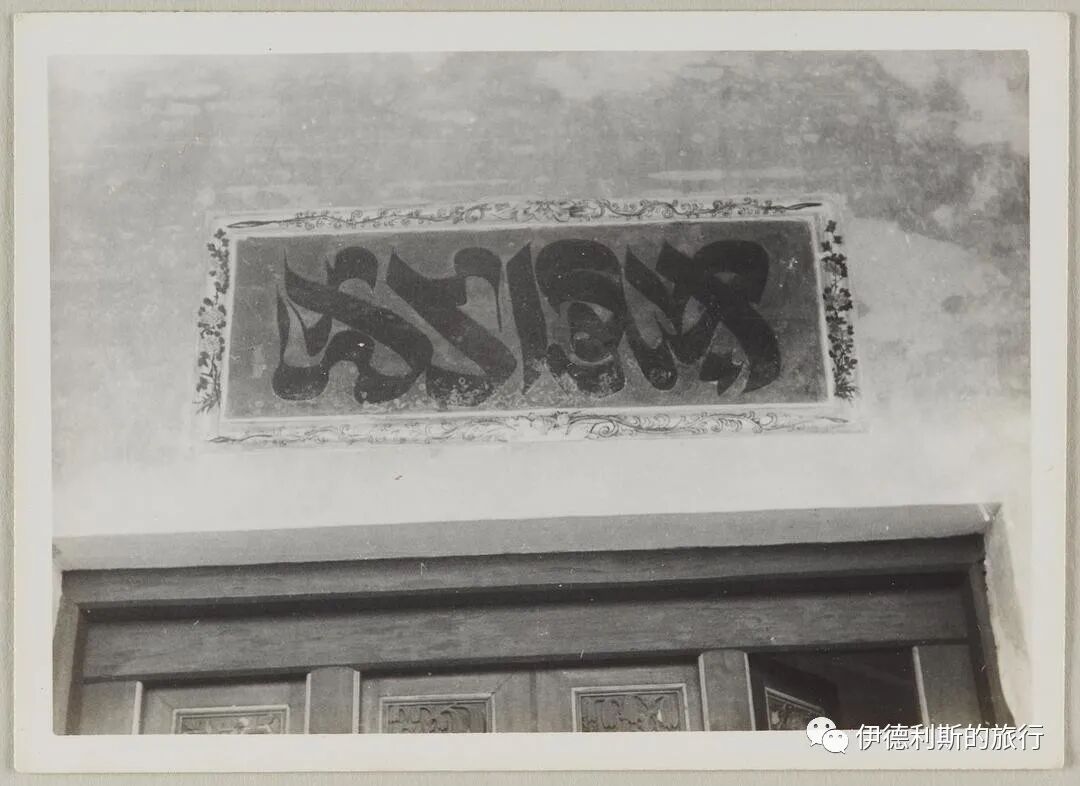
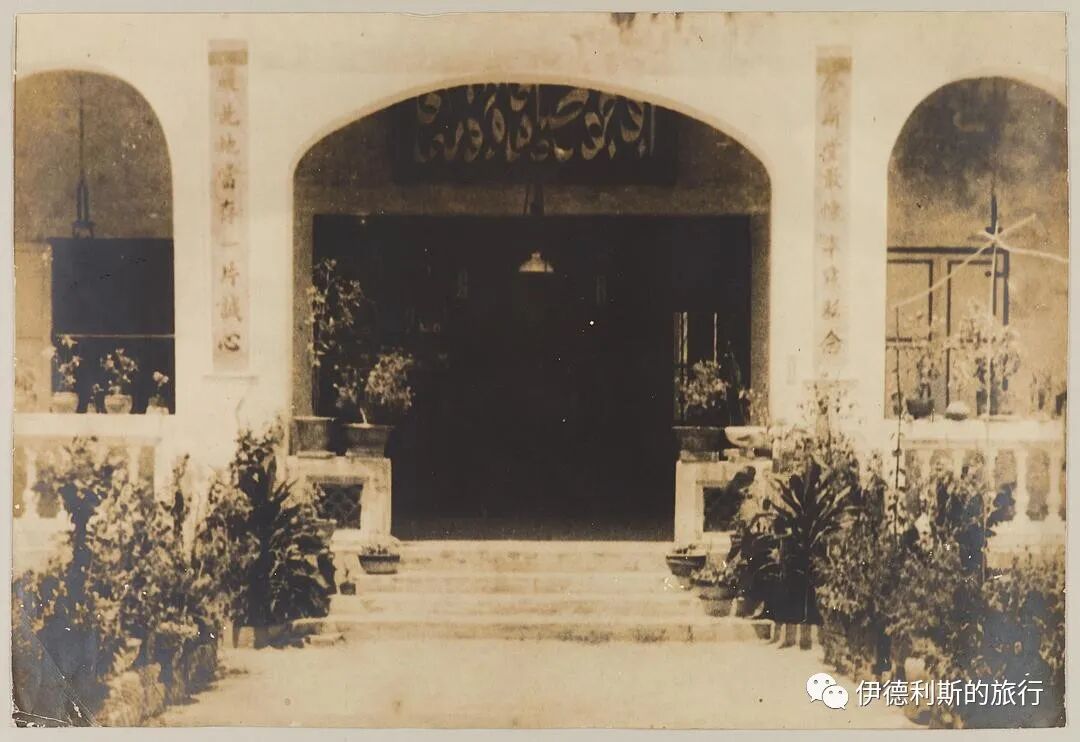
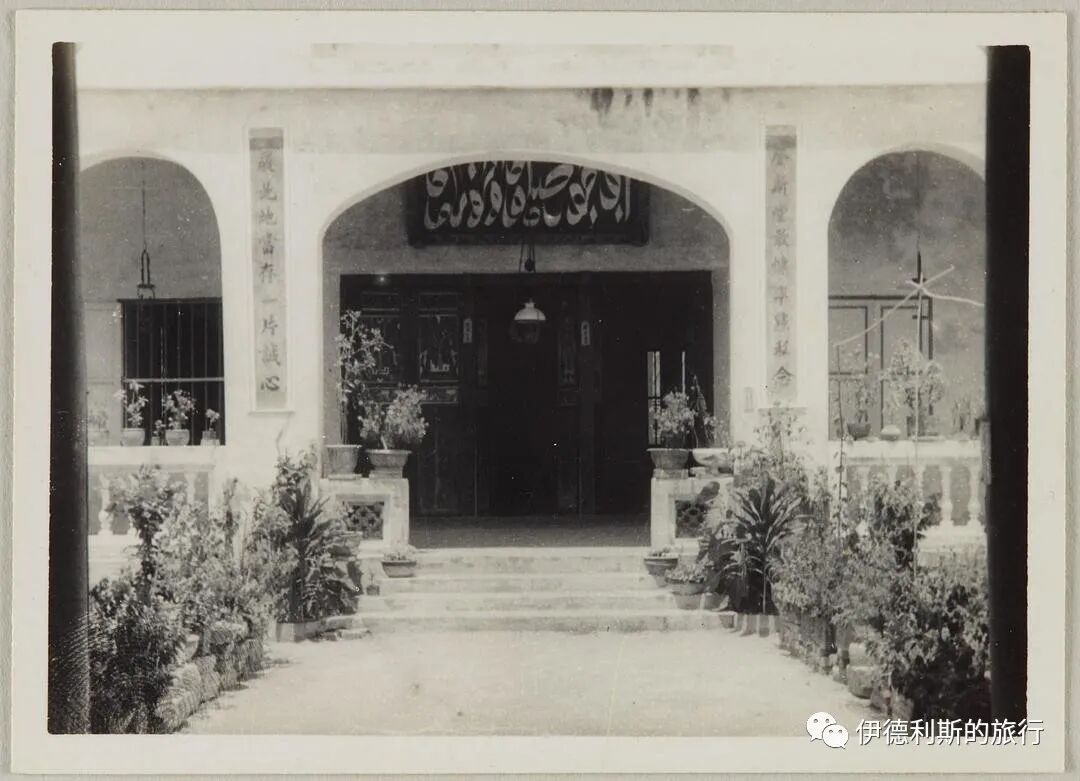
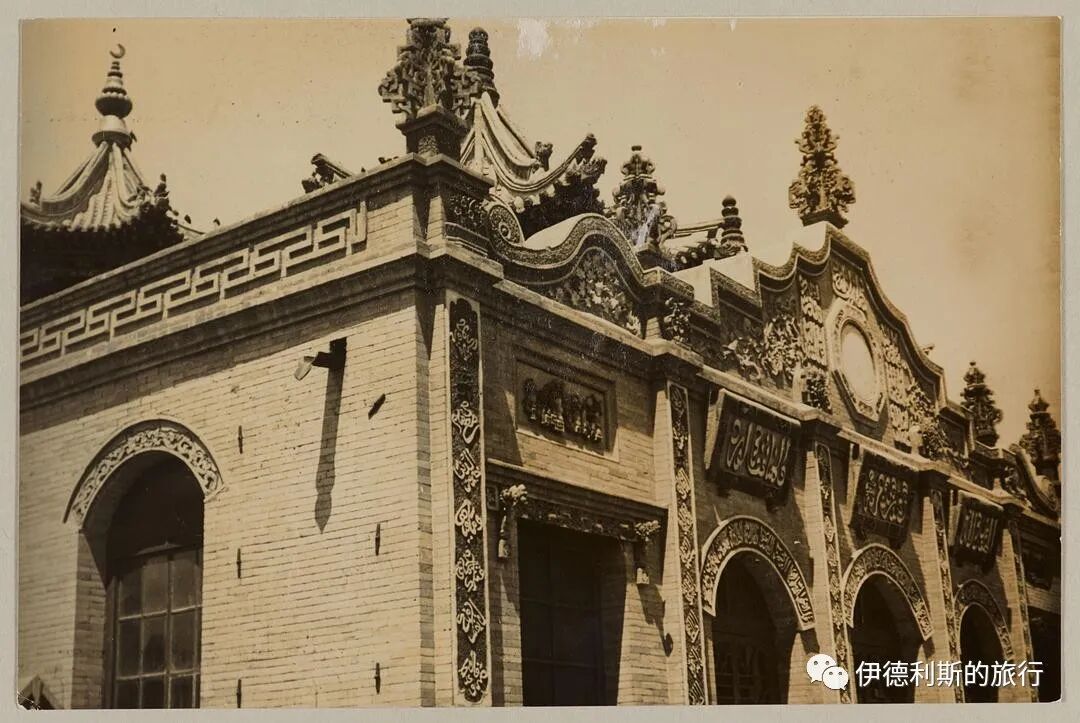
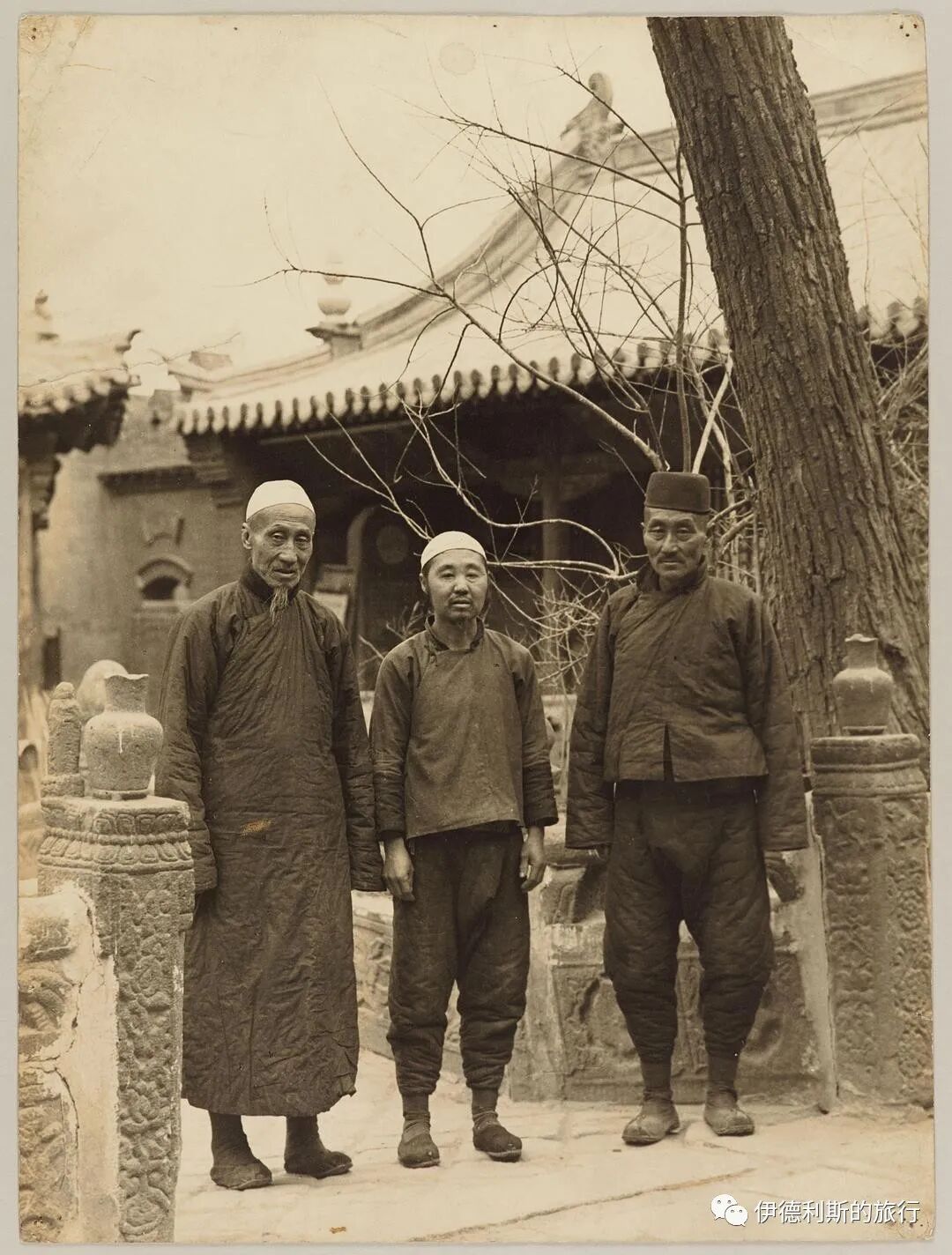
The brick carvings of the Huangwuju mosque in Dehenglong Township and the Kaligang Tibetan Hui Muslims. On the right is the leader of the Dehenglong Kaligang tribe.
Kaligang Tibetan Hui Muslims in 1932.
In Dehenglong, Kaligang in 1932.
Kaligang Tibetan Hui Muslims in 1933.
Kaligang Tibetan Hui Muslims in 1934.
Kaligang Tibetan Hui Muslims photographed in Labuleng Town in 1939. view all
Summary: Carter Holton's Old Photos of Kaligang Tibetan Hui Muslims is presented here as a firsthand travel account in clear English, beginning with this scene: Pastor Hai Yingguang was an American missionary whose original name was Carter Holton. The account keeps its focus on Tibetan Hui Muslims, Old Photos, Muslim Heritage while preserving the names, places, food, and historical details from the Chinese source.
Pastor Hai Yingguang was an American missionary whose original name was Carter Holton. He worked in Northwest China from 1923 to 1949 and left behind over 5,000 precious photographs. After Pastor Hai Yingguang passed away, his daughter Lora Jean Heurlin donated these materials to the Harvard-Yenching Library in the early 1990s. The library finished digitizing them in 2011.
Online address: library.harvard.edu/collections/carter-d-holton-collection
In 1930, Pastor Hai Yingguang and his family returned to Xunhua, Qinghai, for missionary work. Between 1932 and 1934, he took some precious photos of the Kaligang Tibetan Hui Muslims. Kaligang is located in the southwest of Hualong, Qinghai. Kaligang means big mountain in the Tibetan language. The area is full of high mountains and deep gullies, making transportation very difficult. In 1756, Ma Laichi, the founder of the Huasi menhuan, went to the Kaligang area to preach. This led local Tibetan people to convert to Islam, forming the unique Kaligang Tibetan Hui Muslims.
The brick carvings of the Huangwuju mosque in Dehenglong Township and the Kaligang Tibetan Hui Muslims. On the right is the leader of the Dehenglong Kaligang tribe.
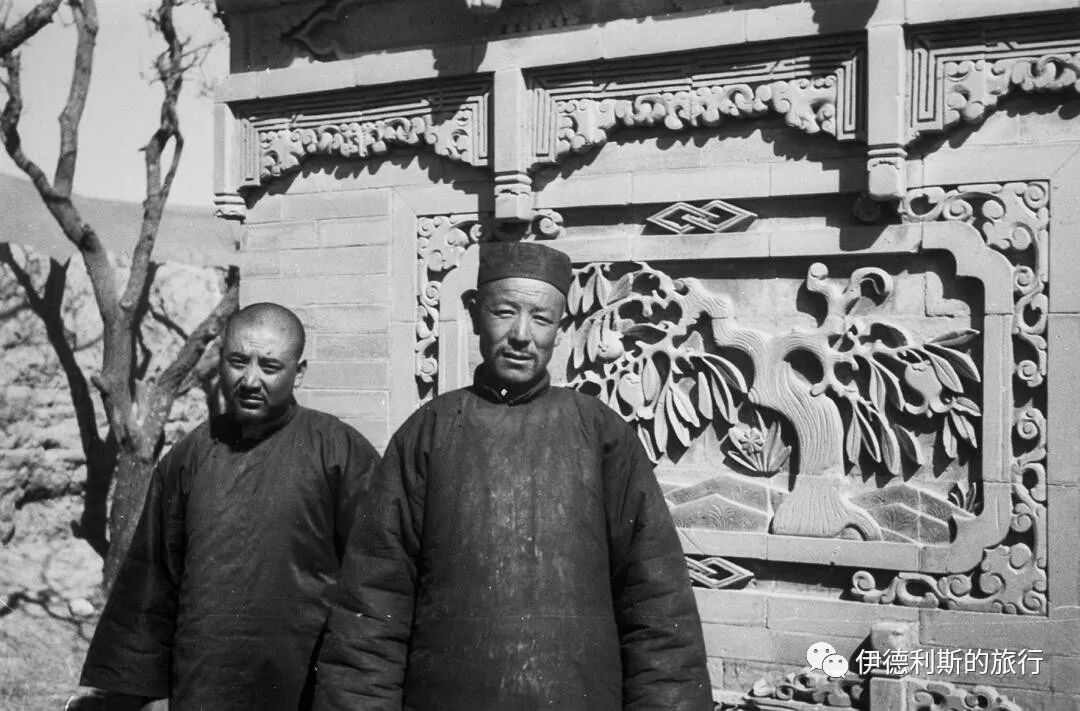
Kaligang Tibetan Hui Muslims in 1932.
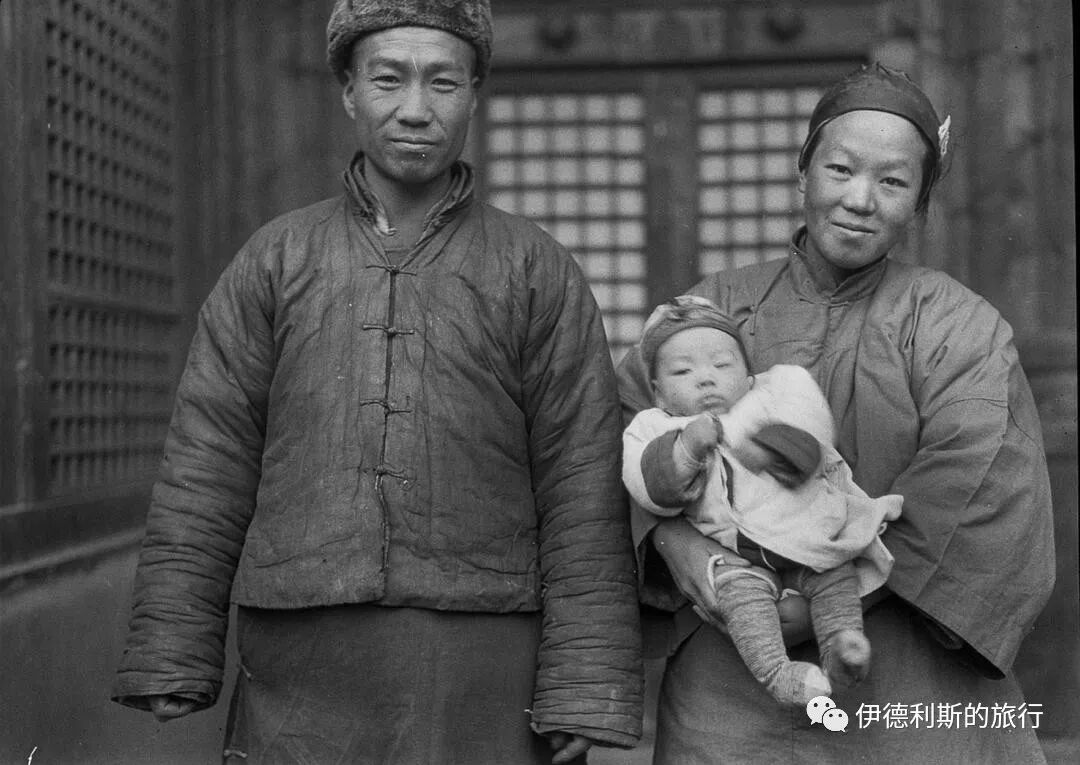
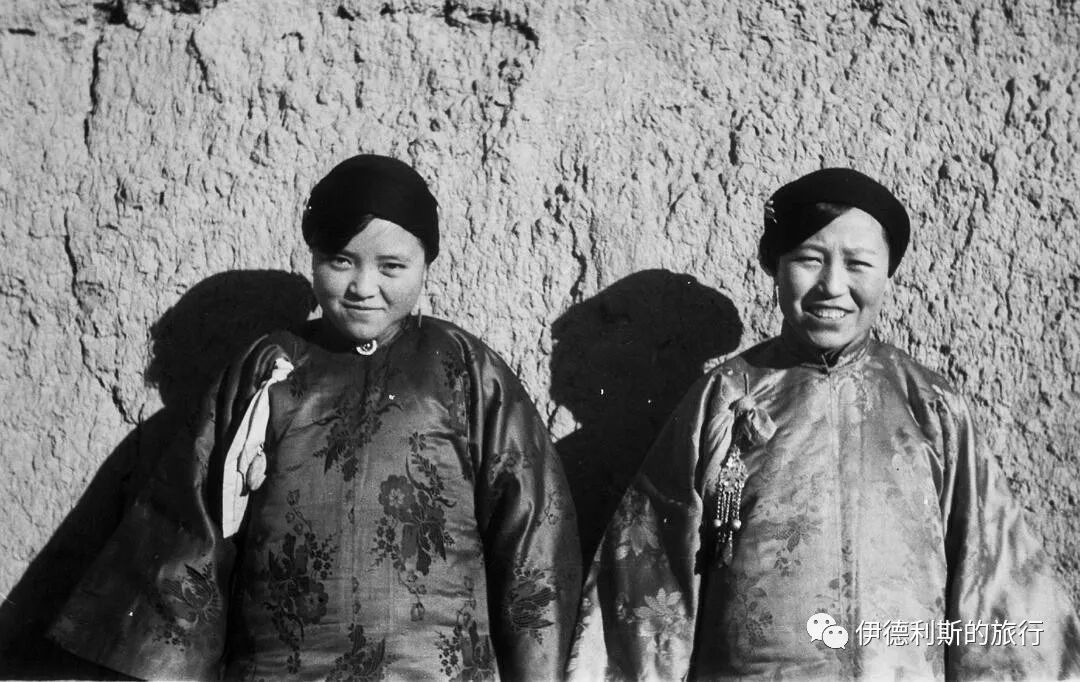
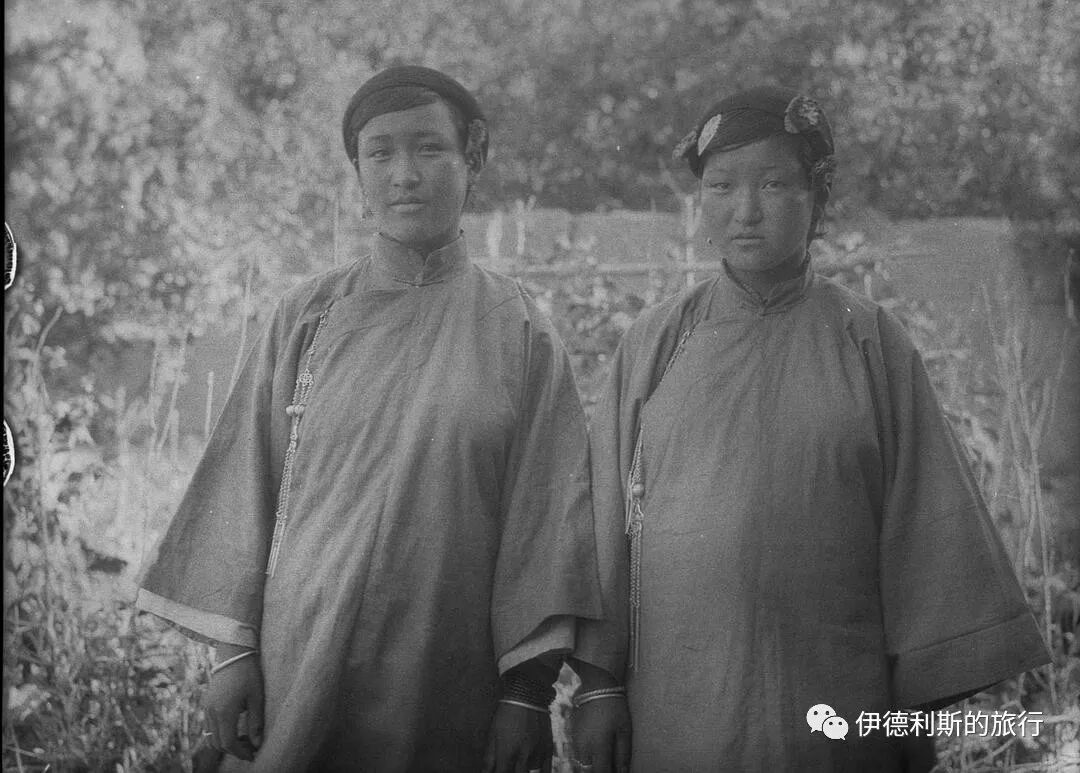
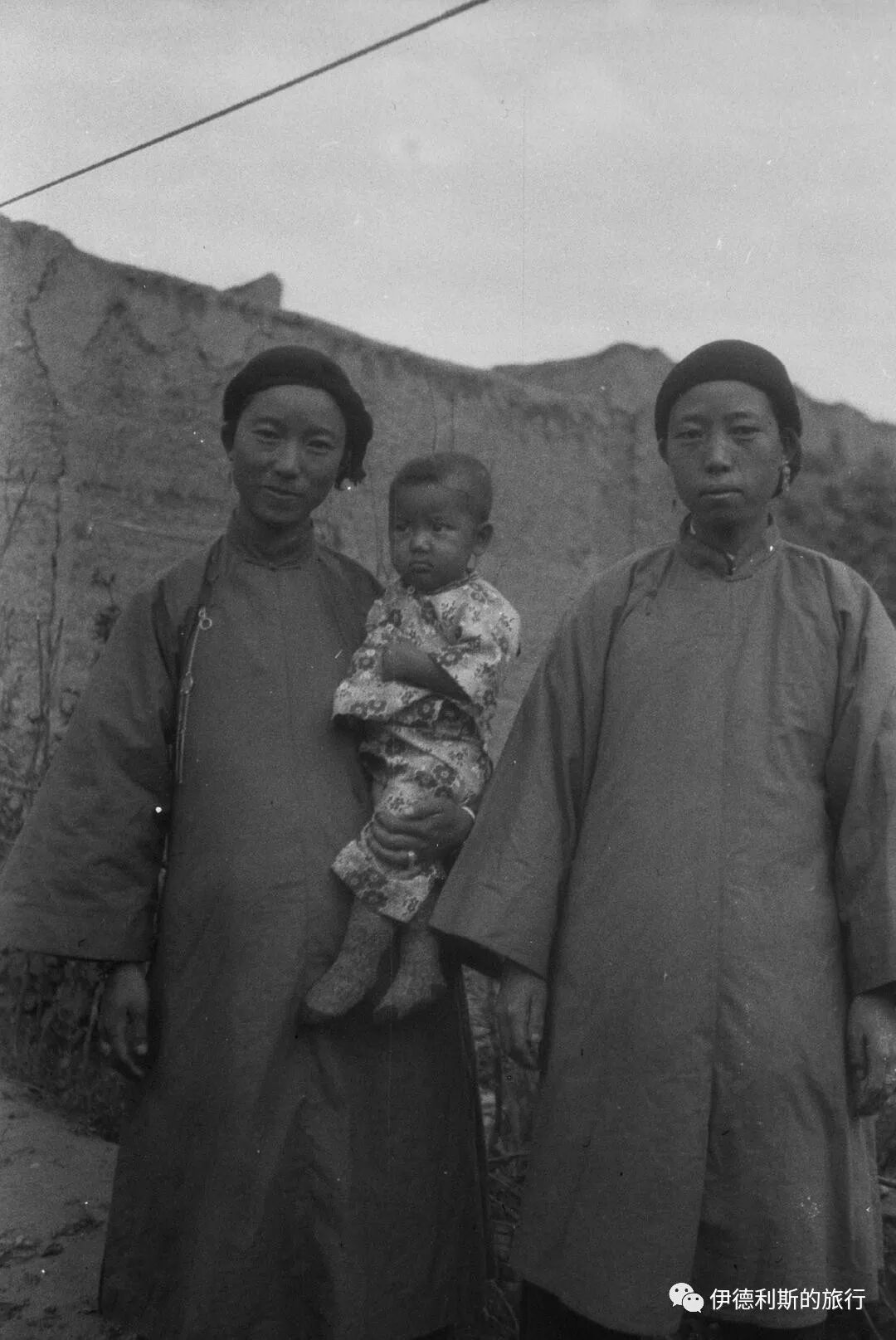
In Dehenglong, Kaligang in 1932.
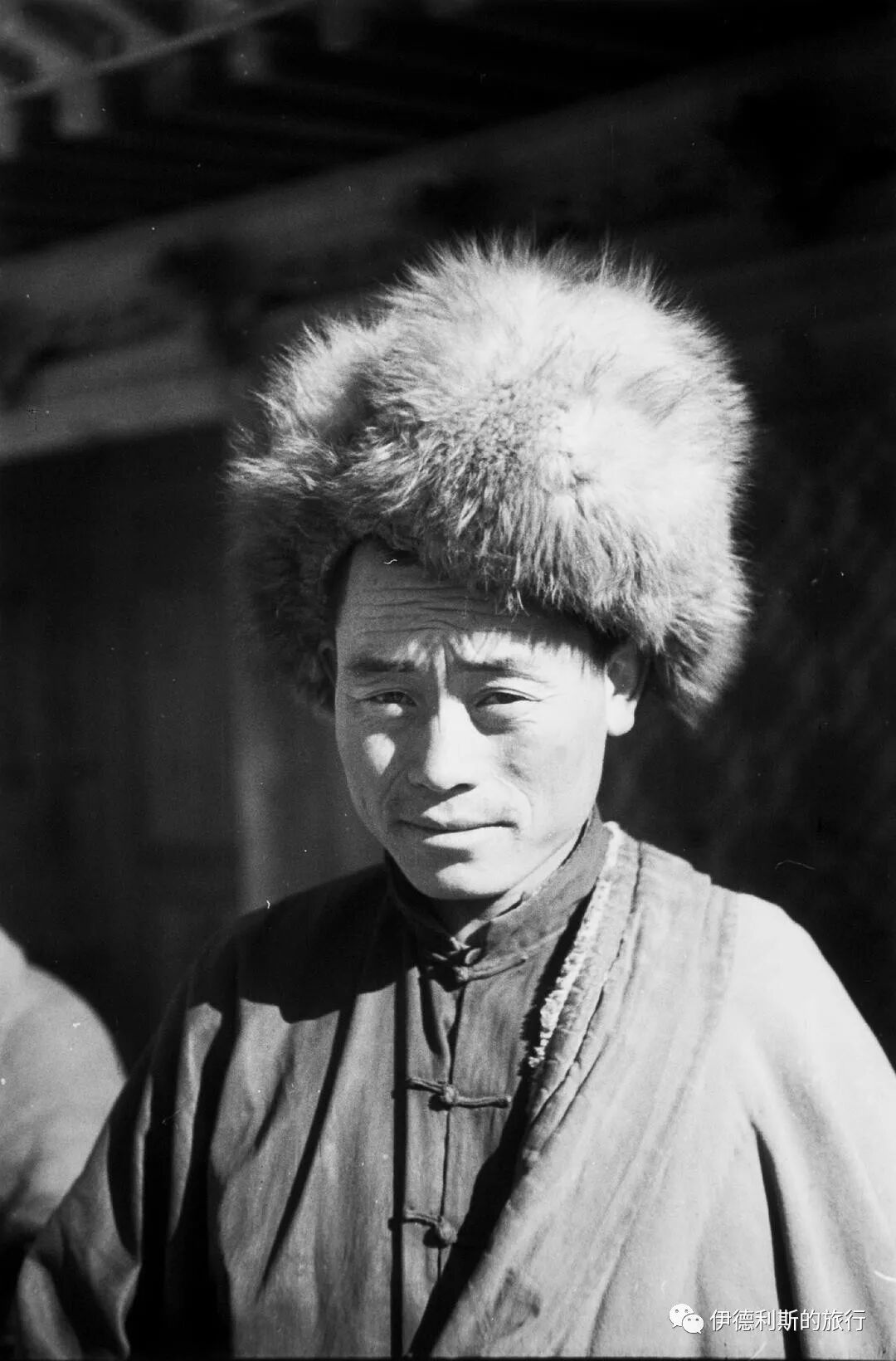
Kaligang Tibetan Hui Muslims in 1933.
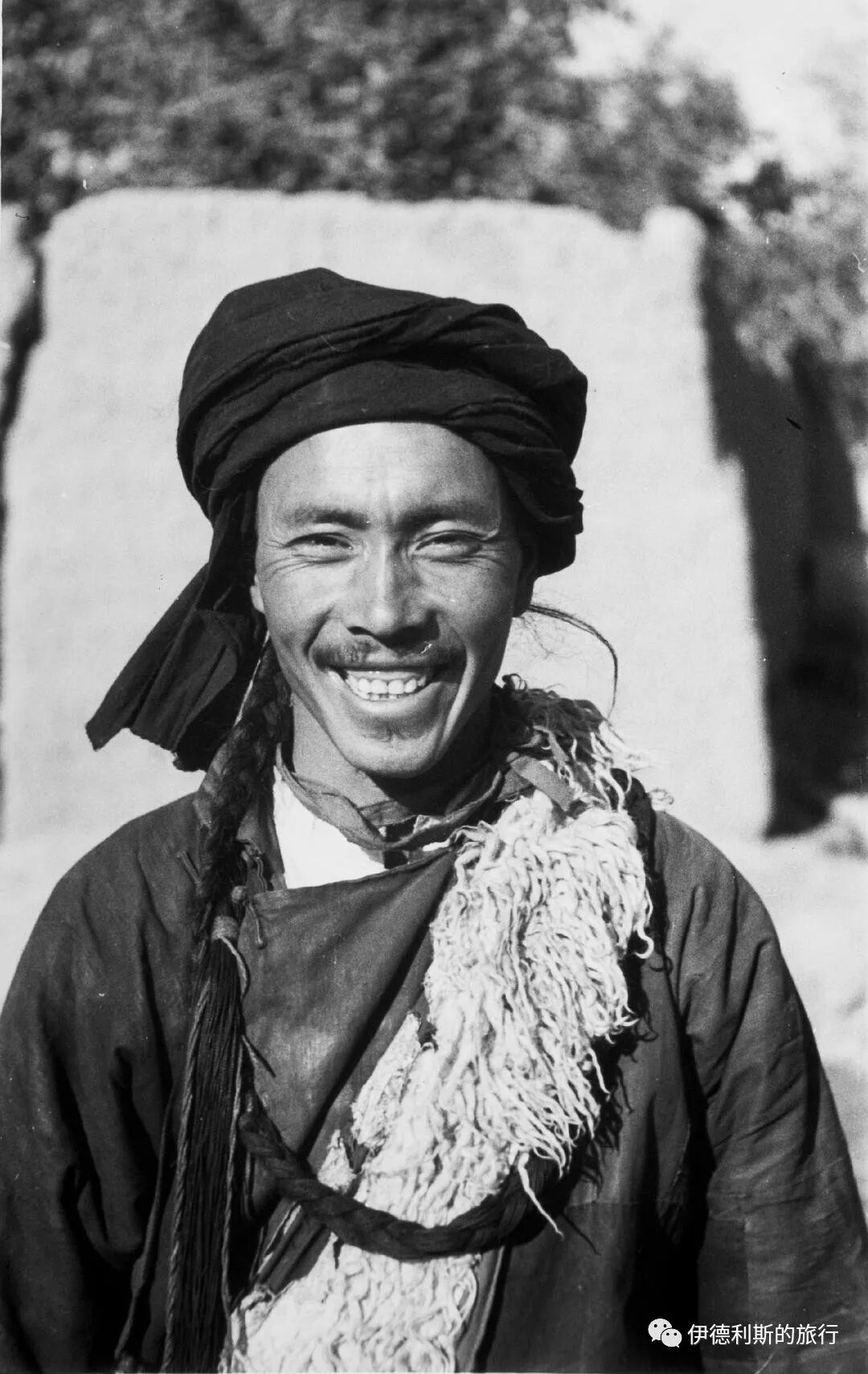
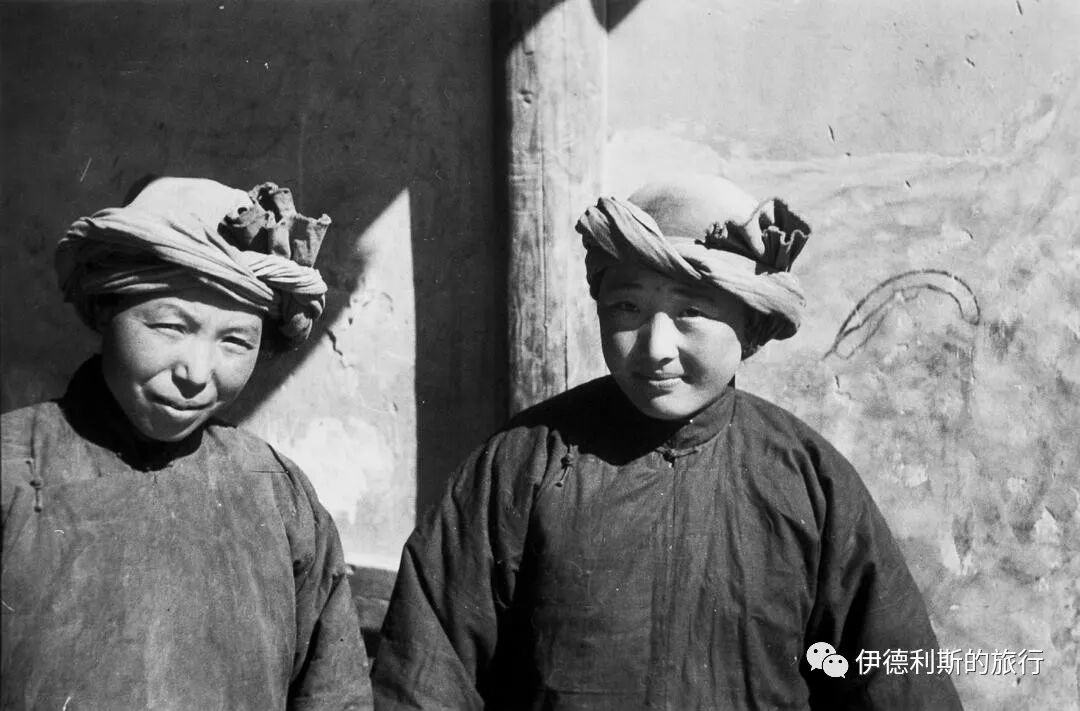
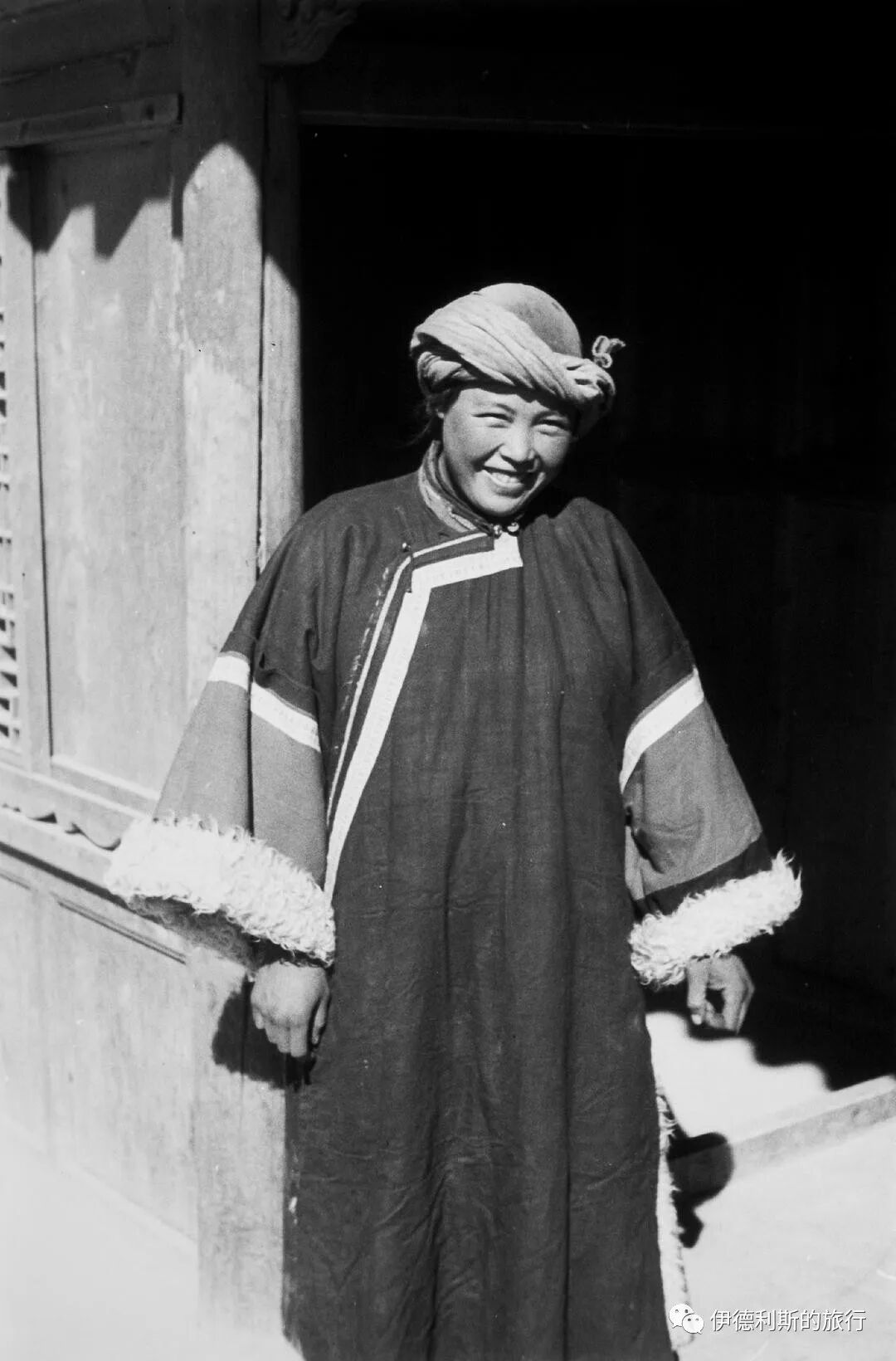
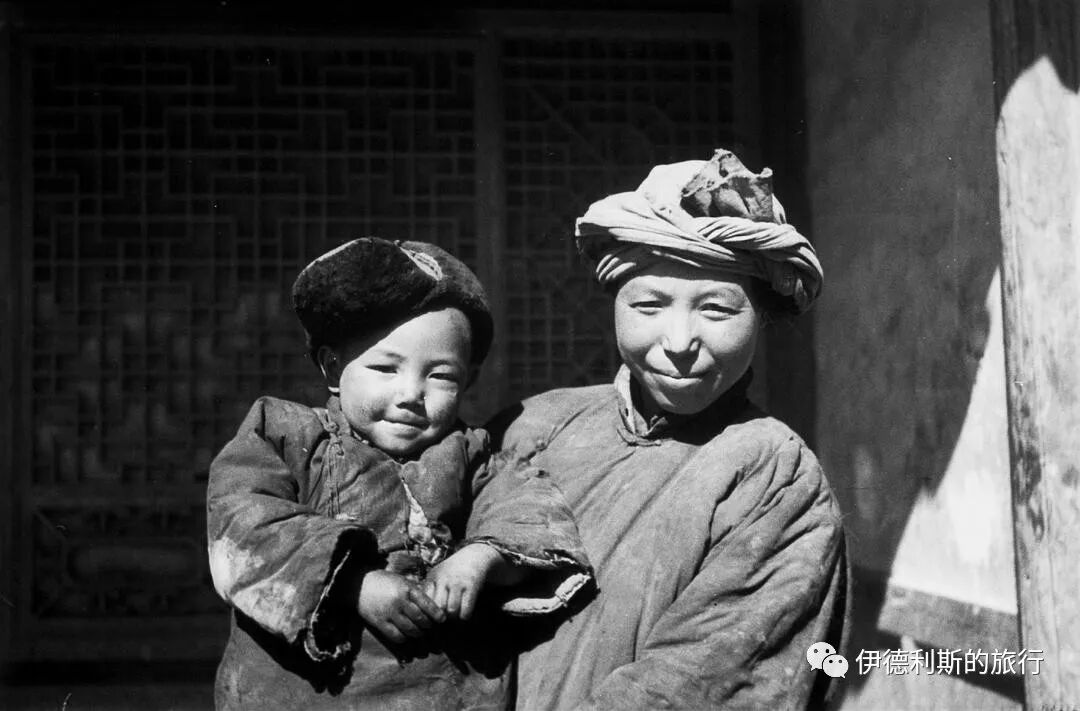
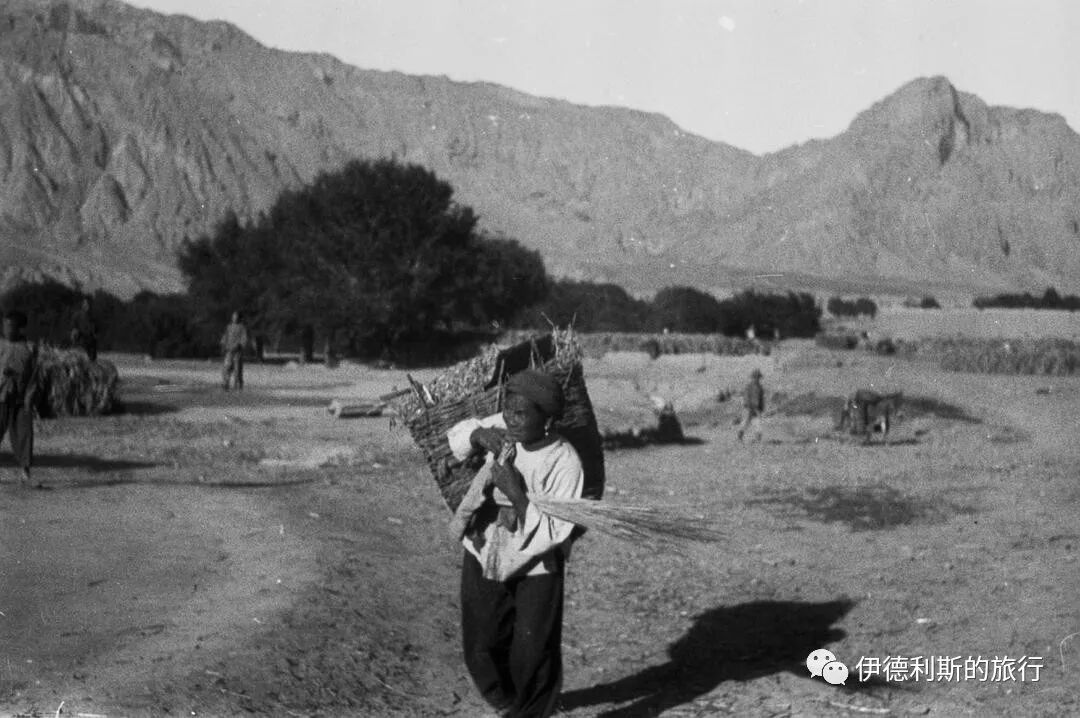
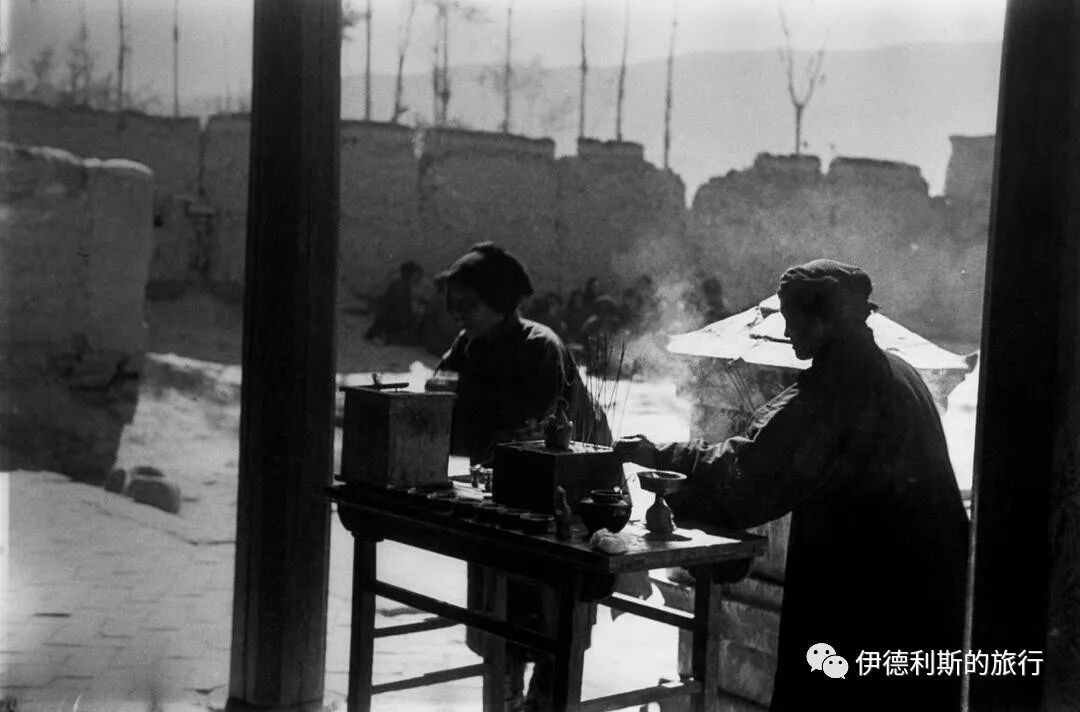
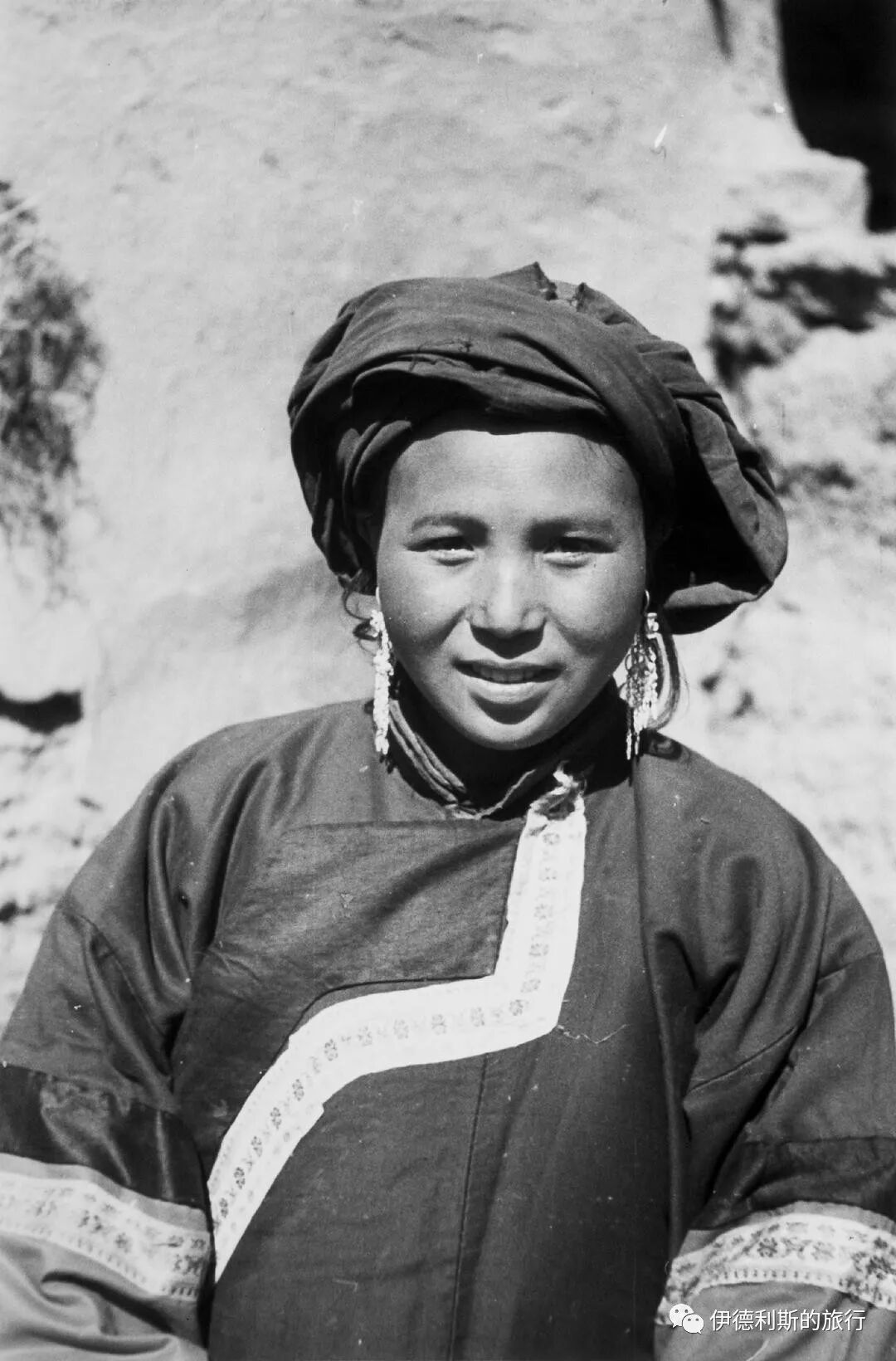
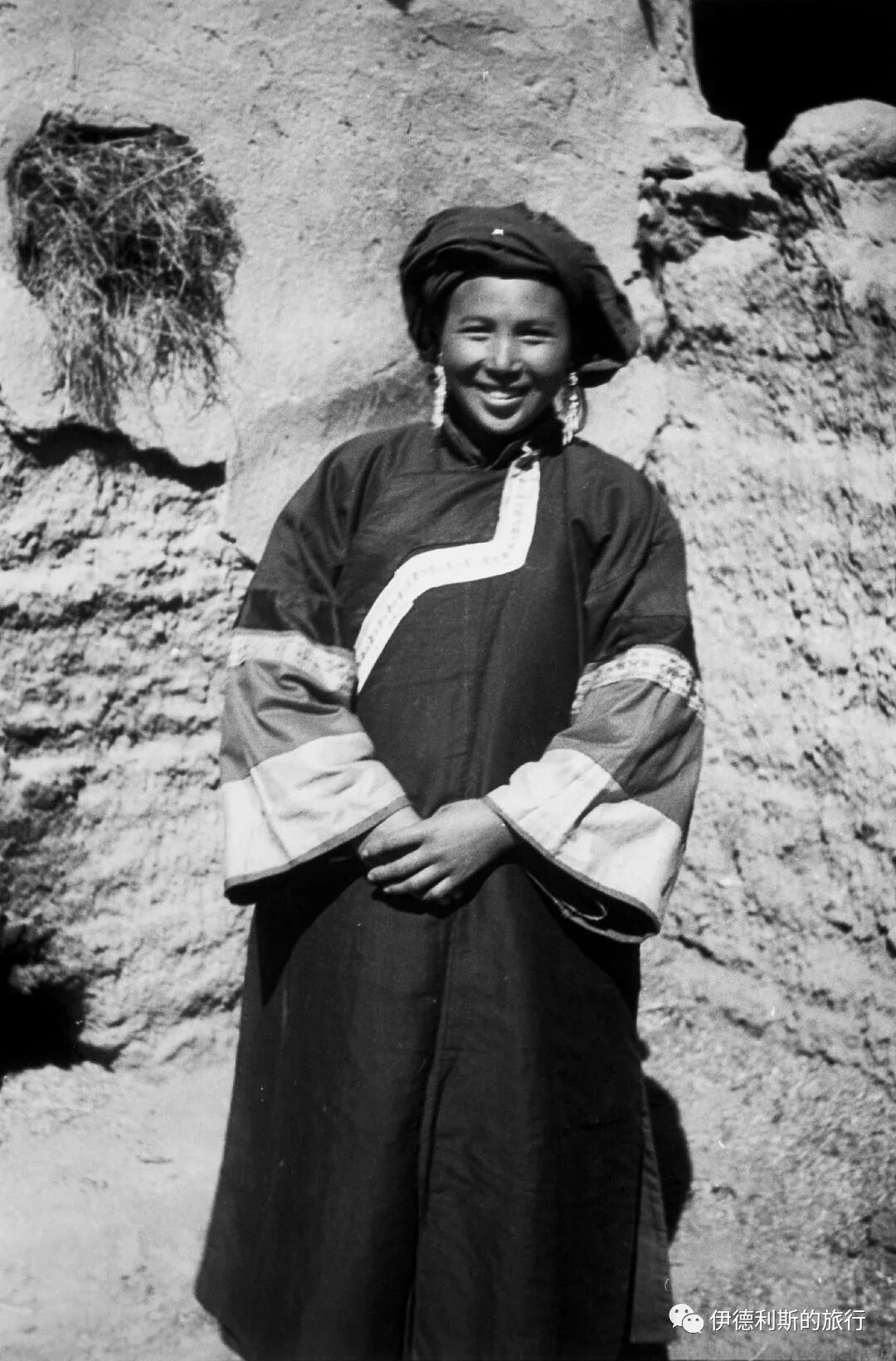
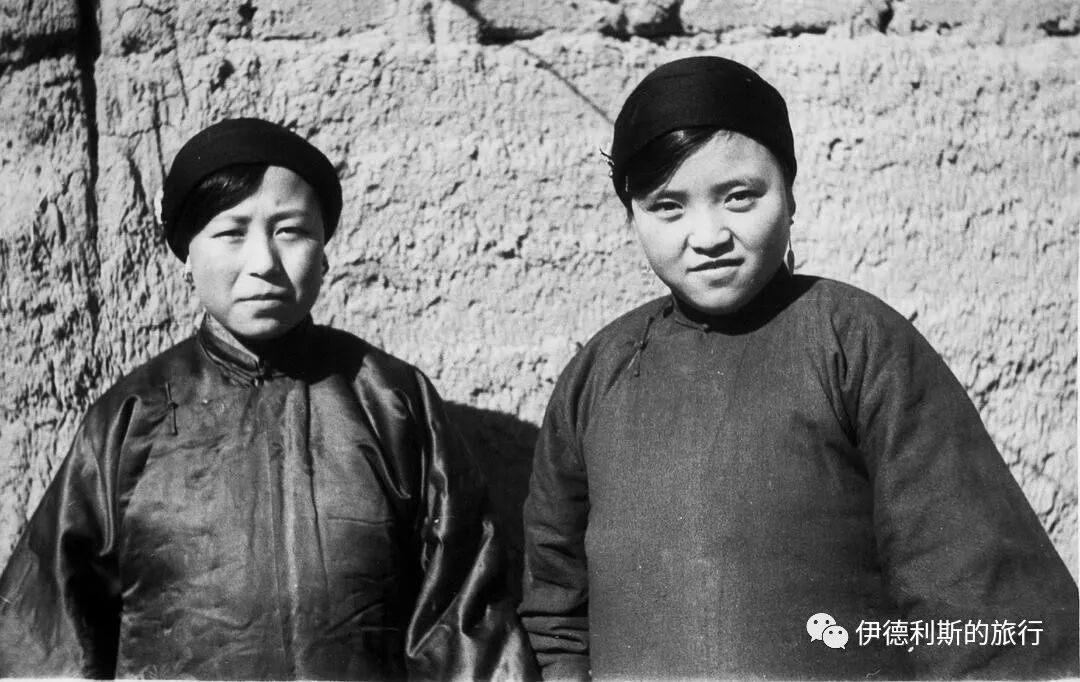
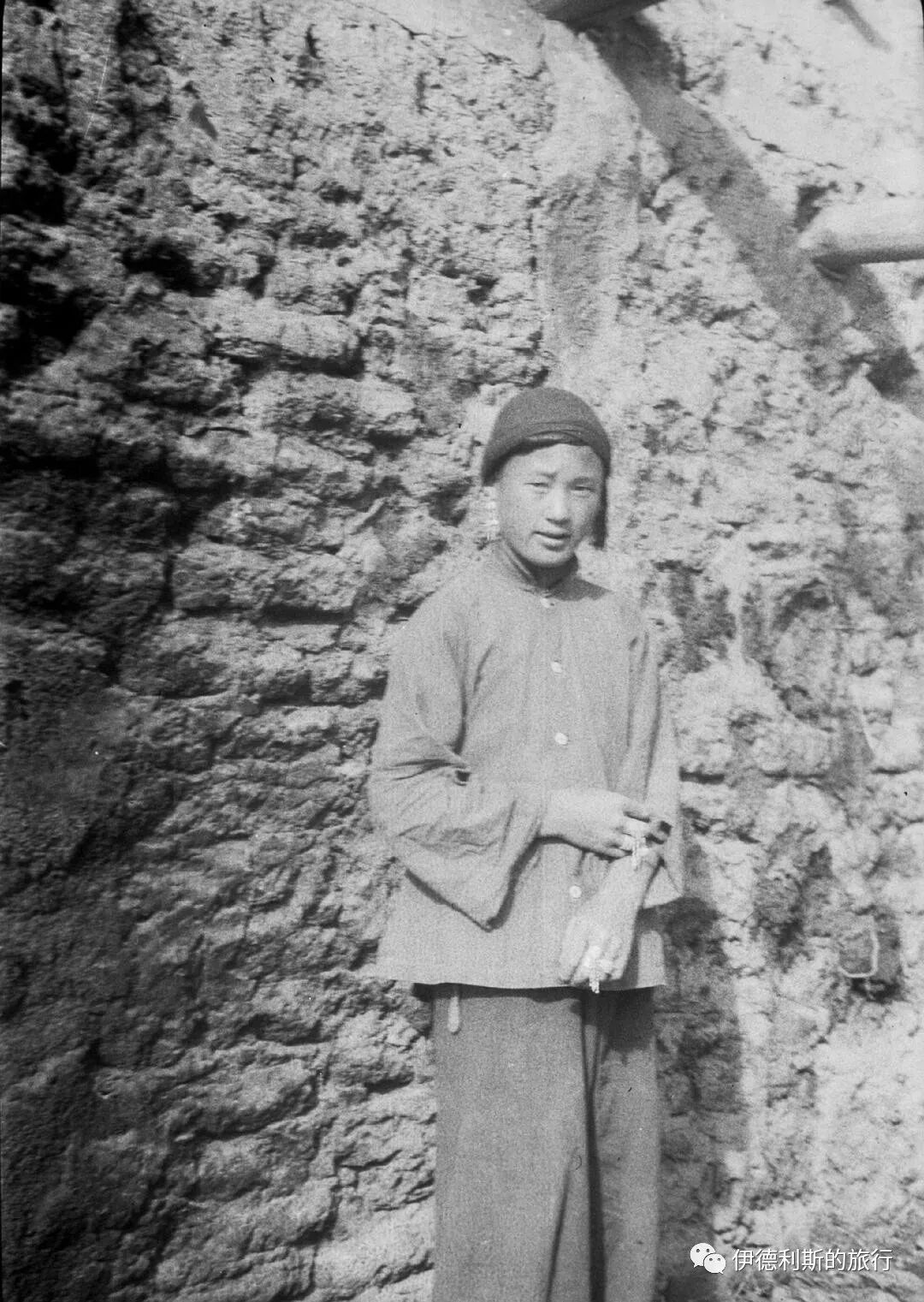
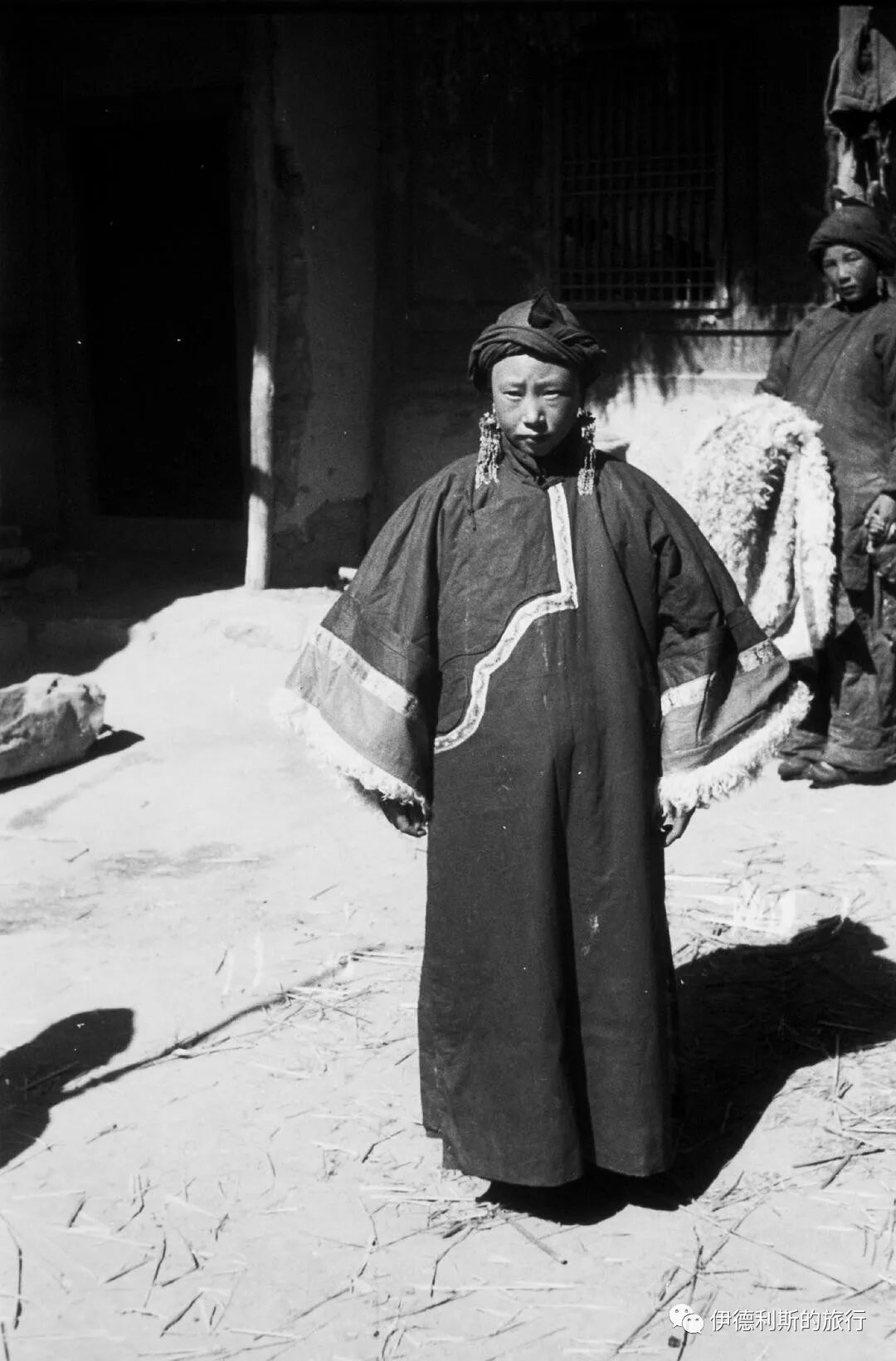
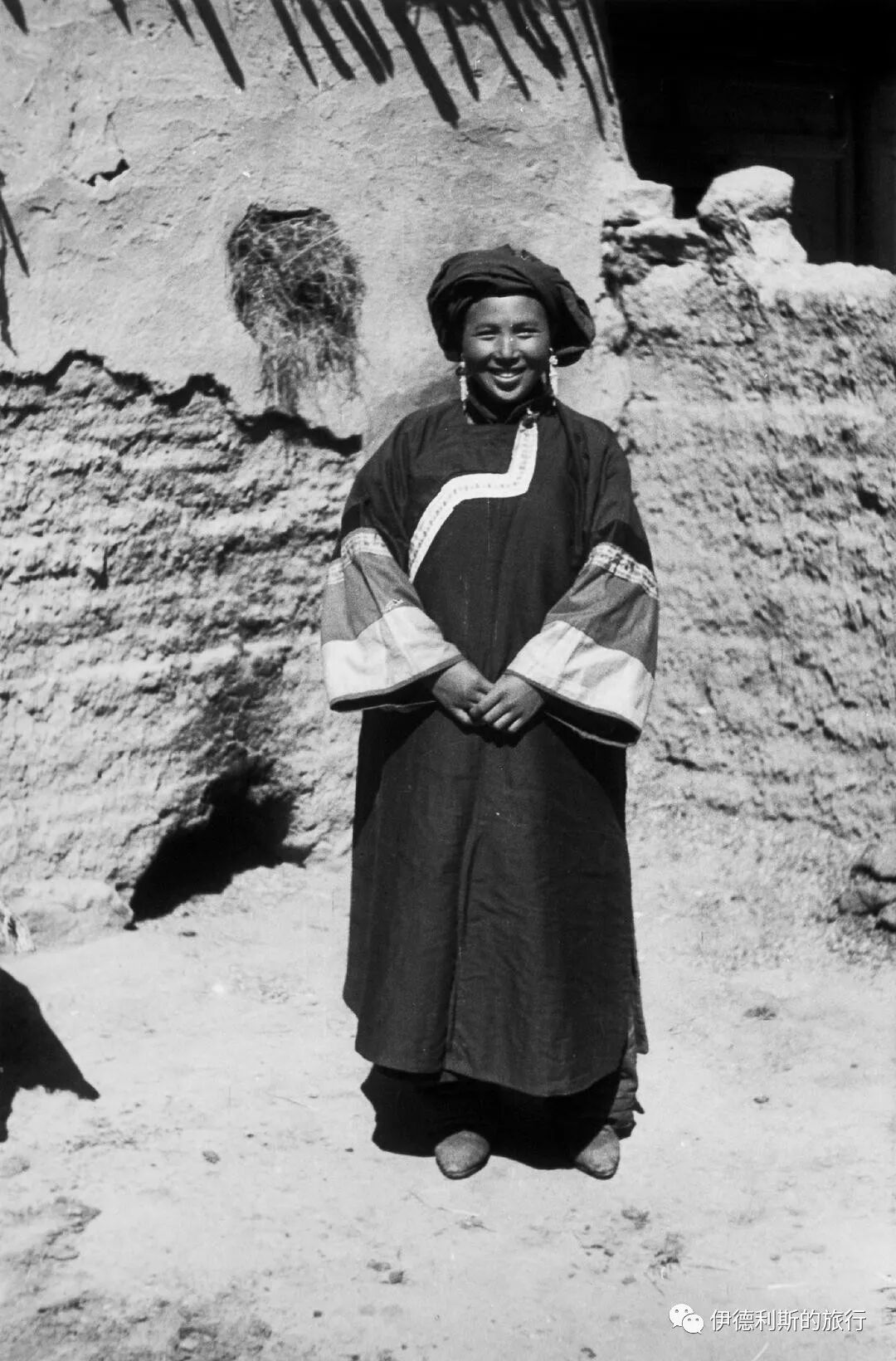
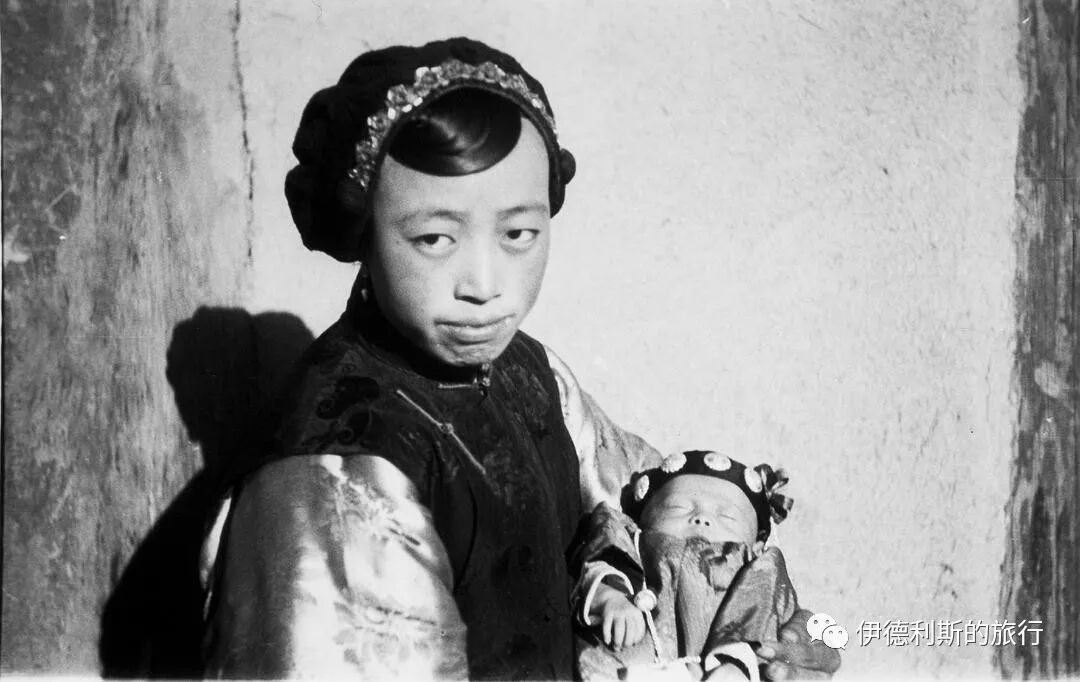
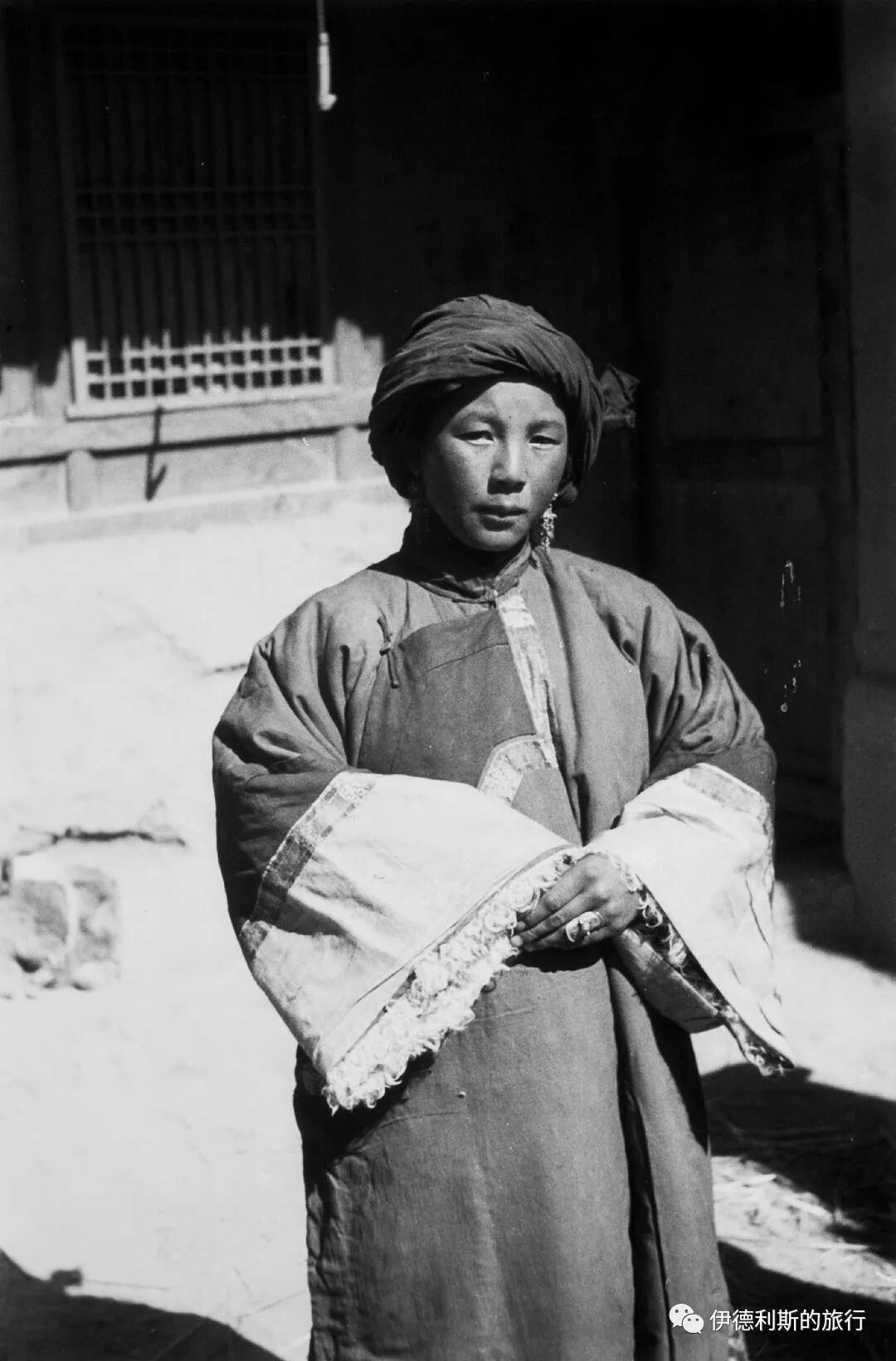
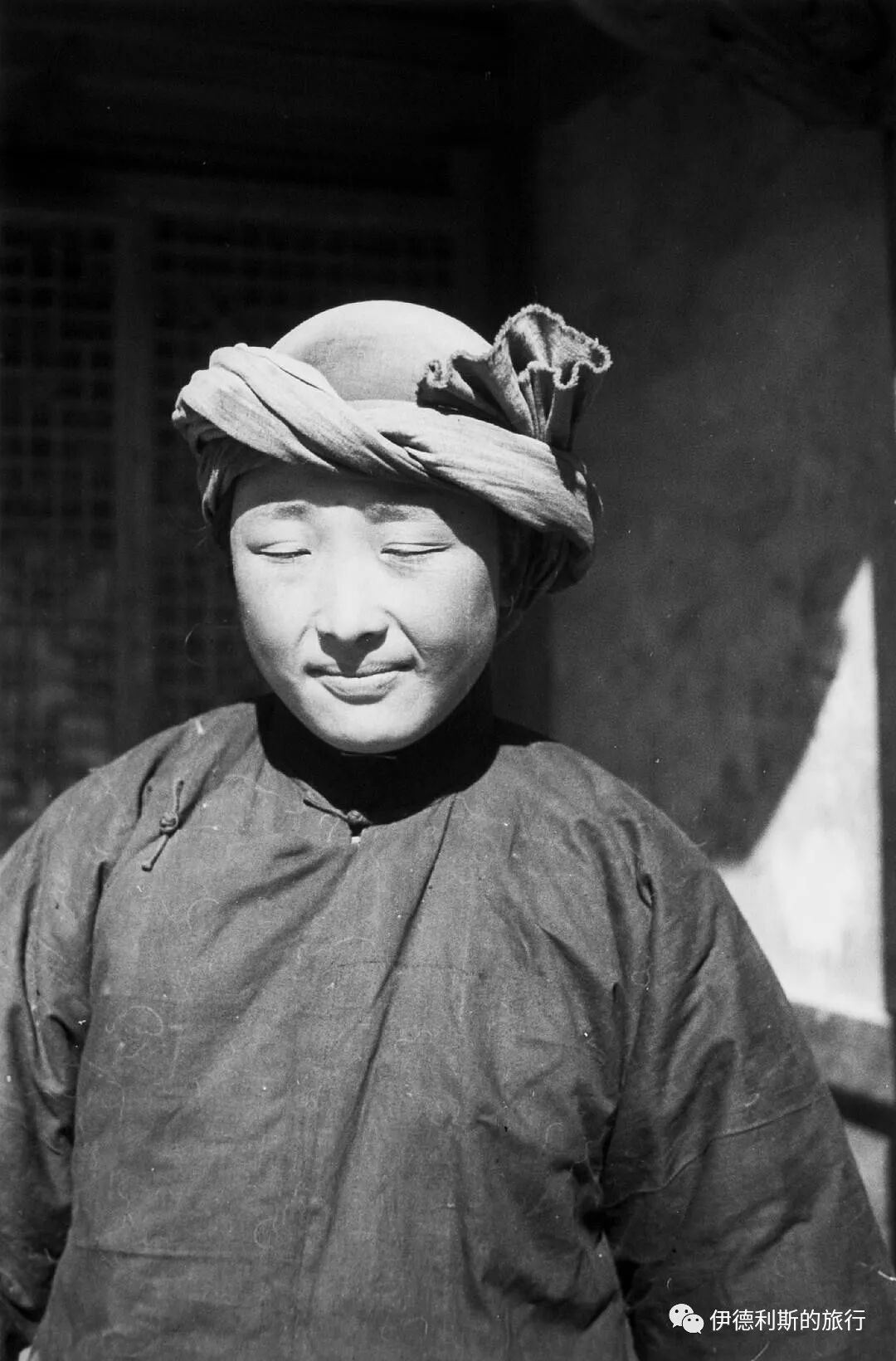
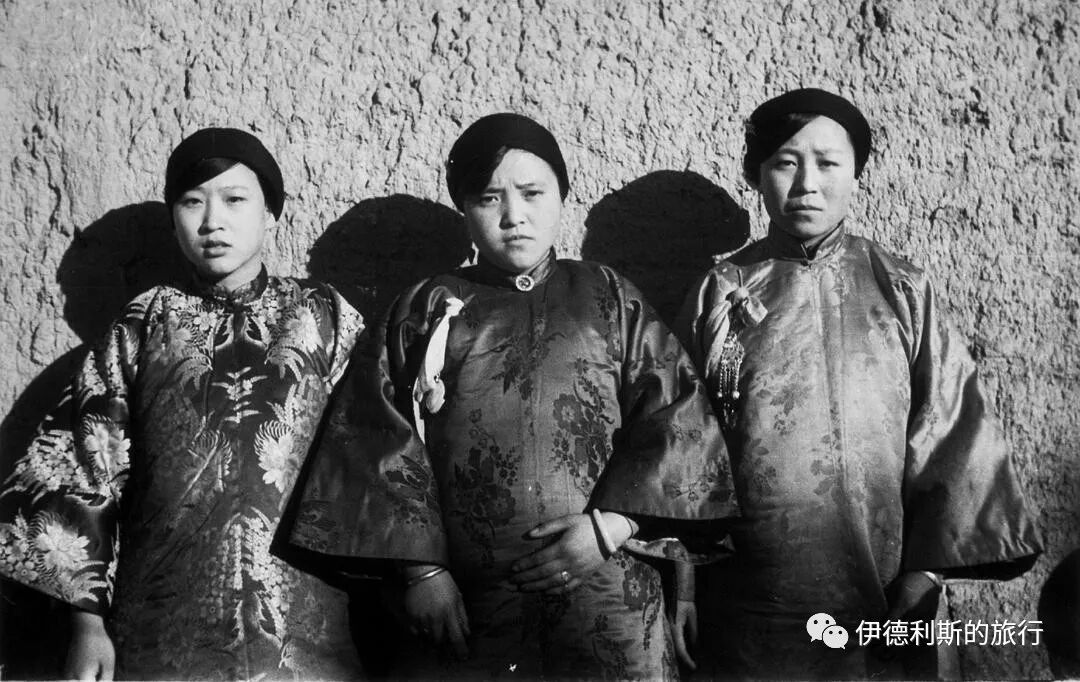
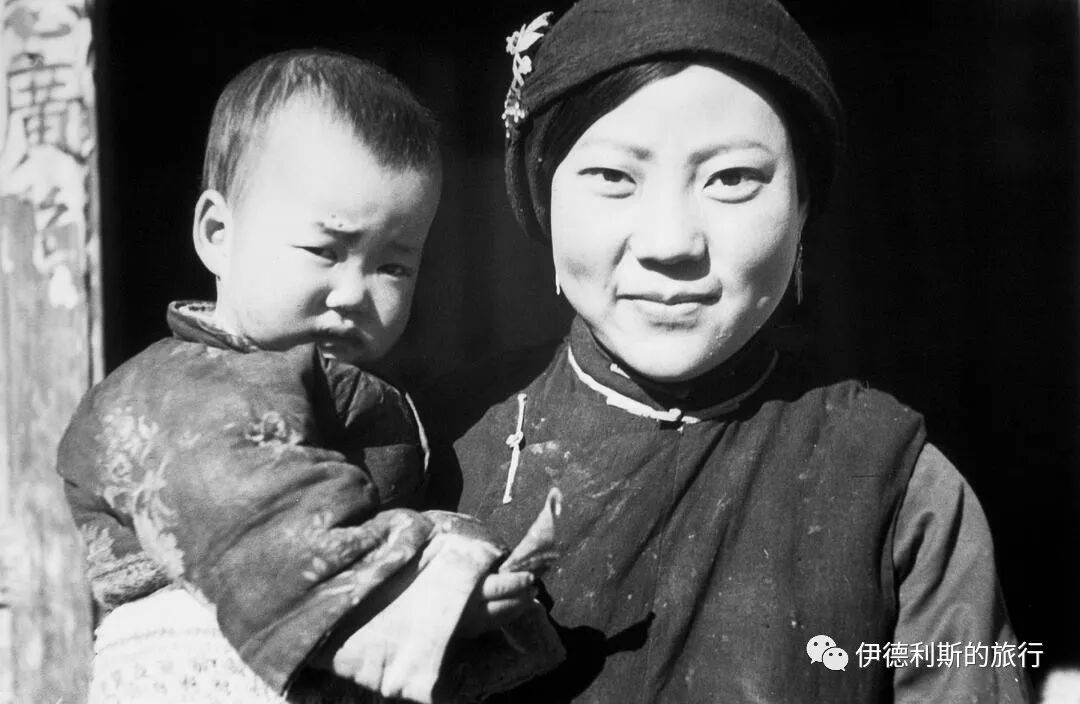
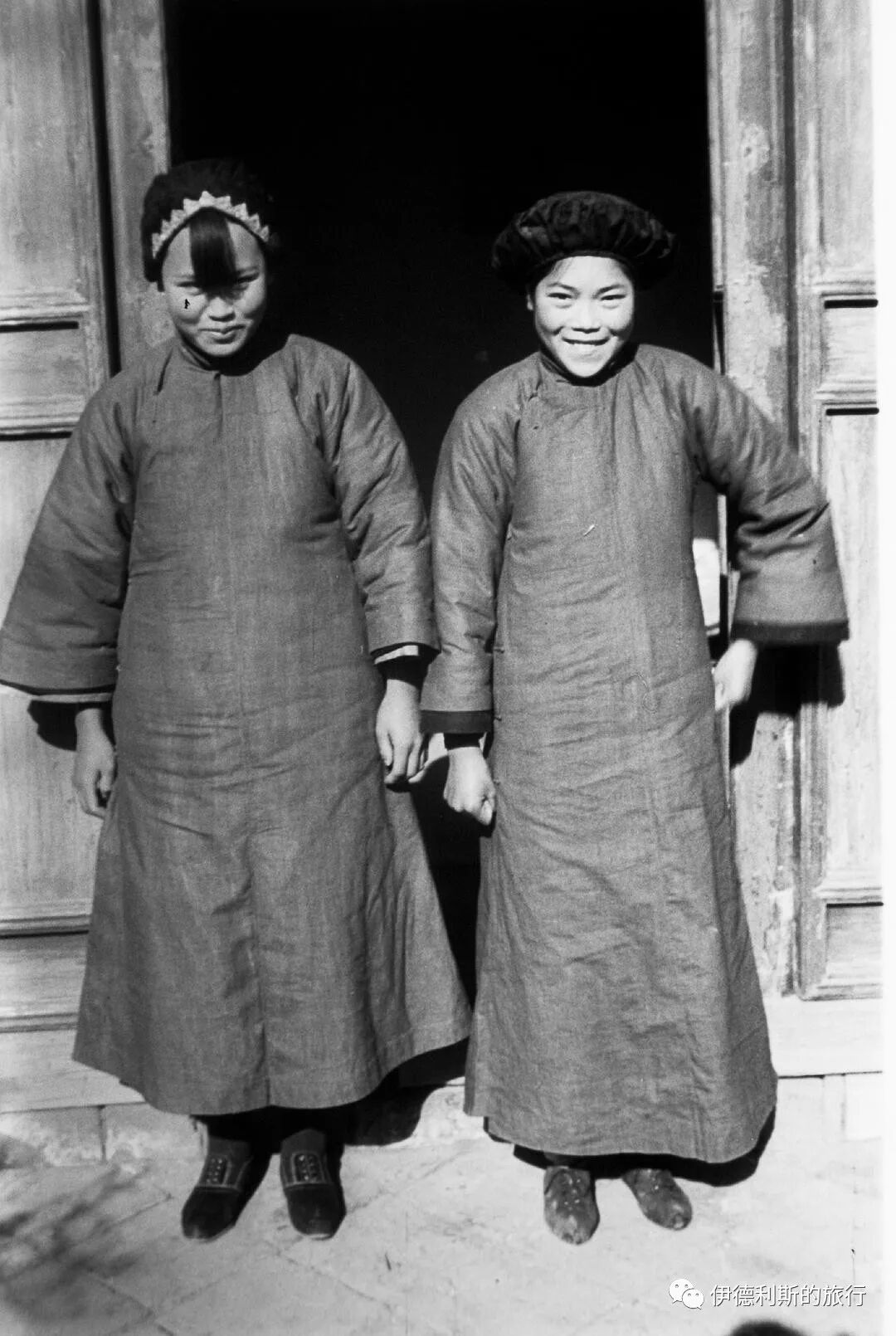
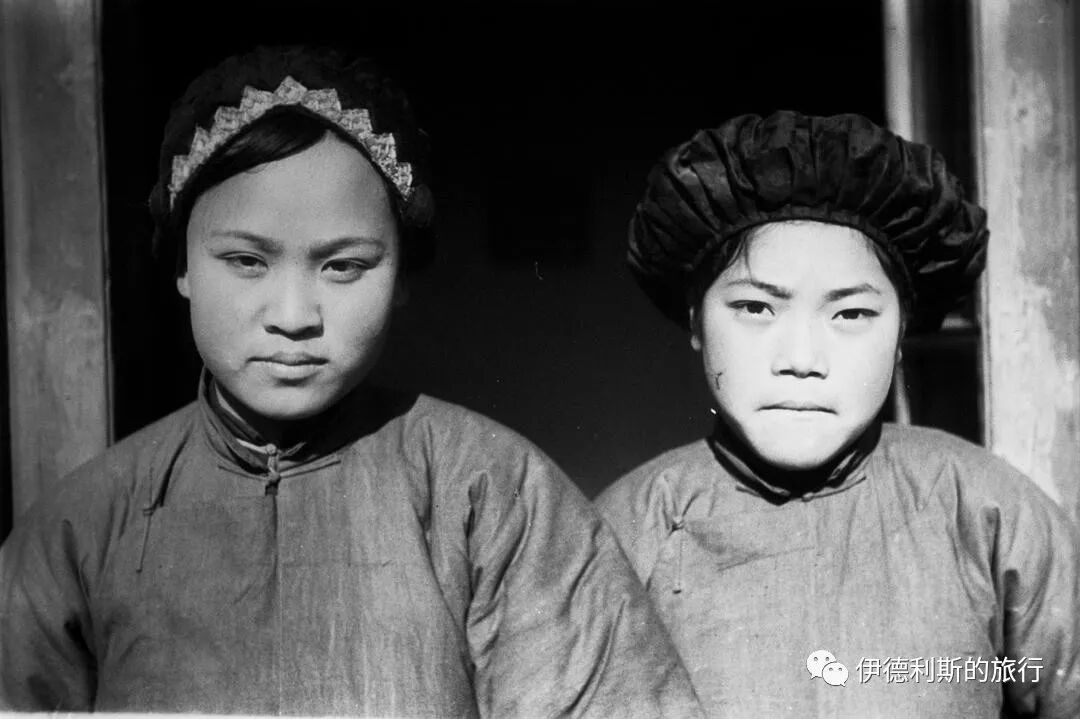
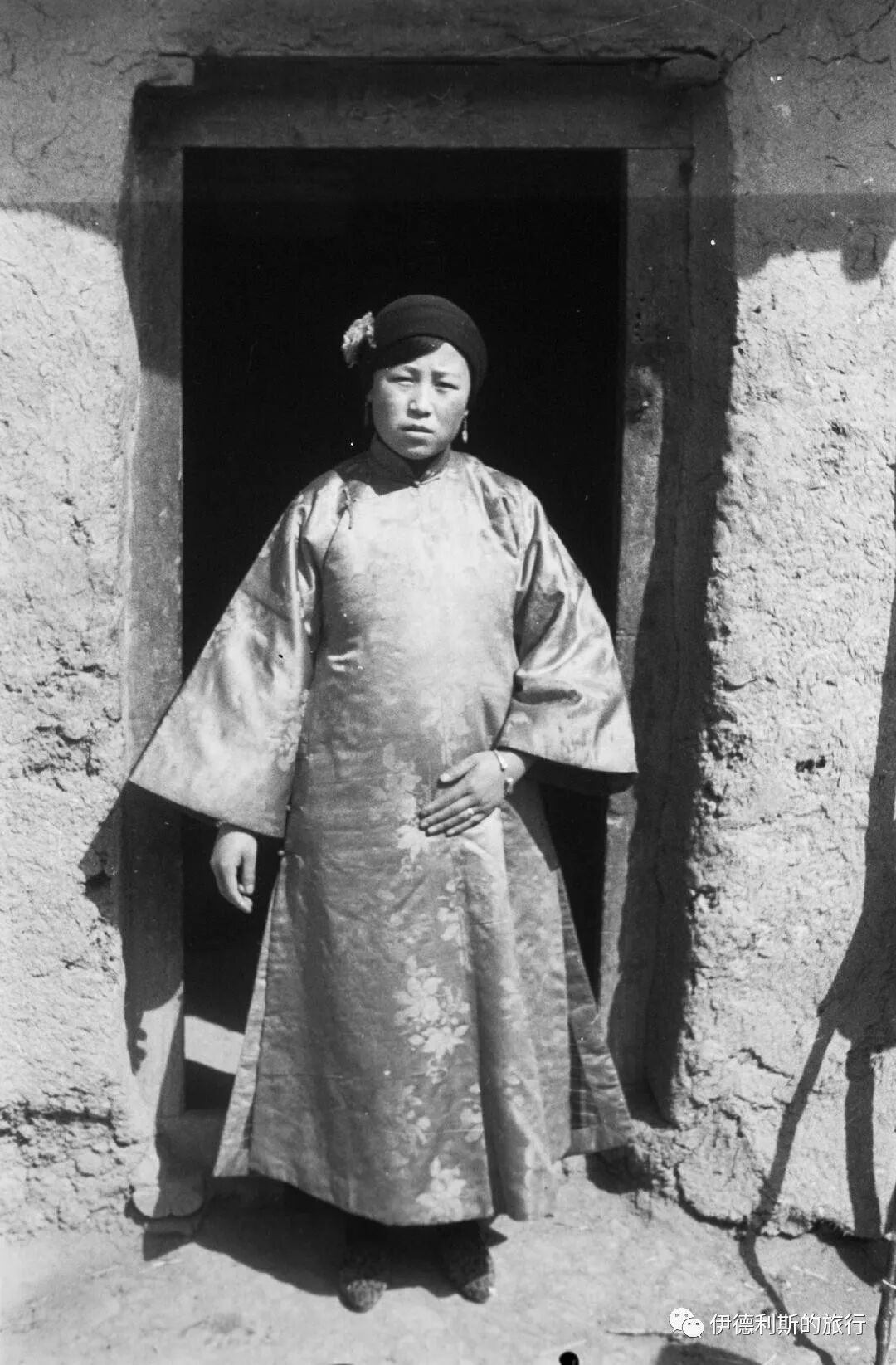
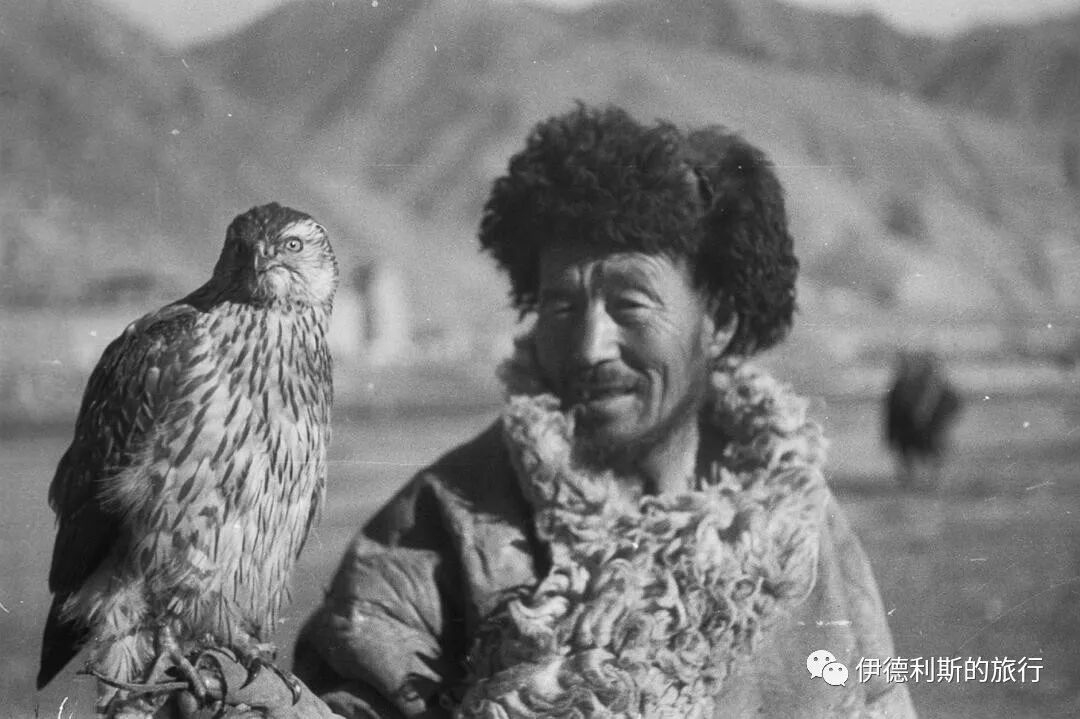
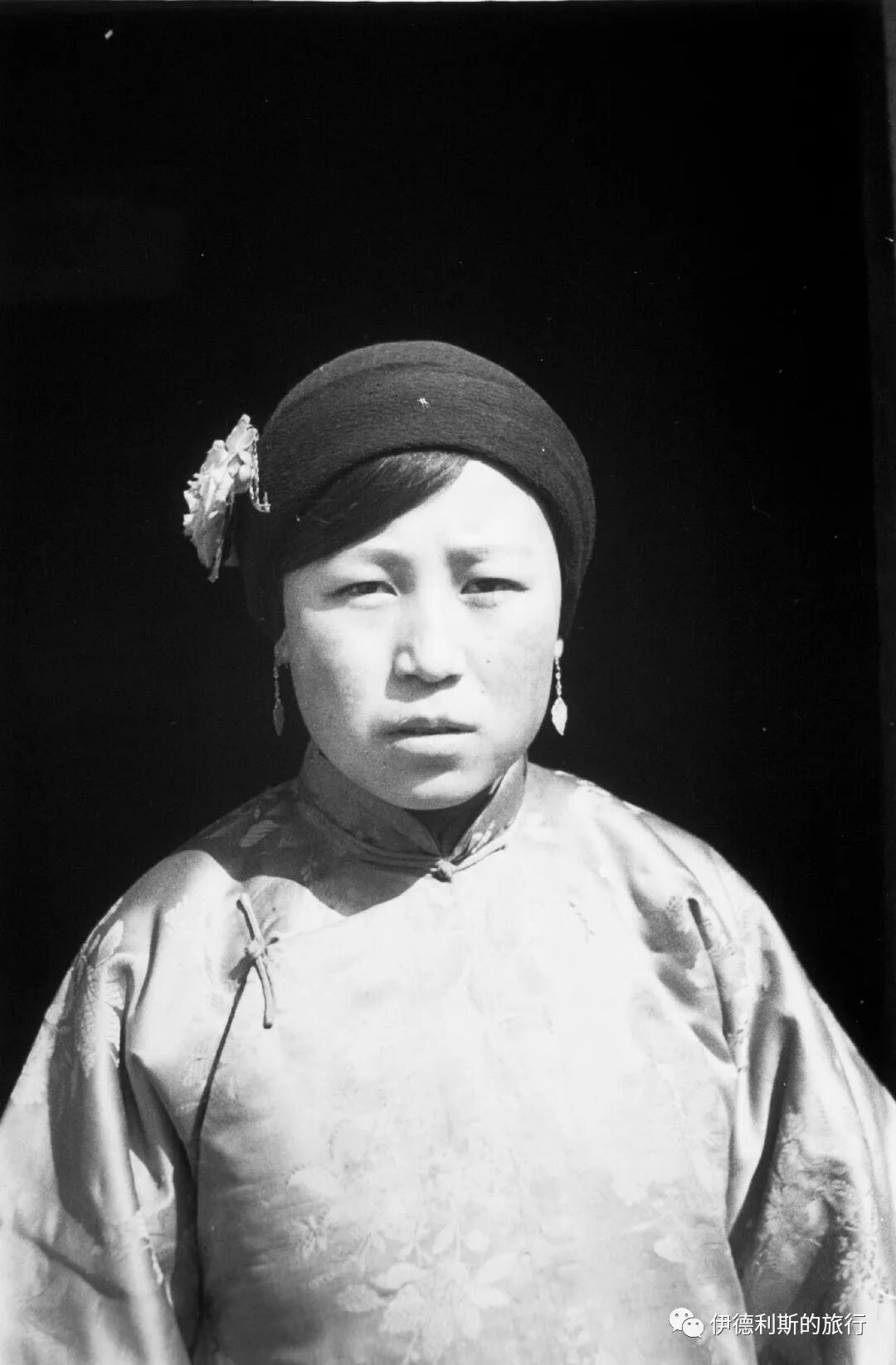
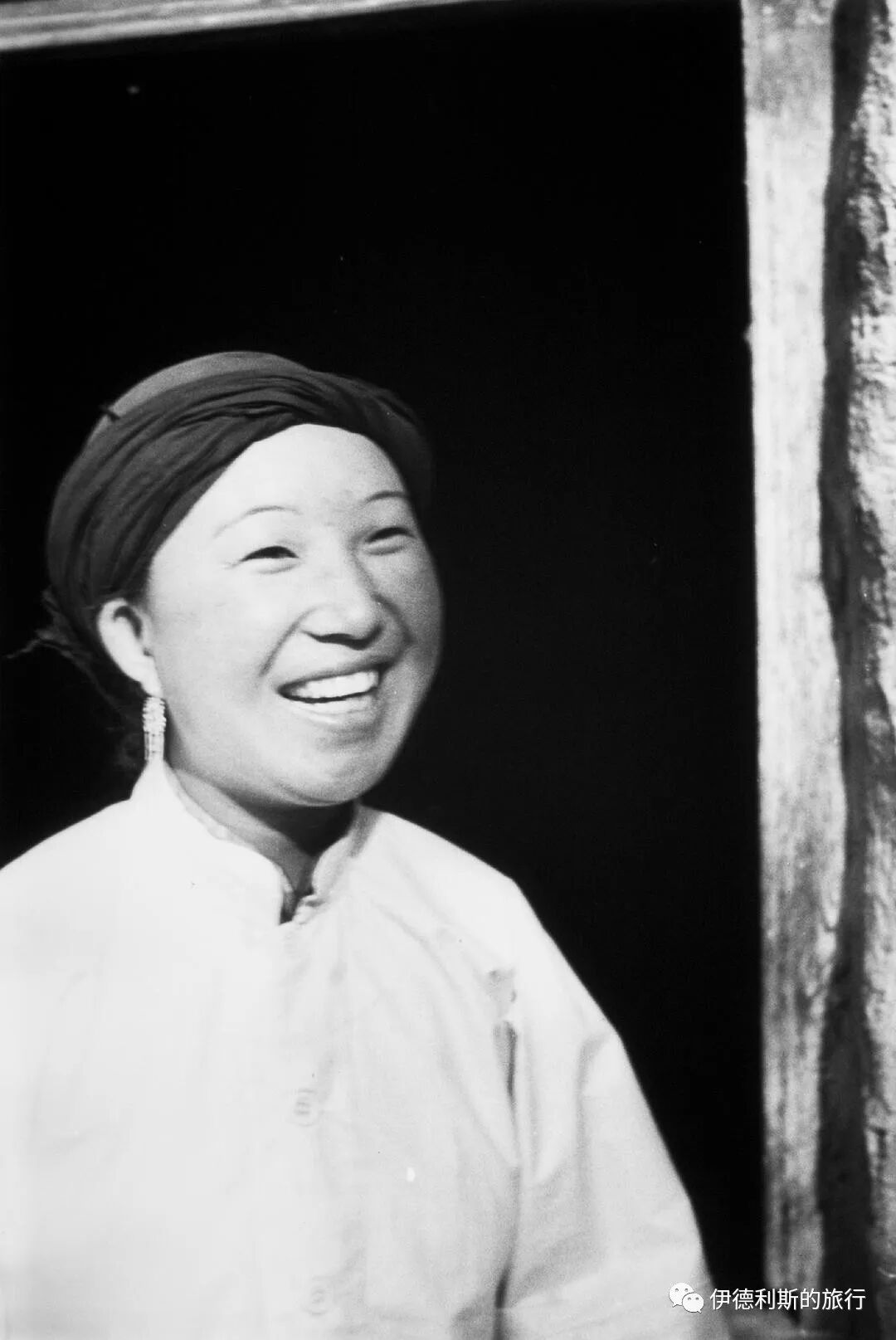
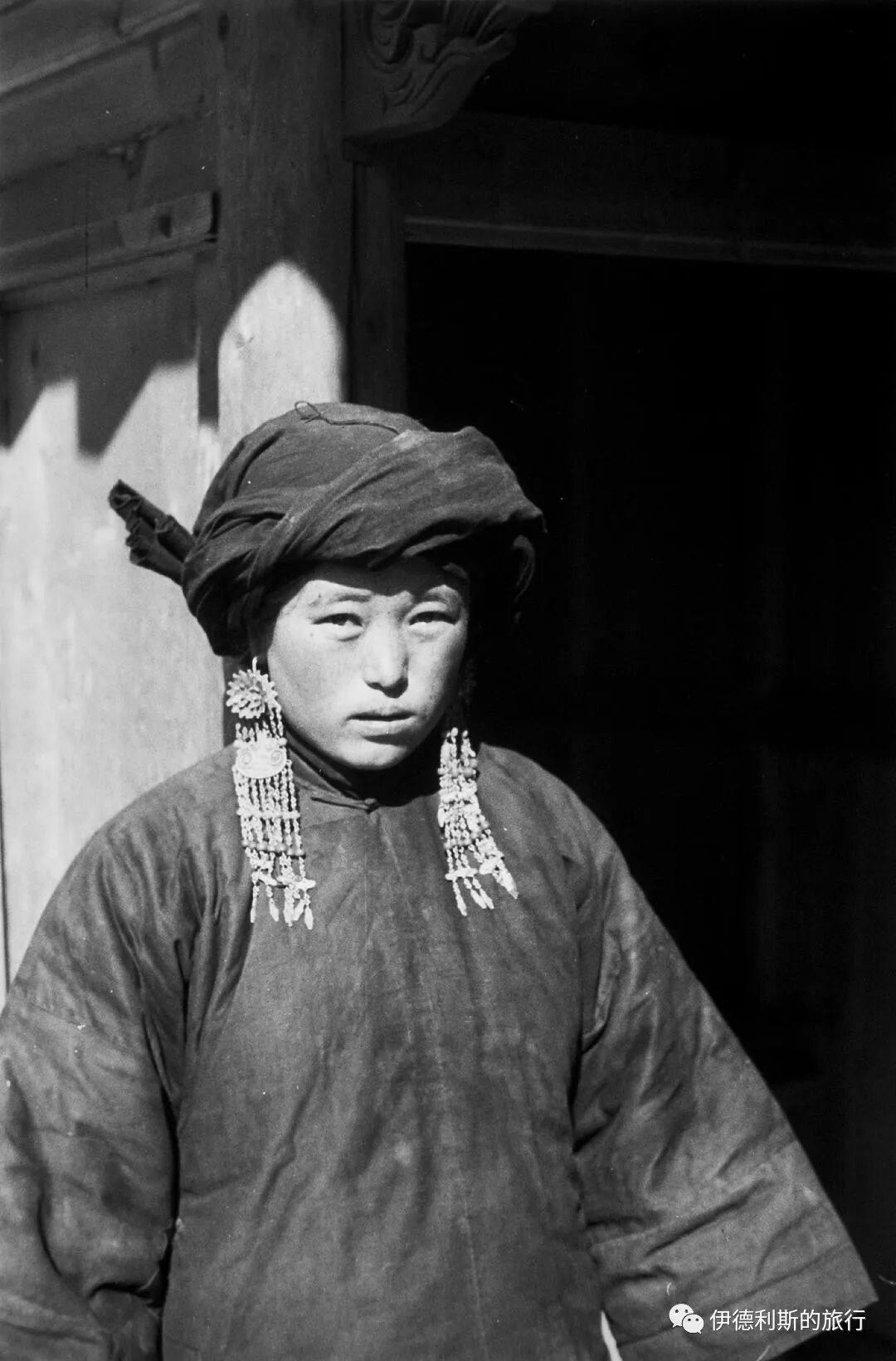
Kaligang Tibetan Hui Muslims in 1934.
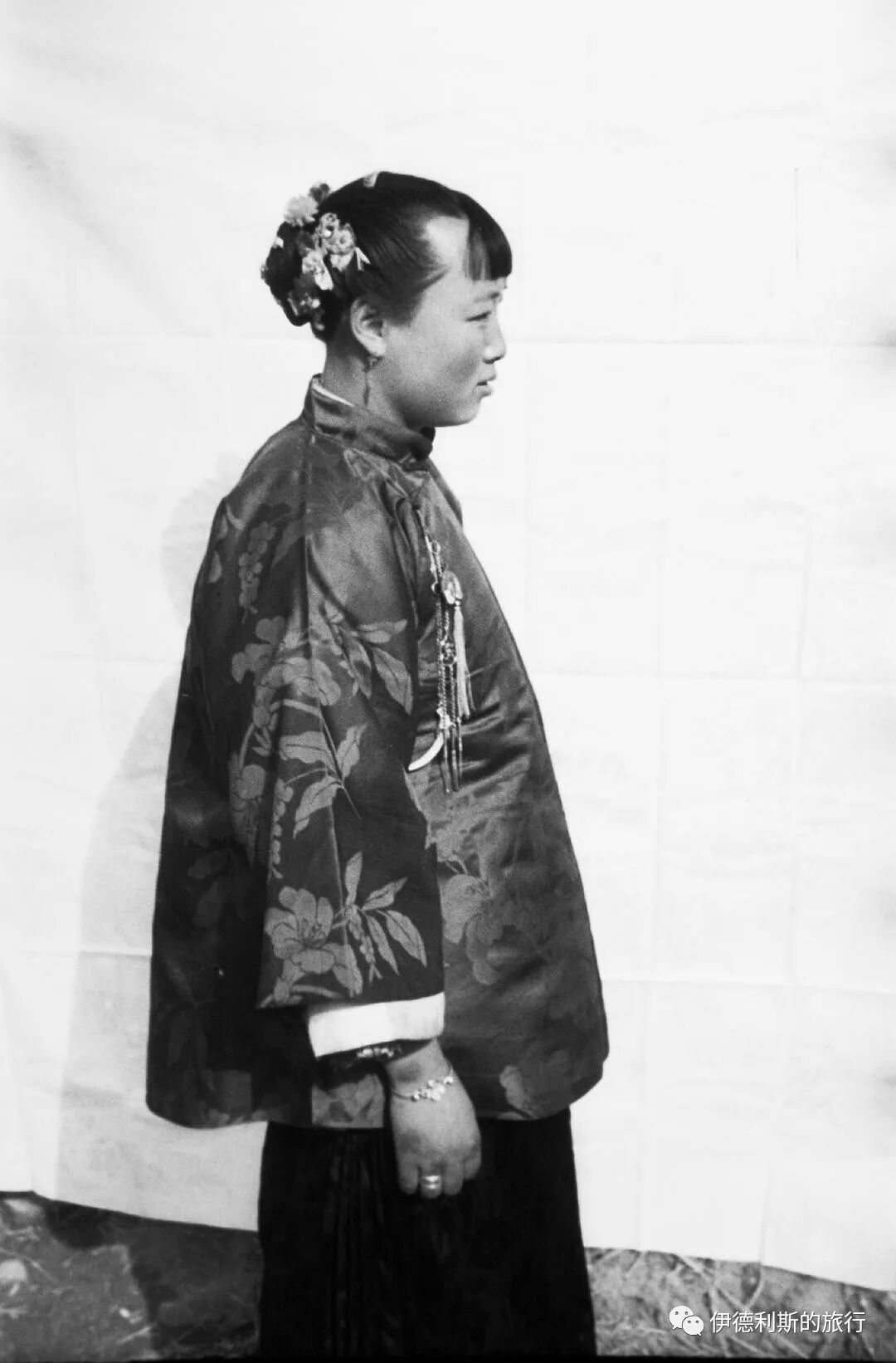
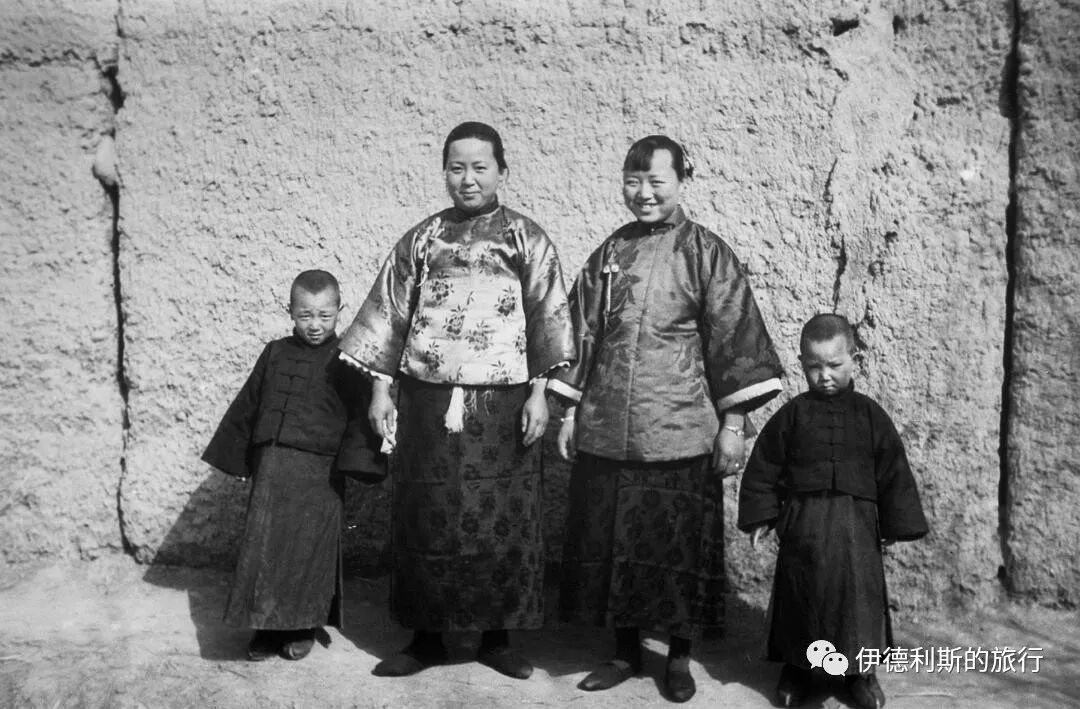
Kaligang Tibetan Hui Muslims photographed in Labuleng Town in 1939.
Halal Travel Guide: Anqing Hui Muslim Community — South Gate Mosque Photos (Part 2)
Articles • ali2007fr posted the article • 0 comments • 118 views • 2026-05-18 02:27
Summary: Anqing Hui Muslim Community — South Gate Mosque Photos is presented here as a firsthand travel account in clear English. The account keeps its focus on Anqing Muslims, China Mosques, Old Photos while preserving the names, places, food, and historical details from the Chinese source. view all
Summary: Anqing Hui Muslim Community — South Gate Mosque Photos is presented here as a firsthand travel account in clear English. The account keeps its focus on Anqing Muslims, China Mosques, Old Photos while preserving the names, places, food, and historical details from the Chinese source.
Halal Travel Guide: Wuchang Hui Muslim Community — Qiyi Street Photos (Part 2)
Articles • ali2007fr posted the article • 0 comments • 137 views • 2026-05-18 02:26
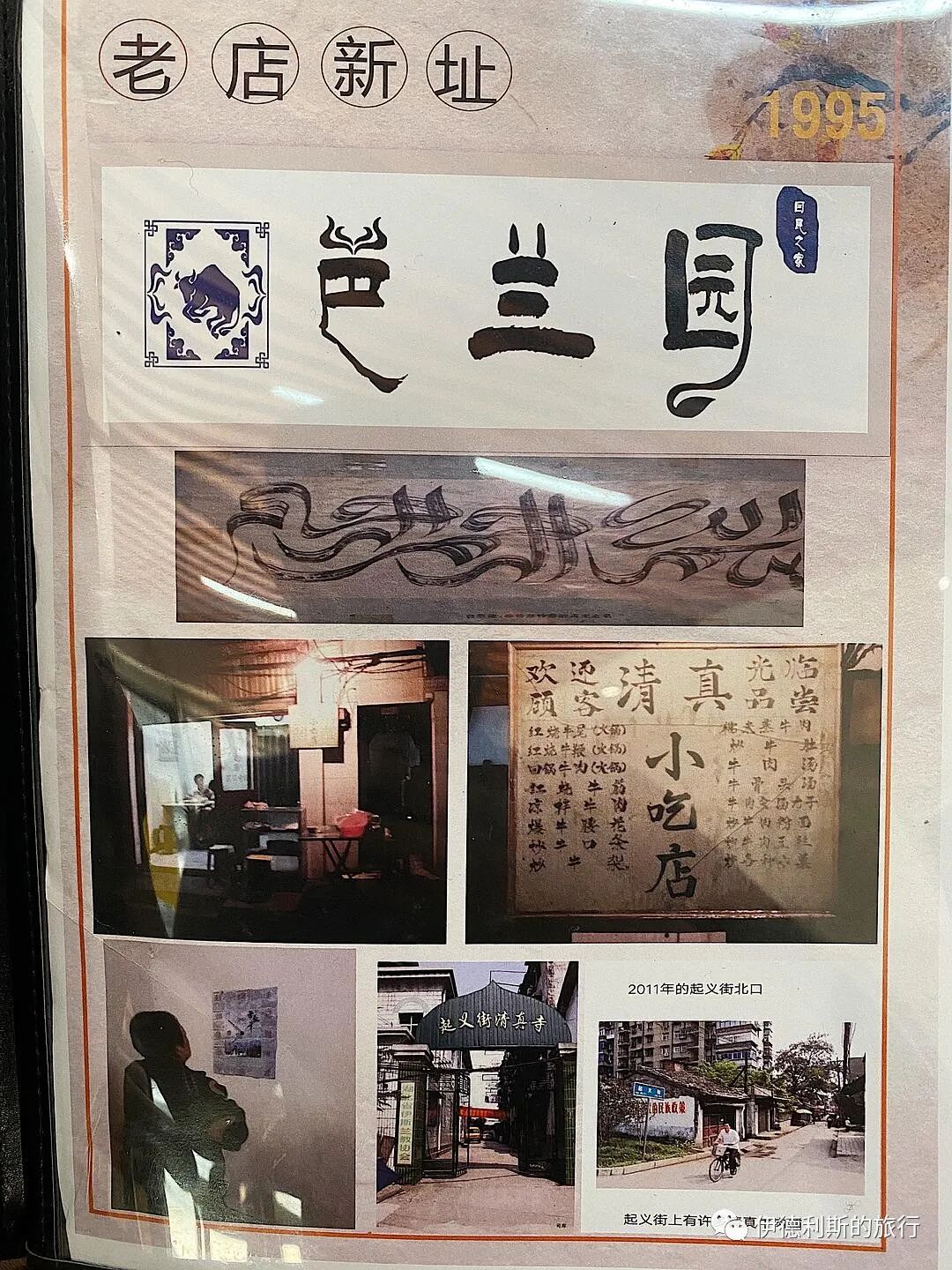
Summary: Wuchang Hui Muslim Community — Qiyi Street Photos is presented here as a firsthand travel account in clear English, beginning with this scene: Also, their new menu uses a photo I took of Qiyi Street back in 2011. The account keeps its focus on Wuchang Muslims, Old Photos, Hubei Muslims while preserving the names, places, food, and historical details from the Chinese source.
Also, their new menu uses a photo I took of Qiyi Street back in 2011. view all
Summary: Wuchang Hui Muslim Community — Qiyi Street Photos is presented here as a firsthand travel account in clear English, beginning with this scene: Also, their new menu uses a photo I took of Qiyi Street back in 2011. The account keeps its focus on Wuchang Muslims, Old Photos, Hubei Muslims while preserving the names, places, food, and historical details from the Chinese source.
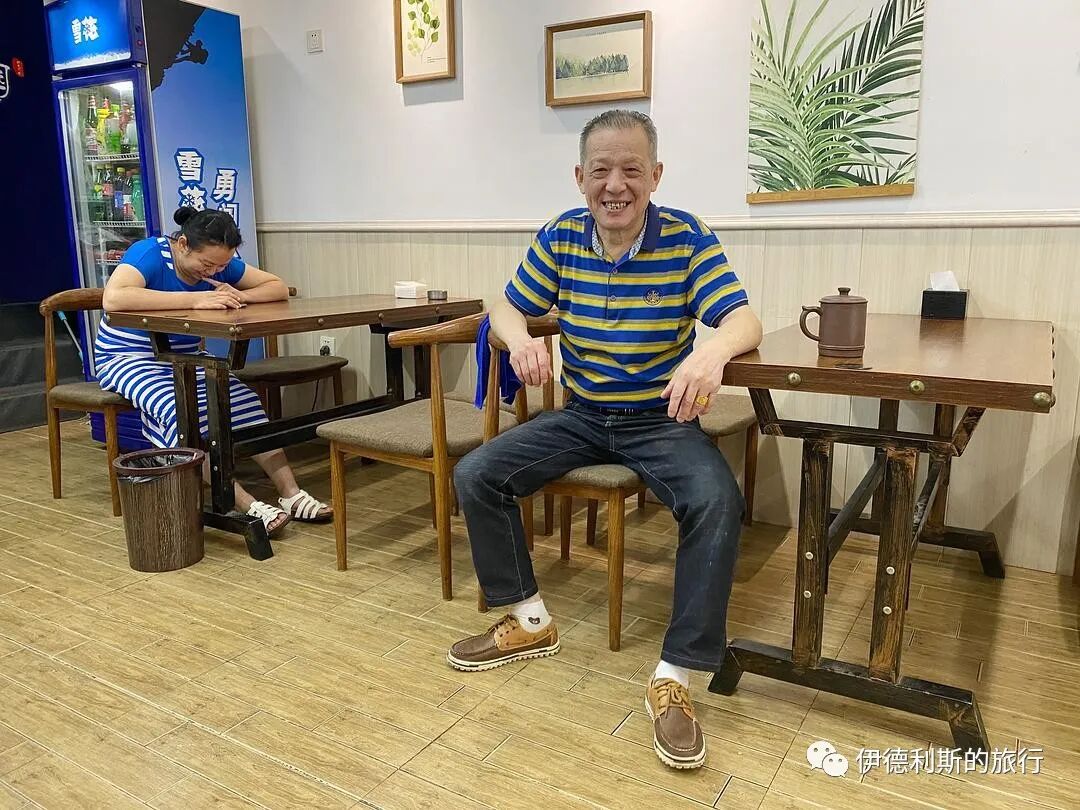
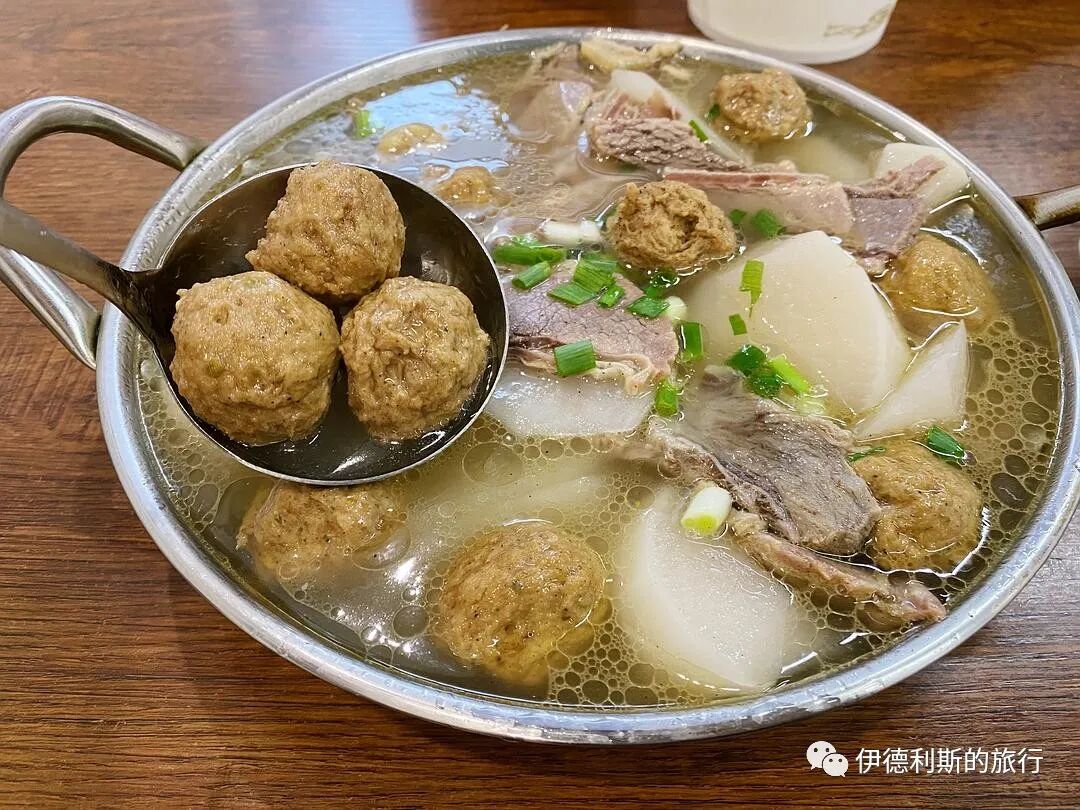
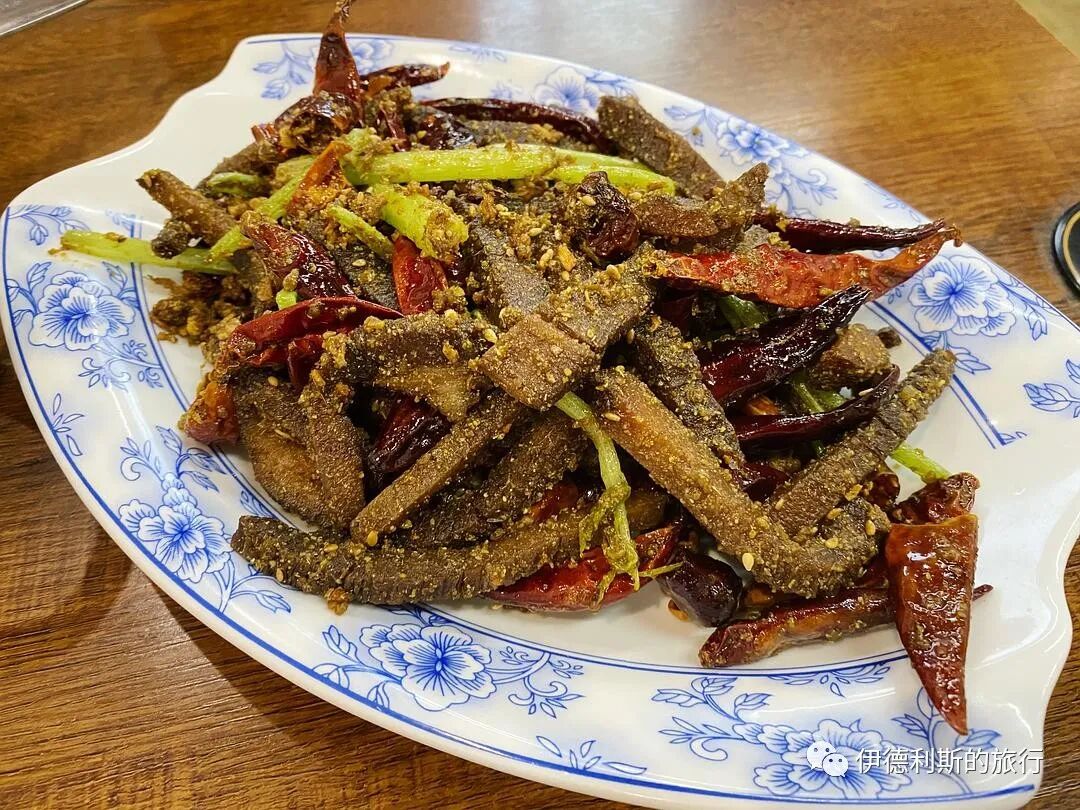
Also, their new menu uses a photo I took of Qiyi Street back in 2011.
Hedda Morrison's Old Beijing Photos: Kaorouwan, Muslim Barbecue and Hui Food
Articles • ali2007fr posted the article • 0 comments • 144 views • 2026-05-18 01:58
Summary: Hedda Morrison's Old Beijing Photos: Kaorouwan, Muslim Barbecue and Hui Food is presented here as a firsthand travel account in clear English, beginning with this scene: German photographer Hedda Morrison moved to Beijing in 1933 to manage a German photography studio in the embassy district. The account keeps its focus on Beijing Halal Food, Old Photos, Hui Muslims while preserving the names, places, food, and historical details from the Chinese source.
German photographer Hedda Morrison moved to Beijing in 1933 to manage a German photography studio in the embassy district. During this time, she rode her bicycle through the streets and alleys of Beijing, taking many interesting photos until she left the city in 1946. Most of Hedda Morrison's work was donated to the Harvard-Yenching Library. It has been digitized and is now on their website, including a set of photos of the old Beijing halal restaurant Kaorouwan.
This set of photos shows every step from slicing the meat and grilling it to making sesame flatbread (shaobing) and eating the meat inside the bread. It gives us a vivid look at what grilled meat on an iron grate (zhizi kaorou) was like 70 or 80 years ago.
Kaorouwan was started during the Qing Dynasty by a Hui Muslim family named Wan from Dachang, east of Beijing. They opened the shop in An'er Hutong near Xuanwumen, specializing in grilled beef on an iron grate served with sesame flatbread. At first, Kaorouwan was just a street stall. It wasn't until the third-generation owner, Wan Yukui, bought a storefront at the west end of An'er Hutong that the business truly became established.
Wan Ba and two assistants.
The interior of the shop.
Zhang Zhongxing wrote this in his book Fuxuan Suohua:
I forget who I was with, but it was summer, and we went to Kaorouwan to try the grilled beef. The shop was very simple, just one large room. On the south side was the grilling area with two iron grates (zhizi) side by side. They looked like millstones, with a round platform about the size of a restaurant table. In the middle was an iron ring over a foot high, topped with an iron grate that was slightly raised in the center.
The iron grate was made of iron strips about three or four fen wide placed side by side. There were gaps between the strips, which were filled with beef juices from constant use. Four rough benches were placed around the round platform for customers to stand at. On the north side was a table holding bowls, chopsticks, chopped green onions, chopped cilantro, sesame paste, soy sauce, and other seasonings. There was also a cutting board for the beef, with the meat, knives, and plates on it.
The man cutting the meat was a big guy around fifty, who I assume was the owner, Mr. Wan. He was quite fat and wore only a pair of unlined trousers, which sat about an inch below his navel. The owner was very capable. Aside from a teenage boy who helped deliver meat and seasonings, he did everything himself, including seating customers and handling the bill. The meat was said to be carefully selected from the meat market early in the morning, and it was sliced well—thin and even.
When we arrived, the owner told the young assistant: 'Two people, let them stand there.' Then, the assistant asked how much we wanted to eat and immediately brought the meat and seasonings. Following the Beijing custom, we kept our right foot on the ground and lifted our left foot onto the bench. We used long bamboo chopsticks to dip the meat slices in seasoning and placed them on the grate. The grate was heated by pine wood, which produced little smoke and a slight fragrance. The grate was very hot, and the meat slices sizzled the moment they touched it. Stir it a few times and it is ready to eat. I take a sip of white liquor (bai gan) and a bite of meat, feeling just like I am in a Mongolian yurt (menggubao) out on the frontier.
I stop drinking halfway through the meal, just as the sesame flatbread (shaobing) arrives. I eat the flatbread with the grilled meat and finish a bowl of porridge, leaving me completely full. I put down my bowl and chopsticks and listen to the shop owner calculating the bill: this item is so many diao (ten copper coins make one diao), that item is so many diao, and here is the total. While calculating, the owner does not stop his knife; he keeps on slicing. I am very satisfied with this meal and will definitely want to come back again.
Every visit is rewarding. Eating well is one thing, but it is even more interesting to watch the owner’s style. With his big belly exposed, he stays busy but calm, truly living up to the description of being open and magnanimous.
The assistant is slicing meat.
Jin Shoushen wrote in Life in Old Beijing:
The owner of Kaorouwan, Wan Laowu, was originally a flatbread stall owner. Back in the days when it was popular to sell grilled meat from small carts, the Wan family sold grilled meat on a griddle (zhizi kaorou) at the west entrance of An'er Hutong. Over the years, business grew, so they set up a shed to sell the meat and added a second iron griddle. Every day, carriages and horses crowded the entrance, but the shop remained a simple shed. The secret to Kaorouwan is that they use truly high-quality young beef (Kaorouwan specializes in beef), making it fresh, tender, and delicious. Wan Laowu is incredibly talented. He hand-slices about a hundred pounds of beef every day. He uses a money-counting system for sales, and no matter how many customers there are, he slices meat and calculates bills at the same time, using all his senses to ensure not even the price of a cucumber is wrong.
The assistant is preparing the marinade and then mixing it with the meat.
Wang Yongbin wrote in Beijing's Commercial Streets and Old Brands:
Kaorouwan is famous far and wide for its thriving business, thanks to their careful selection of meat, thin slices, complete seasonings, and fresh, delicious flavor. Kaorouwan sends people to the Madian beef and mutton market outside Deshengmen to select fat sheep from north of the pass. The way Kaorouwan slices meat is a family craft. The meat must be three inches long, one inch wide, and as thin as paper. This way, the meat cooks quickly on the griddle and is easy for customers to chew and swallow. Eating grilled meat requires green onions, which are cut into half-inch diagonal slices for customers to use while grilling. Each customer is given a blue-rimmed porcelain bowl containing seasonings like high-quality soy sauce, sesame oil, cooking wine, white sugar, minced green onion, minced ginger, minced garlic, and salt. Back then, Kaorouwan had customers grill and eat the meat themselves. Each person held a pair of wooden chopsticks over a foot long, with one foot on a bench and the other on the ground, grilling and eating at the same time.
Making the sesame flatbread (shaobing) to go with the grilled meat.
Jin Yunzhen wrote in "Fragments of Memories" (Douding Suoyi):
On the east side of Xuanwumen Inner Street in Beijing, near Rongxian Hutong, there used to be a small shop (really just a food shed) that specialized in roasted beef, known as the famous Kaorou Wan. This Kaorou Wan had many unique features. Although the restaurant was small, it had been in the family for six generations. When I was around twenty years old (roughly 1930), the person running it was a middle-aged man over forty. Beijingers followed the customs of Hui Muslims and respectfully called him "Wan Ba," which means Master Wan. He had a large head, thick eyebrows, bright eyes, and a short, sturdy build. He was quick, sharp-minded, and very organized. He was very strict about choosing meat and only used the chuck (shangnao). His meat-slicing technique was fast and skillful, producing large, thin slices without any gristle, making the meat incredibly tender and fatty. The beef had a milky aroma and tasted delicious when roasted, which is why Kaorou Wan stayed famous for so long.
Kaorou Wan was just a small shop with two gray sheds built on the sidewalk by the road. It was divided into an inner and outer room. The inner room had two roasting grills (zhizi). Because there were so many customers, they used large grills three feet in diameter, set over a fire basin with an iron ring. Below were large round tables, and each table could fit ten people standing around it. Customers had no seats and stood with one foot on a long wooden bench. All the seasonings, meat, bowls, sesame flatbread (shaobing), and wine were placed on the edge of the round table. People held two-foot-long wooden chopsticks (as thick as rattan, otherwise you couldn't reach the grill through the crowd) and ate with gusto, showing a rugged style. The beef was priced by the bowl, with each bowl weighing ten old-style taels. Half bowls were also sold. For an adult with a normal appetite, ten taels were enough, and those with a big appetite could add half a bowl. Seasonings were sold individually, such as a dish of green onions or a dish of soy sauce, and you could add or remove items like sesame flatbread (shaobing) as you liked. You had to bring your own wine at first, but later they started selling liquor (shaojiu) by the two-tael bowl. At that time, a full meal for one person cost five or six jiao, which was a big expense. A simple meal at a small restaurant for an average person, without wine, cost less than two jiao, so spending five or six jiao on a meal was considered extravagant for most residents.
Every late autumn, when passing by Xuanwumen Street, the smell of roasted meat would linger in the air, which was very tempting. Most customers were lower-middle-class citizens and working people; the wealthy and powerful did not visit. Later, Kaorou Wan became famous, and some wealthy families came to try the unique taste of the roasted beef and spread the word. Eventually, prominent figures arriving in cars with servants, and even noblewomen covered in jewelry, began to visit. These people didn't mind "losing their status" by squeezing in among the sweating, hungry men to eat roasted meat with long wooden chopsticks. Master Wan was completely unfazed. He didn't consider setting up a "VIP area" or getting up to flatter them. He just kept doing things his own way and treated everyone the same, a quality that was highly valued among small merchants in Beijing at the time.
Kaorou Wan not only serves excellent meat, but the master chef Wan himself is unique for his simple and meticulous style, his skilled and refined technique, his sharp mind, and his organized memory. These things left a deep impression in my observations and memories. Since his business was just two gray sheds, he did not have many staff; I remember he only had two young assistants besides himself. They just ran back and forth, moved supplies, and washed bowls and chopsticks. Besides handling the accounts, greeting guests, and looking after their coats, his main job was standing at the counter to slice meat. His meat-slicing technique was superb, and even when twenty people ate at once, he never failed to keep up with the demand. Whenever the place was packed and people were bumping into each other looking for seats, he watched everything, listened to everything, kept reciting the accounts, never stopped slicing meat, greeted guests, and arranged for early arrivals to eat in order. This person came first, please sit over there. Please wait a moment, you arrived a step later than this person. During all this, he also had to collect money and nod goodbye to guests. At the same time, he noticed if someone took the wrong umbrella or where someone else hung their hat and coat. His calm and organized attitude was truly amazing.
Roast meat, eating meat.
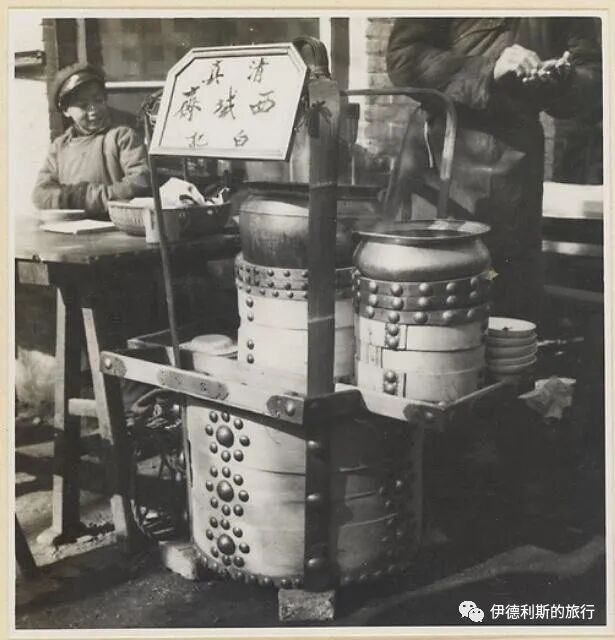
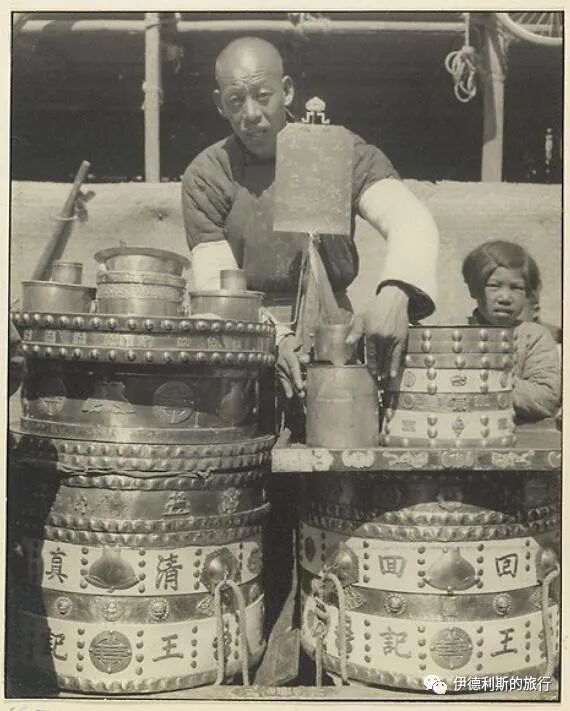
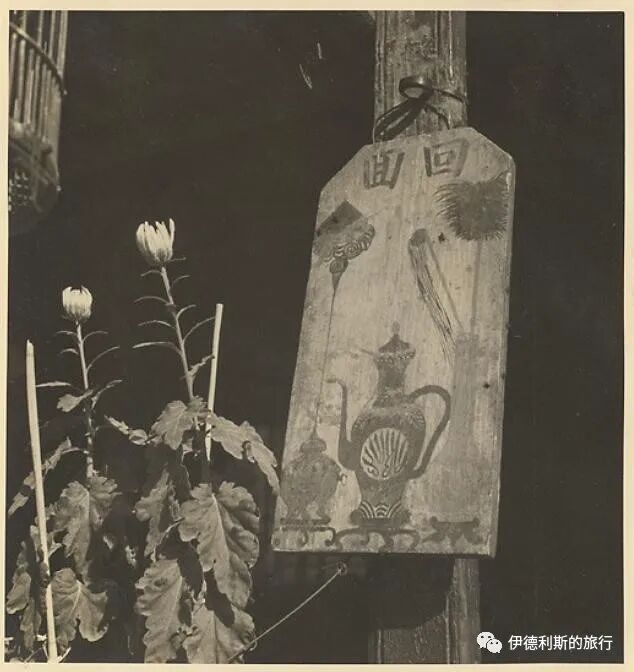
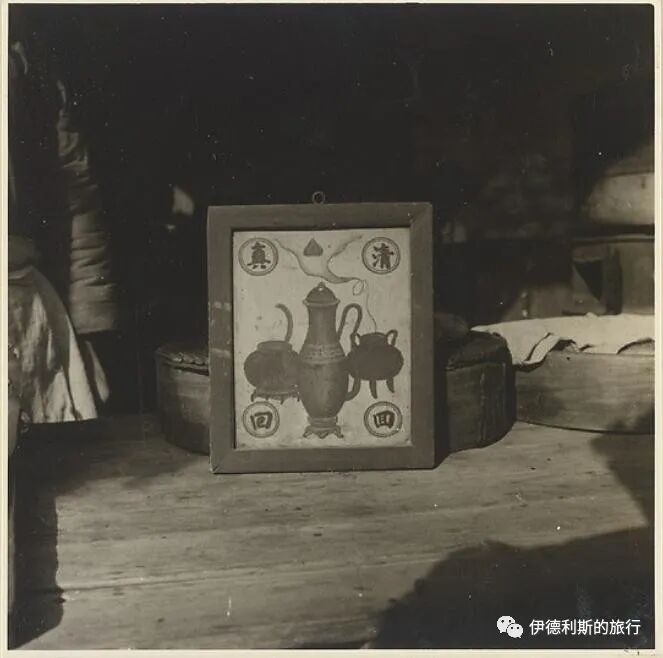
I will also share a few photos taken by Hedda Morrison in Beijing of halal signs and halal snacks. view all
Summary: Hedda Morrison's Old Beijing Photos: Kaorouwan, Muslim Barbecue and Hui Food is presented here as a firsthand travel account in clear English, beginning with this scene: German photographer Hedda Morrison moved to Beijing in 1933 to manage a German photography studio in the embassy district. The account keeps its focus on Beijing Halal Food, Old Photos, Hui Muslims while preserving the names, places, food, and historical details from the Chinese source.
German photographer Hedda Morrison moved to Beijing in 1933 to manage a German photography studio in the embassy district. During this time, she rode her bicycle through the streets and alleys of Beijing, taking many interesting photos until she left the city in 1946. Most of Hedda Morrison's work was donated to the Harvard-Yenching Library. It has been digitized and is now on their website, including a set of photos of the old Beijing halal restaurant Kaorouwan.
This set of photos shows every step from slicing the meat and grilling it to making sesame flatbread (shaobing) and eating the meat inside the bread. It gives us a vivid look at what grilled meat on an iron grate (zhizi kaorou) was like 70 or 80 years ago.
Kaorouwan was started during the Qing Dynasty by a Hui Muslim family named Wan from Dachang, east of Beijing. They opened the shop in An'er Hutong near Xuanwumen, specializing in grilled beef on an iron grate served with sesame flatbread. At first, Kaorouwan was just a street stall. It wasn't until the third-generation owner, Wan Yukui, bought a storefront at the west end of An'er Hutong that the business truly became established.
Wan Ba and two assistants.
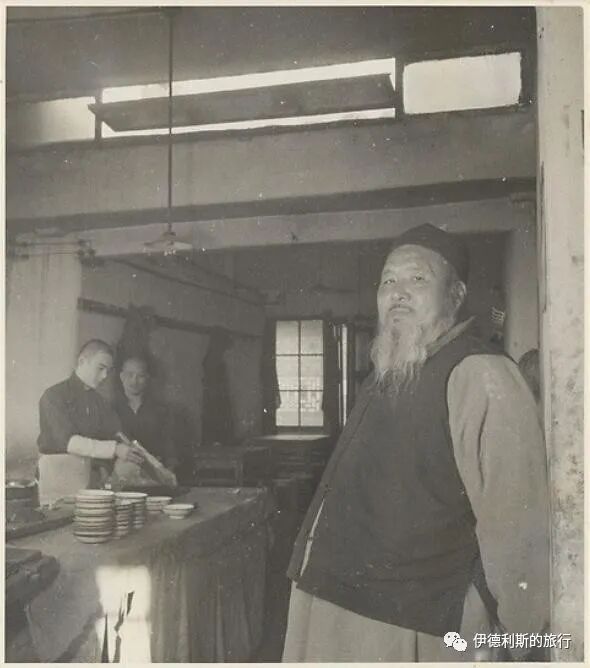
The interior of the shop.
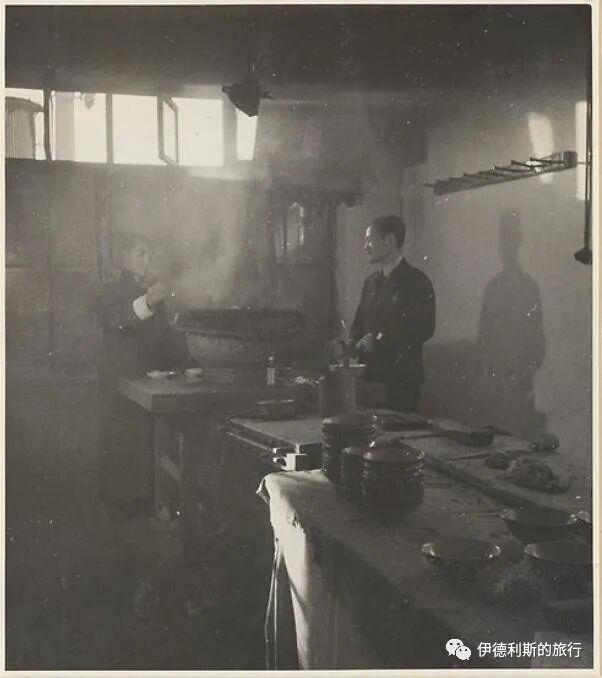
Zhang Zhongxing wrote this in his book Fuxuan Suohua:
I forget who I was with, but it was summer, and we went to Kaorouwan to try the grilled beef. The shop was very simple, just one large room. On the south side was the grilling area with two iron grates (zhizi) side by side. They looked like millstones, with a round platform about the size of a restaurant table. In the middle was an iron ring over a foot high, topped with an iron grate that was slightly raised in the center.
The iron grate was made of iron strips about three or four fen wide placed side by side. There were gaps between the strips, which were filled with beef juices from constant use. Four rough benches were placed around the round platform for customers to stand at. On the north side was a table holding bowls, chopsticks, chopped green onions, chopped cilantro, sesame paste, soy sauce, and other seasonings. There was also a cutting board for the beef, with the meat, knives, and plates on it.
The man cutting the meat was a big guy around fifty, who I assume was the owner, Mr. Wan. He was quite fat and wore only a pair of unlined trousers, which sat about an inch below his navel. The owner was very capable. Aside from a teenage boy who helped deliver meat and seasonings, he did everything himself, including seating customers and handling the bill. The meat was said to be carefully selected from the meat market early in the morning, and it was sliced well—thin and even.
When we arrived, the owner told the young assistant: 'Two people, let them stand there.' Then, the assistant asked how much we wanted to eat and immediately brought the meat and seasonings. Following the Beijing custom, we kept our right foot on the ground and lifted our left foot onto the bench. We used long bamboo chopsticks to dip the meat slices in seasoning and placed them on the grate. The grate was heated by pine wood, which produced little smoke and a slight fragrance. The grate was very hot, and the meat slices sizzled the moment they touched it. Stir it a few times and it is ready to eat. I take a sip of white liquor (bai gan) and a bite of meat, feeling just like I am in a Mongolian yurt (menggubao) out on the frontier.
I stop drinking halfway through the meal, just as the sesame flatbread (shaobing) arrives. I eat the flatbread with the grilled meat and finish a bowl of porridge, leaving me completely full. I put down my bowl and chopsticks and listen to the shop owner calculating the bill: this item is so many diao (ten copper coins make one diao), that item is so many diao, and here is the total. While calculating, the owner does not stop his knife; he keeps on slicing. I am very satisfied with this meal and will definitely want to come back again.
Every visit is rewarding. Eating well is one thing, but it is even more interesting to watch the owner’s style. With his big belly exposed, he stays busy but calm, truly living up to the description of being open and magnanimous.
The assistant is slicing meat.
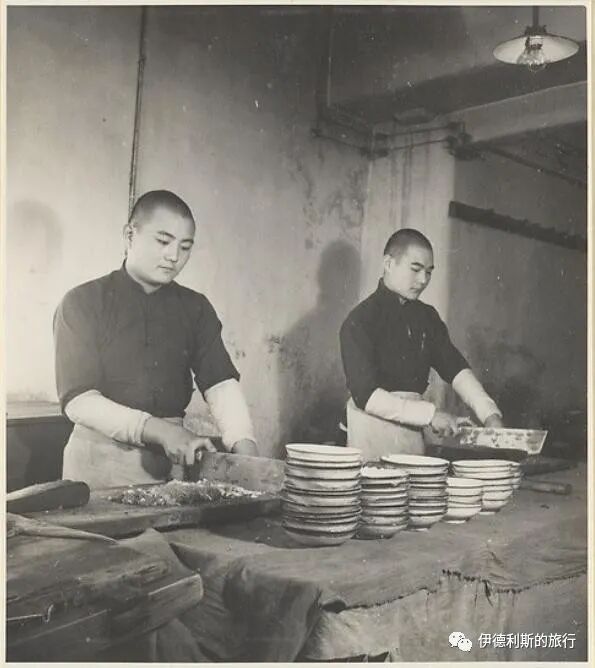
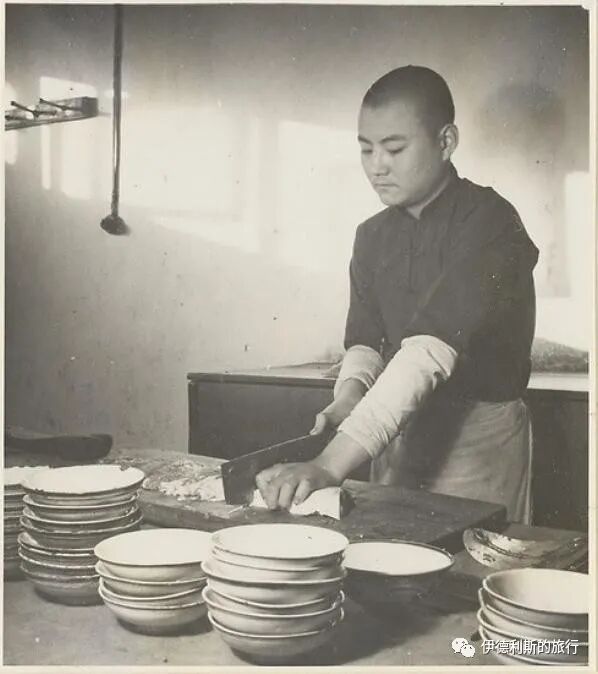
Jin Shoushen wrote in Life in Old Beijing:
The owner of Kaorouwan, Wan Laowu, was originally a flatbread stall owner. Back in the days when it was popular to sell grilled meat from small carts, the Wan family sold grilled meat on a griddle (zhizi kaorou) at the west entrance of An'er Hutong. Over the years, business grew, so they set up a shed to sell the meat and added a second iron griddle. Every day, carriages and horses crowded the entrance, but the shop remained a simple shed. The secret to Kaorouwan is that they use truly high-quality young beef (Kaorouwan specializes in beef), making it fresh, tender, and delicious. Wan Laowu is incredibly talented. He hand-slices about a hundred pounds of beef every day. He uses a money-counting system for sales, and no matter how many customers there are, he slices meat and calculates bills at the same time, using all his senses to ensure not even the price of a cucumber is wrong.
The assistant is preparing the marinade and then mixing it with the meat.
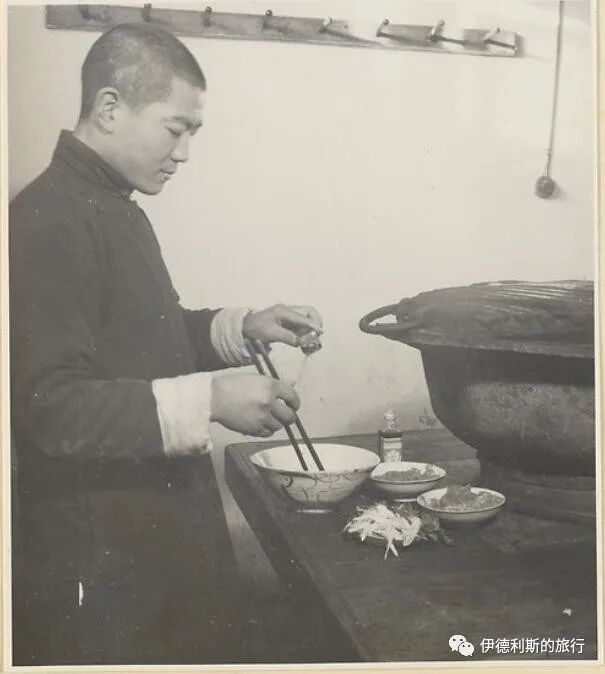
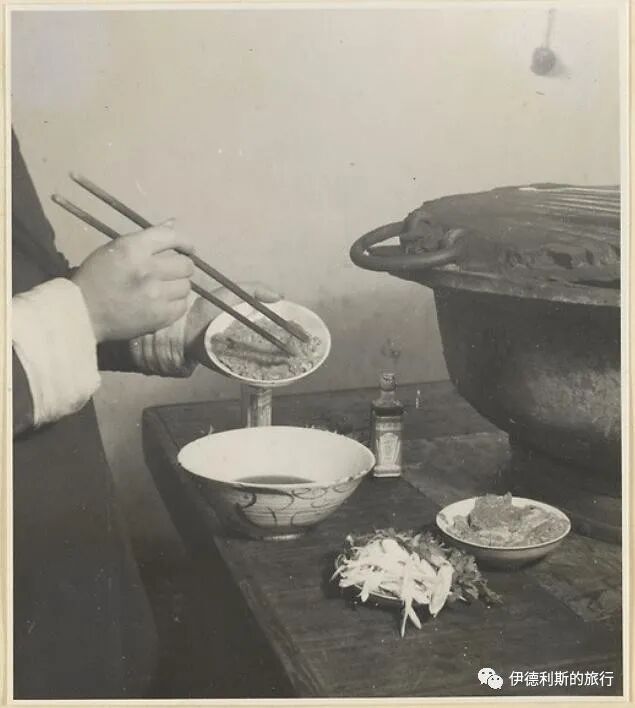
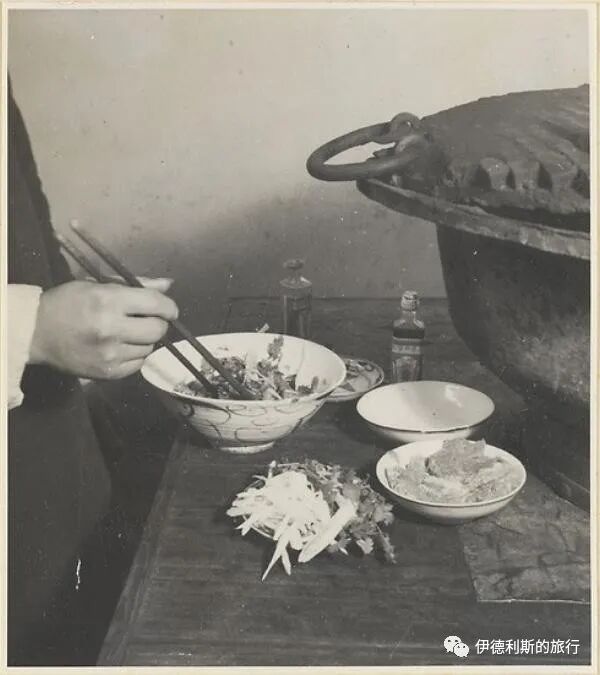
Wang Yongbin wrote in Beijing's Commercial Streets and Old Brands:
Kaorouwan is famous far and wide for its thriving business, thanks to their careful selection of meat, thin slices, complete seasonings, and fresh, delicious flavor. Kaorouwan sends people to the Madian beef and mutton market outside Deshengmen to select fat sheep from north of the pass. The way Kaorouwan slices meat is a family craft. The meat must be three inches long, one inch wide, and as thin as paper. This way, the meat cooks quickly on the griddle and is easy for customers to chew and swallow. Eating grilled meat requires green onions, which are cut into half-inch diagonal slices for customers to use while grilling. Each customer is given a blue-rimmed porcelain bowl containing seasonings like high-quality soy sauce, sesame oil, cooking wine, white sugar, minced green onion, minced ginger, minced garlic, and salt. Back then, Kaorouwan had customers grill and eat the meat themselves. Each person held a pair of wooden chopsticks over a foot long, with one foot on a bench and the other on the ground, grilling and eating at the same time.
Making the sesame flatbread (shaobing) to go with the grilled meat.
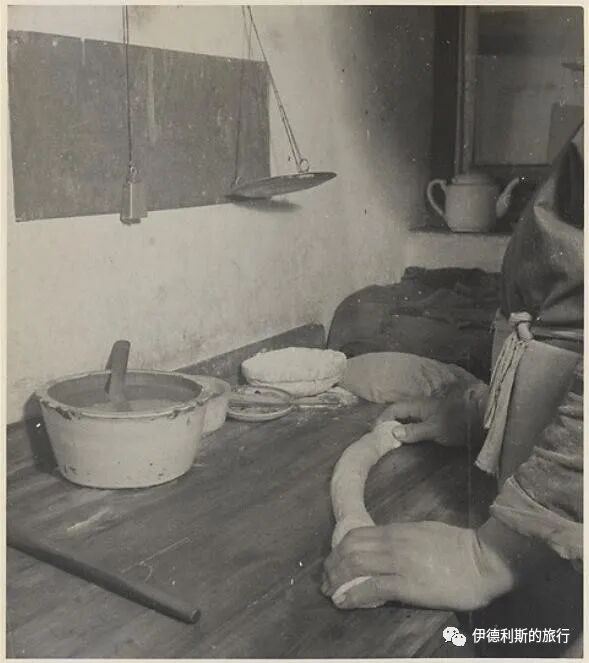
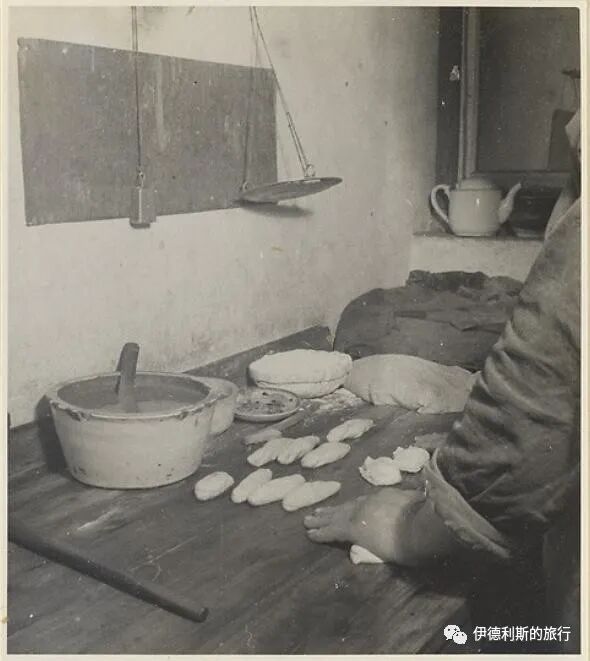
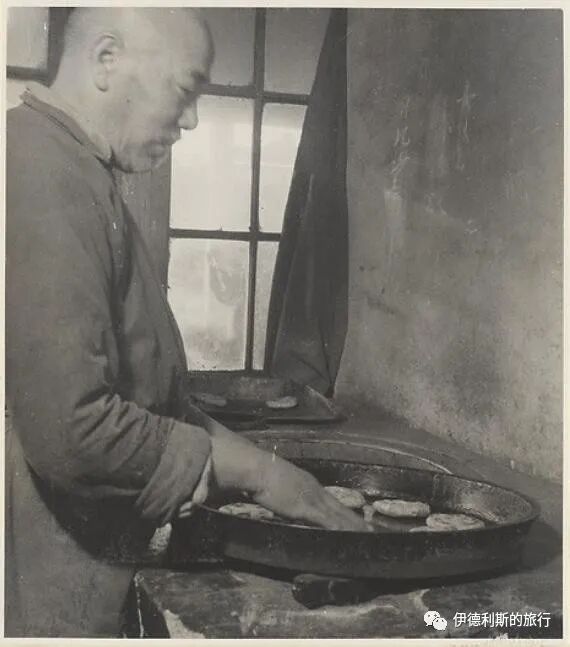
Jin Yunzhen wrote in "Fragments of Memories" (Douding Suoyi):
On the east side of Xuanwumen Inner Street in Beijing, near Rongxian Hutong, there used to be a small shop (really just a food shed) that specialized in roasted beef, known as the famous Kaorou Wan. This Kaorou Wan had many unique features. Although the restaurant was small, it had been in the family for six generations. When I was around twenty years old (roughly 1930), the person running it was a middle-aged man over forty. Beijingers followed the customs of Hui Muslims and respectfully called him "Wan Ba," which means Master Wan. He had a large head, thick eyebrows, bright eyes, and a short, sturdy build. He was quick, sharp-minded, and very organized. He was very strict about choosing meat and only used the chuck (shangnao). His meat-slicing technique was fast and skillful, producing large, thin slices without any gristle, making the meat incredibly tender and fatty. The beef had a milky aroma and tasted delicious when roasted, which is why Kaorou Wan stayed famous for so long.
Kaorou Wan was just a small shop with two gray sheds built on the sidewalk by the road. It was divided into an inner and outer room. The inner room had two roasting grills (zhizi). Because there were so many customers, they used large grills three feet in diameter, set over a fire basin with an iron ring. Below were large round tables, and each table could fit ten people standing around it. Customers had no seats and stood with one foot on a long wooden bench. All the seasonings, meat, bowls, sesame flatbread (shaobing), and wine were placed on the edge of the round table. People held two-foot-long wooden chopsticks (as thick as rattan, otherwise you couldn't reach the grill through the crowd) and ate with gusto, showing a rugged style. The beef was priced by the bowl, with each bowl weighing ten old-style taels. Half bowls were also sold. For an adult with a normal appetite, ten taels were enough, and those with a big appetite could add half a bowl. Seasonings were sold individually, such as a dish of green onions or a dish of soy sauce, and you could add or remove items like sesame flatbread (shaobing) as you liked. You had to bring your own wine at first, but later they started selling liquor (shaojiu) by the two-tael bowl. At that time, a full meal for one person cost five or six jiao, which was a big expense. A simple meal at a small restaurant for an average person, without wine, cost less than two jiao, so spending five or six jiao on a meal was considered extravagant for most residents.
Every late autumn, when passing by Xuanwumen Street, the smell of roasted meat would linger in the air, which was very tempting. Most customers were lower-middle-class citizens and working people; the wealthy and powerful did not visit. Later, Kaorou Wan became famous, and some wealthy families came to try the unique taste of the roasted beef and spread the word. Eventually, prominent figures arriving in cars with servants, and even noblewomen covered in jewelry, began to visit. These people didn't mind "losing their status" by squeezing in among the sweating, hungry men to eat roasted meat with long wooden chopsticks. Master Wan was completely unfazed. He didn't consider setting up a "VIP area" or getting up to flatter them. He just kept doing things his own way and treated everyone the same, a quality that was highly valued among small merchants in Beijing at the time.
Kaorou Wan not only serves excellent meat, but the master chef Wan himself is unique for his simple and meticulous style, his skilled and refined technique, his sharp mind, and his organized memory. These things left a deep impression in my observations and memories. Since his business was just two gray sheds, he did not have many staff; I remember he only had two young assistants besides himself. They just ran back and forth, moved supplies, and washed bowls and chopsticks. Besides handling the accounts, greeting guests, and looking after their coats, his main job was standing at the counter to slice meat. His meat-slicing technique was superb, and even when twenty people ate at once, he never failed to keep up with the demand. Whenever the place was packed and people were bumping into each other looking for seats, he watched everything, listened to everything, kept reciting the accounts, never stopped slicing meat, greeted guests, and arranged for early arrivals to eat in order. This person came first, please sit over there. Please wait a moment, you arrived a step later than this person. During all this, he also had to collect money and nod goodbye to guests. At the same time, he noticed if someone took the wrong umbrella or where someone else hung their hat and coat. His calm and organized attitude was truly amazing.
Roast meat, eating meat.
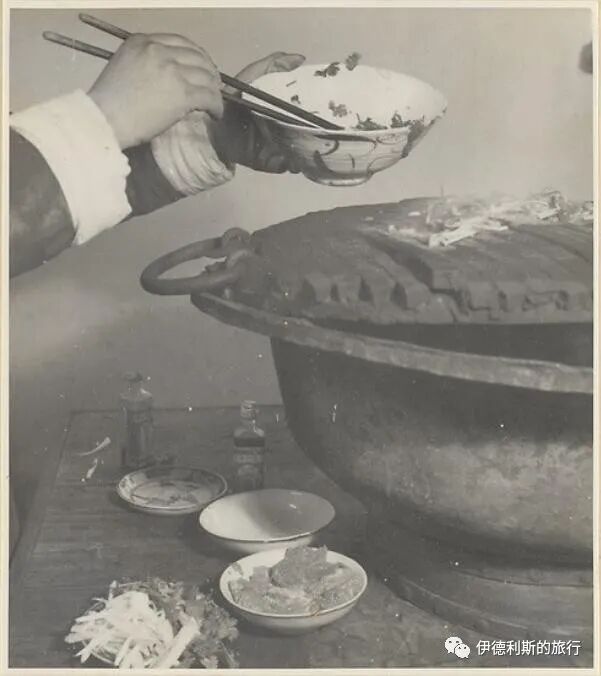
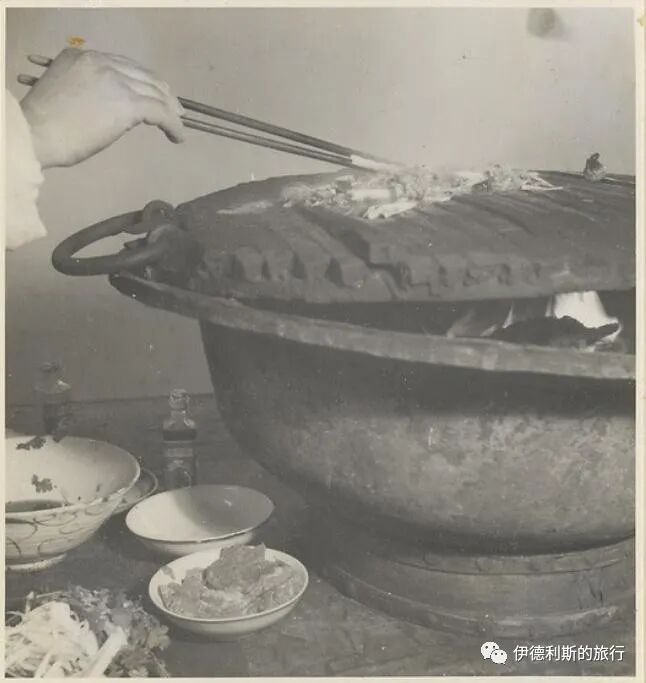
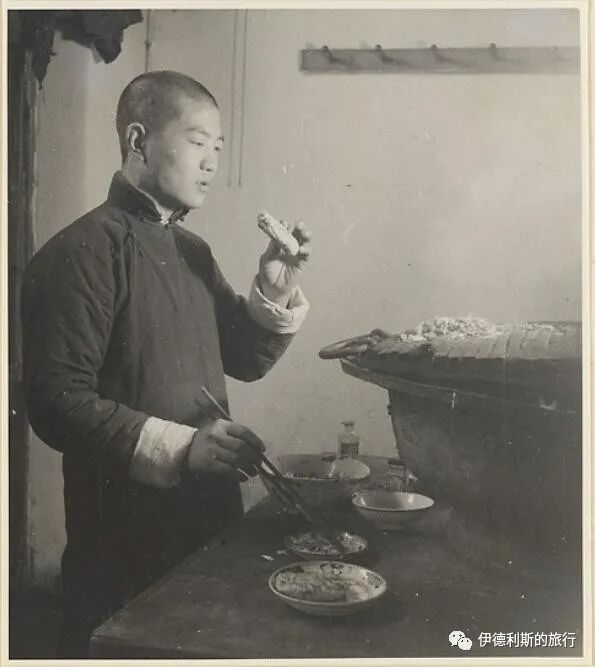
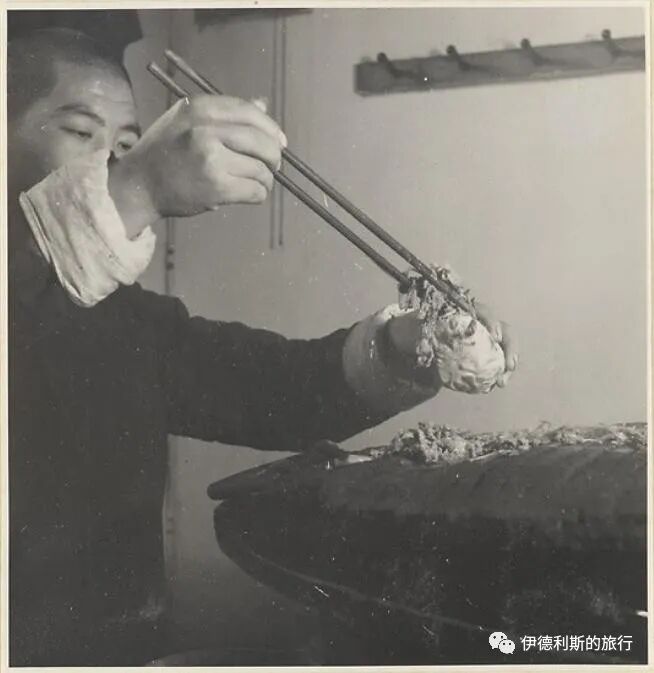
I will also share a few photos taken by Hedda Morrison in Beijing of halal signs and halal snacks.
Carter Holton's Old Photos of Dongxiang Muslims in Gansu
Articles • ali2007fr posted the article • 0 comments • 158 views • 2026-05-18 01:58
Summary: Carter Holton's Old Photos of Dongxiang Muslims in Gansu is presented here as a firsthand travel account in clear English, beginning with this scene: Reverend Carter Holton was an American missionary who worked in Northwest China from 1923 to 1949, leaving behind over 5,000 precious photographs. The account keeps its focus on Dongxiang Muslims, Old Photos, Gansu Muslims while preserving the names, places, food, and historical details from the Chinese source.
Reverend Carter Holton was an American missionary who worked in Northwest China from 1923 to 1949, leaving behind over 5,000 precious photographs. After the Reverend passed away, his daughter Lora Jean Heurlin donated these materials to the Harvard-Yenching Library in the early 1990s, and the library finished digitizing them in 2011.
Online address: library.harvard.edu/collections/carter-d-holton-collection
(You can also click the link at the end of the article to view the original text)
In early 1934, Pastor Hai Yingguang and Pastor Calvin Franklin Snyder traveled together to the Dongxiang people's settlement in Linxia to preach, leaving behind many precious photos. In 1940, while preaching in Linxia, Pastor Hai Yingguang took more photos of the Dongxiang people.
1933
The notes say it is the Suonanba Mosque, but records show the Suonanba Mosque was burned down by the army in 1928 and rebuilt in 1937. Therefore, it is not certain whether it is actually the Suonanba Mosque.
1934
The notes say it is the tomb of the Hu men (a Sufi order branch) at Hongnitian, Suonanba. The Hu men is a branch of the Khufiyya menhuan, founded by the Dongxiang man Ma Fuhai (1715-1809) from Hongnitian.
It might be the gongbei at Shixiakou, Tangwang. Legend has it that between the Song and Yuan dynasties, Muhammad Hanafiyya came to China to preach and passed through Shixiakou, where he saw severe flooding and guided the locals to divert the river water. He meditated in a cave on Wolong Mountain in Shixiakou and returned to Allah in that cave. Later generations buried him in Shixiakou and honored him as the Shixiakou Daozu. In 1711, Tu Yiqing, a disciple of Qi Jingyi who founded the Great Gongbei, looked after the grave and built a gongbei for it. The gongbei was destroyed in the 1960s and rebuilt after 1980.
A mosque of the Dongxiang people
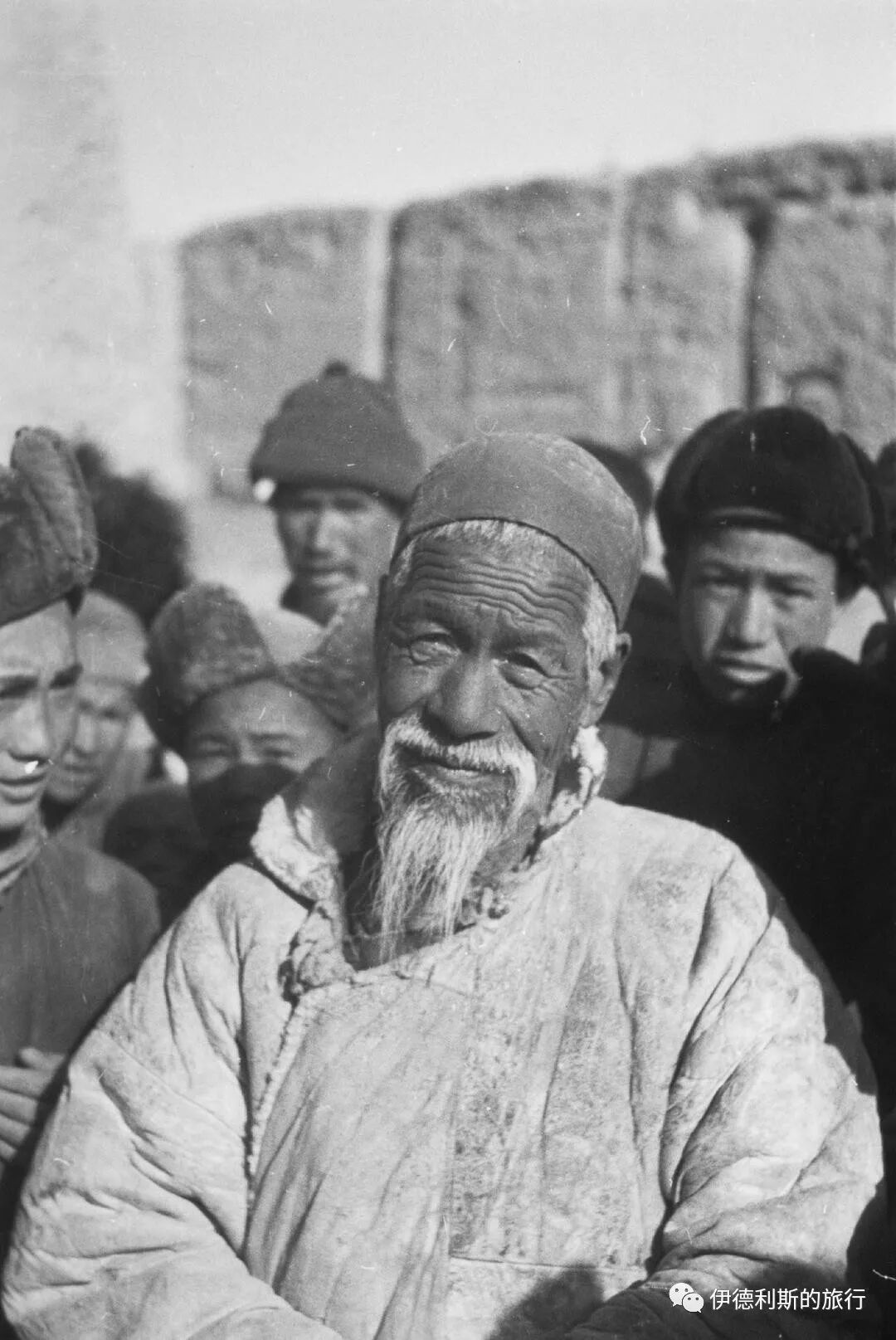
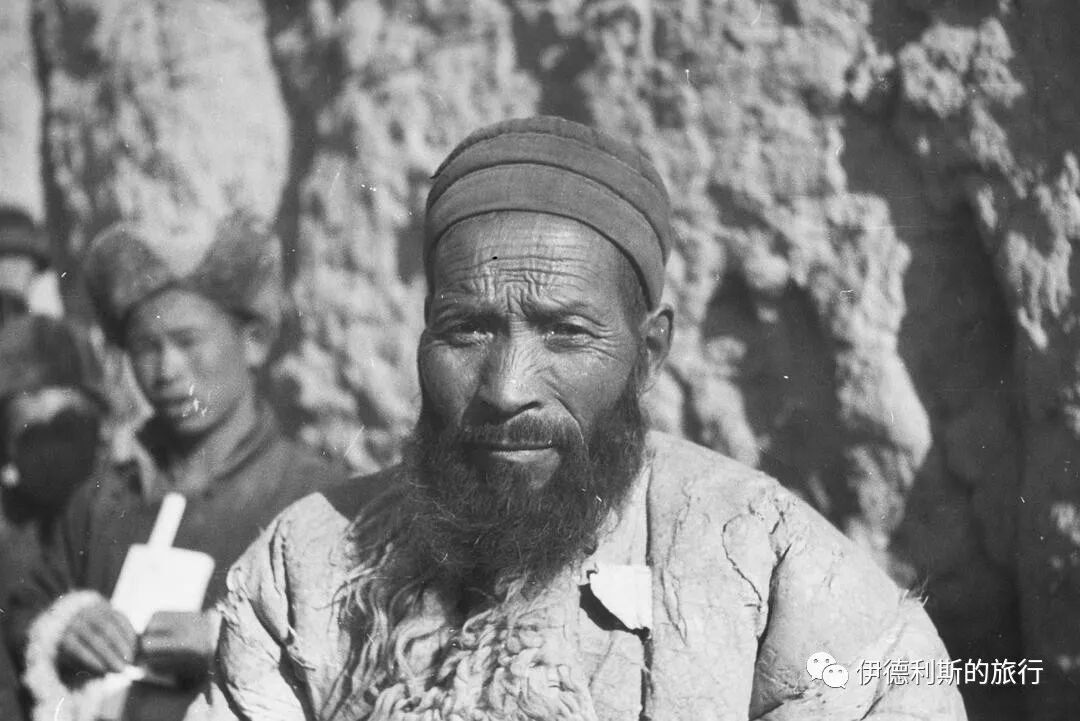
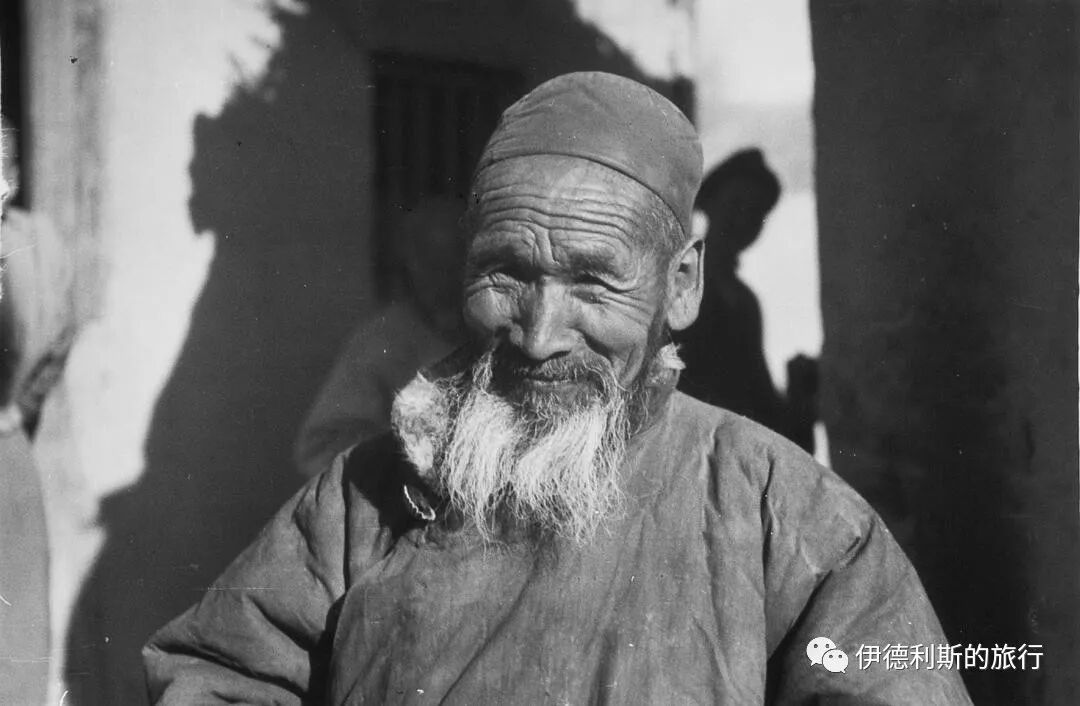
An elderly Dongxiang man
An imam in Tangwangchuan
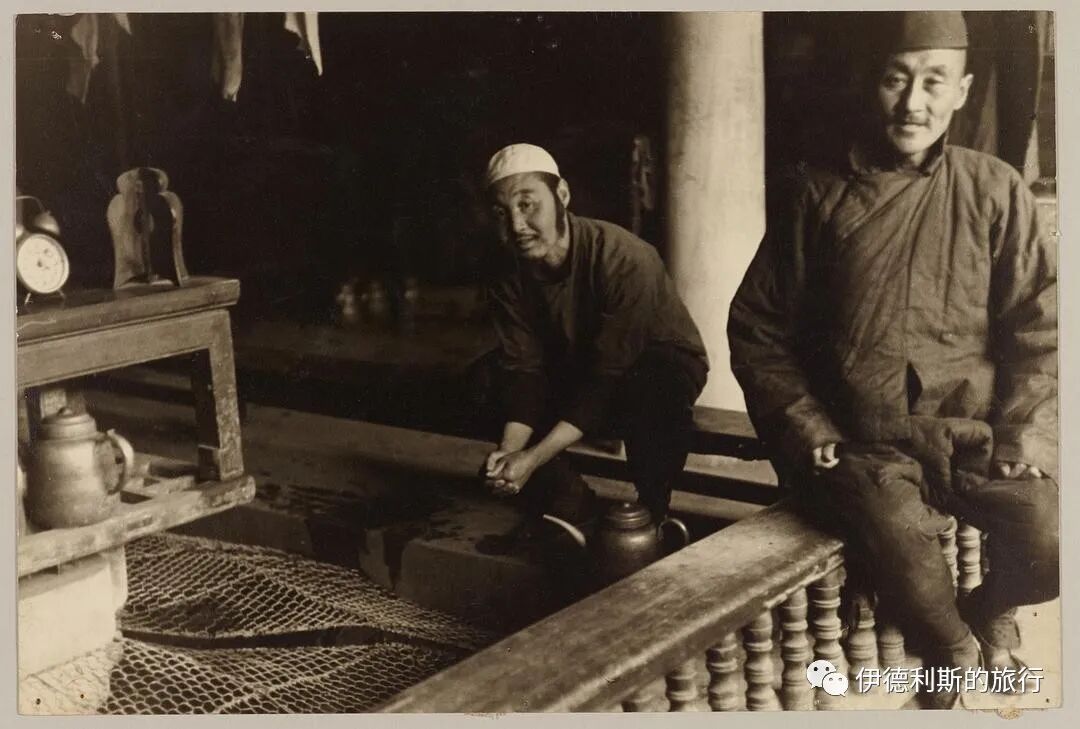
A Dongxiang person performing wudu (ritual washing) in Tangwangchuan
Dongxiang people in Tangwangchuan
A Dongxiang market
Dongxiang women in Jishishan
Dongxiang people sunning themselves on a roof
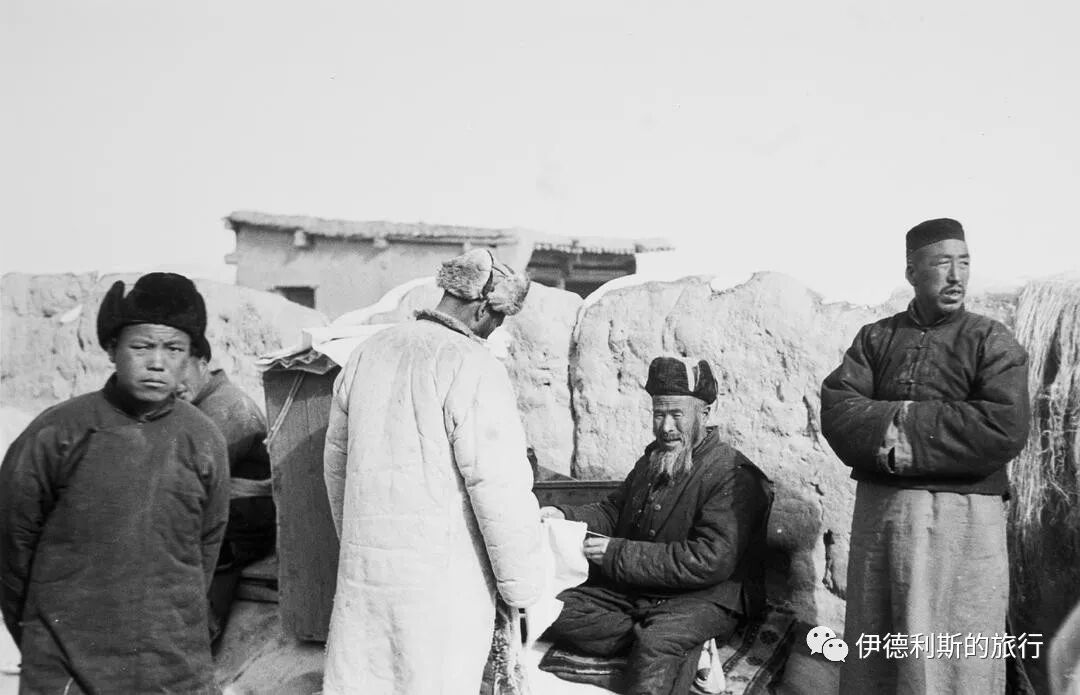
Dongxiang people
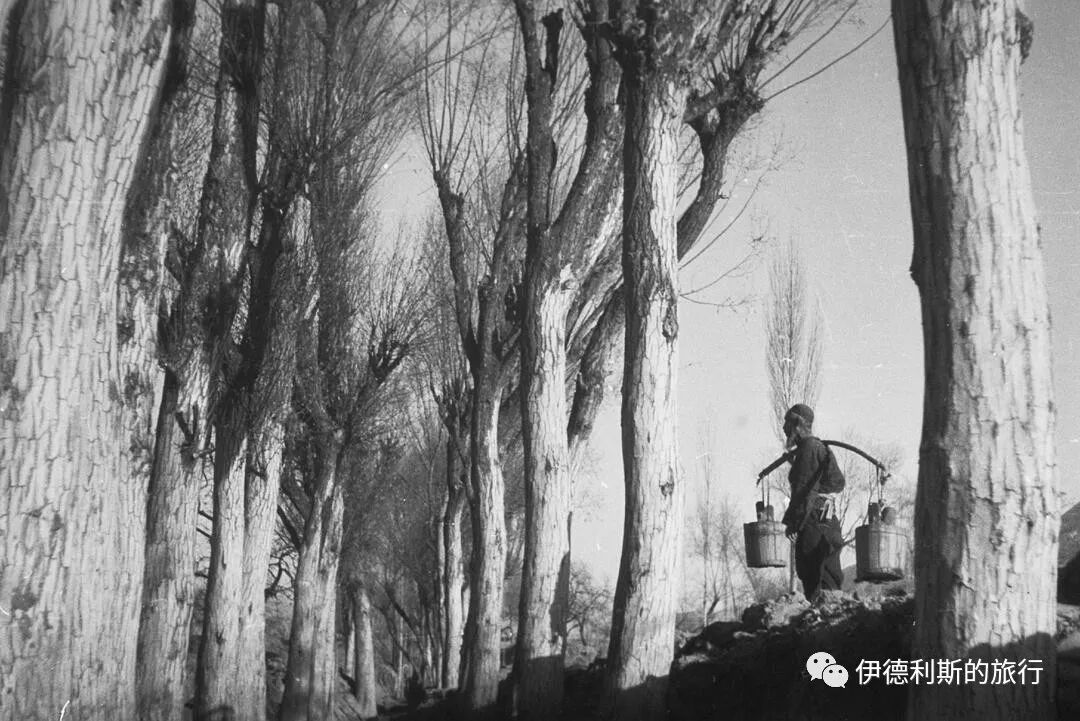
An old Dongxiang man carrying water on his back
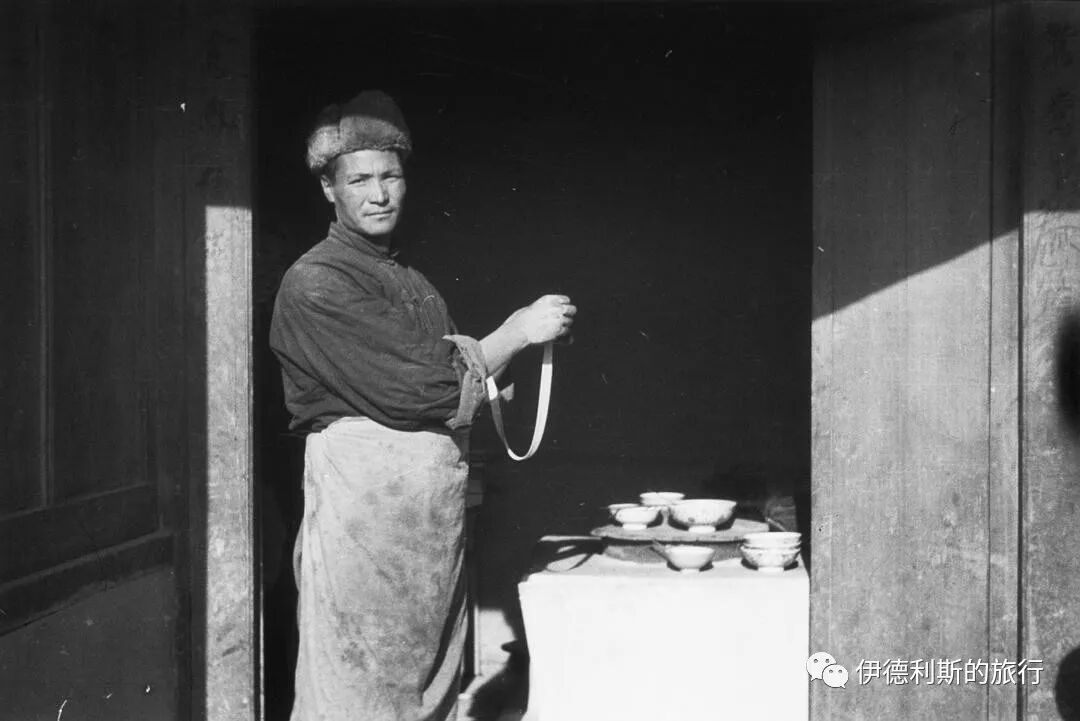
A Dongxiang person making hand-pulled noodles (lamian)
1940
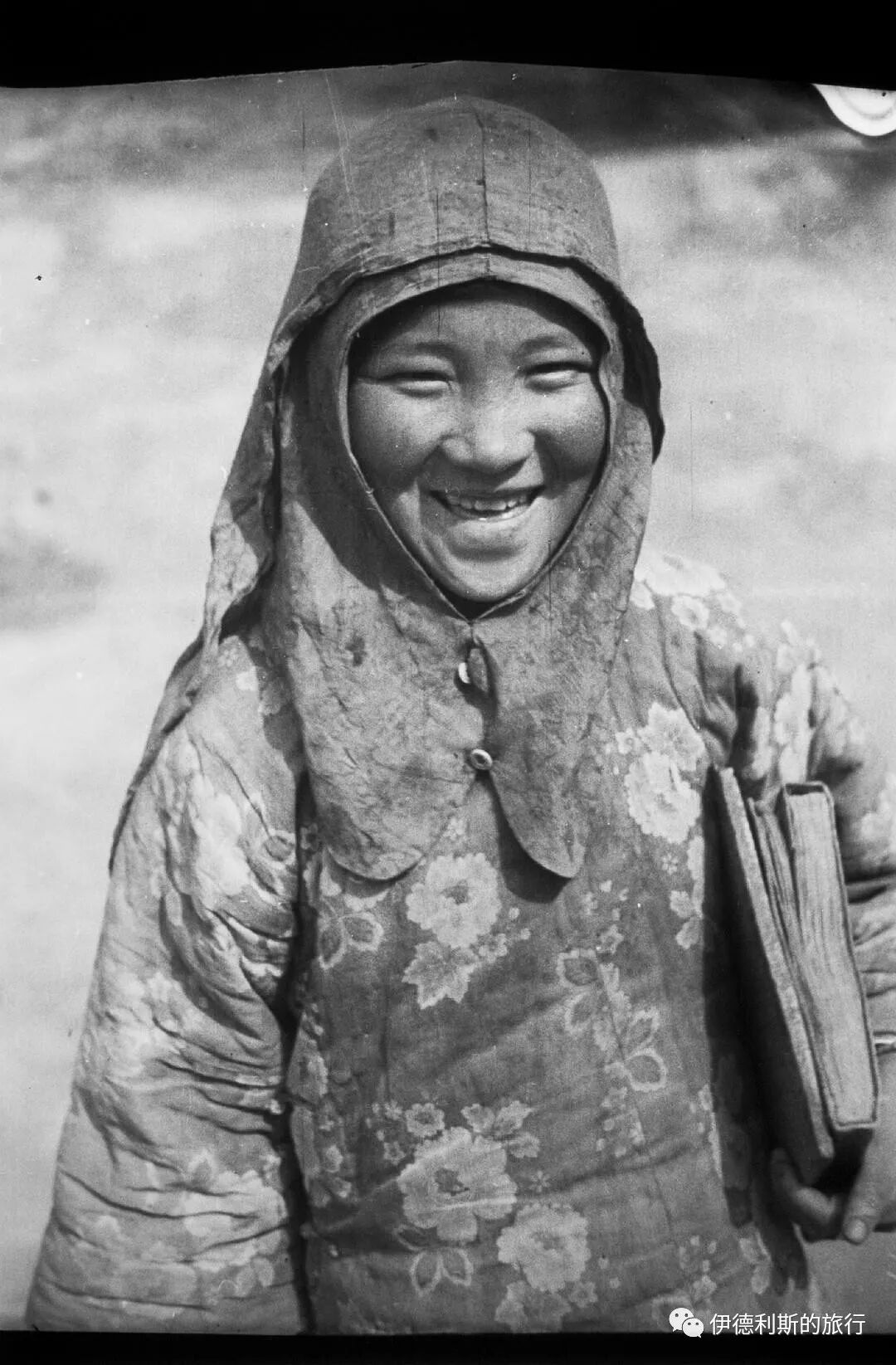
A Dongxiang girl in Suonaba
An imam in Suonaba visiting graves after the Eid al-Fitr prayer
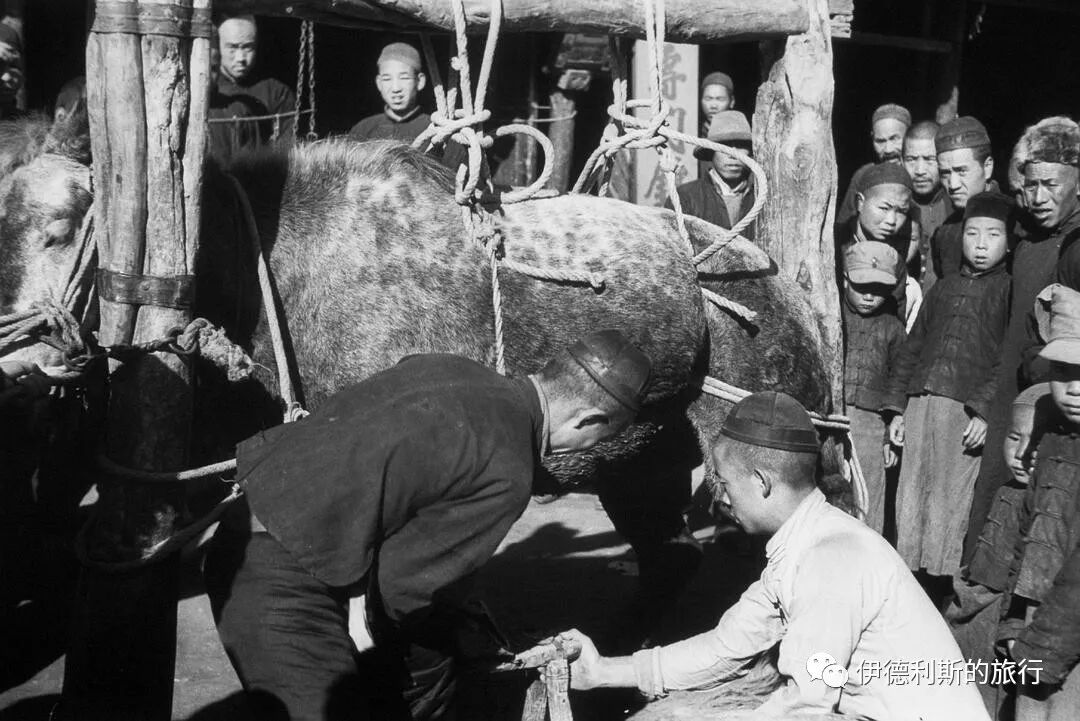
Two young Dongxiang men shoeing a horse in Suonaba
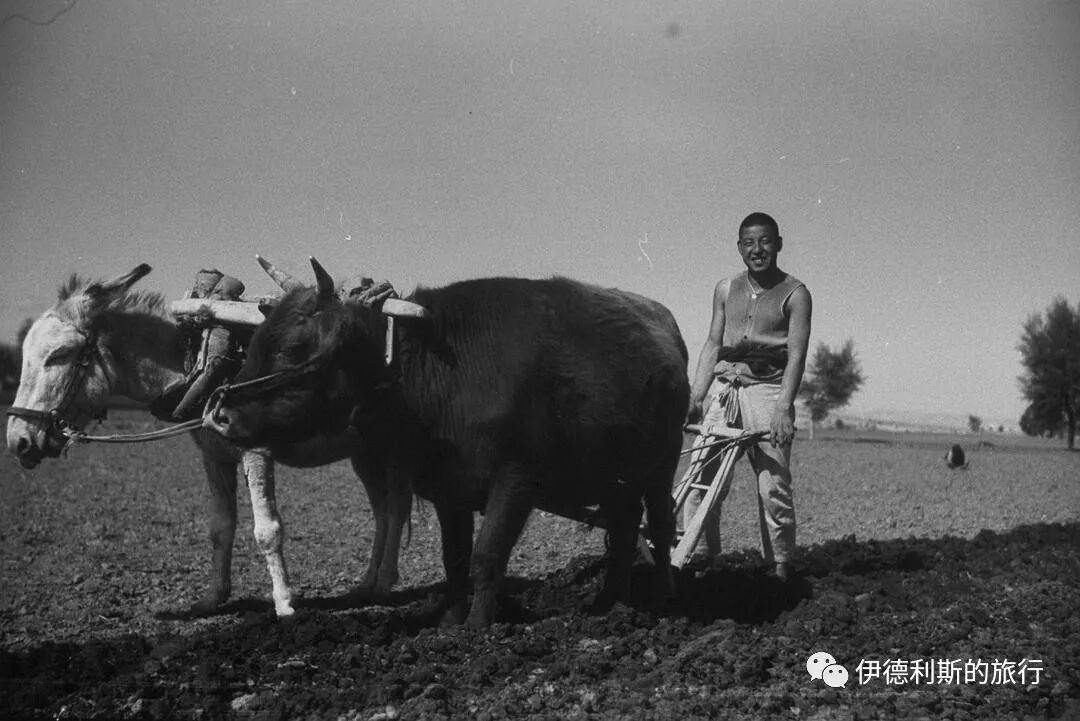
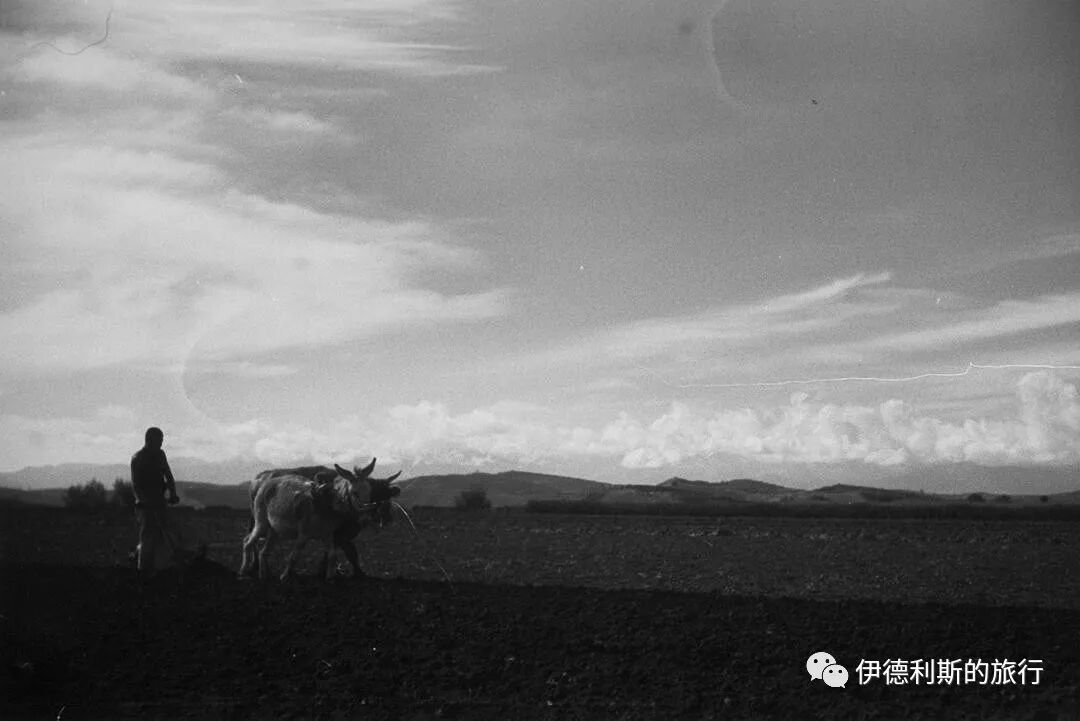
Farmers plowing fields in Suonaba
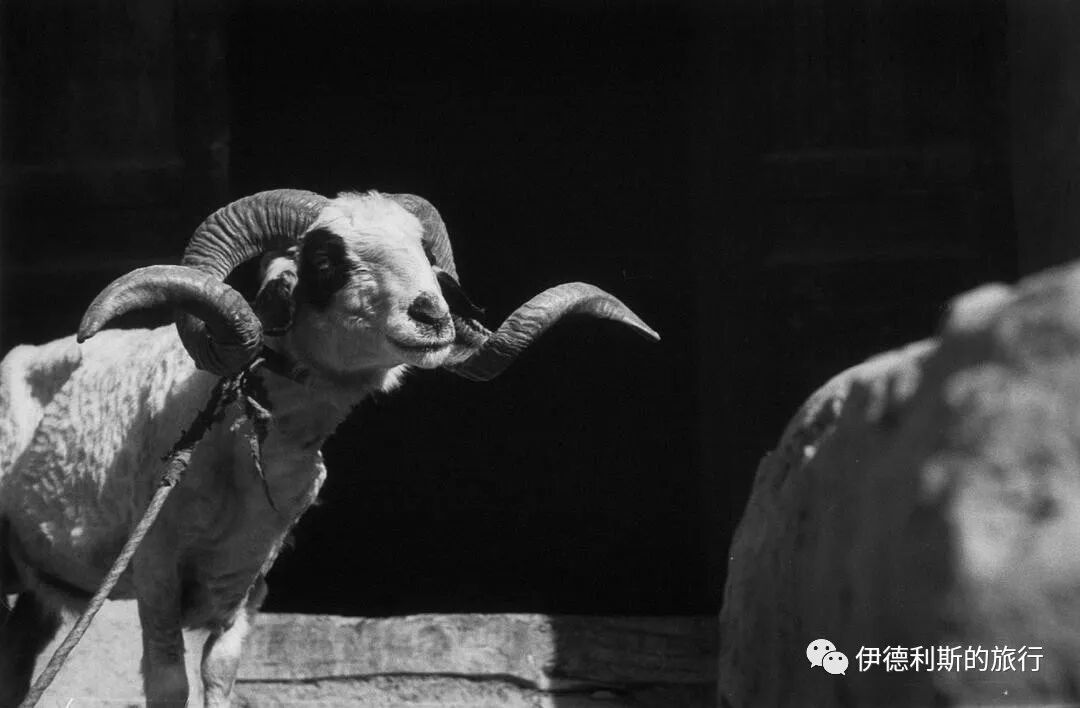
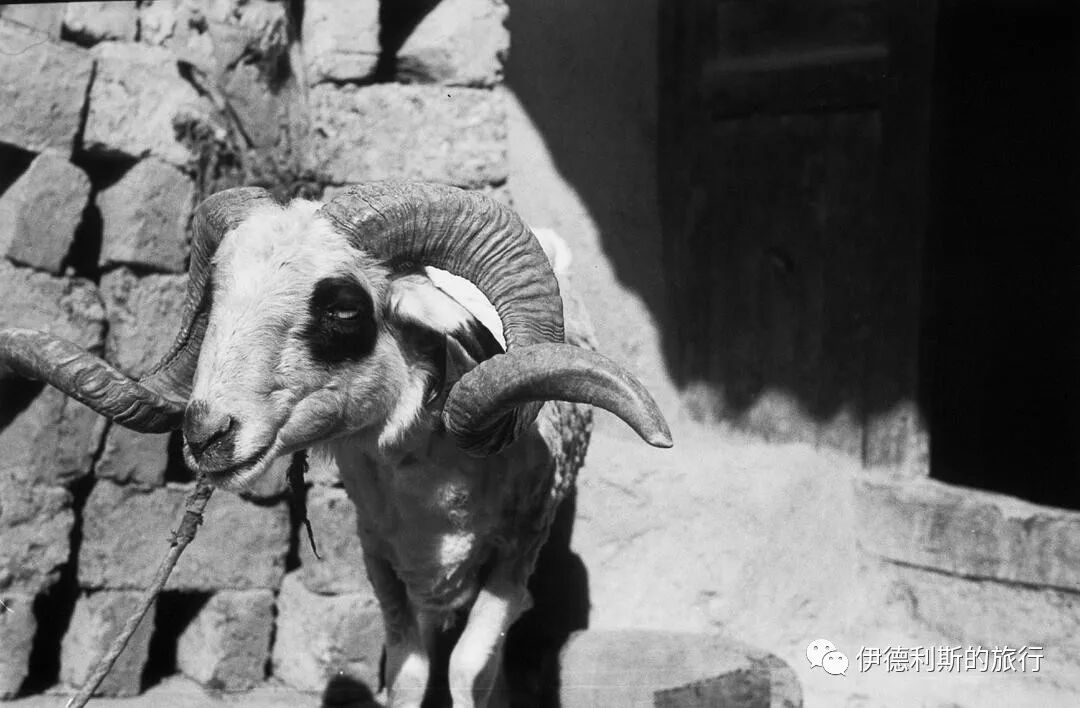
Big-horned sheep from the Tibetan area in Suonaba view all
Summary: Carter Holton's Old Photos of Dongxiang Muslims in Gansu is presented here as a firsthand travel account in clear English, beginning with this scene: Reverend Carter Holton was an American missionary who worked in Northwest China from 1923 to 1949, leaving behind over 5,000 precious photographs. The account keeps its focus on Dongxiang Muslims, Old Photos, Gansu Muslims while preserving the names, places, food, and historical details from the Chinese source.
Reverend Carter Holton was an American missionary who worked in Northwest China from 1923 to 1949, leaving behind over 5,000 precious photographs. After the Reverend passed away, his daughter Lora Jean Heurlin donated these materials to the Harvard-Yenching Library in the early 1990s, and the library finished digitizing them in 2011.
Online address: library.harvard.edu/collections/carter-d-holton-collection
(You can also click the link at the end of the article to view the original text)
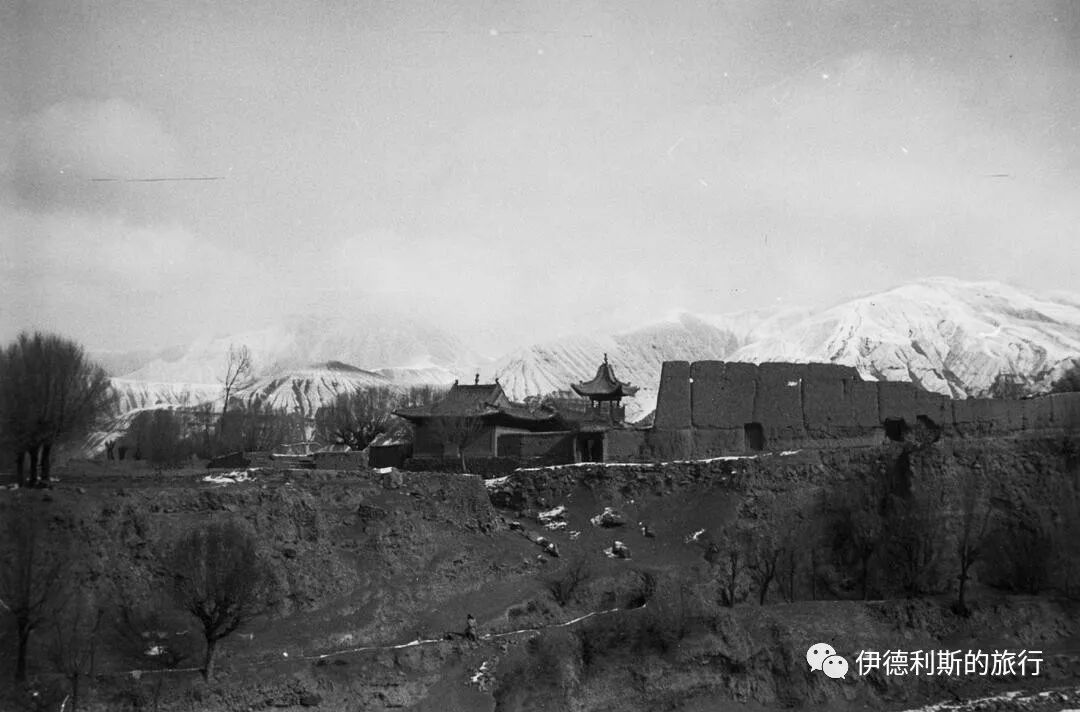
In early 1934, Pastor Hai Yingguang and Pastor Calvin Franklin Snyder traveled together to the Dongxiang people's settlement in Linxia to preach, leaving behind many precious photos. In 1940, while preaching in Linxia, Pastor Hai Yingguang took more photos of the Dongxiang people.
1933
The notes say it is the Suonanba Mosque, but records show the Suonanba Mosque was burned down by the army in 1928 and rebuilt in 1937. Therefore, it is not certain whether it is actually the Suonanba Mosque.
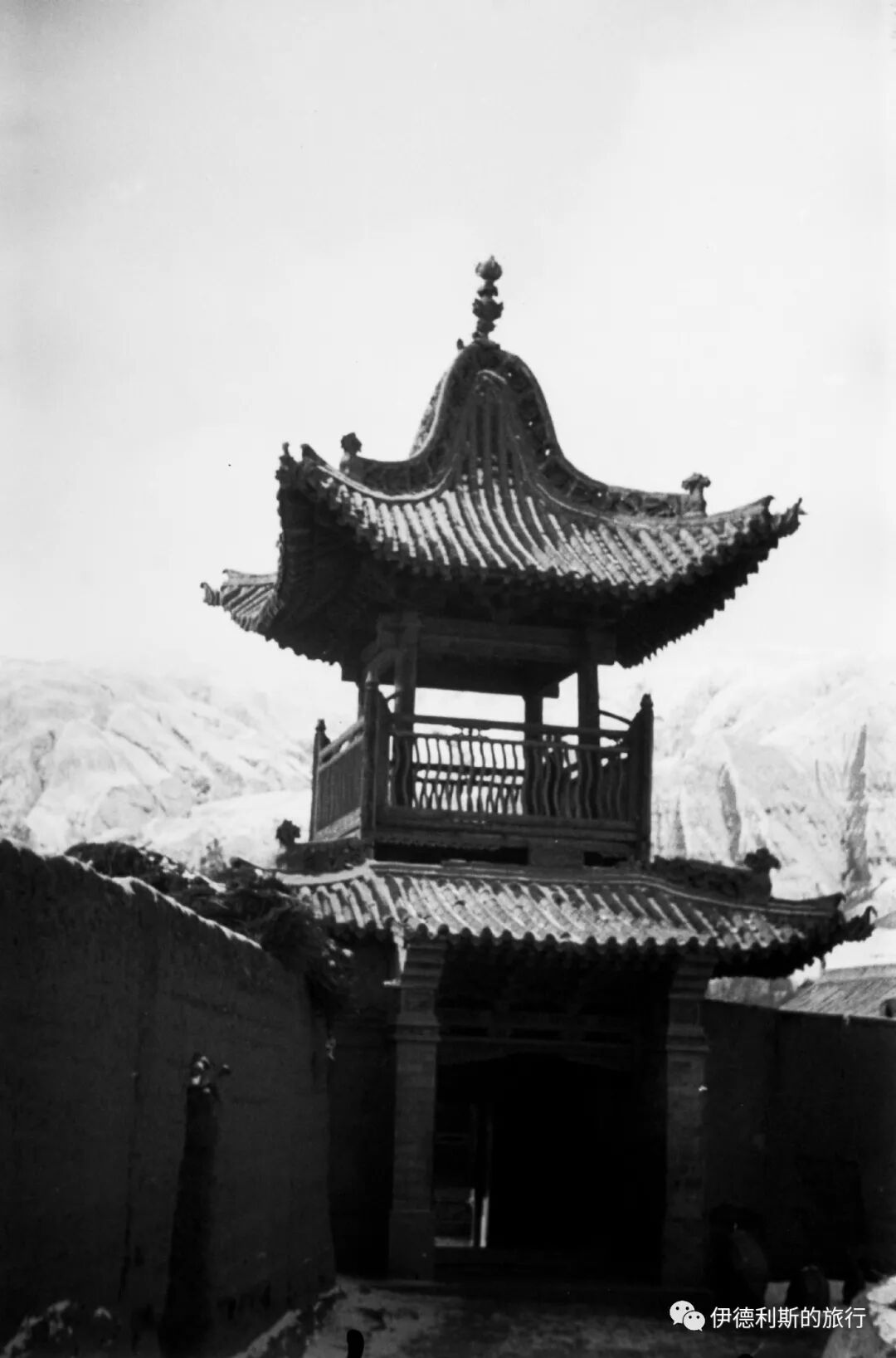
1934
The notes say it is the tomb of the Hu men (a Sufi order branch) at Hongnitian, Suonanba. The Hu men is a branch of the Khufiyya menhuan, founded by the Dongxiang man Ma Fuhai (1715-1809) from Hongnitian.
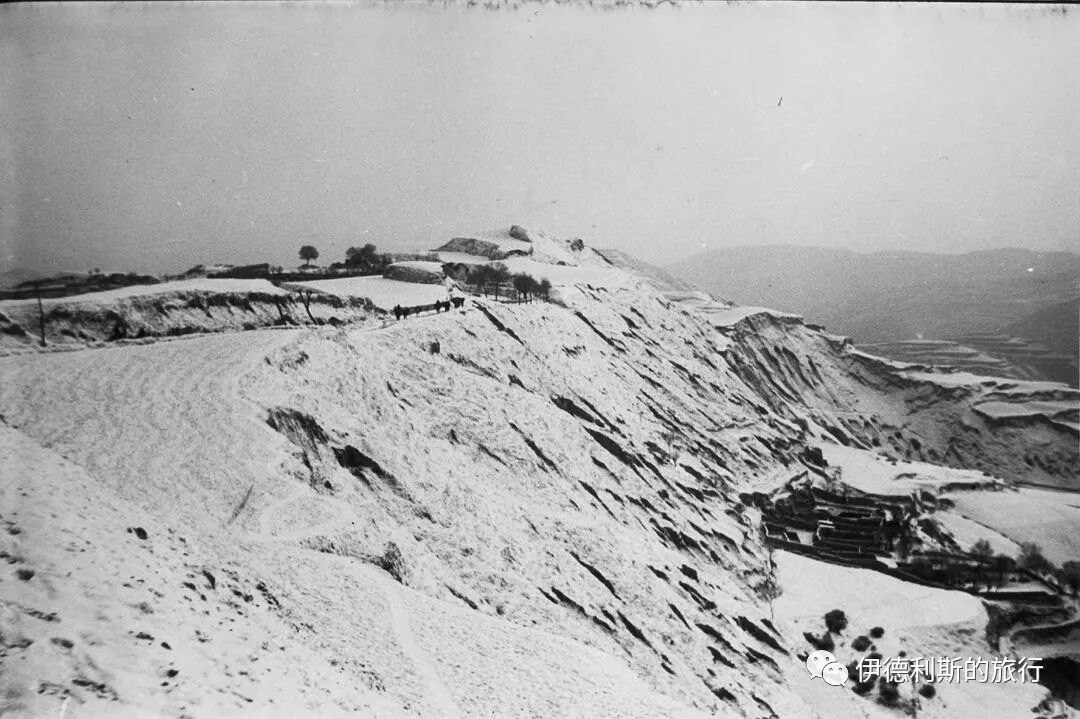
It might be the gongbei at Shixiakou, Tangwang. Legend has it that between the Song and Yuan dynasties, Muhammad Hanafiyya came to China to preach and passed through Shixiakou, where he saw severe flooding and guided the locals to divert the river water. He meditated in a cave on Wolong Mountain in Shixiakou and returned to Allah in that cave. Later generations buried him in Shixiakou and honored him as the Shixiakou Daozu. In 1711, Tu Yiqing, a disciple of Qi Jingyi who founded the Great Gongbei, looked after the grave and built a gongbei for it. The gongbei was destroyed in the 1960s and rebuilt after 1980.
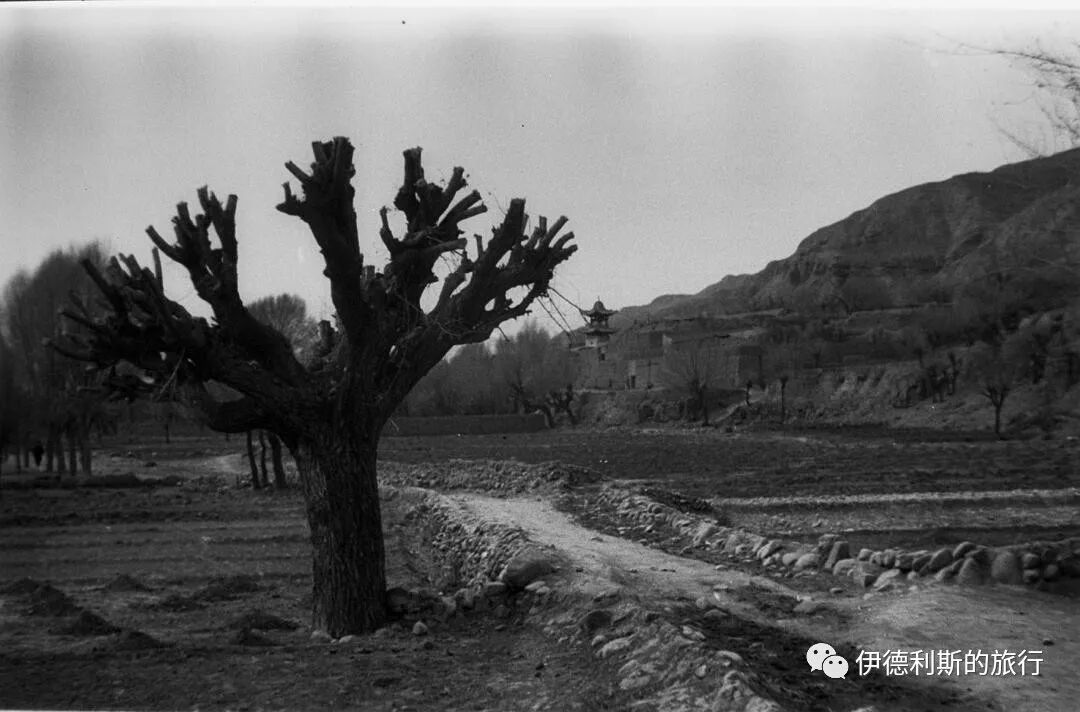
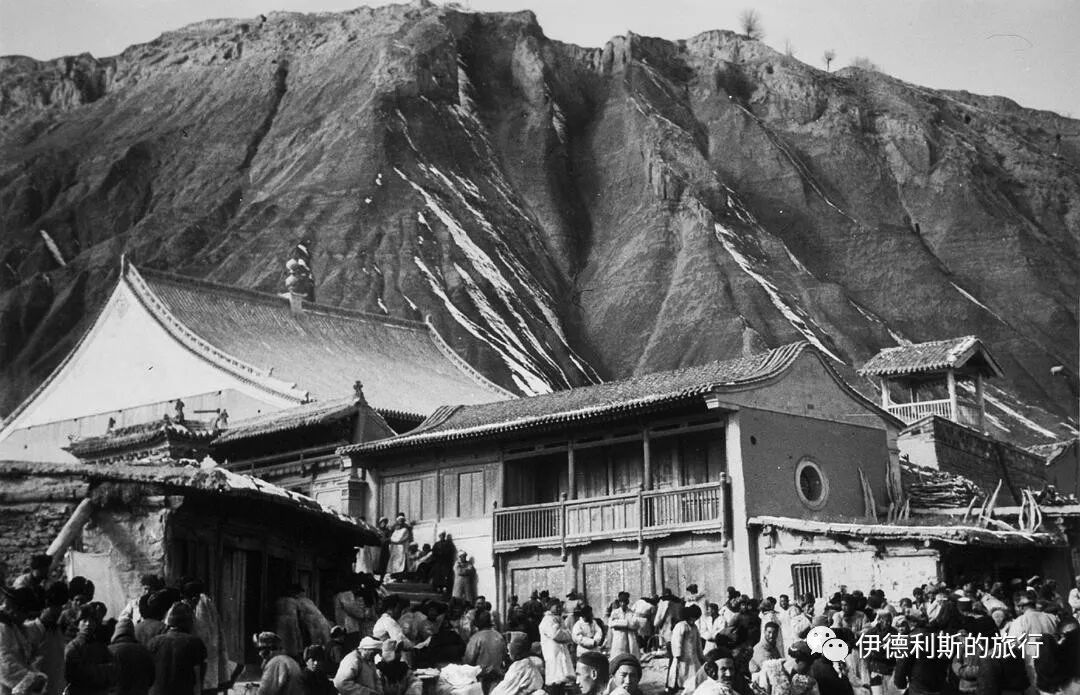
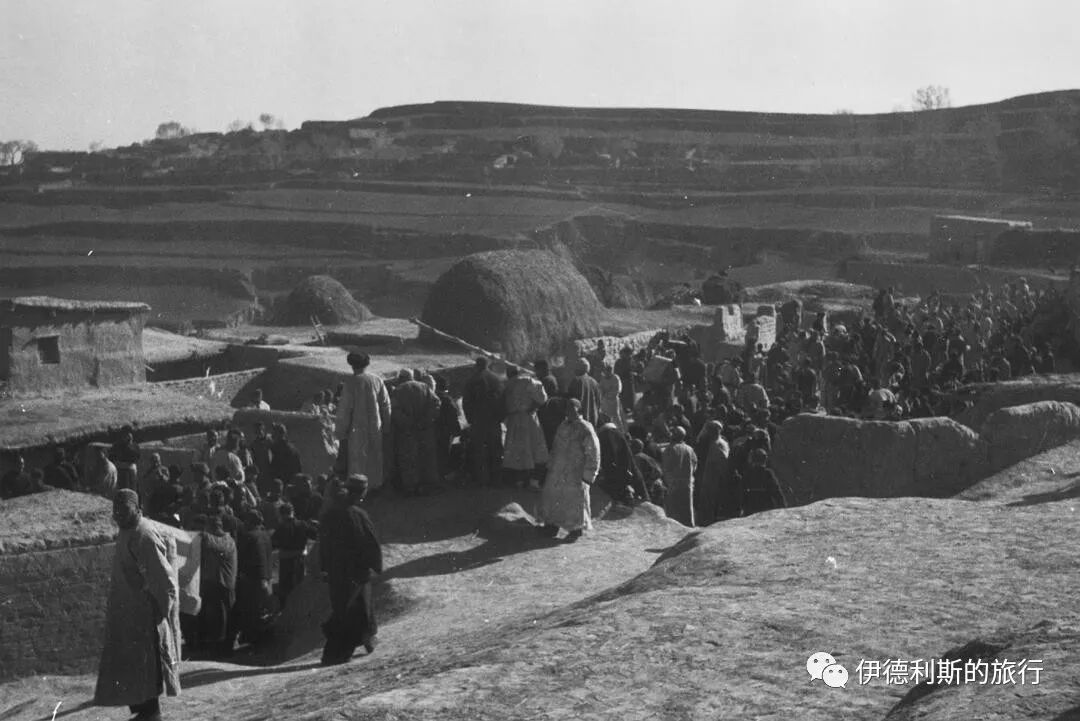
A mosque of the Dongxiang people
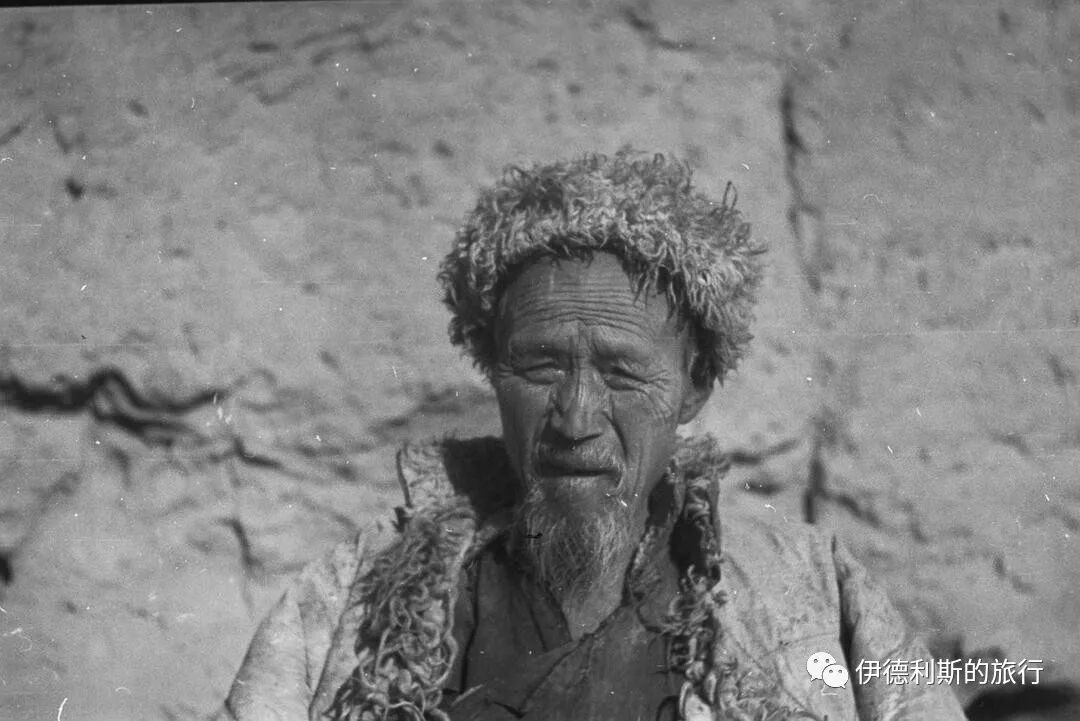
An elderly Dongxiang man
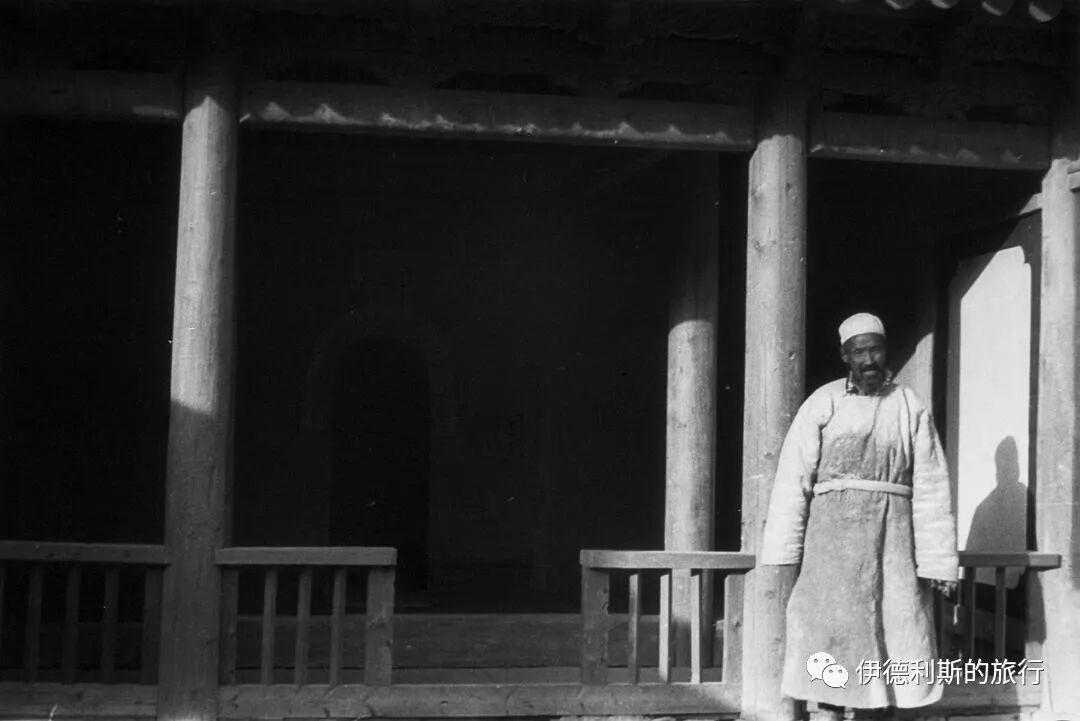
An imam in Tangwangchuan
A Dongxiang person performing wudu (ritual washing) in Tangwangchuan
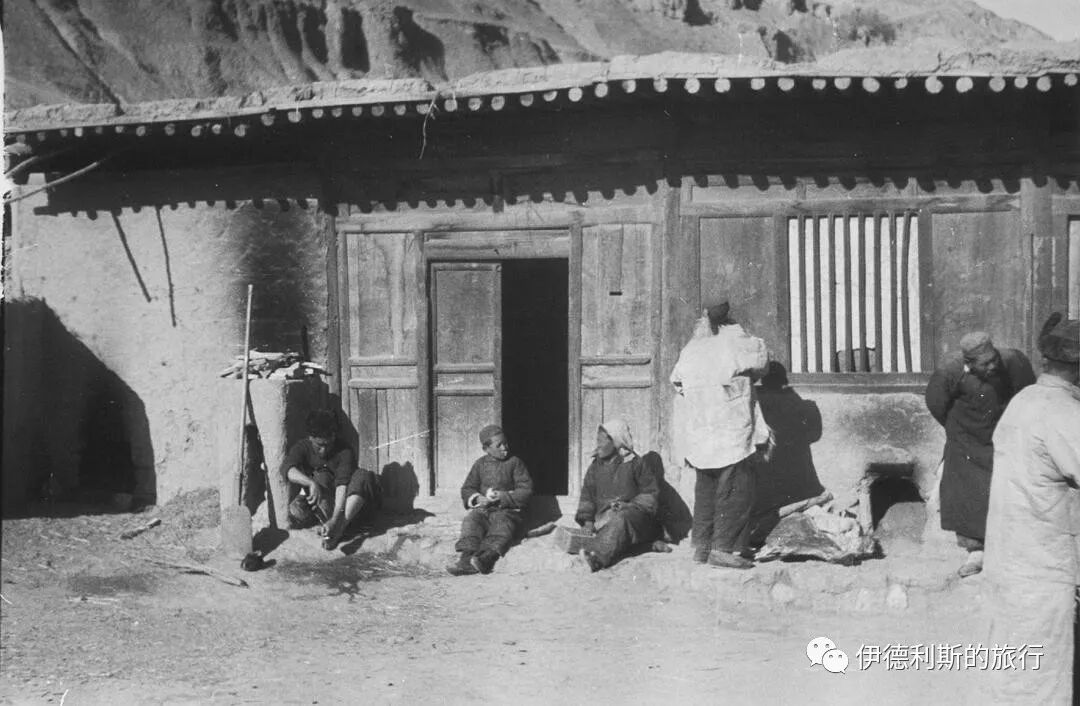
Dongxiang people in Tangwangchuan
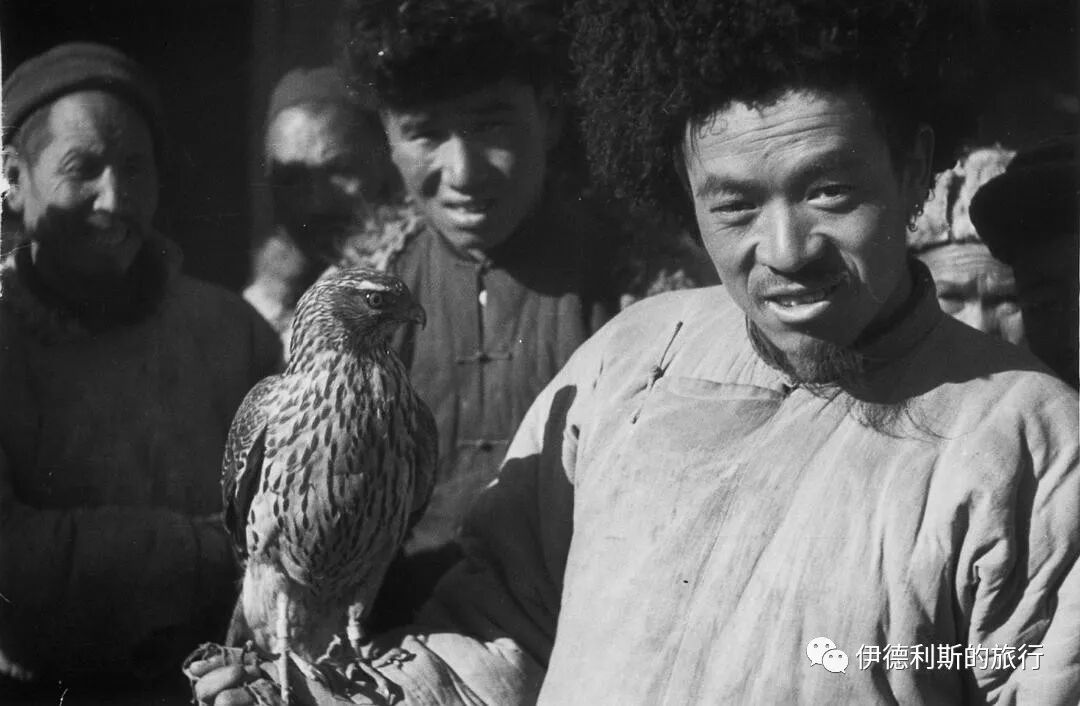
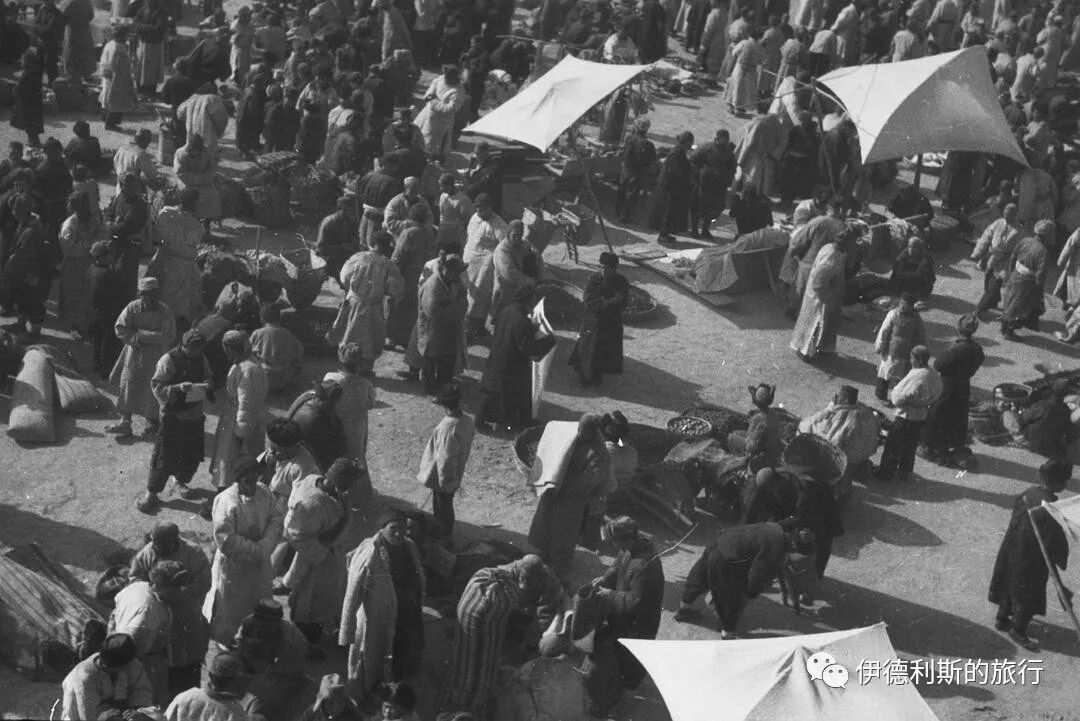
A Dongxiang market
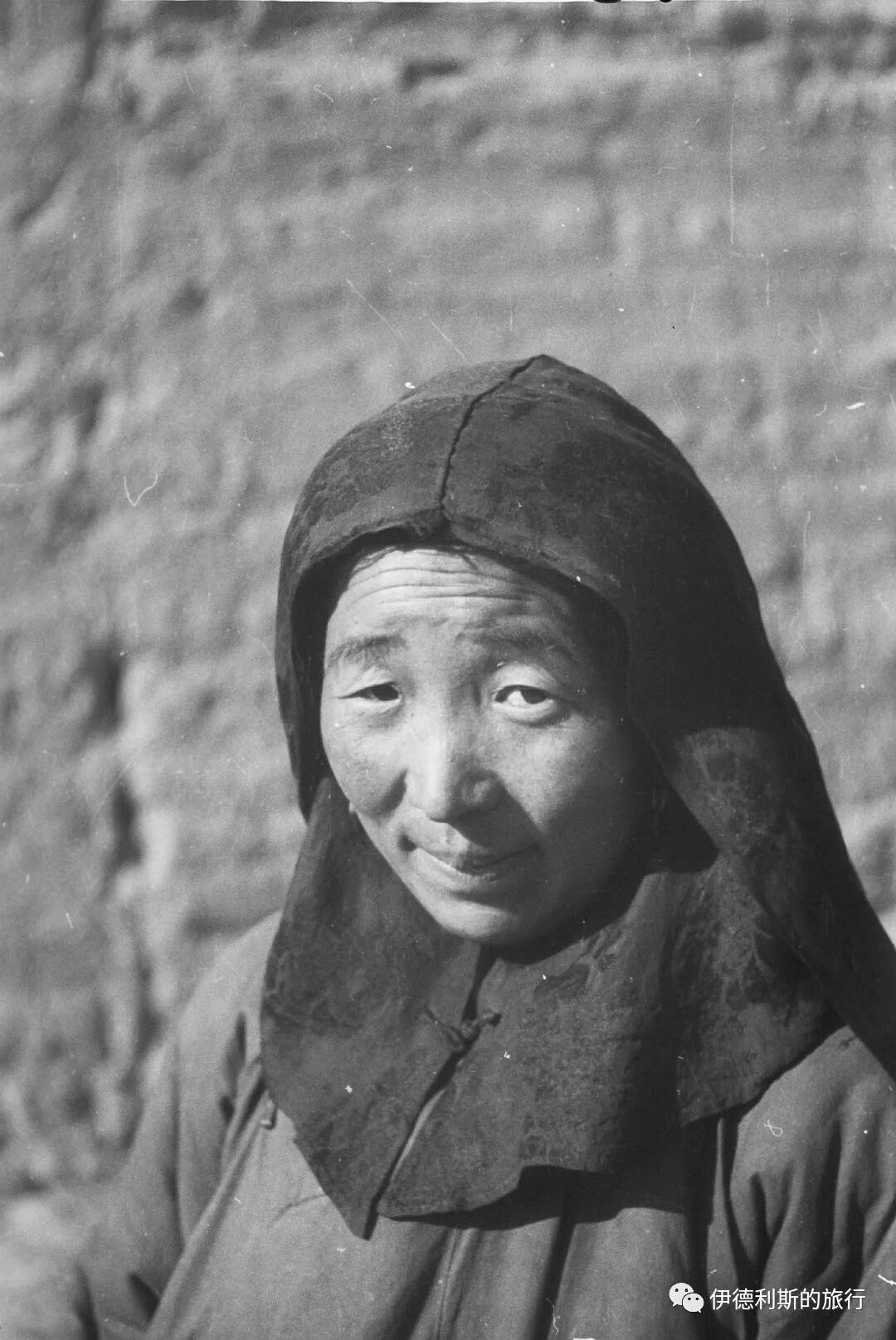
Dongxiang women in Jishishan
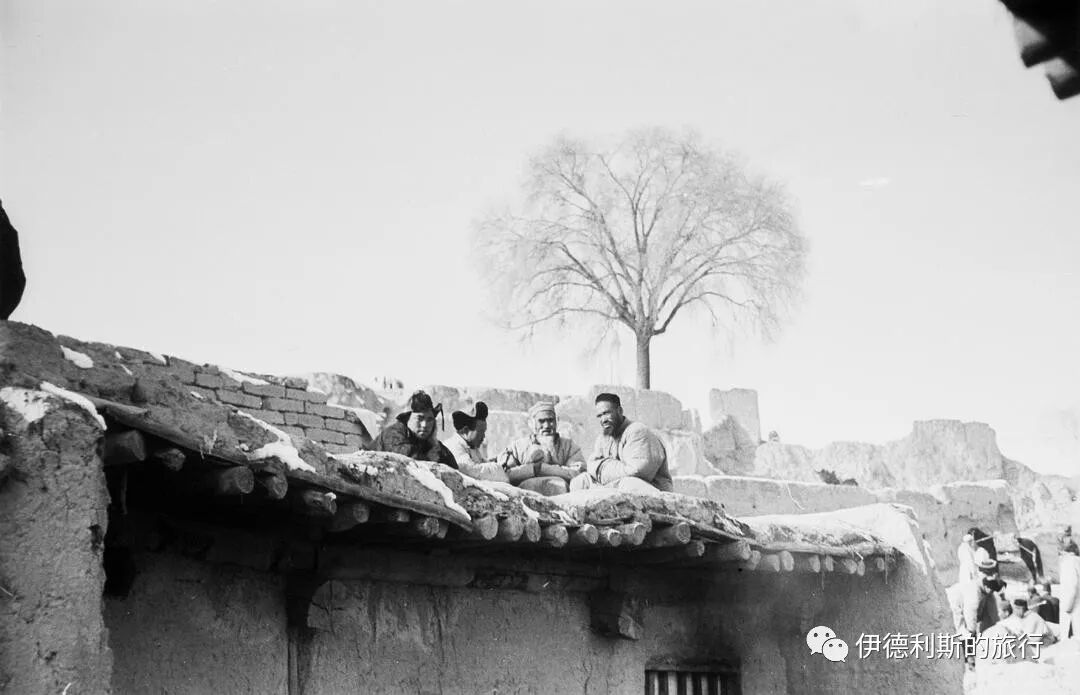
Dongxiang people sunning themselves on a roof
Dongxiang people
An old Dongxiang man carrying water on his back
A Dongxiang person making hand-pulled noodles (lamian)
1940
A Dongxiang girl in Suonaba
An imam in Suonaba visiting graves after the Eid al-Fitr prayer
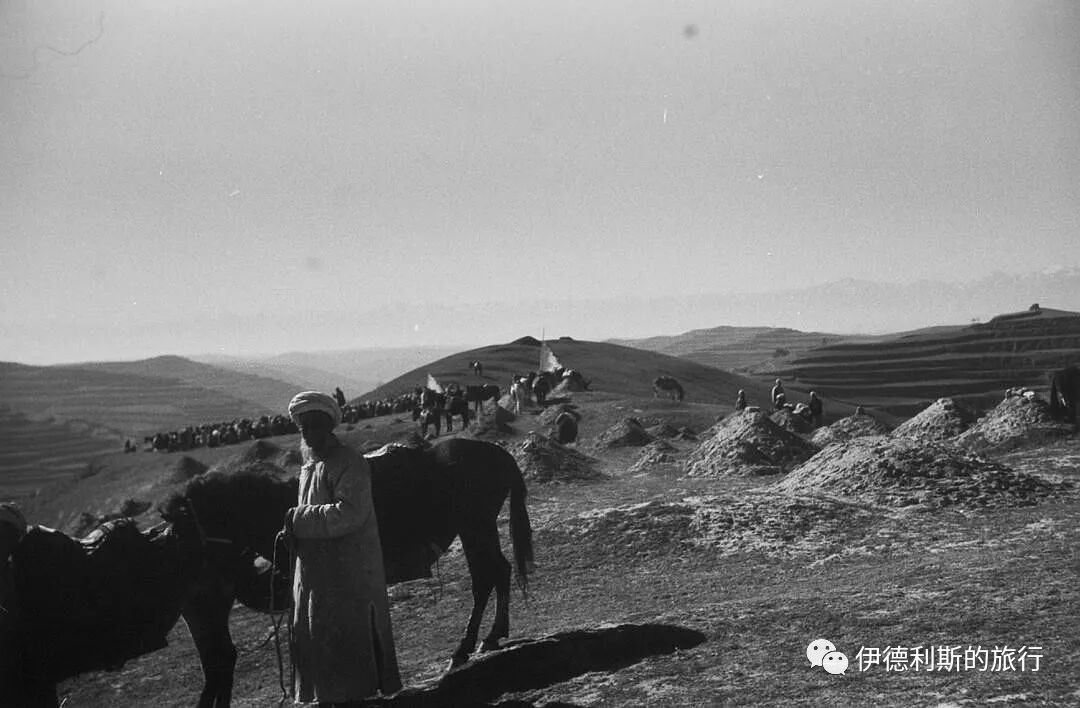
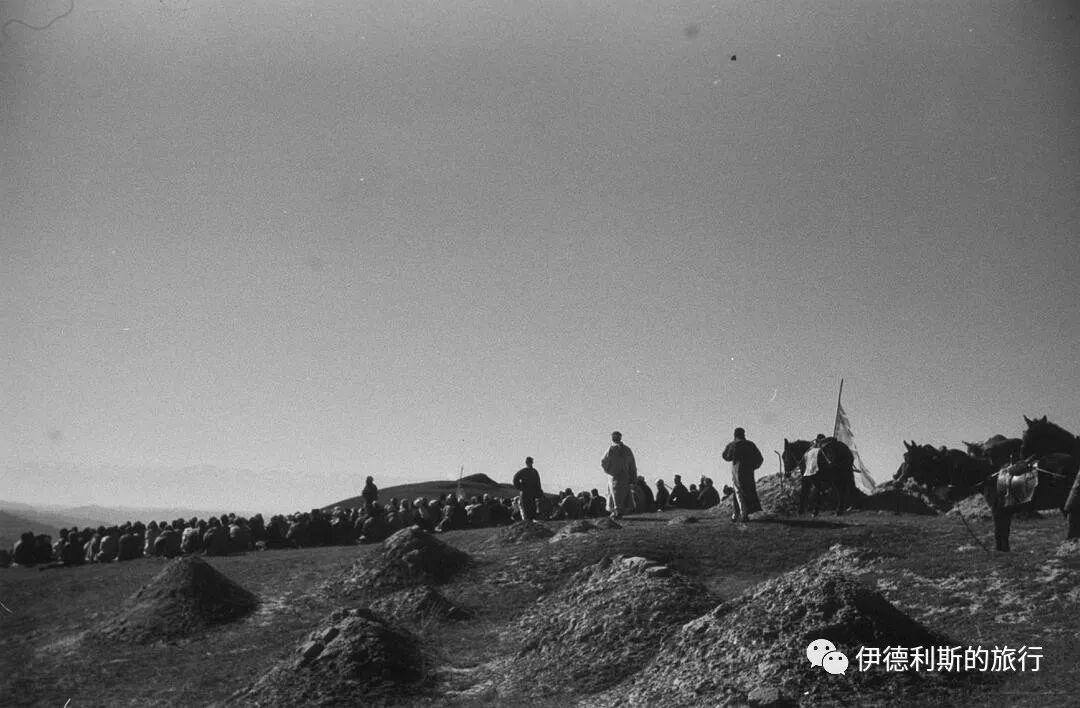
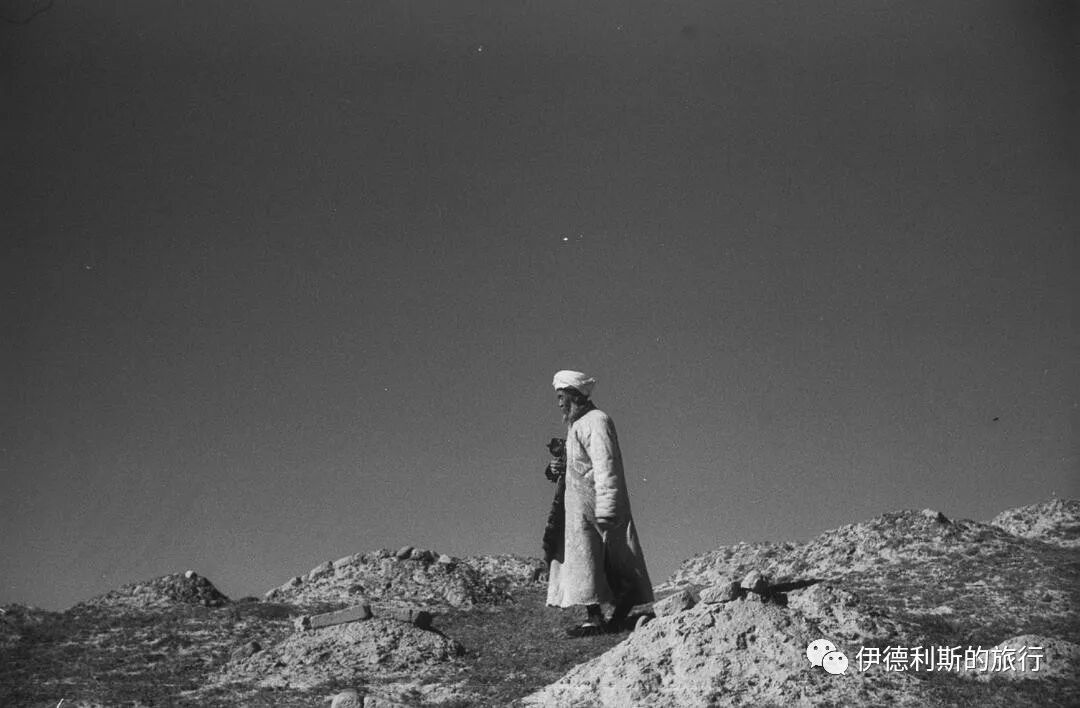
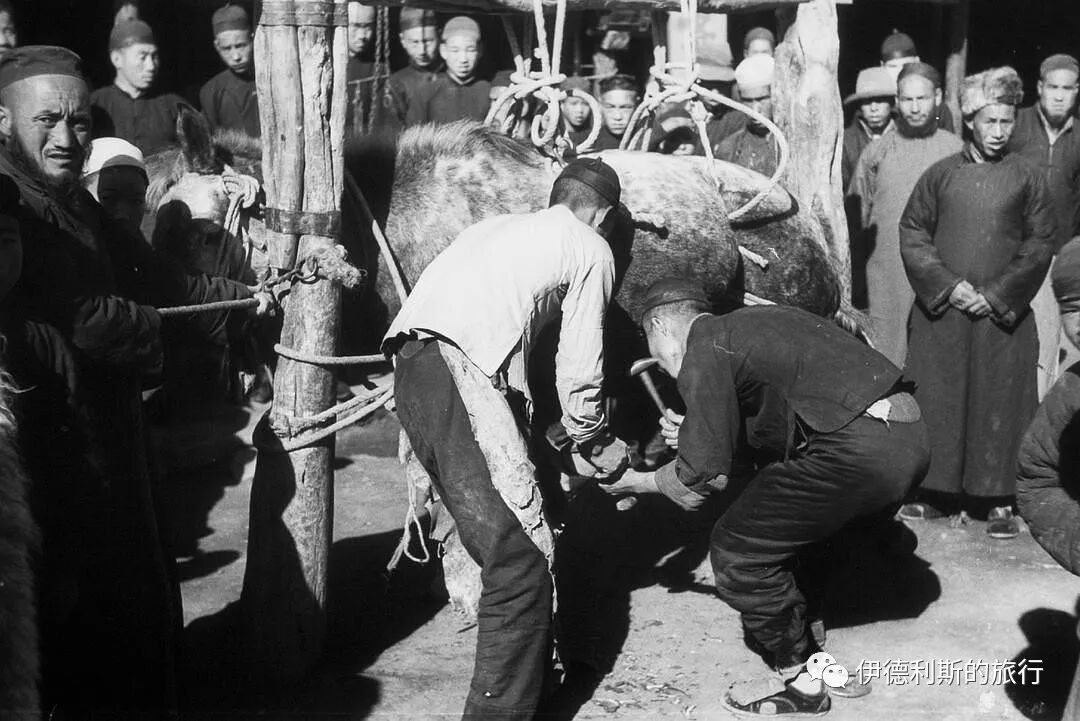
Two young Dongxiang men shoeing a horse in Suonaba
Farmers plowing fields in Suonaba
Big-horned sheep from the Tibetan area in Suonaba
Old Photos of Hui Muslims in Guangzhou and Sanya: Waseda Library Collection
Articles • ali2007fr posted the article • 0 comments • 165 views • 2026-05-18 01:58
Summary: Old Photos of Hui Muslims in Guangzhou and Sanya: Waseda Library Collection is presented here as a firsthand travel account in clear English, beginning with this scene: Waseda University Library holds a large collection of old photos from the Greater Japan Muslim Association (Dai-Nippon Kaikyo Kyokai, or DNKK). The account keeps its focus on Hui Muslims, Old Photos, Guangzhou Muslims while preserving the names, places, food, and historical details from the Chinese source.
Waseda University Library holds a large collection of old photos from the Greater Japan Muslim Association (Dai-Nippon Kaikyo Kyokai, or DNKK). The DNKK was a wartime Japanese research organization for Islam. It started in 1938 and closed in 1945. They traveled to China and took many old photos of Hui Muslims. You can view them all online now.
Address: https://www.wul.waseda.ac.jp/k ... t.pdf
Guangzhou
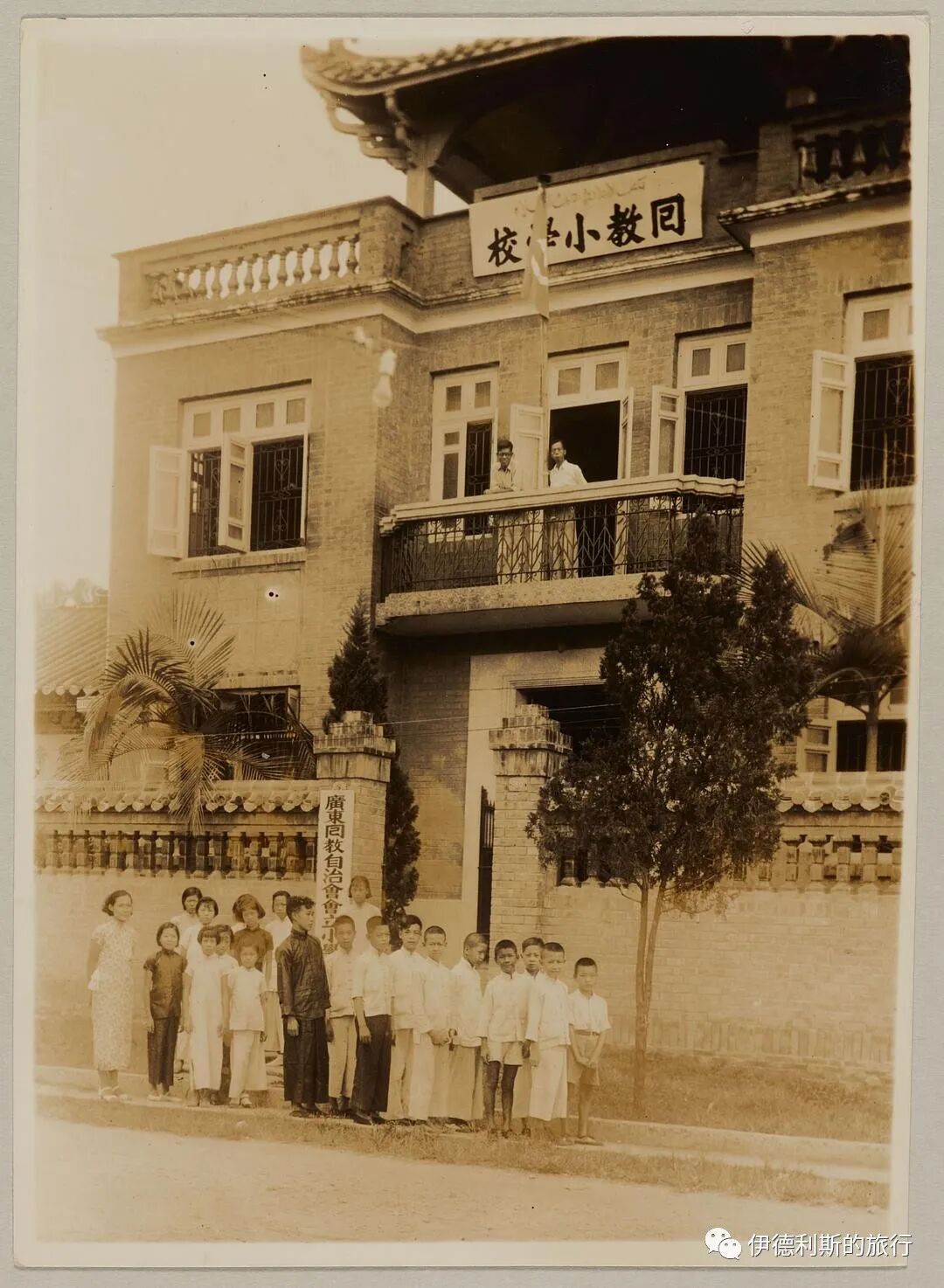
After the Tang Dynasty, many Muslims from Arabia and Persia came to Guangzhou for business, and many of them chose to settle down. These Muslims were called "foreign guests" (fanke), and the communities where they lived were known as "foreign quarters" (fanfang).
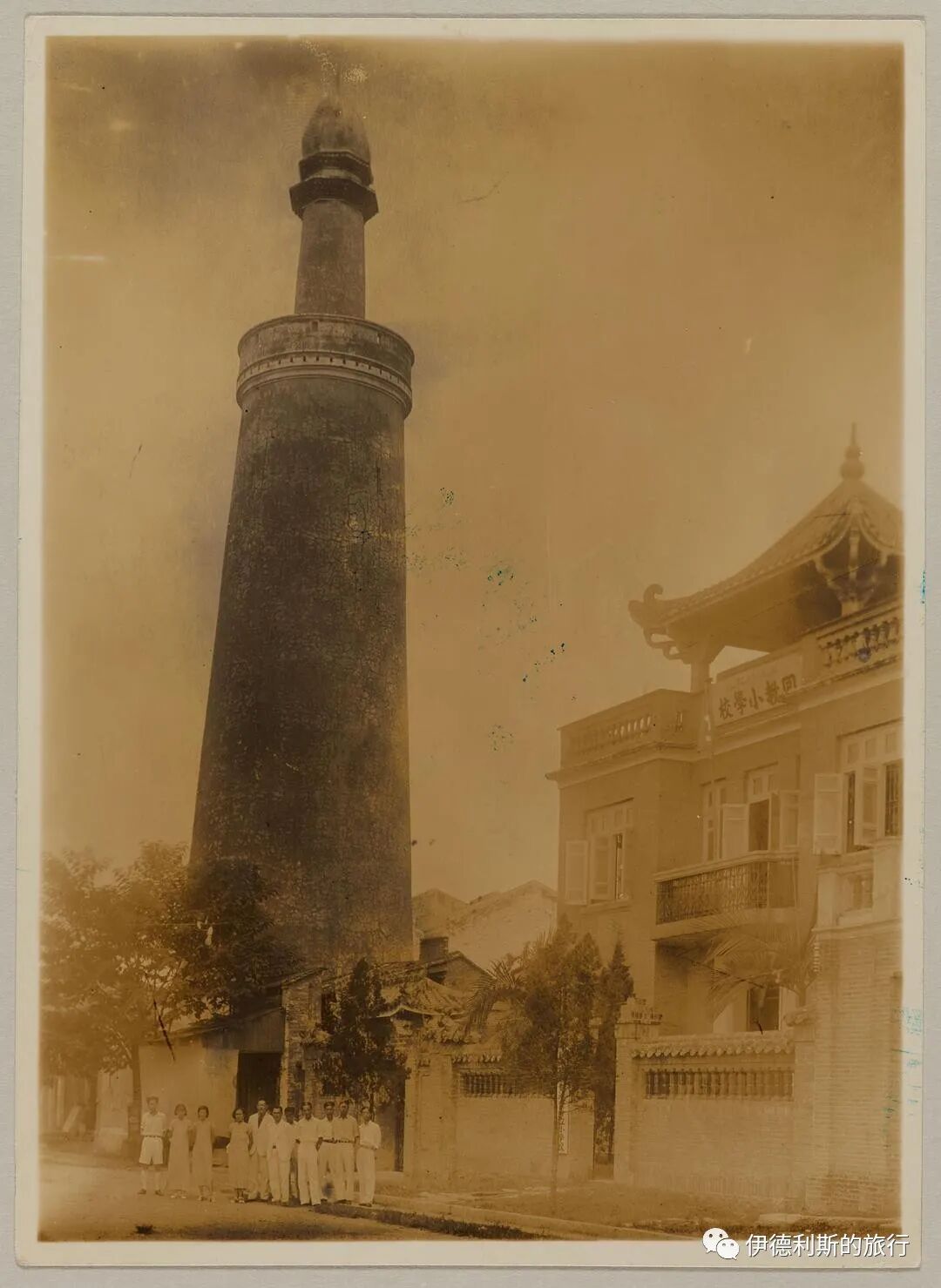
The heart of the Guangzhou foreign quarter was the Huaisheng Mosque. The Huaisheng Mosque was rebuilt many times after the Yuan Dynasty, and today only the minaret, known as the "Light Tower" (Guangta), remains from before the Yuan period. Legend says the Huaisheng Mosque was built during the Tang Dynasty, and the earliest discovered record of the Light Tower comes from the Northern Song Dynasty poet Guo Xiangzheng. He arrived in Guangzhou in the first lunar month of 1088 (the third year of the Yuanyou era) and left in the second month. During his stay, he climbed the Light Tower of the Huaisheng Mosque and wrote the poems "Climbing the Foreign Tower with Ying Shu" and "Presenting to Commander Jiang at the Yue Wang Terrace in Guangzhou."
During the Southern Song Dynasty, Fang Xinru and Yue Ke both recorded the Light Tower of the Huaisheng Mosque.
In 1206 (the second year of the Kaixi era of the Southern Song), Fang Xinru wrote in "One Hundred Poems of the South Sea" (Nanhai Baiyong): The foreign tower began in the Tang Dynasty and is called the Huaisheng Tower. It rises straight up, about 16.5 zhang high, with no stairs inside. A golden rooster sits on top, turning with the wind. Every year in the fifth or sixth month, the foreigners climb to the top at the fifth watch to call out the name of Allah and pray for favorable winds. Below it is a prayer hall.
Yue Fei's grandson, the Southern Song writer Yue Ke, came to Guangzhou with his father at age 10 in 1192. In the "Foreigners in Panyu" section of his book "History of the Desk" (Tuo Shi), he described the Muslim community in Guangzhou at that time: Behind it is a stupa that reaches into the clouds. Its style is unlike other towers. It is surrounded by bricks to form a large base, built up layer by layer, with a rounded exterior covered in plaster, looking like a silver brush. There is a door at the bottom. You climb the steps and turn inside like a spiral, and you cannot see the stairs from the outside. Every few dozen steps, there is an opening. In the fourth or fifth month of the year, when the ships are about to arrive, the foreigners enter the tower and call out from the openings to pray for the south wind, and it often works. At the very top, there is a large golden rooster that replaces the traditional wheel, though it is now missing one foot.
The 1350 (the tenth year of the Zhizheng era of the Yuan) "Record of Rebuilding Huaisheng Mosque" states that the mosque was destroyed in 1343 (the third year of the Zhizheng era) and rebuilt in 1350: At the foot of White Cloud Mountain and the slope of Po Mountain, there is a pagoda. Its style is from the Western Regions, standing tall like stone. It is something not seen in the Central Plains, and legend says it began in the Tang Dynasty... When the mosque was destroyed in the year of Guwei of the Zhizheng era, the halls were left empty.
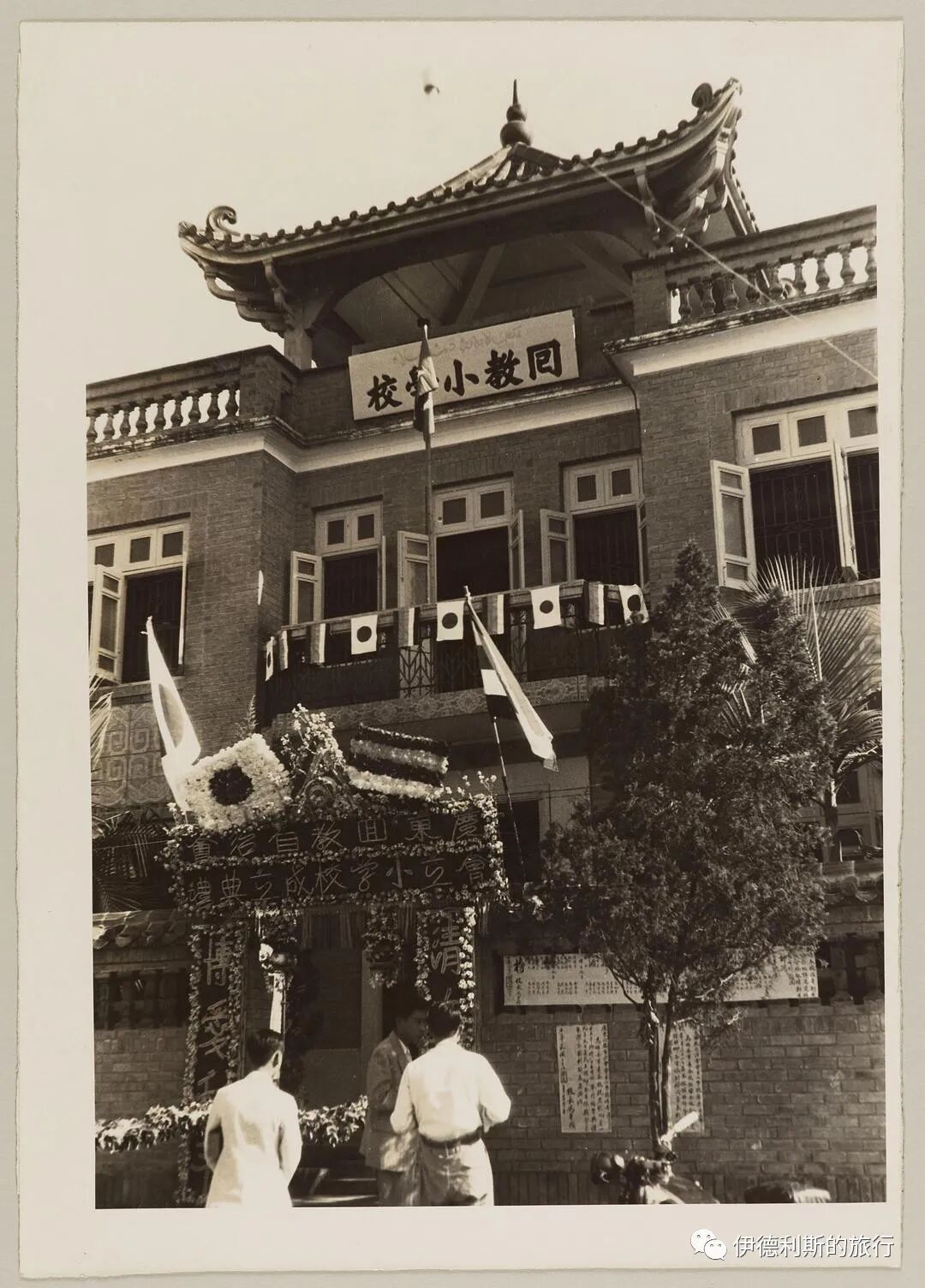
The opening ceremony of the Huaisheng Mosque Islamic Elementary School in the 1930s.
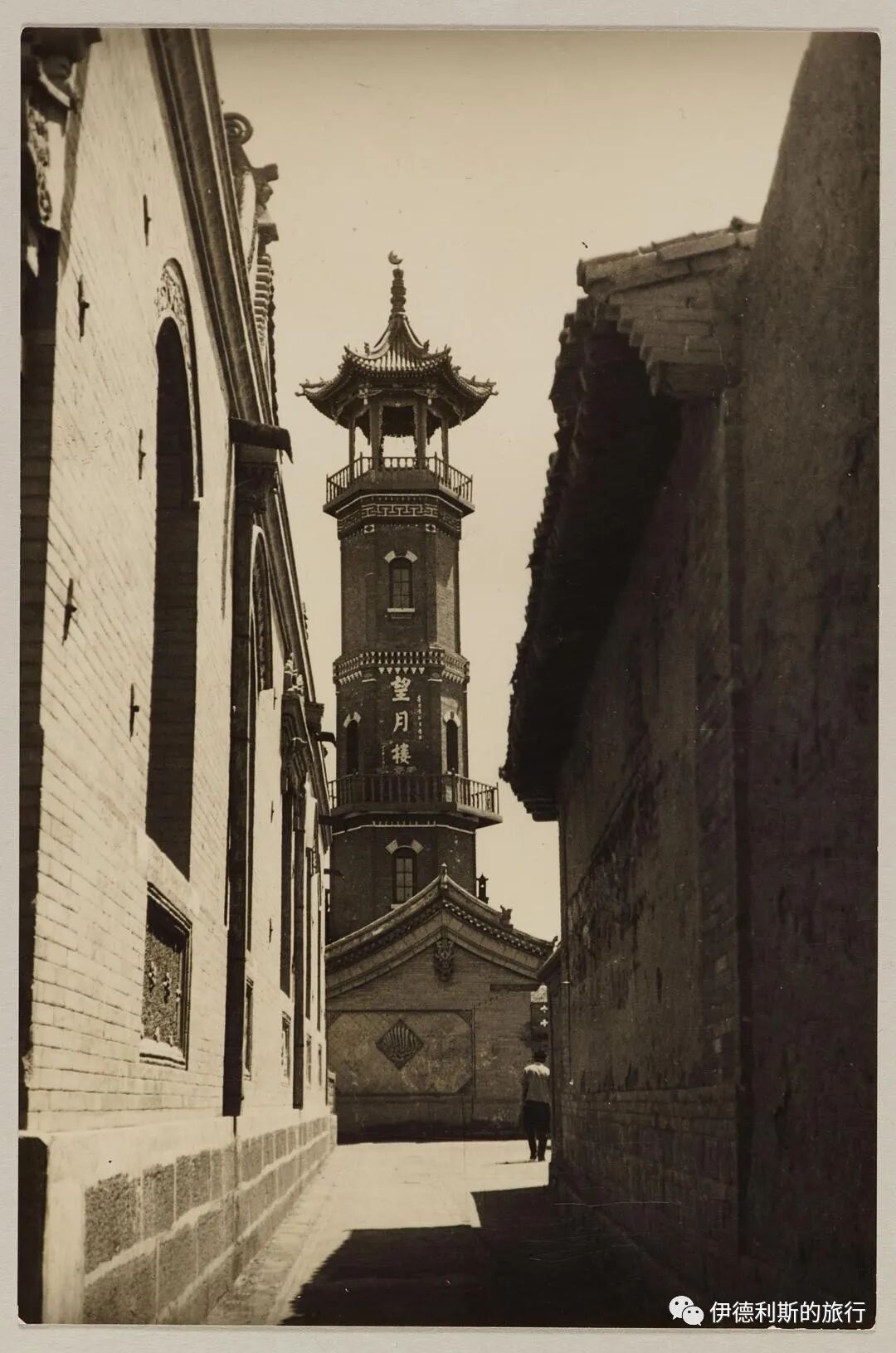
The red sandstone wall of the Moon-Watching Tower (Wangyue Lou) was rebuilt in the Ming Dynasty, and the top was rebuilt in the Qing Dynasty.
The Cemetery of the Worthies (Xianxian Mu) in Guangzhou in June 1941.
The ancient Cemetery of the Worthies is commonly known as the Hui Muslim Grave, the Great Man's Grave, or the Echoing Grave, and it has been a burial ground for Muslims in Guangzhou since the Tang Dynasty. The earliest record of the ancient Cemetery of the Worthies comes from the 1206 (the second year of the Kaixi era of the Southern Song) book "One Hundred Poems of the South Sea" by Fang Xinru: The foreign graves are ten miles west of the city, with thousands of mounds, all facing west with their heads to the south. The whale-like waves barely spare those they swallow, yet even a dying fox turns its head toward its home hill. My eyes strain across thirty thousand miles of vastness, and though a thousand pieces of gold are here, this life is already over.
The heart of the Ancient Sages' Tomb is the burial site of Wangesu, an Islamic sage who legend says came to China during the Tang Dynasty to spread his faith. Wangesu is known as Saheb Saad Wakkas. Most historical records about his tomb date from the Ming and Qing dynasties. Sources for his arrival time vary: the Qing-era Guangzhou Prefecture Gazetteer says 629 (the third year of the Tang Zhenguan era), the Qing-era Tianfang Zhengxue says 632 (the sixth year of the Tang Zhenguan era), and the Qing-era stele record for the renovation of the Sage Saierde tomb even suggests he arrived during the Sui Dynasty. Regarding his identity, he is variously described as an uncle, cousin, general, or envoy of the Prophet Muhammad.
The Huihui people of Sanya
The Huihui people are a Muslim group living in Huihui Village and Huixin Village in Sanya, Hainan, with a population of nearly ten thousand. The Huihui language they speak belongs to the Austronesian language family and shares the same origin as the Chamic languages of southern Vietnam. The customs of the Huihui people are strongly influenced by local Hainan groups, yet they maintain a devout Islamic faith, making them a very unique group on China's southeast coast.
Starting in the 10th century, the Champa kingdom in southern Vietnam fought wars with Dai Viet, Chenla (Cambodia), and the Yuan Dynasty, causing many Arab and Persian merchants in Champa to sail across the sea to Hainan. The History of Song: Champa records that as early as 986, a Champa man named Pu Luo'e led over a hundred of his people to Danzhou, Hainan, to seek refuge.
During the Ming and Qing dynasties, Muslims living in places like Yazhou, Wanzhou, and Qiongshan in Hainan gradually moved to Suosanya Lifan Village (now Huixin Village in Sanya). During the Qing Dynasty, Muslim communities across Hainan underwent assimilation into Han, Li, or Dan cultures, leaving Suosanya Lifan Village as the only remaining Muslim community in Hainan, which eventually formed the modern Huihui people.
Some Huihui people also came from the mainland. The ancestors of the Ha family among the Huihui came from Shaanxi, later moving their whole family to Dadan Port in Yazhou, Hainan, before relocating to Suosanya Lifan Village with another group of Hui Muslims surnamed Liu during the late Ming and early Qing dynasties.
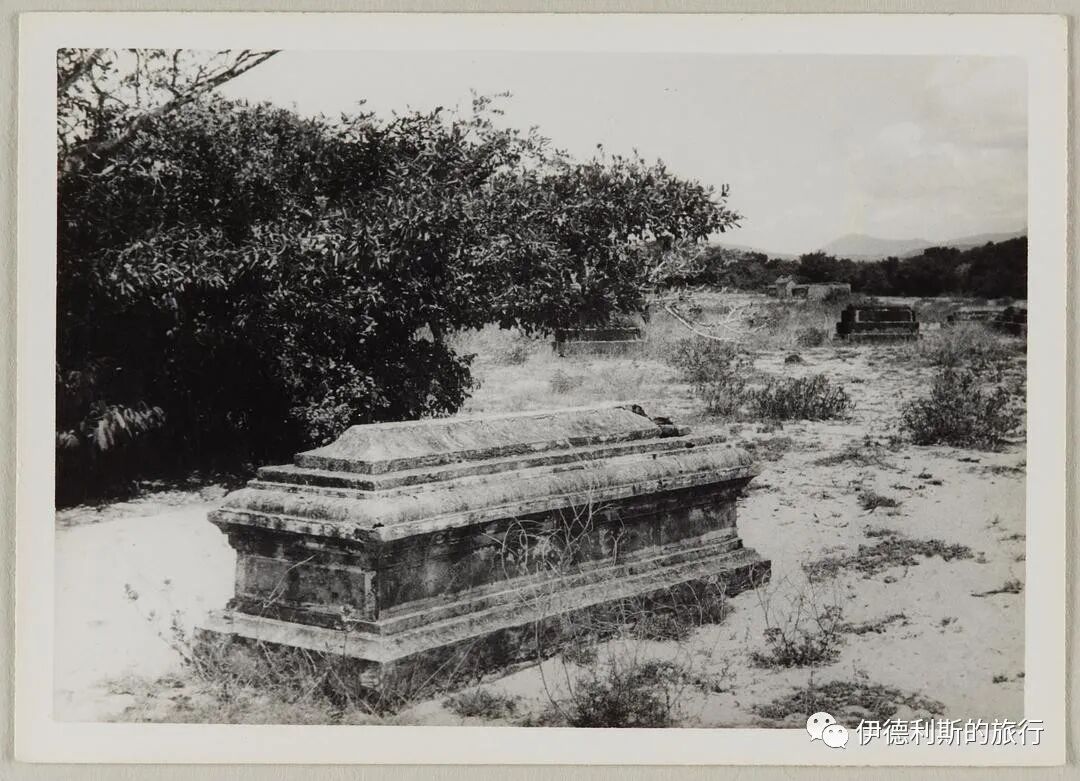
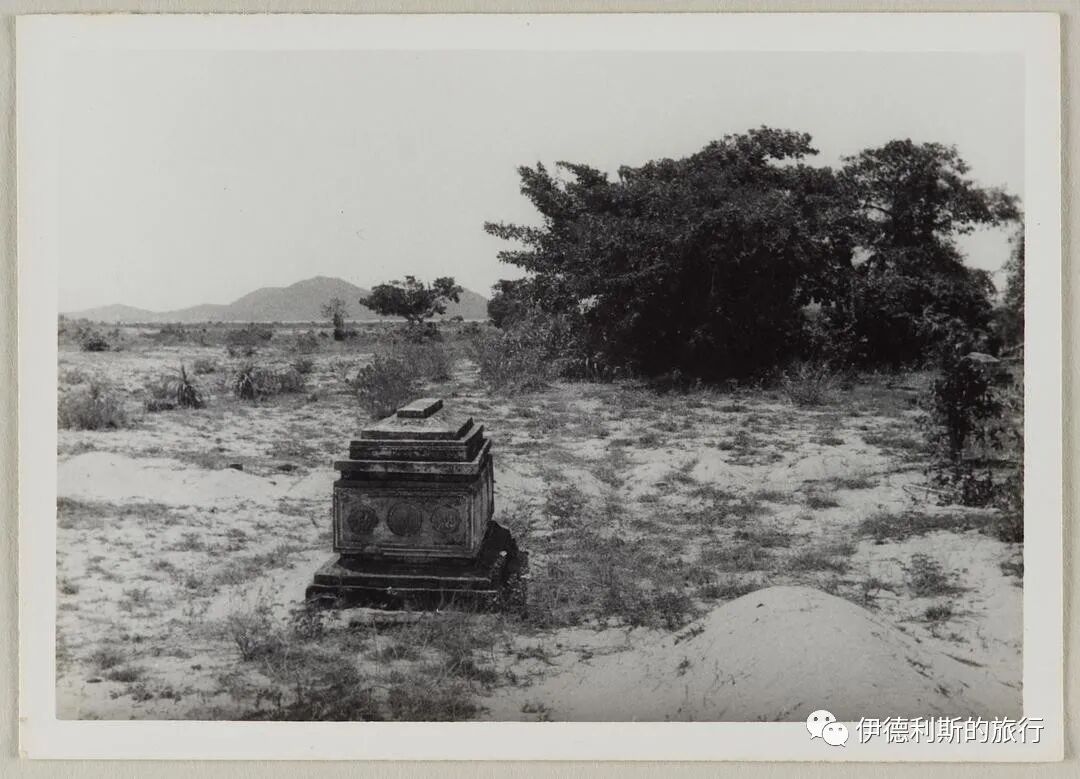
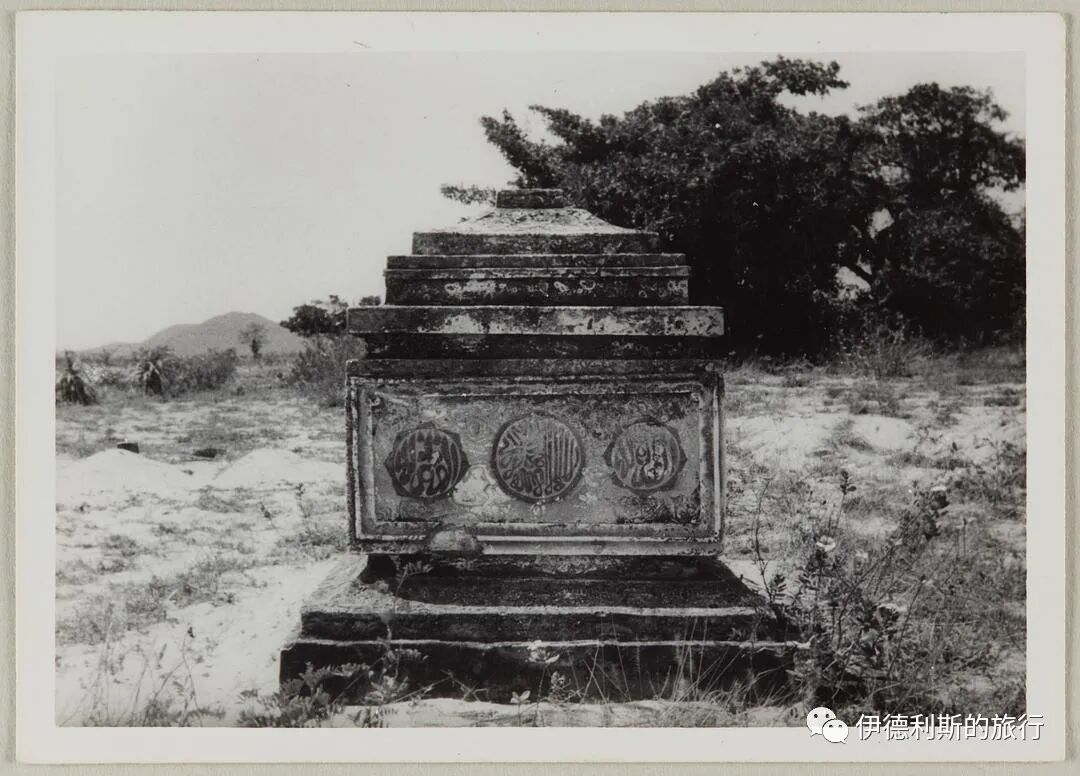
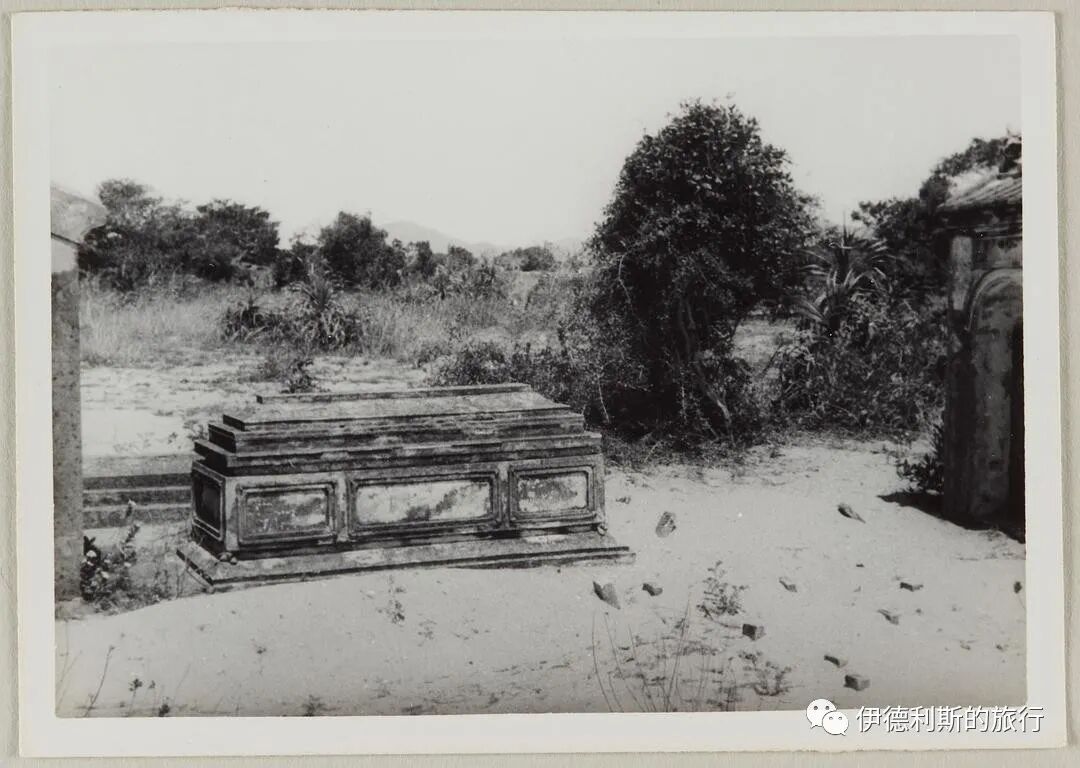
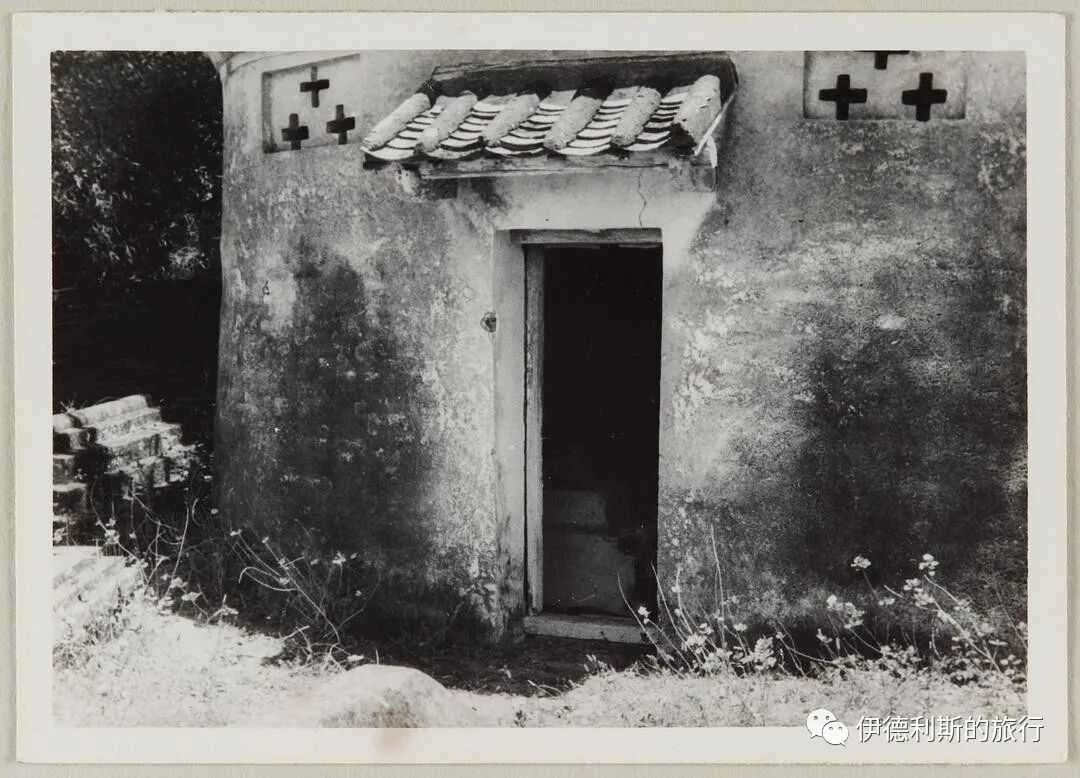
A mosque of the Huihui people in June 1941
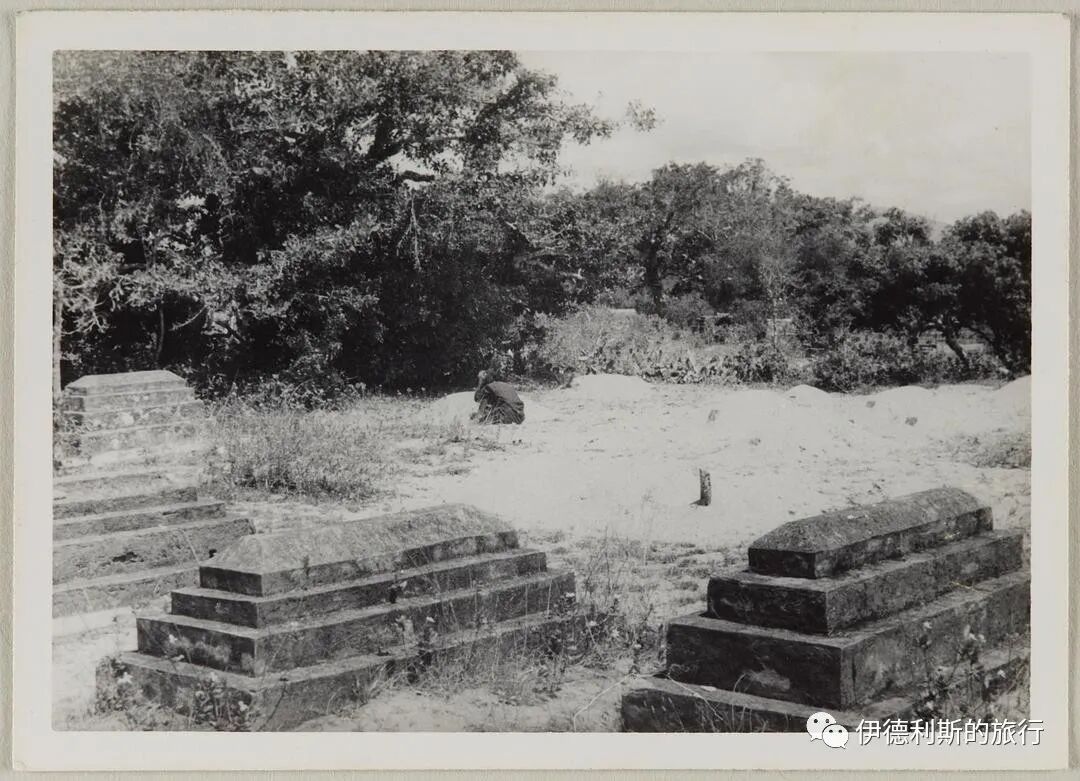
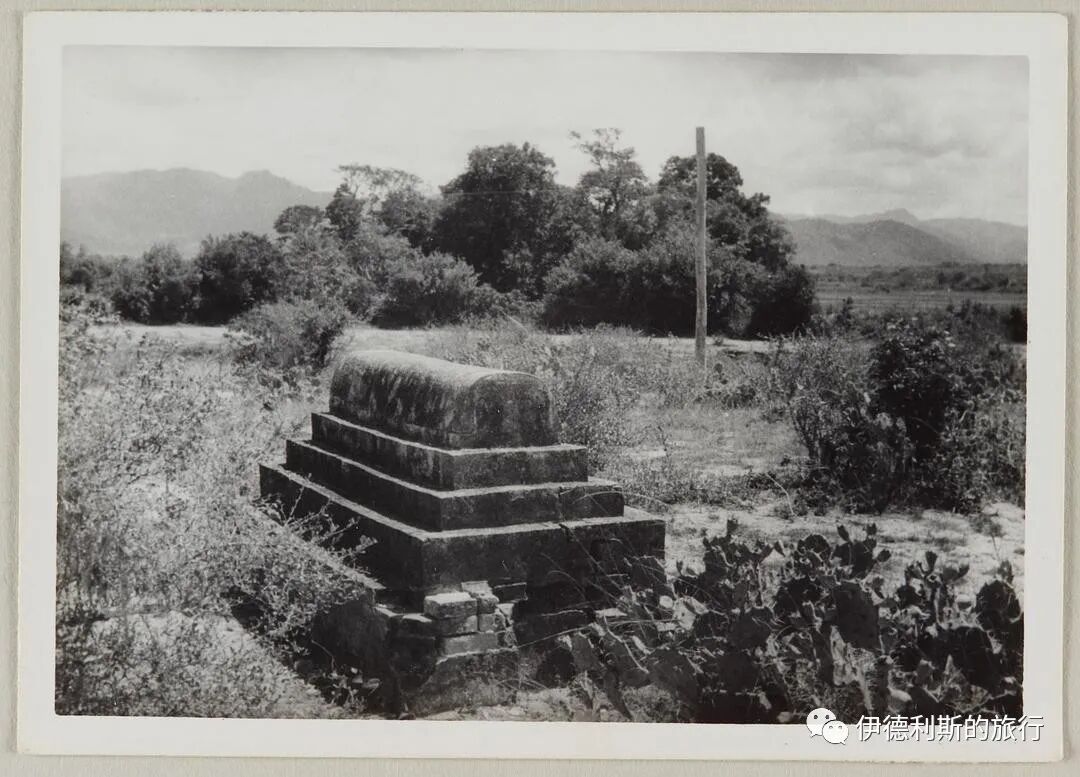
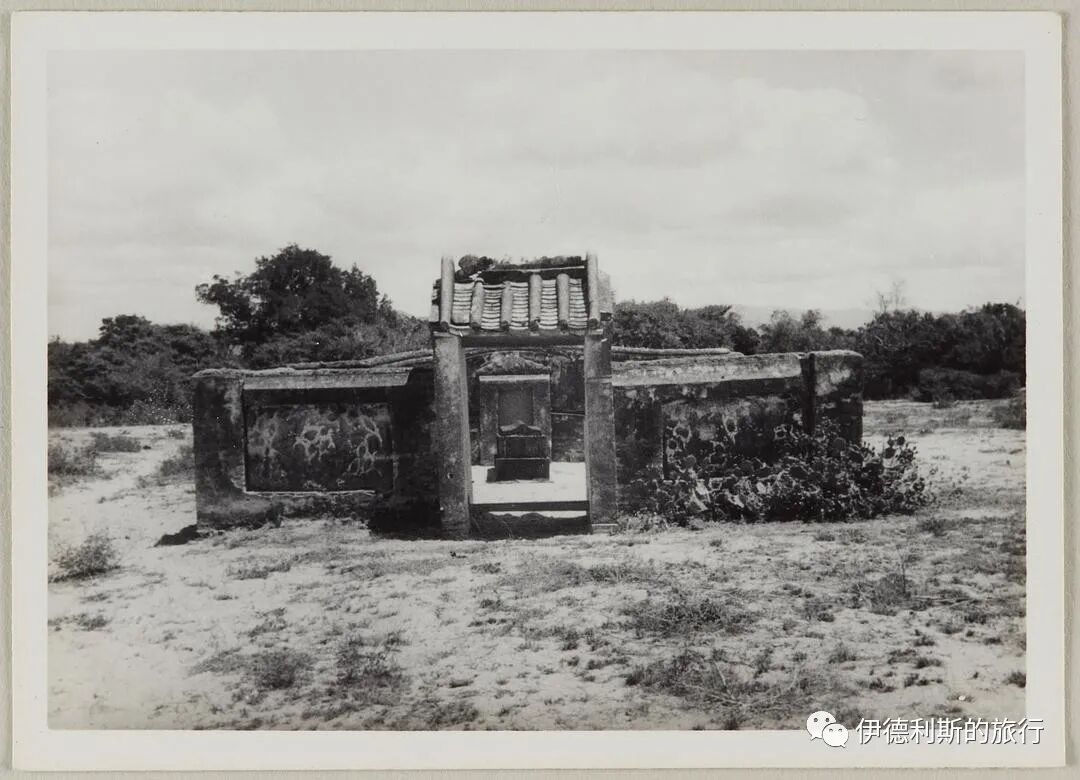
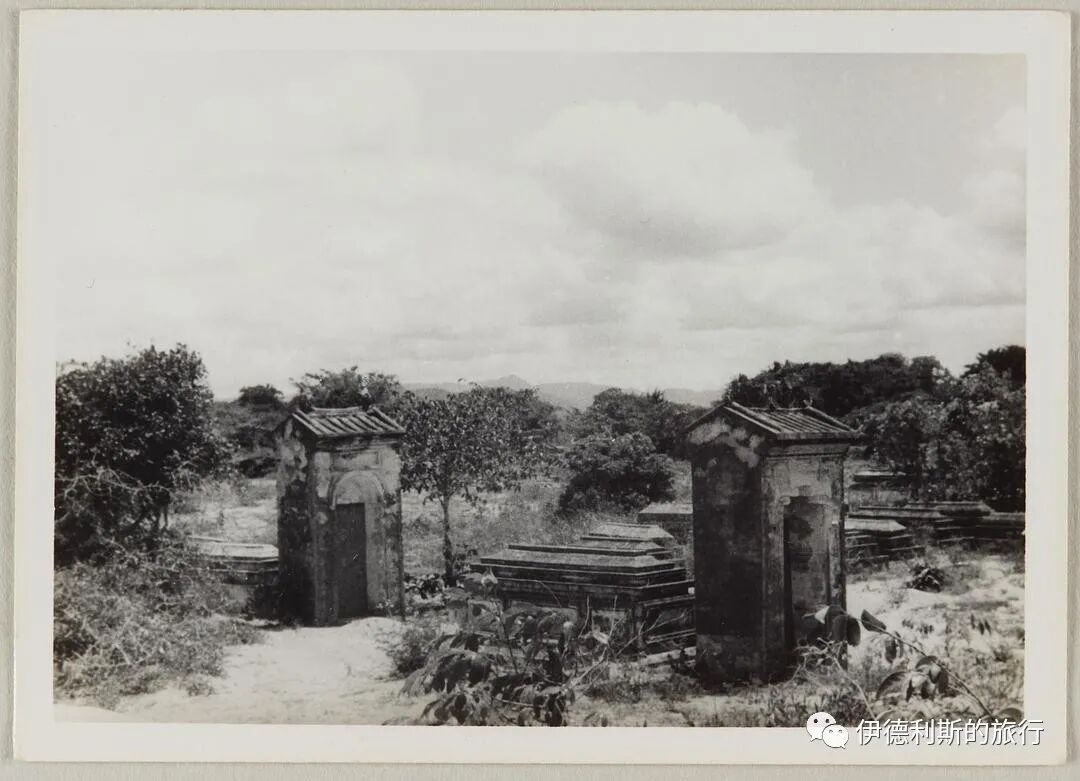
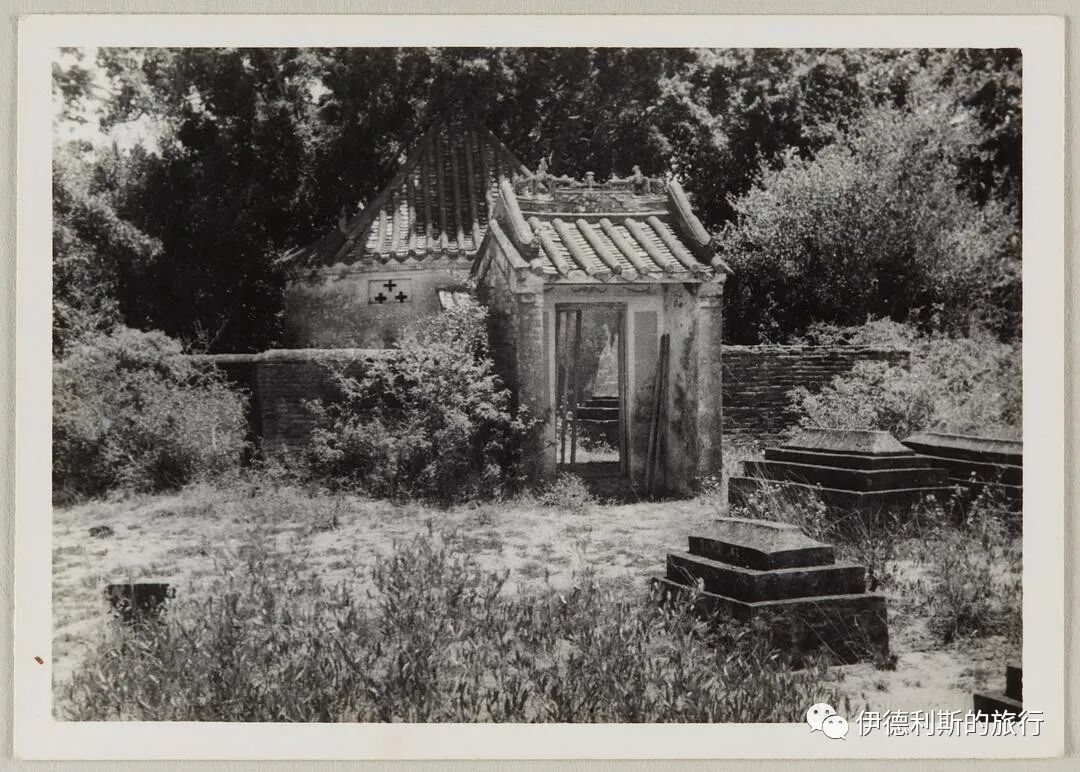
A cemetery of the Huihui people
A wooden casket (tabu) used for transporting a body for burial view all
Summary: Old Photos of Hui Muslims in Guangzhou and Sanya: Waseda Library Collection is presented here as a firsthand travel account in clear English, beginning with this scene: Waseda University Library holds a large collection of old photos from the Greater Japan Muslim Association (Dai-Nippon Kaikyo Kyokai, or DNKK). The account keeps its focus on Hui Muslims, Old Photos, Guangzhou Muslims while preserving the names, places, food, and historical details from the Chinese source.
Waseda University Library holds a large collection of old photos from the Greater Japan Muslim Association (Dai-Nippon Kaikyo Kyokai, or DNKK). The DNKK was a wartime Japanese research organization for Islam. It started in 1938 and closed in 1945. They traveled to China and took many old photos of Hui Muslims. You can view them all online now.
Address: https://www.wul.waseda.ac.jp/k ... t.pdf
Guangzhou
After the Tang Dynasty, many Muslims from Arabia and Persia came to Guangzhou for business, and many of them chose to settle down. These Muslims were called "foreign guests" (fanke), and the communities where they lived were known as "foreign quarters" (fanfang).
The heart of the Guangzhou foreign quarter was the Huaisheng Mosque. The Huaisheng Mosque was rebuilt many times after the Yuan Dynasty, and today only the minaret, known as the "Light Tower" (Guangta), remains from before the Yuan period. Legend says the Huaisheng Mosque was built during the Tang Dynasty, and the earliest discovered record of the Light Tower comes from the Northern Song Dynasty poet Guo Xiangzheng. He arrived in Guangzhou in the first lunar month of 1088 (the third year of the Yuanyou era) and left in the second month. During his stay, he climbed the Light Tower of the Huaisheng Mosque and wrote the poems "Climbing the Foreign Tower with Ying Shu" and "Presenting to Commander Jiang at the Yue Wang Terrace in Guangzhou."
During the Southern Song Dynasty, Fang Xinru and Yue Ke both recorded the Light Tower of the Huaisheng Mosque.
In 1206 (the second year of the Kaixi era of the Southern Song), Fang Xinru wrote in "One Hundred Poems of the South Sea" (Nanhai Baiyong): The foreign tower began in the Tang Dynasty and is called the Huaisheng Tower. It rises straight up, about 16.5 zhang high, with no stairs inside. A golden rooster sits on top, turning with the wind. Every year in the fifth or sixth month, the foreigners climb to the top at the fifth watch to call out the name of Allah and pray for favorable winds. Below it is a prayer hall.
Yue Fei's grandson, the Southern Song writer Yue Ke, came to Guangzhou with his father at age 10 in 1192. In the "Foreigners in Panyu" section of his book "History of the Desk" (Tuo Shi), he described the Muslim community in Guangzhou at that time: Behind it is a stupa that reaches into the clouds. Its style is unlike other towers. It is surrounded by bricks to form a large base, built up layer by layer, with a rounded exterior covered in plaster, looking like a silver brush. There is a door at the bottom. You climb the steps and turn inside like a spiral, and you cannot see the stairs from the outside. Every few dozen steps, there is an opening. In the fourth or fifth month of the year, when the ships are about to arrive, the foreigners enter the tower and call out from the openings to pray for the south wind, and it often works. At the very top, there is a large golden rooster that replaces the traditional wheel, though it is now missing one foot.
The 1350 (the tenth year of the Zhizheng era of the Yuan) "Record of Rebuilding Huaisheng Mosque" states that the mosque was destroyed in 1343 (the third year of the Zhizheng era) and rebuilt in 1350: At the foot of White Cloud Mountain and the slope of Po Mountain, there is a pagoda. Its style is from the Western Regions, standing tall like stone. It is something not seen in the Central Plains, and legend says it began in the Tang Dynasty... When the mosque was destroyed in the year of Guwei of the Zhizheng era, the halls were left empty.
The opening ceremony of the Huaisheng Mosque Islamic Elementary School in the 1930s.
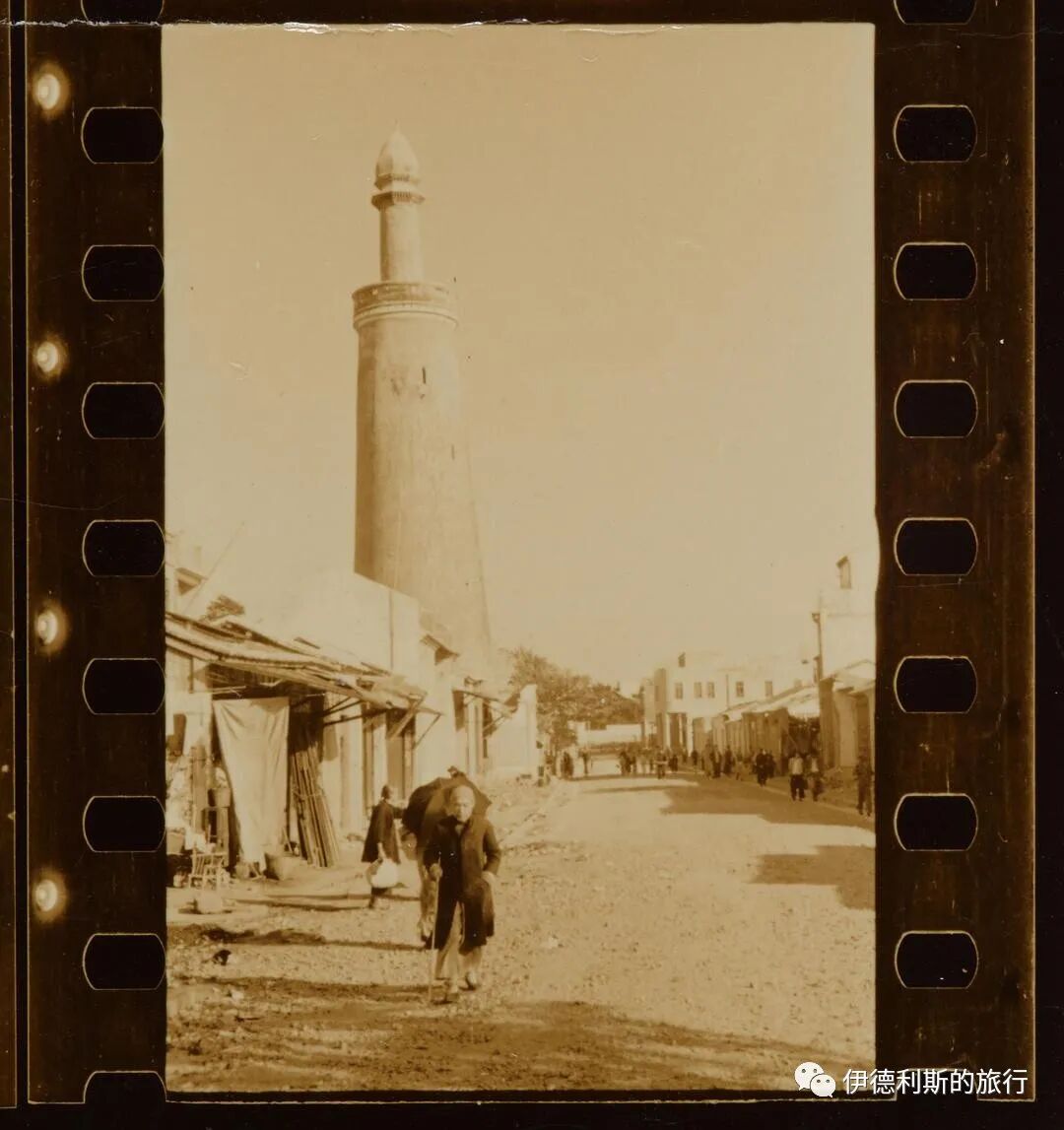
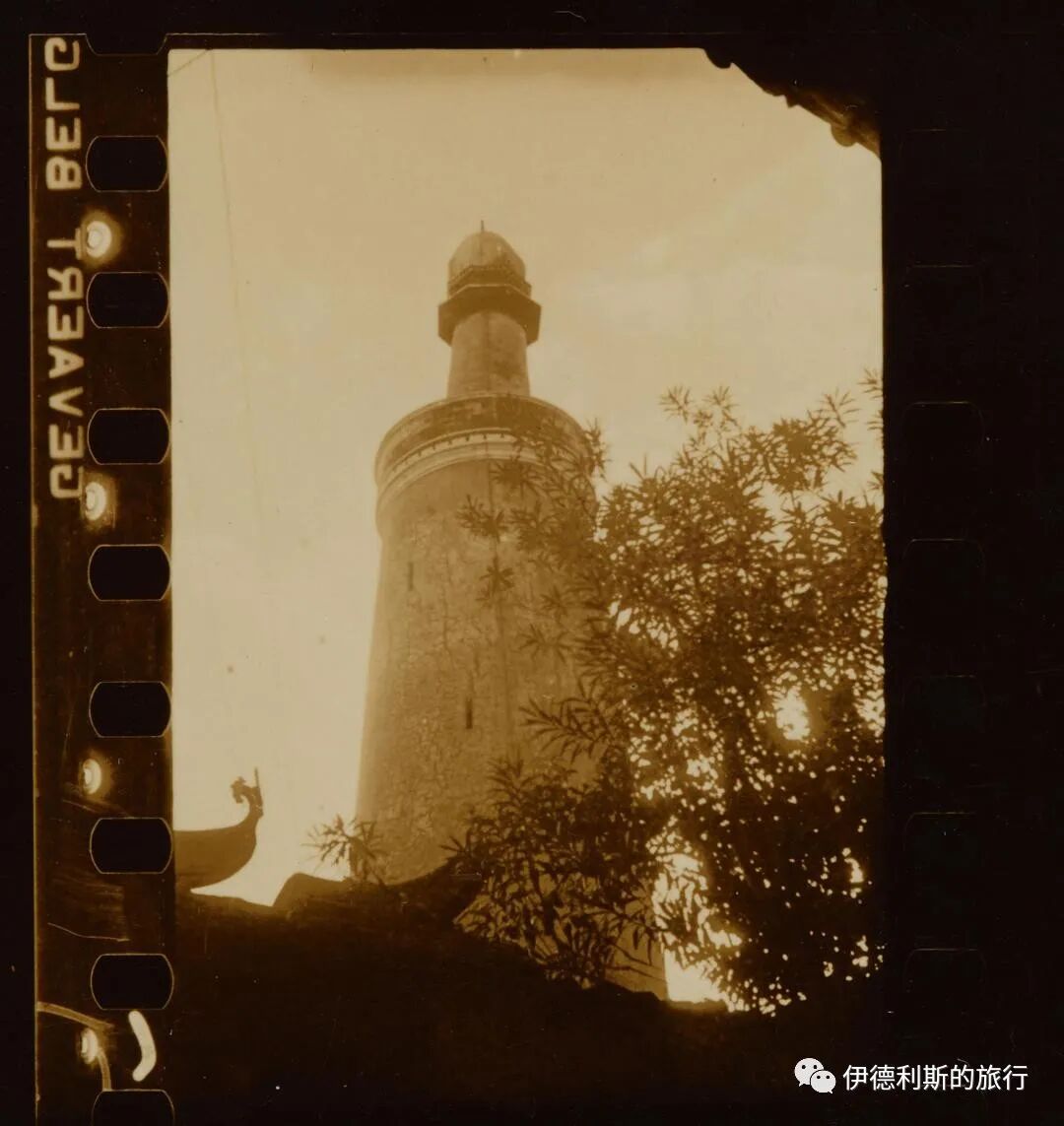
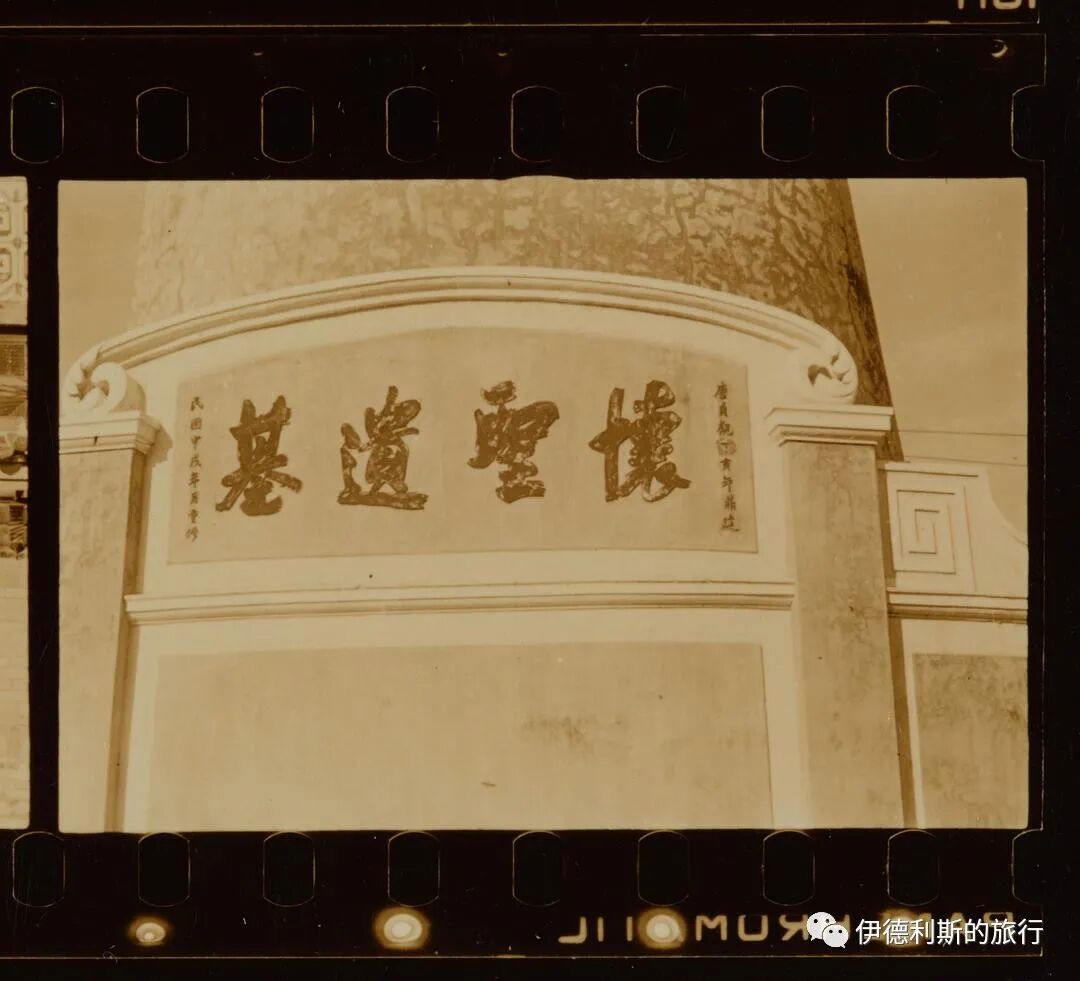
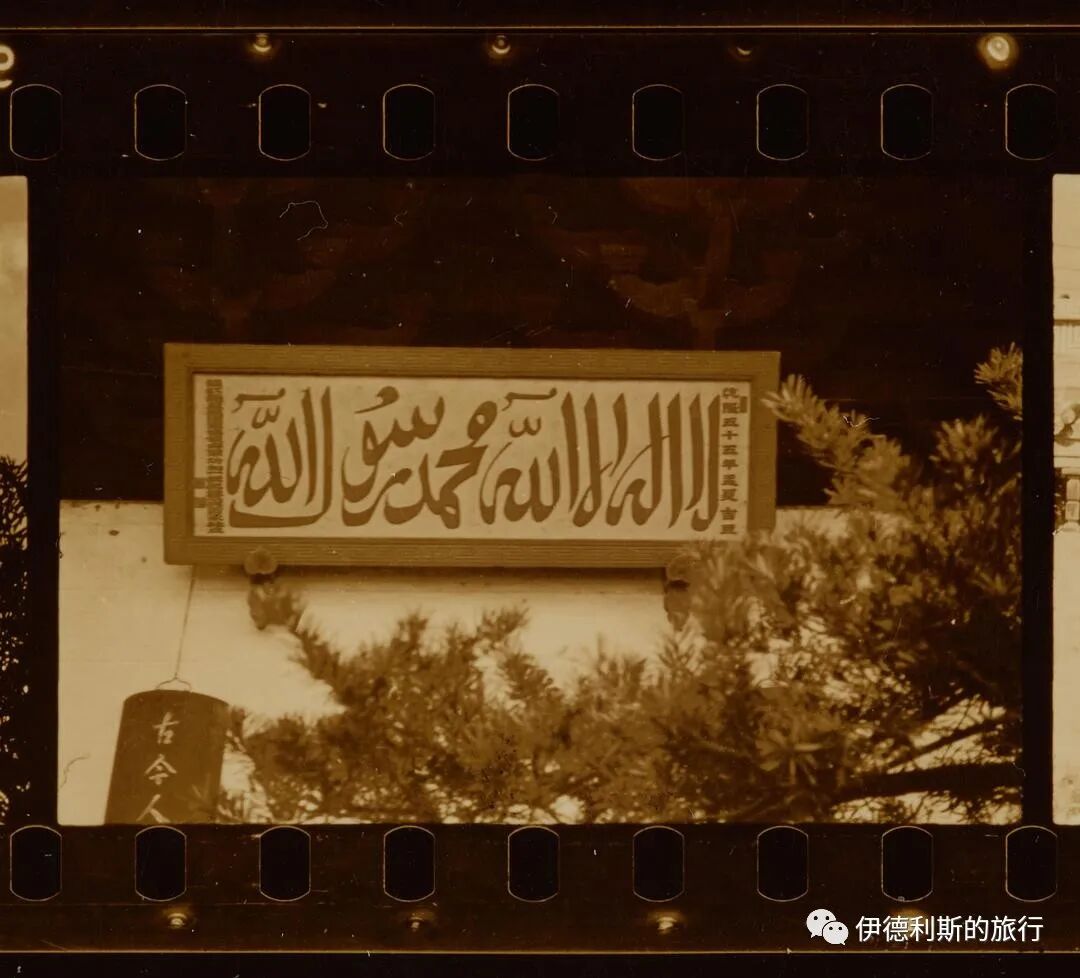
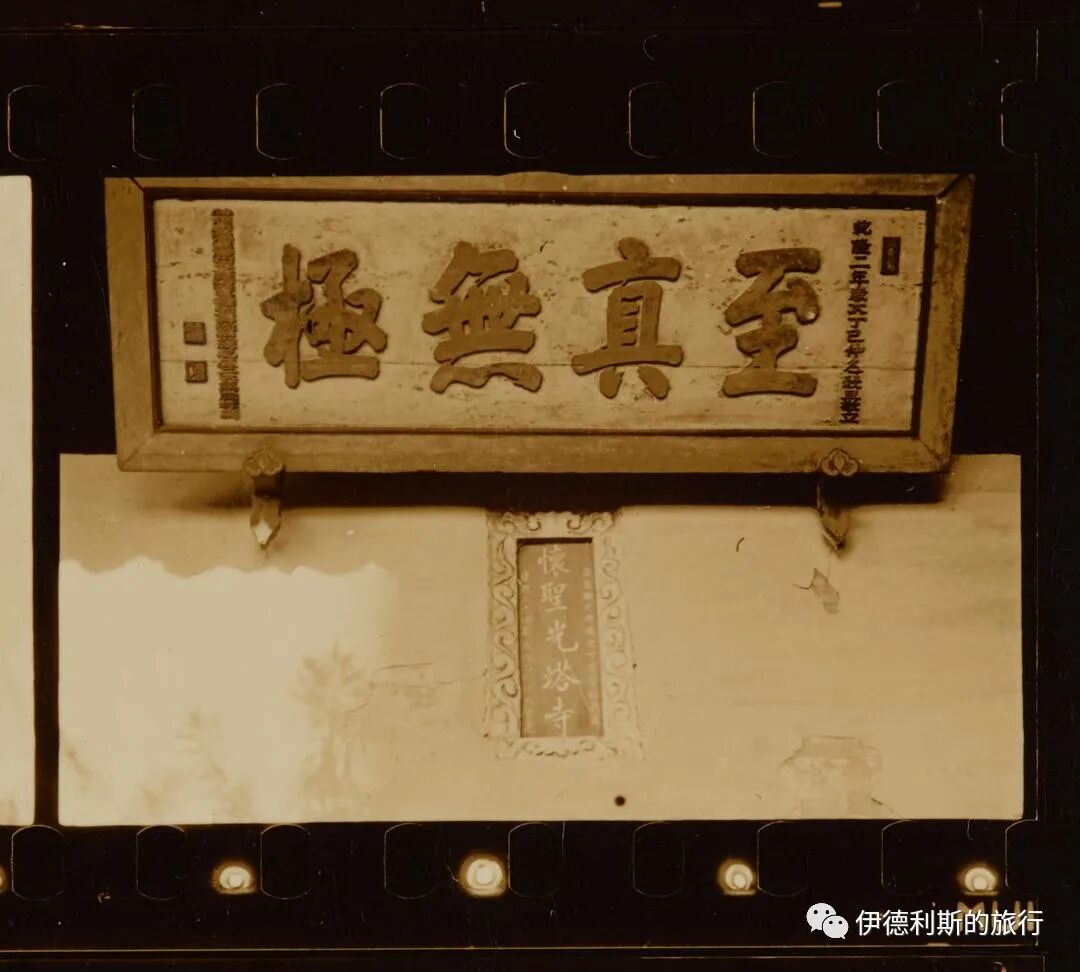
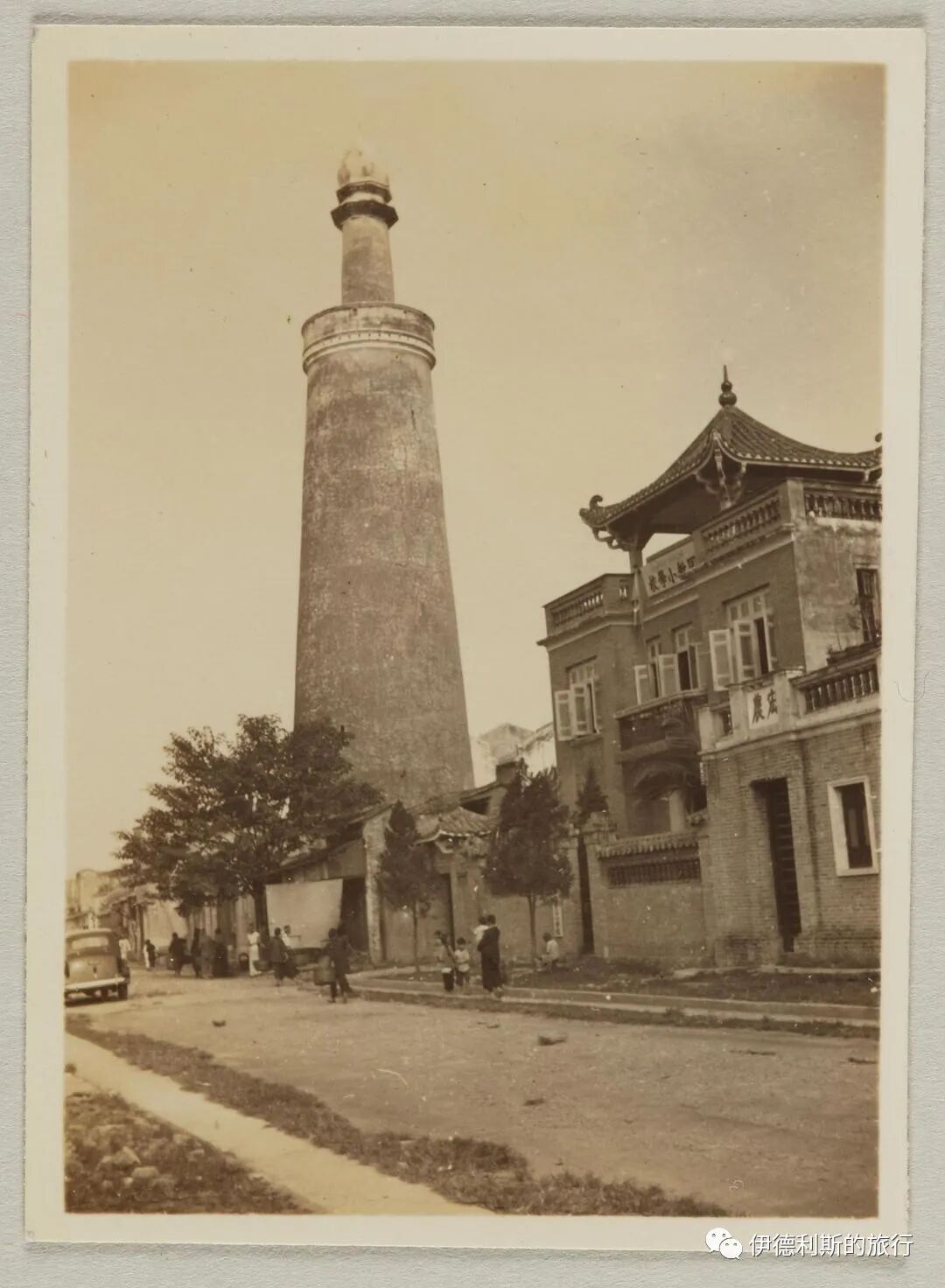
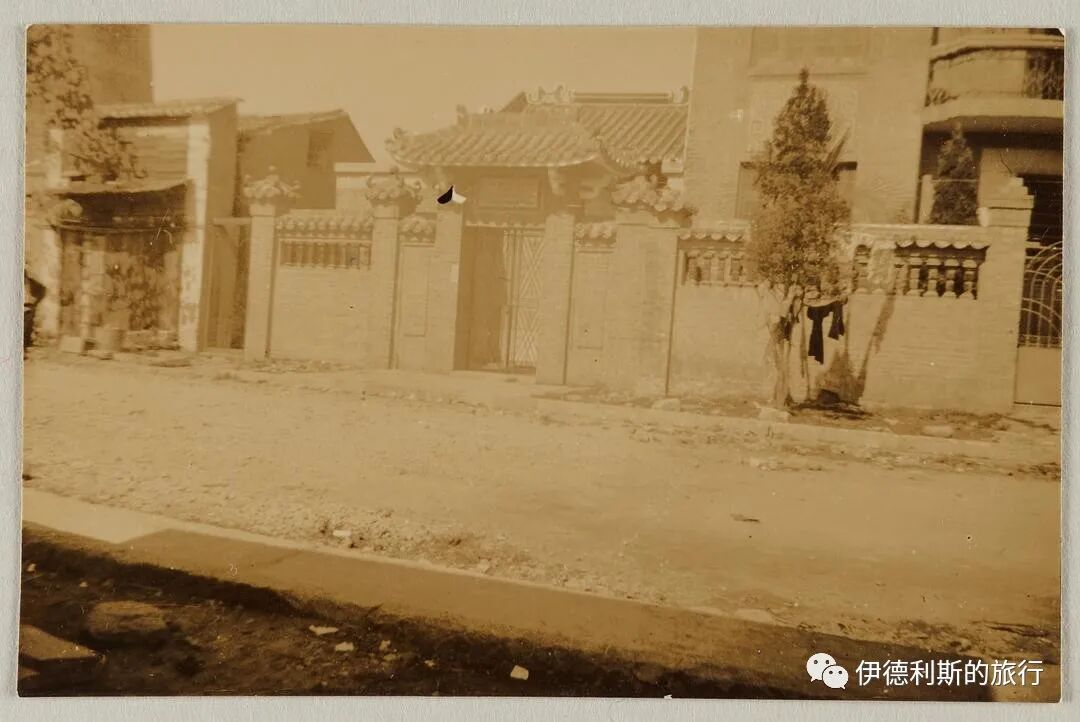
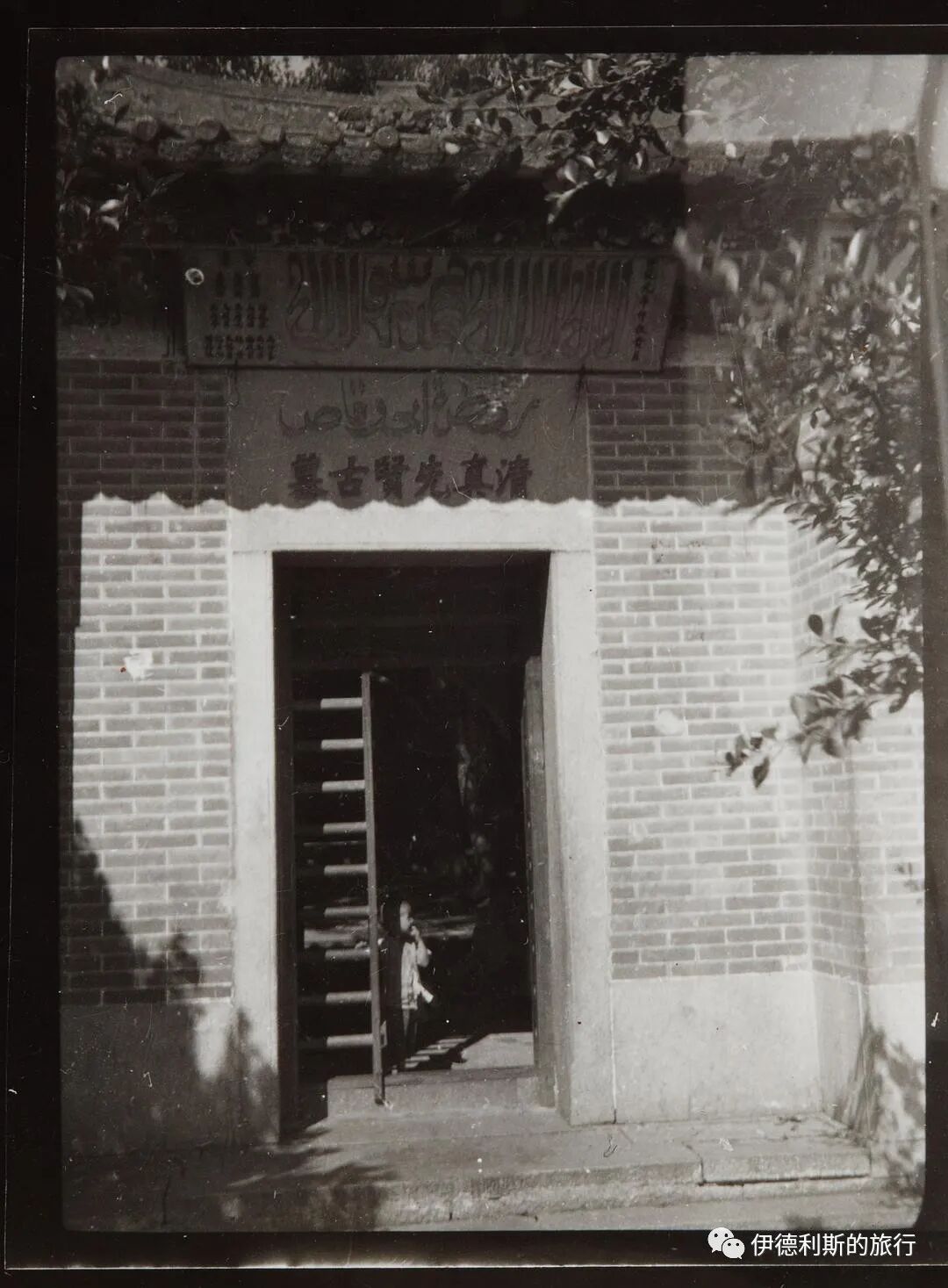
The red sandstone wall of the Moon-Watching Tower (Wangyue Lou) was rebuilt in the Ming Dynasty, and the top was rebuilt in the Qing Dynasty.
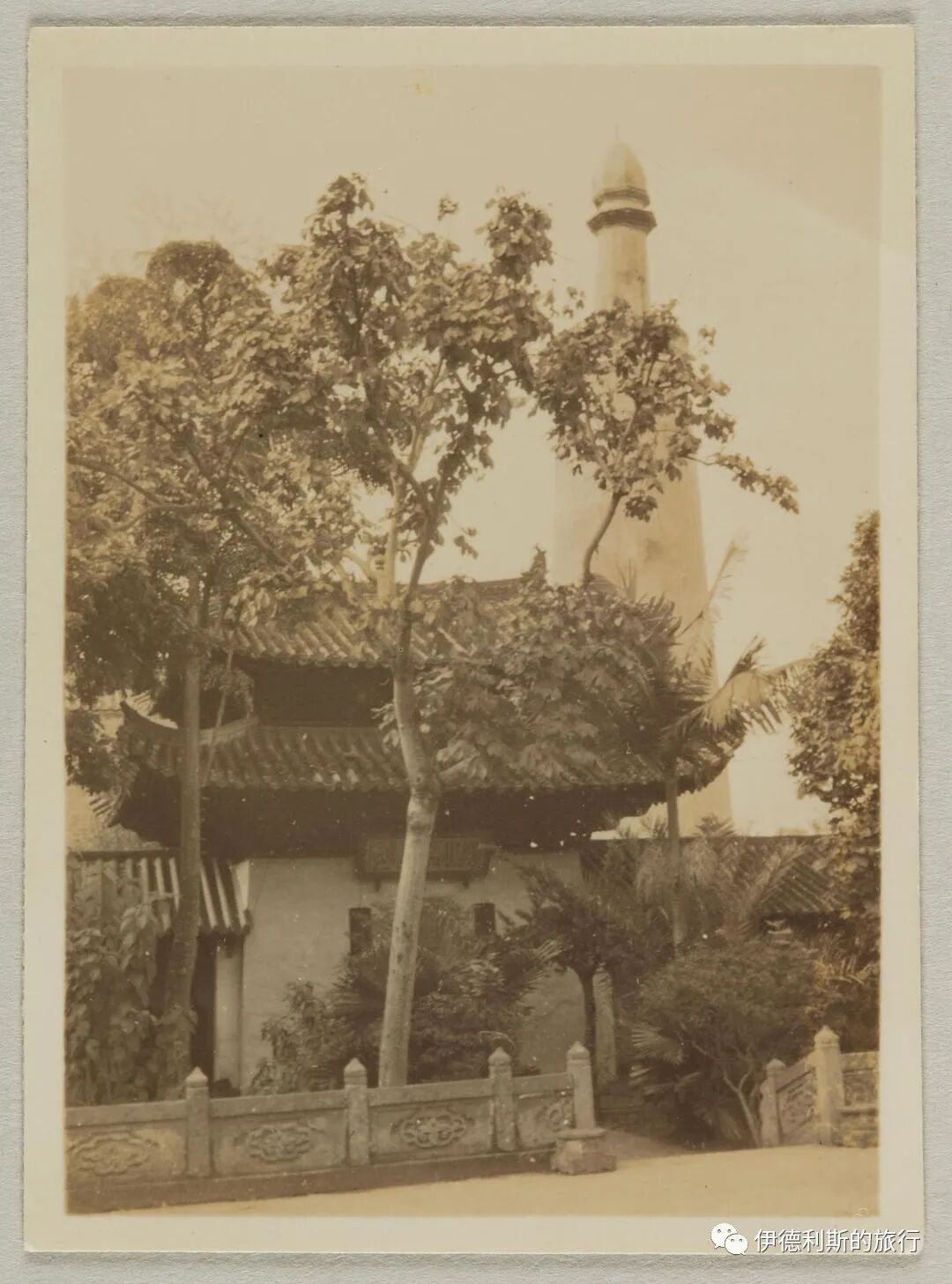
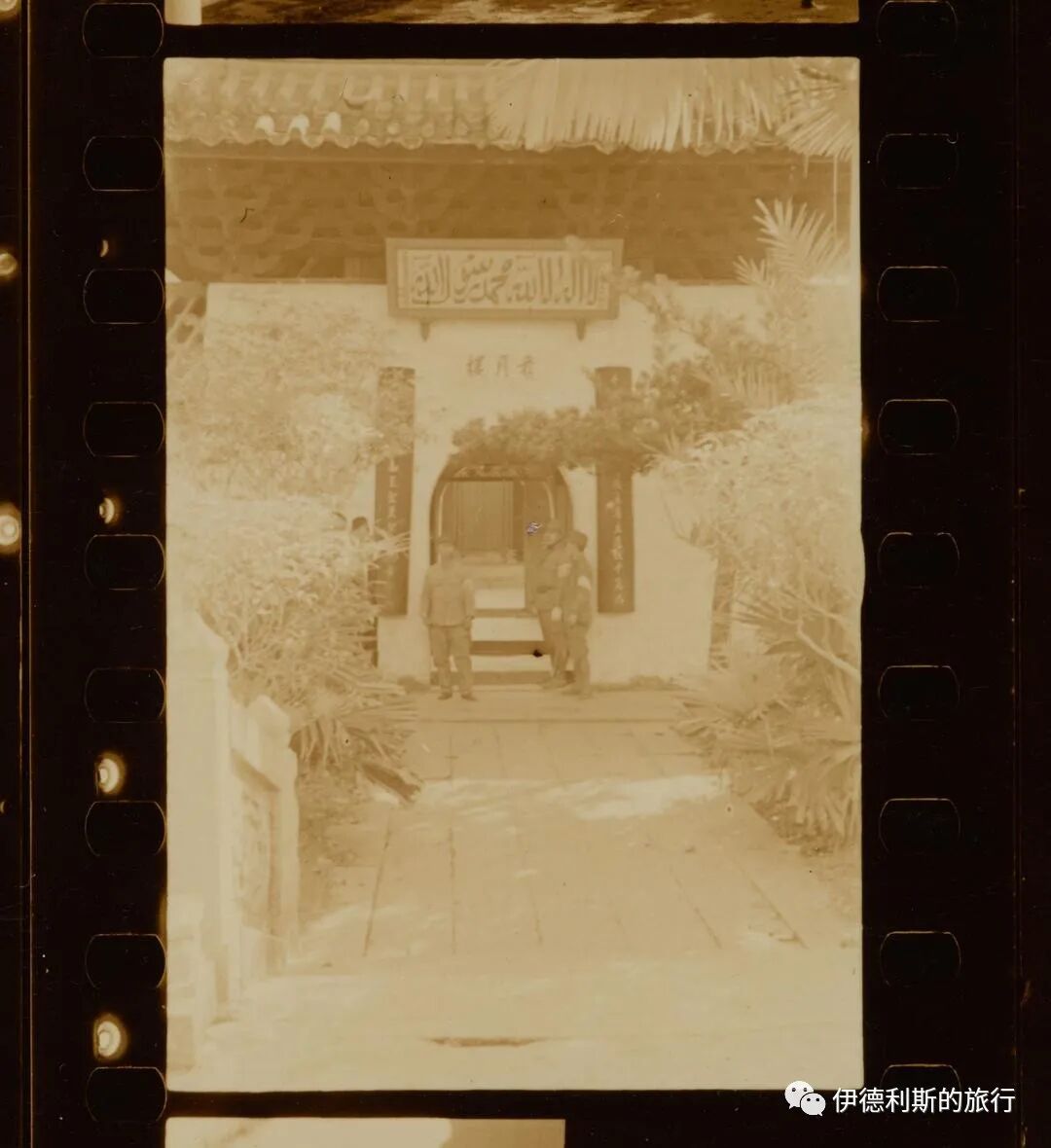
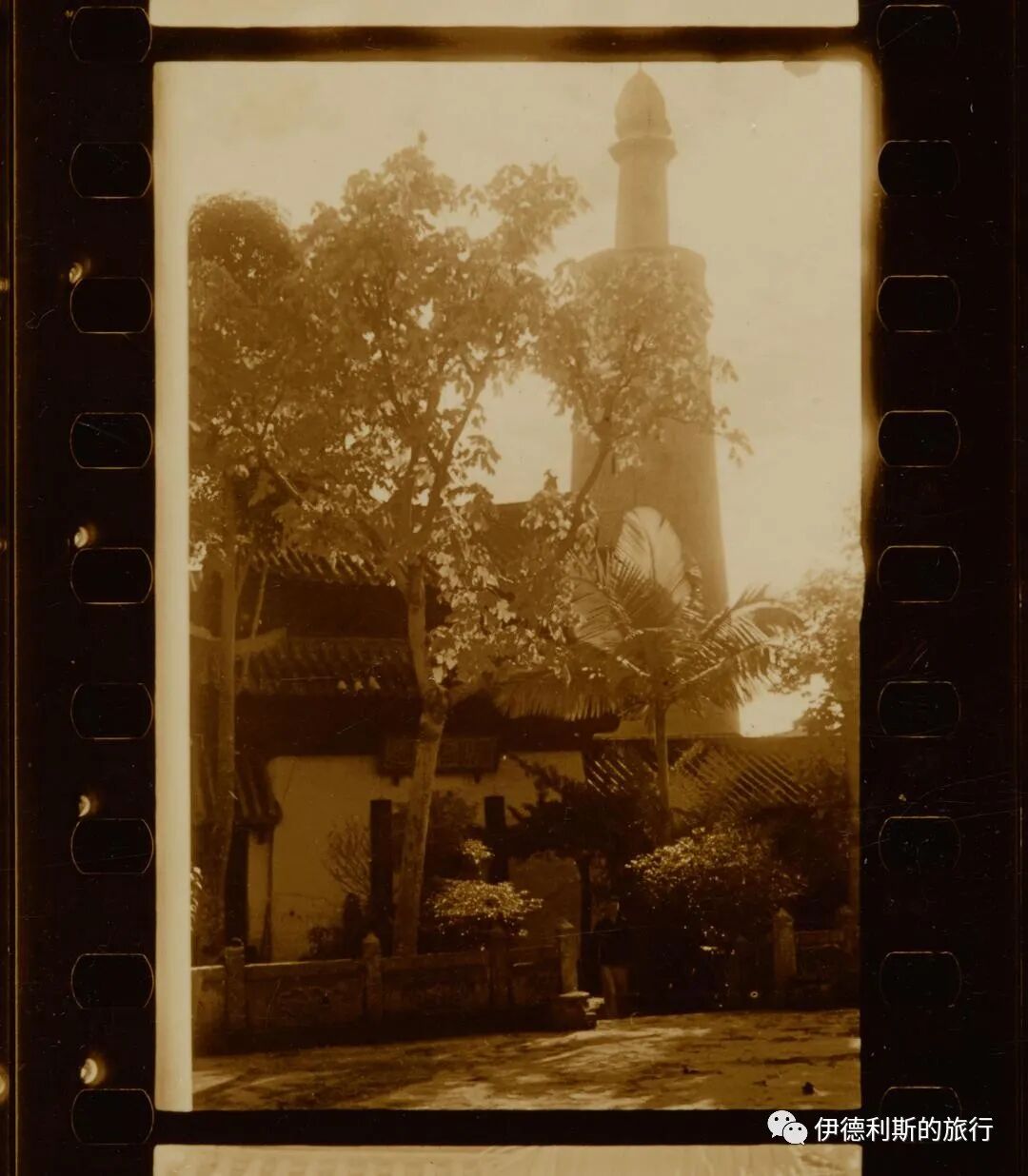
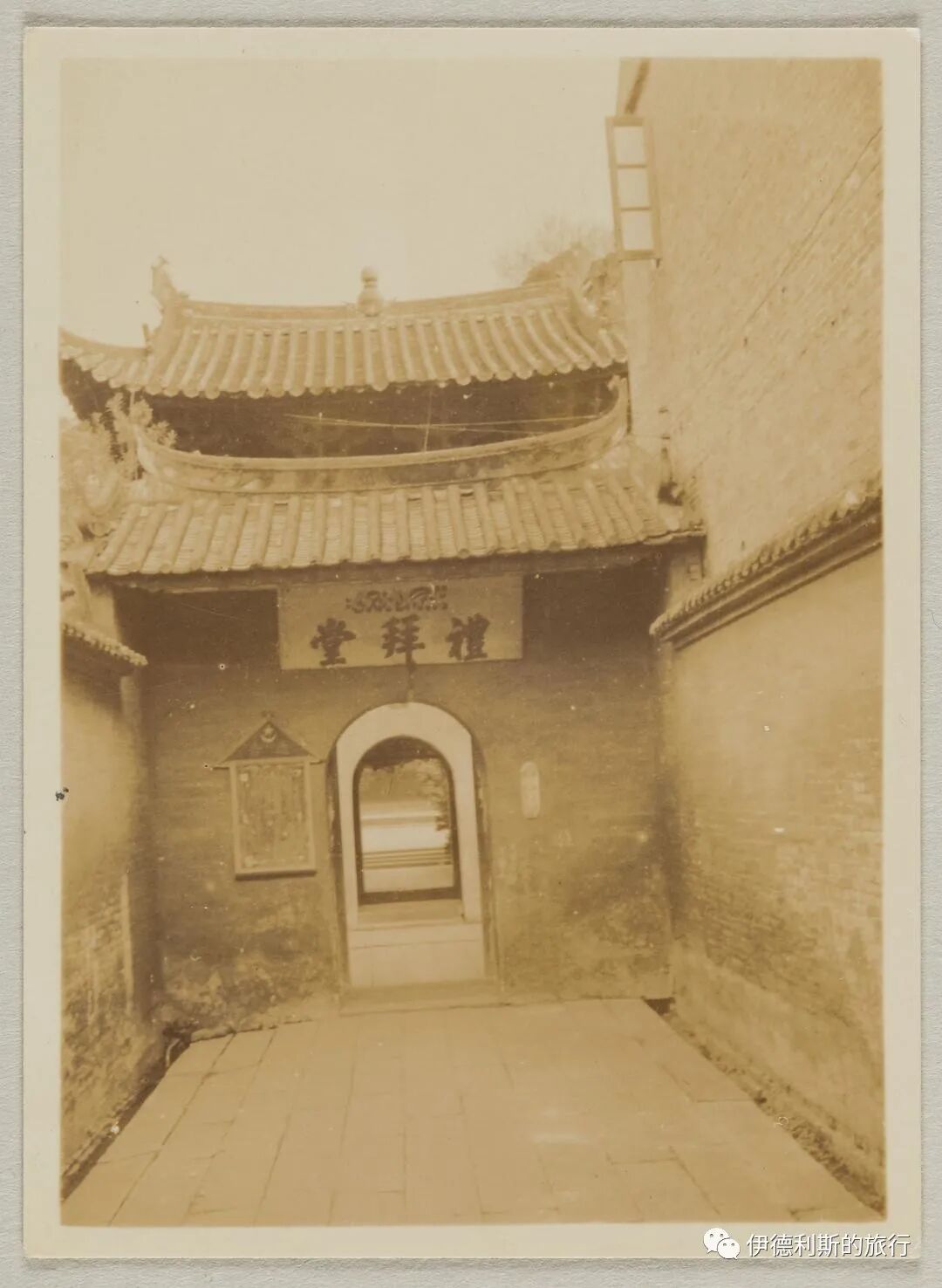
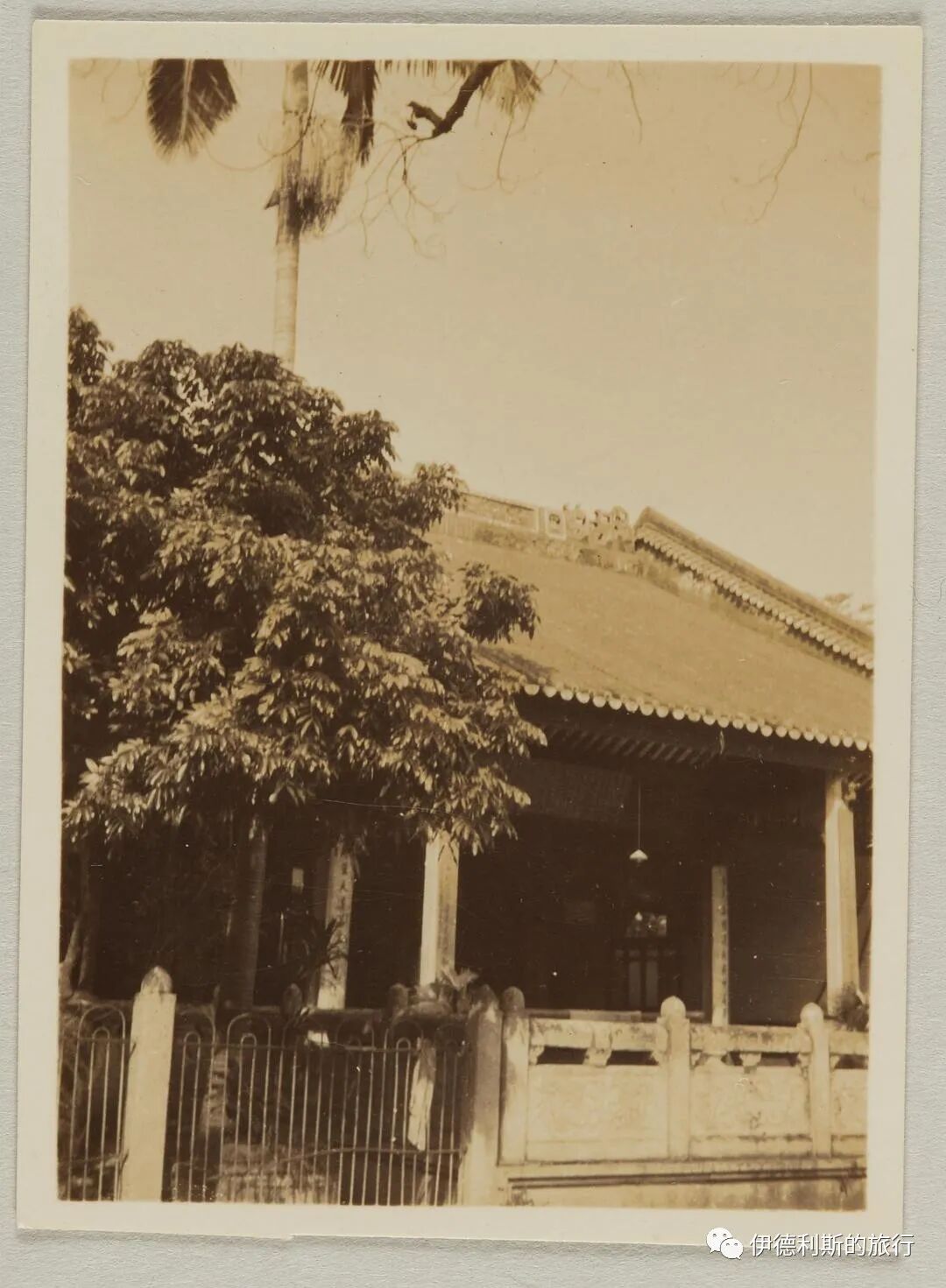
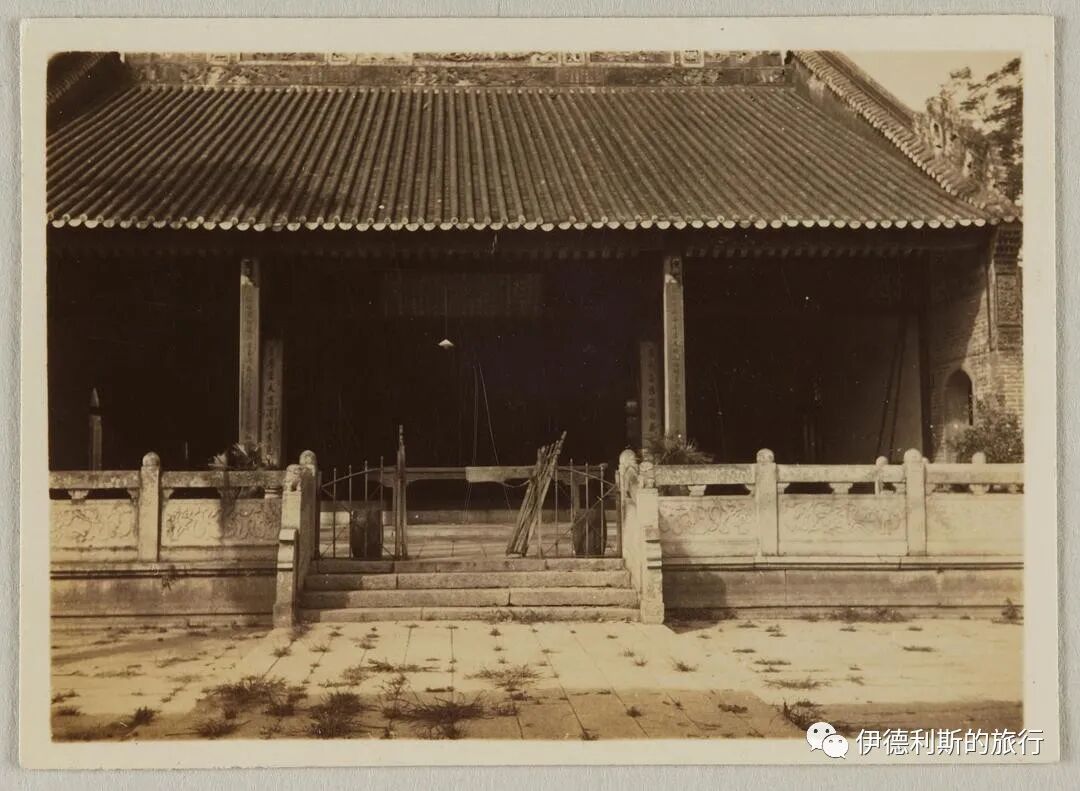
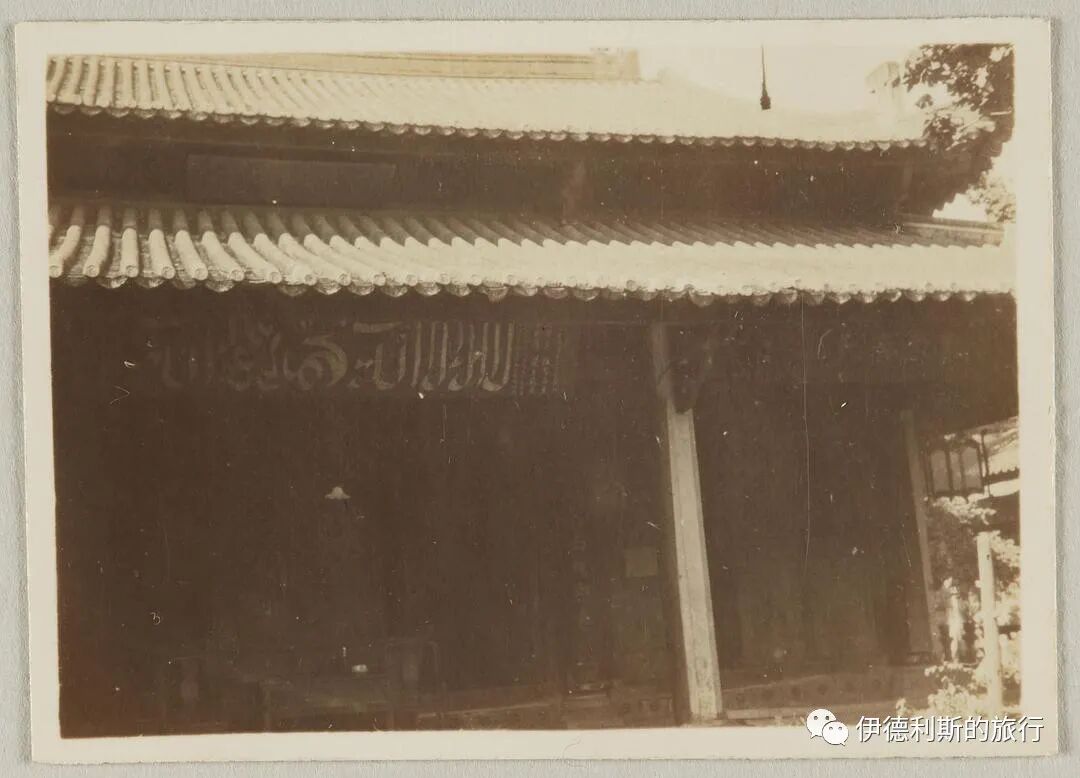
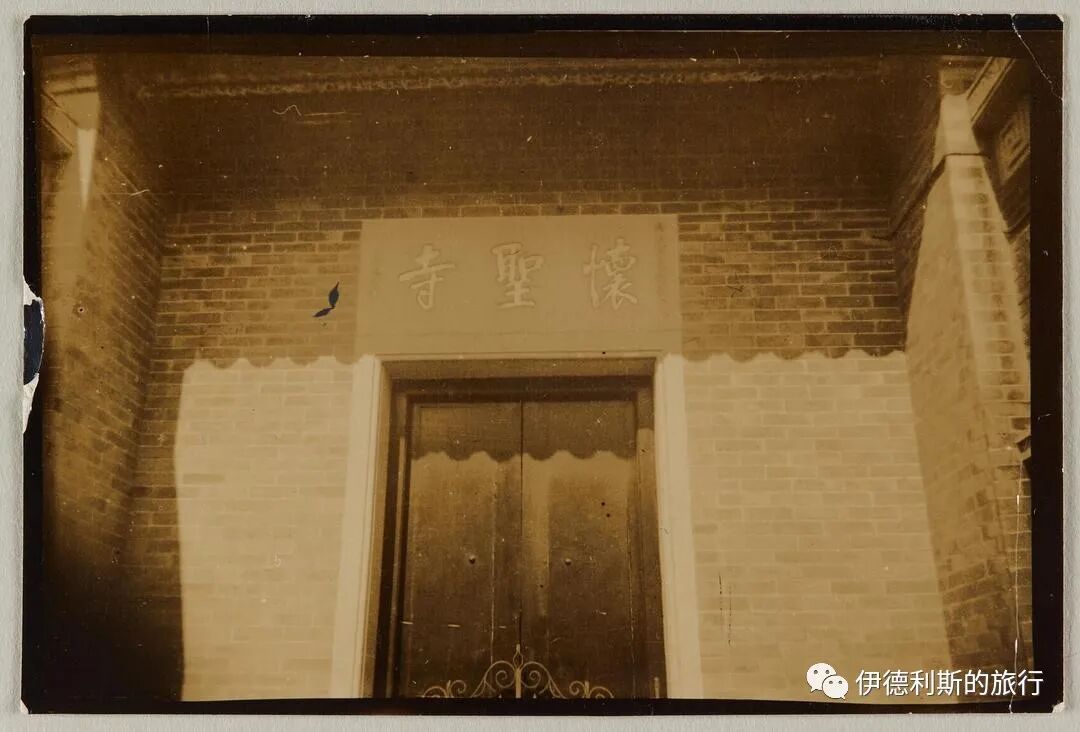
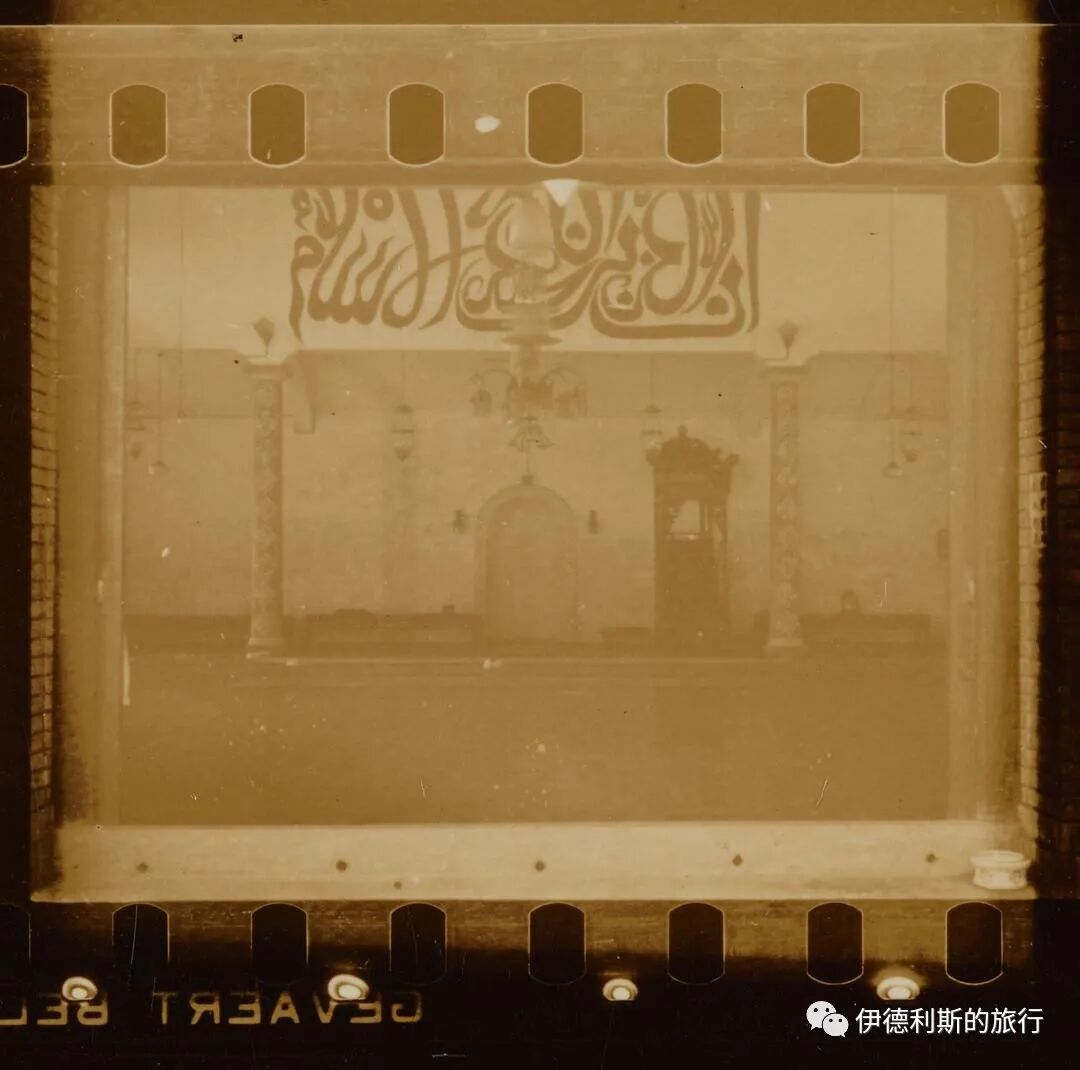
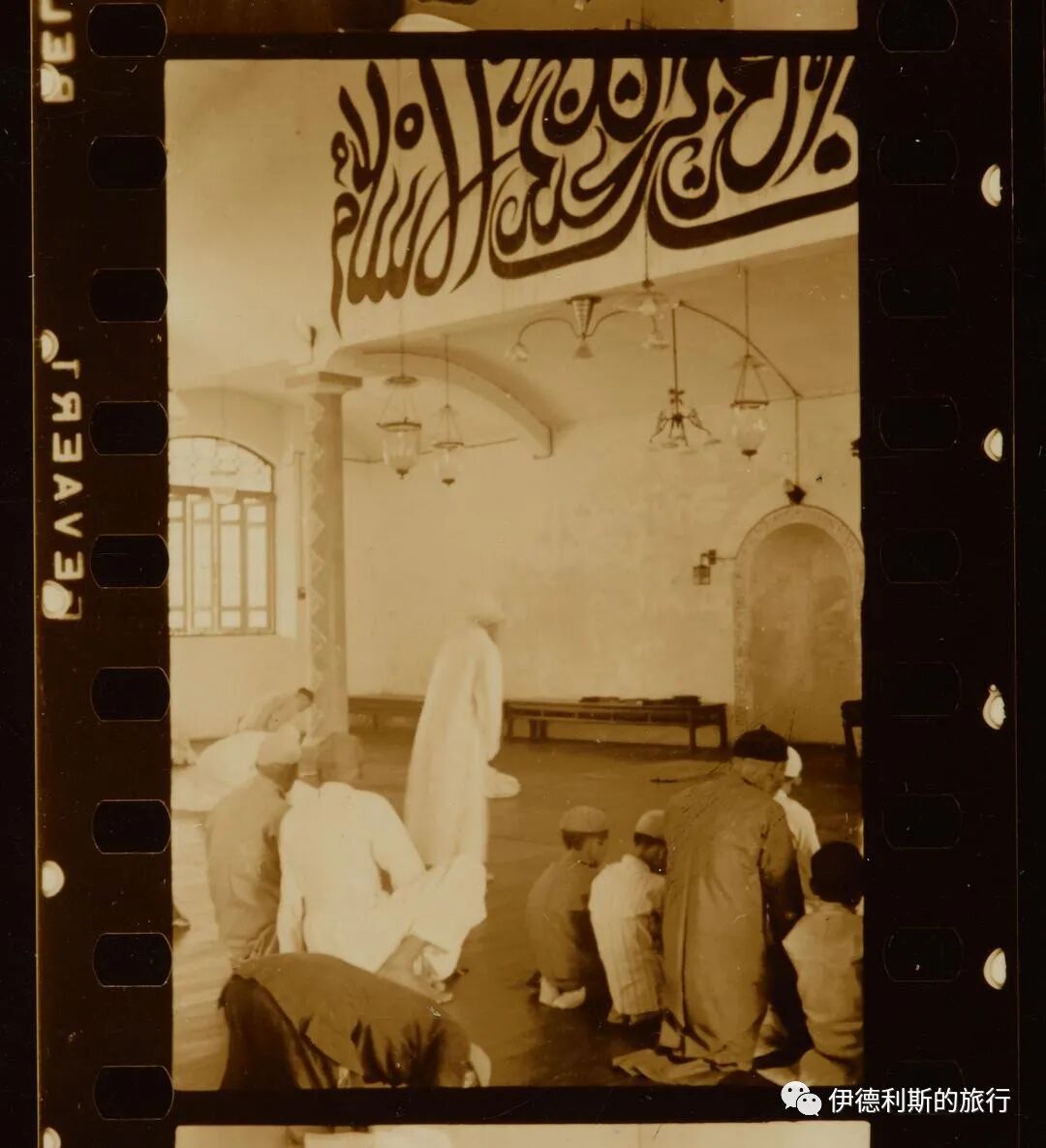
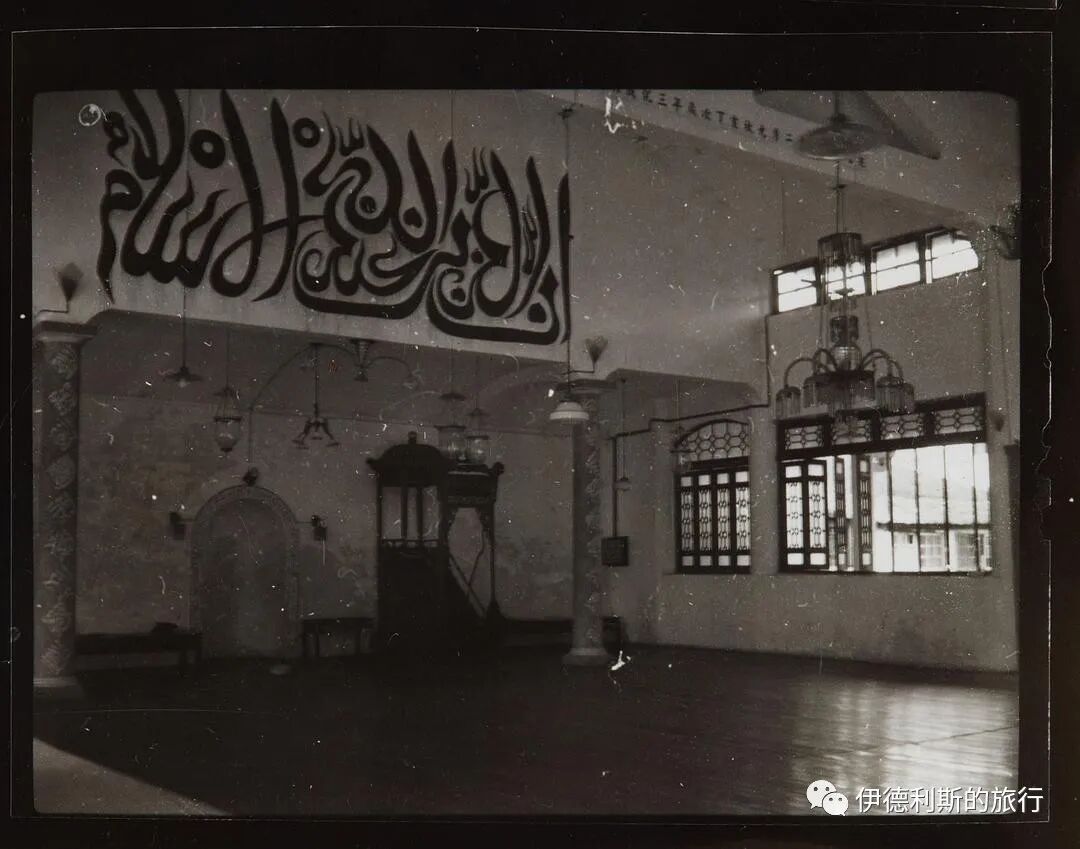
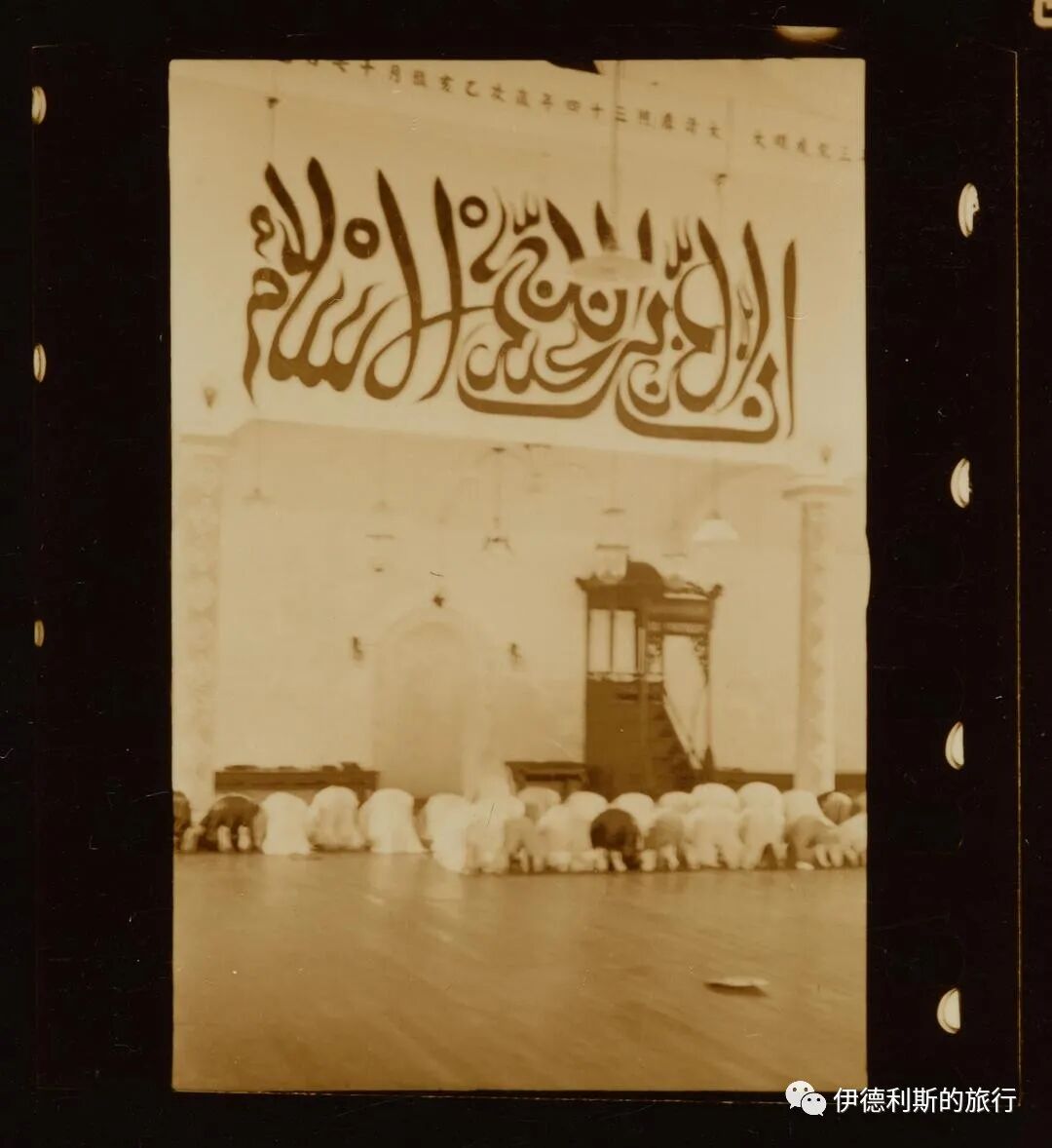
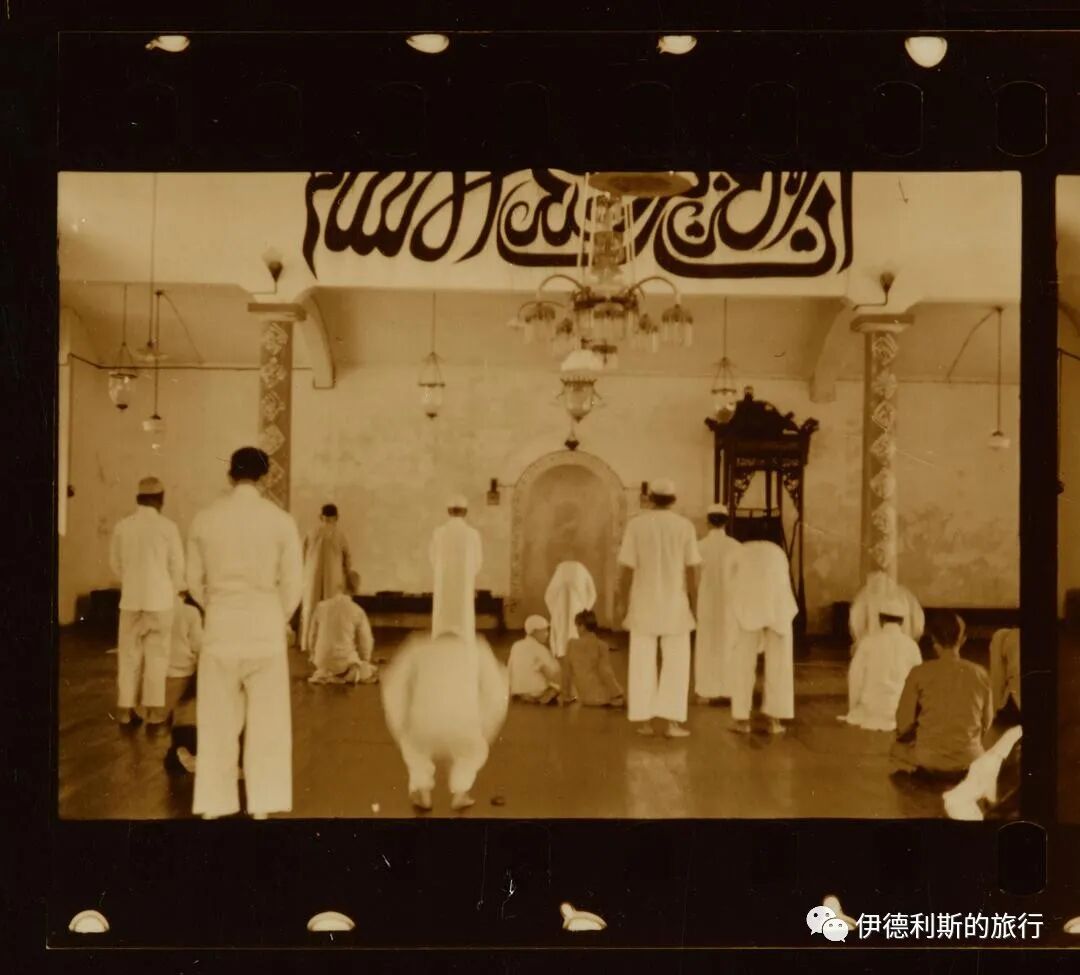
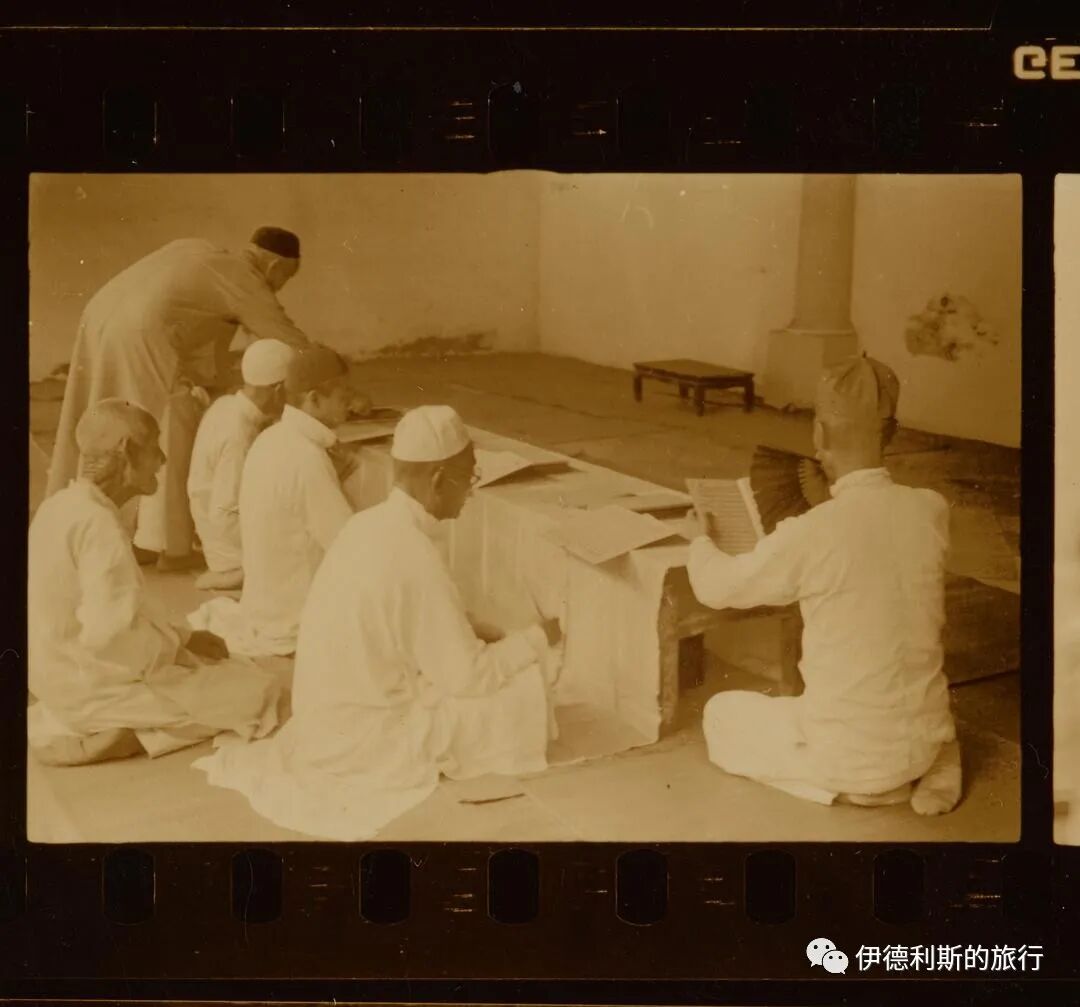
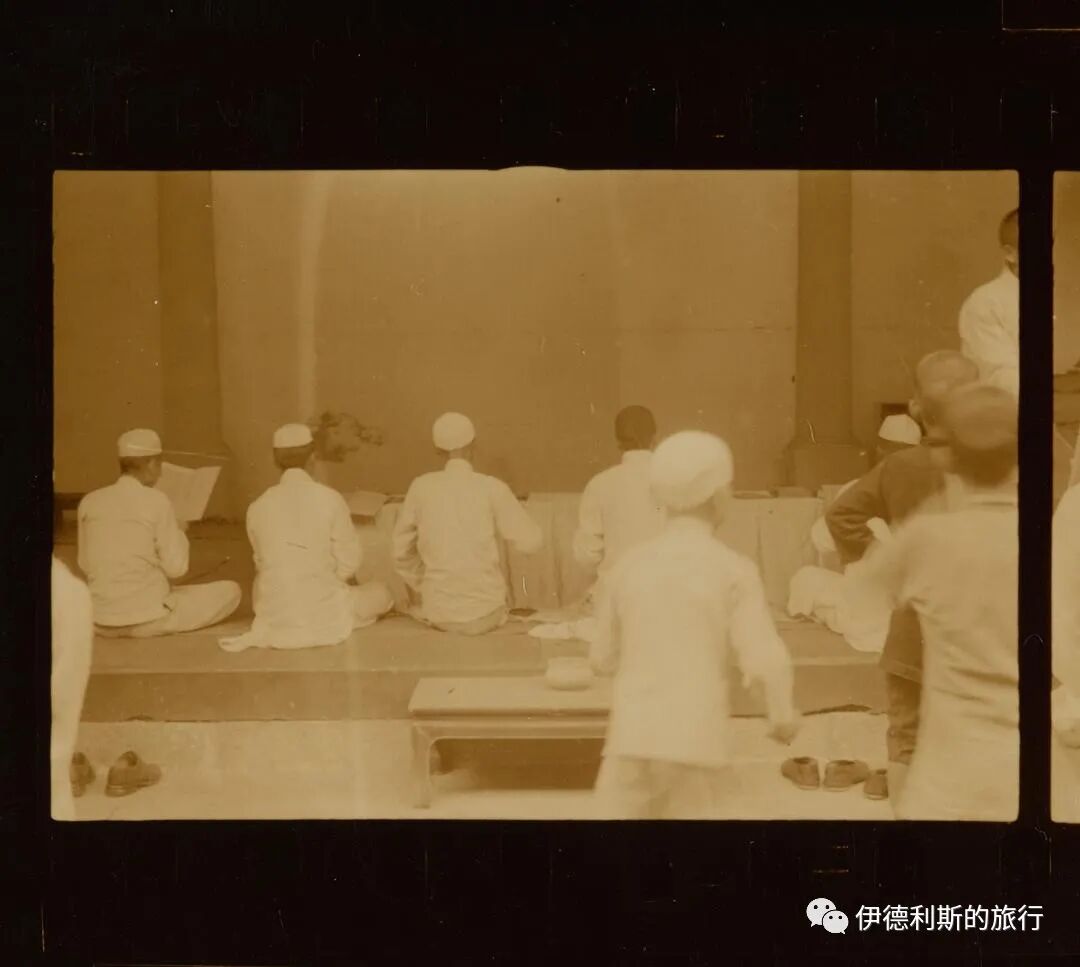
The Cemetery of the Worthies (Xianxian Mu) in Guangzhou in June 1941.
The ancient Cemetery of the Worthies is commonly known as the Hui Muslim Grave, the Great Man's Grave, or the Echoing Grave, and it has been a burial ground for Muslims in Guangzhou since the Tang Dynasty. The earliest record of the ancient Cemetery of the Worthies comes from the 1206 (the second year of the Kaixi era of the Southern Song) book "One Hundred Poems of the South Sea" by Fang Xinru: The foreign graves are ten miles west of the city, with thousands of mounds, all facing west with their heads to the south. The whale-like waves barely spare those they swallow, yet even a dying fox turns its head toward its home hill. My eyes strain across thirty thousand miles of vastness, and though a thousand pieces of gold are here, this life is already over.
The heart of the Ancient Sages' Tomb is the burial site of Wangesu, an Islamic sage who legend says came to China during the Tang Dynasty to spread his faith. Wangesu is known as Saheb Saad Wakkas. Most historical records about his tomb date from the Ming and Qing dynasties. Sources for his arrival time vary: the Qing-era Guangzhou Prefecture Gazetteer says 629 (the third year of the Tang Zhenguan era), the Qing-era Tianfang Zhengxue says 632 (the sixth year of the Tang Zhenguan era), and the Qing-era stele record for the renovation of the Sage Saierde tomb even suggests he arrived during the Sui Dynasty. Regarding his identity, he is variously described as an uncle, cousin, general, or envoy of the Prophet Muhammad.
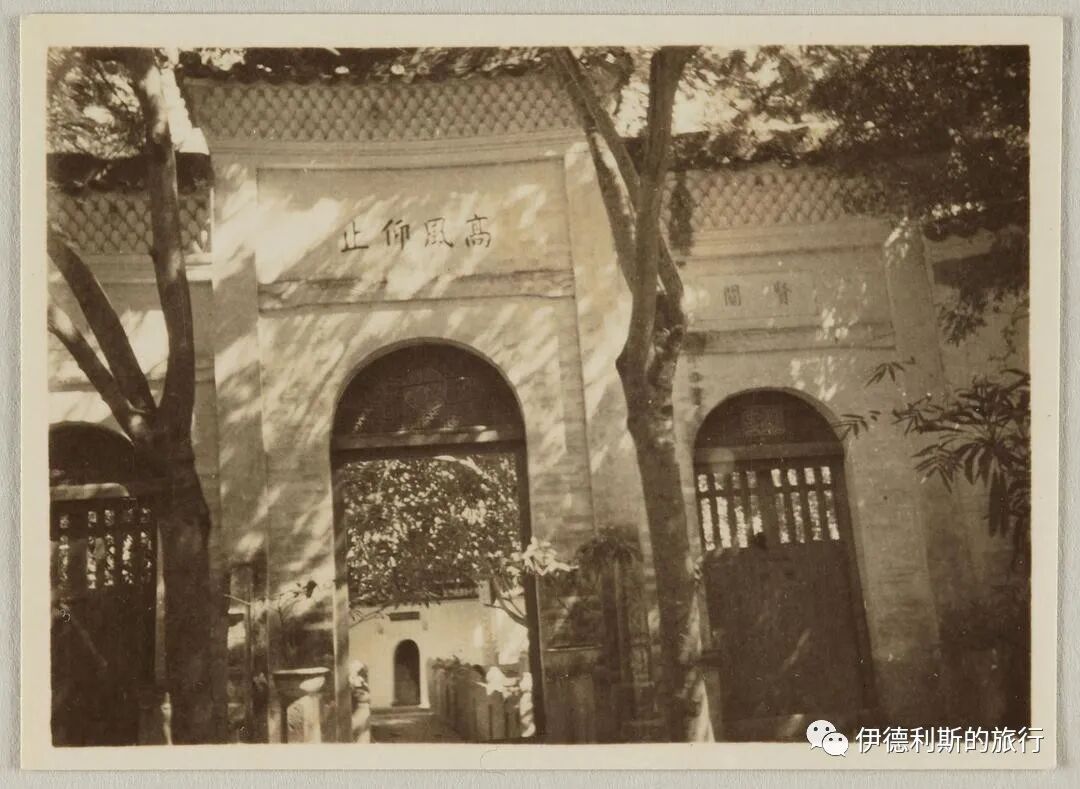
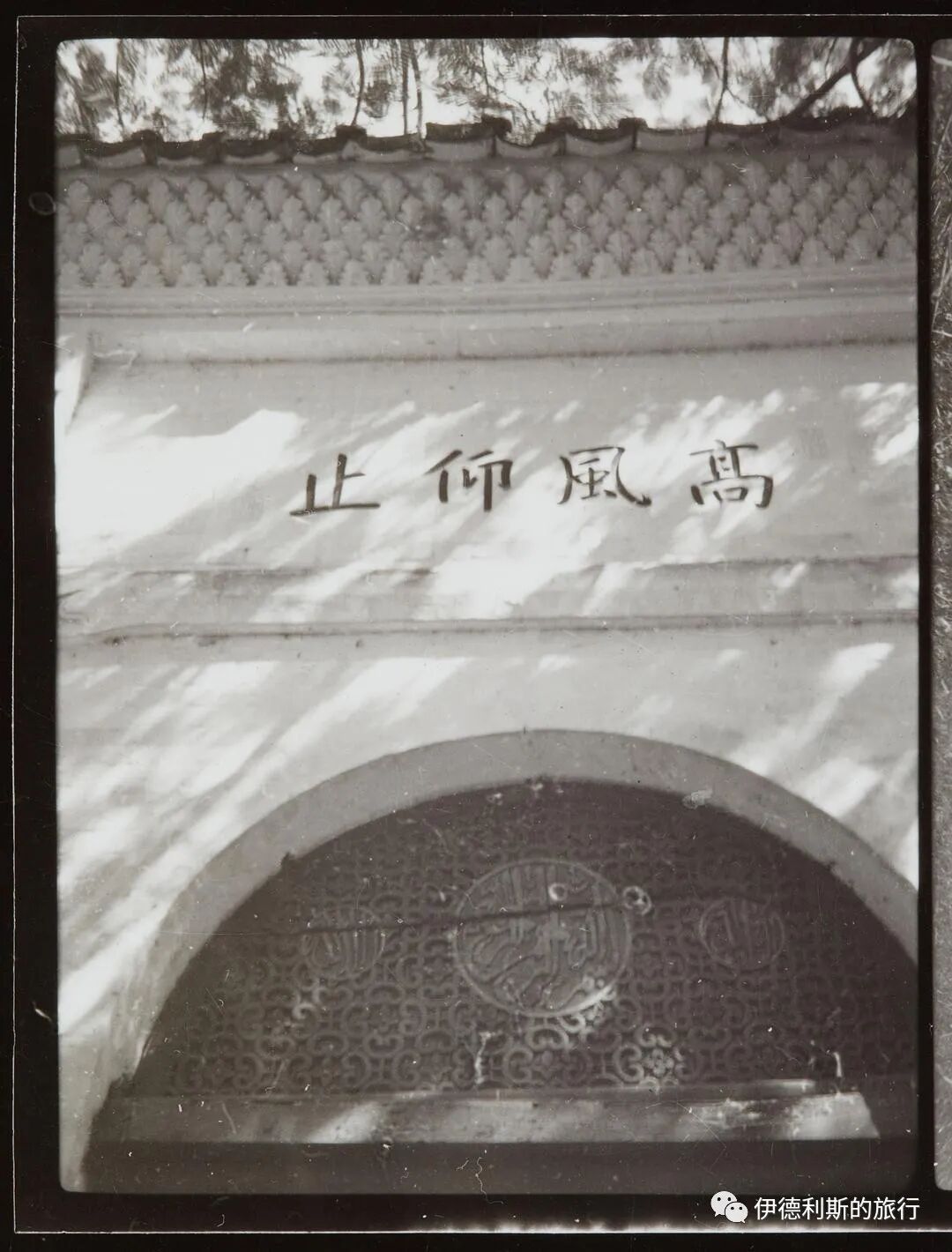
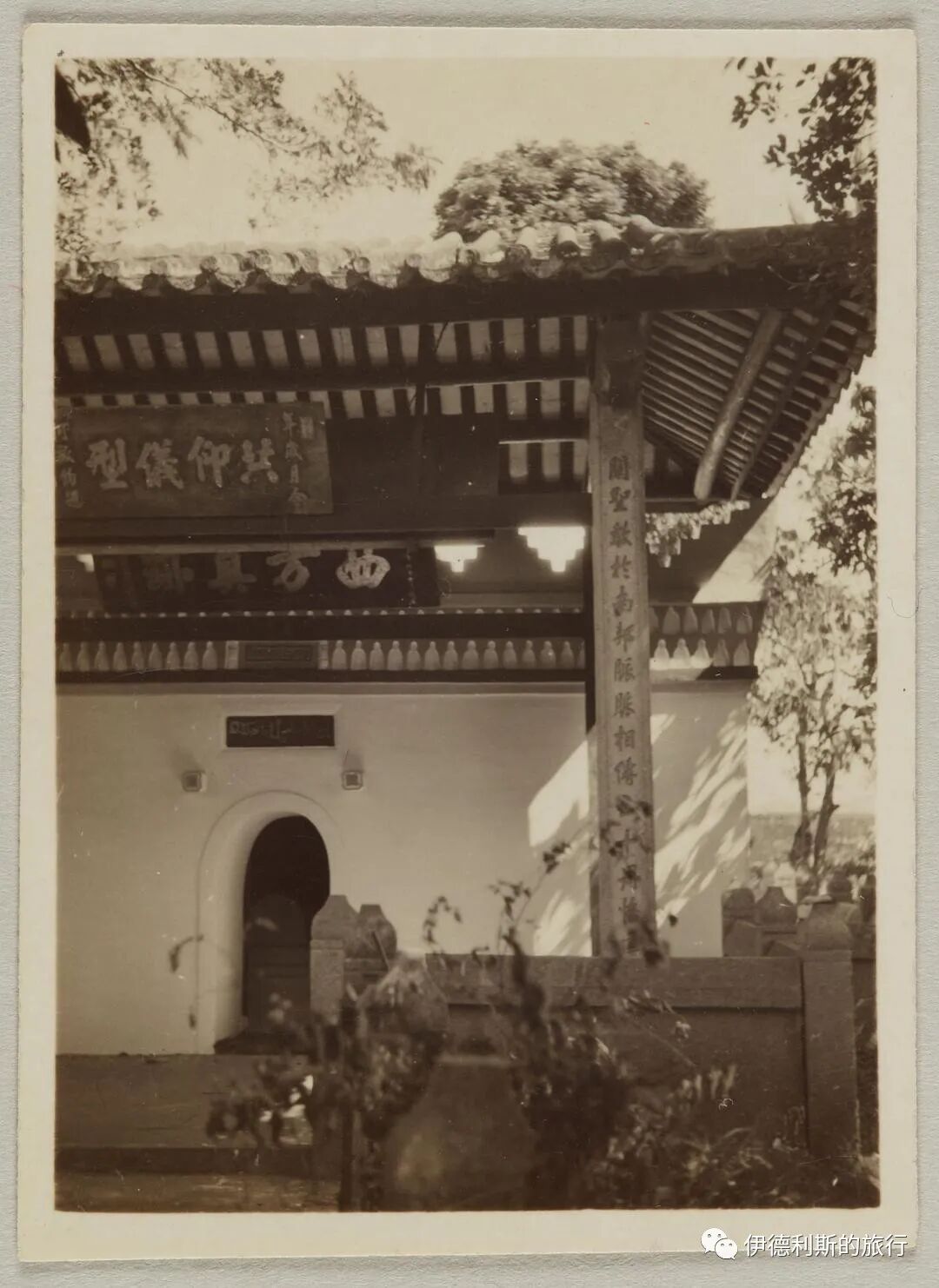
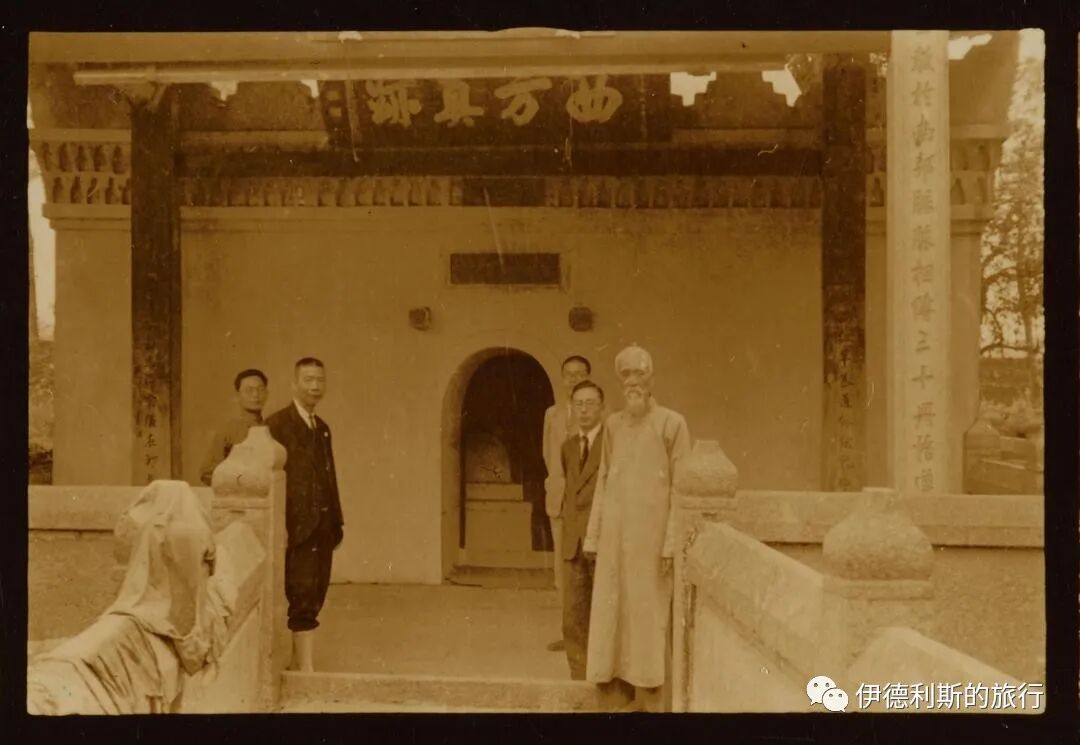
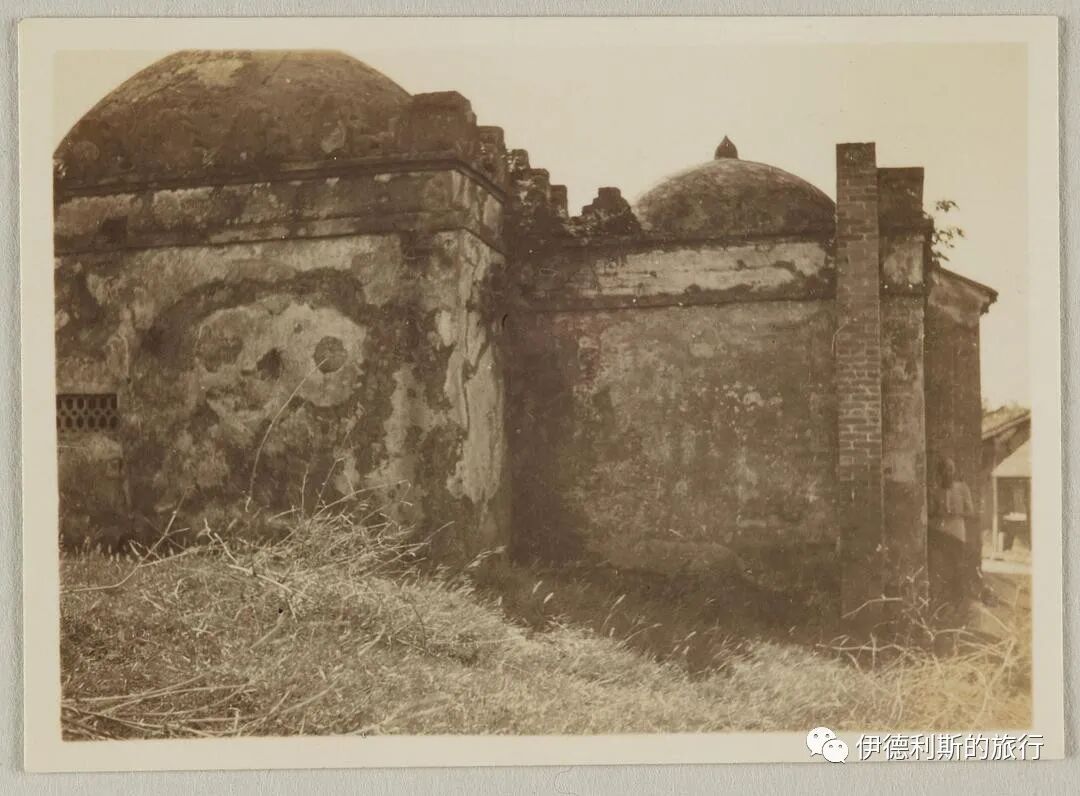
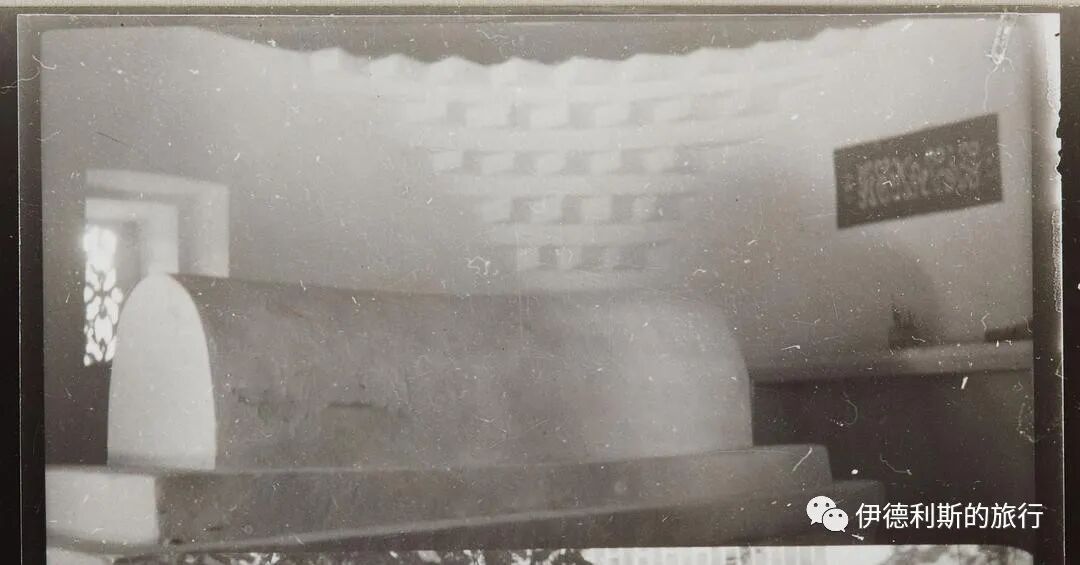
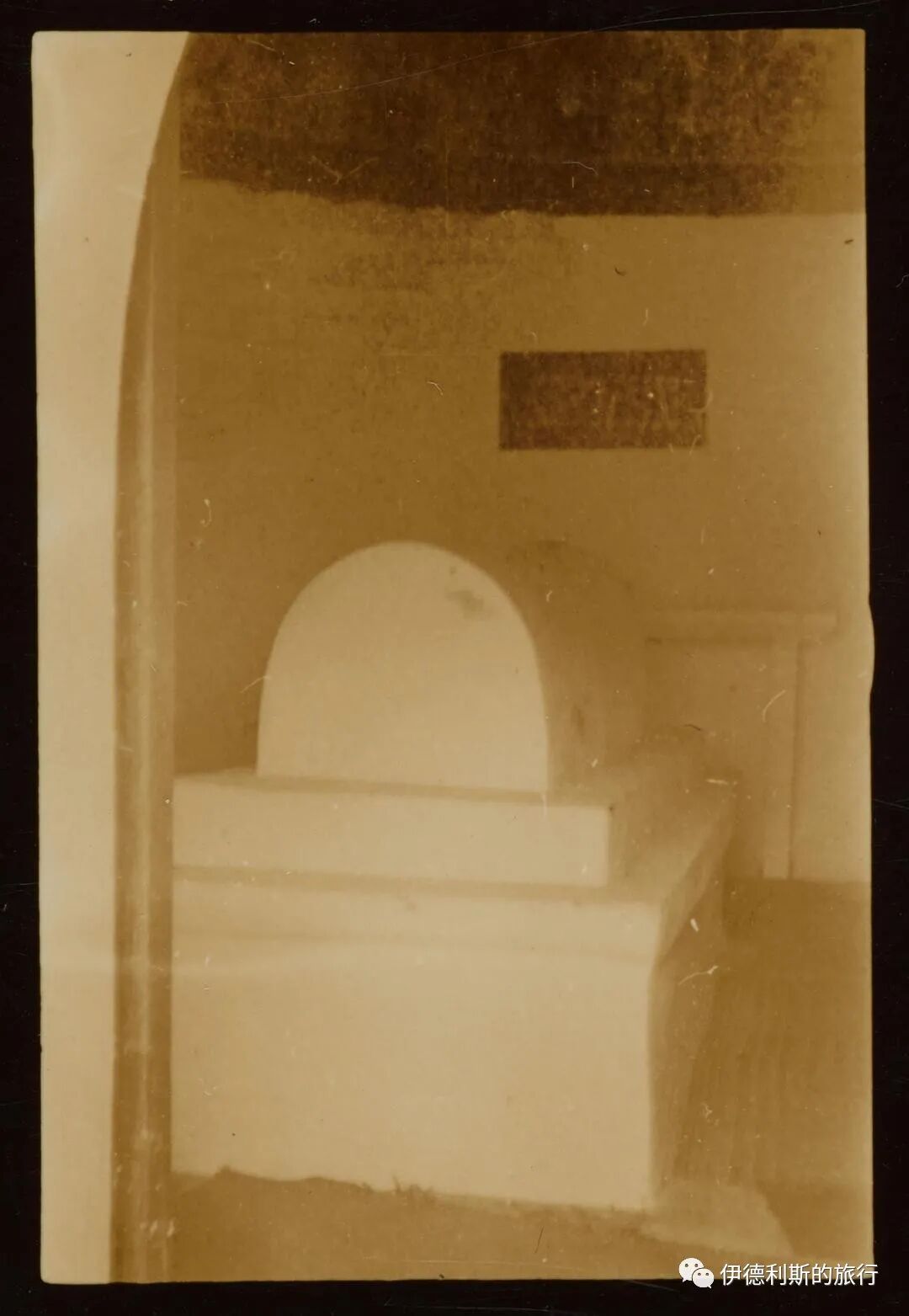
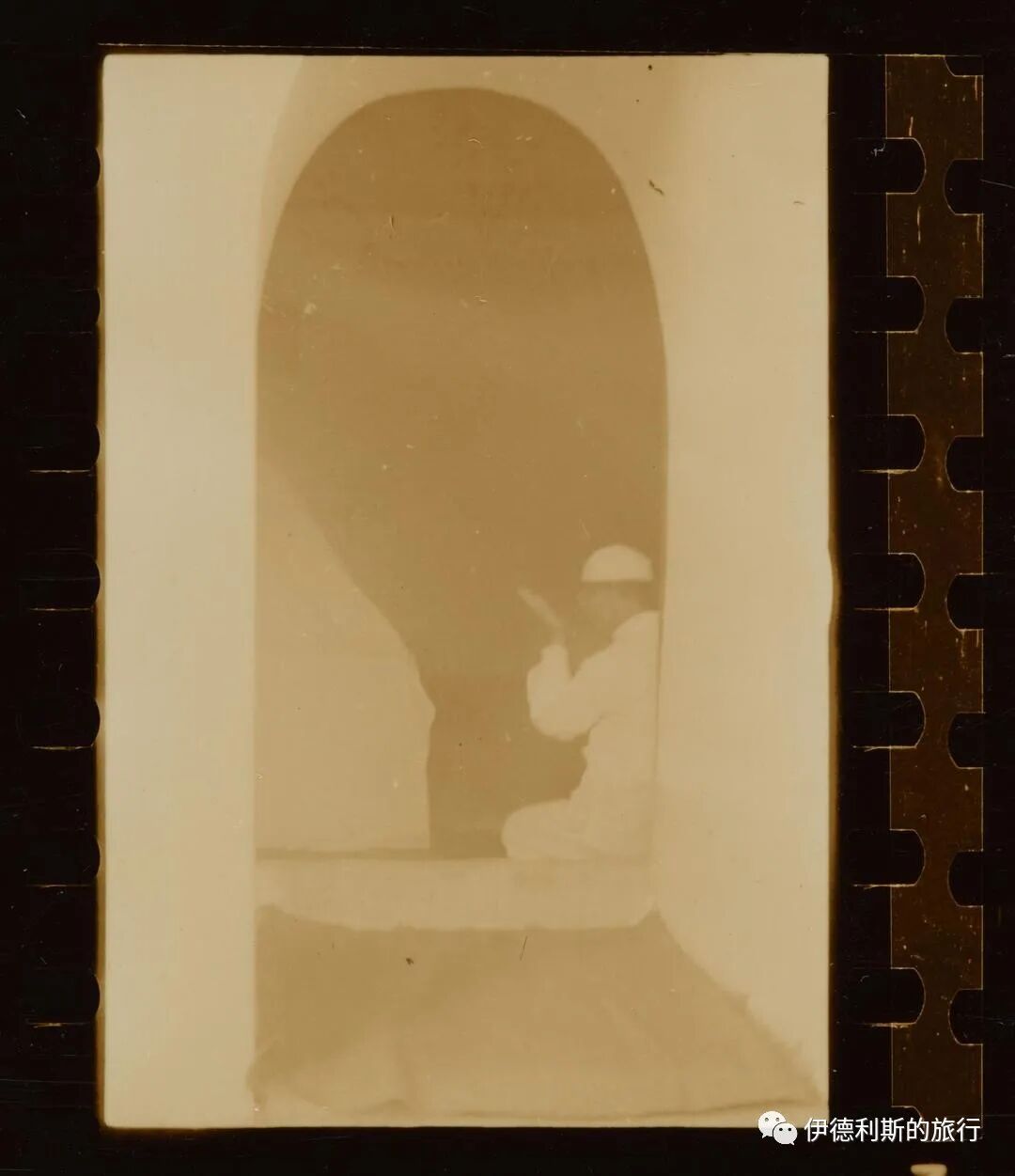
The Huihui people of Sanya
The Huihui people are a Muslim group living in Huihui Village and Huixin Village in Sanya, Hainan, with a population of nearly ten thousand. The Huihui language they speak belongs to the Austronesian language family and shares the same origin as the Chamic languages of southern Vietnam. The customs of the Huihui people are strongly influenced by local Hainan groups, yet they maintain a devout Islamic faith, making them a very unique group on China's southeast coast.
Starting in the 10th century, the Champa kingdom in southern Vietnam fought wars with Dai Viet, Chenla (Cambodia), and the Yuan Dynasty, causing many Arab and Persian merchants in Champa to sail across the sea to Hainan. The History of Song: Champa records that as early as 986, a Champa man named Pu Luo'e led over a hundred of his people to Danzhou, Hainan, to seek refuge.
During the Ming and Qing dynasties, Muslims living in places like Yazhou, Wanzhou, and Qiongshan in Hainan gradually moved to Suosanya Lifan Village (now Huixin Village in Sanya). During the Qing Dynasty, Muslim communities across Hainan underwent assimilation into Han, Li, or Dan cultures, leaving Suosanya Lifan Village as the only remaining Muslim community in Hainan, which eventually formed the modern Huihui people.
Some Huihui people also came from the mainland. The ancestors of the Ha family among the Huihui came from Shaanxi, later moving their whole family to Dadan Port in Yazhou, Hainan, before relocating to Suosanya Lifan Village with another group of Hui Muslims surnamed Liu during the late Ming and early Qing dynasties.
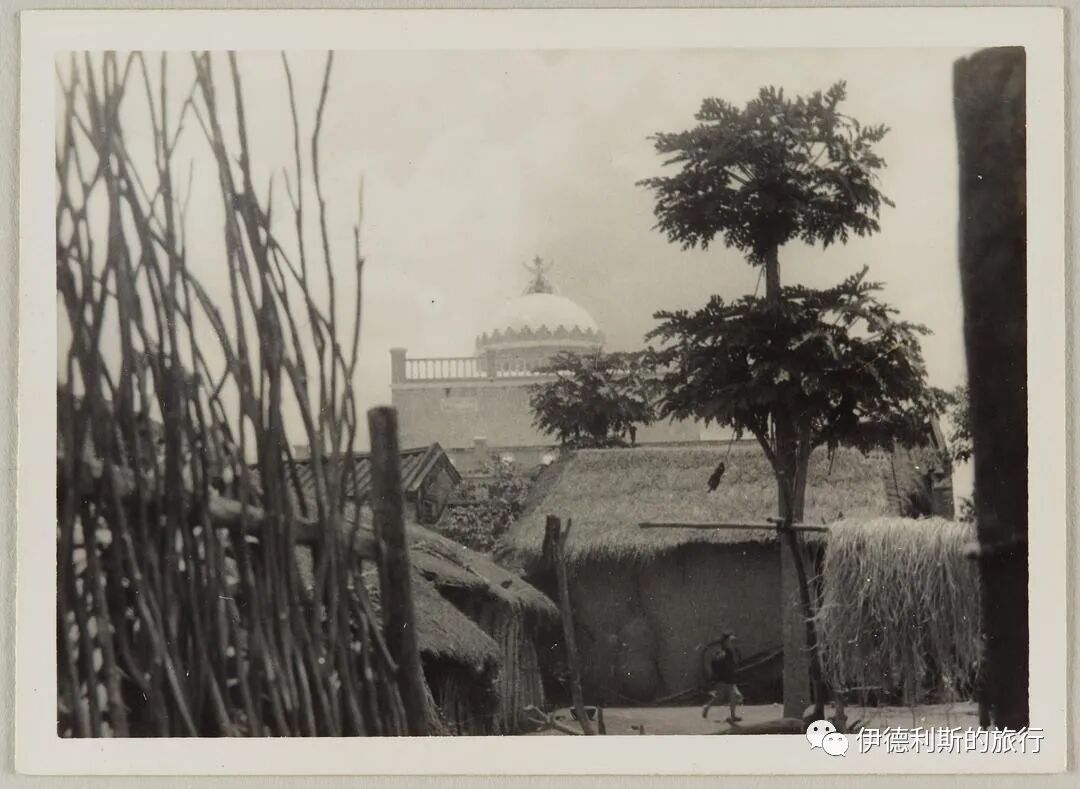
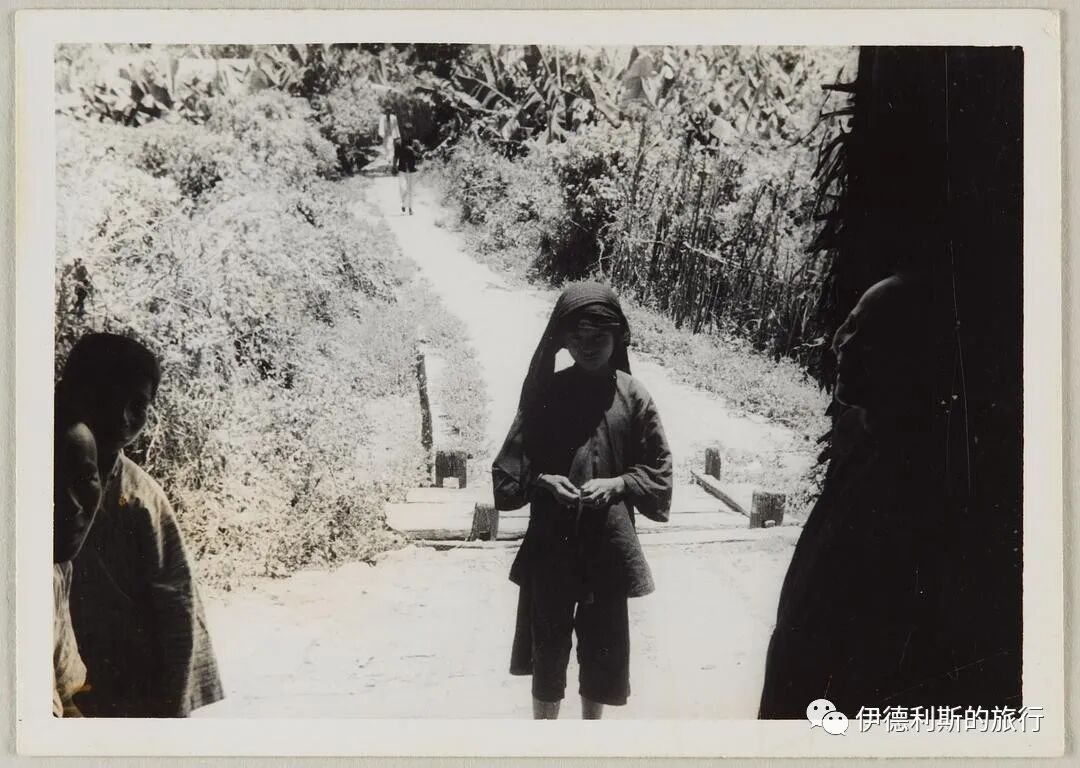
A mosque of the Huihui people in June 1941
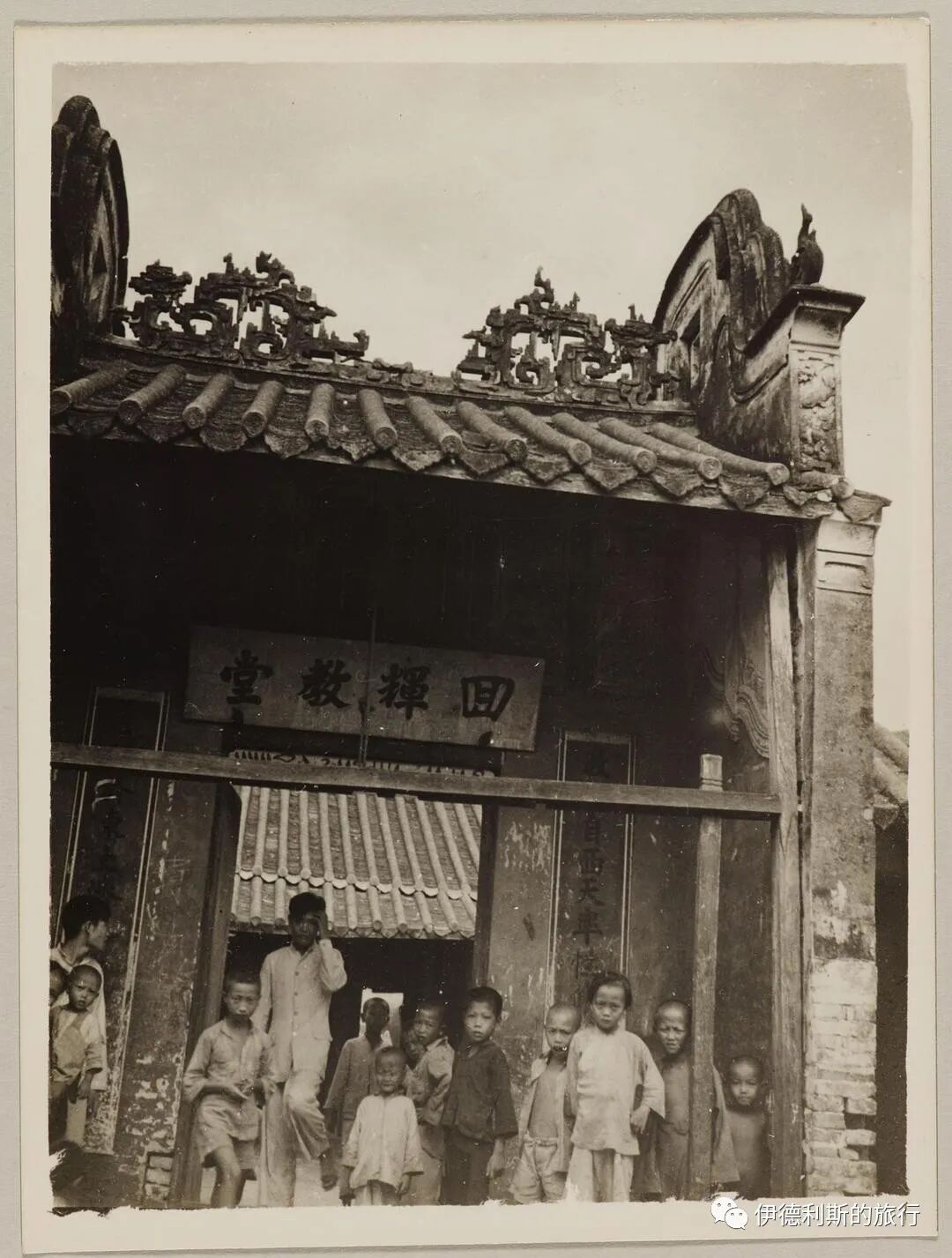
A cemetery of the Huihui people
A wooden casket (tabu) used for transporting a body for burial
Carter Holton's Old Photos of Beijing and Tianjin Hui Muslims
Articles • ali2007fr posted the article • 0 comments • 178 views • 2026-05-18 01:58
Summary: Carter Holton's Old Photos of Beijing and Tianjin Hui Muslims is presented here as a firsthand travel account in clear English, beginning with this scene: Reverend Carter Holton was an American missionary who worked in Northwest China from 1923 to 1949, leaving behind over 5,000 precious photographs. The account keeps its focus on Hui Muslims, Old Photos, Beijing Mosques while preserving the names, places, food, and historical details from the Chinese source.
Reverend Carter Holton was an American missionary who worked in Northwest China from 1923 to 1949, leaving behind over 5,000 precious photographs. After the Reverend passed away, his daughter Lora Jean Heurlin donated these materials to the Harvard-Yenching Library in the early 1990s, and the library finished digitizing them in 2011.
Online address: Carter D. Holton Collection | Harvard Library
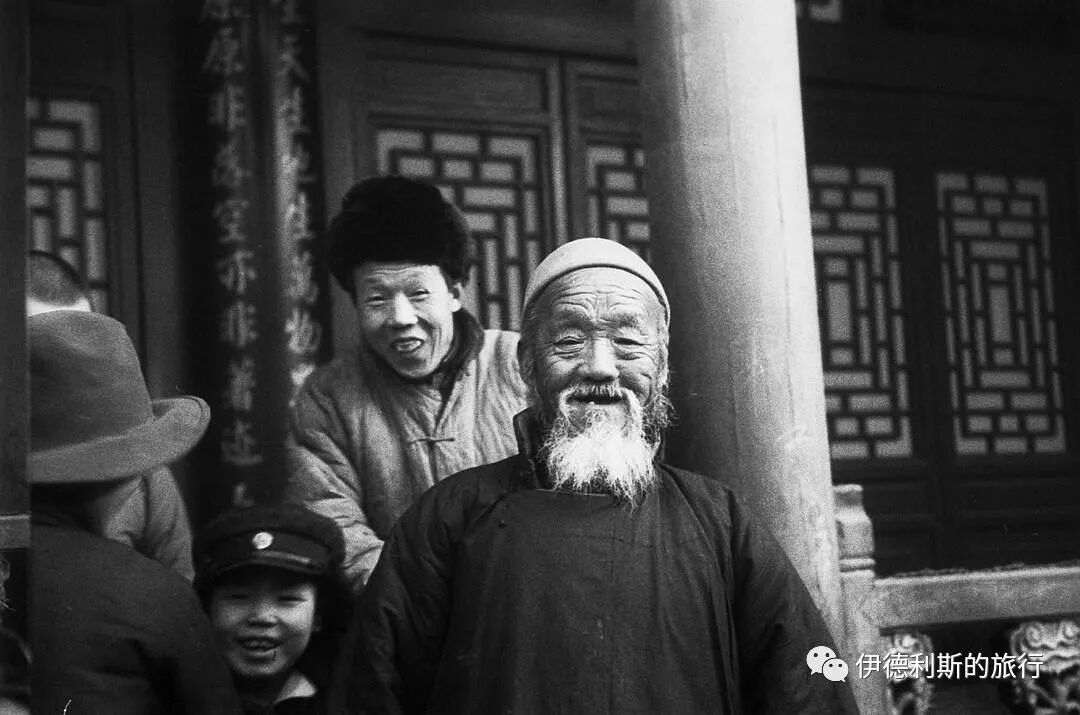
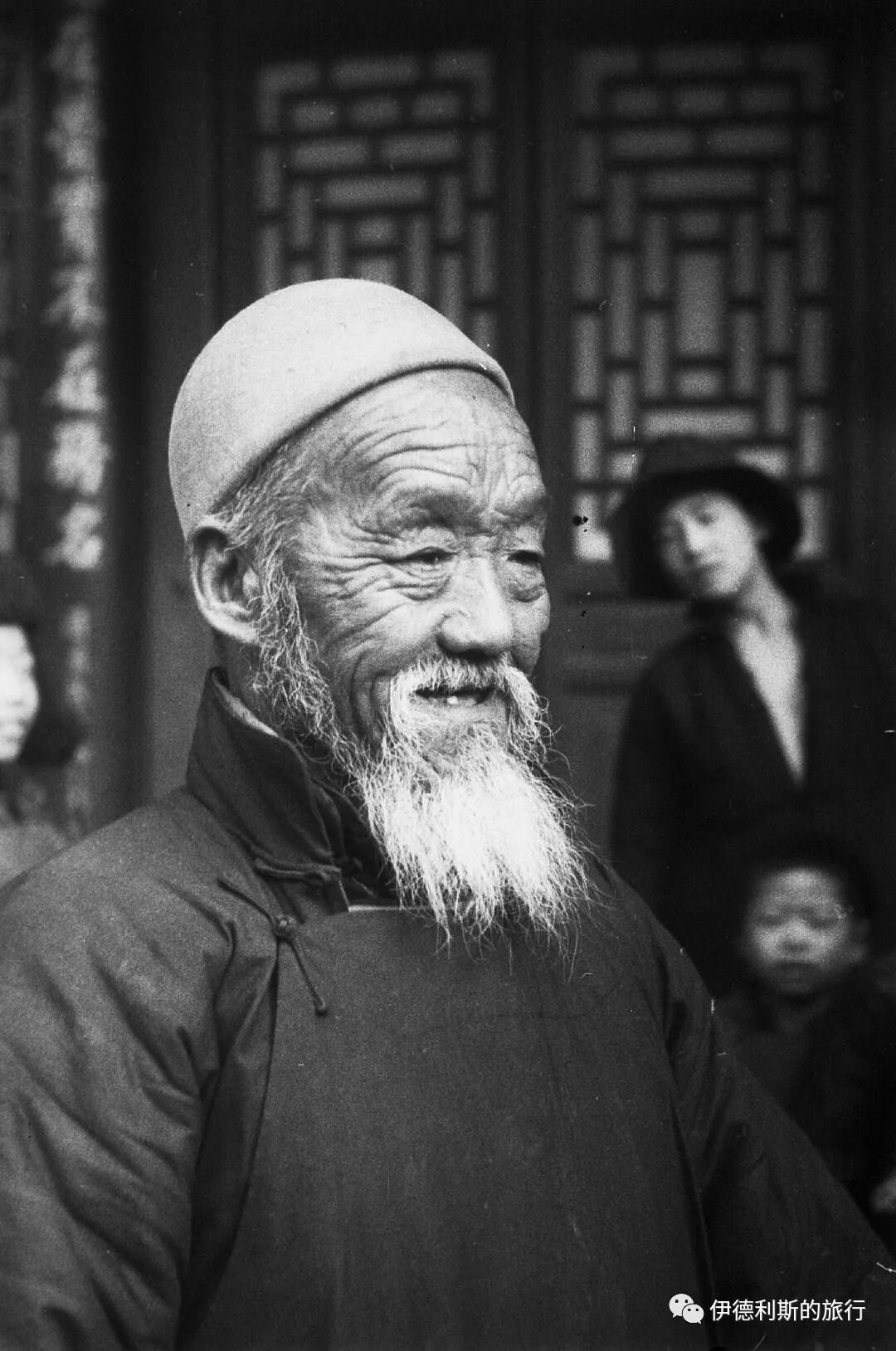
In August 1936, Reverend Holton returned to China after finishing his vacation in the United States. In early 1937, Holton reached Tianjin and Beijing, where he visited several mosques before traveling through Xi'an and Lanzhou to Hezhou to continue his missionary work.
Below, I will share the old photos Reverend Holton took in Beijing and Tianjin in early 1937.
Beijing
In early spring 1937, the Eid al-Fitr prayer service at the Niujie Mosque.
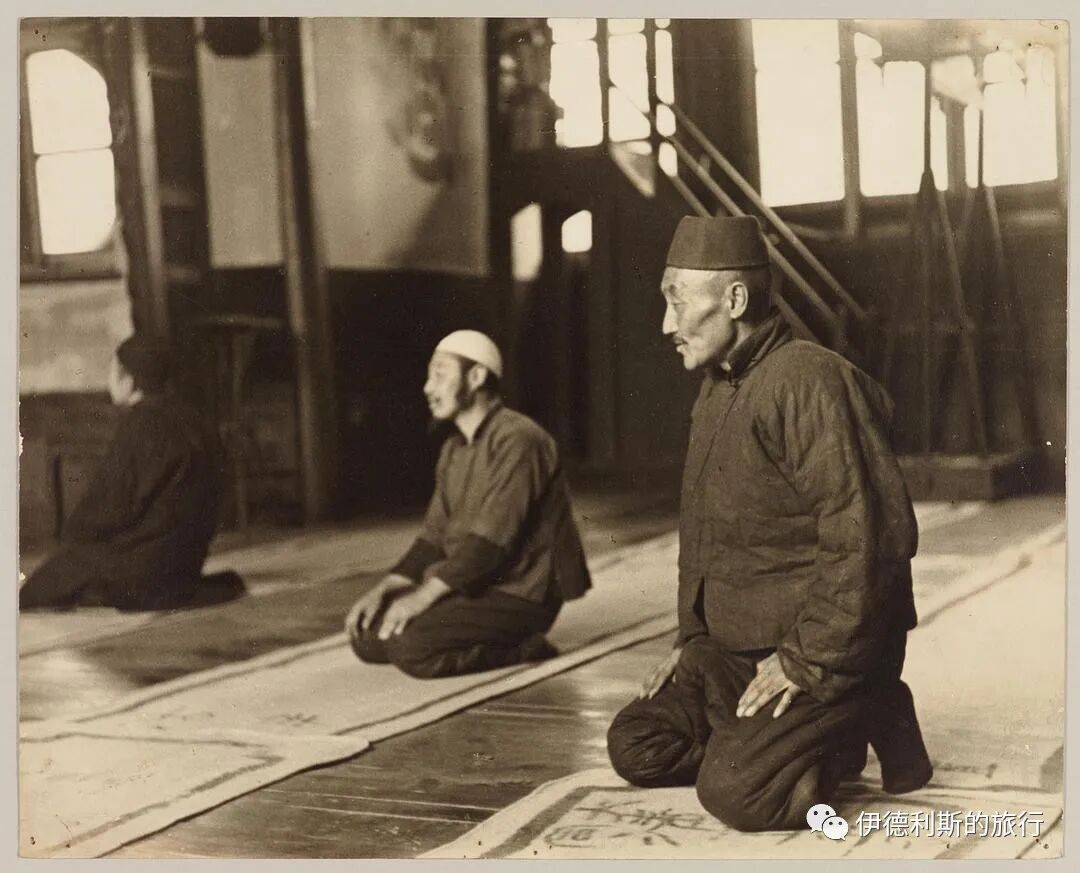
After the prostration.
The potted plants in the courtyard were donated by Gai Biting, a famous social activist from Niujie.
Children watching the prayer service.
Imam Wang Lianyu of Niujie (wearing a white cap on the left) came from a family of imams.
Jiaozi Hutong Mosque.
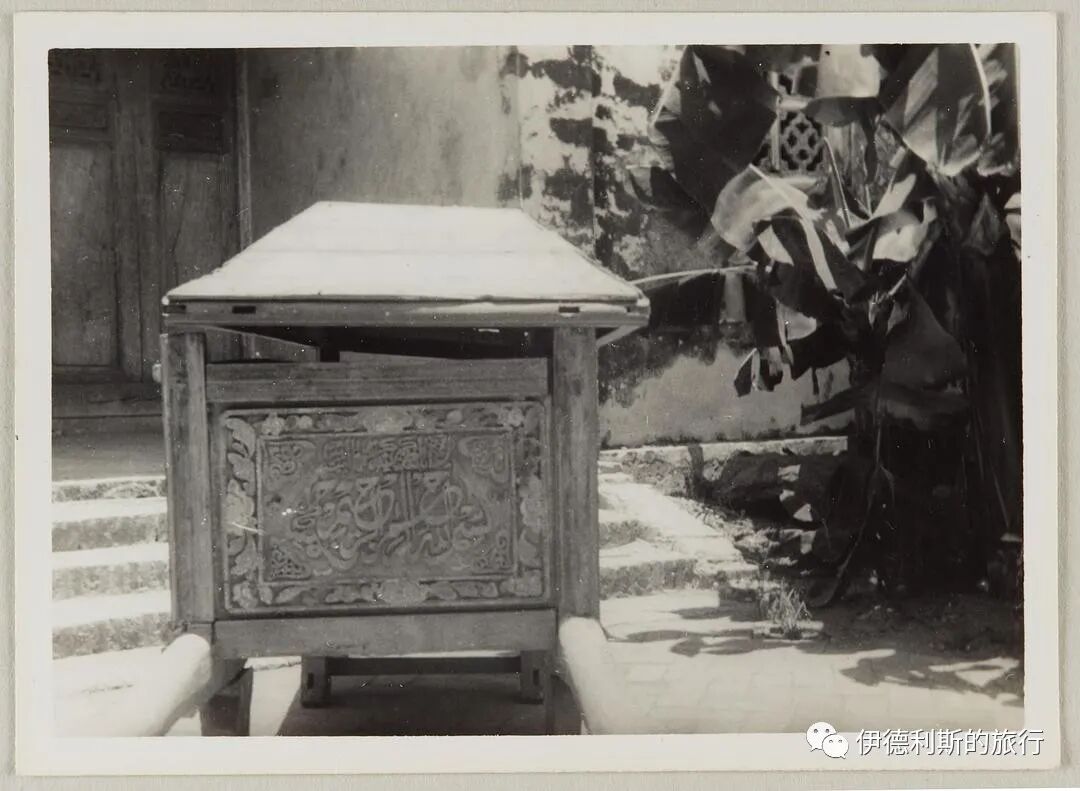
A funeral bier (maiti xiazi) at the entrance of Jiaozi Hutong, inscribed with 'Beiping Jiaozi Hutong Mosque Funeral Mutual Aid Group'.
Sanlihe Mosque.
Tianqiao Mosque.
Tianjin.
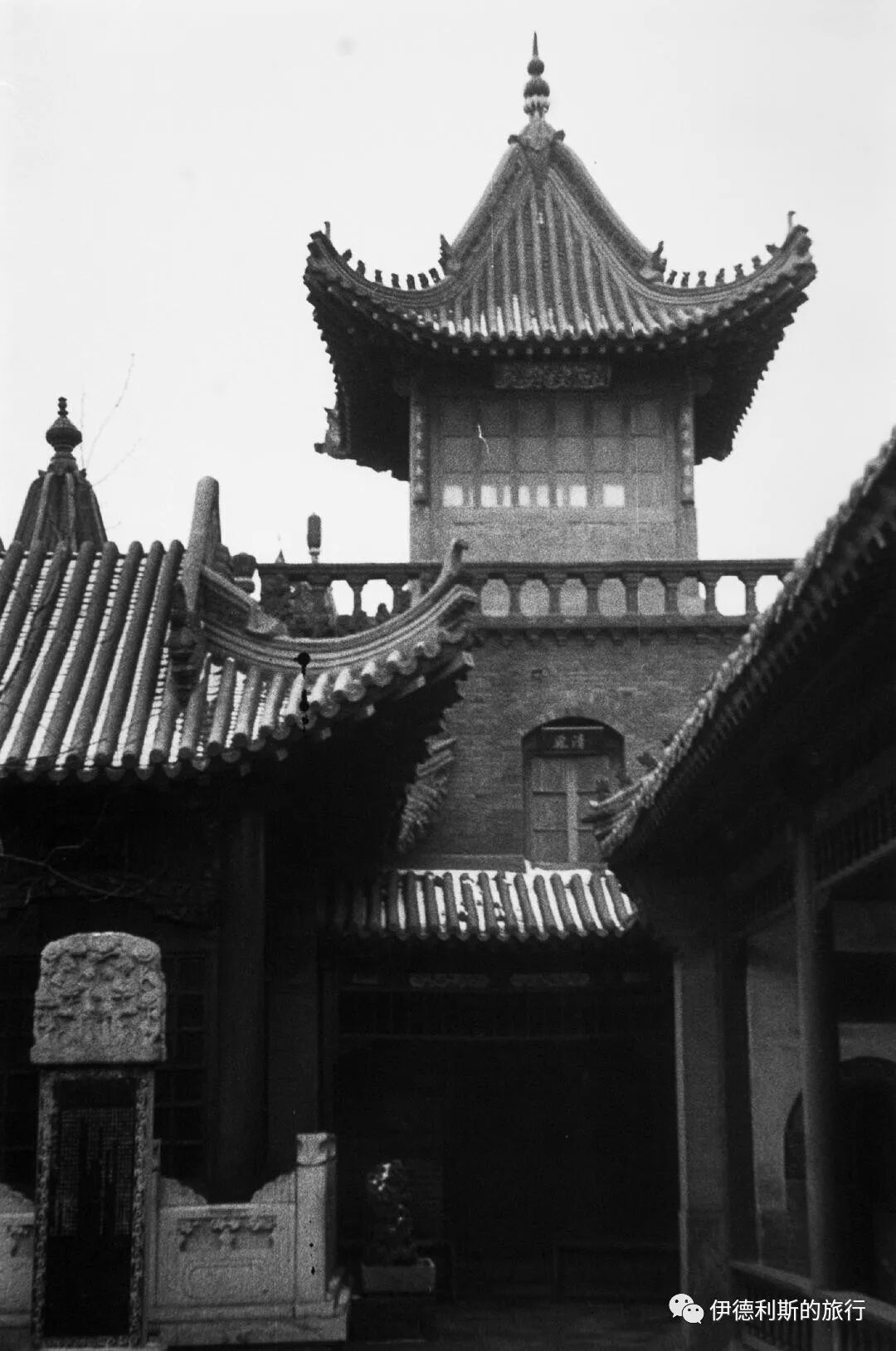
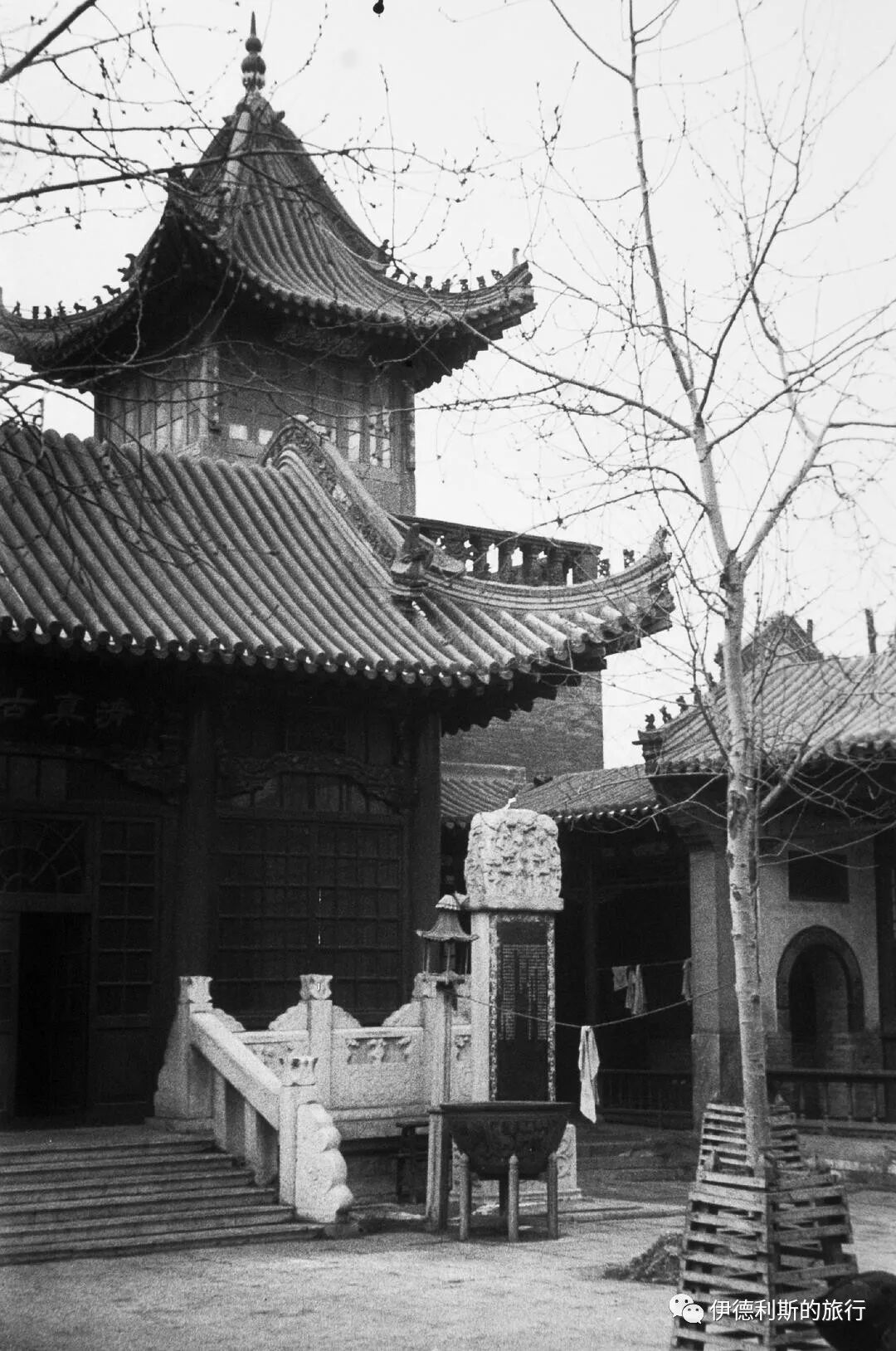
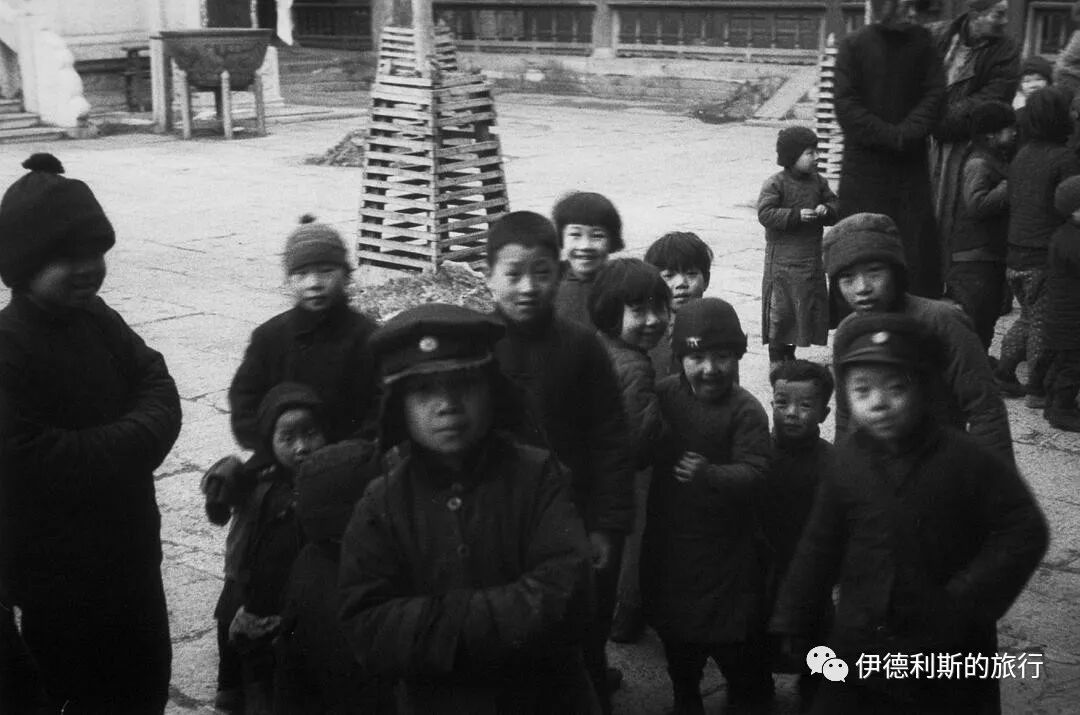
Tianjin South Mosque (Qingzhen Nandasi) in January 1937.
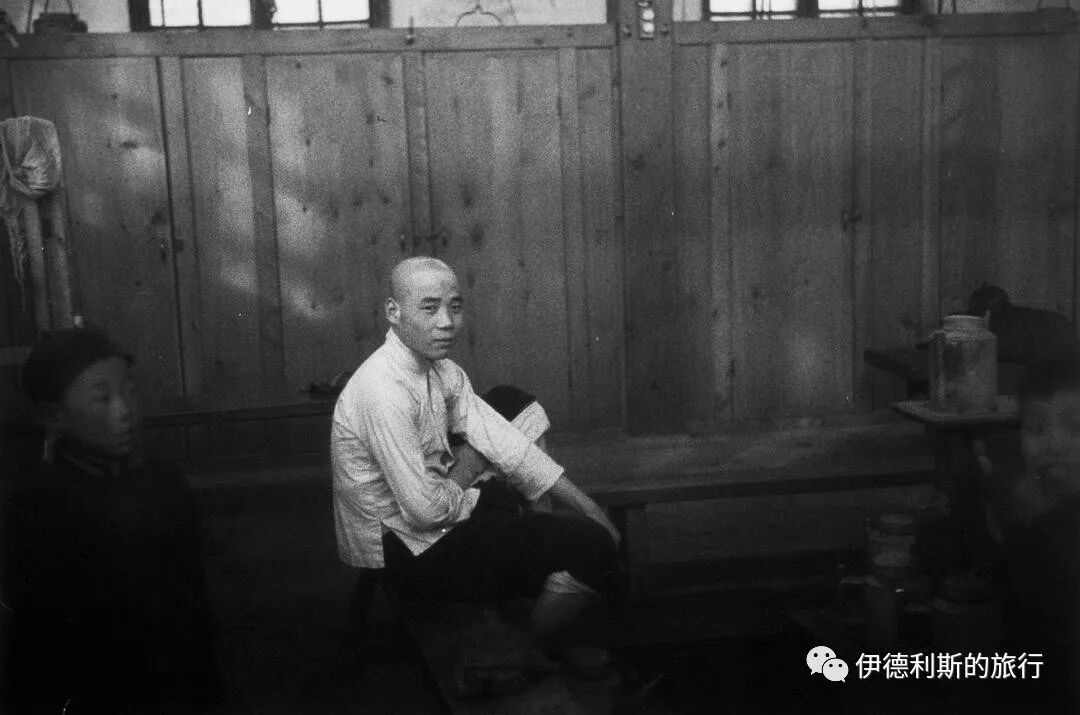
The ablution room (shuifang) of the South Mosque.
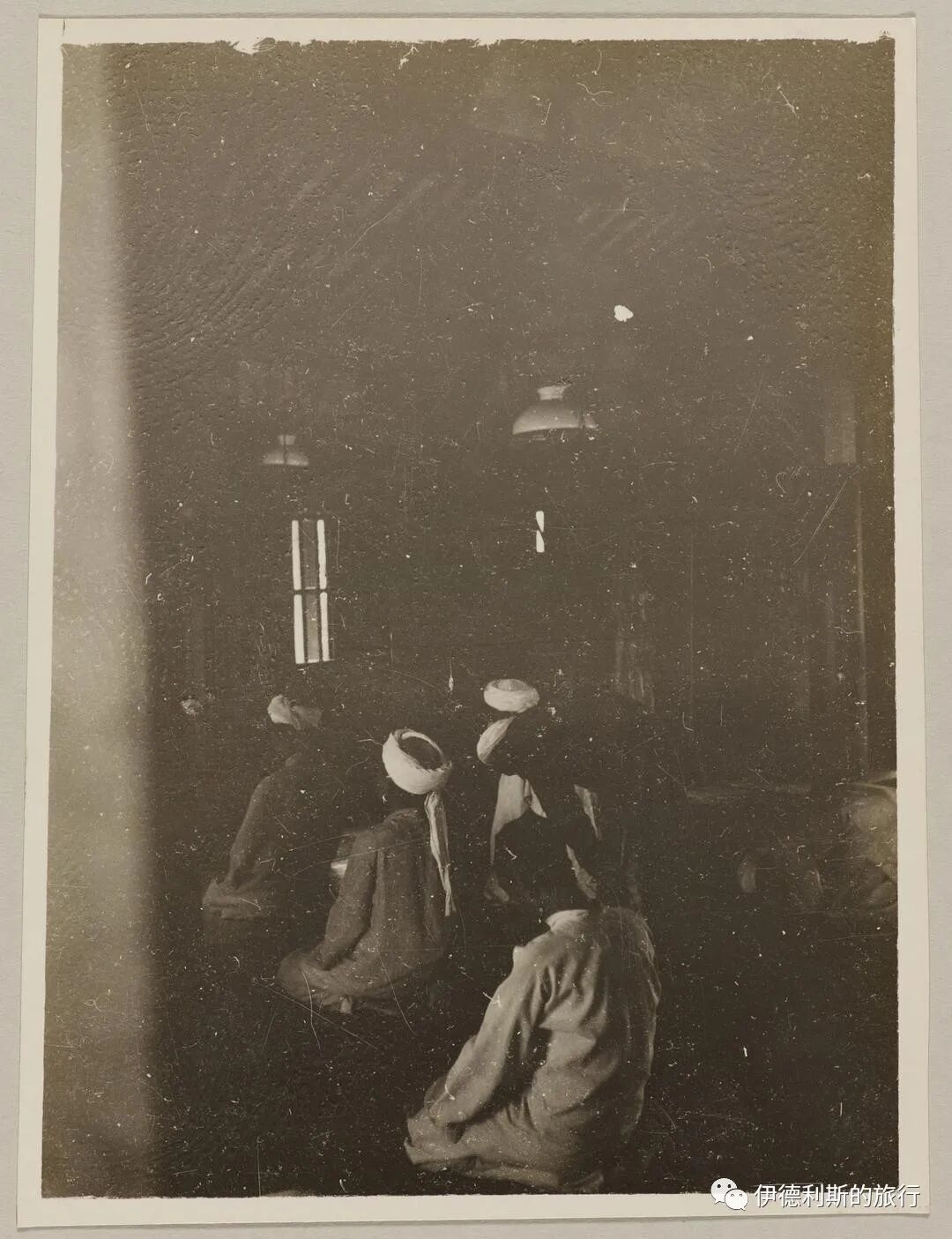
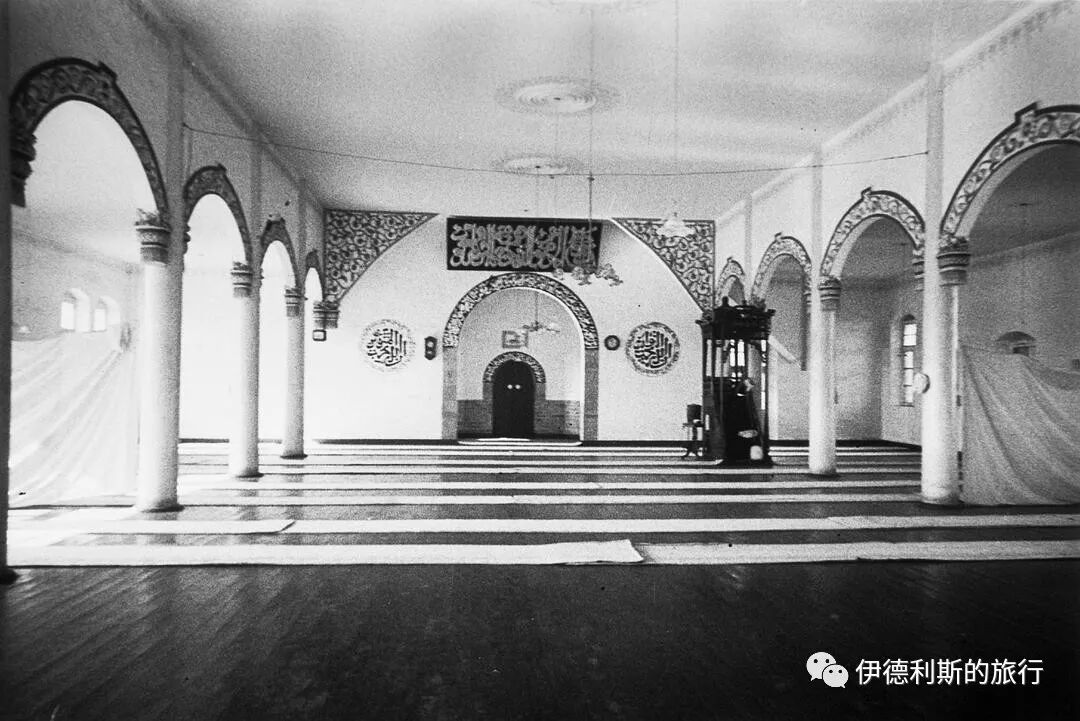
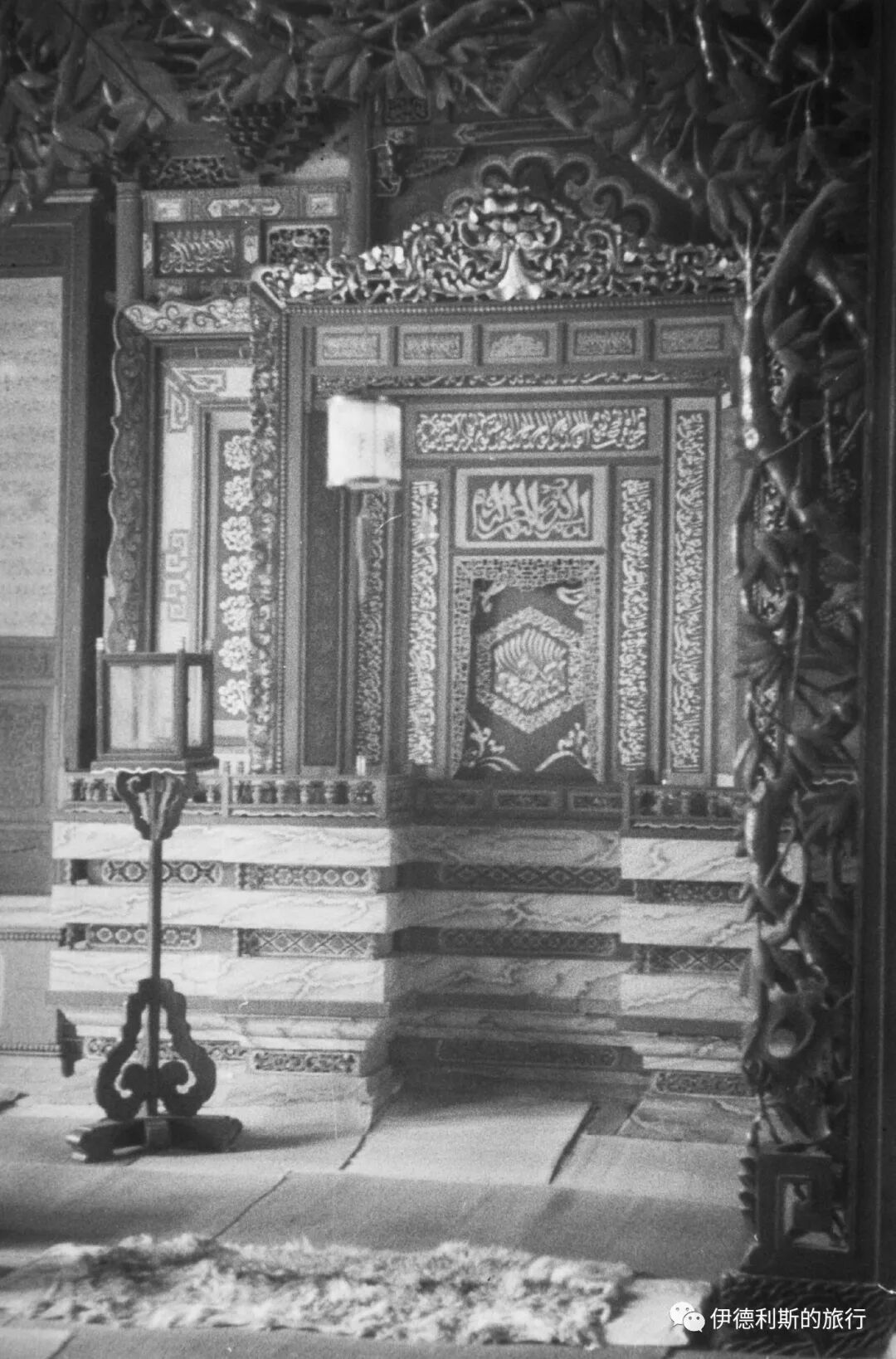
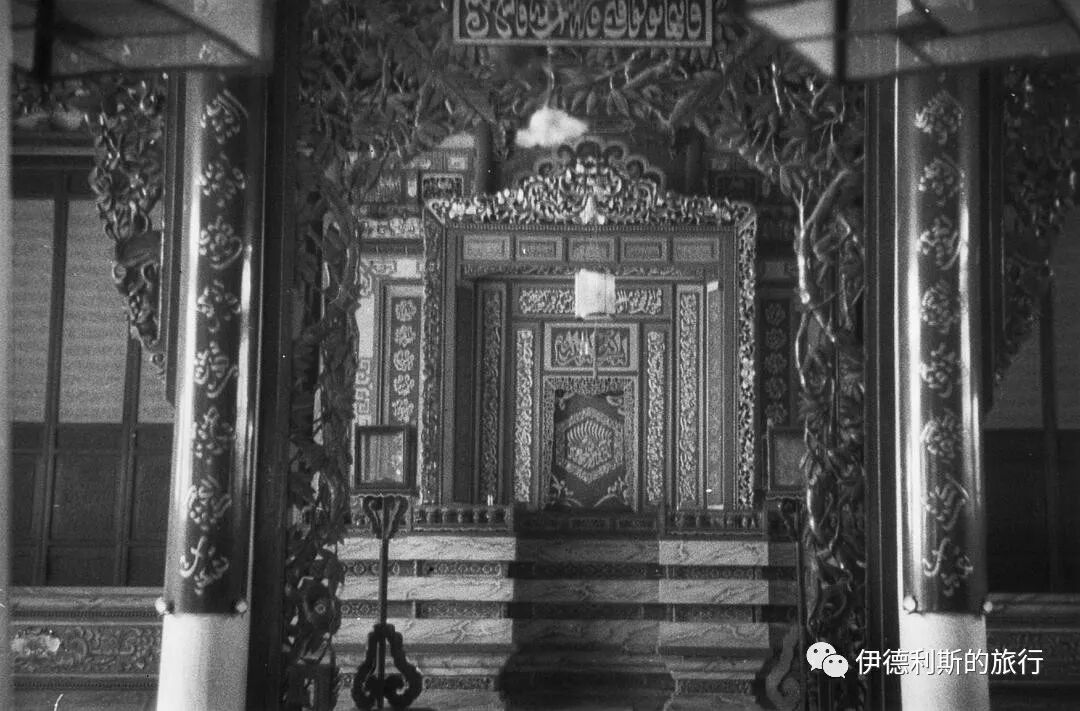
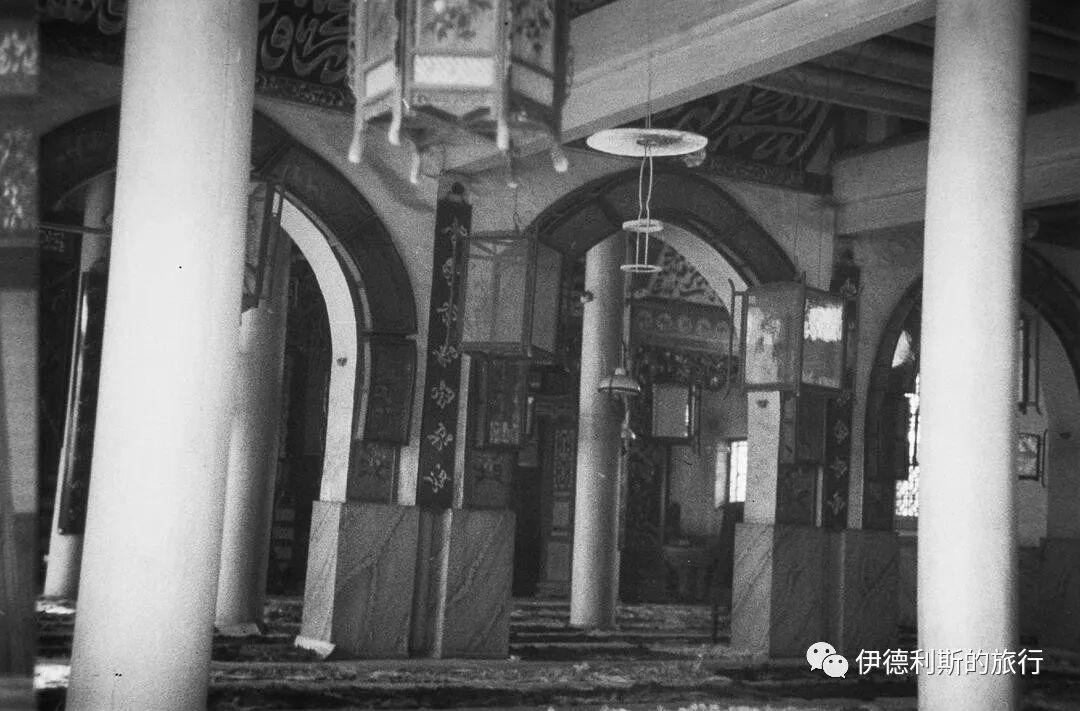
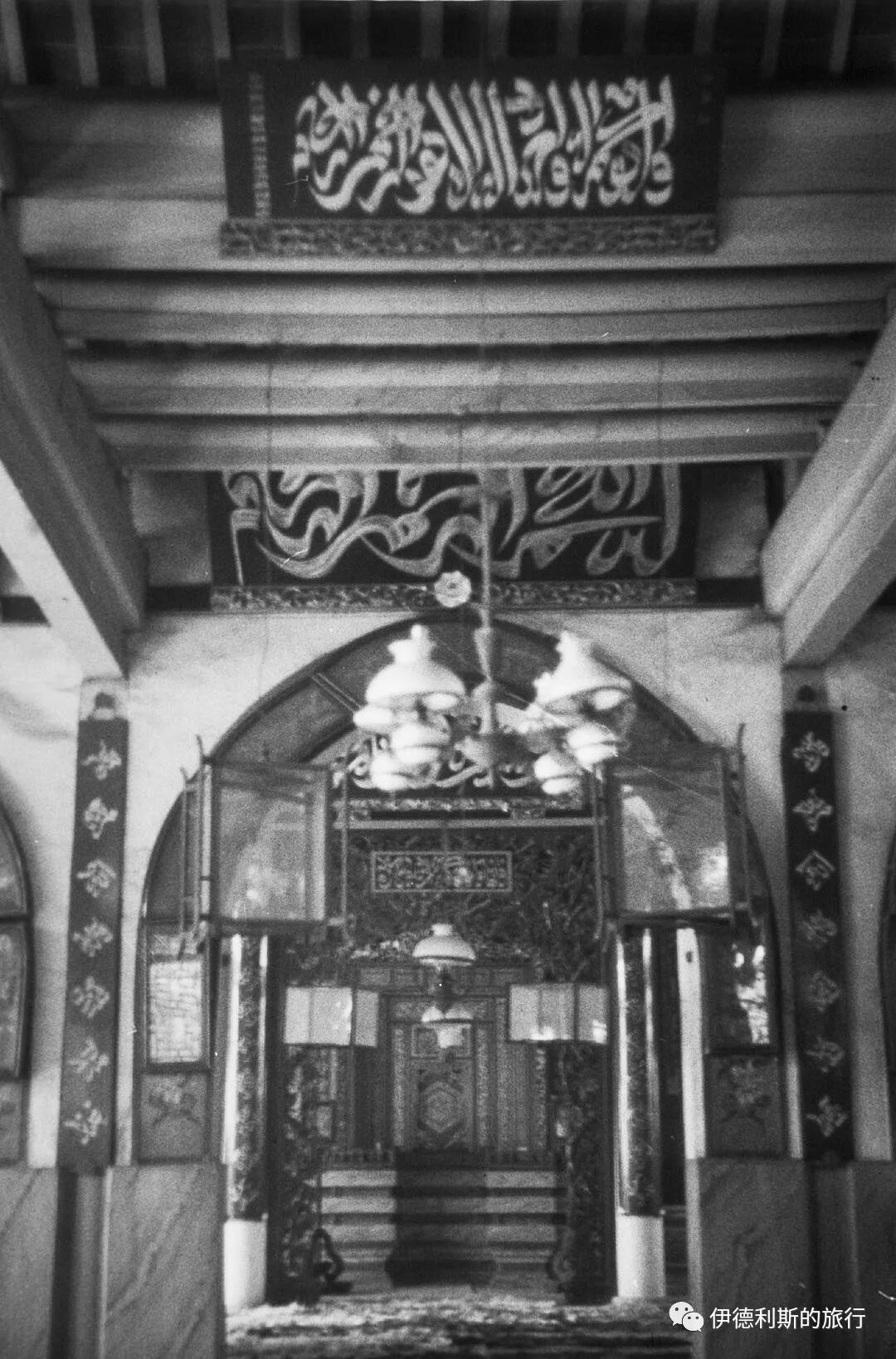
Inside the main prayer hall of the Tianjin South Mosque.
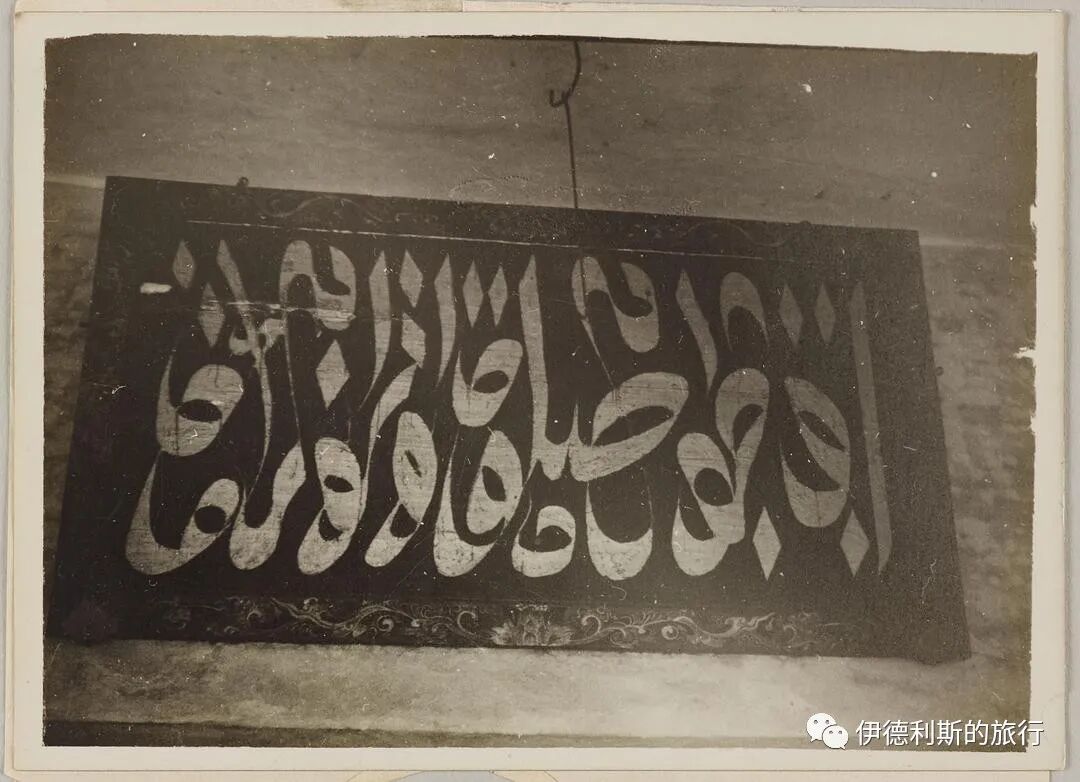
Calligraphy at the Tianjin South Mosque (some also believe it is the North Mosque).
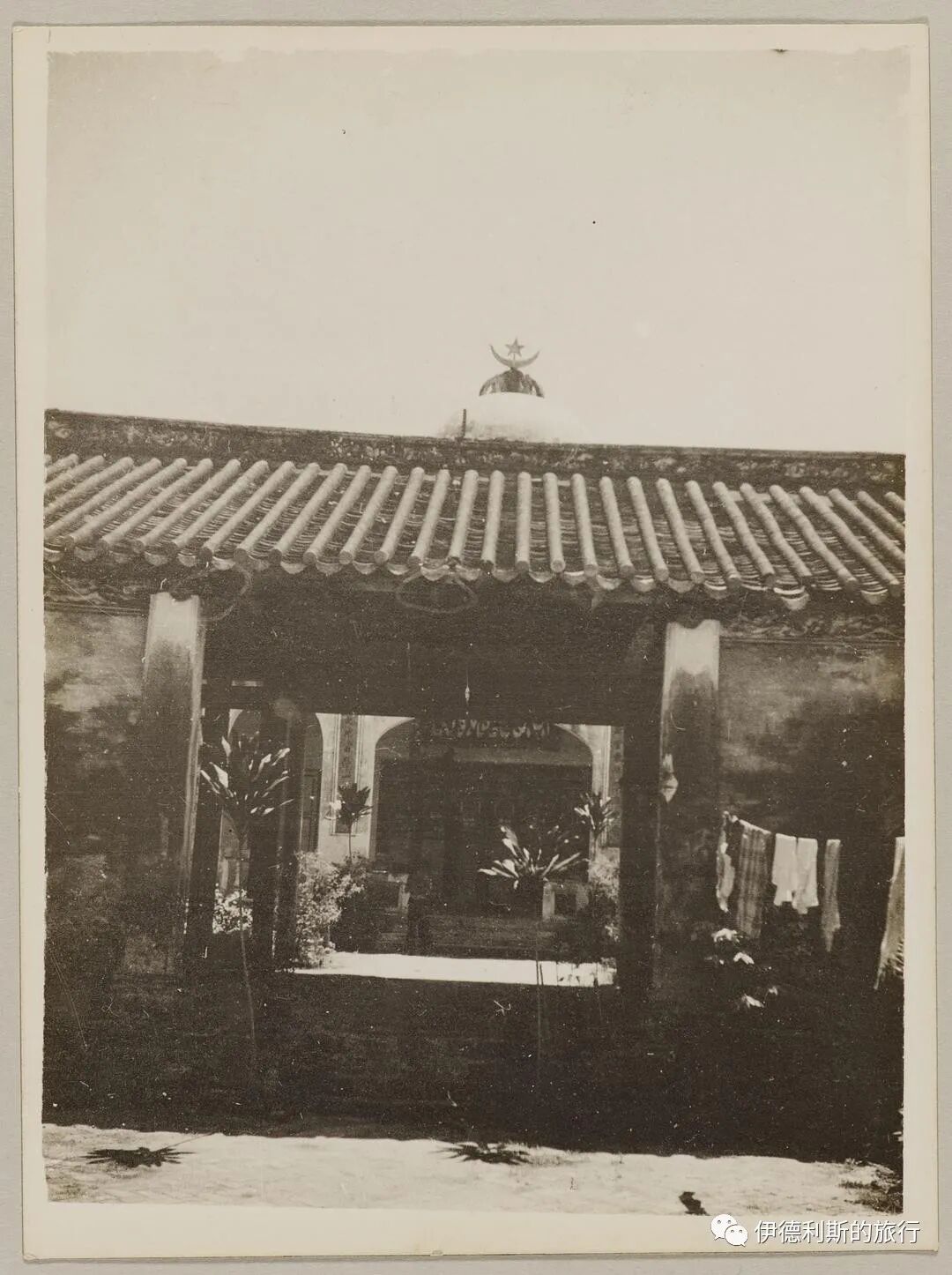
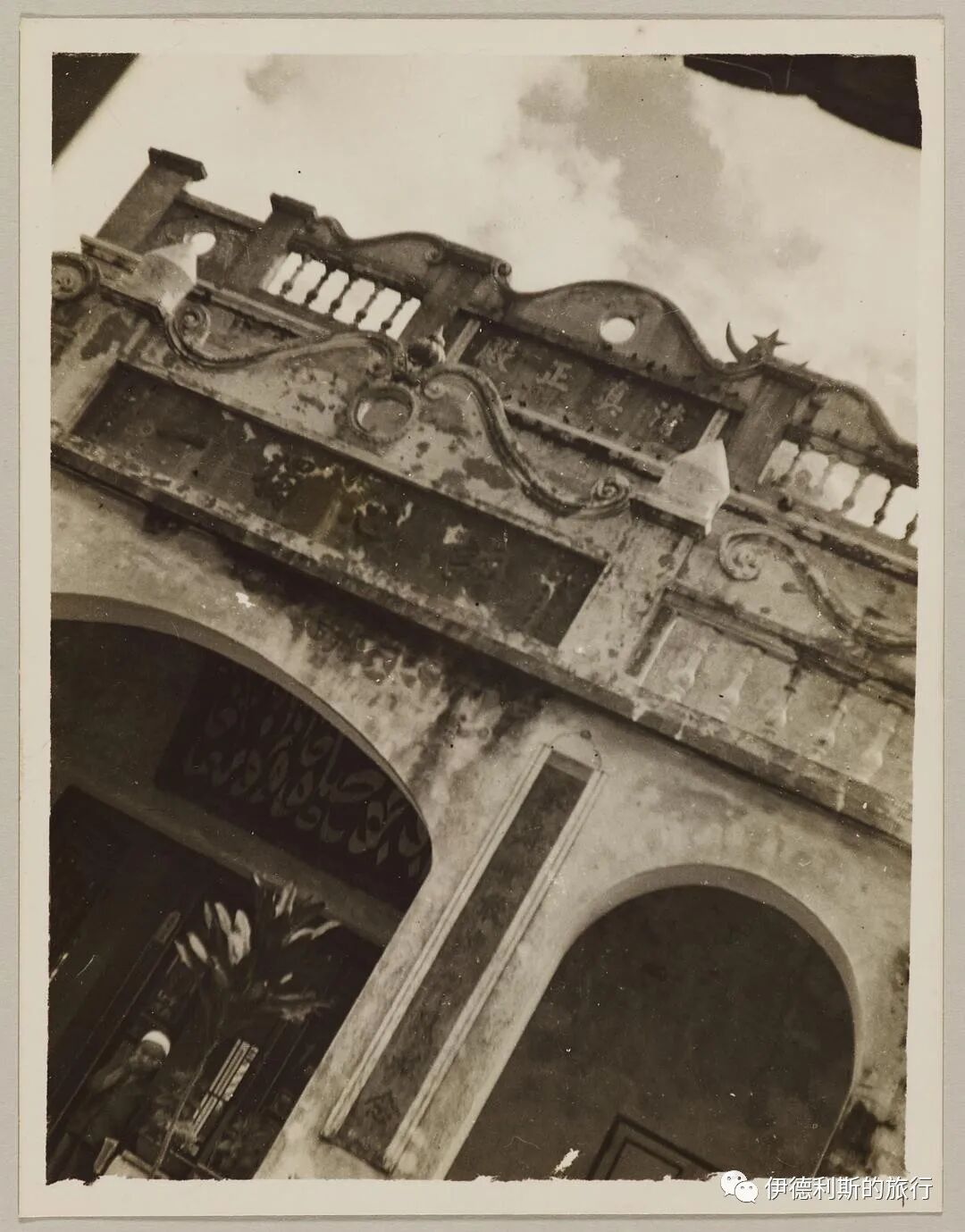
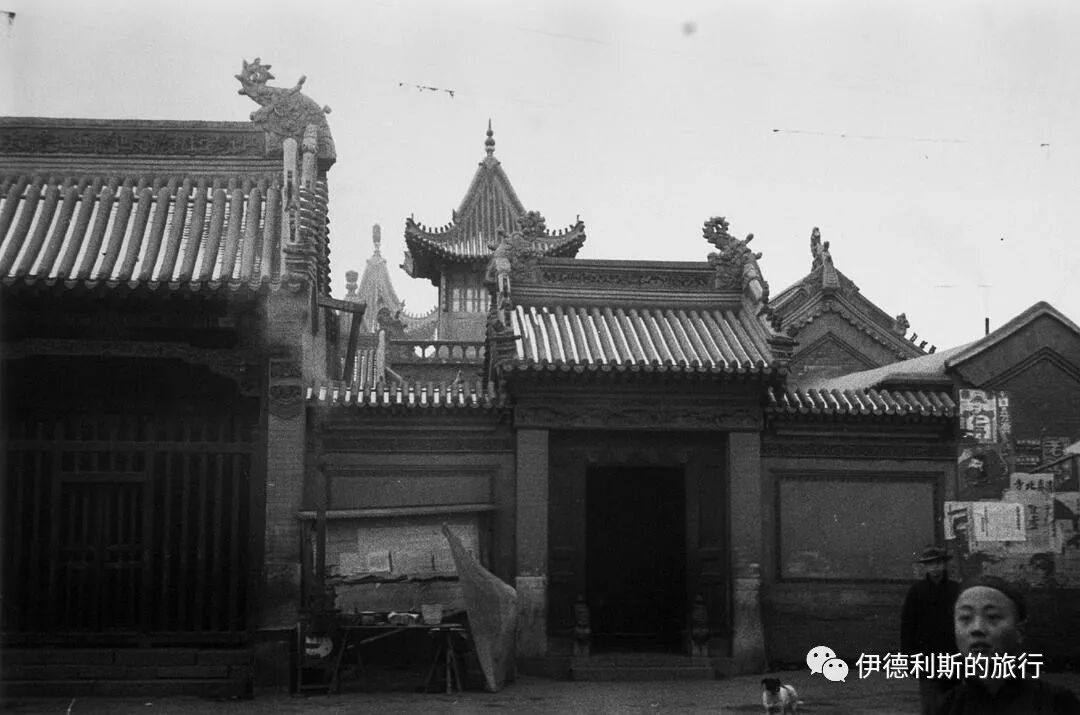
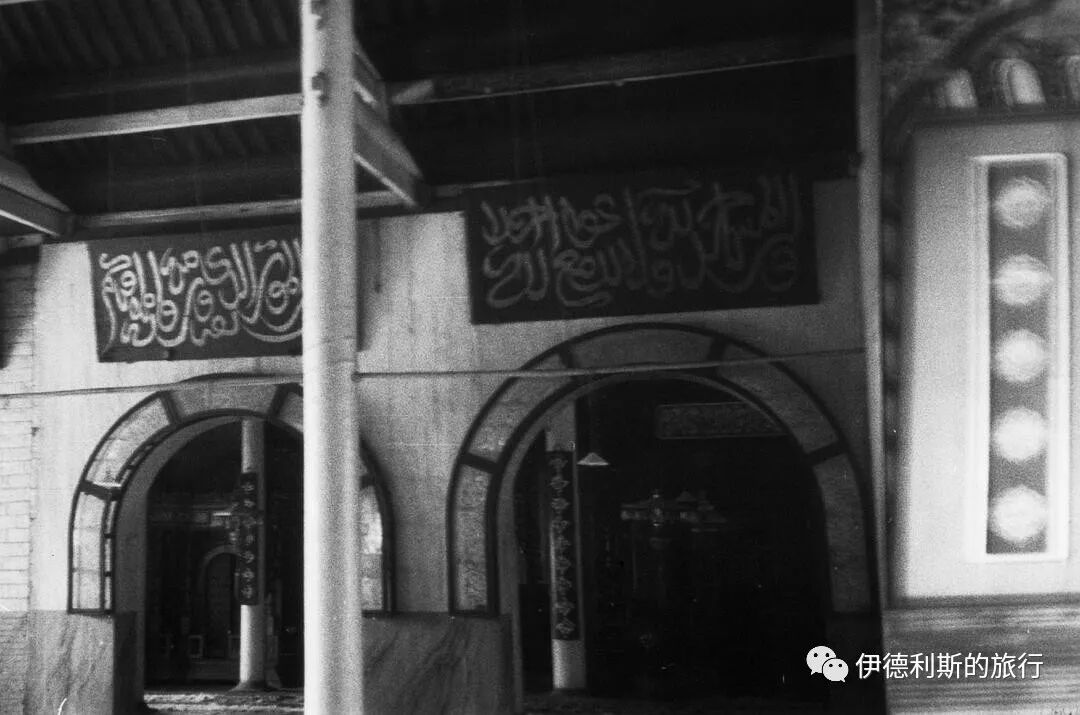
It is speculated to be the main hall of the Tianjin South Mosque, though some suggest it might be a mosque in Tongzhou or Changping.
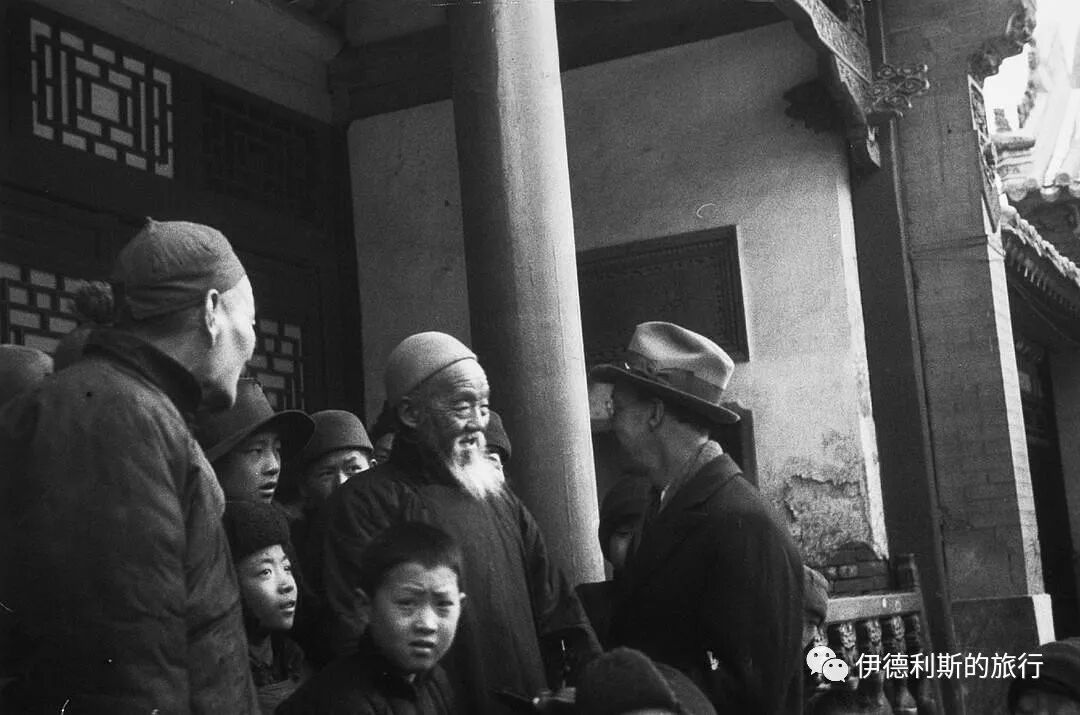
Missionaries visiting the Tianjin North Mosque (Qingzhen Beidasi).
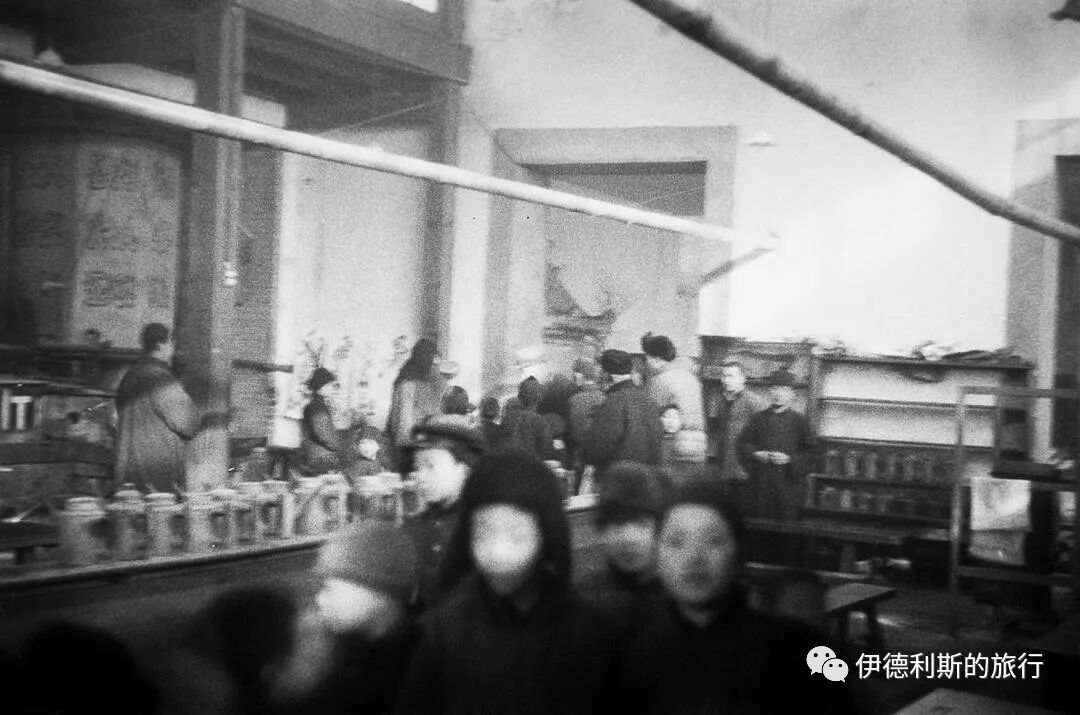
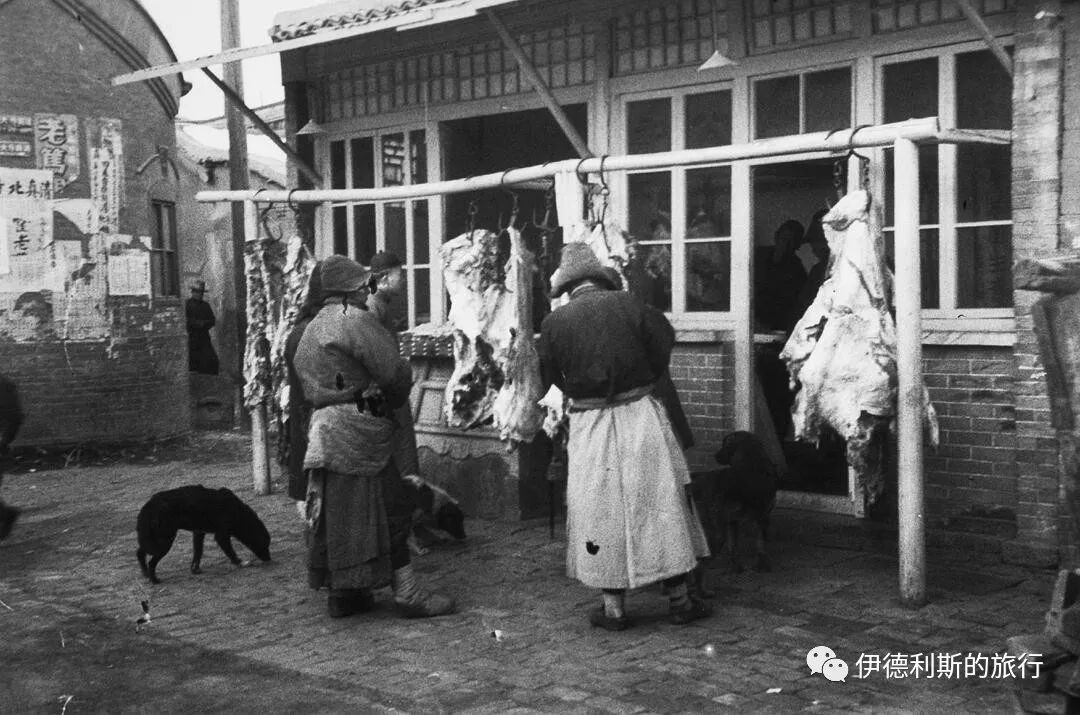
It is speculated to be a halal meat stall on Qingzhen North Lane, near the Tianjin South Mosque.
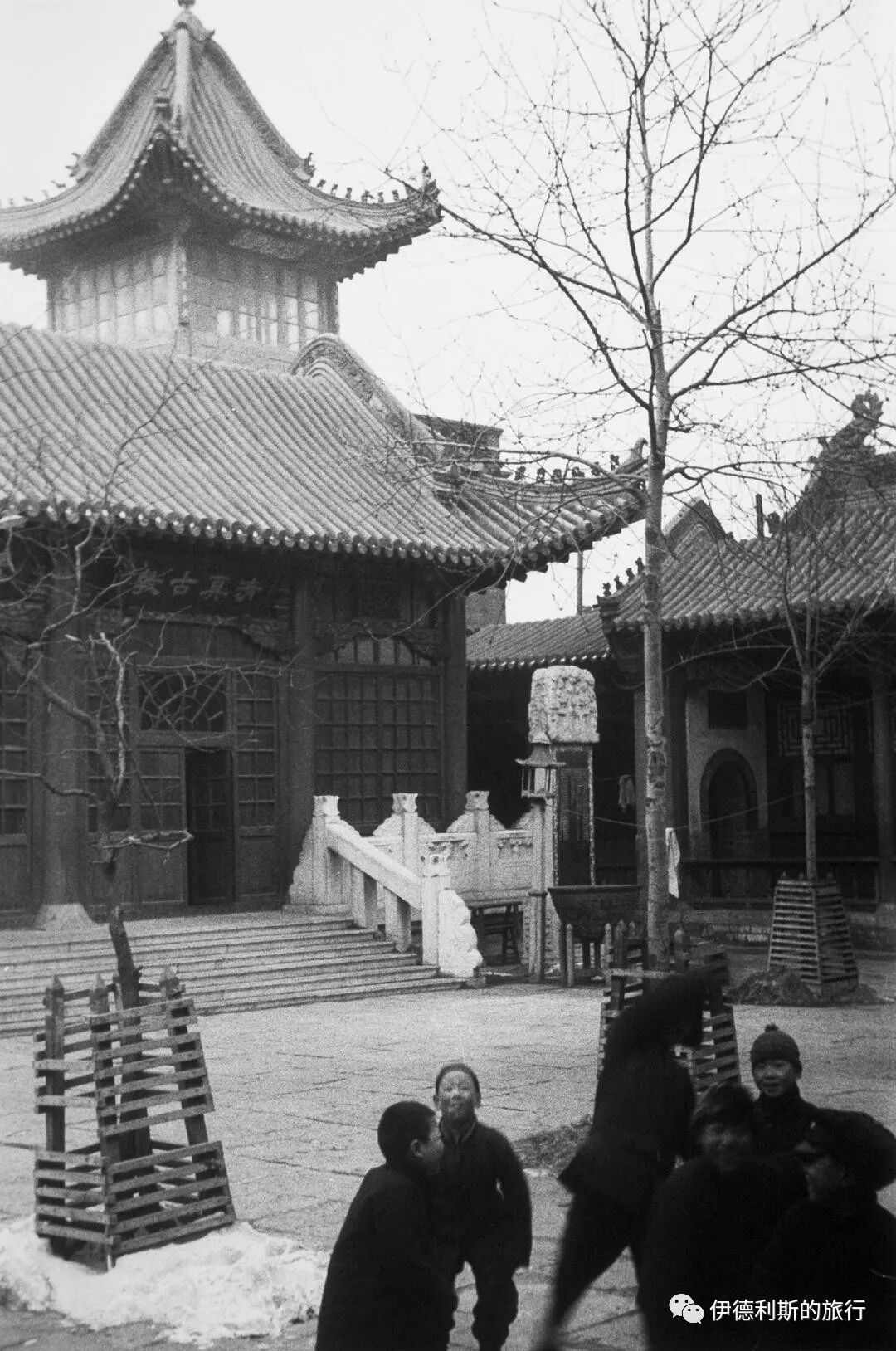
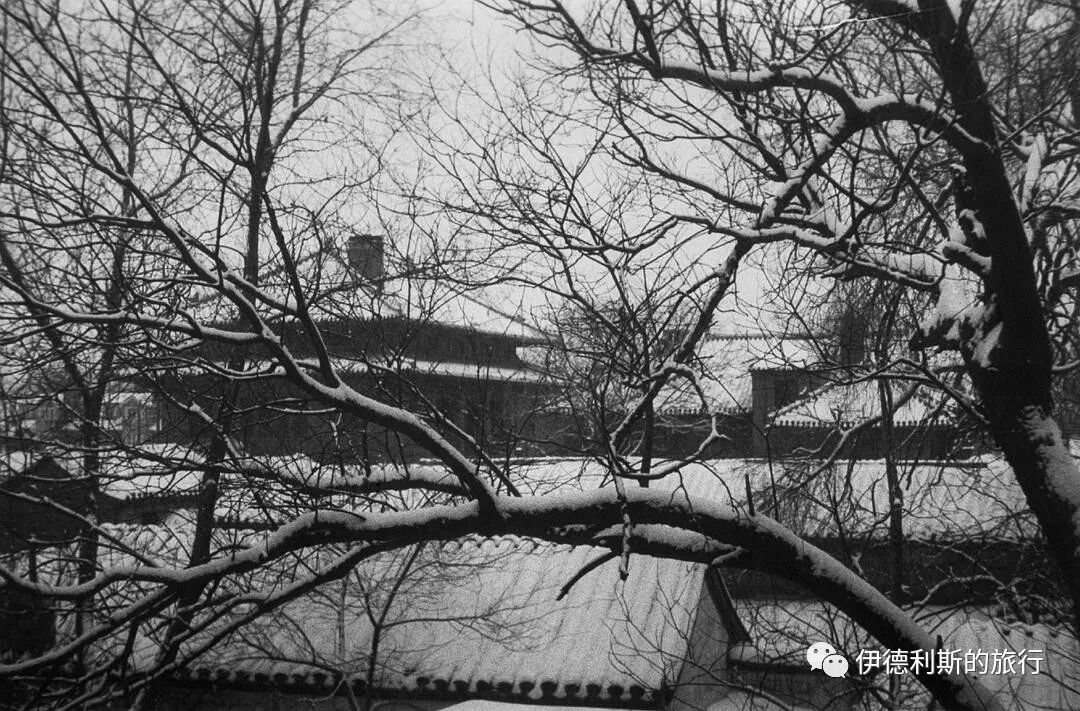
A snowy scene at a mosque in Tianjin in January 1937. view all
Summary: Carter Holton's Old Photos of Beijing and Tianjin Hui Muslims is presented here as a firsthand travel account in clear English, beginning with this scene: Reverend Carter Holton was an American missionary who worked in Northwest China from 1923 to 1949, leaving behind over 5,000 precious photographs. The account keeps its focus on Hui Muslims, Old Photos, Beijing Mosques while preserving the names, places, food, and historical details from the Chinese source.
Reverend Carter Holton was an American missionary who worked in Northwest China from 1923 to 1949, leaving behind over 5,000 precious photographs. After the Reverend passed away, his daughter Lora Jean Heurlin donated these materials to the Harvard-Yenching Library in the early 1990s, and the library finished digitizing them in 2011.
Online address: Carter D. Holton Collection | Harvard Library
In August 1936, Reverend Holton returned to China after finishing his vacation in the United States. In early 1937, Holton reached Tianjin and Beijing, where he visited several mosques before traveling through Xi'an and Lanzhou to Hezhou to continue his missionary work.
Below, I will share the old photos Reverend Holton took in Beijing and Tianjin in early 1937.
Beijing
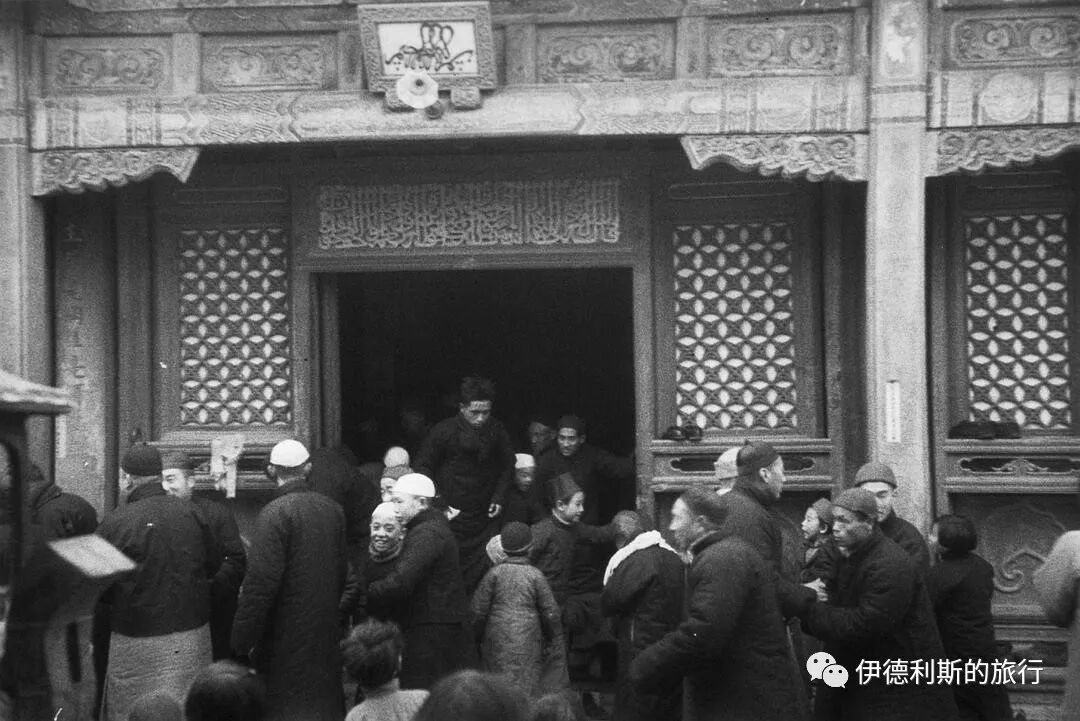
In early spring 1937, the Eid al-Fitr prayer service at the Niujie Mosque.
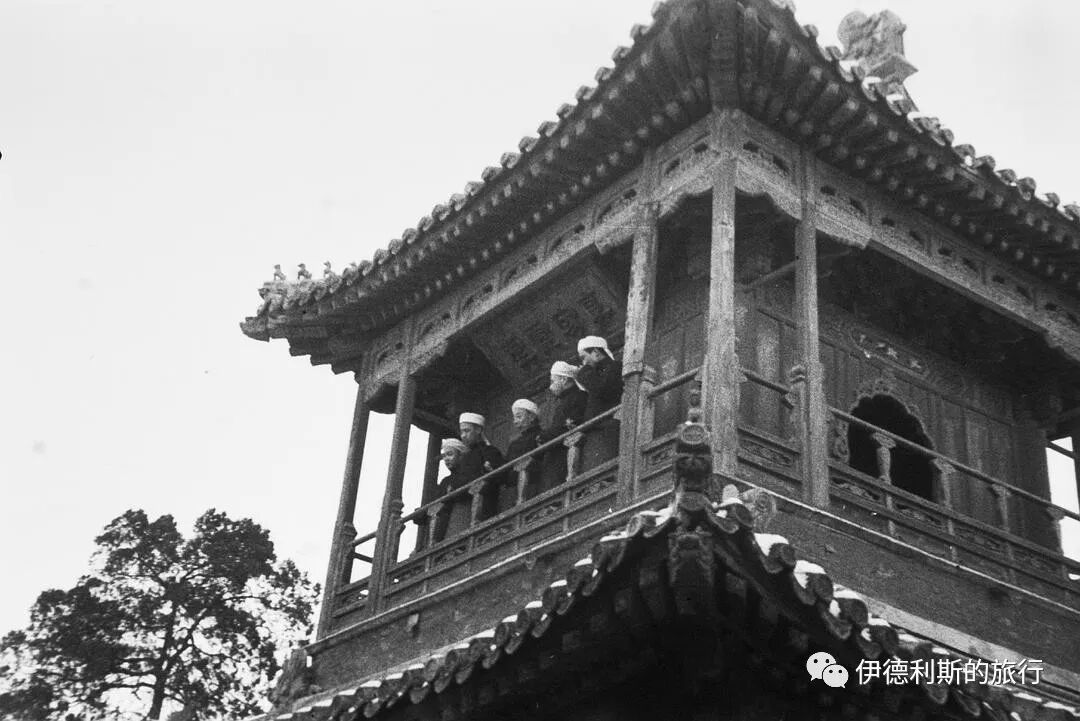
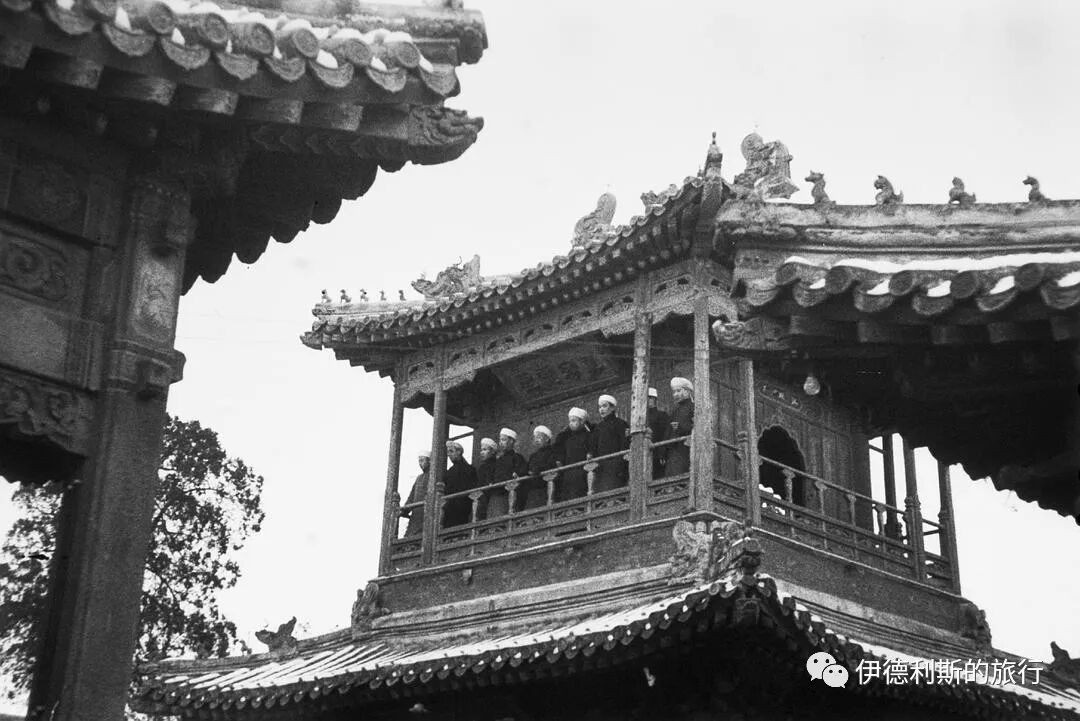
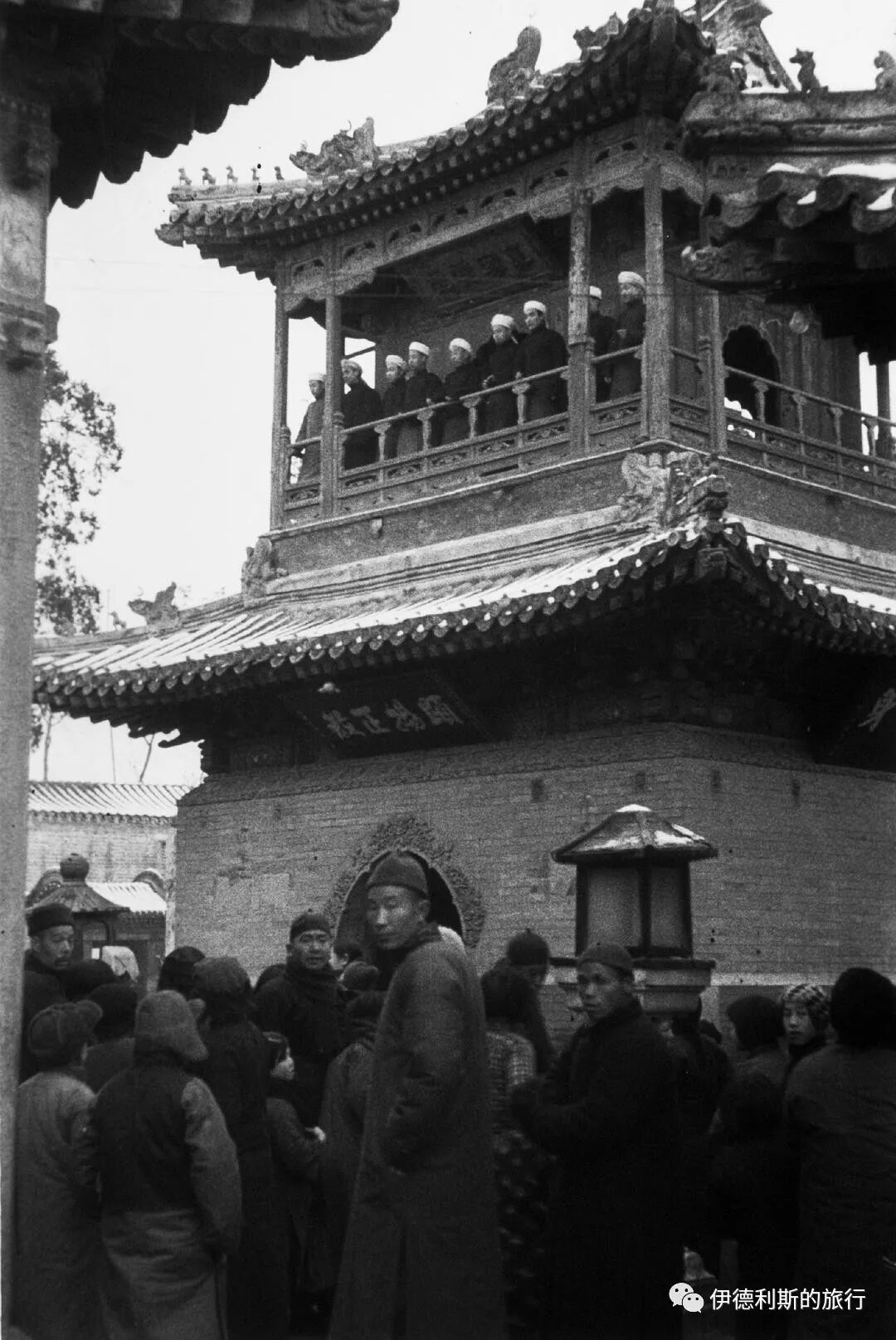
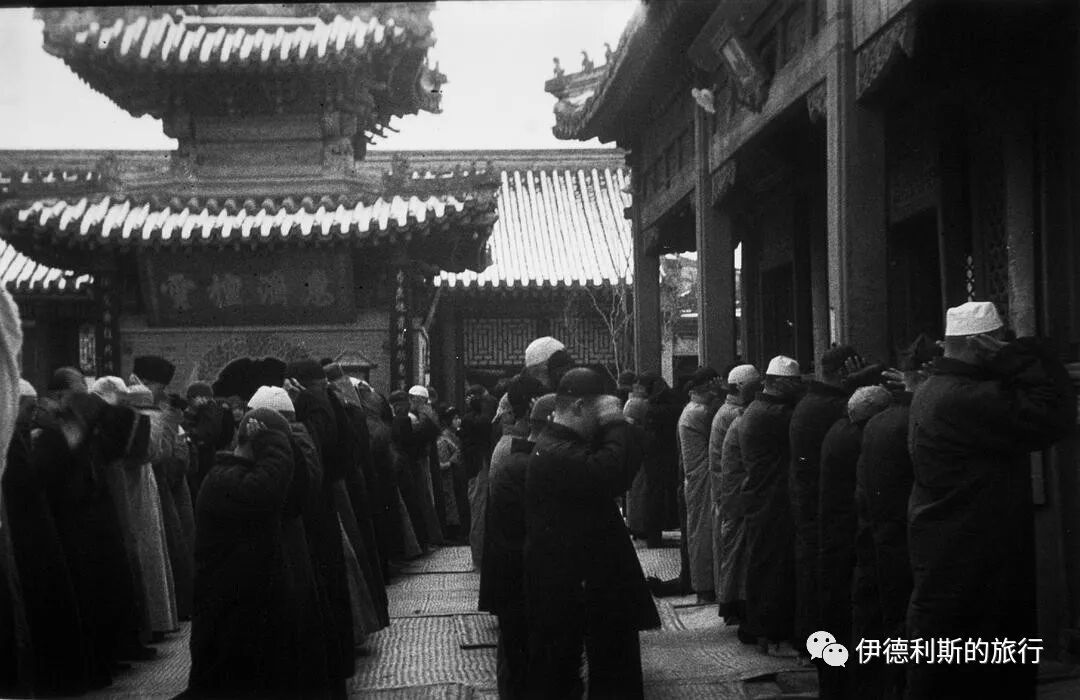
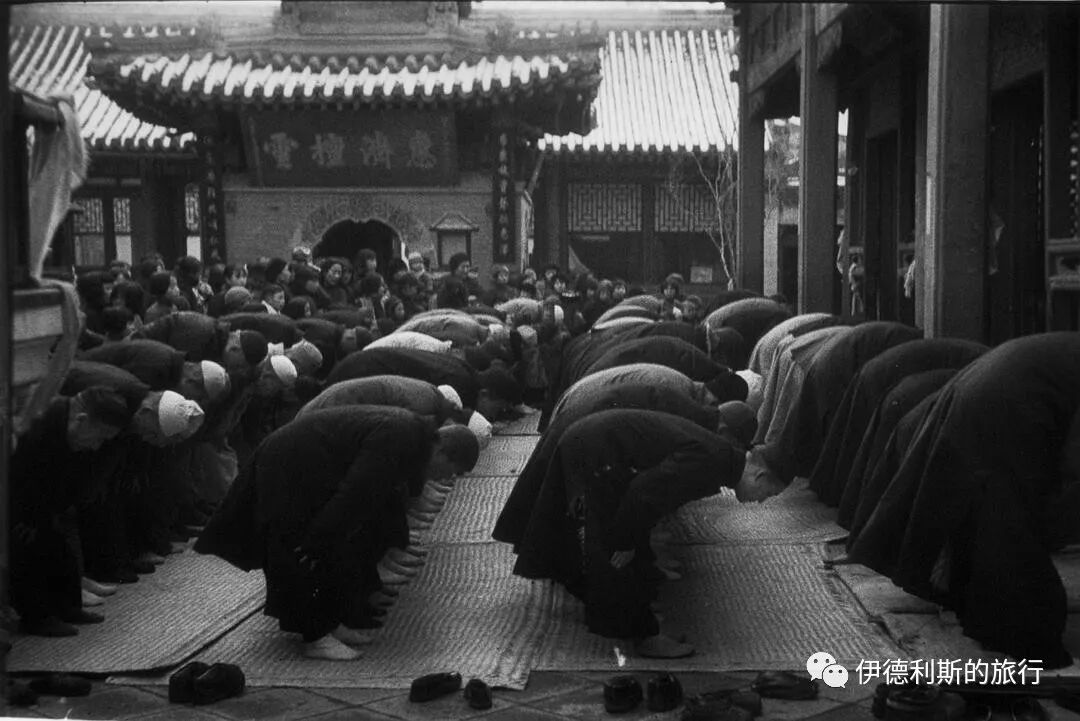
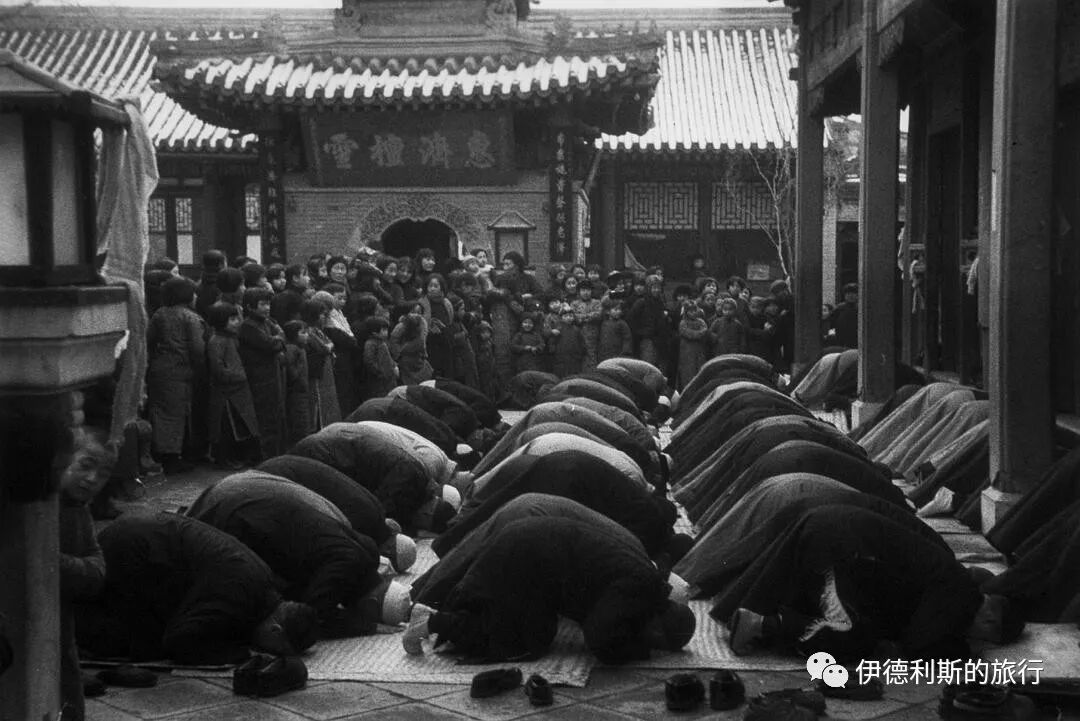
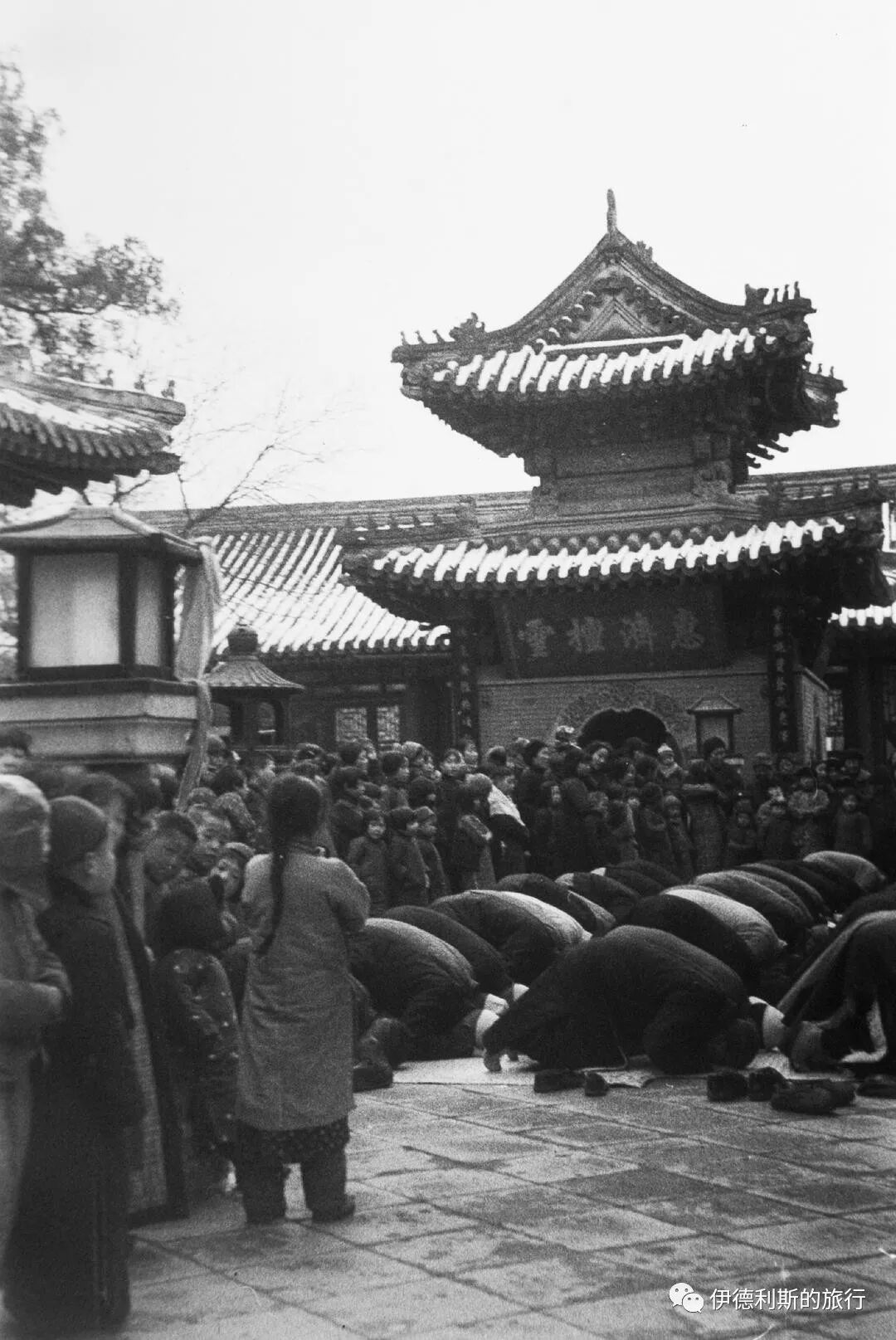
After the prostration.
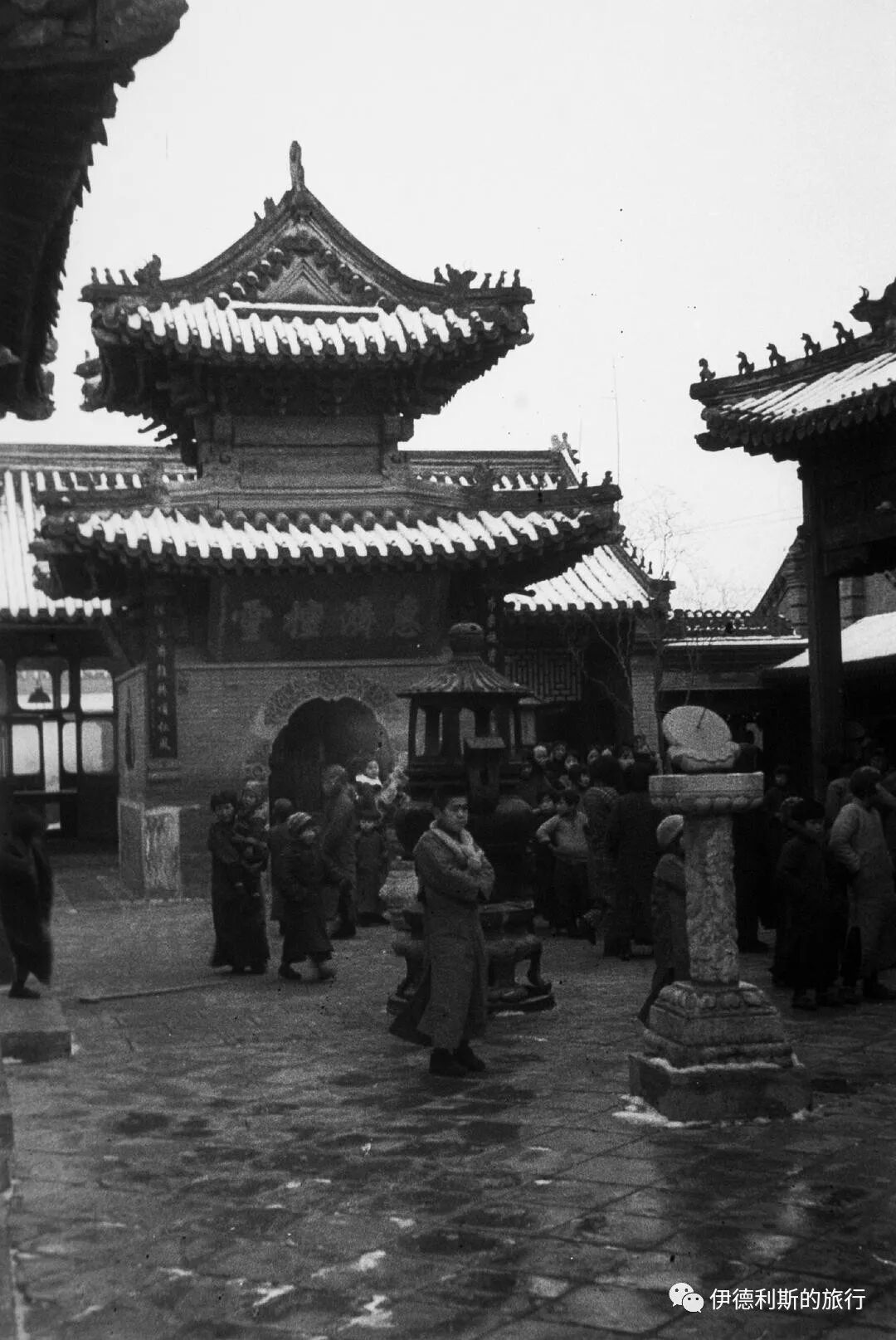
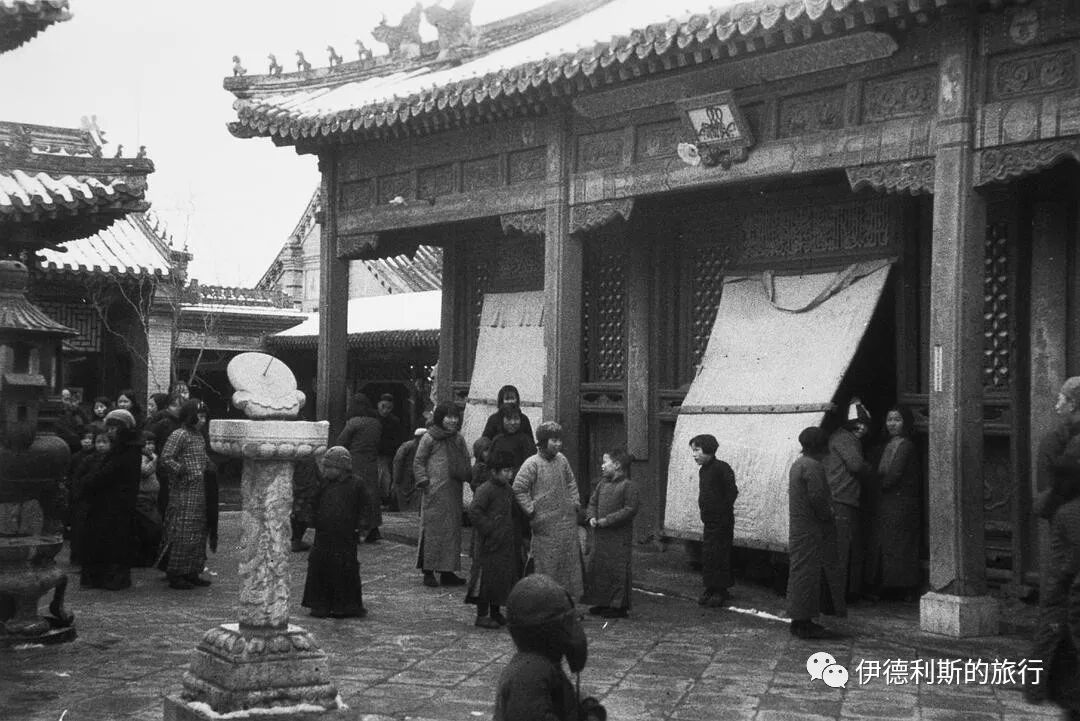
The potted plants in the courtyard were donated by Gai Biting, a famous social activist from Niujie.
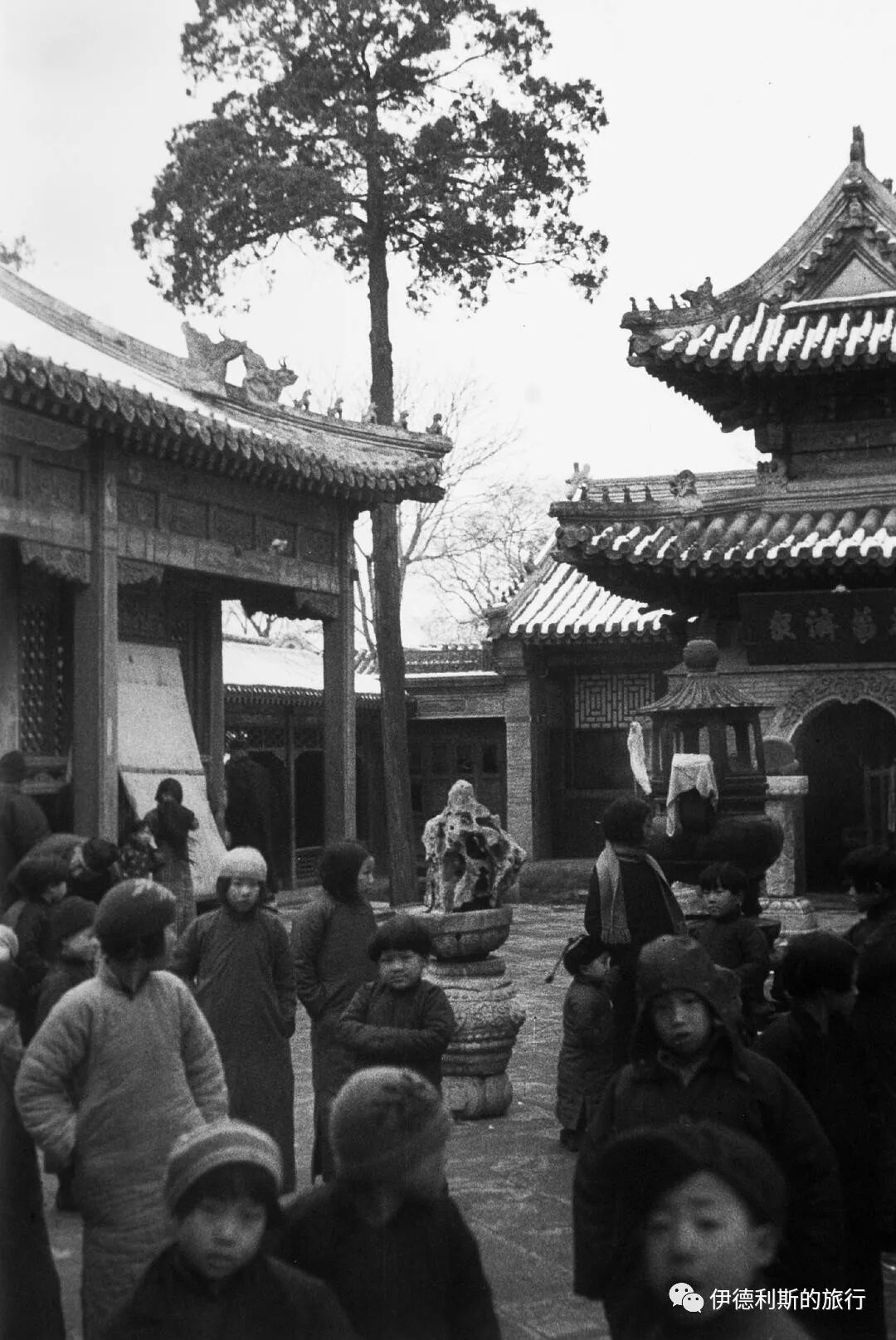
Children watching the prayer service.
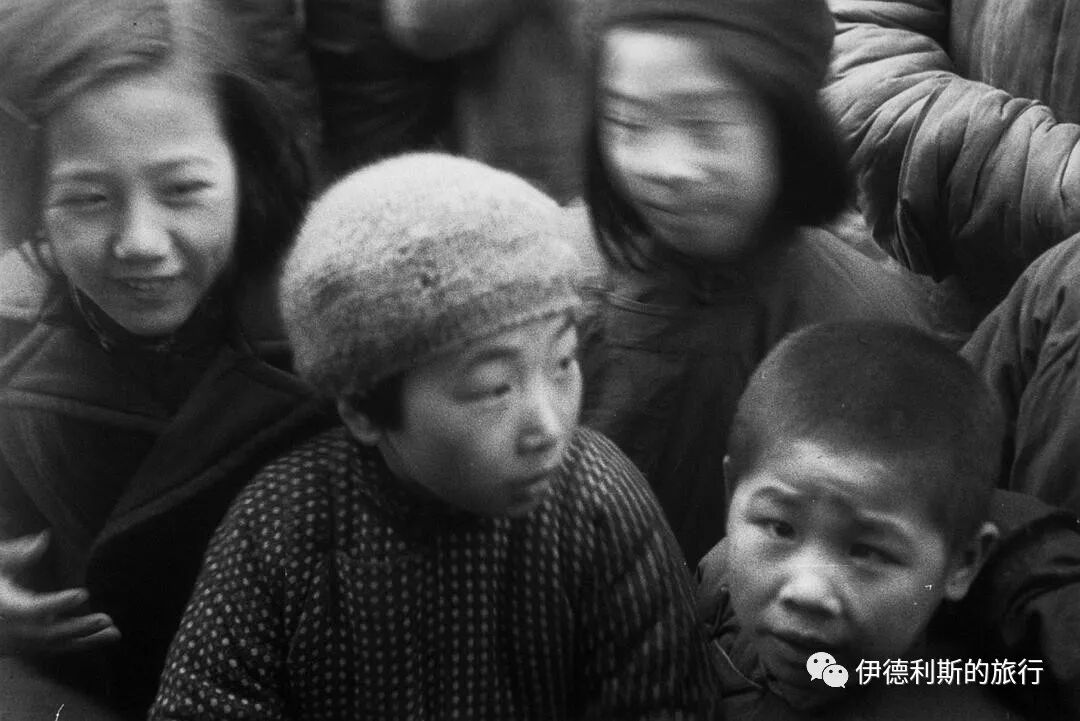
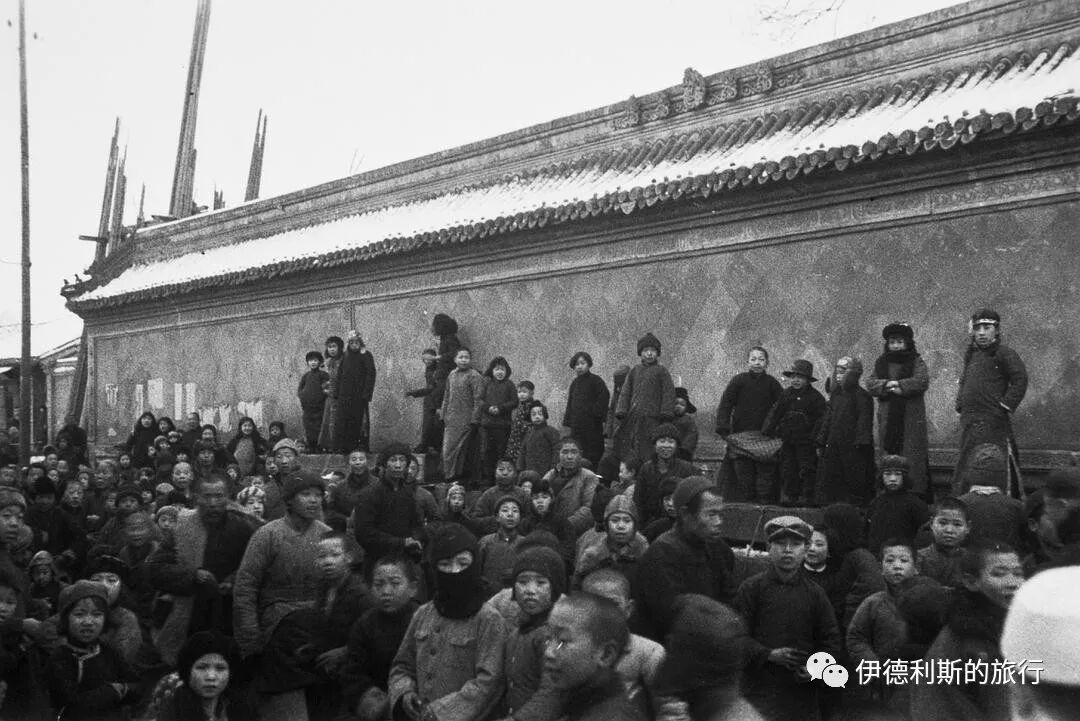
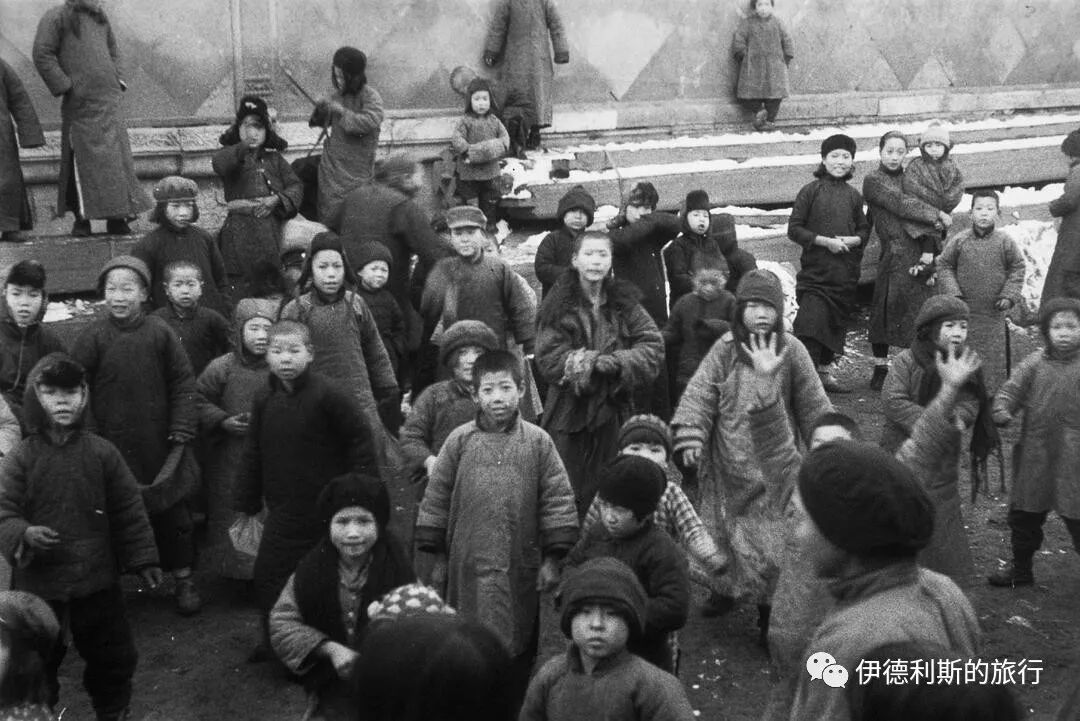
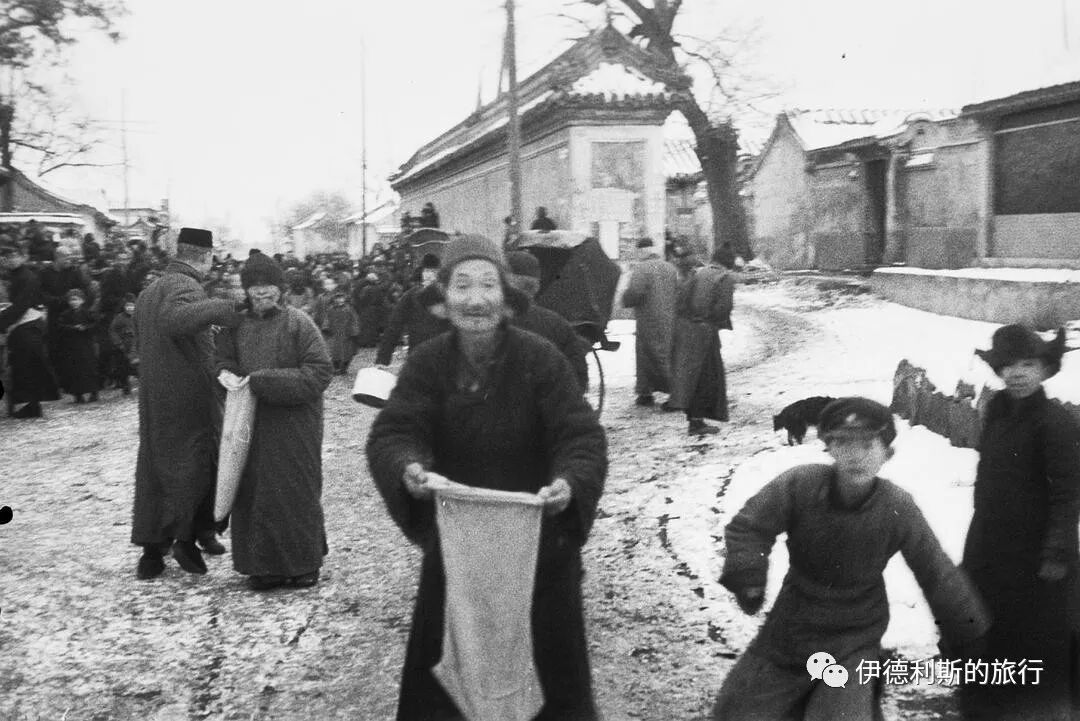
Imam Wang Lianyu of Niujie (wearing a white cap on the left) came from a family of imams.
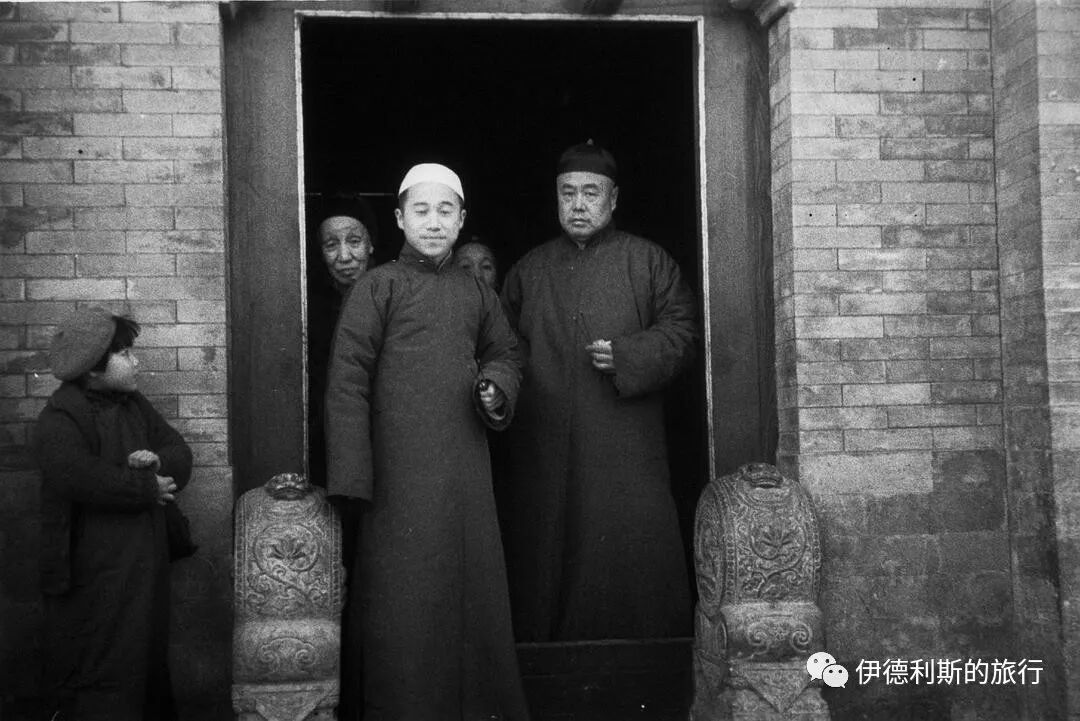
Jiaozi Hutong Mosque.
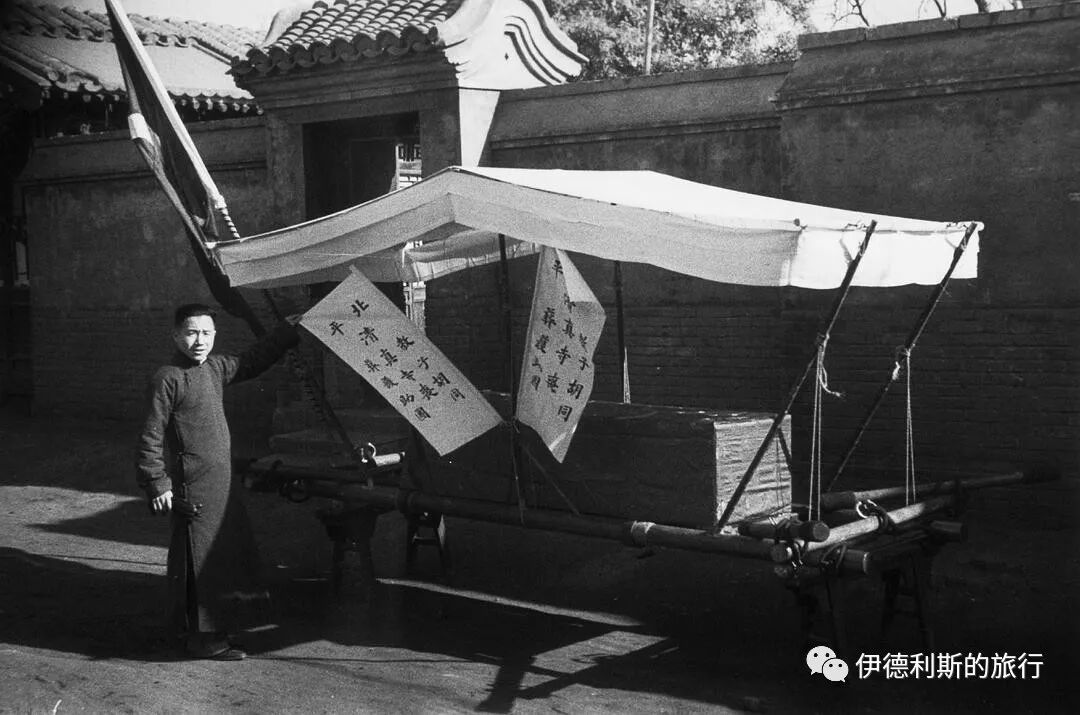
A funeral bier (maiti xiazi) at the entrance of Jiaozi Hutong, inscribed with 'Beiping Jiaozi Hutong Mosque Funeral Mutual Aid Group'.
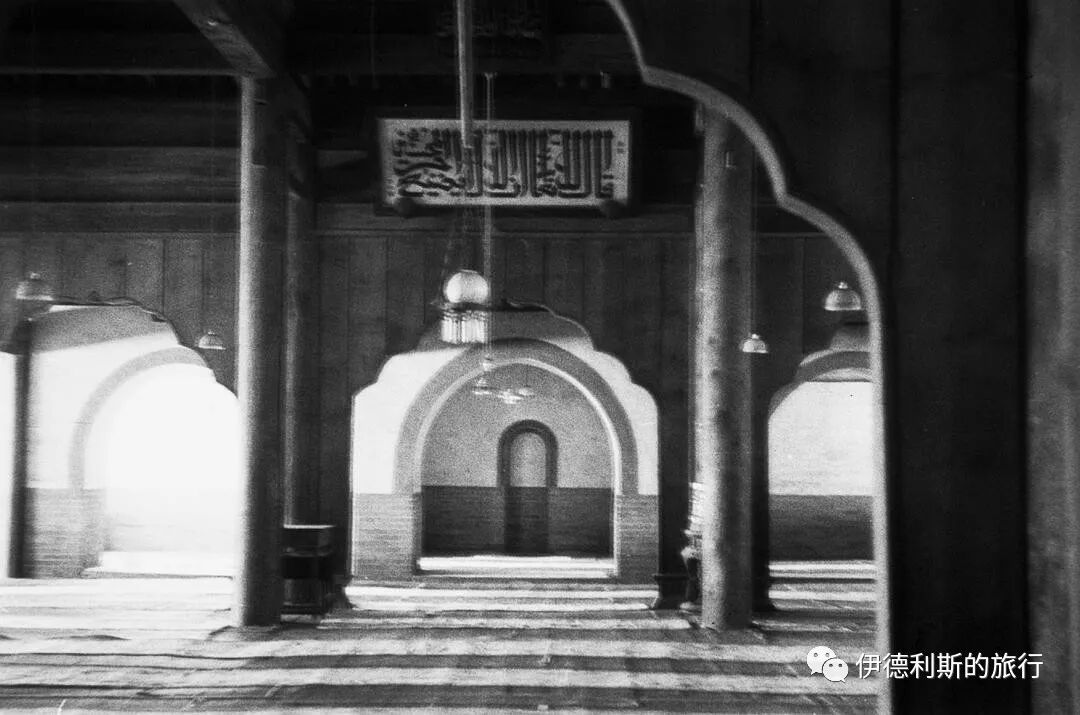
Sanlihe Mosque.
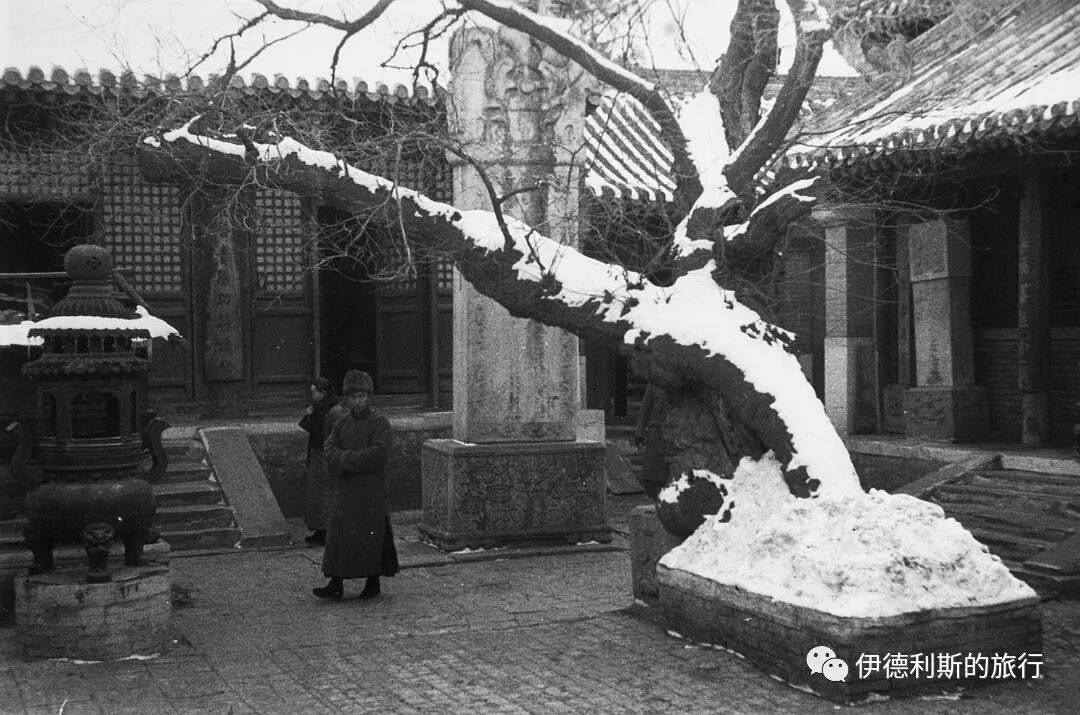
Tianqiao Mosque.
Tianjin.
Tianjin South Mosque (Qingzhen Nandasi) in January 1937.
The ablution room (shuifang) of the South Mosque.
Inside the main prayer hall of the Tianjin South Mosque.
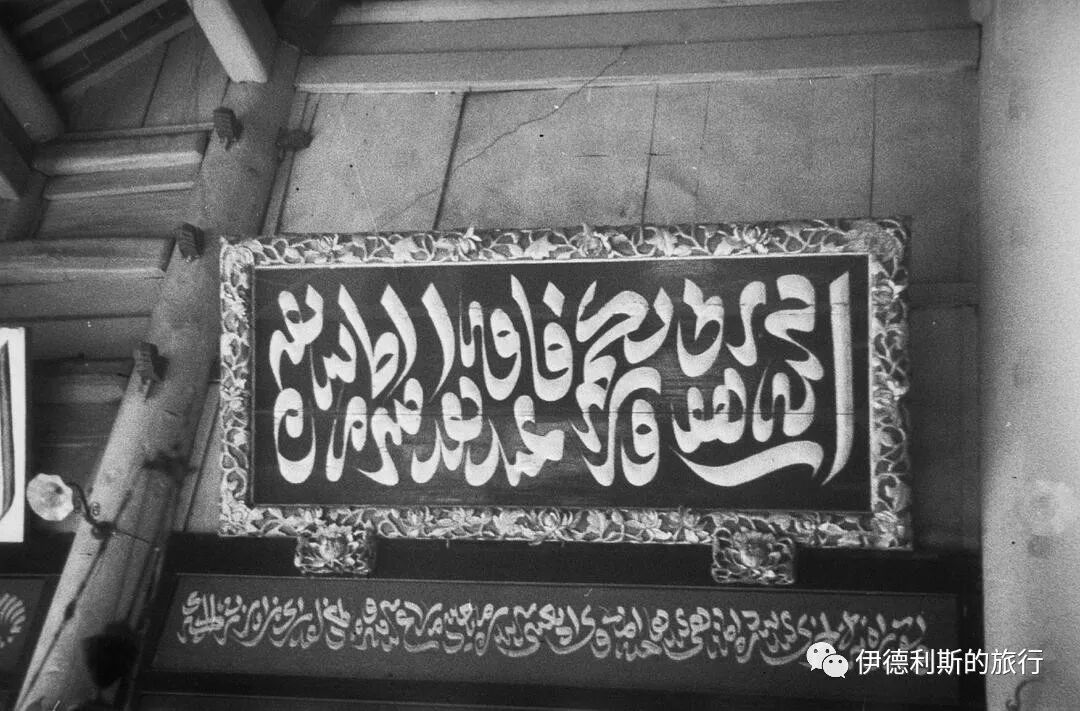
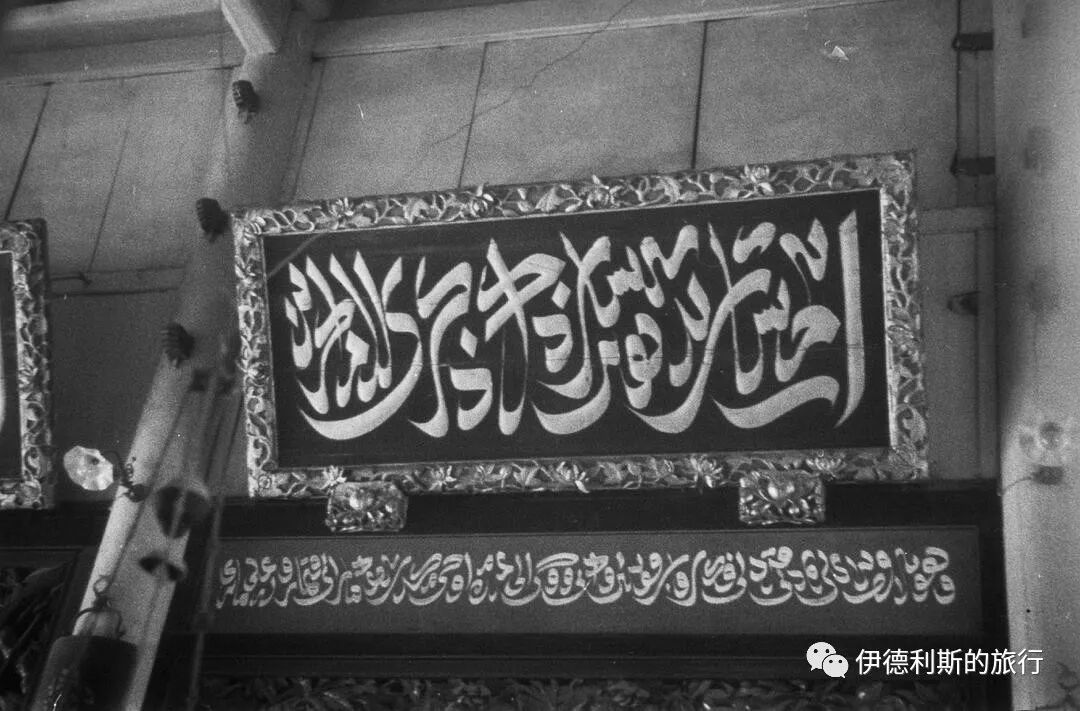
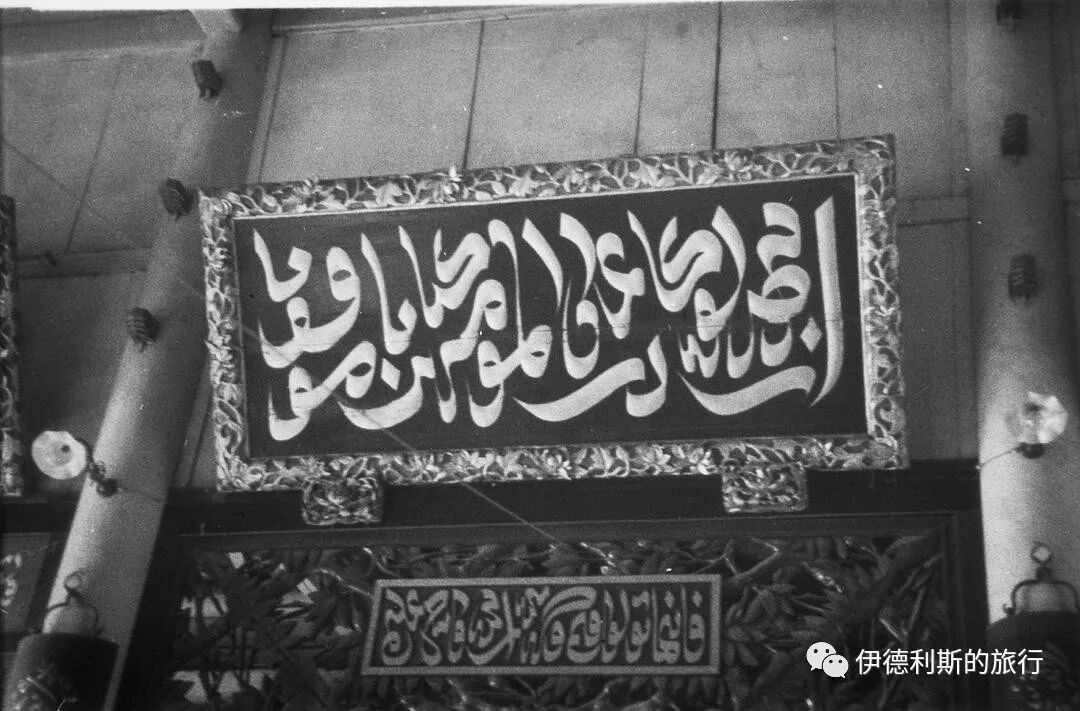
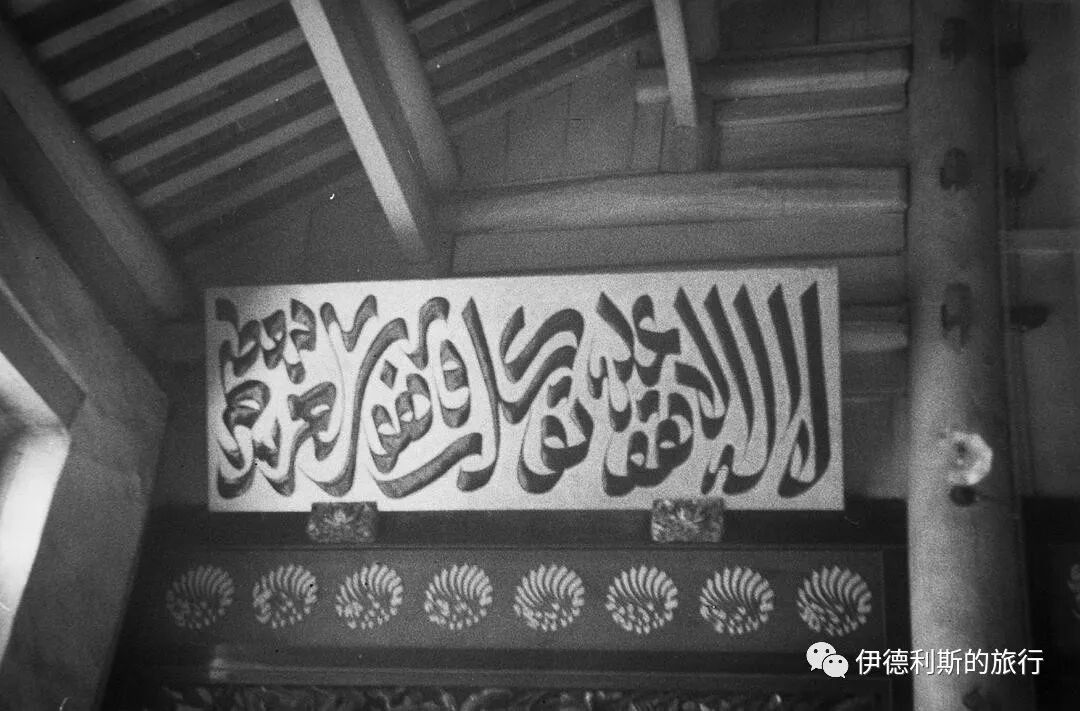
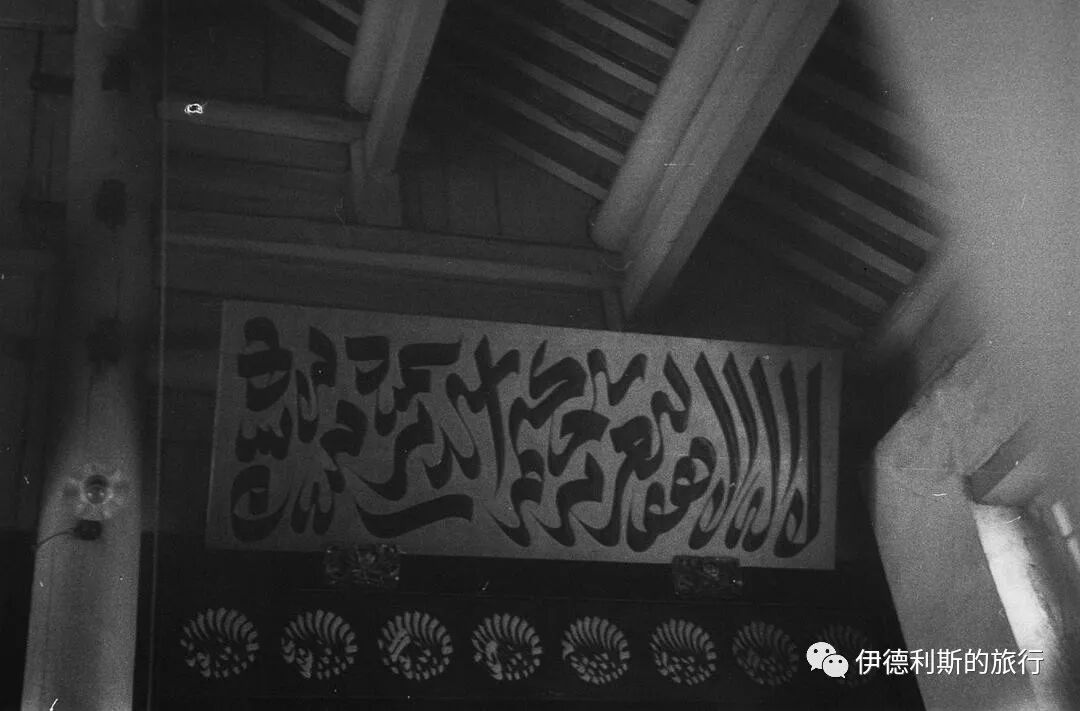
Calligraphy at the Tianjin South Mosque (some also believe it is the North Mosque).
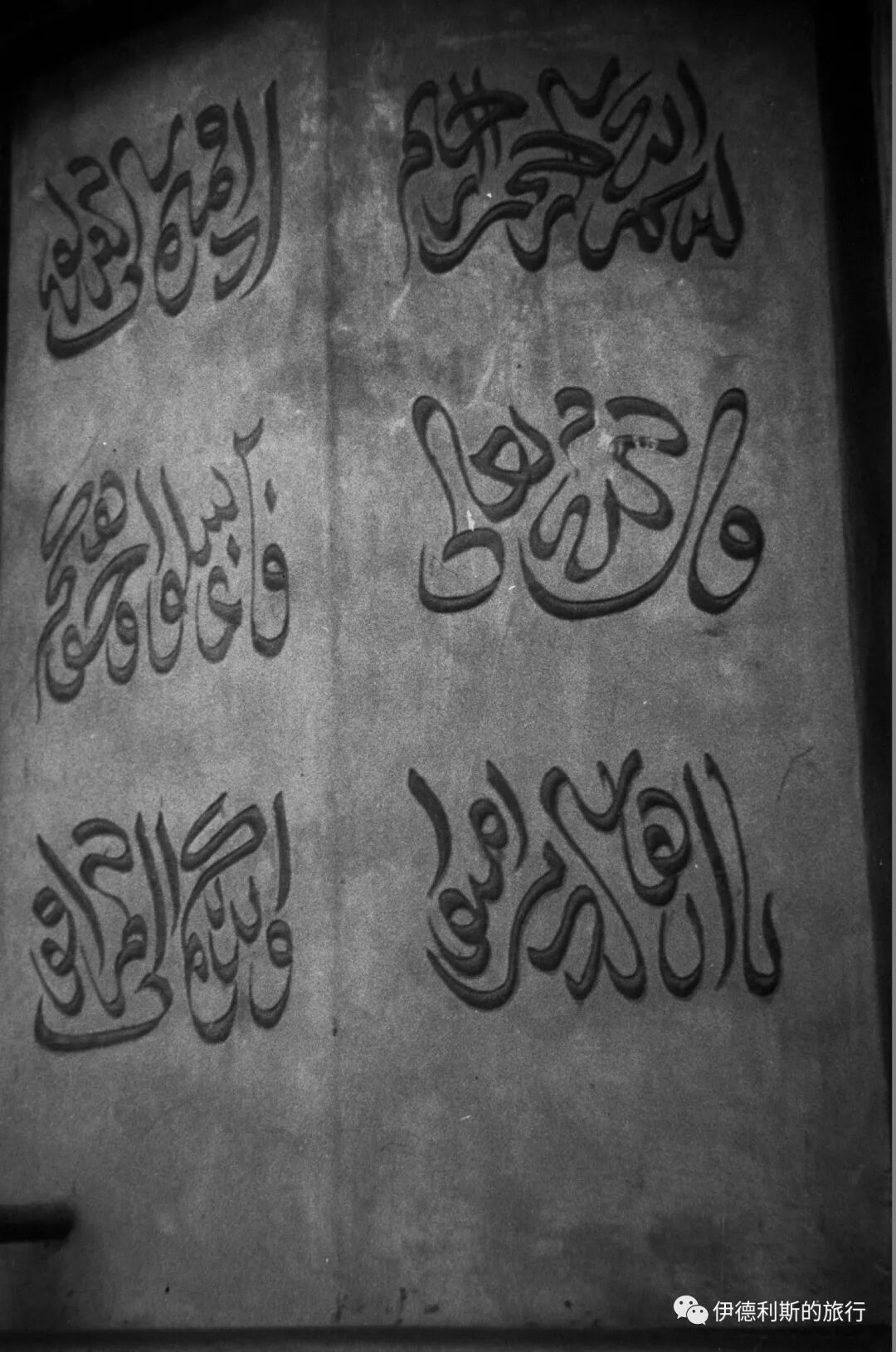
It is speculated to be the main hall of the Tianjin South Mosque, though some suggest it might be a mosque in Tongzhou or Changping.
Missionaries visiting the Tianjin North Mosque (Qingzhen Beidasi).
It is speculated to be a halal meat stall on Qingzhen North Lane, near the Tianjin South Mosque.
A snowy scene at a mosque in Tianjin in January 1937.
Old Photos of Hui Muslims in Northern China: Mosques, Cities and Community Life
Articles • ali2007fr posted the article • 0 comments • 173 views • 2026-05-18 01:58
Summary: Old Photos of Hui Muslims in Northern China: Mosques, Cities and Community Life is presented here as a firsthand travel account in clear English, beginning with this scene: Waseda University Library holds a large collection of old photos from the Greater Japan Muslim Association (Dai-Nippon Kaikyo Kyokai, or DNKK). The account keeps its focus on Hui Muslims, Old Photos, China Mosques while preserving the names, places, food, and historical details from the Chinese source.
Waseda University Library holds a large collection of old photos from the Greater Japan Muslim Association (Dai-Nippon Kaikyo Kyokai, or DNKK). The DNKK was a wartime Japanese research organization for Islam. It started in 1938 and closed in 1945. They traveled to China and took many old photos of Hui Muslims. You can view them all online now.
Address: https://www.wul.waseda.ac.jp/k ... t.pdf
Hohhot.
The Great Mosque (Qingzhen Dasi) of Hohhot, photographed in September 1940.
The Great Mosque of Hohhot was first built between the end of the Ming Dynasty and the beginning of the Qing Dynasty. It was expanded in 1789 (the 54th year of the Qianlong reign) and again in 1923.
Datong
The Datong Mosque in September 1940.
The History of Yuan (Yuan Shi, Annals of Emperor Taiding, Part 1) records that in 1324 (the first year of the Yuan Taiding reign), the emperor ordered the construction of mosques in Shangdu and Datong Road, granting 40,000 ingots of paper money. This makes the Datong Mosque one of only two mosques recorded as being built by imperial decree during the Yuan Dynasty. However, the Yuan Dynasty Datong Mosque was completely destroyed during the wars at the end of the Yuan period. The current mosque was rebuilt inside the Datong city walls during the Yongle reign of the Ming Dynasty. The main gate of the mosque was rebuilt in 1936 and features a typical Republic of China era style.
Zhangjiakou.
The Xiguan Mosque in Zhangjiakou in September 1940. It had plaques reading 'Recognize the Truth' (renshi yizhen) and 'Principles Thoroughly Understood' (xingli guanche). The current plaques are all new.
The Xiguan Mosque was built during the Yongzheng reign of the Qing Dynasty (1723-1735) with funds raised by Hui Muslim families named Xiao, Zheng, Song, and Wang, who had lived in the Xiabao area of Zhangjiakou since the Ming and Qing dynasties.
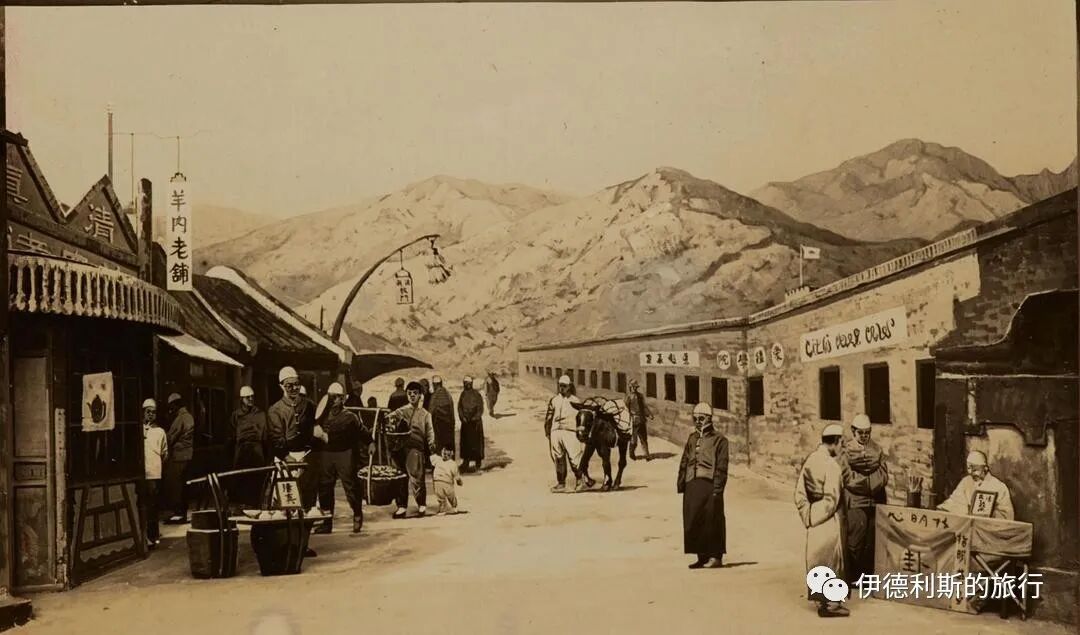
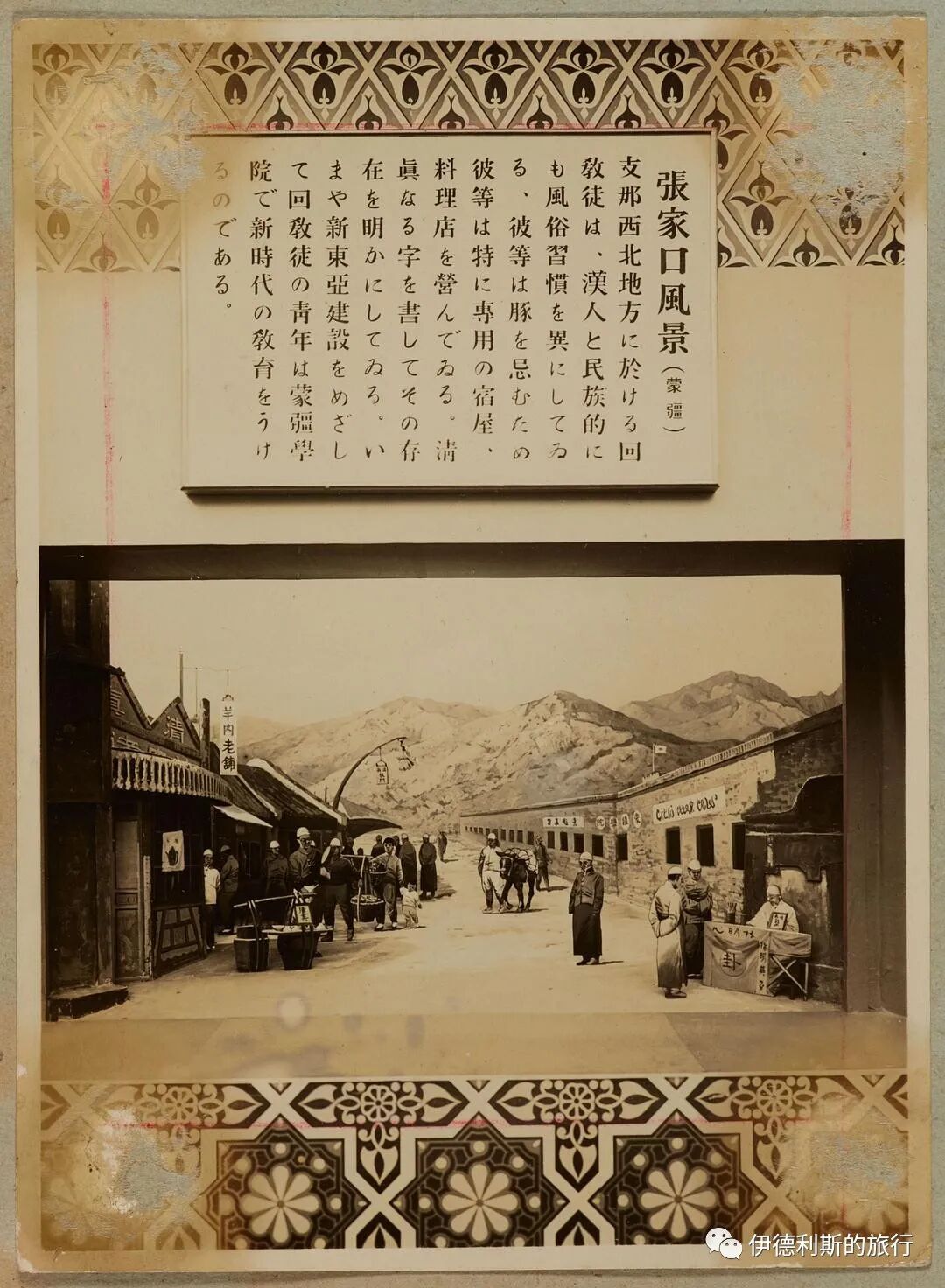
An old halal mutton shop in Zhangjiakou during the 1930s.
An exhibit board about Hui Muslims in Zhangjiakou, drawn by the Japanese.
Baotou
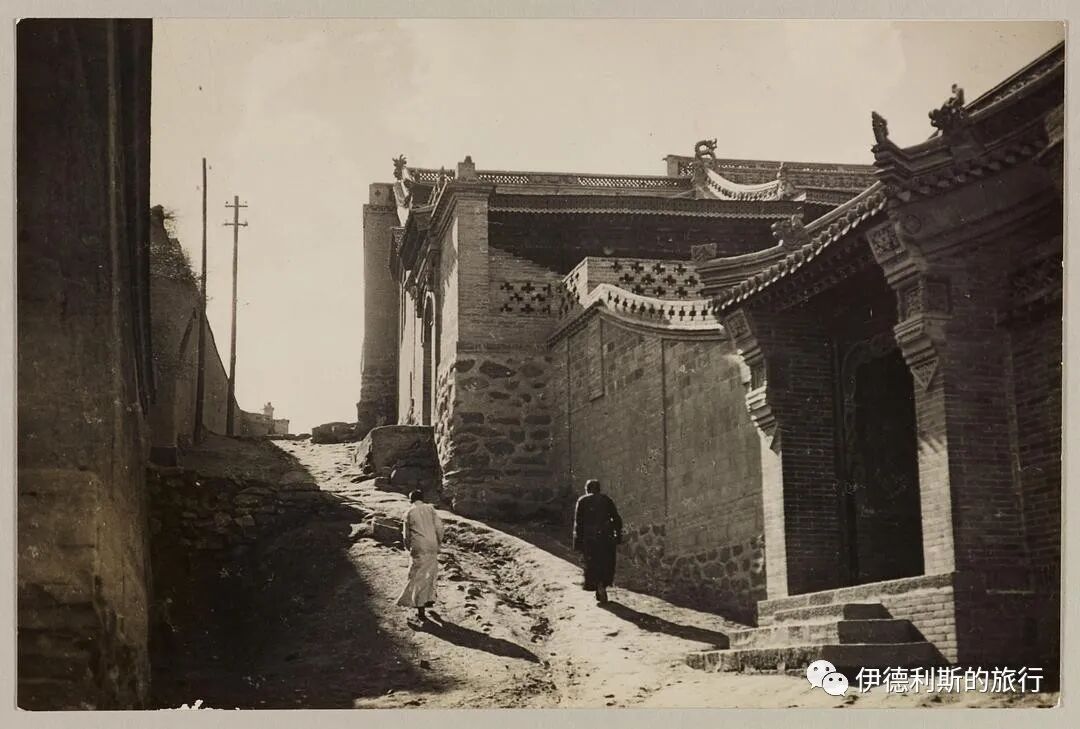
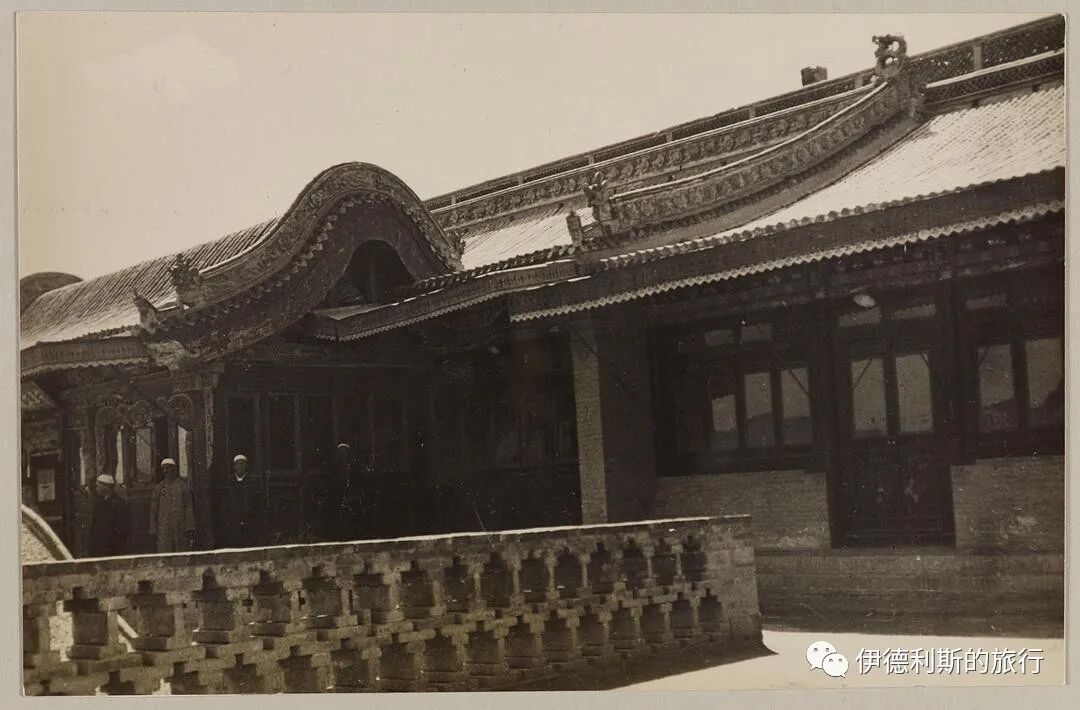
The Baotou Mosque in September 1940.
The Great Mosque of Baotou was first built in 1743. It was expanded in 1809, had a porch and gate added in 1833, and was expanded several times during the Republic of China era.
Harbin
The Tatar Mosque in Harbin during the 1930s.
The Tatar Mosque was first built in 1906 and rebuilt in 1923. The designer was Yu. P. Zhdanov.
The Tatar Mosque in Harbin in September 1940.
Daowai Mosque in Harbin, September 1940.
Daowai Mosque was originally called Harbin East Mosque or Binjiang Mosque. It was first built in 1897. In 1935, at the suggestion of Imam Ma Songting, the head of the mosque, Bai Yusheng, raised funds to move the site and build a main prayer hall featuring Roman columns and Russian-style architecture.
Harbin Mosque in the 1930s.
Shenyang.
Mosques in Shenyang and Dalian in the 1930s.
Fengtian Mosque in September 1940. I am not sure which mosque this is; it does not look like the Shenyang South Mosque.
Fengtian Women's Mosque in September 1940.
Changchun.
Changtong Road Mosque in Changchun, June 1941. Changtong Road Mosque was first built in 1824 and expanded several times in 1852, 1864, and 1889.
Kaiyuan.
Kaiyuan Mosque in the 1930s. Kaiyuan Old City Mosque is located inside the east gate of Kaiyuan Old City. It was first built in 1406 (the fourth year of the Yongle reign of the Ming Dynasty) and is the oldest mosque in Northeast China.
Siping.
Siping Mosque in September 1940.
Other regions.
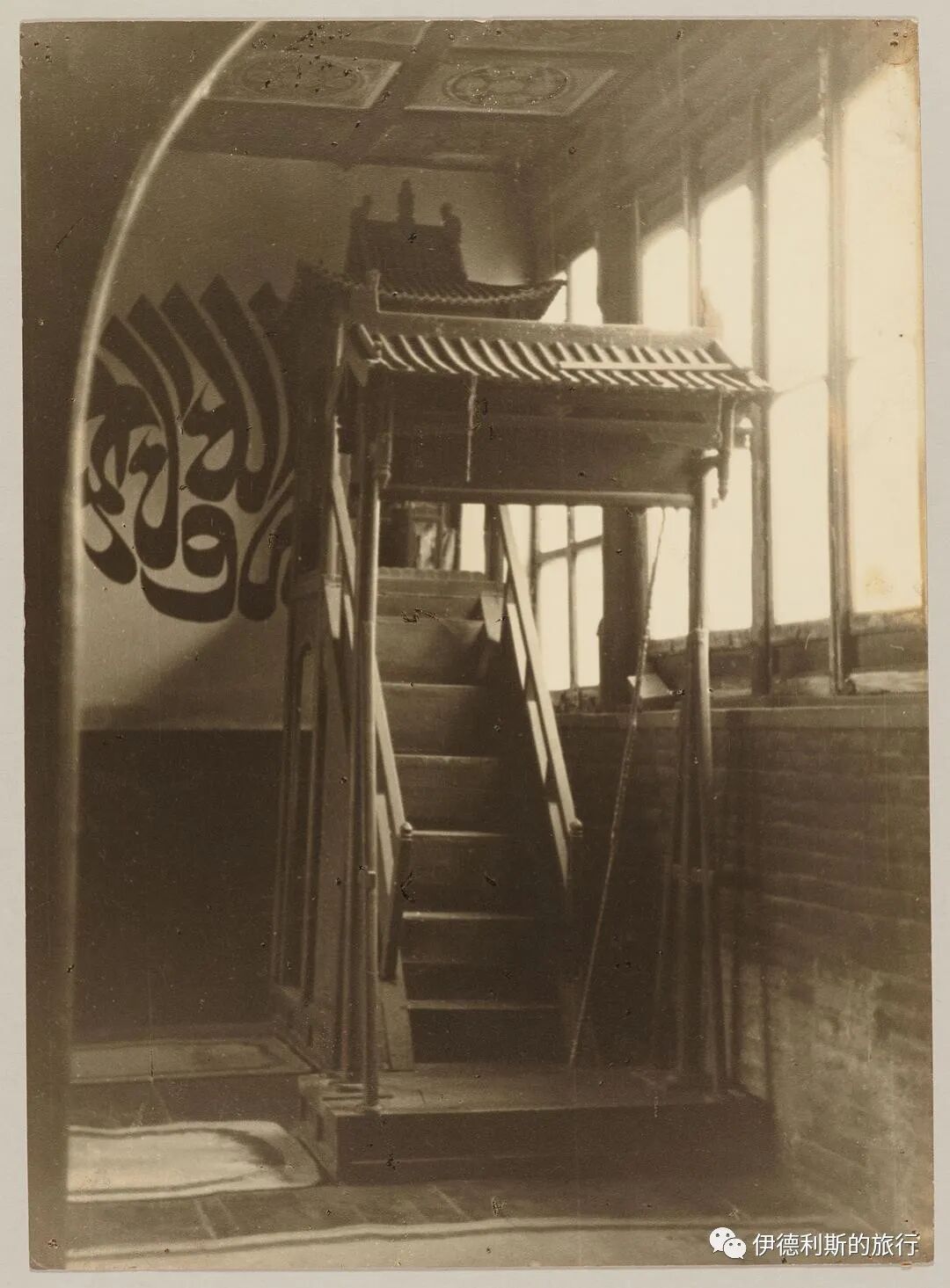
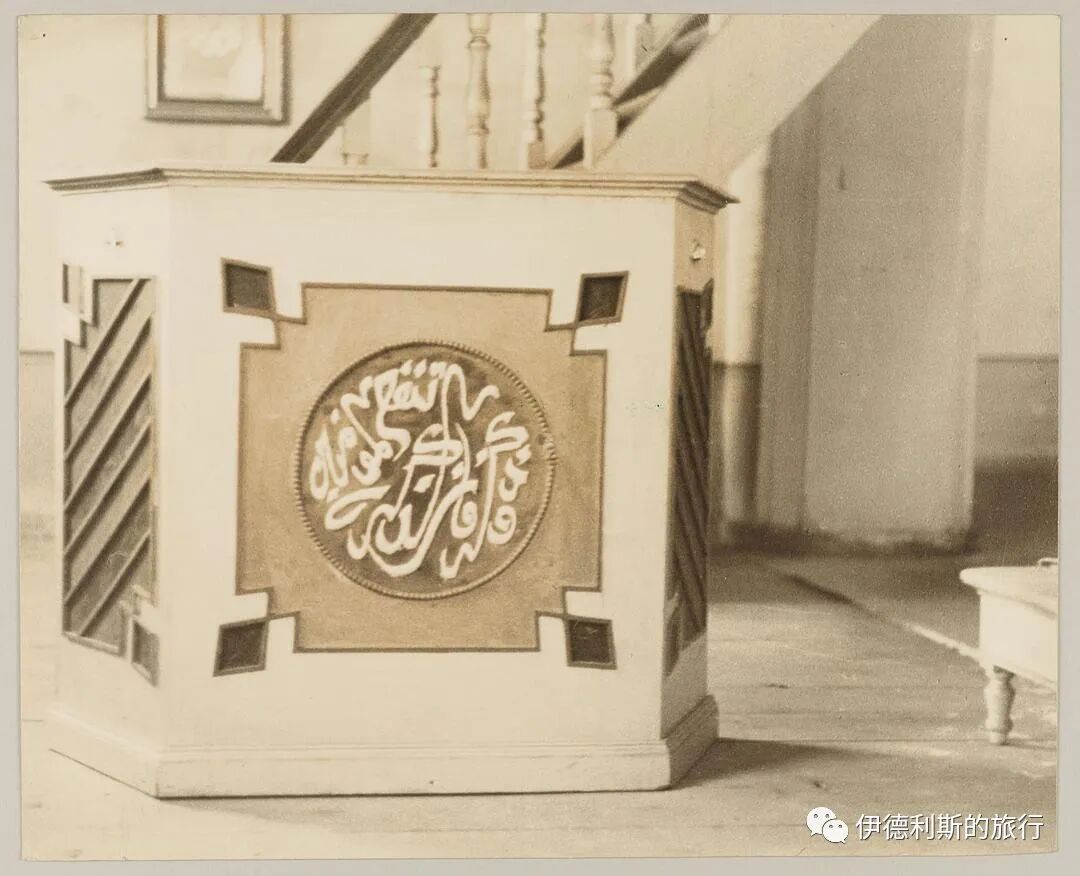
A pulpit (minbar), location unknown.
A mosque, location unknown.
Writing calligraphy, June 1941.
A scripture book.
A mosque in the 1930s. view all
Summary: Old Photos of Hui Muslims in Northern China: Mosques, Cities and Community Life is presented here as a firsthand travel account in clear English, beginning with this scene: Waseda University Library holds a large collection of old photos from the Greater Japan Muslim Association (Dai-Nippon Kaikyo Kyokai, or DNKK). The account keeps its focus on Hui Muslims, Old Photos, China Mosques while preserving the names, places, food, and historical details from the Chinese source.
Waseda University Library holds a large collection of old photos from the Greater Japan Muslim Association (Dai-Nippon Kaikyo Kyokai, or DNKK). The DNKK was a wartime Japanese research organization for Islam. It started in 1938 and closed in 1945. They traveled to China and took many old photos of Hui Muslims. You can view them all online now.
Address: https://www.wul.waseda.ac.jp/k ... t.pdf
Hohhot.
The Great Mosque (Qingzhen Dasi) of Hohhot, photographed in September 1940.
The Great Mosque of Hohhot was first built between the end of the Ming Dynasty and the beginning of the Qing Dynasty. It was expanded in 1789 (the 54th year of the Qianlong reign) and again in 1923.
Datong
The Datong Mosque in September 1940.
The History of Yuan (Yuan Shi, Annals of Emperor Taiding, Part 1) records that in 1324 (the first year of the Yuan Taiding reign), the emperor ordered the construction of mosques in Shangdu and Datong Road, granting 40,000 ingots of paper money. This makes the Datong Mosque one of only two mosques recorded as being built by imperial decree during the Yuan Dynasty. However, the Yuan Dynasty Datong Mosque was completely destroyed during the wars at the end of the Yuan period. The current mosque was rebuilt inside the Datong city walls during the Yongle reign of the Ming Dynasty. The main gate of the mosque was rebuilt in 1936 and features a typical Republic of China era style.
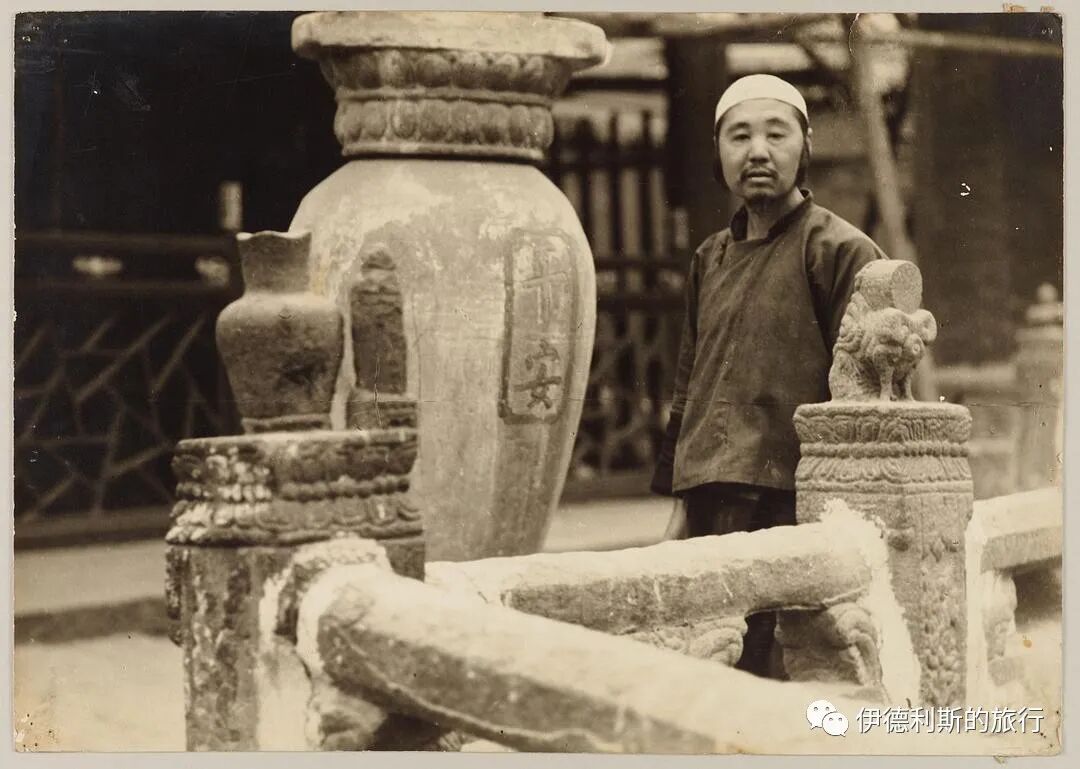
Zhangjiakou.
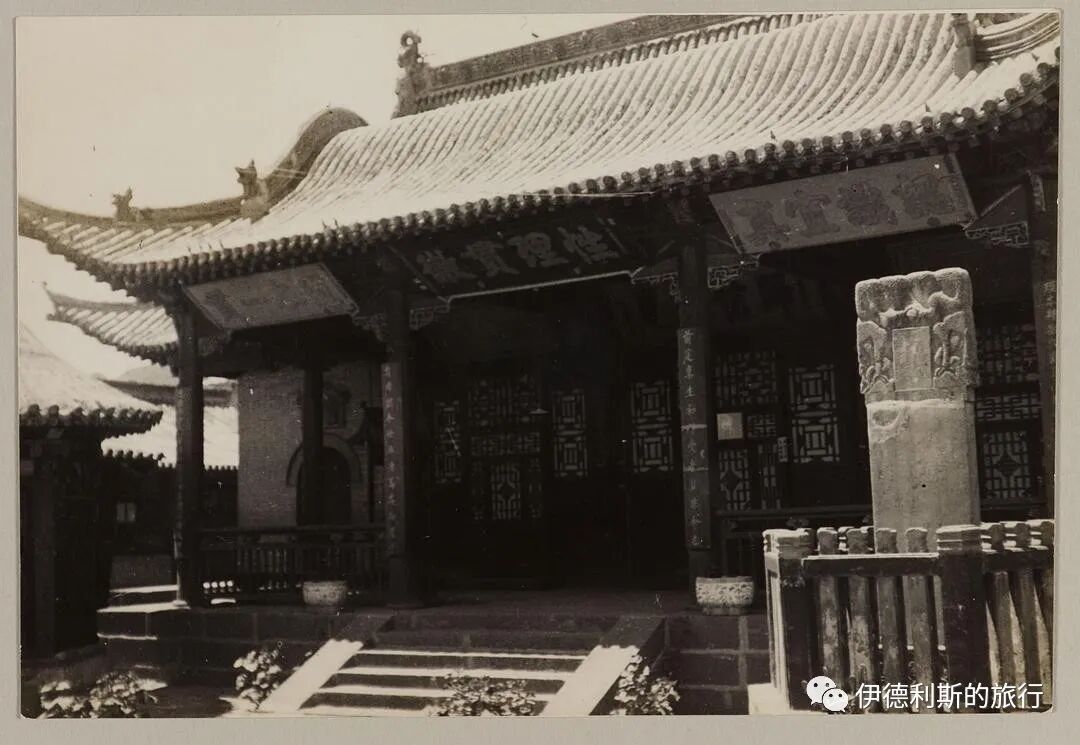
The Xiguan Mosque in Zhangjiakou in September 1940. It had plaques reading 'Recognize the Truth' (renshi yizhen) and 'Principles Thoroughly Understood' (xingli guanche). The current plaques are all new.
The Xiguan Mosque was built during the Yongzheng reign of the Qing Dynasty (1723-1735) with funds raised by Hui Muslim families named Xiao, Zheng, Song, and Wang, who had lived in the Xiabao area of Zhangjiakou since the Ming and Qing dynasties.
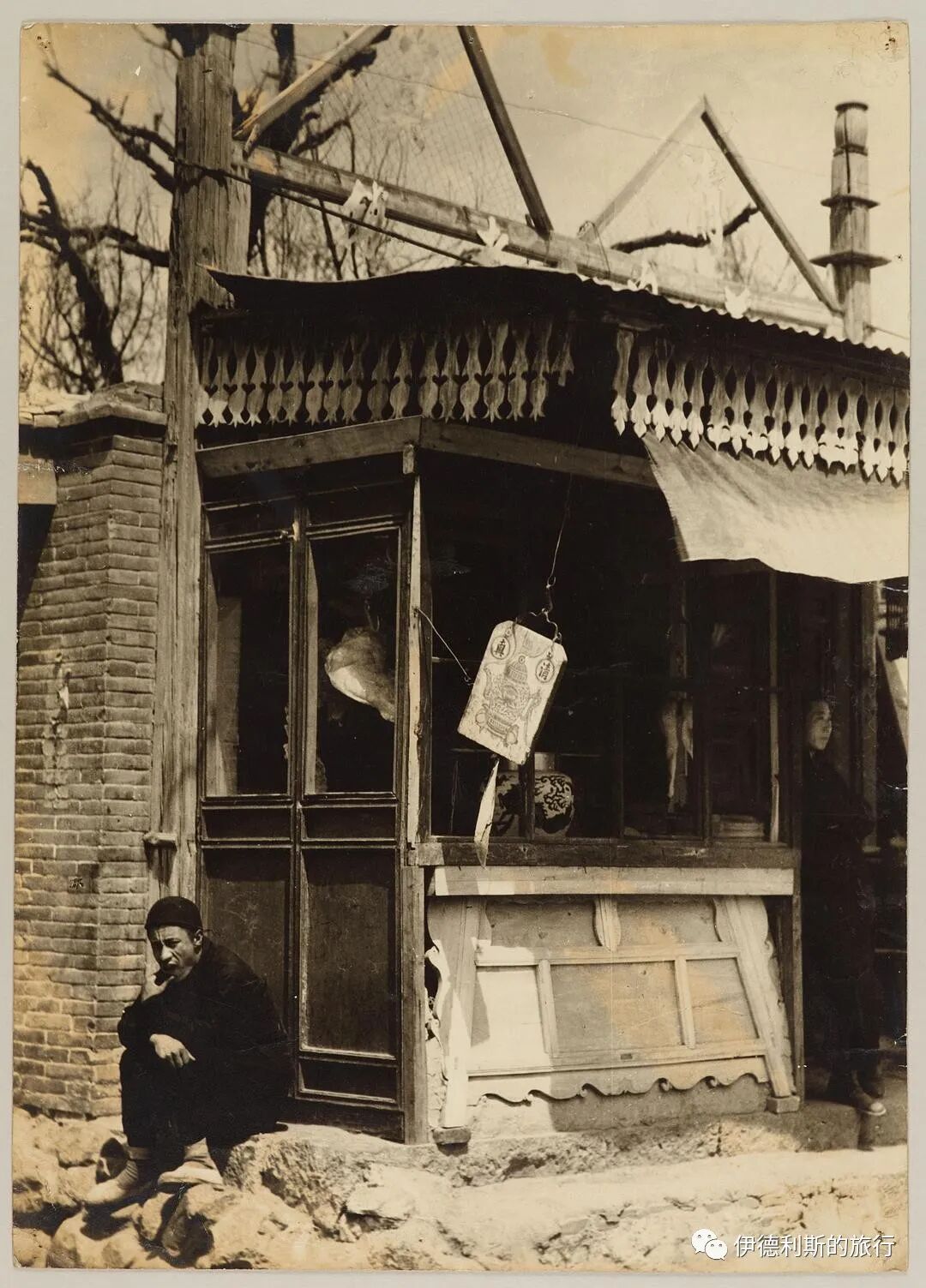
An old halal mutton shop in Zhangjiakou during the 1930s.
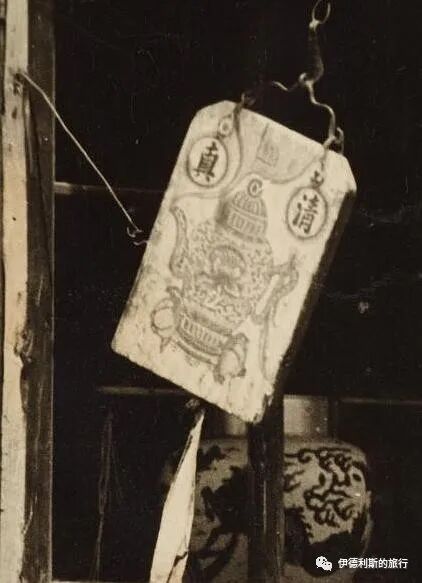
An exhibit board about Hui Muslims in Zhangjiakou, drawn by the Japanese.
Baotou
The Baotou Mosque in September 1940.
The Great Mosque of Baotou was first built in 1743. It was expanded in 1809, had a porch and gate added in 1833, and was expanded several times during the Republic of China era.
Harbin
The Tatar Mosque in Harbin during the 1930s.
The Tatar Mosque was first built in 1906 and rebuilt in 1923. The designer was Yu. P. Zhdanov.
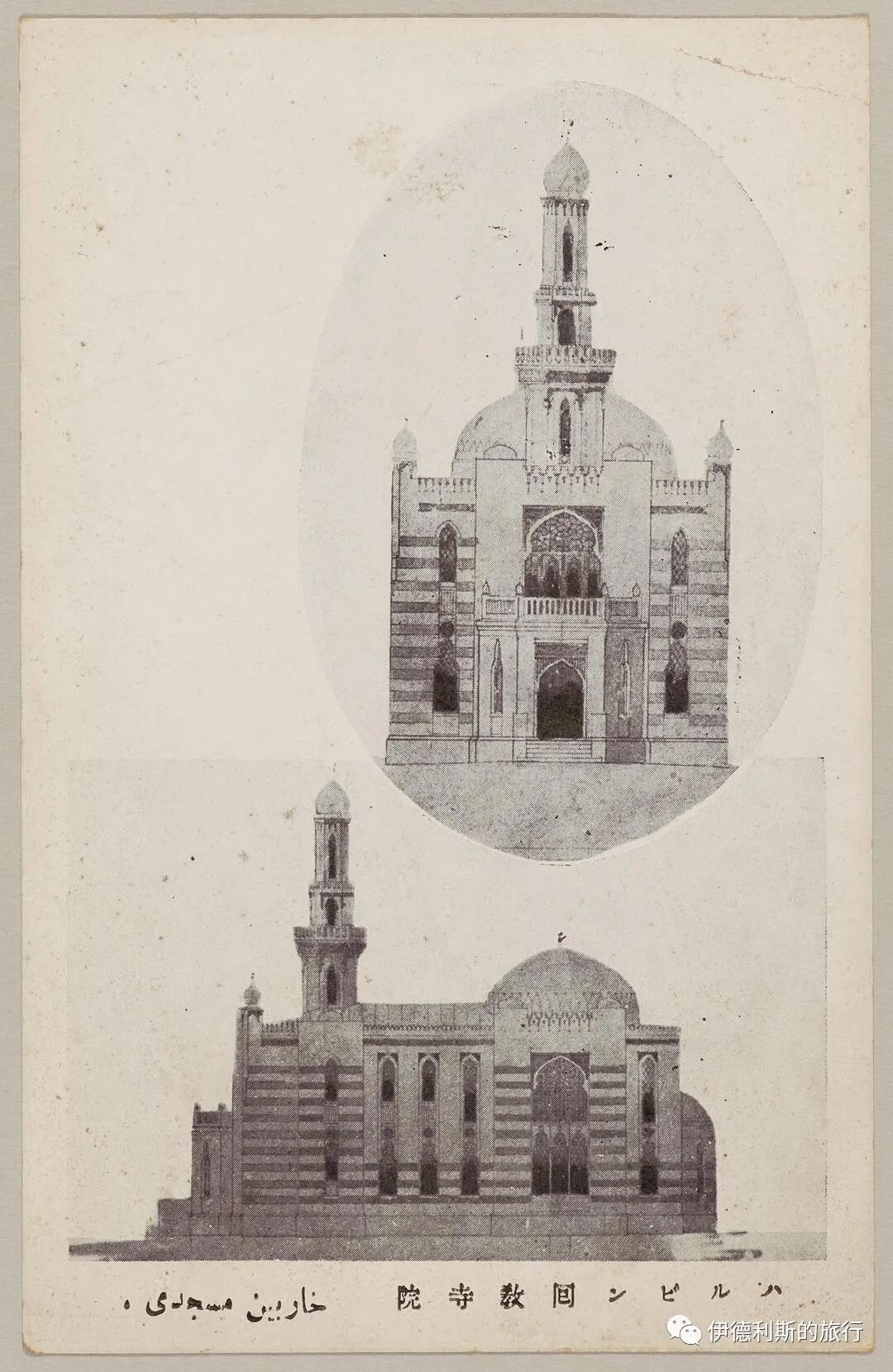
The Tatar Mosque in Harbin in September 1940.
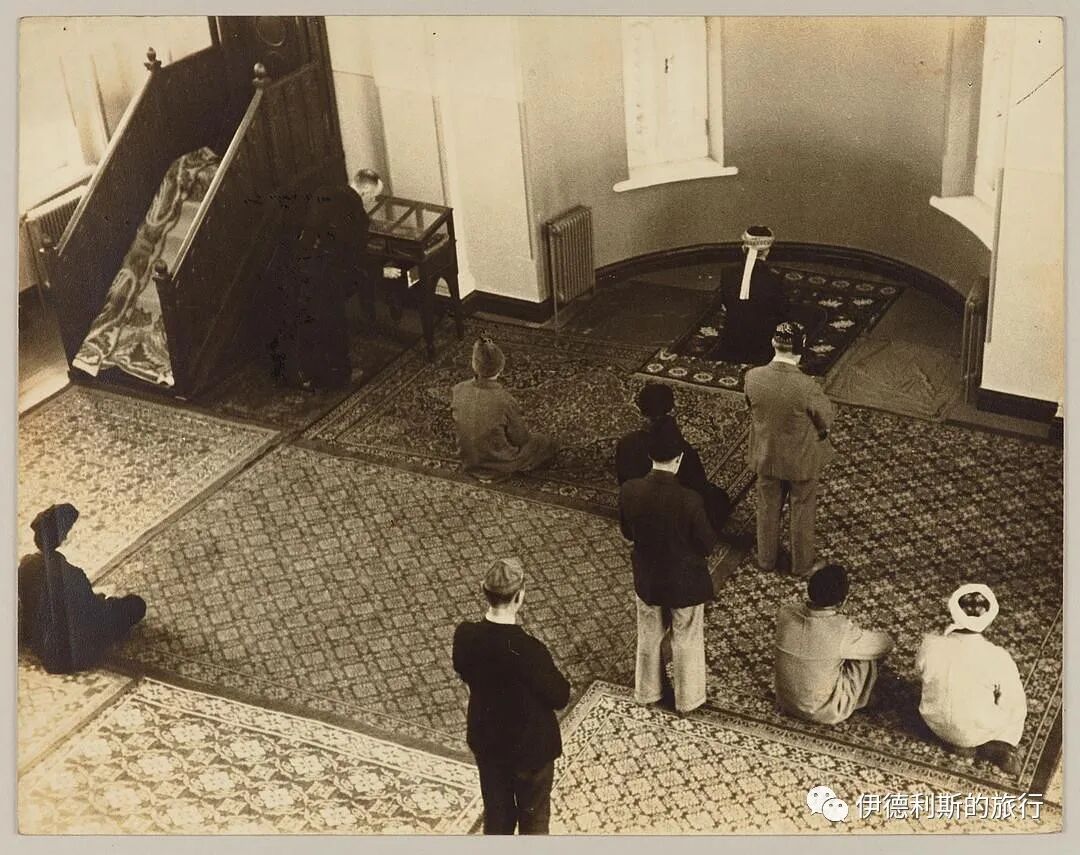
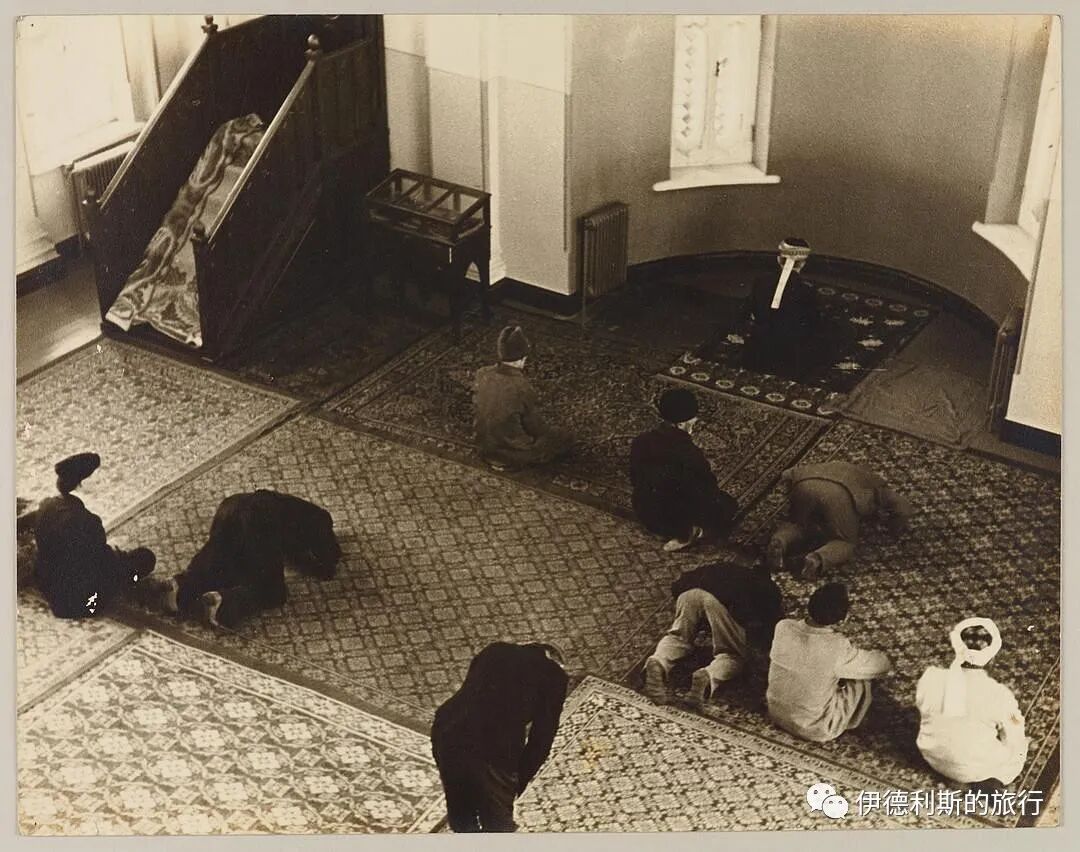
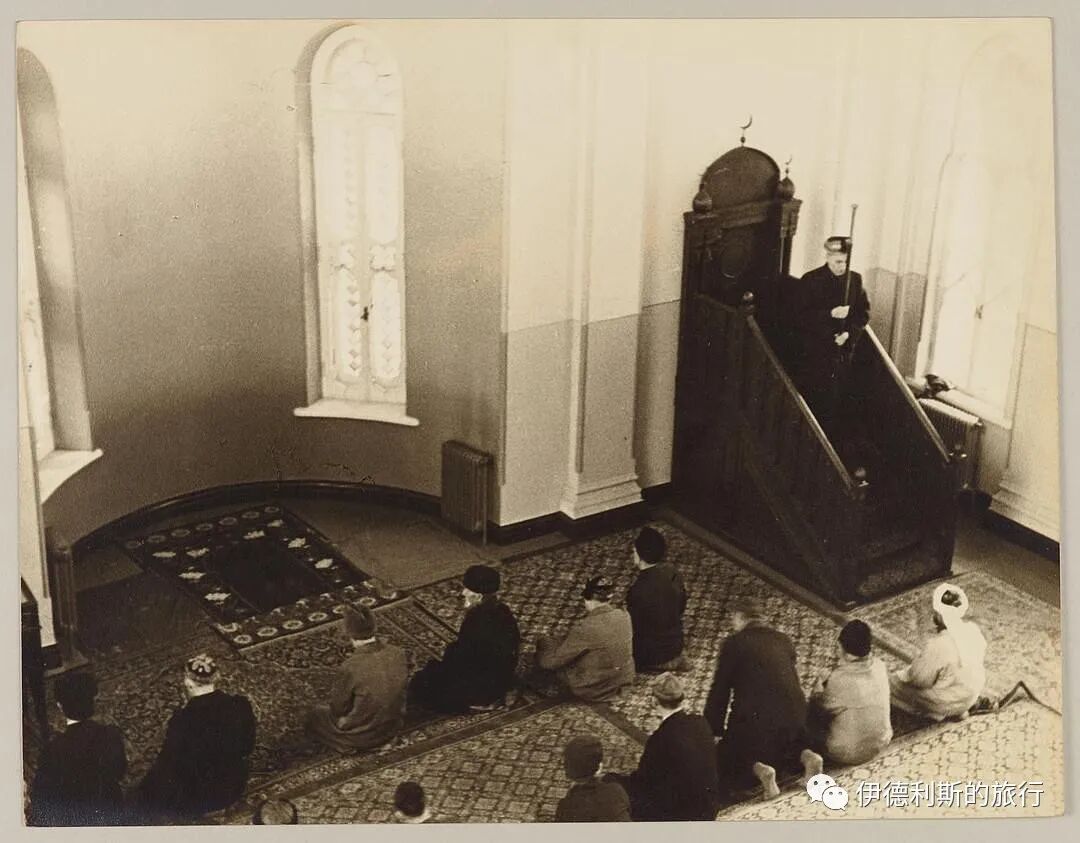
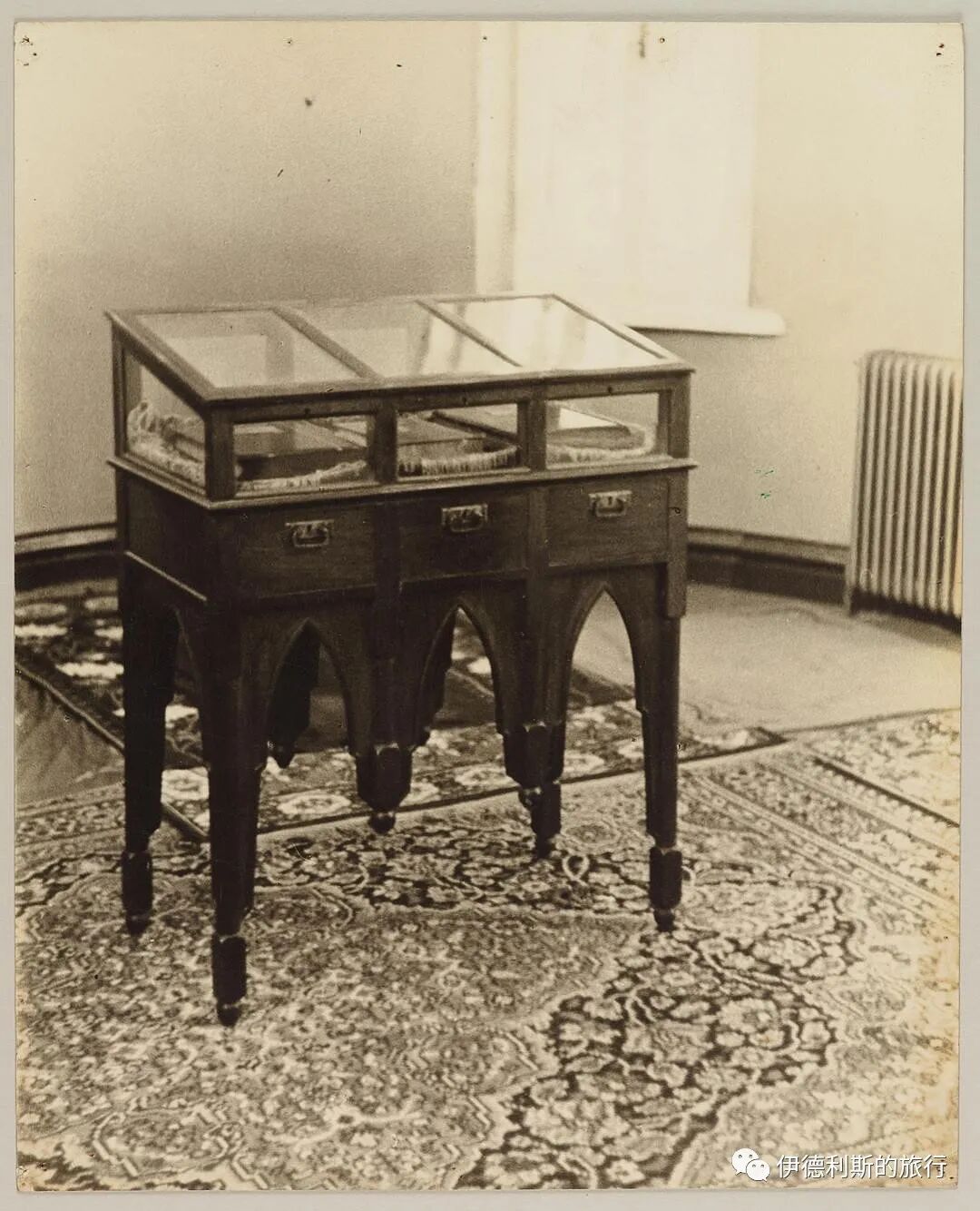
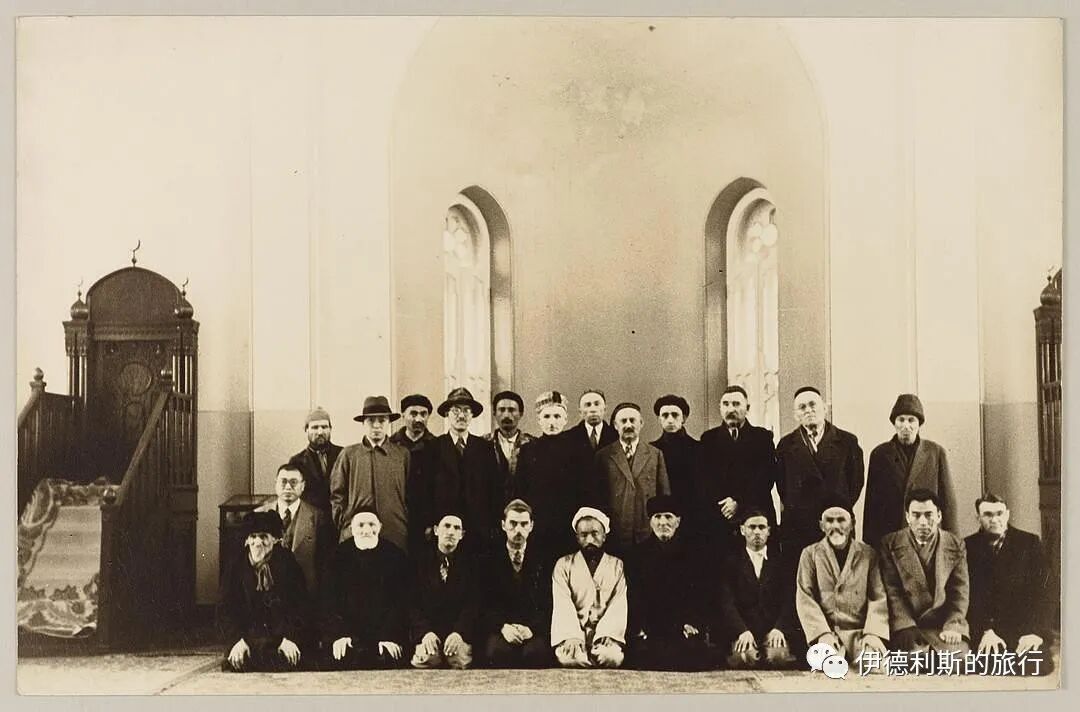
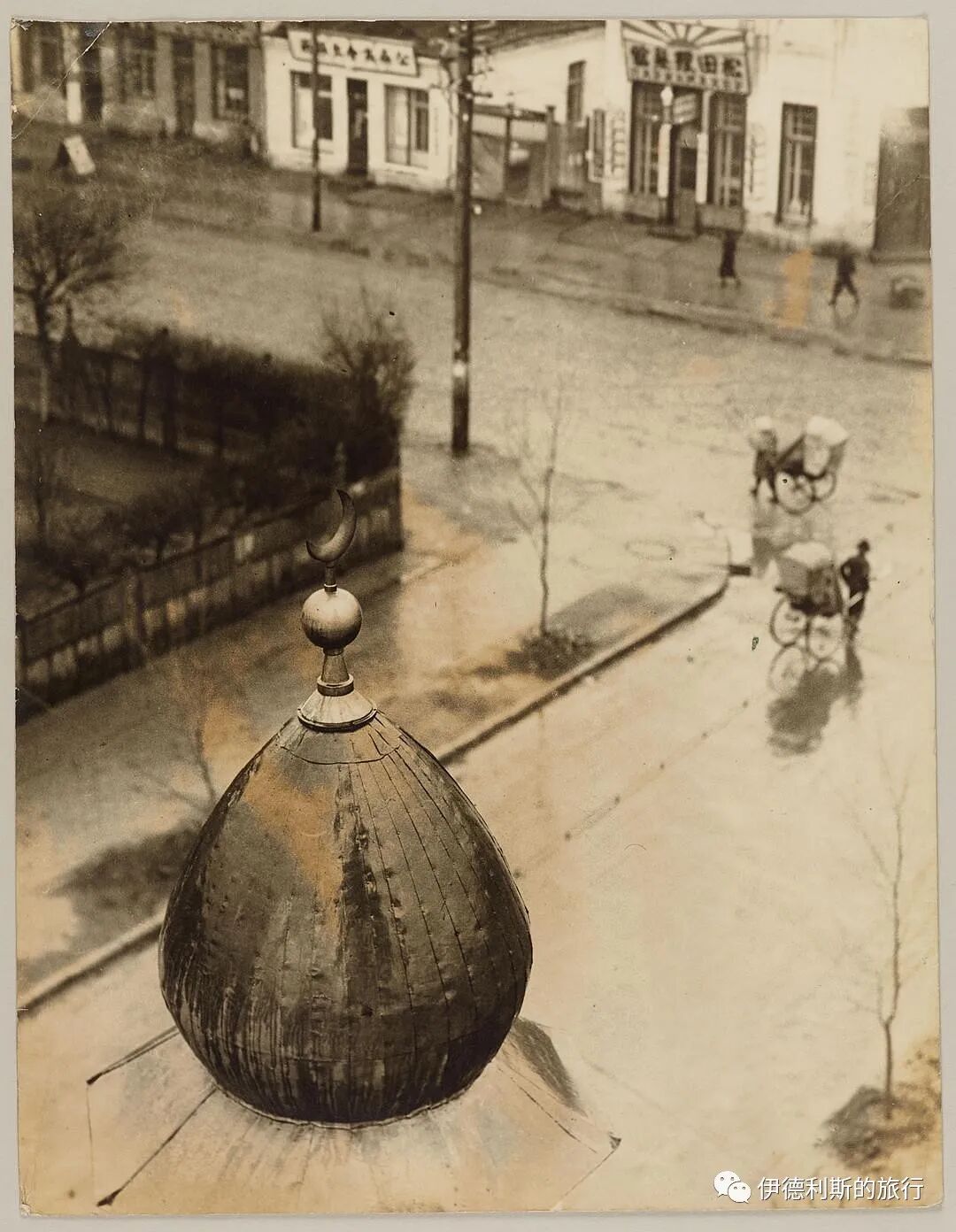
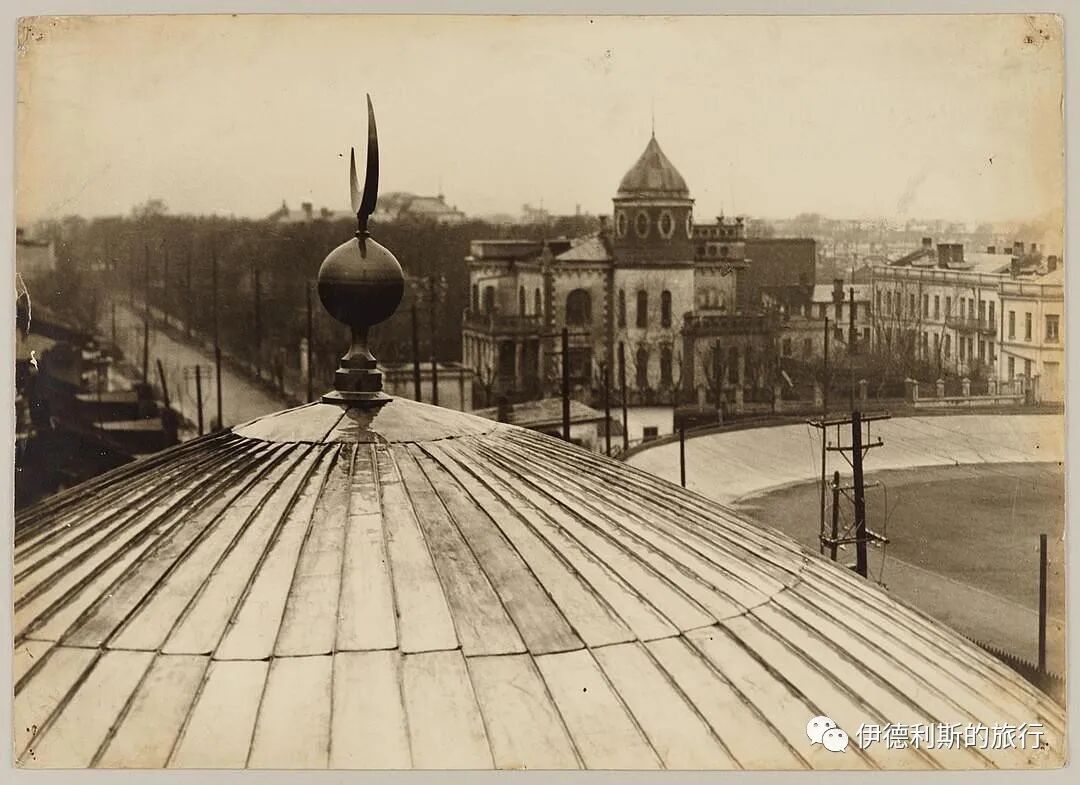
Daowai Mosque in Harbin, September 1940.
Daowai Mosque was originally called Harbin East Mosque or Binjiang Mosque. It was first built in 1897. In 1935, at the suggestion of Imam Ma Songting, the head of the mosque, Bai Yusheng, raised funds to move the site and build a main prayer hall featuring Roman columns and Russian-style architecture.
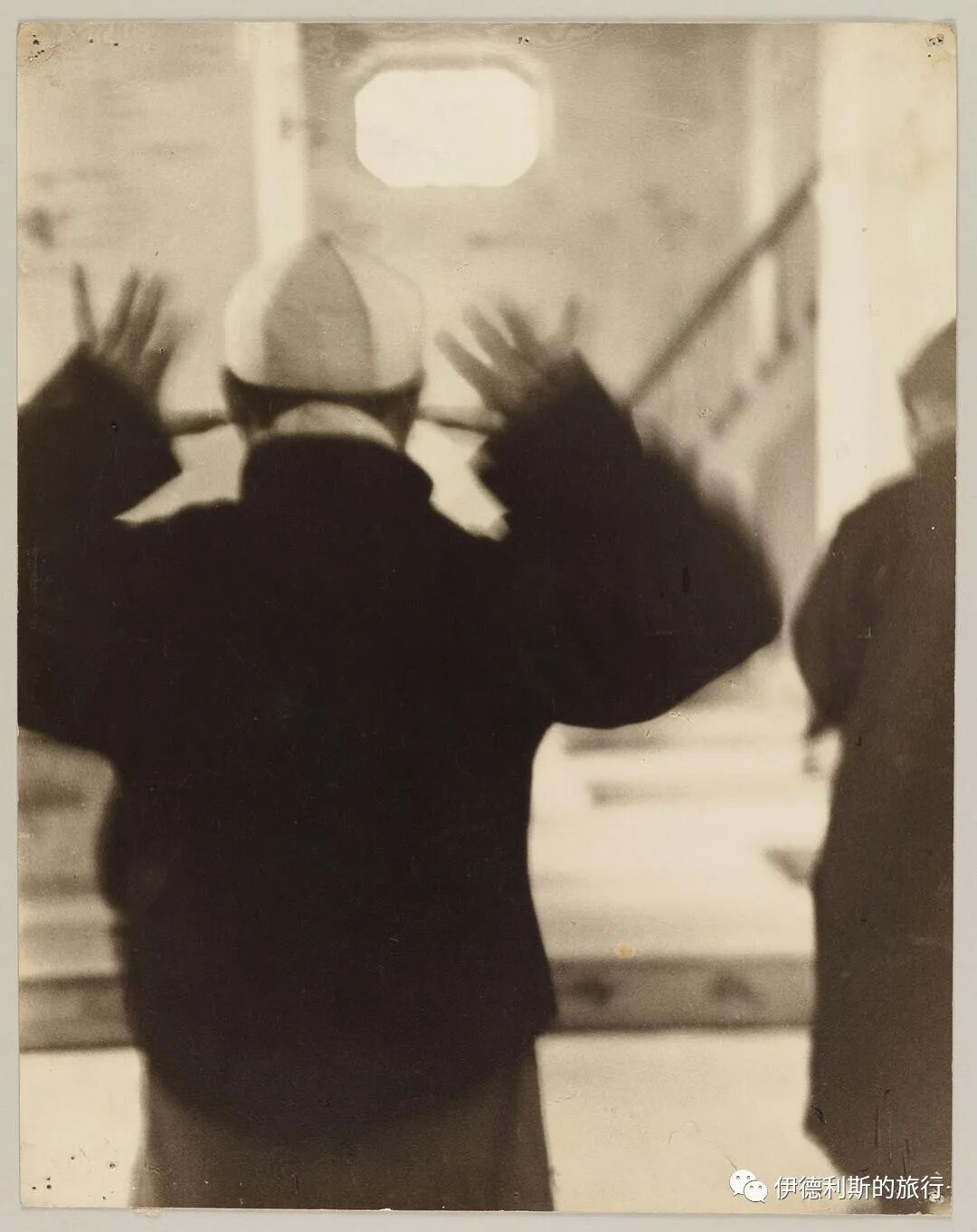
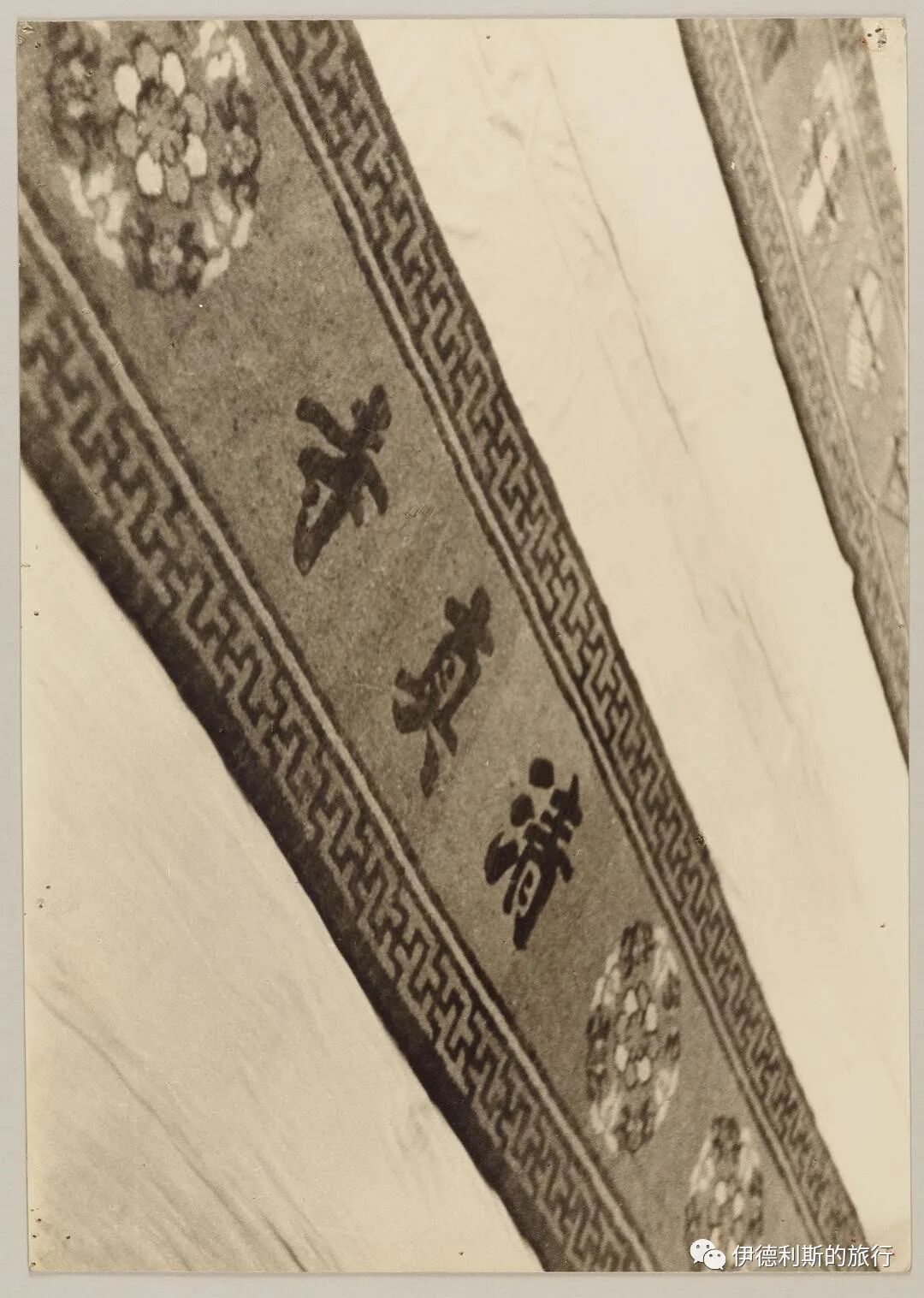
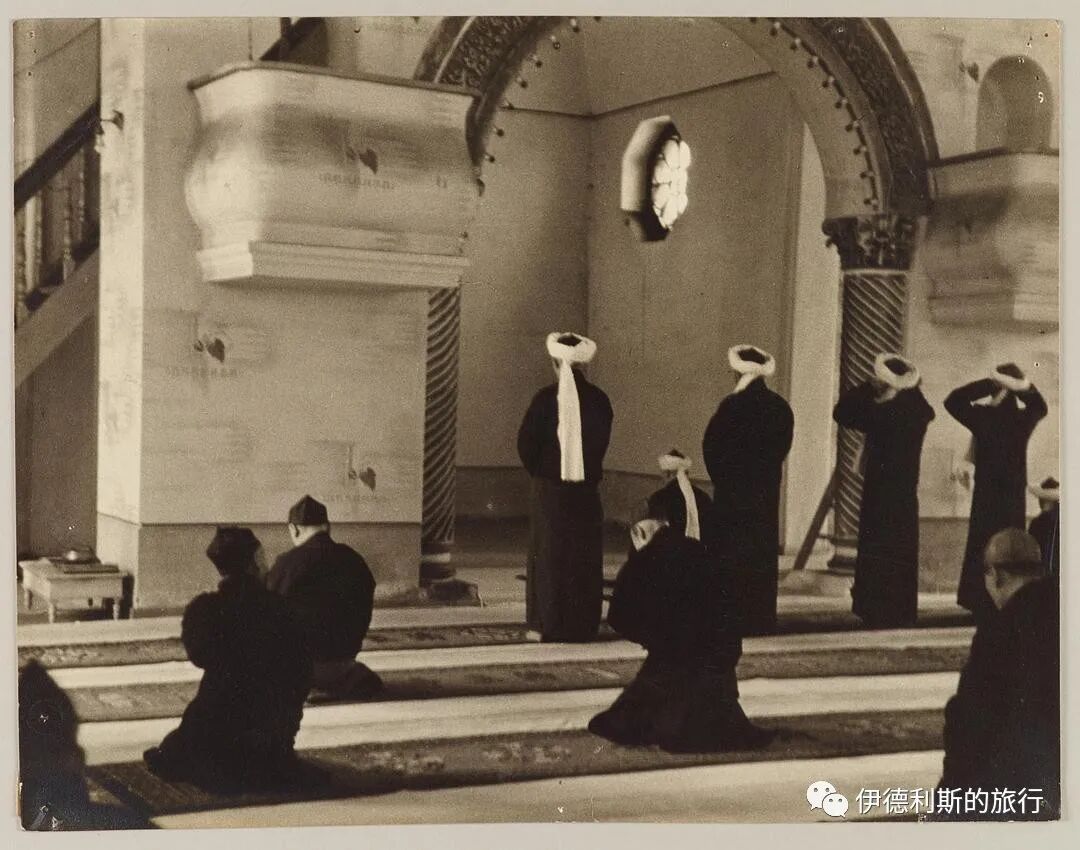
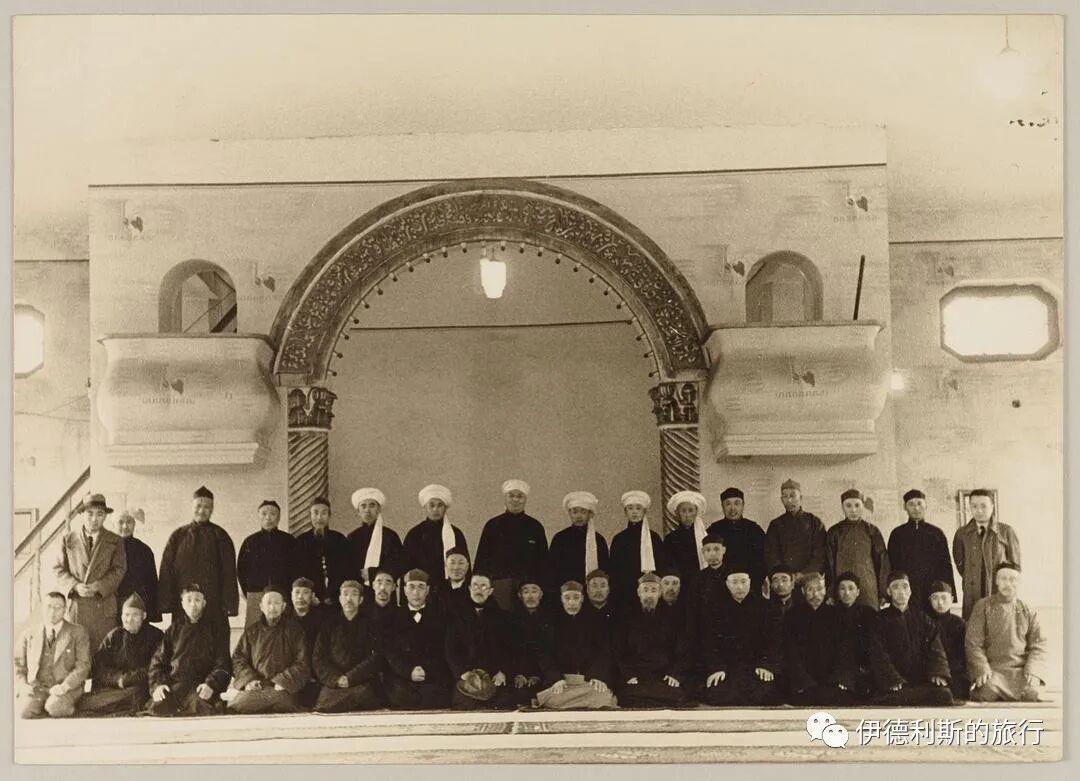
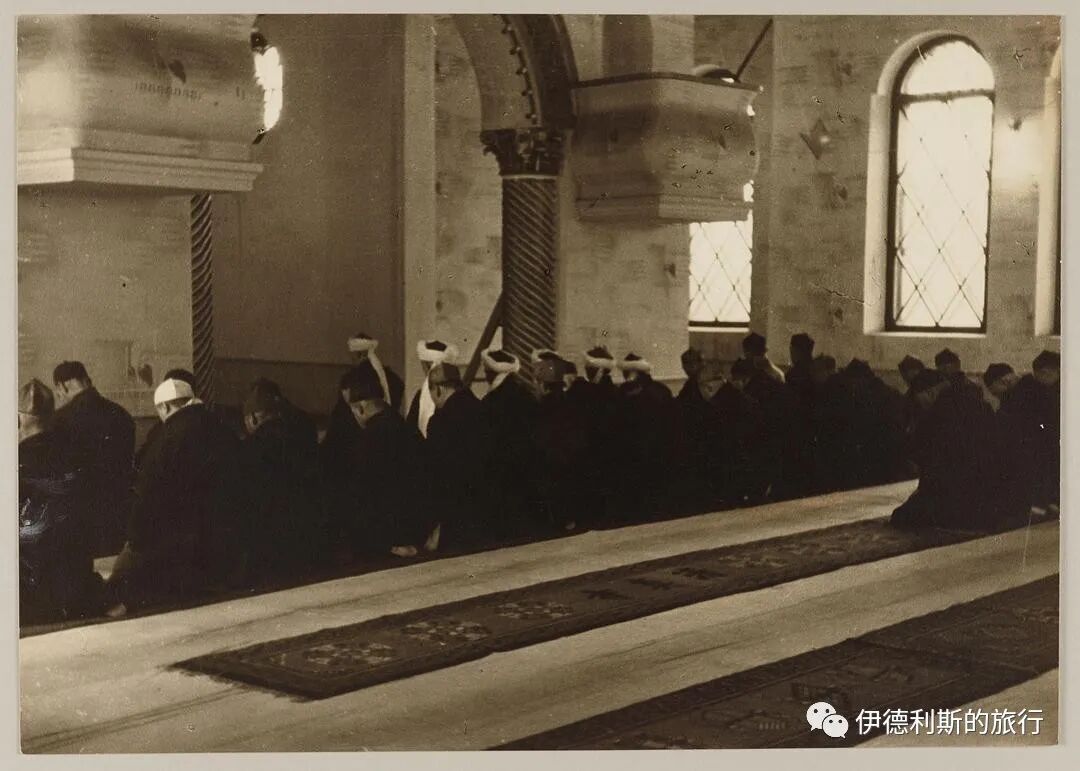
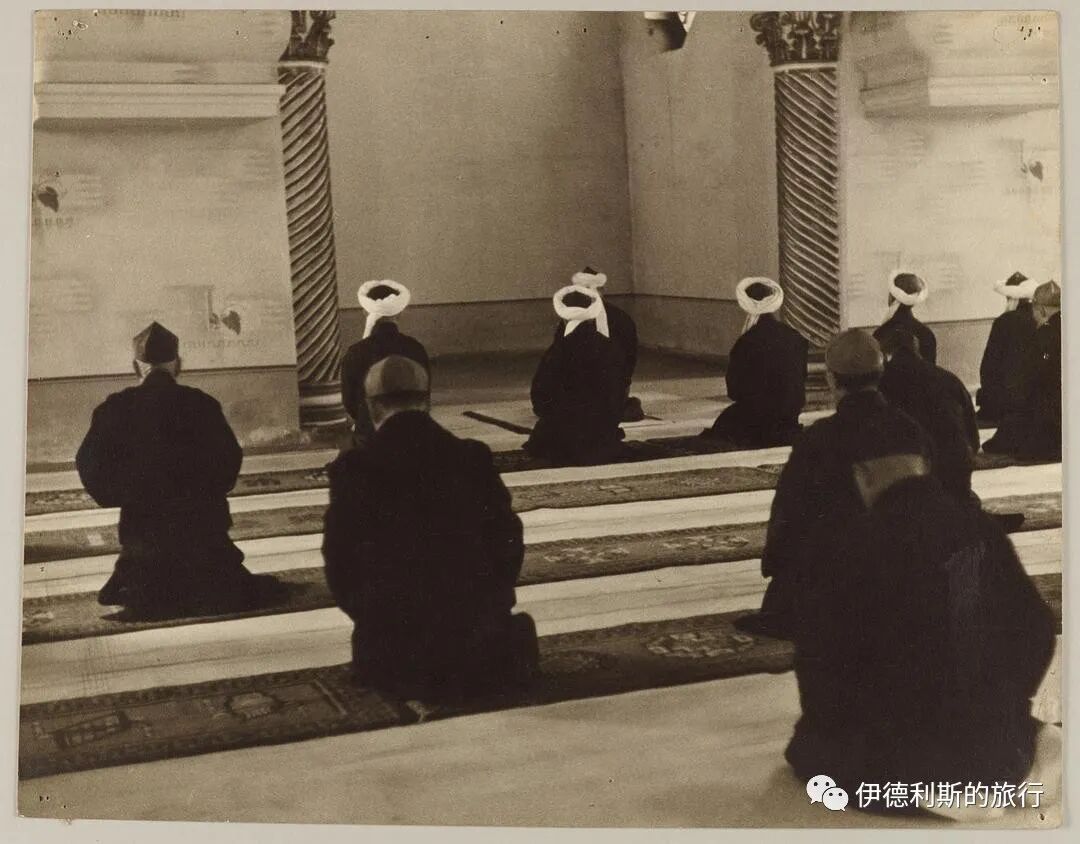
Harbin Mosque in the 1930s.
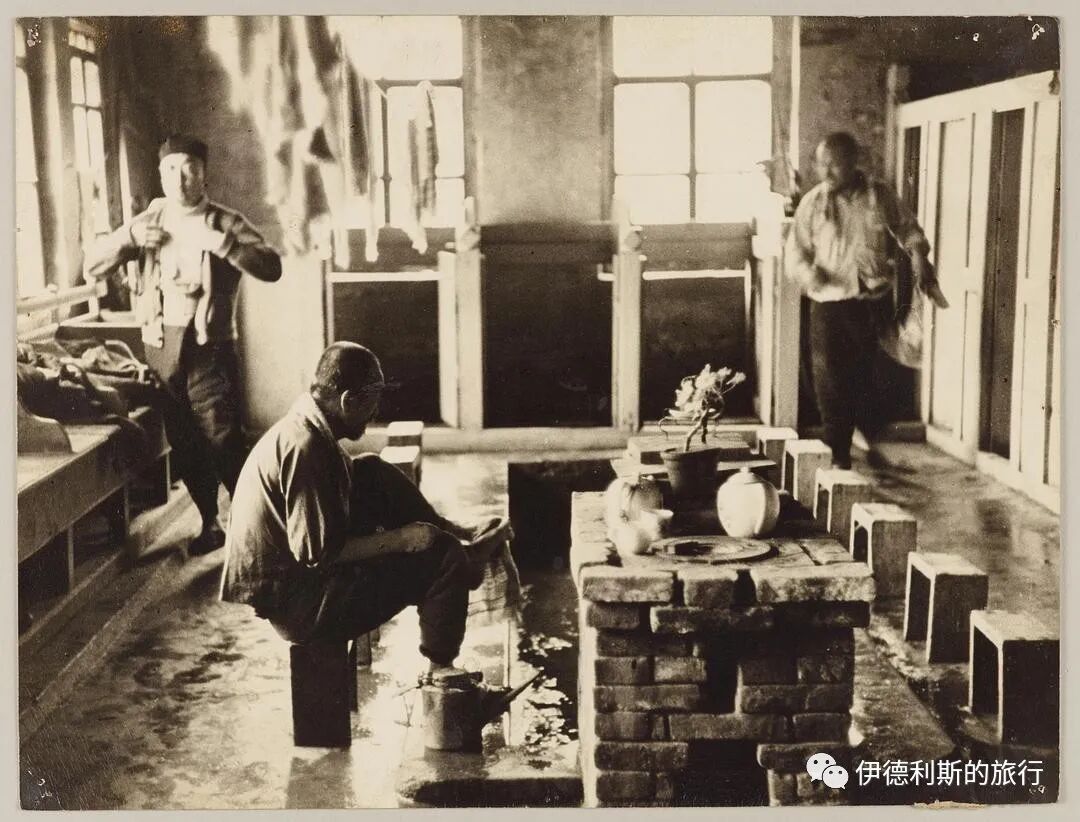
Shenyang.
Mosques in Shenyang and Dalian in the 1930s.
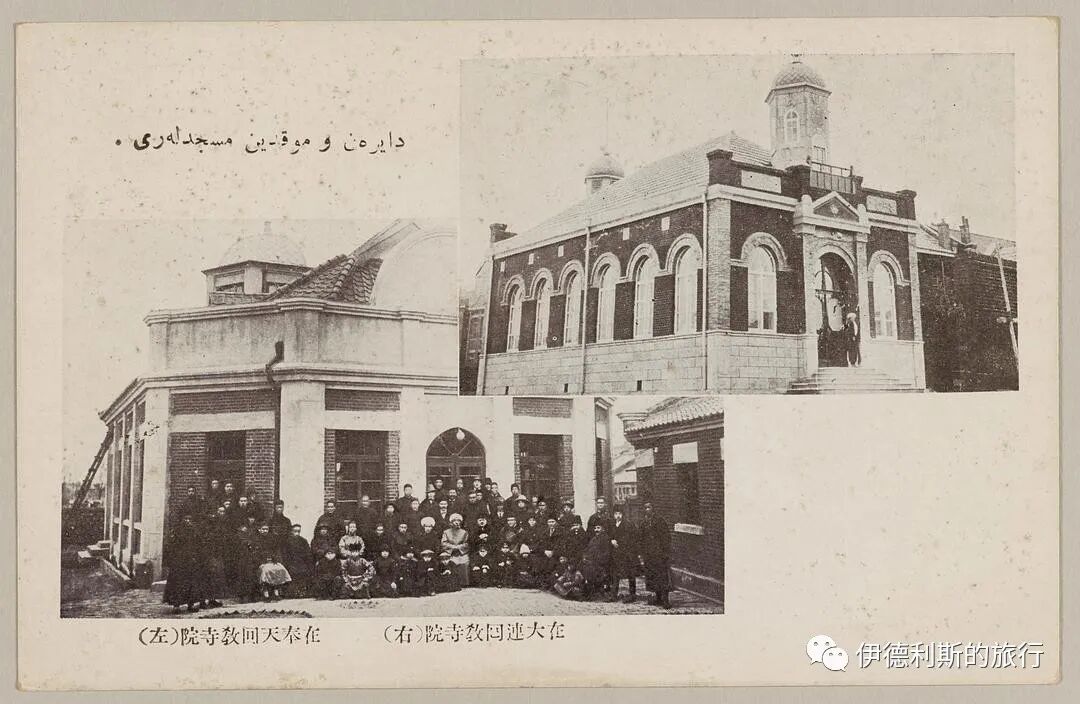
Fengtian Mosque in September 1940. I am not sure which mosque this is; it does not look like the Shenyang South Mosque.
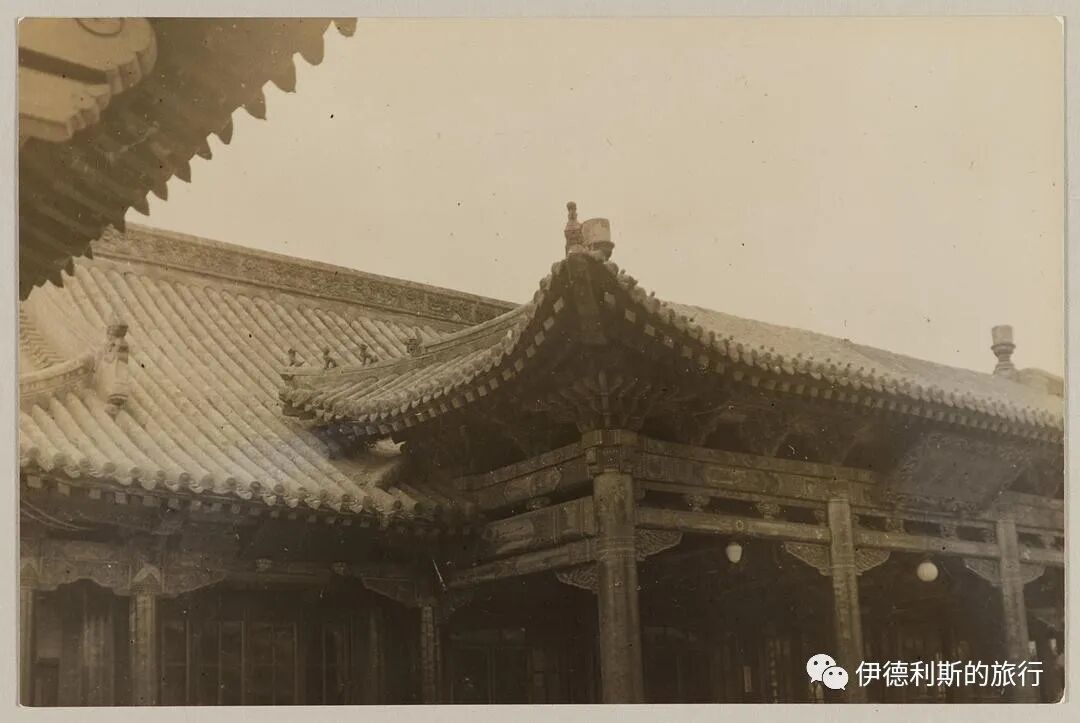
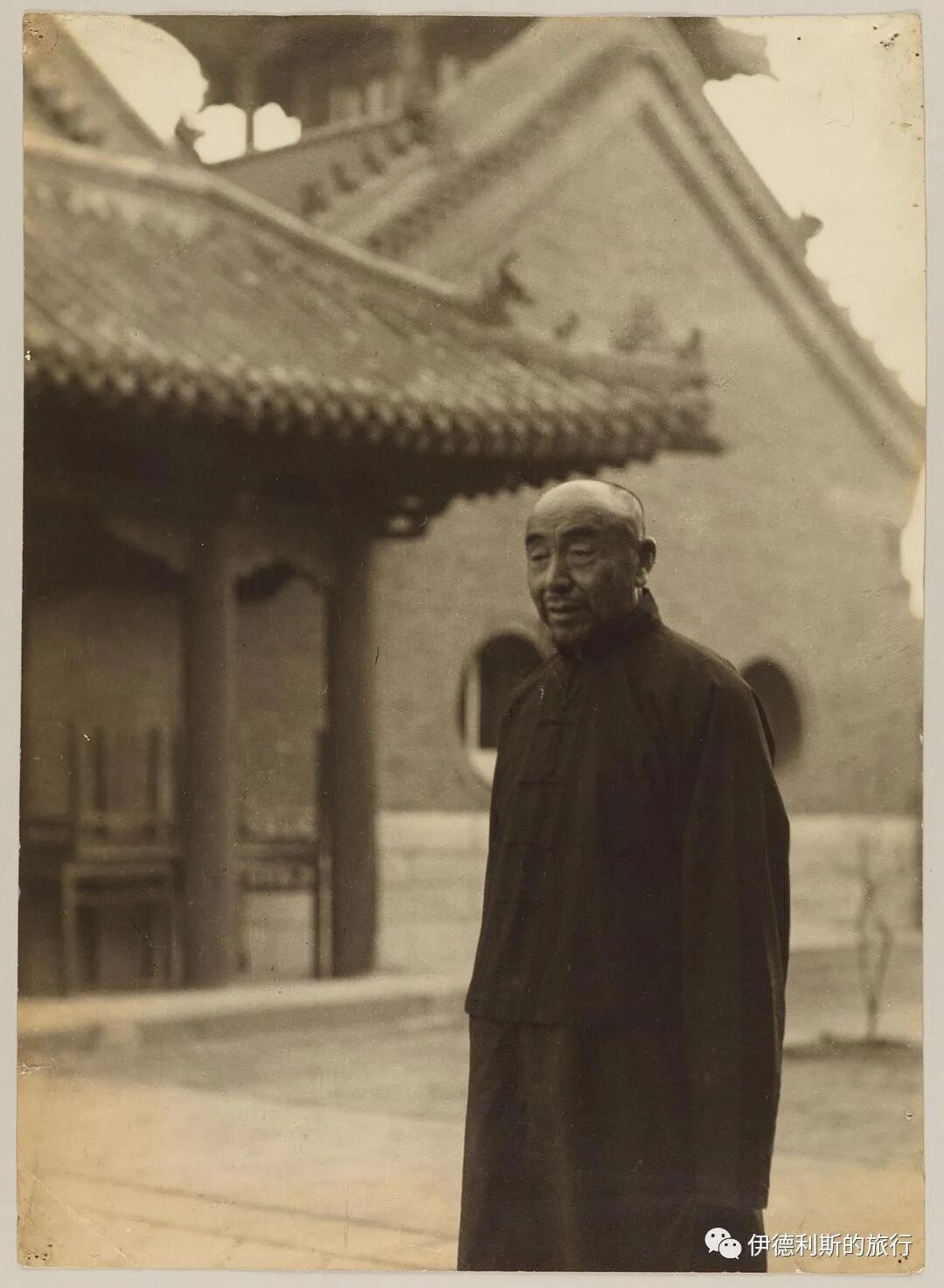
Fengtian Women's Mosque in September 1940.
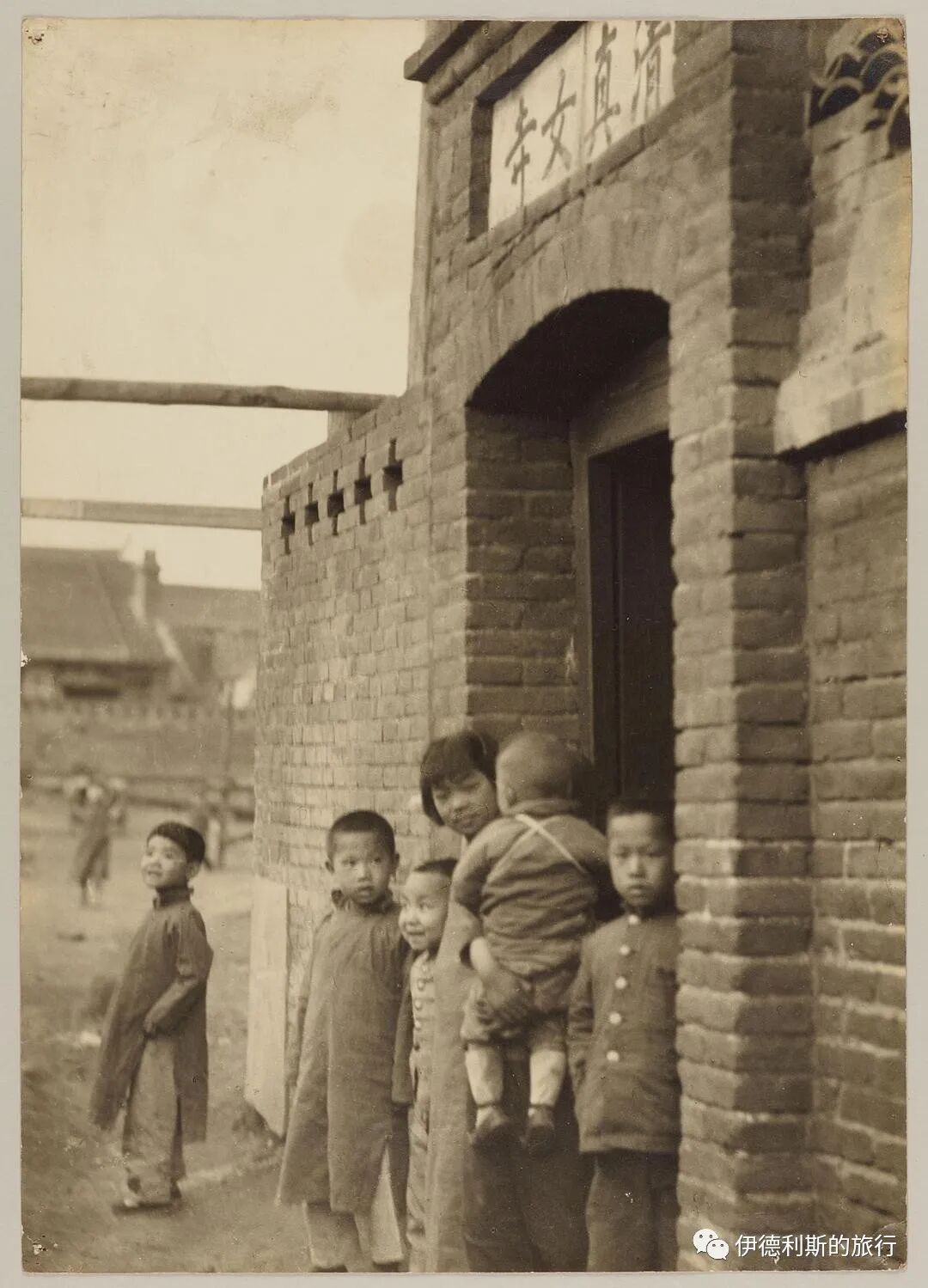
Changchun.
Changtong Road Mosque in Changchun, June 1941. Changtong Road Mosque was first built in 1824 and expanded several times in 1852, 1864, and 1889.
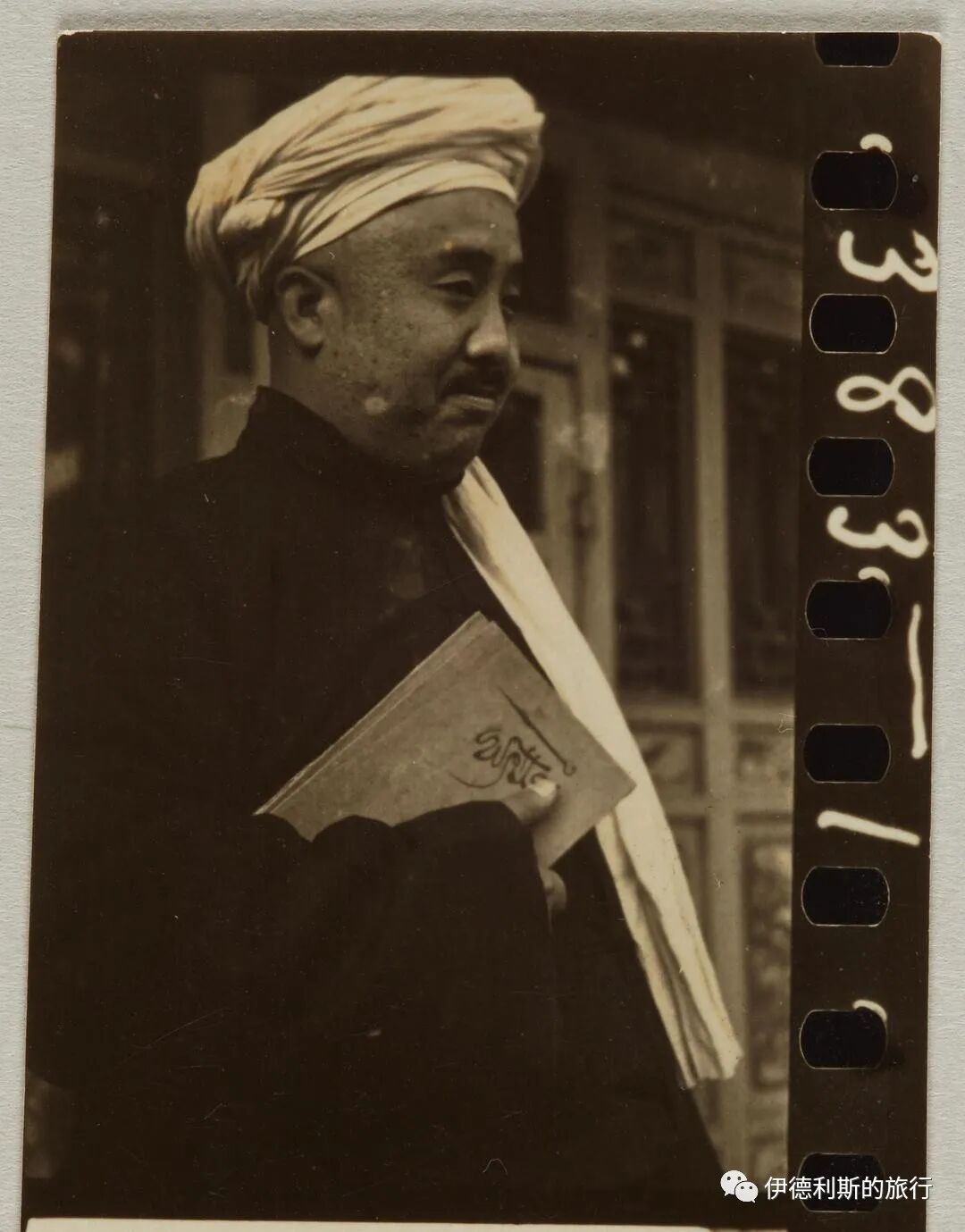
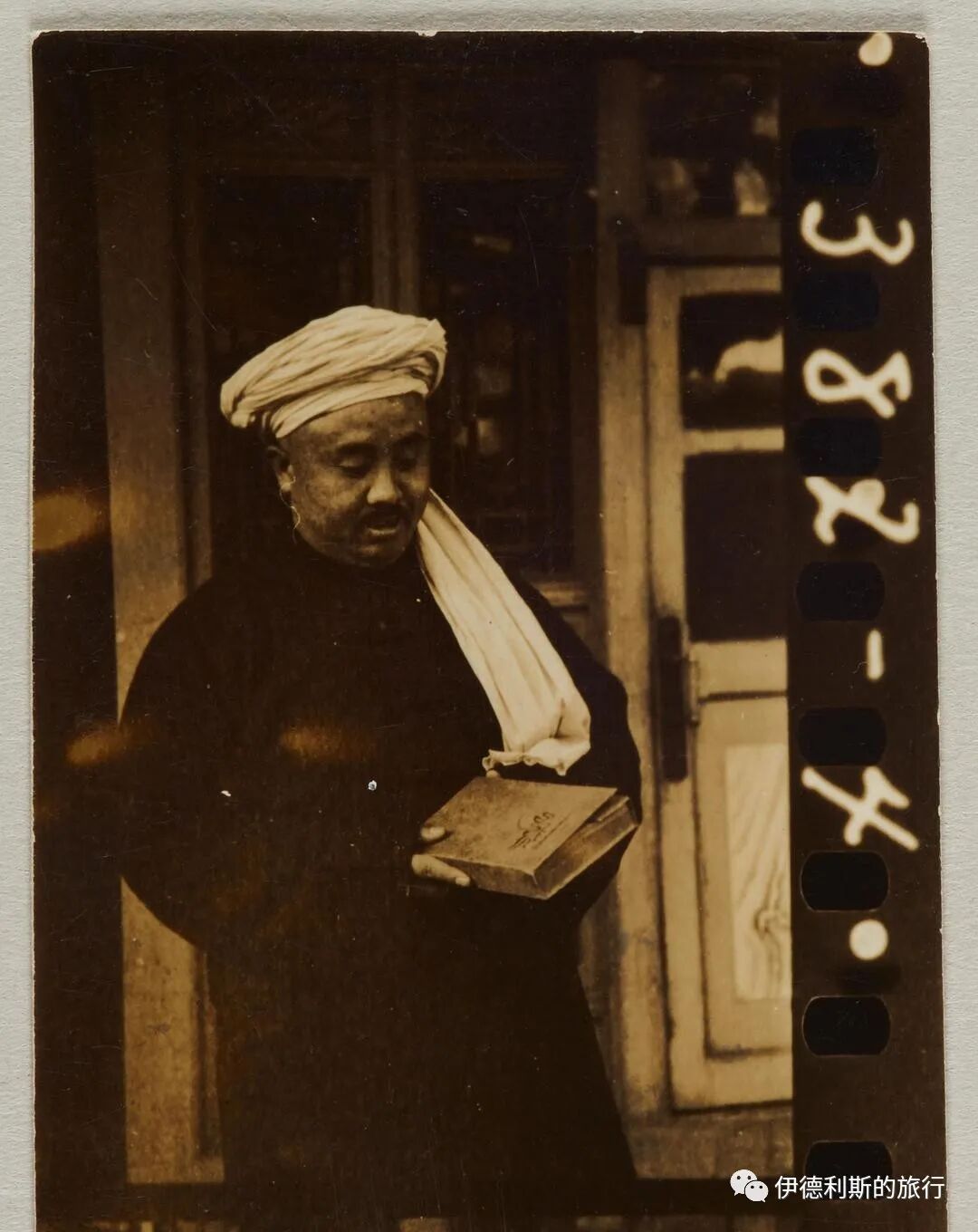
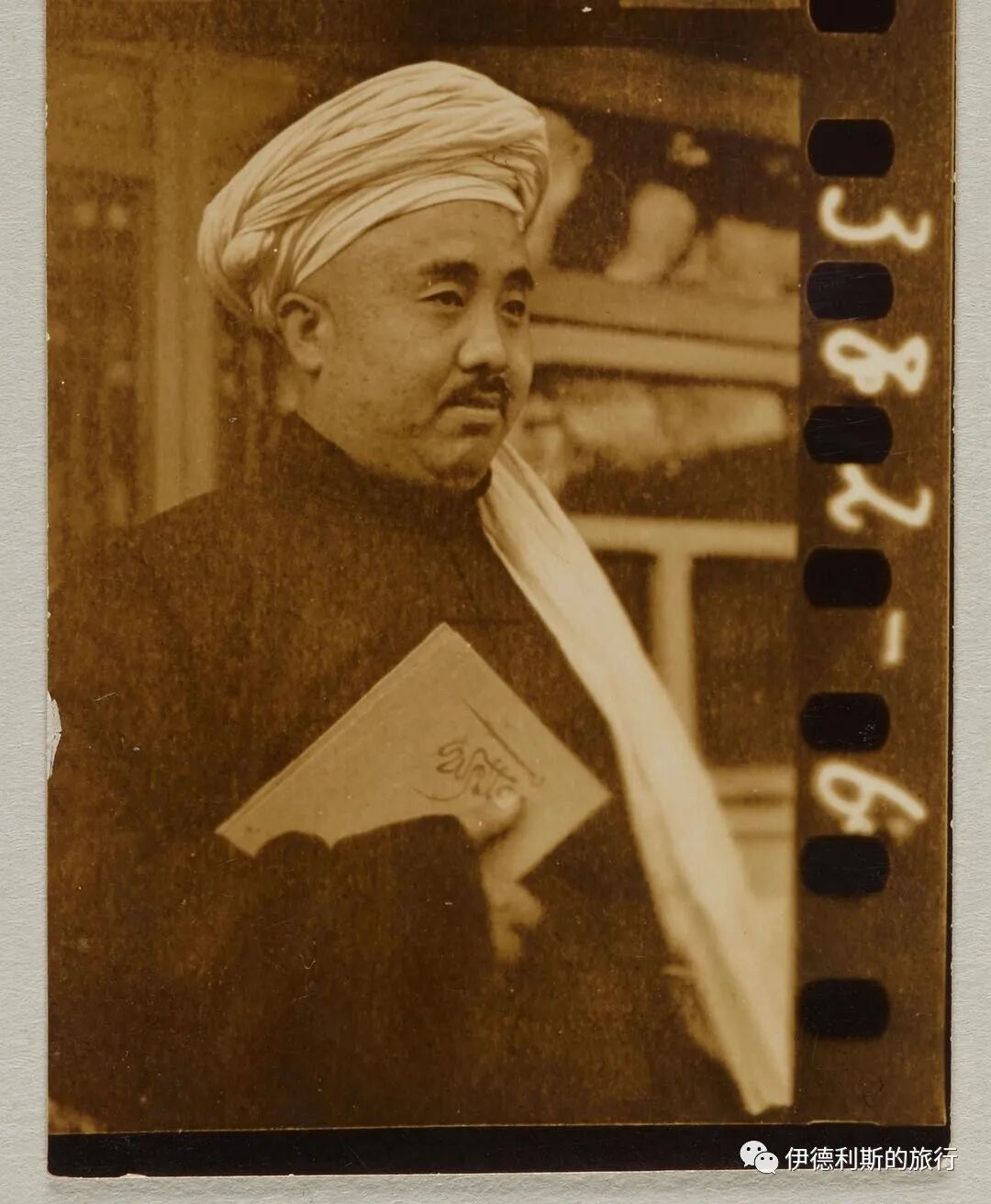
Kaiyuan.
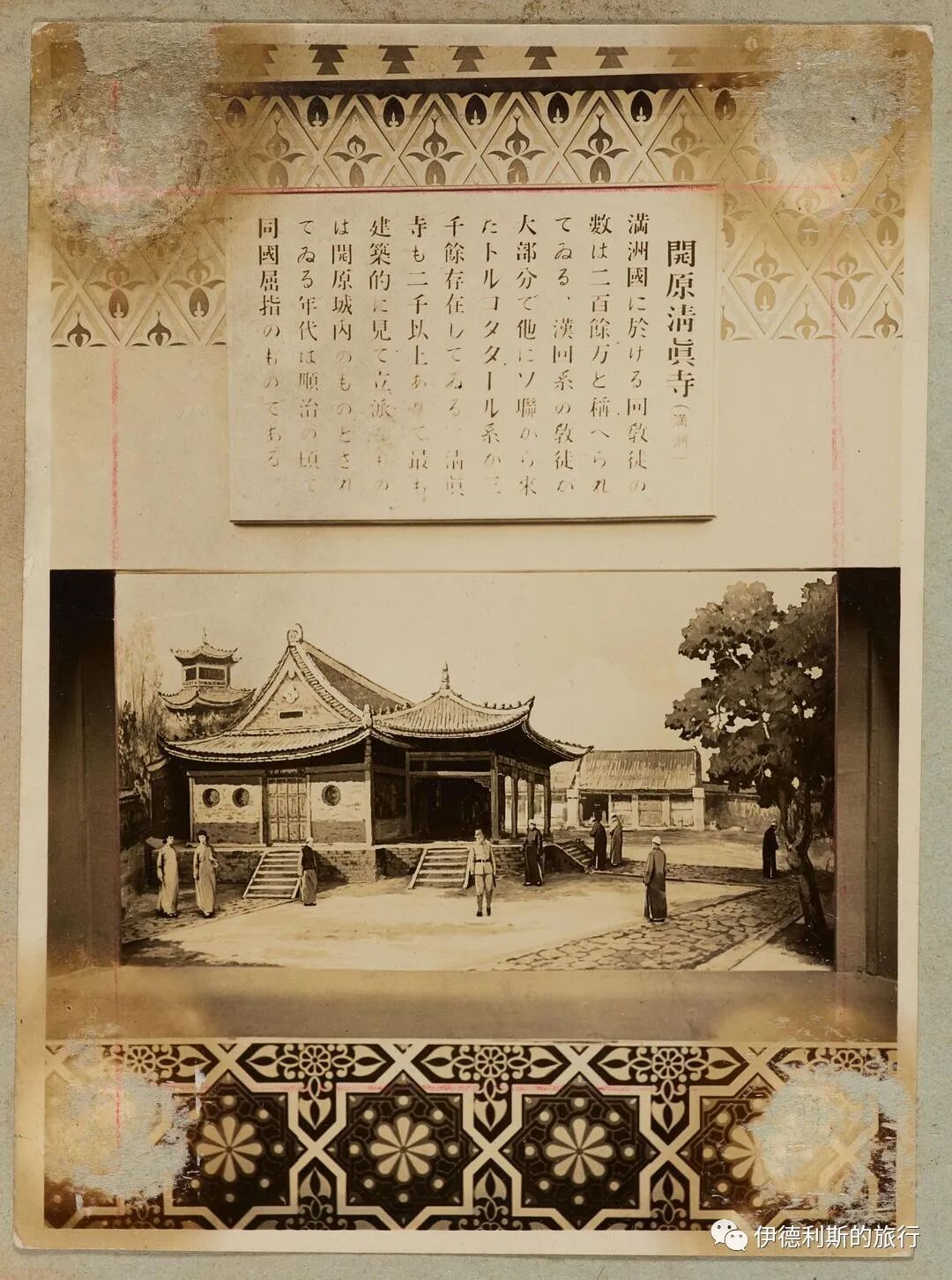
Kaiyuan Mosque in the 1930s. Kaiyuan Old City Mosque is located inside the east gate of Kaiyuan Old City. It was first built in 1406 (the fourth year of the Yongle reign of the Ming Dynasty) and is the oldest mosque in Northeast China.
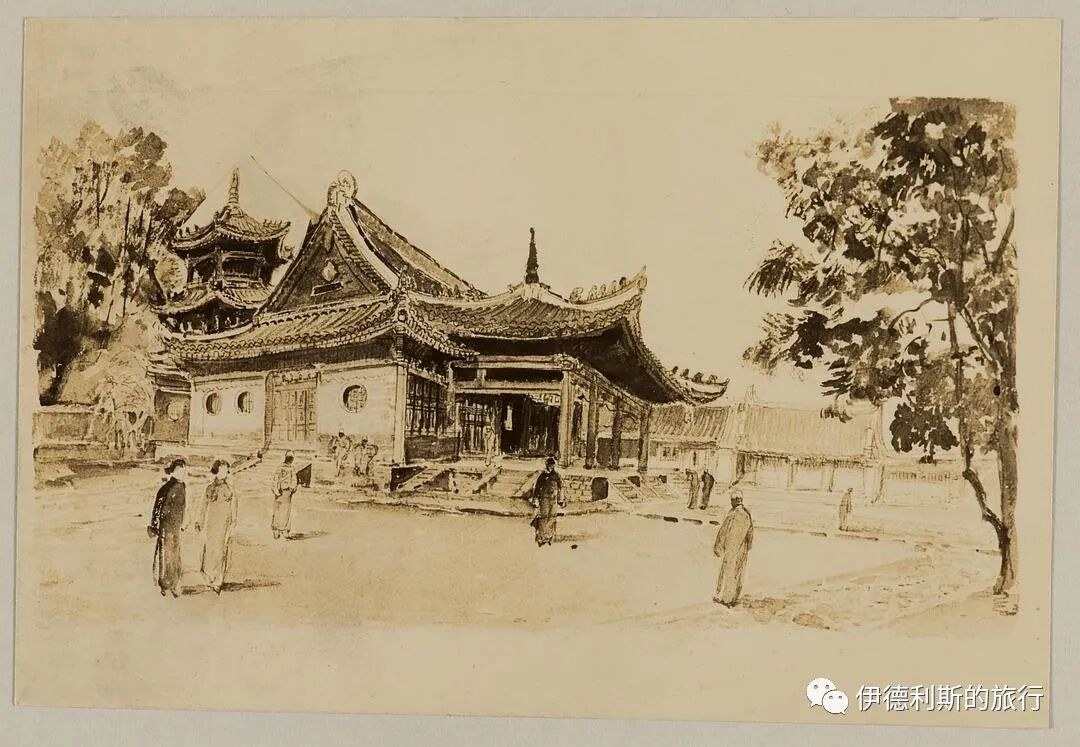
Siping.
Siping Mosque in September 1940.
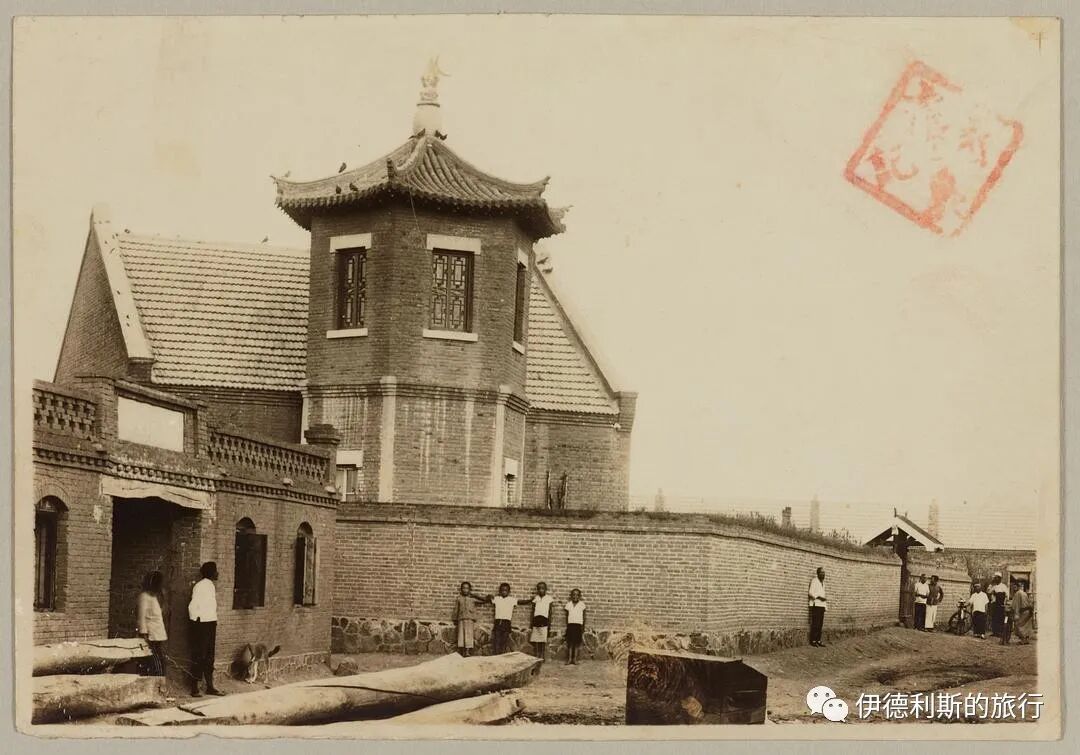
Other regions.
A pulpit (minbar), location unknown.
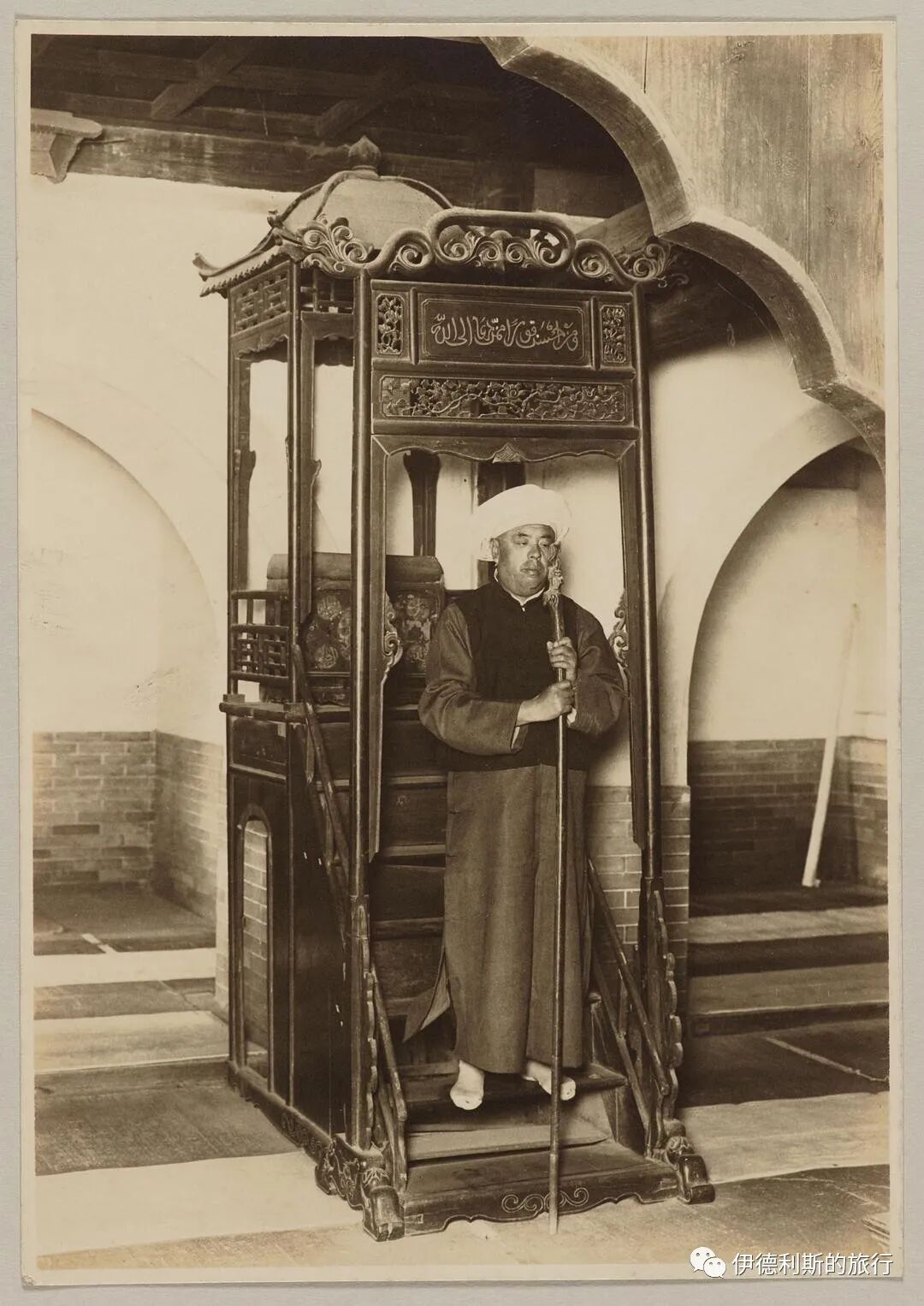
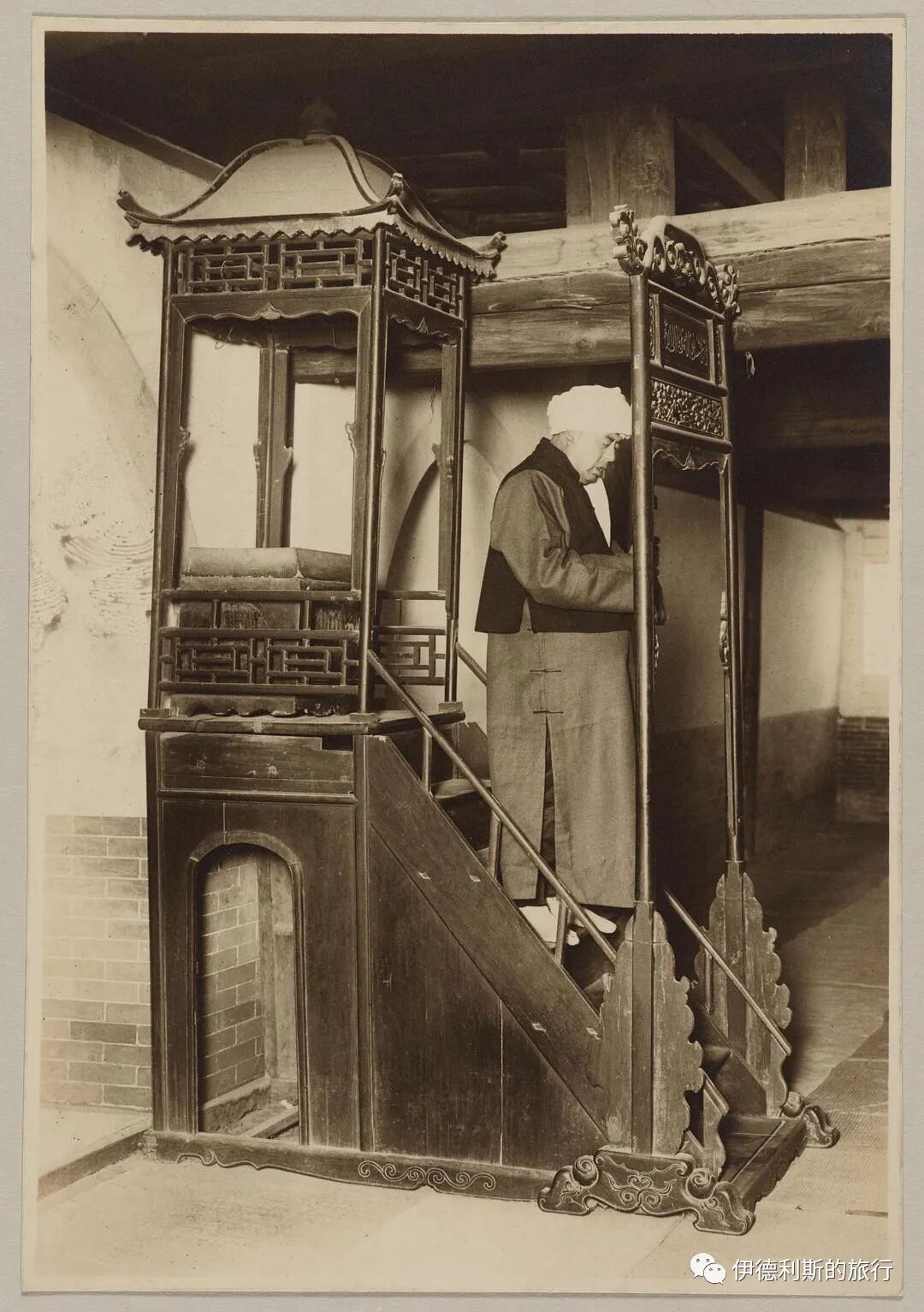
A mosque, location unknown.
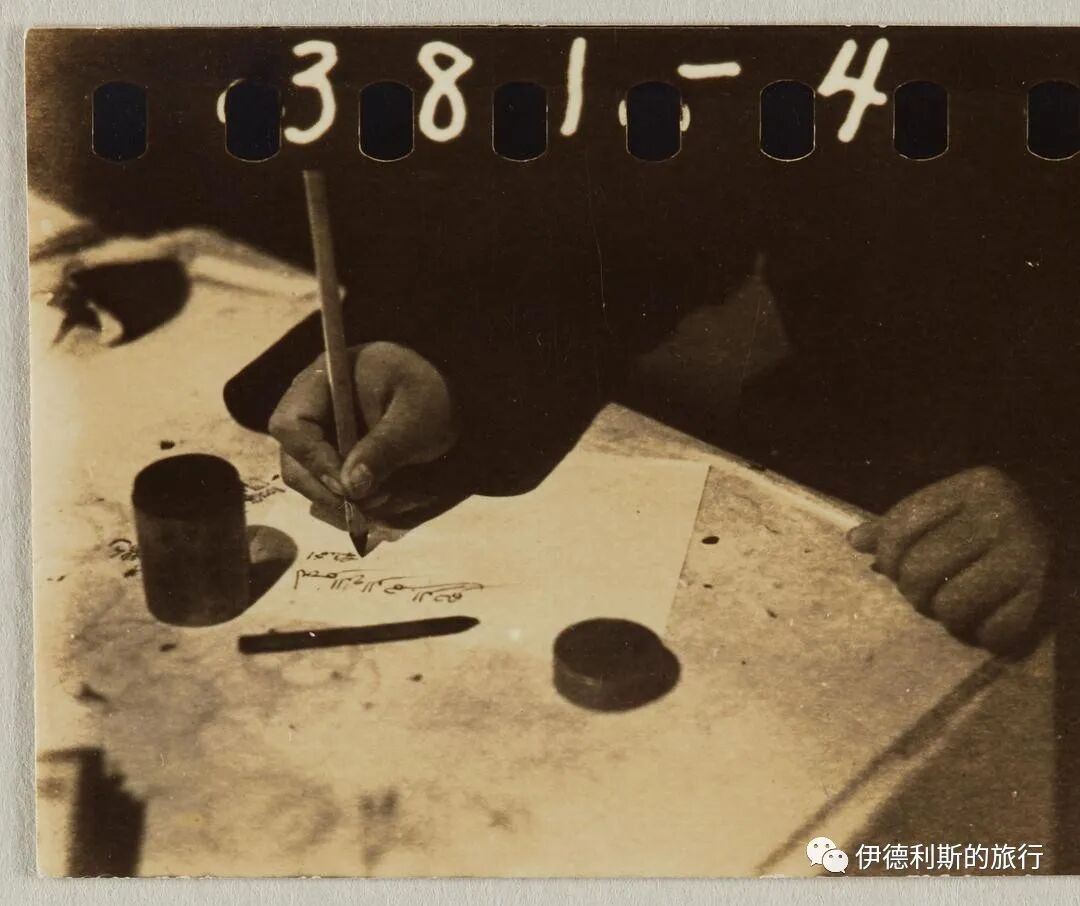
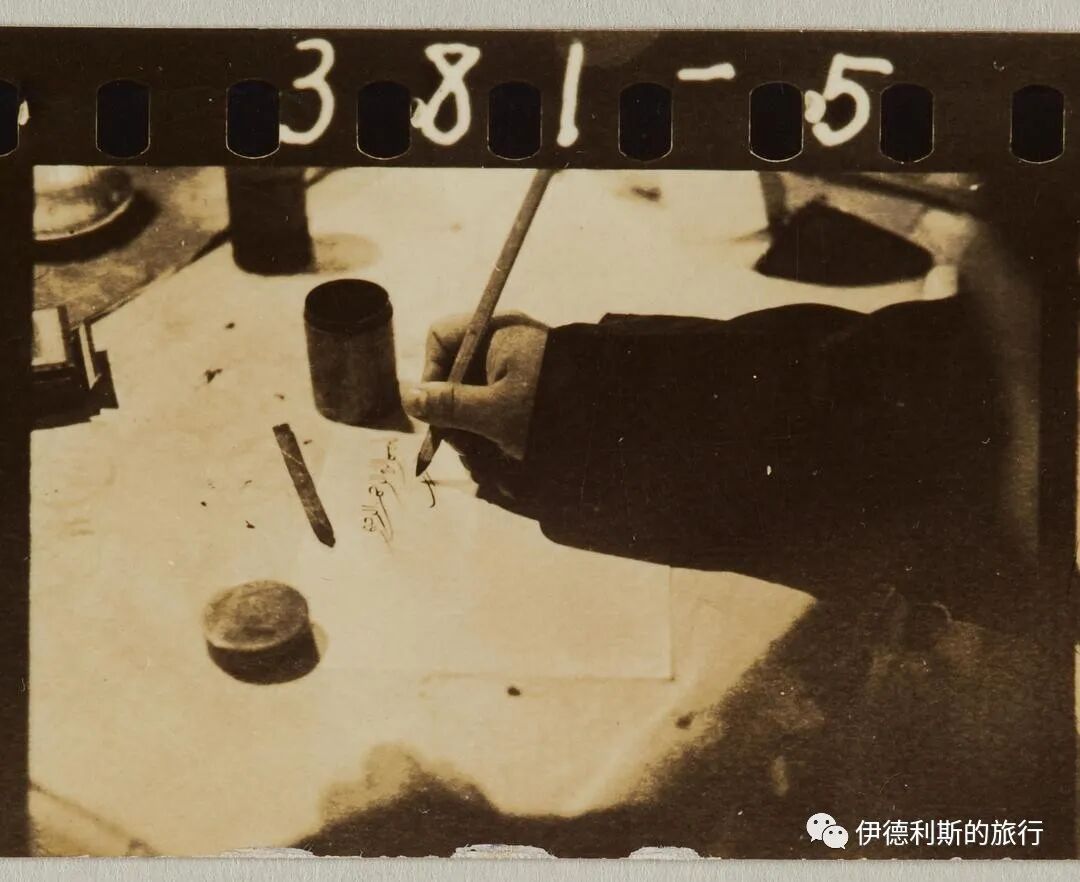
Writing calligraphy, June 1941.
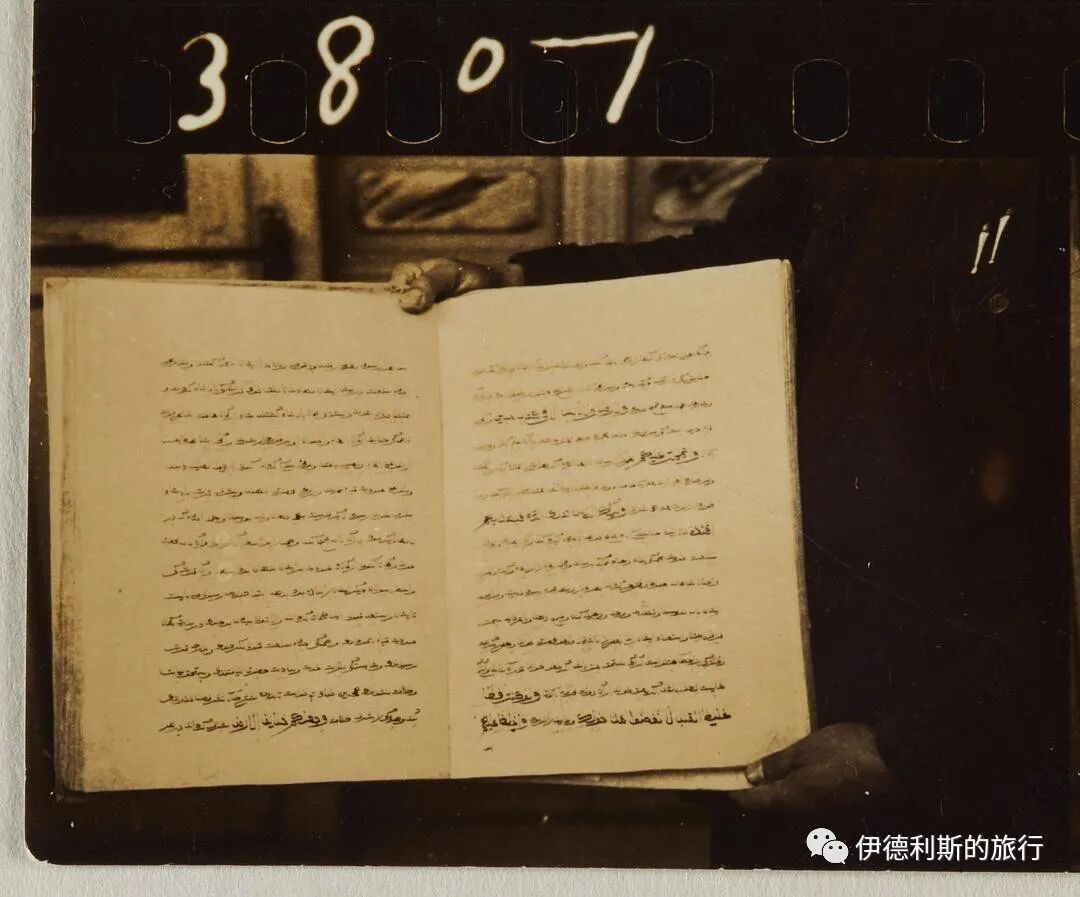
A scripture book.
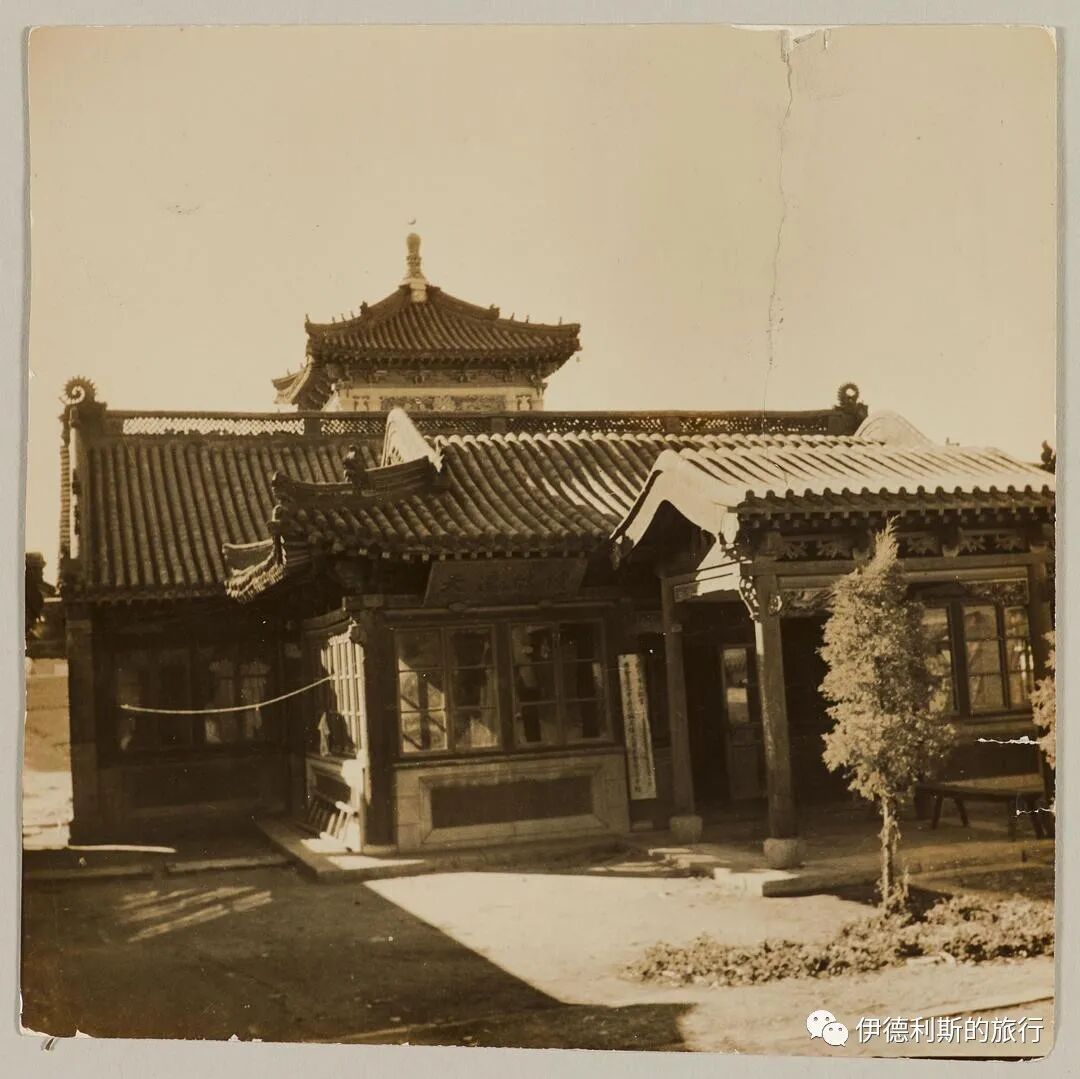
A mosque in the 1930s.
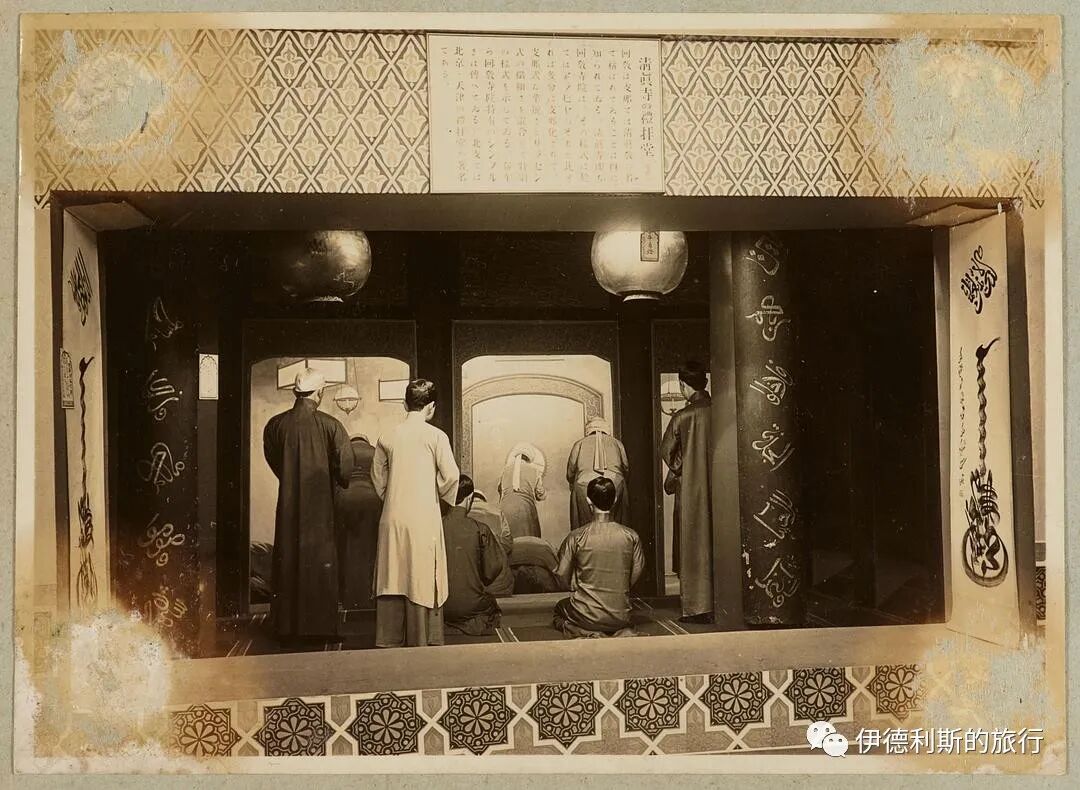
North China Muslim Life in Old Railway Photos: Hui Food, Shops and Streets
Articles • ali2007fr posted the article • 0 comments • 158 views • 2026-05-18 01:58
Summary: North China Muslim Life in Old Railway Photos: Hui Food, Shops and Streets is presented here as a firsthand travel account in clear English, beginning with this scene: On February 12, 2019, the Institute for Research in Humanities at Kyoto University released 35,000 old photos from 1939-1945 held by the North China Transportation Company. The account keeps its focus on Hui Muslims, Old Photos, North China while preserving the names, places, food, and historical details from the Chinese source.
On February 12, 2019, the Institute for Research in Humanities at Kyoto University released 35,000 old photos from 1939-1945 held by the North China Transportation Company. These photos, known as the North China Transportation Photographs, show the customs, folk culture, and lost landscapes of North China from 80 years ago.
The North China Transportation Company was founded in Beijing in April 1939 under the management of the Japanese Army. It managed railways, roads, rivers, and ports in North China while also producing propaganda, including the North China (Beizhi) pictorial magazine. Most of the North China Transportation Photographs were taken for the North China (Beizhi) pictorial.
The online address for the North China Transportation Photographs is: http://codh.rois.ac.jp/north-c ... zh-cn
Below, I share some scenes of Hui Muslim life in North China from the North China Transportation Company collection.
Beijing
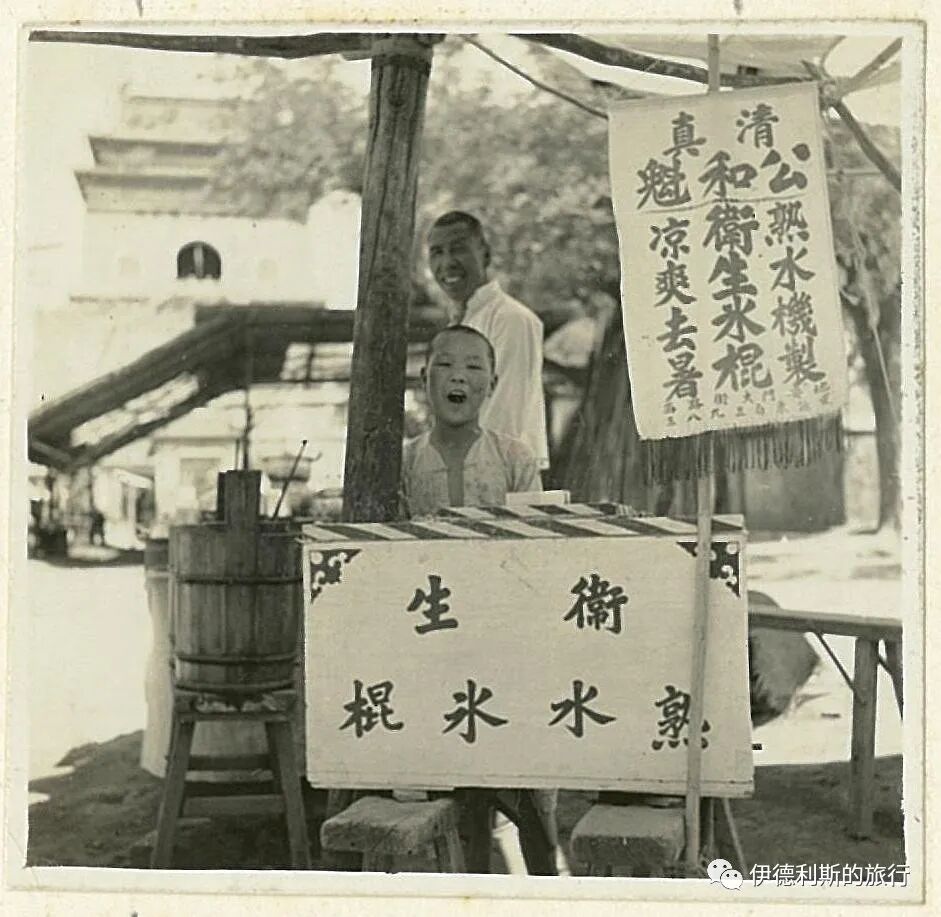
A photo of the halal shop Gonghekui taken at the square in front of the Bell Tower on June 14, 1939.
The halal pastry shop Gonghekui opened in 1894 (the 20th year of the Guangxu reign). It was founded by Zhang Jishan, and the shop was located at the east entrance of Yandai Xiejie on the street outside Di'anmen. The main difference with halal pastries is that they use vegetable oil instead of animal fat. Gonghekui was known for making different pastries according to the season, including sweet rice balls (yuanxiao) for the Lantern Festival, sun cakes (taiyanggao) on the first day of the third lunar month, elm coin cakes (yuchiangao) in the third month, fresh rose cakes and fresh wisteria cakes in the fourth month, five-poison cakes (wudubing) for the Dragon Boat Festival, mung bean cakes and pea flour cakes (wandouhuang) in the sixth month, tuckahoe cakes (fulingbing) in the seventh month, mooncakes in the eighth month, honey twists (mimahua) and unicorn pastries (qilin su) in the ninth month, flower cakes (huagao) for the Double Ninth Festival, and ginger juice fried dough (jiangzhi paixia) during the Muslim month of Ramadan.
Besides pastries, Gonghekui also made its own popsicles in the summer. This is shown in the old photo, where the sign reads: "Machine-made, hygienic popsicles, cool and refreshing for summer," with smaller text below saying: West side of Di'anmen Street.
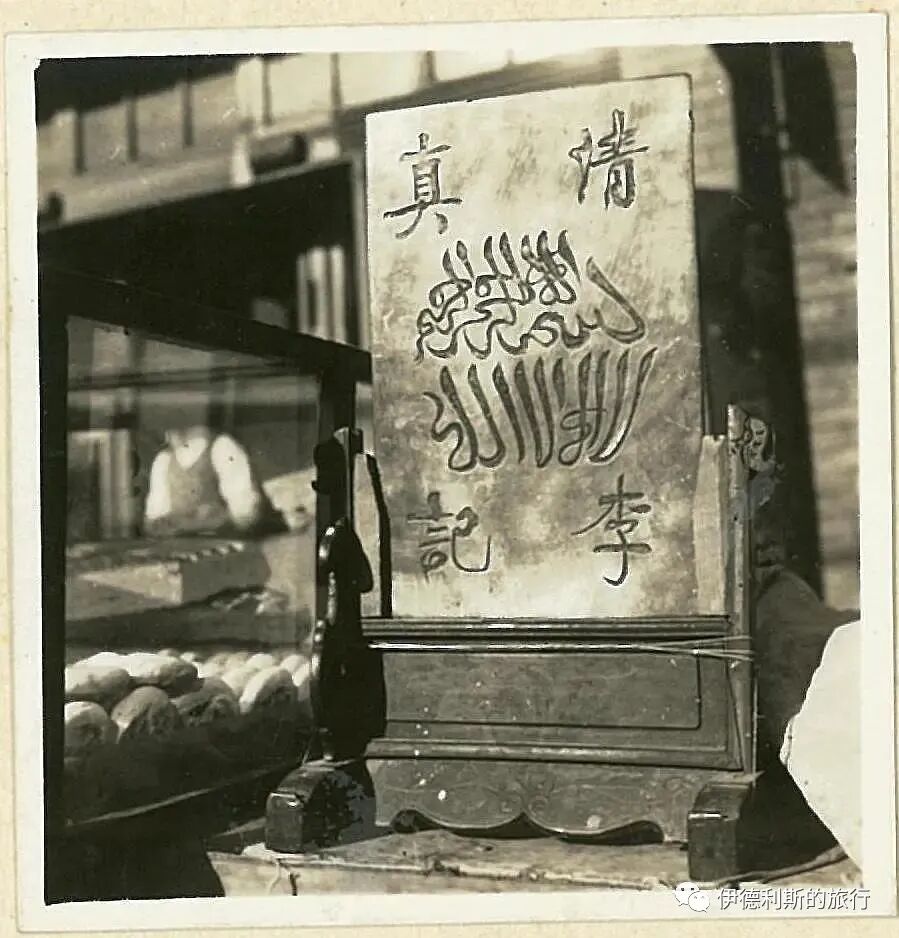
The halal Li Ji copper plaque in March 1941.
Baodu Feng in September 1941.
Here is an excerpt about Jinshenglong Baodu Feng from the book History of Beijing Dong'an Market (Huanhui Jisheng - Beijing Dong'an Shichang Shi):
Not long after the Dong'an Market opened, two Hui Muslims named Wang and Feng set up stalls selling tripe (baodu). Although the two families were cousins and their skills were similar, the competition was fierce as each tried to create unique features and attract customers. Later, Baodu Wang became famous first and by the 1940s had developed into the Xideshun Lamb Restaurant with two storefronts. Baodu Feng continued to run a stall until after the liberation, when they built a shed, hung the Jinshenglong sign, and continued to specialize in tripe.
Selling tripe is hard work. Jinshenglong founder Feng Tianjie worked alongside his wife and children. The beef and lamb tripe they used was bought from the slaughterhouses (niuguohuo) and lamb shops located between Chaoyangmen and Dongbianmen. The supply was not fixed, and families had to compete to buy it, often running around and humbly asking people for stock, only to sometimes come back empty-handed. When they bought tripe, they would get 40 to 50 jin at most, or 20 to 30 jin at least. Without transport, they had to carry bamboo baskets on their arms and walk several miles to bring it home. Cleaning tripe is even harder work. The Feng family lived in the slums outside Chaoyangmen near the South River bank. There was a bitter-water well nearby. For over thirty years, Feng Tianjie's wife went to the well almost every day with buckets and basins to wash tripe. Each piece of tripe had to be washed seven times, turning it inside out three times and right-side out four times, cleaning every leaf of the omasum (baiye) one by one. In winter, the water was freezing, leaving her hands red and swollen. Sometimes even her shoes would freeze to the well platform. After cleaning the tripe, she had to carry a basket and walk five or six li to sell it at the Dong'an Market.
Quick-boiled tripe (baodu) must be fresh; the fresher, the better. It is usually sold out the same day, within twenty-four hours. When the weather is warm, the cleaned tripe must be kept on ice to stay fresh. In cold weather, it must be protected from freezing. Because it is hard to store, the price changes. When supply is low, they sell it sparingly, but when there is too much or few customers due to bad weather, they have to sell it off cheaply. Every year after spring begins, there is less cattle and sheep slaughter, so the baodu business enters a slow season. In midsummer, when the mutton shops close their counters and the mutton carts stop, the baodu sellers have to put away their pots and temporarily sell things like mung bean jelly (liangfen) and rice cakes (paigao) to get through the slow season.
Wang's Halal Cuixianzhai.
In December 1940, a halal roasted mutton shop on Meishi Street outside Qianmen, where you can faintly see a water pitcher (tangping) image.
In January 1941, Zhang's Halal Hui Muslim rice cakes, during the first lunar month when rice cakes are in season.
On the storefront of a Hui Muslim family, you can see the owner is named Jia Tingrong.
The halal sign is very pointed. Inside are the three types of incense burners (luping sanshi). On the auspicious clouds above, there should be the pointed hat worn by an imam.
October 1941, calling the adhan at the Niujie Mosque.
The Niujie Mosque in October 1941.
The Niujie Mosque in March 1941.
The Niujie Mosque in April 1941.
September 1939, the imam of the Niujie Mosque.
September 1939, performing minor ablution (wudu) at the Niujie Mosque.
September 1939, the Quran (Guer'ani) at the Niujie Mosque, printed by the Beiping Chengda Normal School.
The Tianqiao Mosque in March 1939.
Tianqiao Mosque was located north of the mosque of Agriculture (Xiannongtan) between Fuchang Street Fourth and Fifth Lanes. It was built in 1926. Its demolition date is unknown, and the original site is now the Beijing Institute of Economics.
Tianqiao Mosque in March 1941.
Tianqiao Mosque in July 1941.
Zhangjiakou.
June 1938, performing wudu (ritual washing).
Mosque.
Islamic school (jingxuexiao).
Hohhot.
The minaret (bangkelou) on the gate of the Gansui Mosque in Hohhot in November 1939.
The Gansui Mosque, also known as the North Mosque (Qingzhen Beisi), was built during the Xianfeng era and started as a small Islamic primary school. In 1921, Hui Muslims from the Northwest who had recently arrived in Hohhot, including Li Fengzao and Su Jinpo, joined local Hui Muslims to buy 12 mu of land at the Wang Family Vegetable Garden outside the North Gate of Suiyuan on Tongdao Street. They rebuilt it over three and a half years and named it Gansui Mosque, commonly known as the North Mosque. Afterward, the North Mosque became the center for the Yihewani sect of Hui Muslims in Hohhot.
The North Mosque was demolished in 1962 and merged with the West Mosque to form the Northwest Mosque, which was rebuilt in 1986. view all
Summary: North China Muslim Life in Old Railway Photos: Hui Food, Shops and Streets is presented here as a firsthand travel account in clear English, beginning with this scene: On February 12, 2019, the Institute for Research in Humanities at Kyoto University released 35,000 old photos from 1939-1945 held by the North China Transportation Company. The account keeps its focus on Hui Muslims, Old Photos, North China while preserving the names, places, food, and historical details from the Chinese source.
On February 12, 2019, the Institute for Research in Humanities at Kyoto University released 35,000 old photos from 1939-1945 held by the North China Transportation Company. These photos, known as the North China Transportation Photographs, show the customs, folk culture, and lost landscapes of North China from 80 years ago.
The North China Transportation Company was founded in Beijing in April 1939 under the management of the Japanese Army. It managed railways, roads, rivers, and ports in North China while also producing propaganda, including the North China (Beizhi) pictorial magazine. Most of the North China Transportation Photographs were taken for the North China (Beizhi) pictorial.
The online address for the North China Transportation Photographs is: http://codh.rois.ac.jp/north-c ... zh-cn
Below, I share some scenes of Hui Muslim life in North China from the North China Transportation Company collection.
Beijing
A photo of the halal shop Gonghekui taken at the square in front of the Bell Tower on June 14, 1939.
The halal pastry shop Gonghekui opened in 1894 (the 20th year of the Guangxu reign). It was founded by Zhang Jishan, and the shop was located at the east entrance of Yandai Xiejie on the street outside Di'anmen. The main difference with halal pastries is that they use vegetable oil instead of animal fat. Gonghekui was known for making different pastries according to the season, including sweet rice balls (yuanxiao) for the Lantern Festival, sun cakes (taiyanggao) on the first day of the third lunar month, elm coin cakes (yuchiangao) in the third month, fresh rose cakes and fresh wisteria cakes in the fourth month, five-poison cakes (wudubing) for the Dragon Boat Festival, mung bean cakes and pea flour cakes (wandouhuang) in the sixth month, tuckahoe cakes (fulingbing) in the seventh month, mooncakes in the eighth month, honey twists (mimahua) and unicorn pastries (qilin su) in the ninth month, flower cakes (huagao) for the Double Ninth Festival, and ginger juice fried dough (jiangzhi paixia) during the Muslim month of Ramadan.
Besides pastries, Gonghekui also made its own popsicles in the summer. This is shown in the old photo, where the sign reads: "Machine-made, hygienic popsicles, cool and refreshing for summer," with smaller text below saying: West side of Di'anmen Street.
The halal Li Ji copper plaque in March 1941.
Baodu Feng in September 1941.
Here is an excerpt about Jinshenglong Baodu Feng from the book History of Beijing Dong'an Market (Huanhui Jisheng - Beijing Dong'an Shichang Shi):
Not long after the Dong'an Market opened, two Hui Muslims named Wang and Feng set up stalls selling tripe (baodu). Although the two families were cousins and their skills were similar, the competition was fierce as each tried to create unique features and attract customers. Later, Baodu Wang became famous first and by the 1940s had developed into the Xideshun Lamb Restaurant with two storefronts. Baodu Feng continued to run a stall until after the liberation, when they built a shed, hung the Jinshenglong sign, and continued to specialize in tripe.
Selling tripe is hard work. Jinshenglong founder Feng Tianjie worked alongside his wife and children. The beef and lamb tripe they used was bought from the slaughterhouses (niuguohuo) and lamb shops located between Chaoyangmen and Dongbianmen. The supply was not fixed, and families had to compete to buy it, often running around and humbly asking people for stock, only to sometimes come back empty-handed. When they bought tripe, they would get 40 to 50 jin at most, or 20 to 30 jin at least. Without transport, they had to carry bamboo baskets on their arms and walk several miles to bring it home. Cleaning tripe is even harder work. The Feng family lived in the slums outside Chaoyangmen near the South River bank. There was a bitter-water well nearby. For over thirty years, Feng Tianjie's wife went to the well almost every day with buckets and basins to wash tripe. Each piece of tripe had to be washed seven times, turning it inside out three times and right-side out four times, cleaning every leaf of the omasum (baiye) one by one. In winter, the water was freezing, leaving her hands red and swollen. Sometimes even her shoes would freeze to the well platform. After cleaning the tripe, she had to carry a basket and walk five or six li to sell it at the Dong'an Market.
Quick-boiled tripe (baodu) must be fresh; the fresher, the better. It is usually sold out the same day, within twenty-four hours. When the weather is warm, the cleaned tripe must be kept on ice to stay fresh. In cold weather, it must be protected from freezing. Because it is hard to store, the price changes. When supply is low, they sell it sparingly, but when there is too much or few customers due to bad weather, they have to sell it off cheaply. Every year after spring begins, there is less cattle and sheep slaughter, so the baodu business enters a slow season. In midsummer, when the mutton shops close their counters and the mutton carts stop, the baodu sellers have to put away their pots and temporarily sell things like mung bean jelly (liangfen) and rice cakes (paigao) to get through the slow season.
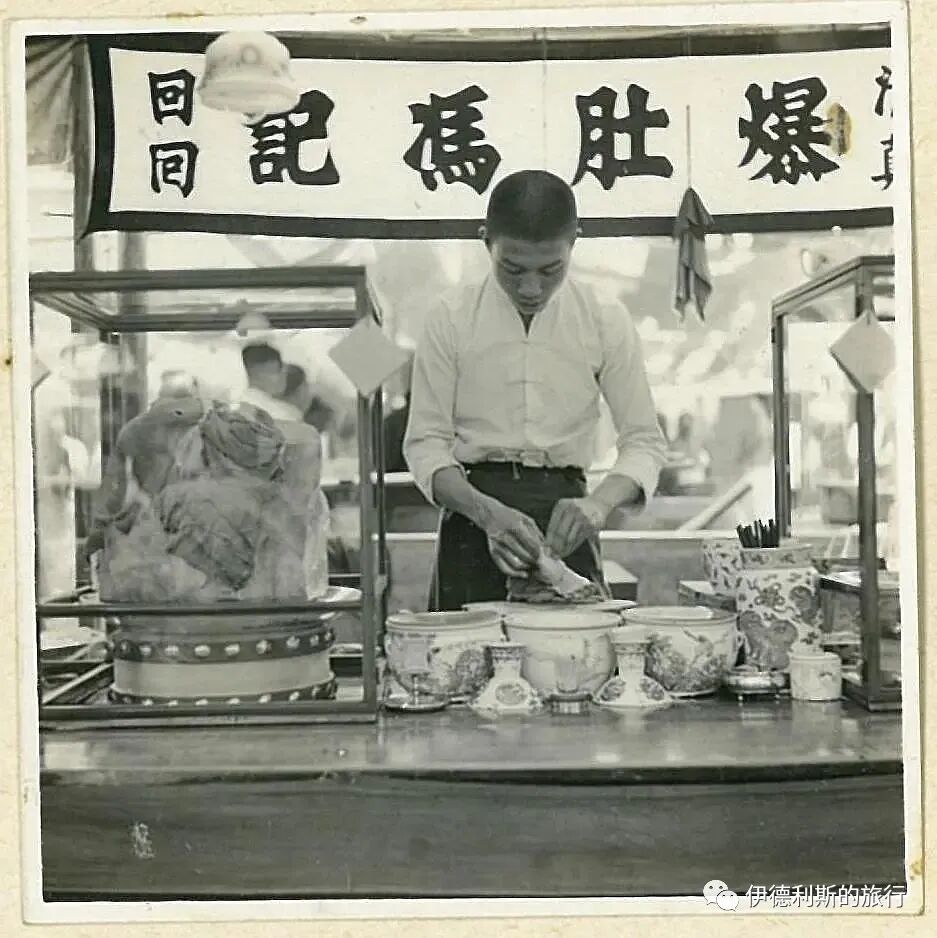
Wang's Halal Cuixianzhai.
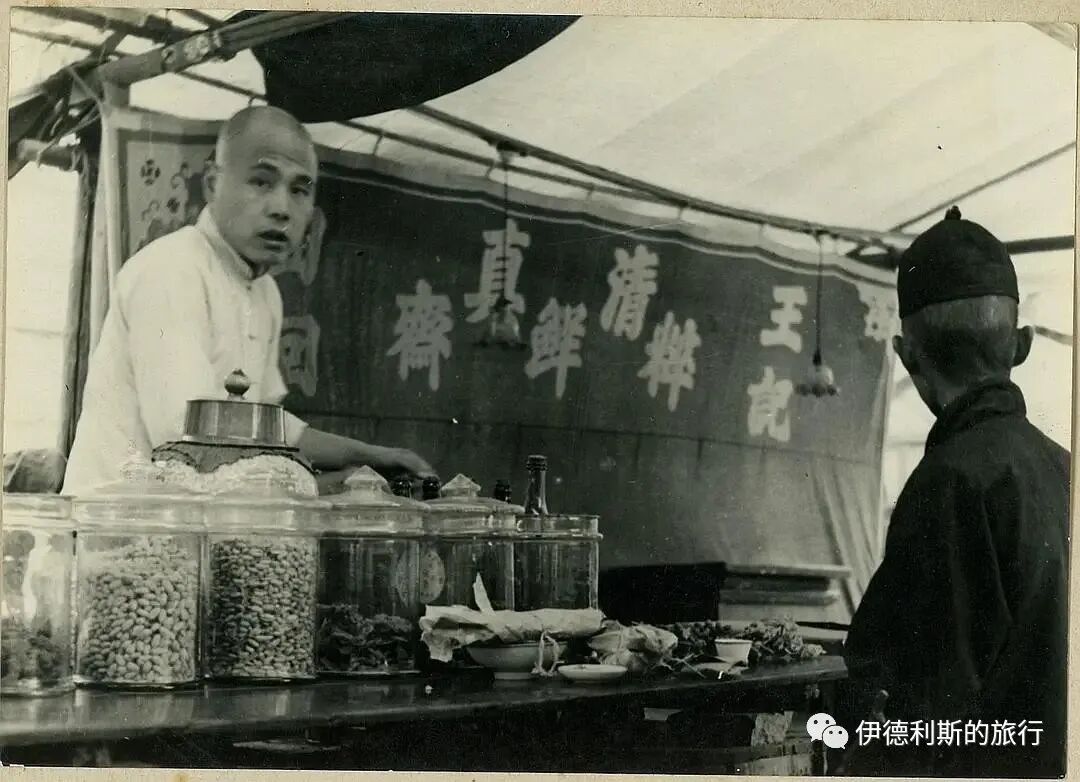
In December 1940, a halal roasted mutton shop on Meishi Street outside Qianmen, where you can faintly see a water pitcher (tangping) image.
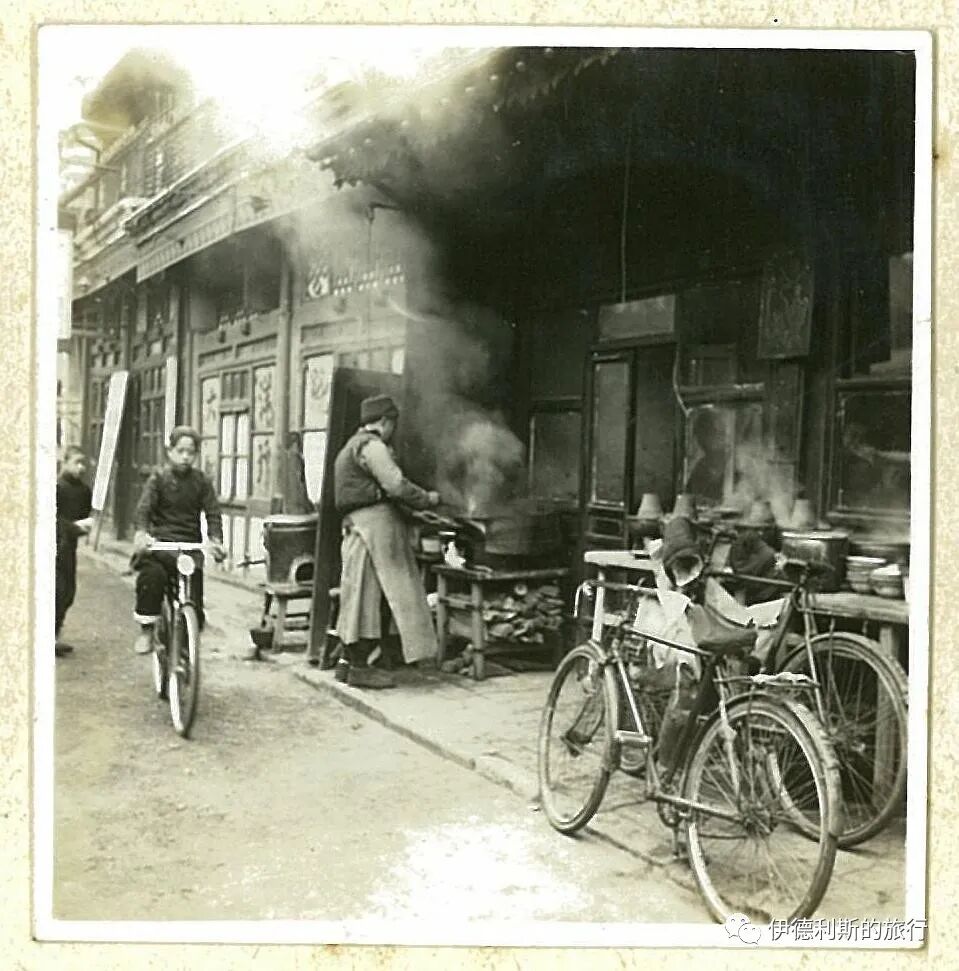
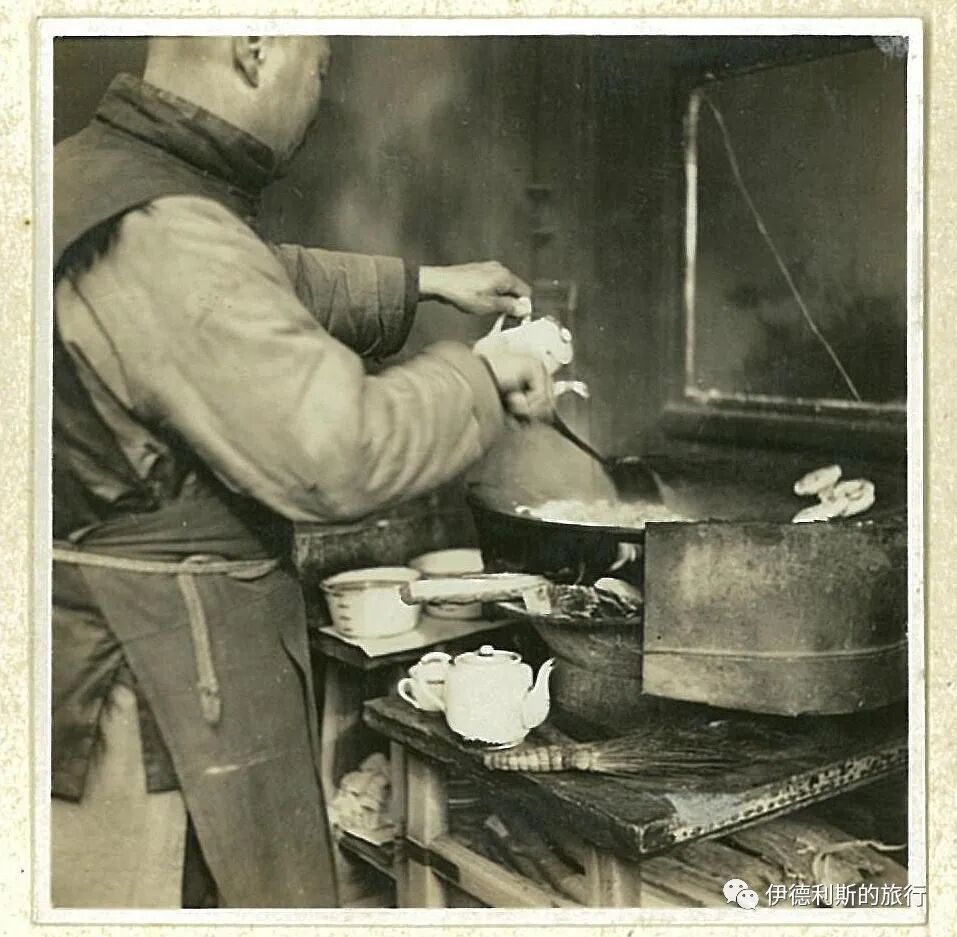
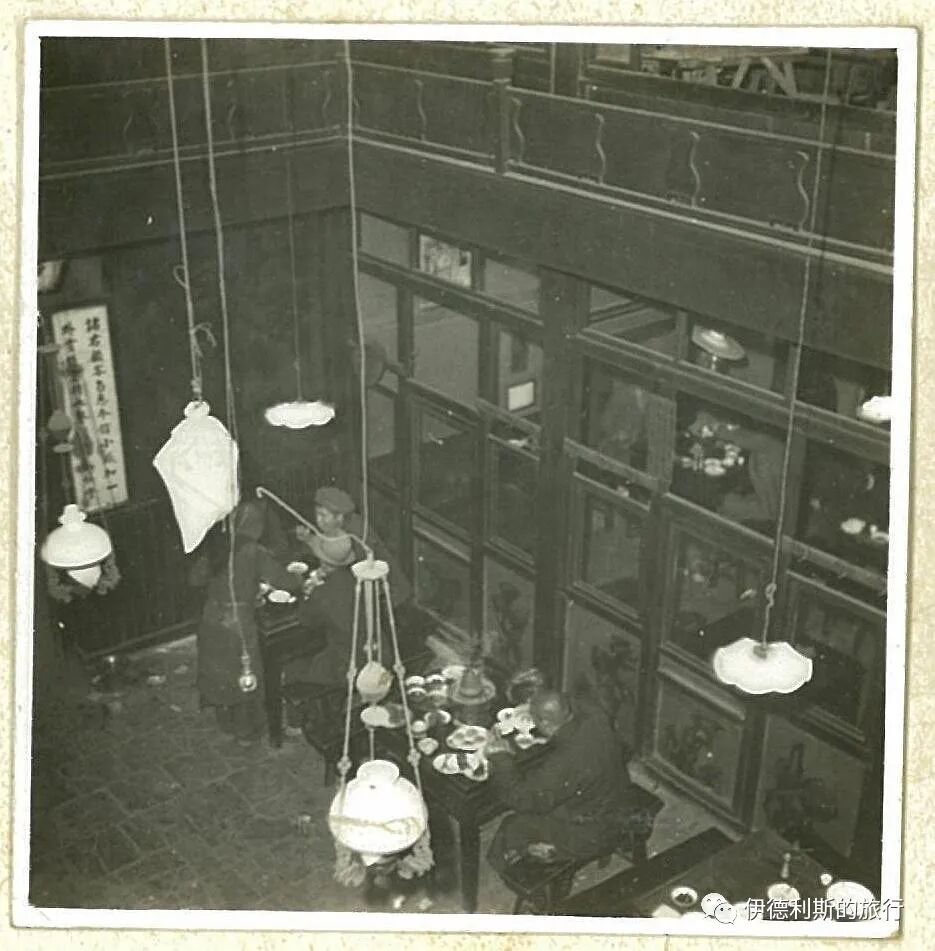
In January 1941, Zhang's Halal Hui Muslim rice cakes, during the first lunar month when rice cakes are in season.
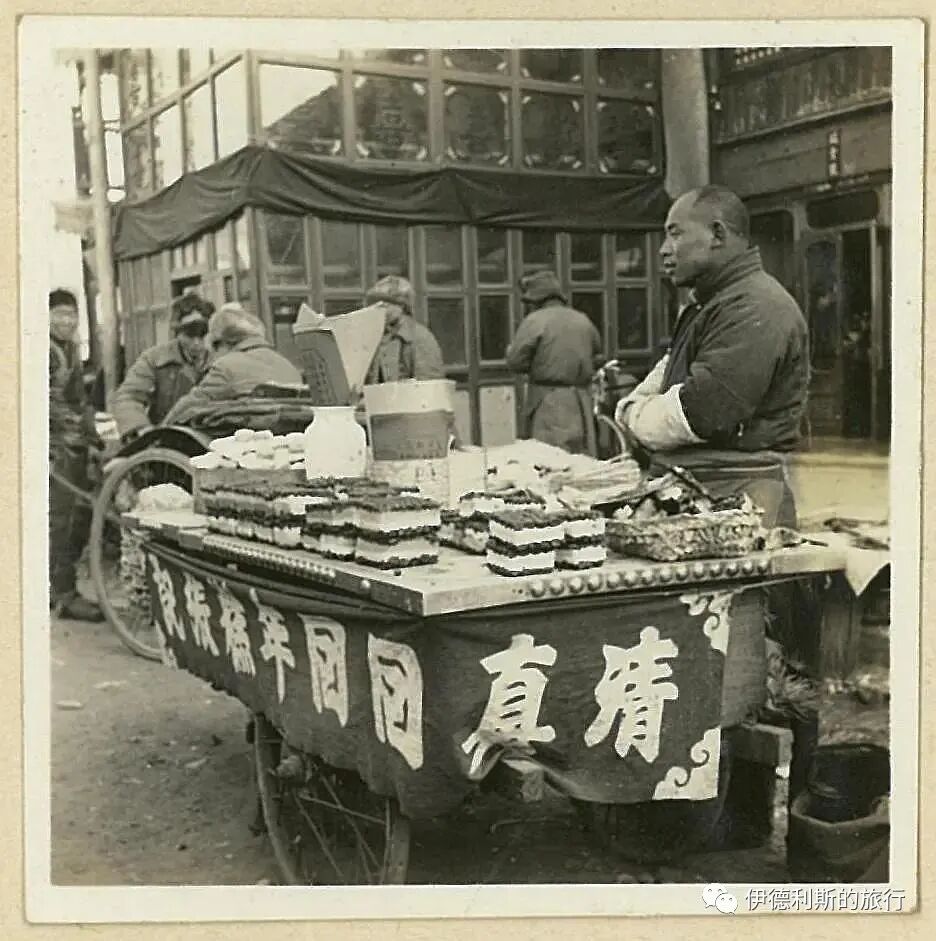
On the storefront of a Hui Muslim family, you can see the owner is named Jia Tingrong.
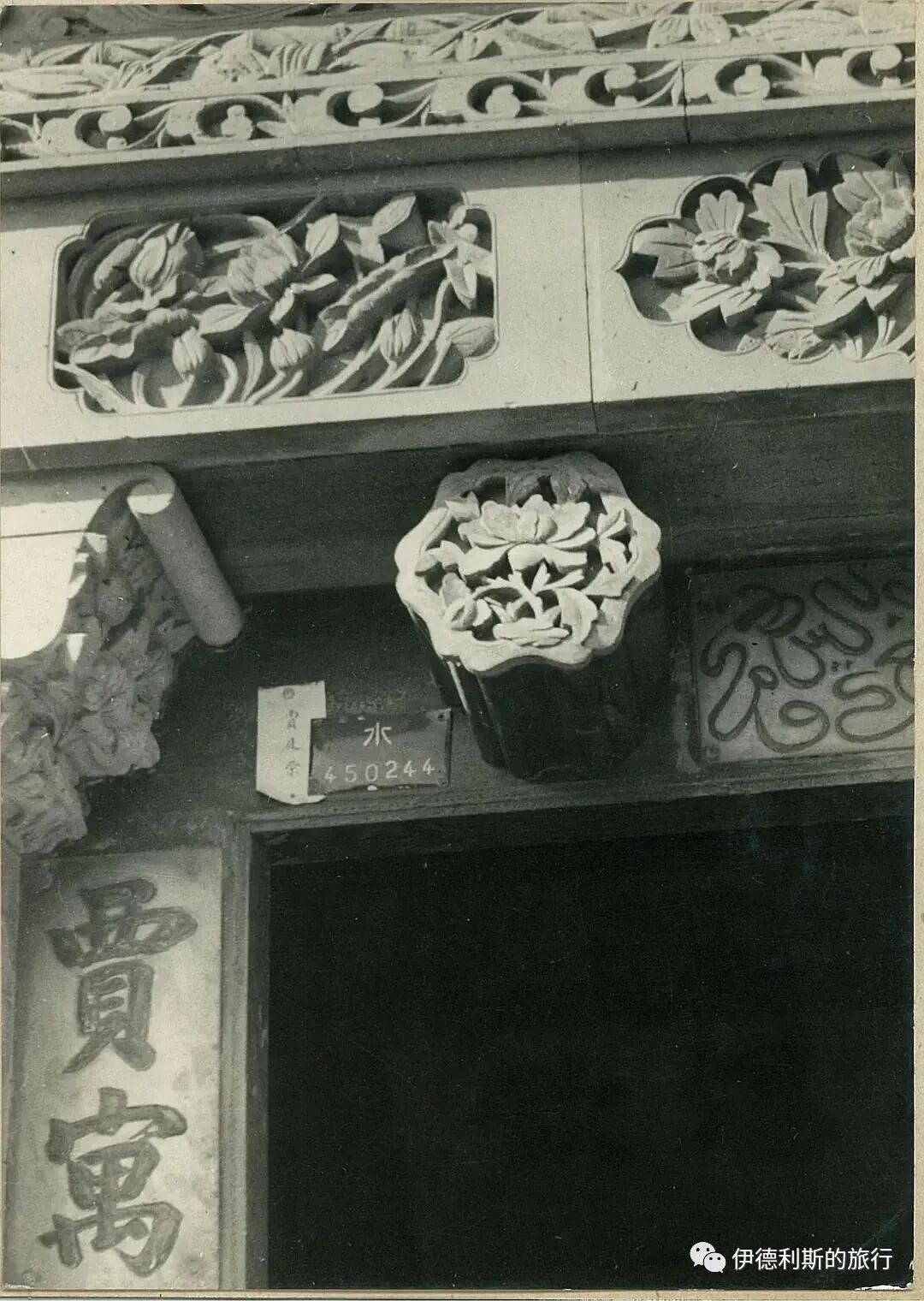
The halal sign is very pointed. Inside are the three types of incense burners (luping sanshi). On the auspicious clouds above, there should be the pointed hat worn by an imam.
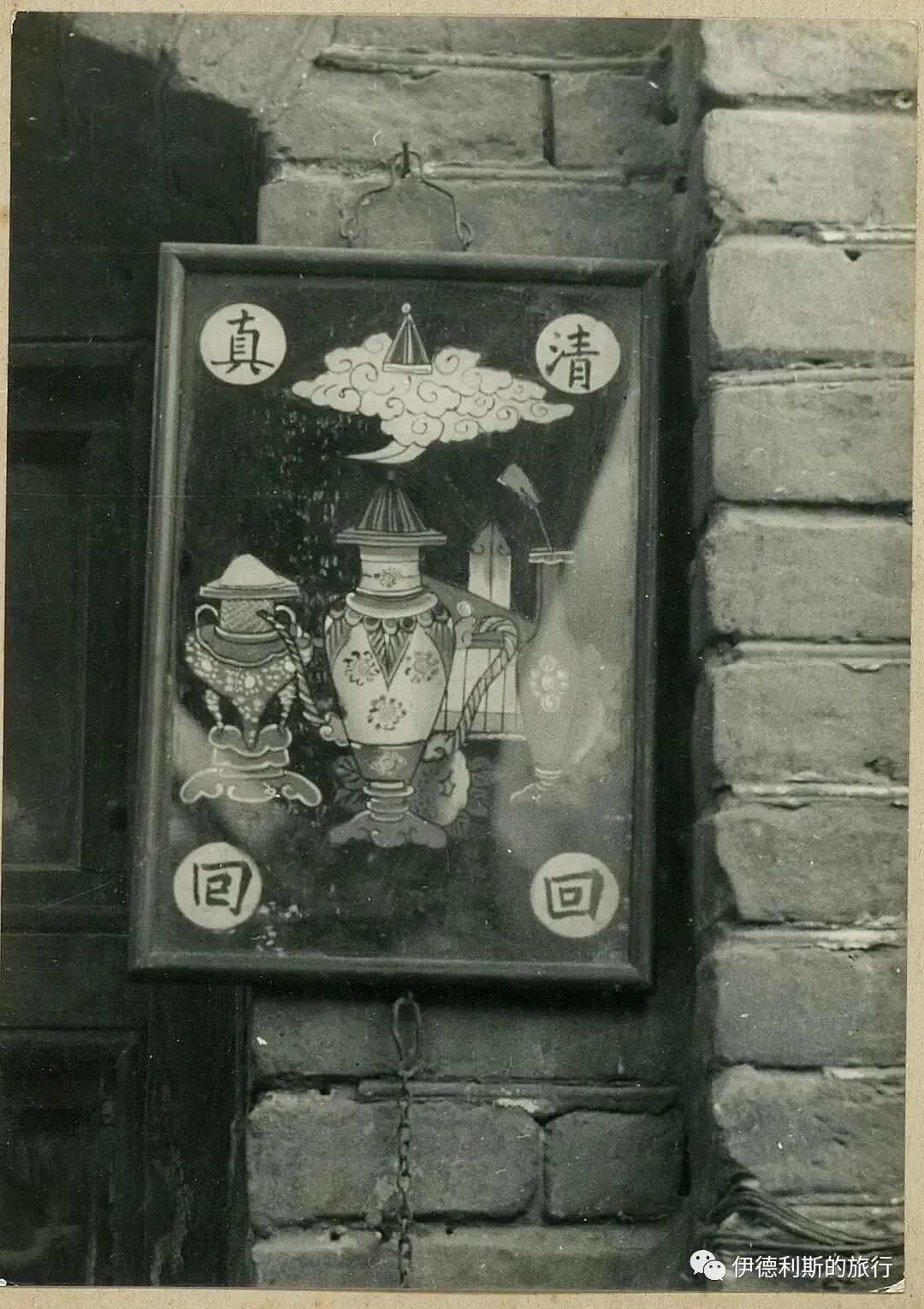
October 1941, calling the adhan at the Niujie Mosque.
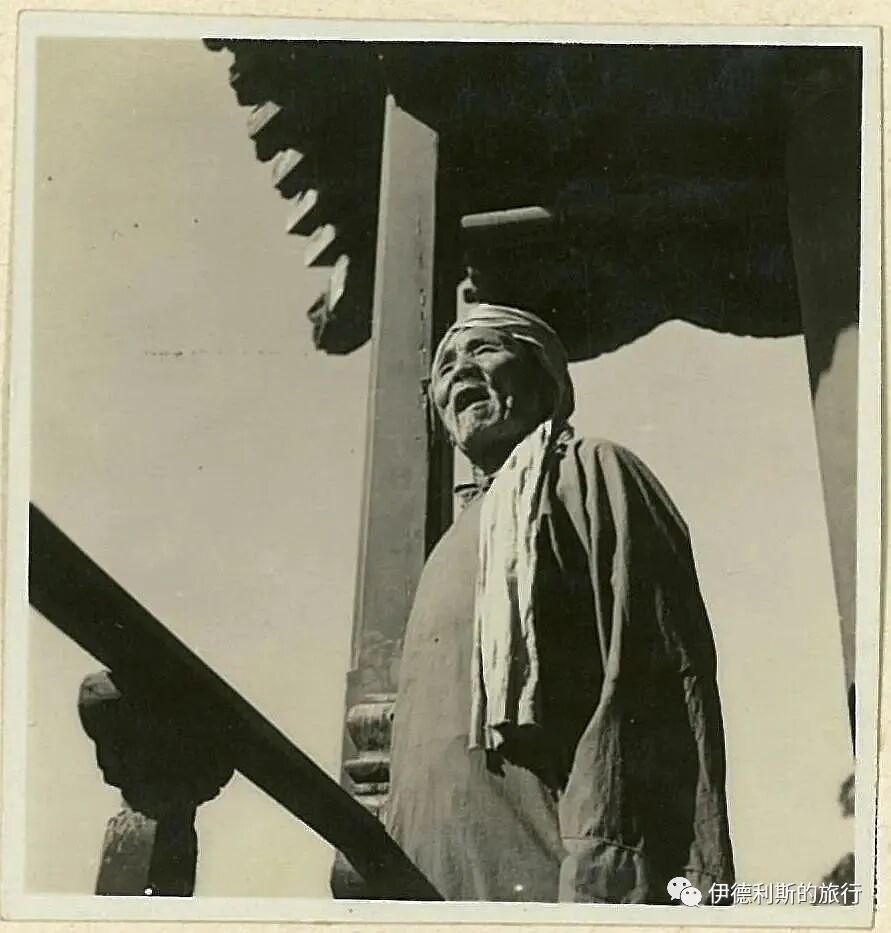
The Niujie Mosque in October 1941.
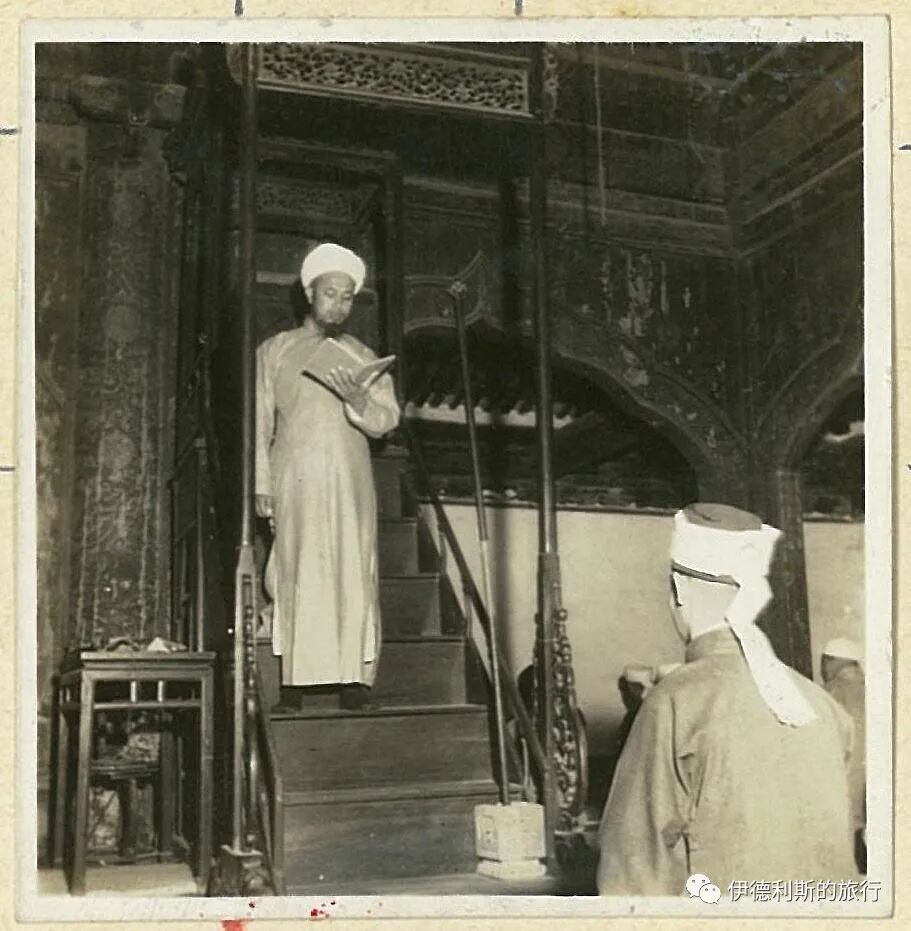
The Niujie Mosque in March 1941.
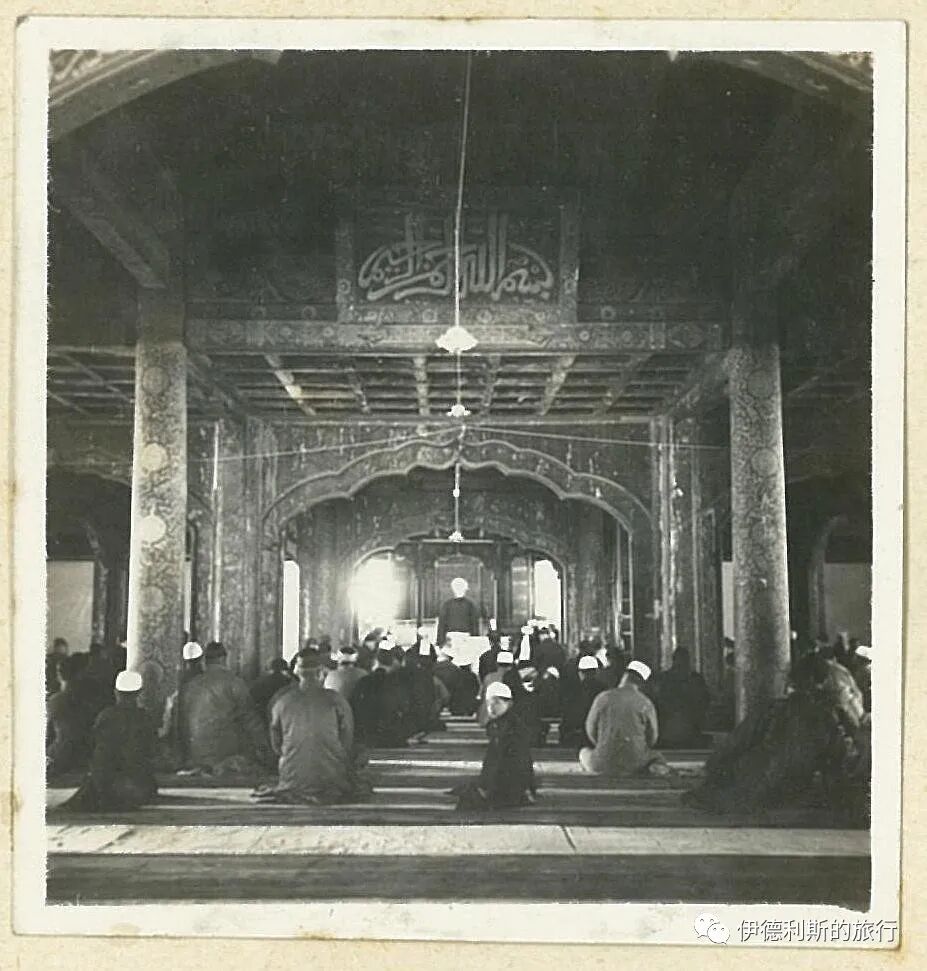
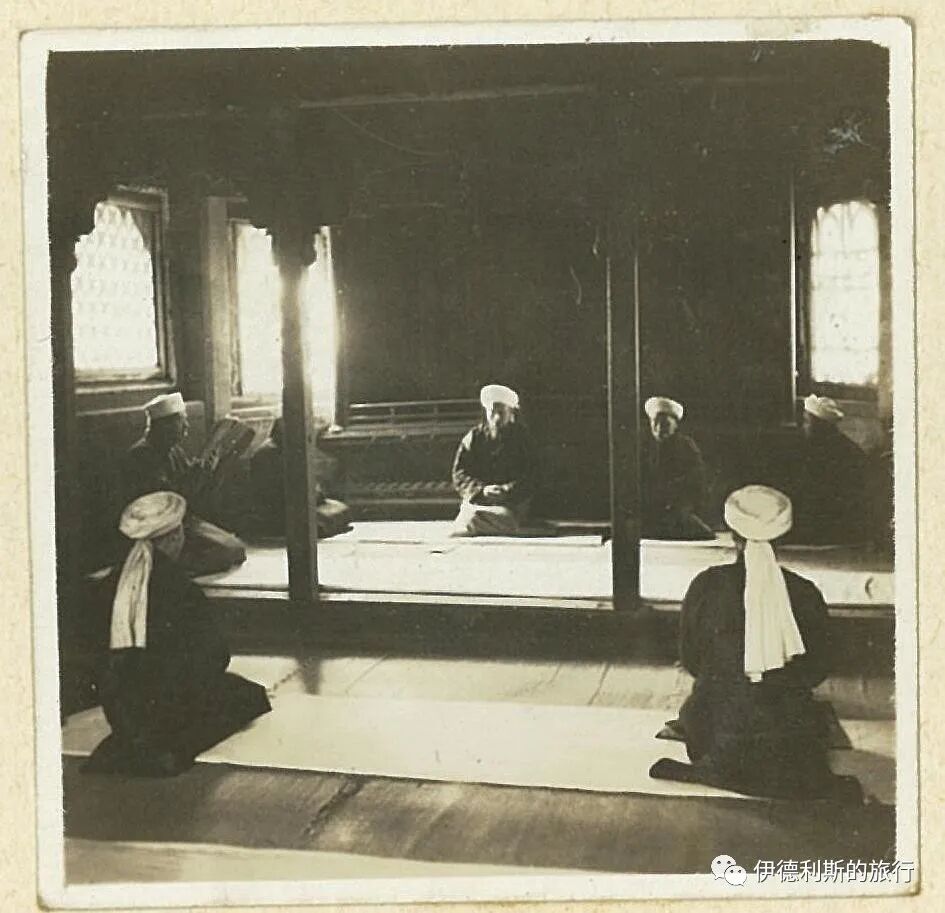
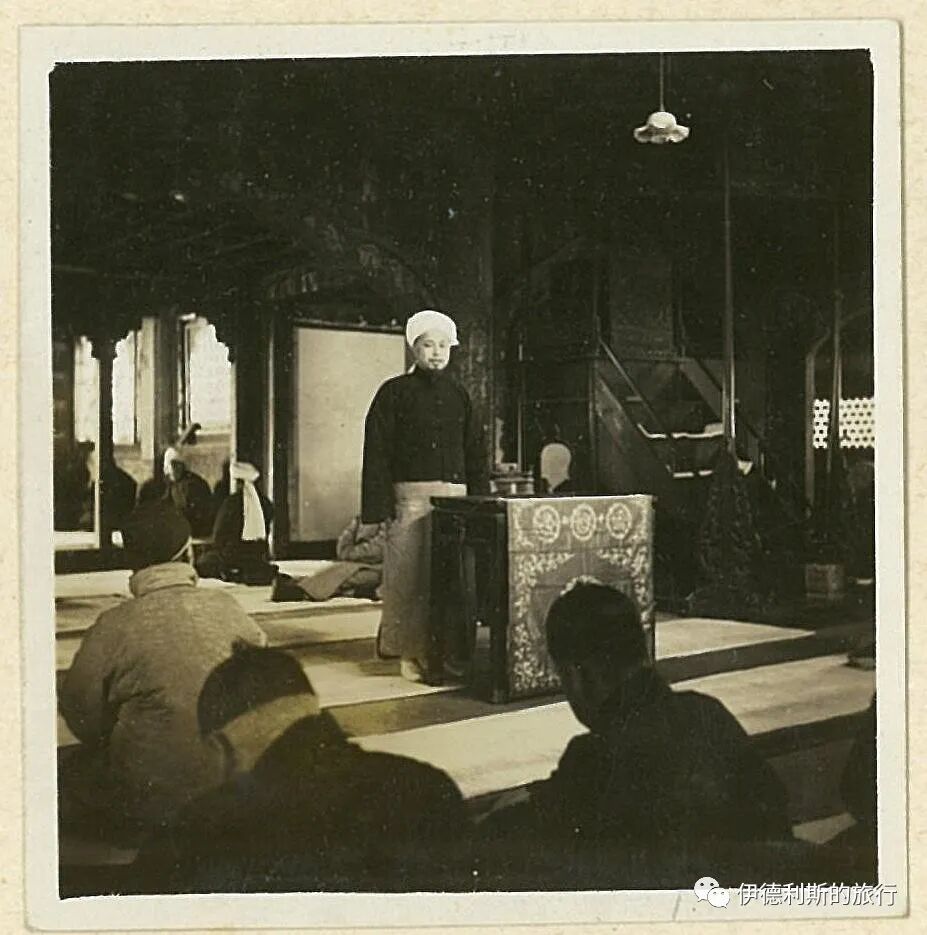
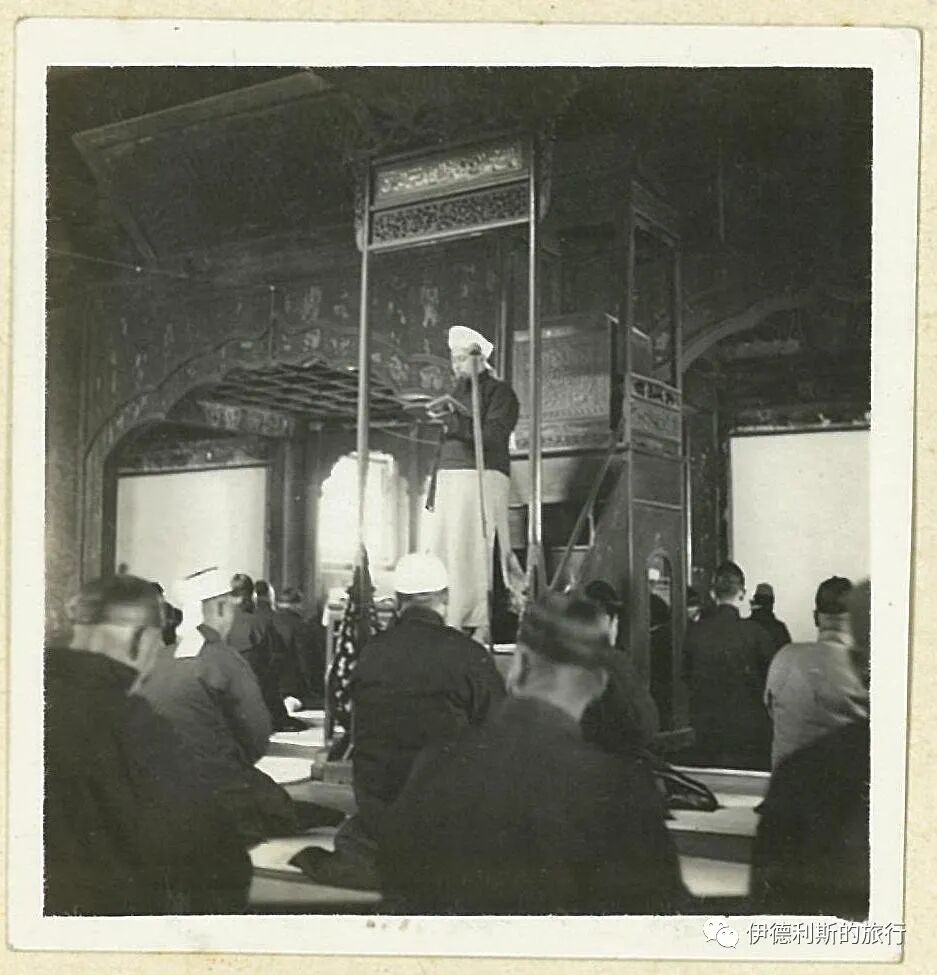
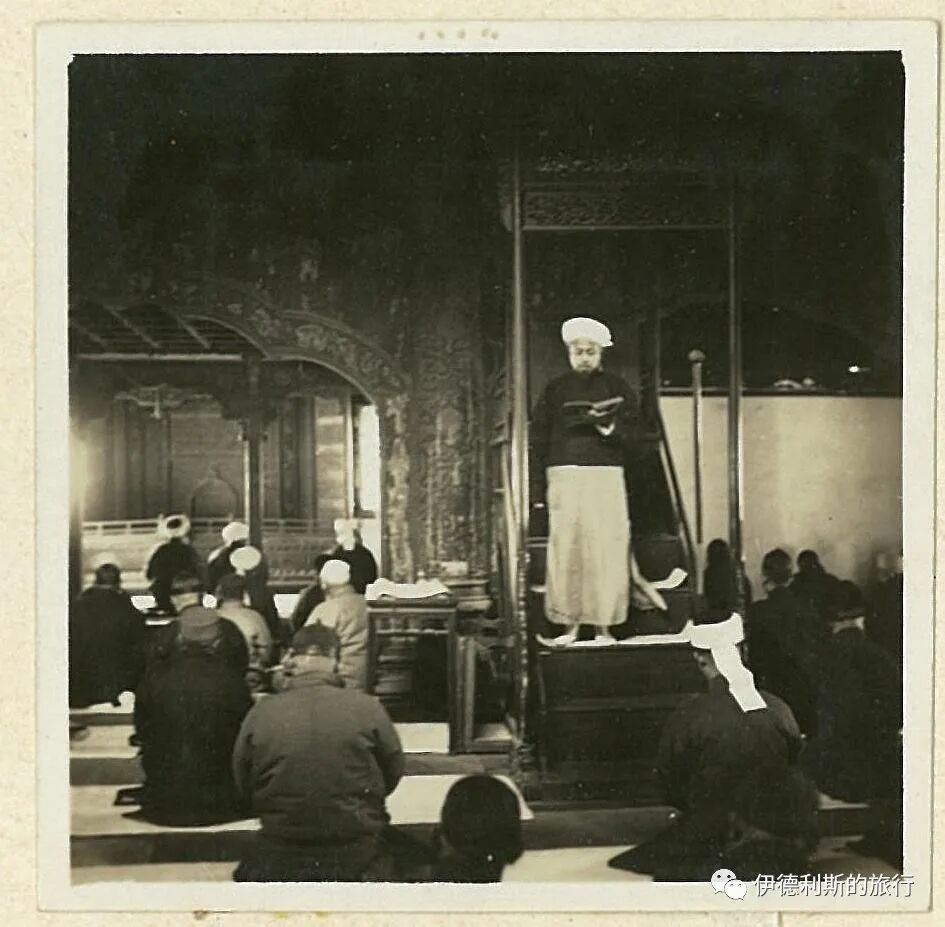
The Niujie Mosque in April 1941.
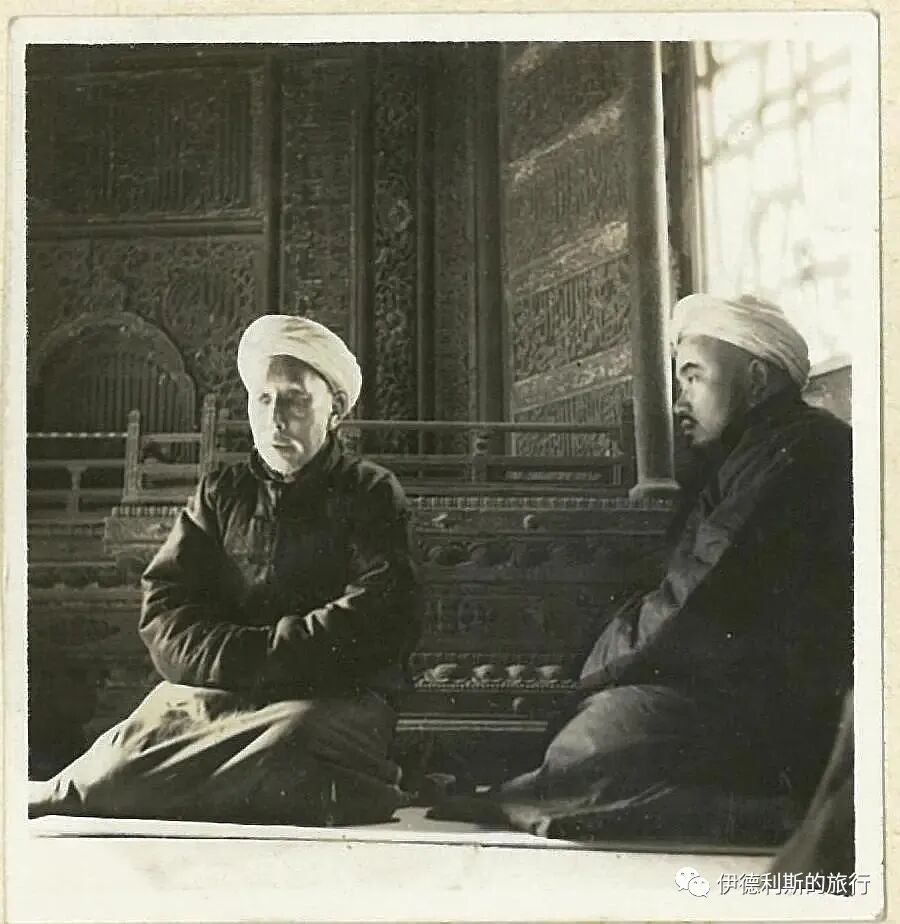
September 1939, the imam of the Niujie Mosque.
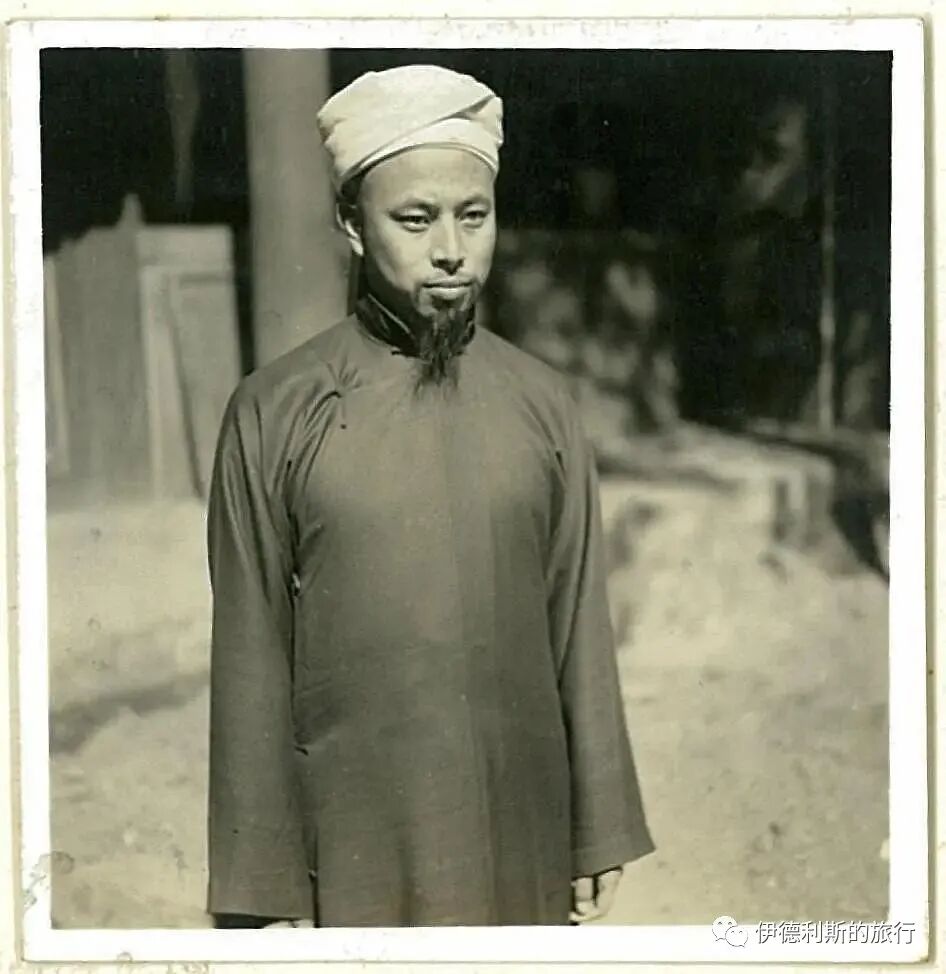
September 1939, performing minor ablution (wudu) at the Niujie Mosque.
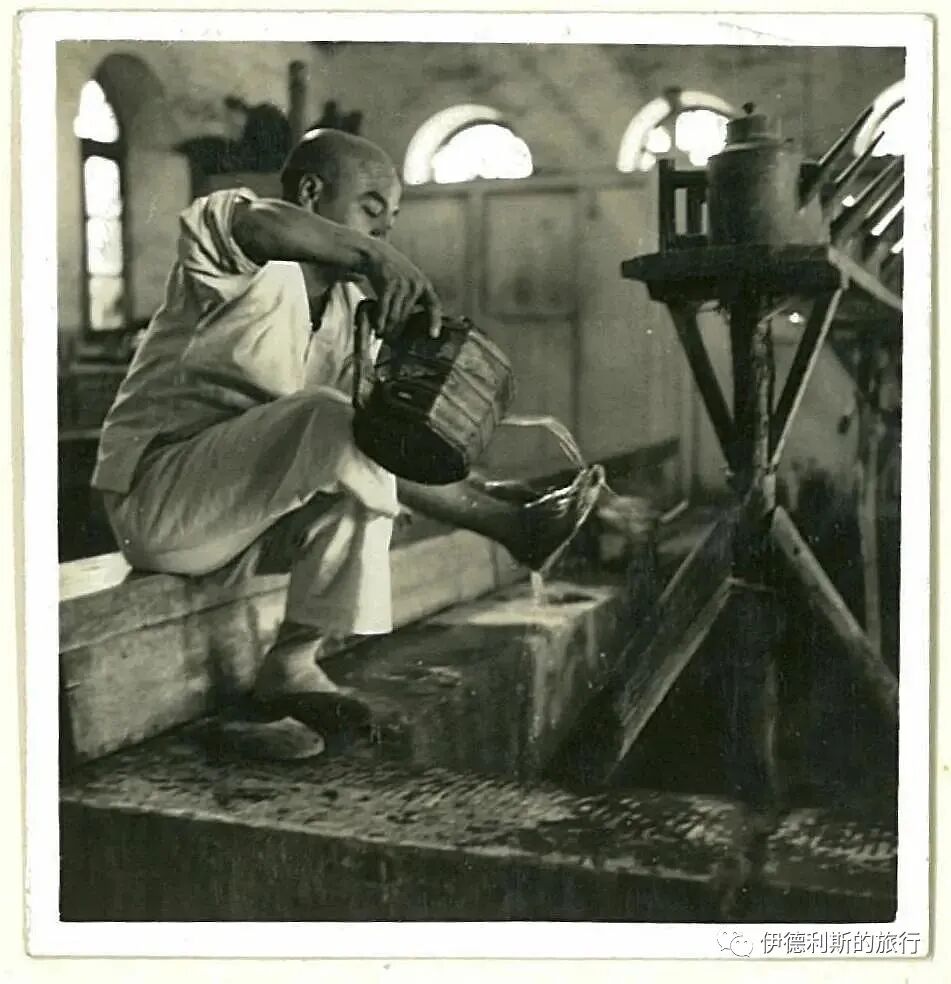
September 1939, the Quran (Guer'ani) at the Niujie Mosque, printed by the Beiping Chengda Normal School.
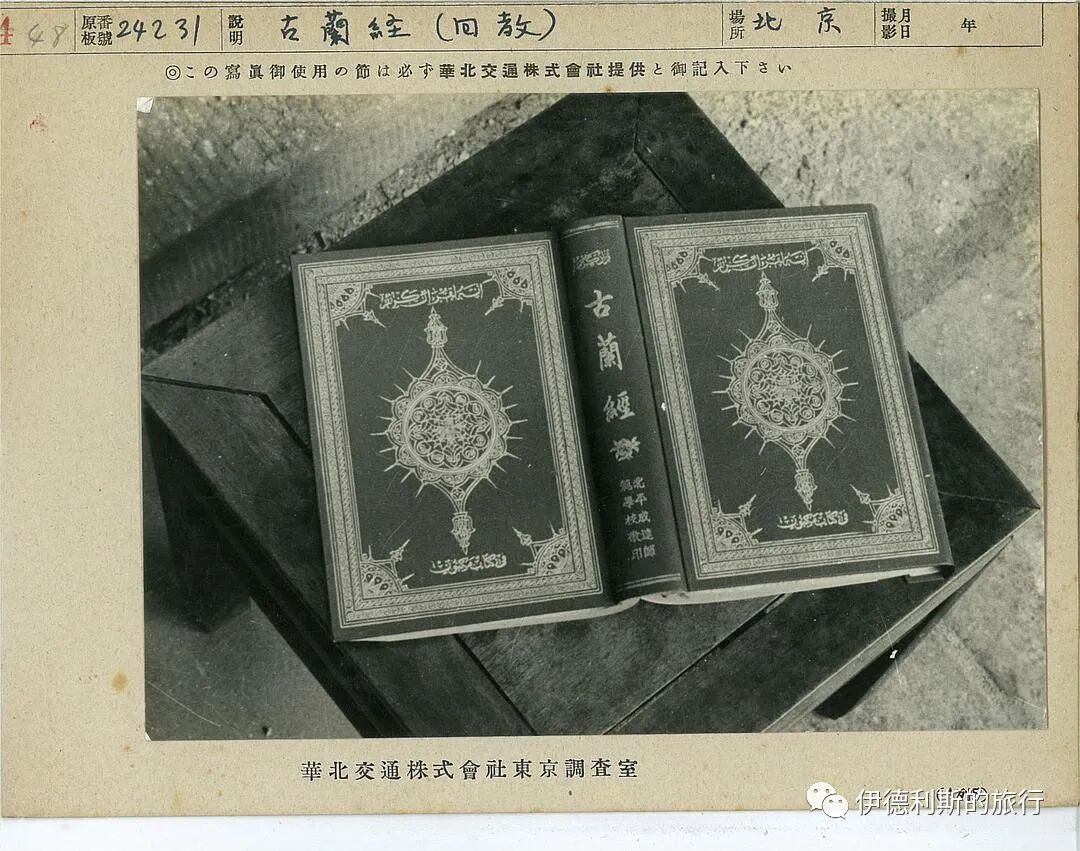
The Tianqiao Mosque in March 1939.
Tianqiao Mosque was located north of the mosque of Agriculture (Xiannongtan) between Fuchang Street Fourth and Fifth Lanes. It was built in 1926. Its demolition date is unknown, and the original site is now the Beijing Institute of Economics.
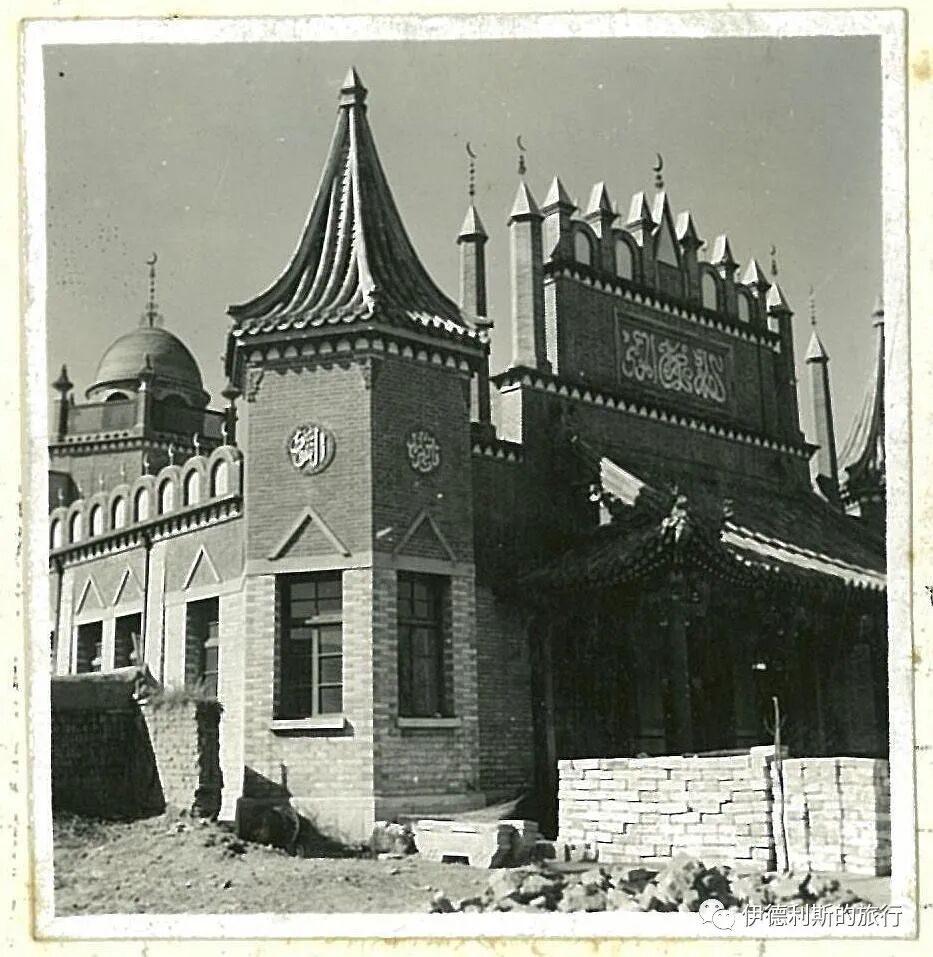
Tianqiao Mosque in March 1941.
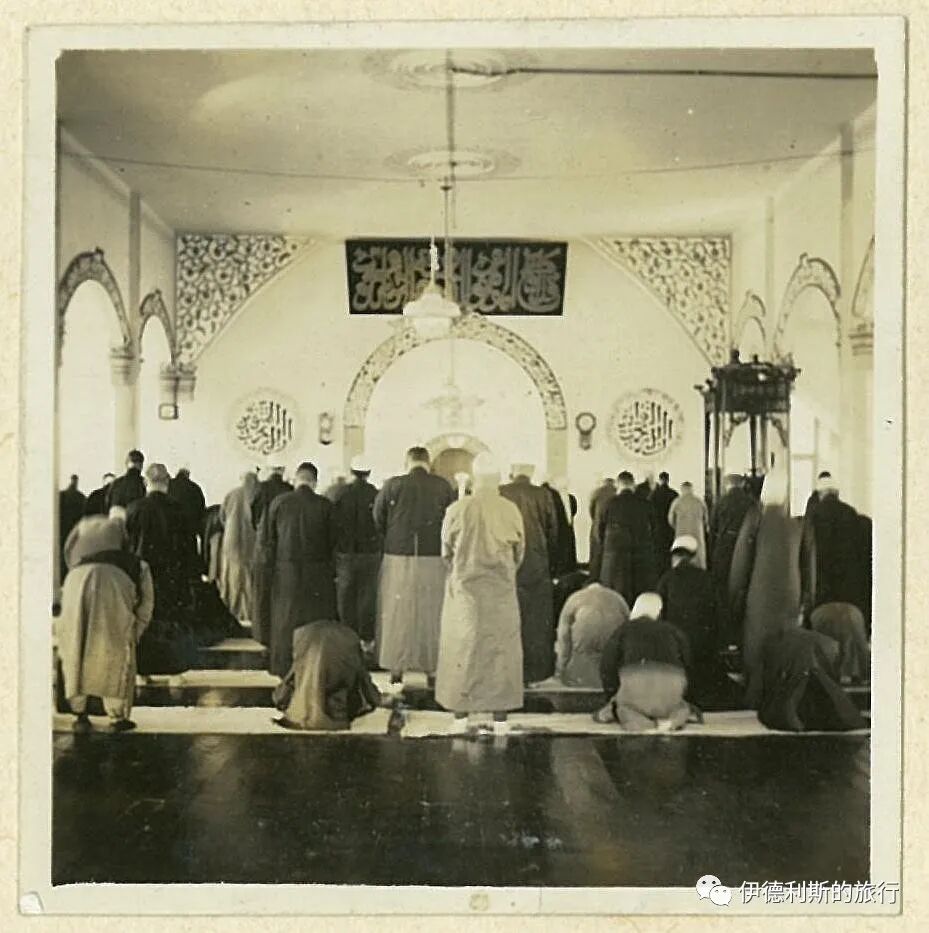
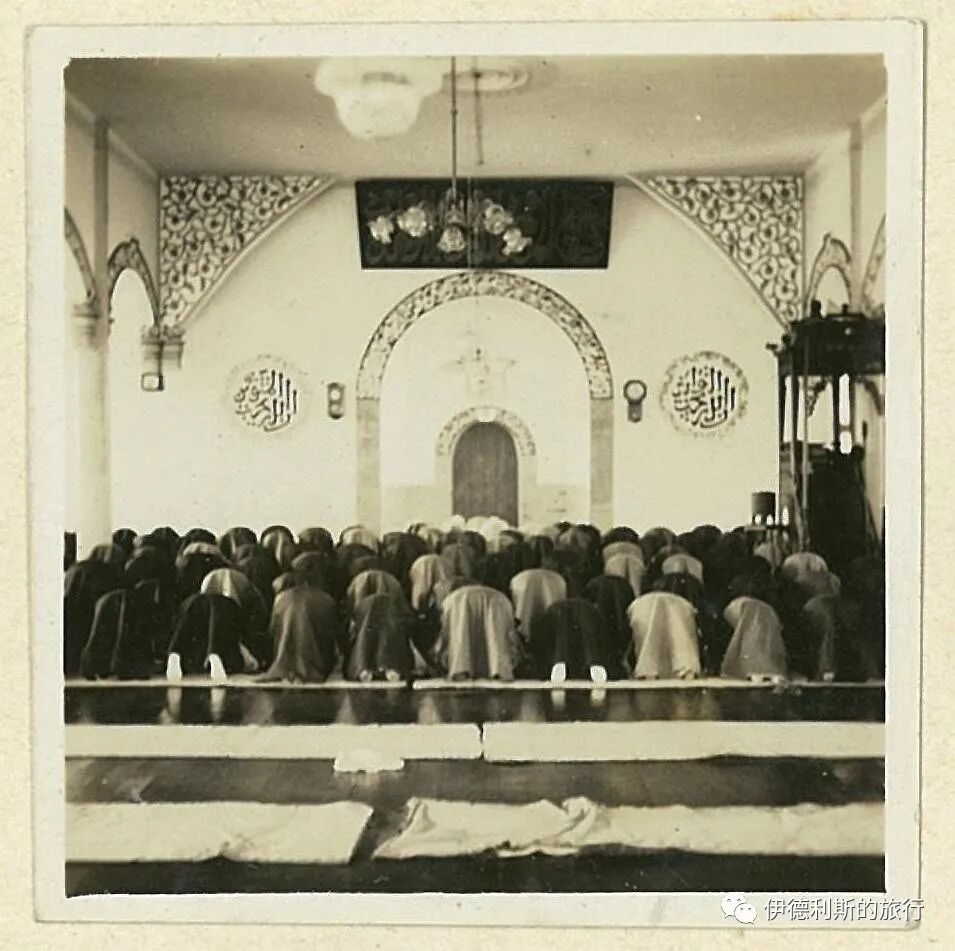
Tianqiao Mosque in July 1941.
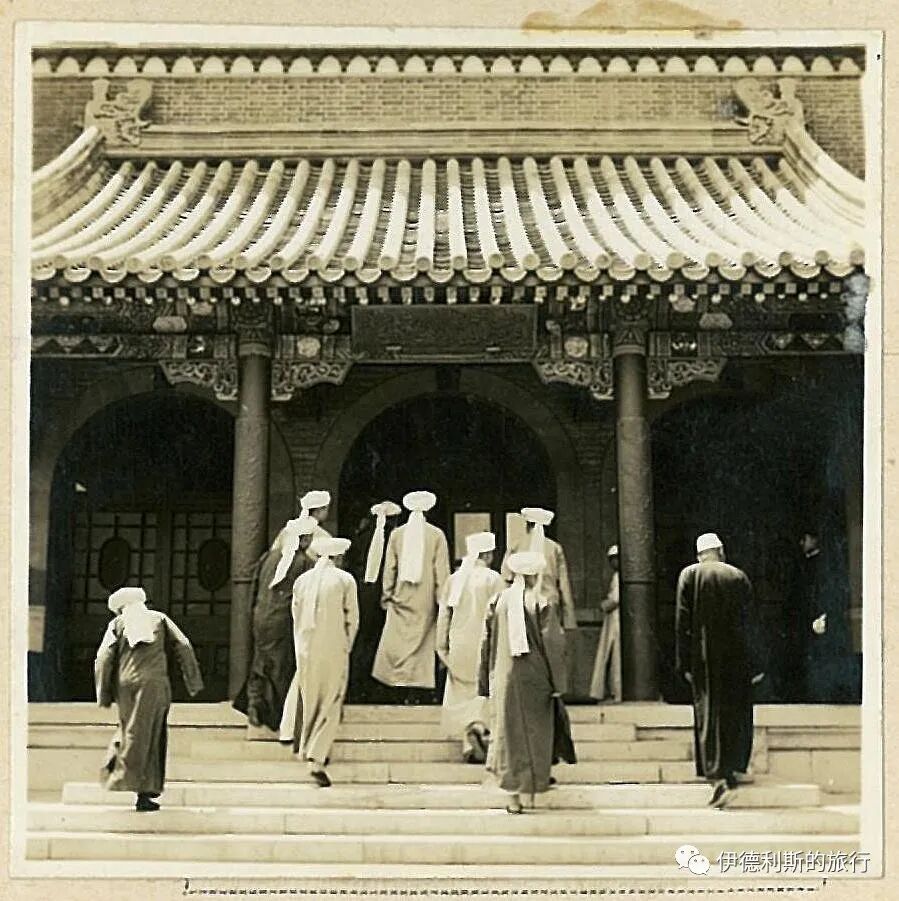
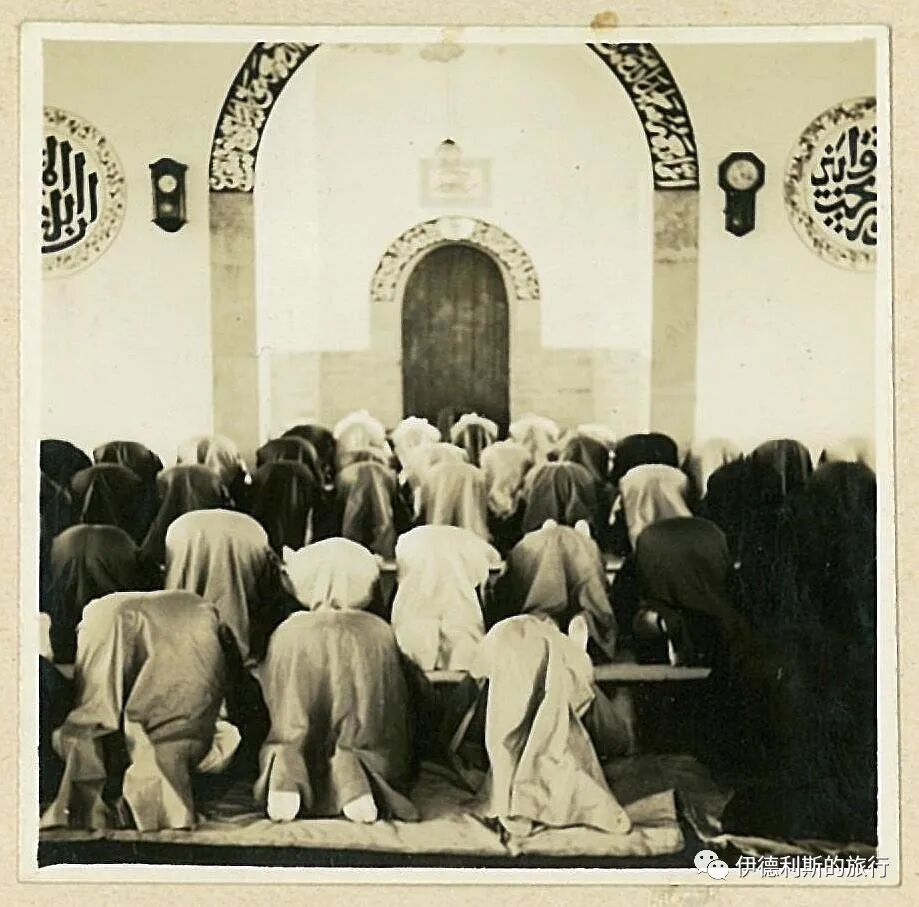
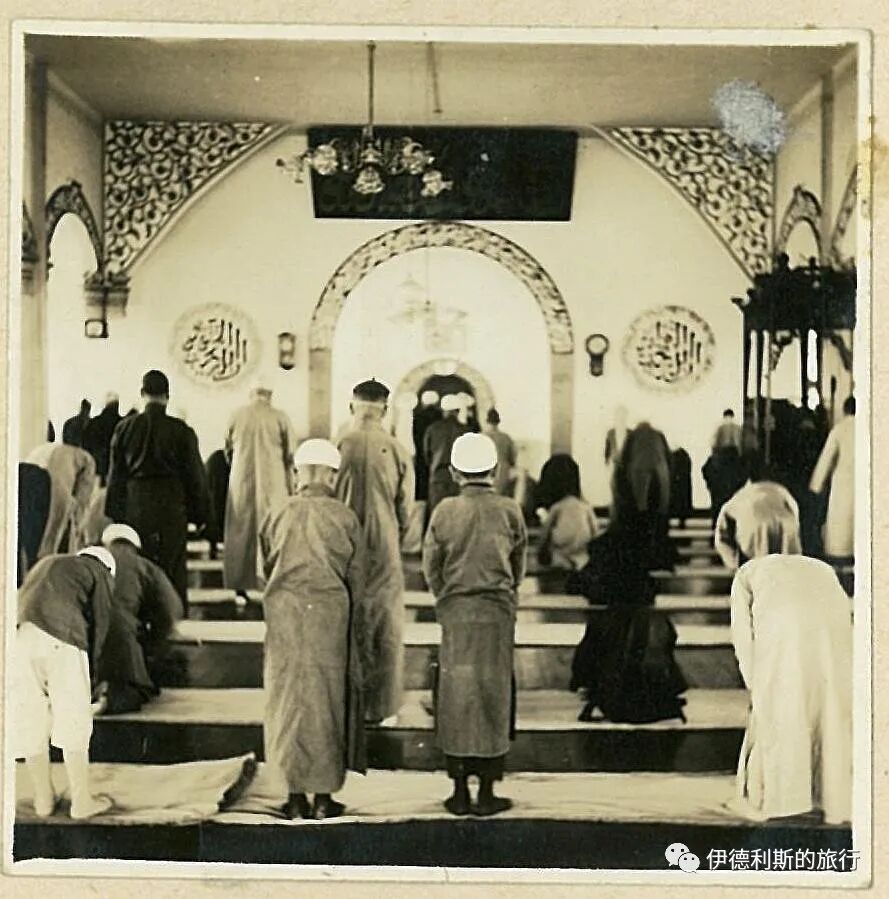
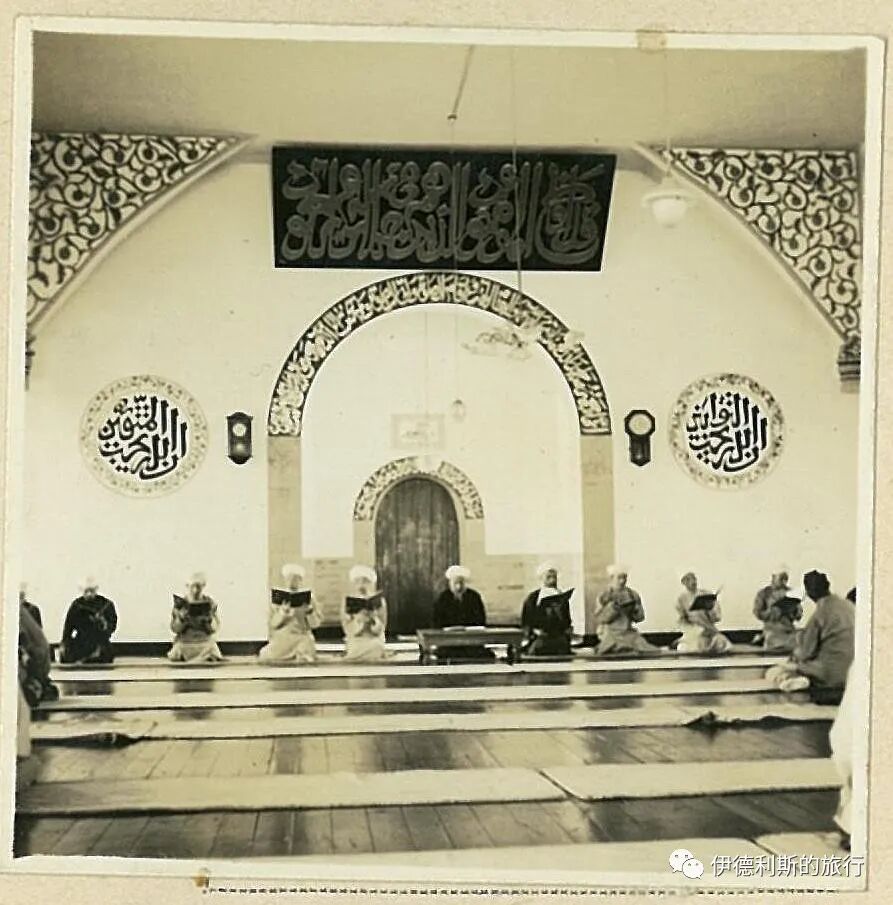
Zhangjiakou.
June 1938, performing wudu (ritual washing).
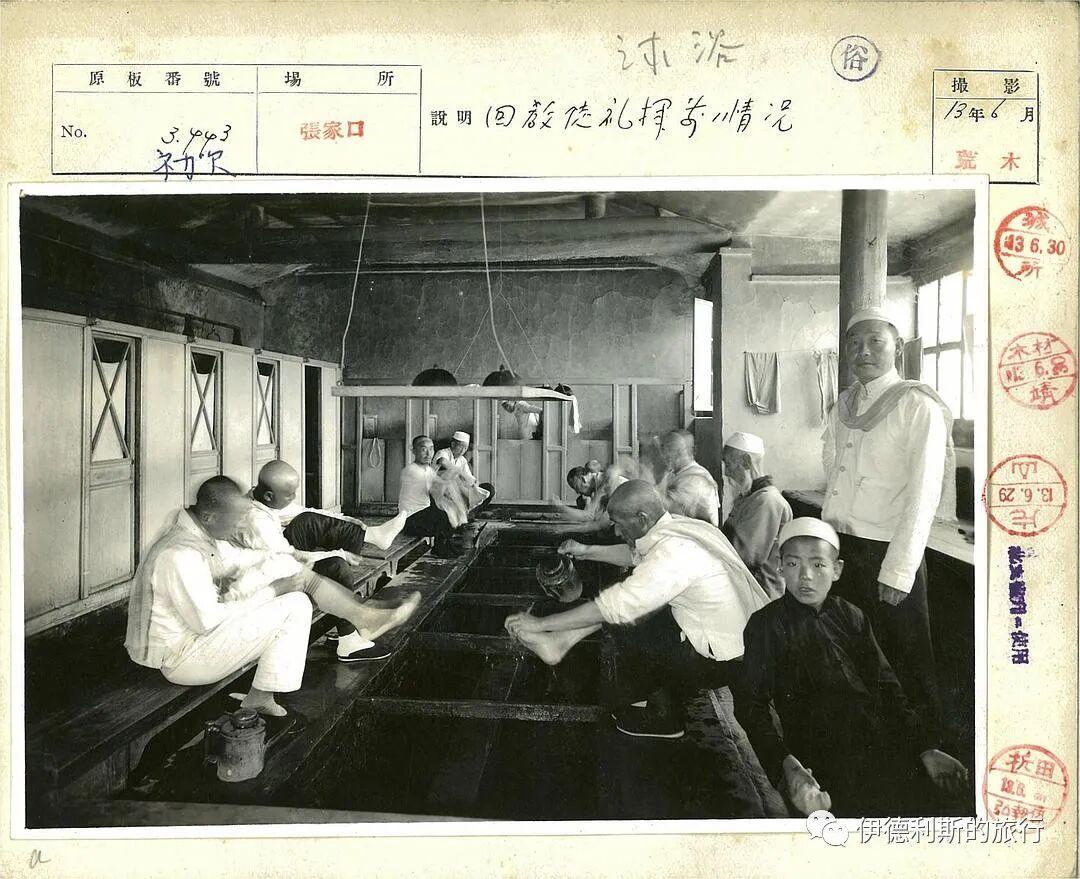
Mosque.
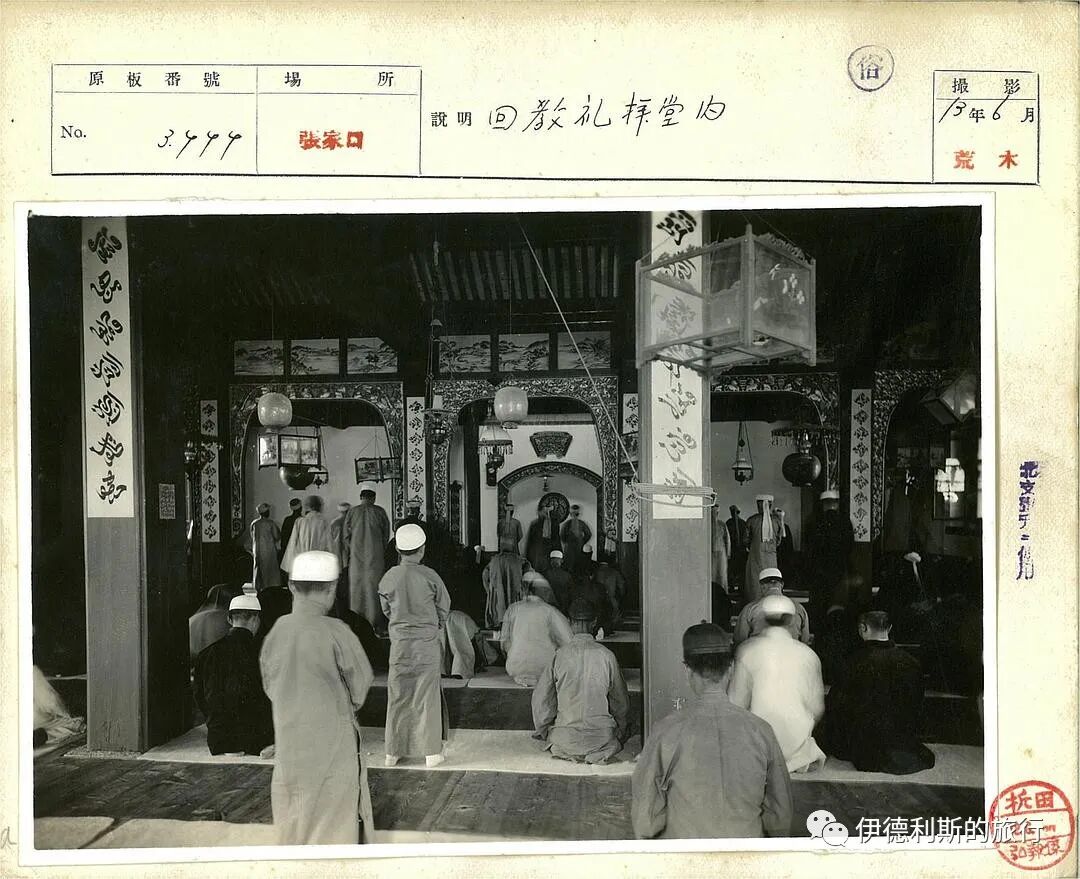
Islamic school (jingxuexiao).
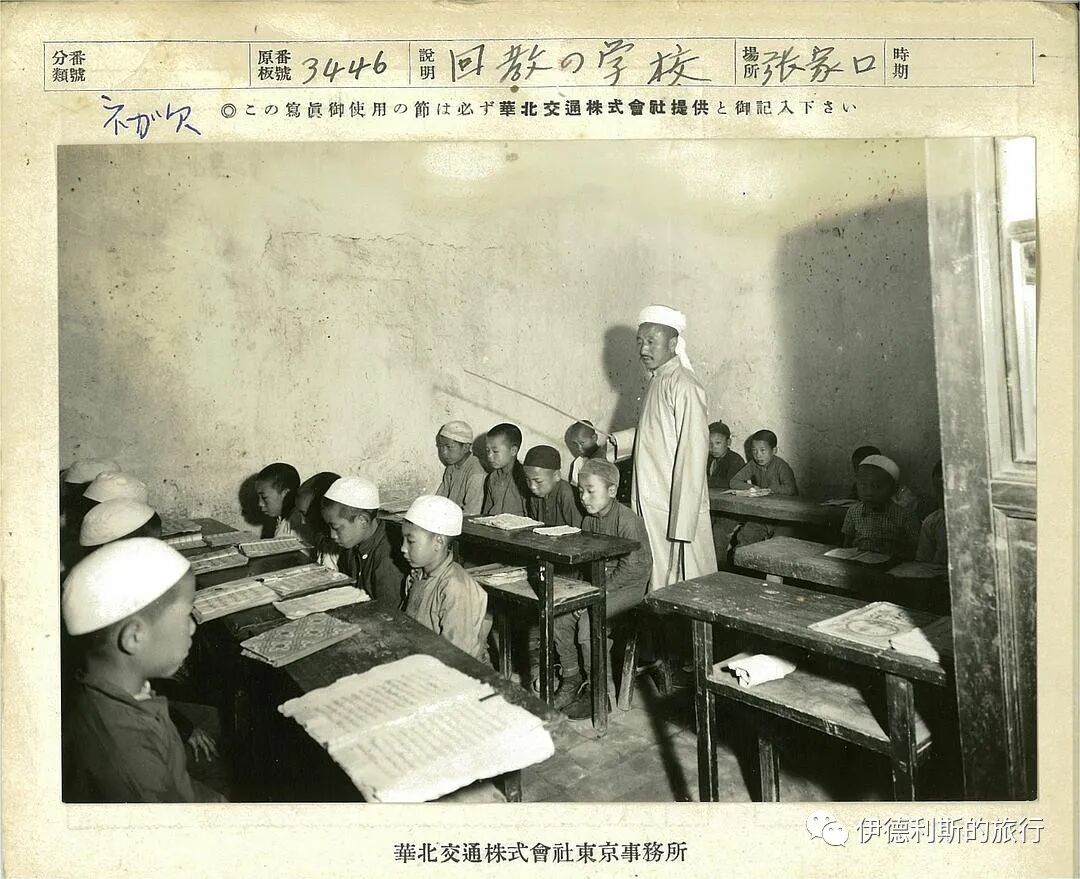
Hohhot.
The minaret (bangkelou) on the gate of the Gansui Mosque in Hohhot in November 1939.
The Gansui Mosque, also known as the North Mosque (Qingzhen Beisi), was built during the Xianfeng era and started as a small Islamic primary school. In 1921, Hui Muslims from the Northwest who had recently arrived in Hohhot, including Li Fengzao and Su Jinpo, joined local Hui Muslims to buy 12 mu of land at the Wang Family Vegetable Garden outside the North Gate of Suiyuan on Tongdao Street. They rebuilt it over three and a half years and named it Gansui Mosque, commonly known as the North Mosque. Afterward, the North Mosque became the center for the Yihewani sect of Hui Muslims in Hohhot.
The North Mosque was demolished in 1962 and merged with the West Mosque to form the Northwest Mosque, which was rebuilt in 1986.
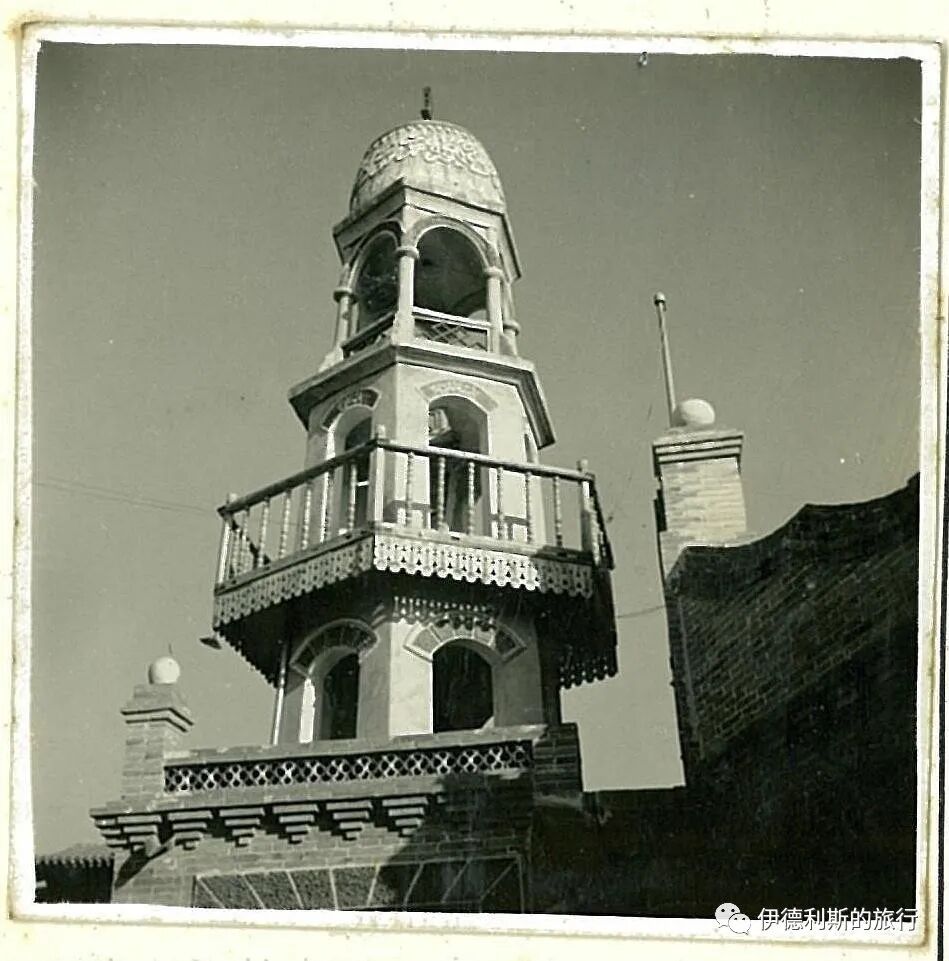
Carter Holton's Old Photos of Kaligang Tibetan Hui Muslims
Articles • ali2007fr posted the article • 0 comments • 149 views • 2026-05-18 02:39
Summary: Carter Holton's Old Photos of Kaligang Tibetan Hui Muslims is presented here as a firsthand travel account in clear English, beginning with this scene: Pastor Hai Yingguang was an American missionary whose original name was Carter Holton. The account keeps its focus on Tibetan Hui Muslims, Old Photos, Muslim Heritage while preserving the names, places, food, and historical details from the Chinese source.
Pastor Hai Yingguang was an American missionary whose original name was Carter Holton. He worked in Northwest China from 1923 to 1949 and left behind over 5,000 precious photographs. After Pastor Hai Yingguang passed away, his daughter Lora Jean Heurlin donated these materials to the Harvard-Yenching Library in the early 1990s. The library finished digitizing them in 2011.
Online address: library.harvard.edu/collections/carter-d-holton-collection
In 1930, Pastor Hai Yingguang and his family returned to Xunhua, Qinghai, for missionary work. Between 1932 and 1934, he took some precious photos of the Kaligang Tibetan Hui Muslims. Kaligang is located in the southwest of Hualong, Qinghai. Kaligang means big mountain in the Tibetan language. The area is full of high mountains and deep gullies, making transportation very difficult. In 1756, Ma Laichi, the founder of the Huasi menhuan, went to the Kaligang area to preach. This led local Tibetan people to convert to Islam, forming the unique Kaligang Tibetan Hui Muslims.
The brick carvings of the Huangwuju mosque in Dehenglong Township and the Kaligang Tibetan Hui Muslims. On the right is the leader of the Dehenglong Kaligang tribe.
Kaligang Tibetan Hui Muslims in 1932.
In Dehenglong, Kaligang in 1932.
Kaligang Tibetan Hui Muslims in 1933.
Kaligang Tibetan Hui Muslims in 1934.
Kaligang Tibetan Hui Muslims photographed in Labuleng Town in 1939. view all
Summary: Carter Holton's Old Photos of Kaligang Tibetan Hui Muslims is presented here as a firsthand travel account in clear English, beginning with this scene: Pastor Hai Yingguang was an American missionary whose original name was Carter Holton. The account keeps its focus on Tibetan Hui Muslims, Old Photos, Muslim Heritage while preserving the names, places, food, and historical details from the Chinese source.
Pastor Hai Yingguang was an American missionary whose original name was Carter Holton. He worked in Northwest China from 1923 to 1949 and left behind over 5,000 precious photographs. After Pastor Hai Yingguang passed away, his daughter Lora Jean Heurlin donated these materials to the Harvard-Yenching Library in the early 1990s. The library finished digitizing them in 2011.
Online address: library.harvard.edu/collections/carter-d-holton-collection
In 1930, Pastor Hai Yingguang and his family returned to Xunhua, Qinghai, for missionary work. Between 1932 and 1934, he took some precious photos of the Kaligang Tibetan Hui Muslims. Kaligang is located in the southwest of Hualong, Qinghai. Kaligang means big mountain in the Tibetan language. The area is full of high mountains and deep gullies, making transportation very difficult. In 1756, Ma Laichi, the founder of the Huasi menhuan, went to the Kaligang area to preach. This led local Tibetan people to convert to Islam, forming the unique Kaligang Tibetan Hui Muslims.
The brick carvings of the Huangwuju mosque in Dehenglong Township and the Kaligang Tibetan Hui Muslims. On the right is the leader of the Dehenglong Kaligang tribe.
Kaligang Tibetan Hui Muslims in 1932.
In Dehenglong, Kaligang in 1932.
Kaligang Tibetan Hui Muslims in 1933.
Kaligang Tibetan Hui Muslims in 1934.
Kaligang Tibetan Hui Muslims photographed in Labuleng Town in 1939.
Halal Travel Guide: Anqing Hui Muslim Community — South Gate Mosque Photos (Part 2)
Articles • ali2007fr posted the article • 0 comments • 118 views • 2026-05-18 02:27
Summary: Anqing Hui Muslim Community — South Gate Mosque Photos is presented here as a firsthand travel account in clear English. The account keeps its focus on Anqing Muslims, China Mosques, Old Photos while preserving the names, places, food, and historical details from the Chinese source. view all
Summary: Anqing Hui Muslim Community — South Gate Mosque Photos is presented here as a firsthand travel account in clear English. The account keeps its focus on Anqing Muslims, China Mosques, Old Photos while preserving the names, places, food, and historical details from the Chinese source.
Halal Travel Guide: Wuchang Hui Muslim Community — Qiyi Street Photos (Part 2)
Articles • ali2007fr posted the article • 0 comments • 137 views • 2026-05-18 02:26
Summary: Wuchang Hui Muslim Community — Qiyi Street Photos is presented here as a firsthand travel account in clear English, beginning with this scene: Also, their new menu uses a photo I took of Qiyi Street back in 2011. The account keeps its focus on Wuchang Muslims, Old Photos, Hubei Muslims while preserving the names, places, food, and historical details from the Chinese source.
Also, their new menu uses a photo I took of Qiyi Street back in 2011. view all
Summary: Wuchang Hui Muslim Community — Qiyi Street Photos is presented here as a firsthand travel account in clear English, beginning with this scene: Also, their new menu uses a photo I took of Qiyi Street back in 2011. The account keeps its focus on Wuchang Muslims, Old Photos, Hubei Muslims while preserving the names, places, food, and historical details from the Chinese source.
Also, their new menu uses a photo I took of Qiyi Street back in 2011.
Hedda Morrison's Old Beijing Photos: Kaorouwan, Muslim Barbecue and Hui Food
Articles • ali2007fr posted the article • 0 comments • 144 views • 2026-05-18 01:58
Summary: Hedda Morrison's Old Beijing Photos: Kaorouwan, Muslim Barbecue and Hui Food is presented here as a firsthand travel account in clear English, beginning with this scene: German photographer Hedda Morrison moved to Beijing in 1933 to manage a German photography studio in the embassy district. The account keeps its focus on Beijing Halal Food, Old Photos, Hui Muslims while preserving the names, places, food, and historical details from the Chinese source.
German photographer Hedda Morrison moved to Beijing in 1933 to manage a German photography studio in the embassy district. During this time, she rode her bicycle through the streets and alleys of Beijing, taking many interesting photos until she left the city in 1946. Most of Hedda Morrison's work was donated to the Harvard-Yenching Library. It has been digitized and is now on their website, including a set of photos of the old Beijing halal restaurant Kaorouwan.
This set of photos shows every step from slicing the meat and grilling it to making sesame flatbread (shaobing) and eating the meat inside the bread. It gives us a vivid look at what grilled meat on an iron grate (zhizi kaorou) was like 70 or 80 years ago.
Kaorouwan was started during the Qing Dynasty by a Hui Muslim family named Wan from Dachang, east of Beijing. They opened the shop in An'er Hutong near Xuanwumen, specializing in grilled beef on an iron grate served with sesame flatbread. At first, Kaorouwan was just a street stall. It wasn't until the third-generation owner, Wan Yukui, bought a storefront at the west end of An'er Hutong that the business truly became established.
Wan Ba and two assistants.
The interior of the shop.
Zhang Zhongxing wrote this in his book Fuxuan Suohua:
I forget who I was with, but it was summer, and we went to Kaorouwan to try the grilled beef. The shop was very simple, just one large room. On the south side was the grilling area with two iron grates (zhizi) side by side. They looked like millstones, with a round platform about the size of a restaurant table. In the middle was an iron ring over a foot high, topped with an iron grate that was slightly raised in the center.
The iron grate was made of iron strips about three or four fen wide placed side by side. There were gaps between the strips, which were filled with beef juices from constant use. Four rough benches were placed around the round platform for customers to stand at. On the north side was a table holding bowls, chopsticks, chopped green onions, chopped cilantro, sesame paste, soy sauce, and other seasonings. There was also a cutting board for the beef, with the meat, knives, and plates on it.
The man cutting the meat was a big guy around fifty, who I assume was the owner, Mr. Wan. He was quite fat and wore only a pair of unlined trousers, which sat about an inch below his navel. The owner was very capable. Aside from a teenage boy who helped deliver meat and seasonings, he did everything himself, including seating customers and handling the bill. The meat was said to be carefully selected from the meat market early in the morning, and it was sliced well—thin and even.
When we arrived, the owner told the young assistant: 'Two people, let them stand there.' Then, the assistant asked how much we wanted to eat and immediately brought the meat and seasonings. Following the Beijing custom, we kept our right foot on the ground and lifted our left foot onto the bench. We used long bamboo chopsticks to dip the meat slices in seasoning and placed them on the grate. The grate was heated by pine wood, which produced little smoke and a slight fragrance. The grate was very hot, and the meat slices sizzled the moment they touched it. Stir it a few times and it is ready to eat. I take a sip of white liquor (bai gan) and a bite of meat, feeling just like I am in a Mongolian yurt (menggubao) out on the frontier.
I stop drinking halfway through the meal, just as the sesame flatbread (shaobing) arrives. I eat the flatbread with the grilled meat and finish a bowl of porridge, leaving me completely full. I put down my bowl and chopsticks and listen to the shop owner calculating the bill: this item is so many diao (ten copper coins make one diao), that item is so many diao, and here is the total. While calculating, the owner does not stop his knife; he keeps on slicing. I am very satisfied with this meal and will definitely want to come back again.
Every visit is rewarding. Eating well is one thing, but it is even more interesting to watch the owner’s style. With his big belly exposed, he stays busy but calm, truly living up to the description of being open and magnanimous.
The assistant is slicing meat.
Jin Shoushen wrote in Life in Old Beijing:
The owner of Kaorouwan, Wan Laowu, was originally a flatbread stall owner. Back in the days when it was popular to sell grilled meat from small carts, the Wan family sold grilled meat on a griddle (zhizi kaorou) at the west entrance of An'er Hutong. Over the years, business grew, so they set up a shed to sell the meat and added a second iron griddle. Every day, carriages and horses crowded the entrance, but the shop remained a simple shed. The secret to Kaorouwan is that they use truly high-quality young beef (Kaorouwan specializes in beef), making it fresh, tender, and delicious. Wan Laowu is incredibly talented. He hand-slices about a hundred pounds of beef every day. He uses a money-counting system for sales, and no matter how many customers there are, he slices meat and calculates bills at the same time, using all his senses to ensure not even the price of a cucumber is wrong.
The assistant is preparing the marinade and then mixing it with the meat.
Wang Yongbin wrote in Beijing's Commercial Streets and Old Brands:
Kaorouwan is famous far and wide for its thriving business, thanks to their careful selection of meat, thin slices, complete seasonings, and fresh, delicious flavor. Kaorouwan sends people to the Madian beef and mutton market outside Deshengmen to select fat sheep from north of the pass. The way Kaorouwan slices meat is a family craft. The meat must be three inches long, one inch wide, and as thin as paper. This way, the meat cooks quickly on the griddle and is easy for customers to chew and swallow. Eating grilled meat requires green onions, which are cut into half-inch diagonal slices for customers to use while grilling. Each customer is given a blue-rimmed porcelain bowl containing seasonings like high-quality soy sauce, sesame oil, cooking wine, white sugar, minced green onion, minced ginger, minced garlic, and salt. Back then, Kaorouwan had customers grill and eat the meat themselves. Each person held a pair of wooden chopsticks over a foot long, with one foot on a bench and the other on the ground, grilling and eating at the same time.
Making the sesame flatbread (shaobing) to go with the grilled meat.
Jin Yunzhen wrote in "Fragments of Memories" (Douding Suoyi):
On the east side of Xuanwumen Inner Street in Beijing, near Rongxian Hutong, there used to be a small shop (really just a food shed) that specialized in roasted beef, known as the famous Kaorou Wan. This Kaorou Wan had many unique features. Although the restaurant was small, it had been in the family for six generations. When I was around twenty years old (roughly 1930), the person running it was a middle-aged man over forty. Beijingers followed the customs of Hui Muslims and respectfully called him "Wan Ba," which means Master Wan. He had a large head, thick eyebrows, bright eyes, and a short, sturdy build. He was quick, sharp-minded, and very organized. He was very strict about choosing meat and only used the chuck (shangnao). His meat-slicing technique was fast and skillful, producing large, thin slices without any gristle, making the meat incredibly tender and fatty. The beef had a milky aroma and tasted delicious when roasted, which is why Kaorou Wan stayed famous for so long.
Kaorou Wan was just a small shop with two gray sheds built on the sidewalk by the road. It was divided into an inner and outer room. The inner room had two roasting grills (zhizi). Because there were so many customers, they used large grills three feet in diameter, set over a fire basin with an iron ring. Below were large round tables, and each table could fit ten people standing around it. Customers had no seats and stood with one foot on a long wooden bench. All the seasonings, meat, bowls, sesame flatbread (shaobing), and wine were placed on the edge of the round table. People held two-foot-long wooden chopsticks (as thick as rattan, otherwise you couldn't reach the grill through the crowd) and ate with gusto, showing a rugged style. The beef was priced by the bowl, with each bowl weighing ten old-style taels. Half bowls were also sold. For an adult with a normal appetite, ten taels were enough, and those with a big appetite could add half a bowl. Seasonings were sold individually, such as a dish of green onions or a dish of soy sauce, and you could add or remove items like sesame flatbread (shaobing) as you liked. You had to bring your own wine at first, but later they started selling liquor (shaojiu) by the two-tael bowl. At that time, a full meal for one person cost five or six jiao, which was a big expense. A simple meal at a small restaurant for an average person, without wine, cost less than two jiao, so spending five or six jiao on a meal was considered extravagant for most residents.
Every late autumn, when passing by Xuanwumen Street, the smell of roasted meat would linger in the air, which was very tempting. Most customers were lower-middle-class citizens and working people; the wealthy and powerful did not visit. Later, Kaorou Wan became famous, and some wealthy families came to try the unique taste of the roasted beef and spread the word. Eventually, prominent figures arriving in cars with servants, and even noblewomen covered in jewelry, began to visit. These people didn't mind "losing their status" by squeezing in among the sweating, hungry men to eat roasted meat with long wooden chopsticks. Master Wan was completely unfazed. He didn't consider setting up a "VIP area" or getting up to flatter them. He just kept doing things his own way and treated everyone the same, a quality that was highly valued among small merchants in Beijing at the time.
Kaorou Wan not only serves excellent meat, but the master chef Wan himself is unique for his simple and meticulous style, his skilled and refined technique, his sharp mind, and his organized memory. These things left a deep impression in my observations and memories. Since his business was just two gray sheds, he did not have many staff; I remember he only had two young assistants besides himself. They just ran back and forth, moved supplies, and washed bowls and chopsticks. Besides handling the accounts, greeting guests, and looking after their coats, his main job was standing at the counter to slice meat. His meat-slicing technique was superb, and even when twenty people ate at once, he never failed to keep up with the demand. Whenever the place was packed and people were bumping into each other looking for seats, he watched everything, listened to everything, kept reciting the accounts, never stopped slicing meat, greeted guests, and arranged for early arrivals to eat in order. This person came first, please sit over there. Please wait a moment, you arrived a step later than this person. During all this, he also had to collect money and nod goodbye to guests. At the same time, he noticed if someone took the wrong umbrella or where someone else hung their hat and coat. His calm and organized attitude was truly amazing.
Roast meat, eating meat.
I will also share a few photos taken by Hedda Morrison in Beijing of halal signs and halal snacks. view all
Summary: Hedda Morrison's Old Beijing Photos: Kaorouwan, Muslim Barbecue and Hui Food is presented here as a firsthand travel account in clear English, beginning with this scene: German photographer Hedda Morrison moved to Beijing in 1933 to manage a German photography studio in the embassy district. The account keeps its focus on Beijing Halal Food, Old Photos, Hui Muslims while preserving the names, places, food, and historical details from the Chinese source.
German photographer Hedda Morrison moved to Beijing in 1933 to manage a German photography studio in the embassy district. During this time, she rode her bicycle through the streets and alleys of Beijing, taking many interesting photos until she left the city in 1946. Most of Hedda Morrison's work was donated to the Harvard-Yenching Library. It has been digitized and is now on their website, including a set of photos of the old Beijing halal restaurant Kaorouwan.
This set of photos shows every step from slicing the meat and grilling it to making sesame flatbread (shaobing) and eating the meat inside the bread. It gives us a vivid look at what grilled meat on an iron grate (zhizi kaorou) was like 70 or 80 years ago.
Kaorouwan was started during the Qing Dynasty by a Hui Muslim family named Wan from Dachang, east of Beijing. They opened the shop in An'er Hutong near Xuanwumen, specializing in grilled beef on an iron grate served with sesame flatbread. At first, Kaorouwan was just a street stall. It wasn't until the third-generation owner, Wan Yukui, bought a storefront at the west end of An'er Hutong that the business truly became established.
Wan Ba and two assistants.
The interior of the shop.
Zhang Zhongxing wrote this in his book Fuxuan Suohua:
I forget who I was with, but it was summer, and we went to Kaorouwan to try the grilled beef. The shop was very simple, just one large room. On the south side was the grilling area with two iron grates (zhizi) side by side. They looked like millstones, with a round platform about the size of a restaurant table. In the middle was an iron ring over a foot high, topped with an iron grate that was slightly raised in the center.
The iron grate was made of iron strips about three or four fen wide placed side by side. There were gaps between the strips, which were filled with beef juices from constant use. Four rough benches were placed around the round platform for customers to stand at. On the north side was a table holding bowls, chopsticks, chopped green onions, chopped cilantro, sesame paste, soy sauce, and other seasonings. There was also a cutting board for the beef, with the meat, knives, and plates on it.
The man cutting the meat was a big guy around fifty, who I assume was the owner, Mr. Wan. He was quite fat and wore only a pair of unlined trousers, which sat about an inch below his navel. The owner was very capable. Aside from a teenage boy who helped deliver meat and seasonings, he did everything himself, including seating customers and handling the bill. The meat was said to be carefully selected from the meat market early in the morning, and it was sliced well—thin and even.
When we arrived, the owner told the young assistant: 'Two people, let them stand there.' Then, the assistant asked how much we wanted to eat and immediately brought the meat and seasonings. Following the Beijing custom, we kept our right foot on the ground and lifted our left foot onto the bench. We used long bamboo chopsticks to dip the meat slices in seasoning and placed them on the grate. The grate was heated by pine wood, which produced little smoke and a slight fragrance. The grate was very hot, and the meat slices sizzled the moment they touched it. Stir it a few times and it is ready to eat. I take a sip of white liquor (bai gan) and a bite of meat, feeling just like I am in a Mongolian yurt (menggubao) out on the frontier.
I stop drinking halfway through the meal, just as the sesame flatbread (shaobing) arrives. I eat the flatbread with the grilled meat and finish a bowl of porridge, leaving me completely full. I put down my bowl and chopsticks and listen to the shop owner calculating the bill: this item is so many diao (ten copper coins make one diao), that item is so many diao, and here is the total. While calculating, the owner does not stop his knife; he keeps on slicing. I am very satisfied with this meal and will definitely want to come back again.
Every visit is rewarding. Eating well is one thing, but it is even more interesting to watch the owner’s style. With his big belly exposed, he stays busy but calm, truly living up to the description of being open and magnanimous.
The assistant is slicing meat.
Jin Shoushen wrote in Life in Old Beijing:
The owner of Kaorouwan, Wan Laowu, was originally a flatbread stall owner. Back in the days when it was popular to sell grilled meat from small carts, the Wan family sold grilled meat on a griddle (zhizi kaorou) at the west entrance of An'er Hutong. Over the years, business grew, so they set up a shed to sell the meat and added a second iron griddle. Every day, carriages and horses crowded the entrance, but the shop remained a simple shed. The secret to Kaorouwan is that they use truly high-quality young beef (Kaorouwan specializes in beef), making it fresh, tender, and delicious. Wan Laowu is incredibly talented. He hand-slices about a hundred pounds of beef every day. He uses a money-counting system for sales, and no matter how many customers there are, he slices meat and calculates bills at the same time, using all his senses to ensure not even the price of a cucumber is wrong.
The assistant is preparing the marinade and then mixing it with the meat.
Wang Yongbin wrote in Beijing's Commercial Streets and Old Brands:
Kaorouwan is famous far and wide for its thriving business, thanks to their careful selection of meat, thin slices, complete seasonings, and fresh, delicious flavor. Kaorouwan sends people to the Madian beef and mutton market outside Deshengmen to select fat sheep from north of the pass. The way Kaorouwan slices meat is a family craft. The meat must be three inches long, one inch wide, and as thin as paper. This way, the meat cooks quickly on the griddle and is easy for customers to chew and swallow. Eating grilled meat requires green onions, which are cut into half-inch diagonal slices for customers to use while grilling. Each customer is given a blue-rimmed porcelain bowl containing seasonings like high-quality soy sauce, sesame oil, cooking wine, white sugar, minced green onion, minced ginger, minced garlic, and salt. Back then, Kaorouwan had customers grill and eat the meat themselves. Each person held a pair of wooden chopsticks over a foot long, with one foot on a bench and the other on the ground, grilling and eating at the same time.
Making the sesame flatbread (shaobing) to go with the grilled meat.
Jin Yunzhen wrote in "Fragments of Memories" (Douding Suoyi):
On the east side of Xuanwumen Inner Street in Beijing, near Rongxian Hutong, there used to be a small shop (really just a food shed) that specialized in roasted beef, known as the famous Kaorou Wan. This Kaorou Wan had many unique features. Although the restaurant was small, it had been in the family for six generations. When I was around twenty years old (roughly 1930), the person running it was a middle-aged man over forty. Beijingers followed the customs of Hui Muslims and respectfully called him "Wan Ba," which means Master Wan. He had a large head, thick eyebrows, bright eyes, and a short, sturdy build. He was quick, sharp-minded, and very organized. He was very strict about choosing meat and only used the chuck (shangnao). His meat-slicing technique was fast and skillful, producing large, thin slices without any gristle, making the meat incredibly tender and fatty. The beef had a milky aroma and tasted delicious when roasted, which is why Kaorou Wan stayed famous for so long.
Kaorou Wan was just a small shop with two gray sheds built on the sidewalk by the road. It was divided into an inner and outer room. The inner room had two roasting grills (zhizi). Because there were so many customers, they used large grills three feet in diameter, set over a fire basin with an iron ring. Below were large round tables, and each table could fit ten people standing around it. Customers had no seats and stood with one foot on a long wooden bench. All the seasonings, meat, bowls, sesame flatbread (shaobing), and wine were placed on the edge of the round table. People held two-foot-long wooden chopsticks (as thick as rattan, otherwise you couldn't reach the grill through the crowd) and ate with gusto, showing a rugged style. The beef was priced by the bowl, with each bowl weighing ten old-style taels. Half bowls were also sold. For an adult with a normal appetite, ten taels were enough, and those with a big appetite could add half a bowl. Seasonings were sold individually, such as a dish of green onions or a dish of soy sauce, and you could add or remove items like sesame flatbread (shaobing) as you liked. You had to bring your own wine at first, but later they started selling liquor (shaojiu) by the two-tael bowl. At that time, a full meal for one person cost five or six jiao, which was a big expense. A simple meal at a small restaurant for an average person, without wine, cost less than two jiao, so spending five or six jiao on a meal was considered extravagant for most residents.
Every late autumn, when passing by Xuanwumen Street, the smell of roasted meat would linger in the air, which was very tempting. Most customers were lower-middle-class citizens and working people; the wealthy and powerful did not visit. Later, Kaorou Wan became famous, and some wealthy families came to try the unique taste of the roasted beef and spread the word. Eventually, prominent figures arriving in cars with servants, and even noblewomen covered in jewelry, began to visit. These people didn't mind "losing their status" by squeezing in among the sweating, hungry men to eat roasted meat with long wooden chopsticks. Master Wan was completely unfazed. He didn't consider setting up a "VIP area" or getting up to flatter them. He just kept doing things his own way and treated everyone the same, a quality that was highly valued among small merchants in Beijing at the time.
Kaorou Wan not only serves excellent meat, but the master chef Wan himself is unique for his simple and meticulous style, his skilled and refined technique, his sharp mind, and his organized memory. These things left a deep impression in my observations and memories. Since his business was just two gray sheds, he did not have many staff; I remember he only had two young assistants besides himself. They just ran back and forth, moved supplies, and washed bowls and chopsticks. Besides handling the accounts, greeting guests, and looking after their coats, his main job was standing at the counter to slice meat. His meat-slicing technique was superb, and even when twenty people ate at once, he never failed to keep up with the demand. Whenever the place was packed and people were bumping into each other looking for seats, he watched everything, listened to everything, kept reciting the accounts, never stopped slicing meat, greeted guests, and arranged for early arrivals to eat in order. This person came first, please sit over there. Please wait a moment, you arrived a step later than this person. During all this, he also had to collect money and nod goodbye to guests. At the same time, he noticed if someone took the wrong umbrella or where someone else hung their hat and coat. His calm and organized attitude was truly amazing.
Roast meat, eating meat.
I will also share a few photos taken by Hedda Morrison in Beijing of halal signs and halal snacks.
Carter Holton's Old Photos of Dongxiang Muslims in Gansu
Articles • ali2007fr posted the article • 0 comments • 158 views • 2026-05-18 01:58
Summary: Carter Holton's Old Photos of Dongxiang Muslims in Gansu is presented here as a firsthand travel account in clear English, beginning with this scene: Reverend Carter Holton was an American missionary who worked in Northwest China from 1923 to 1949, leaving behind over 5,000 precious photographs. The account keeps its focus on Dongxiang Muslims, Old Photos, Gansu Muslims while preserving the names, places, food, and historical details from the Chinese source.
Reverend Carter Holton was an American missionary who worked in Northwest China from 1923 to 1949, leaving behind over 5,000 precious photographs. After the Reverend passed away, his daughter Lora Jean Heurlin donated these materials to the Harvard-Yenching Library in the early 1990s, and the library finished digitizing them in 2011.
Online address: library.harvard.edu/collections/carter-d-holton-collection
(You can also click the link at the end of the article to view the original text)
In early 1934, Pastor Hai Yingguang and Pastor Calvin Franklin Snyder traveled together to the Dongxiang people's settlement in Linxia to preach, leaving behind many precious photos. In 1940, while preaching in Linxia, Pastor Hai Yingguang took more photos of the Dongxiang people.
1933
The notes say it is the Suonanba Mosque, but records show the Suonanba Mosque was burned down by the army in 1928 and rebuilt in 1937. Therefore, it is not certain whether it is actually the Suonanba Mosque.
1934
The notes say it is the tomb of the Hu men (a Sufi order branch) at Hongnitian, Suonanba. The Hu men is a branch of the Khufiyya menhuan, founded by the Dongxiang man Ma Fuhai (1715-1809) from Hongnitian.
It might be the gongbei at Shixiakou, Tangwang. Legend has it that between the Song and Yuan dynasties, Muhammad Hanafiyya came to China to preach and passed through Shixiakou, where he saw severe flooding and guided the locals to divert the river water. He meditated in a cave on Wolong Mountain in Shixiakou and returned to Allah in that cave. Later generations buried him in Shixiakou and honored him as the Shixiakou Daozu. In 1711, Tu Yiqing, a disciple of Qi Jingyi who founded the Great Gongbei, looked after the grave and built a gongbei for it. The gongbei was destroyed in the 1960s and rebuilt after 1980.
A mosque of the Dongxiang people
An elderly Dongxiang man
An imam in Tangwangchuan
A Dongxiang person performing wudu (ritual washing) in Tangwangchuan
Dongxiang people in Tangwangchuan
A Dongxiang market
Dongxiang women in Jishishan
Dongxiang people sunning themselves on a roof
Dongxiang people
An old Dongxiang man carrying water on his back
A Dongxiang person making hand-pulled noodles (lamian)
1940
A Dongxiang girl in Suonaba
An imam in Suonaba visiting graves after the Eid al-Fitr prayer
Two young Dongxiang men shoeing a horse in Suonaba
Farmers plowing fields in Suonaba
Big-horned sheep from the Tibetan area in Suonaba view all
Summary: Carter Holton's Old Photos of Dongxiang Muslims in Gansu is presented here as a firsthand travel account in clear English, beginning with this scene: Reverend Carter Holton was an American missionary who worked in Northwest China from 1923 to 1949, leaving behind over 5,000 precious photographs. The account keeps its focus on Dongxiang Muslims, Old Photos, Gansu Muslims while preserving the names, places, food, and historical details from the Chinese source.
Reverend Carter Holton was an American missionary who worked in Northwest China from 1923 to 1949, leaving behind over 5,000 precious photographs. After the Reverend passed away, his daughter Lora Jean Heurlin donated these materials to the Harvard-Yenching Library in the early 1990s, and the library finished digitizing them in 2011.
Online address: library.harvard.edu/collections/carter-d-holton-collection
(You can also click the link at the end of the article to view the original text)
In early 1934, Pastor Hai Yingguang and Pastor Calvin Franklin Snyder traveled together to the Dongxiang people's settlement in Linxia to preach, leaving behind many precious photos. In 1940, while preaching in Linxia, Pastor Hai Yingguang took more photos of the Dongxiang people.
1933
The notes say it is the Suonanba Mosque, but records show the Suonanba Mosque was burned down by the army in 1928 and rebuilt in 1937. Therefore, it is not certain whether it is actually the Suonanba Mosque.
1934
The notes say it is the tomb of the Hu men (a Sufi order branch) at Hongnitian, Suonanba. The Hu men is a branch of the Khufiyya menhuan, founded by the Dongxiang man Ma Fuhai (1715-1809) from Hongnitian.
It might be the gongbei at Shixiakou, Tangwang. Legend has it that between the Song and Yuan dynasties, Muhammad Hanafiyya came to China to preach and passed through Shixiakou, where he saw severe flooding and guided the locals to divert the river water. He meditated in a cave on Wolong Mountain in Shixiakou and returned to Allah in that cave. Later generations buried him in Shixiakou and honored him as the Shixiakou Daozu. In 1711, Tu Yiqing, a disciple of Qi Jingyi who founded the Great Gongbei, looked after the grave and built a gongbei for it. The gongbei was destroyed in the 1960s and rebuilt after 1980.
A mosque of the Dongxiang people
An elderly Dongxiang man
An imam in Tangwangchuan
A Dongxiang person performing wudu (ritual washing) in Tangwangchuan
Dongxiang people in Tangwangchuan
A Dongxiang market
Dongxiang women in Jishishan
Dongxiang people sunning themselves on a roof
Dongxiang people
An old Dongxiang man carrying water on his back
A Dongxiang person making hand-pulled noodles (lamian)
1940
A Dongxiang girl in Suonaba
An imam in Suonaba visiting graves after the Eid al-Fitr prayer
Two young Dongxiang men shoeing a horse in Suonaba
Farmers plowing fields in Suonaba
Big-horned sheep from the Tibetan area in Suonaba
Old Photos of Hui Muslims in Guangzhou and Sanya: Waseda Library Collection
Articles • ali2007fr posted the article • 0 comments • 165 views • 2026-05-18 01:58
Summary: Old Photos of Hui Muslims in Guangzhou and Sanya: Waseda Library Collection is presented here as a firsthand travel account in clear English, beginning with this scene: Waseda University Library holds a large collection of old photos from the Greater Japan Muslim Association (Dai-Nippon Kaikyo Kyokai, or DNKK). The account keeps its focus on Hui Muslims, Old Photos, Guangzhou Muslims while preserving the names, places, food, and historical details from the Chinese source.
Waseda University Library holds a large collection of old photos from the Greater Japan Muslim Association (Dai-Nippon Kaikyo Kyokai, or DNKK). The DNKK was a wartime Japanese research organization for Islam. It started in 1938 and closed in 1945. They traveled to China and took many old photos of Hui Muslims. You can view them all online now.
Address: https://www.wul.waseda.ac.jp/k ... t.pdf
Guangzhou
After the Tang Dynasty, many Muslims from Arabia and Persia came to Guangzhou for business, and many of them chose to settle down. These Muslims were called "foreign guests" (fanke), and the communities where they lived were known as "foreign quarters" (fanfang).
The heart of the Guangzhou foreign quarter was the Huaisheng Mosque. The Huaisheng Mosque was rebuilt many times after the Yuan Dynasty, and today only the minaret, known as the "Light Tower" (Guangta), remains from before the Yuan period. Legend says the Huaisheng Mosque was built during the Tang Dynasty, and the earliest discovered record of the Light Tower comes from the Northern Song Dynasty poet Guo Xiangzheng. He arrived in Guangzhou in the first lunar month of 1088 (the third year of the Yuanyou era) and left in the second month. During his stay, he climbed the Light Tower of the Huaisheng Mosque and wrote the poems "Climbing the Foreign Tower with Ying Shu" and "Presenting to Commander Jiang at the Yue Wang Terrace in Guangzhou."
During the Southern Song Dynasty, Fang Xinru and Yue Ke both recorded the Light Tower of the Huaisheng Mosque.
In 1206 (the second year of the Kaixi era of the Southern Song), Fang Xinru wrote in "One Hundred Poems of the South Sea" (Nanhai Baiyong): The foreign tower began in the Tang Dynasty and is called the Huaisheng Tower. It rises straight up, about 16.5 zhang high, with no stairs inside. A golden rooster sits on top, turning with the wind. Every year in the fifth or sixth month, the foreigners climb to the top at the fifth watch to call out the name of Allah and pray for favorable winds. Below it is a prayer hall.
Yue Fei's grandson, the Southern Song writer Yue Ke, came to Guangzhou with his father at age 10 in 1192. In the "Foreigners in Panyu" section of his book "History of the Desk" (Tuo Shi), he described the Muslim community in Guangzhou at that time: Behind it is a stupa that reaches into the clouds. Its style is unlike other towers. It is surrounded by bricks to form a large base, built up layer by layer, with a rounded exterior covered in plaster, looking like a silver brush. There is a door at the bottom. You climb the steps and turn inside like a spiral, and you cannot see the stairs from the outside. Every few dozen steps, there is an opening. In the fourth or fifth month of the year, when the ships are about to arrive, the foreigners enter the tower and call out from the openings to pray for the south wind, and it often works. At the very top, there is a large golden rooster that replaces the traditional wheel, though it is now missing one foot.
The 1350 (the tenth year of the Zhizheng era of the Yuan) "Record of Rebuilding Huaisheng Mosque" states that the mosque was destroyed in 1343 (the third year of the Zhizheng era) and rebuilt in 1350: At the foot of White Cloud Mountain and the slope of Po Mountain, there is a pagoda. Its style is from the Western Regions, standing tall like stone. It is something not seen in the Central Plains, and legend says it began in the Tang Dynasty... When the mosque was destroyed in the year of Guwei of the Zhizheng era, the halls were left empty.
The opening ceremony of the Huaisheng Mosque Islamic Elementary School in the 1930s.
The red sandstone wall of the Moon-Watching Tower (Wangyue Lou) was rebuilt in the Ming Dynasty, and the top was rebuilt in the Qing Dynasty.
The Cemetery of the Worthies (Xianxian Mu) in Guangzhou in June 1941.
The ancient Cemetery of the Worthies is commonly known as the Hui Muslim Grave, the Great Man's Grave, or the Echoing Grave, and it has been a burial ground for Muslims in Guangzhou since the Tang Dynasty. The earliest record of the ancient Cemetery of the Worthies comes from the 1206 (the second year of the Kaixi era of the Southern Song) book "One Hundred Poems of the South Sea" by Fang Xinru: The foreign graves are ten miles west of the city, with thousands of mounds, all facing west with their heads to the south. The whale-like waves barely spare those they swallow, yet even a dying fox turns its head toward its home hill. My eyes strain across thirty thousand miles of vastness, and though a thousand pieces of gold are here, this life is already over.
The heart of the Ancient Sages' Tomb is the burial site of Wangesu, an Islamic sage who legend says came to China during the Tang Dynasty to spread his faith. Wangesu is known as Saheb Saad Wakkas. Most historical records about his tomb date from the Ming and Qing dynasties. Sources for his arrival time vary: the Qing-era Guangzhou Prefecture Gazetteer says 629 (the third year of the Tang Zhenguan era), the Qing-era Tianfang Zhengxue says 632 (the sixth year of the Tang Zhenguan era), and the Qing-era stele record for the renovation of the Sage Saierde tomb even suggests he arrived during the Sui Dynasty. Regarding his identity, he is variously described as an uncle, cousin, general, or envoy of the Prophet Muhammad.
The Huihui people of Sanya
The Huihui people are a Muslim group living in Huihui Village and Huixin Village in Sanya, Hainan, with a population of nearly ten thousand. The Huihui language they speak belongs to the Austronesian language family and shares the same origin as the Chamic languages of southern Vietnam. The customs of the Huihui people are strongly influenced by local Hainan groups, yet they maintain a devout Islamic faith, making them a very unique group on China's southeast coast.
Starting in the 10th century, the Champa kingdom in southern Vietnam fought wars with Dai Viet, Chenla (Cambodia), and the Yuan Dynasty, causing many Arab and Persian merchants in Champa to sail across the sea to Hainan. The History of Song: Champa records that as early as 986, a Champa man named Pu Luo'e led over a hundred of his people to Danzhou, Hainan, to seek refuge.
During the Ming and Qing dynasties, Muslims living in places like Yazhou, Wanzhou, and Qiongshan in Hainan gradually moved to Suosanya Lifan Village (now Huixin Village in Sanya). During the Qing Dynasty, Muslim communities across Hainan underwent assimilation into Han, Li, or Dan cultures, leaving Suosanya Lifan Village as the only remaining Muslim community in Hainan, which eventually formed the modern Huihui people.
Some Huihui people also came from the mainland. The ancestors of the Ha family among the Huihui came from Shaanxi, later moving their whole family to Dadan Port in Yazhou, Hainan, before relocating to Suosanya Lifan Village with another group of Hui Muslims surnamed Liu during the late Ming and early Qing dynasties.
A mosque of the Huihui people in June 1941
A cemetery of the Huihui people
A wooden casket (tabu) used for transporting a body for burial view all
Summary: Old Photos of Hui Muslims in Guangzhou and Sanya: Waseda Library Collection is presented here as a firsthand travel account in clear English, beginning with this scene: Waseda University Library holds a large collection of old photos from the Greater Japan Muslim Association (Dai-Nippon Kaikyo Kyokai, or DNKK). The account keeps its focus on Hui Muslims, Old Photos, Guangzhou Muslims while preserving the names, places, food, and historical details from the Chinese source.
Waseda University Library holds a large collection of old photos from the Greater Japan Muslim Association (Dai-Nippon Kaikyo Kyokai, or DNKK). The DNKK was a wartime Japanese research organization for Islam. It started in 1938 and closed in 1945. They traveled to China and took many old photos of Hui Muslims. You can view them all online now.
Address: https://www.wul.waseda.ac.jp/k ... t.pdf
Guangzhou
After the Tang Dynasty, many Muslims from Arabia and Persia came to Guangzhou for business, and many of them chose to settle down. These Muslims were called "foreign guests" (fanke), and the communities where they lived were known as "foreign quarters" (fanfang).
The heart of the Guangzhou foreign quarter was the Huaisheng Mosque. The Huaisheng Mosque was rebuilt many times after the Yuan Dynasty, and today only the minaret, known as the "Light Tower" (Guangta), remains from before the Yuan period. Legend says the Huaisheng Mosque was built during the Tang Dynasty, and the earliest discovered record of the Light Tower comes from the Northern Song Dynasty poet Guo Xiangzheng. He arrived in Guangzhou in the first lunar month of 1088 (the third year of the Yuanyou era) and left in the second month. During his stay, he climbed the Light Tower of the Huaisheng Mosque and wrote the poems "Climbing the Foreign Tower with Ying Shu" and "Presenting to Commander Jiang at the Yue Wang Terrace in Guangzhou."
During the Southern Song Dynasty, Fang Xinru and Yue Ke both recorded the Light Tower of the Huaisheng Mosque.
In 1206 (the second year of the Kaixi era of the Southern Song), Fang Xinru wrote in "One Hundred Poems of the South Sea" (Nanhai Baiyong): The foreign tower began in the Tang Dynasty and is called the Huaisheng Tower. It rises straight up, about 16.5 zhang high, with no stairs inside. A golden rooster sits on top, turning with the wind. Every year in the fifth or sixth month, the foreigners climb to the top at the fifth watch to call out the name of Allah and pray for favorable winds. Below it is a prayer hall.
Yue Fei's grandson, the Southern Song writer Yue Ke, came to Guangzhou with his father at age 10 in 1192. In the "Foreigners in Panyu" section of his book "History of the Desk" (Tuo Shi), he described the Muslim community in Guangzhou at that time: Behind it is a stupa that reaches into the clouds. Its style is unlike other towers. It is surrounded by bricks to form a large base, built up layer by layer, with a rounded exterior covered in plaster, looking like a silver brush. There is a door at the bottom. You climb the steps and turn inside like a spiral, and you cannot see the stairs from the outside. Every few dozen steps, there is an opening. In the fourth or fifth month of the year, when the ships are about to arrive, the foreigners enter the tower and call out from the openings to pray for the south wind, and it often works. At the very top, there is a large golden rooster that replaces the traditional wheel, though it is now missing one foot.
The 1350 (the tenth year of the Zhizheng era of the Yuan) "Record of Rebuilding Huaisheng Mosque" states that the mosque was destroyed in 1343 (the third year of the Zhizheng era) and rebuilt in 1350: At the foot of White Cloud Mountain and the slope of Po Mountain, there is a pagoda. Its style is from the Western Regions, standing tall like stone. It is something not seen in the Central Plains, and legend says it began in the Tang Dynasty... When the mosque was destroyed in the year of Guwei of the Zhizheng era, the halls were left empty.
The opening ceremony of the Huaisheng Mosque Islamic Elementary School in the 1930s.
The red sandstone wall of the Moon-Watching Tower (Wangyue Lou) was rebuilt in the Ming Dynasty, and the top was rebuilt in the Qing Dynasty.
The Cemetery of the Worthies (Xianxian Mu) in Guangzhou in June 1941.
The ancient Cemetery of the Worthies is commonly known as the Hui Muslim Grave, the Great Man's Grave, or the Echoing Grave, and it has been a burial ground for Muslims in Guangzhou since the Tang Dynasty. The earliest record of the ancient Cemetery of the Worthies comes from the 1206 (the second year of the Kaixi era of the Southern Song) book "One Hundred Poems of the South Sea" by Fang Xinru: The foreign graves are ten miles west of the city, with thousands of mounds, all facing west with their heads to the south. The whale-like waves barely spare those they swallow, yet even a dying fox turns its head toward its home hill. My eyes strain across thirty thousand miles of vastness, and though a thousand pieces of gold are here, this life is already over.
The heart of the Ancient Sages' Tomb is the burial site of Wangesu, an Islamic sage who legend says came to China during the Tang Dynasty to spread his faith. Wangesu is known as Saheb Saad Wakkas. Most historical records about his tomb date from the Ming and Qing dynasties. Sources for his arrival time vary: the Qing-era Guangzhou Prefecture Gazetteer says 629 (the third year of the Tang Zhenguan era), the Qing-era Tianfang Zhengxue says 632 (the sixth year of the Tang Zhenguan era), and the Qing-era stele record for the renovation of the Sage Saierde tomb even suggests he arrived during the Sui Dynasty. Regarding his identity, he is variously described as an uncle, cousin, general, or envoy of the Prophet Muhammad.
The Huihui people of Sanya
The Huihui people are a Muslim group living in Huihui Village and Huixin Village in Sanya, Hainan, with a population of nearly ten thousand. The Huihui language they speak belongs to the Austronesian language family and shares the same origin as the Chamic languages of southern Vietnam. The customs of the Huihui people are strongly influenced by local Hainan groups, yet they maintain a devout Islamic faith, making them a very unique group on China's southeast coast.
Starting in the 10th century, the Champa kingdom in southern Vietnam fought wars with Dai Viet, Chenla (Cambodia), and the Yuan Dynasty, causing many Arab and Persian merchants in Champa to sail across the sea to Hainan. The History of Song: Champa records that as early as 986, a Champa man named Pu Luo'e led over a hundred of his people to Danzhou, Hainan, to seek refuge.
During the Ming and Qing dynasties, Muslims living in places like Yazhou, Wanzhou, and Qiongshan in Hainan gradually moved to Suosanya Lifan Village (now Huixin Village in Sanya). During the Qing Dynasty, Muslim communities across Hainan underwent assimilation into Han, Li, or Dan cultures, leaving Suosanya Lifan Village as the only remaining Muslim community in Hainan, which eventually formed the modern Huihui people.
Some Huihui people also came from the mainland. The ancestors of the Ha family among the Huihui came from Shaanxi, later moving their whole family to Dadan Port in Yazhou, Hainan, before relocating to Suosanya Lifan Village with another group of Hui Muslims surnamed Liu during the late Ming and early Qing dynasties.
A mosque of the Huihui people in June 1941
A cemetery of the Huihui people
A wooden casket (tabu) used for transporting a body for burial
Carter Holton's Old Photos of Beijing and Tianjin Hui Muslims
Articles • ali2007fr posted the article • 0 comments • 178 views • 2026-05-18 01:58
Summary: Carter Holton's Old Photos of Beijing and Tianjin Hui Muslims is presented here as a firsthand travel account in clear English, beginning with this scene: Reverend Carter Holton was an American missionary who worked in Northwest China from 1923 to 1949, leaving behind over 5,000 precious photographs. The account keeps its focus on Hui Muslims, Old Photos, Beijing Mosques while preserving the names, places, food, and historical details from the Chinese source.
Reverend Carter Holton was an American missionary who worked in Northwest China from 1923 to 1949, leaving behind over 5,000 precious photographs. After the Reverend passed away, his daughter Lora Jean Heurlin donated these materials to the Harvard-Yenching Library in the early 1990s, and the library finished digitizing them in 2011.
Online address: Carter D. Holton Collection | Harvard Library
In August 1936, Reverend Holton returned to China after finishing his vacation in the United States. In early 1937, Holton reached Tianjin and Beijing, where he visited several mosques before traveling through Xi'an and Lanzhou to Hezhou to continue his missionary work.
Below, I will share the old photos Reverend Holton took in Beijing and Tianjin in early 1937.
Beijing
In early spring 1937, the Eid al-Fitr prayer service at the Niujie Mosque.
After the prostration.
The potted plants in the courtyard were donated by Gai Biting, a famous social activist from Niujie.
Children watching the prayer service.
Imam Wang Lianyu of Niujie (wearing a white cap on the left) came from a family of imams.
Jiaozi Hutong Mosque.
A funeral bier (maiti xiazi) at the entrance of Jiaozi Hutong, inscribed with 'Beiping Jiaozi Hutong Mosque Funeral Mutual Aid Group'.
Sanlihe Mosque.
Tianqiao Mosque.
Tianjin.
Tianjin South Mosque (Qingzhen Nandasi) in January 1937.
The ablution room (shuifang) of the South Mosque.
Inside the main prayer hall of the Tianjin South Mosque.
Calligraphy at the Tianjin South Mosque (some also believe it is the North Mosque).
It is speculated to be the main hall of the Tianjin South Mosque, though some suggest it might be a mosque in Tongzhou or Changping.
Missionaries visiting the Tianjin North Mosque (Qingzhen Beidasi).
It is speculated to be a halal meat stall on Qingzhen North Lane, near the Tianjin South Mosque.
A snowy scene at a mosque in Tianjin in January 1937. view all
Summary: Carter Holton's Old Photos of Beijing and Tianjin Hui Muslims is presented here as a firsthand travel account in clear English, beginning with this scene: Reverend Carter Holton was an American missionary who worked in Northwest China from 1923 to 1949, leaving behind over 5,000 precious photographs. The account keeps its focus on Hui Muslims, Old Photos, Beijing Mosques while preserving the names, places, food, and historical details from the Chinese source.
Reverend Carter Holton was an American missionary who worked in Northwest China from 1923 to 1949, leaving behind over 5,000 precious photographs. After the Reverend passed away, his daughter Lora Jean Heurlin donated these materials to the Harvard-Yenching Library in the early 1990s, and the library finished digitizing them in 2011.
Online address: Carter D. Holton Collection | Harvard Library
In August 1936, Reverend Holton returned to China after finishing his vacation in the United States. In early 1937, Holton reached Tianjin and Beijing, where he visited several mosques before traveling through Xi'an and Lanzhou to Hezhou to continue his missionary work.
Below, I will share the old photos Reverend Holton took in Beijing and Tianjin in early 1937.
Beijing
In early spring 1937, the Eid al-Fitr prayer service at the Niujie Mosque.
After the prostration.
The potted plants in the courtyard were donated by Gai Biting, a famous social activist from Niujie.
Children watching the prayer service.
Imam Wang Lianyu of Niujie (wearing a white cap on the left) came from a family of imams.
Jiaozi Hutong Mosque.
A funeral bier (maiti xiazi) at the entrance of Jiaozi Hutong, inscribed with 'Beiping Jiaozi Hutong Mosque Funeral Mutual Aid Group'.
Sanlihe Mosque.
Tianqiao Mosque.
Tianjin.
Tianjin South Mosque (Qingzhen Nandasi) in January 1937.
The ablution room (shuifang) of the South Mosque.
Inside the main prayer hall of the Tianjin South Mosque.
Calligraphy at the Tianjin South Mosque (some also believe it is the North Mosque).
It is speculated to be the main hall of the Tianjin South Mosque, though some suggest it might be a mosque in Tongzhou or Changping.
Missionaries visiting the Tianjin North Mosque (Qingzhen Beidasi).
It is speculated to be a halal meat stall on Qingzhen North Lane, near the Tianjin South Mosque.
A snowy scene at a mosque in Tianjin in January 1937.
Old Photos of Hui Muslims in Northern China: Mosques, Cities and Community Life
Articles • ali2007fr posted the article • 0 comments • 173 views • 2026-05-18 01:58
Summary: Old Photos of Hui Muslims in Northern China: Mosques, Cities and Community Life is presented here as a firsthand travel account in clear English, beginning with this scene: Waseda University Library holds a large collection of old photos from the Greater Japan Muslim Association (Dai-Nippon Kaikyo Kyokai, or DNKK). The account keeps its focus on Hui Muslims, Old Photos, China Mosques while preserving the names, places, food, and historical details from the Chinese source.
Waseda University Library holds a large collection of old photos from the Greater Japan Muslim Association (Dai-Nippon Kaikyo Kyokai, or DNKK). The DNKK was a wartime Japanese research organization for Islam. It started in 1938 and closed in 1945. They traveled to China and took many old photos of Hui Muslims. You can view them all online now.
Address: https://www.wul.waseda.ac.jp/k ... t.pdf
Hohhot.
The Great Mosque (Qingzhen Dasi) of Hohhot, photographed in September 1940.
The Great Mosque of Hohhot was first built between the end of the Ming Dynasty and the beginning of the Qing Dynasty. It was expanded in 1789 (the 54th year of the Qianlong reign) and again in 1923.
Datong
The Datong Mosque in September 1940.
The History of Yuan (Yuan Shi, Annals of Emperor Taiding, Part 1) records that in 1324 (the first year of the Yuan Taiding reign), the emperor ordered the construction of mosques in Shangdu and Datong Road, granting 40,000 ingots of paper money. This makes the Datong Mosque one of only two mosques recorded as being built by imperial decree during the Yuan Dynasty. However, the Yuan Dynasty Datong Mosque was completely destroyed during the wars at the end of the Yuan period. The current mosque was rebuilt inside the Datong city walls during the Yongle reign of the Ming Dynasty. The main gate of the mosque was rebuilt in 1936 and features a typical Republic of China era style.
Zhangjiakou.
The Xiguan Mosque in Zhangjiakou in September 1940. It had plaques reading 'Recognize the Truth' (renshi yizhen) and 'Principles Thoroughly Understood' (xingli guanche). The current plaques are all new.
The Xiguan Mosque was built during the Yongzheng reign of the Qing Dynasty (1723-1735) with funds raised by Hui Muslim families named Xiao, Zheng, Song, and Wang, who had lived in the Xiabao area of Zhangjiakou since the Ming and Qing dynasties.
An old halal mutton shop in Zhangjiakou during the 1930s.
An exhibit board about Hui Muslims in Zhangjiakou, drawn by the Japanese.
Baotou
The Baotou Mosque in September 1940.
The Great Mosque of Baotou was first built in 1743. It was expanded in 1809, had a porch and gate added in 1833, and was expanded several times during the Republic of China era.
Harbin
The Tatar Mosque in Harbin during the 1930s.
The Tatar Mosque was first built in 1906 and rebuilt in 1923. The designer was Yu. P. Zhdanov.
The Tatar Mosque in Harbin in September 1940.
Daowai Mosque in Harbin, September 1940.
Daowai Mosque was originally called Harbin East Mosque or Binjiang Mosque. It was first built in 1897. In 1935, at the suggestion of Imam Ma Songting, the head of the mosque, Bai Yusheng, raised funds to move the site and build a main prayer hall featuring Roman columns and Russian-style architecture.
Harbin Mosque in the 1930s.
Shenyang.
Mosques in Shenyang and Dalian in the 1930s.
Fengtian Mosque in September 1940. I am not sure which mosque this is; it does not look like the Shenyang South Mosque.
Fengtian Women's Mosque in September 1940.
Changchun.
Changtong Road Mosque in Changchun, June 1941. Changtong Road Mosque was first built in 1824 and expanded several times in 1852, 1864, and 1889.
Kaiyuan.
Kaiyuan Mosque in the 1930s. Kaiyuan Old City Mosque is located inside the east gate of Kaiyuan Old City. It was first built in 1406 (the fourth year of the Yongle reign of the Ming Dynasty) and is the oldest mosque in Northeast China.
Siping.
Siping Mosque in September 1940.
Other regions.
A pulpit (minbar), location unknown.
A mosque, location unknown.
Writing calligraphy, June 1941.
A scripture book.
A mosque in the 1930s. view all
Summary: Old Photos of Hui Muslims in Northern China: Mosques, Cities and Community Life is presented here as a firsthand travel account in clear English, beginning with this scene: Waseda University Library holds a large collection of old photos from the Greater Japan Muslim Association (Dai-Nippon Kaikyo Kyokai, or DNKK). The account keeps its focus on Hui Muslims, Old Photos, China Mosques while preserving the names, places, food, and historical details from the Chinese source.
Waseda University Library holds a large collection of old photos from the Greater Japan Muslim Association (Dai-Nippon Kaikyo Kyokai, or DNKK). The DNKK was a wartime Japanese research organization for Islam. It started in 1938 and closed in 1945. They traveled to China and took many old photos of Hui Muslims. You can view them all online now.
Address: https://www.wul.waseda.ac.jp/k ... t.pdf
Hohhot.
The Great Mosque (Qingzhen Dasi) of Hohhot, photographed in September 1940.
The Great Mosque of Hohhot was first built between the end of the Ming Dynasty and the beginning of the Qing Dynasty. It was expanded in 1789 (the 54th year of the Qianlong reign) and again in 1923.
Datong
The Datong Mosque in September 1940.
The History of Yuan (Yuan Shi, Annals of Emperor Taiding, Part 1) records that in 1324 (the first year of the Yuan Taiding reign), the emperor ordered the construction of mosques in Shangdu and Datong Road, granting 40,000 ingots of paper money. This makes the Datong Mosque one of only two mosques recorded as being built by imperial decree during the Yuan Dynasty. However, the Yuan Dynasty Datong Mosque was completely destroyed during the wars at the end of the Yuan period. The current mosque was rebuilt inside the Datong city walls during the Yongle reign of the Ming Dynasty. The main gate of the mosque was rebuilt in 1936 and features a typical Republic of China era style.
Zhangjiakou.
The Xiguan Mosque in Zhangjiakou in September 1940. It had plaques reading 'Recognize the Truth' (renshi yizhen) and 'Principles Thoroughly Understood' (xingli guanche). The current plaques are all new.
The Xiguan Mosque was built during the Yongzheng reign of the Qing Dynasty (1723-1735) with funds raised by Hui Muslim families named Xiao, Zheng, Song, and Wang, who had lived in the Xiabao area of Zhangjiakou since the Ming and Qing dynasties.
An old halal mutton shop in Zhangjiakou during the 1930s.
An exhibit board about Hui Muslims in Zhangjiakou, drawn by the Japanese.
Baotou
The Baotou Mosque in September 1940.
The Great Mosque of Baotou was first built in 1743. It was expanded in 1809, had a porch and gate added in 1833, and was expanded several times during the Republic of China era.
Harbin
The Tatar Mosque in Harbin during the 1930s.
The Tatar Mosque was first built in 1906 and rebuilt in 1923. The designer was Yu. P. Zhdanov.
The Tatar Mosque in Harbin in September 1940.
Daowai Mosque in Harbin, September 1940.
Daowai Mosque was originally called Harbin East Mosque or Binjiang Mosque. It was first built in 1897. In 1935, at the suggestion of Imam Ma Songting, the head of the mosque, Bai Yusheng, raised funds to move the site and build a main prayer hall featuring Roman columns and Russian-style architecture.
Harbin Mosque in the 1930s.
Shenyang.
Mosques in Shenyang and Dalian in the 1930s.
Fengtian Mosque in September 1940. I am not sure which mosque this is; it does not look like the Shenyang South Mosque.
Fengtian Women's Mosque in September 1940.
Changchun.
Changtong Road Mosque in Changchun, June 1941. Changtong Road Mosque was first built in 1824 and expanded several times in 1852, 1864, and 1889.
Kaiyuan.
Kaiyuan Mosque in the 1930s. Kaiyuan Old City Mosque is located inside the east gate of Kaiyuan Old City. It was first built in 1406 (the fourth year of the Yongle reign of the Ming Dynasty) and is the oldest mosque in Northeast China.
Siping.
Siping Mosque in September 1940.
Other regions.
A pulpit (minbar), location unknown.
A mosque, location unknown.
Writing calligraphy, June 1941.
A scripture book.
A mosque in the 1930s.
North China Muslim Life in Old Railway Photos: Hui Food, Shops and Streets
Articles • ali2007fr posted the article • 0 comments • 158 views • 2026-05-18 01:58
Summary: North China Muslim Life in Old Railway Photos: Hui Food, Shops and Streets is presented here as a firsthand travel account in clear English, beginning with this scene: On February 12, 2019, the Institute for Research in Humanities at Kyoto University released 35,000 old photos from 1939-1945 held by the North China Transportation Company. The account keeps its focus on Hui Muslims, Old Photos, North China while preserving the names, places, food, and historical details from the Chinese source.
On February 12, 2019, the Institute for Research in Humanities at Kyoto University released 35,000 old photos from 1939-1945 held by the North China Transportation Company. These photos, known as the North China Transportation Photographs, show the customs, folk culture, and lost landscapes of North China from 80 years ago.
The North China Transportation Company was founded in Beijing in April 1939 under the management of the Japanese Army. It managed railways, roads, rivers, and ports in North China while also producing propaganda, including the North China (Beizhi) pictorial magazine. Most of the North China Transportation Photographs were taken for the North China (Beizhi) pictorial.
The online address for the North China Transportation Photographs is: http://codh.rois.ac.jp/north-c ... zh-cn
Below, I share some scenes of Hui Muslim life in North China from the North China Transportation Company collection.
Beijing
A photo of the halal shop Gonghekui taken at the square in front of the Bell Tower on June 14, 1939.
The halal pastry shop Gonghekui opened in 1894 (the 20th year of the Guangxu reign). It was founded by Zhang Jishan, and the shop was located at the east entrance of Yandai Xiejie on the street outside Di'anmen. The main difference with halal pastries is that they use vegetable oil instead of animal fat. Gonghekui was known for making different pastries according to the season, including sweet rice balls (yuanxiao) for the Lantern Festival, sun cakes (taiyanggao) on the first day of the third lunar month, elm coin cakes (yuchiangao) in the third month, fresh rose cakes and fresh wisteria cakes in the fourth month, five-poison cakes (wudubing) for the Dragon Boat Festival, mung bean cakes and pea flour cakes (wandouhuang) in the sixth month, tuckahoe cakes (fulingbing) in the seventh month, mooncakes in the eighth month, honey twists (mimahua) and unicorn pastries (qilin su) in the ninth month, flower cakes (huagao) for the Double Ninth Festival, and ginger juice fried dough (jiangzhi paixia) during the Muslim month of Ramadan.
Besides pastries, Gonghekui also made its own popsicles in the summer. This is shown in the old photo, where the sign reads: "Machine-made, hygienic popsicles, cool and refreshing for summer," with smaller text below saying: West side of Di'anmen Street.
The halal Li Ji copper plaque in March 1941.
Baodu Feng in September 1941.
Here is an excerpt about Jinshenglong Baodu Feng from the book History of Beijing Dong'an Market (Huanhui Jisheng - Beijing Dong'an Shichang Shi):
Not long after the Dong'an Market opened, two Hui Muslims named Wang and Feng set up stalls selling tripe (baodu). Although the two families were cousins and their skills were similar, the competition was fierce as each tried to create unique features and attract customers. Later, Baodu Wang became famous first and by the 1940s had developed into the Xideshun Lamb Restaurant with two storefronts. Baodu Feng continued to run a stall until after the liberation, when they built a shed, hung the Jinshenglong sign, and continued to specialize in tripe.
Selling tripe is hard work. Jinshenglong founder Feng Tianjie worked alongside his wife and children. The beef and lamb tripe they used was bought from the slaughterhouses (niuguohuo) and lamb shops located between Chaoyangmen and Dongbianmen. The supply was not fixed, and families had to compete to buy it, often running around and humbly asking people for stock, only to sometimes come back empty-handed. When they bought tripe, they would get 40 to 50 jin at most, or 20 to 30 jin at least. Without transport, they had to carry bamboo baskets on their arms and walk several miles to bring it home. Cleaning tripe is even harder work. The Feng family lived in the slums outside Chaoyangmen near the South River bank. There was a bitter-water well nearby. For over thirty years, Feng Tianjie's wife went to the well almost every day with buckets and basins to wash tripe. Each piece of tripe had to be washed seven times, turning it inside out three times and right-side out four times, cleaning every leaf of the omasum (baiye) one by one. In winter, the water was freezing, leaving her hands red and swollen. Sometimes even her shoes would freeze to the well platform. After cleaning the tripe, she had to carry a basket and walk five or six li to sell it at the Dong'an Market.
Quick-boiled tripe (baodu) must be fresh; the fresher, the better. It is usually sold out the same day, within twenty-four hours. When the weather is warm, the cleaned tripe must be kept on ice to stay fresh. In cold weather, it must be protected from freezing. Because it is hard to store, the price changes. When supply is low, they sell it sparingly, but when there is too much or few customers due to bad weather, they have to sell it off cheaply. Every year after spring begins, there is less cattle and sheep slaughter, so the baodu business enters a slow season. In midsummer, when the mutton shops close their counters and the mutton carts stop, the baodu sellers have to put away their pots and temporarily sell things like mung bean jelly (liangfen) and rice cakes (paigao) to get through the slow season.
Wang's Halal Cuixianzhai.
In December 1940, a halal roasted mutton shop on Meishi Street outside Qianmen, where you can faintly see a water pitcher (tangping) image.
In January 1941, Zhang's Halal Hui Muslim rice cakes, during the first lunar month when rice cakes are in season.
On the storefront of a Hui Muslim family, you can see the owner is named Jia Tingrong.
The halal sign is very pointed. Inside are the three types of incense burners (luping sanshi). On the auspicious clouds above, there should be the pointed hat worn by an imam.
October 1941, calling the adhan at the Niujie Mosque.
The Niujie Mosque in October 1941.
The Niujie Mosque in March 1941.
The Niujie Mosque in April 1941.
September 1939, the imam of the Niujie Mosque.
September 1939, performing minor ablution (wudu) at the Niujie Mosque.
September 1939, the Quran (Guer'ani) at the Niujie Mosque, printed by the Beiping Chengda Normal School.
The Tianqiao Mosque in March 1939.
Tianqiao Mosque was located north of the mosque of Agriculture (Xiannongtan) between Fuchang Street Fourth and Fifth Lanes. It was built in 1926. Its demolition date is unknown, and the original site is now the Beijing Institute of Economics.
Tianqiao Mosque in March 1941.
Tianqiao Mosque in July 1941.
Zhangjiakou.
June 1938, performing wudu (ritual washing).
Mosque.
Islamic school (jingxuexiao).
Hohhot.
The minaret (bangkelou) on the gate of the Gansui Mosque in Hohhot in November 1939.
The Gansui Mosque, also known as the North Mosque (Qingzhen Beisi), was built during the Xianfeng era and started as a small Islamic primary school. In 1921, Hui Muslims from the Northwest who had recently arrived in Hohhot, including Li Fengzao and Su Jinpo, joined local Hui Muslims to buy 12 mu of land at the Wang Family Vegetable Garden outside the North Gate of Suiyuan on Tongdao Street. They rebuilt it over three and a half years and named it Gansui Mosque, commonly known as the North Mosque. Afterward, the North Mosque became the center for the Yihewani sect of Hui Muslims in Hohhot.
The North Mosque was demolished in 1962 and merged with the West Mosque to form the Northwest Mosque, which was rebuilt in 1986. view all
Summary: North China Muslim Life in Old Railway Photos: Hui Food, Shops and Streets is presented here as a firsthand travel account in clear English, beginning with this scene: On February 12, 2019, the Institute for Research in Humanities at Kyoto University released 35,000 old photos from 1939-1945 held by the North China Transportation Company. The account keeps its focus on Hui Muslims, Old Photos, North China while preserving the names, places, food, and historical details from the Chinese source.
On February 12, 2019, the Institute for Research in Humanities at Kyoto University released 35,000 old photos from 1939-1945 held by the North China Transportation Company. These photos, known as the North China Transportation Photographs, show the customs, folk culture, and lost landscapes of North China from 80 years ago.
The North China Transportation Company was founded in Beijing in April 1939 under the management of the Japanese Army. It managed railways, roads, rivers, and ports in North China while also producing propaganda, including the North China (Beizhi) pictorial magazine. Most of the North China Transportation Photographs were taken for the North China (Beizhi) pictorial.
The online address for the North China Transportation Photographs is: http://codh.rois.ac.jp/north-c ... zh-cn
Below, I share some scenes of Hui Muslim life in North China from the North China Transportation Company collection.
Beijing
A photo of the halal shop Gonghekui taken at the square in front of the Bell Tower on June 14, 1939.
The halal pastry shop Gonghekui opened in 1894 (the 20th year of the Guangxu reign). It was founded by Zhang Jishan, and the shop was located at the east entrance of Yandai Xiejie on the street outside Di'anmen. The main difference with halal pastries is that they use vegetable oil instead of animal fat. Gonghekui was known for making different pastries according to the season, including sweet rice balls (yuanxiao) for the Lantern Festival, sun cakes (taiyanggao) on the first day of the third lunar month, elm coin cakes (yuchiangao) in the third month, fresh rose cakes and fresh wisteria cakes in the fourth month, five-poison cakes (wudubing) for the Dragon Boat Festival, mung bean cakes and pea flour cakes (wandouhuang) in the sixth month, tuckahoe cakes (fulingbing) in the seventh month, mooncakes in the eighth month, honey twists (mimahua) and unicorn pastries (qilin su) in the ninth month, flower cakes (huagao) for the Double Ninth Festival, and ginger juice fried dough (jiangzhi paixia) during the Muslim month of Ramadan.
Besides pastries, Gonghekui also made its own popsicles in the summer. This is shown in the old photo, where the sign reads: "Machine-made, hygienic popsicles, cool and refreshing for summer," with smaller text below saying: West side of Di'anmen Street.
The halal Li Ji copper plaque in March 1941.
Baodu Feng in September 1941.
Here is an excerpt about Jinshenglong Baodu Feng from the book History of Beijing Dong'an Market (Huanhui Jisheng - Beijing Dong'an Shichang Shi):
Not long after the Dong'an Market opened, two Hui Muslims named Wang and Feng set up stalls selling tripe (baodu). Although the two families were cousins and their skills were similar, the competition was fierce as each tried to create unique features and attract customers. Later, Baodu Wang became famous first and by the 1940s had developed into the Xideshun Lamb Restaurant with two storefronts. Baodu Feng continued to run a stall until after the liberation, when they built a shed, hung the Jinshenglong sign, and continued to specialize in tripe.
Selling tripe is hard work. Jinshenglong founder Feng Tianjie worked alongside his wife and children. The beef and lamb tripe they used was bought from the slaughterhouses (niuguohuo) and lamb shops located between Chaoyangmen and Dongbianmen. The supply was not fixed, and families had to compete to buy it, often running around and humbly asking people for stock, only to sometimes come back empty-handed. When they bought tripe, they would get 40 to 50 jin at most, or 20 to 30 jin at least. Without transport, they had to carry bamboo baskets on their arms and walk several miles to bring it home. Cleaning tripe is even harder work. The Feng family lived in the slums outside Chaoyangmen near the South River bank. There was a bitter-water well nearby. For over thirty years, Feng Tianjie's wife went to the well almost every day with buckets and basins to wash tripe. Each piece of tripe had to be washed seven times, turning it inside out three times and right-side out four times, cleaning every leaf of the omasum (baiye) one by one. In winter, the water was freezing, leaving her hands red and swollen. Sometimes even her shoes would freeze to the well platform. After cleaning the tripe, she had to carry a basket and walk five or six li to sell it at the Dong'an Market.
Quick-boiled tripe (baodu) must be fresh; the fresher, the better. It is usually sold out the same day, within twenty-four hours. When the weather is warm, the cleaned tripe must be kept on ice to stay fresh. In cold weather, it must be protected from freezing. Because it is hard to store, the price changes. When supply is low, they sell it sparingly, but when there is too much or few customers due to bad weather, they have to sell it off cheaply. Every year after spring begins, there is less cattle and sheep slaughter, so the baodu business enters a slow season. In midsummer, when the mutton shops close their counters and the mutton carts stop, the baodu sellers have to put away their pots and temporarily sell things like mung bean jelly (liangfen) and rice cakes (paigao) to get through the slow season.
Wang's Halal Cuixianzhai.
In December 1940, a halal roasted mutton shop on Meishi Street outside Qianmen, where you can faintly see a water pitcher (tangping) image.
In January 1941, Zhang's Halal Hui Muslim rice cakes, during the first lunar month when rice cakes are in season.
On the storefront of a Hui Muslim family, you can see the owner is named Jia Tingrong.
The halal sign is very pointed. Inside are the three types of incense burners (luping sanshi). On the auspicious clouds above, there should be the pointed hat worn by an imam.
October 1941, calling the adhan at the Niujie Mosque.
The Niujie Mosque in October 1941.
The Niujie Mosque in March 1941.
The Niujie Mosque in April 1941.
September 1939, the imam of the Niujie Mosque.
September 1939, performing minor ablution (wudu) at the Niujie Mosque.
September 1939, the Quran (Guer'ani) at the Niujie Mosque, printed by the Beiping Chengda Normal School.
The Tianqiao Mosque in March 1939.
Tianqiao Mosque was located north of the mosque of Agriculture (Xiannongtan) between Fuchang Street Fourth and Fifth Lanes. It was built in 1926. Its demolition date is unknown, and the original site is now the Beijing Institute of Economics.
Tianqiao Mosque in March 1941.
Tianqiao Mosque in July 1941.
Zhangjiakou.
June 1938, performing wudu (ritual washing).
Mosque.
Islamic school (jingxuexiao).
Hohhot.
The minaret (bangkelou) on the gate of the Gansui Mosque in Hohhot in November 1939.
The Gansui Mosque, also known as the North Mosque (Qingzhen Beisi), was built during the Xianfeng era and started as a small Islamic primary school. In 1921, Hui Muslims from the Northwest who had recently arrived in Hohhot, including Li Fengzao and Su Jinpo, joined local Hui Muslims to buy 12 mu of land at the Wang Family Vegetable Garden outside the North Gate of Suiyuan on Tongdao Street. They rebuilt it over three and a half years and named it Gansui Mosque, commonly known as the North Mosque. Afterward, the North Mosque became the center for the Yihewani sect of Hui Muslims in Hohhot.
The North Mosque was demolished in 1962 and merged with the West Mosque to form the Northwest Mosque, which was rebuilt in 1986.