
Halal Travel Guide: Delhi's Sixth City — Mughal Beginnings and Muslim History
Reposted from the web
Summary: Delhi's Sixth City — Mughal Beginnings and Muslim History is presented here as a firsthand travel account in clear English, beginning with this scene: Din Panah is known as the sixth historical city of Delhi. It was the first city built by the Mughal Empire in Delhi and served as the capital for the Afghan-led Sur Empire. The account keeps its focus on Delhi Travel, Mughal History, Muslim Heritage while preserving the names, places, food, and historical details from the Chinese source.
Din Panah is known as the sixth historical city of Delhi. It was the first city built by the Mughal Empire in Delhi and served as the capital for the Afghan-led Sur Empire. Most of the original site of Din Panah is now covered by New Delhi, which was built in the early 20th century. Very little of the outer city remains, but the inner city walls, known as the Old Fort (Purana Qila), are still well-preserved. Inside the Old Fort, you can find significant historical buildings like the royal mosque of the Sur Empire and the library where Humayun fell to his death. These are vital historical sites for understanding the early Mughal and Sur periods.
Table of Contents
I. The Origins of Din Panah
1. The First City of the Mughal Empire
2. The Capital of the Sur Empire
3. The Mughal Return to Din Panah
4. Losing Capital Status
5. Modern Changes to the Ancient City
II. Old Fort Gates
III. Qila-i-Kuhna Mosque: 1541
IV. Sher Mandal
V. Bathhouse Ruins
VI. Water Reservoir
VII. Outer City Gates
VIII. Khairul Manazil Mosque: 1561
IX. Sur Empire Architecture Around Din Panah
1. Salimgarh Fort: 1546
2. Tomb and Mosque of Isa Khan: 1547
I. The Origins of Din Panah
1. The First City of the Mughal Empire
In 1526, Babur, a Chagatai Mongol noble and descendant of Tamerlane, invaded India from Afghanistan. He defeated the 100,000-strong army and 100 war elephants of the Delhi Sultanate's Lodi Dynasty. The last Sultan, Ibrahim Lodi, was killed in battle. This ended the 320-year-old Delhi Sultanate and marked the official birth of the Mughal Empire.
Emperor Babur died in 1530, and his son Humayun succeeded him as the second emperor of the Mughal Empire. When Emperor Babur ruled India, he kept Agra as his capital, just as the Lodi dynasty of the Delhi Sultanate had done. After Humayun took the throne, he officially moved the capital to Delhi. In 1533, Humayun began building the Mughal capital of Din Panah in Delhi, which means 'Refuge of the Faith'. Just ten months later, the city walls, gates, and the inner city were all finished.
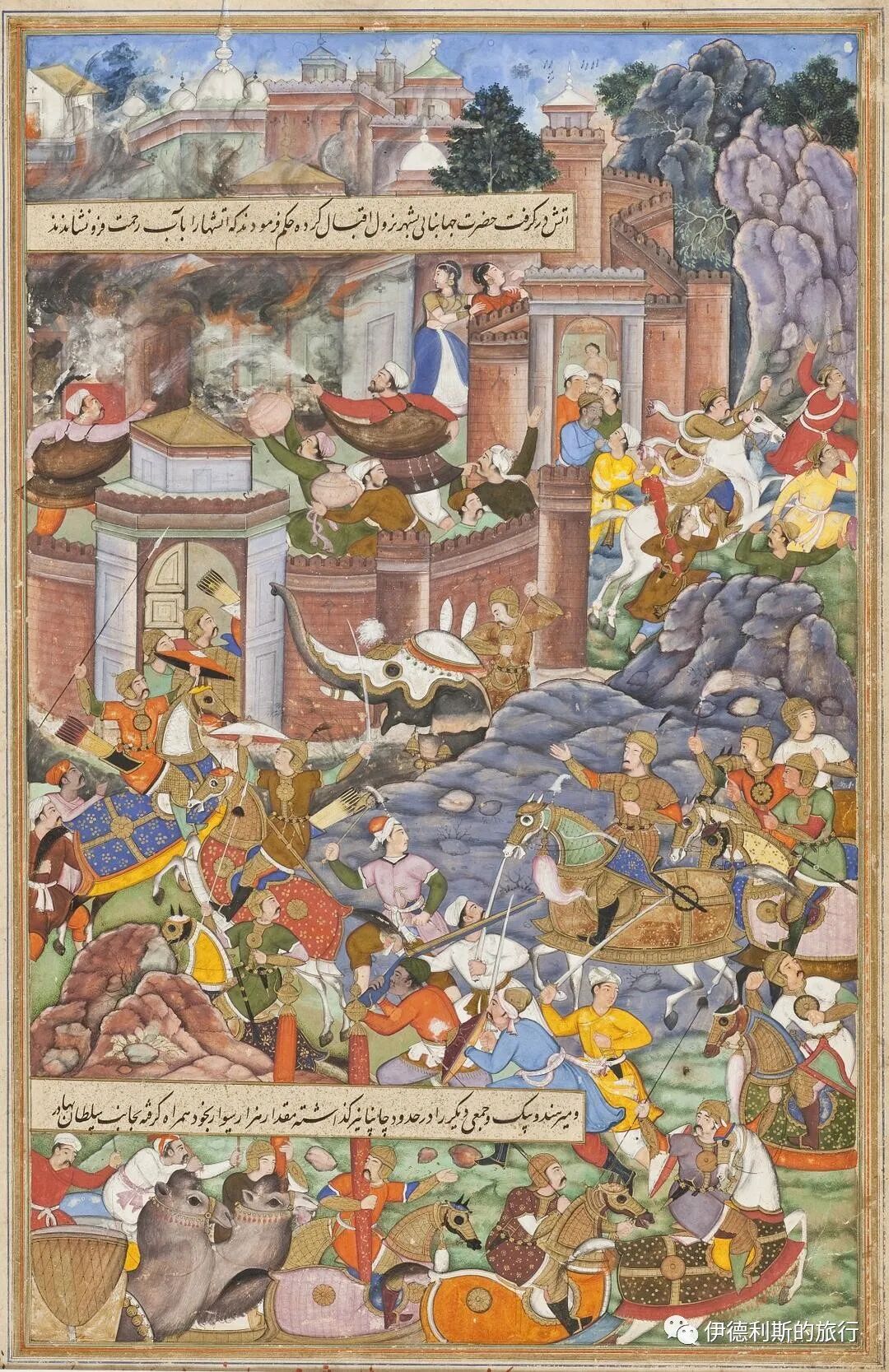
A 1590 miniature painting of Humayun in battle, held by the Los Angeles County Museum of Art.
2. The Capital of the Sur Empire
In 1539, Humayun led a large army east to Bengal, but he was defeated by Sher Shah, a general from the Afghan Pashtun Sur tribe. In 1540, Sher Shah followed up his victory and completely crushed Humayun. Humayun fled to Persia, and Sher Shah established the Suri Dynasty in Delhi.
After taking Delhi, Sher Shah immediately started building his own capital on the site of Din Panah and named the new inner city Shergarh.
There is still no reliable evidence to show if Sher Shah renovated the Din Panah city built by Humayun or rebuilt it entirely. Historical records about Sher Shah suggest he ordered the construction of the walls and inner city of Din Panah, and that the work was still unfinished when he died. However, the biography of Sher Shah's son, Salim Shah, records that in 1546, after finishing another Delhi fortress called Salimgarh, Salim Shah ordered new walls built around the castle Humayun had constructed. One theory is that Salim Shah renovated the walls of Din Panah or finished the final construction.
3. The Mughal Return to Din Panah
In 1554, the second Sultan of the Suri Dynasty, Islam Shah, died. His twelve-year-old son, Firuz Shah, took the throne but was killed immediately. The empire fell into chaos with lords fighting each other, and four different rulers took power in just one year. Meanwhile, with help from the Safavid dynasty of Persia, Humayun had established a base in Afghanistan and built up a strong army.
In 1555, the ruler of Lahore, Sikandar Shah, led an army to occupy Delhi. Taking advantage of Lahore's weak defenses, Humayun sent his commander Bairam Khan to lead an official military campaign into India with help from the Persian Safavid dynasty. On June 22, 1555, the Mughal army completely defeated the 80,000-horse army led by Sikandar Shah. On July 23, 1555, Humayun returned to the city of Din Panah in Delhi after fifteen years, and the Mughal Empire began ruling northern India once again.
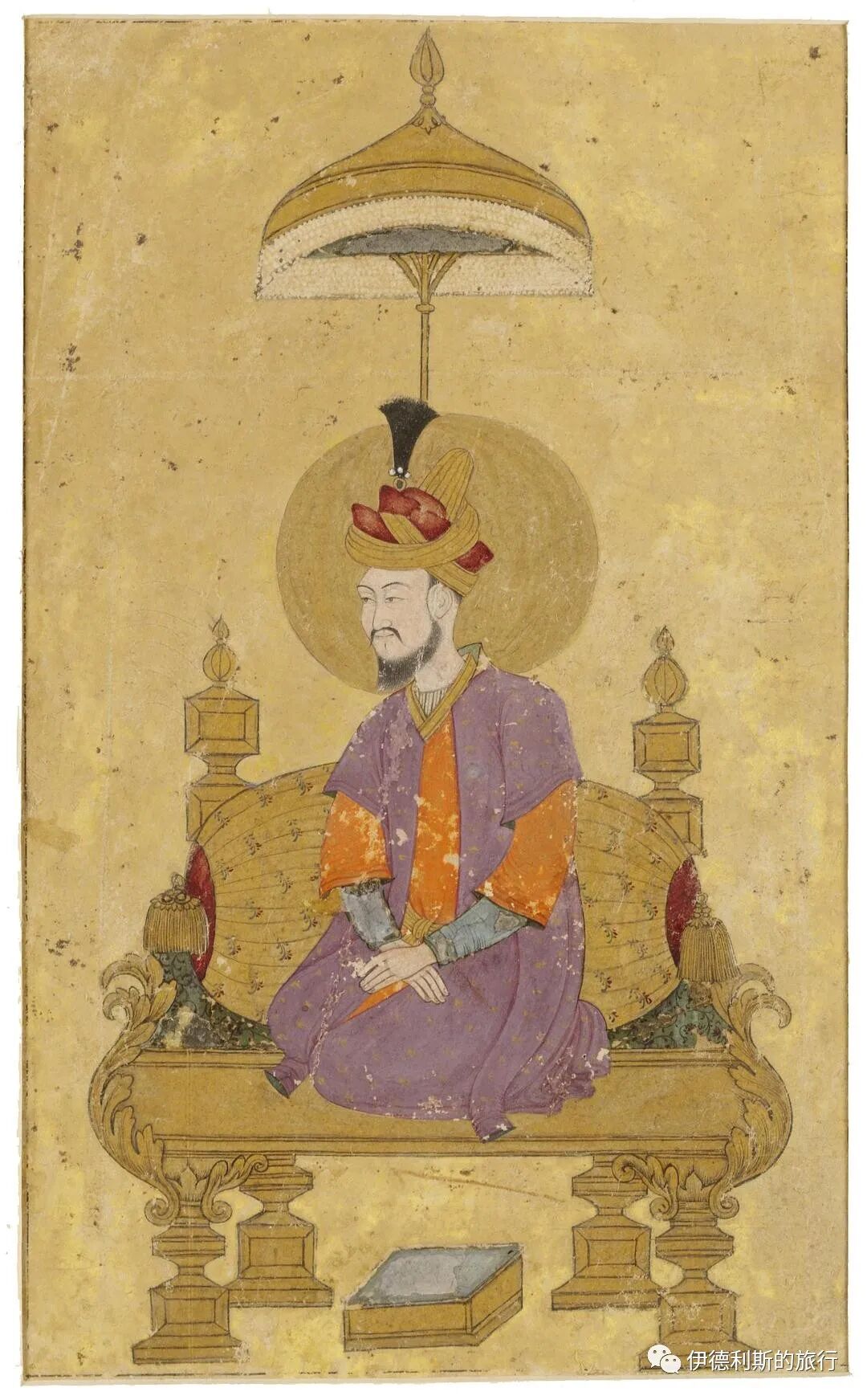
An 18th-century portrait of Humayun, held by the Victoria and Albert Museum in London.
4. Losing Capital Status
On January 24, 1556, Humayun was reading in the library on the second floor of the city of Din Panah. When the muezzin called the adhan, Humayun hurried downstairs to prepare for namaz, but he tripped on the stairs and died. Humayun's thirteen-year-old son, Akbar, succeeded to the throne with Bairam Khan serving as regent.
After Humayun passed away, he was initially buried inside the palace at Din Panah. However, the Sur dynasty general Hemu soon traveled through the night from Bengal to quickly sweep across Mughal territory. On October 7, 1556, Hemu captured Delhi after a fierce battle, and Humayun's remains were dug up and transported to Punjab.
On November 5, 1556, Delhi was recaptured by Akbar and Bairam Khan, who had arrived from Punjab. Hemu was struck by an arrow and fell unconscious during the decisive battle, and he was killed shortly after. Akbar only stayed in Delhi for one month before returning to Punjab to continue fighting the Sur dynasty army.
In 1558, Akbar officially moved the capital from Din Panah to Agra, ending Din Panah's history as the capital of the Mughal Empire.
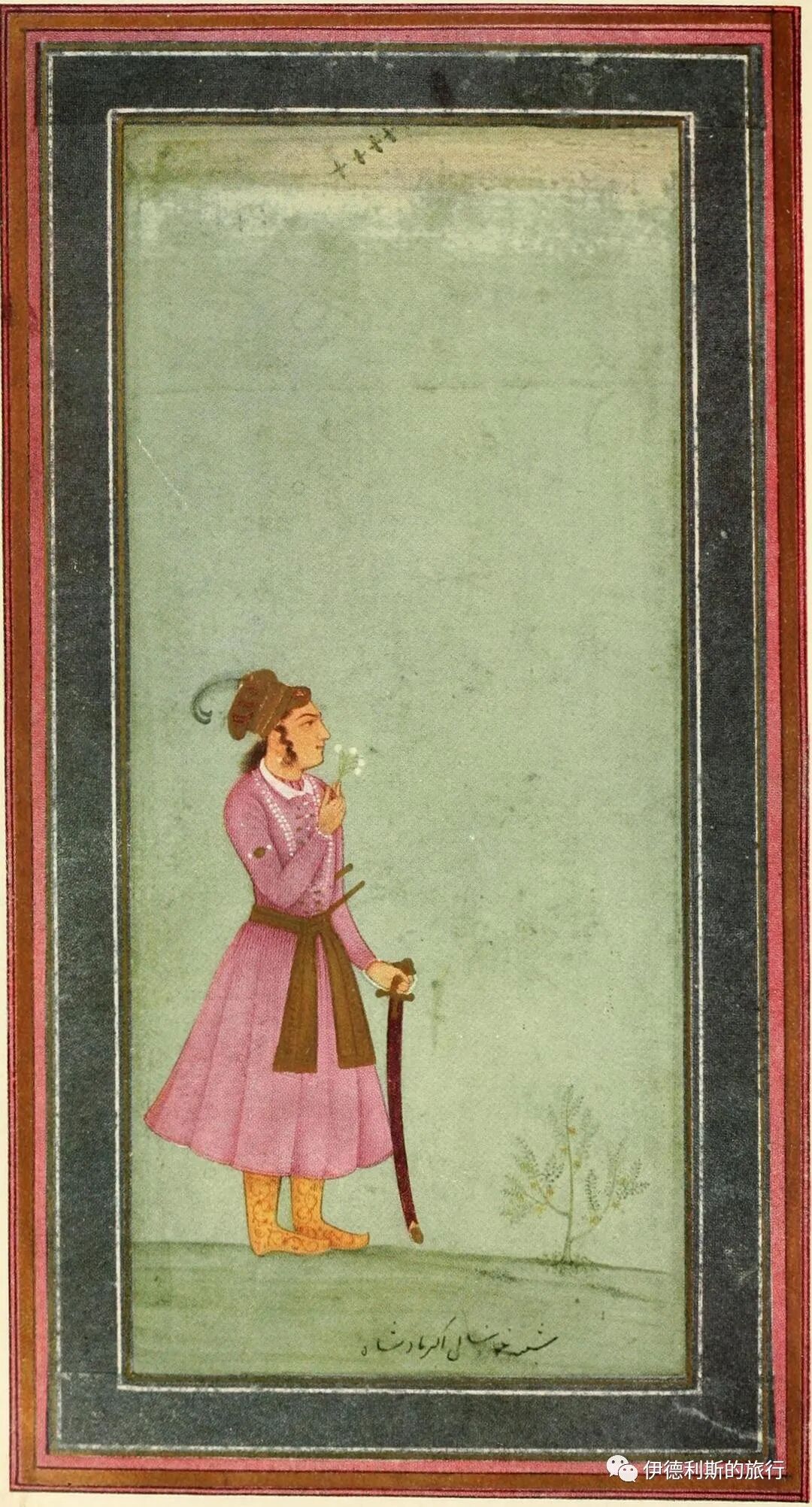
A portrait of Akbar in his youth.
5. Modern Changes to the Ancient City
The inner city of Din Panah, Shergarh, is now known as the Old Fort (Purana Qila). In the early 20th century, 1,900 people lived here. They were moved out in 1913, and the site became a historical heritage site.
During the 1947 partition of India and Pakistan, the Old Fort and the nearby Humayun's Tomb housed 200,000 Indian Muslims waiting to go to Pakistan. Trains transported them one after another until early 1948.
In the 1970s, the Old Fort began to be used as an open-air theater by the National School of Drama, and it has since become an important venue in Delhi for plays, concerts, and cultural events.
Today, it is a paid historical site open to all visitors.
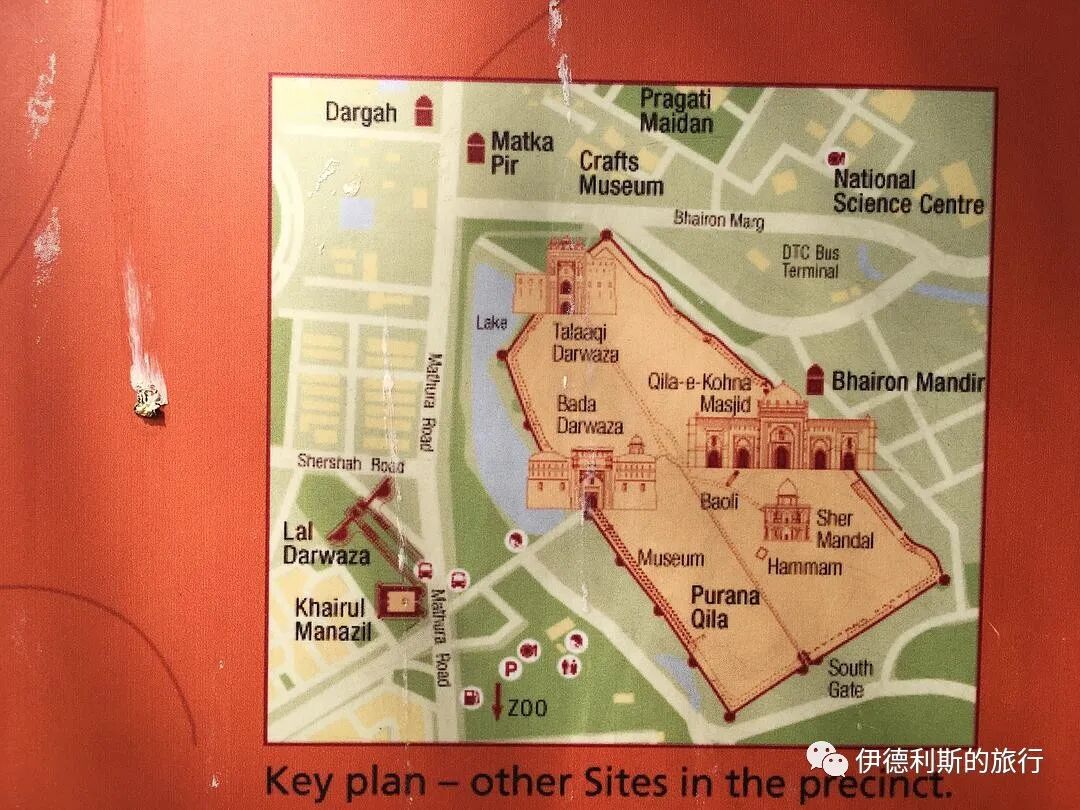
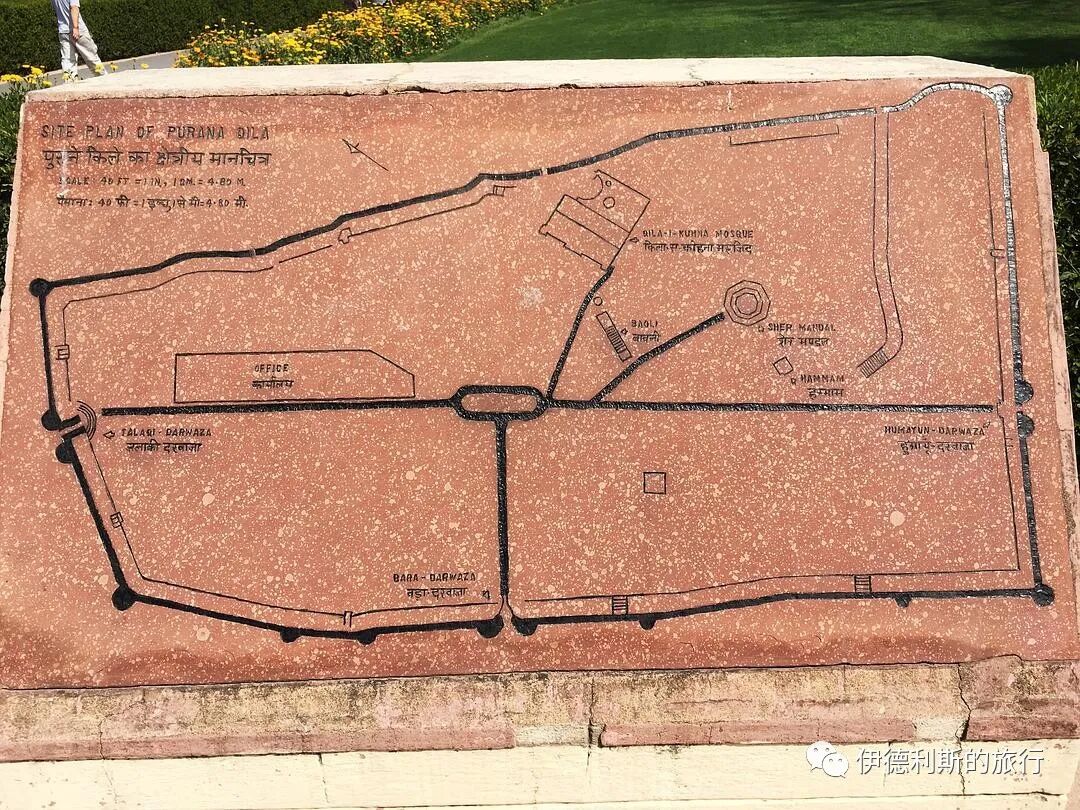
A map of the attractions at the Old Fort.
II. Old Fort Gates
The walls of the Old Fort are 18 meters high and 1.5 kilometers long, with three gates. The west gate is the main entrance to the fort and the scenic area, called Bara Darwaza. The south gate is called Humayun Darwaza. One theory is that this gate was built by Humayun, while another is that it faces Humayun's Tomb. The north gate is called Talaqi Darwaza, also known as the Forbidden Gate.
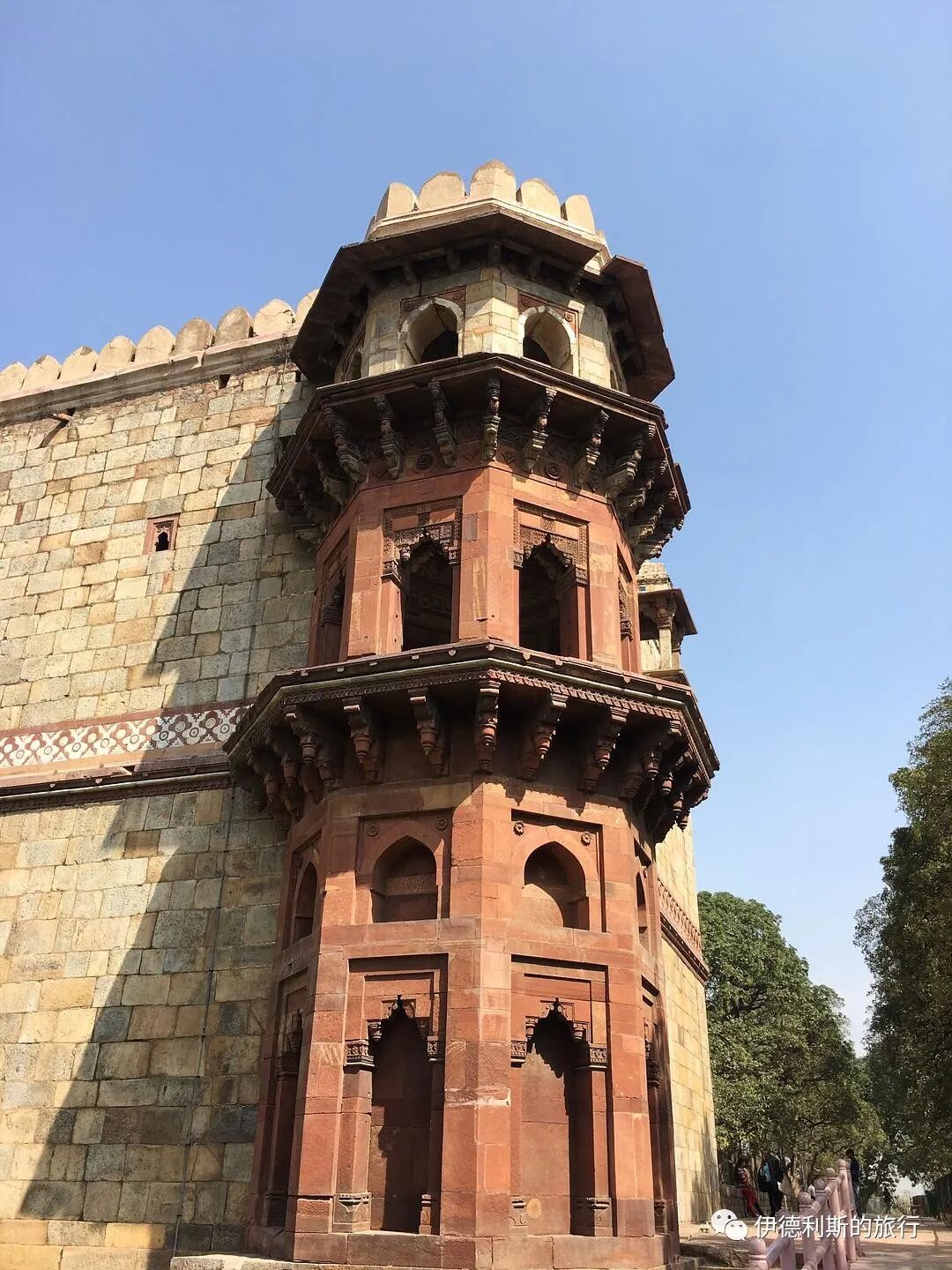
All three gates are double-layered sandstone structures with two massive semi-circular towers on either side. The gates feature overhanging balconies and small pavilions (chhatris) on top, a style that would be repeated throughout later Mughal architecture.
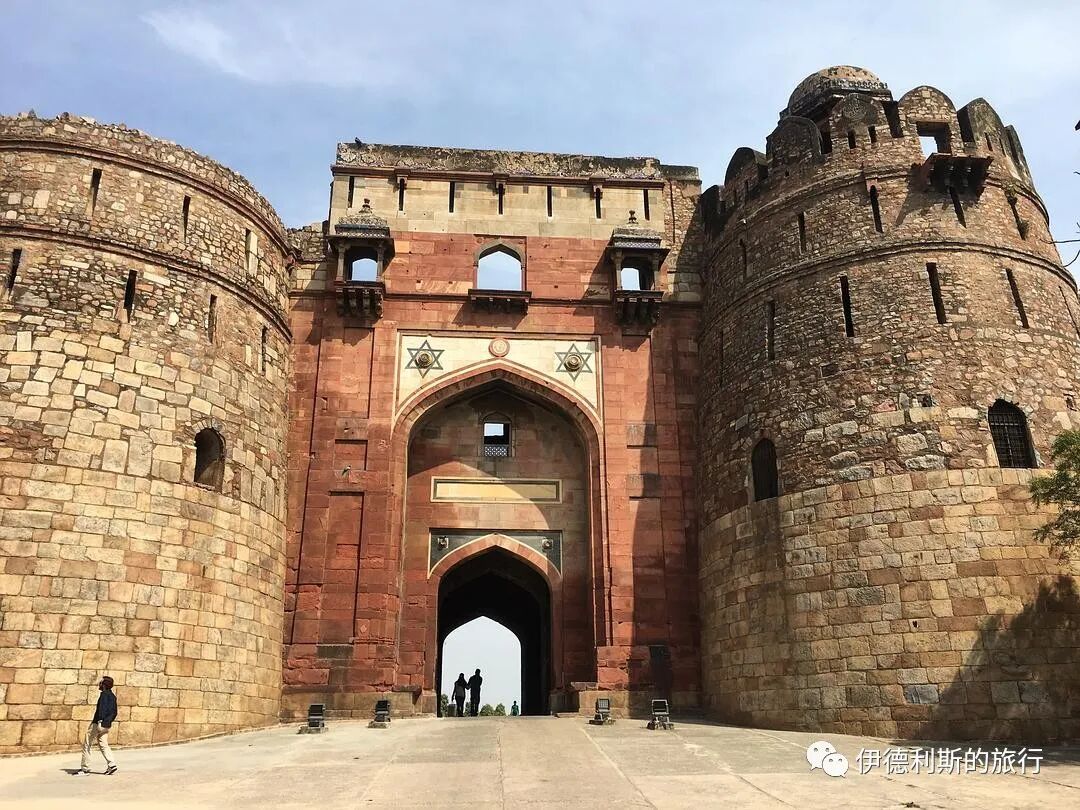
The main gate was likely built by Humayun and stands 20 meters high.
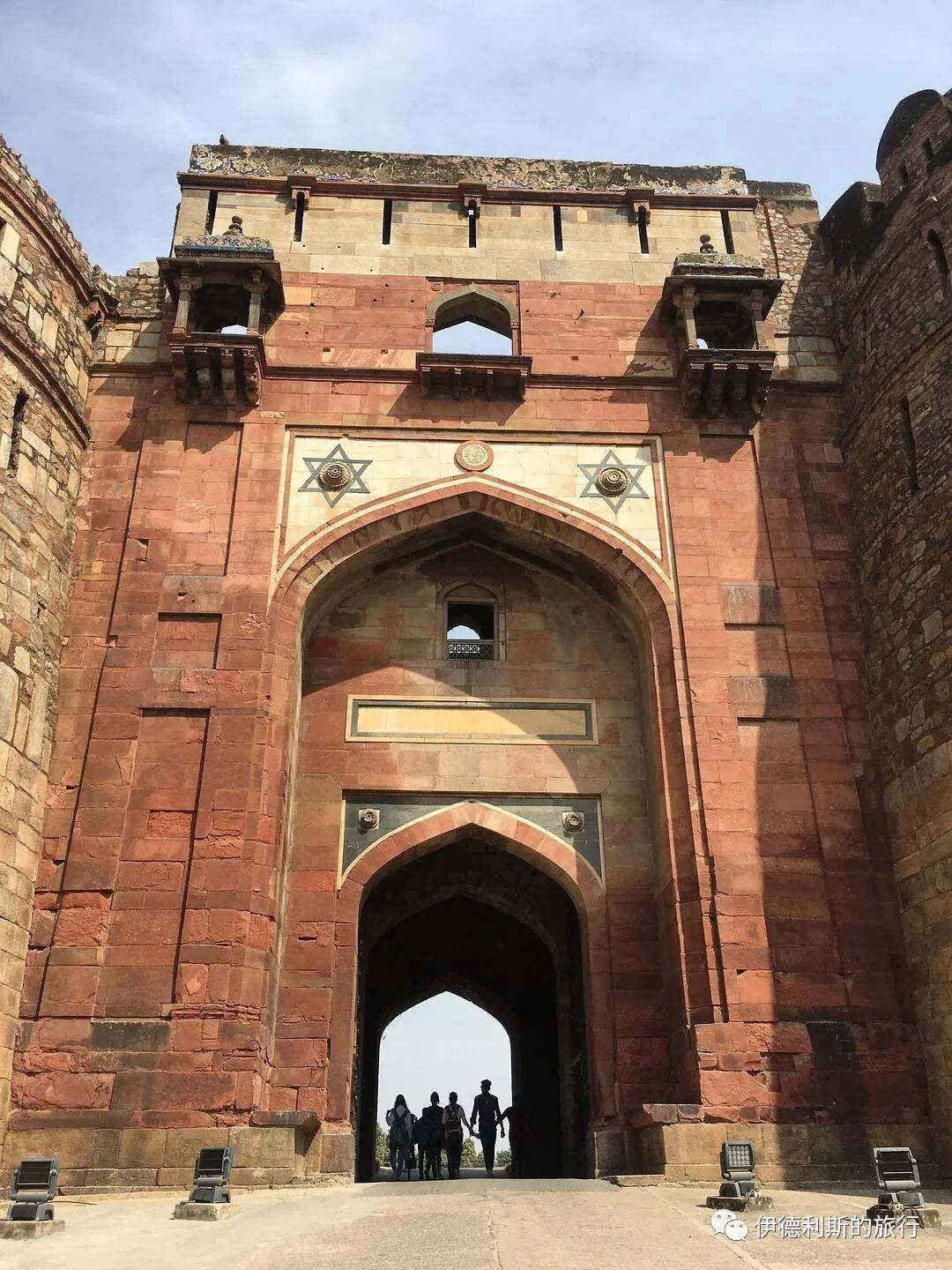
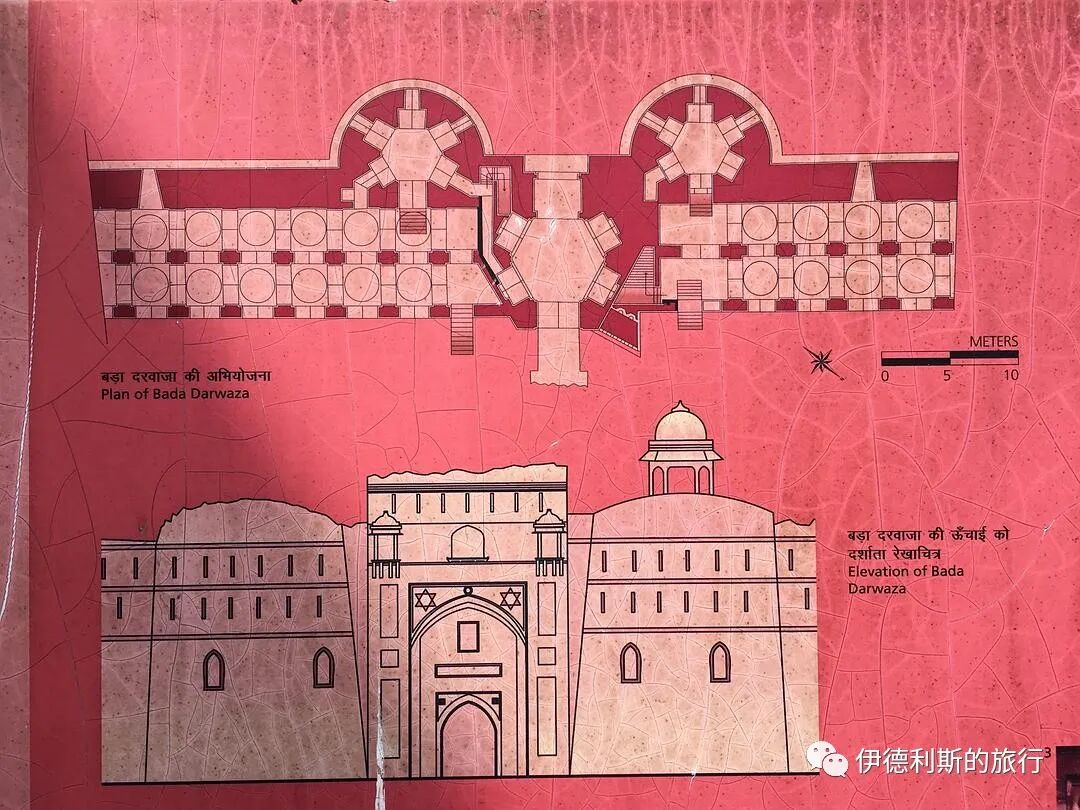
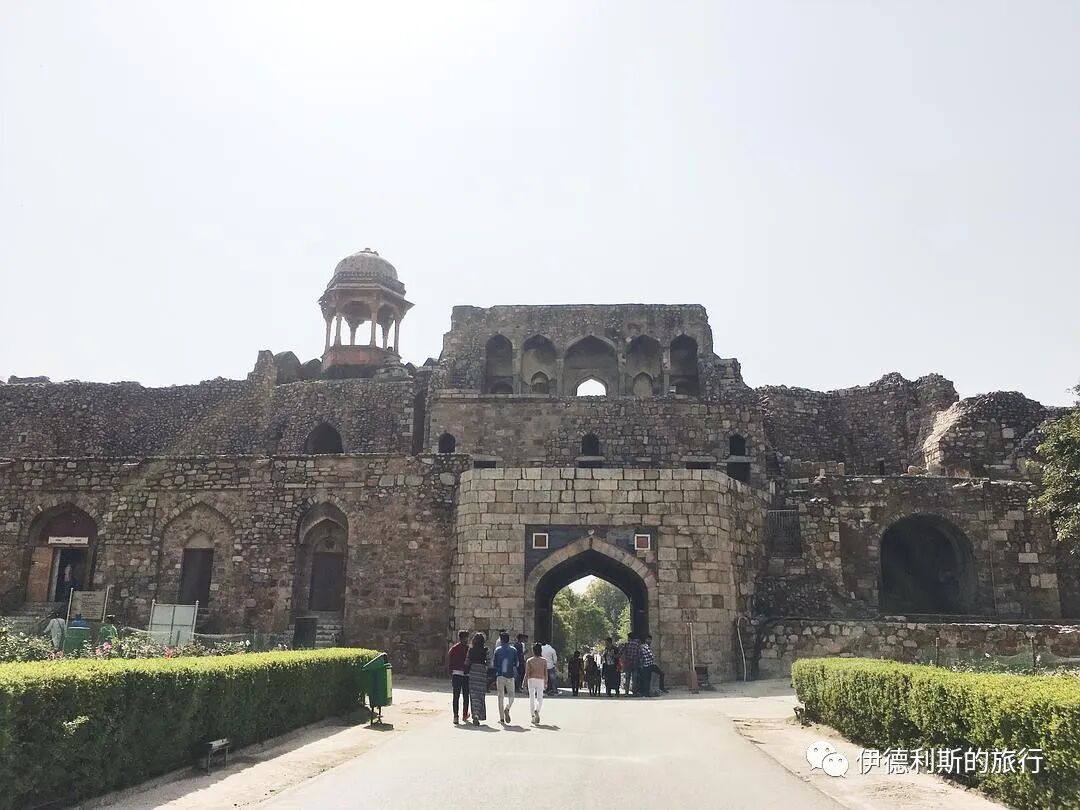
Inside the main gate.
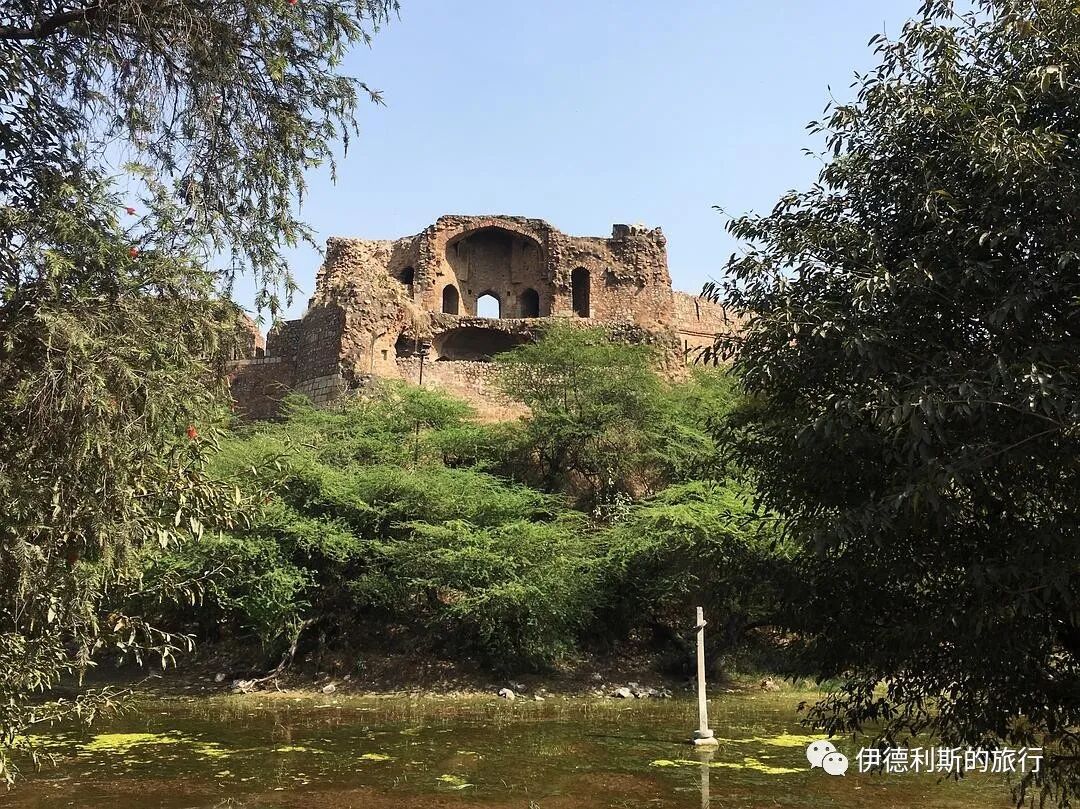
Outside the corner tower, with the moat below.
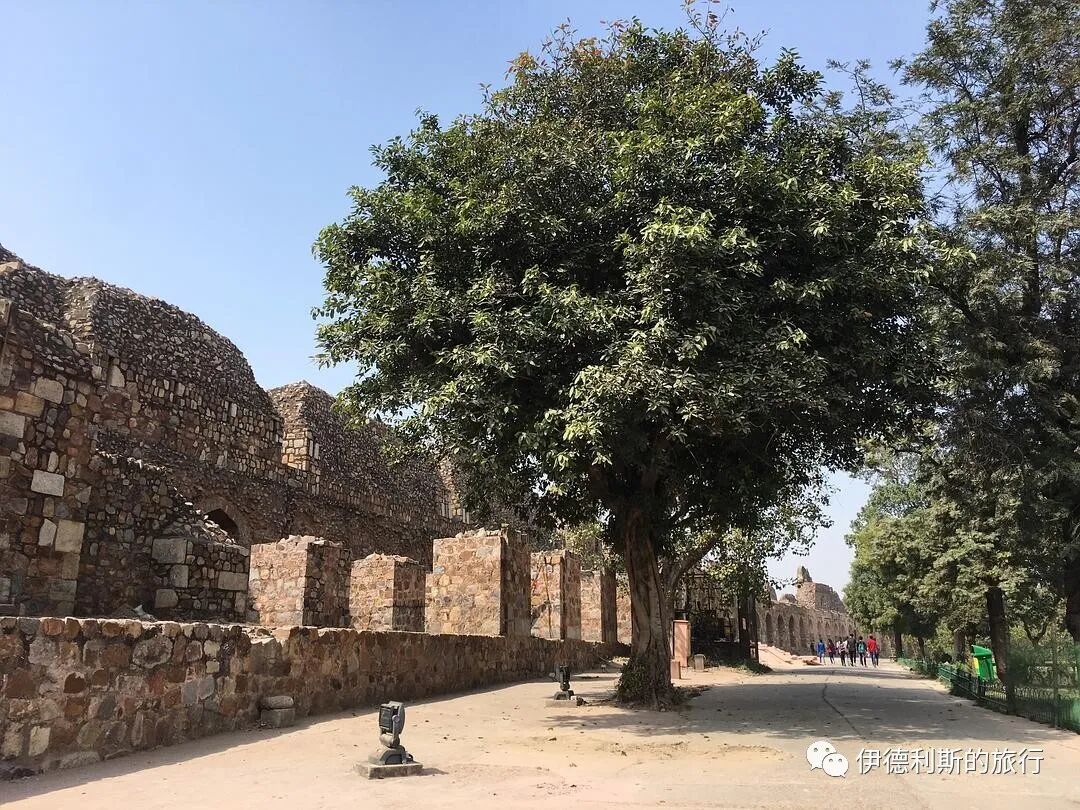
Inside the west city wall.
III. Qila-i-Kuhna Mosque: 1541
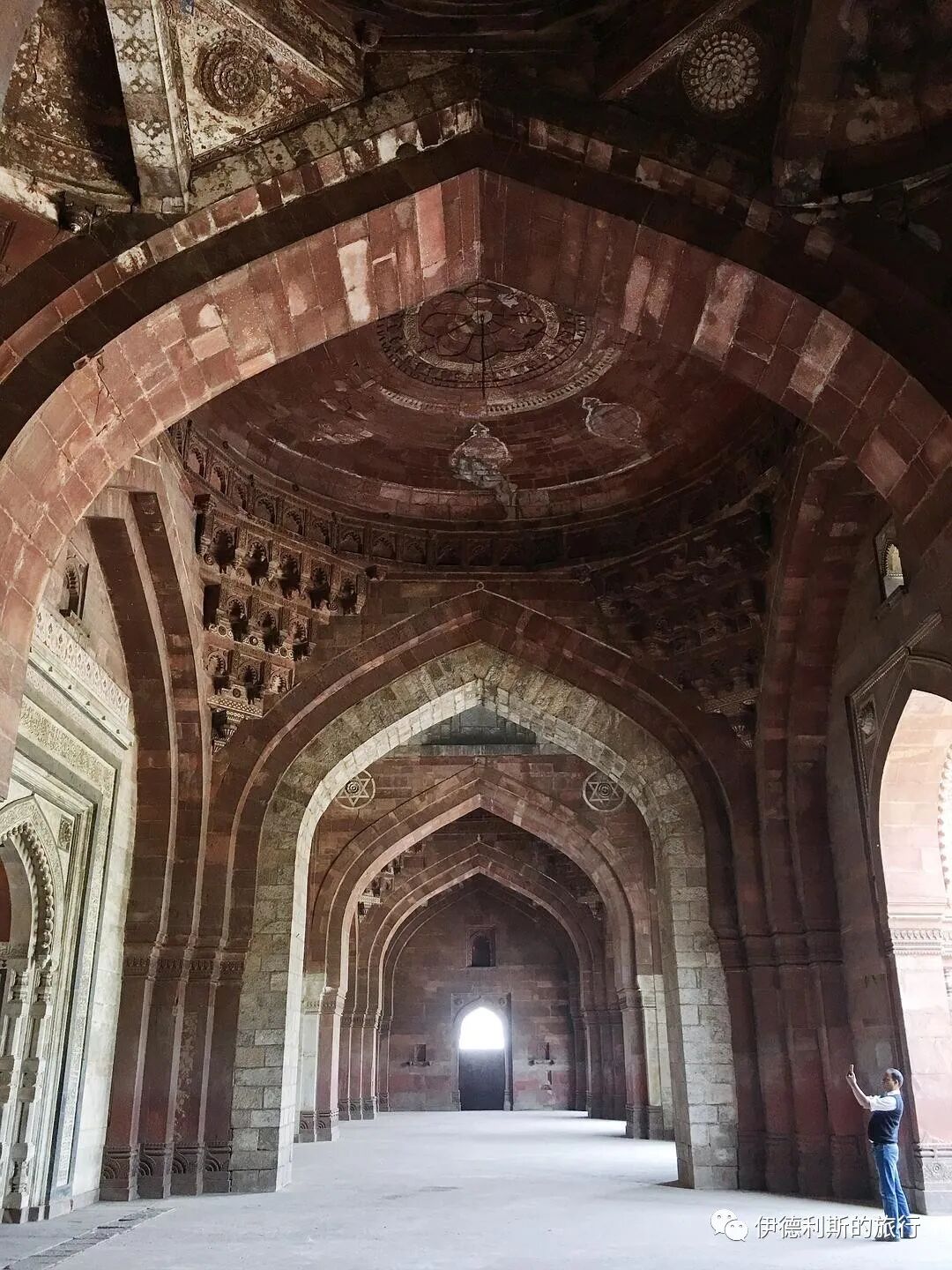
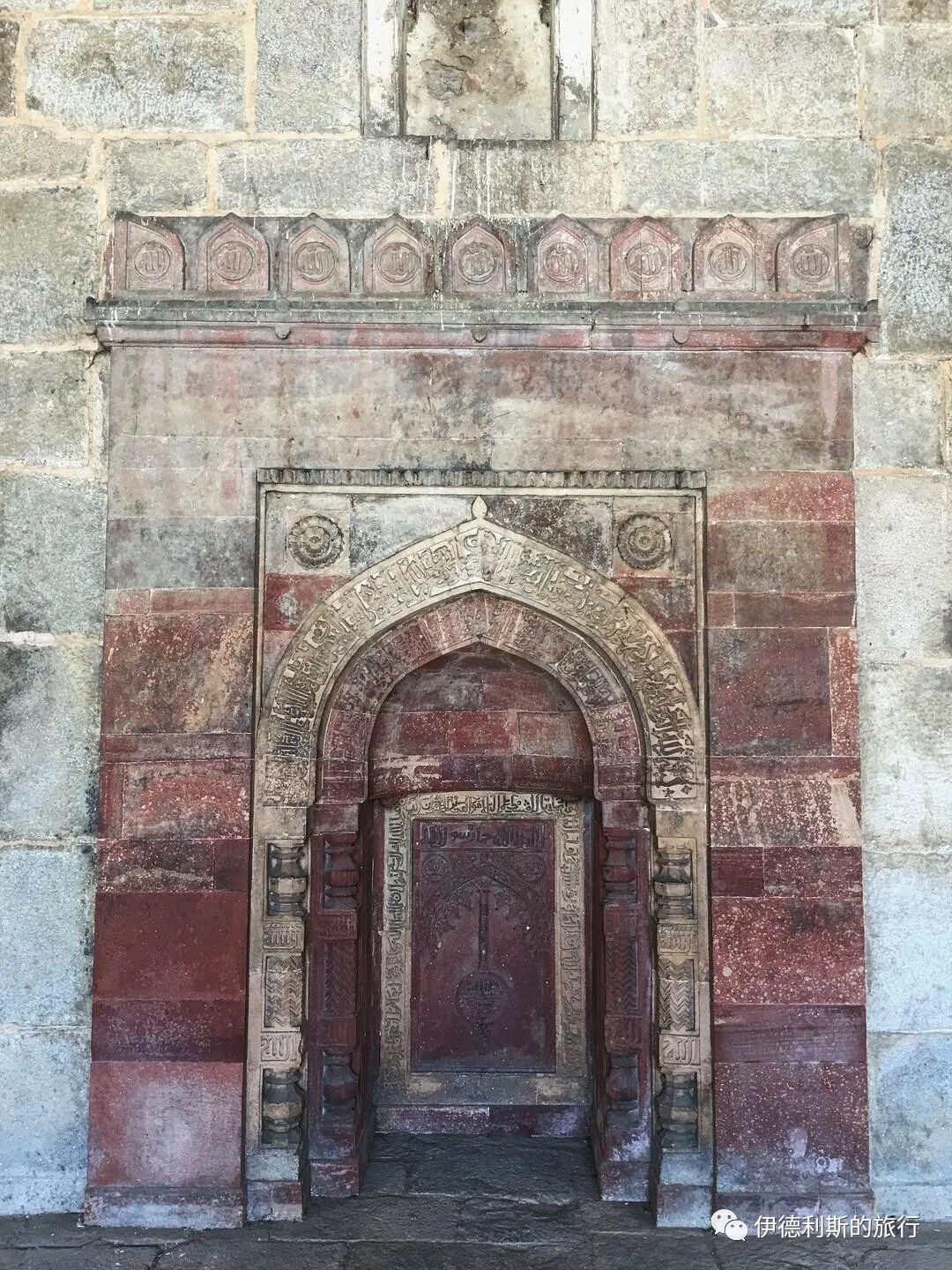
The Qila-i-Kuna mosque was built by Sher Shah in 1541 and served as the royal mosque for the Suri dynasty. This mosque with its semi-domed design is known as a key marker in the transition of Indian Islamic architecture from the Lodi style to the Mughal style, and it is the largest and most exquisite five-arched mosque in India.
The five-arched mosque is a style of mosque architecture that developed during the Sayyid and Lodi dynasties of the Delhi Sultanate. The main hall of the mosque is divided into five sections by five arches, and each section has a mihrab. The mihrab inside the central arch is the largest, topped by a Lodi-style semi-domed vault.
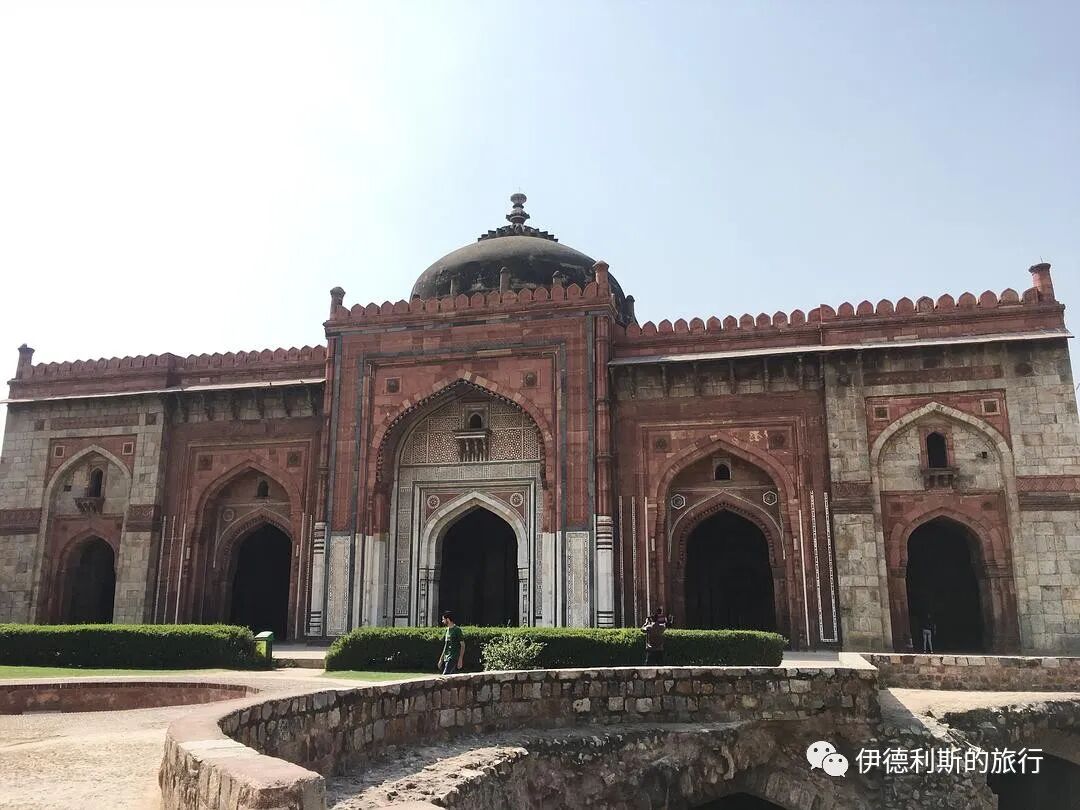
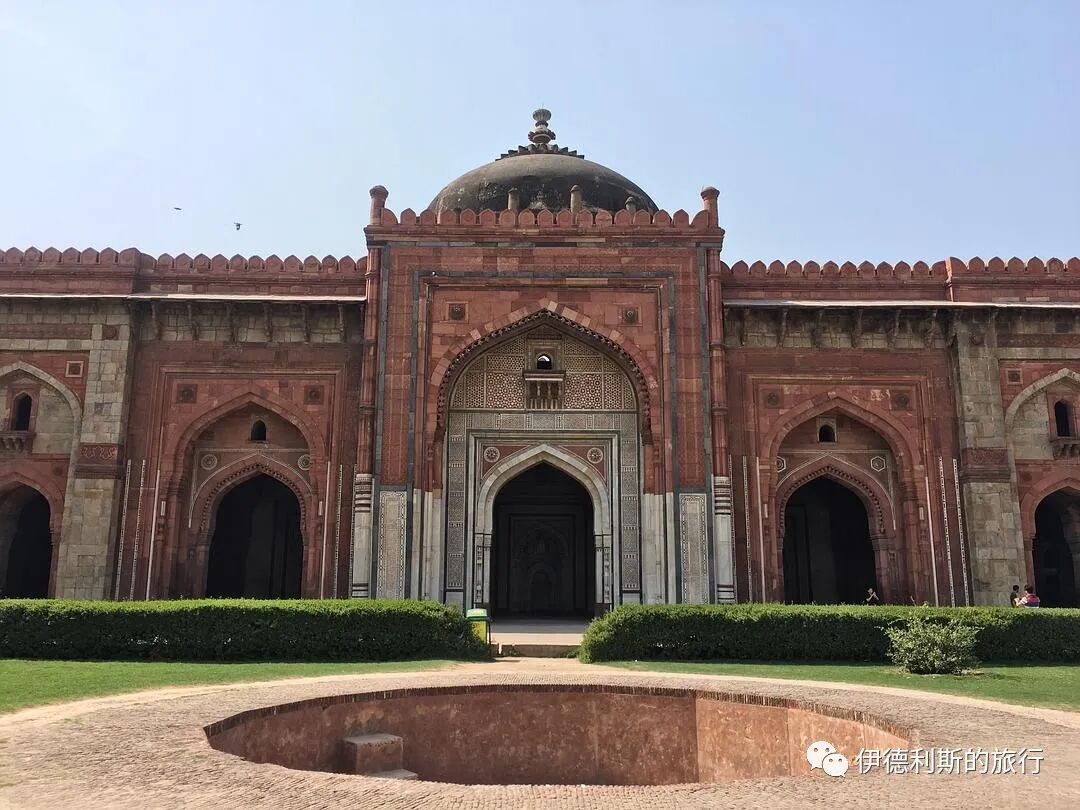
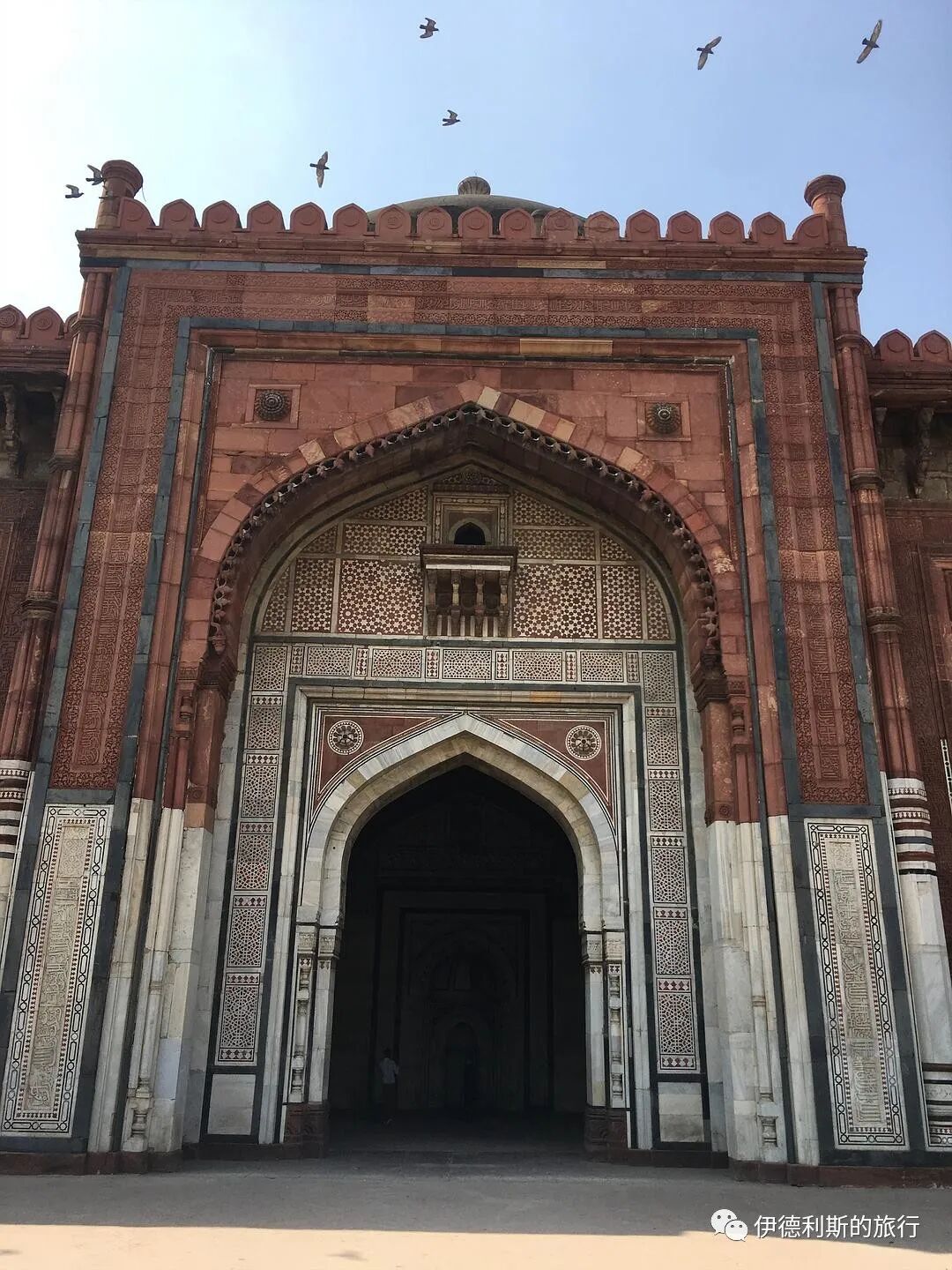
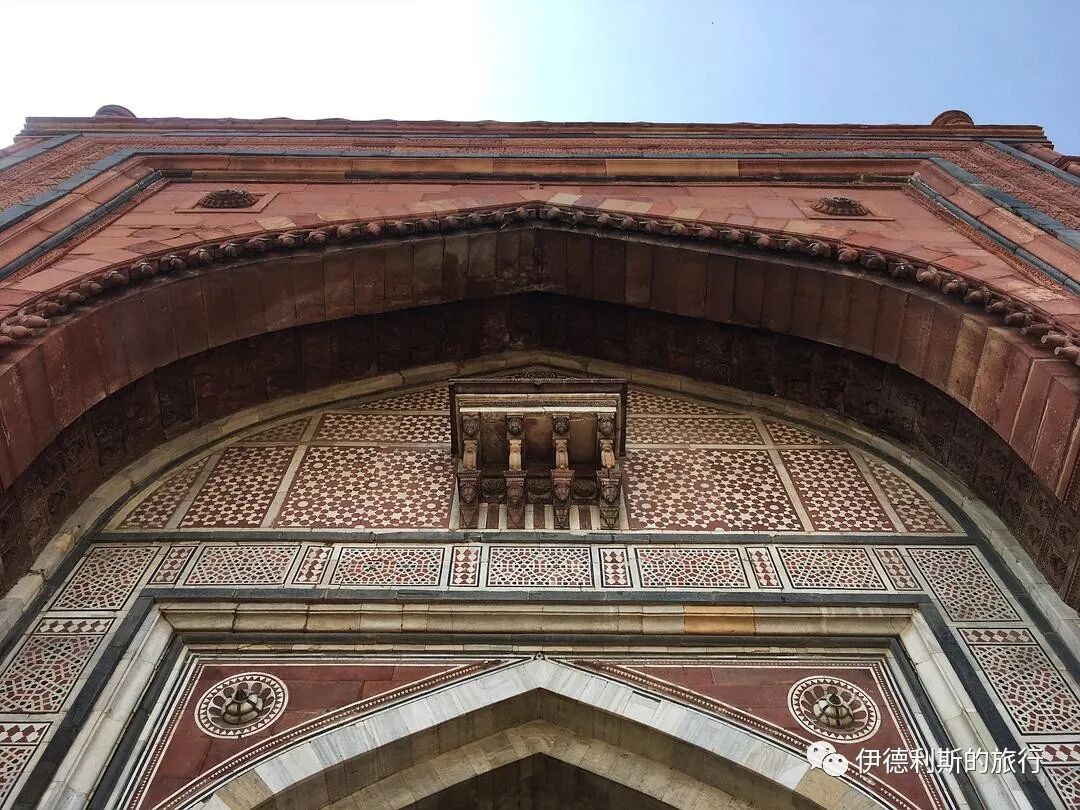
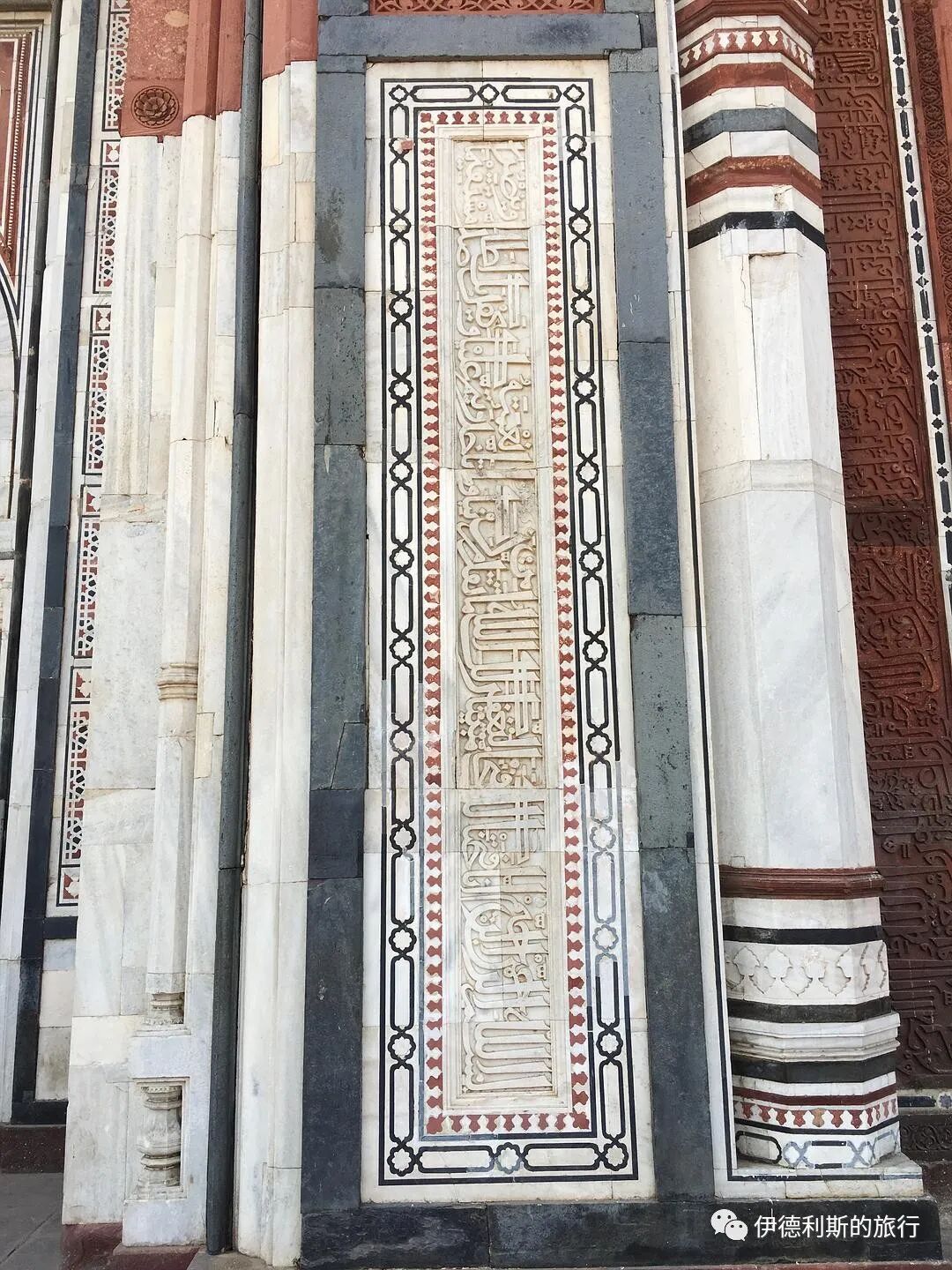
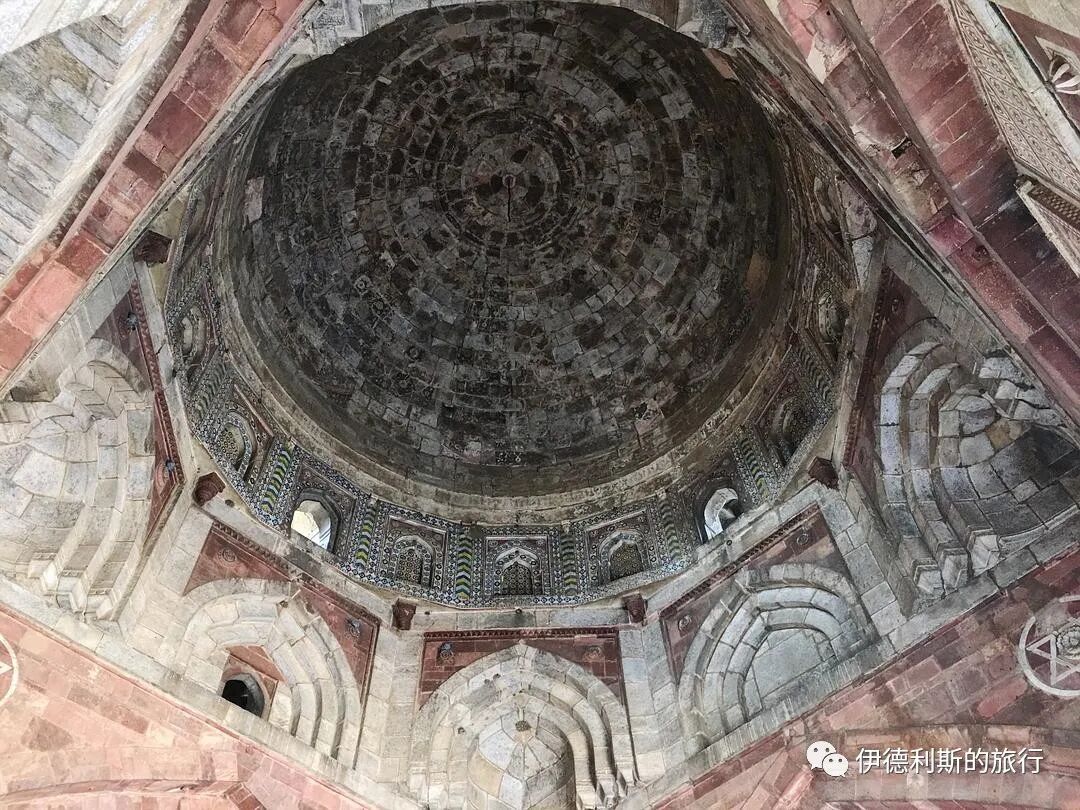
Main dome.
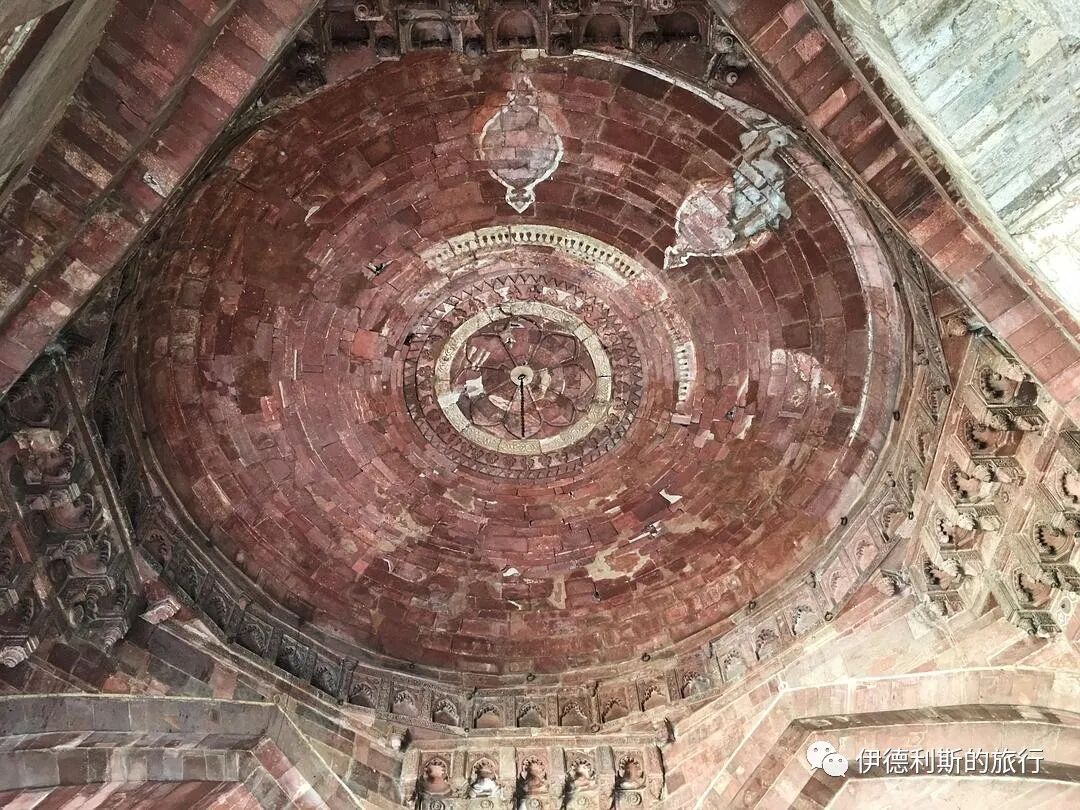
Small dome.
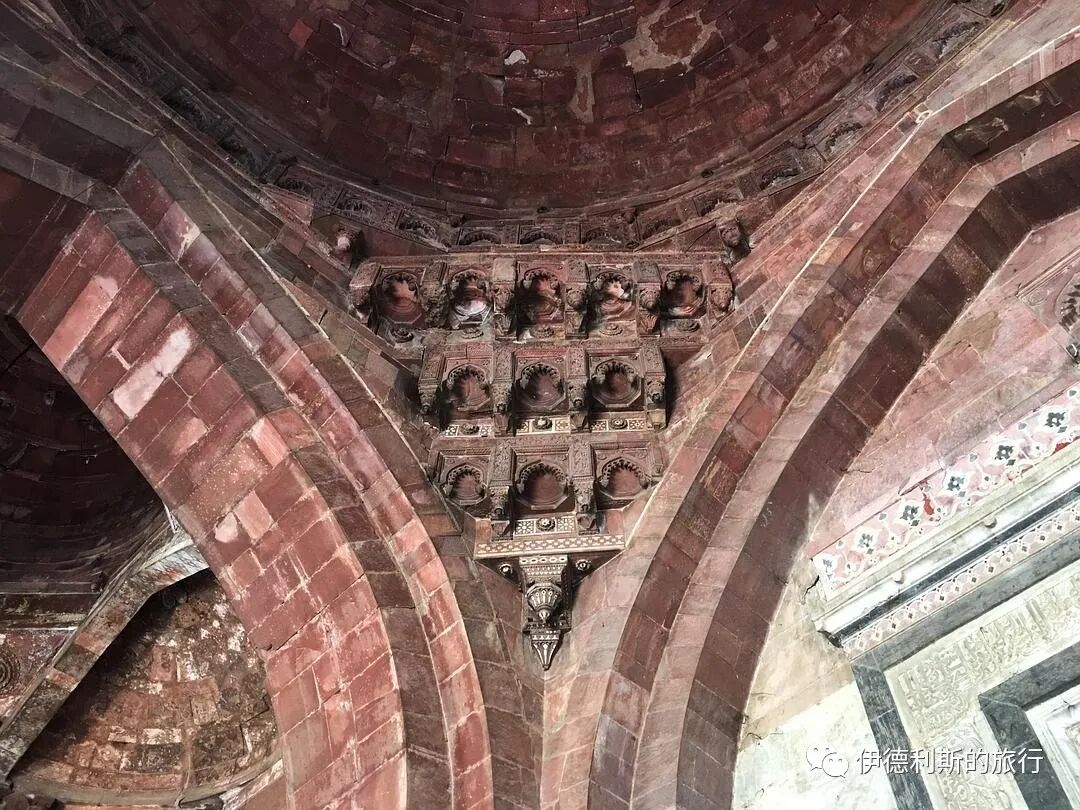
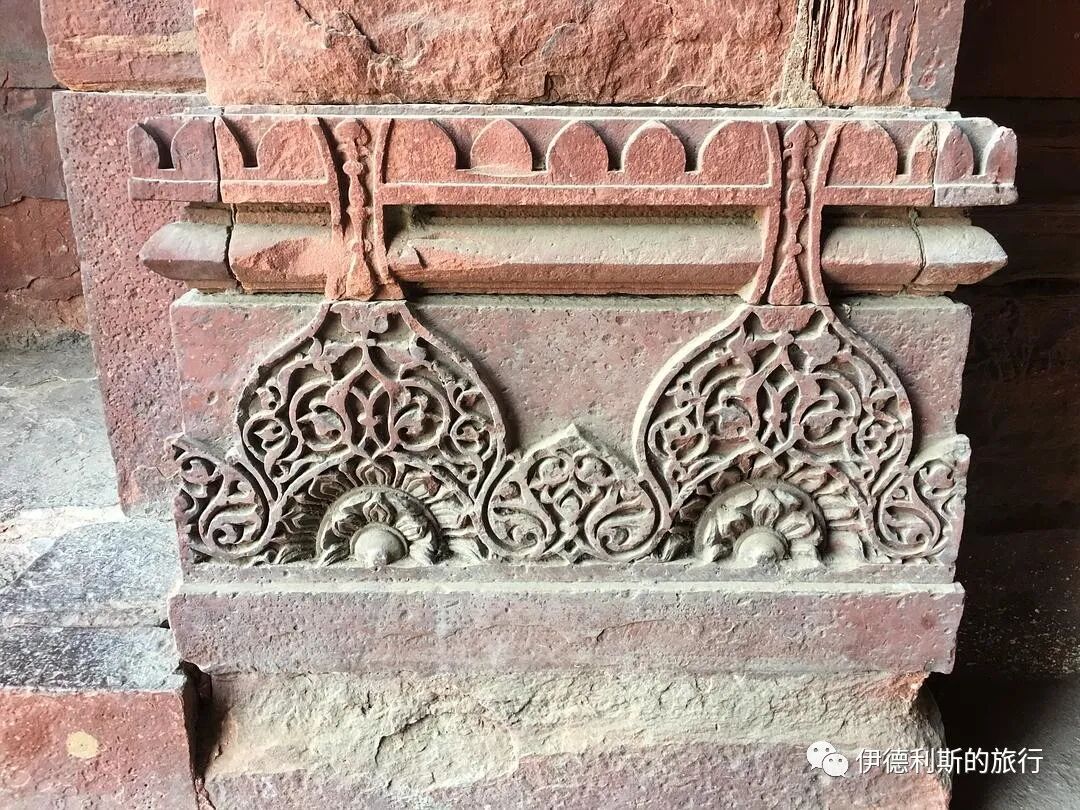
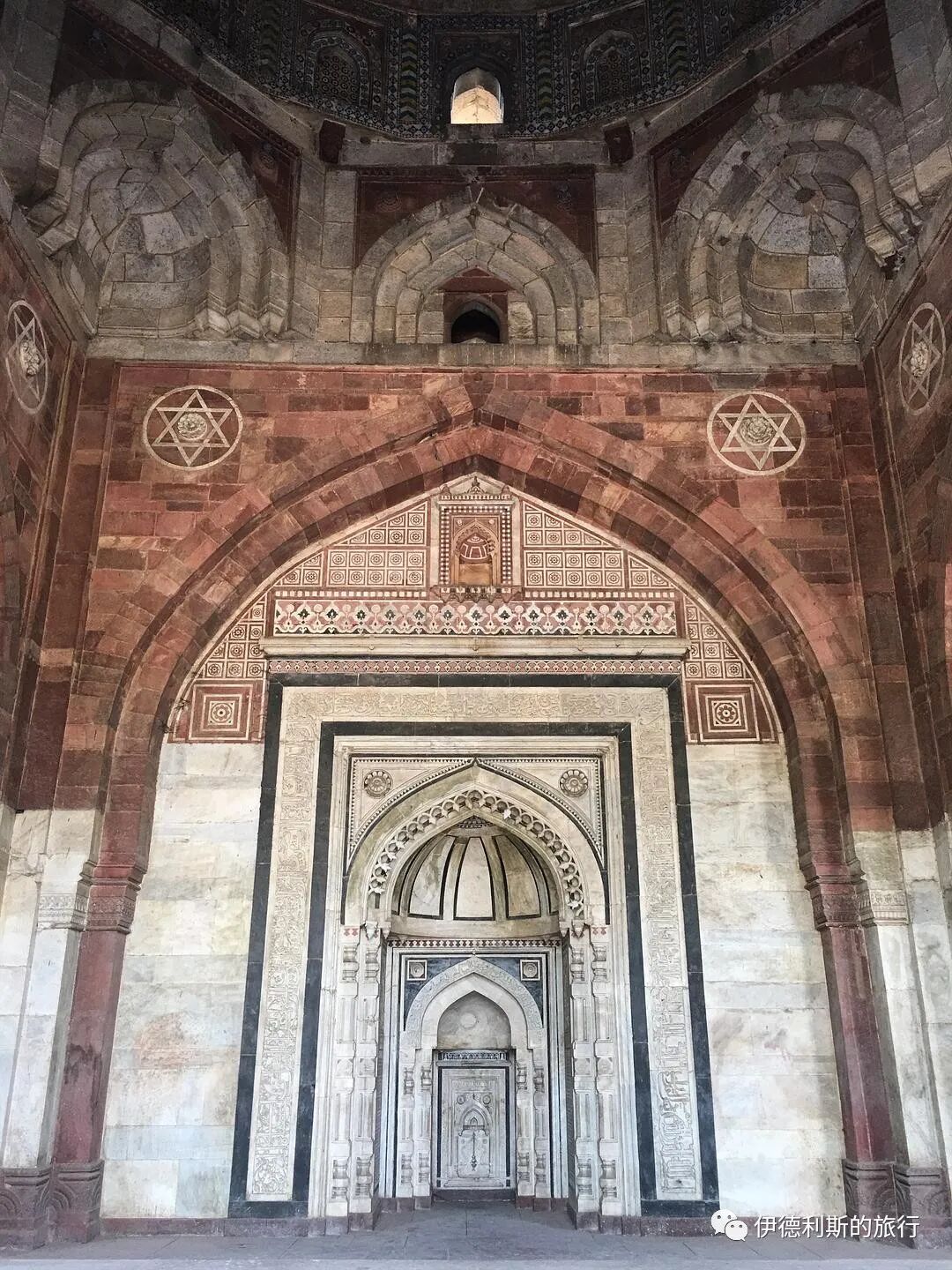
Mihrab.
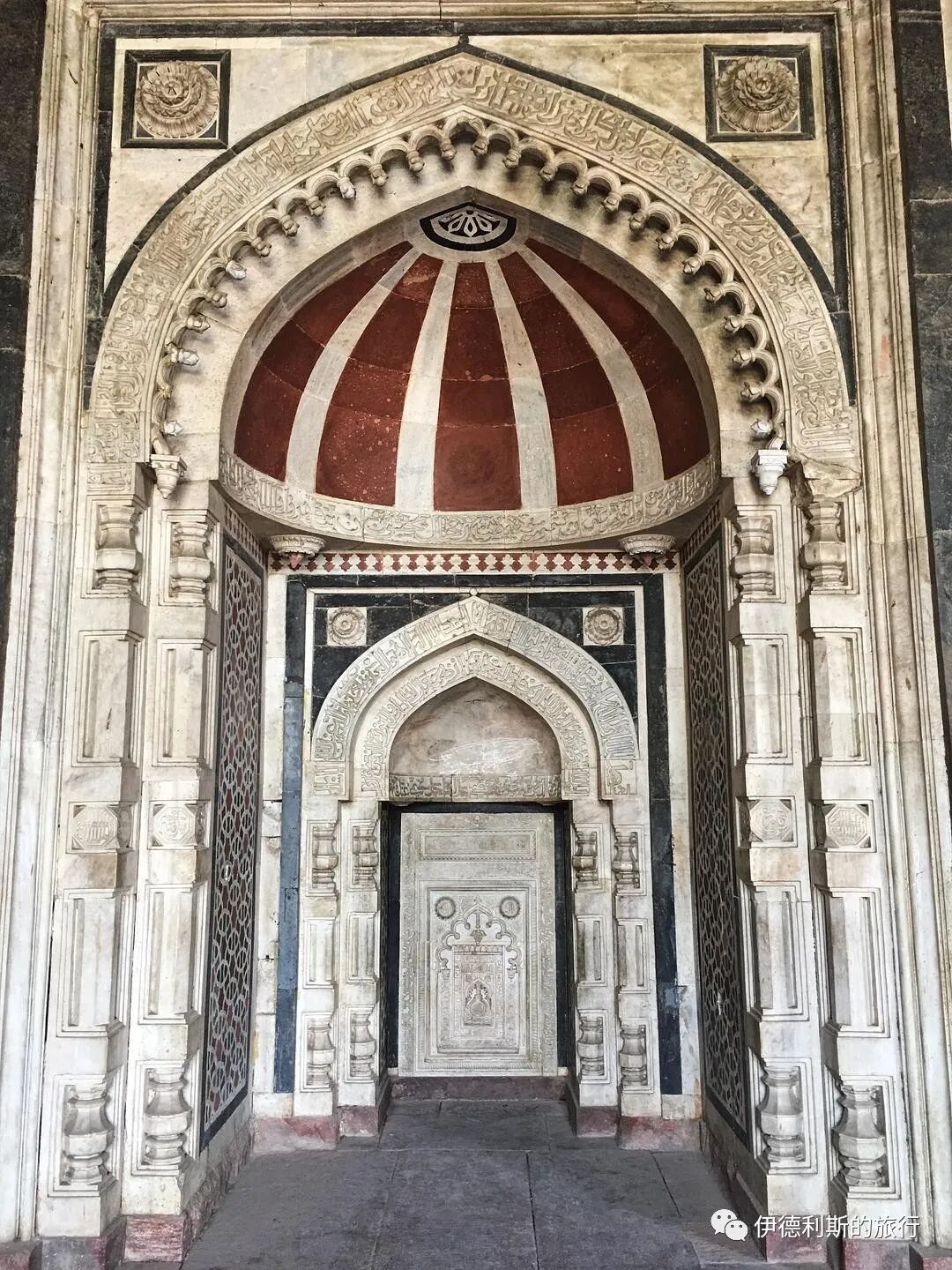
Mihrab.
There are two octagonal towers on both sides of the main hall, featuring the style of the Tughlaq dynasty.
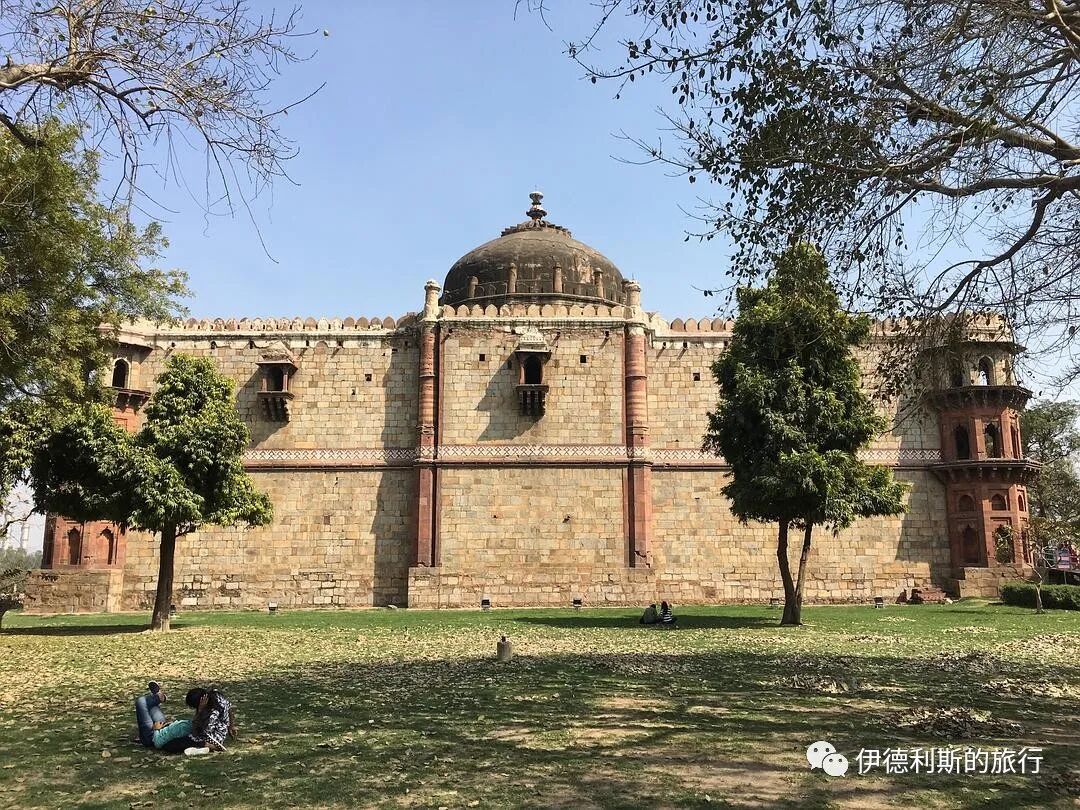
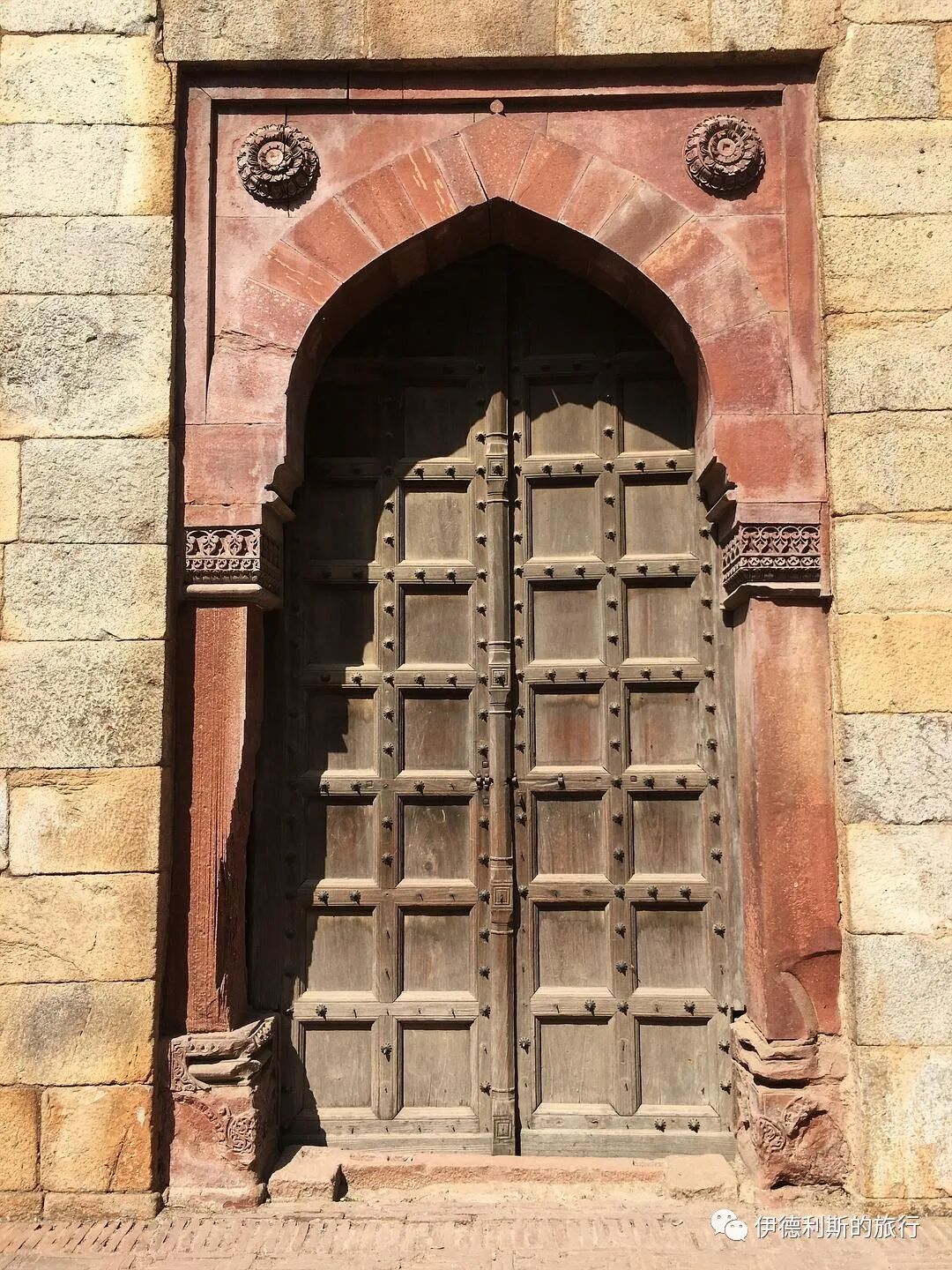
A small door specifically for royal family members to enter for namaz.
IV. Sher Mandal
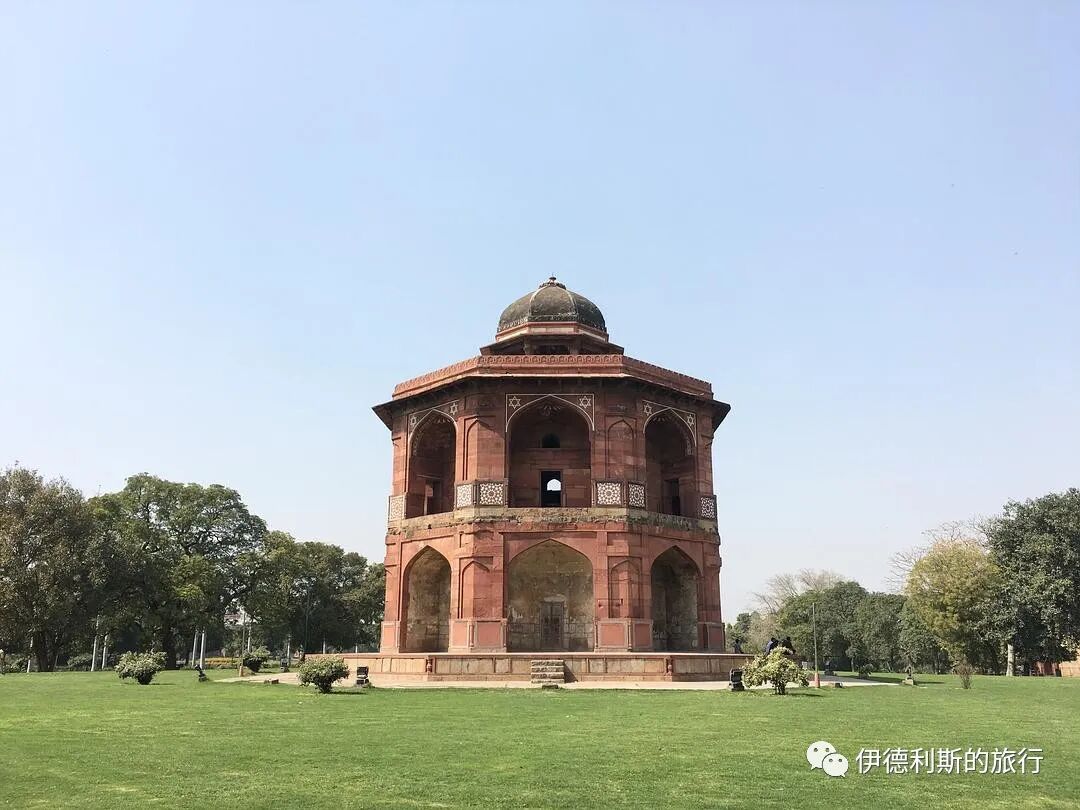
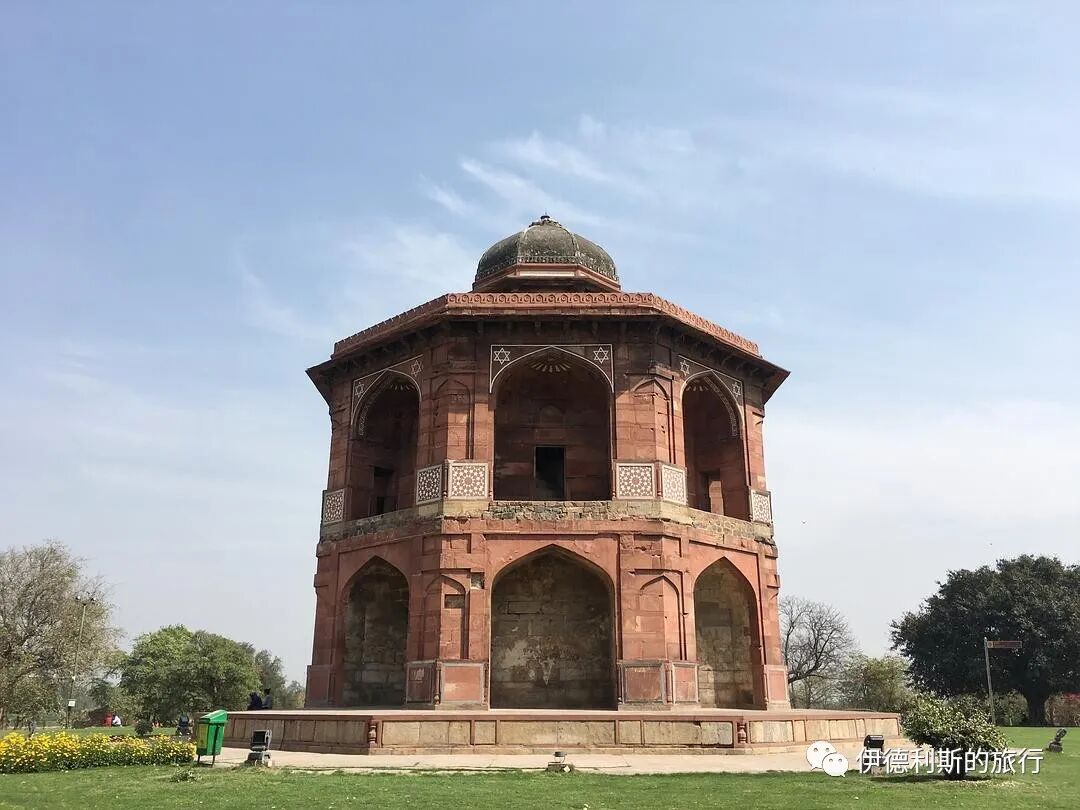
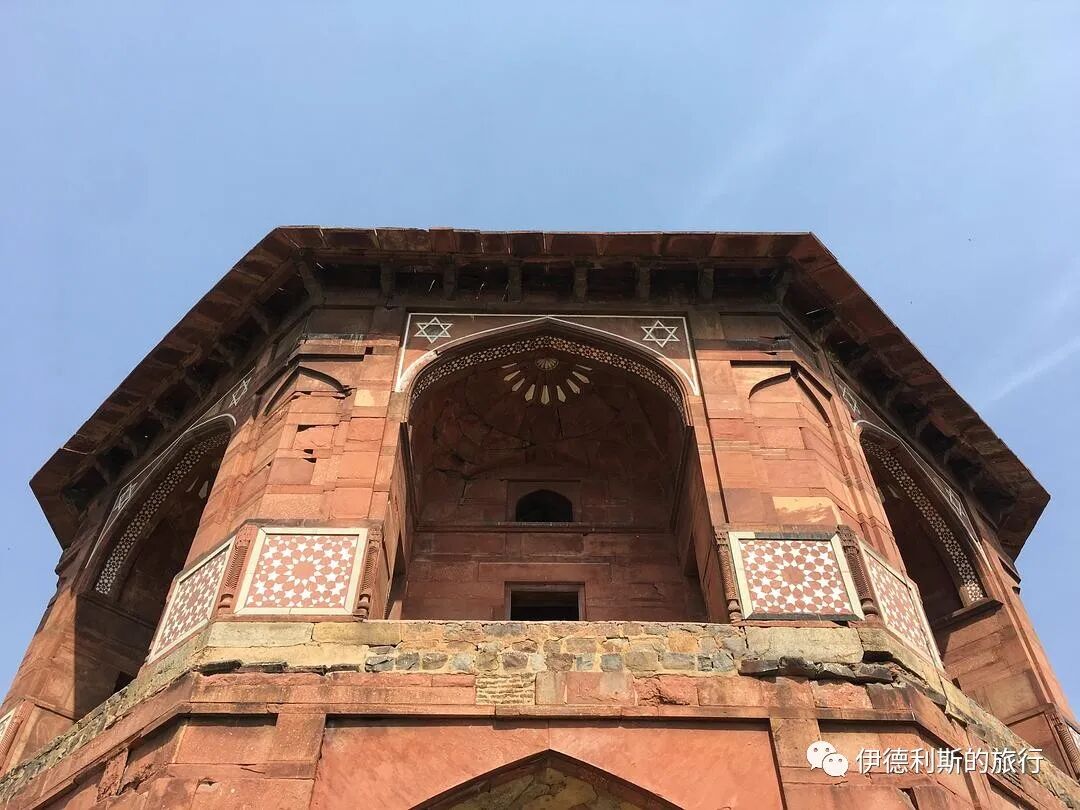
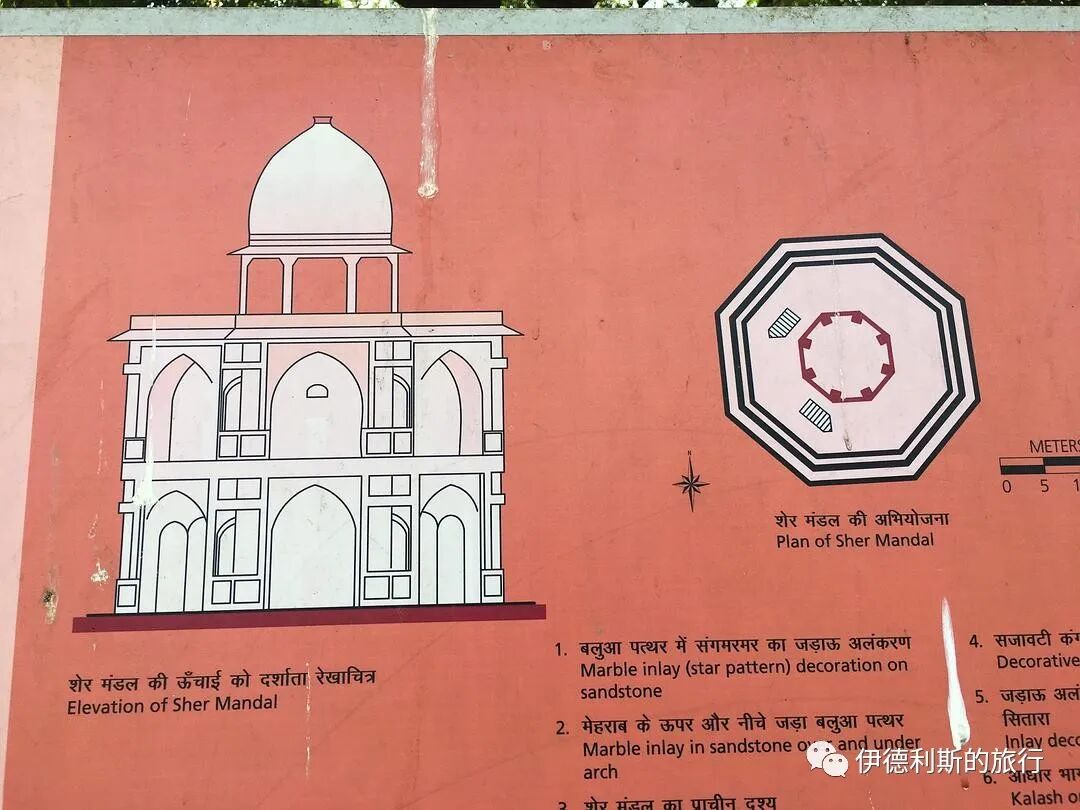
Sher Mandal is an octagonal pavilion with a very simple style. This simple beauty comes from a return to Persian style, which is quite different from the architectural forms of the late Lodi dynasty of the Delhi Sultanate, and it is the earliest building of this style in Delhi.
Although it looks very much like an early Mughal building, it is actually recognized as part of a palace built by Sher Shah, which was later converted by Humayun into a library and observatory, and it is also known as the first observatory in Delhi.
On January 24, 1556, when the call to prayer sounded, Humayun hurried down the stairs from the second floor of Sher Mandal to prepare for namaz, but he slipped and fell to his death.
V. Bathhouse Ruins
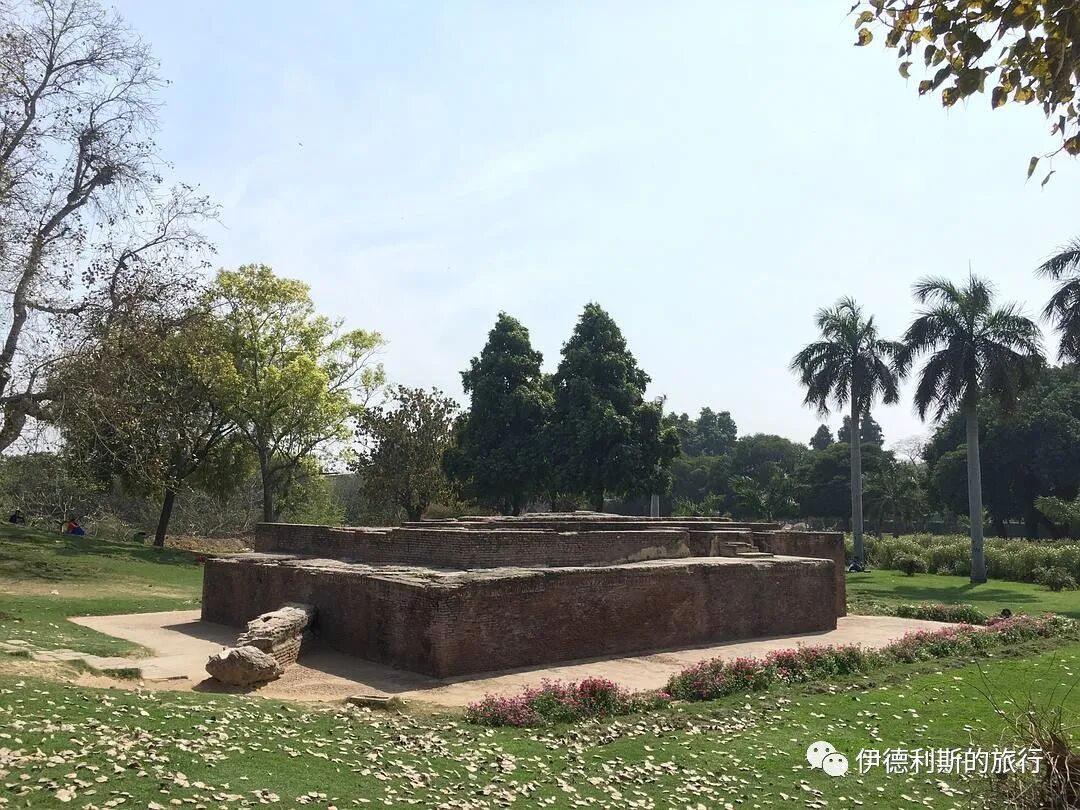
Next to Sher Mandal are the ruins of a bathhouse (hammam), likely built in the late 16th century. Steps lead into a room with decorative niches, and one side has a channel for flowing water.
VI. Water Reservoir
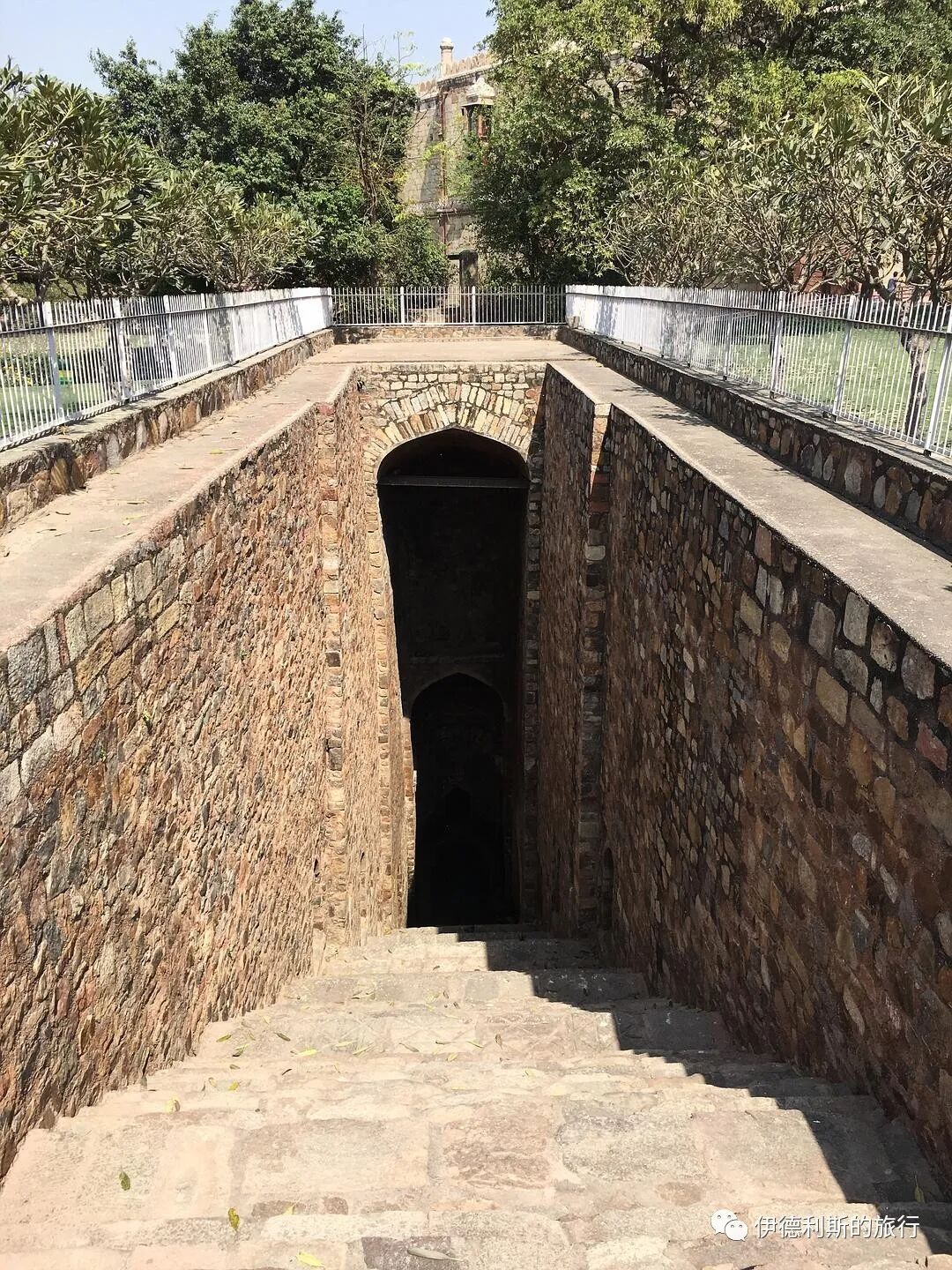
The water reservoir (baoli) used for storing water in the city.
VII. Outer City Gates
After exiting through the main gate of the Old Fort, you can see the historical ruins of the outer city of Dinpanah. Among the seven cities of Delhi, Dinpanah is the one we know the least about. Some early descriptions suggest that Dinpanah was an extension to the south of Ferozabad, the fifth city of Delhi.
Only two gates remain of the outer city walls of Dinpanah. The north gate of the outer city (Khuni Darwaza) is located near Ferozabad. It is also called the "Bloody Gate" because Mughal princes were shot there in 1857.
The south gate of the outer city (Lal Darwaza) is right next to the main gate of the Old Fort. Outside the gate is a wide road with the ruins of shops on both sides.
The relationship between the outer city walls of Dinpanah and the Old Fort walls is still unclear. However, judging by the moat outside the Old Fort, the outer walls were likely not connected to the Old Fort walls. In the 19th century, the archaeologist Cunningham speculated that the walls of Dinpanah should have covered a much larger area than these two gates suggest, possibly reaching over 14 kilometers. However, there was not enough archaeological evidence at the time to prove this.
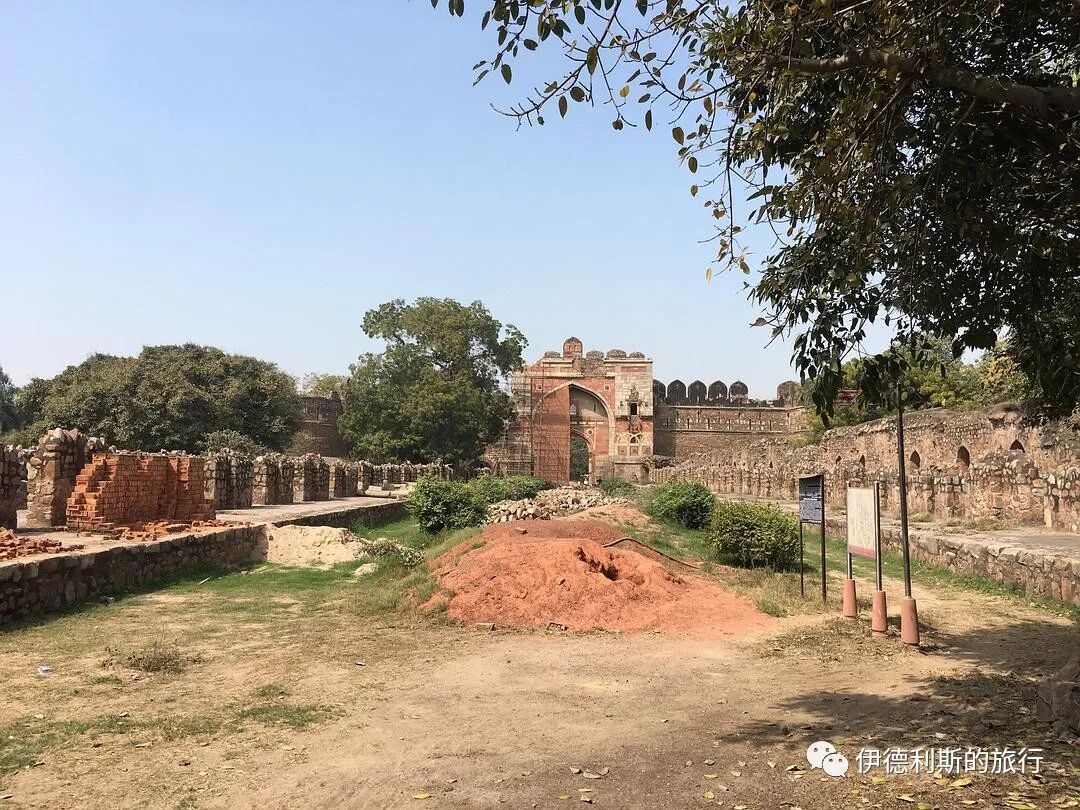
Unfortunately, the south gate of the outer city was under renovation when I visited, so I could only look at it from a distance.
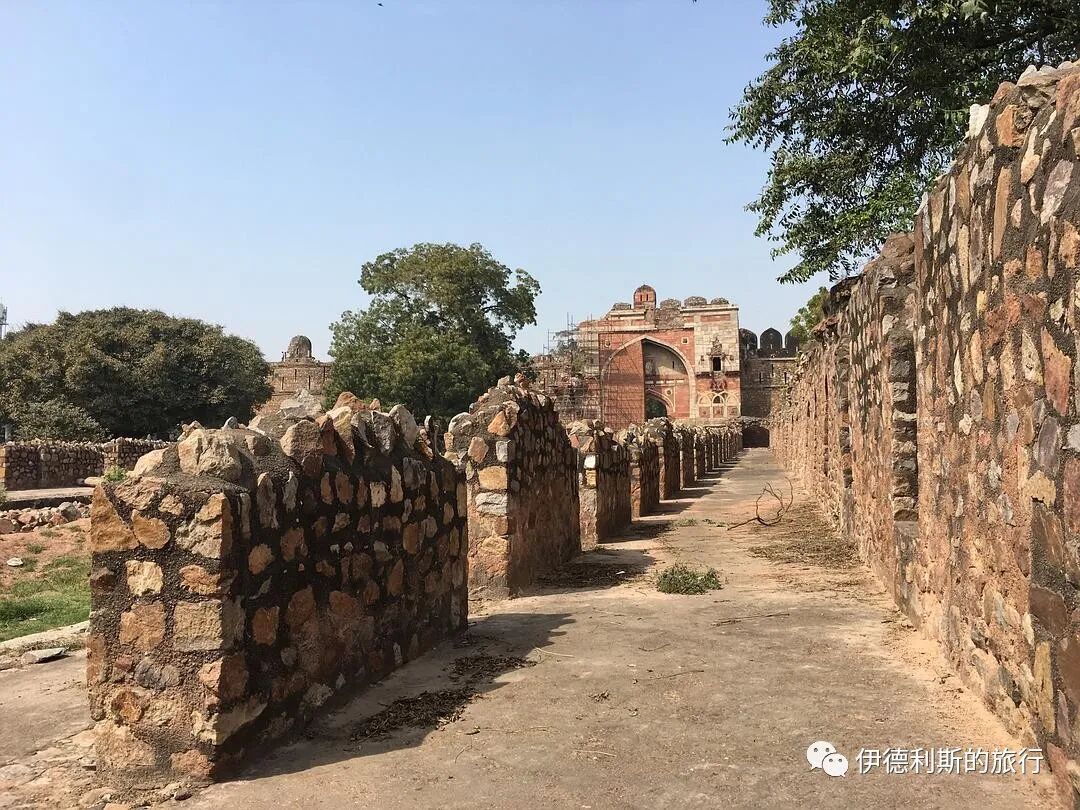
The ruins of the shops on both sides of the road outside the gate.
VIII. Khairul Manazil Mosque: 1561
Right next to the south gate of Dinpanah is the Khairul Manazil mosque, built in 1561 by Maham Anga, the wet nurse of the Mughal Emperor Akbar the Great. Between 1560 and 1562, she was the de facto regent of the Mughal Empire.
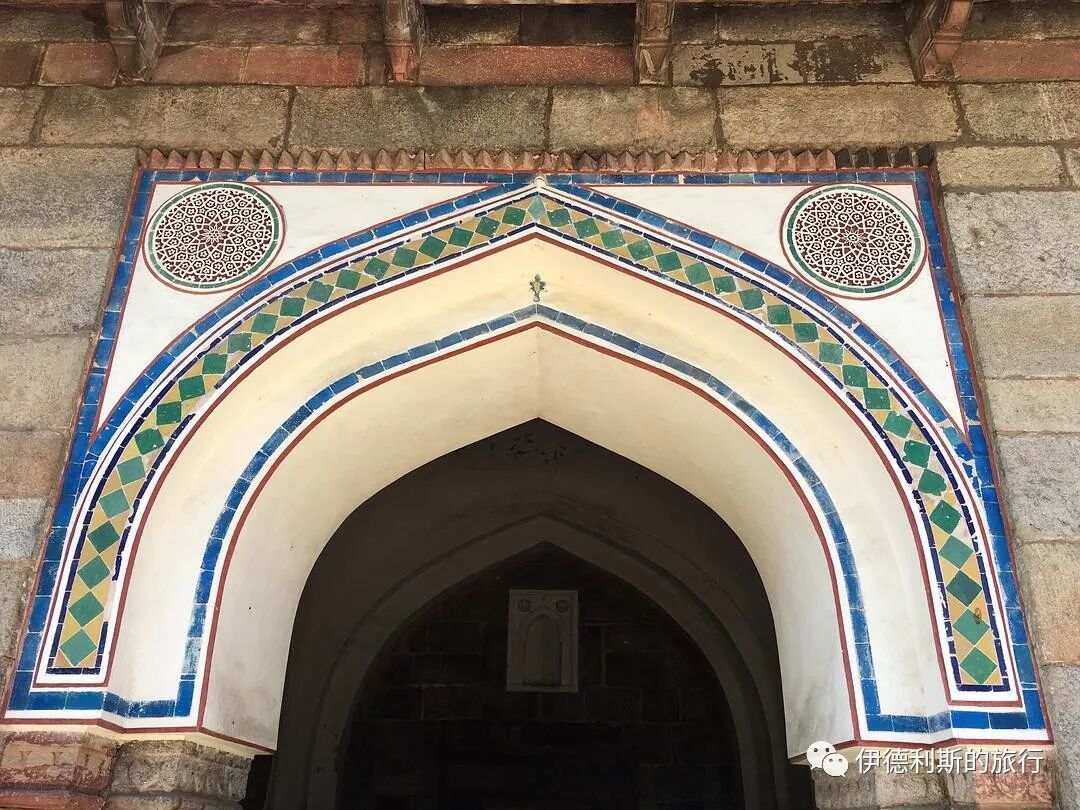
The gate of the mosque is a typical Mughal-style building, while the main hall with its semi-domed roof is in the Delhi Sultanate style. This is a characteristic of the transitional period in the early Mughal dynasty.
There is a water pool in the center of the courtyard, surrounded by a two-story madrasa.
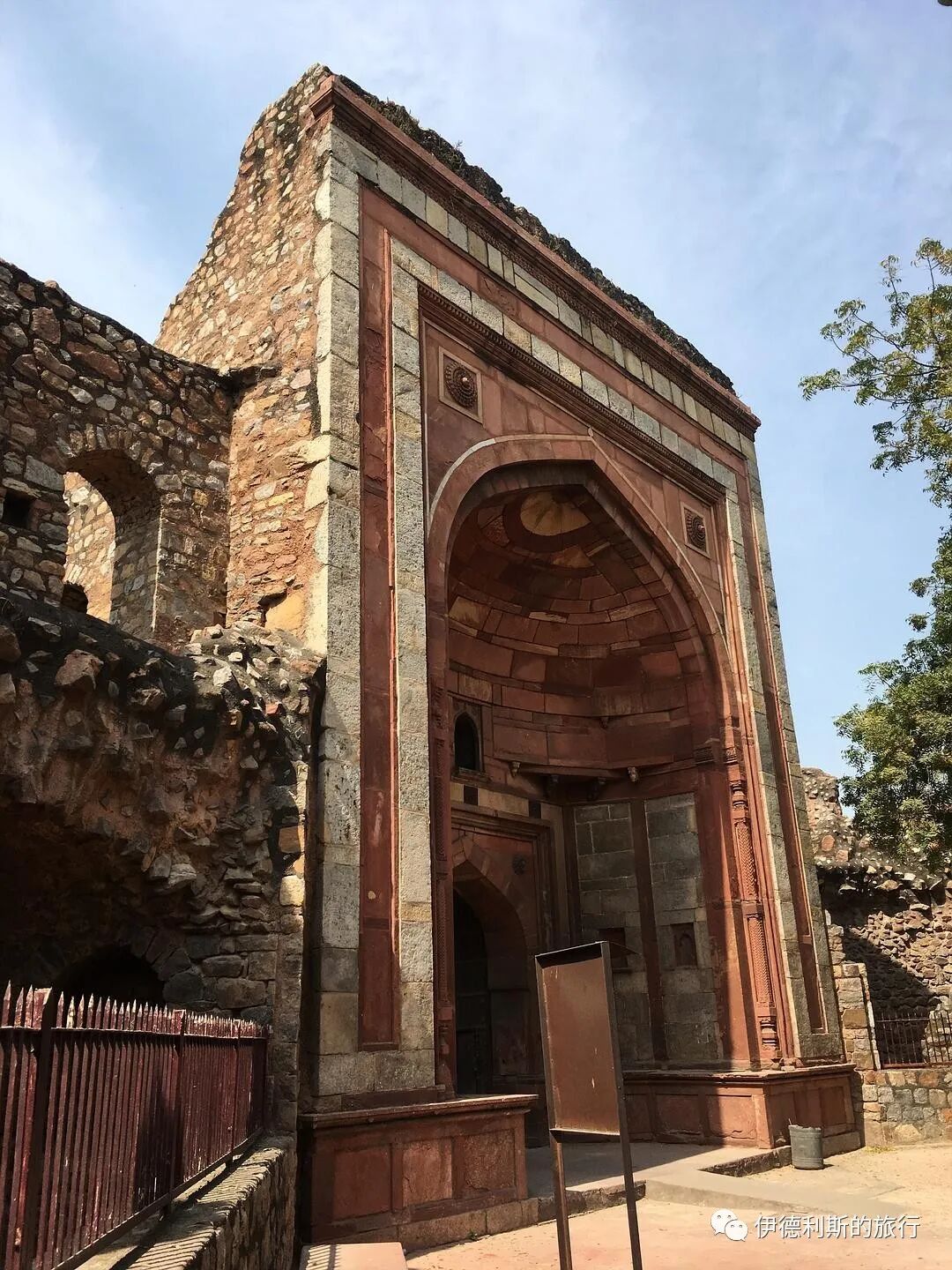
The main gate.
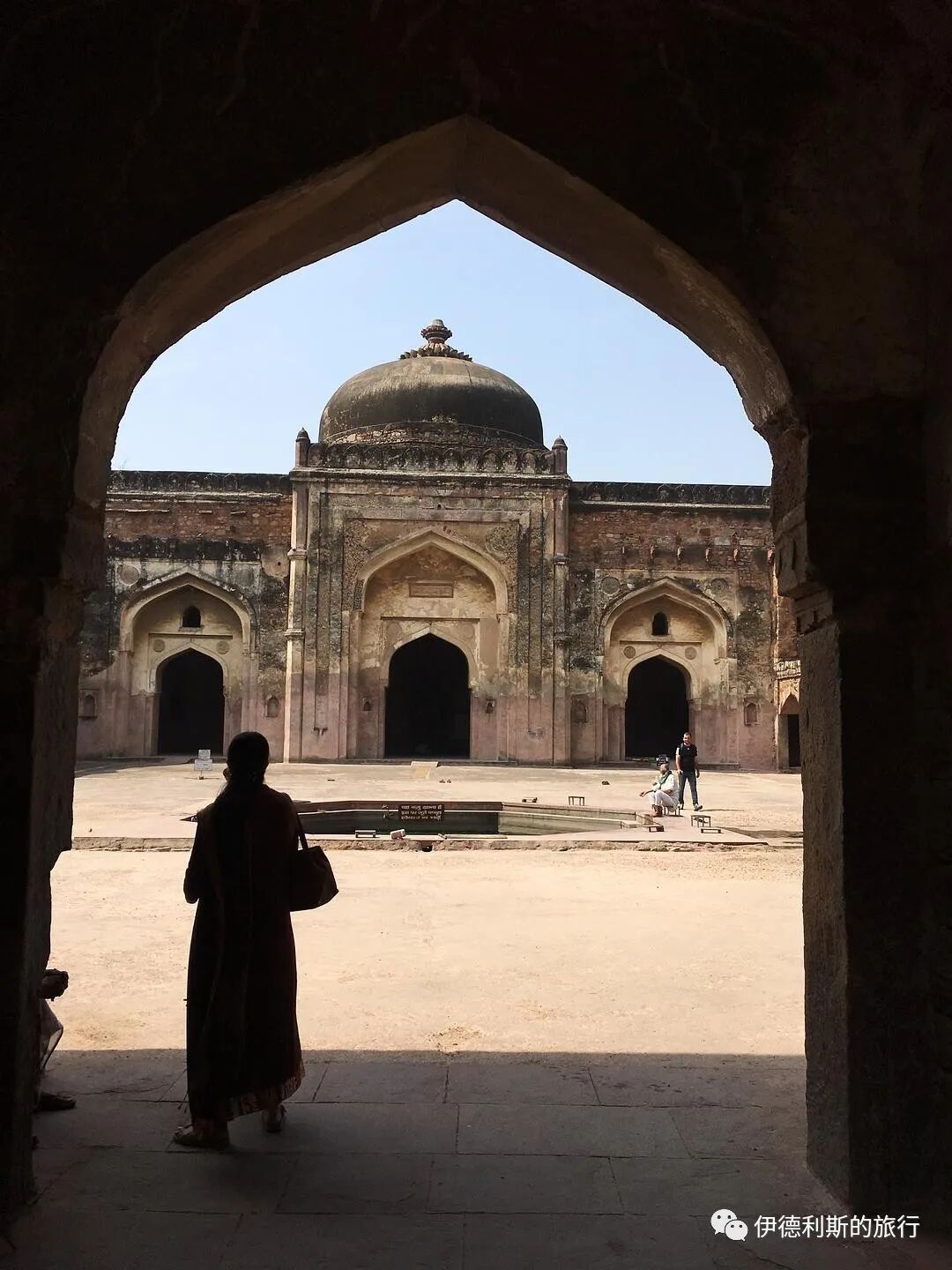
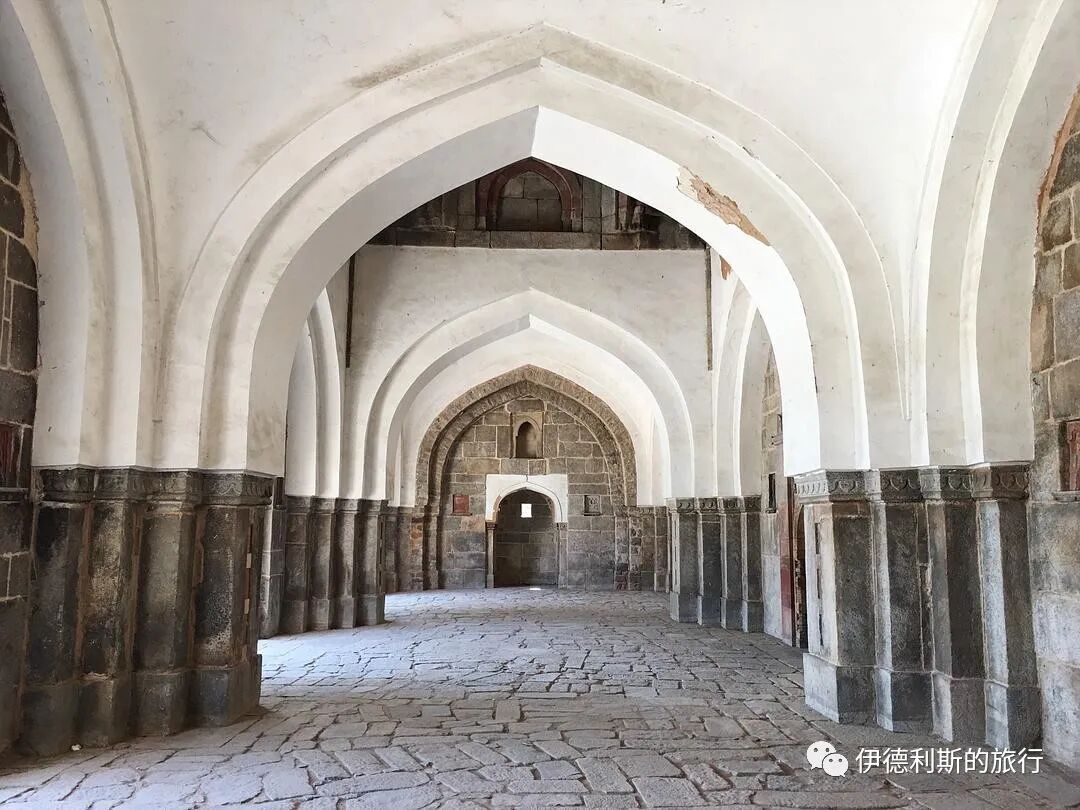
Looking inside from the main gate.
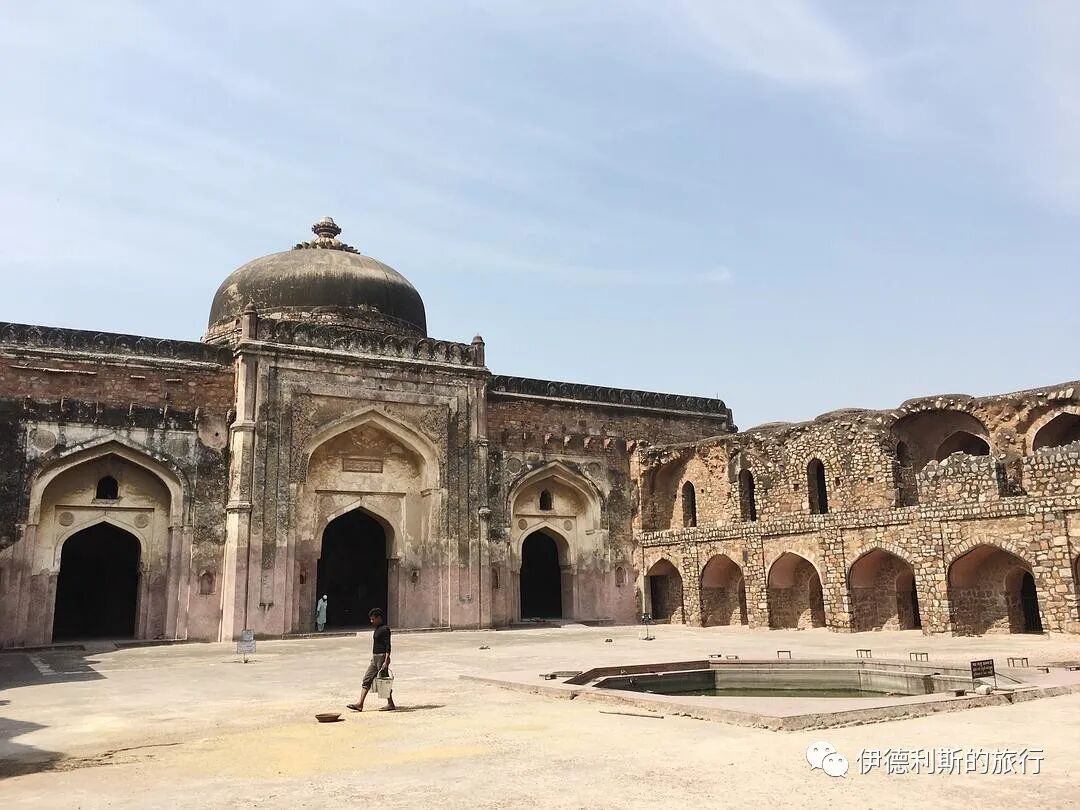
The mosque is on the left and the madrasa is on the right.
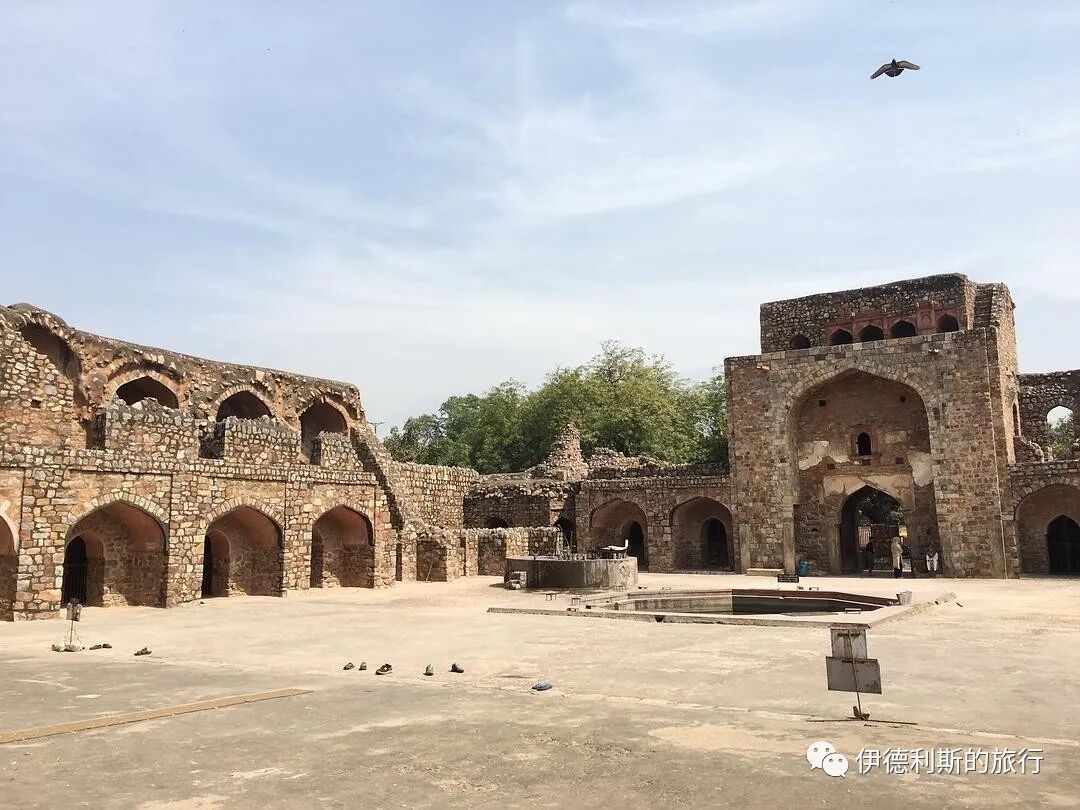
The madrasa is on the left and the main gate is on the right.
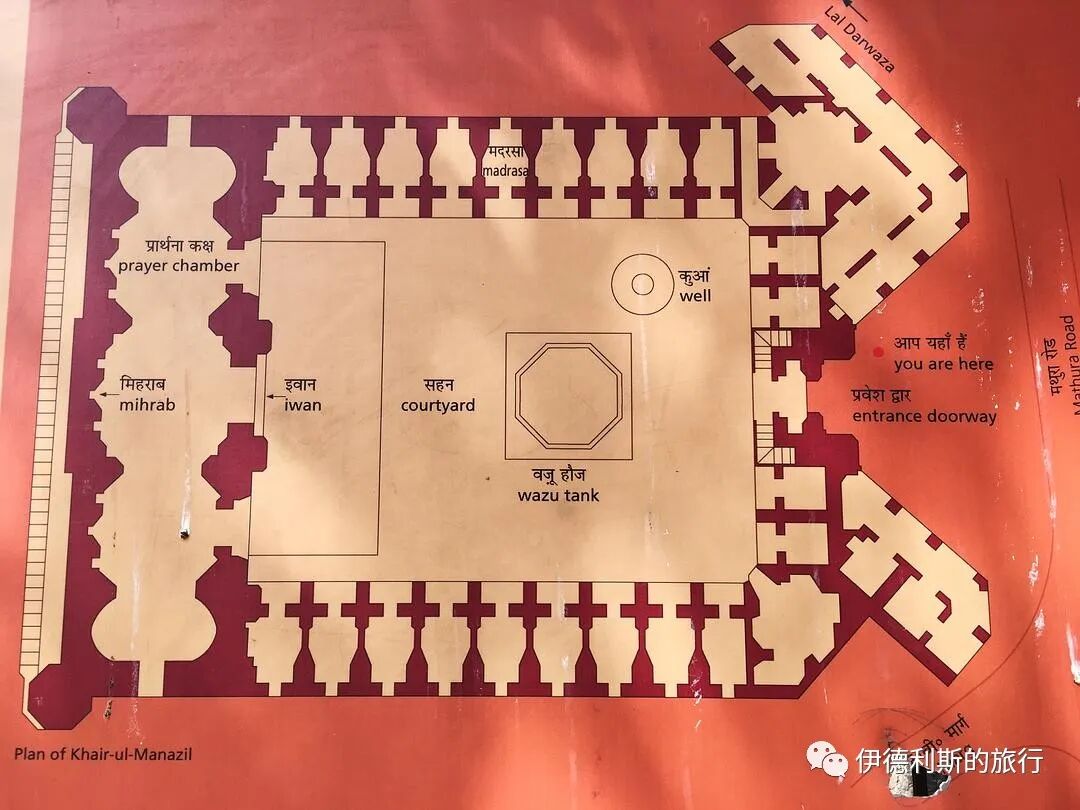
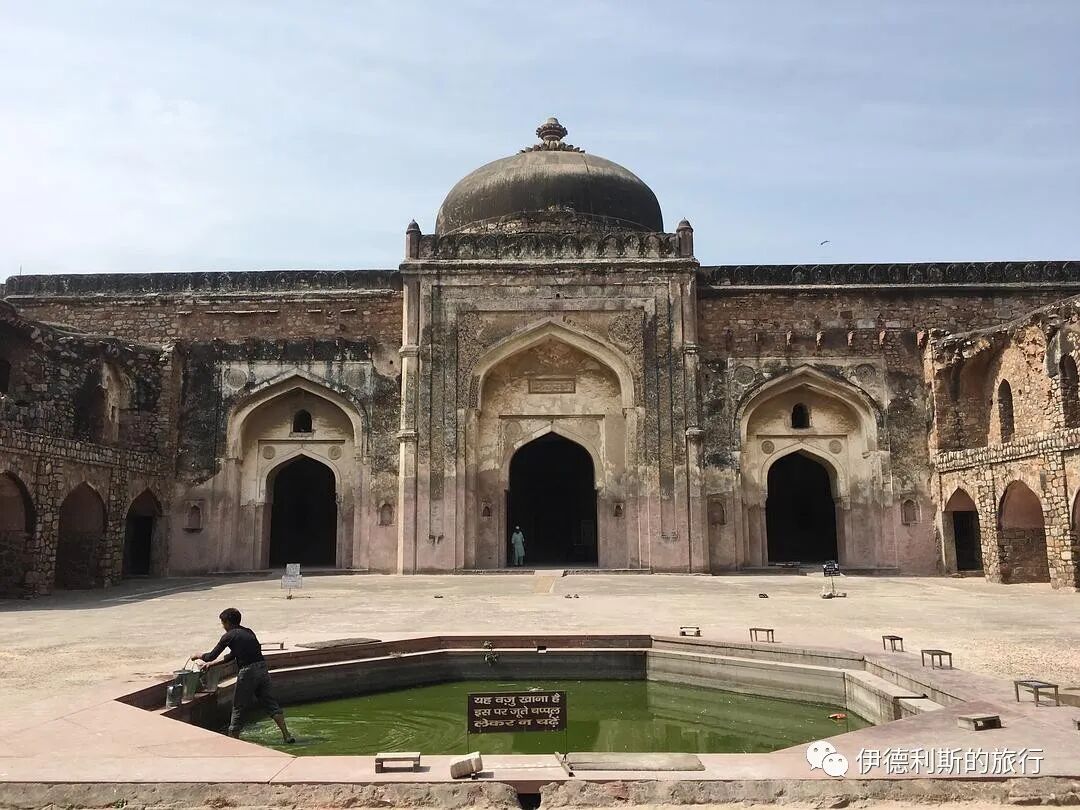
The main hall and the water pool in the courtyard.
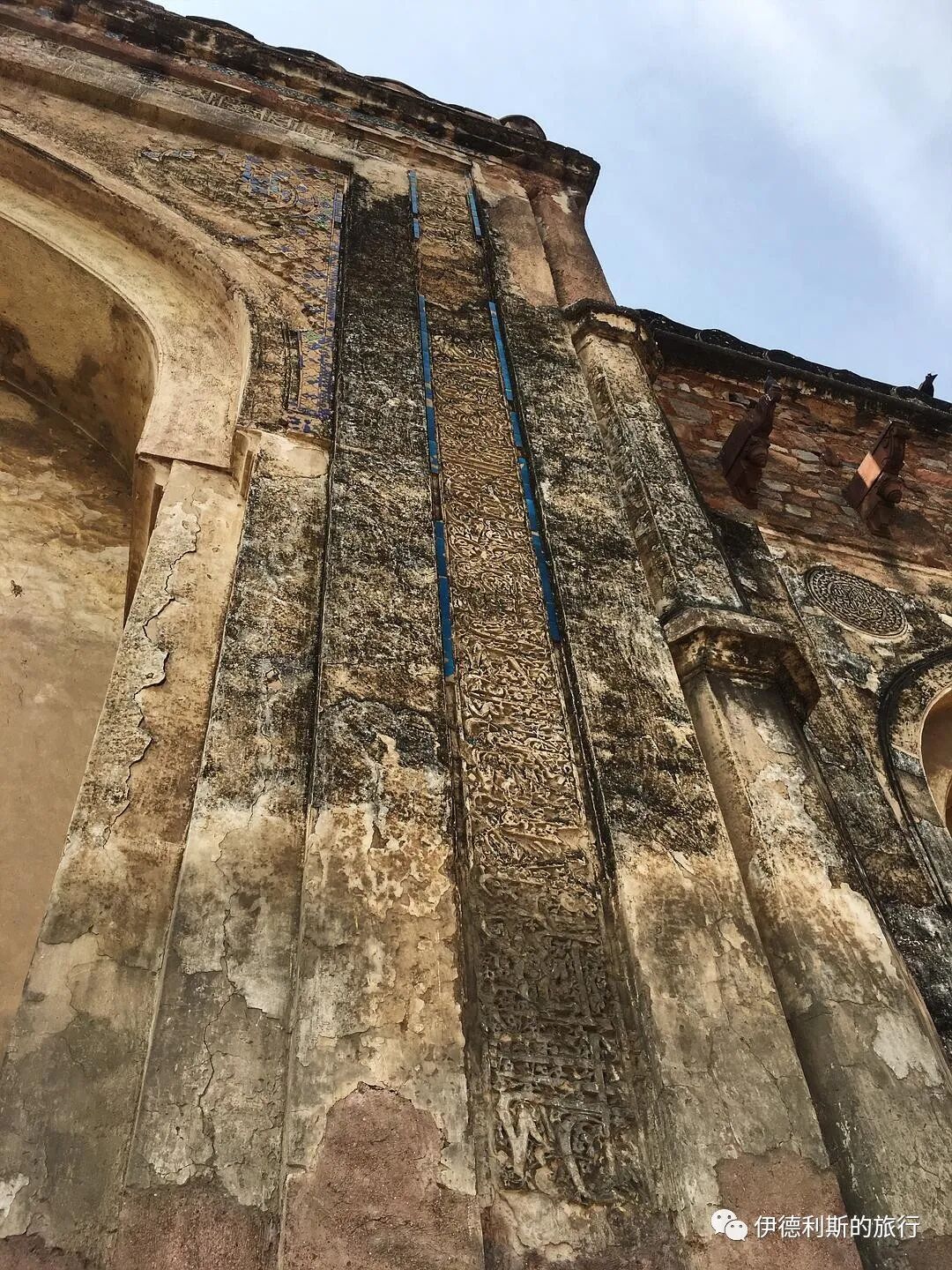
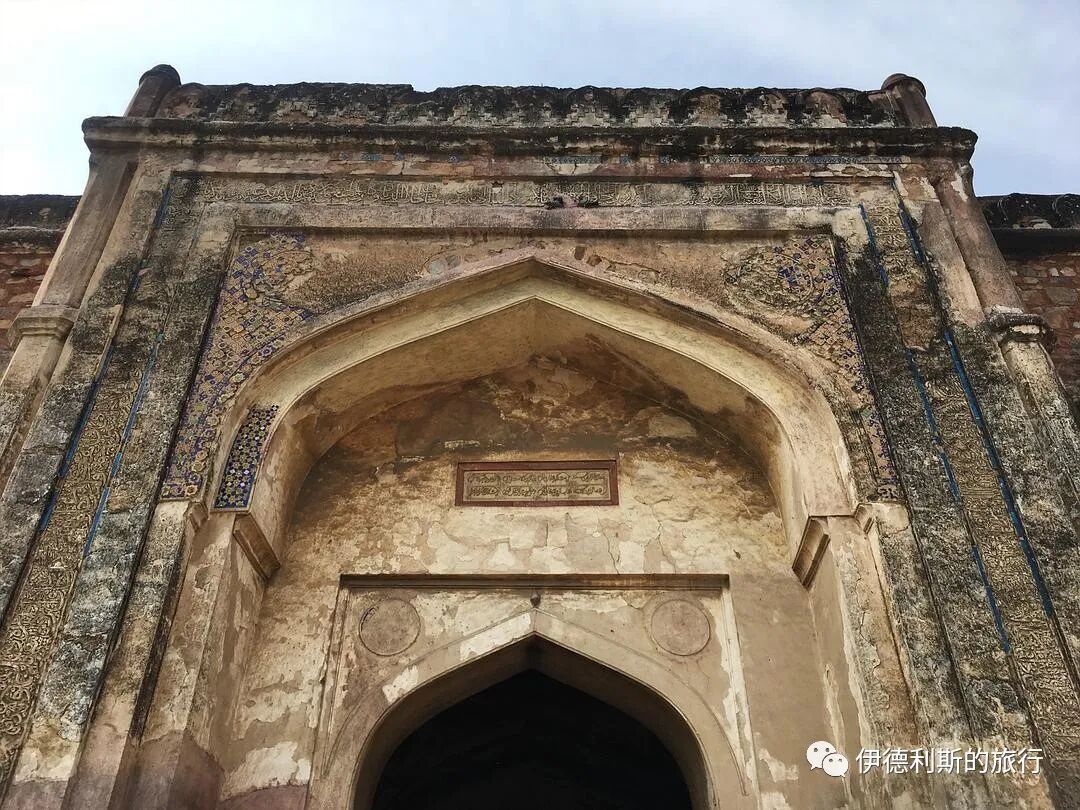
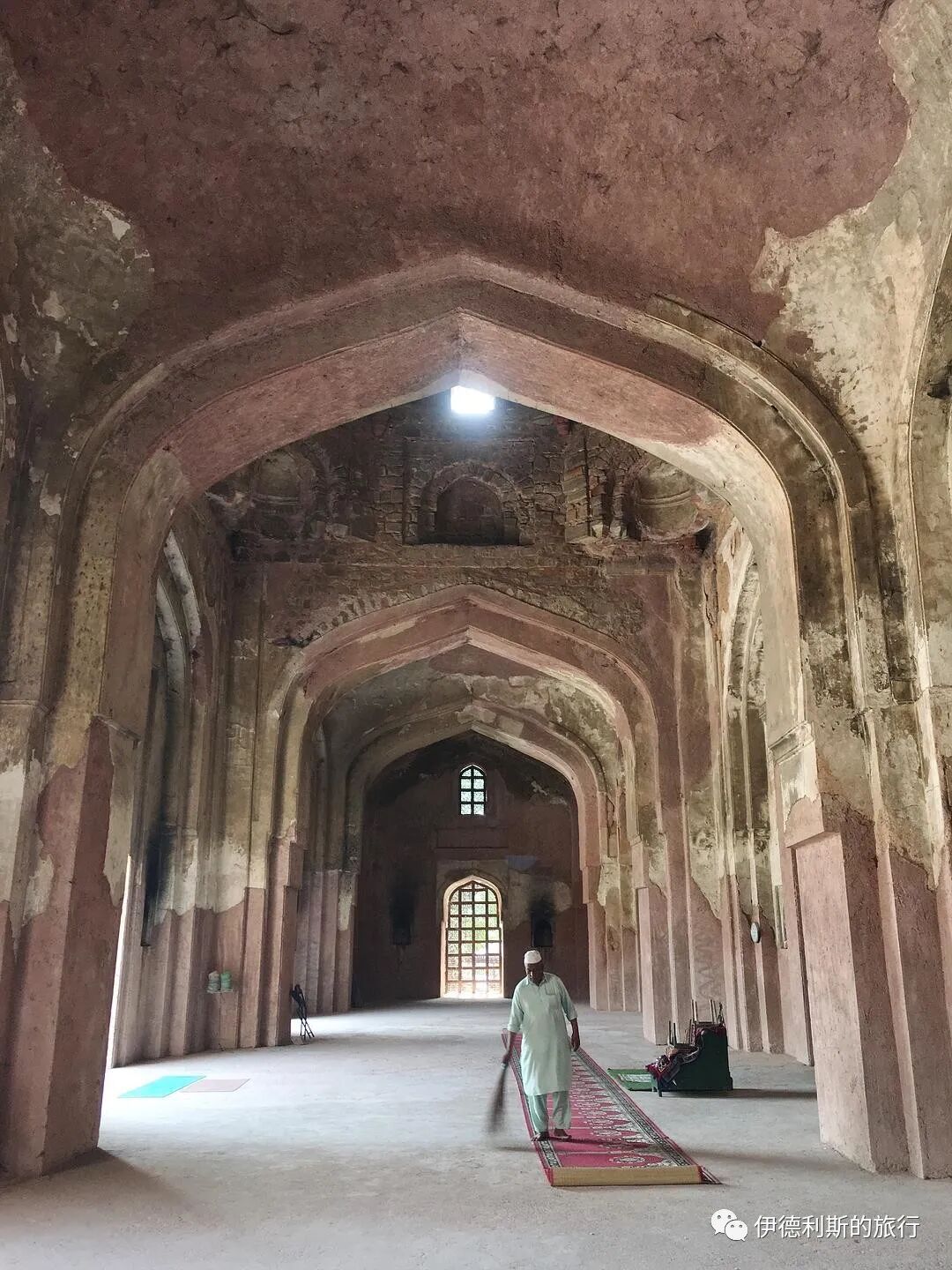
Inside the main hall.
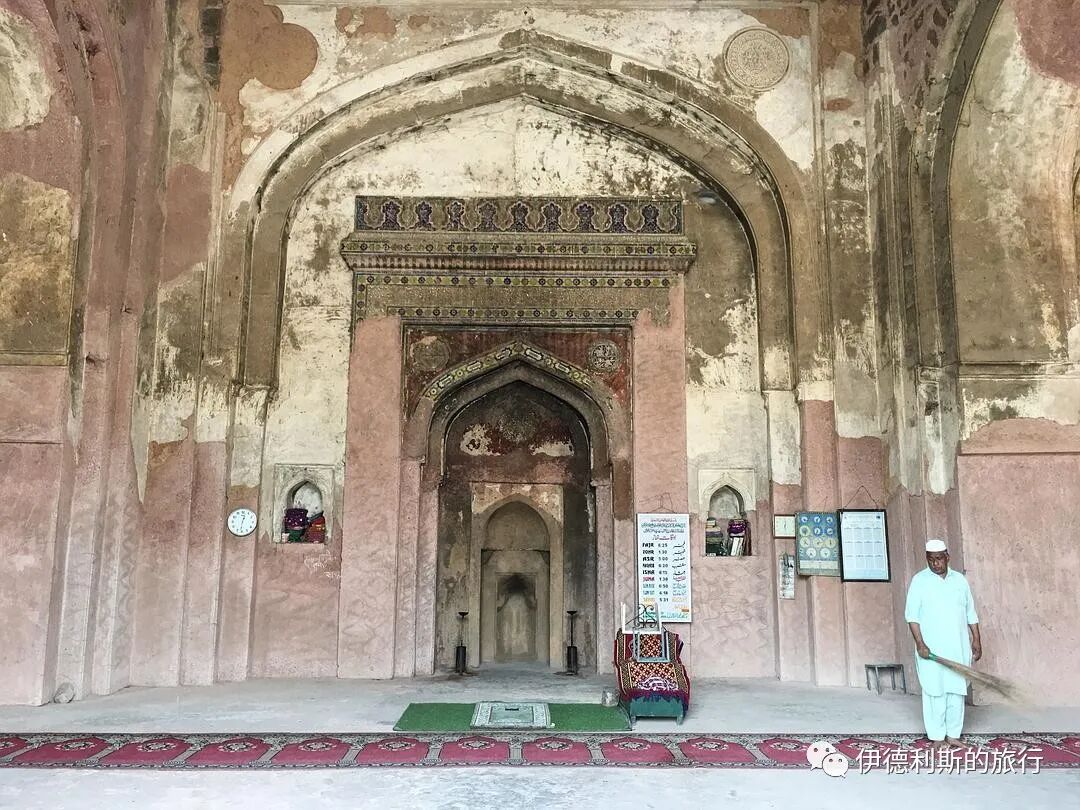
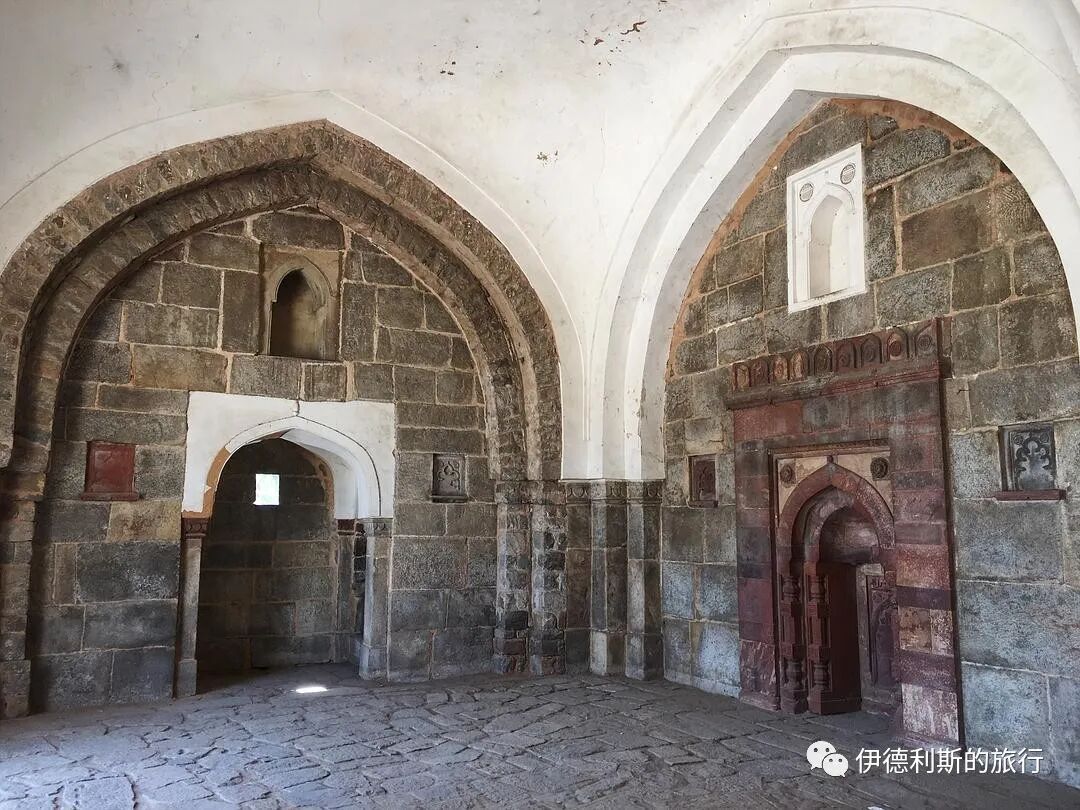
Mihrab.
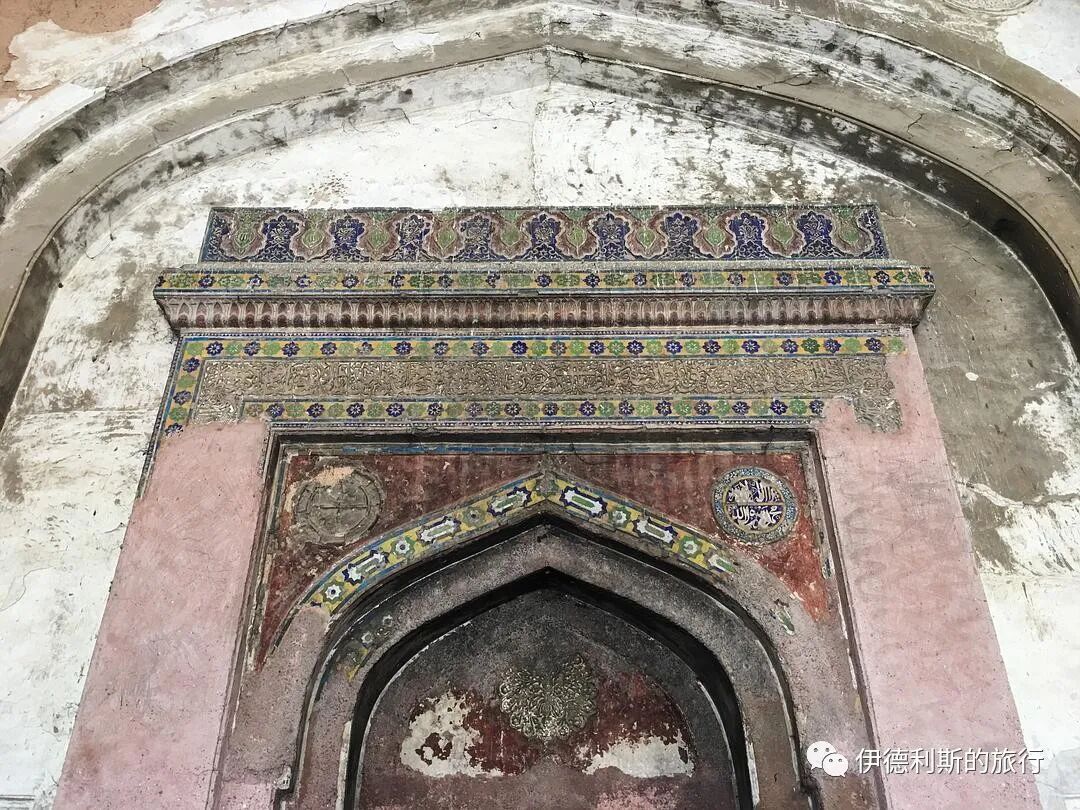
The patterns on the mihrab.
IX. Sur Empire Architecture Around Din Panah
On the north and south sides of Dinpanah, there are two very important buildings from the Sur dynasty. To the north is Salimgarh Fort, and to the south is the tomb and mosque of Isa Khan.
1. Salimgarh Fort: 1546
Salimgarh Fort is located on the north side of the Red Fort in Delhi. It was built in 1546 by Salim Shah, the son of the Sur dynasty ruler Sher Shah. People say in 1555, Humayun stayed here for three days before recapturing Delhi. In 1639, when the Mughal Emperor Shahjahan was building the seventh city of Delhi, Shahjahanabad, he also camped here.
The place turned dark after the Mughal Emperor Aurangzeb turned it into a prison. Aurangzeb imprisoned his brother Murad Baksh here, and it is said he also held his favorite eldest daughter, Zebunnisa, captive here for twenty-one years.
In 1857, an anti-British uprising broke out in India, eventually leading to the fall of the Mughals. From August to early September 1857, the last Mughal Emperor, Bahadur Shah Zafar, held strategic meetings at Salimgarh Fort and announced that the Mughal Emperor would lead the Indian people in their resistance against the British. He called on all Indian people, regardless of caste or faith, to join the resistance together.
But by mid-September, the British army began to surround the fort. The emperor's men urged him to retreat to a safe place, but the emperor refused. The emperor ordered his army to evacuate the fort, while he went to the tomb of Humayun. Therefore, when the British army entered the fort, they only encountered one sentry. On September 20, the emperor was arrested by the British army at Humayun's Tomb, marking the end of the Mughal Empire, which had lasted for over three hundred years.
After the uprising ended, the fort was used as an artillery camp for the British army and later became a prison. Between 1945 and 1947, leading up to India's independence, many members of the Indian National Army (INA) were tortured to death here, and many more disappeared forever. Because of this, Salimgarh Fort is now also called Swatantrata Senani Smarak to commemorate the prisoners who were treated cruelly within the fort.
There are many legends about ghosts haunting Salimgarh Fort. The most famous ghost is the Mughal Emperor Aurangzeb's daughter, Zebunnisa. Legend says she wears a black veil and sings poems she wrote herself under the moonlight. Additionally, some people claim they can hear the groans of the Indian National Army soldiers who were tortured to death here at night.
In 2007, this place became a UNESCO World Heritage site.
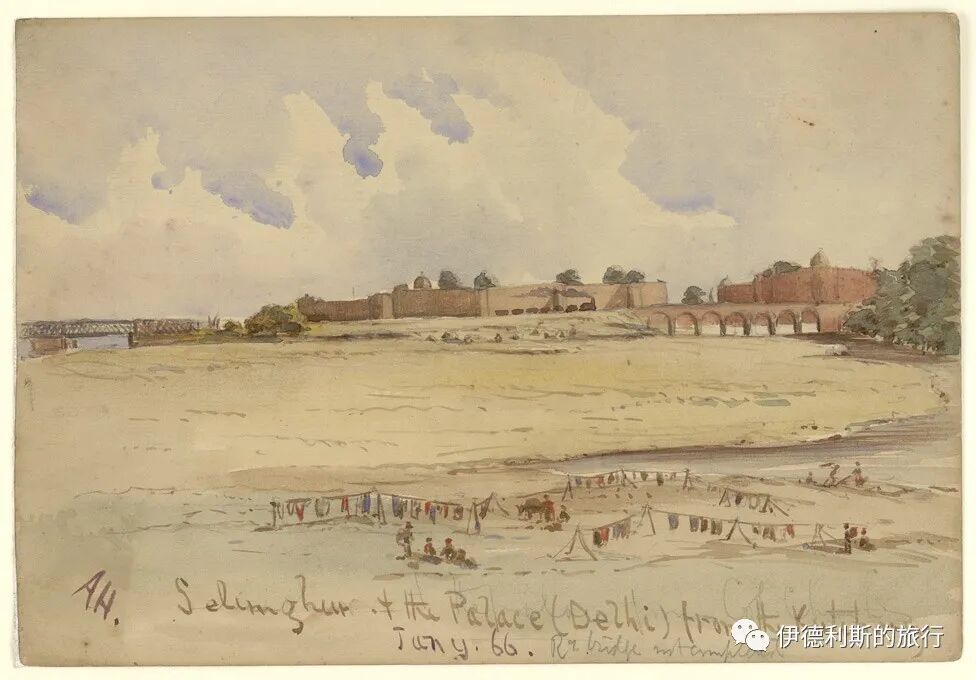
Salimgarh Fort in 1866, drawn by Alfred Frederick Pollock Harcourt.
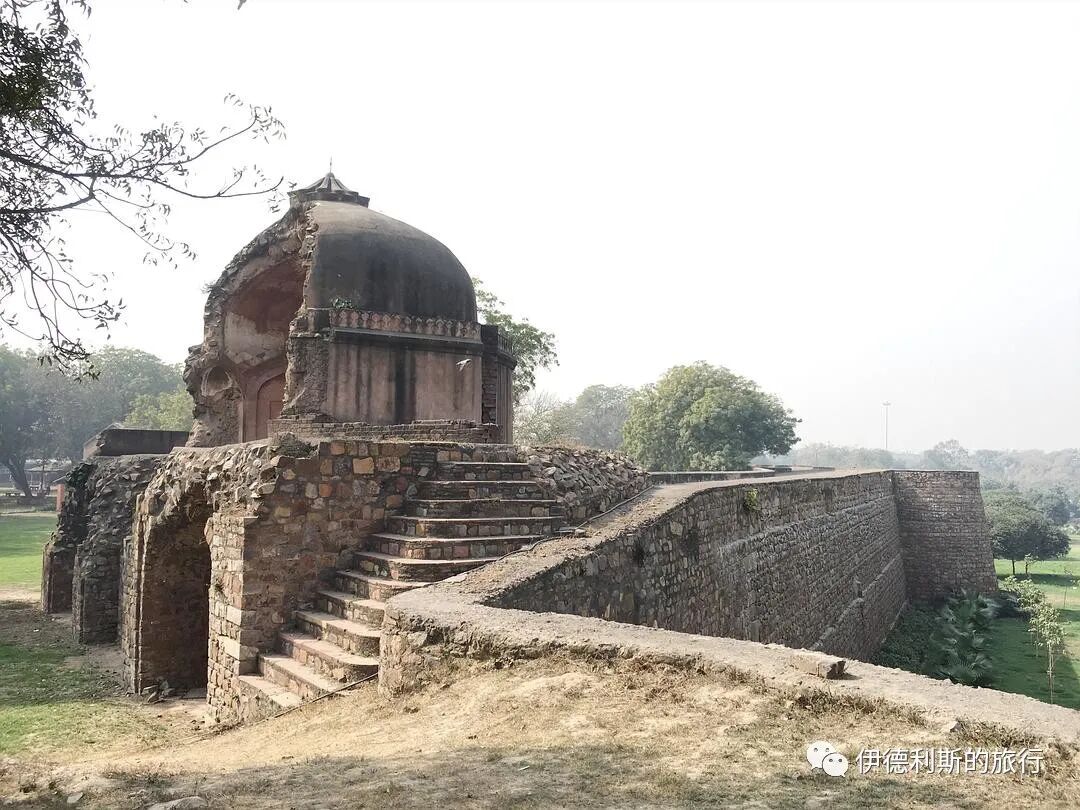
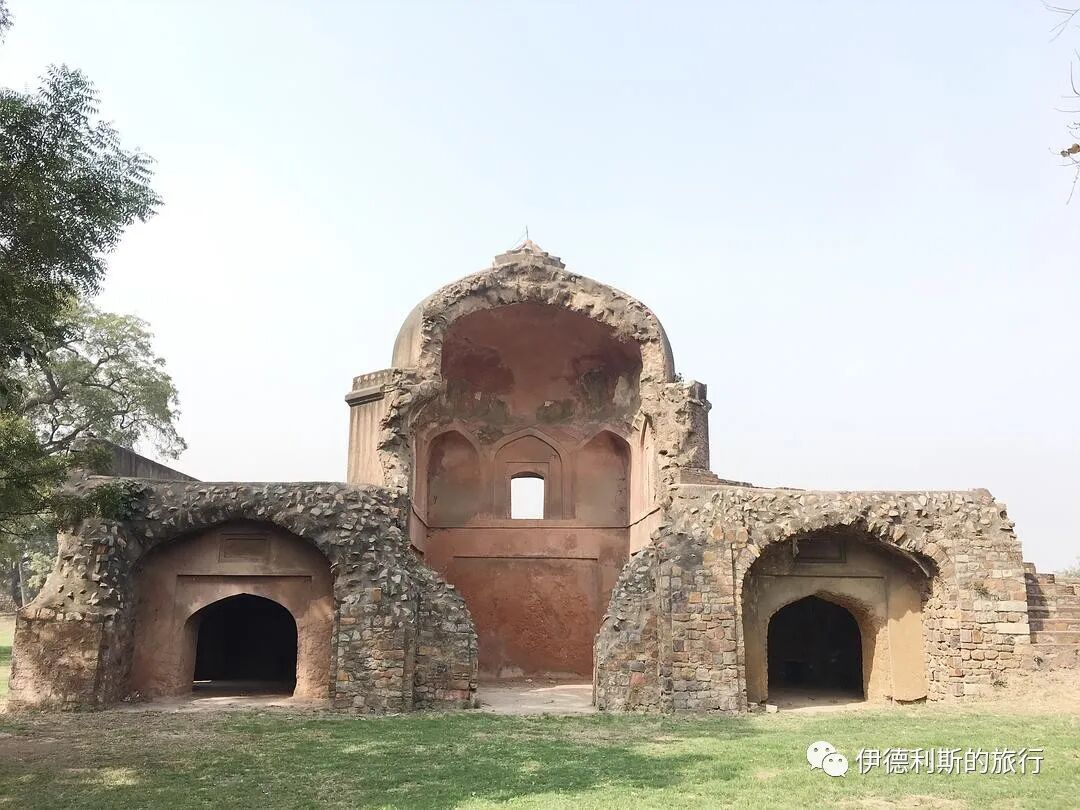
The mosque by the city wall.
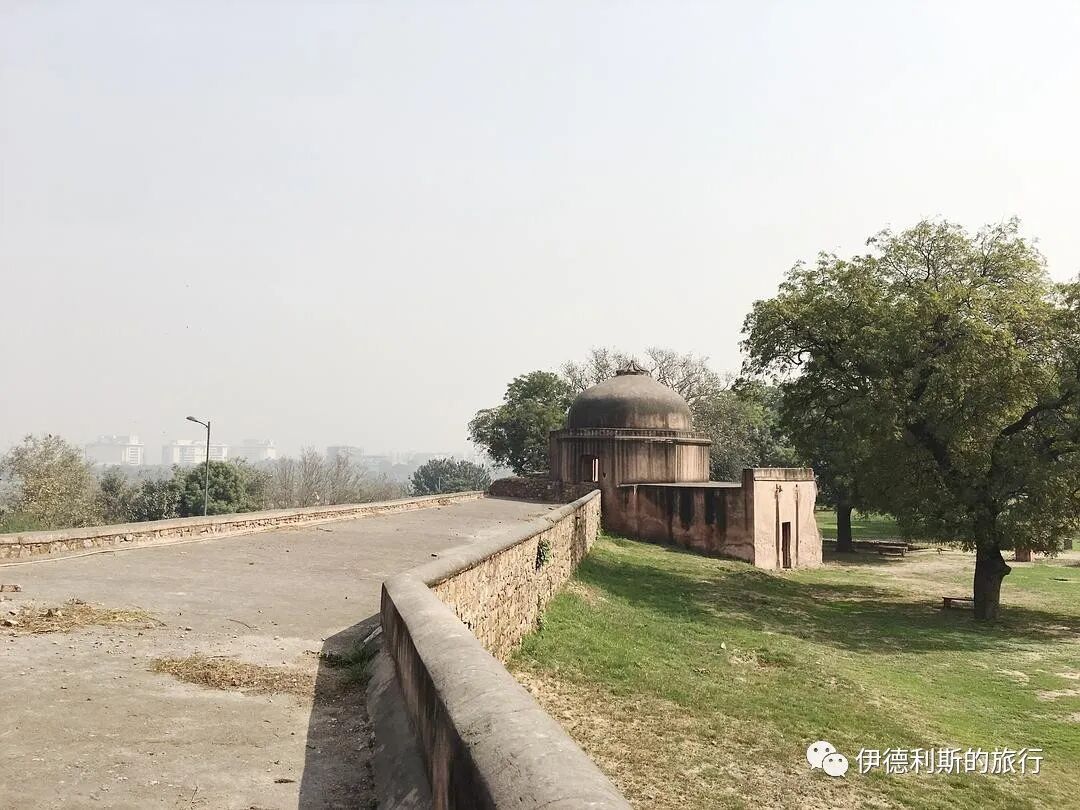
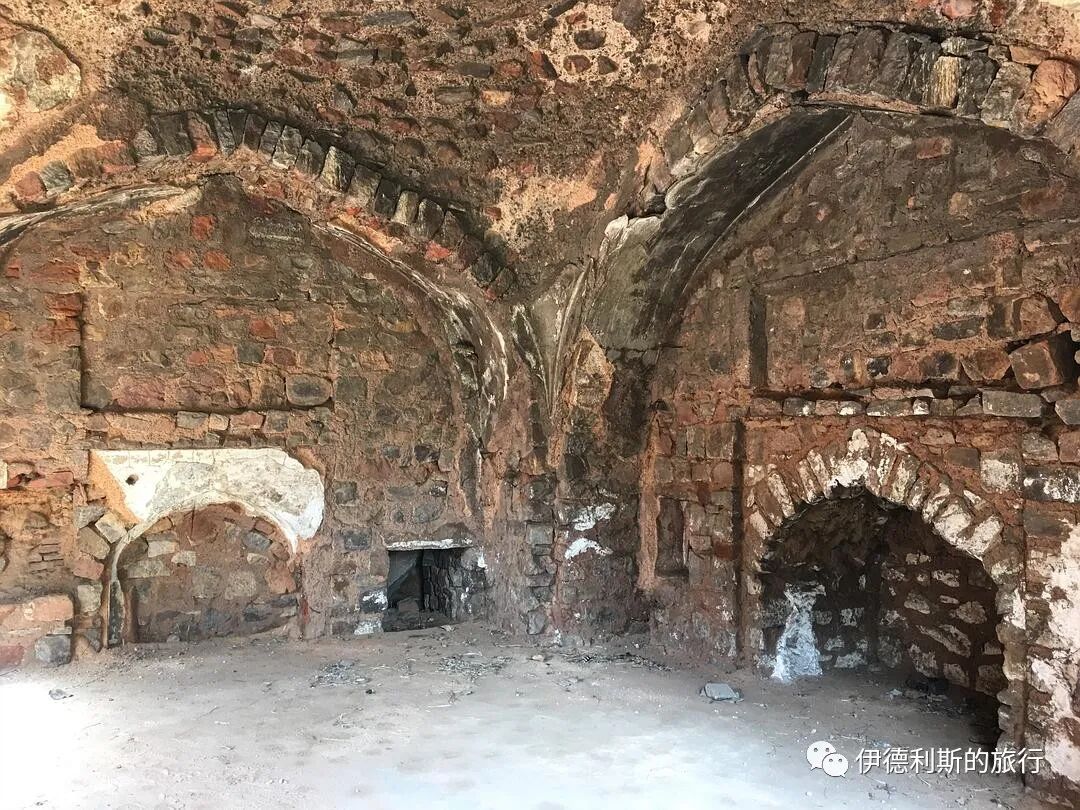
Inside the mosque.
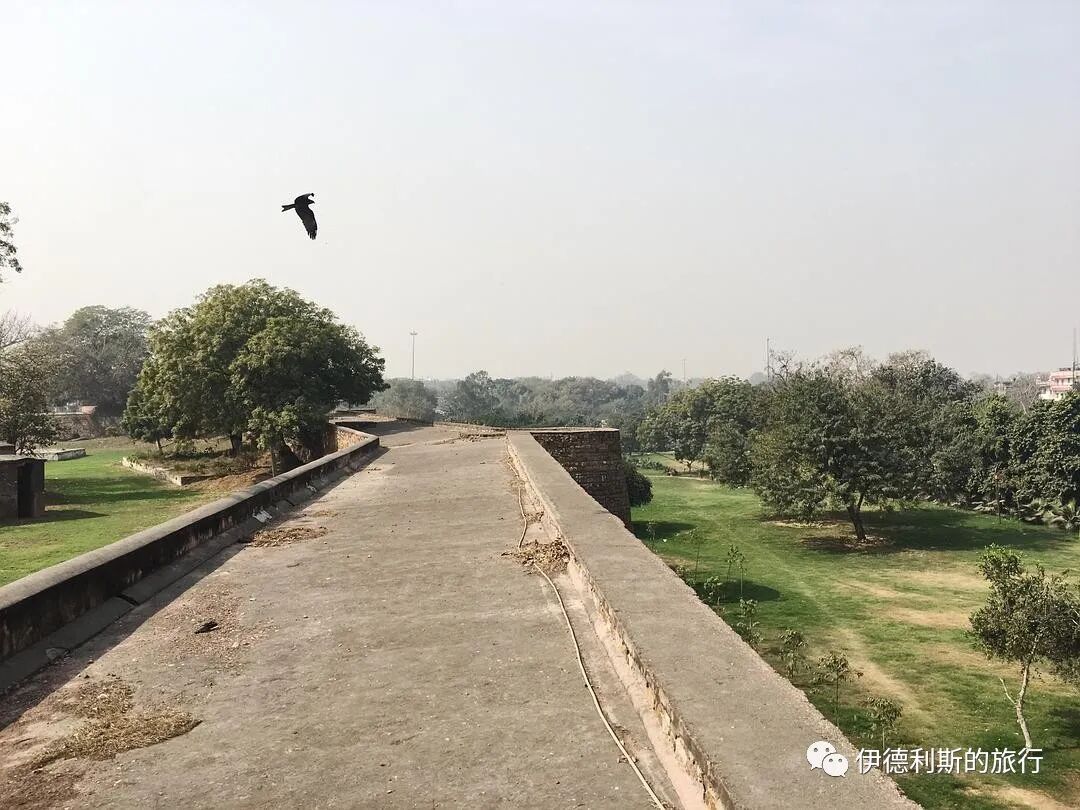
The other side of the city wall.
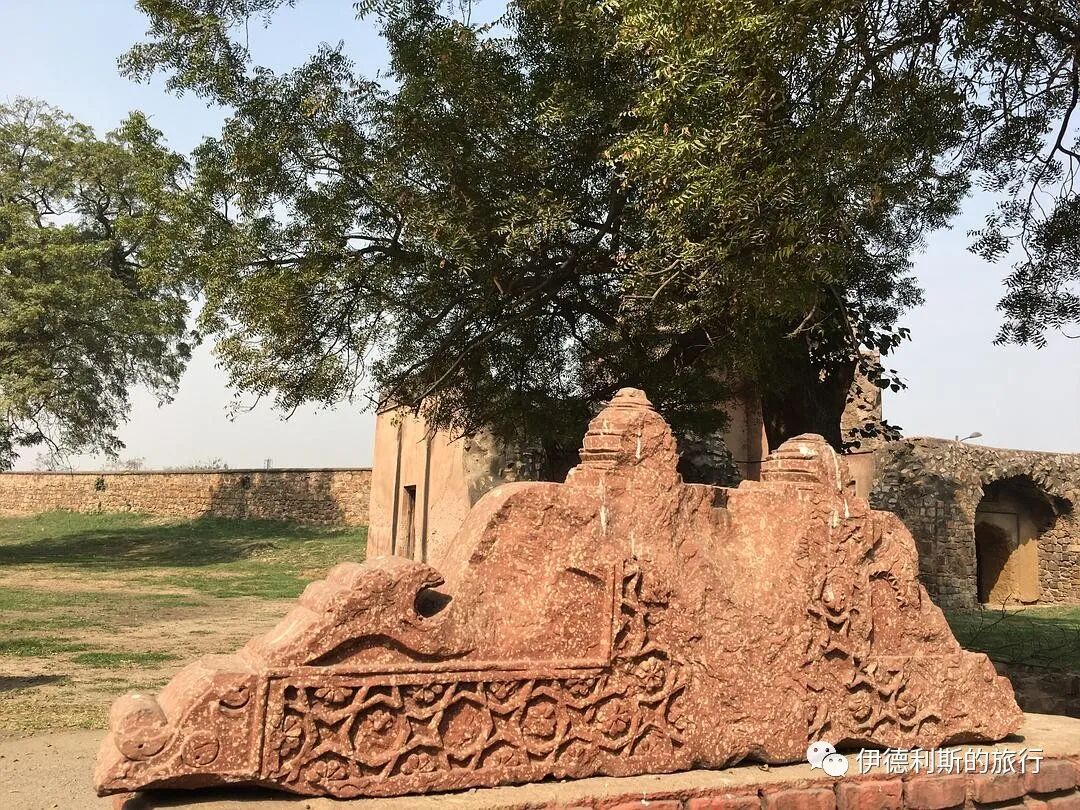
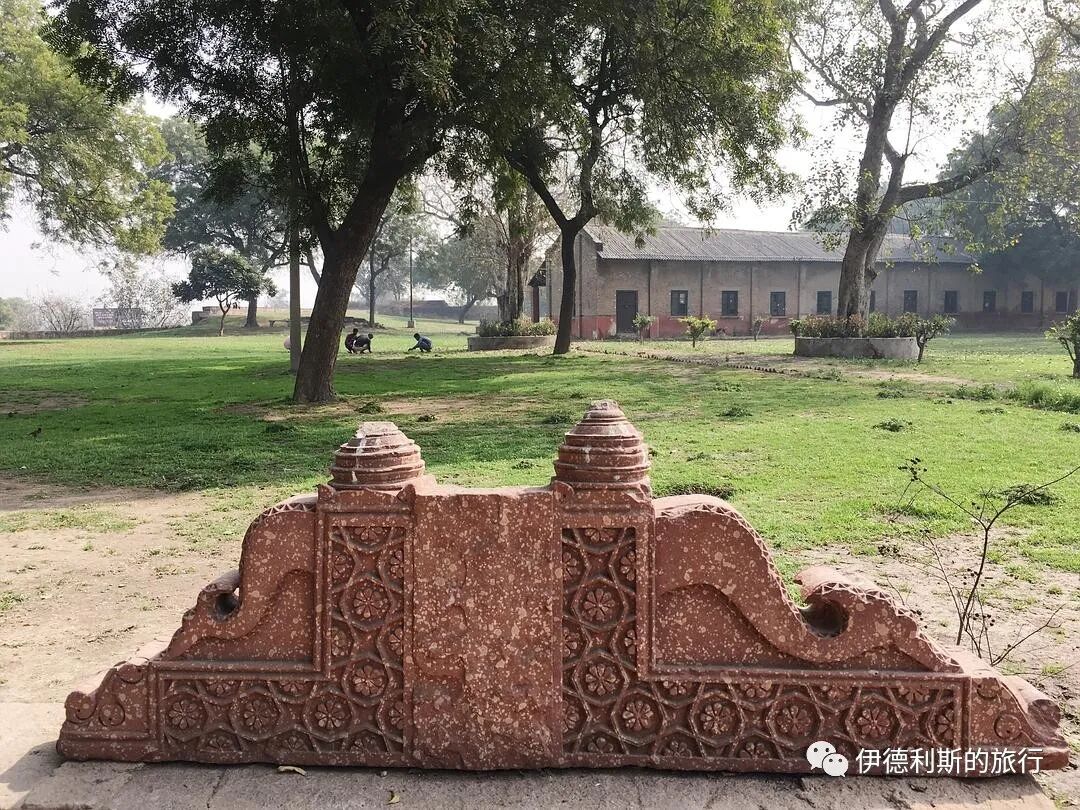
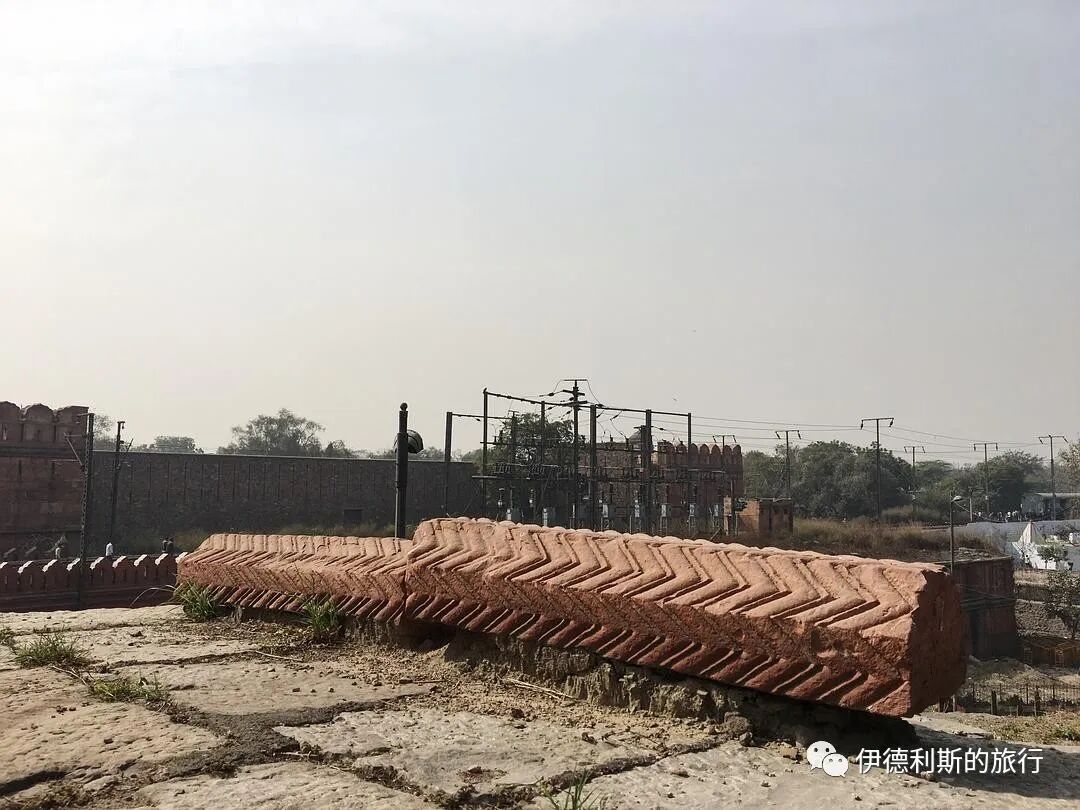
Some scattered architectural pieces inside the fortress.
2. Tomb and Mosque of Isa Khan: 1547
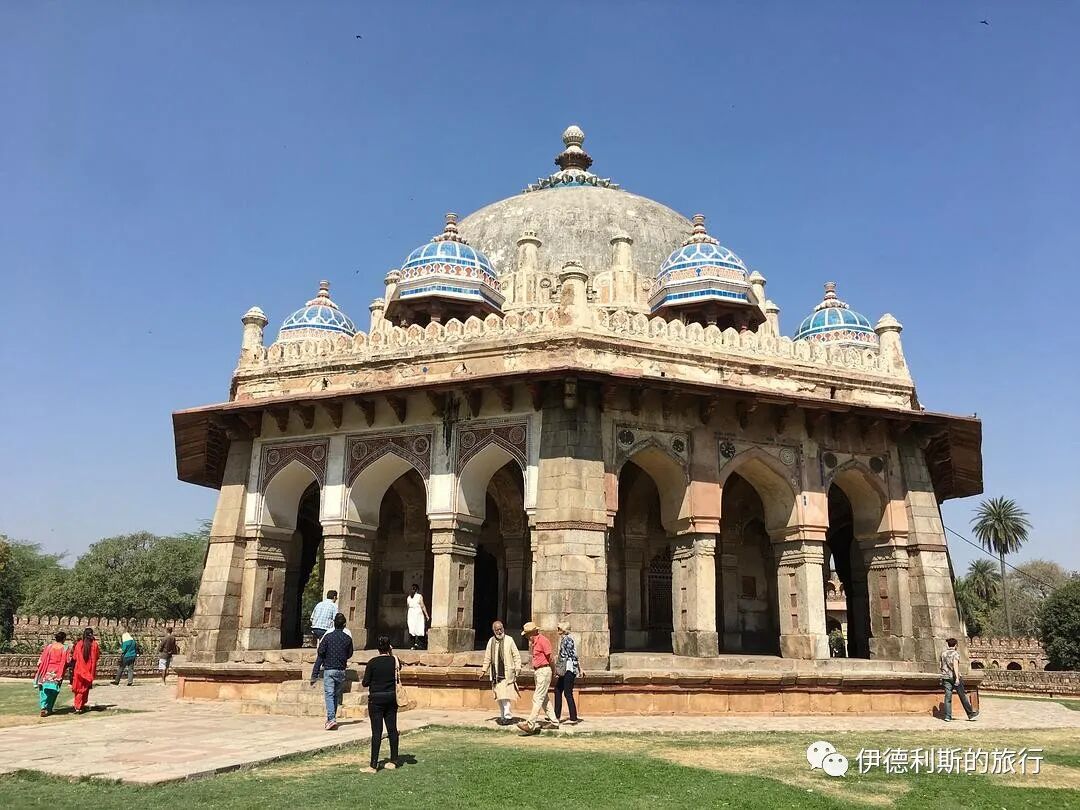
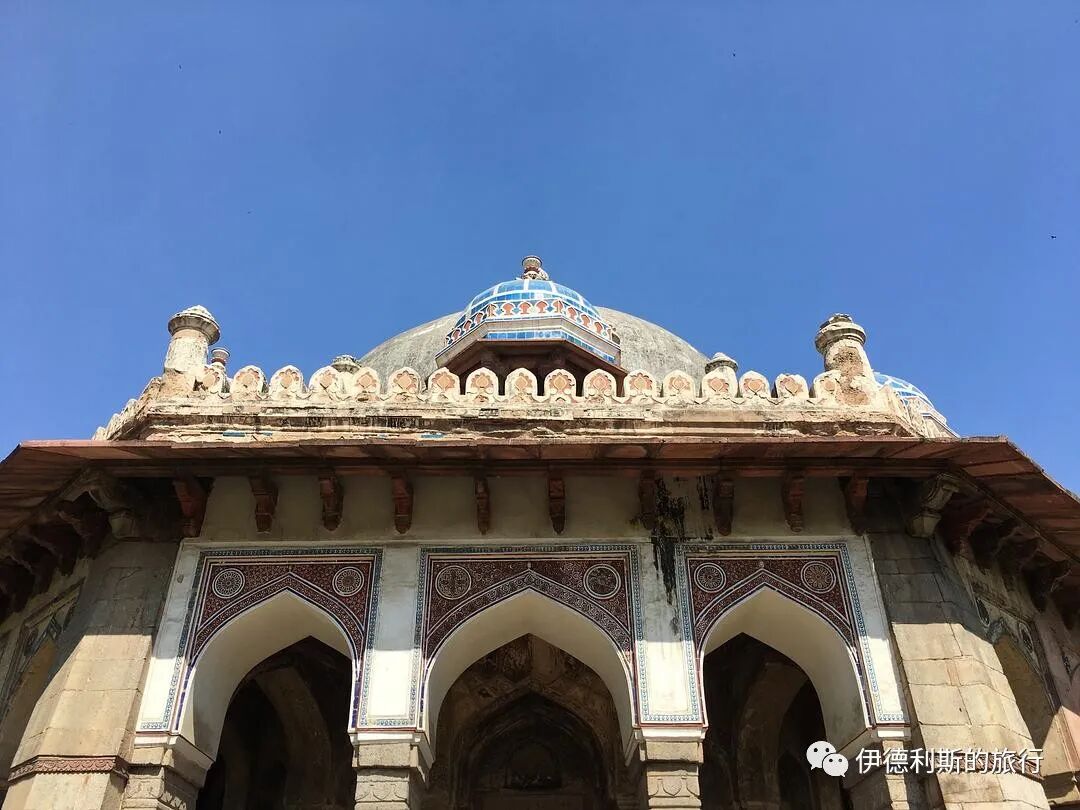
Isa Khan was a nobleman of the Sur Empire, coming from the Niazi tribe of the Pashtuns in Afghanistan. Isa Khan died in 1548. Before he passed away, he built his own tomb and mosque in the southern suburbs of Dinpanah, near the shrine of Nizamuddin. Later, this place also became the site of Humayun's tomb.
As a prominent figure in the Sur Empire, Isa Khan was one of the last nobles of the dynasty to be buried in an Afghan-style tomb.
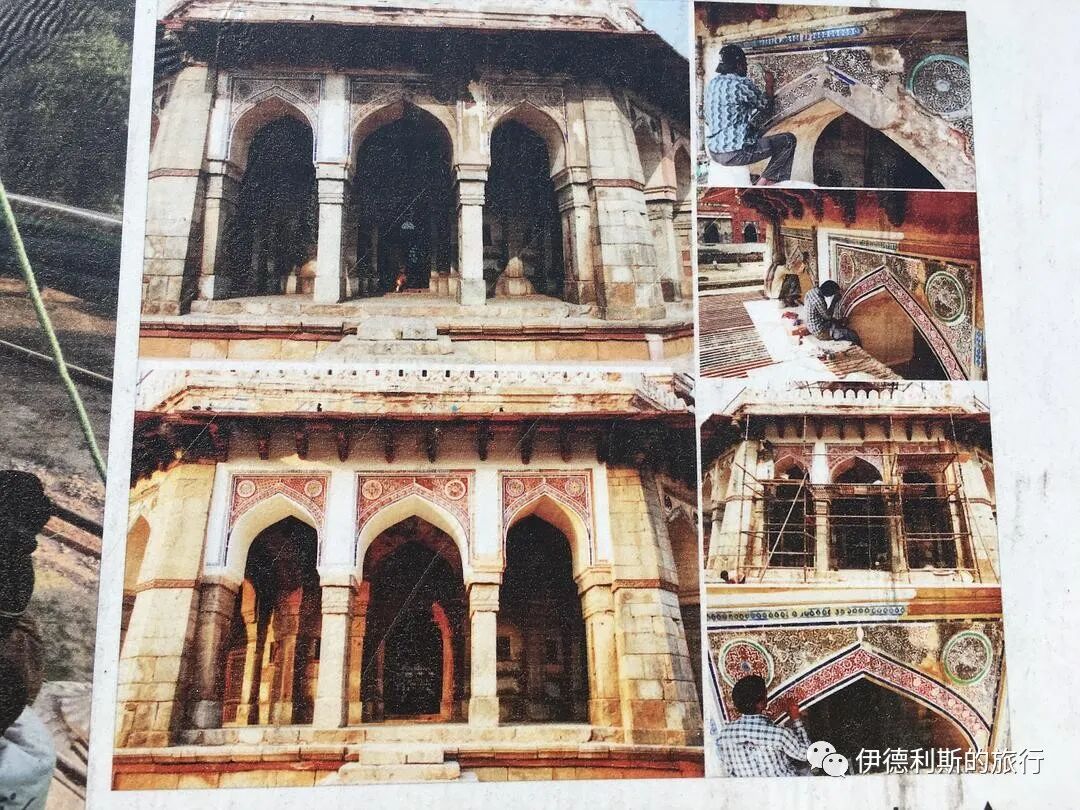
On August 5, 2011, the oldest sunken garden in India was discovered during the restoration of the tomb. This is considered the first Indian-style sunken garden attached to a tomb in India. This design was later further developed at Akbar's Tomb and the Taj Mahal.
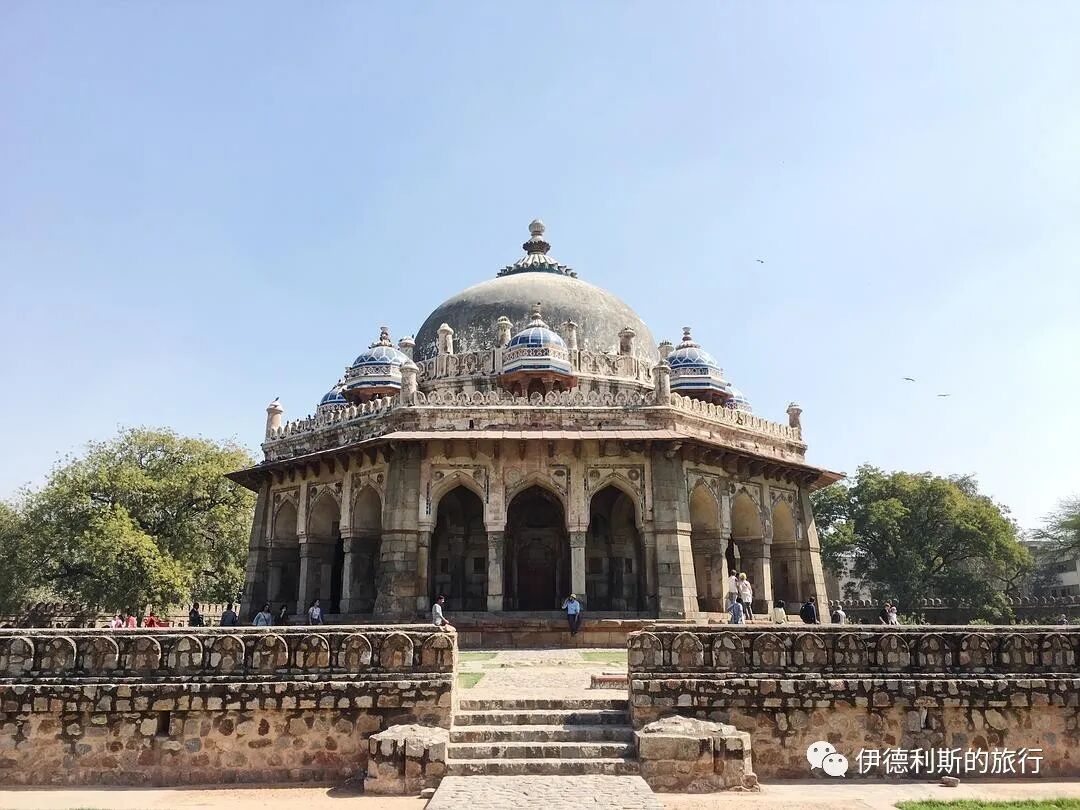
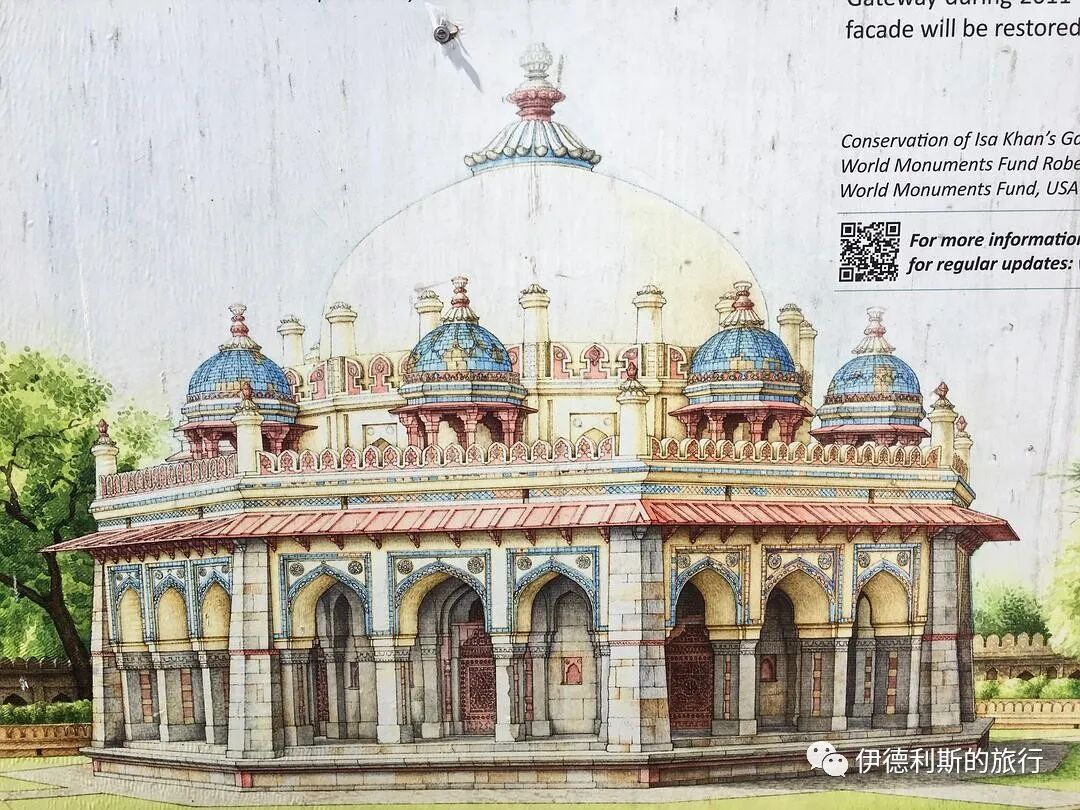
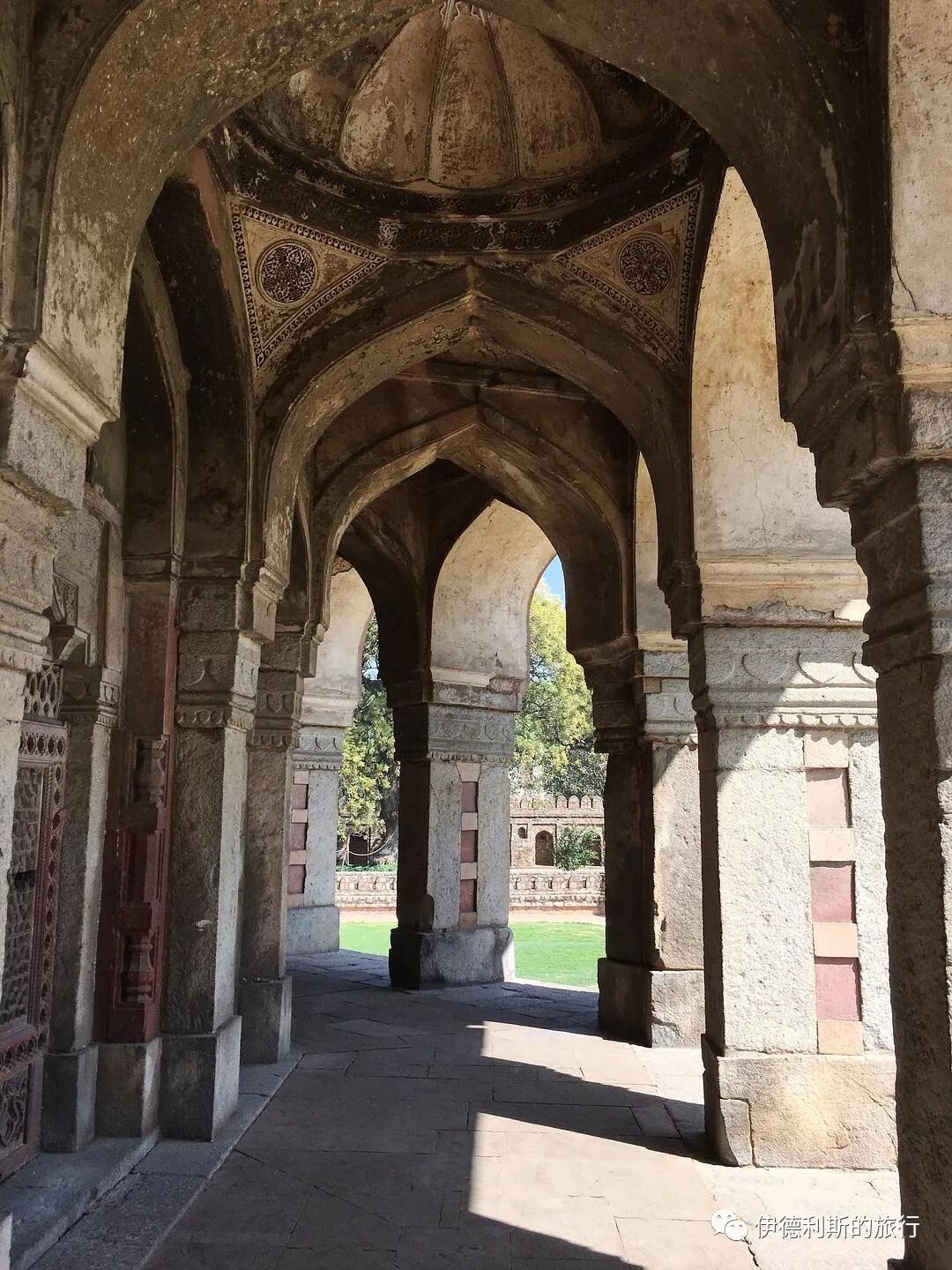
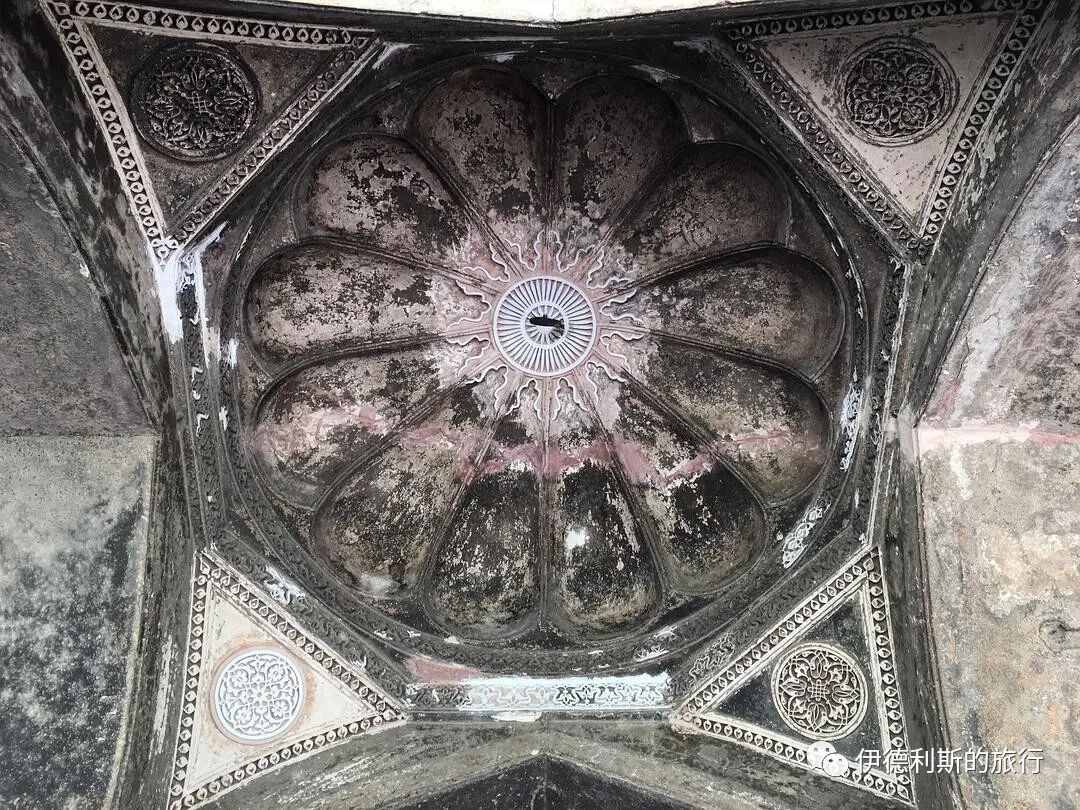
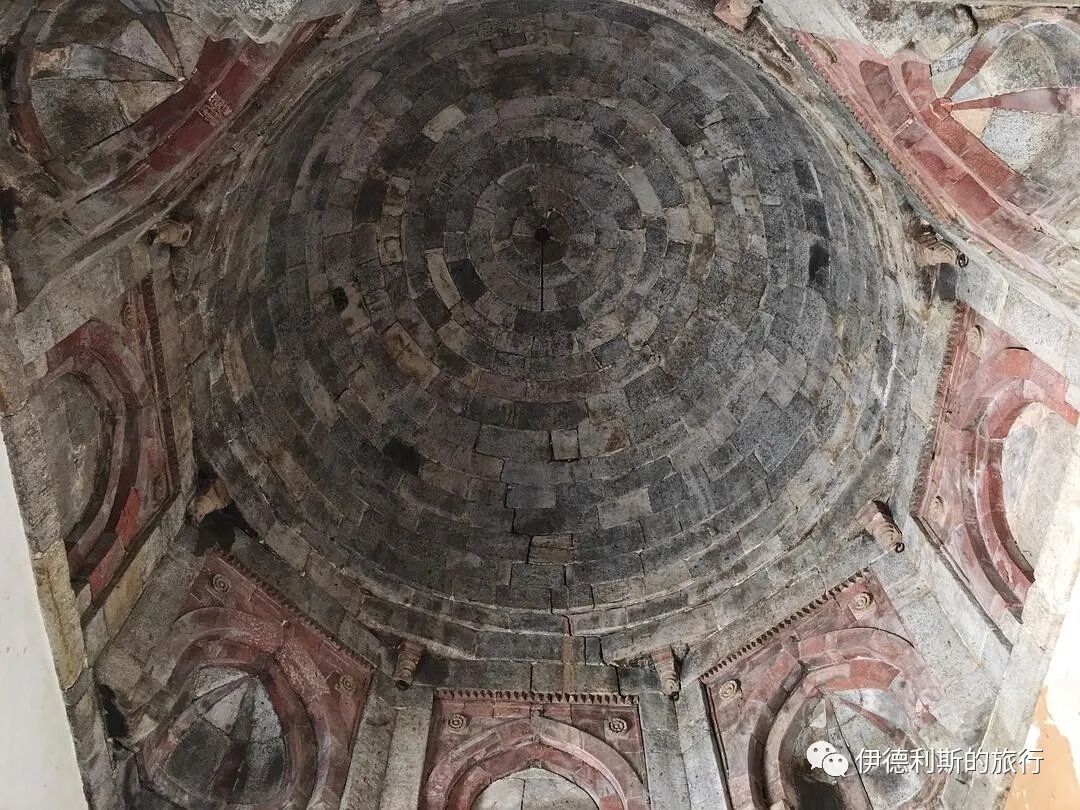
The dome of the outer corridor.
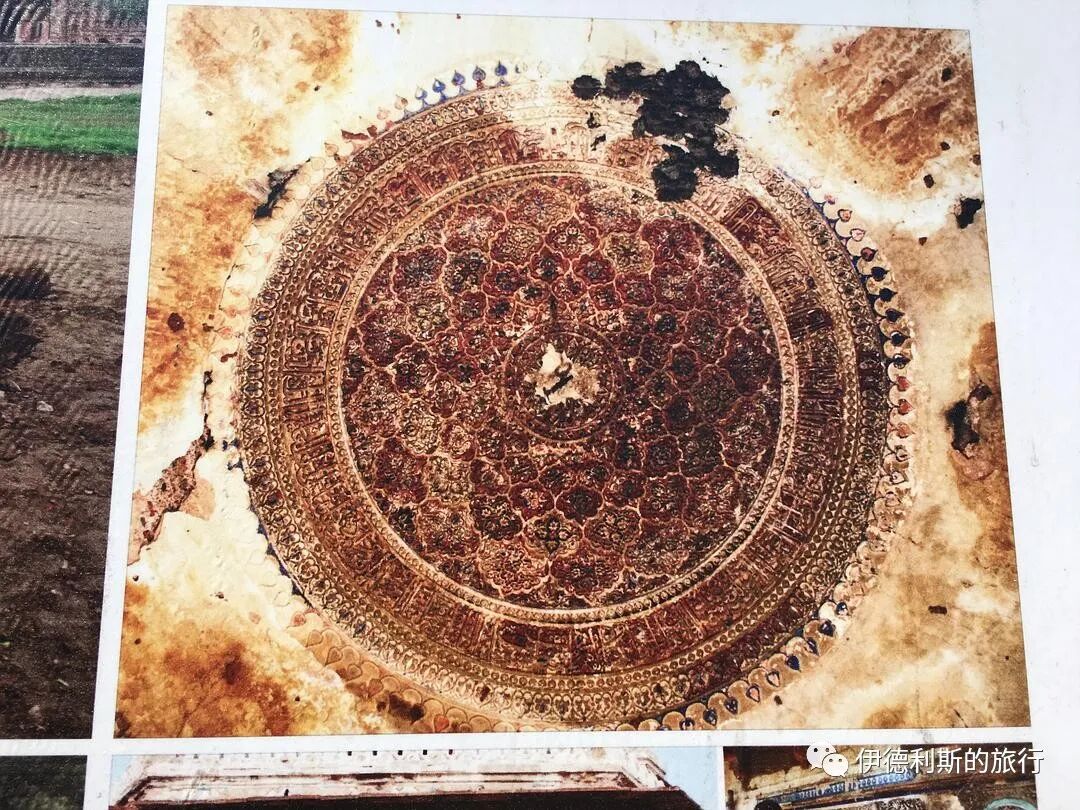
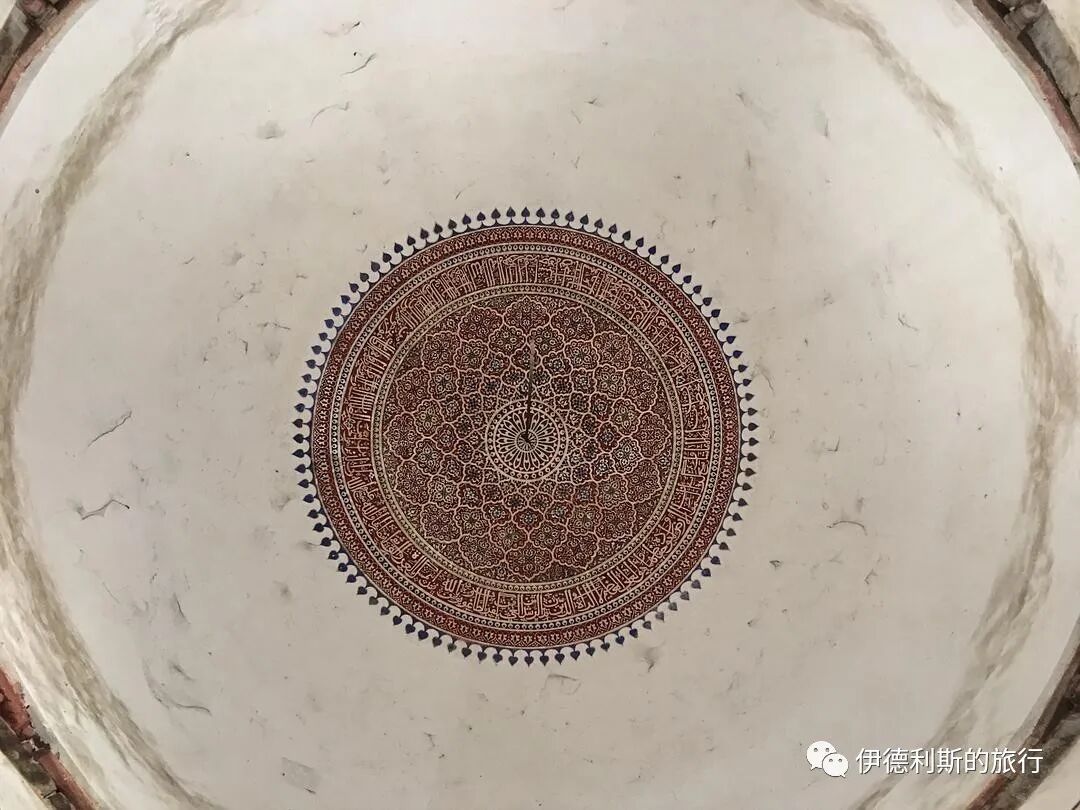
The dome inside.
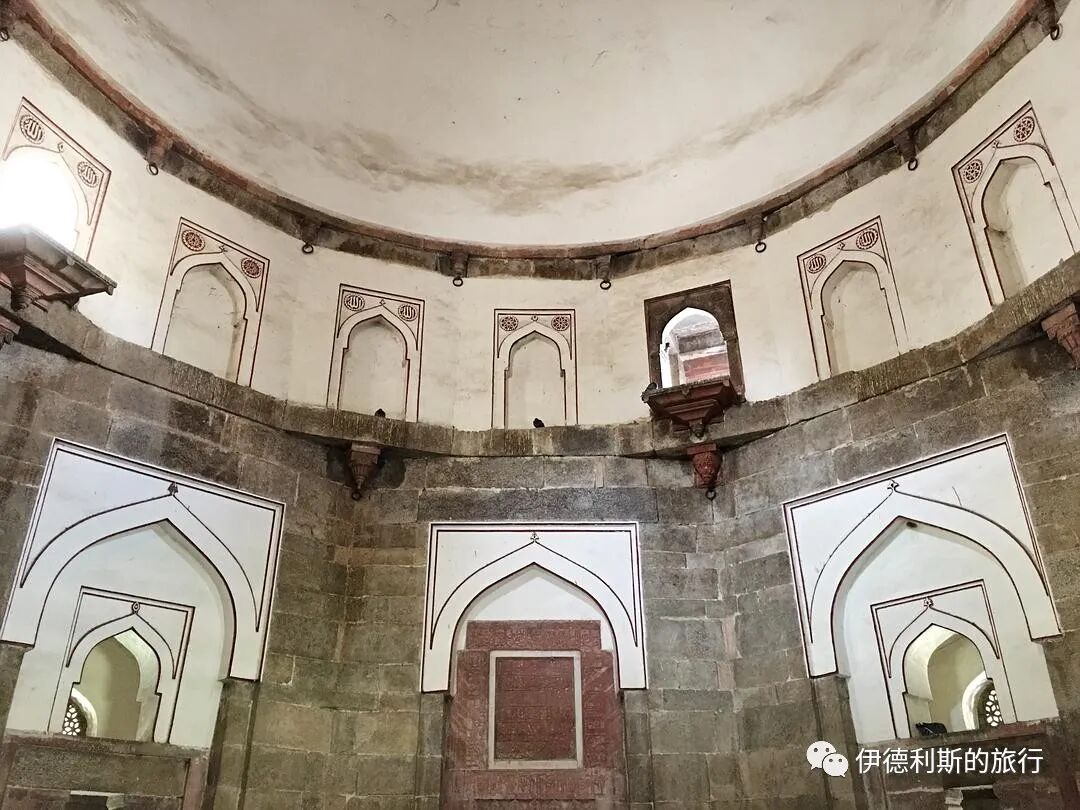
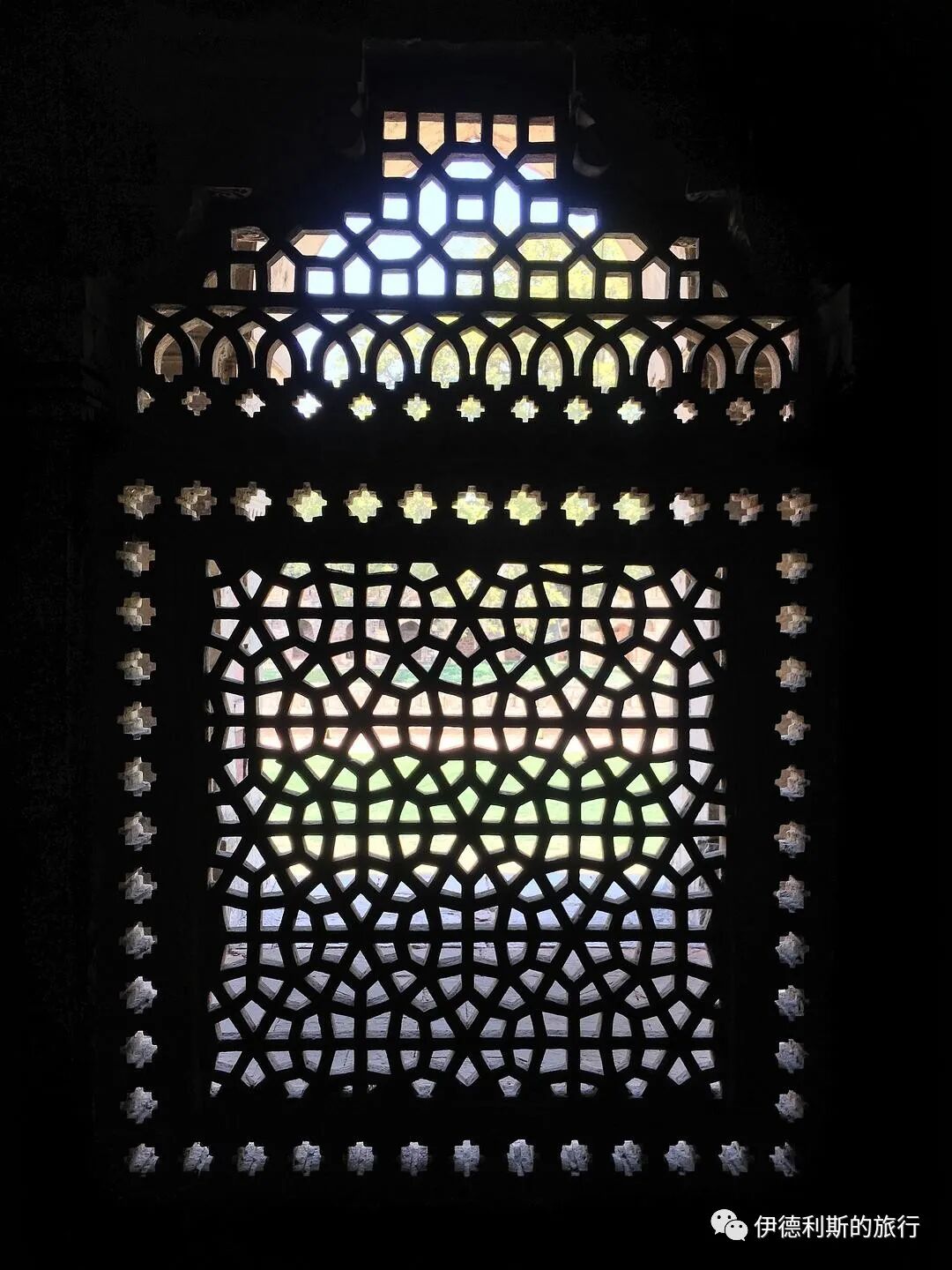
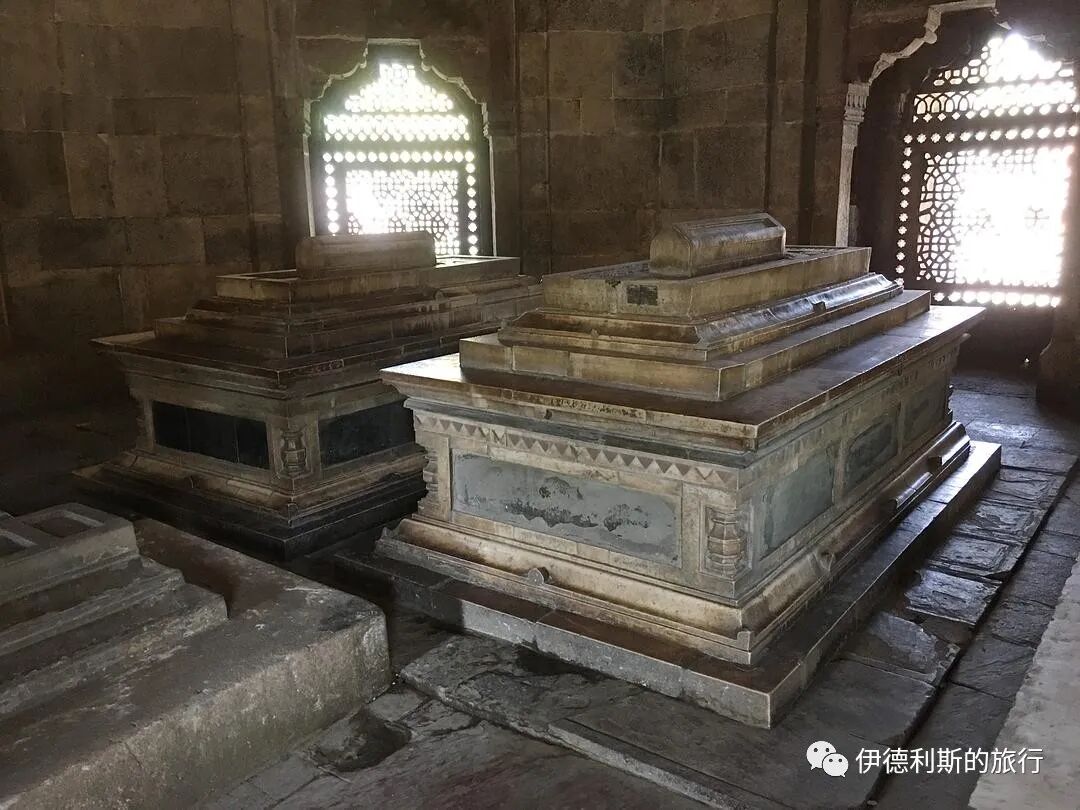
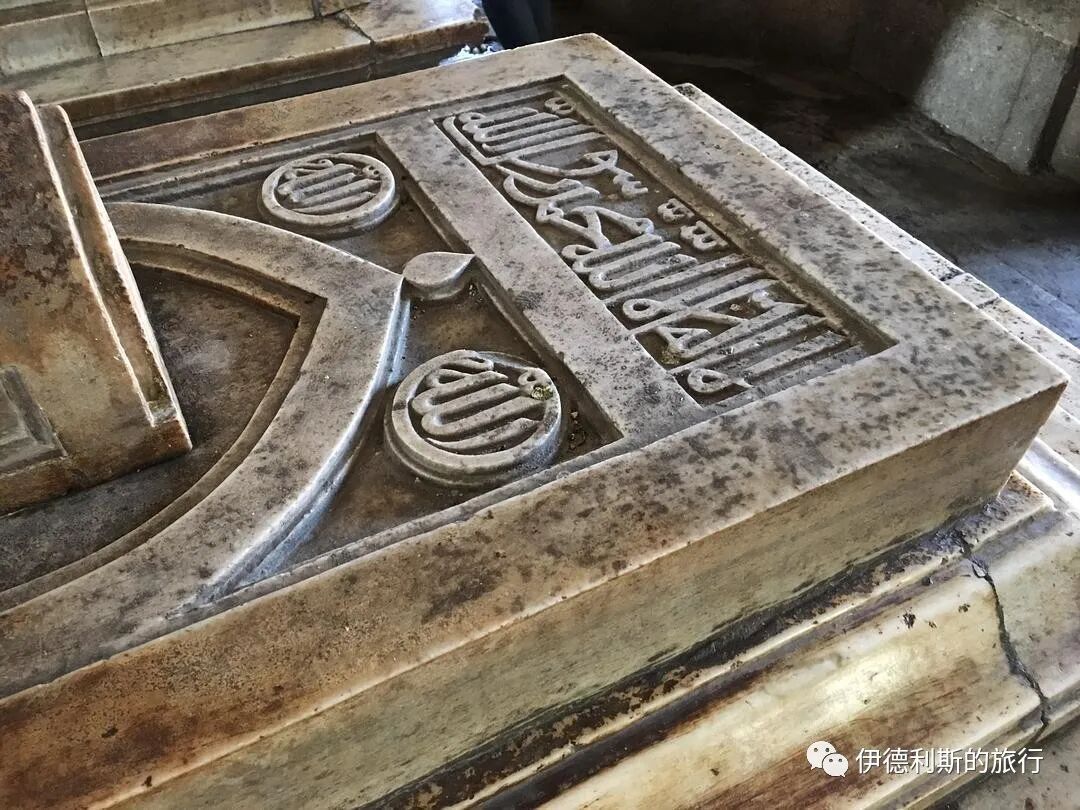
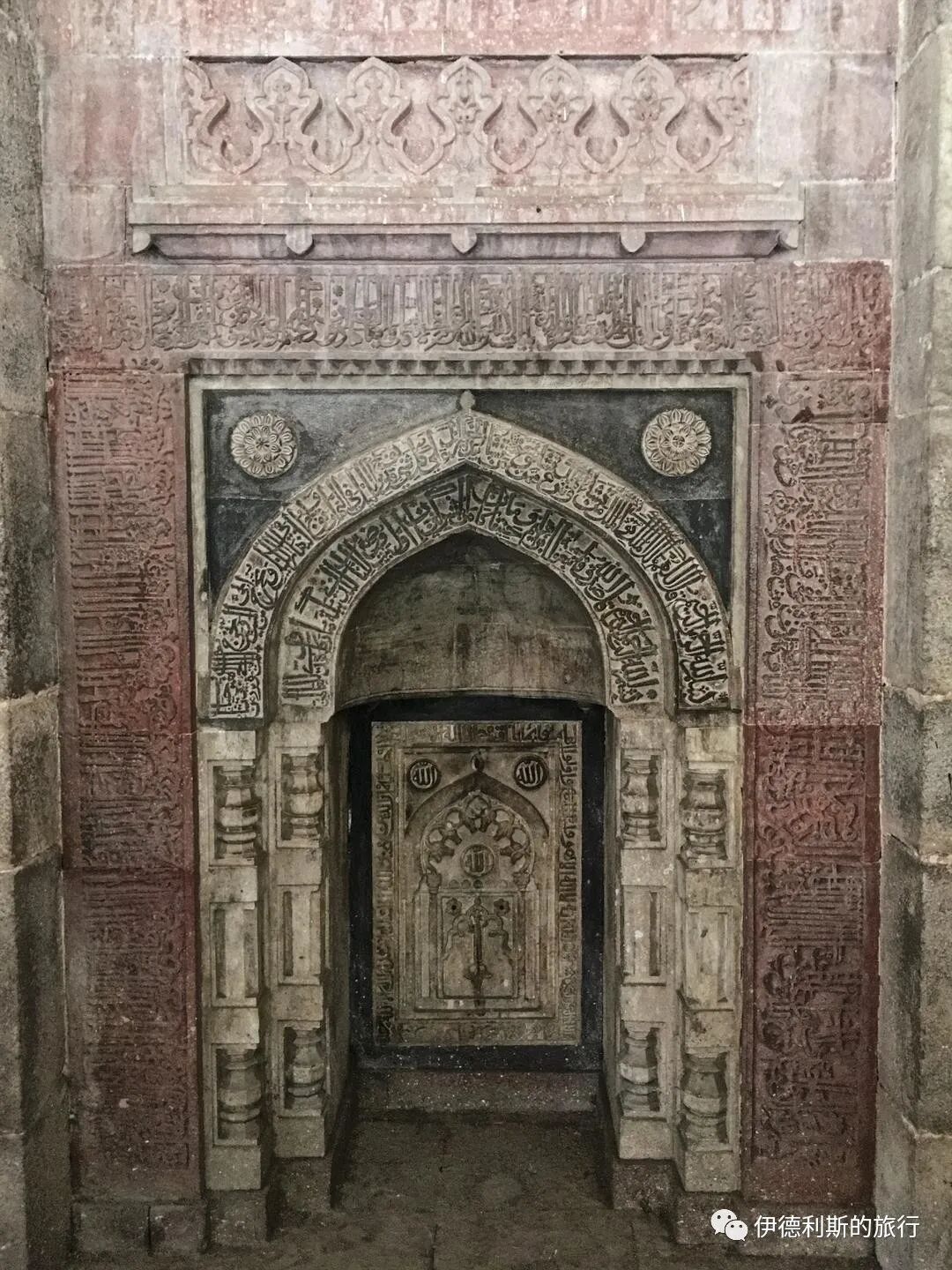
The mihrab of the tomb.
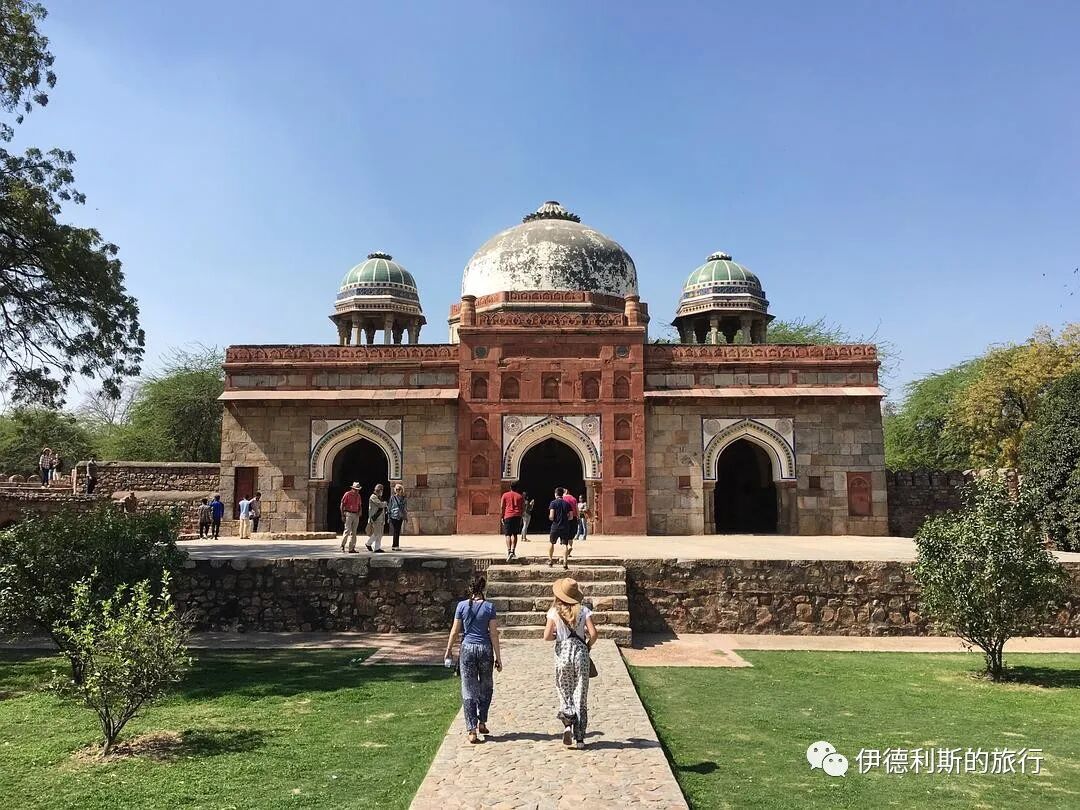
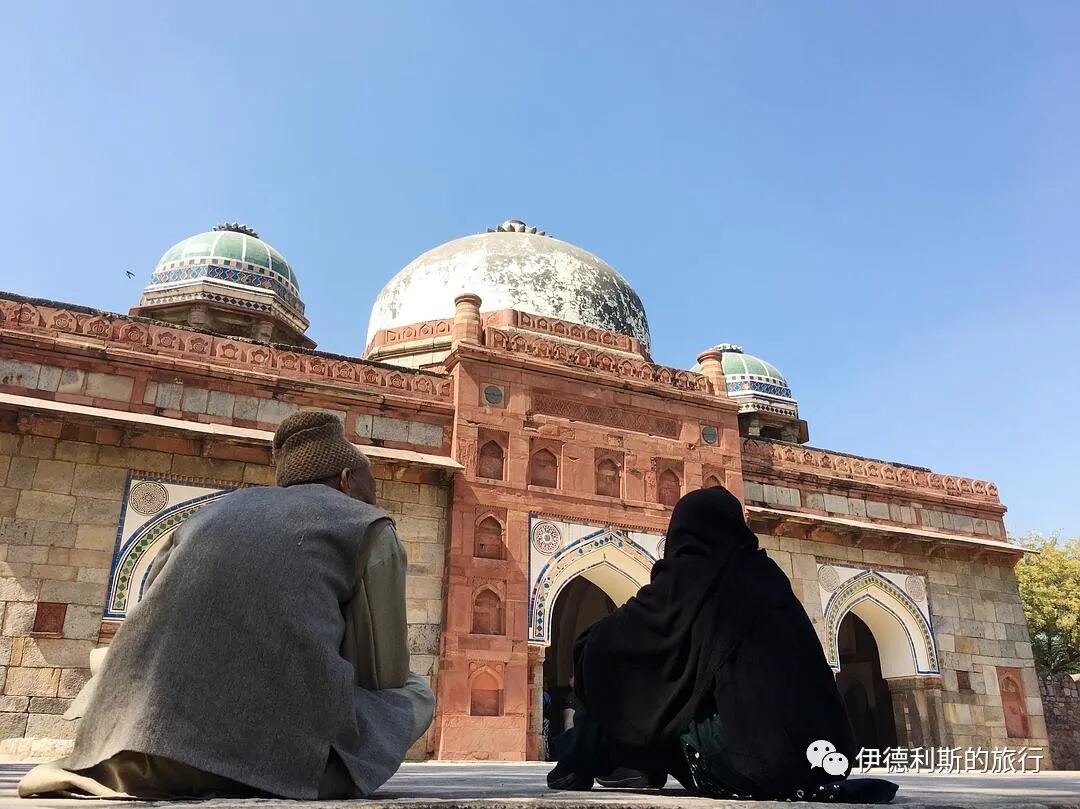
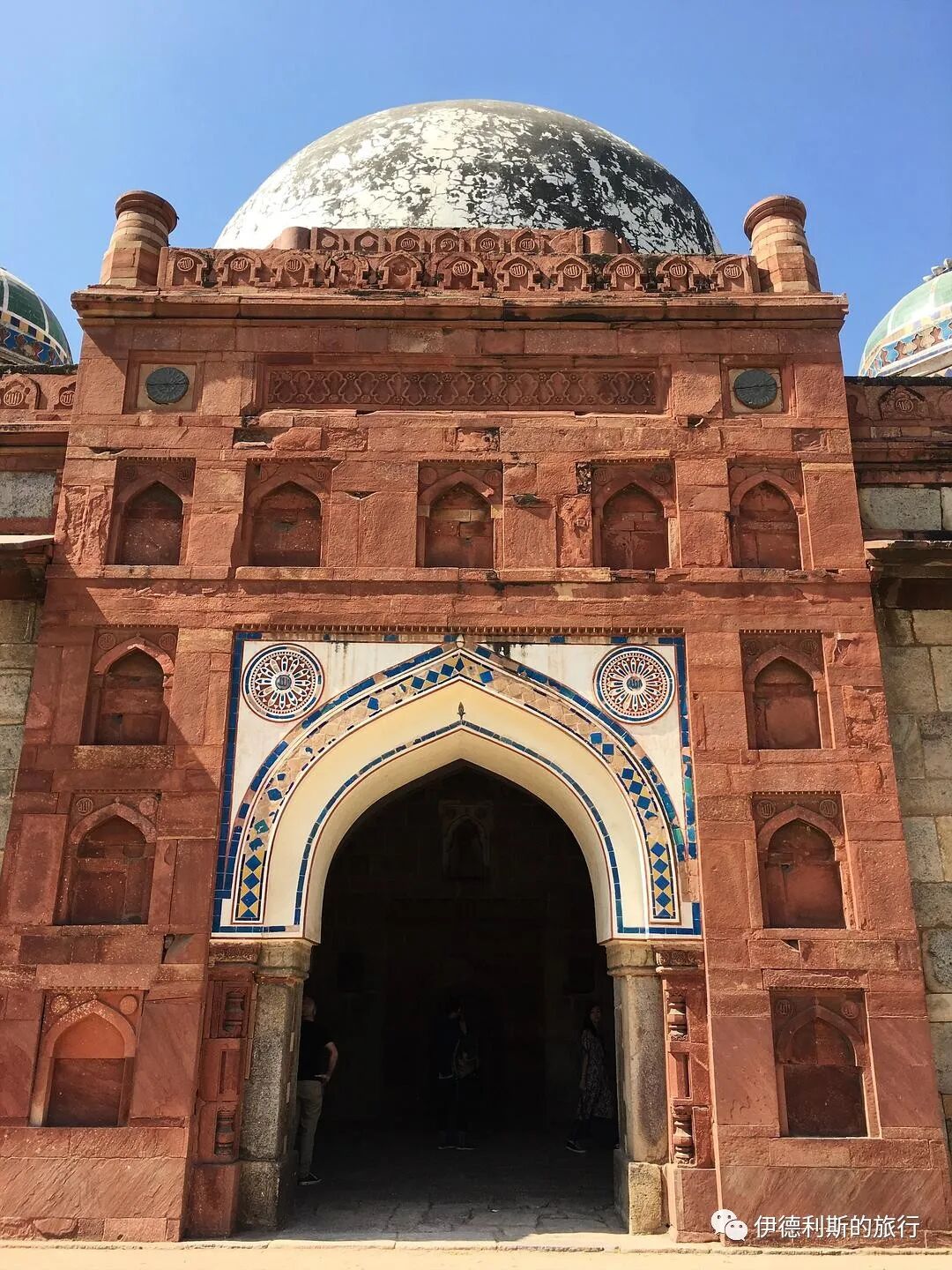
The Isa Khan Mosque was built during the same period as the tomb, and its biggest feature is the use of two pavilions instead of a dome. many details in the mosque were further developed in the later Humayun's Tomb.
Summary: Delhi's Sixth City — Mughal Beginnings and Muslim History is presented here as a firsthand travel account in clear English, beginning with this scene: Din Panah is known as the sixth historical city of Delhi. It was the first city built by the Mughal Empire in Delhi and served as the capital for the Afghan-led Sur Empire. The account keeps its focus on Delhi Travel, Mughal History, Muslim Heritage while preserving the names, places, food, and historical details from the Chinese source.
Din Panah is known as the sixth historical city of Delhi. It was the first city built by the Mughal Empire in Delhi and served as the capital for the Afghan-led Sur Empire. Most of the original site of Din Panah is now covered by New Delhi, which was built in the early 20th century. Very little of the outer city remains, but the inner city walls, known as the Old Fort (Purana Qila), are still well-preserved. Inside the Old Fort, you can find significant historical buildings like the royal mosque of the Sur Empire and the library where Humayun fell to his death. These are vital historical sites for understanding the early Mughal and Sur periods.
Table of Contents
I. The Origins of Din Panah
1. The First City of the Mughal Empire
2. The Capital of the Sur Empire
3. The Mughal Return to Din Panah
4. Losing Capital Status
5. Modern Changes to the Ancient City
II. Old Fort Gates
III. Qila-i-Kuhna Mosque: 1541
IV. Sher Mandal
V. Bathhouse Ruins
VI. Water Reservoir
VII. Outer City Gates
VIII. Khairul Manazil Mosque: 1561
IX. Sur Empire Architecture Around Din Panah
1. Salimgarh Fort: 1546
2. Tomb and Mosque of Isa Khan: 1547
I. The Origins of Din Panah
1. The First City of the Mughal Empire
In 1526, Babur, a Chagatai Mongol noble and descendant of Tamerlane, invaded India from Afghanistan. He defeated the 100,000-strong army and 100 war elephants of the Delhi Sultanate's Lodi Dynasty. The last Sultan, Ibrahim Lodi, was killed in battle. This ended the 320-year-old Delhi Sultanate and marked the official birth of the Mughal Empire.
Emperor Babur died in 1530, and his son Humayun succeeded him as the second emperor of the Mughal Empire. When Emperor Babur ruled India, he kept Agra as his capital, just as the Lodi dynasty of the Delhi Sultanate had done. After Humayun took the throne, he officially moved the capital to Delhi. In 1533, Humayun began building the Mughal capital of Din Panah in Delhi, which means 'Refuge of the Faith'. Just ten months later, the city walls, gates, and the inner city were all finished.
A 1590 miniature painting of Humayun in battle, held by the Los Angeles County Museum of Art.
2. The Capital of the Sur Empire
In 1539, Humayun led a large army east to Bengal, but he was defeated by Sher Shah, a general from the Afghan Pashtun Sur tribe. In 1540, Sher Shah followed up his victory and completely crushed Humayun. Humayun fled to Persia, and Sher Shah established the Suri Dynasty in Delhi.
After taking Delhi, Sher Shah immediately started building his own capital on the site of Din Panah and named the new inner city Shergarh.
There is still no reliable evidence to show if Sher Shah renovated the Din Panah city built by Humayun or rebuilt it entirely. Historical records about Sher Shah suggest he ordered the construction of the walls and inner city of Din Panah, and that the work was still unfinished when he died. However, the biography of Sher Shah's son, Salim Shah, records that in 1546, after finishing another Delhi fortress called Salimgarh, Salim Shah ordered new walls built around the castle Humayun had constructed. One theory is that Salim Shah renovated the walls of Din Panah or finished the final construction.
3. The Mughal Return to Din Panah
In 1554, the second Sultan of the Suri Dynasty, Islam Shah, died. His twelve-year-old son, Firuz Shah, took the throne but was killed immediately. The empire fell into chaos with lords fighting each other, and four different rulers took power in just one year. Meanwhile, with help from the Safavid dynasty of Persia, Humayun had established a base in Afghanistan and built up a strong army.
In 1555, the ruler of Lahore, Sikandar Shah, led an army to occupy Delhi. Taking advantage of Lahore's weak defenses, Humayun sent his commander Bairam Khan to lead an official military campaign into India with help from the Persian Safavid dynasty. On June 22, 1555, the Mughal army completely defeated the 80,000-horse army led by Sikandar Shah. On July 23, 1555, Humayun returned to the city of Din Panah in Delhi after fifteen years, and the Mughal Empire began ruling northern India once again.
An 18th-century portrait of Humayun, held by the Victoria and Albert Museum in London.
4. Losing Capital Status
On January 24, 1556, Humayun was reading in the library on the second floor of the city of Din Panah. When the muezzin called the adhan, Humayun hurried downstairs to prepare for namaz, but he tripped on the stairs and died. Humayun's thirteen-year-old son, Akbar, succeeded to the throne with Bairam Khan serving as regent.
After Humayun passed away, he was initially buried inside the palace at Din Panah. However, the Sur dynasty general Hemu soon traveled through the night from Bengal to quickly sweep across Mughal territory. On October 7, 1556, Hemu captured Delhi after a fierce battle, and Humayun's remains were dug up and transported to Punjab.
On November 5, 1556, Delhi was recaptured by Akbar and Bairam Khan, who had arrived from Punjab. Hemu was struck by an arrow and fell unconscious during the decisive battle, and he was killed shortly after. Akbar only stayed in Delhi for one month before returning to Punjab to continue fighting the Sur dynasty army.
In 1558, Akbar officially moved the capital from Din Panah to Agra, ending Din Panah's history as the capital of the Mughal Empire.
A portrait of Akbar in his youth.
5. Modern Changes to the Ancient City
The inner city of Din Panah, Shergarh, is now known as the Old Fort (Purana Qila). In the early 20th century, 1,900 people lived here. They were moved out in 1913, and the site became a historical heritage site.
During the 1947 partition of India and Pakistan, the Old Fort and the nearby Humayun's Tomb housed 200,000 Indian Muslims waiting to go to Pakistan. Trains transported them one after another until early 1948.
In the 1970s, the Old Fort began to be used as an open-air theater by the National School of Drama, and it has since become an important venue in Delhi for plays, concerts, and cultural events.
Today, it is a paid historical site open to all visitors.
A map of the attractions at the Old Fort.
II. Old Fort Gates
The walls of the Old Fort are 18 meters high and 1.5 kilometers long, with three gates. The west gate is the main entrance to the fort and the scenic area, called Bara Darwaza. The south gate is called Humayun Darwaza. One theory is that this gate was built by Humayun, while another is that it faces Humayun's Tomb. The north gate is called Talaqi Darwaza, also known as the Forbidden Gate.
All three gates are double-layered sandstone structures with two massive semi-circular towers on either side. The gates feature overhanging balconies and small pavilions (chhatris) on top, a style that would be repeated throughout later Mughal architecture.
The main gate was likely built by Humayun and stands 20 meters high.
Inside the main gate.
Outside the corner tower, with the moat below.
Inside the west city wall.
III. Qila-i-Kuhna Mosque: 1541
The Qila-i-Kuna mosque was built by Sher Shah in 1541 and served as the royal mosque for the Suri dynasty. This mosque with its semi-domed design is known as a key marker in the transition of Indian Islamic architecture from the Lodi style to the Mughal style, and it is the largest and most exquisite five-arched mosque in India.
The five-arched mosque is a style of mosque architecture that developed during the Sayyid and Lodi dynasties of the Delhi Sultanate. The main hall of the mosque is divided into five sections by five arches, and each section has a mihrab. The mihrab inside the central arch is the largest, topped by a Lodi-style semi-domed vault.
Main dome.
Small dome.
Mihrab.
Mihrab.
There are two octagonal towers on both sides of the main hall, featuring the style of the Tughlaq dynasty.
A small door specifically for royal family members to enter for namaz.
IV. Sher Mandal
Sher Mandal is an octagonal pavilion with a very simple style. This simple beauty comes from a return to Persian style, which is quite different from the architectural forms of the late Lodi dynasty of the Delhi Sultanate, and it is the earliest building of this style in Delhi.
Although it looks very much like an early Mughal building, it is actually recognized as part of a palace built by Sher Shah, which was later converted by Humayun into a library and observatory, and it is also known as the first observatory in Delhi.
On January 24, 1556, when the call to prayer sounded, Humayun hurried down the stairs from the second floor of Sher Mandal to prepare for namaz, but he slipped and fell to his death.
V. Bathhouse Ruins
Next to Sher Mandal are the ruins of a bathhouse (hammam), likely built in the late 16th century. Steps lead into a room with decorative niches, and one side has a channel for flowing water.
VI. Water Reservoir
The water reservoir (baoli) used for storing water in the city.
VII. Outer City Gates
After exiting through the main gate of the Old Fort, you can see the historical ruins of the outer city of Dinpanah. Among the seven cities of Delhi, Dinpanah is the one we know the least about. Some early descriptions suggest that Dinpanah was an extension to the south of Ferozabad, the fifth city of Delhi.
Only two gates remain of the outer city walls of Dinpanah. The north gate of the outer city (Khuni Darwaza) is located near Ferozabad. It is also called the "Bloody Gate" because Mughal princes were shot there in 1857.
The south gate of the outer city (Lal Darwaza) is right next to the main gate of the Old Fort. Outside the gate is a wide road with the ruins of shops on both sides.
The relationship between the outer city walls of Dinpanah and the Old Fort walls is still unclear. However, judging by the moat outside the Old Fort, the outer walls were likely not connected to the Old Fort walls. In the 19th century, the archaeologist Cunningham speculated that the walls of Dinpanah should have covered a much larger area than these two gates suggest, possibly reaching over 14 kilometers. However, there was not enough archaeological evidence at the time to prove this.
Unfortunately, the south gate of the outer city was under renovation when I visited, so I could only look at it from a distance.
The ruins of the shops on both sides of the road outside the gate.
VIII. Khairul Manazil Mosque: 1561
Right next to the south gate of Dinpanah is the Khairul Manazil mosque, built in 1561 by Maham Anga, the wet nurse of the Mughal Emperor Akbar the Great. Between 1560 and 1562, she was the de facto regent of the Mughal Empire.
The gate of the mosque is a typical Mughal-style building, while the main hall with its semi-domed roof is in the Delhi Sultanate style. This is a characteristic of the transitional period in the early Mughal dynasty.
There is a water pool in the center of the courtyard, surrounded by a two-story madrasa.
The main gate.
Looking inside from the main gate.
The mosque is on the left and the madrasa is on the right.
The madrasa is on the left and the main gate is on the right.
The main hall and the water pool in the courtyard.
Inside the main hall.
Mihrab.
The patterns on the mihrab.
IX. Sur Empire Architecture Around Din Panah
On the north and south sides of Dinpanah, there are two very important buildings from the Sur dynasty. To the north is Salimgarh Fort, and to the south is the tomb and mosque of Isa Khan.
1. Salimgarh Fort: 1546
Salimgarh Fort is located on the north side of the Red Fort in Delhi. It was built in 1546 by Salim Shah, the son of the Sur dynasty ruler Sher Shah. People say in 1555, Humayun stayed here for three days before recapturing Delhi. In 1639, when the Mughal Emperor Shahjahan was building the seventh city of Delhi, Shahjahanabad, he also camped here.
The place turned dark after the Mughal Emperor Aurangzeb turned it into a prison. Aurangzeb imprisoned his brother Murad Baksh here, and it is said he also held his favorite eldest daughter, Zebunnisa, captive here for twenty-one years.
In 1857, an anti-British uprising broke out in India, eventually leading to the fall of the Mughals. From August to early September 1857, the last Mughal Emperor, Bahadur Shah Zafar, held strategic meetings at Salimgarh Fort and announced that the Mughal Emperor would lead the Indian people in their resistance against the British. He called on all Indian people, regardless of caste or faith, to join the resistance together.
But by mid-September, the British army began to surround the fort. The emperor's men urged him to retreat to a safe place, but the emperor refused. The emperor ordered his army to evacuate the fort, while he went to the tomb of Humayun. Therefore, when the British army entered the fort, they only encountered one sentry. On September 20, the emperor was arrested by the British army at Humayun's Tomb, marking the end of the Mughal Empire, which had lasted for over three hundred years.
After the uprising ended, the fort was used as an artillery camp for the British army and later became a prison. Between 1945 and 1947, leading up to India's independence, many members of the Indian National Army (INA) were tortured to death here, and many more disappeared forever. Because of this, Salimgarh Fort is now also called Swatantrata Senani Smarak to commemorate the prisoners who were treated cruelly within the fort.
There are many legends about ghosts haunting Salimgarh Fort. The most famous ghost is the Mughal Emperor Aurangzeb's daughter, Zebunnisa. Legend says she wears a black veil and sings poems she wrote herself under the moonlight. Additionally, some people claim they can hear the groans of the Indian National Army soldiers who were tortured to death here at night.
In 2007, this place became a UNESCO World Heritage site.
Salimgarh Fort in 1866, drawn by Alfred Frederick Pollock Harcourt.
The mosque by the city wall.
Inside the mosque.
The other side of the city wall.
Some scattered architectural pieces inside the fortress.
2. Tomb and Mosque of Isa Khan: 1547
Isa Khan was a nobleman of the Sur Empire, coming from the Niazi tribe of the Pashtuns in Afghanistan. Isa Khan died in 1548. Before he passed away, he built his own tomb and mosque in the southern suburbs of Dinpanah, near the shrine of Nizamuddin. Later, this place also became the site of Humayun's tomb.
As a prominent figure in the Sur Empire, Isa Khan was one of the last nobles of the dynasty to be buried in an Afghan-style tomb.
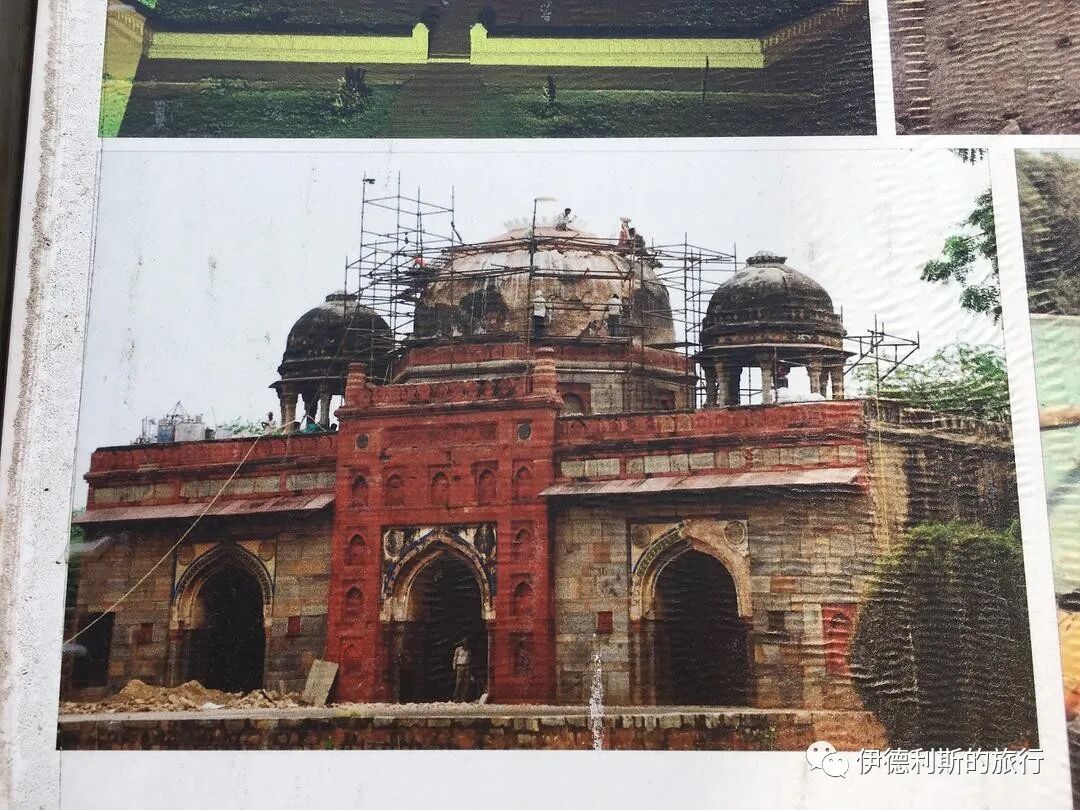
On August 5, 2011, the oldest sunken garden in India was discovered during the restoration of the tomb. This is considered the first Indian-style sunken garden attached to a tomb in India. This design was later further developed at Akbar's Tomb and the Taj Mahal.
The dome of the outer corridor.
The dome inside.
The mihrab of the tomb.
The Isa Khan Mosque was built during the same period as the tomb, and its biggest feature is the use of two pavilions instead of a dome. many details in the mosque were further developed in the later Humayun's Tomb.
