

Mughal History
Muslim History Guide Delhi: Mughal Capital, Old Mosques and Islamic Heritage
Articles • yusuf908 posted the article • 0 comments • 149 views • 2026-05-23 23:22
Summary: Delhi's Seventh City — Mughal Capital and Muslim History is presented here as a firsthand travel account in clear English, beginning with this scene: In my last article, The Sixth City of Delhi: The Birth of the Mughal Empire, I wrote about how Humayun, the second Mughal emperor, fell to his death from his library in the sixth city of Delhi, Dinpanah, in 1556. The account keeps its focus on Delhi Travel, Mughal History, Muslim Heritage while preserving the names, places, food, and historical details from the Chinese source.
In my last article, The Sixth City of Delhi: The Birth of the Mughal Empire, I wrote about how Humayun, the second Mughal emperor, fell to his death from his library in the sixth city of Delhi, Dinpanah, in 1556. His son, Emperor Akbar, moved the Mughal capital to Agra in 1558, and Delhi lost its status as the capital.
In 1628, Shah Jahan became the fifth emperor of the Mughal Empire. Under his rule, Mughal architectural aesthetics reached a new height, and this period is widely recognized as the golden age of Mughal architecture. Besides building the Taj Mahal, Shah Jahan built the seventh city of Delhi between 1639 and 1648, naming it Shahjahanabad after himself. Shah Jahan made Shahjahanabad the capital of the Mughal Empire, aiming to show the grandeur and power of the empire.
Shahjahanabad is now known as Old Delhi and still keeps many historical sites and traditional neighborhoods. The most important site inside the city, the Red Fort, was added to the UNESCO World Heritage list in 2007.
The layout of Shahjahanabad was inspired by the ancient Persian city of Isfahan and inherited urban planning ideas from the Agra Fort and Fatehpur Sikri, which were built by the previous Mughal emperor, Akbar. The city has an irregular shape, with the eastern wall built along the course of the Yamuna River. The Yamuna River later changed its course and moved away from the walls, and the original riverbed is now the Delhi Inner Ring Road.
The city has two main roads: Chandni Chowk running east-west and Faiz Bazaar running north-south, with major commercial areas on both sides of the streets. The Red Fort, where the Mughal royal family lived, is located at the junction of these two main roads.
1858
1914
Table of Contents
1. Red Fort: 1639-1648
1. Lahore Gate
2. Chhatta Chowk (market)
3. Naubat Khana (drum house)
4. Diwan-i-Aam (public audience hall)
5. Rang Mahal (palace of the empresses)
6. Khas Mahal (emperor's private palace)
7. Diwan-i-Khas (private audience hall)
8. Hammam-e-Lal Qila (bathhouse)
9. Pearl Mosque (Moti Masjid)
10. King's Tower (Shah Burj)
11. Life-Giving Garden (Hayat Bakhsh Bagh)
2. Jama Mosque: 1650-1656
3. Fatehpuri Mosque: 1650
4. Golden Mosque (Sunehri Masjid): 1751
5. Great Mosque (Kalan Masjid): 1387
6. Hauzwali Mosque: 15th century
1. Red Fort: 1639-1648
Shah Jahan decided to move the capital from Agra back to Delhi in 1638. On May 12, 1639, he ordered the construction of the Red Fort. The designer was Ustad Ahmad Lahauri, the architect who built the Taj Mahal.
On the north side of the Red Fort is the Salimgarh Fort, built by the Sur dynasty in 1546 (I introduced this in my previous article, 'The Sixth City of Delhi: The Birth of the Mughal Empire'). The Red Fort was designed to connect to Salimgarh Fort via a bridge, joining the two castles together.
In 1857, the last Mughal emperor, Bahadur Shah II, left the Red Fort and was arrested by the British army. He was tried at the Red Fort in 1858 and exiled to Yangon, marking the end of the Mughal Empire. Afterward, the Red Fort was used as a British military barracks. Most of the buildings were demolished. Only the marble structures in the far east survived because they were repurposed as barracks, offices, dormitories, and canteens.
After India's independence, the Red Fort continued to be used as an Indian Army barracks until 2003, when the Archaeological Survey of India was finally authorized to begin restoration. In 2009, the Archaeological Survey of India developed a comprehensive protection and management plan for the Red Fort under the direction of the Supreme Court.
The Red Fort viewed from east to west, painted in 1785.
The Red Fort viewed from east to west, painted by Ghulam Ali Khan between 1852 and 1854.
1. Lahore Gate
The Lahore Gate is the west gate of the Red Fort. It is named for facing the city of Lahore. During the reign of the sixth Mughal emperor, Aurangzeb (reigned 1658-1707), a barbican was added to the outside of the gate. Since 1947, the Prime Minister of India has stood at the Lahore Gate to deliver a speech every Indian Independence Day.
Painted by Ghulam Ali Khan between 1852 and 1854.
2. Chhatta Chowk (market)
After entering the Lahore Gate, you find a market called Chhatta Chowk. During the Mughal era, this was where silk and jewelry were sold to members of the royal family.
Painted by Ghulam Ali Khan between 1852 and 1854.
(Optional) Image description
3. Naubat Khana (drum house)
After walking through the Chhatta Chowk market, you reach the outer courtyard of the Red Fort. The building in the center of the outer courtyard is called the Naubat Khana, which serves as the main gate to the inner court. Naubat Khana means 'drum house.' During the Mughal era, ceremonial music was played here five times a day, and everyone except members of the royal family had to dismount from their horses when they reached this point. After 1857, the British army destroyed the arcades on both sides of the Naubat Khana and the central pool, leaving only the central building.
Photographed in 1858 by British army officer Robert Christopher Tytler and his wife Harriet.
4. Diwan-i-Aam (public audience hall)
After passing through the Naubat Khana, you enter the inner courtyard of the Red Fort, where the Diwan-i-Aam stands directly in front of you. Diwan-i-Aam means 'Hall of Public Audience.' It was the place where the Mughal emperor met with the public to hear their concerns.
In the center of the hall is the throne where the emperor sat. The marble steps below the throne were where the prime minister (wazir) received petitions from the public.
The door behind the throne, painted by Ghulam Ali Khan between 1852 and 1854.
5. Rang Mahal (palace of the empresses)
After entering the Diwan-i-Aam, you reach the harem section of the Red Fort. Rang Mahal means 'Palace of Colors.' It was the living quarters for the concubines of the Mughal emperor.
Painted by Ghulam Ali Khan between 1852 and 1854.
A shallow canal called the Stream of Paradise (Nahr-i-Bihist) flows into the marble pool in front of the Rang Mahal. During the hot summer, the women of the Mughal royal family would stay in the basement of the Diwan-i-Aam to escape the heat.
Painted by Ghulam Ali Khan between 1852 and 1854.
6. Khas Mahal (emperor's private palace)
To the north of the Rang Mahal is the Khass Mahal, which was the sleeping quarters of the Mughal emperor. The Rang Mahal was built of white marble. Its walls were originally inlaid with various jewels and the ceiling was gilded, but these features have not been preserved.
Painted by Sir Thomas Theophilus Metcalfe in 1843.
The last Mughal emperor, Bahadur Shah II, ascends the throne in the Khas Mahal, painted by Ghulam Ali Khan between 1837 and 1838.
7. Hall of Private Audience (Diwan-i-Khas)
North of the Khas Mahal is the Hall of Private Audience (Diwan-i-Khas), where the Mughal emperor met with courtiers and state guests. The Hall of Private Audience (Diwan-i-Khas) means "private reception room." It is built of white marble and was once inlaid with various jewels, featuring the exquisite Peacock Throne in the center. The hall once had a ceiling inlaid with gold and silver, but these were later removed. The current ceiling was installed in 1911.
Outside the hall, there used to be red awnings, and the arches below were inscribed with verses by the famous Sufi master Amir Khusrow:
If there is a paradise on earth,
It is this, it is this, it is this.
Painted by Ghulam 'Ali Khan in 1817.
Painted by Ghulam Ali Khan between 1852 and 1854.
The Peacock Throne in 1850.
8. Hammam-e-Lal Qila (bathhouse)
North of the Hall of Private Audience (Diwan-i-Khas) is the Red Fort Bathhouse (Hammam-e-Lal Qila), which was used by the Mughal royal family. The Red Fort Bathhouse (Hammam-e-Lal Qila) is a Turkish-style bath consisting of three sections: a children's bath, a dressing room, and a hot bath. Legend has it that the water flowing from the taps at that time was mixed with rose perfume.
Painted by Ghulam Ali Khan between 1852 and 1854.
9. Pearl Mosque (Moti Masjid)
The Pearl Mosque (Moti Masjid) is west of the bathhouse. It was built by the sixth Mughal emperor, Aurangzeb, between 1659 and 1660 for his second wife, Nawab Bai. Pearl (Moti) means "pearl." It is built of white marble, and its three domes were originally covered with gilded copper plates, which were lost after 1857.
Painted by Ghulam Ali Khan between 1852 and 1854.
Painted by Vasily Vereshchagin in the late 1880s.
10. King's Tower (Shah Burj)
The northernmost part of the harem is a white marble pavilion built during the Aurangzeb period. Behind the pavilion is the Shahi Burj, the northeast corner tower of the Red Fort, which means "Imperial Tower." Inside the tower is a hydraulic system that carries water from outside the Red Fort into its gardens and buildings.
Painted by Sir Thomas Metcalfe in 1843.
11. Life-Giving Garden (Hayat Bakhsh Bagh)
In the northwest part of the harem is the royal water garden Hayat Bakhsh Bagh, which means 'Life-Giving Garden'. Most of the garden's buildings were destroyed after 1857, and only three survive today.
At the center of the garden is the red sandstone building Zafar Mahal, built in 1842 by the last Mughal emperor, Bahadur Shah II. The building sits in a pool and was originally connected to the shore by a red sandstone bridge, but it was destroyed after 1857. After 1857, the British army used this area as a swimming pool.
Painted by Ghulam Ali Khan between 1852 and 1854.
To the north and south of the garden are two white marble pavilions called Sawan and Bhadon, named after the months of July and August in the Indian rainy season, as the ladies of the Mughal palace loved to visit the garden during these two months. The pavilions have wall niches that held vases with golden flowers during the day and small oil lamps at night.
To the west of Hayat Bakhsh Bagh, there was originally another water garden called Mehtab Bagh, meaning 'Moon Garden,' but after 1857, the site was turned into a British military barracks, and now only ruins remain.
2. Jama Mosque: 1650-1656
The Jama Masjid mosque is located southwest of the Red Fort; it was built between 1650 and 1656 by order of Shah Jahan and served as the royal mosque of the Mughal Empire.
The mosque was built by more than 5,000 workers under the leadership of Shah Jahan's vizier (wazir) Saadullah Khan, costing over 1 million rupees. The mosque stands on a platform more than 9 meters above the ground and is made of red sandstone and marble, featuring a main hall connected by colonnades, two 40-meter-high minarets, and three gates. The east gate was reserved for the Mughal royal family and had a path that connected directly to the Delhi Gate of the Red Fort.
After 1857, the British seized the Jama Masjid mosque and stationed troops inside. They originally wanted to demolish the mosque, but they failed due to strong opposition, though the madrasa (Islamic school) on the south side of the mosque was destroyed as a result.
The mihrab in the center of the main hall indicates the direction of prayer toward Mecca:
Besides the main mihrab in the center, there is a smaller mihrab on each side.
During Jumu'ah, the imam stands on this stone platform to deliver the khutbah.
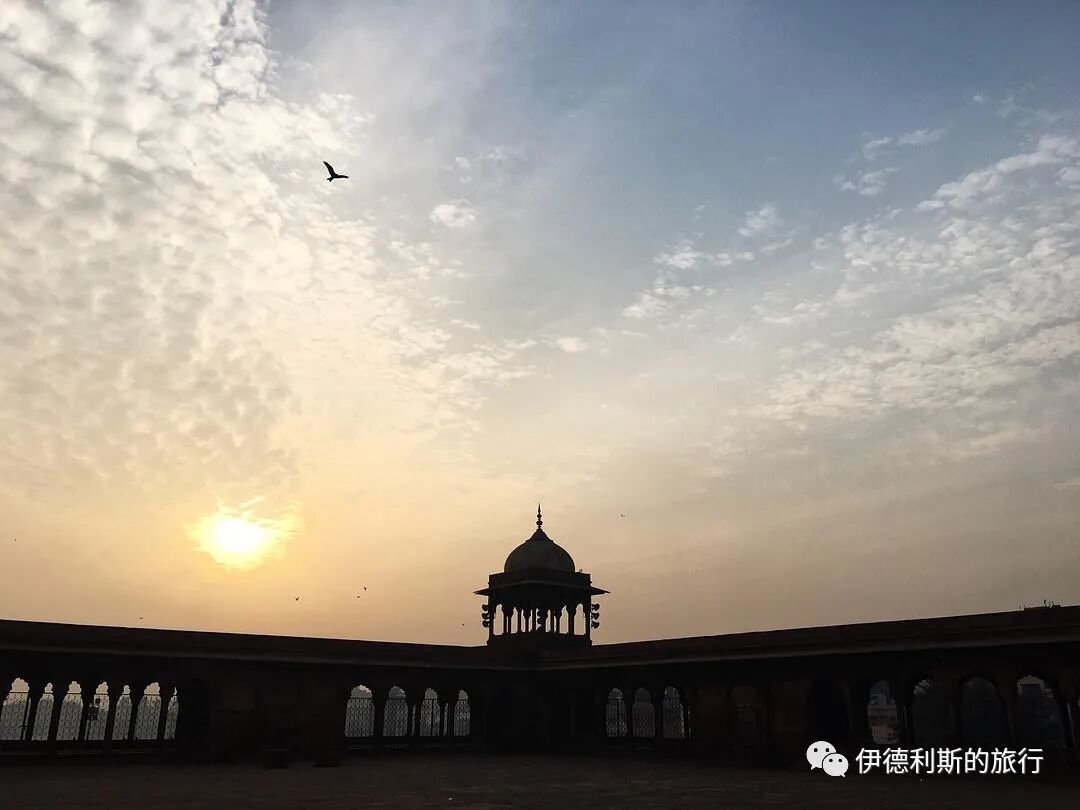
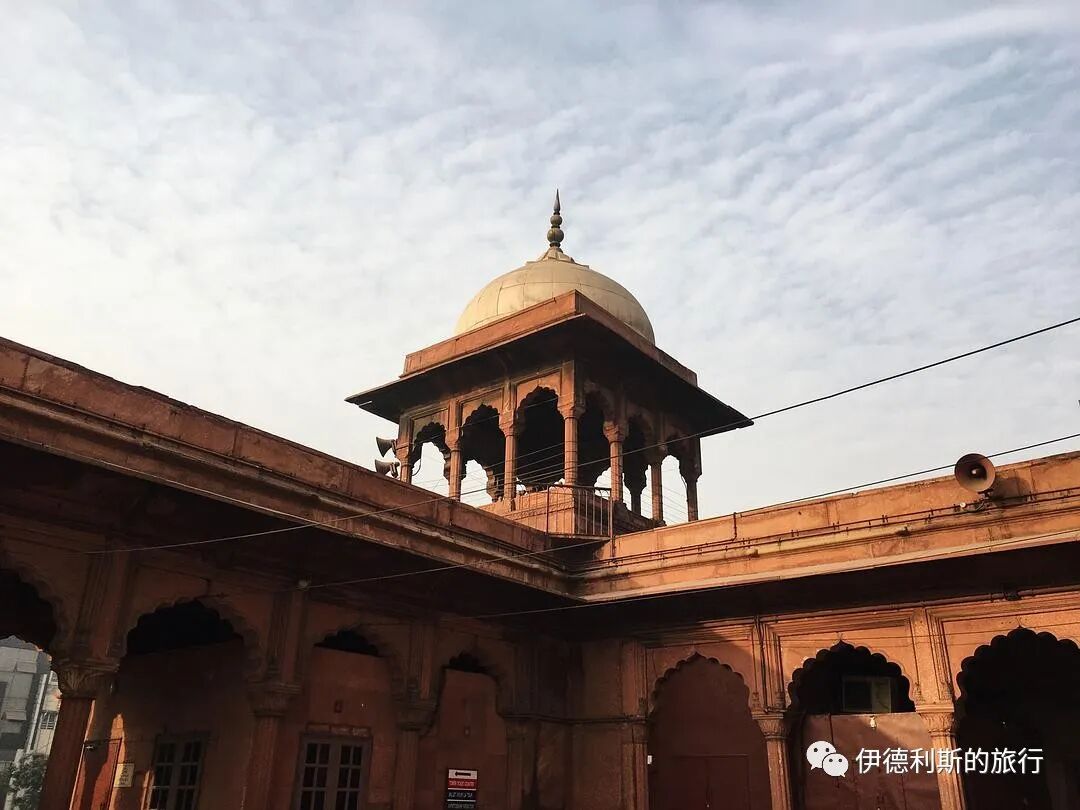
There is a tower at each of the four corners of the colonnade.
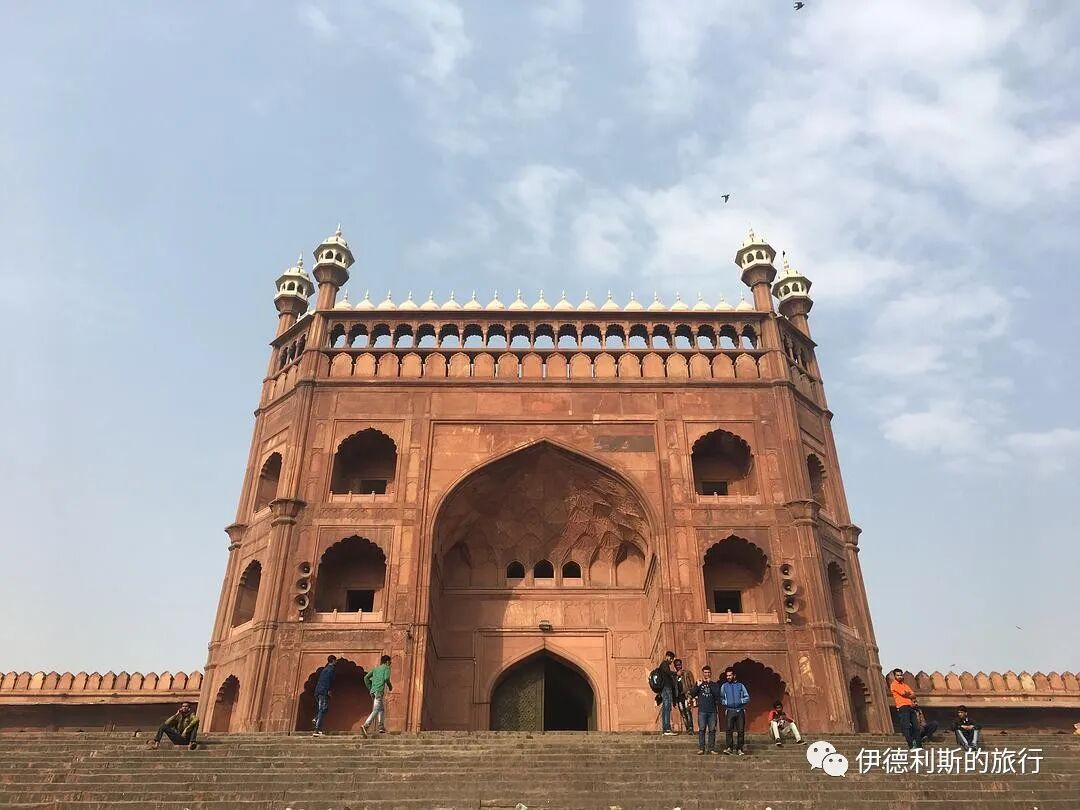
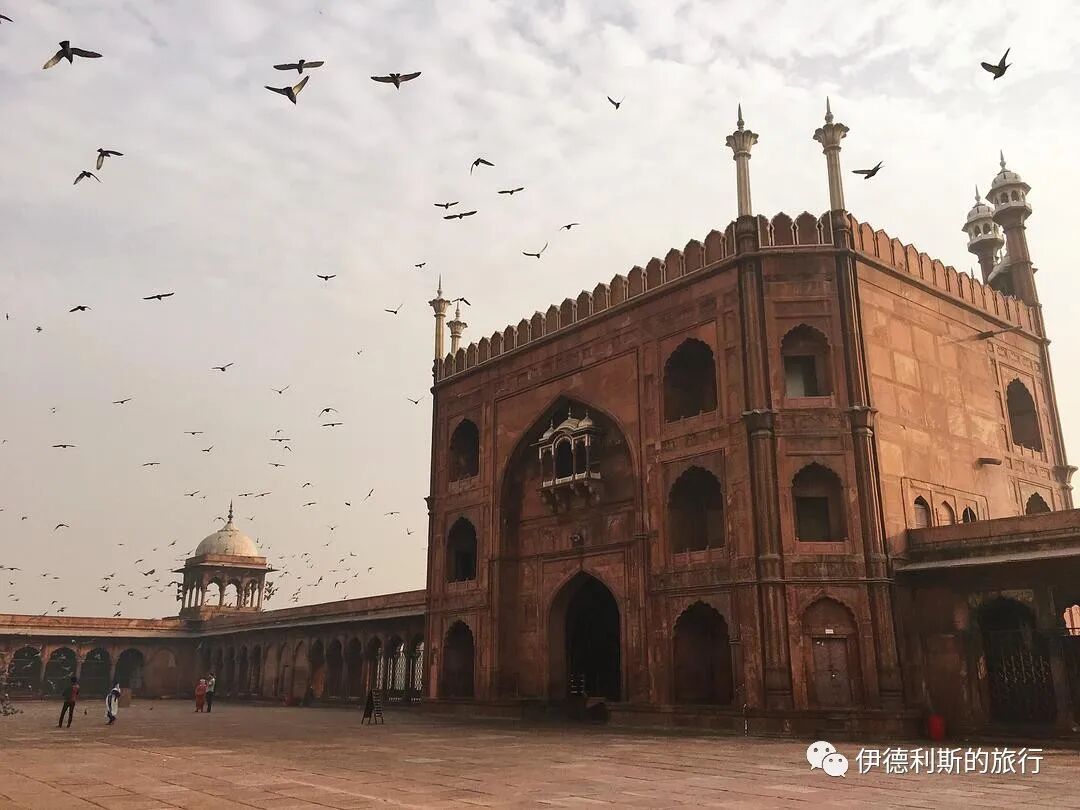
The east gate is the main entrance:
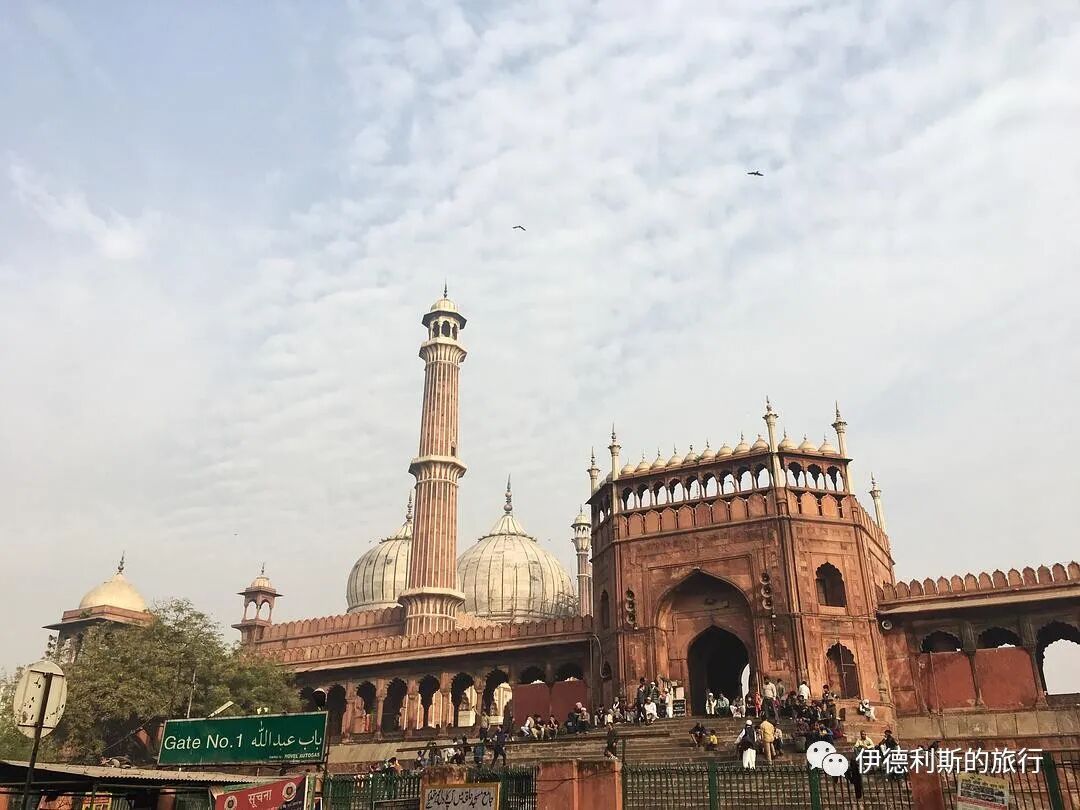
South Gate
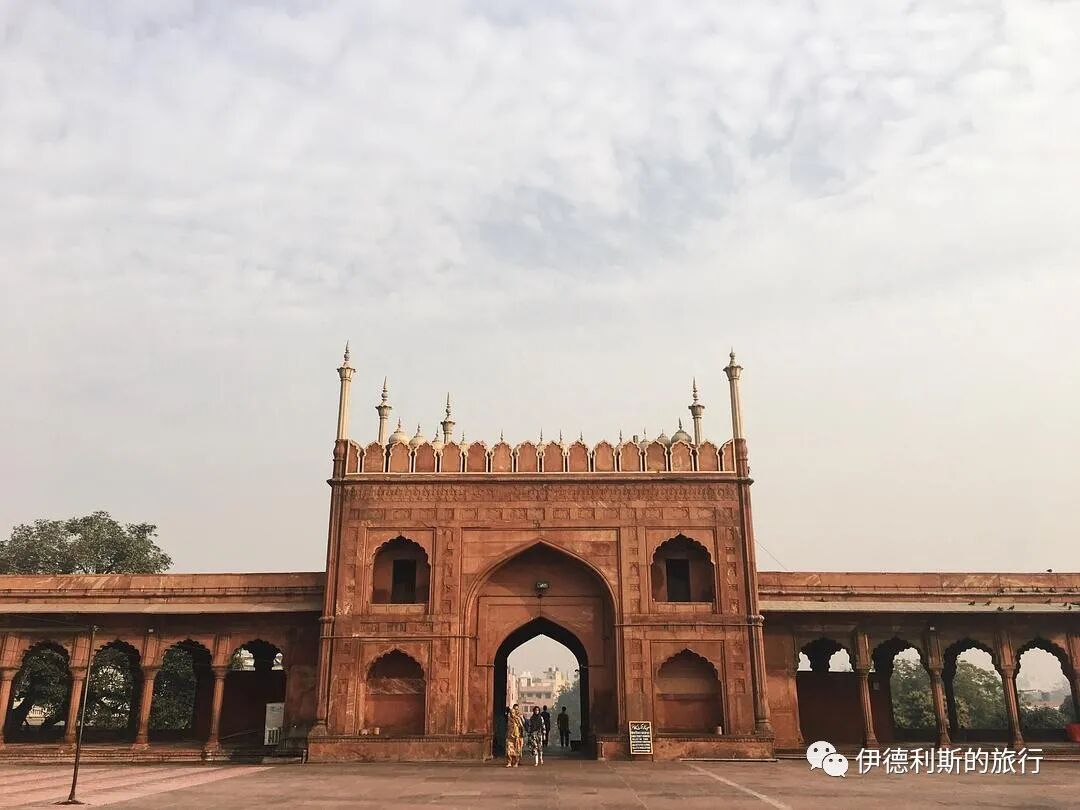
North Gate
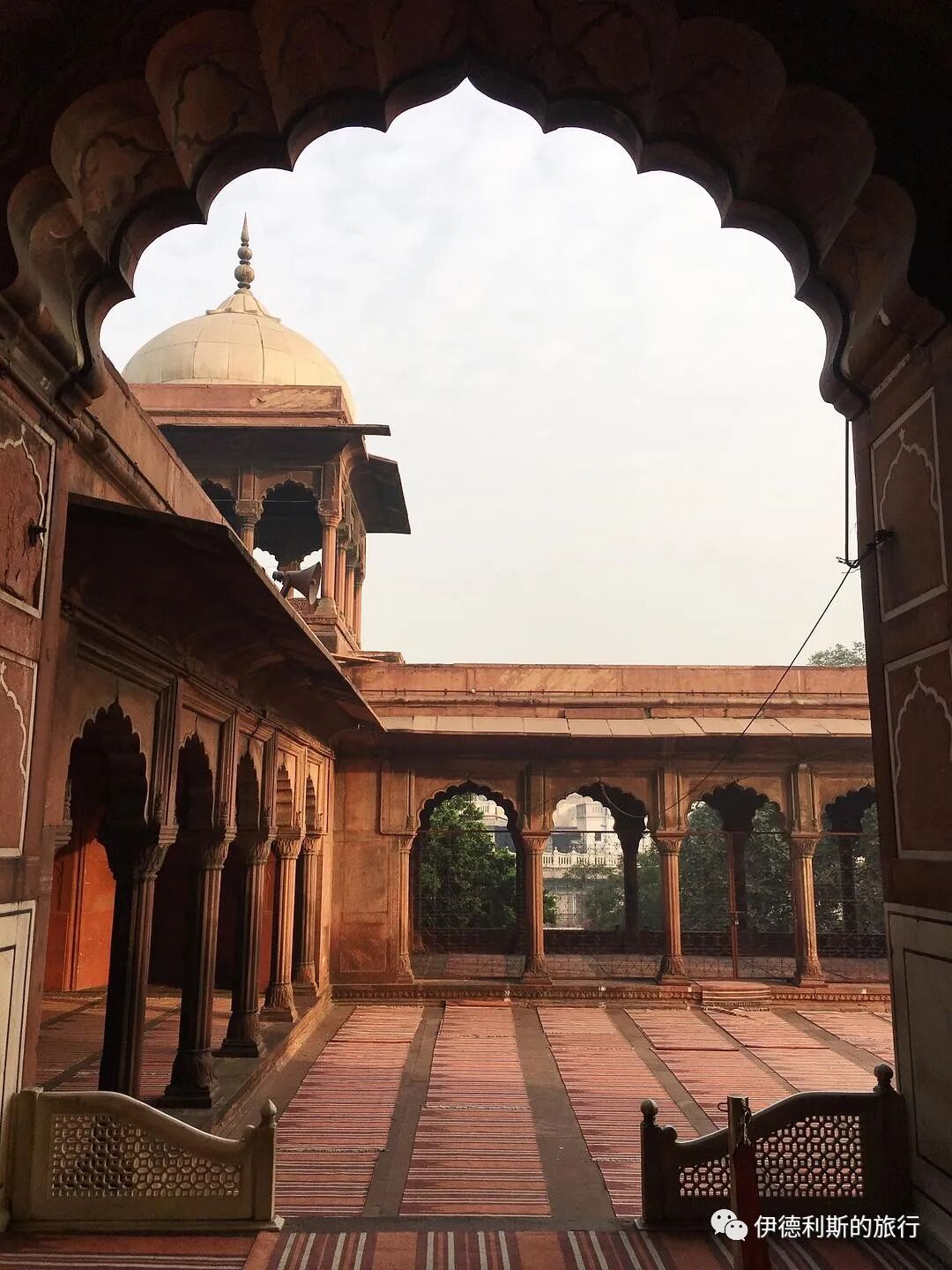
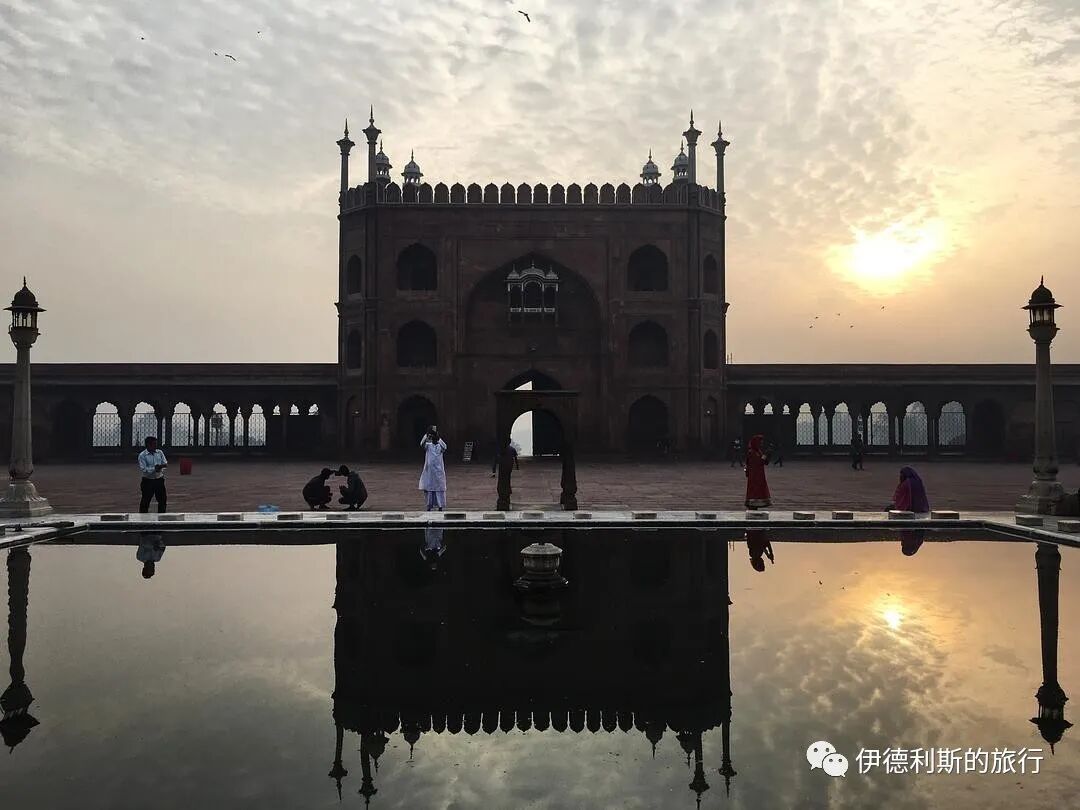
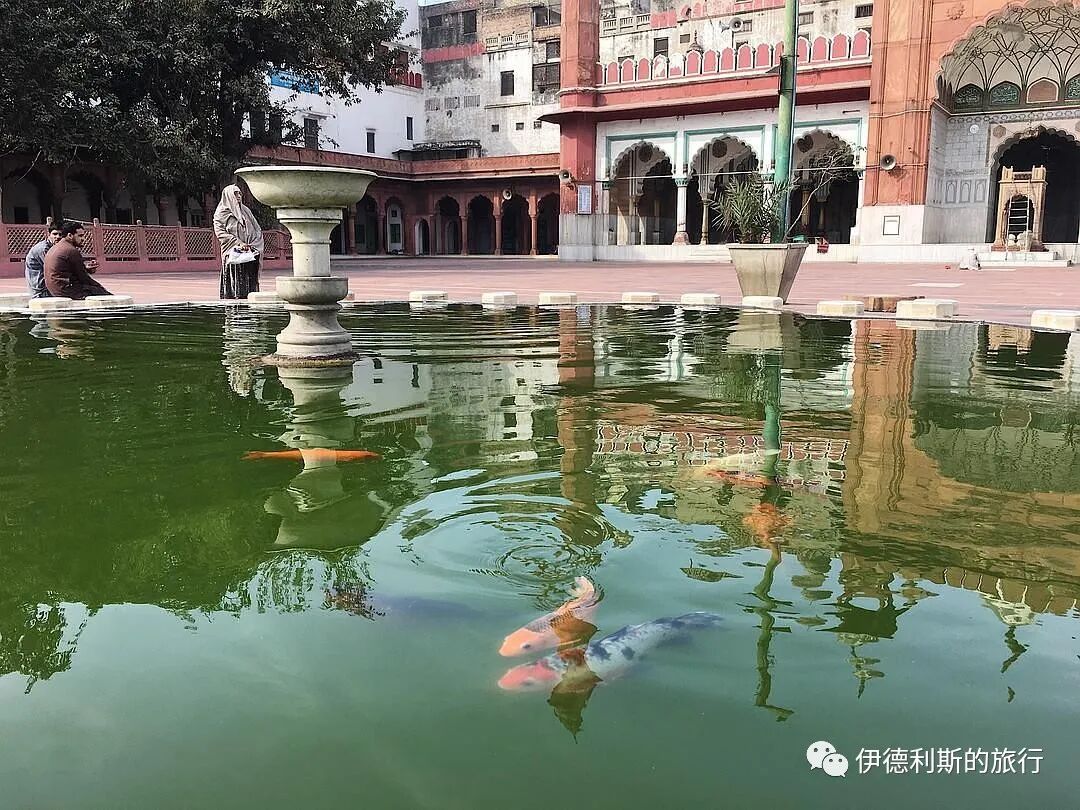
The water pool in the courtyard for wudu:
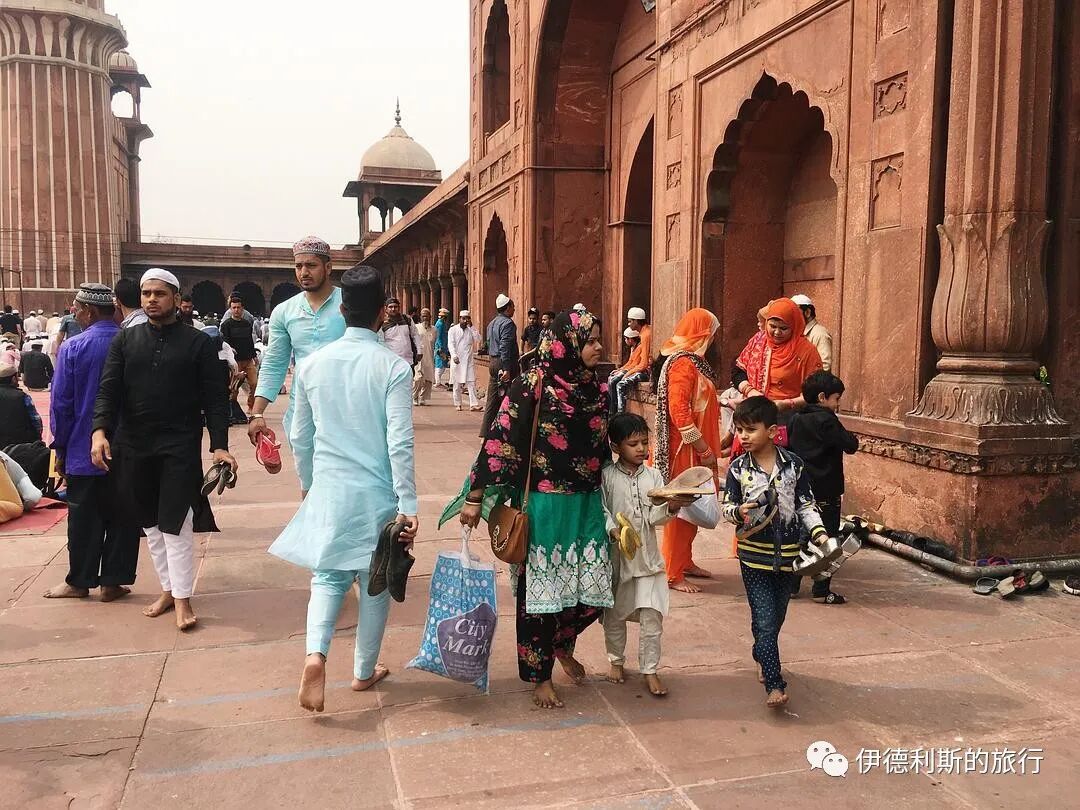
Jama means Jumu'ah, which refers to the Friday congregational prayer. The Jumu'ah mosque is usually the largest in the community, and the most important weekly prayer is held here every Friday at noon. I was lucky enough to attend a Friday Jumu'ah prayer at the Jama Mosque.
On the morning of Jumu'ah, more prayer rugs were already laid out in the courtyard.
People are performing wudu for the Jumu'ah prayer:
More and more people are arriving.
The imam leading the prayer climbs onto the stone platform.
After the prayer, people take photos:
3. Fatehpuri Mosque: 1650
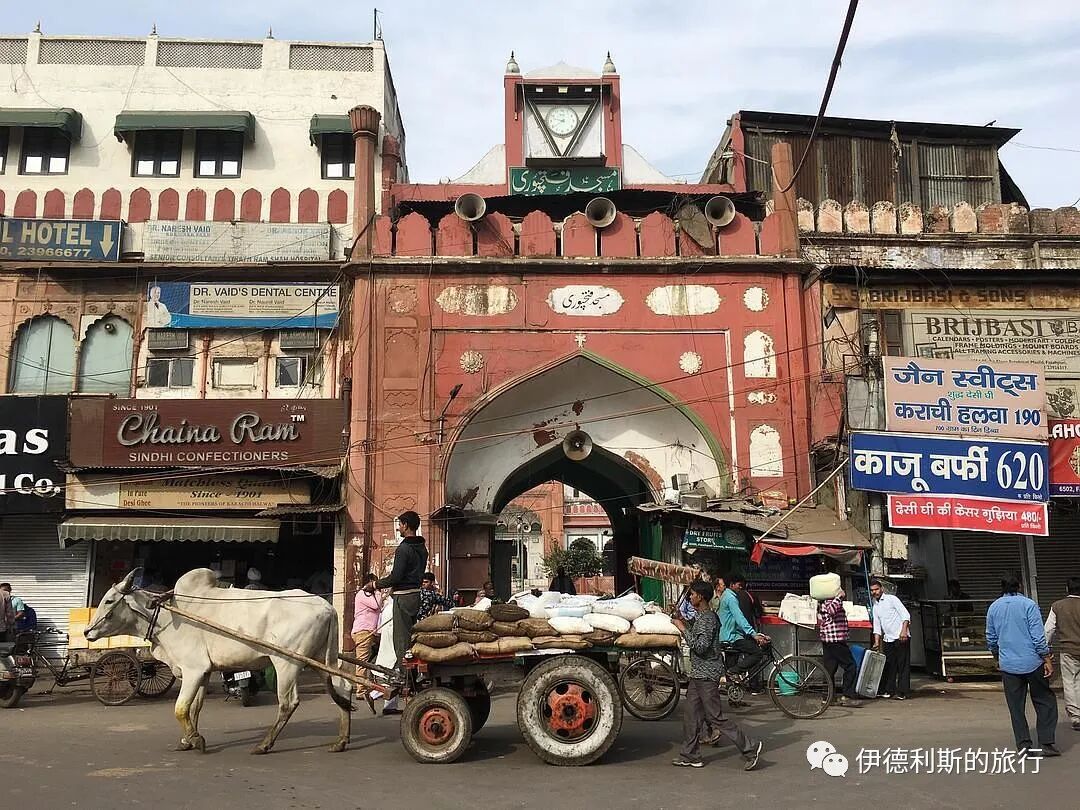
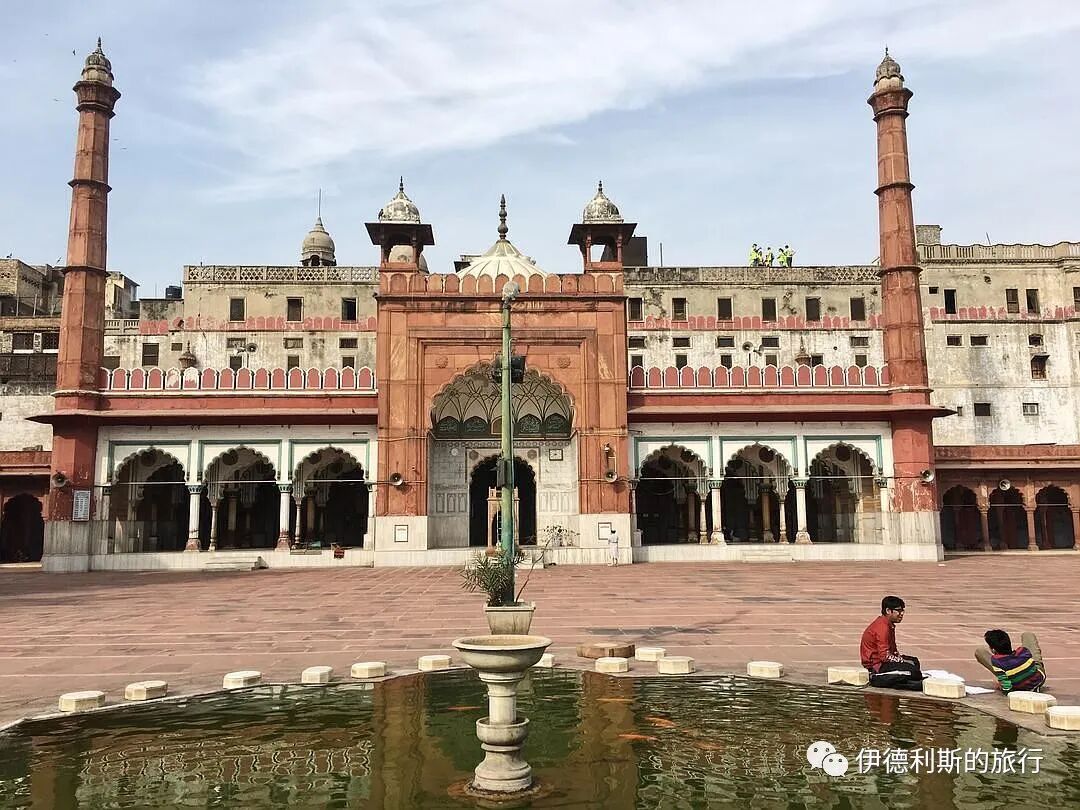
Fatehpuri Mosque is located at the western end of Chandni Chowk, the main east-west road in Shahjahanabad. It was built in 1650 under the direction of Fatehpuri Begum, the wife of Shah Jahan. The mosque is in the classic Mughal style, built with red sandstone, featuring minarets on both sides and a main prayer hall in the middle. The main hall has seven arched bays, and the central iwan arch is topped with a Mughal-style dome.
4. Golden Mosque (Sunehri Masjid): 1751
Sunehri Mosque is located south of the Red Fort. It was built in 1751 by Qudsia Begum, the wife of the twelfth Mughal Emperor, Muhammad Shah. After Muhammad Shah died, Qudsia Begum's son, Ahmad Shah Bahadur, succeeded to the throne, making Qudsia Begum the de facto ruler of the Mughal Empire between 1748 and 1754.
During her rule, Qudsia Begum built a series of structures in Delhi, and the Sunehri Mosque is the most understated in its architectural style. The mosque's dome was originally copper-plated, but during renovations in 1852, sandstone replaced the damaged copper plates.
5. Great Mosque (Kalan Masjid): 1387
Kalan Mosque is one of the very few mosques in Shahjahanabad that existed before the city was built. It was constructed in 1387 by Khan-i-Jahan Maqbul, the vizier of Sultan Feroz Shah Tughlaq (reigned 1351-1388) of the Delhi Sultanate's Tughlaq dynasty. It is believed to have been built to commemorate a Sufi saint.
The mosque has been in continuous use, so the interior has changed significantly.
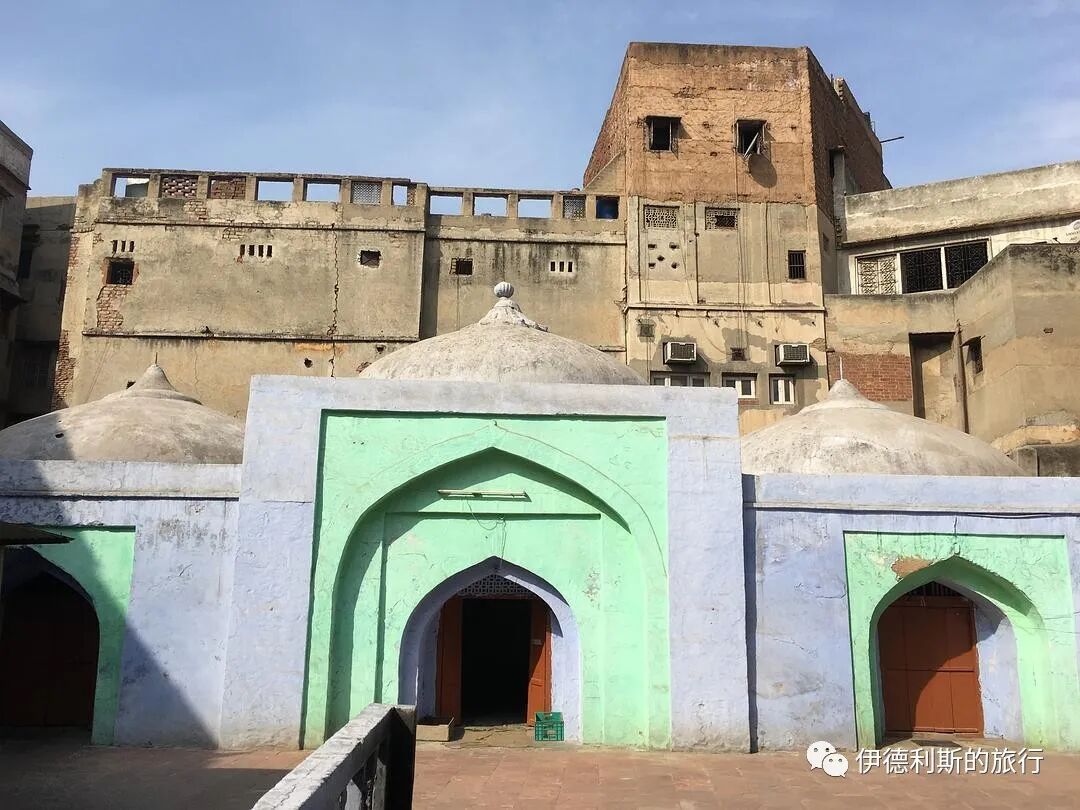
6. Hauzwali Mosque: 15th century
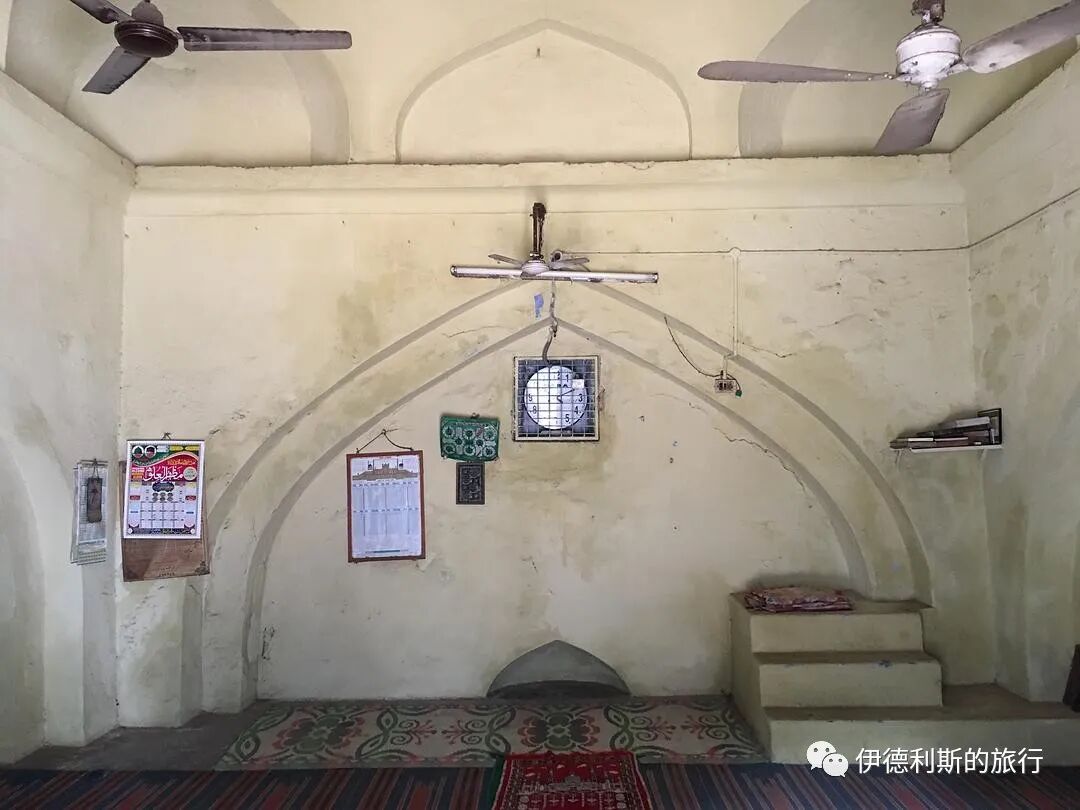
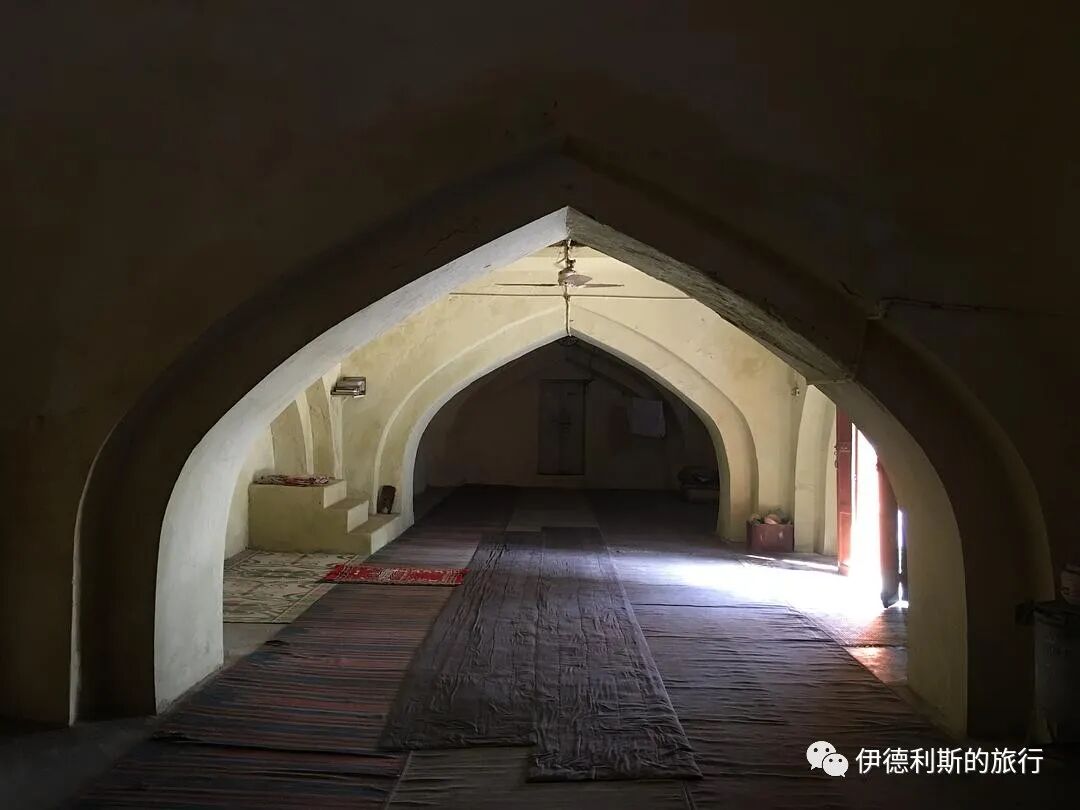
Hauzwali Mosque is another mosque that existed before the city of Shahjahanabad was built. Because the ground level has changed so much over time, the bottom half of the mosque is now underground, leaving only the top parts of the arches and the mihrab visible. view all
Summary: Delhi's Seventh City — Mughal Capital and Muslim History is presented here as a firsthand travel account in clear English, beginning with this scene: In my last article, The Sixth City of Delhi: The Birth of the Mughal Empire, I wrote about how Humayun, the second Mughal emperor, fell to his death from his library in the sixth city of Delhi, Dinpanah, in 1556. The account keeps its focus on Delhi Travel, Mughal History, Muslim Heritage while preserving the names, places, food, and historical details from the Chinese source.
In my last article, The Sixth City of Delhi: The Birth of the Mughal Empire, I wrote about how Humayun, the second Mughal emperor, fell to his death from his library in the sixth city of Delhi, Dinpanah, in 1556. His son, Emperor Akbar, moved the Mughal capital to Agra in 1558, and Delhi lost its status as the capital.
In 1628, Shah Jahan became the fifth emperor of the Mughal Empire. Under his rule, Mughal architectural aesthetics reached a new height, and this period is widely recognized as the golden age of Mughal architecture. Besides building the Taj Mahal, Shah Jahan built the seventh city of Delhi between 1639 and 1648, naming it Shahjahanabad after himself. Shah Jahan made Shahjahanabad the capital of the Mughal Empire, aiming to show the grandeur and power of the empire.
Shahjahanabad is now known as Old Delhi and still keeps many historical sites and traditional neighborhoods. The most important site inside the city, the Red Fort, was added to the UNESCO World Heritage list in 2007.
The layout of Shahjahanabad was inspired by the ancient Persian city of Isfahan and inherited urban planning ideas from the Agra Fort and Fatehpur Sikri, which were built by the previous Mughal emperor, Akbar. The city has an irregular shape, with the eastern wall built along the course of the Yamuna River. The Yamuna River later changed its course and moved away from the walls, and the original riverbed is now the Delhi Inner Ring Road.
The city has two main roads: Chandni Chowk running east-west and Faiz Bazaar running north-south, with major commercial areas on both sides of the streets. The Red Fort, where the Mughal royal family lived, is located at the junction of these two main roads.
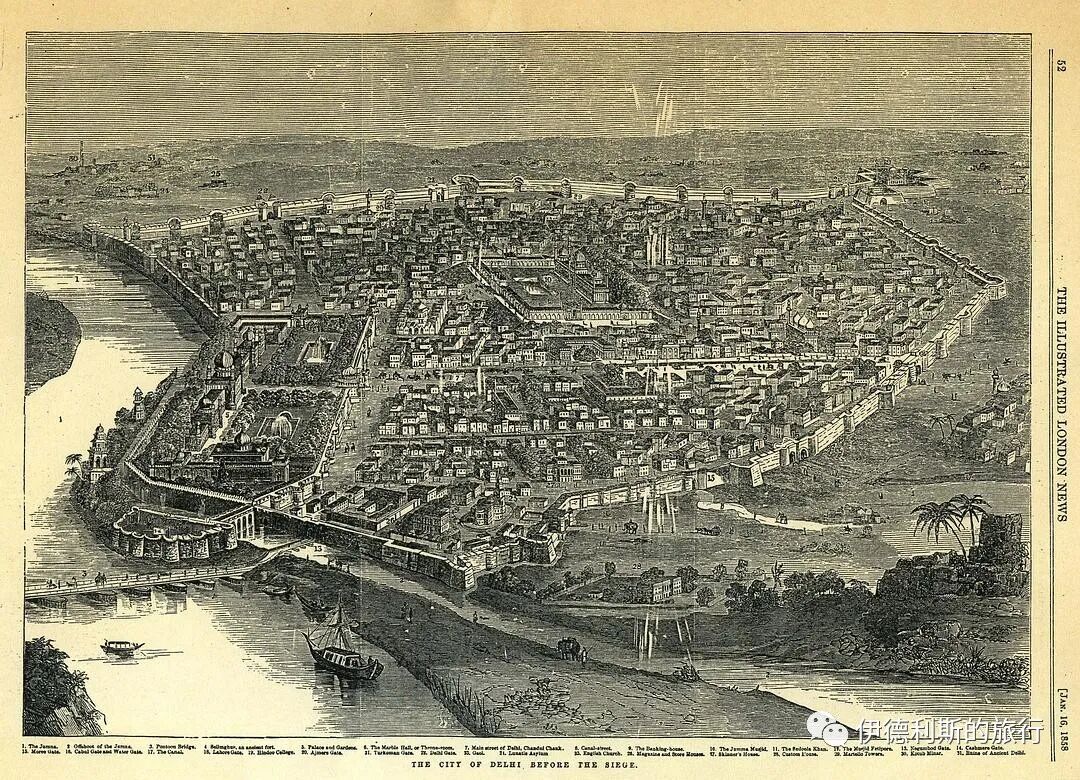
1858
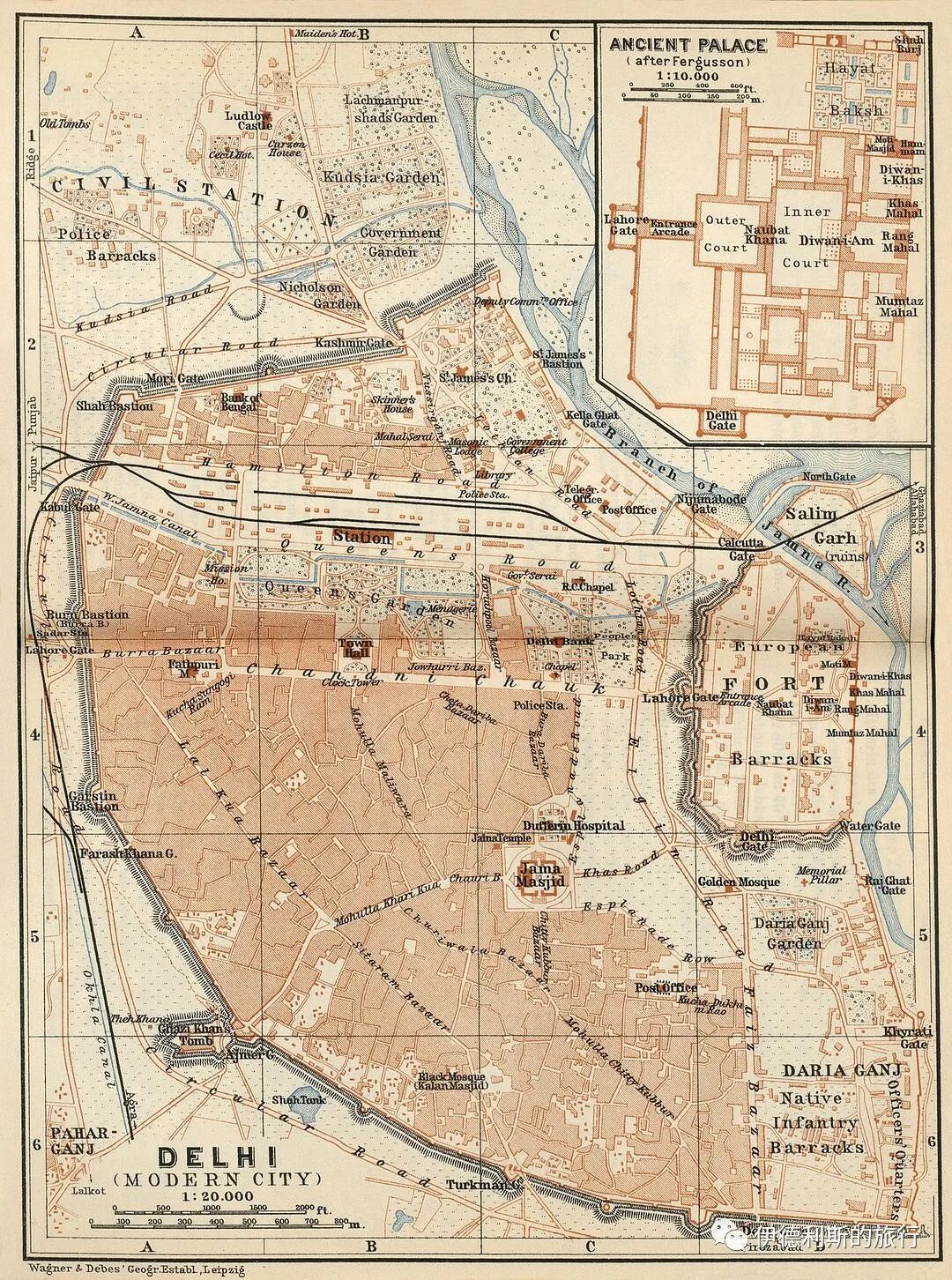
1914
Table of Contents
1. Red Fort: 1639-1648
1. Lahore Gate
2. Chhatta Chowk (market)
3. Naubat Khana (drum house)
4. Diwan-i-Aam (public audience hall)
5. Rang Mahal (palace of the empresses)
6. Khas Mahal (emperor's private palace)
7. Diwan-i-Khas (private audience hall)
8. Hammam-e-Lal Qila (bathhouse)
9. Pearl Mosque (Moti Masjid)
10. King's Tower (Shah Burj)
11. Life-Giving Garden (Hayat Bakhsh Bagh)
2. Jama Mosque: 1650-1656
3. Fatehpuri Mosque: 1650
4. Golden Mosque (Sunehri Masjid): 1751
5. Great Mosque (Kalan Masjid): 1387
6. Hauzwali Mosque: 15th century
1. Red Fort: 1639-1648
Shah Jahan decided to move the capital from Agra back to Delhi in 1638. On May 12, 1639, he ordered the construction of the Red Fort. The designer was Ustad Ahmad Lahauri, the architect who built the Taj Mahal.
On the north side of the Red Fort is the Salimgarh Fort, built by the Sur dynasty in 1546 (I introduced this in my previous article, 'The Sixth City of Delhi: The Birth of the Mughal Empire'). The Red Fort was designed to connect to Salimgarh Fort via a bridge, joining the two castles together.
In 1857, the last Mughal emperor, Bahadur Shah II, left the Red Fort and was arrested by the British army. He was tried at the Red Fort in 1858 and exiled to Yangon, marking the end of the Mughal Empire. Afterward, the Red Fort was used as a British military barracks. Most of the buildings were demolished. Only the marble structures in the far east survived because they were repurposed as barracks, offices, dormitories, and canteens.
After India's independence, the Red Fort continued to be used as an Indian Army barracks until 2003, when the Archaeological Survey of India was finally authorized to begin restoration. In 2009, the Archaeological Survey of India developed a comprehensive protection and management plan for the Red Fort under the direction of the Supreme Court.
The Red Fort viewed from east to west, painted in 1785.
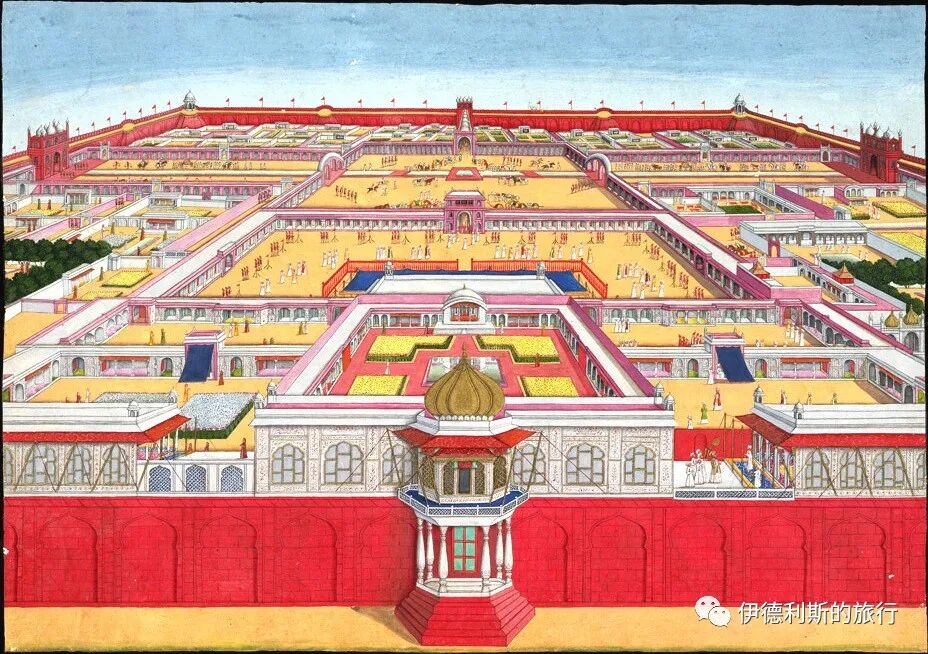
The Red Fort viewed from east to west, painted by Ghulam Ali Khan between 1852 and 1854.
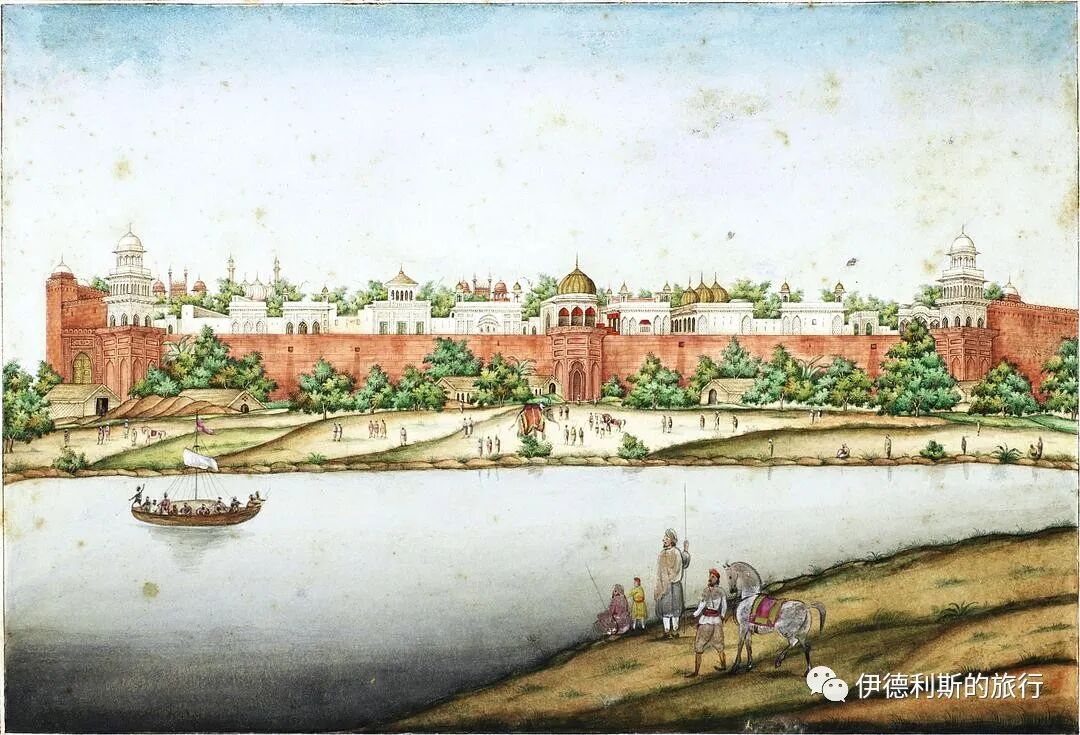
1. Lahore Gate
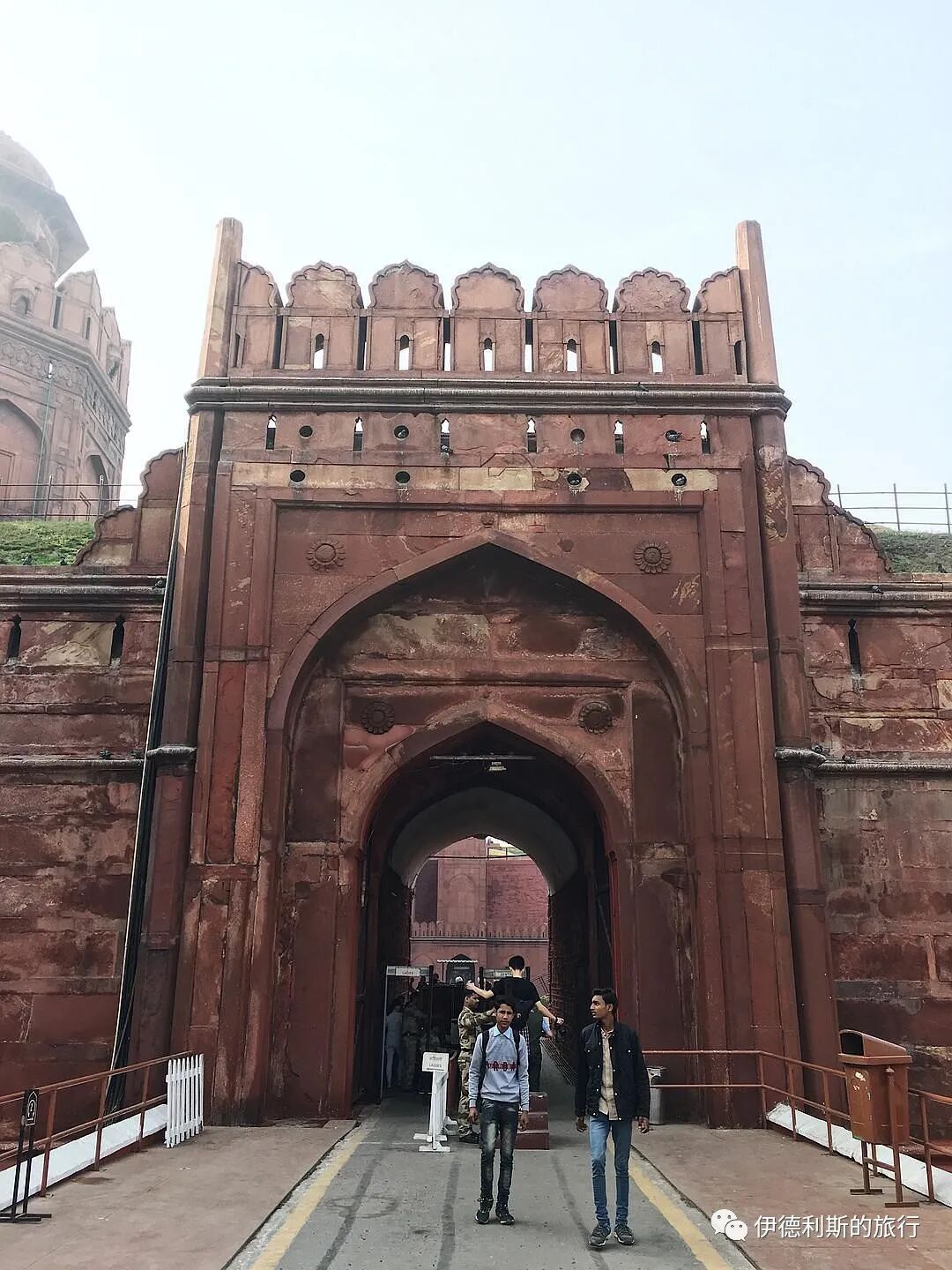
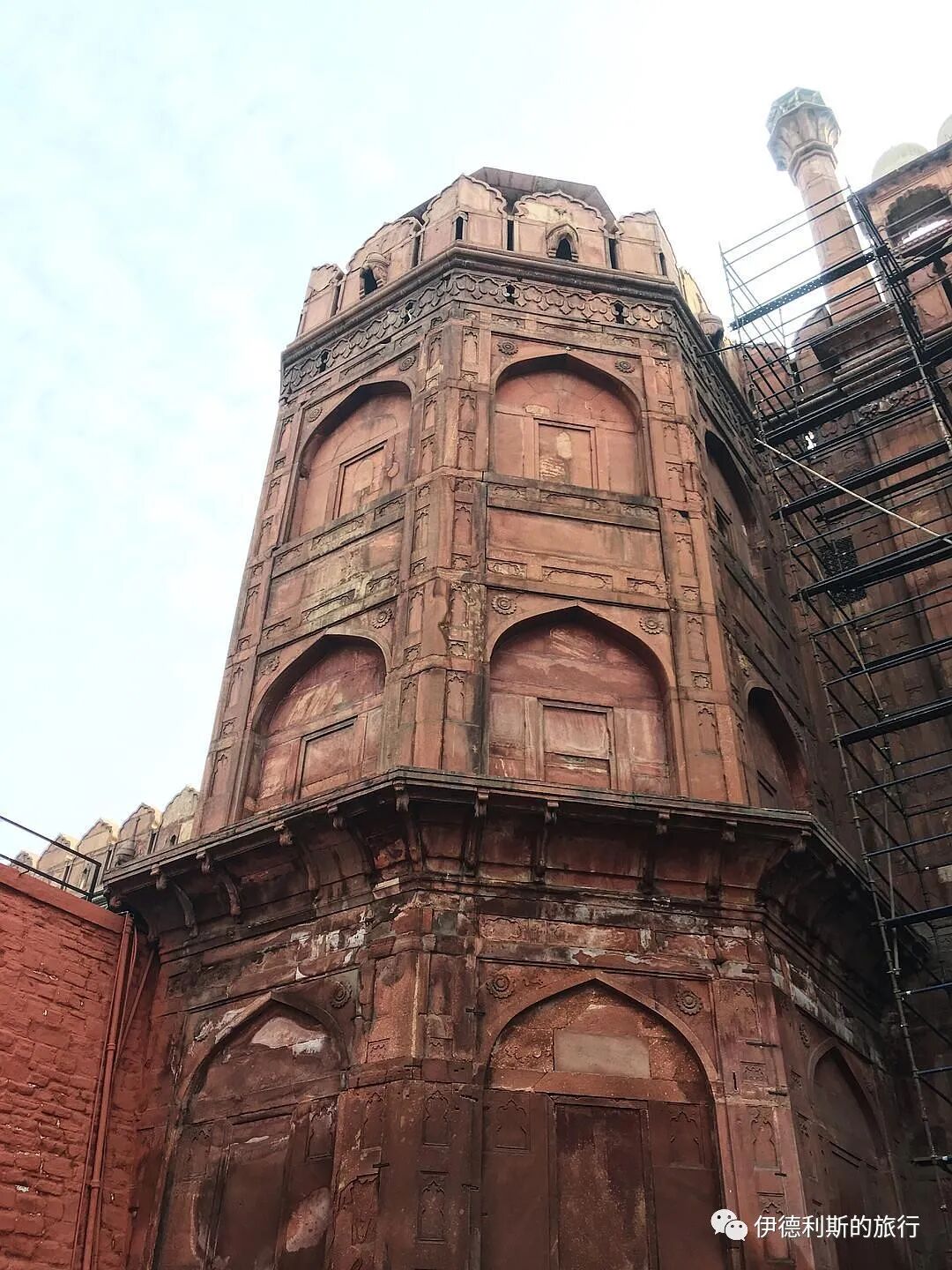
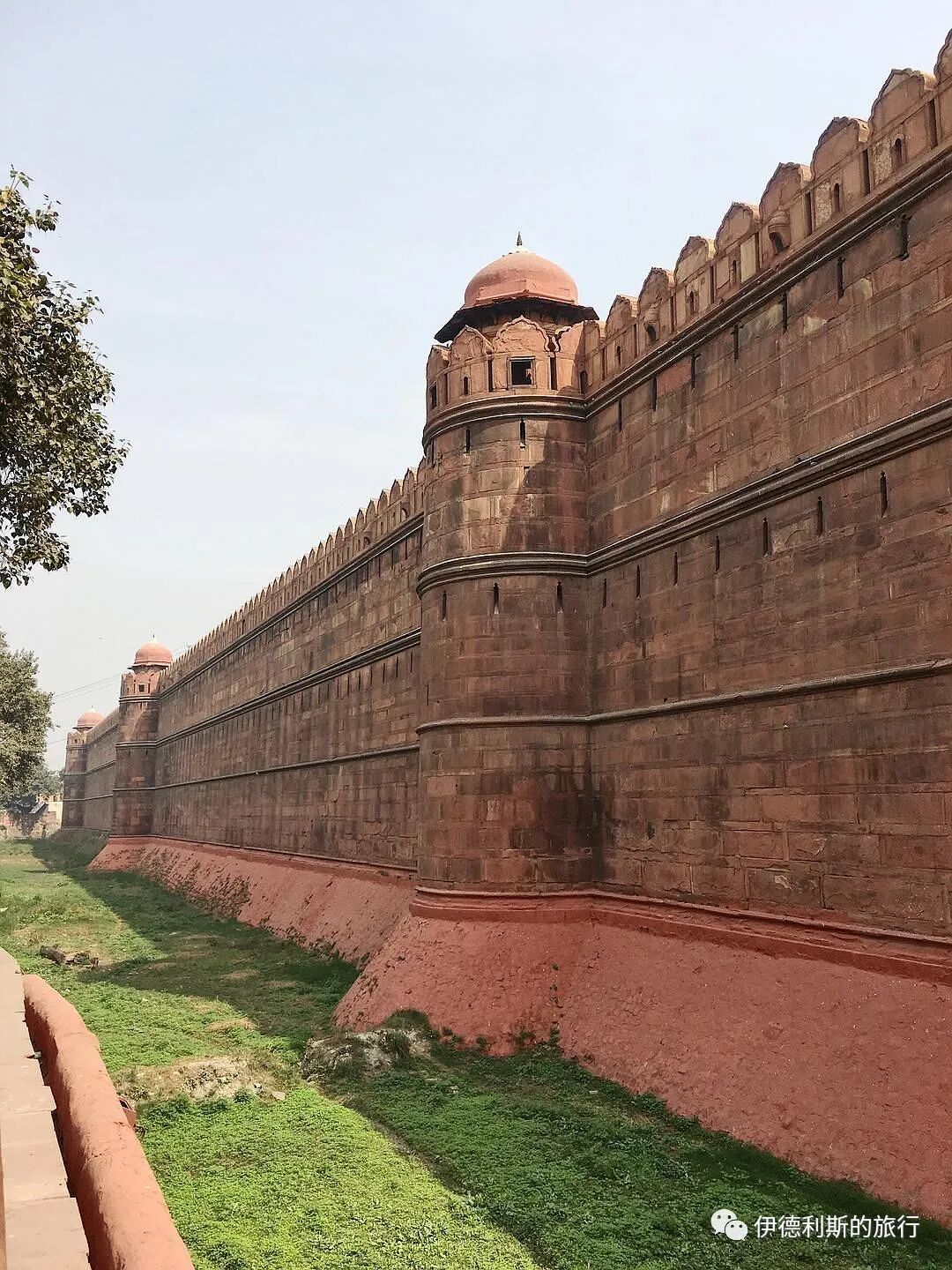
The Lahore Gate is the west gate of the Red Fort. It is named for facing the city of Lahore. During the reign of the sixth Mughal emperor, Aurangzeb (reigned 1658-1707), a barbican was added to the outside of the gate. Since 1947, the Prime Minister of India has stood at the Lahore Gate to deliver a speech every Indian Independence Day.
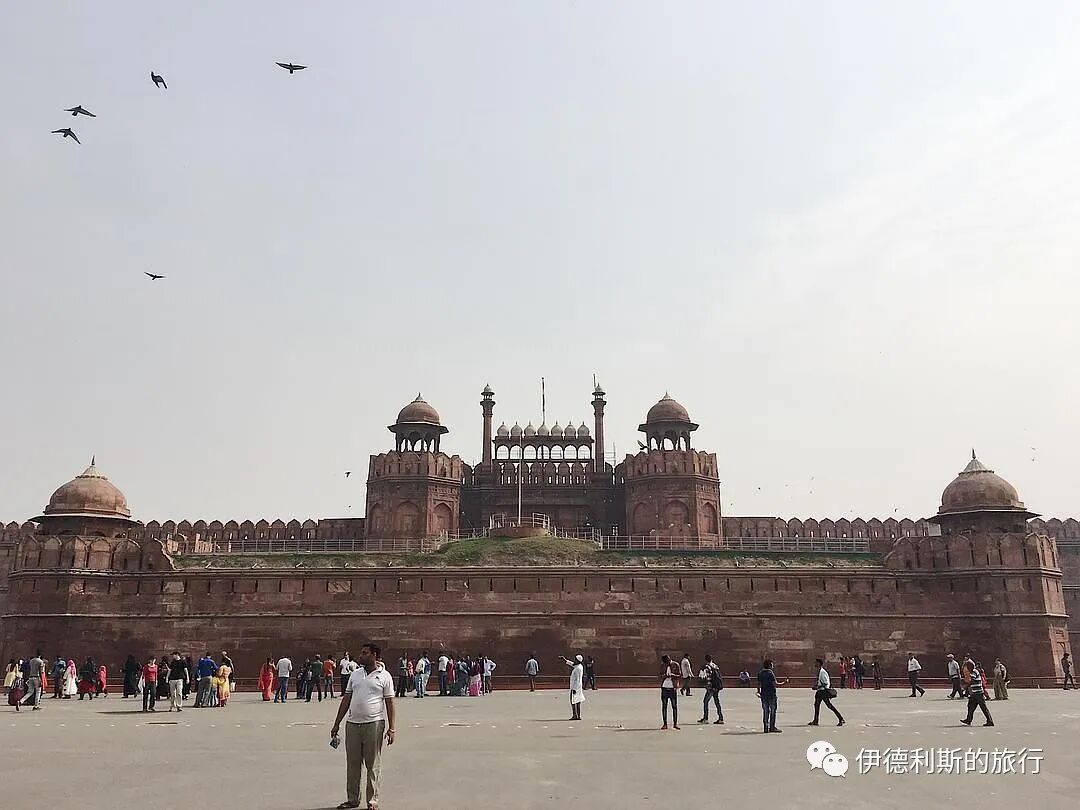
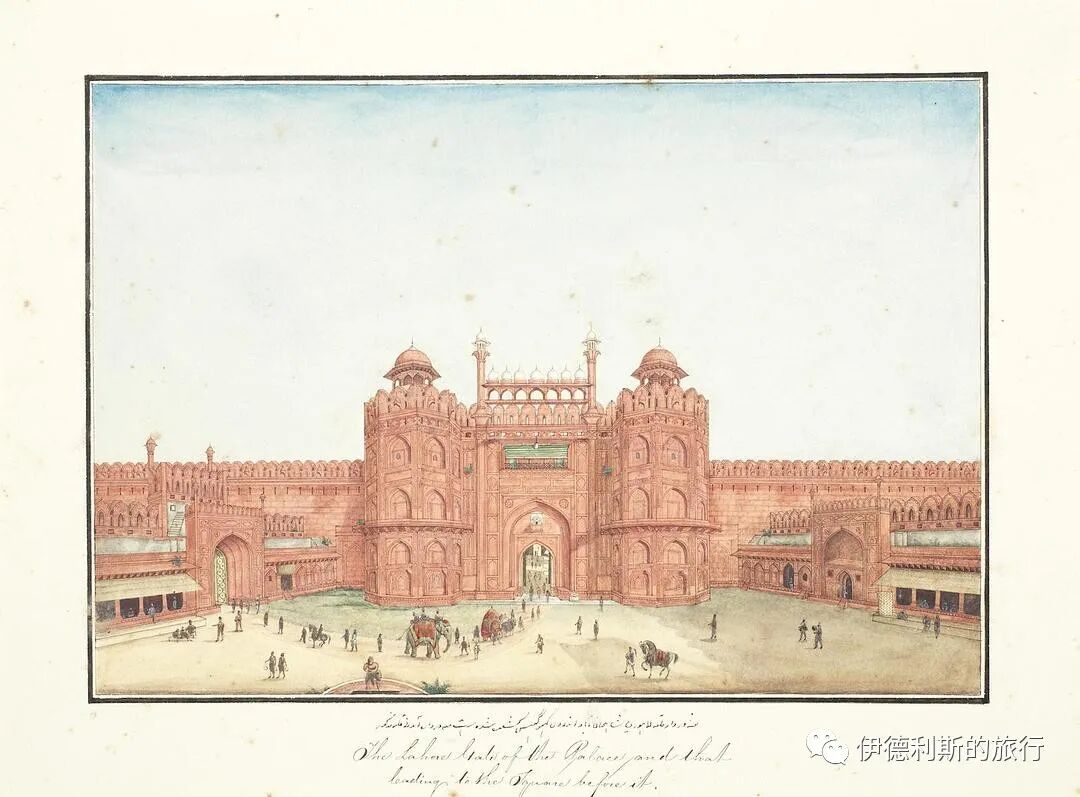
Painted by Ghulam Ali Khan between 1852 and 1854.
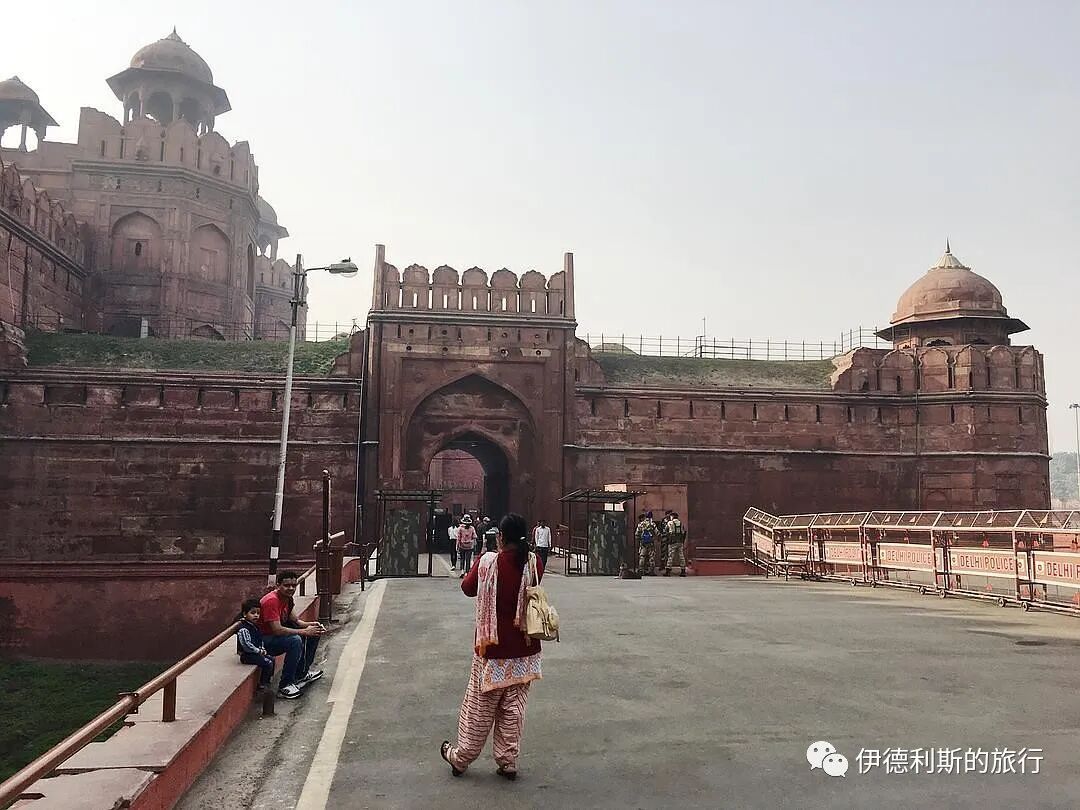
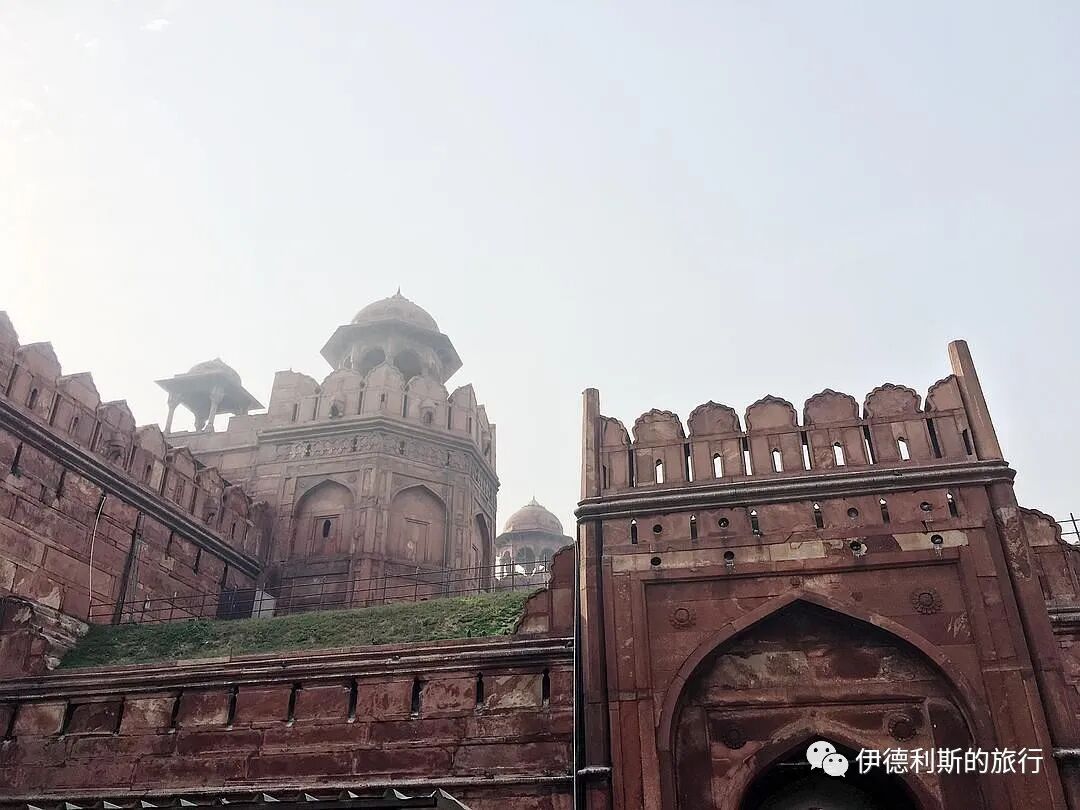
2. Chhatta Chowk (market)
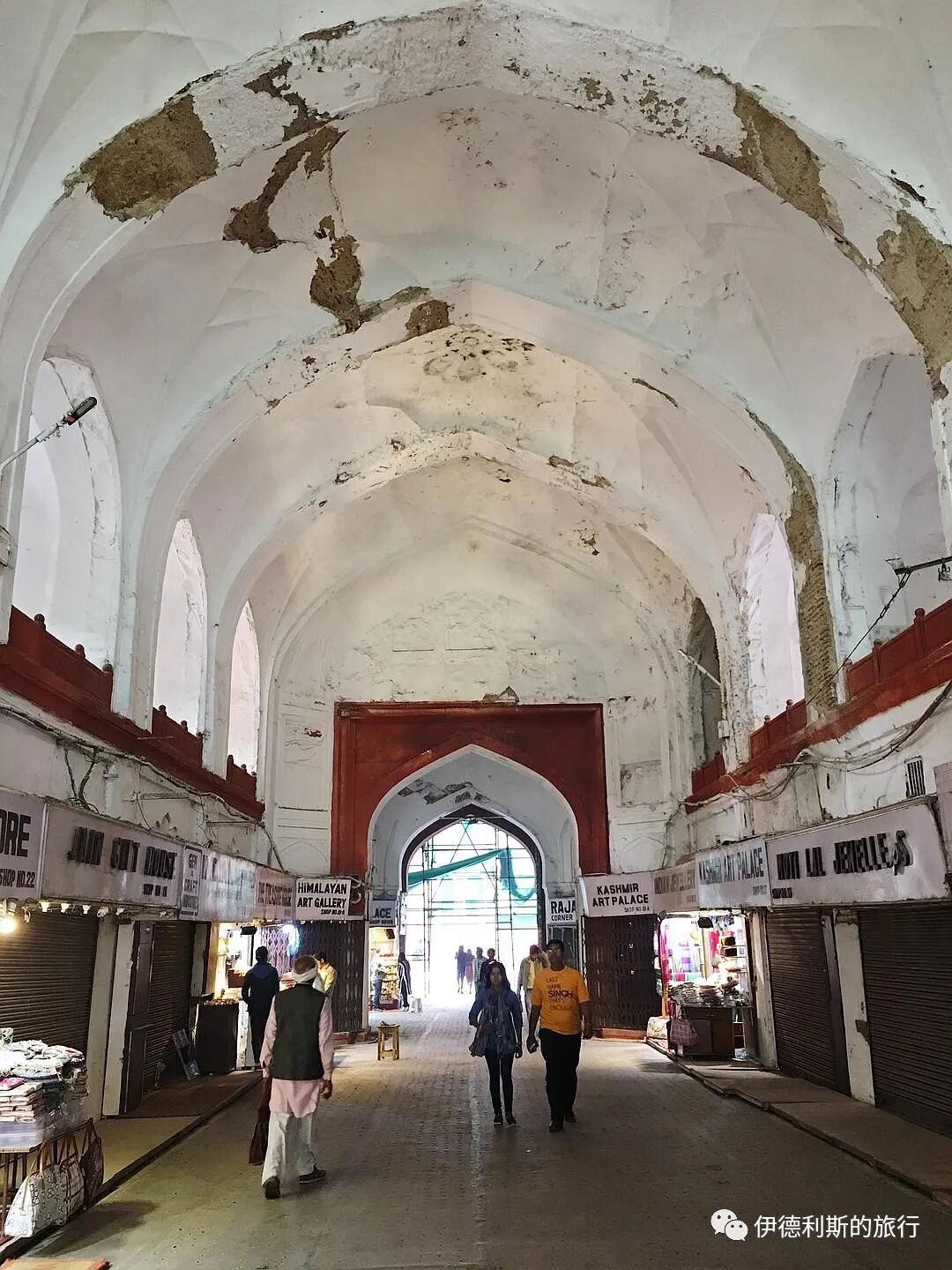
After entering the Lahore Gate, you find a market called Chhatta Chowk. During the Mughal era, this was where silk and jewelry were sold to members of the royal family.
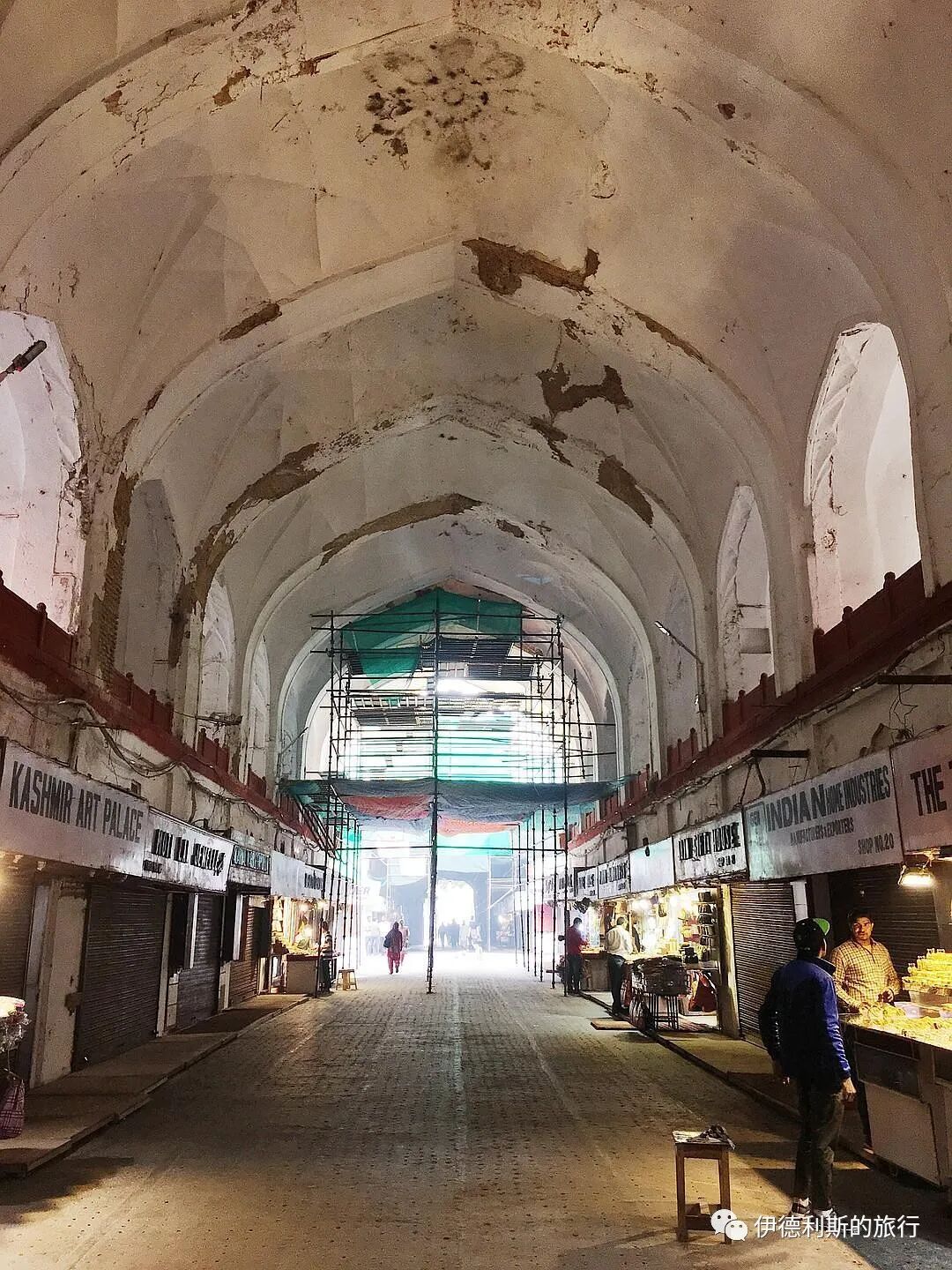
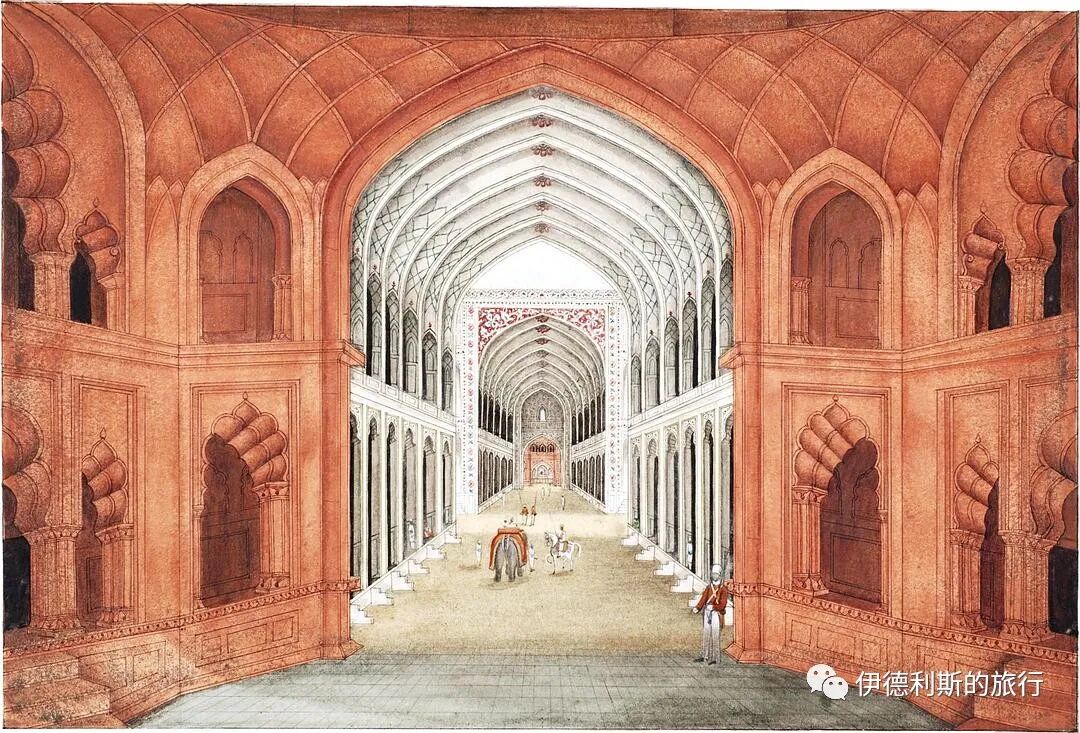
Painted by Ghulam Ali Khan between 1852 and 1854.
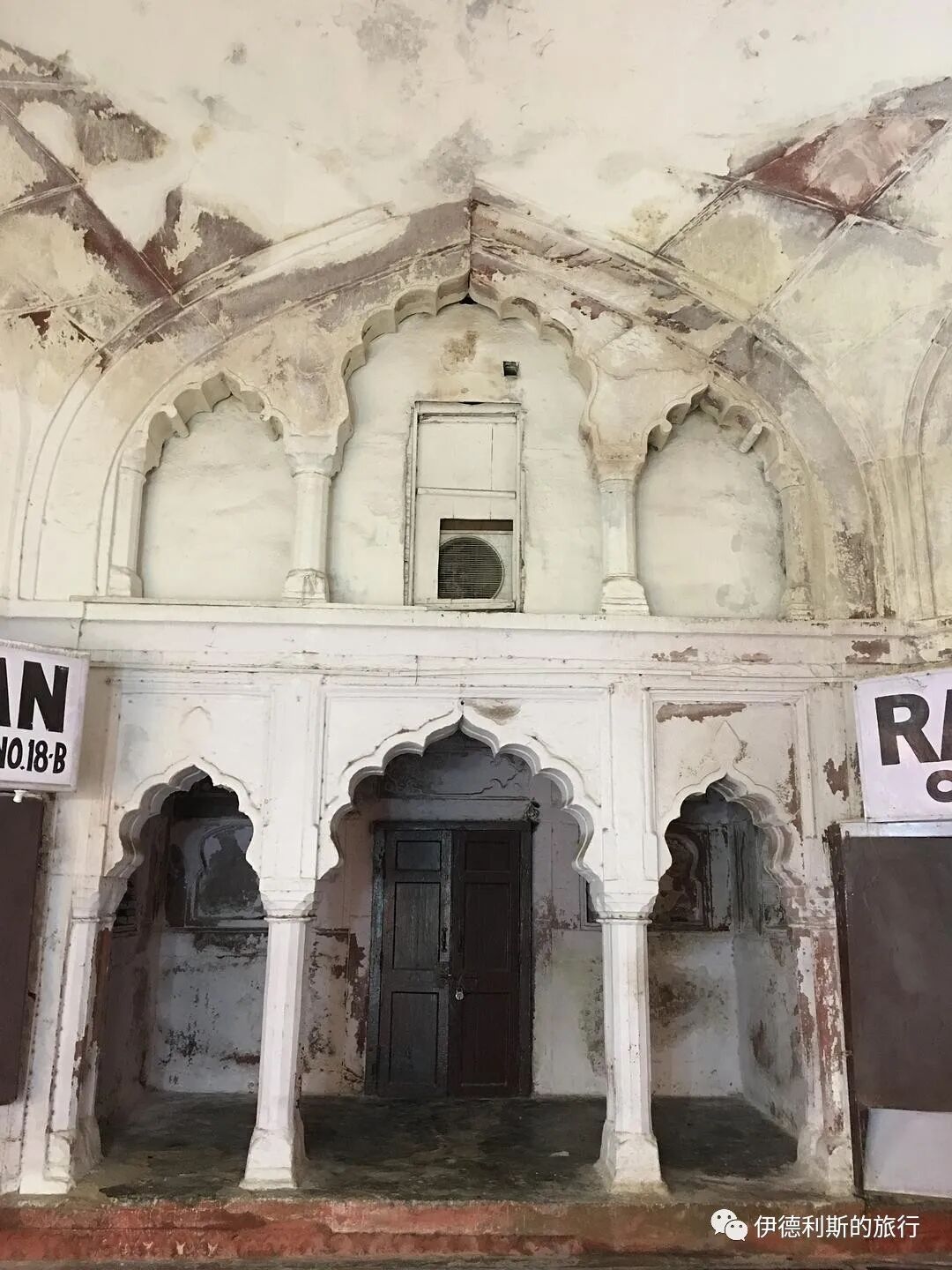
(Optional) Image description
3. Naubat Khana (drum house)
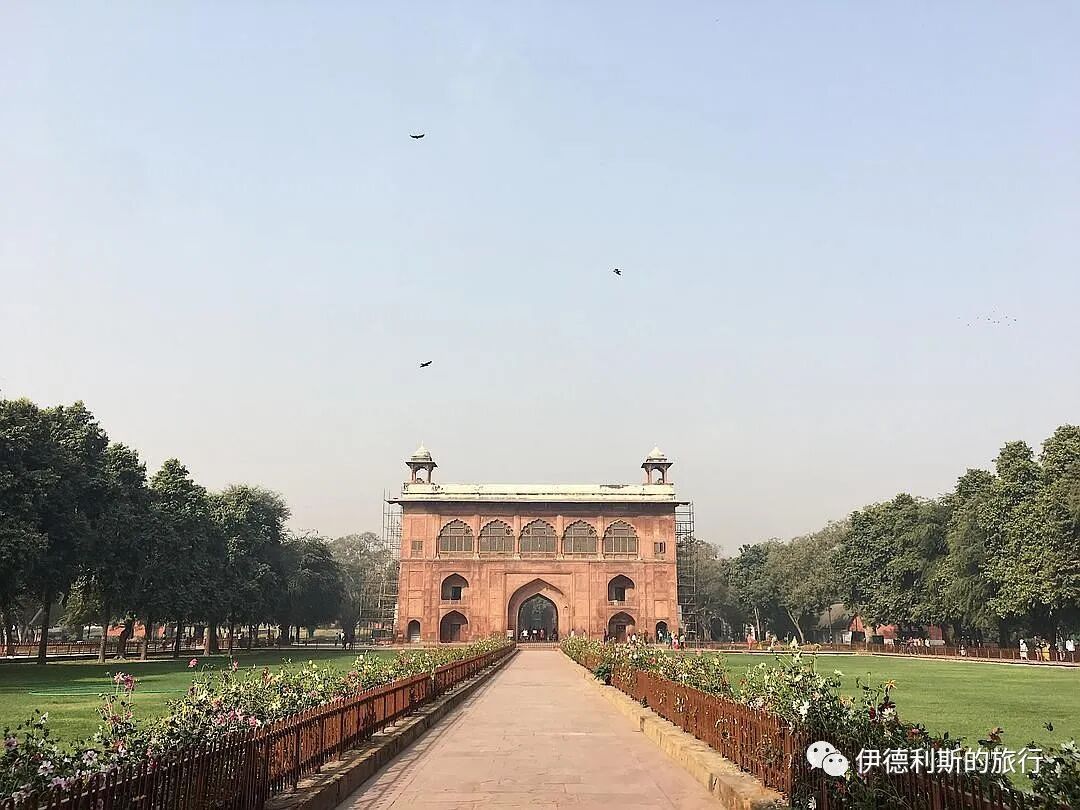
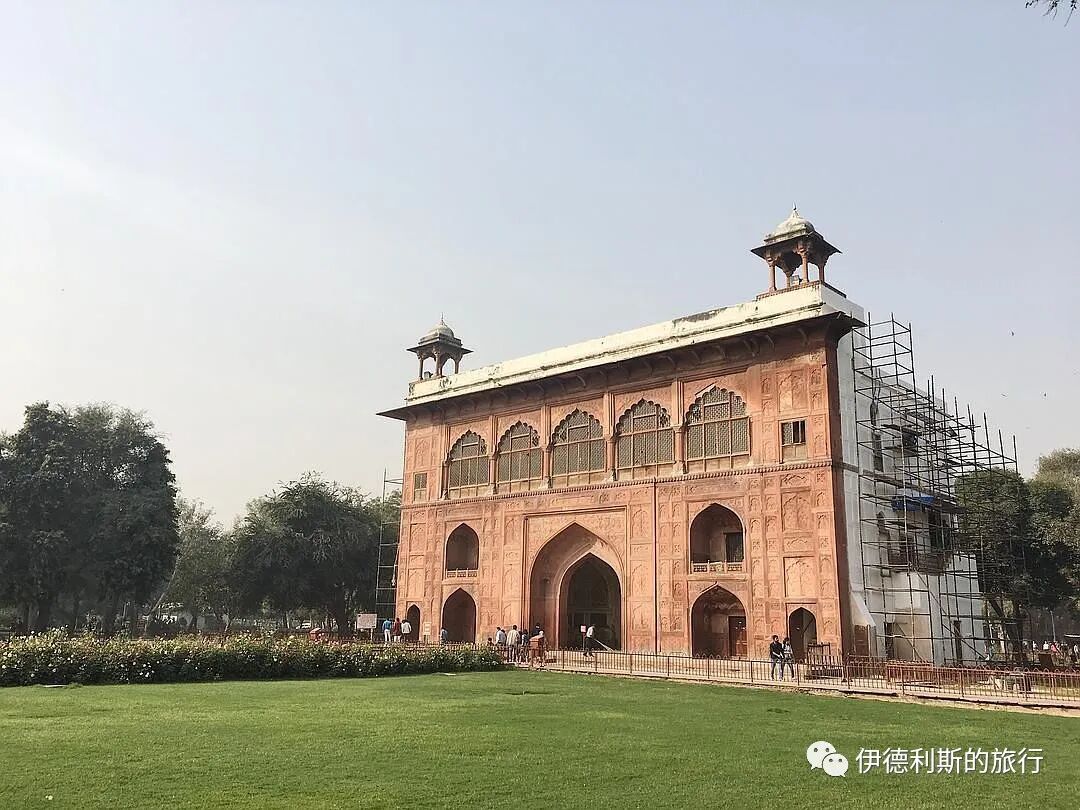
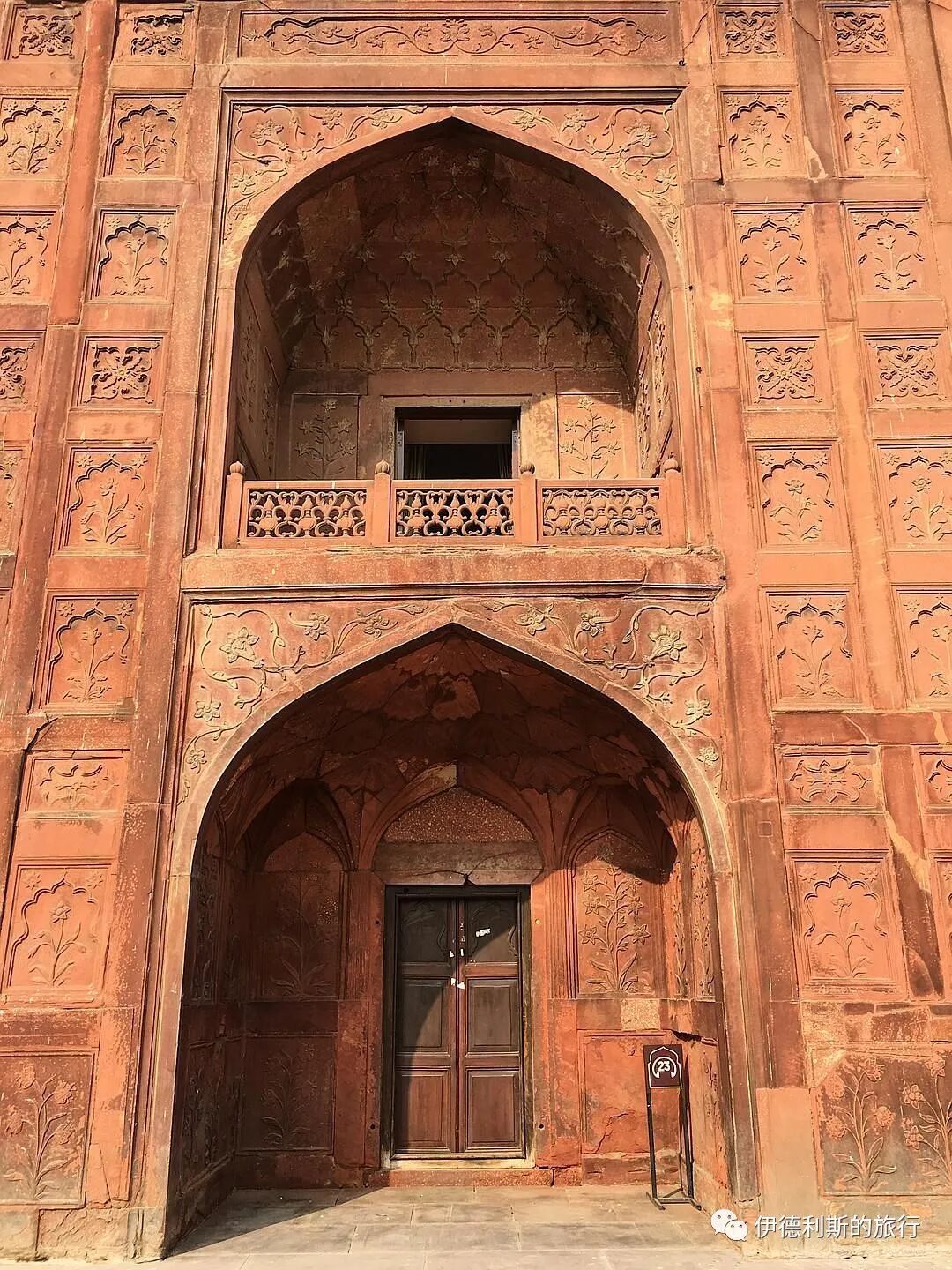
After walking through the Chhatta Chowk market, you reach the outer courtyard of the Red Fort. The building in the center of the outer courtyard is called the Naubat Khana, which serves as the main gate to the inner court. Naubat Khana means 'drum house.' During the Mughal era, ceremonial music was played here five times a day, and everyone except members of the royal family had to dismount from their horses when they reached this point. After 1857, the British army destroyed the arcades on both sides of the Naubat Khana and the central pool, leaving only the central building.
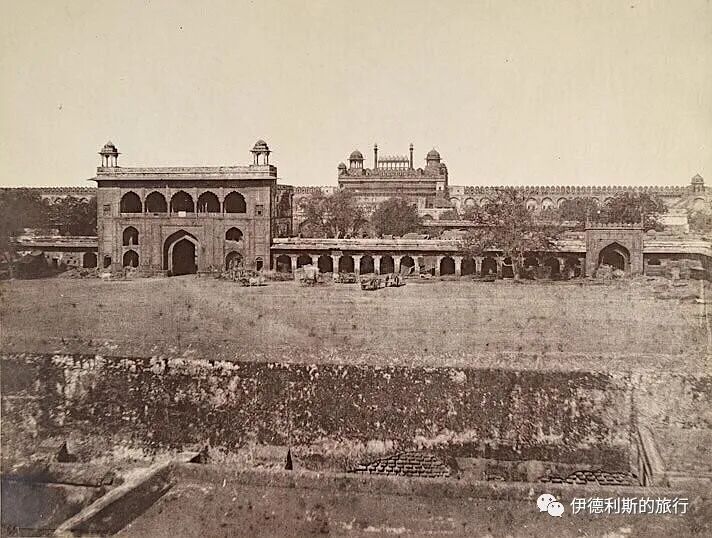
Photographed in 1858 by British army officer Robert Christopher Tytler and his wife Harriet.
4. Diwan-i-Aam (public audience hall)
After passing through the Naubat Khana, you enter the inner courtyard of the Red Fort, where the Diwan-i-Aam stands directly in front of you. Diwan-i-Aam means 'Hall of Public Audience.' It was the place where the Mughal emperor met with the public to hear their concerns.
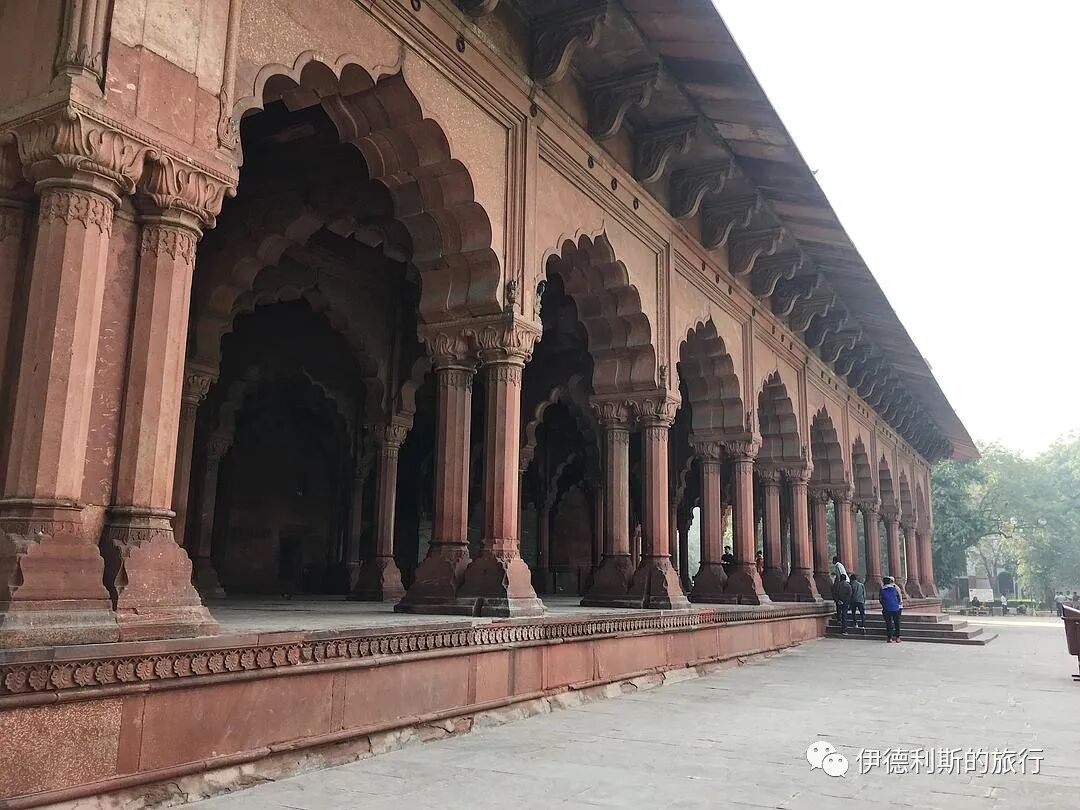
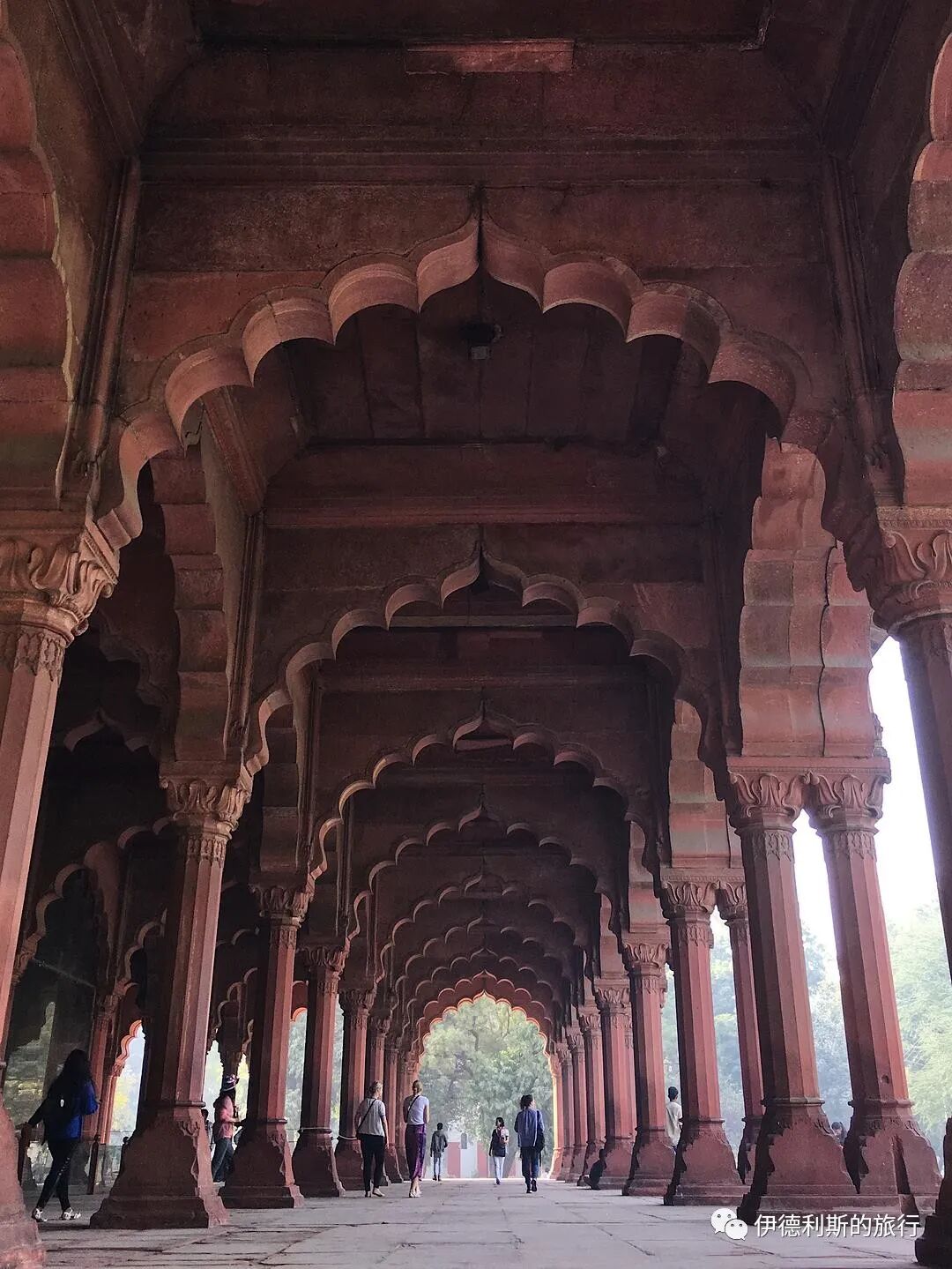
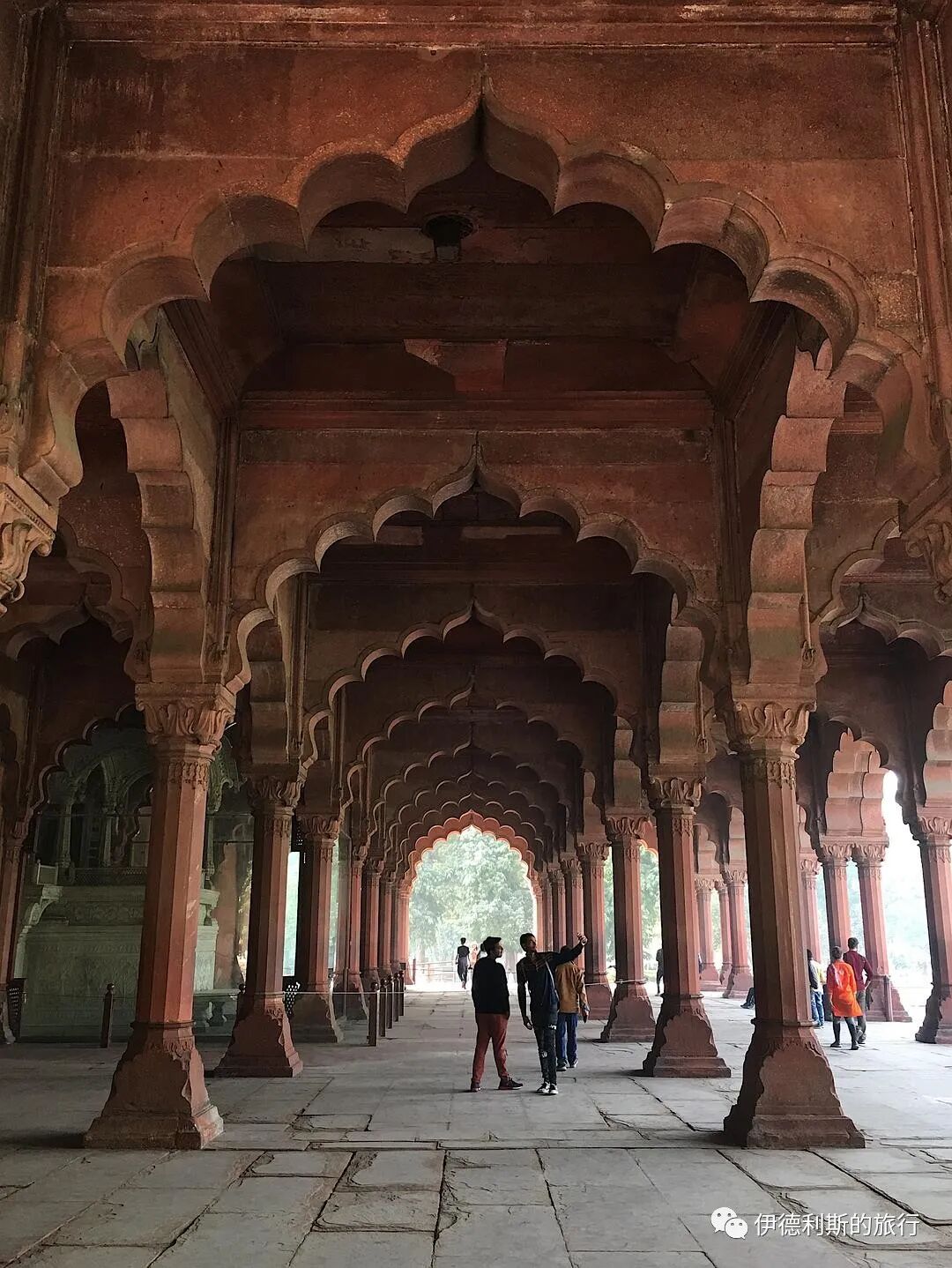
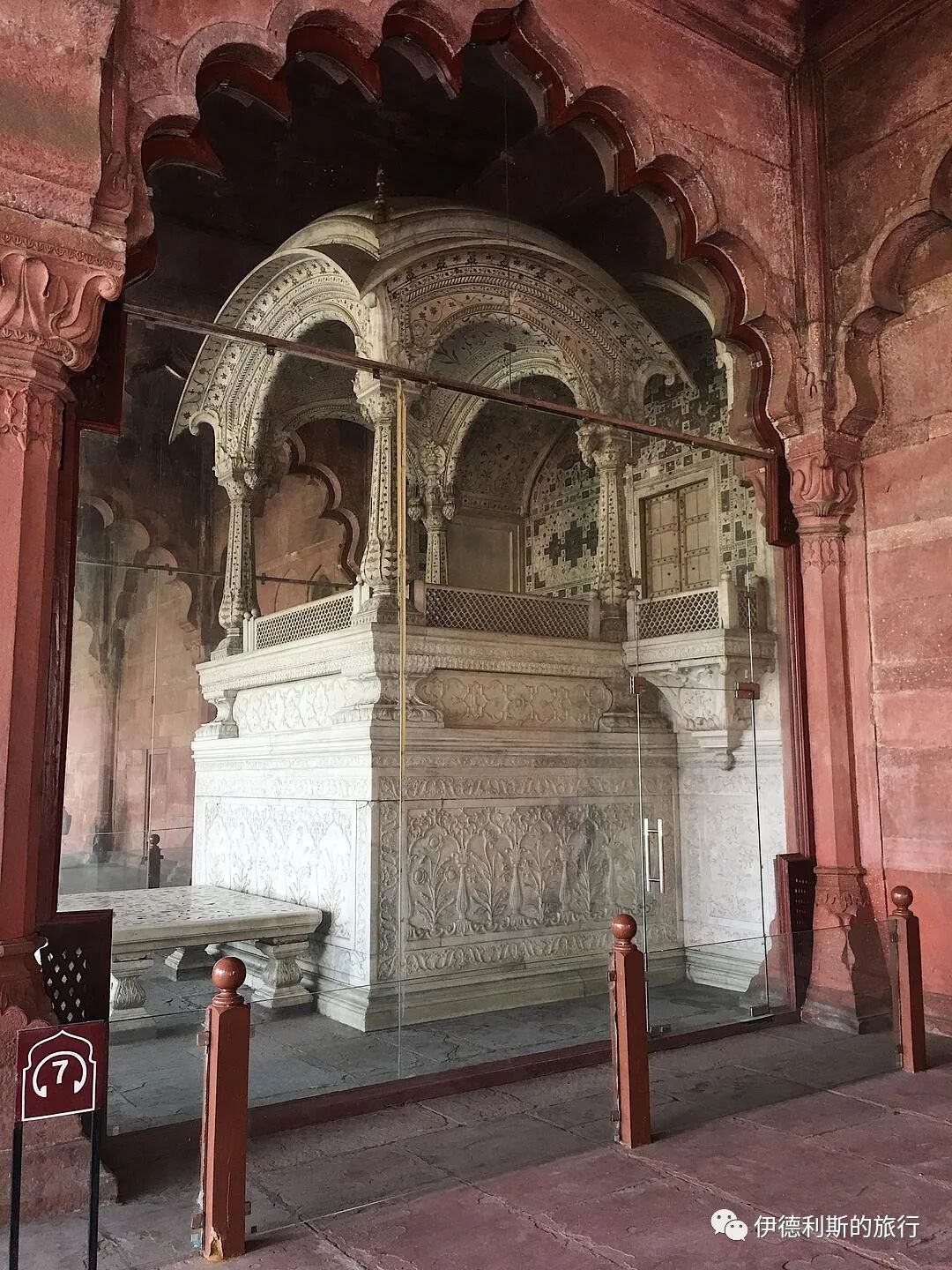
In the center of the hall is the throne where the emperor sat. The marble steps below the throne were where the prime minister (wazir) received petitions from the public.
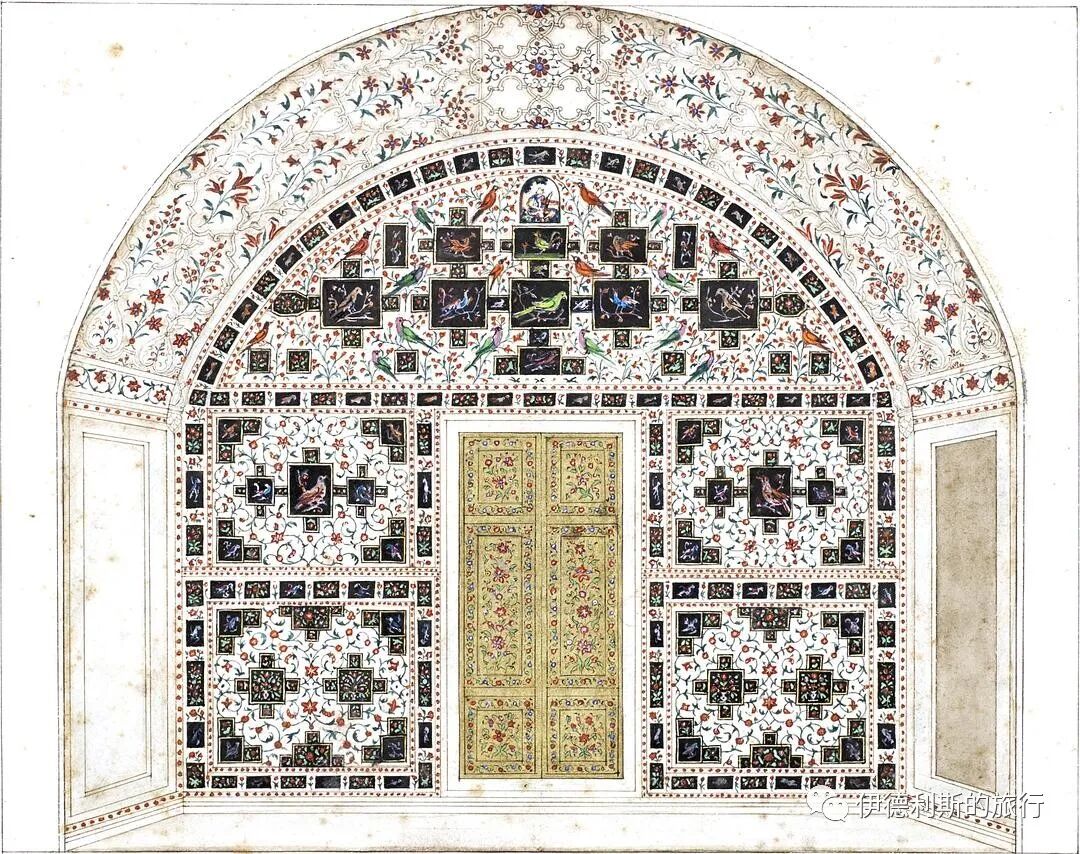
The door behind the throne, painted by Ghulam Ali Khan between 1852 and 1854.
5. Rang Mahal (palace of the empresses)
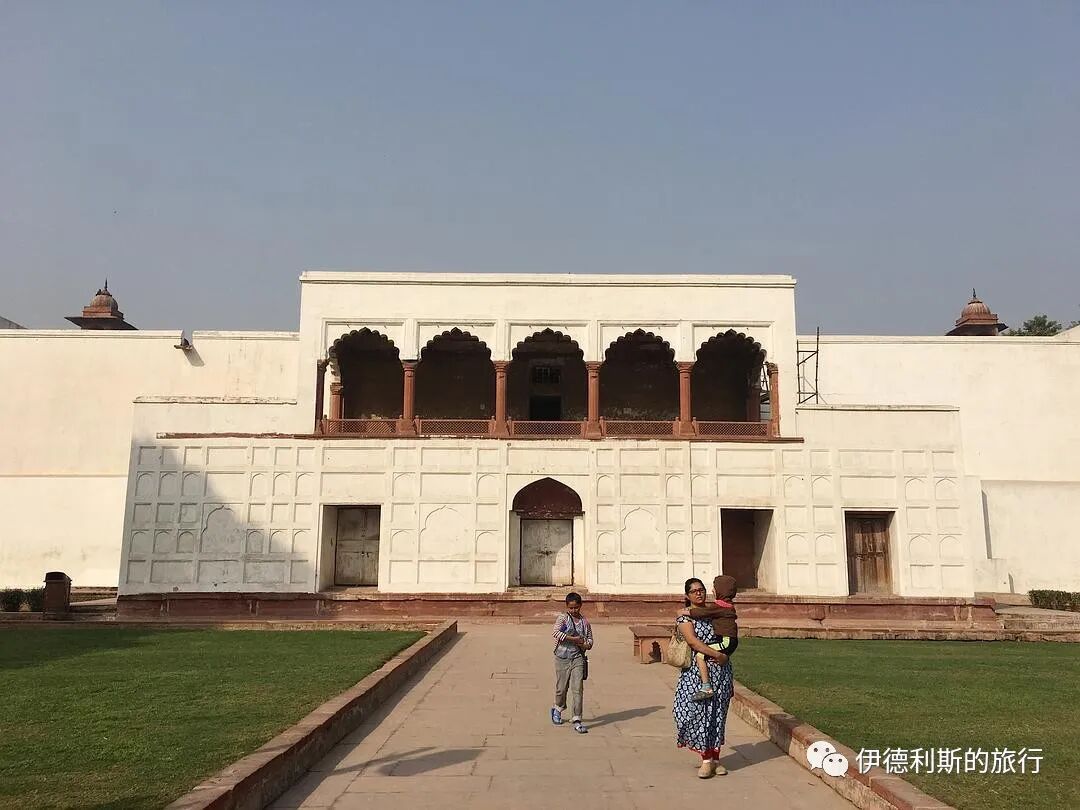
After entering the Diwan-i-Aam, you reach the harem section of the Red Fort. Rang Mahal means 'Palace of Colors.' It was the living quarters for the concubines of the Mughal emperor.
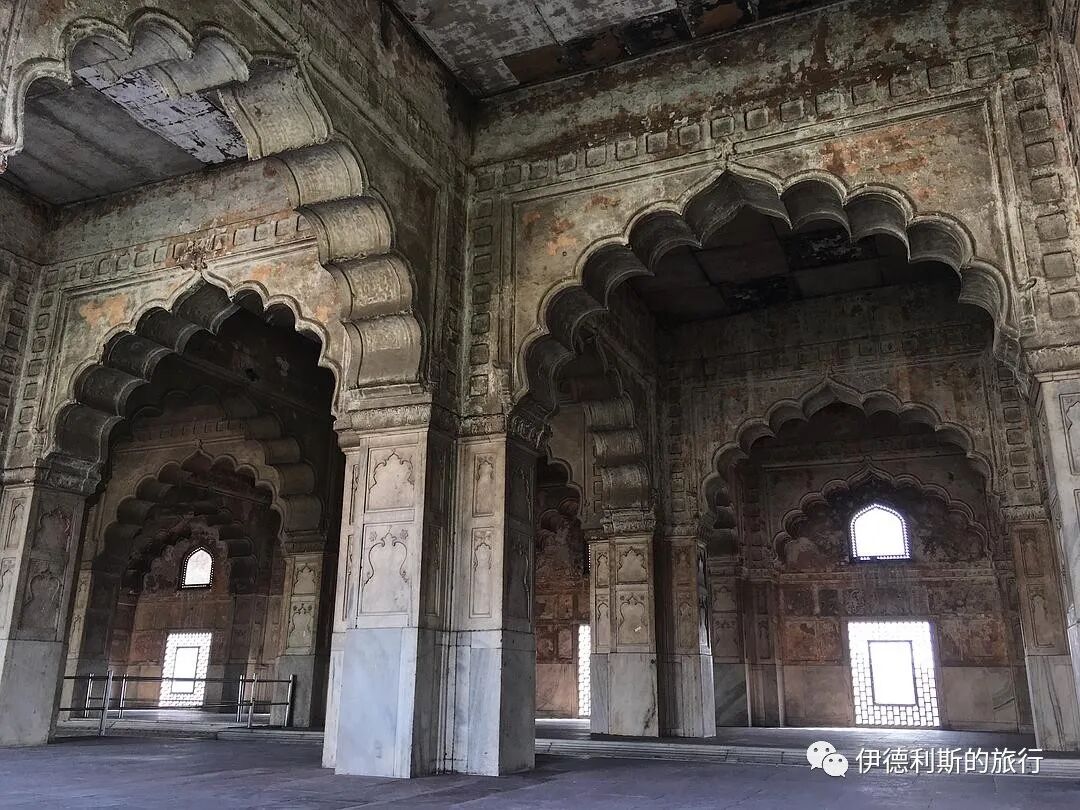
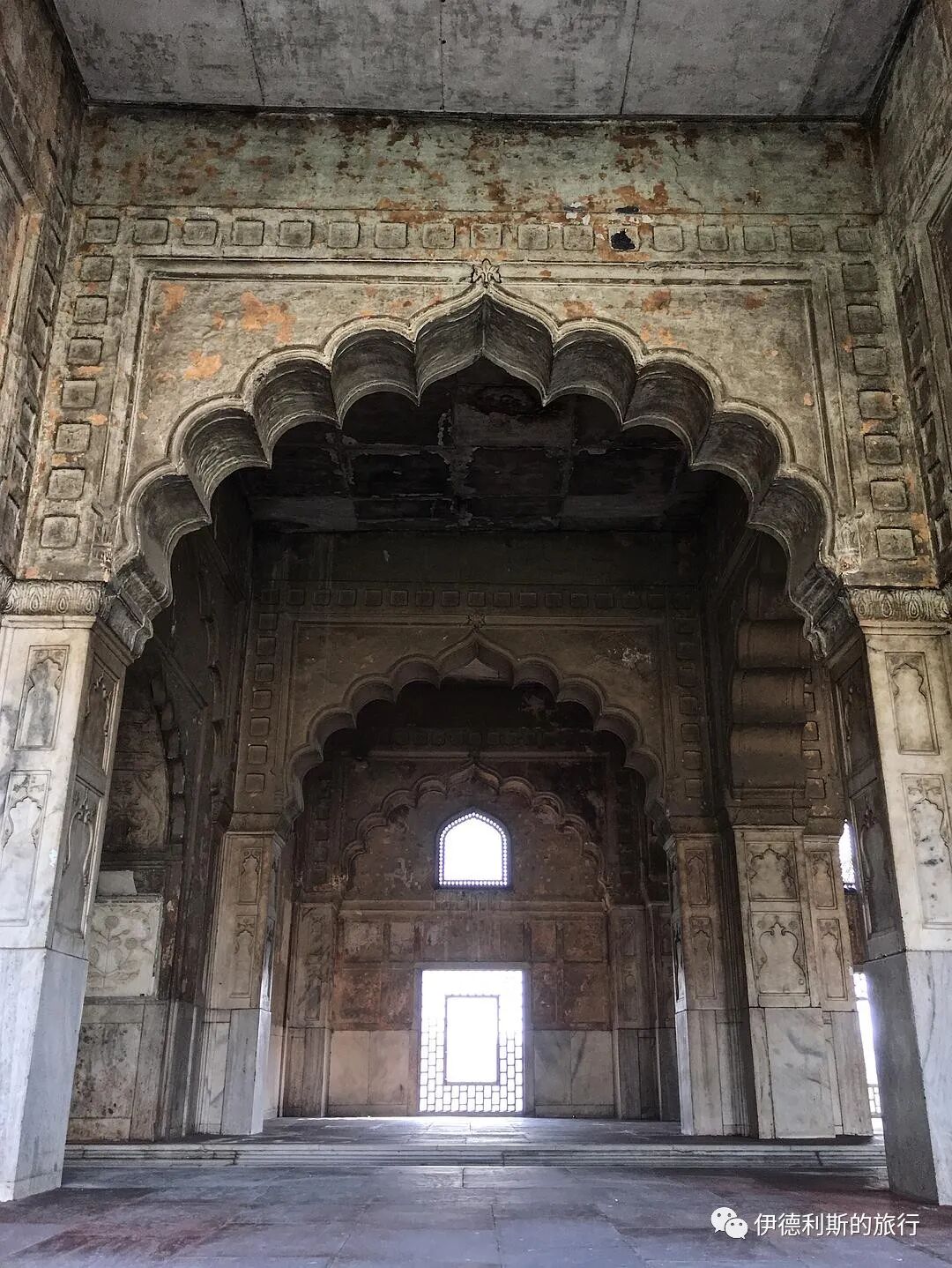

Painted by Ghulam Ali Khan between 1852 and 1854.
A shallow canal called the Stream of Paradise (Nahr-i-Bihist) flows into the marble pool in front of the Rang Mahal. During the hot summer, the women of the Mughal royal family would stay in the basement of the Diwan-i-Aam to escape the heat.
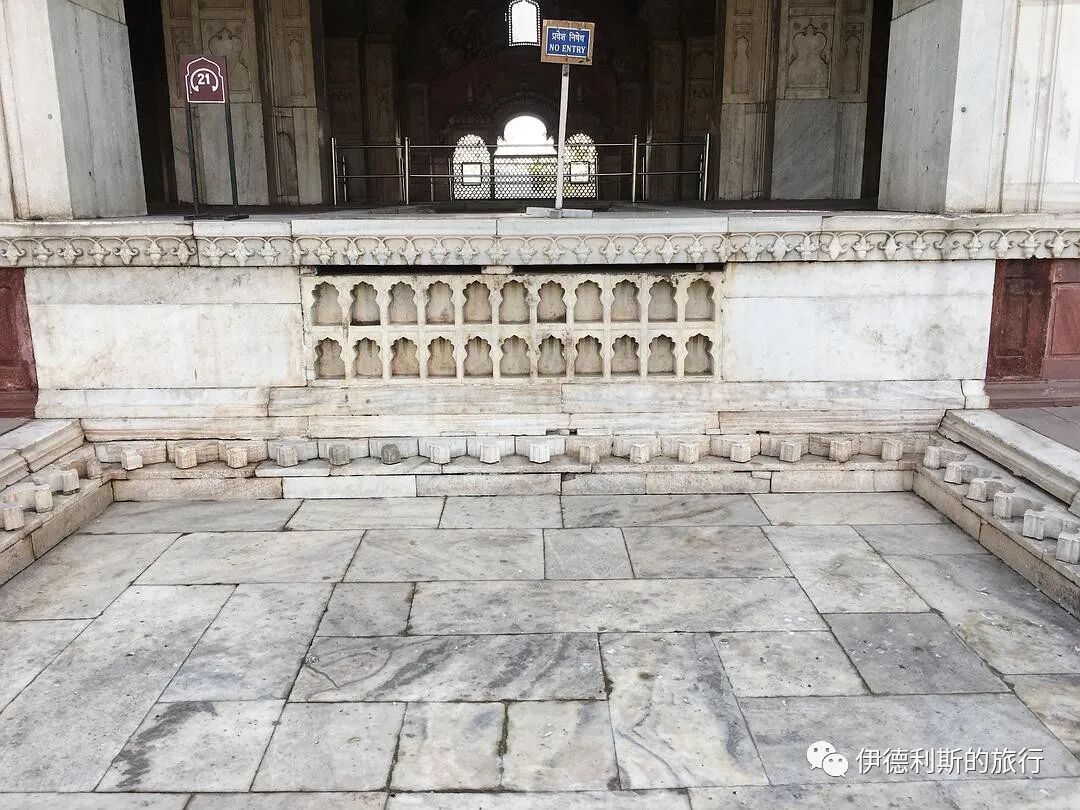
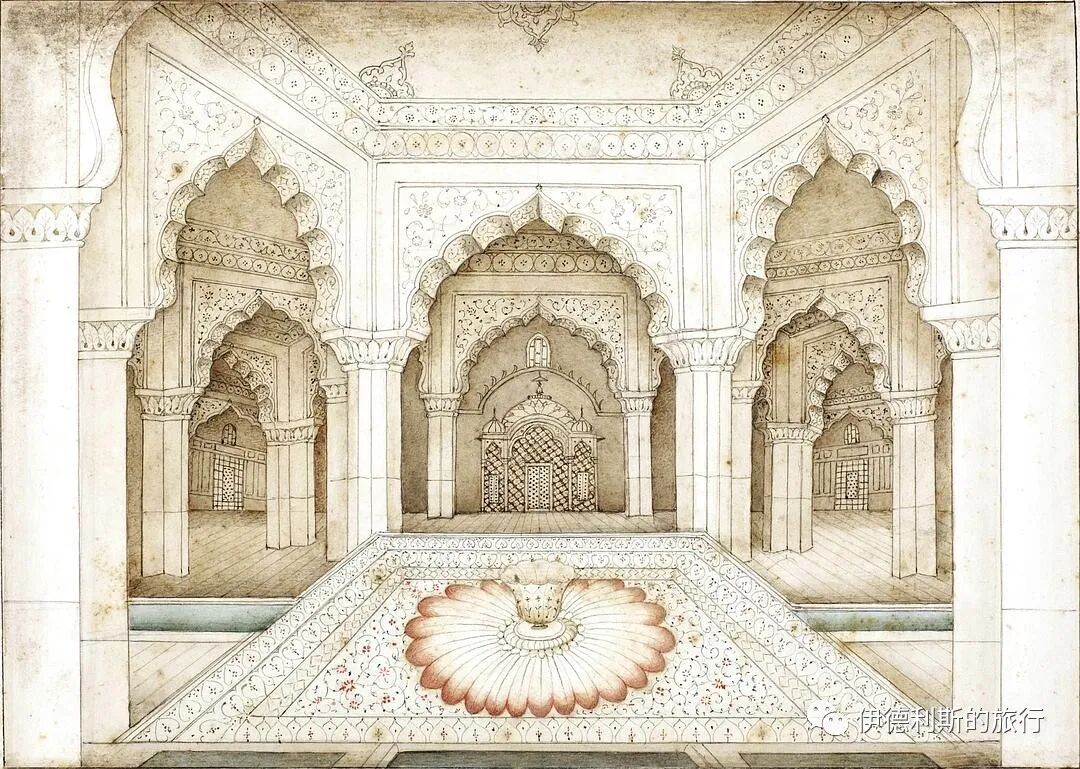
Painted by Ghulam Ali Khan between 1852 and 1854.
6. Khas Mahal (emperor's private palace)
To the north of the Rang Mahal is the Khass Mahal, which was the sleeping quarters of the Mughal emperor. The Rang Mahal was built of white marble. Its walls were originally inlaid with various jewels and the ceiling was gilded, but these features have not been preserved.
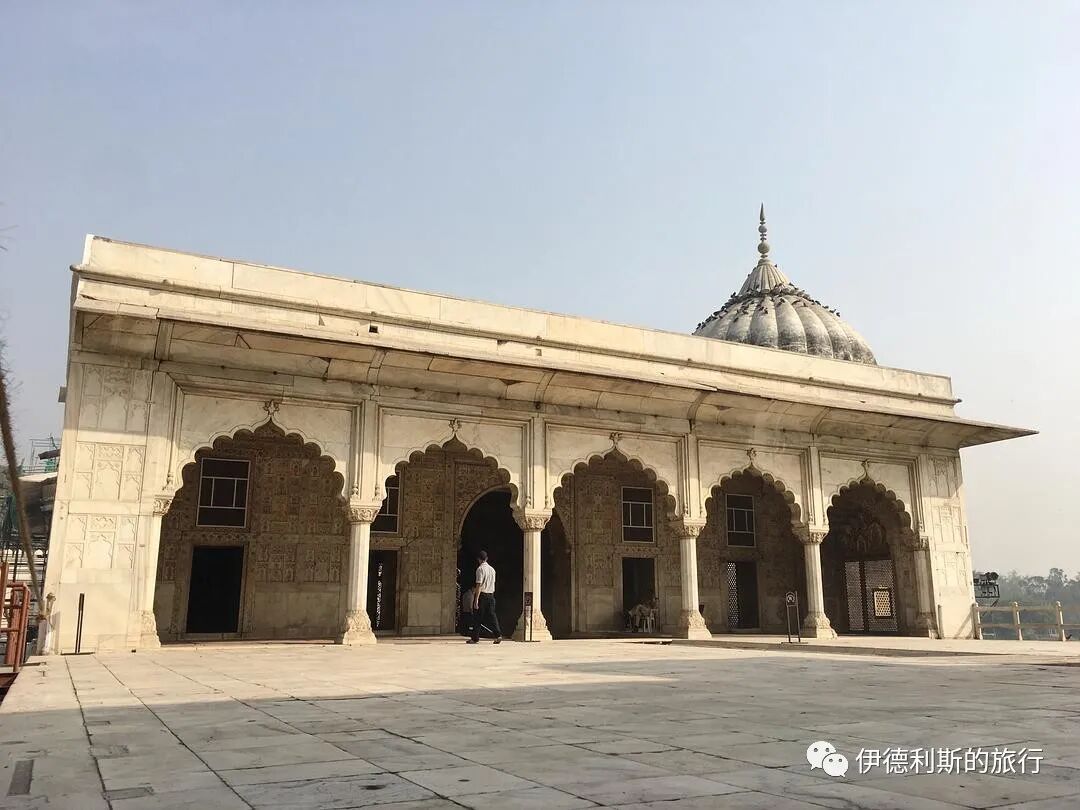
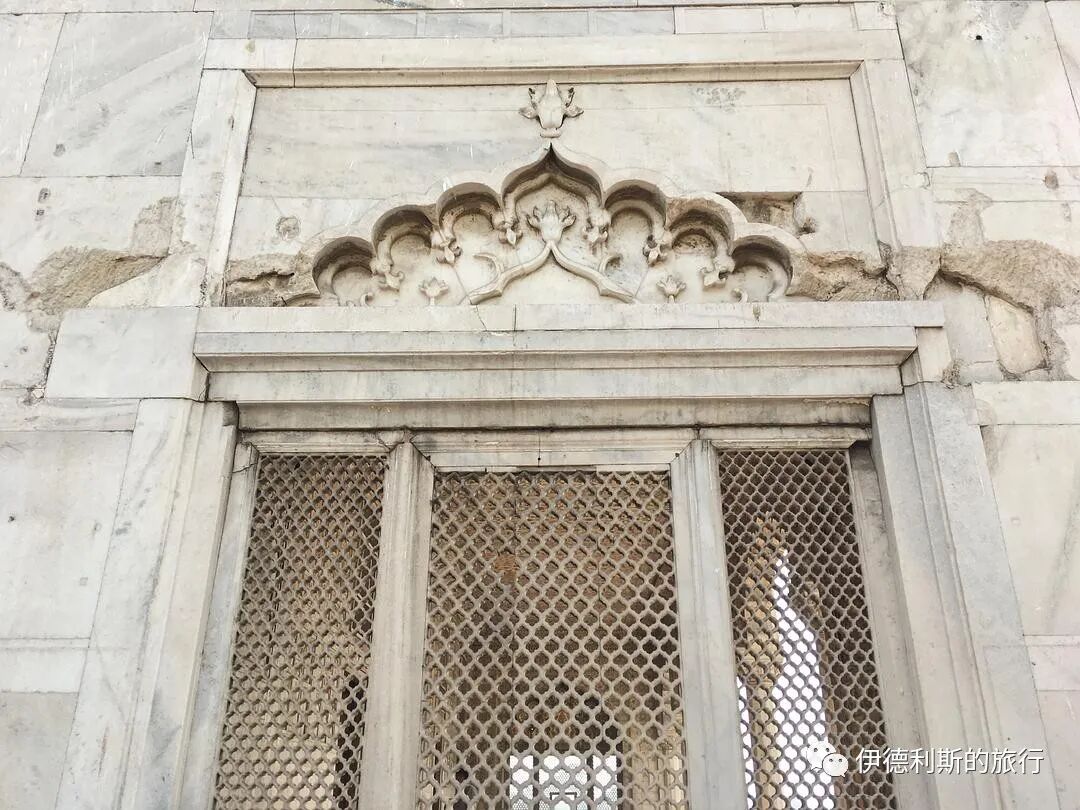
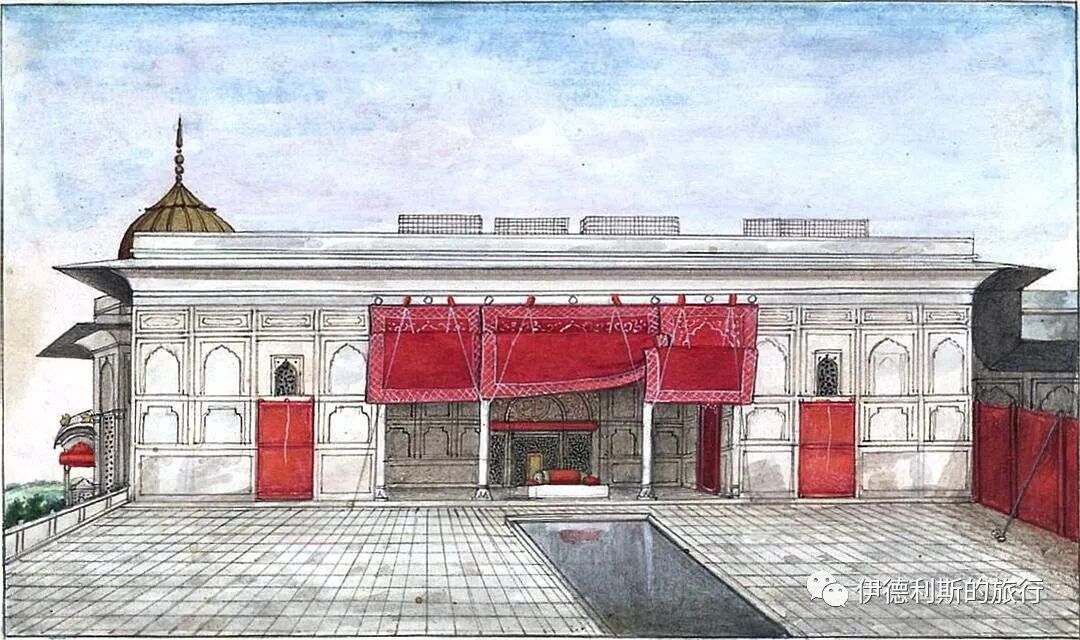
Painted by Sir Thomas Theophilus Metcalfe in 1843.
The last Mughal emperor, Bahadur Shah II, ascends the throne in the Khas Mahal, painted by Ghulam Ali Khan between 1837 and 1838.
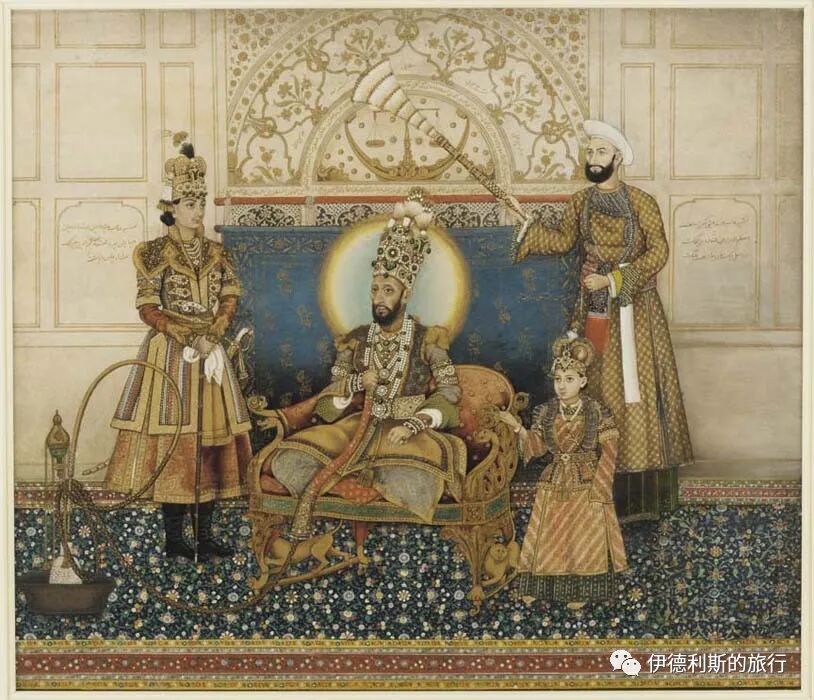
7. Hall of Private Audience (Diwan-i-Khas)
North of the Khas Mahal is the Hall of Private Audience (Diwan-i-Khas), where the Mughal emperor met with courtiers and state guests. The Hall of Private Audience (Diwan-i-Khas) means "private reception room." It is built of white marble and was once inlaid with various jewels, featuring the exquisite Peacock Throne in the center. The hall once had a ceiling inlaid with gold and silver, but these were later removed. The current ceiling was installed in 1911.
Outside the hall, there used to be red awnings, and the arches below were inscribed with verses by the famous Sufi master Amir Khusrow:
If there is a paradise on earth,
It is this, it is this, it is this.
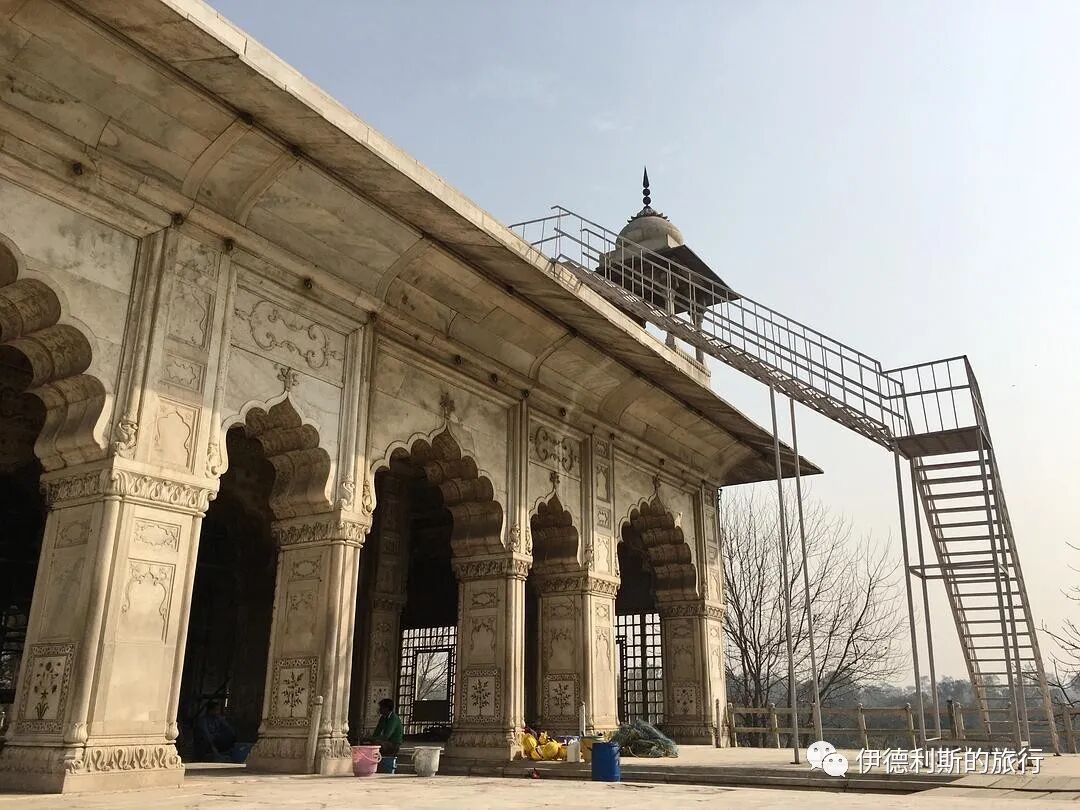
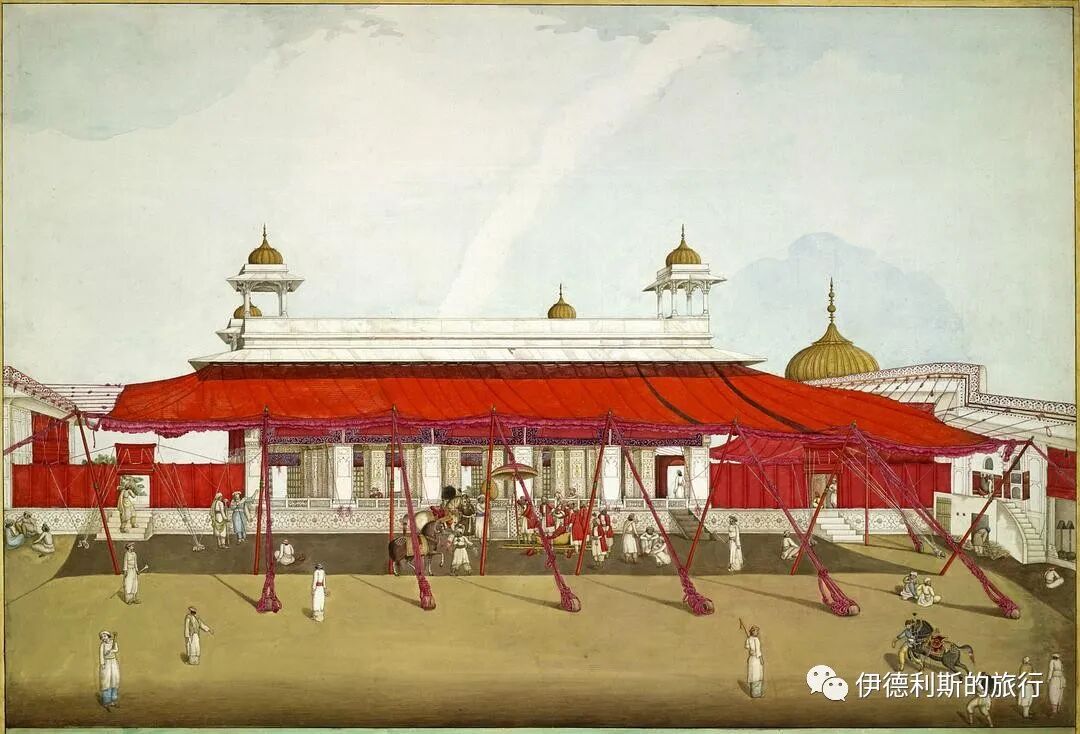
Painted by Ghulam 'Ali Khan in 1817.
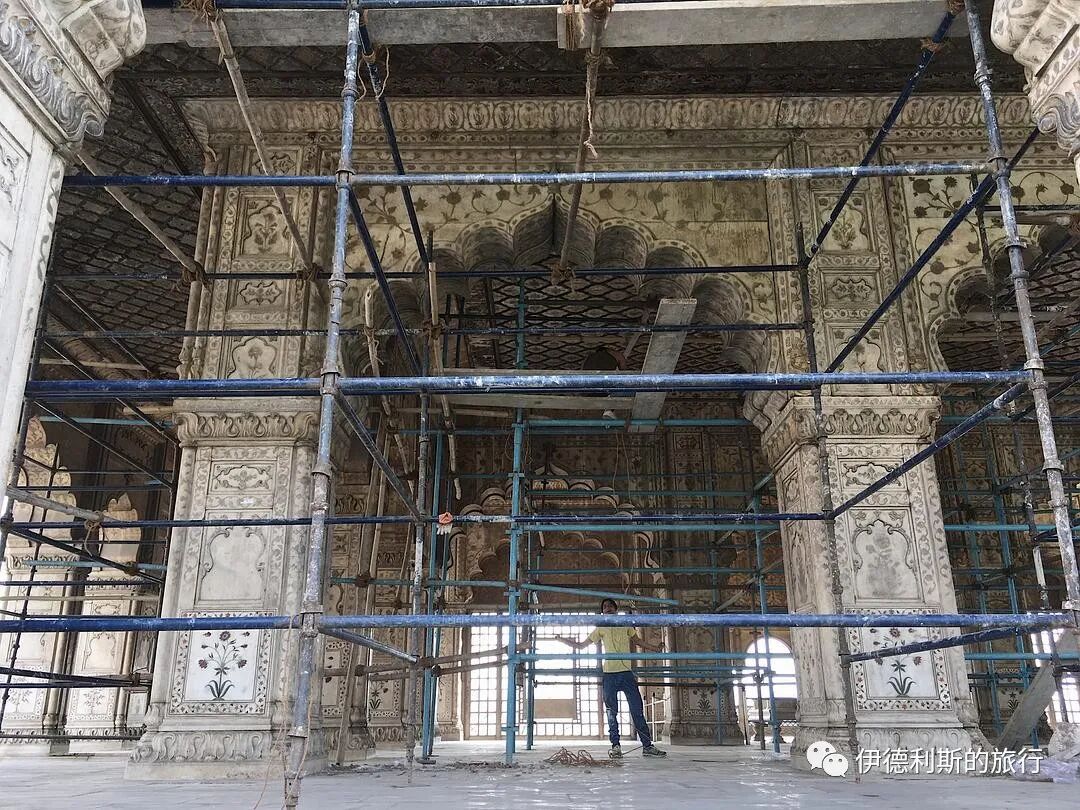
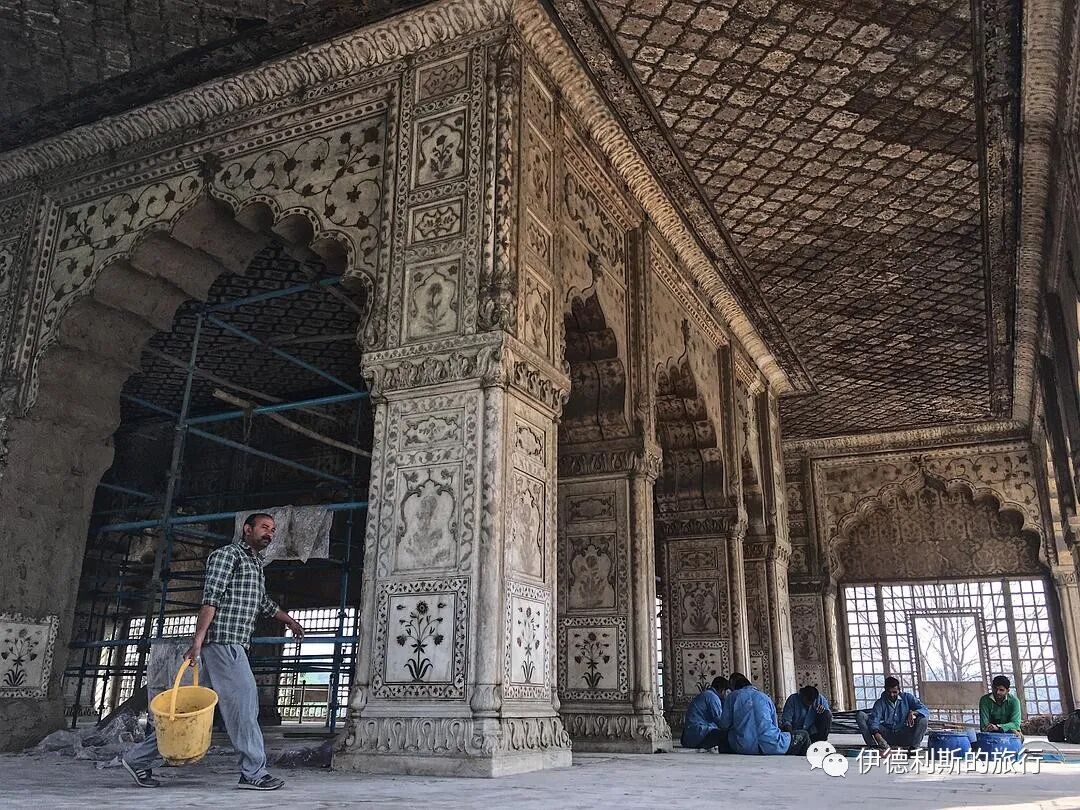
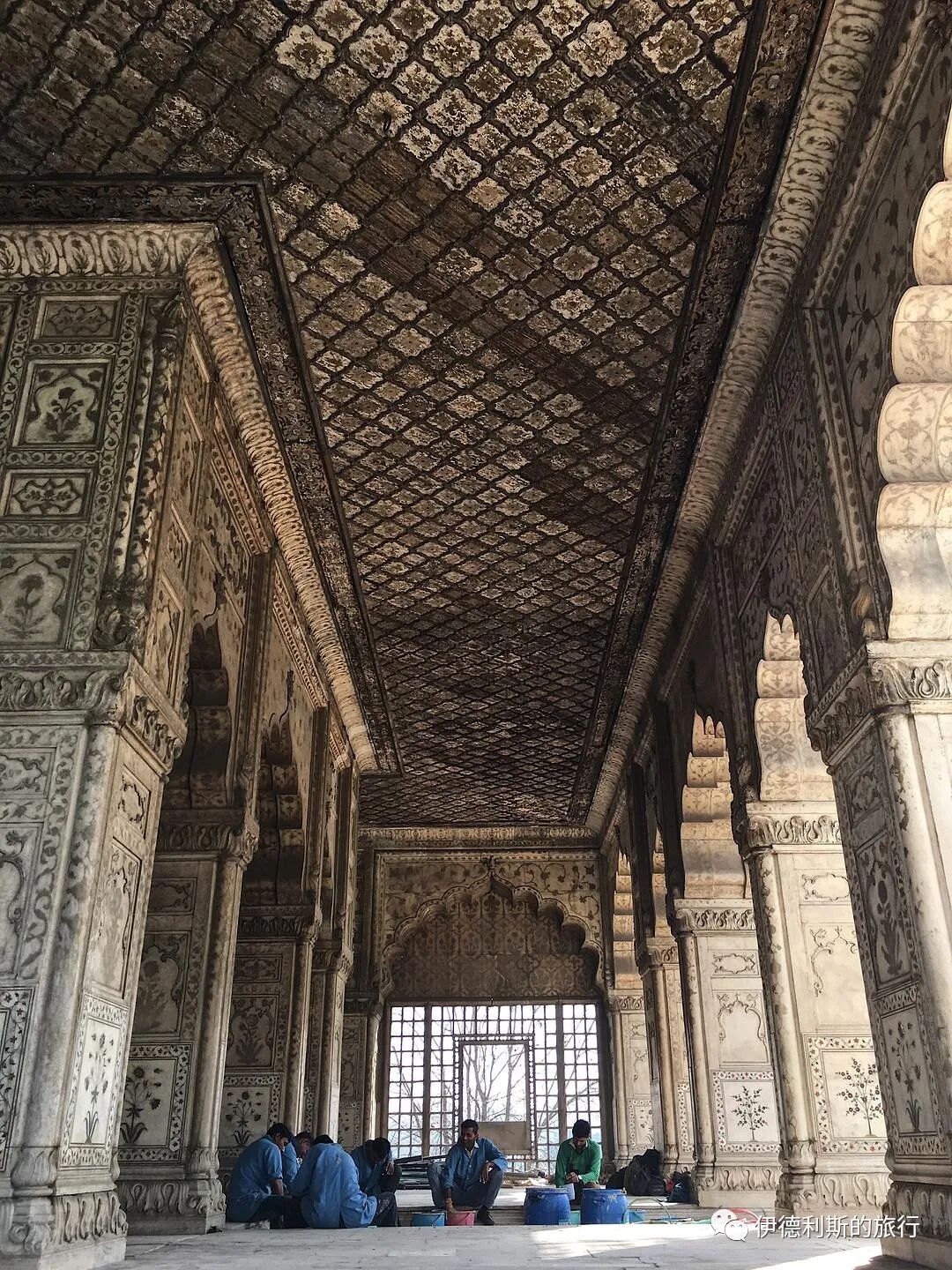
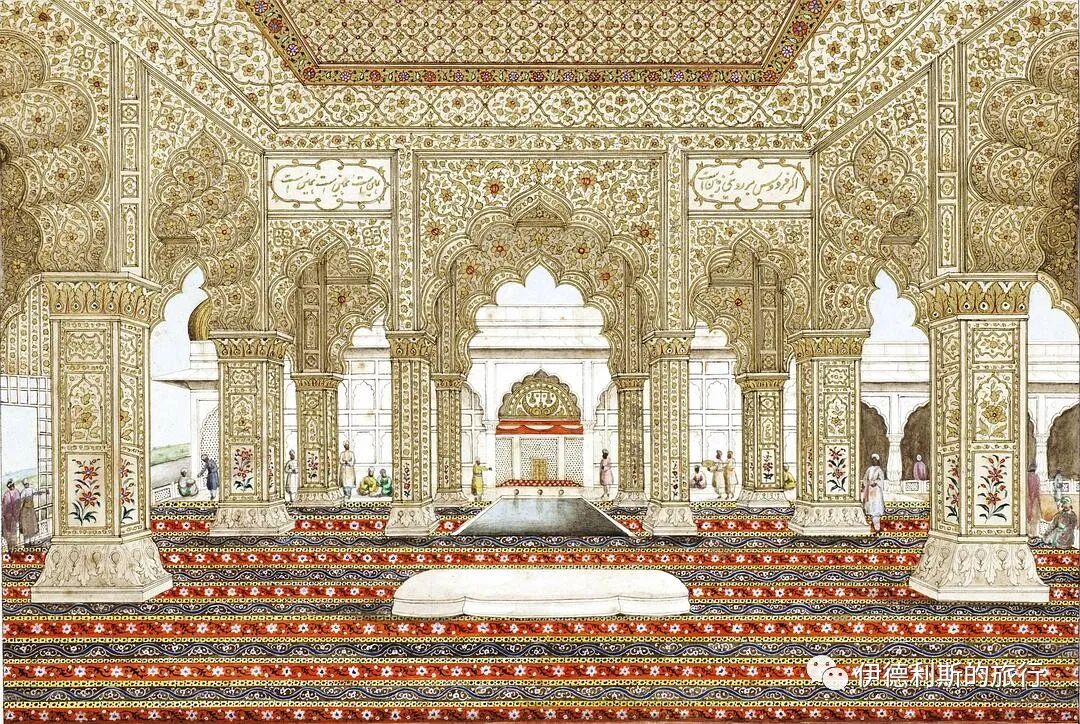
Painted by Ghulam Ali Khan between 1852 and 1854.
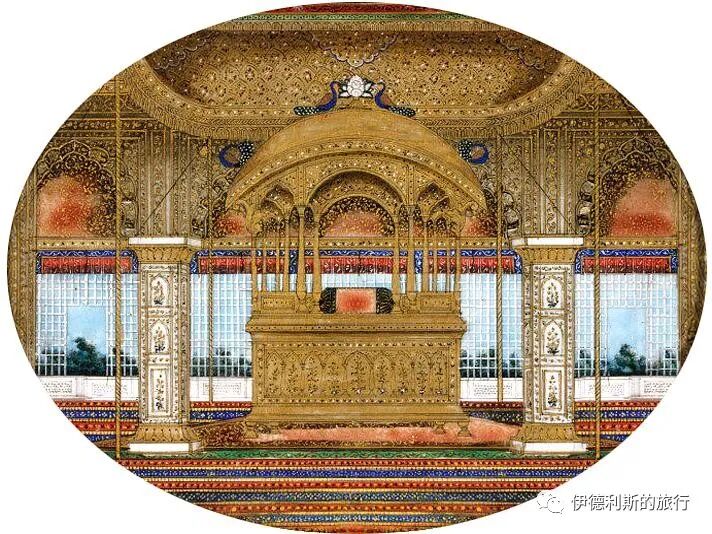
The Peacock Throne in 1850.
8. Hammam-e-Lal Qila (bathhouse)
North of the Hall of Private Audience (Diwan-i-Khas) is the Red Fort Bathhouse (Hammam-e-Lal Qila), which was used by the Mughal royal family. The Red Fort Bathhouse (Hammam-e-Lal Qila) is a Turkish-style bath consisting of three sections: a children's bath, a dressing room, and a hot bath. Legend has it that the water flowing from the taps at that time was mixed with rose perfume.
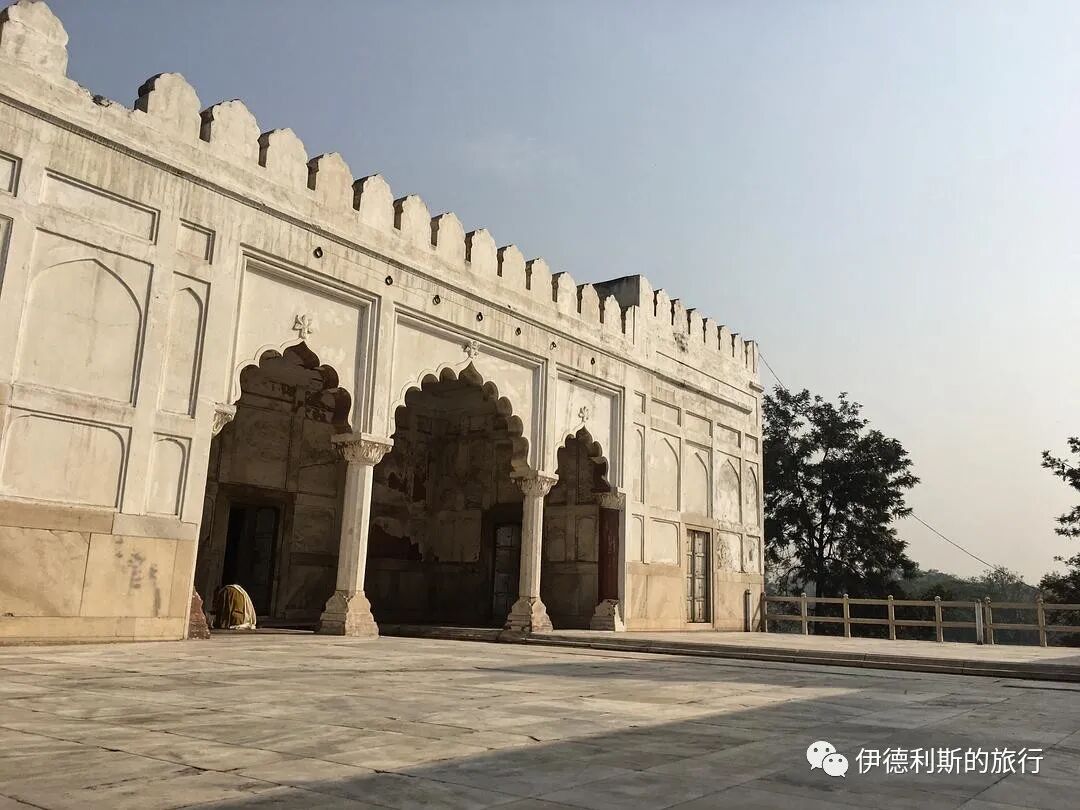
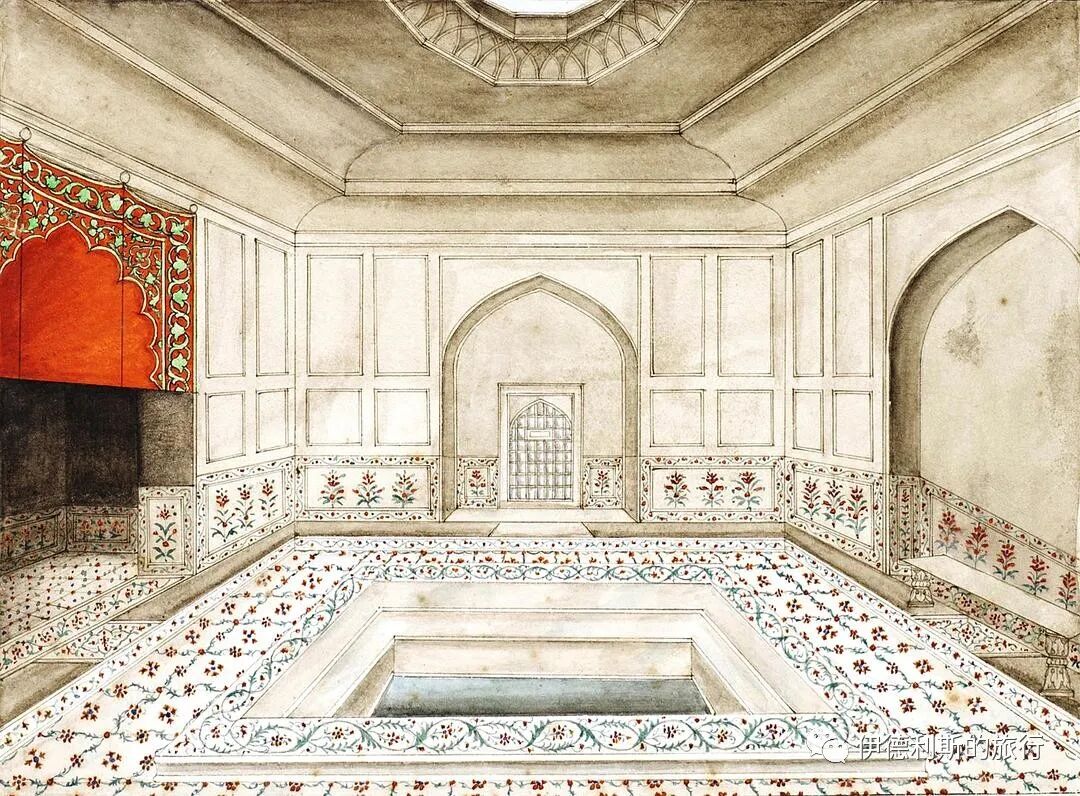
Painted by Ghulam Ali Khan between 1852 and 1854.
9. Pearl Mosque (Moti Masjid)
The Pearl Mosque (Moti Masjid) is west of the bathhouse. It was built by the sixth Mughal emperor, Aurangzeb, between 1659 and 1660 for his second wife, Nawab Bai. Pearl (Moti) means "pearl." It is built of white marble, and its three domes were originally covered with gilded copper plates, which were lost after 1857.
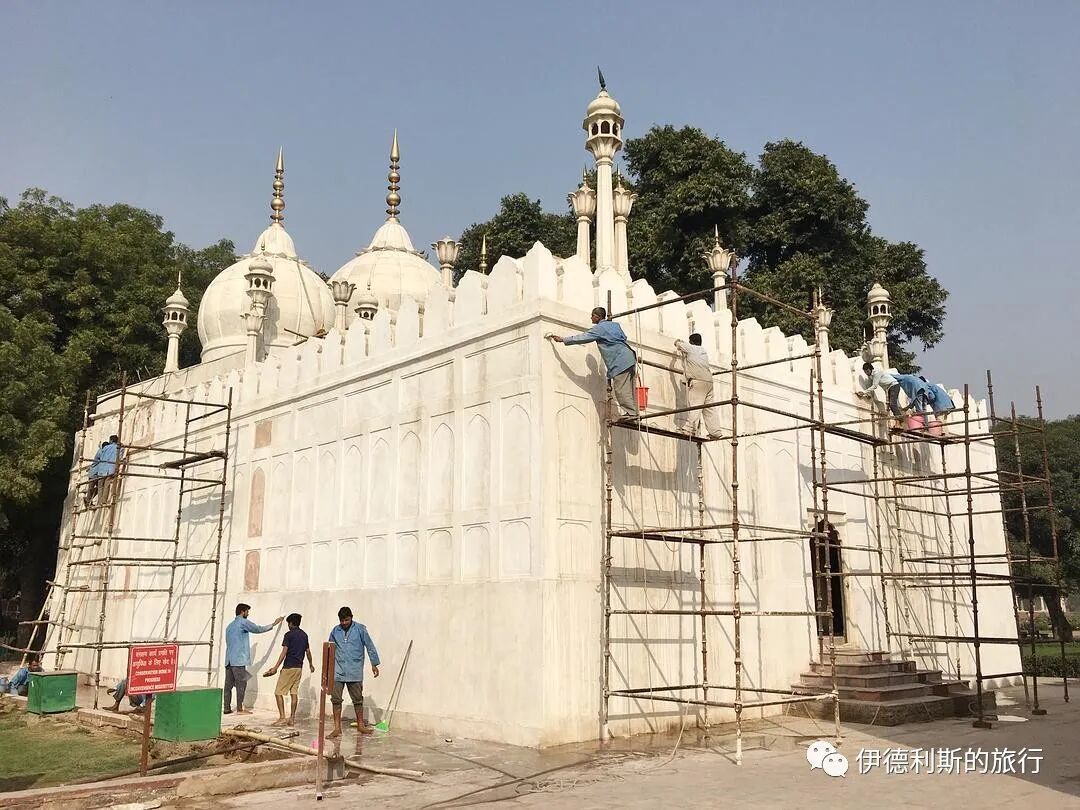
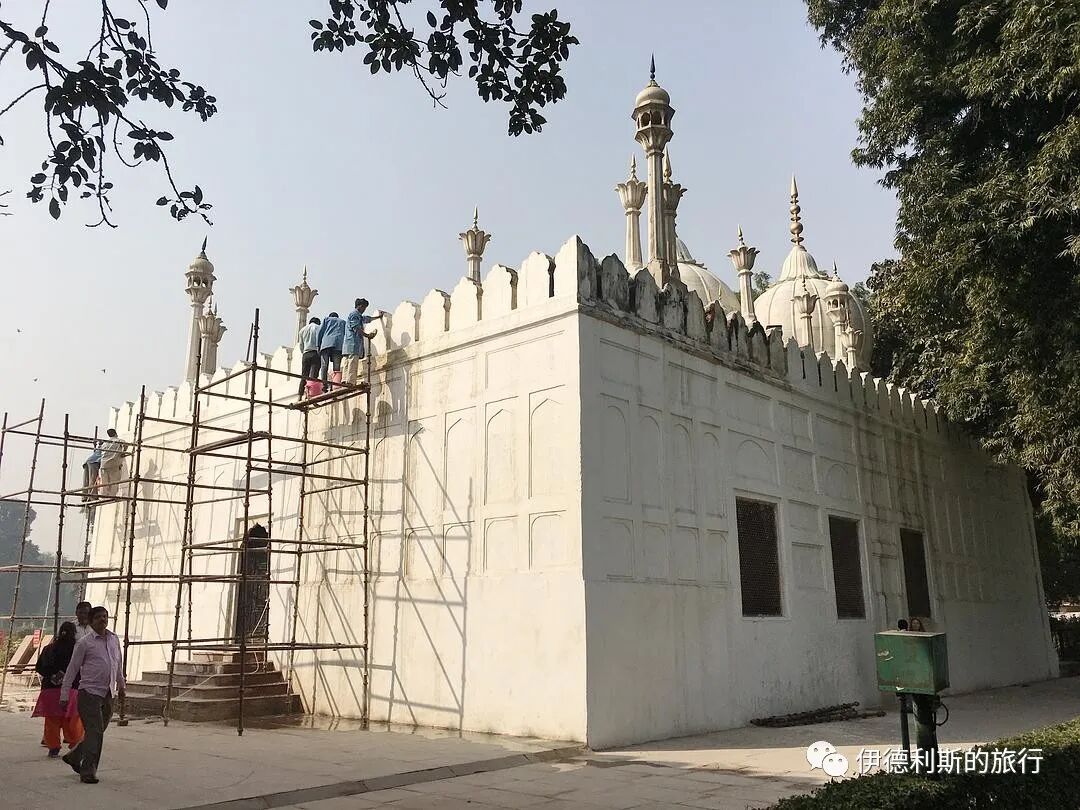
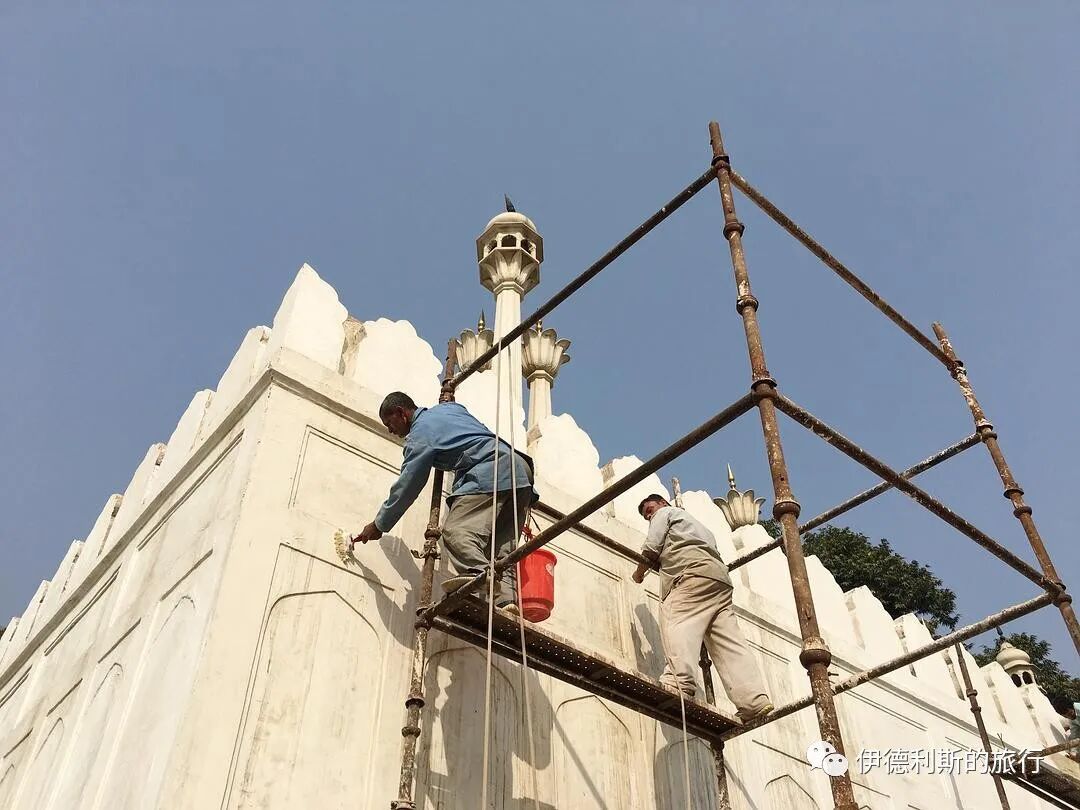
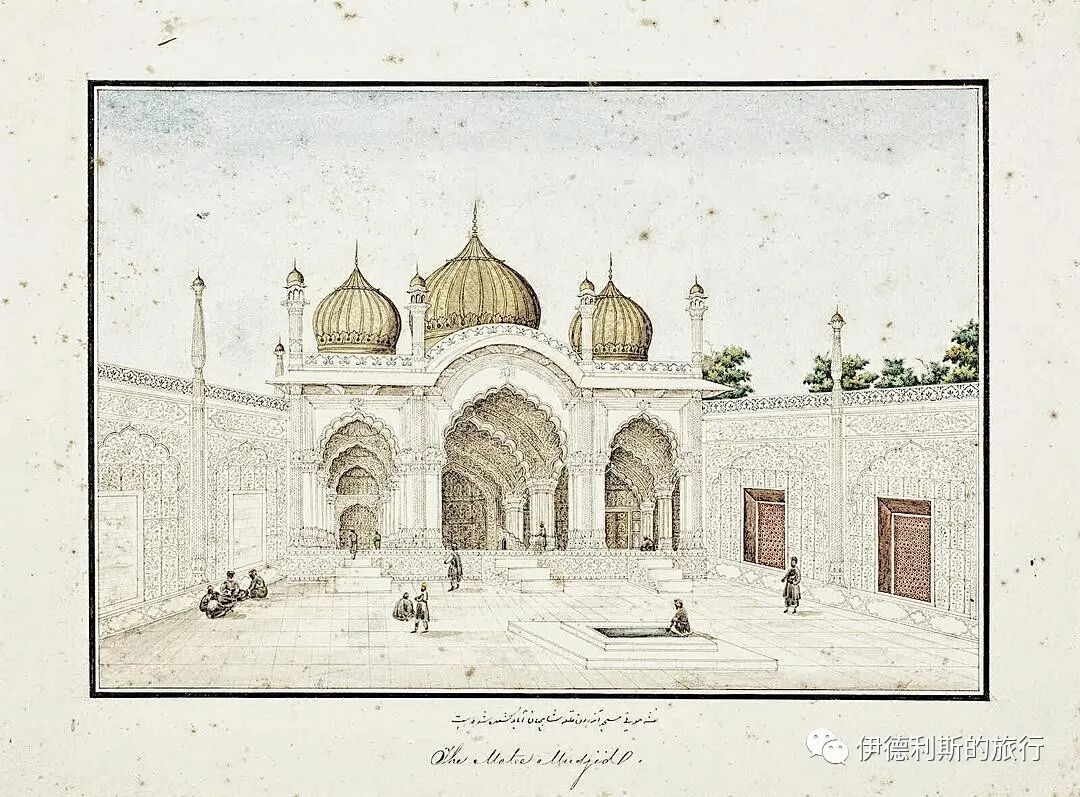
Painted by Ghulam Ali Khan between 1852 and 1854.
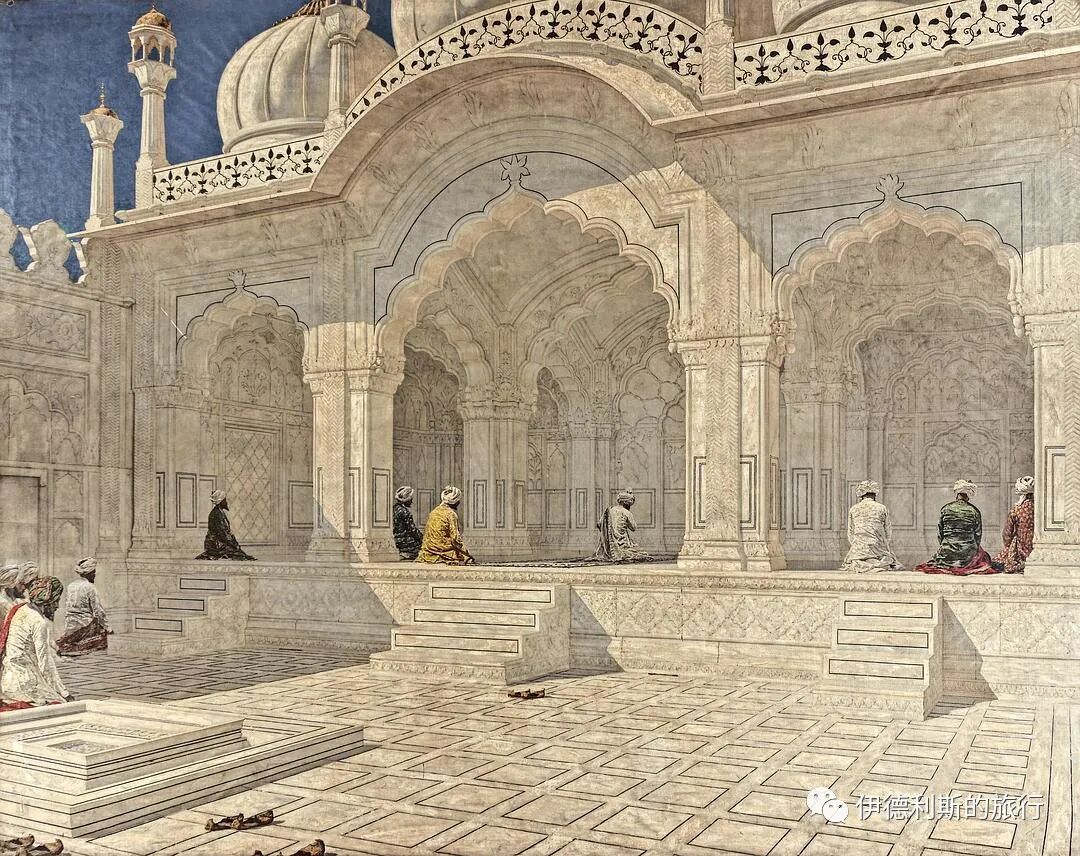
Painted by Vasily Vereshchagin in the late 1880s.
10. King's Tower (Shah Burj)
The northernmost part of the harem is a white marble pavilion built during the Aurangzeb period. Behind the pavilion is the Shahi Burj, the northeast corner tower of the Red Fort, which means "Imperial Tower." Inside the tower is a hydraulic system that carries water from outside the Red Fort into its gardens and buildings.
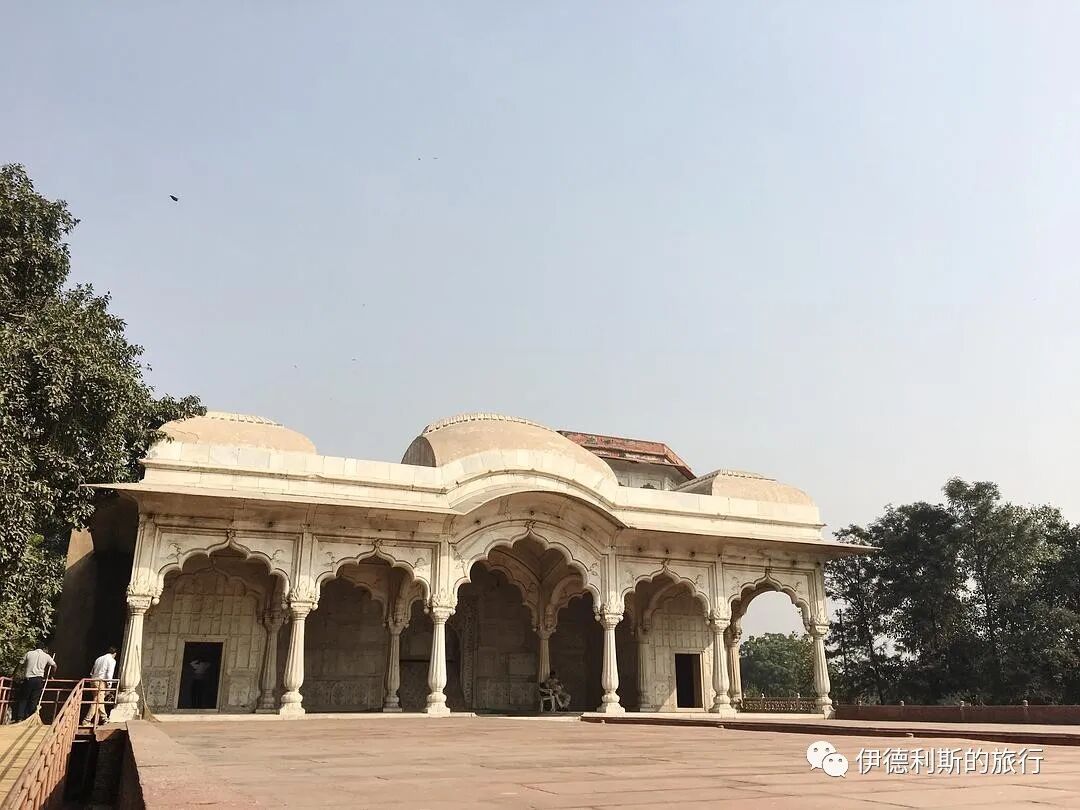
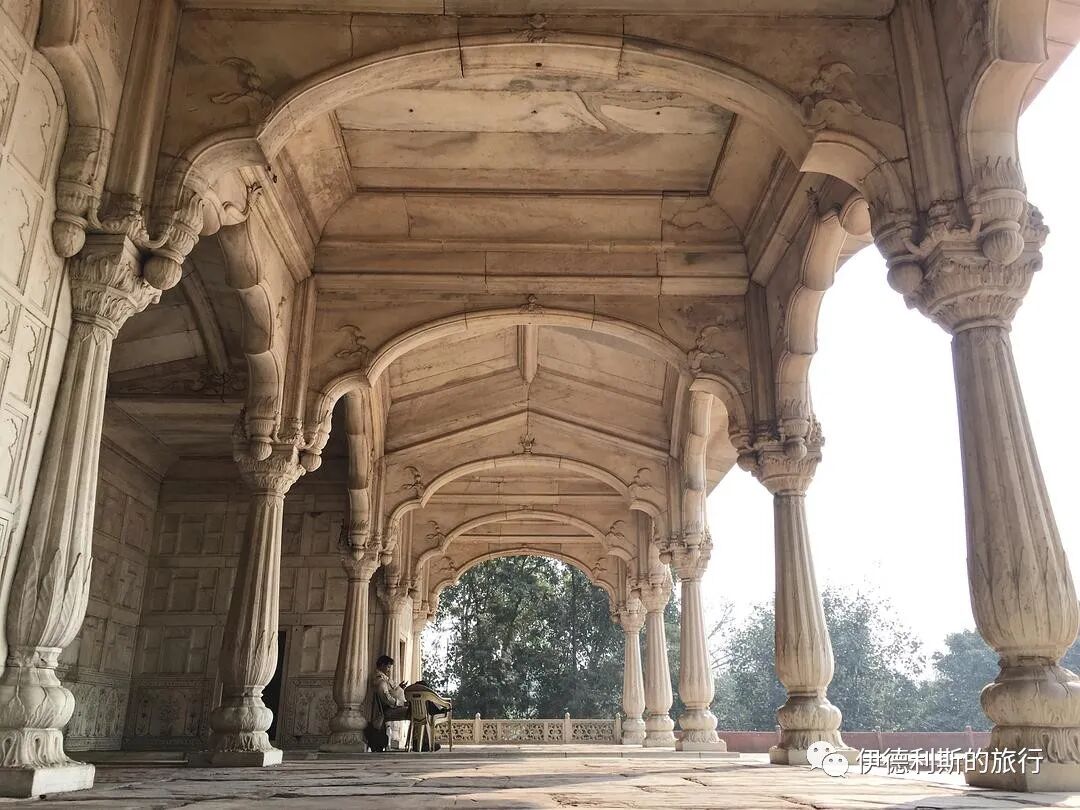
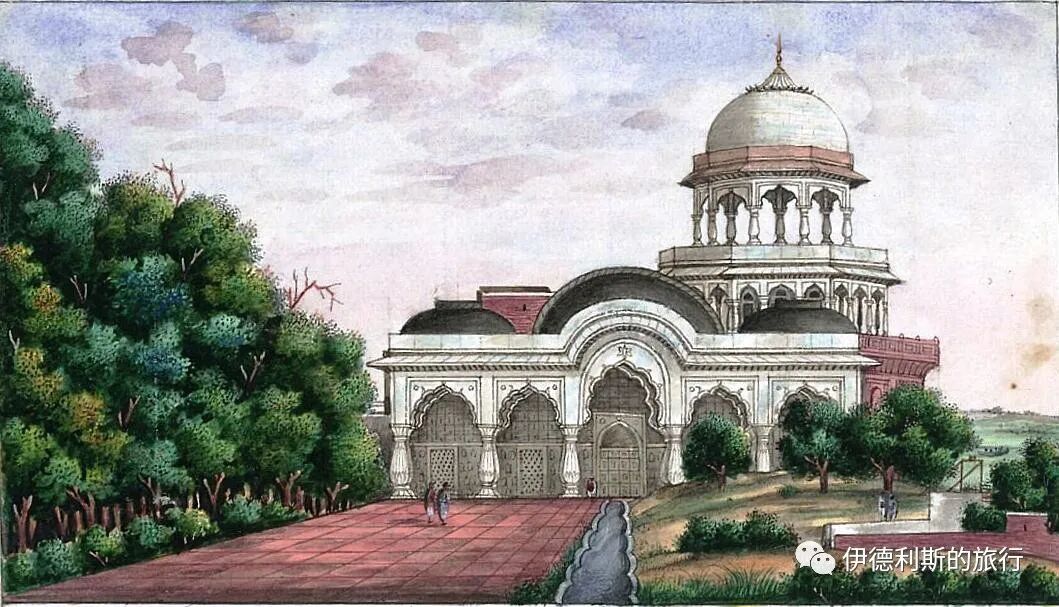
Painted by Sir Thomas Metcalfe in 1843.
11. Life-Giving Garden (Hayat Bakhsh Bagh)
In the northwest part of the harem is the royal water garden Hayat Bakhsh Bagh, which means 'Life-Giving Garden'. Most of the garden's buildings were destroyed after 1857, and only three survive today.
At the center of the garden is the red sandstone building Zafar Mahal, built in 1842 by the last Mughal emperor, Bahadur Shah II. The building sits in a pool and was originally connected to the shore by a red sandstone bridge, but it was destroyed after 1857. After 1857, the British army used this area as a swimming pool.
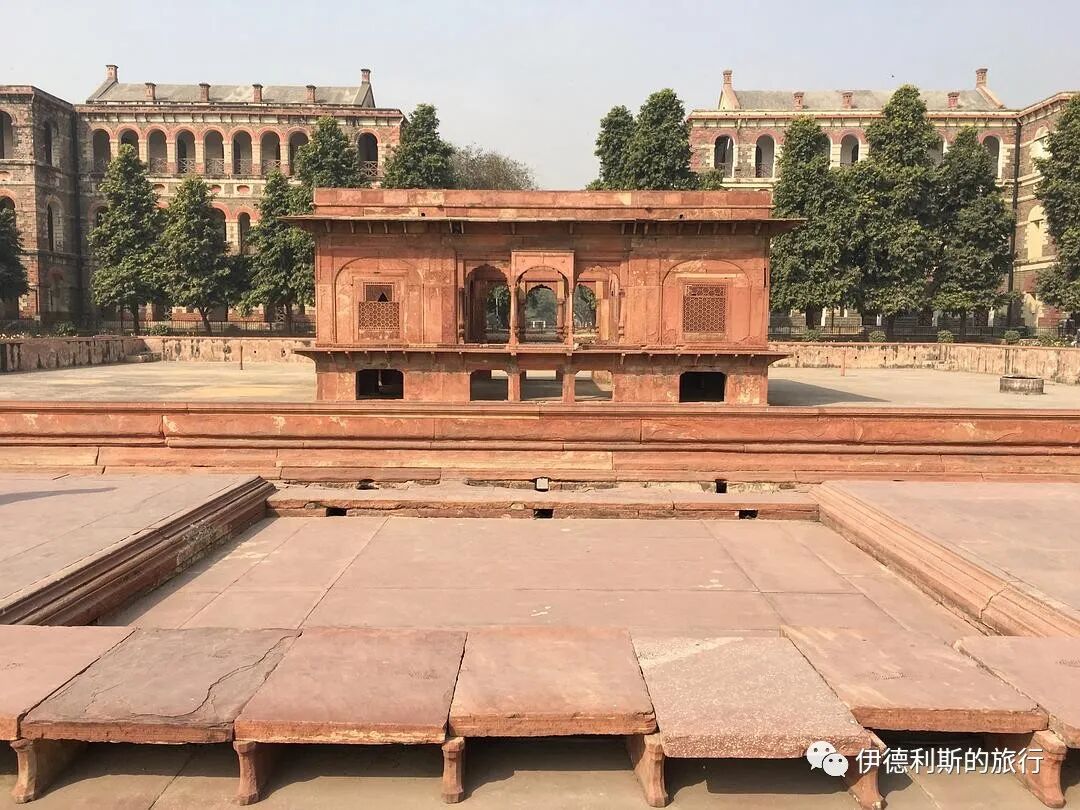
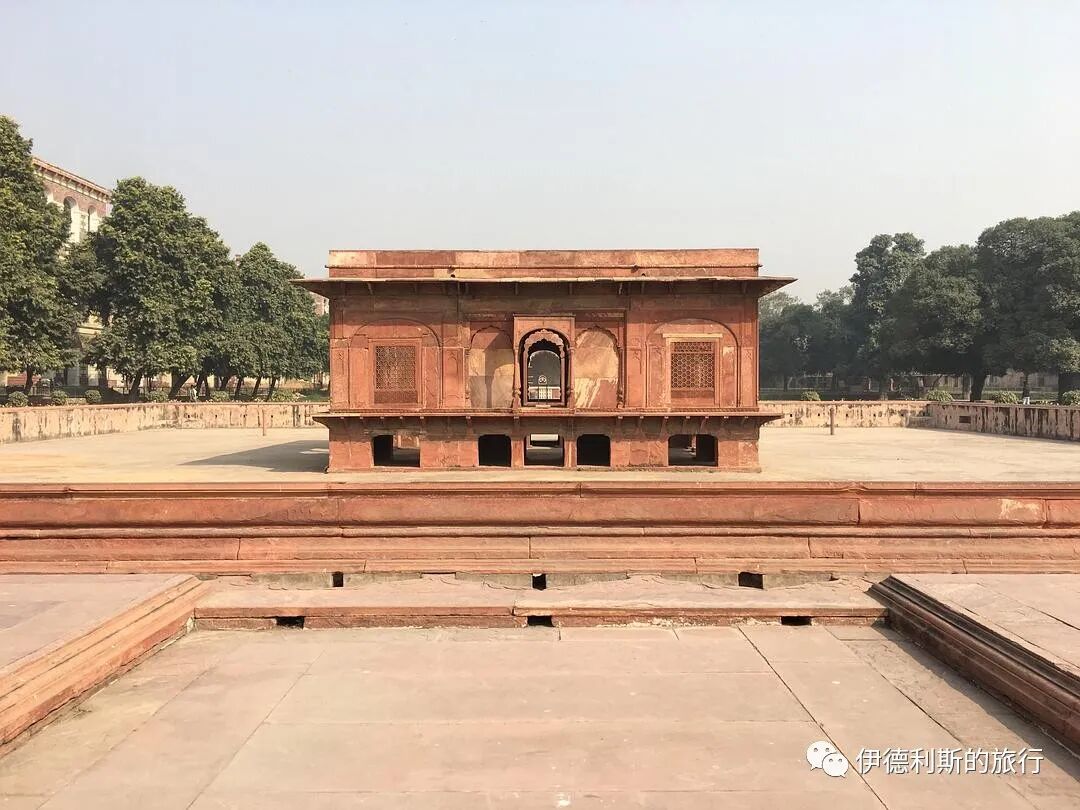
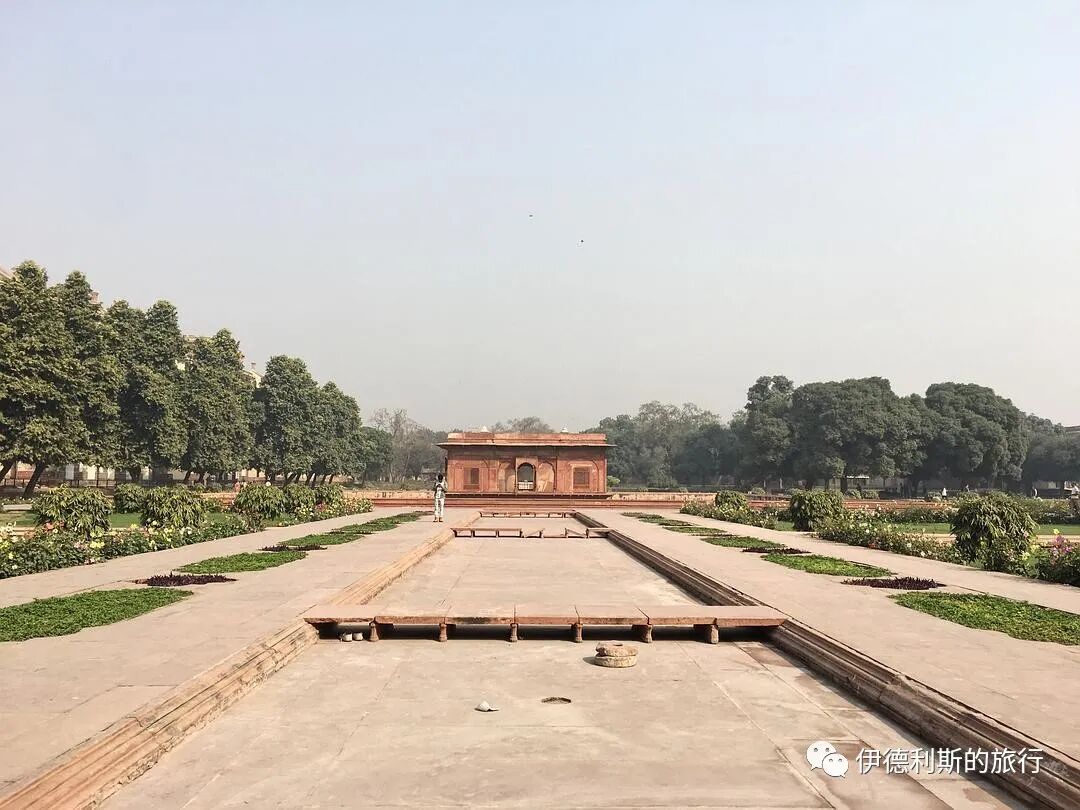
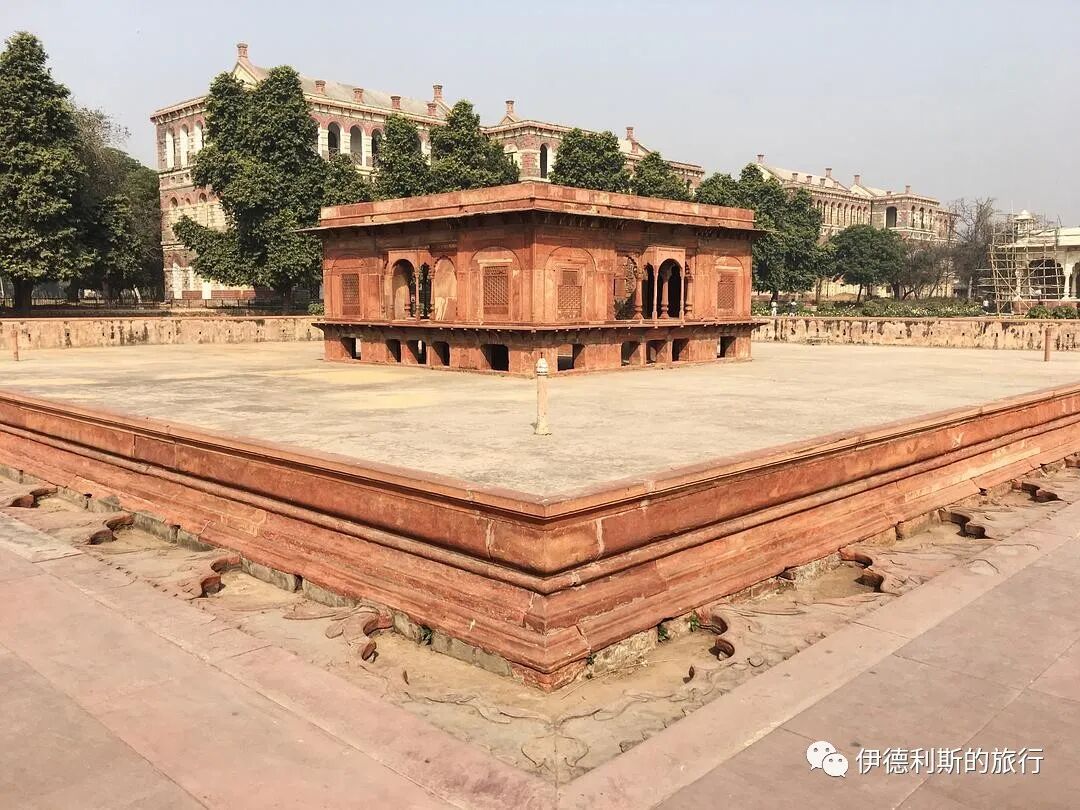
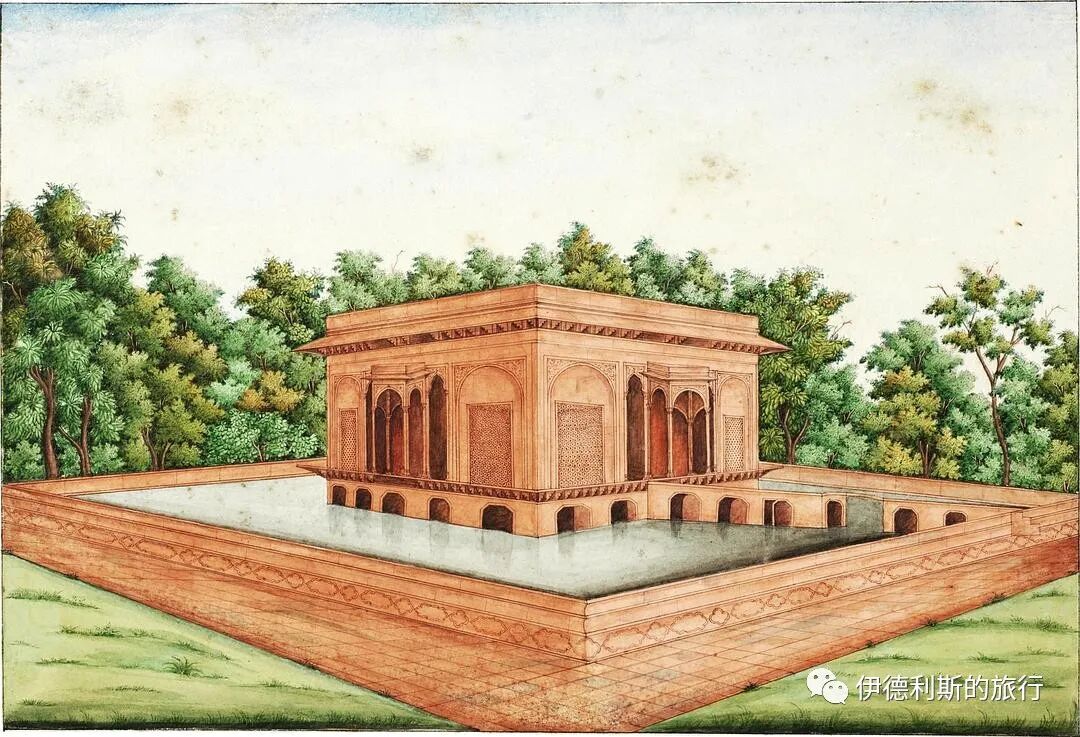
Painted by Ghulam Ali Khan between 1852 and 1854.
To the north and south of the garden are two white marble pavilions called Sawan and Bhadon, named after the months of July and August in the Indian rainy season, as the ladies of the Mughal palace loved to visit the garden during these two months. The pavilions have wall niches that held vases with golden flowers during the day and small oil lamps at night.
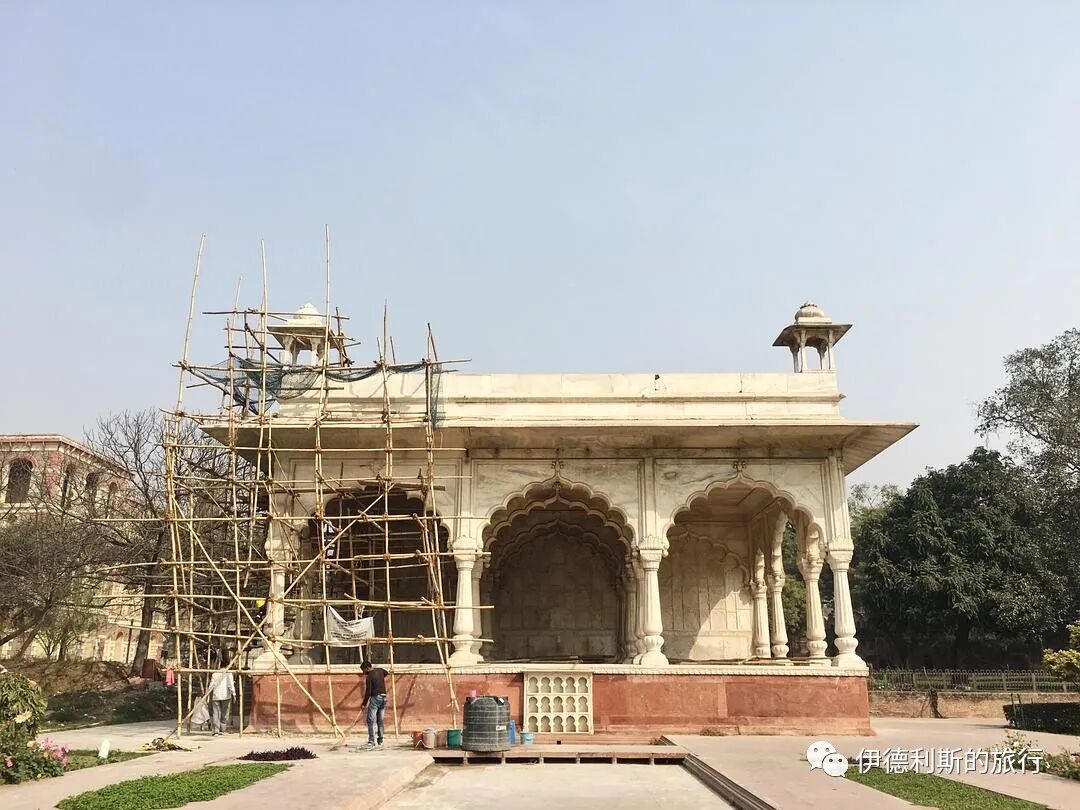
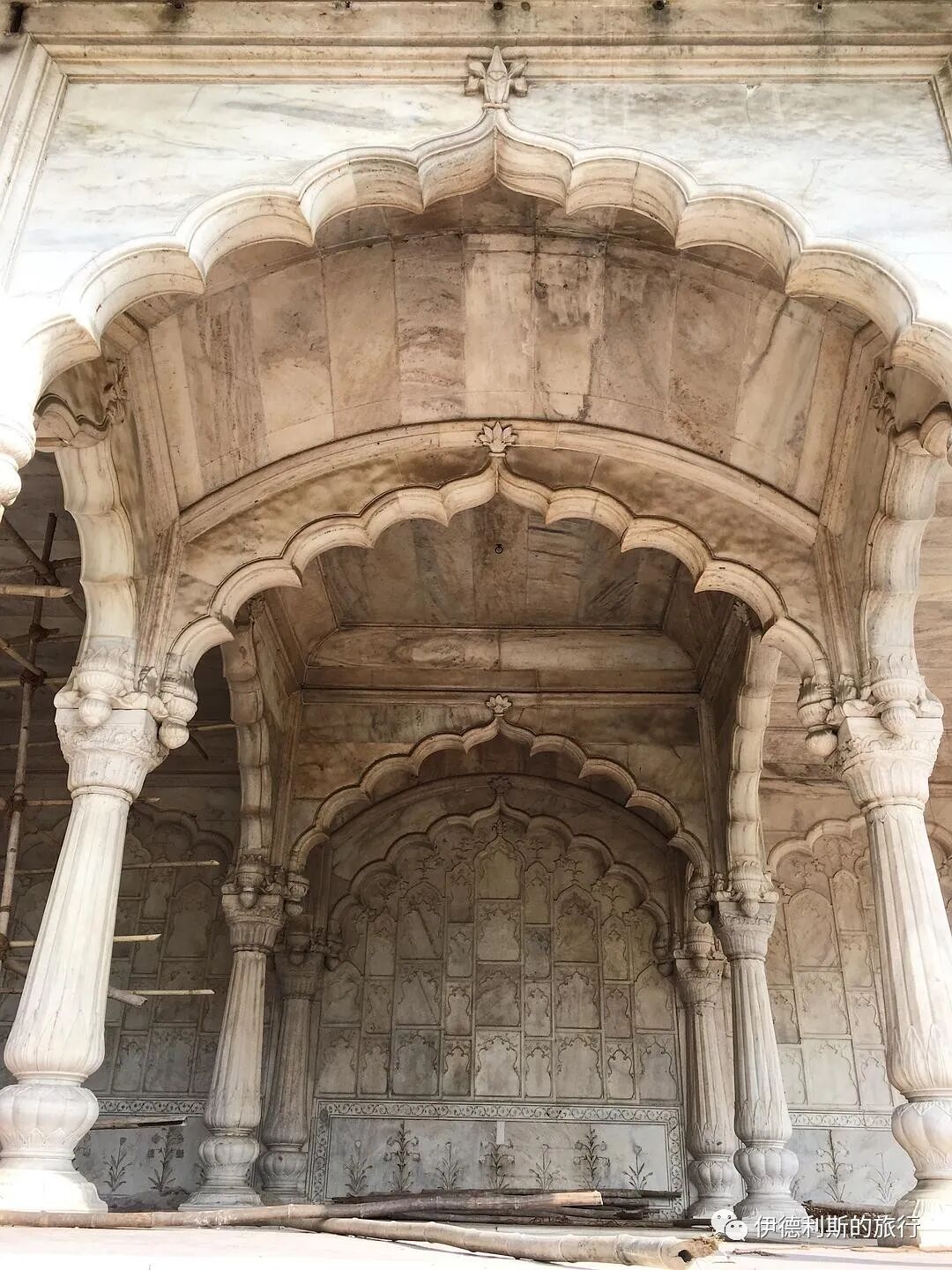
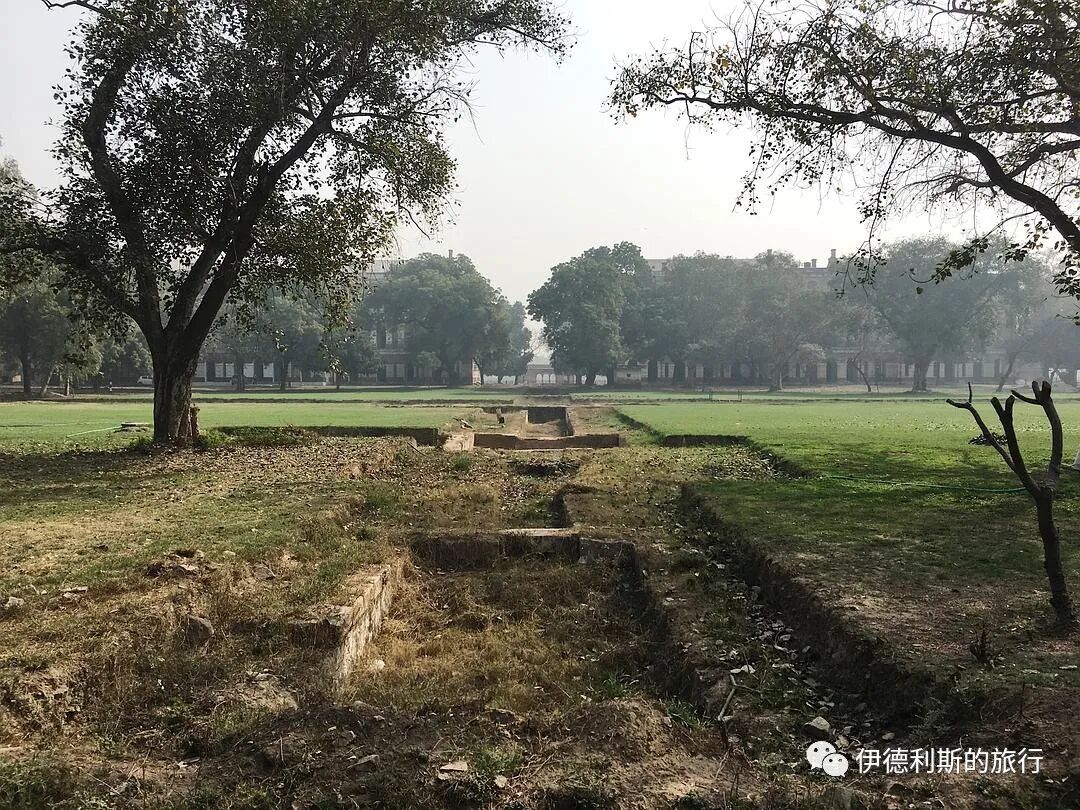
To the west of Hayat Bakhsh Bagh, there was originally another water garden called Mehtab Bagh, meaning 'Moon Garden,' but after 1857, the site was turned into a British military barracks, and now only ruins remain.
2. Jama Mosque: 1650-1656
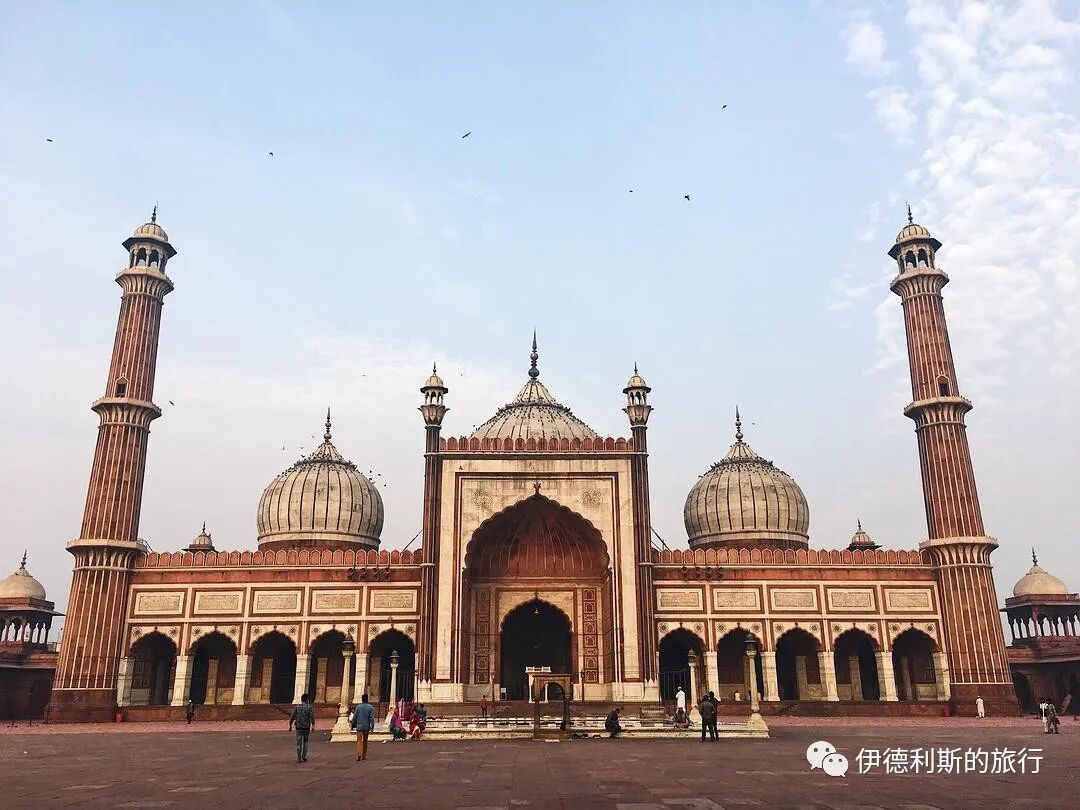
The Jama Masjid mosque is located southwest of the Red Fort; it was built between 1650 and 1656 by order of Shah Jahan and served as the royal mosque of the Mughal Empire.
The mosque was built by more than 5,000 workers under the leadership of Shah Jahan's vizier (wazir) Saadullah Khan, costing over 1 million rupees. The mosque stands on a platform more than 9 meters above the ground and is made of red sandstone and marble, featuring a main hall connected by colonnades, two 40-meter-high minarets, and three gates. The east gate was reserved for the Mughal royal family and had a path that connected directly to the Delhi Gate of the Red Fort.
After 1857, the British seized the Jama Masjid mosque and stationed troops inside. They originally wanted to demolish the mosque, but they failed due to strong opposition, though the madrasa (Islamic school) on the south side of the mosque was destroyed as a result.
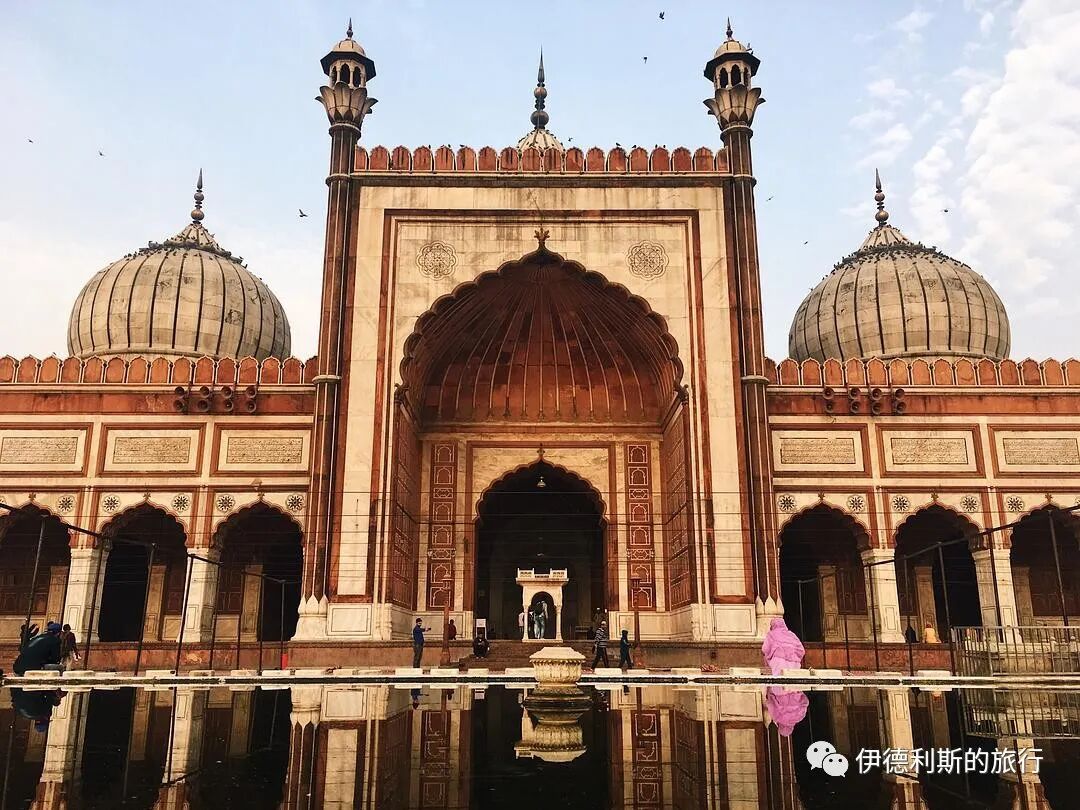
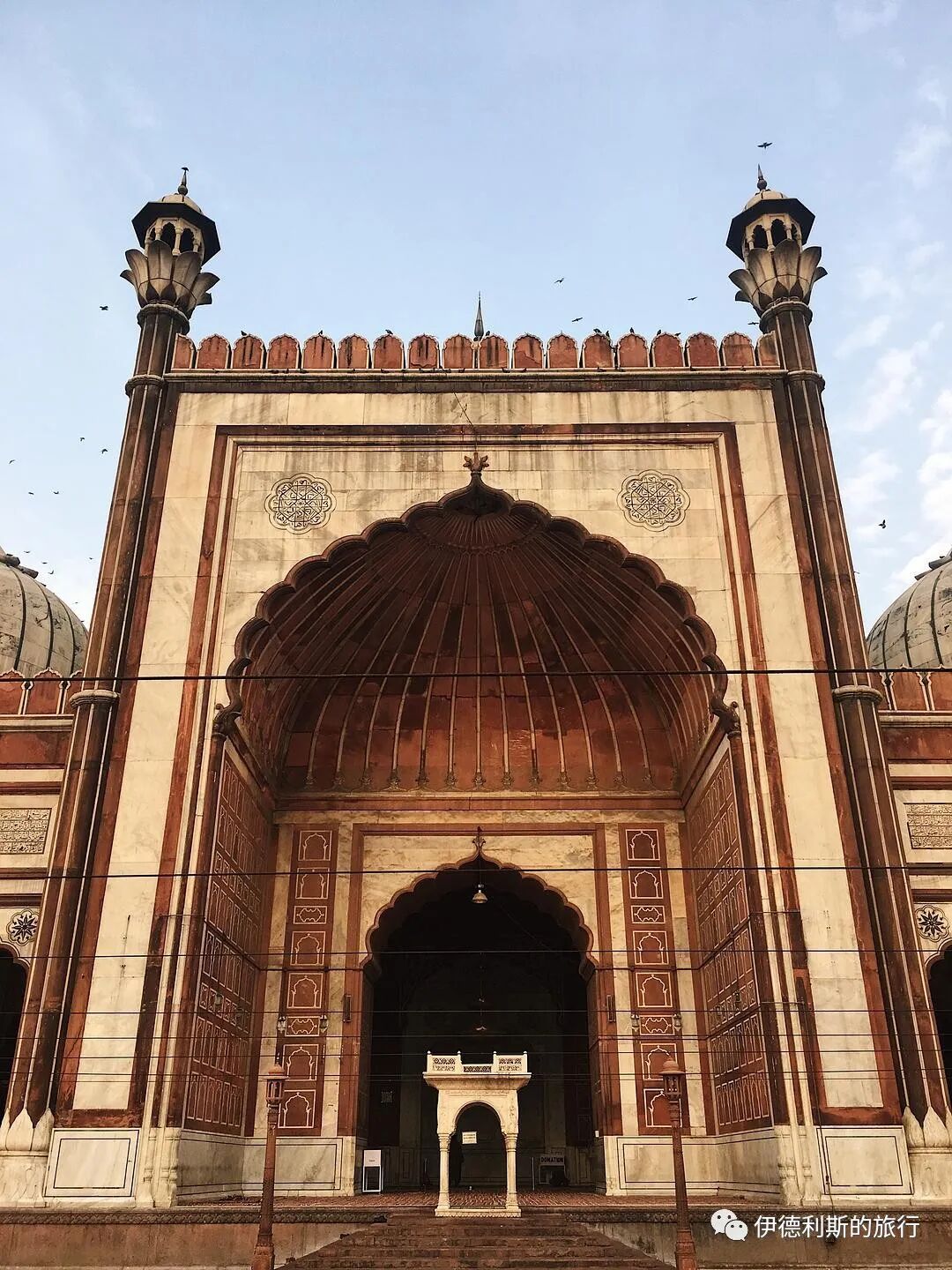
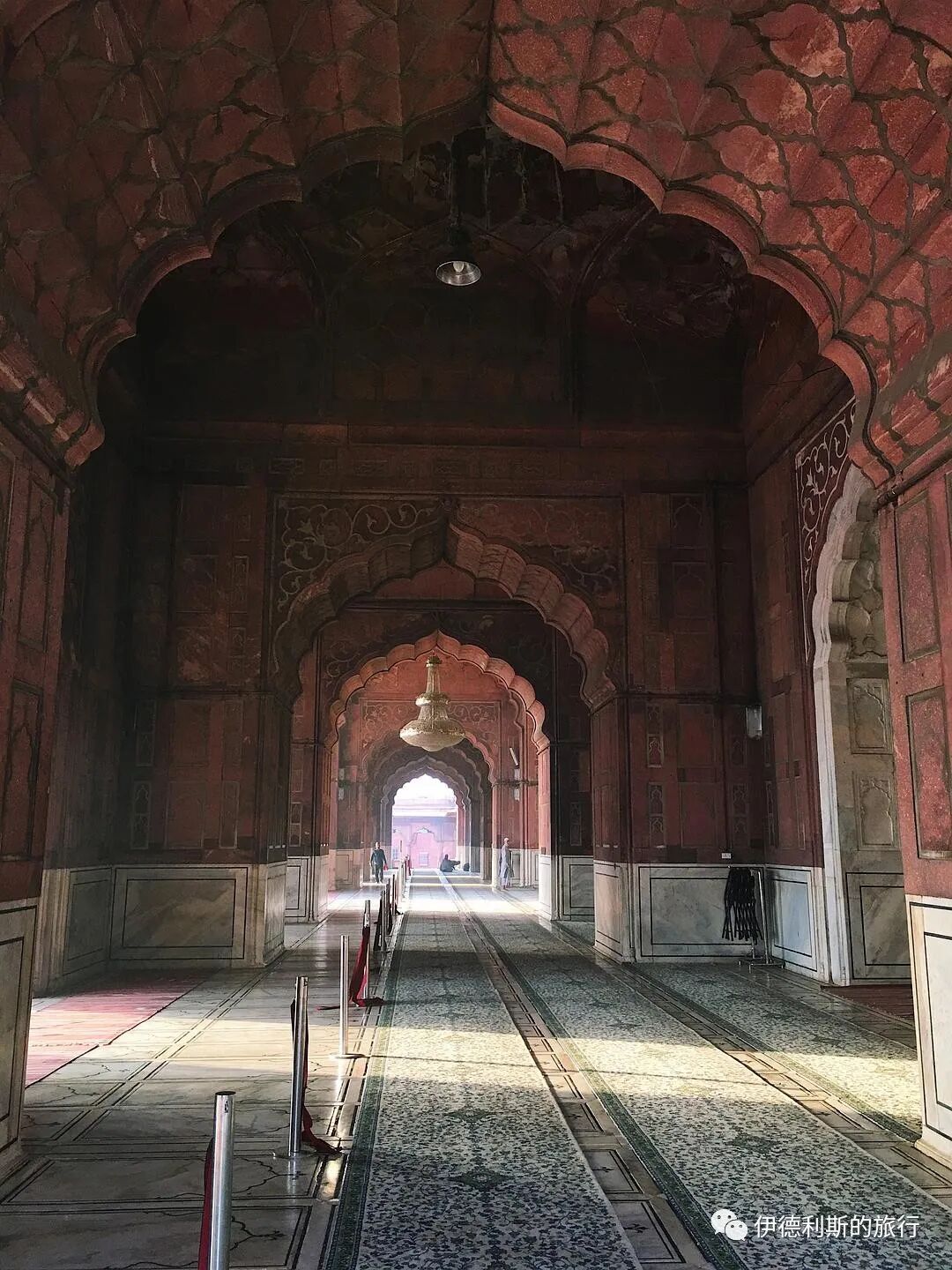
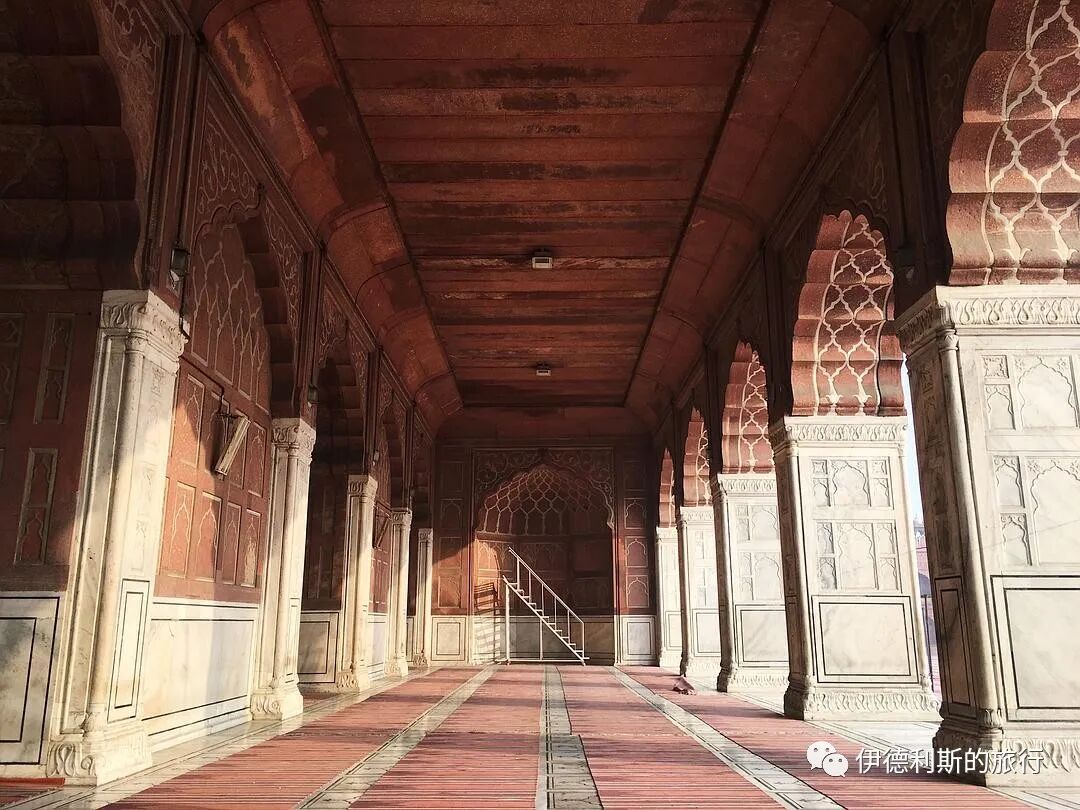
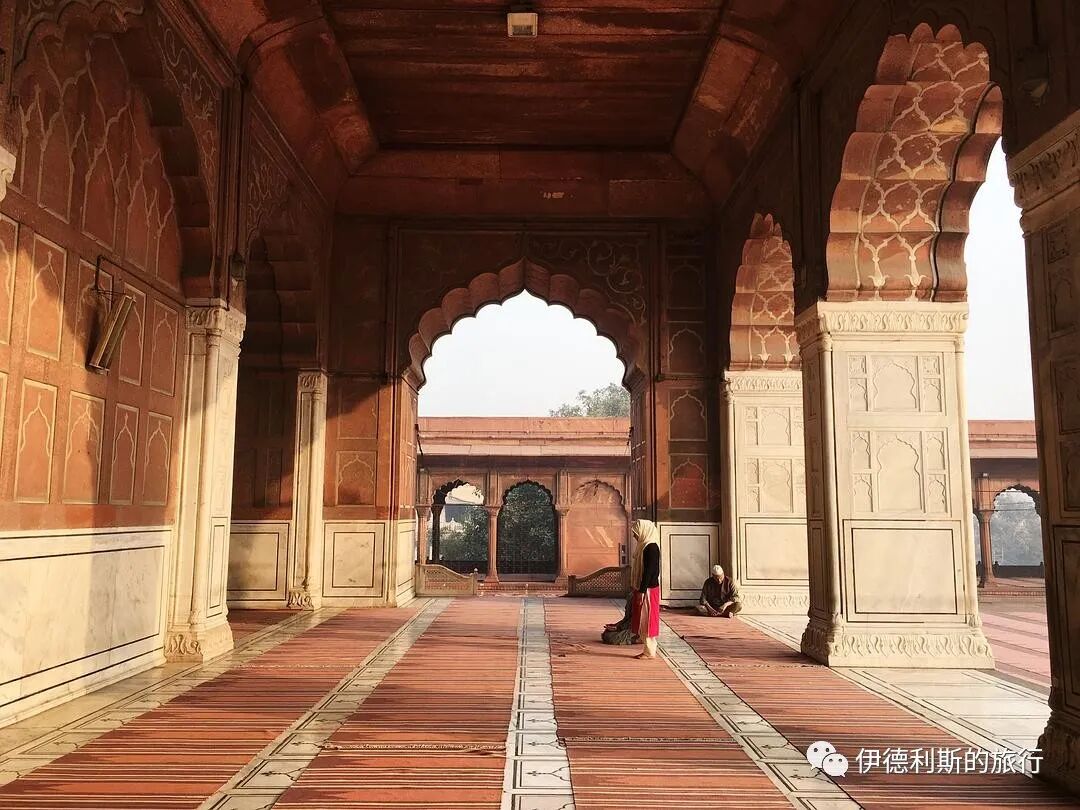
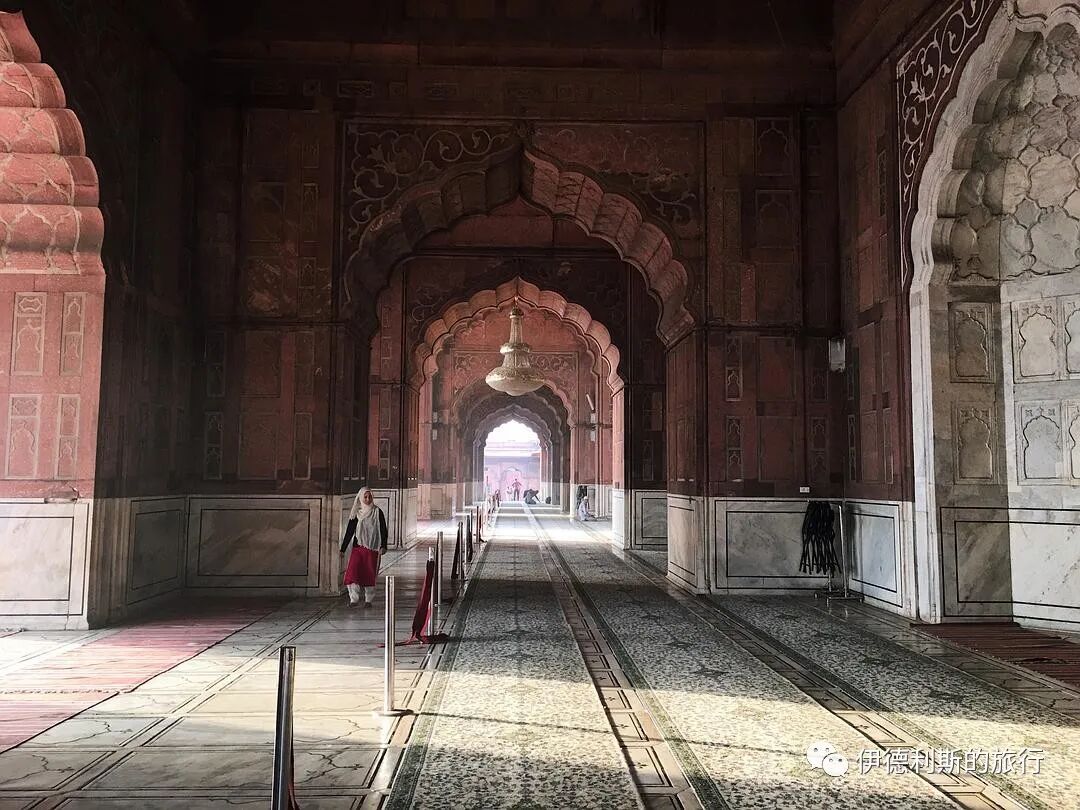
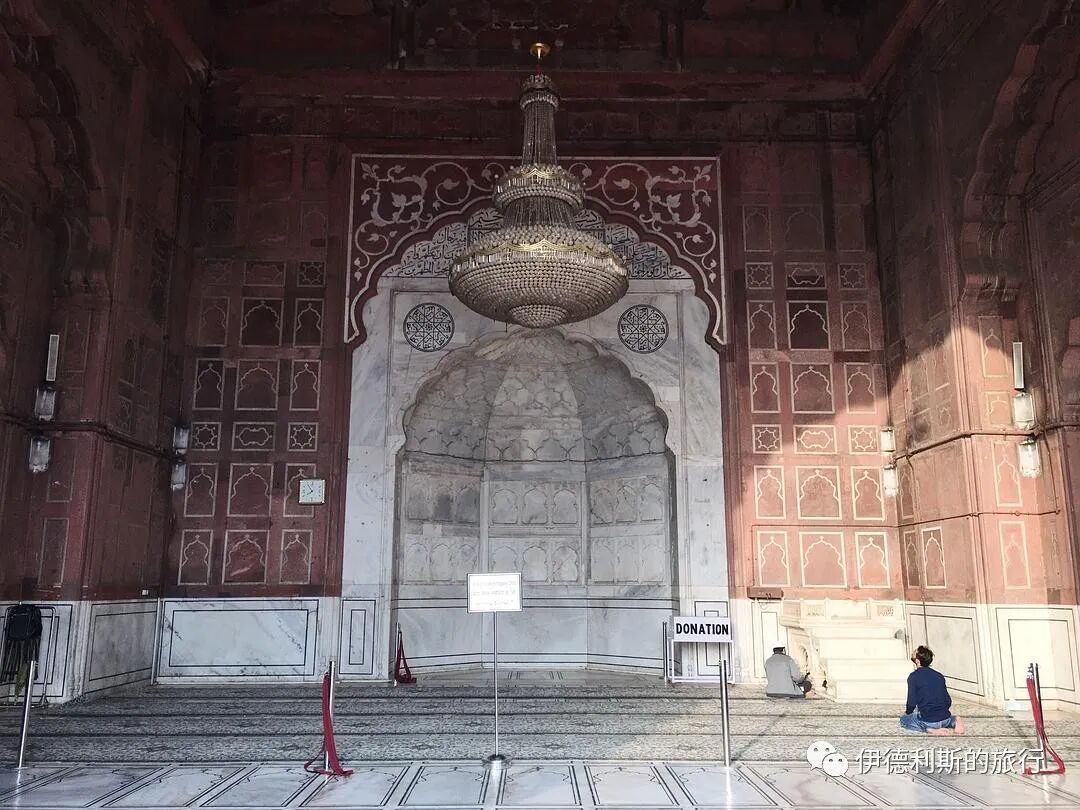
The mihrab in the center of the main hall indicates the direction of prayer toward Mecca:
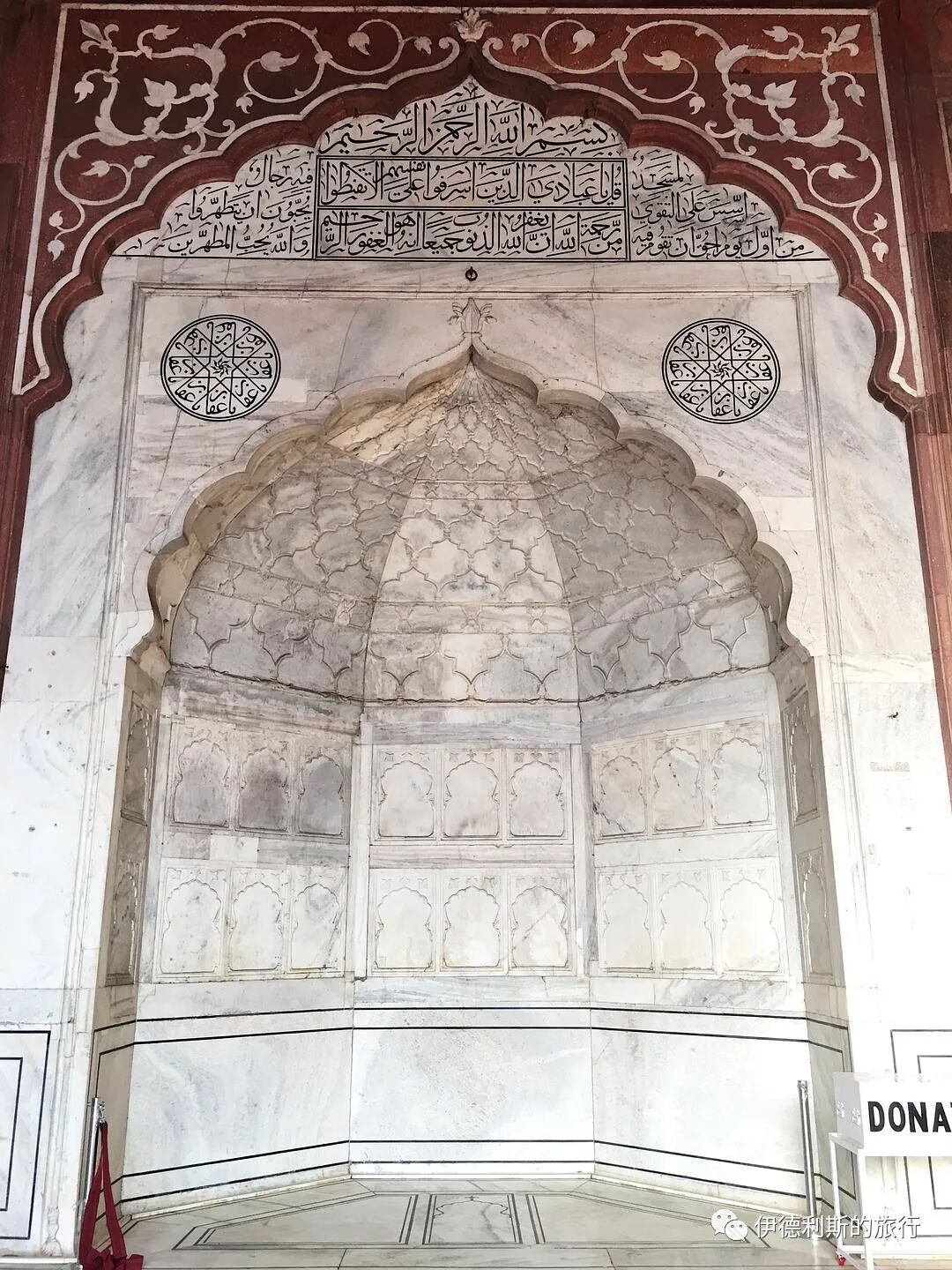
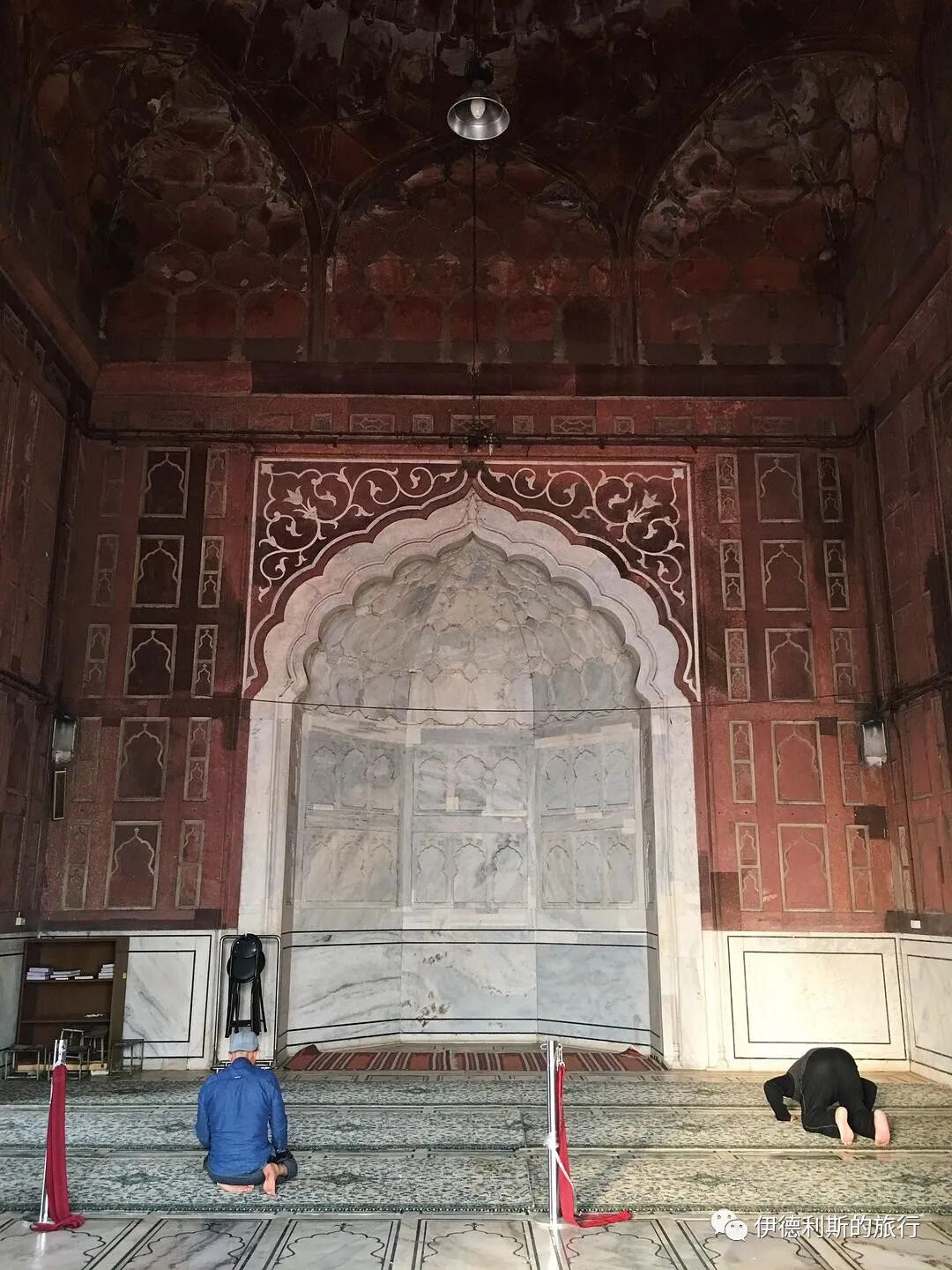
Besides the main mihrab in the center, there is a smaller mihrab on each side.
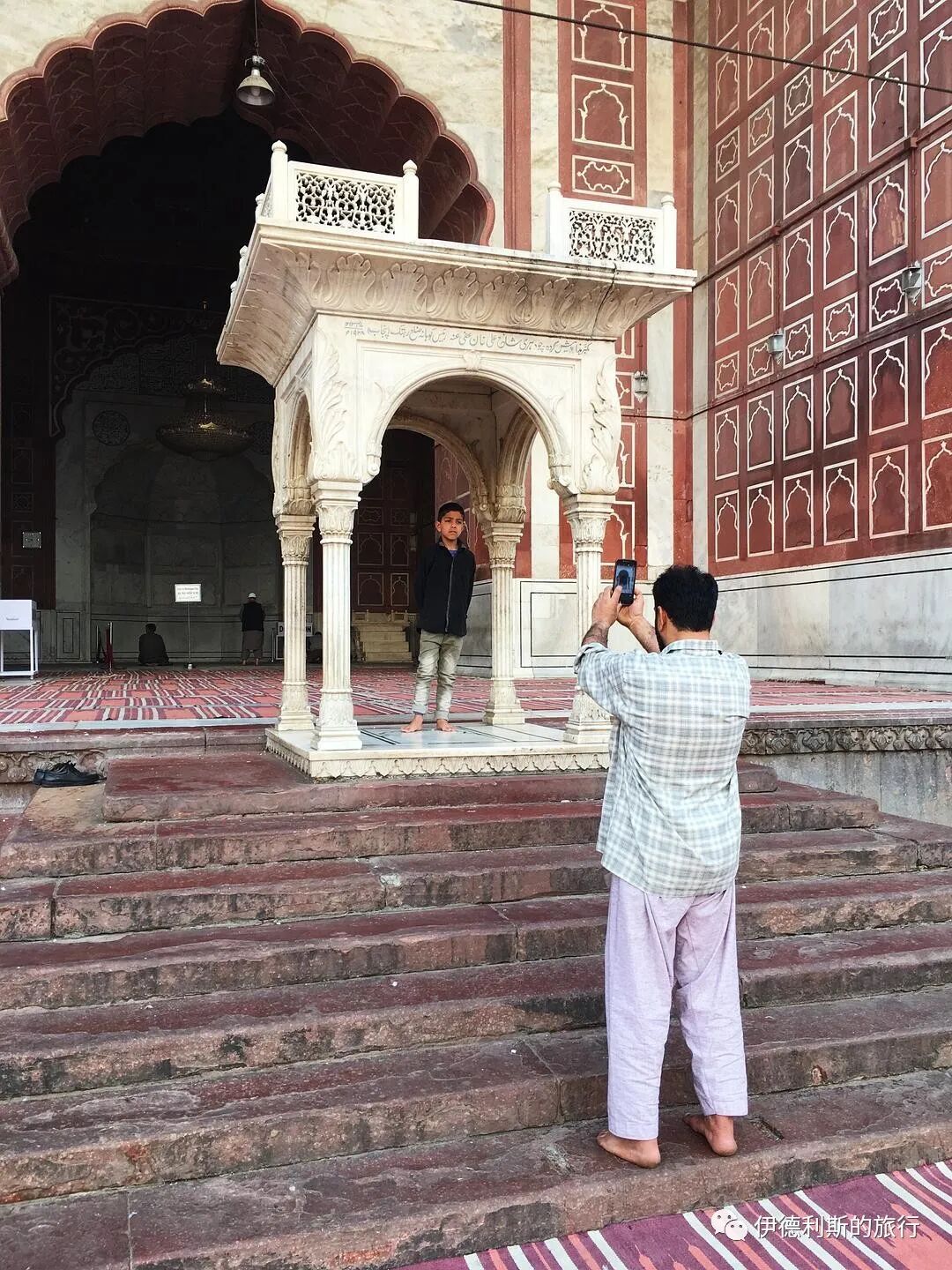
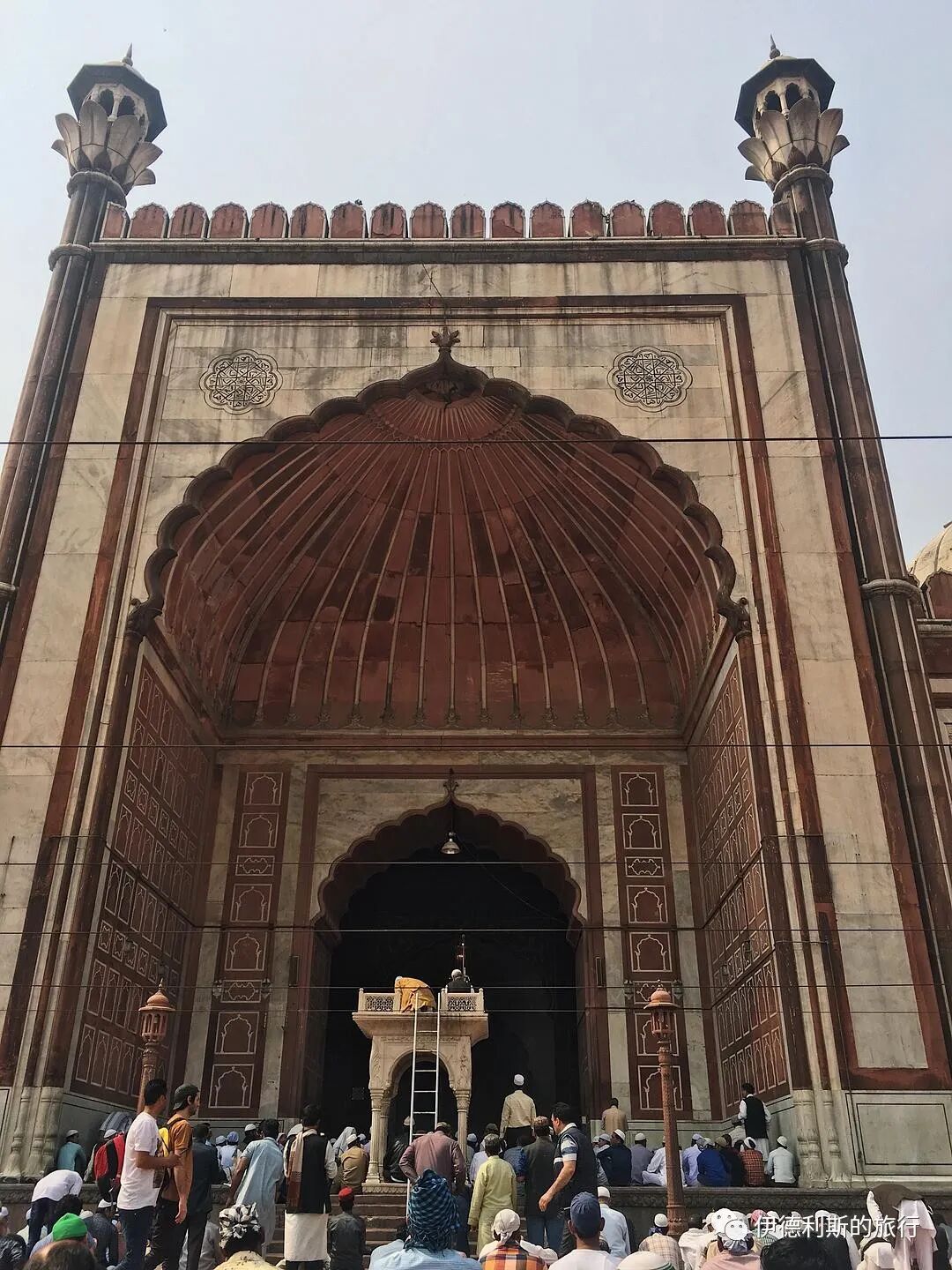
During Jumu'ah, the imam stands on this stone platform to deliver the khutbah.
There is a tower at each of the four corners of the colonnade.
The east gate is the main entrance:
South Gate
North Gate
The water pool in the courtyard for wudu:
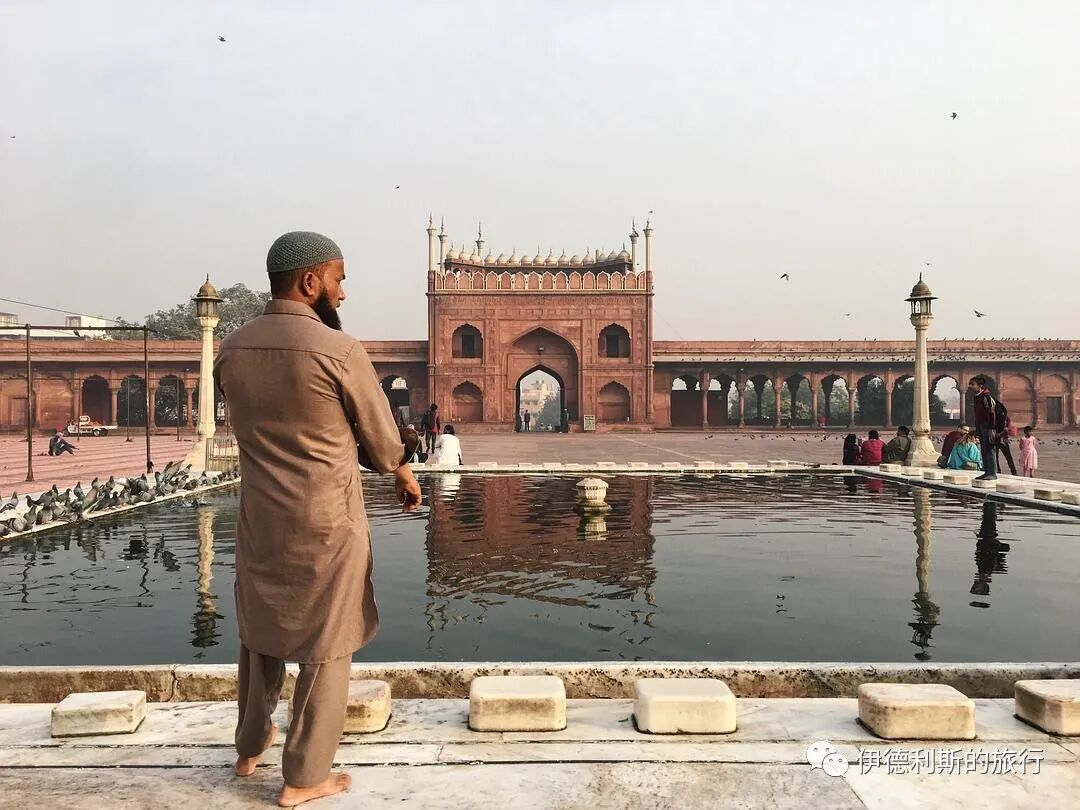
Jama means Jumu'ah, which refers to the Friday congregational prayer. The Jumu'ah mosque is usually the largest in the community, and the most important weekly prayer is held here every Friday at noon. I was lucky enough to attend a Friday Jumu'ah prayer at the Jama Mosque.
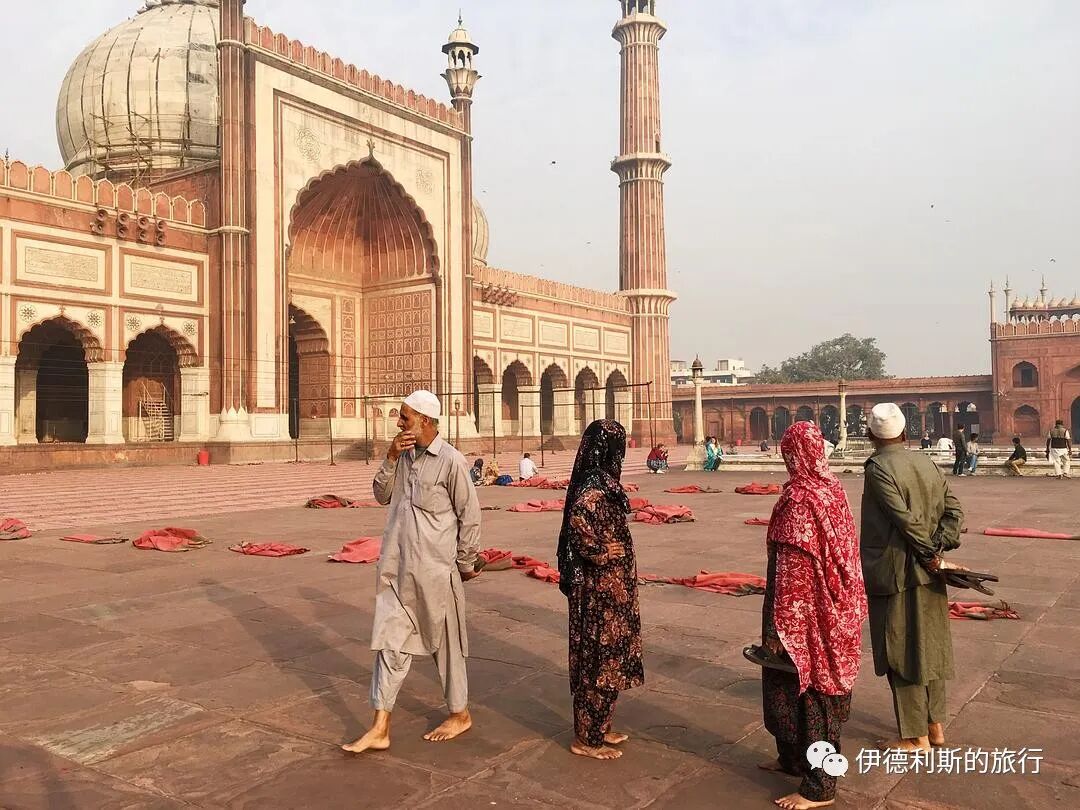
On the morning of Jumu'ah, more prayer rugs were already laid out in the courtyard.
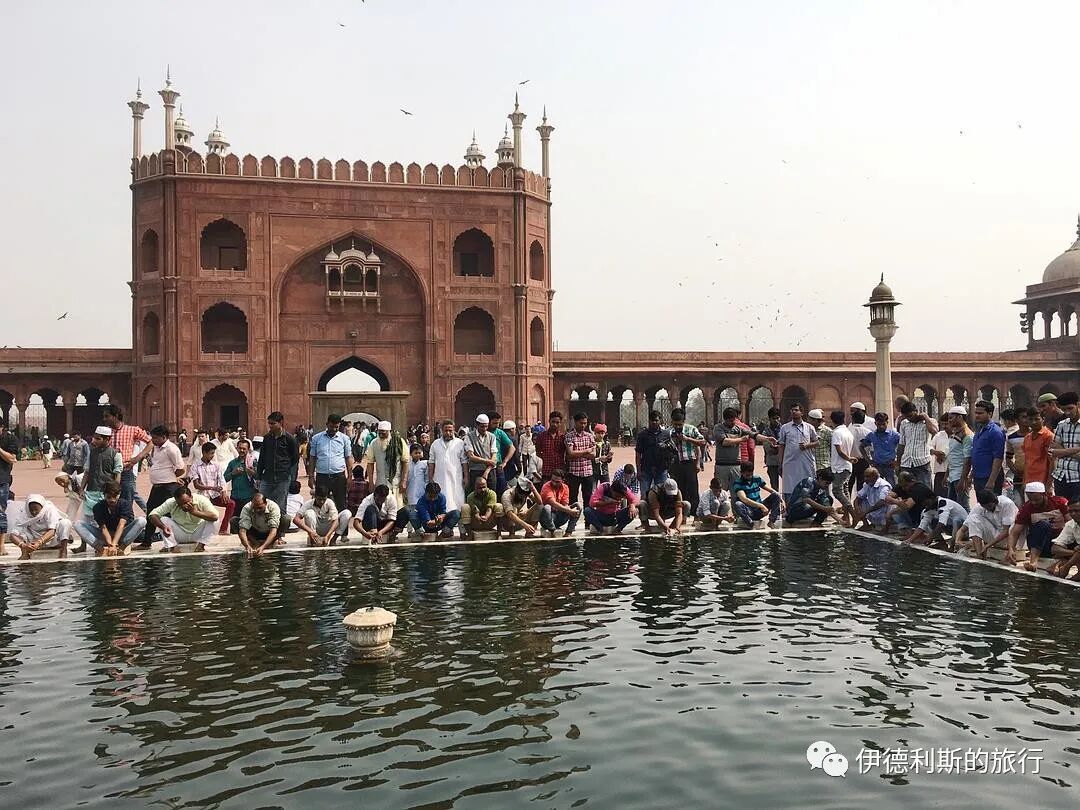
People are performing wudu for the Jumu'ah prayer:
More and more people are arriving.
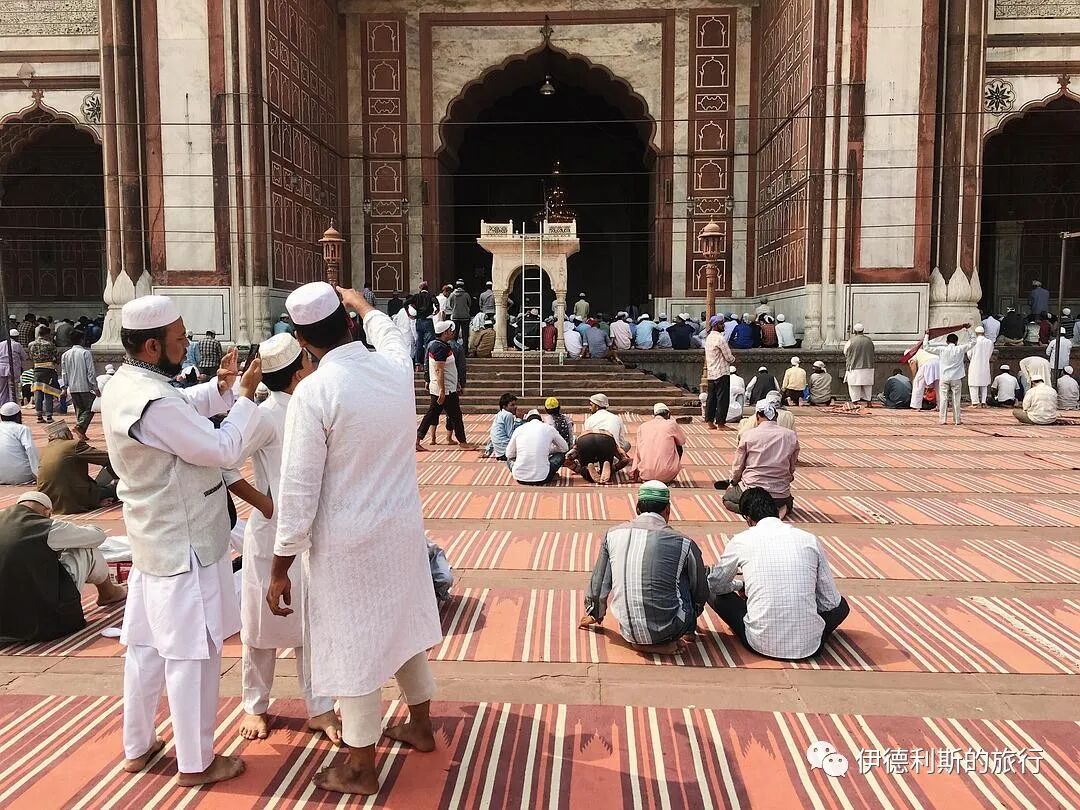
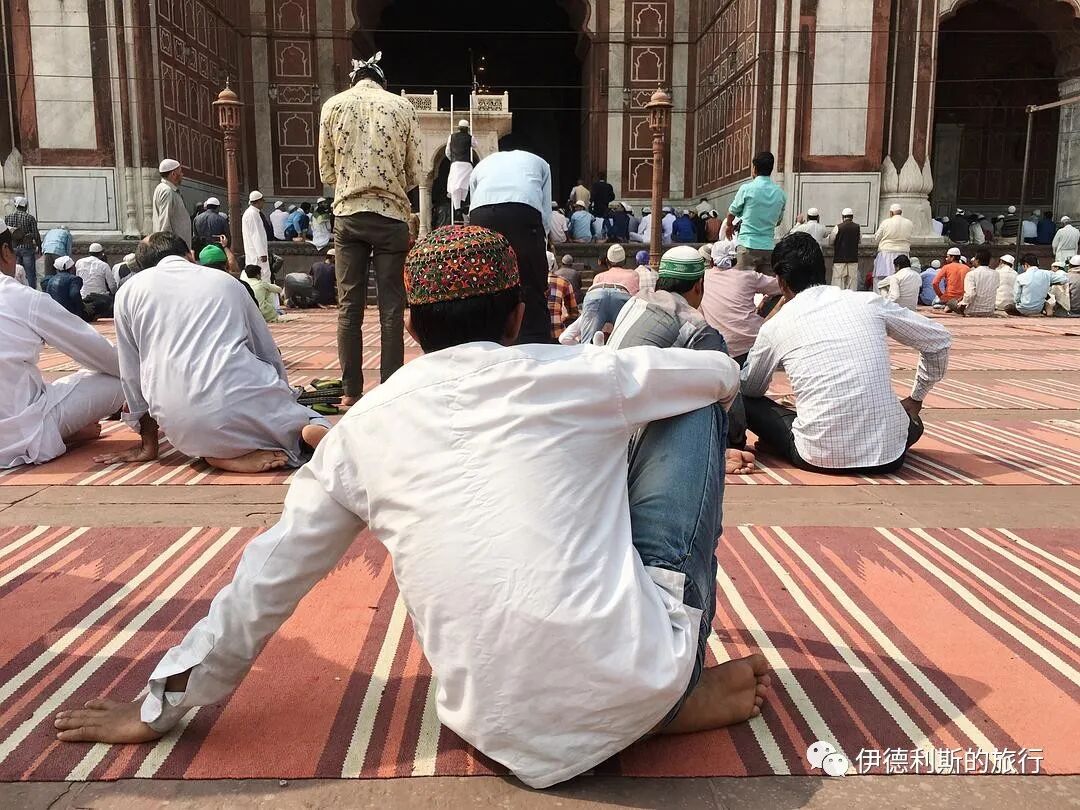
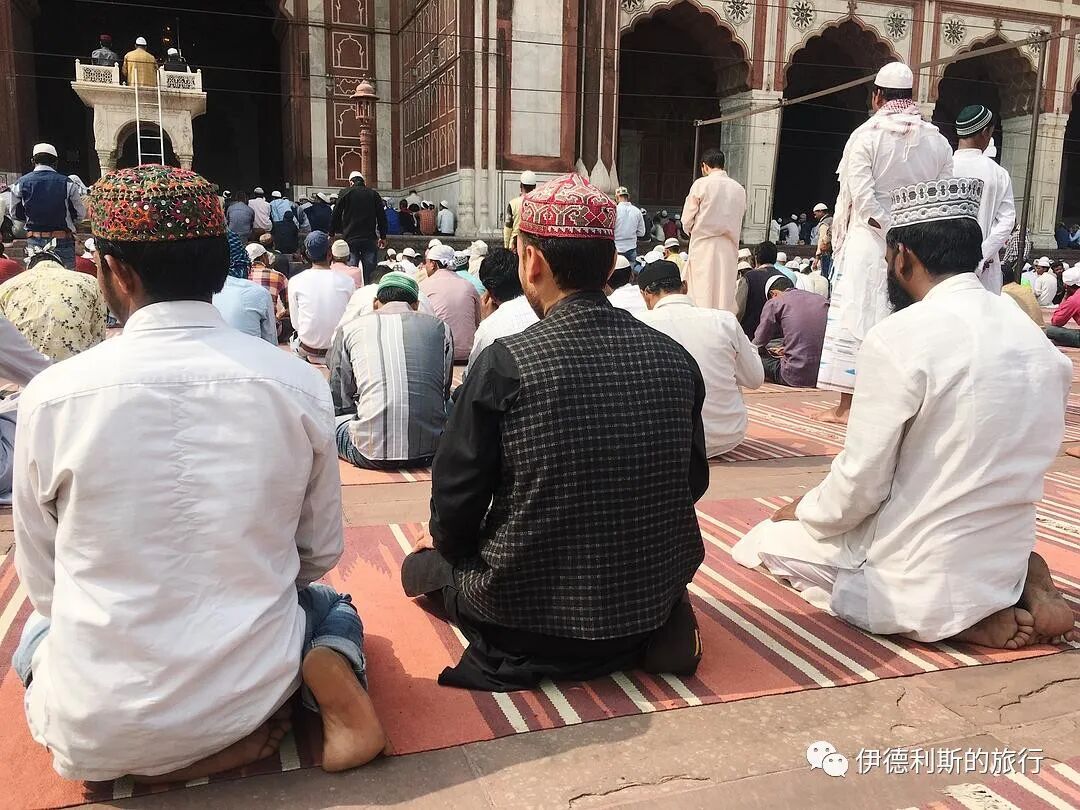
The imam leading the prayer climbs onto the stone platform.
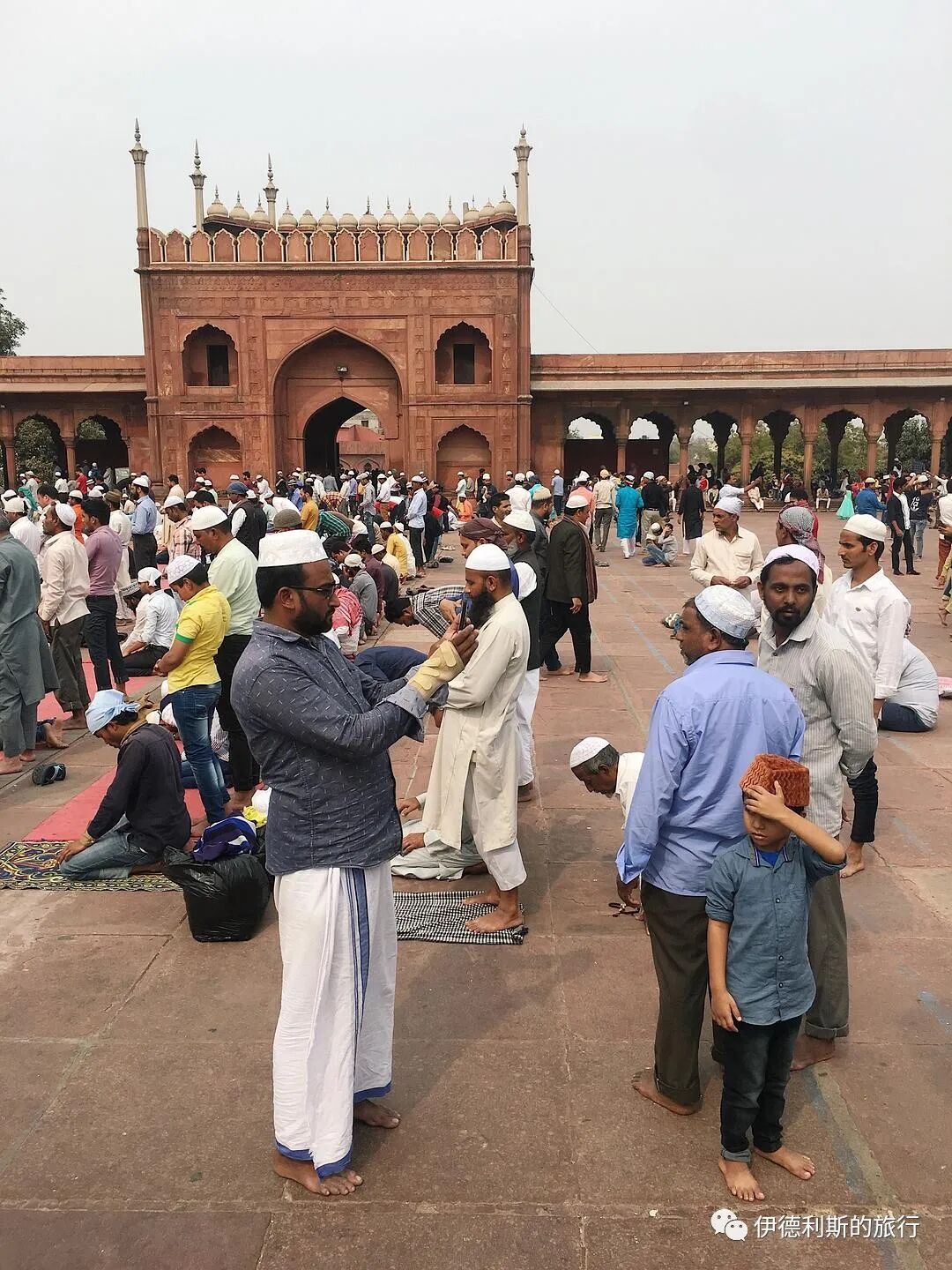
After the prayer, people take photos:
3. Fatehpuri Mosque: 1650
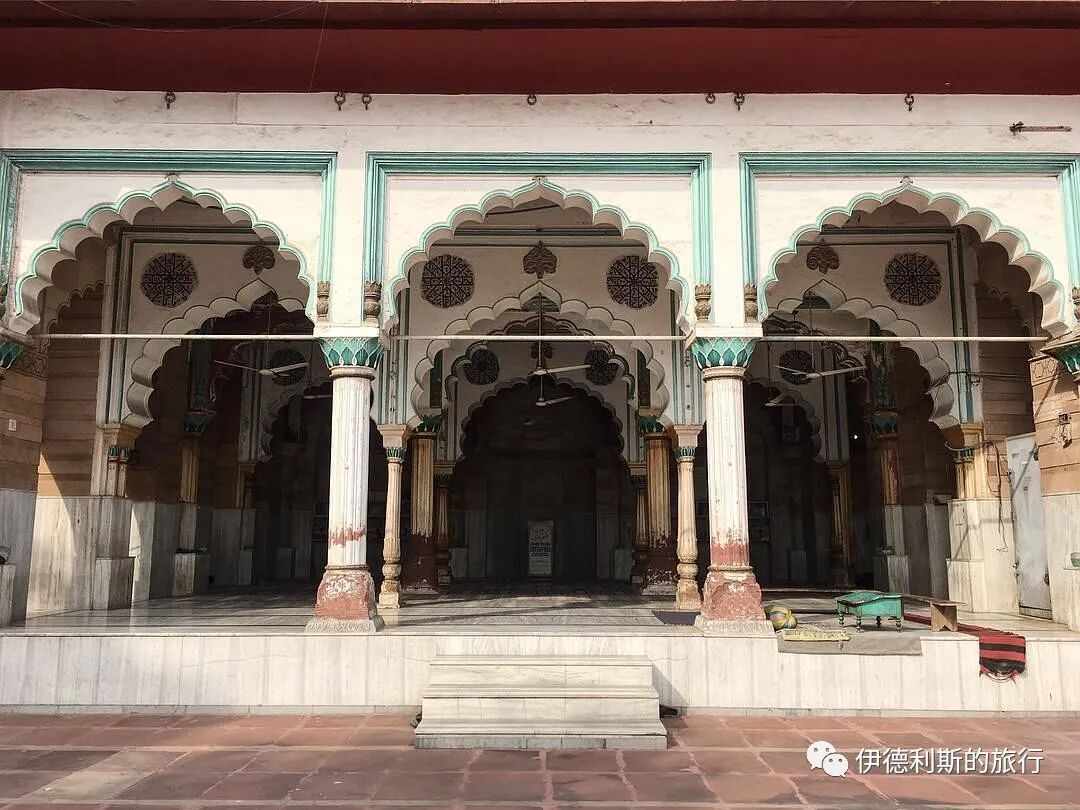
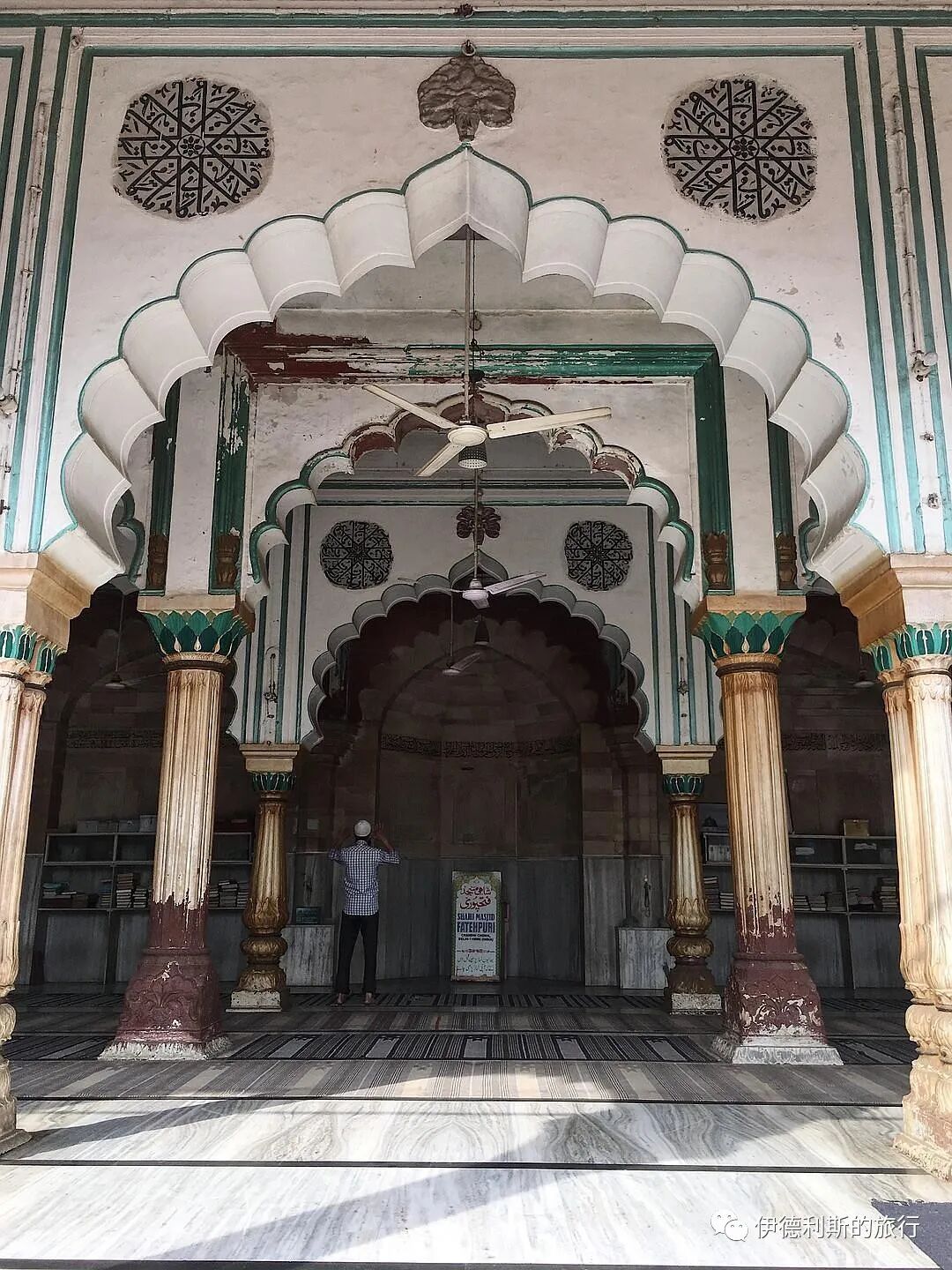
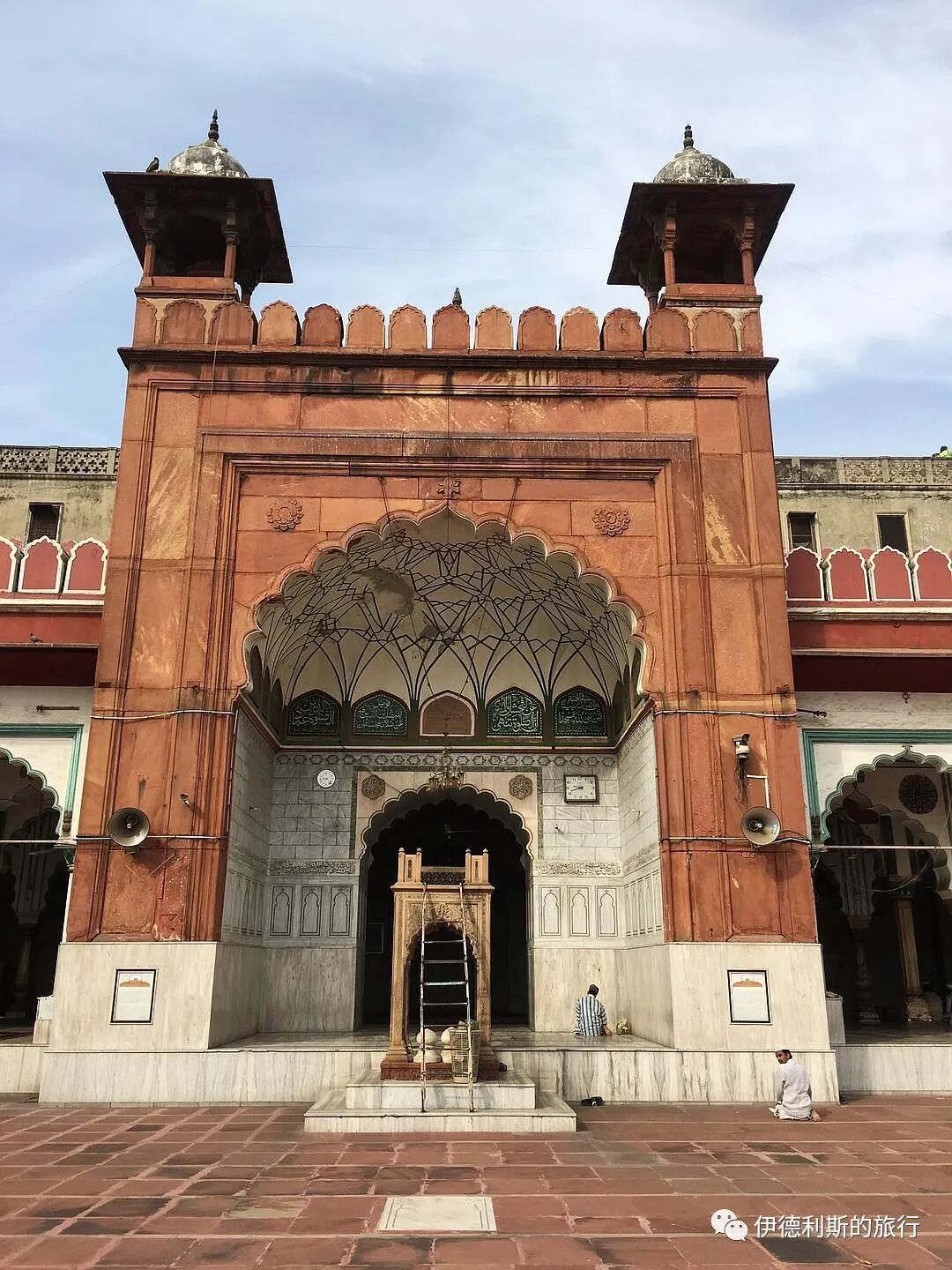
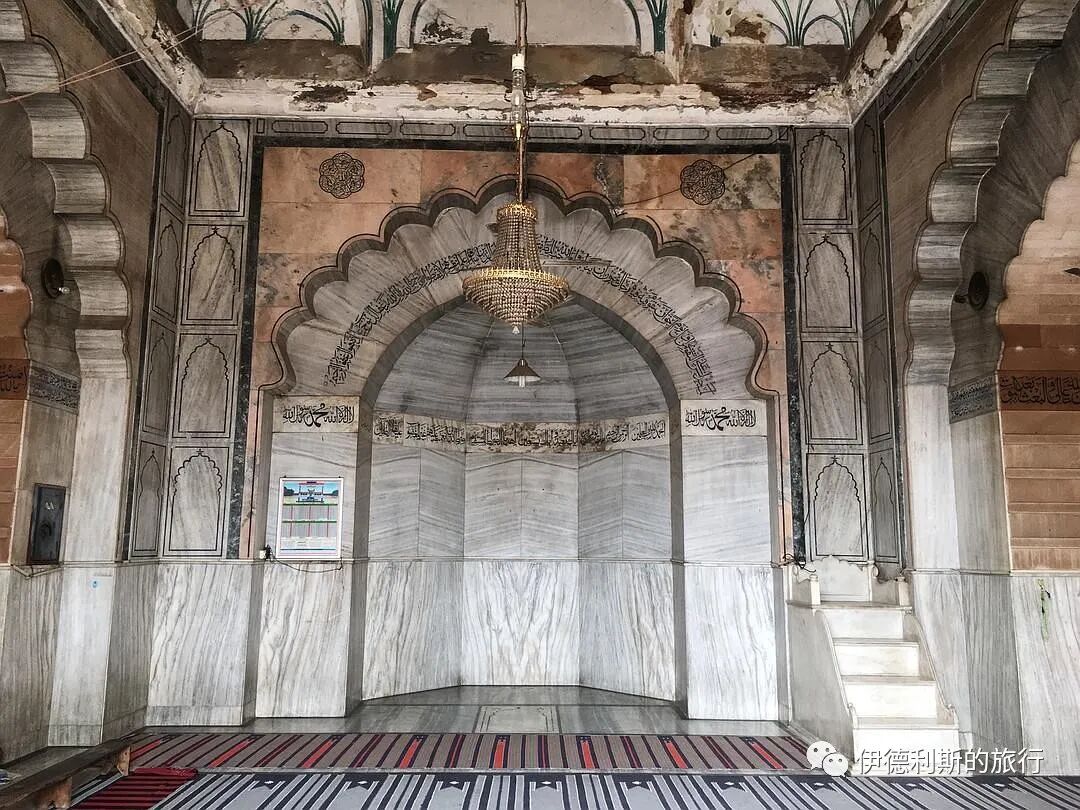
Fatehpuri Mosque is located at the western end of Chandni Chowk, the main east-west road in Shahjahanabad. It was built in 1650 under the direction of Fatehpuri Begum, the wife of Shah Jahan. The mosque is in the classic Mughal style, built with red sandstone, featuring minarets on both sides and a main prayer hall in the middle. The main hall has seven arched bays, and the central iwan arch is topped with a Mughal-style dome.
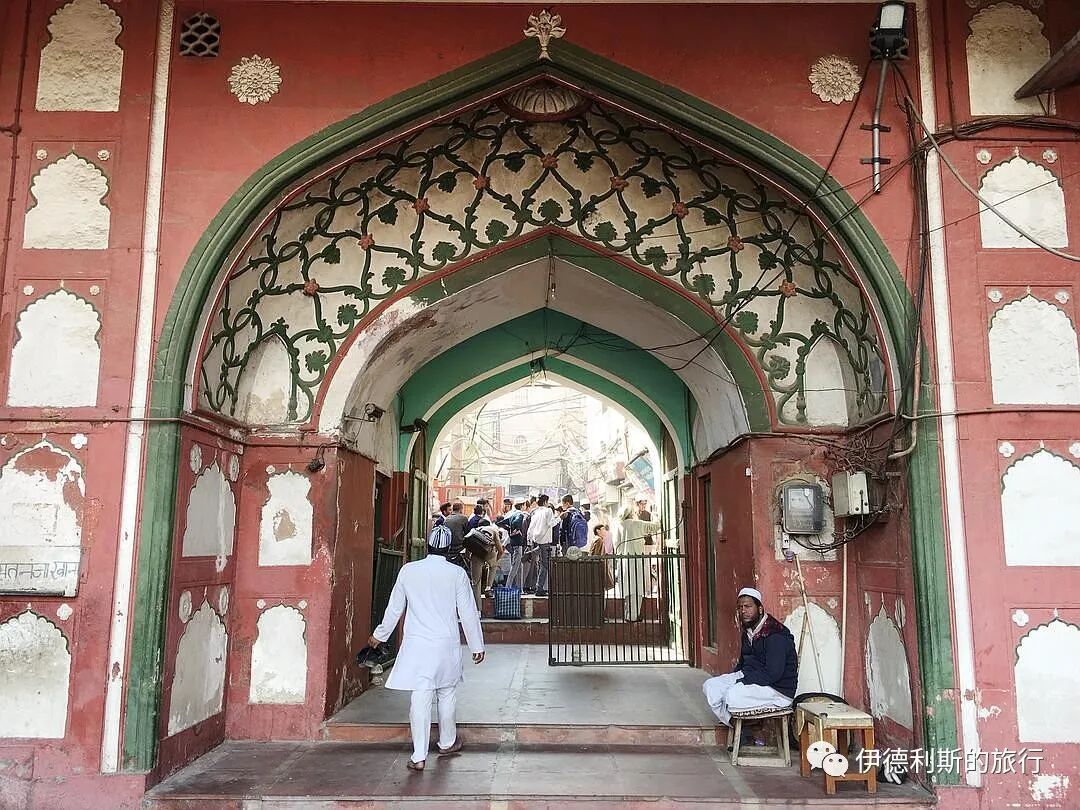
4. Golden Mosque (Sunehri Masjid): 1751
Sunehri Mosque is located south of the Red Fort. It was built in 1751 by Qudsia Begum, the wife of the twelfth Mughal Emperor, Muhammad Shah. After Muhammad Shah died, Qudsia Begum's son, Ahmad Shah Bahadur, succeeded to the throne, making Qudsia Begum the de facto ruler of the Mughal Empire between 1748 and 1754.
During her rule, Qudsia Begum built a series of structures in Delhi, and the Sunehri Mosque is the most understated in its architectural style. The mosque's dome was originally copper-plated, but during renovations in 1852, sandstone replaced the damaged copper plates.
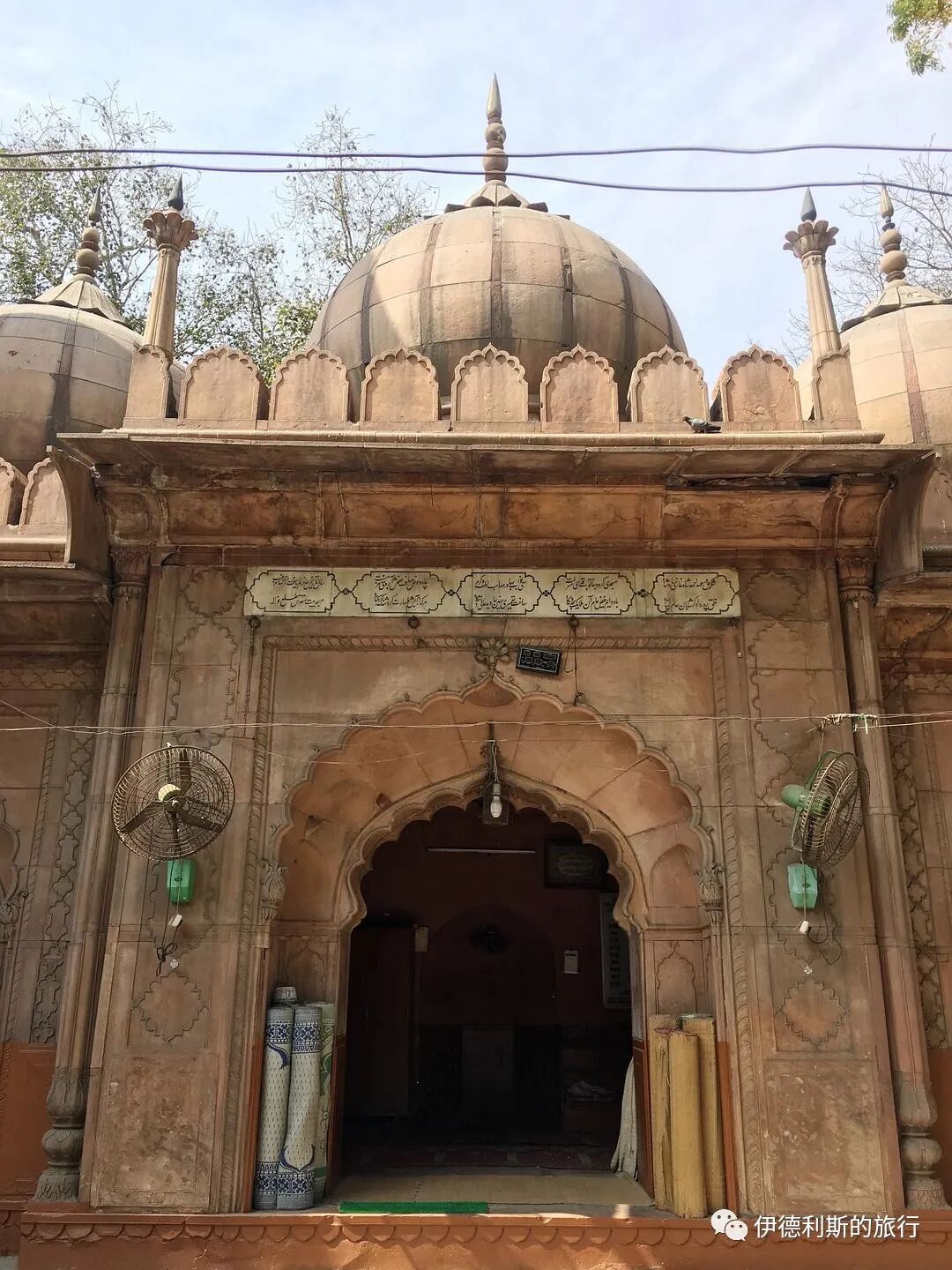
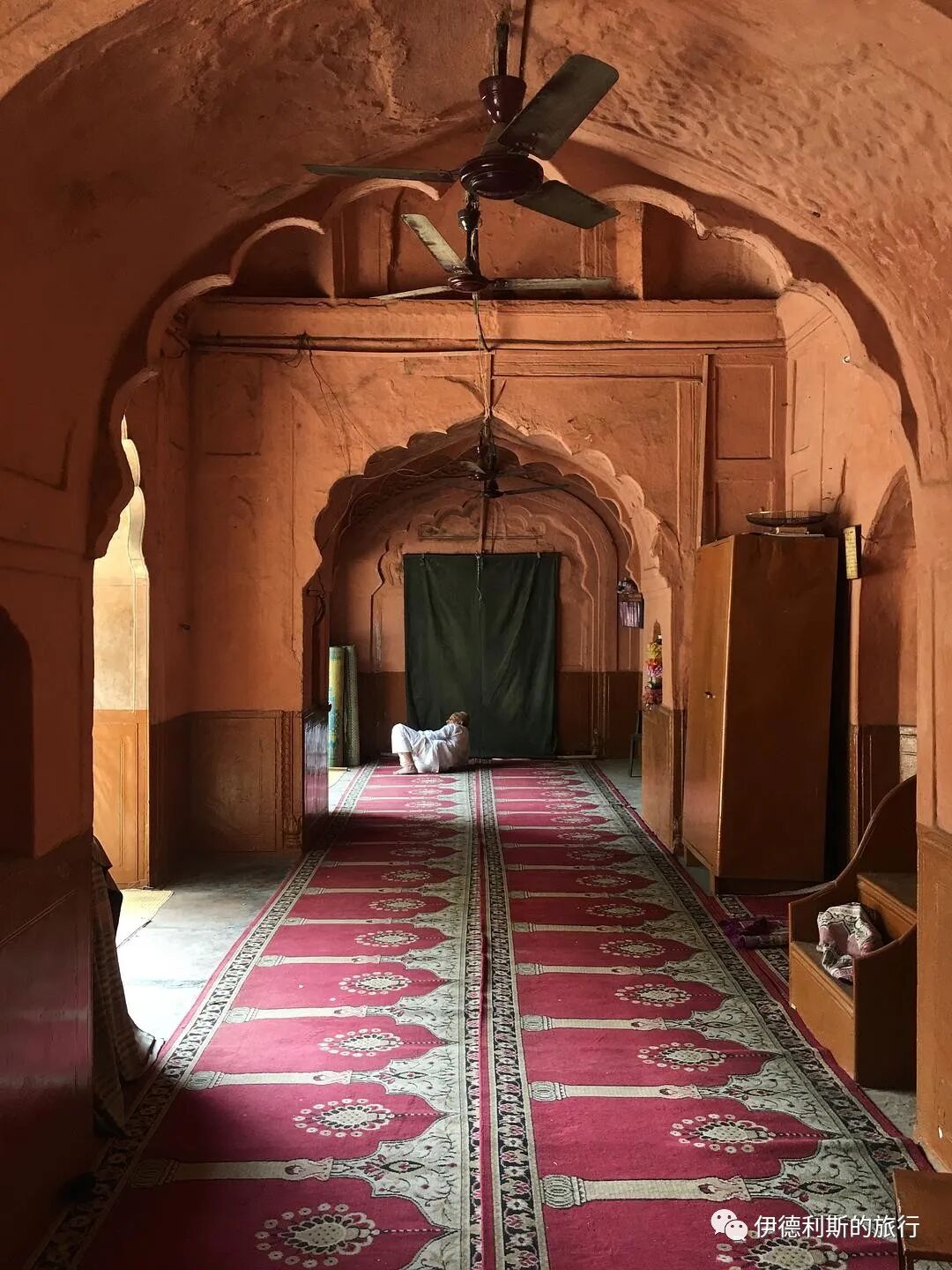
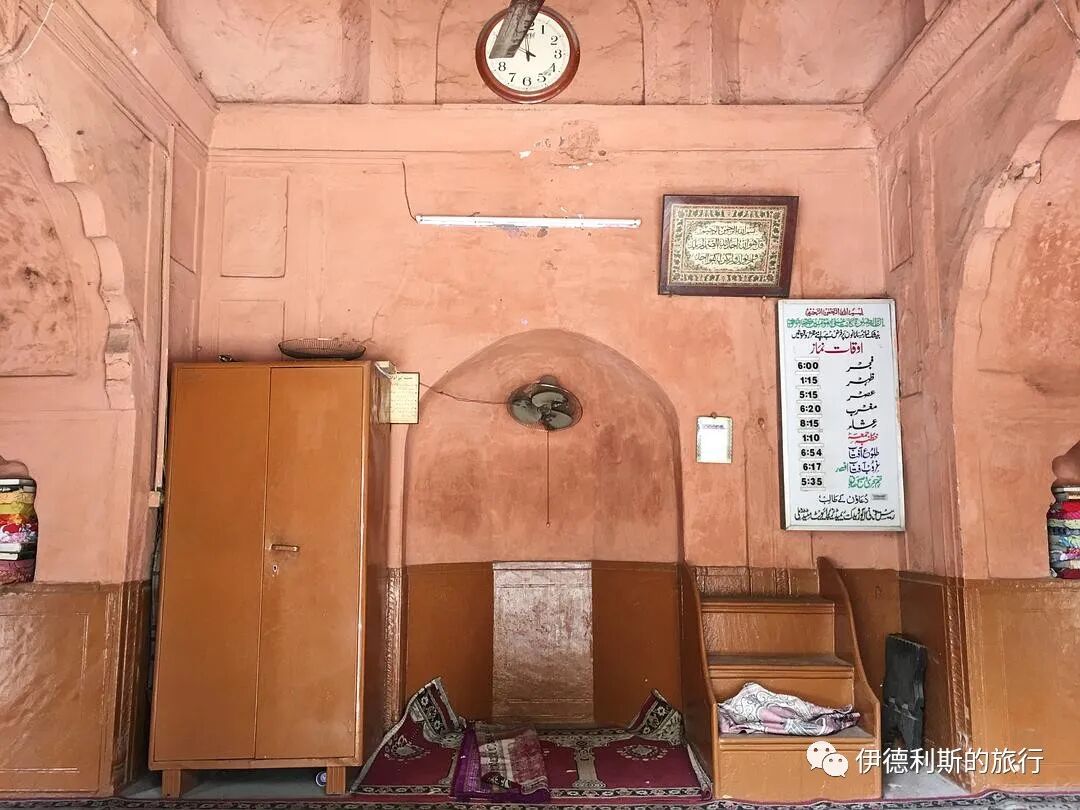
5. Great Mosque (Kalan Masjid): 1387
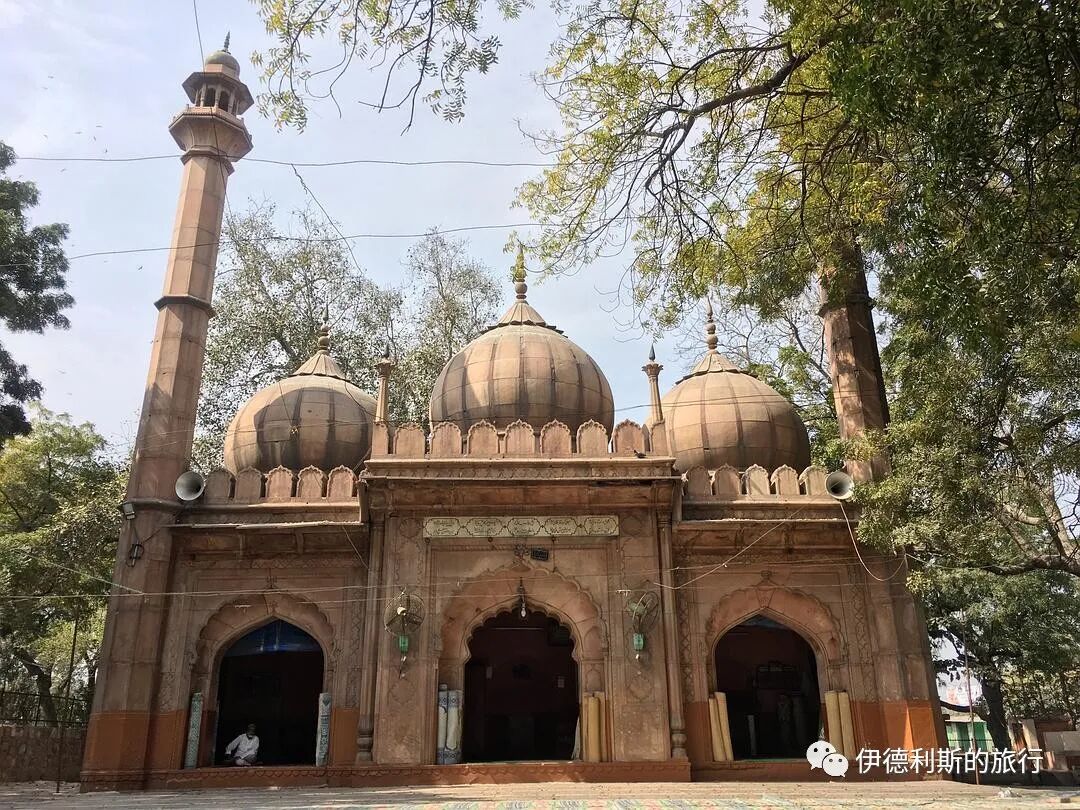
Kalan Mosque is one of the very few mosques in Shahjahanabad that existed before the city was built. It was constructed in 1387 by Khan-i-Jahan Maqbul, the vizier of Sultan Feroz Shah Tughlaq (reigned 1351-1388) of the Delhi Sultanate's Tughlaq dynasty. It is believed to have been built to commemorate a Sufi saint.
The mosque has been in continuous use, so the interior has changed significantly.
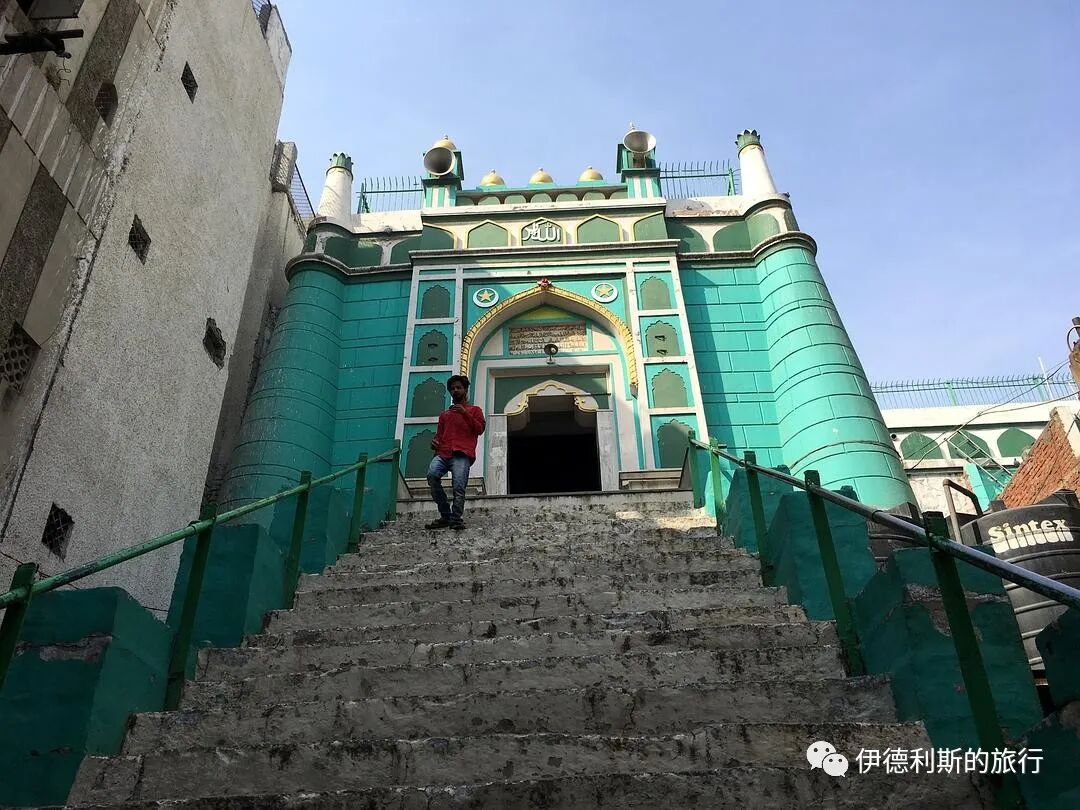
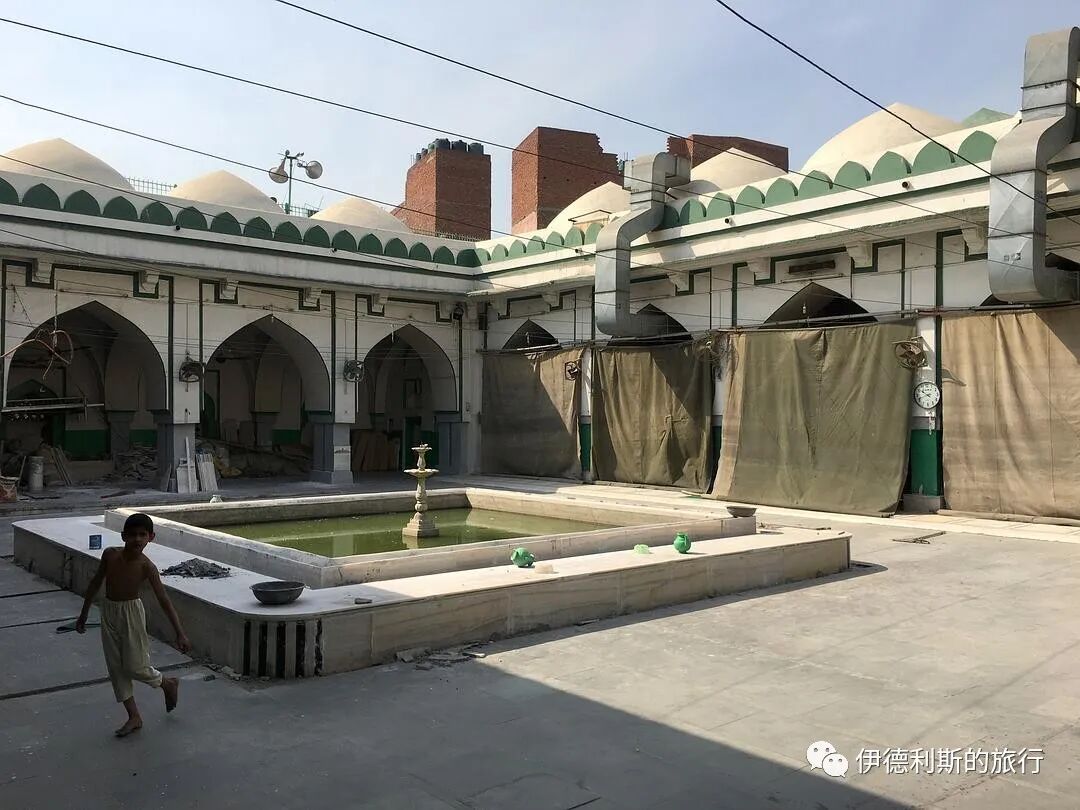
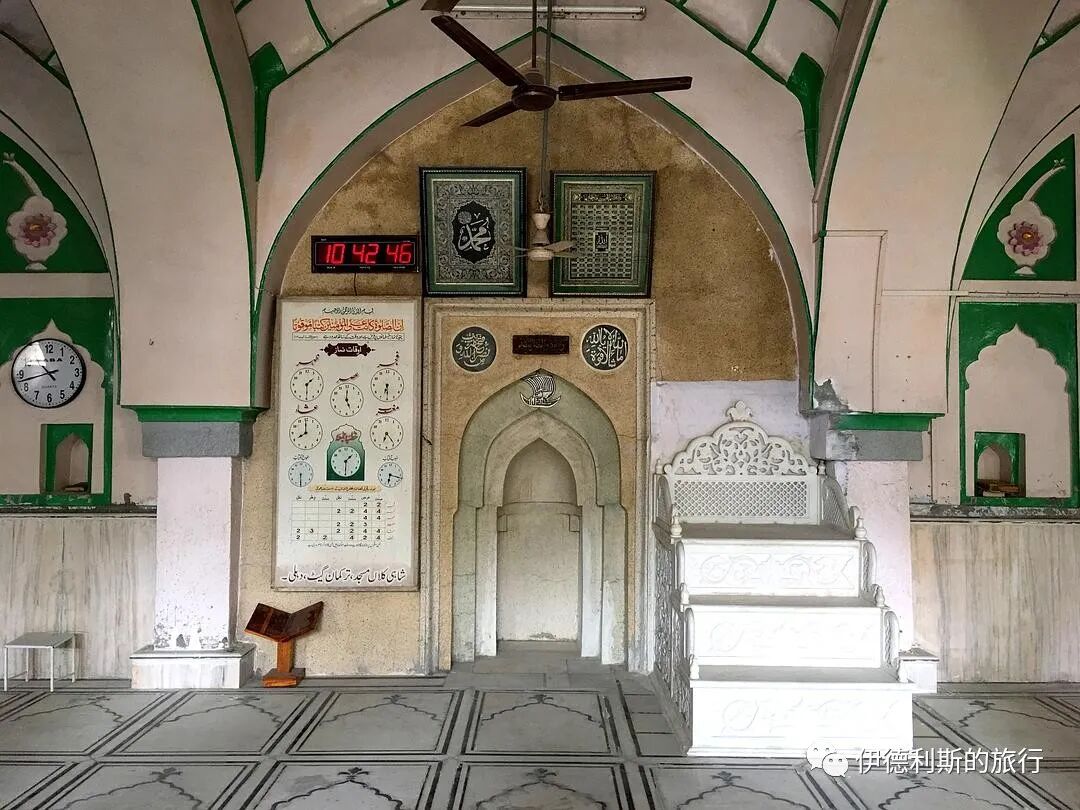
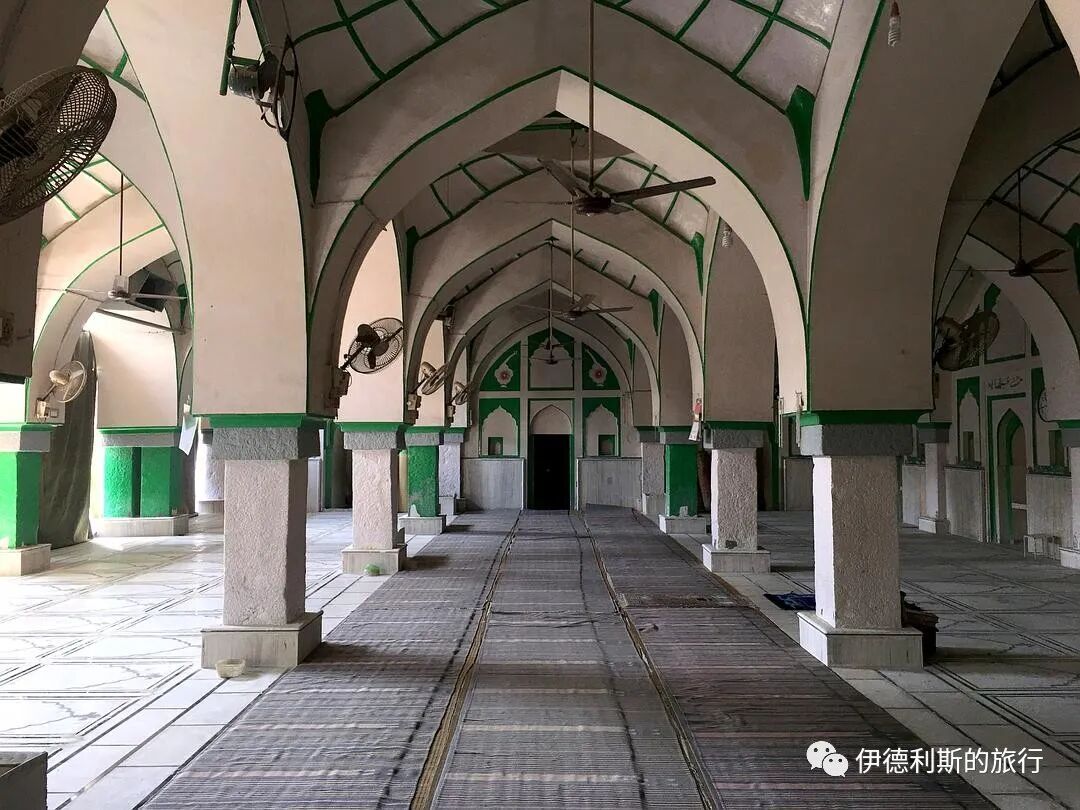
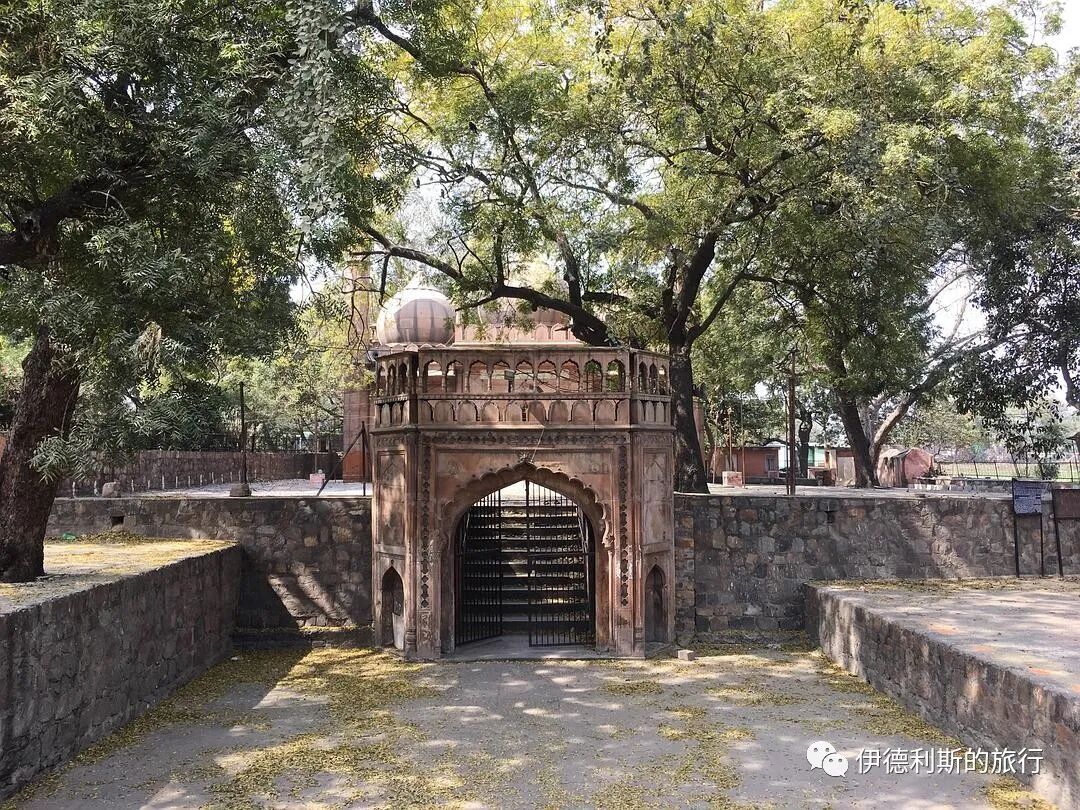
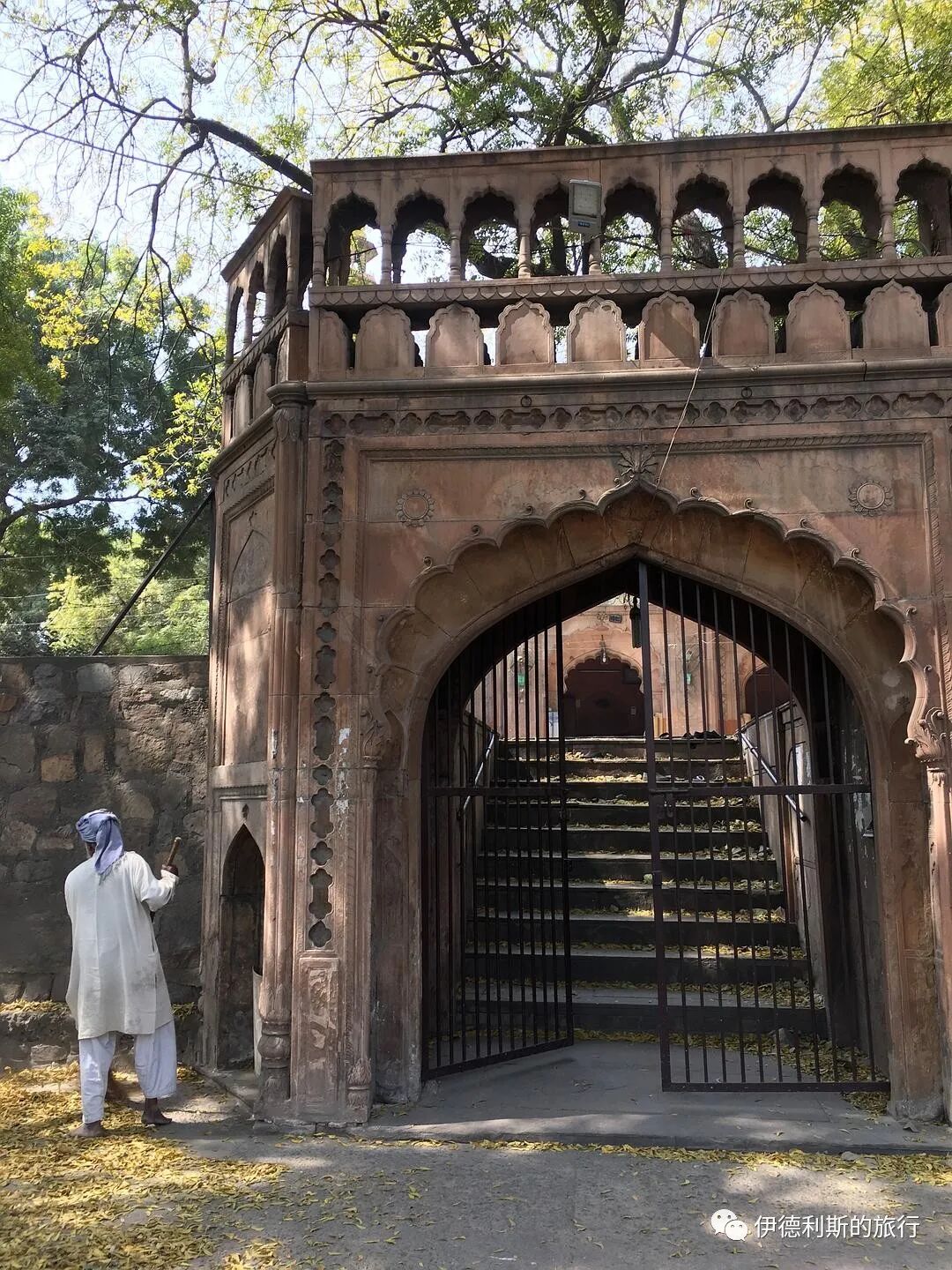
6. Hauzwali Mosque: 15th century
Hauzwali Mosque is another mosque that existed before the city of Shahjahanabad was built. Because the ground level has changed so much over time, the bottom half of the mosque is now underground, leaving only the top parts of the arches and the mihrab visible.
Halal Travel Guide: Yangon - Last Mughal Emperor Tomb and Qadiriyya Gongbei
Articles • ali2007fr posted the article • 0 comments • 240 views • 2026-05-21 02:08
Summary: Yangon holds the tomb of Bahadur Shah II, the last Mughal emperor, near Shwedagon Pagoda, along with a Qadiriyya gongbei connected to Muslim memory in Myanmar. This account keeps the source's shrine details, historical names, religious terms, and site observations.
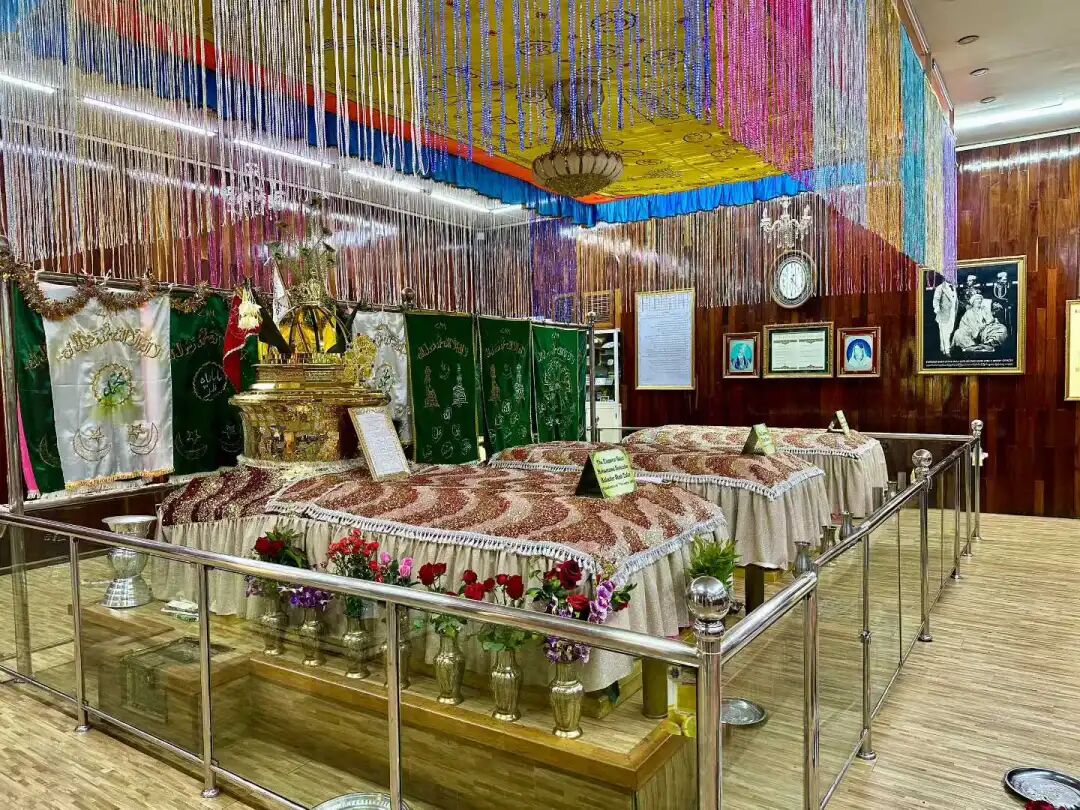
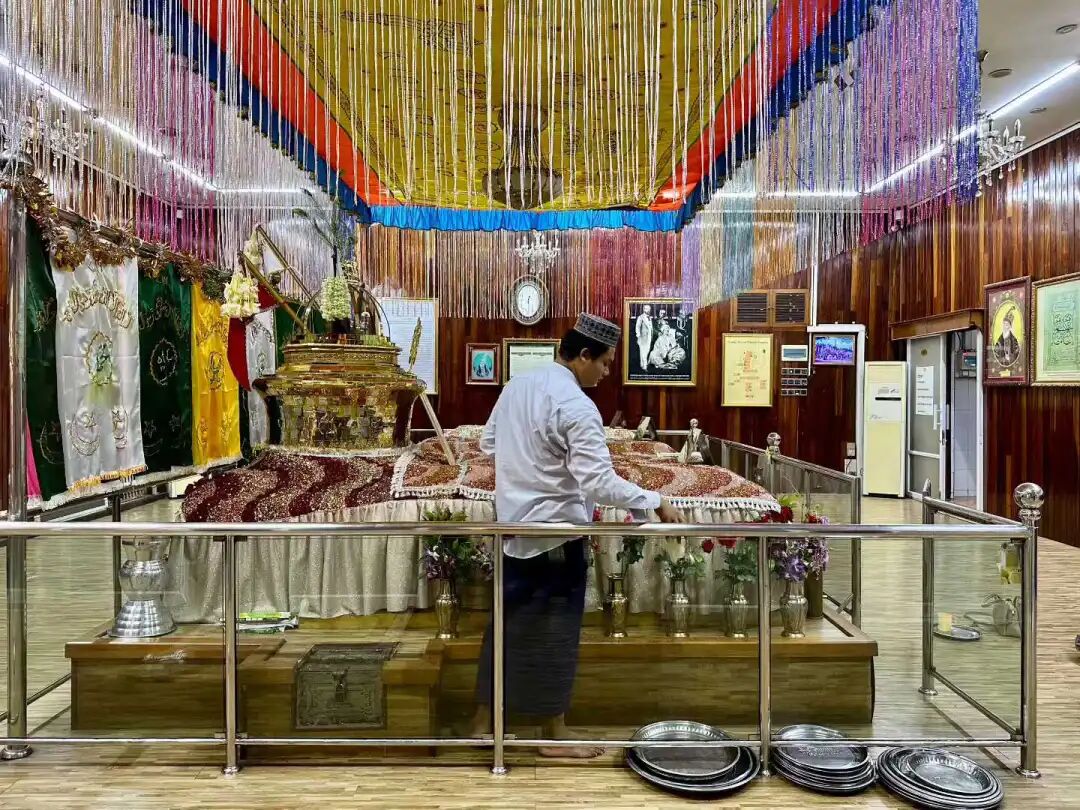
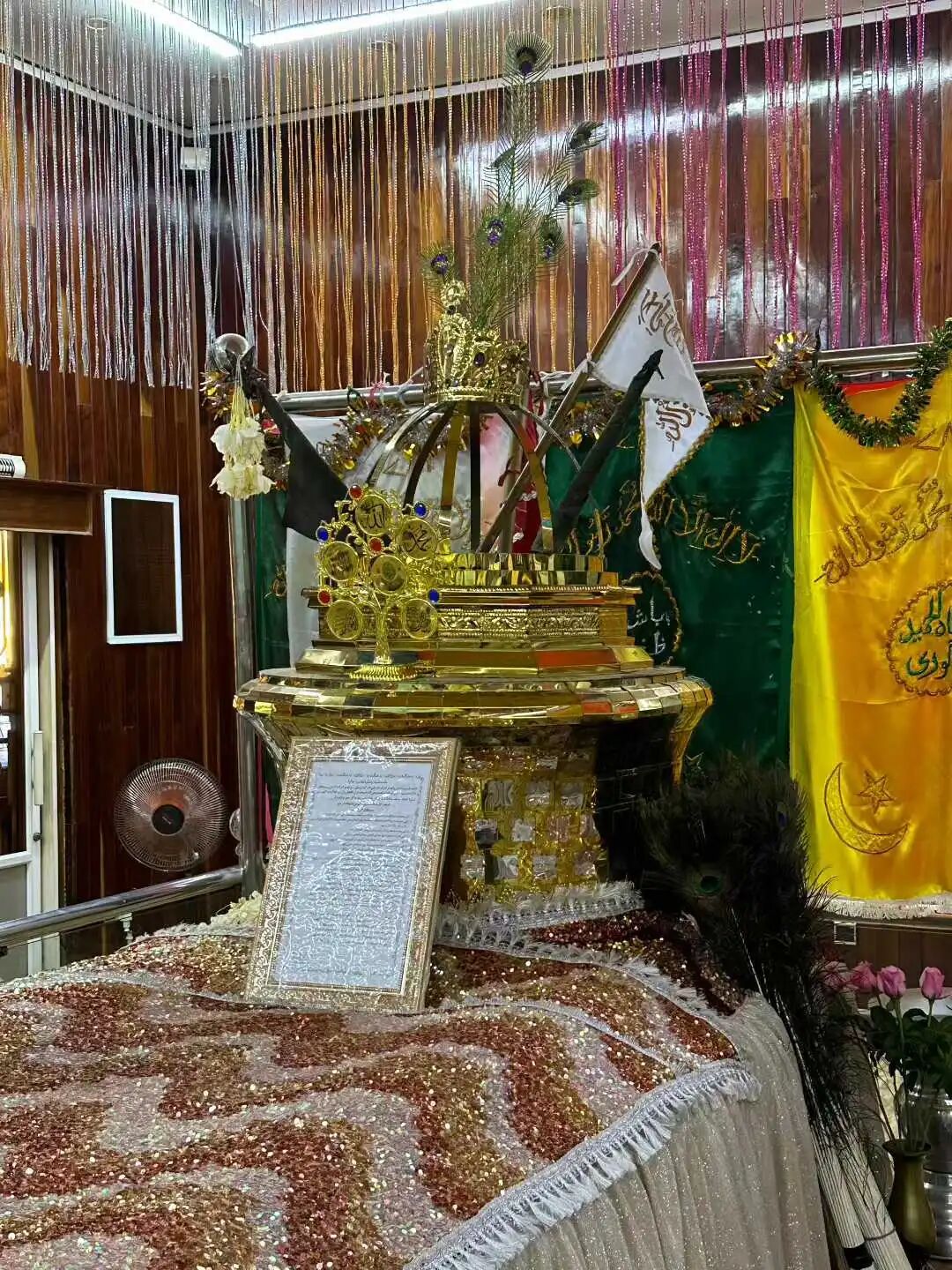
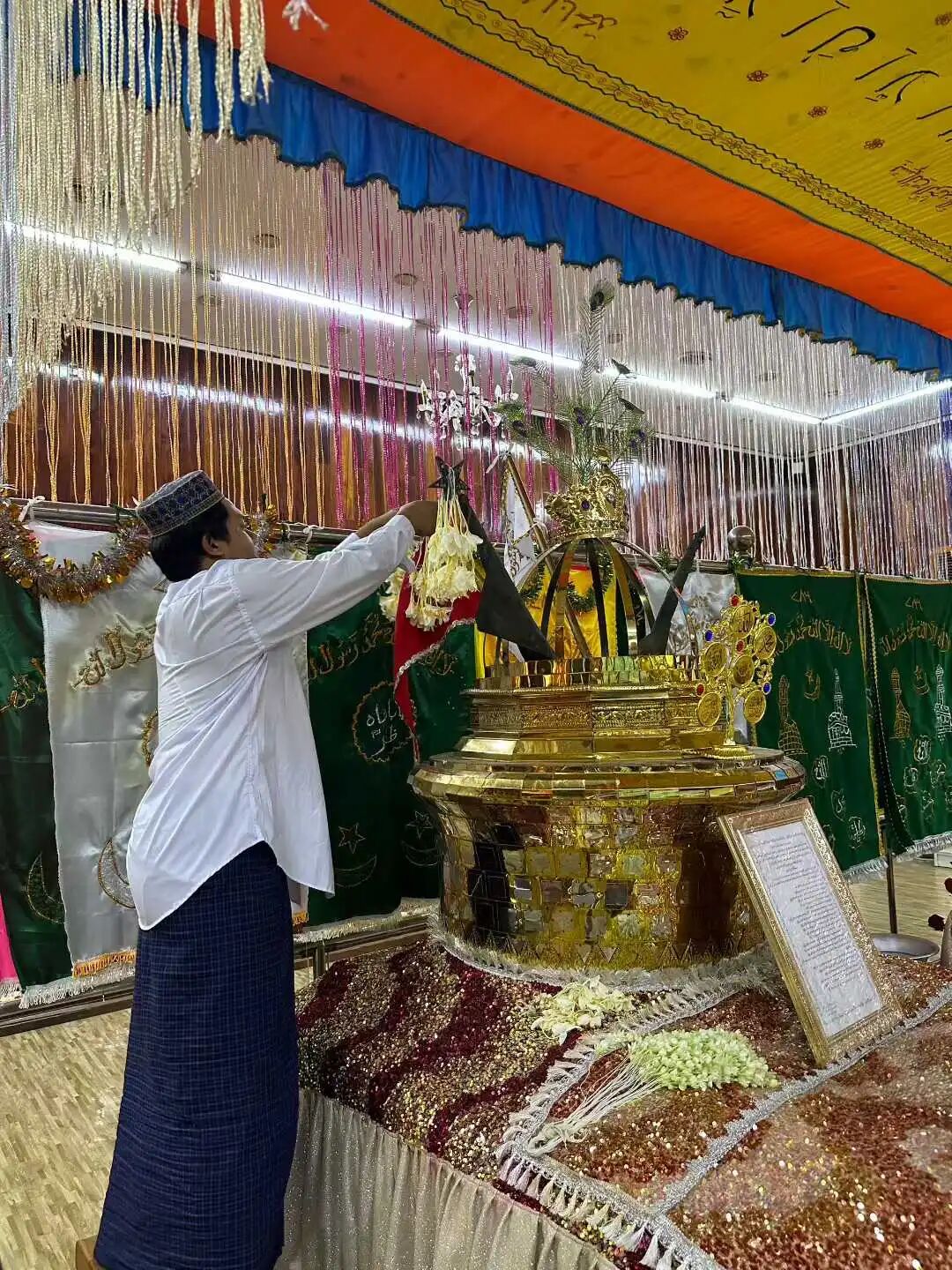
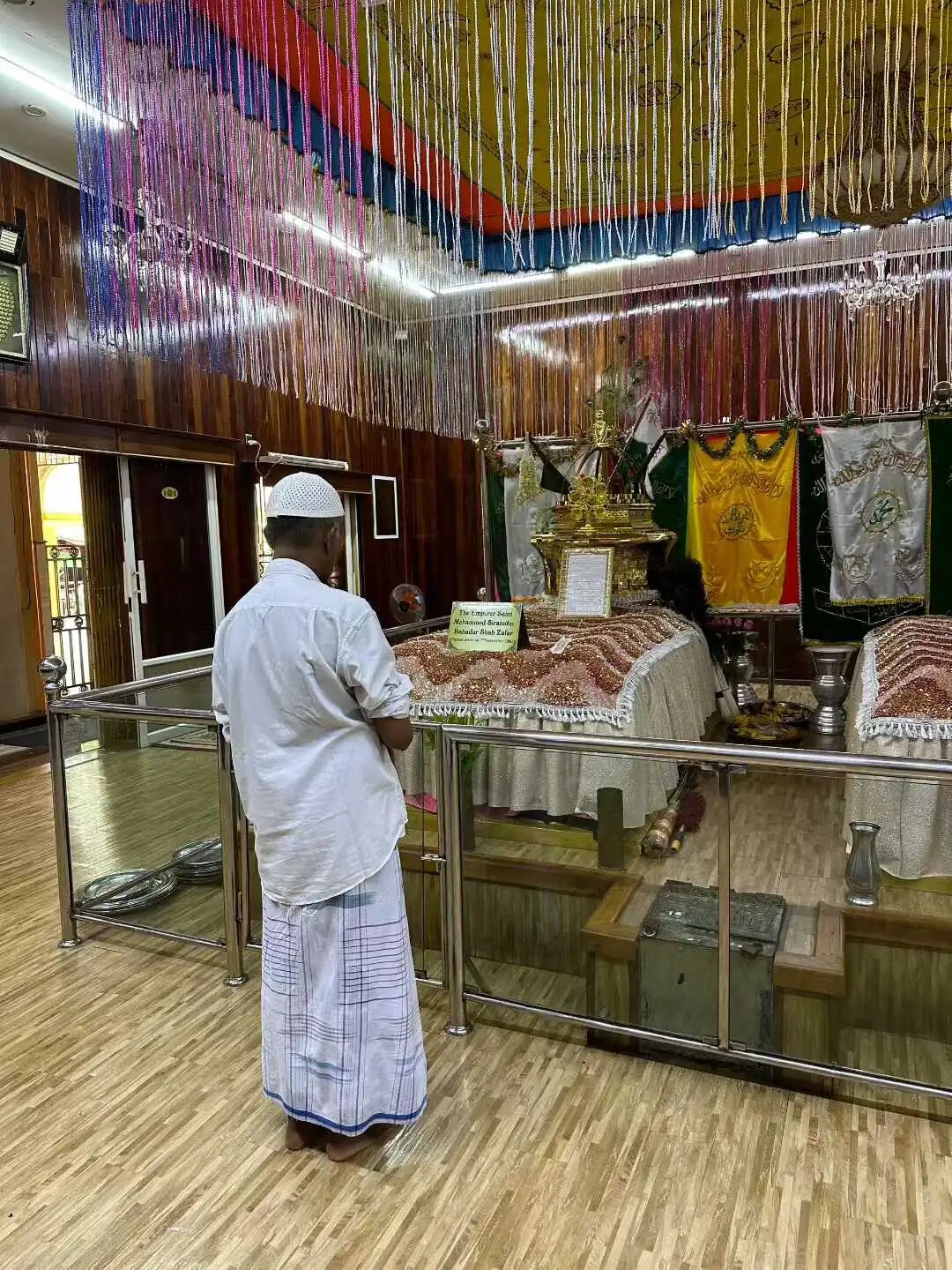
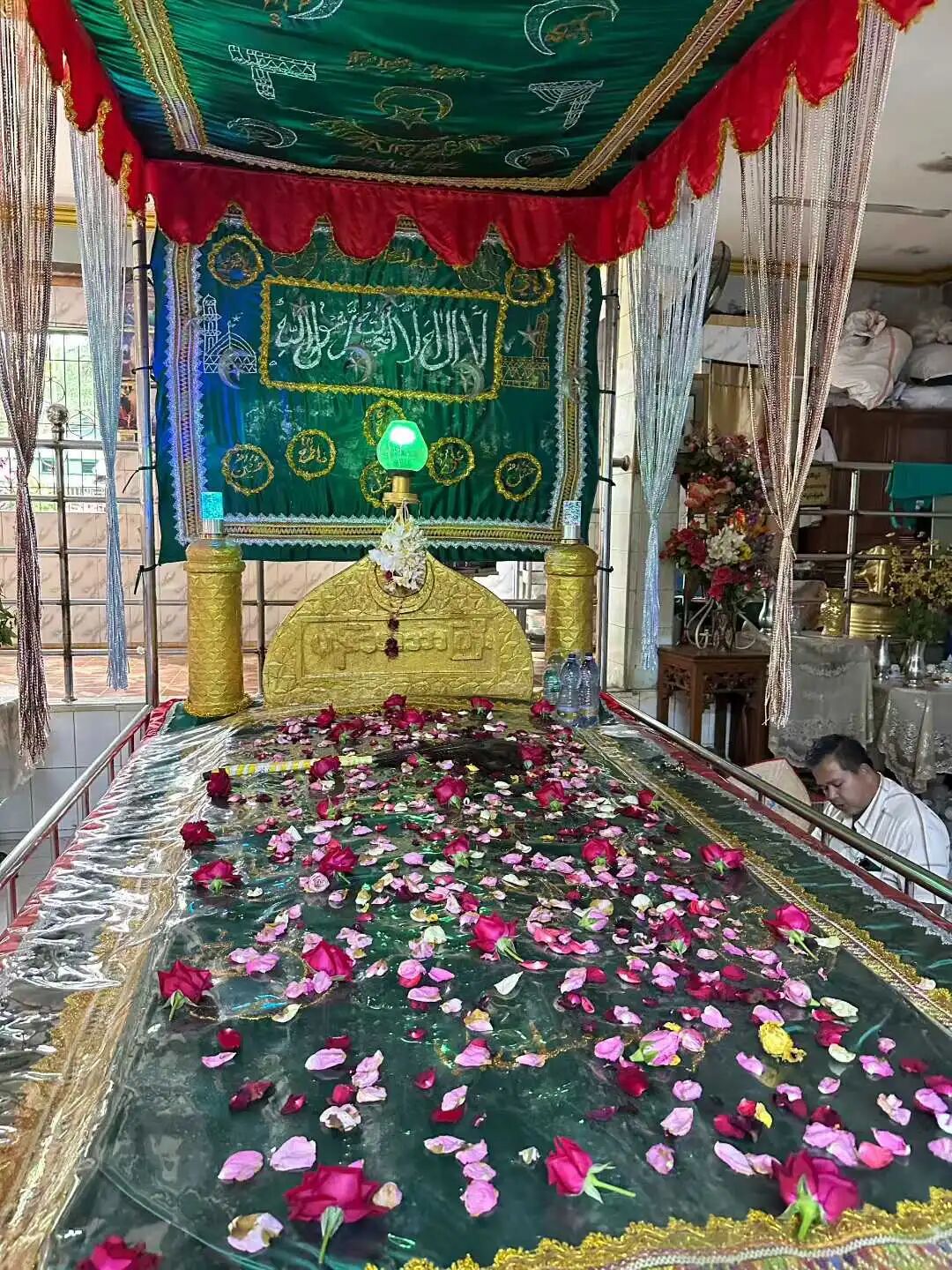
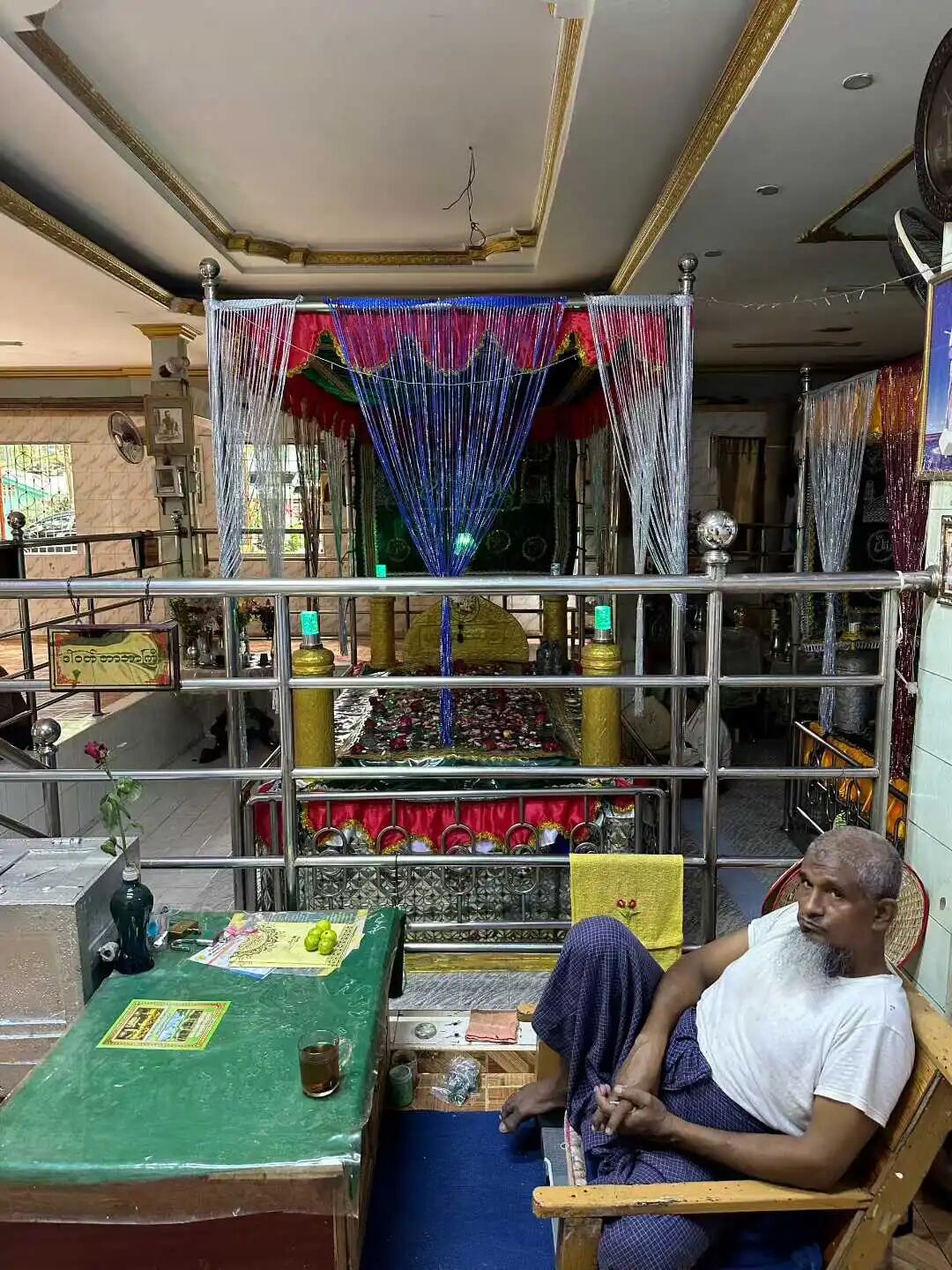
The tomb of Bahadur Shah II, the last emperor of the Mughal Empire, is near the famous Shwedagon Pagoda in Yangon, Myanmar. This site was his home after he was exiled to Yangon in 1858. Because Bahadur Shah II was a devout Sufi sheikh during his life, his tomb has become a famous Sufi shrine (gongbei) in Myanmar.
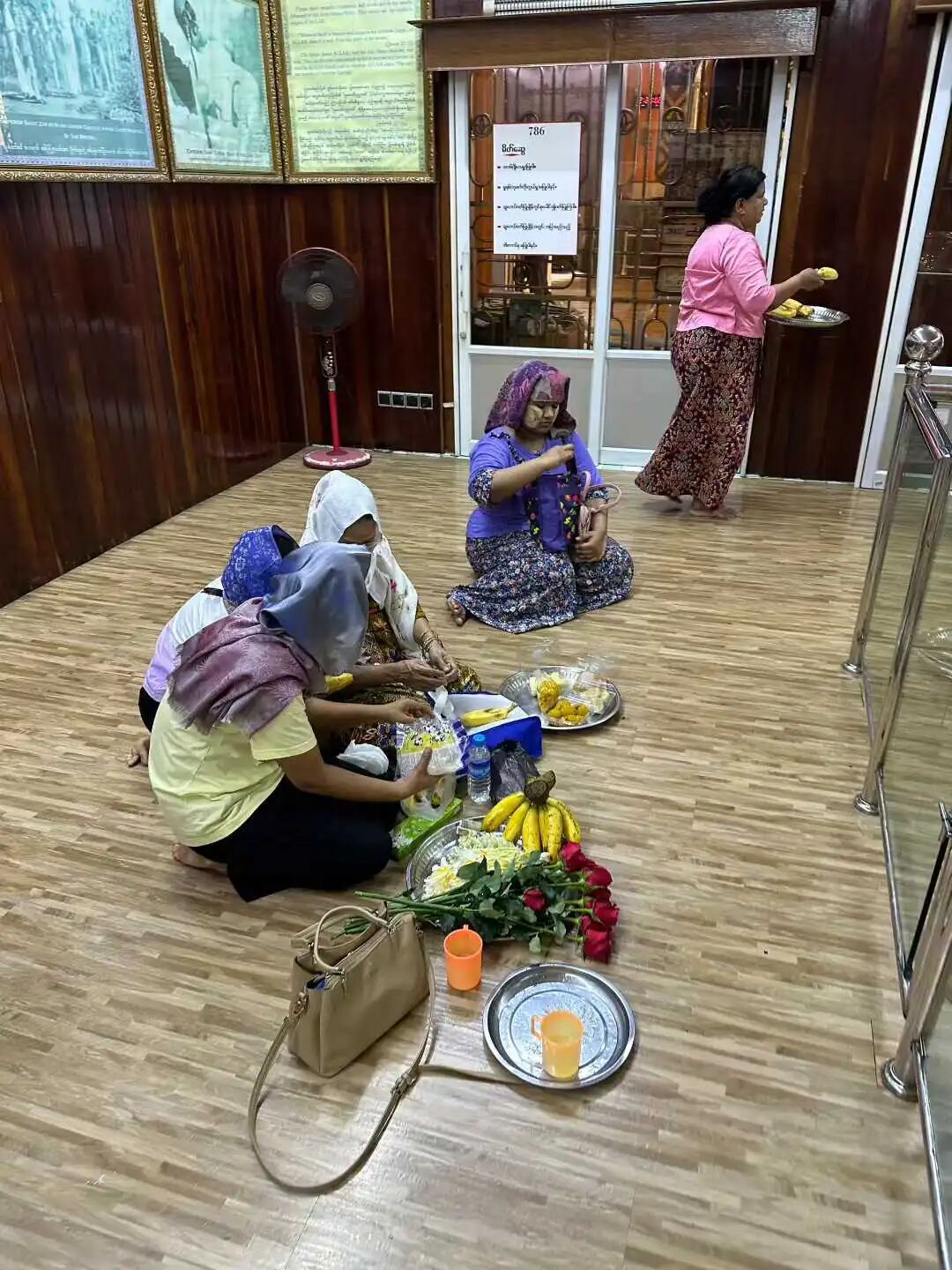
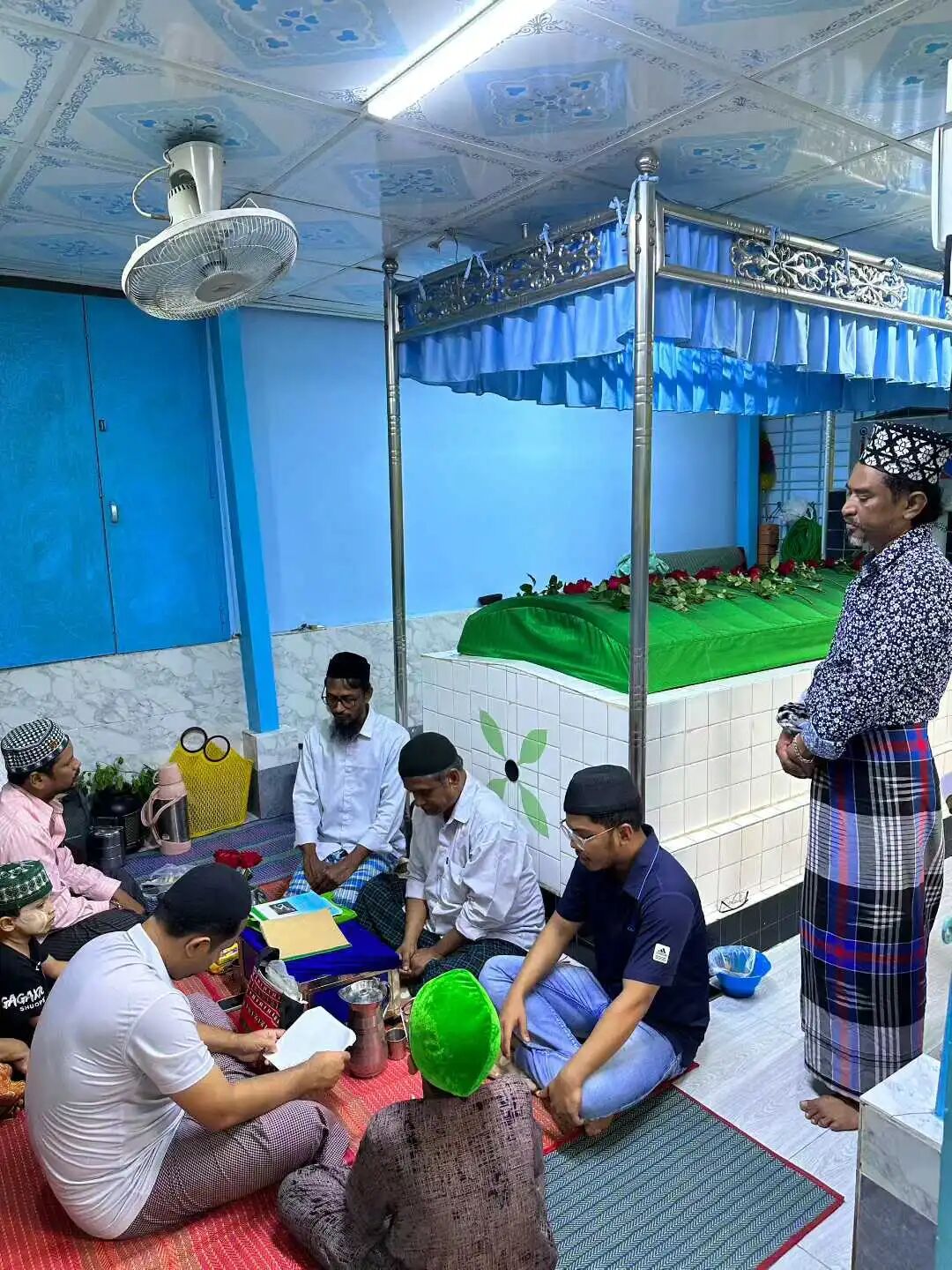
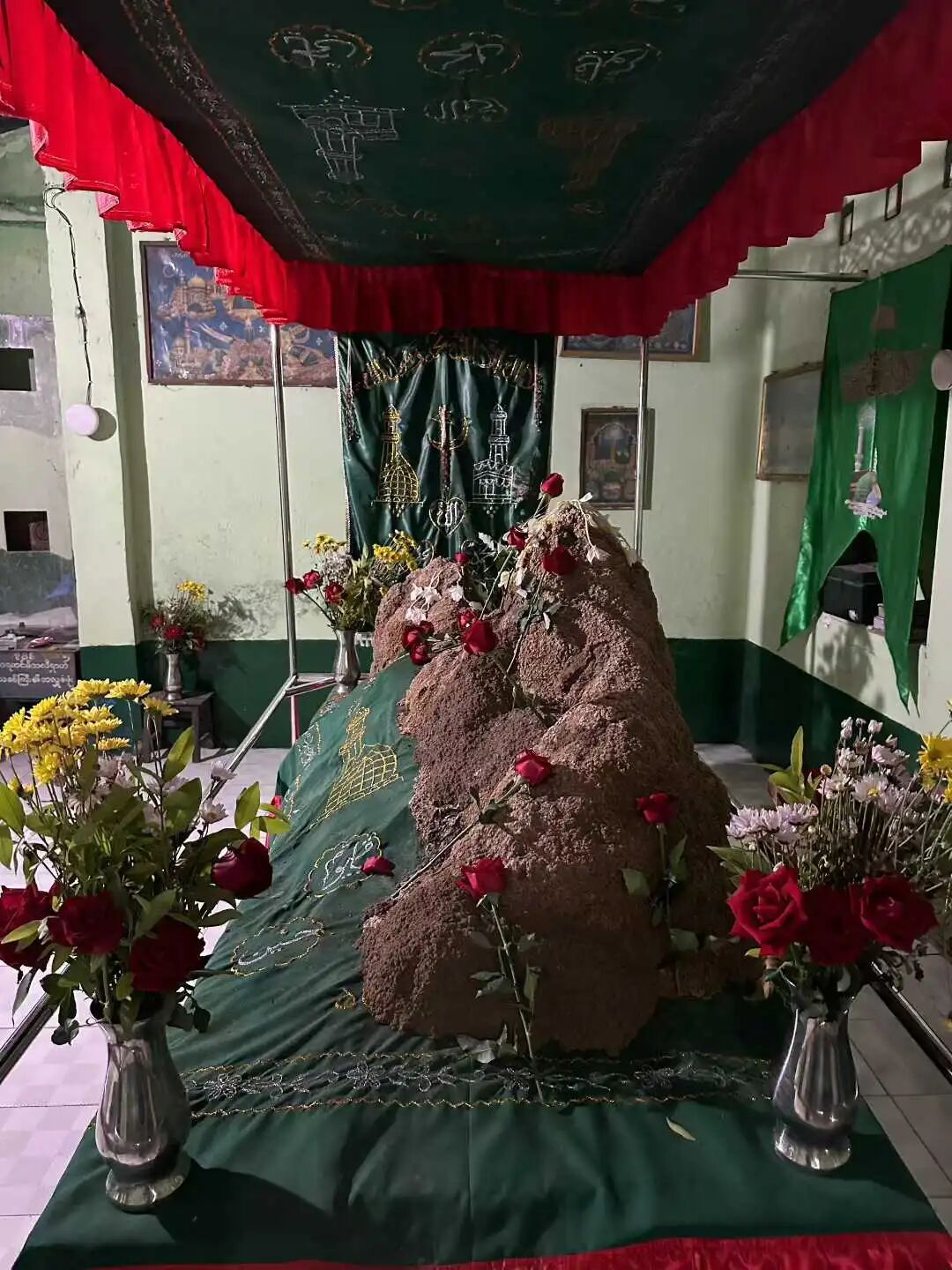
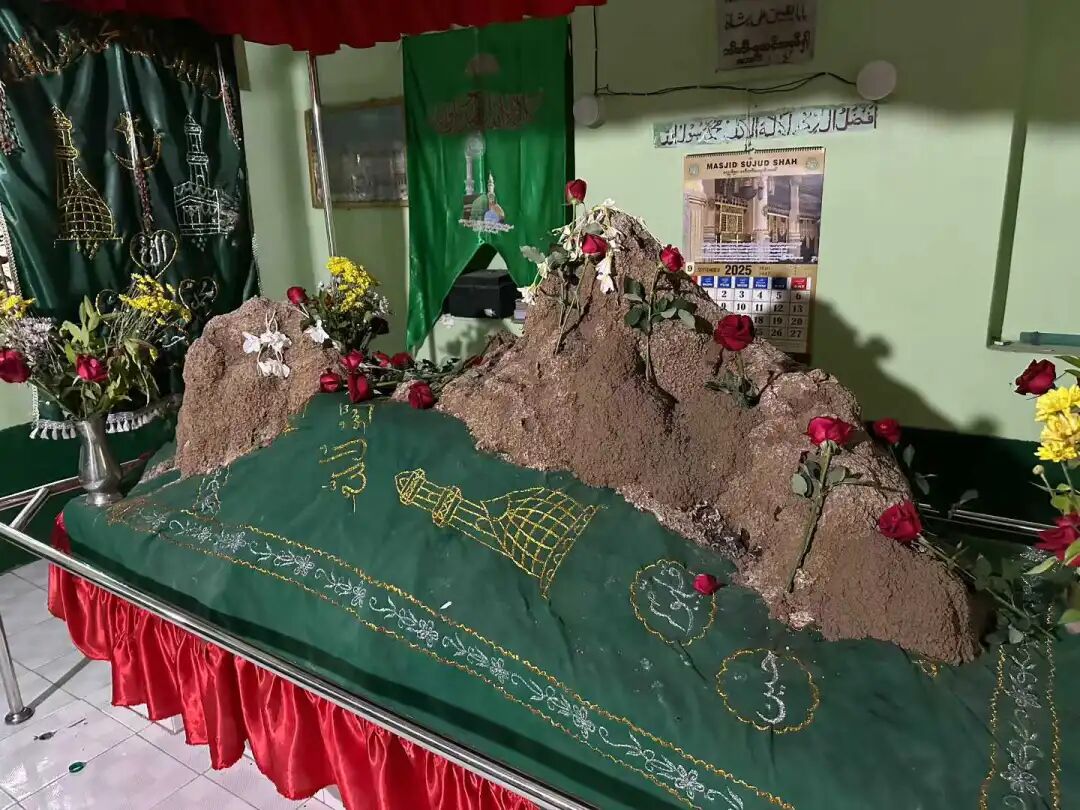
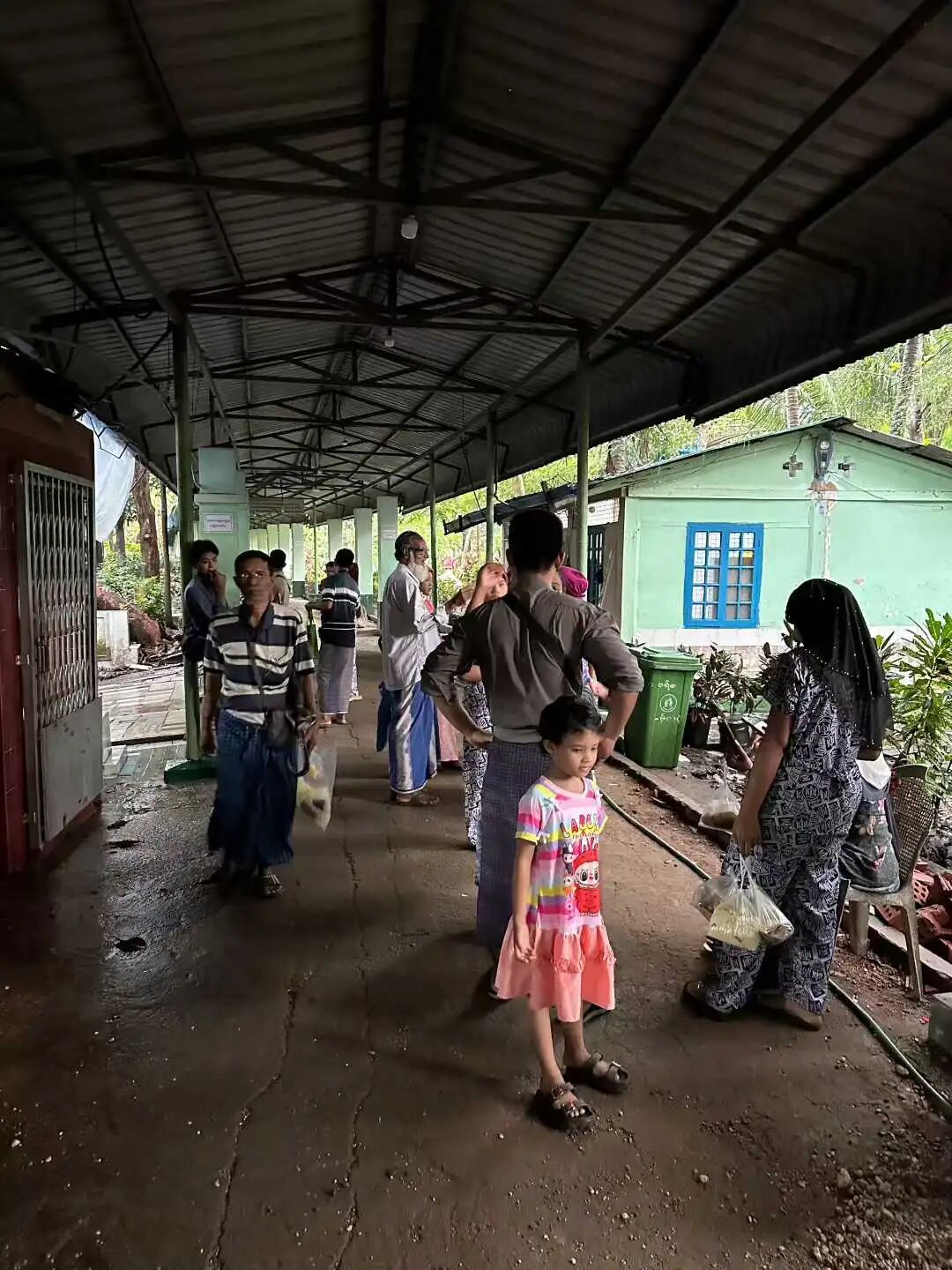
Although Bahadur Shah II belonged to the Chishti order during his life, the shrine (gongbei) is now managed by the Qadiriyya order. I met a man here who was hanging fresh flowers on the shrine (gongbei), and after some local friends (dosti) finished their gathering (amali), they shared candy and bananas with us.
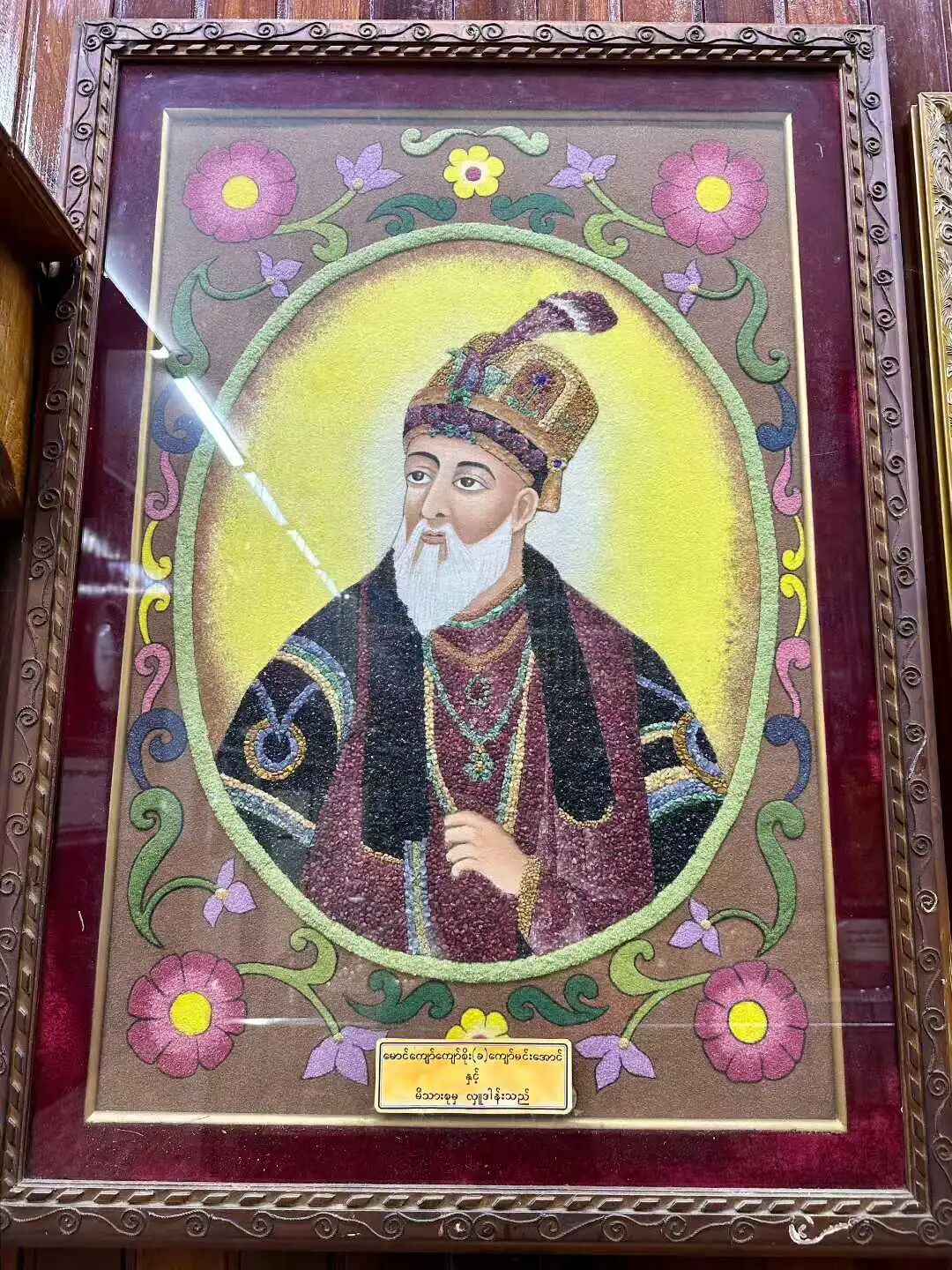
In 1803, the British East India Company used force to become the protector of the Mughal Empire, and the Mughal emperors lost their real power from then on. After Bahadur Shah II took the throne in 1837, his power was limited to the area around Delhi. He never had any ambition for the empire, but instead focused on Sufi practice and writing poetry. Legend says he started his Sufi practice at age 20 and became a murshid (guide) of the Chishti order by age 40. In 1843, he wrote a letter to Queen Victoria of Britain saying: "I am now old and have no ambitions left." I intend to devote myself entirely to religious work to comfort my remaining years.
The Sufi philosophy followed by Bahadur Shah II believed in embracing different cultures. Men, women, young, and old should all be able to express their love for Allah, and this love should transcend religion, gender, and social class. According to a report by Major Archer in 1828: "He is thin and small, and his clothes are simple, almost crude." He looks like a poor scholar or a language teacher. This is the typical appearance of a Sufi ascetic.
Like the Mughal rulers before him, Bahadur Shah II saw himself as the protector of his Hindu subjects. Under his rule, Hindu elites in Delhi would visit the Nizamuddin Sufi shrine (gongbei) to recite Persian poetry. Many people studied under great imams and attended religious schools (madrasas). The Mughal court would attend various Hindu events, and during the Shia month of Muharram, they would listen to elegies mourning Imam Hussein.
People say the Sufi poetry of Bahadur Shah II reached a level of perfection. His court had many famous Sufi scholars, writers, and poets, and a large number of poems were published during his reign. This style of lyric poetry became the main literary form of the late Mughal period.
In 1850, the knowledge and vitality of Delhi reached its final peak. At that time, the city had six famous religious schools (madrasas), nine Urdu and Persian newspapers, five academic journals, countless printers, and at least 130 doctors who mastered traditional Persian-Arabic medicine. Many new discoveries in Western science were translated into Persian and Arabic in Delhi. As the young poet Altaf Hussain Hali wrote at the time, "The capital, Delhi, was gathered with such a group of talented sages that it reminded people of the eras of Akbar and Shah Jahan."
In 1857, an uprising against the British East India Company broke out in India. It started because the British army made their Indian soldiers bite open greased rifle cartridges, and rumors immediately spread that the lubricant came from cow and pig fat. The insulted soldiers flooded into Delhi on May 11 and turned to Bahadur Shah II for help at the Red Fort. Bahadur Shah II initially refused them, but faced with the passionate soldiers surrounding him, he eventually had no choice but to accept them as they bowed before him one by one, changing the fate of the Mughal Empire.
As the Siege of Delhi dragged on and the outlook grew dim, Bahadur Shah II chose to escape reality through poetry. According to British spies, he recited the following lines one night:
The sky collapses on everyone
I can no longer rest or sleep
Only my final departure will come
Whether at dawn or in the dark of night
On September 14, the British army officially attacked the walls of Delhi, and on September 17, Bahadur Shah II fled the Red Fort through the Water Gate. He went to the most important Sufi shrine (gongbei) of Nizamuddin in Delhi and handed over his ancestors' relics to the Nizam family, the keepers of the shrine. It is said these included three hairs of the noble Prophet passed down by the Timurid family. Then he went to the tomb of his ancestor, the second Mughal emperor, Humayun. On September 20, Bahadur Shah II was finally captured by the British army.
By January 27, 1858, after all the dignitaries of the Mughal court had been tried, Bahadur Shah II faced his own trial. William Howard Russell, a foreign correspondent for The Times and the father of war journalism, saw Bahadur Shah II in captivity. He described him as silent, sitting motionless day and night, with his eyes cast down to the ground. People heard him reciting poems from his own works and writing poetry on the walls with a charred stick.
During the trial, Bahadur Shah II provided a written defense in Urdu. He denied any involvement in the uprising and insisted that he had been a helpless prisoner held by the Indian soldiers from start to finish. The trial dragged on for more than a month and was often adjourned because of Bahadur Shah II's poor health. On March 9, the British finally decided to exile Bahadur Shah II.
On October 7, 1858, after the Mughal Empire had ruled Delhi for 332 years, the last emperor, Bahadur Shah II, left Delhi in an ox cart. The group traveled slowly down the Ganges River by steamship and arrived at Diamond Harbour, south of Calcutta, on December 4. They boarded the British naval ship HMS Magpie there and finally reached Rangoon, Burma, where they lived in two small rooms in the British barracks area directly below the Shwedagon Pagoda.
In April 1859, Bahadur Shah II moved to a new wooden house near the fort guard camp. According to the report by his jailer, Captain Nelson Davies:
The residence consisted of four rooms, each 16 feet square. One room was assigned to the former king, another to Jawan Bakht and the young crown princess, and a third was occupied by Queen Zinat Mahal. Each of these rooms had an attached washing area. Shah Abbas and his mother lived in the remaining room.
The servants either lounged around the veranda or slept under the house, where the ground was covered in crushed brick to keep it dry. A drainage ditch ran around the house for the same reason. There were two washrooms, a double bathroom for the servants, and a place for cooking.
The veranda on the upper floors was full of chicks, which were kept inside by nailed-down slats. The frail former king and his sons usually sat there, where the floor was raised almost to the height of the railing, allowing them to enjoy the pleasant sea breeze and the wide, beautiful view. They watched people pass by and stared at the ships being loaded, which helped break up the monotony of their life behind bars and made them more willing to accept their current living situation.
Regarding the health of Bahadur Shah II, the report by Davis noted:
If given time to make up his mind, his memory was still good, but he spoke unclearly because he had lost his teeth. He was unable to handle anything requiring mental effort, and while that was the impression he gave, he seemed to be bearing the weight of his years remarkably well. He lived a dull, listless life, showing little interest in anything except eternal matters. This had been his normal state for a long time, and it would likely continue until his life ended, which would not surprise anyone.
Because the British did not allow him to use paper or pens, the world could only guess how he felt about his life in exile. By October 1862, his health took a sharp turn for the worse, and he could no longer swallow or eat food. On November 5, Davis ordered bricks and lime to be collected to prepare a quiet spot behind the house enclosure for his burial.
At 5:00 a.m. on November 7, 1862, Bahadur Shah II finally returned to Allah. Davis wrote: Everything was ready, and at 4:00 p.m. that day, he was buried in a brick grave behind the guard camp, with turf laid level with the ground... A bamboo fence surrounded the grave for a long time, and once the fence rotted, the area would be covered in thick grass, leaving no trace and making it impossible to identify the final resting place of the last Great Mughal. Davis specifically mentioned that only two of Bahadur Shah II's sons and a manservant attended the funeral, as women were not allowed to attend according to tradition.
The grave of Bahadur Shah II soon became impossible to identify. When a delegation from India came to visit in 1903, a local guide pointed out a jujube tree near the grave. In 1905, the Dosti group in Yangon protested and demanded that the grave site be marked. The British initially disagreed, but after a demonstration and a series of published reports, they finally agreed in 1907 to erect an inscribed stone slab and put a railing around it. In 1925, the railing was rebuilt into a temporary shrine (gongbei) covered with a corrugated iron roof.
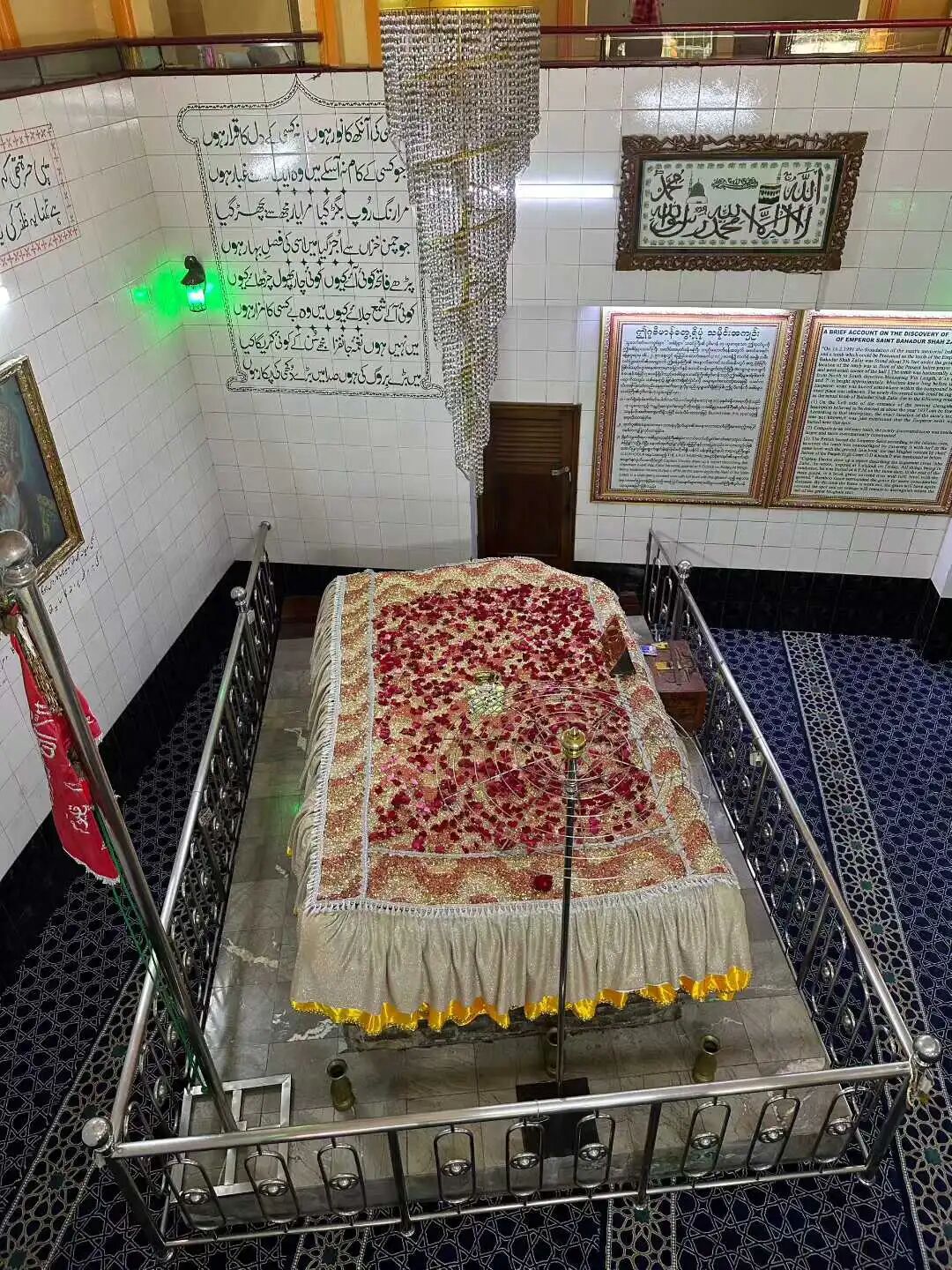
It was not until February 16, 1991, when workers were digging a drainage ditch behind the shrine, that they discovered a brick-lined grave, finally confirming the remains of Bahadur Shah II. Later, this place was rebuilt into a mosque with a prayer hall (gongbei). Dignitaries from India, Pakistan, and Bangladesh have all visited, and Rajiv Gandhi even gifted a carpet here.
As a fallen monarch, Bahadur Shah II was a failure. He did not give the army the support it needed during the 1857 Indian Rebellion, which ultimately ended the Mughal civilization. Under the British policy of divide and rule, the various ethnic groups in India began to drift apart. But under his rule, Delhi was home to the most talented poets and writers in modern South Asian history, and literature and art reached their peak.
As a Sufi ruler, he never forgot how important it was for the different groups under his rule to depend on each other. During the Siege of Delhi, he refused the demands for a holy war (jihad) from the Wahhabis and tried his best to maintain relationships between all groups. When a large number of Muslim (dosti) elites moved from India to Pakistan in 1947, people could no longer imagine that just 90 years earlier, many Indian soldiers had rushed to the Red Fort in Delhi, gathered under the banner of a Sufi emperor, and faced national disaster with their Muslim brothers to fight against foreign invaders.
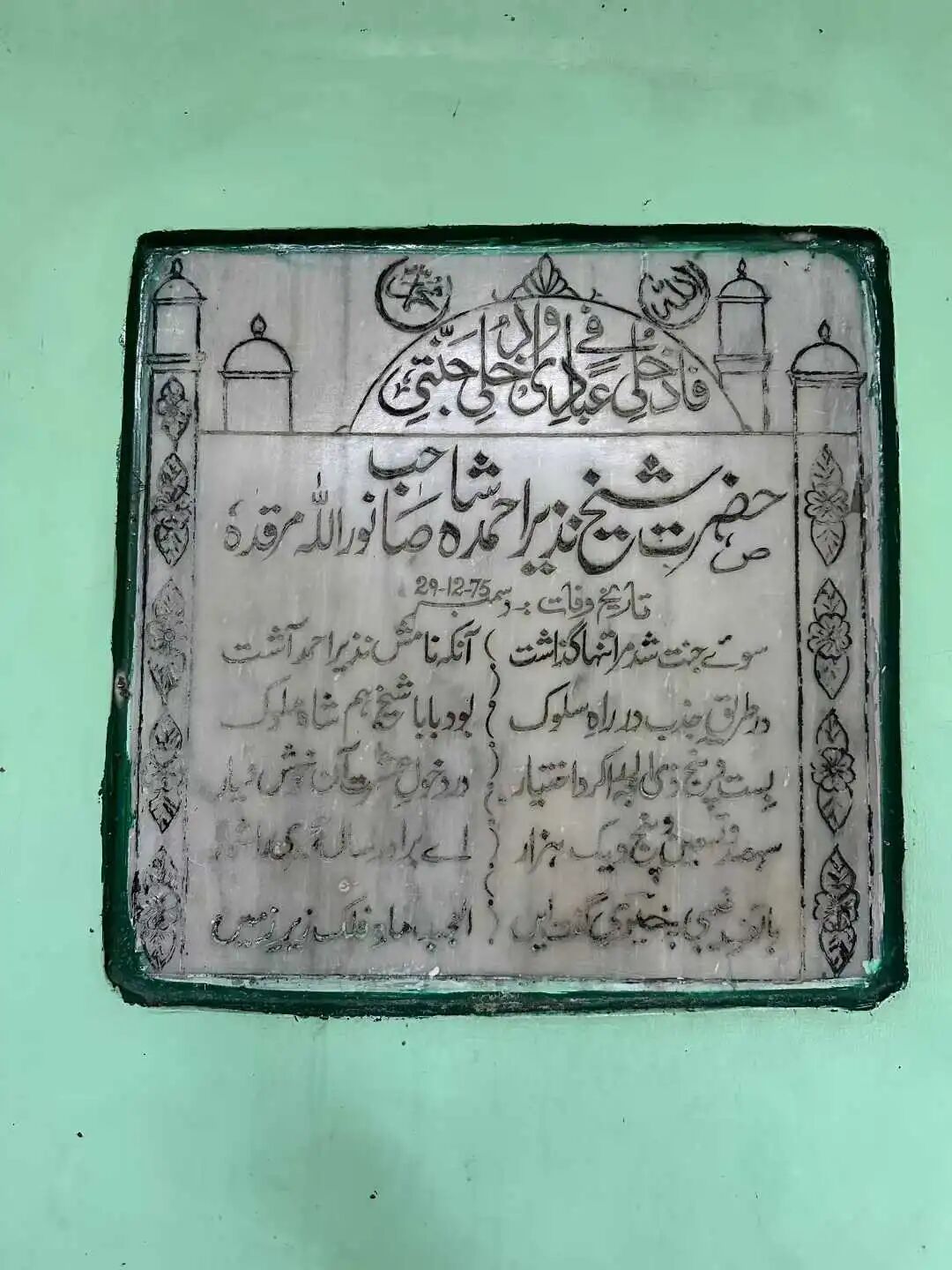
I found stone tablets standing around the front of the tomb.
Underground is the original location of the tomb.
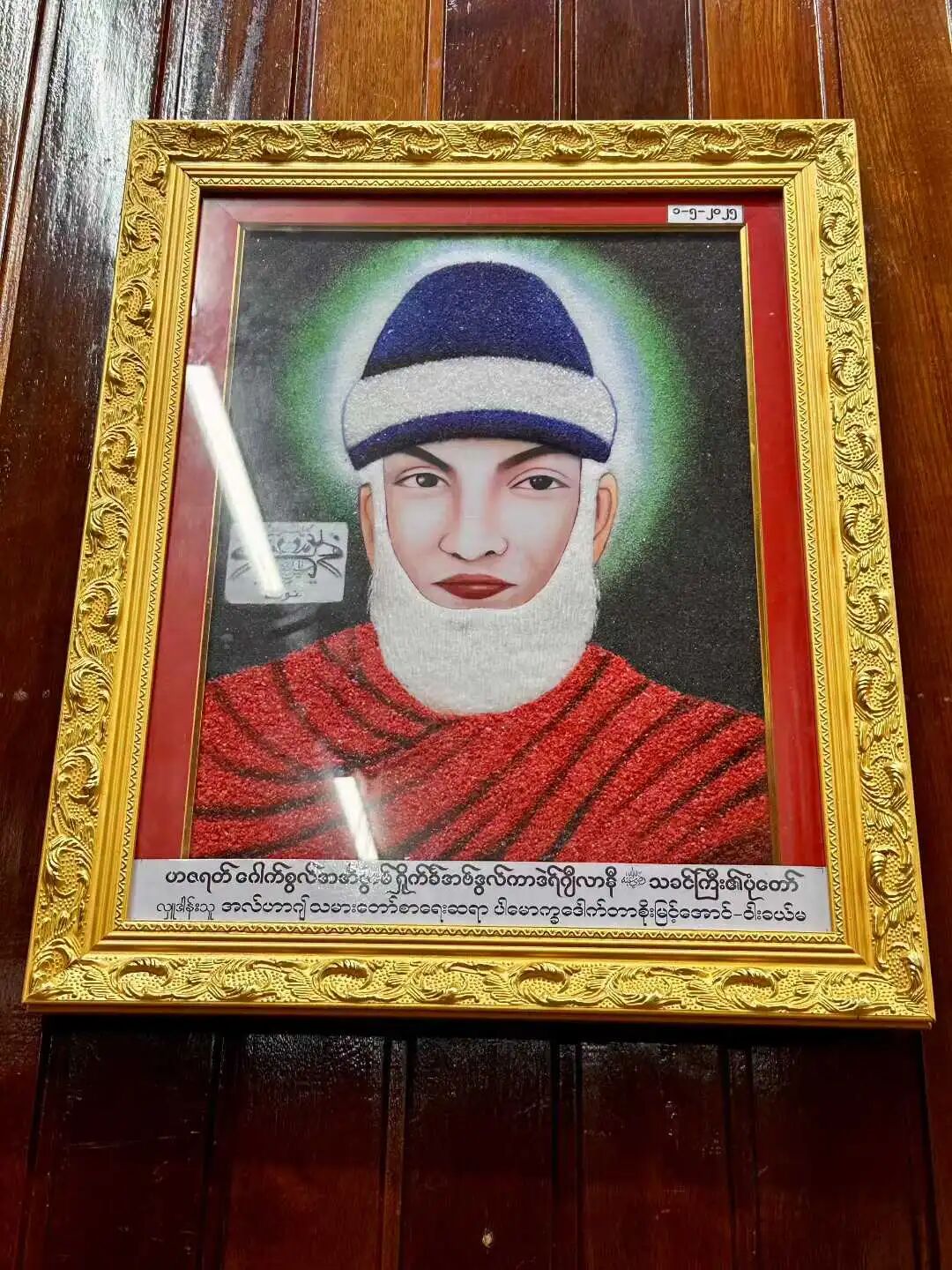
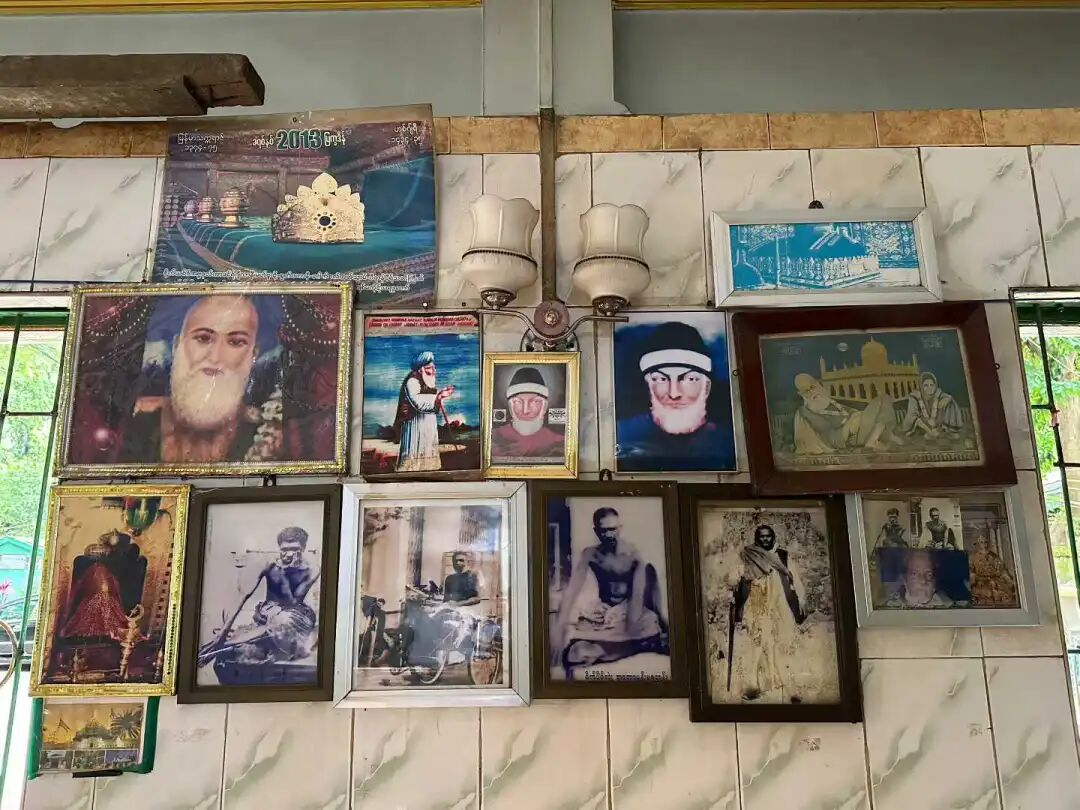
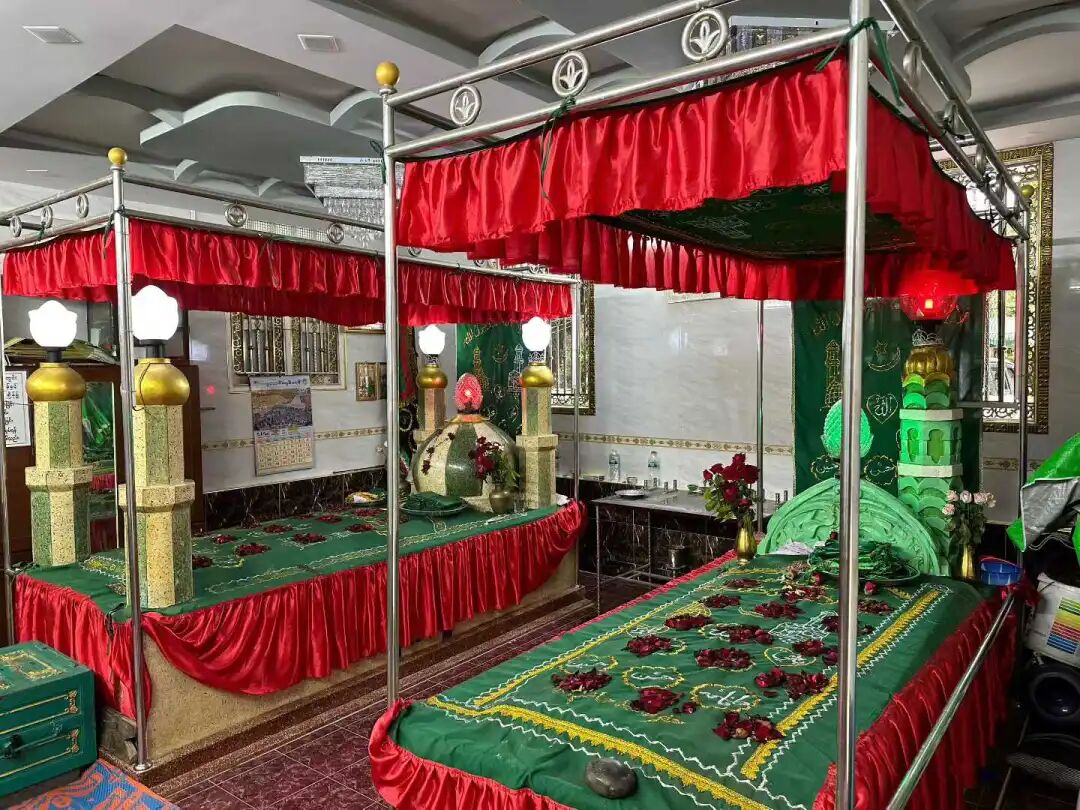
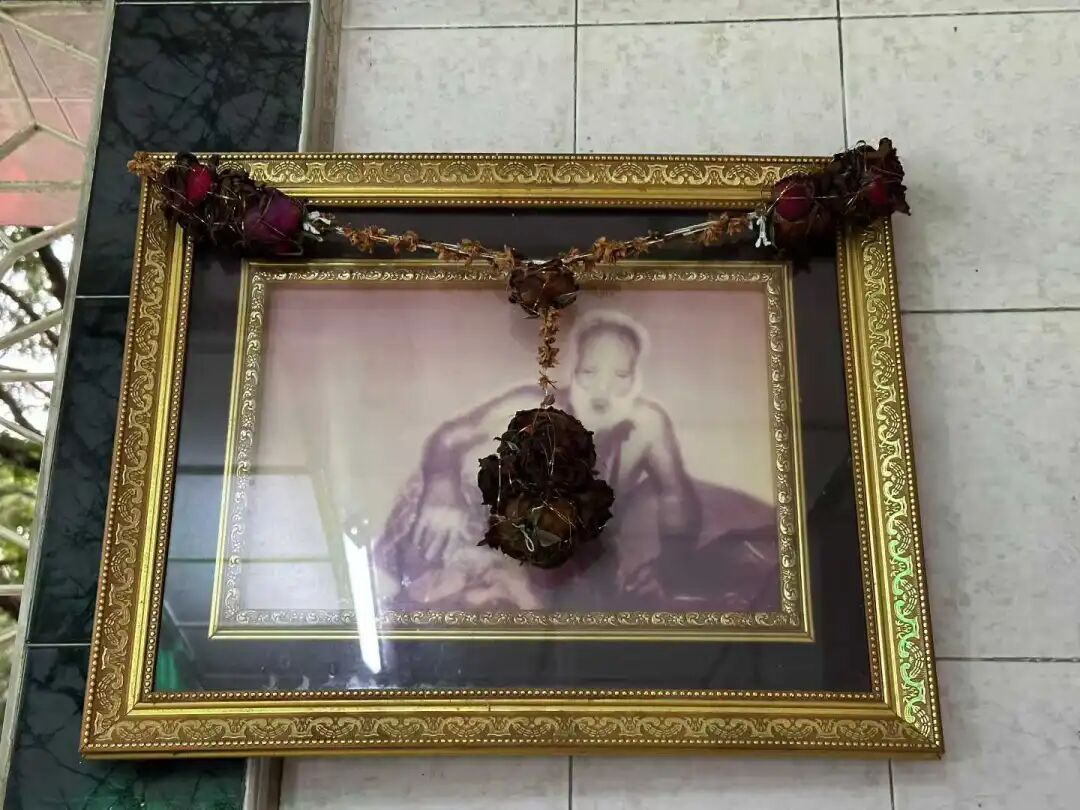
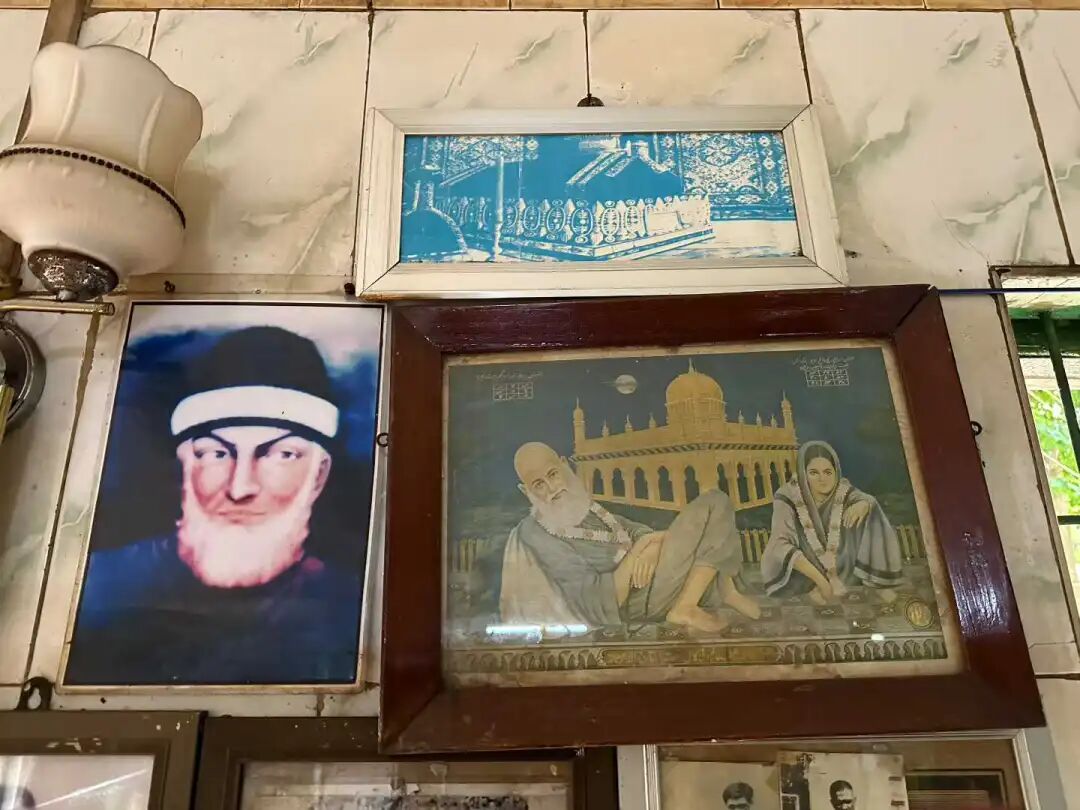
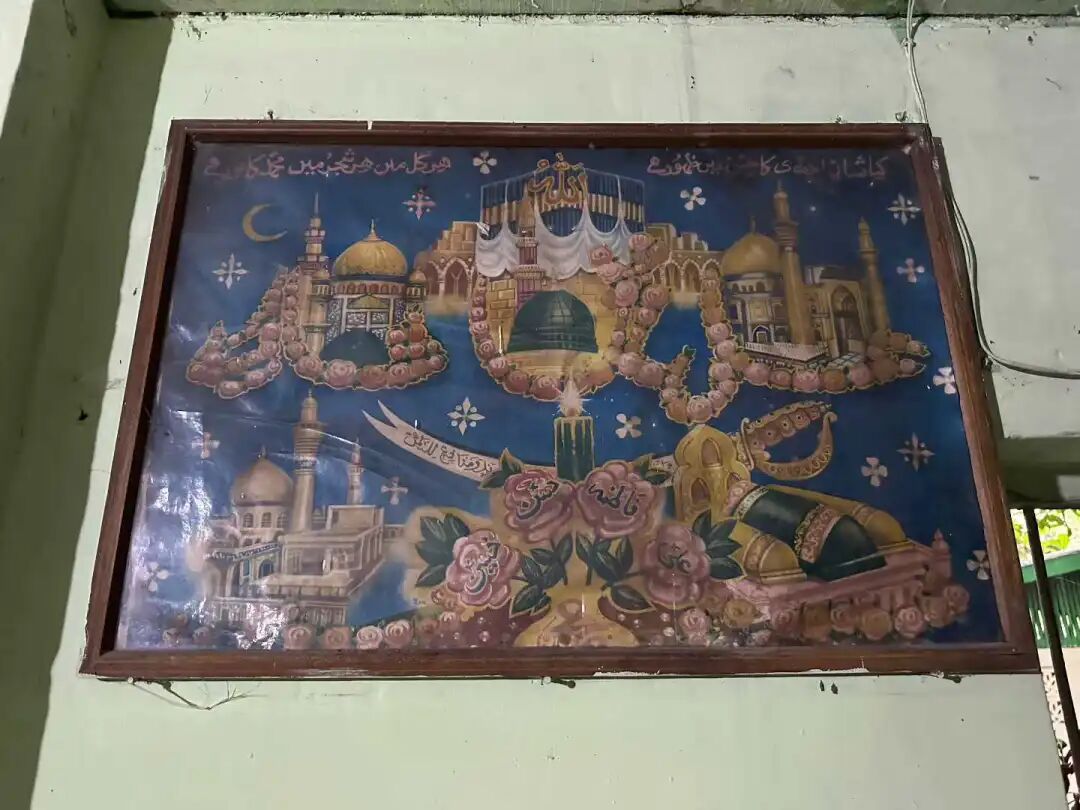
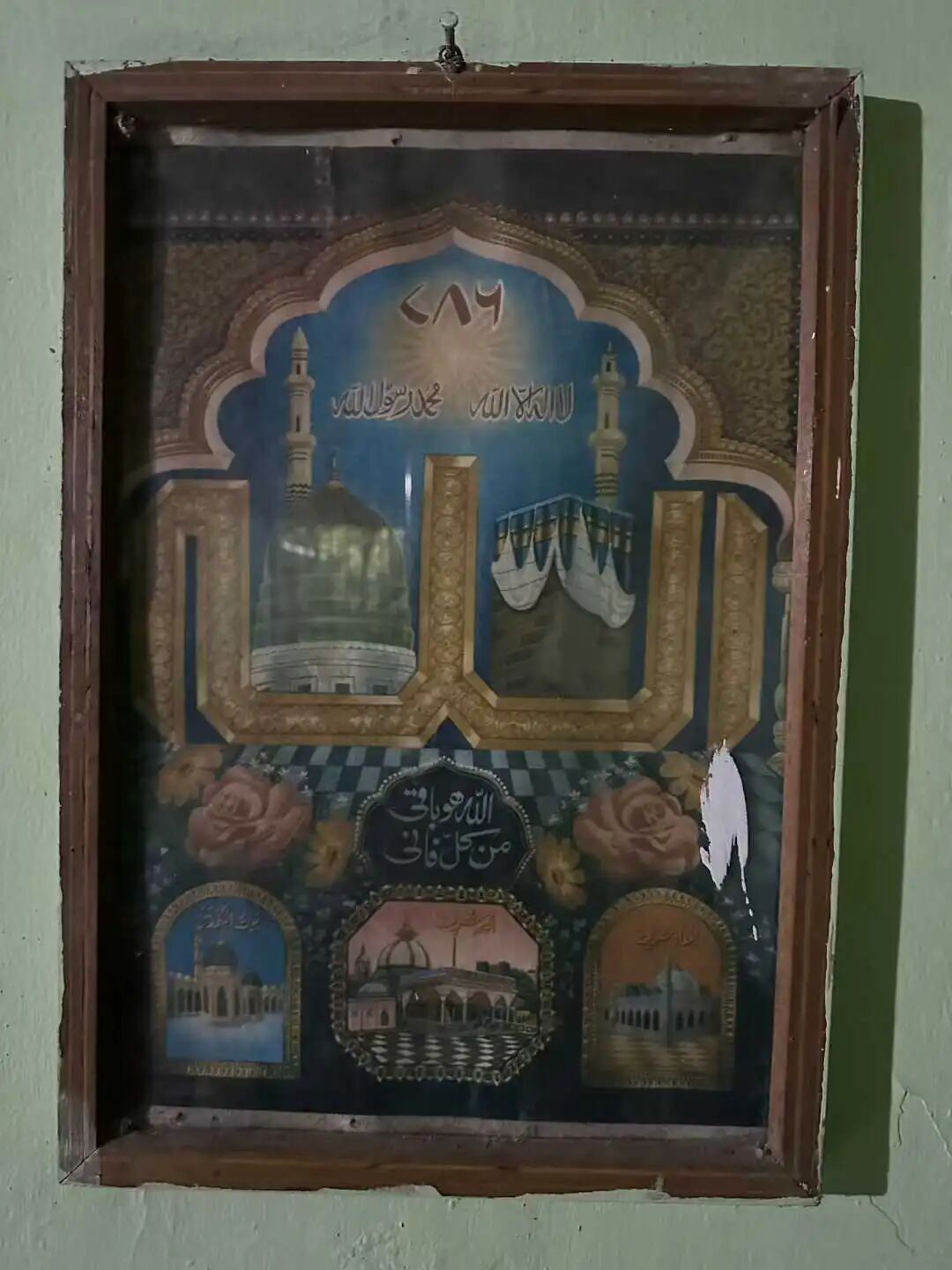
Inside the tomb complex (gongbei), there is a portrait of Abdul Qadir Gilani, the founder of the Qadiriyya order.
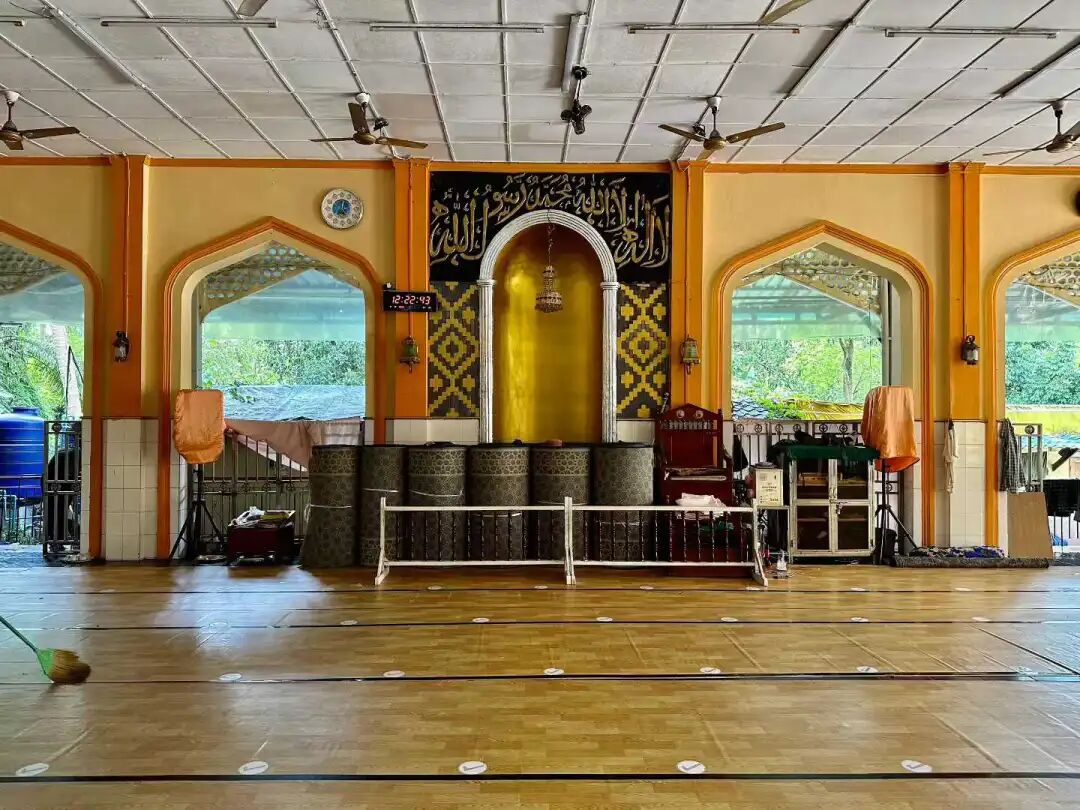
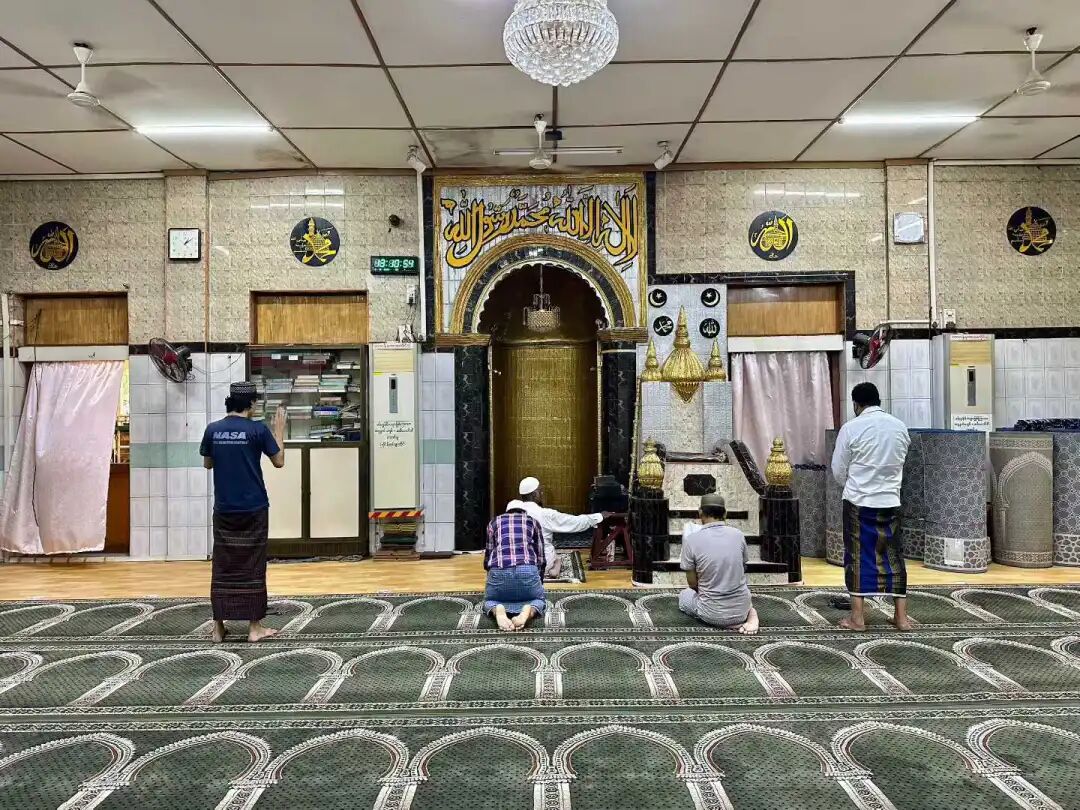
Next to the tomb is a prayer hall. This is the same as the Qadiriyya order in China, where the tomb and prayer hall are adjacent, and there is an imam in the mosque.
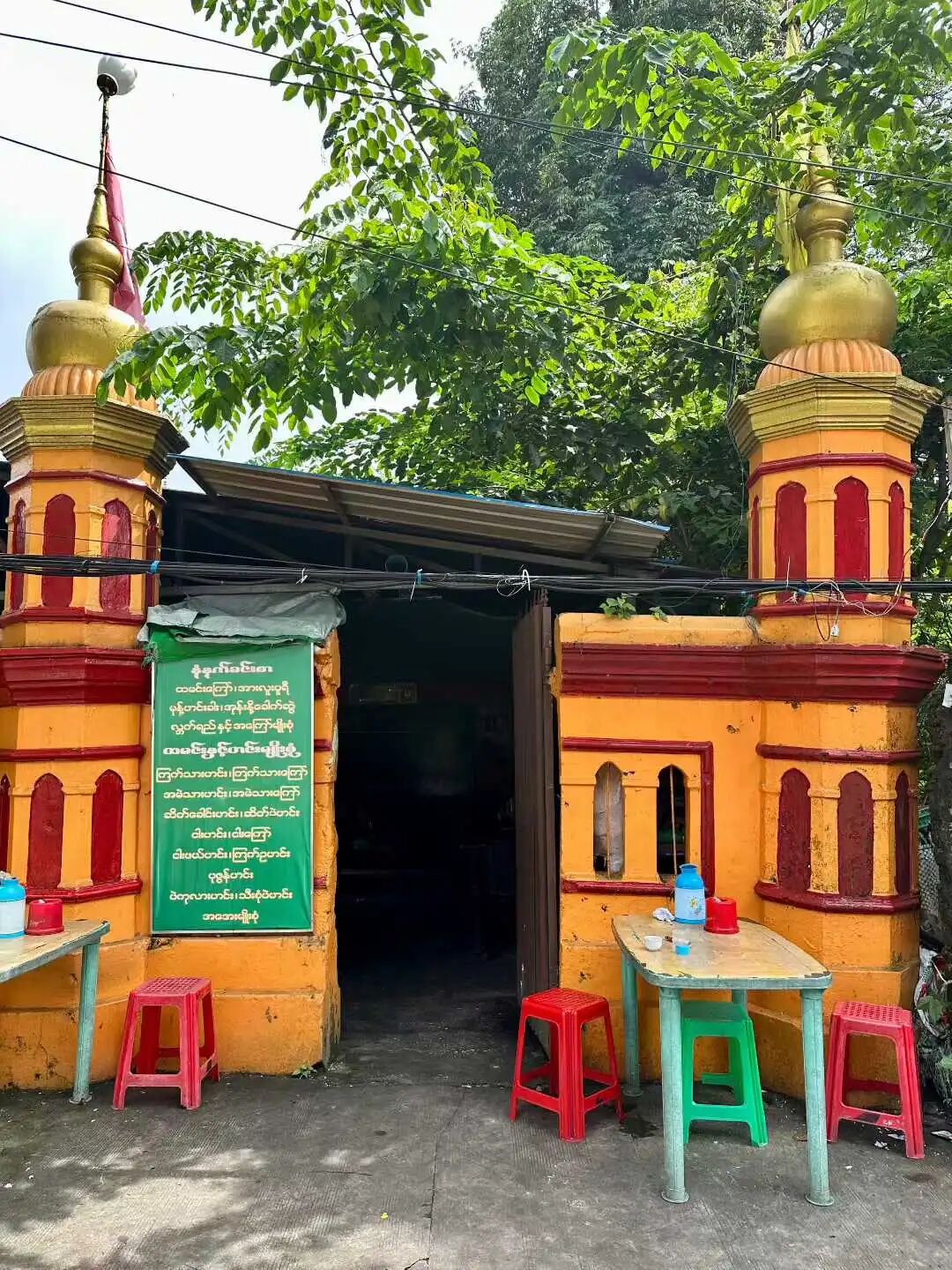
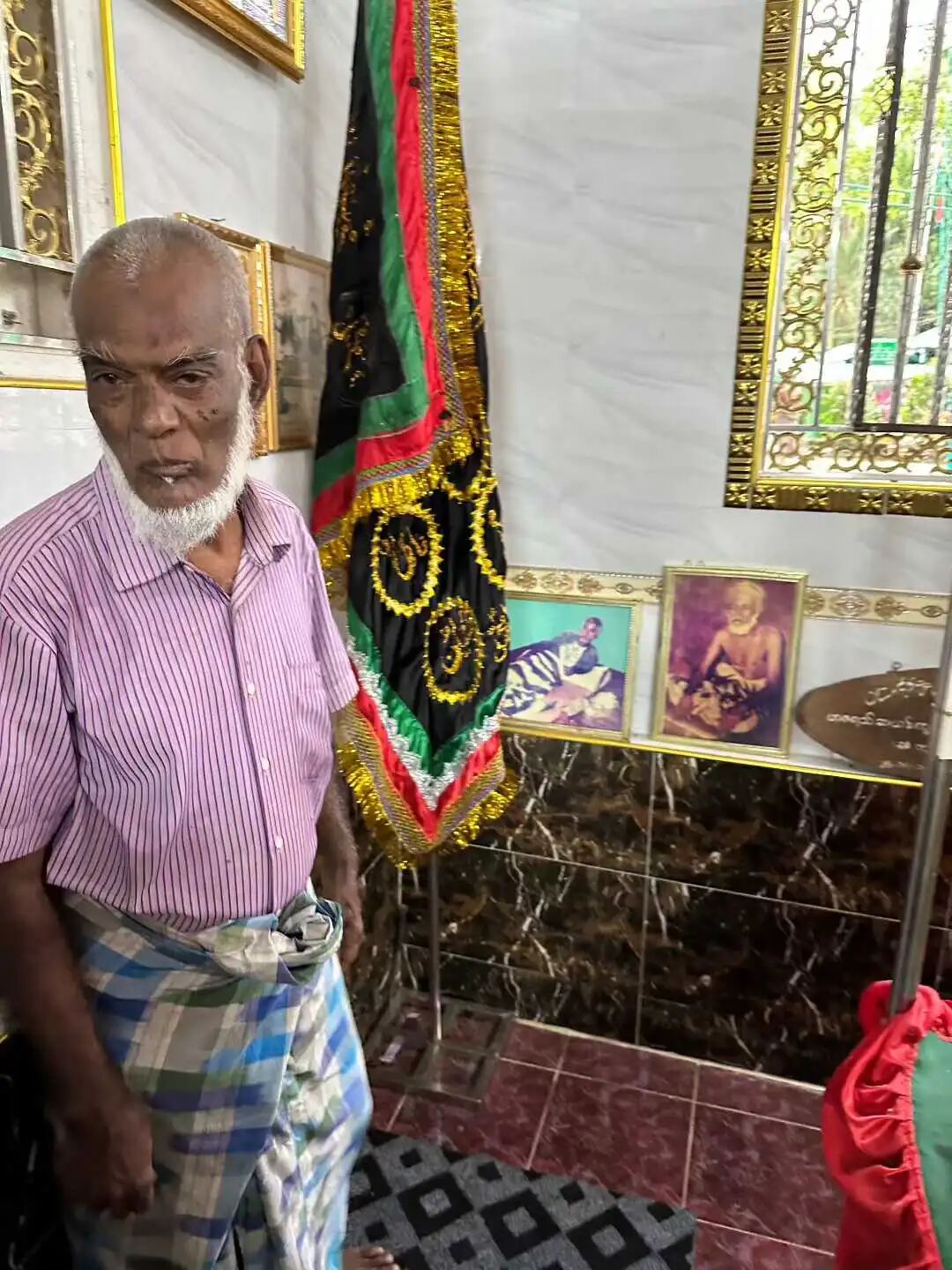
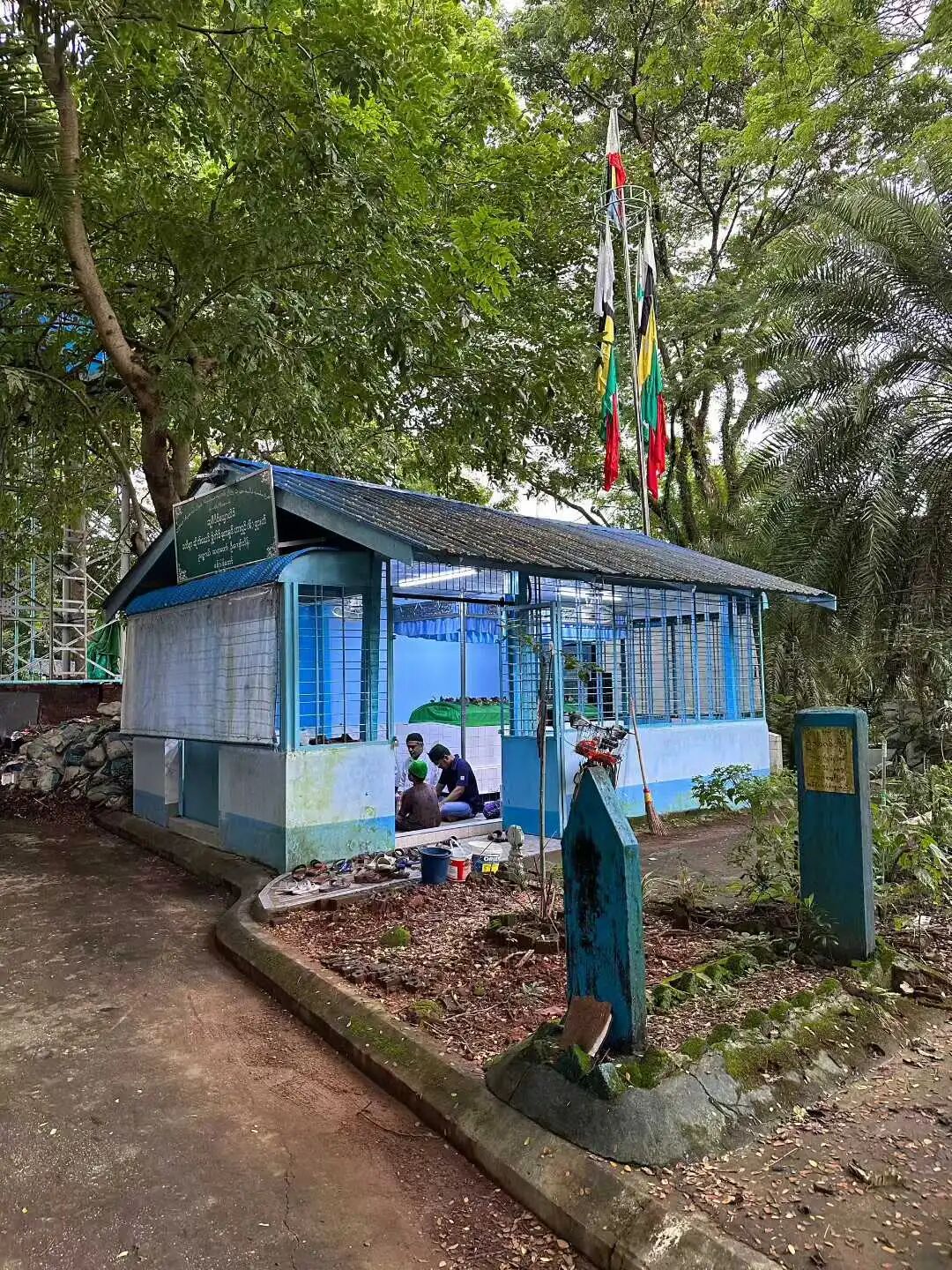
In a forest near the Yangon Central Railway Station in Myanmar, the largest Sufi tomb complex in Yangon is hidden. Since most of the text inside the tomb is written in Burmese, I searched for information for a long time after I returned but could not find any leads. Recently, based on the few English words inside the tomb, I learned that this place belongs to the Maizbhandari order, which was established in the late 19th century by Bengali Muslims based on the Qadiriyya Sufi tradition.
The Maizbhandari order is the only indigenous Bengali Sufi order, and its founder was born in Chittagong in 1826. People say his ancestors were descendants of the Prophet, who moved through Medina, Baghdad, and Delhi before finally settling in Bengal, serving as imams for generations. Maizbhandari studied the scriptures from a young age. After graduating in 1853, he first served as a judge (qadi), but soon resigned to work as a teacher in Kolkata. In Kolkata, he met two sheikhs from the Qadiriyya Sufi order and joined them to practice Sufism. In the late 19th century, he established his own lodge and founded the Maizbhandari order.
From the 19th century to the present, the Maizbhandari order has grown into a modern organization with millions of followers and is the most important Sufi order in Bangladesh. The Maizbhandari order is known for its melodic and rhythmic way of chanting (dhikr). They have recorded tens of thousands of songs, which have had a great influence on the faith in Bengal. As Yangon, Myanmar, has a large population of Bengali Muslims, it is also an important area for the Maizbhandari order.
A live scene of the dhikr ceremony.
At the Sufi tomb in Yangon, not only Muslims but also Burmese Buddhists come to offer dua. This is the unique charm of Sufism in South and Southeast Asia. At many important shrines (gongbei) in India, you can see Hindus going inside to offer dua. In Malaysia and Singapore, many Chinese people also come to pay their respects at the shrines (keramat) of local saints.
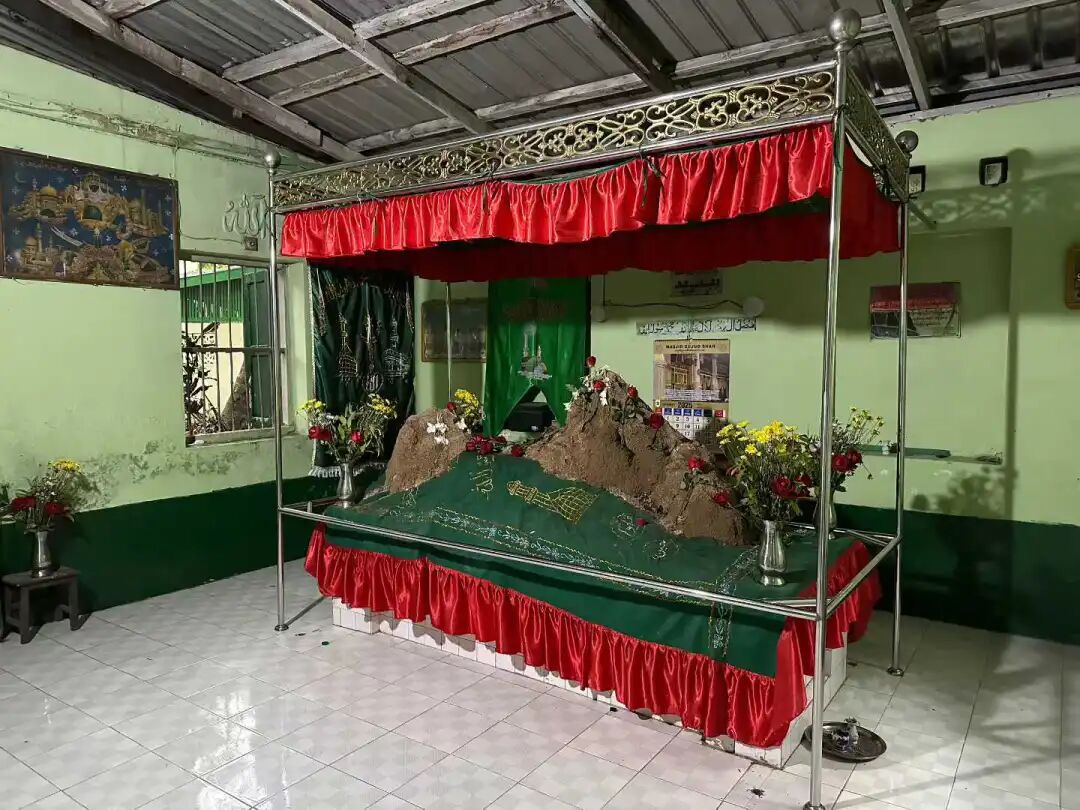
I also saw white sugar placed in front of a shrine (gongbei).
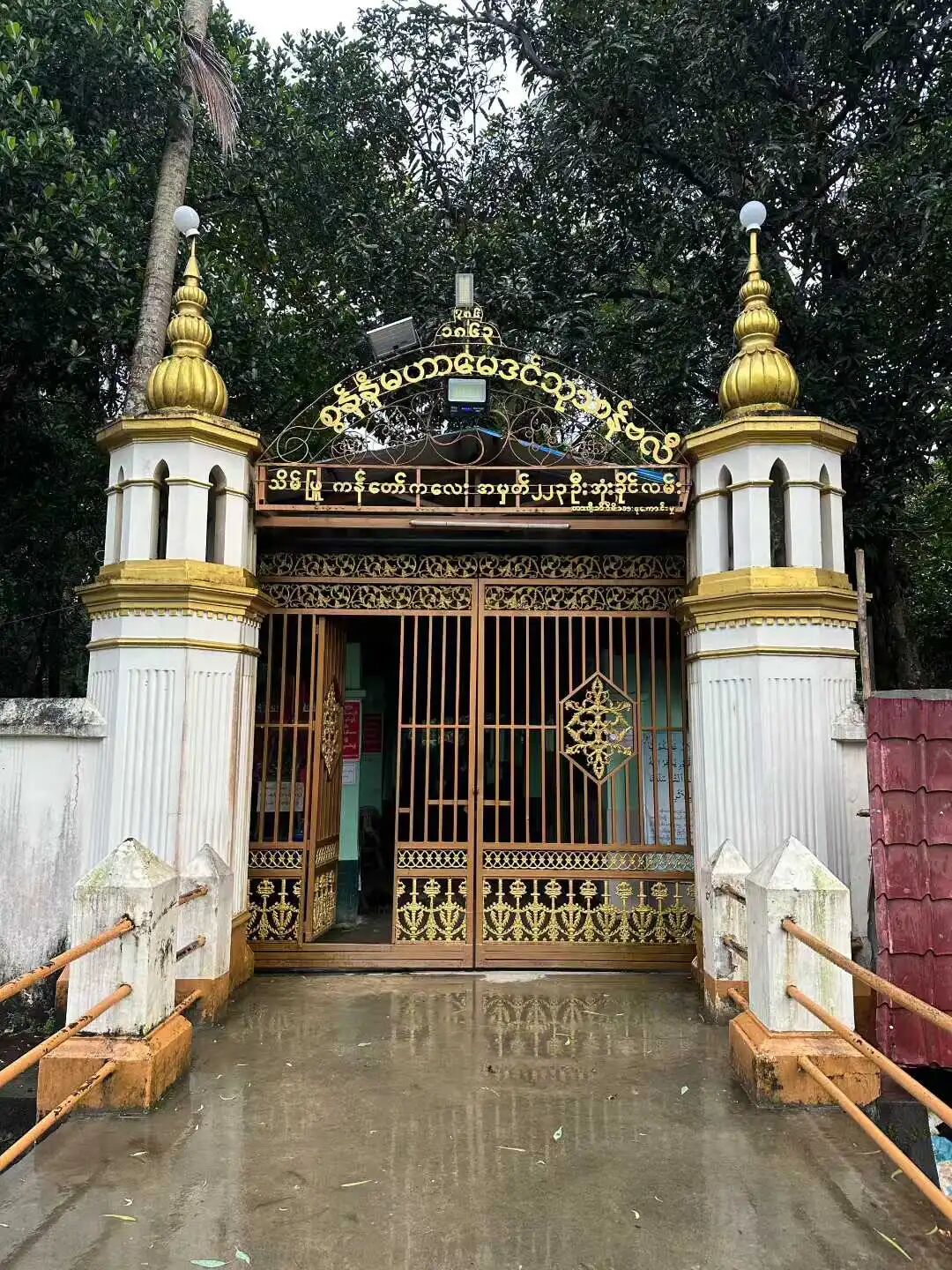
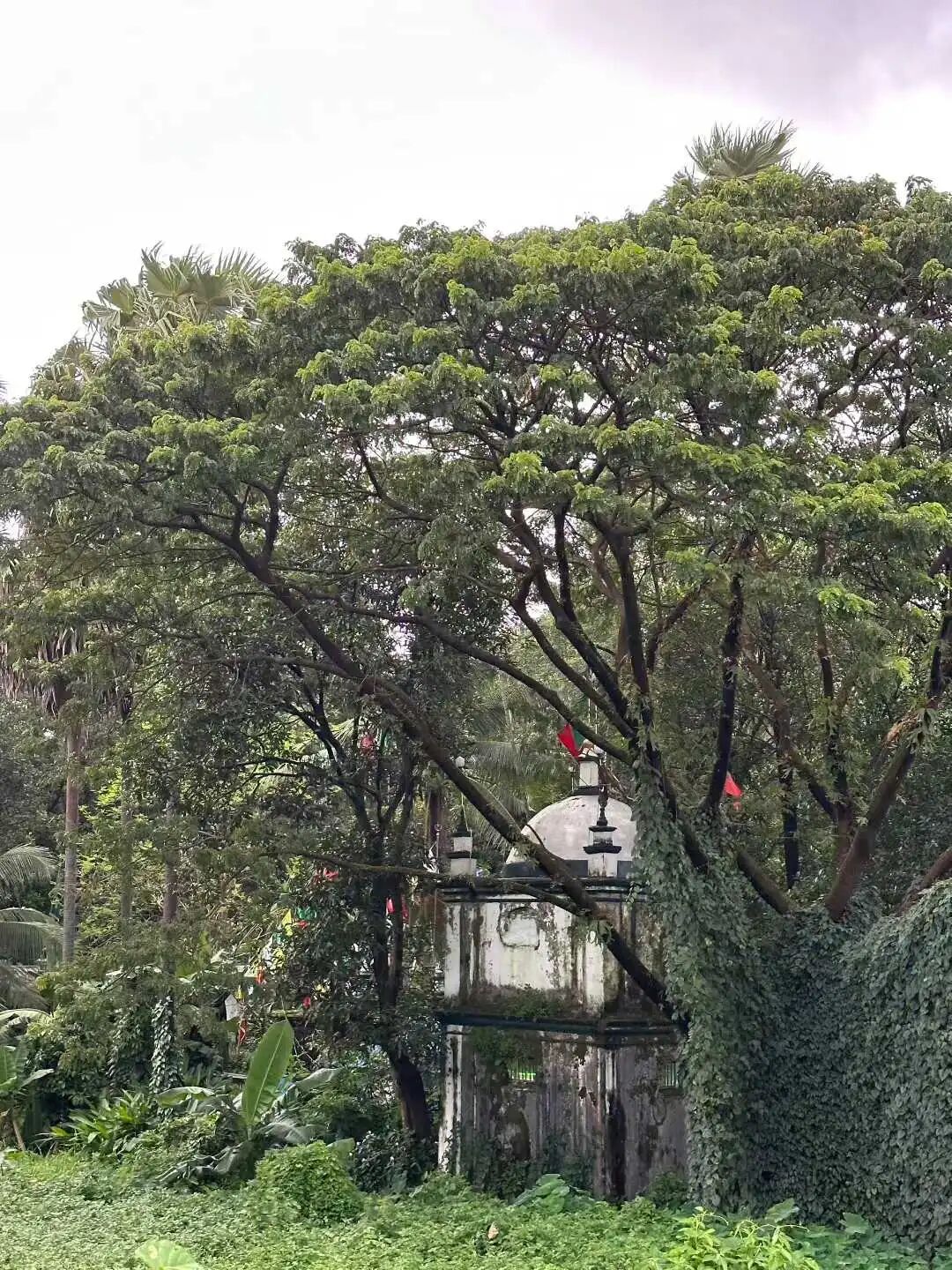
A Sufi shrine (gongbei) inside the Thinchai Sunni Maha Maiden cemetery in Yangon, Myanmar. view all
Summary: Yangon holds the tomb of Bahadur Shah II, the last Mughal emperor, near Shwedagon Pagoda, along with a Qadiriyya gongbei connected to Muslim memory in Myanmar. This account keeps the source's shrine details, historical names, religious terms, and site observations.
The tomb of Bahadur Shah II, the last emperor of the Mughal Empire, is near the famous Shwedagon Pagoda in Yangon, Myanmar. This site was his home after he was exiled to Yangon in 1858. Because Bahadur Shah II was a devout Sufi sheikh during his life, his tomb has become a famous Sufi shrine (gongbei) in Myanmar.
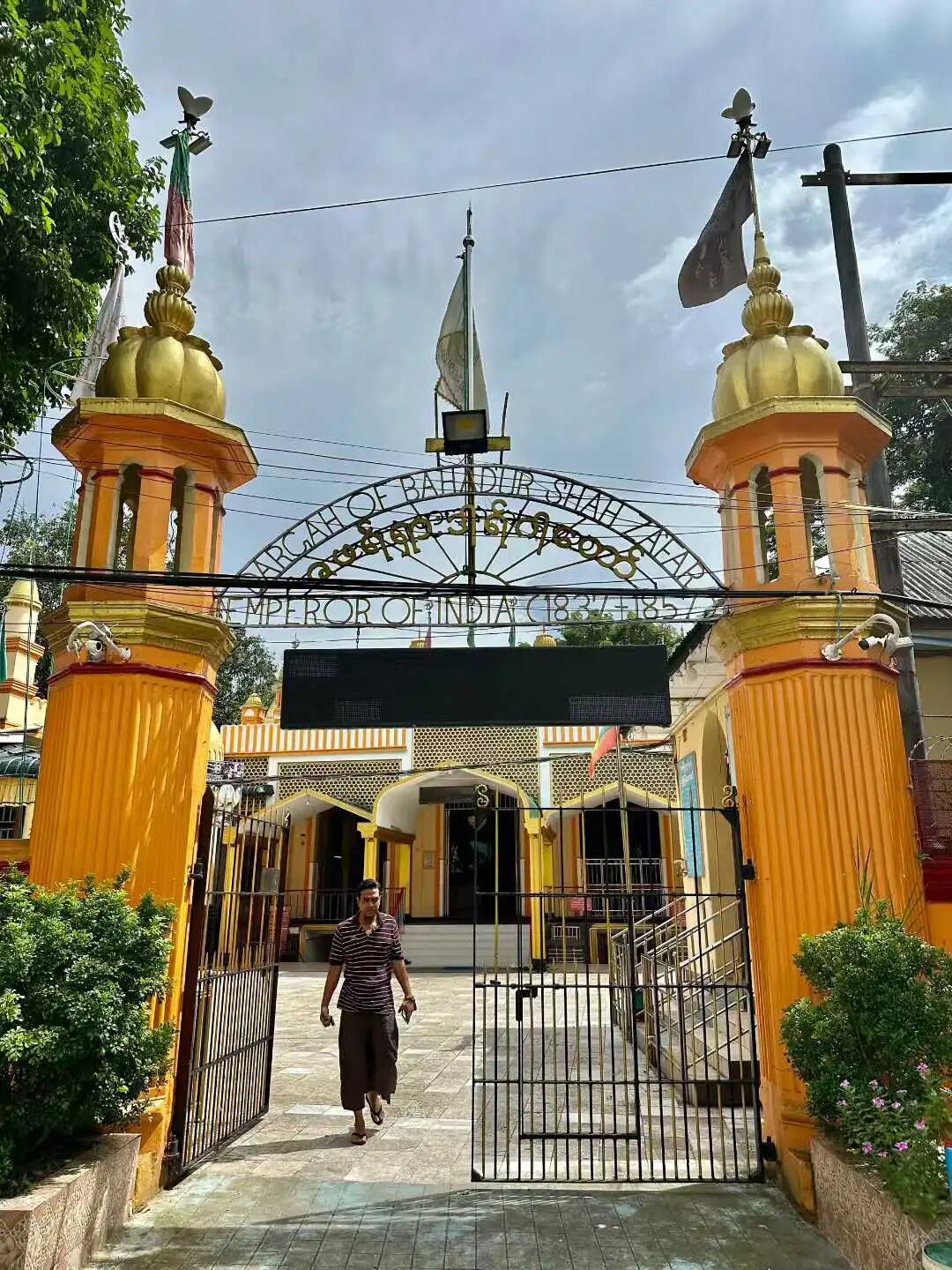
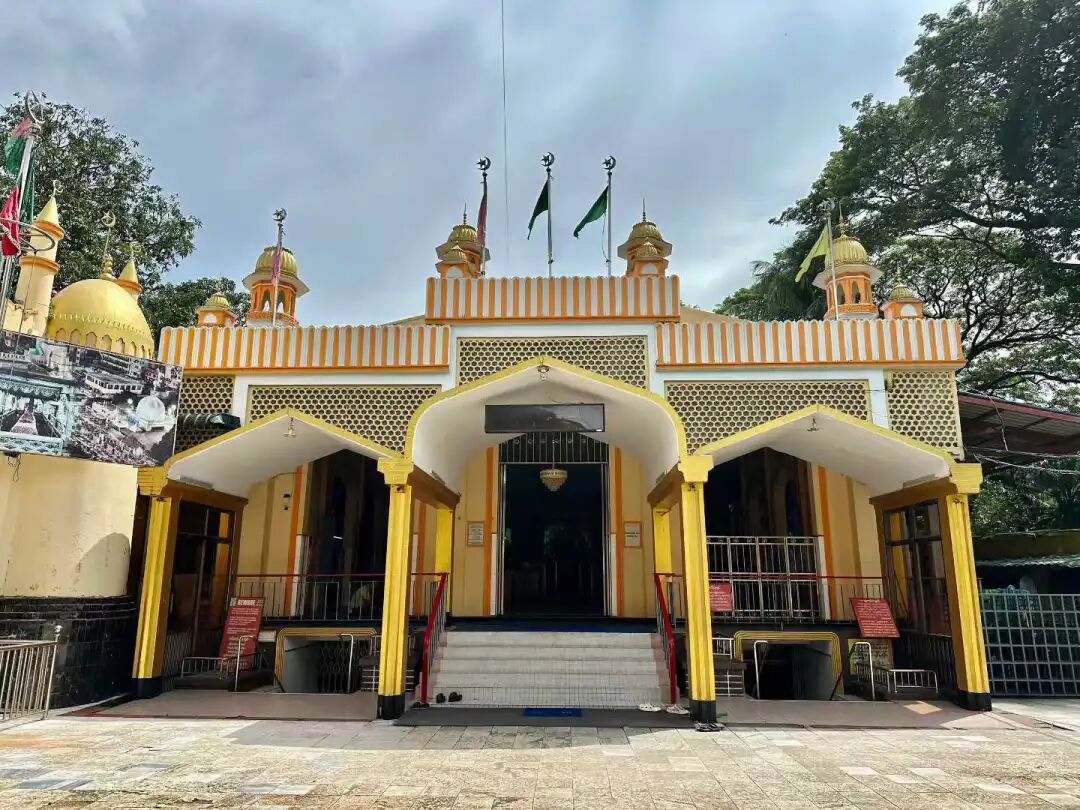
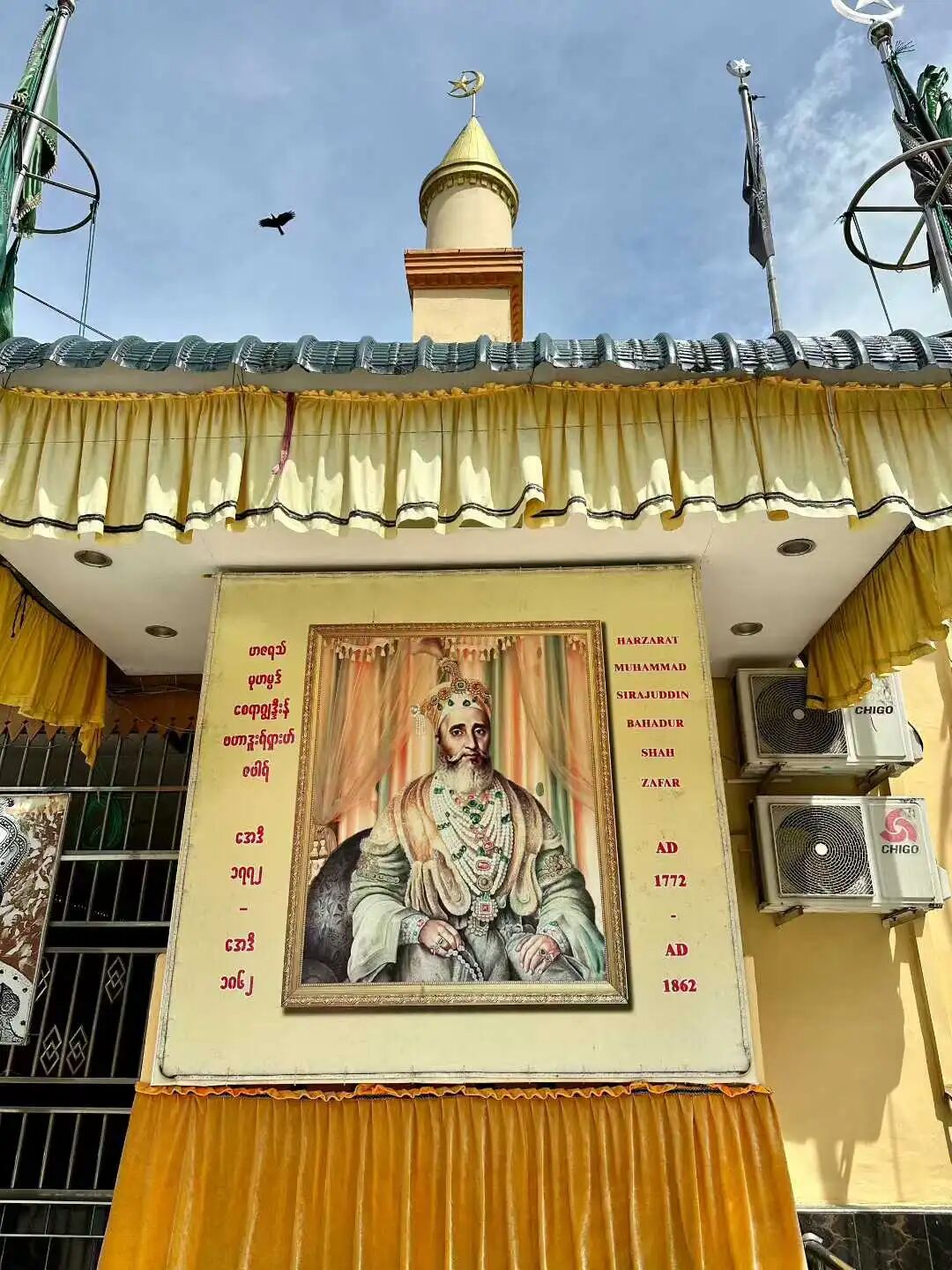
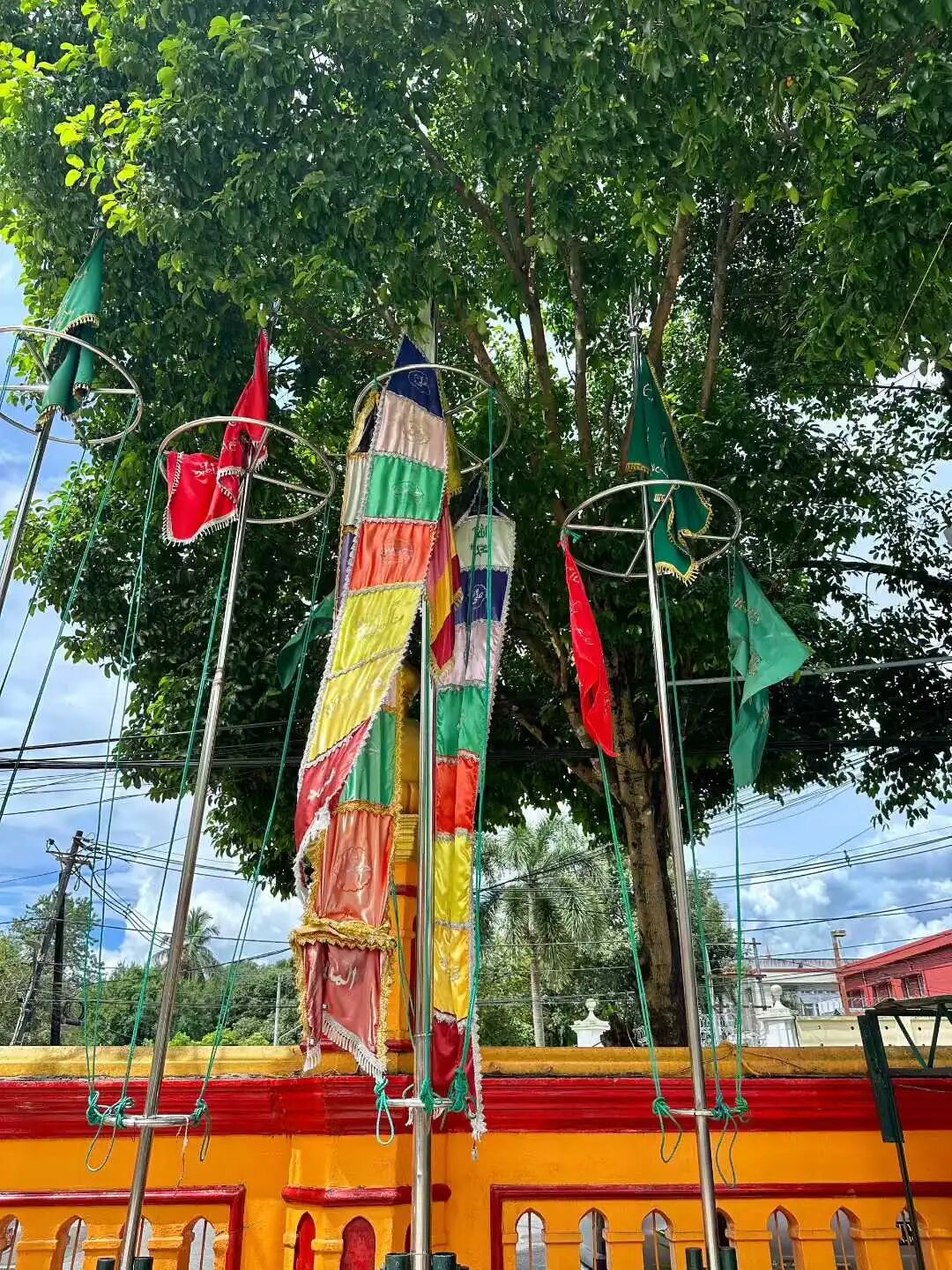
Although Bahadur Shah II belonged to the Chishti order during his life, the shrine (gongbei) is now managed by the Qadiriyya order. I met a man here who was hanging fresh flowers on the shrine (gongbei), and after some local friends (dosti) finished their gathering (amali), they shared candy and bananas with us.
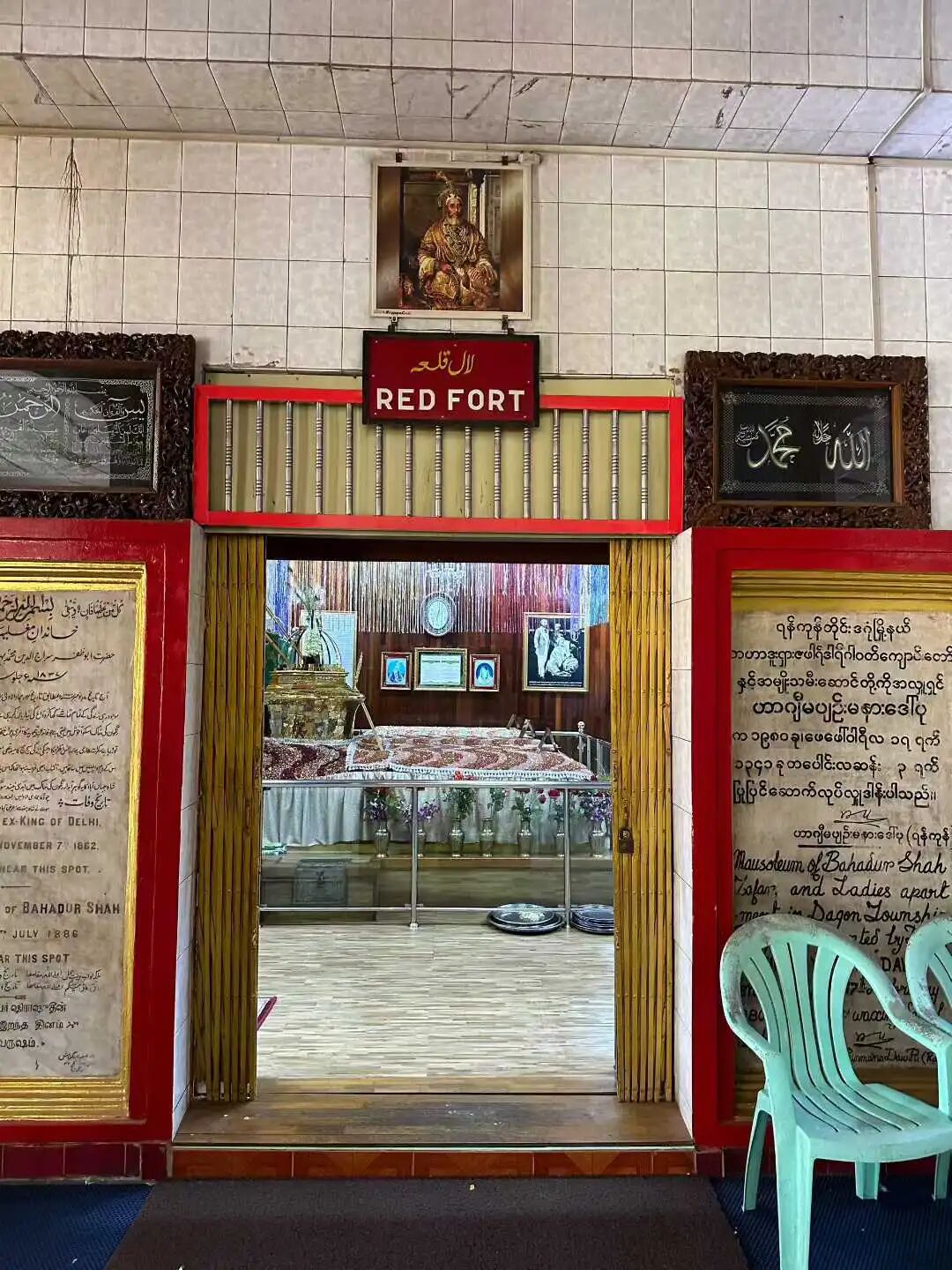


In 1803, the British East India Company used force to become the protector of the Mughal Empire, and the Mughal emperors lost their real power from then on. After Bahadur Shah II took the throne in 1837, his power was limited to the area around Delhi. He never had any ambition for the empire, but instead focused on Sufi practice and writing poetry. Legend says he started his Sufi practice at age 20 and became a murshid (guide) of the Chishti order by age 40. In 1843, he wrote a letter to Queen Victoria of Britain saying: "I am now old and have no ambitions left." I intend to devote myself entirely to religious work to comfort my remaining years.
The Sufi philosophy followed by Bahadur Shah II believed in embracing different cultures. Men, women, young, and old should all be able to express their love for Allah, and this love should transcend religion, gender, and social class. According to a report by Major Archer in 1828: "He is thin and small, and his clothes are simple, almost crude." He looks like a poor scholar or a language teacher. This is the typical appearance of a Sufi ascetic.
Like the Mughal rulers before him, Bahadur Shah II saw himself as the protector of his Hindu subjects. Under his rule, Hindu elites in Delhi would visit the Nizamuddin Sufi shrine (gongbei) to recite Persian poetry. Many people studied under great imams and attended religious schools (madrasas). The Mughal court would attend various Hindu events, and during the Shia month of Muharram, they would listen to elegies mourning Imam Hussein.
People say the Sufi poetry of Bahadur Shah II reached a level of perfection. His court had many famous Sufi scholars, writers, and poets, and a large number of poems were published during his reign. This style of lyric poetry became the main literary form of the late Mughal period.
In 1850, the knowledge and vitality of Delhi reached its final peak. At that time, the city had six famous religious schools (madrasas), nine Urdu and Persian newspapers, five academic journals, countless printers, and at least 130 doctors who mastered traditional Persian-Arabic medicine. Many new discoveries in Western science were translated into Persian and Arabic in Delhi. As the young poet Altaf Hussain Hali wrote at the time, "The capital, Delhi, was gathered with such a group of talented sages that it reminded people of the eras of Akbar and Shah Jahan."
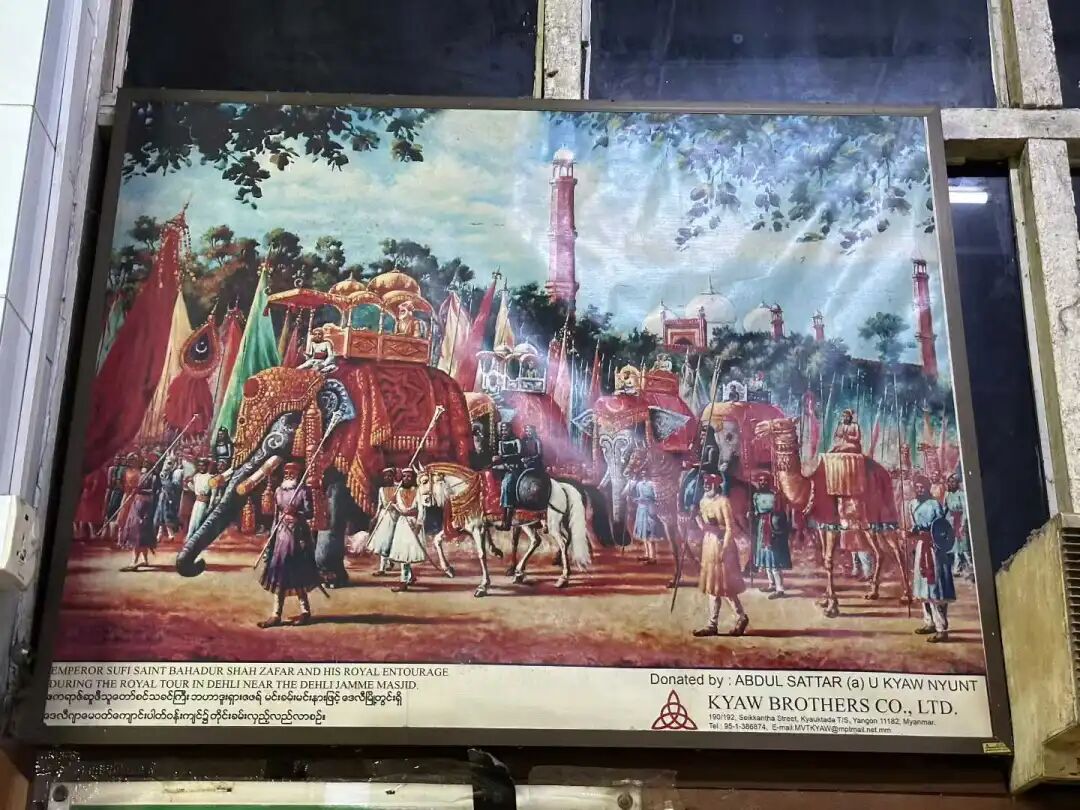
In 1857, an uprising against the British East India Company broke out in India. It started because the British army made their Indian soldiers bite open greased rifle cartridges, and rumors immediately spread that the lubricant came from cow and pig fat. The insulted soldiers flooded into Delhi on May 11 and turned to Bahadur Shah II for help at the Red Fort. Bahadur Shah II initially refused them, but faced with the passionate soldiers surrounding him, he eventually had no choice but to accept them as they bowed before him one by one, changing the fate of the Mughal Empire.
As the Siege of Delhi dragged on and the outlook grew dim, Bahadur Shah II chose to escape reality through poetry. According to British spies, he recited the following lines one night:
The sky collapses on everyone
I can no longer rest or sleep
Only my final departure will come
Whether at dawn or in the dark of night
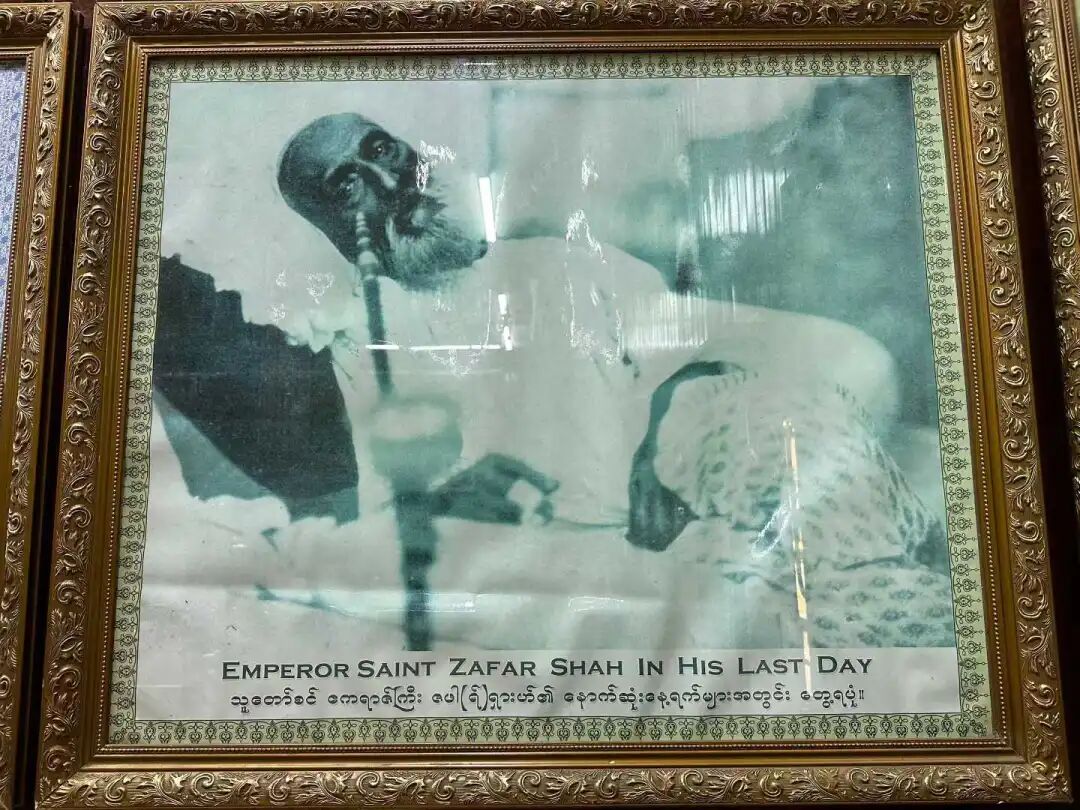
On September 14, the British army officially attacked the walls of Delhi, and on September 17, Bahadur Shah II fled the Red Fort through the Water Gate. He went to the most important Sufi shrine (gongbei) of Nizamuddin in Delhi and handed over his ancestors' relics to the Nizam family, the keepers of the shrine. It is said these included three hairs of the noble Prophet passed down by the Timurid family. Then he went to the tomb of his ancestor, the second Mughal emperor, Humayun. On September 20, Bahadur Shah II was finally captured by the British army.
By January 27, 1858, after all the dignitaries of the Mughal court had been tried, Bahadur Shah II faced his own trial. William Howard Russell, a foreign correspondent for The Times and the father of war journalism, saw Bahadur Shah II in captivity. He described him as silent, sitting motionless day and night, with his eyes cast down to the ground. People heard him reciting poems from his own works and writing poetry on the walls with a charred stick.
During the trial, Bahadur Shah II provided a written defense in Urdu. He denied any involvement in the uprising and insisted that he had been a helpless prisoner held by the Indian soldiers from start to finish. The trial dragged on for more than a month and was often adjourned because of Bahadur Shah II's poor health. On March 9, the British finally decided to exile Bahadur Shah II.
On October 7, 1858, after the Mughal Empire had ruled Delhi for 332 years, the last emperor, Bahadur Shah II, left Delhi in an ox cart. The group traveled slowly down the Ganges River by steamship and arrived at Diamond Harbour, south of Calcutta, on December 4. They boarded the British naval ship HMS Magpie there and finally reached Rangoon, Burma, where they lived in two small rooms in the British barracks area directly below the Shwedagon Pagoda.
In April 1859, Bahadur Shah II moved to a new wooden house near the fort guard camp. According to the report by his jailer, Captain Nelson Davies:
The residence consisted of four rooms, each 16 feet square. One room was assigned to the former king, another to Jawan Bakht and the young crown princess, and a third was occupied by Queen Zinat Mahal. Each of these rooms had an attached washing area. Shah Abbas and his mother lived in the remaining room.
The servants either lounged around the veranda or slept under the house, where the ground was covered in crushed brick to keep it dry. A drainage ditch ran around the house for the same reason. There were two washrooms, a double bathroom for the servants, and a place for cooking.
The veranda on the upper floors was full of chicks, which were kept inside by nailed-down slats. The frail former king and his sons usually sat there, where the floor was raised almost to the height of the railing, allowing them to enjoy the pleasant sea breeze and the wide, beautiful view. They watched people pass by and stared at the ships being loaded, which helped break up the monotony of their life behind bars and made them more willing to accept their current living situation.
Regarding the health of Bahadur Shah II, the report by Davis noted:
If given time to make up his mind, his memory was still good, but he spoke unclearly because he had lost his teeth. He was unable to handle anything requiring mental effort, and while that was the impression he gave, he seemed to be bearing the weight of his years remarkably well. He lived a dull, listless life, showing little interest in anything except eternal matters. This had been his normal state for a long time, and it would likely continue until his life ended, which would not surprise anyone.
Because the British did not allow him to use paper or pens, the world could only guess how he felt about his life in exile. By October 1862, his health took a sharp turn for the worse, and he could no longer swallow or eat food. On November 5, Davis ordered bricks and lime to be collected to prepare a quiet spot behind the house enclosure for his burial.
At 5:00 a.m. on November 7, 1862, Bahadur Shah II finally returned to Allah. Davis wrote: Everything was ready, and at 4:00 p.m. that day, he was buried in a brick grave behind the guard camp, with turf laid level with the ground... A bamboo fence surrounded the grave for a long time, and once the fence rotted, the area would be covered in thick grass, leaving no trace and making it impossible to identify the final resting place of the last Great Mughal. Davis specifically mentioned that only two of Bahadur Shah II's sons and a manservant attended the funeral, as women were not allowed to attend according to tradition.
The grave of Bahadur Shah II soon became impossible to identify. When a delegation from India came to visit in 1903, a local guide pointed out a jujube tree near the grave. In 1905, the Dosti group in Yangon protested and demanded that the grave site be marked. The British initially disagreed, but after a demonstration and a series of published reports, they finally agreed in 1907 to erect an inscribed stone slab and put a railing around it. In 1925, the railing was rebuilt into a temporary shrine (gongbei) covered with a corrugated iron roof.
It was not until February 16, 1991, when workers were digging a drainage ditch behind the shrine, that they discovered a brick-lined grave, finally confirming the remains of Bahadur Shah II. Later, this place was rebuilt into a mosque with a prayer hall (gongbei). Dignitaries from India, Pakistan, and Bangladesh have all visited, and Rajiv Gandhi even gifted a carpet here.
As a fallen monarch, Bahadur Shah II was a failure. He did not give the army the support it needed during the 1857 Indian Rebellion, which ultimately ended the Mughal civilization. Under the British policy of divide and rule, the various ethnic groups in India began to drift apart. But under his rule, Delhi was home to the most talented poets and writers in modern South Asian history, and literature and art reached their peak.
As a Sufi ruler, he never forgot how important it was for the different groups under his rule to depend on each other. During the Siege of Delhi, he refused the demands for a holy war (jihad) from the Wahhabis and tried his best to maintain relationships between all groups. When a large number of Muslim (dosti) elites moved from India to Pakistan in 1947, people could no longer imagine that just 90 years earlier, many Indian soldiers had rushed to the Red Fort in Delhi, gathered under the banner of a Sufi emperor, and faced national disaster with their Muslim brothers to fight against foreign invaders.
I found stone tablets standing around the front of the tomb.
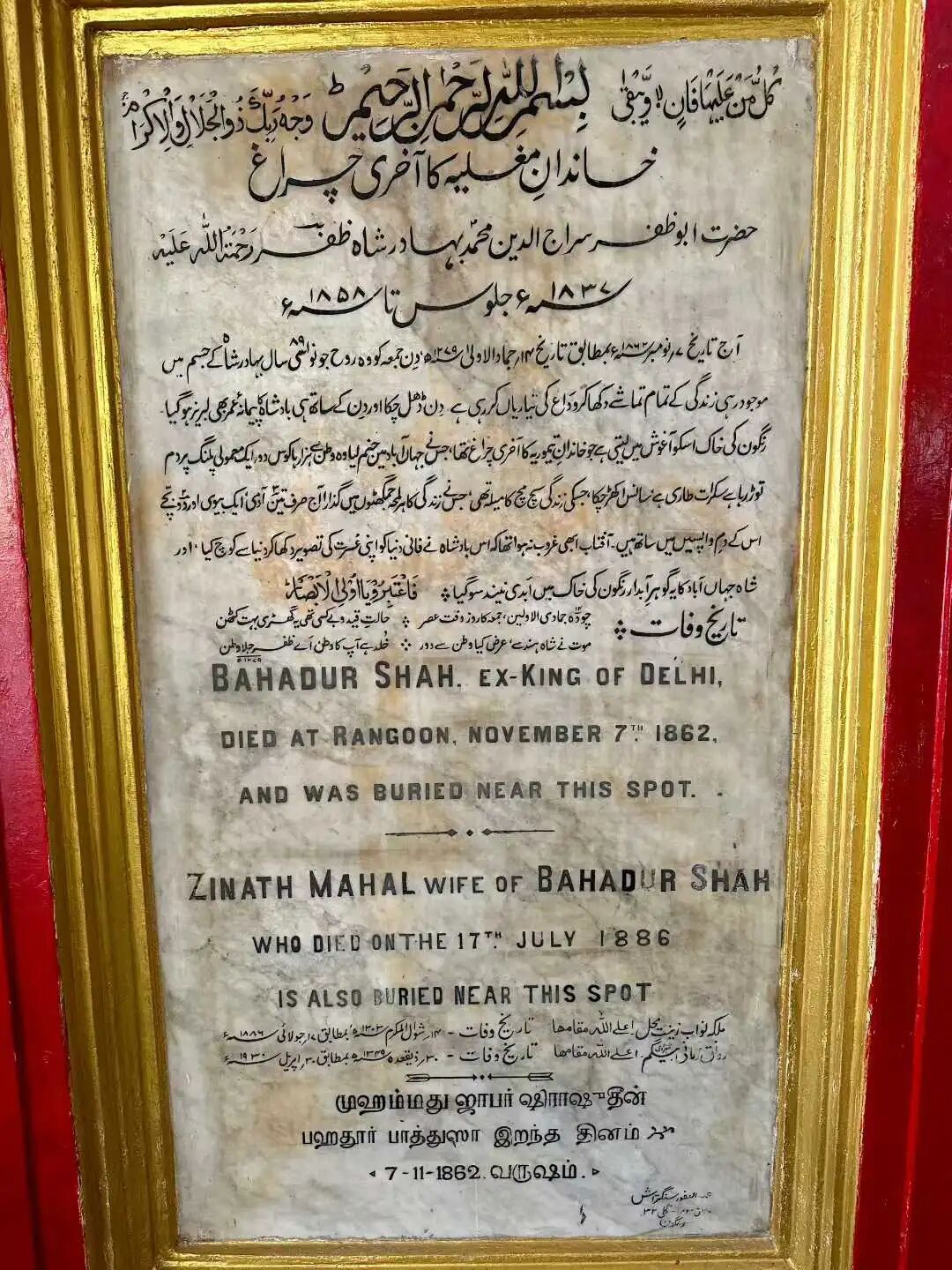
Underground is the original location of the tomb.
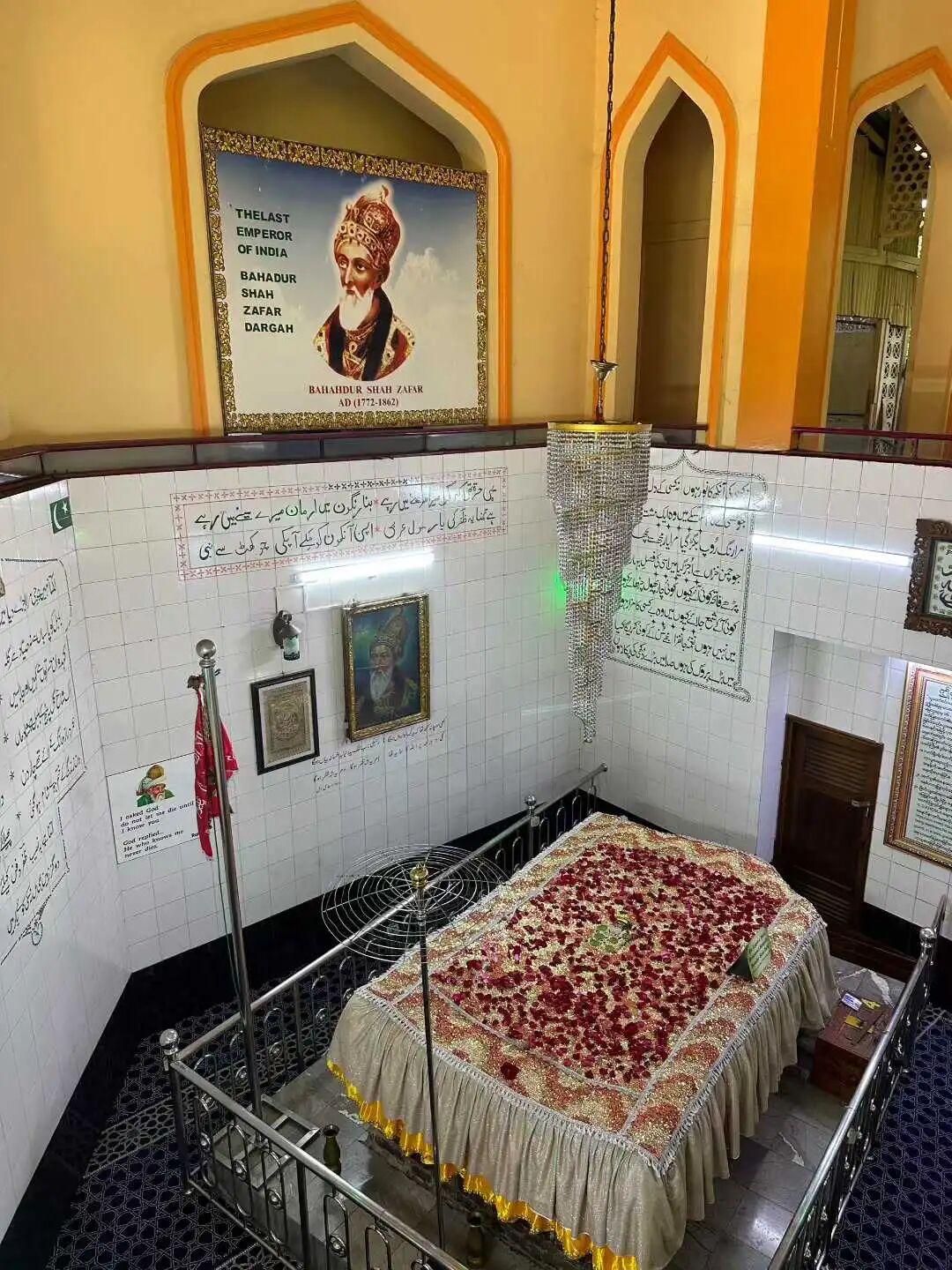
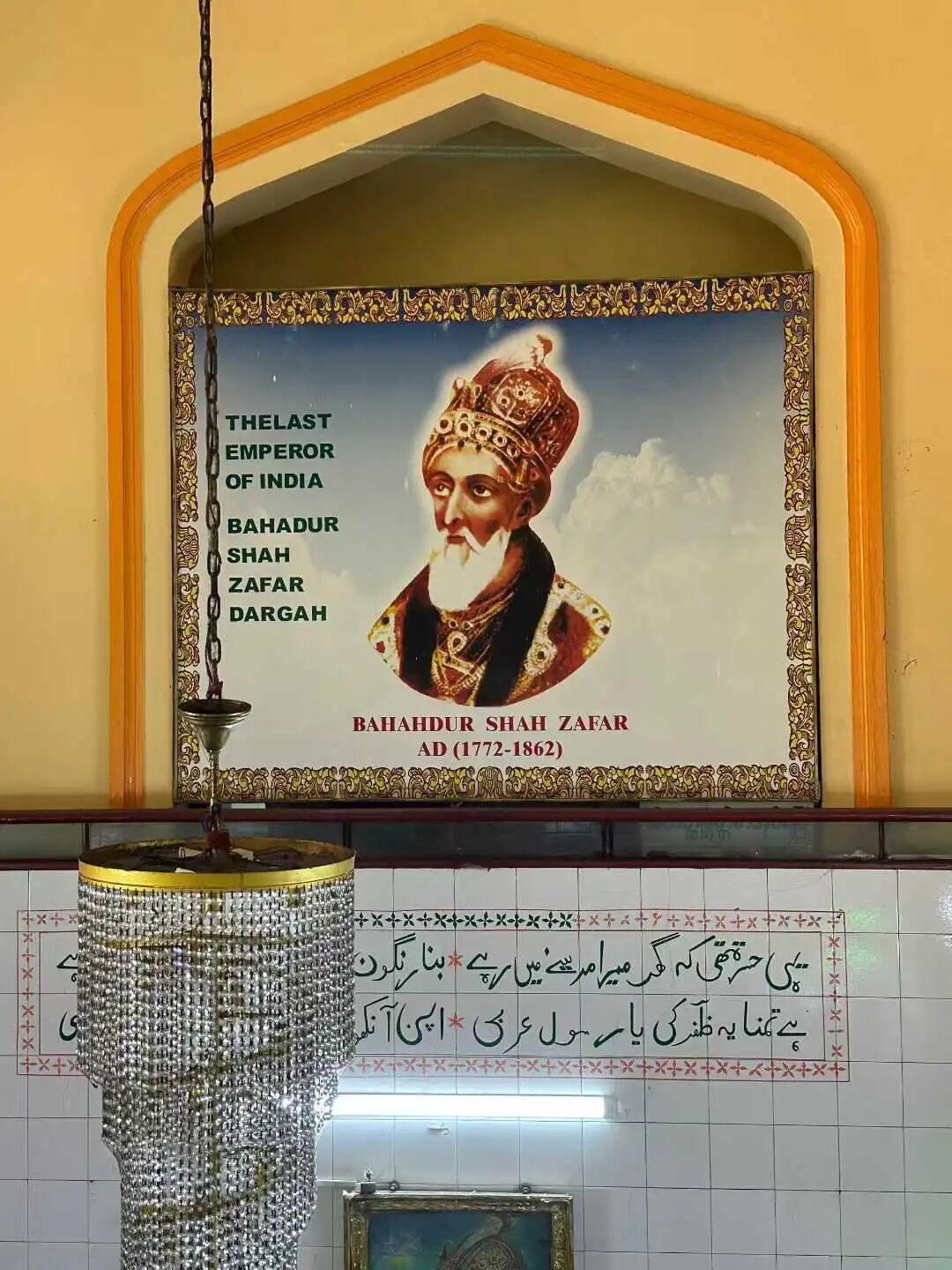
Inside the tomb complex (gongbei), there is a portrait of Abdul Qadir Gilani, the founder of the Qadiriyya order.
Next to the tomb is a prayer hall. This is the same as the Qadiriyya order in China, where the tomb and prayer hall are adjacent, and there is an imam in the mosque.
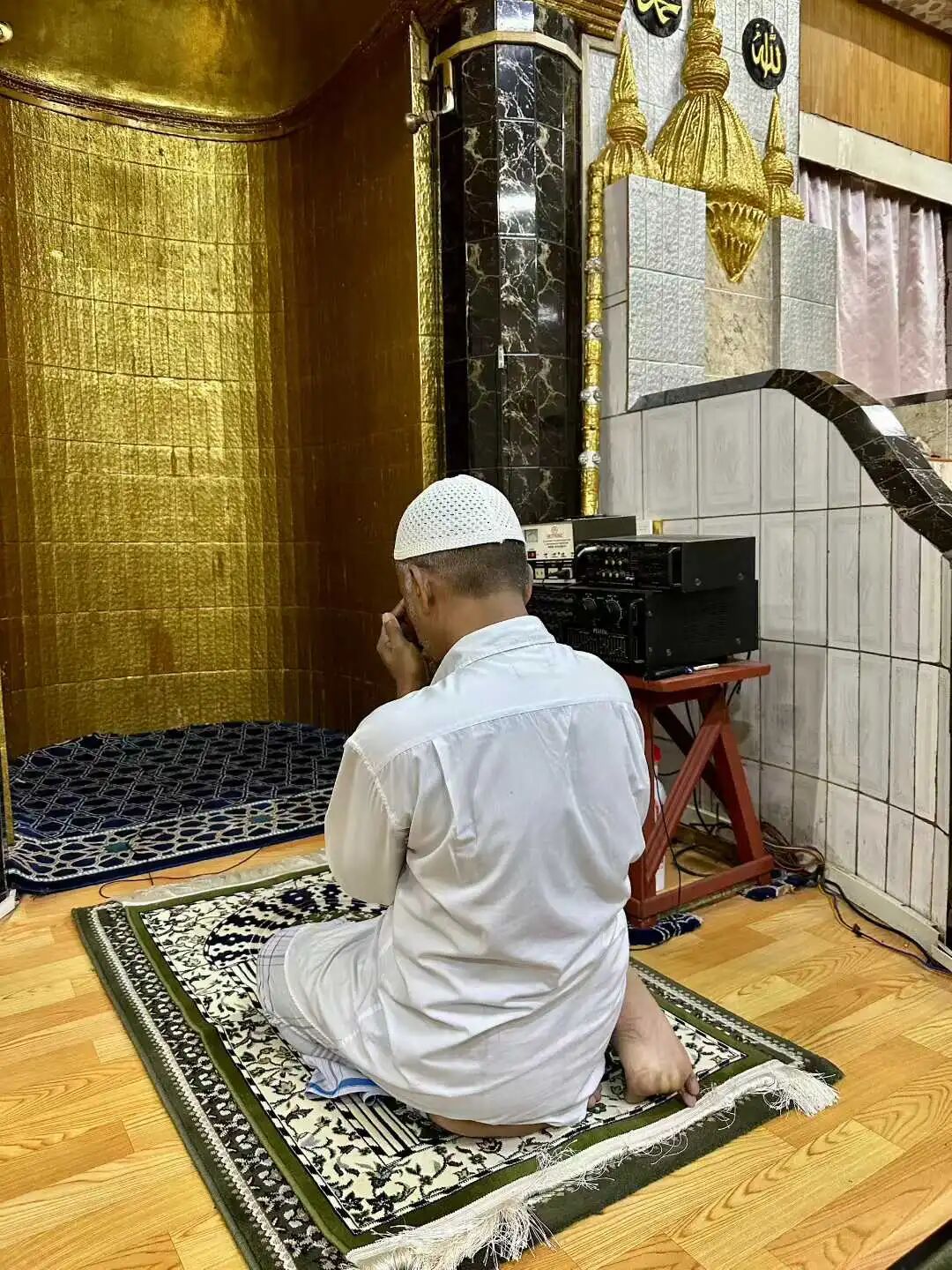
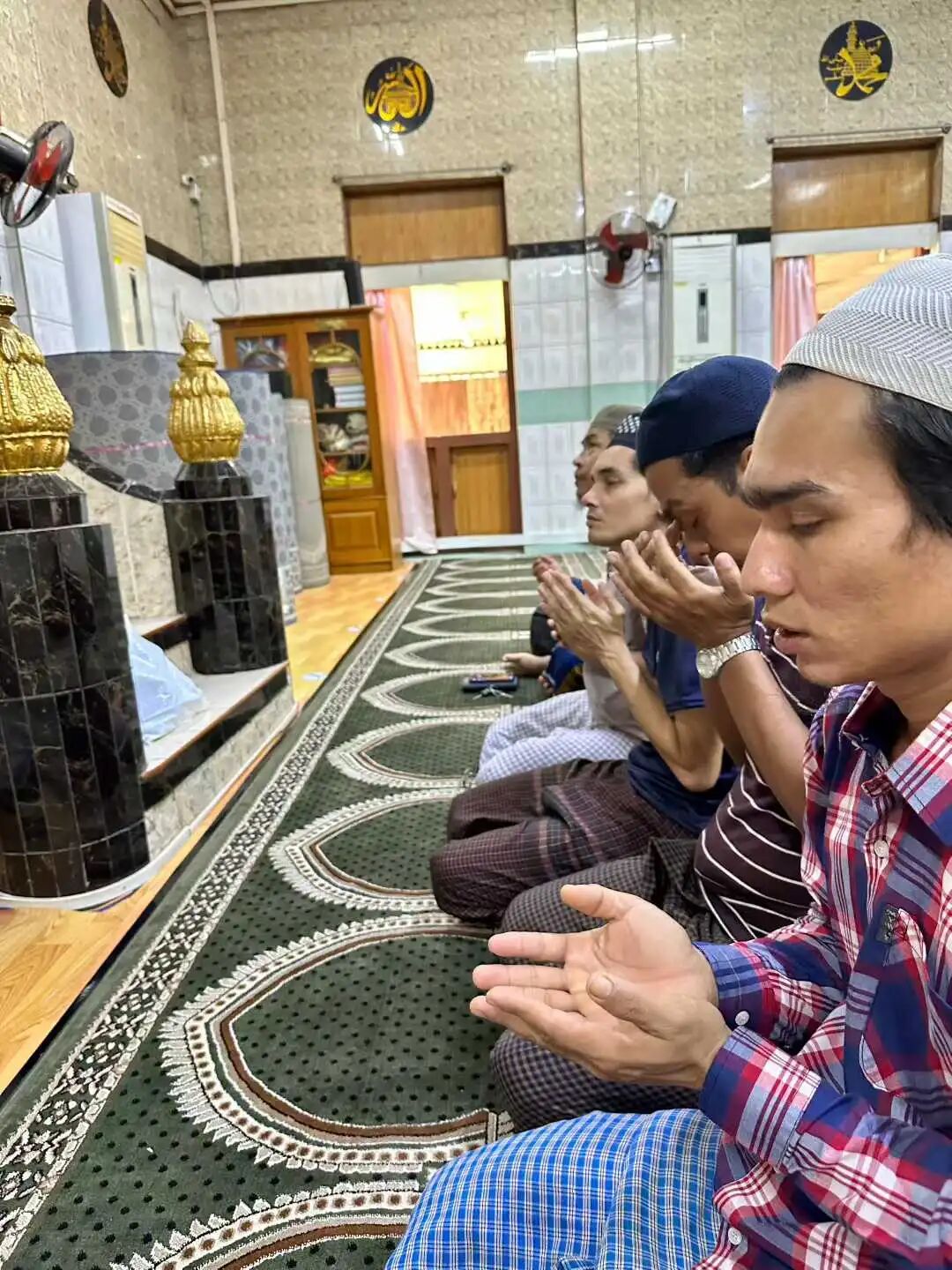
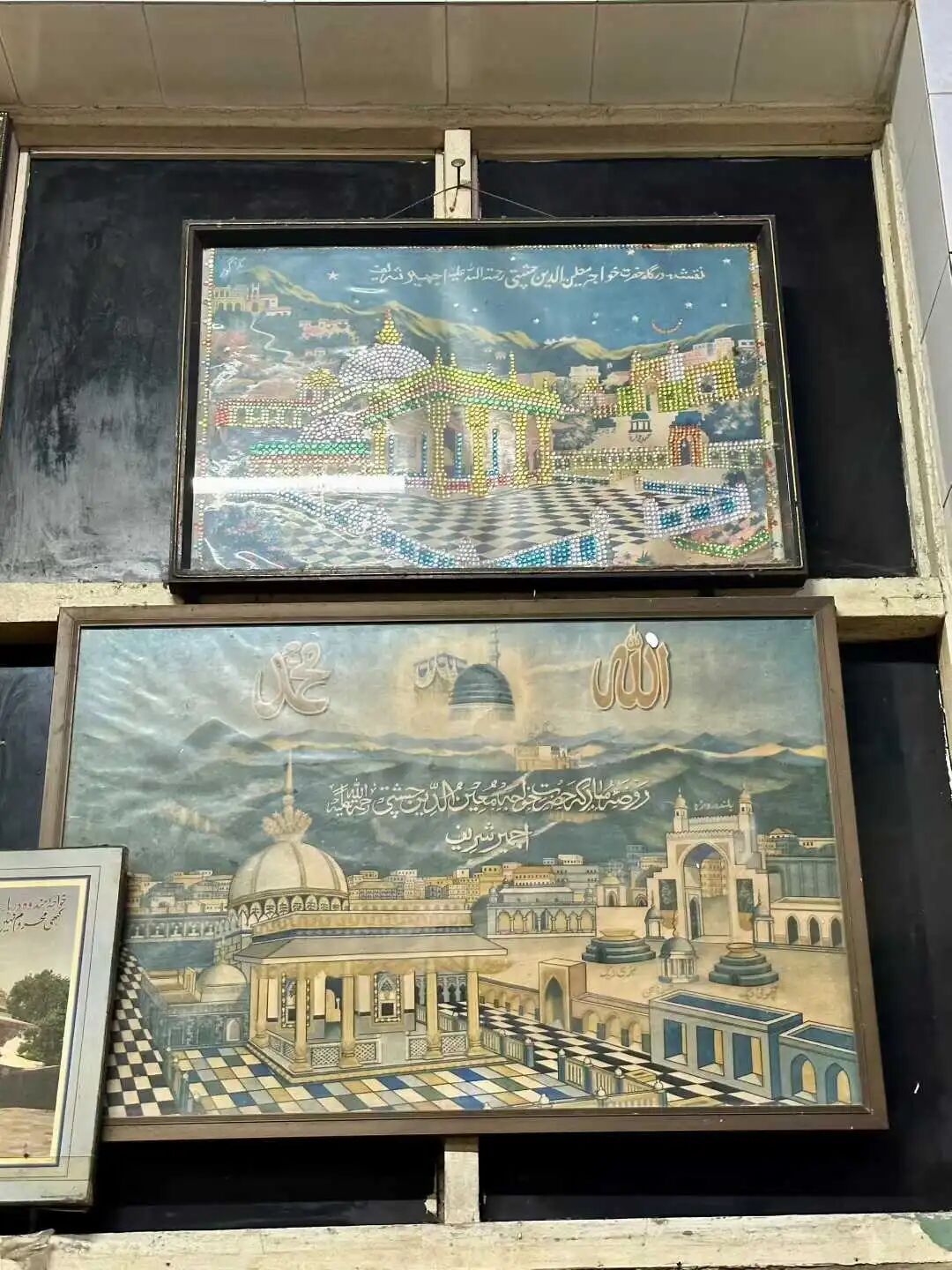
In a forest near the Yangon Central Railway Station in Myanmar, the largest Sufi tomb complex in Yangon is hidden. Since most of the text inside the tomb is written in Burmese, I searched for information for a long time after I returned but could not find any leads. Recently, based on the few English words inside the tomb, I learned that this place belongs to the Maizbhandari order, which was established in the late 19th century by Bengali Muslims based on the Qadiriyya Sufi tradition.
The Maizbhandari order is the only indigenous Bengali Sufi order, and its founder was born in Chittagong in 1826. People say his ancestors were descendants of the Prophet, who moved through Medina, Baghdad, and Delhi before finally settling in Bengal, serving as imams for generations. Maizbhandari studied the scriptures from a young age. After graduating in 1853, he first served as a judge (qadi), but soon resigned to work as a teacher in Kolkata. In Kolkata, he met two sheikhs from the Qadiriyya Sufi order and joined them to practice Sufism. In the late 19th century, he established his own lodge and founded the Maizbhandari order.
From the 19th century to the present, the Maizbhandari order has grown into a modern organization with millions of followers and is the most important Sufi order in Bangladesh. The Maizbhandari order is known for its melodic and rhythmic way of chanting (dhikr). They have recorded tens of thousands of songs, which have had a great influence on the faith in Bengal. As Yangon, Myanmar, has a large population of Bengali Muslims, it is also an important area for the Maizbhandari order.
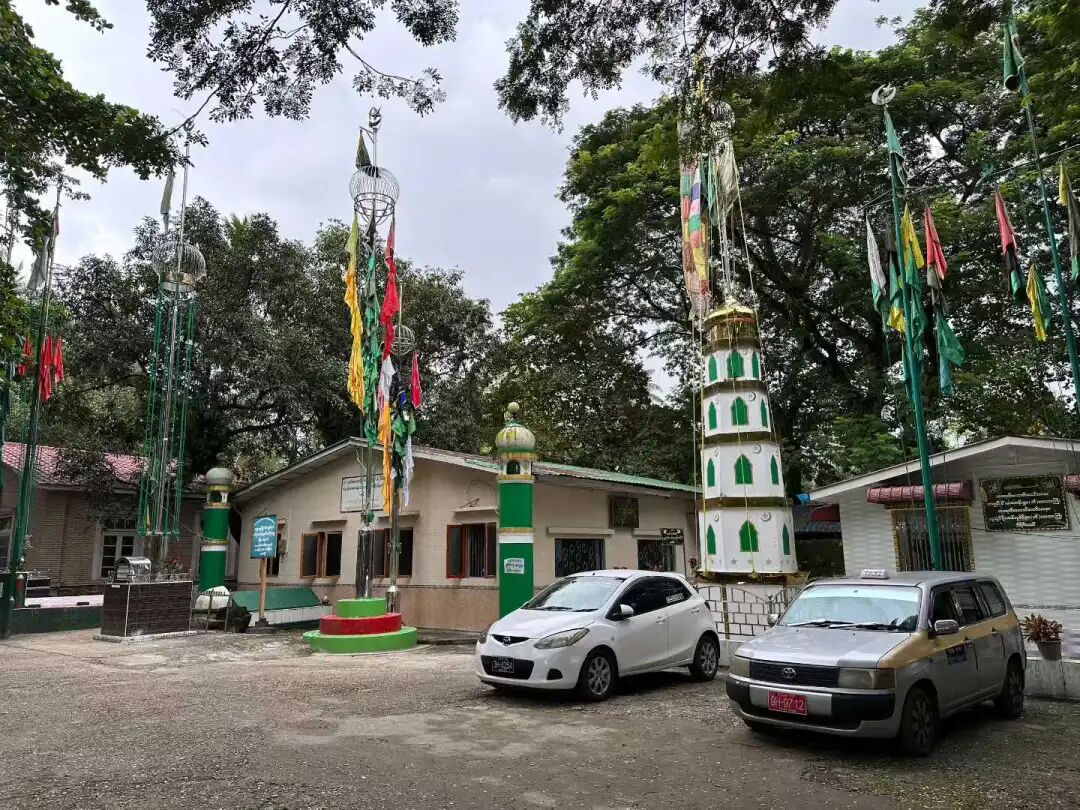
A live scene of the dhikr ceremony.
At the Sufi tomb in Yangon, not only Muslims but also Burmese Buddhists come to offer dua. This is the unique charm of Sufism in South and Southeast Asia. At many important shrines (gongbei) in India, you can see Hindus going inside to offer dua. In Malaysia and Singapore, many Chinese people also come to pay their respects at the shrines (keramat) of local saints.
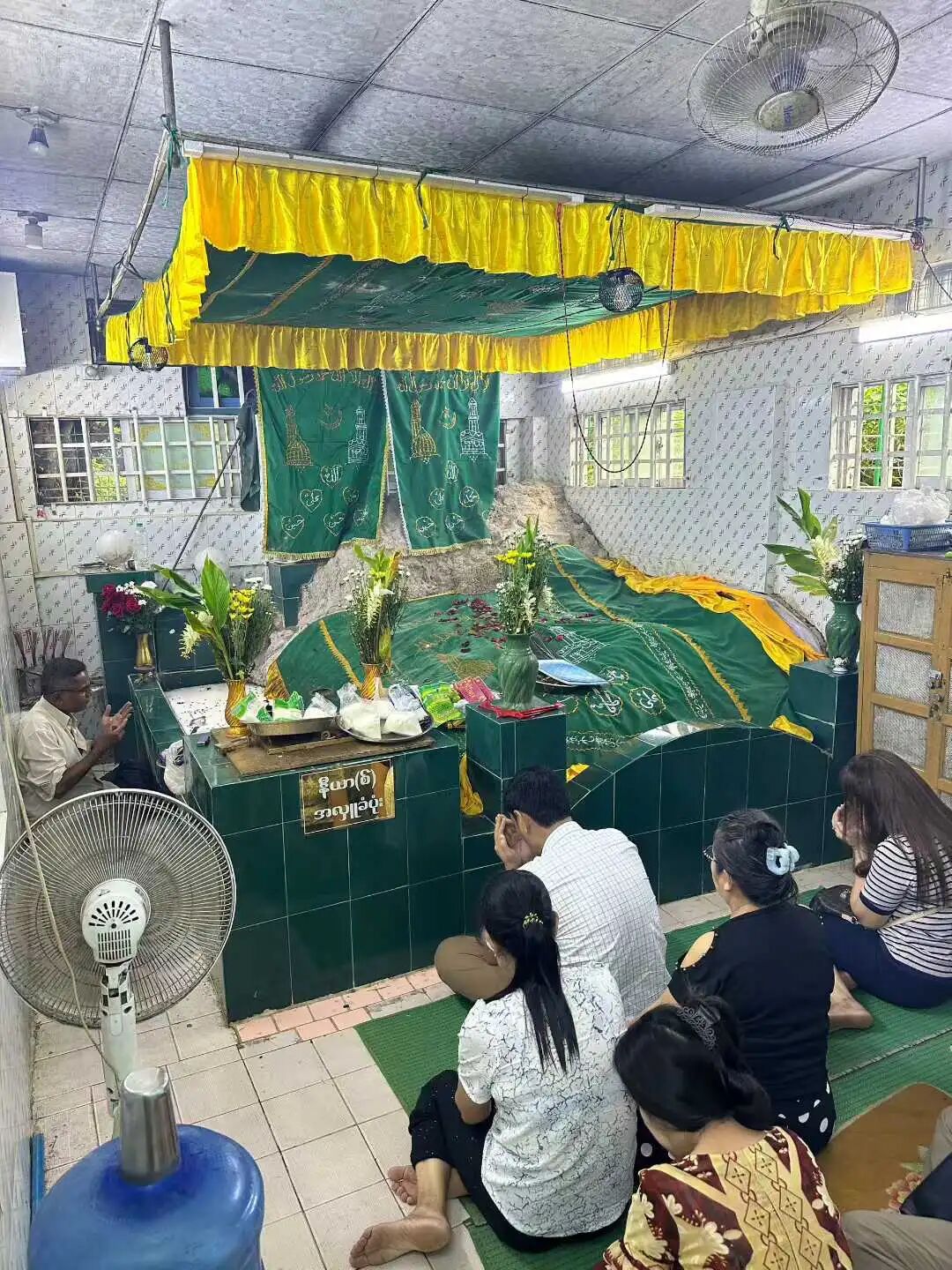
I also saw white sugar placed in front of a shrine (gongbei).
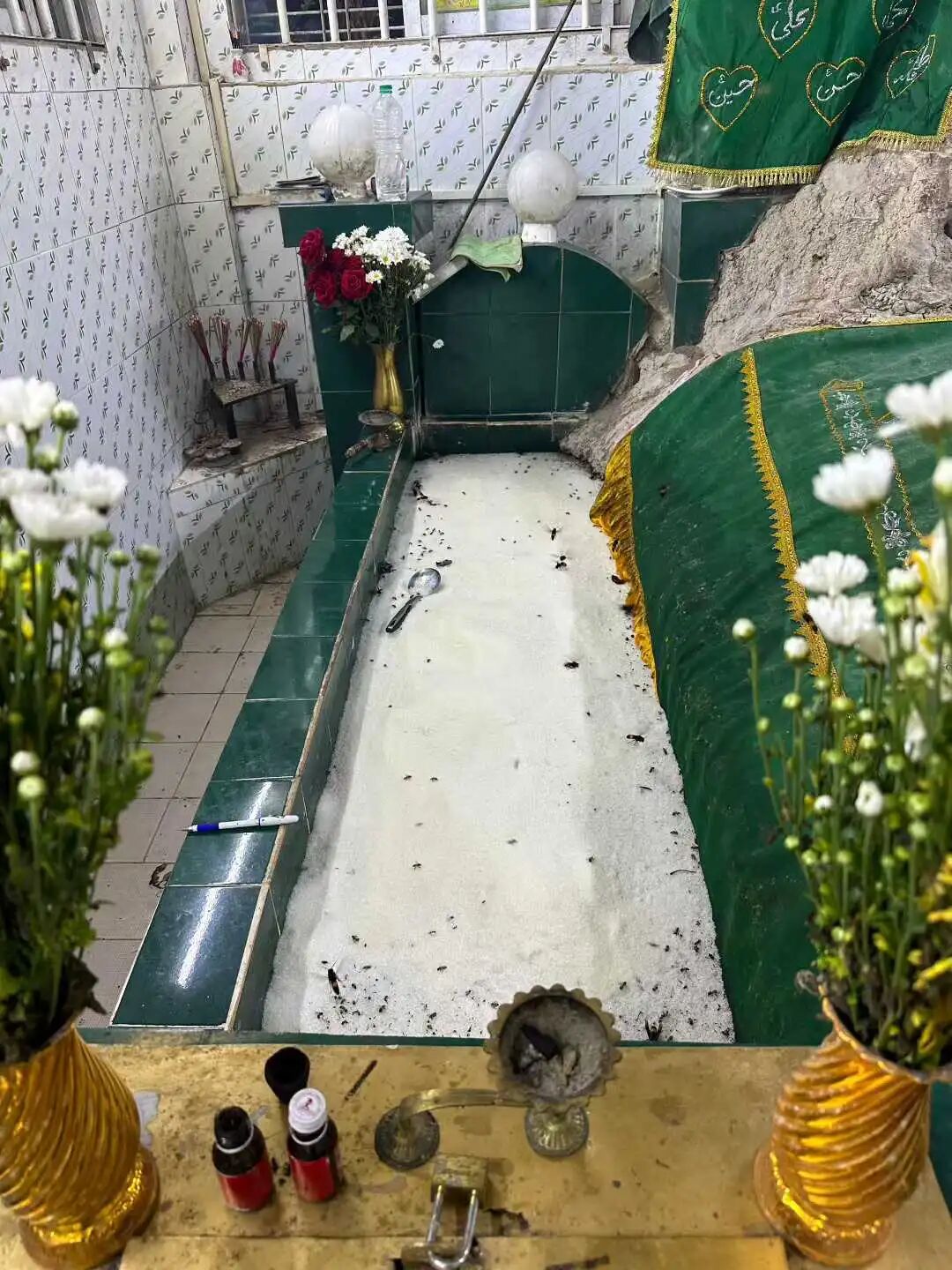
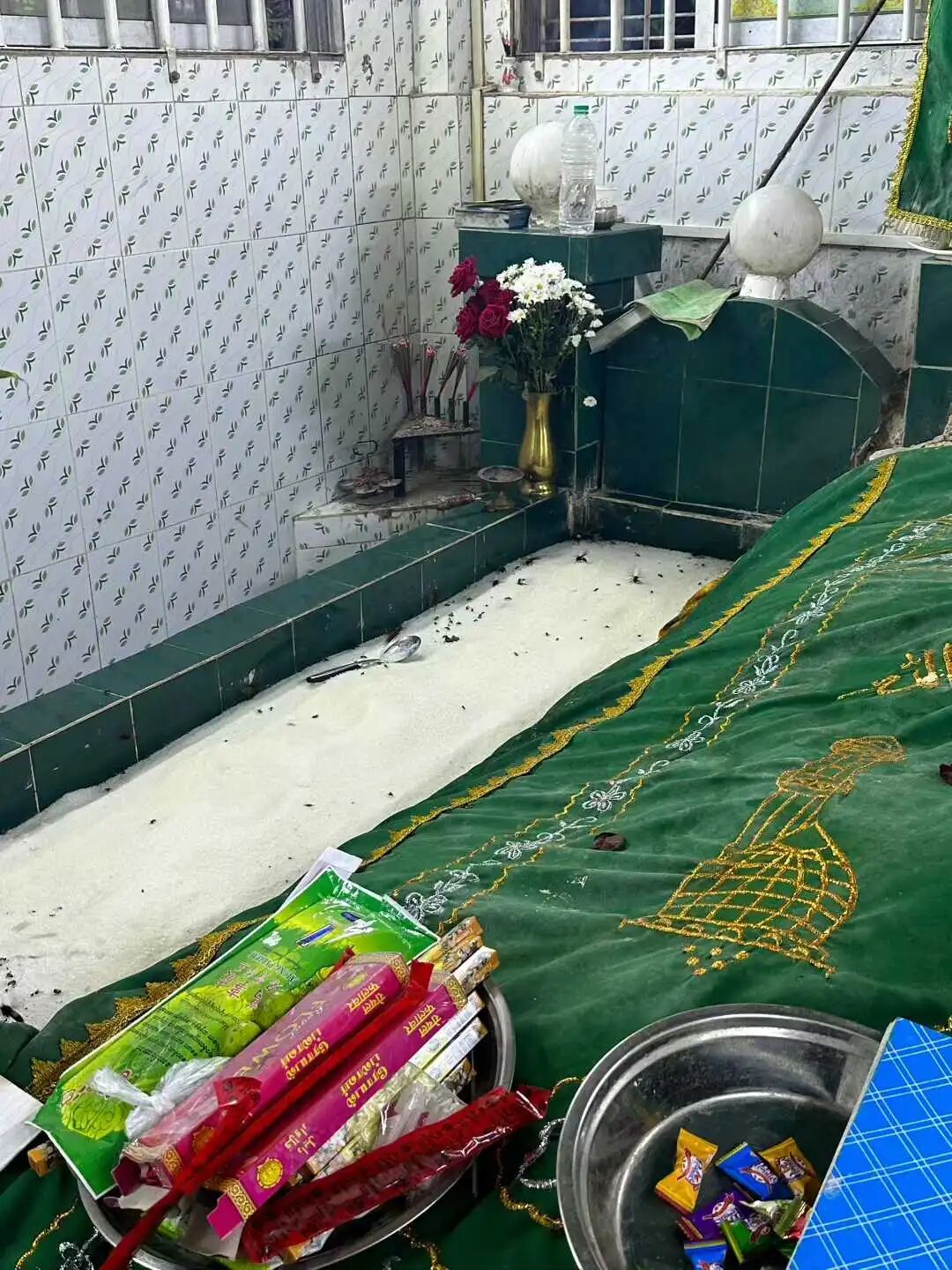
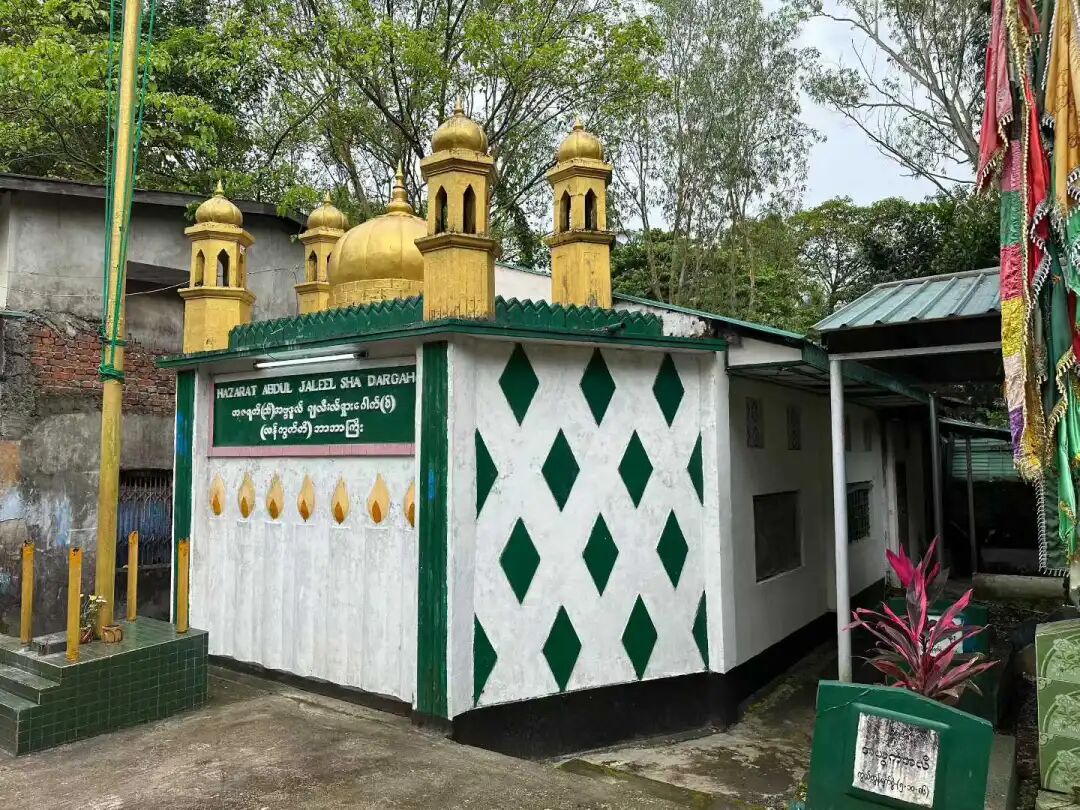
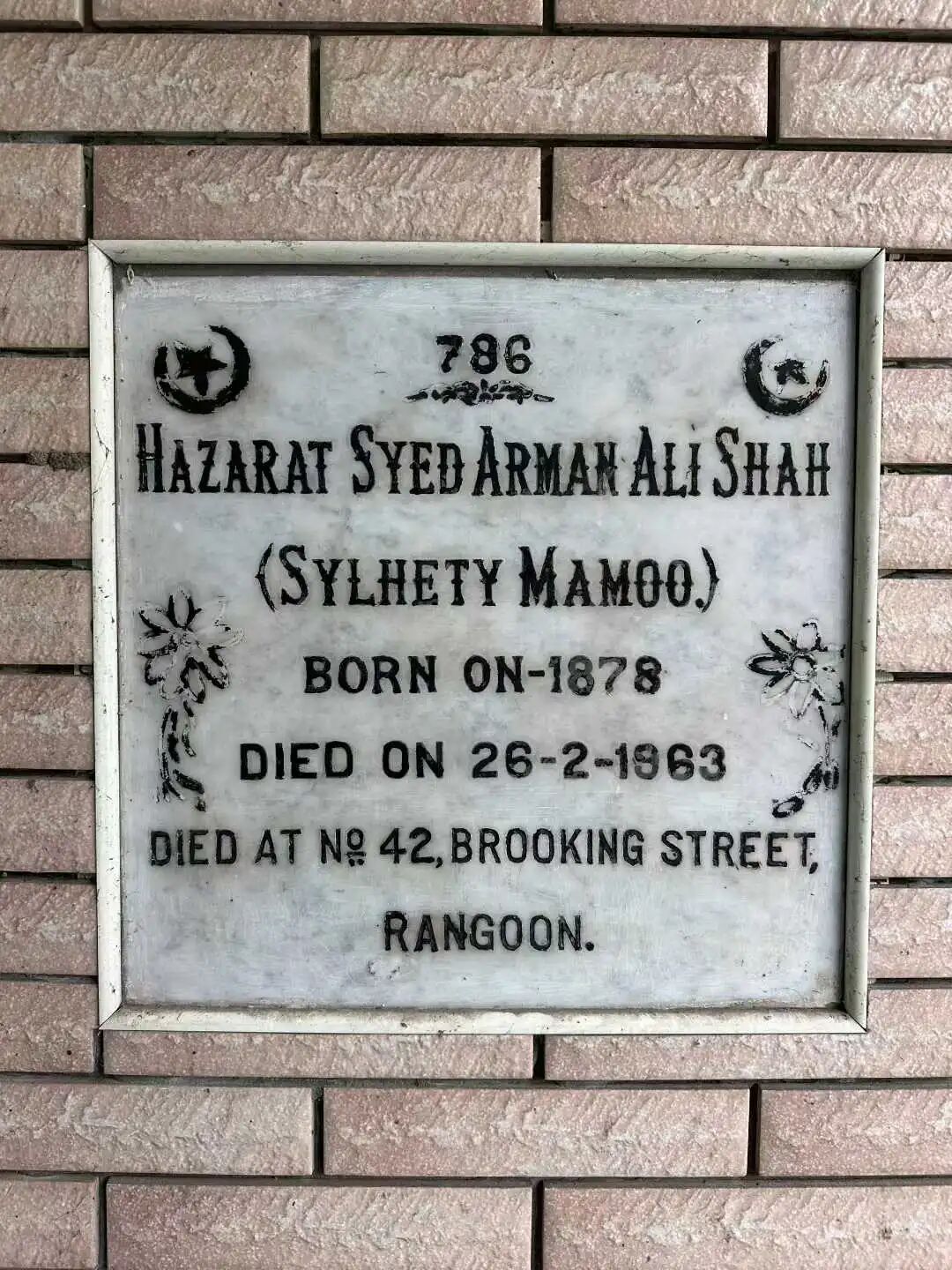
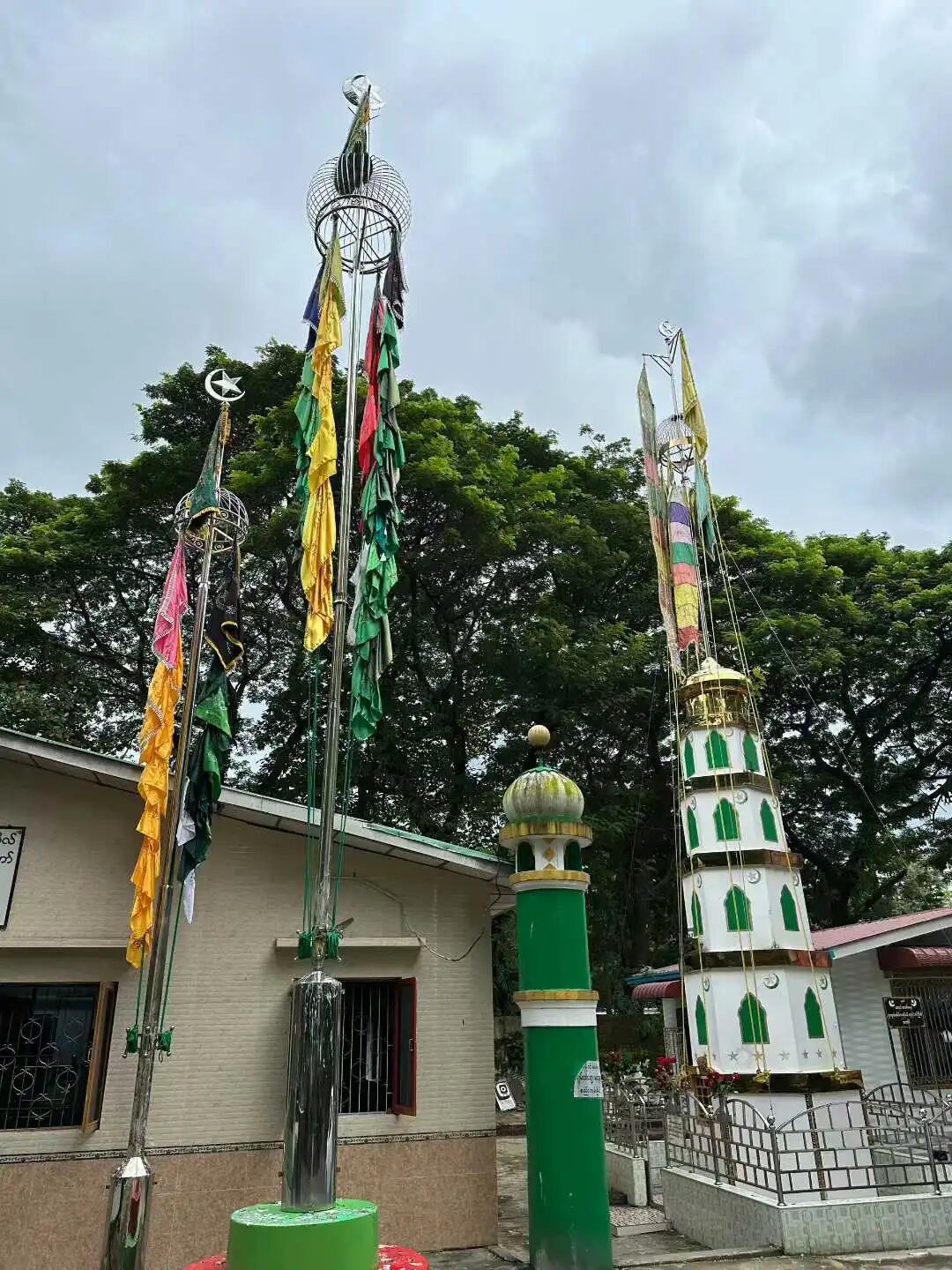
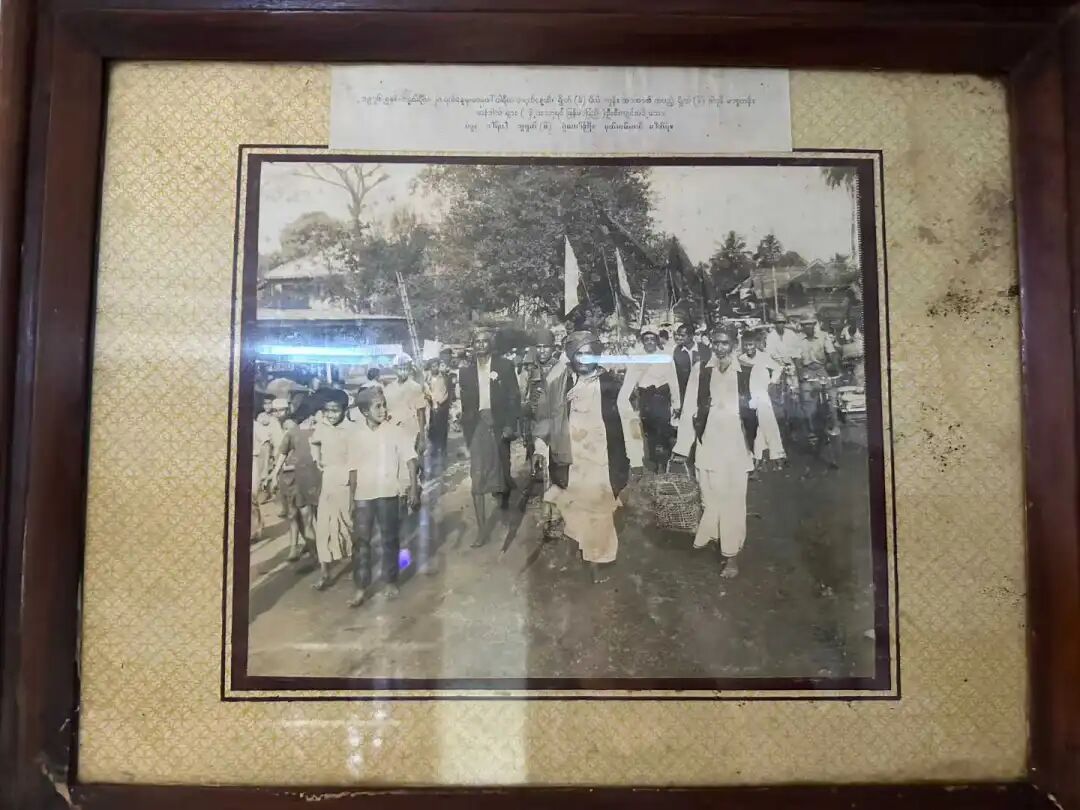
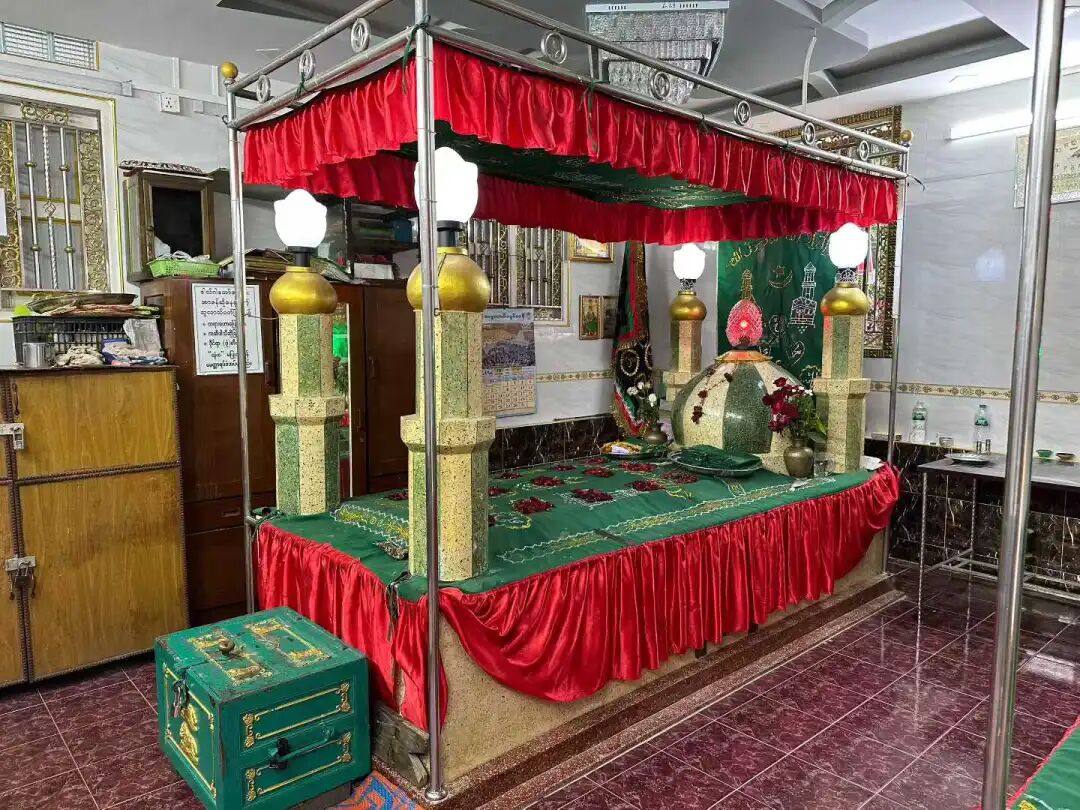
A Sufi shrine (gongbei) inside the Thinchai Sunni Maha Maiden cemetery in Yangon, Myanmar.
Islamic World in 1550: South Asia — Sultanates, Mughals and Muslim History
Articles • ali2007fr posted the article • 0 comments • 227 views • 2026-05-18 09:20
Summary: Islamic World in 1550: South Asia — Sultanates, Mughals and Muslim History is presented here as a firsthand travel account in clear English, beginning with this scene: In the first article, "A Journey Through the Islamic World in 1550 (Part 1)," we crossed the African continent, traveled from Egypt into the Ottoman Empire, and then visited Tabriz in Iran. The account keeps its focus on South Asian Islam, Mughal History, Islamic World while preserving the names, places, food, and historical details from the Chinese source.
In the first article, "A Journey Through the Islamic World in 1550 (Part 1)," we crossed the African continent, traveled from Egypt into the Ottoman Empire, and then visited Tabriz in Iran.
In the second article, "A Journey Through the Islamic World in 1550 (Part 2) — The Legacy of the Mongol Empire," we visited 12 countries ruled by descendants of Genghis Khan, moving from Eastern Europe into North and Central Asia, and finally into South Asia.
In the third article, we will experience the Islamic culture of South Asia, traveling from Delhi into Gujarat and central India, then moving to the Deccan Plateau to visit its five sultanates, and finally taking a boat to the Maldives to begin our Indian Ocean journey.
For North India, 1550 is a special point in time. The Mughal Empire and the Bengal Sultanate we are familiar with have disappeared from the map, replaced by the Sur Dynasty, an Afghan Pashtun state stretching from Pakistan and North India through Bengal to the Rakhine State in Myanmar.
The Sur Dynasty (1538-1556) that swept across North India.
The founder of the Sur Dynasty, Sher Shah Suri, came from the Afghan Pashtun Sur tribe and was originally a general in the Mughal Empire. In 1539, the Mughal Emperor Humayun led a large army to conquer Bengal, but he was defeated by Sher Shah. In 1540, Sher Shah followed up his victory and completely crushed Humayun. Humayun fled to Persia, and Sher Shah established the Suri Dynasty in Delhi.
After occupying Delhi, Sher Shah continued building Din Panah, the Mughal capital Humayun had started for himself in 1533, and renamed it Shergarh.
In 1550, the Suri Dynasty was ruled by Sher Shah's son, Islam Shah Suri. He continued his father's policy of strengthening central authority, defeated the counterattack by the Mughal Emperor Humayun, and maintained the Suri Dynasty's rule in North India.
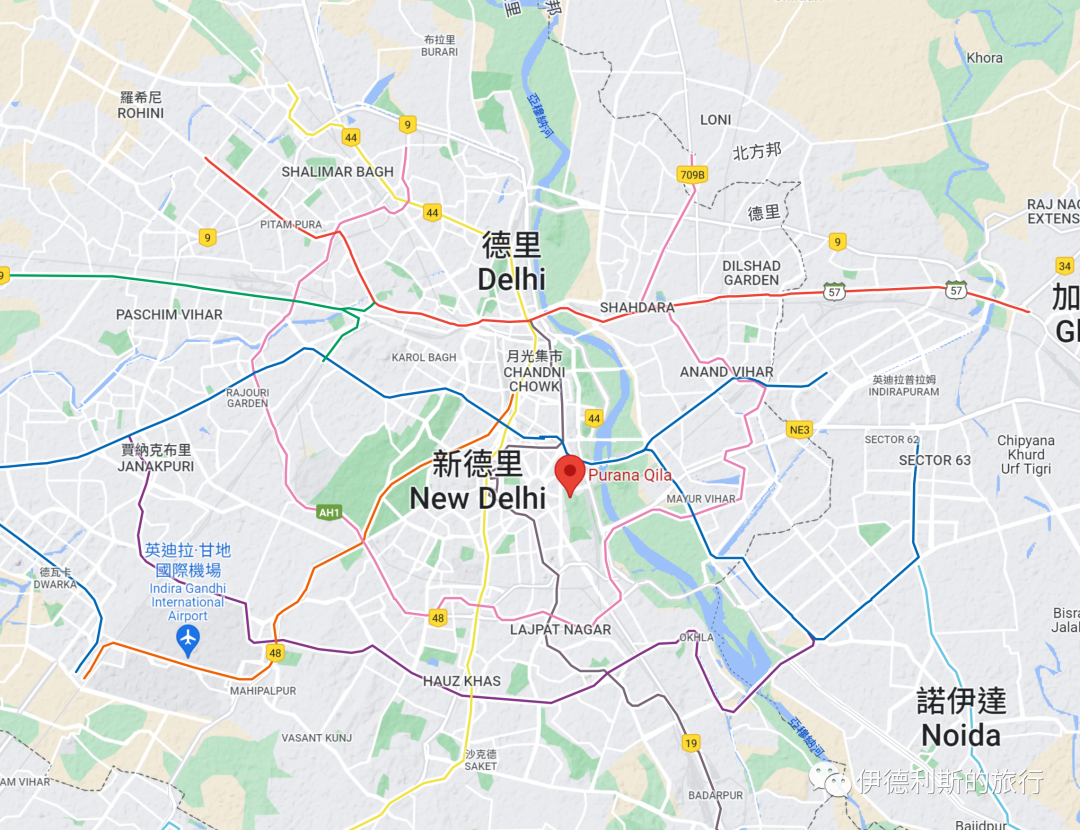
The location of Shergarh city.
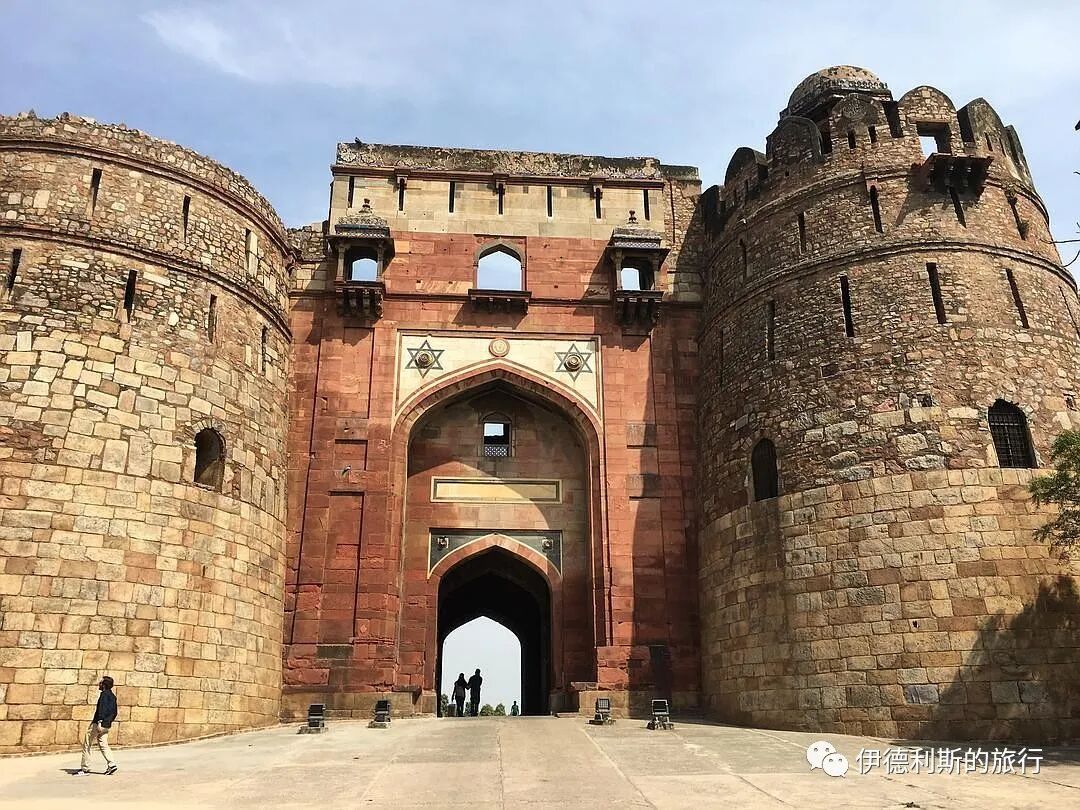
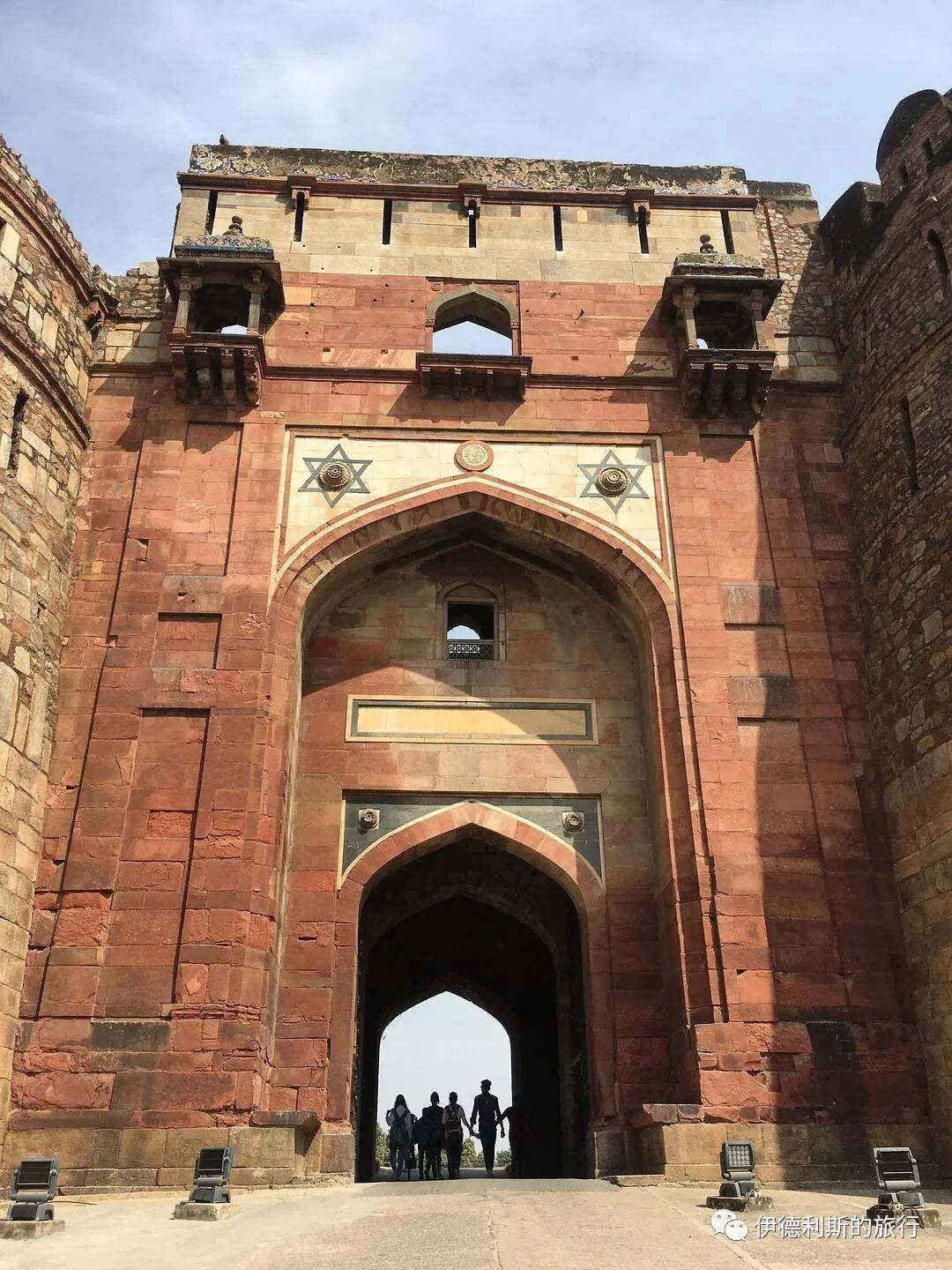
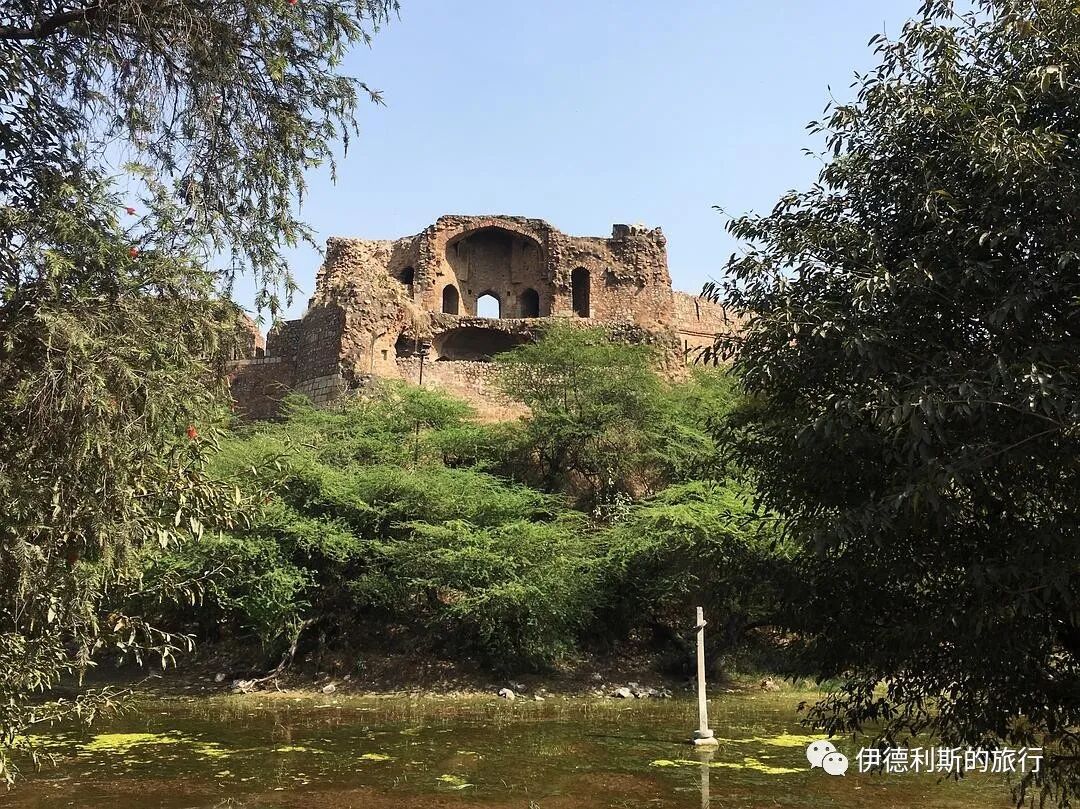
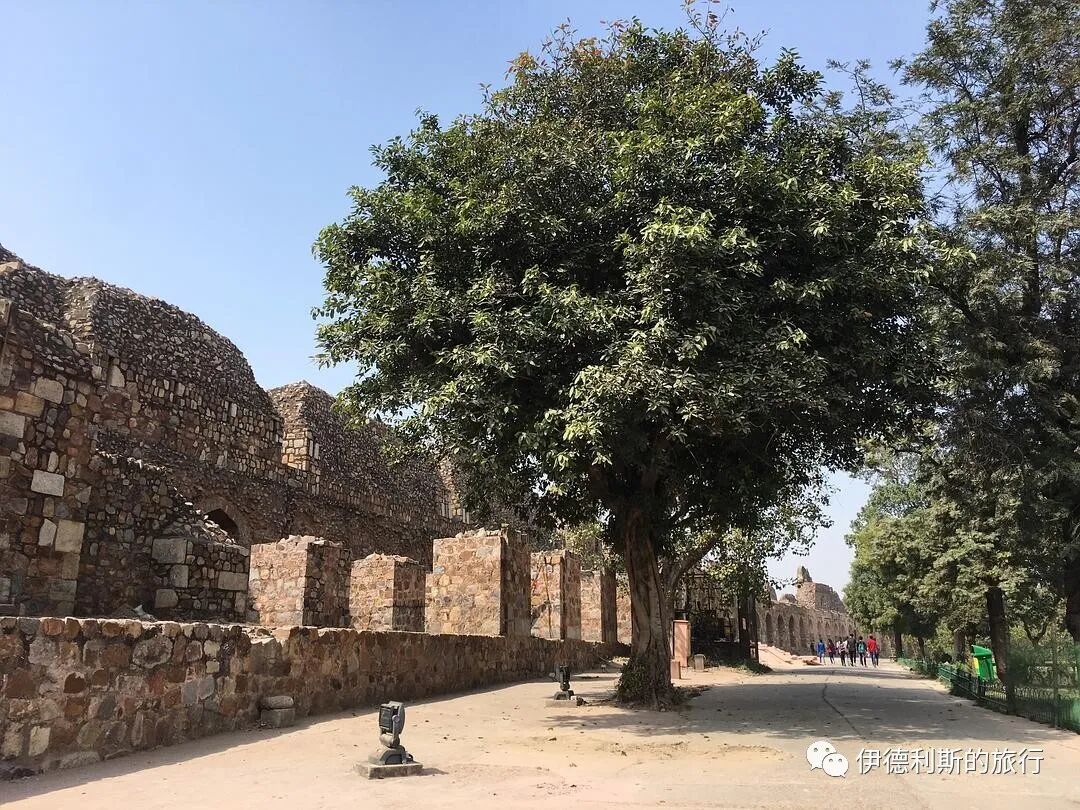
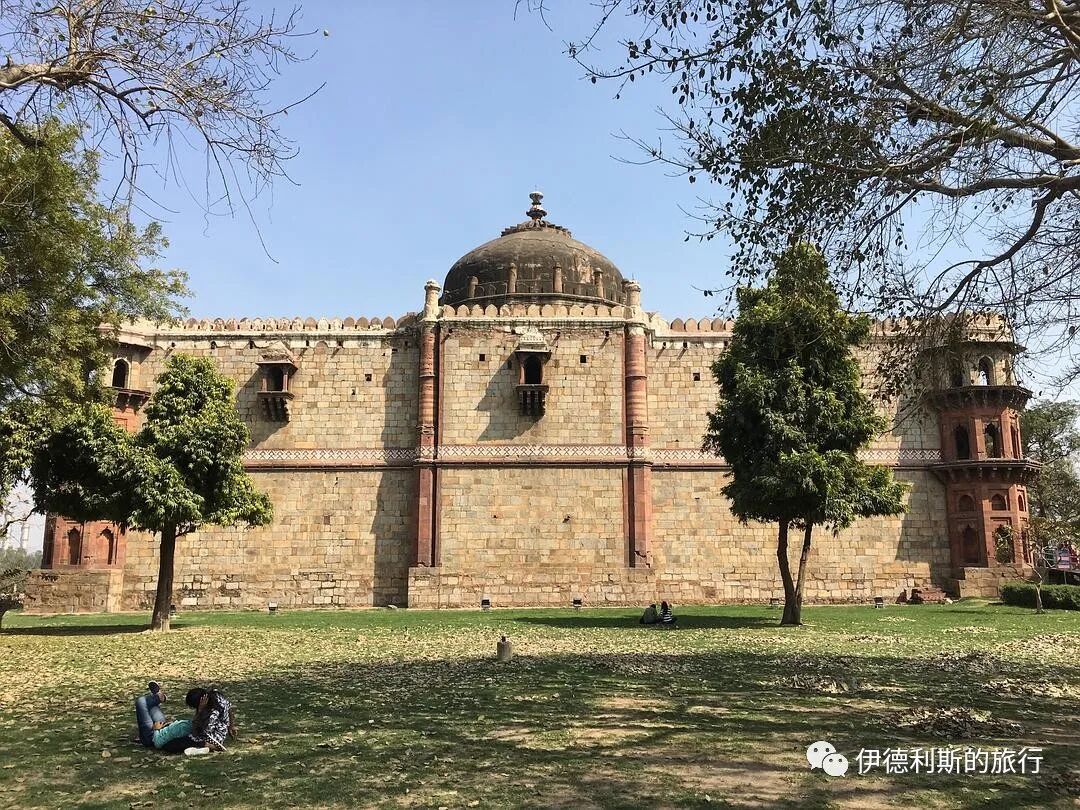
The walls of Shergarh are 18 meters high and 1.5 kilometers long, with three city gates. The west gate is the main entrance to the fortress and the tourist area, called Bara Darwaza. The south gate is called Humayun Darwaza. One theory is that Humayun built this gate, while another is that it faces Humayun's Tomb. The north gate is called Talaqi Darwaza, also known as the Forbidden Gate.
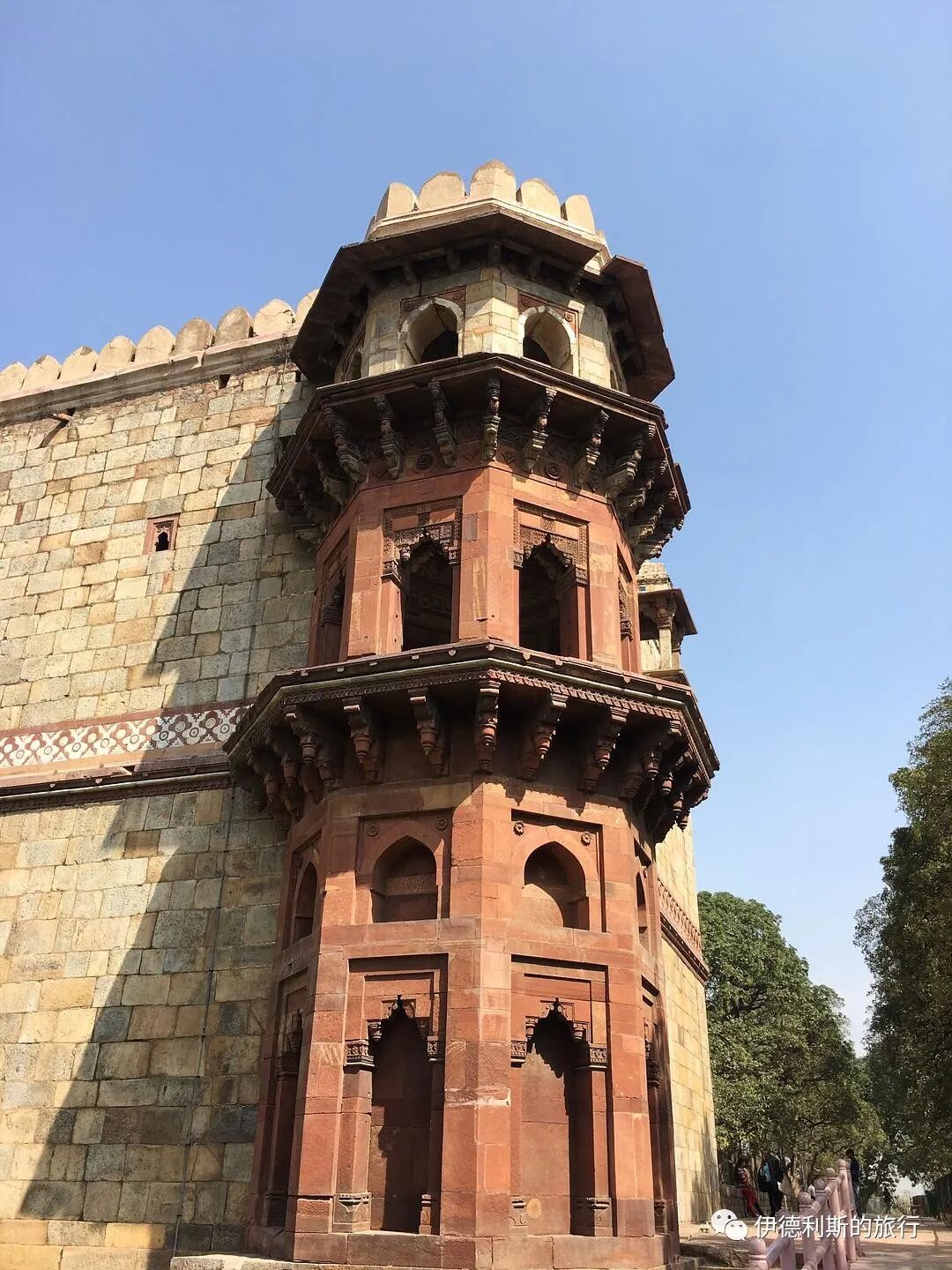
All three gates are double-layered sandstone structures with two huge semi-circular towers on either side. The gates have overhanging balconies and small pavilions (chhatris) on top, an architectural style that would be used repeatedly in later Mughal architecture.
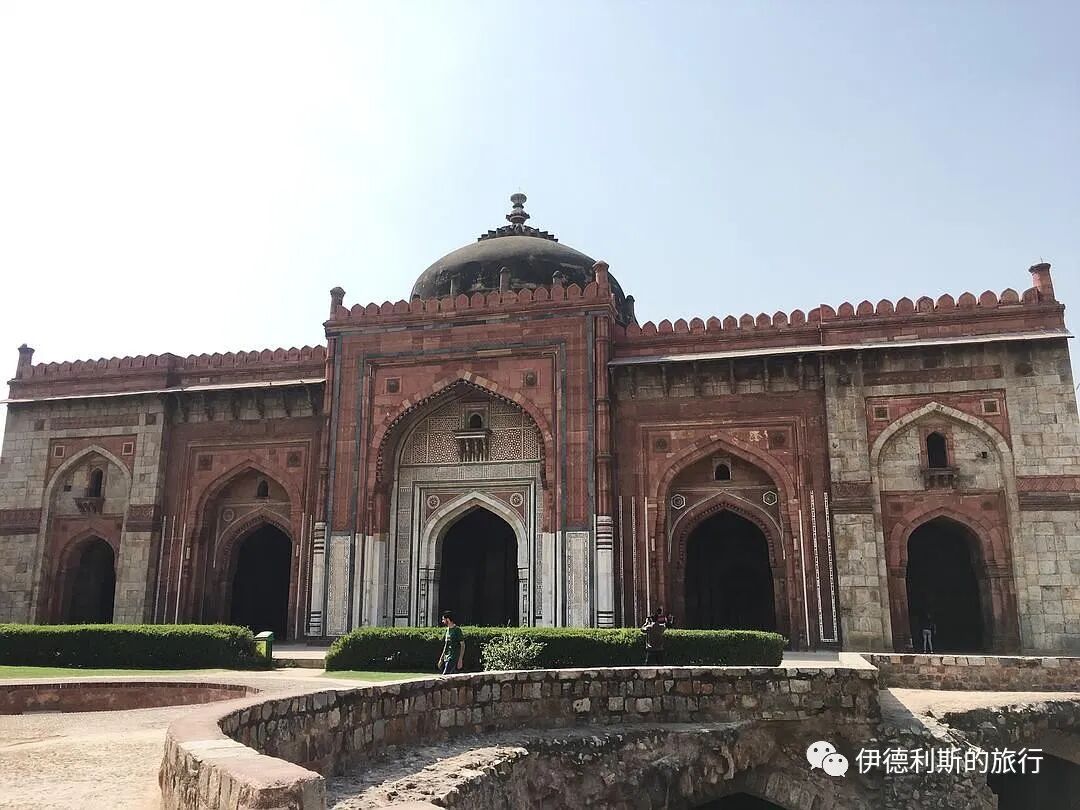
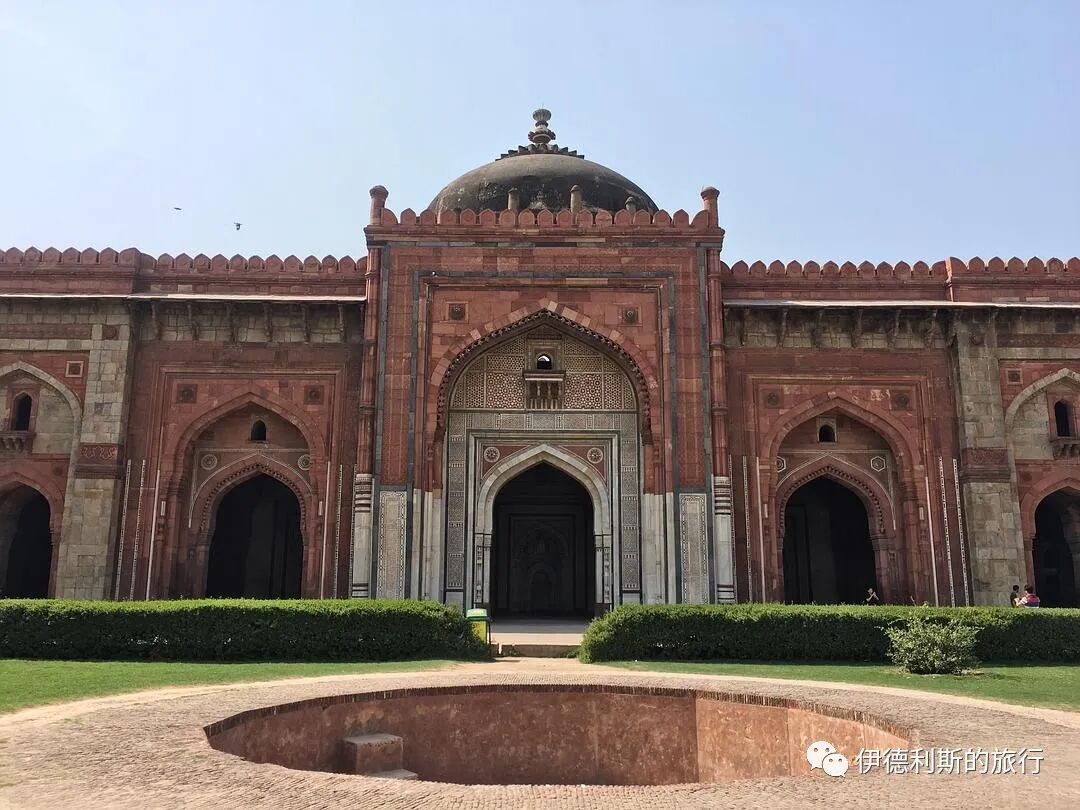
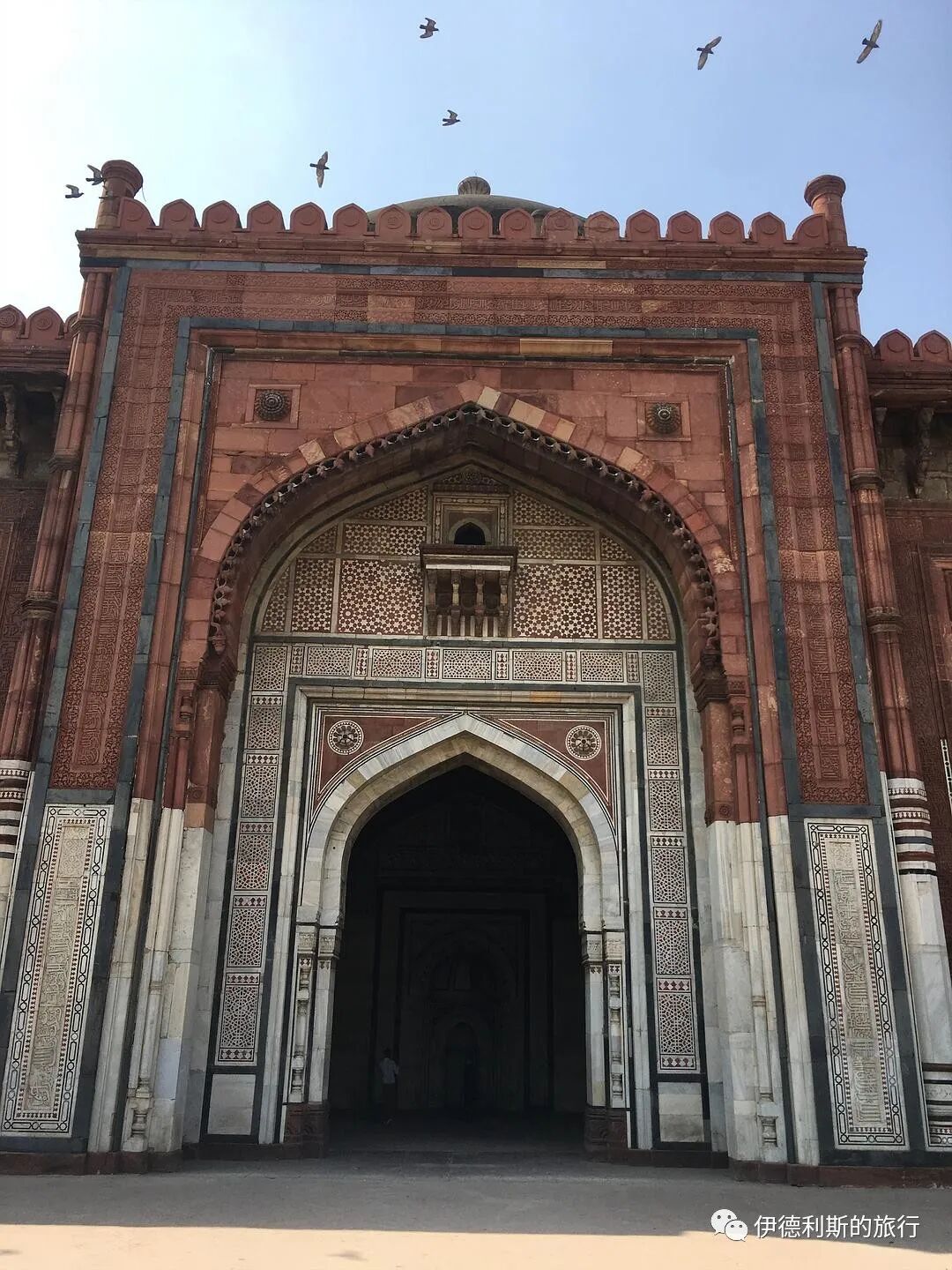
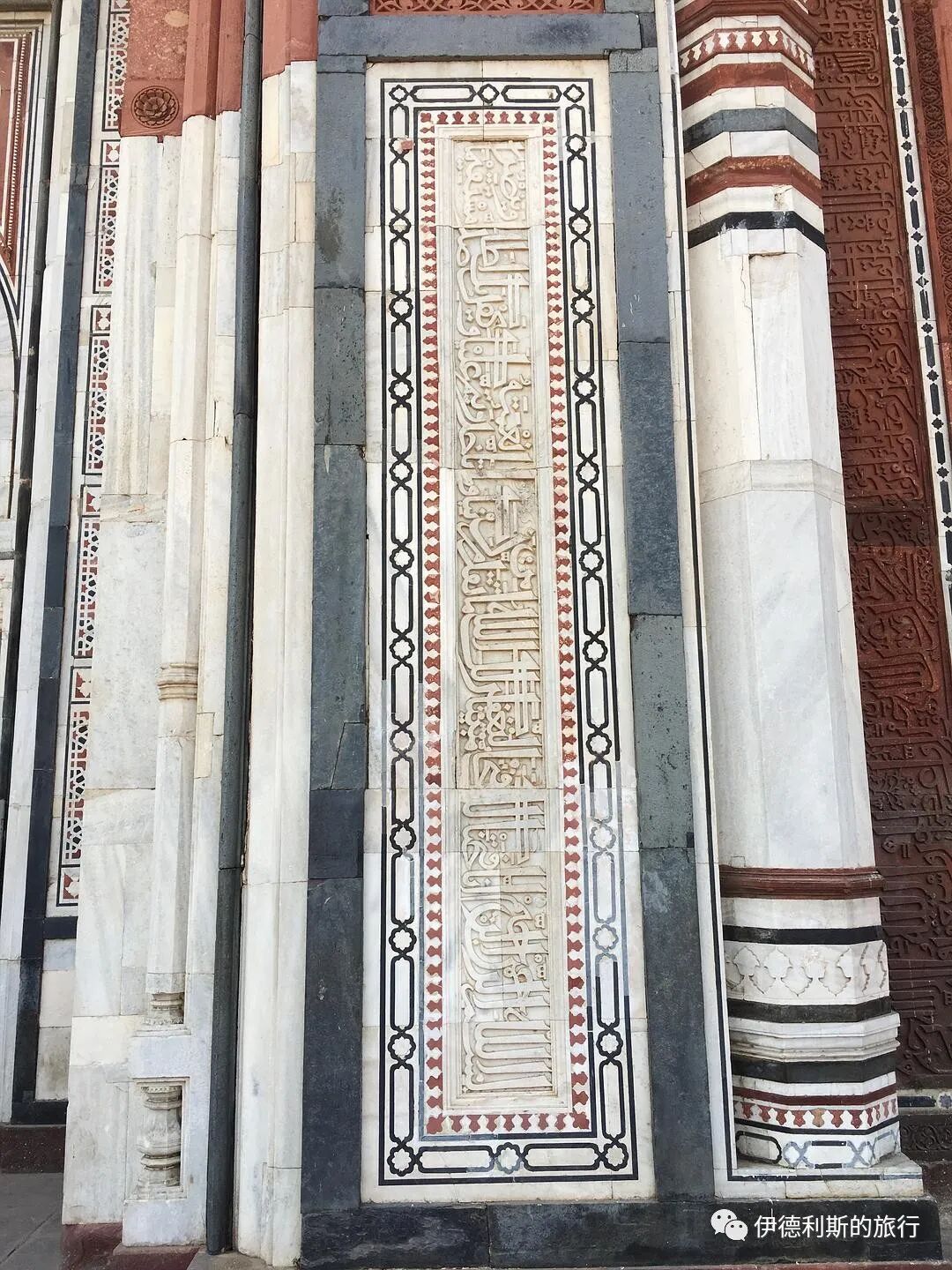
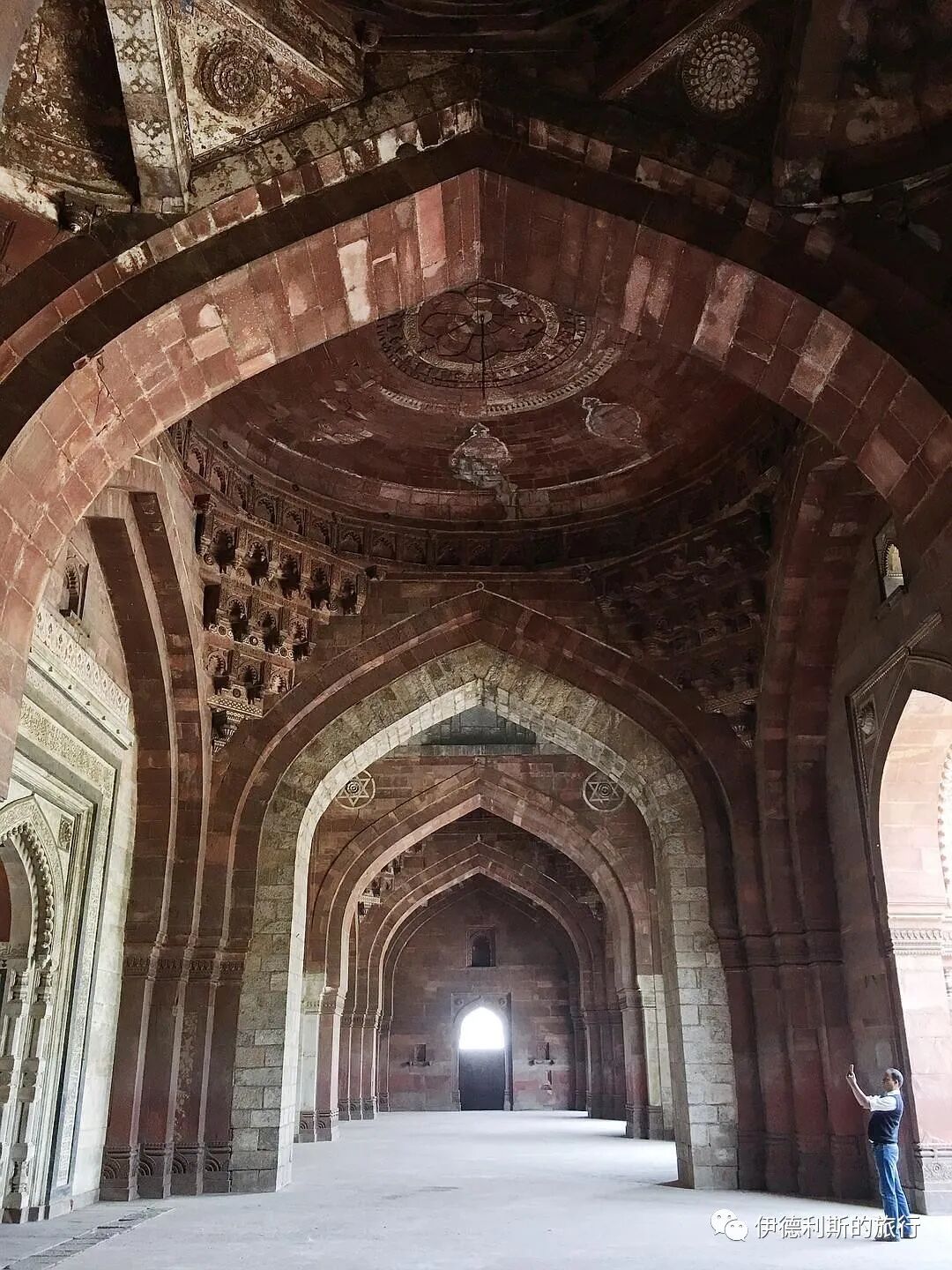
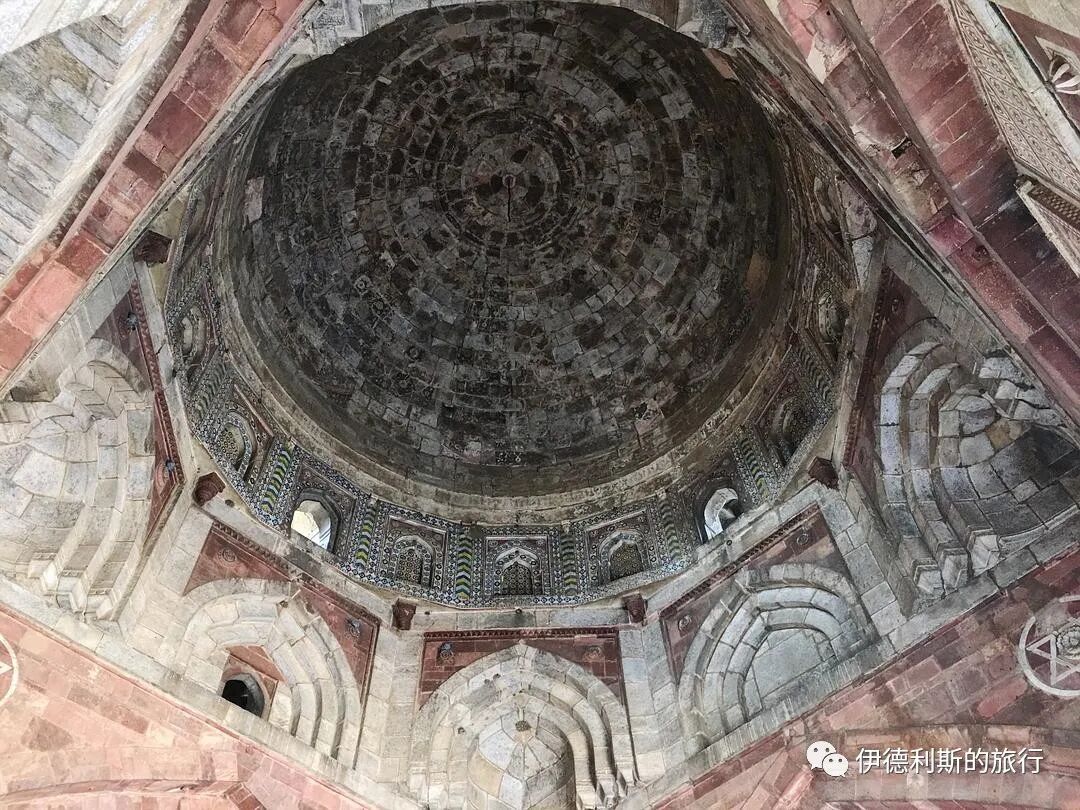
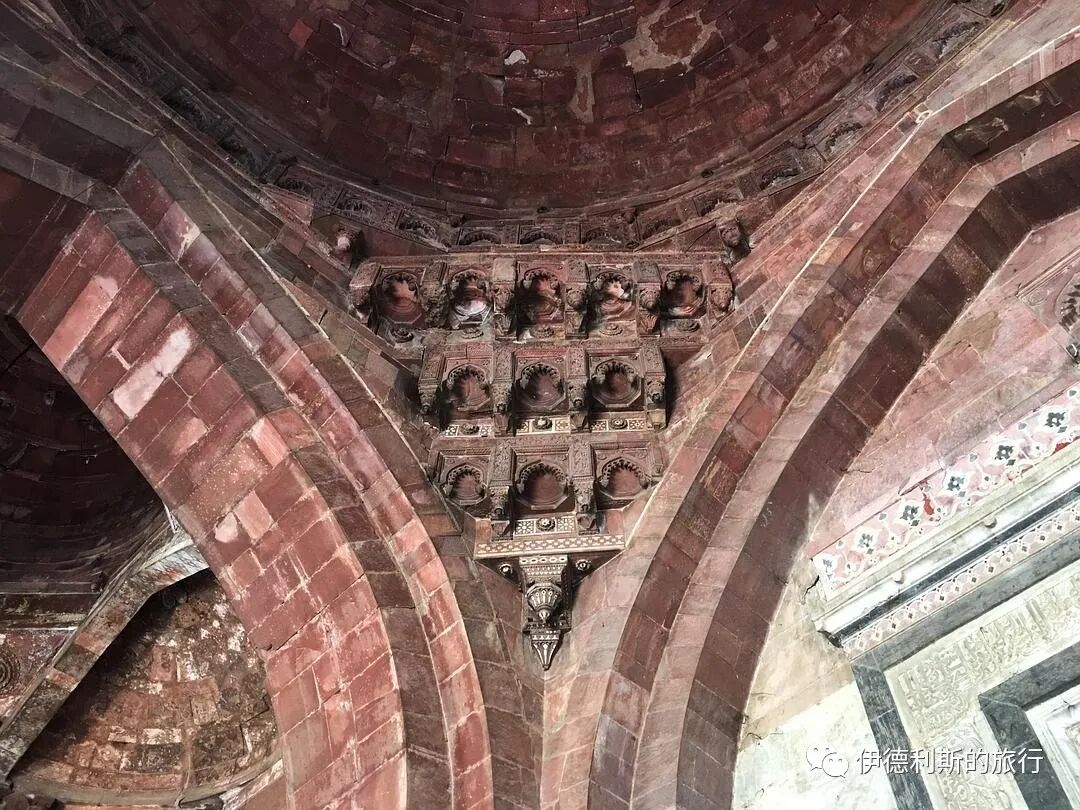
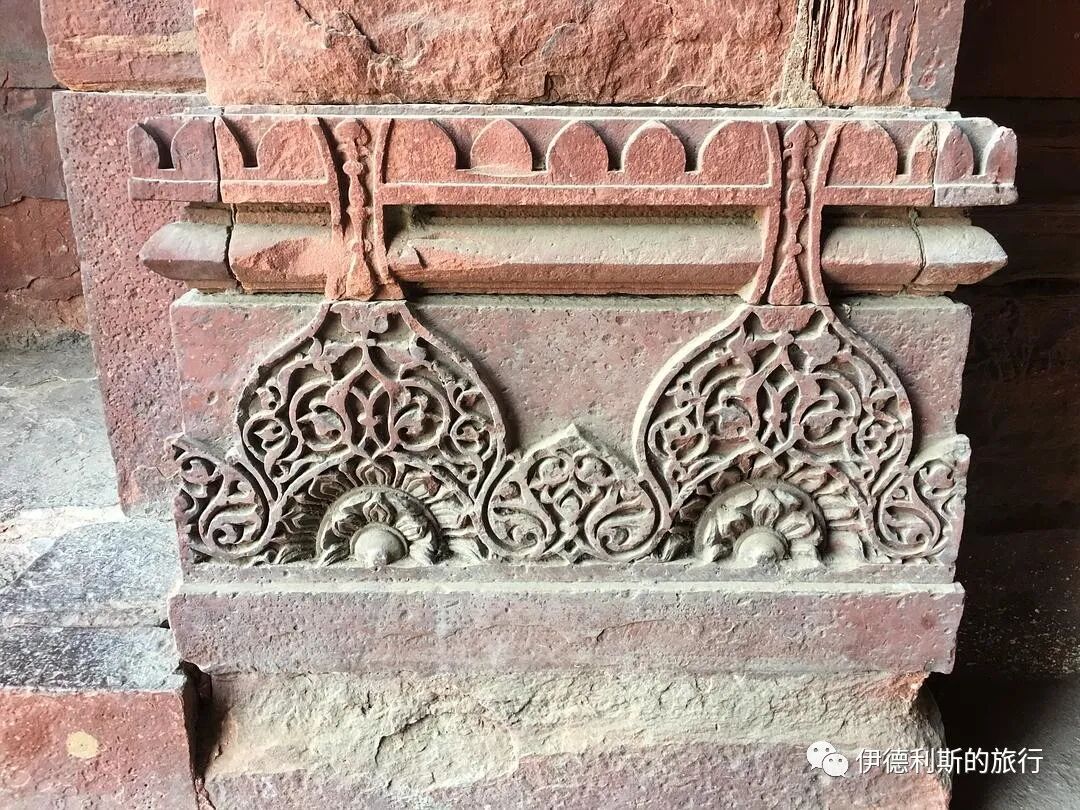
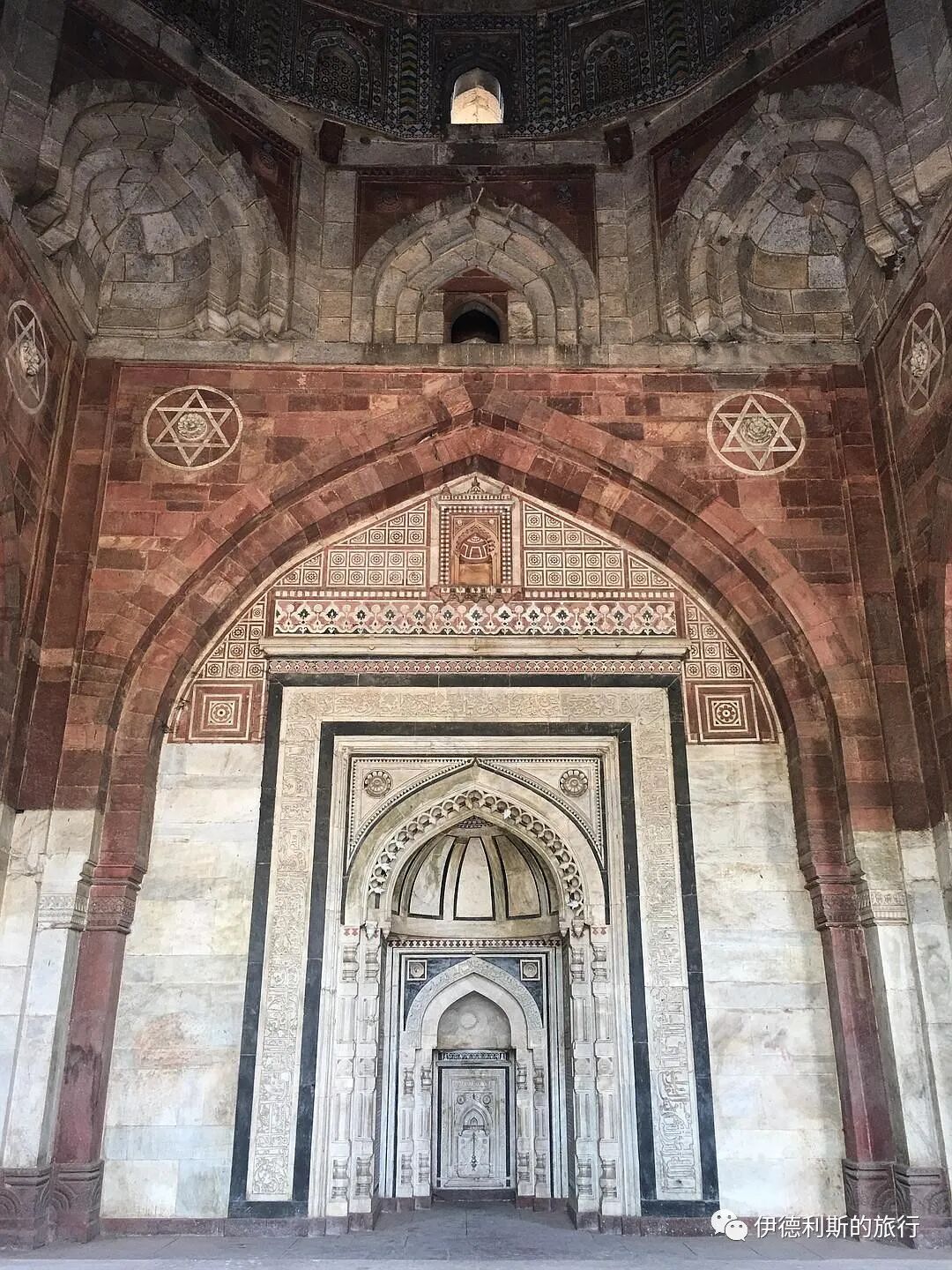
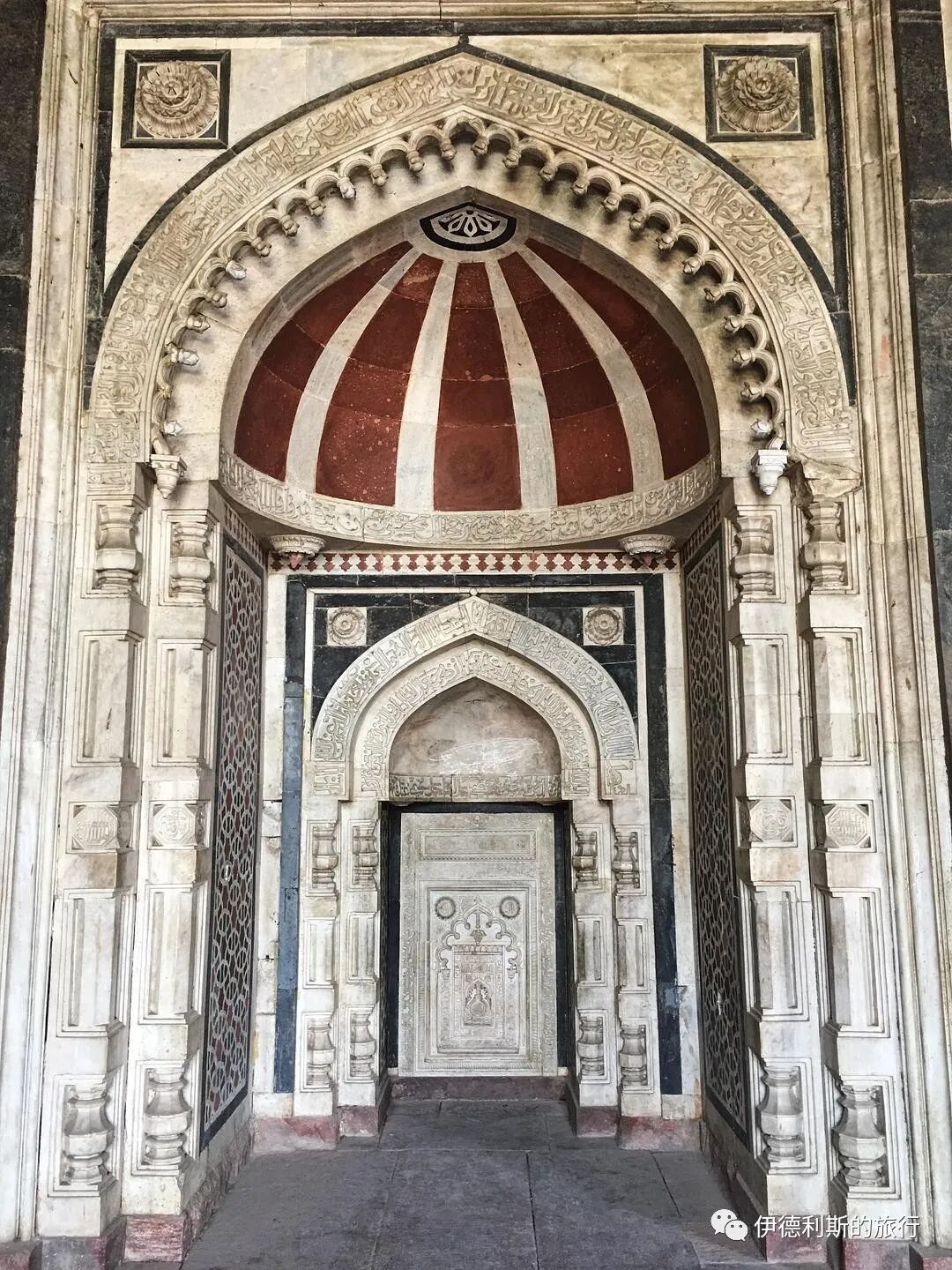
The Qila-i-Kuna mosque was built by Sher Shah in 1541 and served as the royal mosque of the Suri Dynasty. This semi-domed mosque is considered an important landmark in the transition of Indian Islamic architecture from the Lodi style to the Mughal style, and it is the largest and most exquisite of the five-arched mosques in India.
The five-arched mosque is an architectural style that developed during the Sayyid and Lodi dynasties of the Delhi Sultanate. The main hall of the mosque is divided into five sections by five arches, and each section has a mihrab. The mihrab inside the central arch is the largest, topped by a Lodi-style semi-circular dome.
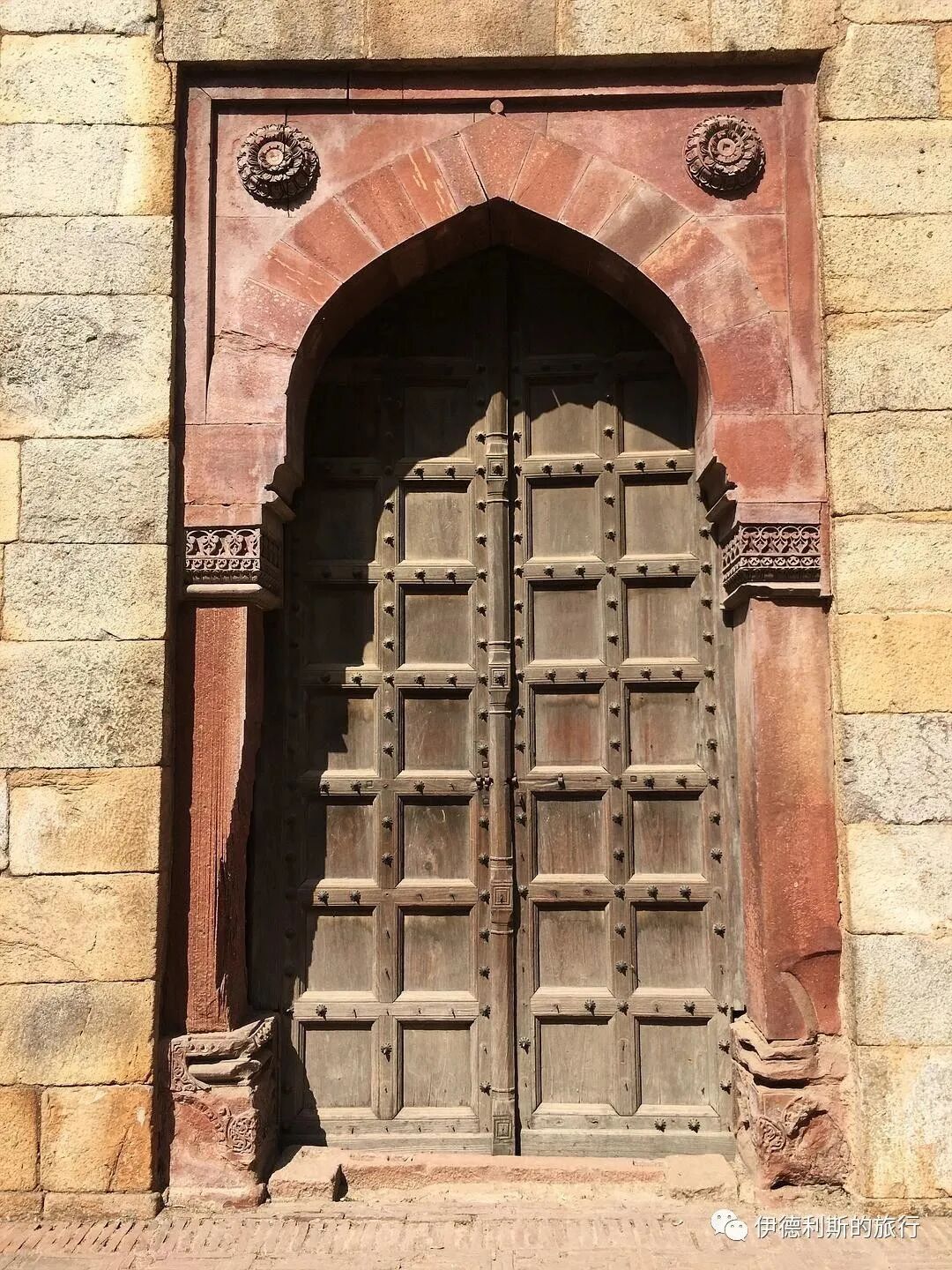
Sher Mandal is an octagonal pavilion with a very simple style. This beauty of simplicity comes from a return to Persian style, which is quite different from the architectural forms of the late Lodi dynasty of the Delhi Sultanate, and it is the earliest building of this style in Delhi.
Although it looks like an early Mughal building, it is actually recognized as part of the palace built by Sher Shah, which was later converted by Humayun into a library and observatory. It is also known as the first observatory in Delhi.
Salimgarh Fort is located on the north side of the Red Fort in Delhi and was built in 1546 by Salim Shah, the son of the Suri Dynasty ruler Sher Shah. People say before Humayun recaptured Delhi in 1555, he stayed here for three days.
Salimgarh Fort has many ghost stories, the most famous being that of Zebunnisa, the daughter of the Mughal Emperor Aurangzeb. Legend says she wore a black veil and sang poems she had written herself under the moonlight. Additionally, some people claim to hear the groans of Indian National Army soldiers who were tortured to death here at night.
In 2007, this site became a UNESCO World Heritage site.
Isa Khan was a nobleman of the Sur Empire, coming from the Niazi tribe of the Pashtuns in Afghanistan. Isa Khan died in 1548. Before he passed away, he built his own tomb and mosque in the southern suburbs of Dinpanah, near the shrine of Nizamuddin. Later, this area also became the site of Humayun's tomb. As a prominent figure in the Sur Empire, Isa Khan was one of the last nobles of the dynasty to be buried in an Afghan-style tomb.
On August 5, 2011, the oldest sunken garden in India was discovered during the restoration of the tomb. This is considered the first Indian-style sunken garden attached to a tomb in India, a design that was later further developed at the tomb of Akbar and the Taj Mahal.
The Isa Khan Mosque was built during the same period as the tomb, and its biggest feature is the use of two pavilions instead of a dome. many details in the mosque were further developed in the later Humayun's Tomb.
Legacy of the Delhi Sultanate
We head south from Delhi to Gujarat to look at the state that became independent from the Delhi Sultanate.
1. The Gujarat Sultanate in Western India (1407–1573)
The Gujarat Sultanate was located in the state of Gujarat in western India. Its founder was originally the governor (Nawab) of the Delhi Sultanate in Gujarat, and he became officially independent after Timur invaded the Delhi Sultanate.
In the first half of the 16th century, the Gujarat Sultanate was invaded twice by the Rajputs and the Mughal Empire, but they were eventually driven away. In 1550, the Gujarat Sultanate was ruled by Sultan Mahmud Shah III (reigned 1537–1554).
The Gujarat Sultanate is famous for its elegant Indo-Islamic architecture. They built many unique mosques in their capital, Ahmedabad, which had a great influence on the later development of Mughal architecture. In 2016, the Historic City of Ahmedabad was added to the UNESCO World Heritage List.
The location of Ahmedabad city.
The Rani Sipri Mosque in Ahmedabad, built in 1514, has intricate carvings on its walls.
Photographed in 1874 by the Indian photography studio Bourne & Shepherd.
2. The Khandesh Sultanate in Central India (1382–1601)
The Khandesh Sultanate was located in the Khandesh region of central India. Its founder was originally a nobleman of the Delhi Sultanate who became a general due to his military achievements, and he became an independent sultanate in the late 14th century.
In the early 16th century, the Khandesh Sultanate was caught in wars with the neighboring Gujarat Sultanate and Malwa Sultanate.
The capital of the Khandesh Sultanate was Burhanpur, located in the Indian state of Madhya Pradesh.
Five Deccan Sultanates
Let us continue south into the Deccan Plateau.
In the 14th and 15th centuries, the most powerful state on the Deccan Plateau was the Bahmani Sultanate, which was formed after the Delhi Sultanate's governor in the Deccan region became independent. At the end of the 15th century, the Bahmani Sultanate declined and split into five sultanates, collectively known to later generations as the five Deccan Sultanates.
1. The Berar Sultanate on the Deccan Plateau (1490–1572)
The Berar Sultanate was the first of the five Deccan Sultanates to become independent after the collapse of the Bahmani Sultanate. Its founder was originally a Hindu who converted to Islam after being captured by the Bahmani army.
In 1550, the sultanate was ruled by Darya Imad Shah, who tried to use diplomacy for peaceful rule, which kept the sultanate relatively stable during this period. At the same time, he also built the city of Daryapur and named it after himself.
The location of Daryapur city.
2. The Ahmadnagar Sultanate on the Deccan Plateau (1490–1636)
The Ahmadnagar Sultanate was one of the five Deccan sultanates formed after the Bahmani Sultanate broke apart. It sat southeast of the Gujarat Sultanate, with Ahmadnagar as its capital. Its founder was originally a Brahmin from the Vijayanagara Empire in South India who later converted to Islam.
In 1550, the sultanate was ruled by Burhan Nizam Shah I. He was the first to switch from Sunni to Shia Islam, and the nobles and commoners soon followed his lead. Under his rule, there was religious tolerance, art flourished, and trade went smoothly, though small-scale conflicts with the Mughals and other sultanates continued.
Ahmadnagar city is in the state of Maharashtra in western India. It is a small town now, but it still keeps dozens of architectural ruins from the sultanate era.
The location of Ahmadnagar city.
3. The Golconda Sultanate on the Deccan Plateau (1518–1687)
We head southeast to Hyderabad, the most famous city on the Deccan Plateau.
The founder of the Qutb Shahi dynasty, Quli Qutb Mulk (reigned 1512–1543), was a Turkmen from Hamadan, Iran. He was a descendant of Qara Yusuf, the ruler of the Kara Koyunlu (Black Sheep) dynasty. In the early 16th century, Quli traveled from Iran to India with some relatives and friends. They stayed in Delhi at first, then moved south to the Deccan to serve the Bahmani Sultanate. After the Bahmani Sultanate fell in the 15th century, Quli conquered Golconda Fort and started the Qutb Shahi dynasty. Over the next 60 years, three sultans expanded Golconda Fort into a massive complex, which is why the Qutb Shahi dynasty is also called the Golconda Sultanate.
Golconda had the world's only diamond mines at the time and was a major diamond trading hub. In the West, the name Golconda became a synonym for immense wealth. Golconda Fort is actually made of four castles. Its outer wall is 10 kilometers long and features 87 semicircular bastions, 8 gates, and 4 drawbridges. The inner city sits on a 120-meter-high granite hill. Currently, only the east gate, Bala Hissar Darwaza, is open for visitors. Bala Hissar Darwaza is a huge archway with carvings of lions and peacocks, which are common in Hindu architecture. The gate also has iron spikes designed to stop Mughal war elephants.
The tall, three-story building south of the gate is called the Aslah Khana armory. It held guns and ammunition during the Mughal era. Historians have found that during the Qutb Shahi dynasty, this was actually an office for various officials.
Nakkar Khana is a palace complex where archaeologists have now dug up a series of water channels.
Taramati mosque, built in 1518, sits next to the palace area and was used by the sultan's court and nobles. This mosque has the classic Muslim architectural style of the Deccan region, with small lotus-topped onion domes on its balconies.
Walking further in, you reach the Bhagamati Palace.
Passing through Bhagamati Palace brings you to the Rani Mahal area in the south of the fort, where a light and sound show is held at night. In the middle of the spacious courtyard is a complex metal fountain. During the Qutb Shahi era, the fountain could spray water on its own thanks to hydraulic engineering. When there was no rain, the fort's water system ran using Persian water wheels. Today, a set of clay drainage pipes that have survived for hundreds of years can still be found behind the Rani Mahal. Historians believe the palace now called Rani Mahal should actually be called Dad Mahal. This was the palace where the sultan handled state affairs and listened to the opinions of his subjects and the people.
Behind the Rani Mahal is the Kilwat, the sultan's private bedroom. It is small but decorated beautifully. Those hollow lattices were once inlaid with Golconda's most famous diamonds and other gemstones.
Heading west from the Rani Mahal area, you leave the palace grounds and can see the tall, multiple walls inside the fort. Behind one of these walls stands a mosque called Zanana, which still has its mihrab and courtyard.
After passing through the Zanana mosque, you leave the palace area. A stone staircase leads to the fortress at the top of the hill. Some of the fortress walls are built directly onto giant boulders, and you can look down over the entire palace area from the steps. Once you reach the top, there is a building called Baradari (Darbar Hall), where you can look out over the vast area behind the fort.
Continuing down the hill, you will pass the Ramdas prison.
Next to the main gate of the fort is a Turkish bath (hammam) building. It has pipes at different heights inside to mix scented cold and hot water, but it was not open when I visited. Historians still disagree on whether this bath was for women or for washing the bodies of the deceased.
Two large pavilions outside the fort gate.
The Qutb Shahi tombs are located north of Golconda Fort and contain the tombs of the sultans of the Qutb Shahi dynasty along with their attached mosques. These tombs feature the typical style of Deccan Plateau Muslim architecture. The square base and round top are highlighted by decorative small towers, and the onion-shaped dome sits on a lotus-petal base, showing a blend of Persian and Indian architectural styles.
The tomb of Quli Qutb Mulk (reigned 1512–1543), the founder of the Qutb Shahi dynasty, is the oldest in the cemetery, and the designs of later tombs were all developed from this one. Quli was a Turkmen from Hamadan, Iran, and a descendant of Qara Yusuf (reigned 1380–1420), the ruler of the Black Sheep dynasty.
The tomb of the second sultan, Jamsheed Quli Qutb Shah (reigned 1543–1550), is the only sultan's tomb in the cemetery that does not use black basalt. Its design is also different from the others, consisting of two levels. Jamsheed took the throne in 1543 after assassinating his father. Few records remain of his reign, other than that it was very cruel. Jamsheed died of illness in 1550 and was buried next to his father's tomb.
After the second sultan, Jamsheed, died of illness in 1550, his 7-year-old son, Subhan Quli Qutb Shah, took the throne. However, shortly after, Subhan's uncle, Ibrahim Quli Qutb Shah, rushed back to Golconda Fort to seize the throne. Subhan was deposed and died shortly after. Subhan's tomb is on the same platform as his grandfather, the first sultan Quli Qutb Mulk, and it is the smallest of all the sultan tombs.
4. The Bidar Sultanate of the Deccan Plateau (1492–1619)
The Bidar Sultanate was one of the five Deccan sultanates formed after the collapse of the Bahmani Sultanate. It was the smallest one and was surrounded by the other four. Its founder was originally a Georgian enslaved by the Turks who later became a general in the Bahmani Sultanate.
In 1550, the ruler of the sultanate was Ali Barid Shah I, who loved inviting scholars and craftsmen from all over India to his court.
The Bidar Sultanate expanded Bidar Fort on a large scale. Because they hired Hindu architects, the buildings from this period incorporate many features of Hindu architecture.
A miniature painting of Ali Barid Shah in the collection of the San Diego Museum of Art.
A photo of the tomb of Ali Barid Shah taken by S N Barid in 2015.
5. The Bijapur Sultanate on the Deccan Plateau (1490–1686)
The Bijapur Sultanate was the most southwestern of the five major Deccan sultanates. Its founder was a Georgian slave bought from Iran by the Bahmani Sultanate.
In 1550, the ruler of the sultanate was Ibrahim Adil Shah I, the first Bijapur sultan to hold the title of Shah. After taking the throne, Ibrahim converted from Shia to Sunni. He removed the names of the Twelve Imams from the Friday khutbah, promoted local Deccan Sunni Muslims, and suppressed the Shia faction.
During his reign, Ibrahim constantly formed and broke alliances with the other four Deccan sultanates. Although there were continuous military campaigns, there was little territorial expansion.
During the rule of the Bijapur Sultanate, the city of Bijapur was a center for business, trade, and education on the Deccan Plateau, famous for its unique Bijapur culture.
The location of Bijapur city.
The Sultanate of the Maldives (1153-1968) in the Indian Ocean.
Let us leave the South Asian mainland and take a boat to the Maldives islands in the Indian Ocean.
As Arab merchants grew trade in the Indian Ocean, the Maldives changed from a Buddhist kingdom to an Islamic nation in the 12th century, becoming the Sultanate of the Maldives.
In 1550, the Sultanate of the Maldives was ruled by the Hilaalee dynasty, whose founder likely came from Somalia. In 1551, Sultan Muhammad III, who had only been in power for two years, was assassinated by his brother Hassan. Hassan was also the first Maldivian Sultan to convert to Christianity, but he was soon deposed.
Male, the capital of the Sultanate of the Maldives.
In the next part, we will cross the Bay of Bengal to Southeast Asia to see the Islamic culture there in 1550. view all
Summary: Islamic World in 1550: South Asia — Sultanates, Mughals and Muslim History is presented here as a firsthand travel account in clear English, beginning with this scene: In the first article, "A Journey Through the Islamic World in 1550 (Part 1)," we crossed the African continent, traveled from Egypt into the Ottoman Empire, and then visited Tabriz in Iran. The account keeps its focus on South Asian Islam, Mughal History, Islamic World while preserving the names, places, food, and historical details from the Chinese source.
In the first article, "A Journey Through the Islamic World in 1550 (Part 1)," we crossed the African continent, traveled from Egypt into the Ottoman Empire, and then visited Tabriz in Iran.
In the second article, "A Journey Through the Islamic World in 1550 (Part 2) — The Legacy of the Mongol Empire," we visited 12 countries ruled by descendants of Genghis Khan, moving from Eastern Europe into North and Central Asia, and finally into South Asia.
In the third article, we will experience the Islamic culture of South Asia, traveling from Delhi into Gujarat and central India, then moving to the Deccan Plateau to visit its five sultanates, and finally taking a boat to the Maldives to begin our Indian Ocean journey.
For North India, 1550 is a special point in time. The Mughal Empire and the Bengal Sultanate we are familiar with have disappeared from the map, replaced by the Sur Dynasty, an Afghan Pashtun state stretching from Pakistan and North India through Bengal to the Rakhine State in Myanmar.
The Sur Dynasty (1538-1556) that swept across North India.
The founder of the Sur Dynasty, Sher Shah Suri, came from the Afghan Pashtun Sur tribe and was originally a general in the Mughal Empire. In 1539, the Mughal Emperor Humayun led a large army to conquer Bengal, but he was defeated by Sher Shah. In 1540, Sher Shah followed up his victory and completely crushed Humayun. Humayun fled to Persia, and Sher Shah established the Suri Dynasty in Delhi.
After occupying Delhi, Sher Shah continued building Din Panah, the Mughal capital Humayun had started for himself in 1533, and renamed it Shergarh.
In 1550, the Suri Dynasty was ruled by Sher Shah's son, Islam Shah Suri. He continued his father's policy of strengthening central authority, defeated the counterattack by the Mughal Emperor Humayun, and maintained the Suri Dynasty's rule in North India.
The location of Shergarh city.
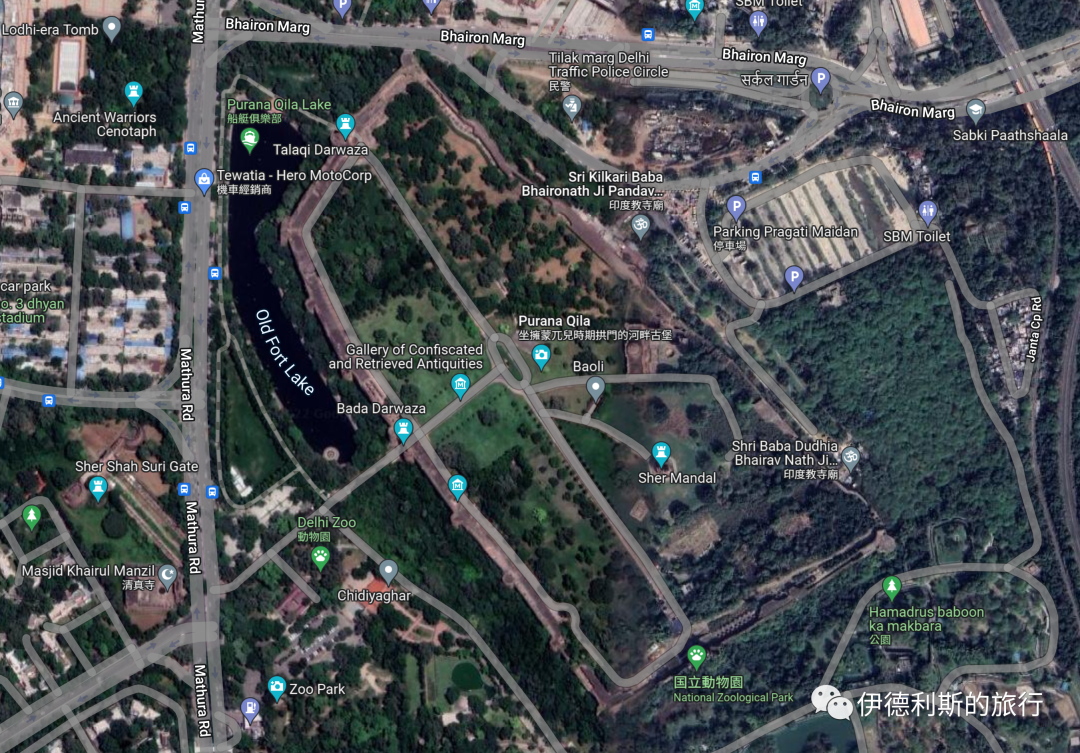
The walls of Shergarh are 18 meters high and 1.5 kilometers long, with three city gates. The west gate is the main entrance to the fortress and the tourist area, called Bara Darwaza. The south gate is called Humayun Darwaza. One theory is that Humayun built this gate, while another is that it faces Humayun's Tomb. The north gate is called Talaqi Darwaza, also known as the Forbidden Gate.
All three gates are double-layered sandstone structures with two huge semi-circular towers on either side. The gates have overhanging balconies and small pavilions (chhatris) on top, an architectural style that would be used repeatedly in later Mughal architecture.
The Qila-i-Kuna mosque was built by Sher Shah in 1541 and served as the royal mosque of the Suri Dynasty. This semi-domed mosque is considered an important landmark in the transition of Indian Islamic architecture from the Lodi style to the Mughal style, and it is the largest and most exquisite of the five-arched mosques in India.
The five-arched mosque is an architectural style that developed during the Sayyid and Lodi dynasties of the Delhi Sultanate. The main hall of the mosque is divided into five sections by five arches, and each section has a mihrab. The mihrab inside the central arch is the largest, topped by a Lodi-style semi-circular dome.
Sher Mandal is an octagonal pavilion with a very simple style. This beauty of simplicity comes from a return to Persian style, which is quite different from the architectural forms of the late Lodi dynasty of the Delhi Sultanate, and it is the earliest building of this style in Delhi.
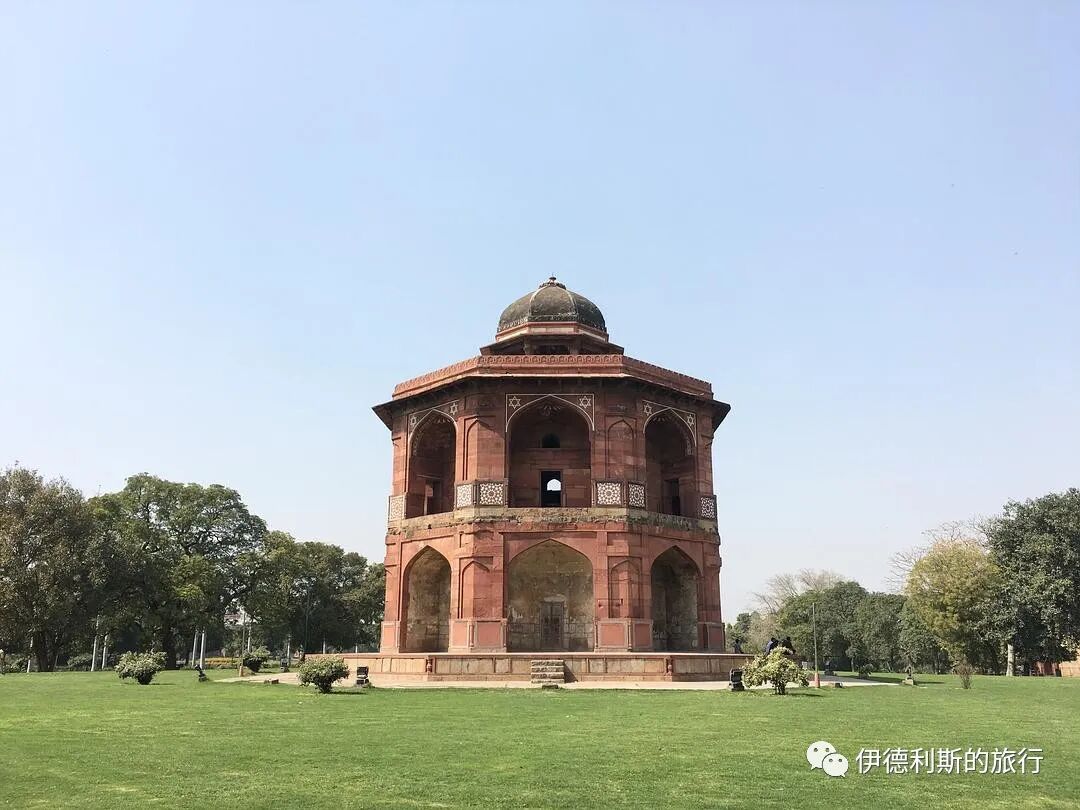
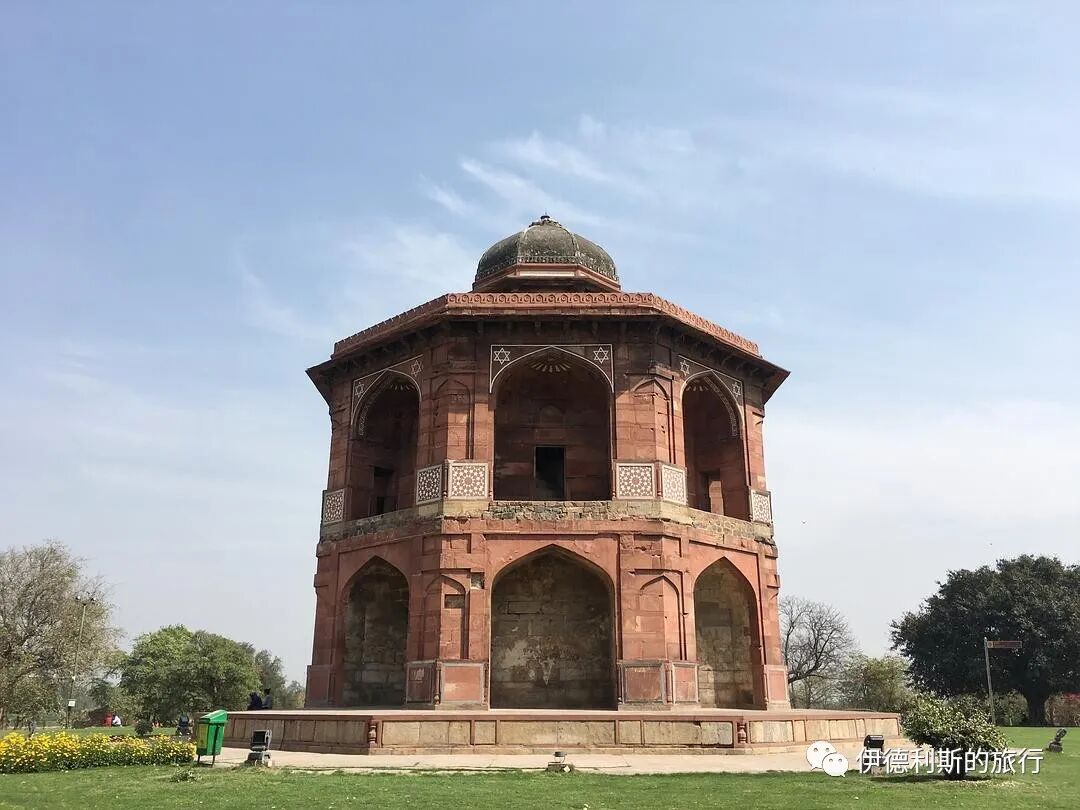
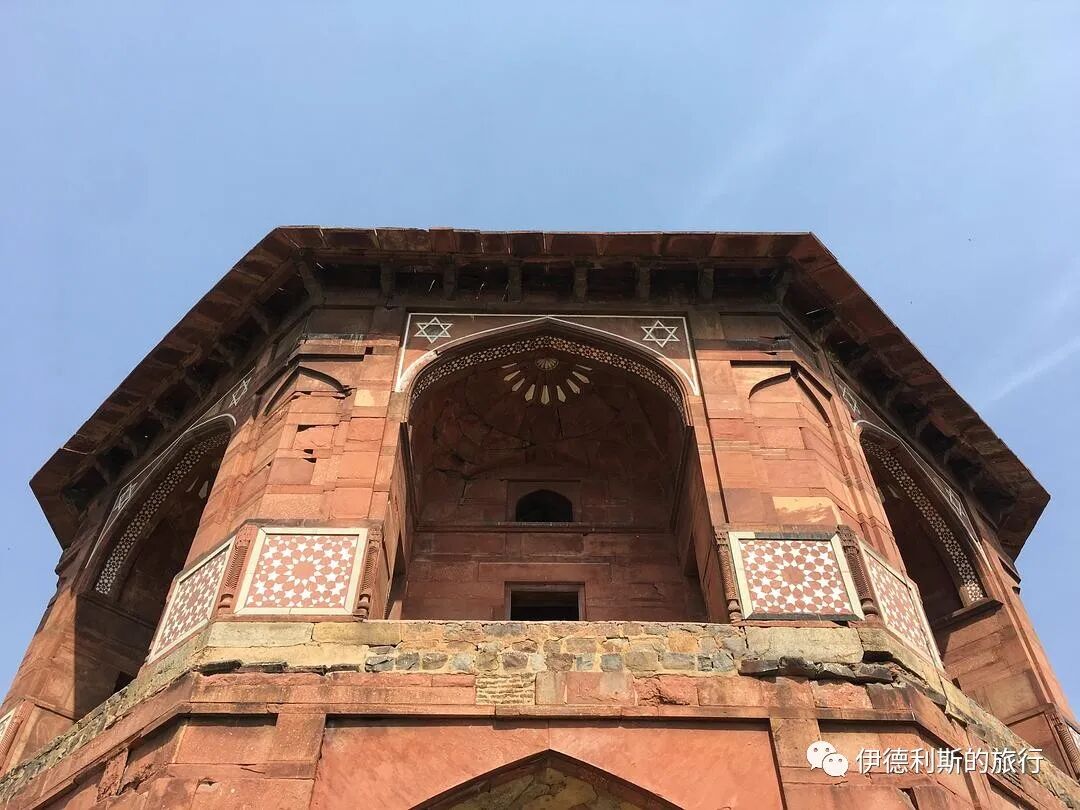
Although it looks like an early Mughal building, it is actually recognized as part of the palace built by Sher Shah, which was later converted by Humayun into a library and observatory. It is also known as the first observatory in Delhi.
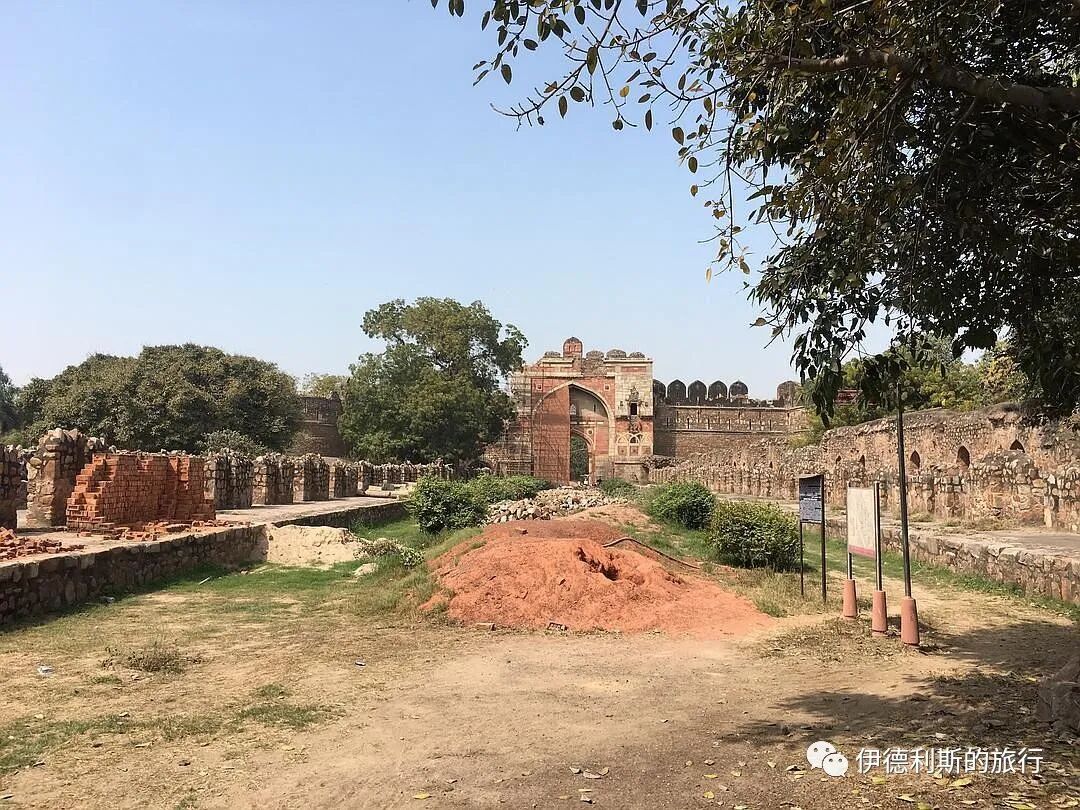
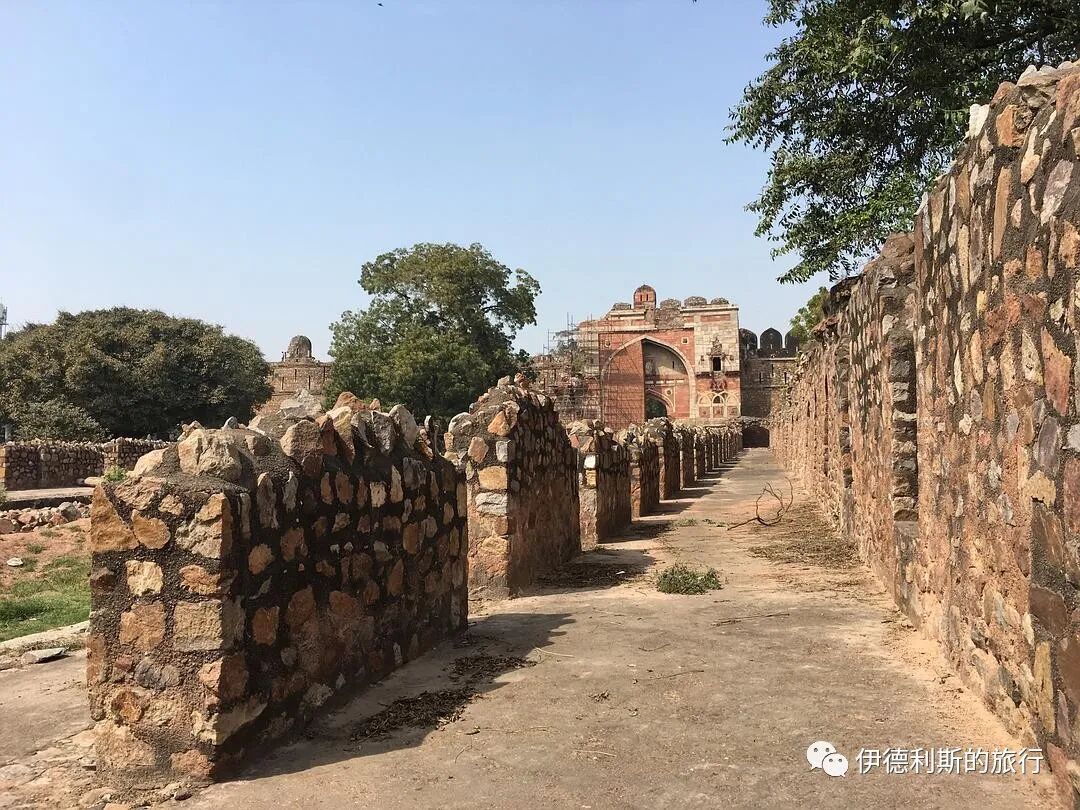
Salimgarh Fort is located on the north side of the Red Fort in Delhi and was built in 1546 by Salim Shah, the son of the Suri Dynasty ruler Sher Shah. People say before Humayun recaptured Delhi in 1555, he stayed here for three days.
Salimgarh Fort has many ghost stories, the most famous being that of Zebunnisa, the daughter of the Mughal Emperor Aurangzeb. Legend says she wore a black veil and sang poems she had written herself under the moonlight. Additionally, some people claim to hear the groans of Indian National Army soldiers who were tortured to death here at night.
In 2007, this site became a UNESCO World Heritage site.
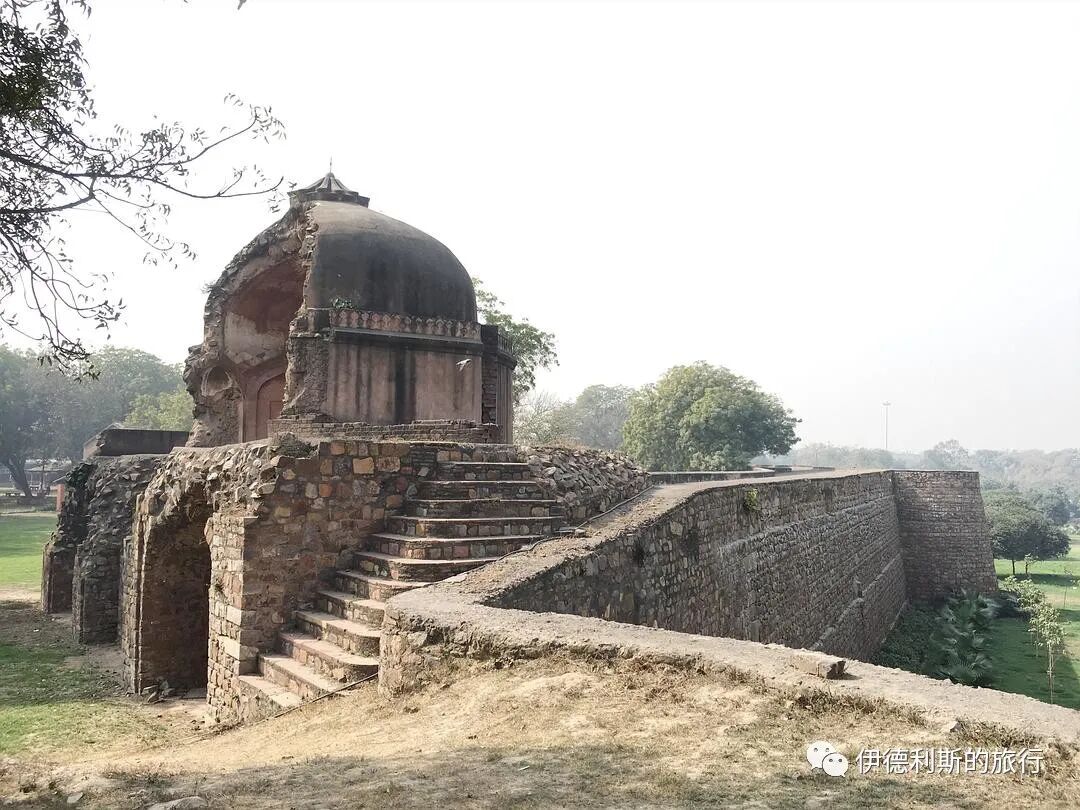
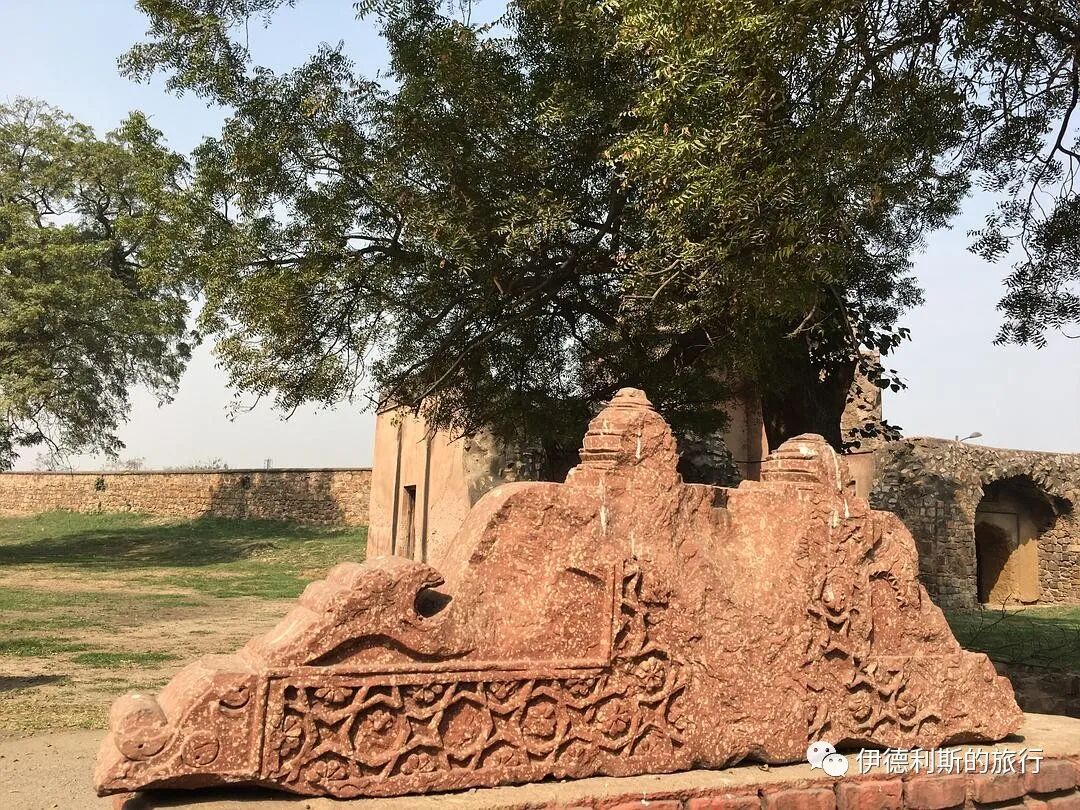
Isa Khan was a nobleman of the Sur Empire, coming from the Niazi tribe of the Pashtuns in Afghanistan. Isa Khan died in 1548. Before he passed away, he built his own tomb and mosque in the southern suburbs of Dinpanah, near the shrine of Nizamuddin. Later, this area also became the site of Humayun's tomb. As a prominent figure in the Sur Empire, Isa Khan was one of the last nobles of the dynasty to be buried in an Afghan-style tomb.
On August 5, 2011, the oldest sunken garden in India was discovered during the restoration of the tomb. This is considered the first Indian-style sunken garden attached to a tomb in India, a design that was later further developed at the tomb of Akbar and the Taj Mahal.
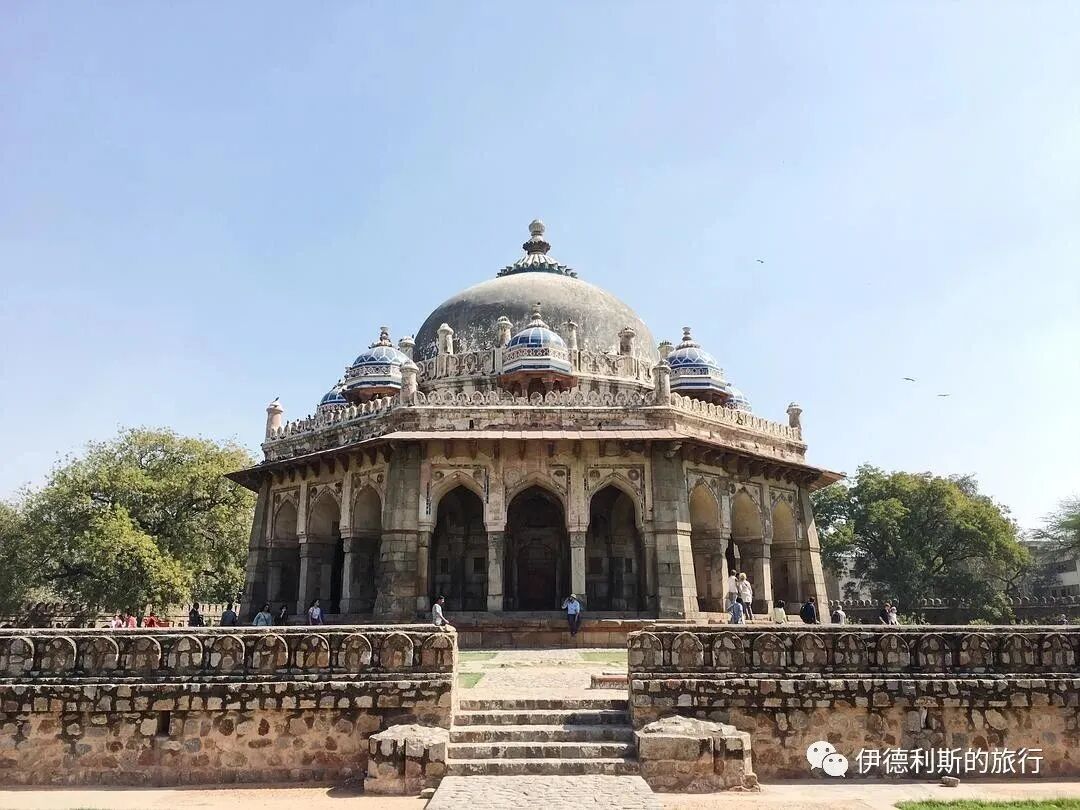
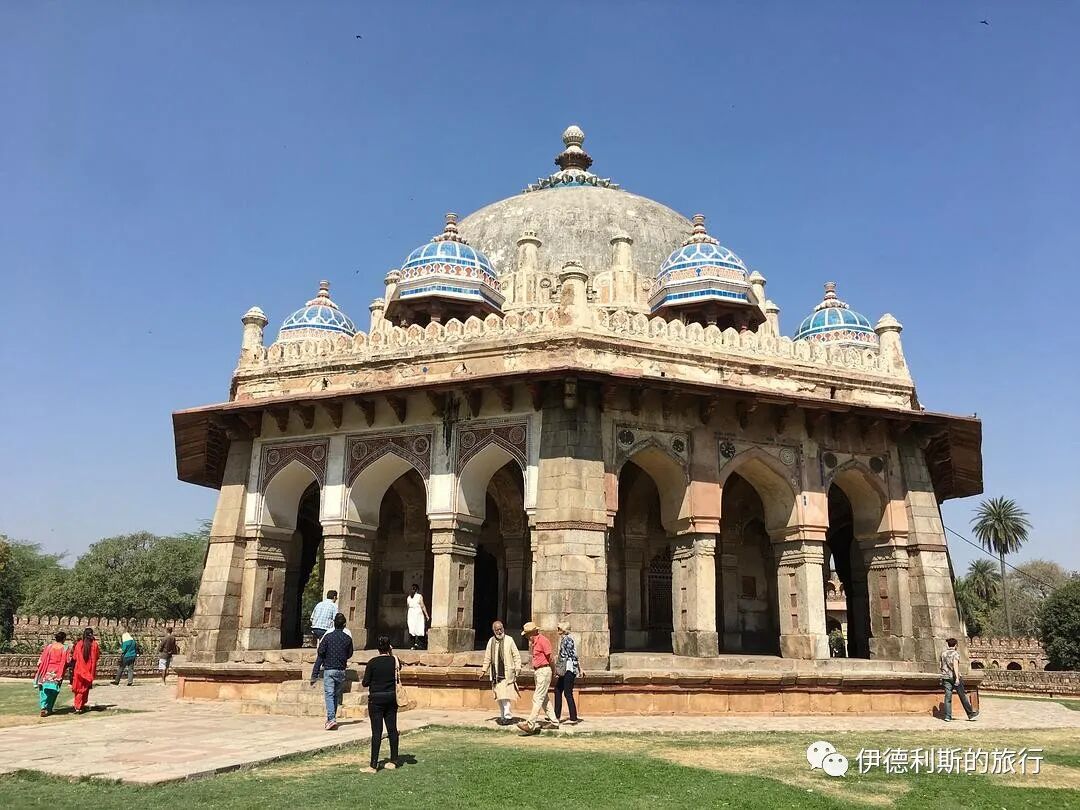
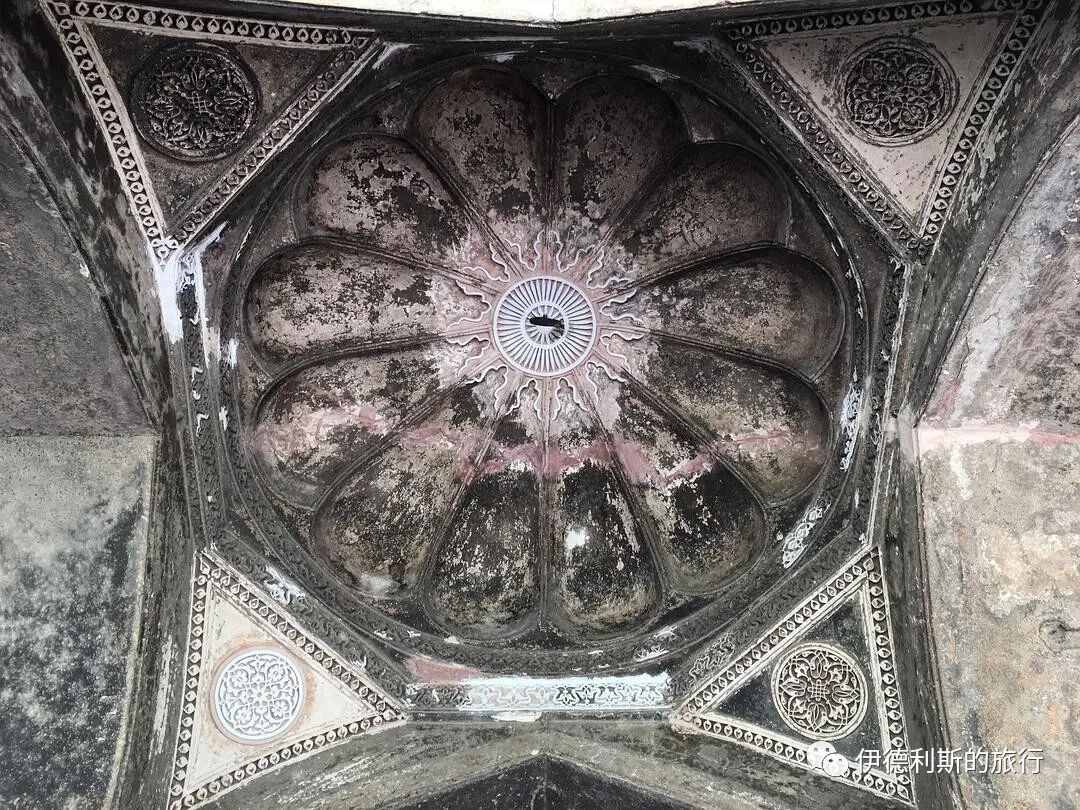
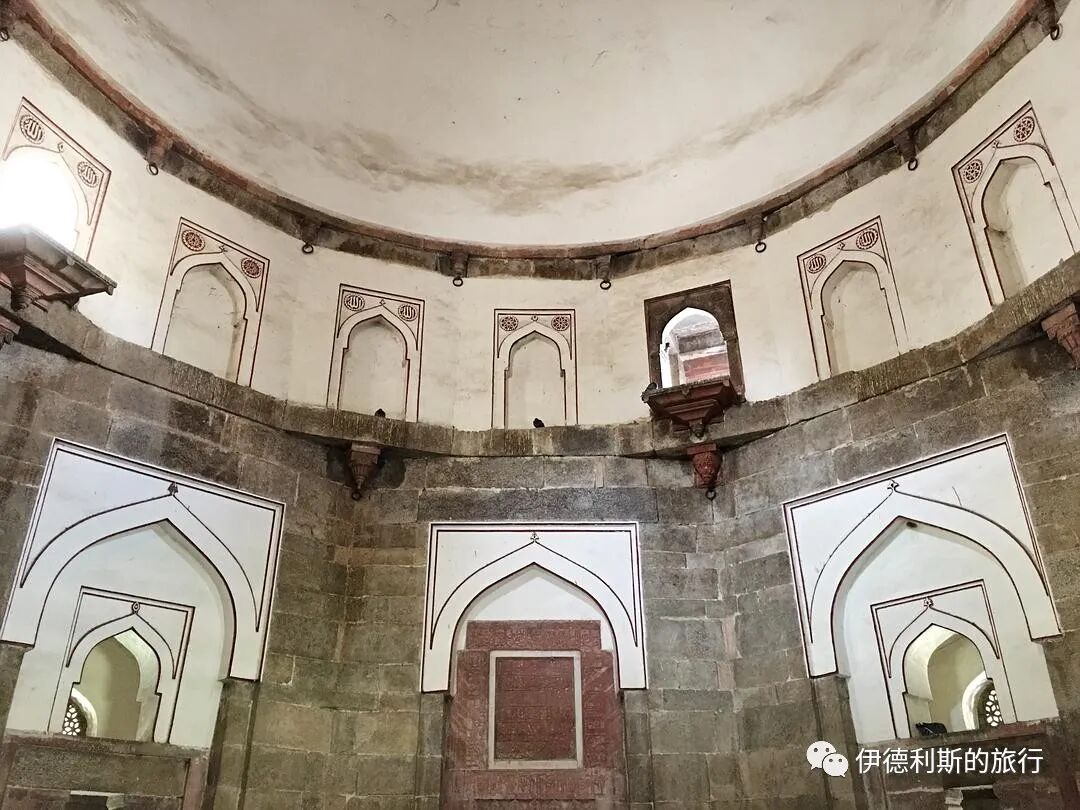
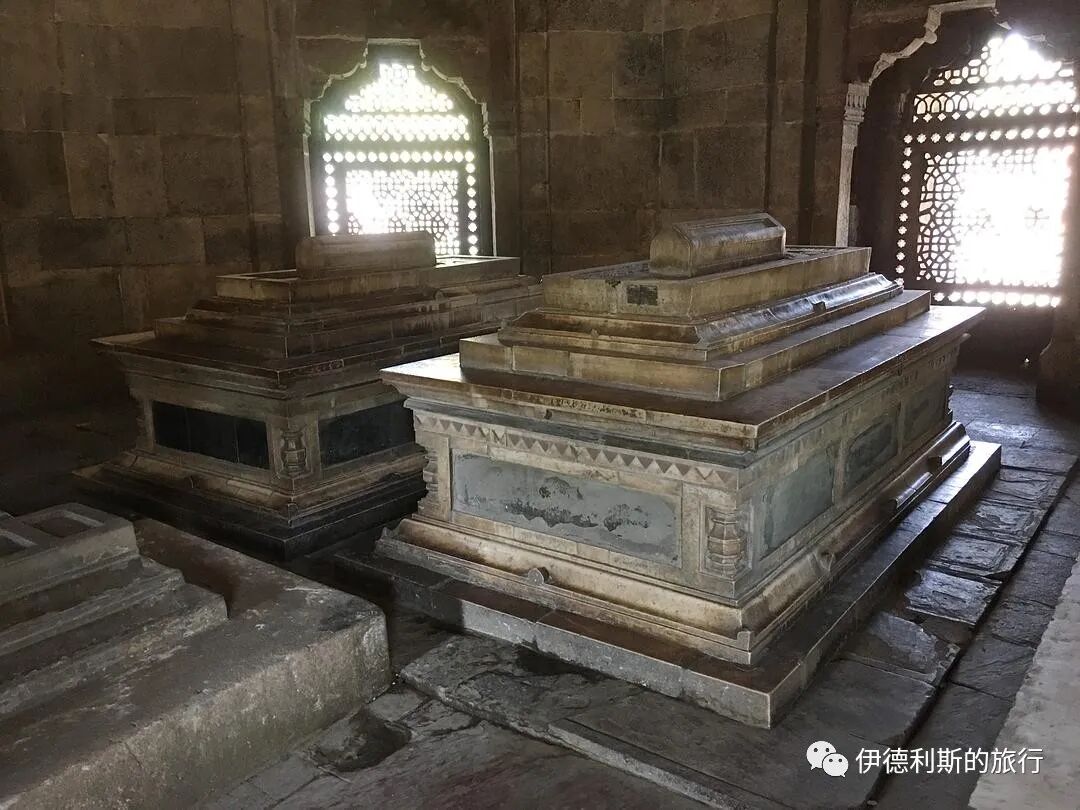
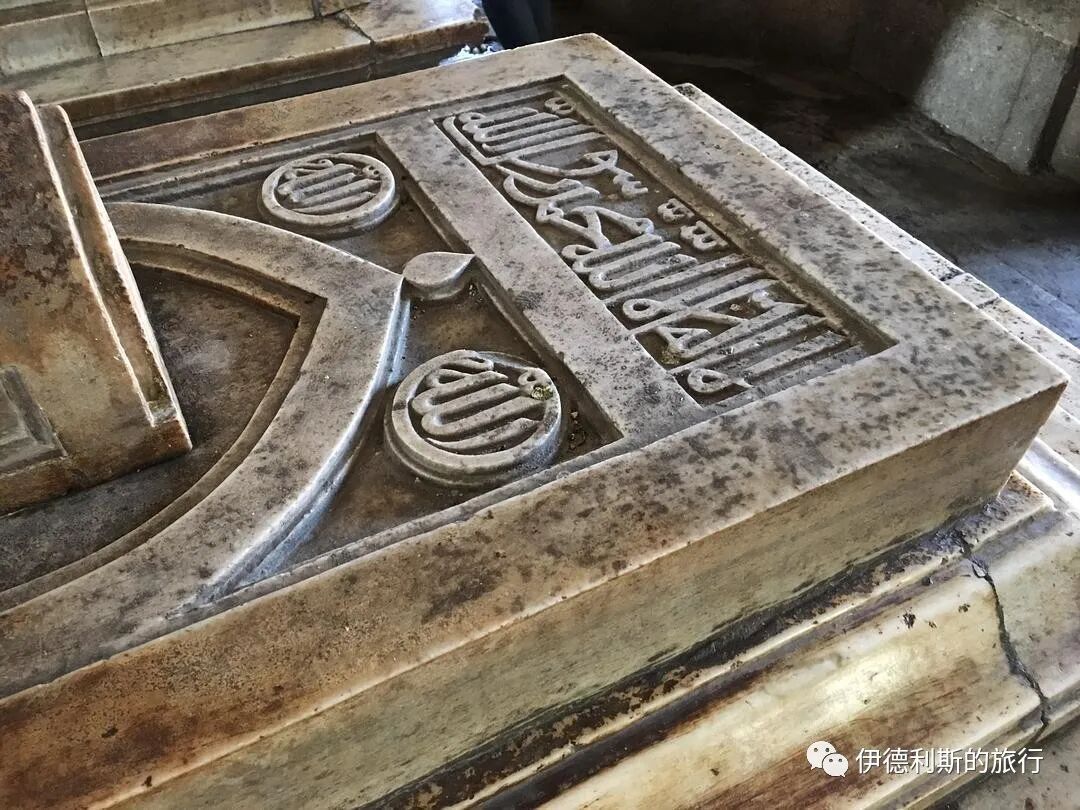
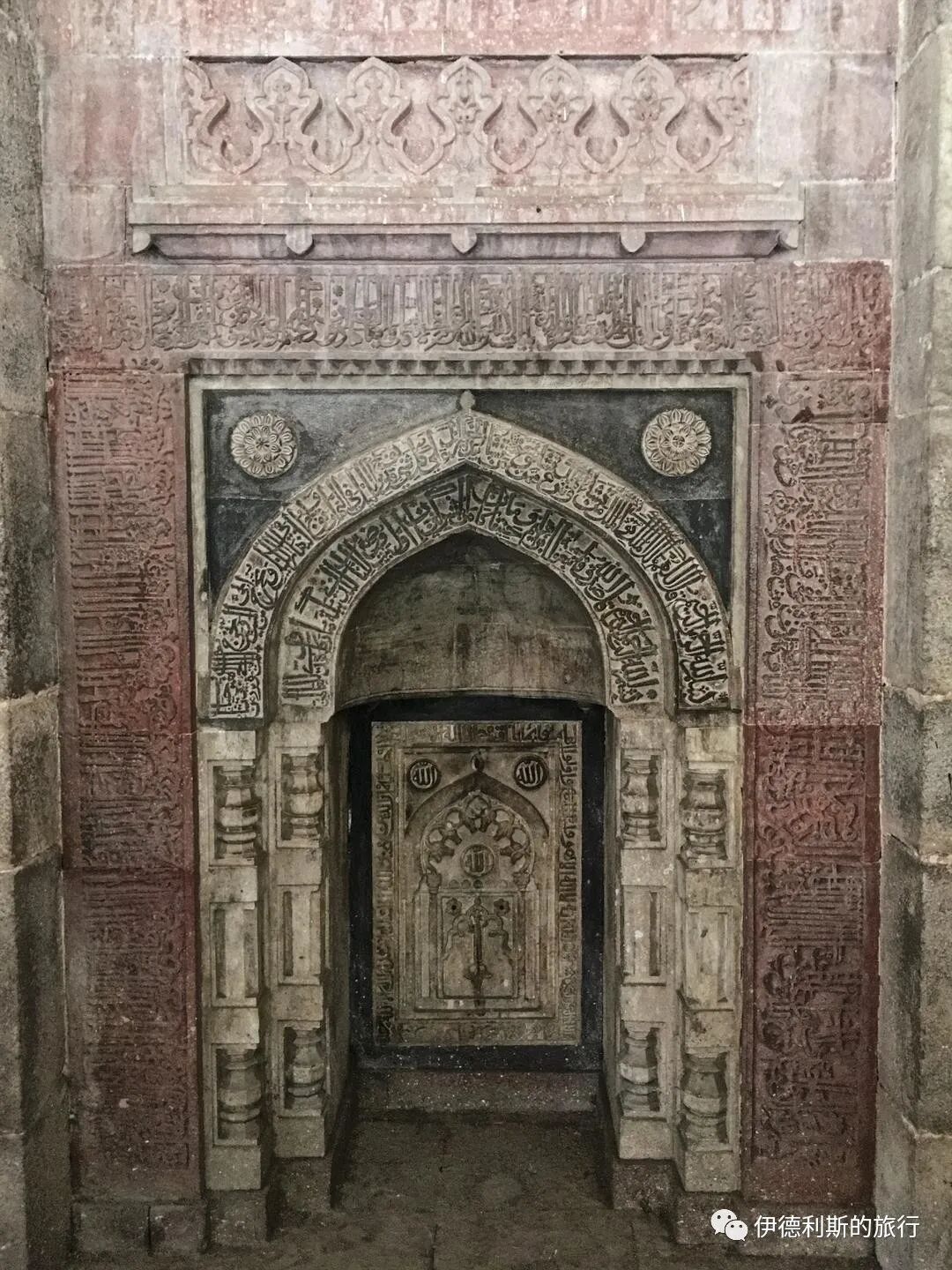
The Isa Khan Mosque was built during the same period as the tomb, and its biggest feature is the use of two pavilions instead of a dome. many details in the mosque were further developed in the later Humayun's Tomb.
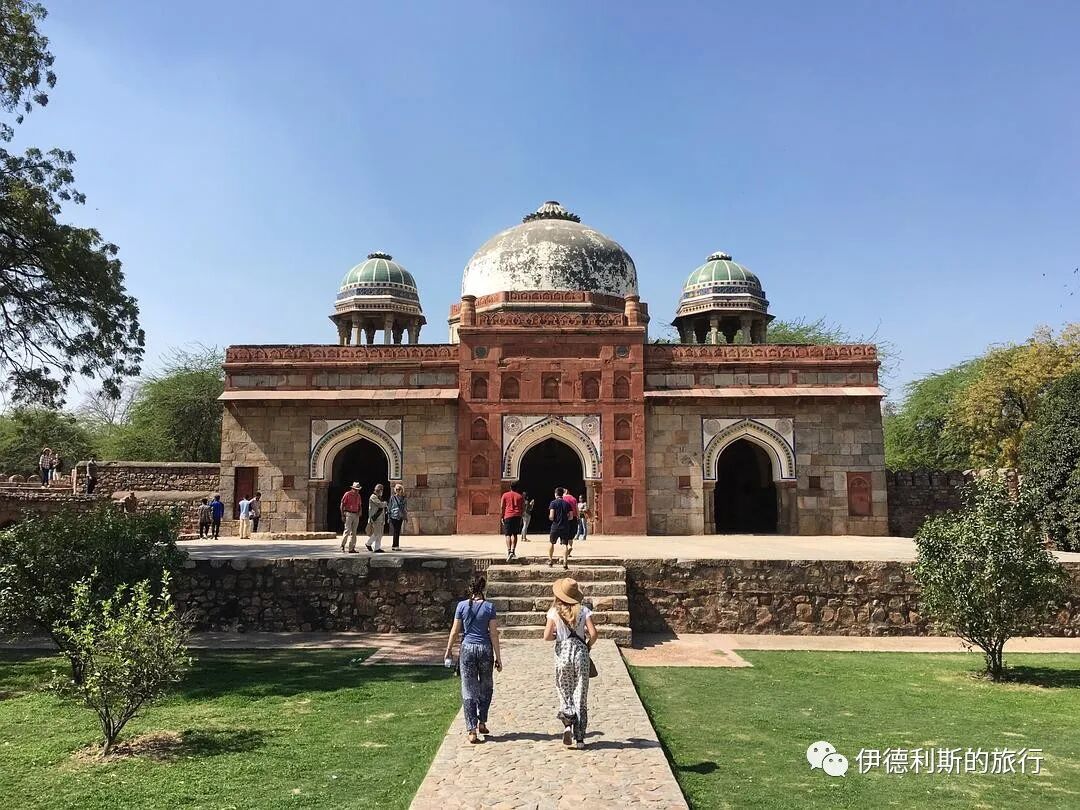
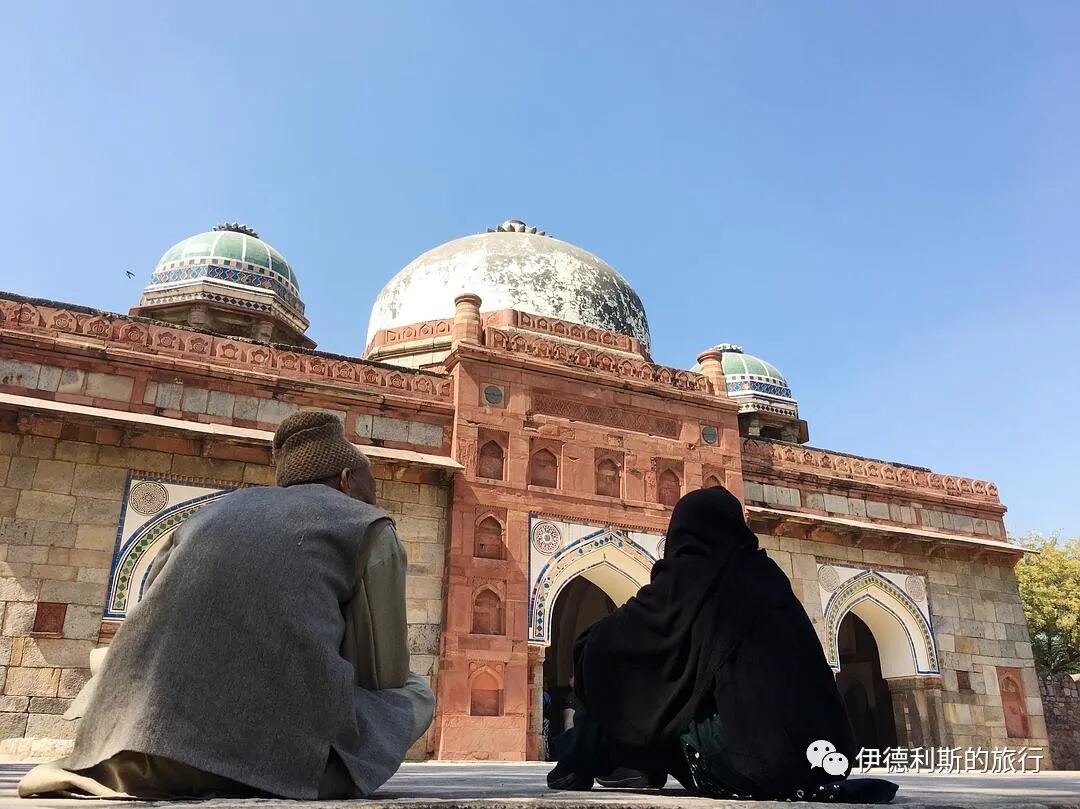
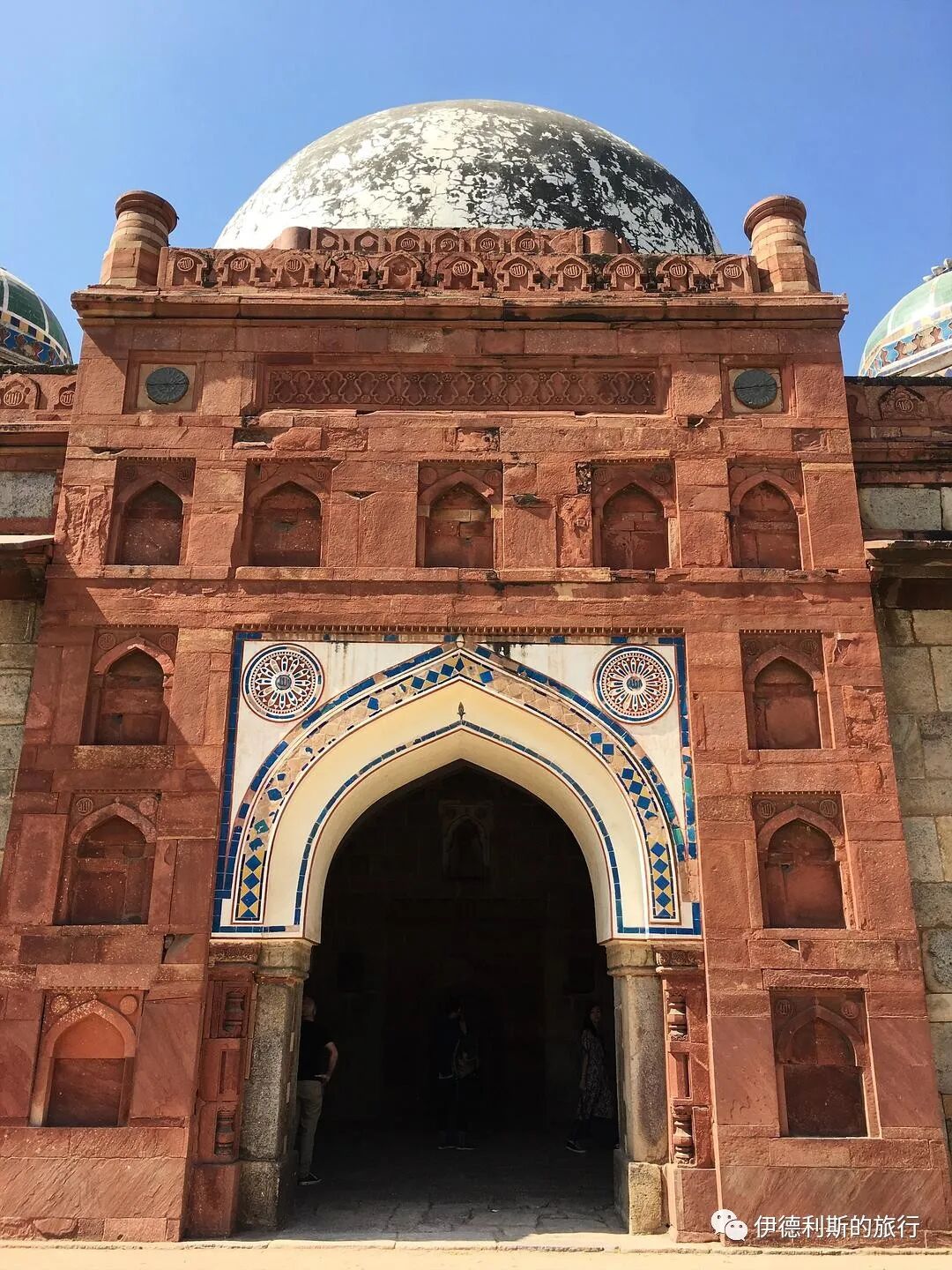
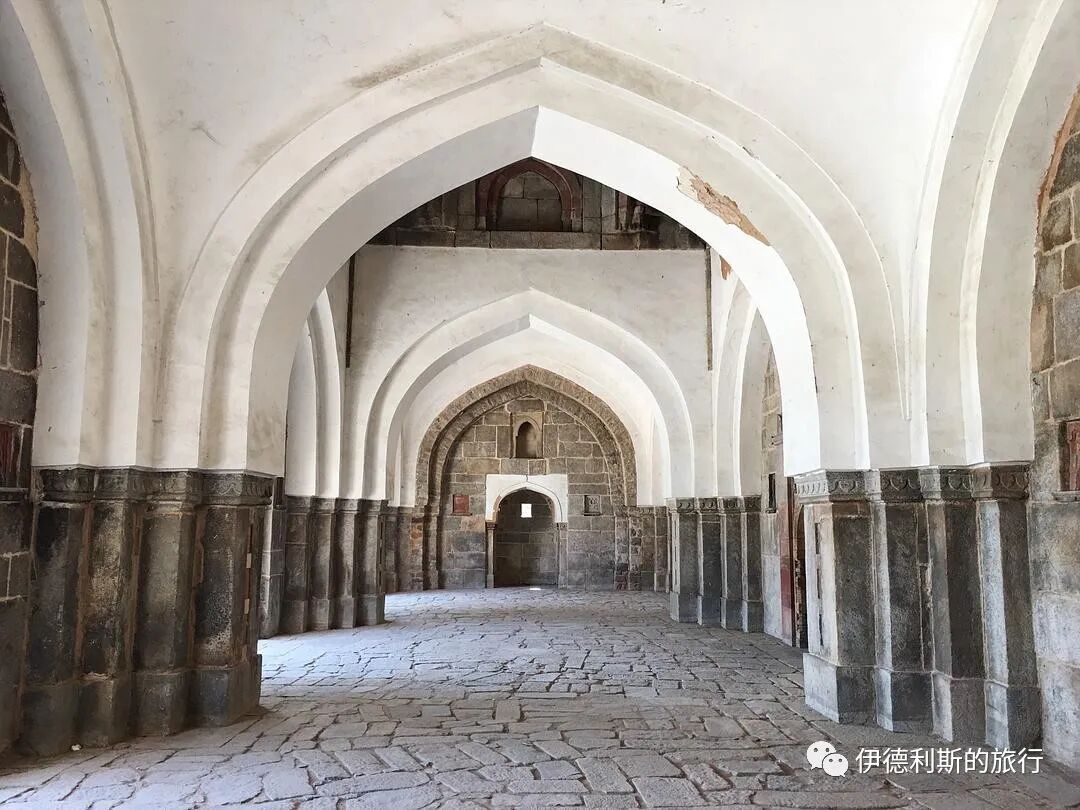
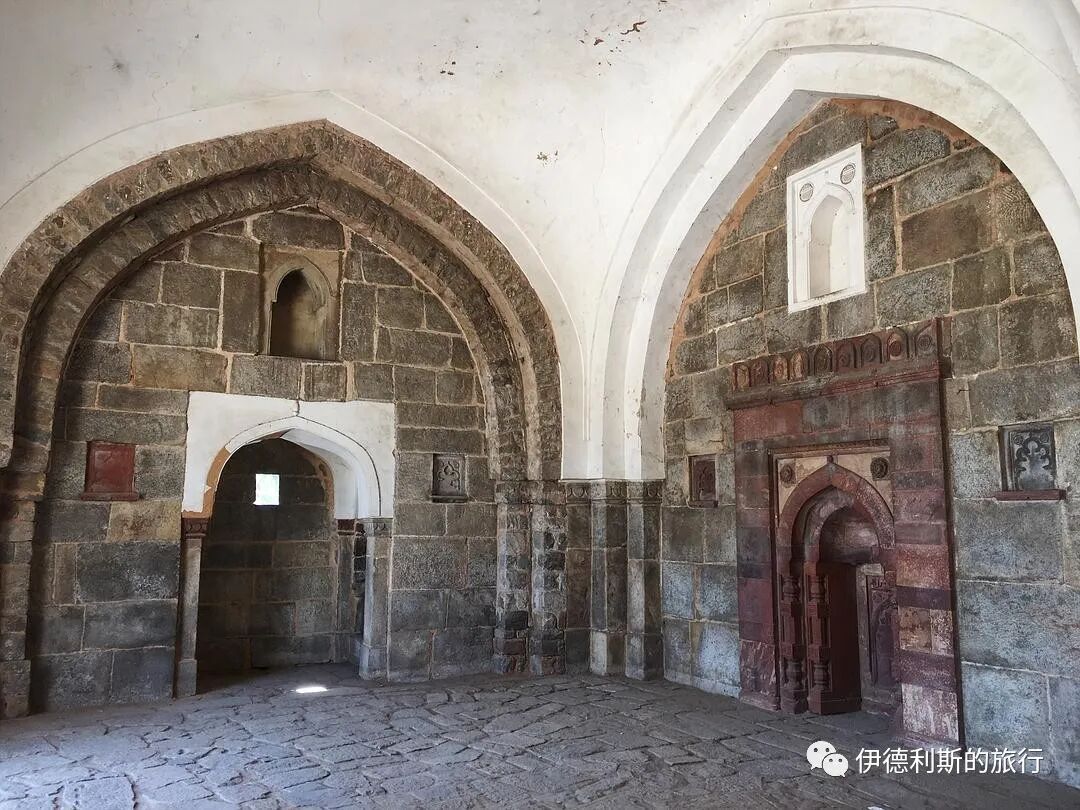
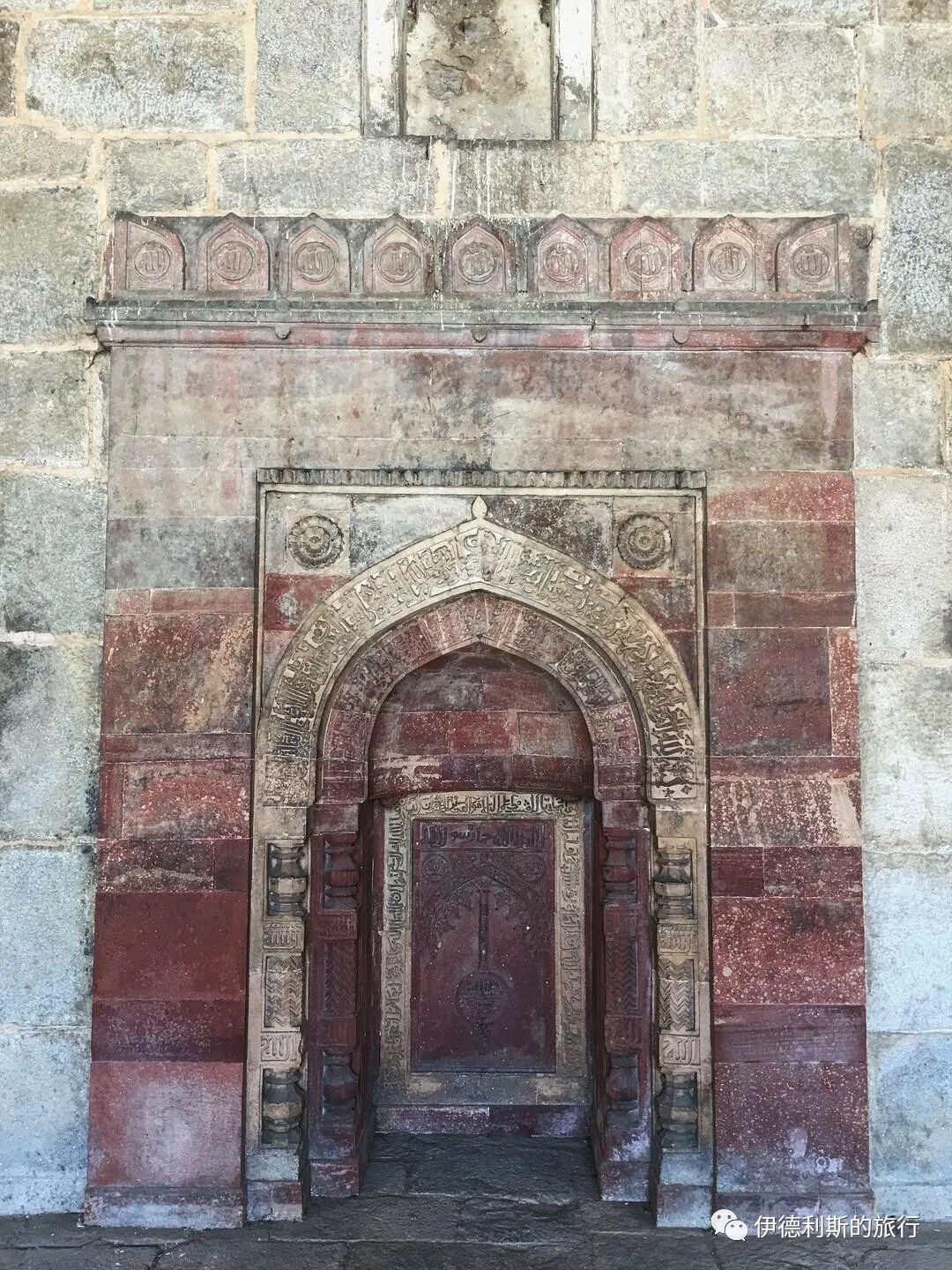
Legacy of the Delhi Sultanate
We head south from Delhi to Gujarat to look at the state that became independent from the Delhi Sultanate.
1. The Gujarat Sultanate in Western India (1407–1573)
The Gujarat Sultanate was located in the state of Gujarat in western India. Its founder was originally the governor (Nawab) of the Delhi Sultanate in Gujarat, and he became officially independent after Timur invaded the Delhi Sultanate.
In the first half of the 16th century, the Gujarat Sultanate was invaded twice by the Rajputs and the Mughal Empire, but they were eventually driven away. In 1550, the Gujarat Sultanate was ruled by Sultan Mahmud Shah III (reigned 1537–1554).
The Gujarat Sultanate is famous for its elegant Indo-Islamic architecture. They built many unique mosques in their capital, Ahmedabad, which had a great influence on the later development of Mughal architecture. In 2016, the Historic City of Ahmedabad was added to the UNESCO World Heritage List.
The location of Ahmedabad city.
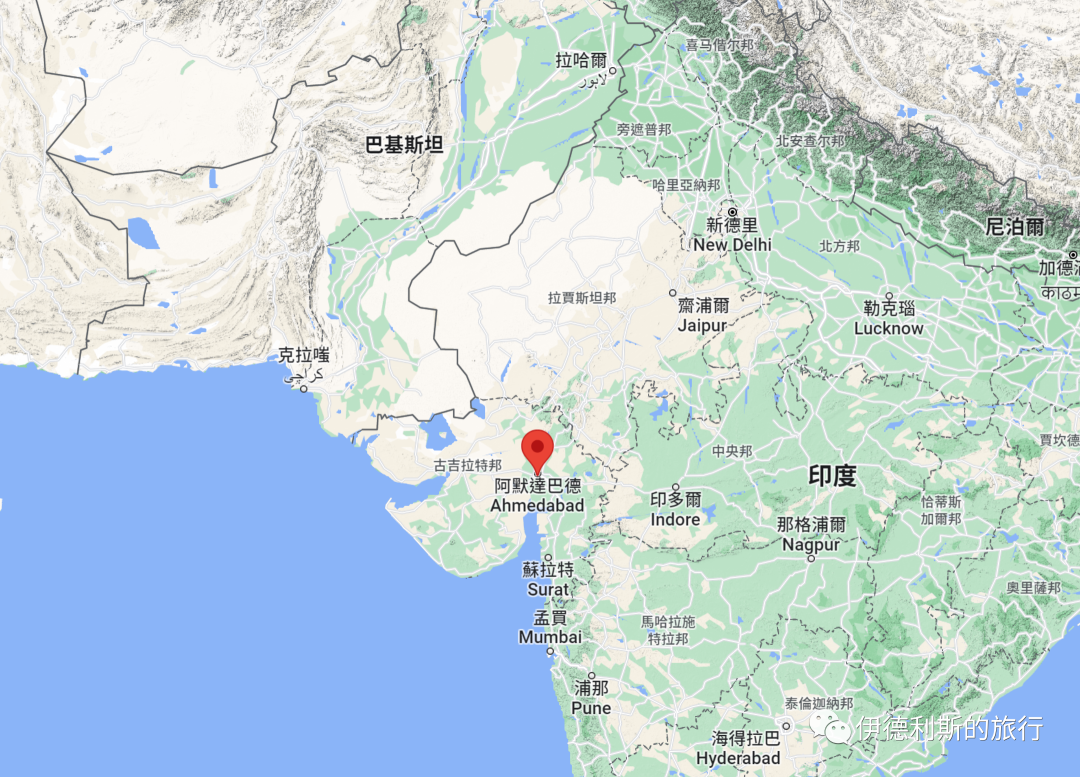
The Rani Sipri Mosque in Ahmedabad, built in 1514, has intricate carvings on its walls.
Photographed in 1874 by the Indian photography studio Bourne & Shepherd.
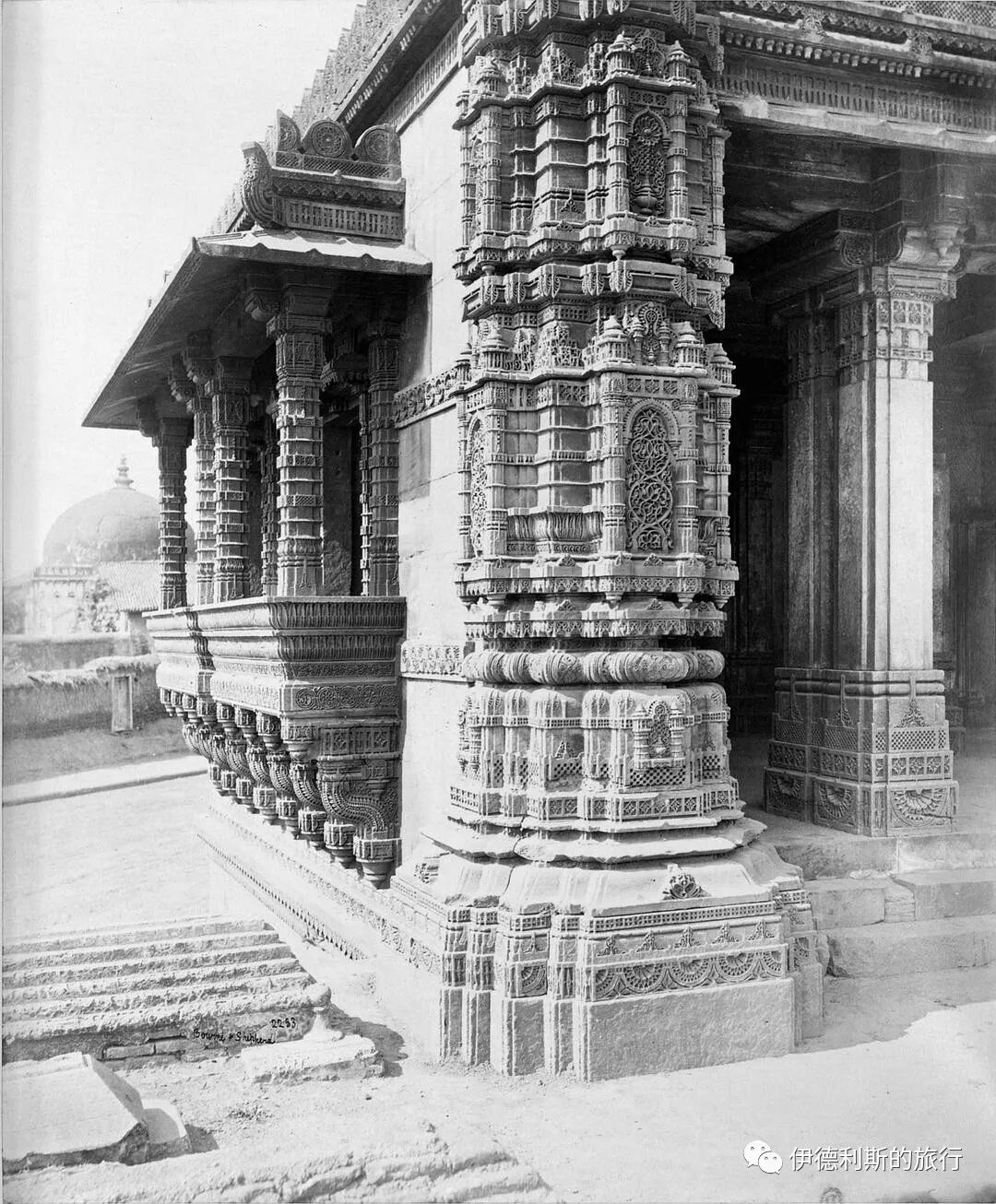
2. The Khandesh Sultanate in Central India (1382–1601)
The Khandesh Sultanate was located in the Khandesh region of central India. Its founder was originally a nobleman of the Delhi Sultanate who became a general due to his military achievements, and he became an independent sultanate in the late 14th century.
In the early 16th century, the Khandesh Sultanate was caught in wars with the neighboring Gujarat Sultanate and Malwa Sultanate.
The capital of the Khandesh Sultanate was Burhanpur, located in the Indian state of Madhya Pradesh.
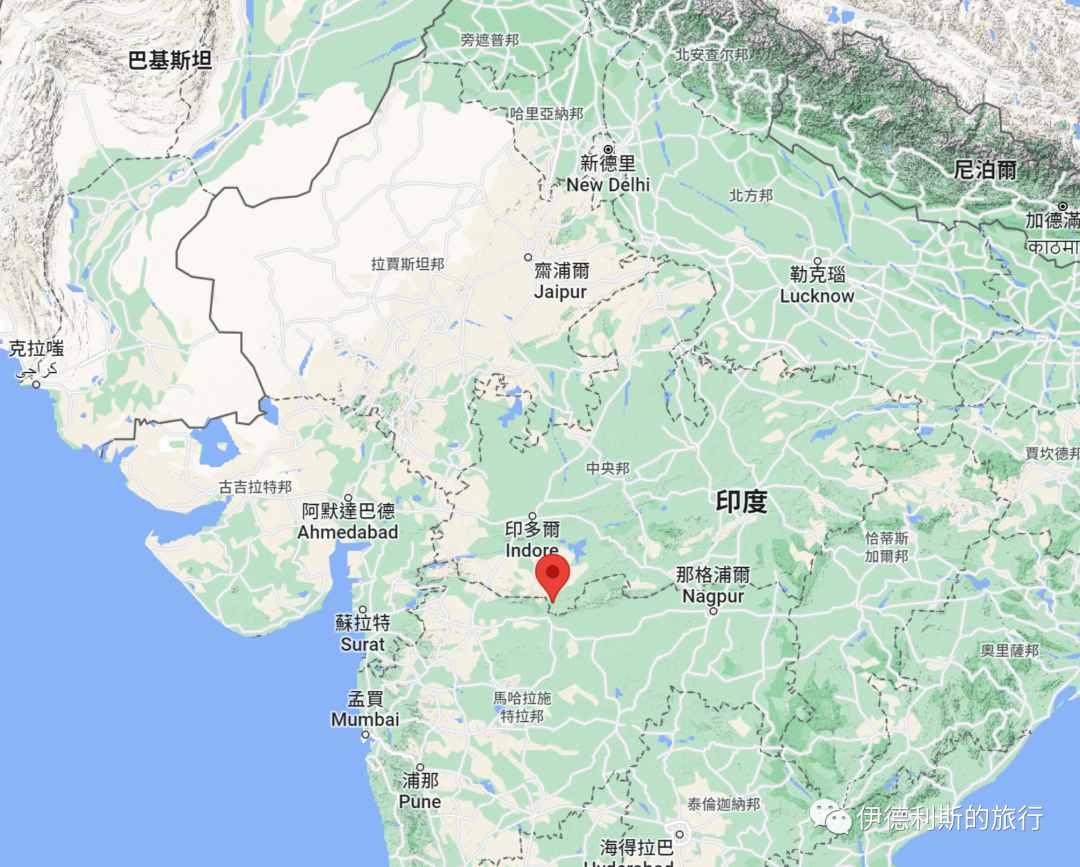
Five Deccan Sultanates
Let us continue south into the Deccan Plateau.
In the 14th and 15th centuries, the most powerful state on the Deccan Plateau was the Bahmani Sultanate, which was formed after the Delhi Sultanate's governor in the Deccan region became independent. At the end of the 15th century, the Bahmani Sultanate declined and split into five sultanates, collectively known to later generations as the five Deccan Sultanates.
1. The Berar Sultanate on the Deccan Plateau (1490–1572)
The Berar Sultanate was the first of the five Deccan Sultanates to become independent after the collapse of the Bahmani Sultanate. Its founder was originally a Hindu who converted to Islam after being captured by the Bahmani army.
In 1550, the sultanate was ruled by Darya Imad Shah, who tried to use diplomacy for peaceful rule, which kept the sultanate relatively stable during this period. At the same time, he also built the city of Daryapur and named it after himself.
The location of Daryapur city.
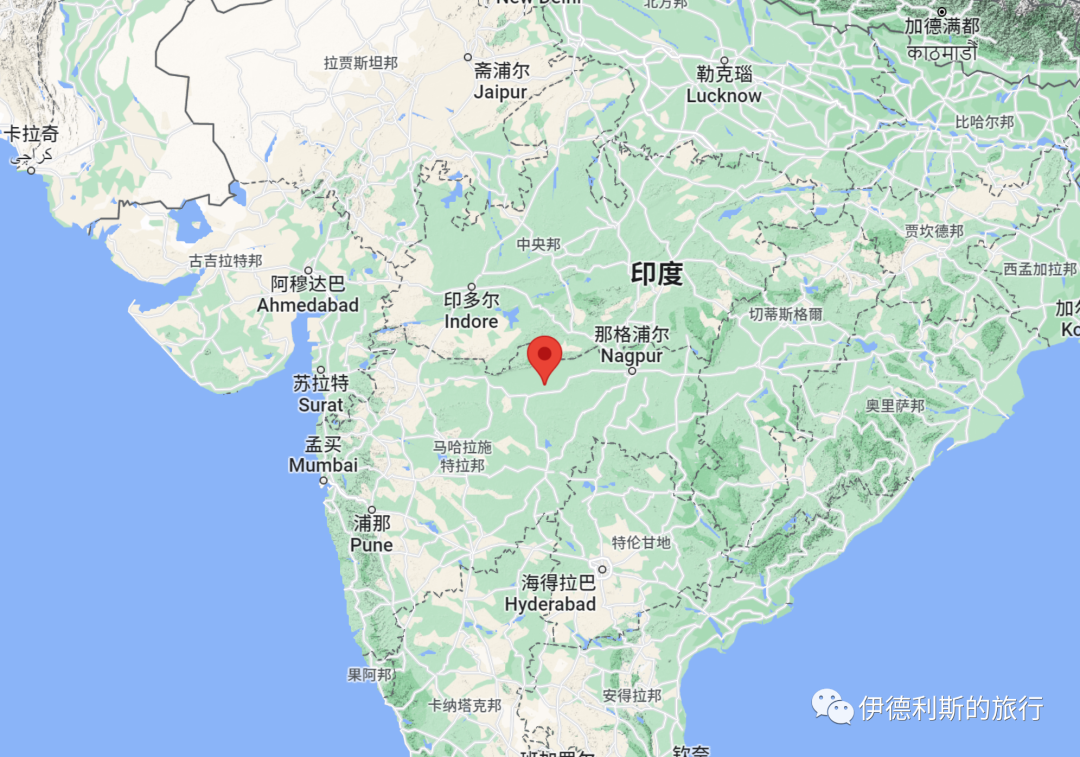
2. The Ahmadnagar Sultanate on the Deccan Plateau (1490–1636)
The Ahmadnagar Sultanate was one of the five Deccan sultanates formed after the Bahmani Sultanate broke apart. It sat southeast of the Gujarat Sultanate, with Ahmadnagar as its capital. Its founder was originally a Brahmin from the Vijayanagara Empire in South India who later converted to Islam.
In 1550, the sultanate was ruled by Burhan Nizam Shah I. He was the first to switch from Sunni to Shia Islam, and the nobles and commoners soon followed his lead. Under his rule, there was religious tolerance, art flourished, and trade went smoothly, though small-scale conflicts with the Mughals and other sultanates continued.
Ahmadnagar city is in the state of Maharashtra in western India. It is a small town now, but it still keeps dozens of architectural ruins from the sultanate era.
The location of Ahmadnagar city.
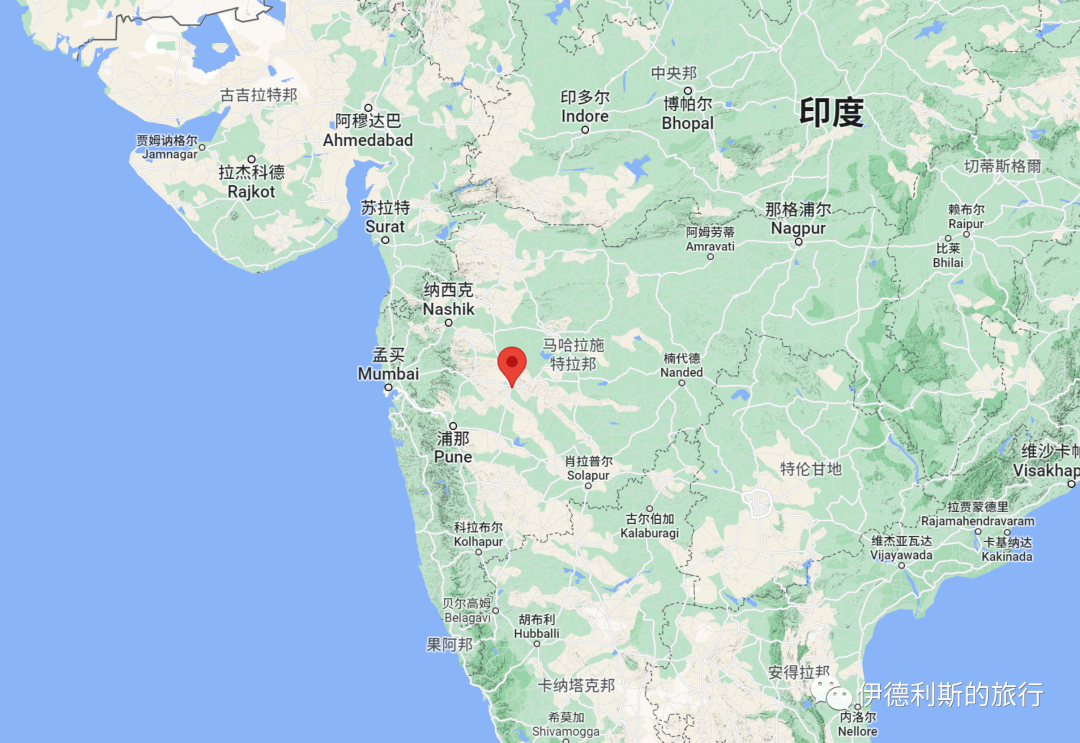
3. The Golconda Sultanate on the Deccan Plateau (1518–1687)
We head southeast to Hyderabad, the most famous city on the Deccan Plateau.
The founder of the Qutb Shahi dynasty, Quli Qutb Mulk (reigned 1512–1543), was a Turkmen from Hamadan, Iran. He was a descendant of Qara Yusuf, the ruler of the Kara Koyunlu (Black Sheep) dynasty. In the early 16th century, Quli traveled from Iran to India with some relatives and friends. They stayed in Delhi at first, then moved south to the Deccan to serve the Bahmani Sultanate. After the Bahmani Sultanate fell in the 15th century, Quli conquered Golconda Fort and started the Qutb Shahi dynasty. Over the next 60 years, three sultans expanded Golconda Fort into a massive complex, which is why the Qutb Shahi dynasty is also called the Golconda Sultanate.
Golconda had the world's only diamond mines at the time and was a major diamond trading hub. In the West, the name Golconda became a synonym for immense wealth. Golconda Fort is actually made of four castles. Its outer wall is 10 kilometers long and features 87 semicircular bastions, 8 gates, and 4 drawbridges. The inner city sits on a 120-meter-high granite hill. Currently, only the east gate, Bala Hissar Darwaza, is open for visitors. Bala Hissar Darwaza is a huge archway with carvings of lions and peacocks, which are common in Hindu architecture. The gate also has iron spikes designed to stop Mughal war elephants.
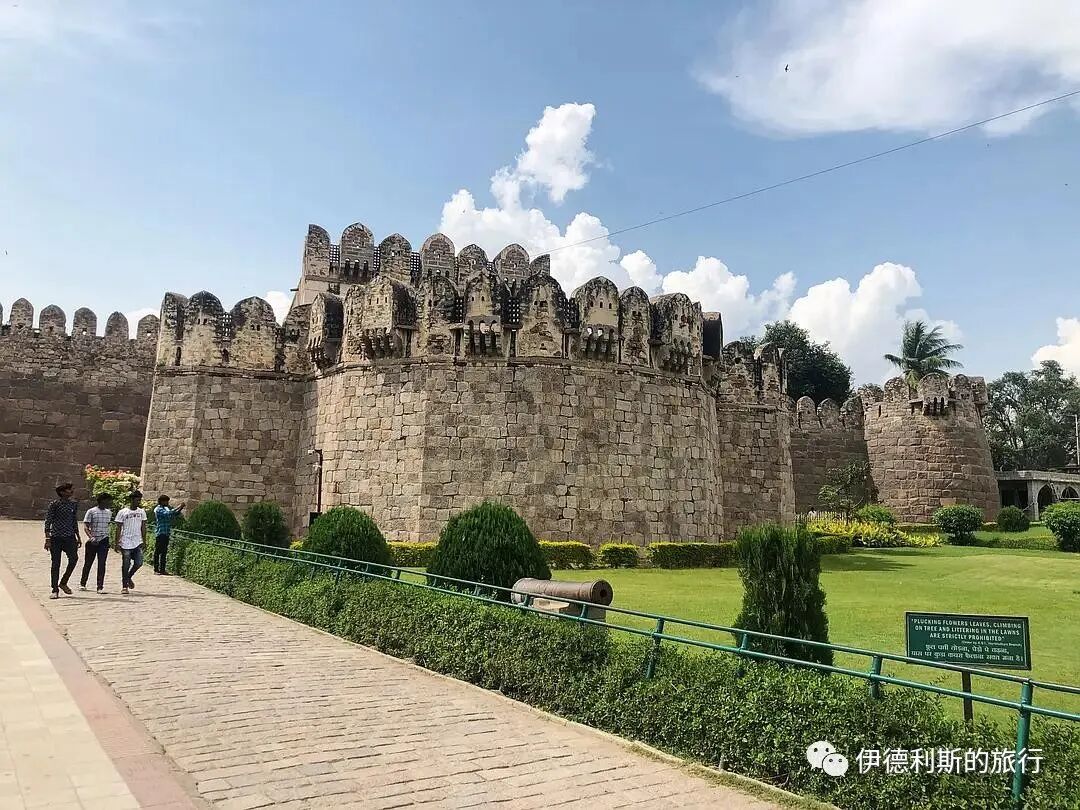
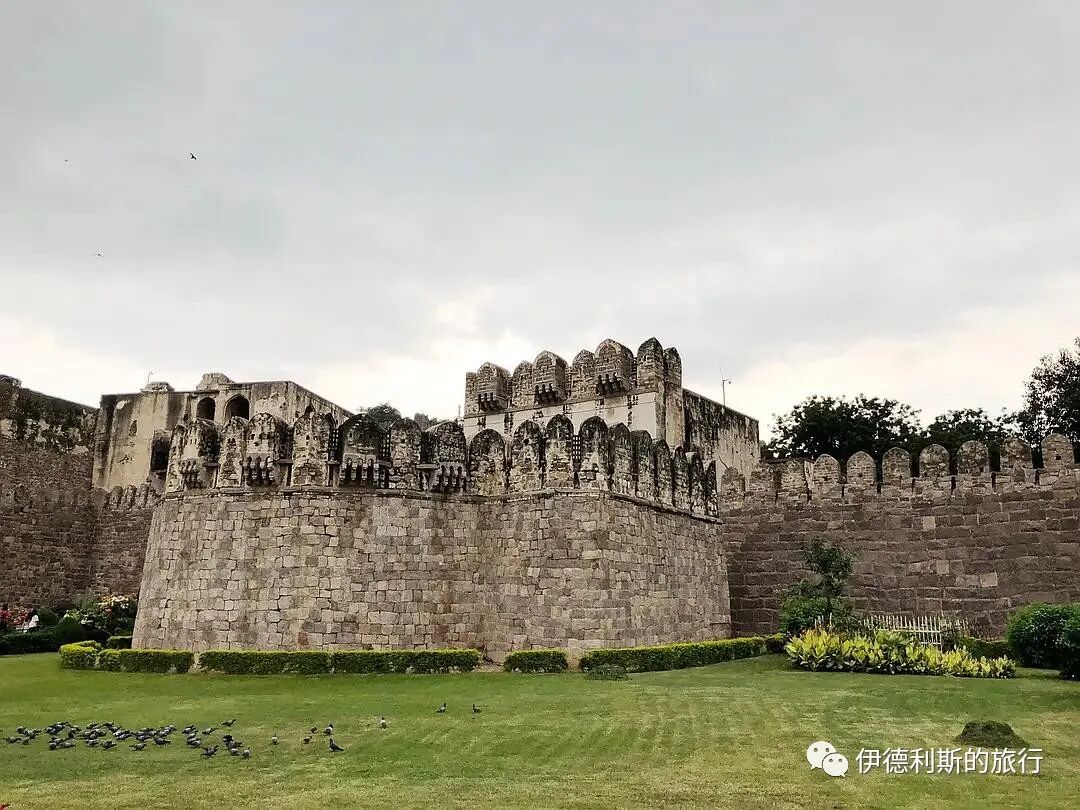
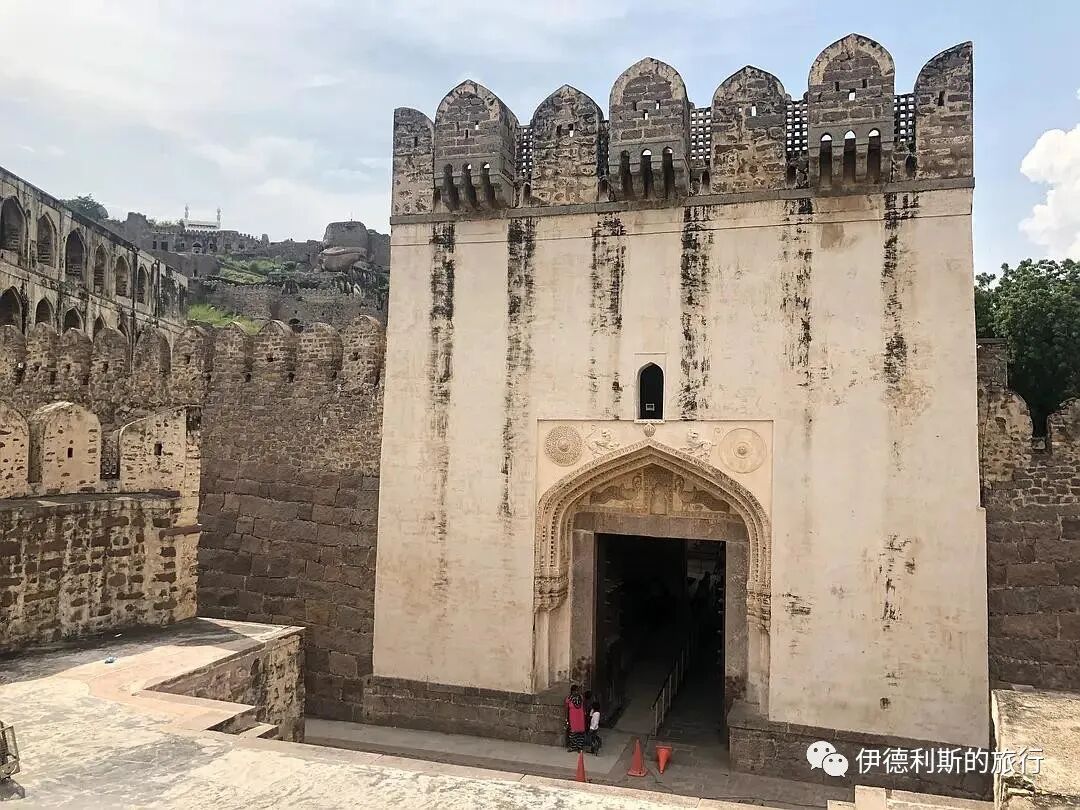
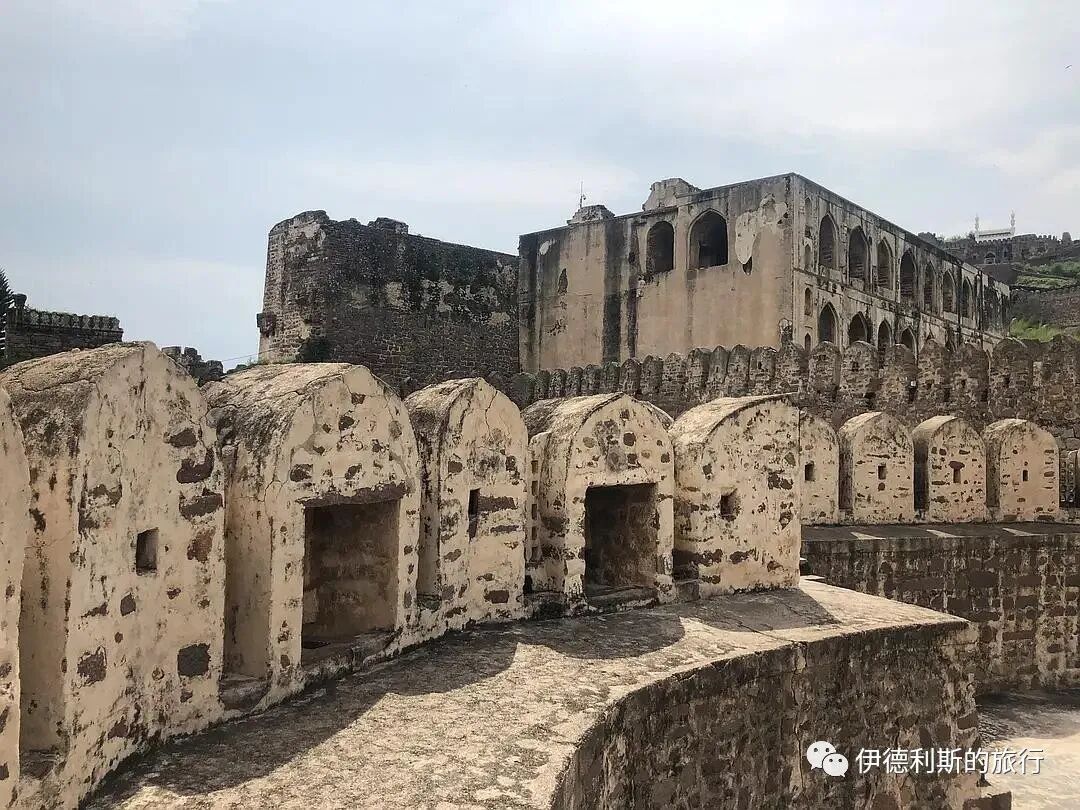
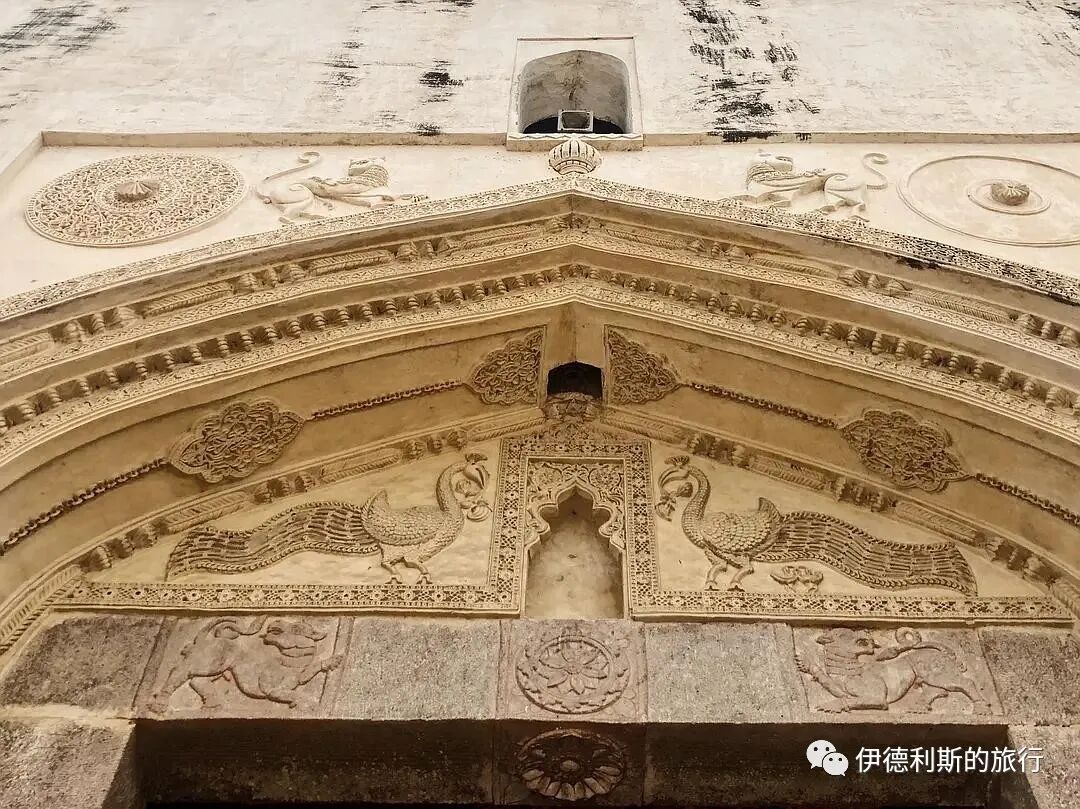
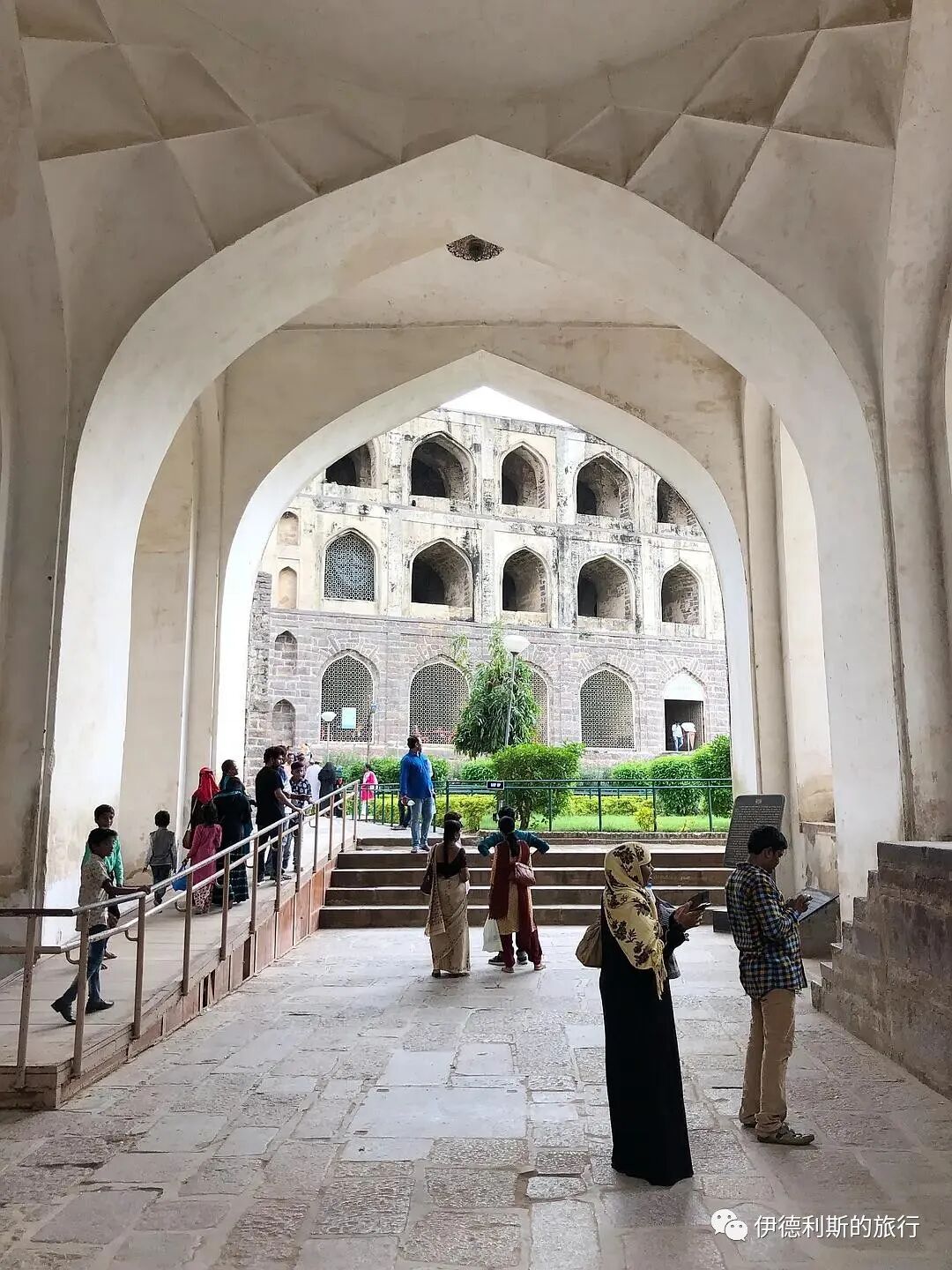
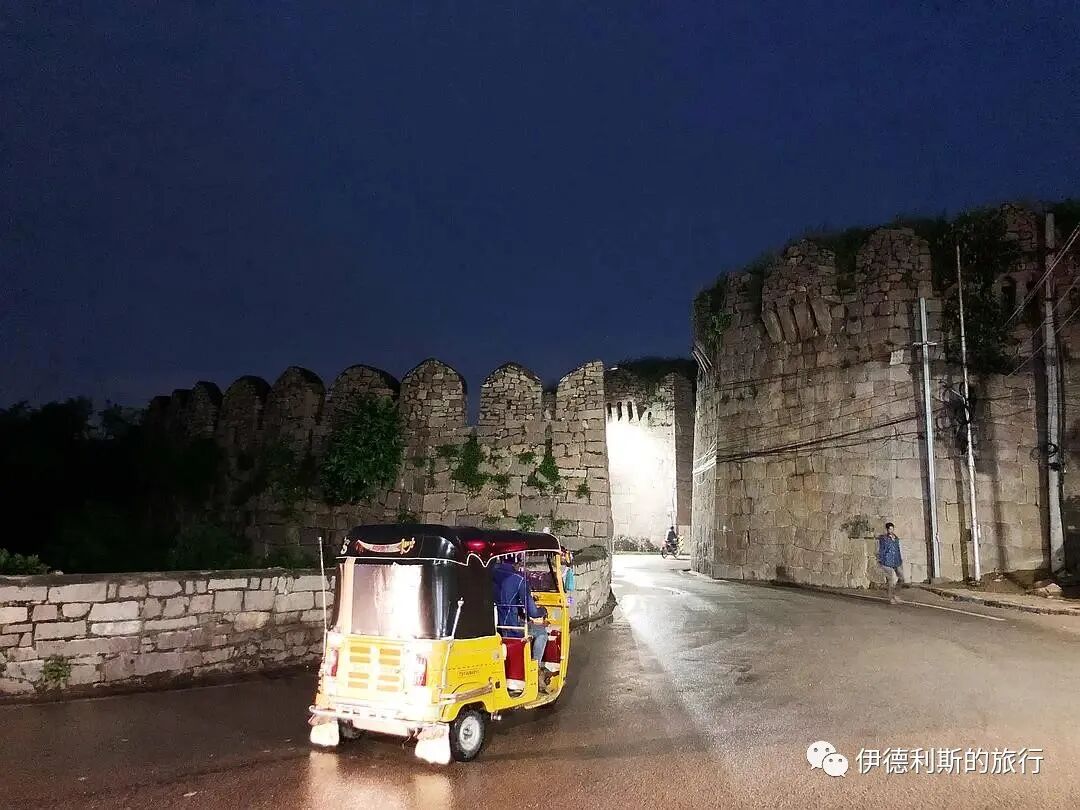
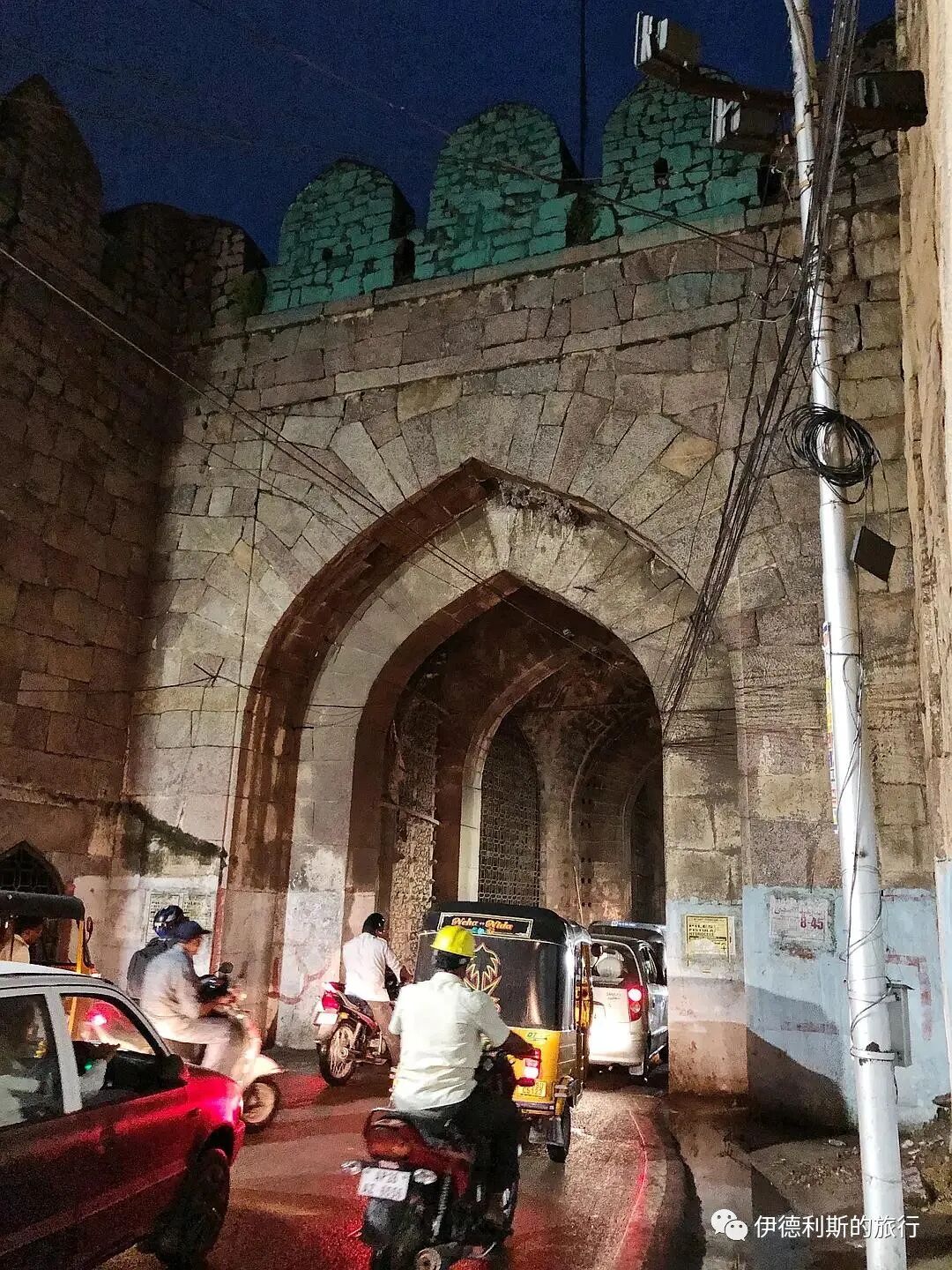
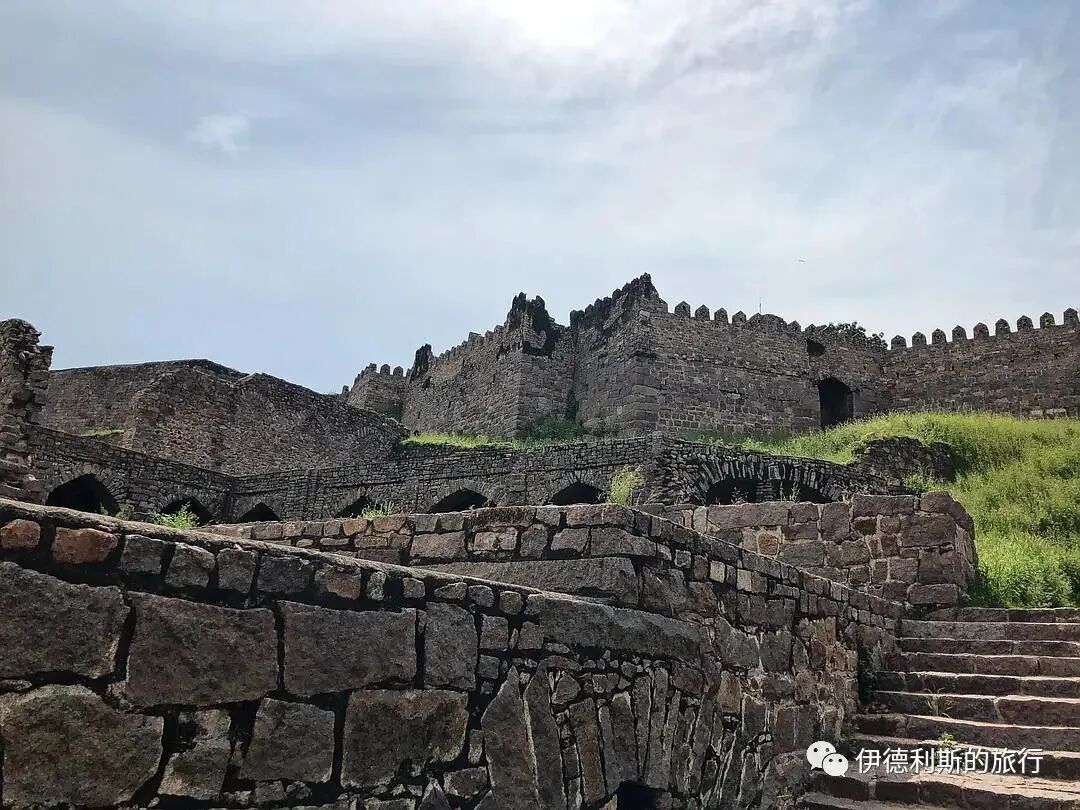
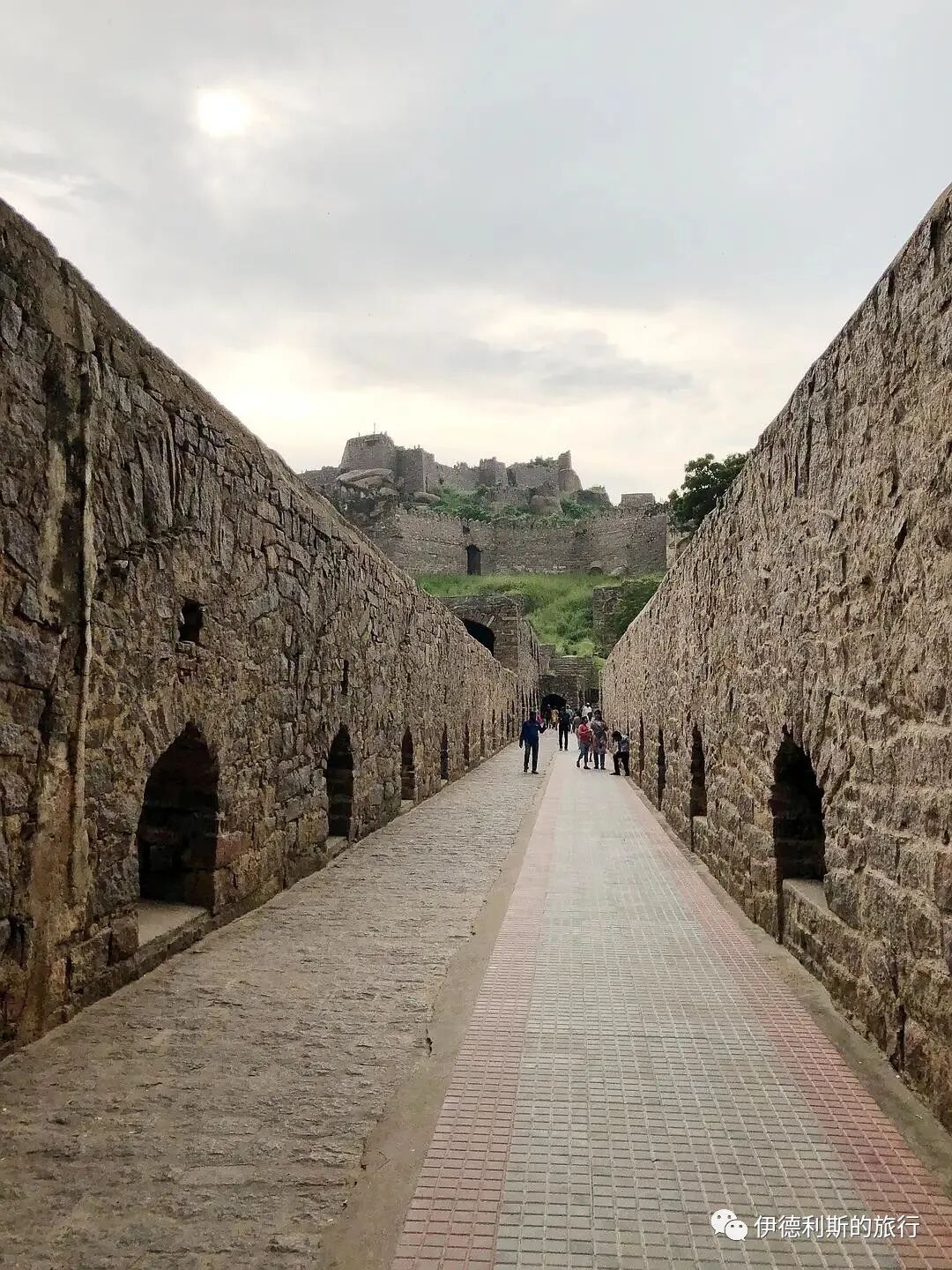
The tall, three-story building south of the gate is called the Aslah Khana armory. It held guns and ammunition during the Mughal era. Historians have found that during the Qutb Shahi dynasty, this was actually an office for various officials.
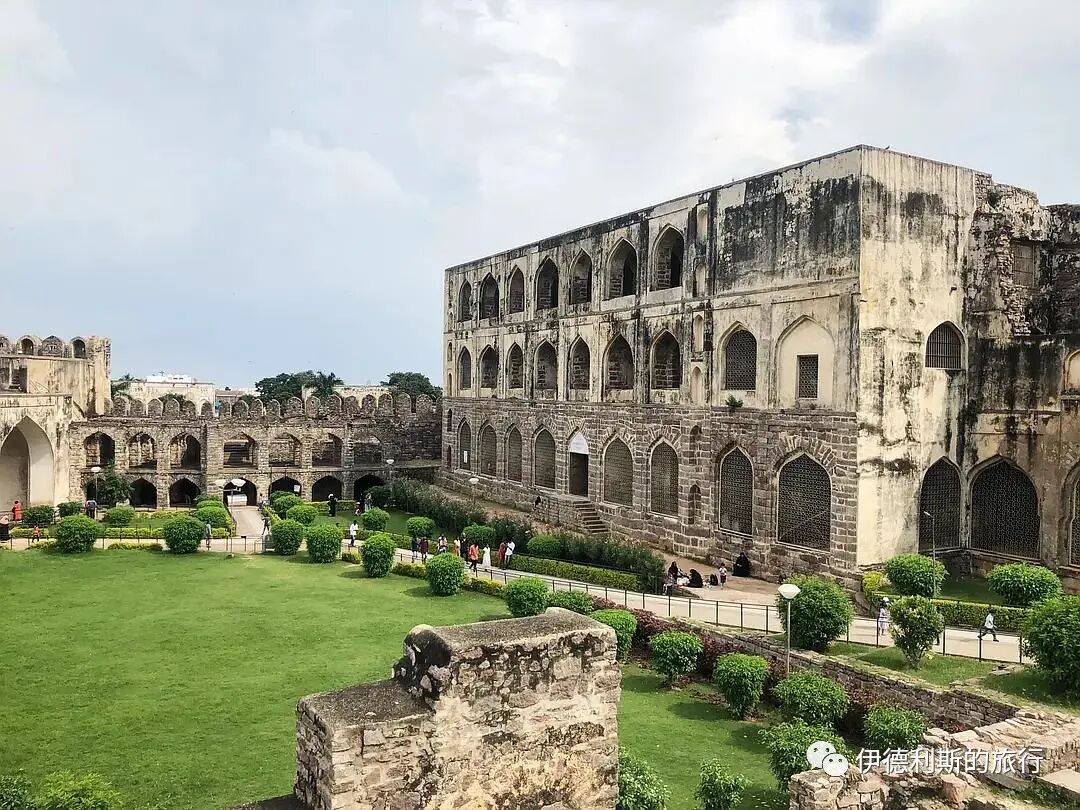
Nakkar Khana is a palace complex where archaeologists have now dug up a series of water channels.
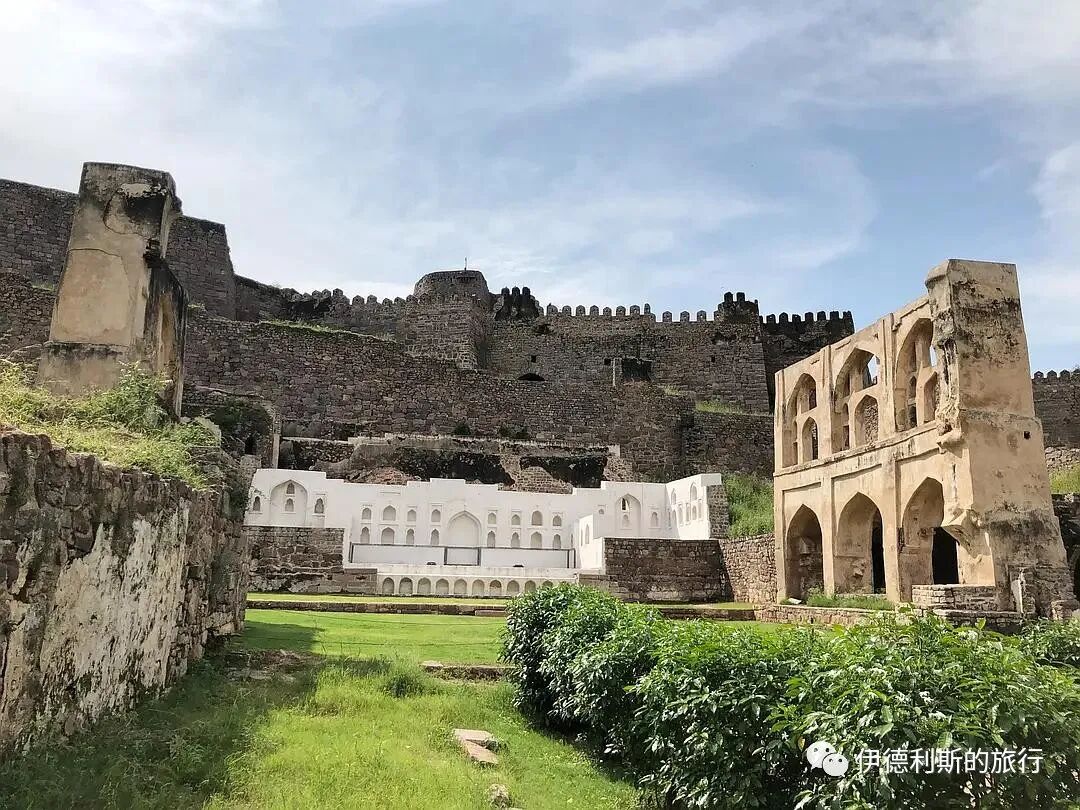
Taramati mosque, built in 1518, sits next to the palace area and was used by the sultan's court and nobles. This mosque has the classic Muslim architectural style of the Deccan region, with small lotus-topped onion domes on its balconies.
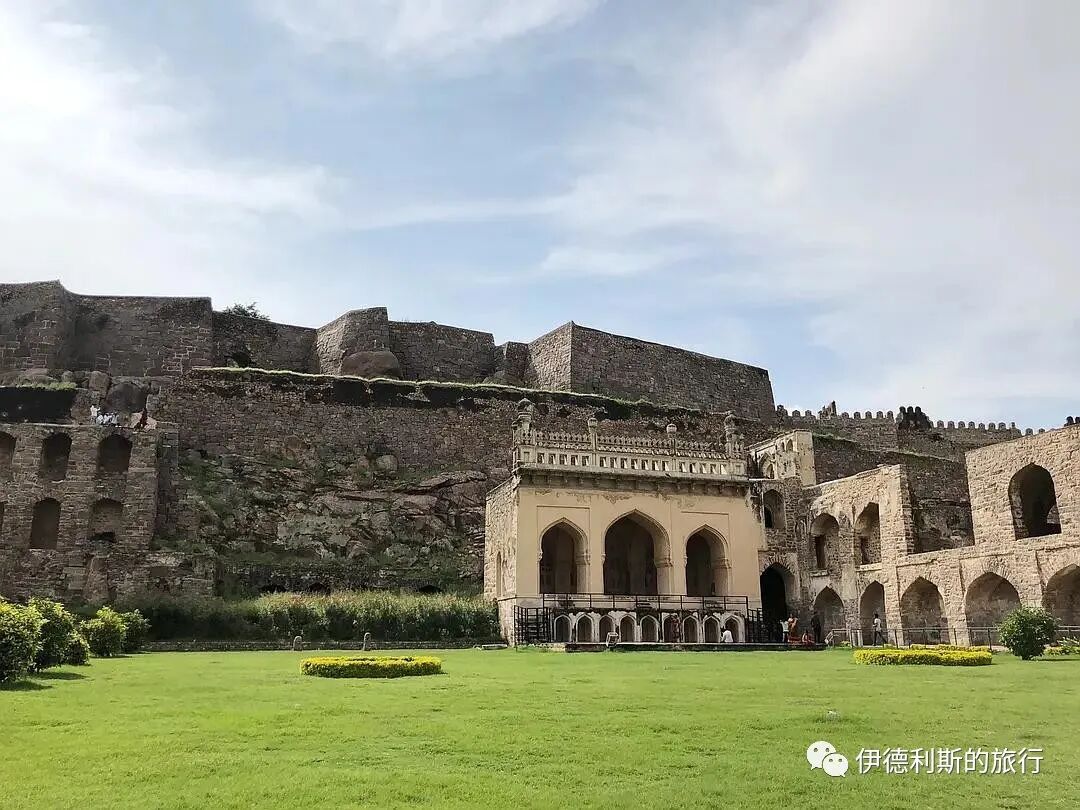
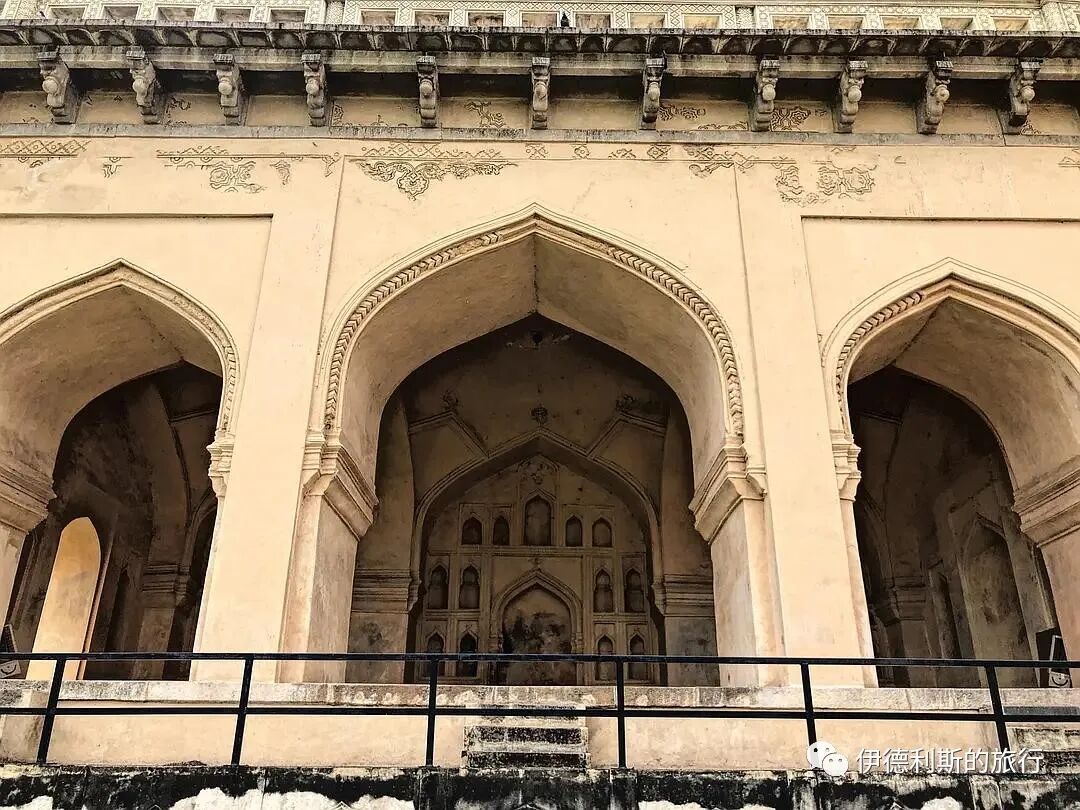
Walking further in, you reach the Bhagamati Palace.
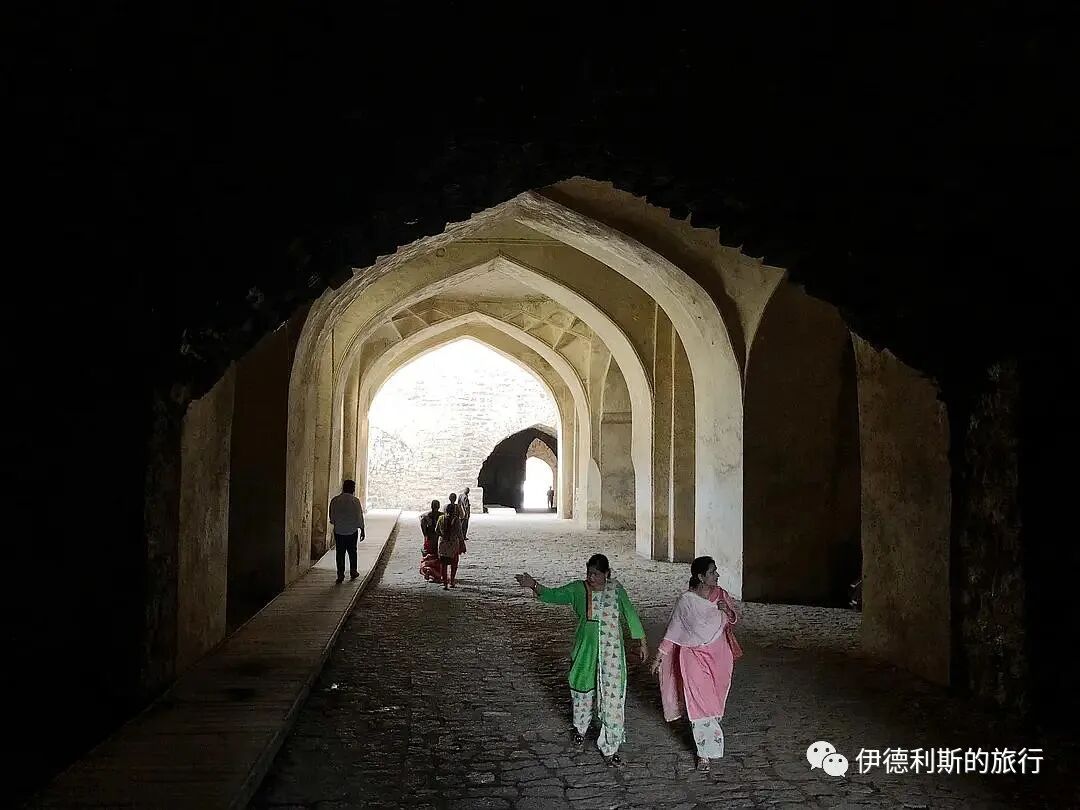
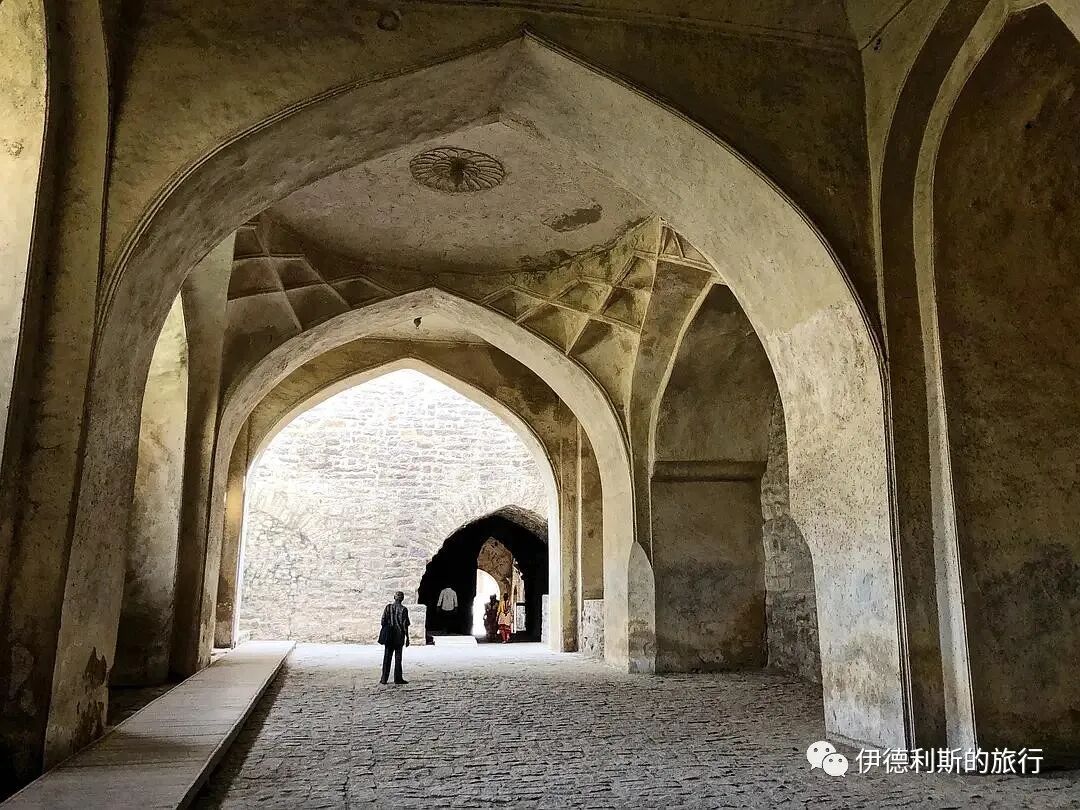
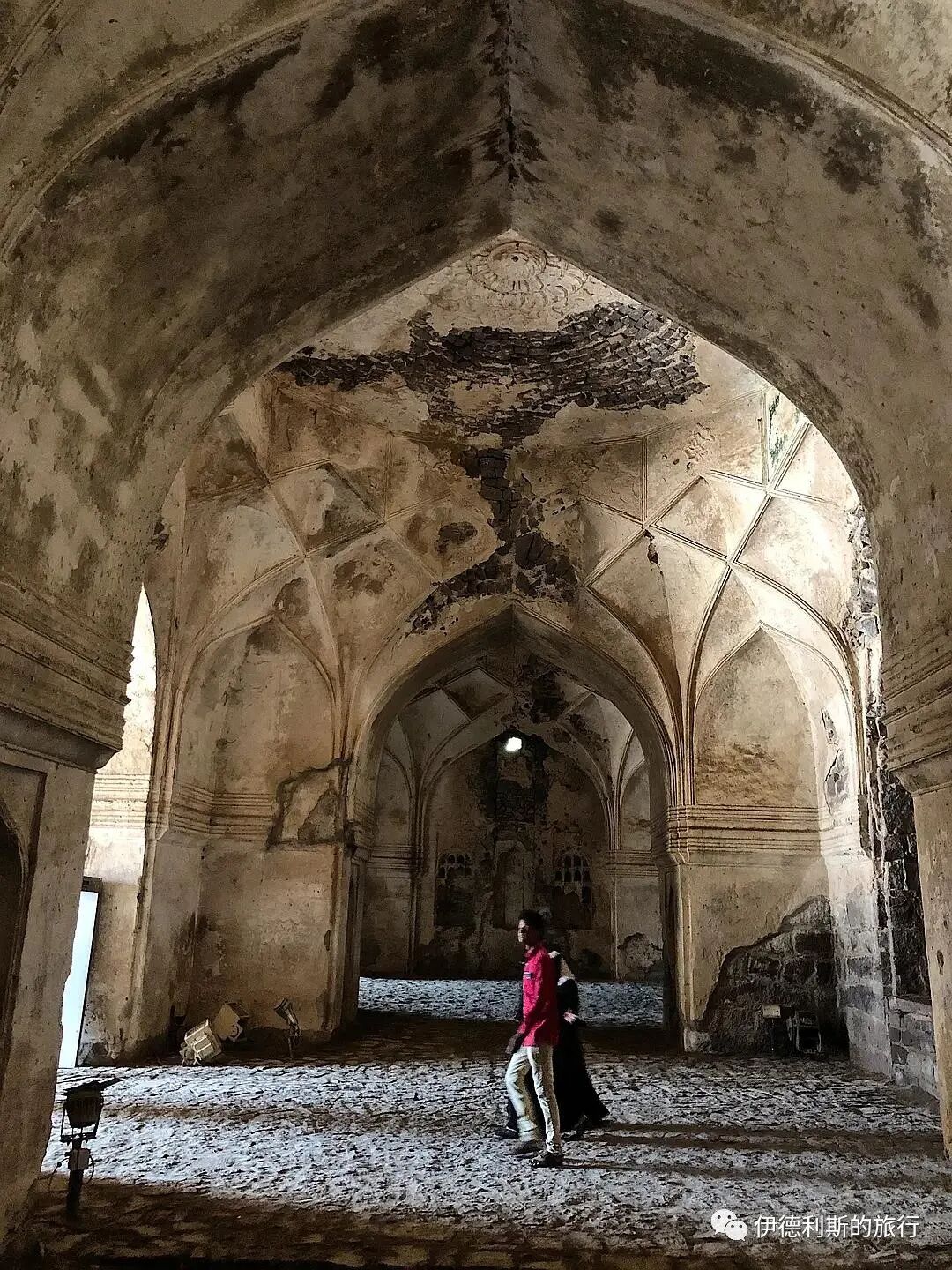
Passing through Bhagamati Palace brings you to the Rani Mahal area in the south of the fort, where a light and sound show is held at night. In the middle of the spacious courtyard is a complex metal fountain. During the Qutb Shahi era, the fountain could spray water on its own thanks to hydraulic engineering. When there was no rain, the fort's water system ran using Persian water wheels. Today, a set of clay drainage pipes that have survived for hundreds of years can still be found behind the Rani Mahal. Historians believe the palace now called Rani Mahal should actually be called Dad Mahal. This was the palace where the sultan handled state affairs and listened to the opinions of his subjects and the people.
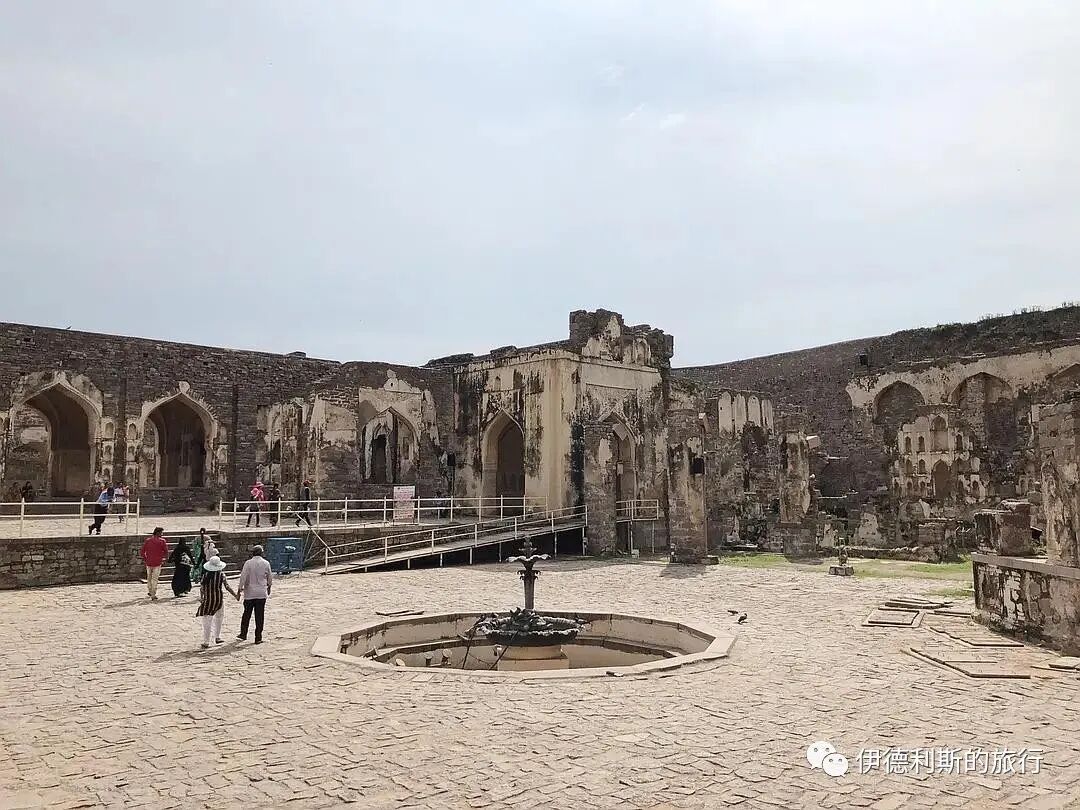
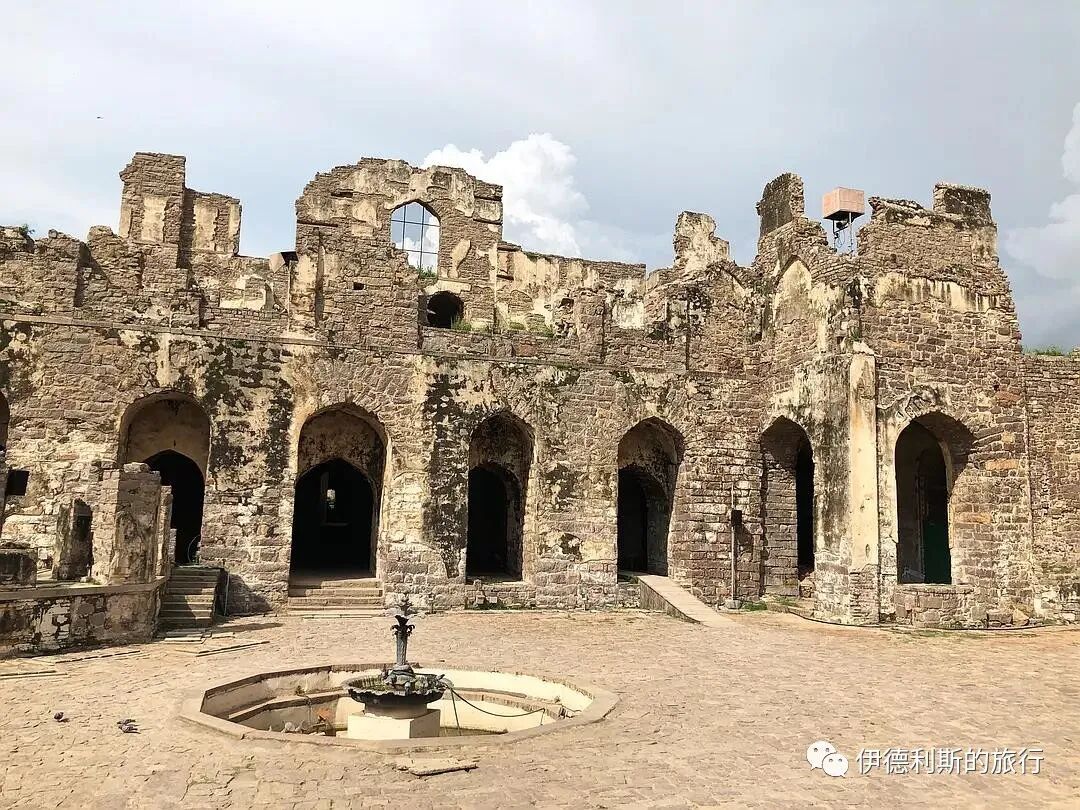
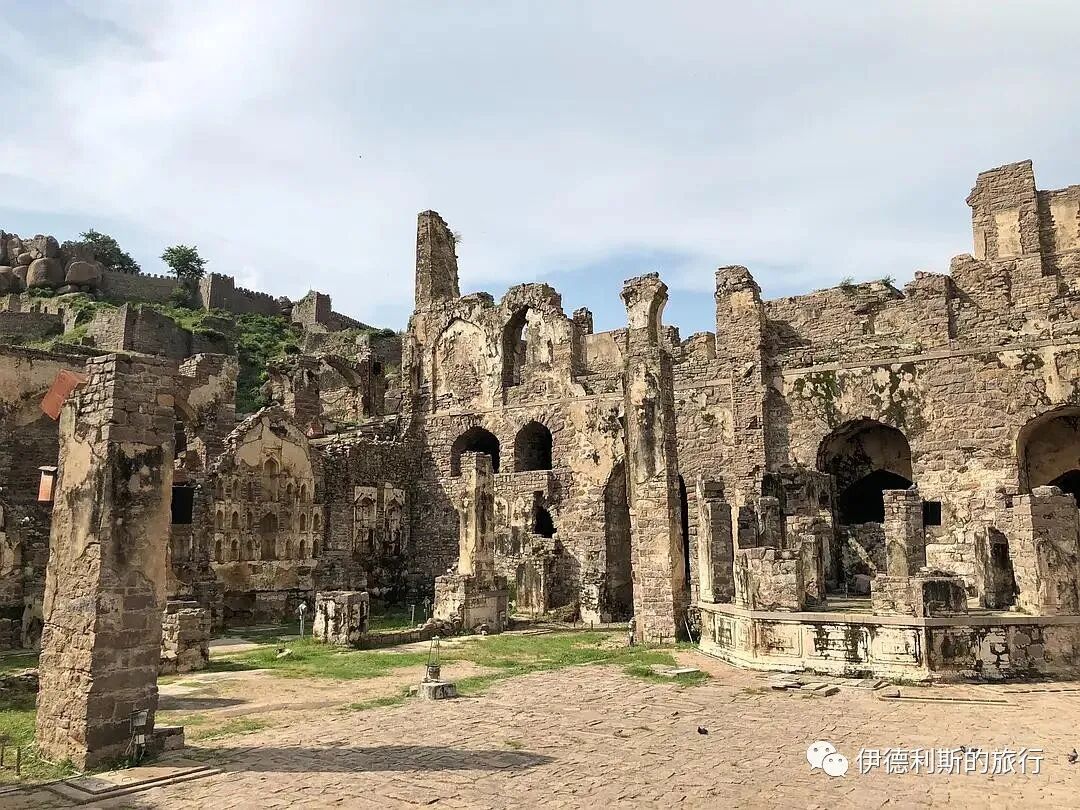
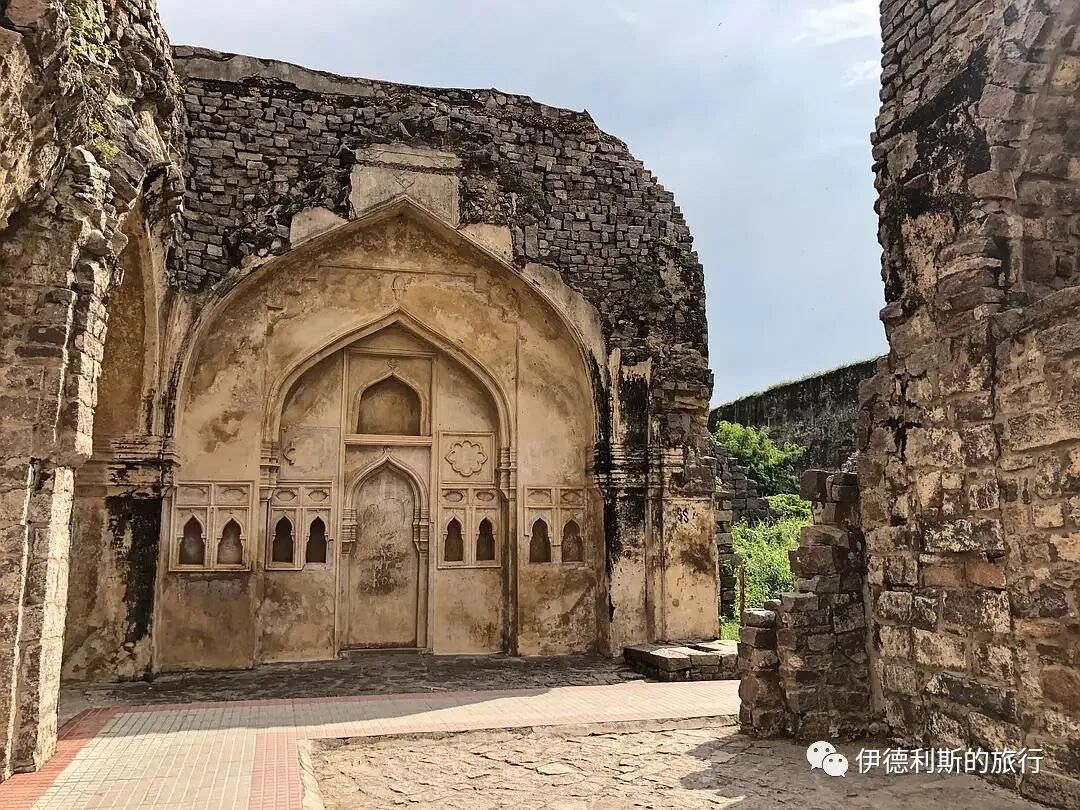
Behind the Rani Mahal is the Kilwat, the sultan's private bedroom. It is small but decorated beautifully. Those hollow lattices were once inlaid with Golconda's most famous diamonds and other gemstones.
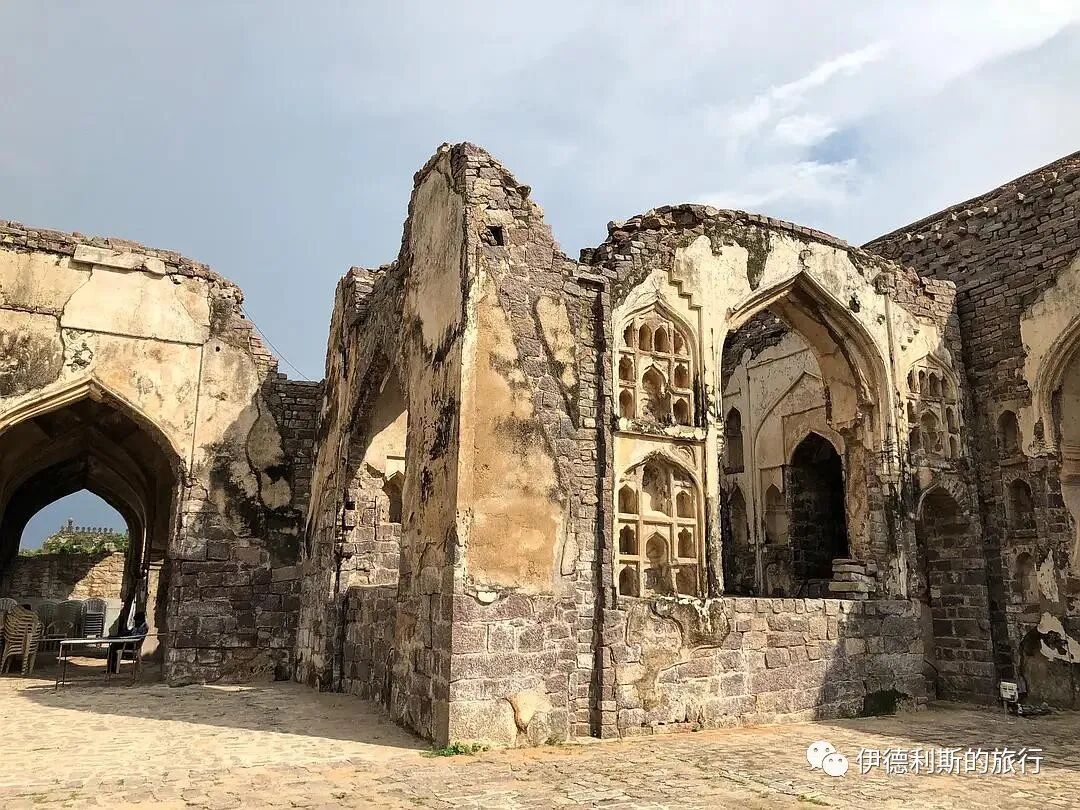
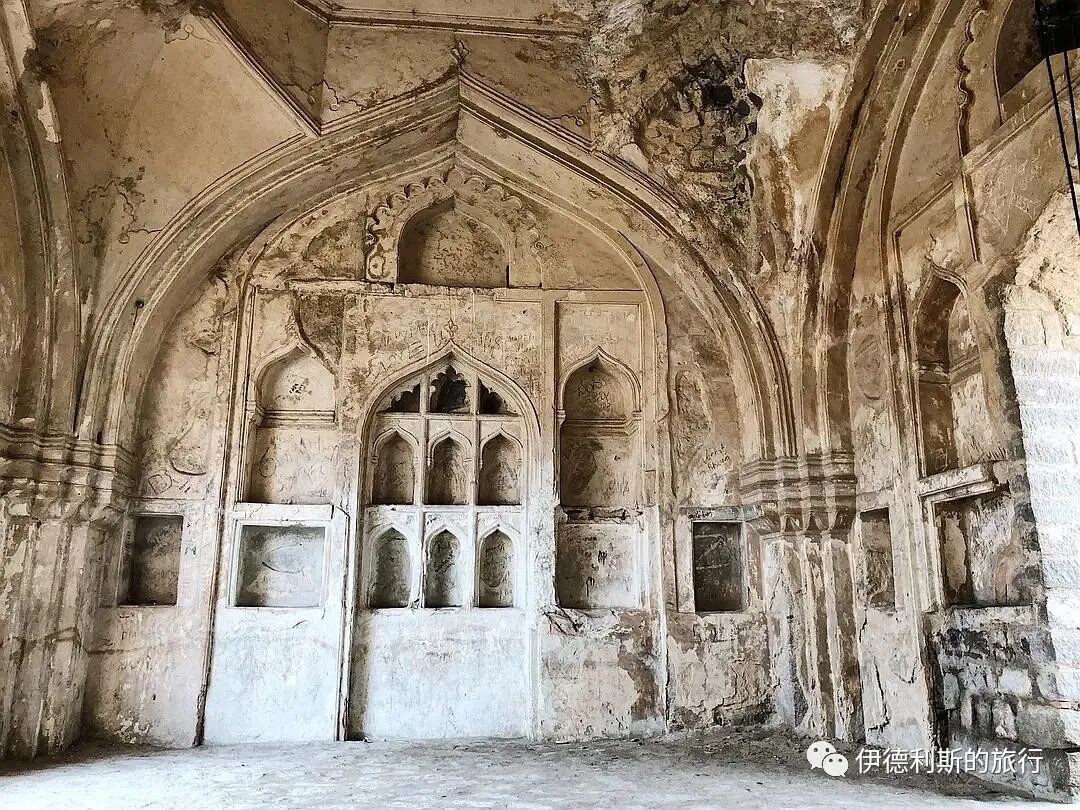
Heading west from the Rani Mahal area, you leave the palace grounds and can see the tall, multiple walls inside the fort. Behind one of these walls stands a mosque called Zanana, which still has its mihrab and courtyard.
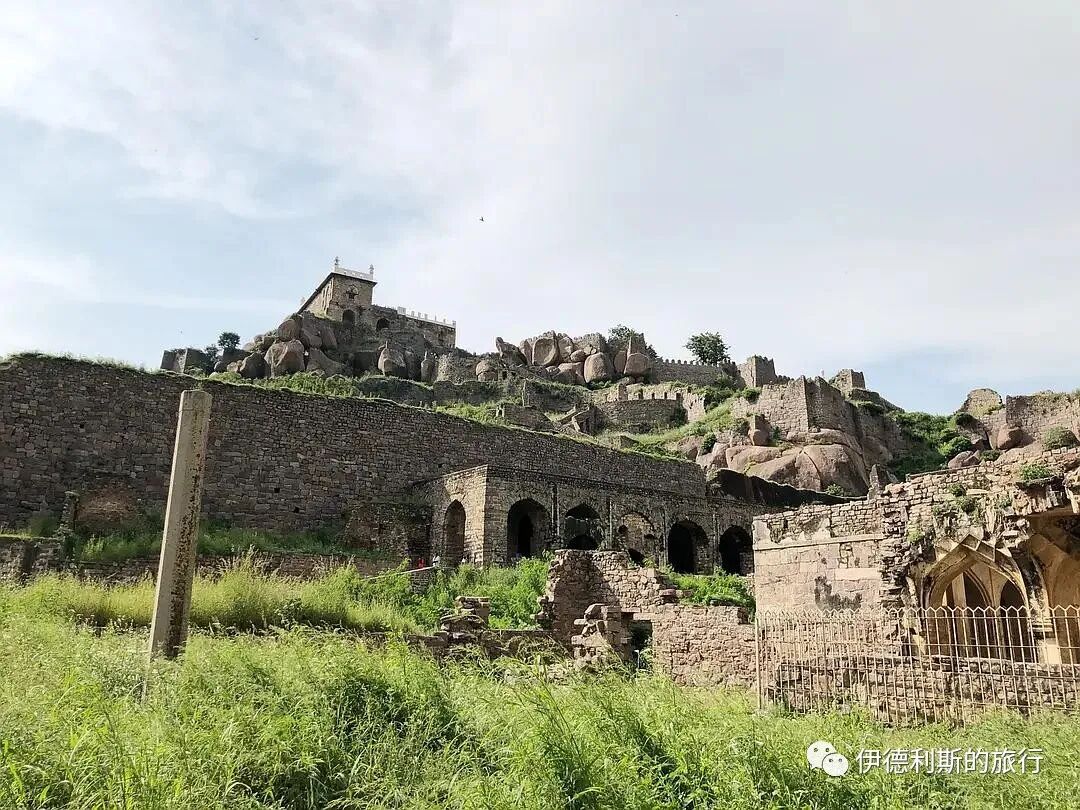
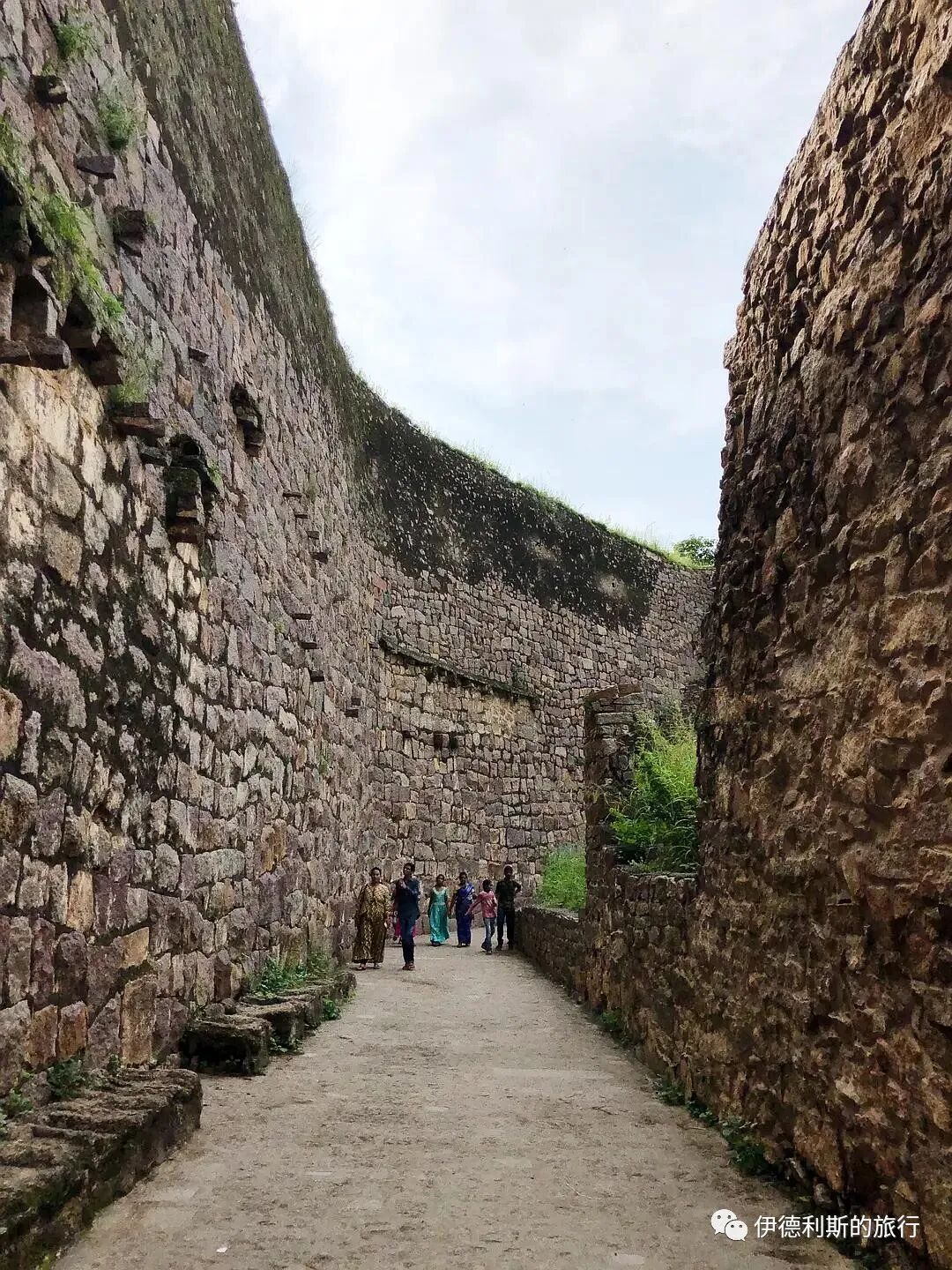
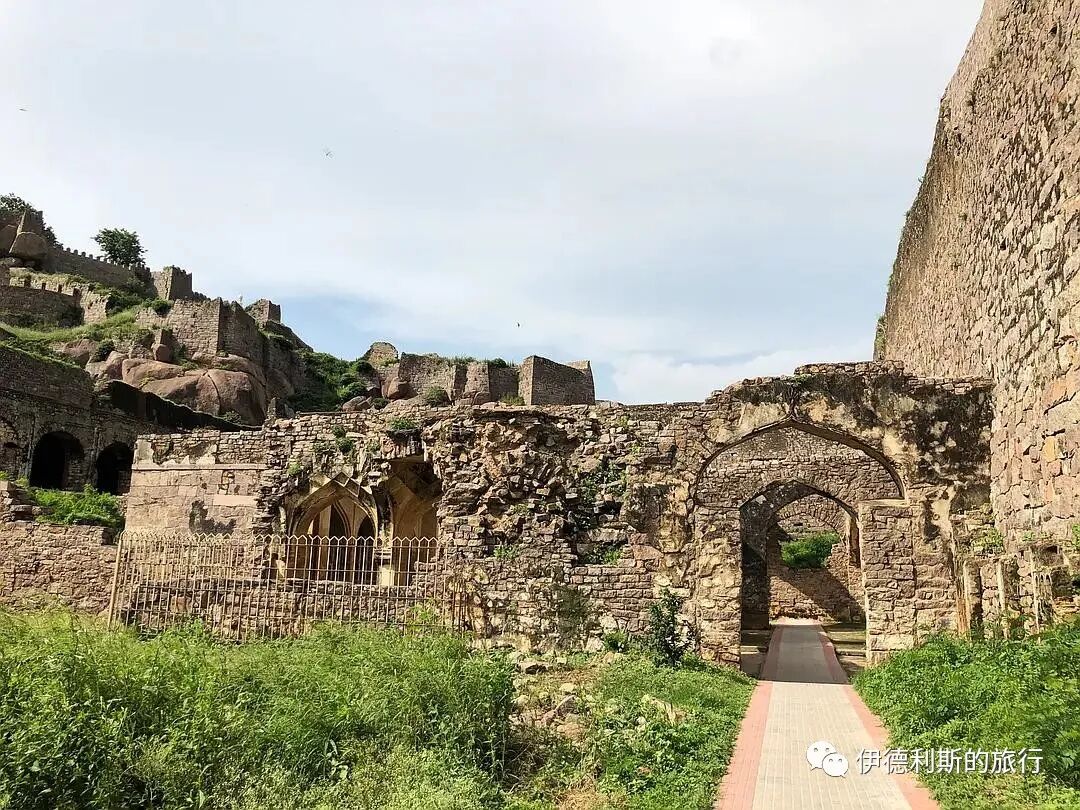
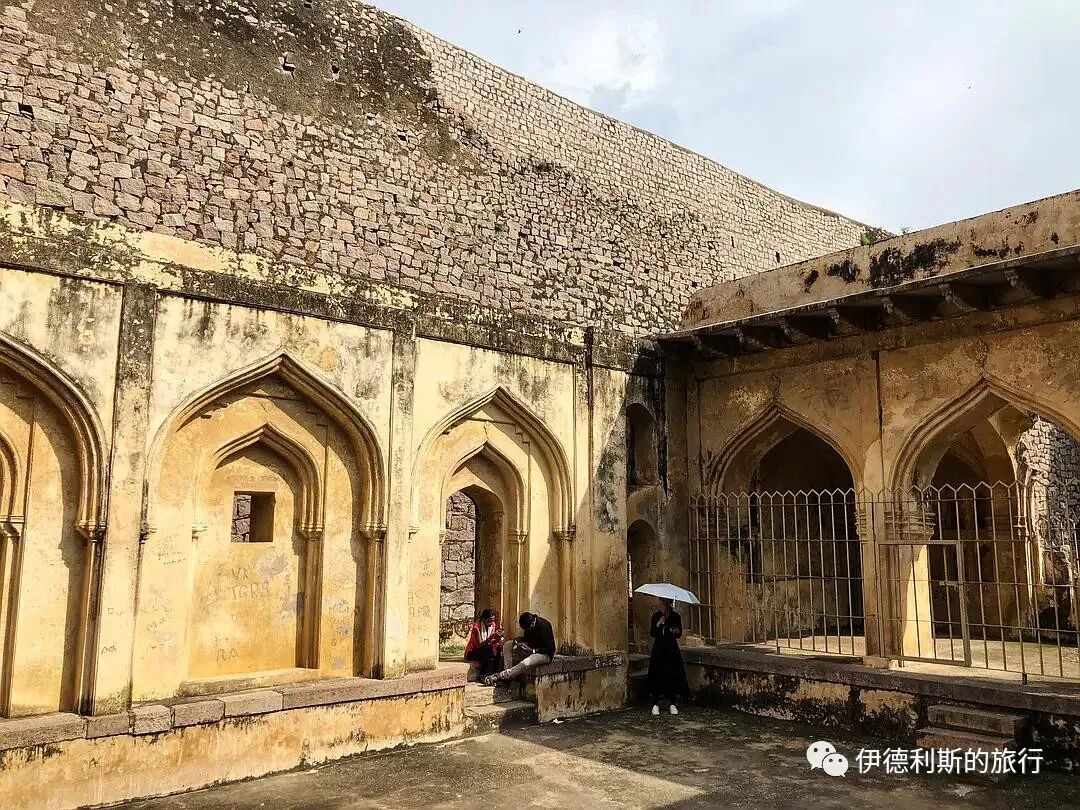
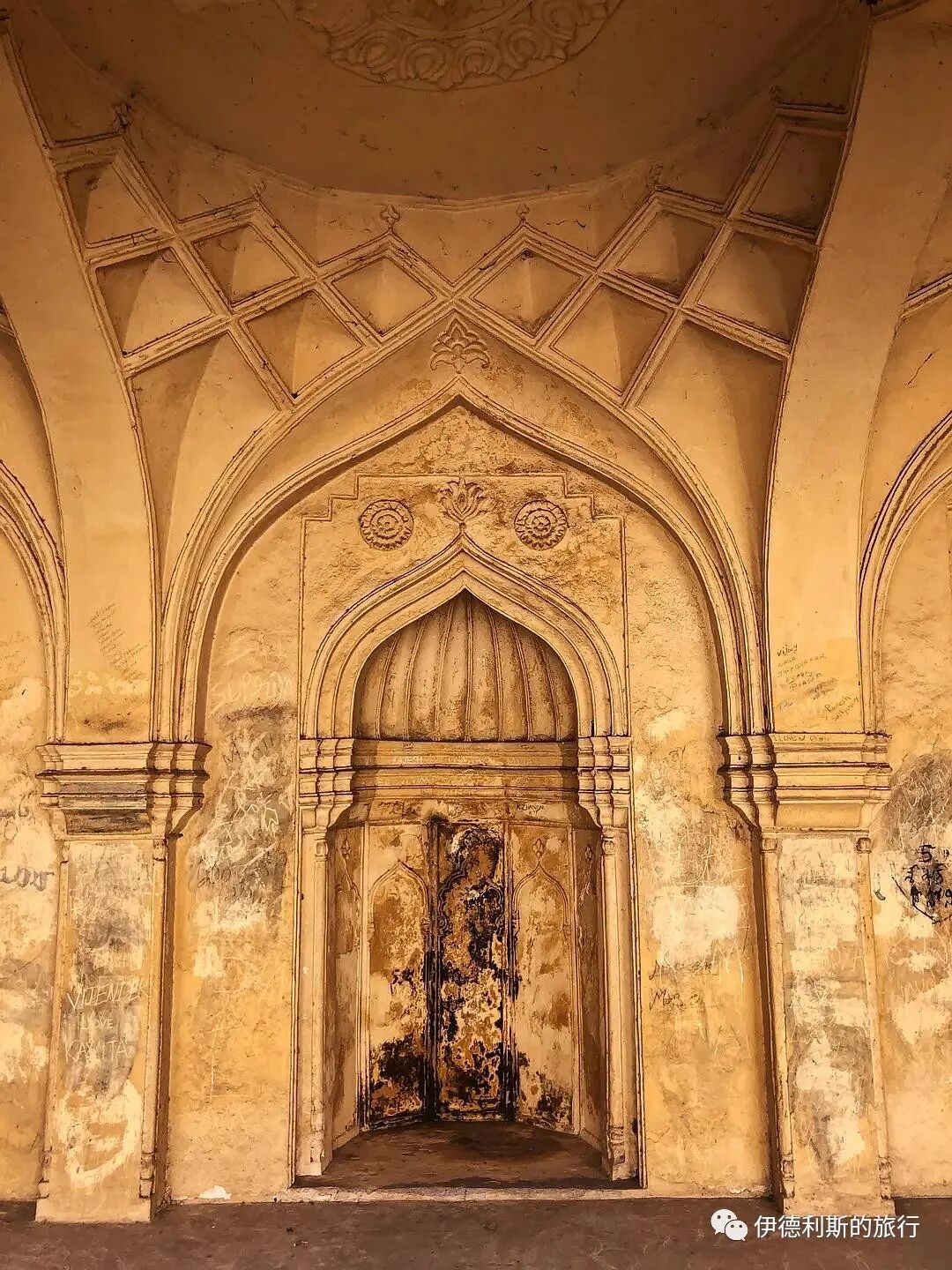
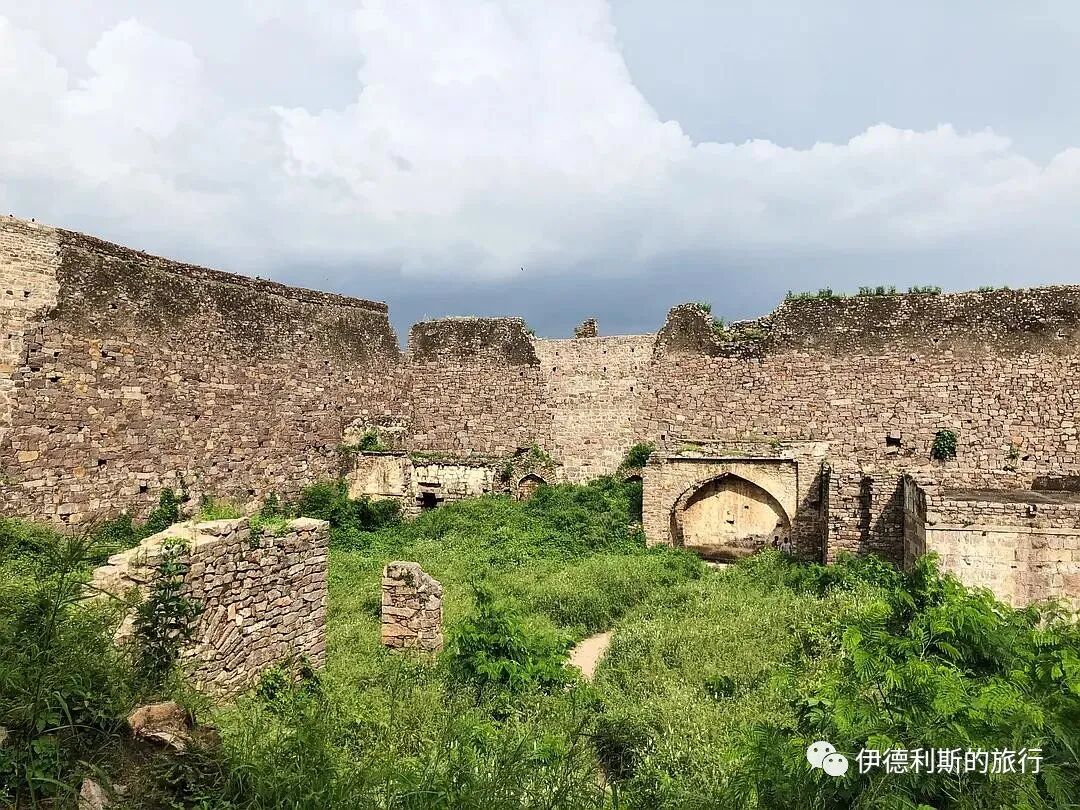
After passing through the Zanana mosque, you leave the palace area. A stone staircase leads to the fortress at the top of the hill. Some of the fortress walls are built directly onto giant boulders, and you can look down over the entire palace area from the steps. Once you reach the top, there is a building called Baradari (Darbar Hall), where you can look out over the vast area behind the fort.
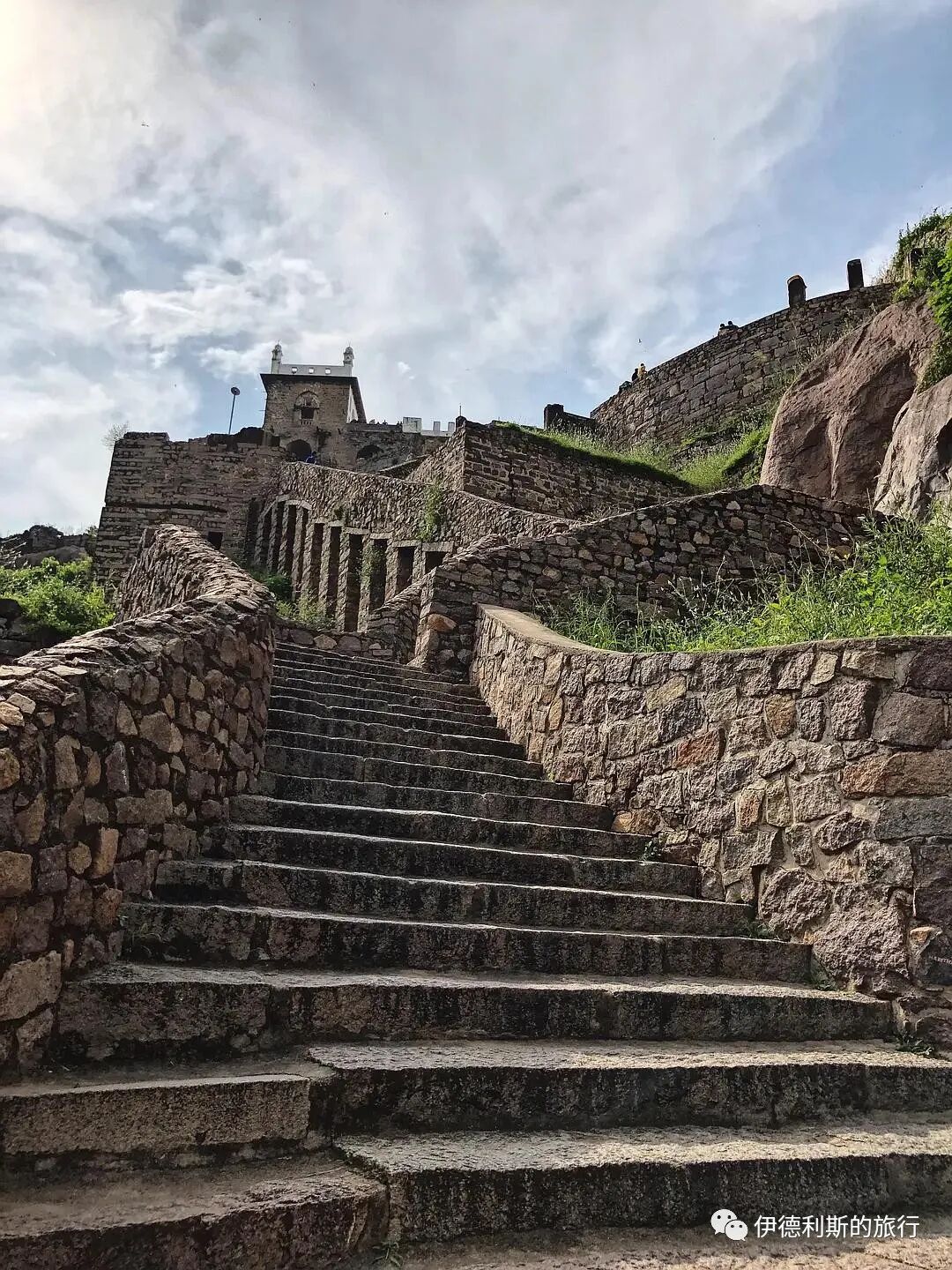
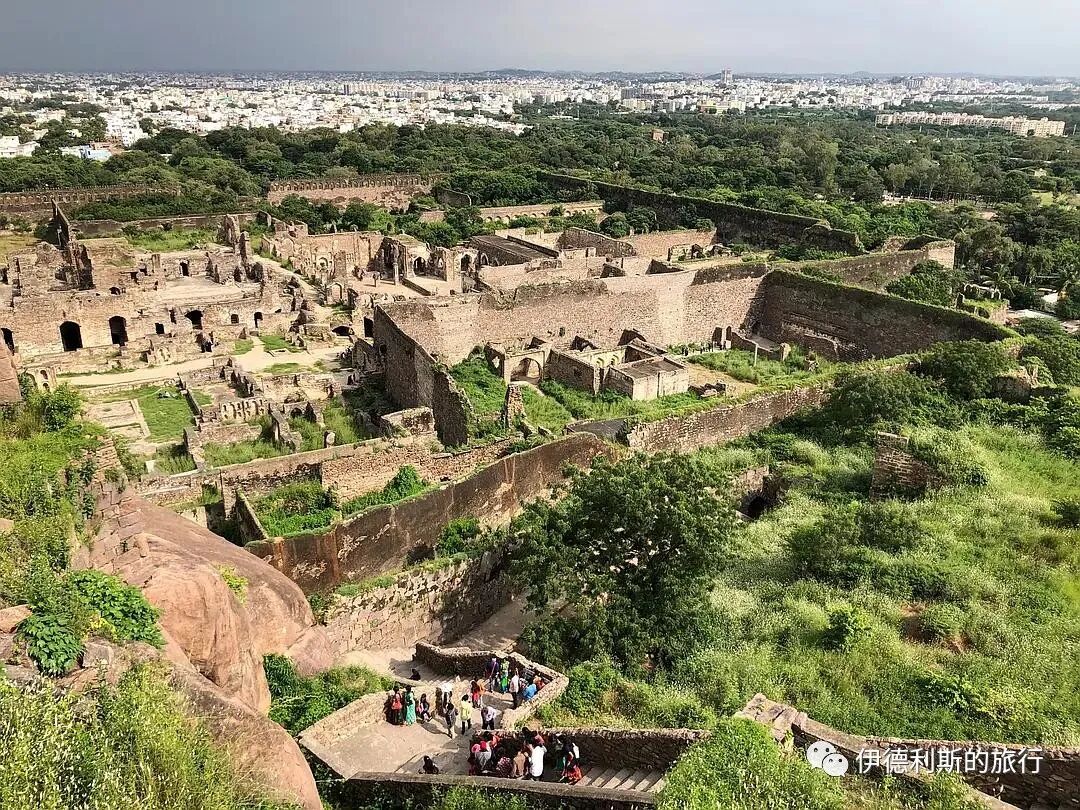
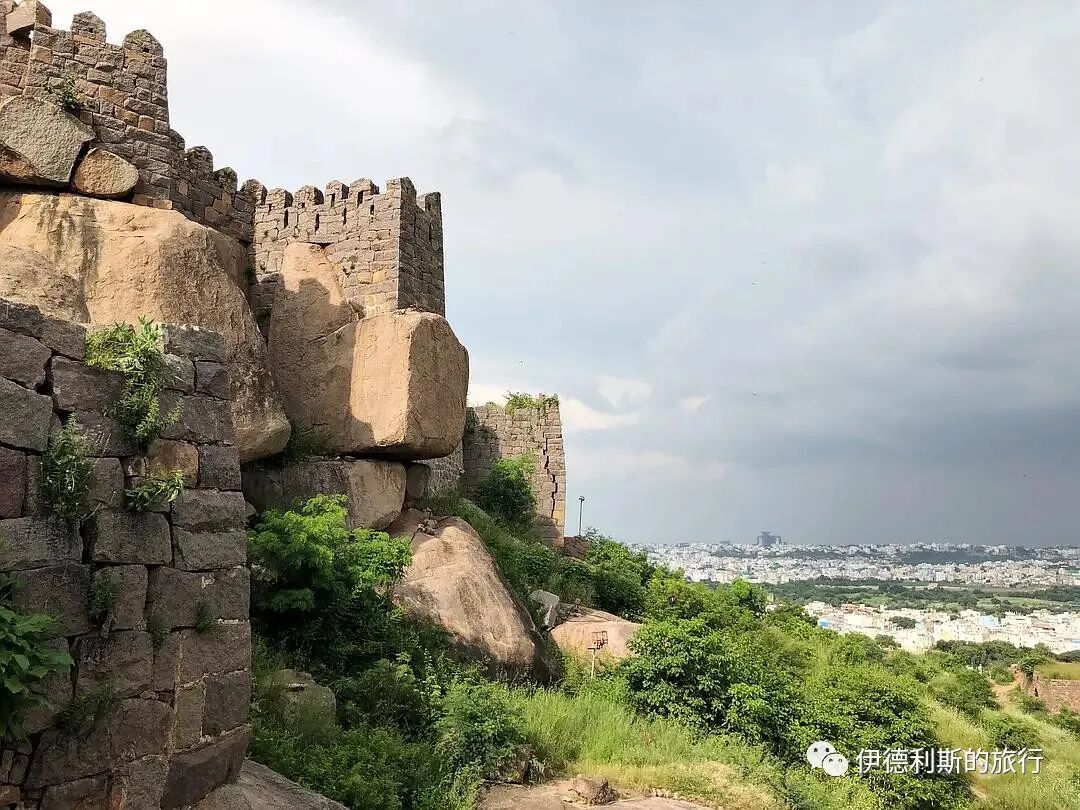
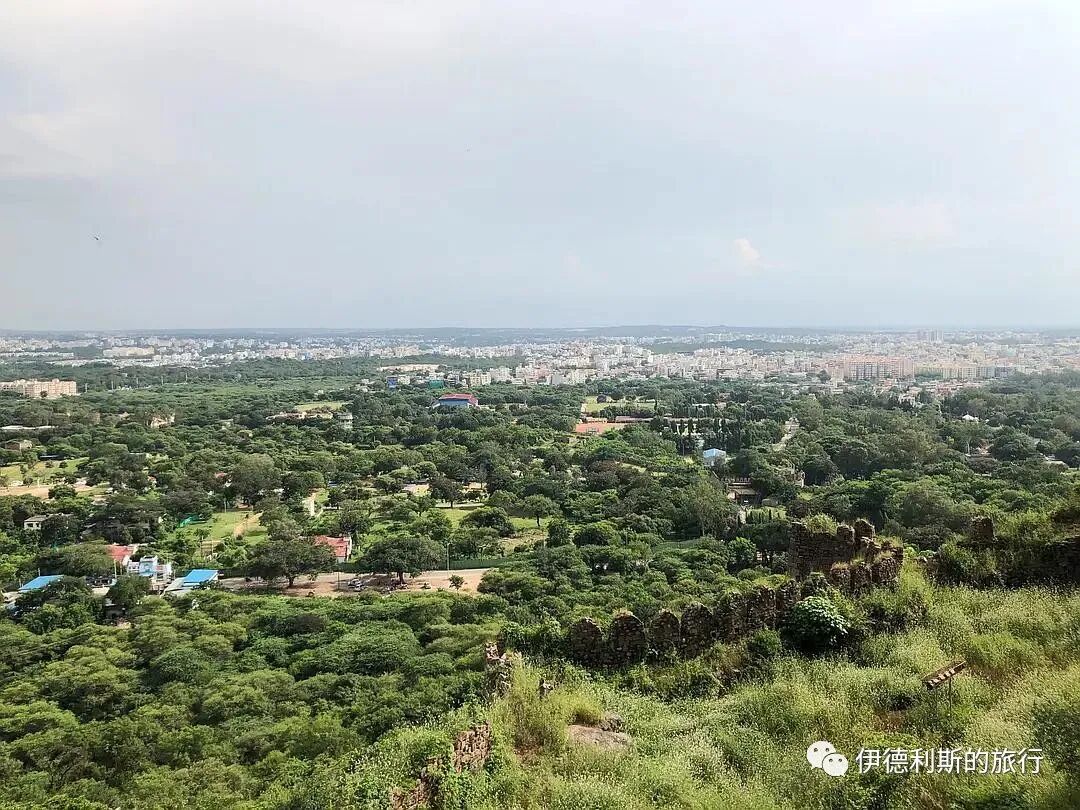
Continuing down the hill, you will pass the Ramdas prison.
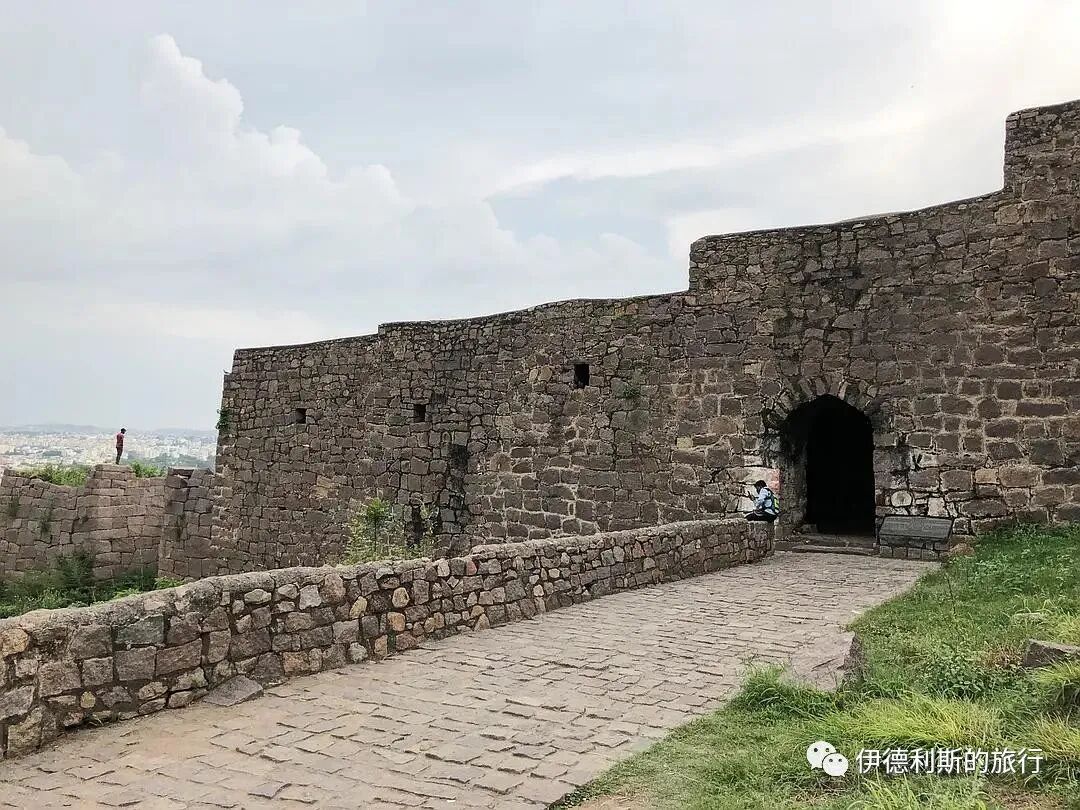
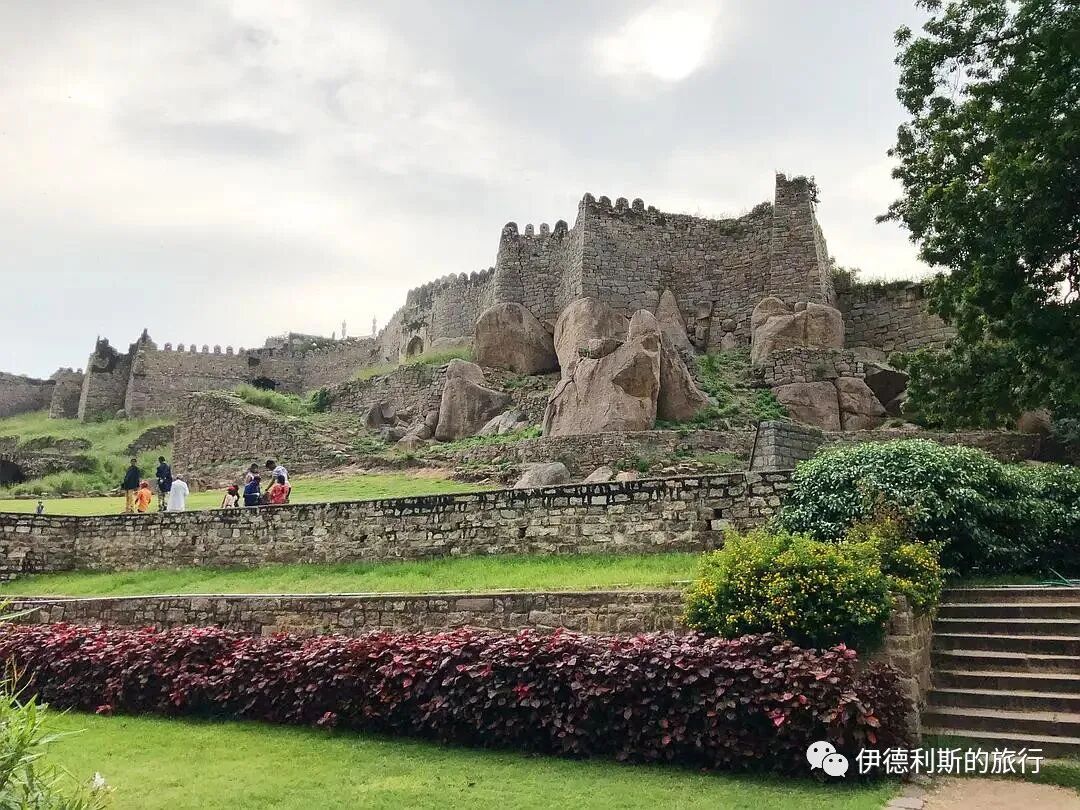
Next to the main gate of the fort is a Turkish bath (hammam) building. It has pipes at different heights inside to mix scented cold and hot water, but it was not open when I visited. Historians still disagree on whether this bath was for women or for washing the bodies of the deceased.
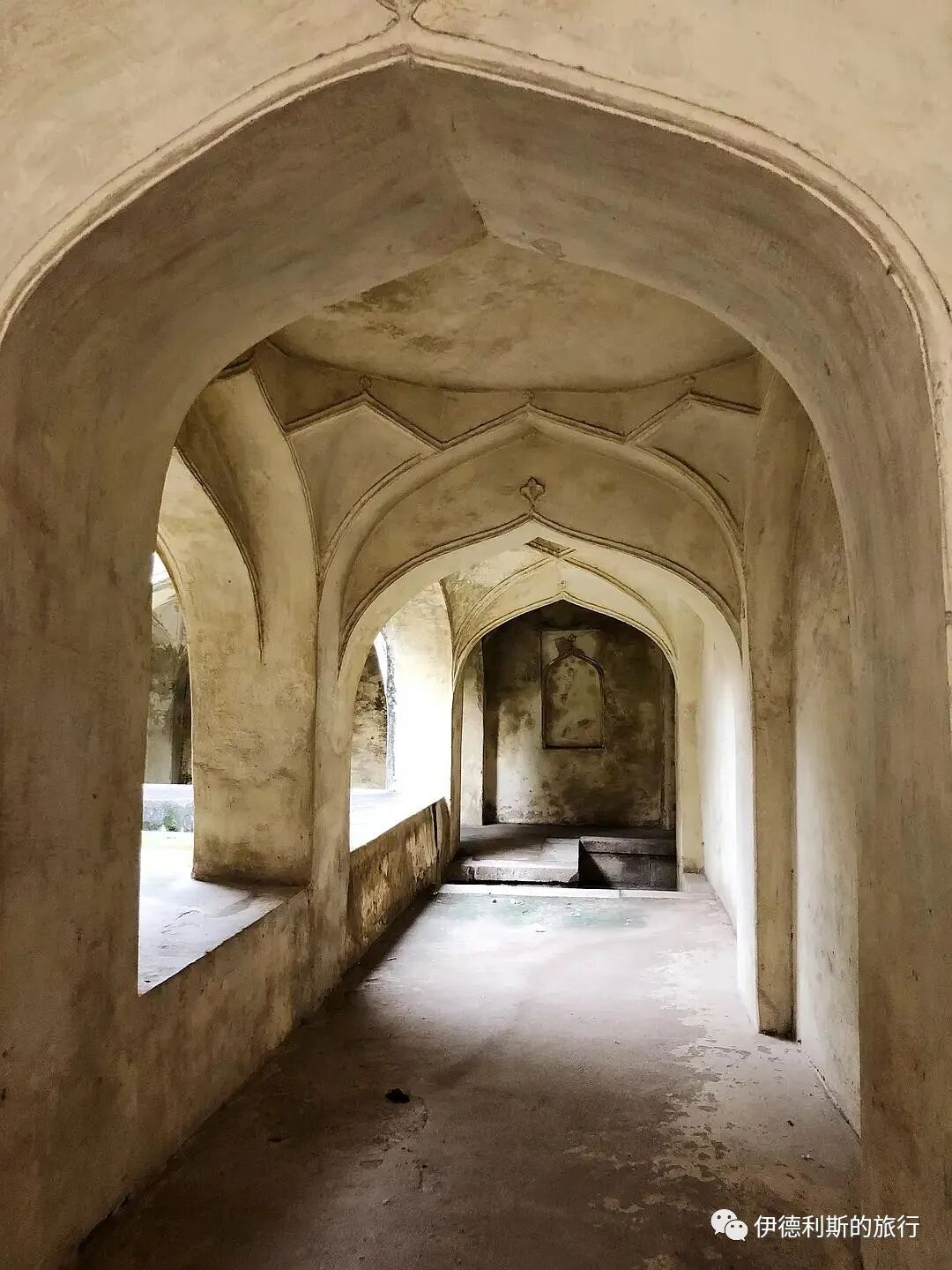
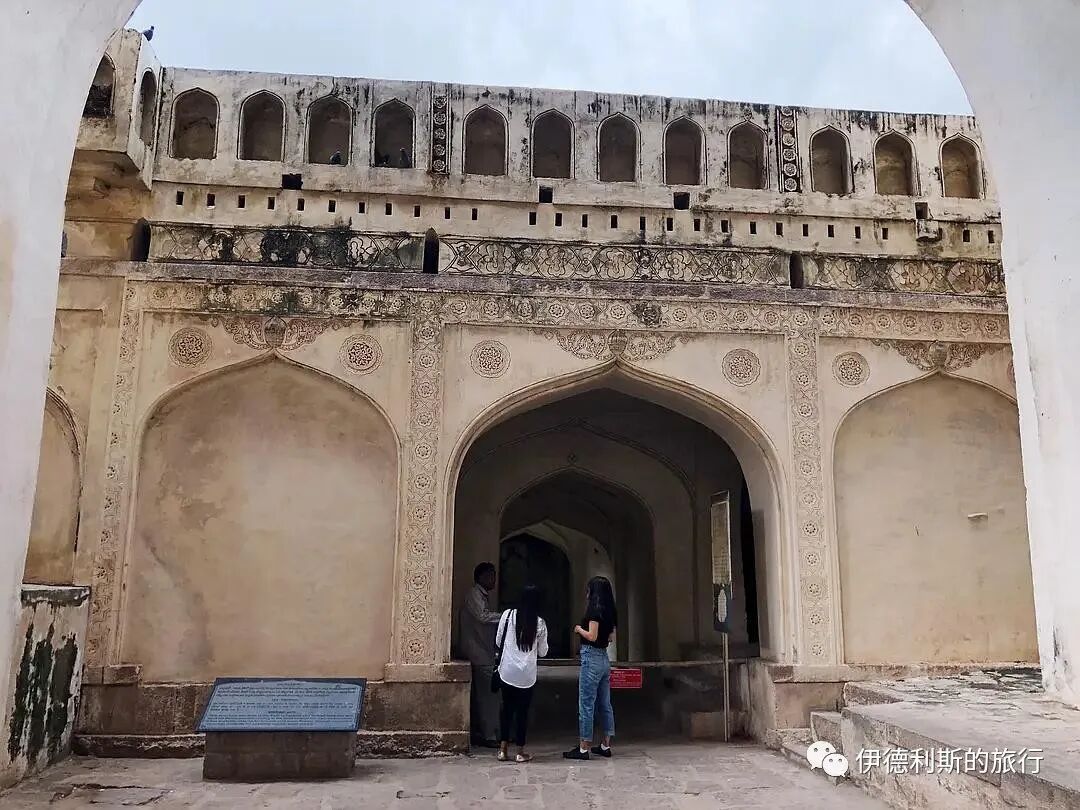
Two large pavilions outside the fort gate.
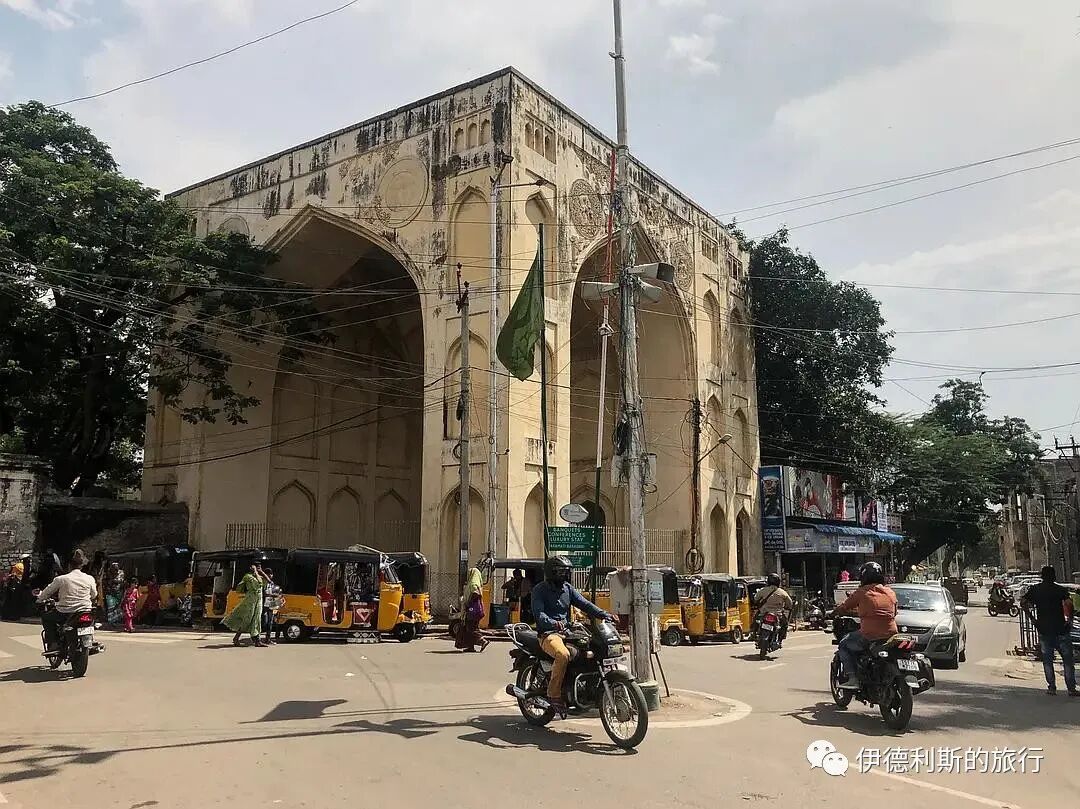
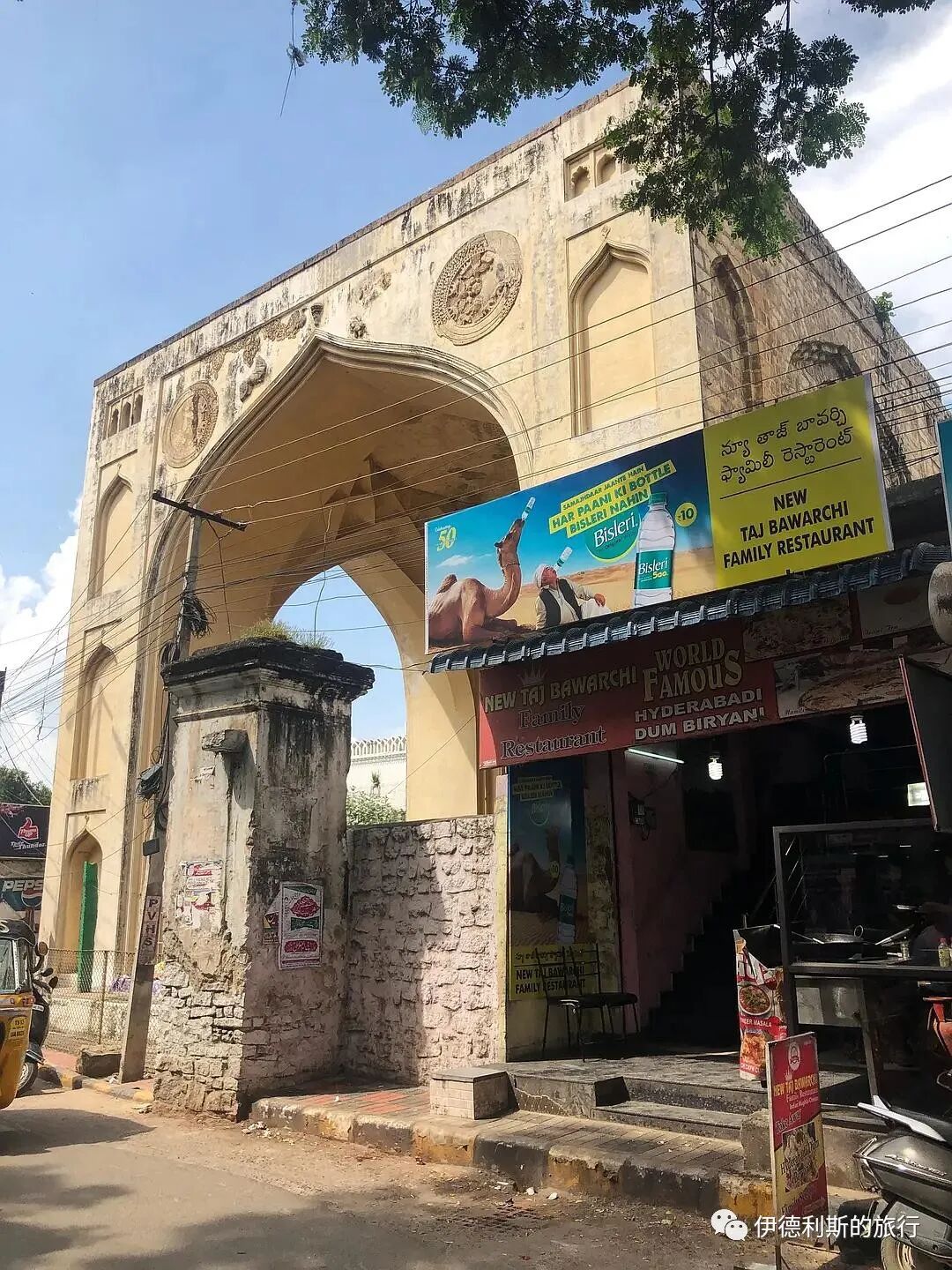
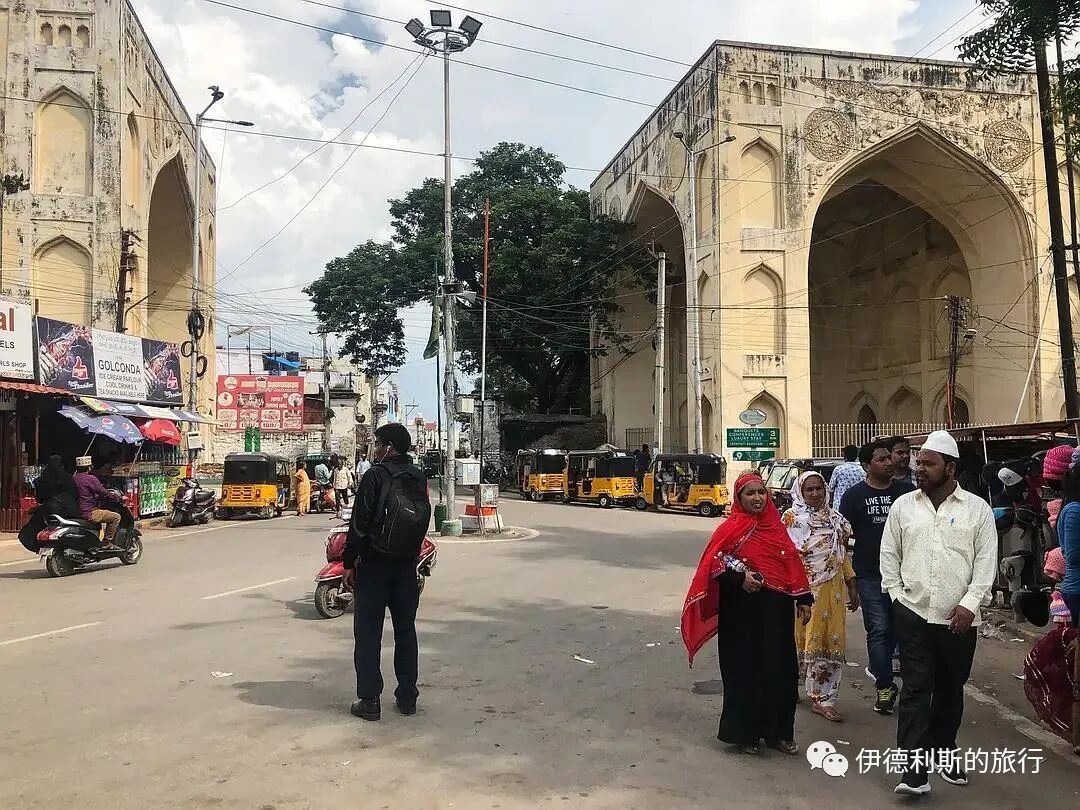
The Qutb Shahi tombs are located north of Golconda Fort and contain the tombs of the sultans of the Qutb Shahi dynasty along with their attached mosques. These tombs feature the typical style of Deccan Plateau Muslim architecture. The square base and round top are highlighted by decorative small towers, and the onion-shaped dome sits on a lotus-petal base, showing a blend of Persian and Indian architectural styles.
The tomb of Quli Qutb Mulk (reigned 1512–1543), the founder of the Qutb Shahi dynasty, is the oldest in the cemetery, and the designs of later tombs were all developed from this one. Quli was a Turkmen from Hamadan, Iran, and a descendant of Qara Yusuf (reigned 1380–1420), the ruler of the Black Sheep dynasty.
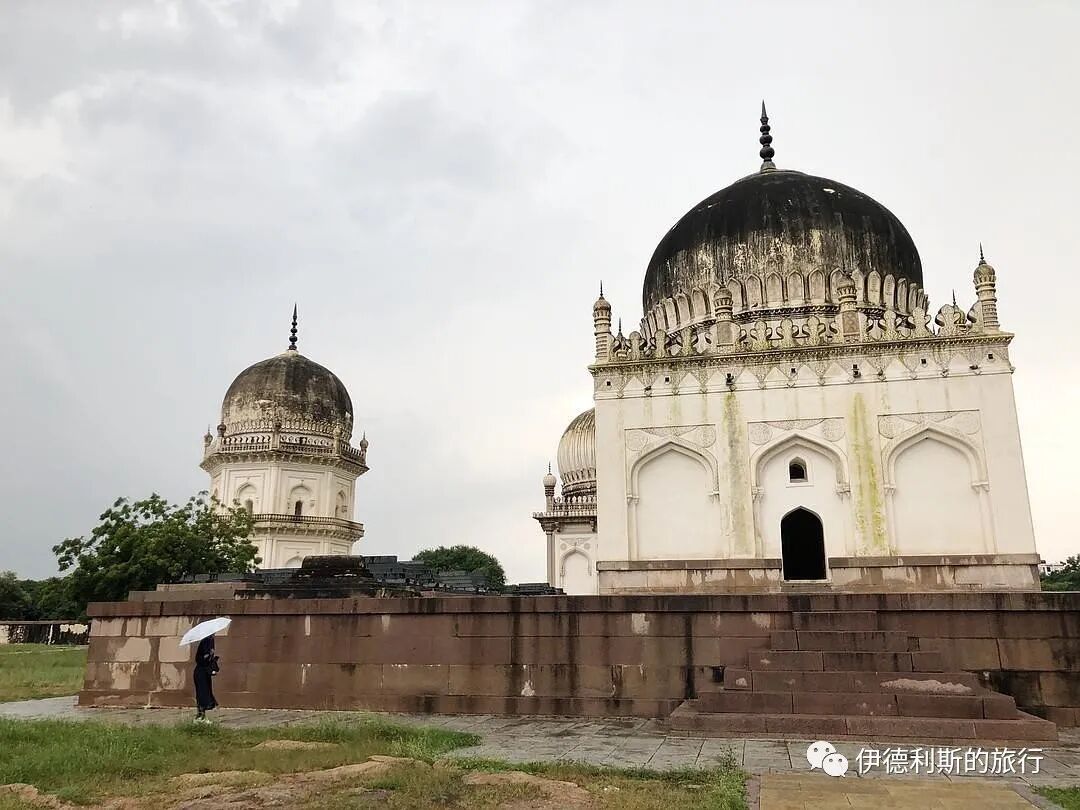
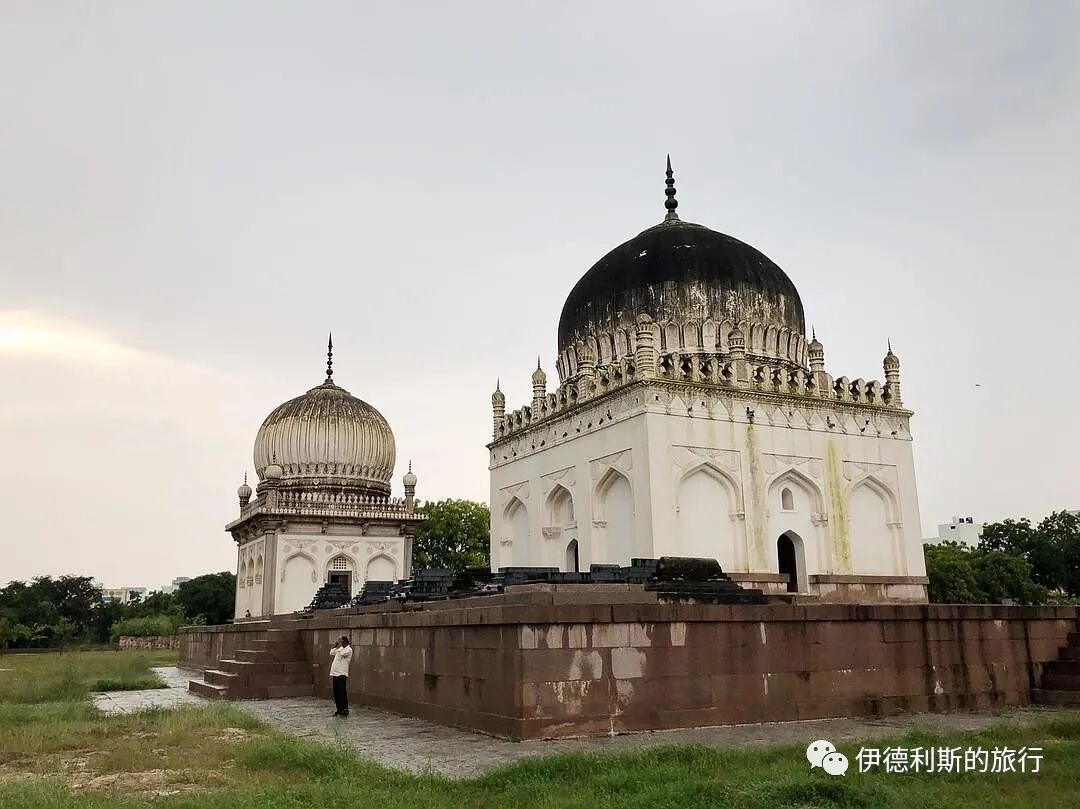
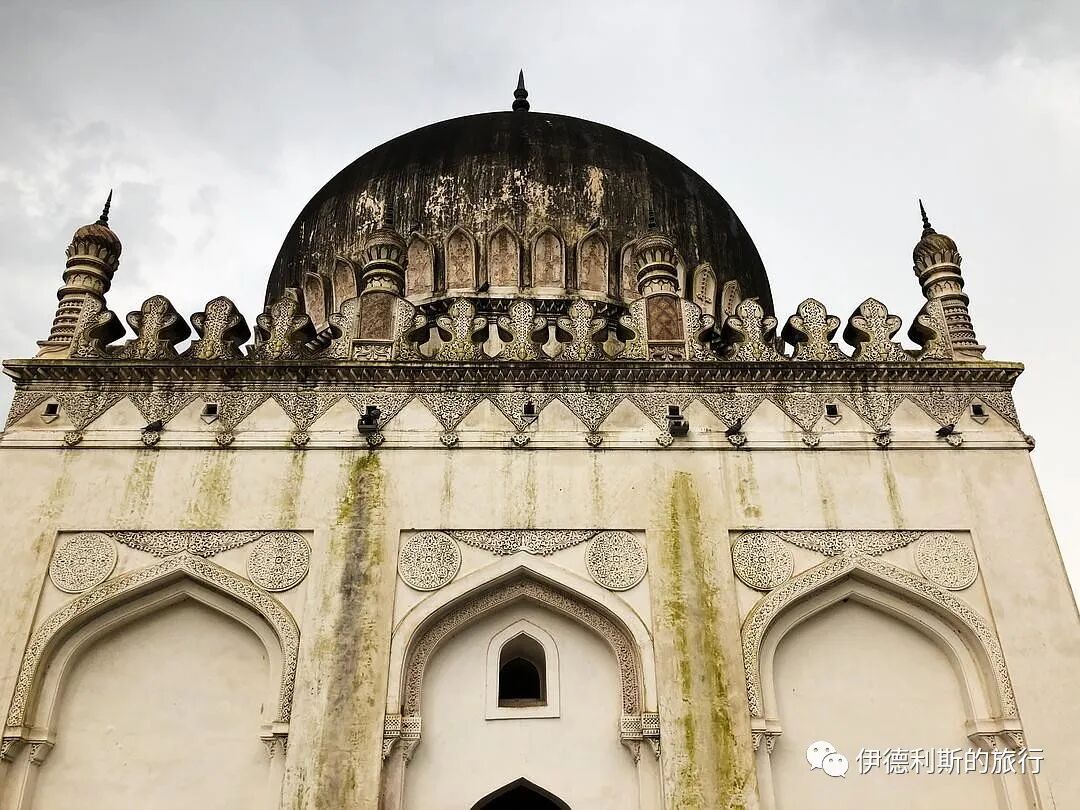
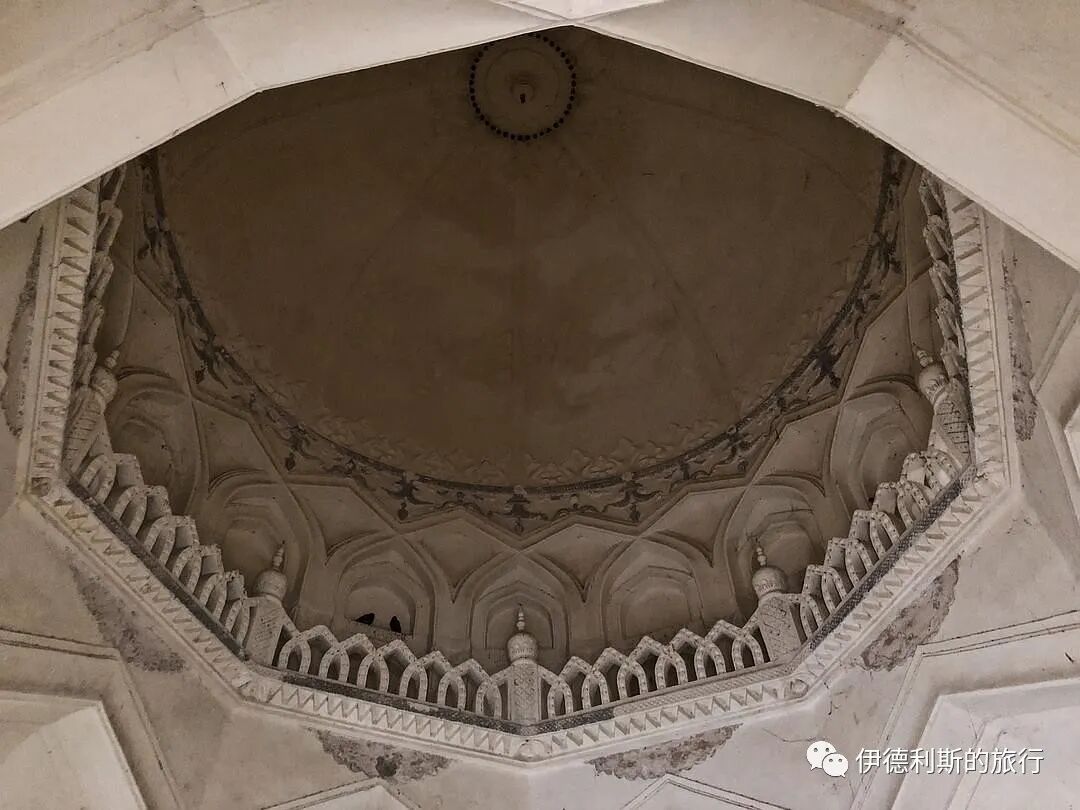
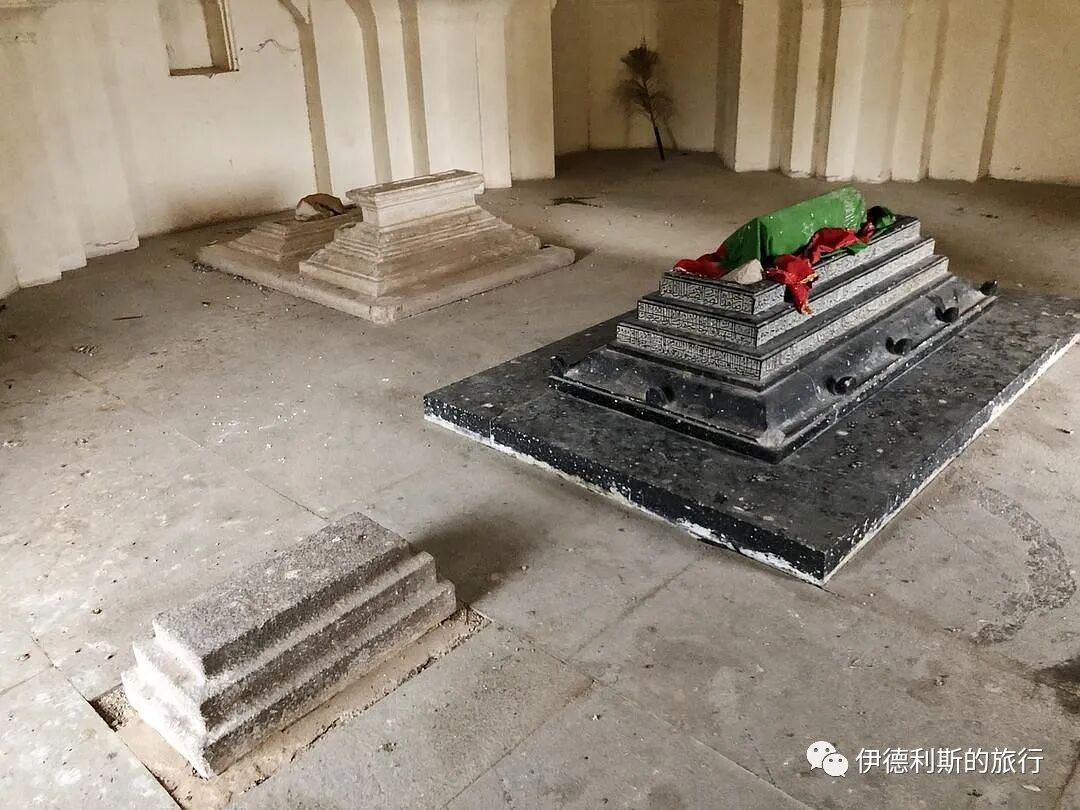
The tomb of the second sultan, Jamsheed Quli Qutb Shah (reigned 1543–1550), is the only sultan's tomb in the cemetery that does not use black basalt. Its design is also different from the others, consisting of two levels. Jamsheed took the throne in 1543 after assassinating his father. Few records remain of his reign, other than that it was very cruel. Jamsheed died of illness in 1550 and was buried next to his father's tomb.
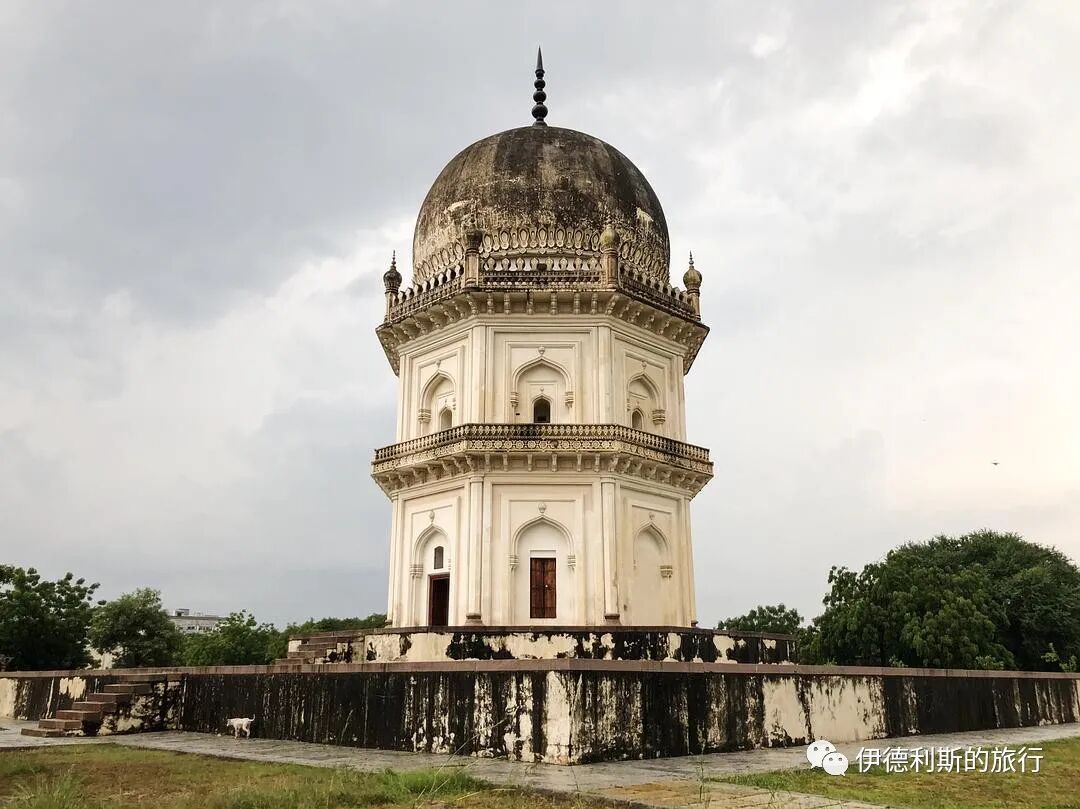
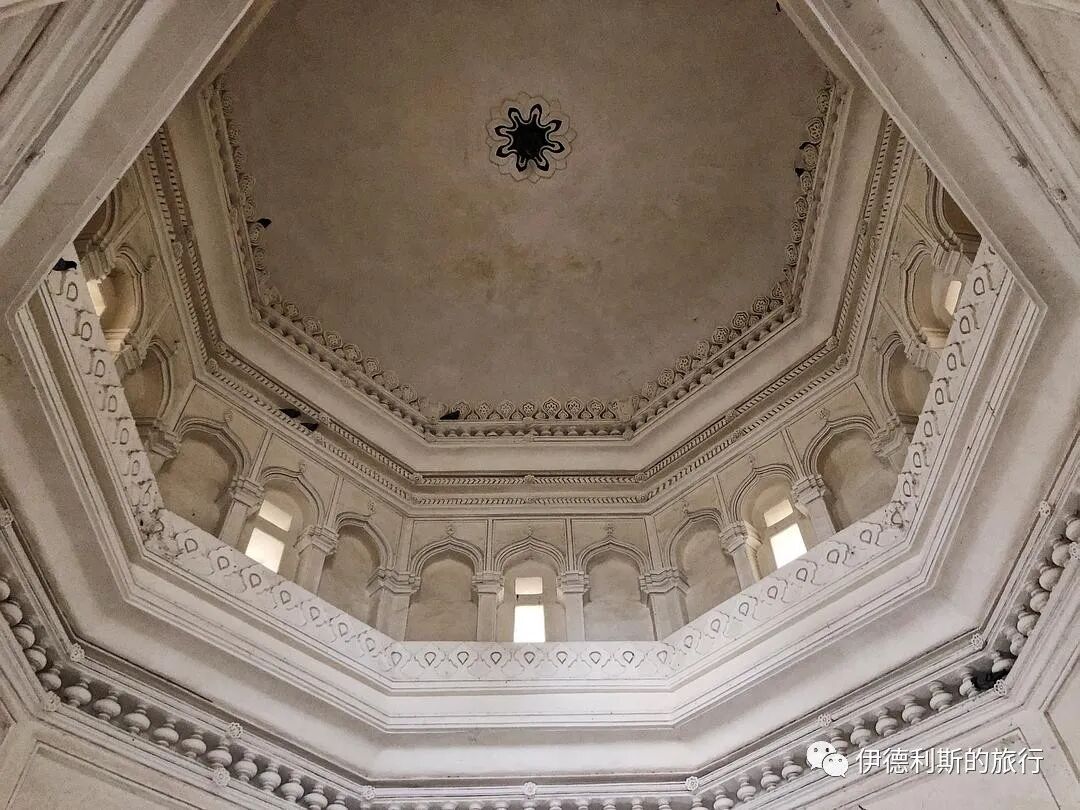
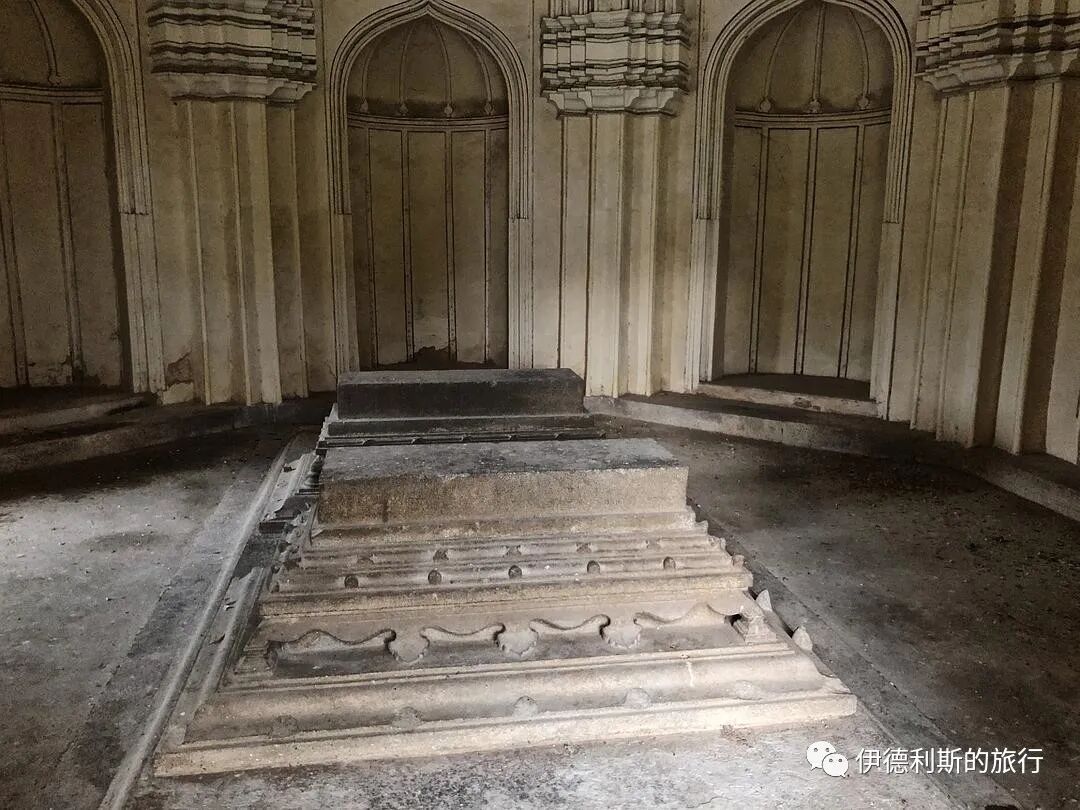
After the second sultan, Jamsheed, died of illness in 1550, his 7-year-old son, Subhan Quli Qutb Shah, took the throne. However, shortly after, Subhan's uncle, Ibrahim Quli Qutb Shah, rushed back to Golconda Fort to seize the throne. Subhan was deposed and died shortly after. Subhan's tomb is on the same platform as his grandfather, the first sultan Quli Qutb Mulk, and it is the smallest of all the sultan tombs.
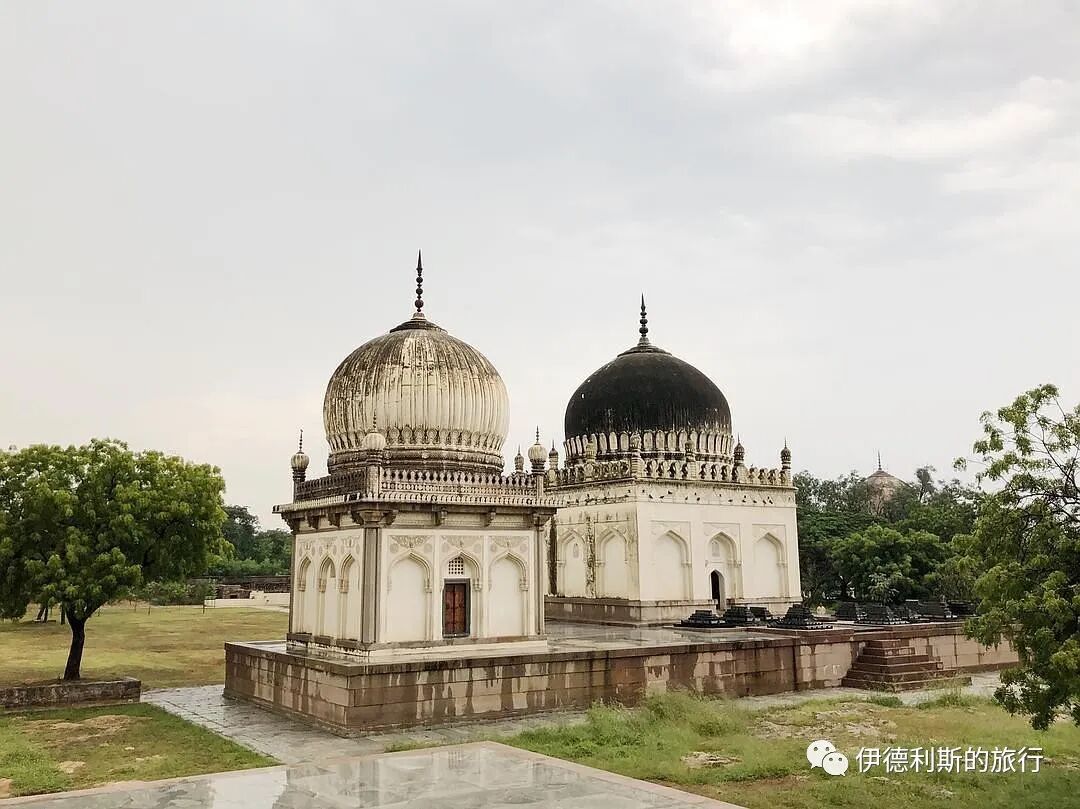
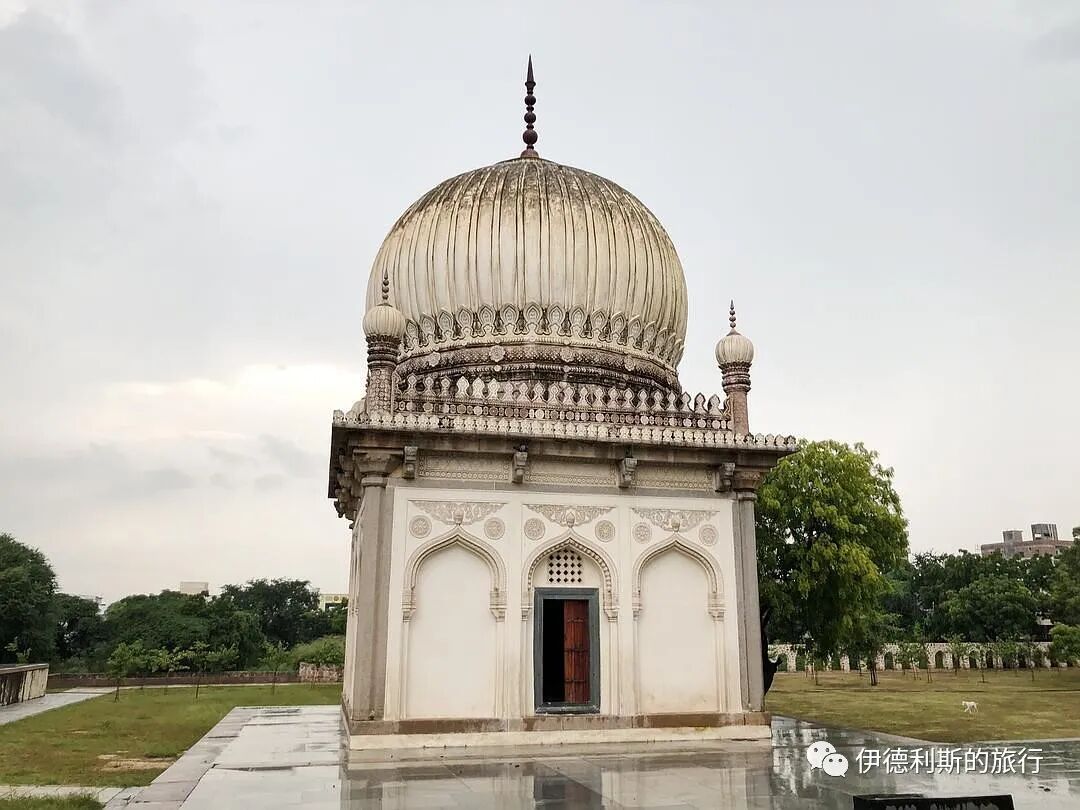
4. The Bidar Sultanate of the Deccan Plateau (1492–1619)
The Bidar Sultanate was one of the five Deccan sultanates formed after the collapse of the Bahmani Sultanate. It was the smallest one and was surrounded by the other four. Its founder was originally a Georgian enslaved by the Turks who later became a general in the Bahmani Sultanate.
In 1550, the ruler of the sultanate was Ali Barid Shah I, who loved inviting scholars and craftsmen from all over India to his court.
The Bidar Sultanate expanded Bidar Fort on a large scale. Because they hired Hindu architects, the buildings from this period incorporate many features of Hindu architecture.
A miniature painting of Ali Barid Shah in the collection of the San Diego Museum of Art.
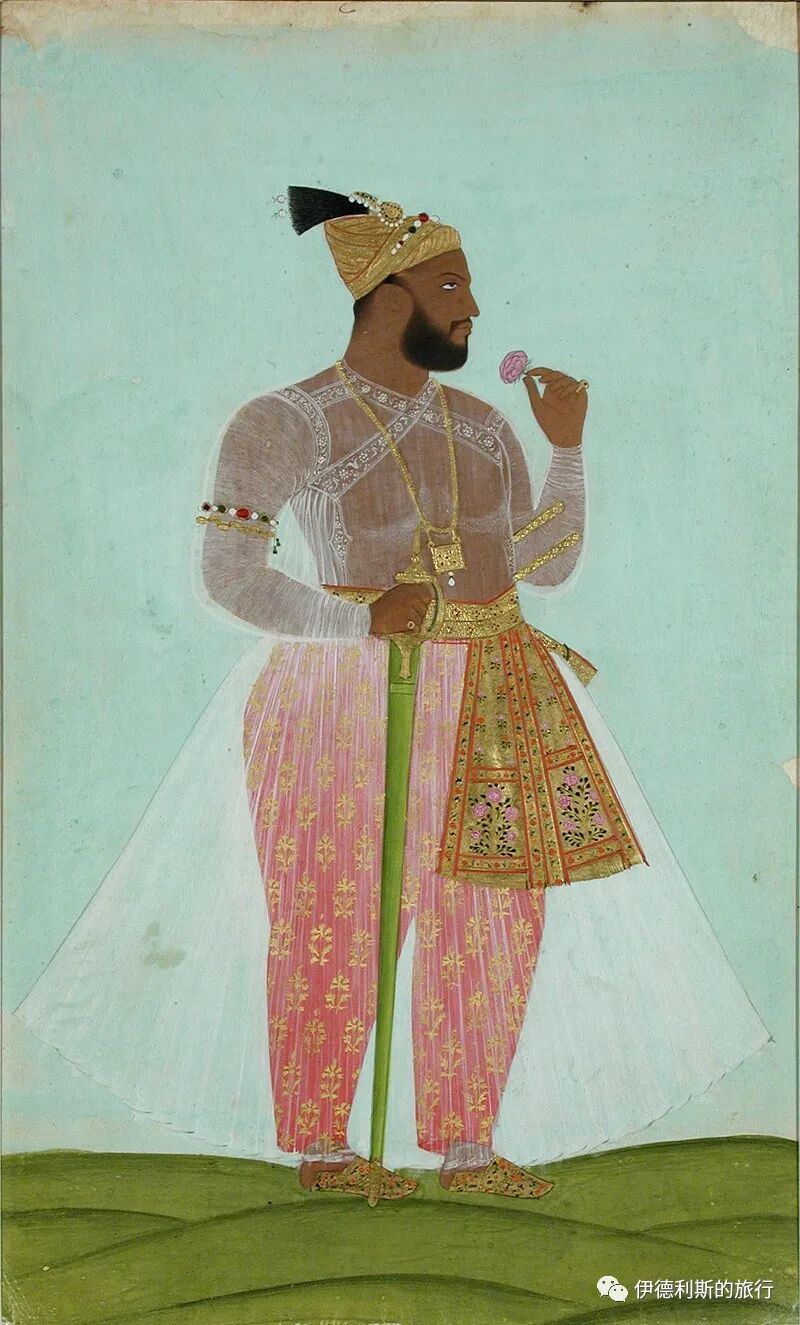
A photo of the tomb of Ali Barid Shah taken by S N Barid in 2015.
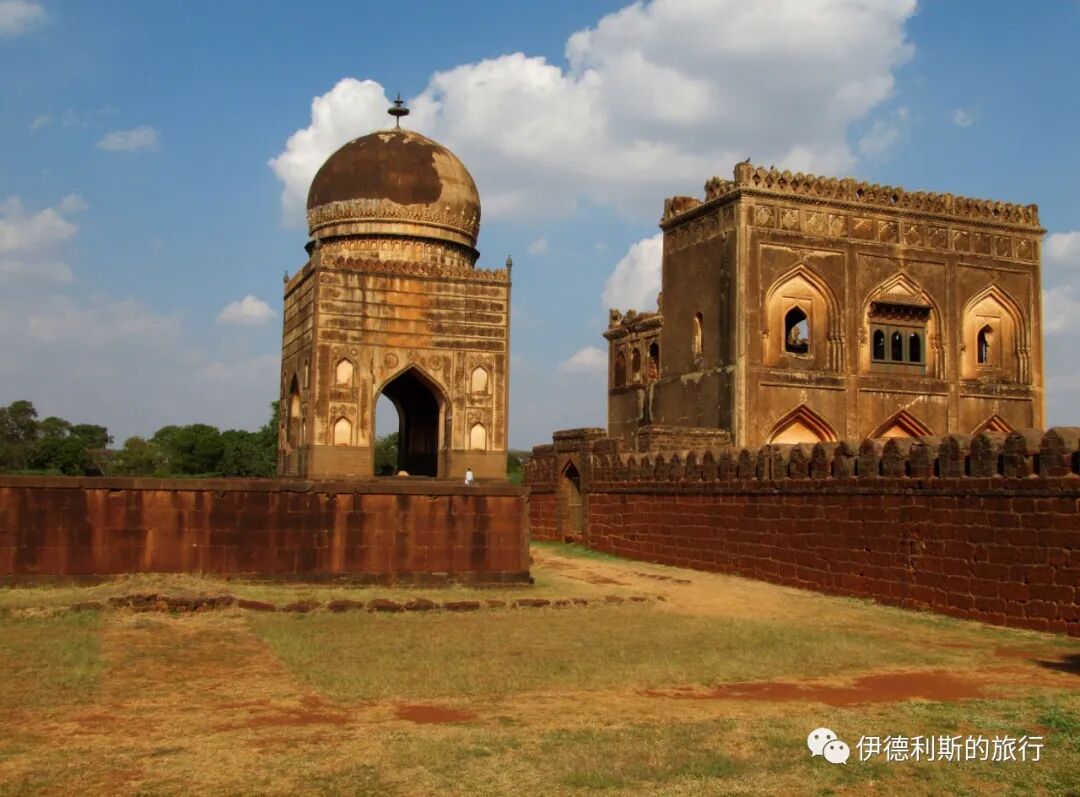
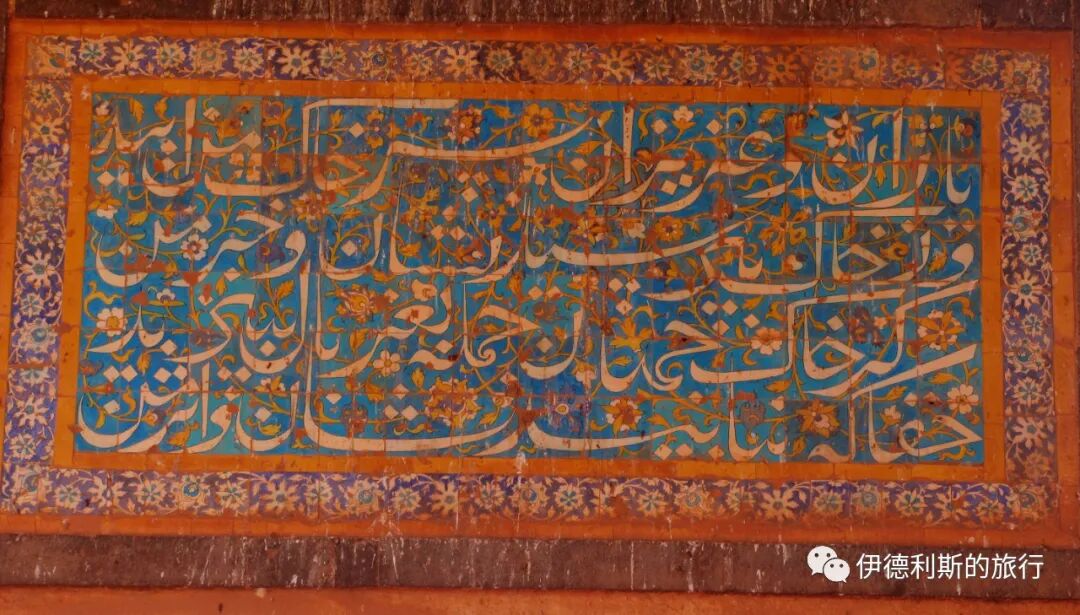
5. The Bijapur Sultanate on the Deccan Plateau (1490–1686)
The Bijapur Sultanate was the most southwestern of the five major Deccan sultanates. Its founder was a Georgian slave bought from Iran by the Bahmani Sultanate.
In 1550, the ruler of the sultanate was Ibrahim Adil Shah I, the first Bijapur sultan to hold the title of Shah. After taking the throne, Ibrahim converted from Shia to Sunni. He removed the names of the Twelve Imams from the Friday khutbah, promoted local Deccan Sunni Muslims, and suppressed the Shia faction.
During his reign, Ibrahim constantly formed and broke alliances with the other four Deccan sultanates. Although there were continuous military campaigns, there was little territorial expansion.
During the rule of the Bijapur Sultanate, the city of Bijapur was a center for business, trade, and education on the Deccan Plateau, famous for its unique Bijapur culture.
The location of Bijapur city.
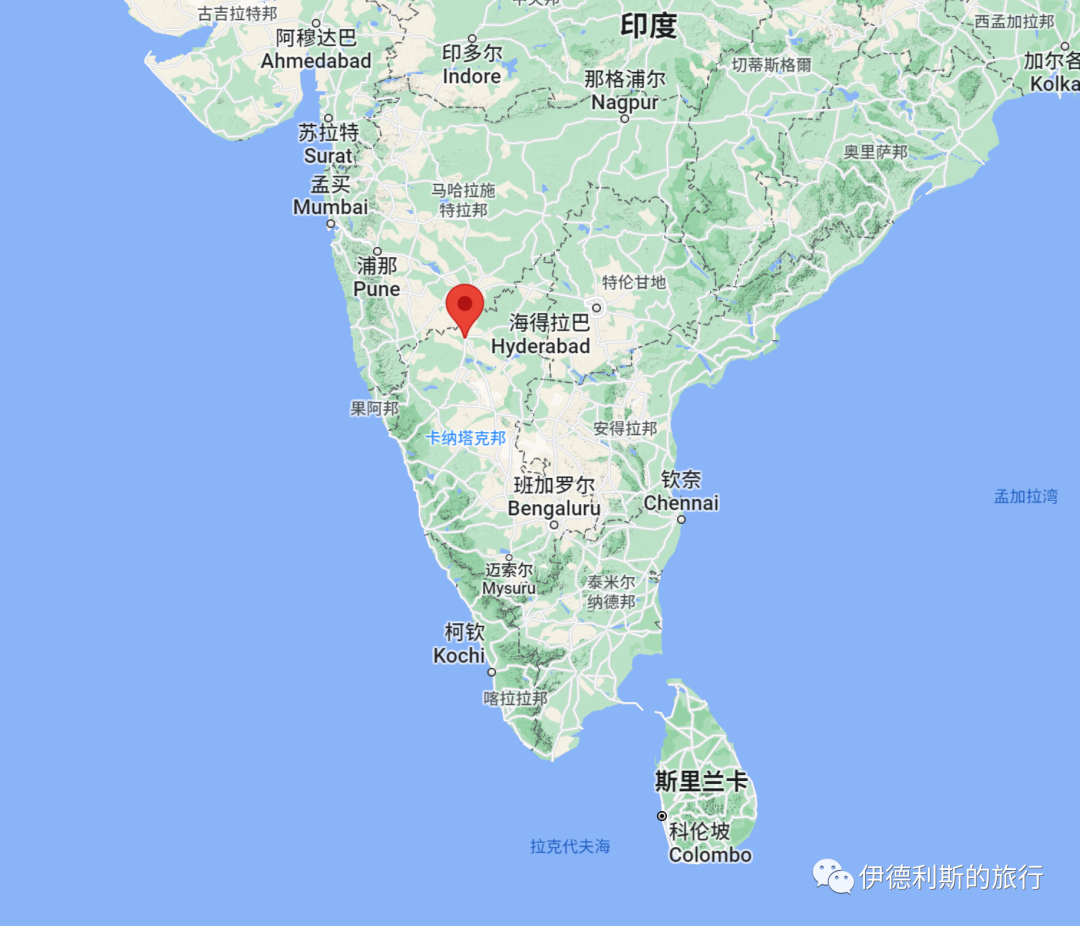
The Sultanate of the Maldives (1153-1968) in the Indian Ocean.
Let us leave the South Asian mainland and take a boat to the Maldives islands in the Indian Ocean.
As Arab merchants grew trade in the Indian Ocean, the Maldives changed from a Buddhist kingdom to an Islamic nation in the 12th century, becoming the Sultanate of the Maldives.
In 1550, the Sultanate of the Maldives was ruled by the Hilaalee dynasty, whose founder likely came from Somalia. In 1551, Sultan Muhammad III, who had only been in power for two years, was assassinated by his brother Hassan. Hassan was also the first Maldivian Sultan to convert to Christianity, but he was soon deposed.
Male, the capital of the Sultanate of the Maldives.
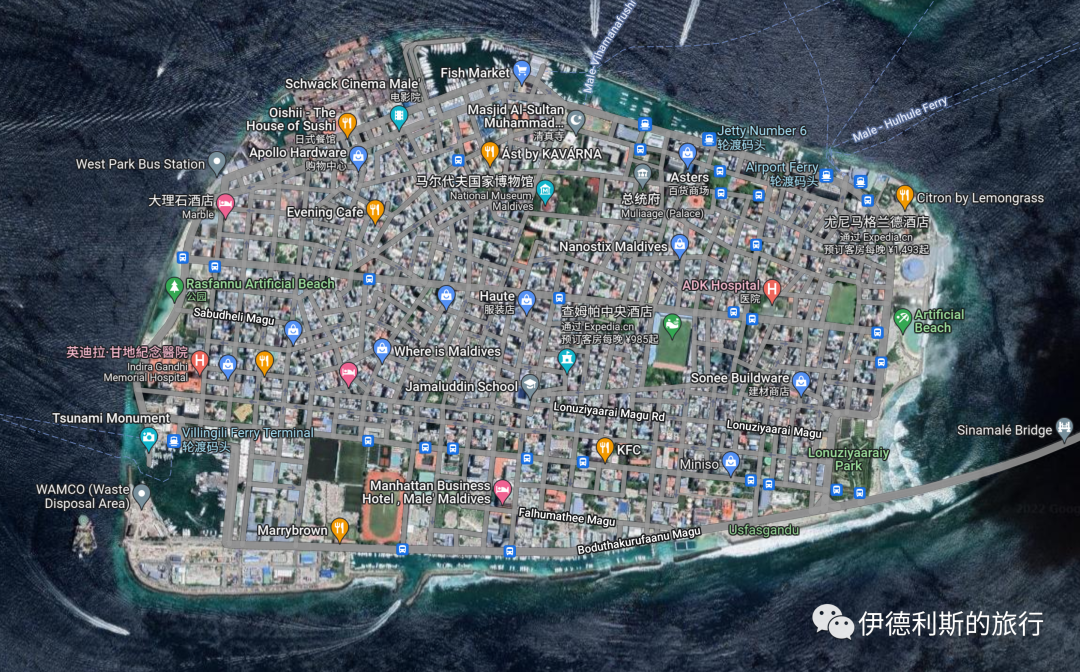
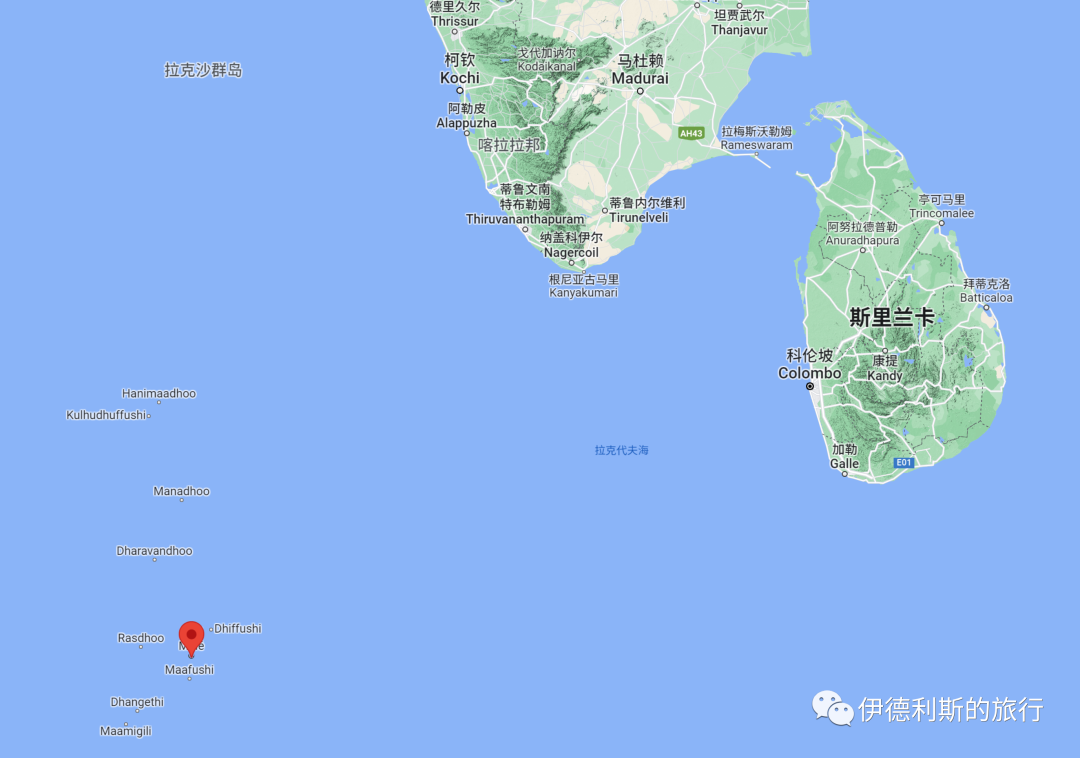
In the next part, we will cross the Bay of Bengal to Southeast Asia to see the Islamic culture there in 1550.
Halal Travel Guide: Delhi Humayun's Tomb — Mughal Architecture and History
Articles • ali2007fr posted the article • 0 comments • 156 views • 2026-05-18 09:01
Summary: Delhi Humayun's Tomb — Mughal Architecture and History is presented here as a firsthand travel account in clear English, beginning with this scene: Humayun's Tomb (Maqbara-i Humayun) is the final resting place of Humayun, the second emperor of the Mughal Empire. The account keeps its focus on Humayun's Tomb, Mughal History, Delhi Travel while preserving the names, places, food, and historical details from the Chinese source.
Humayun's Tomb (Maqbara-i Humayun) is the final resting place of Humayun, the second emperor of the Mughal Empire. It was commissioned in 1558 by his wife, Bega Begum, and designed by a Persian architect. It is the first garden-style tomb in South Asia and the first grand red sandstone imperial tomb of the Mughal Empire. It was added to the World Heritage List in 1993.
In my book, The Sixth City of Delhi: The Birth of the Mughal Dynasty, I wrote about how Humayun built a new capital in Delhi in 1533 called Din Panah, which means 'Refuge of the Faith'. On January 24, 1556, Humayun was reading on the second floor of the library inside Din Panah. When the muezzin called the adhan, Humayun hurried downstairs to perform namaz. He tripped on the stairs, fell, and passed away. His 13-year-old son, Akbar, then took the throne.
Humayun's Tomb is located south of Din Panah, right next to the famous South Asian Sufi shrine, the Nizamuddin Dargah (Nizamuddin Mazar). Construction began in 1556 and finished in 1572, taking 16 years to complete. Records show that after Queen Bega Begum returned from Hajj, she dedicated herself to building the tomb. She chose the Persian architect Mirak Mirza Ghiyas from the ancient city of Herat to design it. Mirak Mirza Ghiyas had designed buildings in Herat, Bukhara, and other parts of India. He passed away before the tomb was finished, and his son, Sayyed Muhammad, completed the project.
Humayun's Tomb
Humayun's Tomb carries on the Indo-Islamic architectural style developed since the Delhi Sultanate. It is the first Indian building to use a Persian double dome, which consists of an inner and outer Persian hemispherical dome.
The main dome is surrounded by Chhatri (domed pavilions) and smaller decorative spires called Guldasta, both of which are unique to Indo-Islamic architecture. Guldasta means 'bundled bouquet' in Persian, and in Indo-Islamic architecture, it usually takes the shape of a flower. Both of these designs are a fusion of Persian pavilions and the Hindu roof tower known as a Sikhara.
Below the pure white marble main dome, the main body of the structure is built from a mix of white marble and red and yellow sandstone. In the center is a Persian-style Iwan (arched gateway), surrounded by many Jali (lattice screens) typical of Indo-Islamic architecture. These windows are said to be closely related to the Mashrabiya lattice windows that originated in Arabia.
The main building sits on a massive 8-meter-high terrace, with its sides also decorated by a series of arched Iwan.
Humayun's Tomb is surrounded by a traditional Persian four-part garden called a Charbagh. The name means 'four gardens' in Persian and comes from the 'four gardens' mentioned in the Quran (55:46): 'But for he who has feared the position of his Lord are two gardens.' And (55:62): 'And below them both are two gardens.' The hallmark of a Charbagh garden is two axes that intersect at the center, dividing the garden into four sections. Babur, the founder of the Mughal Empire, used a Charbagh garden for his tomb in Kabul, Afghanistan, but Humayun's Tomb was the first time this Persian garden style was brought to India.
The interior of Humayun's Tomb consists of a main hall under the central dome and eight rooms arranged in two levels around it. Humayun's tombstone is in the center of the main hall, while his actual burial site is in a basement below the tombstone, accessible only through a separate passage outside the main structure. In 1611, English merchant William Finch visited Humayun's Tomb. He recorded that the interior had rich decorations and carpets, and the tombstone was covered by a Shamiana (ceremonial tent). He also noted that a Quran, Humayun's sword, turban, and shoes were on display, though none of these can be seen today.
Other rooms contain the graves of members of the Mughal court, including Humayun's queens Bega Begum and Hamida Begum, several of his daughters, and the seventh Mughal emperor, Bahadur Shah I. Unlike the Delhi Sultanate period, which built elaborate mihrab (prayer niches) on the west side of tombs, Humayun's Tomb cleverly uses Jali lattice screens as a mihrab. Light shines through the screens into the room, creating areas of brightness and shadow depending on the angle. The tomb also carefully displays the process of making Jali lattice screens.
The terrace outside the main building also holds many tombstones of Mughal royalty and nobles, including Dara Shikoh, the eldest son of Shah Jahan who was murdered by Aurangzeb. Because of this, the area is also called the 'dormitory of the Mughals'.
Barber's Tomb
On the southeast side of Humayun's Tomb is the 'Barber's Tomb', built in 1590. It holds the grave of the personal barber to the third Mughal emperor, Akbar, who was also one of Akbar's closest servants. This tomb also features a Persian double-dome structure, appearing as two domes from the inside and outside, and has a Chhatri domed pavilion at each of the four corners.
West Gate
The Persian garden surrounding Humayun's Tomb has a gate on each side. The West Gate is the main entrance; it has an I-shaped structure with splayed walls on the west side and two Chhatri domed pavilions on top.
Bu Halima Garden Tomb Gate
Directly across from the west gate of Humayun's Tomb stands the 16th-century gate of the Bu Halima Garden Tomb. There are no records identifying who Bu Halima was. The gate features a classic Indian-style stone window (jharokha), which is a signature element of ancient Indian building facades.
Between 2012 and 2013, the Aga Khan Trust for Culture hired craftsmen to restore the site using traditional techniques and materials. They replaced missing glazed tiles and mosaics and swapped modern cement for traditional lime mortar.
Afsarwala Tomb and Mosque
The Afsarwala Tomb and Mosque are located southwest of Humayun's Tomb and were built between 1566 and 1567. Unfortunately, the tombstone only lists the construction date and nothing about the person buried there. It is believed they were likely a noble in the court of the Mughal Emperor Akbar, as the name 'Afsarwala' suggests the person was a military officer.
North Gate of Arab Sarai
On the main road west of Humayun's Tomb stands the north gate of Arab Sarai. The original site of Arab Sarai is now an industrial training institute.
The gate originally included a main entrance and arched rooms on both sides, but most of it has collapsed, leaving only the facade well-preserved. The gate is built from light-colored quartzite and red sandstone, matching the style of Humayun's Tomb. The gate features exquisite traditional Indian stone windows (jharokha) decorated with colorful tiles.
Some say this was where the Persian craftsmen who built Humayun's Tomb lived, while legend has it that it housed 300 reciters brought back by Humayun's queen, Haji Begum, after her pilgrimage.
In recent years, the Aga Khan Trust for Culture restored the site, reinforcing the main structure and replacing missing tiles.
Sufi shrine (gongbei) Dargah Patte Waali
Northwest of Humayun's Tomb is a Sufi shrine (gongbei) called Dargah Patte Waali. It holds the graves of the famous Indian Sufi saints Hazrat Shamshuddin Patty Shah and Hazrat Maulana Abdul Qadir Jahangiri. They were said to be contemporaries of the famous nearby Sufi saint Nizamuddin, and the shrine was first ordered to be built in 1325 by the Tughlaq dynasty of the Delhi Sultanate.
While walking through the Humayun's Tomb area, I faintly heard music outside the walls. I quickly left the site and went to Dargah Patte Waali outside the wall. Everyone was holding a gathering (mehfil) and performing Qawwali, the most distinctive form of devotional singing in South Asia. It was my first time hearing Qawwali live, and it was very moving. Unfortunately, I didn't have much information at the time. In fact, the nearby Nizamuddin Dargah hosts Qawwali performances every evening, and that is the birthplace of Qawwali. After returning home and looking it up, I realized I really want to go back to South Asia and experience the charm of Qawwali again. view all
Summary: Delhi Humayun's Tomb — Mughal Architecture and History is presented here as a firsthand travel account in clear English, beginning with this scene: Humayun's Tomb (Maqbara-i Humayun) is the final resting place of Humayun, the second emperor of the Mughal Empire. The account keeps its focus on Humayun's Tomb, Mughal History, Delhi Travel while preserving the names, places, food, and historical details from the Chinese source.
Humayun's Tomb (Maqbara-i Humayun) is the final resting place of Humayun, the second emperor of the Mughal Empire. It was commissioned in 1558 by his wife, Bega Begum, and designed by a Persian architect. It is the first garden-style tomb in South Asia and the first grand red sandstone imperial tomb of the Mughal Empire. It was added to the World Heritage List in 1993.
In my book, The Sixth City of Delhi: The Birth of the Mughal Dynasty, I wrote about how Humayun built a new capital in Delhi in 1533 called Din Panah, which means 'Refuge of the Faith'. On January 24, 1556, Humayun was reading on the second floor of the library inside Din Panah. When the muezzin called the adhan, Humayun hurried downstairs to perform namaz. He tripped on the stairs, fell, and passed away. His 13-year-old son, Akbar, then took the throne.
Humayun's Tomb is located south of Din Panah, right next to the famous South Asian Sufi shrine, the Nizamuddin Dargah (Nizamuddin Mazar). Construction began in 1556 and finished in 1572, taking 16 years to complete. Records show that after Queen Bega Begum returned from Hajj, she dedicated herself to building the tomb. She chose the Persian architect Mirak Mirza Ghiyas from the ancient city of Herat to design it. Mirak Mirza Ghiyas had designed buildings in Herat, Bukhara, and other parts of India. He passed away before the tomb was finished, and his son, Sayyed Muhammad, completed the project.
Humayun's Tomb
Humayun's Tomb carries on the Indo-Islamic architectural style developed since the Delhi Sultanate. It is the first Indian building to use a Persian double dome, which consists of an inner and outer Persian hemispherical dome.
The main dome is surrounded by Chhatri (domed pavilions) and smaller decorative spires called Guldasta, both of which are unique to Indo-Islamic architecture. Guldasta means 'bundled bouquet' in Persian, and in Indo-Islamic architecture, it usually takes the shape of a flower. Both of these designs are a fusion of Persian pavilions and the Hindu roof tower known as a Sikhara.
Below the pure white marble main dome, the main body of the structure is built from a mix of white marble and red and yellow sandstone. In the center is a Persian-style Iwan (arched gateway), surrounded by many Jali (lattice screens) typical of Indo-Islamic architecture. These windows are said to be closely related to the Mashrabiya lattice windows that originated in Arabia.
The main building sits on a massive 8-meter-high terrace, with its sides also decorated by a series of arched Iwan.
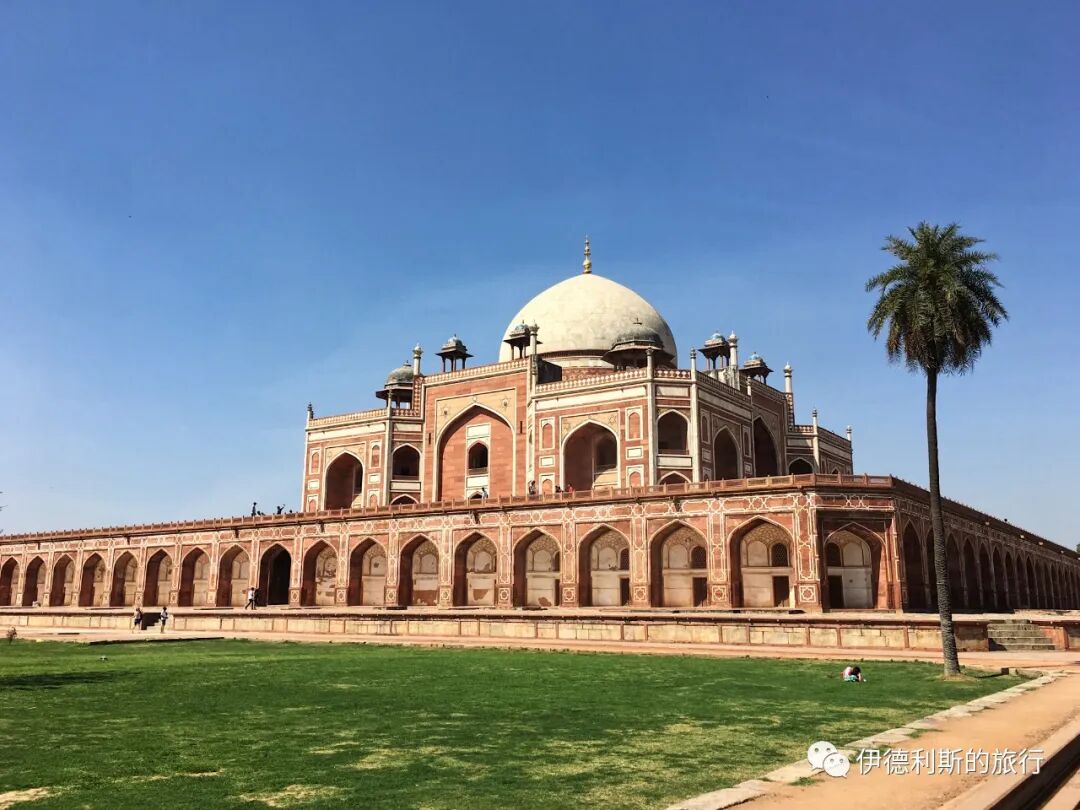
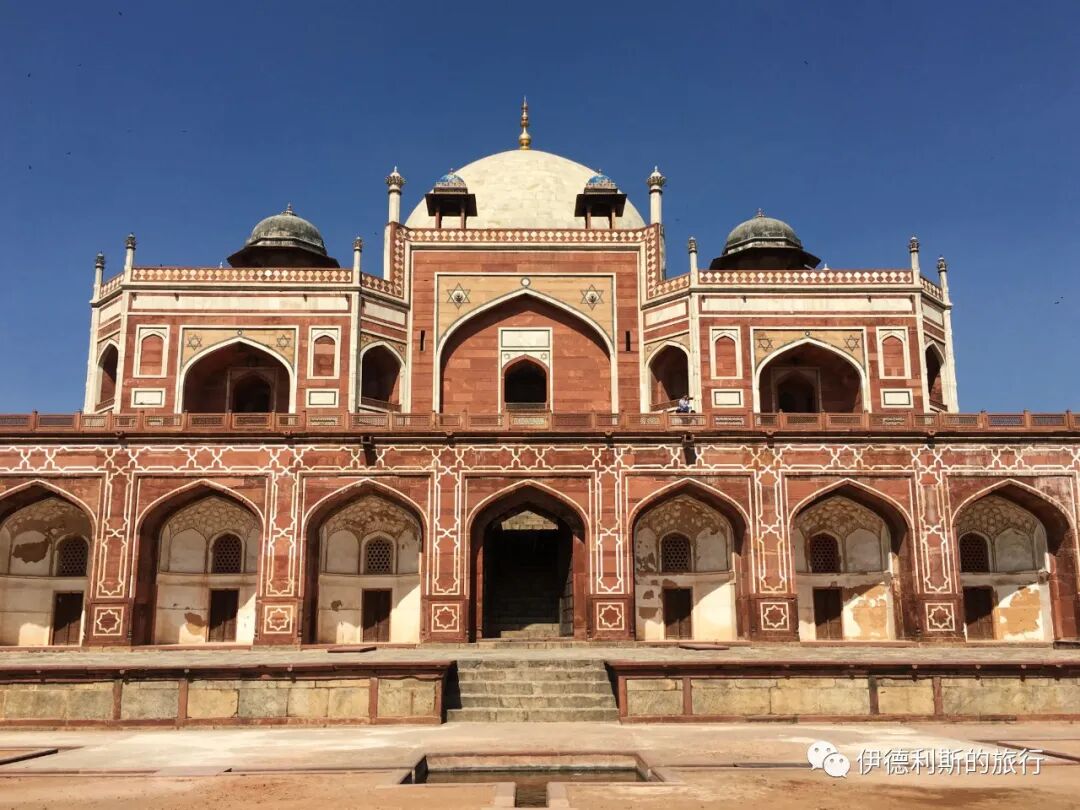
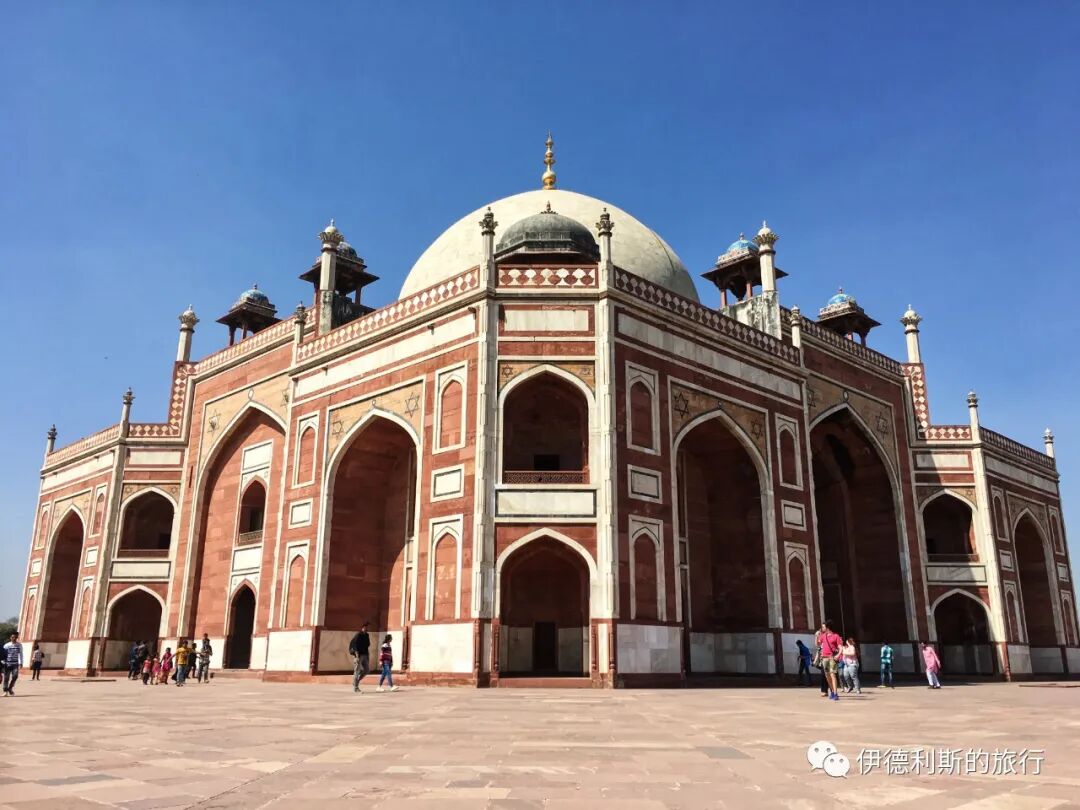
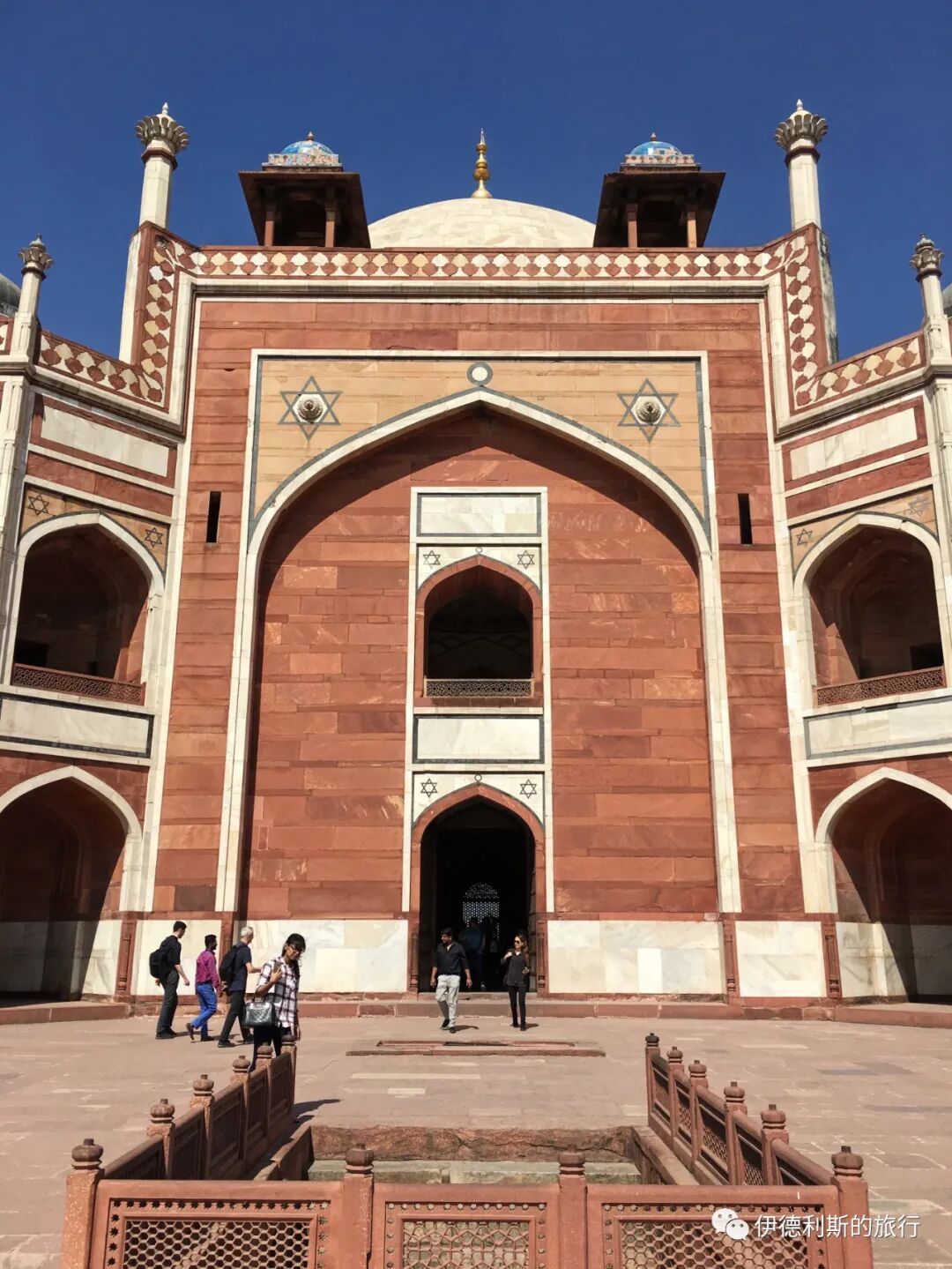
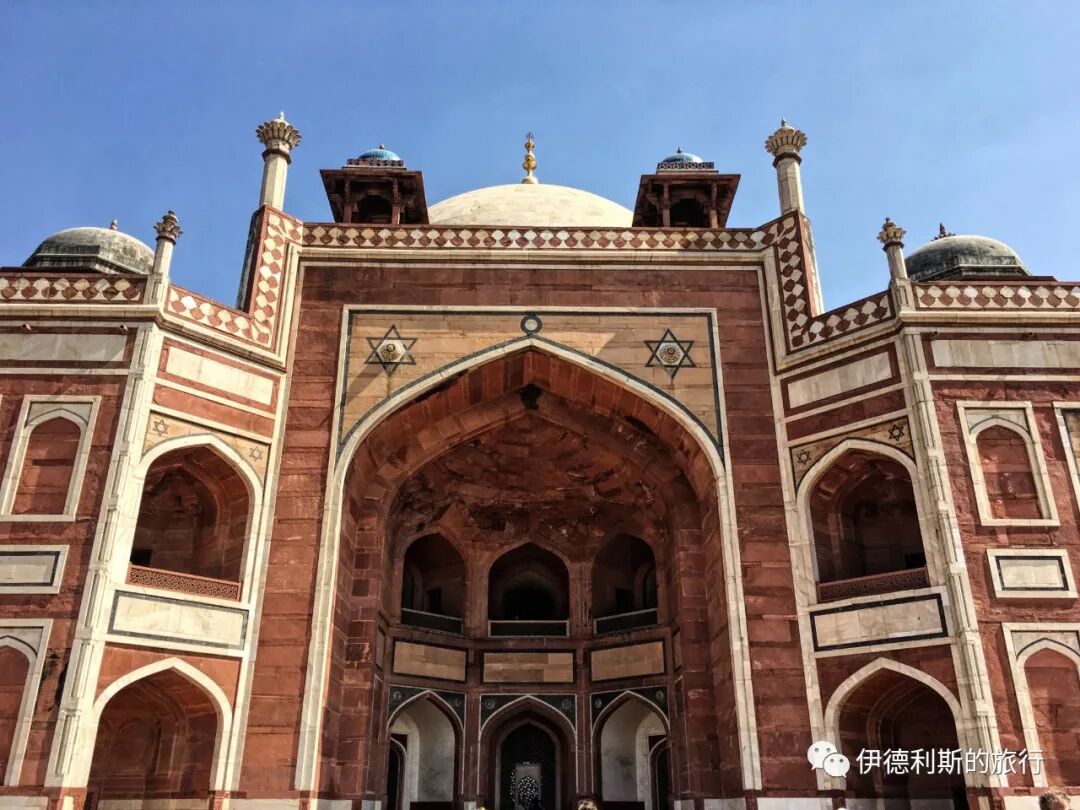
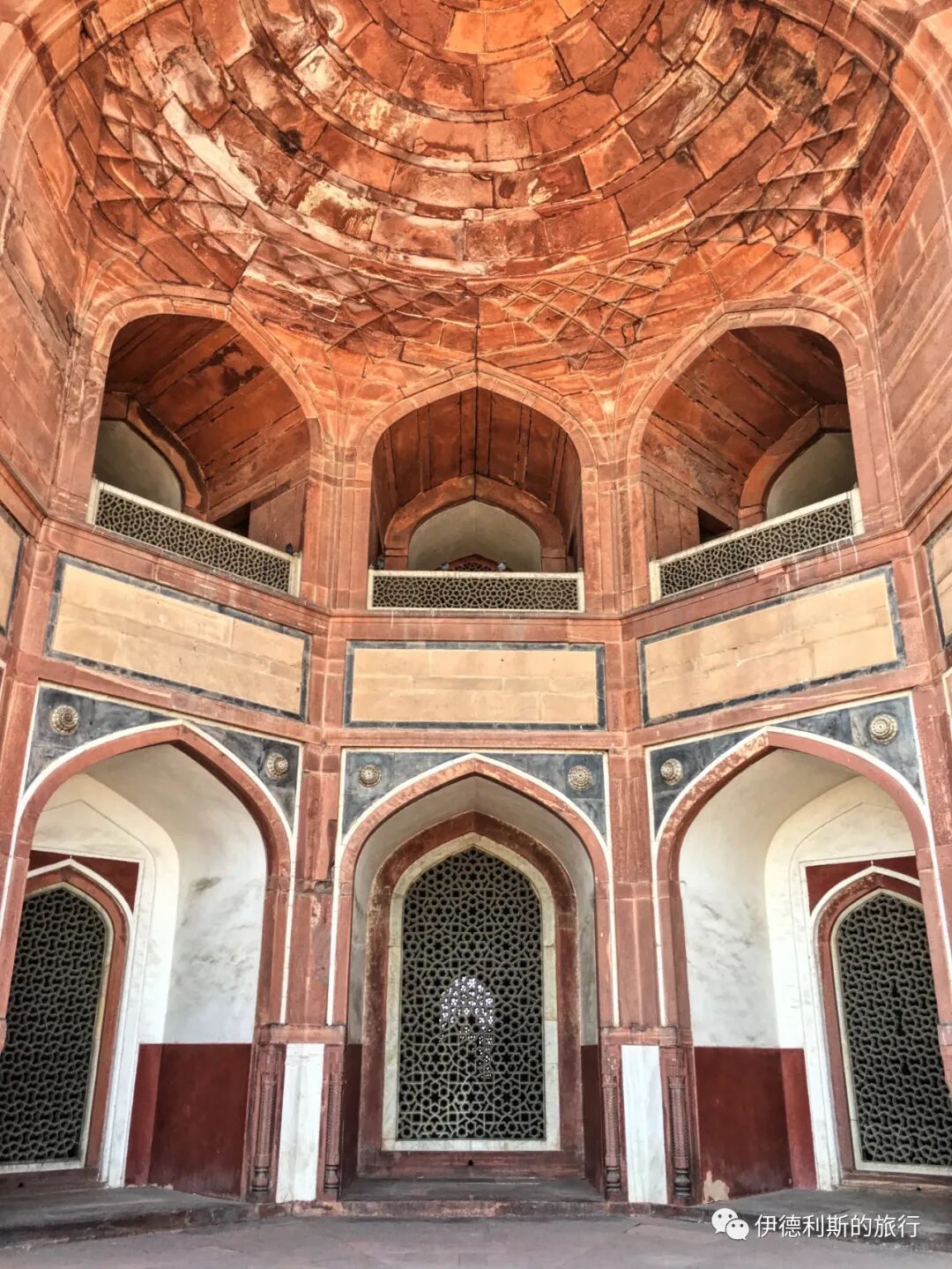
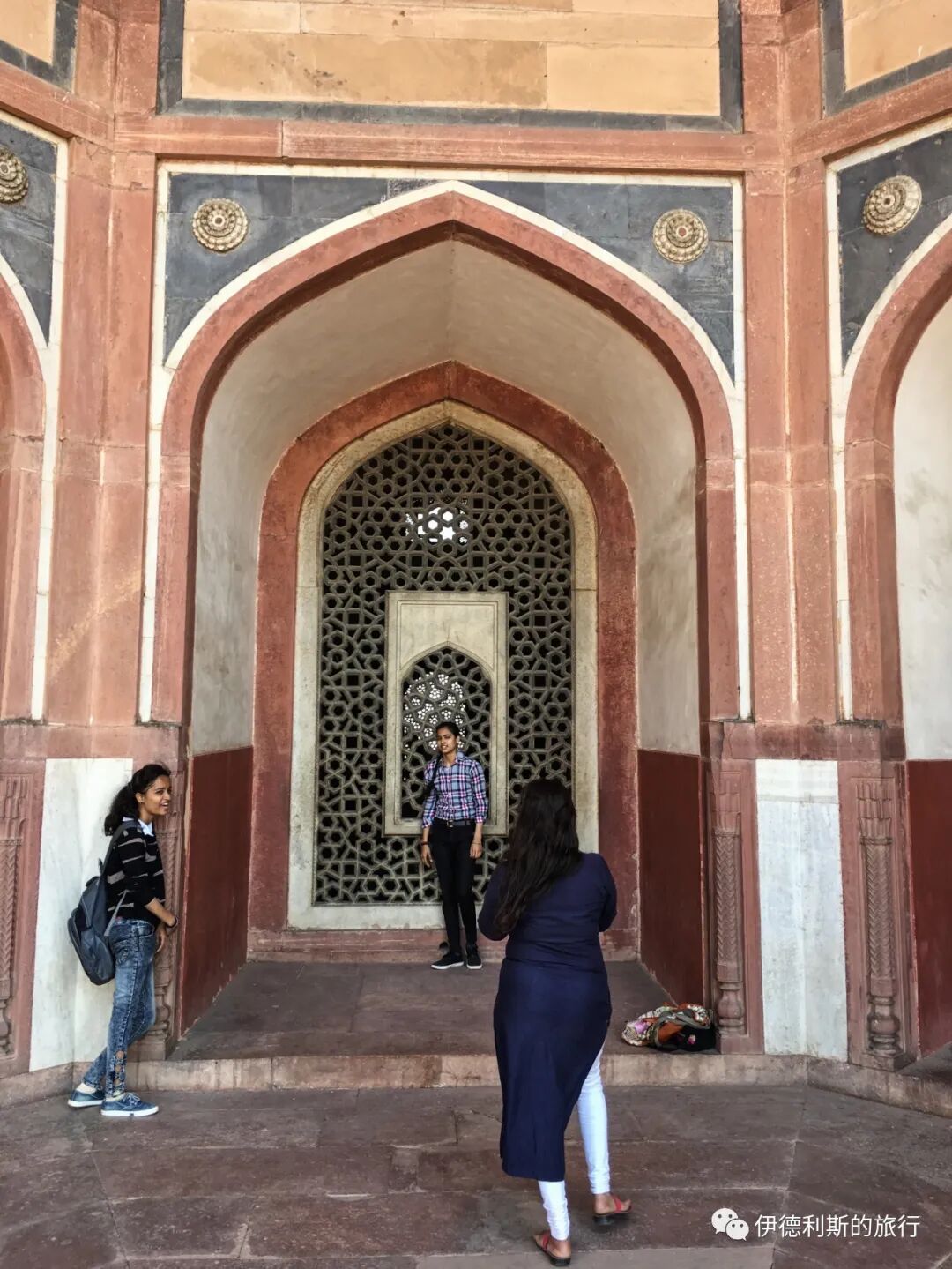
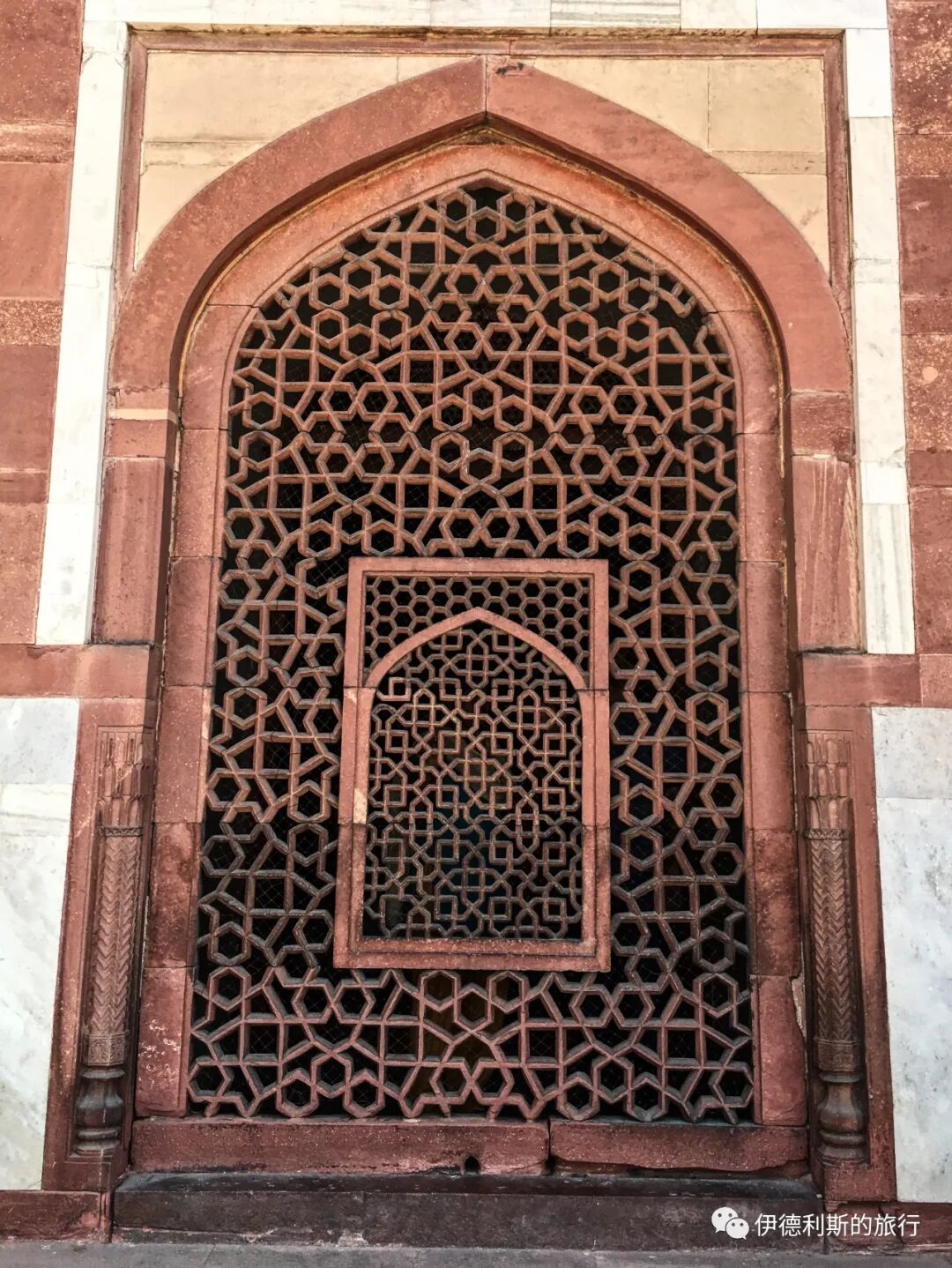
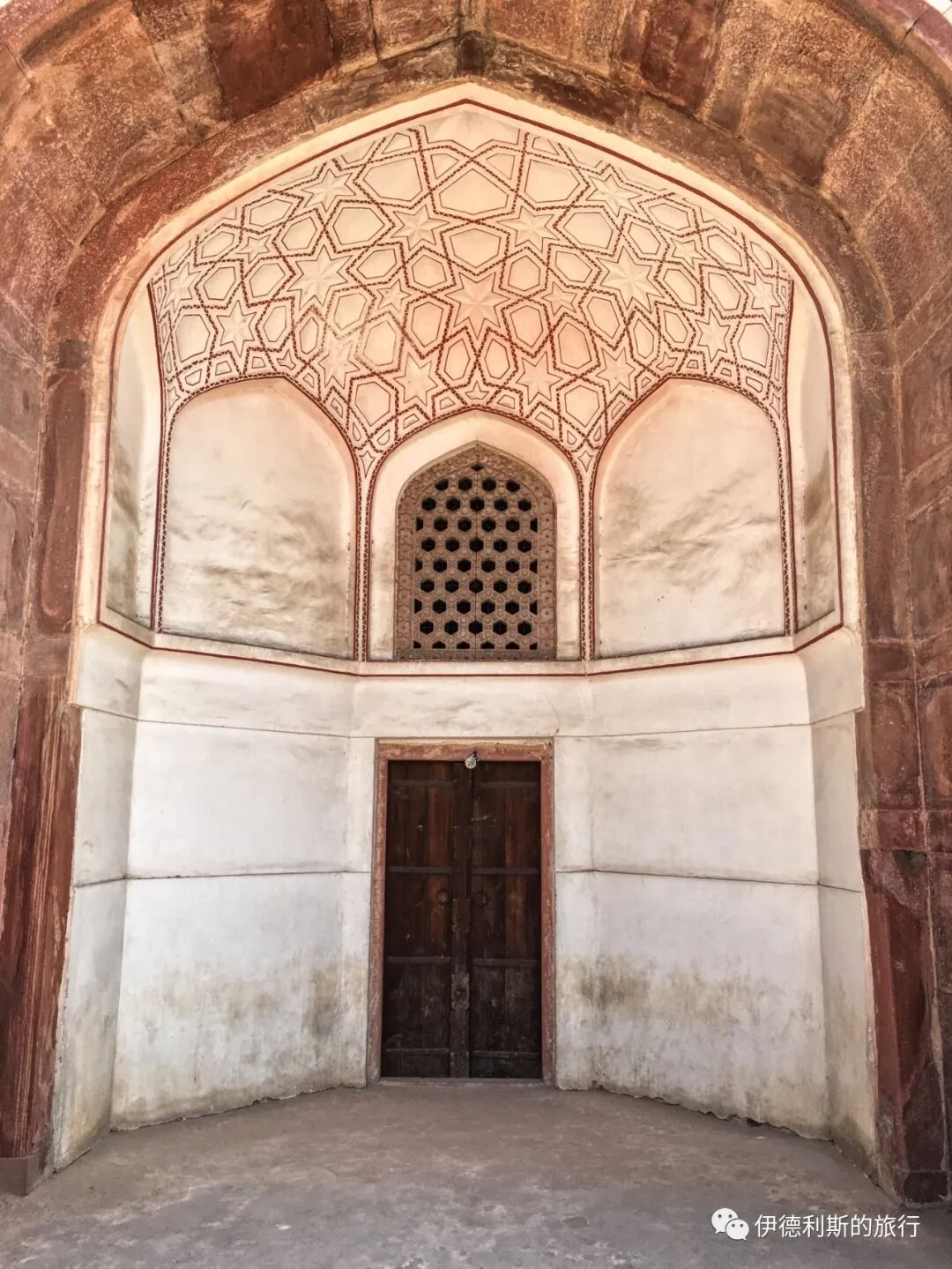
Humayun's Tomb is surrounded by a traditional Persian four-part garden called a Charbagh. The name means 'four gardens' in Persian and comes from the 'four gardens' mentioned in the Quran (55:46): 'But for he who has feared the position of his Lord are two gardens.' And (55:62): 'And below them both are two gardens.' The hallmark of a Charbagh garden is two axes that intersect at the center, dividing the garden into four sections. Babur, the founder of the Mughal Empire, used a Charbagh garden for his tomb in Kabul, Afghanistan, but Humayun's Tomb was the first time this Persian garden style was brought to India.
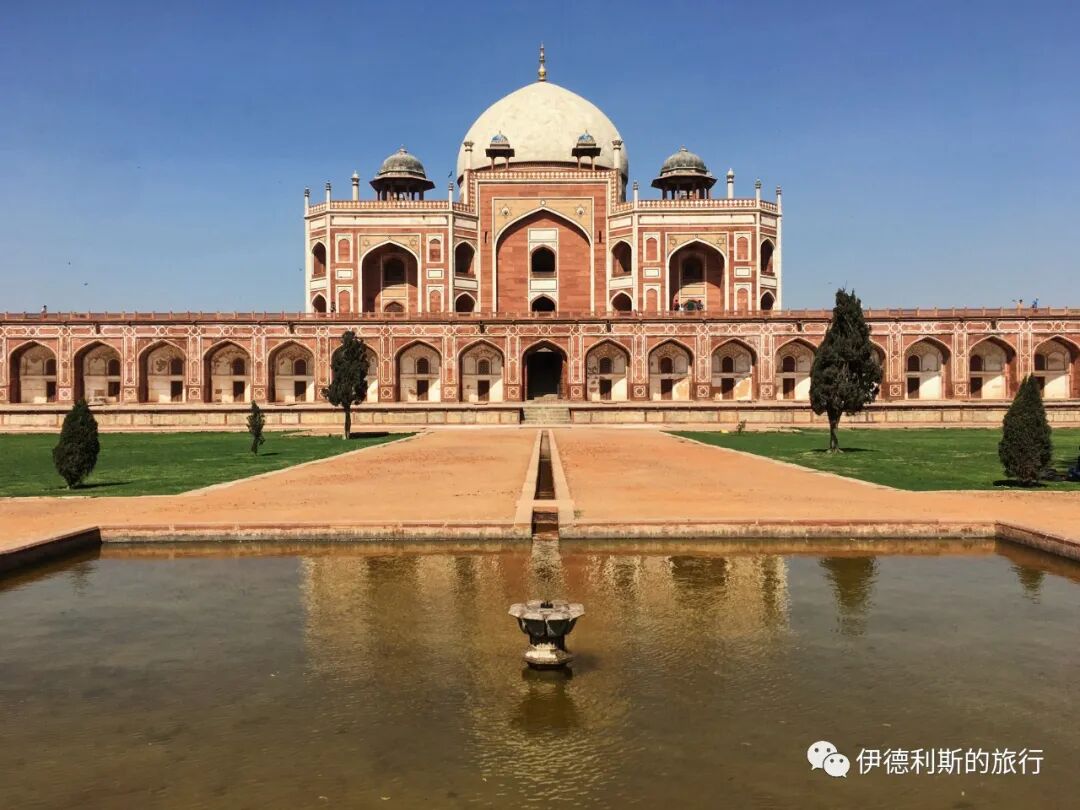
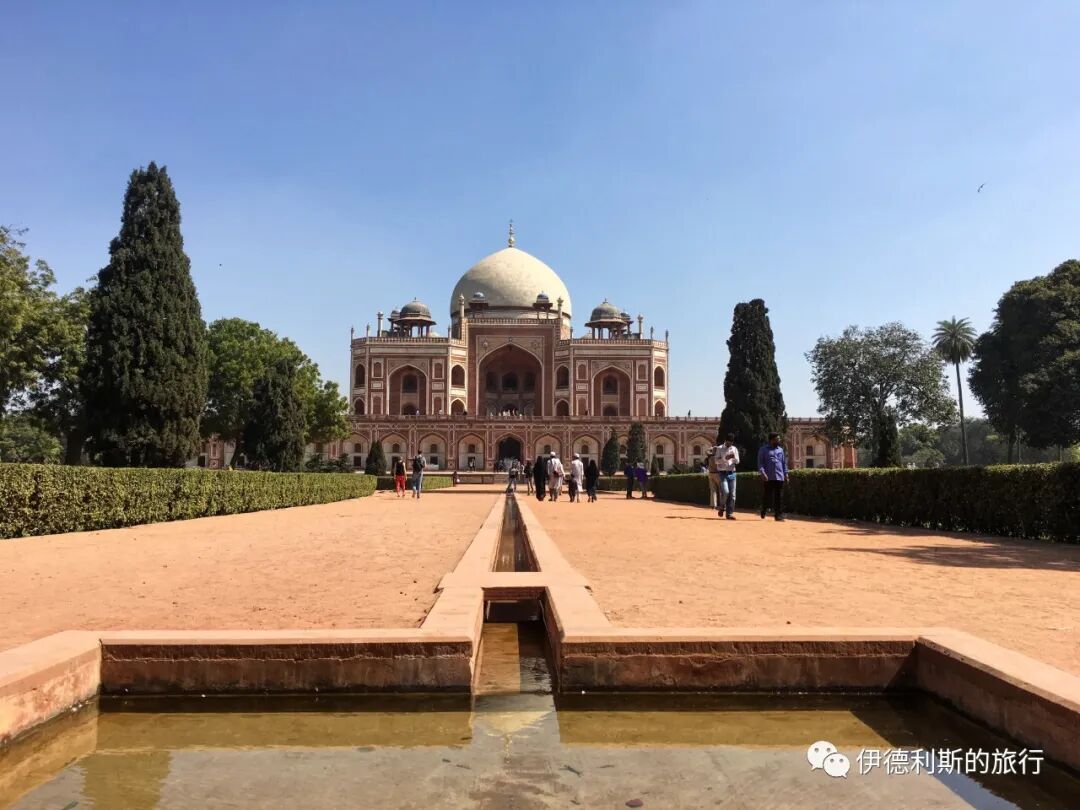
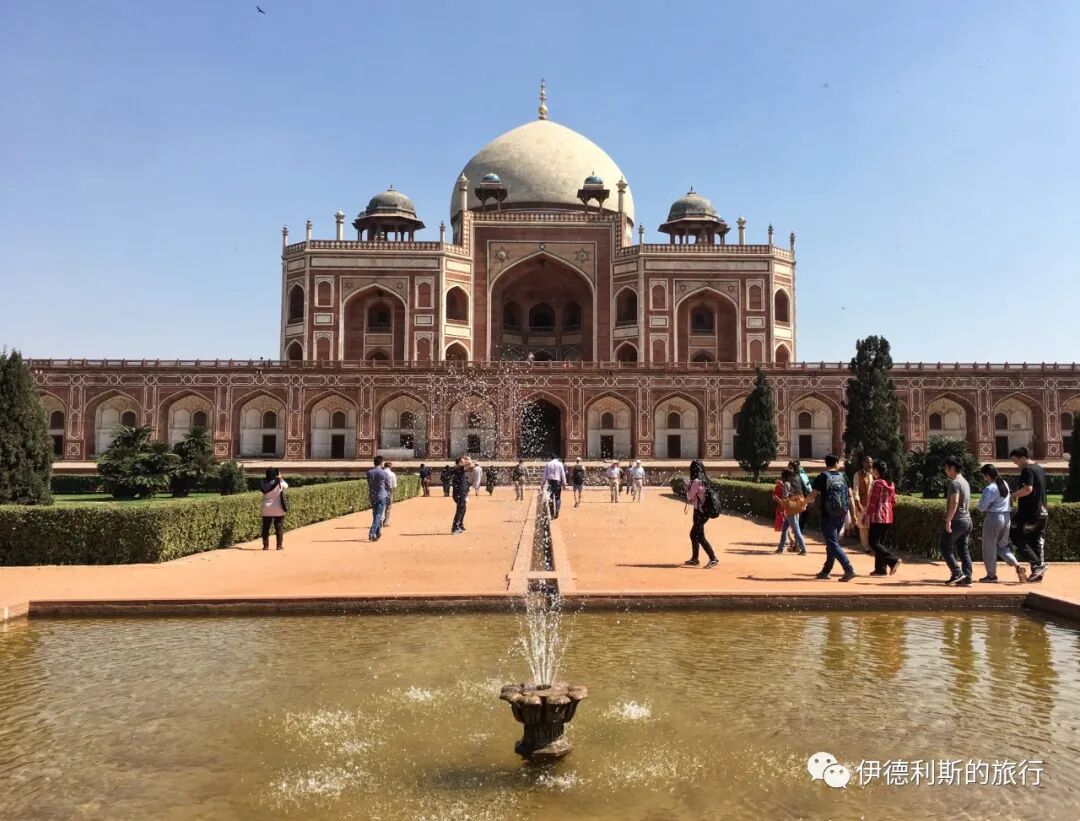
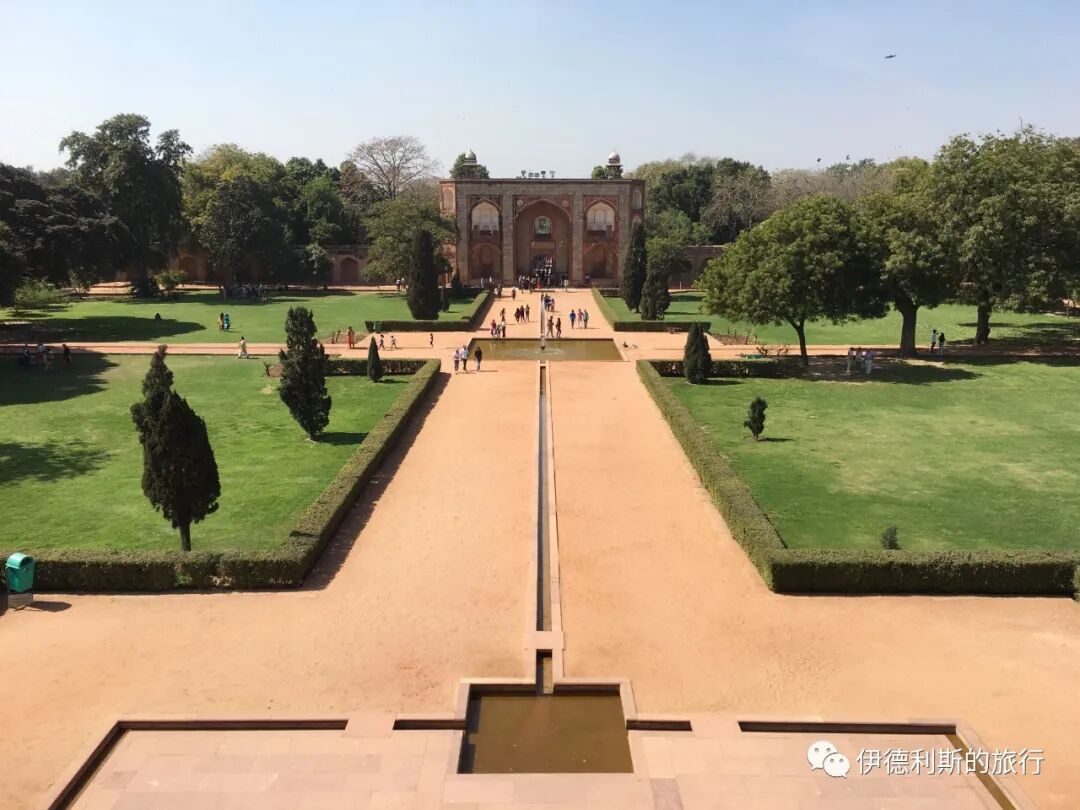
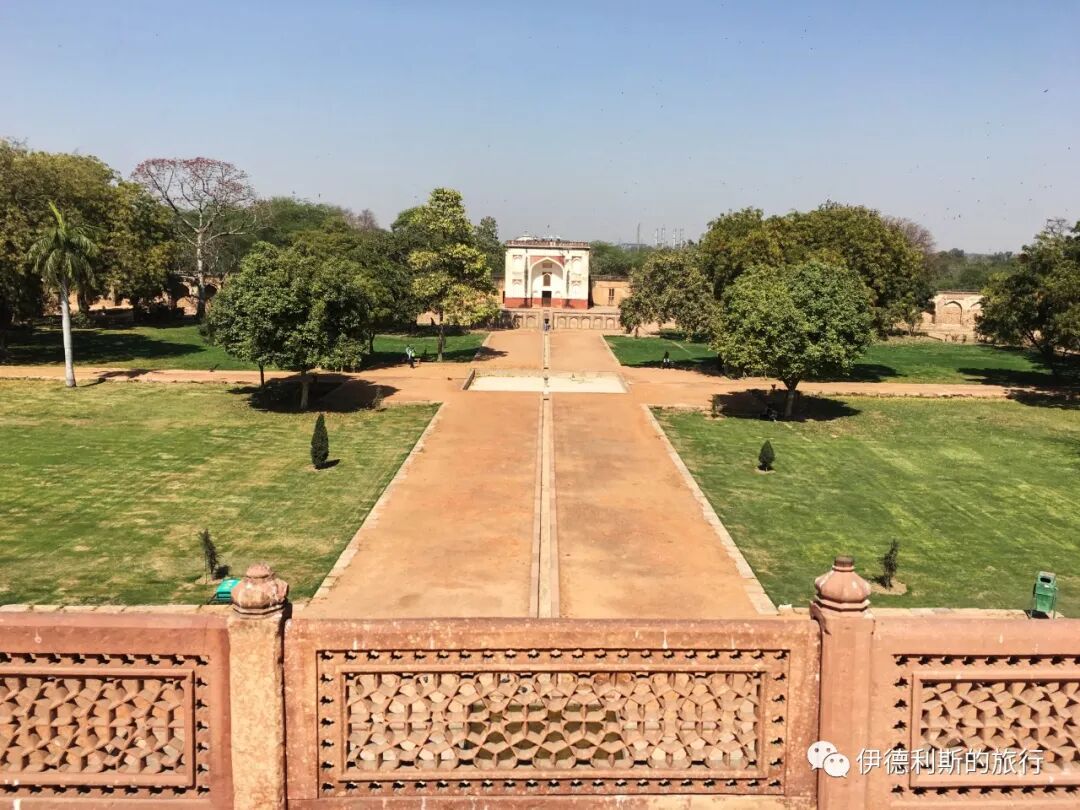
The interior of Humayun's Tomb consists of a main hall under the central dome and eight rooms arranged in two levels around it. Humayun's tombstone is in the center of the main hall, while his actual burial site is in a basement below the tombstone, accessible only through a separate passage outside the main structure. In 1611, English merchant William Finch visited Humayun's Tomb. He recorded that the interior had rich decorations and carpets, and the tombstone was covered by a Shamiana (ceremonial tent). He also noted that a Quran, Humayun's sword, turban, and shoes were on display, though none of these can be seen today.
Other rooms contain the graves of members of the Mughal court, including Humayun's queens Bega Begum and Hamida Begum, several of his daughters, and the seventh Mughal emperor, Bahadur Shah I. Unlike the Delhi Sultanate period, which built elaborate mihrab (prayer niches) on the west side of tombs, Humayun's Tomb cleverly uses Jali lattice screens as a mihrab. Light shines through the screens into the room, creating areas of brightness and shadow depending on the angle. The tomb also carefully displays the process of making Jali lattice screens.
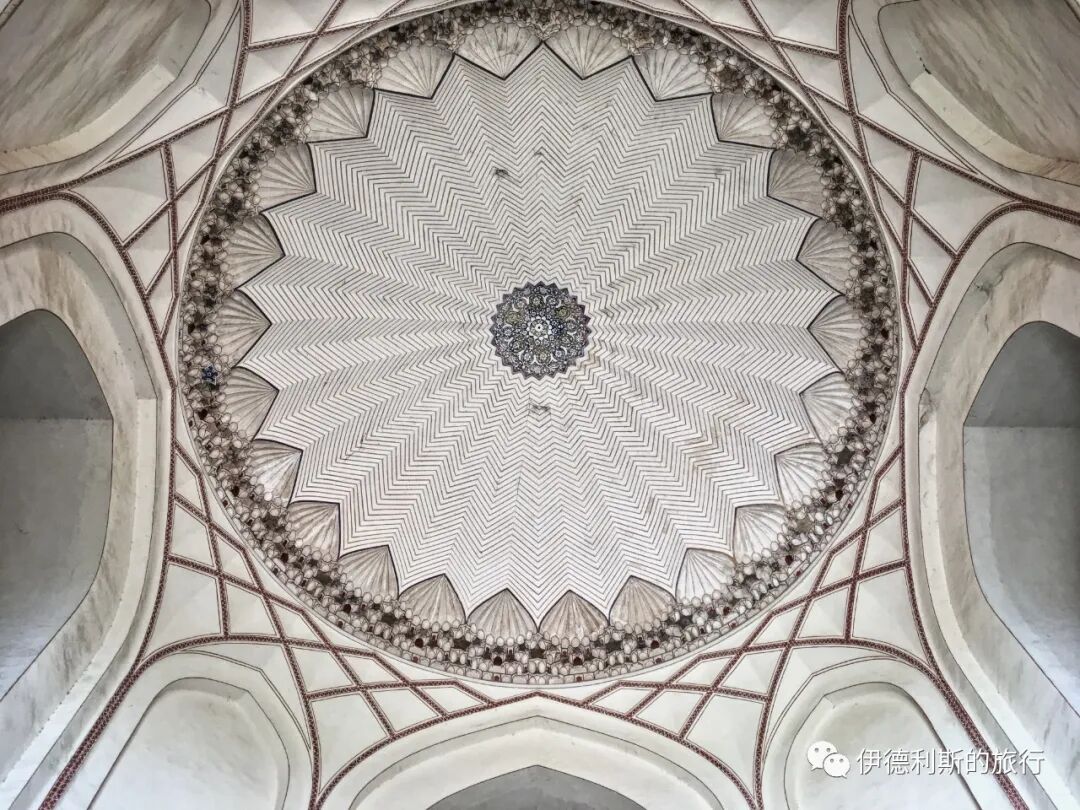
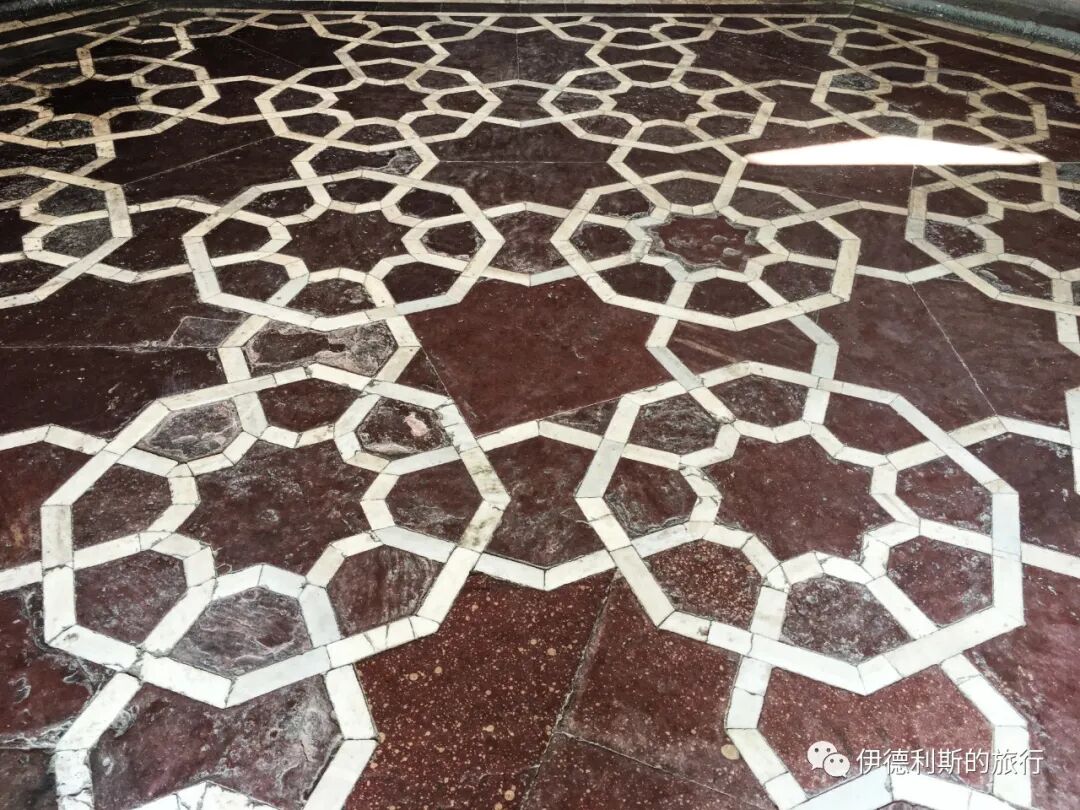
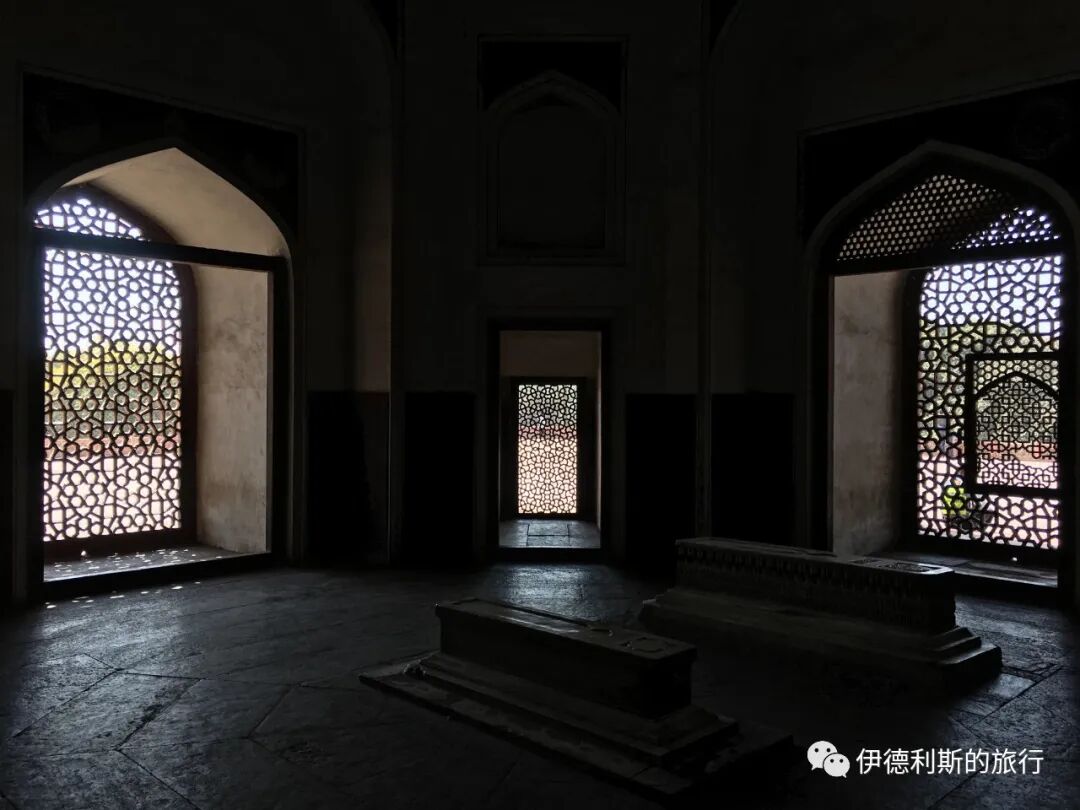
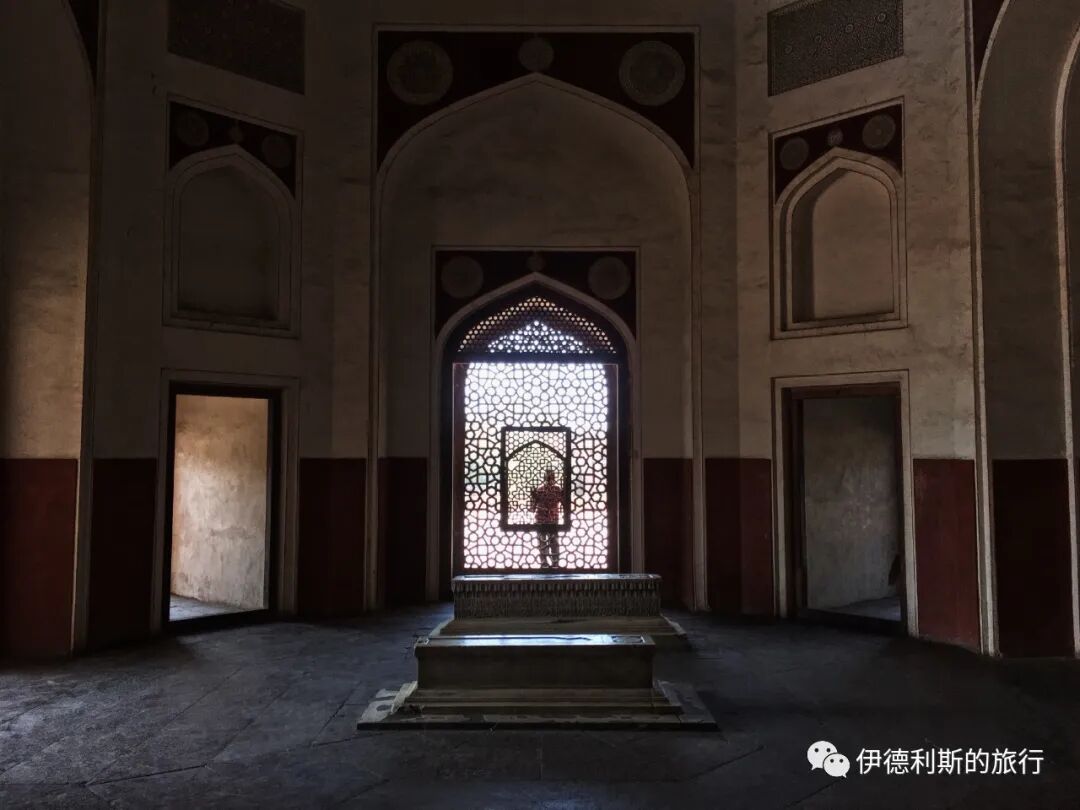
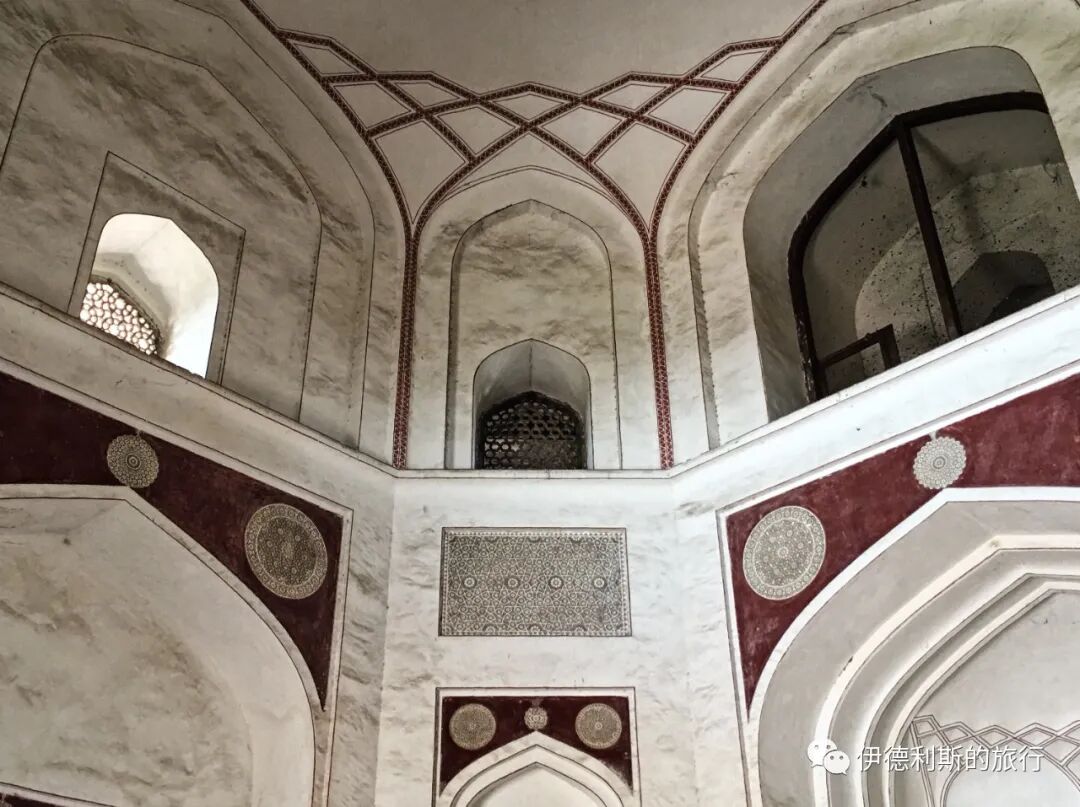
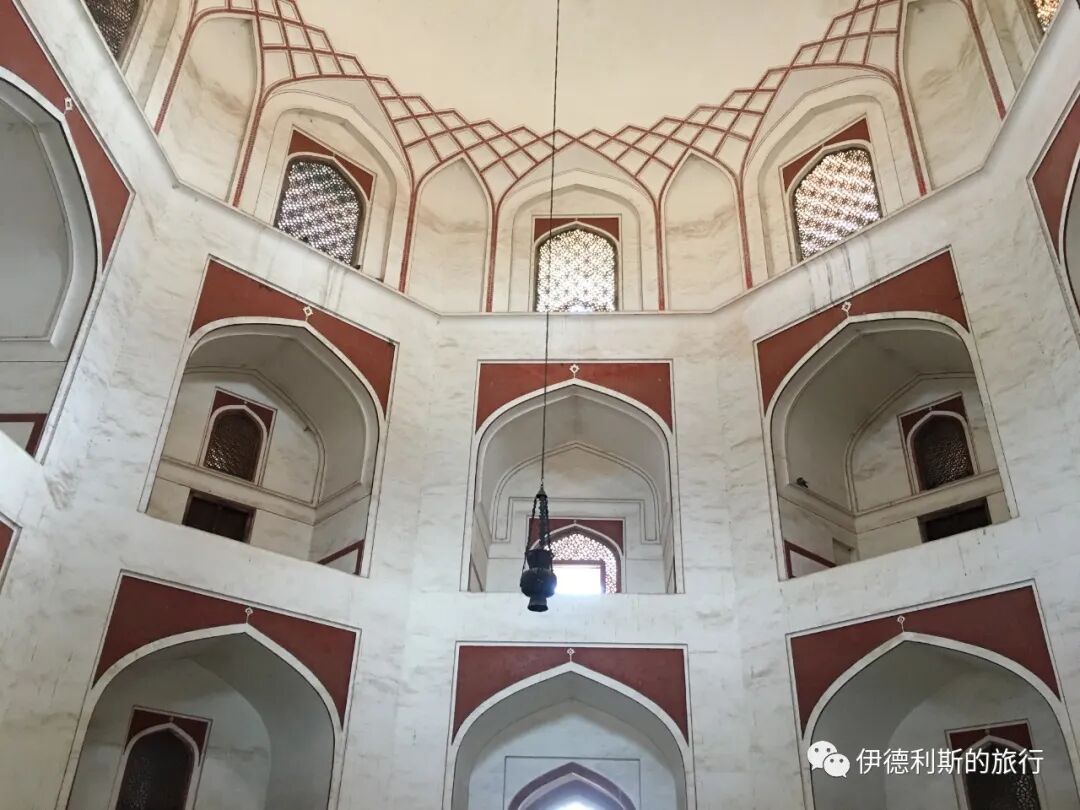
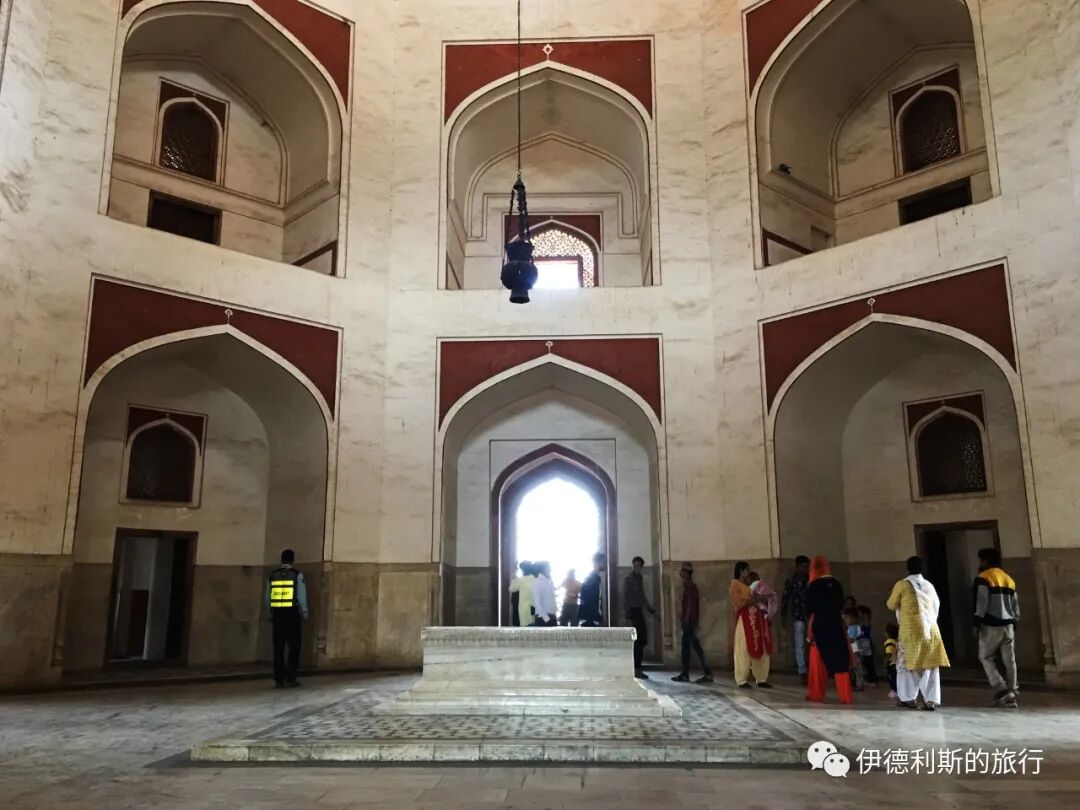
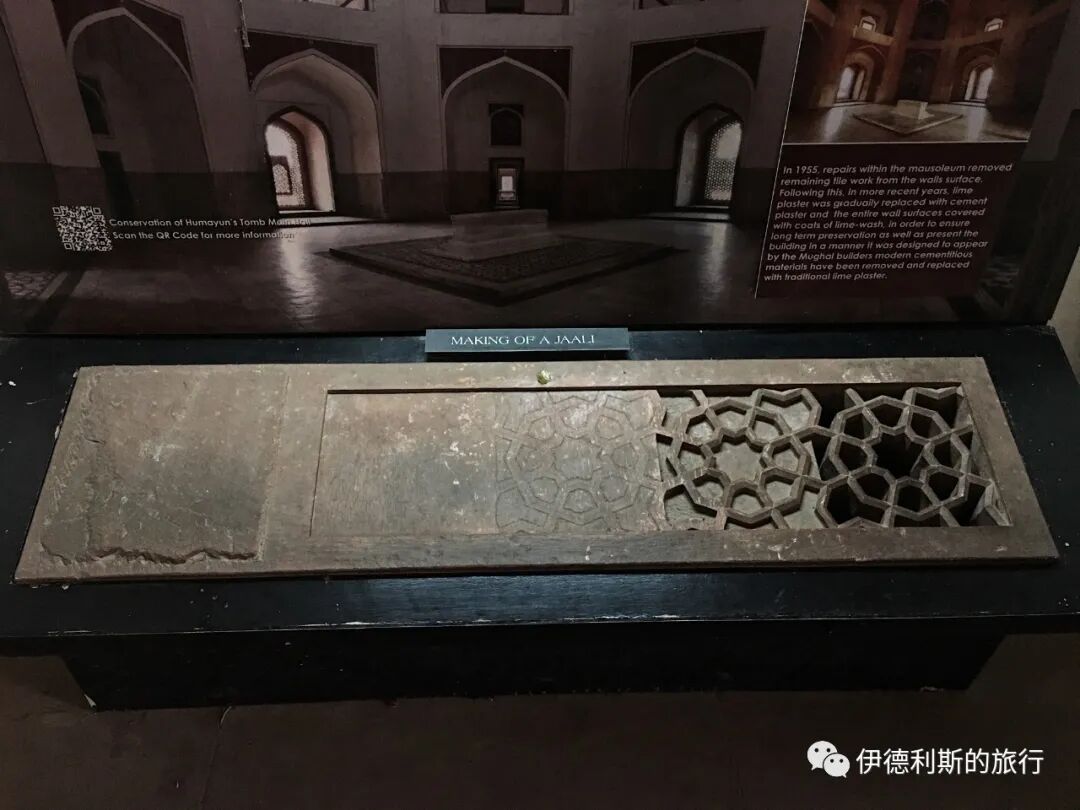
The terrace outside the main building also holds many tombstones of Mughal royalty and nobles, including Dara Shikoh, the eldest son of Shah Jahan who was murdered by Aurangzeb. Because of this, the area is also called the 'dormitory of the Mughals'.
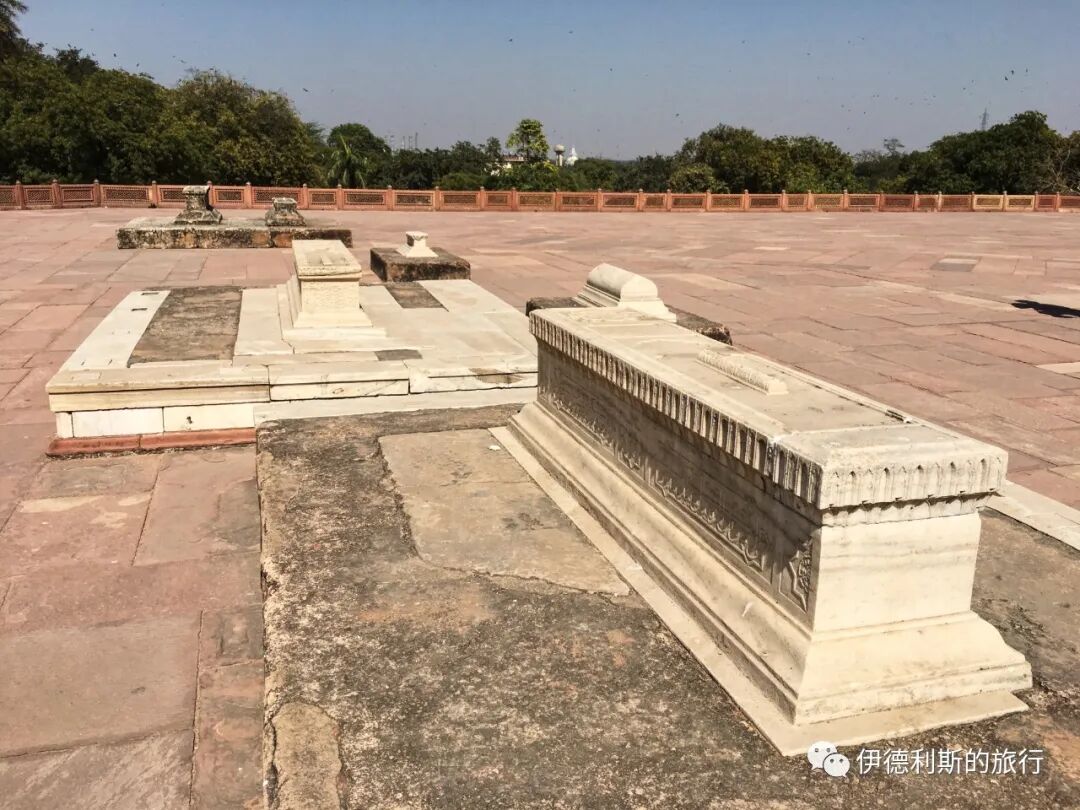
Barber's Tomb
On the southeast side of Humayun's Tomb is the 'Barber's Tomb', built in 1590. It holds the grave of the personal barber to the third Mughal emperor, Akbar, who was also one of Akbar's closest servants. This tomb also features a Persian double-dome structure, appearing as two domes from the inside and outside, and has a Chhatri domed pavilion at each of the four corners.
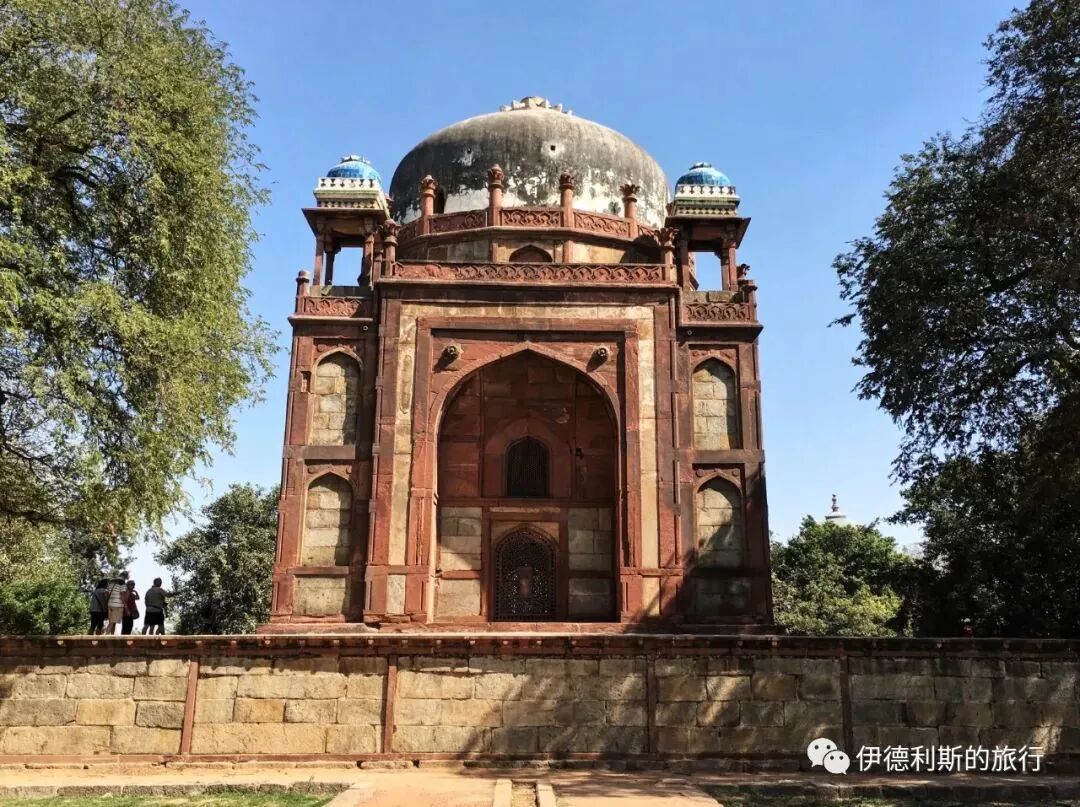
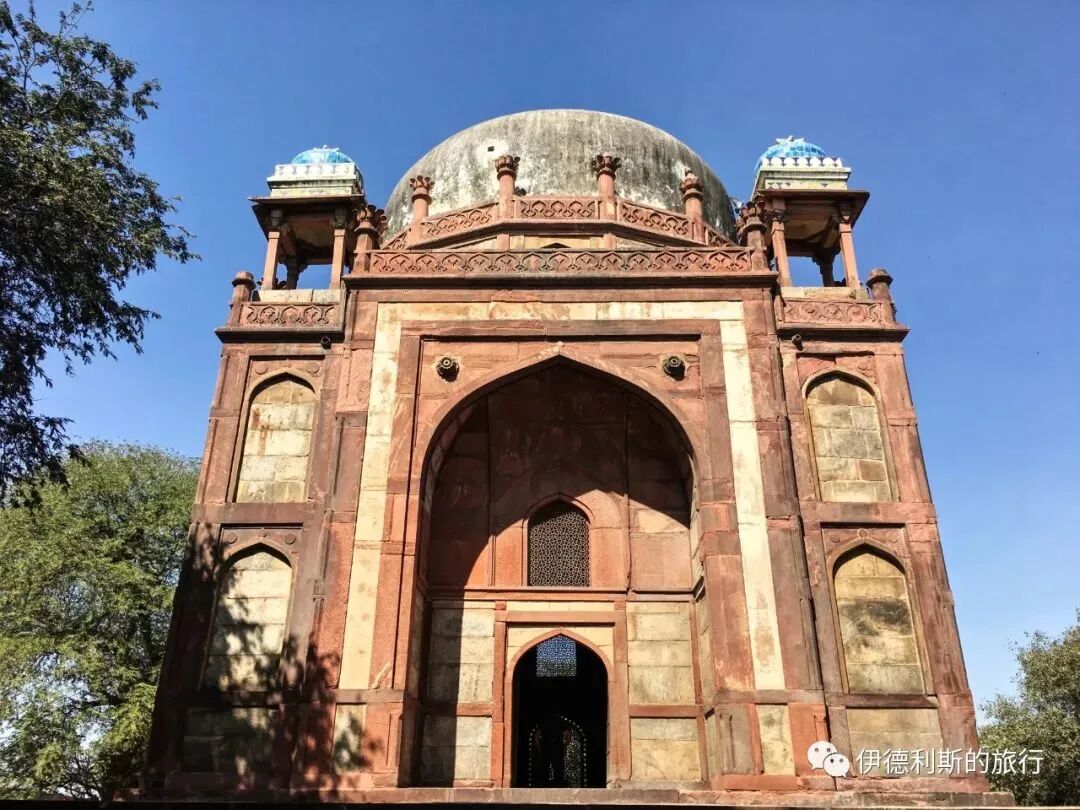
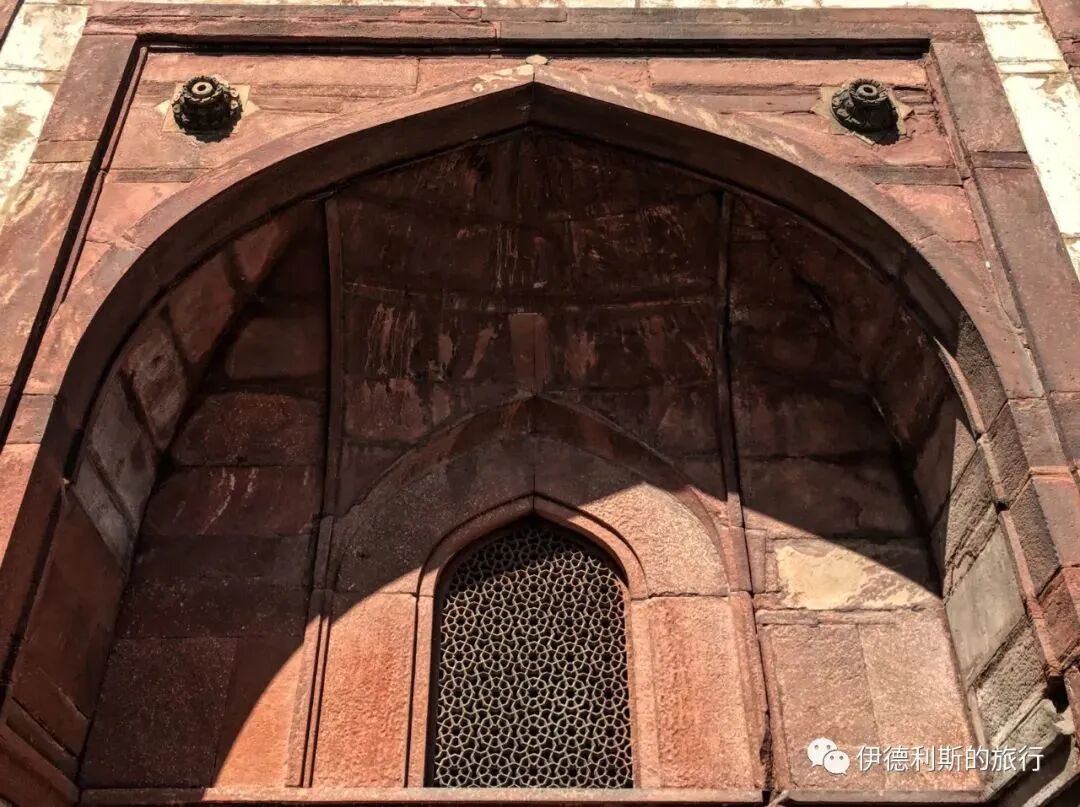
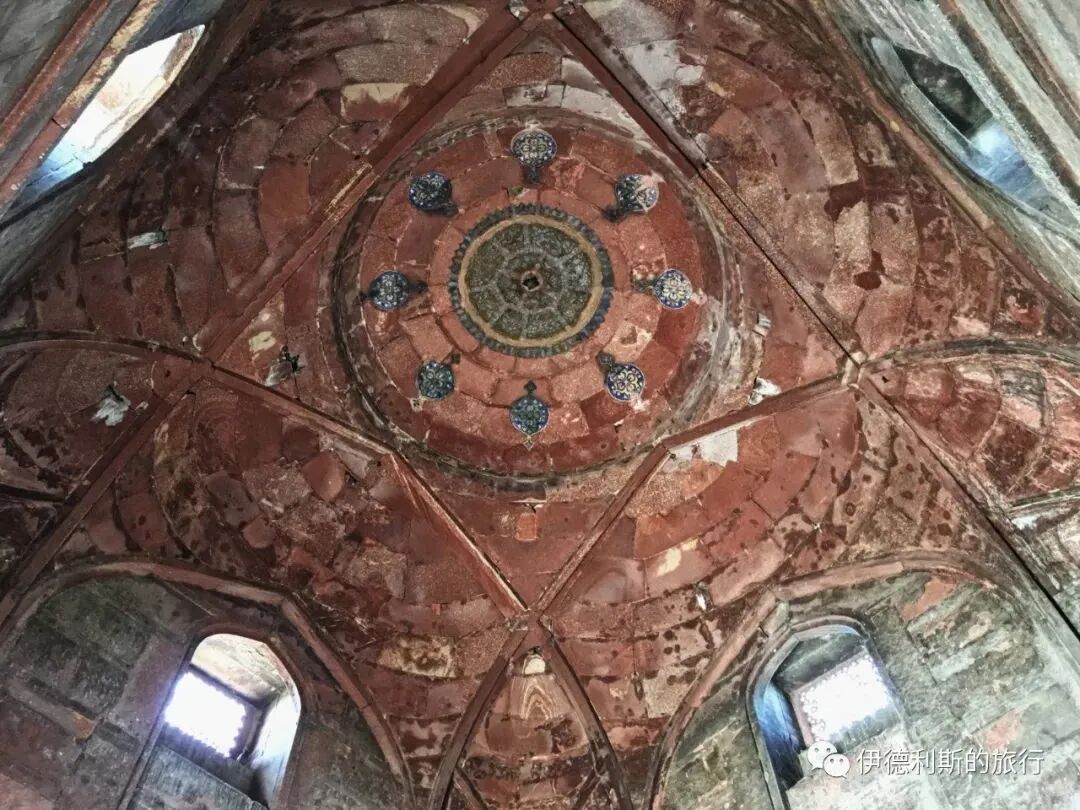
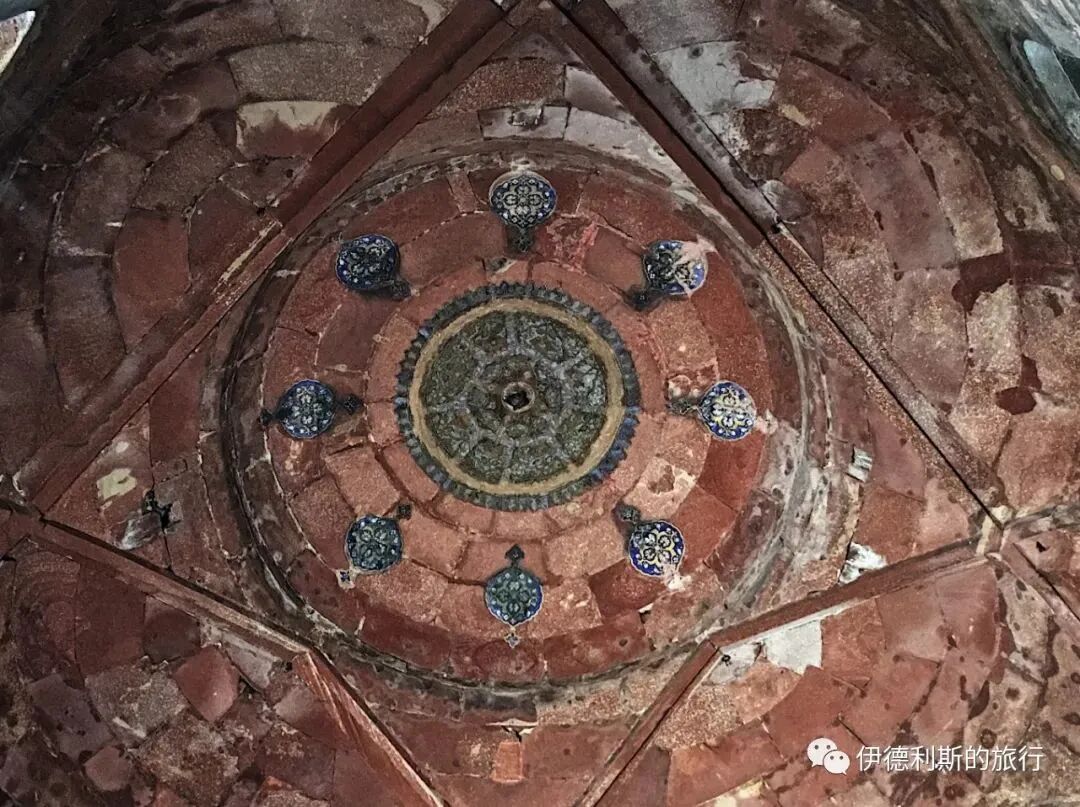
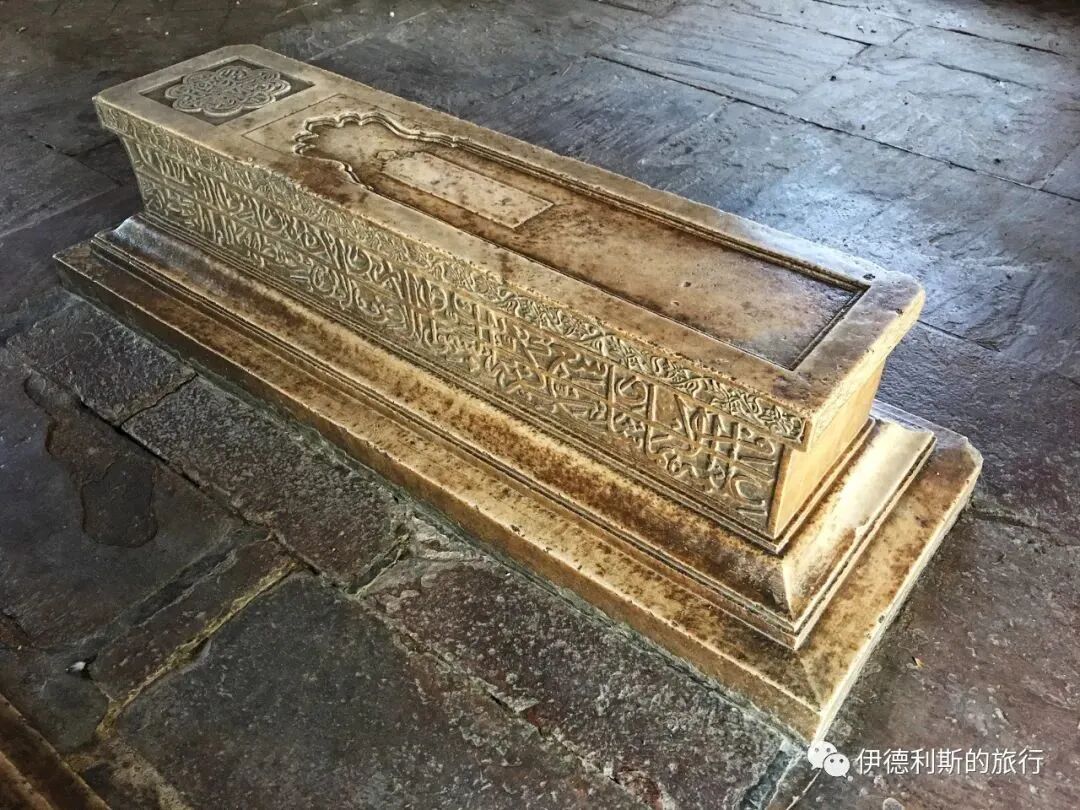
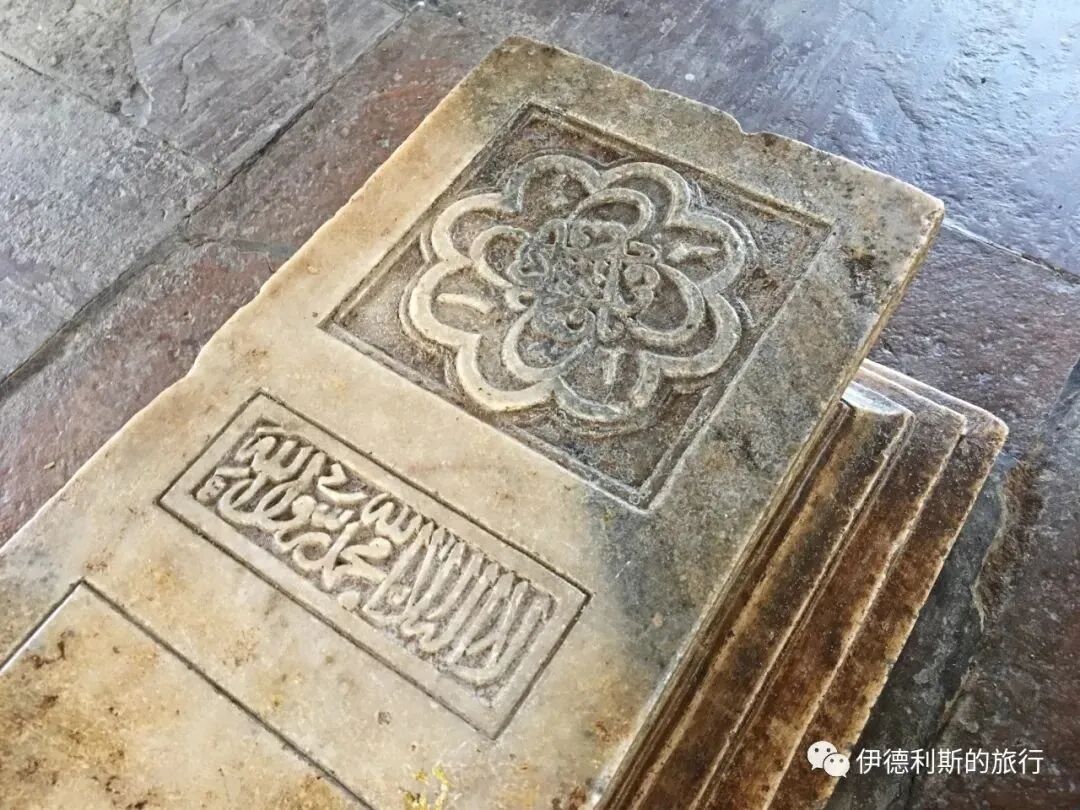
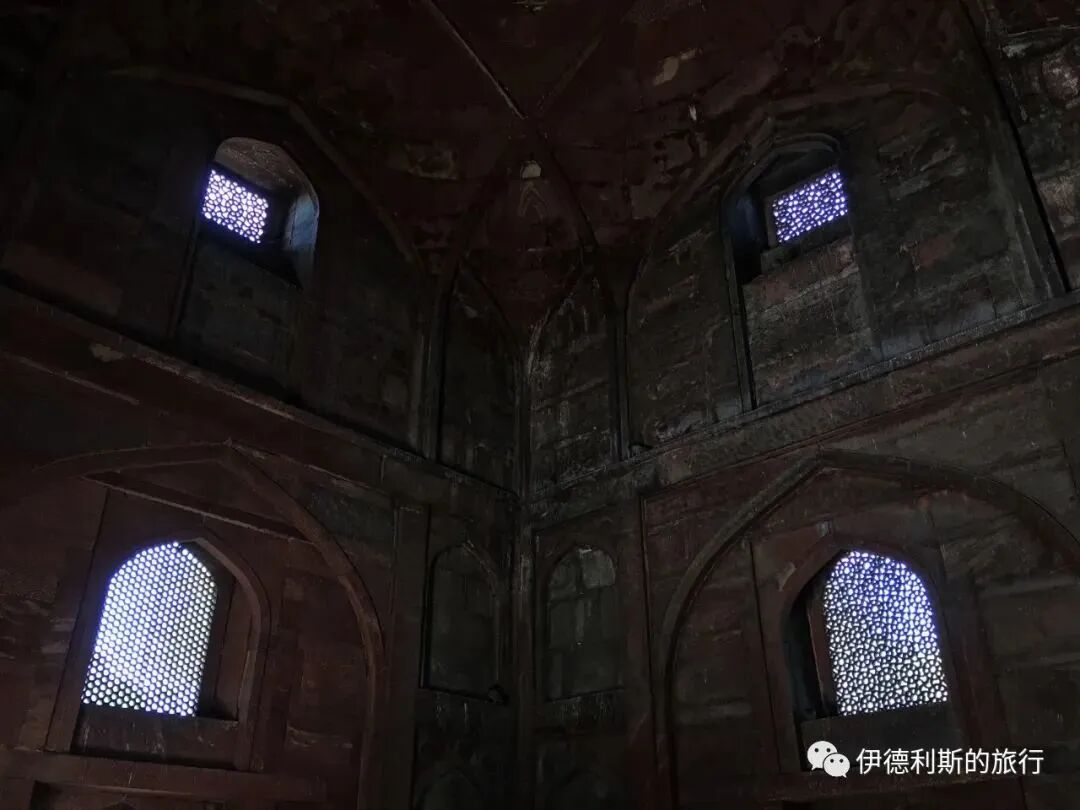
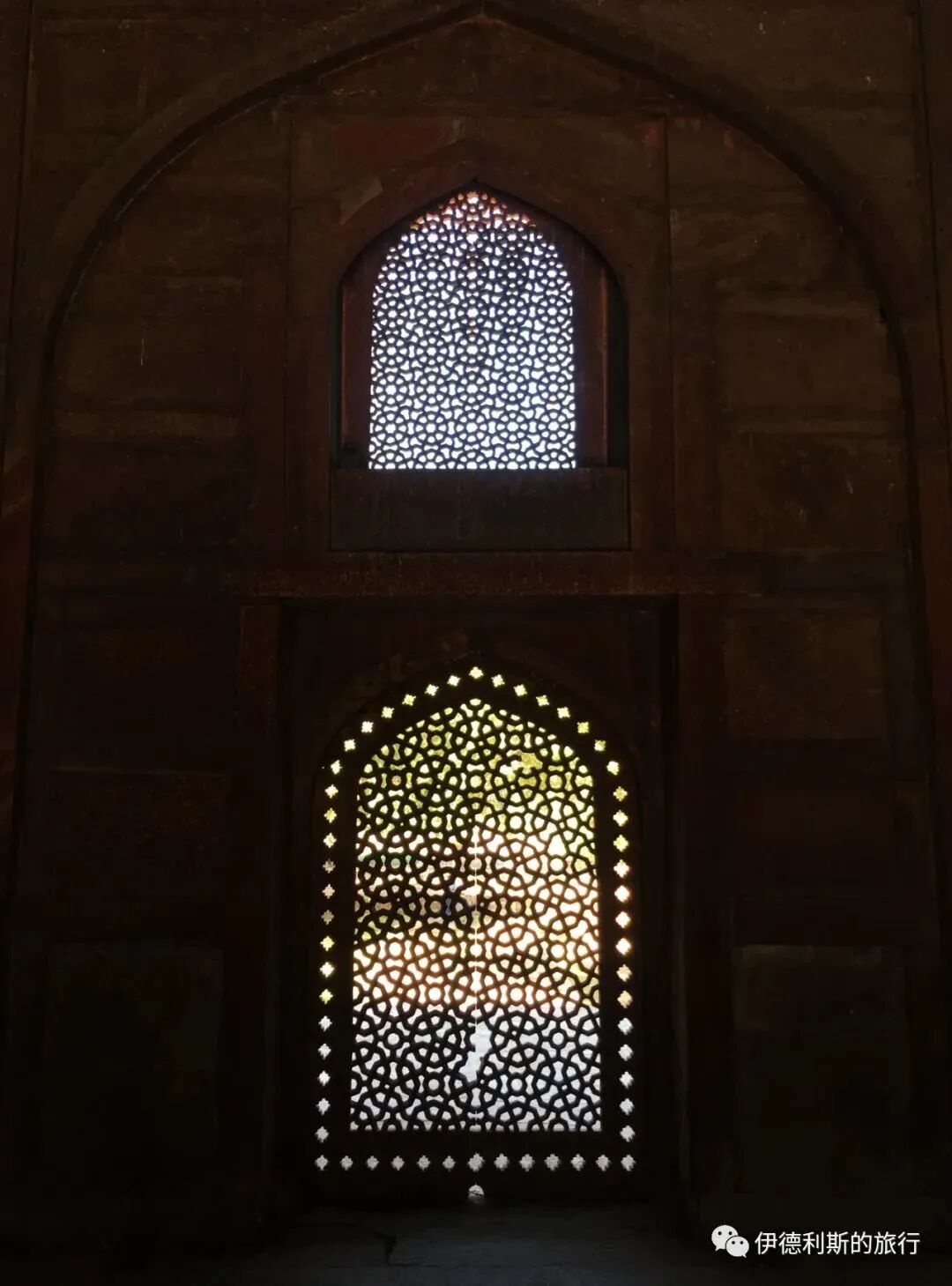
West Gate
The Persian garden surrounding Humayun's Tomb has a gate on each side. The West Gate is the main entrance; it has an I-shaped structure with splayed walls on the west side and two Chhatri domed pavilions on top.
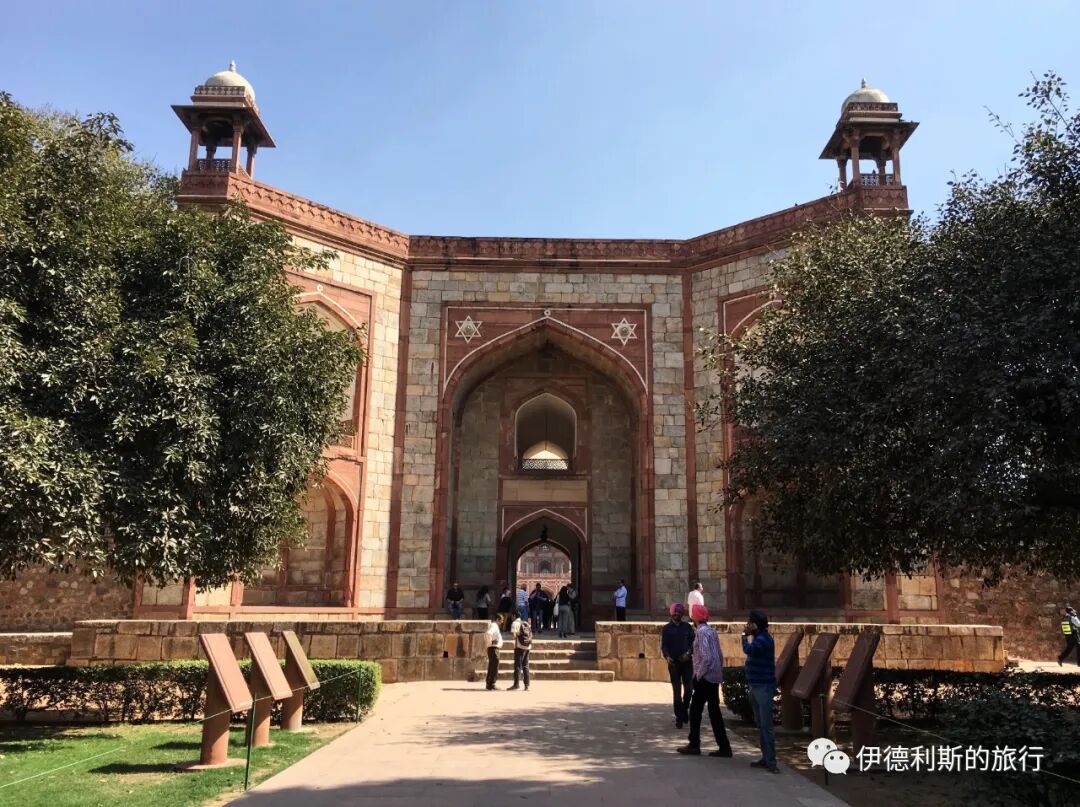
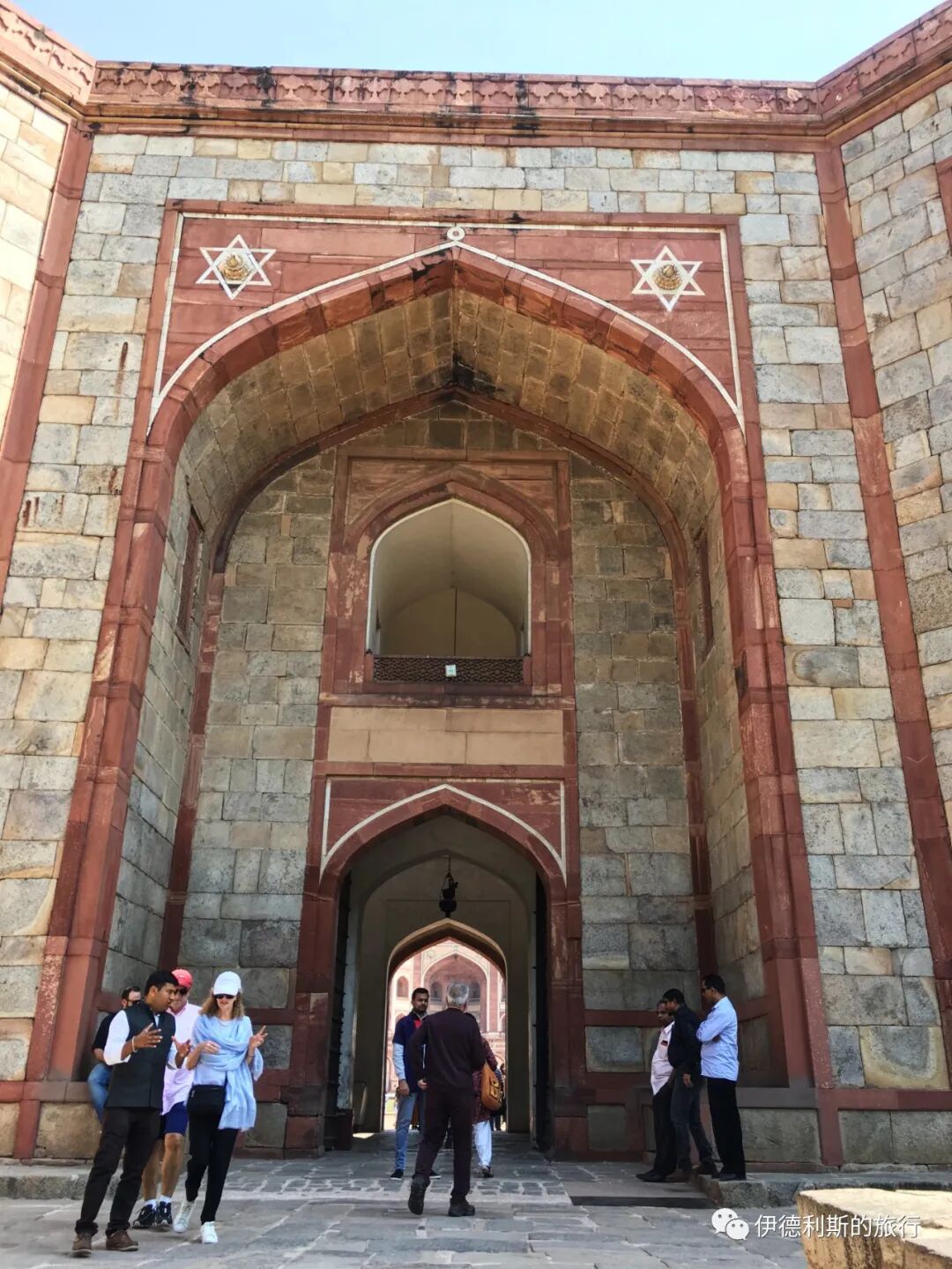
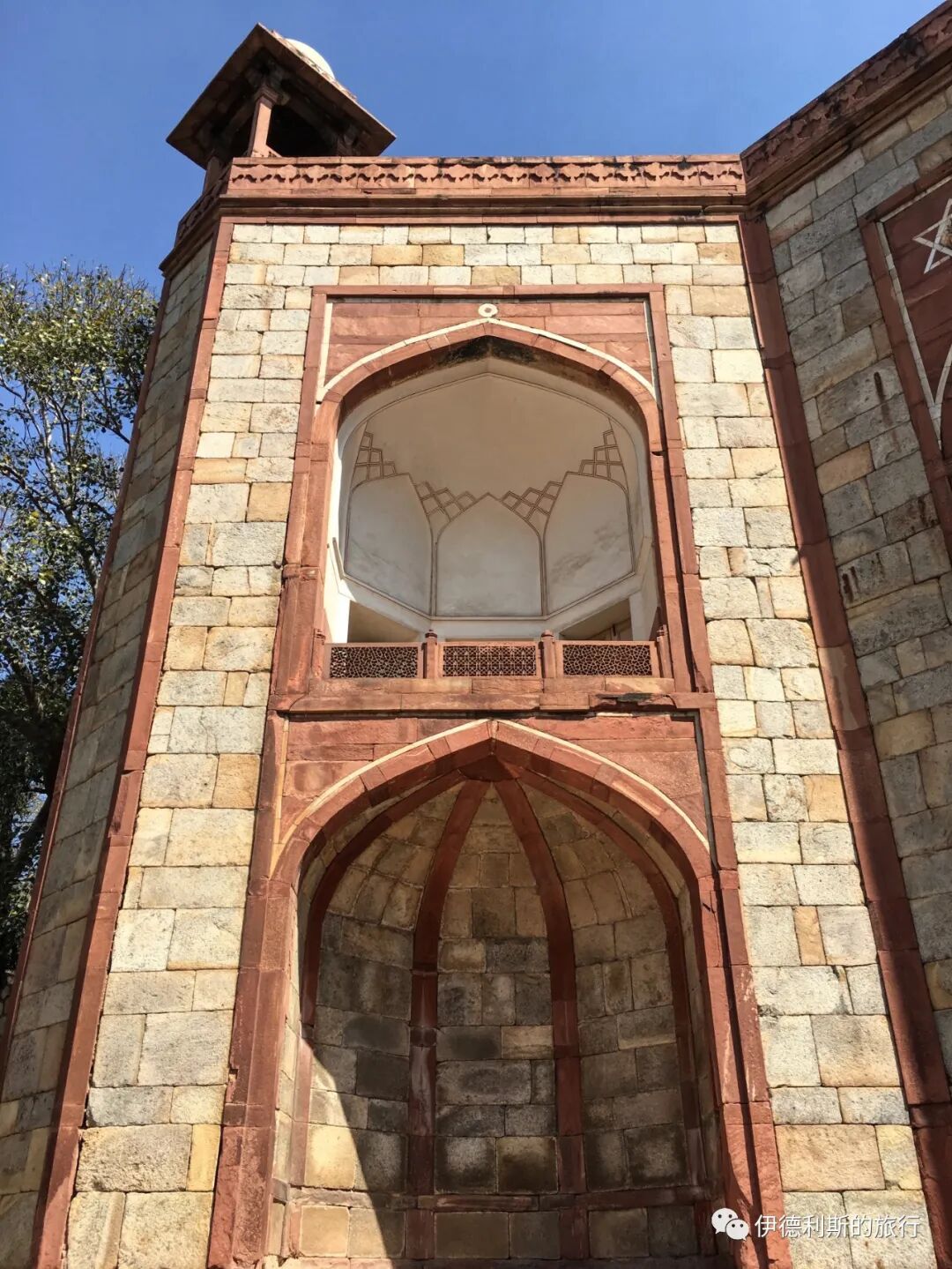
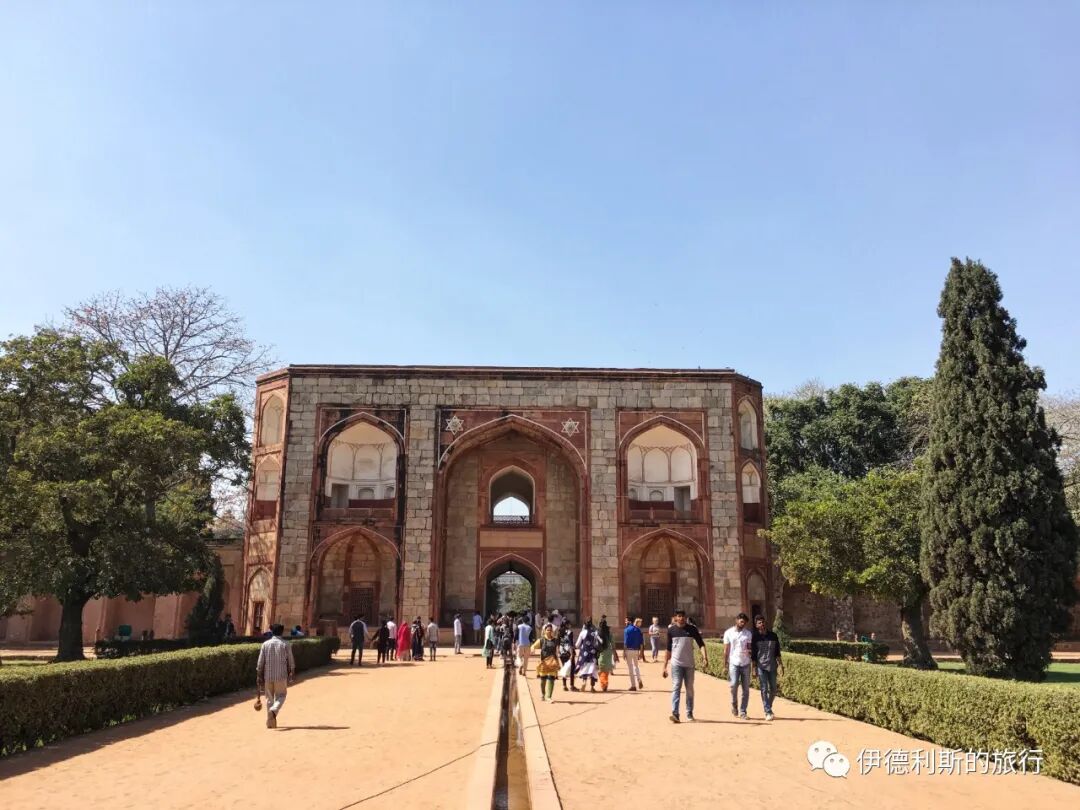
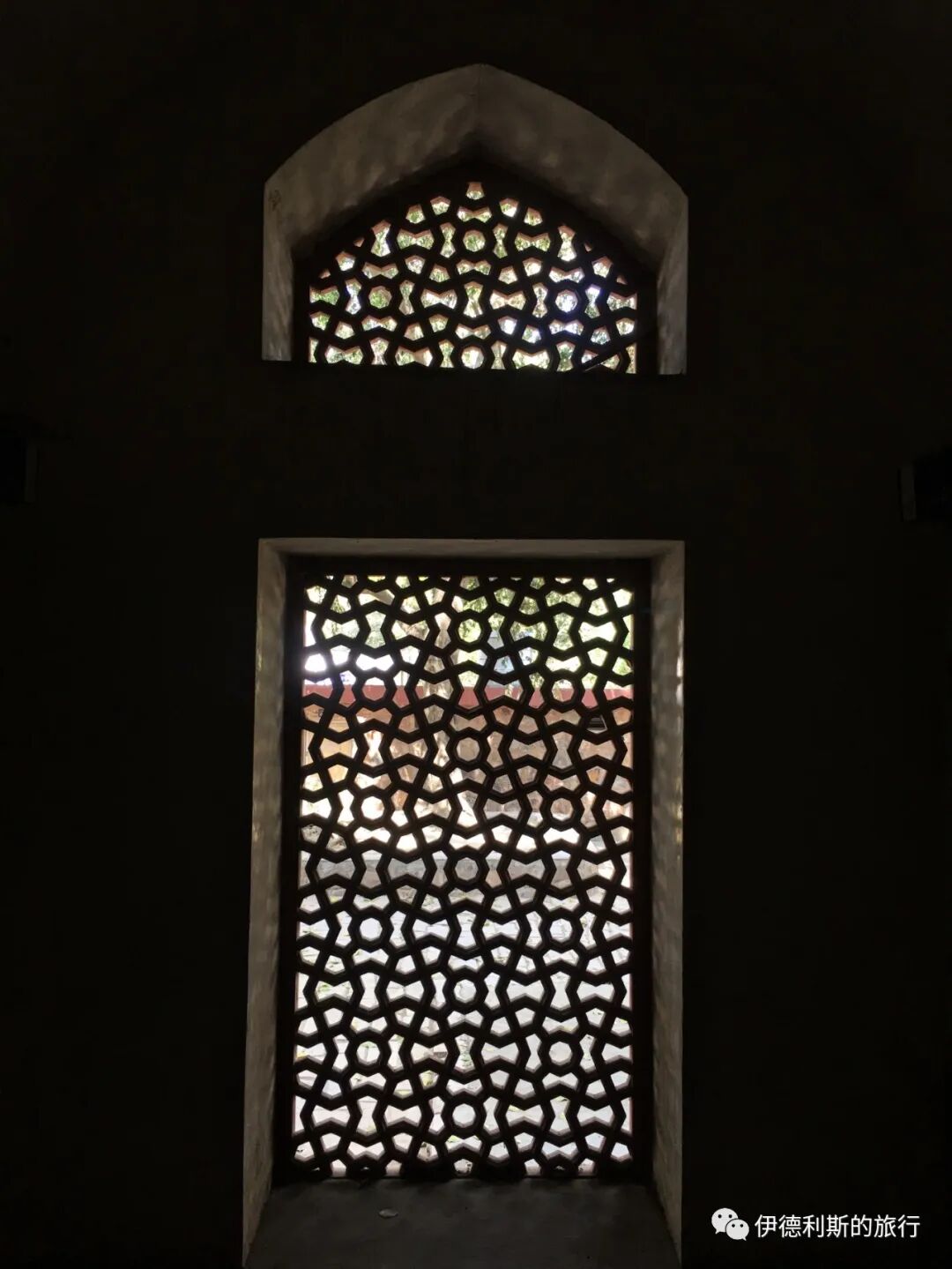
Bu Halima Garden Tomb Gate
Directly across from the west gate of Humayun's Tomb stands the 16th-century gate of the Bu Halima Garden Tomb. There are no records identifying who Bu Halima was. The gate features a classic Indian-style stone window (jharokha), which is a signature element of ancient Indian building facades.
Between 2012 and 2013, the Aga Khan Trust for Culture hired craftsmen to restore the site using traditional techniques and materials. They replaced missing glazed tiles and mosaics and swapped modern cement for traditional lime mortar.
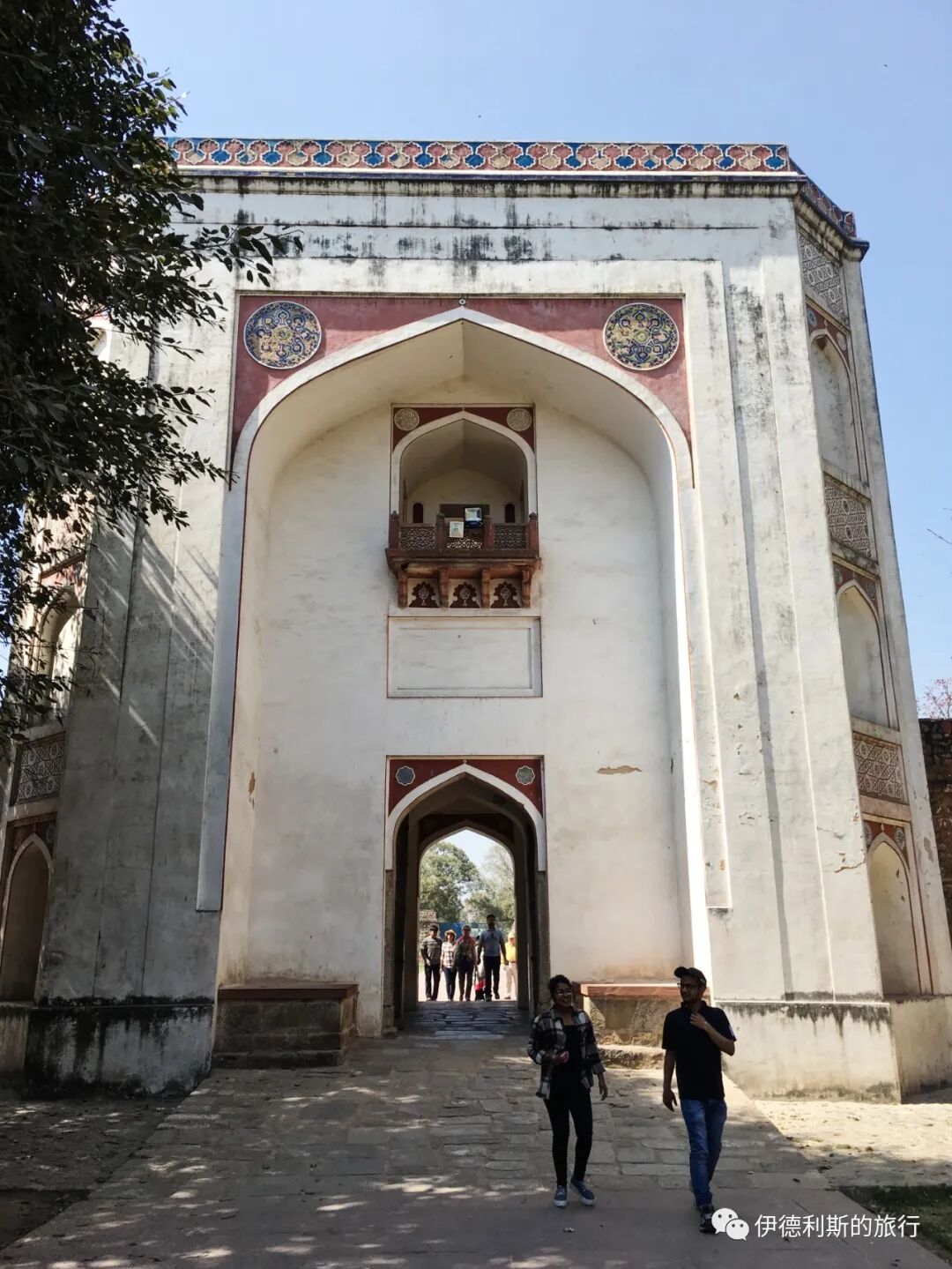
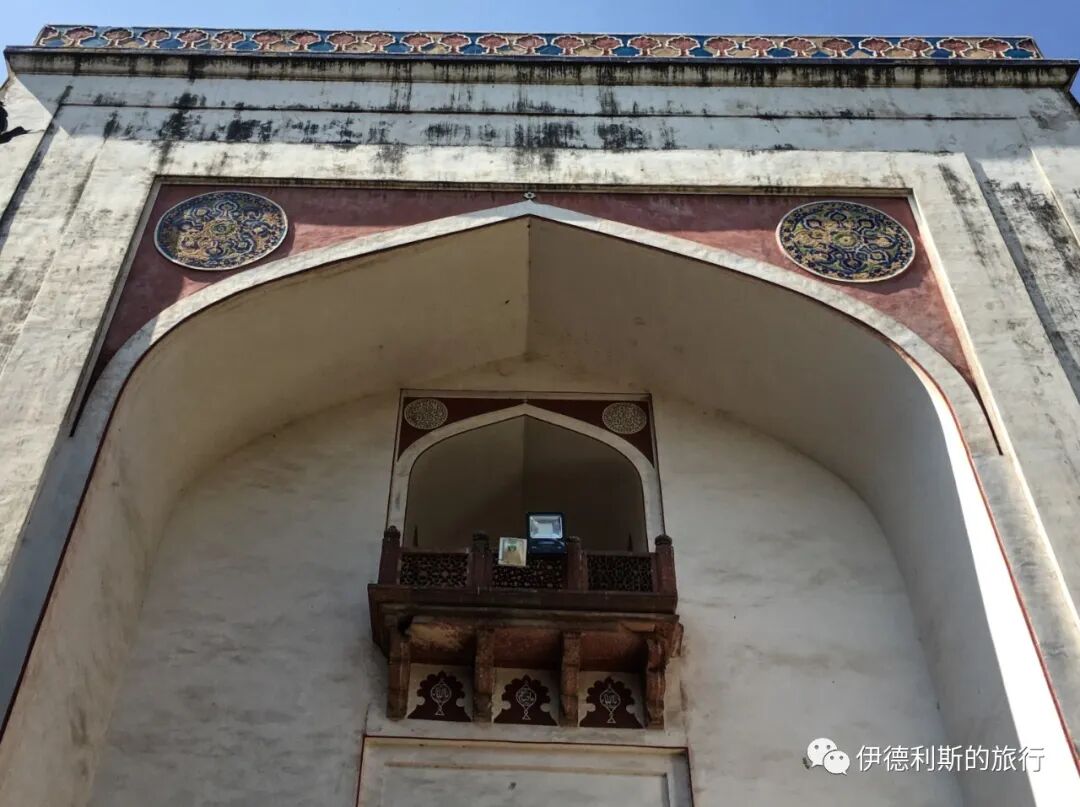
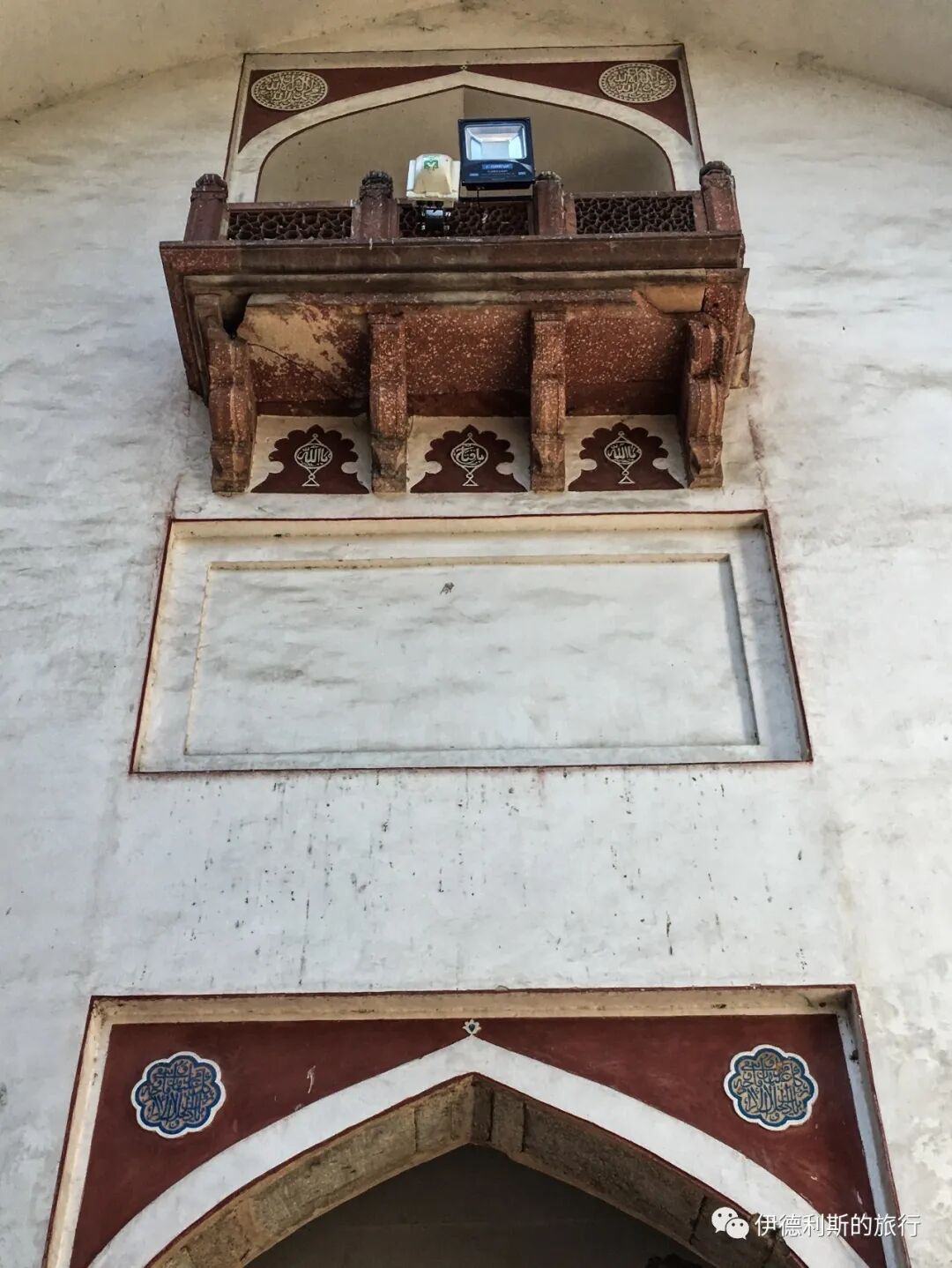
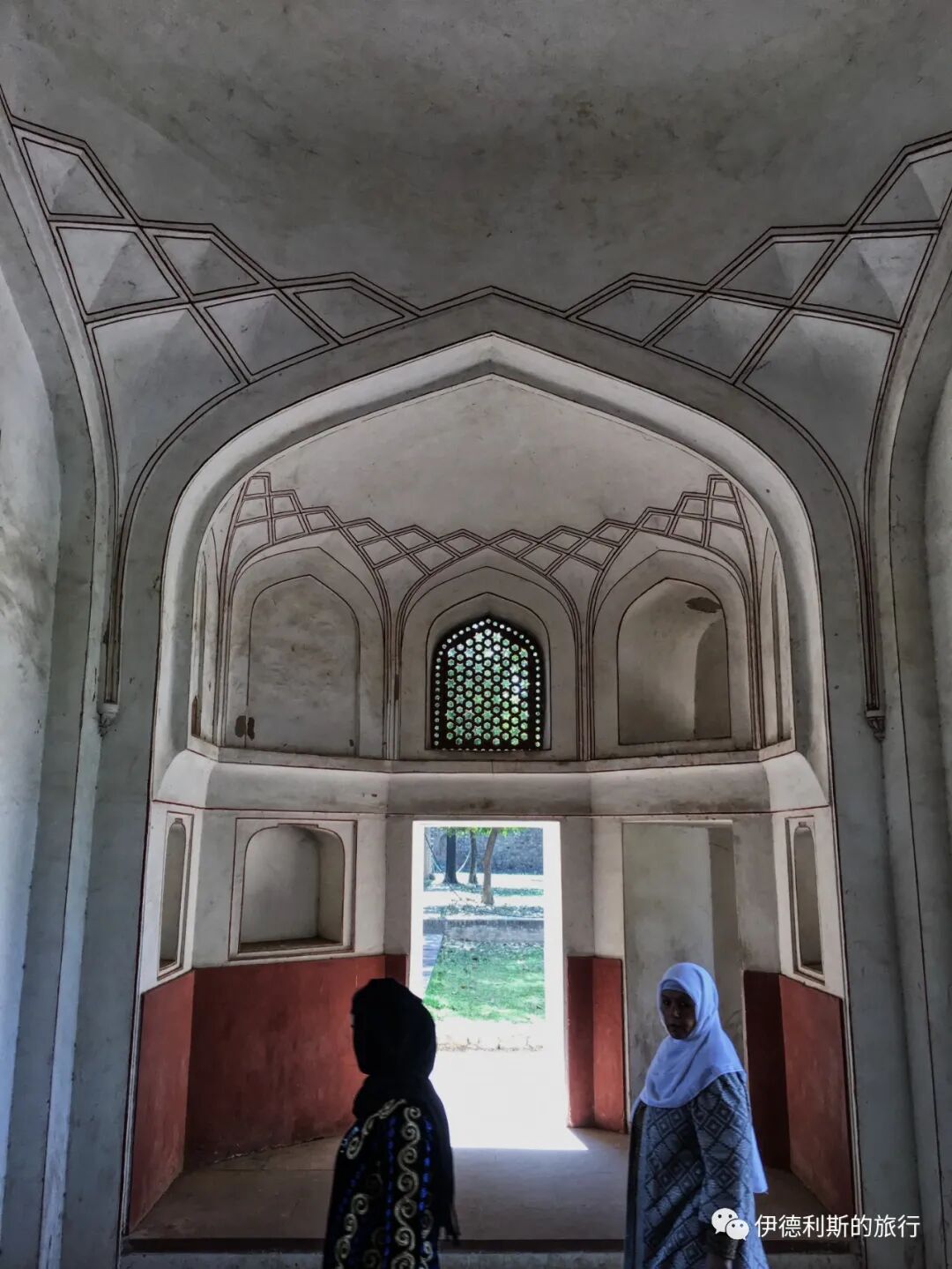
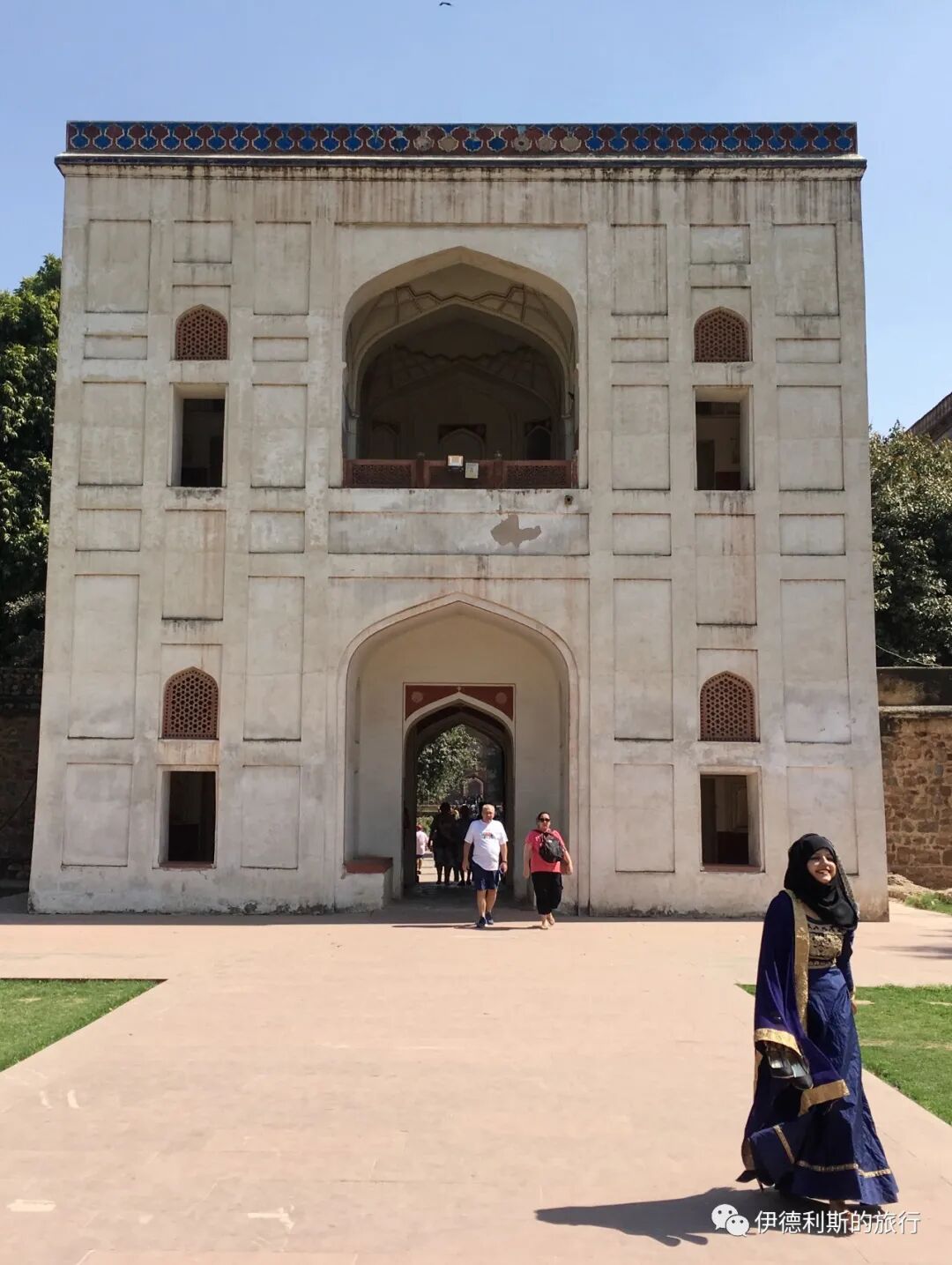
Afsarwala Tomb and Mosque
The Afsarwala Tomb and Mosque are located southwest of Humayun's Tomb and were built between 1566 and 1567. Unfortunately, the tombstone only lists the construction date and nothing about the person buried there. It is believed they were likely a noble in the court of the Mughal Emperor Akbar, as the name 'Afsarwala' suggests the person was a military officer.
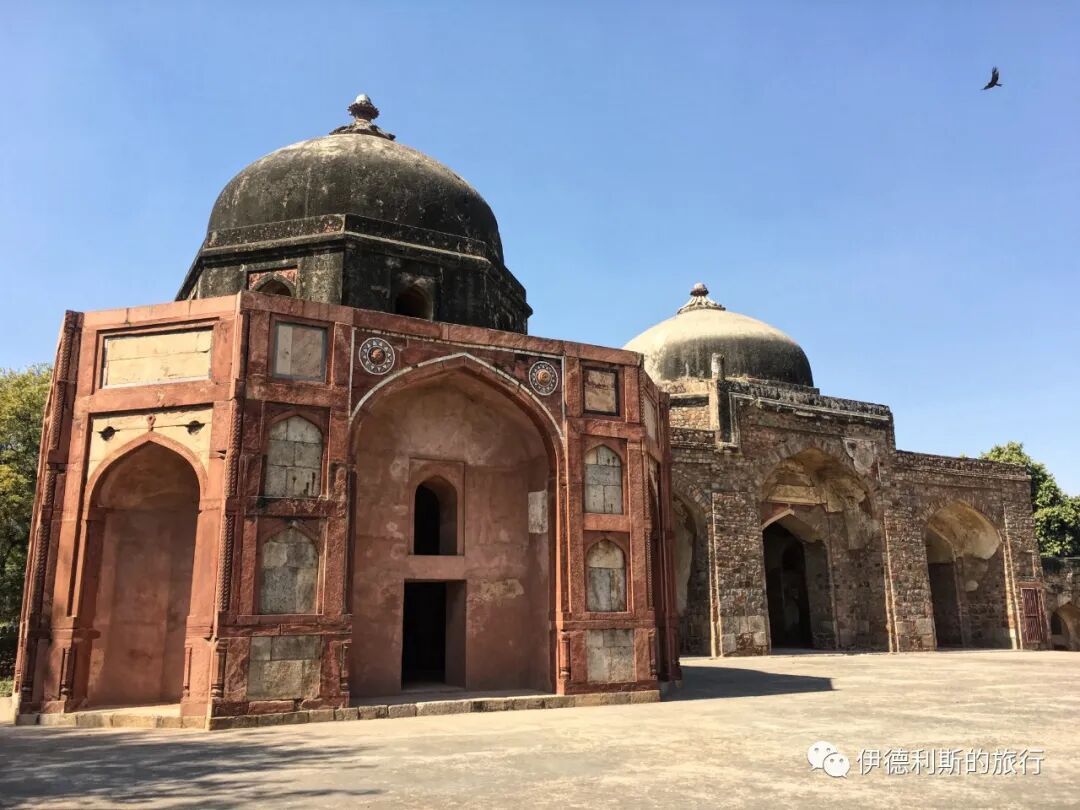
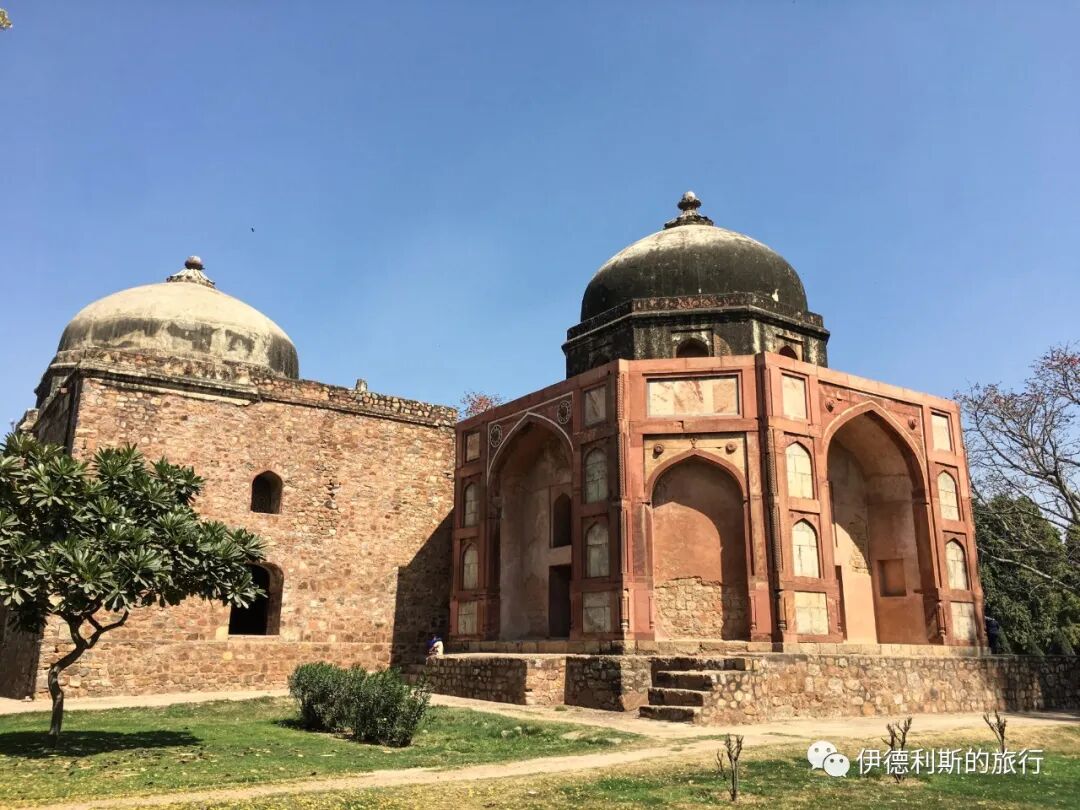
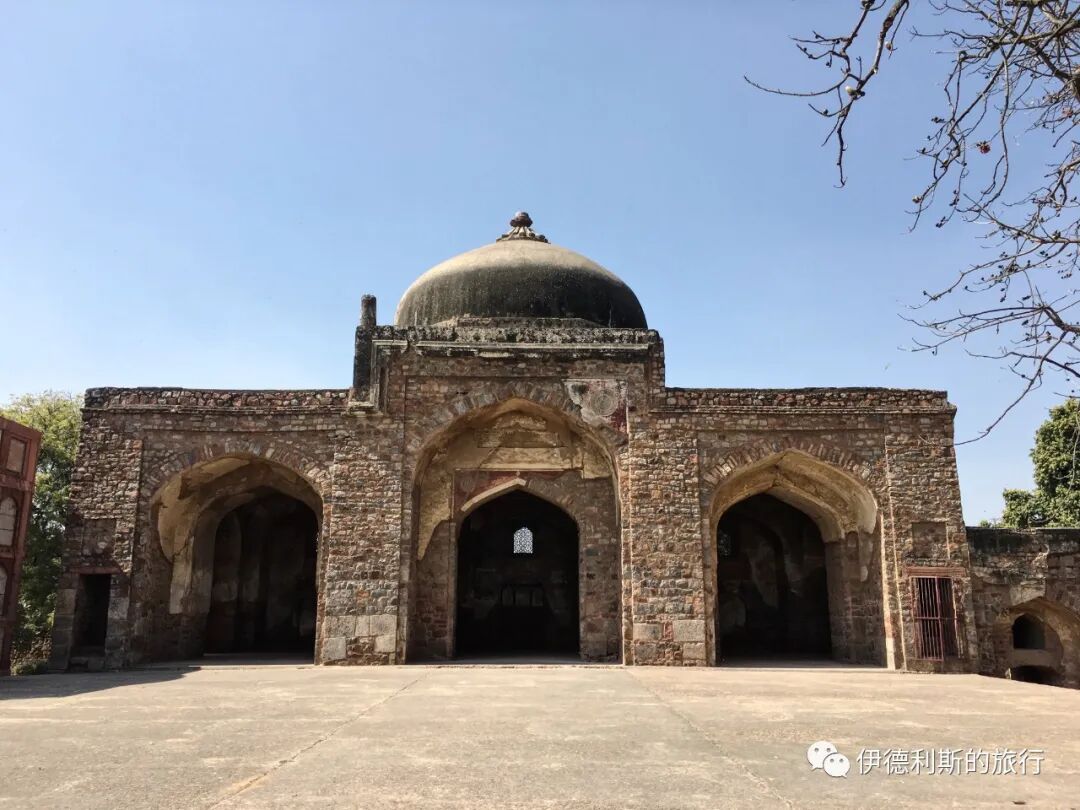
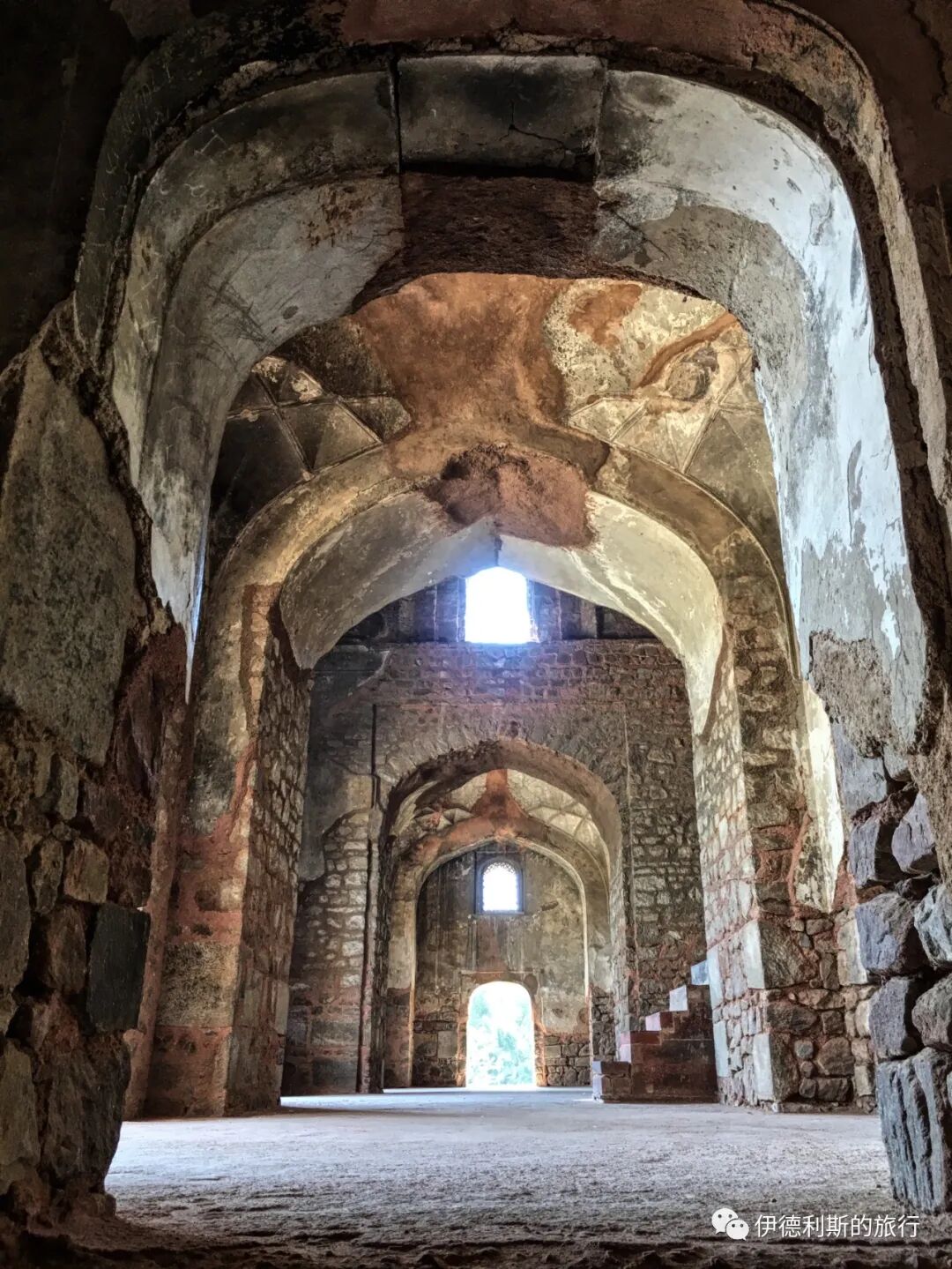
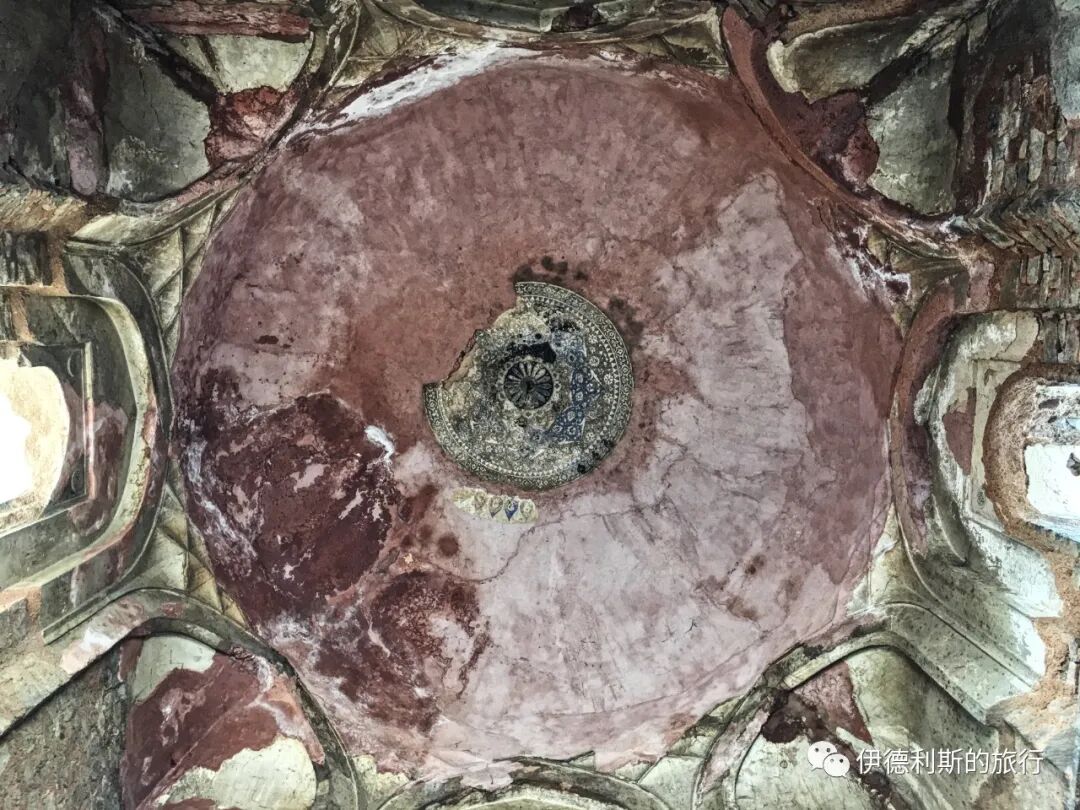
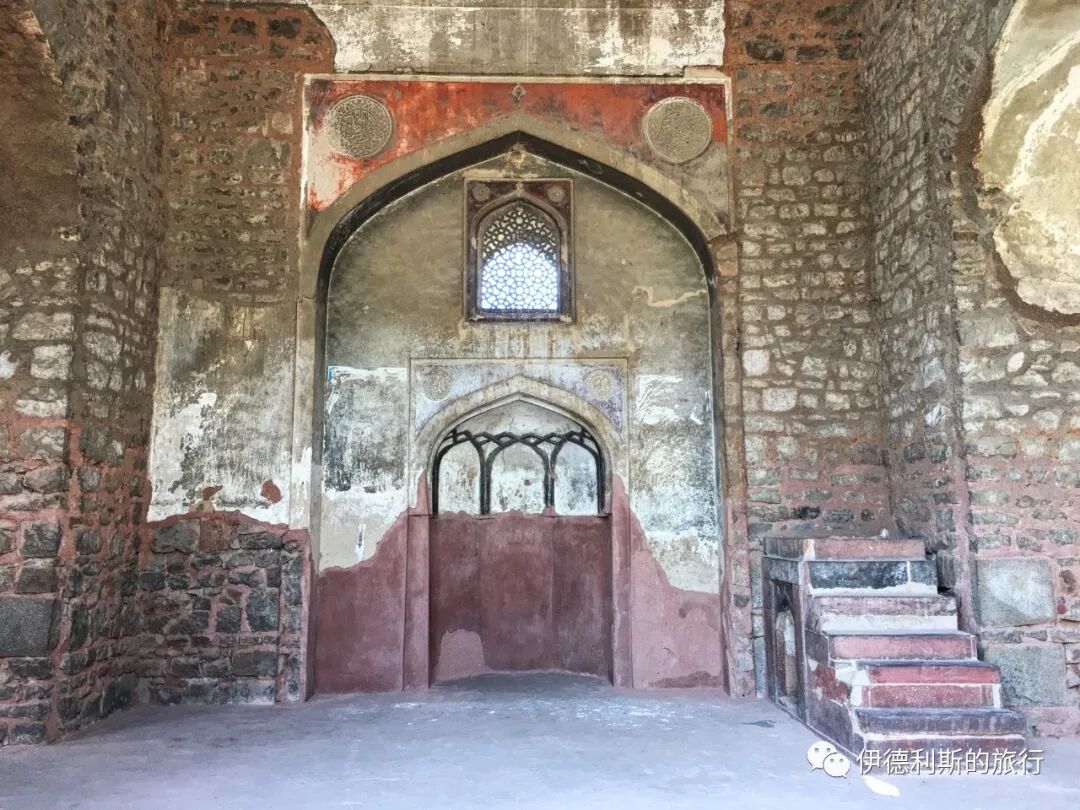
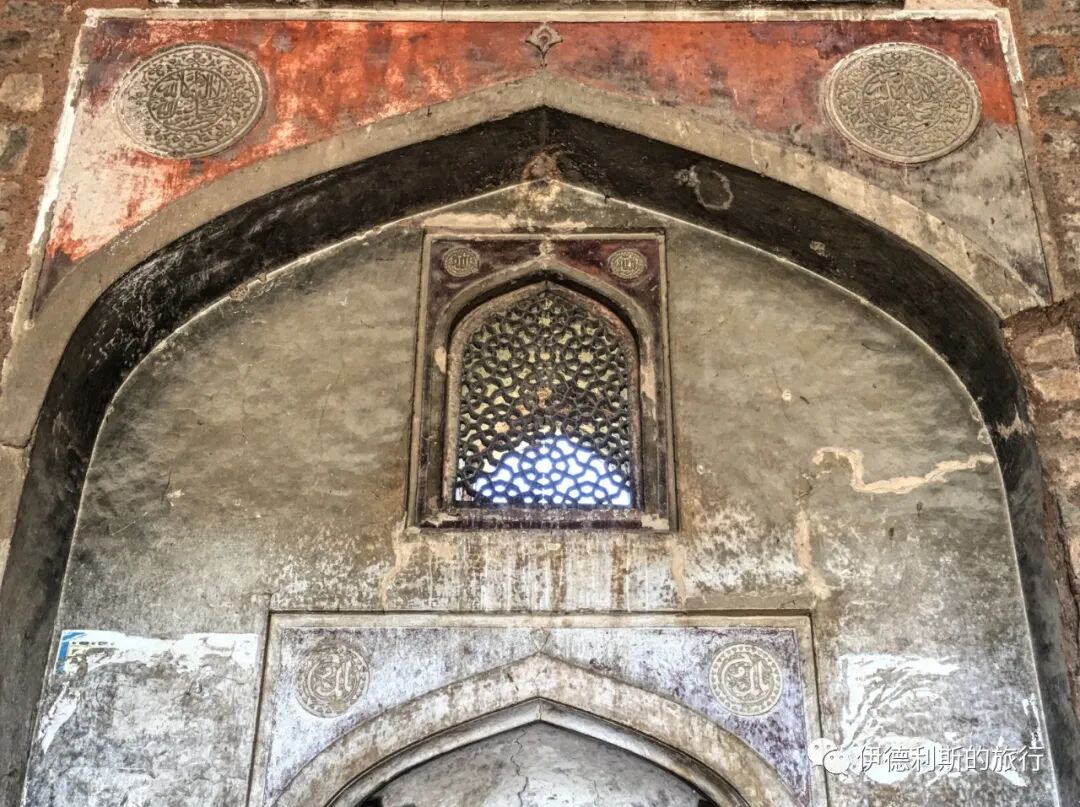
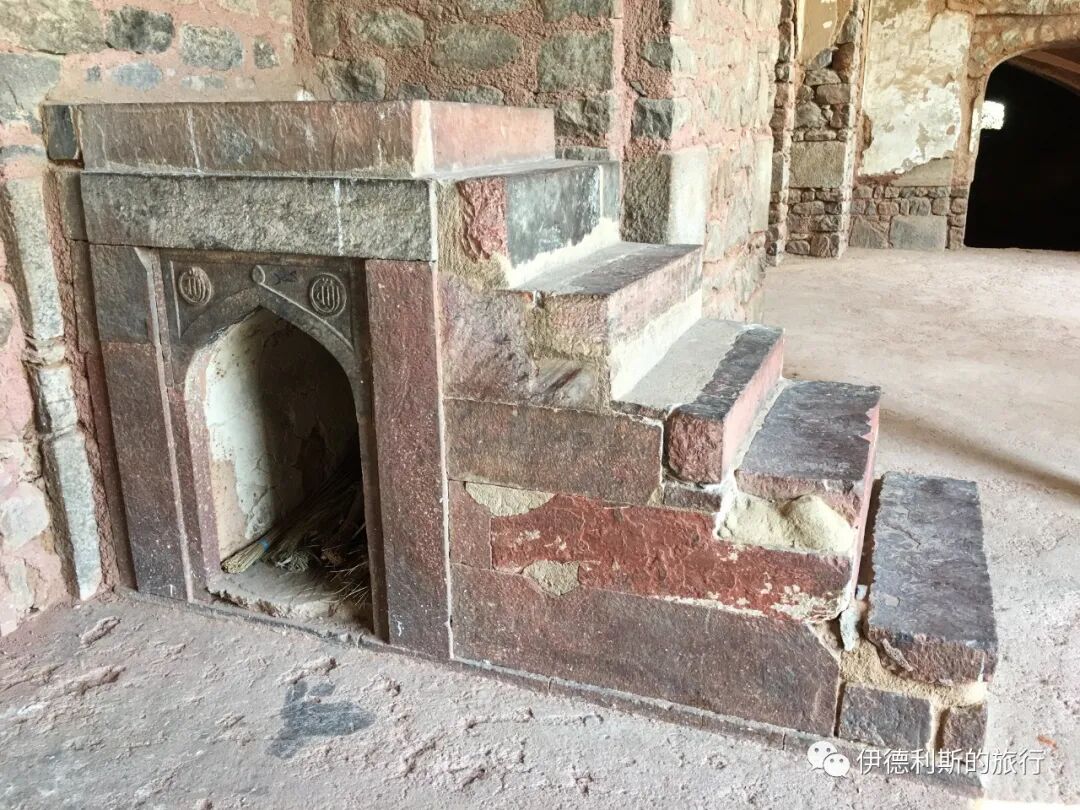
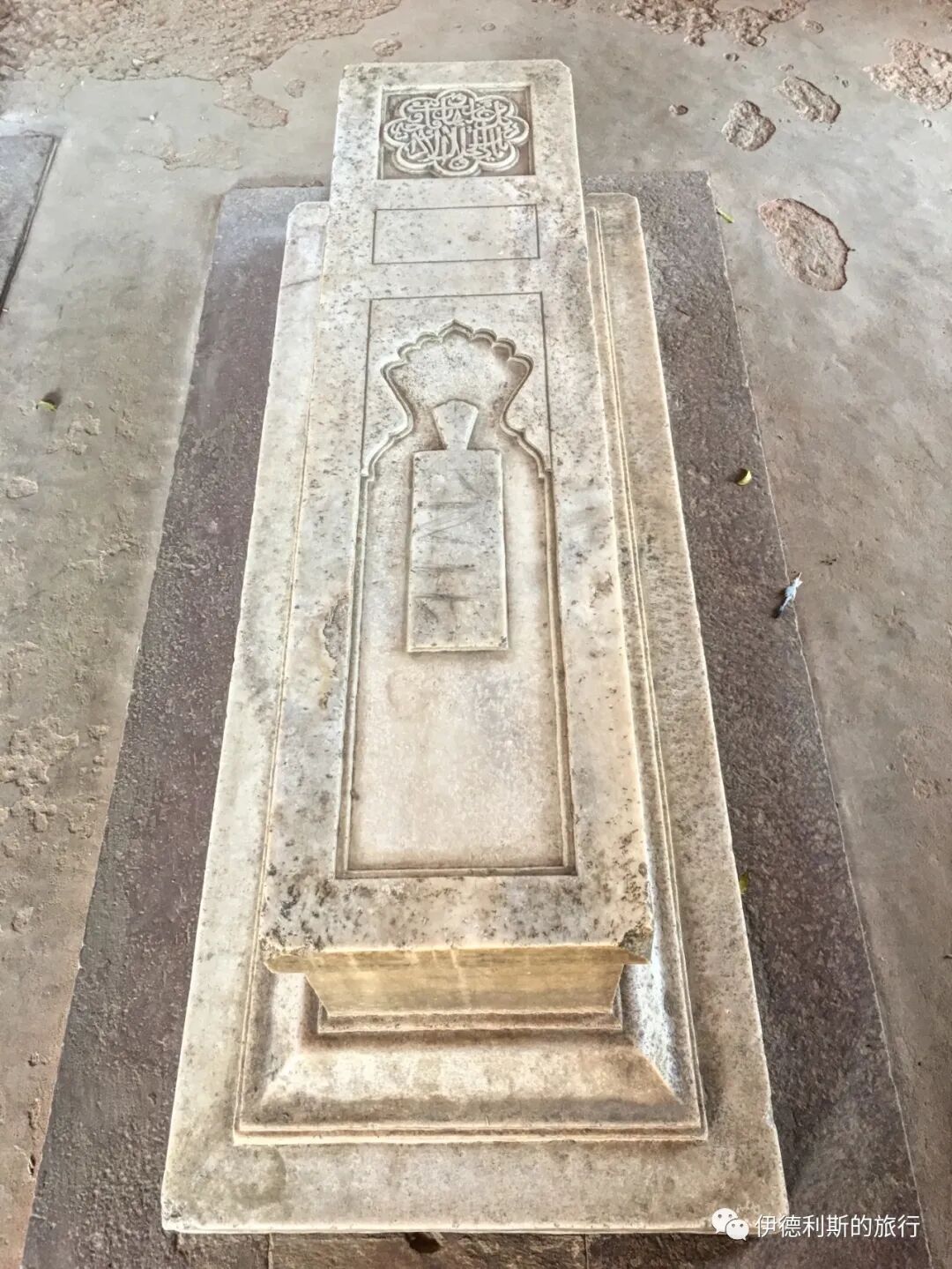
North Gate of Arab Sarai
On the main road west of Humayun's Tomb stands the north gate of Arab Sarai. The original site of Arab Sarai is now an industrial training institute.
The gate originally included a main entrance and arched rooms on both sides, but most of it has collapsed, leaving only the facade well-preserved. The gate is built from light-colored quartzite and red sandstone, matching the style of Humayun's Tomb. The gate features exquisite traditional Indian stone windows (jharokha) decorated with colorful tiles.
Some say this was where the Persian craftsmen who built Humayun's Tomb lived, while legend has it that it housed 300 reciters brought back by Humayun's queen, Haji Begum, after her pilgrimage.
In recent years, the Aga Khan Trust for Culture restored the site, reinforcing the main structure and replacing missing tiles.
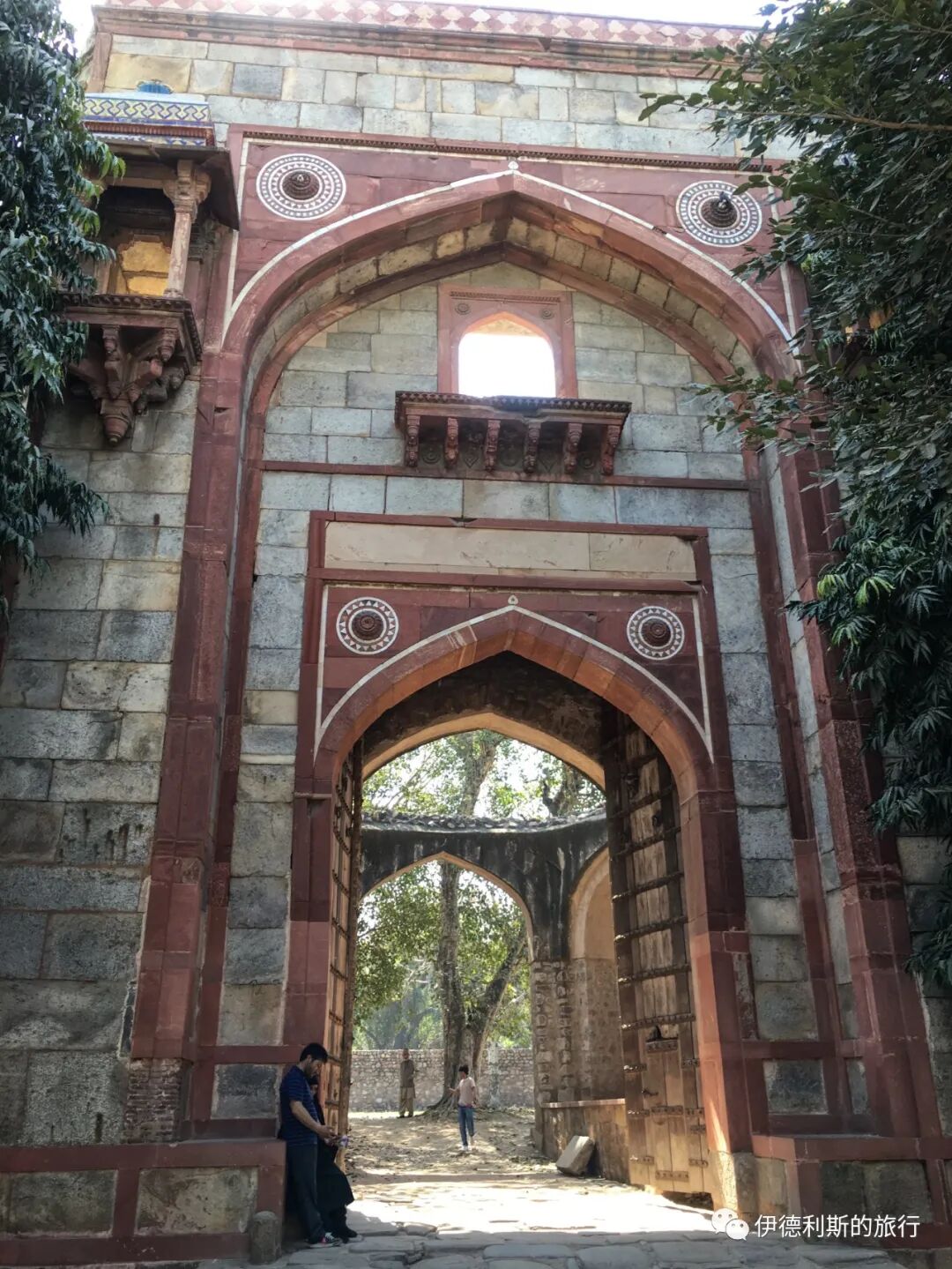
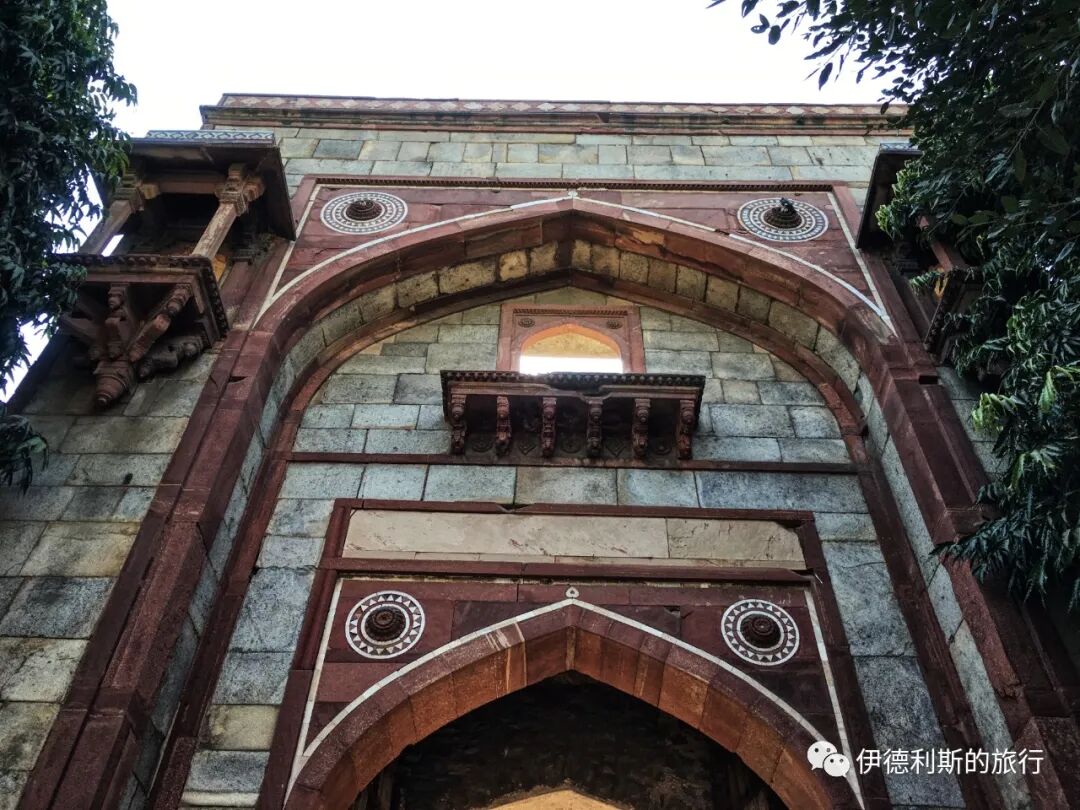
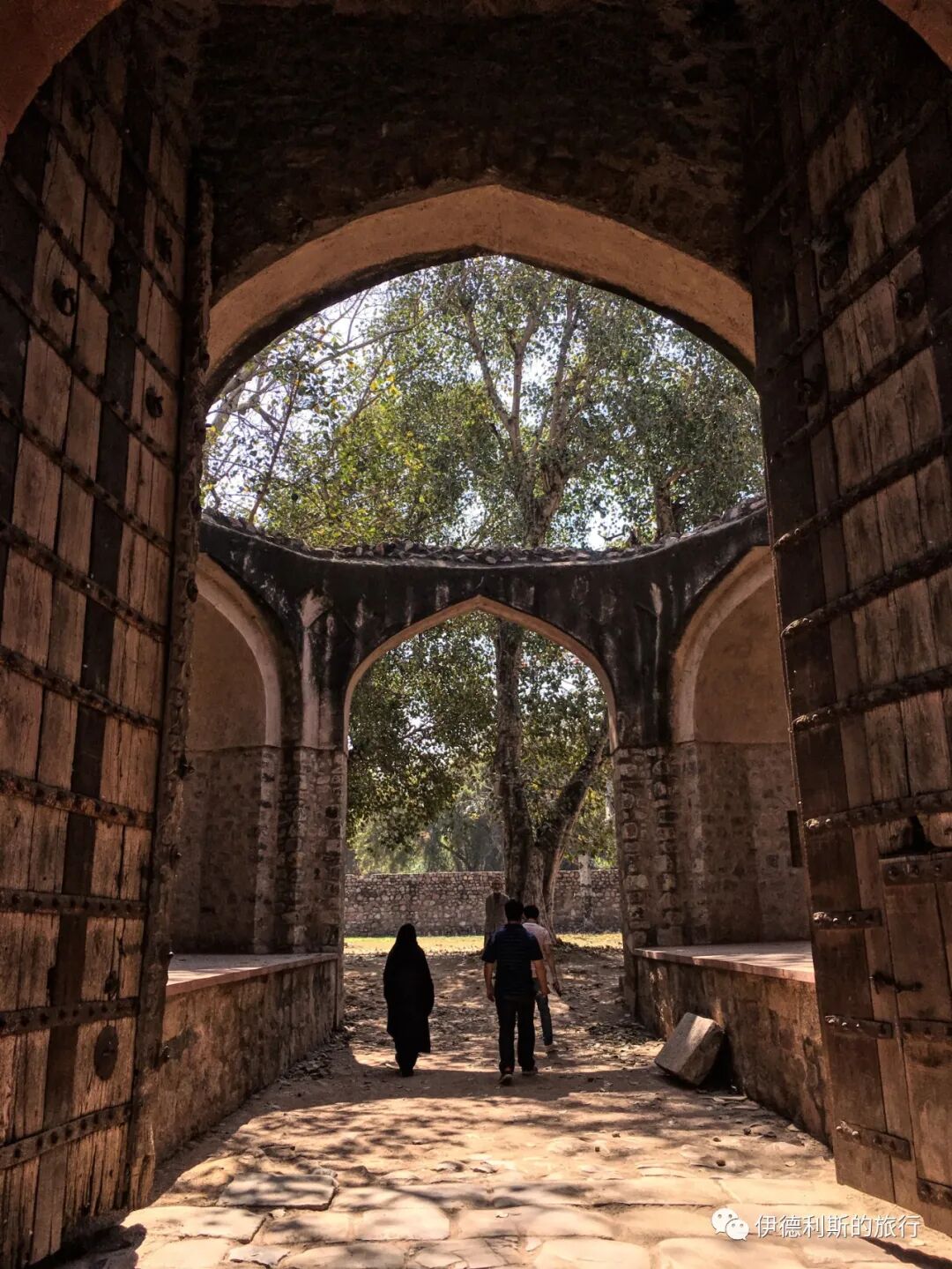
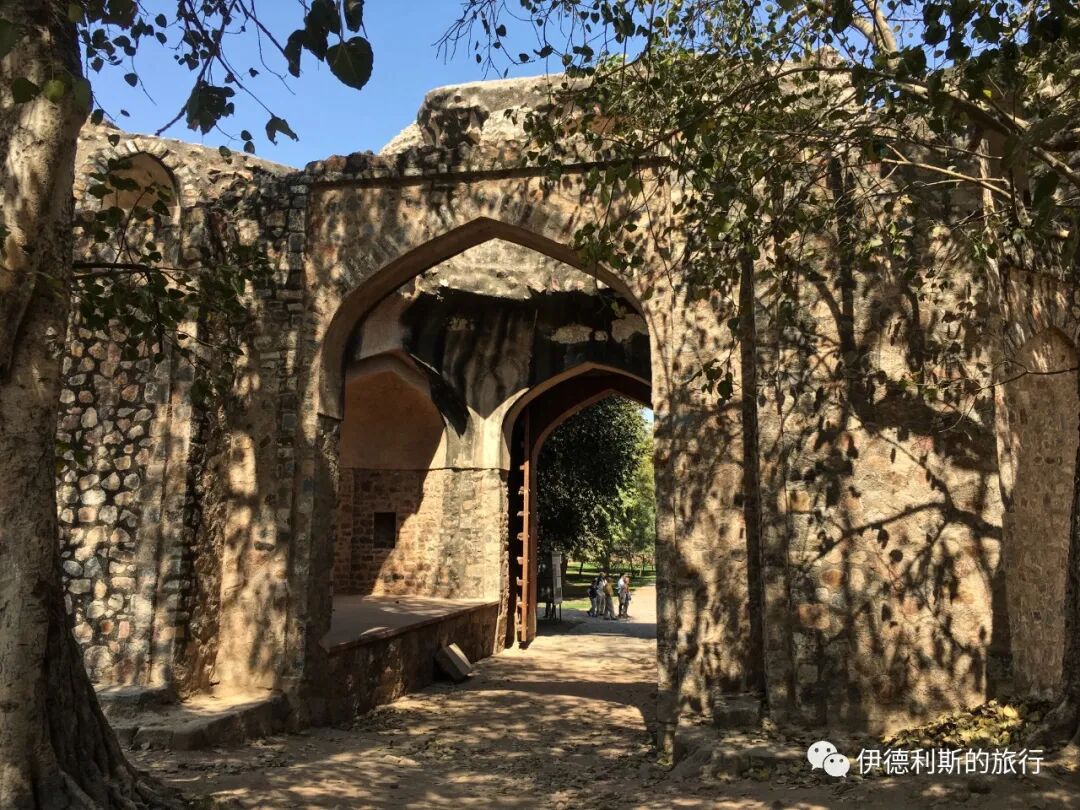
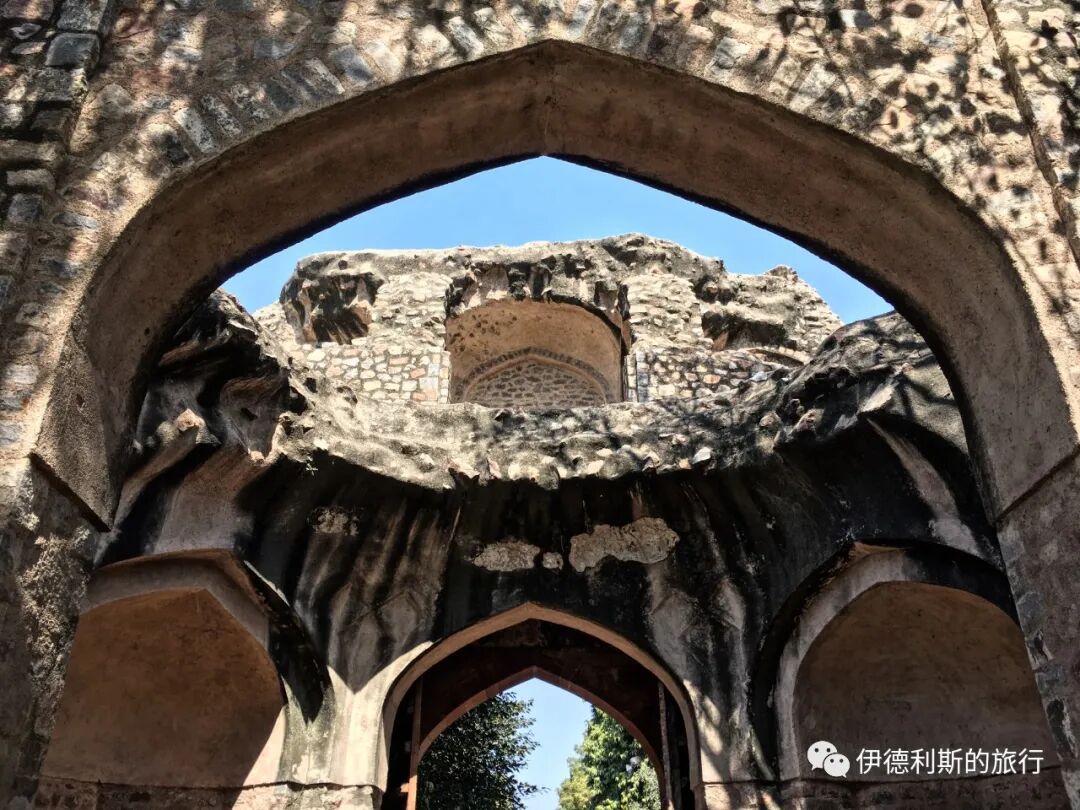
Sufi shrine (gongbei) Dargah Patte Waali
Northwest of Humayun's Tomb is a Sufi shrine (gongbei) called Dargah Patte Waali. It holds the graves of the famous Indian Sufi saints Hazrat Shamshuddin Patty Shah and Hazrat Maulana Abdul Qadir Jahangiri. They were said to be contemporaries of the famous nearby Sufi saint Nizamuddin, and the shrine was first ordered to be built in 1325 by the Tughlaq dynasty of the Delhi Sultanate.
While walking through the Humayun's Tomb area, I faintly heard music outside the walls. I quickly left the site and went to Dargah Patte Waali outside the wall. Everyone was holding a gathering (mehfil) and performing Qawwali, the most distinctive form of devotional singing in South Asia. It was my first time hearing Qawwali live, and it was very moving. Unfortunately, I didn't have much information at the time. In fact, the nearby Nizamuddin Dargah hosts Qawwali performances every evening, and that is the birthplace of Qawwali. After returning home and looking it up, I realized I really want to go back to South Asia and experience the charm of Qawwali again.
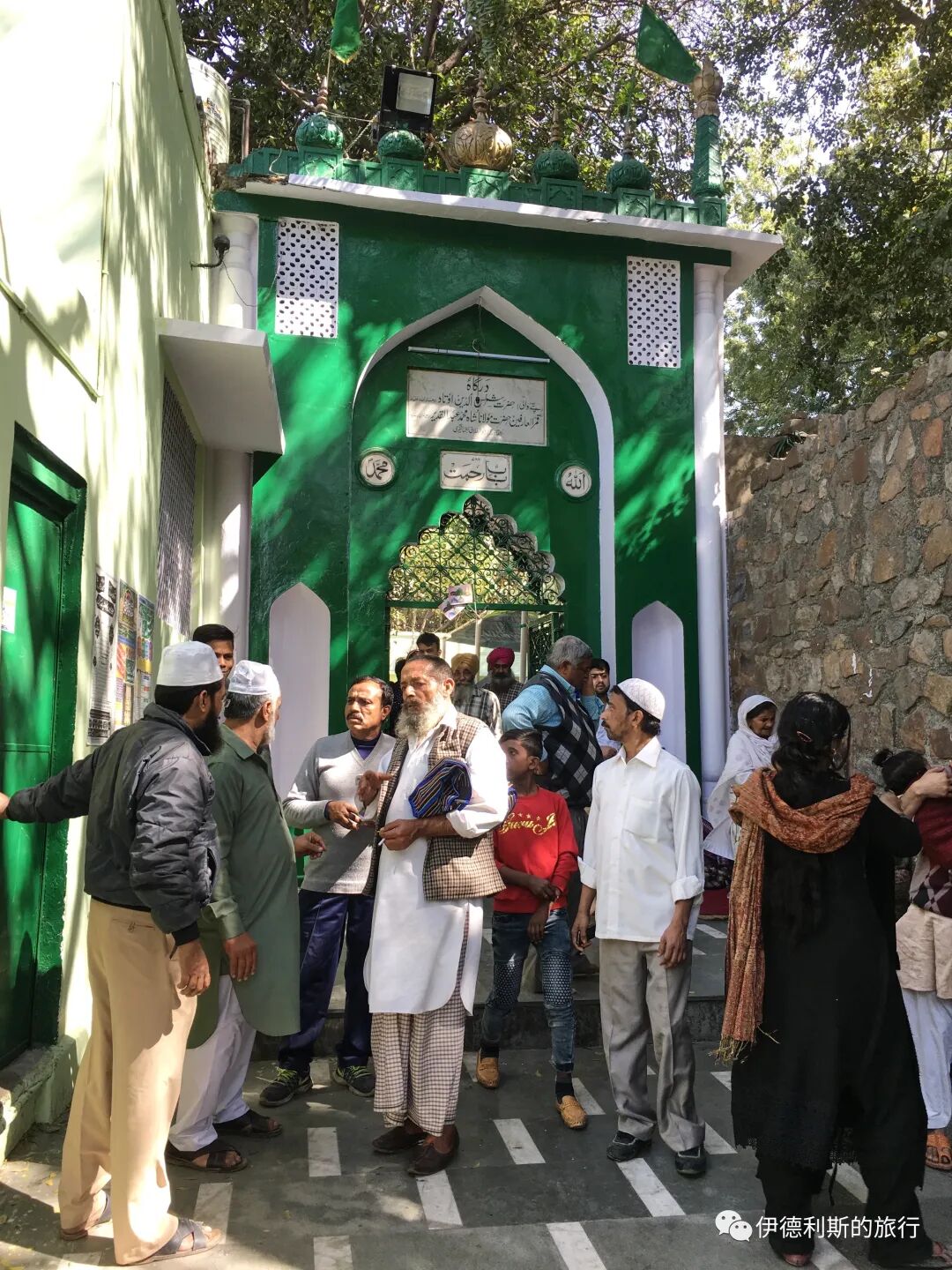
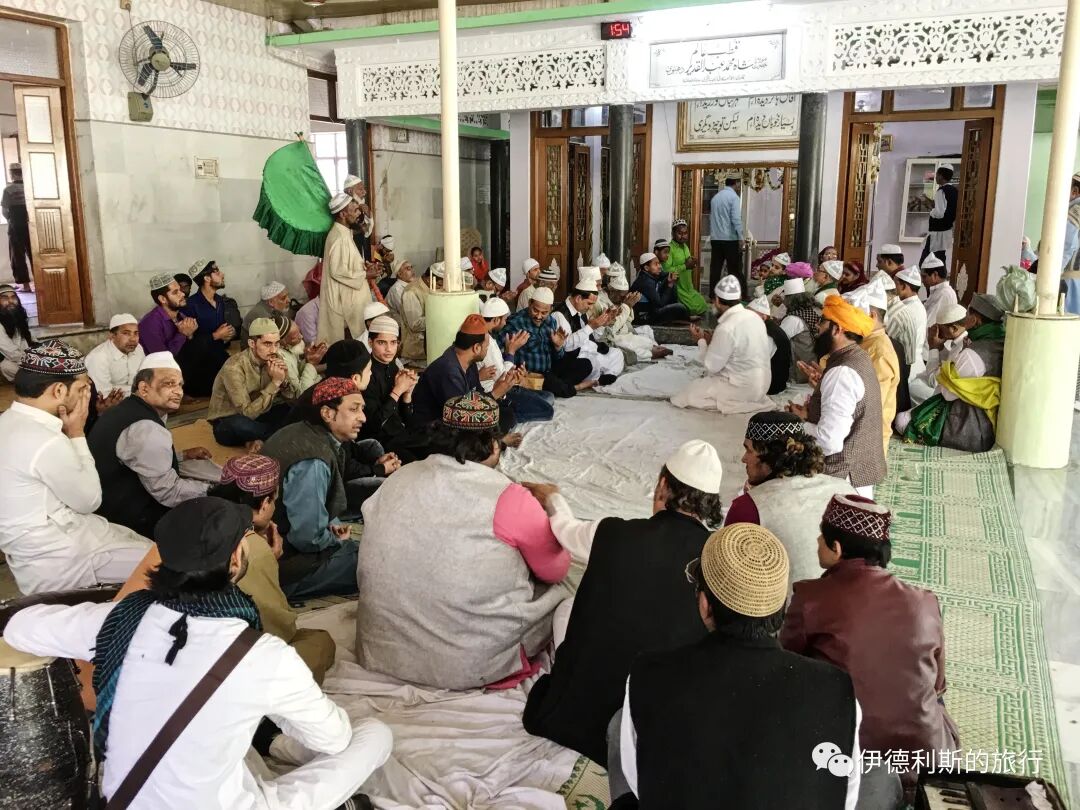
Halal Travel Guide: Delhi's Seventh City — Mughal Capital and Muslim History
Articles • ali2007fr posted the article • 0 comments • 155 views • 2026-05-18 03:19
Summary: Delhi's Seventh City — Mughal Capital and Muslim History is presented here as a firsthand travel account in clear English, beginning with this scene: In my last article, The Sixth City of Delhi: The Birth of the Mughal Empire, I wrote about how Humayun, the second Mughal emperor, fell to his death from his library in the sixth city of Delhi, Dinpanah, in 1556. The account keeps its focus on Delhi Travel, Mughal History, Muslim Heritage while preserving the names, places, food, and historical details from the Chinese source.
In my last article, The Sixth City of Delhi: The Birth of the Mughal Empire, I wrote about how Humayun, the second Mughal emperor, fell to his death from his library in the sixth city of Delhi, Dinpanah, in 1556. His son, Emperor Akbar, moved the Mughal capital to Agra in 1558, and Delhi lost its status as the capital.
In 1628, Shah Jahan became the fifth emperor of the Mughal Empire. Under his rule, Mughal architectural aesthetics reached a new height, and this period is widely recognized as the golden age of Mughal architecture. Besides building the Taj Mahal, Shah Jahan built the seventh city of Delhi between 1639 and 1648, naming it Shahjahanabad after himself. Shah Jahan made Shahjahanabad the capital of the Mughal Empire, aiming to show the grandeur and power of the empire.
Shahjahanabad is now known as Old Delhi and still keeps many historical sites and traditional neighborhoods. The most important site inside the city, the Red Fort, was added to the UNESCO World Heritage list in 2007.
The layout of Shahjahanabad was inspired by the ancient Persian city of Isfahan and inherited urban planning ideas from the Agra Fort and Fatehpur Sikri, which were built by the previous Mughal emperor, Akbar. The city has an irregular shape, with the eastern wall built along the course of the Yamuna River. The Yamuna River later changed its course and moved away from the walls, and the original riverbed is now the Delhi Inner Ring Road.
The city has two main roads: Chandni Chowk running east-west and Faiz Bazaar running north-south, with major commercial areas on both sides of the streets. The Red Fort, where the Mughal royal family lived, is located at the junction of these two main roads.
1858
1914
Table of Contents
1. Red Fort: 1639-1648
1. Lahore Gate
2. Chhatta Chowk (market)
3. Naubat Khana (drum house)
4. Diwan-i-Aam (public audience hall)
5. Rang Mahal (palace of the empresses)
6. Khas Mahal (emperor's private palace)
7. Diwan-i-Khas (private audience hall)
8. Hammam-e-Lal Qila (bathhouse)
9. Pearl Mosque (Moti Masjid)
10. King's Tower (Shah Burj)
11. Life-Giving Garden (Hayat Bakhsh Bagh)
2. Jama Mosque: 1650-1656
3. Fatehpuri Mosque: 1650
4. Golden Mosque (Sunehri Masjid): 1751
5. Great Mosque (Kalan Masjid): 1387
6. Hauzwali Mosque: 15th century
1. Red Fort: 1639-1648
Shah Jahan decided to move the capital from Agra back to Delhi in 1638. On May 12, 1639, he ordered the construction of the Red Fort. The designer was Ustad Ahmad Lahauri, the architect who built the Taj Mahal.
On the north side of the Red Fort is the Salimgarh Fort, built by the Sur dynasty in 1546 (I introduced this in my previous article, 'The Sixth City of Delhi: The Birth of the Mughal Empire'). The Red Fort was designed to connect to Salimgarh Fort via a bridge, joining the two castles together.
In 1857, the last Mughal emperor, Bahadur Shah II, left the Red Fort and was arrested by the British army. He was tried at the Red Fort in 1858 and exiled to Yangon, marking the end of the Mughal Empire. Afterward, the Red Fort was used as a British military barracks. Most of the buildings were demolished. Only the marble structures in the far east survived because they were repurposed as barracks, offices, dormitories, and canteens.
After India's independence, the Red Fort continued to be used as an Indian Army barracks until 2003, when the Archaeological Survey of India was finally authorized to begin restoration. In 2009, the Archaeological Survey of India developed a comprehensive protection and management plan for the Red Fort under the direction of the Supreme Court.
The Red Fort viewed from east to west, painted in 1785.
The Red Fort viewed from east to west, painted by Ghulam Ali Khan between 1852 and 1854.
1. Lahore Gate
The Lahore Gate is the west gate of the Red Fort. It is named for facing the city of Lahore. During the reign of the sixth Mughal emperor, Aurangzeb (reigned 1658-1707), a barbican was added to the outside of the gate. Since 1947, the Prime Minister of India has stood at the Lahore Gate to deliver a speech every Indian Independence Day.
Painted by Ghulam Ali Khan between 1852 and 1854.
2. Chhatta Chowk (market)
After entering the Lahore Gate, you find a market called Chhatta Chowk. During the Mughal era, this was where silk and jewelry were sold to members of the royal family.
Painted by Ghulam Ali Khan between 1852 and 1854.
(Optional) Image description
3. Naubat Khana (drum house)
After walking through the Chhatta Chowk market, you reach the outer courtyard of the Red Fort. The building in the center of the outer courtyard is called the Naubat Khana, which serves as the main gate to the inner court. Naubat Khana means 'drum house.' During the Mughal era, ceremonial music was played here five times a day, and everyone except members of the royal family had to dismount from their horses when they reached this point. After 1857, the British army destroyed the arcades on both sides of the Naubat Khana and the central pool, leaving only the central building.
Photographed in 1858 by British army officer Robert Christopher Tytler and his wife Harriet.
4. Diwan-i-Aam (public audience hall)
After passing through the Naubat Khana, you enter the inner courtyard of the Red Fort, where the Diwan-i-Aam stands directly in front of you. Diwan-i-Aam means 'Hall of Public Audience.' It was the place where the Mughal emperor met with the public to hear their concerns.
In the center of the hall is the throne where the emperor sat. The marble steps below the throne were where the prime minister (wazir) received petitions from the public.
The door behind the throne, painted by Ghulam Ali Khan between 1852 and 1854.
5. Rang Mahal (palace of the empresses)
After entering the Diwan-i-Aam, you reach the harem section of the Red Fort. Rang Mahal means 'Palace of Colors.' It was the living quarters for the concubines of the Mughal emperor.
Painted by Ghulam Ali Khan between 1852 and 1854.
A shallow canal called the Stream of Paradise (Nahr-i-Bihist) flows into the marble pool in front of the Rang Mahal. During the hot summer, the women of the Mughal royal family would stay in the basement of the Diwan-i-Aam to escape the heat.
Painted by Ghulam Ali Khan between 1852 and 1854.
6. Khas Mahal (emperor's private palace)
To the north of the Rang Mahal is the Khass Mahal, which was the sleeping quarters of the Mughal emperor. The Rang Mahal was built of white marble. Its walls were originally inlaid with various jewels and the ceiling was gilded, but these features have not been preserved.
Painted by Sir Thomas Theophilus Metcalfe in 1843.
The last Mughal emperor, Bahadur Shah II, ascends the throne in the Khas Mahal, painted by Ghulam Ali Khan between 1837 and 1838.
7. Hall of Private Audience (Diwan-i-Khas)
North of the Khas Mahal is the Hall of Private Audience (Diwan-i-Khas), where the Mughal emperor met with courtiers and state guests. The Hall of Private Audience (Diwan-i-Khas) means "private reception room." It is built of white marble and was once inlaid with various jewels, featuring the exquisite Peacock Throne in the center. The hall once had a ceiling inlaid with gold and silver, but these were later removed. The current ceiling was installed in 1911.
Outside the hall, there used to be red awnings, and the arches below were inscribed with verses by the famous Sufi master Amir Khusrow:
If there is a paradise on earth,
It is this, it is this, it is this.
Painted by Ghulam 'Ali Khan in 1817.
Painted by Ghulam Ali Khan between 1852 and 1854.
The Peacock Throne in 1850.
8. Hammam-e-Lal Qila (bathhouse)
North of the Hall of Private Audience (Diwan-i-Khas) is the Red Fort Bathhouse (Hammam-e-Lal Qila), which was used by the Mughal royal family. The Red Fort Bathhouse (Hammam-e-Lal Qila) is a Turkish-style bath consisting of three sections: a children's bath, a dressing room, and a hot bath. Legend has it that the water flowing from the taps at that time was mixed with rose perfume.
Painted by Ghulam Ali Khan between 1852 and 1854.
9. Pearl Mosque (Moti Masjid)
The Pearl Mosque (Moti Masjid) is west of the bathhouse. It was built by the sixth Mughal emperor, Aurangzeb, between 1659 and 1660 for his second wife, Nawab Bai. Pearl (Moti) means "pearl." It is built of white marble, and its three domes were originally covered with gilded copper plates, which were lost after 1857.
Painted by Ghulam Ali Khan between 1852 and 1854.
Painted by Vasily Vereshchagin in the late 1880s.
10. King's Tower (Shah Burj)
The northernmost part of the harem is a white marble pavilion built during the Aurangzeb period. Behind the pavilion is the Shahi Burj, the northeast corner tower of the Red Fort, which means "Imperial Tower." Inside the tower is a hydraulic system that carries water from outside the Red Fort into its gardens and buildings.
Painted by Sir Thomas Metcalfe in 1843.
11. Life-Giving Garden (Hayat Bakhsh Bagh)
In the northwest part of the harem is the royal water garden Hayat Bakhsh Bagh, which means 'Life-Giving Garden'. Most of the garden's buildings were destroyed after 1857, and only three survive today.
At the center of the garden is the red sandstone building Zafar Mahal, built in 1842 by the last Mughal emperor, Bahadur Shah II. The building sits in a pool and was originally connected to the shore by a red sandstone bridge, but it was destroyed after 1857. After 1857, the British army used this area as a swimming pool.
Painted by Ghulam Ali Khan between 1852 and 1854.
To the north and south of the garden are two white marble pavilions called Sawan and Bhadon, named after the months of July and August in the Indian rainy season, as the ladies of the Mughal palace loved to visit the garden during these two months. The pavilions have wall niches that held vases with golden flowers during the day and small oil lamps at night.
To the west of Hayat Bakhsh Bagh, there was originally another water garden called Mehtab Bagh, meaning 'Moon Garden,' but after 1857, the site was turned into a British military barracks, and now only ruins remain.
2. Jama Mosque: 1650-1656
The Jama Masjid mosque is located southwest of the Red Fort; it was built between 1650 and 1656 by order of Shah Jahan and served as the royal mosque of the Mughal Empire.
The mosque was built by more than 5,000 workers under the leadership of Shah Jahan's vizier (wazir) Saadullah Khan, costing over 1 million rupees. The mosque stands on a platform more than 9 meters above the ground and is made of red sandstone and marble, featuring a main hall connected by colonnades, two 40-meter-high minarets, and three gates. The east gate was reserved for the Mughal royal family and had a path that connected directly to the Delhi Gate of the Red Fort.
After 1857, the British seized the Jama Masjid mosque and stationed troops inside. They originally wanted to demolish the mosque, but they failed due to strong opposition, though the madrasa (Islamic school) on the south side of the mosque was destroyed as a result.
The mihrab in the center of the main hall indicates the direction of prayer toward Mecca:
Besides the main mihrab in the center, there is a smaller mihrab on each side.
During Jumu'ah, the imam stands on this stone platform to deliver the khutbah.
There is a tower at each of the four corners of the colonnade.
The east gate is the main entrance:
South Gate
North Gate
The water pool in the courtyard for wudu:
Jama means Jumu'ah, which refers to the Friday congregational prayer. The Jumu'ah mosque is usually the largest in the community, and the most important weekly prayer is held here every Friday at noon. I was lucky enough to attend a Friday Jumu'ah prayer at the Jama Mosque.
On the morning of Jumu'ah, more prayer rugs were already laid out in the courtyard.
People are performing wudu for the Jumu'ah prayer:
More and more people are arriving.
The imam leading the prayer climbs onto the stone platform.
After the prayer, people take photos:
3. Fatehpuri Mosque: 1650
Fatehpuri Mosque is located at the western end of Chandni Chowk, the main east-west road in Shahjahanabad. It was built in 1650 under the direction of Fatehpuri Begum, the wife of Shah Jahan. The mosque is in the classic Mughal style, built with red sandstone, featuring minarets on both sides and a main prayer hall in the middle. The main hall has seven arched bays, and the central iwan arch is topped with a Mughal-style dome.
4. Golden Mosque (Sunehri Masjid): 1751
Sunehri Mosque is located south of the Red Fort. It was built in 1751 by Qudsia Begum, the wife of the twelfth Mughal Emperor, Muhammad Shah. After Muhammad Shah died, Qudsia Begum's son, Ahmad Shah Bahadur, succeeded to the throne, making Qudsia Begum the de facto ruler of the Mughal Empire between 1748 and 1754.
During her rule, Qudsia Begum built a series of structures in Delhi, and the Sunehri Mosque is the most understated in its architectural style. The mosque's dome was originally copper-plated, but during renovations in 1852, sandstone replaced the damaged copper plates.
5. Great Mosque (Kalan Masjid): 1387
Kalan Mosque is one of the very few mosques in Shahjahanabad that existed before the city was built. It was constructed in 1387 by Khan-i-Jahan Maqbul, the vizier of Sultan Feroz Shah Tughlaq (reigned 1351-1388) of the Delhi Sultanate's Tughlaq dynasty. It is believed to have been built to commemorate a Sufi saint.
The mosque has been in continuous use, so the interior has changed significantly.
6. Hauzwali Mosque: 15th century
Hauzwali Mosque is another mosque that existed before the city of Shahjahanabad was built. Because the ground level has changed so much over time, the bottom half of the mosque is now underground, leaving only the top parts of the arches and the mihrab visible. view all
Summary: Delhi's Seventh City — Mughal Capital and Muslim History is presented here as a firsthand travel account in clear English, beginning with this scene: In my last article, The Sixth City of Delhi: The Birth of the Mughal Empire, I wrote about how Humayun, the second Mughal emperor, fell to his death from his library in the sixth city of Delhi, Dinpanah, in 1556. The account keeps its focus on Delhi Travel, Mughal History, Muslim Heritage while preserving the names, places, food, and historical details from the Chinese source.
In my last article, The Sixth City of Delhi: The Birth of the Mughal Empire, I wrote about how Humayun, the second Mughal emperor, fell to his death from his library in the sixth city of Delhi, Dinpanah, in 1556. His son, Emperor Akbar, moved the Mughal capital to Agra in 1558, and Delhi lost its status as the capital.
In 1628, Shah Jahan became the fifth emperor of the Mughal Empire. Under his rule, Mughal architectural aesthetics reached a new height, and this period is widely recognized as the golden age of Mughal architecture. Besides building the Taj Mahal, Shah Jahan built the seventh city of Delhi between 1639 and 1648, naming it Shahjahanabad after himself. Shah Jahan made Shahjahanabad the capital of the Mughal Empire, aiming to show the grandeur and power of the empire.
Shahjahanabad is now known as Old Delhi and still keeps many historical sites and traditional neighborhoods. The most important site inside the city, the Red Fort, was added to the UNESCO World Heritage list in 2007.
The layout of Shahjahanabad was inspired by the ancient Persian city of Isfahan and inherited urban planning ideas from the Agra Fort and Fatehpur Sikri, which were built by the previous Mughal emperor, Akbar. The city has an irregular shape, with the eastern wall built along the course of the Yamuna River. The Yamuna River later changed its course and moved away from the walls, and the original riverbed is now the Delhi Inner Ring Road.
The city has two main roads: Chandni Chowk running east-west and Faiz Bazaar running north-south, with major commercial areas on both sides of the streets. The Red Fort, where the Mughal royal family lived, is located at the junction of these two main roads.
1858
1914
Table of Contents
1. Red Fort: 1639-1648
1. Lahore Gate
2. Chhatta Chowk (market)
3. Naubat Khana (drum house)
4. Diwan-i-Aam (public audience hall)
5. Rang Mahal (palace of the empresses)
6. Khas Mahal (emperor's private palace)
7. Diwan-i-Khas (private audience hall)
8. Hammam-e-Lal Qila (bathhouse)
9. Pearl Mosque (Moti Masjid)
10. King's Tower (Shah Burj)
11. Life-Giving Garden (Hayat Bakhsh Bagh)
2. Jama Mosque: 1650-1656
3. Fatehpuri Mosque: 1650
4. Golden Mosque (Sunehri Masjid): 1751
5. Great Mosque (Kalan Masjid): 1387
6. Hauzwali Mosque: 15th century
1. Red Fort: 1639-1648
Shah Jahan decided to move the capital from Agra back to Delhi in 1638. On May 12, 1639, he ordered the construction of the Red Fort. The designer was Ustad Ahmad Lahauri, the architect who built the Taj Mahal.
On the north side of the Red Fort is the Salimgarh Fort, built by the Sur dynasty in 1546 (I introduced this in my previous article, 'The Sixth City of Delhi: The Birth of the Mughal Empire'). The Red Fort was designed to connect to Salimgarh Fort via a bridge, joining the two castles together.
In 1857, the last Mughal emperor, Bahadur Shah II, left the Red Fort and was arrested by the British army. He was tried at the Red Fort in 1858 and exiled to Yangon, marking the end of the Mughal Empire. Afterward, the Red Fort was used as a British military barracks. Most of the buildings were demolished. Only the marble structures in the far east survived because they were repurposed as barracks, offices, dormitories, and canteens.
After India's independence, the Red Fort continued to be used as an Indian Army barracks until 2003, when the Archaeological Survey of India was finally authorized to begin restoration. In 2009, the Archaeological Survey of India developed a comprehensive protection and management plan for the Red Fort under the direction of the Supreme Court.
The Red Fort viewed from east to west, painted in 1785.
The Red Fort viewed from east to west, painted by Ghulam Ali Khan between 1852 and 1854.
1. Lahore Gate
The Lahore Gate is the west gate of the Red Fort. It is named for facing the city of Lahore. During the reign of the sixth Mughal emperor, Aurangzeb (reigned 1658-1707), a barbican was added to the outside of the gate. Since 1947, the Prime Minister of India has stood at the Lahore Gate to deliver a speech every Indian Independence Day.
Painted by Ghulam Ali Khan between 1852 and 1854.
2. Chhatta Chowk (market)
After entering the Lahore Gate, you find a market called Chhatta Chowk. During the Mughal era, this was where silk and jewelry were sold to members of the royal family.
Painted by Ghulam Ali Khan between 1852 and 1854.
(Optional) Image description
3. Naubat Khana (drum house)
After walking through the Chhatta Chowk market, you reach the outer courtyard of the Red Fort. The building in the center of the outer courtyard is called the Naubat Khana, which serves as the main gate to the inner court. Naubat Khana means 'drum house.' During the Mughal era, ceremonial music was played here five times a day, and everyone except members of the royal family had to dismount from their horses when they reached this point. After 1857, the British army destroyed the arcades on both sides of the Naubat Khana and the central pool, leaving only the central building.
Photographed in 1858 by British army officer Robert Christopher Tytler and his wife Harriet.
4. Diwan-i-Aam (public audience hall)
After passing through the Naubat Khana, you enter the inner courtyard of the Red Fort, where the Diwan-i-Aam stands directly in front of you. Diwan-i-Aam means 'Hall of Public Audience.' It was the place where the Mughal emperor met with the public to hear their concerns.
In the center of the hall is the throne where the emperor sat. The marble steps below the throne were where the prime minister (wazir) received petitions from the public.
The door behind the throne, painted by Ghulam Ali Khan between 1852 and 1854.
5. Rang Mahal (palace of the empresses)
After entering the Diwan-i-Aam, you reach the harem section of the Red Fort. Rang Mahal means 'Palace of Colors.' It was the living quarters for the concubines of the Mughal emperor.
Painted by Ghulam Ali Khan between 1852 and 1854.
A shallow canal called the Stream of Paradise (Nahr-i-Bihist) flows into the marble pool in front of the Rang Mahal. During the hot summer, the women of the Mughal royal family would stay in the basement of the Diwan-i-Aam to escape the heat.
Painted by Ghulam Ali Khan between 1852 and 1854.
6. Khas Mahal (emperor's private palace)
To the north of the Rang Mahal is the Khass Mahal, which was the sleeping quarters of the Mughal emperor. The Rang Mahal was built of white marble. Its walls were originally inlaid with various jewels and the ceiling was gilded, but these features have not been preserved.
Painted by Sir Thomas Theophilus Metcalfe in 1843.
The last Mughal emperor, Bahadur Shah II, ascends the throne in the Khas Mahal, painted by Ghulam Ali Khan between 1837 and 1838.
7. Hall of Private Audience (Diwan-i-Khas)
North of the Khas Mahal is the Hall of Private Audience (Diwan-i-Khas), where the Mughal emperor met with courtiers and state guests. The Hall of Private Audience (Diwan-i-Khas) means "private reception room." It is built of white marble and was once inlaid with various jewels, featuring the exquisite Peacock Throne in the center. The hall once had a ceiling inlaid with gold and silver, but these were later removed. The current ceiling was installed in 1911.
Outside the hall, there used to be red awnings, and the arches below were inscribed with verses by the famous Sufi master Amir Khusrow:
If there is a paradise on earth,
It is this, it is this, it is this.
Painted by Ghulam 'Ali Khan in 1817.
Painted by Ghulam Ali Khan between 1852 and 1854.
The Peacock Throne in 1850.
8. Hammam-e-Lal Qila (bathhouse)
North of the Hall of Private Audience (Diwan-i-Khas) is the Red Fort Bathhouse (Hammam-e-Lal Qila), which was used by the Mughal royal family. The Red Fort Bathhouse (Hammam-e-Lal Qila) is a Turkish-style bath consisting of three sections: a children's bath, a dressing room, and a hot bath. Legend has it that the water flowing from the taps at that time was mixed with rose perfume.
Painted by Ghulam Ali Khan between 1852 and 1854.
9. Pearl Mosque (Moti Masjid)
The Pearl Mosque (Moti Masjid) is west of the bathhouse. It was built by the sixth Mughal emperor, Aurangzeb, between 1659 and 1660 for his second wife, Nawab Bai. Pearl (Moti) means "pearl." It is built of white marble, and its three domes were originally covered with gilded copper plates, which were lost after 1857.
Painted by Ghulam Ali Khan between 1852 and 1854.
Painted by Vasily Vereshchagin in the late 1880s.
10. King's Tower (Shah Burj)
The northernmost part of the harem is a white marble pavilion built during the Aurangzeb period. Behind the pavilion is the Shahi Burj, the northeast corner tower of the Red Fort, which means "Imperial Tower." Inside the tower is a hydraulic system that carries water from outside the Red Fort into its gardens and buildings.
Painted by Sir Thomas Metcalfe in 1843.
11. Life-Giving Garden (Hayat Bakhsh Bagh)
In the northwest part of the harem is the royal water garden Hayat Bakhsh Bagh, which means 'Life-Giving Garden'. Most of the garden's buildings were destroyed after 1857, and only three survive today.
At the center of the garden is the red sandstone building Zafar Mahal, built in 1842 by the last Mughal emperor, Bahadur Shah II. The building sits in a pool and was originally connected to the shore by a red sandstone bridge, but it was destroyed after 1857. After 1857, the British army used this area as a swimming pool.
Painted by Ghulam Ali Khan between 1852 and 1854.
To the north and south of the garden are two white marble pavilions called Sawan and Bhadon, named after the months of July and August in the Indian rainy season, as the ladies of the Mughal palace loved to visit the garden during these two months. The pavilions have wall niches that held vases with golden flowers during the day and small oil lamps at night.
To the west of Hayat Bakhsh Bagh, there was originally another water garden called Mehtab Bagh, meaning 'Moon Garden,' but after 1857, the site was turned into a British military barracks, and now only ruins remain.
2. Jama Mosque: 1650-1656
The Jama Masjid mosque is located southwest of the Red Fort; it was built between 1650 and 1656 by order of Shah Jahan and served as the royal mosque of the Mughal Empire.
The mosque was built by more than 5,000 workers under the leadership of Shah Jahan's vizier (wazir) Saadullah Khan, costing over 1 million rupees. The mosque stands on a platform more than 9 meters above the ground and is made of red sandstone and marble, featuring a main hall connected by colonnades, two 40-meter-high minarets, and three gates. The east gate was reserved for the Mughal royal family and had a path that connected directly to the Delhi Gate of the Red Fort.
After 1857, the British seized the Jama Masjid mosque and stationed troops inside. They originally wanted to demolish the mosque, but they failed due to strong opposition, though the madrasa (Islamic school) on the south side of the mosque was destroyed as a result.
The mihrab in the center of the main hall indicates the direction of prayer toward Mecca:
Besides the main mihrab in the center, there is a smaller mihrab on each side.
During Jumu'ah, the imam stands on this stone platform to deliver the khutbah.
There is a tower at each of the four corners of the colonnade.
The east gate is the main entrance:
South Gate
North Gate
The water pool in the courtyard for wudu:
Jama means Jumu'ah, which refers to the Friday congregational prayer. The Jumu'ah mosque is usually the largest in the community, and the most important weekly prayer is held here every Friday at noon. I was lucky enough to attend a Friday Jumu'ah prayer at the Jama Mosque.
On the morning of Jumu'ah, more prayer rugs were already laid out in the courtyard.
People are performing wudu for the Jumu'ah prayer:
More and more people are arriving.
The imam leading the prayer climbs onto the stone platform.
After the prayer, people take photos:
3. Fatehpuri Mosque: 1650
Fatehpuri Mosque is located at the western end of Chandni Chowk, the main east-west road in Shahjahanabad. It was built in 1650 under the direction of Fatehpuri Begum, the wife of Shah Jahan. The mosque is in the classic Mughal style, built with red sandstone, featuring minarets on both sides and a main prayer hall in the middle. The main hall has seven arched bays, and the central iwan arch is topped with a Mughal-style dome.
4. Golden Mosque (Sunehri Masjid): 1751
Sunehri Mosque is located south of the Red Fort. It was built in 1751 by Qudsia Begum, the wife of the twelfth Mughal Emperor, Muhammad Shah. After Muhammad Shah died, Qudsia Begum's son, Ahmad Shah Bahadur, succeeded to the throne, making Qudsia Begum the de facto ruler of the Mughal Empire between 1748 and 1754.
During her rule, Qudsia Begum built a series of structures in Delhi, and the Sunehri Mosque is the most understated in its architectural style. The mosque's dome was originally copper-plated, but during renovations in 1852, sandstone replaced the damaged copper plates.
5. Great Mosque (Kalan Masjid): 1387
Kalan Mosque is one of the very few mosques in Shahjahanabad that existed before the city was built. It was constructed in 1387 by Khan-i-Jahan Maqbul, the vizier of Sultan Feroz Shah Tughlaq (reigned 1351-1388) of the Delhi Sultanate's Tughlaq dynasty. It is believed to have been built to commemorate a Sufi saint.
The mosque has been in continuous use, so the interior has changed significantly.
6. Hauzwali Mosque: 15th century
Hauzwali Mosque is another mosque that existed before the city of Shahjahanabad was built. Because the ground level has changed so much over time, the bottom half of the mosque is now underground, leaving only the top parts of the arches and the mihrab visible.
Halal Travel Guide: Delhi's Sixth City — Mughal Beginnings and Muslim History
Articles • ali2007fr posted the article • 0 comments • 149 views • 2026-05-18 03:18
Summary: Delhi's Sixth City — Mughal Beginnings and Muslim History is presented here as a firsthand travel account in clear English, beginning with this scene: Din Panah is known as the sixth historical city of Delhi. It was the first city built by the Mughal Empire in Delhi and served as the capital for the Afghan-led Sur Empire. The account keeps its focus on Delhi Travel, Mughal History, Muslim Heritage while preserving the names, places, food, and historical details from the Chinese source.
Din Panah is known as the sixth historical city of Delhi. It was the first city built by the Mughal Empire in Delhi and served as the capital for the Afghan-led Sur Empire. Most of the original site of Din Panah is now covered by New Delhi, which was built in the early 20th century. Very little of the outer city remains, but the inner city walls, known as the Old Fort (Purana Qila), are still well-preserved. Inside the Old Fort, you can find significant historical buildings like the royal mosque of the Sur Empire and the library where Humayun fell to his death. These are vital historical sites for understanding the early Mughal and Sur periods.
Table of Contents
I. The Origins of Din Panah
1. The First City of the Mughal Empire
2. The Capital of the Sur Empire
3. The Mughal Return to Din Panah
4. Losing Capital Status
5. Modern Changes to the Ancient City
II. Old Fort Gates
III. Qila-i-Kuhna Mosque: 1541
IV. Sher Mandal
V. Bathhouse Ruins
VI. Water Reservoir
VII. Outer City Gates
VIII. Khairul Manazil Mosque: 1561
IX. Sur Empire Architecture Around Din Panah
1. Salimgarh Fort: 1546
2. Tomb and Mosque of Isa Khan: 1547
I. The Origins of Din Panah
1. The First City of the Mughal Empire
In 1526, Babur, a Chagatai Mongol noble and descendant of Tamerlane, invaded India from Afghanistan. He defeated the 100,000-strong army and 100 war elephants of the Delhi Sultanate's Lodi Dynasty. The last Sultan, Ibrahim Lodi, was killed in battle. This ended the 320-year-old Delhi Sultanate and marked the official birth of the Mughal Empire.
Emperor Babur died in 1530, and his son Humayun succeeded him as the second emperor of the Mughal Empire. When Emperor Babur ruled India, he kept Agra as his capital, just as the Lodi dynasty of the Delhi Sultanate had done. After Humayun took the throne, he officially moved the capital to Delhi. In 1533, Humayun began building the Mughal capital of Din Panah in Delhi, which means 'Refuge of the Faith'. Just ten months later, the city walls, gates, and the inner city were all finished.
A 1590 miniature painting of Humayun in battle, held by the Los Angeles County Museum of Art.
2. The Capital of the Sur Empire
In 1539, Humayun led a large army east to Bengal, but he was defeated by Sher Shah, a general from the Afghan Pashtun Sur tribe. In 1540, Sher Shah followed up his victory and completely crushed Humayun. Humayun fled to Persia, and Sher Shah established the Suri Dynasty in Delhi.
After taking Delhi, Sher Shah immediately started building his own capital on the site of Din Panah and named the new inner city Shergarh.
There is still no reliable evidence to show if Sher Shah renovated the Din Panah city built by Humayun or rebuilt it entirely. Historical records about Sher Shah suggest he ordered the construction of the walls and inner city of Din Panah, and that the work was still unfinished when he died. However, the biography of Sher Shah's son, Salim Shah, records that in 1546, after finishing another Delhi fortress called Salimgarh, Salim Shah ordered new walls built around the castle Humayun had constructed. One theory is that Salim Shah renovated the walls of Din Panah or finished the final construction.
3. The Mughal Return to Din Panah
In 1554, the second Sultan of the Suri Dynasty, Islam Shah, died. His twelve-year-old son, Firuz Shah, took the throne but was killed immediately. The empire fell into chaos with lords fighting each other, and four different rulers took power in just one year. Meanwhile, with help from the Safavid dynasty of Persia, Humayun had established a base in Afghanistan and built up a strong army.
In 1555, the ruler of Lahore, Sikandar Shah, led an army to occupy Delhi. Taking advantage of Lahore's weak defenses, Humayun sent his commander Bairam Khan to lead an official military campaign into India with help from the Persian Safavid dynasty. On June 22, 1555, the Mughal army completely defeated the 80,000-horse army led by Sikandar Shah. On July 23, 1555, Humayun returned to the city of Din Panah in Delhi after fifteen years, and the Mughal Empire began ruling northern India once again.
An 18th-century portrait of Humayun, held by the Victoria and Albert Museum in London.
4. Losing Capital Status
On January 24, 1556, Humayun was reading in the library on the second floor of the city of Din Panah. When the muezzin called the adhan, Humayun hurried downstairs to prepare for namaz, but he tripped on the stairs and died. Humayun's thirteen-year-old son, Akbar, succeeded to the throne with Bairam Khan serving as regent.
After Humayun passed away, he was initially buried inside the palace at Din Panah. However, the Sur dynasty general Hemu soon traveled through the night from Bengal to quickly sweep across Mughal territory. On October 7, 1556, Hemu captured Delhi after a fierce battle, and Humayun's remains were dug up and transported to Punjab.
On November 5, 1556, Delhi was recaptured by Akbar and Bairam Khan, who had arrived from Punjab. Hemu was struck by an arrow and fell unconscious during the decisive battle, and he was killed shortly after. Akbar only stayed in Delhi for one month before returning to Punjab to continue fighting the Sur dynasty army.
In 1558, Akbar officially moved the capital from Din Panah to Agra, ending Din Panah's history as the capital of the Mughal Empire.
A portrait of Akbar in his youth.
5. Modern Changes to the Ancient City
The inner city of Din Panah, Shergarh, is now known as the Old Fort (Purana Qila). In the early 20th century, 1,900 people lived here. They were moved out in 1913, and the site became a historical heritage site.
During the 1947 partition of India and Pakistan, the Old Fort and the nearby Humayun's Tomb housed 200,000 Indian Muslims waiting to go to Pakistan. Trains transported them one after another until early 1948.
In the 1970s, the Old Fort began to be used as an open-air theater by the National School of Drama, and it has since become an important venue in Delhi for plays, concerts, and cultural events.
Today, it is a paid historical site open to all visitors.
A map of the attractions at the Old Fort.
II. Old Fort Gates
The walls of the Old Fort are 18 meters high and 1.5 kilometers long, with three gates. The west gate is the main entrance to the fort and the scenic area, called Bara Darwaza. The south gate is called Humayun Darwaza. One theory is that this gate was built by Humayun, while another is that it faces Humayun's Tomb. The north gate is called Talaqi Darwaza, also known as the Forbidden Gate.
All three gates are double-layered sandstone structures with two massive semi-circular towers on either side. The gates feature overhanging balconies and small pavilions (chhatris) on top, a style that would be repeated throughout later Mughal architecture.
The main gate was likely built by Humayun and stands 20 meters high.
Inside the main gate.
Outside the corner tower, with the moat below.
Inside the west city wall.
III. Qila-i-Kuhna Mosque: 1541
The Qila-i-Kuna mosque was built by Sher Shah in 1541 and served as the royal mosque for the Suri dynasty. This mosque with its semi-domed design is known as a key marker in the transition of Indian Islamic architecture from the Lodi style to the Mughal style, and it is the largest and most exquisite five-arched mosque in India.
The five-arched mosque is a style of mosque architecture that developed during the Sayyid and Lodi dynasties of the Delhi Sultanate. The main hall of the mosque is divided into five sections by five arches, and each section has a mihrab. The mihrab inside the central arch is the largest, topped by a Lodi-style semi-domed vault.
Main dome.
Small dome.
Mihrab.
Mihrab.
There are two octagonal towers on both sides of the main hall, featuring the style of the Tughlaq dynasty.
A small door specifically for royal family members to enter for namaz.
IV. Sher Mandal
Sher Mandal is an octagonal pavilion with a very simple style. This simple beauty comes from a return to Persian style, which is quite different from the architectural forms of the late Lodi dynasty of the Delhi Sultanate, and it is the earliest building of this style in Delhi.
Although it looks very much like an early Mughal building, it is actually recognized as part of a palace built by Sher Shah, which was later converted by Humayun into a library and observatory, and it is also known as the first observatory in Delhi.
On January 24, 1556, when the call to prayer sounded, Humayun hurried down the stairs from the second floor of Sher Mandal to prepare for namaz, but he slipped and fell to his death.
V. Bathhouse Ruins
Next to Sher Mandal are the ruins of a bathhouse (hammam), likely built in the late 16th century. Steps lead into a room with decorative niches, and one side has a channel for flowing water.
VI. Water Reservoir
The water reservoir (baoli) used for storing water in the city.
VII. Outer City Gates
After exiting through the main gate of the Old Fort, you can see the historical ruins of the outer city of Dinpanah. Among the seven cities of Delhi, Dinpanah is the one we know the least about. Some early descriptions suggest that Dinpanah was an extension to the south of Ferozabad, the fifth city of Delhi.
Only two gates remain of the outer city walls of Dinpanah. The north gate of the outer city (Khuni Darwaza) is located near Ferozabad. It is also called the "Bloody Gate" because Mughal princes were shot there in 1857.
The south gate of the outer city (Lal Darwaza) is right next to the main gate of the Old Fort. Outside the gate is a wide road with the ruins of shops on both sides.
The relationship between the outer city walls of Dinpanah and the Old Fort walls is still unclear. However, judging by the moat outside the Old Fort, the outer walls were likely not connected to the Old Fort walls. In the 19th century, the archaeologist Cunningham speculated that the walls of Dinpanah should have covered a much larger area than these two gates suggest, possibly reaching over 14 kilometers. However, there was not enough archaeological evidence at the time to prove this.
Unfortunately, the south gate of the outer city was under renovation when I visited, so I could only look at it from a distance.
The ruins of the shops on both sides of the road outside the gate.
VIII. Khairul Manazil Mosque: 1561
Right next to the south gate of Dinpanah is the Khairul Manazil mosque, built in 1561 by Maham Anga, the wet nurse of the Mughal Emperor Akbar the Great. Between 1560 and 1562, she was the de facto regent of the Mughal Empire.
The gate of the mosque is a typical Mughal-style building, while the main hall with its semi-domed roof is in the Delhi Sultanate style. This is a characteristic of the transitional period in the early Mughal dynasty.
There is a water pool in the center of the courtyard, surrounded by a two-story madrasa.
The main gate.
Looking inside from the main gate.
The mosque is on the left and the madrasa is on the right.
The madrasa is on the left and the main gate is on the right.
The main hall and the water pool in the courtyard.
Inside the main hall.
Mihrab.
The patterns on the mihrab.
IX. Sur Empire Architecture Around Din Panah
On the north and south sides of Dinpanah, there are two very important buildings from the Sur dynasty. To the north is Salimgarh Fort, and to the south is the tomb and mosque of Isa Khan.
1. Salimgarh Fort: 1546
Salimgarh Fort is located on the north side of the Red Fort in Delhi. It was built in 1546 by Salim Shah, the son of the Sur dynasty ruler Sher Shah. People say in 1555, Humayun stayed here for three days before recapturing Delhi. In 1639, when the Mughal Emperor Shahjahan was building the seventh city of Delhi, Shahjahanabad, he also camped here.
The place turned dark after the Mughal Emperor Aurangzeb turned it into a prison. Aurangzeb imprisoned his brother Murad Baksh here, and it is said he also held his favorite eldest daughter, Zebunnisa, captive here for twenty-one years.
In 1857, an anti-British uprising broke out in India, eventually leading to the fall of the Mughals. From August to early September 1857, the last Mughal Emperor, Bahadur Shah Zafar, held strategic meetings at Salimgarh Fort and announced that the Mughal Emperor would lead the Indian people in their resistance against the British. He called on all Indian people, regardless of caste or faith, to join the resistance together.
But by mid-September, the British army began to surround the fort. The emperor's men urged him to retreat to a safe place, but the emperor refused. The emperor ordered his army to evacuate the fort, while he went to the tomb of Humayun. Therefore, when the British army entered the fort, they only encountered one sentry. On September 20, the emperor was arrested by the British army at Humayun's Tomb, marking the end of the Mughal Empire, which had lasted for over three hundred years.
After the uprising ended, the fort was used as an artillery camp for the British army and later became a prison. Between 1945 and 1947, leading up to India's independence, many members of the Indian National Army (INA) were tortured to death here, and many more disappeared forever. Because of this, Salimgarh Fort is now also called Swatantrata Senani Smarak to commemorate the prisoners who were treated cruelly within the fort.
There are many legends about ghosts haunting Salimgarh Fort. The most famous ghost is the Mughal Emperor Aurangzeb's daughter, Zebunnisa. Legend says she wears a black veil and sings poems she wrote herself under the moonlight. Additionally, some people claim they can hear the groans of the Indian National Army soldiers who were tortured to death here at night.
In 2007, this place became a UNESCO World Heritage site.
Salimgarh Fort in 1866, drawn by Alfred Frederick Pollock Harcourt.
The mosque by the city wall.
Inside the mosque.
The other side of the city wall.
Some scattered architectural pieces inside the fortress.
2. Tomb and Mosque of Isa Khan: 1547
Isa Khan was a nobleman of the Sur Empire, coming from the Niazi tribe of the Pashtuns in Afghanistan. Isa Khan died in 1548. Before he passed away, he built his own tomb and mosque in the southern suburbs of Dinpanah, near the shrine of Nizamuddin. Later, this place also became the site of Humayun's tomb.
As a prominent figure in the Sur Empire, Isa Khan was one of the last nobles of the dynasty to be buried in an Afghan-style tomb.
On August 5, 2011, the oldest sunken garden in India was discovered during the restoration of the tomb. This is considered the first Indian-style sunken garden attached to a tomb in India. This design was later further developed at Akbar's Tomb and the Taj Mahal.
The dome of the outer corridor.
The dome inside.
The mihrab of the tomb.
The Isa Khan Mosque was built during the same period as the tomb, and its biggest feature is the use of two pavilions instead of a dome. many details in the mosque were further developed in the later Humayun's Tomb. view all
Summary: Delhi's Sixth City — Mughal Beginnings and Muslim History is presented here as a firsthand travel account in clear English, beginning with this scene: Din Panah is known as the sixth historical city of Delhi. It was the first city built by the Mughal Empire in Delhi and served as the capital for the Afghan-led Sur Empire. The account keeps its focus on Delhi Travel, Mughal History, Muslim Heritage while preserving the names, places, food, and historical details from the Chinese source.
Din Panah is known as the sixth historical city of Delhi. It was the first city built by the Mughal Empire in Delhi and served as the capital for the Afghan-led Sur Empire. Most of the original site of Din Panah is now covered by New Delhi, which was built in the early 20th century. Very little of the outer city remains, but the inner city walls, known as the Old Fort (Purana Qila), are still well-preserved. Inside the Old Fort, you can find significant historical buildings like the royal mosque of the Sur Empire and the library where Humayun fell to his death. These are vital historical sites for understanding the early Mughal and Sur periods.
Table of Contents
I. The Origins of Din Panah
1. The First City of the Mughal Empire
2. The Capital of the Sur Empire
3. The Mughal Return to Din Panah
4. Losing Capital Status
5. Modern Changes to the Ancient City
II. Old Fort Gates
III. Qila-i-Kuhna Mosque: 1541
IV. Sher Mandal
V. Bathhouse Ruins
VI. Water Reservoir
VII. Outer City Gates
VIII. Khairul Manazil Mosque: 1561
IX. Sur Empire Architecture Around Din Panah
1. Salimgarh Fort: 1546
2. Tomb and Mosque of Isa Khan: 1547
I. The Origins of Din Panah
1. The First City of the Mughal Empire
In 1526, Babur, a Chagatai Mongol noble and descendant of Tamerlane, invaded India from Afghanistan. He defeated the 100,000-strong army and 100 war elephants of the Delhi Sultanate's Lodi Dynasty. The last Sultan, Ibrahim Lodi, was killed in battle. This ended the 320-year-old Delhi Sultanate and marked the official birth of the Mughal Empire.
Emperor Babur died in 1530, and his son Humayun succeeded him as the second emperor of the Mughal Empire. When Emperor Babur ruled India, he kept Agra as his capital, just as the Lodi dynasty of the Delhi Sultanate had done. After Humayun took the throne, he officially moved the capital to Delhi. In 1533, Humayun began building the Mughal capital of Din Panah in Delhi, which means 'Refuge of the Faith'. Just ten months later, the city walls, gates, and the inner city were all finished.
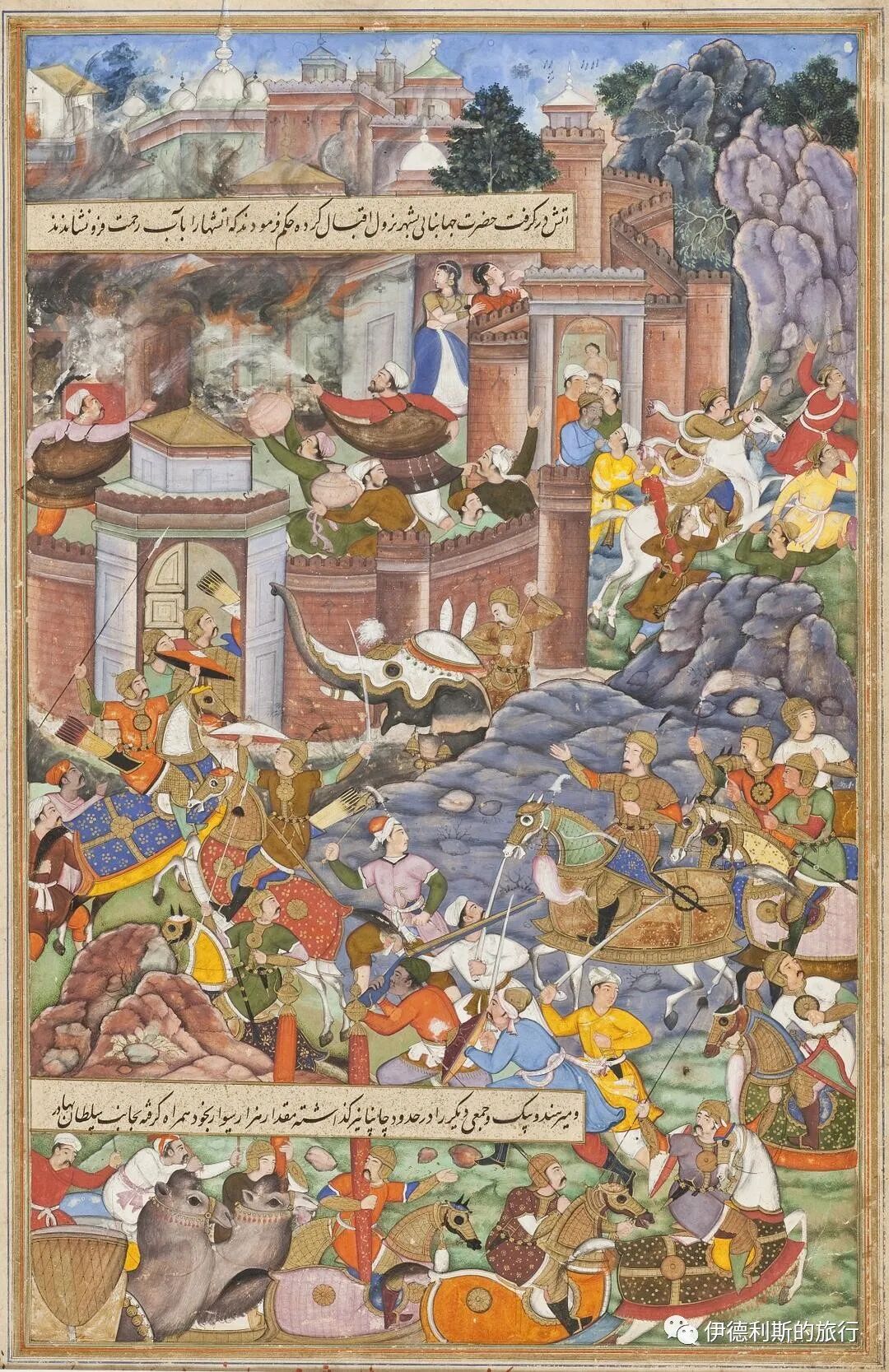
A 1590 miniature painting of Humayun in battle, held by the Los Angeles County Museum of Art.
2. The Capital of the Sur Empire
In 1539, Humayun led a large army east to Bengal, but he was defeated by Sher Shah, a general from the Afghan Pashtun Sur tribe. In 1540, Sher Shah followed up his victory and completely crushed Humayun. Humayun fled to Persia, and Sher Shah established the Suri Dynasty in Delhi.
After taking Delhi, Sher Shah immediately started building his own capital on the site of Din Panah and named the new inner city Shergarh.
There is still no reliable evidence to show if Sher Shah renovated the Din Panah city built by Humayun or rebuilt it entirely. Historical records about Sher Shah suggest he ordered the construction of the walls and inner city of Din Panah, and that the work was still unfinished when he died. However, the biography of Sher Shah's son, Salim Shah, records that in 1546, after finishing another Delhi fortress called Salimgarh, Salim Shah ordered new walls built around the castle Humayun had constructed. One theory is that Salim Shah renovated the walls of Din Panah or finished the final construction.
3. The Mughal Return to Din Panah
In 1554, the second Sultan of the Suri Dynasty, Islam Shah, died. His twelve-year-old son, Firuz Shah, took the throne but was killed immediately. The empire fell into chaos with lords fighting each other, and four different rulers took power in just one year. Meanwhile, with help from the Safavid dynasty of Persia, Humayun had established a base in Afghanistan and built up a strong army.
In 1555, the ruler of Lahore, Sikandar Shah, led an army to occupy Delhi. Taking advantage of Lahore's weak defenses, Humayun sent his commander Bairam Khan to lead an official military campaign into India with help from the Persian Safavid dynasty. On June 22, 1555, the Mughal army completely defeated the 80,000-horse army led by Sikandar Shah. On July 23, 1555, Humayun returned to the city of Din Panah in Delhi after fifteen years, and the Mughal Empire began ruling northern India once again.
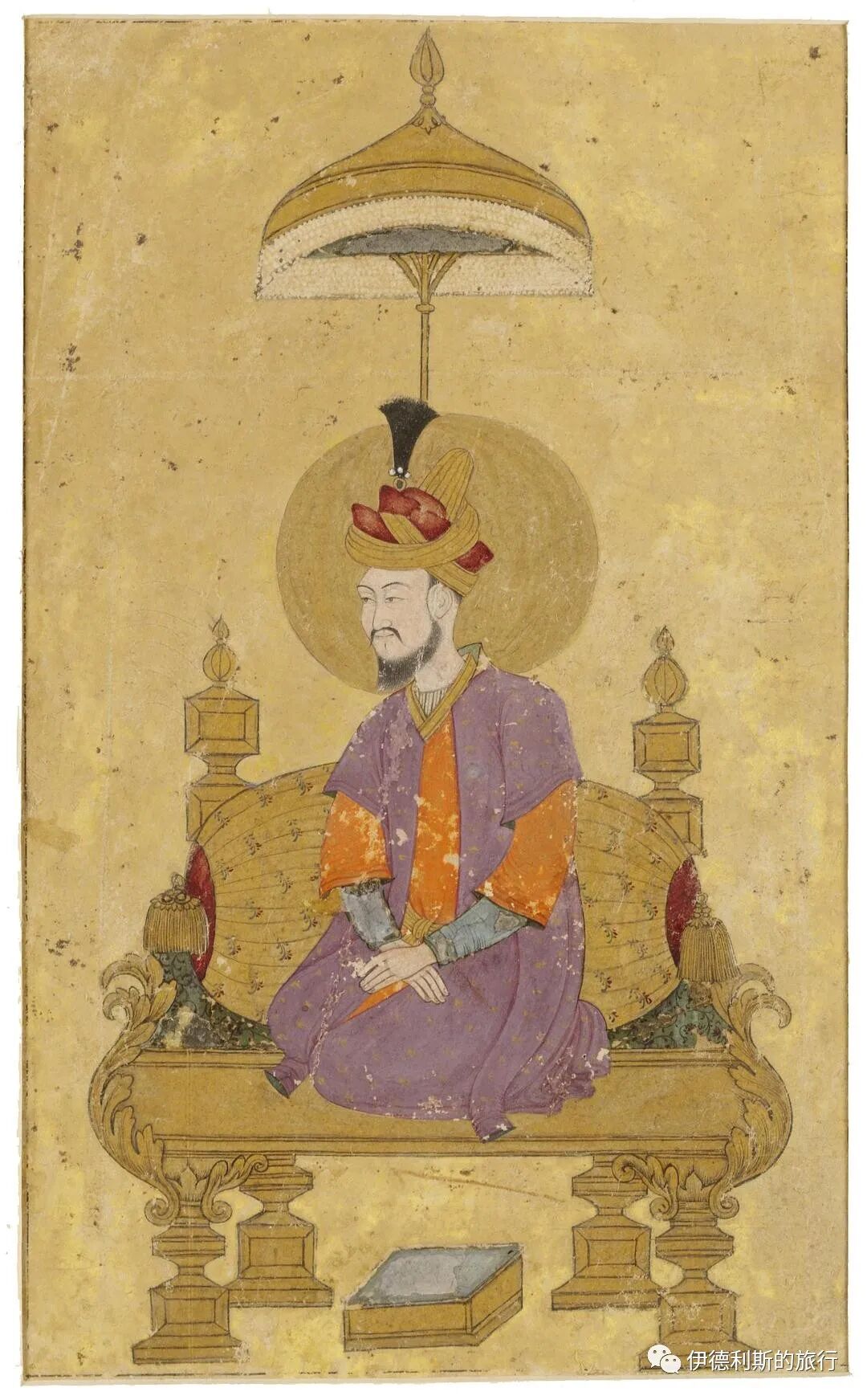
An 18th-century portrait of Humayun, held by the Victoria and Albert Museum in London.
4. Losing Capital Status
On January 24, 1556, Humayun was reading in the library on the second floor of the city of Din Panah. When the muezzin called the adhan, Humayun hurried downstairs to prepare for namaz, but he tripped on the stairs and died. Humayun's thirteen-year-old son, Akbar, succeeded to the throne with Bairam Khan serving as regent.
After Humayun passed away, he was initially buried inside the palace at Din Panah. However, the Sur dynasty general Hemu soon traveled through the night from Bengal to quickly sweep across Mughal territory. On October 7, 1556, Hemu captured Delhi after a fierce battle, and Humayun's remains were dug up and transported to Punjab.
On November 5, 1556, Delhi was recaptured by Akbar and Bairam Khan, who had arrived from Punjab. Hemu was struck by an arrow and fell unconscious during the decisive battle, and he was killed shortly after. Akbar only stayed in Delhi for one month before returning to Punjab to continue fighting the Sur dynasty army.
In 1558, Akbar officially moved the capital from Din Panah to Agra, ending Din Panah's history as the capital of the Mughal Empire.
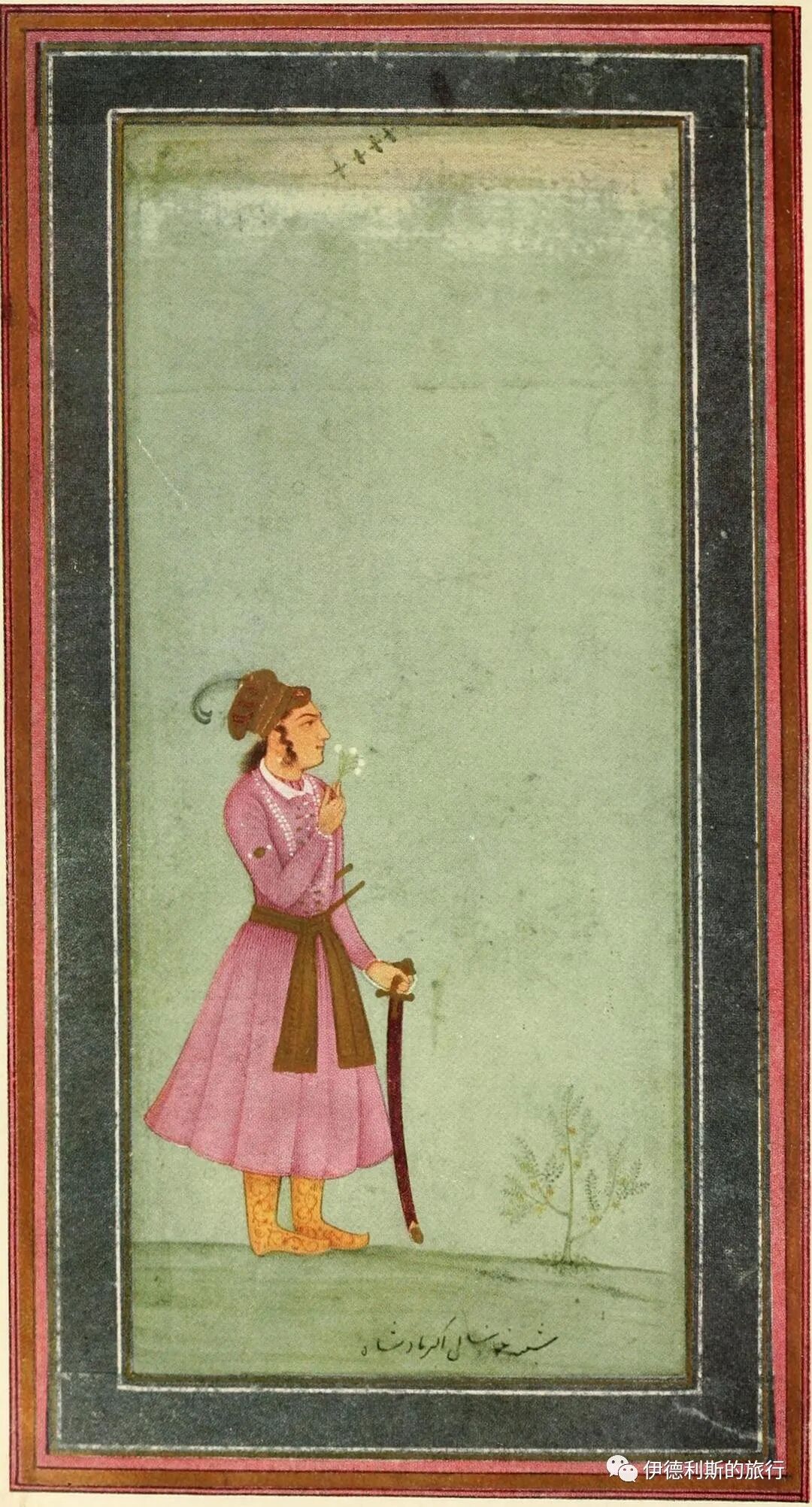
A portrait of Akbar in his youth.
5. Modern Changes to the Ancient City
The inner city of Din Panah, Shergarh, is now known as the Old Fort (Purana Qila). In the early 20th century, 1,900 people lived here. They were moved out in 1913, and the site became a historical heritage site.
During the 1947 partition of India and Pakistan, the Old Fort and the nearby Humayun's Tomb housed 200,000 Indian Muslims waiting to go to Pakistan. Trains transported them one after another until early 1948.
In the 1970s, the Old Fort began to be used as an open-air theater by the National School of Drama, and it has since become an important venue in Delhi for plays, concerts, and cultural events.
Today, it is a paid historical site open to all visitors.
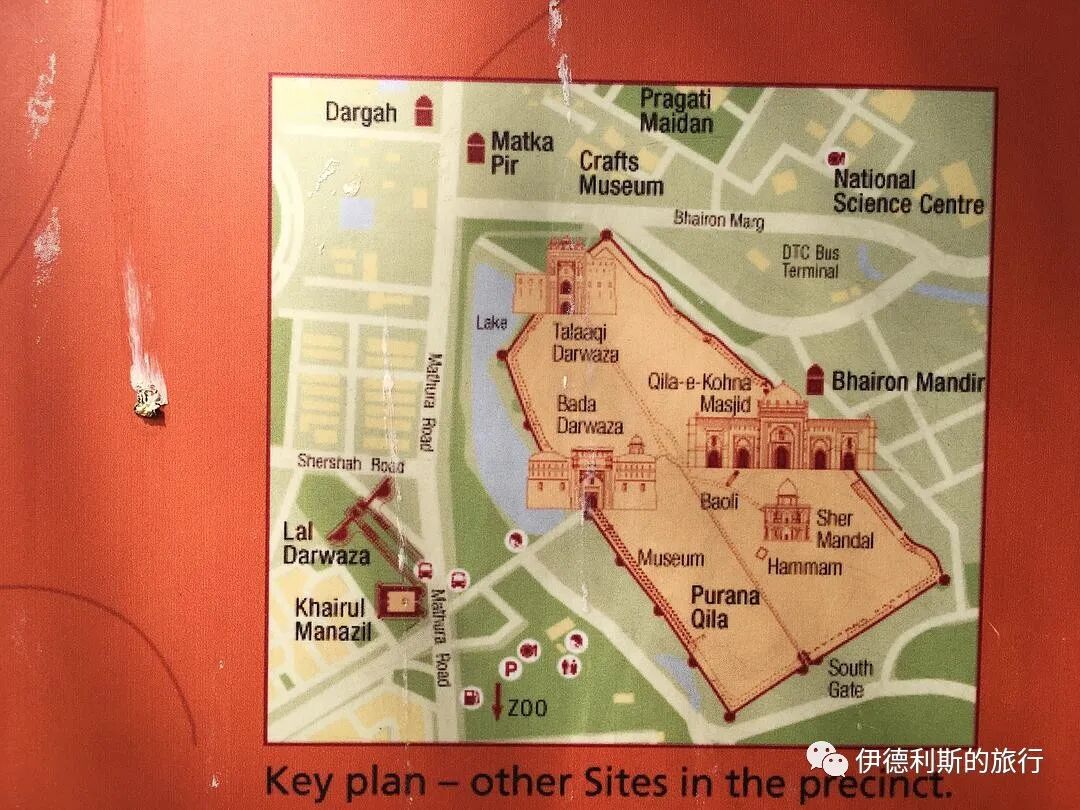
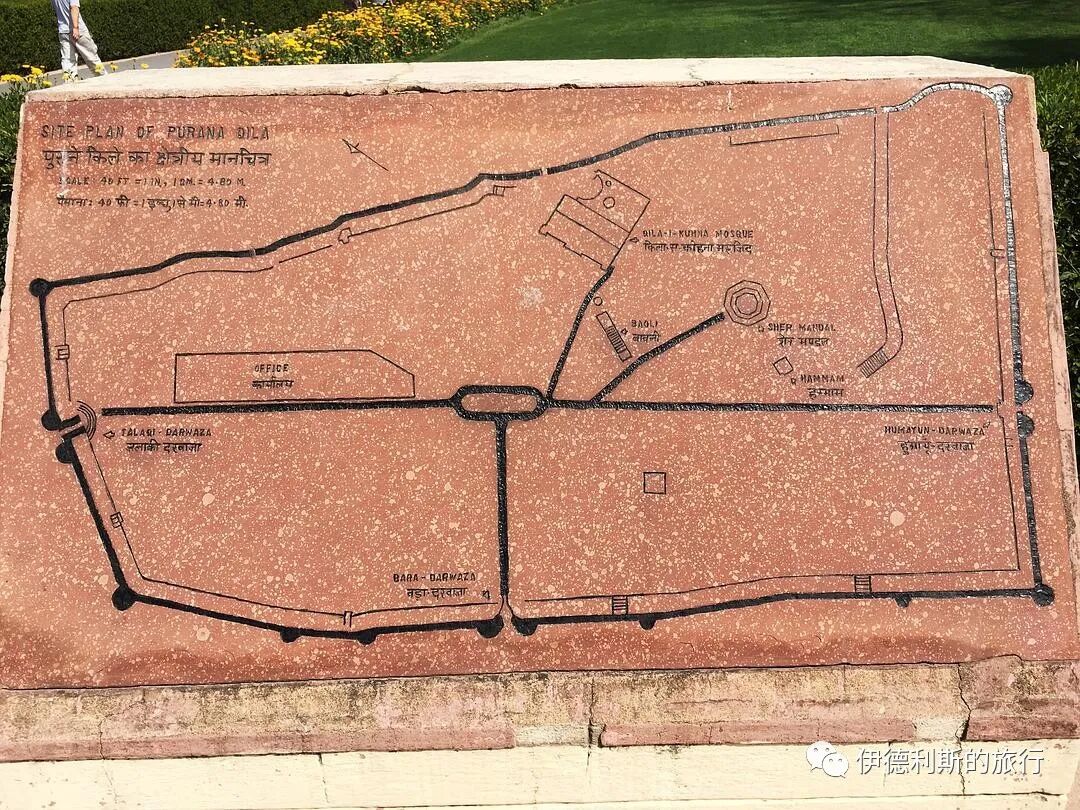
A map of the attractions at the Old Fort.
II. Old Fort Gates
The walls of the Old Fort are 18 meters high and 1.5 kilometers long, with three gates. The west gate is the main entrance to the fort and the scenic area, called Bara Darwaza. The south gate is called Humayun Darwaza. One theory is that this gate was built by Humayun, while another is that it faces Humayun's Tomb. The north gate is called Talaqi Darwaza, also known as the Forbidden Gate.
All three gates are double-layered sandstone structures with two massive semi-circular towers on either side. The gates feature overhanging balconies and small pavilions (chhatris) on top, a style that would be repeated throughout later Mughal architecture.
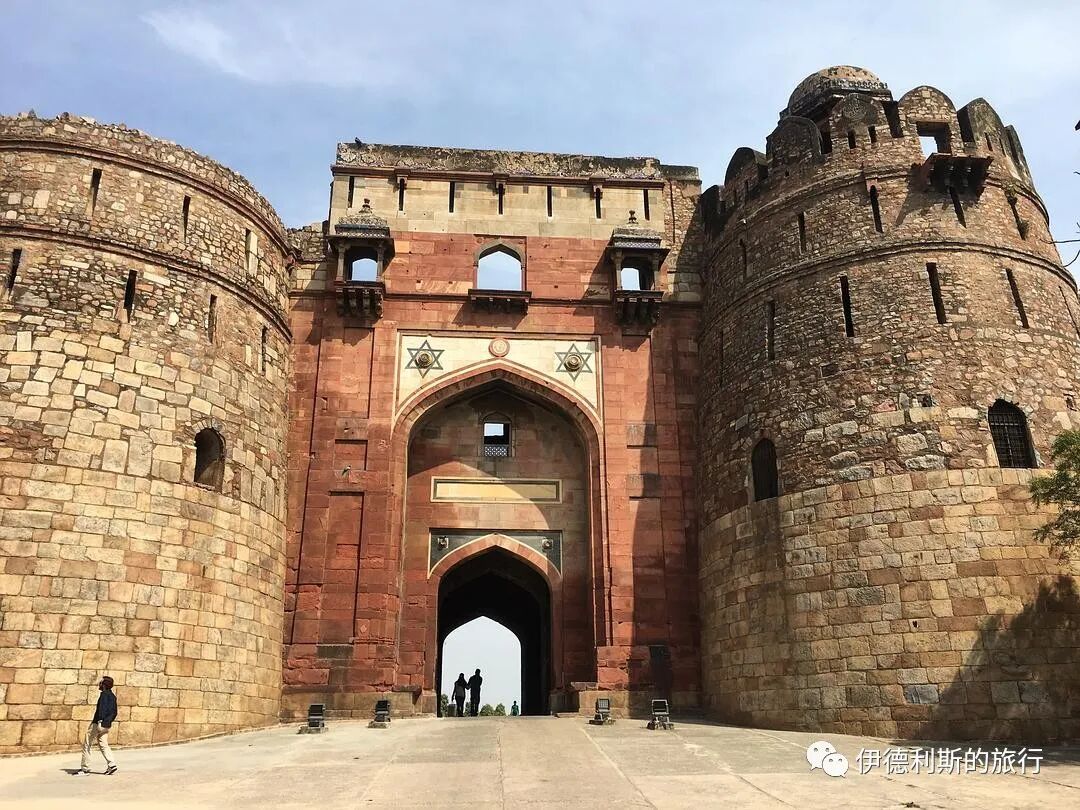
The main gate was likely built by Humayun and stands 20 meters high.
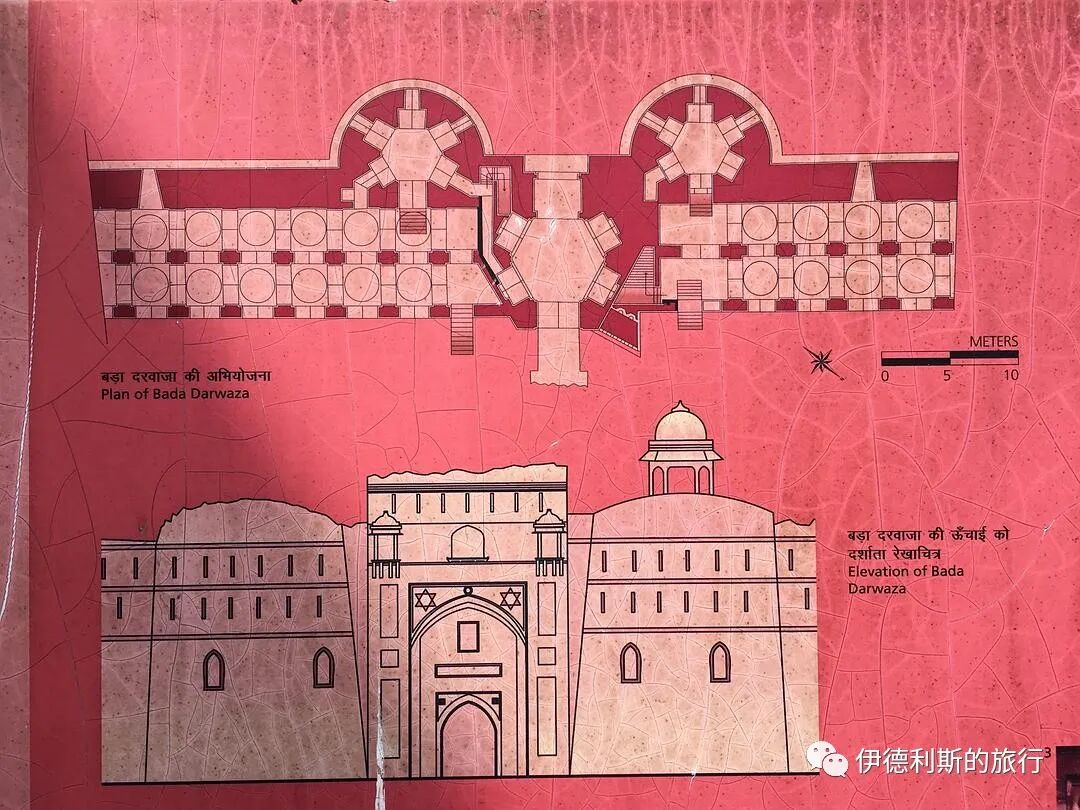
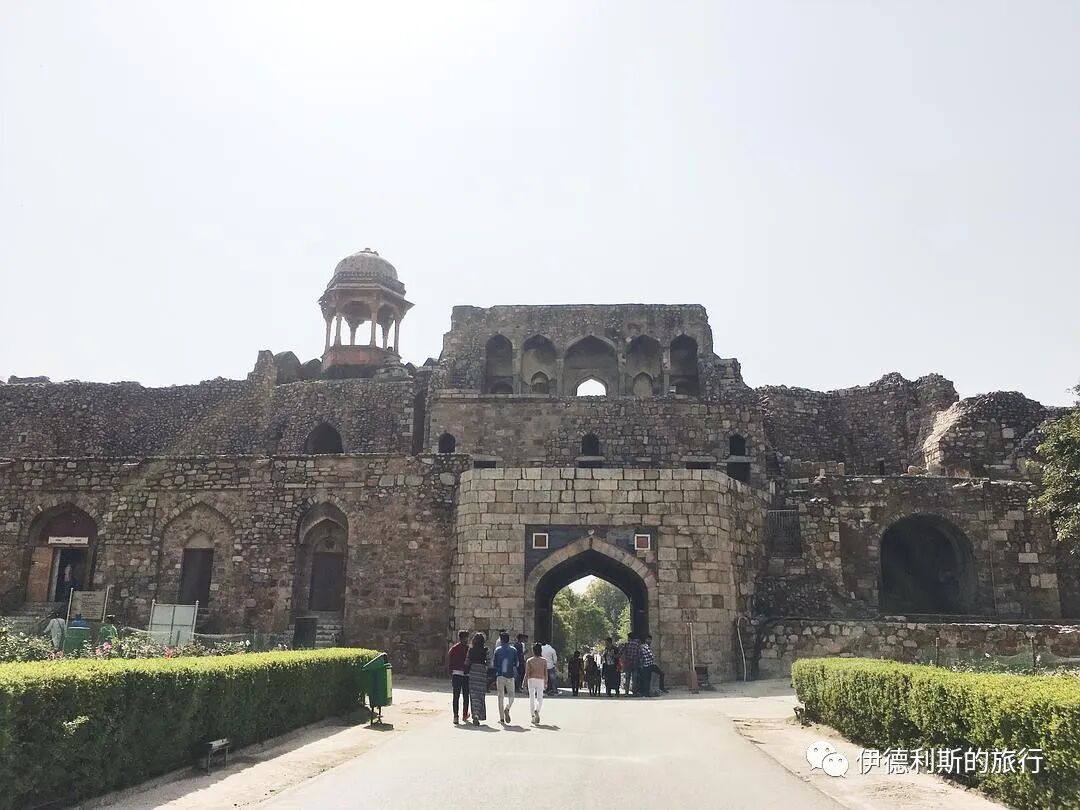
Inside the main gate.
Outside the corner tower, with the moat below.
Inside the west city wall.
III. Qila-i-Kuhna Mosque: 1541
The Qila-i-Kuna mosque was built by Sher Shah in 1541 and served as the royal mosque for the Suri dynasty. This mosque with its semi-domed design is known as a key marker in the transition of Indian Islamic architecture from the Lodi style to the Mughal style, and it is the largest and most exquisite five-arched mosque in India.
The five-arched mosque is a style of mosque architecture that developed during the Sayyid and Lodi dynasties of the Delhi Sultanate. The main hall of the mosque is divided into five sections by five arches, and each section has a mihrab. The mihrab inside the central arch is the largest, topped by a Lodi-style semi-domed vault.
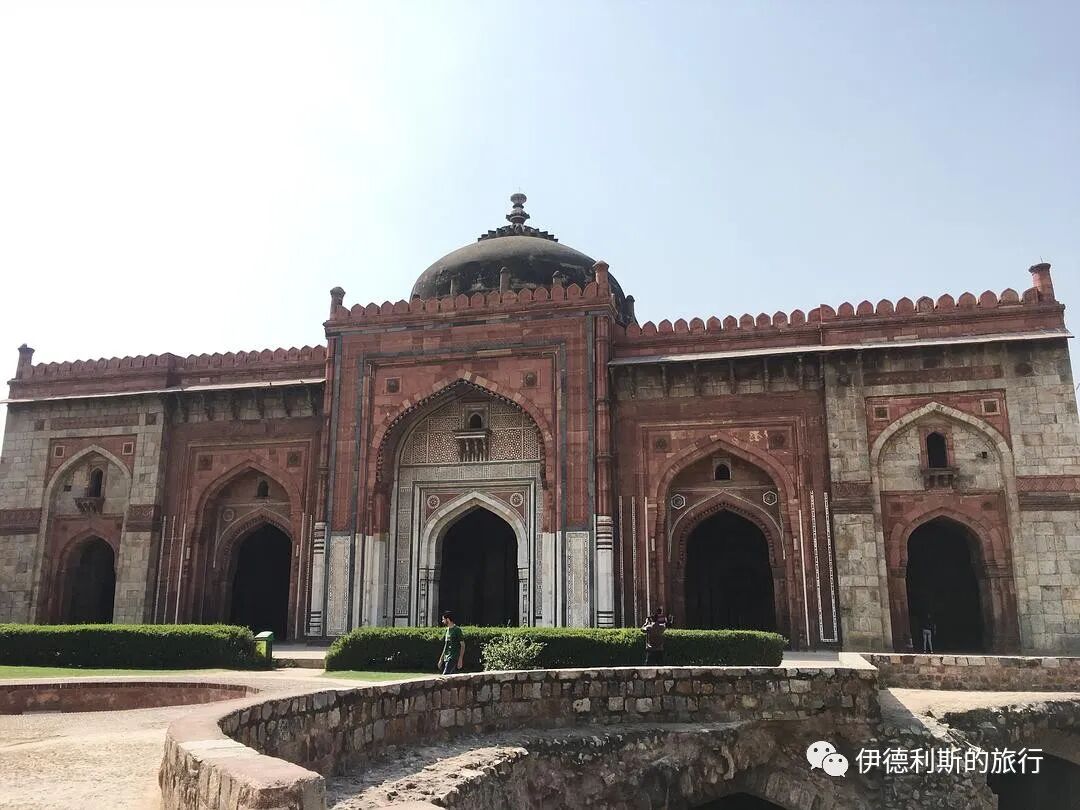
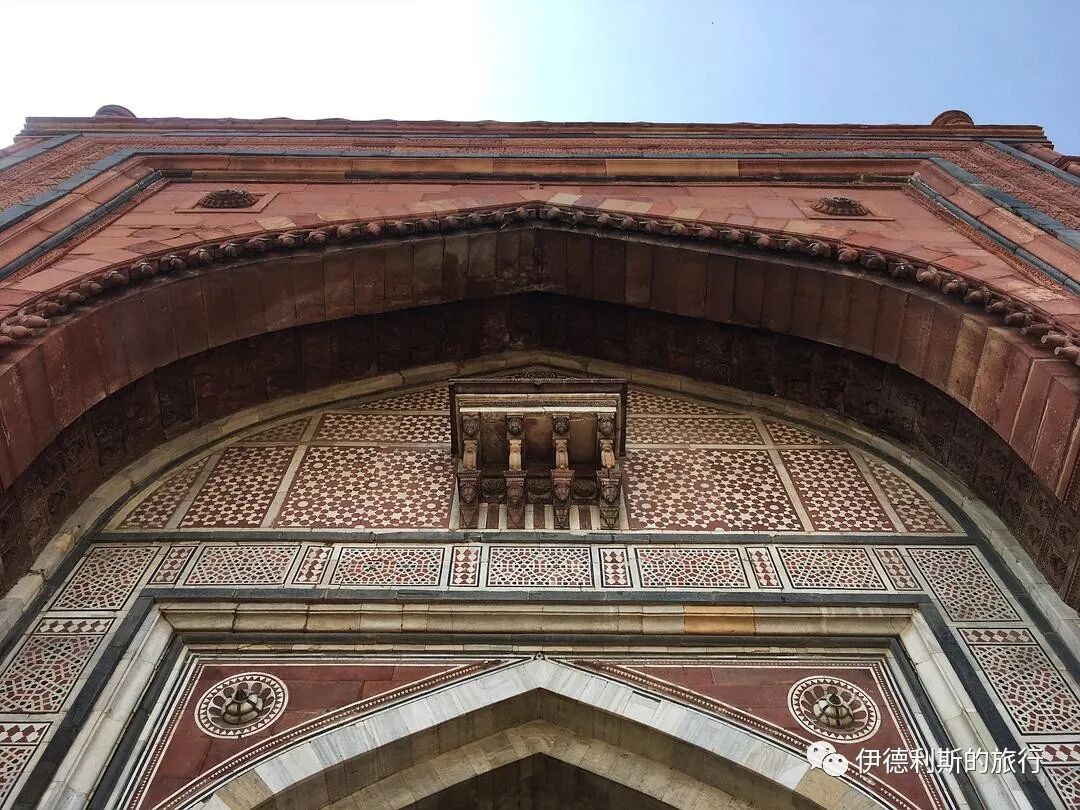
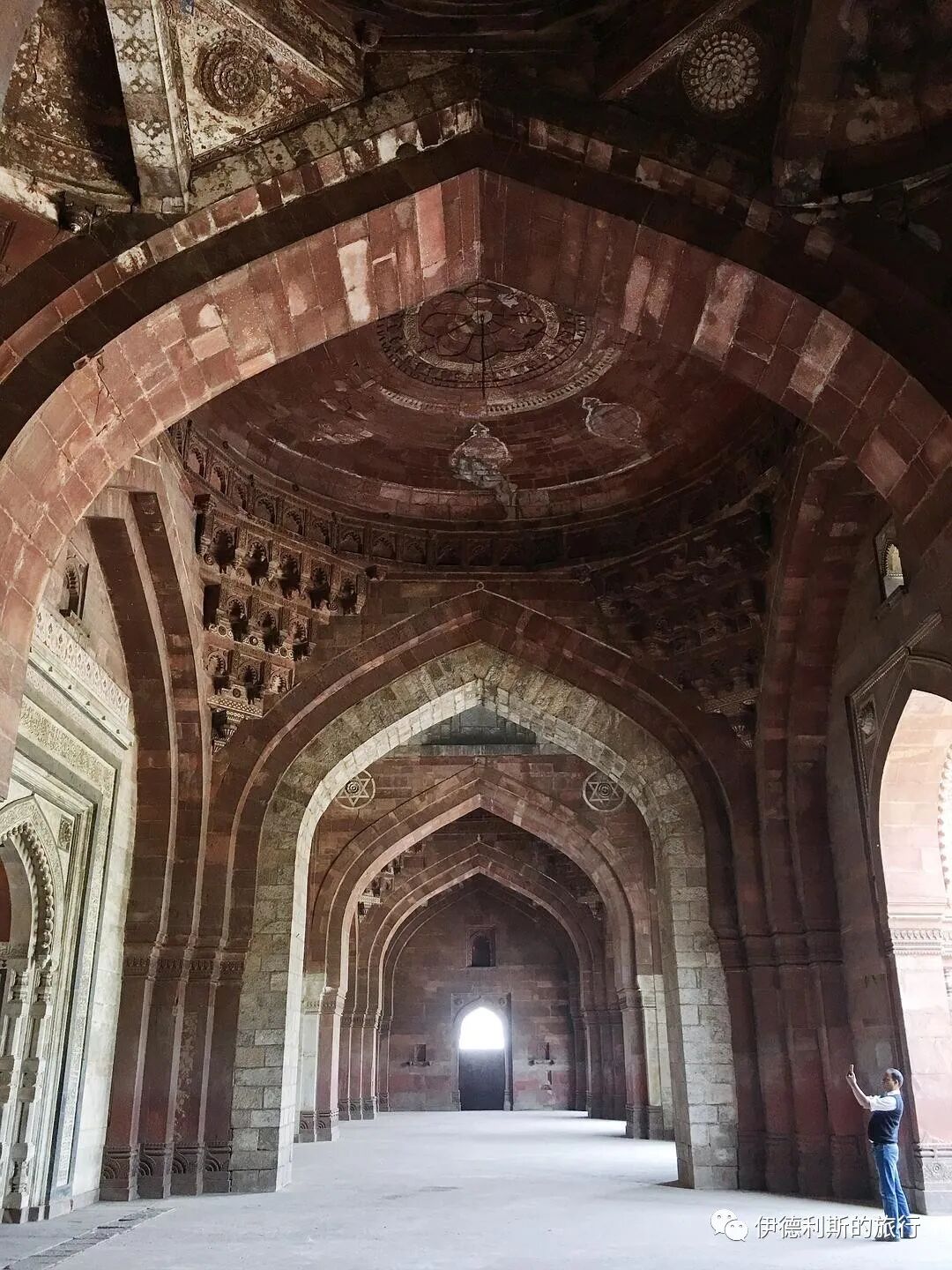
Main dome.
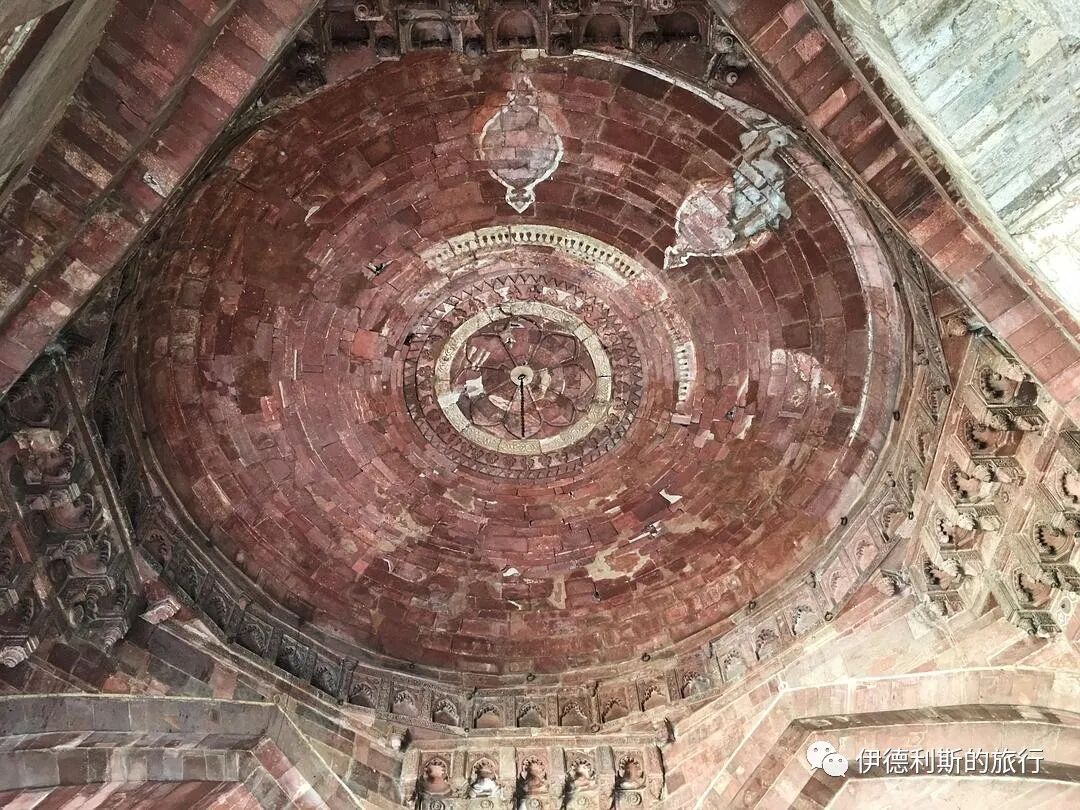
Small dome.
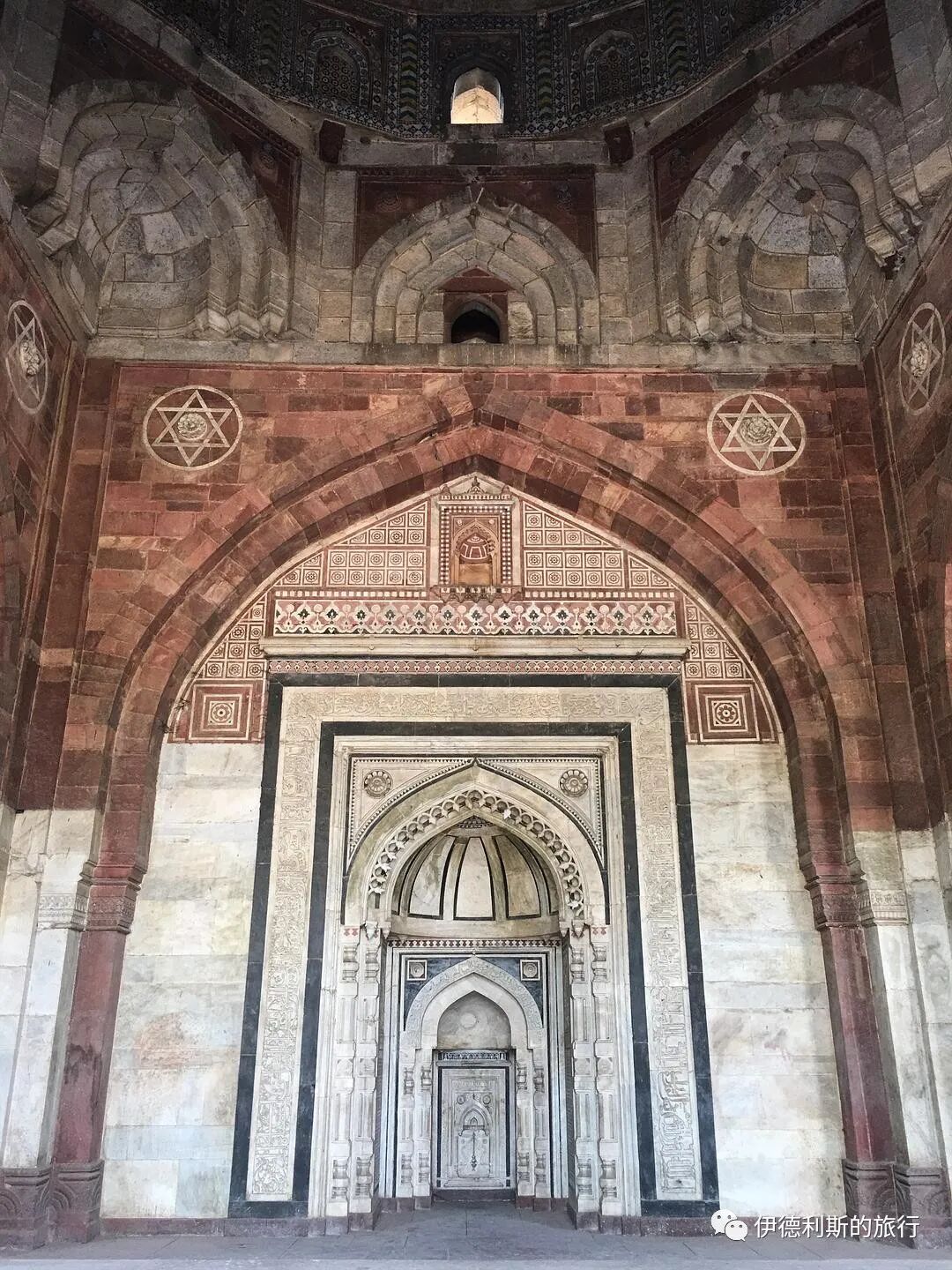
Mihrab.
Mihrab.
There are two octagonal towers on both sides of the main hall, featuring the style of the Tughlaq dynasty.
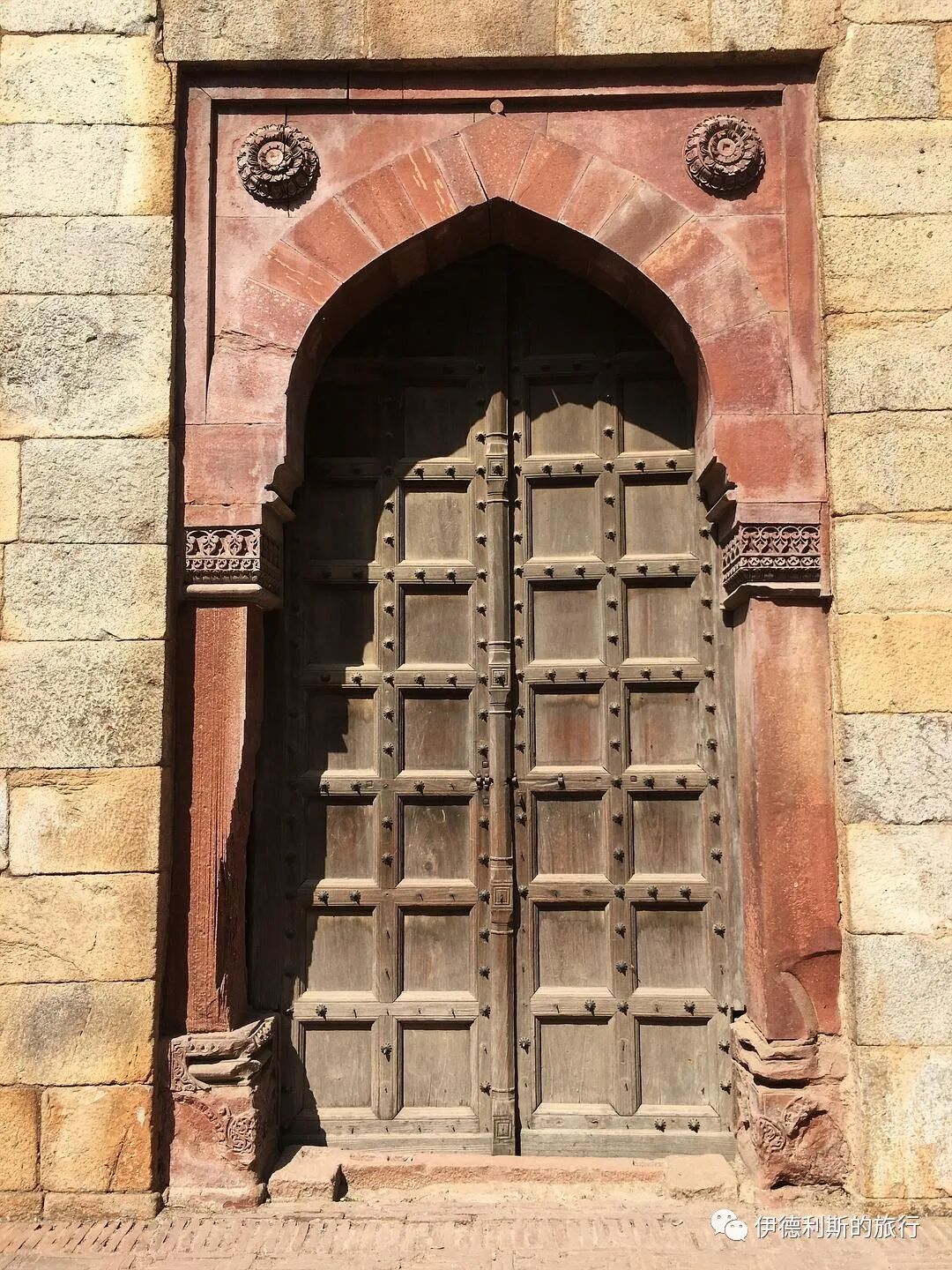
A small door specifically for royal family members to enter for namaz.
IV. Sher Mandal
Sher Mandal is an octagonal pavilion with a very simple style. This simple beauty comes from a return to Persian style, which is quite different from the architectural forms of the late Lodi dynasty of the Delhi Sultanate, and it is the earliest building of this style in Delhi.
Although it looks very much like an early Mughal building, it is actually recognized as part of a palace built by Sher Shah, which was later converted by Humayun into a library and observatory, and it is also known as the first observatory in Delhi.
On January 24, 1556, when the call to prayer sounded, Humayun hurried down the stairs from the second floor of Sher Mandal to prepare for namaz, but he slipped and fell to his death.
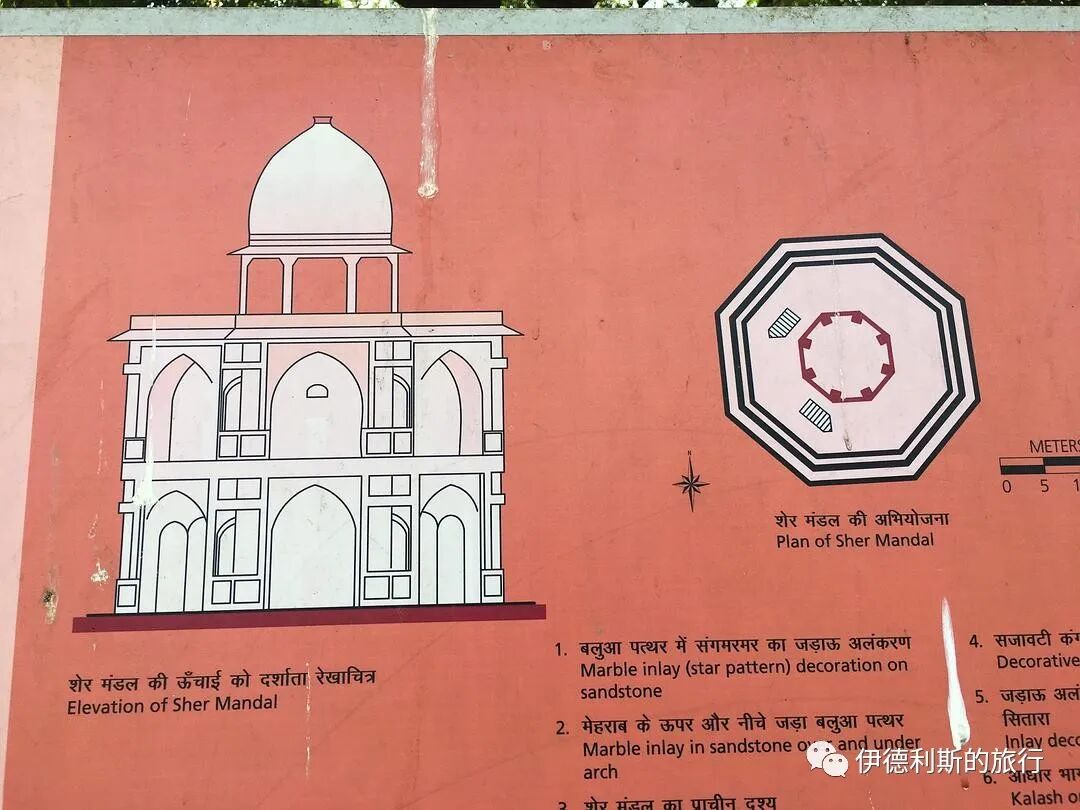
V. Bathhouse Ruins
Next to Sher Mandal are the ruins of a bathhouse (hammam), likely built in the late 16th century. Steps lead into a room with decorative niches, and one side has a channel for flowing water.
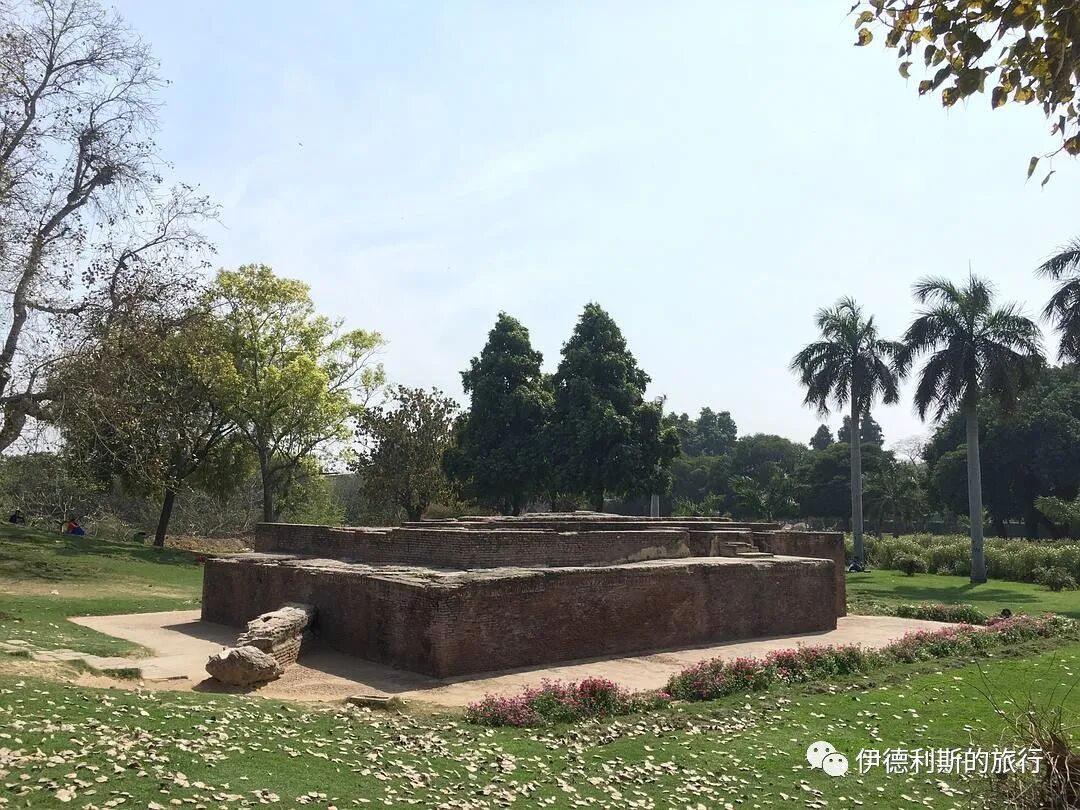
VI. Water Reservoir
The water reservoir (baoli) used for storing water in the city.
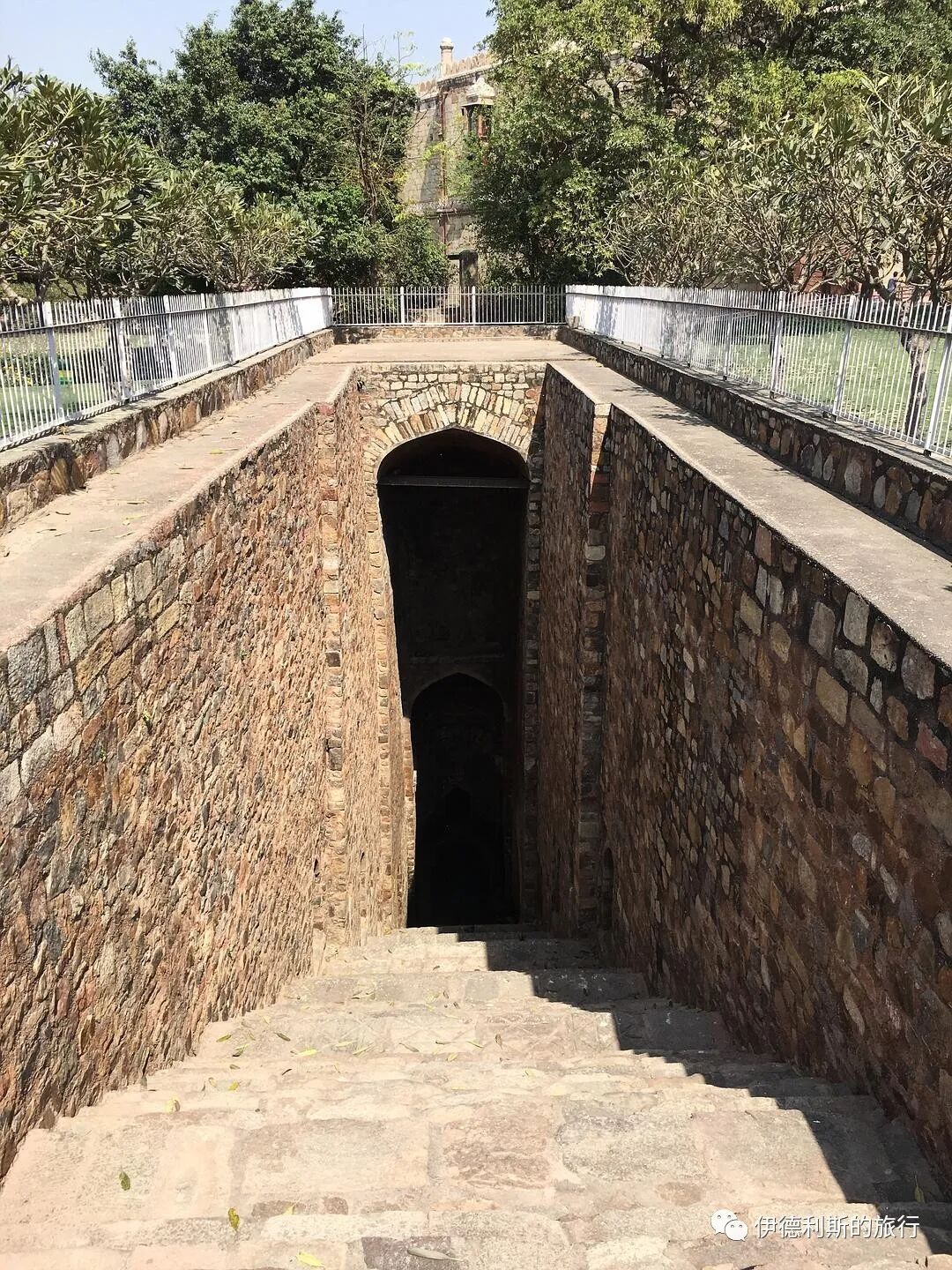
VII. Outer City Gates
After exiting through the main gate of the Old Fort, you can see the historical ruins of the outer city of Dinpanah. Among the seven cities of Delhi, Dinpanah is the one we know the least about. Some early descriptions suggest that Dinpanah was an extension to the south of Ferozabad, the fifth city of Delhi.
Only two gates remain of the outer city walls of Dinpanah. The north gate of the outer city (Khuni Darwaza) is located near Ferozabad. It is also called the "Bloody Gate" because Mughal princes were shot there in 1857.
The south gate of the outer city (Lal Darwaza) is right next to the main gate of the Old Fort. Outside the gate is a wide road with the ruins of shops on both sides.
The relationship between the outer city walls of Dinpanah and the Old Fort walls is still unclear. However, judging by the moat outside the Old Fort, the outer walls were likely not connected to the Old Fort walls. In the 19th century, the archaeologist Cunningham speculated that the walls of Dinpanah should have covered a much larger area than these two gates suggest, possibly reaching over 14 kilometers. However, there was not enough archaeological evidence at the time to prove this.
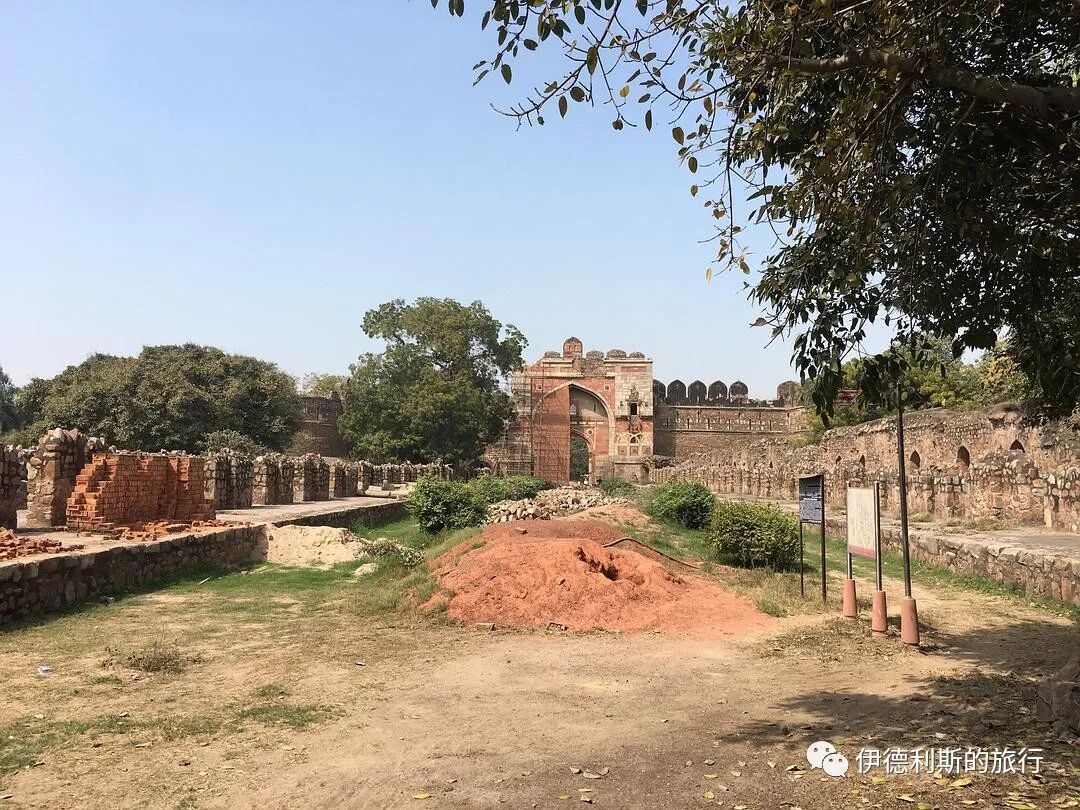
Unfortunately, the south gate of the outer city was under renovation when I visited, so I could only look at it from a distance.
The ruins of the shops on both sides of the road outside the gate.
VIII. Khairul Manazil Mosque: 1561
Right next to the south gate of Dinpanah is the Khairul Manazil mosque, built in 1561 by Maham Anga, the wet nurse of the Mughal Emperor Akbar the Great. Between 1560 and 1562, she was the de facto regent of the Mughal Empire.
The gate of the mosque is a typical Mughal-style building, while the main hall with its semi-domed roof is in the Delhi Sultanate style. This is a characteristic of the transitional period in the early Mughal dynasty.
There is a water pool in the center of the courtyard, surrounded by a two-story madrasa.
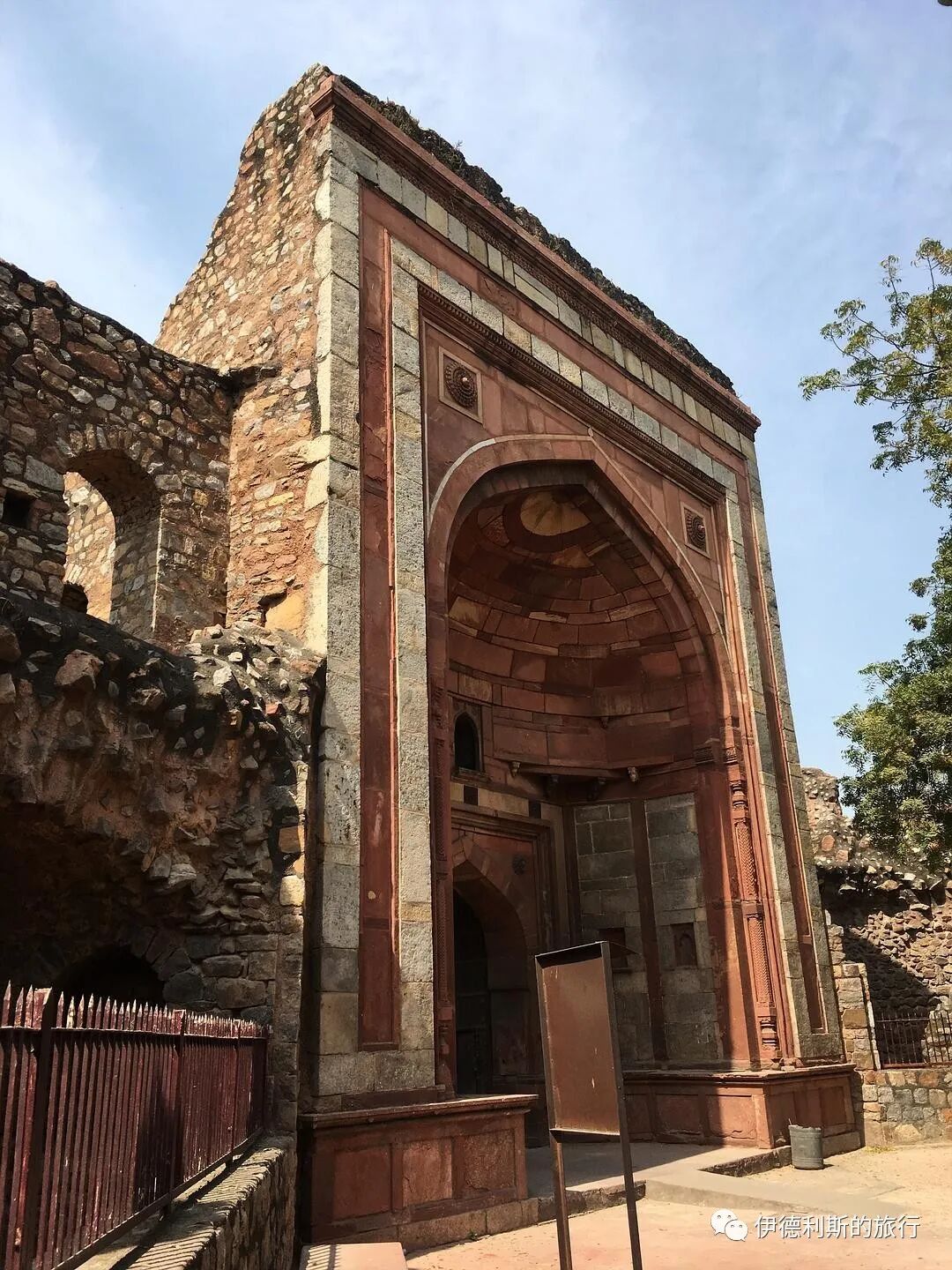
The main gate.
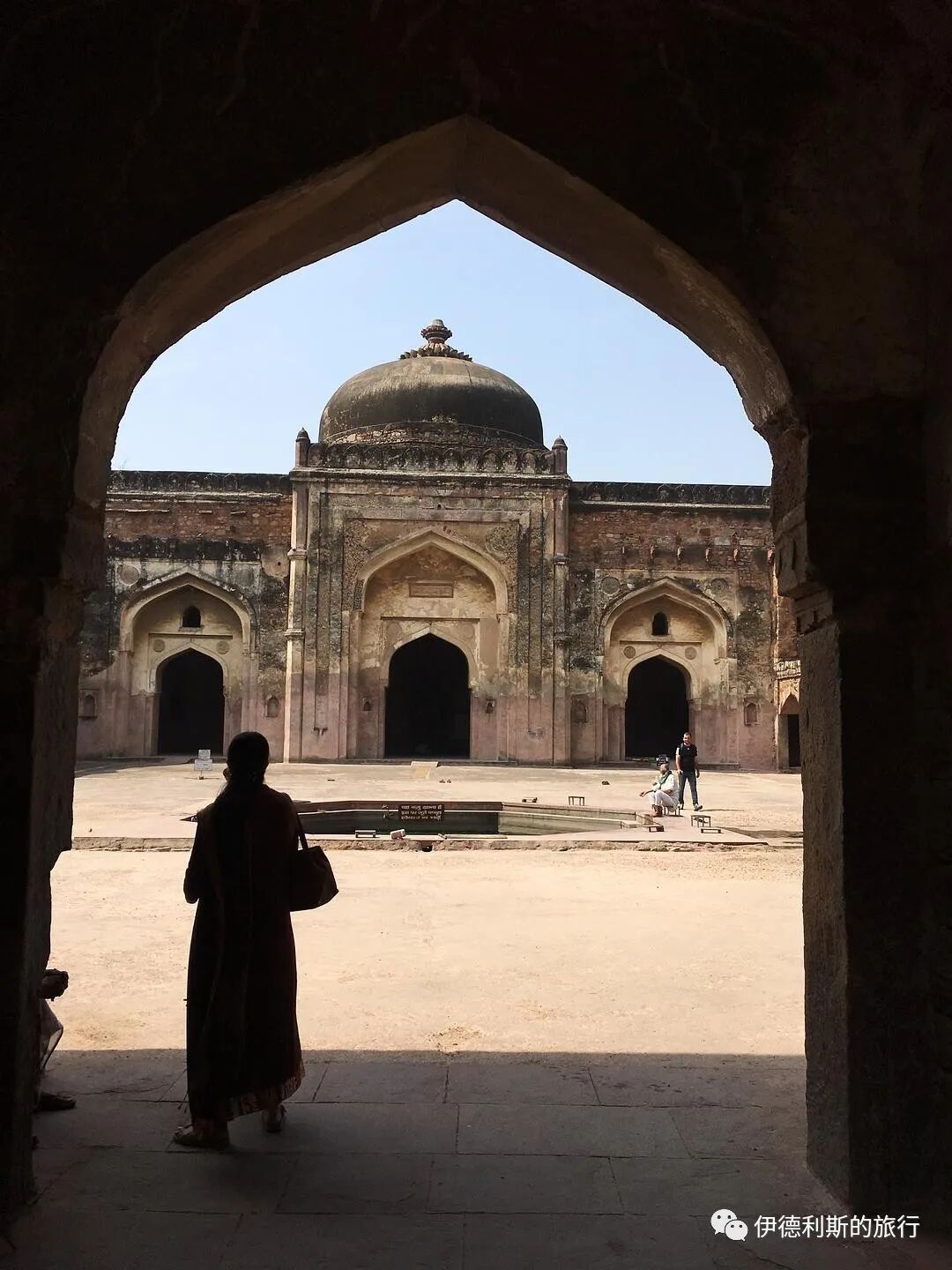
Looking inside from the main gate.
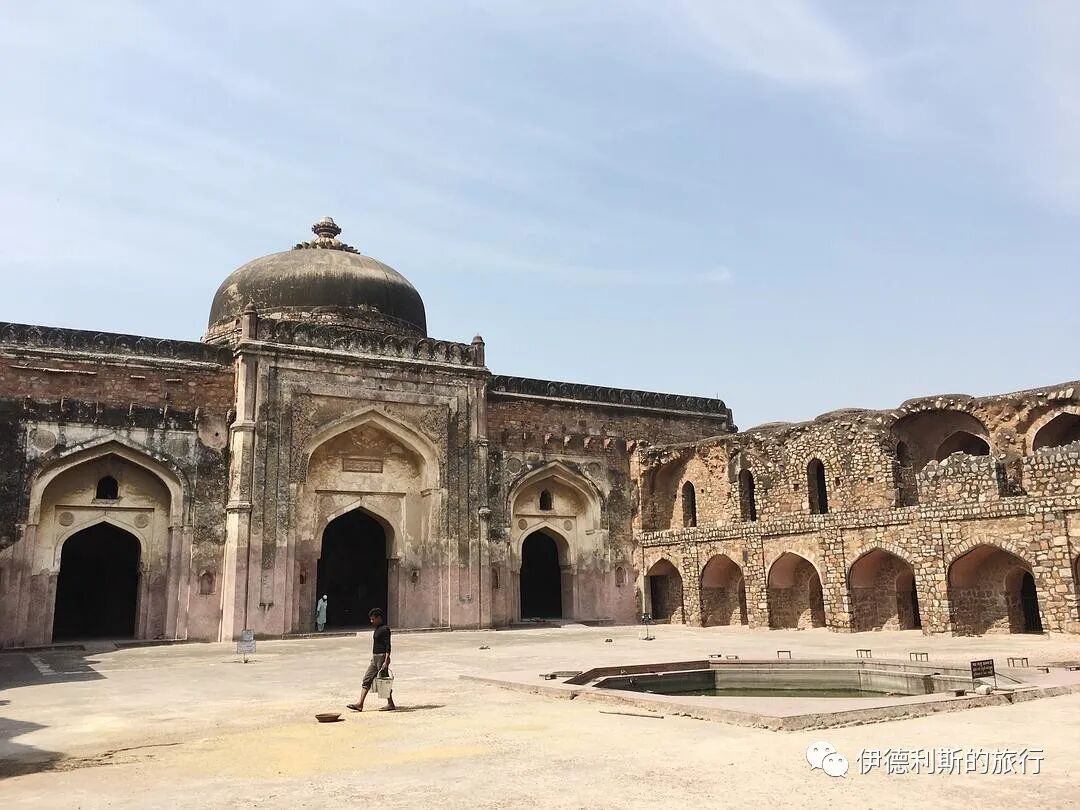
The mosque is on the left and the madrasa is on the right.
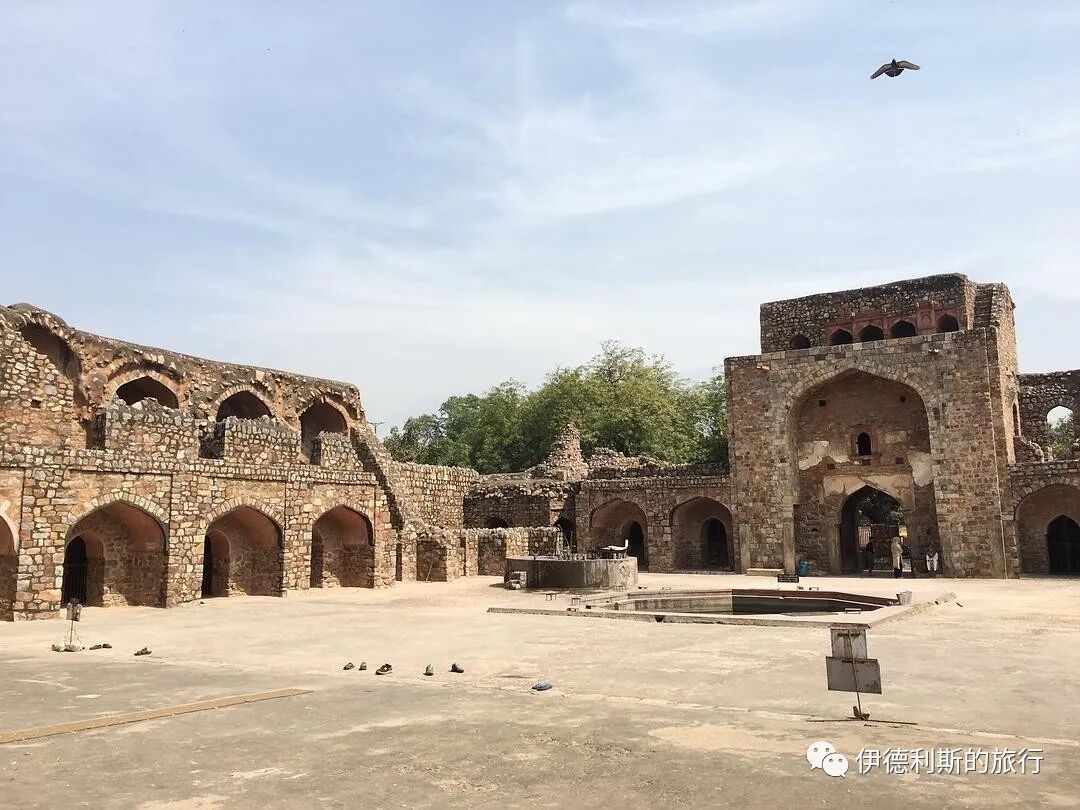
The madrasa is on the left and the main gate is on the right.
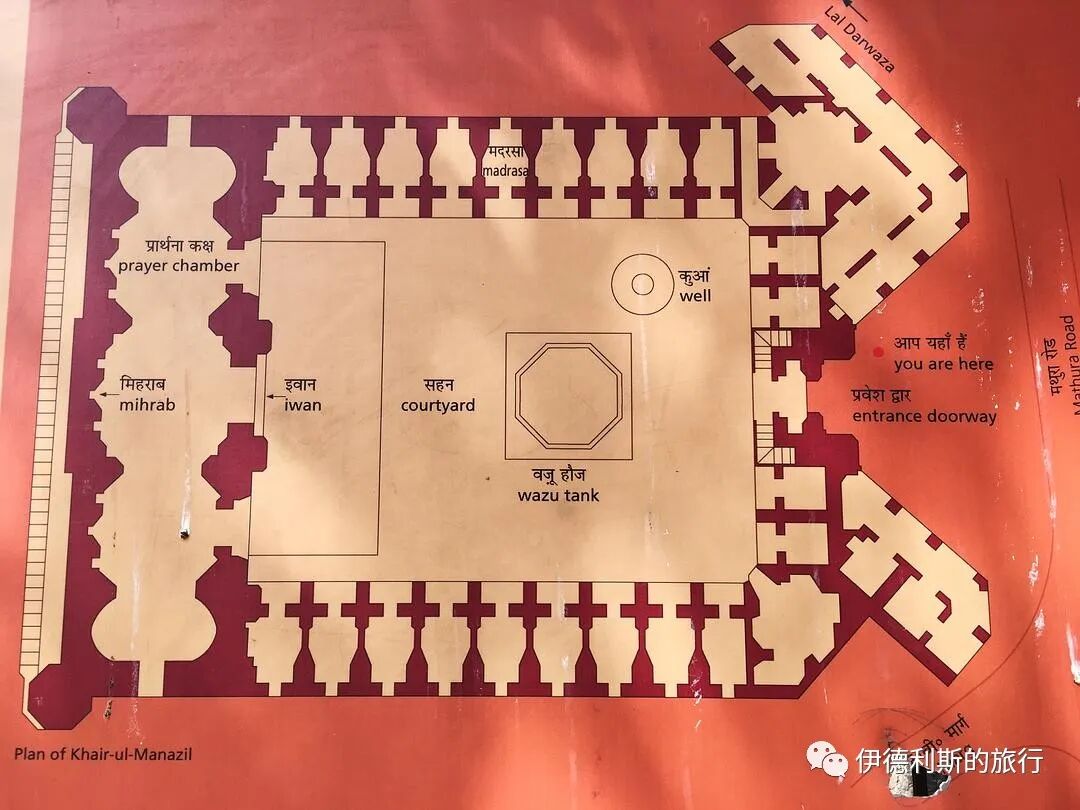
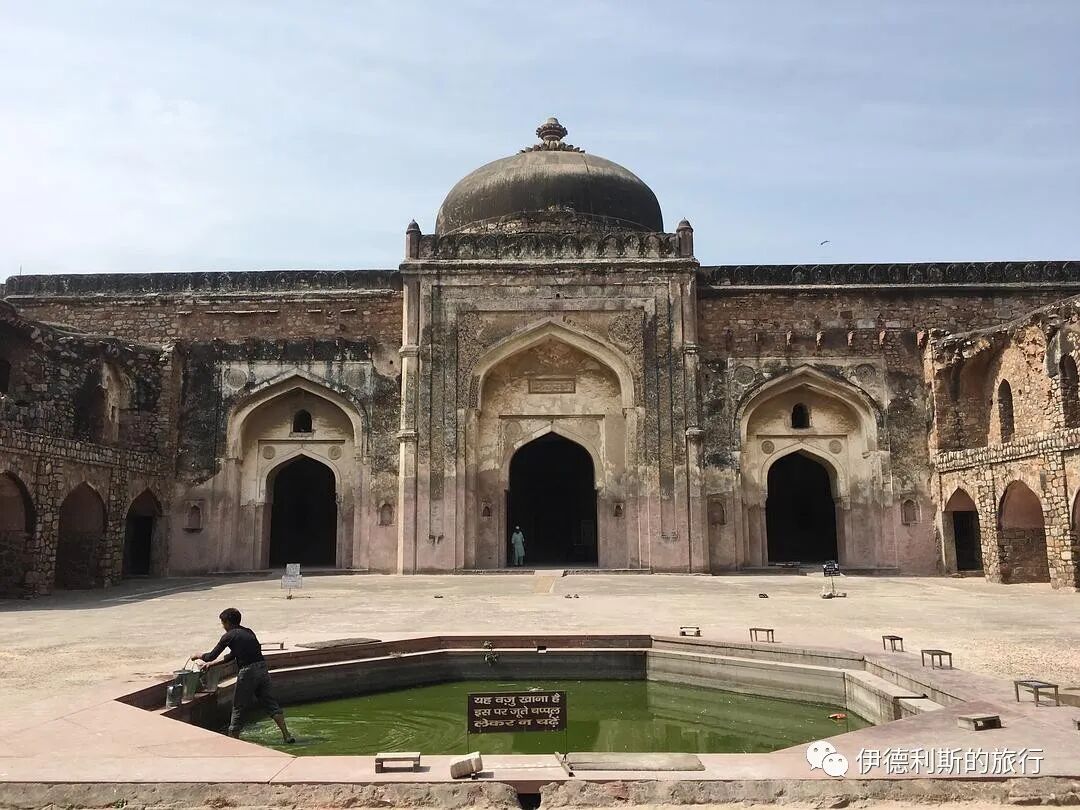
The main hall and the water pool in the courtyard.
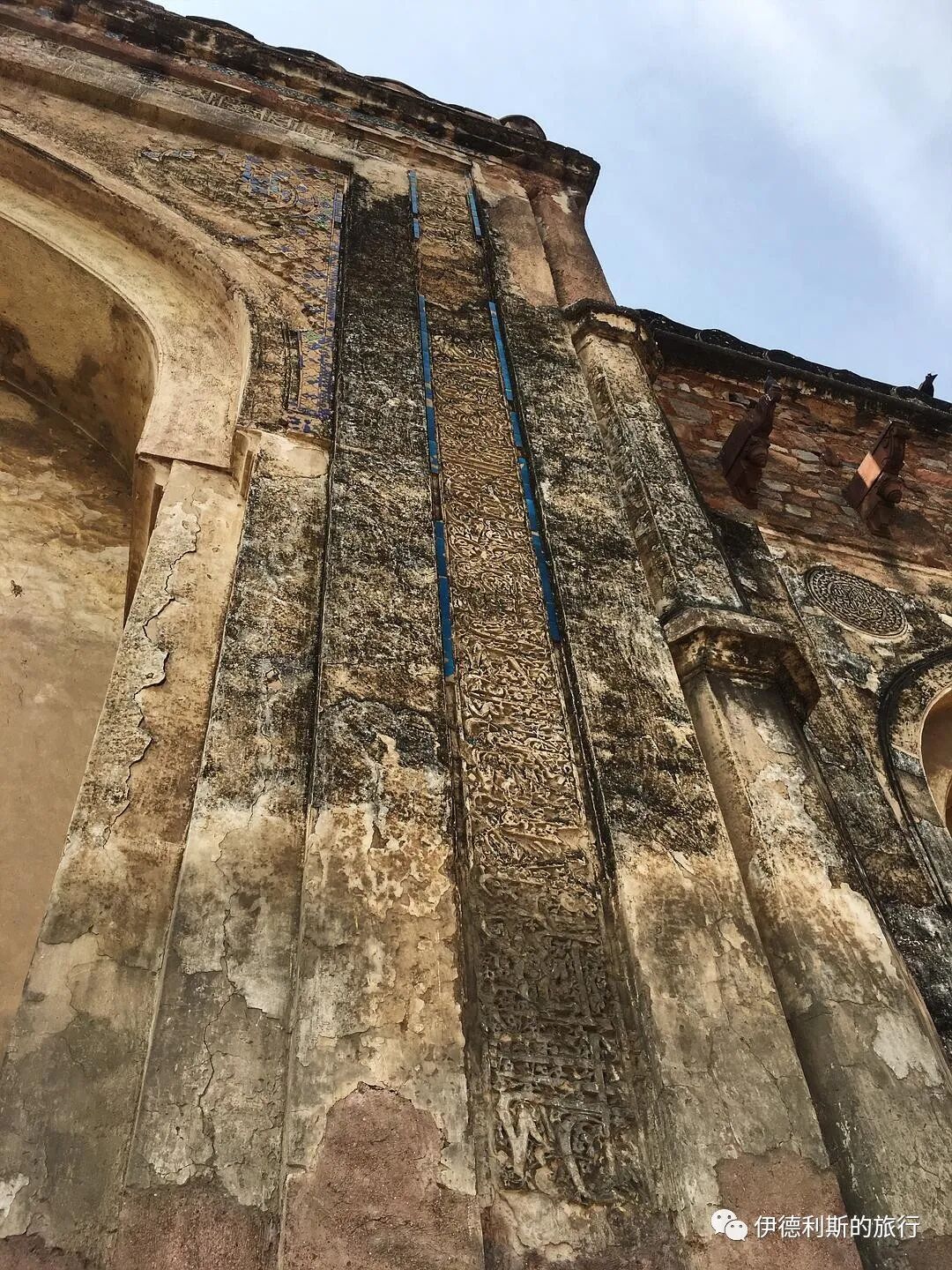
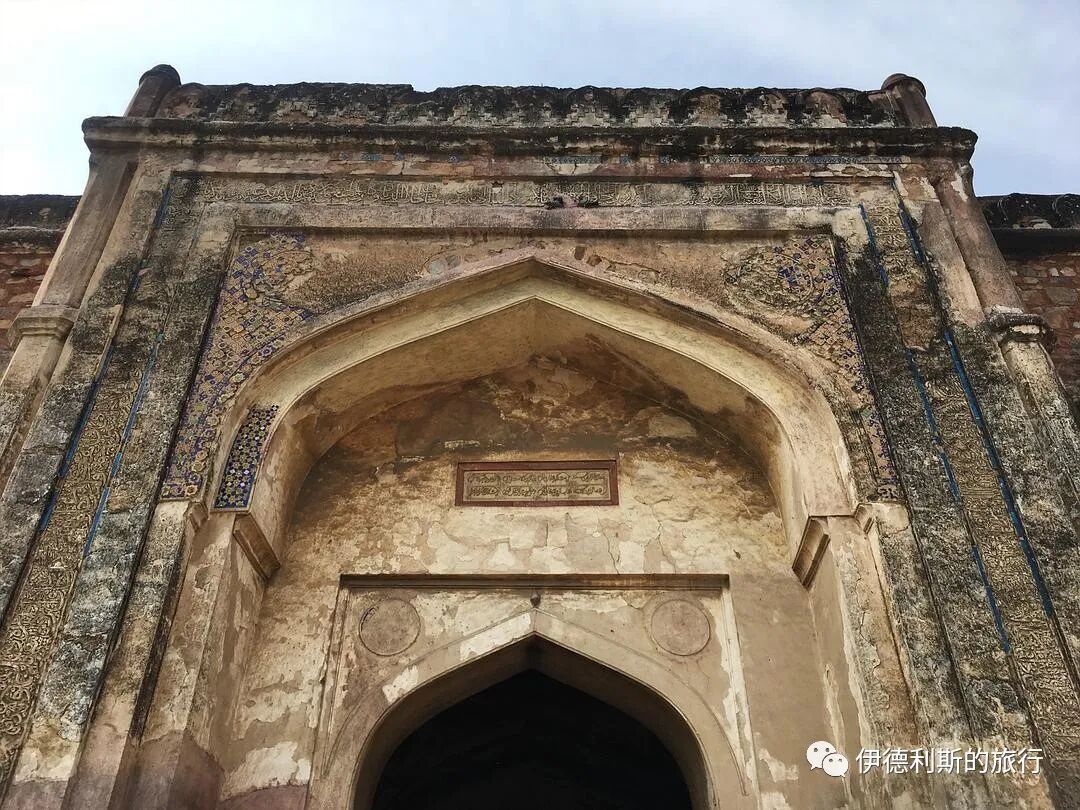
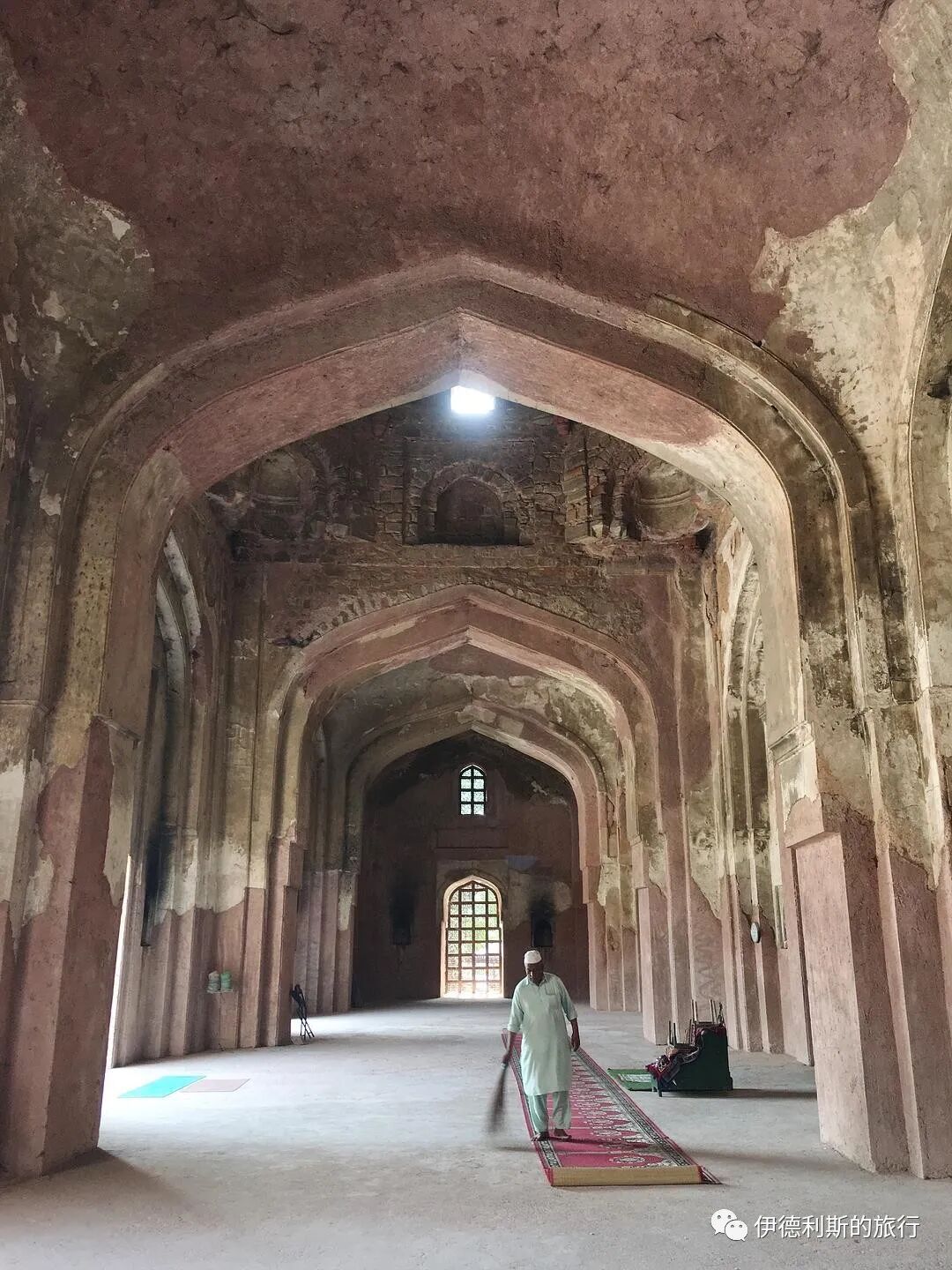
Inside the main hall.
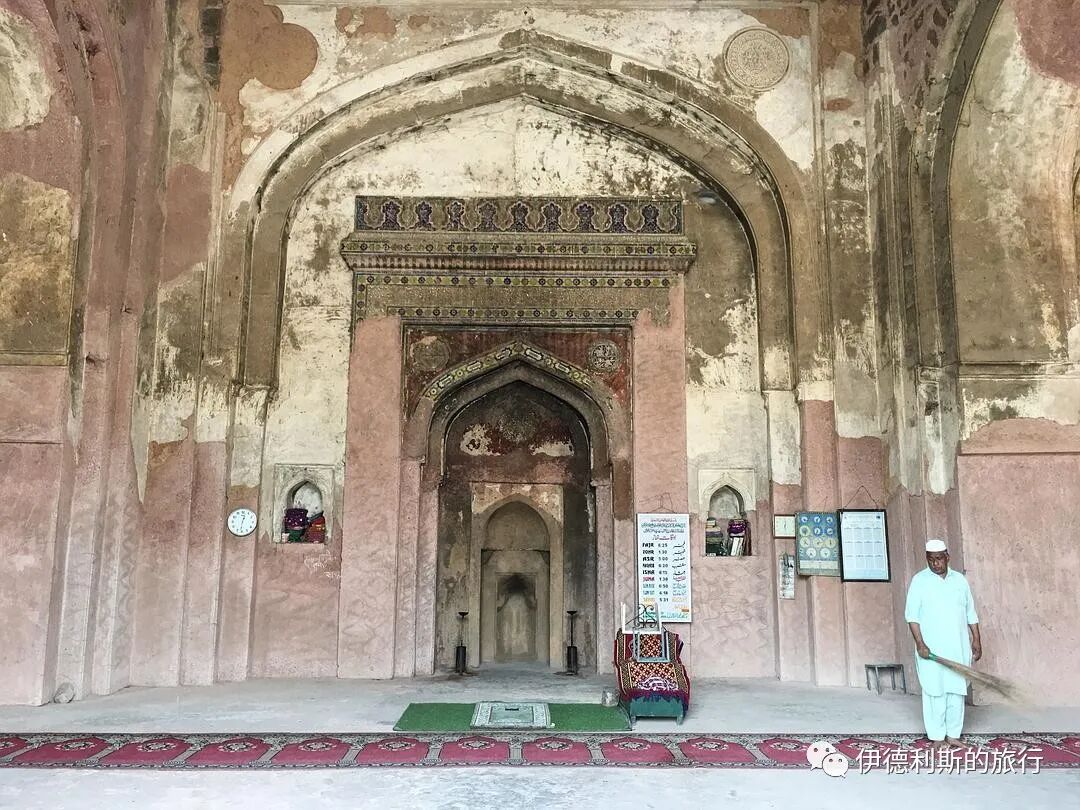
Mihrab.
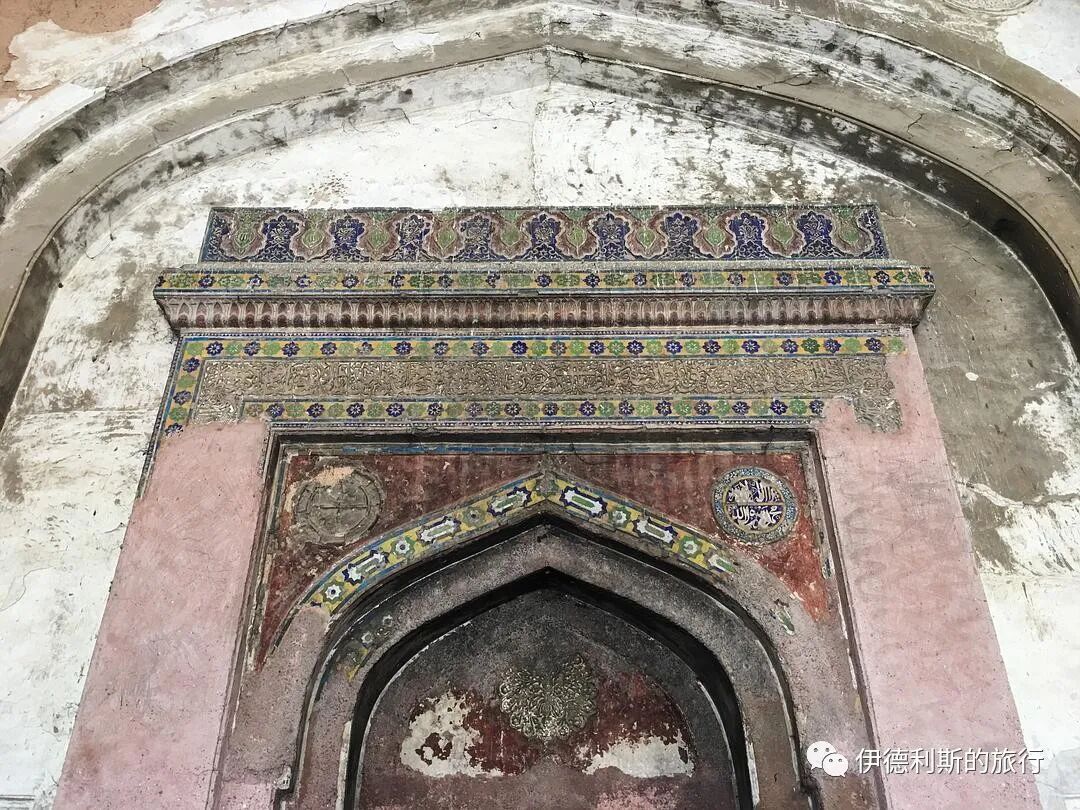
The patterns on the mihrab.
IX. Sur Empire Architecture Around Din Panah
On the north and south sides of Dinpanah, there are two very important buildings from the Sur dynasty. To the north is Salimgarh Fort, and to the south is the tomb and mosque of Isa Khan.
1. Salimgarh Fort: 1546
Salimgarh Fort is located on the north side of the Red Fort in Delhi. It was built in 1546 by Salim Shah, the son of the Sur dynasty ruler Sher Shah. People say in 1555, Humayun stayed here for three days before recapturing Delhi. In 1639, when the Mughal Emperor Shahjahan was building the seventh city of Delhi, Shahjahanabad, he also camped here.
The place turned dark after the Mughal Emperor Aurangzeb turned it into a prison. Aurangzeb imprisoned his brother Murad Baksh here, and it is said he also held his favorite eldest daughter, Zebunnisa, captive here for twenty-one years.
In 1857, an anti-British uprising broke out in India, eventually leading to the fall of the Mughals. From August to early September 1857, the last Mughal Emperor, Bahadur Shah Zafar, held strategic meetings at Salimgarh Fort and announced that the Mughal Emperor would lead the Indian people in their resistance against the British. He called on all Indian people, regardless of caste or faith, to join the resistance together.
But by mid-September, the British army began to surround the fort. The emperor's men urged him to retreat to a safe place, but the emperor refused. The emperor ordered his army to evacuate the fort, while he went to the tomb of Humayun. Therefore, when the British army entered the fort, they only encountered one sentry. On September 20, the emperor was arrested by the British army at Humayun's Tomb, marking the end of the Mughal Empire, which had lasted for over three hundred years.
After the uprising ended, the fort was used as an artillery camp for the British army and later became a prison. Between 1945 and 1947, leading up to India's independence, many members of the Indian National Army (INA) were tortured to death here, and many more disappeared forever. Because of this, Salimgarh Fort is now also called Swatantrata Senani Smarak to commemorate the prisoners who were treated cruelly within the fort.
There are many legends about ghosts haunting Salimgarh Fort. The most famous ghost is the Mughal Emperor Aurangzeb's daughter, Zebunnisa. Legend says she wears a black veil and sings poems she wrote herself under the moonlight. Additionally, some people claim they can hear the groans of the Indian National Army soldiers who were tortured to death here at night.
In 2007, this place became a UNESCO World Heritage site.
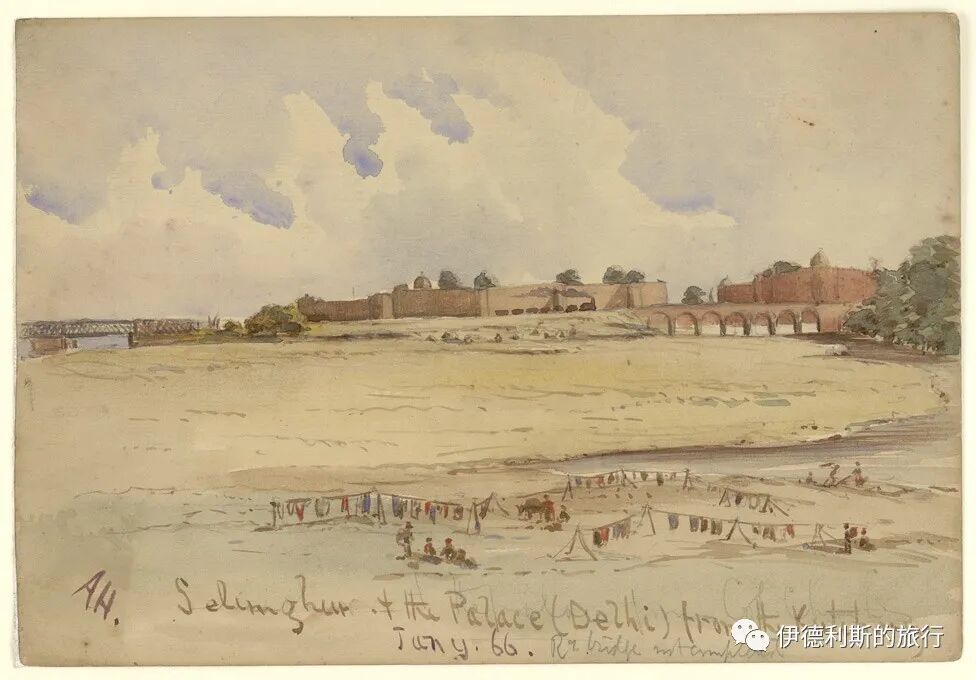
Salimgarh Fort in 1866, drawn by Alfred Frederick Pollock Harcourt.
The mosque by the city wall.
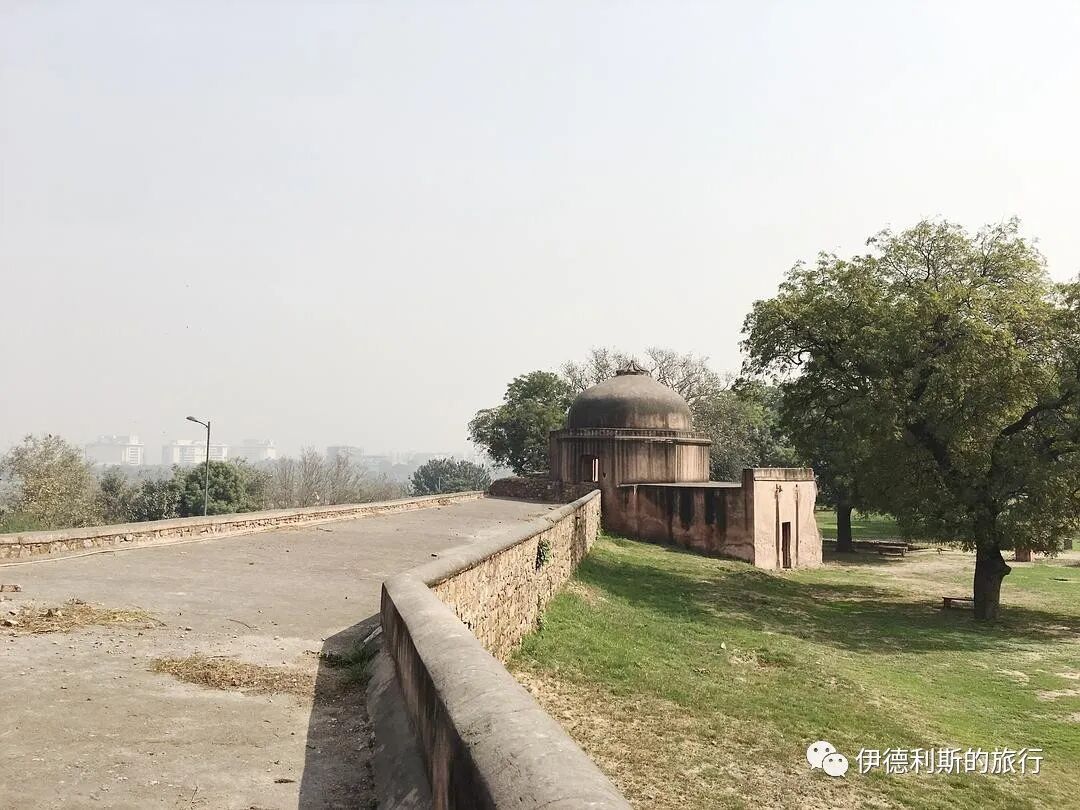
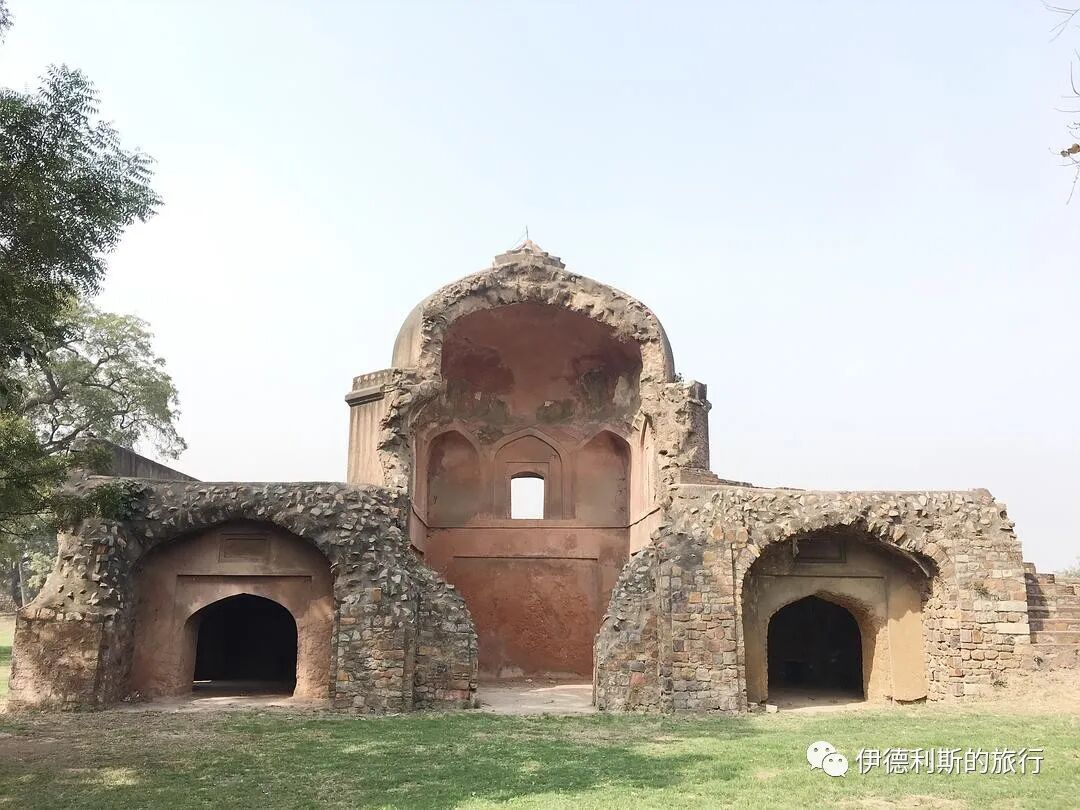
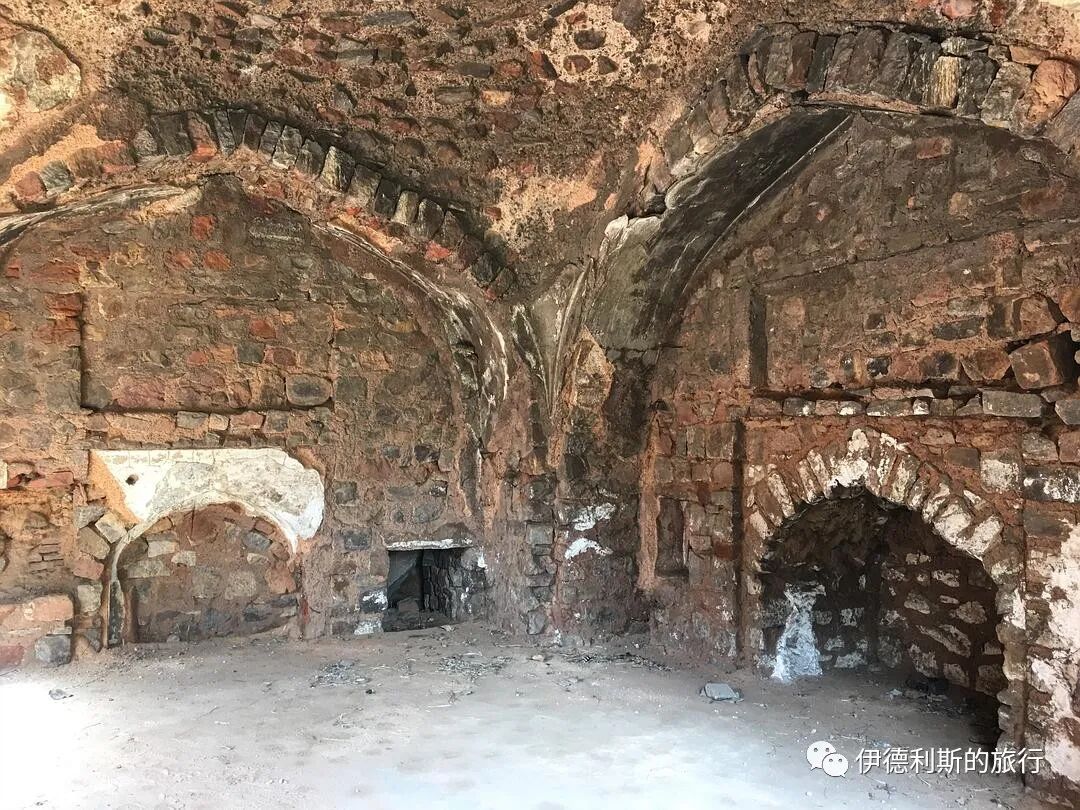
Inside the mosque.
The other side of the city wall.
Some scattered architectural pieces inside the fortress.
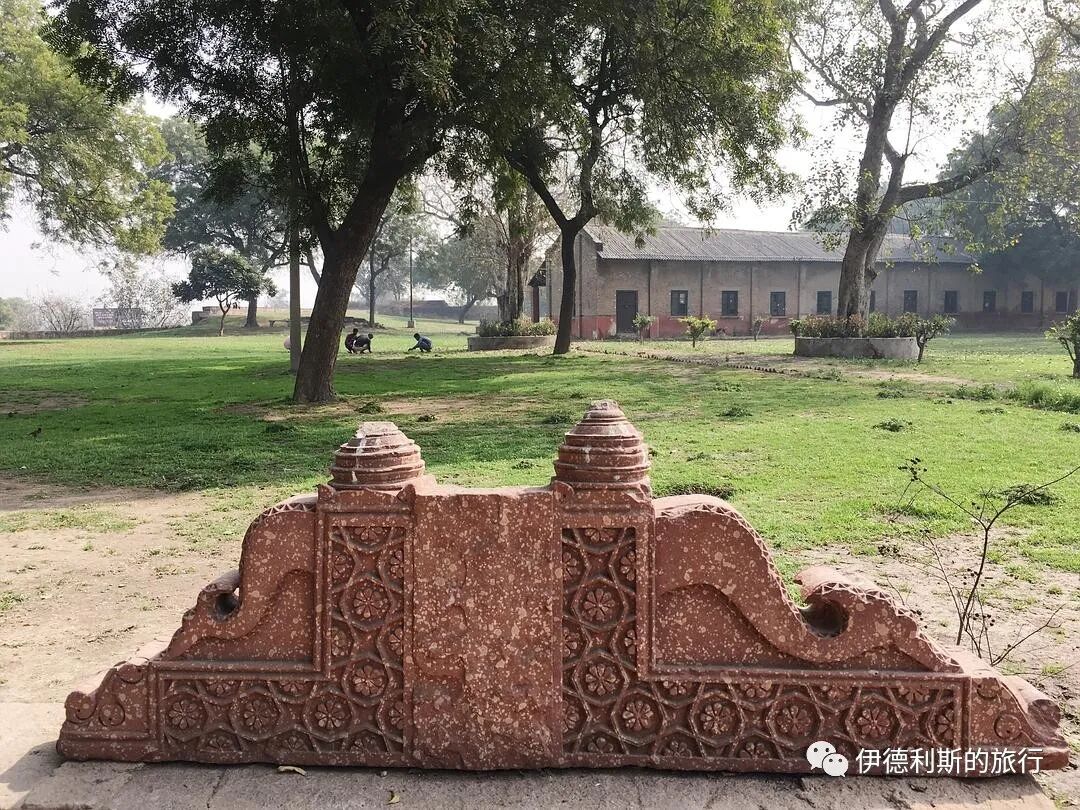
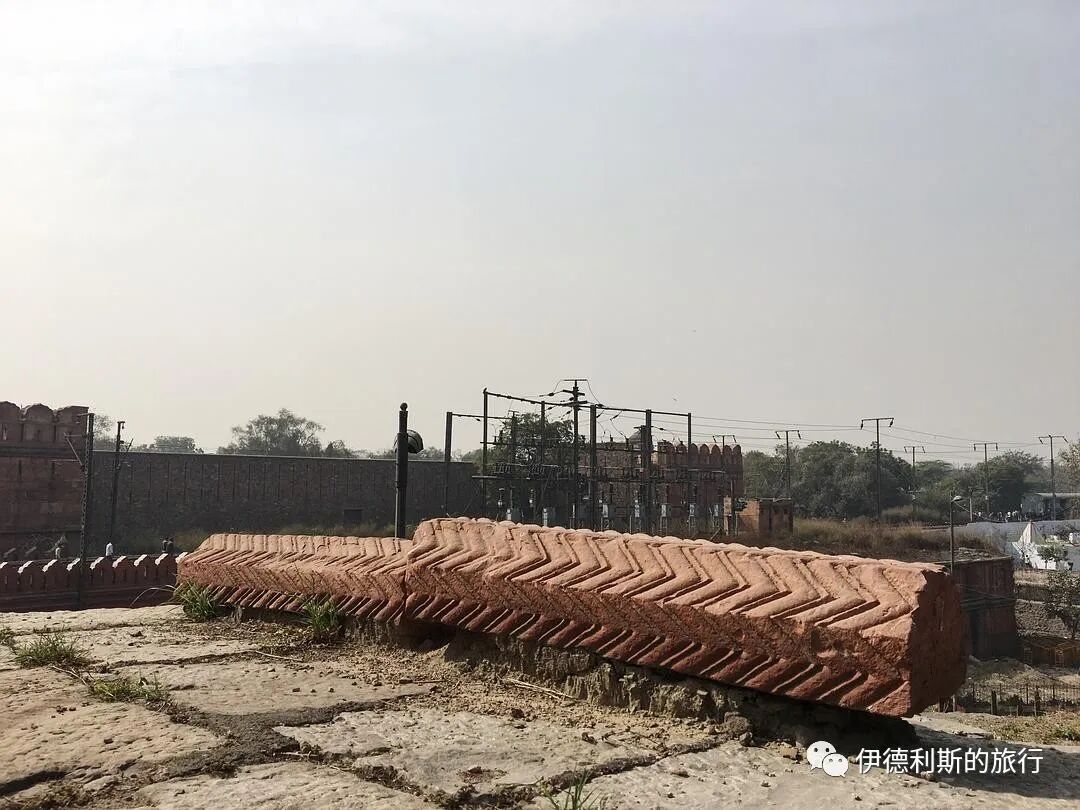
2. Tomb and Mosque of Isa Khan: 1547
Isa Khan was a nobleman of the Sur Empire, coming from the Niazi tribe of the Pashtuns in Afghanistan. Isa Khan died in 1548. Before he passed away, he built his own tomb and mosque in the southern suburbs of Dinpanah, near the shrine of Nizamuddin. Later, this place also became the site of Humayun's tomb.
As a prominent figure in the Sur Empire, Isa Khan was one of the last nobles of the dynasty to be buried in an Afghan-style tomb.
On August 5, 2011, the oldest sunken garden in India was discovered during the restoration of the tomb. This is considered the first Indian-style sunken garden attached to a tomb in India. This design was later further developed at Akbar's Tomb and the Taj Mahal.
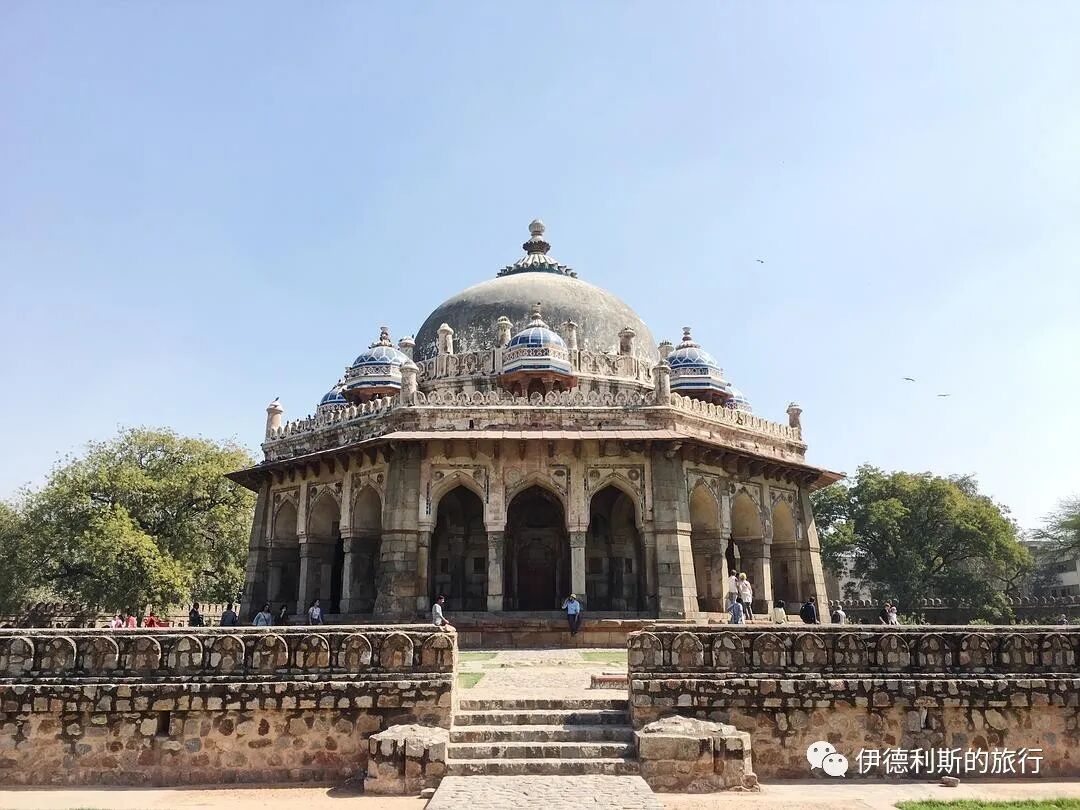
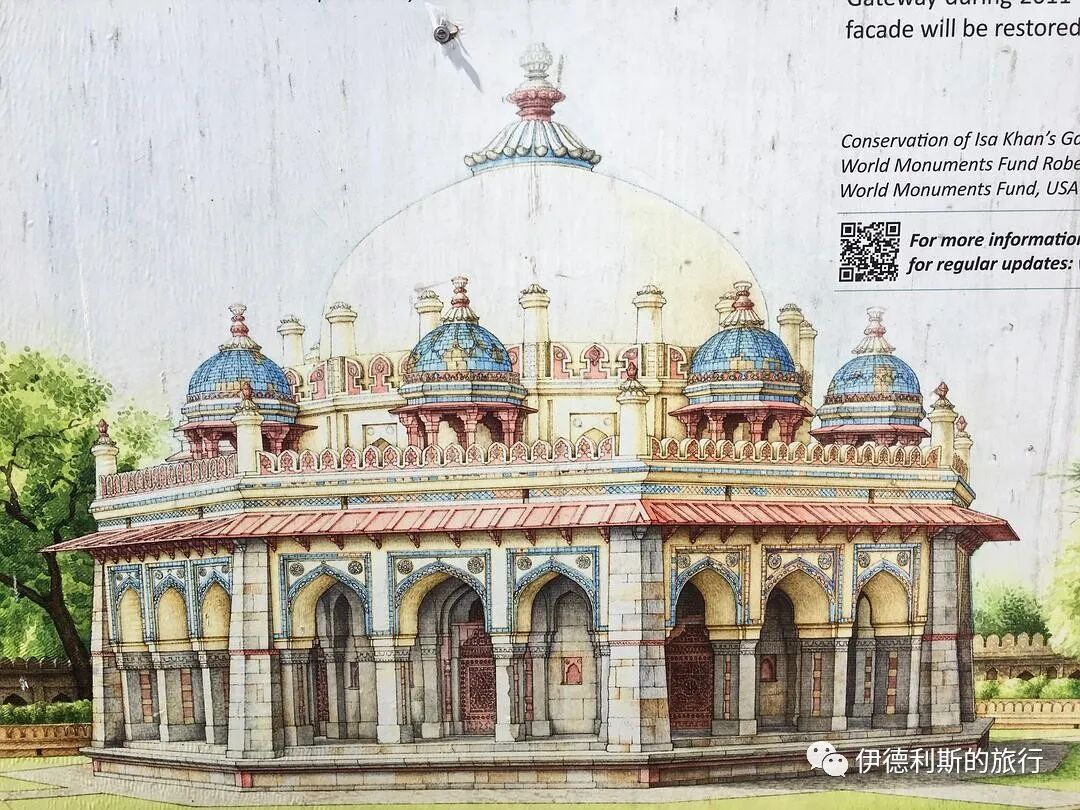
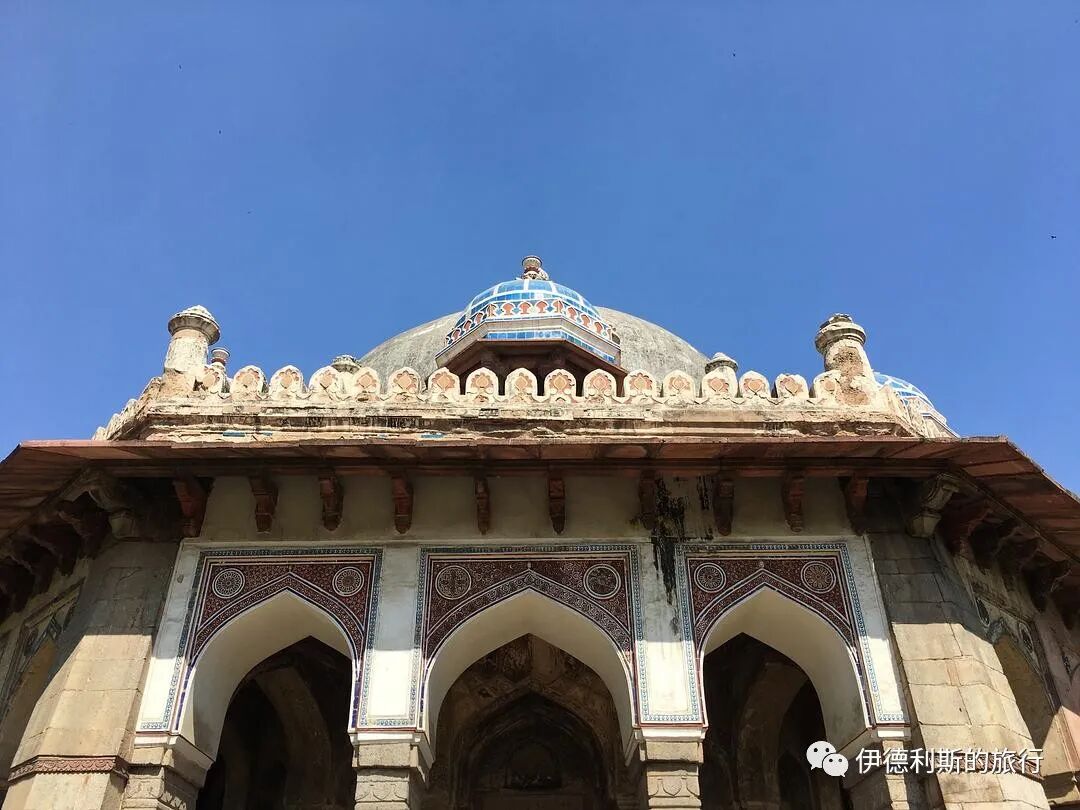
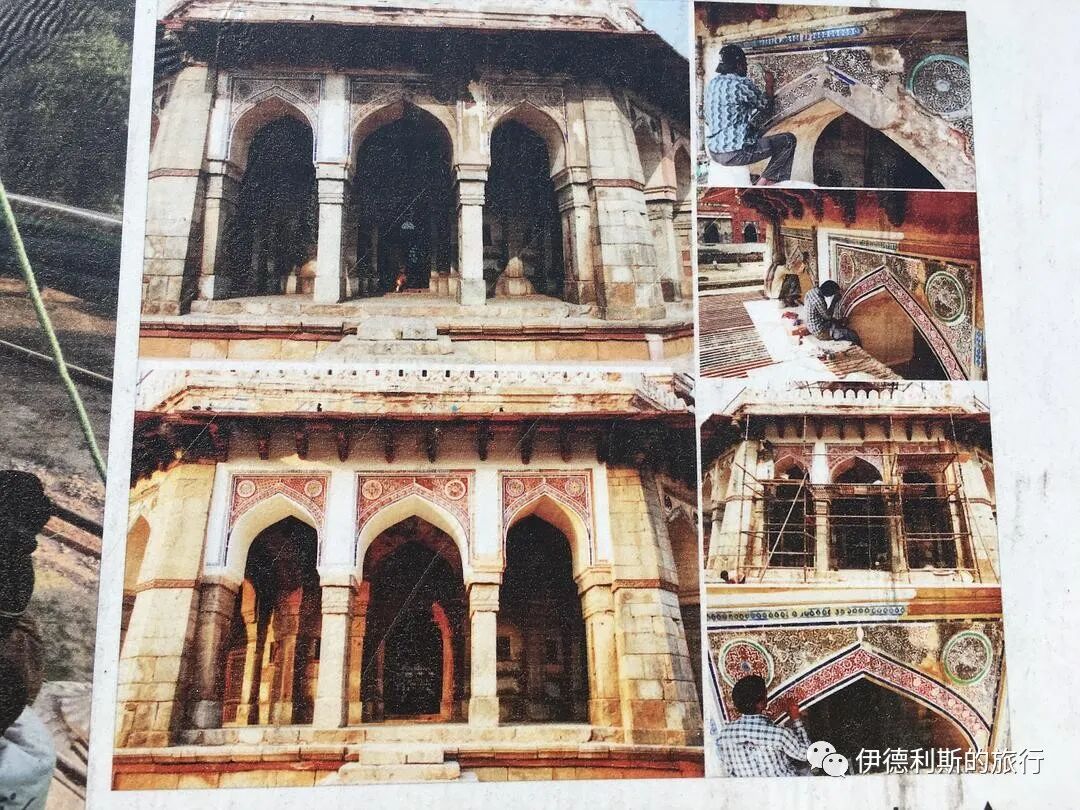
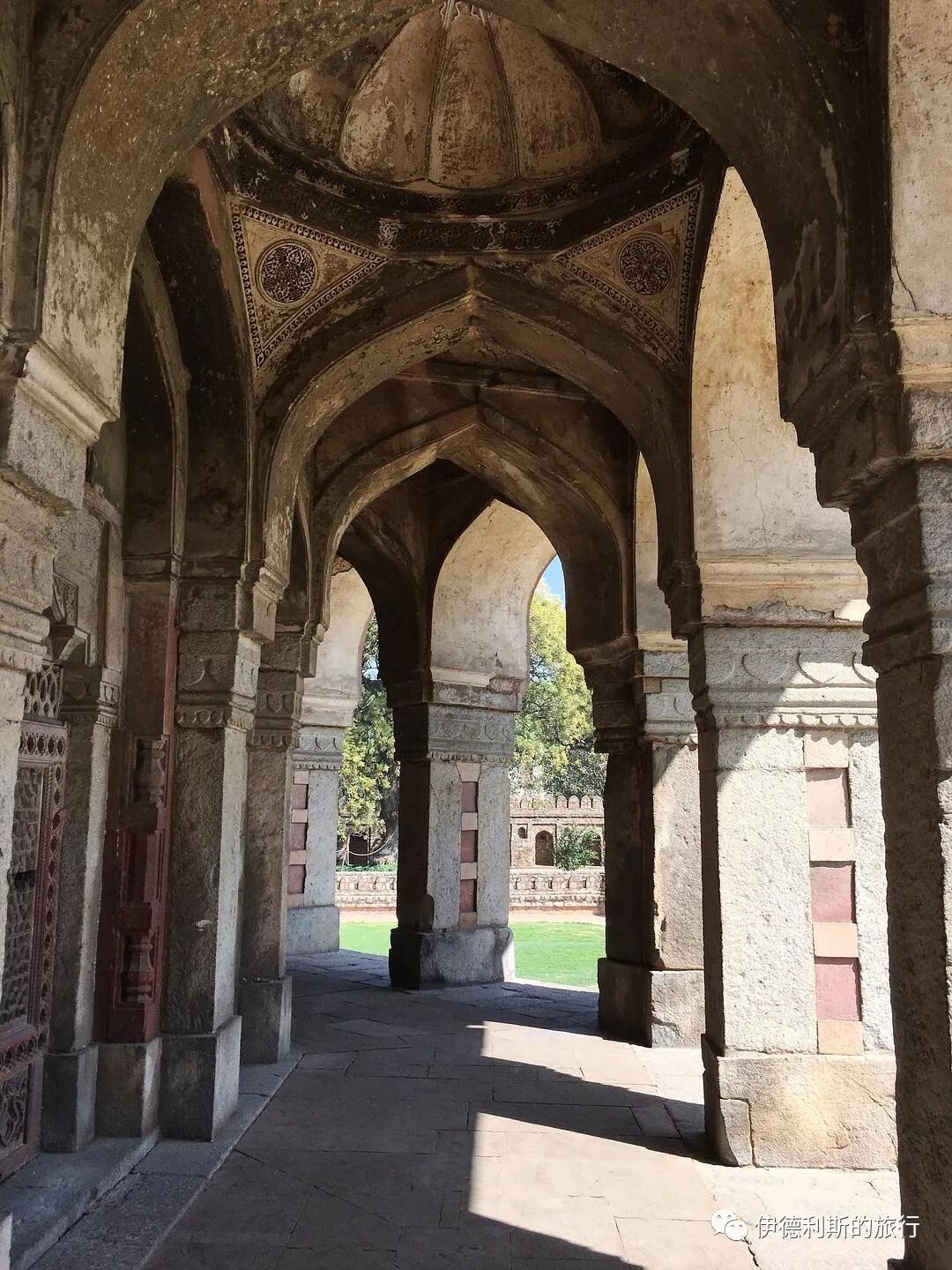
The dome of the outer corridor.
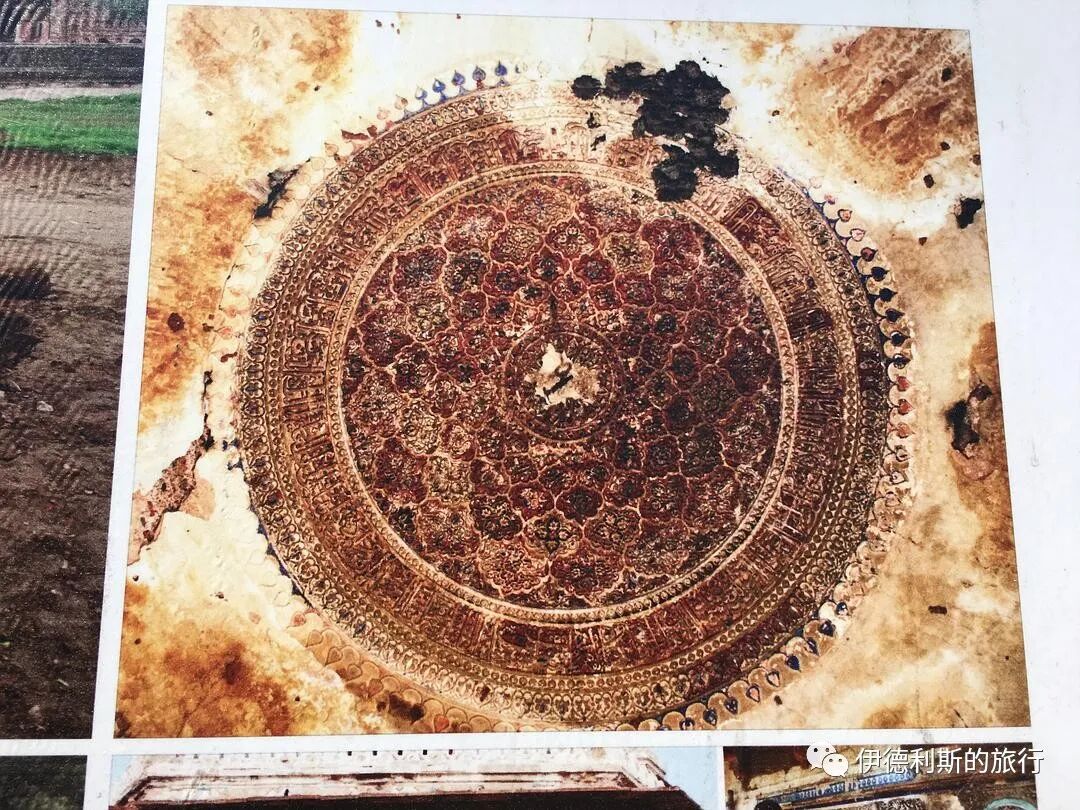
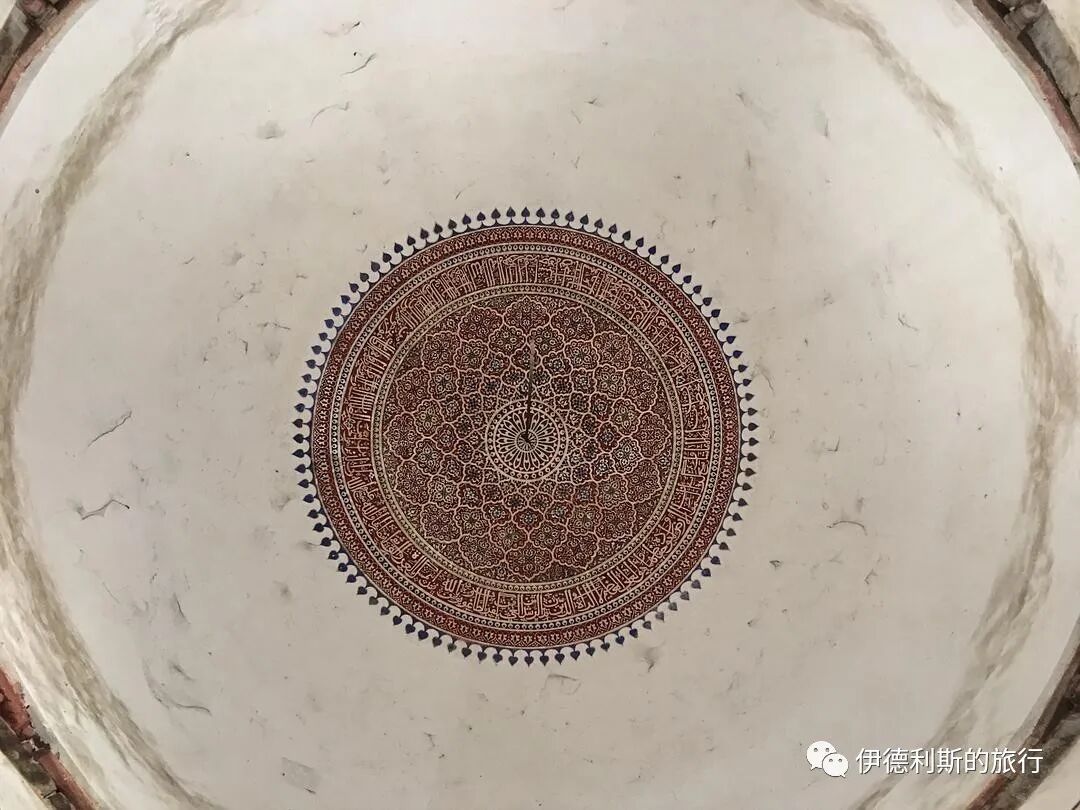
The dome inside.
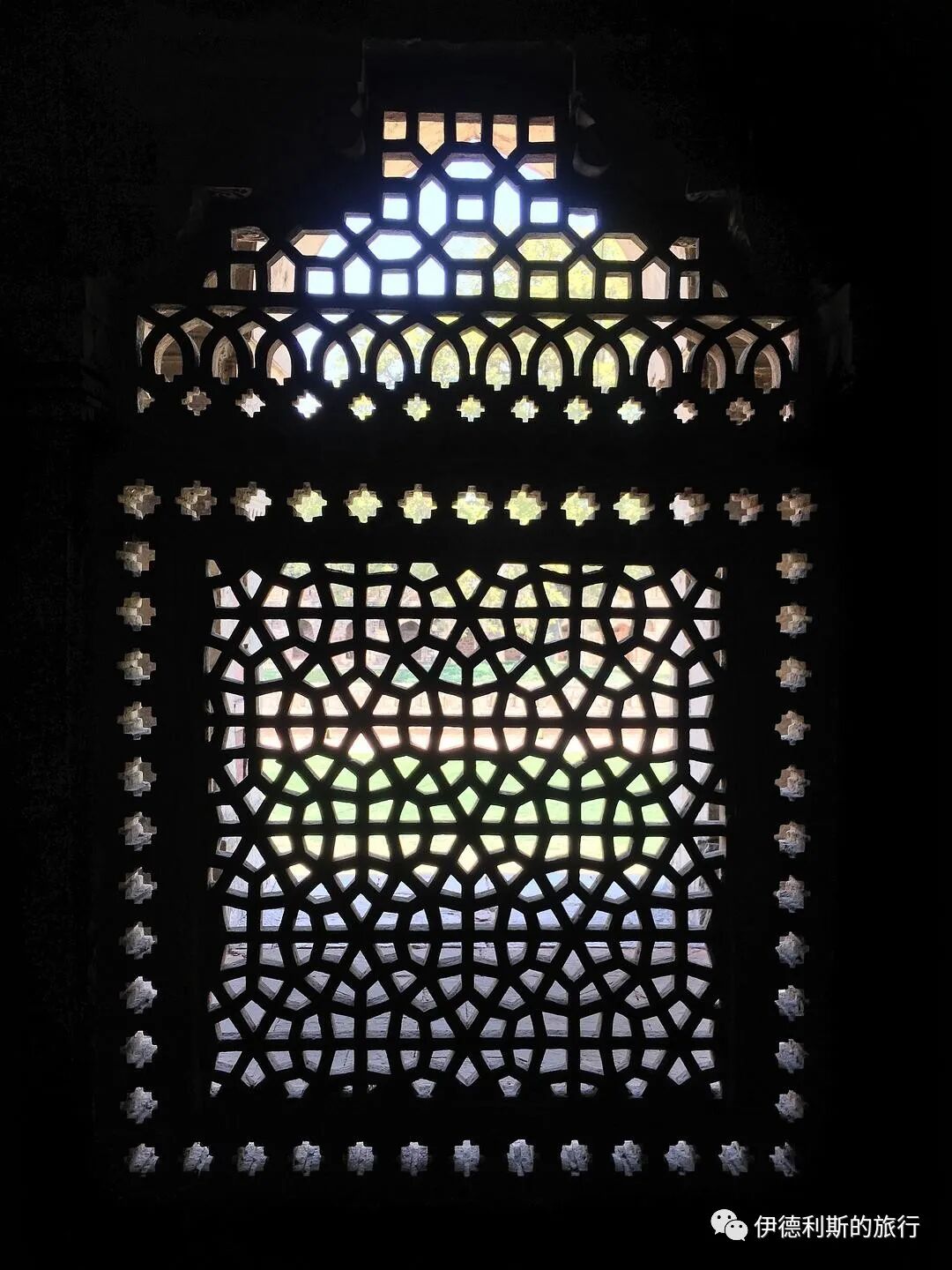
The mihrab of the tomb.
The Isa Khan Mosque was built during the same period as the tomb, and its biggest feature is the use of two pavilions instead of a dome. many details in the mosque were further developed in the later Humayun's Tomb.
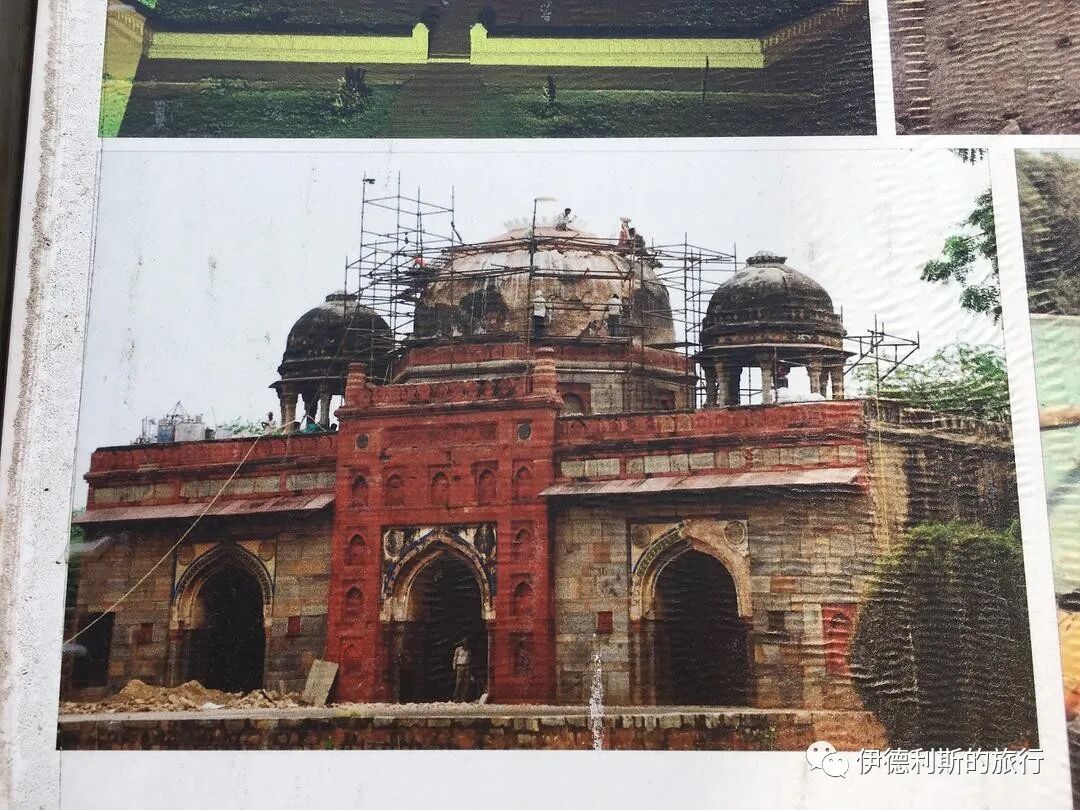
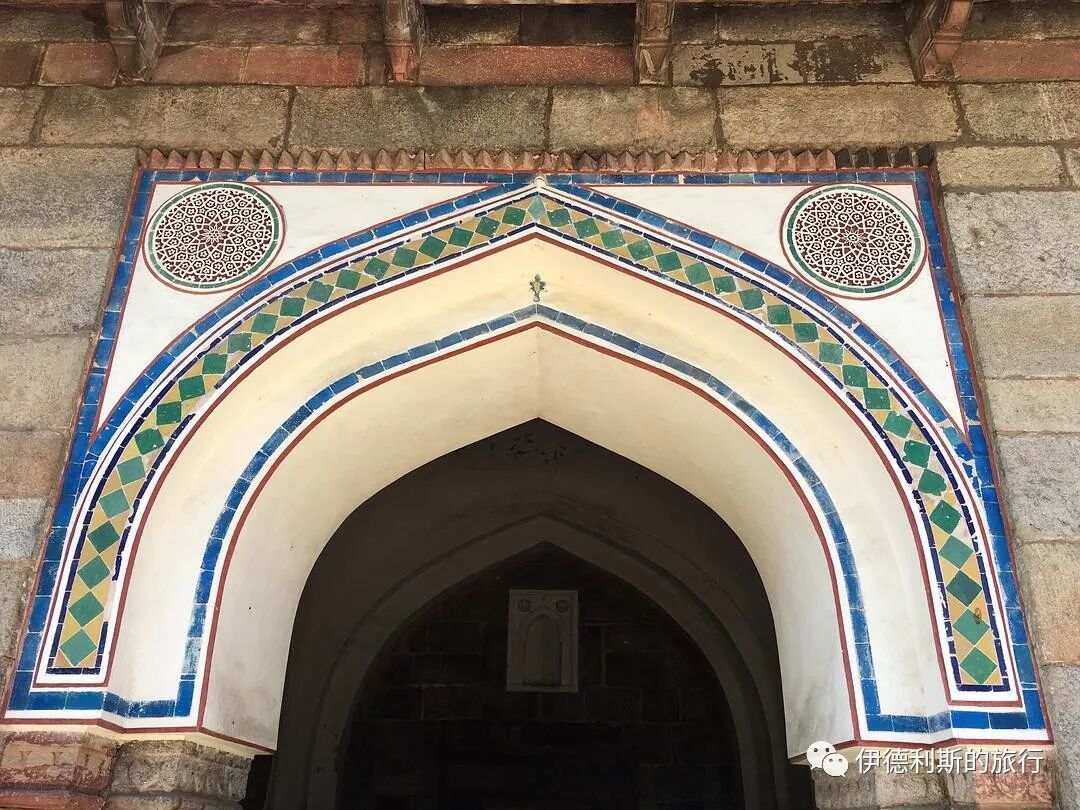
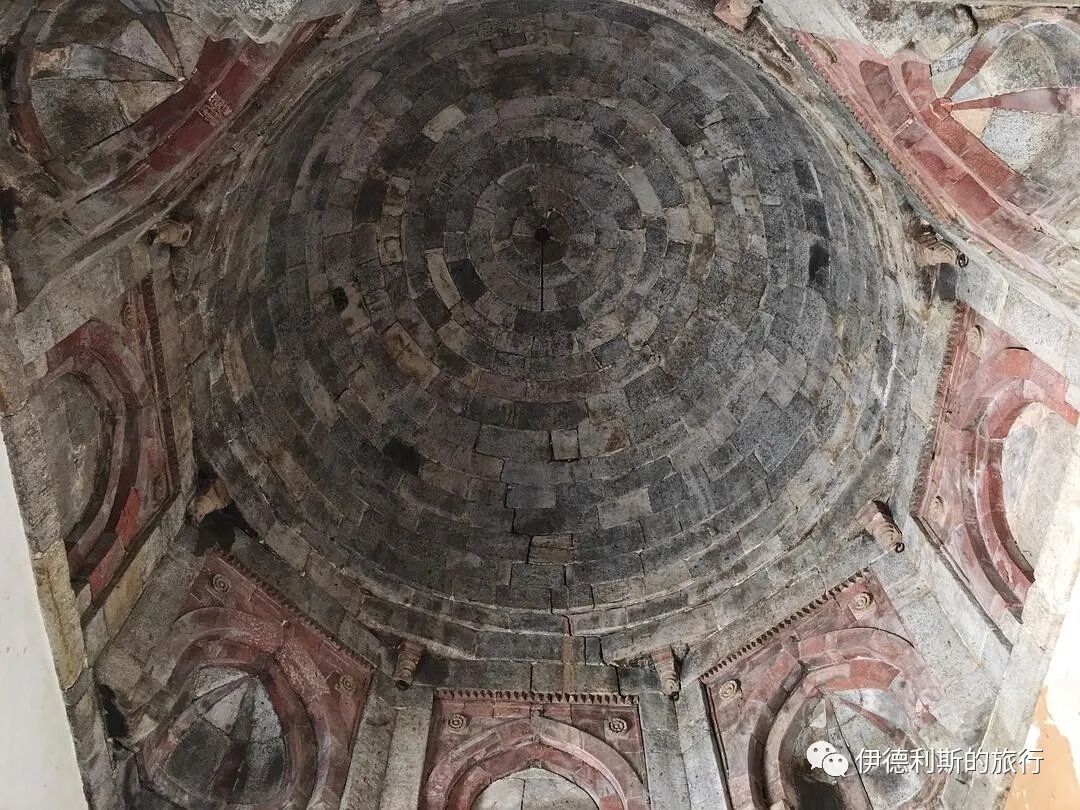
Muslim History Guide Delhi: Mughal Capital, Old Mosques and Islamic Heritage
Articles • yusuf908 posted the article • 0 comments • 149 views • 2026-05-23 23:22
Summary: Delhi's Seventh City — Mughal Capital and Muslim History is presented here as a firsthand travel account in clear English, beginning with this scene: In my last article, The Sixth City of Delhi: The Birth of the Mughal Empire, I wrote about how Humayun, the second Mughal emperor, fell to his death from his library in the sixth city of Delhi, Dinpanah, in 1556. The account keeps its focus on Delhi Travel, Mughal History, Muslim Heritage while preserving the names, places, food, and historical details from the Chinese source.
In my last article, The Sixth City of Delhi: The Birth of the Mughal Empire, I wrote about how Humayun, the second Mughal emperor, fell to his death from his library in the sixth city of Delhi, Dinpanah, in 1556. His son, Emperor Akbar, moved the Mughal capital to Agra in 1558, and Delhi lost its status as the capital.
In 1628, Shah Jahan became the fifth emperor of the Mughal Empire. Under his rule, Mughal architectural aesthetics reached a new height, and this period is widely recognized as the golden age of Mughal architecture. Besides building the Taj Mahal, Shah Jahan built the seventh city of Delhi between 1639 and 1648, naming it Shahjahanabad after himself. Shah Jahan made Shahjahanabad the capital of the Mughal Empire, aiming to show the grandeur and power of the empire.
Shahjahanabad is now known as Old Delhi and still keeps many historical sites and traditional neighborhoods. The most important site inside the city, the Red Fort, was added to the UNESCO World Heritage list in 2007.
The layout of Shahjahanabad was inspired by the ancient Persian city of Isfahan and inherited urban planning ideas from the Agra Fort and Fatehpur Sikri, which were built by the previous Mughal emperor, Akbar. The city has an irregular shape, with the eastern wall built along the course of the Yamuna River. The Yamuna River later changed its course and moved away from the walls, and the original riverbed is now the Delhi Inner Ring Road.
The city has two main roads: Chandni Chowk running east-west and Faiz Bazaar running north-south, with major commercial areas on both sides of the streets. The Red Fort, where the Mughal royal family lived, is located at the junction of these two main roads.
1858
1914
Table of Contents
1. Red Fort: 1639-1648
1. Lahore Gate
2. Chhatta Chowk (market)
3. Naubat Khana (drum house)
4. Diwan-i-Aam (public audience hall)
5. Rang Mahal (palace of the empresses)
6. Khas Mahal (emperor's private palace)
7. Diwan-i-Khas (private audience hall)
8. Hammam-e-Lal Qila (bathhouse)
9. Pearl Mosque (Moti Masjid)
10. King's Tower (Shah Burj)
11. Life-Giving Garden (Hayat Bakhsh Bagh)
2. Jama Mosque: 1650-1656
3. Fatehpuri Mosque: 1650
4. Golden Mosque (Sunehri Masjid): 1751
5. Great Mosque (Kalan Masjid): 1387
6. Hauzwali Mosque: 15th century
1. Red Fort: 1639-1648
Shah Jahan decided to move the capital from Agra back to Delhi in 1638. On May 12, 1639, he ordered the construction of the Red Fort. The designer was Ustad Ahmad Lahauri, the architect who built the Taj Mahal.
On the north side of the Red Fort is the Salimgarh Fort, built by the Sur dynasty in 1546 (I introduced this in my previous article, 'The Sixth City of Delhi: The Birth of the Mughal Empire'). The Red Fort was designed to connect to Salimgarh Fort via a bridge, joining the two castles together.
In 1857, the last Mughal emperor, Bahadur Shah II, left the Red Fort and was arrested by the British army. He was tried at the Red Fort in 1858 and exiled to Yangon, marking the end of the Mughal Empire. Afterward, the Red Fort was used as a British military barracks. Most of the buildings were demolished. Only the marble structures in the far east survived because they were repurposed as barracks, offices, dormitories, and canteens.
After India's independence, the Red Fort continued to be used as an Indian Army barracks until 2003, when the Archaeological Survey of India was finally authorized to begin restoration. In 2009, the Archaeological Survey of India developed a comprehensive protection and management plan for the Red Fort under the direction of the Supreme Court.
The Red Fort viewed from east to west, painted in 1785.
The Red Fort viewed from east to west, painted by Ghulam Ali Khan between 1852 and 1854.
1. Lahore Gate
The Lahore Gate is the west gate of the Red Fort. It is named for facing the city of Lahore. During the reign of the sixth Mughal emperor, Aurangzeb (reigned 1658-1707), a barbican was added to the outside of the gate. Since 1947, the Prime Minister of India has stood at the Lahore Gate to deliver a speech every Indian Independence Day.
Painted by Ghulam Ali Khan between 1852 and 1854.
2. Chhatta Chowk (market)
After entering the Lahore Gate, you find a market called Chhatta Chowk. During the Mughal era, this was where silk and jewelry were sold to members of the royal family.
Painted by Ghulam Ali Khan between 1852 and 1854.
(Optional) Image description
3. Naubat Khana (drum house)
After walking through the Chhatta Chowk market, you reach the outer courtyard of the Red Fort. The building in the center of the outer courtyard is called the Naubat Khana, which serves as the main gate to the inner court. Naubat Khana means 'drum house.' During the Mughal era, ceremonial music was played here five times a day, and everyone except members of the royal family had to dismount from their horses when they reached this point. After 1857, the British army destroyed the arcades on both sides of the Naubat Khana and the central pool, leaving only the central building.
Photographed in 1858 by British army officer Robert Christopher Tytler and his wife Harriet.
4. Diwan-i-Aam (public audience hall)
After passing through the Naubat Khana, you enter the inner courtyard of the Red Fort, where the Diwan-i-Aam stands directly in front of you. Diwan-i-Aam means 'Hall of Public Audience.' It was the place where the Mughal emperor met with the public to hear their concerns.
In the center of the hall is the throne where the emperor sat. The marble steps below the throne were where the prime minister (wazir) received petitions from the public.
The door behind the throne, painted by Ghulam Ali Khan between 1852 and 1854.
5. Rang Mahal (palace of the empresses)
After entering the Diwan-i-Aam, you reach the harem section of the Red Fort. Rang Mahal means 'Palace of Colors.' It was the living quarters for the concubines of the Mughal emperor.
Painted by Ghulam Ali Khan between 1852 and 1854.
A shallow canal called the Stream of Paradise (Nahr-i-Bihist) flows into the marble pool in front of the Rang Mahal. During the hot summer, the women of the Mughal royal family would stay in the basement of the Diwan-i-Aam to escape the heat.
Painted by Ghulam Ali Khan between 1852 and 1854.
6. Khas Mahal (emperor's private palace)
To the north of the Rang Mahal is the Khass Mahal, which was the sleeping quarters of the Mughal emperor. The Rang Mahal was built of white marble. Its walls were originally inlaid with various jewels and the ceiling was gilded, but these features have not been preserved.
Painted by Sir Thomas Theophilus Metcalfe in 1843.
The last Mughal emperor, Bahadur Shah II, ascends the throne in the Khas Mahal, painted by Ghulam Ali Khan between 1837 and 1838.
7. Hall of Private Audience (Diwan-i-Khas)
North of the Khas Mahal is the Hall of Private Audience (Diwan-i-Khas), where the Mughal emperor met with courtiers and state guests. The Hall of Private Audience (Diwan-i-Khas) means "private reception room." It is built of white marble and was once inlaid with various jewels, featuring the exquisite Peacock Throne in the center. The hall once had a ceiling inlaid with gold and silver, but these were later removed. The current ceiling was installed in 1911.
Outside the hall, there used to be red awnings, and the arches below were inscribed with verses by the famous Sufi master Amir Khusrow:
If there is a paradise on earth,
It is this, it is this, it is this.
Painted by Ghulam 'Ali Khan in 1817.
Painted by Ghulam Ali Khan between 1852 and 1854.
The Peacock Throne in 1850.
8. Hammam-e-Lal Qila (bathhouse)
North of the Hall of Private Audience (Diwan-i-Khas) is the Red Fort Bathhouse (Hammam-e-Lal Qila), which was used by the Mughal royal family. The Red Fort Bathhouse (Hammam-e-Lal Qila) is a Turkish-style bath consisting of three sections: a children's bath, a dressing room, and a hot bath. Legend has it that the water flowing from the taps at that time was mixed with rose perfume.
Painted by Ghulam Ali Khan between 1852 and 1854.
9. Pearl Mosque (Moti Masjid)
The Pearl Mosque (Moti Masjid) is west of the bathhouse. It was built by the sixth Mughal emperor, Aurangzeb, between 1659 and 1660 for his second wife, Nawab Bai. Pearl (Moti) means "pearl." It is built of white marble, and its three domes were originally covered with gilded copper plates, which were lost after 1857.
Painted by Ghulam Ali Khan between 1852 and 1854.
Painted by Vasily Vereshchagin in the late 1880s.
10. King's Tower (Shah Burj)
The northernmost part of the harem is a white marble pavilion built during the Aurangzeb period. Behind the pavilion is the Shahi Burj, the northeast corner tower of the Red Fort, which means "Imperial Tower." Inside the tower is a hydraulic system that carries water from outside the Red Fort into its gardens and buildings.
Painted by Sir Thomas Metcalfe in 1843.
11. Life-Giving Garden (Hayat Bakhsh Bagh)
In the northwest part of the harem is the royal water garden Hayat Bakhsh Bagh, which means 'Life-Giving Garden'. Most of the garden's buildings were destroyed after 1857, and only three survive today.
At the center of the garden is the red sandstone building Zafar Mahal, built in 1842 by the last Mughal emperor, Bahadur Shah II. The building sits in a pool and was originally connected to the shore by a red sandstone bridge, but it was destroyed after 1857. After 1857, the British army used this area as a swimming pool.
Painted by Ghulam Ali Khan between 1852 and 1854.
To the north and south of the garden are two white marble pavilions called Sawan and Bhadon, named after the months of July and August in the Indian rainy season, as the ladies of the Mughal palace loved to visit the garden during these two months. The pavilions have wall niches that held vases with golden flowers during the day and small oil lamps at night.
To the west of Hayat Bakhsh Bagh, there was originally another water garden called Mehtab Bagh, meaning 'Moon Garden,' but after 1857, the site was turned into a British military barracks, and now only ruins remain.
2. Jama Mosque: 1650-1656
The Jama Masjid mosque is located southwest of the Red Fort; it was built between 1650 and 1656 by order of Shah Jahan and served as the royal mosque of the Mughal Empire.
The mosque was built by more than 5,000 workers under the leadership of Shah Jahan's vizier (wazir) Saadullah Khan, costing over 1 million rupees. The mosque stands on a platform more than 9 meters above the ground and is made of red sandstone and marble, featuring a main hall connected by colonnades, two 40-meter-high minarets, and three gates. The east gate was reserved for the Mughal royal family and had a path that connected directly to the Delhi Gate of the Red Fort.
After 1857, the British seized the Jama Masjid mosque and stationed troops inside. They originally wanted to demolish the mosque, but they failed due to strong opposition, though the madrasa (Islamic school) on the south side of the mosque was destroyed as a result.
The mihrab in the center of the main hall indicates the direction of prayer toward Mecca:
Besides the main mihrab in the center, there is a smaller mihrab on each side.
During Jumu'ah, the imam stands on this stone platform to deliver the khutbah.
There is a tower at each of the four corners of the colonnade.
The east gate is the main entrance:
South Gate
North Gate
The water pool in the courtyard for wudu:
Jama means Jumu'ah, which refers to the Friday congregational prayer. The Jumu'ah mosque is usually the largest in the community, and the most important weekly prayer is held here every Friday at noon. I was lucky enough to attend a Friday Jumu'ah prayer at the Jama Mosque.
On the morning of Jumu'ah, more prayer rugs were already laid out in the courtyard.
People are performing wudu for the Jumu'ah prayer:
More and more people are arriving.
The imam leading the prayer climbs onto the stone platform.
After the prayer, people take photos:
3. Fatehpuri Mosque: 1650
Fatehpuri Mosque is located at the western end of Chandni Chowk, the main east-west road in Shahjahanabad. It was built in 1650 under the direction of Fatehpuri Begum, the wife of Shah Jahan. The mosque is in the classic Mughal style, built with red sandstone, featuring minarets on both sides and a main prayer hall in the middle. The main hall has seven arched bays, and the central iwan arch is topped with a Mughal-style dome.
4. Golden Mosque (Sunehri Masjid): 1751
Sunehri Mosque is located south of the Red Fort. It was built in 1751 by Qudsia Begum, the wife of the twelfth Mughal Emperor, Muhammad Shah. After Muhammad Shah died, Qudsia Begum's son, Ahmad Shah Bahadur, succeeded to the throne, making Qudsia Begum the de facto ruler of the Mughal Empire between 1748 and 1754.
During her rule, Qudsia Begum built a series of structures in Delhi, and the Sunehri Mosque is the most understated in its architectural style. The mosque's dome was originally copper-plated, but during renovations in 1852, sandstone replaced the damaged copper plates.
5. Great Mosque (Kalan Masjid): 1387
Kalan Mosque is one of the very few mosques in Shahjahanabad that existed before the city was built. It was constructed in 1387 by Khan-i-Jahan Maqbul, the vizier of Sultan Feroz Shah Tughlaq (reigned 1351-1388) of the Delhi Sultanate's Tughlaq dynasty. It is believed to have been built to commemorate a Sufi saint.
The mosque has been in continuous use, so the interior has changed significantly.
6. Hauzwali Mosque: 15th century
Hauzwali Mosque is another mosque that existed before the city of Shahjahanabad was built. Because the ground level has changed so much over time, the bottom half of the mosque is now underground, leaving only the top parts of the arches and the mihrab visible. view all
Summary: Delhi's Seventh City — Mughal Capital and Muslim History is presented here as a firsthand travel account in clear English, beginning with this scene: In my last article, The Sixth City of Delhi: The Birth of the Mughal Empire, I wrote about how Humayun, the second Mughal emperor, fell to his death from his library in the sixth city of Delhi, Dinpanah, in 1556. The account keeps its focus on Delhi Travel, Mughal History, Muslim Heritage while preserving the names, places, food, and historical details from the Chinese source.
In my last article, The Sixth City of Delhi: The Birth of the Mughal Empire, I wrote about how Humayun, the second Mughal emperor, fell to his death from his library in the sixth city of Delhi, Dinpanah, in 1556. His son, Emperor Akbar, moved the Mughal capital to Agra in 1558, and Delhi lost its status as the capital.
In 1628, Shah Jahan became the fifth emperor of the Mughal Empire. Under his rule, Mughal architectural aesthetics reached a new height, and this period is widely recognized as the golden age of Mughal architecture. Besides building the Taj Mahal, Shah Jahan built the seventh city of Delhi between 1639 and 1648, naming it Shahjahanabad after himself. Shah Jahan made Shahjahanabad the capital of the Mughal Empire, aiming to show the grandeur and power of the empire.
Shahjahanabad is now known as Old Delhi and still keeps many historical sites and traditional neighborhoods. The most important site inside the city, the Red Fort, was added to the UNESCO World Heritage list in 2007.
The layout of Shahjahanabad was inspired by the ancient Persian city of Isfahan and inherited urban planning ideas from the Agra Fort and Fatehpur Sikri, which were built by the previous Mughal emperor, Akbar. The city has an irregular shape, with the eastern wall built along the course of the Yamuna River. The Yamuna River later changed its course and moved away from the walls, and the original riverbed is now the Delhi Inner Ring Road.
The city has two main roads: Chandni Chowk running east-west and Faiz Bazaar running north-south, with major commercial areas on both sides of the streets. The Red Fort, where the Mughal royal family lived, is located at the junction of these two main roads.
1858
1914
Table of Contents
1. Red Fort: 1639-1648
1. Lahore Gate
2. Chhatta Chowk (market)
3. Naubat Khana (drum house)
4. Diwan-i-Aam (public audience hall)
5. Rang Mahal (palace of the empresses)
6. Khas Mahal (emperor's private palace)
7. Diwan-i-Khas (private audience hall)
8. Hammam-e-Lal Qila (bathhouse)
9. Pearl Mosque (Moti Masjid)
10. King's Tower (Shah Burj)
11. Life-Giving Garden (Hayat Bakhsh Bagh)
2. Jama Mosque: 1650-1656
3. Fatehpuri Mosque: 1650
4. Golden Mosque (Sunehri Masjid): 1751
5. Great Mosque (Kalan Masjid): 1387
6. Hauzwali Mosque: 15th century
1. Red Fort: 1639-1648
Shah Jahan decided to move the capital from Agra back to Delhi in 1638. On May 12, 1639, he ordered the construction of the Red Fort. The designer was Ustad Ahmad Lahauri, the architect who built the Taj Mahal.
On the north side of the Red Fort is the Salimgarh Fort, built by the Sur dynasty in 1546 (I introduced this in my previous article, 'The Sixth City of Delhi: The Birth of the Mughal Empire'). The Red Fort was designed to connect to Salimgarh Fort via a bridge, joining the two castles together.
In 1857, the last Mughal emperor, Bahadur Shah II, left the Red Fort and was arrested by the British army. He was tried at the Red Fort in 1858 and exiled to Yangon, marking the end of the Mughal Empire. Afterward, the Red Fort was used as a British military barracks. Most of the buildings were demolished. Only the marble structures in the far east survived because they were repurposed as barracks, offices, dormitories, and canteens.
After India's independence, the Red Fort continued to be used as an Indian Army barracks until 2003, when the Archaeological Survey of India was finally authorized to begin restoration. In 2009, the Archaeological Survey of India developed a comprehensive protection and management plan for the Red Fort under the direction of the Supreme Court.
The Red Fort viewed from east to west, painted in 1785.
The Red Fort viewed from east to west, painted by Ghulam Ali Khan between 1852 and 1854.
1. Lahore Gate
The Lahore Gate is the west gate of the Red Fort. It is named for facing the city of Lahore. During the reign of the sixth Mughal emperor, Aurangzeb (reigned 1658-1707), a barbican was added to the outside of the gate. Since 1947, the Prime Minister of India has stood at the Lahore Gate to deliver a speech every Indian Independence Day.
Painted by Ghulam Ali Khan between 1852 and 1854.
2. Chhatta Chowk (market)
After entering the Lahore Gate, you find a market called Chhatta Chowk. During the Mughal era, this was where silk and jewelry were sold to members of the royal family.
Painted by Ghulam Ali Khan between 1852 and 1854.
(Optional) Image description
3. Naubat Khana (drum house)
After walking through the Chhatta Chowk market, you reach the outer courtyard of the Red Fort. The building in the center of the outer courtyard is called the Naubat Khana, which serves as the main gate to the inner court. Naubat Khana means 'drum house.' During the Mughal era, ceremonial music was played here five times a day, and everyone except members of the royal family had to dismount from their horses when they reached this point. After 1857, the British army destroyed the arcades on both sides of the Naubat Khana and the central pool, leaving only the central building.
Photographed in 1858 by British army officer Robert Christopher Tytler and his wife Harriet.
4. Diwan-i-Aam (public audience hall)
After passing through the Naubat Khana, you enter the inner courtyard of the Red Fort, where the Diwan-i-Aam stands directly in front of you. Diwan-i-Aam means 'Hall of Public Audience.' It was the place where the Mughal emperor met with the public to hear their concerns.
In the center of the hall is the throne where the emperor sat. The marble steps below the throne were where the prime minister (wazir) received petitions from the public.
The door behind the throne, painted by Ghulam Ali Khan between 1852 and 1854.
5. Rang Mahal (palace of the empresses)
After entering the Diwan-i-Aam, you reach the harem section of the Red Fort. Rang Mahal means 'Palace of Colors.' It was the living quarters for the concubines of the Mughal emperor.
Painted by Ghulam Ali Khan between 1852 and 1854.
A shallow canal called the Stream of Paradise (Nahr-i-Bihist) flows into the marble pool in front of the Rang Mahal. During the hot summer, the women of the Mughal royal family would stay in the basement of the Diwan-i-Aam to escape the heat.
Painted by Ghulam Ali Khan between 1852 and 1854.
6. Khas Mahal (emperor's private palace)
To the north of the Rang Mahal is the Khass Mahal, which was the sleeping quarters of the Mughal emperor. The Rang Mahal was built of white marble. Its walls were originally inlaid with various jewels and the ceiling was gilded, but these features have not been preserved.
Painted by Sir Thomas Theophilus Metcalfe in 1843.
The last Mughal emperor, Bahadur Shah II, ascends the throne in the Khas Mahal, painted by Ghulam Ali Khan between 1837 and 1838.
7. Hall of Private Audience (Diwan-i-Khas)
North of the Khas Mahal is the Hall of Private Audience (Diwan-i-Khas), where the Mughal emperor met with courtiers and state guests. The Hall of Private Audience (Diwan-i-Khas) means "private reception room." It is built of white marble and was once inlaid with various jewels, featuring the exquisite Peacock Throne in the center. The hall once had a ceiling inlaid with gold and silver, but these were later removed. The current ceiling was installed in 1911.
Outside the hall, there used to be red awnings, and the arches below were inscribed with verses by the famous Sufi master Amir Khusrow:
If there is a paradise on earth,
It is this, it is this, it is this.
Painted by Ghulam 'Ali Khan in 1817.
Painted by Ghulam Ali Khan between 1852 and 1854.
The Peacock Throne in 1850.
8. Hammam-e-Lal Qila (bathhouse)
North of the Hall of Private Audience (Diwan-i-Khas) is the Red Fort Bathhouse (Hammam-e-Lal Qila), which was used by the Mughal royal family. The Red Fort Bathhouse (Hammam-e-Lal Qila) is a Turkish-style bath consisting of three sections: a children's bath, a dressing room, and a hot bath. Legend has it that the water flowing from the taps at that time was mixed with rose perfume.
Painted by Ghulam Ali Khan between 1852 and 1854.
9. Pearl Mosque (Moti Masjid)
The Pearl Mosque (Moti Masjid) is west of the bathhouse. It was built by the sixth Mughal emperor, Aurangzeb, between 1659 and 1660 for his second wife, Nawab Bai. Pearl (Moti) means "pearl." It is built of white marble, and its three domes were originally covered with gilded copper plates, which were lost after 1857.
Painted by Ghulam Ali Khan between 1852 and 1854.
Painted by Vasily Vereshchagin in the late 1880s.
10. King's Tower (Shah Burj)
The northernmost part of the harem is a white marble pavilion built during the Aurangzeb period. Behind the pavilion is the Shahi Burj, the northeast corner tower of the Red Fort, which means "Imperial Tower." Inside the tower is a hydraulic system that carries water from outside the Red Fort into its gardens and buildings.
Painted by Sir Thomas Metcalfe in 1843.
11. Life-Giving Garden (Hayat Bakhsh Bagh)
In the northwest part of the harem is the royal water garden Hayat Bakhsh Bagh, which means 'Life-Giving Garden'. Most of the garden's buildings were destroyed after 1857, and only three survive today.
At the center of the garden is the red sandstone building Zafar Mahal, built in 1842 by the last Mughal emperor, Bahadur Shah II. The building sits in a pool and was originally connected to the shore by a red sandstone bridge, but it was destroyed after 1857. After 1857, the British army used this area as a swimming pool.
Painted by Ghulam Ali Khan between 1852 and 1854.
To the north and south of the garden are two white marble pavilions called Sawan and Bhadon, named after the months of July and August in the Indian rainy season, as the ladies of the Mughal palace loved to visit the garden during these two months. The pavilions have wall niches that held vases with golden flowers during the day and small oil lamps at night.
To the west of Hayat Bakhsh Bagh, there was originally another water garden called Mehtab Bagh, meaning 'Moon Garden,' but after 1857, the site was turned into a British military barracks, and now only ruins remain.
2. Jama Mosque: 1650-1656
The Jama Masjid mosque is located southwest of the Red Fort; it was built between 1650 and 1656 by order of Shah Jahan and served as the royal mosque of the Mughal Empire.
The mosque was built by more than 5,000 workers under the leadership of Shah Jahan's vizier (wazir) Saadullah Khan, costing over 1 million rupees. The mosque stands on a platform more than 9 meters above the ground and is made of red sandstone and marble, featuring a main hall connected by colonnades, two 40-meter-high minarets, and three gates. The east gate was reserved for the Mughal royal family and had a path that connected directly to the Delhi Gate of the Red Fort.
After 1857, the British seized the Jama Masjid mosque and stationed troops inside. They originally wanted to demolish the mosque, but they failed due to strong opposition, though the madrasa (Islamic school) on the south side of the mosque was destroyed as a result.
The mihrab in the center of the main hall indicates the direction of prayer toward Mecca:
Besides the main mihrab in the center, there is a smaller mihrab on each side.
During Jumu'ah, the imam stands on this stone platform to deliver the khutbah.
There is a tower at each of the four corners of the colonnade.
The east gate is the main entrance:
South Gate
North Gate
The water pool in the courtyard for wudu:
Jama means Jumu'ah, which refers to the Friday congregational prayer. The Jumu'ah mosque is usually the largest in the community, and the most important weekly prayer is held here every Friday at noon. I was lucky enough to attend a Friday Jumu'ah prayer at the Jama Mosque.
On the morning of Jumu'ah, more prayer rugs were already laid out in the courtyard.
People are performing wudu for the Jumu'ah prayer:
More and more people are arriving.
The imam leading the prayer climbs onto the stone platform.
After the prayer, people take photos:
3. Fatehpuri Mosque: 1650
Fatehpuri Mosque is located at the western end of Chandni Chowk, the main east-west road in Shahjahanabad. It was built in 1650 under the direction of Fatehpuri Begum, the wife of Shah Jahan. The mosque is in the classic Mughal style, built with red sandstone, featuring minarets on both sides and a main prayer hall in the middle. The main hall has seven arched bays, and the central iwan arch is topped with a Mughal-style dome.
4. Golden Mosque (Sunehri Masjid): 1751
Sunehri Mosque is located south of the Red Fort. It was built in 1751 by Qudsia Begum, the wife of the twelfth Mughal Emperor, Muhammad Shah. After Muhammad Shah died, Qudsia Begum's son, Ahmad Shah Bahadur, succeeded to the throne, making Qudsia Begum the de facto ruler of the Mughal Empire between 1748 and 1754.
During her rule, Qudsia Begum built a series of structures in Delhi, and the Sunehri Mosque is the most understated in its architectural style. The mosque's dome was originally copper-plated, but during renovations in 1852, sandstone replaced the damaged copper plates.
5. Great Mosque (Kalan Masjid): 1387
Kalan Mosque is one of the very few mosques in Shahjahanabad that existed before the city was built. It was constructed in 1387 by Khan-i-Jahan Maqbul, the vizier of Sultan Feroz Shah Tughlaq (reigned 1351-1388) of the Delhi Sultanate's Tughlaq dynasty. It is believed to have been built to commemorate a Sufi saint.
The mosque has been in continuous use, so the interior has changed significantly.
6. Hauzwali Mosque: 15th century
Hauzwali Mosque is another mosque that existed before the city of Shahjahanabad was built. Because the ground level has changed so much over time, the bottom half of the mosque is now underground, leaving only the top parts of the arches and the mihrab visible.
Halal Travel Guide: Yangon - Last Mughal Emperor Tomb and Qadiriyya Gongbei
Articles • ali2007fr posted the article • 0 comments • 240 views • 2026-05-21 02:08
Summary: Yangon holds the tomb of Bahadur Shah II, the last Mughal emperor, near Shwedagon Pagoda, along with a Qadiriyya gongbei connected to Muslim memory in Myanmar. This account keeps the source's shrine details, historical names, religious terms, and site observations.
The tomb of Bahadur Shah II, the last emperor of the Mughal Empire, is near the famous Shwedagon Pagoda in Yangon, Myanmar. This site was his home after he was exiled to Yangon in 1858. Because Bahadur Shah II was a devout Sufi sheikh during his life, his tomb has become a famous Sufi shrine (gongbei) in Myanmar.
Although Bahadur Shah II belonged to the Chishti order during his life, the shrine (gongbei) is now managed by the Qadiriyya order. I met a man here who was hanging fresh flowers on the shrine (gongbei), and after some local friends (dosti) finished their gathering (amali), they shared candy and bananas with us.
In 1803, the British East India Company used force to become the protector of the Mughal Empire, and the Mughal emperors lost their real power from then on. After Bahadur Shah II took the throne in 1837, his power was limited to the area around Delhi. He never had any ambition for the empire, but instead focused on Sufi practice and writing poetry. Legend says he started his Sufi practice at age 20 and became a murshid (guide) of the Chishti order by age 40. In 1843, he wrote a letter to Queen Victoria of Britain saying: "I am now old and have no ambitions left." I intend to devote myself entirely to religious work to comfort my remaining years.
The Sufi philosophy followed by Bahadur Shah II believed in embracing different cultures. Men, women, young, and old should all be able to express their love for Allah, and this love should transcend religion, gender, and social class. According to a report by Major Archer in 1828: "He is thin and small, and his clothes are simple, almost crude." He looks like a poor scholar or a language teacher. This is the typical appearance of a Sufi ascetic.
Like the Mughal rulers before him, Bahadur Shah II saw himself as the protector of his Hindu subjects. Under his rule, Hindu elites in Delhi would visit the Nizamuddin Sufi shrine (gongbei) to recite Persian poetry. Many people studied under great imams and attended religious schools (madrasas). The Mughal court would attend various Hindu events, and during the Shia month of Muharram, they would listen to elegies mourning Imam Hussein.
People say the Sufi poetry of Bahadur Shah II reached a level of perfection. His court had many famous Sufi scholars, writers, and poets, and a large number of poems were published during his reign. This style of lyric poetry became the main literary form of the late Mughal period.
In 1850, the knowledge and vitality of Delhi reached its final peak. At that time, the city had six famous religious schools (madrasas), nine Urdu and Persian newspapers, five academic journals, countless printers, and at least 130 doctors who mastered traditional Persian-Arabic medicine. Many new discoveries in Western science were translated into Persian and Arabic in Delhi. As the young poet Altaf Hussain Hali wrote at the time, "The capital, Delhi, was gathered with such a group of talented sages that it reminded people of the eras of Akbar and Shah Jahan."
In 1857, an uprising against the British East India Company broke out in India. It started because the British army made their Indian soldiers bite open greased rifle cartridges, and rumors immediately spread that the lubricant came from cow and pig fat. The insulted soldiers flooded into Delhi on May 11 and turned to Bahadur Shah II for help at the Red Fort. Bahadur Shah II initially refused them, but faced with the passionate soldiers surrounding him, he eventually had no choice but to accept them as they bowed before him one by one, changing the fate of the Mughal Empire.
As the Siege of Delhi dragged on and the outlook grew dim, Bahadur Shah II chose to escape reality through poetry. According to British spies, he recited the following lines one night:
The sky collapses on everyone
I can no longer rest or sleep
Only my final departure will come
Whether at dawn or in the dark of night
On September 14, the British army officially attacked the walls of Delhi, and on September 17, Bahadur Shah II fled the Red Fort through the Water Gate. He went to the most important Sufi shrine (gongbei) of Nizamuddin in Delhi and handed over his ancestors' relics to the Nizam family, the keepers of the shrine. It is said these included three hairs of the noble Prophet passed down by the Timurid family. Then he went to the tomb of his ancestor, the second Mughal emperor, Humayun. On September 20, Bahadur Shah II was finally captured by the British army.
By January 27, 1858, after all the dignitaries of the Mughal court had been tried, Bahadur Shah II faced his own trial. William Howard Russell, a foreign correspondent for The Times and the father of war journalism, saw Bahadur Shah II in captivity. He described him as silent, sitting motionless day and night, with his eyes cast down to the ground. People heard him reciting poems from his own works and writing poetry on the walls with a charred stick.
During the trial, Bahadur Shah II provided a written defense in Urdu. He denied any involvement in the uprising and insisted that he had been a helpless prisoner held by the Indian soldiers from start to finish. The trial dragged on for more than a month and was often adjourned because of Bahadur Shah II's poor health. On March 9, the British finally decided to exile Bahadur Shah II.
On October 7, 1858, after the Mughal Empire had ruled Delhi for 332 years, the last emperor, Bahadur Shah II, left Delhi in an ox cart. The group traveled slowly down the Ganges River by steamship and arrived at Diamond Harbour, south of Calcutta, on December 4. They boarded the British naval ship HMS Magpie there and finally reached Rangoon, Burma, where they lived in two small rooms in the British barracks area directly below the Shwedagon Pagoda.
In April 1859, Bahadur Shah II moved to a new wooden house near the fort guard camp. According to the report by his jailer, Captain Nelson Davies:
The residence consisted of four rooms, each 16 feet square. One room was assigned to the former king, another to Jawan Bakht and the young crown princess, and a third was occupied by Queen Zinat Mahal. Each of these rooms had an attached washing area. Shah Abbas and his mother lived in the remaining room.
The servants either lounged around the veranda or slept under the house, where the ground was covered in crushed brick to keep it dry. A drainage ditch ran around the house for the same reason. There were two washrooms, a double bathroom for the servants, and a place for cooking.
The veranda on the upper floors was full of chicks, which were kept inside by nailed-down slats. The frail former king and his sons usually sat there, where the floor was raised almost to the height of the railing, allowing them to enjoy the pleasant sea breeze and the wide, beautiful view. They watched people pass by and stared at the ships being loaded, which helped break up the monotony of their life behind bars and made them more willing to accept their current living situation.
Regarding the health of Bahadur Shah II, the report by Davis noted:
If given time to make up his mind, his memory was still good, but he spoke unclearly because he had lost his teeth. He was unable to handle anything requiring mental effort, and while that was the impression he gave, he seemed to be bearing the weight of his years remarkably well. He lived a dull, listless life, showing little interest in anything except eternal matters. This had been his normal state for a long time, and it would likely continue until his life ended, which would not surprise anyone.
Because the British did not allow him to use paper or pens, the world could only guess how he felt about his life in exile. By October 1862, his health took a sharp turn for the worse, and he could no longer swallow or eat food. On November 5, Davis ordered bricks and lime to be collected to prepare a quiet spot behind the house enclosure for his burial.
At 5:00 a.m. on November 7, 1862, Bahadur Shah II finally returned to Allah. Davis wrote: Everything was ready, and at 4:00 p.m. that day, he was buried in a brick grave behind the guard camp, with turf laid level with the ground... A bamboo fence surrounded the grave for a long time, and once the fence rotted, the area would be covered in thick grass, leaving no trace and making it impossible to identify the final resting place of the last Great Mughal. Davis specifically mentioned that only two of Bahadur Shah II's sons and a manservant attended the funeral, as women were not allowed to attend according to tradition.
The grave of Bahadur Shah II soon became impossible to identify. When a delegation from India came to visit in 1903, a local guide pointed out a jujube tree near the grave. In 1905, the Dosti group in Yangon protested and demanded that the grave site be marked. The British initially disagreed, but after a demonstration and a series of published reports, they finally agreed in 1907 to erect an inscribed stone slab and put a railing around it. In 1925, the railing was rebuilt into a temporary shrine (gongbei) covered with a corrugated iron roof.
It was not until February 16, 1991, when workers were digging a drainage ditch behind the shrine, that they discovered a brick-lined grave, finally confirming the remains of Bahadur Shah II. Later, this place was rebuilt into a mosque with a prayer hall (gongbei). Dignitaries from India, Pakistan, and Bangladesh have all visited, and Rajiv Gandhi even gifted a carpet here.
As a fallen monarch, Bahadur Shah II was a failure. He did not give the army the support it needed during the 1857 Indian Rebellion, which ultimately ended the Mughal civilization. Under the British policy of divide and rule, the various ethnic groups in India began to drift apart. But under his rule, Delhi was home to the most talented poets and writers in modern South Asian history, and literature and art reached their peak.
As a Sufi ruler, he never forgot how important it was for the different groups under his rule to depend on each other. During the Siege of Delhi, he refused the demands for a holy war (jihad) from the Wahhabis and tried his best to maintain relationships between all groups. When a large number of Muslim (dosti) elites moved from India to Pakistan in 1947, people could no longer imagine that just 90 years earlier, many Indian soldiers had rushed to the Red Fort in Delhi, gathered under the banner of a Sufi emperor, and faced national disaster with their Muslim brothers to fight against foreign invaders.
I found stone tablets standing around the front of the tomb.
Underground is the original location of the tomb.
Inside the tomb complex (gongbei), there is a portrait of Abdul Qadir Gilani, the founder of the Qadiriyya order.
Next to the tomb is a prayer hall. This is the same as the Qadiriyya order in China, where the tomb and prayer hall are adjacent, and there is an imam in the mosque.
In a forest near the Yangon Central Railway Station in Myanmar, the largest Sufi tomb complex in Yangon is hidden. Since most of the text inside the tomb is written in Burmese, I searched for information for a long time after I returned but could not find any leads. Recently, based on the few English words inside the tomb, I learned that this place belongs to the Maizbhandari order, which was established in the late 19th century by Bengali Muslims based on the Qadiriyya Sufi tradition.
The Maizbhandari order is the only indigenous Bengali Sufi order, and its founder was born in Chittagong in 1826. People say his ancestors were descendants of the Prophet, who moved through Medina, Baghdad, and Delhi before finally settling in Bengal, serving as imams for generations. Maizbhandari studied the scriptures from a young age. After graduating in 1853, he first served as a judge (qadi), but soon resigned to work as a teacher in Kolkata. In Kolkata, he met two sheikhs from the Qadiriyya Sufi order and joined them to practice Sufism. In the late 19th century, he established his own lodge and founded the Maizbhandari order.
From the 19th century to the present, the Maizbhandari order has grown into a modern organization with millions of followers and is the most important Sufi order in Bangladesh. The Maizbhandari order is known for its melodic and rhythmic way of chanting (dhikr). They have recorded tens of thousands of songs, which have had a great influence on the faith in Bengal. As Yangon, Myanmar, has a large population of Bengali Muslims, it is also an important area for the Maizbhandari order.
A live scene of the dhikr ceremony.
At the Sufi tomb in Yangon, not only Muslims but also Burmese Buddhists come to offer dua. This is the unique charm of Sufism in South and Southeast Asia. At many important shrines (gongbei) in India, you can see Hindus going inside to offer dua. In Malaysia and Singapore, many Chinese people also come to pay their respects at the shrines (keramat) of local saints.
I also saw white sugar placed in front of a shrine (gongbei).
A Sufi shrine (gongbei) inside the Thinchai Sunni Maha Maiden cemetery in Yangon, Myanmar. view all
Summary: Yangon holds the tomb of Bahadur Shah II, the last Mughal emperor, near Shwedagon Pagoda, along with a Qadiriyya gongbei connected to Muslim memory in Myanmar. This account keeps the source's shrine details, historical names, religious terms, and site observations.
The tomb of Bahadur Shah II, the last emperor of the Mughal Empire, is near the famous Shwedagon Pagoda in Yangon, Myanmar. This site was his home after he was exiled to Yangon in 1858. Because Bahadur Shah II was a devout Sufi sheikh during his life, his tomb has become a famous Sufi shrine (gongbei) in Myanmar.
Although Bahadur Shah II belonged to the Chishti order during his life, the shrine (gongbei) is now managed by the Qadiriyya order. I met a man here who was hanging fresh flowers on the shrine (gongbei), and after some local friends (dosti) finished their gathering (amali), they shared candy and bananas with us.
In 1803, the British East India Company used force to become the protector of the Mughal Empire, and the Mughal emperors lost their real power from then on. After Bahadur Shah II took the throne in 1837, his power was limited to the area around Delhi. He never had any ambition for the empire, but instead focused on Sufi practice and writing poetry. Legend says he started his Sufi practice at age 20 and became a murshid (guide) of the Chishti order by age 40. In 1843, he wrote a letter to Queen Victoria of Britain saying: "I am now old and have no ambitions left." I intend to devote myself entirely to religious work to comfort my remaining years.
The Sufi philosophy followed by Bahadur Shah II believed in embracing different cultures. Men, women, young, and old should all be able to express their love for Allah, and this love should transcend religion, gender, and social class. According to a report by Major Archer in 1828: "He is thin and small, and his clothes are simple, almost crude." He looks like a poor scholar or a language teacher. This is the typical appearance of a Sufi ascetic.
Like the Mughal rulers before him, Bahadur Shah II saw himself as the protector of his Hindu subjects. Under his rule, Hindu elites in Delhi would visit the Nizamuddin Sufi shrine (gongbei) to recite Persian poetry. Many people studied under great imams and attended religious schools (madrasas). The Mughal court would attend various Hindu events, and during the Shia month of Muharram, they would listen to elegies mourning Imam Hussein.
People say the Sufi poetry of Bahadur Shah II reached a level of perfection. His court had many famous Sufi scholars, writers, and poets, and a large number of poems were published during his reign. This style of lyric poetry became the main literary form of the late Mughal period.
In 1850, the knowledge and vitality of Delhi reached its final peak. At that time, the city had six famous religious schools (madrasas), nine Urdu and Persian newspapers, five academic journals, countless printers, and at least 130 doctors who mastered traditional Persian-Arabic medicine. Many new discoveries in Western science were translated into Persian and Arabic in Delhi. As the young poet Altaf Hussain Hali wrote at the time, "The capital, Delhi, was gathered with such a group of talented sages that it reminded people of the eras of Akbar and Shah Jahan."
In 1857, an uprising against the British East India Company broke out in India. It started because the British army made their Indian soldiers bite open greased rifle cartridges, and rumors immediately spread that the lubricant came from cow and pig fat. The insulted soldiers flooded into Delhi on May 11 and turned to Bahadur Shah II for help at the Red Fort. Bahadur Shah II initially refused them, but faced with the passionate soldiers surrounding him, he eventually had no choice but to accept them as they bowed before him one by one, changing the fate of the Mughal Empire.
As the Siege of Delhi dragged on and the outlook grew dim, Bahadur Shah II chose to escape reality through poetry. According to British spies, he recited the following lines one night:
The sky collapses on everyone
I can no longer rest or sleep
Only my final departure will come
Whether at dawn or in the dark of night
On September 14, the British army officially attacked the walls of Delhi, and on September 17, Bahadur Shah II fled the Red Fort through the Water Gate. He went to the most important Sufi shrine (gongbei) of Nizamuddin in Delhi and handed over his ancestors' relics to the Nizam family, the keepers of the shrine. It is said these included three hairs of the noble Prophet passed down by the Timurid family. Then he went to the tomb of his ancestor, the second Mughal emperor, Humayun. On September 20, Bahadur Shah II was finally captured by the British army.
By January 27, 1858, after all the dignitaries of the Mughal court had been tried, Bahadur Shah II faced his own trial. William Howard Russell, a foreign correspondent for The Times and the father of war journalism, saw Bahadur Shah II in captivity. He described him as silent, sitting motionless day and night, with his eyes cast down to the ground. People heard him reciting poems from his own works and writing poetry on the walls with a charred stick.
During the trial, Bahadur Shah II provided a written defense in Urdu. He denied any involvement in the uprising and insisted that he had been a helpless prisoner held by the Indian soldiers from start to finish. The trial dragged on for more than a month and was often adjourned because of Bahadur Shah II's poor health. On March 9, the British finally decided to exile Bahadur Shah II.
On October 7, 1858, after the Mughal Empire had ruled Delhi for 332 years, the last emperor, Bahadur Shah II, left Delhi in an ox cart. The group traveled slowly down the Ganges River by steamship and arrived at Diamond Harbour, south of Calcutta, on December 4. They boarded the British naval ship HMS Magpie there and finally reached Rangoon, Burma, where they lived in two small rooms in the British barracks area directly below the Shwedagon Pagoda.
In April 1859, Bahadur Shah II moved to a new wooden house near the fort guard camp. According to the report by his jailer, Captain Nelson Davies:
The residence consisted of four rooms, each 16 feet square. One room was assigned to the former king, another to Jawan Bakht and the young crown princess, and a third was occupied by Queen Zinat Mahal. Each of these rooms had an attached washing area. Shah Abbas and his mother lived in the remaining room.
The servants either lounged around the veranda or slept under the house, where the ground was covered in crushed brick to keep it dry. A drainage ditch ran around the house for the same reason. There were two washrooms, a double bathroom for the servants, and a place for cooking.
The veranda on the upper floors was full of chicks, which were kept inside by nailed-down slats. The frail former king and his sons usually sat there, where the floor was raised almost to the height of the railing, allowing them to enjoy the pleasant sea breeze and the wide, beautiful view. They watched people pass by and stared at the ships being loaded, which helped break up the monotony of their life behind bars and made them more willing to accept their current living situation.
Regarding the health of Bahadur Shah II, the report by Davis noted:
If given time to make up his mind, his memory was still good, but he spoke unclearly because he had lost his teeth. He was unable to handle anything requiring mental effort, and while that was the impression he gave, he seemed to be bearing the weight of his years remarkably well. He lived a dull, listless life, showing little interest in anything except eternal matters. This had been his normal state for a long time, and it would likely continue until his life ended, which would not surprise anyone.
Because the British did not allow him to use paper or pens, the world could only guess how he felt about his life in exile. By October 1862, his health took a sharp turn for the worse, and he could no longer swallow or eat food. On November 5, Davis ordered bricks and lime to be collected to prepare a quiet spot behind the house enclosure for his burial.
At 5:00 a.m. on November 7, 1862, Bahadur Shah II finally returned to Allah. Davis wrote: Everything was ready, and at 4:00 p.m. that day, he was buried in a brick grave behind the guard camp, with turf laid level with the ground... A bamboo fence surrounded the grave for a long time, and once the fence rotted, the area would be covered in thick grass, leaving no trace and making it impossible to identify the final resting place of the last Great Mughal. Davis specifically mentioned that only two of Bahadur Shah II's sons and a manservant attended the funeral, as women were not allowed to attend according to tradition.
The grave of Bahadur Shah II soon became impossible to identify. When a delegation from India came to visit in 1903, a local guide pointed out a jujube tree near the grave. In 1905, the Dosti group in Yangon protested and demanded that the grave site be marked. The British initially disagreed, but after a demonstration and a series of published reports, they finally agreed in 1907 to erect an inscribed stone slab and put a railing around it. In 1925, the railing was rebuilt into a temporary shrine (gongbei) covered with a corrugated iron roof.
It was not until February 16, 1991, when workers were digging a drainage ditch behind the shrine, that they discovered a brick-lined grave, finally confirming the remains of Bahadur Shah II. Later, this place was rebuilt into a mosque with a prayer hall (gongbei). Dignitaries from India, Pakistan, and Bangladesh have all visited, and Rajiv Gandhi even gifted a carpet here.
As a fallen monarch, Bahadur Shah II was a failure. He did not give the army the support it needed during the 1857 Indian Rebellion, which ultimately ended the Mughal civilization. Under the British policy of divide and rule, the various ethnic groups in India began to drift apart. But under his rule, Delhi was home to the most talented poets and writers in modern South Asian history, and literature and art reached their peak.
As a Sufi ruler, he never forgot how important it was for the different groups under his rule to depend on each other. During the Siege of Delhi, he refused the demands for a holy war (jihad) from the Wahhabis and tried his best to maintain relationships between all groups. When a large number of Muslim (dosti) elites moved from India to Pakistan in 1947, people could no longer imagine that just 90 years earlier, many Indian soldiers had rushed to the Red Fort in Delhi, gathered under the banner of a Sufi emperor, and faced national disaster with their Muslim brothers to fight against foreign invaders.
I found stone tablets standing around the front of the tomb.
Underground is the original location of the tomb.
Inside the tomb complex (gongbei), there is a portrait of Abdul Qadir Gilani, the founder of the Qadiriyya order.
Next to the tomb is a prayer hall. This is the same as the Qadiriyya order in China, where the tomb and prayer hall are adjacent, and there is an imam in the mosque.
In a forest near the Yangon Central Railway Station in Myanmar, the largest Sufi tomb complex in Yangon is hidden. Since most of the text inside the tomb is written in Burmese, I searched for information for a long time after I returned but could not find any leads. Recently, based on the few English words inside the tomb, I learned that this place belongs to the Maizbhandari order, which was established in the late 19th century by Bengali Muslims based on the Qadiriyya Sufi tradition.
The Maizbhandari order is the only indigenous Bengali Sufi order, and its founder was born in Chittagong in 1826. People say his ancestors were descendants of the Prophet, who moved through Medina, Baghdad, and Delhi before finally settling in Bengal, serving as imams for generations. Maizbhandari studied the scriptures from a young age. After graduating in 1853, he first served as a judge (qadi), but soon resigned to work as a teacher in Kolkata. In Kolkata, he met two sheikhs from the Qadiriyya Sufi order and joined them to practice Sufism. In the late 19th century, he established his own lodge and founded the Maizbhandari order.
From the 19th century to the present, the Maizbhandari order has grown into a modern organization with millions of followers and is the most important Sufi order in Bangladesh. The Maizbhandari order is known for its melodic and rhythmic way of chanting (dhikr). They have recorded tens of thousands of songs, which have had a great influence on the faith in Bengal. As Yangon, Myanmar, has a large population of Bengali Muslims, it is also an important area for the Maizbhandari order.
A live scene of the dhikr ceremony.
At the Sufi tomb in Yangon, not only Muslims but also Burmese Buddhists come to offer dua. This is the unique charm of Sufism in South and Southeast Asia. At many important shrines (gongbei) in India, you can see Hindus going inside to offer dua. In Malaysia and Singapore, many Chinese people also come to pay their respects at the shrines (keramat) of local saints.
I also saw white sugar placed in front of a shrine (gongbei).
A Sufi shrine (gongbei) inside the Thinchai Sunni Maha Maiden cemetery in Yangon, Myanmar.
Islamic World in 1550: South Asia — Sultanates, Mughals and Muslim History
Articles • ali2007fr posted the article • 0 comments • 227 views • 2026-05-18 09:20
Summary: Islamic World in 1550: South Asia — Sultanates, Mughals and Muslim History is presented here as a firsthand travel account in clear English, beginning with this scene: In the first article, "A Journey Through the Islamic World in 1550 (Part 1)," we crossed the African continent, traveled from Egypt into the Ottoman Empire, and then visited Tabriz in Iran. The account keeps its focus on South Asian Islam, Mughal History, Islamic World while preserving the names, places, food, and historical details from the Chinese source.
In the first article, "A Journey Through the Islamic World in 1550 (Part 1)," we crossed the African continent, traveled from Egypt into the Ottoman Empire, and then visited Tabriz in Iran.
In the second article, "A Journey Through the Islamic World in 1550 (Part 2) — The Legacy of the Mongol Empire," we visited 12 countries ruled by descendants of Genghis Khan, moving from Eastern Europe into North and Central Asia, and finally into South Asia.
In the third article, we will experience the Islamic culture of South Asia, traveling from Delhi into Gujarat and central India, then moving to the Deccan Plateau to visit its five sultanates, and finally taking a boat to the Maldives to begin our Indian Ocean journey.
For North India, 1550 is a special point in time. The Mughal Empire and the Bengal Sultanate we are familiar with have disappeared from the map, replaced by the Sur Dynasty, an Afghan Pashtun state stretching from Pakistan and North India through Bengal to the Rakhine State in Myanmar.
The Sur Dynasty (1538-1556) that swept across North India.
The founder of the Sur Dynasty, Sher Shah Suri, came from the Afghan Pashtun Sur tribe and was originally a general in the Mughal Empire. In 1539, the Mughal Emperor Humayun led a large army to conquer Bengal, but he was defeated by Sher Shah. In 1540, Sher Shah followed up his victory and completely crushed Humayun. Humayun fled to Persia, and Sher Shah established the Suri Dynasty in Delhi.
After occupying Delhi, Sher Shah continued building Din Panah, the Mughal capital Humayun had started for himself in 1533, and renamed it Shergarh.
In 1550, the Suri Dynasty was ruled by Sher Shah's son, Islam Shah Suri. He continued his father's policy of strengthening central authority, defeated the counterattack by the Mughal Emperor Humayun, and maintained the Suri Dynasty's rule in North India.
The location of Shergarh city.
The walls of Shergarh are 18 meters high and 1.5 kilometers long, with three city gates. The west gate is the main entrance to the fortress and the tourist area, called Bara Darwaza. The south gate is called Humayun Darwaza. One theory is that Humayun built this gate, while another is that it faces Humayun's Tomb. The north gate is called Talaqi Darwaza, also known as the Forbidden Gate.
All three gates are double-layered sandstone structures with two huge semi-circular towers on either side. The gates have overhanging balconies and small pavilions (chhatris) on top, an architectural style that would be used repeatedly in later Mughal architecture.
The Qila-i-Kuna mosque was built by Sher Shah in 1541 and served as the royal mosque of the Suri Dynasty. This semi-domed mosque is considered an important landmark in the transition of Indian Islamic architecture from the Lodi style to the Mughal style, and it is the largest and most exquisite of the five-arched mosques in India.
The five-arched mosque is an architectural style that developed during the Sayyid and Lodi dynasties of the Delhi Sultanate. The main hall of the mosque is divided into five sections by five arches, and each section has a mihrab. The mihrab inside the central arch is the largest, topped by a Lodi-style semi-circular dome.
Sher Mandal is an octagonal pavilion with a very simple style. This beauty of simplicity comes from a return to Persian style, which is quite different from the architectural forms of the late Lodi dynasty of the Delhi Sultanate, and it is the earliest building of this style in Delhi.
Although it looks like an early Mughal building, it is actually recognized as part of the palace built by Sher Shah, which was later converted by Humayun into a library and observatory. It is also known as the first observatory in Delhi.
Salimgarh Fort is located on the north side of the Red Fort in Delhi and was built in 1546 by Salim Shah, the son of the Suri Dynasty ruler Sher Shah. People say before Humayun recaptured Delhi in 1555, he stayed here for three days.
Salimgarh Fort has many ghost stories, the most famous being that of Zebunnisa, the daughter of the Mughal Emperor Aurangzeb. Legend says she wore a black veil and sang poems she had written herself under the moonlight. Additionally, some people claim to hear the groans of Indian National Army soldiers who were tortured to death here at night.
In 2007, this site became a UNESCO World Heritage site.
Isa Khan was a nobleman of the Sur Empire, coming from the Niazi tribe of the Pashtuns in Afghanistan. Isa Khan died in 1548. Before he passed away, he built his own tomb and mosque in the southern suburbs of Dinpanah, near the shrine of Nizamuddin. Later, this area also became the site of Humayun's tomb. As a prominent figure in the Sur Empire, Isa Khan was one of the last nobles of the dynasty to be buried in an Afghan-style tomb.
On August 5, 2011, the oldest sunken garden in India was discovered during the restoration of the tomb. This is considered the first Indian-style sunken garden attached to a tomb in India, a design that was later further developed at the tomb of Akbar and the Taj Mahal.
The Isa Khan Mosque was built during the same period as the tomb, and its biggest feature is the use of two pavilions instead of a dome. many details in the mosque were further developed in the later Humayun's Tomb.
Legacy of the Delhi Sultanate
We head south from Delhi to Gujarat to look at the state that became independent from the Delhi Sultanate.
1. The Gujarat Sultanate in Western India (1407–1573)
The Gujarat Sultanate was located in the state of Gujarat in western India. Its founder was originally the governor (Nawab) of the Delhi Sultanate in Gujarat, and he became officially independent after Timur invaded the Delhi Sultanate.
In the first half of the 16th century, the Gujarat Sultanate was invaded twice by the Rajputs and the Mughal Empire, but they were eventually driven away. In 1550, the Gujarat Sultanate was ruled by Sultan Mahmud Shah III (reigned 1537–1554).
The Gujarat Sultanate is famous for its elegant Indo-Islamic architecture. They built many unique mosques in their capital, Ahmedabad, which had a great influence on the later development of Mughal architecture. In 2016, the Historic City of Ahmedabad was added to the UNESCO World Heritage List.
The location of Ahmedabad city.
The Rani Sipri Mosque in Ahmedabad, built in 1514, has intricate carvings on its walls.
Photographed in 1874 by the Indian photography studio Bourne & Shepherd.
2. The Khandesh Sultanate in Central India (1382–1601)
The Khandesh Sultanate was located in the Khandesh region of central India. Its founder was originally a nobleman of the Delhi Sultanate who became a general due to his military achievements, and he became an independent sultanate in the late 14th century.
In the early 16th century, the Khandesh Sultanate was caught in wars with the neighboring Gujarat Sultanate and Malwa Sultanate.
The capital of the Khandesh Sultanate was Burhanpur, located in the Indian state of Madhya Pradesh.
Five Deccan Sultanates
Let us continue south into the Deccan Plateau.
In the 14th and 15th centuries, the most powerful state on the Deccan Plateau was the Bahmani Sultanate, which was formed after the Delhi Sultanate's governor in the Deccan region became independent. At the end of the 15th century, the Bahmani Sultanate declined and split into five sultanates, collectively known to later generations as the five Deccan Sultanates.
1. The Berar Sultanate on the Deccan Plateau (1490–1572)
The Berar Sultanate was the first of the five Deccan Sultanates to become independent after the collapse of the Bahmani Sultanate. Its founder was originally a Hindu who converted to Islam after being captured by the Bahmani army.
In 1550, the sultanate was ruled by Darya Imad Shah, who tried to use diplomacy for peaceful rule, which kept the sultanate relatively stable during this period. At the same time, he also built the city of Daryapur and named it after himself.
The location of Daryapur city.
2. The Ahmadnagar Sultanate on the Deccan Plateau (1490–1636)
The Ahmadnagar Sultanate was one of the five Deccan sultanates formed after the Bahmani Sultanate broke apart. It sat southeast of the Gujarat Sultanate, with Ahmadnagar as its capital. Its founder was originally a Brahmin from the Vijayanagara Empire in South India who later converted to Islam.
In 1550, the sultanate was ruled by Burhan Nizam Shah I. He was the first to switch from Sunni to Shia Islam, and the nobles and commoners soon followed his lead. Under his rule, there was religious tolerance, art flourished, and trade went smoothly, though small-scale conflicts with the Mughals and other sultanates continued.
Ahmadnagar city is in the state of Maharashtra in western India. It is a small town now, but it still keeps dozens of architectural ruins from the sultanate era.
The location of Ahmadnagar city.
3. The Golconda Sultanate on the Deccan Plateau (1518–1687)
We head southeast to Hyderabad, the most famous city on the Deccan Plateau.
The founder of the Qutb Shahi dynasty, Quli Qutb Mulk (reigned 1512–1543), was a Turkmen from Hamadan, Iran. He was a descendant of Qara Yusuf, the ruler of the Kara Koyunlu (Black Sheep) dynasty. In the early 16th century, Quli traveled from Iran to India with some relatives and friends. They stayed in Delhi at first, then moved south to the Deccan to serve the Bahmani Sultanate. After the Bahmani Sultanate fell in the 15th century, Quli conquered Golconda Fort and started the Qutb Shahi dynasty. Over the next 60 years, three sultans expanded Golconda Fort into a massive complex, which is why the Qutb Shahi dynasty is also called the Golconda Sultanate.
Golconda had the world's only diamond mines at the time and was a major diamond trading hub. In the West, the name Golconda became a synonym for immense wealth. Golconda Fort is actually made of four castles. Its outer wall is 10 kilometers long and features 87 semicircular bastions, 8 gates, and 4 drawbridges. The inner city sits on a 120-meter-high granite hill. Currently, only the east gate, Bala Hissar Darwaza, is open for visitors. Bala Hissar Darwaza is a huge archway with carvings of lions and peacocks, which are common in Hindu architecture. The gate also has iron spikes designed to stop Mughal war elephants.
The tall, three-story building south of the gate is called the Aslah Khana armory. It held guns and ammunition during the Mughal era. Historians have found that during the Qutb Shahi dynasty, this was actually an office for various officials.
Nakkar Khana is a palace complex where archaeologists have now dug up a series of water channels.
Taramati mosque, built in 1518, sits next to the palace area and was used by the sultan's court and nobles. This mosque has the classic Muslim architectural style of the Deccan region, with small lotus-topped onion domes on its balconies.
Walking further in, you reach the Bhagamati Palace.
Passing through Bhagamati Palace brings you to the Rani Mahal area in the south of the fort, where a light and sound show is held at night. In the middle of the spacious courtyard is a complex metal fountain. During the Qutb Shahi era, the fountain could spray water on its own thanks to hydraulic engineering. When there was no rain, the fort's water system ran using Persian water wheels. Today, a set of clay drainage pipes that have survived for hundreds of years can still be found behind the Rani Mahal. Historians believe the palace now called Rani Mahal should actually be called Dad Mahal. This was the palace where the sultan handled state affairs and listened to the opinions of his subjects and the people.
Behind the Rani Mahal is the Kilwat, the sultan's private bedroom. It is small but decorated beautifully. Those hollow lattices were once inlaid with Golconda's most famous diamonds and other gemstones.
Heading west from the Rani Mahal area, you leave the palace grounds and can see the tall, multiple walls inside the fort. Behind one of these walls stands a mosque called Zanana, which still has its mihrab and courtyard.
After passing through the Zanana mosque, you leave the palace area. A stone staircase leads to the fortress at the top of the hill. Some of the fortress walls are built directly onto giant boulders, and you can look down over the entire palace area from the steps. Once you reach the top, there is a building called Baradari (Darbar Hall), where you can look out over the vast area behind the fort.
Continuing down the hill, you will pass the Ramdas prison.
Next to the main gate of the fort is a Turkish bath (hammam) building. It has pipes at different heights inside to mix scented cold and hot water, but it was not open when I visited. Historians still disagree on whether this bath was for women or for washing the bodies of the deceased.
Two large pavilions outside the fort gate.
The Qutb Shahi tombs are located north of Golconda Fort and contain the tombs of the sultans of the Qutb Shahi dynasty along with their attached mosques. These tombs feature the typical style of Deccan Plateau Muslim architecture. The square base and round top are highlighted by decorative small towers, and the onion-shaped dome sits on a lotus-petal base, showing a blend of Persian and Indian architectural styles.
The tomb of Quli Qutb Mulk (reigned 1512–1543), the founder of the Qutb Shahi dynasty, is the oldest in the cemetery, and the designs of later tombs were all developed from this one. Quli was a Turkmen from Hamadan, Iran, and a descendant of Qara Yusuf (reigned 1380–1420), the ruler of the Black Sheep dynasty.
The tomb of the second sultan, Jamsheed Quli Qutb Shah (reigned 1543–1550), is the only sultan's tomb in the cemetery that does not use black basalt. Its design is also different from the others, consisting of two levels. Jamsheed took the throne in 1543 after assassinating his father. Few records remain of his reign, other than that it was very cruel. Jamsheed died of illness in 1550 and was buried next to his father's tomb.
After the second sultan, Jamsheed, died of illness in 1550, his 7-year-old son, Subhan Quli Qutb Shah, took the throne. However, shortly after, Subhan's uncle, Ibrahim Quli Qutb Shah, rushed back to Golconda Fort to seize the throne. Subhan was deposed and died shortly after. Subhan's tomb is on the same platform as his grandfather, the first sultan Quli Qutb Mulk, and it is the smallest of all the sultan tombs.
4. The Bidar Sultanate of the Deccan Plateau (1492–1619)
The Bidar Sultanate was one of the five Deccan sultanates formed after the collapse of the Bahmani Sultanate. It was the smallest one and was surrounded by the other four. Its founder was originally a Georgian enslaved by the Turks who later became a general in the Bahmani Sultanate.
In 1550, the ruler of the sultanate was Ali Barid Shah I, who loved inviting scholars and craftsmen from all over India to his court.
The Bidar Sultanate expanded Bidar Fort on a large scale. Because they hired Hindu architects, the buildings from this period incorporate many features of Hindu architecture.
A miniature painting of Ali Barid Shah in the collection of the San Diego Museum of Art.
A photo of the tomb of Ali Barid Shah taken by S N Barid in 2015.
5. The Bijapur Sultanate on the Deccan Plateau (1490–1686)
The Bijapur Sultanate was the most southwestern of the five major Deccan sultanates. Its founder was a Georgian slave bought from Iran by the Bahmani Sultanate.
In 1550, the ruler of the sultanate was Ibrahim Adil Shah I, the first Bijapur sultan to hold the title of Shah. After taking the throne, Ibrahim converted from Shia to Sunni. He removed the names of the Twelve Imams from the Friday khutbah, promoted local Deccan Sunni Muslims, and suppressed the Shia faction.
During his reign, Ibrahim constantly formed and broke alliances with the other four Deccan sultanates. Although there were continuous military campaigns, there was little territorial expansion.
During the rule of the Bijapur Sultanate, the city of Bijapur was a center for business, trade, and education on the Deccan Plateau, famous for its unique Bijapur culture.
The location of Bijapur city.
The Sultanate of the Maldives (1153-1968) in the Indian Ocean.
Let us leave the South Asian mainland and take a boat to the Maldives islands in the Indian Ocean.
As Arab merchants grew trade in the Indian Ocean, the Maldives changed from a Buddhist kingdom to an Islamic nation in the 12th century, becoming the Sultanate of the Maldives.
In 1550, the Sultanate of the Maldives was ruled by the Hilaalee dynasty, whose founder likely came from Somalia. In 1551, Sultan Muhammad III, who had only been in power for two years, was assassinated by his brother Hassan. Hassan was also the first Maldivian Sultan to convert to Christianity, but he was soon deposed.
Male, the capital of the Sultanate of the Maldives.
In the next part, we will cross the Bay of Bengal to Southeast Asia to see the Islamic culture there in 1550. view all
Summary: Islamic World in 1550: South Asia — Sultanates, Mughals and Muslim History is presented here as a firsthand travel account in clear English, beginning with this scene: In the first article, "A Journey Through the Islamic World in 1550 (Part 1)," we crossed the African continent, traveled from Egypt into the Ottoman Empire, and then visited Tabriz in Iran. The account keeps its focus on South Asian Islam, Mughal History, Islamic World while preserving the names, places, food, and historical details from the Chinese source.
In the first article, "A Journey Through the Islamic World in 1550 (Part 1)," we crossed the African continent, traveled from Egypt into the Ottoman Empire, and then visited Tabriz in Iran.
In the second article, "A Journey Through the Islamic World in 1550 (Part 2) — The Legacy of the Mongol Empire," we visited 12 countries ruled by descendants of Genghis Khan, moving from Eastern Europe into North and Central Asia, and finally into South Asia.
In the third article, we will experience the Islamic culture of South Asia, traveling from Delhi into Gujarat and central India, then moving to the Deccan Plateau to visit its five sultanates, and finally taking a boat to the Maldives to begin our Indian Ocean journey.
For North India, 1550 is a special point in time. The Mughal Empire and the Bengal Sultanate we are familiar with have disappeared from the map, replaced by the Sur Dynasty, an Afghan Pashtun state stretching from Pakistan and North India through Bengal to the Rakhine State in Myanmar.
The Sur Dynasty (1538-1556) that swept across North India.
The founder of the Sur Dynasty, Sher Shah Suri, came from the Afghan Pashtun Sur tribe and was originally a general in the Mughal Empire. In 1539, the Mughal Emperor Humayun led a large army to conquer Bengal, but he was defeated by Sher Shah. In 1540, Sher Shah followed up his victory and completely crushed Humayun. Humayun fled to Persia, and Sher Shah established the Suri Dynasty in Delhi.
After occupying Delhi, Sher Shah continued building Din Panah, the Mughal capital Humayun had started for himself in 1533, and renamed it Shergarh.
In 1550, the Suri Dynasty was ruled by Sher Shah's son, Islam Shah Suri. He continued his father's policy of strengthening central authority, defeated the counterattack by the Mughal Emperor Humayun, and maintained the Suri Dynasty's rule in North India.
The location of Shergarh city.
The walls of Shergarh are 18 meters high and 1.5 kilometers long, with three city gates. The west gate is the main entrance to the fortress and the tourist area, called Bara Darwaza. The south gate is called Humayun Darwaza. One theory is that Humayun built this gate, while another is that it faces Humayun's Tomb. The north gate is called Talaqi Darwaza, also known as the Forbidden Gate.
All three gates are double-layered sandstone structures with two huge semi-circular towers on either side. The gates have overhanging balconies and small pavilions (chhatris) on top, an architectural style that would be used repeatedly in later Mughal architecture.
The Qila-i-Kuna mosque was built by Sher Shah in 1541 and served as the royal mosque of the Suri Dynasty. This semi-domed mosque is considered an important landmark in the transition of Indian Islamic architecture from the Lodi style to the Mughal style, and it is the largest and most exquisite of the five-arched mosques in India.
The five-arched mosque is an architectural style that developed during the Sayyid and Lodi dynasties of the Delhi Sultanate. The main hall of the mosque is divided into five sections by five arches, and each section has a mihrab. The mihrab inside the central arch is the largest, topped by a Lodi-style semi-circular dome.
Sher Mandal is an octagonal pavilion with a very simple style. This beauty of simplicity comes from a return to Persian style, which is quite different from the architectural forms of the late Lodi dynasty of the Delhi Sultanate, and it is the earliest building of this style in Delhi.
Although it looks like an early Mughal building, it is actually recognized as part of the palace built by Sher Shah, which was later converted by Humayun into a library and observatory. It is also known as the first observatory in Delhi.
Salimgarh Fort is located on the north side of the Red Fort in Delhi and was built in 1546 by Salim Shah, the son of the Suri Dynasty ruler Sher Shah. People say before Humayun recaptured Delhi in 1555, he stayed here for three days.
Salimgarh Fort has many ghost stories, the most famous being that of Zebunnisa, the daughter of the Mughal Emperor Aurangzeb. Legend says she wore a black veil and sang poems she had written herself under the moonlight. Additionally, some people claim to hear the groans of Indian National Army soldiers who were tortured to death here at night.
In 2007, this site became a UNESCO World Heritage site.
Isa Khan was a nobleman of the Sur Empire, coming from the Niazi tribe of the Pashtuns in Afghanistan. Isa Khan died in 1548. Before he passed away, he built his own tomb and mosque in the southern suburbs of Dinpanah, near the shrine of Nizamuddin. Later, this area also became the site of Humayun's tomb. As a prominent figure in the Sur Empire, Isa Khan was one of the last nobles of the dynasty to be buried in an Afghan-style tomb.
On August 5, 2011, the oldest sunken garden in India was discovered during the restoration of the tomb. This is considered the first Indian-style sunken garden attached to a tomb in India, a design that was later further developed at the tomb of Akbar and the Taj Mahal.
The Isa Khan Mosque was built during the same period as the tomb, and its biggest feature is the use of two pavilions instead of a dome. many details in the mosque were further developed in the later Humayun's Tomb.
Legacy of the Delhi Sultanate
We head south from Delhi to Gujarat to look at the state that became independent from the Delhi Sultanate.
1. The Gujarat Sultanate in Western India (1407–1573)
The Gujarat Sultanate was located in the state of Gujarat in western India. Its founder was originally the governor (Nawab) of the Delhi Sultanate in Gujarat, and he became officially independent after Timur invaded the Delhi Sultanate.
In the first half of the 16th century, the Gujarat Sultanate was invaded twice by the Rajputs and the Mughal Empire, but they were eventually driven away. In 1550, the Gujarat Sultanate was ruled by Sultan Mahmud Shah III (reigned 1537–1554).
The Gujarat Sultanate is famous for its elegant Indo-Islamic architecture. They built many unique mosques in their capital, Ahmedabad, which had a great influence on the later development of Mughal architecture. In 2016, the Historic City of Ahmedabad was added to the UNESCO World Heritage List.
The location of Ahmedabad city.
The Rani Sipri Mosque in Ahmedabad, built in 1514, has intricate carvings on its walls.
Photographed in 1874 by the Indian photography studio Bourne & Shepherd.
2. The Khandesh Sultanate in Central India (1382–1601)
The Khandesh Sultanate was located in the Khandesh region of central India. Its founder was originally a nobleman of the Delhi Sultanate who became a general due to his military achievements, and he became an independent sultanate in the late 14th century.
In the early 16th century, the Khandesh Sultanate was caught in wars with the neighboring Gujarat Sultanate and Malwa Sultanate.
The capital of the Khandesh Sultanate was Burhanpur, located in the Indian state of Madhya Pradesh.
Five Deccan Sultanates
Let us continue south into the Deccan Plateau.
In the 14th and 15th centuries, the most powerful state on the Deccan Plateau was the Bahmani Sultanate, which was formed after the Delhi Sultanate's governor in the Deccan region became independent. At the end of the 15th century, the Bahmani Sultanate declined and split into five sultanates, collectively known to later generations as the five Deccan Sultanates.
1. The Berar Sultanate on the Deccan Plateau (1490–1572)
The Berar Sultanate was the first of the five Deccan Sultanates to become independent after the collapse of the Bahmani Sultanate. Its founder was originally a Hindu who converted to Islam after being captured by the Bahmani army.
In 1550, the sultanate was ruled by Darya Imad Shah, who tried to use diplomacy for peaceful rule, which kept the sultanate relatively stable during this period. At the same time, he also built the city of Daryapur and named it after himself.
The location of Daryapur city.
2. The Ahmadnagar Sultanate on the Deccan Plateau (1490–1636)
The Ahmadnagar Sultanate was one of the five Deccan sultanates formed after the Bahmani Sultanate broke apart. It sat southeast of the Gujarat Sultanate, with Ahmadnagar as its capital. Its founder was originally a Brahmin from the Vijayanagara Empire in South India who later converted to Islam.
In 1550, the sultanate was ruled by Burhan Nizam Shah I. He was the first to switch from Sunni to Shia Islam, and the nobles and commoners soon followed his lead. Under his rule, there was religious tolerance, art flourished, and trade went smoothly, though small-scale conflicts with the Mughals and other sultanates continued.
Ahmadnagar city is in the state of Maharashtra in western India. It is a small town now, but it still keeps dozens of architectural ruins from the sultanate era.
The location of Ahmadnagar city.
3. The Golconda Sultanate on the Deccan Plateau (1518–1687)
We head southeast to Hyderabad, the most famous city on the Deccan Plateau.
The founder of the Qutb Shahi dynasty, Quli Qutb Mulk (reigned 1512–1543), was a Turkmen from Hamadan, Iran. He was a descendant of Qara Yusuf, the ruler of the Kara Koyunlu (Black Sheep) dynasty. In the early 16th century, Quli traveled from Iran to India with some relatives and friends. They stayed in Delhi at first, then moved south to the Deccan to serve the Bahmani Sultanate. After the Bahmani Sultanate fell in the 15th century, Quli conquered Golconda Fort and started the Qutb Shahi dynasty. Over the next 60 years, three sultans expanded Golconda Fort into a massive complex, which is why the Qutb Shahi dynasty is also called the Golconda Sultanate.
Golconda had the world's only diamond mines at the time and was a major diamond trading hub. In the West, the name Golconda became a synonym for immense wealth. Golconda Fort is actually made of four castles. Its outer wall is 10 kilometers long and features 87 semicircular bastions, 8 gates, and 4 drawbridges. The inner city sits on a 120-meter-high granite hill. Currently, only the east gate, Bala Hissar Darwaza, is open for visitors. Bala Hissar Darwaza is a huge archway with carvings of lions and peacocks, which are common in Hindu architecture. The gate also has iron spikes designed to stop Mughal war elephants.
The tall, three-story building south of the gate is called the Aslah Khana armory. It held guns and ammunition during the Mughal era. Historians have found that during the Qutb Shahi dynasty, this was actually an office for various officials.
Nakkar Khana is a palace complex where archaeologists have now dug up a series of water channels.
Taramati mosque, built in 1518, sits next to the palace area and was used by the sultan's court and nobles. This mosque has the classic Muslim architectural style of the Deccan region, with small lotus-topped onion domes on its balconies.
Walking further in, you reach the Bhagamati Palace.
Passing through Bhagamati Palace brings you to the Rani Mahal area in the south of the fort, where a light and sound show is held at night. In the middle of the spacious courtyard is a complex metal fountain. During the Qutb Shahi era, the fountain could spray water on its own thanks to hydraulic engineering. When there was no rain, the fort's water system ran using Persian water wheels. Today, a set of clay drainage pipes that have survived for hundreds of years can still be found behind the Rani Mahal. Historians believe the palace now called Rani Mahal should actually be called Dad Mahal. This was the palace where the sultan handled state affairs and listened to the opinions of his subjects and the people.
Behind the Rani Mahal is the Kilwat, the sultan's private bedroom. It is small but decorated beautifully. Those hollow lattices were once inlaid with Golconda's most famous diamonds and other gemstones.
Heading west from the Rani Mahal area, you leave the palace grounds and can see the tall, multiple walls inside the fort. Behind one of these walls stands a mosque called Zanana, which still has its mihrab and courtyard.
After passing through the Zanana mosque, you leave the palace area. A stone staircase leads to the fortress at the top of the hill. Some of the fortress walls are built directly onto giant boulders, and you can look down over the entire palace area from the steps. Once you reach the top, there is a building called Baradari (Darbar Hall), where you can look out over the vast area behind the fort.
Continuing down the hill, you will pass the Ramdas prison.
Next to the main gate of the fort is a Turkish bath (hammam) building. It has pipes at different heights inside to mix scented cold and hot water, but it was not open when I visited. Historians still disagree on whether this bath was for women or for washing the bodies of the deceased.
Two large pavilions outside the fort gate.
The Qutb Shahi tombs are located north of Golconda Fort and contain the tombs of the sultans of the Qutb Shahi dynasty along with their attached mosques. These tombs feature the typical style of Deccan Plateau Muslim architecture. The square base and round top are highlighted by decorative small towers, and the onion-shaped dome sits on a lotus-petal base, showing a blend of Persian and Indian architectural styles.
The tomb of Quli Qutb Mulk (reigned 1512–1543), the founder of the Qutb Shahi dynasty, is the oldest in the cemetery, and the designs of later tombs were all developed from this one. Quli was a Turkmen from Hamadan, Iran, and a descendant of Qara Yusuf (reigned 1380–1420), the ruler of the Black Sheep dynasty.
The tomb of the second sultan, Jamsheed Quli Qutb Shah (reigned 1543–1550), is the only sultan's tomb in the cemetery that does not use black basalt. Its design is also different from the others, consisting of two levels. Jamsheed took the throne in 1543 after assassinating his father. Few records remain of his reign, other than that it was very cruel. Jamsheed died of illness in 1550 and was buried next to his father's tomb.
After the second sultan, Jamsheed, died of illness in 1550, his 7-year-old son, Subhan Quli Qutb Shah, took the throne. However, shortly after, Subhan's uncle, Ibrahim Quli Qutb Shah, rushed back to Golconda Fort to seize the throne. Subhan was deposed and died shortly after. Subhan's tomb is on the same platform as his grandfather, the first sultan Quli Qutb Mulk, and it is the smallest of all the sultan tombs.
4. The Bidar Sultanate of the Deccan Plateau (1492–1619)
The Bidar Sultanate was one of the five Deccan sultanates formed after the collapse of the Bahmani Sultanate. It was the smallest one and was surrounded by the other four. Its founder was originally a Georgian enslaved by the Turks who later became a general in the Bahmani Sultanate.
In 1550, the ruler of the sultanate was Ali Barid Shah I, who loved inviting scholars and craftsmen from all over India to his court.
The Bidar Sultanate expanded Bidar Fort on a large scale. Because they hired Hindu architects, the buildings from this period incorporate many features of Hindu architecture.
A miniature painting of Ali Barid Shah in the collection of the San Diego Museum of Art.
A photo of the tomb of Ali Barid Shah taken by S N Barid in 2015.
5. The Bijapur Sultanate on the Deccan Plateau (1490–1686)
The Bijapur Sultanate was the most southwestern of the five major Deccan sultanates. Its founder was a Georgian slave bought from Iran by the Bahmani Sultanate.
In 1550, the ruler of the sultanate was Ibrahim Adil Shah I, the first Bijapur sultan to hold the title of Shah. After taking the throne, Ibrahim converted from Shia to Sunni. He removed the names of the Twelve Imams from the Friday khutbah, promoted local Deccan Sunni Muslims, and suppressed the Shia faction.
During his reign, Ibrahim constantly formed and broke alliances with the other four Deccan sultanates. Although there were continuous military campaigns, there was little territorial expansion.
During the rule of the Bijapur Sultanate, the city of Bijapur was a center for business, trade, and education on the Deccan Plateau, famous for its unique Bijapur culture.
The location of Bijapur city.
The Sultanate of the Maldives (1153-1968) in the Indian Ocean.
Let us leave the South Asian mainland and take a boat to the Maldives islands in the Indian Ocean.
As Arab merchants grew trade in the Indian Ocean, the Maldives changed from a Buddhist kingdom to an Islamic nation in the 12th century, becoming the Sultanate of the Maldives.
In 1550, the Sultanate of the Maldives was ruled by the Hilaalee dynasty, whose founder likely came from Somalia. In 1551, Sultan Muhammad III, who had only been in power for two years, was assassinated by his brother Hassan. Hassan was also the first Maldivian Sultan to convert to Christianity, but he was soon deposed.
Male, the capital of the Sultanate of the Maldives.
In the next part, we will cross the Bay of Bengal to Southeast Asia to see the Islamic culture there in 1550.
Halal Travel Guide: Delhi Humayun's Tomb — Mughal Architecture and History
Articles • ali2007fr posted the article • 0 comments • 156 views • 2026-05-18 09:01
Summary: Delhi Humayun's Tomb — Mughal Architecture and History is presented here as a firsthand travel account in clear English, beginning with this scene: Humayun's Tomb (Maqbara-i Humayun) is the final resting place of Humayun, the second emperor of the Mughal Empire. The account keeps its focus on Humayun's Tomb, Mughal History, Delhi Travel while preserving the names, places, food, and historical details from the Chinese source.
Humayun's Tomb (Maqbara-i Humayun) is the final resting place of Humayun, the second emperor of the Mughal Empire. It was commissioned in 1558 by his wife, Bega Begum, and designed by a Persian architect. It is the first garden-style tomb in South Asia and the first grand red sandstone imperial tomb of the Mughal Empire. It was added to the World Heritage List in 1993.
In my book, The Sixth City of Delhi: The Birth of the Mughal Dynasty, I wrote about how Humayun built a new capital in Delhi in 1533 called Din Panah, which means 'Refuge of the Faith'. On January 24, 1556, Humayun was reading on the second floor of the library inside Din Panah. When the muezzin called the adhan, Humayun hurried downstairs to perform namaz. He tripped on the stairs, fell, and passed away. His 13-year-old son, Akbar, then took the throne.
Humayun's Tomb is located south of Din Panah, right next to the famous South Asian Sufi shrine, the Nizamuddin Dargah (Nizamuddin Mazar). Construction began in 1556 and finished in 1572, taking 16 years to complete. Records show that after Queen Bega Begum returned from Hajj, she dedicated herself to building the tomb. She chose the Persian architect Mirak Mirza Ghiyas from the ancient city of Herat to design it. Mirak Mirza Ghiyas had designed buildings in Herat, Bukhara, and other parts of India. He passed away before the tomb was finished, and his son, Sayyed Muhammad, completed the project.
Humayun's Tomb
Humayun's Tomb carries on the Indo-Islamic architectural style developed since the Delhi Sultanate. It is the first Indian building to use a Persian double dome, which consists of an inner and outer Persian hemispherical dome.
The main dome is surrounded by Chhatri (domed pavilions) and smaller decorative spires called Guldasta, both of which are unique to Indo-Islamic architecture. Guldasta means 'bundled bouquet' in Persian, and in Indo-Islamic architecture, it usually takes the shape of a flower. Both of these designs are a fusion of Persian pavilions and the Hindu roof tower known as a Sikhara.
Below the pure white marble main dome, the main body of the structure is built from a mix of white marble and red and yellow sandstone. In the center is a Persian-style Iwan (arched gateway), surrounded by many Jali (lattice screens) typical of Indo-Islamic architecture. These windows are said to be closely related to the Mashrabiya lattice windows that originated in Arabia.
The main building sits on a massive 8-meter-high terrace, with its sides also decorated by a series of arched Iwan.
Humayun's Tomb is surrounded by a traditional Persian four-part garden called a Charbagh. The name means 'four gardens' in Persian and comes from the 'four gardens' mentioned in the Quran (55:46): 'But for he who has feared the position of his Lord are two gardens.' And (55:62): 'And below them both are two gardens.' The hallmark of a Charbagh garden is two axes that intersect at the center, dividing the garden into four sections. Babur, the founder of the Mughal Empire, used a Charbagh garden for his tomb in Kabul, Afghanistan, but Humayun's Tomb was the first time this Persian garden style was brought to India.
The interior of Humayun's Tomb consists of a main hall under the central dome and eight rooms arranged in two levels around it. Humayun's tombstone is in the center of the main hall, while his actual burial site is in a basement below the tombstone, accessible only through a separate passage outside the main structure. In 1611, English merchant William Finch visited Humayun's Tomb. He recorded that the interior had rich decorations and carpets, and the tombstone was covered by a Shamiana (ceremonial tent). He also noted that a Quran, Humayun's sword, turban, and shoes were on display, though none of these can be seen today.
Other rooms contain the graves of members of the Mughal court, including Humayun's queens Bega Begum and Hamida Begum, several of his daughters, and the seventh Mughal emperor, Bahadur Shah I. Unlike the Delhi Sultanate period, which built elaborate mihrab (prayer niches) on the west side of tombs, Humayun's Tomb cleverly uses Jali lattice screens as a mihrab. Light shines through the screens into the room, creating areas of brightness and shadow depending on the angle. The tomb also carefully displays the process of making Jali lattice screens.
The terrace outside the main building also holds many tombstones of Mughal royalty and nobles, including Dara Shikoh, the eldest son of Shah Jahan who was murdered by Aurangzeb. Because of this, the area is also called the 'dormitory of the Mughals'.
Barber's Tomb
On the southeast side of Humayun's Tomb is the 'Barber's Tomb', built in 1590. It holds the grave of the personal barber to the third Mughal emperor, Akbar, who was also one of Akbar's closest servants. This tomb also features a Persian double-dome structure, appearing as two domes from the inside and outside, and has a Chhatri domed pavilion at each of the four corners.
West Gate
The Persian garden surrounding Humayun's Tomb has a gate on each side. The West Gate is the main entrance; it has an I-shaped structure with splayed walls on the west side and two Chhatri domed pavilions on top.
Bu Halima Garden Tomb Gate
Directly across from the west gate of Humayun's Tomb stands the 16th-century gate of the Bu Halima Garden Tomb. There are no records identifying who Bu Halima was. The gate features a classic Indian-style stone window (jharokha), which is a signature element of ancient Indian building facades.
Between 2012 and 2013, the Aga Khan Trust for Culture hired craftsmen to restore the site using traditional techniques and materials. They replaced missing glazed tiles and mosaics and swapped modern cement for traditional lime mortar.
Afsarwala Tomb and Mosque
The Afsarwala Tomb and Mosque are located southwest of Humayun's Tomb and were built between 1566 and 1567. Unfortunately, the tombstone only lists the construction date and nothing about the person buried there. It is believed they were likely a noble in the court of the Mughal Emperor Akbar, as the name 'Afsarwala' suggests the person was a military officer.
North Gate of Arab Sarai
On the main road west of Humayun's Tomb stands the north gate of Arab Sarai. The original site of Arab Sarai is now an industrial training institute.
The gate originally included a main entrance and arched rooms on both sides, but most of it has collapsed, leaving only the facade well-preserved. The gate is built from light-colored quartzite and red sandstone, matching the style of Humayun's Tomb. The gate features exquisite traditional Indian stone windows (jharokha) decorated with colorful tiles.
Some say this was where the Persian craftsmen who built Humayun's Tomb lived, while legend has it that it housed 300 reciters brought back by Humayun's queen, Haji Begum, after her pilgrimage.
In recent years, the Aga Khan Trust for Culture restored the site, reinforcing the main structure and replacing missing tiles.
Sufi shrine (gongbei) Dargah Patte Waali
Northwest of Humayun's Tomb is a Sufi shrine (gongbei) called Dargah Patte Waali. It holds the graves of the famous Indian Sufi saints Hazrat Shamshuddin Patty Shah and Hazrat Maulana Abdul Qadir Jahangiri. They were said to be contemporaries of the famous nearby Sufi saint Nizamuddin, and the shrine was first ordered to be built in 1325 by the Tughlaq dynasty of the Delhi Sultanate.
While walking through the Humayun's Tomb area, I faintly heard music outside the walls. I quickly left the site and went to Dargah Patte Waali outside the wall. Everyone was holding a gathering (mehfil) and performing Qawwali, the most distinctive form of devotional singing in South Asia. It was my first time hearing Qawwali live, and it was very moving. Unfortunately, I didn't have much information at the time. In fact, the nearby Nizamuddin Dargah hosts Qawwali performances every evening, and that is the birthplace of Qawwali. After returning home and looking it up, I realized I really want to go back to South Asia and experience the charm of Qawwali again. view all
Summary: Delhi Humayun's Tomb — Mughal Architecture and History is presented here as a firsthand travel account in clear English, beginning with this scene: Humayun's Tomb (Maqbara-i Humayun) is the final resting place of Humayun, the second emperor of the Mughal Empire. The account keeps its focus on Humayun's Tomb, Mughal History, Delhi Travel while preserving the names, places, food, and historical details from the Chinese source.
Humayun's Tomb (Maqbara-i Humayun) is the final resting place of Humayun, the second emperor of the Mughal Empire. It was commissioned in 1558 by his wife, Bega Begum, and designed by a Persian architect. It is the first garden-style tomb in South Asia and the first grand red sandstone imperial tomb of the Mughal Empire. It was added to the World Heritage List in 1993.
In my book, The Sixth City of Delhi: The Birth of the Mughal Dynasty, I wrote about how Humayun built a new capital in Delhi in 1533 called Din Panah, which means 'Refuge of the Faith'. On January 24, 1556, Humayun was reading on the second floor of the library inside Din Panah. When the muezzin called the adhan, Humayun hurried downstairs to perform namaz. He tripped on the stairs, fell, and passed away. His 13-year-old son, Akbar, then took the throne.
Humayun's Tomb is located south of Din Panah, right next to the famous South Asian Sufi shrine, the Nizamuddin Dargah (Nizamuddin Mazar). Construction began in 1556 and finished in 1572, taking 16 years to complete. Records show that after Queen Bega Begum returned from Hajj, she dedicated herself to building the tomb. She chose the Persian architect Mirak Mirza Ghiyas from the ancient city of Herat to design it. Mirak Mirza Ghiyas had designed buildings in Herat, Bukhara, and other parts of India. He passed away before the tomb was finished, and his son, Sayyed Muhammad, completed the project.
Humayun's Tomb
Humayun's Tomb carries on the Indo-Islamic architectural style developed since the Delhi Sultanate. It is the first Indian building to use a Persian double dome, which consists of an inner and outer Persian hemispherical dome.
The main dome is surrounded by Chhatri (domed pavilions) and smaller decorative spires called Guldasta, both of which are unique to Indo-Islamic architecture. Guldasta means 'bundled bouquet' in Persian, and in Indo-Islamic architecture, it usually takes the shape of a flower. Both of these designs are a fusion of Persian pavilions and the Hindu roof tower known as a Sikhara.
Below the pure white marble main dome, the main body of the structure is built from a mix of white marble and red and yellow sandstone. In the center is a Persian-style Iwan (arched gateway), surrounded by many Jali (lattice screens) typical of Indo-Islamic architecture. These windows are said to be closely related to the Mashrabiya lattice windows that originated in Arabia.
The main building sits on a massive 8-meter-high terrace, with its sides also decorated by a series of arched Iwan.
Humayun's Tomb is surrounded by a traditional Persian four-part garden called a Charbagh. The name means 'four gardens' in Persian and comes from the 'four gardens' mentioned in the Quran (55:46): 'But for he who has feared the position of his Lord are two gardens.' And (55:62): 'And below them both are two gardens.' The hallmark of a Charbagh garden is two axes that intersect at the center, dividing the garden into four sections. Babur, the founder of the Mughal Empire, used a Charbagh garden for his tomb in Kabul, Afghanistan, but Humayun's Tomb was the first time this Persian garden style was brought to India.
The interior of Humayun's Tomb consists of a main hall under the central dome and eight rooms arranged in two levels around it. Humayun's tombstone is in the center of the main hall, while his actual burial site is in a basement below the tombstone, accessible only through a separate passage outside the main structure. In 1611, English merchant William Finch visited Humayun's Tomb. He recorded that the interior had rich decorations and carpets, and the tombstone was covered by a Shamiana (ceremonial tent). He also noted that a Quran, Humayun's sword, turban, and shoes were on display, though none of these can be seen today.
Other rooms contain the graves of members of the Mughal court, including Humayun's queens Bega Begum and Hamida Begum, several of his daughters, and the seventh Mughal emperor, Bahadur Shah I. Unlike the Delhi Sultanate period, which built elaborate mihrab (prayer niches) on the west side of tombs, Humayun's Tomb cleverly uses Jali lattice screens as a mihrab. Light shines through the screens into the room, creating areas of brightness and shadow depending on the angle. The tomb also carefully displays the process of making Jali lattice screens.
The terrace outside the main building also holds many tombstones of Mughal royalty and nobles, including Dara Shikoh, the eldest son of Shah Jahan who was murdered by Aurangzeb. Because of this, the area is also called the 'dormitory of the Mughals'.
Barber's Tomb
On the southeast side of Humayun's Tomb is the 'Barber's Tomb', built in 1590. It holds the grave of the personal barber to the third Mughal emperor, Akbar, who was also one of Akbar's closest servants. This tomb also features a Persian double-dome structure, appearing as two domes from the inside and outside, and has a Chhatri domed pavilion at each of the four corners.
West Gate
The Persian garden surrounding Humayun's Tomb has a gate on each side. The West Gate is the main entrance; it has an I-shaped structure with splayed walls on the west side and two Chhatri domed pavilions on top.
Bu Halima Garden Tomb Gate
Directly across from the west gate of Humayun's Tomb stands the 16th-century gate of the Bu Halima Garden Tomb. There are no records identifying who Bu Halima was. The gate features a classic Indian-style stone window (jharokha), which is a signature element of ancient Indian building facades.
Between 2012 and 2013, the Aga Khan Trust for Culture hired craftsmen to restore the site using traditional techniques and materials. They replaced missing glazed tiles and mosaics and swapped modern cement for traditional lime mortar.
Afsarwala Tomb and Mosque
The Afsarwala Tomb and Mosque are located southwest of Humayun's Tomb and were built between 1566 and 1567. Unfortunately, the tombstone only lists the construction date and nothing about the person buried there. It is believed they were likely a noble in the court of the Mughal Emperor Akbar, as the name 'Afsarwala' suggests the person was a military officer.
North Gate of Arab Sarai
On the main road west of Humayun's Tomb stands the north gate of Arab Sarai. The original site of Arab Sarai is now an industrial training institute.
The gate originally included a main entrance and arched rooms on both sides, but most of it has collapsed, leaving only the facade well-preserved. The gate is built from light-colored quartzite and red sandstone, matching the style of Humayun's Tomb. The gate features exquisite traditional Indian stone windows (jharokha) decorated with colorful tiles.
Some say this was where the Persian craftsmen who built Humayun's Tomb lived, while legend has it that it housed 300 reciters brought back by Humayun's queen, Haji Begum, after her pilgrimage.
In recent years, the Aga Khan Trust for Culture restored the site, reinforcing the main structure and replacing missing tiles.
Sufi shrine (gongbei) Dargah Patte Waali
Northwest of Humayun's Tomb is a Sufi shrine (gongbei) called Dargah Patte Waali. It holds the graves of the famous Indian Sufi saints Hazrat Shamshuddin Patty Shah and Hazrat Maulana Abdul Qadir Jahangiri. They were said to be contemporaries of the famous nearby Sufi saint Nizamuddin, and the shrine was first ordered to be built in 1325 by the Tughlaq dynasty of the Delhi Sultanate.
While walking through the Humayun's Tomb area, I faintly heard music outside the walls. I quickly left the site and went to Dargah Patte Waali outside the wall. Everyone was holding a gathering (mehfil) and performing Qawwali, the most distinctive form of devotional singing in South Asia. It was my first time hearing Qawwali live, and it was very moving. Unfortunately, I didn't have much information at the time. In fact, the nearby Nizamuddin Dargah hosts Qawwali performances every evening, and that is the birthplace of Qawwali. After returning home and looking it up, I realized I really want to go back to South Asia and experience the charm of Qawwali again.
Halal Travel Guide: Delhi's Seventh City — Mughal Capital and Muslim History
Articles • ali2007fr posted the article • 0 comments • 155 views • 2026-05-18 03:19
Summary: Delhi's Seventh City — Mughal Capital and Muslim History is presented here as a firsthand travel account in clear English, beginning with this scene: In my last article, The Sixth City of Delhi: The Birth of the Mughal Empire, I wrote about how Humayun, the second Mughal emperor, fell to his death from his library in the sixth city of Delhi, Dinpanah, in 1556. The account keeps its focus on Delhi Travel, Mughal History, Muslim Heritage while preserving the names, places, food, and historical details from the Chinese source.
In my last article, The Sixth City of Delhi: The Birth of the Mughal Empire, I wrote about how Humayun, the second Mughal emperor, fell to his death from his library in the sixth city of Delhi, Dinpanah, in 1556. His son, Emperor Akbar, moved the Mughal capital to Agra in 1558, and Delhi lost its status as the capital.
In 1628, Shah Jahan became the fifth emperor of the Mughal Empire. Under his rule, Mughal architectural aesthetics reached a new height, and this period is widely recognized as the golden age of Mughal architecture. Besides building the Taj Mahal, Shah Jahan built the seventh city of Delhi between 1639 and 1648, naming it Shahjahanabad after himself. Shah Jahan made Shahjahanabad the capital of the Mughal Empire, aiming to show the grandeur and power of the empire.
Shahjahanabad is now known as Old Delhi and still keeps many historical sites and traditional neighborhoods. The most important site inside the city, the Red Fort, was added to the UNESCO World Heritage list in 2007.
The layout of Shahjahanabad was inspired by the ancient Persian city of Isfahan and inherited urban planning ideas from the Agra Fort and Fatehpur Sikri, which were built by the previous Mughal emperor, Akbar. The city has an irregular shape, with the eastern wall built along the course of the Yamuna River. The Yamuna River later changed its course and moved away from the walls, and the original riverbed is now the Delhi Inner Ring Road.
The city has two main roads: Chandni Chowk running east-west and Faiz Bazaar running north-south, with major commercial areas on both sides of the streets. The Red Fort, where the Mughal royal family lived, is located at the junction of these two main roads.
1858
1914
Table of Contents
1. Red Fort: 1639-1648
1. Lahore Gate
2. Chhatta Chowk (market)
3. Naubat Khana (drum house)
4. Diwan-i-Aam (public audience hall)
5. Rang Mahal (palace of the empresses)
6. Khas Mahal (emperor's private palace)
7. Diwan-i-Khas (private audience hall)
8. Hammam-e-Lal Qila (bathhouse)
9. Pearl Mosque (Moti Masjid)
10. King's Tower (Shah Burj)
11. Life-Giving Garden (Hayat Bakhsh Bagh)
2. Jama Mosque: 1650-1656
3. Fatehpuri Mosque: 1650
4. Golden Mosque (Sunehri Masjid): 1751
5. Great Mosque (Kalan Masjid): 1387
6. Hauzwali Mosque: 15th century
1. Red Fort: 1639-1648
Shah Jahan decided to move the capital from Agra back to Delhi in 1638. On May 12, 1639, he ordered the construction of the Red Fort. The designer was Ustad Ahmad Lahauri, the architect who built the Taj Mahal.
On the north side of the Red Fort is the Salimgarh Fort, built by the Sur dynasty in 1546 (I introduced this in my previous article, 'The Sixth City of Delhi: The Birth of the Mughal Empire'). The Red Fort was designed to connect to Salimgarh Fort via a bridge, joining the two castles together.
In 1857, the last Mughal emperor, Bahadur Shah II, left the Red Fort and was arrested by the British army. He was tried at the Red Fort in 1858 and exiled to Yangon, marking the end of the Mughal Empire. Afterward, the Red Fort was used as a British military barracks. Most of the buildings were demolished. Only the marble structures in the far east survived because they were repurposed as barracks, offices, dormitories, and canteens.
After India's independence, the Red Fort continued to be used as an Indian Army barracks until 2003, when the Archaeological Survey of India was finally authorized to begin restoration. In 2009, the Archaeological Survey of India developed a comprehensive protection and management plan for the Red Fort under the direction of the Supreme Court.
The Red Fort viewed from east to west, painted in 1785.
The Red Fort viewed from east to west, painted by Ghulam Ali Khan between 1852 and 1854.
1. Lahore Gate
The Lahore Gate is the west gate of the Red Fort. It is named for facing the city of Lahore. During the reign of the sixth Mughal emperor, Aurangzeb (reigned 1658-1707), a barbican was added to the outside of the gate. Since 1947, the Prime Minister of India has stood at the Lahore Gate to deliver a speech every Indian Independence Day.
Painted by Ghulam Ali Khan between 1852 and 1854.
2. Chhatta Chowk (market)
After entering the Lahore Gate, you find a market called Chhatta Chowk. During the Mughal era, this was where silk and jewelry were sold to members of the royal family.
Painted by Ghulam Ali Khan between 1852 and 1854.
(Optional) Image description
3. Naubat Khana (drum house)
After walking through the Chhatta Chowk market, you reach the outer courtyard of the Red Fort. The building in the center of the outer courtyard is called the Naubat Khana, which serves as the main gate to the inner court. Naubat Khana means 'drum house.' During the Mughal era, ceremonial music was played here five times a day, and everyone except members of the royal family had to dismount from their horses when they reached this point. After 1857, the British army destroyed the arcades on both sides of the Naubat Khana and the central pool, leaving only the central building.
Photographed in 1858 by British army officer Robert Christopher Tytler and his wife Harriet.
4. Diwan-i-Aam (public audience hall)
After passing through the Naubat Khana, you enter the inner courtyard of the Red Fort, where the Diwan-i-Aam stands directly in front of you. Diwan-i-Aam means 'Hall of Public Audience.' It was the place where the Mughal emperor met with the public to hear their concerns.
In the center of the hall is the throne where the emperor sat. The marble steps below the throne were where the prime minister (wazir) received petitions from the public.
The door behind the throne, painted by Ghulam Ali Khan between 1852 and 1854.
5. Rang Mahal (palace of the empresses)
After entering the Diwan-i-Aam, you reach the harem section of the Red Fort. Rang Mahal means 'Palace of Colors.' It was the living quarters for the concubines of the Mughal emperor.
Painted by Ghulam Ali Khan between 1852 and 1854.
A shallow canal called the Stream of Paradise (Nahr-i-Bihist) flows into the marble pool in front of the Rang Mahal. During the hot summer, the women of the Mughal royal family would stay in the basement of the Diwan-i-Aam to escape the heat.
Painted by Ghulam Ali Khan between 1852 and 1854.
6. Khas Mahal (emperor's private palace)
To the north of the Rang Mahal is the Khass Mahal, which was the sleeping quarters of the Mughal emperor. The Rang Mahal was built of white marble. Its walls were originally inlaid with various jewels and the ceiling was gilded, but these features have not been preserved.
Painted by Sir Thomas Theophilus Metcalfe in 1843.
The last Mughal emperor, Bahadur Shah II, ascends the throne in the Khas Mahal, painted by Ghulam Ali Khan between 1837 and 1838.
7. Hall of Private Audience (Diwan-i-Khas)
North of the Khas Mahal is the Hall of Private Audience (Diwan-i-Khas), where the Mughal emperor met with courtiers and state guests. The Hall of Private Audience (Diwan-i-Khas) means "private reception room." It is built of white marble and was once inlaid with various jewels, featuring the exquisite Peacock Throne in the center. The hall once had a ceiling inlaid with gold and silver, but these were later removed. The current ceiling was installed in 1911.
Outside the hall, there used to be red awnings, and the arches below were inscribed with verses by the famous Sufi master Amir Khusrow:
If there is a paradise on earth,
It is this, it is this, it is this.
Painted by Ghulam 'Ali Khan in 1817.
Painted by Ghulam Ali Khan between 1852 and 1854.
The Peacock Throne in 1850.
8. Hammam-e-Lal Qila (bathhouse)
North of the Hall of Private Audience (Diwan-i-Khas) is the Red Fort Bathhouse (Hammam-e-Lal Qila), which was used by the Mughal royal family. The Red Fort Bathhouse (Hammam-e-Lal Qila) is a Turkish-style bath consisting of three sections: a children's bath, a dressing room, and a hot bath. Legend has it that the water flowing from the taps at that time was mixed with rose perfume.
Painted by Ghulam Ali Khan between 1852 and 1854.
9. Pearl Mosque (Moti Masjid)
The Pearl Mosque (Moti Masjid) is west of the bathhouse. It was built by the sixth Mughal emperor, Aurangzeb, between 1659 and 1660 for his second wife, Nawab Bai. Pearl (Moti) means "pearl." It is built of white marble, and its three domes were originally covered with gilded copper plates, which were lost after 1857.
Painted by Ghulam Ali Khan between 1852 and 1854.
Painted by Vasily Vereshchagin in the late 1880s.
10. King's Tower (Shah Burj)
The northernmost part of the harem is a white marble pavilion built during the Aurangzeb period. Behind the pavilion is the Shahi Burj, the northeast corner tower of the Red Fort, which means "Imperial Tower." Inside the tower is a hydraulic system that carries water from outside the Red Fort into its gardens and buildings.
Painted by Sir Thomas Metcalfe in 1843.
11. Life-Giving Garden (Hayat Bakhsh Bagh)
In the northwest part of the harem is the royal water garden Hayat Bakhsh Bagh, which means 'Life-Giving Garden'. Most of the garden's buildings were destroyed after 1857, and only three survive today.
At the center of the garden is the red sandstone building Zafar Mahal, built in 1842 by the last Mughal emperor, Bahadur Shah II. The building sits in a pool and was originally connected to the shore by a red sandstone bridge, but it was destroyed after 1857. After 1857, the British army used this area as a swimming pool.
Painted by Ghulam Ali Khan between 1852 and 1854.
To the north and south of the garden are two white marble pavilions called Sawan and Bhadon, named after the months of July and August in the Indian rainy season, as the ladies of the Mughal palace loved to visit the garden during these two months. The pavilions have wall niches that held vases with golden flowers during the day and small oil lamps at night.
To the west of Hayat Bakhsh Bagh, there was originally another water garden called Mehtab Bagh, meaning 'Moon Garden,' but after 1857, the site was turned into a British military barracks, and now only ruins remain.
2. Jama Mosque: 1650-1656
The Jama Masjid mosque is located southwest of the Red Fort; it was built between 1650 and 1656 by order of Shah Jahan and served as the royal mosque of the Mughal Empire.
The mosque was built by more than 5,000 workers under the leadership of Shah Jahan's vizier (wazir) Saadullah Khan, costing over 1 million rupees. The mosque stands on a platform more than 9 meters above the ground and is made of red sandstone and marble, featuring a main hall connected by colonnades, two 40-meter-high minarets, and three gates. The east gate was reserved for the Mughal royal family and had a path that connected directly to the Delhi Gate of the Red Fort.
After 1857, the British seized the Jama Masjid mosque and stationed troops inside. They originally wanted to demolish the mosque, but they failed due to strong opposition, though the madrasa (Islamic school) on the south side of the mosque was destroyed as a result.
The mihrab in the center of the main hall indicates the direction of prayer toward Mecca:
Besides the main mihrab in the center, there is a smaller mihrab on each side.
During Jumu'ah, the imam stands on this stone platform to deliver the khutbah.
There is a tower at each of the four corners of the colonnade.
The east gate is the main entrance:
South Gate
North Gate
The water pool in the courtyard for wudu:
Jama means Jumu'ah, which refers to the Friday congregational prayer. The Jumu'ah mosque is usually the largest in the community, and the most important weekly prayer is held here every Friday at noon. I was lucky enough to attend a Friday Jumu'ah prayer at the Jama Mosque.
On the morning of Jumu'ah, more prayer rugs were already laid out in the courtyard.
People are performing wudu for the Jumu'ah prayer:
More and more people are arriving.
The imam leading the prayer climbs onto the stone platform.
After the prayer, people take photos:
3. Fatehpuri Mosque: 1650
Fatehpuri Mosque is located at the western end of Chandni Chowk, the main east-west road in Shahjahanabad. It was built in 1650 under the direction of Fatehpuri Begum, the wife of Shah Jahan. The mosque is in the classic Mughal style, built with red sandstone, featuring minarets on both sides and a main prayer hall in the middle. The main hall has seven arched bays, and the central iwan arch is topped with a Mughal-style dome.
4. Golden Mosque (Sunehri Masjid): 1751
Sunehri Mosque is located south of the Red Fort. It was built in 1751 by Qudsia Begum, the wife of the twelfth Mughal Emperor, Muhammad Shah. After Muhammad Shah died, Qudsia Begum's son, Ahmad Shah Bahadur, succeeded to the throne, making Qudsia Begum the de facto ruler of the Mughal Empire between 1748 and 1754.
During her rule, Qudsia Begum built a series of structures in Delhi, and the Sunehri Mosque is the most understated in its architectural style. The mosque's dome was originally copper-plated, but during renovations in 1852, sandstone replaced the damaged copper plates.
5. Great Mosque (Kalan Masjid): 1387
Kalan Mosque is one of the very few mosques in Shahjahanabad that existed before the city was built. It was constructed in 1387 by Khan-i-Jahan Maqbul, the vizier of Sultan Feroz Shah Tughlaq (reigned 1351-1388) of the Delhi Sultanate's Tughlaq dynasty. It is believed to have been built to commemorate a Sufi saint.
The mosque has been in continuous use, so the interior has changed significantly.
6. Hauzwali Mosque: 15th century
Hauzwali Mosque is another mosque that existed before the city of Shahjahanabad was built. Because the ground level has changed so much over time, the bottom half of the mosque is now underground, leaving only the top parts of the arches and the mihrab visible. view all
Summary: Delhi's Seventh City — Mughal Capital and Muslim History is presented here as a firsthand travel account in clear English, beginning with this scene: In my last article, The Sixth City of Delhi: The Birth of the Mughal Empire, I wrote about how Humayun, the second Mughal emperor, fell to his death from his library in the sixth city of Delhi, Dinpanah, in 1556. The account keeps its focus on Delhi Travel, Mughal History, Muslim Heritage while preserving the names, places, food, and historical details from the Chinese source.
In my last article, The Sixth City of Delhi: The Birth of the Mughal Empire, I wrote about how Humayun, the second Mughal emperor, fell to his death from his library in the sixth city of Delhi, Dinpanah, in 1556. His son, Emperor Akbar, moved the Mughal capital to Agra in 1558, and Delhi lost its status as the capital.
In 1628, Shah Jahan became the fifth emperor of the Mughal Empire. Under his rule, Mughal architectural aesthetics reached a new height, and this period is widely recognized as the golden age of Mughal architecture. Besides building the Taj Mahal, Shah Jahan built the seventh city of Delhi between 1639 and 1648, naming it Shahjahanabad after himself. Shah Jahan made Shahjahanabad the capital of the Mughal Empire, aiming to show the grandeur and power of the empire.
Shahjahanabad is now known as Old Delhi and still keeps many historical sites and traditional neighborhoods. The most important site inside the city, the Red Fort, was added to the UNESCO World Heritage list in 2007.
The layout of Shahjahanabad was inspired by the ancient Persian city of Isfahan and inherited urban planning ideas from the Agra Fort and Fatehpur Sikri, which were built by the previous Mughal emperor, Akbar. The city has an irregular shape, with the eastern wall built along the course of the Yamuna River. The Yamuna River later changed its course and moved away from the walls, and the original riverbed is now the Delhi Inner Ring Road.
The city has two main roads: Chandni Chowk running east-west and Faiz Bazaar running north-south, with major commercial areas on both sides of the streets. The Red Fort, where the Mughal royal family lived, is located at the junction of these two main roads.
1858
1914
Table of Contents
1. Red Fort: 1639-1648
1. Lahore Gate
2. Chhatta Chowk (market)
3. Naubat Khana (drum house)
4. Diwan-i-Aam (public audience hall)
5. Rang Mahal (palace of the empresses)
6. Khas Mahal (emperor's private palace)
7. Diwan-i-Khas (private audience hall)
8. Hammam-e-Lal Qila (bathhouse)
9. Pearl Mosque (Moti Masjid)
10. King's Tower (Shah Burj)
11. Life-Giving Garden (Hayat Bakhsh Bagh)
2. Jama Mosque: 1650-1656
3. Fatehpuri Mosque: 1650
4. Golden Mosque (Sunehri Masjid): 1751
5. Great Mosque (Kalan Masjid): 1387
6. Hauzwali Mosque: 15th century
1. Red Fort: 1639-1648
Shah Jahan decided to move the capital from Agra back to Delhi in 1638. On May 12, 1639, he ordered the construction of the Red Fort. The designer was Ustad Ahmad Lahauri, the architect who built the Taj Mahal.
On the north side of the Red Fort is the Salimgarh Fort, built by the Sur dynasty in 1546 (I introduced this in my previous article, 'The Sixth City of Delhi: The Birth of the Mughal Empire'). The Red Fort was designed to connect to Salimgarh Fort via a bridge, joining the two castles together.
In 1857, the last Mughal emperor, Bahadur Shah II, left the Red Fort and was arrested by the British army. He was tried at the Red Fort in 1858 and exiled to Yangon, marking the end of the Mughal Empire. Afterward, the Red Fort was used as a British military barracks. Most of the buildings were demolished. Only the marble structures in the far east survived because they were repurposed as barracks, offices, dormitories, and canteens.
After India's independence, the Red Fort continued to be used as an Indian Army barracks until 2003, when the Archaeological Survey of India was finally authorized to begin restoration. In 2009, the Archaeological Survey of India developed a comprehensive protection and management plan for the Red Fort under the direction of the Supreme Court.
The Red Fort viewed from east to west, painted in 1785.
The Red Fort viewed from east to west, painted by Ghulam Ali Khan between 1852 and 1854.
1. Lahore Gate
The Lahore Gate is the west gate of the Red Fort. It is named for facing the city of Lahore. During the reign of the sixth Mughal emperor, Aurangzeb (reigned 1658-1707), a barbican was added to the outside of the gate. Since 1947, the Prime Minister of India has stood at the Lahore Gate to deliver a speech every Indian Independence Day.
Painted by Ghulam Ali Khan between 1852 and 1854.
2. Chhatta Chowk (market)
After entering the Lahore Gate, you find a market called Chhatta Chowk. During the Mughal era, this was where silk and jewelry were sold to members of the royal family.
Painted by Ghulam Ali Khan between 1852 and 1854.
(Optional) Image description
3. Naubat Khana (drum house)
After walking through the Chhatta Chowk market, you reach the outer courtyard of the Red Fort. The building in the center of the outer courtyard is called the Naubat Khana, which serves as the main gate to the inner court. Naubat Khana means 'drum house.' During the Mughal era, ceremonial music was played here five times a day, and everyone except members of the royal family had to dismount from their horses when they reached this point. After 1857, the British army destroyed the arcades on both sides of the Naubat Khana and the central pool, leaving only the central building.
Photographed in 1858 by British army officer Robert Christopher Tytler and his wife Harriet.
4. Diwan-i-Aam (public audience hall)
After passing through the Naubat Khana, you enter the inner courtyard of the Red Fort, where the Diwan-i-Aam stands directly in front of you. Diwan-i-Aam means 'Hall of Public Audience.' It was the place where the Mughal emperor met with the public to hear their concerns.
In the center of the hall is the throne where the emperor sat. The marble steps below the throne were where the prime minister (wazir) received petitions from the public.
The door behind the throne, painted by Ghulam Ali Khan between 1852 and 1854.
5. Rang Mahal (palace of the empresses)
After entering the Diwan-i-Aam, you reach the harem section of the Red Fort. Rang Mahal means 'Palace of Colors.' It was the living quarters for the concubines of the Mughal emperor.
Painted by Ghulam Ali Khan between 1852 and 1854.
A shallow canal called the Stream of Paradise (Nahr-i-Bihist) flows into the marble pool in front of the Rang Mahal. During the hot summer, the women of the Mughal royal family would stay in the basement of the Diwan-i-Aam to escape the heat.
Painted by Ghulam Ali Khan between 1852 and 1854.
6. Khas Mahal (emperor's private palace)
To the north of the Rang Mahal is the Khass Mahal, which was the sleeping quarters of the Mughal emperor. The Rang Mahal was built of white marble. Its walls were originally inlaid with various jewels and the ceiling was gilded, but these features have not been preserved.
Painted by Sir Thomas Theophilus Metcalfe in 1843.
The last Mughal emperor, Bahadur Shah II, ascends the throne in the Khas Mahal, painted by Ghulam Ali Khan between 1837 and 1838.
7. Hall of Private Audience (Diwan-i-Khas)
North of the Khas Mahal is the Hall of Private Audience (Diwan-i-Khas), where the Mughal emperor met with courtiers and state guests. The Hall of Private Audience (Diwan-i-Khas) means "private reception room." It is built of white marble and was once inlaid with various jewels, featuring the exquisite Peacock Throne in the center. The hall once had a ceiling inlaid with gold and silver, but these were later removed. The current ceiling was installed in 1911.
Outside the hall, there used to be red awnings, and the arches below were inscribed with verses by the famous Sufi master Amir Khusrow:
If there is a paradise on earth,
It is this, it is this, it is this.
Painted by Ghulam 'Ali Khan in 1817.
Painted by Ghulam Ali Khan between 1852 and 1854.
The Peacock Throne in 1850.
8. Hammam-e-Lal Qila (bathhouse)
North of the Hall of Private Audience (Diwan-i-Khas) is the Red Fort Bathhouse (Hammam-e-Lal Qila), which was used by the Mughal royal family. The Red Fort Bathhouse (Hammam-e-Lal Qila) is a Turkish-style bath consisting of three sections: a children's bath, a dressing room, and a hot bath. Legend has it that the water flowing from the taps at that time was mixed with rose perfume.
Painted by Ghulam Ali Khan between 1852 and 1854.
9. Pearl Mosque (Moti Masjid)
The Pearl Mosque (Moti Masjid) is west of the bathhouse. It was built by the sixth Mughal emperor, Aurangzeb, between 1659 and 1660 for his second wife, Nawab Bai. Pearl (Moti) means "pearl." It is built of white marble, and its three domes were originally covered with gilded copper plates, which were lost after 1857.
Painted by Ghulam Ali Khan between 1852 and 1854.
Painted by Vasily Vereshchagin in the late 1880s.
10. King's Tower (Shah Burj)
The northernmost part of the harem is a white marble pavilion built during the Aurangzeb period. Behind the pavilion is the Shahi Burj, the northeast corner tower of the Red Fort, which means "Imperial Tower." Inside the tower is a hydraulic system that carries water from outside the Red Fort into its gardens and buildings.
Painted by Sir Thomas Metcalfe in 1843.
11. Life-Giving Garden (Hayat Bakhsh Bagh)
In the northwest part of the harem is the royal water garden Hayat Bakhsh Bagh, which means 'Life-Giving Garden'. Most of the garden's buildings were destroyed after 1857, and only three survive today.
At the center of the garden is the red sandstone building Zafar Mahal, built in 1842 by the last Mughal emperor, Bahadur Shah II. The building sits in a pool and was originally connected to the shore by a red sandstone bridge, but it was destroyed after 1857. After 1857, the British army used this area as a swimming pool.
Painted by Ghulam Ali Khan between 1852 and 1854.
To the north and south of the garden are two white marble pavilions called Sawan and Bhadon, named after the months of July and August in the Indian rainy season, as the ladies of the Mughal palace loved to visit the garden during these two months. The pavilions have wall niches that held vases with golden flowers during the day and small oil lamps at night.
To the west of Hayat Bakhsh Bagh, there was originally another water garden called Mehtab Bagh, meaning 'Moon Garden,' but after 1857, the site was turned into a British military barracks, and now only ruins remain.
2. Jama Mosque: 1650-1656
The Jama Masjid mosque is located southwest of the Red Fort; it was built between 1650 and 1656 by order of Shah Jahan and served as the royal mosque of the Mughal Empire.
The mosque was built by more than 5,000 workers under the leadership of Shah Jahan's vizier (wazir) Saadullah Khan, costing over 1 million rupees. The mosque stands on a platform more than 9 meters above the ground and is made of red sandstone and marble, featuring a main hall connected by colonnades, two 40-meter-high minarets, and three gates. The east gate was reserved for the Mughal royal family and had a path that connected directly to the Delhi Gate of the Red Fort.
After 1857, the British seized the Jama Masjid mosque and stationed troops inside. They originally wanted to demolish the mosque, but they failed due to strong opposition, though the madrasa (Islamic school) on the south side of the mosque was destroyed as a result.
The mihrab in the center of the main hall indicates the direction of prayer toward Mecca:
Besides the main mihrab in the center, there is a smaller mihrab on each side.
During Jumu'ah, the imam stands on this stone platform to deliver the khutbah.
There is a tower at each of the four corners of the colonnade.
The east gate is the main entrance:
South Gate
North Gate
The water pool in the courtyard for wudu:
Jama means Jumu'ah, which refers to the Friday congregational prayer. The Jumu'ah mosque is usually the largest in the community, and the most important weekly prayer is held here every Friday at noon. I was lucky enough to attend a Friday Jumu'ah prayer at the Jama Mosque.
On the morning of Jumu'ah, more prayer rugs were already laid out in the courtyard.
People are performing wudu for the Jumu'ah prayer:
More and more people are arriving.
The imam leading the prayer climbs onto the stone platform.
After the prayer, people take photos:
3. Fatehpuri Mosque: 1650
Fatehpuri Mosque is located at the western end of Chandni Chowk, the main east-west road in Shahjahanabad. It was built in 1650 under the direction of Fatehpuri Begum, the wife of Shah Jahan. The mosque is in the classic Mughal style, built with red sandstone, featuring minarets on both sides and a main prayer hall in the middle. The main hall has seven arched bays, and the central iwan arch is topped with a Mughal-style dome.
4. Golden Mosque (Sunehri Masjid): 1751
Sunehri Mosque is located south of the Red Fort. It was built in 1751 by Qudsia Begum, the wife of the twelfth Mughal Emperor, Muhammad Shah. After Muhammad Shah died, Qudsia Begum's son, Ahmad Shah Bahadur, succeeded to the throne, making Qudsia Begum the de facto ruler of the Mughal Empire between 1748 and 1754.
During her rule, Qudsia Begum built a series of structures in Delhi, and the Sunehri Mosque is the most understated in its architectural style. The mosque's dome was originally copper-plated, but during renovations in 1852, sandstone replaced the damaged copper plates.
5. Great Mosque (Kalan Masjid): 1387
Kalan Mosque is one of the very few mosques in Shahjahanabad that existed before the city was built. It was constructed in 1387 by Khan-i-Jahan Maqbul, the vizier of Sultan Feroz Shah Tughlaq (reigned 1351-1388) of the Delhi Sultanate's Tughlaq dynasty. It is believed to have been built to commemorate a Sufi saint.
The mosque has been in continuous use, so the interior has changed significantly.
6. Hauzwali Mosque: 15th century
Hauzwali Mosque is another mosque that existed before the city of Shahjahanabad was built. Because the ground level has changed so much over time, the bottom half of the mosque is now underground, leaving only the top parts of the arches and the mihrab visible.
Halal Travel Guide: Delhi's Sixth City — Mughal Beginnings and Muslim History
Articles • ali2007fr posted the article • 0 comments • 149 views • 2026-05-18 03:18
Summary: Delhi's Sixth City — Mughal Beginnings and Muslim History is presented here as a firsthand travel account in clear English, beginning with this scene: Din Panah is known as the sixth historical city of Delhi. It was the first city built by the Mughal Empire in Delhi and served as the capital for the Afghan-led Sur Empire. The account keeps its focus on Delhi Travel, Mughal History, Muslim Heritage while preserving the names, places, food, and historical details from the Chinese source.
Din Panah is known as the sixth historical city of Delhi. It was the first city built by the Mughal Empire in Delhi and served as the capital for the Afghan-led Sur Empire. Most of the original site of Din Panah is now covered by New Delhi, which was built in the early 20th century. Very little of the outer city remains, but the inner city walls, known as the Old Fort (Purana Qila), are still well-preserved. Inside the Old Fort, you can find significant historical buildings like the royal mosque of the Sur Empire and the library where Humayun fell to his death. These are vital historical sites for understanding the early Mughal and Sur periods.
Table of Contents
I. The Origins of Din Panah
1. The First City of the Mughal Empire
2. The Capital of the Sur Empire
3. The Mughal Return to Din Panah
4. Losing Capital Status
5. Modern Changes to the Ancient City
II. Old Fort Gates
III. Qila-i-Kuhna Mosque: 1541
IV. Sher Mandal
V. Bathhouse Ruins
VI. Water Reservoir
VII. Outer City Gates
VIII. Khairul Manazil Mosque: 1561
IX. Sur Empire Architecture Around Din Panah
1. Salimgarh Fort: 1546
2. Tomb and Mosque of Isa Khan: 1547
I. The Origins of Din Panah
1. The First City of the Mughal Empire
In 1526, Babur, a Chagatai Mongol noble and descendant of Tamerlane, invaded India from Afghanistan. He defeated the 100,000-strong army and 100 war elephants of the Delhi Sultanate's Lodi Dynasty. The last Sultan, Ibrahim Lodi, was killed in battle. This ended the 320-year-old Delhi Sultanate and marked the official birth of the Mughal Empire.
Emperor Babur died in 1530, and his son Humayun succeeded him as the second emperor of the Mughal Empire. When Emperor Babur ruled India, he kept Agra as his capital, just as the Lodi dynasty of the Delhi Sultanate had done. After Humayun took the throne, he officially moved the capital to Delhi. In 1533, Humayun began building the Mughal capital of Din Panah in Delhi, which means 'Refuge of the Faith'. Just ten months later, the city walls, gates, and the inner city were all finished.
A 1590 miniature painting of Humayun in battle, held by the Los Angeles County Museum of Art.
2. The Capital of the Sur Empire
In 1539, Humayun led a large army east to Bengal, but he was defeated by Sher Shah, a general from the Afghan Pashtun Sur tribe. In 1540, Sher Shah followed up his victory and completely crushed Humayun. Humayun fled to Persia, and Sher Shah established the Suri Dynasty in Delhi.
After taking Delhi, Sher Shah immediately started building his own capital on the site of Din Panah and named the new inner city Shergarh.
There is still no reliable evidence to show if Sher Shah renovated the Din Panah city built by Humayun or rebuilt it entirely. Historical records about Sher Shah suggest he ordered the construction of the walls and inner city of Din Panah, and that the work was still unfinished when he died. However, the biography of Sher Shah's son, Salim Shah, records that in 1546, after finishing another Delhi fortress called Salimgarh, Salim Shah ordered new walls built around the castle Humayun had constructed. One theory is that Salim Shah renovated the walls of Din Panah or finished the final construction.
3. The Mughal Return to Din Panah
In 1554, the second Sultan of the Suri Dynasty, Islam Shah, died. His twelve-year-old son, Firuz Shah, took the throne but was killed immediately. The empire fell into chaos with lords fighting each other, and four different rulers took power in just one year. Meanwhile, with help from the Safavid dynasty of Persia, Humayun had established a base in Afghanistan and built up a strong army.
In 1555, the ruler of Lahore, Sikandar Shah, led an army to occupy Delhi. Taking advantage of Lahore's weak defenses, Humayun sent his commander Bairam Khan to lead an official military campaign into India with help from the Persian Safavid dynasty. On June 22, 1555, the Mughal army completely defeated the 80,000-horse army led by Sikandar Shah. On July 23, 1555, Humayun returned to the city of Din Panah in Delhi after fifteen years, and the Mughal Empire began ruling northern India once again.
An 18th-century portrait of Humayun, held by the Victoria and Albert Museum in London.
4. Losing Capital Status
On January 24, 1556, Humayun was reading in the library on the second floor of the city of Din Panah. When the muezzin called the adhan, Humayun hurried downstairs to prepare for namaz, but he tripped on the stairs and died. Humayun's thirteen-year-old son, Akbar, succeeded to the throne with Bairam Khan serving as regent.
After Humayun passed away, he was initially buried inside the palace at Din Panah. However, the Sur dynasty general Hemu soon traveled through the night from Bengal to quickly sweep across Mughal territory. On October 7, 1556, Hemu captured Delhi after a fierce battle, and Humayun's remains were dug up and transported to Punjab.
On November 5, 1556, Delhi was recaptured by Akbar and Bairam Khan, who had arrived from Punjab. Hemu was struck by an arrow and fell unconscious during the decisive battle, and he was killed shortly after. Akbar only stayed in Delhi for one month before returning to Punjab to continue fighting the Sur dynasty army.
In 1558, Akbar officially moved the capital from Din Panah to Agra, ending Din Panah's history as the capital of the Mughal Empire.
A portrait of Akbar in his youth.
5. Modern Changes to the Ancient City
The inner city of Din Panah, Shergarh, is now known as the Old Fort (Purana Qila). In the early 20th century, 1,900 people lived here. They were moved out in 1913, and the site became a historical heritage site.
During the 1947 partition of India and Pakistan, the Old Fort and the nearby Humayun's Tomb housed 200,000 Indian Muslims waiting to go to Pakistan. Trains transported them one after another until early 1948.
In the 1970s, the Old Fort began to be used as an open-air theater by the National School of Drama, and it has since become an important venue in Delhi for plays, concerts, and cultural events.
Today, it is a paid historical site open to all visitors.
A map of the attractions at the Old Fort.
II. Old Fort Gates
The walls of the Old Fort are 18 meters high and 1.5 kilometers long, with three gates. The west gate is the main entrance to the fort and the scenic area, called Bara Darwaza. The south gate is called Humayun Darwaza. One theory is that this gate was built by Humayun, while another is that it faces Humayun's Tomb. The north gate is called Talaqi Darwaza, also known as the Forbidden Gate.
All three gates are double-layered sandstone structures with two massive semi-circular towers on either side. The gates feature overhanging balconies and small pavilions (chhatris) on top, a style that would be repeated throughout later Mughal architecture.
The main gate was likely built by Humayun and stands 20 meters high.
Inside the main gate.
Outside the corner tower, with the moat below.
Inside the west city wall.
III. Qila-i-Kuhna Mosque: 1541
The Qila-i-Kuna mosque was built by Sher Shah in 1541 and served as the royal mosque for the Suri dynasty. This mosque with its semi-domed design is known as a key marker in the transition of Indian Islamic architecture from the Lodi style to the Mughal style, and it is the largest and most exquisite five-arched mosque in India.
The five-arched mosque is a style of mosque architecture that developed during the Sayyid and Lodi dynasties of the Delhi Sultanate. The main hall of the mosque is divided into five sections by five arches, and each section has a mihrab. The mihrab inside the central arch is the largest, topped by a Lodi-style semi-domed vault.
Main dome.
Small dome.
Mihrab.
Mihrab.
There are two octagonal towers on both sides of the main hall, featuring the style of the Tughlaq dynasty.
A small door specifically for royal family members to enter for namaz.
IV. Sher Mandal
Sher Mandal is an octagonal pavilion with a very simple style. This simple beauty comes from a return to Persian style, which is quite different from the architectural forms of the late Lodi dynasty of the Delhi Sultanate, and it is the earliest building of this style in Delhi.
Although it looks very much like an early Mughal building, it is actually recognized as part of a palace built by Sher Shah, which was later converted by Humayun into a library and observatory, and it is also known as the first observatory in Delhi.
On January 24, 1556, when the call to prayer sounded, Humayun hurried down the stairs from the second floor of Sher Mandal to prepare for namaz, but he slipped and fell to his death.
V. Bathhouse Ruins
Next to Sher Mandal are the ruins of a bathhouse (hammam), likely built in the late 16th century. Steps lead into a room with decorative niches, and one side has a channel for flowing water.
VI. Water Reservoir
The water reservoir (baoli) used for storing water in the city.
VII. Outer City Gates
After exiting through the main gate of the Old Fort, you can see the historical ruins of the outer city of Dinpanah. Among the seven cities of Delhi, Dinpanah is the one we know the least about. Some early descriptions suggest that Dinpanah was an extension to the south of Ferozabad, the fifth city of Delhi.
Only two gates remain of the outer city walls of Dinpanah. The north gate of the outer city (Khuni Darwaza) is located near Ferozabad. It is also called the "Bloody Gate" because Mughal princes were shot there in 1857.
The south gate of the outer city (Lal Darwaza) is right next to the main gate of the Old Fort. Outside the gate is a wide road with the ruins of shops on both sides.
The relationship between the outer city walls of Dinpanah and the Old Fort walls is still unclear. However, judging by the moat outside the Old Fort, the outer walls were likely not connected to the Old Fort walls. In the 19th century, the archaeologist Cunningham speculated that the walls of Dinpanah should have covered a much larger area than these two gates suggest, possibly reaching over 14 kilometers. However, there was not enough archaeological evidence at the time to prove this.
Unfortunately, the south gate of the outer city was under renovation when I visited, so I could only look at it from a distance.
The ruins of the shops on both sides of the road outside the gate.
VIII. Khairul Manazil Mosque: 1561
Right next to the south gate of Dinpanah is the Khairul Manazil mosque, built in 1561 by Maham Anga, the wet nurse of the Mughal Emperor Akbar the Great. Between 1560 and 1562, she was the de facto regent of the Mughal Empire.
The gate of the mosque is a typical Mughal-style building, while the main hall with its semi-domed roof is in the Delhi Sultanate style. This is a characteristic of the transitional period in the early Mughal dynasty.
There is a water pool in the center of the courtyard, surrounded by a two-story madrasa.
The main gate.
Looking inside from the main gate.
The mosque is on the left and the madrasa is on the right.
The madrasa is on the left and the main gate is on the right.
The main hall and the water pool in the courtyard.
Inside the main hall.
Mihrab.
The patterns on the mihrab.
IX. Sur Empire Architecture Around Din Panah
On the north and south sides of Dinpanah, there are two very important buildings from the Sur dynasty. To the north is Salimgarh Fort, and to the south is the tomb and mosque of Isa Khan.
1. Salimgarh Fort: 1546
Salimgarh Fort is located on the north side of the Red Fort in Delhi. It was built in 1546 by Salim Shah, the son of the Sur dynasty ruler Sher Shah. People say in 1555, Humayun stayed here for three days before recapturing Delhi. In 1639, when the Mughal Emperor Shahjahan was building the seventh city of Delhi, Shahjahanabad, he also camped here.
The place turned dark after the Mughal Emperor Aurangzeb turned it into a prison. Aurangzeb imprisoned his brother Murad Baksh here, and it is said he also held his favorite eldest daughter, Zebunnisa, captive here for twenty-one years.
In 1857, an anti-British uprising broke out in India, eventually leading to the fall of the Mughals. From August to early September 1857, the last Mughal Emperor, Bahadur Shah Zafar, held strategic meetings at Salimgarh Fort and announced that the Mughal Emperor would lead the Indian people in their resistance against the British. He called on all Indian people, regardless of caste or faith, to join the resistance together.
But by mid-September, the British army began to surround the fort. The emperor's men urged him to retreat to a safe place, but the emperor refused. The emperor ordered his army to evacuate the fort, while he went to the tomb of Humayun. Therefore, when the British army entered the fort, they only encountered one sentry. On September 20, the emperor was arrested by the British army at Humayun's Tomb, marking the end of the Mughal Empire, which had lasted for over three hundred years.
After the uprising ended, the fort was used as an artillery camp for the British army and later became a prison. Between 1945 and 1947, leading up to India's independence, many members of the Indian National Army (INA) were tortured to death here, and many more disappeared forever. Because of this, Salimgarh Fort is now also called Swatantrata Senani Smarak to commemorate the prisoners who were treated cruelly within the fort.
There are many legends about ghosts haunting Salimgarh Fort. The most famous ghost is the Mughal Emperor Aurangzeb's daughter, Zebunnisa. Legend says she wears a black veil and sings poems she wrote herself under the moonlight. Additionally, some people claim they can hear the groans of the Indian National Army soldiers who were tortured to death here at night.
In 2007, this place became a UNESCO World Heritage site.
Salimgarh Fort in 1866, drawn by Alfred Frederick Pollock Harcourt.
The mosque by the city wall.
Inside the mosque.
The other side of the city wall.
Some scattered architectural pieces inside the fortress.
2. Tomb and Mosque of Isa Khan: 1547
Isa Khan was a nobleman of the Sur Empire, coming from the Niazi tribe of the Pashtuns in Afghanistan. Isa Khan died in 1548. Before he passed away, he built his own tomb and mosque in the southern suburbs of Dinpanah, near the shrine of Nizamuddin. Later, this place also became the site of Humayun's tomb.
As a prominent figure in the Sur Empire, Isa Khan was one of the last nobles of the dynasty to be buried in an Afghan-style tomb.
On August 5, 2011, the oldest sunken garden in India was discovered during the restoration of the tomb. This is considered the first Indian-style sunken garden attached to a tomb in India. This design was later further developed at Akbar's Tomb and the Taj Mahal.
The dome of the outer corridor.
The dome inside.
The mihrab of the tomb.
The Isa Khan Mosque was built during the same period as the tomb, and its biggest feature is the use of two pavilions instead of a dome. many details in the mosque were further developed in the later Humayun's Tomb. view all
Summary: Delhi's Sixth City — Mughal Beginnings and Muslim History is presented here as a firsthand travel account in clear English, beginning with this scene: Din Panah is known as the sixth historical city of Delhi. It was the first city built by the Mughal Empire in Delhi and served as the capital for the Afghan-led Sur Empire. The account keeps its focus on Delhi Travel, Mughal History, Muslim Heritage while preserving the names, places, food, and historical details from the Chinese source.
Din Panah is known as the sixth historical city of Delhi. It was the first city built by the Mughal Empire in Delhi and served as the capital for the Afghan-led Sur Empire. Most of the original site of Din Panah is now covered by New Delhi, which was built in the early 20th century. Very little of the outer city remains, but the inner city walls, known as the Old Fort (Purana Qila), are still well-preserved. Inside the Old Fort, you can find significant historical buildings like the royal mosque of the Sur Empire and the library where Humayun fell to his death. These are vital historical sites for understanding the early Mughal and Sur periods.
Table of Contents
I. The Origins of Din Panah
1. The First City of the Mughal Empire
2. The Capital of the Sur Empire
3. The Mughal Return to Din Panah
4. Losing Capital Status
5. Modern Changes to the Ancient City
II. Old Fort Gates
III. Qila-i-Kuhna Mosque: 1541
IV. Sher Mandal
V. Bathhouse Ruins
VI. Water Reservoir
VII. Outer City Gates
VIII. Khairul Manazil Mosque: 1561
IX. Sur Empire Architecture Around Din Panah
1. Salimgarh Fort: 1546
2. Tomb and Mosque of Isa Khan: 1547
I. The Origins of Din Panah
1. The First City of the Mughal Empire
In 1526, Babur, a Chagatai Mongol noble and descendant of Tamerlane, invaded India from Afghanistan. He defeated the 100,000-strong army and 100 war elephants of the Delhi Sultanate's Lodi Dynasty. The last Sultan, Ibrahim Lodi, was killed in battle. This ended the 320-year-old Delhi Sultanate and marked the official birth of the Mughal Empire.
Emperor Babur died in 1530, and his son Humayun succeeded him as the second emperor of the Mughal Empire. When Emperor Babur ruled India, he kept Agra as his capital, just as the Lodi dynasty of the Delhi Sultanate had done. After Humayun took the throne, he officially moved the capital to Delhi. In 1533, Humayun began building the Mughal capital of Din Panah in Delhi, which means 'Refuge of the Faith'. Just ten months later, the city walls, gates, and the inner city were all finished.
A 1590 miniature painting of Humayun in battle, held by the Los Angeles County Museum of Art.
2. The Capital of the Sur Empire
In 1539, Humayun led a large army east to Bengal, but he was defeated by Sher Shah, a general from the Afghan Pashtun Sur tribe. In 1540, Sher Shah followed up his victory and completely crushed Humayun. Humayun fled to Persia, and Sher Shah established the Suri Dynasty in Delhi.
After taking Delhi, Sher Shah immediately started building his own capital on the site of Din Panah and named the new inner city Shergarh.
There is still no reliable evidence to show if Sher Shah renovated the Din Panah city built by Humayun or rebuilt it entirely. Historical records about Sher Shah suggest he ordered the construction of the walls and inner city of Din Panah, and that the work was still unfinished when he died. However, the biography of Sher Shah's son, Salim Shah, records that in 1546, after finishing another Delhi fortress called Salimgarh, Salim Shah ordered new walls built around the castle Humayun had constructed. One theory is that Salim Shah renovated the walls of Din Panah or finished the final construction.
3. The Mughal Return to Din Panah
In 1554, the second Sultan of the Suri Dynasty, Islam Shah, died. His twelve-year-old son, Firuz Shah, took the throne but was killed immediately. The empire fell into chaos with lords fighting each other, and four different rulers took power in just one year. Meanwhile, with help from the Safavid dynasty of Persia, Humayun had established a base in Afghanistan and built up a strong army.
In 1555, the ruler of Lahore, Sikandar Shah, led an army to occupy Delhi. Taking advantage of Lahore's weak defenses, Humayun sent his commander Bairam Khan to lead an official military campaign into India with help from the Persian Safavid dynasty. On June 22, 1555, the Mughal army completely defeated the 80,000-horse army led by Sikandar Shah. On July 23, 1555, Humayun returned to the city of Din Panah in Delhi after fifteen years, and the Mughal Empire began ruling northern India once again.
An 18th-century portrait of Humayun, held by the Victoria and Albert Museum in London.
4. Losing Capital Status
On January 24, 1556, Humayun was reading in the library on the second floor of the city of Din Panah. When the muezzin called the adhan, Humayun hurried downstairs to prepare for namaz, but he tripped on the stairs and died. Humayun's thirteen-year-old son, Akbar, succeeded to the throne with Bairam Khan serving as regent.
After Humayun passed away, he was initially buried inside the palace at Din Panah. However, the Sur dynasty general Hemu soon traveled through the night from Bengal to quickly sweep across Mughal territory. On October 7, 1556, Hemu captured Delhi after a fierce battle, and Humayun's remains were dug up and transported to Punjab.
On November 5, 1556, Delhi was recaptured by Akbar and Bairam Khan, who had arrived from Punjab. Hemu was struck by an arrow and fell unconscious during the decisive battle, and he was killed shortly after. Akbar only stayed in Delhi for one month before returning to Punjab to continue fighting the Sur dynasty army.
In 1558, Akbar officially moved the capital from Din Panah to Agra, ending Din Panah's history as the capital of the Mughal Empire.
A portrait of Akbar in his youth.
5. Modern Changes to the Ancient City
The inner city of Din Panah, Shergarh, is now known as the Old Fort (Purana Qila). In the early 20th century, 1,900 people lived here. They were moved out in 1913, and the site became a historical heritage site.
During the 1947 partition of India and Pakistan, the Old Fort and the nearby Humayun's Tomb housed 200,000 Indian Muslims waiting to go to Pakistan. Trains transported them one after another until early 1948.
In the 1970s, the Old Fort began to be used as an open-air theater by the National School of Drama, and it has since become an important venue in Delhi for plays, concerts, and cultural events.
Today, it is a paid historical site open to all visitors.
A map of the attractions at the Old Fort.
II. Old Fort Gates
The walls of the Old Fort are 18 meters high and 1.5 kilometers long, with three gates. The west gate is the main entrance to the fort and the scenic area, called Bara Darwaza. The south gate is called Humayun Darwaza. One theory is that this gate was built by Humayun, while another is that it faces Humayun's Tomb. The north gate is called Talaqi Darwaza, also known as the Forbidden Gate.
All three gates are double-layered sandstone structures with two massive semi-circular towers on either side. The gates feature overhanging balconies and small pavilions (chhatris) on top, a style that would be repeated throughout later Mughal architecture.
The main gate was likely built by Humayun and stands 20 meters high.
Inside the main gate.
Outside the corner tower, with the moat below.
Inside the west city wall.
III. Qila-i-Kuhna Mosque: 1541
The Qila-i-Kuna mosque was built by Sher Shah in 1541 and served as the royal mosque for the Suri dynasty. This mosque with its semi-domed design is known as a key marker in the transition of Indian Islamic architecture from the Lodi style to the Mughal style, and it is the largest and most exquisite five-arched mosque in India.
The five-arched mosque is a style of mosque architecture that developed during the Sayyid and Lodi dynasties of the Delhi Sultanate. The main hall of the mosque is divided into five sections by five arches, and each section has a mihrab. The mihrab inside the central arch is the largest, topped by a Lodi-style semi-domed vault.
Main dome.
Small dome.
Mihrab.
Mihrab.
There are two octagonal towers on both sides of the main hall, featuring the style of the Tughlaq dynasty.
A small door specifically for royal family members to enter for namaz.
IV. Sher Mandal
Sher Mandal is an octagonal pavilion with a very simple style. This simple beauty comes from a return to Persian style, which is quite different from the architectural forms of the late Lodi dynasty of the Delhi Sultanate, and it is the earliest building of this style in Delhi.
Although it looks very much like an early Mughal building, it is actually recognized as part of a palace built by Sher Shah, which was later converted by Humayun into a library and observatory, and it is also known as the first observatory in Delhi.
On January 24, 1556, when the call to prayer sounded, Humayun hurried down the stairs from the second floor of Sher Mandal to prepare for namaz, but he slipped and fell to his death.
V. Bathhouse Ruins
Next to Sher Mandal are the ruins of a bathhouse (hammam), likely built in the late 16th century. Steps lead into a room with decorative niches, and one side has a channel for flowing water.
VI. Water Reservoir
The water reservoir (baoli) used for storing water in the city.
VII. Outer City Gates
After exiting through the main gate of the Old Fort, you can see the historical ruins of the outer city of Dinpanah. Among the seven cities of Delhi, Dinpanah is the one we know the least about. Some early descriptions suggest that Dinpanah was an extension to the south of Ferozabad, the fifth city of Delhi.
Only two gates remain of the outer city walls of Dinpanah. The north gate of the outer city (Khuni Darwaza) is located near Ferozabad. It is also called the "Bloody Gate" because Mughal princes were shot there in 1857.
The south gate of the outer city (Lal Darwaza) is right next to the main gate of the Old Fort. Outside the gate is a wide road with the ruins of shops on both sides.
The relationship between the outer city walls of Dinpanah and the Old Fort walls is still unclear. However, judging by the moat outside the Old Fort, the outer walls were likely not connected to the Old Fort walls. In the 19th century, the archaeologist Cunningham speculated that the walls of Dinpanah should have covered a much larger area than these two gates suggest, possibly reaching over 14 kilometers. However, there was not enough archaeological evidence at the time to prove this.
Unfortunately, the south gate of the outer city was under renovation when I visited, so I could only look at it from a distance.
The ruins of the shops on both sides of the road outside the gate.
VIII. Khairul Manazil Mosque: 1561
Right next to the south gate of Dinpanah is the Khairul Manazil mosque, built in 1561 by Maham Anga, the wet nurse of the Mughal Emperor Akbar the Great. Between 1560 and 1562, she was the de facto regent of the Mughal Empire.
The gate of the mosque is a typical Mughal-style building, while the main hall with its semi-domed roof is in the Delhi Sultanate style. This is a characteristic of the transitional period in the early Mughal dynasty.
There is a water pool in the center of the courtyard, surrounded by a two-story madrasa.
The main gate.
Looking inside from the main gate.
The mosque is on the left and the madrasa is on the right.
The madrasa is on the left and the main gate is on the right.
The main hall and the water pool in the courtyard.
Inside the main hall.
Mihrab.
The patterns on the mihrab.
IX. Sur Empire Architecture Around Din Panah
On the north and south sides of Dinpanah, there are two very important buildings from the Sur dynasty. To the north is Salimgarh Fort, and to the south is the tomb and mosque of Isa Khan.
1. Salimgarh Fort: 1546
Salimgarh Fort is located on the north side of the Red Fort in Delhi. It was built in 1546 by Salim Shah, the son of the Sur dynasty ruler Sher Shah. People say in 1555, Humayun stayed here for three days before recapturing Delhi. In 1639, when the Mughal Emperor Shahjahan was building the seventh city of Delhi, Shahjahanabad, he also camped here.
The place turned dark after the Mughal Emperor Aurangzeb turned it into a prison. Aurangzeb imprisoned his brother Murad Baksh here, and it is said he also held his favorite eldest daughter, Zebunnisa, captive here for twenty-one years.
In 1857, an anti-British uprising broke out in India, eventually leading to the fall of the Mughals. From August to early September 1857, the last Mughal Emperor, Bahadur Shah Zafar, held strategic meetings at Salimgarh Fort and announced that the Mughal Emperor would lead the Indian people in their resistance against the British. He called on all Indian people, regardless of caste or faith, to join the resistance together.
But by mid-September, the British army began to surround the fort. The emperor's men urged him to retreat to a safe place, but the emperor refused. The emperor ordered his army to evacuate the fort, while he went to the tomb of Humayun. Therefore, when the British army entered the fort, they only encountered one sentry. On September 20, the emperor was arrested by the British army at Humayun's Tomb, marking the end of the Mughal Empire, which had lasted for over three hundred years.
After the uprising ended, the fort was used as an artillery camp for the British army and later became a prison. Between 1945 and 1947, leading up to India's independence, many members of the Indian National Army (INA) were tortured to death here, and many more disappeared forever. Because of this, Salimgarh Fort is now also called Swatantrata Senani Smarak to commemorate the prisoners who were treated cruelly within the fort.
There are many legends about ghosts haunting Salimgarh Fort. The most famous ghost is the Mughal Emperor Aurangzeb's daughter, Zebunnisa. Legend says she wears a black veil and sings poems she wrote herself under the moonlight. Additionally, some people claim they can hear the groans of the Indian National Army soldiers who were tortured to death here at night.
In 2007, this place became a UNESCO World Heritage site.
Salimgarh Fort in 1866, drawn by Alfred Frederick Pollock Harcourt.
The mosque by the city wall.
Inside the mosque.
The other side of the city wall.
Some scattered architectural pieces inside the fortress.
2. Tomb and Mosque of Isa Khan: 1547
Isa Khan was a nobleman of the Sur Empire, coming from the Niazi tribe of the Pashtuns in Afghanistan. Isa Khan died in 1548. Before he passed away, he built his own tomb and mosque in the southern suburbs of Dinpanah, near the shrine of Nizamuddin. Later, this place also became the site of Humayun's tomb.
As a prominent figure in the Sur Empire, Isa Khan was one of the last nobles of the dynasty to be buried in an Afghan-style tomb.
On August 5, 2011, the oldest sunken garden in India was discovered during the restoration of the tomb. This is considered the first Indian-style sunken garden attached to a tomb in India. This design was later further developed at Akbar's Tomb and the Taj Mahal.
The dome of the outer corridor.
The dome inside.
The mihrab of the tomb.
The Isa Khan Mosque was built during the same period as the tomb, and its biggest feature is the use of two pavilions instead of a dome. many details in the mosque were further developed in the later Humayun's Tomb.