
Halal Travel Guide: Delhi's Seventh City — Mughal Capital and Muslim History
Reposted from the web
Summary: Delhi's Seventh City — Mughal Capital and Muslim History is presented here as a firsthand travel account in clear English, beginning with this scene: In my last article, The Sixth City of Delhi: The Birth of the Mughal Empire, I wrote about how Humayun, the second Mughal emperor, fell to his death from his library in the sixth city of Delhi, Dinpanah, in 1556. The account keeps its focus on Delhi Travel, Mughal History, Muslim Heritage while preserving the names, places, food, and historical details from the Chinese source.
In my last article, The Sixth City of Delhi: The Birth of the Mughal Empire, I wrote about how Humayun, the second Mughal emperor, fell to his death from his library in the sixth city of Delhi, Dinpanah, in 1556. His son, Emperor Akbar, moved the Mughal capital to Agra in 1558, and Delhi lost its status as the capital.
In 1628, Shah Jahan became the fifth emperor of the Mughal Empire. Under his rule, Mughal architectural aesthetics reached a new height, and this period is widely recognized as the golden age of Mughal architecture. Besides building the Taj Mahal, Shah Jahan built the seventh city of Delhi between 1639 and 1648, naming it Shahjahanabad after himself. Shah Jahan made Shahjahanabad the capital of the Mughal Empire, aiming to show the grandeur and power of the empire.
Shahjahanabad is now known as Old Delhi and still keeps many historical sites and traditional neighborhoods. The most important site inside the city, the Red Fort, was added to the UNESCO World Heritage list in 2007.
The layout of Shahjahanabad was inspired by the ancient Persian city of Isfahan and inherited urban planning ideas from the Agra Fort and Fatehpur Sikri, which were built by the previous Mughal emperor, Akbar. The city has an irregular shape, with the eastern wall built along the course of the Yamuna River. The Yamuna River later changed its course and moved away from the walls, and the original riverbed is now the Delhi Inner Ring Road.
The city has two main roads: Chandni Chowk running east-west and Faiz Bazaar running north-south, with major commercial areas on both sides of the streets. The Red Fort, where the Mughal royal family lived, is located at the junction of these two main roads.
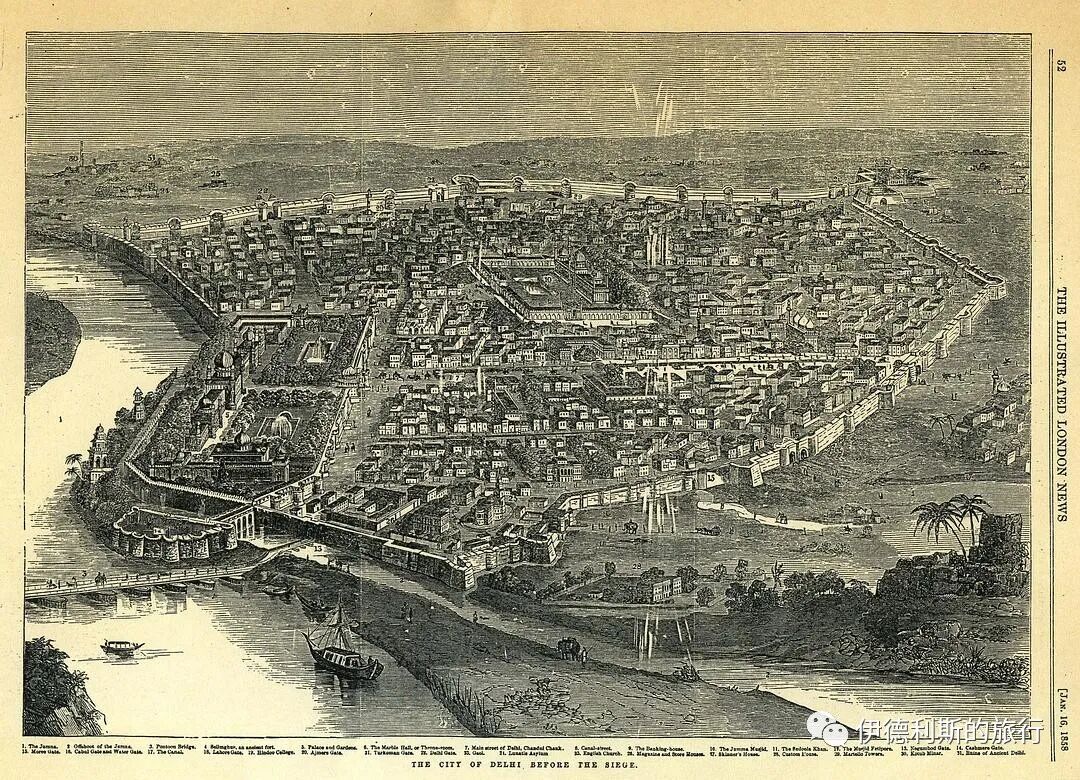
1858
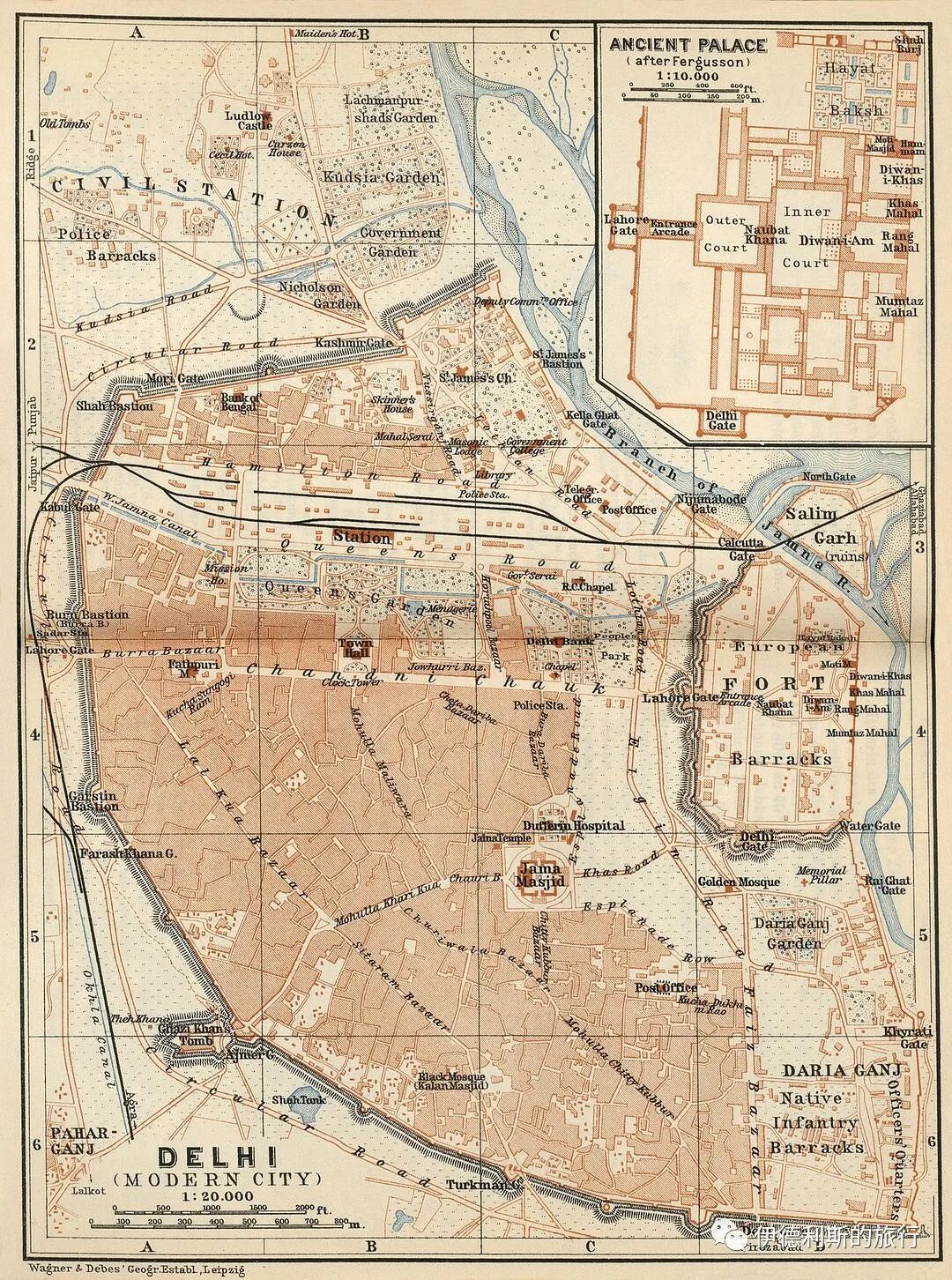
1914
Table of Contents
1. Red Fort: 1639-1648
1. Lahore Gate
2. Chhatta Chowk (market)
3. Naubat Khana (drum house)
4. Diwan-i-Aam (public audience hall)
5. Rang Mahal (palace of the empresses)
6. Khas Mahal (emperor's private palace)
7. Diwan-i-Khas (private audience hall)
8. Hammam-e-Lal Qila (bathhouse)
9. Pearl Mosque (Moti Masjid)
10. King's Tower (Shah Burj)
11. Life-Giving Garden (Hayat Bakhsh Bagh)
2. Jama Mosque: 1650-1656
3. Fatehpuri Mosque: 1650
4. Golden Mosque (Sunehri Masjid): 1751
5. Great Mosque (Kalan Masjid): 1387
6. Hauzwali Mosque: 15th century
1. Red Fort: 1639-1648
Shah Jahan decided to move the capital from Agra back to Delhi in 1638. On May 12, 1639, he ordered the construction of the Red Fort. The designer was Ustad Ahmad Lahauri, the architect who built the Taj Mahal.
On the north side of the Red Fort is the Salimgarh Fort, built by the Sur dynasty in 1546 (I introduced this in my previous article, 'The Sixth City of Delhi: The Birth of the Mughal Empire'). The Red Fort was designed to connect to Salimgarh Fort via a bridge, joining the two castles together.
In 1857, the last Mughal emperor, Bahadur Shah II, left the Red Fort and was arrested by the British army. He was tried at the Red Fort in 1858 and exiled to Yangon, marking the end of the Mughal Empire. Afterward, the Red Fort was used as a British military barracks. Most of the buildings were demolished. Only the marble structures in the far east survived because they were repurposed as barracks, offices, dormitories, and canteens.
After India's independence, the Red Fort continued to be used as an Indian Army barracks until 2003, when the Archaeological Survey of India was finally authorized to begin restoration. In 2009, the Archaeological Survey of India developed a comprehensive protection and management plan for the Red Fort under the direction of the Supreme Court.
The Red Fort viewed from east to west, painted in 1785.
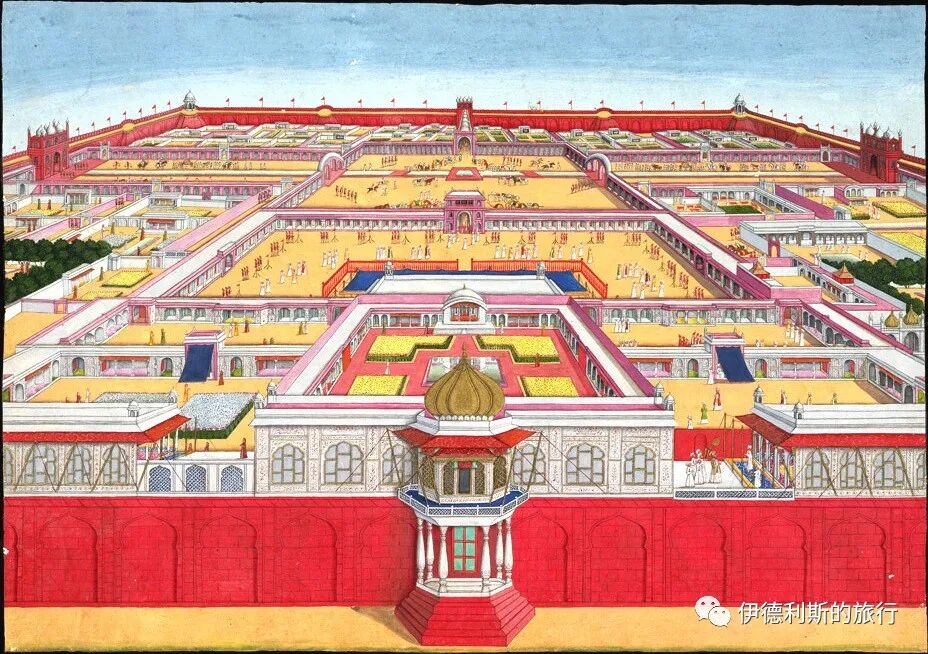
The Red Fort viewed from east to west, painted by Ghulam Ali Khan between 1852 and 1854.
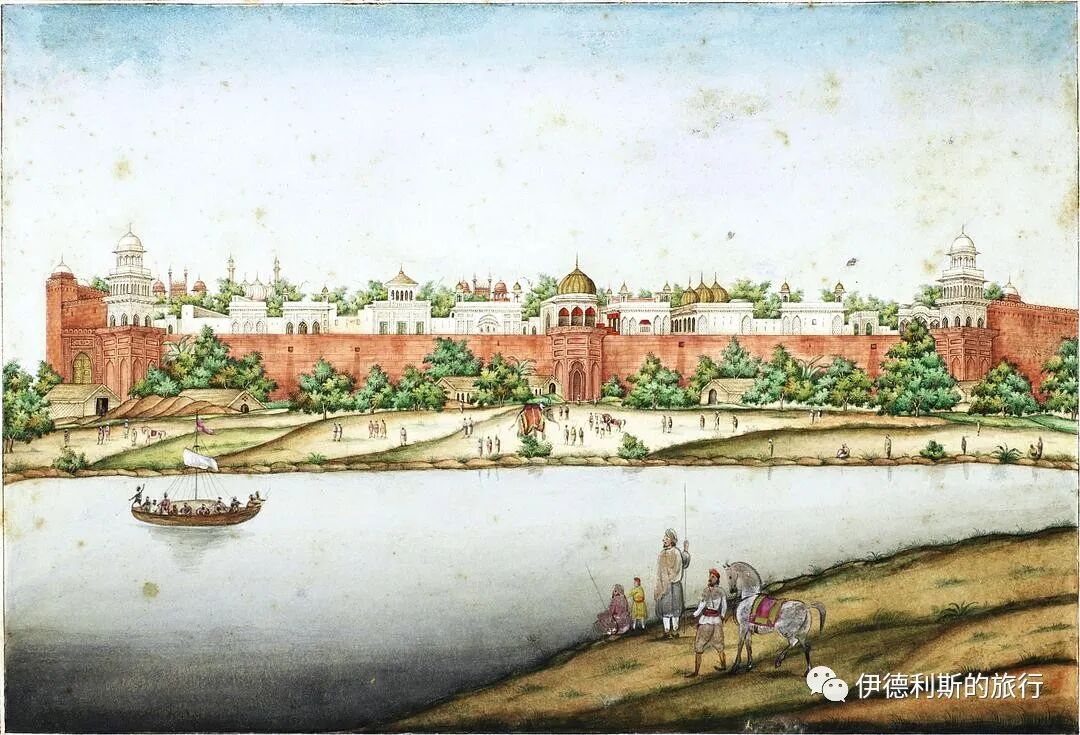
1. Lahore Gate
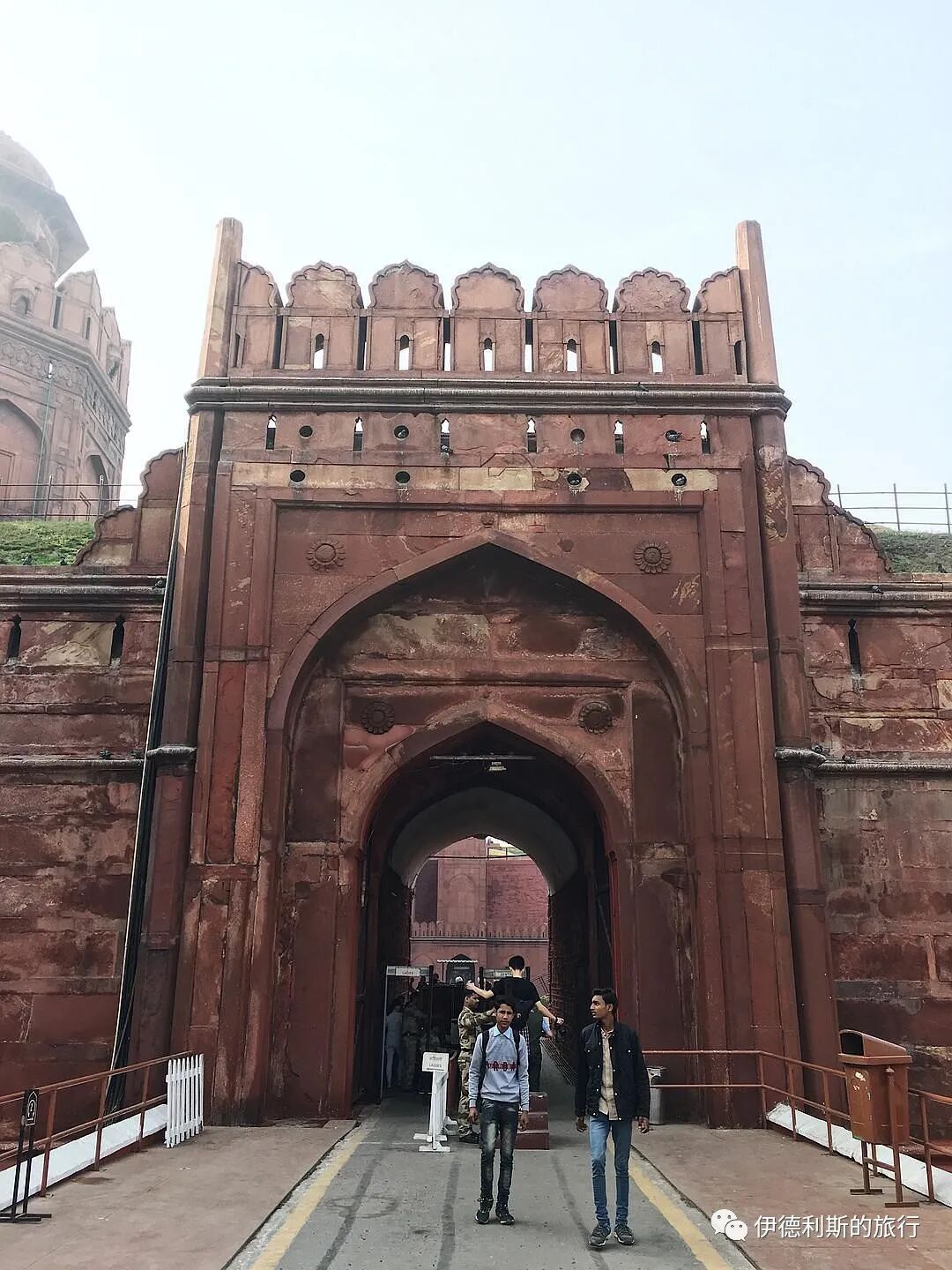
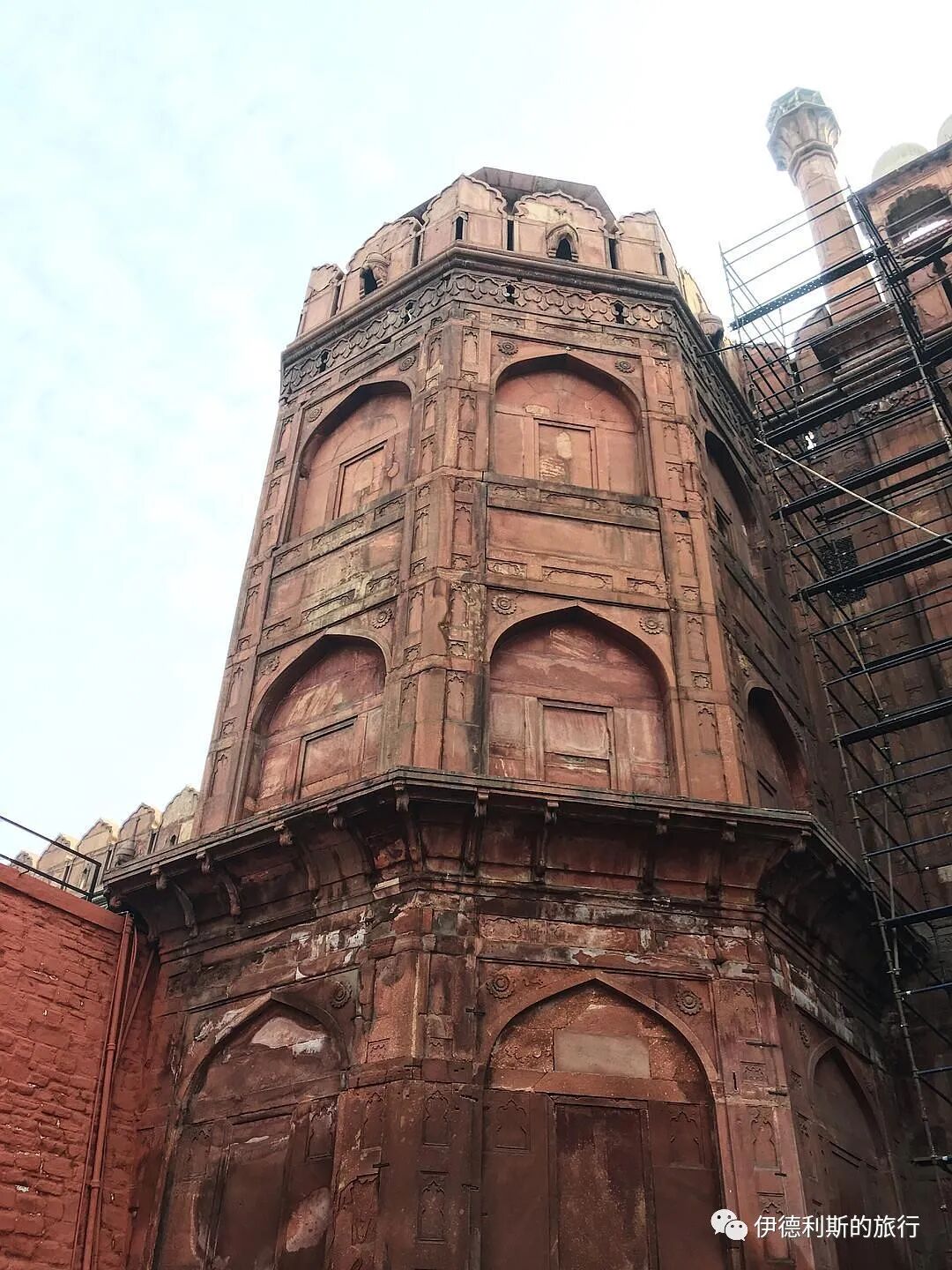
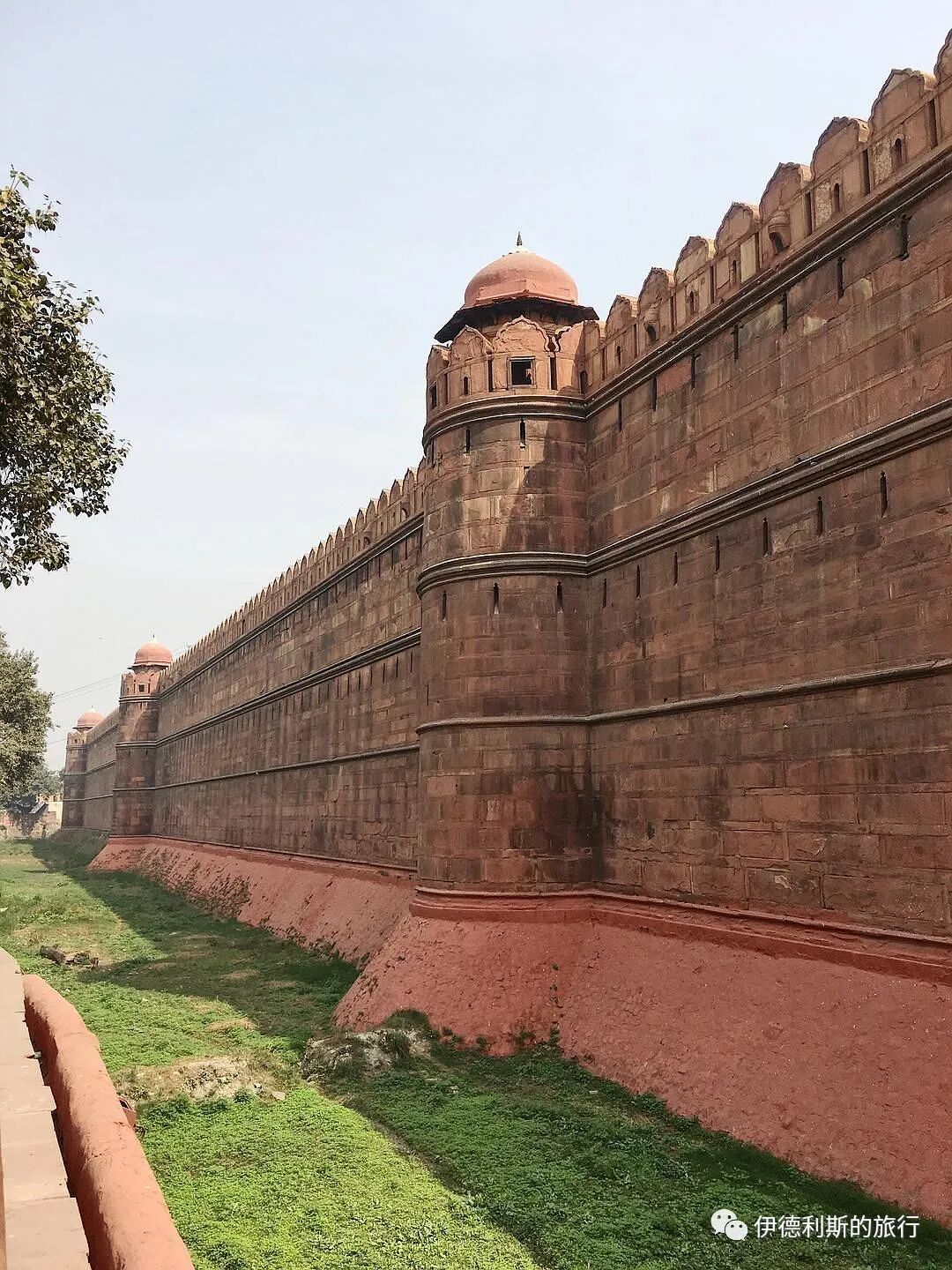
The Lahore Gate is the west gate of the Red Fort. It is named for facing the city of Lahore. During the reign of the sixth Mughal emperor, Aurangzeb (reigned 1658-1707), a barbican was added to the outside of the gate. Since 1947, the Prime Minister of India has stood at the Lahore Gate to deliver a speech every Indian Independence Day.
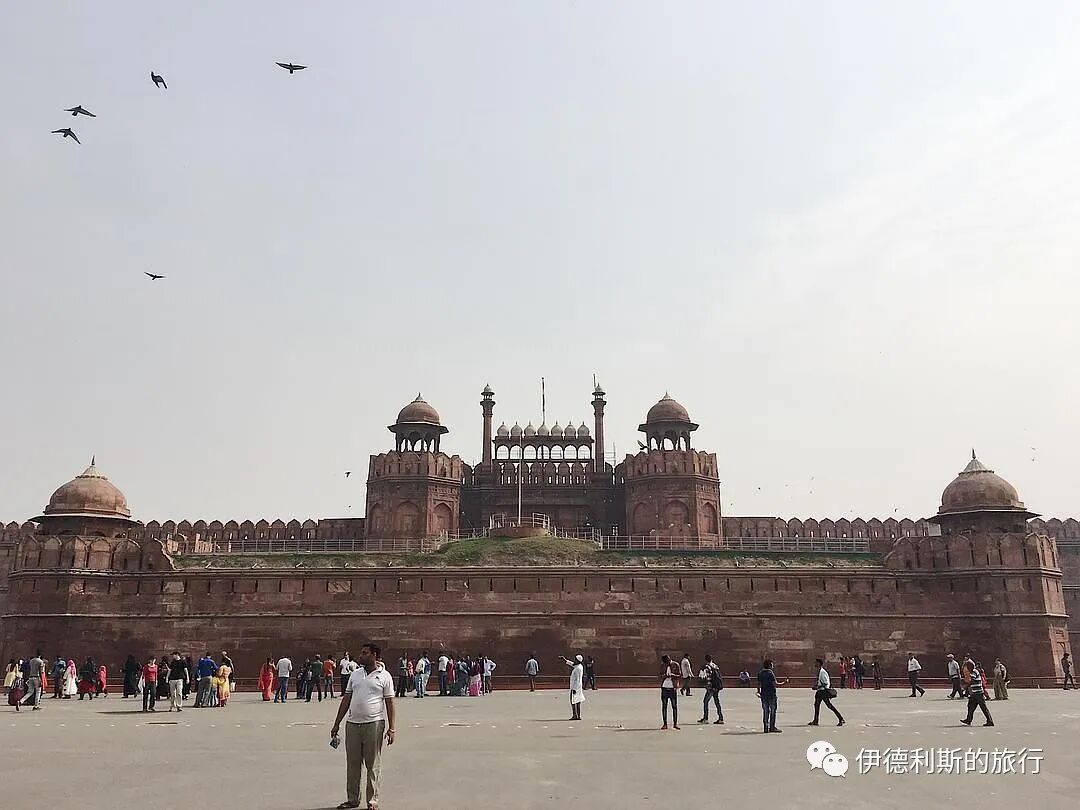
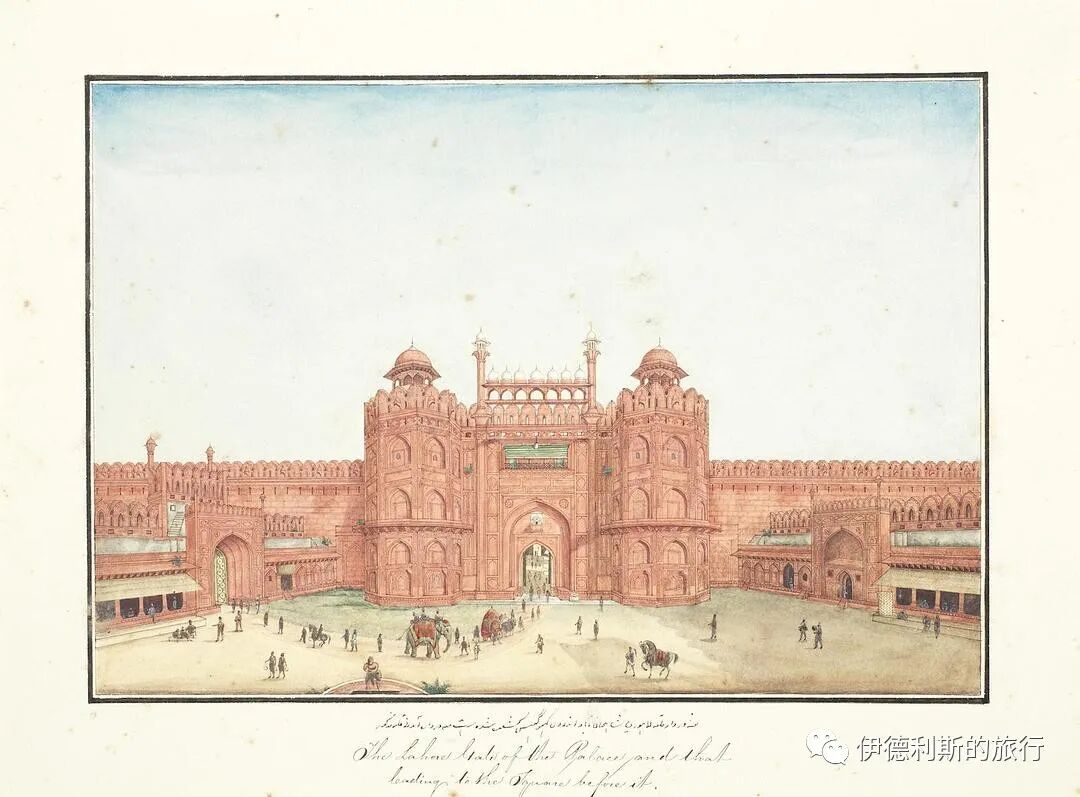
Painted by Ghulam Ali Khan between 1852 and 1854.
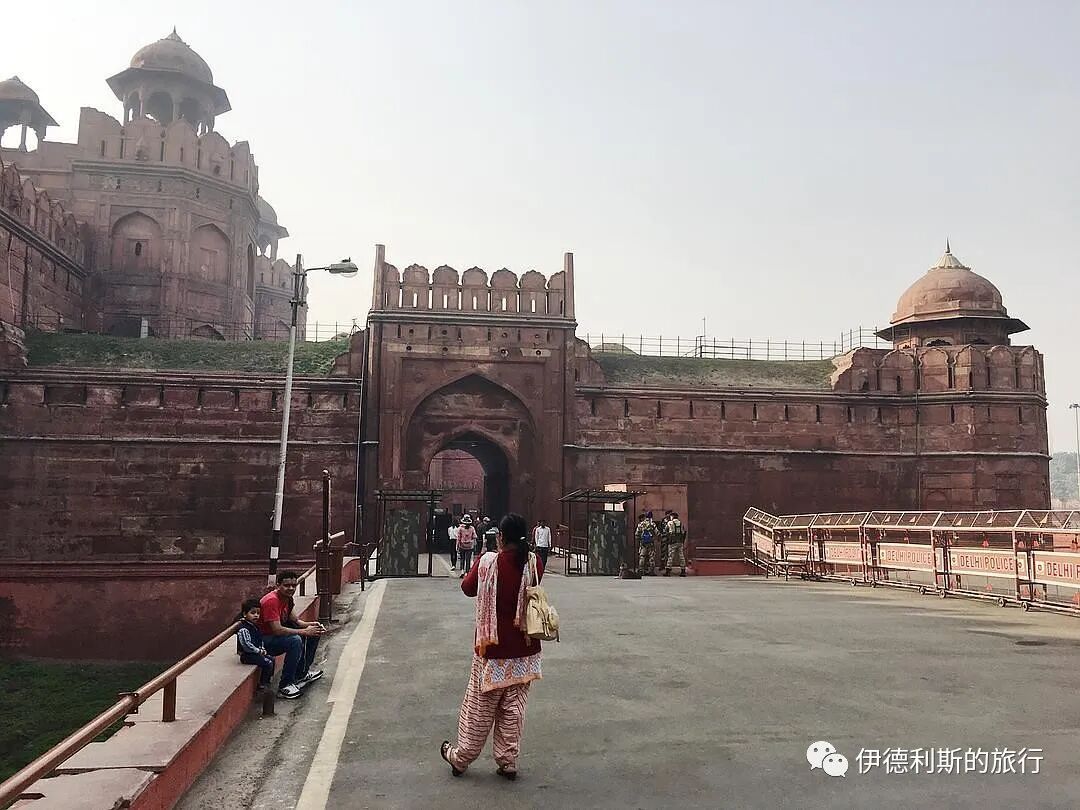
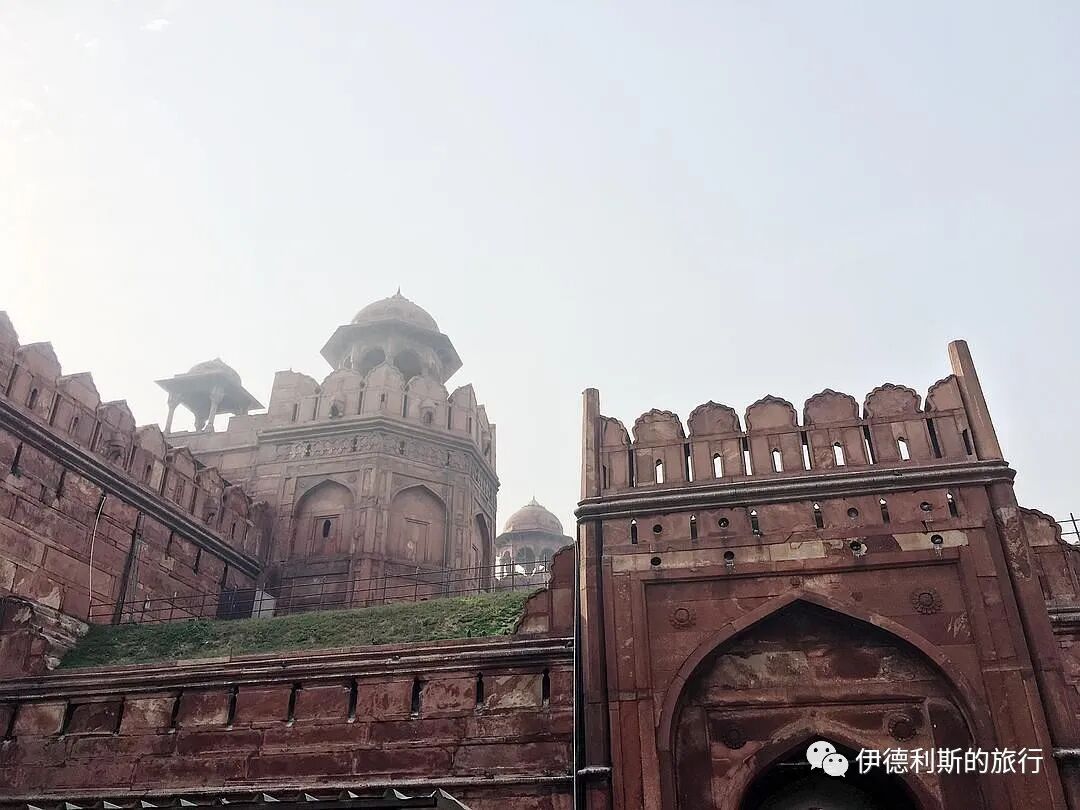
2. Chhatta Chowk (market)
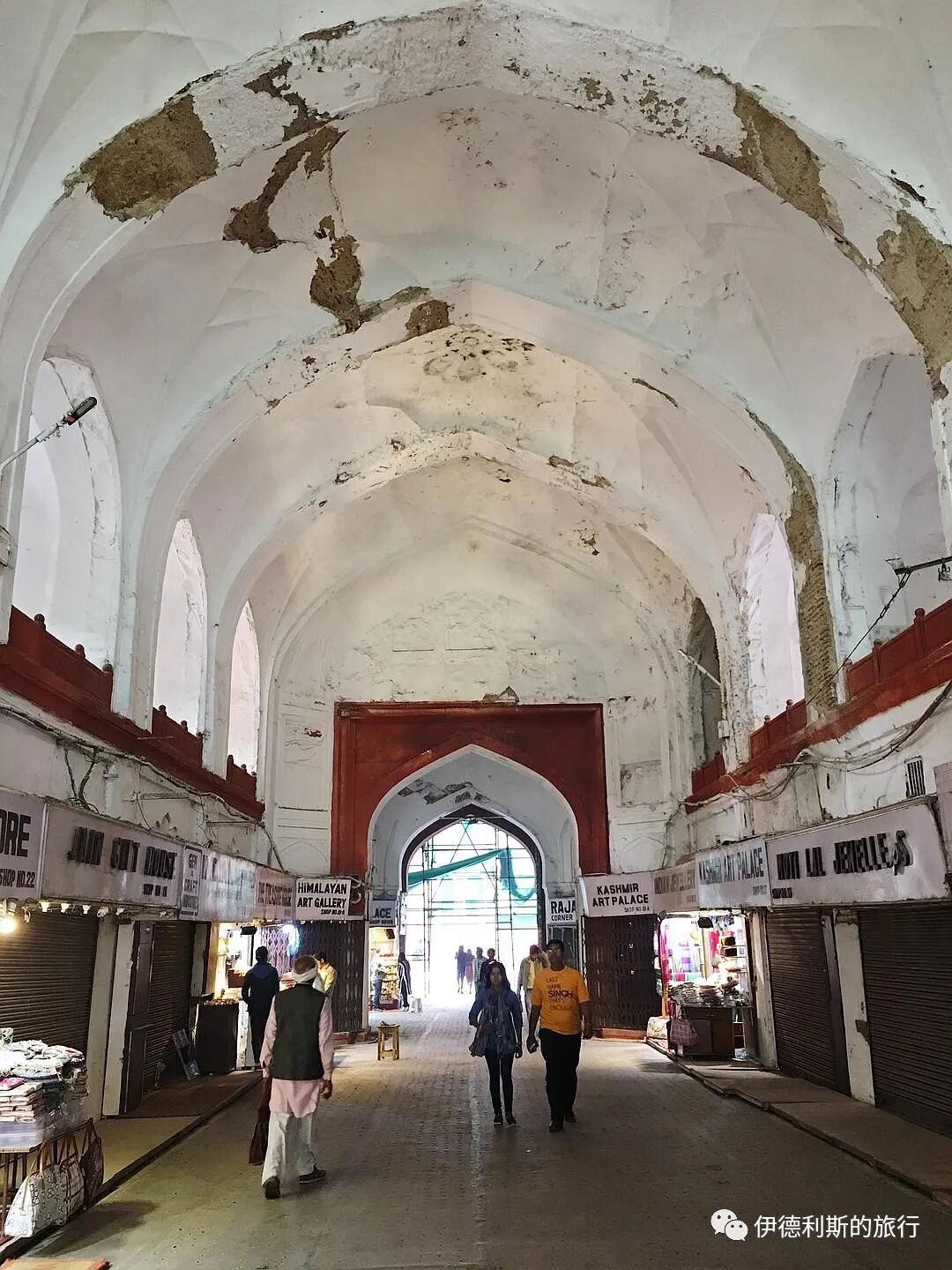
After entering the Lahore Gate, you find a market called Chhatta Chowk. During the Mughal era, this was where silk and jewelry were sold to members of the royal family.
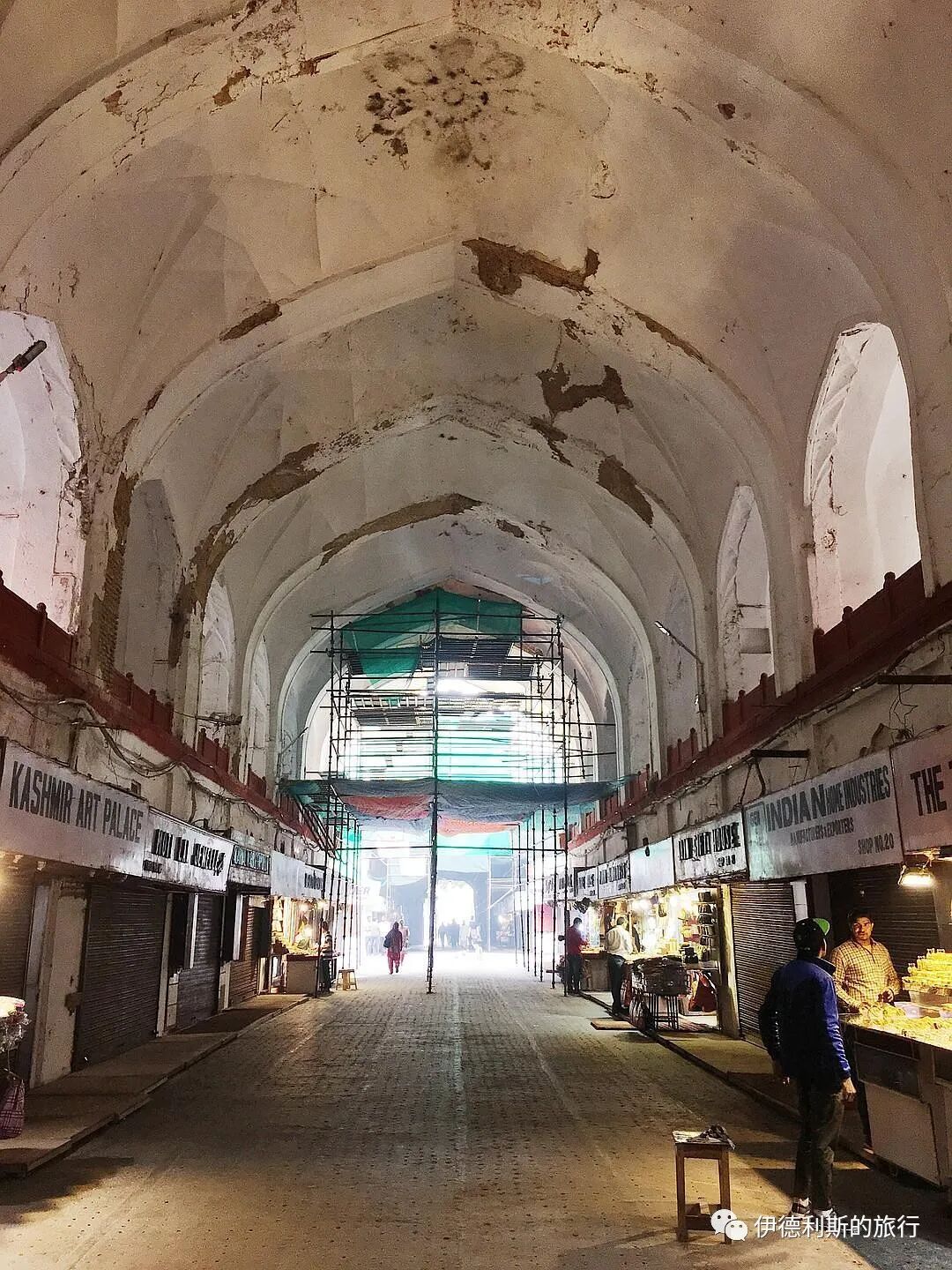
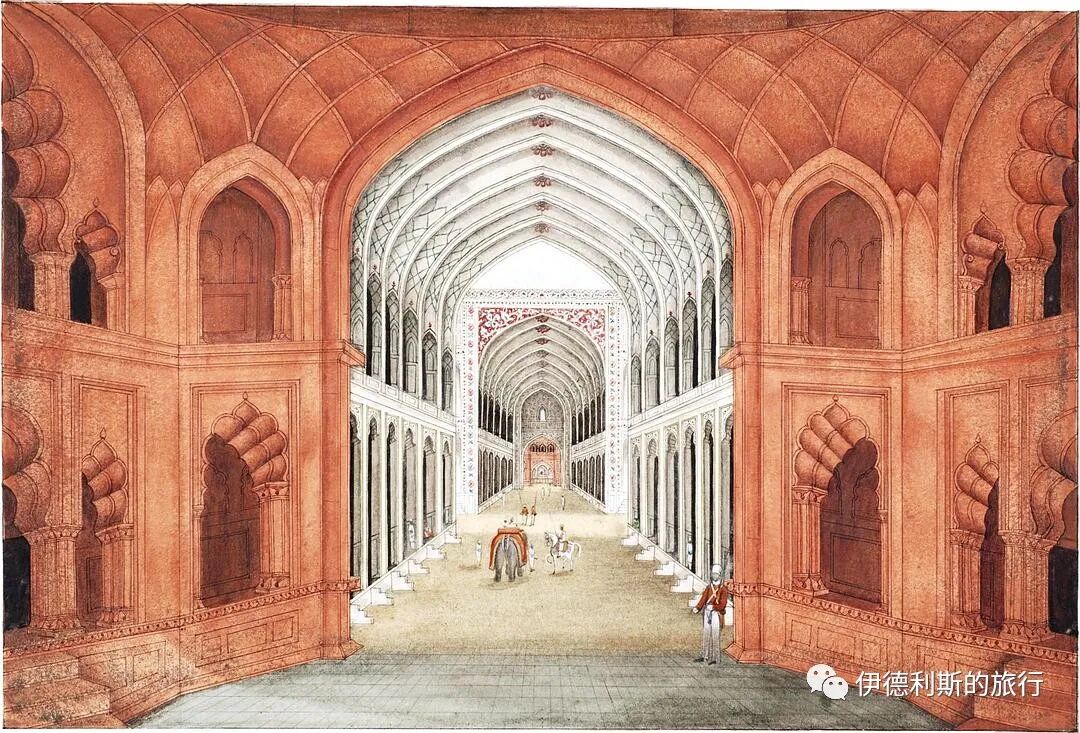
Painted by Ghulam Ali Khan between 1852 and 1854.
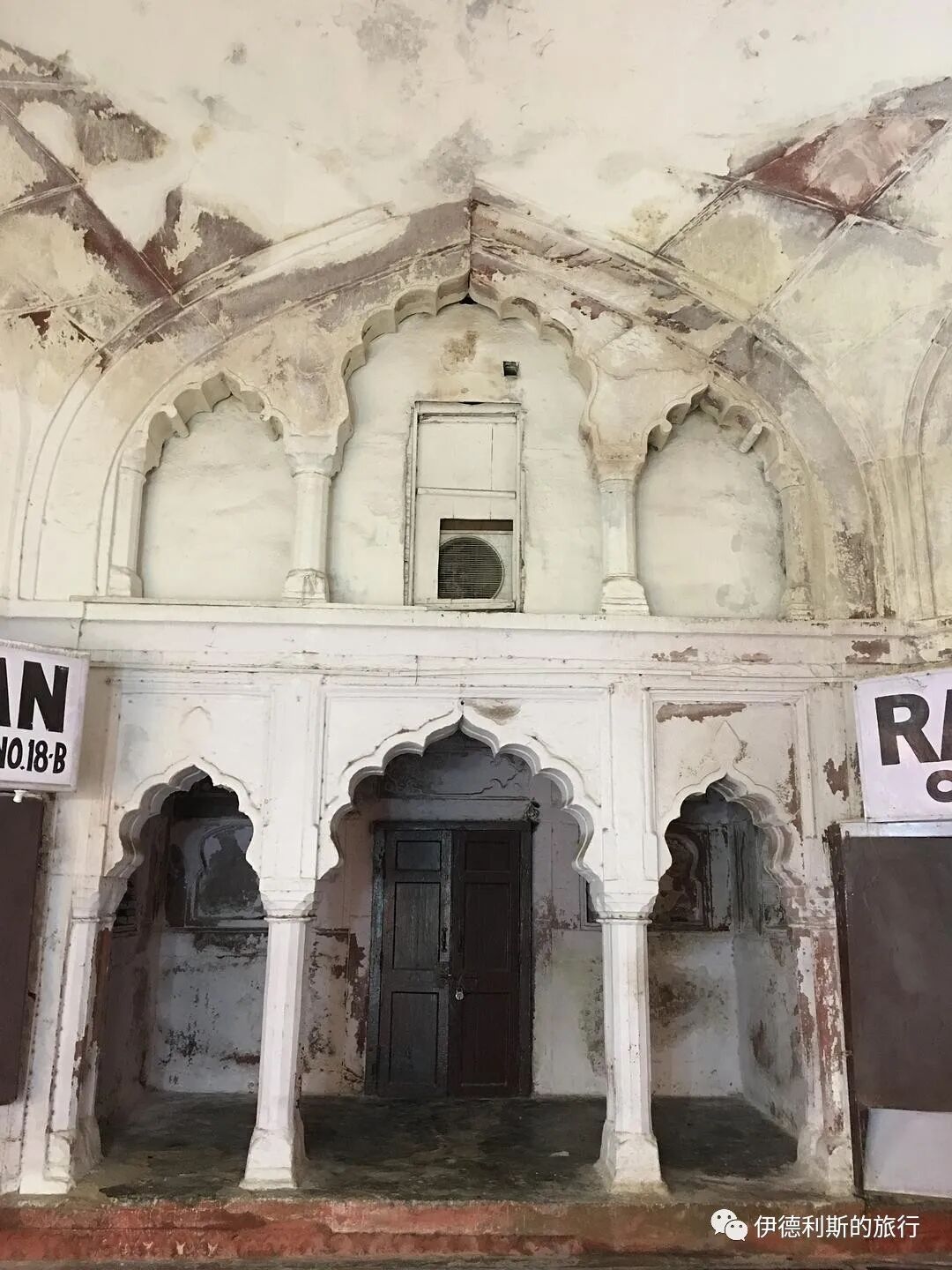
(Optional) Image description
3. Naubat Khana (drum house)
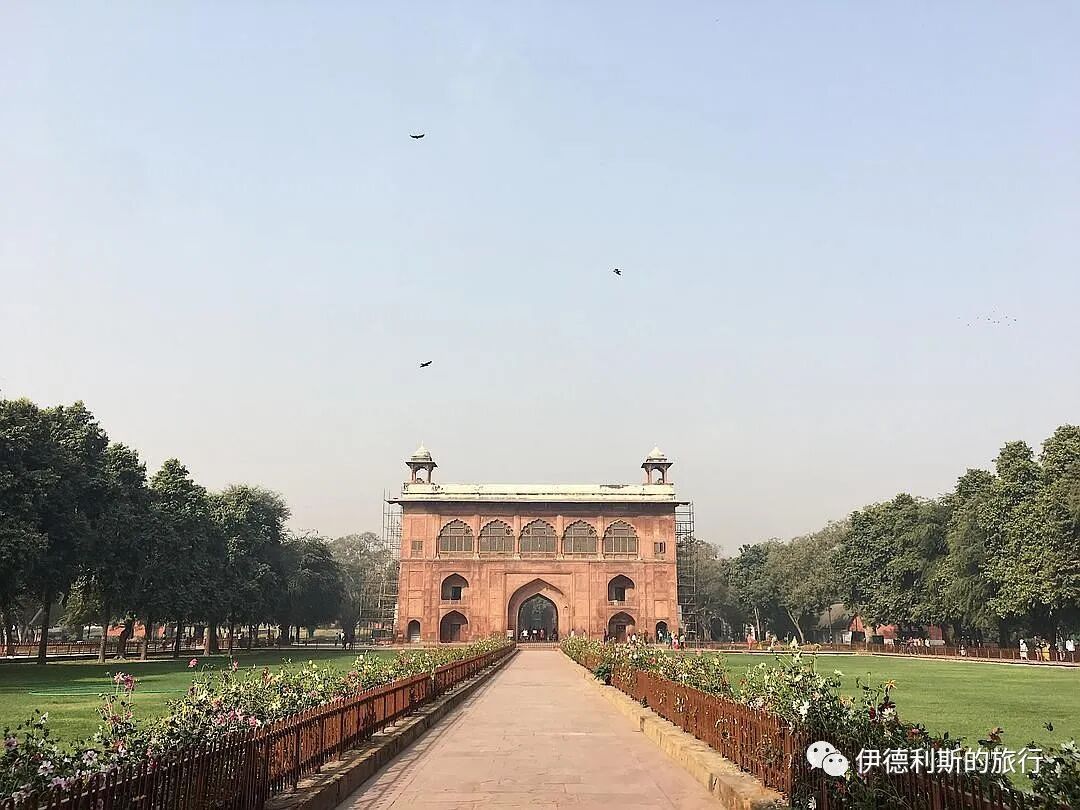
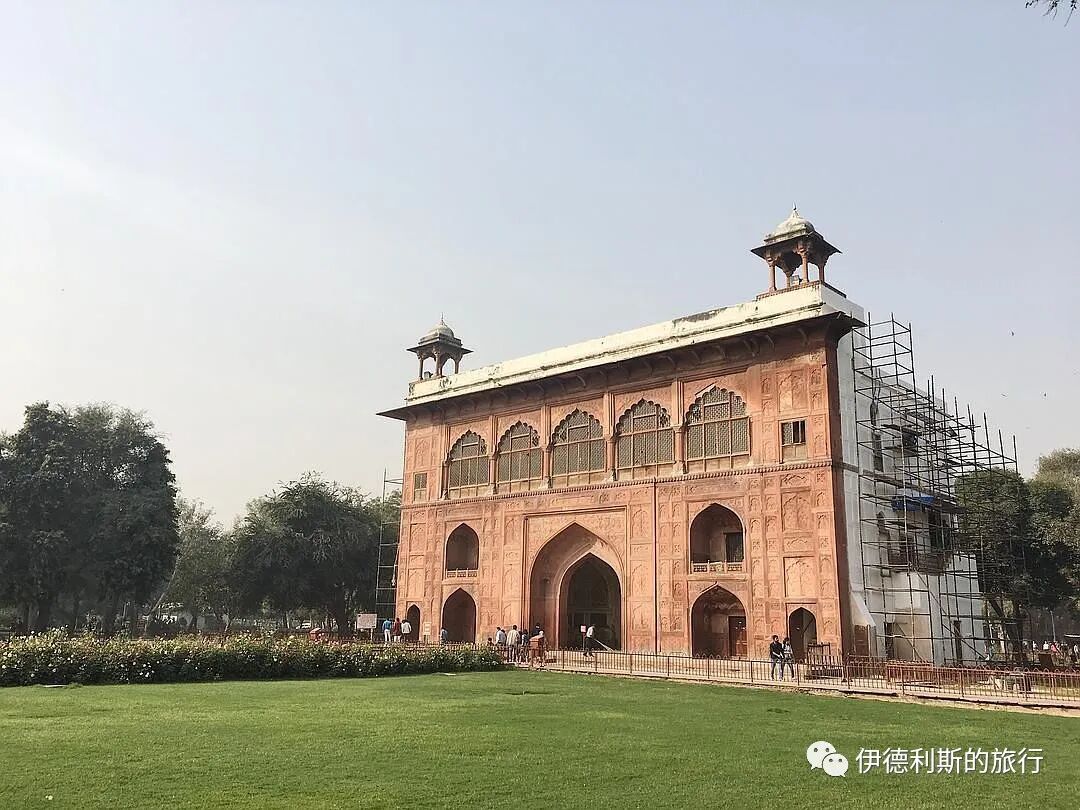
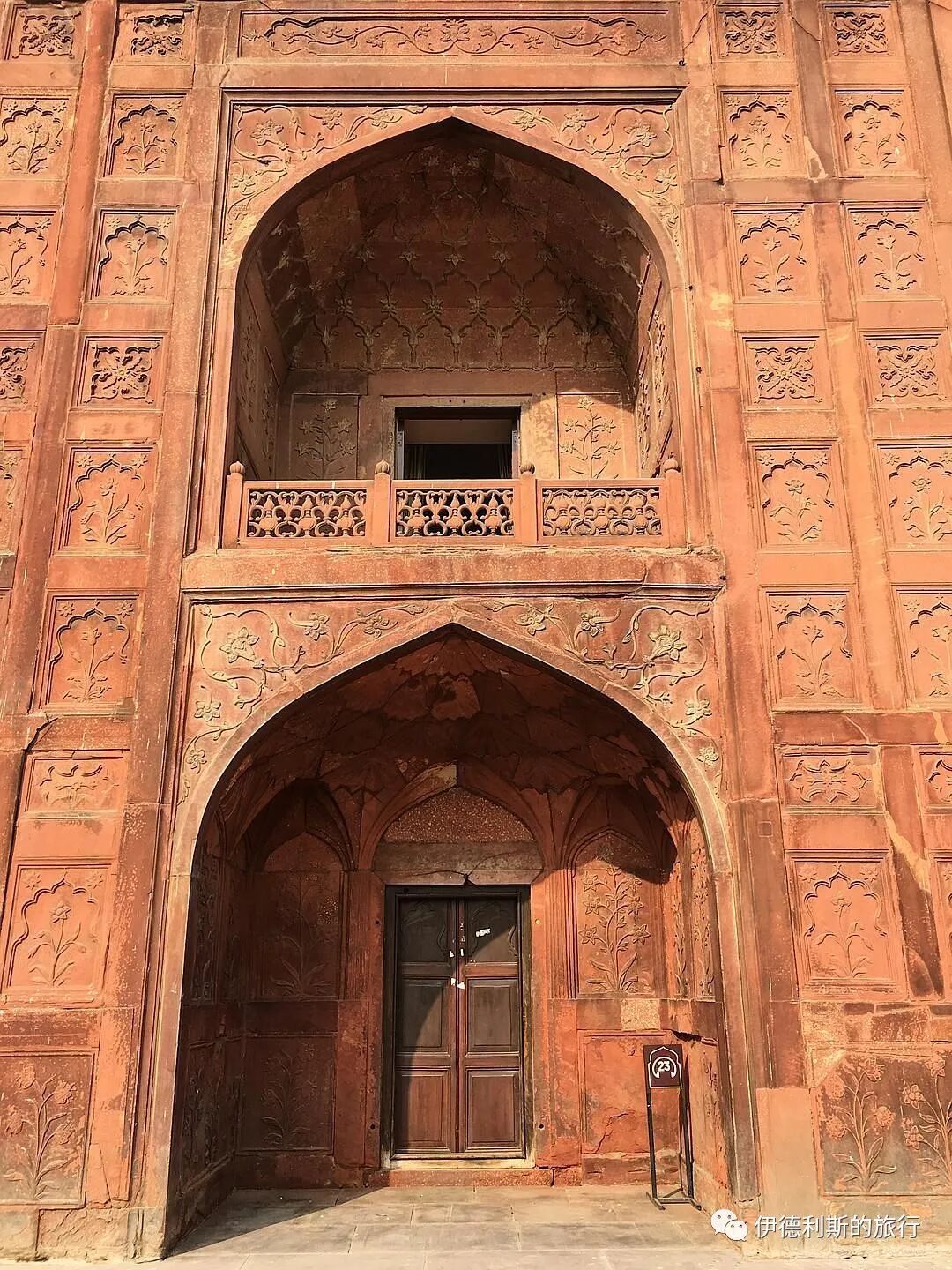
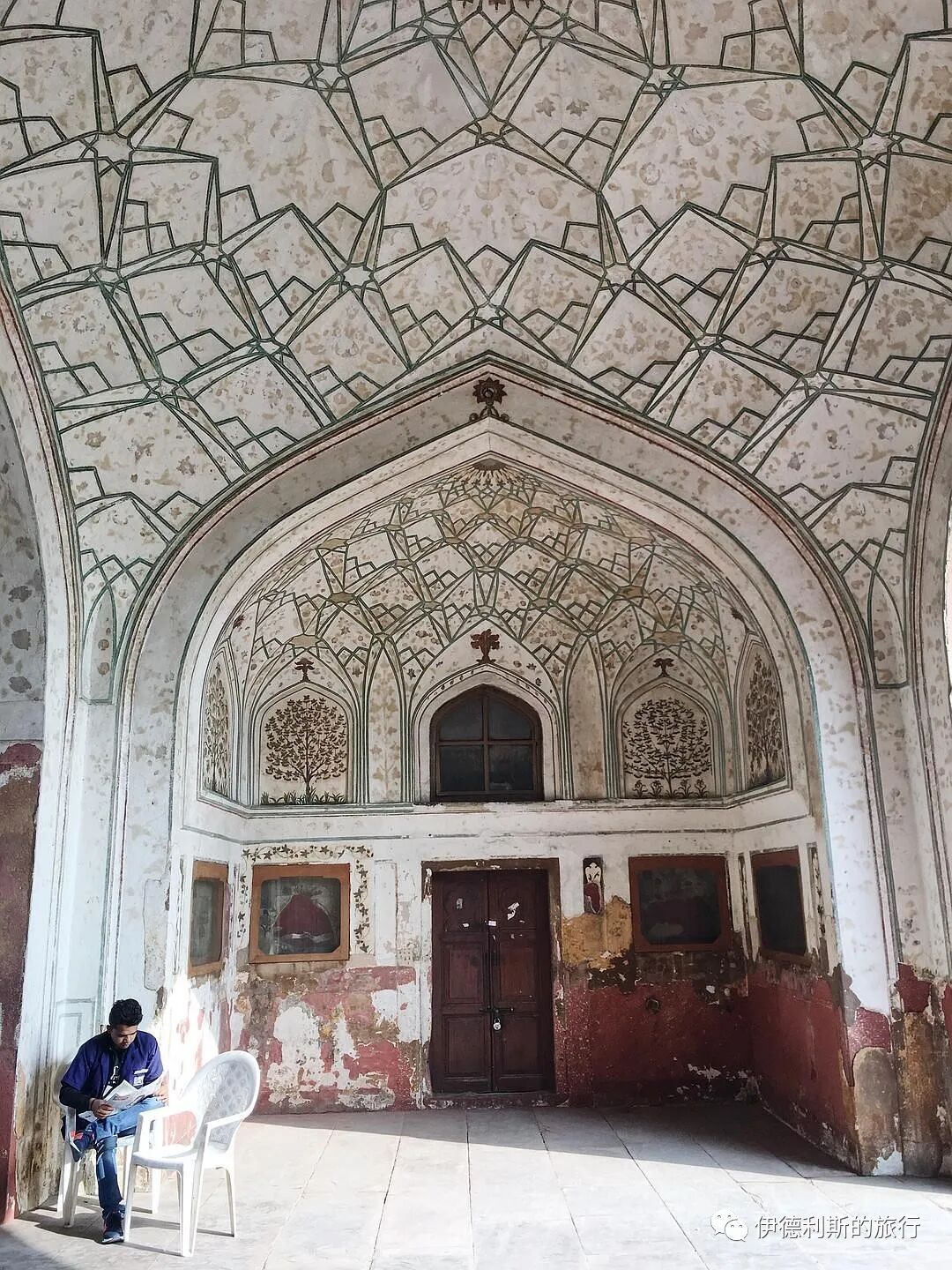
After walking through the Chhatta Chowk market, you reach the outer courtyard of the Red Fort. The building in the center of the outer courtyard is called the Naubat Khana, which serves as the main gate to the inner court. Naubat Khana means 'drum house.' During the Mughal era, ceremonial music was played here five times a day, and everyone except members of the royal family had to dismount from their horses when they reached this point. After 1857, the British army destroyed the arcades on both sides of the Naubat Khana and the central pool, leaving only the central building.
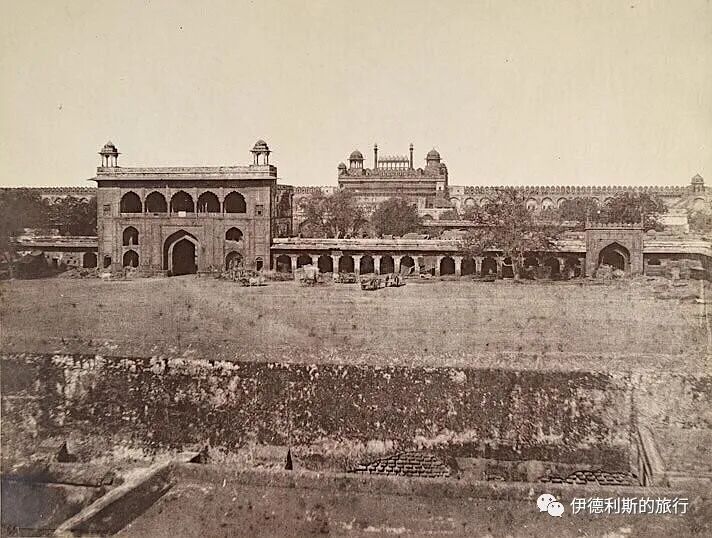
Photographed in 1858 by British army officer Robert Christopher Tytler and his wife Harriet.
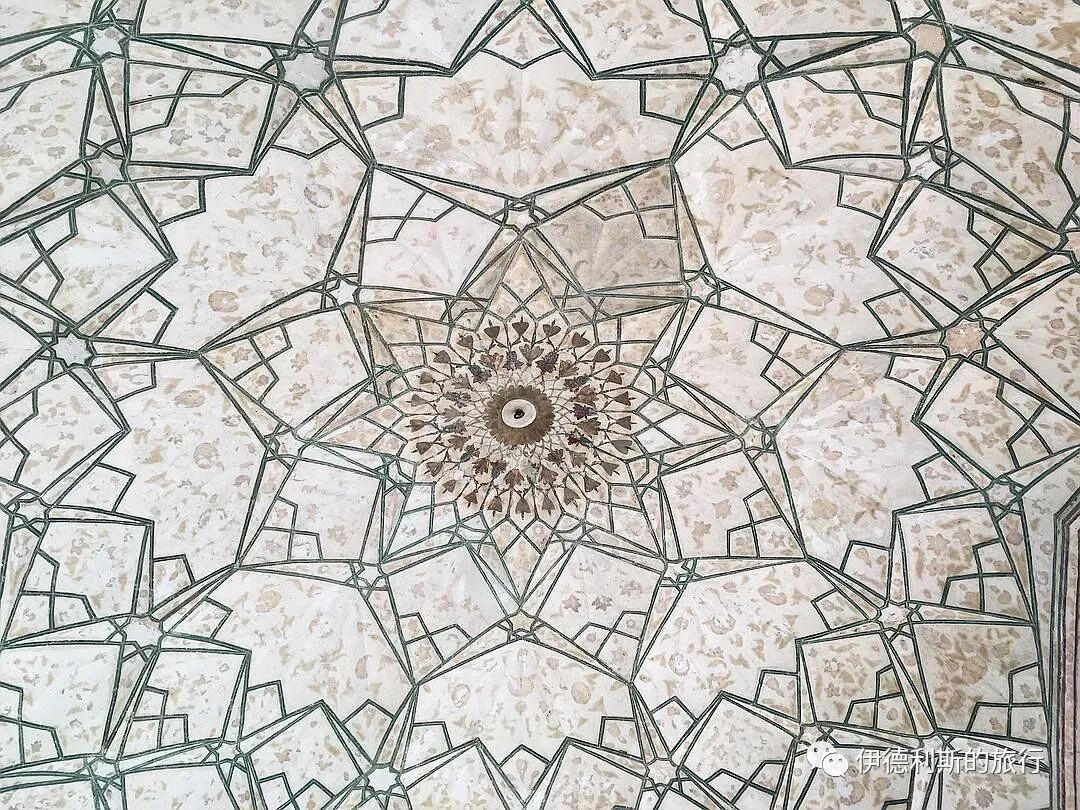
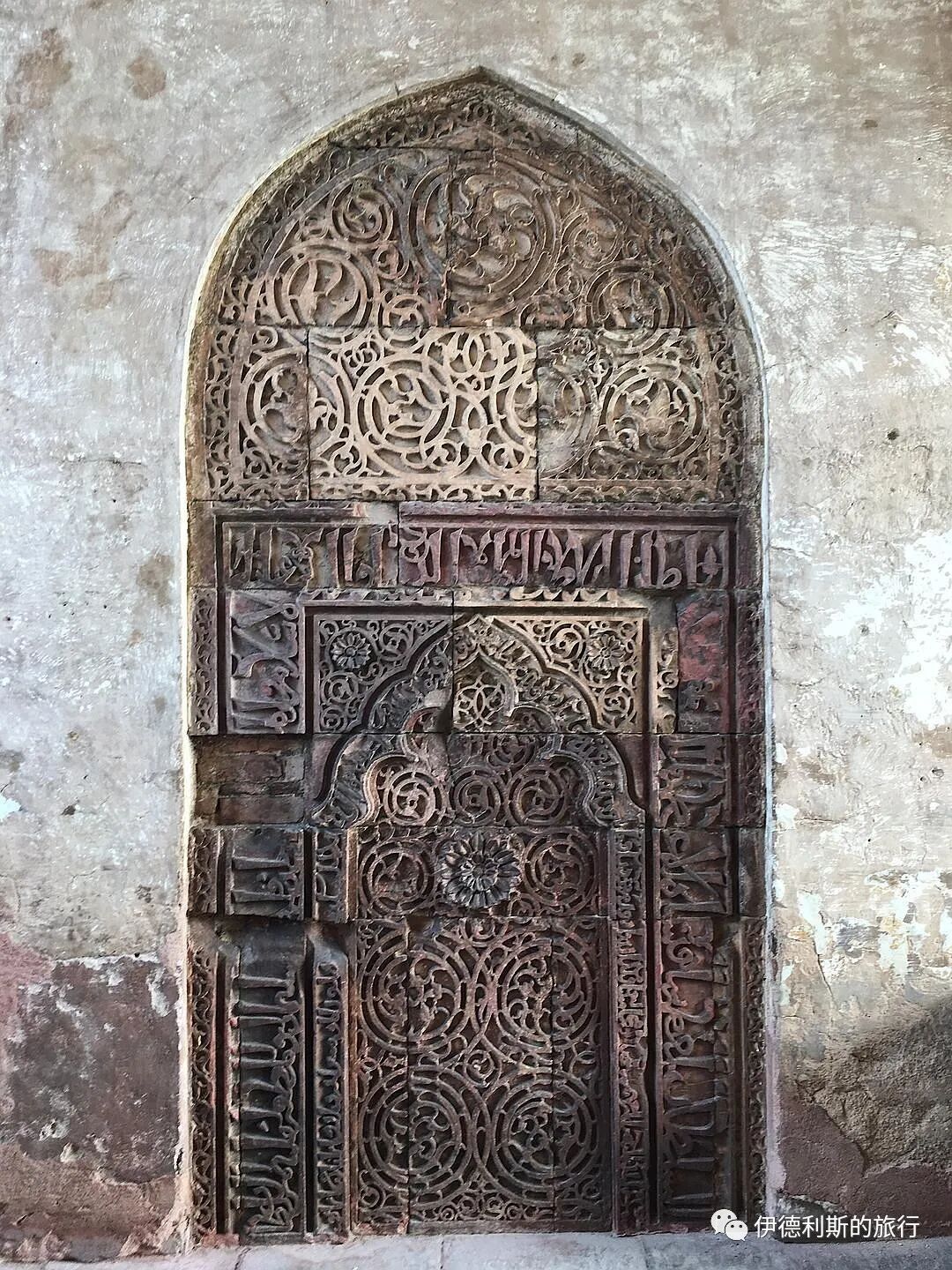
4. Diwan-i-Aam (public audience hall)
After passing through the Naubat Khana, you enter the inner courtyard of the Red Fort, where the Diwan-i-Aam stands directly in front of you. Diwan-i-Aam means 'Hall of Public Audience.' It was the place where the Mughal emperor met with the public to hear their concerns.
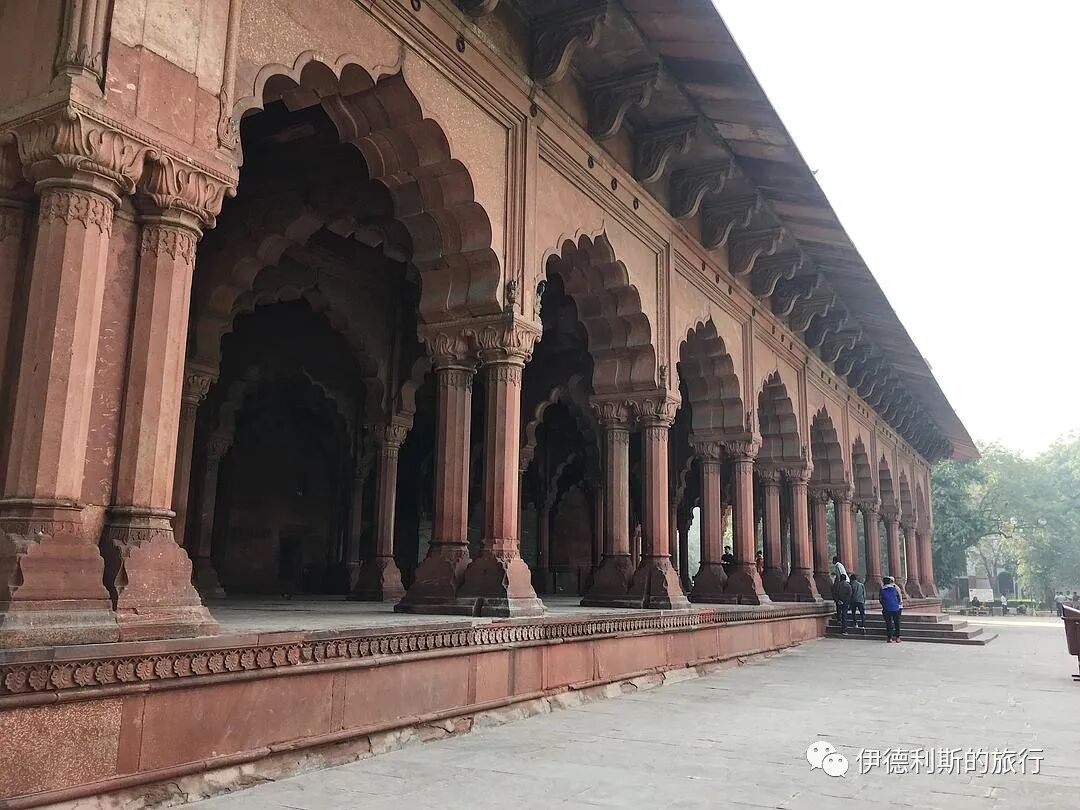
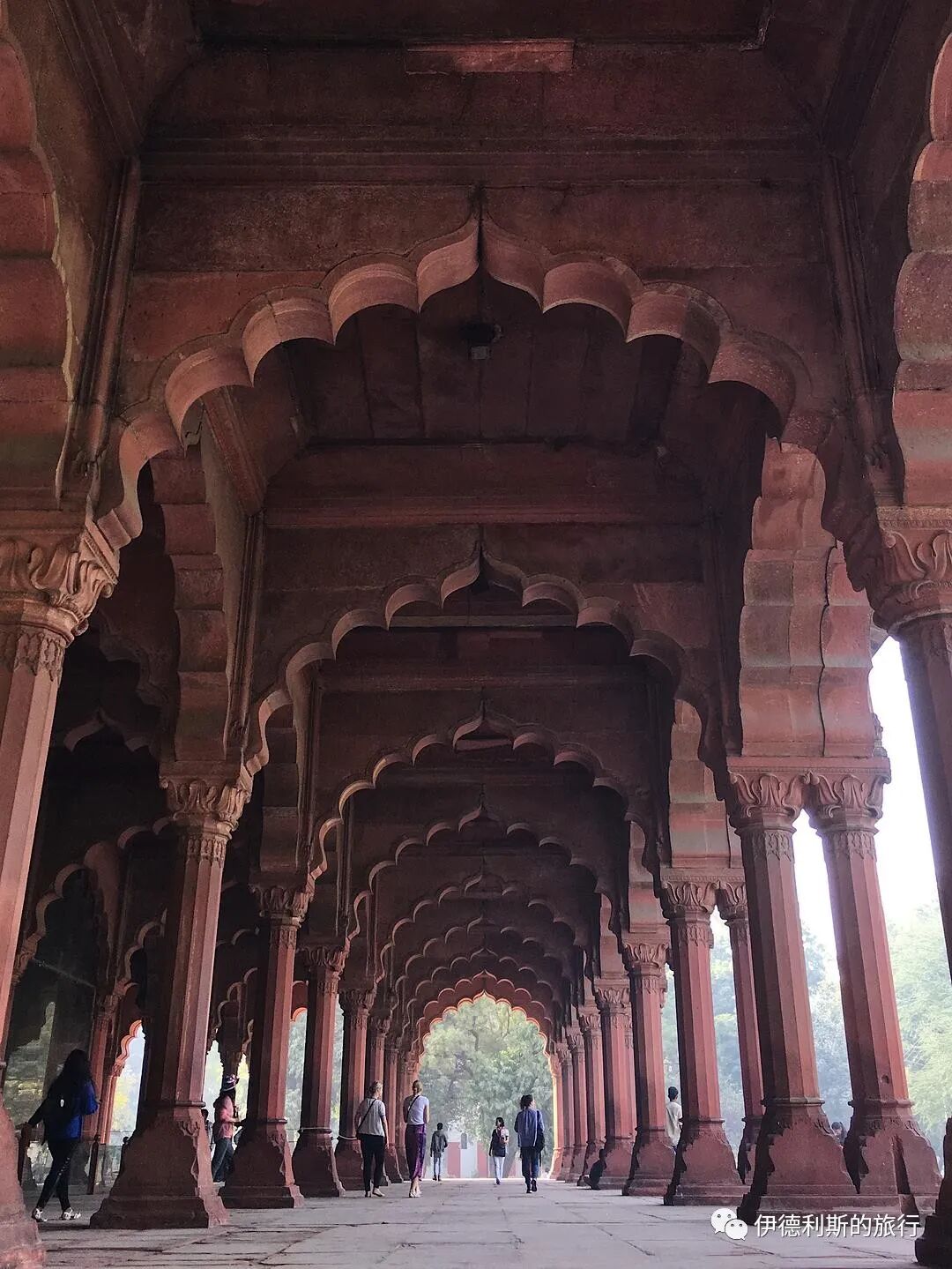
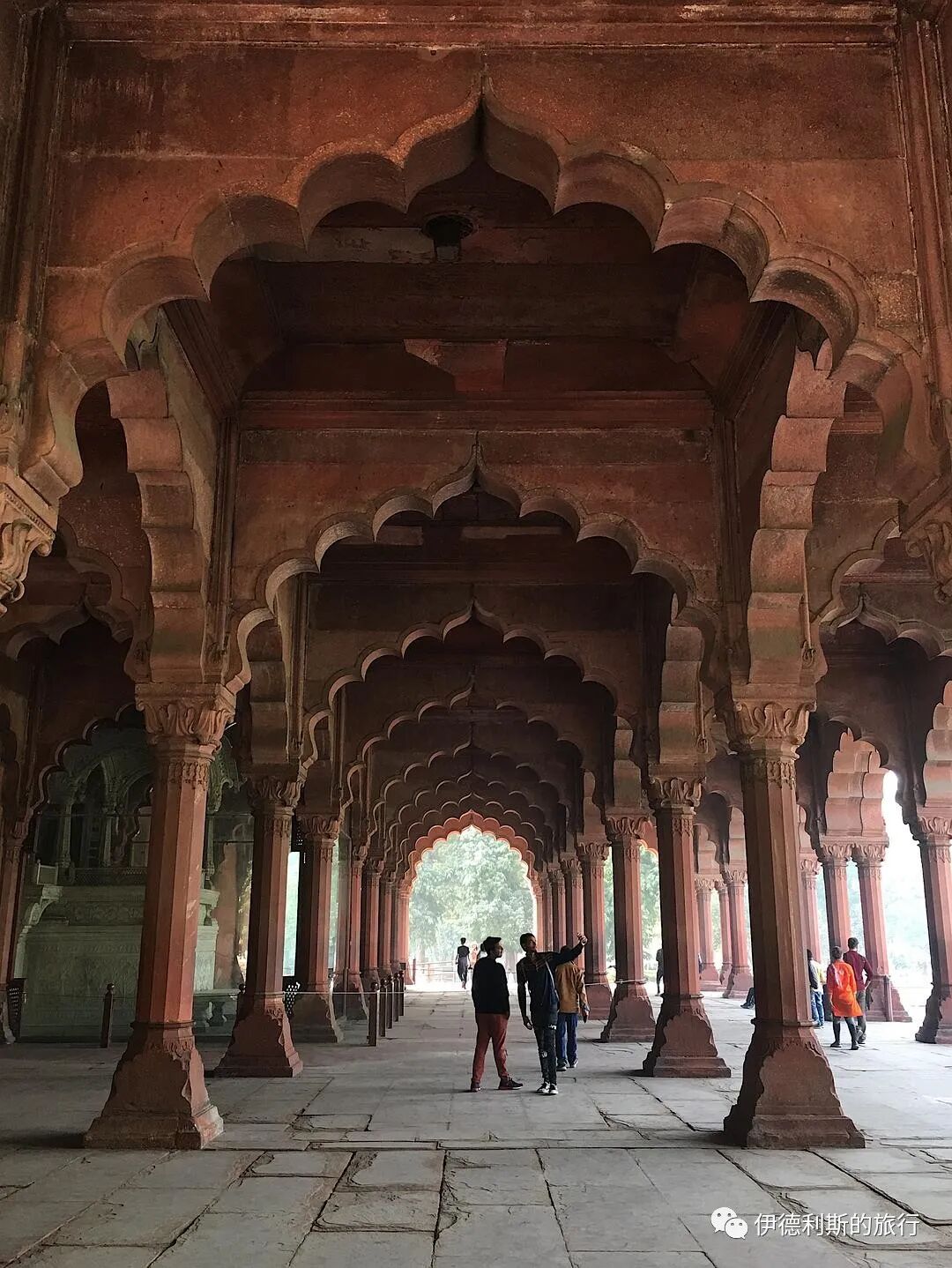
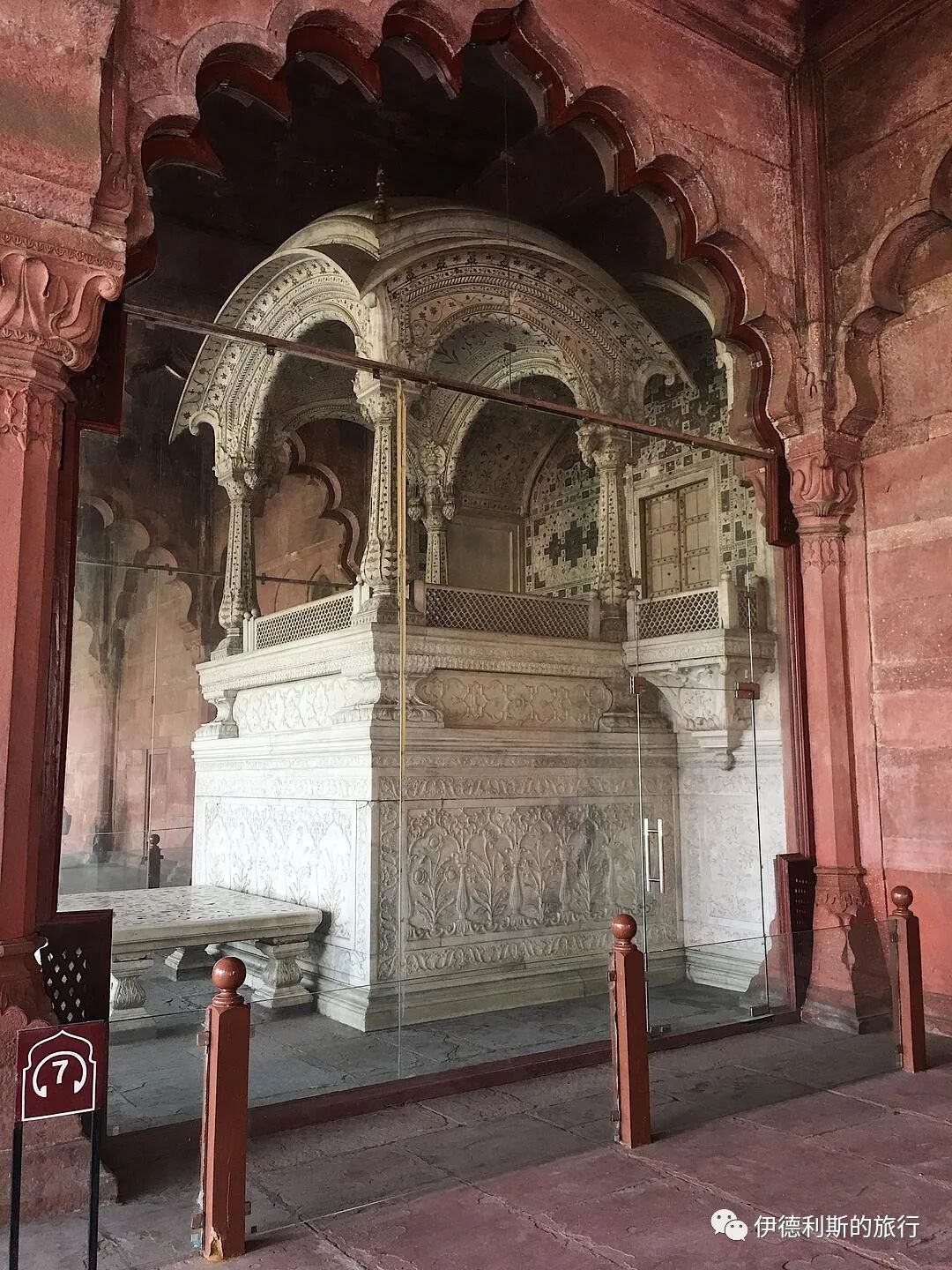
In the center of the hall is the throne where the emperor sat. The marble steps below the throne were where the prime minister (wazir) received petitions from the public.
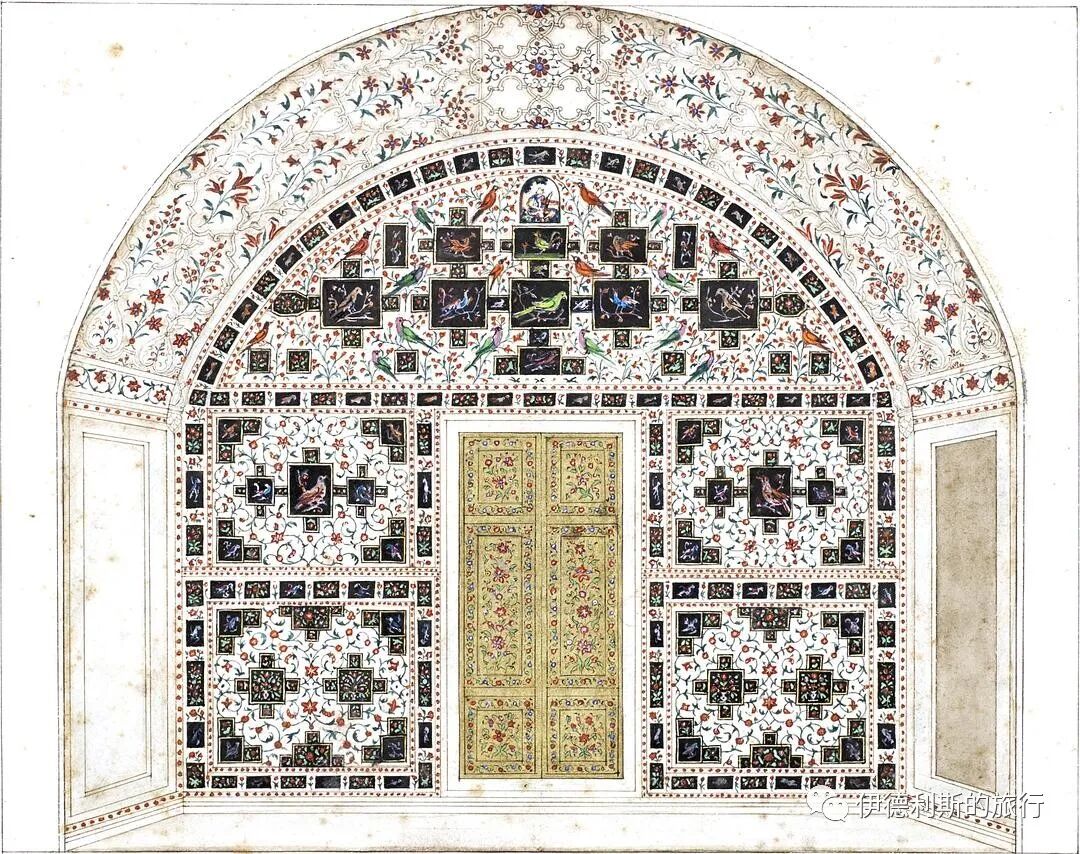
The door behind the throne, painted by Ghulam Ali Khan between 1852 and 1854.
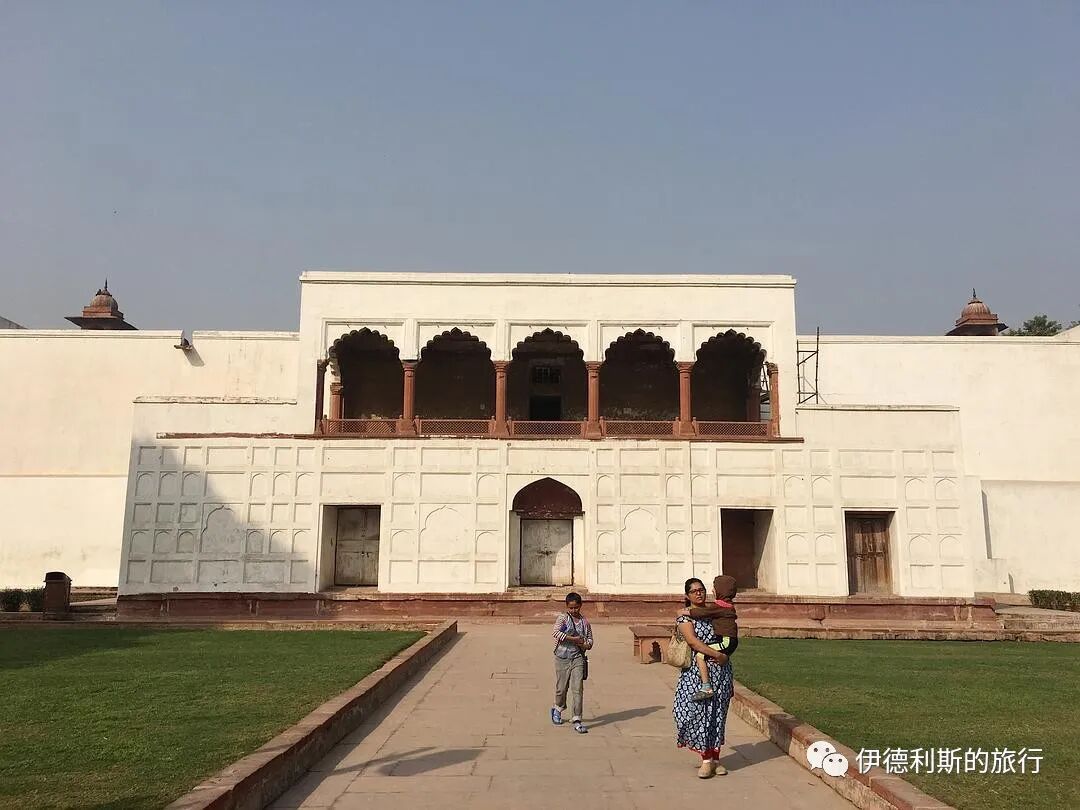
5. Rang Mahal (palace of the empresses)
After entering the Diwan-i-Aam, you reach the harem section of the Red Fort. Rang Mahal means 'Palace of Colors.' It was the living quarters for the concubines of the Mughal emperor.
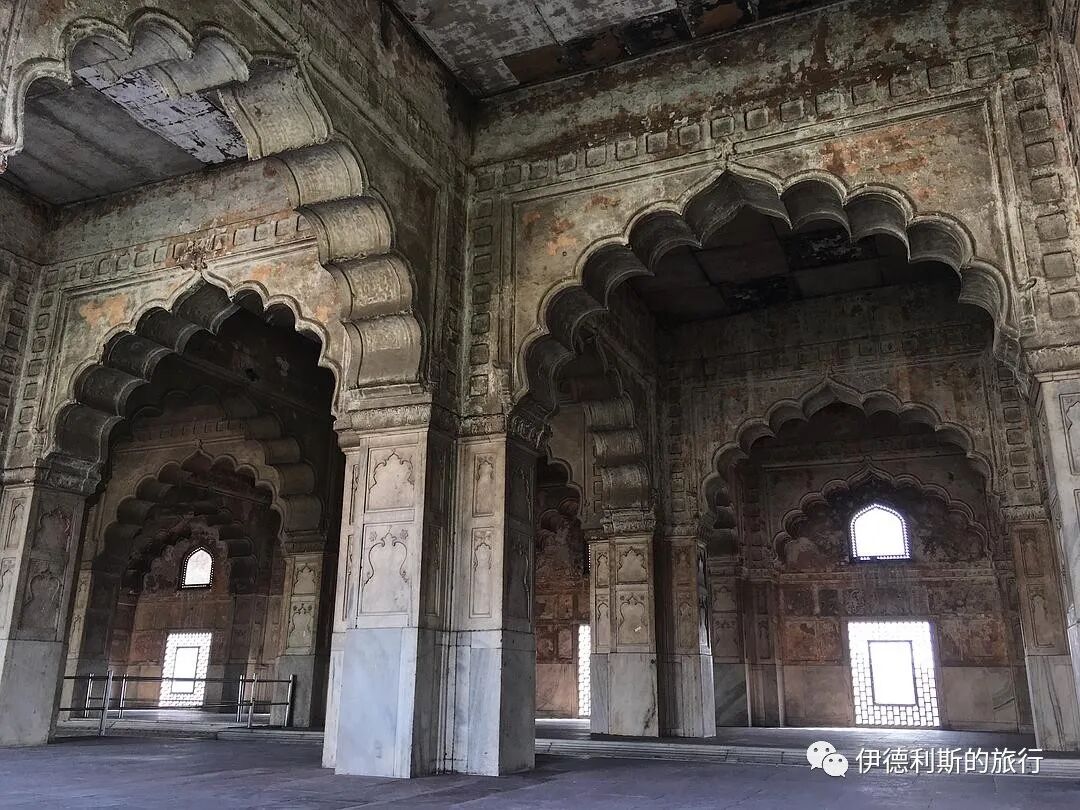
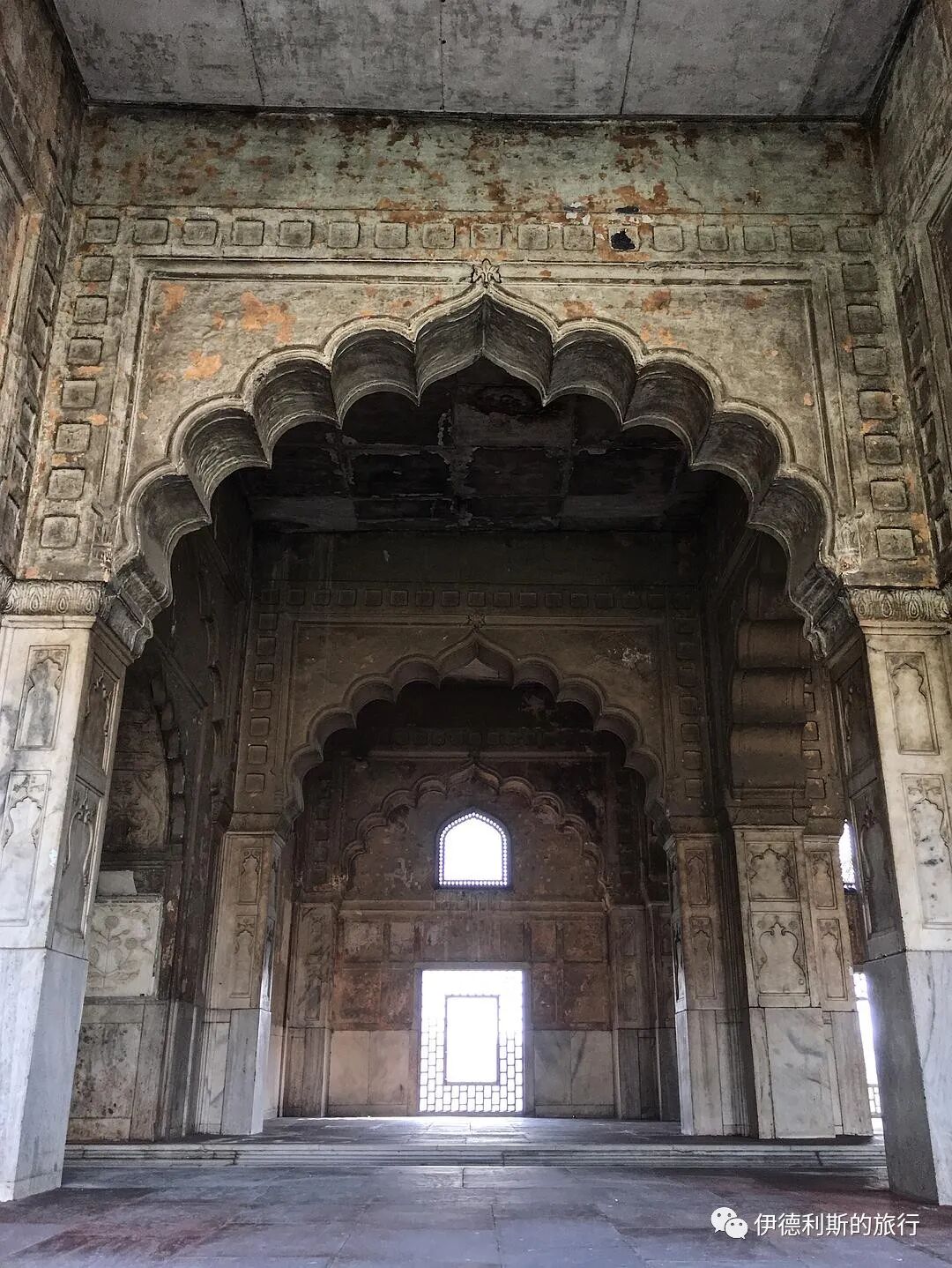

Painted by Ghulam Ali Khan between 1852 and 1854.
A shallow canal called the Stream of Paradise (Nahr-i-Bihist) flows into the marble pool in front of the Rang Mahal. During the hot summer, the women of the Mughal royal family would stay in the basement of the Diwan-i-Aam to escape the heat.
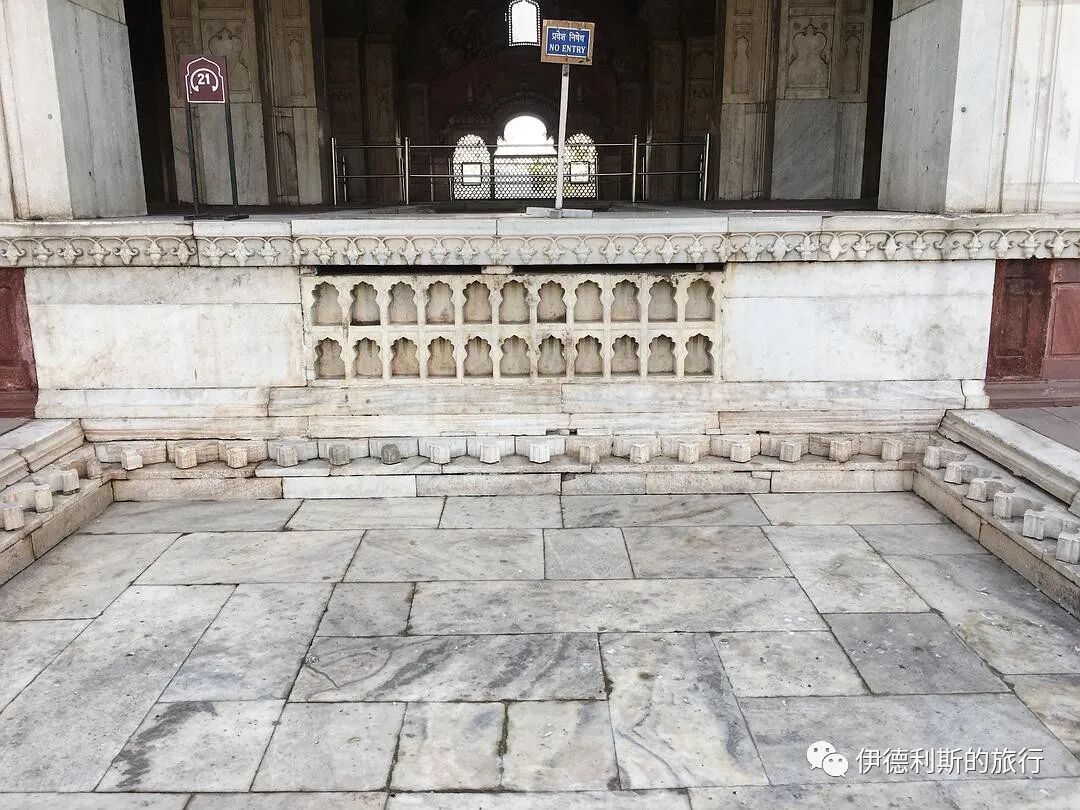
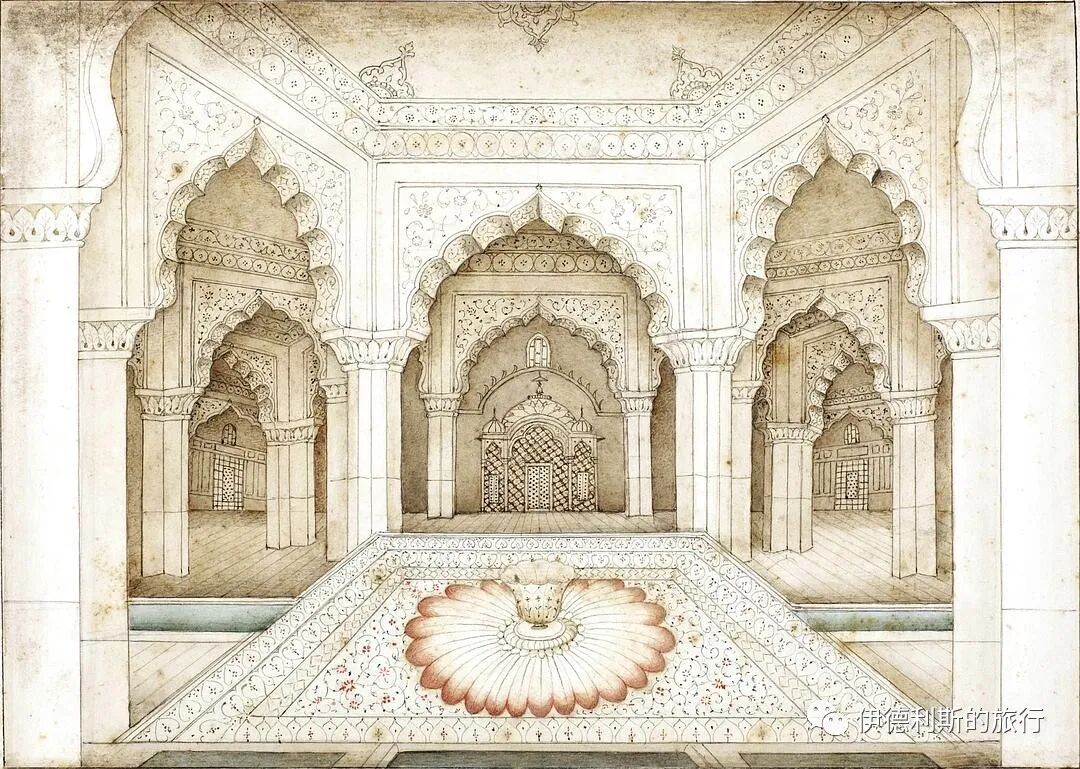
Painted by Ghulam Ali Khan between 1852 and 1854.
6. Khas Mahal (emperor's private palace)
To the north of the Rang Mahal is the Khass Mahal, which was the sleeping quarters of the Mughal emperor. The Rang Mahal was built of white marble. Its walls were originally inlaid with various jewels and the ceiling was gilded, but these features have not been preserved.
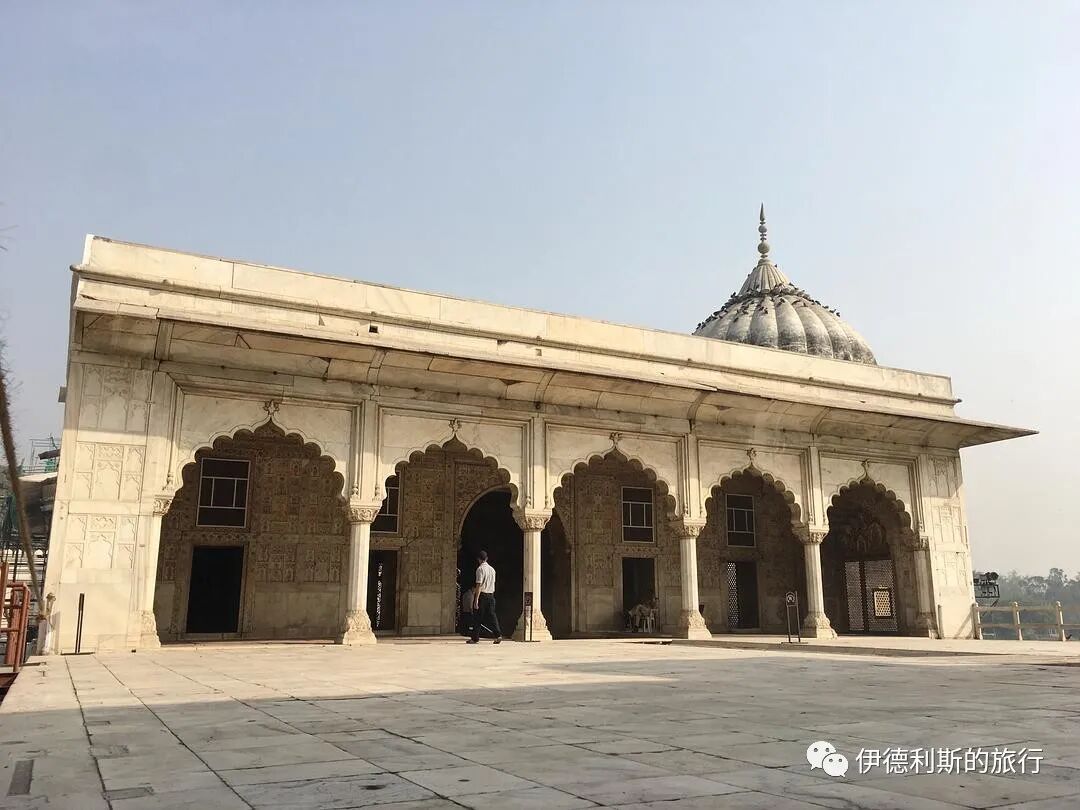
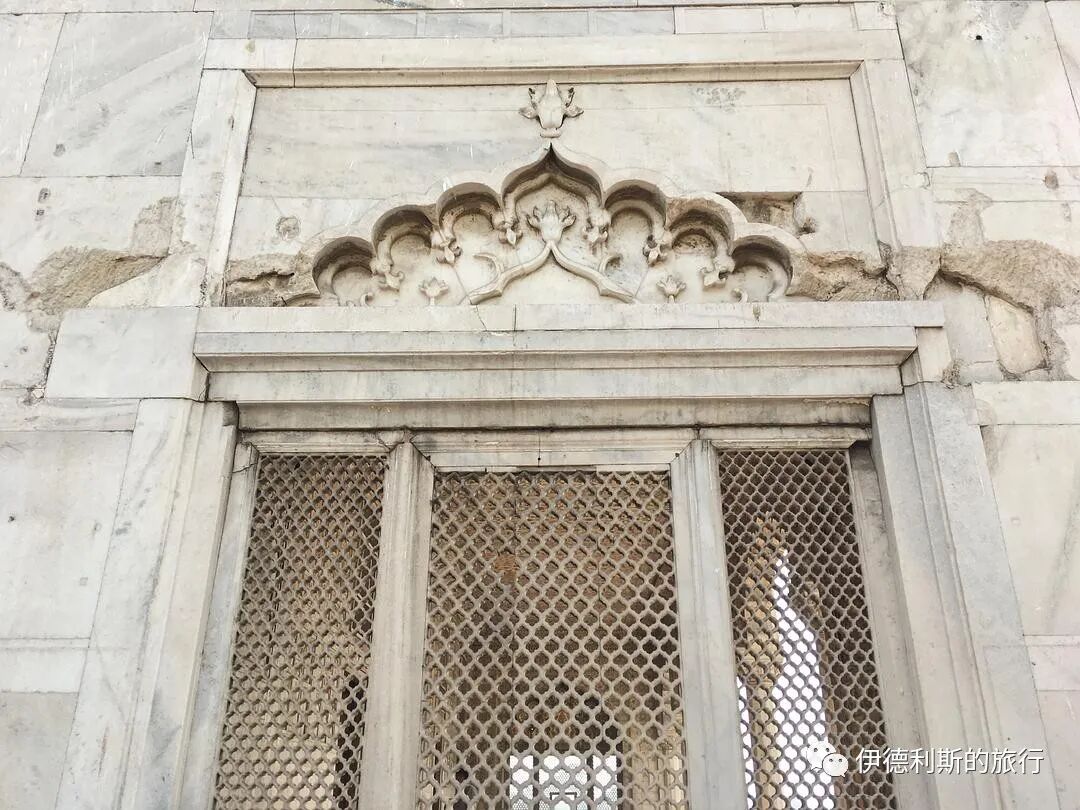
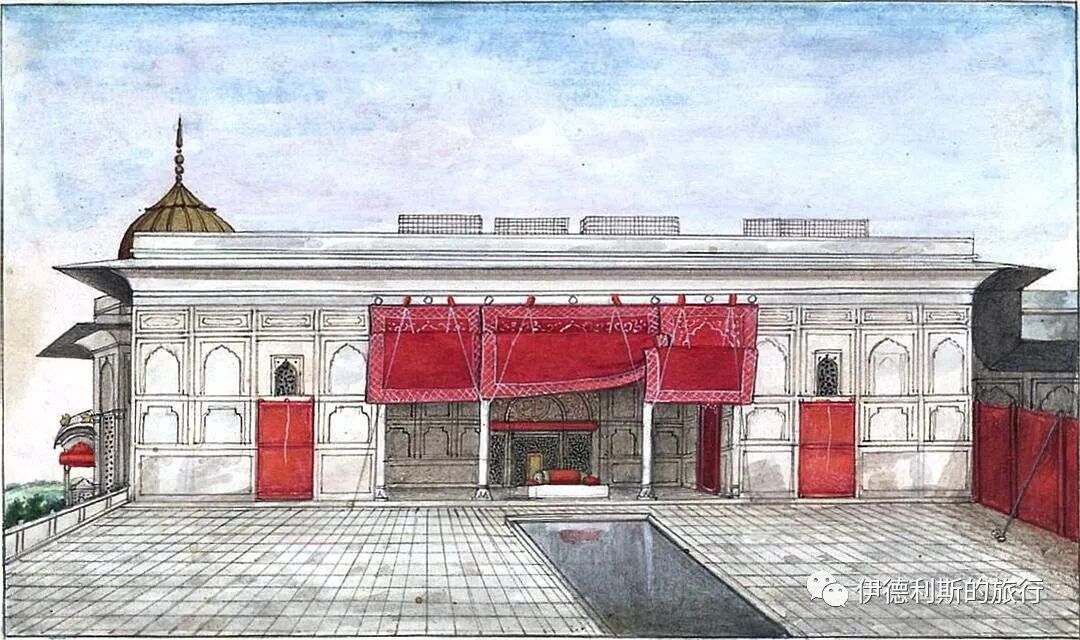
Painted by Sir Thomas Theophilus Metcalfe in 1843.
The last Mughal emperor, Bahadur Shah II, ascends the throne in the Khas Mahal, painted by Ghulam Ali Khan between 1837 and 1838.
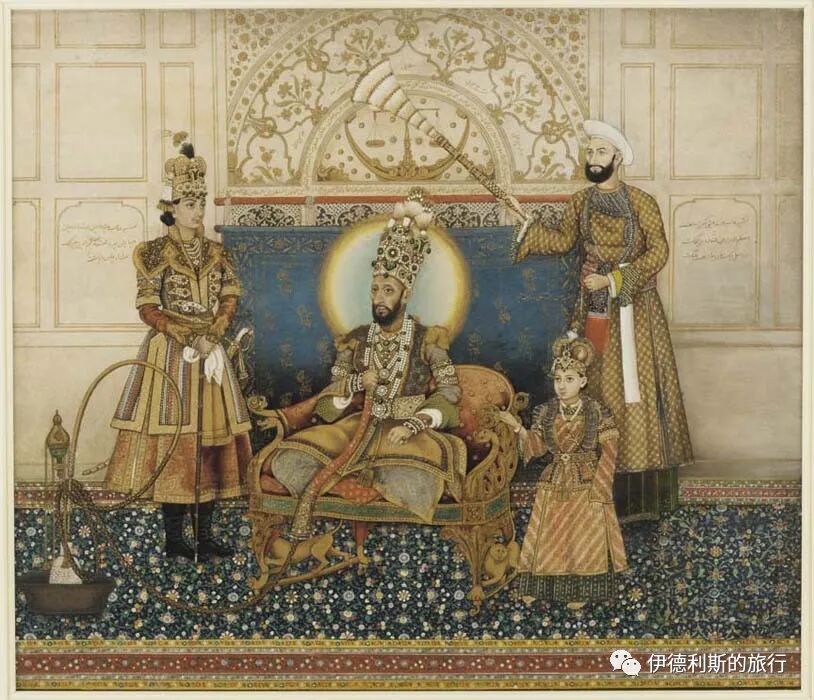
7. Hall of Private Audience (Diwan-i-Khas)
North of the Khas Mahal is the Hall of Private Audience (Diwan-i-Khas), where the Mughal emperor met with courtiers and state guests. The Hall of Private Audience (Diwan-i-Khas) means "private reception room." It is built of white marble and was once inlaid with various jewels, featuring the exquisite Peacock Throne in the center. The hall once had a ceiling inlaid with gold and silver, but these were later removed. The current ceiling was installed in 1911.
Outside the hall, there used to be red awnings, and the arches below were inscribed with verses by the famous Sufi master Amir Khusrow:
If there is a paradise on earth,
It is this, it is this, it is this.
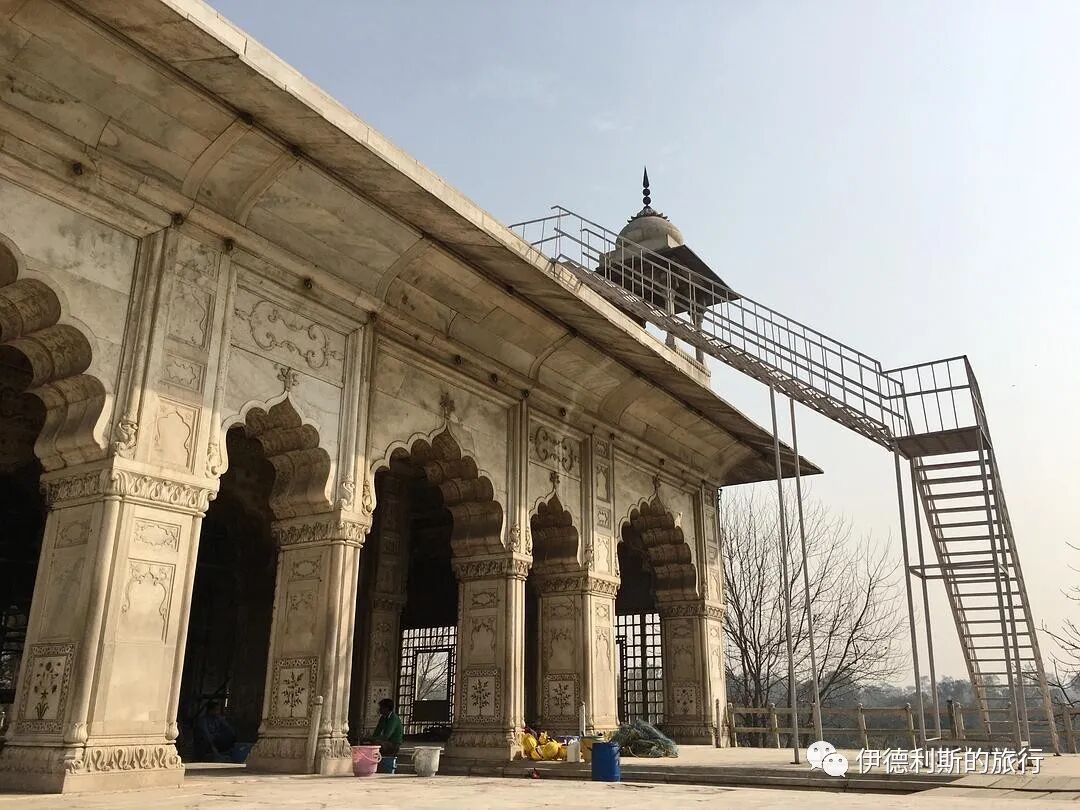
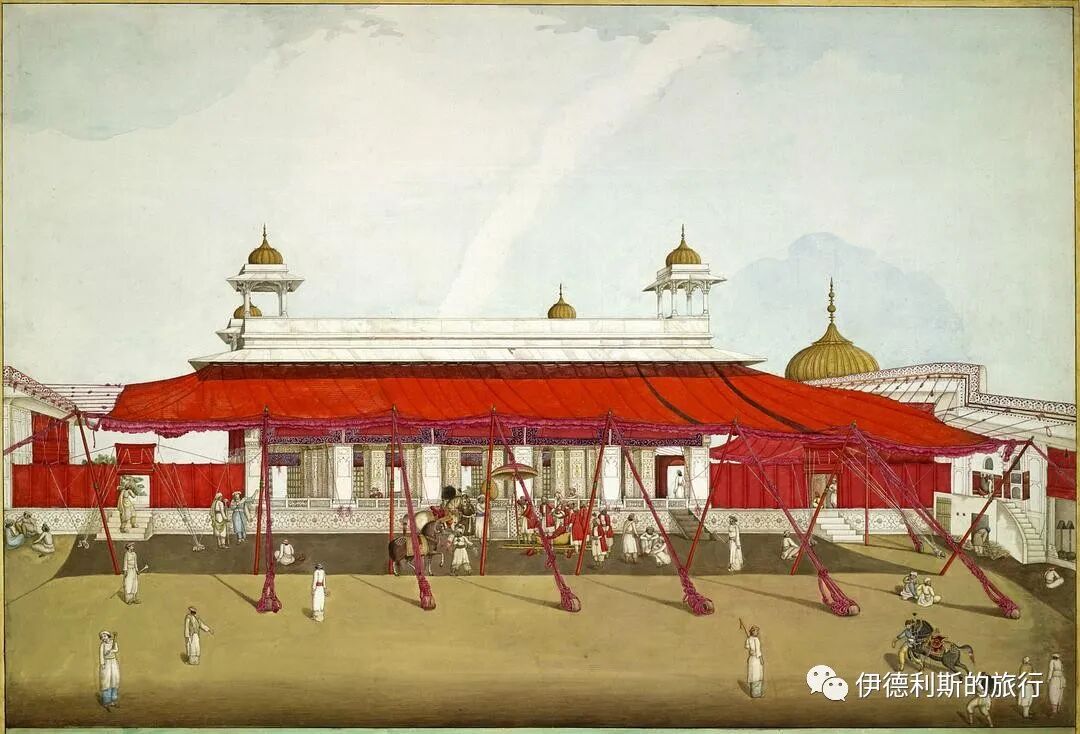
Painted by Ghulam 'Ali Khan in 1817.
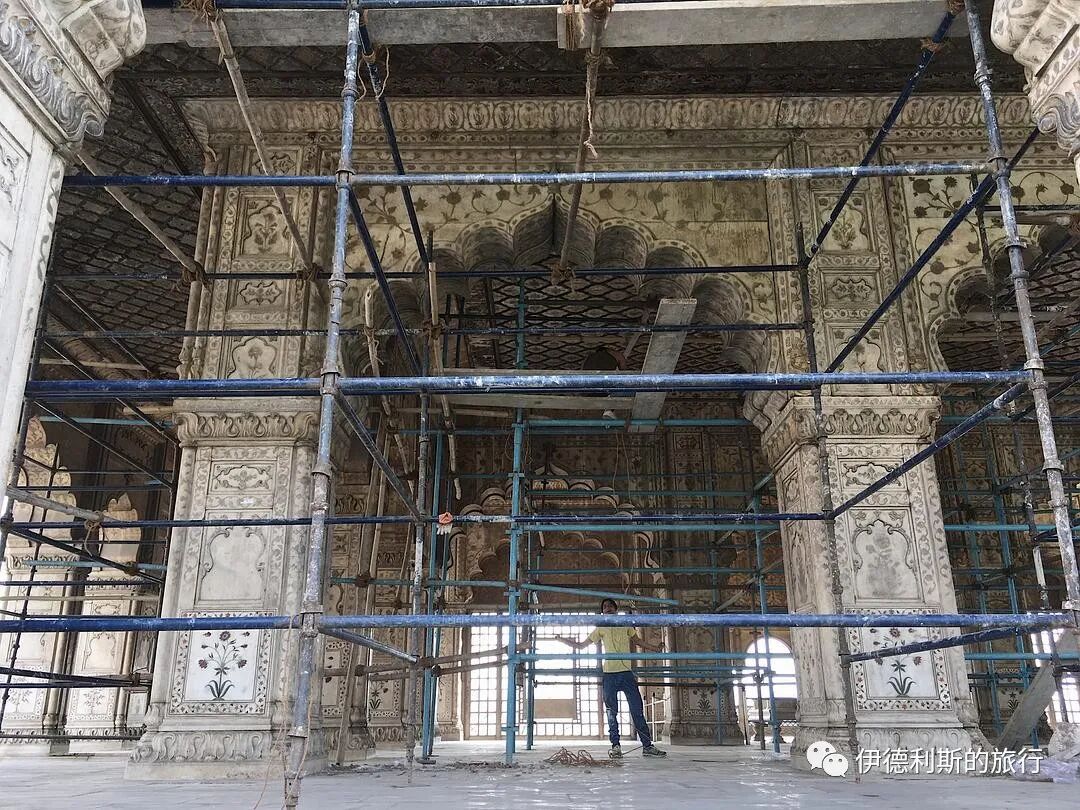
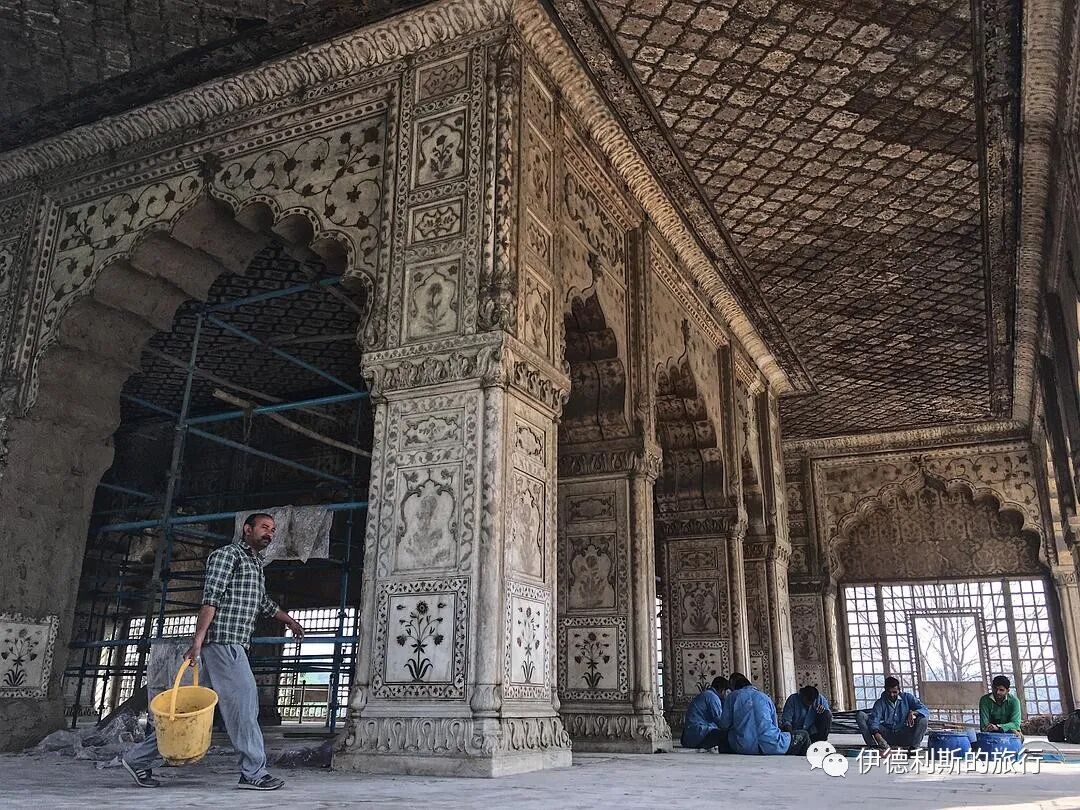
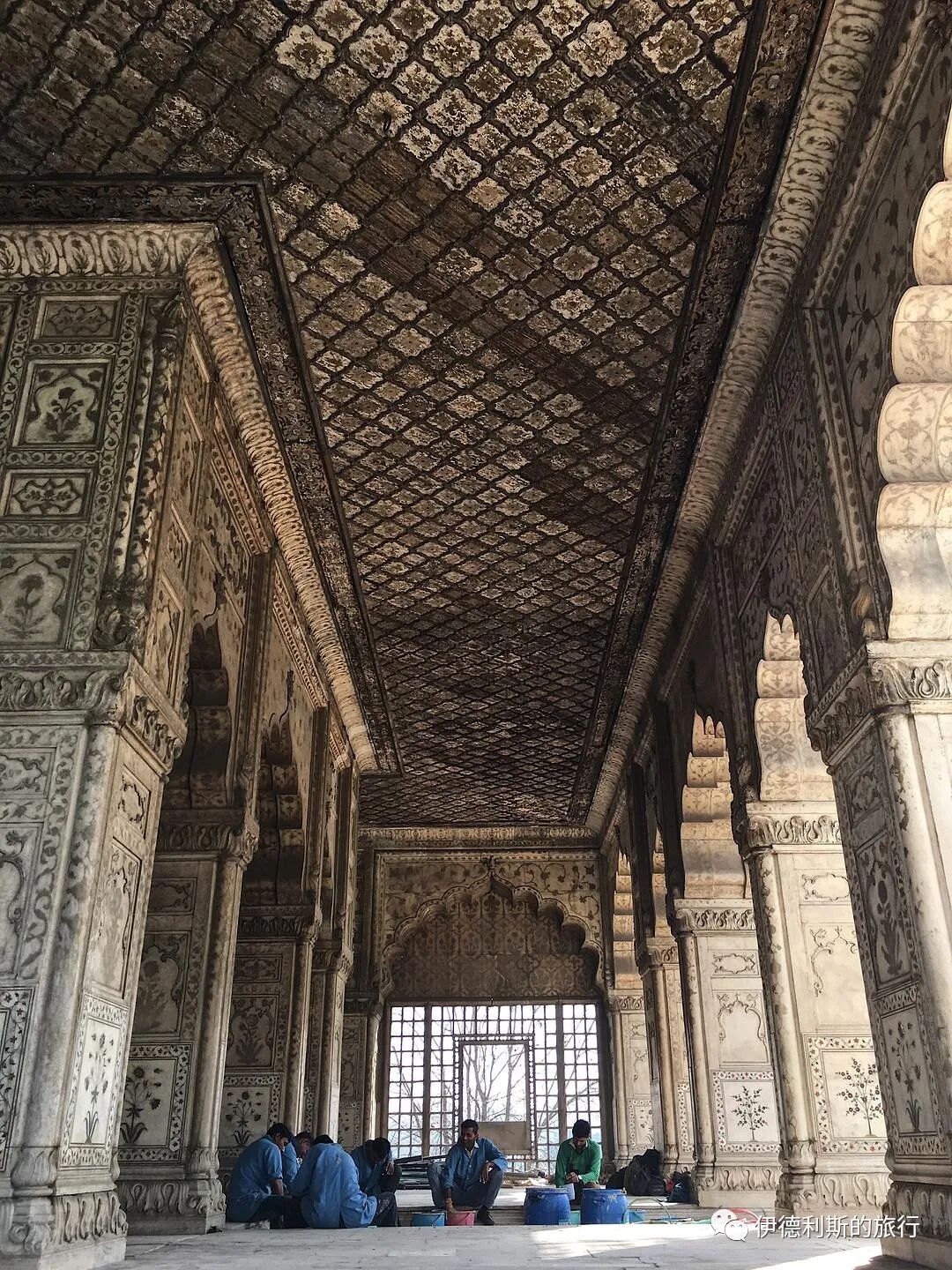
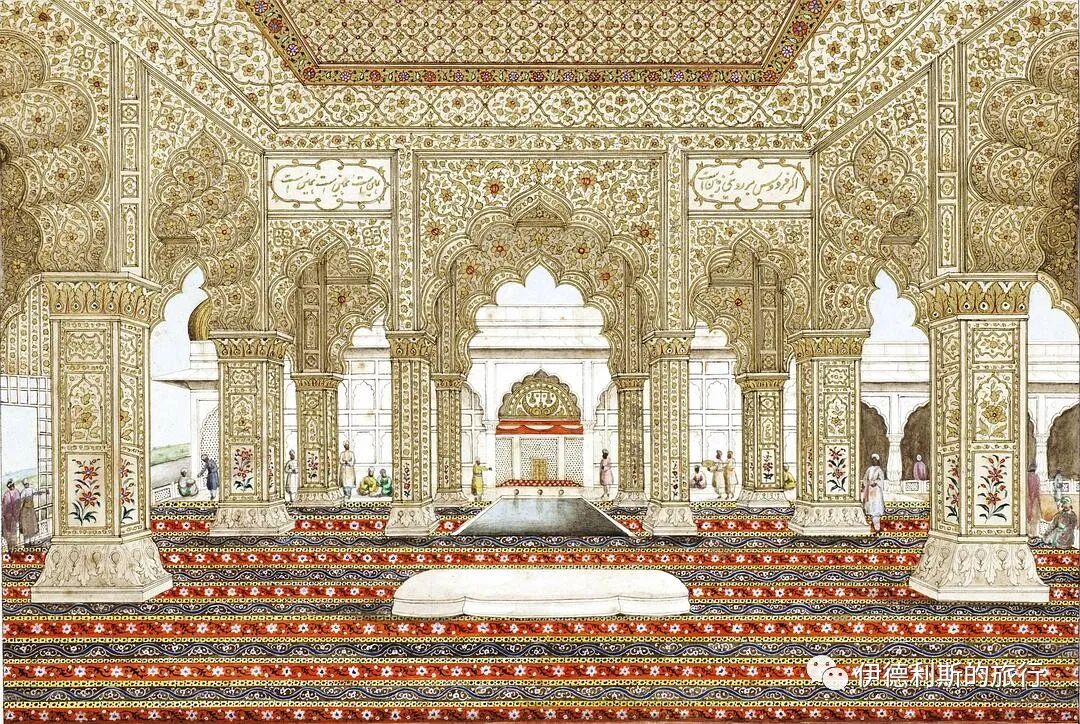
Painted by Ghulam Ali Khan between 1852 and 1854.
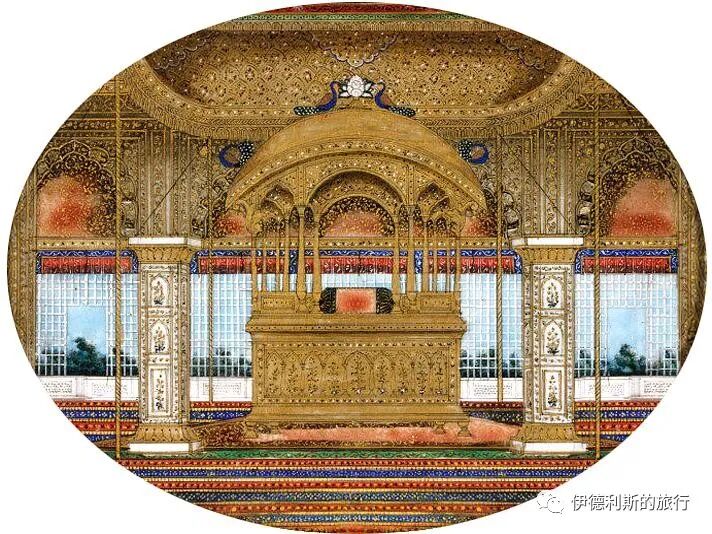
The Peacock Throne in 1850.
8. Hammam-e-Lal Qila (bathhouse)
North of the Hall of Private Audience (Diwan-i-Khas) is the Red Fort Bathhouse (Hammam-e-Lal Qila), which was used by the Mughal royal family. The Red Fort Bathhouse (Hammam-e-Lal Qila) is a Turkish-style bath consisting of three sections: a children's bath, a dressing room, and a hot bath. Legend has it that the water flowing from the taps at that time was mixed with rose perfume.
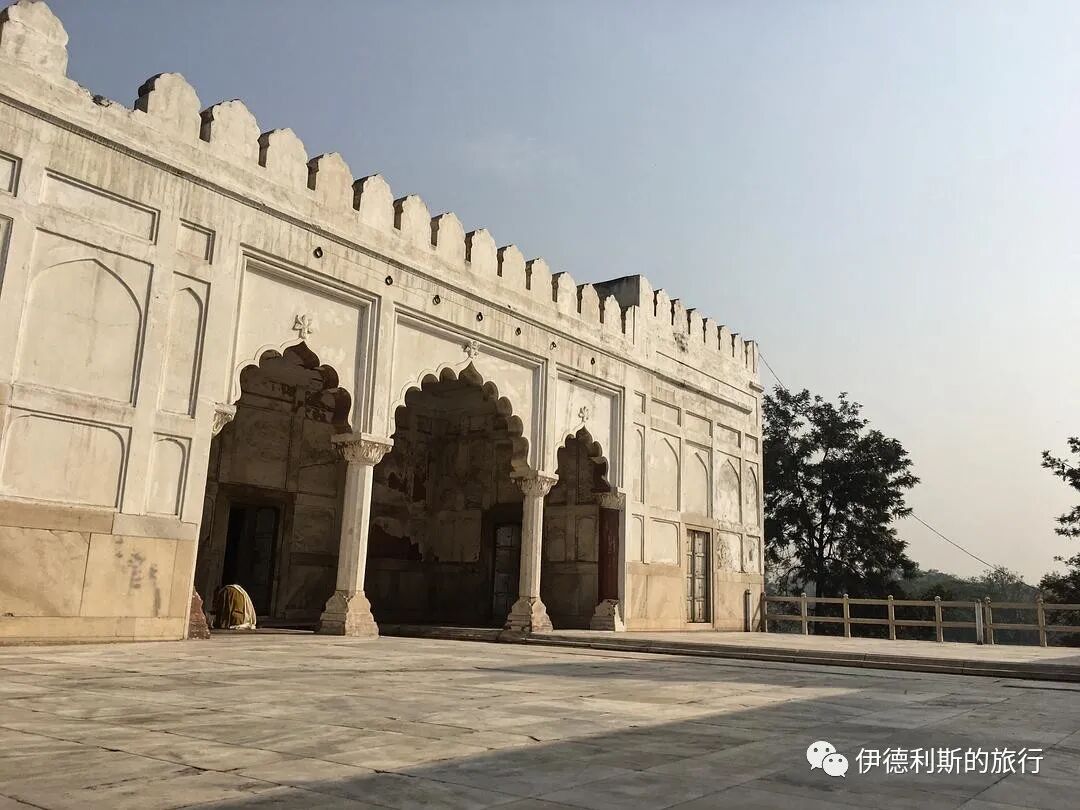
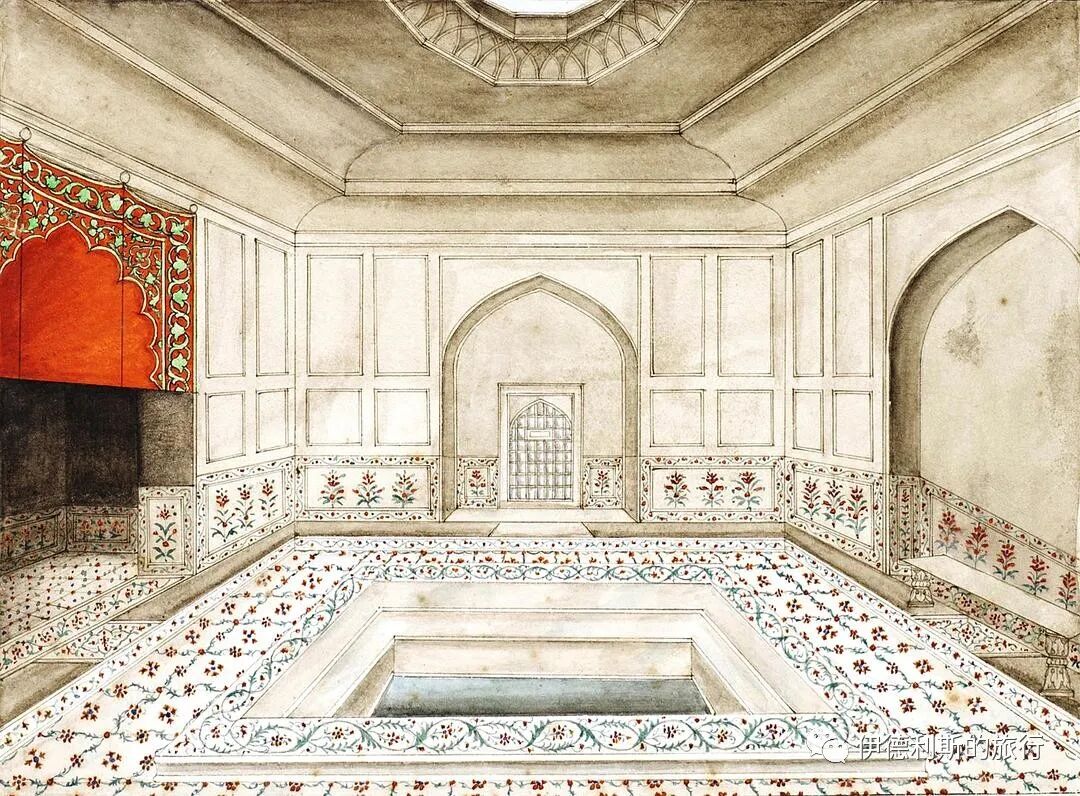
Painted by Ghulam Ali Khan between 1852 and 1854.
9. Pearl Mosque (Moti Masjid)
The Pearl Mosque (Moti Masjid) is west of the bathhouse. It was built by the sixth Mughal emperor, Aurangzeb, between 1659 and 1660 for his second wife, Nawab Bai. Pearl (Moti) means "pearl." It is built of white marble, and its three domes were originally covered with gilded copper plates, which were lost after 1857.
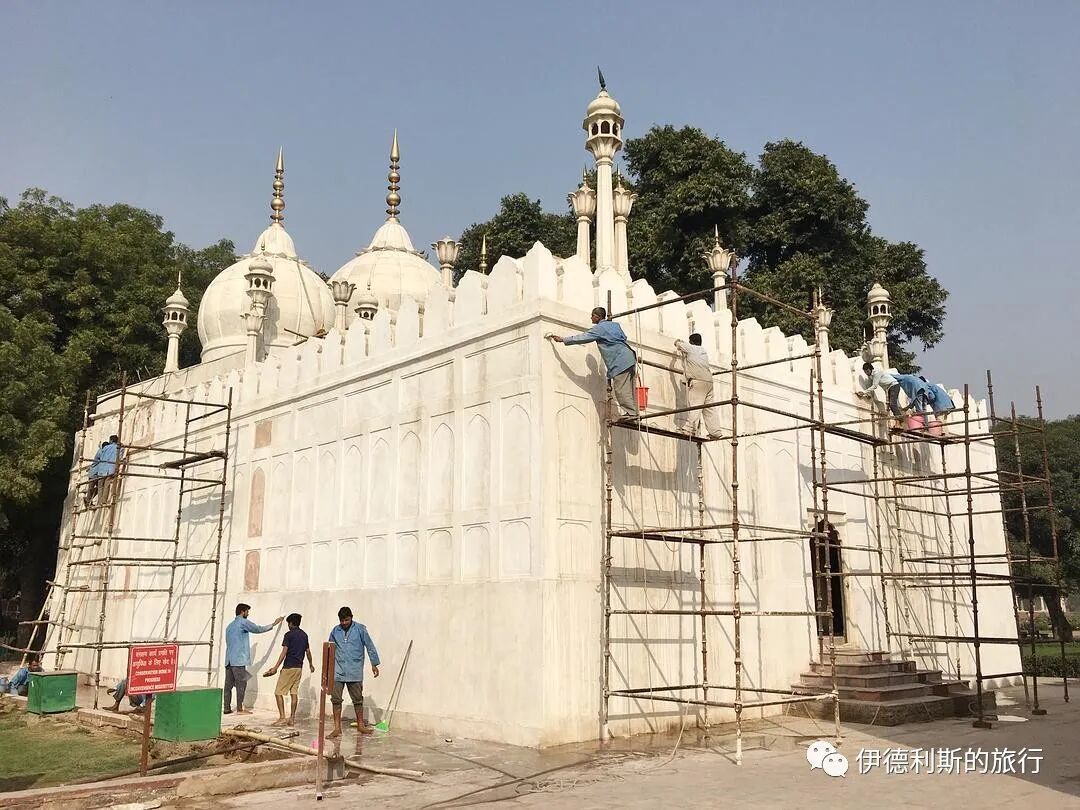
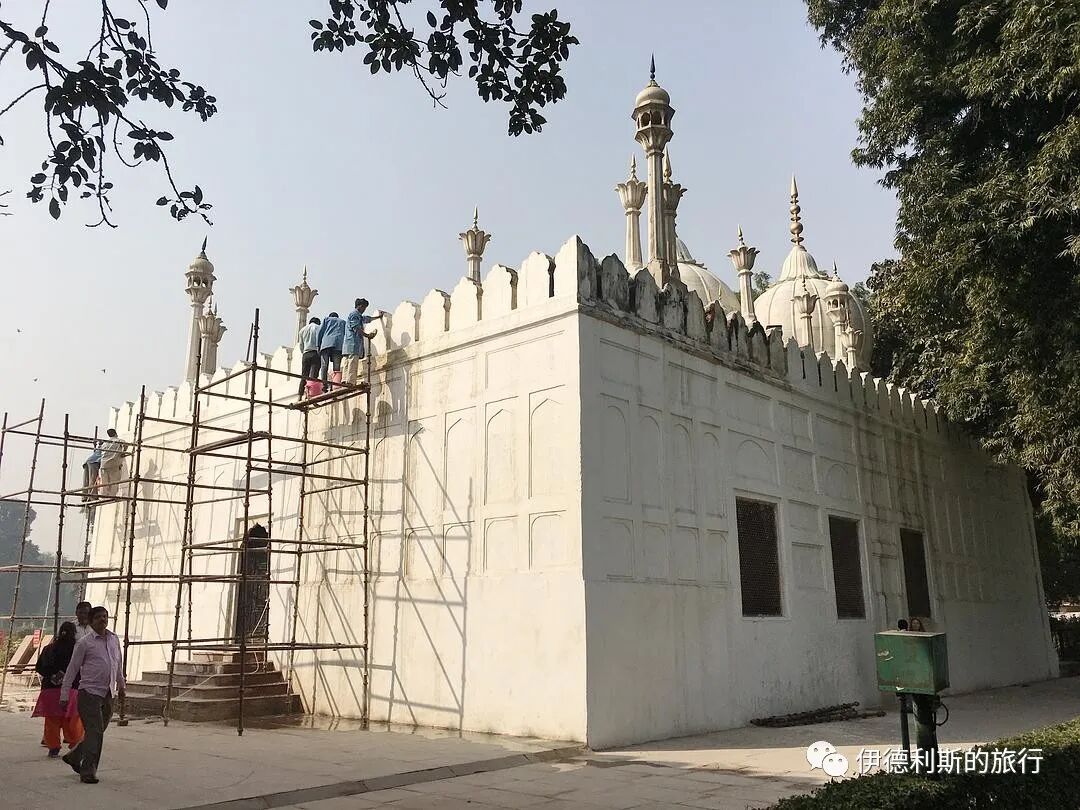
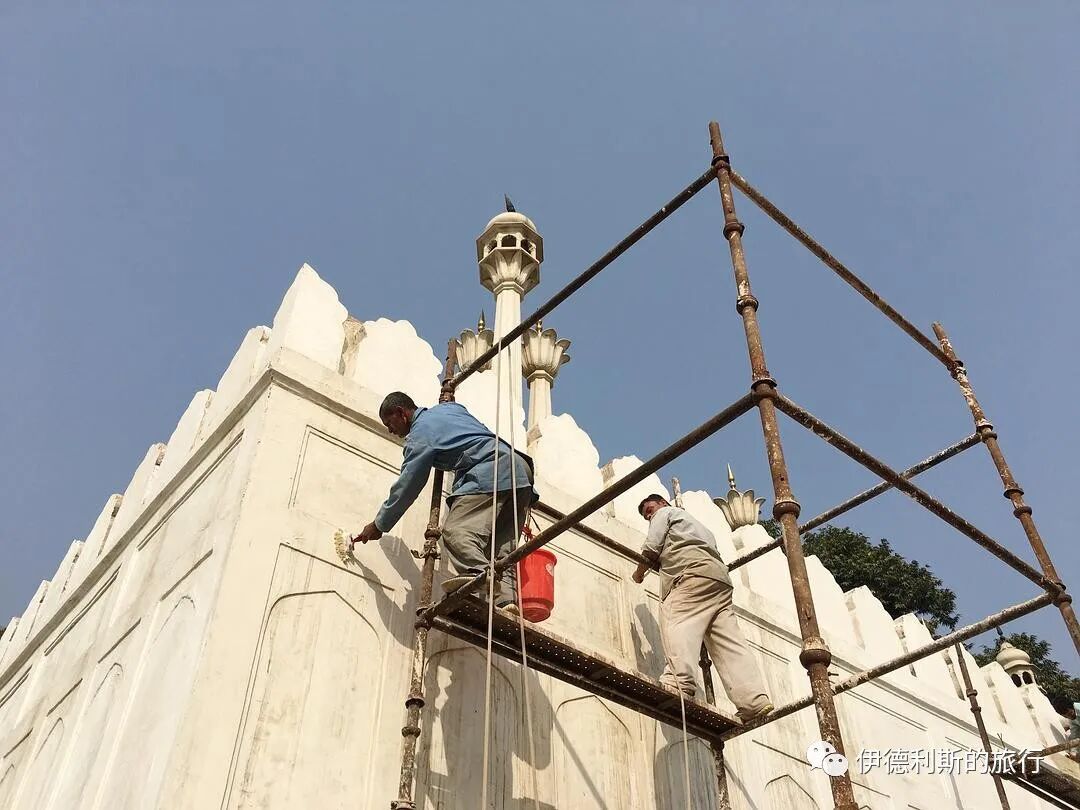
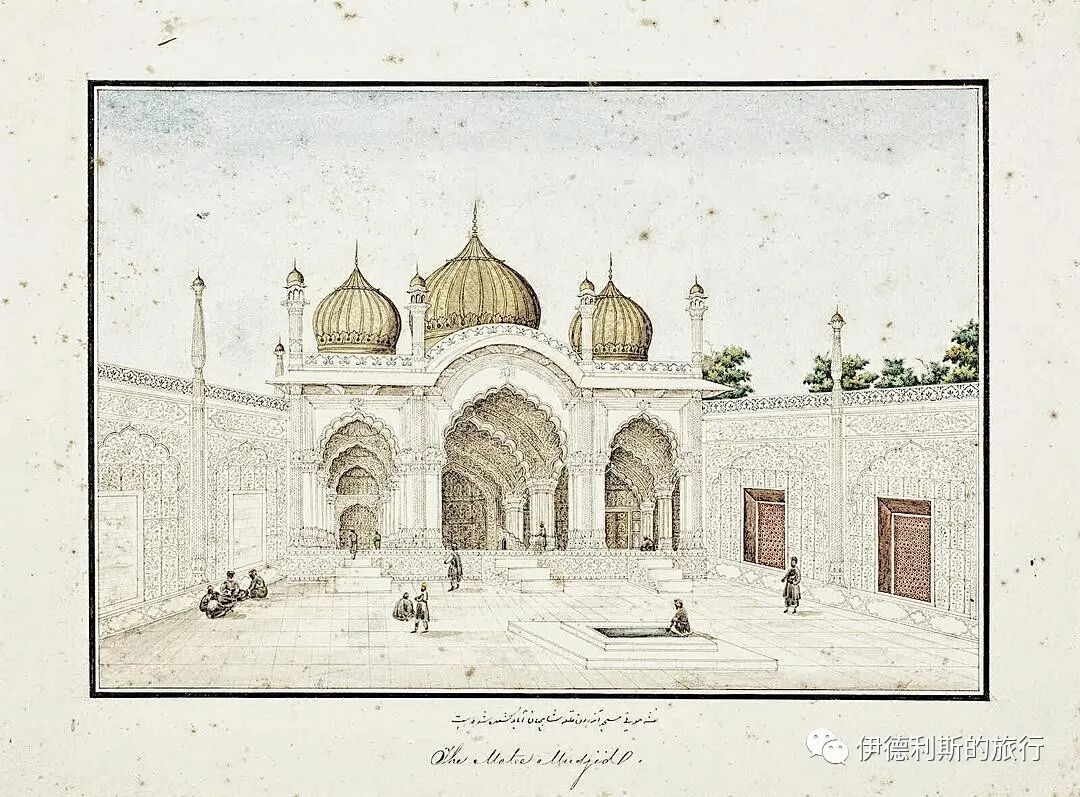
Painted by Ghulam Ali Khan between 1852 and 1854.
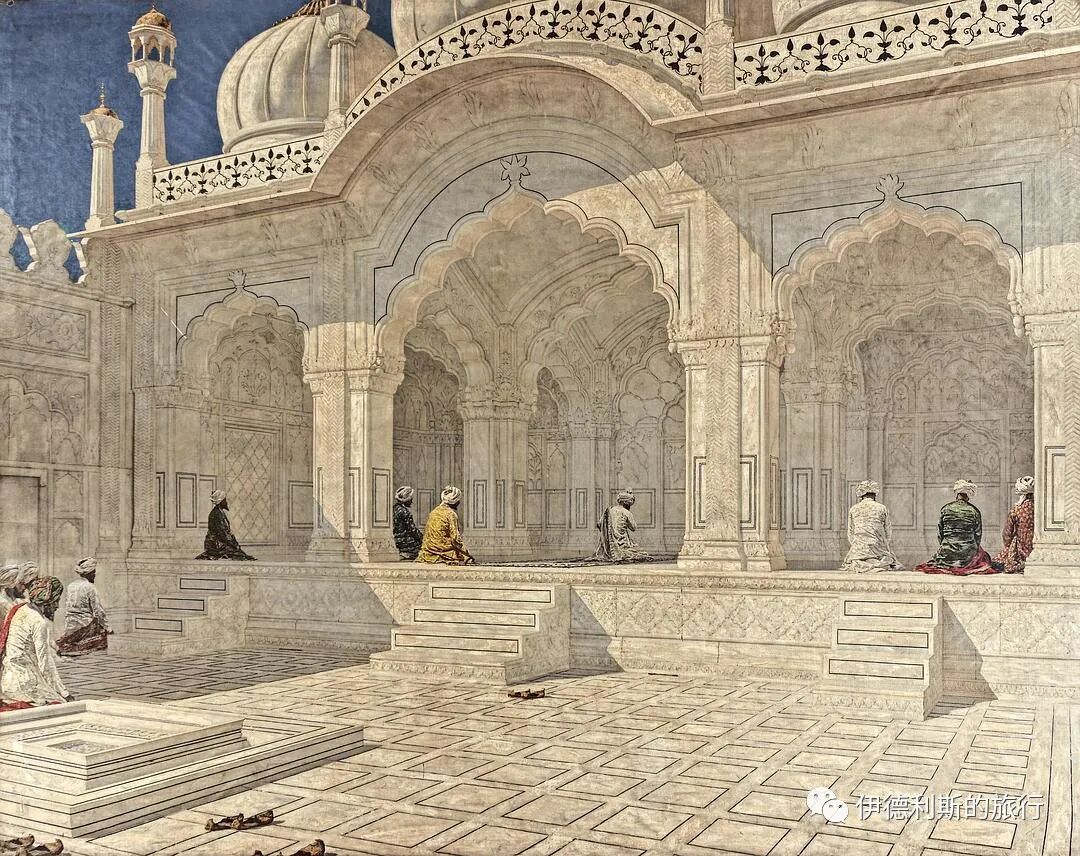
Painted by Vasily Vereshchagin in the late 1880s.
10. King's Tower (Shah Burj)
The northernmost part of the harem is a white marble pavilion built during the Aurangzeb period. Behind the pavilion is the Shahi Burj, the northeast corner tower of the Red Fort, which means "Imperial Tower." Inside the tower is a hydraulic system that carries water from outside the Red Fort into its gardens and buildings.
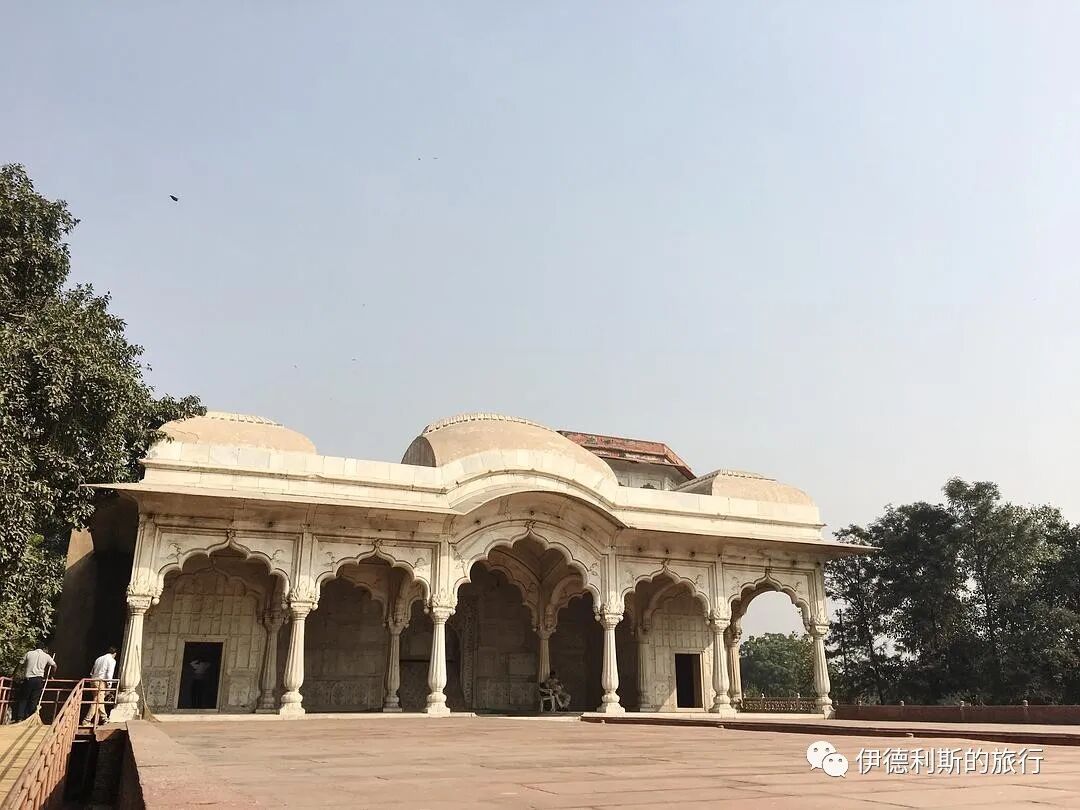
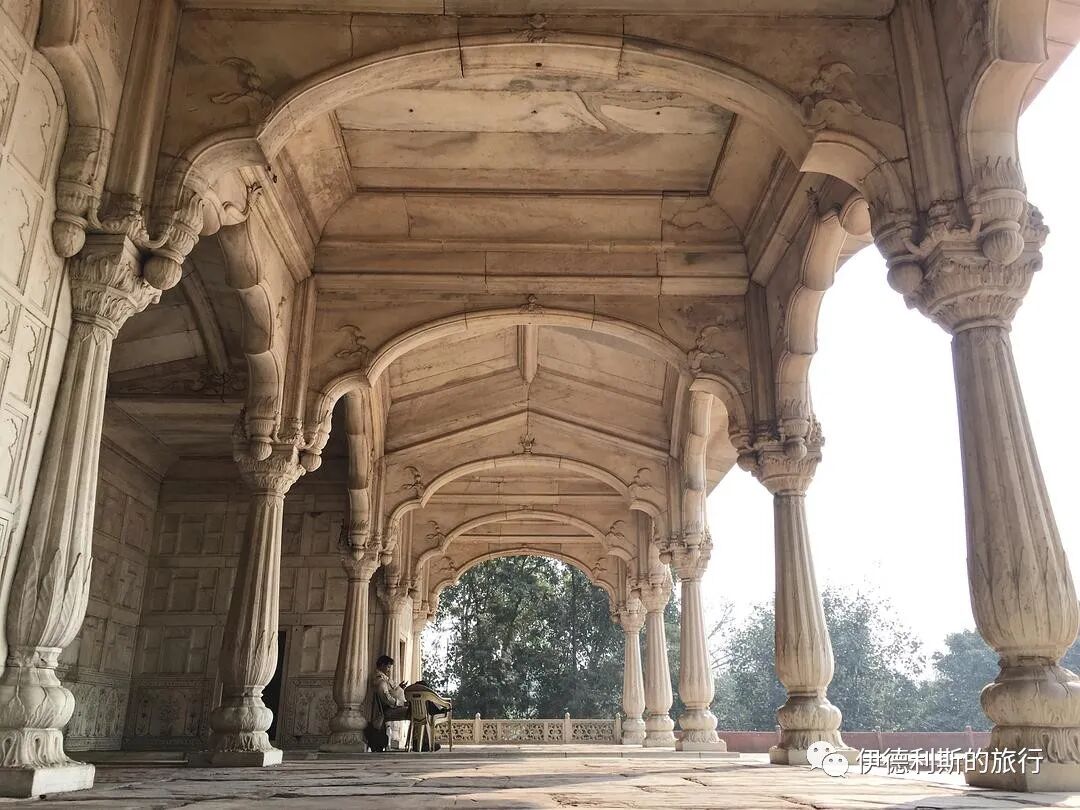
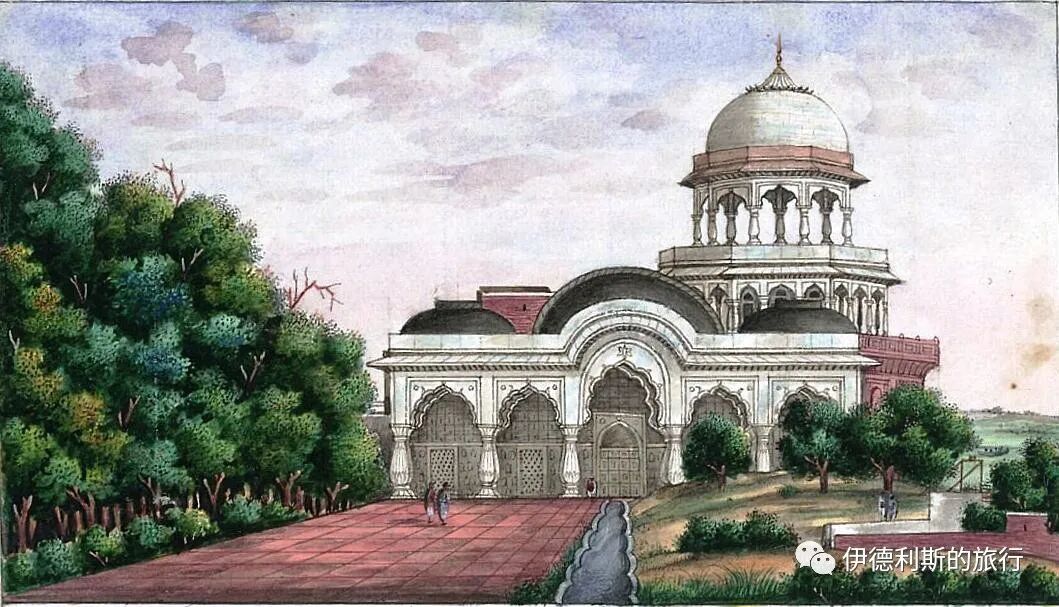
Painted by Sir Thomas Metcalfe in 1843.
11. Life-Giving Garden (Hayat Bakhsh Bagh)
In the northwest part of the harem is the royal water garden Hayat Bakhsh Bagh, which means 'Life-Giving Garden'. Most of the garden's buildings were destroyed after 1857, and only three survive today.
At the center of the garden is the red sandstone building Zafar Mahal, built in 1842 by the last Mughal emperor, Bahadur Shah II. The building sits in a pool and was originally connected to the shore by a red sandstone bridge, but it was destroyed after 1857. After 1857, the British army used this area as a swimming pool.
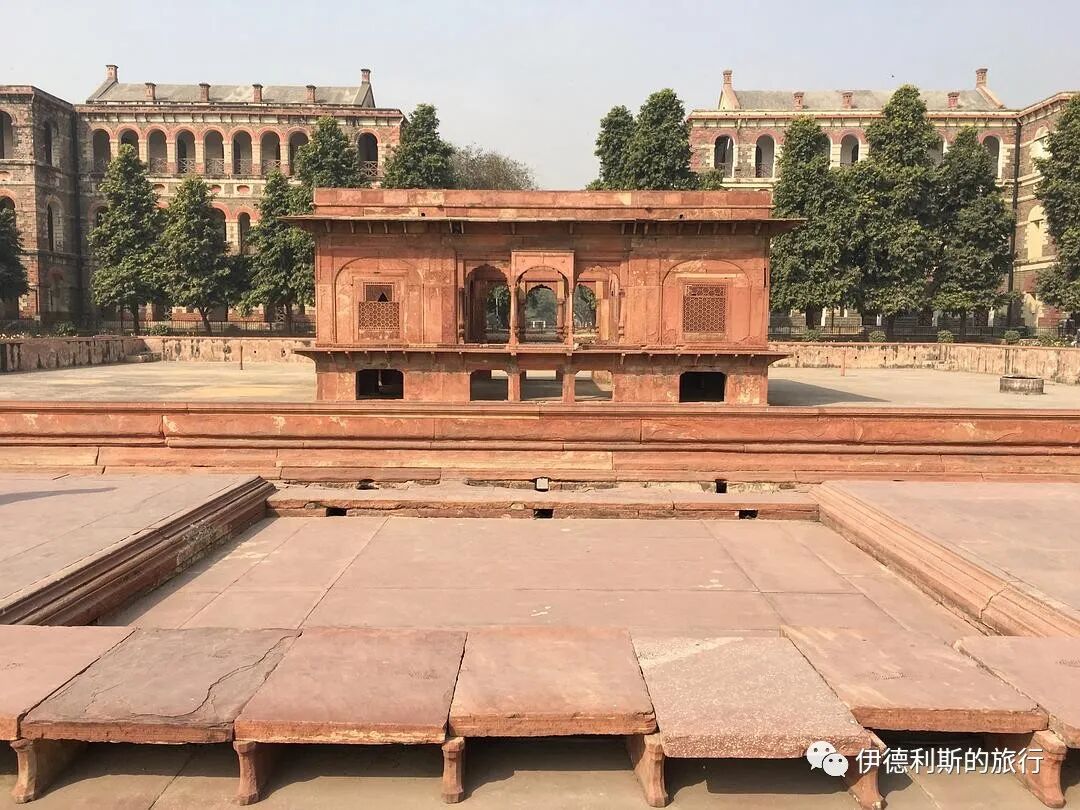
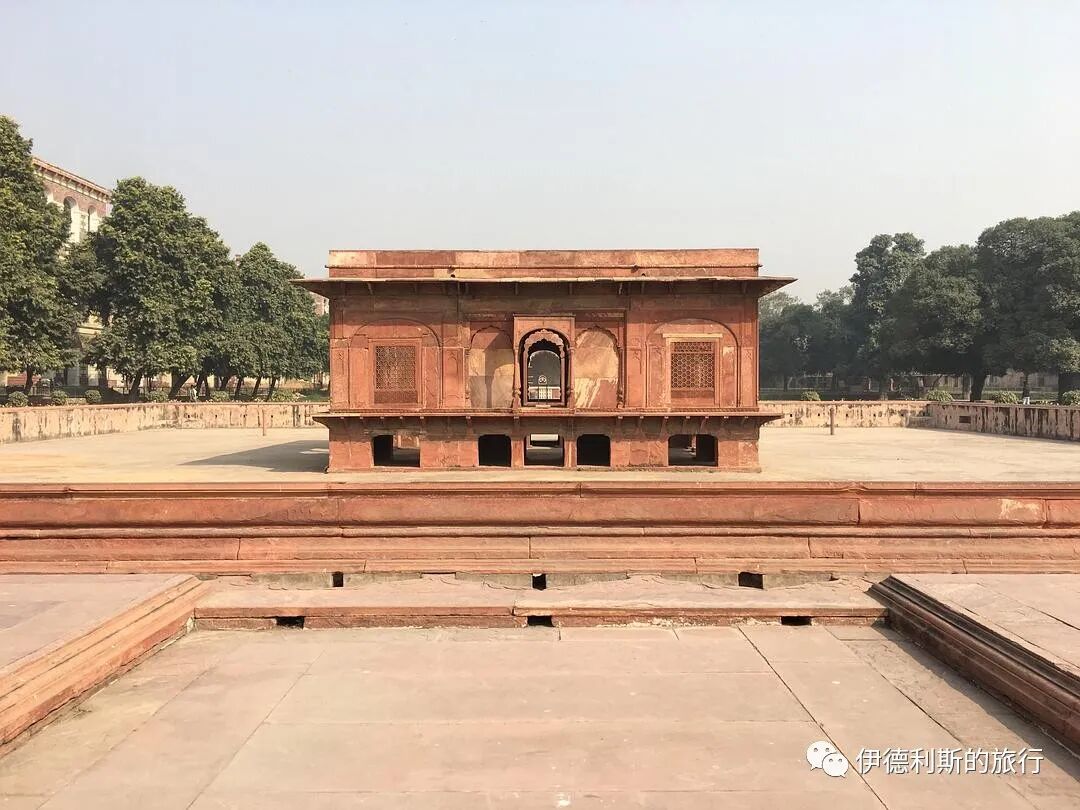
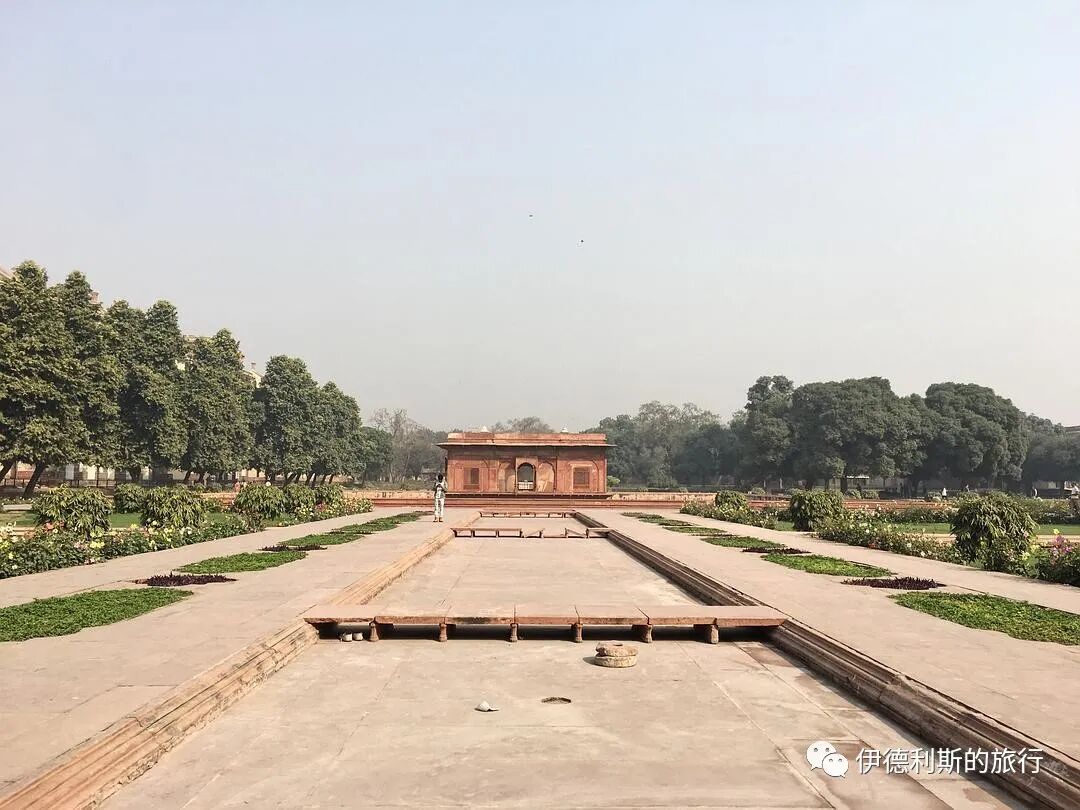
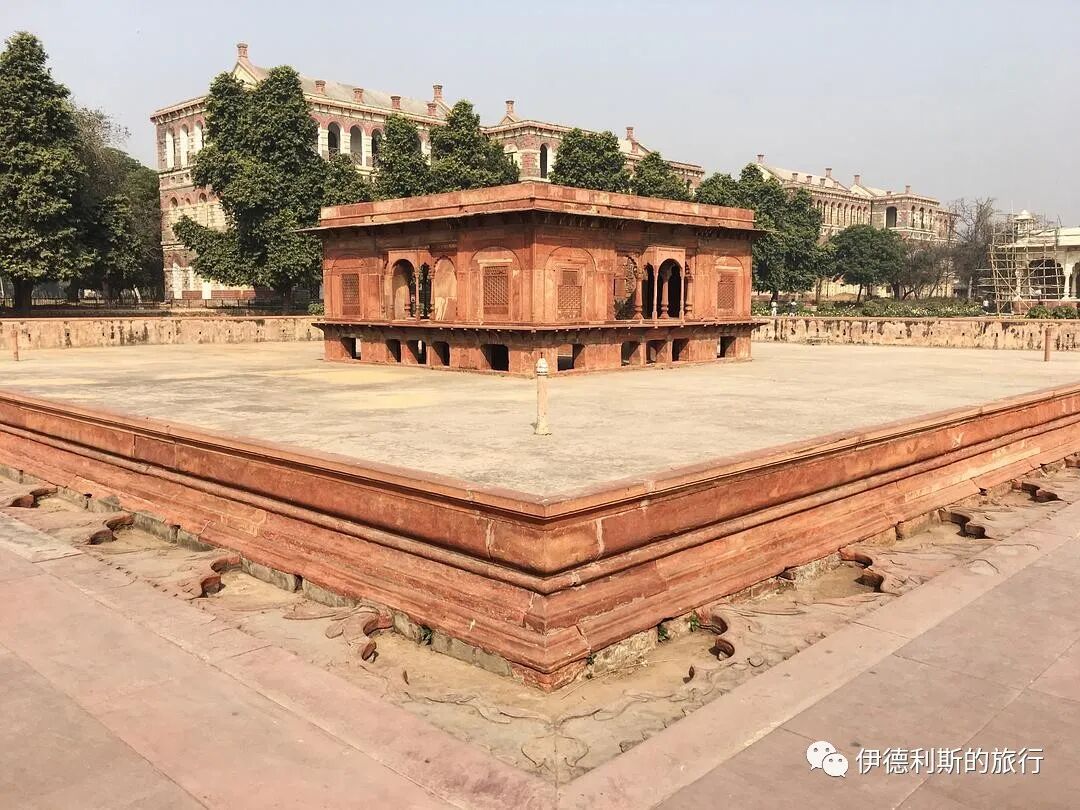
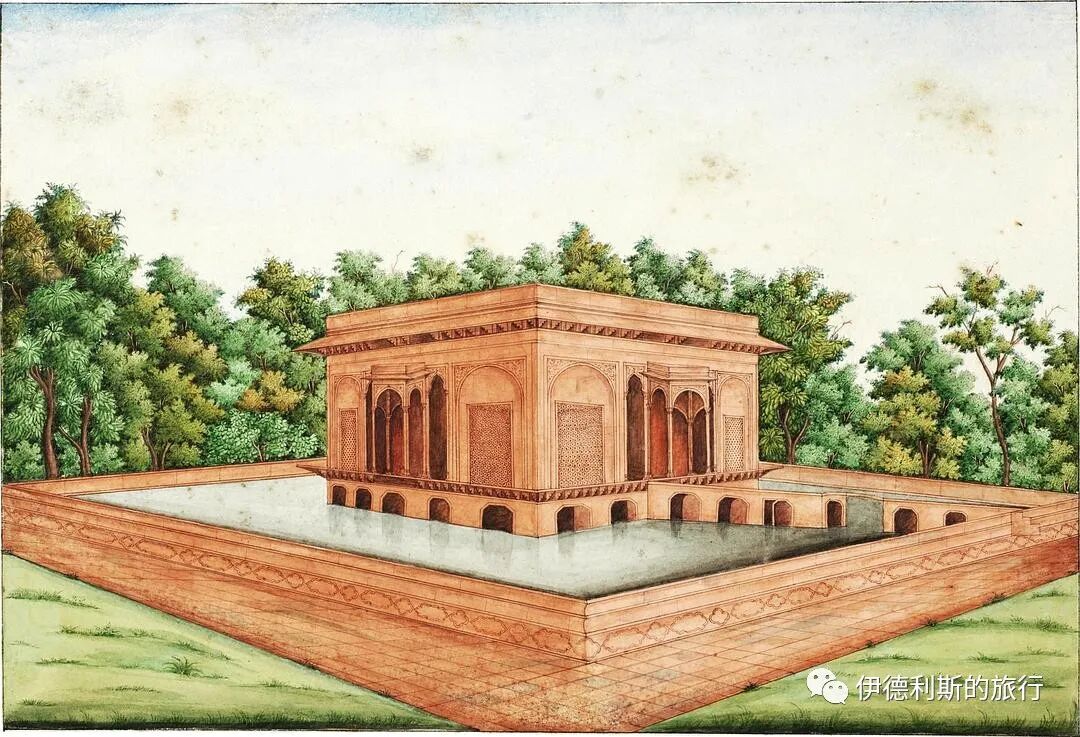
Painted by Ghulam Ali Khan between 1852 and 1854.
To the north and south of the garden are two white marble pavilions called Sawan and Bhadon, named after the months of July and August in the Indian rainy season, as the ladies of the Mughal palace loved to visit the garden during these two months. The pavilions have wall niches that held vases with golden flowers during the day and small oil lamps at night.
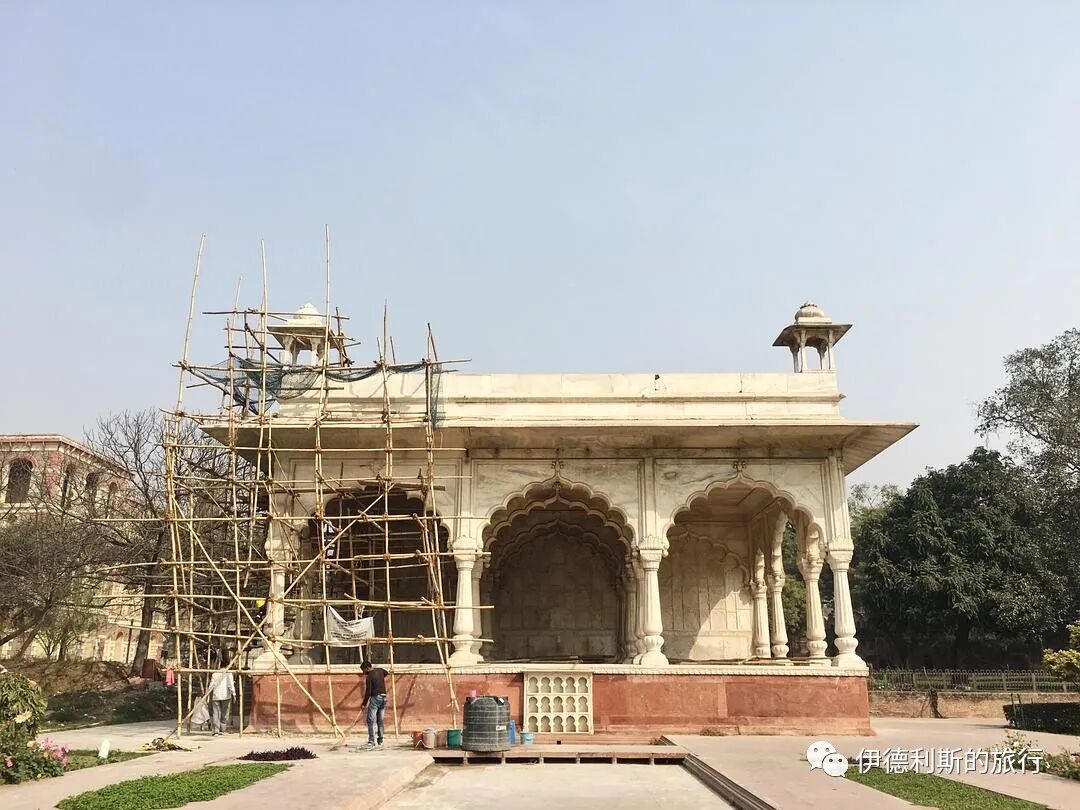
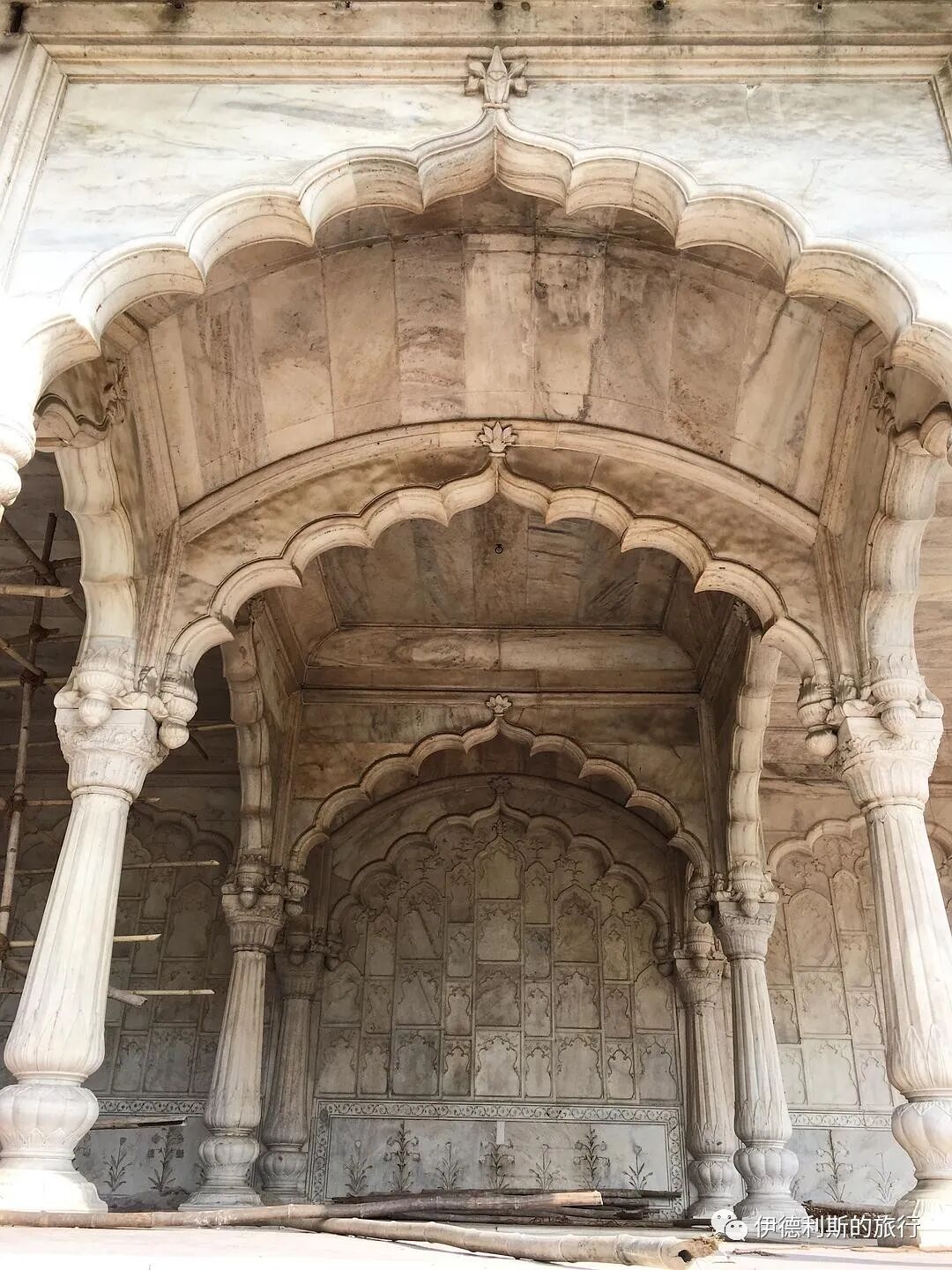
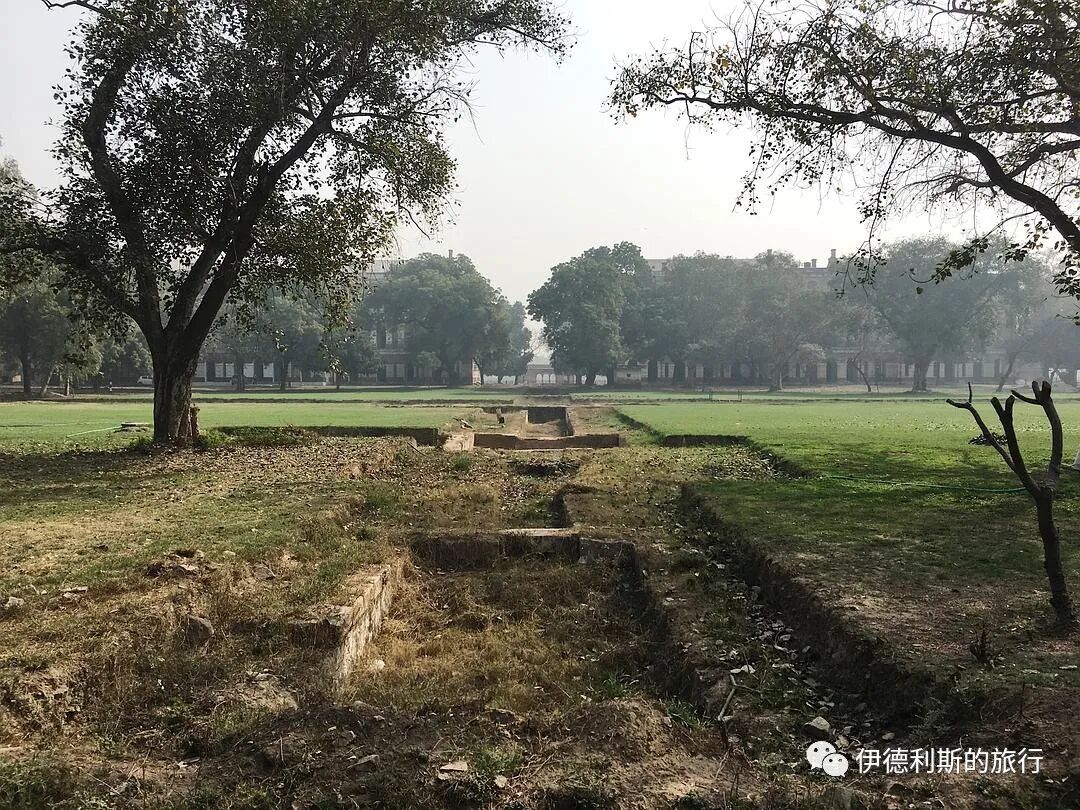
To the west of Hayat Bakhsh Bagh, there was originally another water garden called Mehtab Bagh, meaning 'Moon Garden,' but after 1857, the site was turned into a British military barracks, and now only ruins remain.
2. Jama Mosque: 1650-1656
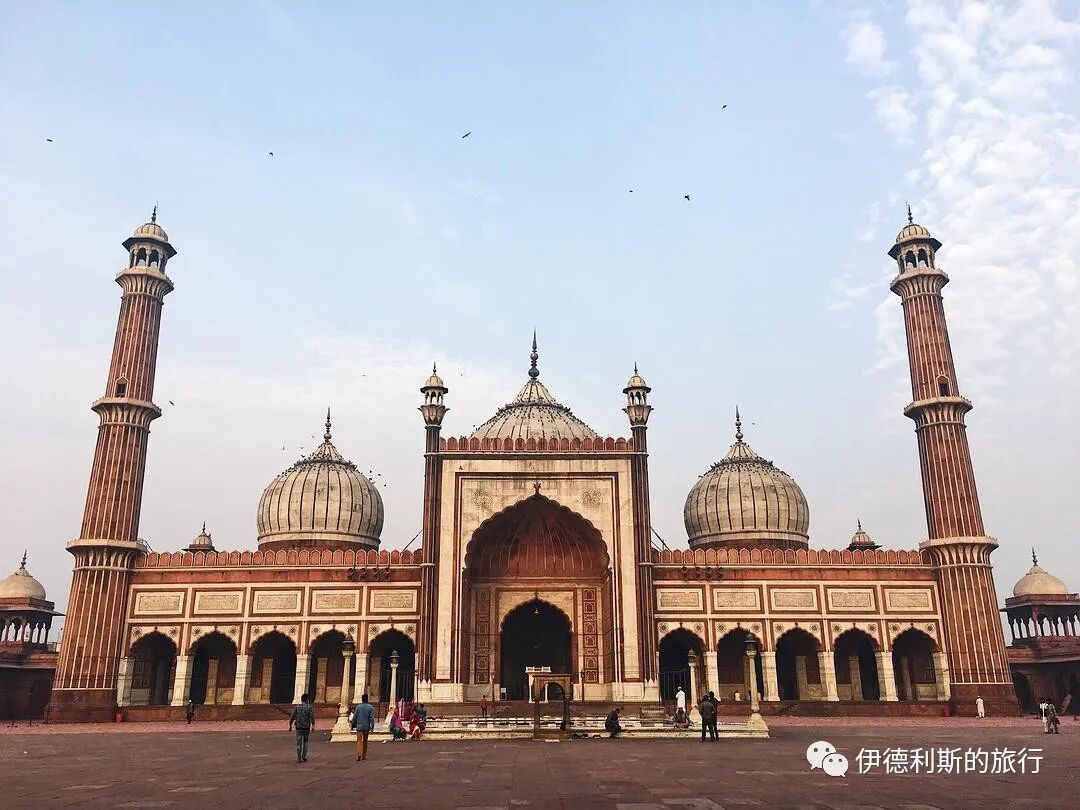
The Jama Masjid mosque is located southwest of the Red Fort; it was built between 1650 and 1656 by order of Shah Jahan and served as the royal mosque of the Mughal Empire.
The mosque was built by more than 5,000 workers under the leadership of Shah Jahan's vizier (wazir) Saadullah Khan, costing over 1 million rupees. The mosque stands on a platform more than 9 meters above the ground and is made of red sandstone and marble, featuring a main hall connected by colonnades, two 40-meter-high minarets, and three gates. The east gate was reserved for the Mughal royal family and had a path that connected directly to the Delhi Gate of the Red Fort.
After 1857, the British seized the Jama Masjid mosque and stationed troops inside. They originally wanted to demolish the mosque, but they failed due to strong opposition, though the madrasa (Islamic school) on the south side of the mosque was destroyed as a result.
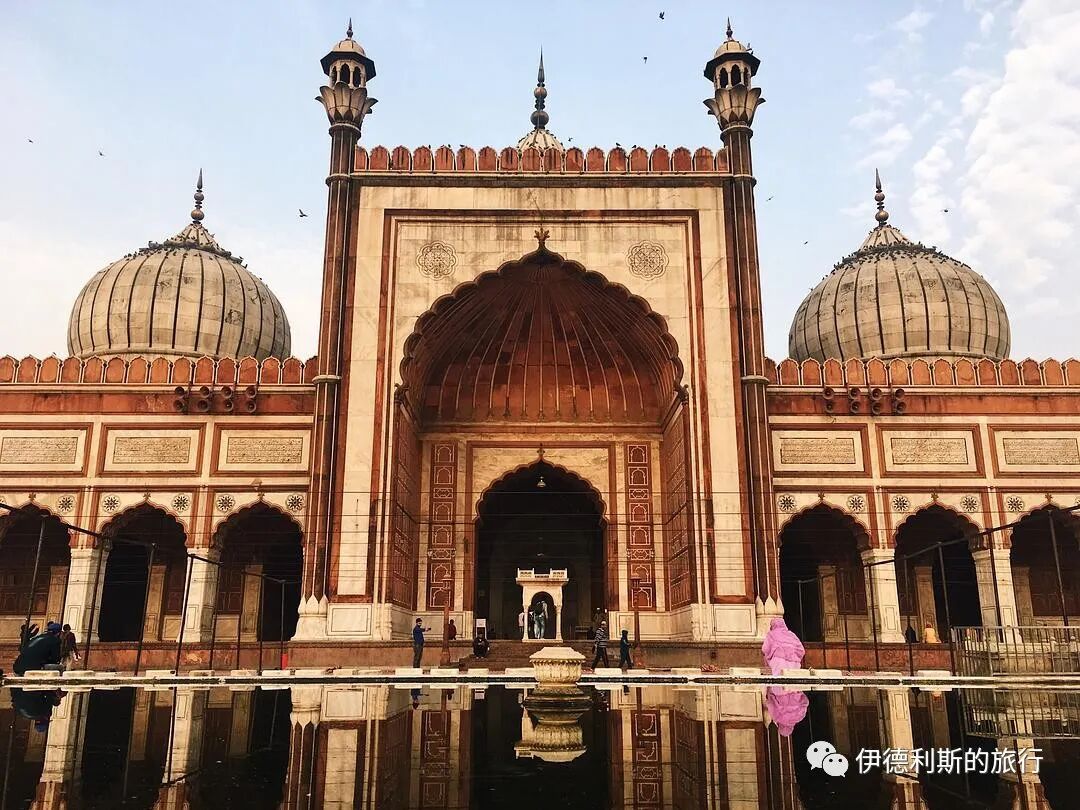
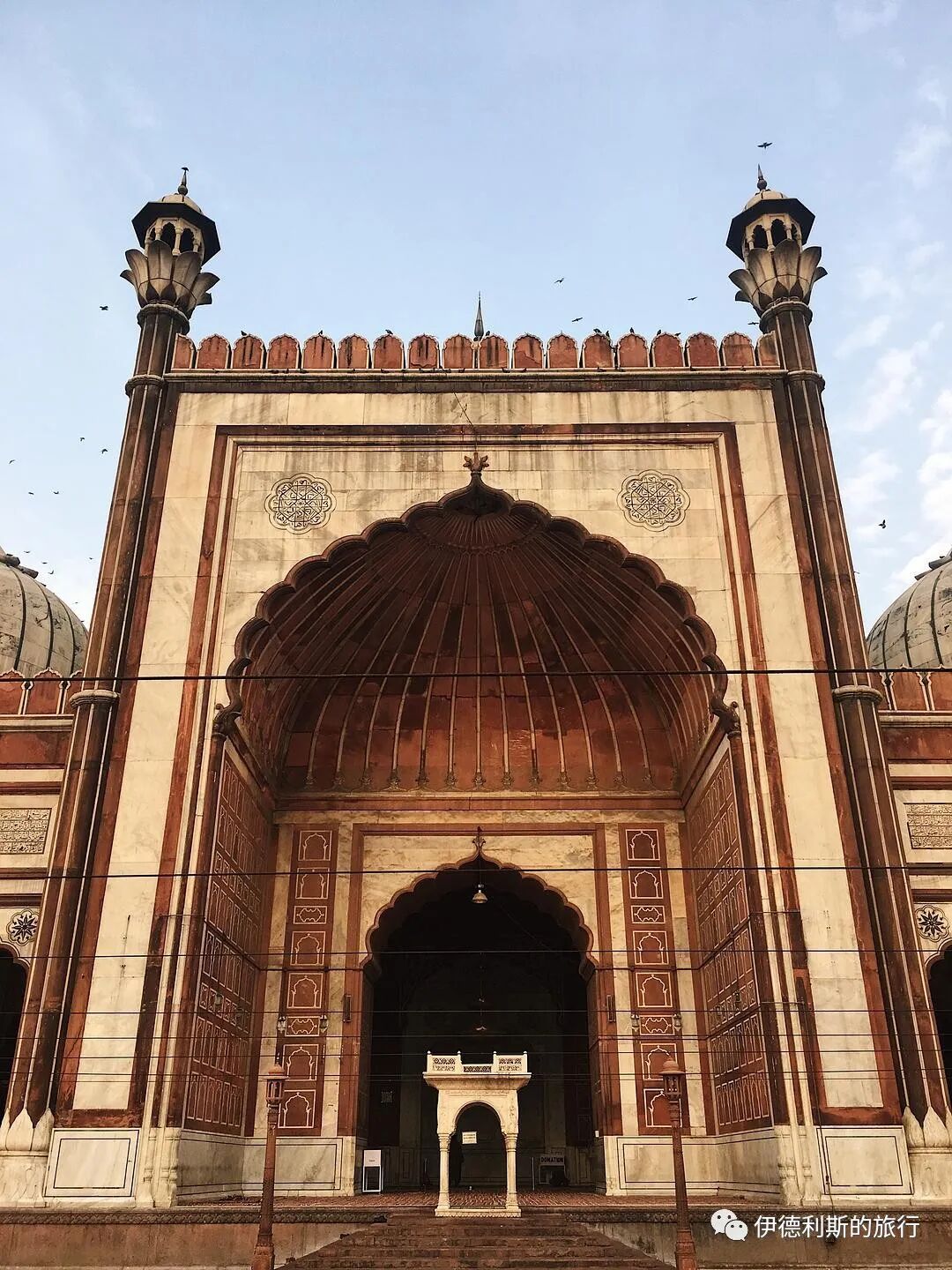
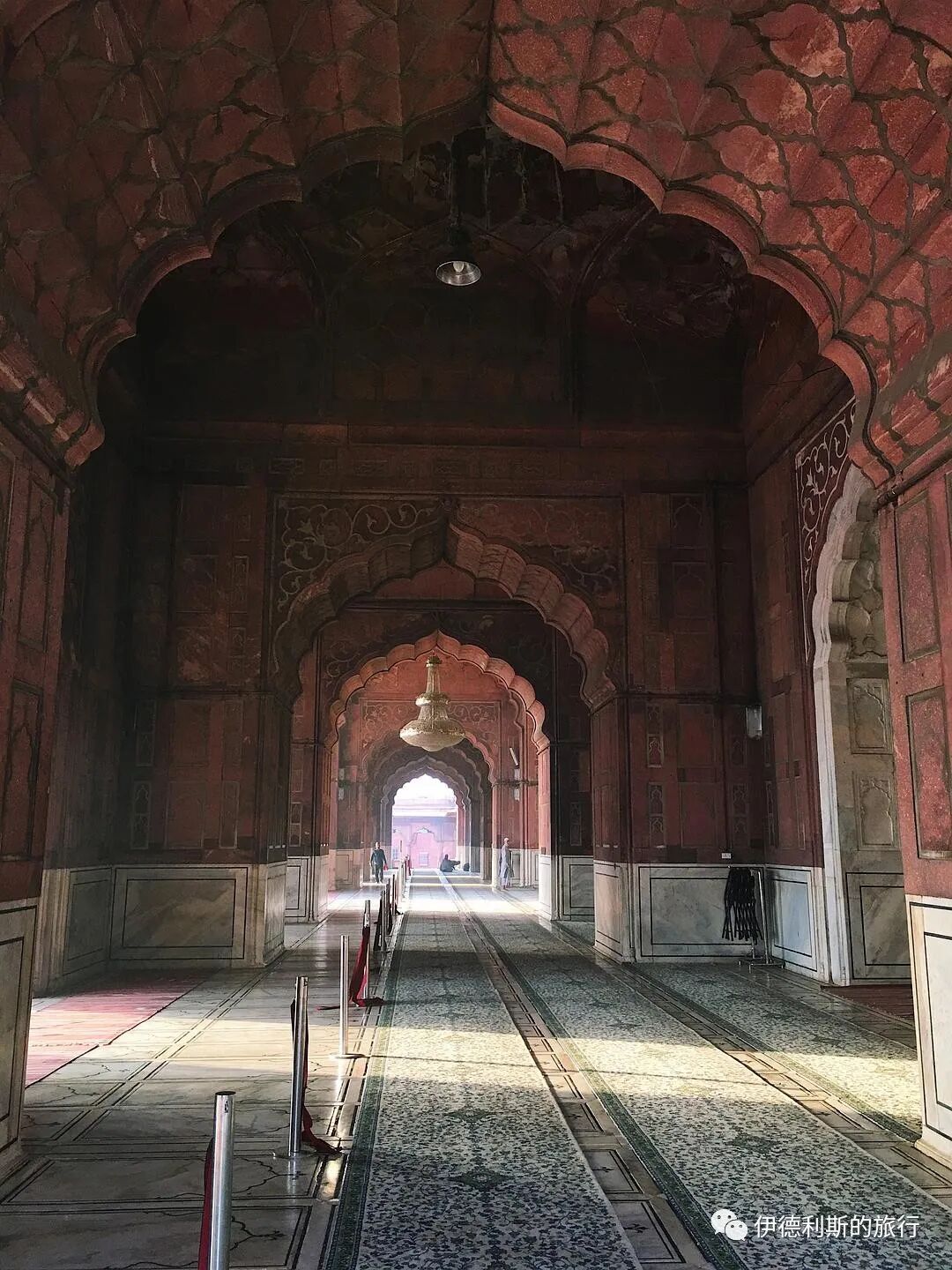
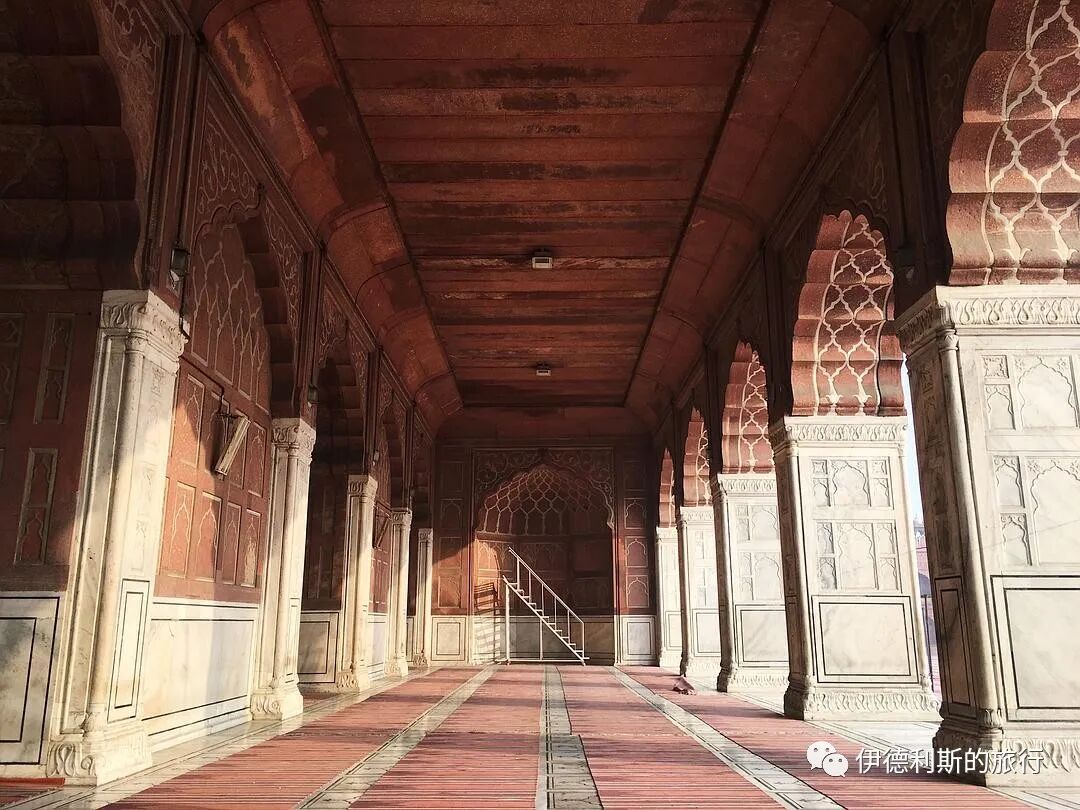
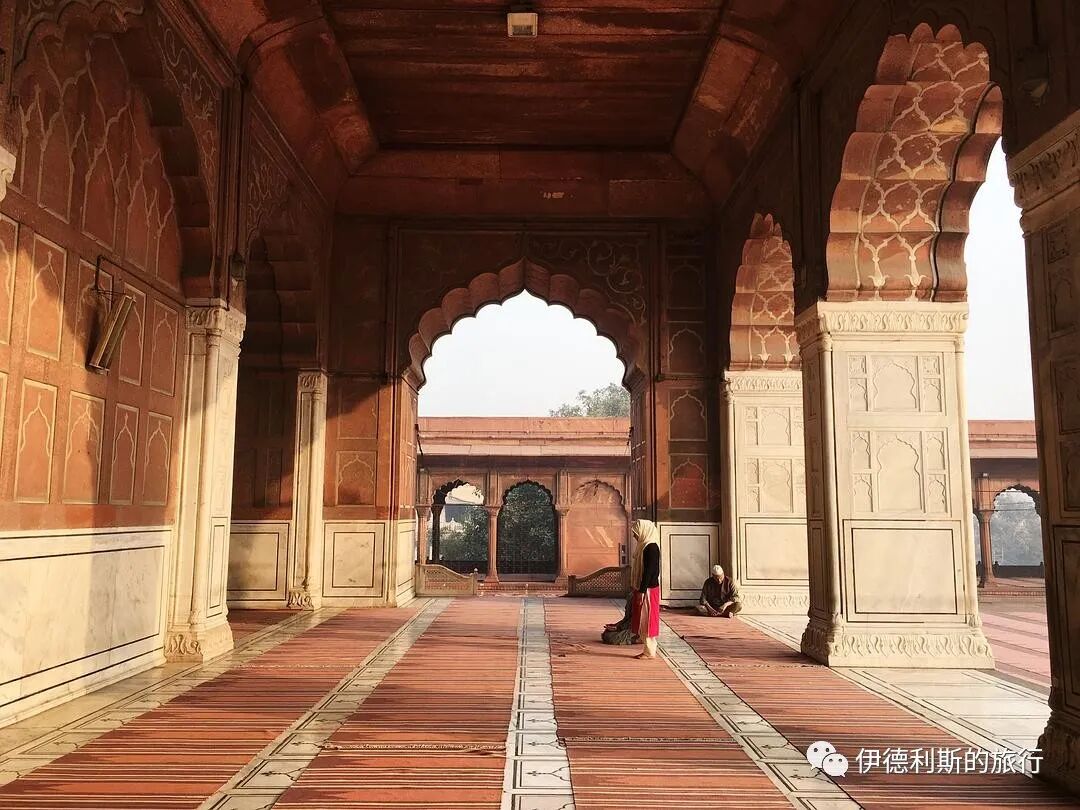
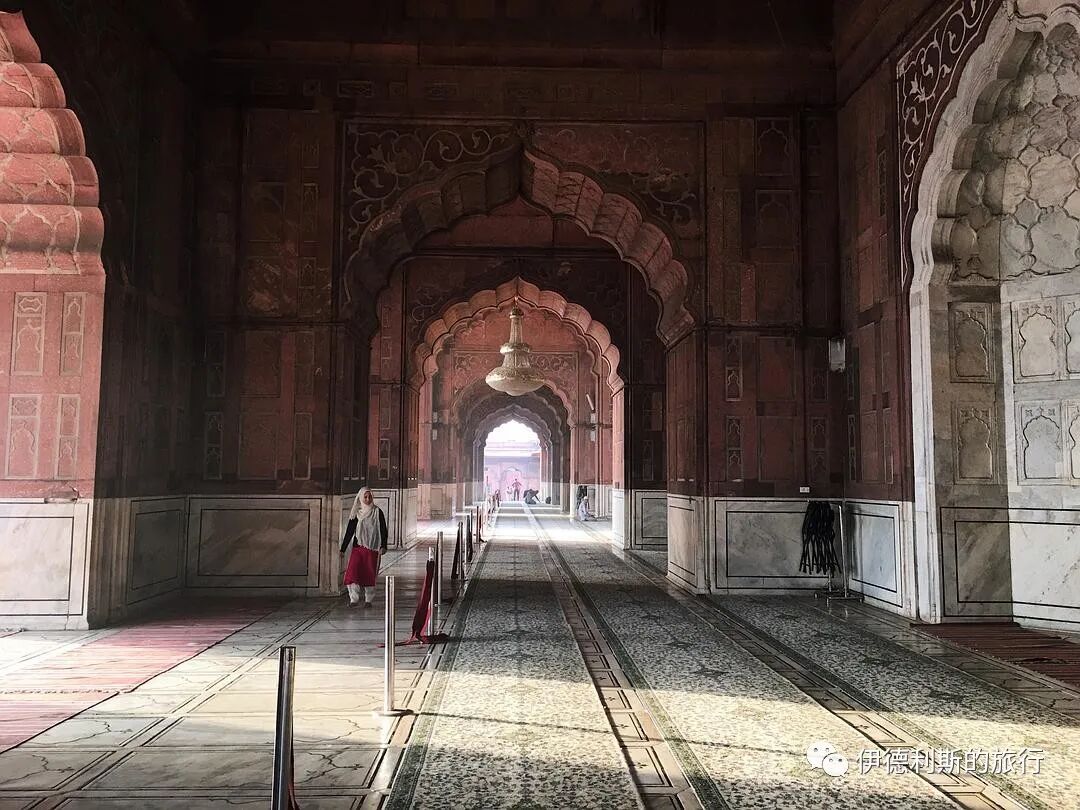
The mihrab in the center of the main hall indicates the direction of prayer toward Mecca:
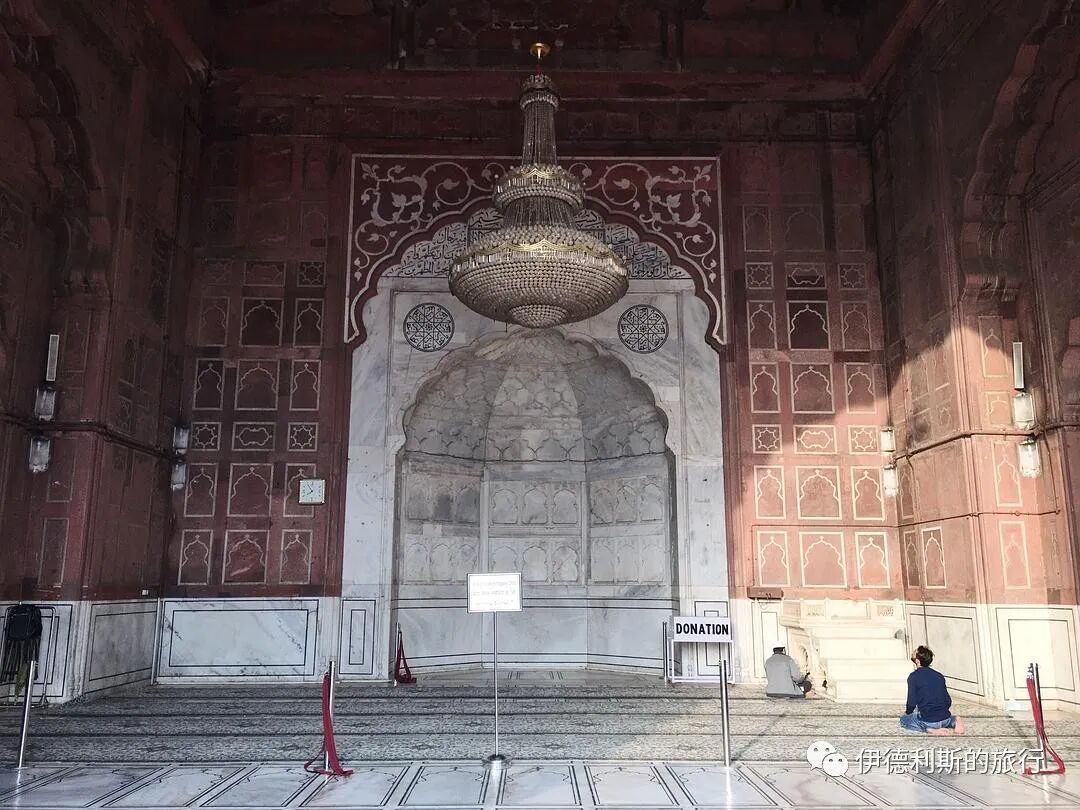
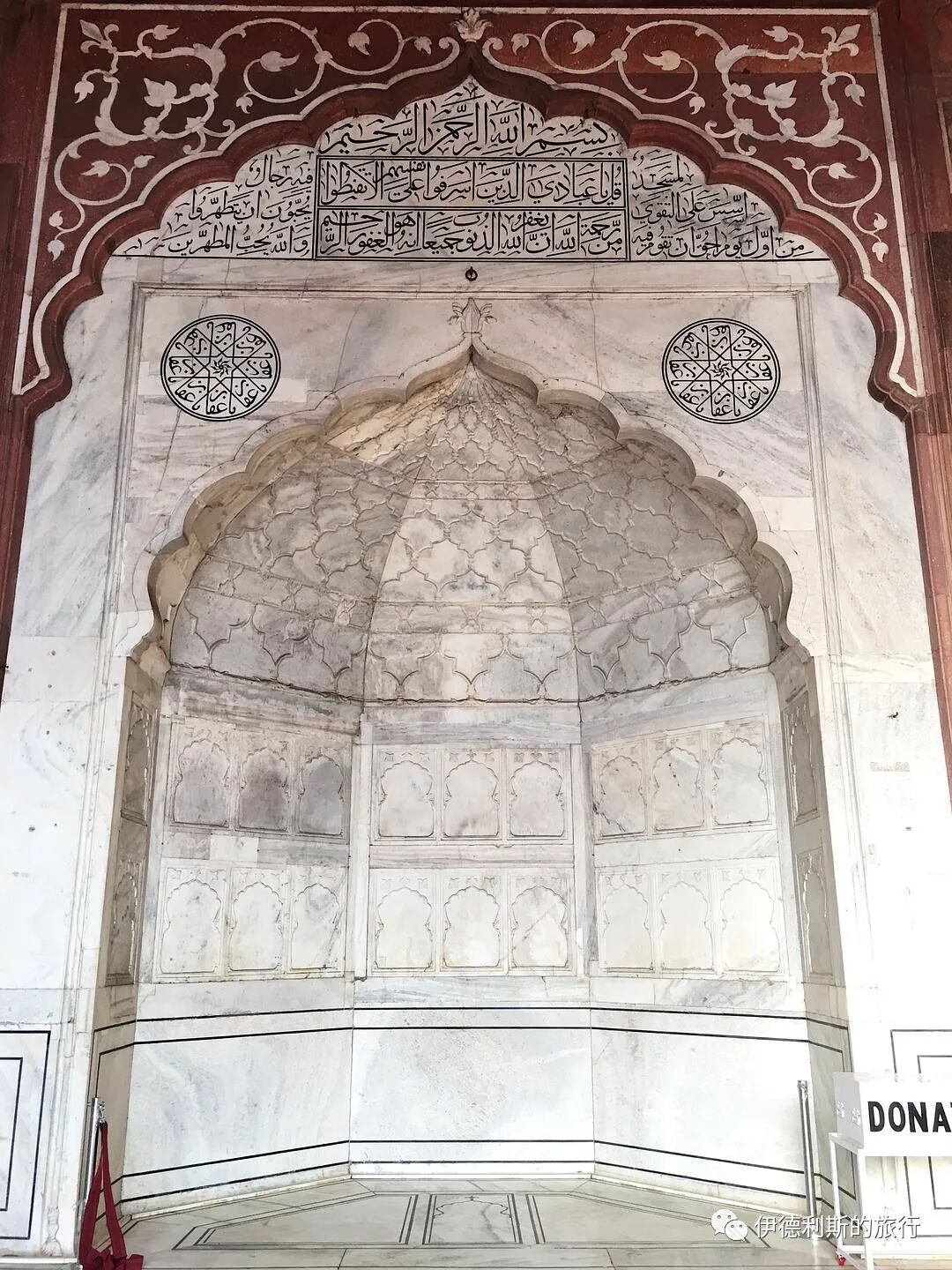
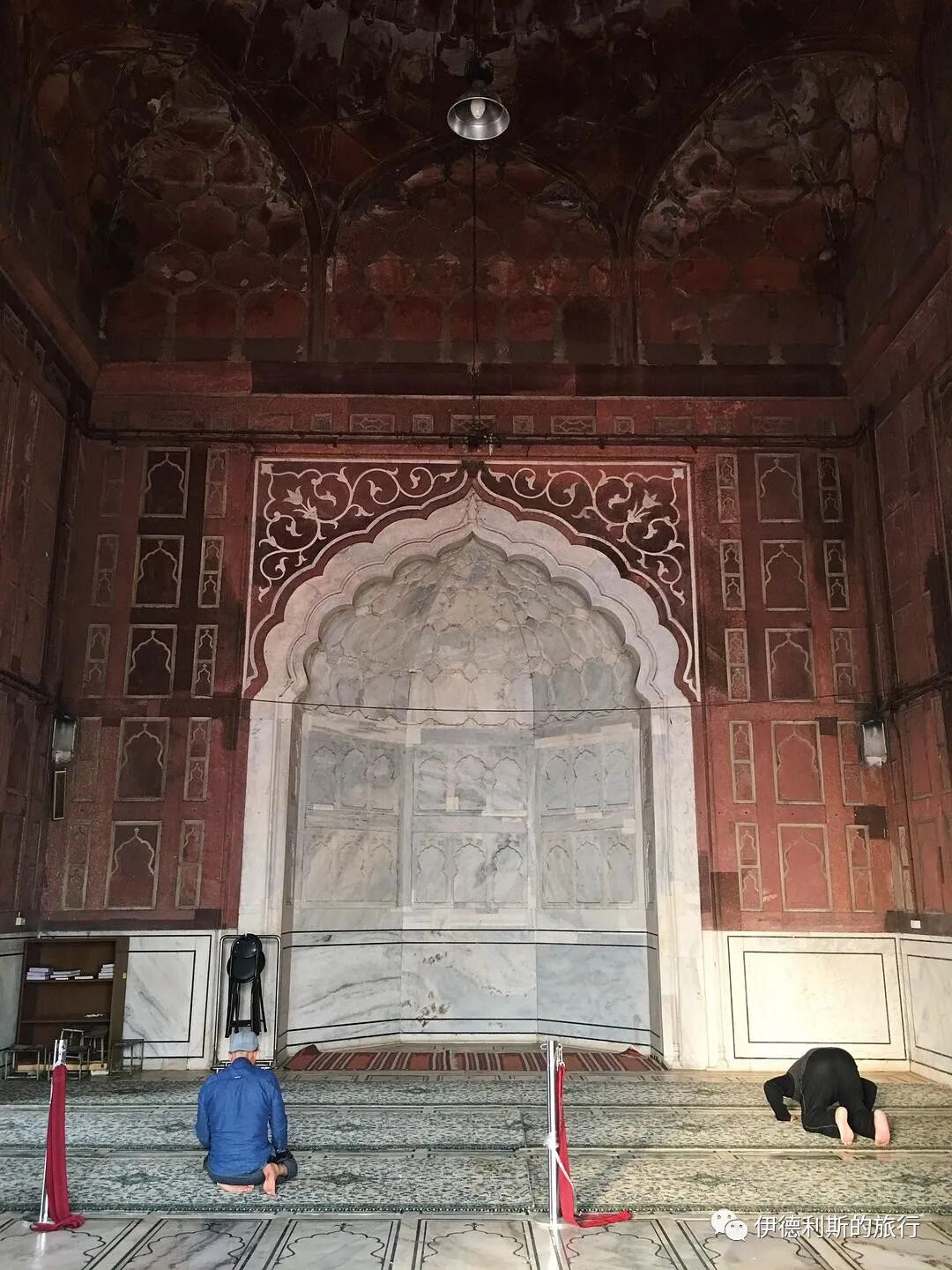
Besides the main mihrab in the center, there is a smaller mihrab on each side.
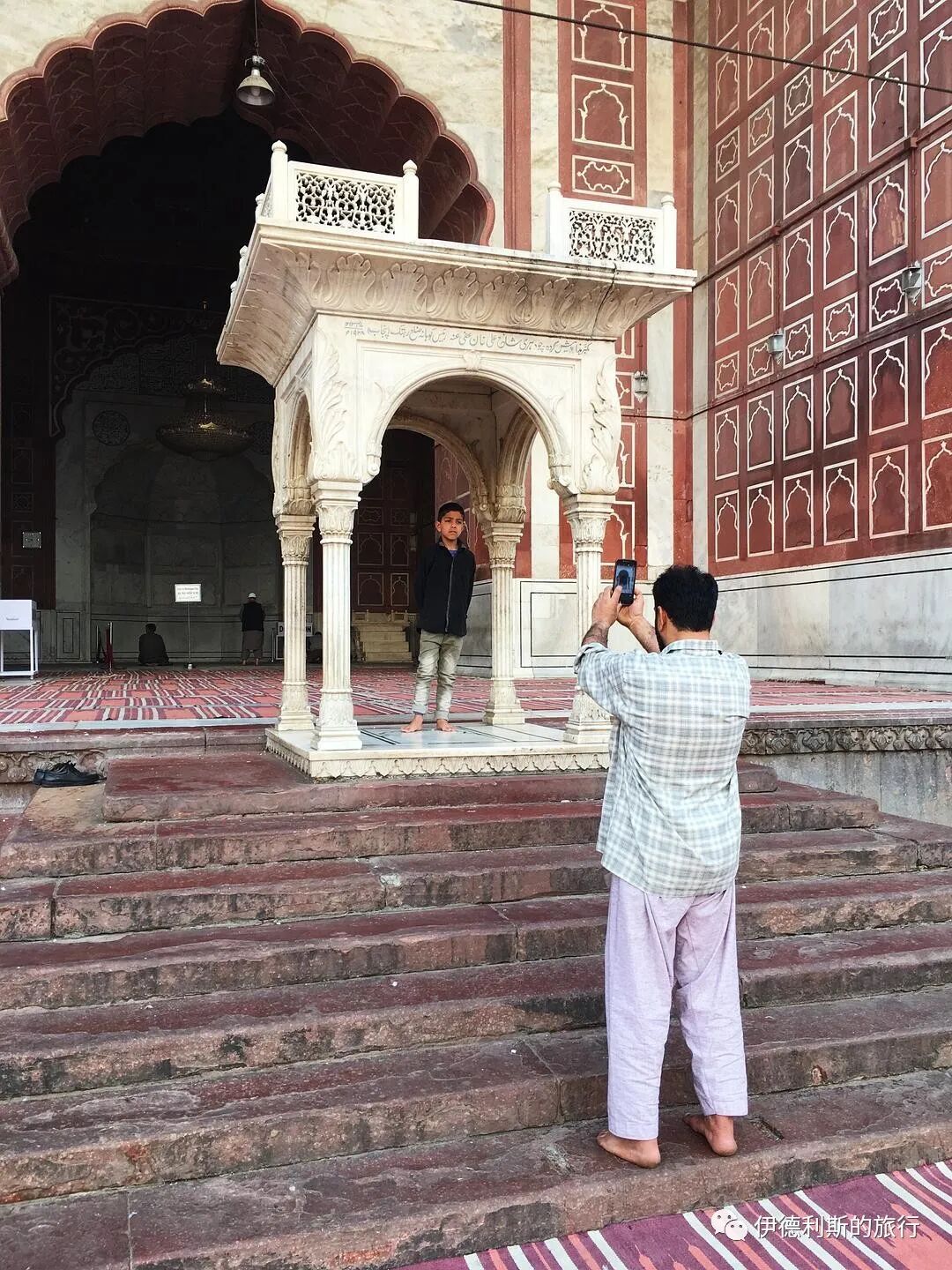
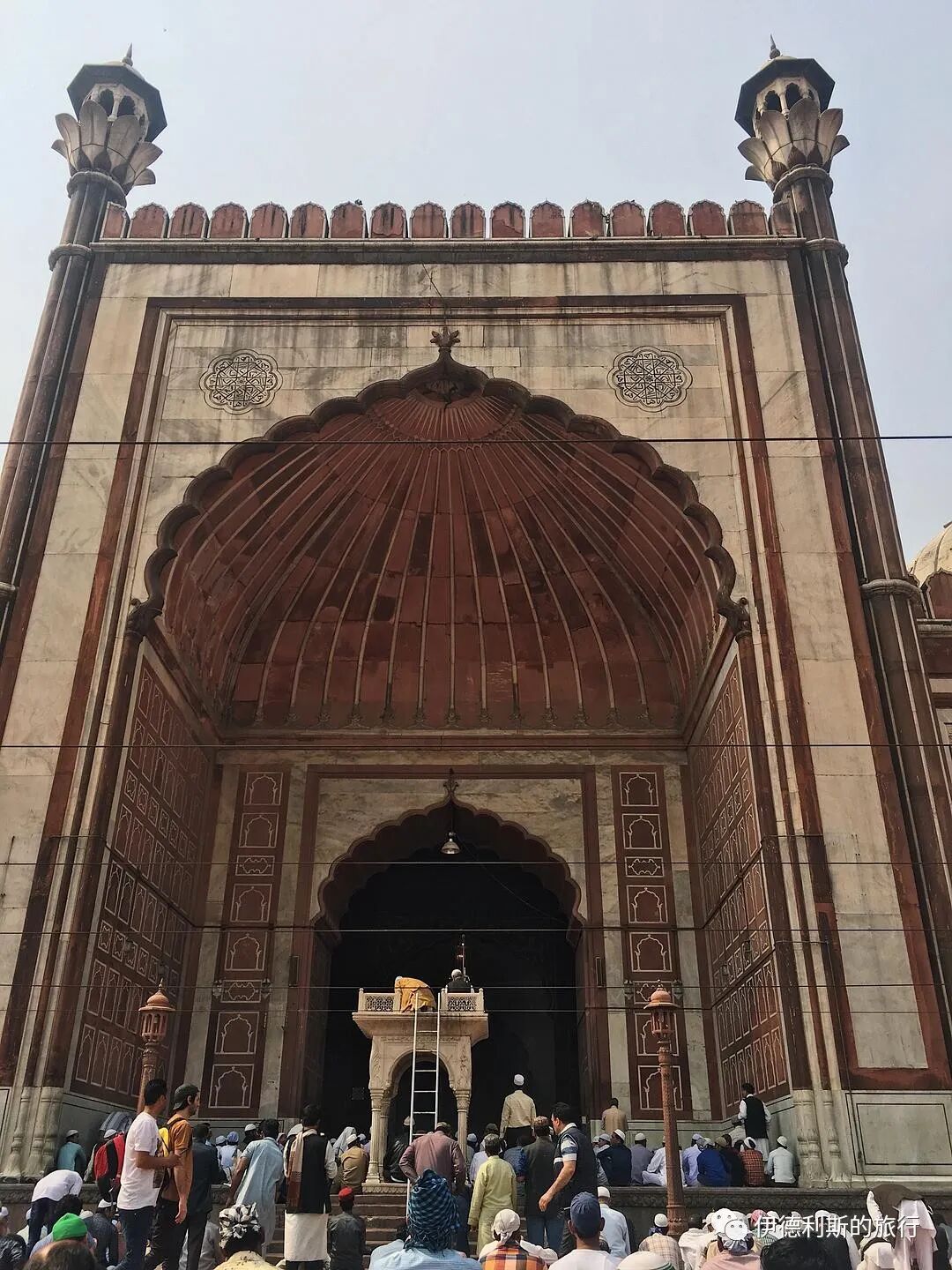
During Jumu'ah, the imam stands on this stone platform to deliver the khutbah.
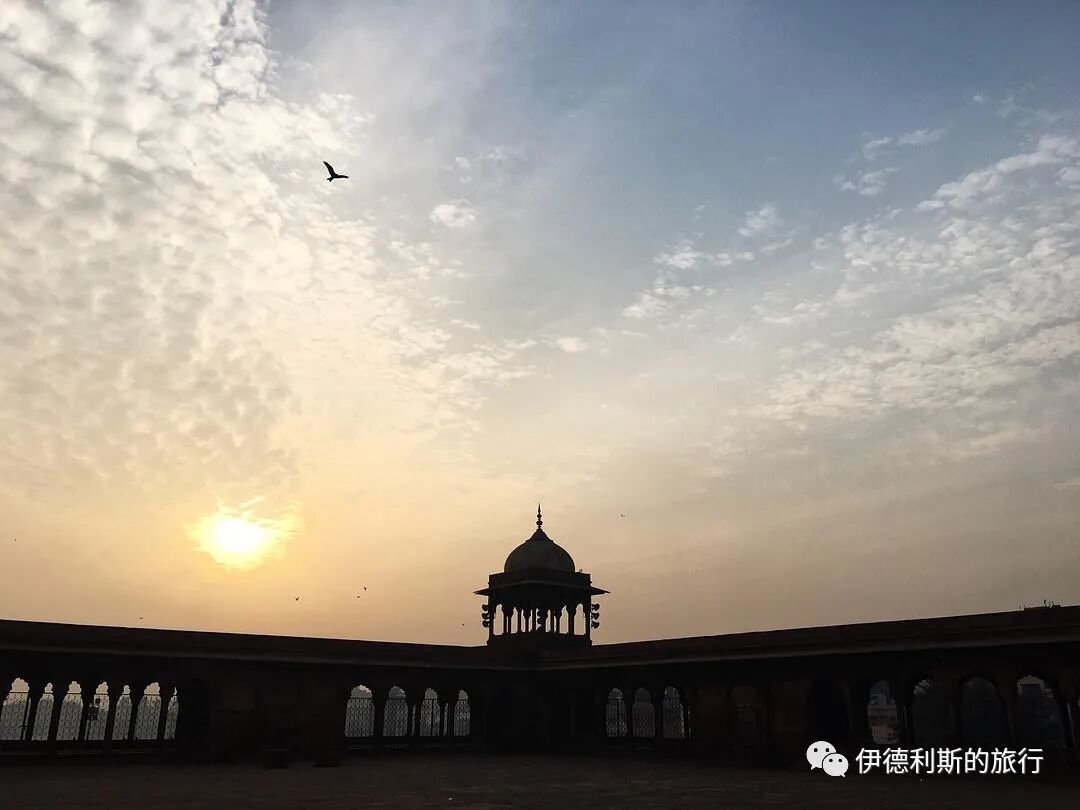
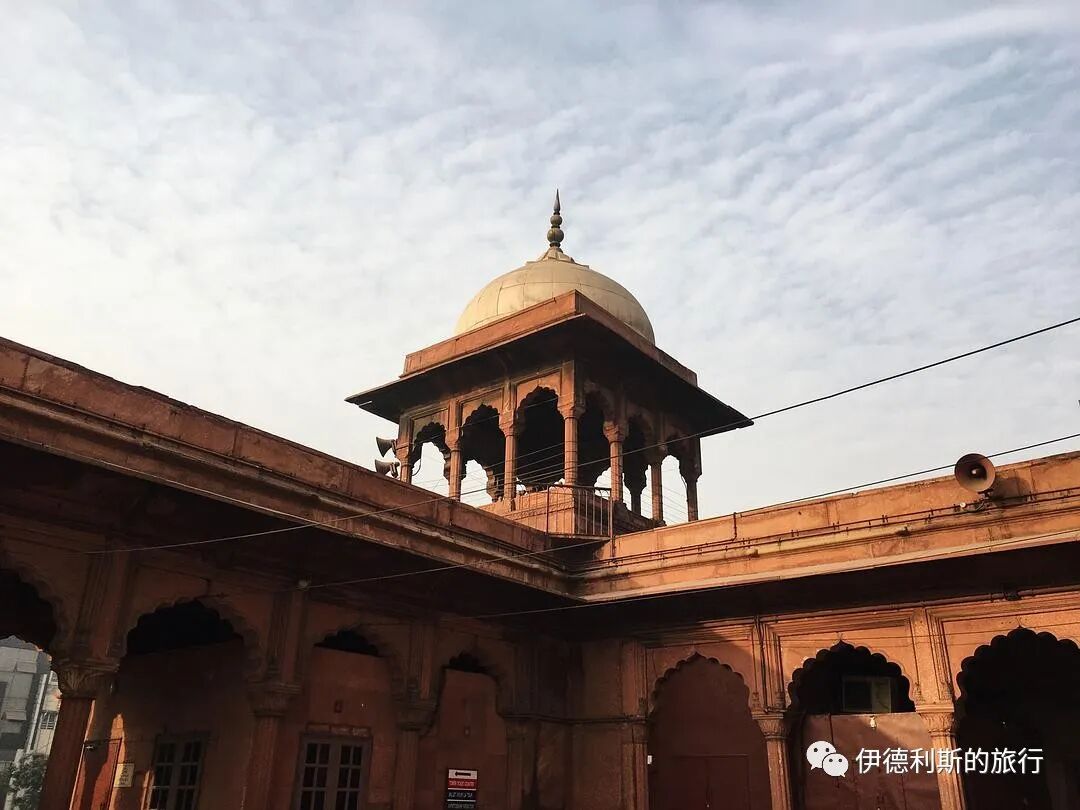
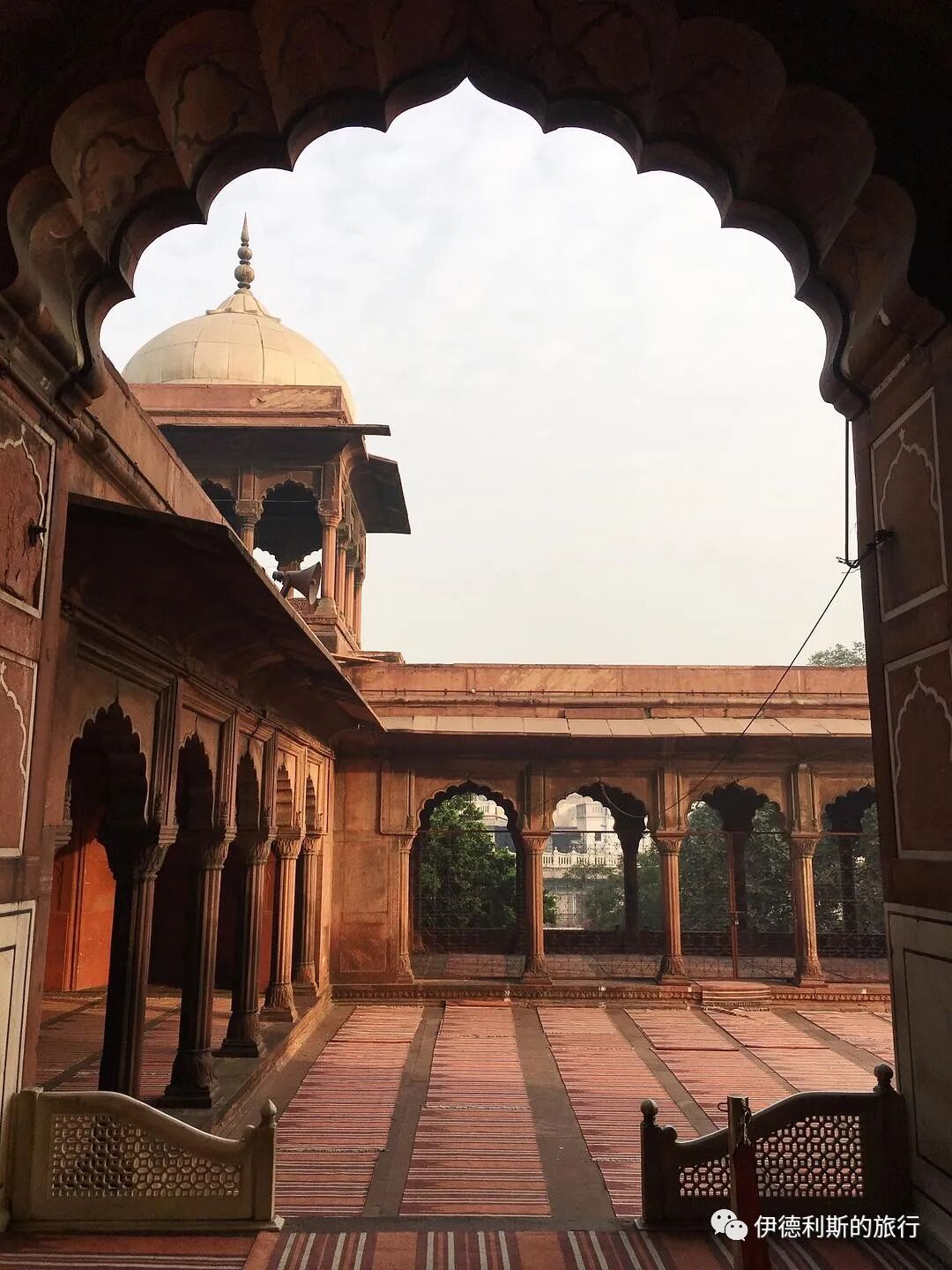
There is a tower at each of the four corners of the colonnade.
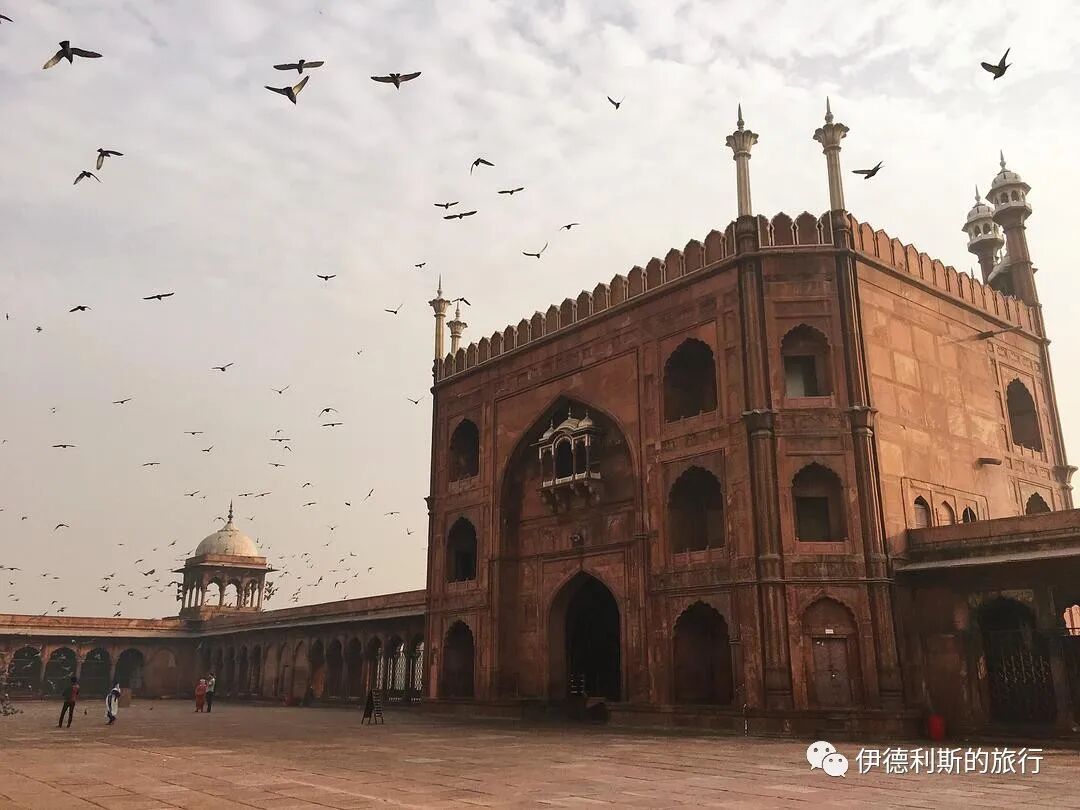
The east gate is the main entrance:
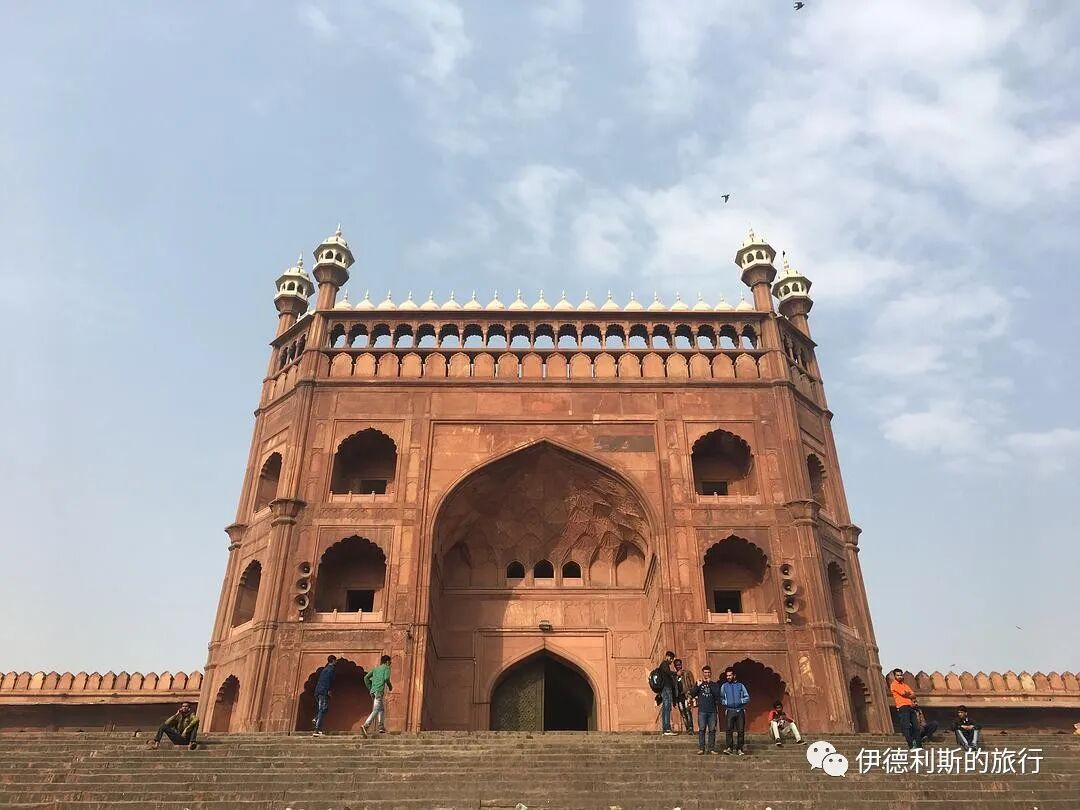
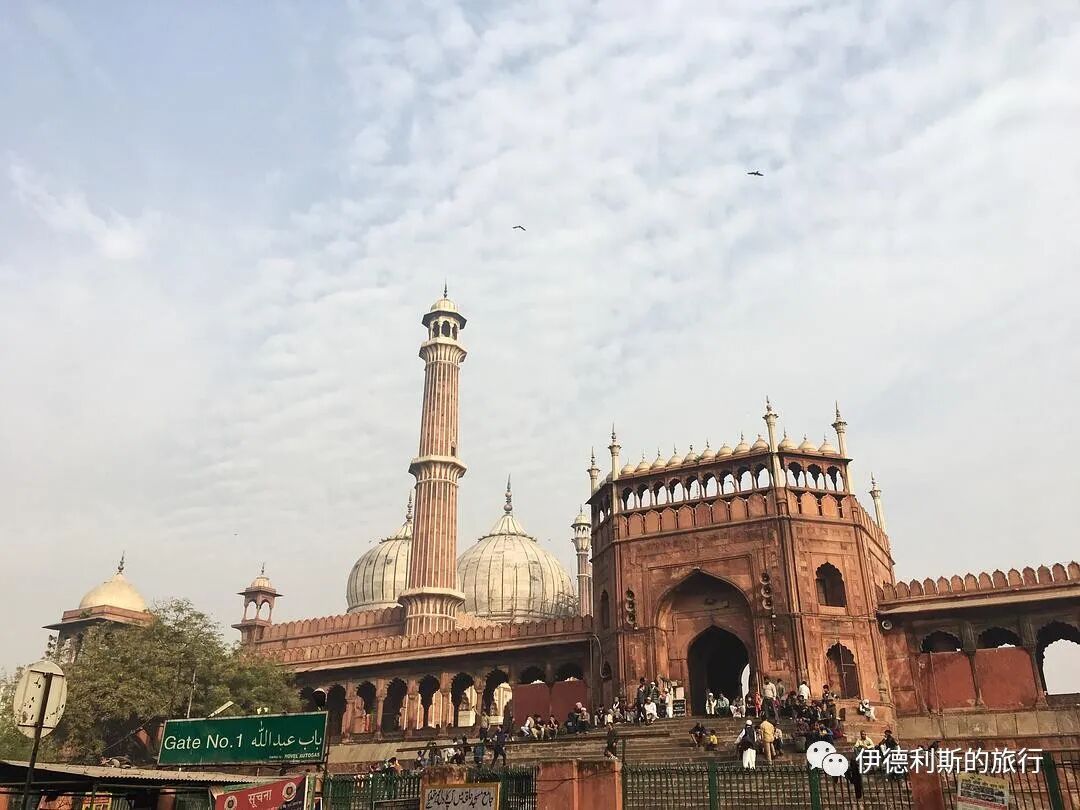
South Gate
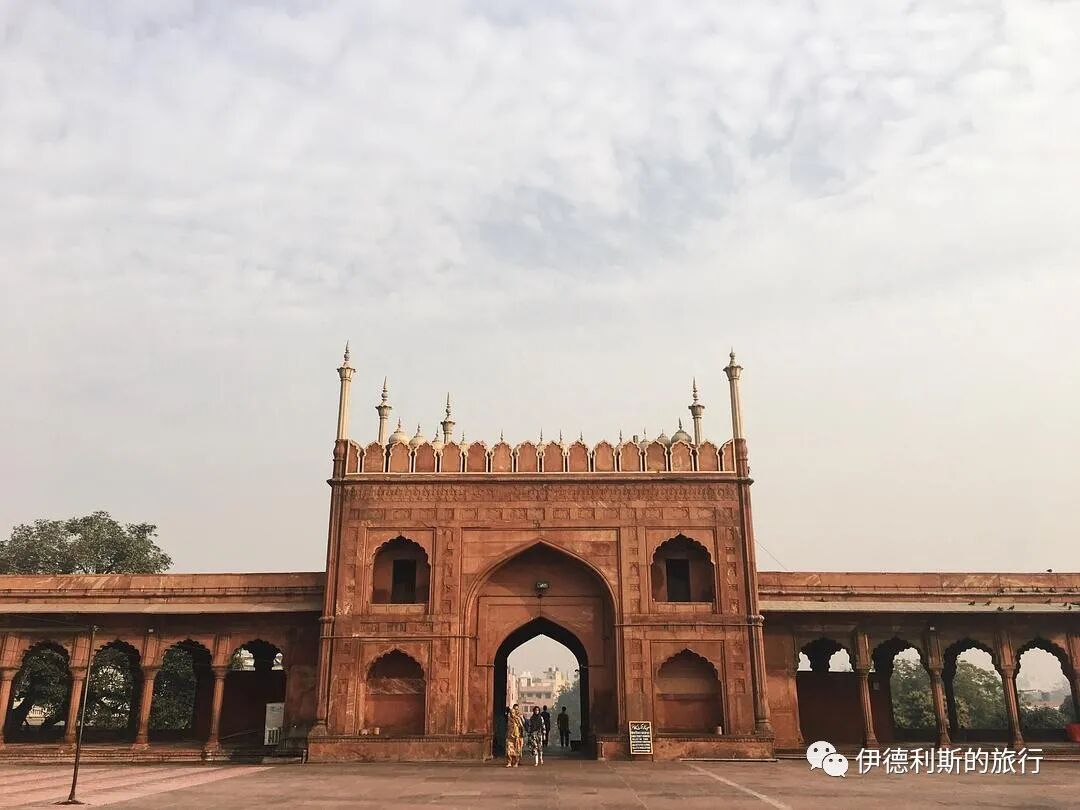
North Gate
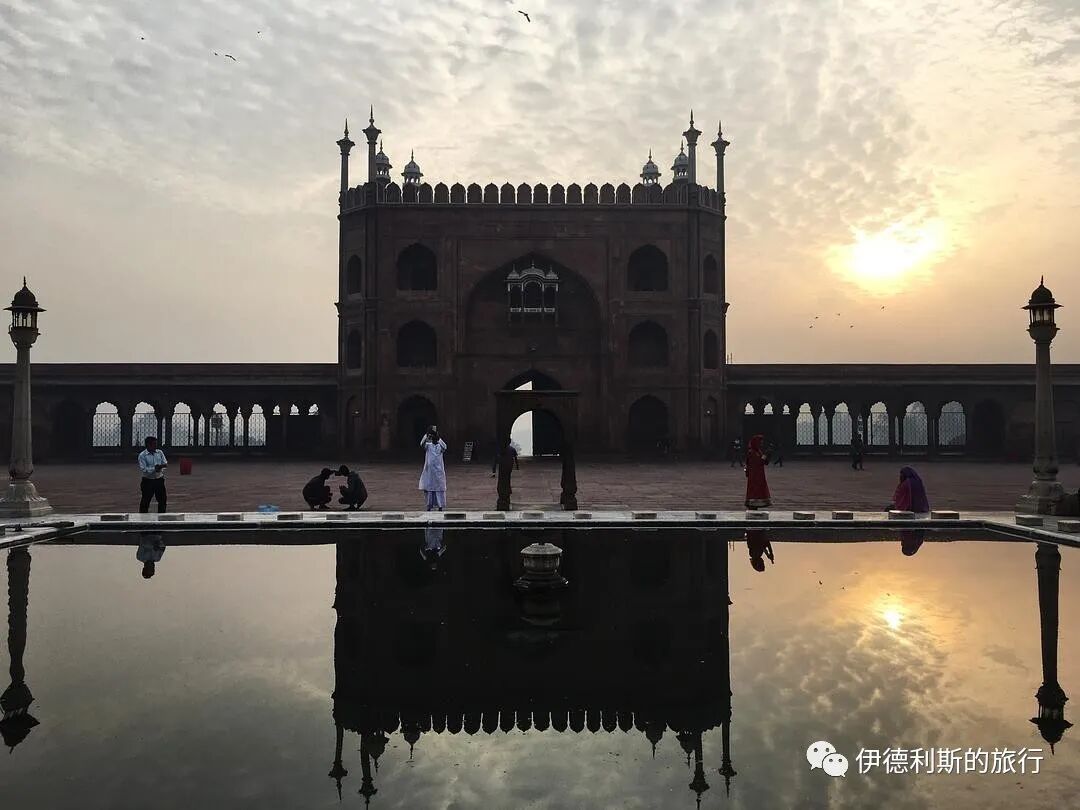
The water pool in the courtyard for wudu:
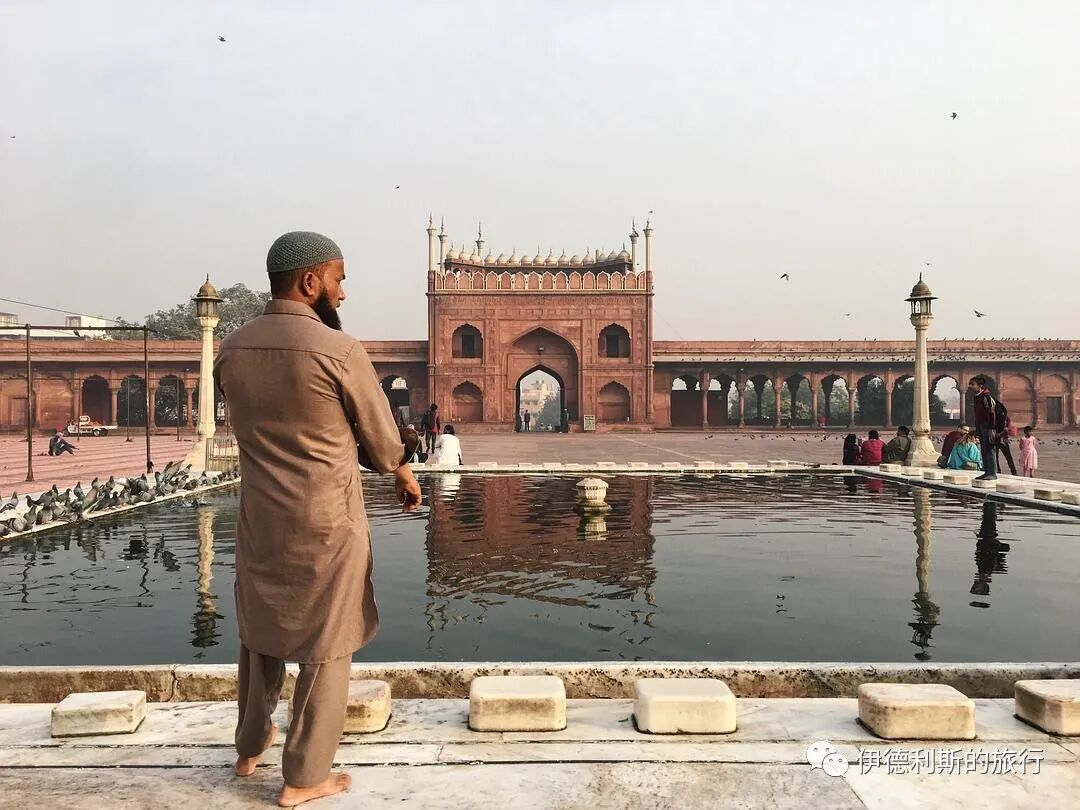
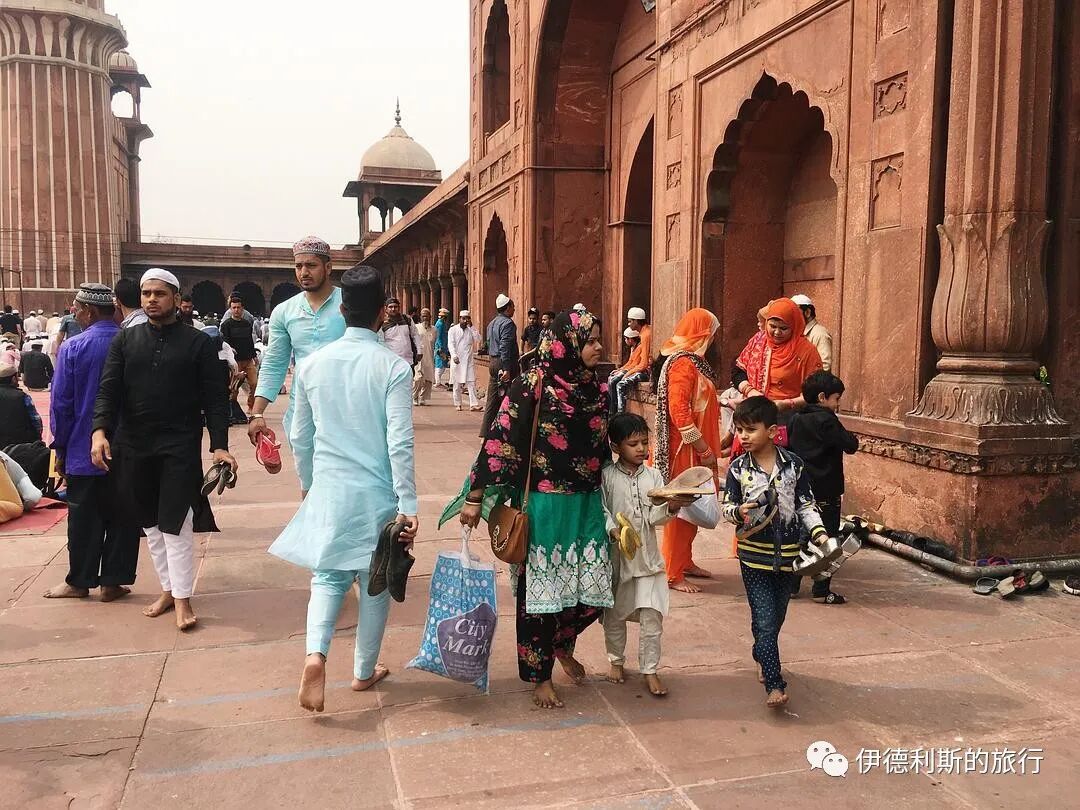
Jama means Jumu'ah, which refers to the Friday congregational prayer. The Jumu'ah mosque is usually the largest in the community, and the most important weekly prayer is held here every Friday at noon. I was lucky enough to attend a Friday Jumu'ah prayer at the Jama Mosque.
On the morning of Jumu'ah, more prayer rugs were already laid out in the courtyard.
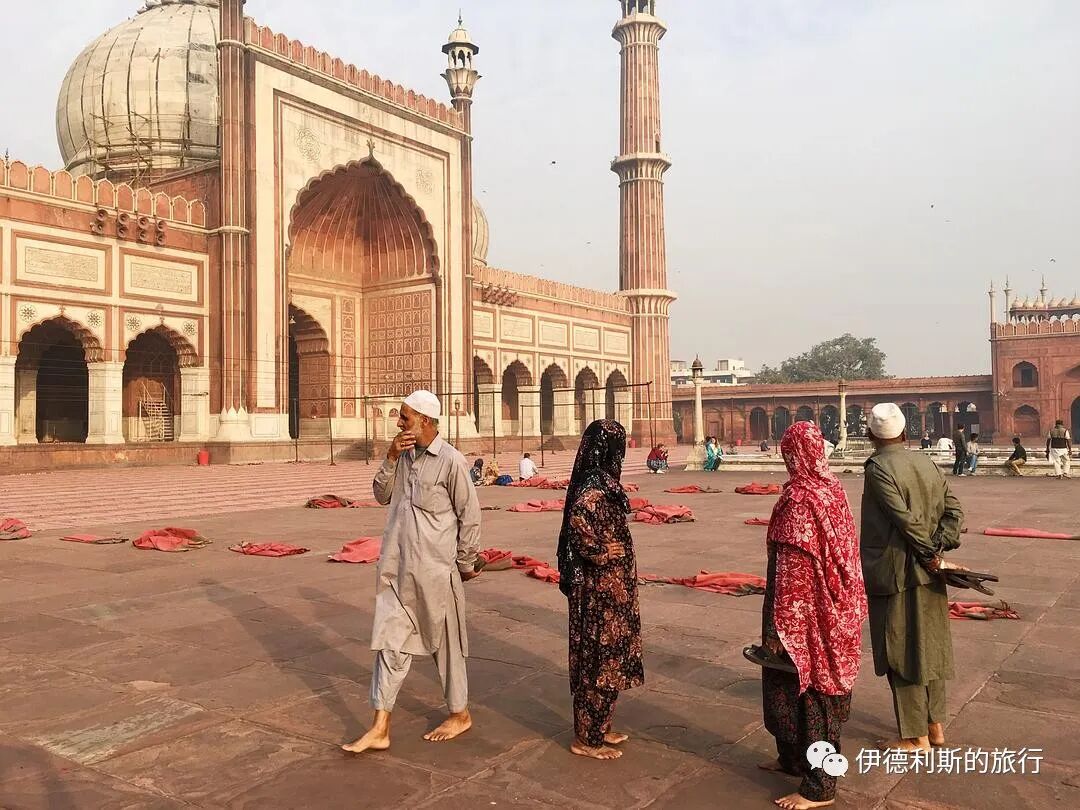
People are performing wudu for the Jumu'ah prayer:
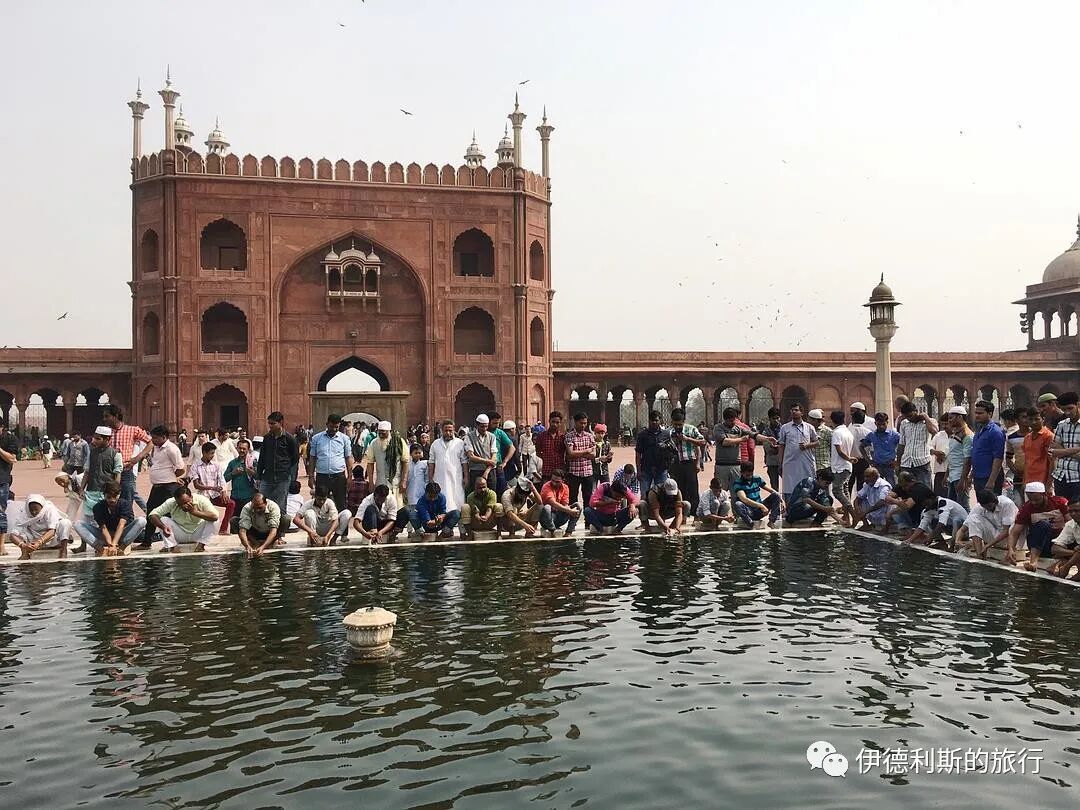
More and more people are arriving.
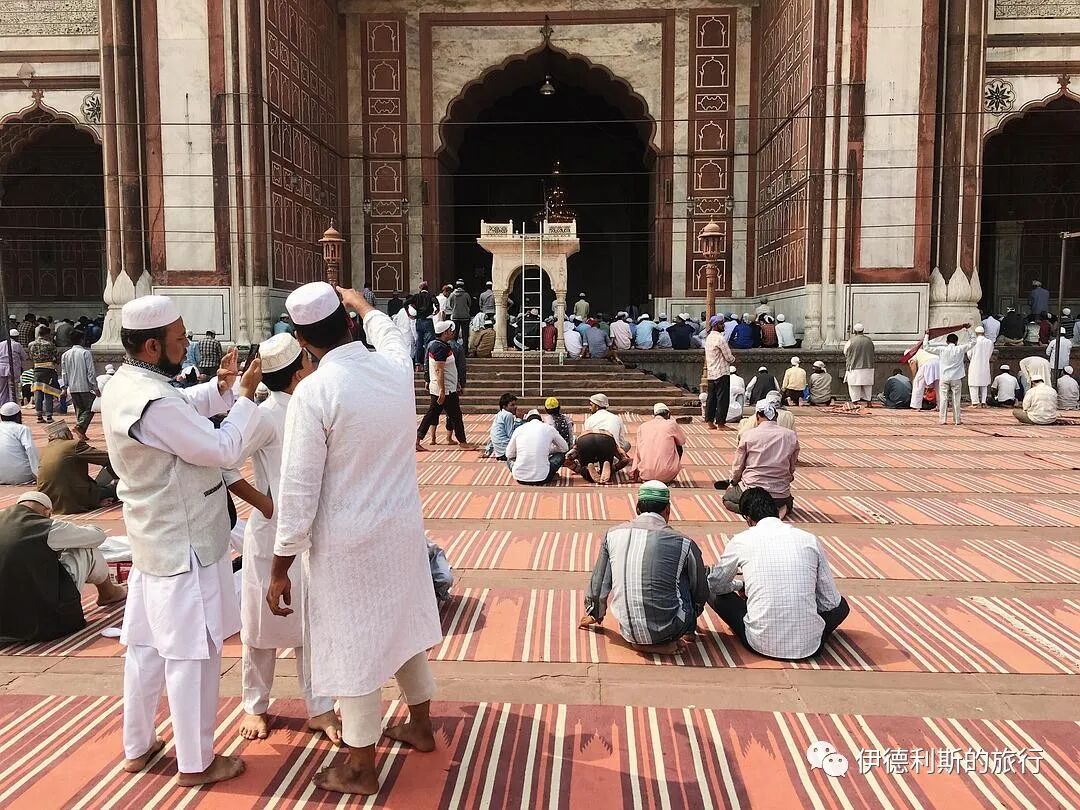
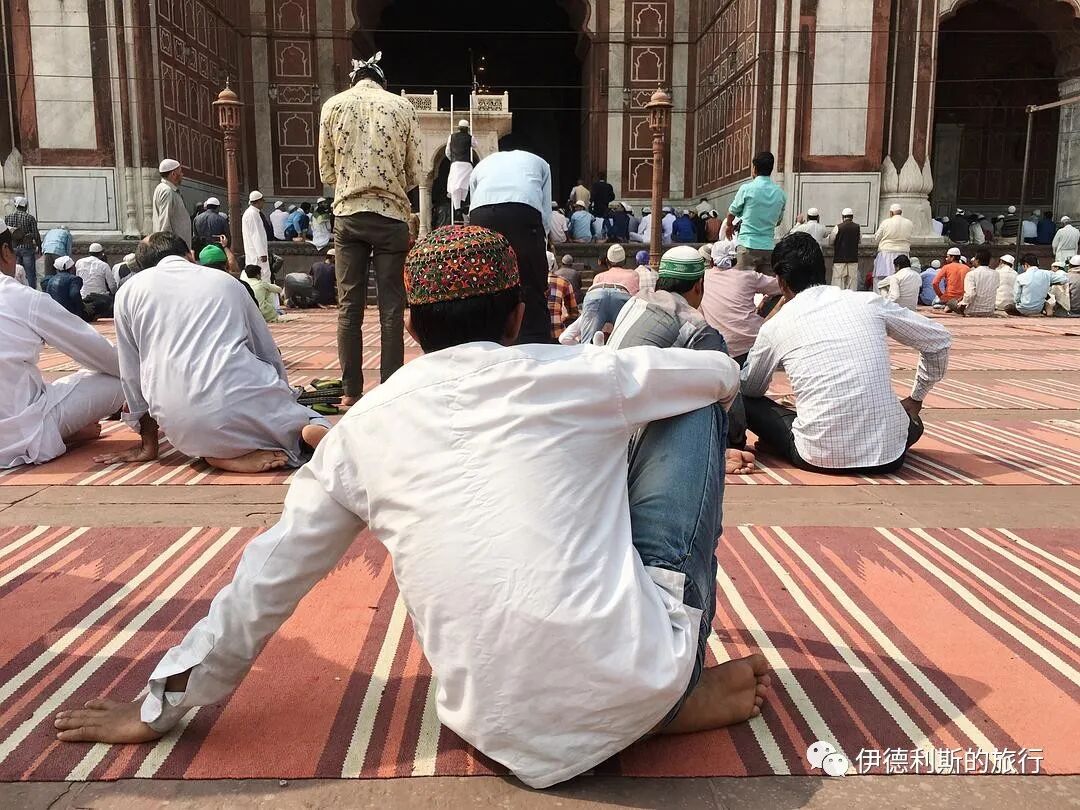
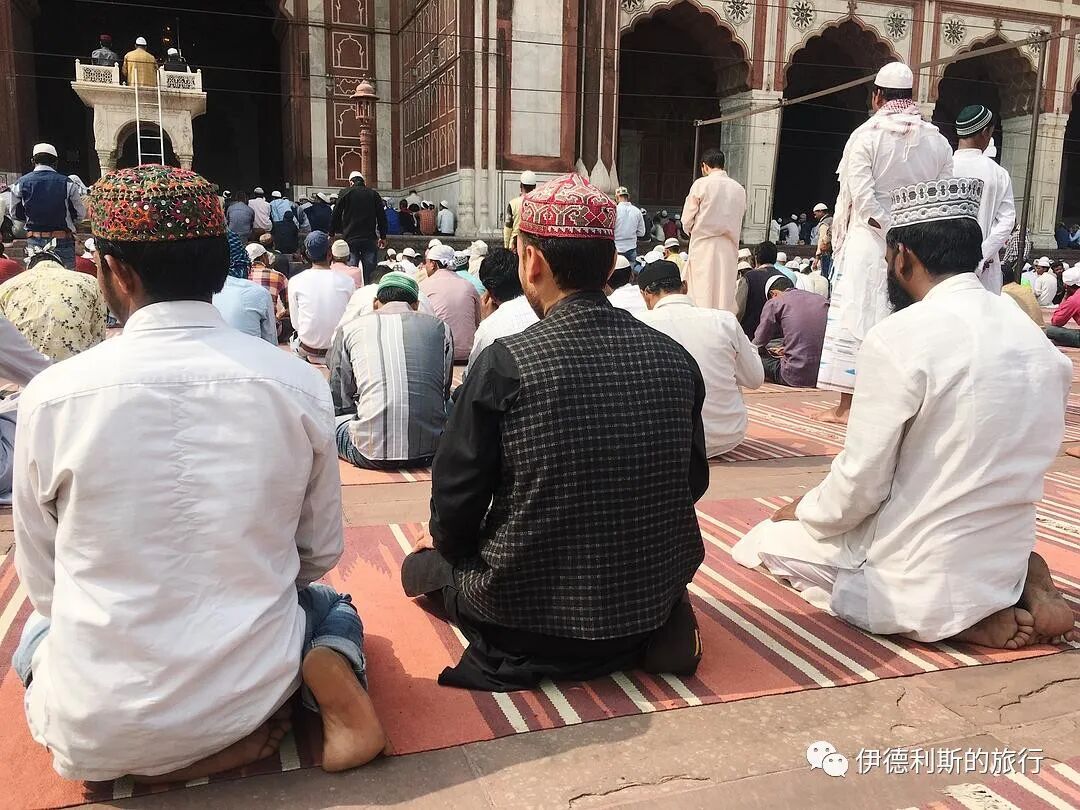
The imam leading the prayer climbs onto the stone platform.
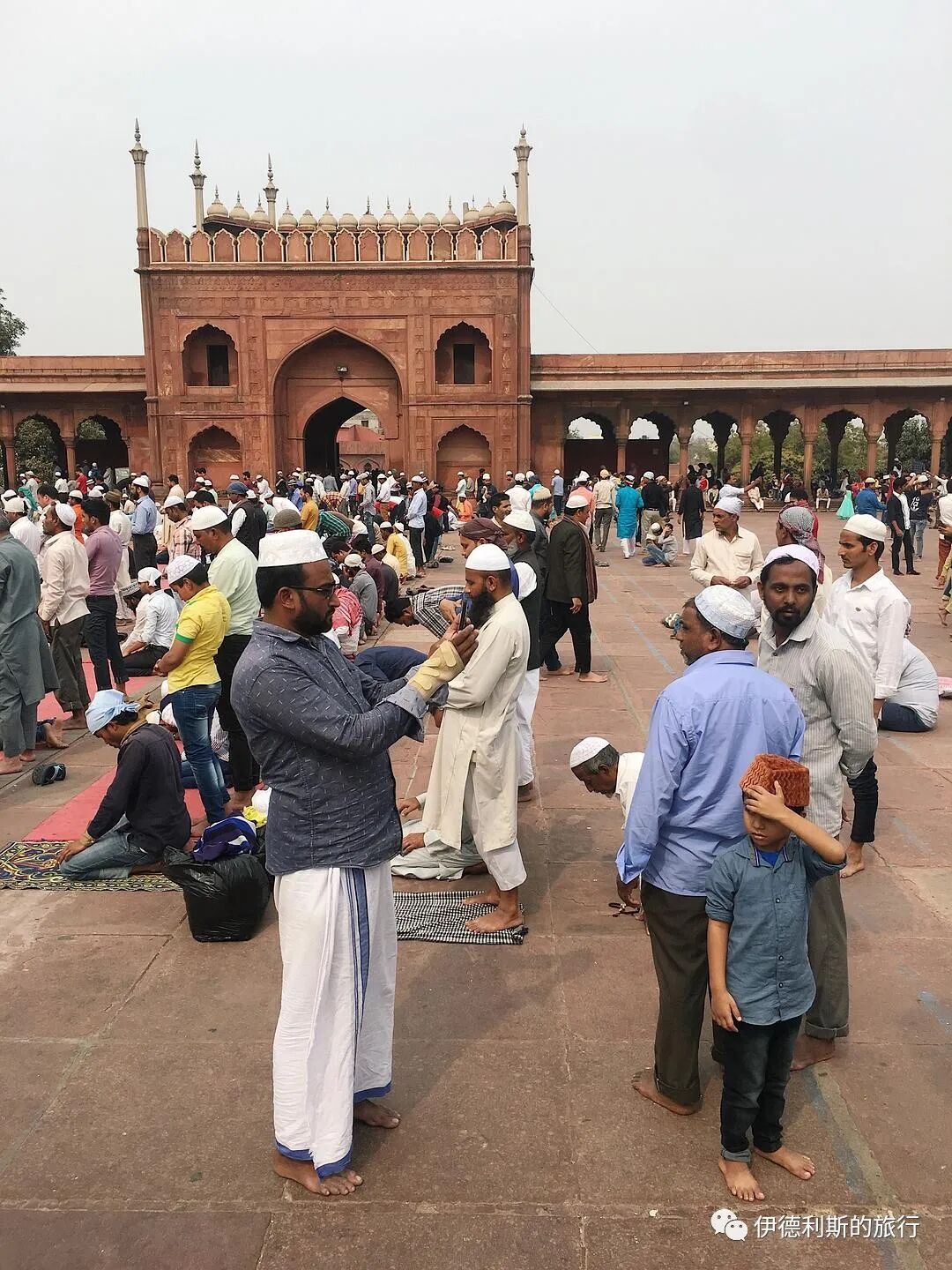
After the prayer, people take photos:
3. Fatehpuri Mosque: 1650
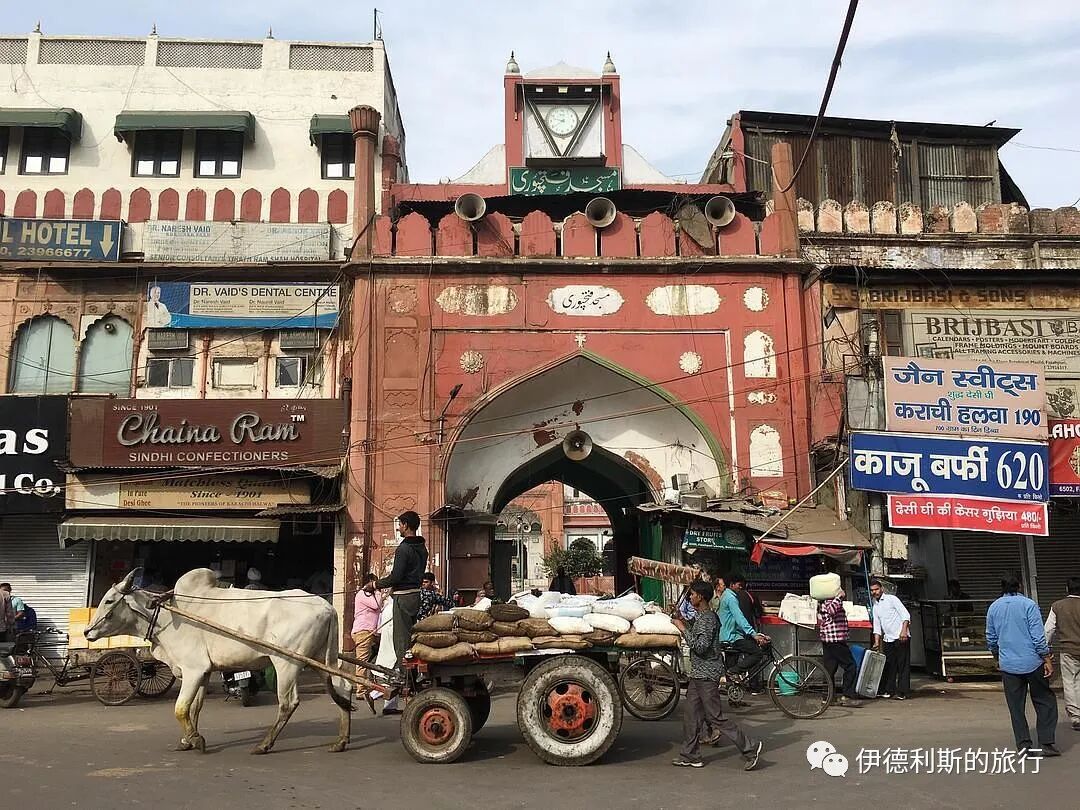
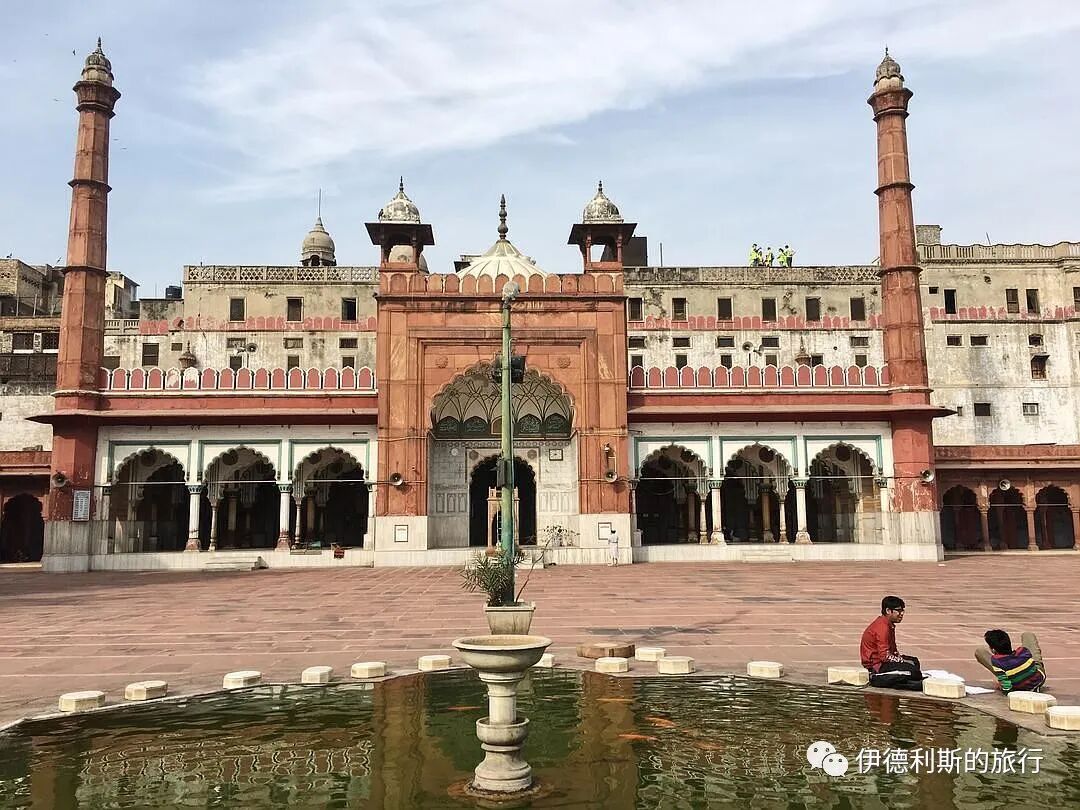
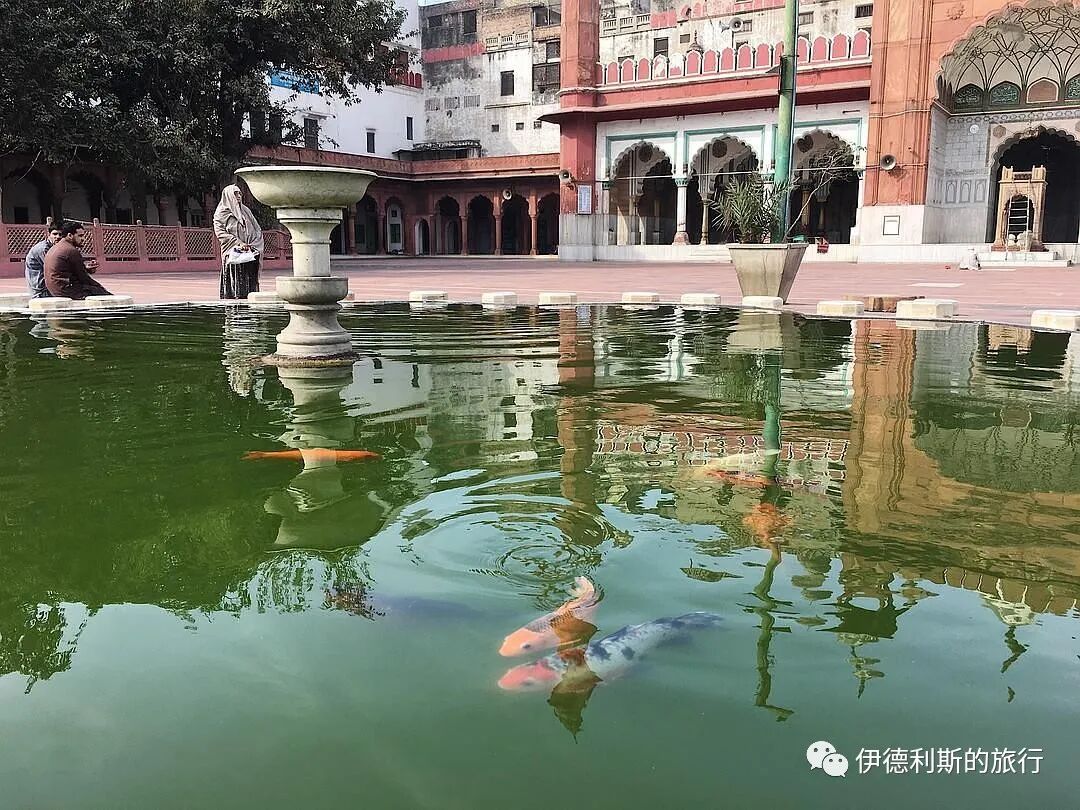
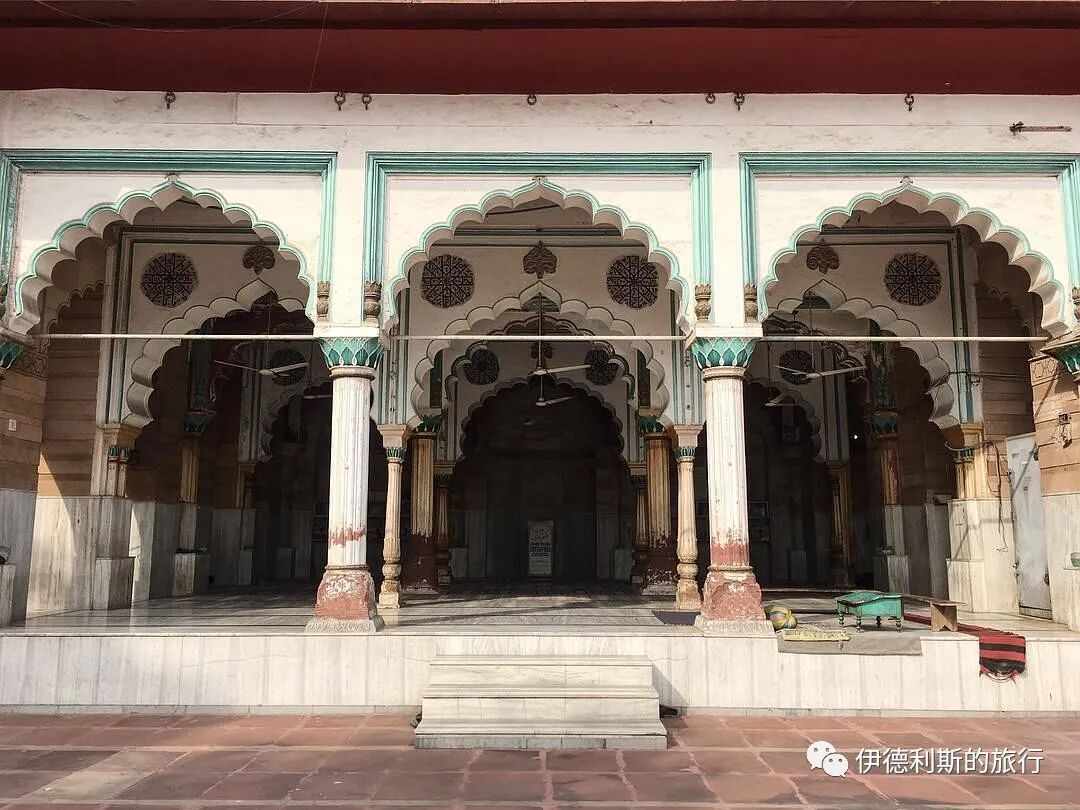
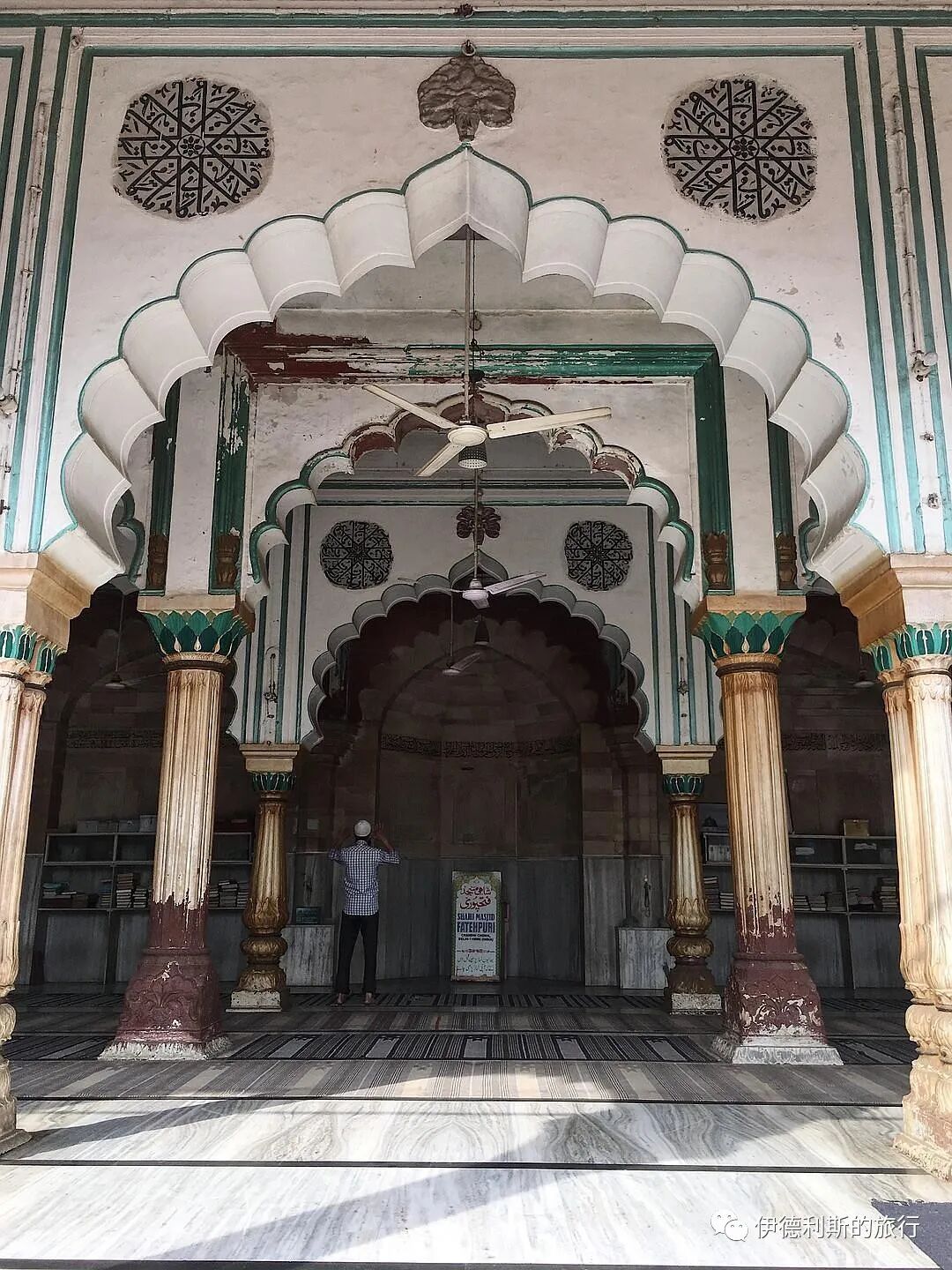
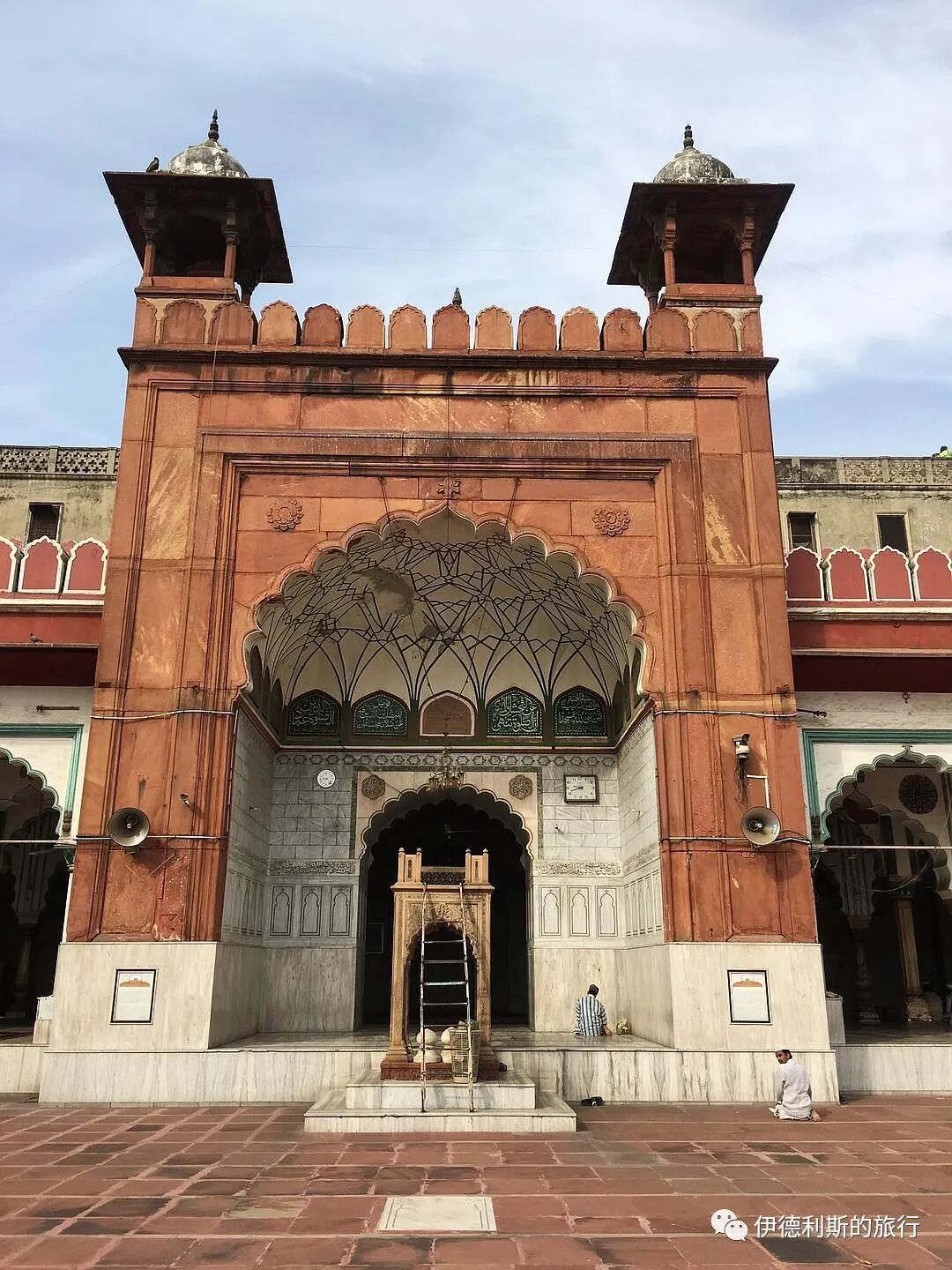
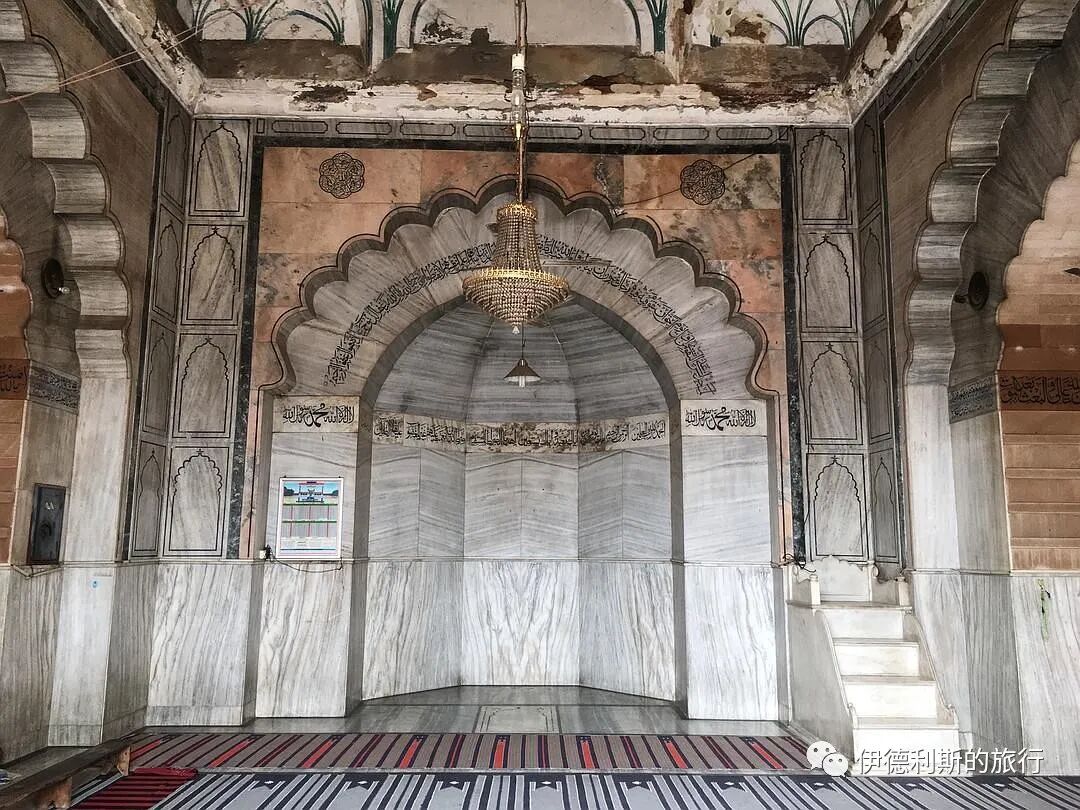
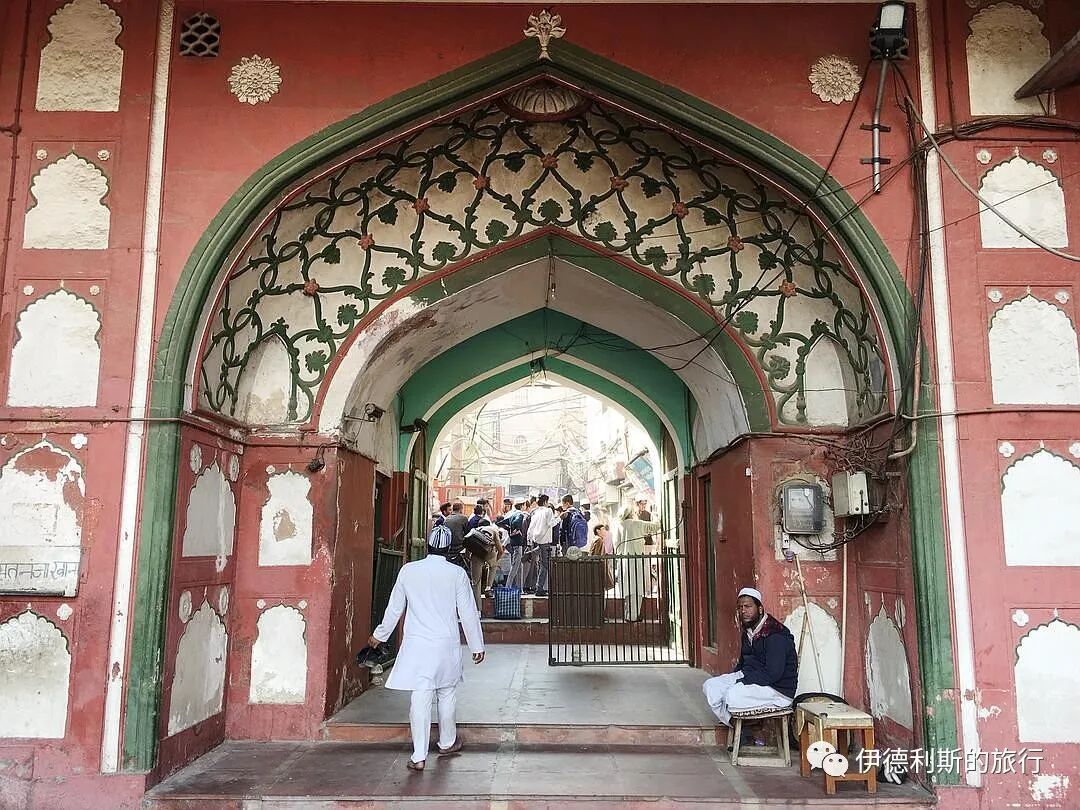
Fatehpuri Mosque is located at the western end of Chandni Chowk, the main east-west road in Shahjahanabad. It was built in 1650 under the direction of Fatehpuri Begum, the wife of Shah Jahan. The mosque is in the classic Mughal style, built with red sandstone, featuring minarets on both sides and a main prayer hall in the middle. The main hall has seven arched bays, and the central iwan arch is topped with a Mughal-style dome.
4. Golden Mosque (Sunehri Masjid): 1751
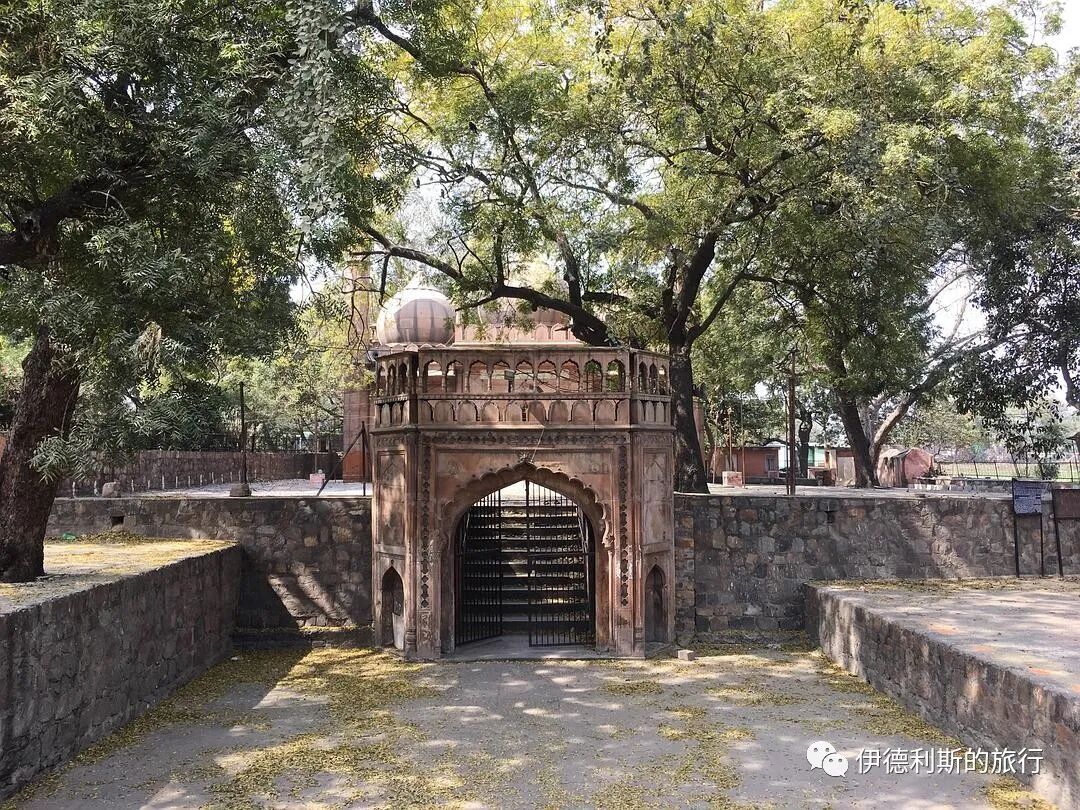
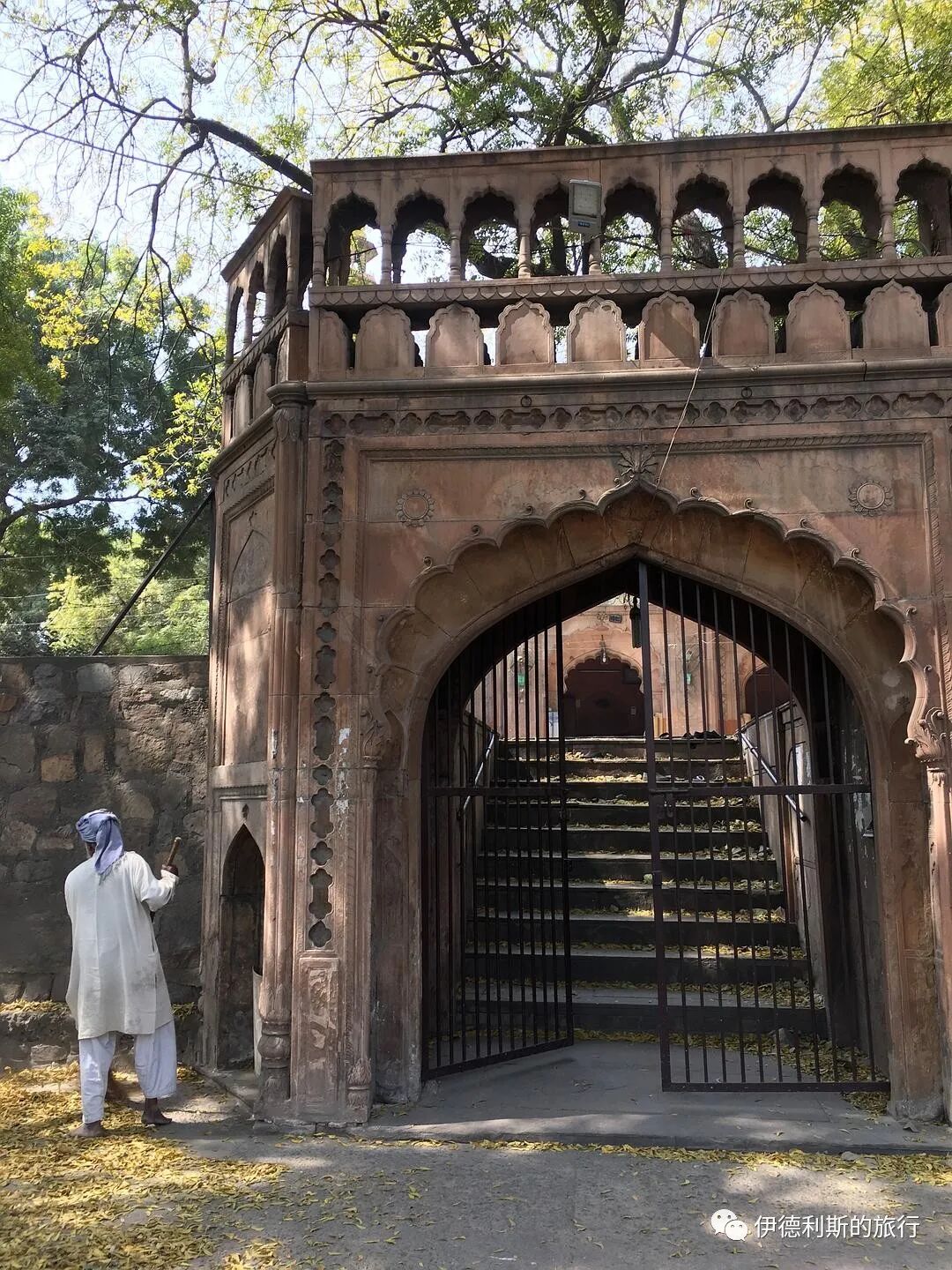
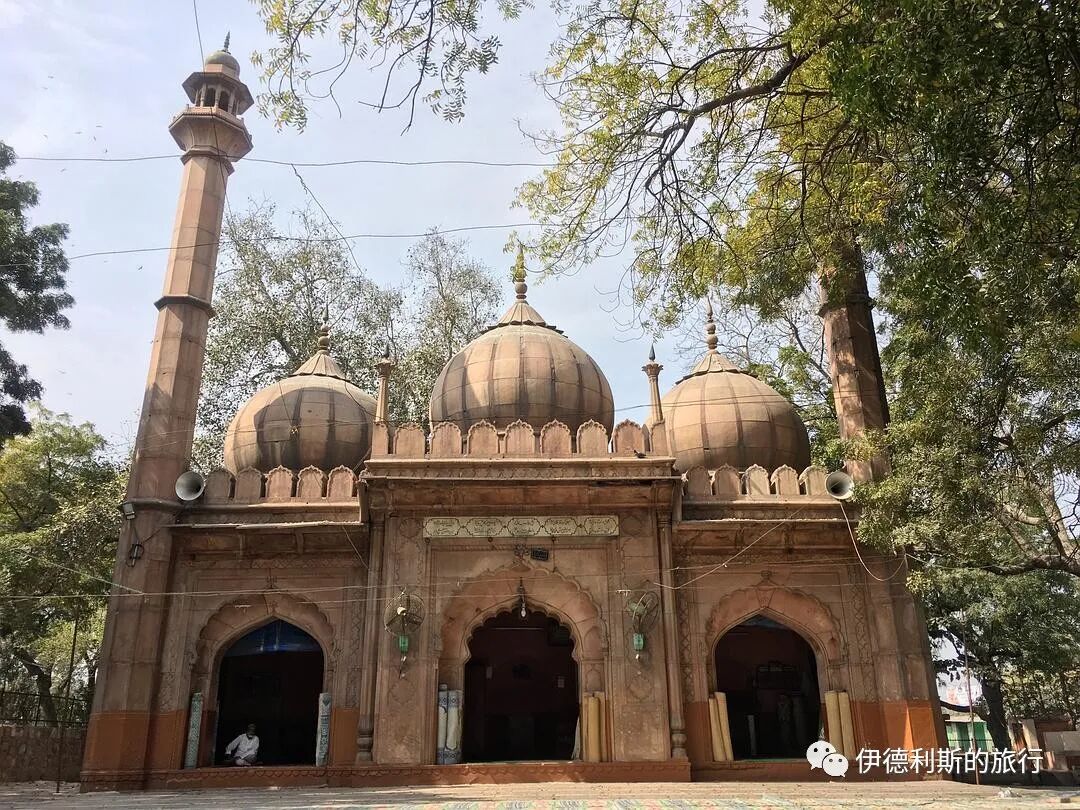
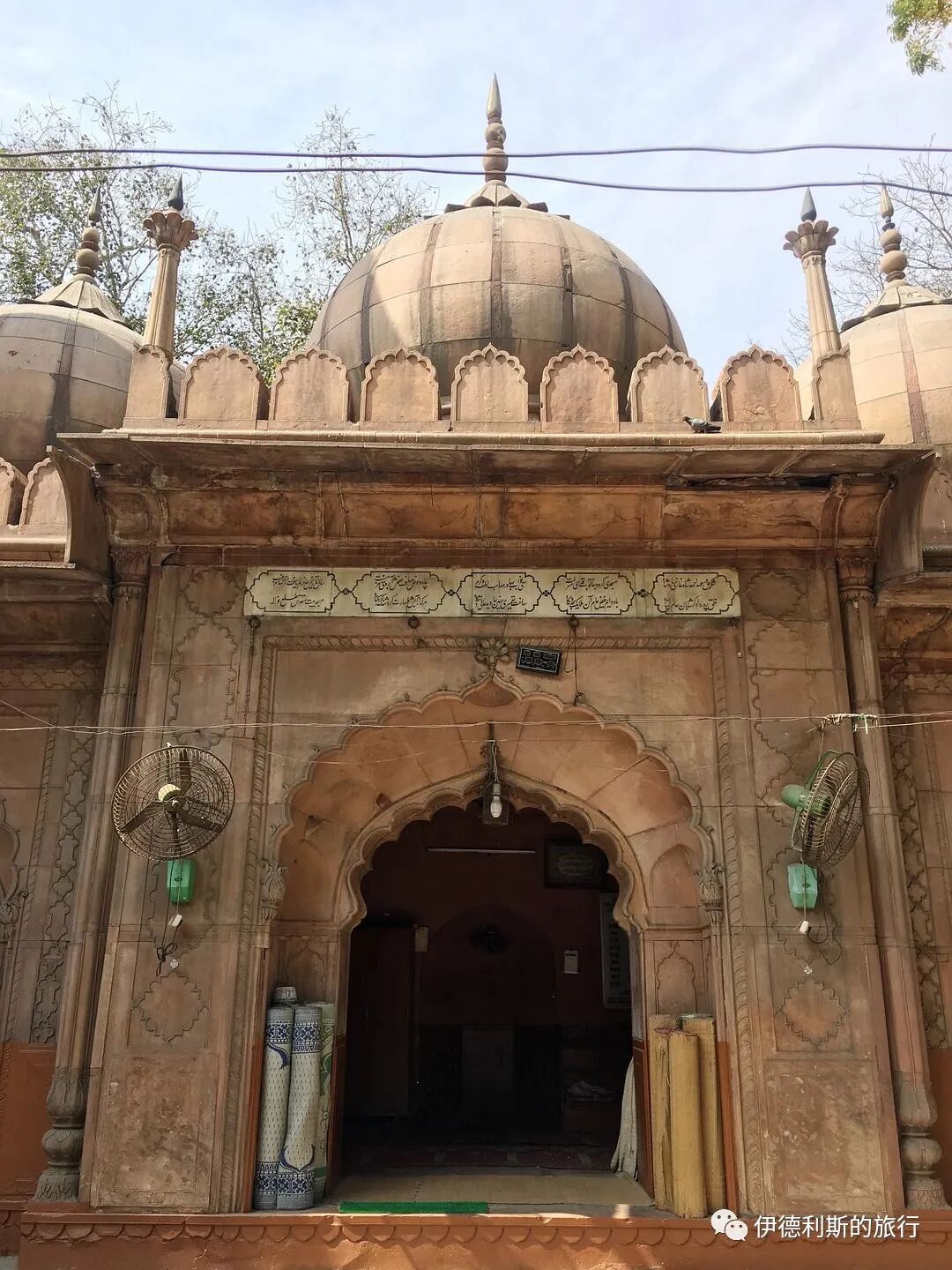
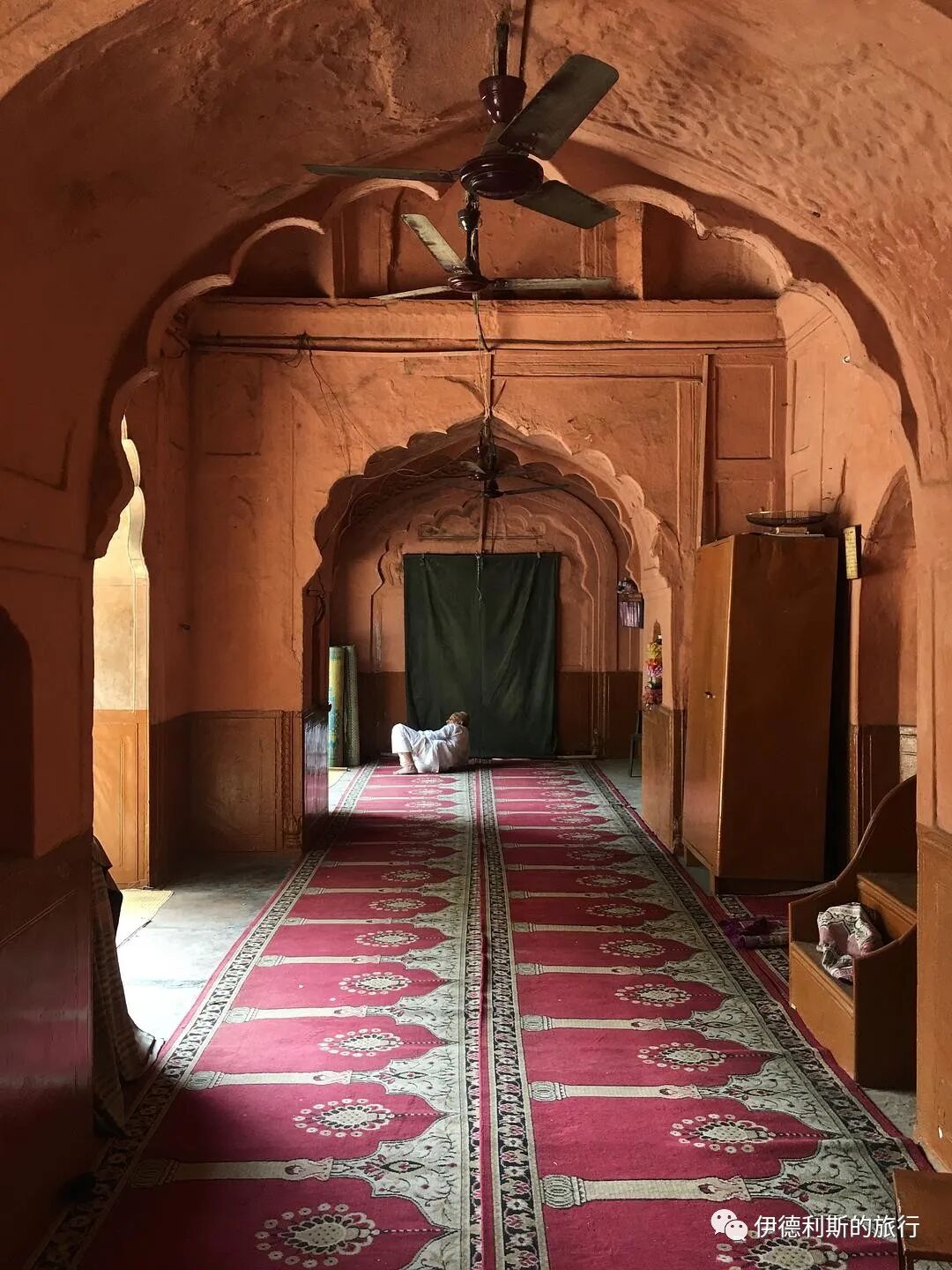
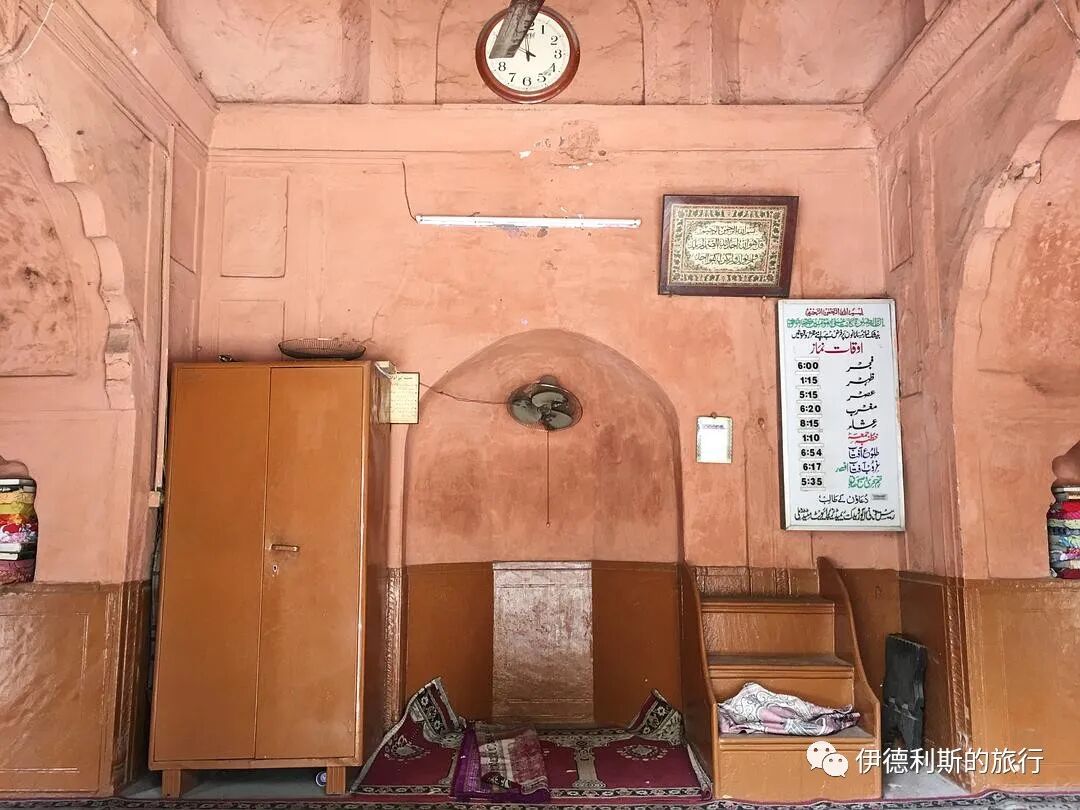
Sunehri Mosque is located south of the Red Fort. It was built in 1751 by Qudsia Begum, the wife of the twelfth Mughal Emperor, Muhammad Shah. After Muhammad Shah died, Qudsia Begum's son, Ahmad Shah Bahadur, succeeded to the throne, making Qudsia Begum the de facto ruler of the Mughal Empire between 1748 and 1754.
During her rule, Qudsia Begum built a series of structures in Delhi, and the Sunehri Mosque is the most understated in its architectural style. The mosque's dome was originally copper-plated, but during renovations in 1852, sandstone replaced the damaged copper plates.
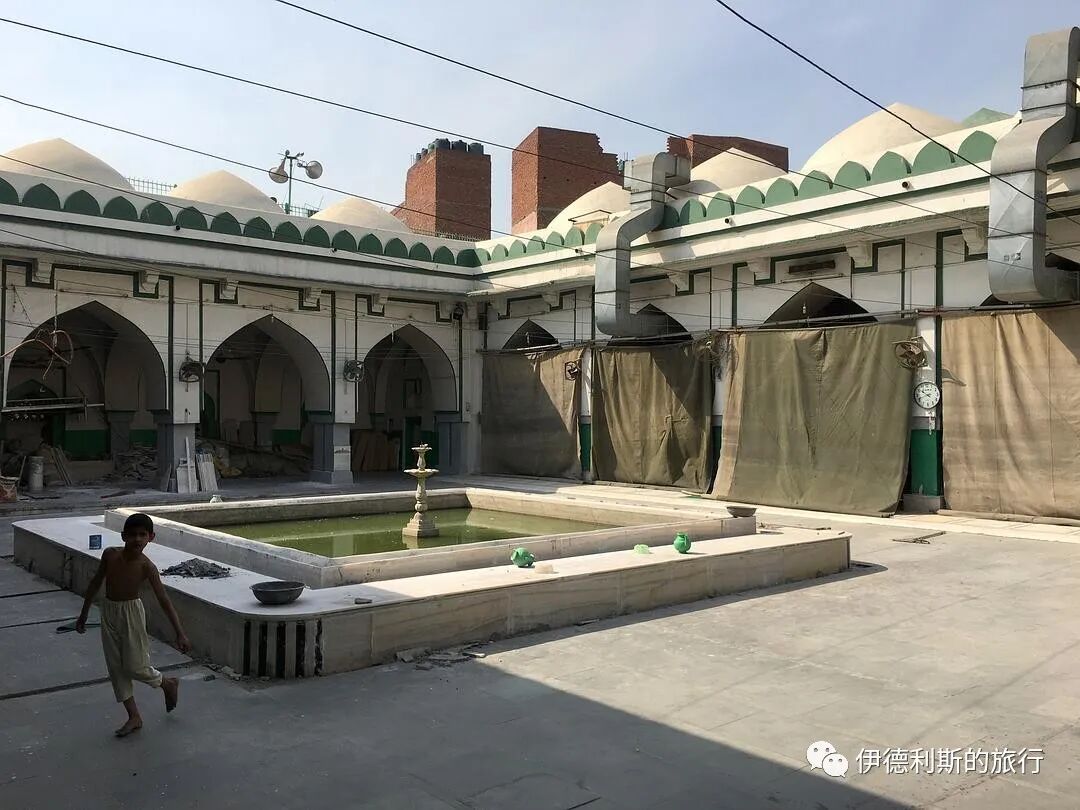
5. Great Mosque (Kalan Masjid): 1387
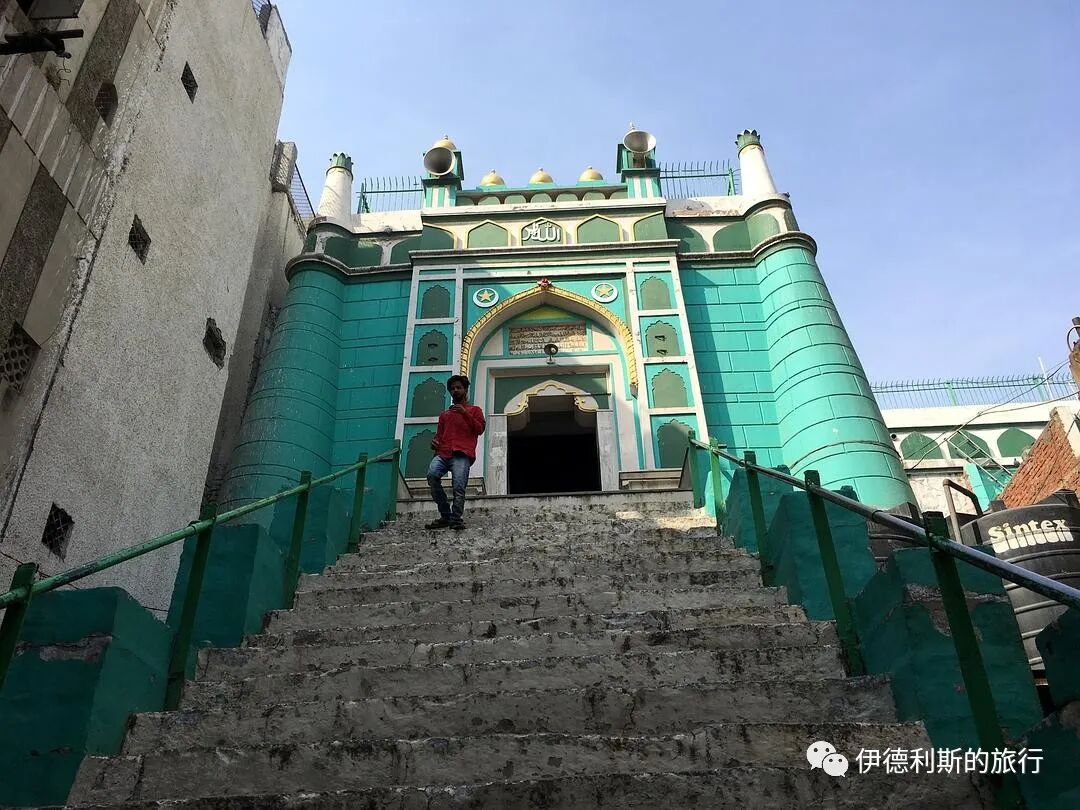
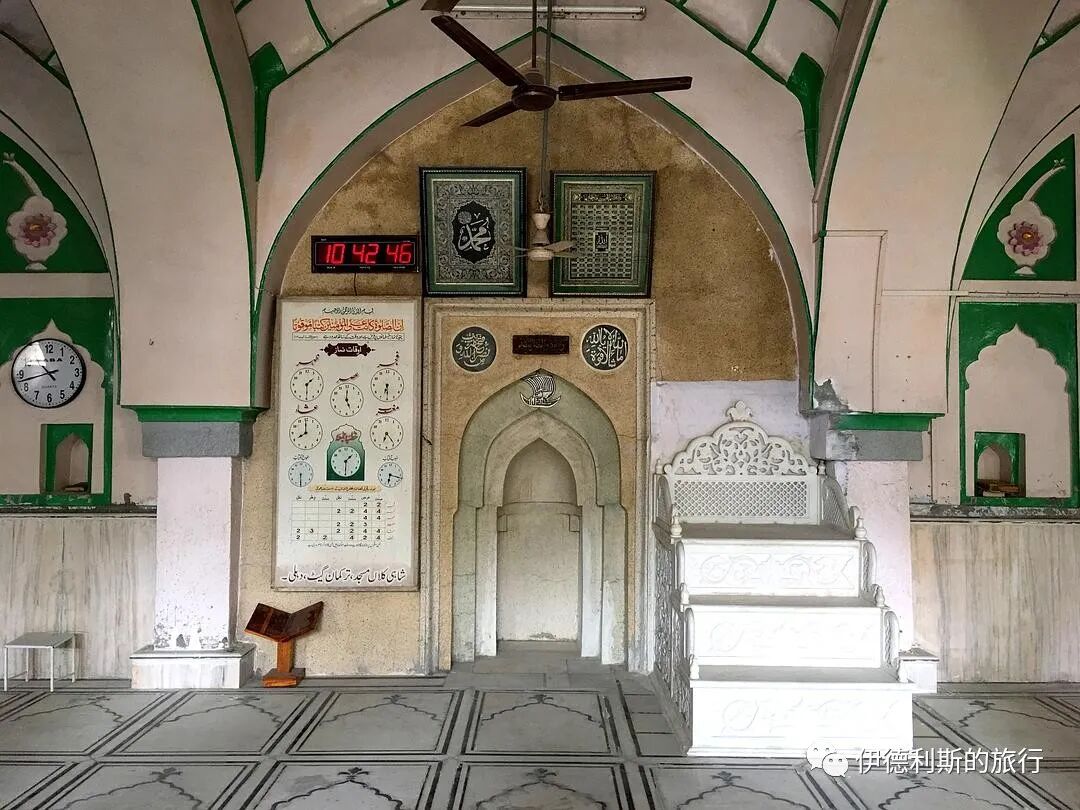
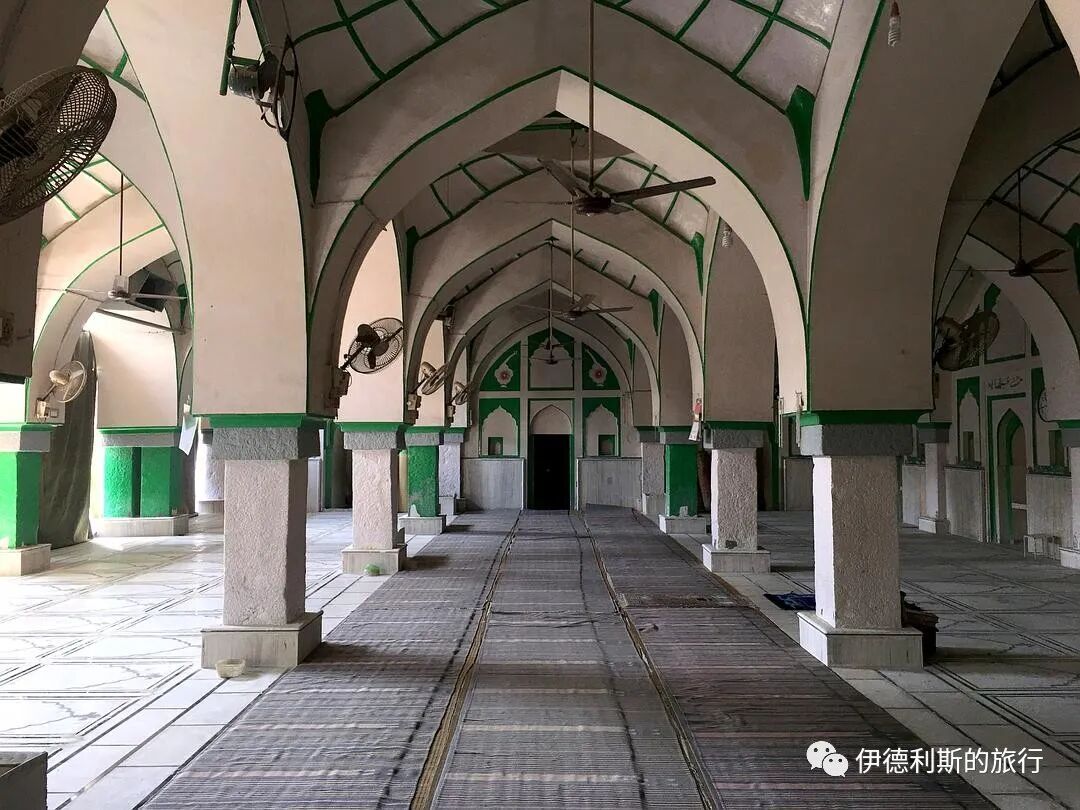
Kalan Mosque is one of the very few mosques in Shahjahanabad that existed before the city was built. It was constructed in 1387 by Khan-i-Jahan Maqbul, the vizier of Sultan Feroz Shah Tughlaq (reigned 1351-1388) of the Delhi Sultanate's Tughlaq dynasty. It is believed to have been built to commemorate a Sufi saint.
The mosque has been in continuous use, so the interior has changed significantly.
6. Hauzwali Mosque: 15th century
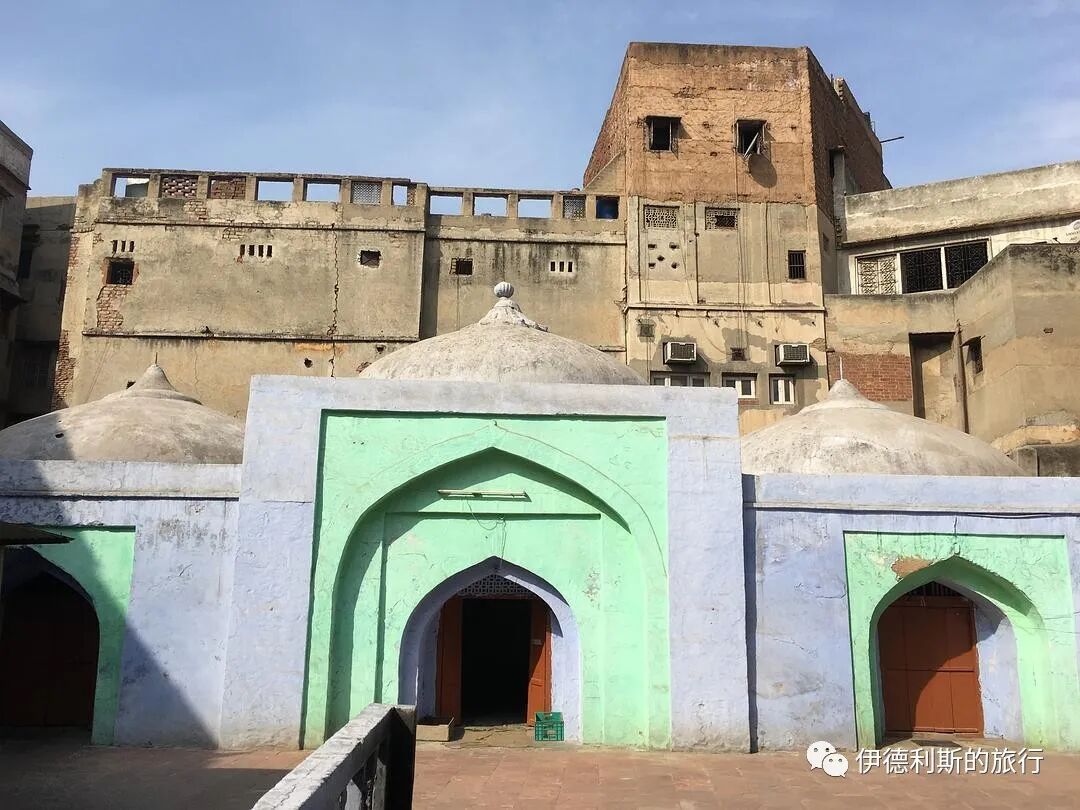
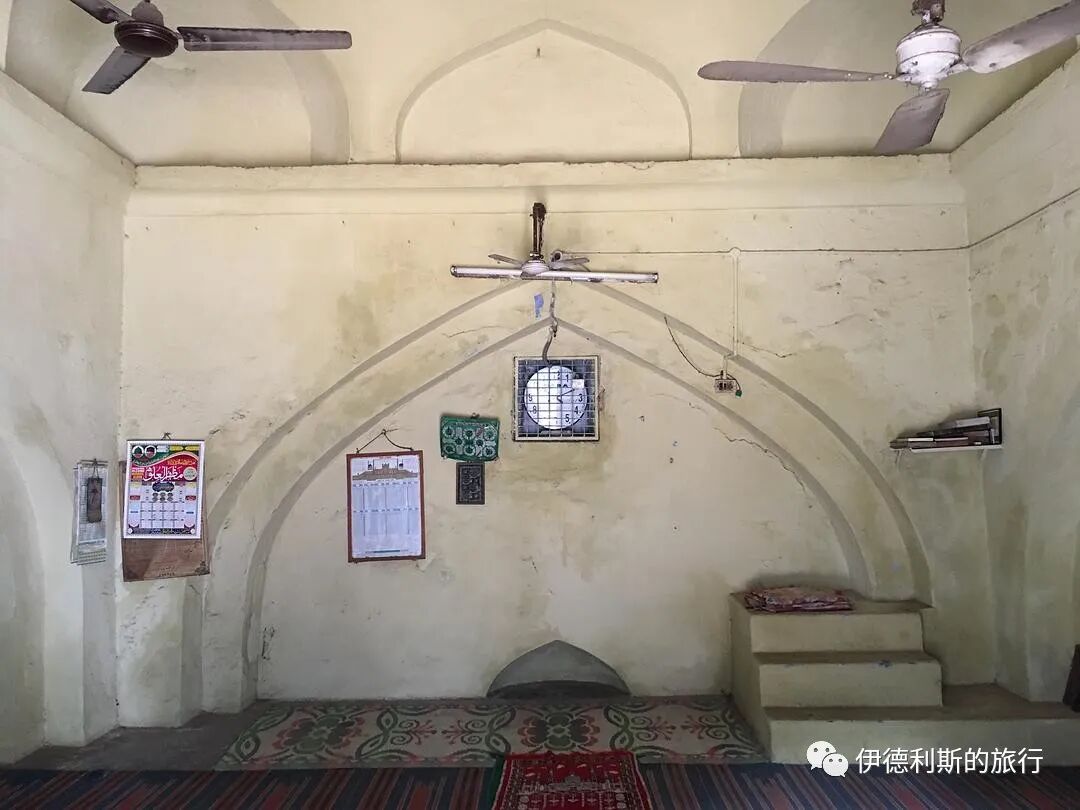
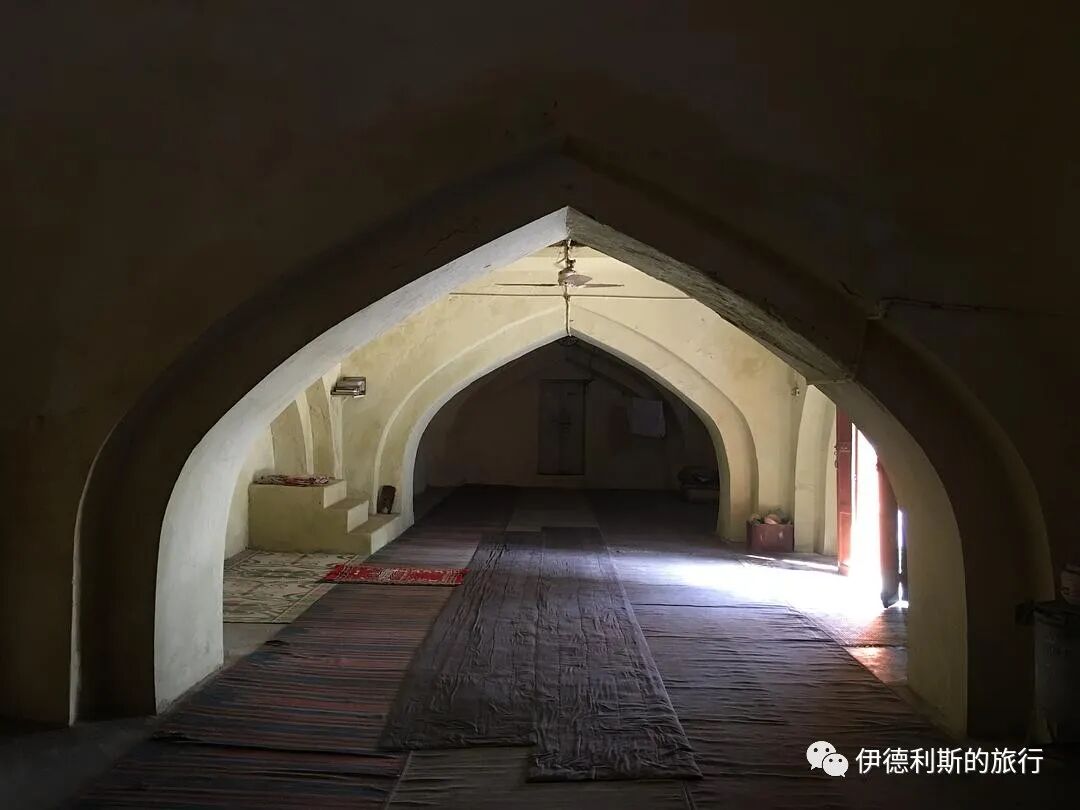
Hauzwali Mosque is another mosque that existed before the city of Shahjahanabad was built. Because the ground level has changed so much over time, the bottom half of the mosque is now underground, leaving only the top parts of the arches and the mihrab visible.
Summary: Delhi's Seventh City — Mughal Capital and Muslim History is presented here as a firsthand travel account in clear English, beginning with this scene: In my last article, The Sixth City of Delhi: The Birth of the Mughal Empire, I wrote about how Humayun, the second Mughal emperor, fell to his death from his library in the sixth city of Delhi, Dinpanah, in 1556. The account keeps its focus on Delhi Travel, Mughal History, Muslim Heritage while preserving the names, places, food, and historical details from the Chinese source.
In my last article, The Sixth City of Delhi: The Birth of the Mughal Empire, I wrote about how Humayun, the second Mughal emperor, fell to his death from his library in the sixth city of Delhi, Dinpanah, in 1556. His son, Emperor Akbar, moved the Mughal capital to Agra in 1558, and Delhi lost its status as the capital.
In 1628, Shah Jahan became the fifth emperor of the Mughal Empire. Under his rule, Mughal architectural aesthetics reached a new height, and this period is widely recognized as the golden age of Mughal architecture. Besides building the Taj Mahal, Shah Jahan built the seventh city of Delhi between 1639 and 1648, naming it Shahjahanabad after himself. Shah Jahan made Shahjahanabad the capital of the Mughal Empire, aiming to show the grandeur and power of the empire.
Shahjahanabad is now known as Old Delhi and still keeps many historical sites and traditional neighborhoods. The most important site inside the city, the Red Fort, was added to the UNESCO World Heritage list in 2007.
The layout of Shahjahanabad was inspired by the ancient Persian city of Isfahan and inherited urban planning ideas from the Agra Fort and Fatehpur Sikri, which were built by the previous Mughal emperor, Akbar. The city has an irregular shape, with the eastern wall built along the course of the Yamuna River. The Yamuna River later changed its course and moved away from the walls, and the original riverbed is now the Delhi Inner Ring Road.
The city has two main roads: Chandni Chowk running east-west and Faiz Bazaar running north-south, with major commercial areas on both sides of the streets. The Red Fort, where the Mughal royal family lived, is located at the junction of these two main roads.
1858
1914
Table of Contents
1. Red Fort: 1639-1648
1. Lahore Gate
2. Chhatta Chowk (market)
3. Naubat Khana (drum house)
4. Diwan-i-Aam (public audience hall)
5. Rang Mahal (palace of the empresses)
6. Khas Mahal (emperor's private palace)
7. Diwan-i-Khas (private audience hall)
8. Hammam-e-Lal Qila (bathhouse)
9. Pearl Mosque (Moti Masjid)
10. King's Tower (Shah Burj)
11. Life-Giving Garden (Hayat Bakhsh Bagh)
2. Jama Mosque: 1650-1656
3. Fatehpuri Mosque: 1650
4. Golden Mosque (Sunehri Masjid): 1751
5. Great Mosque (Kalan Masjid): 1387
6. Hauzwali Mosque: 15th century
1. Red Fort: 1639-1648
Shah Jahan decided to move the capital from Agra back to Delhi in 1638. On May 12, 1639, he ordered the construction of the Red Fort. The designer was Ustad Ahmad Lahauri, the architect who built the Taj Mahal.
On the north side of the Red Fort is the Salimgarh Fort, built by the Sur dynasty in 1546 (I introduced this in my previous article, 'The Sixth City of Delhi: The Birth of the Mughal Empire'). The Red Fort was designed to connect to Salimgarh Fort via a bridge, joining the two castles together.
In 1857, the last Mughal emperor, Bahadur Shah II, left the Red Fort and was arrested by the British army. He was tried at the Red Fort in 1858 and exiled to Yangon, marking the end of the Mughal Empire. Afterward, the Red Fort was used as a British military barracks. Most of the buildings were demolished. Only the marble structures in the far east survived because they were repurposed as barracks, offices, dormitories, and canteens.
After India's independence, the Red Fort continued to be used as an Indian Army barracks until 2003, when the Archaeological Survey of India was finally authorized to begin restoration. In 2009, the Archaeological Survey of India developed a comprehensive protection and management plan for the Red Fort under the direction of the Supreme Court.
The Red Fort viewed from east to west, painted in 1785.
The Red Fort viewed from east to west, painted by Ghulam Ali Khan between 1852 and 1854.
1. Lahore Gate
The Lahore Gate is the west gate of the Red Fort. It is named for facing the city of Lahore. During the reign of the sixth Mughal emperor, Aurangzeb (reigned 1658-1707), a barbican was added to the outside of the gate. Since 1947, the Prime Minister of India has stood at the Lahore Gate to deliver a speech every Indian Independence Day.
Painted by Ghulam Ali Khan between 1852 and 1854.
2. Chhatta Chowk (market)
After entering the Lahore Gate, you find a market called Chhatta Chowk. During the Mughal era, this was where silk and jewelry were sold to members of the royal family.
Painted by Ghulam Ali Khan between 1852 and 1854.
(Optional) Image description
3. Naubat Khana (drum house)
After walking through the Chhatta Chowk market, you reach the outer courtyard of the Red Fort. The building in the center of the outer courtyard is called the Naubat Khana, which serves as the main gate to the inner court. Naubat Khana means 'drum house.' During the Mughal era, ceremonial music was played here five times a day, and everyone except members of the royal family had to dismount from their horses when they reached this point. After 1857, the British army destroyed the arcades on both sides of the Naubat Khana and the central pool, leaving only the central building.
Photographed in 1858 by British army officer Robert Christopher Tytler and his wife Harriet.
4. Diwan-i-Aam (public audience hall)
After passing through the Naubat Khana, you enter the inner courtyard of the Red Fort, where the Diwan-i-Aam stands directly in front of you. Diwan-i-Aam means 'Hall of Public Audience.' It was the place where the Mughal emperor met with the public to hear their concerns.
In the center of the hall is the throne where the emperor sat. The marble steps below the throne were where the prime minister (wazir) received petitions from the public.
The door behind the throne, painted by Ghulam Ali Khan between 1852 and 1854.
5. Rang Mahal (palace of the empresses)
After entering the Diwan-i-Aam, you reach the harem section of the Red Fort. Rang Mahal means 'Palace of Colors.' It was the living quarters for the concubines of the Mughal emperor.
Painted by Ghulam Ali Khan between 1852 and 1854.
A shallow canal called the Stream of Paradise (Nahr-i-Bihist) flows into the marble pool in front of the Rang Mahal. During the hot summer, the women of the Mughal royal family would stay in the basement of the Diwan-i-Aam to escape the heat.
Painted by Ghulam Ali Khan between 1852 and 1854.
6. Khas Mahal (emperor's private palace)
To the north of the Rang Mahal is the Khass Mahal, which was the sleeping quarters of the Mughal emperor. The Rang Mahal was built of white marble. Its walls were originally inlaid with various jewels and the ceiling was gilded, but these features have not been preserved.
Painted by Sir Thomas Theophilus Metcalfe in 1843.
The last Mughal emperor, Bahadur Shah II, ascends the throne in the Khas Mahal, painted by Ghulam Ali Khan between 1837 and 1838.
7. Hall of Private Audience (Diwan-i-Khas)
North of the Khas Mahal is the Hall of Private Audience (Diwan-i-Khas), where the Mughal emperor met with courtiers and state guests. The Hall of Private Audience (Diwan-i-Khas) means "private reception room." It is built of white marble and was once inlaid with various jewels, featuring the exquisite Peacock Throne in the center. The hall once had a ceiling inlaid with gold and silver, but these were later removed. The current ceiling was installed in 1911.
Outside the hall, there used to be red awnings, and the arches below were inscribed with verses by the famous Sufi master Amir Khusrow:
If there is a paradise on earth,
It is this, it is this, it is this.
Painted by Ghulam 'Ali Khan in 1817.
Painted by Ghulam Ali Khan between 1852 and 1854.
The Peacock Throne in 1850.
8. Hammam-e-Lal Qila (bathhouse)
North of the Hall of Private Audience (Diwan-i-Khas) is the Red Fort Bathhouse (Hammam-e-Lal Qila), which was used by the Mughal royal family. The Red Fort Bathhouse (Hammam-e-Lal Qila) is a Turkish-style bath consisting of three sections: a children's bath, a dressing room, and a hot bath. Legend has it that the water flowing from the taps at that time was mixed with rose perfume.
Painted by Ghulam Ali Khan between 1852 and 1854.
9. Pearl Mosque (Moti Masjid)
The Pearl Mosque (Moti Masjid) is west of the bathhouse. It was built by the sixth Mughal emperor, Aurangzeb, between 1659 and 1660 for his second wife, Nawab Bai. Pearl (Moti) means "pearl." It is built of white marble, and its three domes were originally covered with gilded copper plates, which were lost after 1857.
Painted by Ghulam Ali Khan between 1852 and 1854.
Painted by Vasily Vereshchagin in the late 1880s.
10. King's Tower (Shah Burj)
The northernmost part of the harem is a white marble pavilion built during the Aurangzeb period. Behind the pavilion is the Shahi Burj, the northeast corner tower of the Red Fort, which means "Imperial Tower." Inside the tower is a hydraulic system that carries water from outside the Red Fort into its gardens and buildings.
Painted by Sir Thomas Metcalfe in 1843.
11. Life-Giving Garden (Hayat Bakhsh Bagh)
In the northwest part of the harem is the royal water garden Hayat Bakhsh Bagh, which means 'Life-Giving Garden'. Most of the garden's buildings were destroyed after 1857, and only three survive today.
At the center of the garden is the red sandstone building Zafar Mahal, built in 1842 by the last Mughal emperor, Bahadur Shah II. The building sits in a pool and was originally connected to the shore by a red sandstone bridge, but it was destroyed after 1857. After 1857, the British army used this area as a swimming pool.
Painted by Ghulam Ali Khan between 1852 and 1854.
To the north and south of the garden are two white marble pavilions called Sawan and Bhadon, named after the months of July and August in the Indian rainy season, as the ladies of the Mughal palace loved to visit the garden during these two months. The pavilions have wall niches that held vases with golden flowers during the day and small oil lamps at night.
To the west of Hayat Bakhsh Bagh, there was originally another water garden called Mehtab Bagh, meaning 'Moon Garden,' but after 1857, the site was turned into a British military barracks, and now only ruins remain.
2. Jama Mosque: 1650-1656
The Jama Masjid mosque is located southwest of the Red Fort; it was built between 1650 and 1656 by order of Shah Jahan and served as the royal mosque of the Mughal Empire.
The mosque was built by more than 5,000 workers under the leadership of Shah Jahan's vizier (wazir) Saadullah Khan, costing over 1 million rupees. The mosque stands on a platform more than 9 meters above the ground and is made of red sandstone and marble, featuring a main hall connected by colonnades, two 40-meter-high minarets, and three gates. The east gate was reserved for the Mughal royal family and had a path that connected directly to the Delhi Gate of the Red Fort.
After 1857, the British seized the Jama Masjid mosque and stationed troops inside. They originally wanted to demolish the mosque, but they failed due to strong opposition, though the madrasa (Islamic school) on the south side of the mosque was destroyed as a result.
The mihrab in the center of the main hall indicates the direction of prayer toward Mecca:
Besides the main mihrab in the center, there is a smaller mihrab on each side.
During Jumu'ah, the imam stands on this stone platform to deliver the khutbah.
There is a tower at each of the four corners of the colonnade.
The east gate is the main entrance:
South Gate
North Gate
The water pool in the courtyard for wudu:
Jama means Jumu'ah, which refers to the Friday congregational prayer. The Jumu'ah mosque is usually the largest in the community, and the most important weekly prayer is held here every Friday at noon. I was lucky enough to attend a Friday Jumu'ah prayer at the Jama Mosque.
On the morning of Jumu'ah, more prayer rugs were already laid out in the courtyard.
People are performing wudu for the Jumu'ah prayer:
More and more people are arriving.
The imam leading the prayer climbs onto the stone platform.
After the prayer, people take photos:
3. Fatehpuri Mosque: 1650
Fatehpuri Mosque is located at the western end of Chandni Chowk, the main east-west road in Shahjahanabad. It was built in 1650 under the direction of Fatehpuri Begum, the wife of Shah Jahan. The mosque is in the classic Mughal style, built with red sandstone, featuring minarets on both sides and a main prayer hall in the middle. The main hall has seven arched bays, and the central iwan arch is topped with a Mughal-style dome.
4. Golden Mosque (Sunehri Masjid): 1751
Sunehri Mosque is located south of the Red Fort. It was built in 1751 by Qudsia Begum, the wife of the twelfth Mughal Emperor, Muhammad Shah. After Muhammad Shah died, Qudsia Begum's son, Ahmad Shah Bahadur, succeeded to the throne, making Qudsia Begum the de facto ruler of the Mughal Empire between 1748 and 1754.
During her rule, Qudsia Begum built a series of structures in Delhi, and the Sunehri Mosque is the most understated in its architectural style. The mosque's dome was originally copper-plated, but during renovations in 1852, sandstone replaced the damaged copper plates.
5. Great Mosque (Kalan Masjid): 1387
Kalan Mosque is one of the very few mosques in Shahjahanabad that existed before the city was built. It was constructed in 1387 by Khan-i-Jahan Maqbul, the vizier of Sultan Feroz Shah Tughlaq (reigned 1351-1388) of the Delhi Sultanate's Tughlaq dynasty. It is believed to have been built to commemorate a Sufi saint.
The mosque has been in continuous use, so the interior has changed significantly.
6. Hauzwali Mosque: 15th century
Hauzwali Mosque is another mosque that existed before the city of Shahjahanabad was built. Because the ground level has changed so much over time, the bottom half of the mosque is now underground, leaving only the top parts of the arches and the mihrab visible.
