
China Mosque Travel Guide Jiangsu: 25 Historic Mosques and Hui Muslim Heritage (Part 1)
Reposted from the web
Summary: This first part of the Jiangsu mosque series documents historic Hui Muslim mosque sites in northern Jiangsu, including Yanghe Mosque, Siyang Mosque, Siyang West Mosque, Shuyang Mosque, Hexia Mosque, Wangjiaying Mosque, Yancheng Mosque, and Baoying Mosque. The article preserves the original mosque names, founding dates, community histories, inscriptions, architectural details, and image order.
I am sharing the 25 historic mosque buildings I have visited in Jiangsu, moving from north to south.
1. Suqian
1. Yanghe Mosque (Yanghesi): First built during the Qianlong reign, rebuilt after 1945.
2. Huai'an
1. Qingjiang Mosque (Qingjiangsi): First built during the Jiajing reign of the Ming Dynasty, rebuilt in 1870.
2. Hexia Mosque (Hexiasi): First built during the Shunzhi reign of the Qing Dynasty, rebuilt in the late Qing Dynasty.
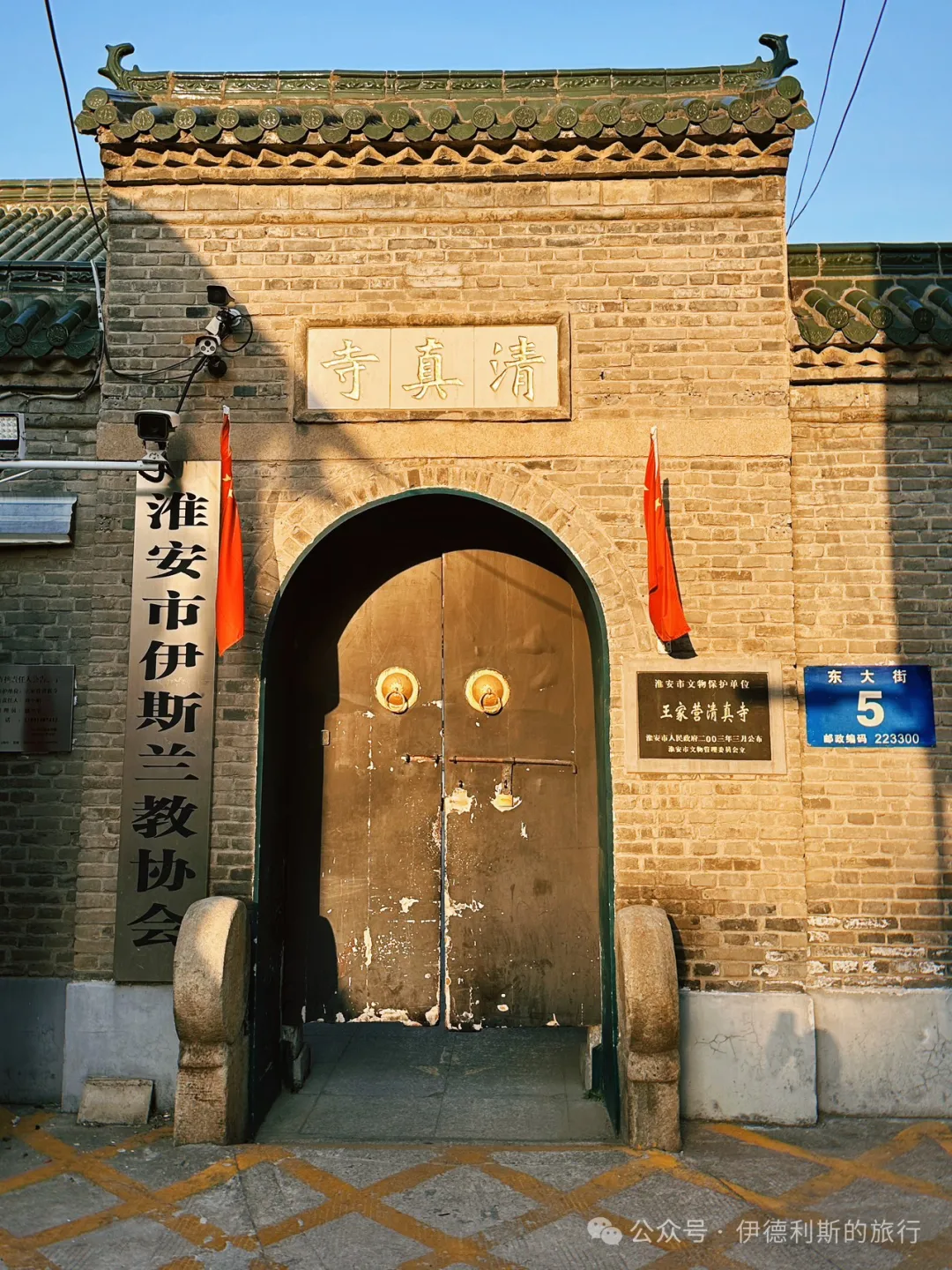
3. Wangjiaying Mosque (Wangjiayingsi): First built during the Yongzheng reign of the Qing Dynasty, rebuilt in 1985.
3. Yancheng
1. Yancheng Mosque (Yanchengsi): Built during the Yongle reign of the Ming Dynasty, renovated in 1928.
4. Yangzhou
1. Baoying Mosque (Baoyingsi): Rebuilt in 1910, rebuilt again in 2022.
2. Gaoyou Mosque (Gaoyousi): Rebuilt in 1864.
3. Lingtang Ancient Mosque (Lingtang Gusi): First built at the end of the Yuan Dynasty, moved to its current site in the early Qing Dynasty, rebuilt in 1924.
4. Shaobo Mosque (Shaobosi): First built during the Xianfeng reign of the Qing Dynasty.
5. Xianhe Mosque (Xianhesi): First built in 1275, rebuilt in 1390.
6. Majian Lane Mosque (Majianxiang Libaisi): First built in 1714.
7. Huihui Tang Mosque (Huihuitangsi): First built in 1275, rebuilt in 1776.
5. Zhenjiang
1. Shanxiang Mosque (Shanxiangsi): Expanded during the Kangxi reign, rebuilt in 1873.
2. Jianzi Lane Mosque (Jianzixiangsi) Ming and Qing Dynasty stone carvings.
3. Nanmenwai Mosque (Nanmenwaisi) Qing Dynasty mihrab.
4. Xinhe Street Mosque (Xinhejie Huijiaotang): 1930.
6. Nanjing
1. Jingjue Mosque (Jingjuesi): First built during the Hongwu reign of the Ming Dynasty, rebuilt in 1877.
2. Original Taiping Road Mosque: First built in the early Ming Dynasty, moved and rebuilt in 2005.
3. Xiaowangfu Lane Mosque.
4. Hushu Mosque: First built in 1392, rebuilt in 1896.
5. Liuhe South Gate Mosque: First built in 1403, raised and renovated in 2013.
6. Liuhe Women's School: First built in 1912, rebuilt in 1930.
7. Liuhe Changjiang Road Mosque: First built in 1424, rebuilt during the Guangxu reign of the Qing Dynasty.
8. Zhuzhen Mosque: Rebuilt in 1901, renovated in 2001.
9. Zhuzhen Women's Mosque: First built in 1921, rebuilt in 1931.
Suqian Yanghe Town Mosque.
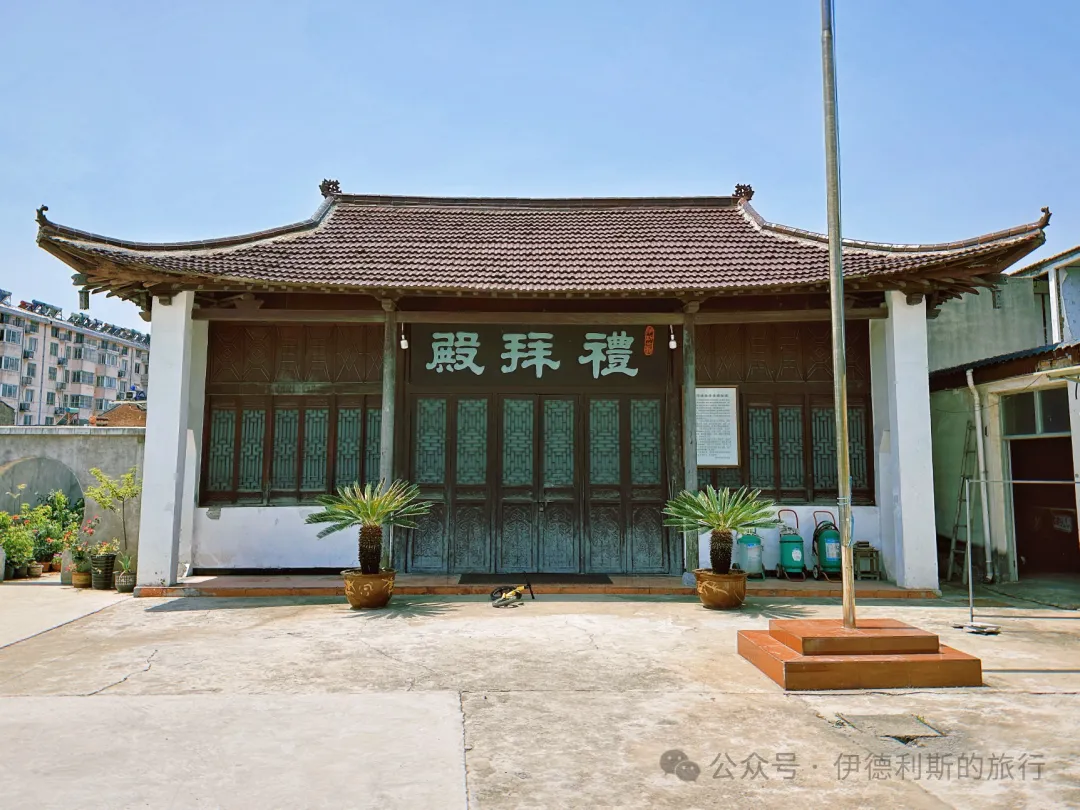
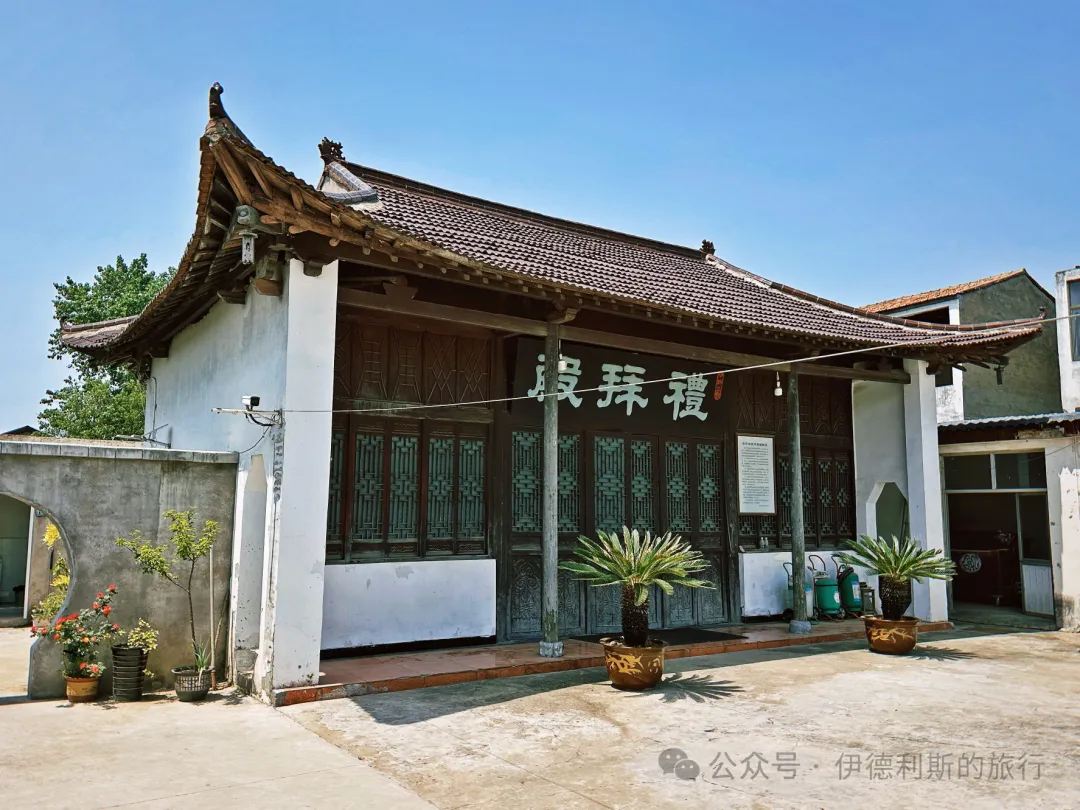
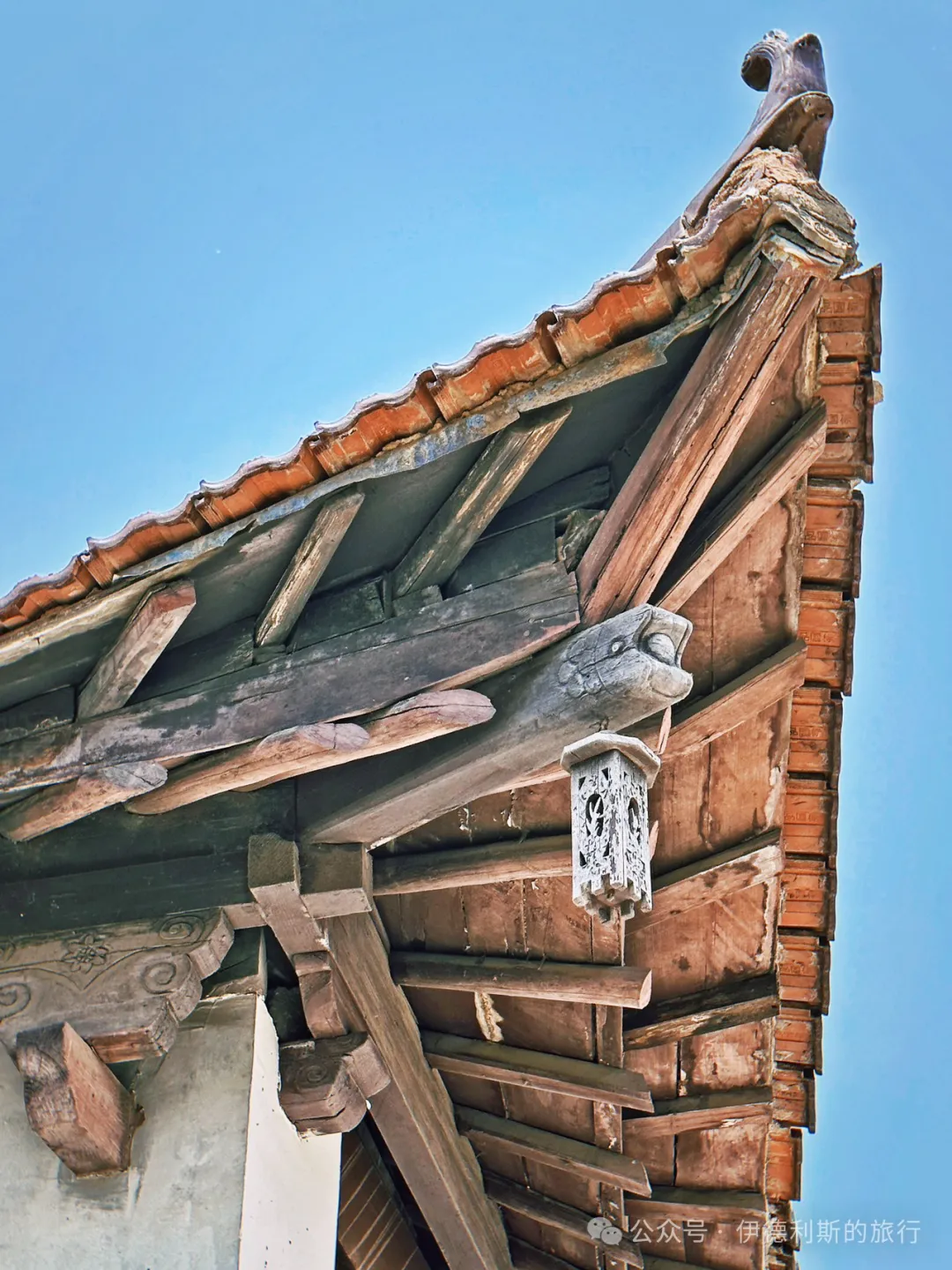
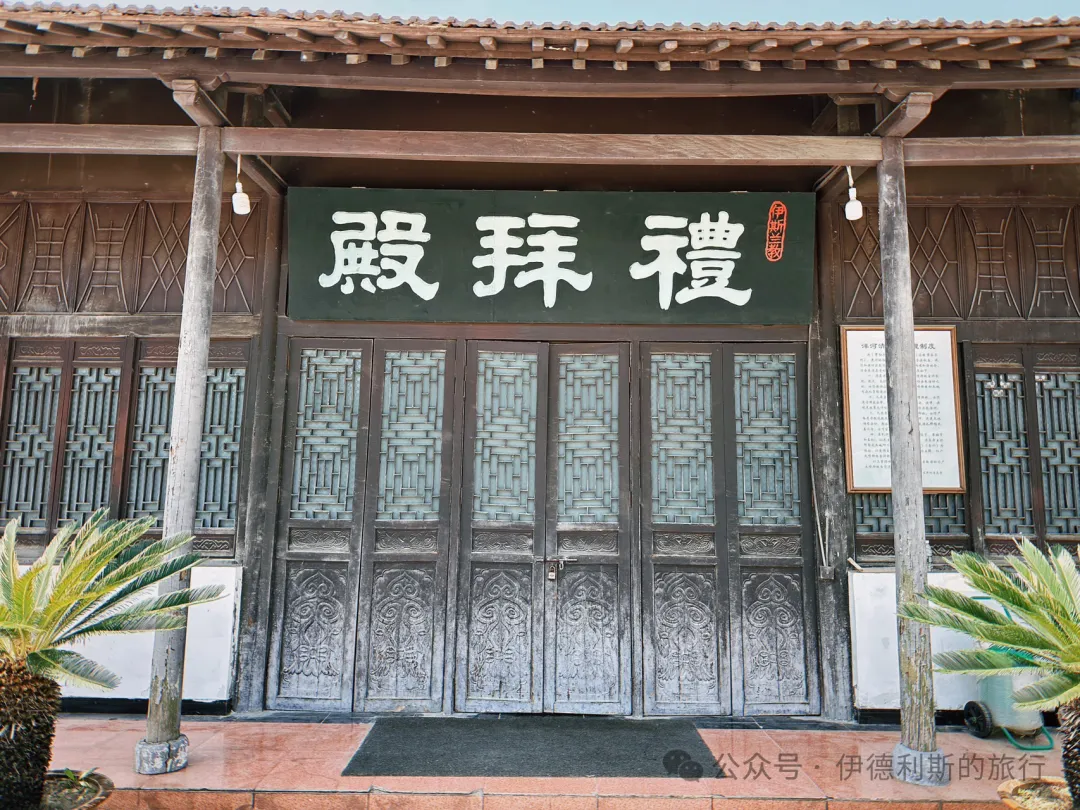
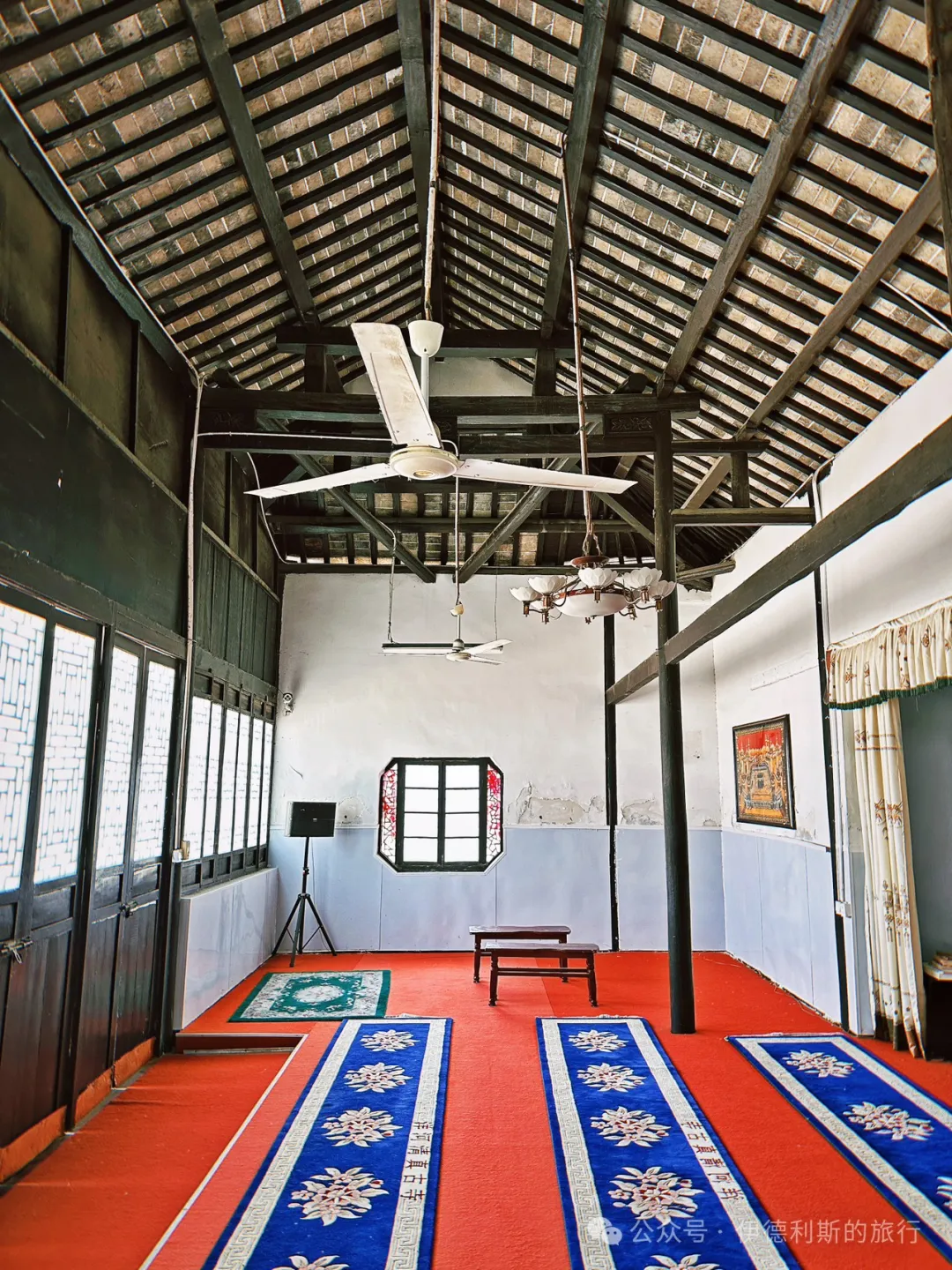
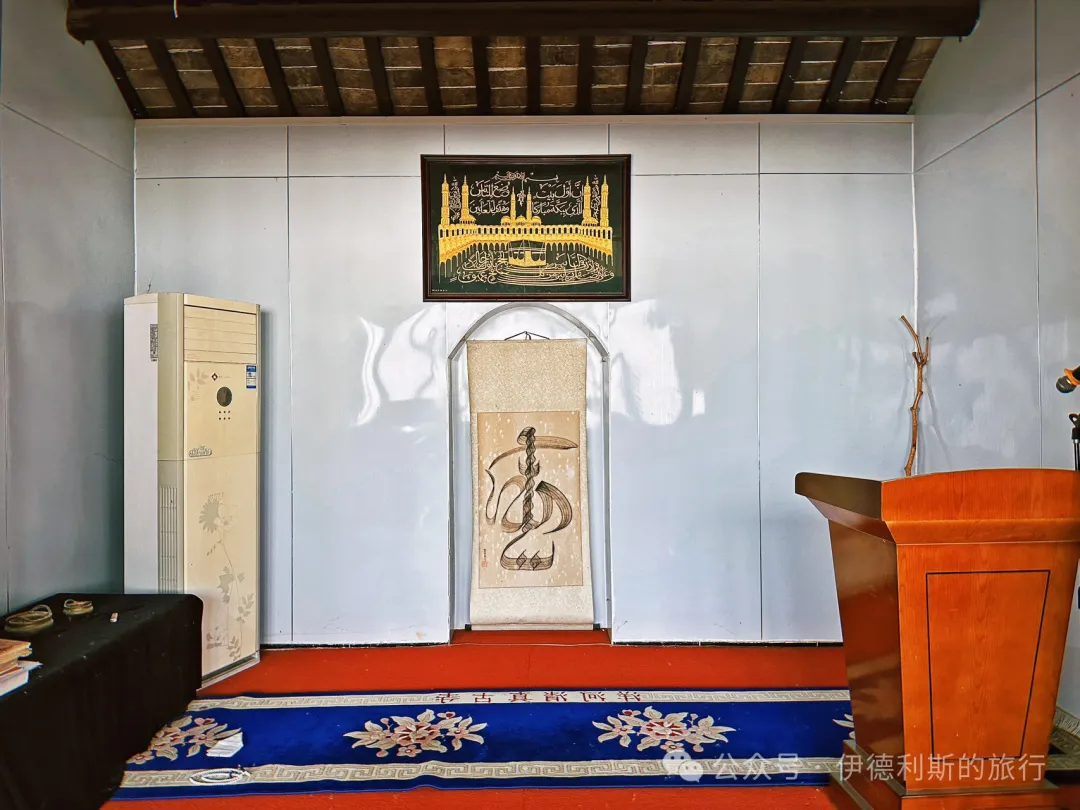
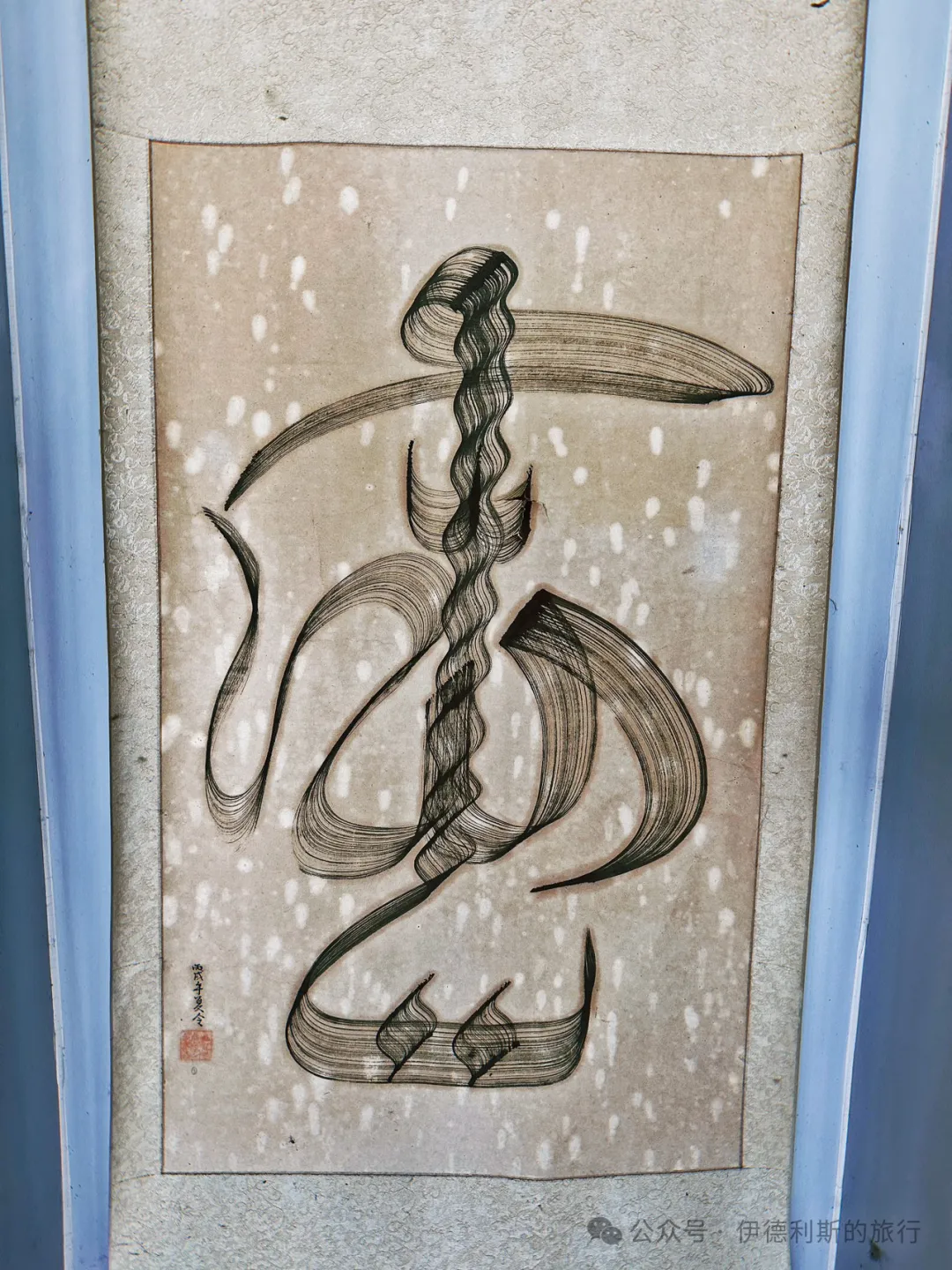
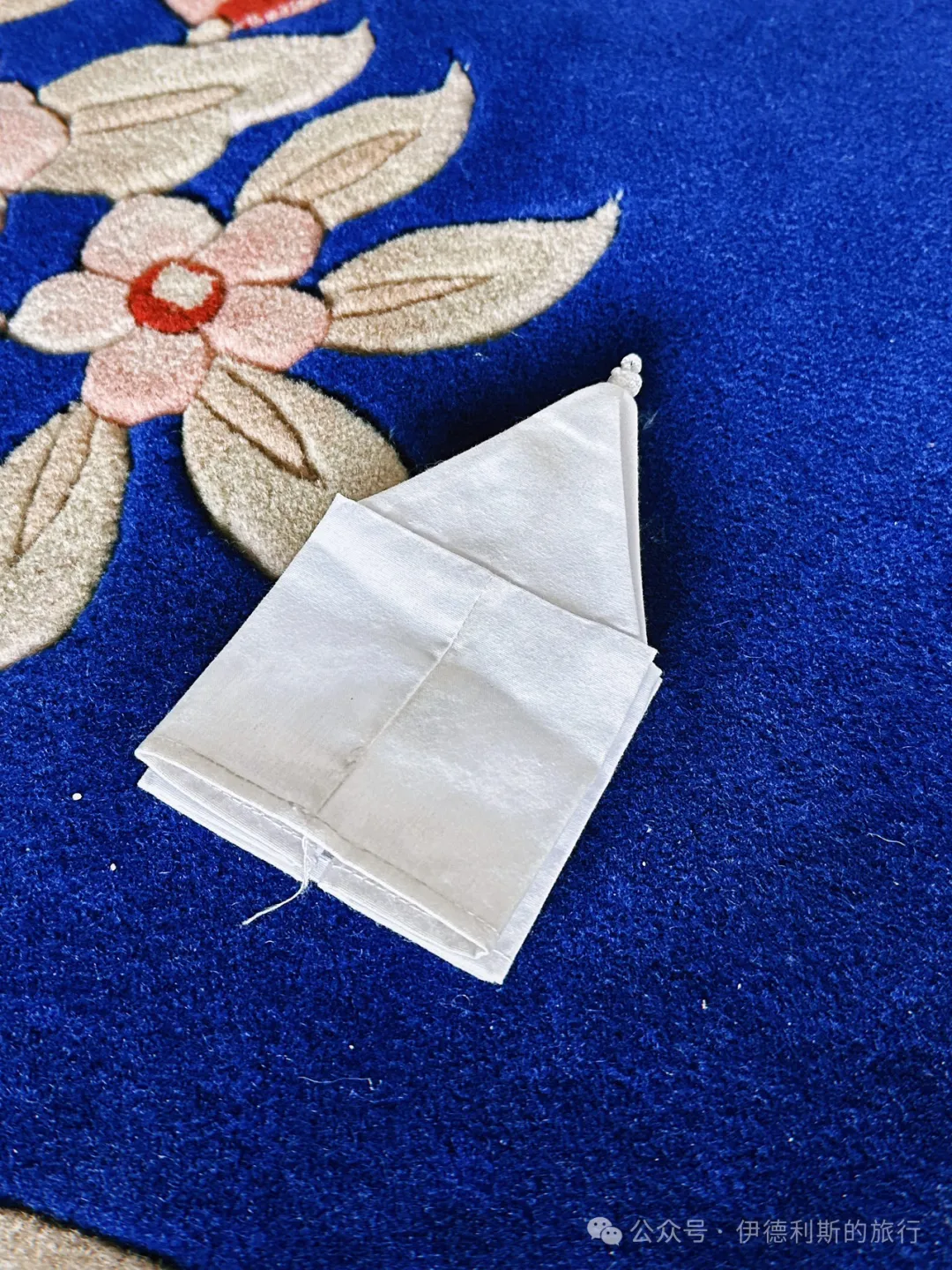
The Suqian Yanghe Town Mosque was first built during the Qianlong reign. It was funded by Yu Qin, a local scholar from Yanghe who had served as an education official in Lishui, Pizhou, and Ningguo, and was built on Rice Market Street in Yanghe. It was destroyed during the Japanese invasion and later rebuilt. The current main hall features a hip-and-gable roof, a post-and-lintel frame, and upturned eaves with wind bells hanging from the four corners. It was listed as a Suqian cultural heritage site in 2010.
Yanghe Town Mosque belongs to the Jahriyya Banqiao Daotang. During the Jiaqing reign of the Qing Dynasty, Chang Tingzhang (1785-1870), a Hui Muslim from Siyang, Jiangsu, traveled to Lingzhou (modern-day Lingwu) in Ningxia to study. After completing his studies, he brought the Jahriyya tradition to the Huai-Si region. Chang Tingzhang was famous far and wide for his profound knowledge and had many disciples when he began teaching at the Huaiyin Wangjiaying Mosque. Since then, mosques including the Huaiyin Wangjiaying Mosque, Siyang Zhongxing Town Mosque, and Yanghe Town Mosque have all followed the Jahriyya tradition. Before 1932, the imams of Yanghe Town Mosque were all assigned from Ningxia. After 1932, Imam Ma Chengliang served until he passed away in 1979.
Huai'an Qingjiang Ancient Mosque.
Qingjiangpu in Huai'an was dredged in 1415 (the 13th year of the Yongle reign of the Ming Dynasty). It was the center of grain transport for the Grand Canal during the Ming and Qing dynasties, where grain transport ships from all provinces were built and repaired. Because navigating the Yellow River section of the canal was very dangerous, and waiting times to pass through locks in Shandong were too long, many merchants chose to leave their boats at Qingjiangpu. They would cross the Yellow River and switch to horse-drawn carriages to continue north, making Qingjiangpu a symbol of the "southern boats and northern horses" transport system.
The most important pier in Qingjiangpu was next to the Yue Lock. It was called the Imperial Pier because both Emperors Kangxi and Qianlong landed there during their southern inspection tours. This was once the busiest and most prosperous place in Qingjiangpu. Hui Muslims began doing business on Yuehe Street in front of the Imperial Pier during the Ming Dynasty, and the earliest Qingjiang Ancient Mosque was built during the Jiajing reign of the Ming Dynasty.
In 1677 (the 16th year of the Kangxi reign), the Governor of the Waterways moved to Qingjiangpu, and it became the center of grain transport. In his collection of notes and stories, Golden Pot Seven Inks (Jinhu Qimo), Qing Dynasty writer Huang Junzai recorded: 'Along the Qingjiang River for over ten miles, the markets were bustling and food was abundant. People from all directions gathered here, shoulder to shoulder and wheel to wheel, in a very prosperous scene.' In 1799 (the 57th year of the Qianlong reign), the Qingjiang Mosque (Qingjiang Gusi) underwent a large-scale expansion, marking the peak of its prosperity.
In 1860 (the 10th year of the Xianfeng reign), the Nian Army captured Qingjiangpu and the Qingjiang Mosque was destroyed. The imam, Ma Huanwen, sadly passed away from illness while preparing to raise funds for the mosque (nietie). Fortunately, an elder from Nanjing named Jiang Hengqing took over, organized the community to raise funds (nietie), and finally rebuilt the mosque in 1870 (the 9th year of the Tongzhi reign).
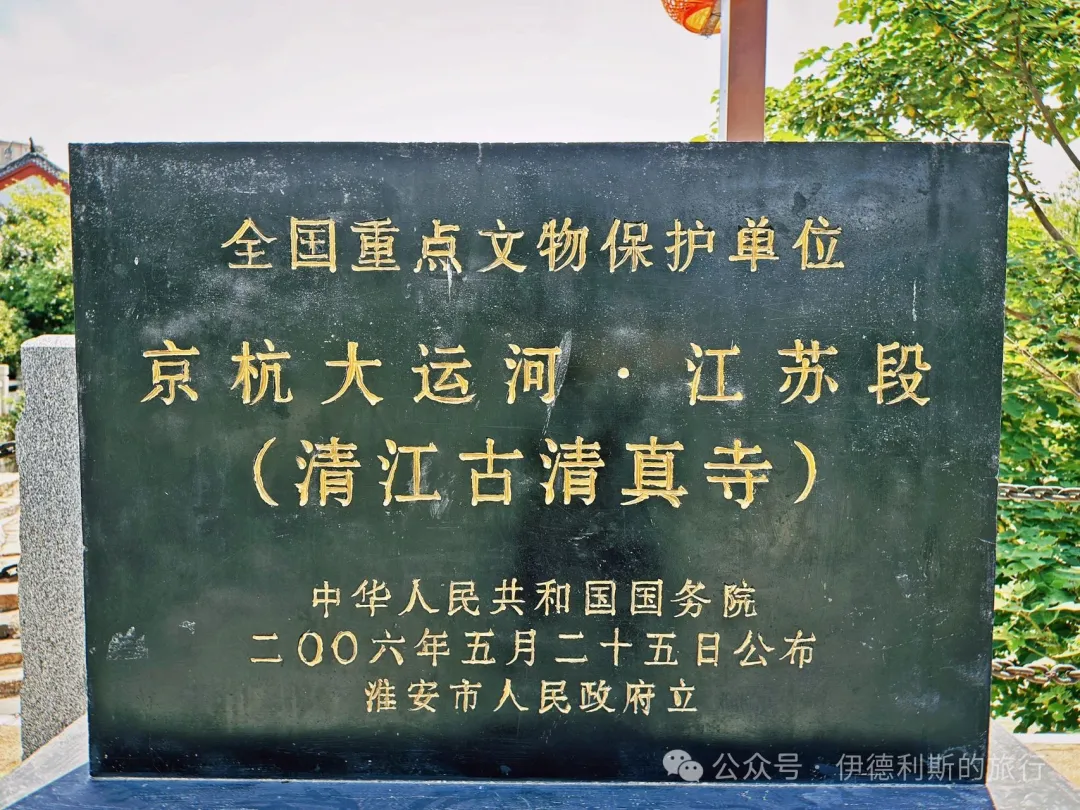
In 2006, the Beijing-Hangzhou Grand Canal was listed as a Major Historical and Cultural Site Protected at the National Level. Three historic mosques were included along the canal: the North Mosque in Linqing, the East Mosque in Linqing, and the Qingjiang Mosque in Huai'an. It can be said that the Hui Muslim community in Huai'an grew because of the canal and is inseparable from the canal's grain transport history.
Looking from the opposite bank of the Li Canal, you can see the gate of the Qingjiang Mosque right next to the Imperial Wharf ruins, helping you imagine what the busy grain transport days looked like.
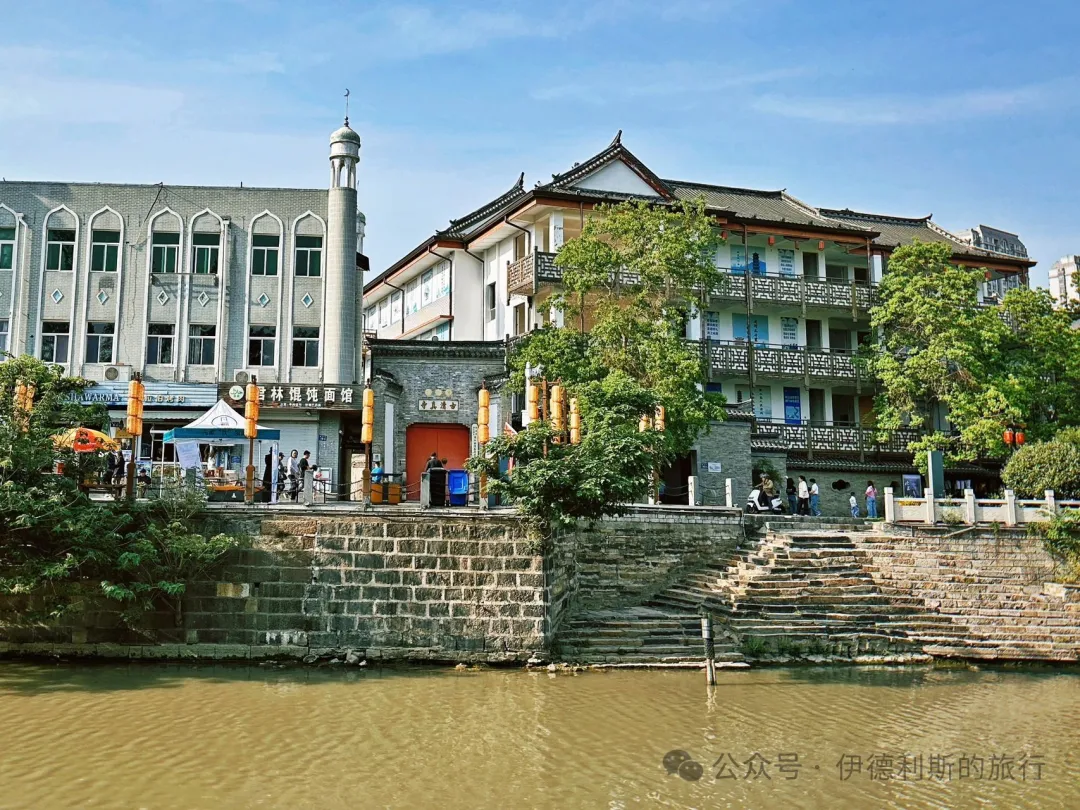
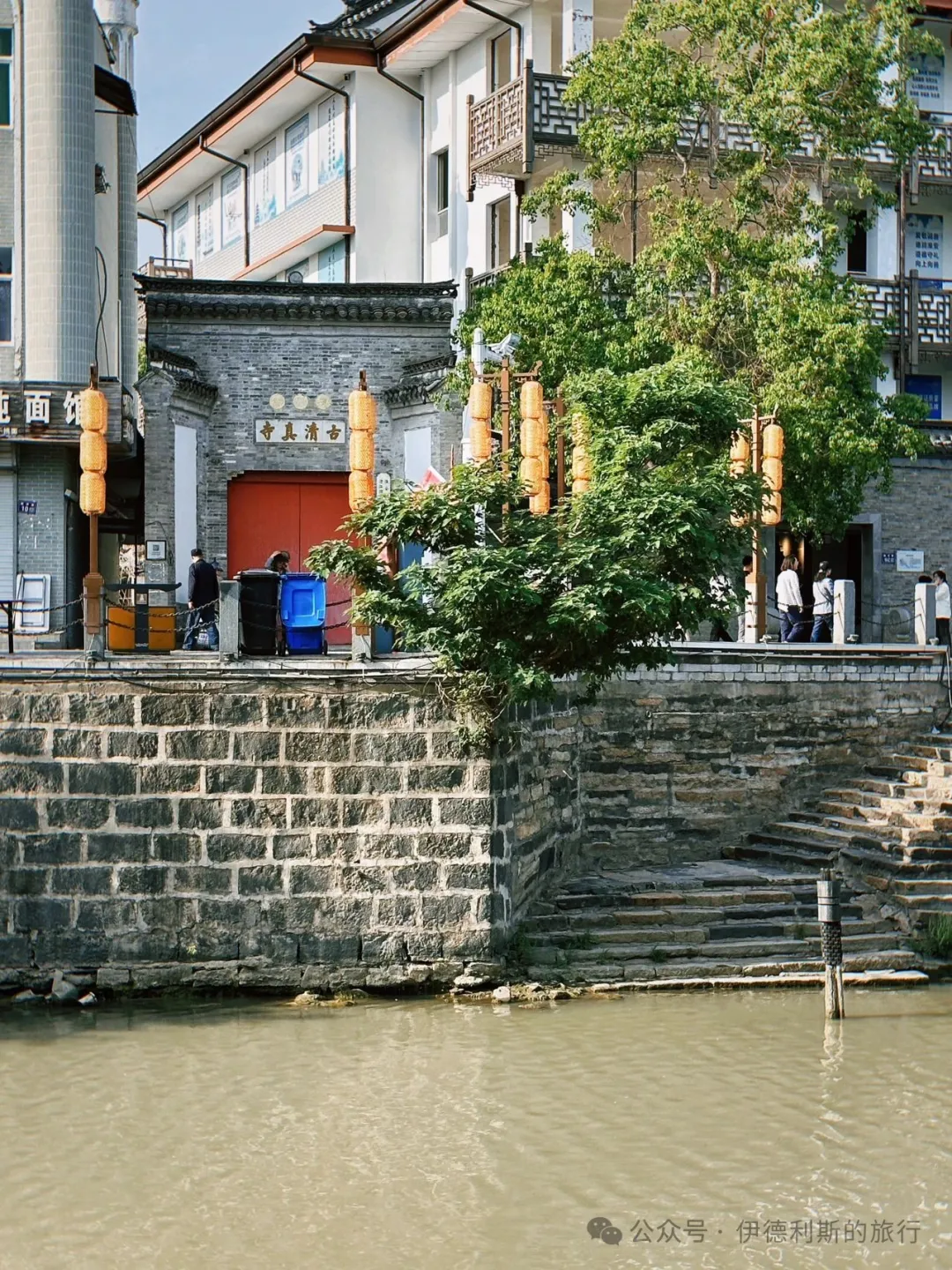
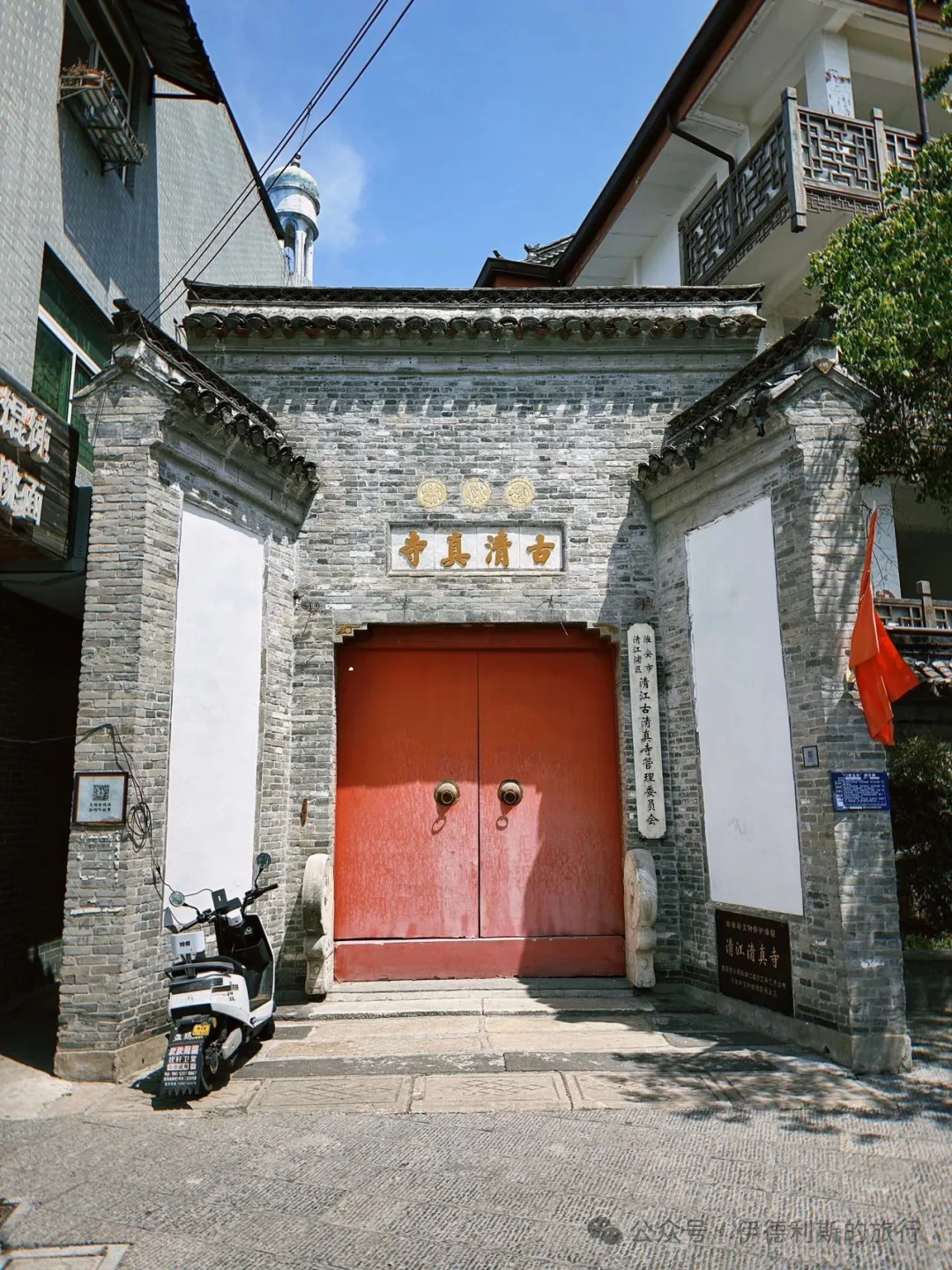
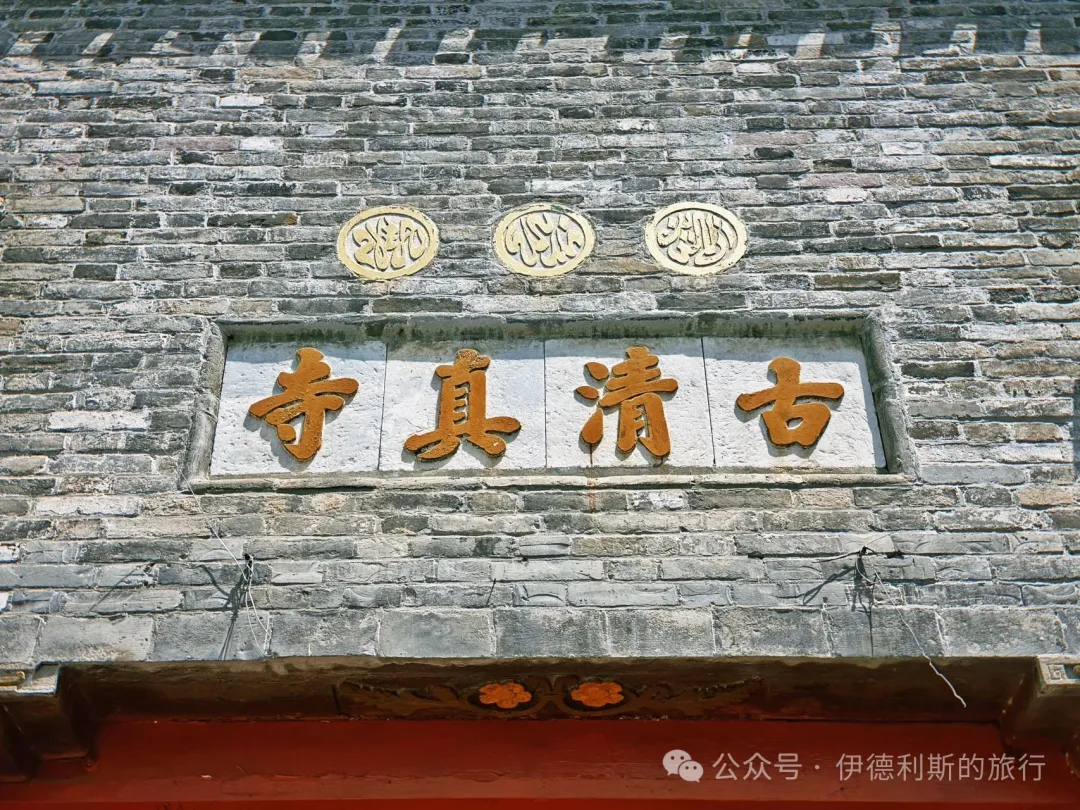
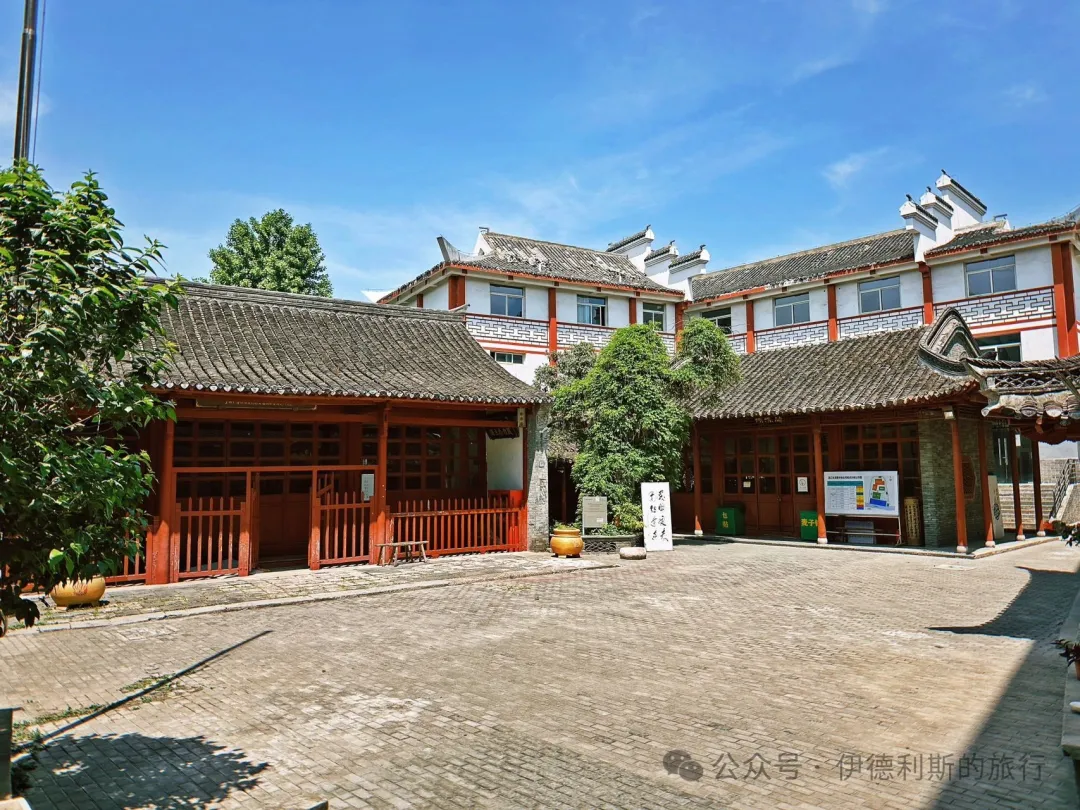
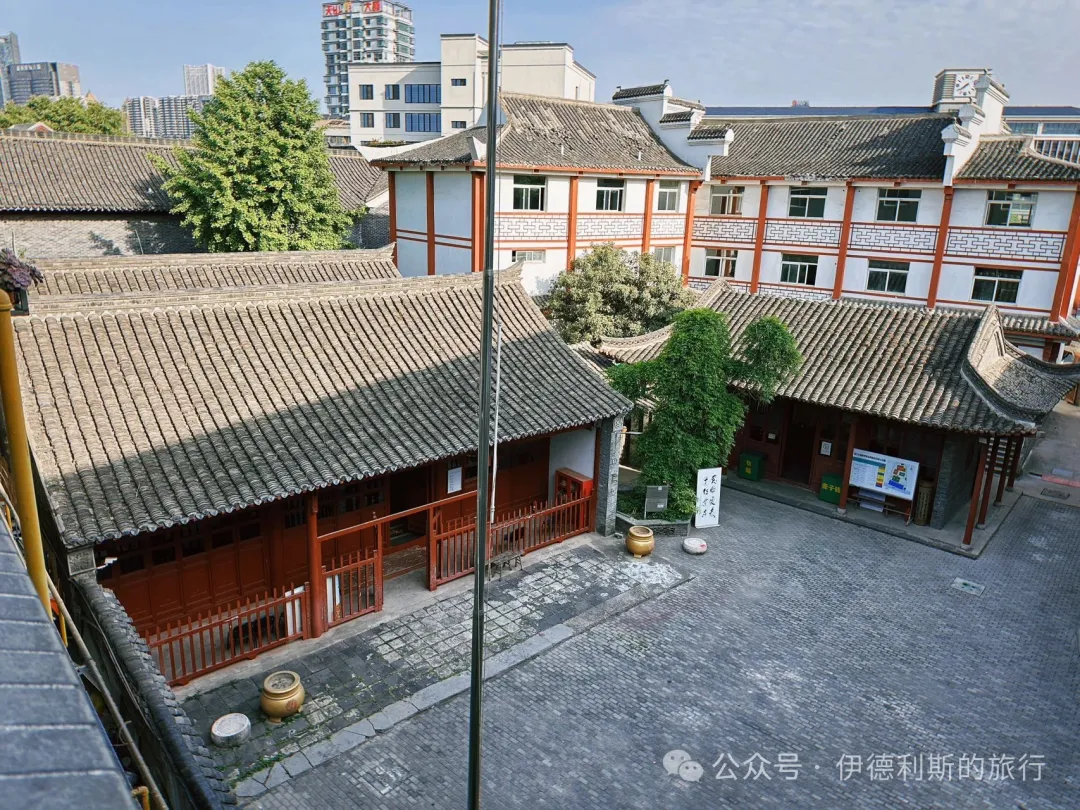
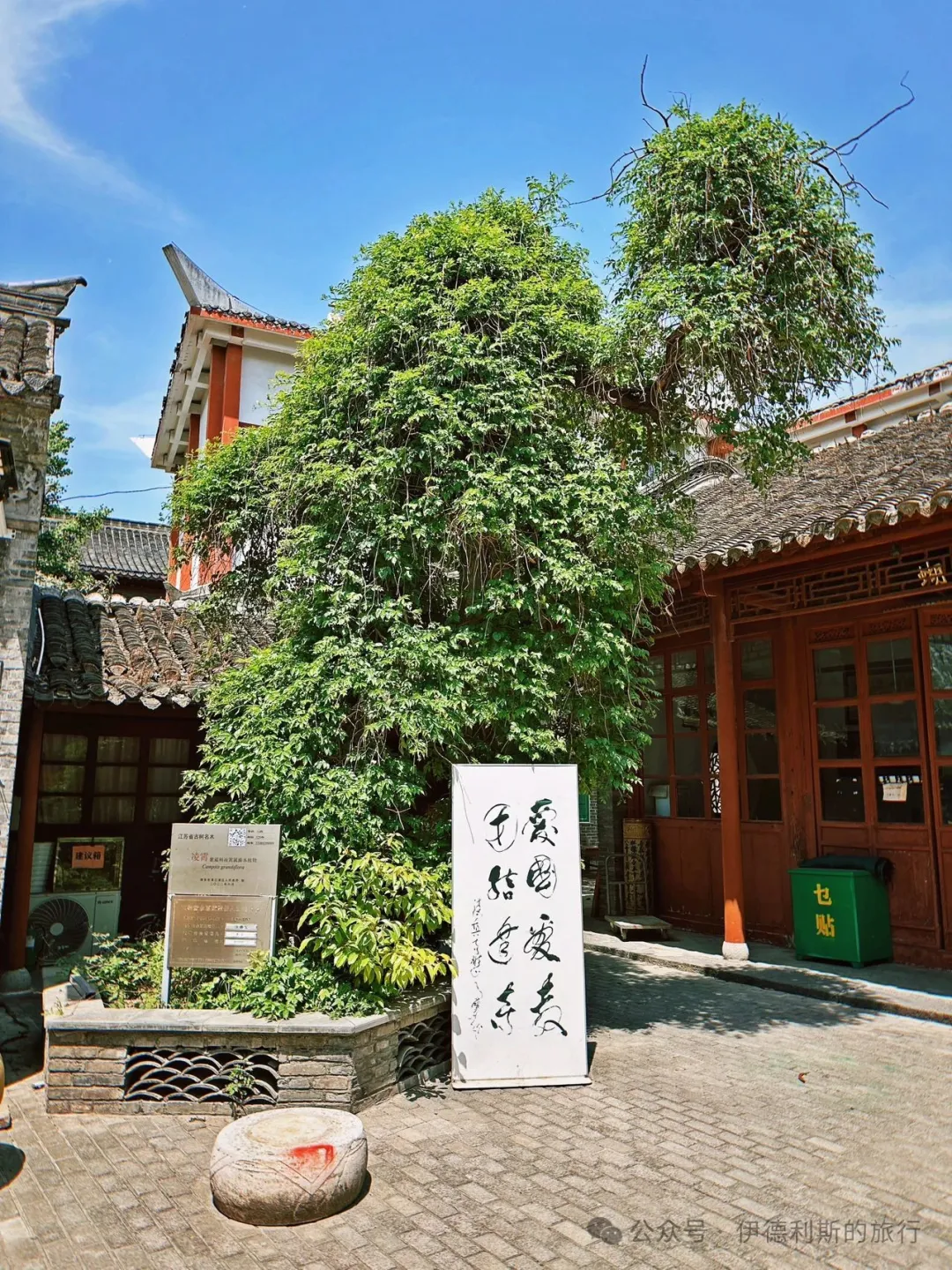
Inside the courtyard, the main prayer hall and the north wing, known as the Butterfly Hall, are Qing Dynasty structures. Beside the main hall stands a Chinese trumpet creeper (lingxiaomu) over 320 years old.
The main hall is a Qing Dynasty building made of two connected hard-mountain roofs (yingshanding) with a kiln-style hall (yaodian) at the back, typical of traditional Jianghuai architectural style.
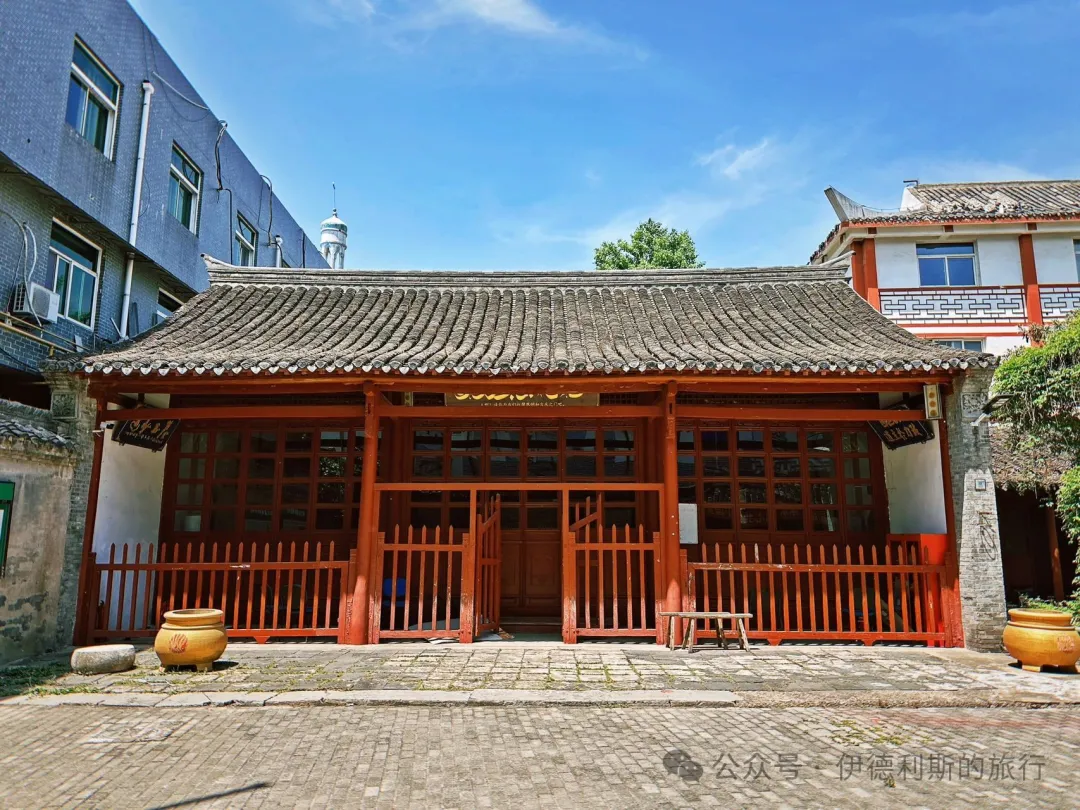
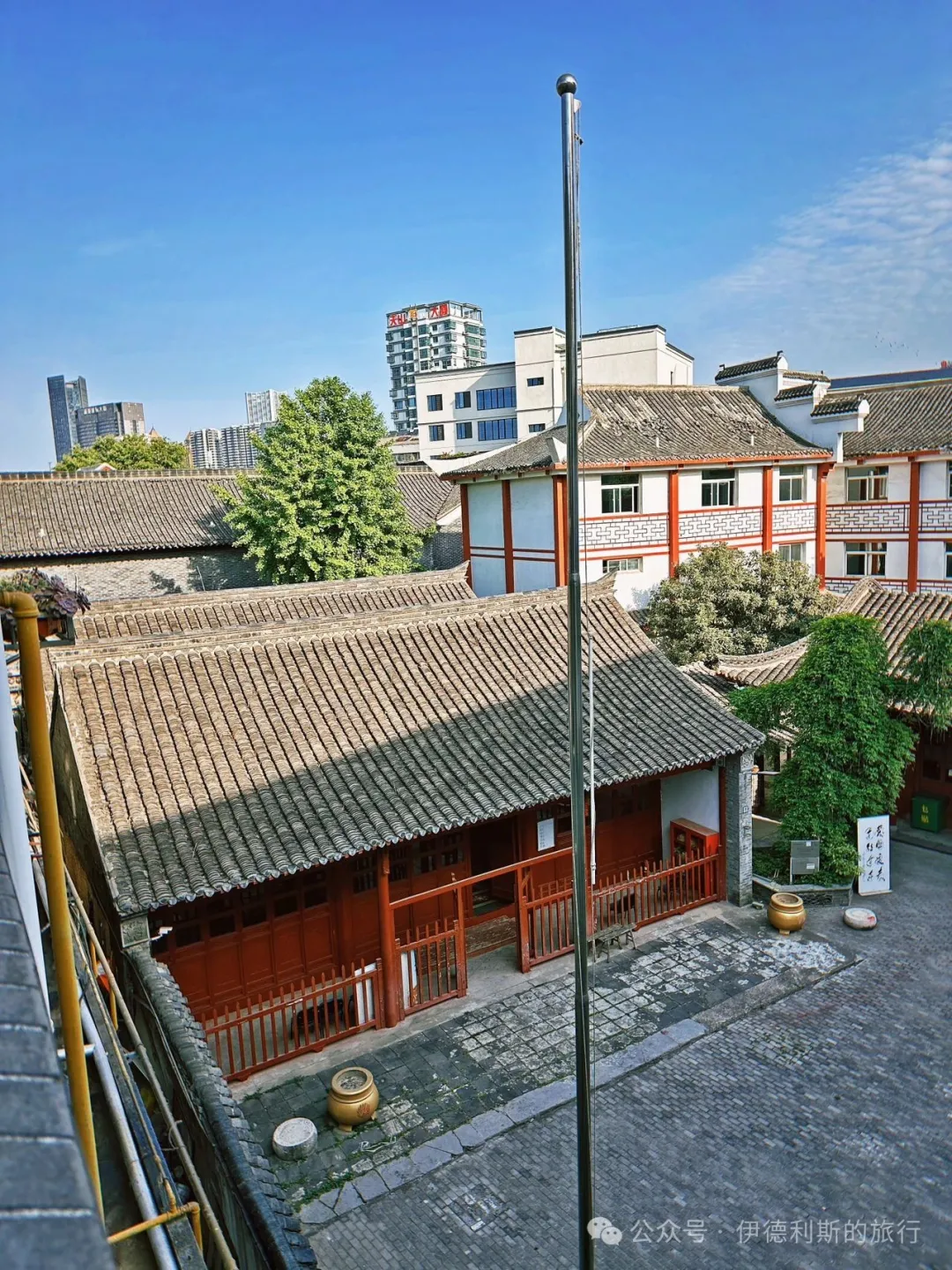
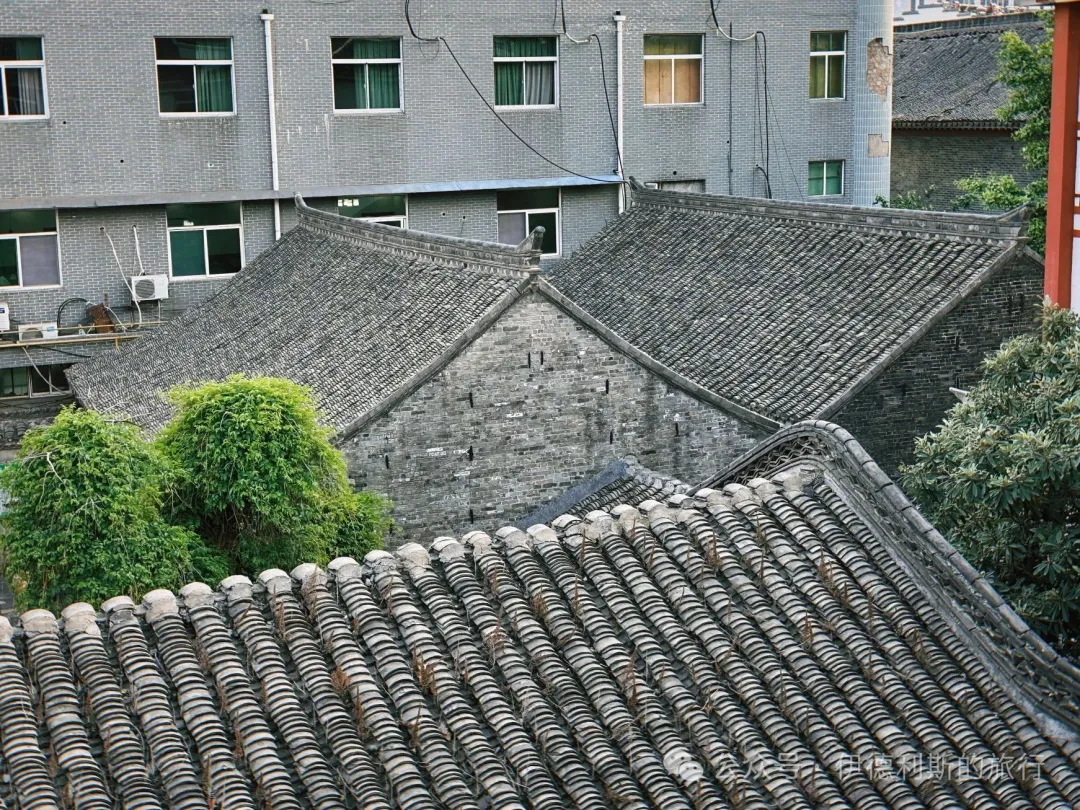
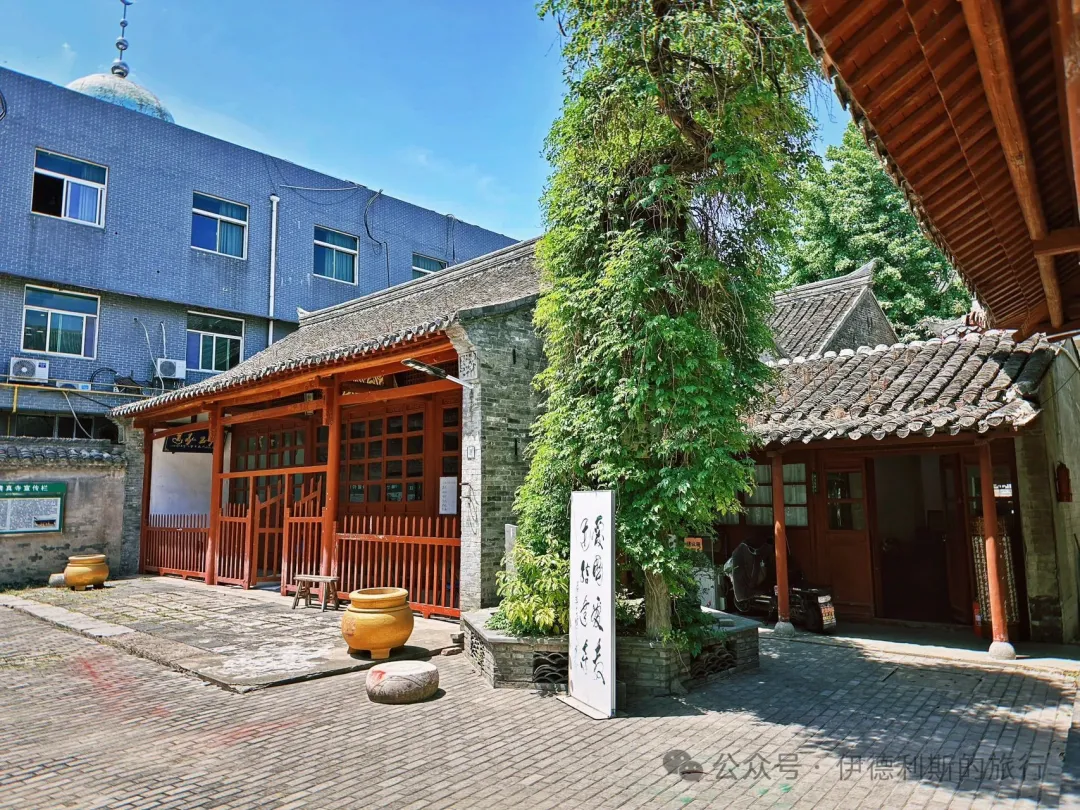
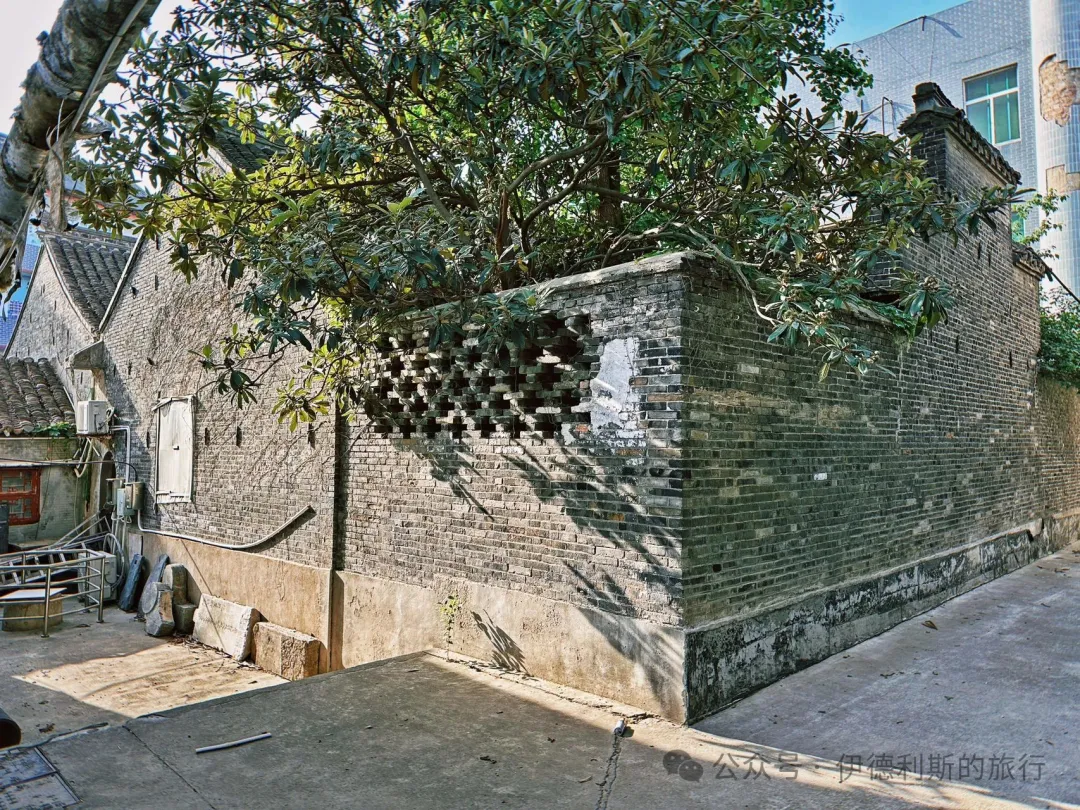
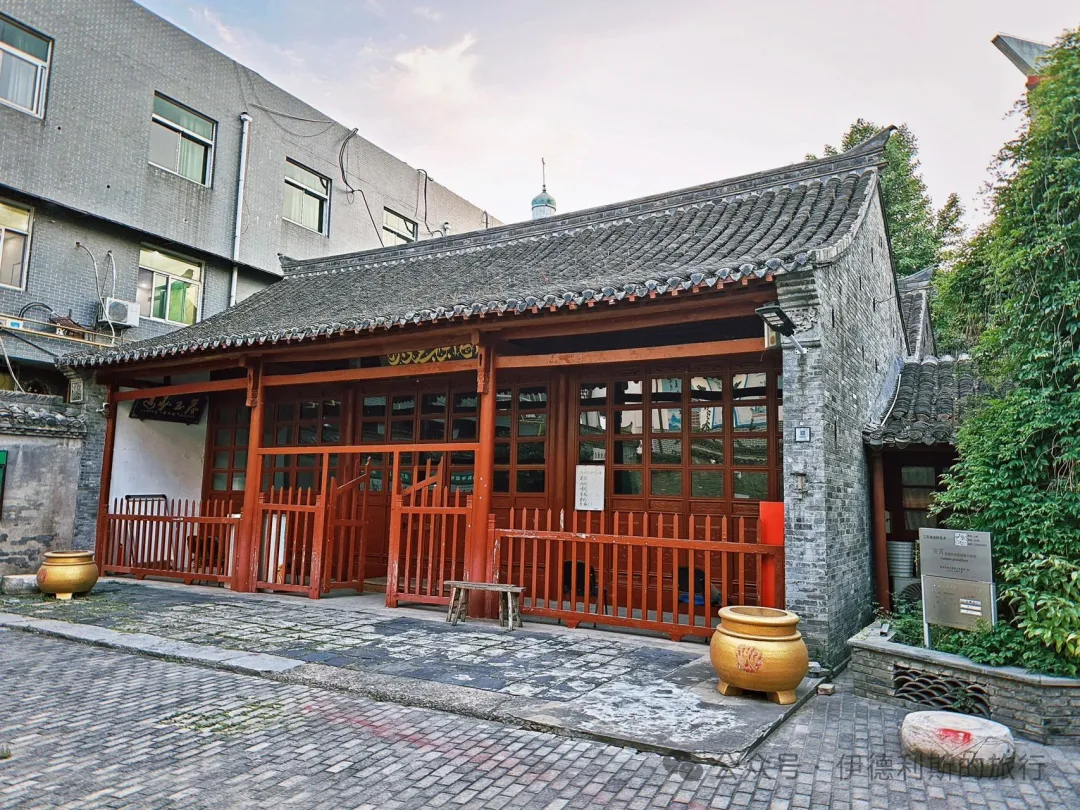
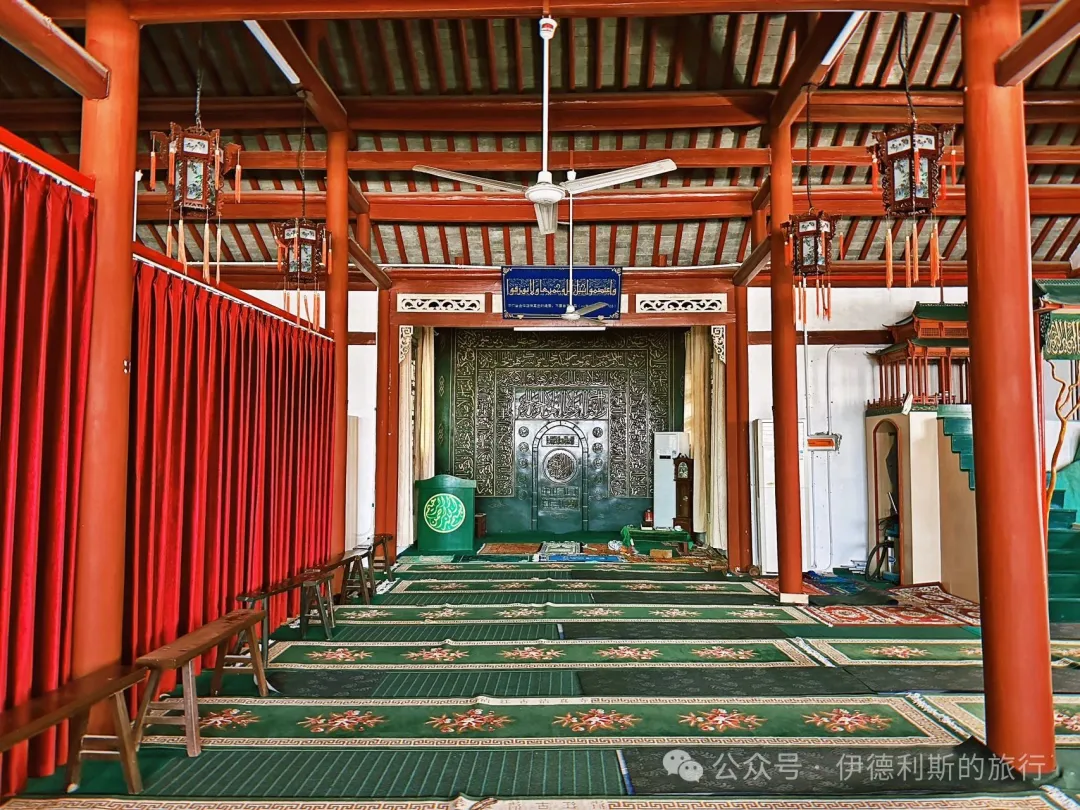
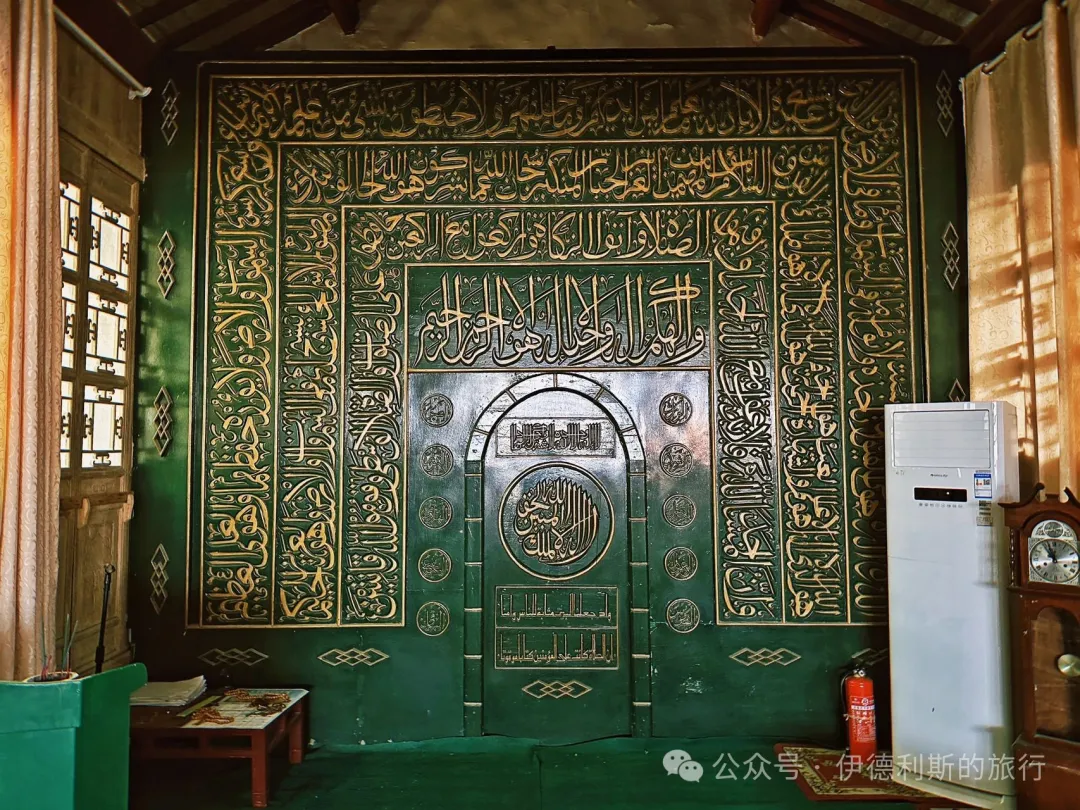
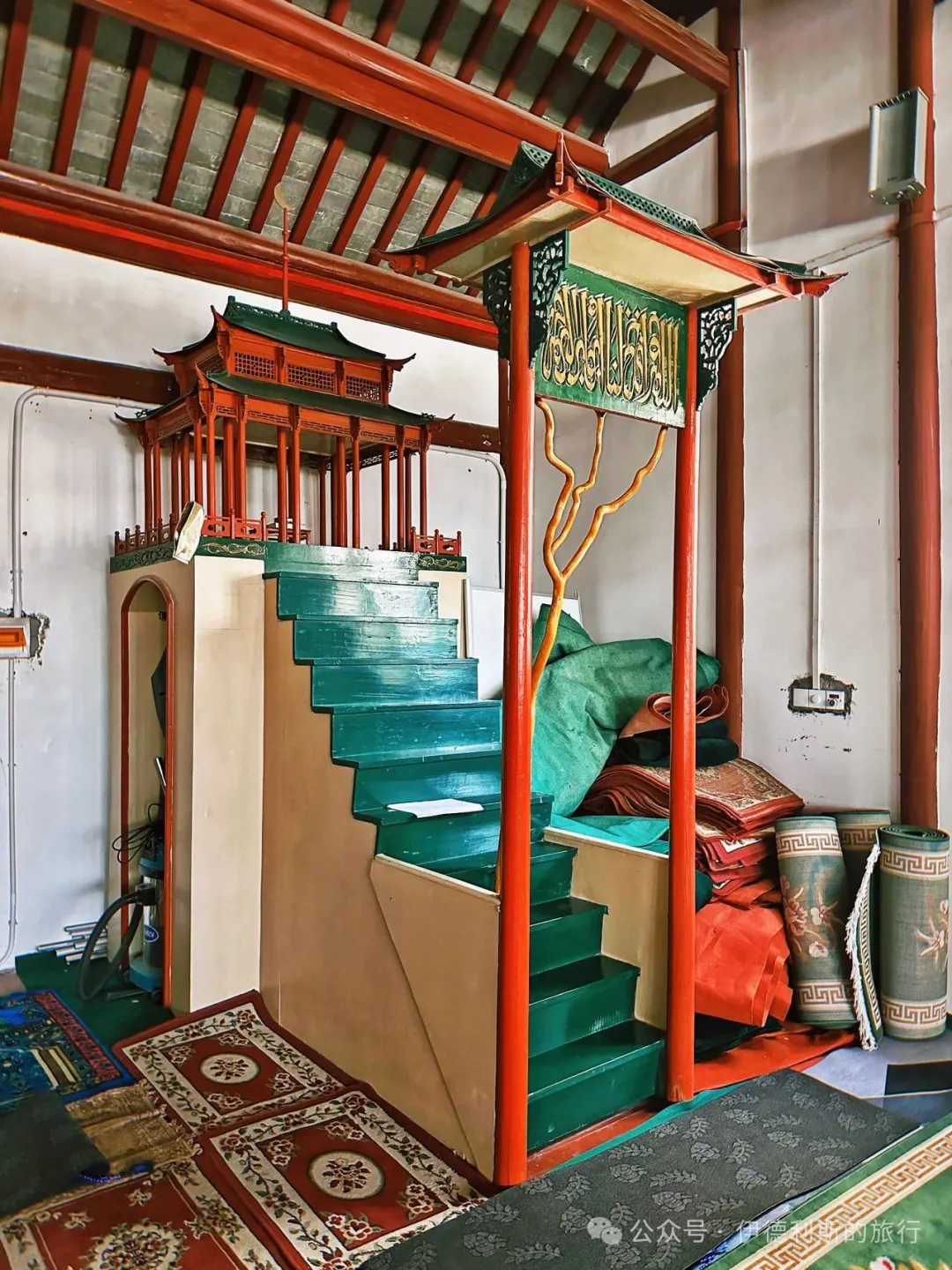
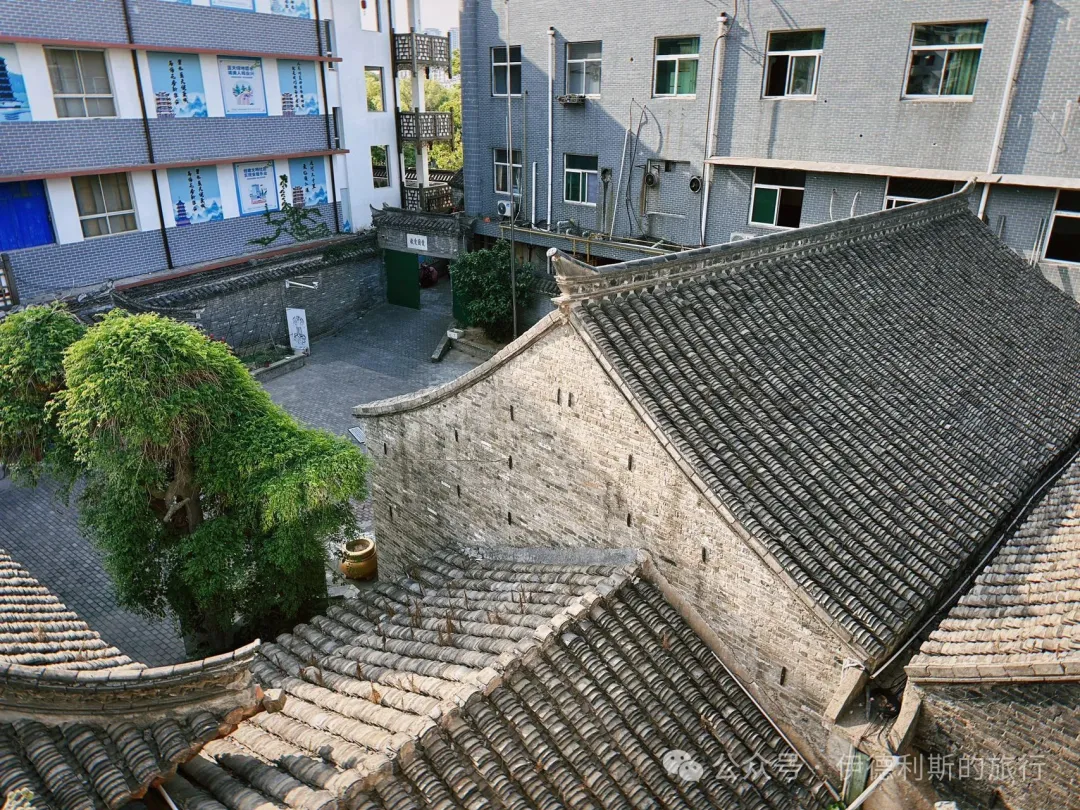
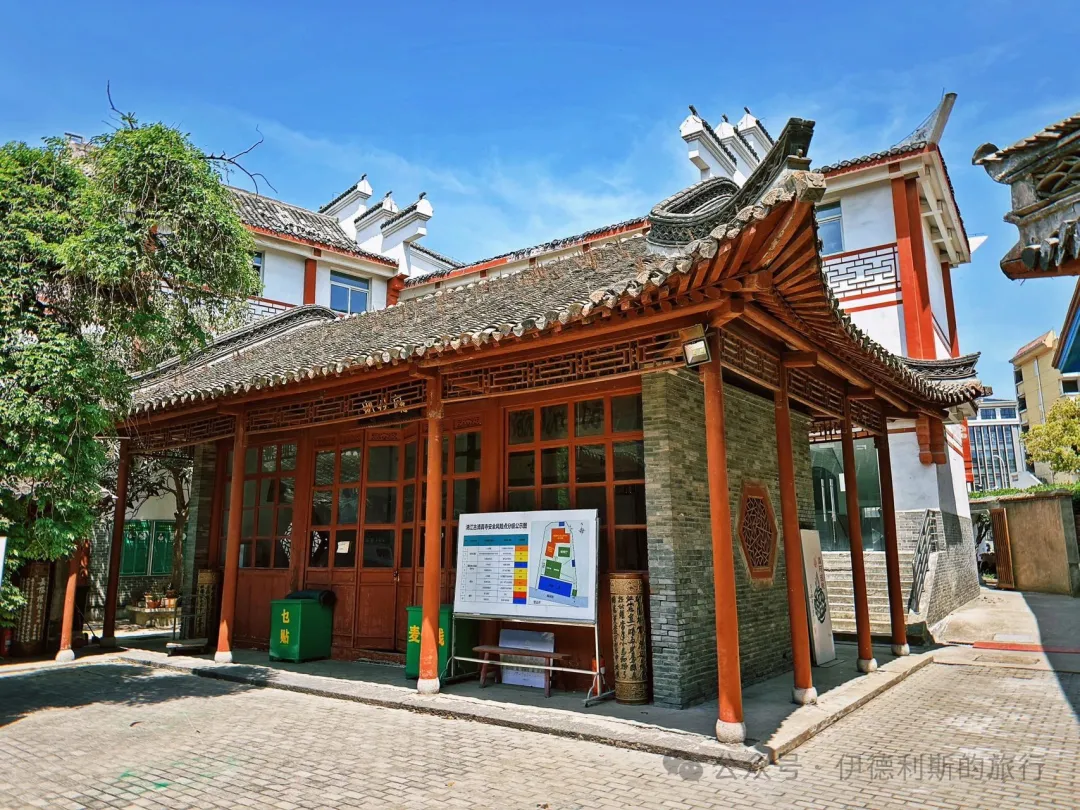
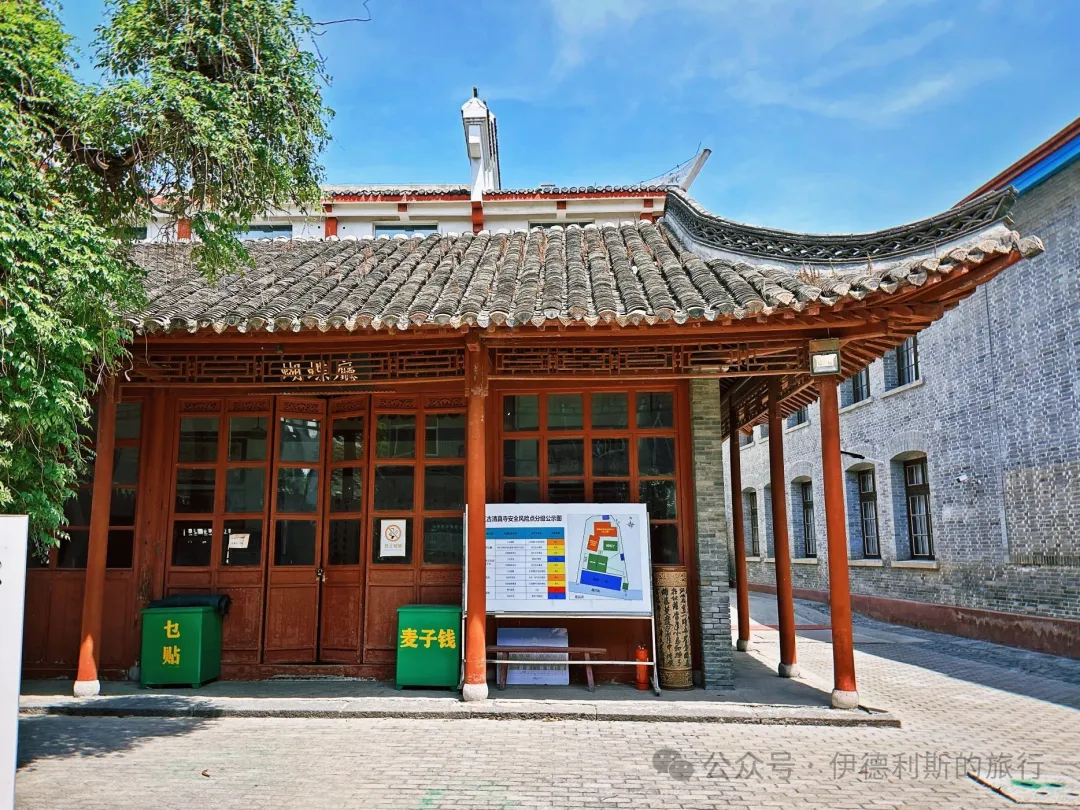
The north wing of the Qingjiang Mosque is called the Butterfly Hall (hudieting). This is a traditional name for garden architecture in the Jianghuai region, named because the corners of the hall curve upward like the wings of a dancing butterfly.
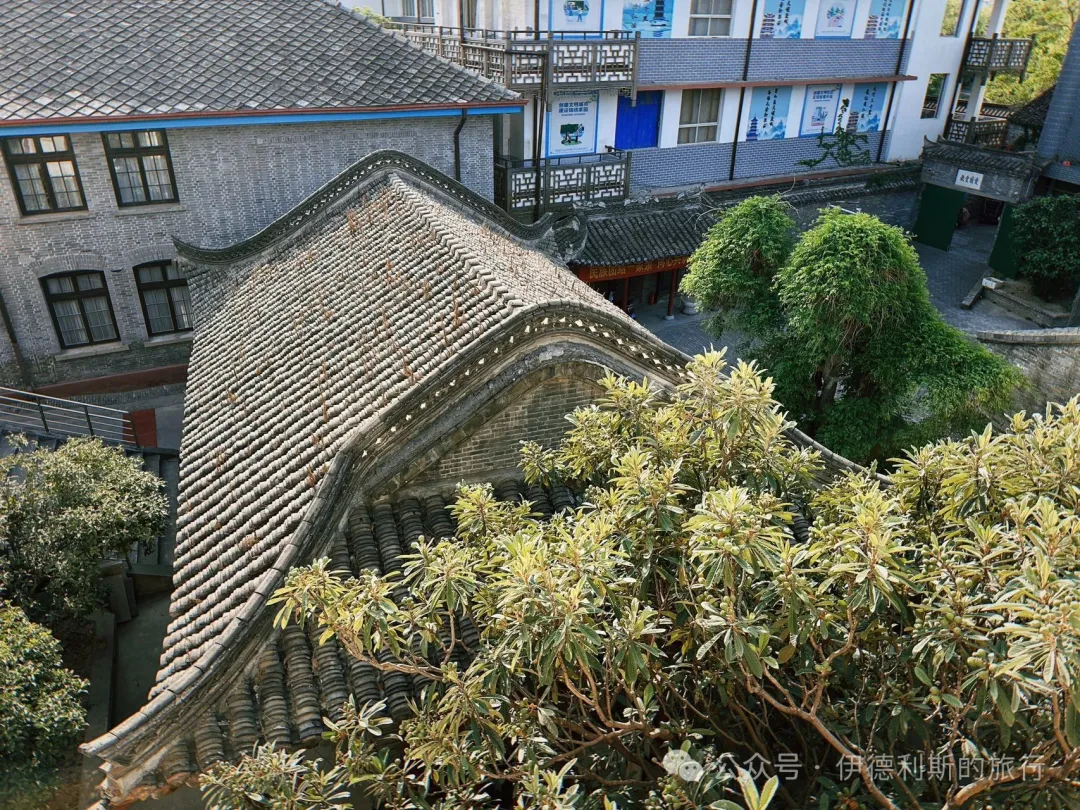
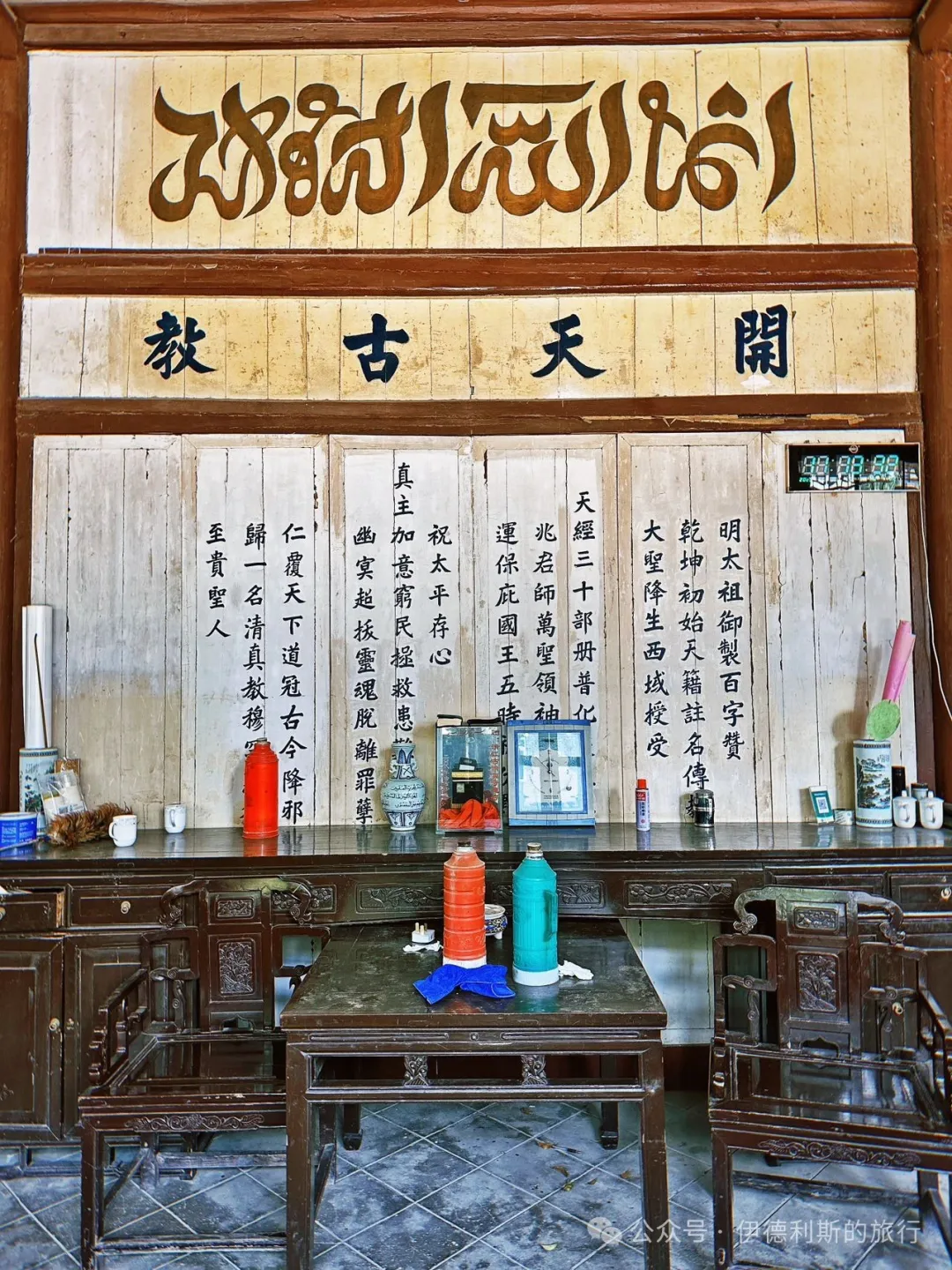
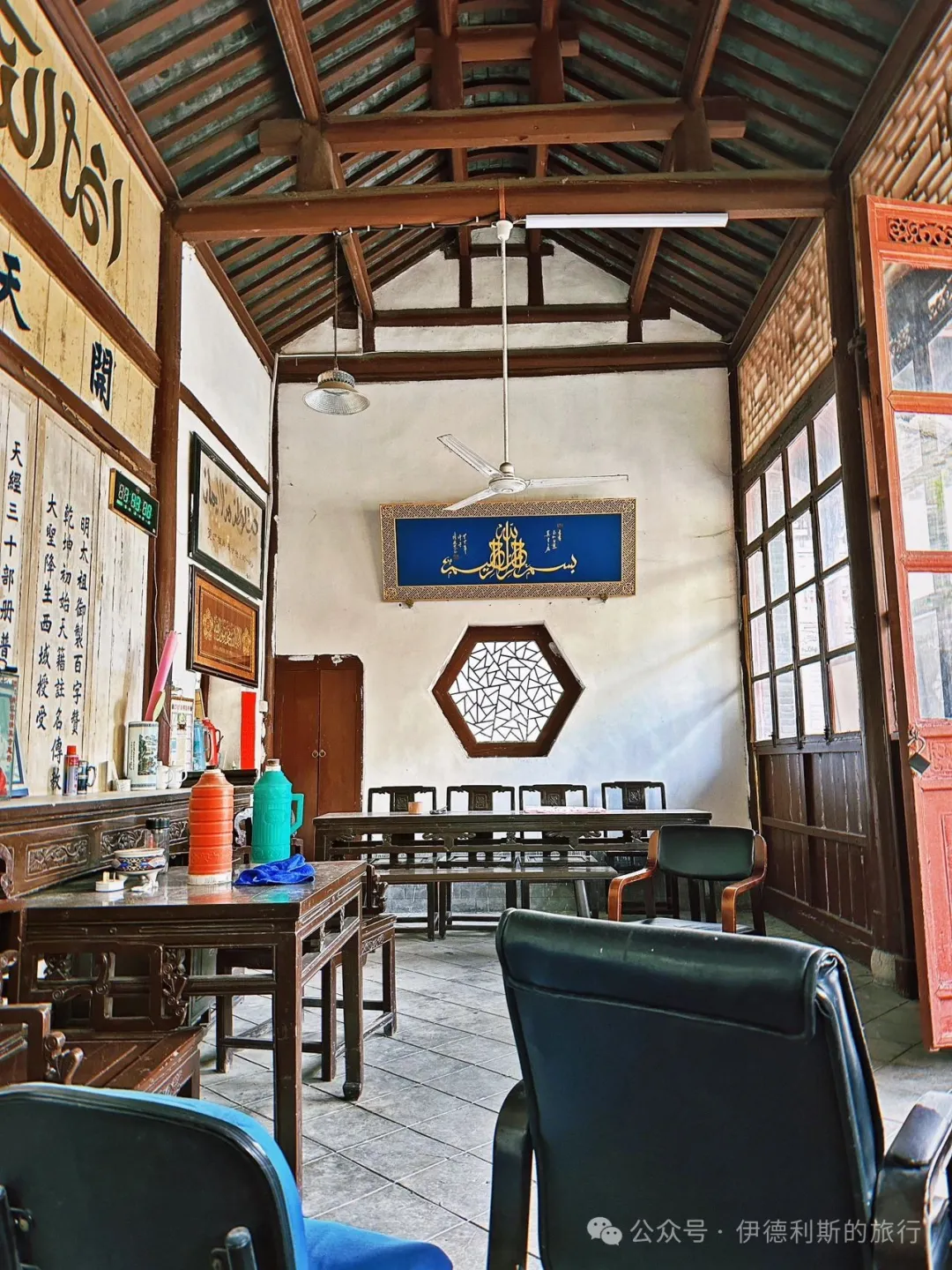
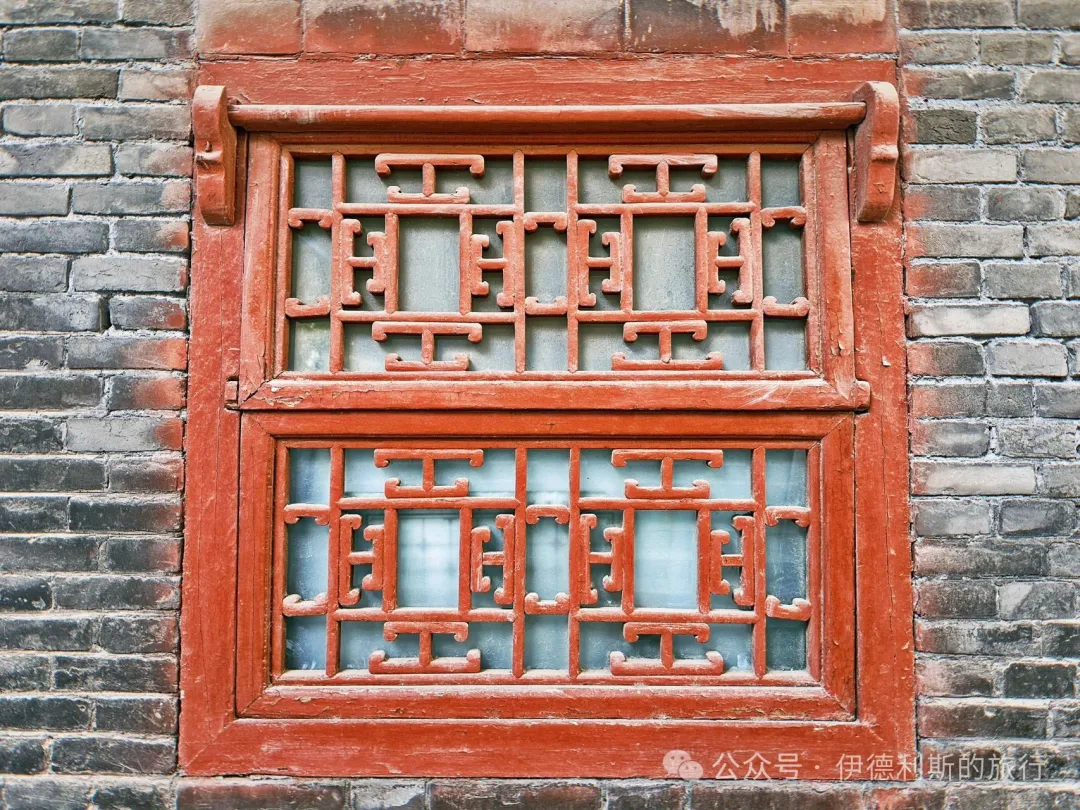
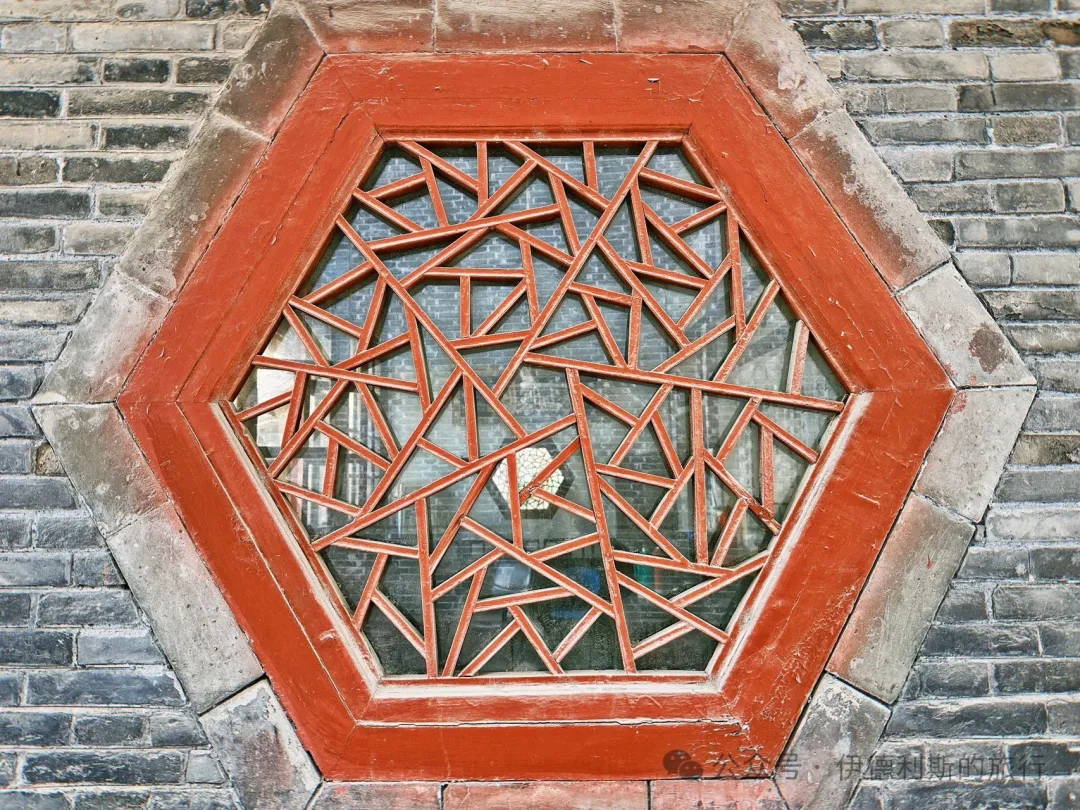
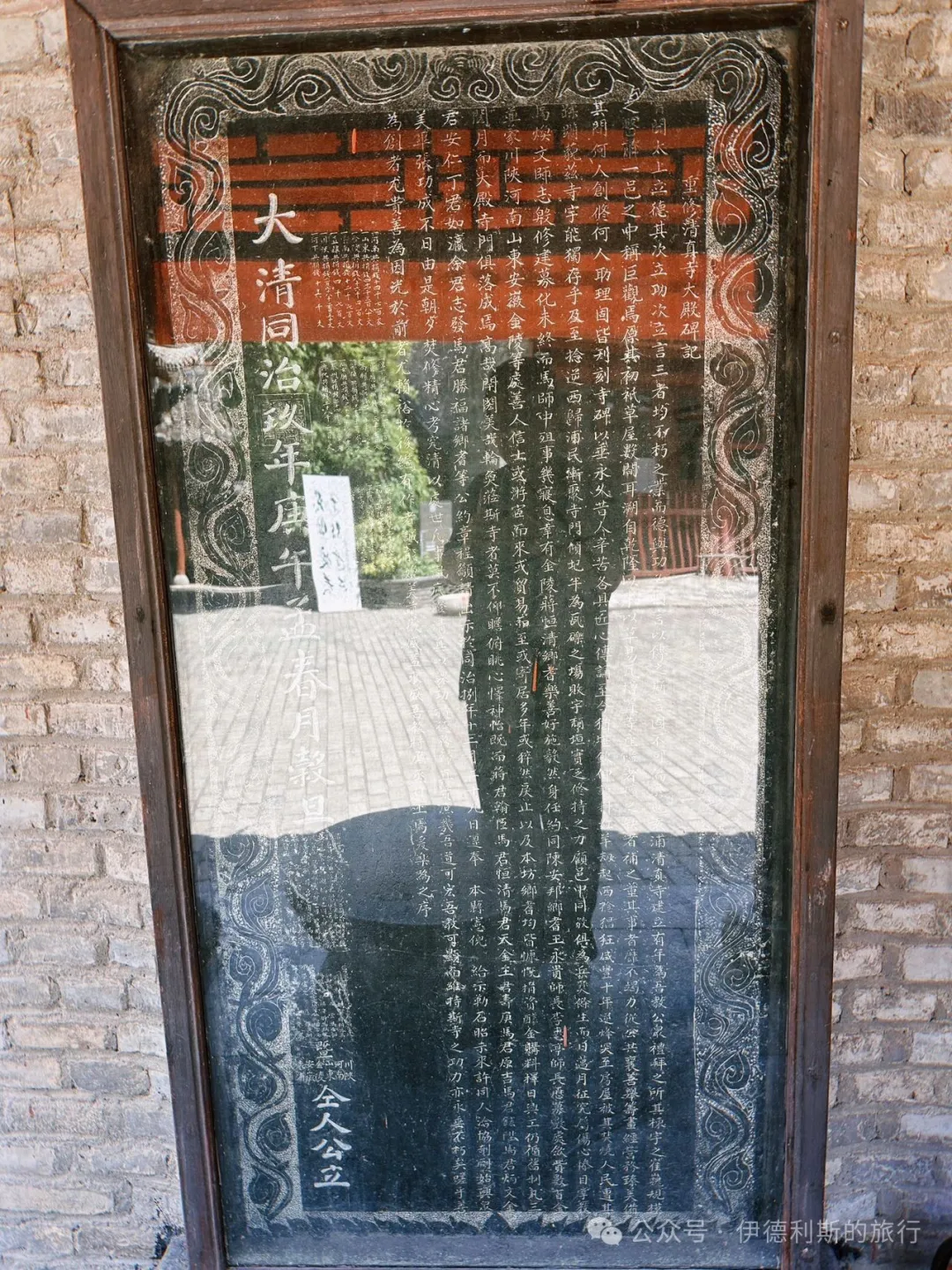
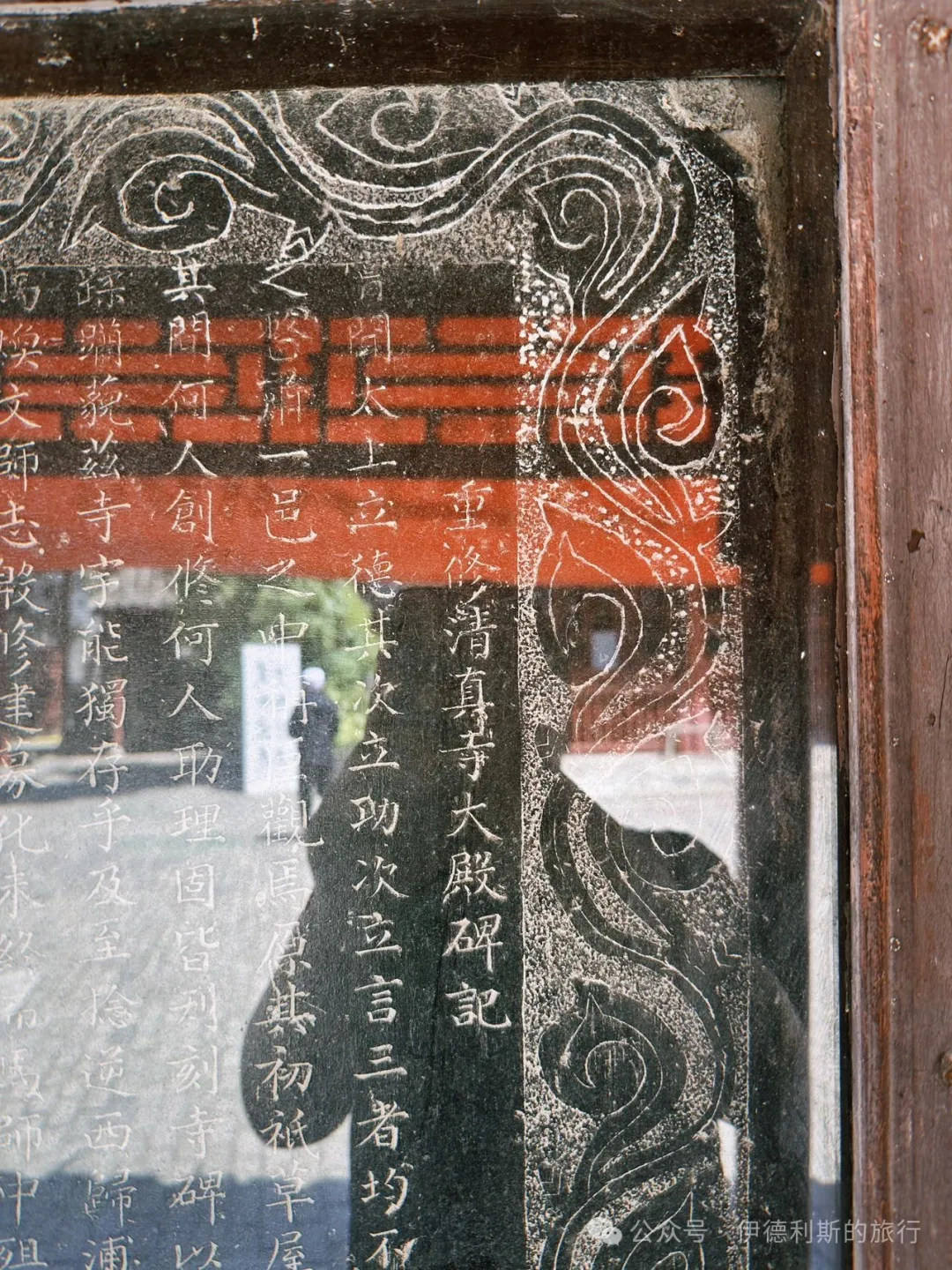
Two stone steles at the Qingjiang Mosque.
The first is the 'Prohibition Edict Stele' from the 57th year of the Qianlong reign. It was written and erected by the county government to explicitly ban corruption, issued by Wu Li, the magistrate of Qinghe County, Huai'an Prefecture, Jiangnan, who held a fifth-rank title and had been commended five times.
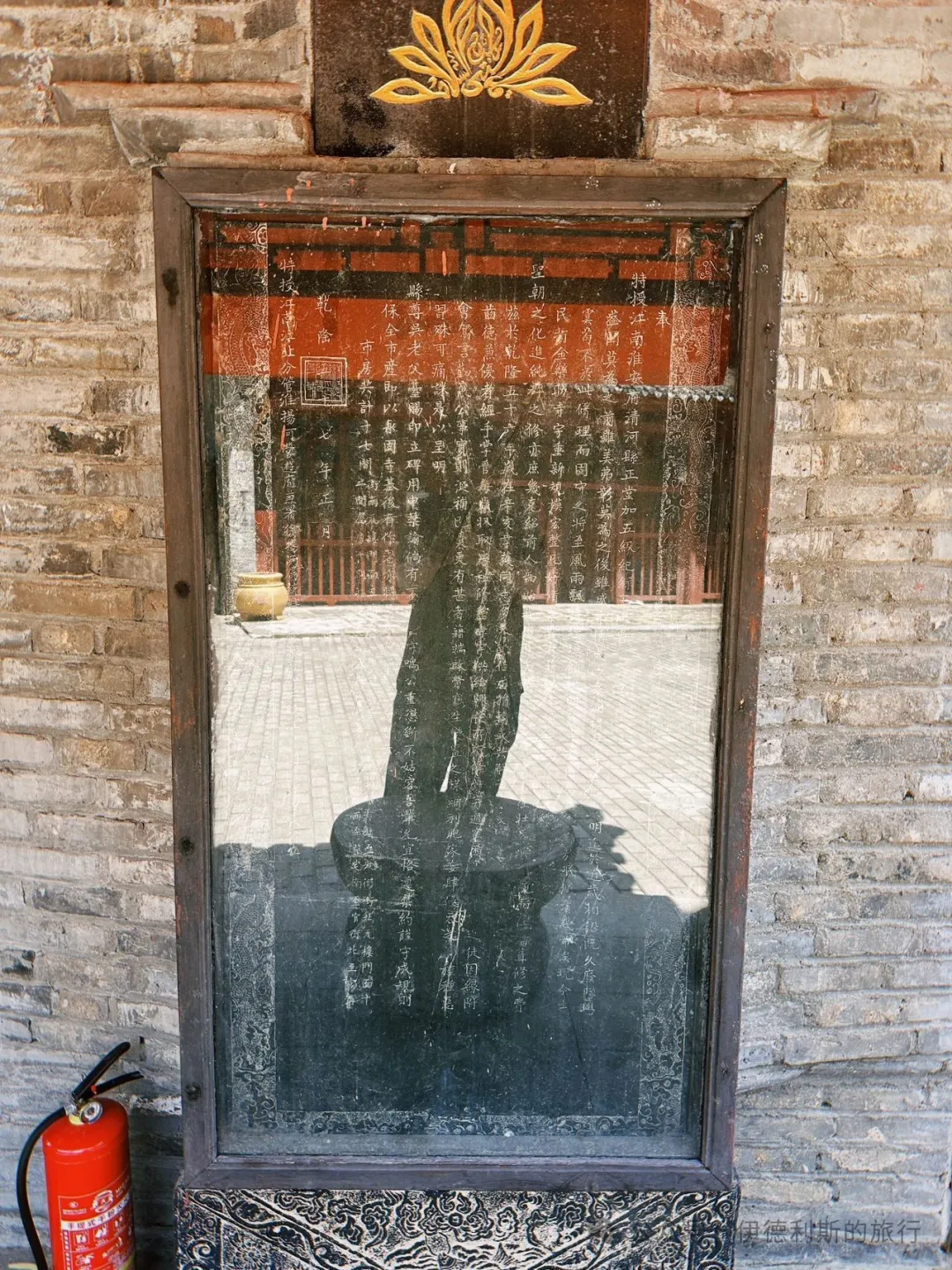
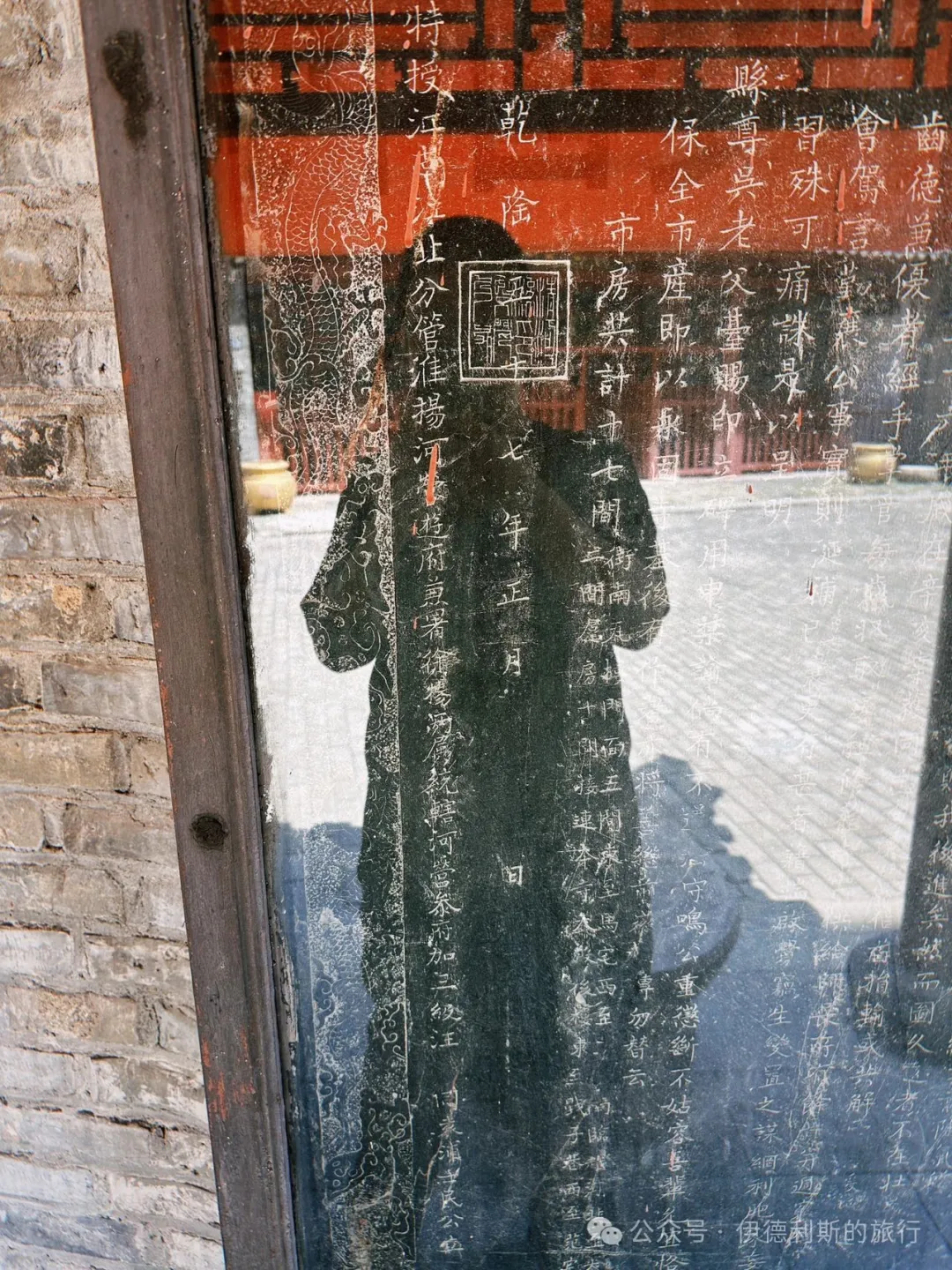
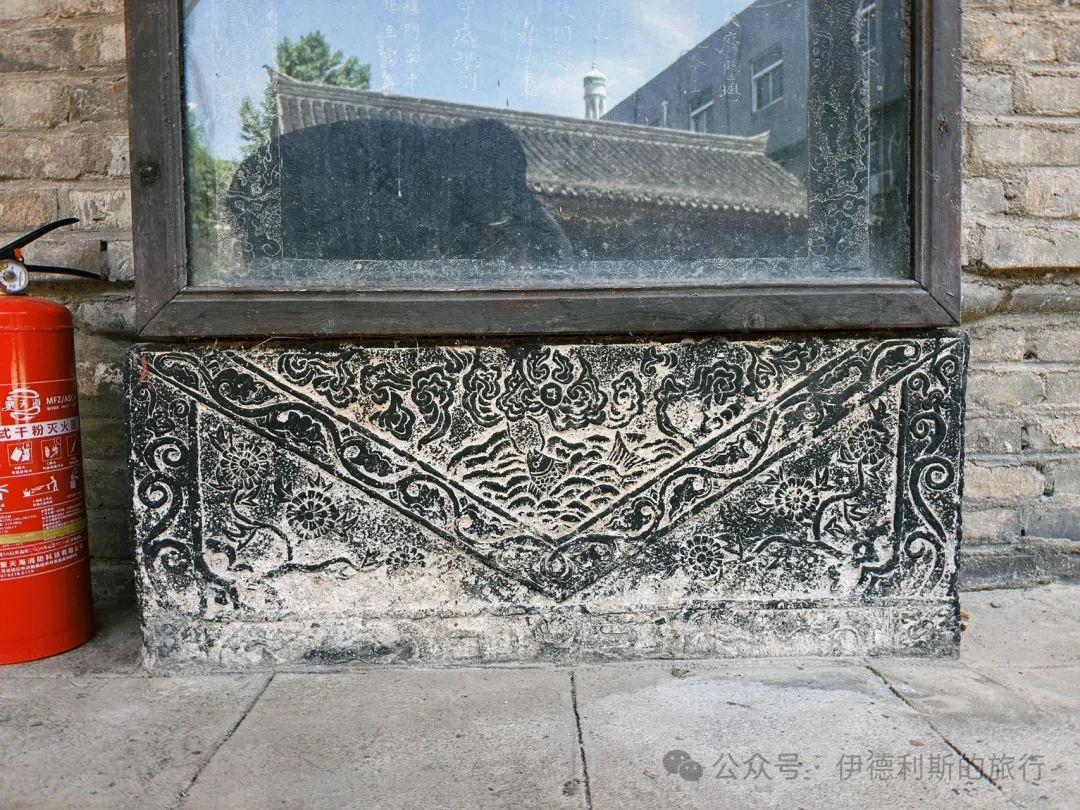
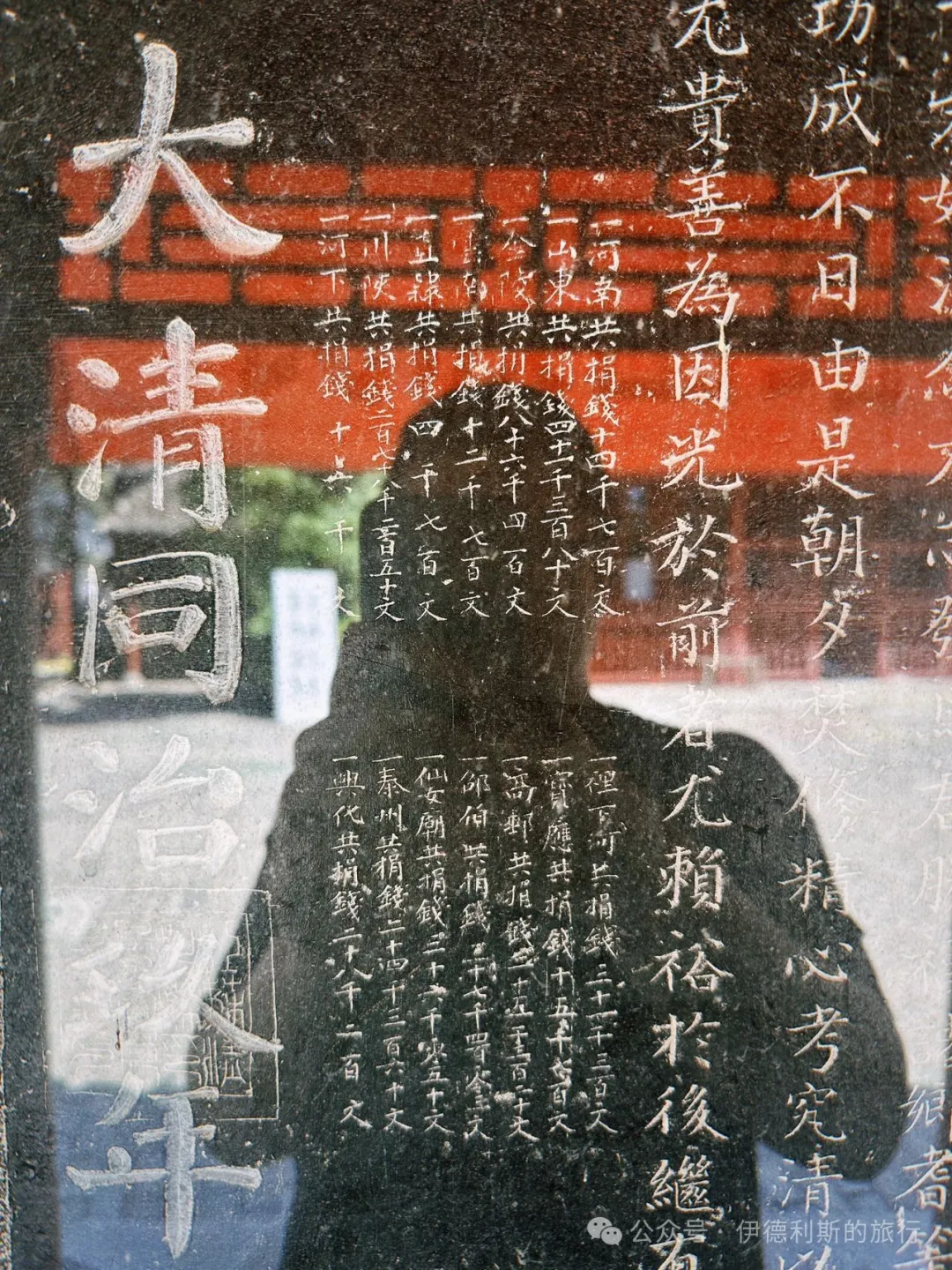
The second is the 'Stele Record of the Rebuilding of the Mosque Main Hall' from the 9th year of the Tongzhi reign, which documents the process of rebuilding the main hall during the Tongzhi period. The inscription records donors from nineteen places: Henan, Shandong, Jinling, Yunnan, Zhili, Chuanshan, Hexia, Lixiahe, Baoying, Gaoyou, Shaobo, Xiannumiao, Taizhou, Xinghua, Dongtai, Rugao, Shuyang, the Xinzi Cavalry, and Yuanpu. Donors from Henan, Shandong, Yunnan, Zhili, and Chuanshan were mostly traveling merchants, reflecting the prosperous 'southern boats and northern horses' scene of Qingjiangpu during the Qing Dynasty. The others were local mosque communities in Jiangsu. Some, like the Shaobo mosque, have since been abandoned, offering a glimpse into the rise and fall of the Hui Muslim community in Jiangsu.
Ancient well
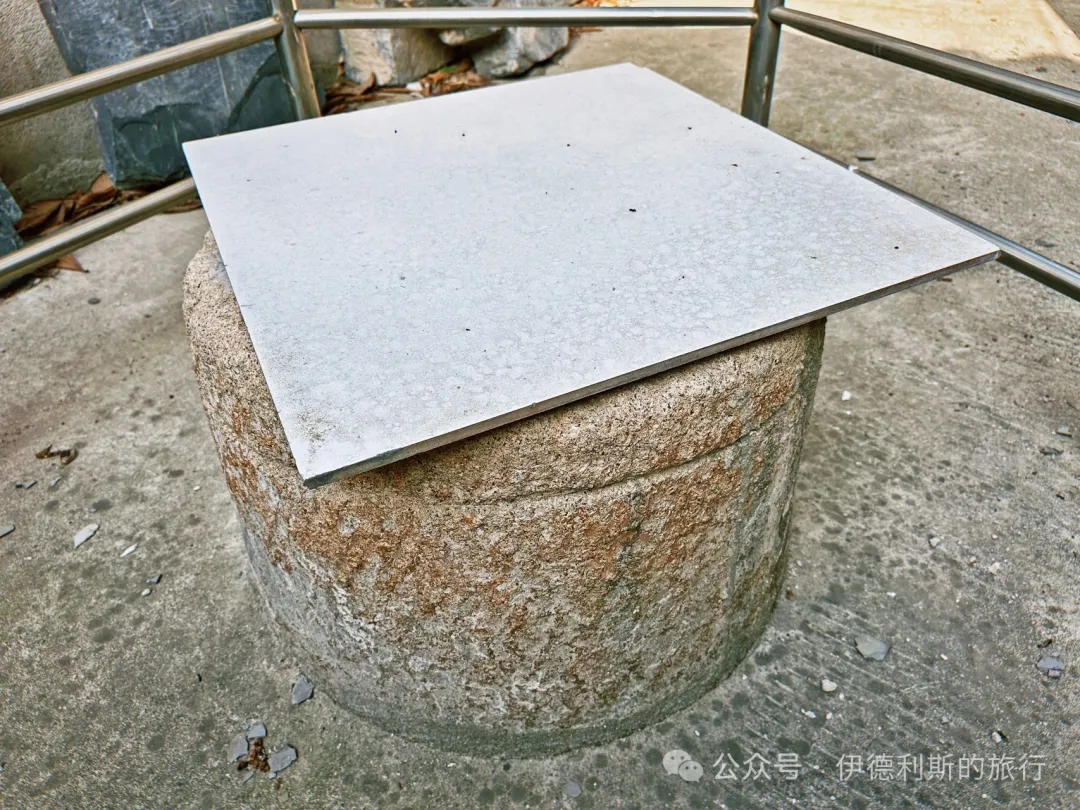
Column base
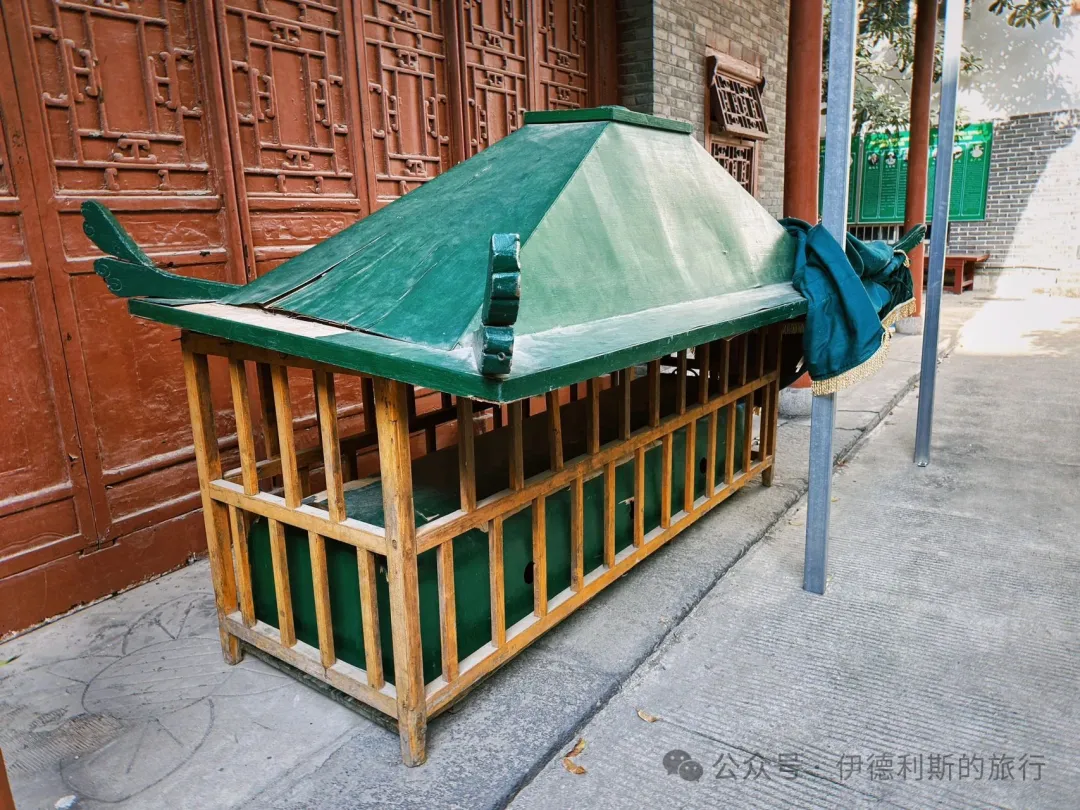
Coffin for the deceased (tabumaiti xia)
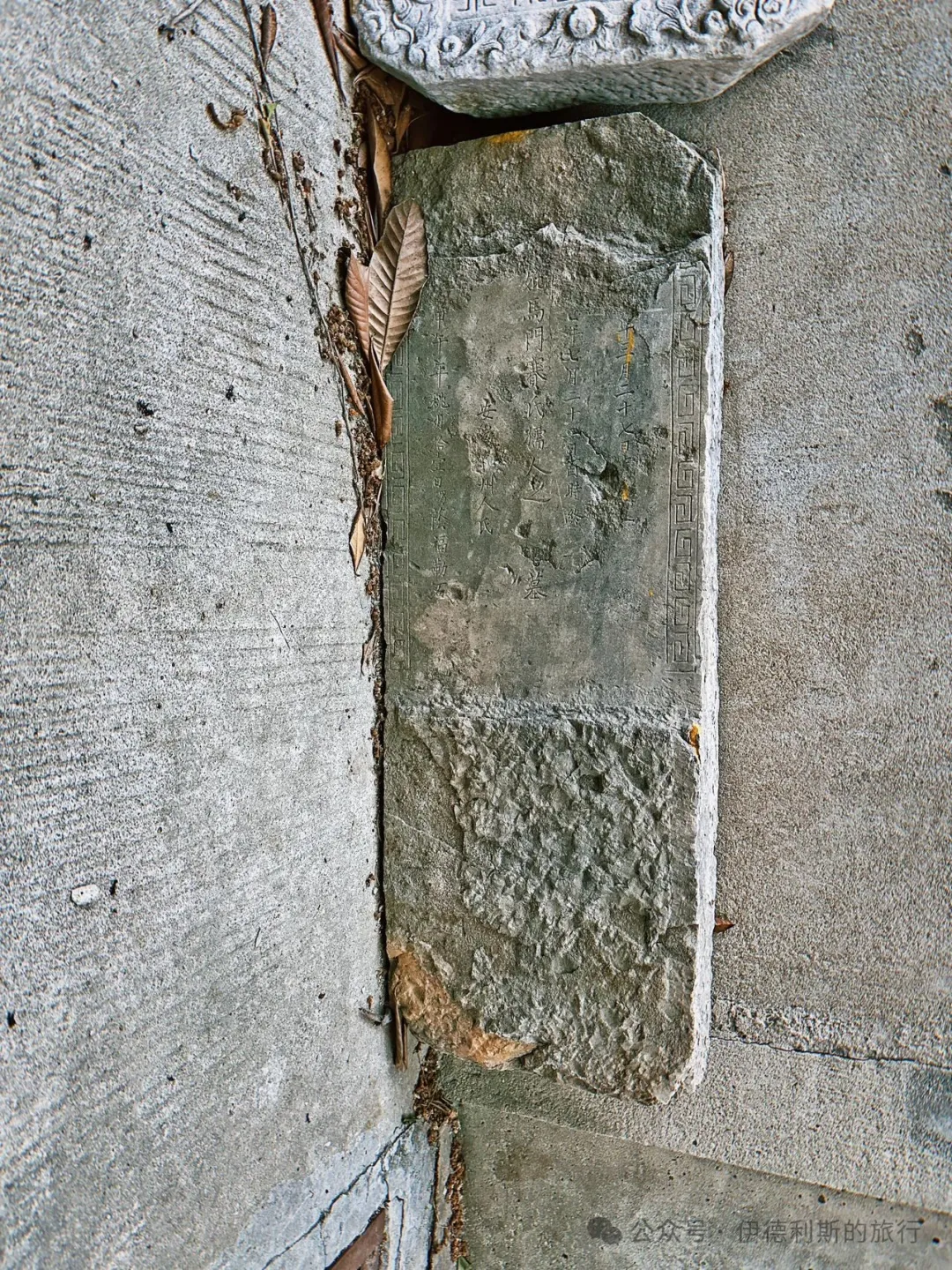
Tombstone of Madam Yang, mother of the Ma family, from the 14th year of the Guangxu reign, and the tombstone of the Sai family of the Ma clan from Anhui.
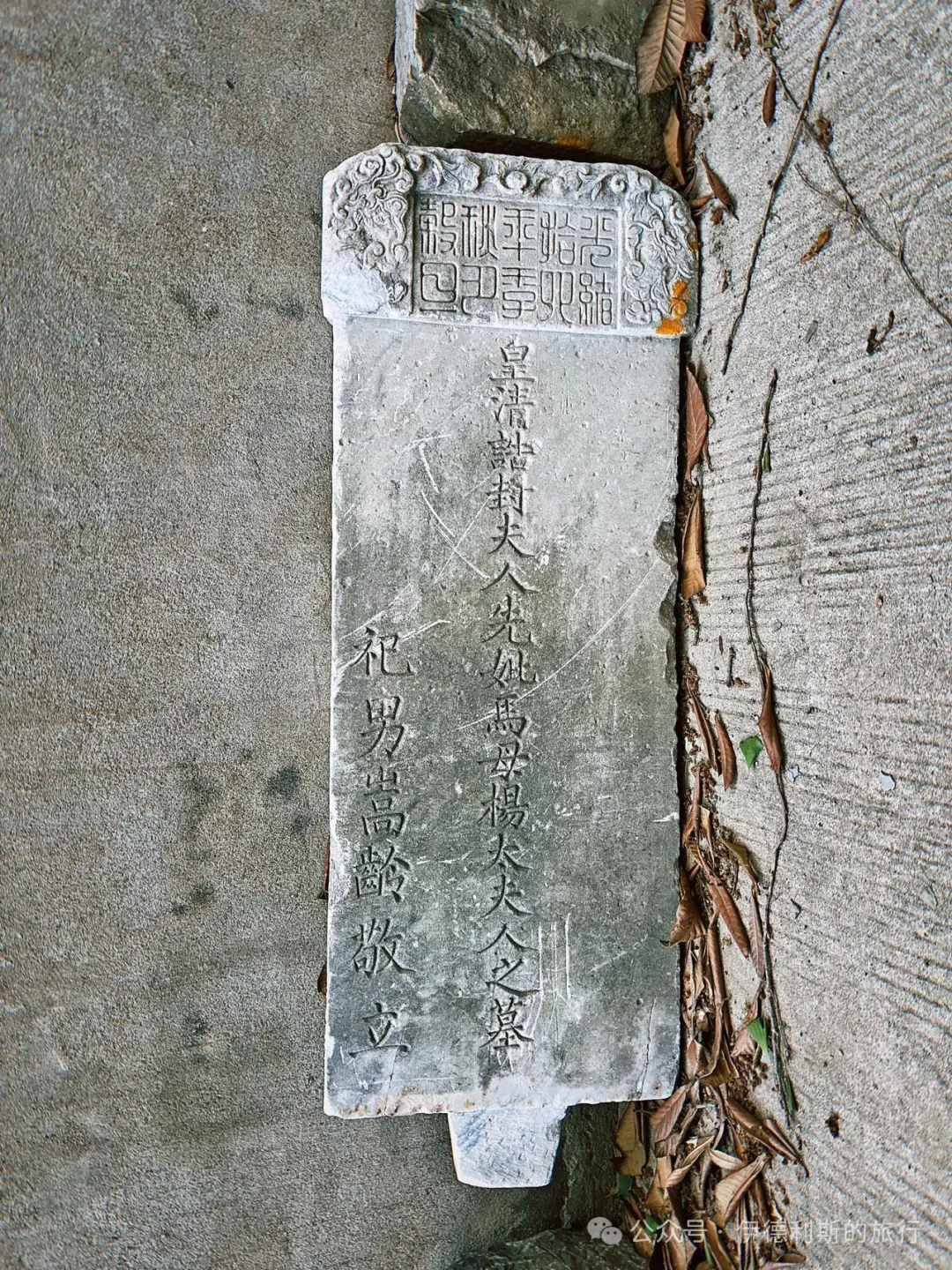
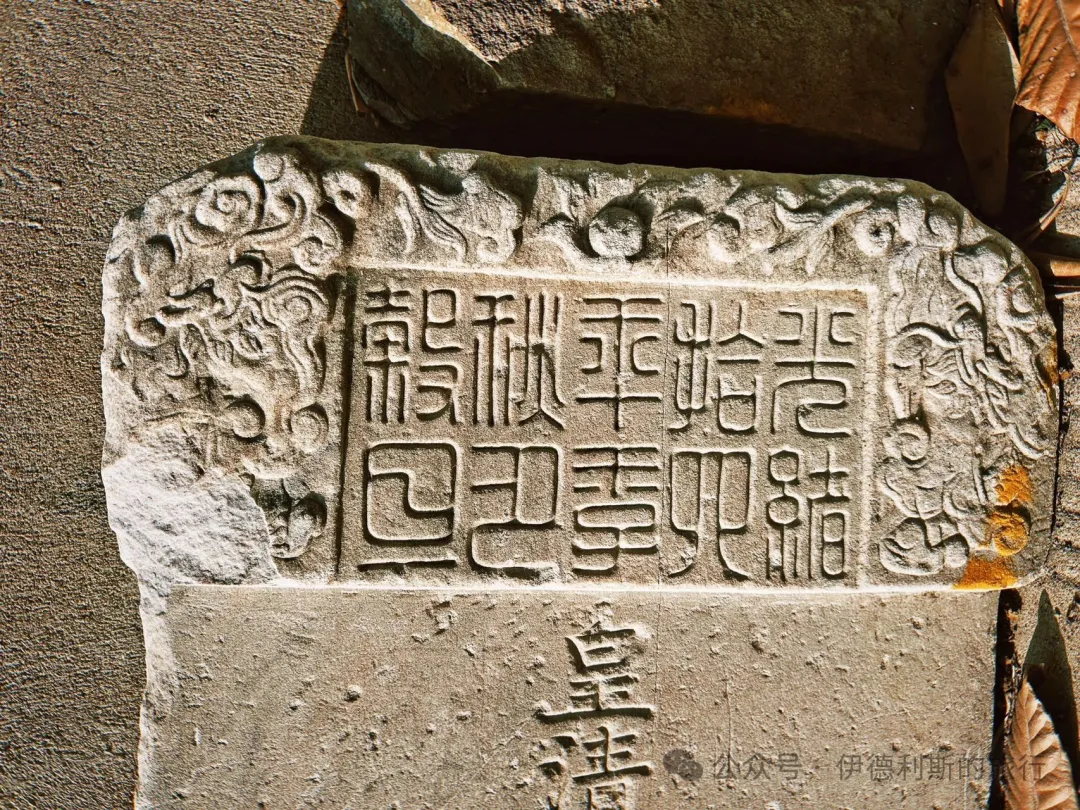
Tombstone of the Sai family of the Ma clan from Anhui
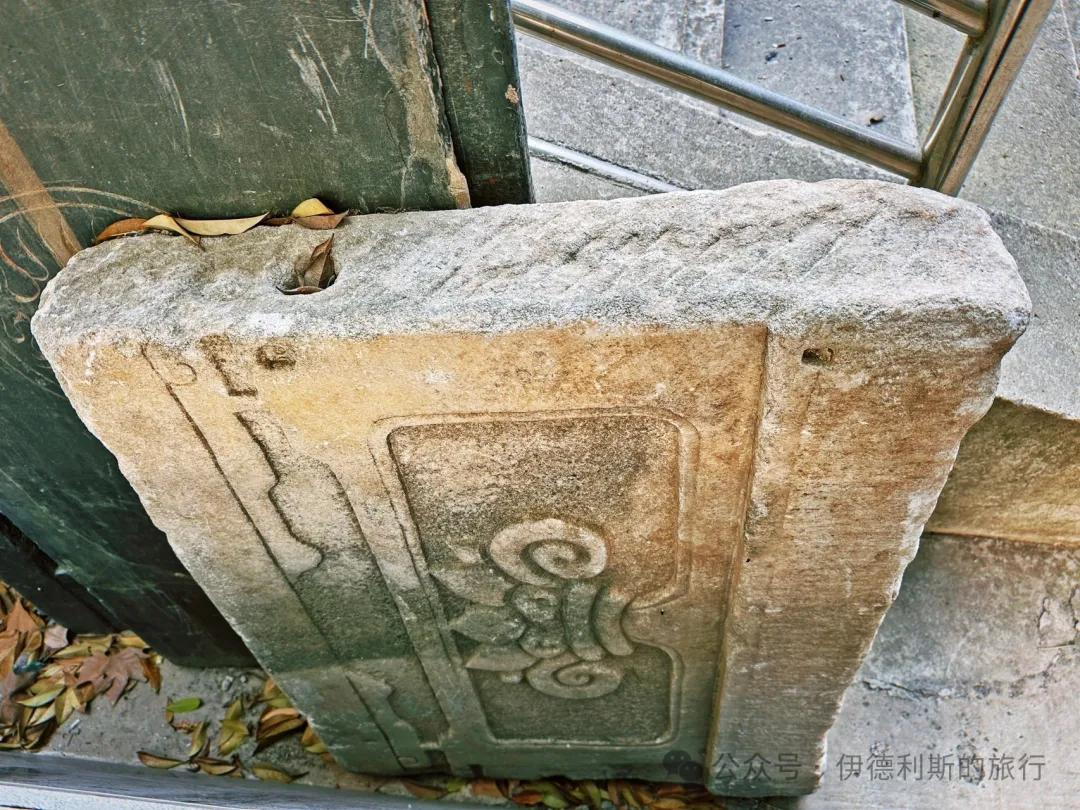
Stone railing
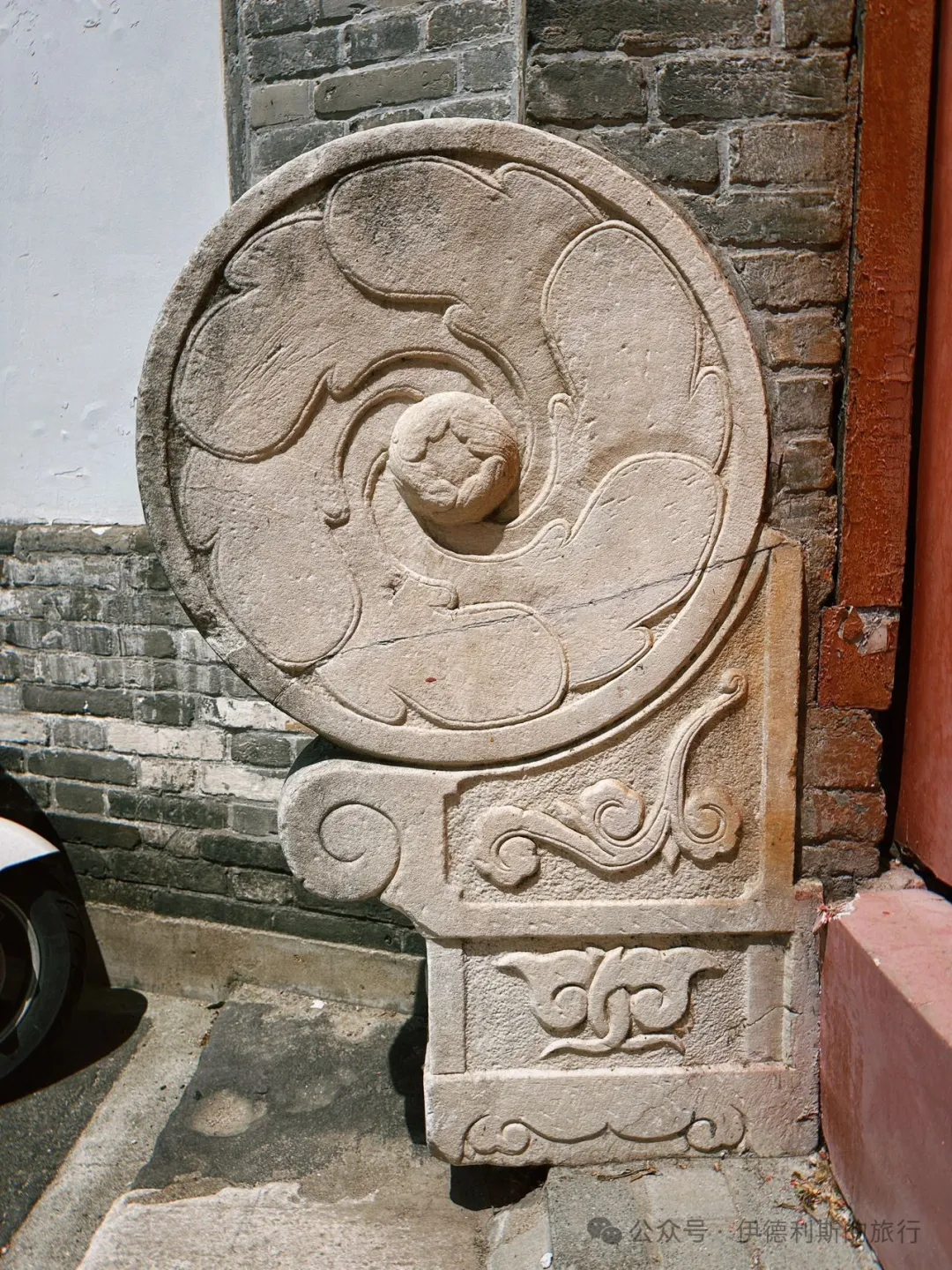
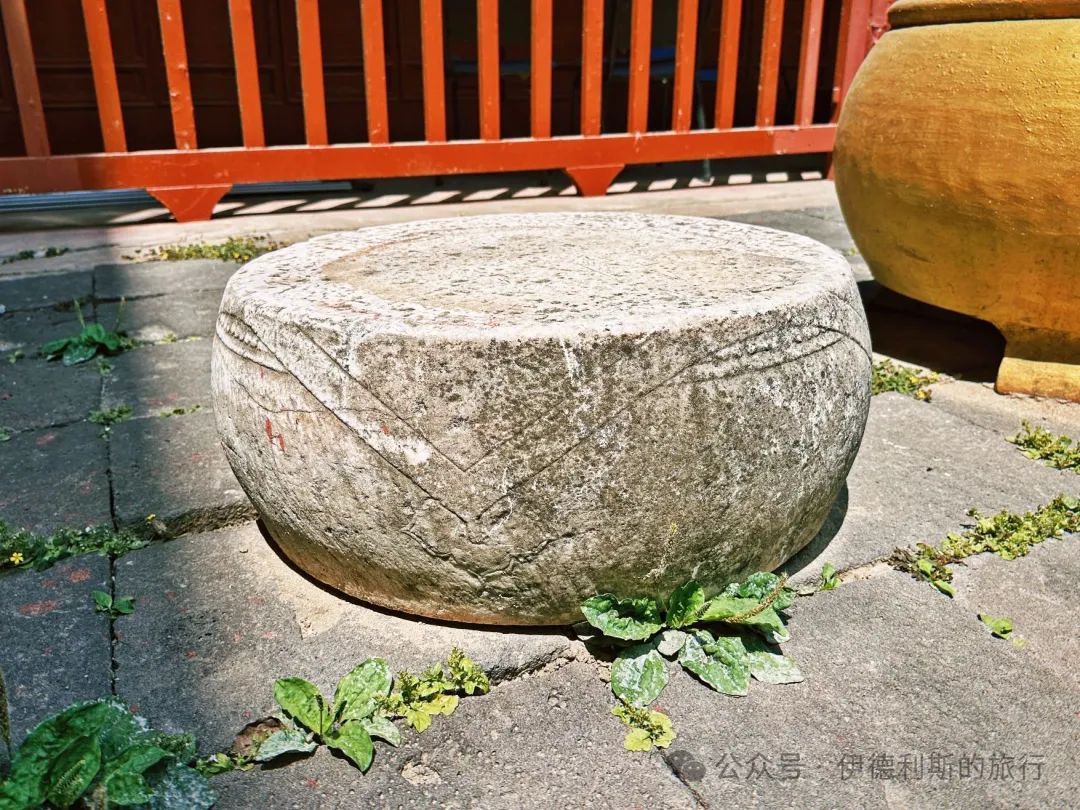
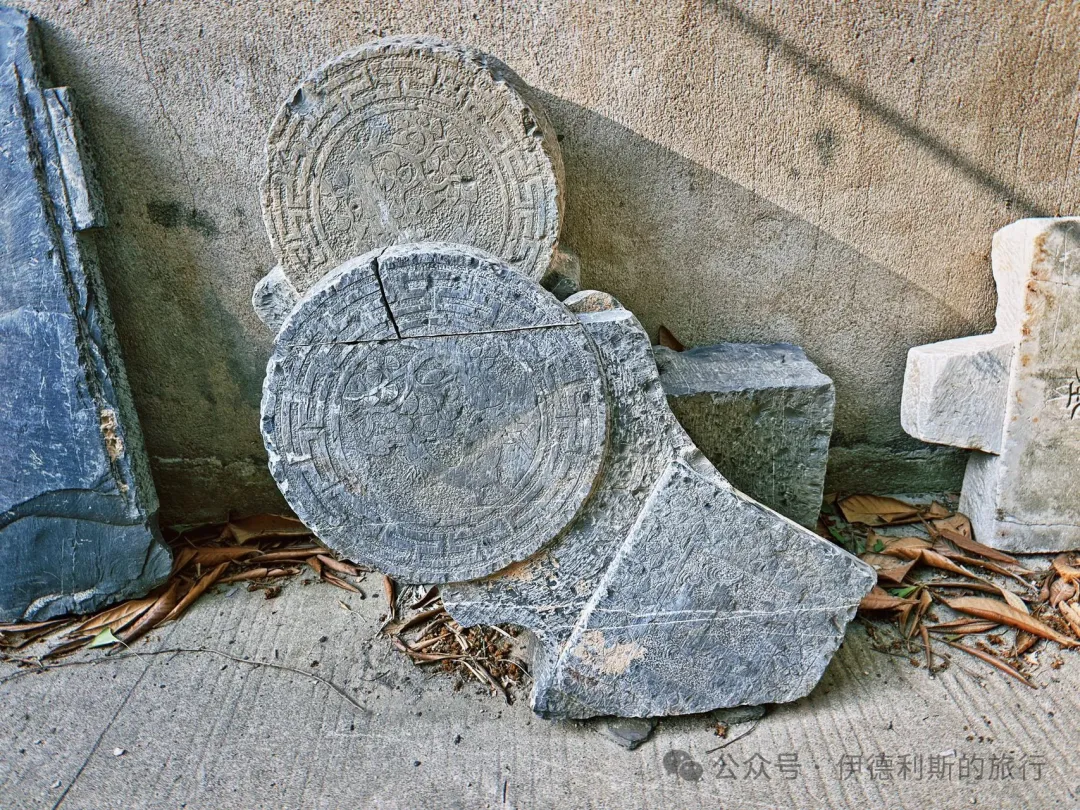
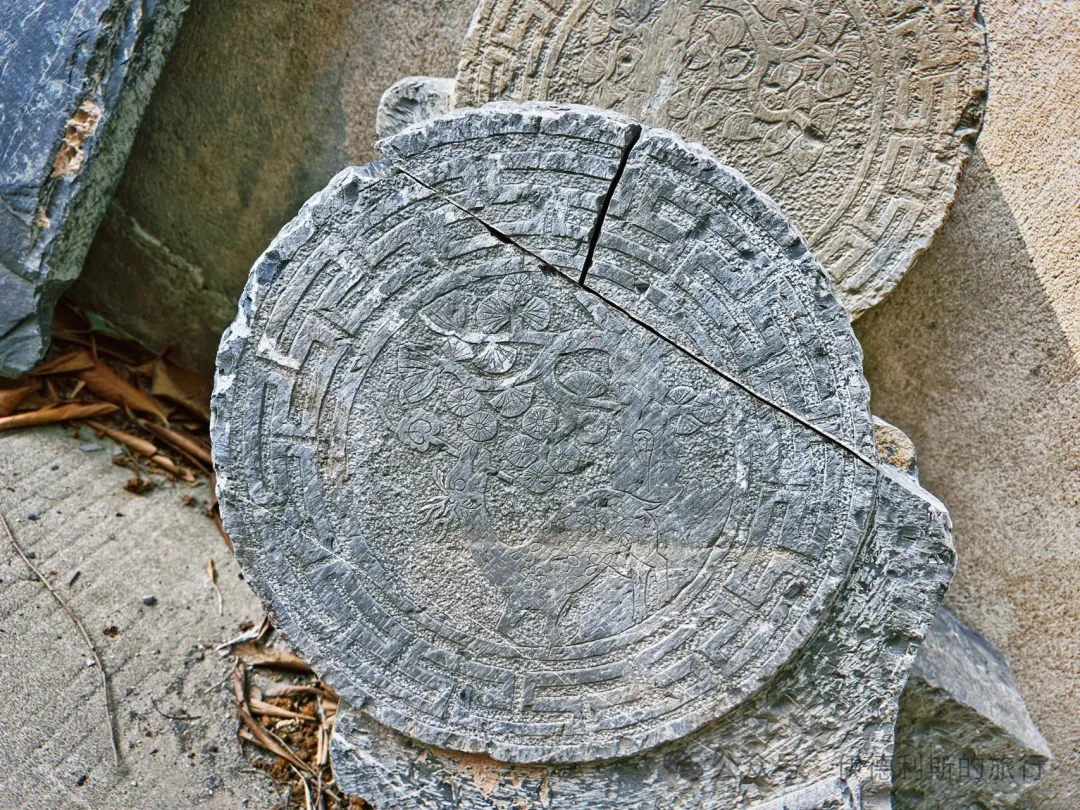
Drum-shaped stone base with cypress and deer carvings (bailutu baogushi)
Hexia Mosque
Hexia Ancient Town in Huaian is the largest town on the outskirts of Huaian Prefecture. Because the salt from the coastal salt fields in Huaibei was high in both quantity and quality, many salt merchants from the northwest and Anhui came to Huaibei in the late Ming Dynasty to work in the salt industry. The Huaibei Salt Transport Branch was located in Hexia Town at the time. Salt from the fields had to be shipped to Hexia for inspection before merchants could sell it elsewhere. Hexia Town then entered its most prosperous period. Salt merchants built gardens and courtyards there. The Qing Dynasty record Huaian Hexia Annals states: Wealthy salt merchants brought their capital and made their homes in Hexia, and Hexia became extremely prosperous. The wealth brought by these salt merchants made the town's business thrive, and many Hui Muslims also came to settle in Hexia.
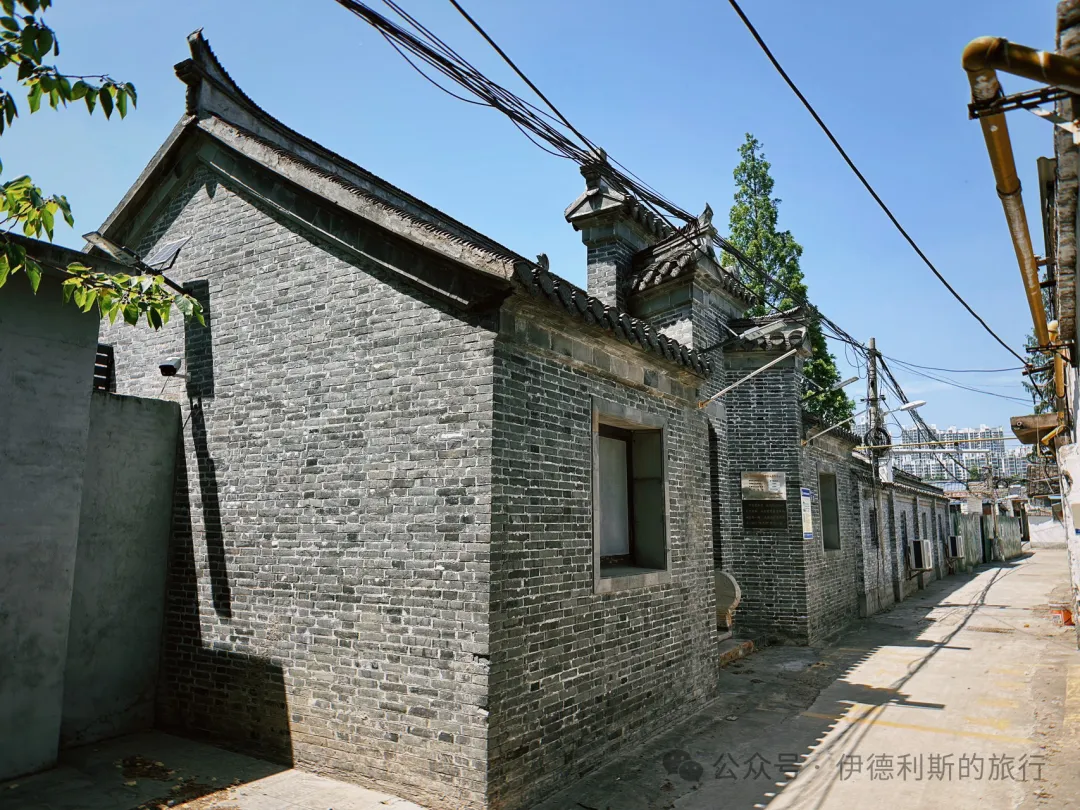
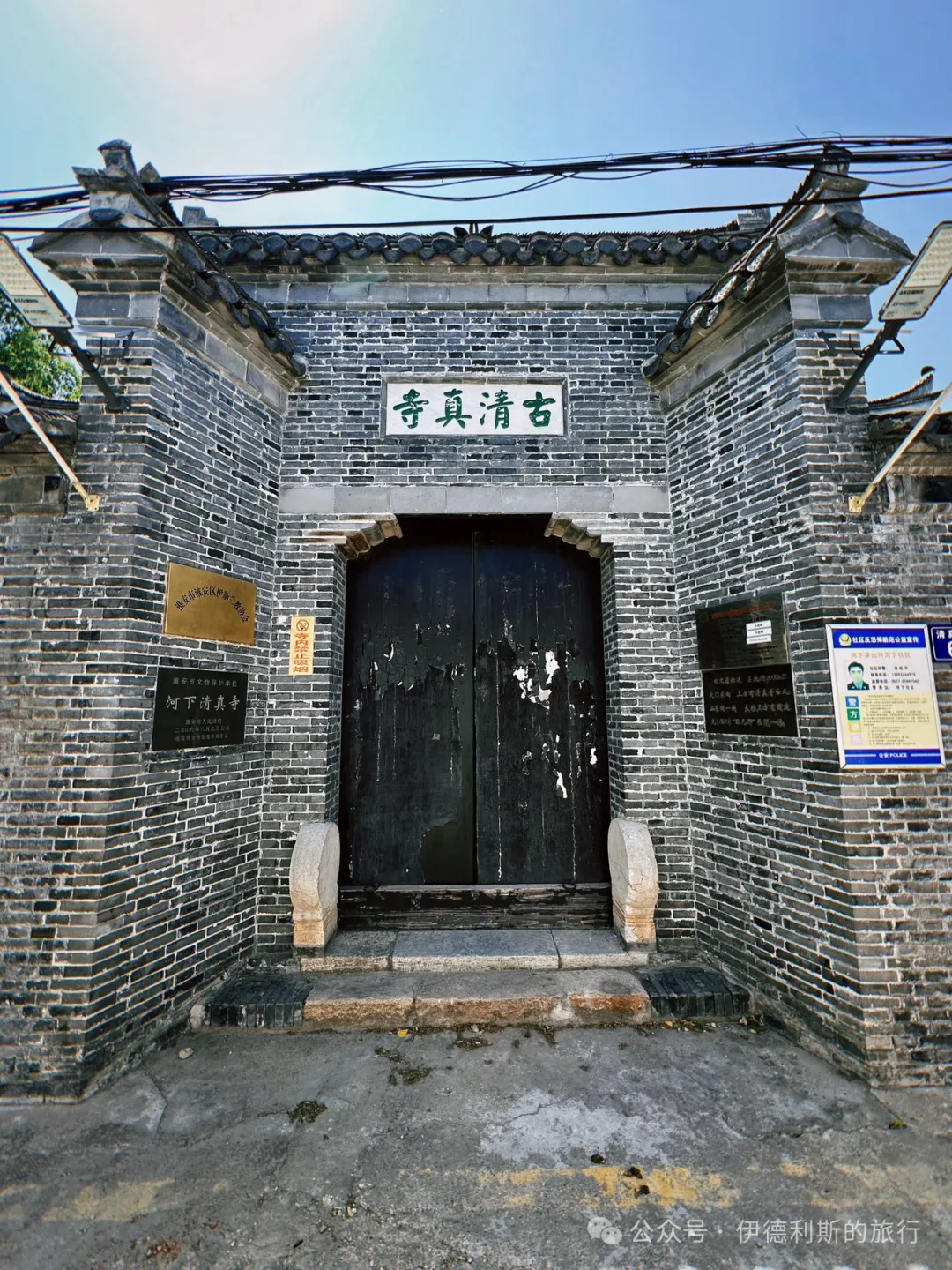
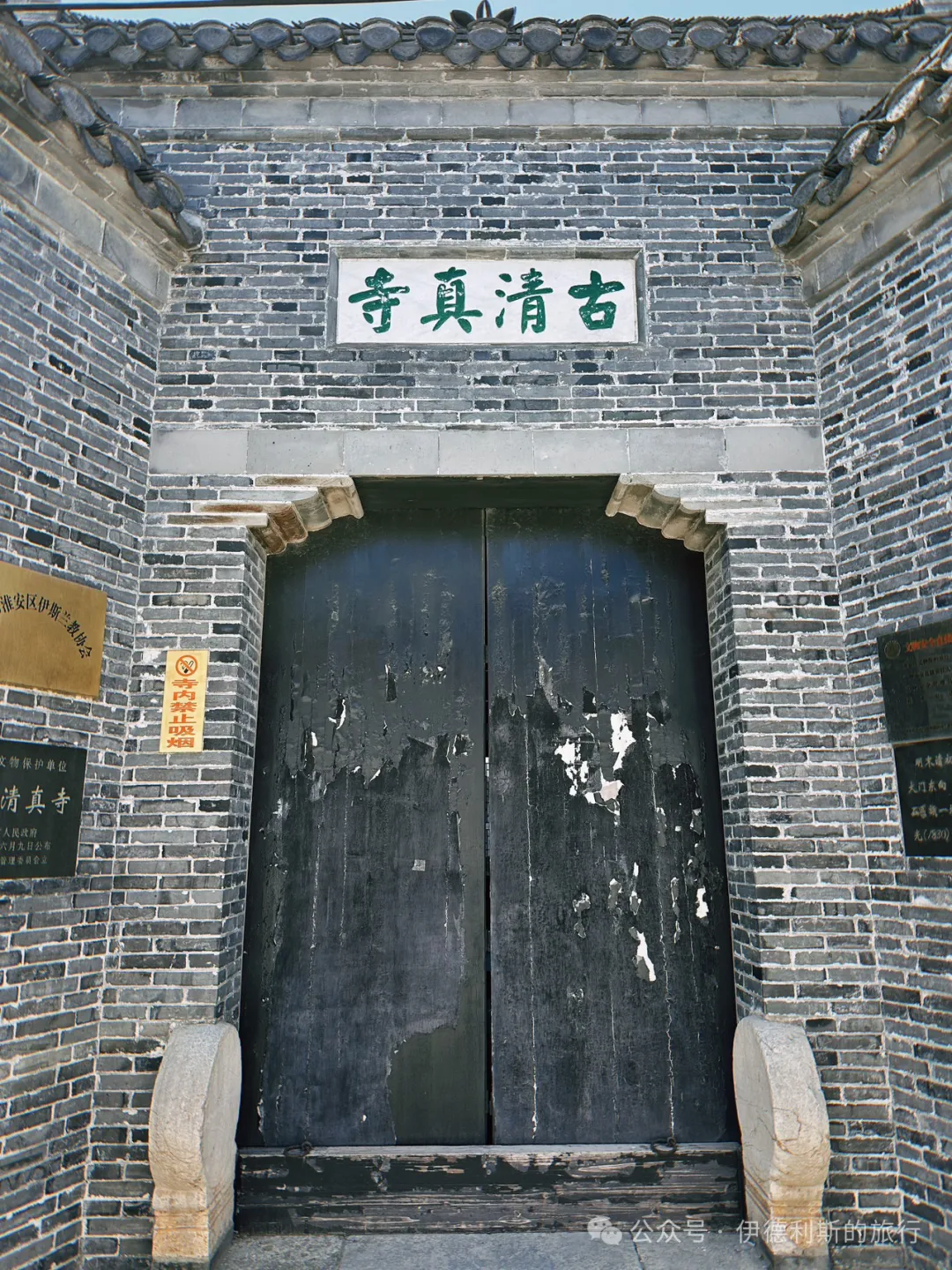
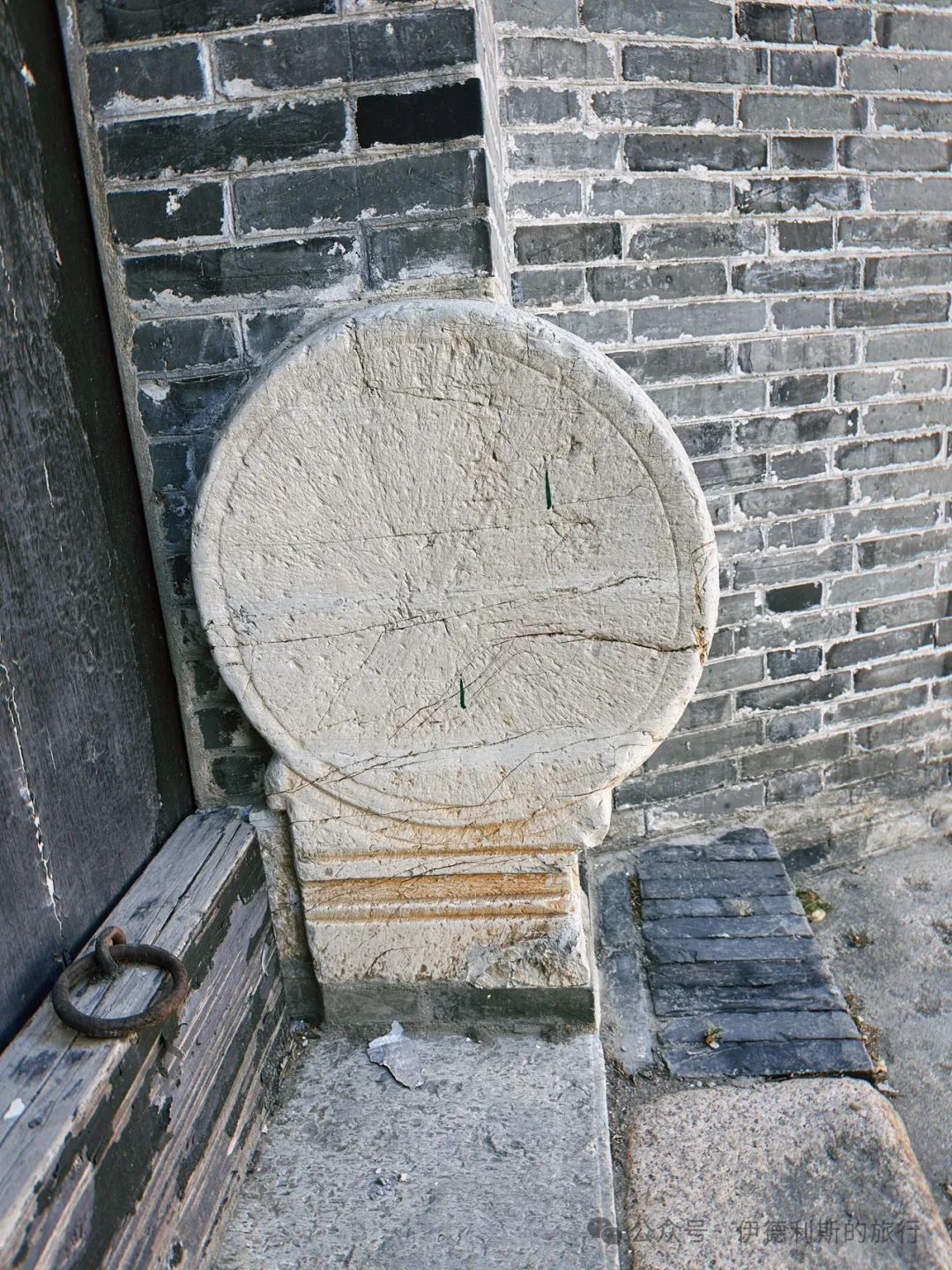
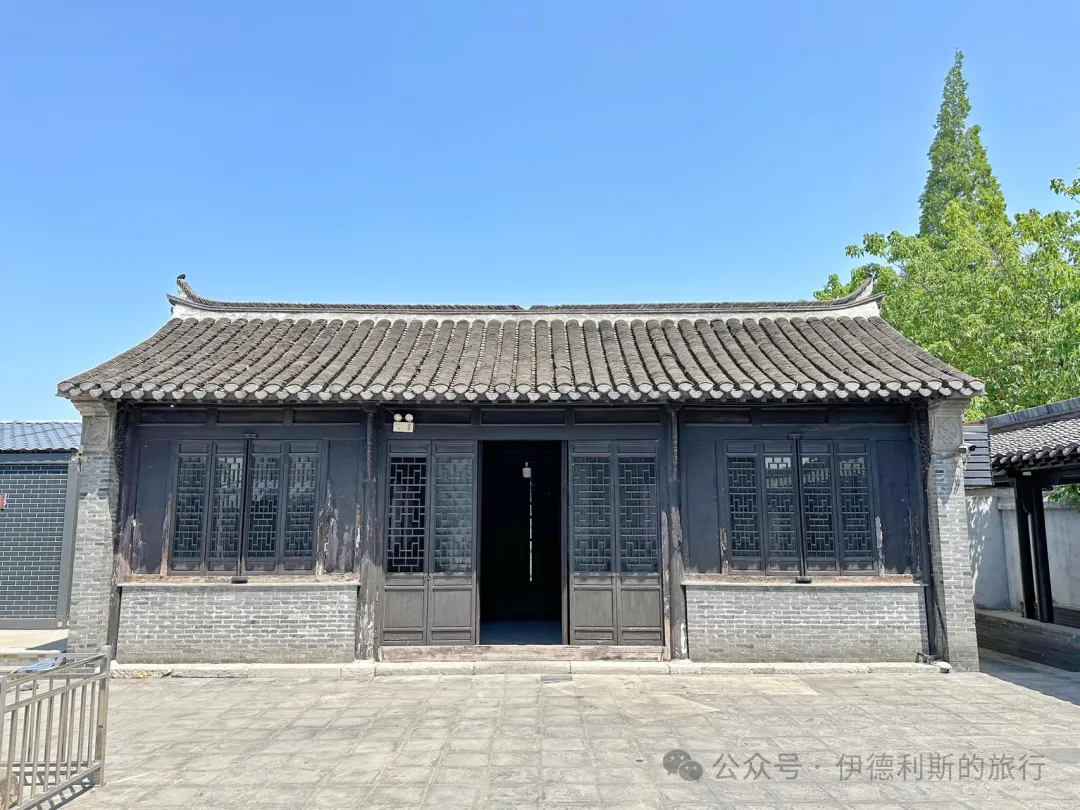
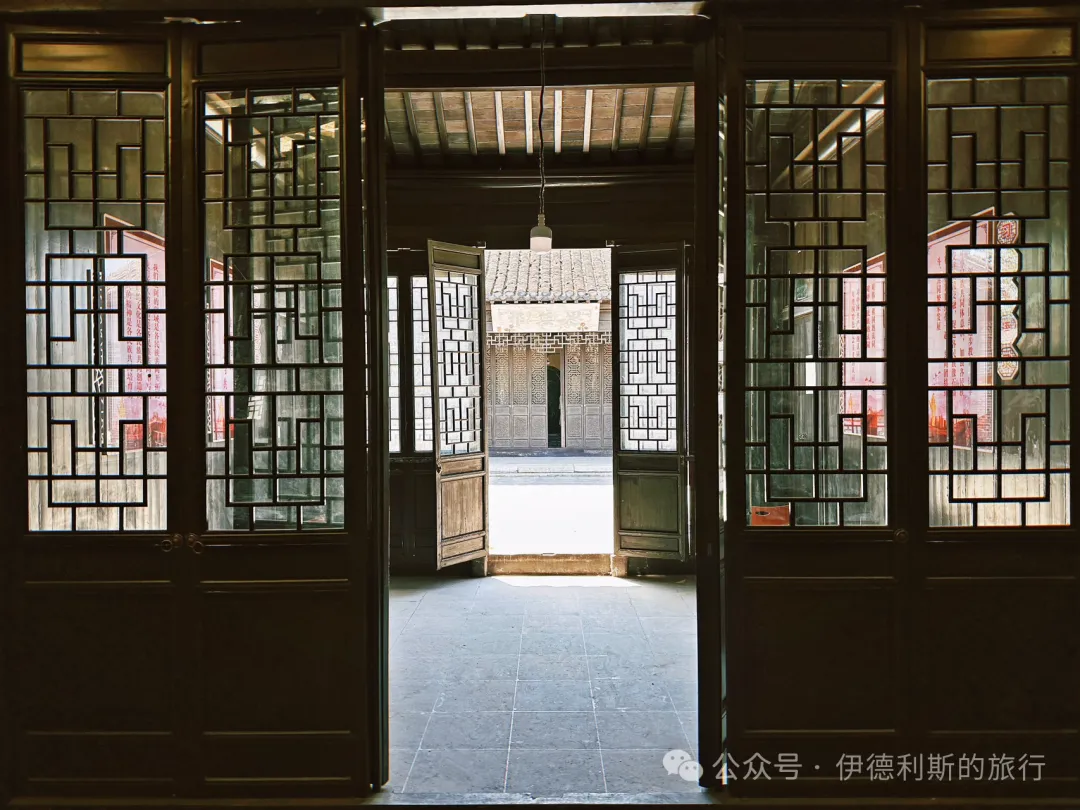
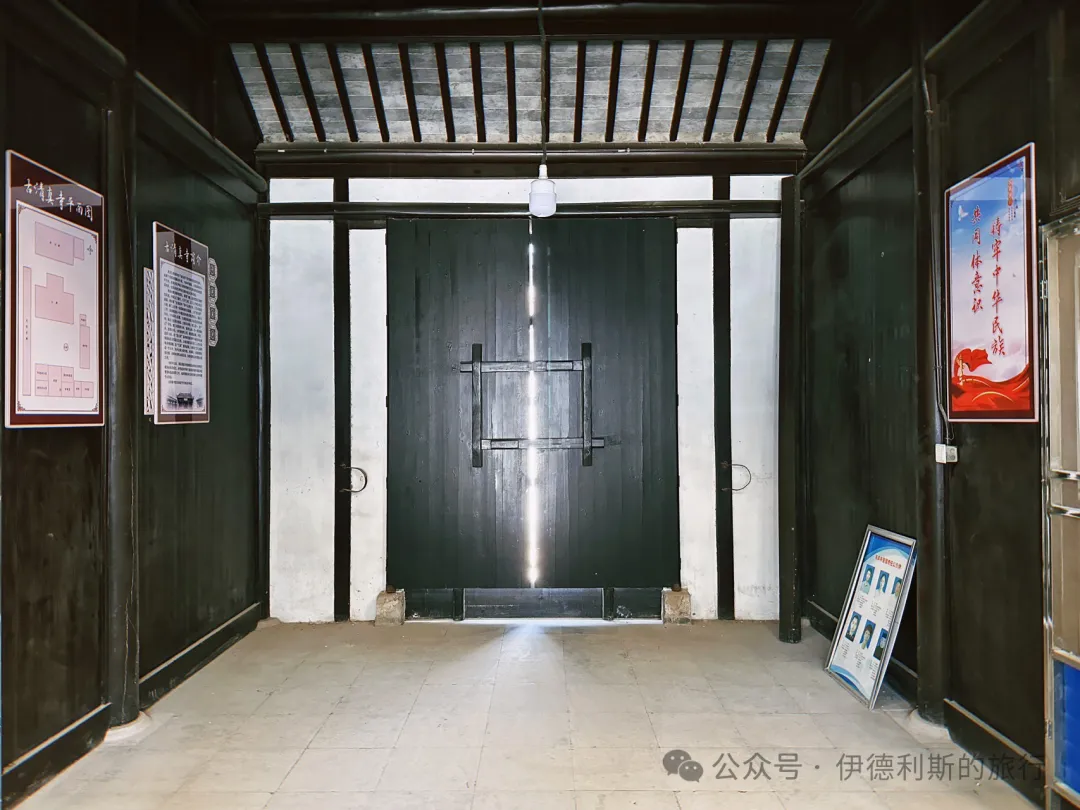
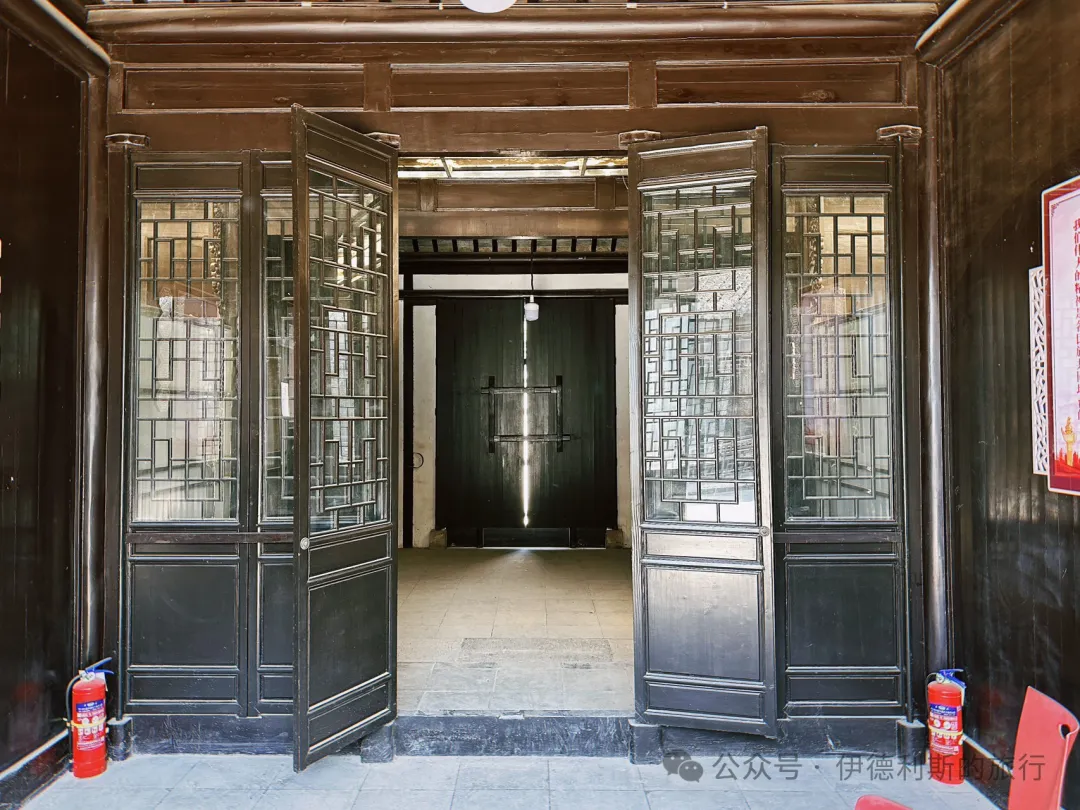
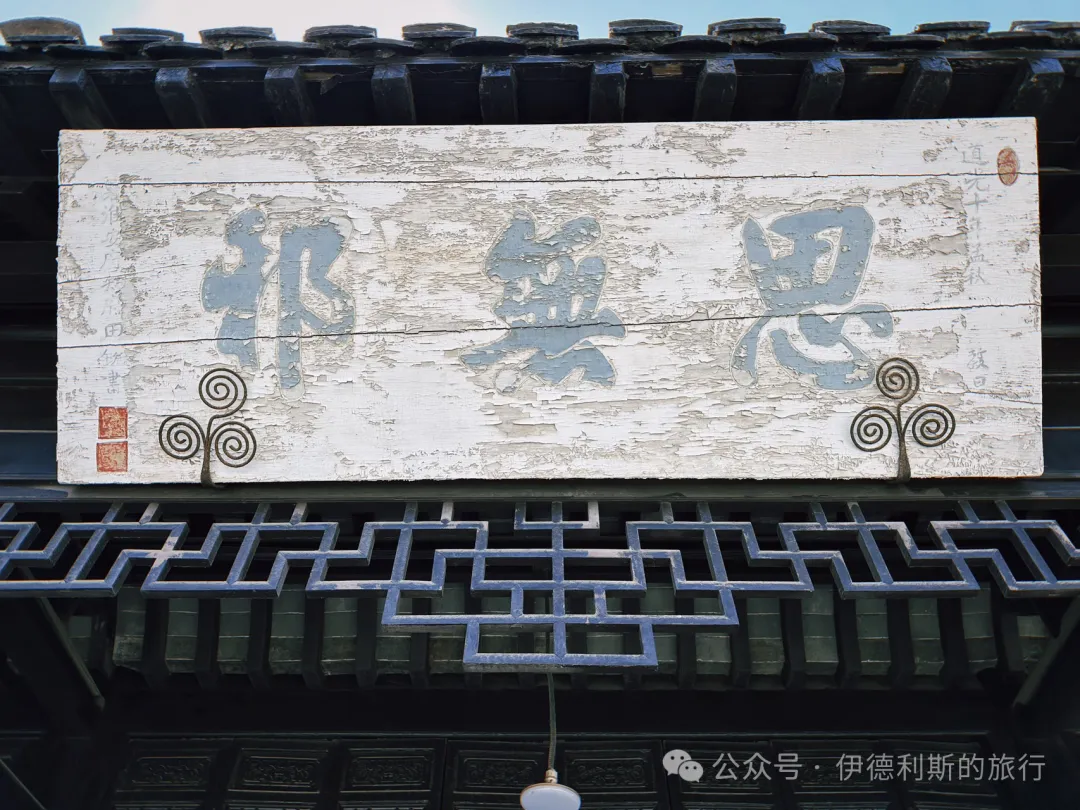
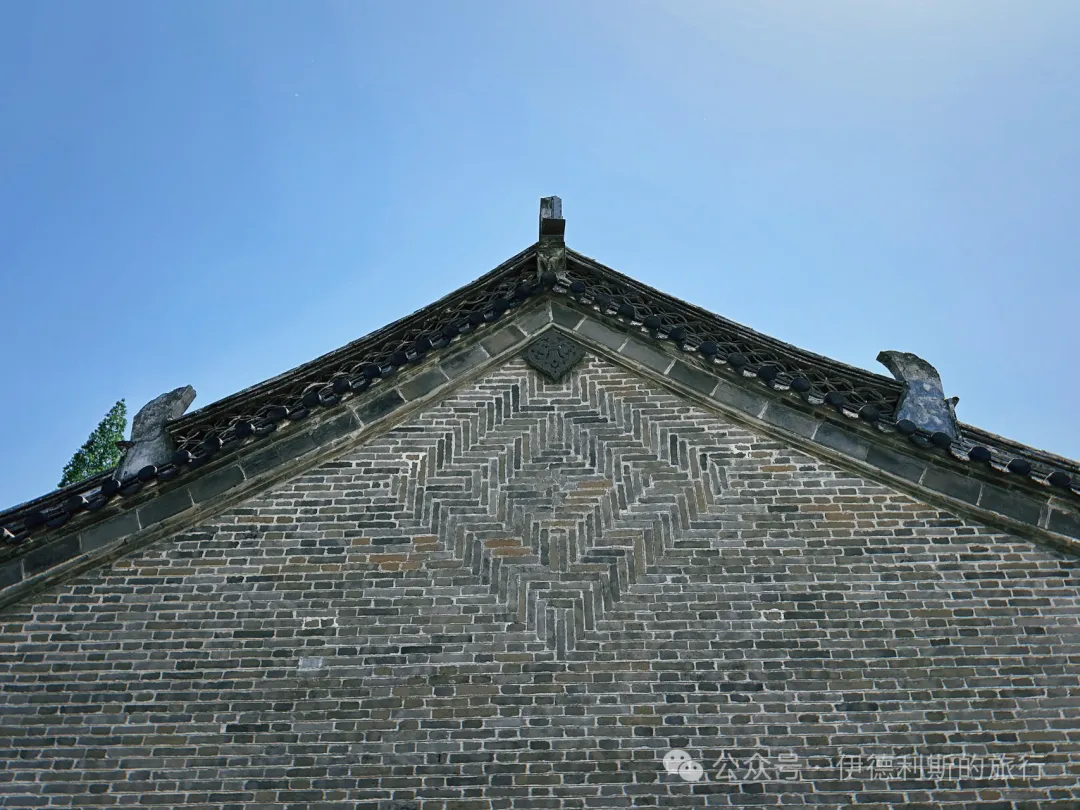
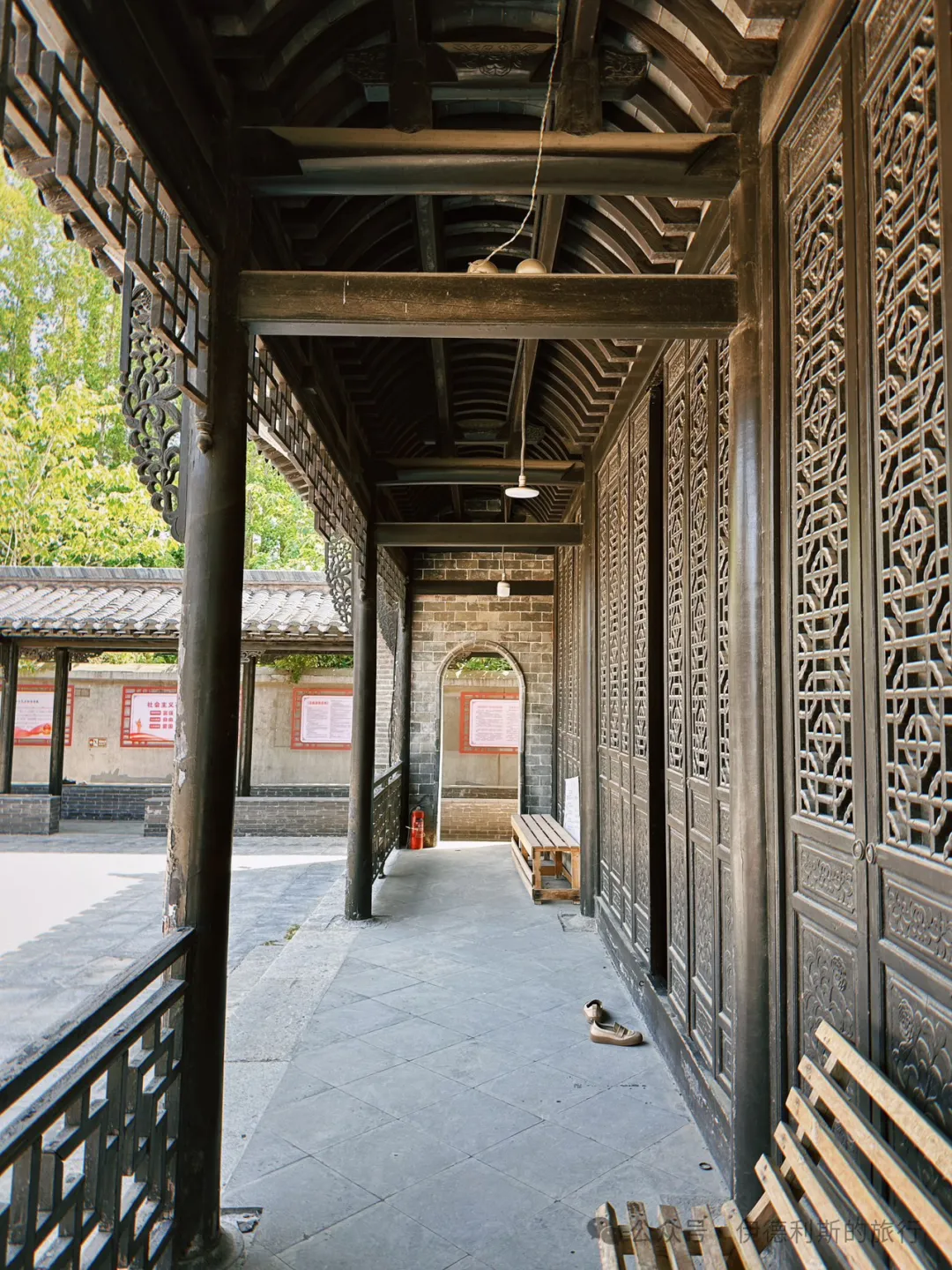
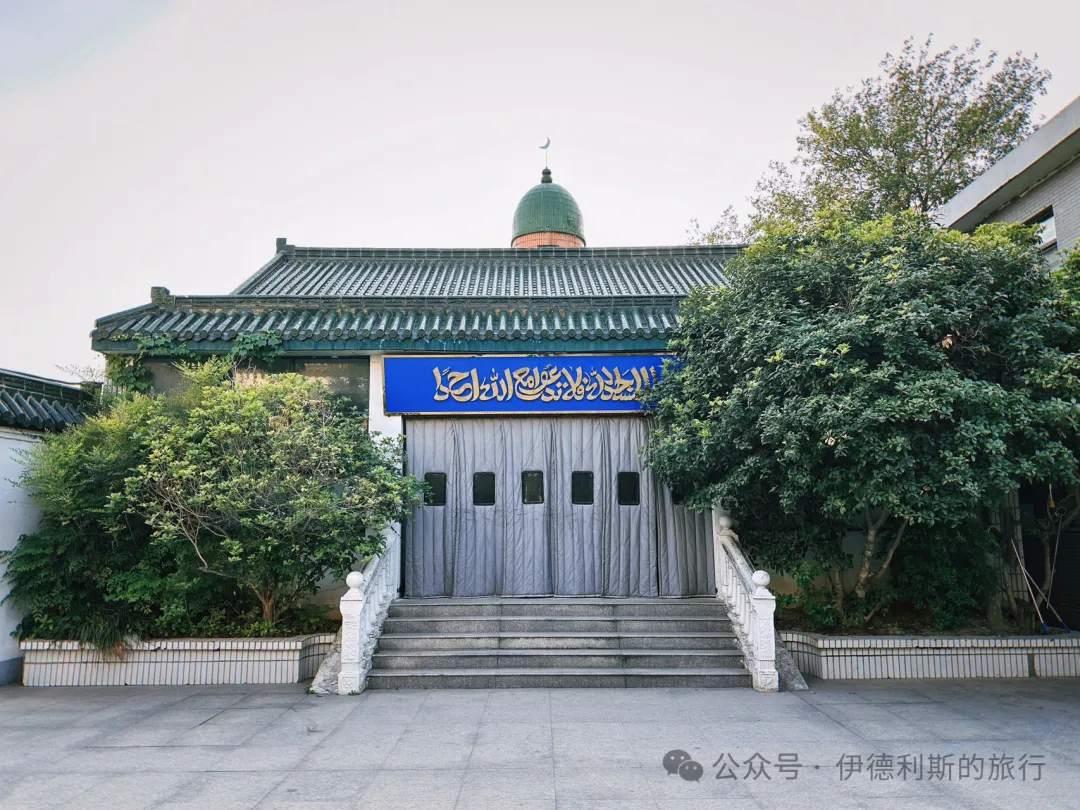
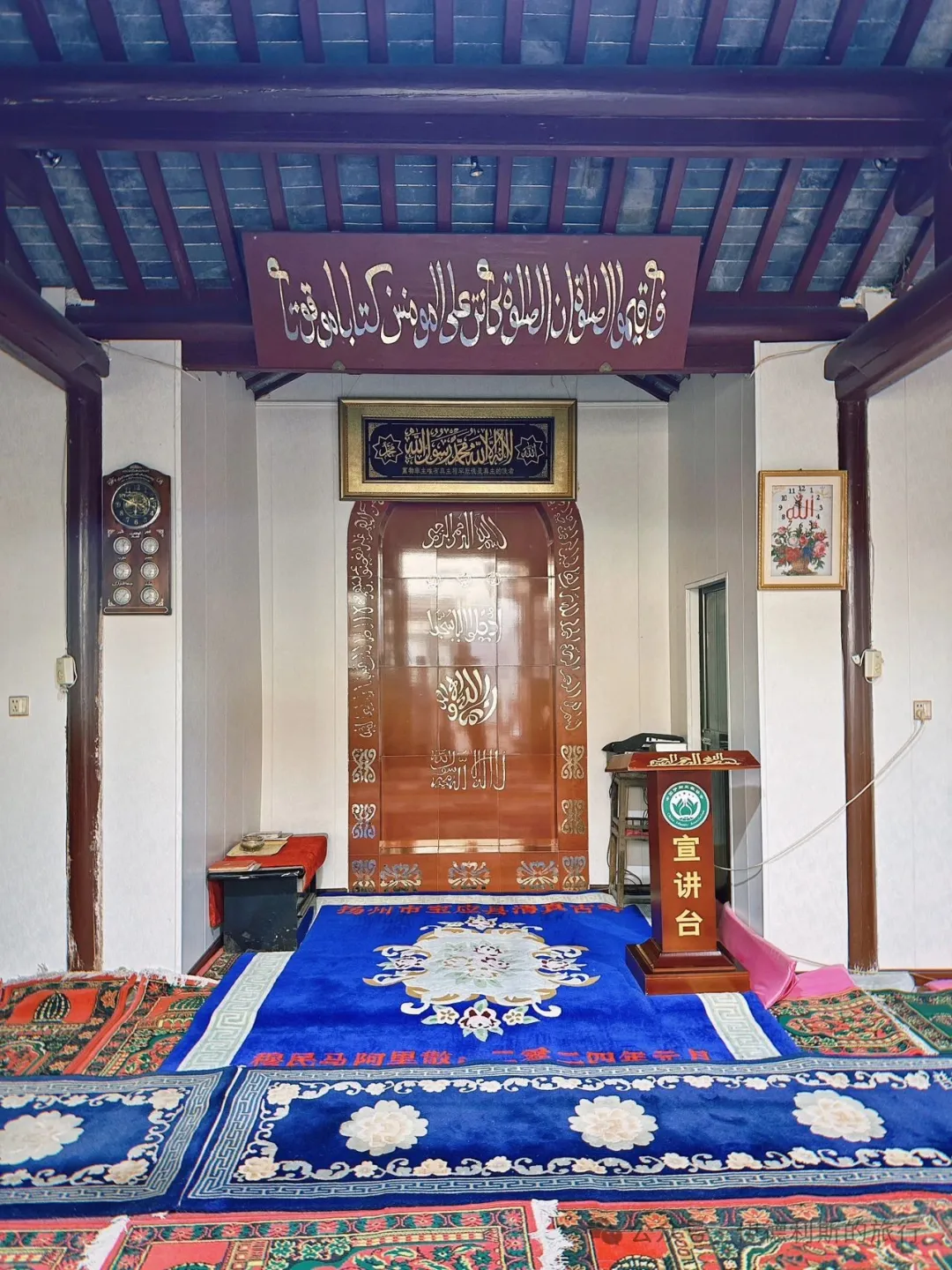
Hexia Mosque is located south of Luojia Bridge in Hexia Town. It was first built during the Shunzhi reign of the Qing Dynasty. In 1860, during the tenth year of the Xianfeng reign, the Nian Army captured Huaian and burned down ten rooms of the mosque, which were later rebuilt. The main hall of Hexia Mosque is a Qing Dynasty structure with blue bricks, dark tiles, and upturned eaves, showing a typical Jianghuai architectural style. It was listed as a cultural relic protection unit of Huaian City in 2006.
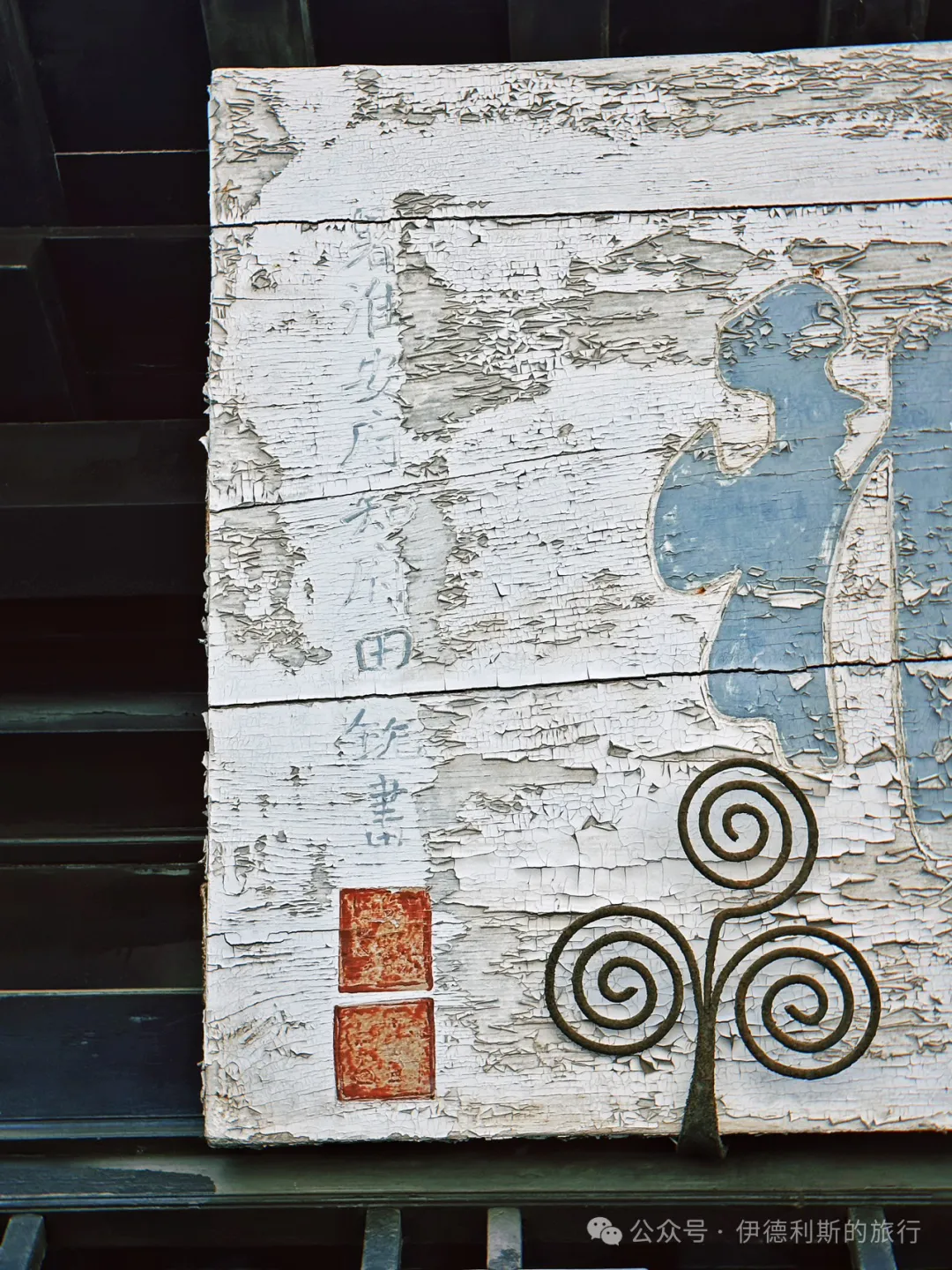
Above the main hall door hangs a chestnut wood plaque inscribed with the words Si Wu Xie (Thinking Without Evil), written by Tian Rui, the acting prefect of Huaian in the tenth year of the Daoguang reign. Plaques originally on both sides, inscribed by anti-Japanese hero Zuo Baogui and Yunnan Commander Ma Chang'an, were destroyed after the 1960s.
The imam (ahong) of the mosque usually stays at a nearby beef and mutton shop. If you call the number posted on the mosque gate, he will come over to open it.
An ancient well dug in the early Qing Dynasty.
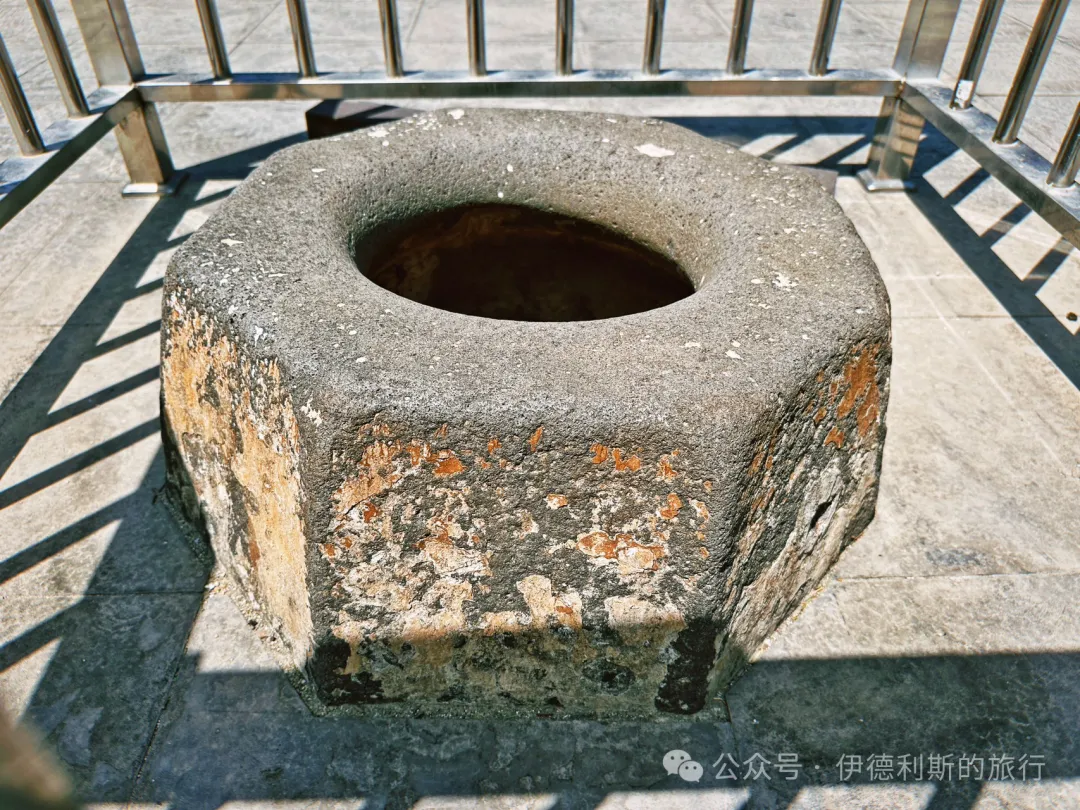
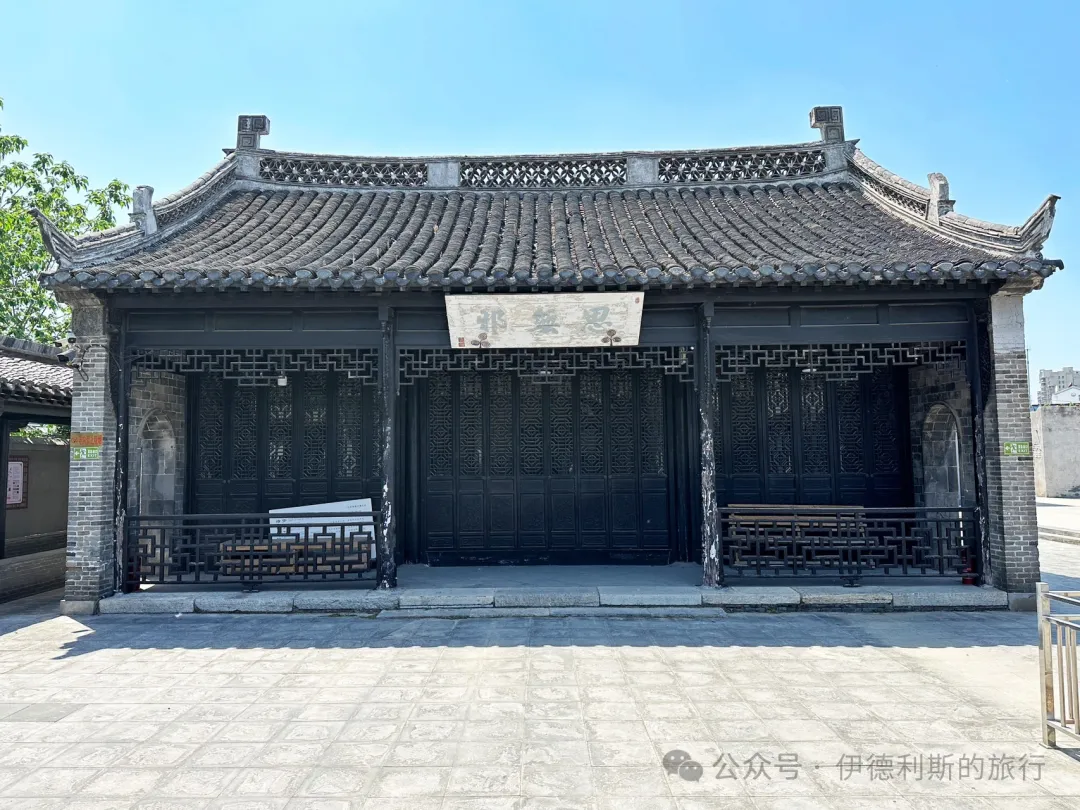
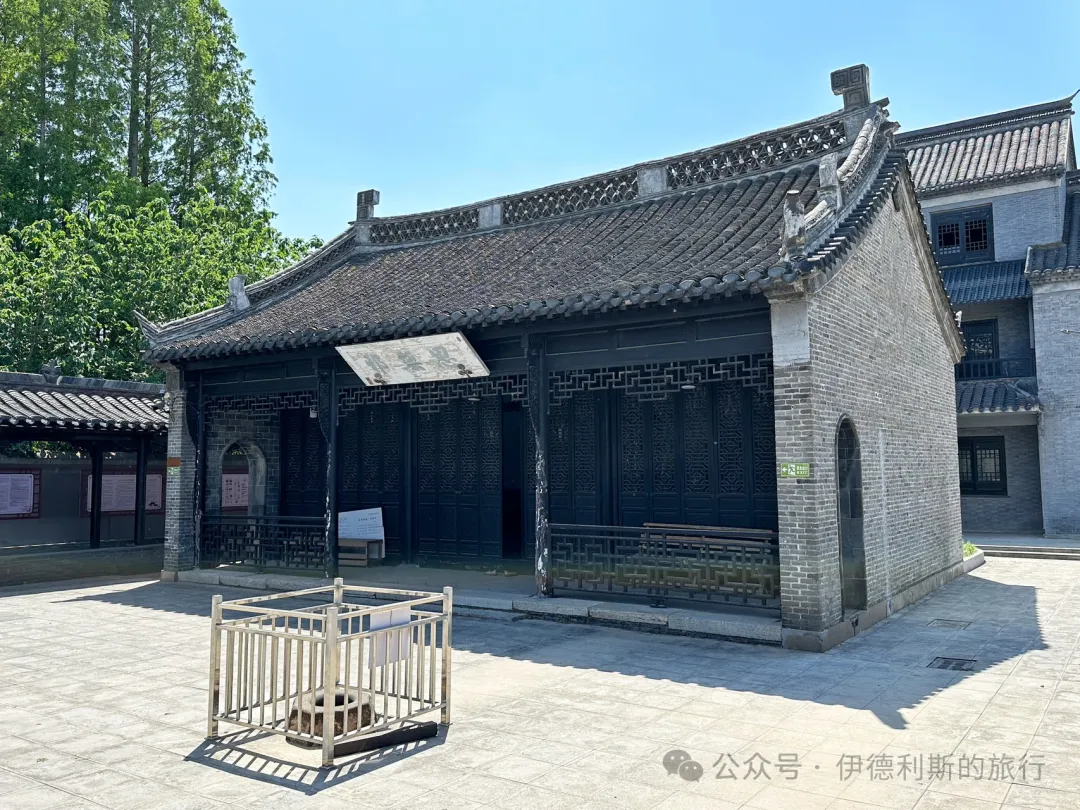
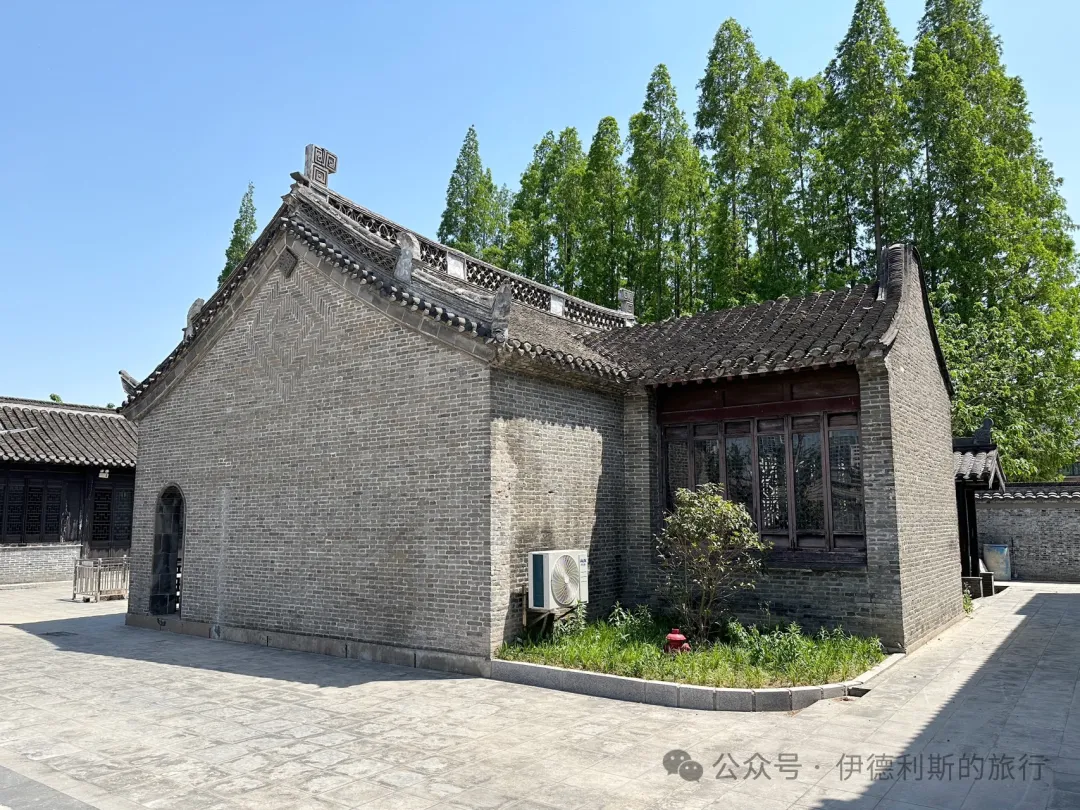
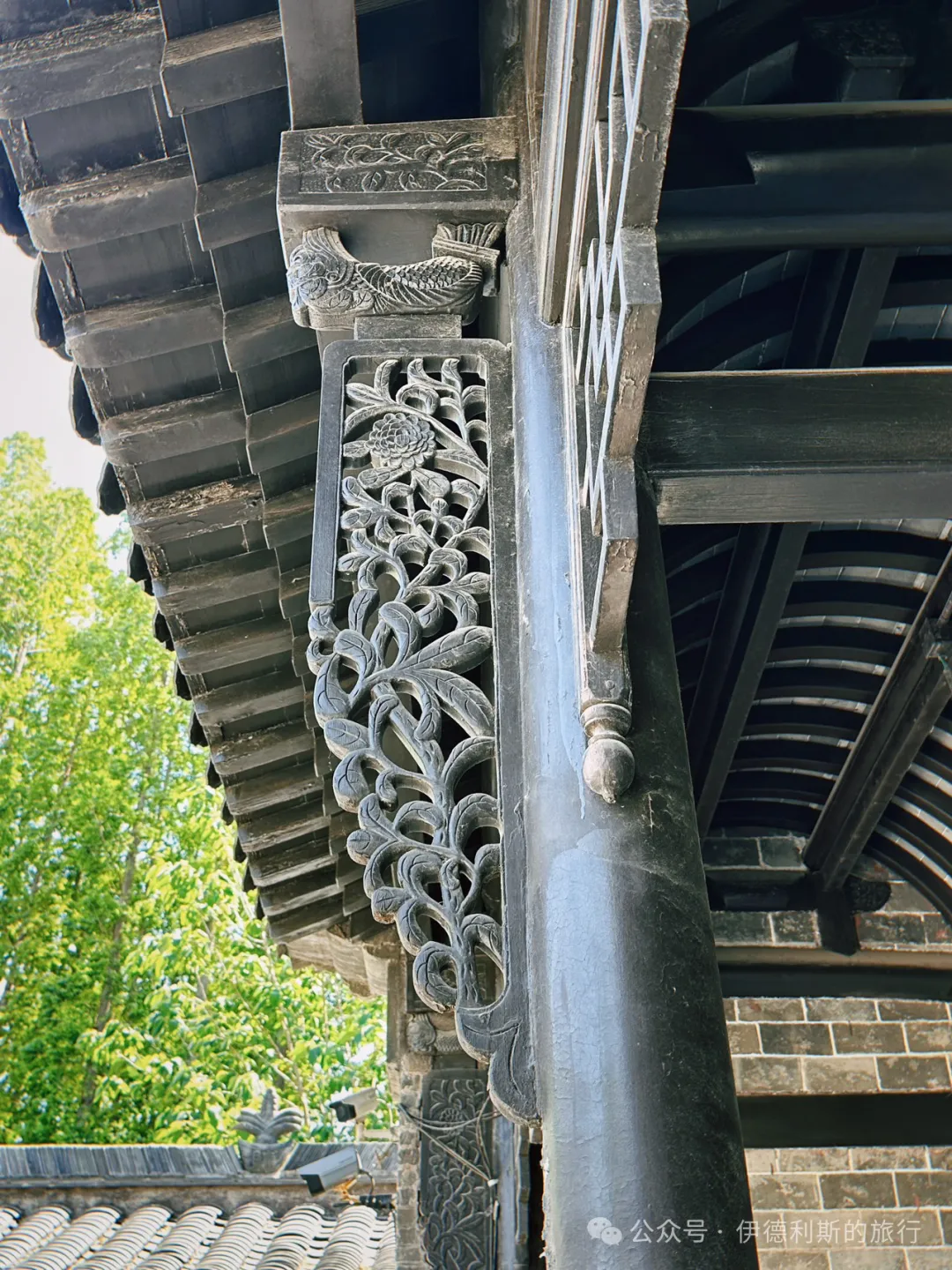
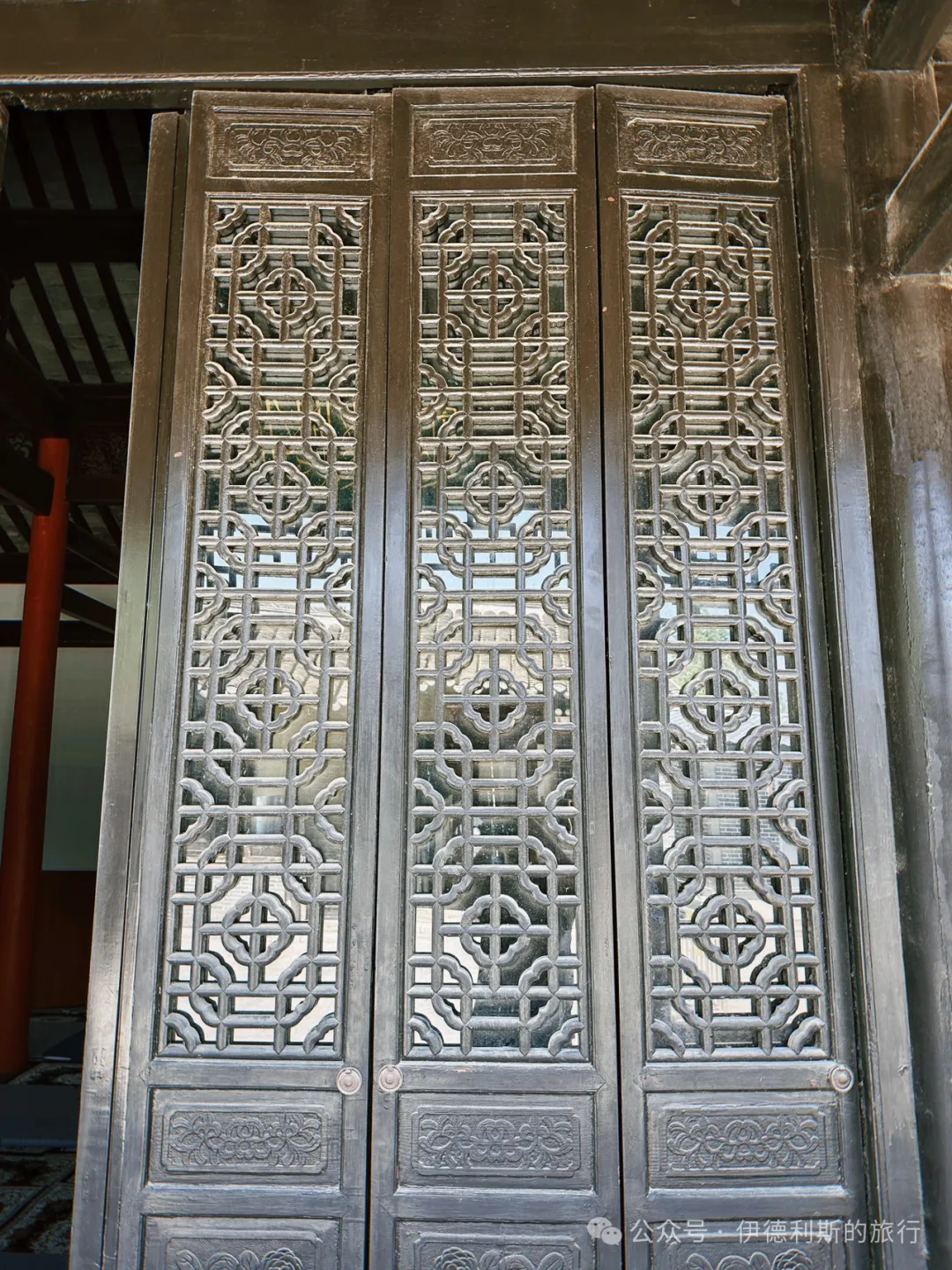
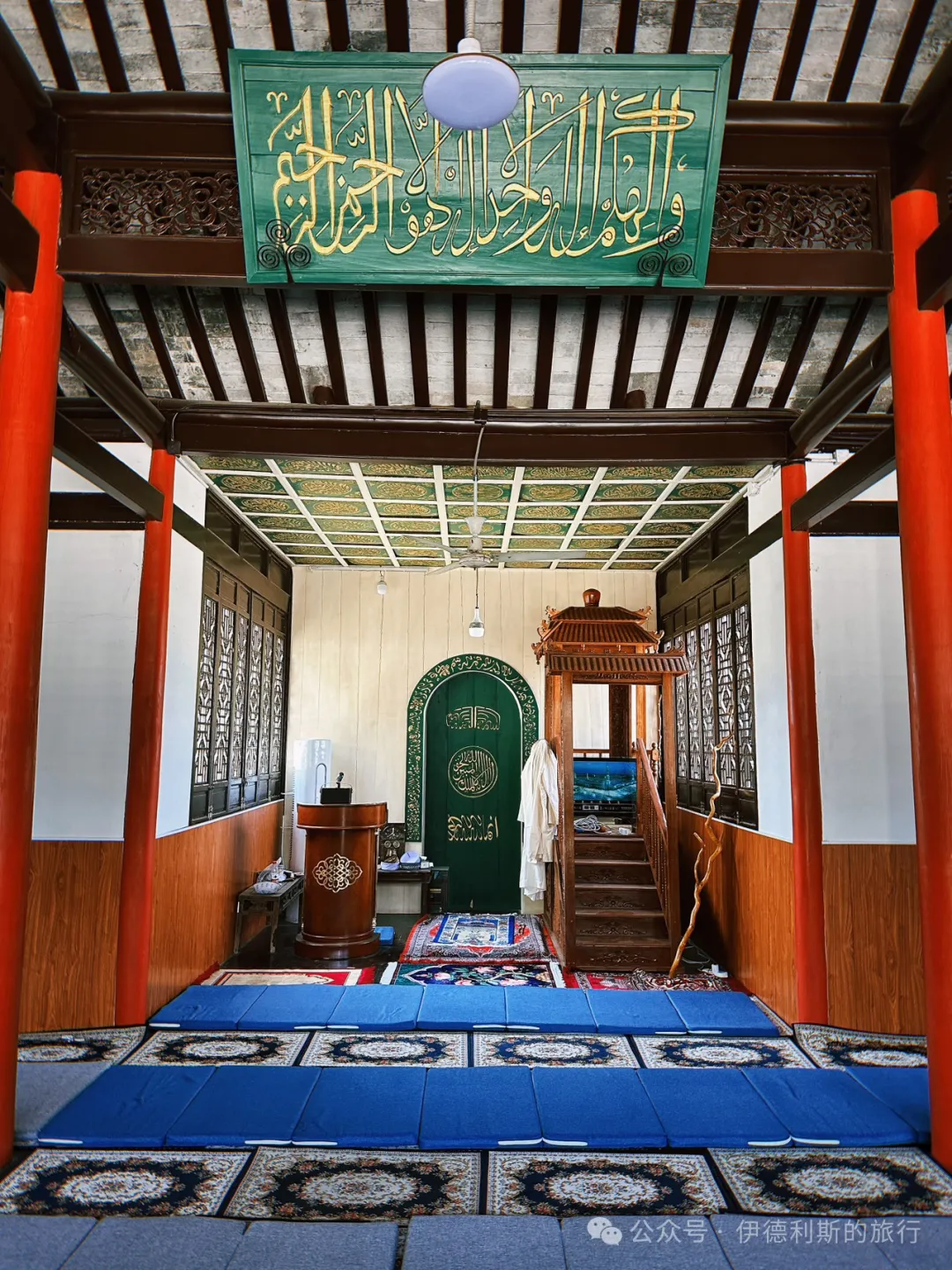
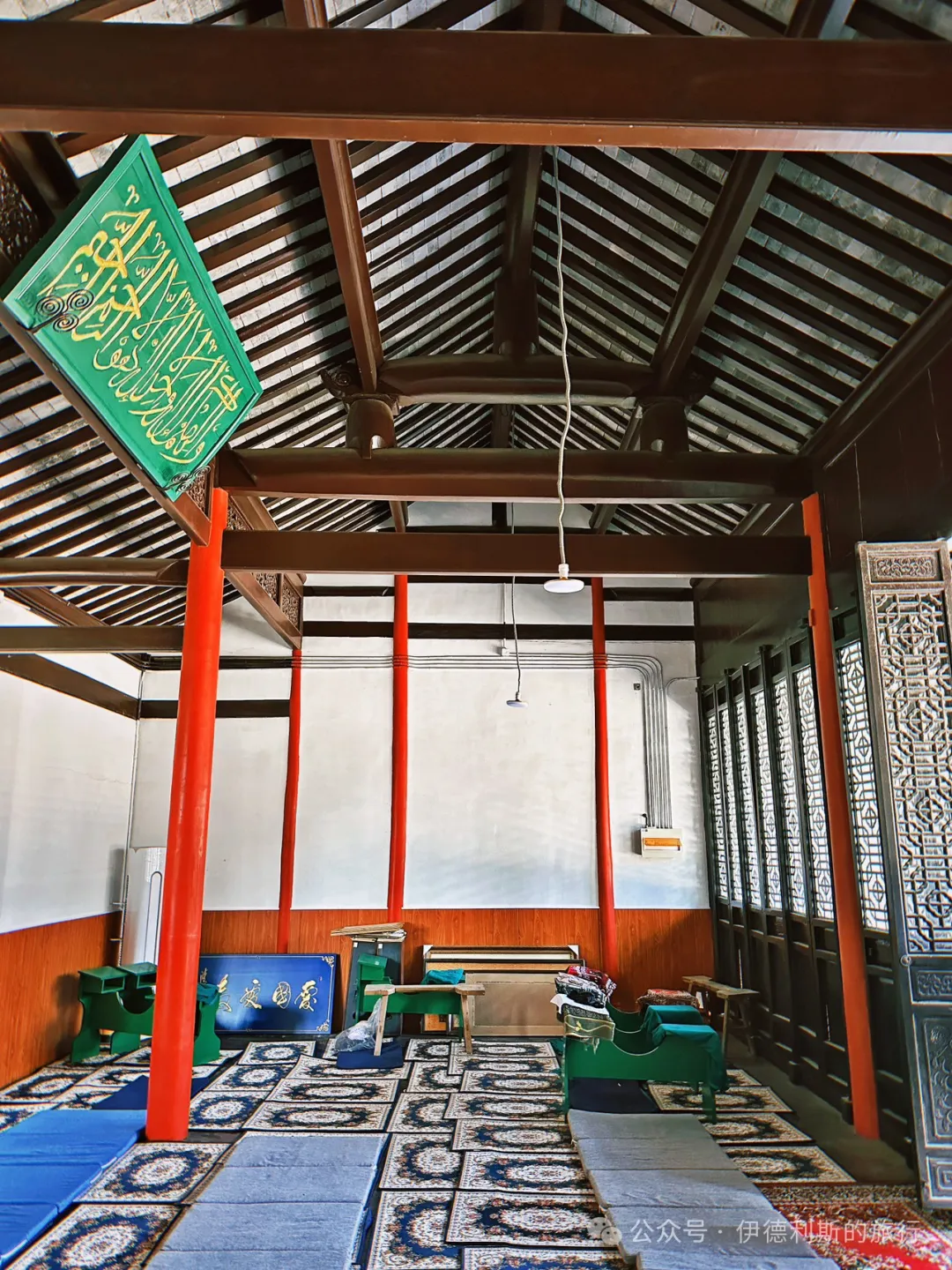
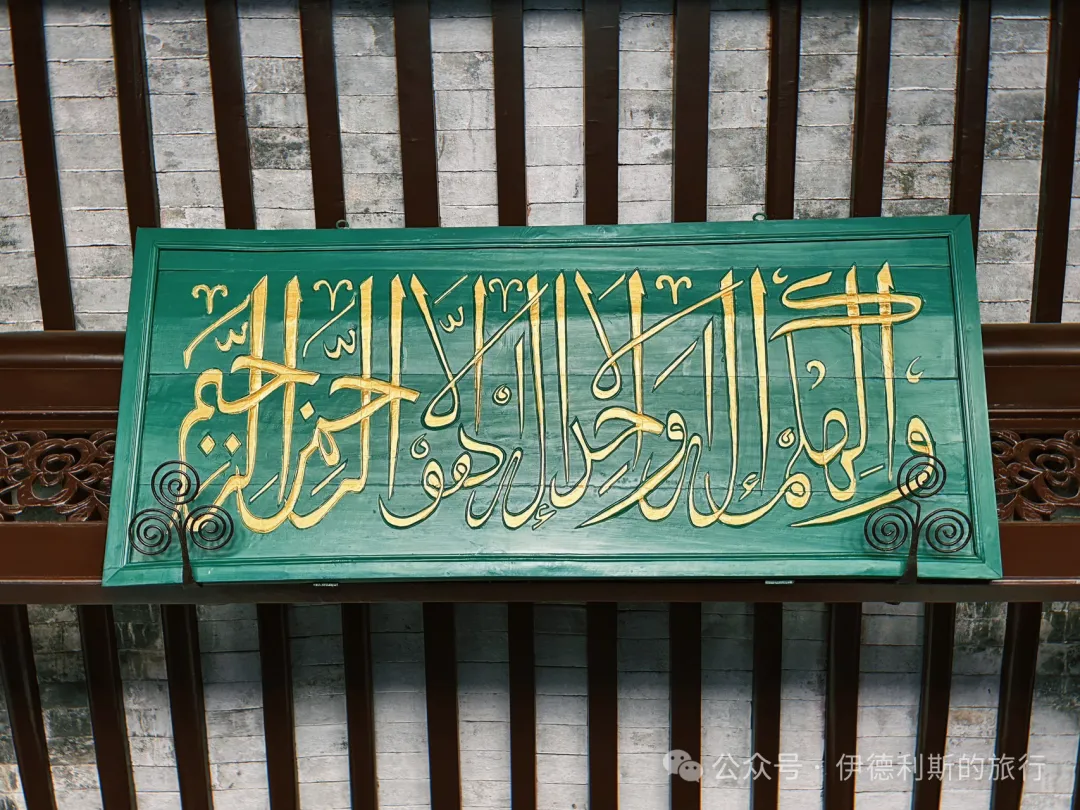
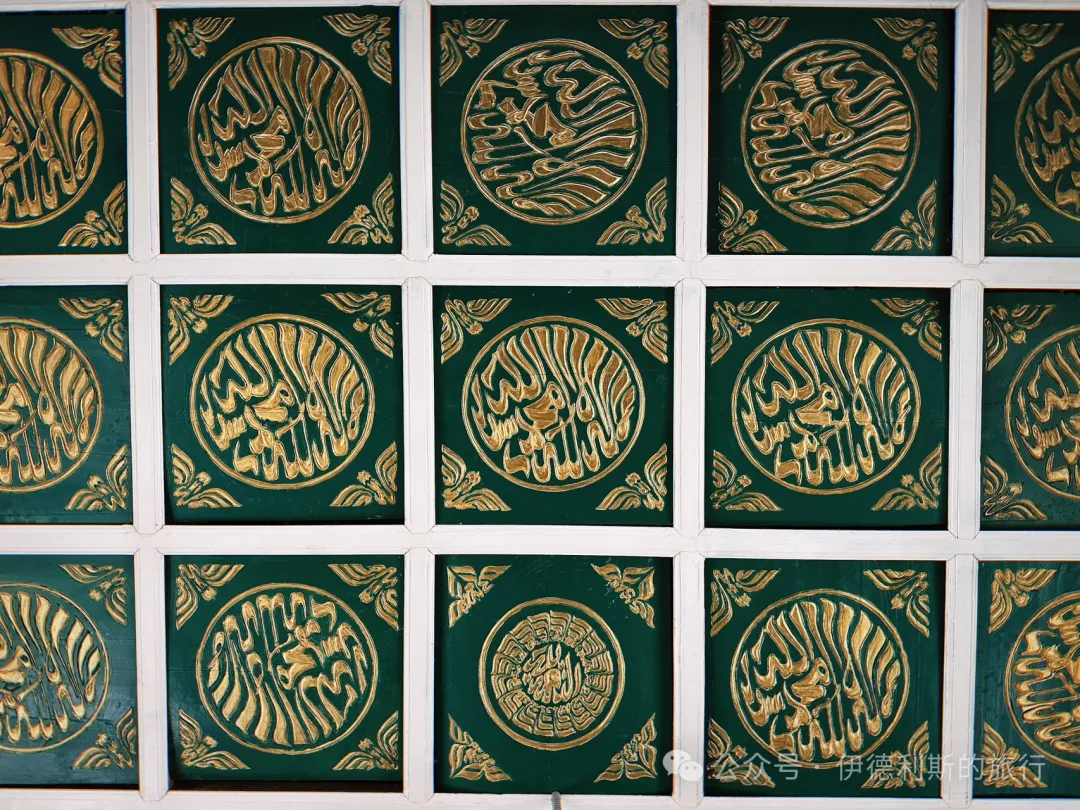
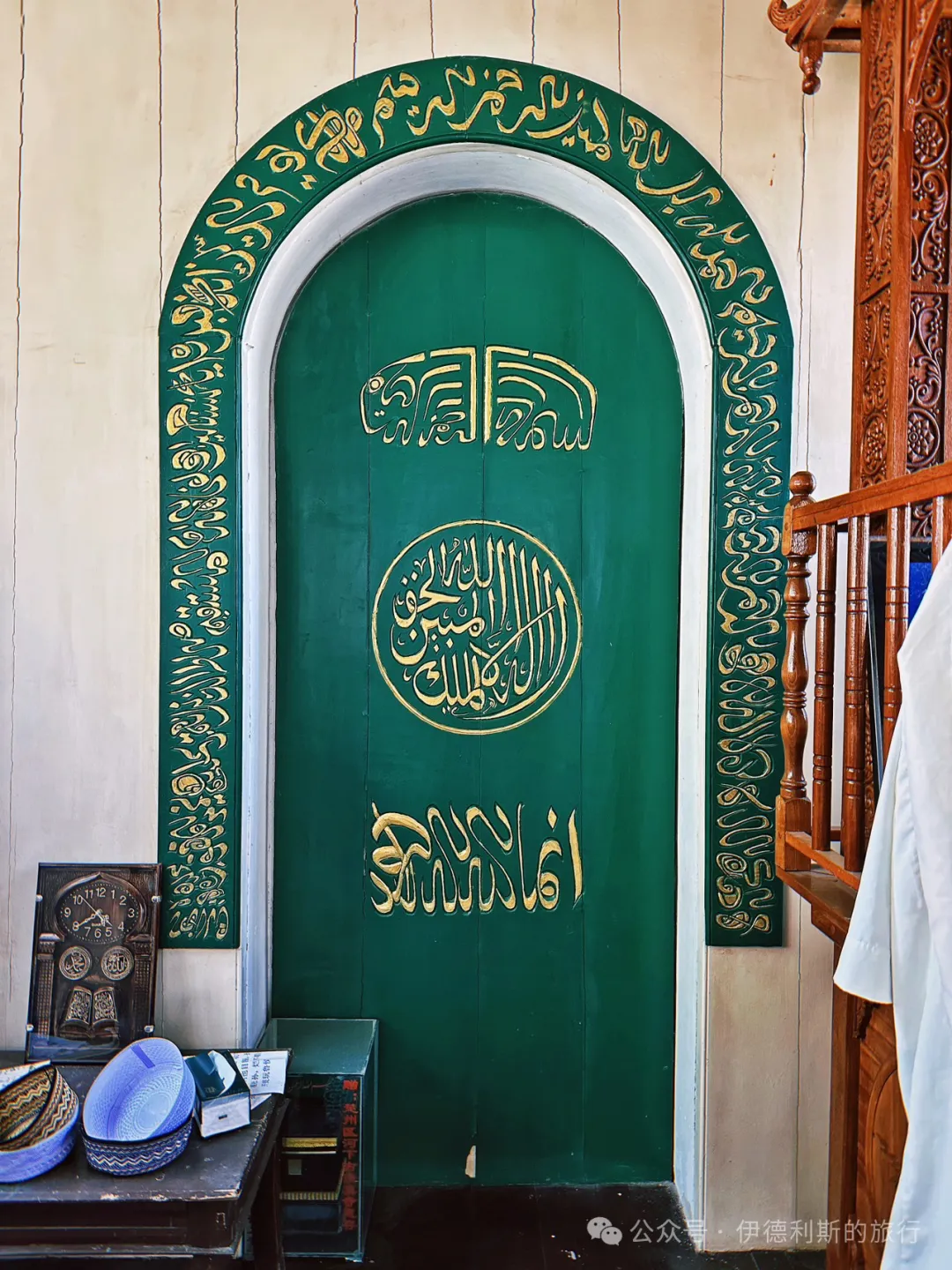
Wangjiaying Mosque.
Wangjiaying in Huaian is located between the old course of the Yellow River and the Salt River. During the Ming Dynasty, the Dahe Guard was established in Huaian Prefecture, and ten military camps were built along the Yellow River. Wangjiaying was one of them. Because travel on the Yellow River section of the canal was slow and passing through locks was dangerous, often leading to broken cables and sunken boats, many merchants chose to leave their boats at Qingjiangpu. They would cross the Yellow River at Wangjiaying and switch to horse-drawn carriages to continue north. Wangjiaying and Qingjiangpu gradually grew into a busy town together.
Wangjiaying experienced many floods from the Yellow River, and the town moved east three times before reaching its current location. In 1831, the eleventh year of the Daoguang reign, Viceroy Tao Peng chose Wangjiaying as the new distribution center for Huaian salt. After that, eighteen salt warehouses and seventy-two salt bureaus were opened in Wangjiaying. Salt boats traveled back and forth every day along the three-hundred-li waterway from the Huaibei salt fields to Wangjiaying.
The prosperity of Wangjiaying attracted a steady stream of Hui Muslims to settle there. The first Hui Muslims to arrive in Wangjiaying were the Ma and Sha families, who came via Lingwu County in Ningxia, Shandong, and Zhenjiang. Later, Hui Muslims with the surnames Jin, Dai, Chang, Ge, Fan, Li, and Yang also settled here.
Wangjiaying Mosque was first built during the Yongzheng reign. It started as three thatched rooms next to the Lotus Pond at Wangjiapo. After Wangjiaying became a salt distribution center in the late Daoguang reign, the mosque moved to the south bank of the Salt River, with imams Chang Tingzhang and Dai Mingxuan in charge of religious affairs. Imam Chang Tingzhang, known as Third Master Chang, was originally from Jining, Shandong. He was born in 1785, the fiftieth year of the Qianlong reign, in Taoyuan County, Huaian Prefecture, Jiangsu (now Siyang). In his youth, he studied in Lingzhou (now Lingwu County, Ningxia) and continued his religious studies in Jining, Shandong, after completing his initial training. In 1810, the fifth year of the Jiaqing reign, the 26-year-old Imam Chang Tingzhang was invited to Wangjiaying Mosque to lead religious affairs. Imam Chang Tingzhang had deep knowledge of Arabic classics, astronomy, and medical theory. According to the Wangjiaying Annals, a man named Third Master Tao from Hangzhou died in Huaian during the Daoguang reign. Because it was the heat of midsummer, Imam Chang Tingzhang personally bought a boat and traveled south along the canal to escort the body back to Hangzhou to fulfill his duty to the family.
In 1860 (the 10th year of the Xianfeng reign), the Nian Army burned down the Wangjiaying Mosque. In 1867 (the 6th year of the Tongzhi reign), Imam Dai Jingzhai, the son of Imam Dai Mingxuan, built a few thatched huts. Later, with donations from the community, they built a main prayer hall with three rooms made of grass.
After Imam Chang Tingzhang passed away in 1870 (the 9th year of the Tongzhi reign), Imam Dai Jingzhai took charge of religious affairs. In 1884 (the 10th year of the Guangxu reign), he replaced the grass-roofed building with a tiled one. Because Imam Chang Tingzhang had studied at the Jahriyya Banqiao Daotang in Jinjibu, Lingwu County, Ningxia, when he was young, the Wangjiaying Mosque later invited five successive Jahriyya imams from Jinjibu to lead religious services and teach. Subsequent imams also went to Ningxia for further study, making Wangjiaying Mosque one of the nine branch centers of the Banqiao Daotang.
In 1912, the Wangjiaying Mosque built a new main gate, a south lecture hall, a kitchen, and a water room. In 1920, with funding from the Jinshan Tang in Gansu and money from selling dozens of willow trees from the public cemetery, they rebuilt the three-room tiled porch in front of the main hall and added three new rooms for the east lecture hall. Currently, there is a stone tablet from 1920 commemorating the Republic of China renovation on the inner north wall of the main hall, but the top part is covered.
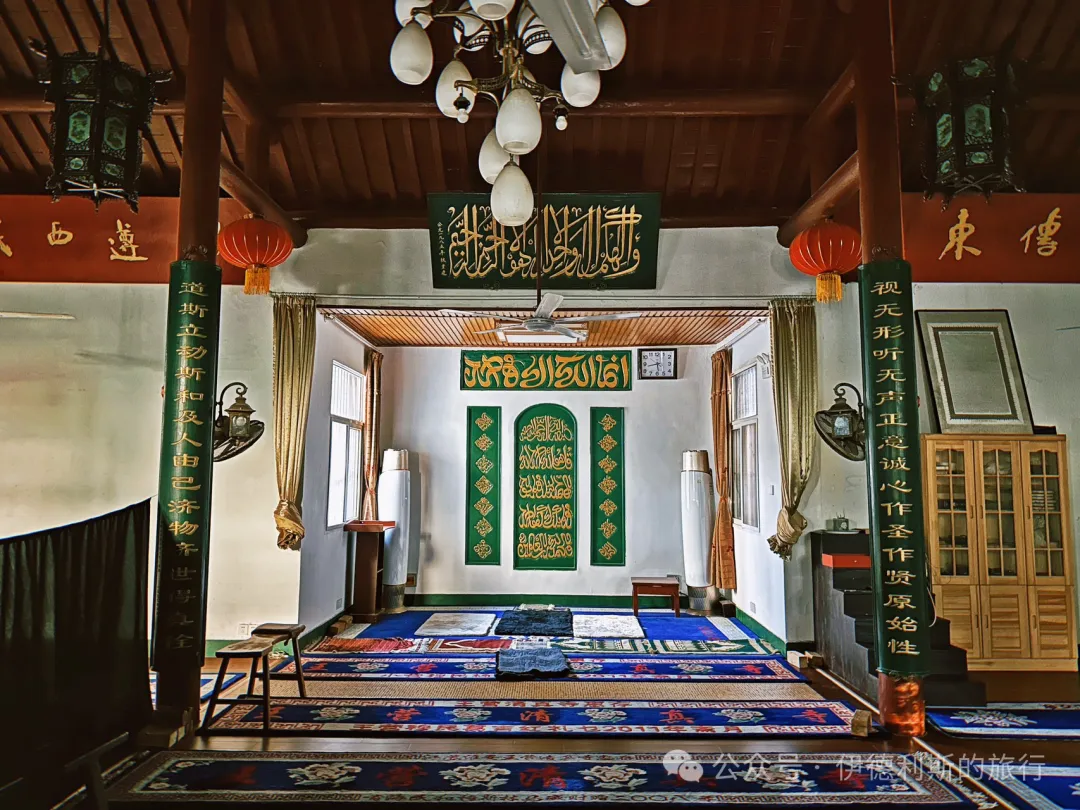
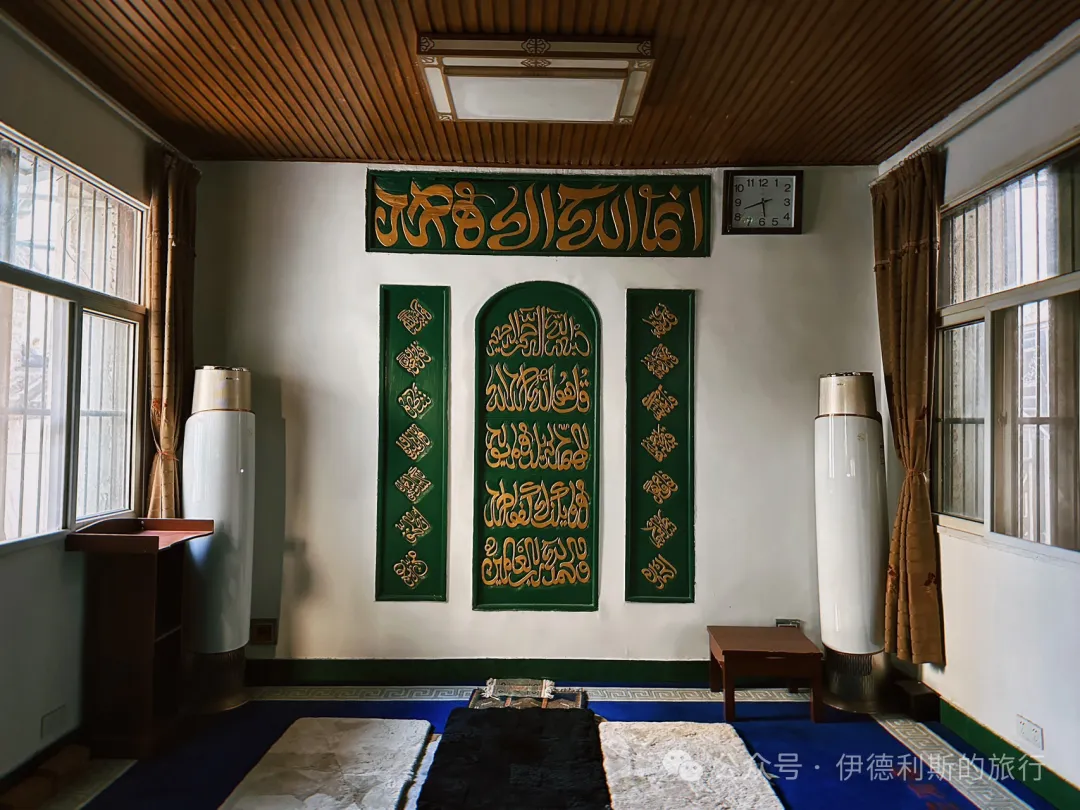
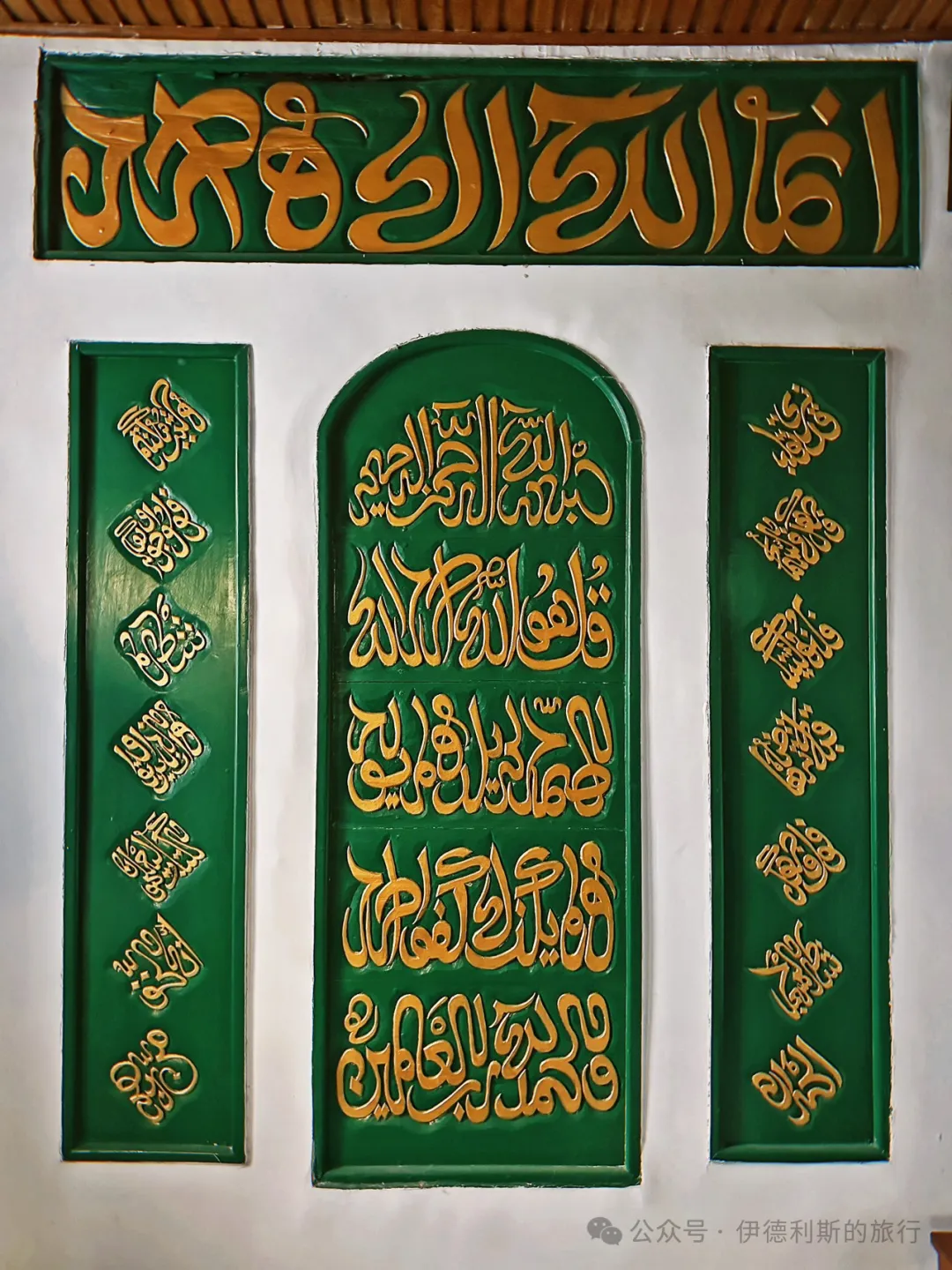
In 1958, the Wangjiaying Mosque moved to the east side of the West Horse Road in Wangying. In 1961, it moved to its current location because the land was requisitioned for a bank building. During the destruction of the Four Olds, the main hall's plaques reading "The Way Spreads in the Central Land," "The Religion Follows the Western Regions," and "Stop at the Ultimate Good," along with the gold-lettered Arabic plaques and the couplet reading "See the formless, hear the soundless, rectify the intention and be sincere, become a sage and a worthy, the original nature;" “The Way stands here, movement brings harmony, reach others through oneself, benefit the people and the world, the land is complete” were all smashed and burned. Funeral supplies were also destroyed, and the main hall was used as a warehouse by a shoe and hat factory.
In 1979, under the leadership of Imam Ge Weili, the Wangjiaying Mosque was rebuilt in a traditional style. It was completed in 1985 and underwent two more renovations and expansions in 2003 and 2006, resulting in its current appearance.
Imam Ge Weili was born in 1924. He went to Ningxia to study in 1937. After completing his training and receiving his credentials in 1945, he became the imam of Wangjiaying Mosque and took on the role of imam in 1966. The religious work at Wangjiaying Mosque is now handled by Imam Fan Weiming, a student of Imam Ge Weili.
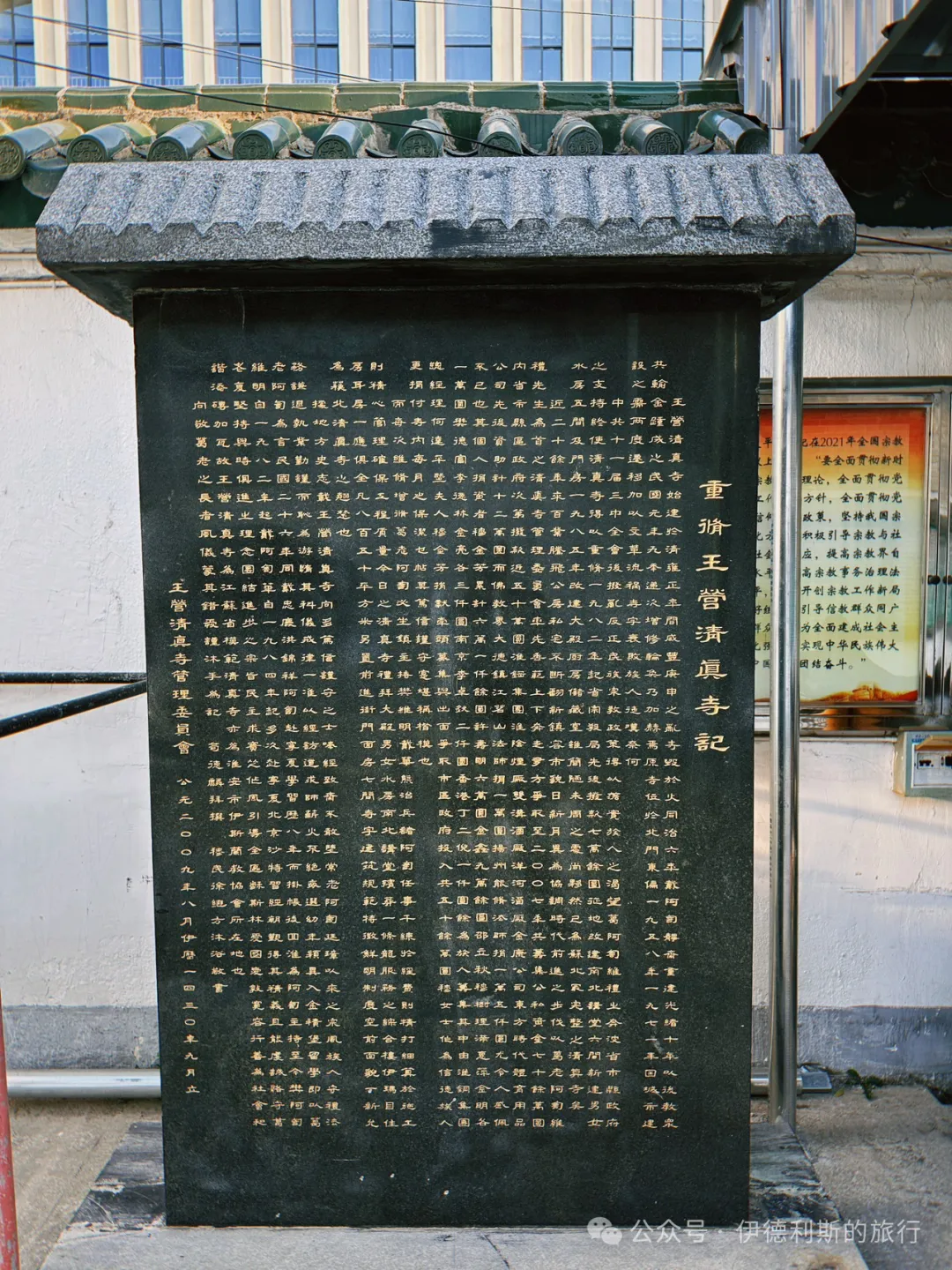
The Republic of China era inscription reads as follows:
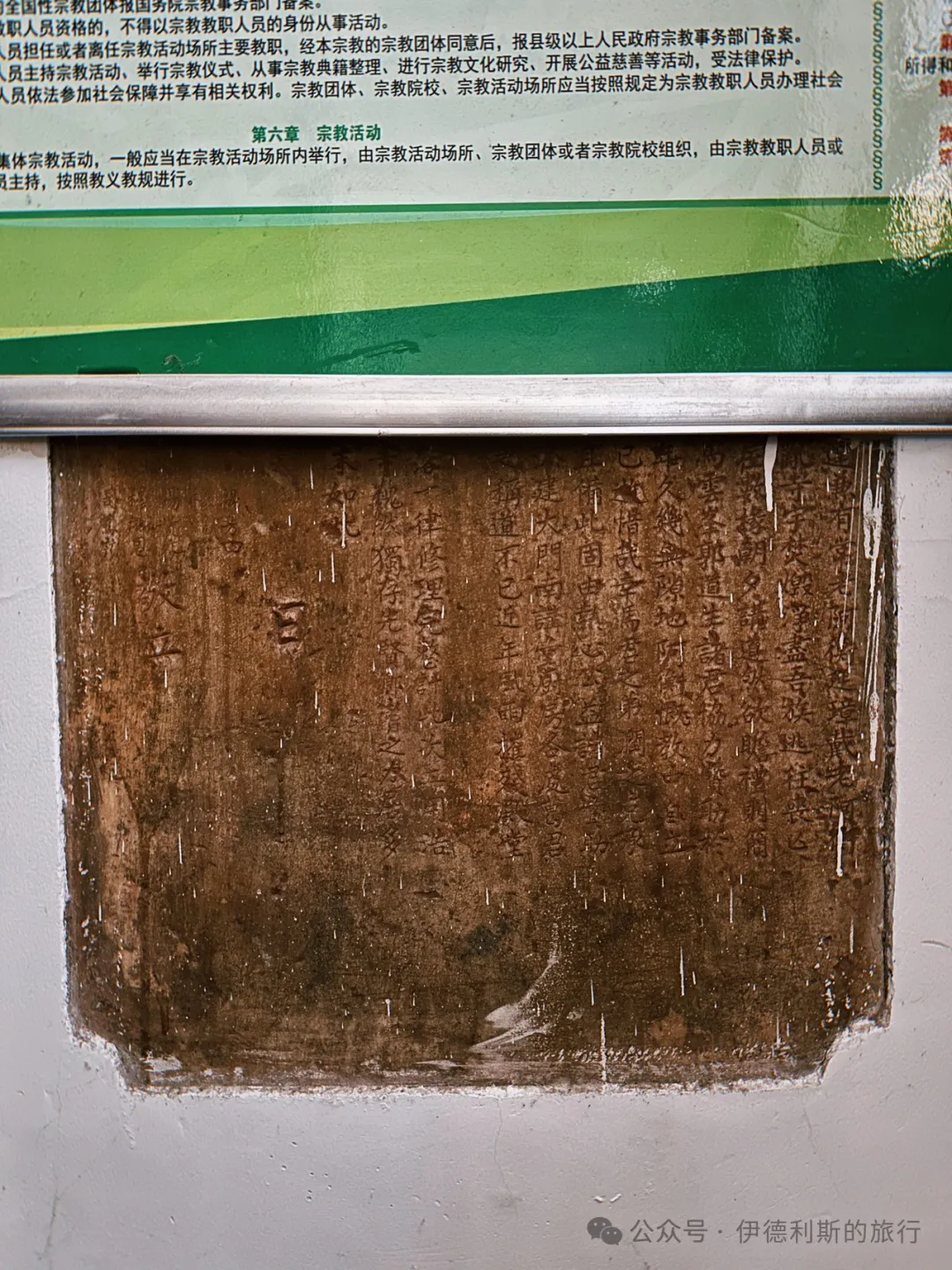
The Wangying Mosque was founded during the Yongzheng reign of the Qing Dynasty. By the end of the Daoguang reign, our community was at its peak. The population was large, and businesses were thriving. With the old Imams Chang Tingzhang and Dai Mingxuan leading religious affairs one after another, the lecture hall was always full, and many students were trained. This is recorded in the local history and can be verified. In the Gengshen year of the Xianfeng reign, the Nian rebellion suddenly occurred. The mosque was burned to the ground, our people fled or died, and the population gradually dwindled.
In the sixth year of the Tongzhi reign, Imam Dai Jingzhai, the son of the old Imam Dai Mingxuan, followed his father's teachings and took over the religious duties. He first built a few thatched huts to teach the faith morning and evening. However, for prayers, it was too simple and exposed to the elements; For gatherings, it was too small to hold everyone. The Imam was deeply worried about this. He persuaded people to donate and built a main prayer hall with three rooms made of grass. Later, he discussed it with Yang Xuting, Ma Yunfeng, and Guo Daosheng. With their help, in the tenth year of the Guangxu reign, they rebuilt the tiled main hall and lecture halls, and things began to return to normal. As more of our people lived here, the original public cemetery became crowded, and after many years, there was almost no space left. The Imam was concerned that there were few cemeteries for the community, and whenever a major funeral occurred, it was difficult to manage. He planned to buy a piece of land to provide for the future. He got the agreement of Mr. Ma Yunfeng, but before the matter was finished, Mr. Ma passed away. What a pity! Fortunately, Mr. Ma's brother, Runzhi, carried out his brother's wishes. With the strong support of the village elder Mr. Li Yunpo, they set aside differences, raised funds, and bought two new cemeteries. The benefits provided by the imam (ahong) to our people are thorough and complete. This is largely due to the support of those passionate about public welfare, but it is also the result of the imam's decades of solitary, painstaking effort and his sincere devotion.
In the first year of the Republic of China (1912), we worked to continue the legacy of our predecessors by adding a main gate, a south lecture hall, and a kitchen. Mr. Ge Ziming funded the construction of the washroom (shuifang) with a donation of several hundred thousand. We also invited Imam Wang Pinqing from Gansu Province to teach scripture. Visitors from all over who came here always spoke highly of him. In recent years, wind and rain have damaged the buildings, and the main hall is at risk of collapsing. We met to discuss the situation and sold dozens of willow trees from the perimeter of the cemetery, raising over two hundred thousand. We also received a donation of many roof tiles and timber pieces from the Jinshan Hall in Gansu. We then built three tiled, curved-eave rooms in front of the main hall and fully repaired the surrounding walls, the three-room east lecture hall, and the courtyard of the inner gate. This massive project was completed through a combination of public funds and donations from afar. We feel ashamed that we lack the personal wealth to do more, but we share these details because, despite two hundred years of constant change, our mosque still stands tall. This is largely due to the efforts of our ancestors and village elders. We sincerely hope that future generations will remember the hardships of those who built this place and preserve it forever so it may last without decline. We have recorded the full story here.
July, the ninth year of the Republic of China (1920).
Jin Jiasheng, Jin Jialin, Guo Chunlin, Yang Fangtian.
Chang Bingkui, Li Shunjie, Chang Guanying, Mu Hongbin.
Jin Jiayuan, Ma Jianong, Fan Zhaofeng, Yang Guiyuan.
Ge Futang, Li Dianqing, Ma Jiarang, Mu Hong'en.
Ma Jialin, Ge Zhenqing, He Wenquan, Zhou Fengling.
Sha Faxiang, Liu Lianyuan, Zhou Riyang, Mu Hongye.
Yancheng Mosque.
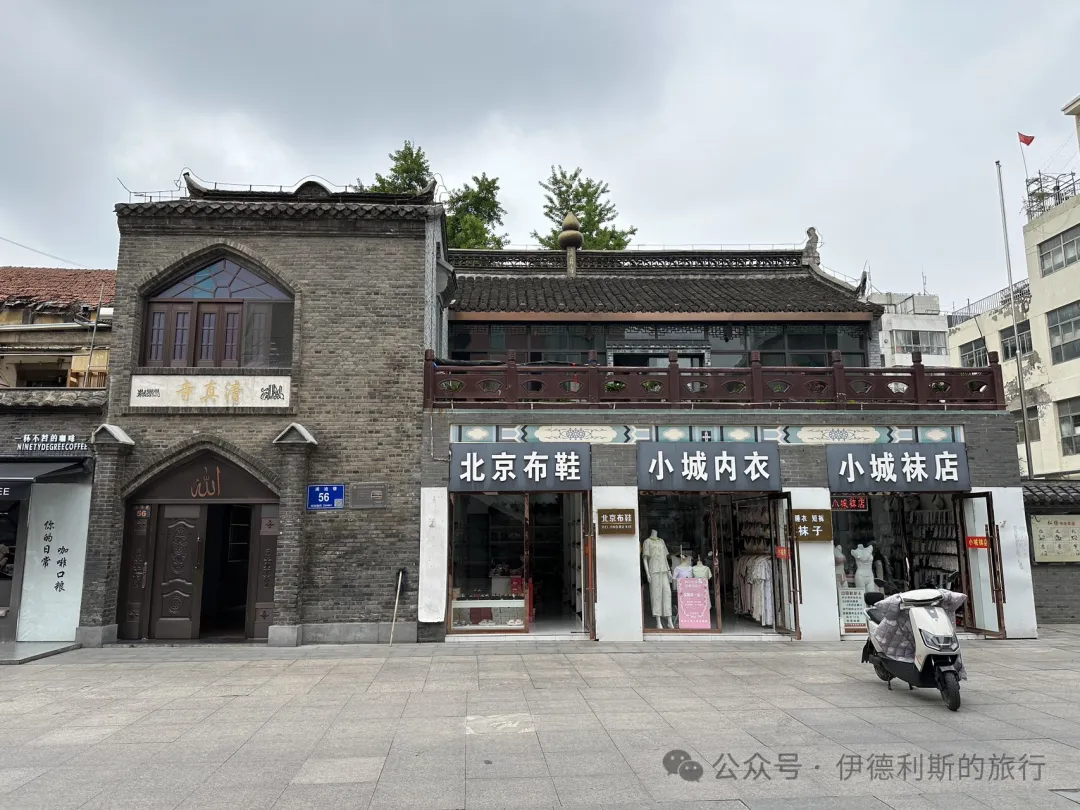
Yancheng Mosque is located on Xicang Lane (historically called Xicang) in the Yancheng urban area. It was first built during the Yongle period of the Ming Dynasty as three thatched rooms by five Hui Muslim families: the Ha, Huo, Ding, Liu, and Xue families. It was expanded in 1720 (the 59th year of the Kangxi reign) and rebuilt again in 1928 into the current brick-and-wood main hall.
The Republic-era 'Continued Records of Yancheng County' states: 'The mosque is located on Xicang Street in the city. It was founded during the Ming Yongle period. In the 59th year of the Qing Kangxi reign, land was purchased to expand it, and it was renamed the Mosque (Qingzhensi). Recently, it was renamed the Hui Church (Huijiaotang). The leader of the faith is called an imam (ahong).' In the second year of the Republic of China (1913), the Yancheng branch of the Jiangsu Islamic Association was established. In the 18th year (1929), it was renamed the Yancheng branch of the Chinese Islamic Association.
During the War of Resistance Against Japan, Yancheng Mosque suffered two disasters. On March 30, 1938, it was bombed by the Japanese military. On April 26 of the same year, the Japanese military occupied Yancheng and set fire to the city. Except for the main hall, which survived, all other buildings were destroyed.
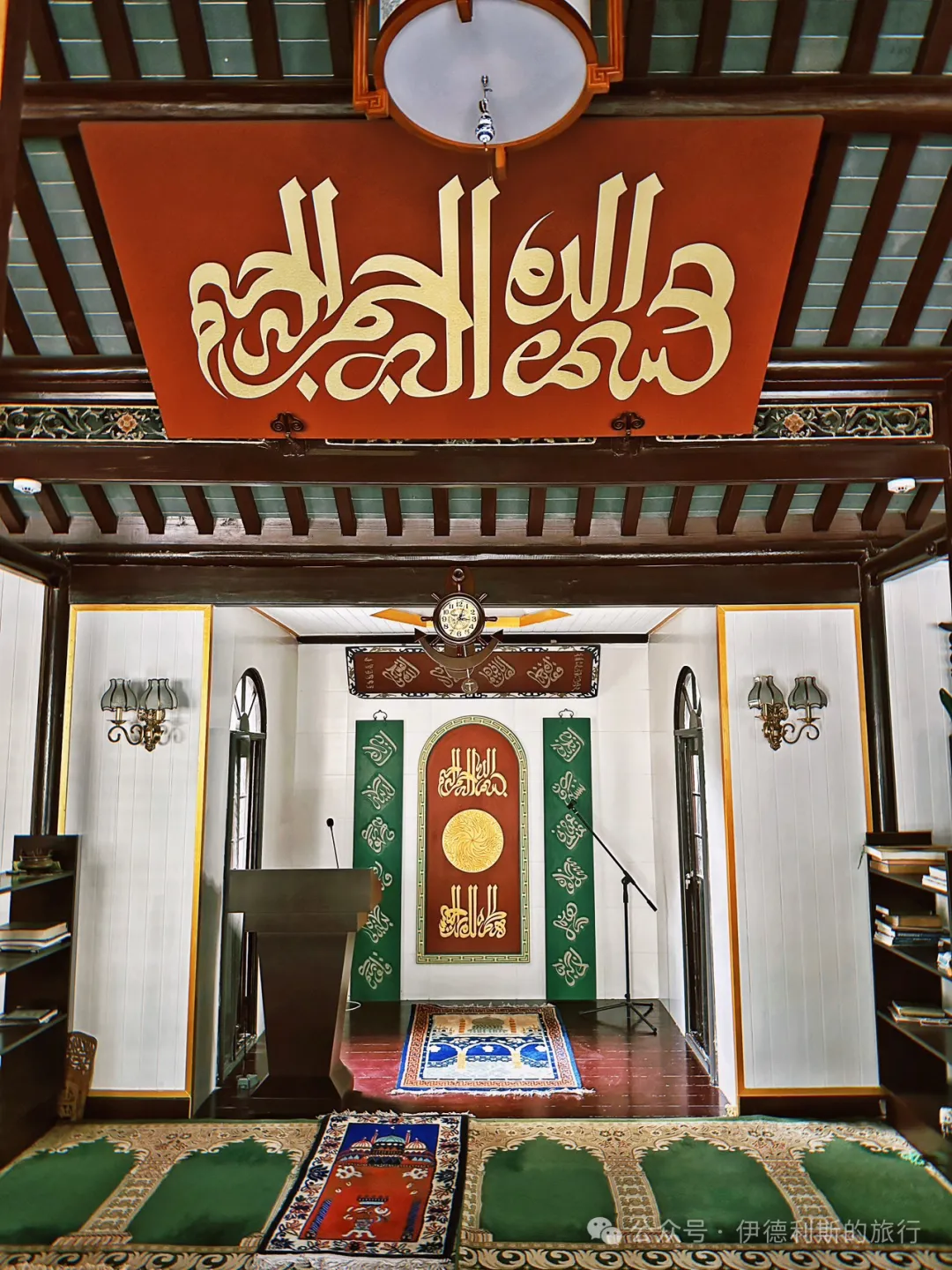
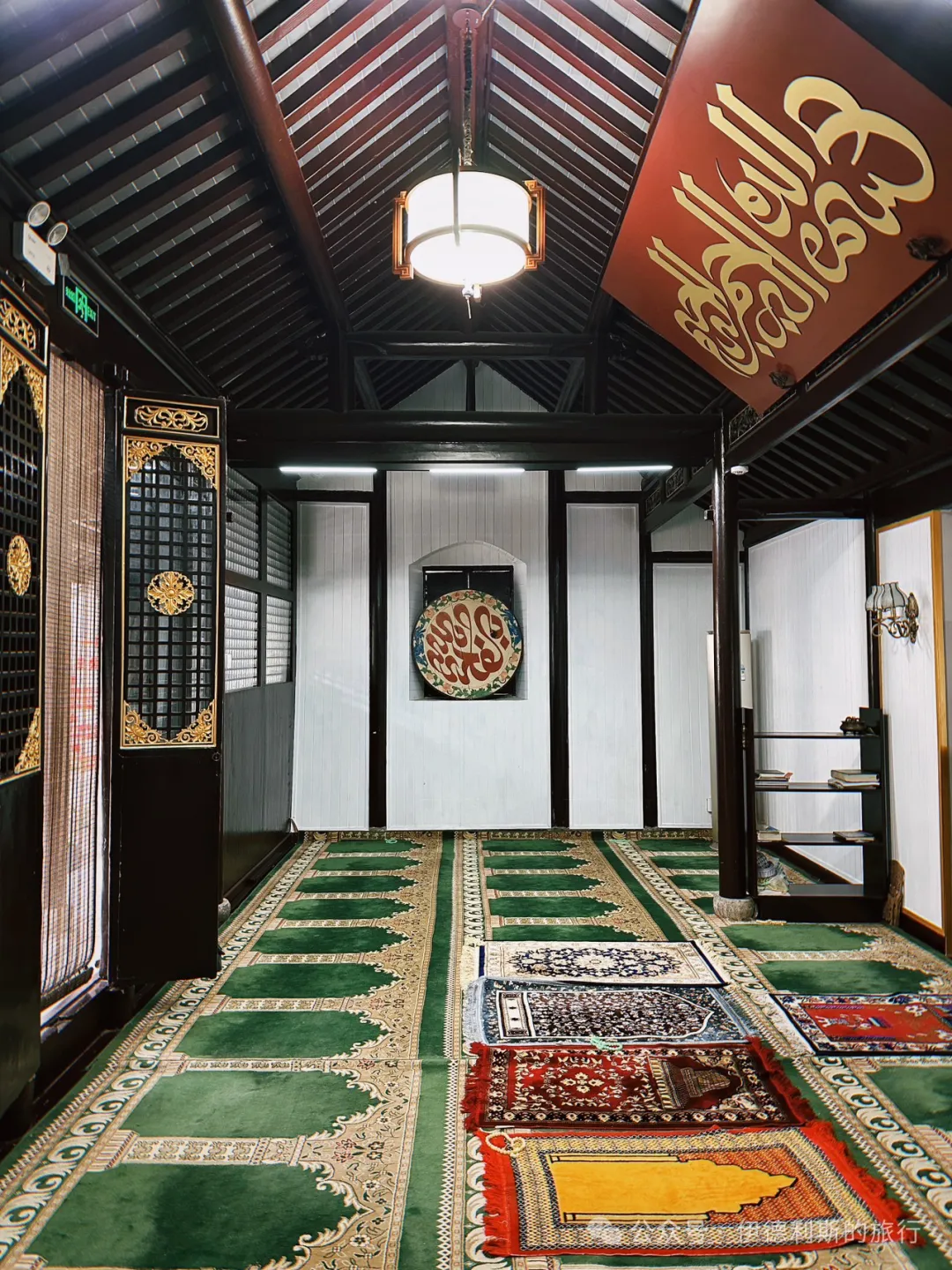
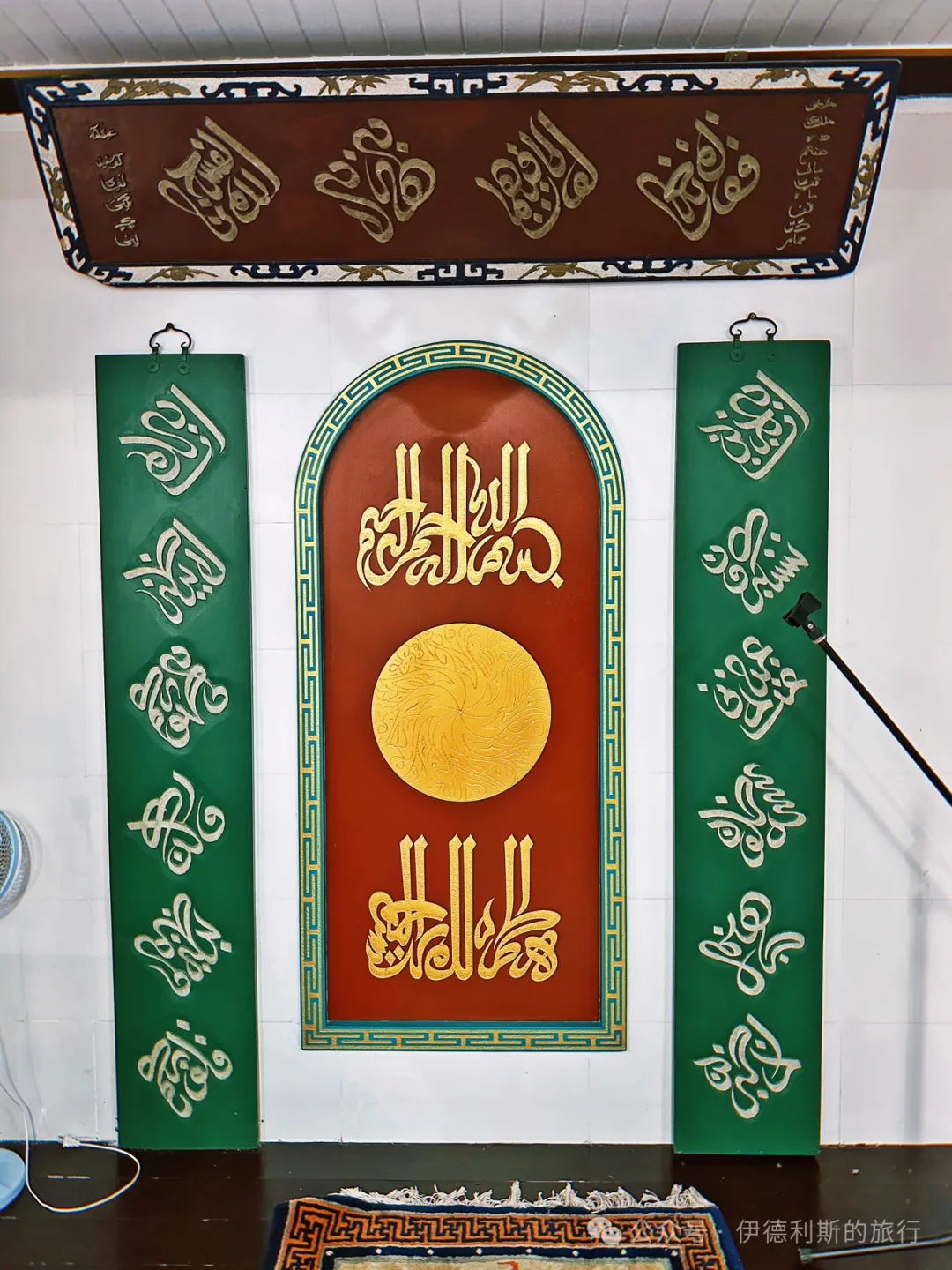
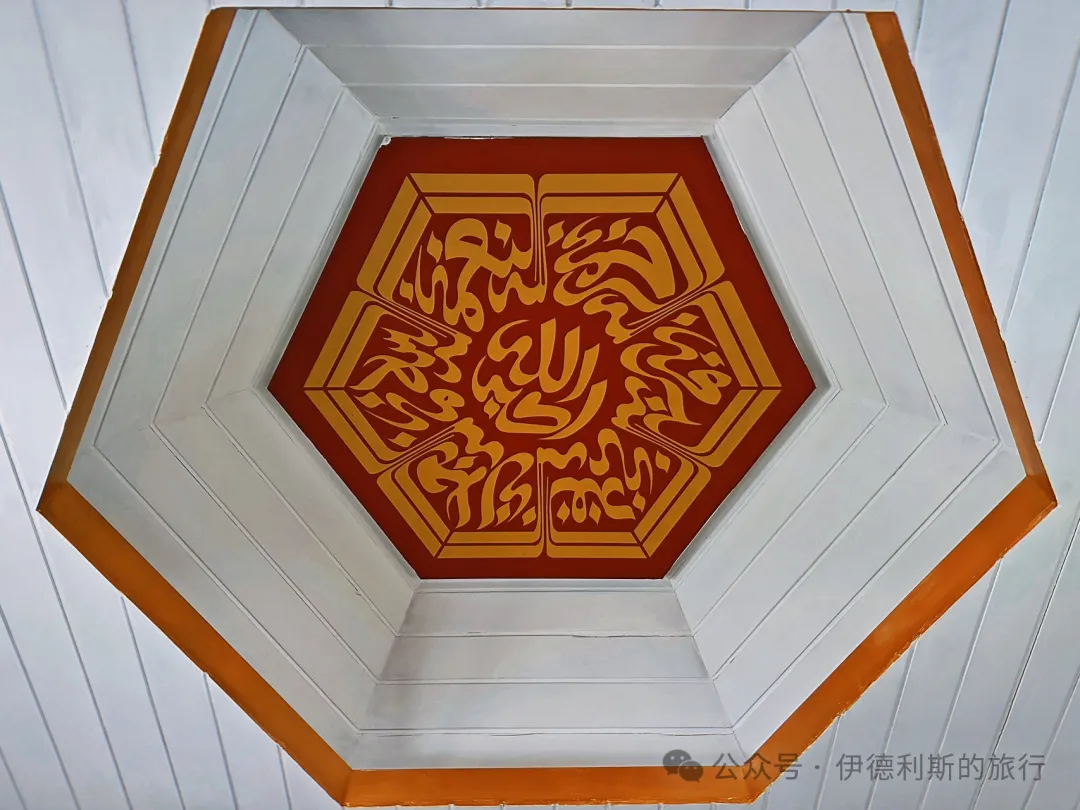
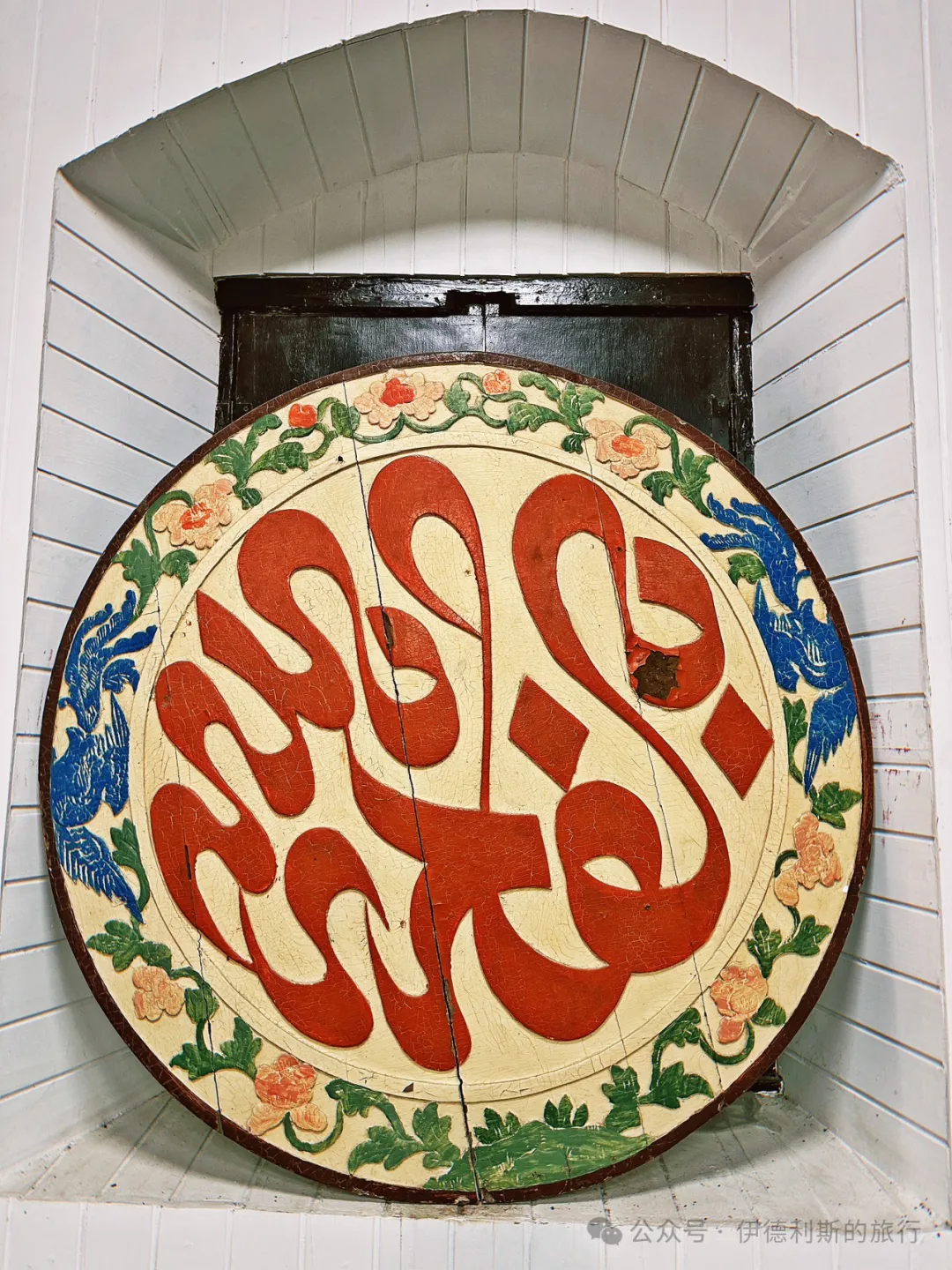
The main hall of Yancheng Mosque features traditional Jiangsu architectural style, with flying eaves in the front and a kiln-style niche (yaowo) in the back. The main hall still preserves the original wood-carved circular frame featuring a dua, which is very exquisite. According to Imam Xue Long from Zhenjiang, the inscriptions on the top and bottom of the main hall plaque use Arabic, Persian, and Xiao'erjing. They translate to: Completed on an auspicious day in the eighth lunar month of the 17th year of the Republic of China, respectfully erected by Abdullah Yang Luji. This is very precious.
The imam of Yancheng Mosque from 1936 to 1979 was Bai Hanzhang. Imam Bai was from Minquan, Henan. He graduated from the Beijing Niujie Islamic Institute in 1922. Later, he served as an imam in Jurong, Zhenjiang, and Nantong, Jiangsu. He became the imam of Yancheng Mosque in 1936 and served there until he passed away in 1979.
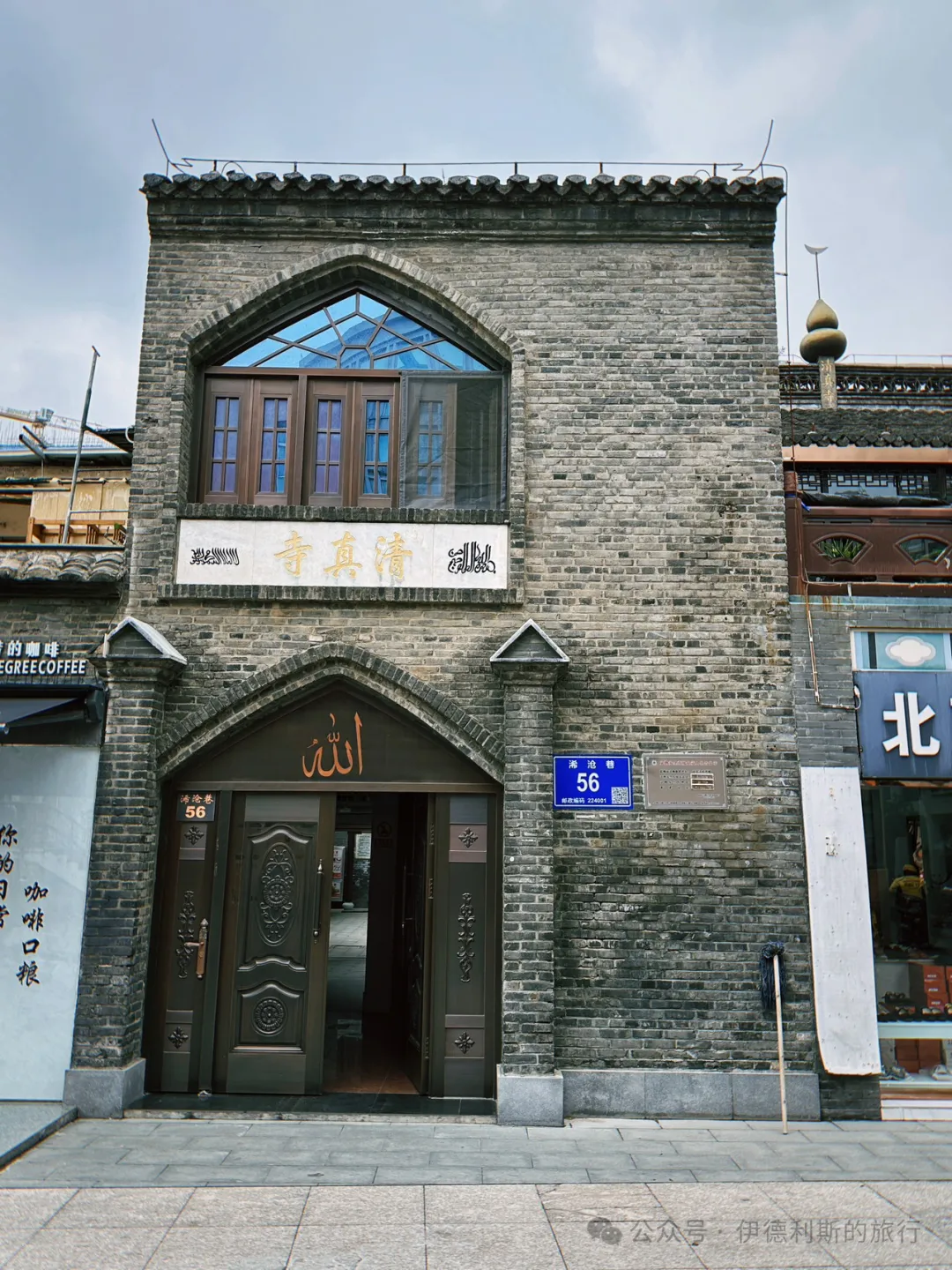
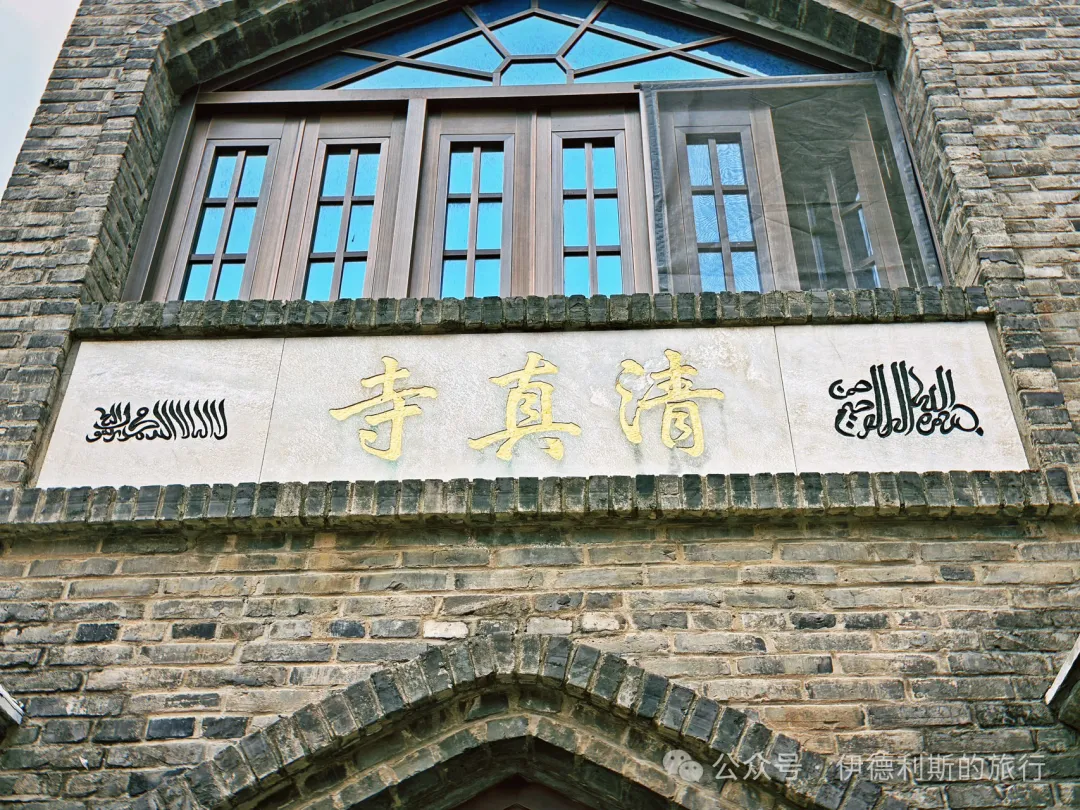
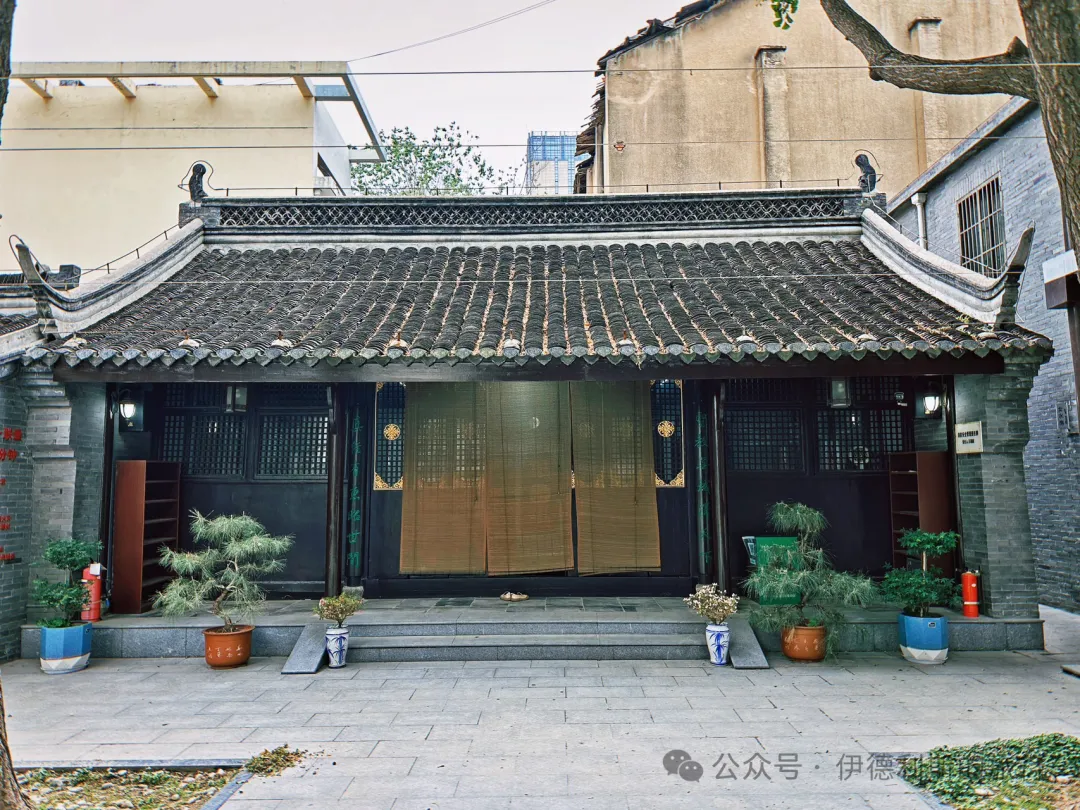
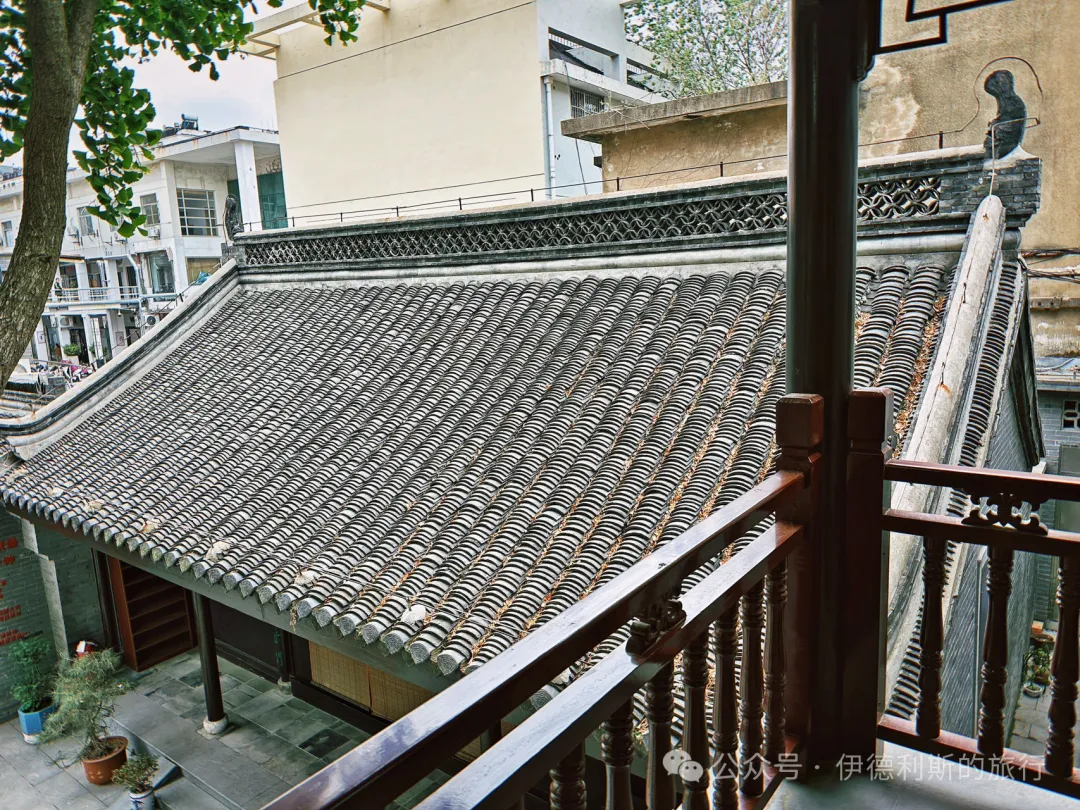
Baoying Mosque
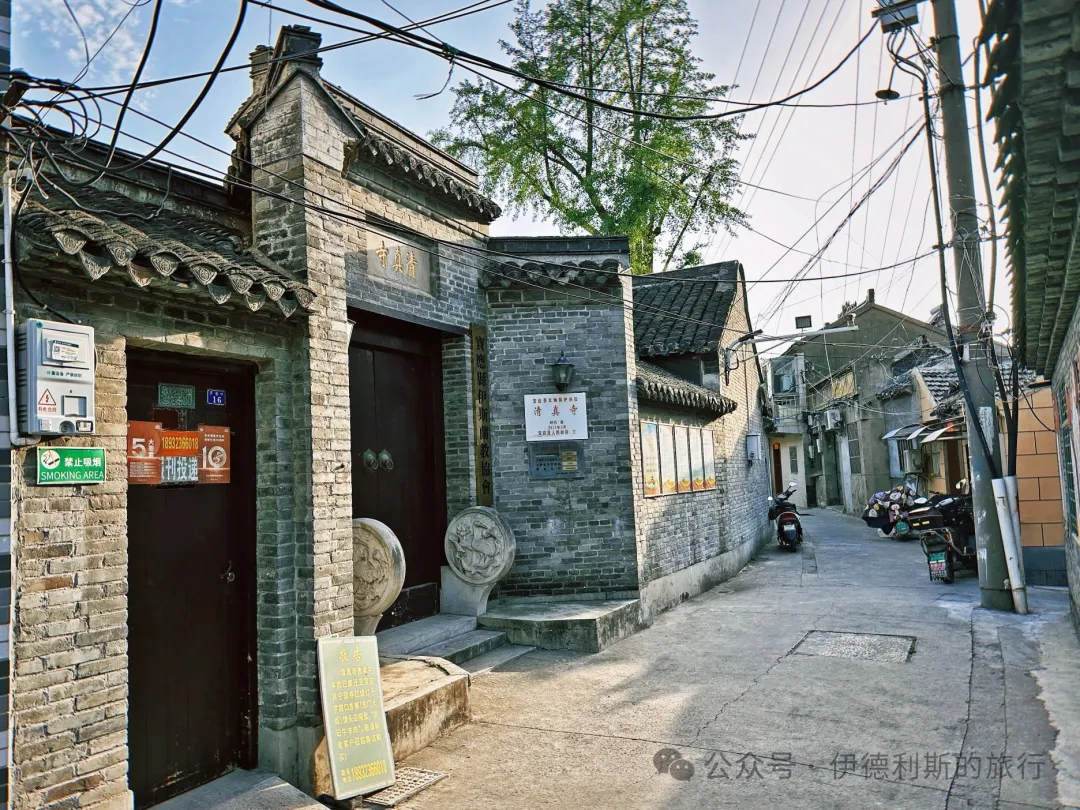
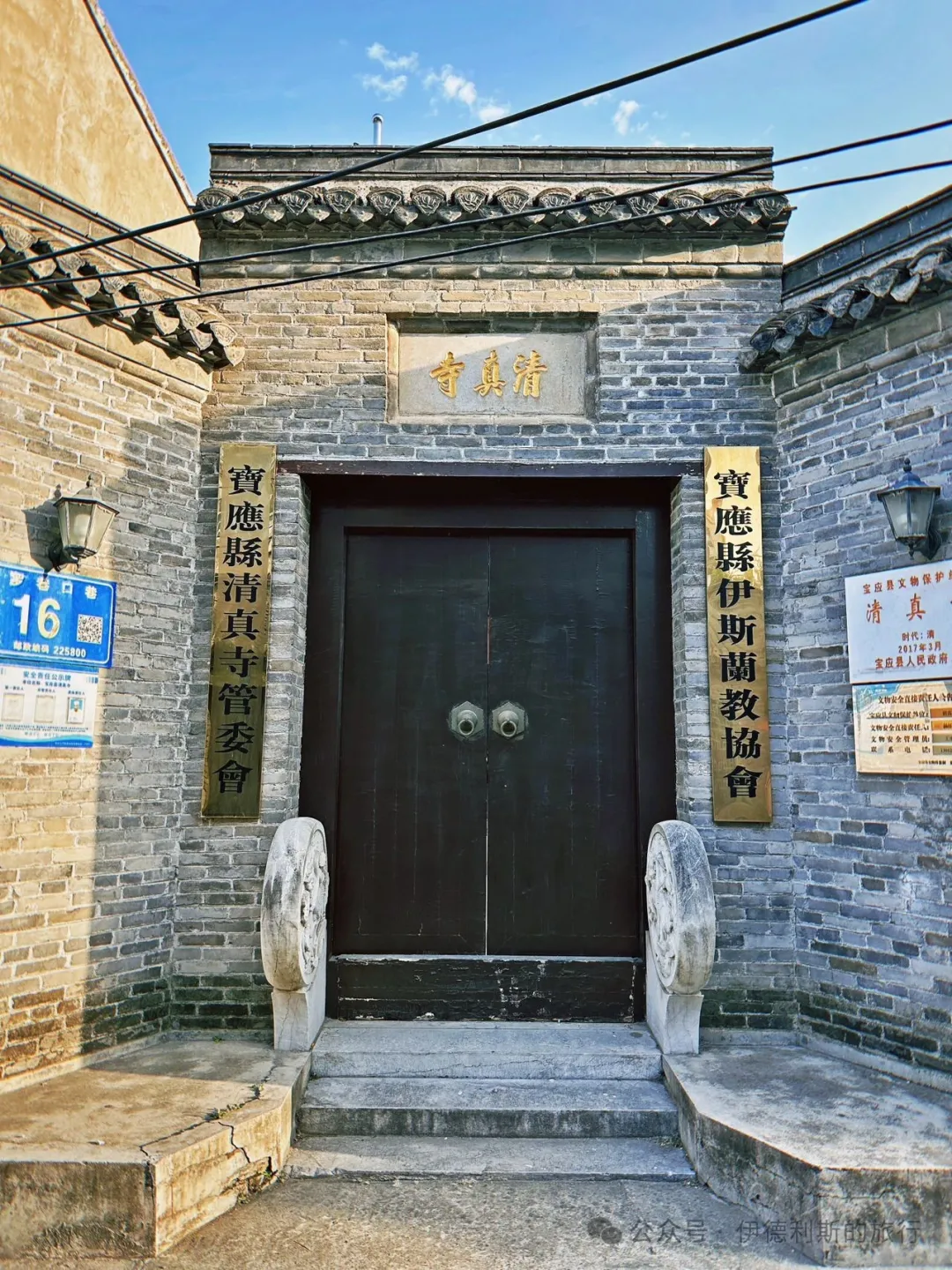
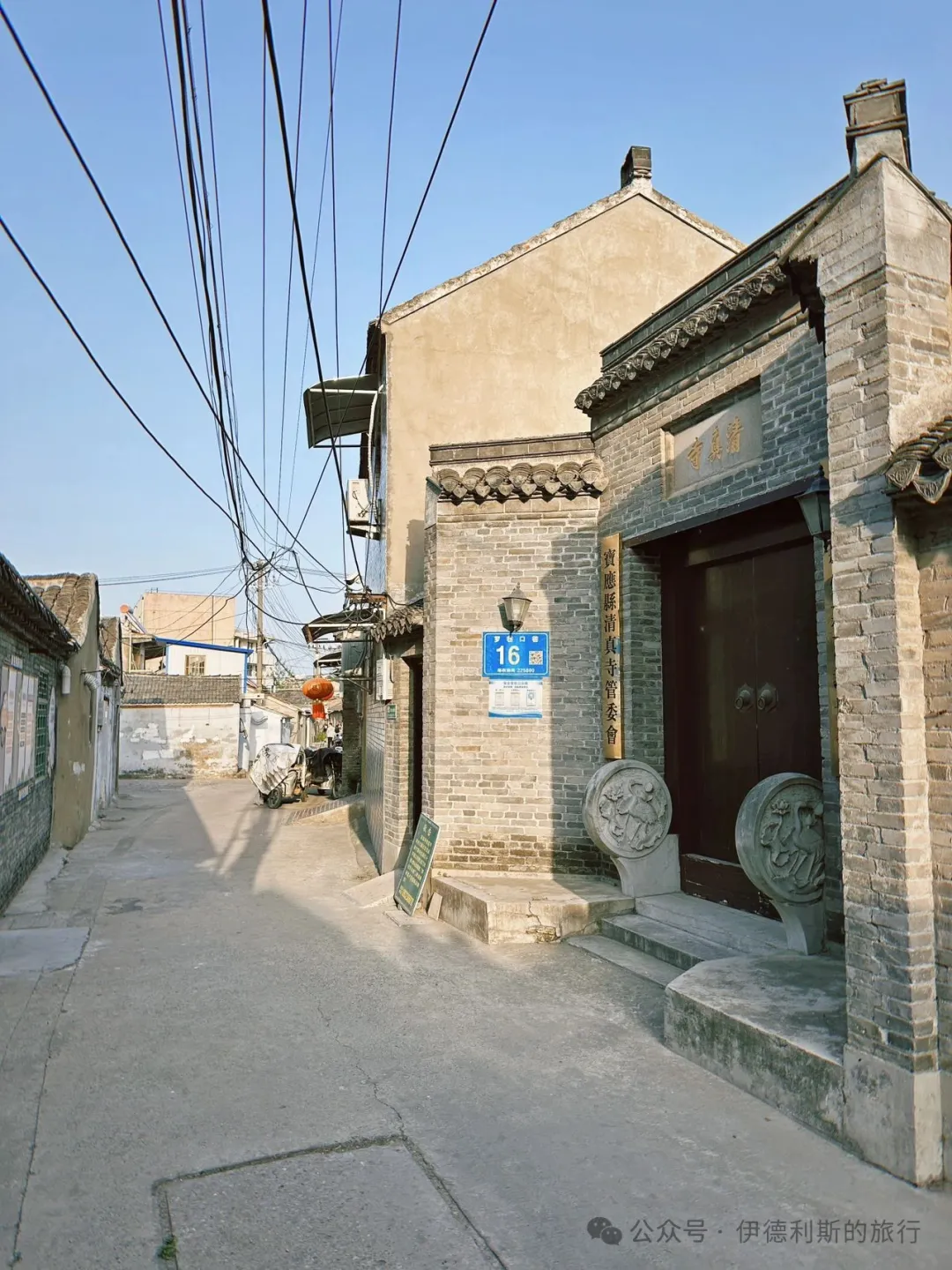
Baoying Mosque was originally located in Guojia Lane inside the east gate of the county town. Its founding date is unknown. It was rebuilt in 1910 (the second year of the Xuantong reign) at the entrance of Luoxiang Lane at the foot of the south city wall. With the help of Tao, the wife of anti-Japanese hero Zuo Baogui, and led by Imam Zhao Dezhai and others, many people including the Gao Mu Ma Jin family from Shandong, Anhui, Zhejiang, Huaiyin, Yangzhou, Yancheng, and Baoying raised funds to complete it in 1914. Baoying Mosque closed after 1958. It was rebuilt on the original site in 2002 and officially opened in 2006.
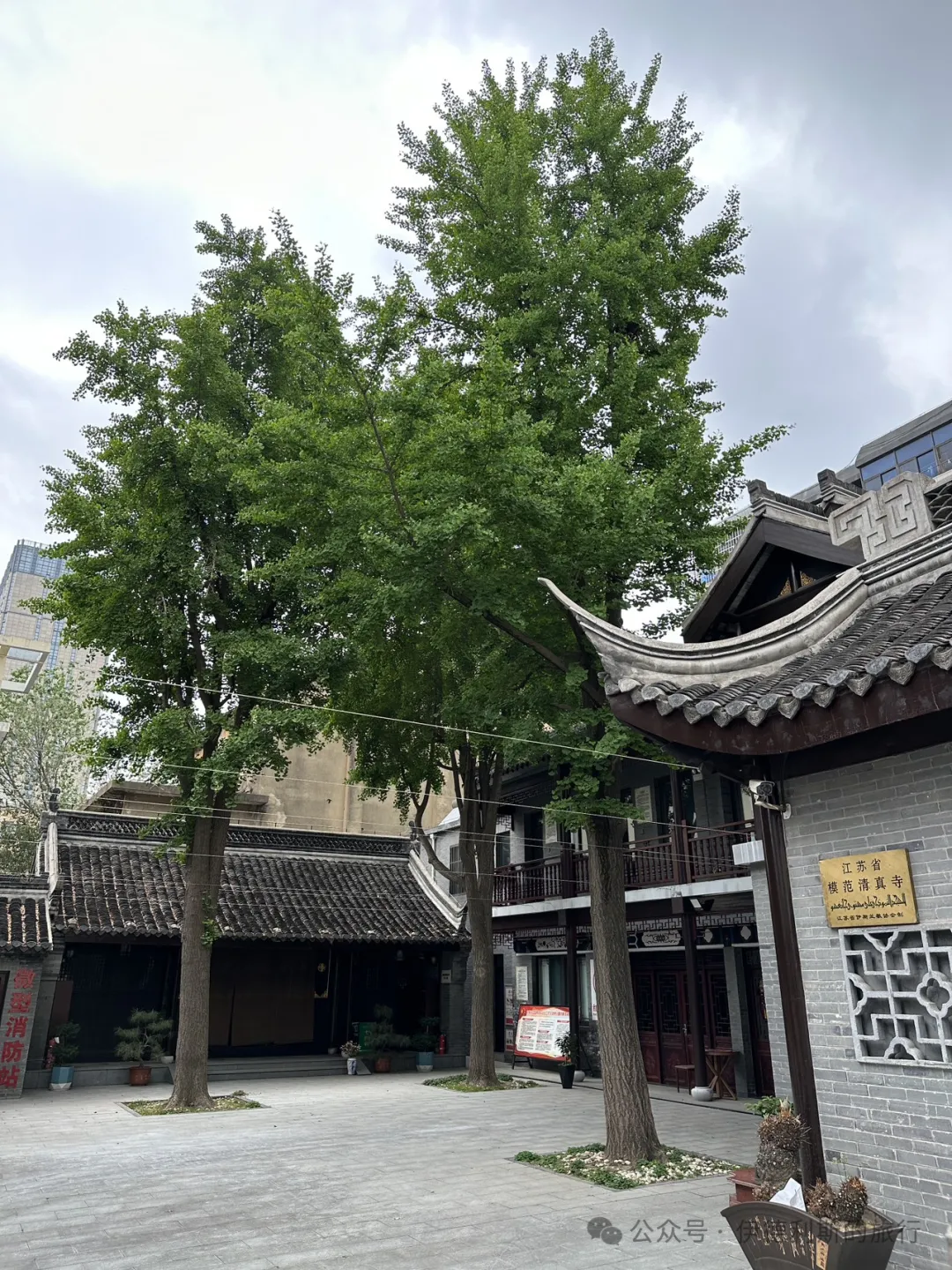
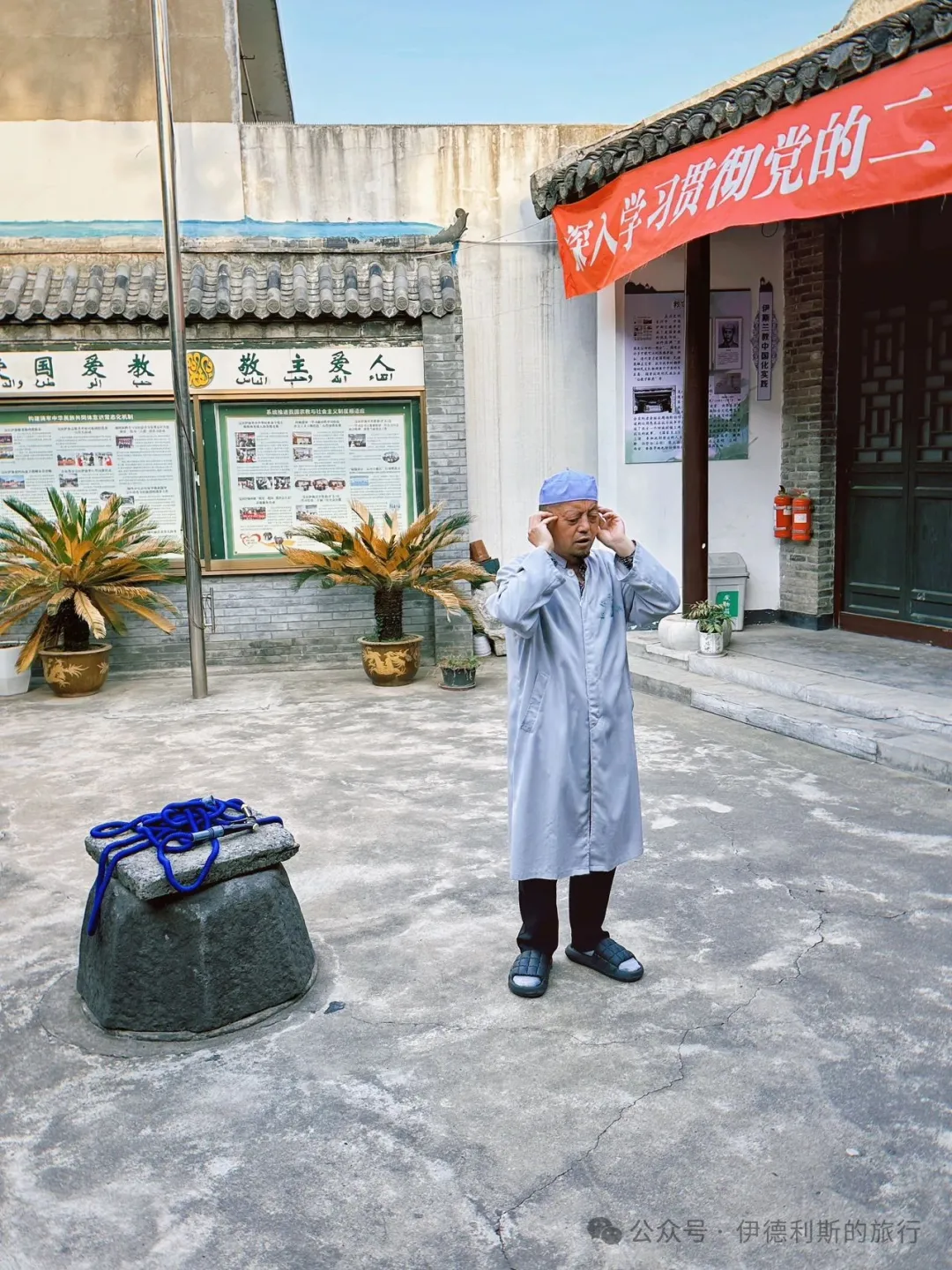
Baoying Mosque still has the water well dug during the 1910 construction and the ginkgo tree planted at that time. Imam Li at the mosque is from Siyang, Jiangsu. He usually runs the nearby Li's Beef and Mutton shop. If you want to enter the mosque, just call the number on his door. Imam Li is very welcoming. He says that Baoying Mosque still has some local Gao Mu who come to the mosque for Friday Jumu'ah prayers, which is better than some mosques where almost all the attendees are friends (dost) from the Northwest. Imam Li comes from the Zhepai Banqiao Daotang, but he treats all sects equally, and the religious community in Baoying County is very united.
Summary: This first part of the Jiangsu mosque series documents historic Hui Muslim mosque sites in northern Jiangsu, including Yanghe Mosque, Siyang Mosque, Siyang West Mosque, Shuyang Mosque, Hexia Mosque, Wangjiaying Mosque, Yancheng Mosque, and Baoying Mosque. The article preserves the original mosque names, founding dates, community histories, inscriptions, architectural details, and image order.
I am sharing the 25 historic mosque buildings I have visited in Jiangsu, moving from north to south.
1. Suqian
1. Yanghe Mosque (Yanghesi): First built during the Qianlong reign, rebuilt after 1945.
2. Huai'an
1. Qingjiang Mosque (Qingjiangsi): First built during the Jiajing reign of the Ming Dynasty, rebuilt in 1870.
2. Hexia Mosque (Hexiasi): First built during the Shunzhi reign of the Qing Dynasty, rebuilt in the late Qing Dynasty.
3. Wangjiaying Mosque (Wangjiayingsi): First built during the Yongzheng reign of the Qing Dynasty, rebuilt in 1985.
3. Yancheng
1. Yancheng Mosque (Yanchengsi): Built during the Yongle reign of the Ming Dynasty, renovated in 1928.
4. Yangzhou
1. Baoying Mosque (Baoyingsi): Rebuilt in 1910, rebuilt again in 2022.
2. Gaoyou Mosque (Gaoyousi): Rebuilt in 1864.
3. Lingtang Ancient Mosque (Lingtang Gusi): First built at the end of the Yuan Dynasty, moved to its current site in the early Qing Dynasty, rebuilt in 1924.
4. Shaobo Mosque (Shaobosi): First built during the Xianfeng reign of the Qing Dynasty.
5. Xianhe Mosque (Xianhesi): First built in 1275, rebuilt in 1390.
6. Majian Lane Mosque (Majianxiang Libaisi): First built in 1714.
7. Huihui Tang Mosque (Huihuitangsi): First built in 1275, rebuilt in 1776.
5. Zhenjiang
1. Shanxiang Mosque (Shanxiangsi): Expanded during the Kangxi reign, rebuilt in 1873.
2. Jianzi Lane Mosque (Jianzixiangsi) Ming and Qing Dynasty stone carvings.
3. Nanmenwai Mosque (Nanmenwaisi) Qing Dynasty mihrab.
4. Xinhe Street Mosque (Xinhejie Huijiaotang): 1930.
6. Nanjing
1. Jingjue Mosque (Jingjuesi): First built during the Hongwu reign of the Ming Dynasty, rebuilt in 1877.
2. Original Taiping Road Mosque: First built in the early Ming Dynasty, moved and rebuilt in 2005.
3. Xiaowangfu Lane Mosque.
4. Hushu Mosque: First built in 1392, rebuilt in 1896.
5. Liuhe South Gate Mosque: First built in 1403, raised and renovated in 2013.
6. Liuhe Women's School: First built in 1912, rebuilt in 1930.
7. Liuhe Changjiang Road Mosque: First built in 1424, rebuilt during the Guangxu reign of the Qing Dynasty.
8. Zhuzhen Mosque: Rebuilt in 1901, renovated in 2001.
9. Zhuzhen Women's Mosque: First built in 1921, rebuilt in 1931.
Suqian Yanghe Town Mosque.
The Suqian Yanghe Town Mosque was first built during the Qianlong reign. It was funded by Yu Qin, a local scholar from Yanghe who had served as an education official in Lishui, Pizhou, and Ningguo, and was built on Rice Market Street in Yanghe. It was destroyed during the Japanese invasion and later rebuilt. The current main hall features a hip-and-gable roof, a post-and-lintel frame, and upturned eaves with wind bells hanging from the four corners. It was listed as a Suqian cultural heritage site in 2010.
Yanghe Town Mosque belongs to the Jahriyya Banqiao Daotang. During the Jiaqing reign of the Qing Dynasty, Chang Tingzhang (1785-1870), a Hui Muslim from Siyang, Jiangsu, traveled to Lingzhou (modern-day Lingwu) in Ningxia to study. After completing his studies, he brought the Jahriyya tradition to the Huai-Si region. Chang Tingzhang was famous far and wide for his profound knowledge and had many disciples when he began teaching at the Huaiyin Wangjiaying Mosque. Since then, mosques including the Huaiyin Wangjiaying Mosque, Siyang Zhongxing Town Mosque, and Yanghe Town Mosque have all followed the Jahriyya tradition. Before 1932, the imams of Yanghe Town Mosque were all assigned from Ningxia. After 1932, Imam Ma Chengliang served until he passed away in 1979.
Huai'an Qingjiang Ancient Mosque.
Qingjiangpu in Huai'an was dredged in 1415 (the 13th year of the Yongle reign of the Ming Dynasty). It was the center of grain transport for the Grand Canal during the Ming and Qing dynasties, where grain transport ships from all provinces were built and repaired. Because navigating the Yellow River section of the canal was very dangerous, and waiting times to pass through locks in Shandong were too long, many merchants chose to leave their boats at Qingjiangpu. They would cross the Yellow River and switch to horse-drawn carriages to continue north, making Qingjiangpu a symbol of the "southern boats and northern horses" transport system.
The most important pier in Qingjiangpu was next to the Yue Lock. It was called the Imperial Pier because both Emperors Kangxi and Qianlong landed there during their southern inspection tours. This was once the busiest and most prosperous place in Qingjiangpu. Hui Muslims began doing business on Yuehe Street in front of the Imperial Pier during the Ming Dynasty, and the earliest Qingjiang Ancient Mosque was built during the Jiajing reign of the Ming Dynasty.
In 1677 (the 16th year of the Kangxi reign), the Governor of the Waterways moved to Qingjiangpu, and it became the center of grain transport. In his collection of notes and stories, Golden Pot Seven Inks (Jinhu Qimo), Qing Dynasty writer Huang Junzai recorded: 'Along the Qingjiang River for over ten miles, the markets were bustling and food was abundant. People from all directions gathered here, shoulder to shoulder and wheel to wheel, in a very prosperous scene.' In 1799 (the 57th year of the Qianlong reign), the Qingjiang Mosque (Qingjiang Gusi) underwent a large-scale expansion, marking the peak of its prosperity.
In 1860 (the 10th year of the Xianfeng reign), the Nian Army captured Qingjiangpu and the Qingjiang Mosque was destroyed. The imam, Ma Huanwen, sadly passed away from illness while preparing to raise funds for the mosque (nietie). Fortunately, an elder from Nanjing named Jiang Hengqing took over, organized the community to raise funds (nietie), and finally rebuilt the mosque in 1870 (the 9th year of the Tongzhi reign).
In 2006, the Beijing-Hangzhou Grand Canal was listed as a Major Historical and Cultural Site Protected at the National Level. Three historic mosques were included along the canal: the North Mosque in Linqing, the East Mosque in Linqing, and the Qingjiang Mosque in Huai'an. It can be said that the Hui Muslim community in Huai'an grew because of the canal and is inseparable from the canal's grain transport history.
Looking from the opposite bank of the Li Canal, you can see the gate of the Qingjiang Mosque right next to the Imperial Wharf ruins, helping you imagine what the busy grain transport days looked like.
Inside the courtyard, the main prayer hall and the north wing, known as the Butterfly Hall, are Qing Dynasty structures. Beside the main hall stands a Chinese trumpet creeper (lingxiaomu) over 320 years old.
The main hall is a Qing Dynasty building made of two connected hard-mountain roofs (yingshanding) with a kiln-style hall (yaodian) at the back, typical of traditional Jianghuai architectural style.
The north wing of the Qingjiang Mosque is called the Butterfly Hall (hudieting). This is a traditional name for garden architecture in the Jianghuai region, named because the corners of the hall curve upward like the wings of a dancing butterfly.
Two stone steles at the Qingjiang Mosque.
The first is the 'Prohibition Edict Stele' from the 57th year of the Qianlong reign. It was written and erected by the county government to explicitly ban corruption, issued by Wu Li, the magistrate of Qinghe County, Huai'an Prefecture, Jiangnan, who held a fifth-rank title and had been commended five times.
The second is the 'Stele Record of the Rebuilding of the Mosque Main Hall' from the 9th year of the Tongzhi reign, which documents the process of rebuilding the main hall during the Tongzhi period. The inscription records donors from nineteen places: Henan, Shandong, Jinling, Yunnan, Zhili, Chuanshan, Hexia, Lixiahe, Baoying, Gaoyou, Shaobo, Xiannumiao, Taizhou, Xinghua, Dongtai, Rugao, Shuyang, the Xinzi Cavalry, and Yuanpu. Donors from Henan, Shandong, Yunnan, Zhili, and Chuanshan were mostly traveling merchants, reflecting the prosperous 'southern boats and northern horses' scene of Qingjiangpu during the Qing Dynasty. The others were local mosque communities in Jiangsu. Some, like the Shaobo mosque, have since been abandoned, offering a glimpse into the rise and fall of the Hui Muslim community in Jiangsu.
Ancient well
Column base
Coffin for the deceased (tabumaiti xia)
Tombstone of Madam Yang, mother of the Ma family, from the 14th year of the Guangxu reign, and the tombstone of the Sai family of the Ma clan from Anhui.
Tombstone of the Sai family of the Ma clan from Anhui
Stone railing
Drum-shaped stone base with cypress and deer carvings (bailutu baogushi)
Hexia Mosque
Hexia Ancient Town in Huaian is the largest town on the outskirts of Huaian Prefecture. Because the salt from the coastal salt fields in Huaibei was high in both quantity and quality, many salt merchants from the northwest and Anhui came to Huaibei in the late Ming Dynasty to work in the salt industry. The Huaibei Salt Transport Branch was located in Hexia Town at the time. Salt from the fields had to be shipped to Hexia for inspection before merchants could sell it elsewhere. Hexia Town then entered its most prosperous period. Salt merchants built gardens and courtyards there. The Qing Dynasty record Huaian Hexia Annals states: Wealthy salt merchants brought their capital and made their homes in Hexia, and Hexia became extremely prosperous. The wealth brought by these salt merchants made the town's business thrive, and many Hui Muslims also came to settle in Hexia.
Hexia Mosque is located south of Luojia Bridge in Hexia Town. It was first built during the Shunzhi reign of the Qing Dynasty. In 1860, during the tenth year of the Xianfeng reign, the Nian Army captured Huaian and burned down ten rooms of the mosque, which were later rebuilt. The main hall of Hexia Mosque is a Qing Dynasty structure with blue bricks, dark tiles, and upturned eaves, showing a typical Jianghuai architectural style. It was listed as a cultural relic protection unit of Huaian City in 2006.
Above the main hall door hangs a chestnut wood plaque inscribed with the words Si Wu Xie (Thinking Without Evil), written by Tian Rui, the acting prefect of Huaian in the tenth year of the Daoguang reign. Plaques originally on both sides, inscribed by anti-Japanese hero Zuo Baogui and Yunnan Commander Ma Chang'an, were destroyed after the 1960s.
The imam (ahong) of the mosque usually stays at a nearby beef and mutton shop. If you call the number posted on the mosque gate, he will come over to open it.
An ancient well dug in the early Qing Dynasty.
Wangjiaying Mosque.
Wangjiaying in Huaian is located between the old course of the Yellow River and the Salt River. During the Ming Dynasty, the Dahe Guard was established in Huaian Prefecture, and ten military camps were built along the Yellow River. Wangjiaying was one of them. Because travel on the Yellow River section of the canal was slow and passing through locks was dangerous, often leading to broken cables and sunken boats, many merchants chose to leave their boats at Qingjiangpu. They would cross the Yellow River at Wangjiaying and switch to horse-drawn carriages to continue north. Wangjiaying and Qingjiangpu gradually grew into a busy town together.
Wangjiaying experienced many floods from the Yellow River, and the town moved east three times before reaching its current location. In 1831, the eleventh year of the Daoguang reign, Viceroy Tao Peng chose Wangjiaying as the new distribution center for Huaian salt. After that, eighteen salt warehouses and seventy-two salt bureaus were opened in Wangjiaying. Salt boats traveled back and forth every day along the three-hundred-li waterway from the Huaibei salt fields to Wangjiaying.
The prosperity of Wangjiaying attracted a steady stream of Hui Muslims to settle there. The first Hui Muslims to arrive in Wangjiaying were the Ma and Sha families, who came via Lingwu County in Ningxia, Shandong, and Zhenjiang. Later, Hui Muslims with the surnames Jin, Dai, Chang, Ge, Fan, Li, and Yang also settled here.
Wangjiaying Mosque was first built during the Yongzheng reign. It started as three thatched rooms next to the Lotus Pond at Wangjiapo. After Wangjiaying became a salt distribution center in the late Daoguang reign, the mosque moved to the south bank of the Salt River, with imams Chang Tingzhang and Dai Mingxuan in charge of religious affairs. Imam Chang Tingzhang, known as Third Master Chang, was originally from Jining, Shandong. He was born in 1785, the fiftieth year of the Qianlong reign, in Taoyuan County, Huaian Prefecture, Jiangsu (now Siyang). In his youth, he studied in Lingzhou (now Lingwu County, Ningxia) and continued his religious studies in Jining, Shandong, after completing his initial training. In 1810, the fifth year of the Jiaqing reign, the 26-year-old Imam Chang Tingzhang was invited to Wangjiaying Mosque to lead religious affairs. Imam Chang Tingzhang had deep knowledge of Arabic classics, astronomy, and medical theory. According to the Wangjiaying Annals, a man named Third Master Tao from Hangzhou died in Huaian during the Daoguang reign. Because it was the heat of midsummer, Imam Chang Tingzhang personally bought a boat and traveled south along the canal to escort the body back to Hangzhou to fulfill his duty to the family.
In 1860 (the 10th year of the Xianfeng reign), the Nian Army burned down the Wangjiaying Mosque. In 1867 (the 6th year of the Tongzhi reign), Imam Dai Jingzhai, the son of Imam Dai Mingxuan, built a few thatched huts. Later, with donations from the community, they built a main prayer hall with three rooms made of grass.
After Imam Chang Tingzhang passed away in 1870 (the 9th year of the Tongzhi reign), Imam Dai Jingzhai took charge of religious affairs. In 1884 (the 10th year of the Guangxu reign), he replaced the grass-roofed building with a tiled one. Because Imam Chang Tingzhang had studied at the Jahriyya Banqiao Daotang in Jinjibu, Lingwu County, Ningxia, when he was young, the Wangjiaying Mosque later invited five successive Jahriyya imams from Jinjibu to lead religious services and teach. Subsequent imams also went to Ningxia for further study, making Wangjiaying Mosque one of the nine branch centers of the Banqiao Daotang.
In 1912, the Wangjiaying Mosque built a new main gate, a south lecture hall, a kitchen, and a water room. In 1920, with funding from the Jinshan Tang in Gansu and money from selling dozens of willow trees from the public cemetery, they rebuilt the three-room tiled porch in front of the main hall and added three new rooms for the east lecture hall. Currently, there is a stone tablet from 1920 commemorating the Republic of China renovation on the inner north wall of the main hall, but the top part is covered.
In 1958, the Wangjiaying Mosque moved to the east side of the West Horse Road in Wangying. In 1961, it moved to its current location because the land was requisitioned for a bank building. During the destruction of the Four Olds, the main hall's plaques reading "The Way Spreads in the Central Land," "The Religion Follows the Western Regions," and "Stop at the Ultimate Good," along with the gold-lettered Arabic plaques and the couplet reading "See the formless, hear the soundless, rectify the intention and be sincere, become a sage and a worthy, the original nature;" “The Way stands here, movement brings harmony, reach others through oneself, benefit the people and the world, the land is complete” were all smashed and burned. Funeral supplies were also destroyed, and the main hall was used as a warehouse by a shoe and hat factory.
In 1979, under the leadership of Imam Ge Weili, the Wangjiaying Mosque was rebuilt in a traditional style. It was completed in 1985 and underwent two more renovations and expansions in 2003 and 2006, resulting in its current appearance.
Imam Ge Weili was born in 1924. He went to Ningxia to study in 1937. After completing his training and receiving his credentials in 1945, he became the imam of Wangjiaying Mosque and took on the role of imam in 1966. The religious work at Wangjiaying Mosque is now handled by Imam Fan Weiming, a student of Imam Ge Weili.
The Republic of China era inscription reads as follows:
The Wangying Mosque was founded during the Yongzheng reign of the Qing Dynasty. By the end of the Daoguang reign, our community was at its peak. The population was large, and businesses were thriving. With the old Imams Chang Tingzhang and Dai Mingxuan leading religious affairs one after another, the lecture hall was always full, and many students were trained. This is recorded in the local history and can be verified. In the Gengshen year of the Xianfeng reign, the Nian rebellion suddenly occurred. The mosque was burned to the ground, our people fled or died, and the population gradually dwindled.
In the sixth year of the Tongzhi reign, Imam Dai Jingzhai, the son of the old Imam Dai Mingxuan, followed his father's teachings and took over the religious duties. He first built a few thatched huts to teach the faith morning and evening. However, for prayers, it was too simple and exposed to the elements; For gatherings, it was too small to hold everyone. The Imam was deeply worried about this. He persuaded people to donate and built a main prayer hall with three rooms made of grass. Later, he discussed it with Yang Xuting, Ma Yunfeng, and Guo Daosheng. With their help, in the tenth year of the Guangxu reign, they rebuilt the tiled main hall and lecture halls, and things began to return to normal. As more of our people lived here, the original public cemetery became crowded, and after many years, there was almost no space left. The Imam was concerned that there were few cemeteries for the community, and whenever a major funeral occurred, it was difficult to manage. He planned to buy a piece of land to provide for the future. He got the agreement of Mr. Ma Yunfeng, but before the matter was finished, Mr. Ma passed away. What a pity! Fortunately, Mr. Ma's brother, Runzhi, carried out his brother's wishes. With the strong support of the village elder Mr. Li Yunpo, they set aside differences, raised funds, and bought two new cemeteries. The benefits provided by the imam (ahong) to our people are thorough and complete. This is largely due to the support of those passionate about public welfare, but it is also the result of the imam's decades of solitary, painstaking effort and his sincere devotion.
In the first year of the Republic of China (1912), we worked to continue the legacy of our predecessors by adding a main gate, a south lecture hall, and a kitchen. Mr. Ge Ziming funded the construction of the washroom (shuifang) with a donation of several hundred thousand. We also invited Imam Wang Pinqing from Gansu Province to teach scripture. Visitors from all over who came here always spoke highly of him. In recent years, wind and rain have damaged the buildings, and the main hall is at risk of collapsing. We met to discuss the situation and sold dozens of willow trees from the perimeter of the cemetery, raising over two hundred thousand. We also received a donation of many roof tiles and timber pieces from the Jinshan Hall in Gansu. We then built three tiled, curved-eave rooms in front of the main hall and fully repaired the surrounding walls, the three-room east lecture hall, and the courtyard of the inner gate. This massive project was completed through a combination of public funds and donations from afar. We feel ashamed that we lack the personal wealth to do more, but we share these details because, despite two hundred years of constant change, our mosque still stands tall. This is largely due to the efforts of our ancestors and village elders. We sincerely hope that future generations will remember the hardships of those who built this place and preserve it forever so it may last without decline. We have recorded the full story here.
July, the ninth year of the Republic of China (1920).
Jin Jiasheng, Jin Jialin, Guo Chunlin, Yang Fangtian.
Chang Bingkui, Li Shunjie, Chang Guanying, Mu Hongbin.
Jin Jiayuan, Ma Jianong, Fan Zhaofeng, Yang Guiyuan.
Ge Futang, Li Dianqing, Ma Jiarang, Mu Hong'en.
Ma Jialin, Ge Zhenqing, He Wenquan, Zhou Fengling.
Sha Faxiang, Liu Lianyuan, Zhou Riyang, Mu Hongye.
Yancheng Mosque.
Yancheng Mosque is located on Xicang Lane (historically called Xicang) in the Yancheng urban area. It was first built during the Yongle period of the Ming Dynasty as three thatched rooms by five Hui Muslim families: the Ha, Huo, Ding, Liu, and Xue families. It was expanded in 1720 (the 59th year of the Kangxi reign) and rebuilt again in 1928 into the current brick-and-wood main hall.
The Republic-era 'Continued Records of Yancheng County' states: 'The mosque is located on Xicang Street in the city. It was founded during the Ming Yongle period. In the 59th year of the Qing Kangxi reign, land was purchased to expand it, and it was renamed the Mosque (Qingzhensi). Recently, it was renamed the Hui Church (Huijiaotang). The leader of the faith is called an imam (ahong).' In the second year of the Republic of China (1913), the Yancheng branch of the Jiangsu Islamic Association was established. In the 18th year (1929), it was renamed the Yancheng branch of the Chinese Islamic Association.
During the War of Resistance Against Japan, Yancheng Mosque suffered two disasters. On March 30, 1938, it was bombed by the Japanese military. On April 26 of the same year, the Japanese military occupied Yancheng and set fire to the city. Except for the main hall, which survived, all other buildings were destroyed.
The main hall of Yancheng Mosque features traditional Jiangsu architectural style, with flying eaves in the front and a kiln-style niche (yaowo) in the back. The main hall still preserves the original wood-carved circular frame featuring a dua, which is very exquisite. According to Imam Xue Long from Zhenjiang, the inscriptions on the top and bottom of the main hall plaque use Arabic, Persian, and Xiao'erjing. They translate to: Completed on an auspicious day in the eighth lunar month of the 17th year of the Republic of China, respectfully erected by Abdullah Yang Luji. This is very precious.
The imam of Yancheng Mosque from 1936 to 1979 was Bai Hanzhang. Imam Bai was from Minquan, Henan. He graduated from the Beijing Niujie Islamic Institute in 1922. Later, he served as an imam in Jurong, Zhenjiang, and Nantong, Jiangsu. He became the imam of Yancheng Mosque in 1936 and served there until he passed away in 1979.
Baoying Mosque
Baoying Mosque was originally located in Guojia Lane inside the east gate of the county town. Its founding date is unknown. It was rebuilt in 1910 (the second year of the Xuantong reign) at the entrance of Luoxiang Lane at the foot of the south city wall. With the help of Tao, the wife of anti-Japanese hero Zuo Baogui, and led by Imam Zhao Dezhai and others, many people including the Gao Mu Ma Jin family from Shandong, Anhui, Zhejiang, Huaiyin, Yangzhou, Yancheng, and Baoying raised funds to complete it in 1914. Baoying Mosque closed after 1958. It was rebuilt on the original site in 2002 and officially opened in 2006.
Baoying Mosque still has the water well dug during the 1910 construction and the ginkgo tree planted at that time. Imam Li at the mosque is from Siyang, Jiangsu. He usually runs the nearby Li's Beef and Mutton shop. If you want to enter the mosque, just call the number on his door. Imam Li is very welcoming. He says that Baoying Mosque still has some local Gao Mu who come to the mosque for Friday Jumu'ah prayers, which is better than some mosques where almost all the attendees are friends (dost) from the Northwest. Imam Li comes from the Zhepai Banqiao Daotang, but he treats all sects equally, and the religious community in Baoying County is very united.
