
Muslim Life Guide Qinghai: Salar Eid al-Adha, Qurban and Real Halal Family Traditions
Reposted from the web
Summary: Muslim Life Guide Qinghai: Salar Eid al-Adha, Qurban and Real Halal Family Traditions is presented here as a clear English account for Muslim readers, starting with this scene: I spent this year's Eid al-Adha in my wife's hometown, Xunhua Salar Autonomous County in Qinghai. I wanted to slaughter a sheep myself to fulfill this emphasized Sunnah, as it is not possible in Beijing. It was a very happy. It keeps the original names, food details, mosque details, photographs, and cultural context while focusing on Salar Muslims, Eid al-Adha, Qinghai Muslims.
I spent this year's Eid al-Adha in my wife's hometown, Xunhua Salar Autonomous County in Qinghai. I wanted to slaughter a sheep myself to fulfill this emphasized Sunnah, as it is not possible in Beijing. It was a very happy experience to see many Salar relatives in Xunhua and personally give them the lamb I slaughtered.
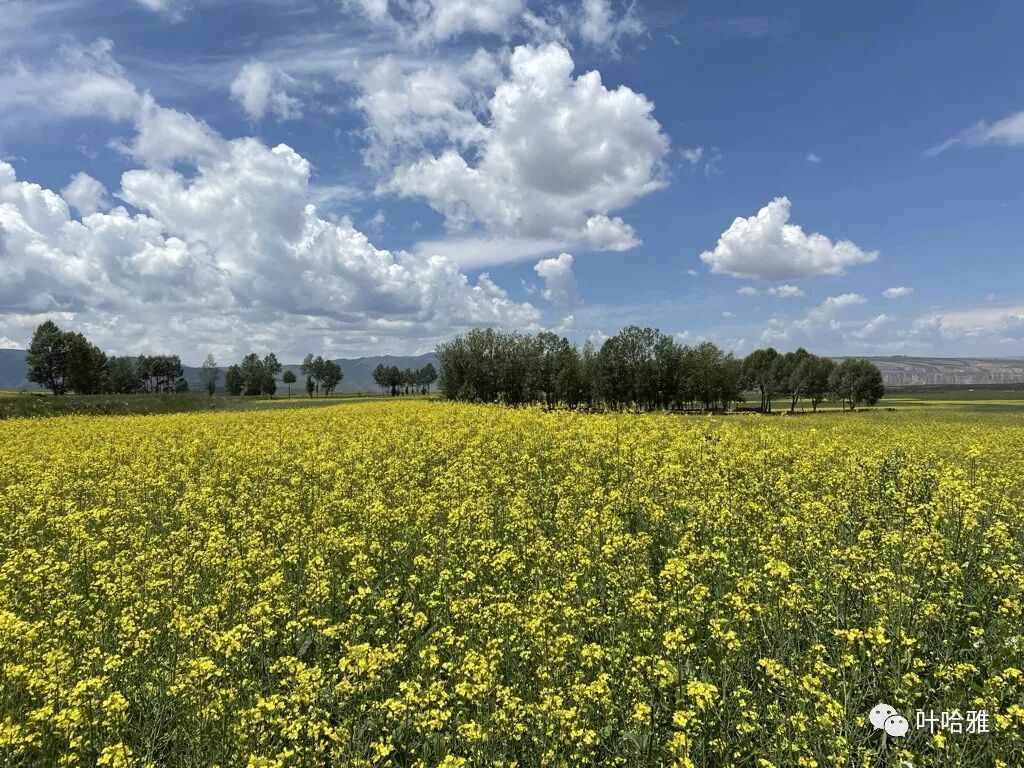
My wife's relatives are very traditional and take their faith seriously. At first, they worried that marrying their daughter to a Hui Muslim from Beijing might mean he lacked proper religious knowledge and would affect the faith of the next generation. I just smiled. After getting to know me, they realized their worries were unnecessary. My Salar elders are very keen to learn about the faith, but they are not very literate, so they sometimes ask me for advice on religious matters. I think I did the Beijing Hui community proud. (Facepalm)
I felt very relaxed with my Salar relatives in Xunhua. They spoke the Salar language, which I don't understand, so I just kept my head down and ate the food they served. Xunhua is a place where many ethnic groups live together. Besides the common Salar language, there is also Tibetan and the Qinghai dialect. I don't understand any of these three. I could only barely understand them when they asked about my background in their thick northwestern-accented Mandarin, and sometimes I still needed my father-in-law to translate.
My Salar relatives, led by my father-in-law, admire my work. Years ago, before I was married, my father-in-law told me that working for others has no future, lacks freedom, and makes it hard to pray on time. He suggested I become my own boss and open a restaurant. In his view, a good career is one that earns clean money while allowing for freedom of faith. I completely agree with that. I wasn't in the insurance industry then, but later I became an insurance broker and achieved good results. My father-in-law changed his mind and admitted that my job has more of a future than running his restaurant.
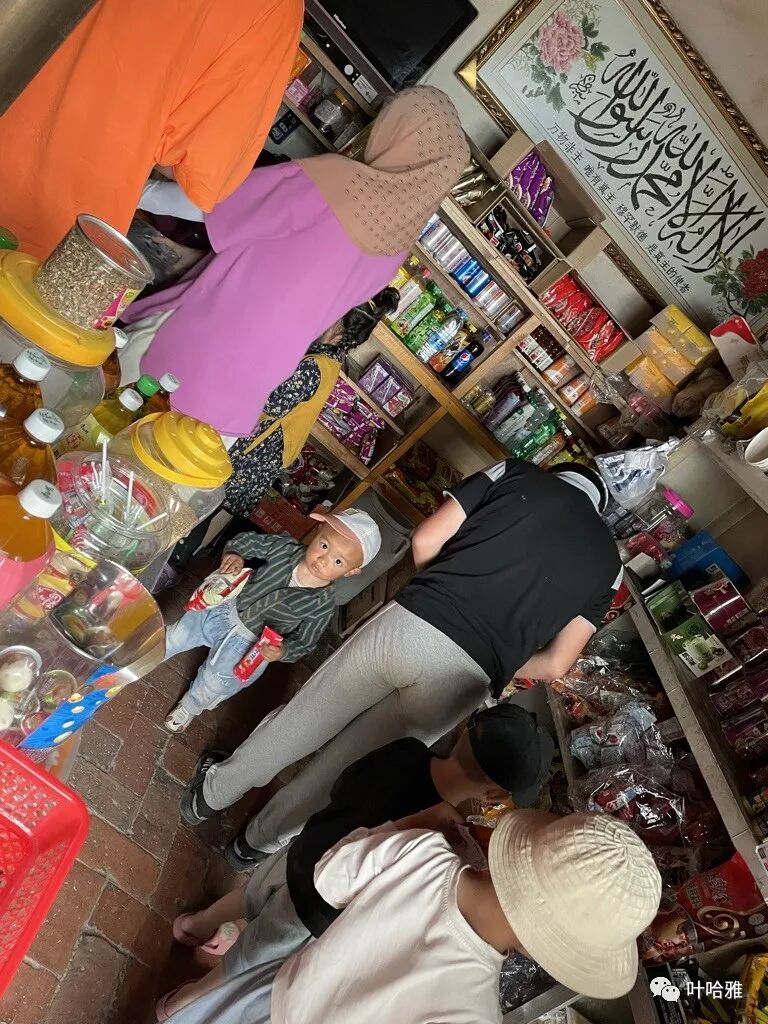
I bought snacks for the children at the small shop on the mountain run by a mute person and told them to pick whatever they wanted. Each child chose a snack worth 50 cents or one yuan.
Every time my father-in-law met a relative, he would tell them my job is good, has flexible hours, and isn't limited by location, encouraging them to buy insurance from me. The relatives were quite willing, which comforted me. Although I have clients all over the country, very few people from the Northwest buy insurance from me. Some imams say insurance is not halal, even though they cannot provide evidence from the Quran or Hadith.
My Salar relatives have suffered from not having insurance. My wife's young cousin died of cancer last year. Her aunt's eyes turned red when she told me about it. When the child was brought to Beijing for treatment, the costs were over 100,000 yuan. A fundraiser from a crowdfunding platform came to the hospital room and said they could raise money online. Although the aunt was not wealthy, she refused. She felt online fundraising is like begging and harms the dignity of Muslims. The Prophet Muhammad repeatedly emphasized that Muslims should not beg.
Since the cousin was in the late stages when diagnosed with cancer, she passed away after a few months. I told her aunt not to be too sad. The child is happier than us living adults. We adults still have to face the test of our deeds, and whether we enter Paradise or Hell is unknown. A child who dies young goes directly to Paradise and is cared for by the Prophet Ibrahim.
I have written many articles before about the legality of insurance, and recently I found more scholars who support the view of insurance.
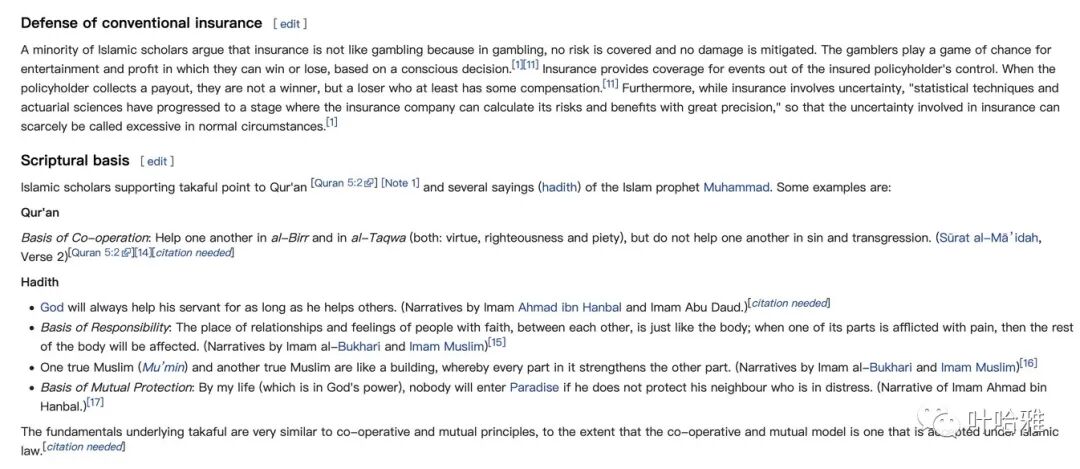
Translated into English, the general idea is that some scholars oppose equating insurance with gambling. In gambling, there is no transfer of risk, and no loss is reduced. Gambling is just a game, and participants can control the outcome. When an insurance event occurs, both the insurance company and the client suffer a loss. Insurance companies use probability and statistical methods to accurately calculate the balance between profit and loss, so the claim that insurance is uncertain does not hold up.
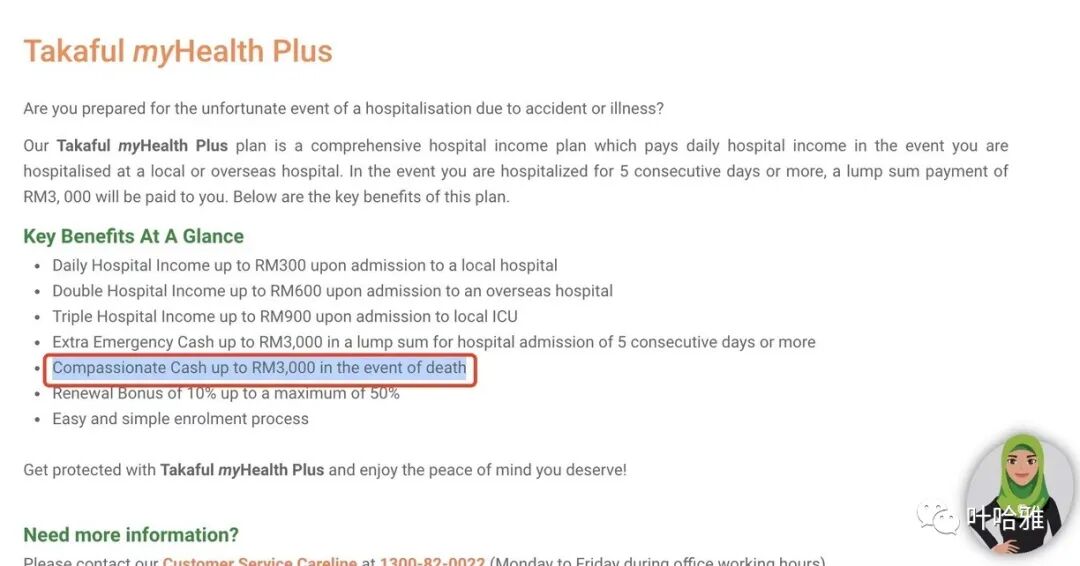
Death benefit clauses in Malaysian Muslim insurance policies.
(This example is to refute those who say Muslims cannot buy life insurance.)
Actually, the harm of gambling is not its uncertainty, and the result of gambling is not necessarily uncertain. Theoretically, as long as you have all the data, the result of gambling can be calculated. The harm of gambling is that it allows people to gain without working and can even lead to bankruptcy. Insurance does not have these harms. Life insurance is based on human health; you have to pay the price of health or even life to receive a claim. buying insurance requires health and financial audits of the policyholder. People with few assets cannot buy high-leverage life insurance, and malicious insurance fraud is a criminal offense. Gambling harms society, while insurance is a stabilizer for society. These are fundamentally different from gambling.
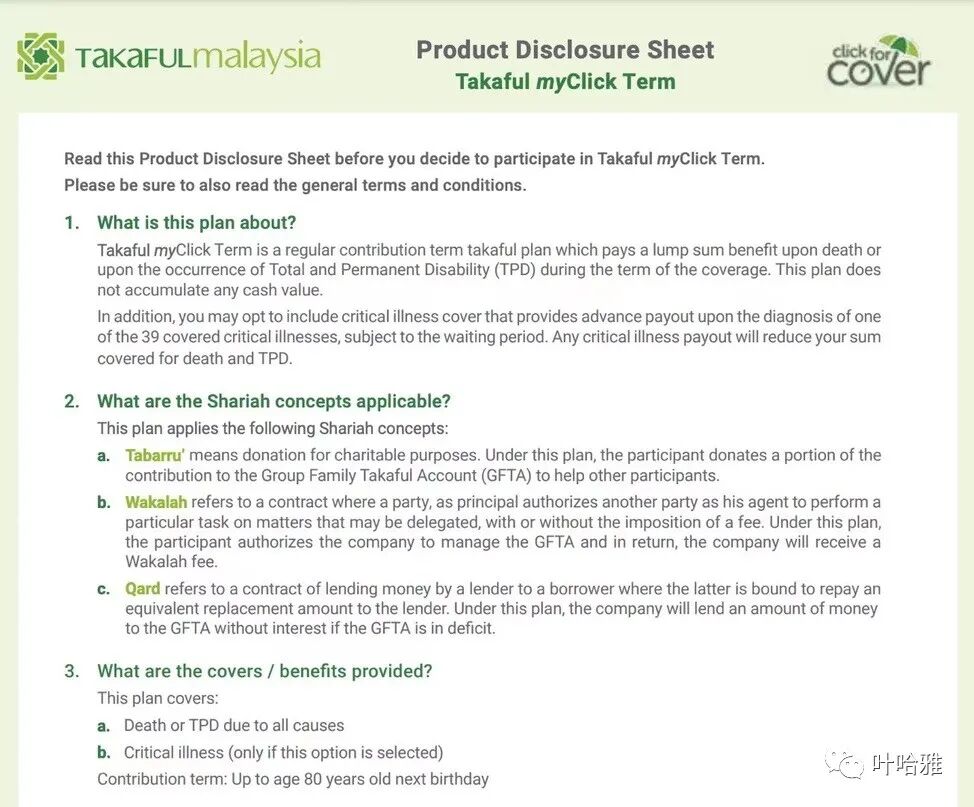
Islamic insurance companies in Malaysia also note the relevant religious basis on their life insurance contracts.
I worked in financial credit for nearly ten years. As my understanding of my faith deepened, I increasingly felt that a Muslim working in a bank to lend money and collect interest was not earning a halal income. I felt very uneasy, which is why I traveled frequently in the past few years—I wanted to escape the depression my job brought me. Until I transitioned into the insurance brokerage industry and gained the approval of my relatives.
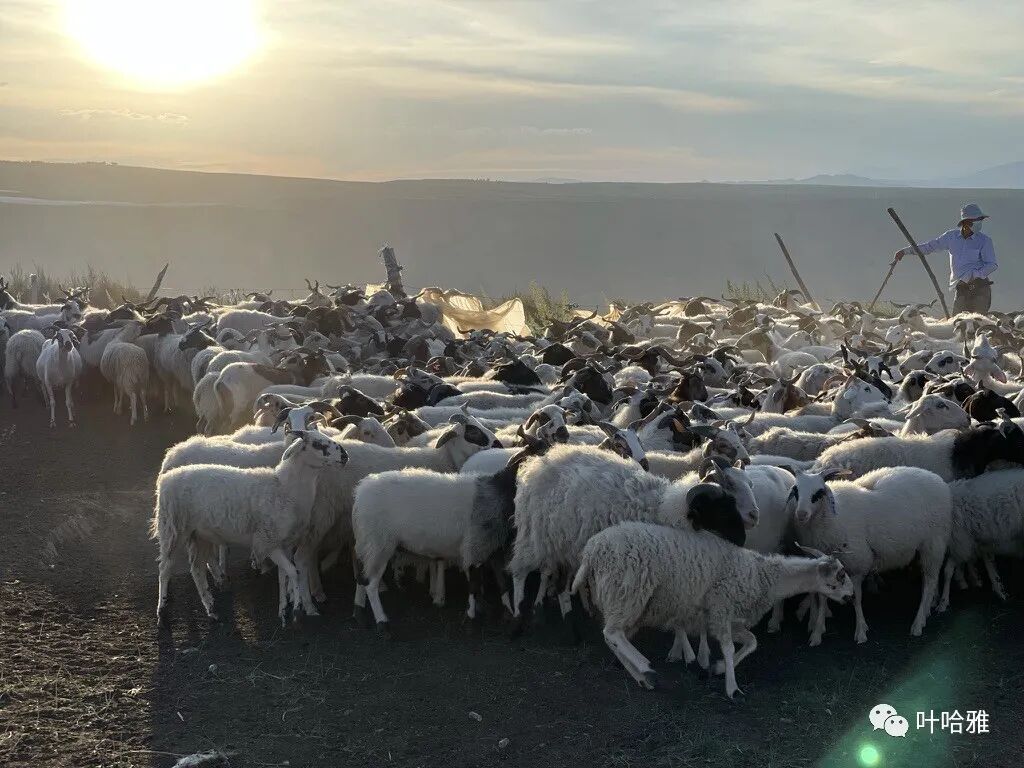
These sheep all belong to my wife's grandfather. There has been little rain in Xunhua this year, and the grass on the mountain has not grown well, so the sheep are thin. I wish we could share the rain from Henan with Qinghai. My uncle asked me to pick one from the flock, so I chose a black-headed white sheep. My uncle praised me for knowing how to pick a sheep, saying I chose the best one. I said I don't know much about sheep, I just remembered that the Prophet Muhammad slaughtered black and white sheep.
Narrated by Anas: The Prophet Muhammad personally slaughtered two horned, black and white sheep. He mentioned the name of Allah and recited the Takbir. Umm Salama reported that the Prophet said: 'When you see the new moon of Dhu al-Hijjah, those of you who intend to perform the sacrifice should not cut their hair or trim their nails.' The phrase 'intend to perform the sacrifice' in this hadith shows that the sacrifice is a sunnah, not a mandatory duty.
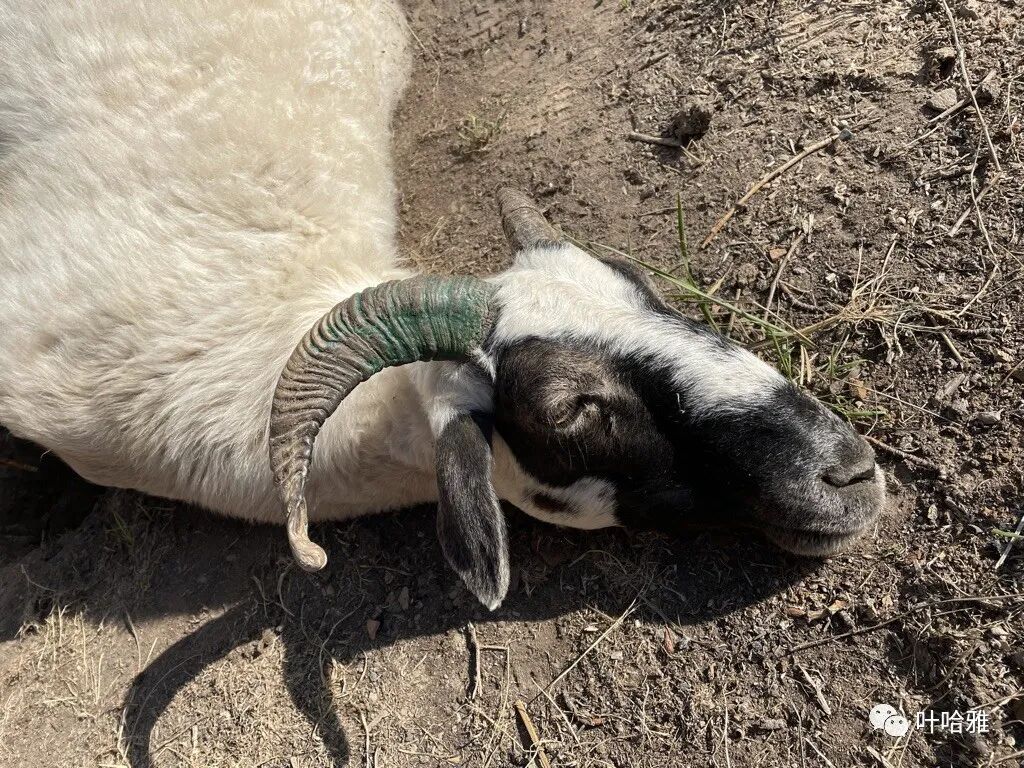
When slaughtering a sheep, we cover its eyes with a white towel, recite the takbir and tasmiyah, and slaughter it in the name of Allah. We dig a pit in the ground so the blood flows into it and can be buried. We let the blood drain for twenty minutes. This ensures the animal receives blessings in the afterlife. This is why we Salar people eat halal-slaughtered meat; we must not kill living things without cause.
Aisha reported that the Prophet said: 'On the day of Eid al-Adha, there is no deed more beloved to Allah than the shedding of blood.' In the afterlife, the sacrificial animal will appear with its horns, hair, and hooves. Before the blood of the sacrifice hits the ground, it has already reached a high status with Allah, so you should perform the sacrifice with a happy and willing heart. — Islamic Sharia, page 877
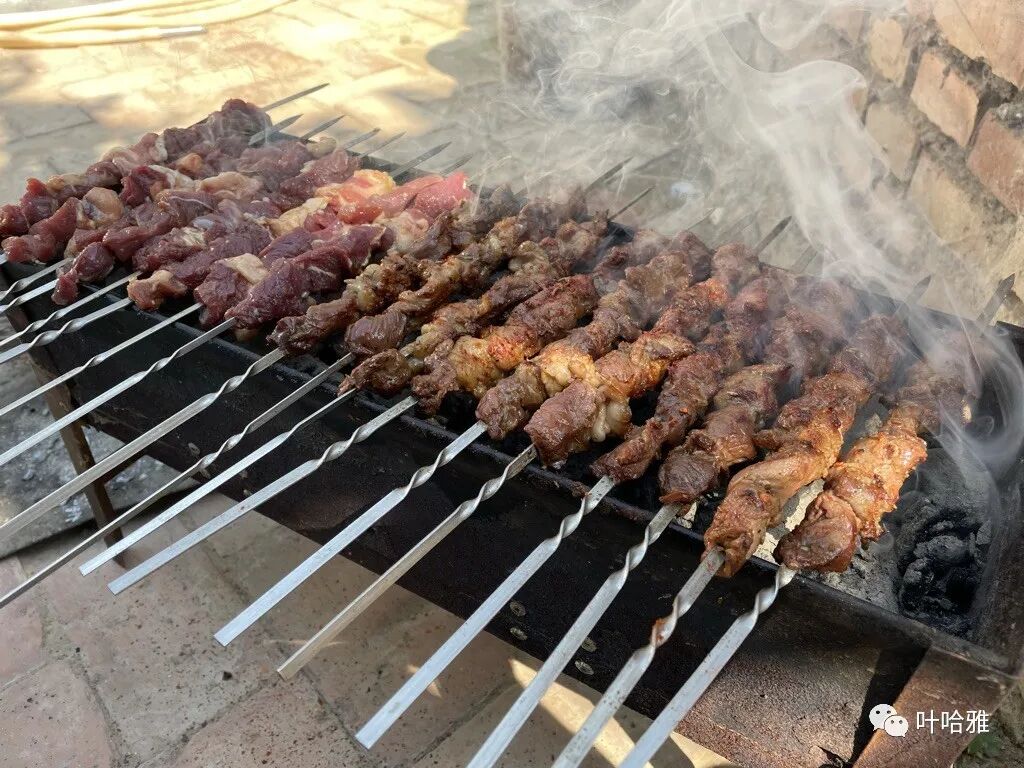
By that afternoon, my sheep had become lamb skewers (yangrou chuan). We all sat in the courtyard eating them. Grandpa asked me how much money I earned a month. I told him the number. He didn't react at first, but after a pause, his eyes went wide. I laughed and asked him how much he would make if he sold all his hundreds of sheep.
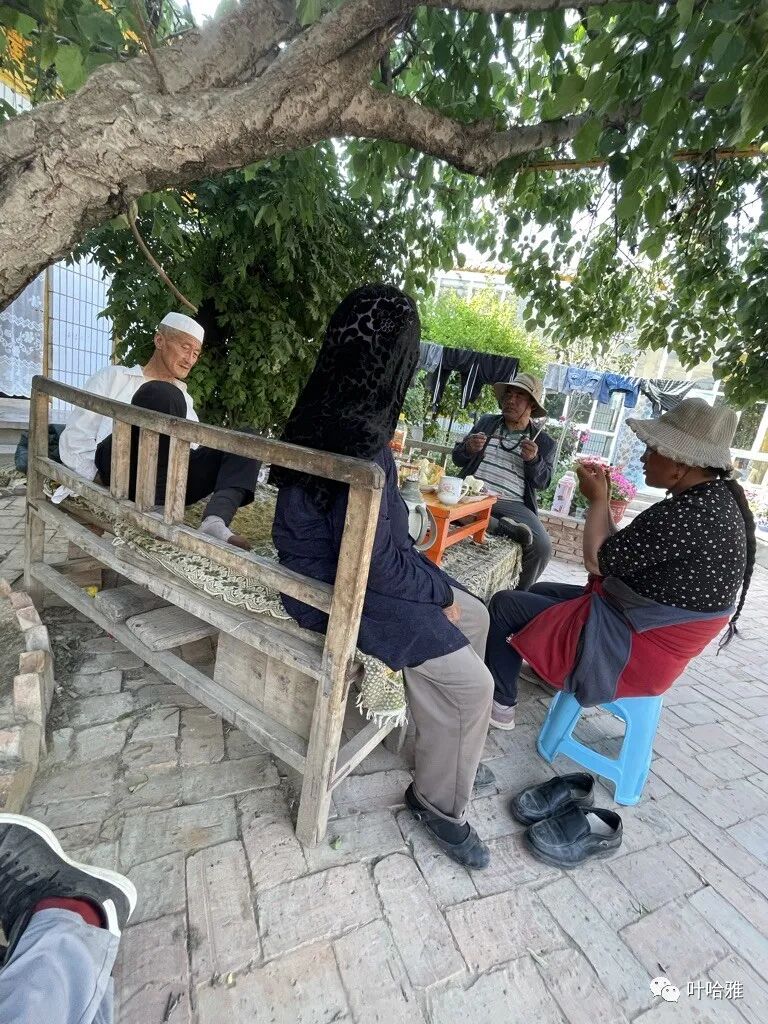
On the afternoon of Eid al-Adha, some Tibetan people came to visit our home. The two people in the photo are the Tibetans who help Grandpa herd his sheep. Behind Mengda Mountain village in Xunhua is the Tibetan region. The Salar elders have a good relationship with the Tibetan people. Both Grandma and Grandpa speak Tibetan, and since the Tibetans are very skilled at herding, the Salar people of Mengda Mountain hire them to look after their sheep.
I sat to the side, unable to understand their conversation, and watched the Tibetans eat skewers. Grandma turned around and asked if I felt bored. I said no, it was interesting to hear them speak Tibetan. It is rare to see such a scene of ethnic unity.
Summary: Muslim Life Guide Qinghai: Salar Eid al-Adha, Qurban and Real Halal Family Traditions is presented here as a clear English account for Muslim readers, starting with this scene: I spent this year's Eid al-Adha in my wife's hometown, Xunhua Salar Autonomous County in Qinghai. I wanted to slaughter a sheep myself to fulfill this emphasized Sunnah, as it is not possible in Beijing. It was a very happy. It keeps the original names, food details, mosque details, photographs, and cultural context while focusing on Salar Muslims, Eid al-Adha, Qinghai Muslims.
I spent this year's Eid al-Adha in my wife's hometown, Xunhua Salar Autonomous County in Qinghai. I wanted to slaughter a sheep myself to fulfill this emphasized Sunnah, as it is not possible in Beijing. It was a very happy experience to see many Salar relatives in Xunhua and personally give them the lamb I slaughtered.
My wife's relatives are very traditional and take their faith seriously. At first, they worried that marrying their daughter to a Hui Muslim from Beijing might mean he lacked proper religious knowledge and would affect the faith of the next generation. I just smiled. After getting to know me, they realized their worries were unnecessary. My Salar elders are very keen to learn about the faith, but they are not very literate, so they sometimes ask me for advice on religious matters. I think I did the Beijing Hui community proud. (Facepalm)
I felt very relaxed with my Salar relatives in Xunhua. They spoke the Salar language, which I don't understand, so I just kept my head down and ate the food they served. Xunhua is a place where many ethnic groups live together. Besides the common Salar language, there is also Tibetan and the Qinghai dialect. I don't understand any of these three. I could only barely understand them when they asked about my background in their thick northwestern-accented Mandarin, and sometimes I still needed my father-in-law to translate.
My Salar relatives, led by my father-in-law, admire my work. Years ago, before I was married, my father-in-law told me that working for others has no future, lacks freedom, and makes it hard to pray on time. He suggested I become my own boss and open a restaurant. In his view, a good career is one that earns clean money while allowing for freedom of faith. I completely agree with that. I wasn't in the insurance industry then, but later I became an insurance broker and achieved good results. My father-in-law changed his mind and admitted that my job has more of a future than running his restaurant.
I bought snacks for the children at the small shop on the mountain run by a mute person and told them to pick whatever they wanted. Each child chose a snack worth 50 cents or one yuan.
Every time my father-in-law met a relative, he would tell them my job is good, has flexible hours, and isn't limited by location, encouraging them to buy insurance from me. The relatives were quite willing, which comforted me. Although I have clients all over the country, very few people from the Northwest buy insurance from me. Some imams say insurance is not halal, even though they cannot provide evidence from the Quran or Hadith.
My Salar relatives have suffered from not having insurance. My wife's young cousin died of cancer last year. Her aunt's eyes turned red when she told me about it. When the child was brought to Beijing for treatment, the costs were over 100,000 yuan. A fundraiser from a crowdfunding platform came to the hospital room and said they could raise money online. Although the aunt was not wealthy, she refused. She felt online fundraising is like begging and harms the dignity of Muslims. The Prophet Muhammad repeatedly emphasized that Muslims should not beg.
Since the cousin was in the late stages when diagnosed with cancer, she passed away after a few months. I told her aunt not to be too sad. The child is happier than us living adults. We adults still have to face the test of our deeds, and whether we enter Paradise or Hell is unknown. A child who dies young goes directly to Paradise and is cared for by the Prophet Ibrahim.
I have written many articles before about the legality of insurance, and recently I found more scholars who support the view of insurance.
Translated into English, the general idea is that some scholars oppose equating insurance with gambling. In gambling, there is no transfer of risk, and no loss is reduced. Gambling is just a game, and participants can control the outcome. When an insurance event occurs, both the insurance company and the client suffer a loss. Insurance companies use probability and statistical methods to accurately calculate the balance between profit and loss, so the claim that insurance is uncertain does not hold up.
Death benefit clauses in Malaysian Muslim insurance policies.
(This example is to refute those who say Muslims cannot buy life insurance.)
Actually, the harm of gambling is not its uncertainty, and the result of gambling is not necessarily uncertain. Theoretically, as long as you have all the data, the result of gambling can be calculated. The harm of gambling is that it allows people to gain without working and can even lead to bankruptcy. Insurance does not have these harms. Life insurance is based on human health; you have to pay the price of health or even life to receive a claim. buying insurance requires health and financial audits of the policyholder. People with few assets cannot buy high-leverage life insurance, and malicious insurance fraud is a criminal offense. Gambling harms society, while insurance is a stabilizer for society. These are fundamentally different from gambling.
Islamic insurance companies in Malaysia also note the relevant religious basis on their life insurance contracts.
I worked in financial credit for nearly ten years. As my understanding of my faith deepened, I increasingly felt that a Muslim working in a bank to lend money and collect interest was not earning a halal income. I felt very uneasy, which is why I traveled frequently in the past few years—I wanted to escape the depression my job brought me. Until I transitioned into the insurance brokerage industry and gained the approval of my relatives.
These sheep all belong to my wife's grandfather. There has been little rain in Xunhua this year, and the grass on the mountain has not grown well, so the sheep are thin. I wish we could share the rain from Henan with Qinghai. My uncle asked me to pick one from the flock, so I chose a black-headed white sheep. My uncle praised me for knowing how to pick a sheep, saying I chose the best one. I said I don't know much about sheep, I just remembered that the Prophet Muhammad slaughtered black and white sheep.
Narrated by Anas: The Prophet Muhammad personally slaughtered two horned, black and white sheep. He mentioned the name of Allah and recited the Takbir. Umm Salama reported that the Prophet said: 'When you see the new moon of Dhu al-Hijjah, those of you who intend to perform the sacrifice should not cut their hair or trim their nails.' The phrase 'intend to perform the sacrifice' in this hadith shows that the sacrifice is a sunnah, not a mandatory duty.
When slaughtering a sheep, we cover its eyes with a white towel, recite the takbir and tasmiyah, and slaughter it in the name of Allah. We dig a pit in the ground so the blood flows into it and can be buried. We let the blood drain for twenty minutes. This ensures the animal receives blessings in the afterlife. This is why we Salar people eat halal-slaughtered meat; we must not kill living things without cause.
Aisha reported that the Prophet said: 'On the day of Eid al-Adha, there is no deed more beloved to Allah than the shedding of blood.' In the afterlife, the sacrificial animal will appear with its horns, hair, and hooves. Before the blood of the sacrifice hits the ground, it has already reached a high status with Allah, so you should perform the sacrifice with a happy and willing heart. — Islamic Sharia, page 877
By that afternoon, my sheep had become lamb skewers (yangrou chuan). We all sat in the courtyard eating them. Grandpa asked me how much money I earned a month. I told him the number. He didn't react at first, but after a pause, his eyes went wide. I laughed and asked him how much he would make if he sold all his hundreds of sheep.
On the afternoon of Eid al-Adha, some Tibetan people came to visit our home. The two people in the photo are the Tibetans who help Grandpa herd his sheep. Behind Mengda Mountain village in Xunhua is the Tibetan region. The Salar elders have a good relationship with the Tibetan people. Both Grandma and Grandpa speak Tibetan, and since the Tibetans are very skilled at herding, the Salar people of Mengda Mountain hire them to look after their sheep.
I sat to the side, unable to understand their conversation, and watched the Tibetans eat skewers. Grandma turned around and asked if I felt bored. I said no, it was interesting to hear them speak Tibetan. It is rare to see such a scene of ethnic unity.
