

Eid al_Adha
Muslim Life Guide Qinghai: Salar Eid al-Adha, Qurban and Real Halal Family Traditions
Articles • yusuf908 posted the article • 0 comments • 172 views • 2026-05-24 00:17
Summary: Muslim Life Guide Qinghai: Salar Eid al-Adha, Qurban and Real Halal Family Traditions is presented here as a clear English account for Muslim readers, starting with this scene: I spent this year's Eid al-Adha in my wife's hometown, Xunhua Salar Autonomous County in Qinghai. I wanted to slaughter a sheep myself to fulfill this emphasized Sunnah, as it is not possible in Beijing. It was a very happy. It keeps the original names, food details, mosque details, photographs, and cultural context while focusing on Salar Muslims, Eid al-Adha, Qinghai Muslims.
I spent this year's Eid al-Adha in my wife's hometown, Xunhua Salar Autonomous County in Qinghai. I wanted to slaughter a sheep myself to fulfill this emphasized Sunnah, as it is not possible in Beijing. It was a very happy experience to see many Salar relatives in Xunhua and personally give them the lamb I slaughtered.
My wife's relatives are very traditional and take their faith seriously. At first, they worried that marrying their daughter to a Hui Muslim from Beijing might mean he lacked proper religious knowledge and would affect the faith of the next generation. I just smiled. After getting to know me, they realized their worries were unnecessary. My Salar elders are very keen to learn about the faith, but they are not very literate, so they sometimes ask me for advice on religious matters. I think I did the Beijing Hui community proud. (Facepalm)
I felt very relaxed with my Salar relatives in Xunhua. They spoke the Salar language, which I don't understand, so I just kept my head down and ate the food they served. Xunhua is a place where many ethnic groups live together. Besides the common Salar language, there is also Tibetan and the Qinghai dialect. I don't understand any of these three. I could only barely understand them when they asked about my background in their thick northwestern-accented Mandarin, and sometimes I still needed my father-in-law to translate.
My Salar relatives, led by my father-in-law, admire my work. Years ago, before I was married, my father-in-law told me that working for others has no future, lacks freedom, and makes it hard to pray on time. He suggested I become my own boss and open a restaurant. In his view, a good career is one that earns clean money while allowing for freedom of faith. I completely agree with that. I wasn't in the insurance industry then, but later I became an insurance broker and achieved good results. My father-in-law changed his mind and admitted that my job has more of a future than running his restaurant.
I bought snacks for the children at the small shop on the mountain run by a mute person and told them to pick whatever they wanted. Each child chose a snack worth 50 cents or one yuan.
Every time my father-in-law met a relative, he would tell them my job is good, has flexible hours, and isn't limited by location, encouraging them to buy insurance from me. The relatives were quite willing, which comforted me. Although I have clients all over the country, very few people from the Northwest buy insurance from me. Some imams say insurance is not halal, even though they cannot provide evidence from the Quran or Hadith.
My Salar relatives have suffered from not having insurance. My wife's young cousin died of cancer last year. Her aunt's eyes turned red when she told me about it. When the child was brought to Beijing for treatment, the costs were over 100,000 yuan. A fundraiser from a crowdfunding platform came to the hospital room and said they could raise money online. Although the aunt was not wealthy, she refused. She felt online fundraising is like begging and harms the dignity of Muslims. The Prophet Muhammad repeatedly emphasized that Muslims should not beg.
Since the cousin was in the late stages when diagnosed with cancer, she passed away after a few months. I told her aunt not to be too sad. The child is happier than us living adults. We adults still have to face the test of our deeds, and whether we enter Paradise or Hell is unknown. A child who dies young goes directly to Paradise and is cared for by the Prophet Ibrahim.
I have written many articles before about the legality of insurance, and recently I found more scholars who support the view of insurance.
Translated into English, the general idea is that some scholars oppose equating insurance with gambling. In gambling, there is no transfer of risk, and no loss is reduced. Gambling is just a game, and participants can control the outcome. When an insurance event occurs, both the insurance company and the client suffer a loss. Insurance companies use probability and statistical methods to accurately calculate the balance between profit and loss, so the claim that insurance is uncertain does not hold up.
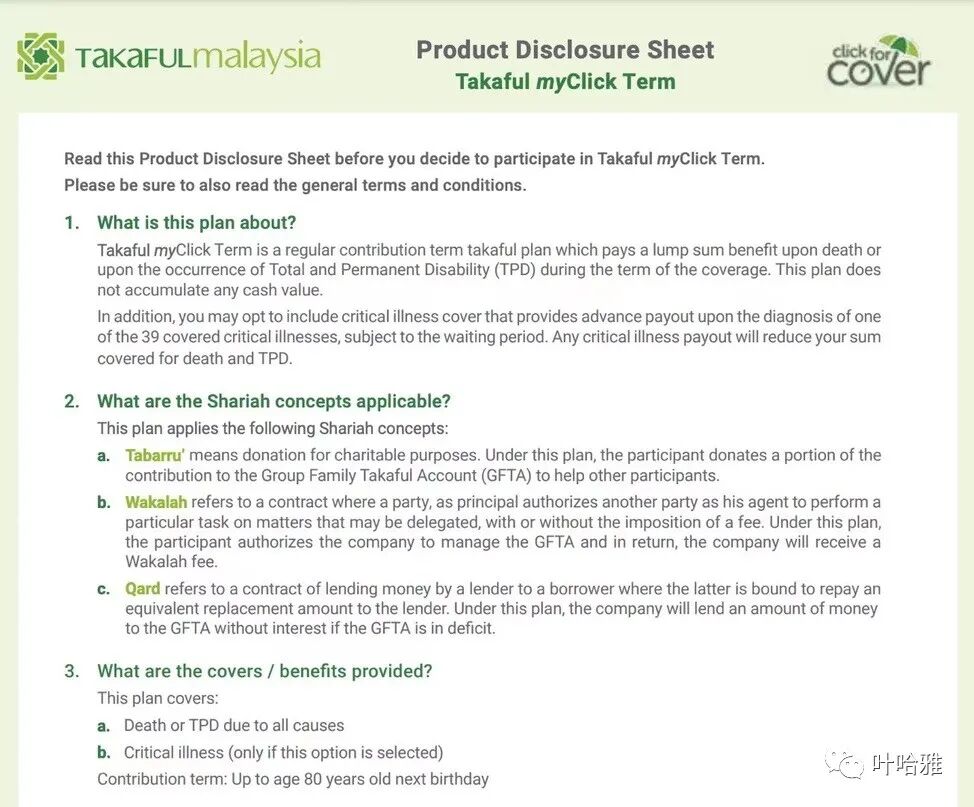
Death benefit clauses in Malaysian Muslim insurance policies.
(This example is to refute those who say Muslims cannot buy life insurance.)
Actually, the harm of gambling is not its uncertainty, and the result of gambling is not necessarily uncertain. Theoretically, as long as you have all the data, the result of gambling can be calculated. The harm of gambling is that it allows people to gain without working and can even lead to bankruptcy. Insurance does not have these harms. Life insurance is based on human health; you have to pay the price of health or even life to receive a claim. buying insurance requires health and financial audits of the policyholder. People with few assets cannot buy high-leverage life insurance, and malicious insurance fraud is a criminal offense. Gambling harms society, while insurance is a stabilizer for society. These are fundamentally different from gambling.
Islamic insurance companies in Malaysia also note the relevant religious basis on their life insurance contracts.
I worked in financial credit for nearly ten years. As my understanding of my faith deepened, I increasingly felt that a Muslim working in a bank to lend money and collect interest was not earning a halal income. I felt very uneasy, which is why I traveled frequently in the past few years—I wanted to escape the depression my job brought me. Until I transitioned into the insurance brokerage industry and gained the approval of my relatives.
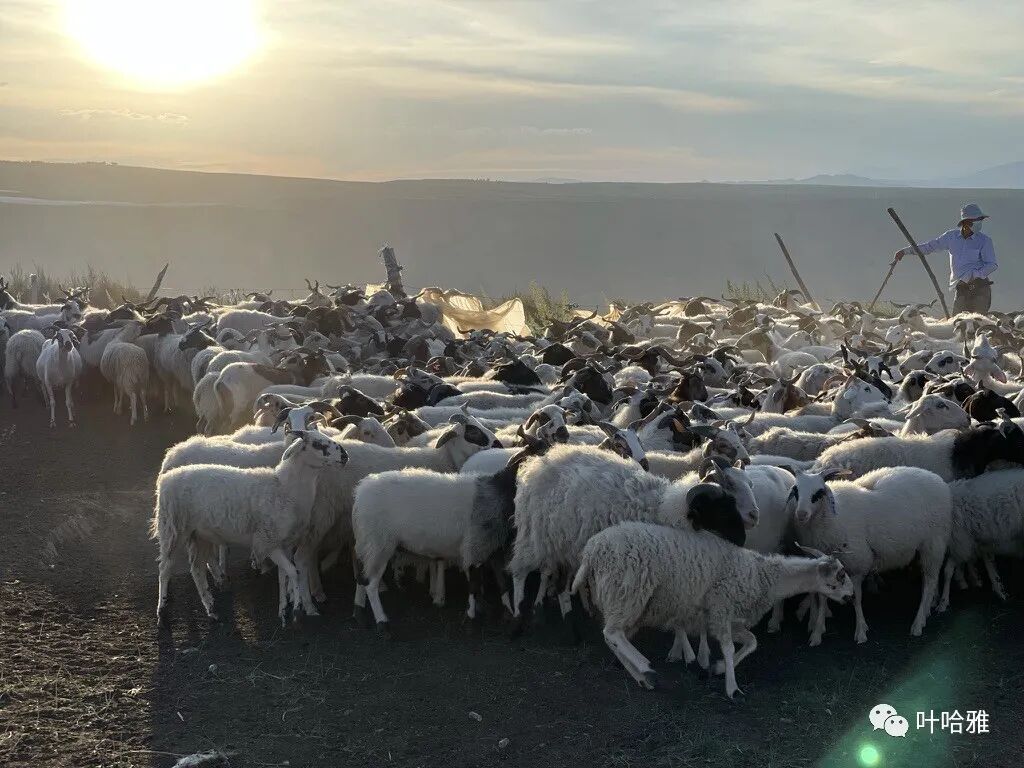
These sheep all belong to my wife's grandfather. There has been little rain in Xunhua this year, and the grass on the mountain has not grown well, so the sheep are thin. I wish we could share the rain from Henan with Qinghai. My uncle asked me to pick one from the flock, so I chose a black-headed white sheep. My uncle praised me for knowing how to pick a sheep, saying I chose the best one. I said I don't know much about sheep, I just remembered that the Prophet Muhammad slaughtered black and white sheep.
Narrated by Anas: The Prophet Muhammad personally slaughtered two horned, black and white sheep. He mentioned the name of Allah and recited the Takbir. Umm Salama reported that the Prophet said: 'When you see the new moon of Dhu al-Hijjah, those of you who intend to perform the sacrifice should not cut their hair or trim their nails.' The phrase 'intend to perform the sacrifice' in this hadith shows that the sacrifice is a sunnah, not a mandatory duty.
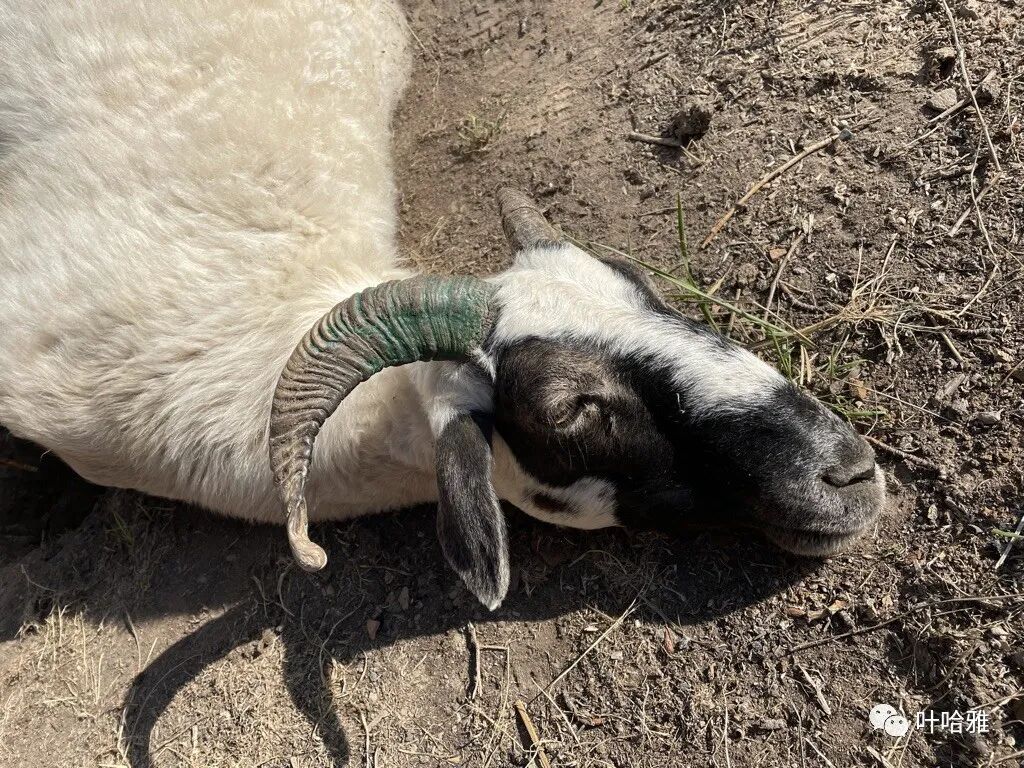
When slaughtering a sheep, we cover its eyes with a white towel, recite the takbir and tasmiyah, and slaughter it in the name of Allah. We dig a pit in the ground so the blood flows into it and can be buried. We let the blood drain for twenty minutes. This ensures the animal receives blessings in the afterlife. This is why we Salar people eat halal-slaughtered meat; we must not kill living things without cause.
Aisha reported that the Prophet said: 'On the day of Eid al-Adha, there is no deed more beloved to Allah than the shedding of blood.' In the afterlife, the sacrificial animal will appear with its horns, hair, and hooves. Before the blood of the sacrifice hits the ground, it has already reached a high status with Allah, so you should perform the sacrifice with a happy and willing heart. — Islamic Sharia, page 877
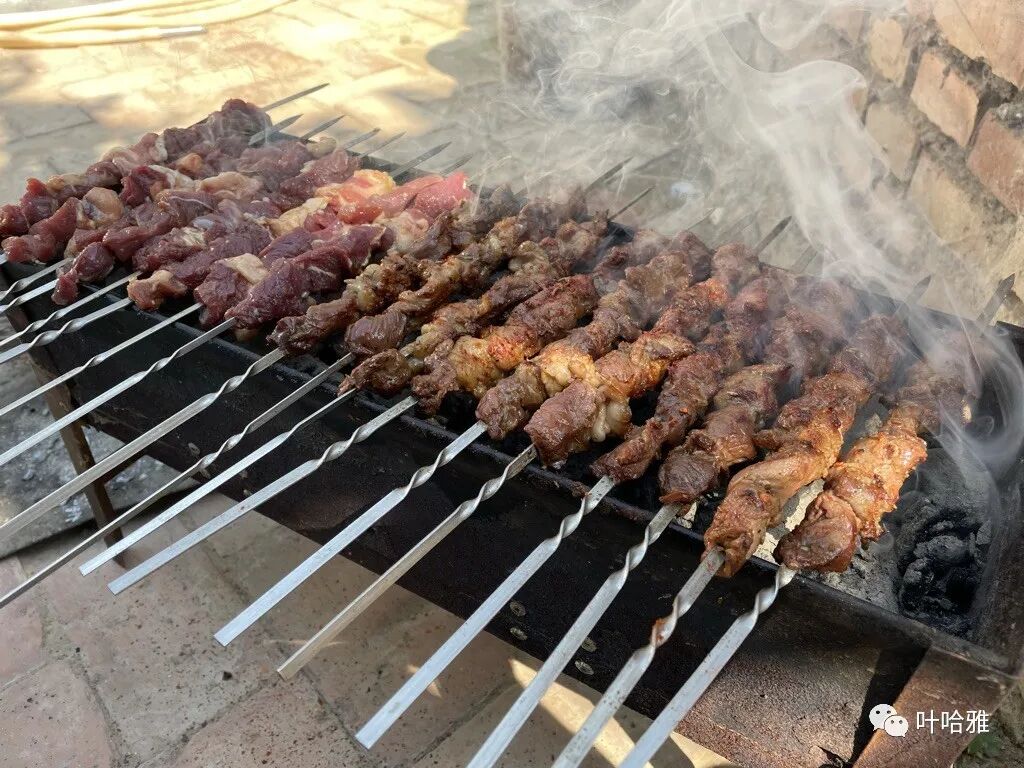
By that afternoon, my sheep had become lamb skewers (yangrou chuan). We all sat in the courtyard eating them. Grandpa asked me how much money I earned a month. I told him the number. He didn't react at first, but after a pause, his eyes went wide. I laughed and asked him how much he would make if he sold all his hundreds of sheep.
On the afternoon of Eid al-Adha, some Tibetan people came to visit our home. The two people in the photo are the Tibetans who help Grandpa herd his sheep. Behind Mengda Mountain village in Xunhua is the Tibetan region. The Salar elders have a good relationship with the Tibetan people. Both Grandma and Grandpa speak Tibetan, and since the Tibetans are very skilled at herding, the Salar people of Mengda Mountain hire them to look after their sheep.
I sat to the side, unable to understand their conversation, and watched the Tibetans eat skewers. Grandma turned around and asked if I felt bored. I said no, it was interesting to hear them speak Tibetan. It is rare to see such a scene of ethnic unity. view all
Summary: Muslim Life Guide Qinghai: Salar Eid al-Adha, Qurban and Real Halal Family Traditions is presented here as a clear English account for Muslim readers, starting with this scene: I spent this year's Eid al-Adha in my wife's hometown, Xunhua Salar Autonomous County in Qinghai. I wanted to slaughter a sheep myself to fulfill this emphasized Sunnah, as it is not possible in Beijing. It was a very happy. It keeps the original names, food details, mosque details, photographs, and cultural context while focusing on Salar Muslims, Eid al-Adha, Qinghai Muslims.
I spent this year's Eid al-Adha in my wife's hometown, Xunhua Salar Autonomous County in Qinghai. I wanted to slaughter a sheep myself to fulfill this emphasized Sunnah, as it is not possible in Beijing. It was a very happy experience to see many Salar relatives in Xunhua and personally give them the lamb I slaughtered.
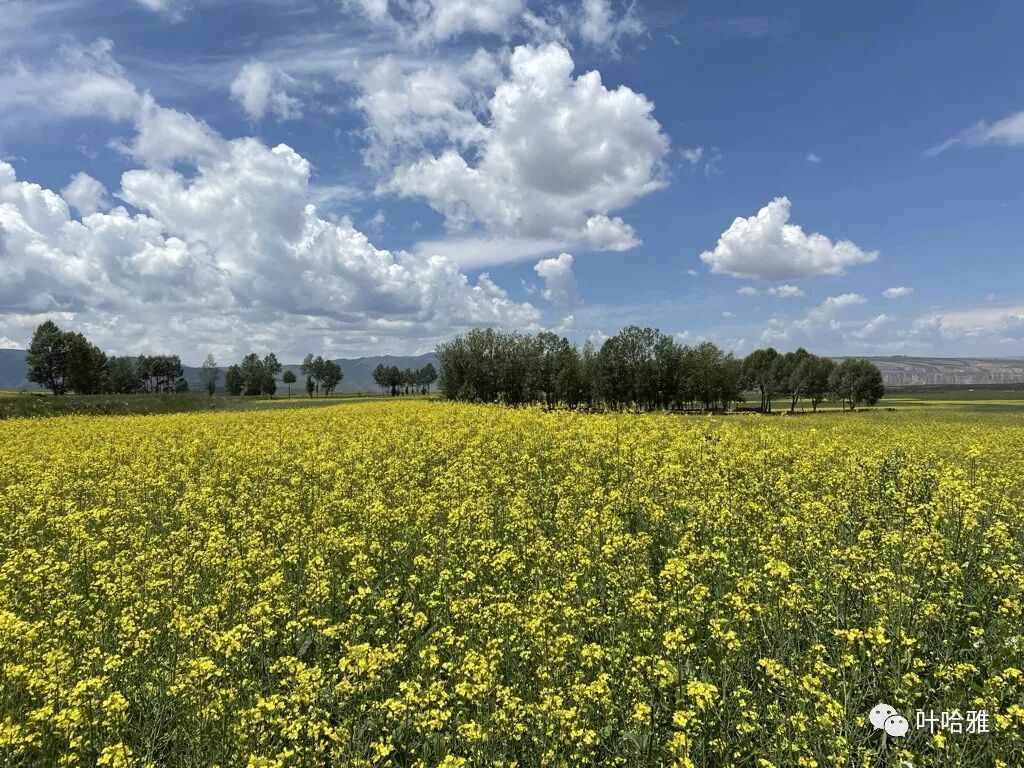
My wife's relatives are very traditional and take their faith seriously. At first, they worried that marrying their daughter to a Hui Muslim from Beijing might mean he lacked proper religious knowledge and would affect the faith of the next generation. I just smiled. After getting to know me, they realized their worries were unnecessary. My Salar elders are very keen to learn about the faith, but they are not very literate, so they sometimes ask me for advice on religious matters. I think I did the Beijing Hui community proud. (Facepalm)
I felt very relaxed with my Salar relatives in Xunhua. They spoke the Salar language, which I don't understand, so I just kept my head down and ate the food they served. Xunhua is a place where many ethnic groups live together. Besides the common Salar language, there is also Tibetan and the Qinghai dialect. I don't understand any of these three. I could only barely understand them when they asked about my background in their thick northwestern-accented Mandarin, and sometimes I still needed my father-in-law to translate.
My Salar relatives, led by my father-in-law, admire my work. Years ago, before I was married, my father-in-law told me that working for others has no future, lacks freedom, and makes it hard to pray on time. He suggested I become my own boss and open a restaurant. In his view, a good career is one that earns clean money while allowing for freedom of faith. I completely agree with that. I wasn't in the insurance industry then, but later I became an insurance broker and achieved good results. My father-in-law changed his mind and admitted that my job has more of a future than running his restaurant.
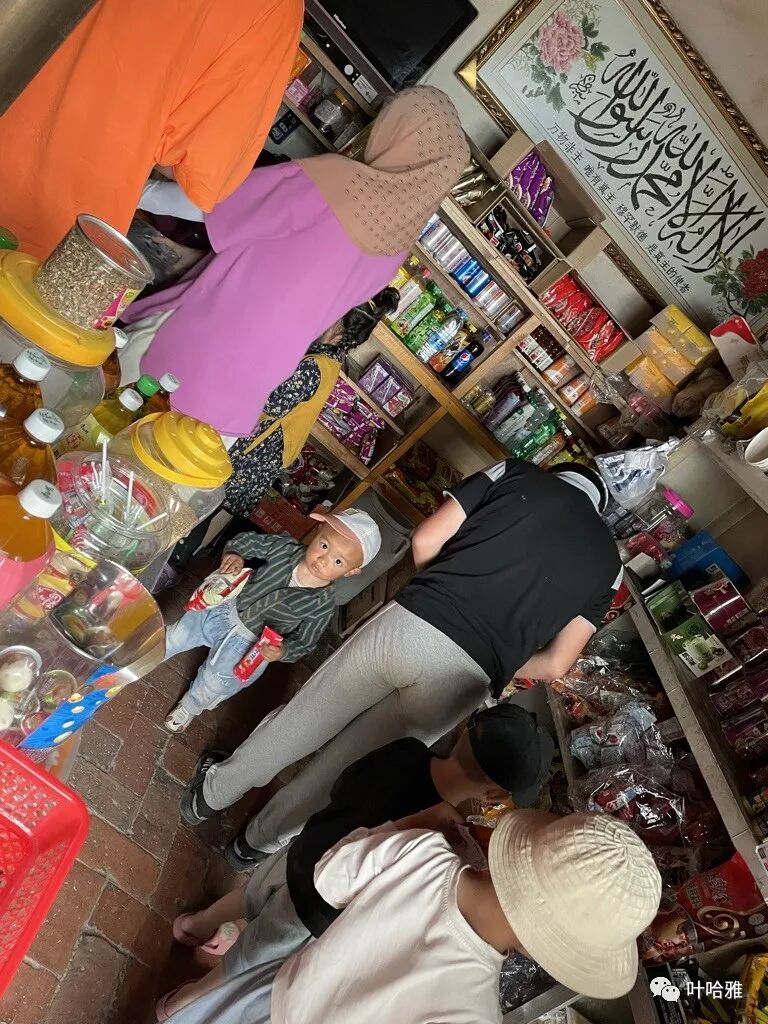
I bought snacks for the children at the small shop on the mountain run by a mute person and told them to pick whatever they wanted. Each child chose a snack worth 50 cents or one yuan.
Every time my father-in-law met a relative, he would tell them my job is good, has flexible hours, and isn't limited by location, encouraging them to buy insurance from me. The relatives were quite willing, which comforted me. Although I have clients all over the country, very few people from the Northwest buy insurance from me. Some imams say insurance is not halal, even though they cannot provide evidence from the Quran or Hadith.
My Salar relatives have suffered from not having insurance. My wife's young cousin died of cancer last year. Her aunt's eyes turned red when she told me about it. When the child was brought to Beijing for treatment, the costs were over 100,000 yuan. A fundraiser from a crowdfunding platform came to the hospital room and said they could raise money online. Although the aunt was not wealthy, she refused. She felt online fundraising is like begging and harms the dignity of Muslims. The Prophet Muhammad repeatedly emphasized that Muslims should not beg.
Since the cousin was in the late stages when diagnosed with cancer, she passed away after a few months. I told her aunt not to be too sad. The child is happier than us living adults. We adults still have to face the test of our deeds, and whether we enter Paradise or Hell is unknown. A child who dies young goes directly to Paradise and is cared for by the Prophet Ibrahim.
I have written many articles before about the legality of insurance, and recently I found more scholars who support the view of insurance.
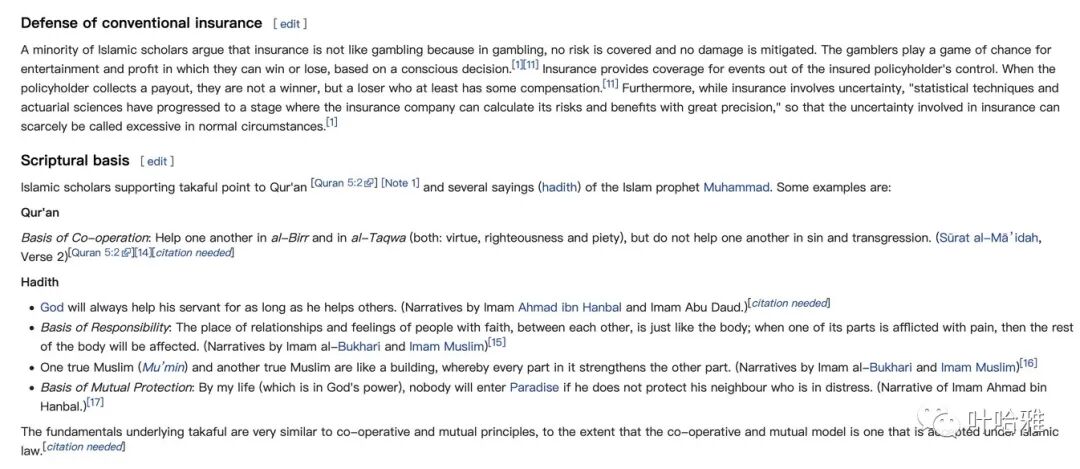
Translated into English, the general idea is that some scholars oppose equating insurance with gambling. In gambling, there is no transfer of risk, and no loss is reduced. Gambling is just a game, and participants can control the outcome. When an insurance event occurs, both the insurance company and the client suffer a loss. Insurance companies use probability and statistical methods to accurately calculate the balance between profit and loss, so the claim that insurance is uncertain does not hold up.
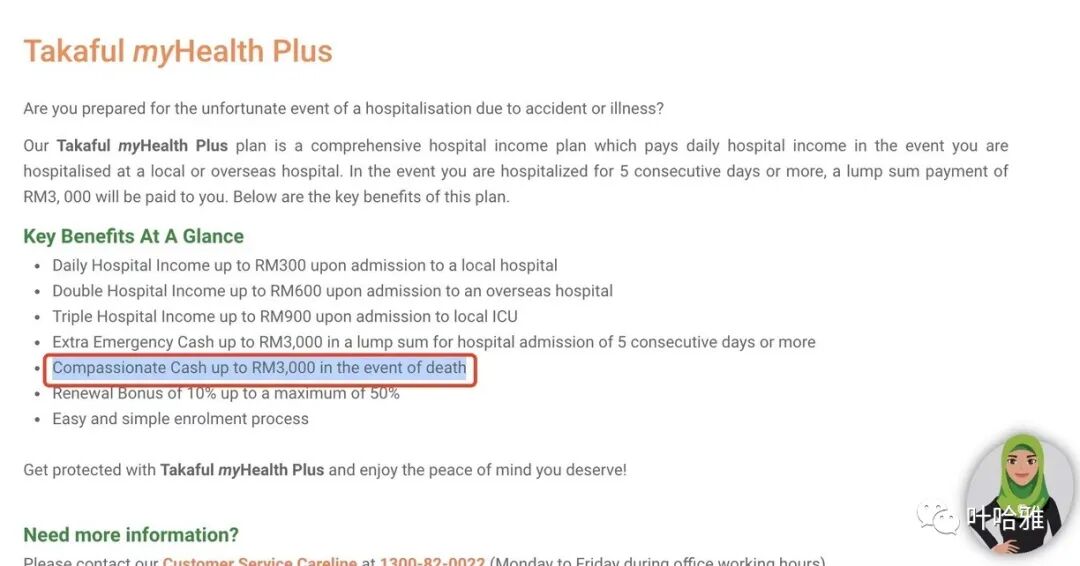
Death benefit clauses in Malaysian Muslim insurance policies.
(This example is to refute those who say Muslims cannot buy life insurance.)
Actually, the harm of gambling is not its uncertainty, and the result of gambling is not necessarily uncertain. Theoretically, as long as you have all the data, the result of gambling can be calculated. The harm of gambling is that it allows people to gain without working and can even lead to bankruptcy. Insurance does not have these harms. Life insurance is based on human health; you have to pay the price of health or even life to receive a claim. buying insurance requires health and financial audits of the policyholder. People with few assets cannot buy high-leverage life insurance, and malicious insurance fraud is a criminal offense. Gambling harms society, while insurance is a stabilizer for society. These are fundamentally different from gambling.
Islamic insurance companies in Malaysia also note the relevant religious basis on their life insurance contracts.
I worked in financial credit for nearly ten years. As my understanding of my faith deepened, I increasingly felt that a Muslim working in a bank to lend money and collect interest was not earning a halal income. I felt very uneasy, which is why I traveled frequently in the past few years—I wanted to escape the depression my job brought me. Until I transitioned into the insurance brokerage industry and gained the approval of my relatives.
These sheep all belong to my wife's grandfather. There has been little rain in Xunhua this year, and the grass on the mountain has not grown well, so the sheep are thin. I wish we could share the rain from Henan with Qinghai. My uncle asked me to pick one from the flock, so I chose a black-headed white sheep. My uncle praised me for knowing how to pick a sheep, saying I chose the best one. I said I don't know much about sheep, I just remembered that the Prophet Muhammad slaughtered black and white sheep.
Narrated by Anas: The Prophet Muhammad personally slaughtered two horned, black and white sheep. He mentioned the name of Allah and recited the Takbir. Umm Salama reported that the Prophet said: 'When you see the new moon of Dhu al-Hijjah, those of you who intend to perform the sacrifice should not cut their hair or trim their nails.' The phrase 'intend to perform the sacrifice' in this hadith shows that the sacrifice is a sunnah, not a mandatory duty.
When slaughtering a sheep, we cover its eyes with a white towel, recite the takbir and tasmiyah, and slaughter it in the name of Allah. We dig a pit in the ground so the blood flows into it and can be buried. We let the blood drain for twenty minutes. This ensures the animal receives blessings in the afterlife. This is why we Salar people eat halal-slaughtered meat; we must not kill living things without cause.
Aisha reported that the Prophet said: 'On the day of Eid al-Adha, there is no deed more beloved to Allah than the shedding of blood.' In the afterlife, the sacrificial animal will appear with its horns, hair, and hooves. Before the blood of the sacrifice hits the ground, it has already reached a high status with Allah, so you should perform the sacrifice with a happy and willing heart. — Islamic Sharia, page 877
By that afternoon, my sheep had become lamb skewers (yangrou chuan). We all sat in the courtyard eating them. Grandpa asked me how much money I earned a month. I told him the number. He didn't react at first, but after a pause, his eyes went wide. I laughed and asked him how much he would make if he sold all his hundreds of sheep.
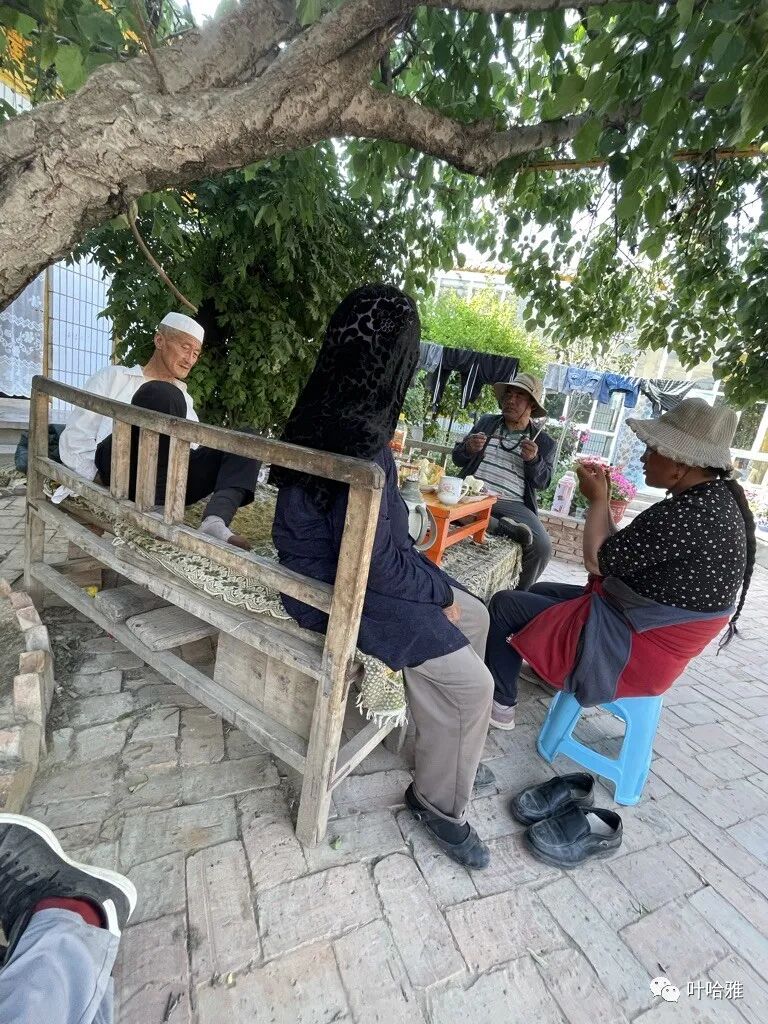
On the afternoon of Eid al-Adha, some Tibetan people came to visit our home. The two people in the photo are the Tibetans who help Grandpa herd his sheep. Behind Mengda Mountain village in Xunhua is the Tibetan region. The Salar elders have a good relationship with the Tibetan people. Both Grandma and Grandpa speak Tibetan, and since the Tibetans are very skilled at herding, the Salar people of Mengda Mountain hire them to look after their sheep.
I sat to the side, unable to understand their conversation, and watched the Tibetans eat skewers. Grandma turned around and asked if I felt bored. I said no, it was interesting to hear them speak Tibetan. It is rare to see such a scene of ethnic unity.
China Mosque Travel Guide Zhaotong: Baxianda Mosque, Eid al-Adha Graduation and Muslim Youth Hope
Articles • yusuf908 posted the article • 0 comments • 225 views • 2026-05-23 21:33
Summary: This mosque travel essay records the Eid al-Adha and student graduation event at Zhaotong Baxianda Mosque in Yunnan, with reflections on mosque education, Hui Muslim youth, religious learning, local history, and hope for the next generation.
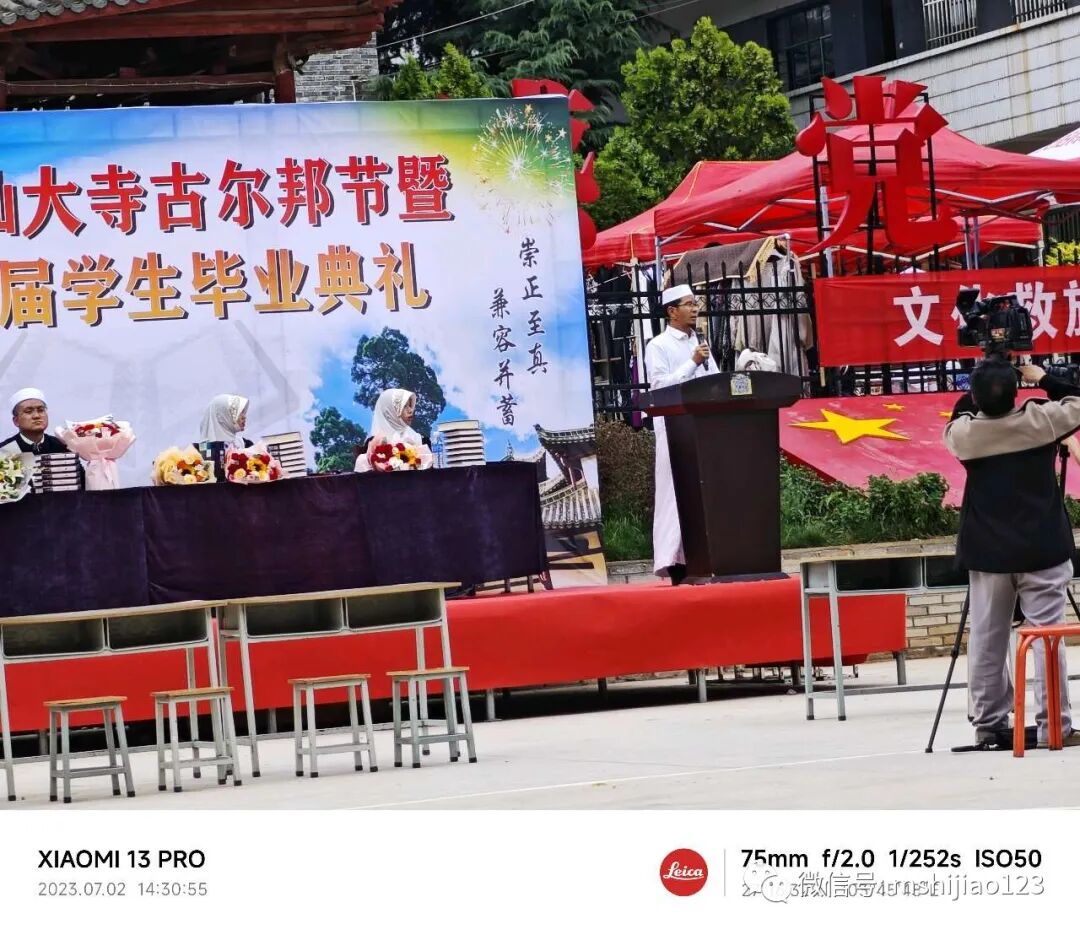
On July 2, 2023, the sun was shining brightly and the sky was cloudless. Muslims from Zhaowei-Lu gathered from all directions at the Baxianda Mosque in Zhaoyang District, Zhaotong City, because the annual Eid al-Adha and the graduation celebration of graduating students will be held here today.
The main mosque of Zhaotong Baxianda Mosque is also known as [Zhaowei-Lu Ancient Mosque]. It was first built in the eighth year of the reign of Emperor Yongzheng of the Qing Dynasty (1730) and is located in Baxianying, Shouwang Hui Township, Zhaotong City, Yunnan Province. It has experienced damage and reconstruction during this period. In 1983, the Zhaotong Baxianda Mosque was designated as a county-level cultural relic protection unit. Imam Ma Minglun (1898-1938) taught for ten years, and the mosque became the well-known "Haiyi" mosque in Zhaotong. He himself served as the general dean of Zhaoshi 36 Mosque, and his disciple Ma Weihai (a well-known alim in Yunnan and a former member of the China Islamic Association) founded the "Zhaowei-Lu State Education United Chongzhen Normal School" when he was teaching (1942-1956). The Baxianda Ancient Mosque is surrounded by green cypresses, with a quiet environment and complete school buildings. Well-planned school leadership, capable and outstanding teaching staff, scientific and complete teaching syllabus, comfortable and elegant library, and meticulous logistical services. The school-running orientation of "school, academy, publicity", the school-running philosophy of "education and academic compatibility, Yi-Confucian culture compatibility", and four compatible school-running characteristics, namely "compatibility of academics and employment, compatibility of classics and Chinese studies, compatibility of tradition and modernity, compatibility of majors and electives". The Baxianda Mosque is waiting for your arrival in the spirit of "cultural exchange and inclusiveness", because every teacher, mosque management committee and the community of the Baxianda Mosque always firmly believes that "success comes from the right choice." We work hard and contribute diligently to cultivate a younger generation of scholar-imams and imam-type scholars who are patriotic, loving, knowledgeable, noble in character, and willing to contribute!
The Baxianda Mosque, Maohao Street Mosque in Zhaoyang District, Tuogu Mosque, Tiejiawan Mosque, Wenping Mosque and Longtoushan Mosque in Ludian County are the earliest mosques built in Zhaotong City. For hundreds of years, these mosques have always put education first. Even today, these famous mosques still have more or less dozens or hundreds of students who are eager to study. These mosques bring a large amount of fresh blood to Zhaowei-Lu's religious deen every year, allowing this nation's faith to be well passed on.
I pass by the Baxianda Mosque on the main road under its wall every year, but I have never come in to see it. Just like what I said in the part about the Baxianda Mosque in "A Little Poem for the Mosque", "Every time I ride to my uncle's house / I pass by your feet / But I have never walked inside to get to know you / My image of you is / solemn / majestic / rich in history." Today I finally walked into the Baxianda Mosque that I had longed for and fulfilled my long-cherished wish for many years.
As soon as you enter the gate, you are greeted by a winding stone path with strong historical traces. However, due to people's continuous stepping on it for hundreds of years, deep "footprints" have appeared on the thick stone. At this moment, I believed Li Bai's stories of "an iron pestle ground into a needle" and "a drop of water penetrated a stone". I believed that as long as we strive towards the same goal day after day, year after year, everything is possible. At the end of the stone path is a small "patio". To the left of the patio is the wing room, and further down is the water room. The right wing of the patio is the headquarters of the 43rd Division of the People's Liberation Army that liberated Zhaotong City, and immediately next to it is the main hall of the mosque. The main hall is not very large, and it is also decorated with an ancient pure wooden structure. The pillars standing upright are like the heroes of our nation who are not afraid of sacrificing everything for the people. The pillars support the beams. Aren't these beams the people of our nation who actively support the heroes who are the pillars? If our nation and this group can be compared to a person, those pillars that stand upright are the spirit of our group, then these people who actively support the heroes are the backbone of this person. Because this nation has a spirit and a backbone, it can endure for a long time!
When I came to the venue, I was touched by a couplet on the rostrum. This couplet said, "Faith saves the heart. If faith does not prosper, the heart will die. Culture will save the nation. If culture does not prosper, the nation will perish." Maybe in the eyes of many people, these are just twenty short words, but in my opinion, these twenty words are a sincere hope for the future of our nation. In my opinion, the person who can write this couplet is definitely a person who cares about the future of our nation all day long. Only such a person can see education so thoroughly! If an imam has such a sense of urgency, the students he teaches will definitely not be bad, no! They will definitely become the pillars of Zhaowei-Lu deen like their teacher!
Seeing the high-spirited and heroic appearance of the graduates, and hearing the passionate and exciting speech of the graduate representative, one has to say sincerely, "It's good to be young." Once upon a time, I also sat on the podium as a graduate and gave a passionate speech as a graduate representative. In the blink of an eye, it has been more than ten years, which is enough time for the entire environment to undergo tremendous changes, and I have also changed from the young boy who claimed to have "the physical fitness of a special forces soldier" to a middle-aged old man who may die from illness at any time.
Principal Ma's sincere teachings to the graduates are like an old father's instructions to his children who are about to go away. It can be seen that Principal Ma is extremely proud and proud in his heart, but he also contains the slightest reluctance to let go of the children. What makes us proud and proud is that there are only a handful of mosques running schools in Zhaowei-Lu today, and even fewer of our students can withstand the interference of the world and the impact of the economic wave and finally graduate successfully. Thinking that these students will soon become the pillars of Zhaowei-Lu, how can this not make their teachers proud and proud? But when you think about the students you have taught for many years, they are about to leave you and choose a new life. After all, how can you let the teacher let go of the teacher-student relationship for so many years? Therefore, Principal Ma repeatedly gave instructions to his students. These instructions made me, an "outsider" who came to participate in the event, moved to tears...
When I returned home and paid my respects to "the local family gathering place", I sat on the sofa and thought about it. I thought I should write something for the Baxianda Mosque. In particular, we allow the aspiring young people of our nation to come to the Baxianda Mosque and thrive under the moisture of the Baxianda Mosque. Ever since, I took up pen and wrote this long tweet.
Principal Ma: 13087486664 WeChat: ztmyt123
Director Ma: 15925514131 WeChat: 15925514131
Rain or shine, the Baxianda Mosque is waiting for you! view all
Summary: This mosque travel essay records the Eid al-Adha and student graduation event at Zhaotong Baxianda Mosque in Yunnan, with reflections on mosque education, Hui Muslim youth, religious learning, local history, and hope for the next generation.

On July 2, 2023, the sun was shining brightly and the sky was cloudless. Muslims from Zhaowei-Lu gathered from all directions at the Baxianda Mosque in Zhaoyang District, Zhaotong City, because the annual Eid al-Adha and the graduation celebration of graduating students will be held here today.
The main mosque of Zhaotong Baxianda Mosque is also known as [Zhaowei-Lu Ancient Mosque]. It was first built in the eighth year of the reign of Emperor Yongzheng of the Qing Dynasty (1730) and is located in Baxianying, Shouwang Hui Township, Zhaotong City, Yunnan Province. It has experienced damage and reconstruction during this period. In 1983, the Zhaotong Baxianda Mosque was designated as a county-level cultural relic protection unit. Imam Ma Minglun (1898-1938) taught for ten years, and the mosque became the well-known "Haiyi" mosque in Zhaotong. He himself served as the general dean of Zhaoshi 36 Mosque, and his disciple Ma Weihai (a well-known alim in Yunnan and a former member of the China Islamic Association) founded the "Zhaowei-Lu State Education United Chongzhen Normal School" when he was teaching (1942-1956). The Baxianda Ancient Mosque is surrounded by green cypresses, with a quiet environment and complete school buildings. Well-planned school leadership, capable and outstanding teaching staff, scientific and complete teaching syllabus, comfortable and elegant library, and meticulous logistical services. The school-running orientation of "school, academy, publicity", the school-running philosophy of "education and academic compatibility, Yi-Confucian culture compatibility", and four compatible school-running characteristics, namely "compatibility of academics and employment, compatibility of classics and Chinese studies, compatibility of tradition and modernity, compatibility of majors and electives". The Baxianda Mosque is waiting for your arrival in the spirit of "cultural exchange and inclusiveness", because every teacher, mosque management committee and the community of the Baxianda Mosque always firmly believes that "success comes from the right choice." We work hard and contribute diligently to cultivate a younger generation of scholar-imams and imam-type scholars who are patriotic, loving, knowledgeable, noble in character, and willing to contribute!
The Baxianda Mosque, Maohao Street Mosque in Zhaoyang District, Tuogu Mosque, Tiejiawan Mosque, Wenping Mosque and Longtoushan Mosque in Ludian County are the earliest mosques built in Zhaotong City. For hundreds of years, these mosques have always put education first. Even today, these famous mosques still have more or less dozens or hundreds of students who are eager to study. These mosques bring a large amount of fresh blood to Zhaowei-Lu's religious deen every year, allowing this nation's faith to be well passed on.
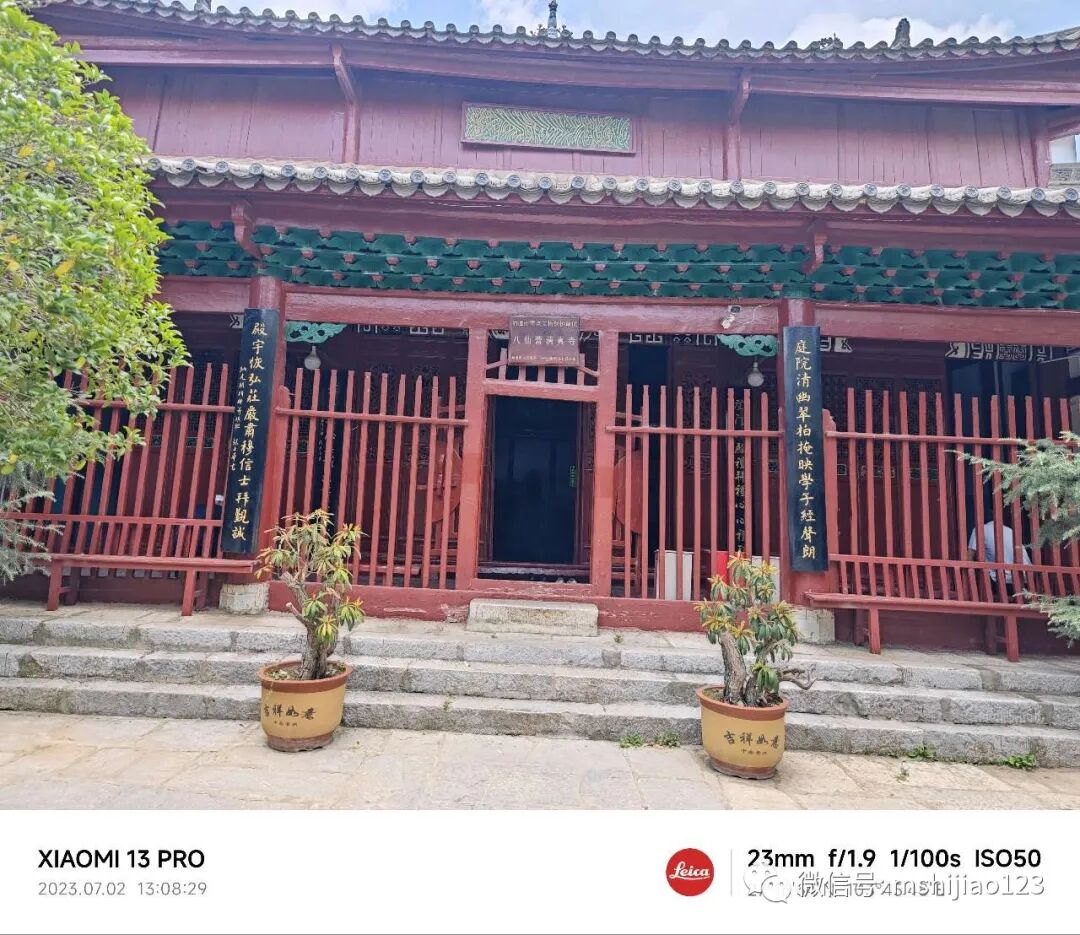
I pass by the Baxianda Mosque on the main road under its wall every year, but I have never come in to see it. Just like what I said in the part about the Baxianda Mosque in "A Little Poem for the Mosque", "Every time I ride to my uncle's house / I pass by your feet / But I have never walked inside to get to know you / My image of you is / solemn / majestic / rich in history." Today I finally walked into the Baxianda Mosque that I had longed for and fulfilled my long-cherished wish for many years.
As soon as you enter the gate, you are greeted by a winding stone path with strong historical traces. However, due to people's continuous stepping on it for hundreds of years, deep "footprints" have appeared on the thick stone. At this moment, I believed Li Bai's stories of "an iron pestle ground into a needle" and "a drop of water penetrated a stone". I believed that as long as we strive towards the same goal day after day, year after year, everything is possible. At the end of the stone path is a small "patio". To the left of the patio is the wing room, and further down is the water room. The right wing of the patio is the headquarters of the 43rd Division of the People's Liberation Army that liberated Zhaotong City, and immediately next to it is the main hall of the mosque. The main hall is not very large, and it is also decorated with an ancient pure wooden structure. The pillars standing upright are like the heroes of our nation who are not afraid of sacrificing everything for the people. The pillars support the beams. Aren't these beams the people of our nation who actively support the heroes who are the pillars? If our nation and this group can be compared to a person, those pillars that stand upright are the spirit of our group, then these people who actively support the heroes are the backbone of this person. Because this nation has a spirit and a backbone, it can endure for a long time!
When I came to the venue, I was touched by a couplet on the rostrum. This couplet said, "Faith saves the heart. If faith does not prosper, the heart will die. Culture will save the nation. If culture does not prosper, the nation will perish." Maybe in the eyes of many people, these are just twenty short words, but in my opinion, these twenty words are a sincere hope for the future of our nation. In my opinion, the person who can write this couplet is definitely a person who cares about the future of our nation all day long. Only such a person can see education so thoroughly! If an imam has such a sense of urgency, the students he teaches will definitely not be bad, no! They will definitely become the pillars of Zhaowei-Lu deen like their teacher!
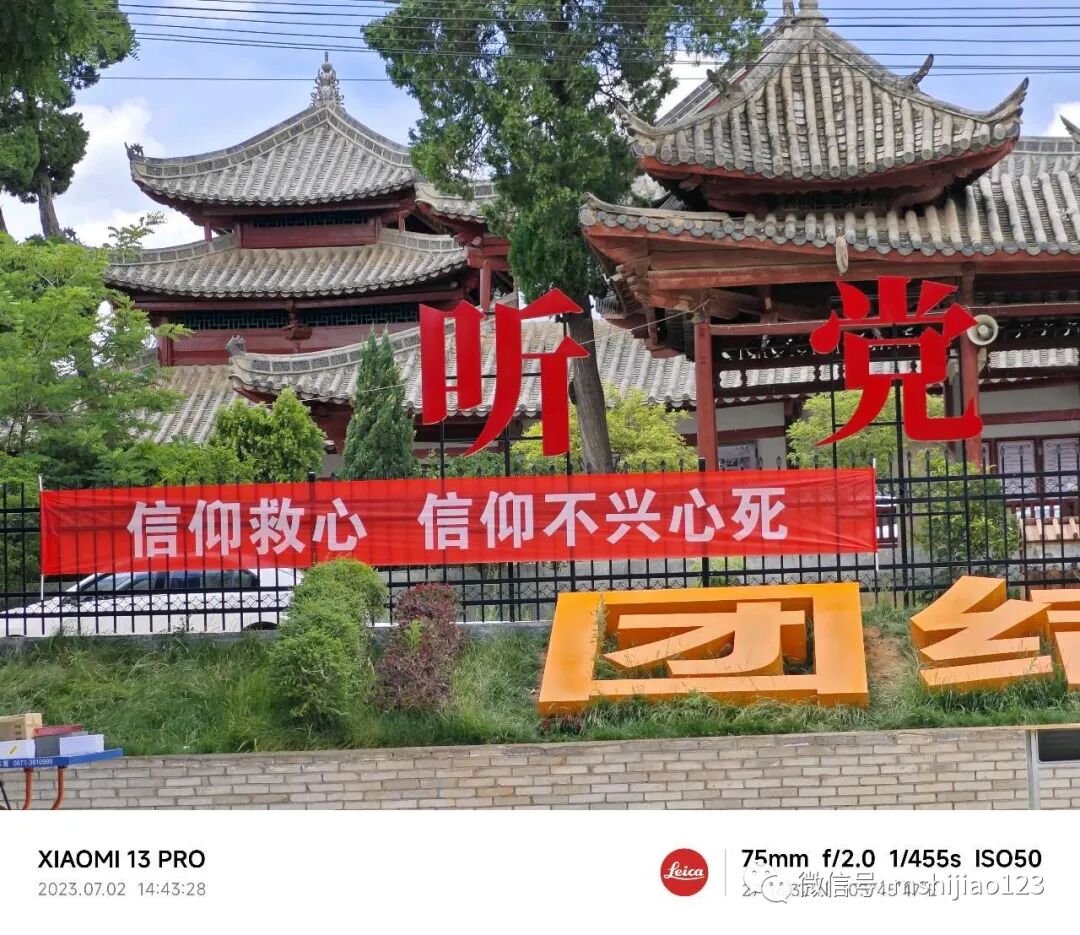
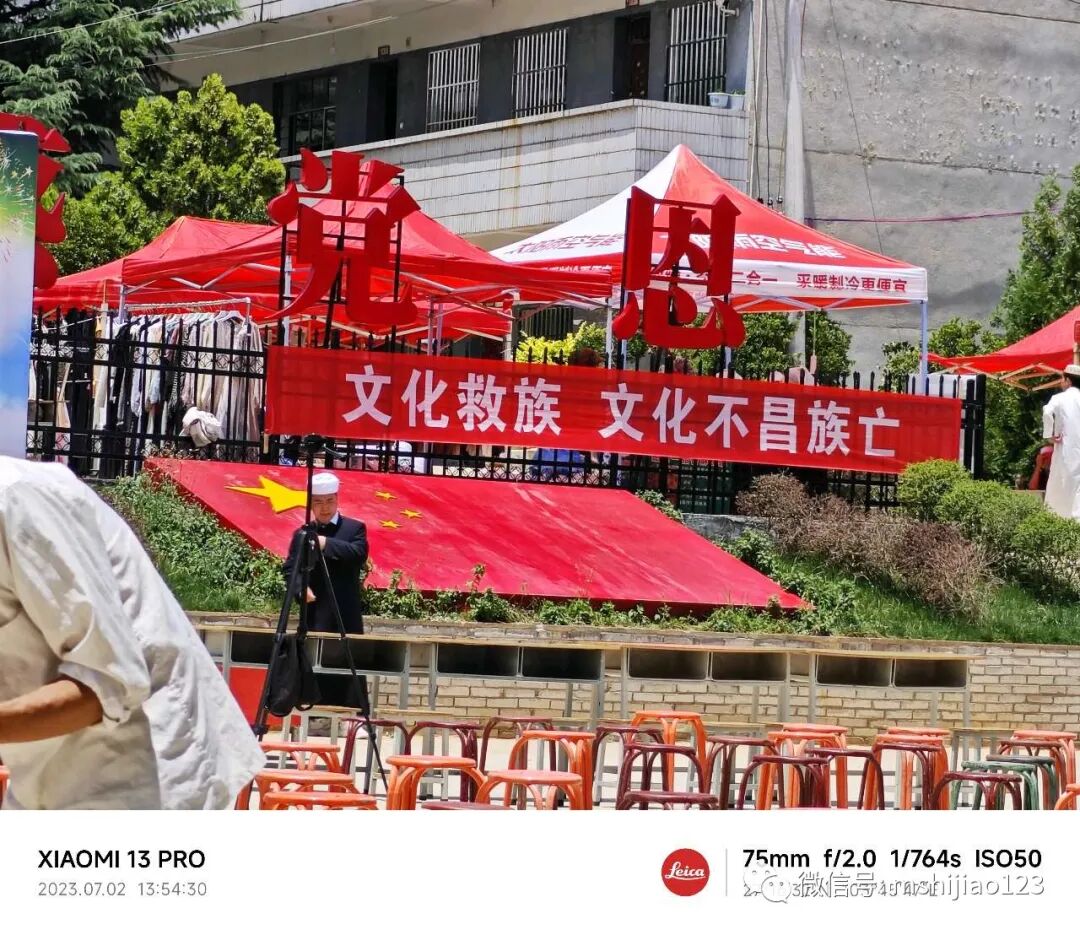
Seeing the high-spirited and heroic appearance of the graduates, and hearing the passionate and exciting speech of the graduate representative, one has to say sincerely, "It's good to be young." Once upon a time, I also sat on the podium as a graduate and gave a passionate speech as a graduate representative. In the blink of an eye, it has been more than ten years, which is enough time for the entire environment to undergo tremendous changes, and I have also changed from the young boy who claimed to have "the physical fitness of a special forces soldier" to a middle-aged old man who may die from illness at any time.
Principal Ma's sincere teachings to the graduates are like an old father's instructions to his children who are about to go away. It can be seen that Principal Ma is extremely proud and proud in his heart, but he also contains the slightest reluctance to let go of the children. What makes us proud and proud is that there are only a handful of mosques running schools in Zhaowei-Lu today, and even fewer of our students can withstand the interference of the world and the impact of the economic wave and finally graduate successfully. Thinking that these students will soon become the pillars of Zhaowei-Lu, how can this not make their teachers proud and proud? But when you think about the students you have taught for many years, they are about to leave you and choose a new life. After all, how can you let the teacher let go of the teacher-student relationship for so many years? Therefore, Principal Ma repeatedly gave instructions to his students. These instructions made me, an "outsider" who came to participate in the event, moved to tears...
When I returned home and paid my respects to "the local family gathering place", I sat on the sofa and thought about it. I thought I should write something for the Baxianda Mosque. In particular, we allow the aspiring young people of our nation to come to the Baxianda Mosque and thrive under the moisture of the Baxianda Mosque. Ever since, I took up pen and wrote this long tweet.
Principal Ma: 13087486664 WeChat: ztmyt123
Director Ma: 15925514131 WeChat: 15925514131
Rain or shine, the Baxianda Mosque is waiting for you!
Muslim Travel Guide Toronto: Chinese Hui Muslim Eid al-Adha, Halal Noodles and Scarborough Mosque
Articles • yusuf908 posted the article • 0 comments • 292 views • 2026-05-22 23:36
Summary: This Muslim travel guide to Toronto follows Eid al-Adha with the Chinese Muslim Association of Canada in Scarborough, halal Hui Muslim food, Fang Zhongshan-style spicy soup, halal noodles, Canadian diversity, Muslim communities, and reflections on immigrant life.
Celebrating Eid Al-Adha in the Hui Muslim Neighborhood of Toronto, Canada is presented here as a firsthand travel account in clear English, beginning with this scene: I traveled around Canada while attending the MDRT global life insurance conference this year. The account keeps its focus on Sanya Travel, Eid al-Adha, Muslim Travel while preserving the names, places, food, and historical details from the Chinese source.
I traveled around Canada while attending the MDRT global life insurance conference this year. I visited Toronto, Ottawa, Montreal, Calgary, and Vancouver, covering the most important cities from the east to the west coast. Since Eid al-Adha was approaching, I learned that the Chinese Muslim Association of Canada is in Toronto, so I made a special trip there to attend the holiday prayers.
Toronto is Canada's largest city. It has a large population, sits near New York State in the U.S., and has a strong economy and convenient transportation. Many Chinese immigrants live here. The photos above and below show Lanzhou hand-pulled noodle shops (Lanzhou lamian) I spotted on the street, but neither of these two shops is halal.
Don't worry, I will introduce a halal noodle shop later.
India is not currently issuing visas to Chinese citizens, so if you want to see Indian people, come to Canada. India is the top source of immigrants to Canada, and you can find Indian people everywhere here. They are clean and hygienic. The ones wearing turbans are Sikhs. There are over 700,000 Sikhs in Canada. They are often mistaken for Muslims, but Sikhs and Muslims are actually rivals. Sikh teachings seem designed to oppose Islam. For example, Sikhs do not eat any religious food, including halal food. If they don't know the source of the meat, they cannot eat it. They only eat meat slaughtered by their own people, which leads some to mistakenly think Sikhs are vegetarians. They are also not allowed to marry Muslims. Because Sikhs are a minority in India and face oppression, a large number of them have immigrated to North America as refugees.
The Chinese Muslim Association of Canada is located on the third floor of the Oriental Centre in Scarborough. It used to be on the second floor. In June 2024, the association president, Bao Lin Zhu, paid in full to purchase a property on the third floor for the association's use. The original second-floor location remains open as the Hui Muslim Food Culture Center.
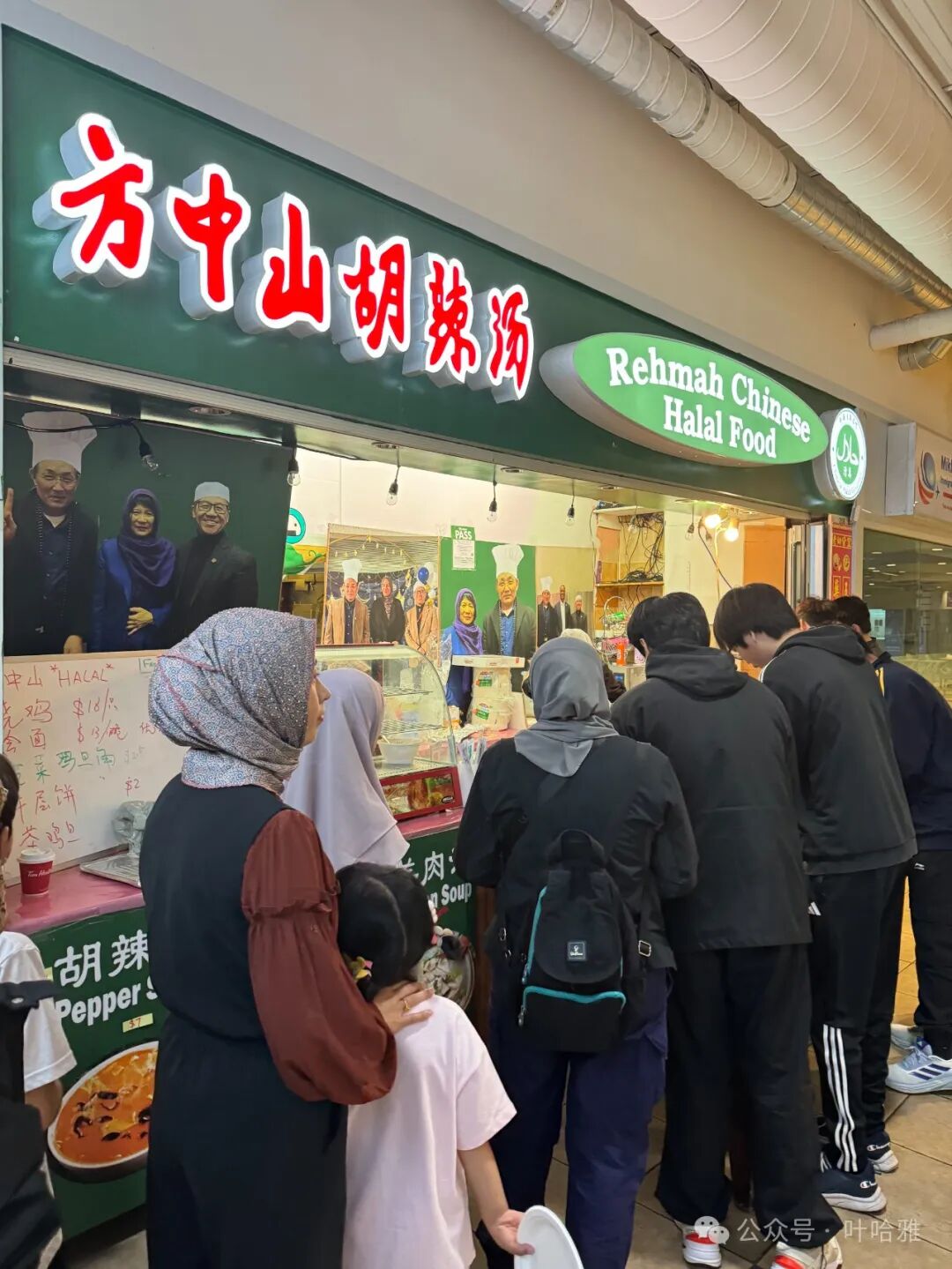
The Fang Zhongshan spicy soup (hulatang) on the second floor is run by the president, who is from Henan province and a fellow townsman of Fang Zhongshan. The shop is authorized by Fang Zhongshan, but the taste of the spicy soup is completely different from the one in the Central Plains. It leans more toward the Xiaoyao Town style and is not as spicy.
The person on the far right is President Bao Lin. The chef on the left is also from Henan and immigrated to Canada to follow his children's studies.
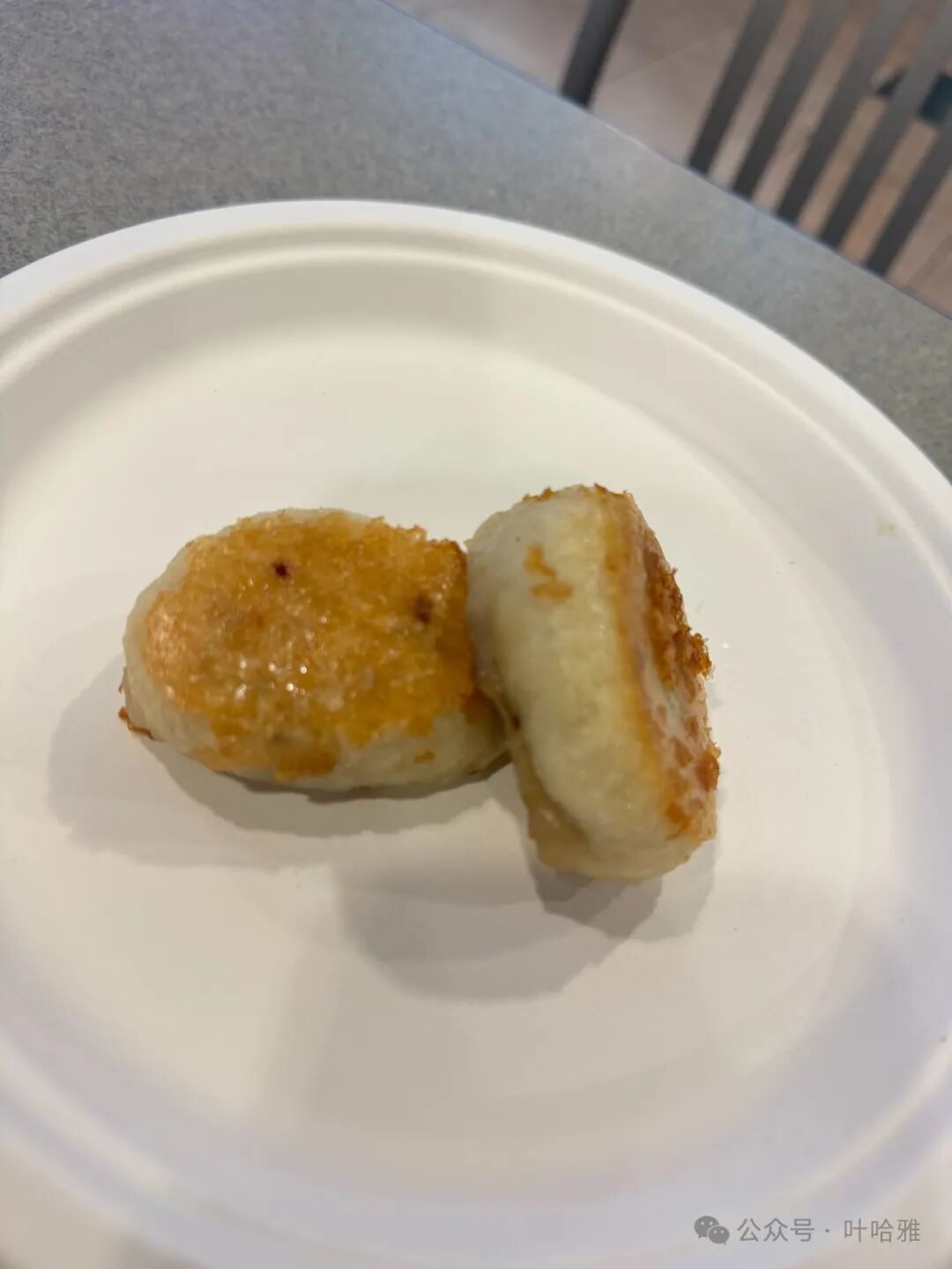
Besides spicy soup and pan-fried buns (shuijianbao), the shop also prepares traditional Chinese Hui Muslim foods like fried dough (youxiang) for Eid al-Adha.
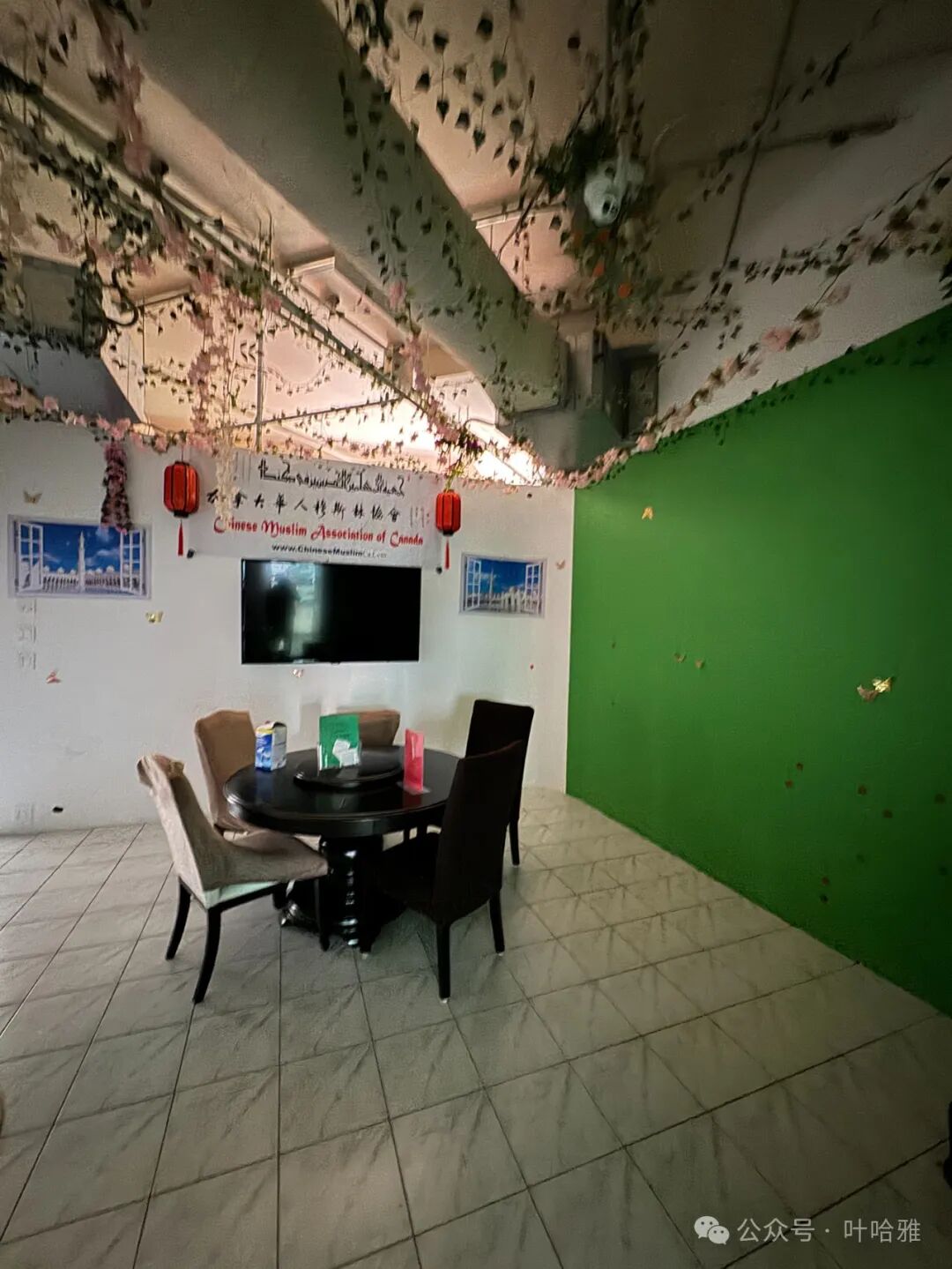
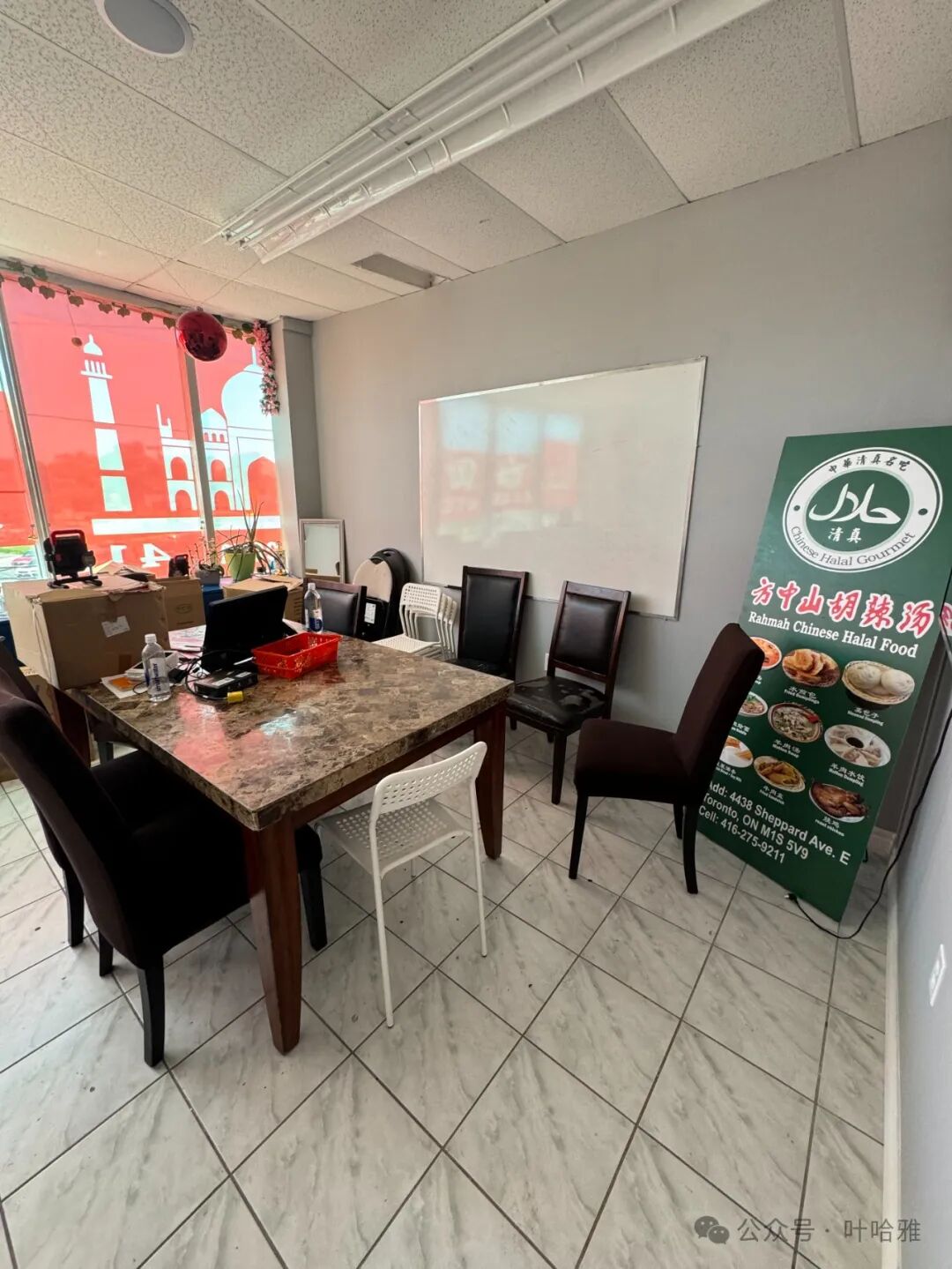
The room next to the spicy soup shop was the association's original prayer room. Now that they have the third-floor property, this space is used for reception, office work, and daily tasks.
This is a plaque inscribed by Mr. Mi Guangjiang for the Chinese Muslim Association of Canada. He has also visited this place himself.
I did not know President Bao Lin before I came to Toronto. I planned to visit the day before Eid al-Adha to check the time for the holiday prayers. I happened to run into the president, and he very warmly invited me to take a tour.
To promote the Chinese Muslim Association, President Baolin installed a light box on the property window and kept it lit all night. This is how the building looks from the outside at night; it is very eye-catching.
The building management thought this was inappropriate and cut off the power without permission. The building is owned by Chinese people, but the overseas Chinese here do not seem friendly toward Muslims. President Baolin is now taking legal action to protect his rights.
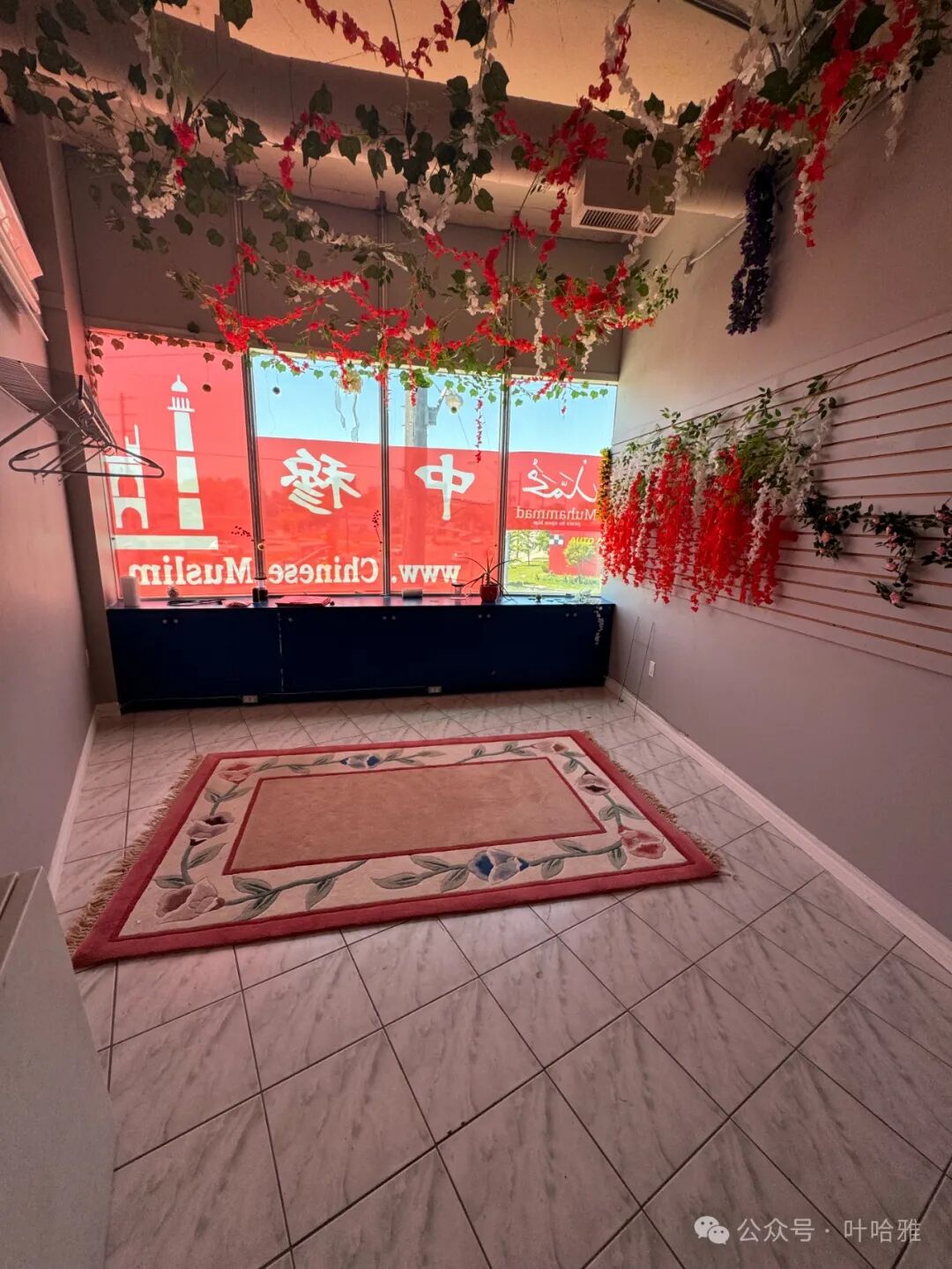
The third-floor property was just bought. When I arrived, it was being used for the first time, so many decorations had not been changed yet. The facilities look very simple, but everything necessary is there, except for an imam.
I was surprised that the Eid prayer was the next day, but they still had not found an imam to lead the prayer. President Baolin was anxious and made several calls, including asking a Pakistani student from a brother mosque for help, but he could not find anyone suitable. He said if there was no other choice, he would ask me to do it.
I felt very caught off guard. In the Canadian Hui Muslim community, there are about a hundred people who visit regularly. Many people from China have a weak sense of faith and are not in this circle. Others did not have the chance to learn back home, so they have a strong desire to learn here. Everyone is eager for a full-time imam to guide them in their studies and daily worship, but unfortunately, they have not found the right person yet.
President Baolin really hopes that a capable and willing scholar will come here to teach, and he will provide all the help he can.
Then, President Baolin drove me around to visit a few unique mosques in the area.
JAME ABU BAKR SIDDIQUE
In North America, the largest and most numerous mosques are definitely built by our Pakistani brothers. This is one of them. It shows that the Pakistani community is doing well overseas, not just in North America but also in Europe. They are doing better than the Chinese community, which I will explain in more detail later.
Toronto Prayer Schedule
Islamic Foundation of Toronto
The Islamic Foundation of Toronto is a mosque still managed by our Pakistani brothers. President Baolin came here to ask the mosque management to help find a Pakistani student to lead the Eid al-Adha (Qurban Festival) prayer. The Pakistani prayer time is June 17, while the Hui Muslim community's is on the 16th, but we could not find anyone available.
Islamic Institute of Toronto
The Islamic Institute of Toronto was founded in 1996 and moved to its new location in 2006. It covers 8 acres and is very large.
The school is usually not open to the public, but I knocked on the door and went in for a visit.
Masjid Qurtabah
This is the home of the Muslim Association of Canada. President Baolin brought me here because before the Hui Muslim community bought their own property, they did not have a permanent place for religious activities, so they used to borrow this space for Chinese Muslim events.
This place will also soon be renovated into a large Islamic activity center.
This is a mosque for Somali people.
Seeing that the Somali community has its own mosque—which was converted from a church, as many mosques in Canada were—the president hopes that one day he can also establish a Chinese Muslim community center.
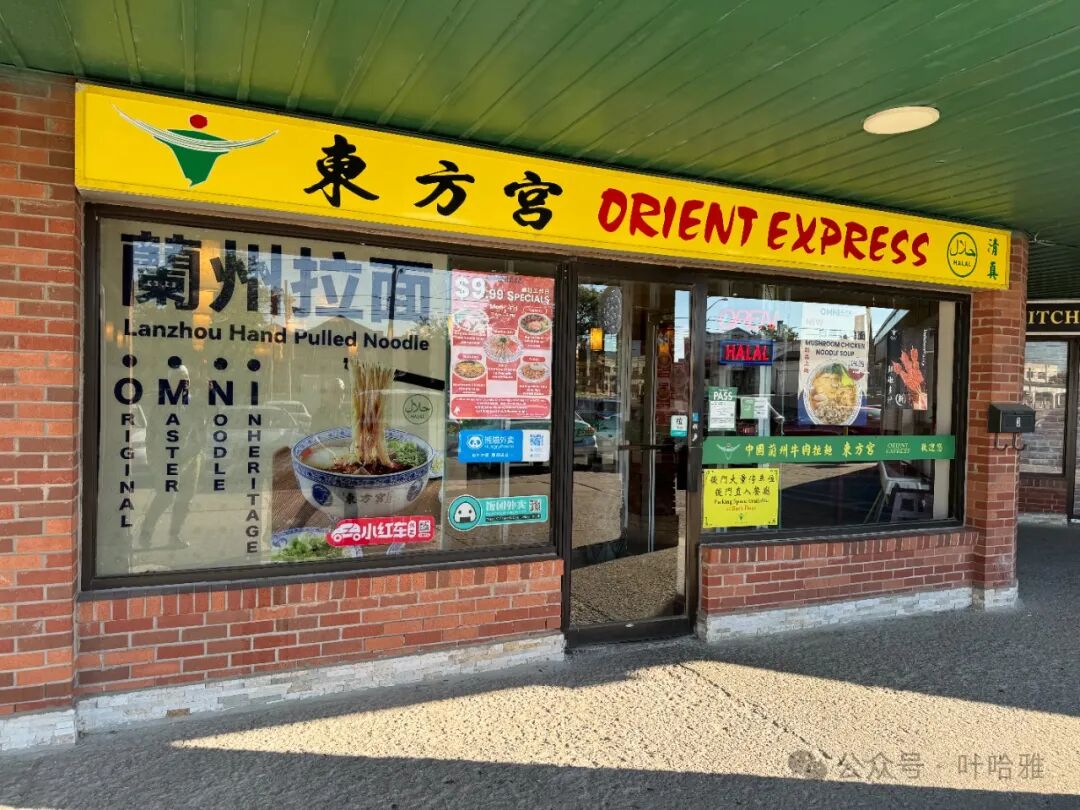
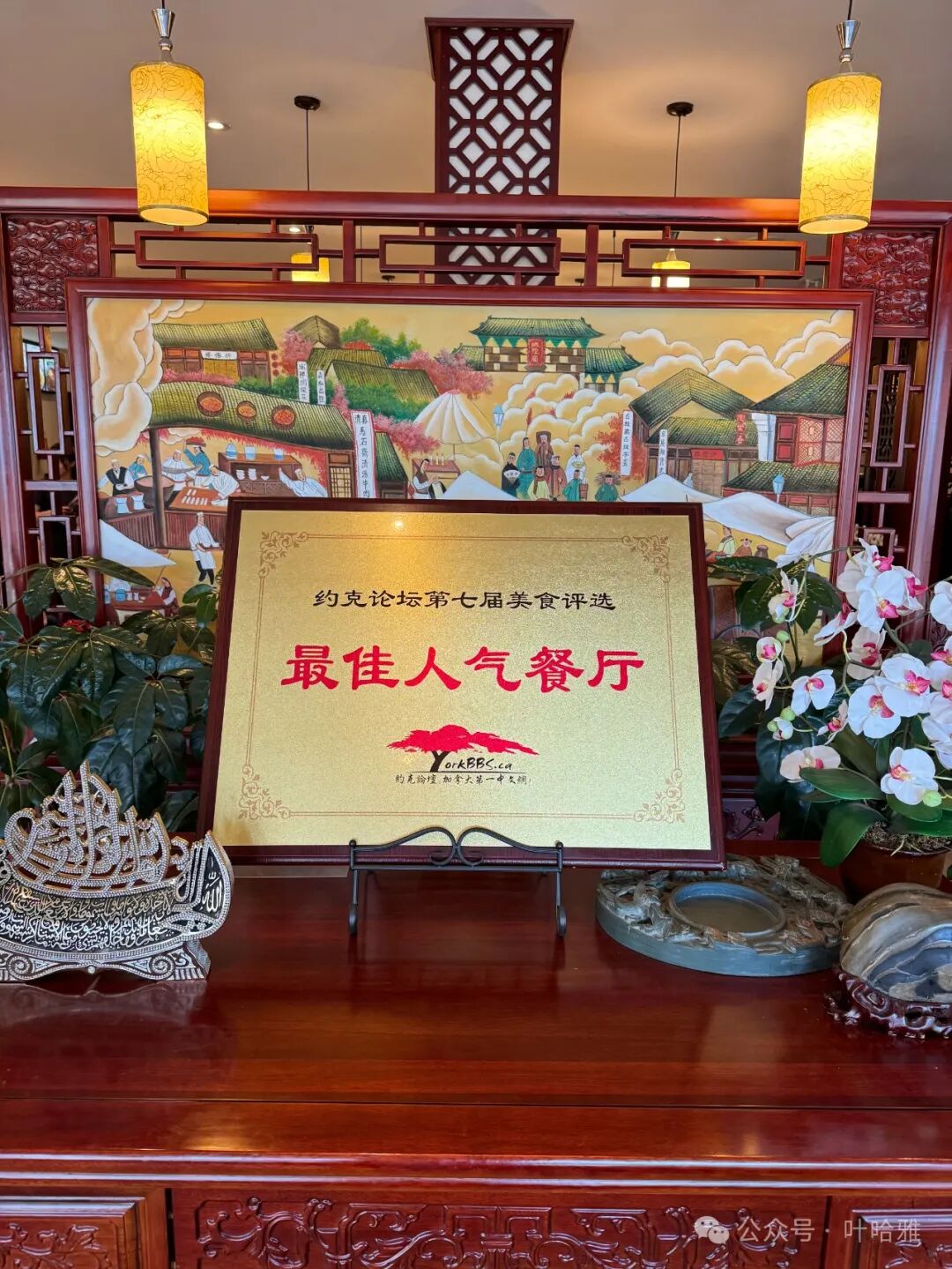
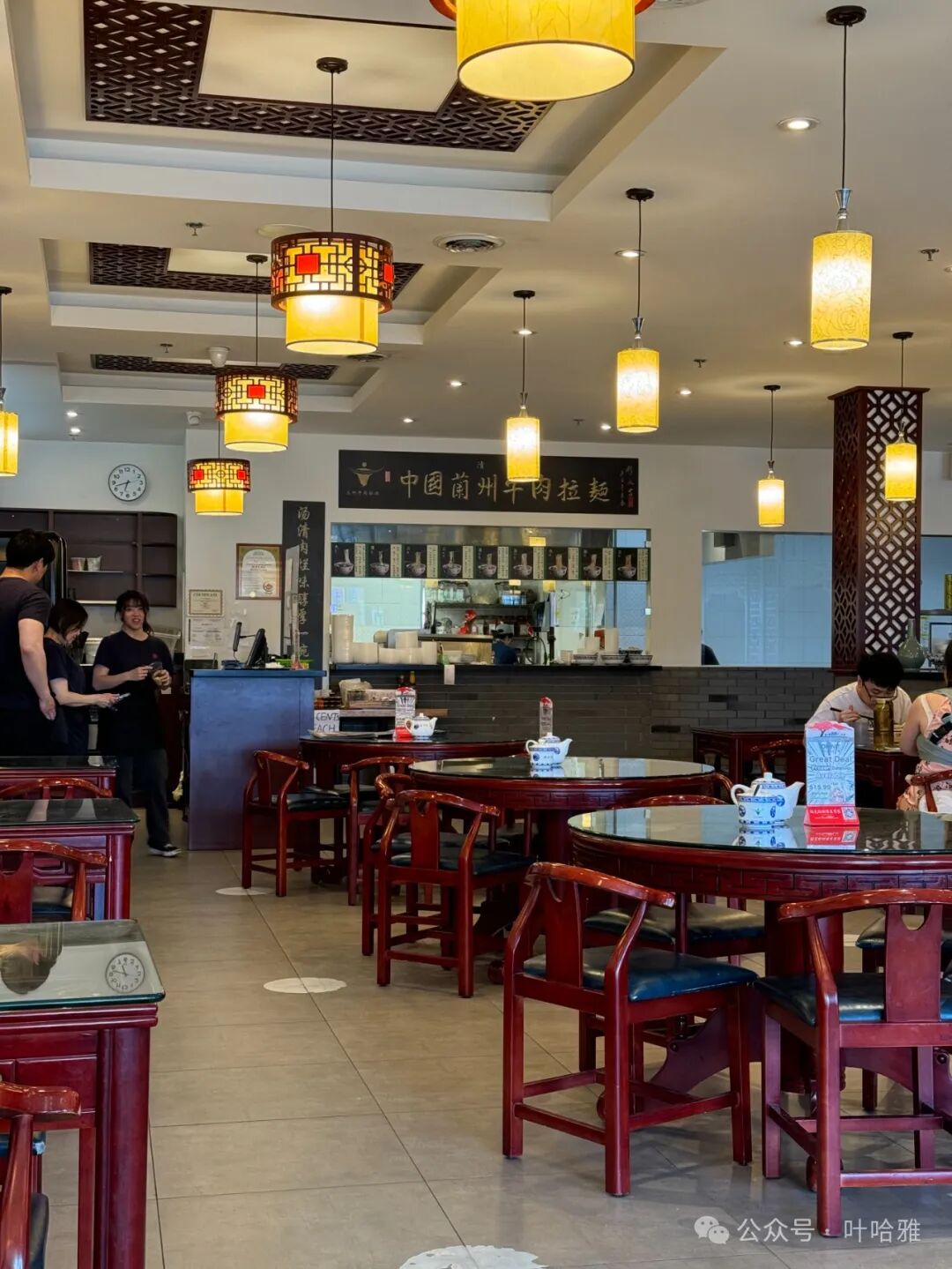
Oriental Palace (Dongfang Gong)
This is truly the Lanzhou chain brand Oriental Palace (Dongfang Gong). It has arrived in Canada and has many branches in Toronto.
This bowl of beef noodles costs 14.99 Canadian dollars, which is about 80 yuan. That does not include the tip. With a 12-15% tip, the bowl costs nearly 100 yuan. Prices in Canada are high. Even if you work locally and earn Canadian dollars, eating out is not cheap.
I saw at least three Dongfanggong restaurants in Toronto.
To be fair, the noodles tasted quite good. They were chewy and had plenty of meat. This was the most satisfying meal I have had in my ten days in Canada. Thanks to Brother Baolin.
But the lamb skewers (yangrouchuan) are still better back home.
This smashed cucumber salad (pai huanggua) is more expensive than the lamb skewers. It is common in Western countries for meat to be cheaper than vegetables.
After finishing the beef noodles, Brother Baolin drove me back to the hotel to rest. I had flown all night from Calgary to Toronto and dealt with a two-hour time difference. I fell asleep as soon as I lay down in bed, needing to recharge for Eid al-Adha the next day.
Early the next morning, Brother Baolin was setting up the venue, and I arrived early too. Unfortunately, we still could not find an imam to lead the prayer. However, a Hui Muslim brother from Xinjiang who had studied the scriptures stepped up. Even though he had a cold, he insisted on leading everyone in the Eid prayer. I will not post his photo.
After the prayer, I shared some thoughts on what I have learned from my travels over the years. I said the North American Chinese Muslim Association needs doers like Brother Baolin. Many people are well-read in scriptures but lack real-world experience. Their words and actions are disconnected from society, and they create division locally. Such 'smart' people do not help the faith. Throughout history, we have never lacked scholars who only talk. We need well-rounded, excellent people to strengthen our ability to take root and thrive in a foreign land.
After the sharing session, we went to the second floor to eat. Everyone brought food they prepared themselves, sharing their favorite hometown dishes. Those who did not have a specialty just contributed money.
For Hui Muslims, a holiday is not complete without fried dough (youxiang). This youxiang looks like the Henan style. There are many Henan friends (dost) in the community, so much so that before I came here, people told me there was a Henan Hui neighborhood in Canada. In reality, it is not just Henan people here. There are people from Beijing, Inner Mongolia, the Northwest, and Uyghurs.
The lamb soup (yangrou tang) and chive pockets (jiucai hezi) both have a Henan flair. They smelled delicious and were very good.
Some non-Chinese brothers also attended the event. They met Chinese Muslims through marriage.
As is the custom, Eid al-Adha (Qurban) ended in the morning. In the afternoon, Vice President Davei ZHU drove me to Toronto's most famous attraction, Niagara Falls, which often appears on the National Geographic channel.
Rainbow Bridge
Rainbow Bridge connects Canada and the United States and was built by both countries. Driving across this bridge takes you to New York State in the U.S. Canadian citizens do not need a visa to enter the U.S., and the process is very simple, so many Canadians choose to work in the U.S.
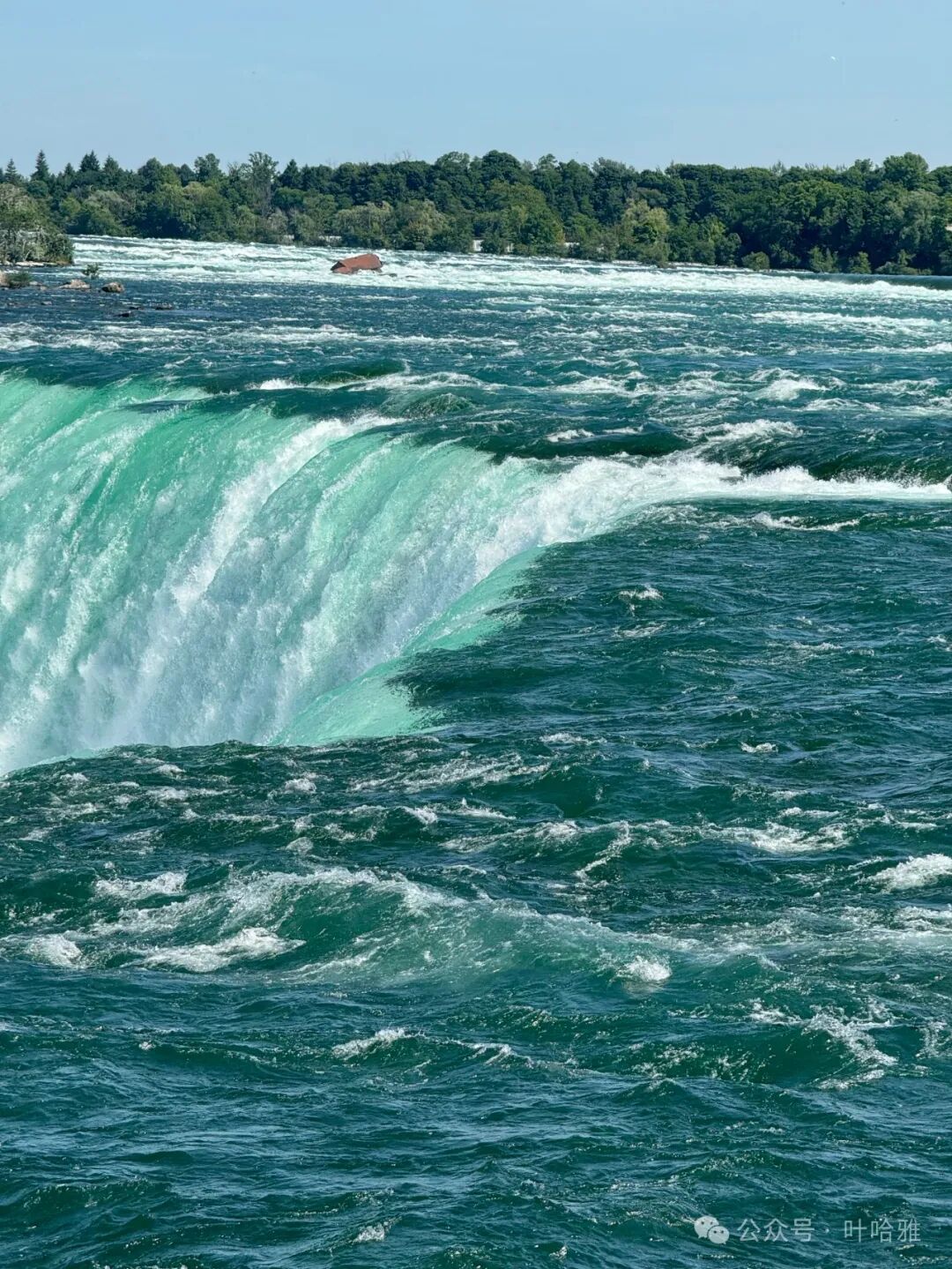
Niagara Falls spans both the U.S. and Canada, but the main view is on the Canadian side. You cannot see the full picture if you stand on the American side.
It took us over two hours to drive there, and we even hit traffic on the way. I chatted a lot with Vice President ZHU. His whole family has lived in Canada for over twenty years. As overseas Chinese, their longing for their hometown grows deeper with age.
When the weather is good, you can see a double rainbow at the waterfall.
There is no admission fee for natural scenery like the waterfall, but you have to pay if you want to take a boat for a close-up tour or ride the zipline.
A group of Muslims were having a picnic on the grass. The proportion of Muslims in Canada is very high, and you can see young women wearing beautiful headscarves everywhere on the street. However, Vice President ZHU warned me not to walk barefoot on the grass. He said that the number of drug addicts in Canada has increased over the years, and some of them carelessly throw used needles into the grass.
There are many halal restaurants around the waterfall, and there is a whole street full of halal food. We stumbled upon this Indian buffet restaurant by chance.
The buffet is 21 Canadian dollars per person. The selection is quite complete, and this price is actually not expensive. Even in Beijing, a similar Indian-Pakistani buffet would cost 98 yuan.
Indian-Pakistani cuisine is like Lanzhou hand-pulled noodles (Lanzhou lamian) in the eyes of Westerners; it is convenient, delicious, affordable, and accepted by people from all countries.
Near the big Ferris wheel is this halal food street. You do not have to worry about finding halal food in Canada at all; it is everywhere. However, halal food in North America mainly falls into three categories: Arab, Turkish, and Indo-Pakistani, and most of it is fast food or snacks.
This place serves Moroccan-style food.
After saying goodbye to President Zhu, I left Toronto the next day. On the way to the airport, I saw this mosque converted from a church. Many places of worship in the city are usually locked, and this one was not open.
It is very common to see young women wearing headscarves in public. The streets of Canada are very diverse with people of all races. I even saw many women wearing headscarves working as customs and airport staff.
On the way back, the president told me a story about someone he knew. When he first arrived in Canada, he lived with an international student from Beijing, and they later became good friends. This roommate was introverted, quiet, and grew up in a military compound, but he had a tense relationship with his family. After coming to Canada, he almost never contacted his family. He had a very small social circle and showed signs of depression. Later, they moved to different cities for work. They kept in touch occasionally but never met again. A few years ago, the president received a call from the Canadian police. The police said his friend was found dead in his car in a parking lot. They ruled out foul play, and it was likely an overdose. The only emergency contact number the friend had left was the president's, with no other family contact information.
Because the president was not a relative, the police could not provide more information. Later, the police buried him in a public cemetery as an unclaimed body. The president only knew his name was Zhang Qiang, he was from Beijing, and he was about 50 years old when he died. He was single, had no wife or children, and there was not even a single photo of him. He died alone in a foreign land, and his family still does not know where he is.
The president hoped I could find out about this person in Beijing, but there is too little useful information. I also feel that since his family does not know he has passed away, it might be better if they never find out. That way, his family can still hold onto the hope that he is alive somewhere in the world. view all
Summary: This Muslim travel guide to Toronto follows Eid al-Adha with the Chinese Muslim Association of Canada in Scarborough, halal Hui Muslim food, Fang Zhongshan-style spicy soup, halal noodles, Canadian diversity, Muslim communities, and reflections on immigrant life.
Celebrating Eid Al-Adha in the Hui Muslim Neighborhood of Toronto, Canada is presented here as a firsthand travel account in clear English, beginning with this scene: I traveled around Canada while attending the MDRT global life insurance conference this year. The account keeps its focus on Sanya Travel, Eid al-Adha, Muslim Travel while preserving the names, places, food, and historical details from the Chinese source.
I traveled around Canada while attending the MDRT global life insurance conference this year. I visited Toronto, Ottawa, Montreal, Calgary, and Vancouver, covering the most important cities from the east to the west coast. Since Eid al-Adha was approaching, I learned that the Chinese Muslim Association of Canada is in Toronto, so I made a special trip there to attend the holiday prayers.
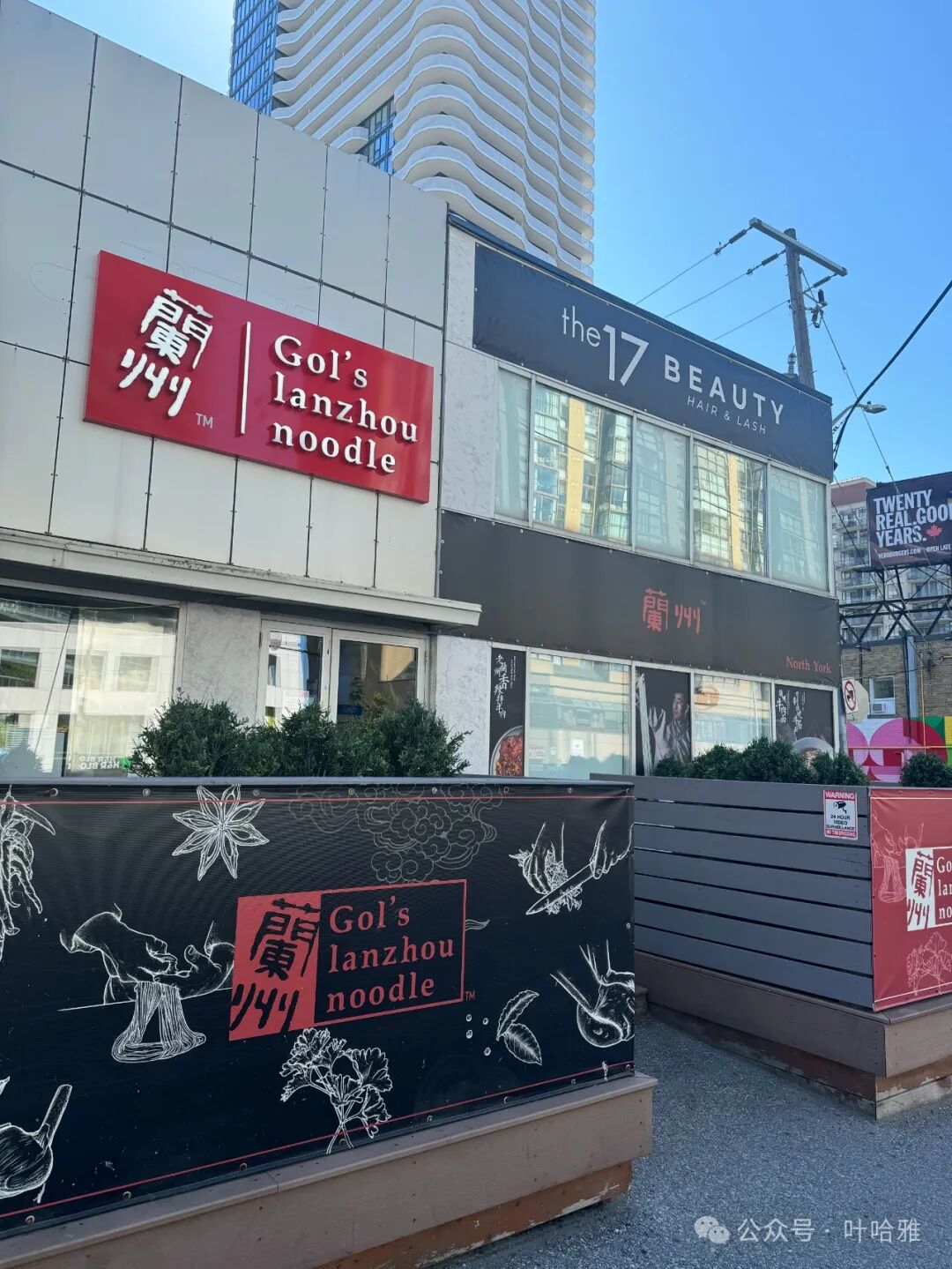
Toronto is Canada's largest city. It has a large population, sits near New York State in the U.S., and has a strong economy and convenient transportation. Many Chinese immigrants live here. The photos above and below show Lanzhou hand-pulled noodle shops (Lanzhou lamian) I spotted on the street, but neither of these two shops is halal.
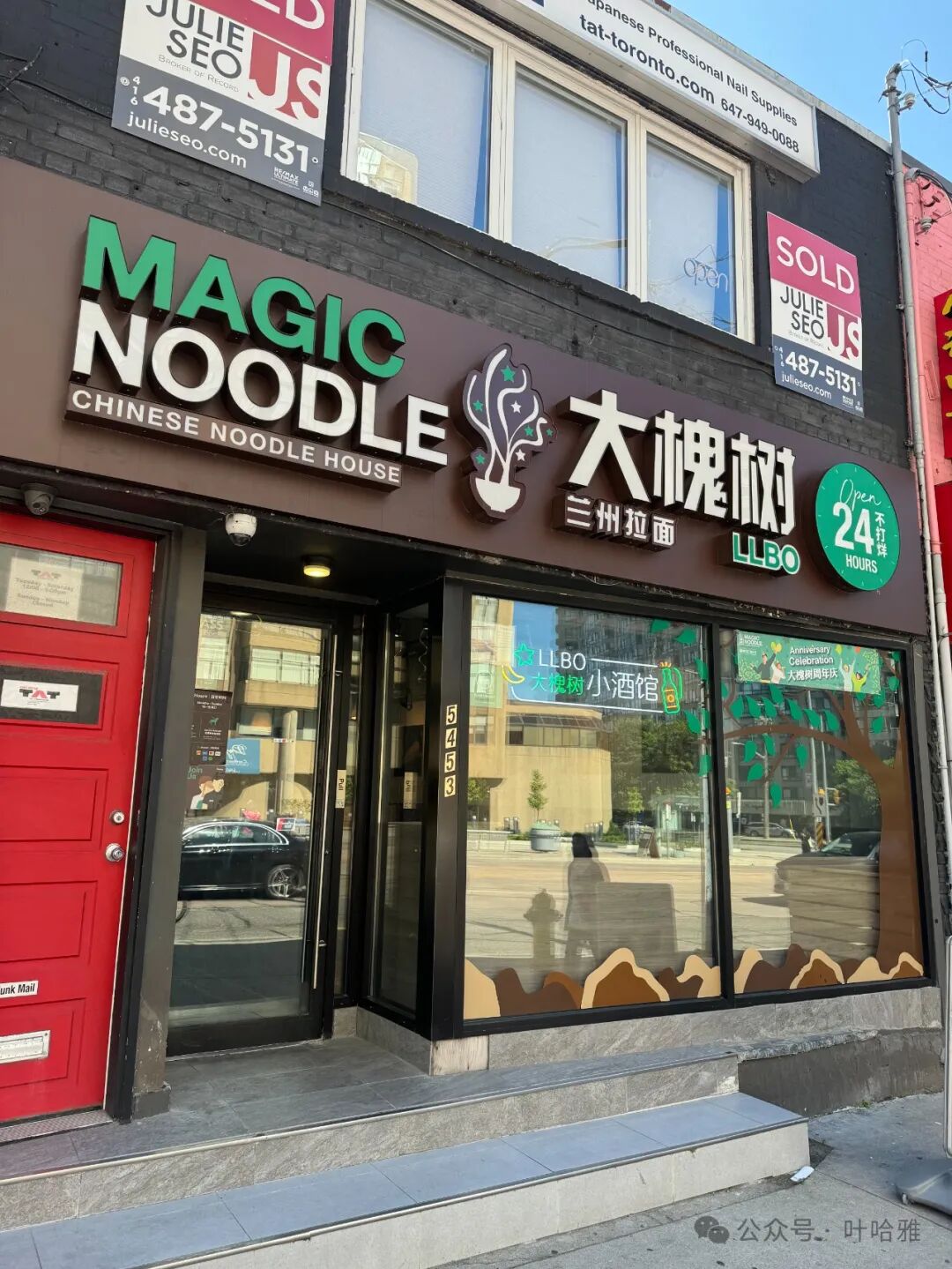
Don't worry, I will introduce a halal noodle shop later.
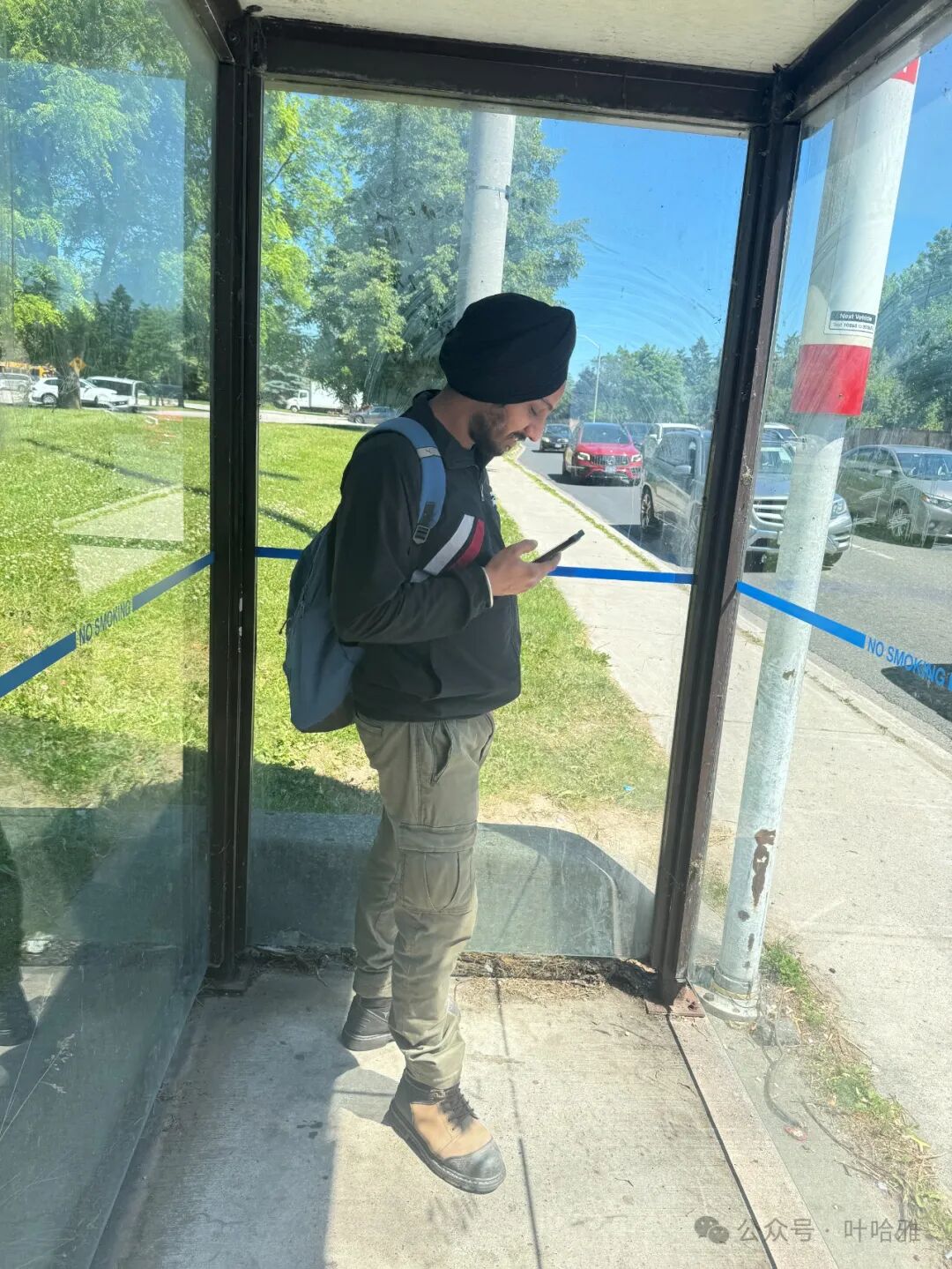
India is not currently issuing visas to Chinese citizens, so if you want to see Indian people, come to Canada. India is the top source of immigrants to Canada, and you can find Indian people everywhere here. They are clean and hygienic. The ones wearing turbans are Sikhs. There are over 700,000 Sikhs in Canada. They are often mistaken for Muslims, but Sikhs and Muslims are actually rivals. Sikh teachings seem designed to oppose Islam. For example, Sikhs do not eat any religious food, including halal food. If they don't know the source of the meat, they cannot eat it. They only eat meat slaughtered by their own people, which leads some to mistakenly think Sikhs are vegetarians. They are also not allowed to marry Muslims. Because Sikhs are a minority in India and face oppression, a large number of them have immigrated to North America as refugees.
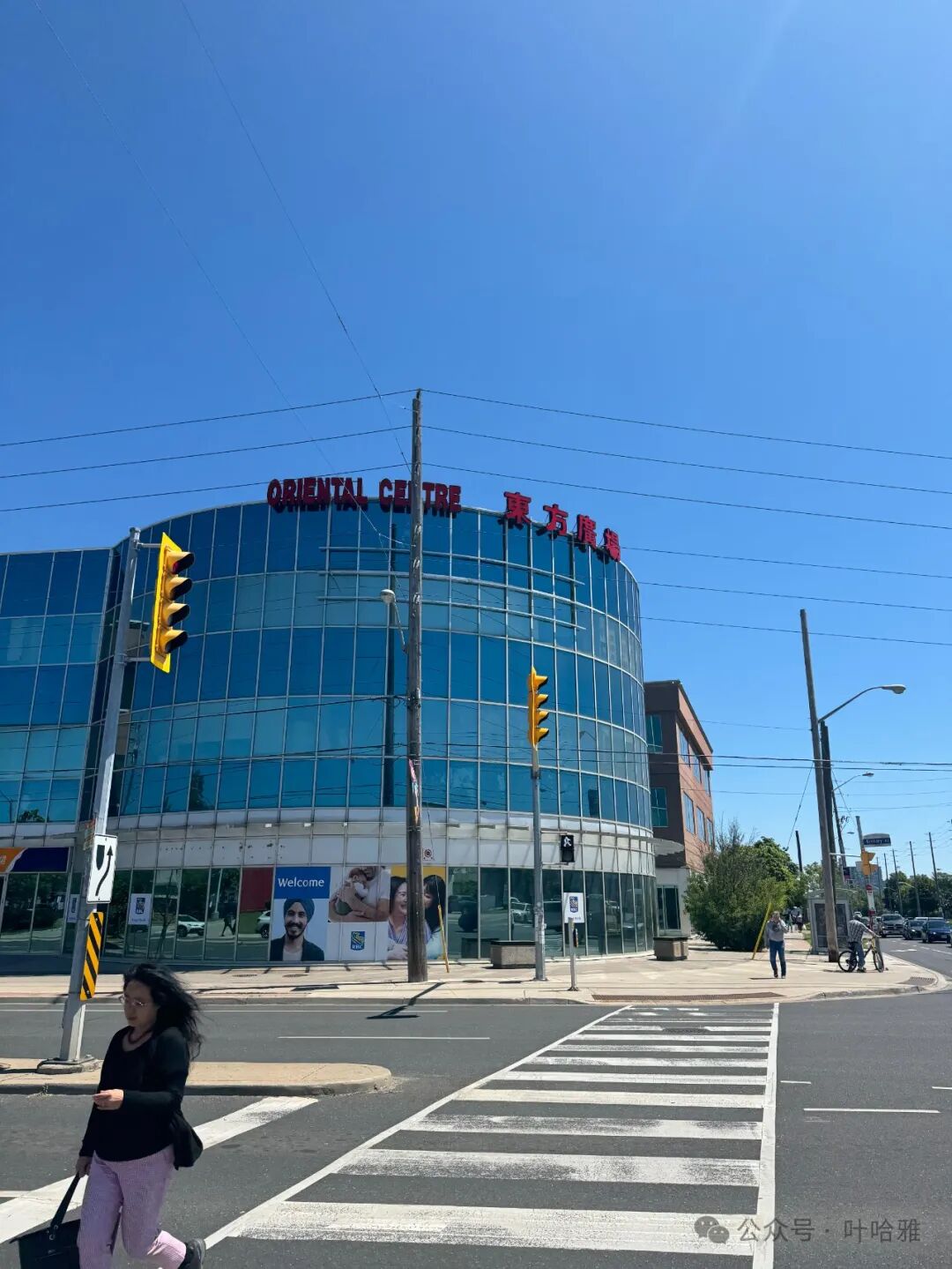
The Chinese Muslim Association of Canada is located on the third floor of the Oriental Centre in Scarborough. It used to be on the second floor. In June 2024, the association president, Bao Lin Zhu, paid in full to purchase a property on the third floor for the association's use. The original second-floor location remains open as the Hui Muslim Food Culture Center.
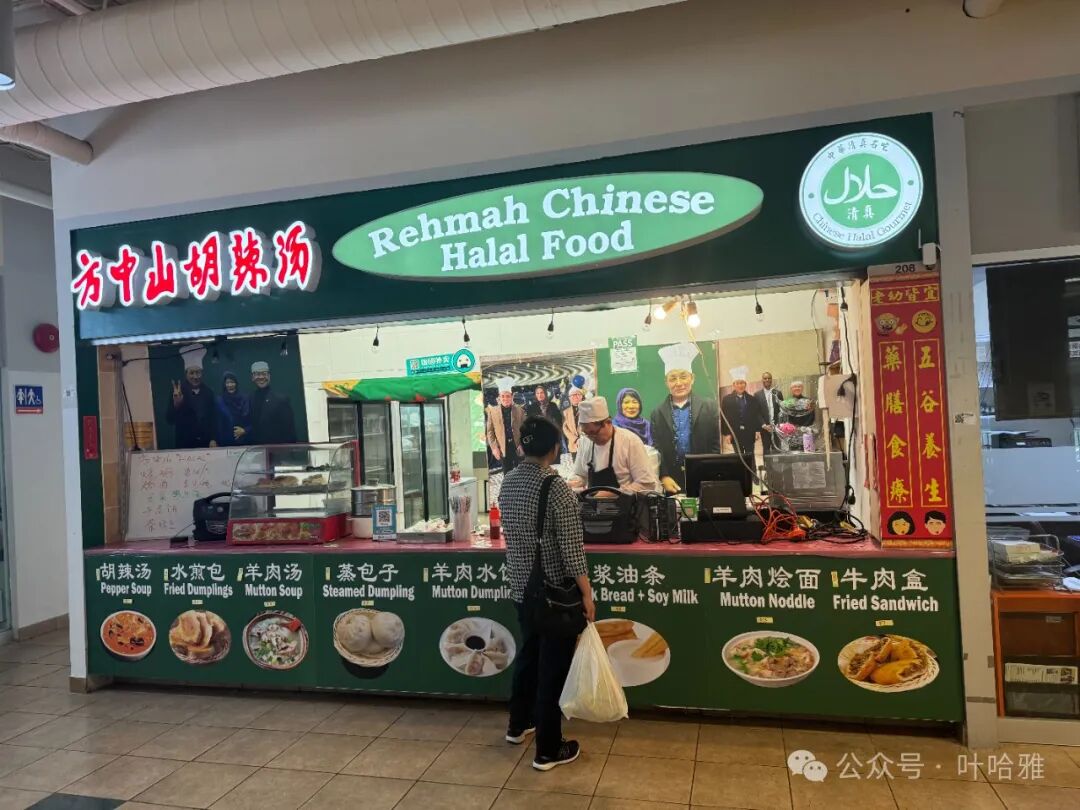
The Fang Zhongshan spicy soup (hulatang) on the second floor is run by the president, who is from Henan province and a fellow townsman of Fang Zhongshan. The shop is authorized by Fang Zhongshan, but the taste of the spicy soup is completely different from the one in the Central Plains. It leans more toward the Xiaoyao Town style and is not as spicy.
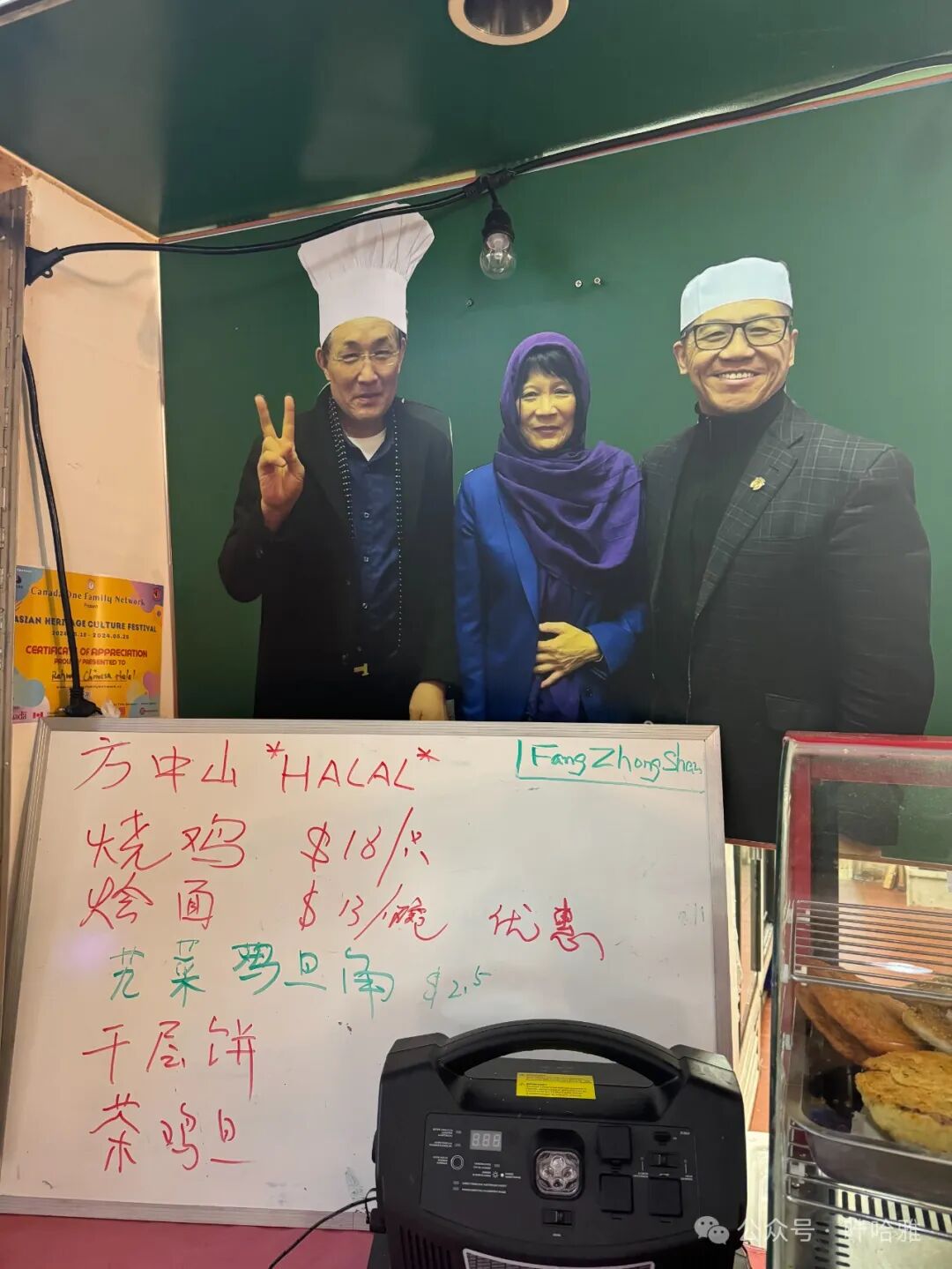
The person on the far right is President Bao Lin. The chef on the left is also from Henan and immigrated to Canada to follow his children's studies.
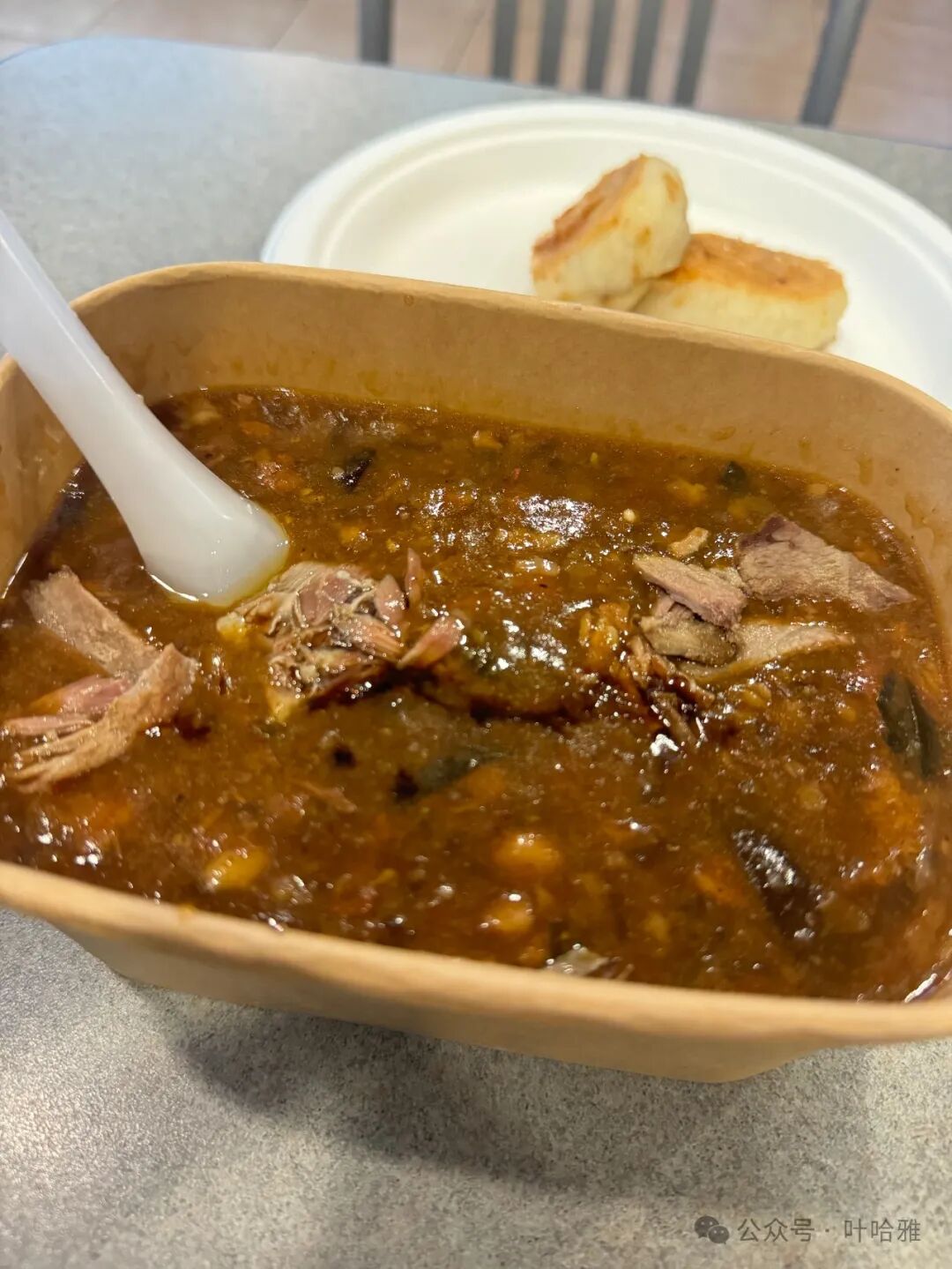
Besides spicy soup and pan-fried buns (shuijianbao), the shop also prepares traditional Chinese Hui Muslim foods like fried dough (youxiang) for Eid al-Adha.
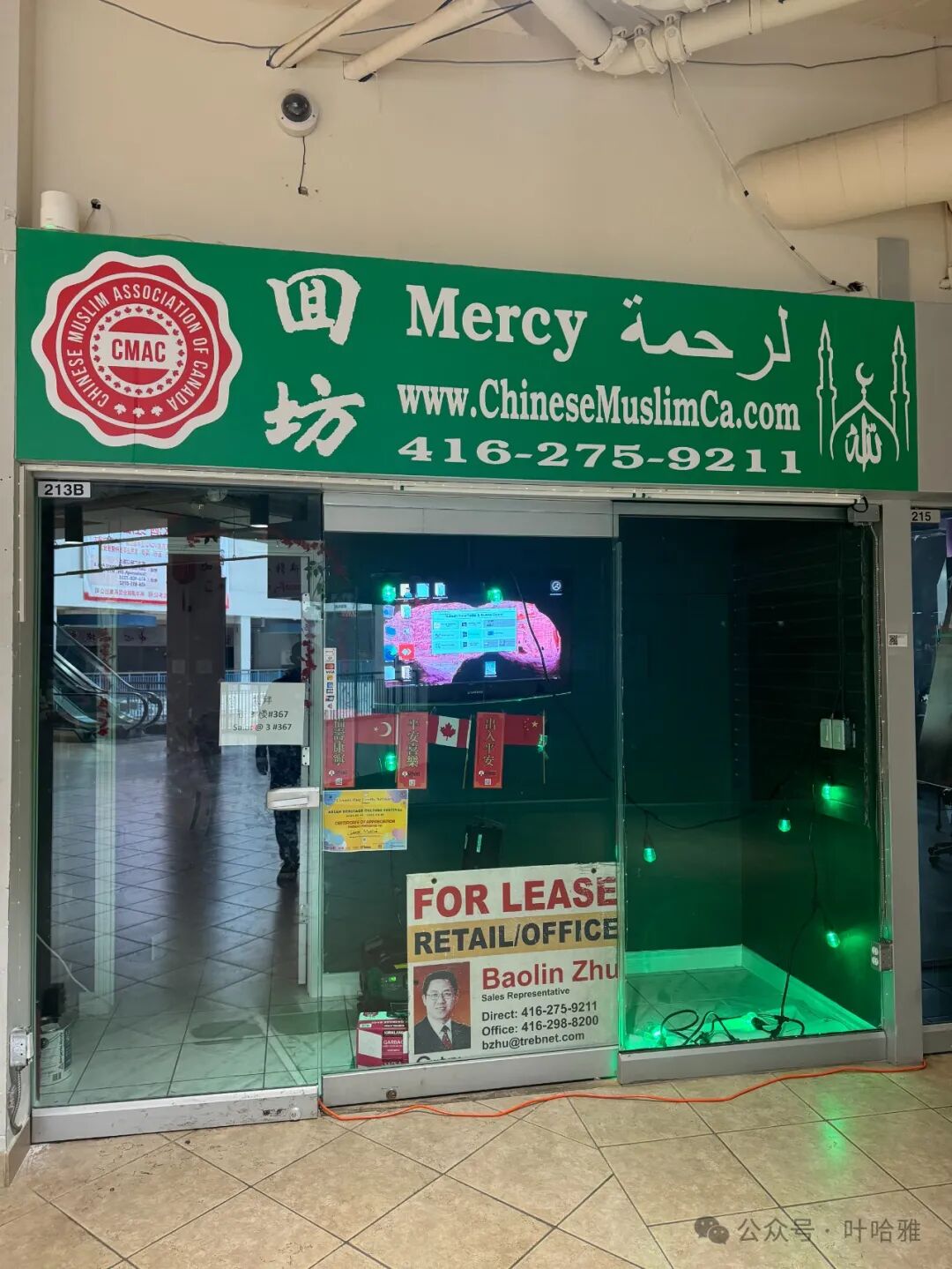
The room next to the spicy soup shop was the association's original prayer room. Now that they have the third-floor property, this space is used for reception, office work, and daily tasks.
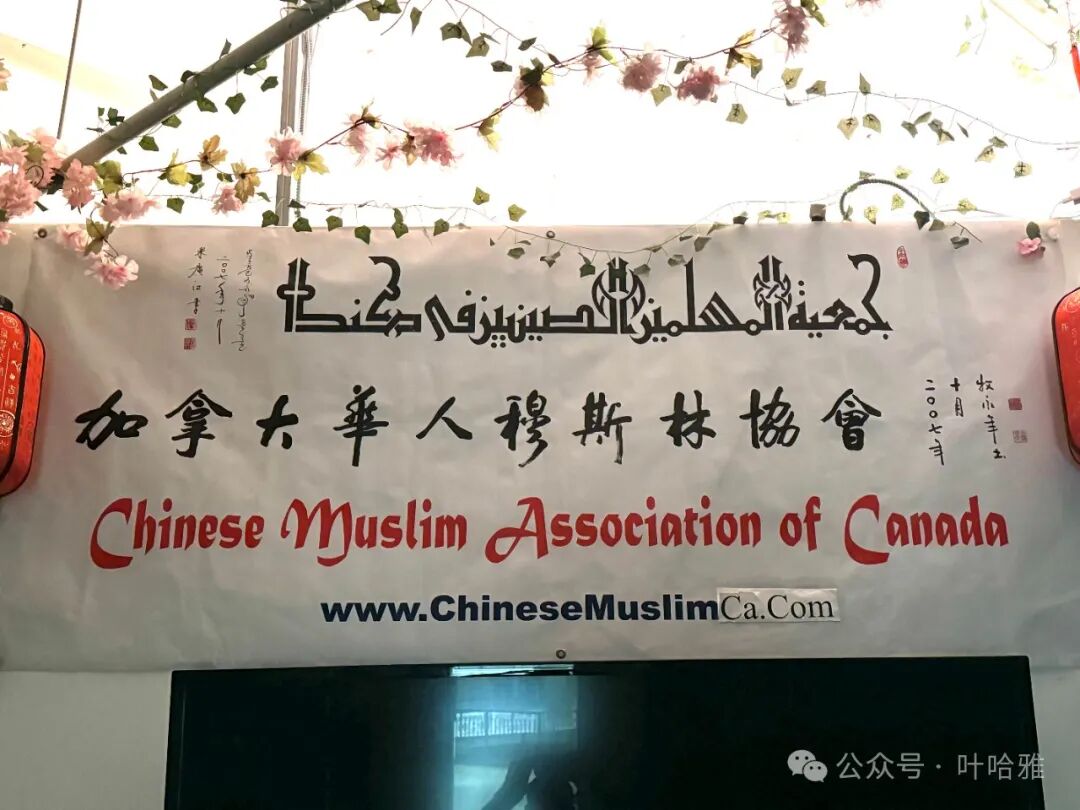
This is a plaque inscribed by Mr. Mi Guangjiang for the Chinese Muslim Association of Canada. He has also visited this place himself.
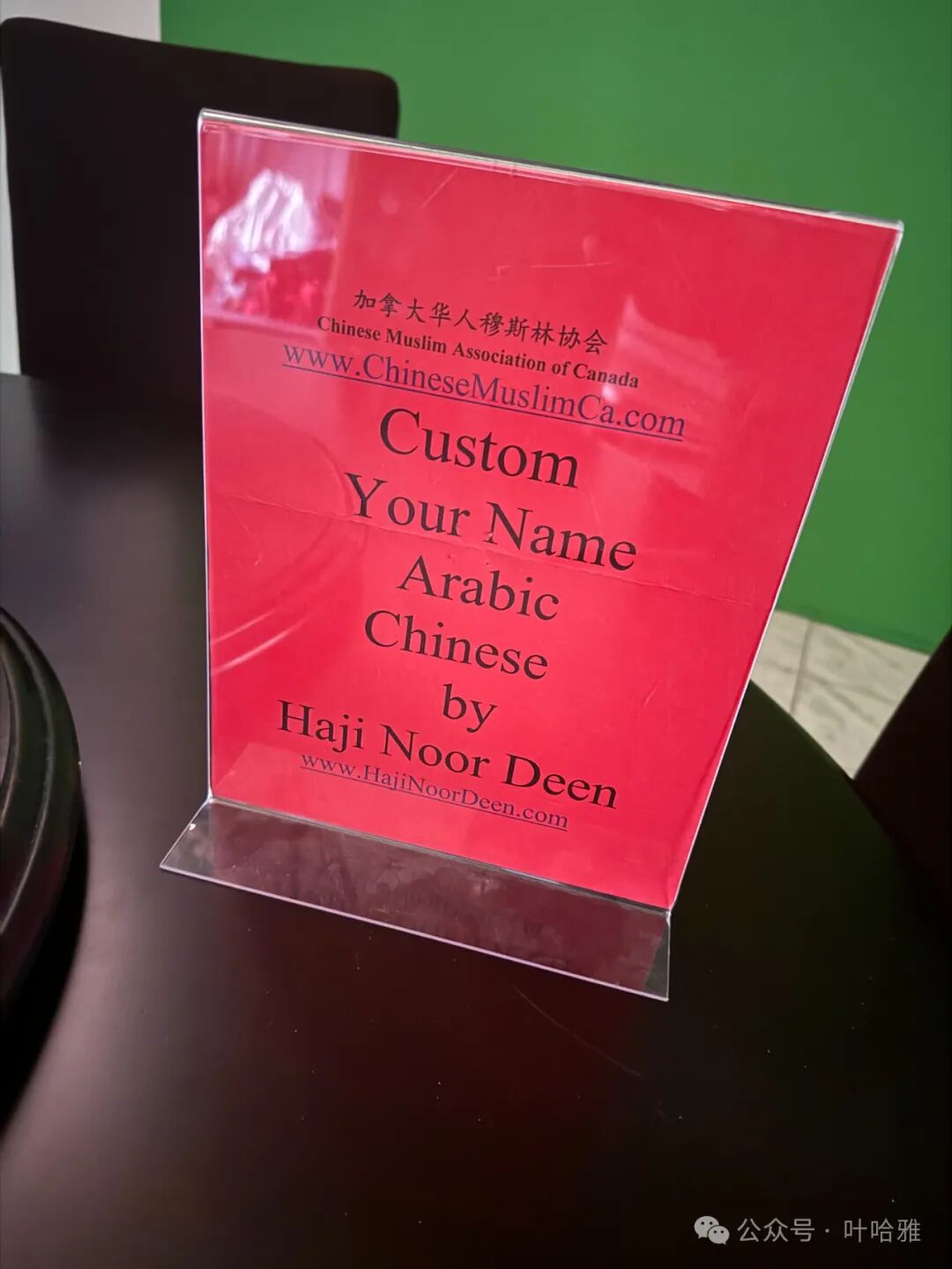
I did not know President Bao Lin before I came to Toronto. I planned to visit the day before Eid al-Adha to check the time for the holiday prayers. I happened to run into the president, and he very warmly invited me to take a tour.
To promote the Chinese Muslim Association, President Baolin installed a light box on the property window and kept it lit all night. This is how the building looks from the outside at night; it is very eye-catching.
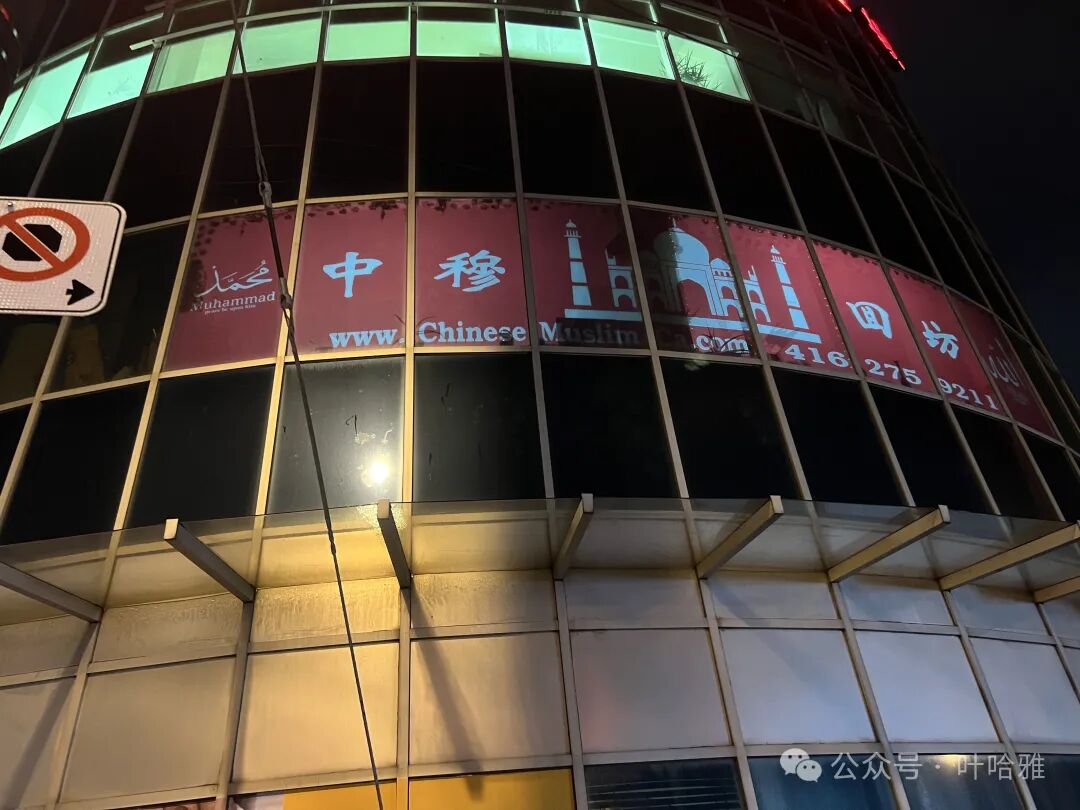
The building management thought this was inappropriate and cut off the power without permission. The building is owned by Chinese people, but the overseas Chinese here do not seem friendly toward Muslims. President Baolin is now taking legal action to protect his rights.
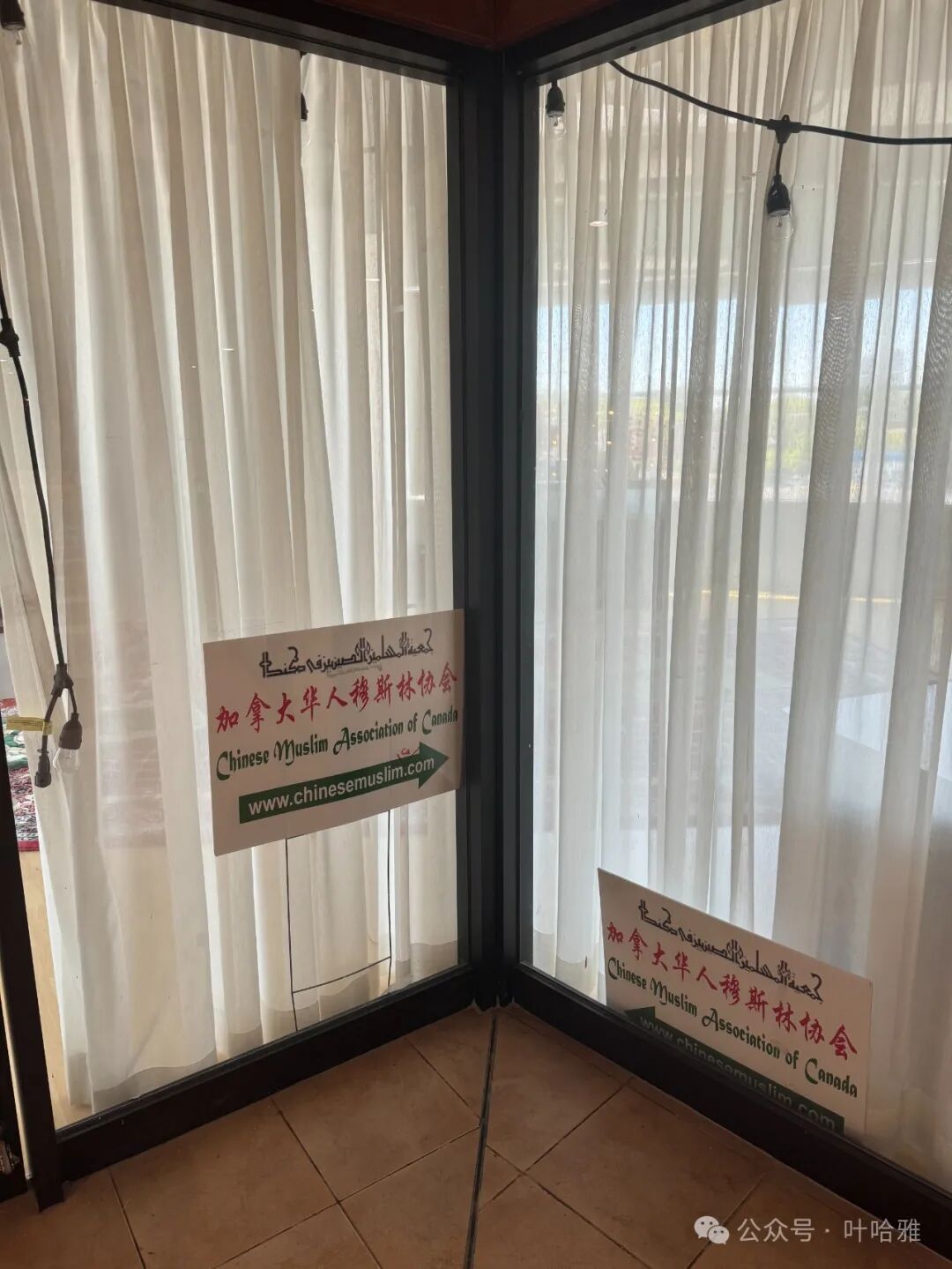
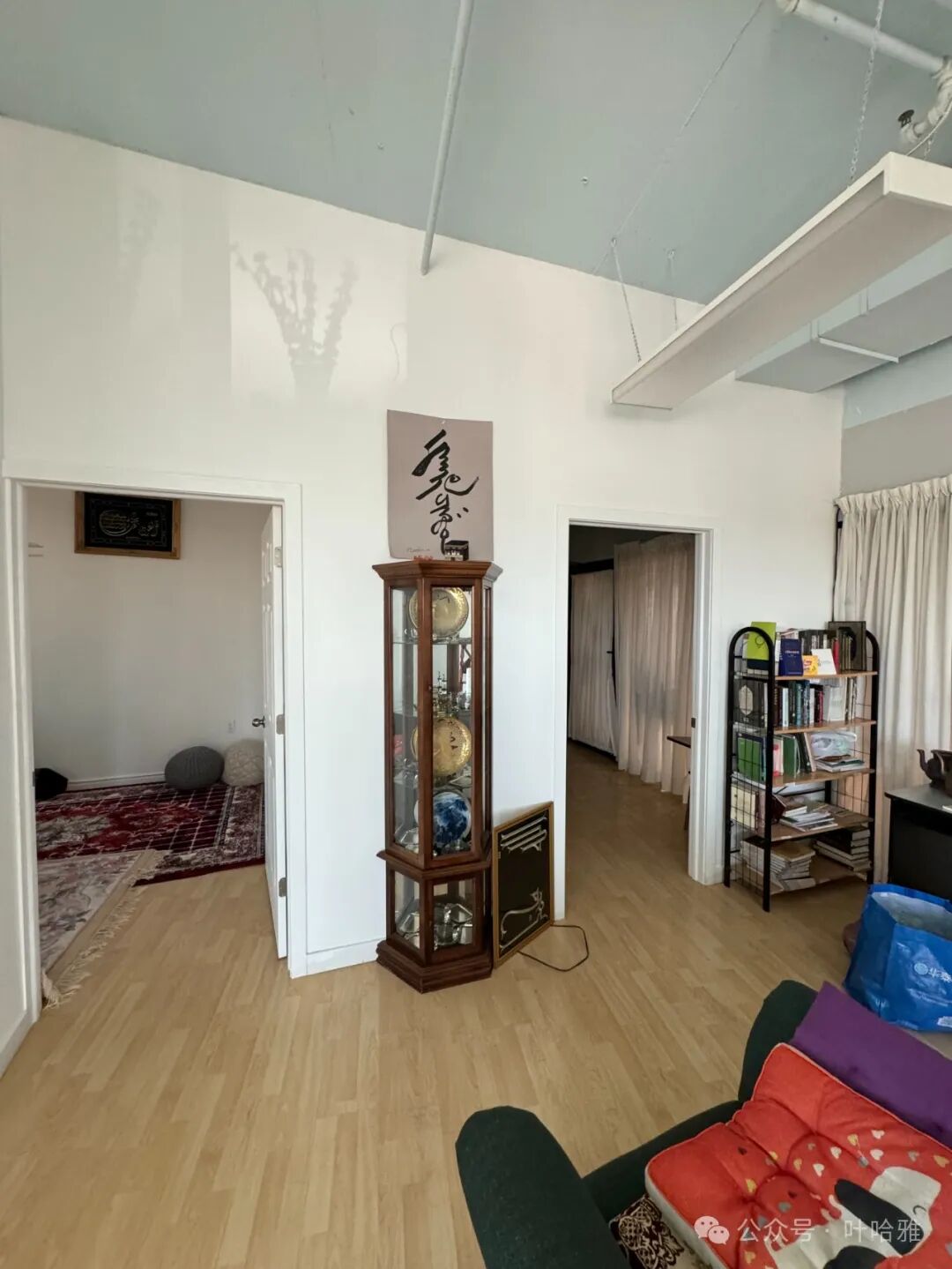
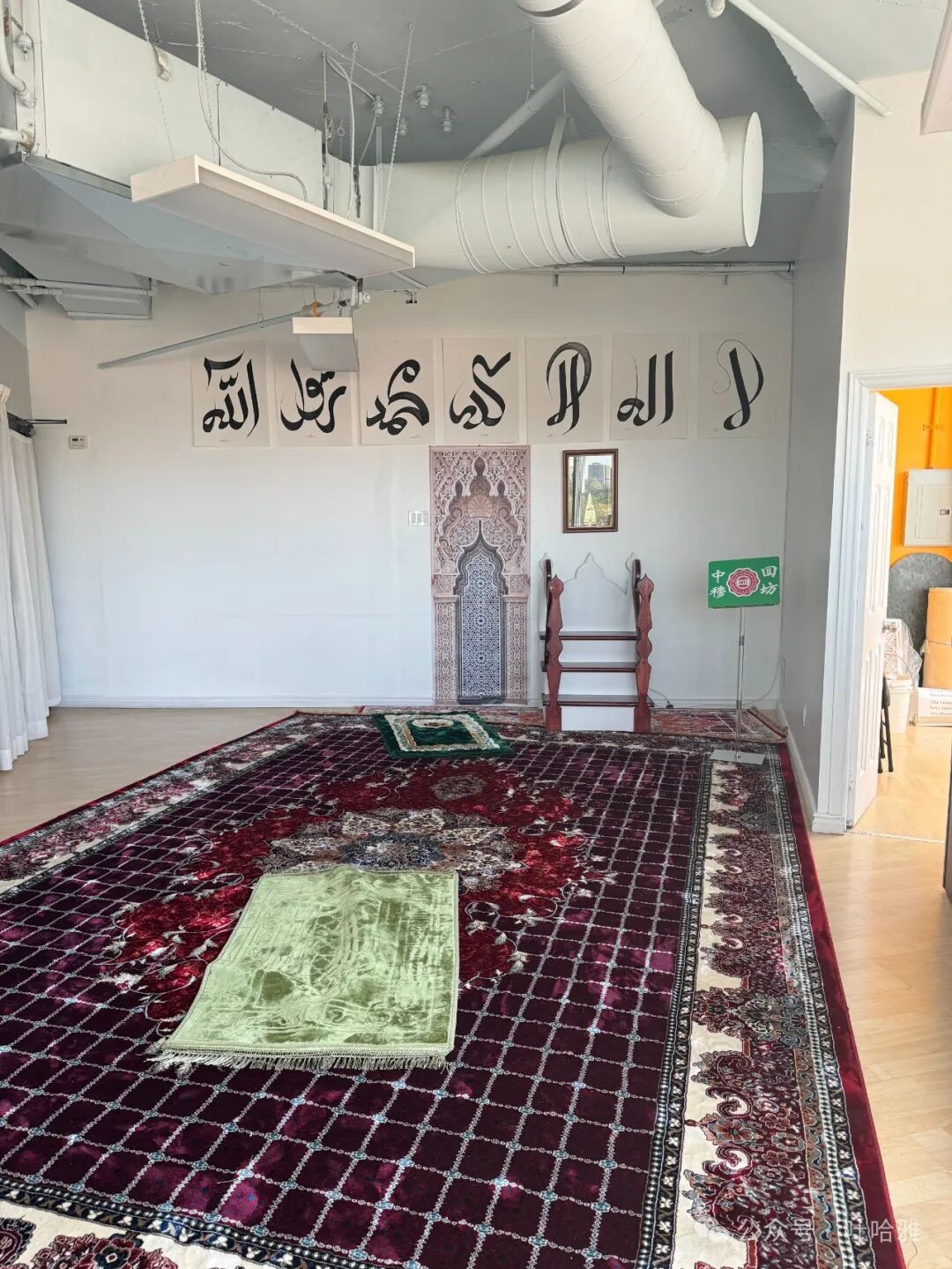
The third-floor property was just bought. When I arrived, it was being used for the first time, so many decorations had not been changed yet. The facilities look very simple, but everything necessary is there, except for an imam.
I was surprised that the Eid prayer was the next day, but they still had not found an imam to lead the prayer. President Baolin was anxious and made several calls, including asking a Pakistani student from a brother mosque for help, but he could not find anyone suitable. He said if there was no other choice, he would ask me to do it.
I felt very caught off guard. In the Canadian Hui Muslim community, there are about a hundred people who visit regularly. Many people from China have a weak sense of faith and are not in this circle. Others did not have the chance to learn back home, so they have a strong desire to learn here. Everyone is eager for a full-time imam to guide them in their studies and daily worship, but unfortunately, they have not found the right person yet.
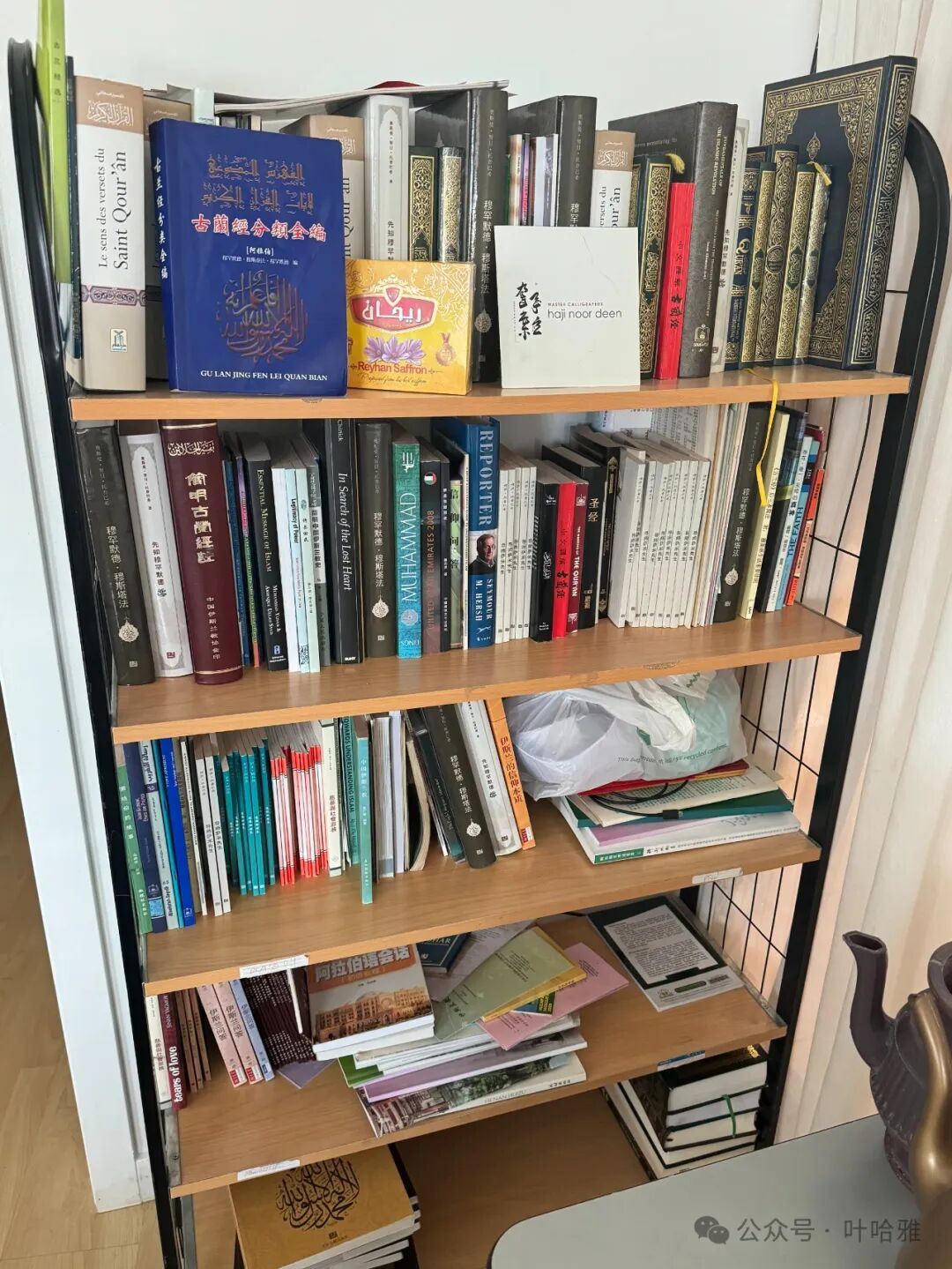
President Baolin really hopes that a capable and willing scholar will come here to teach, and he will provide all the help he can.
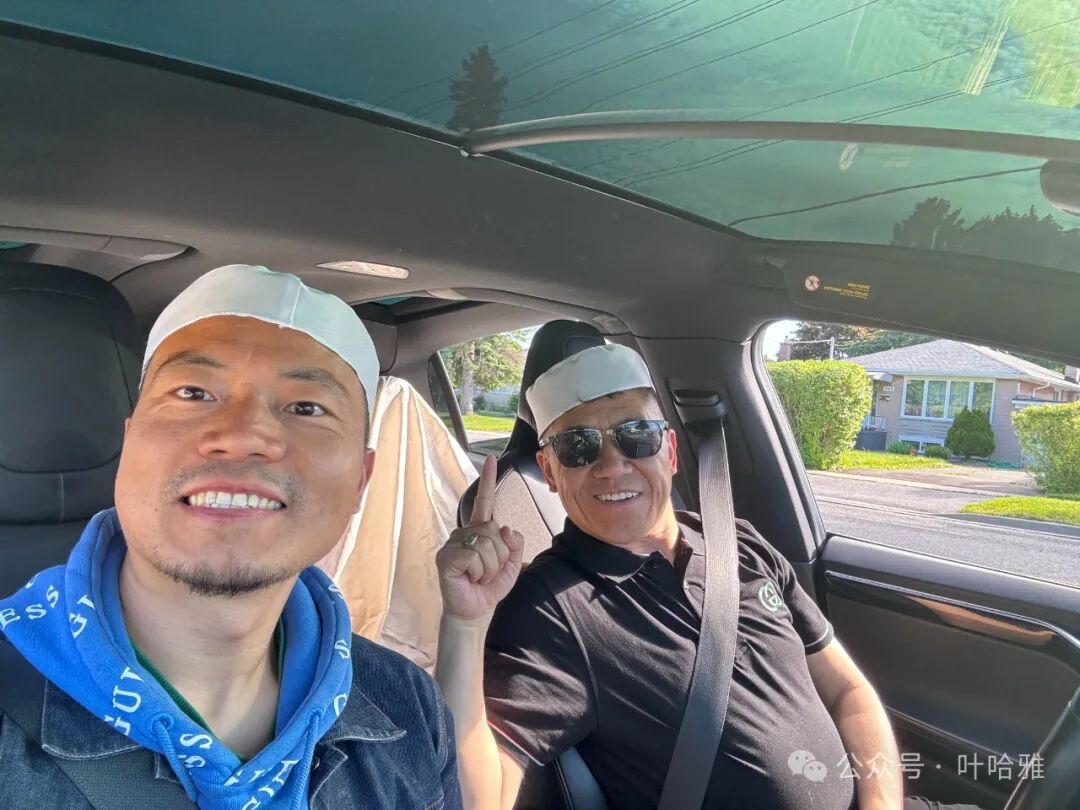
Then, President Baolin drove me around to visit a few unique mosques in the area.
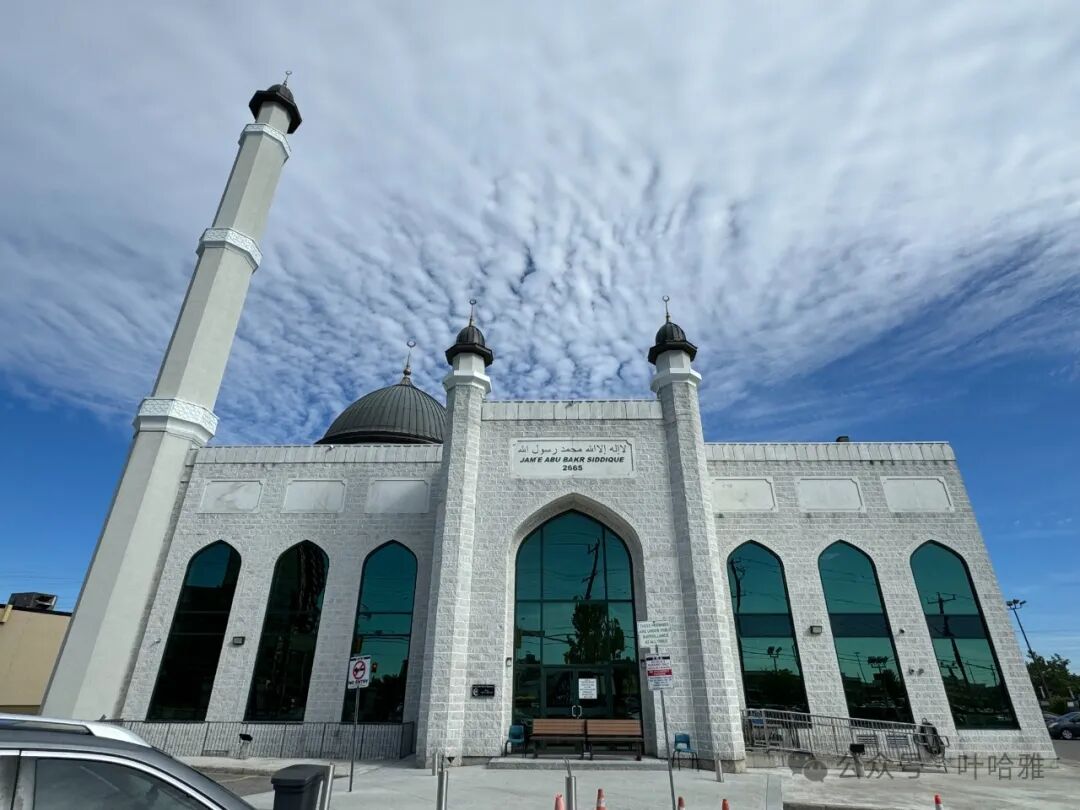
JAME ABU BAKR SIDDIQUE
In North America, the largest and most numerous mosques are definitely built by our Pakistani brothers. This is one of them. It shows that the Pakistani community is doing well overseas, not just in North America but also in Europe. They are doing better than the Chinese community, which I will explain in more detail later.
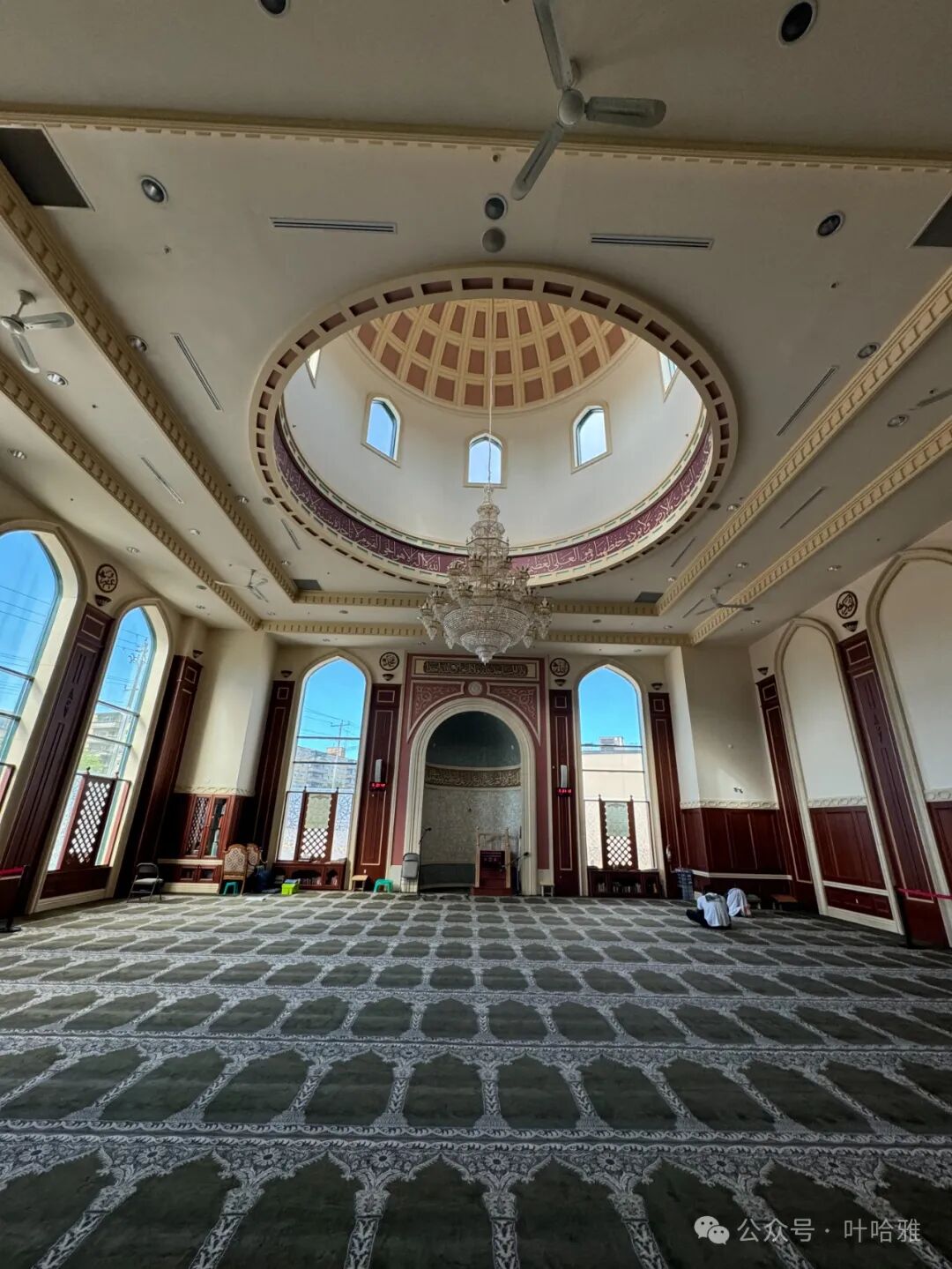
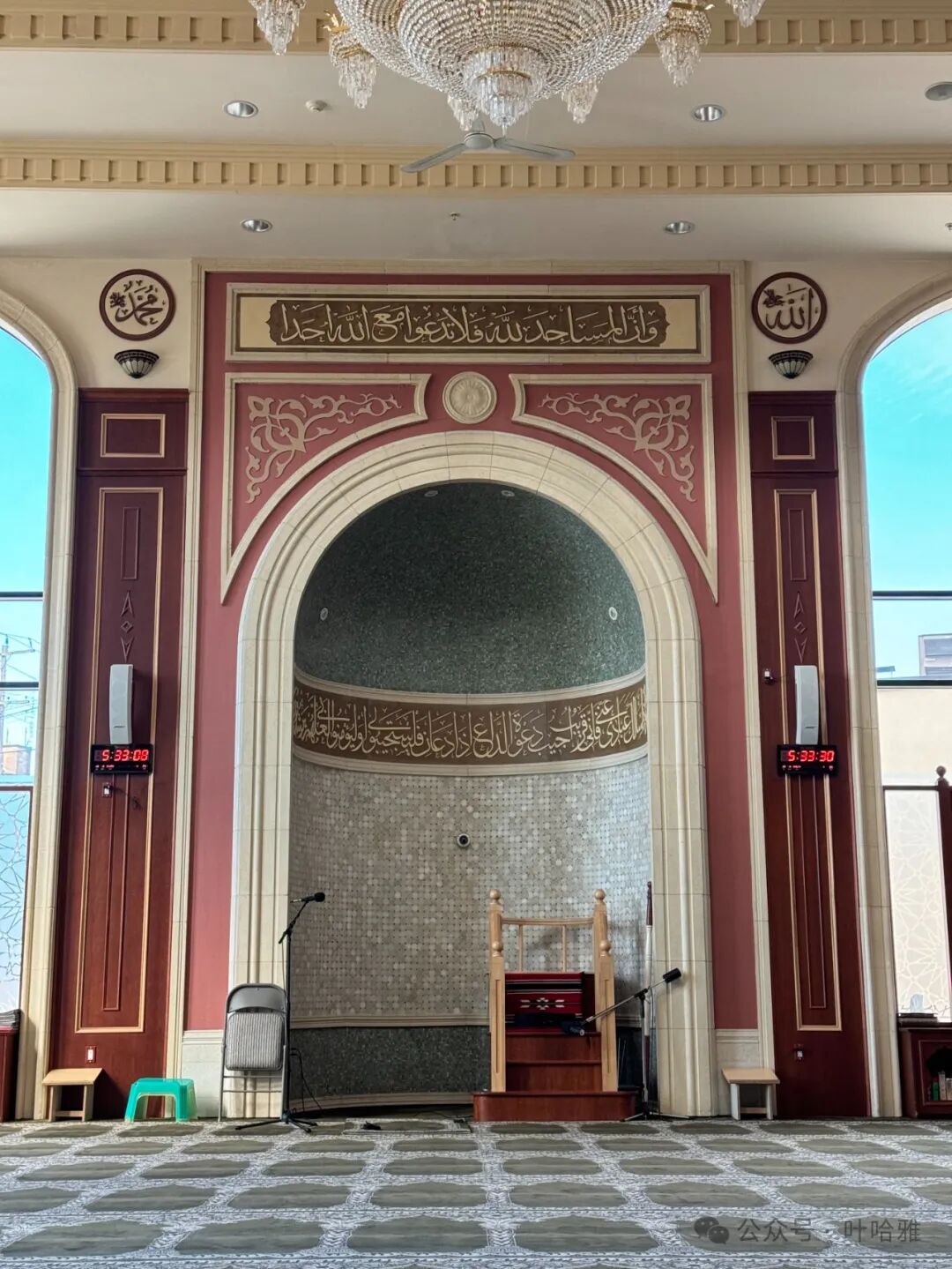
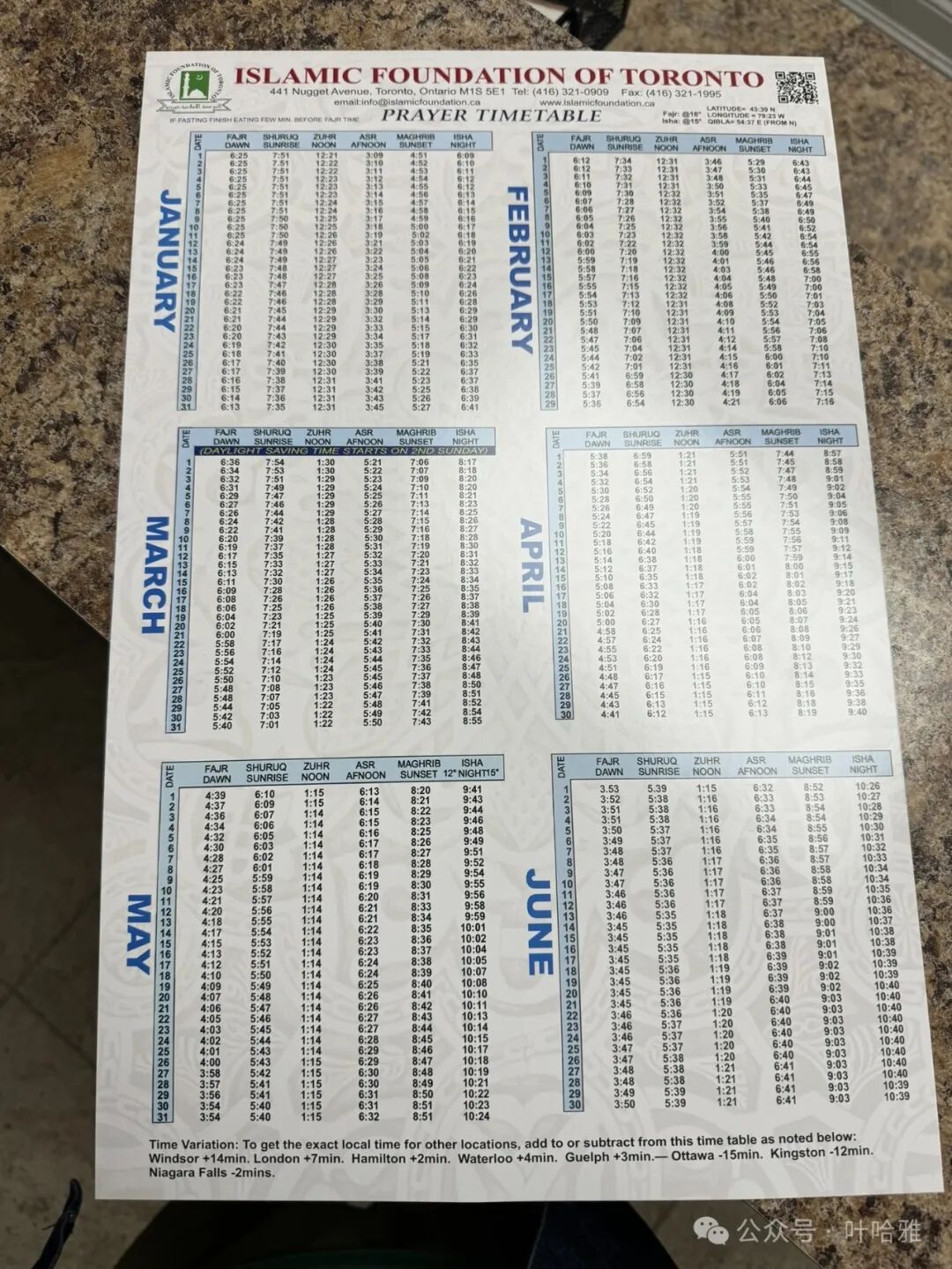
Toronto Prayer Schedule
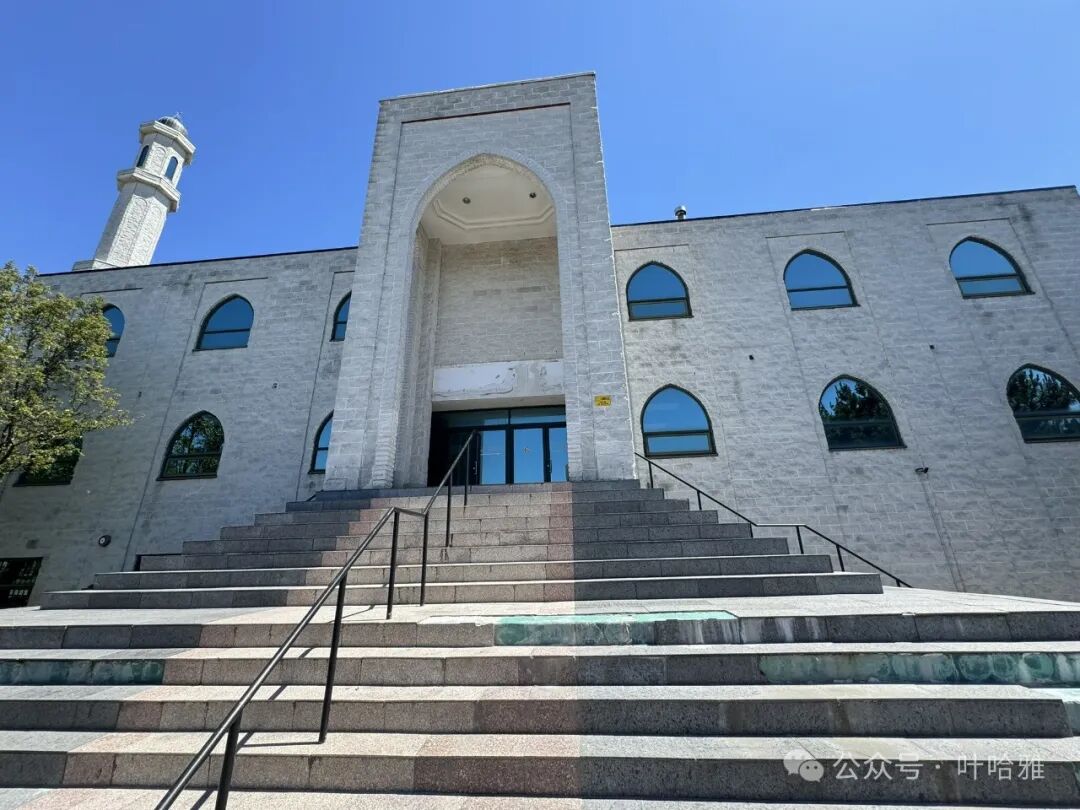
Islamic Foundation of Toronto
The Islamic Foundation of Toronto is a mosque still managed by our Pakistani brothers. President Baolin came here to ask the mosque management to help find a Pakistani student to lead the Eid al-Adha (Qurban Festival) prayer. The Pakistani prayer time is June 17, while the Hui Muslim community's is on the 16th, but we could not find anyone available.
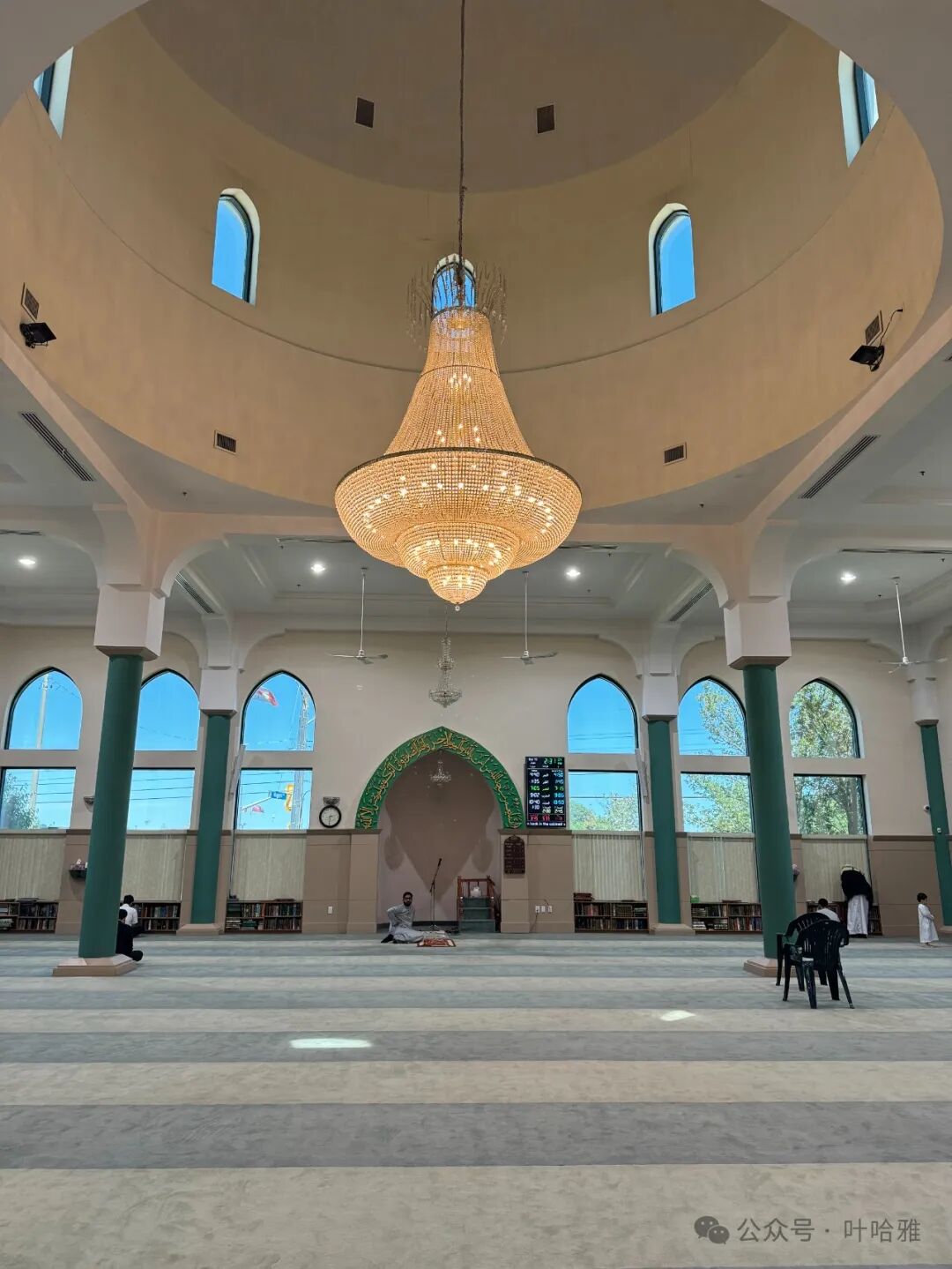
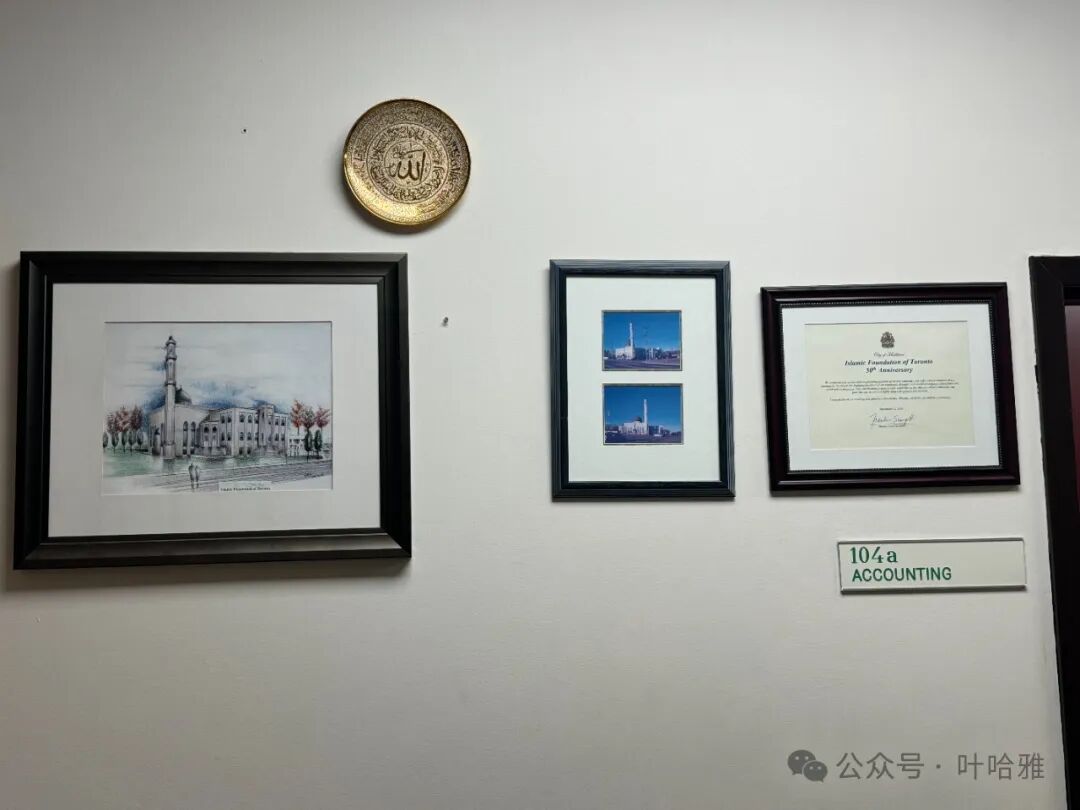
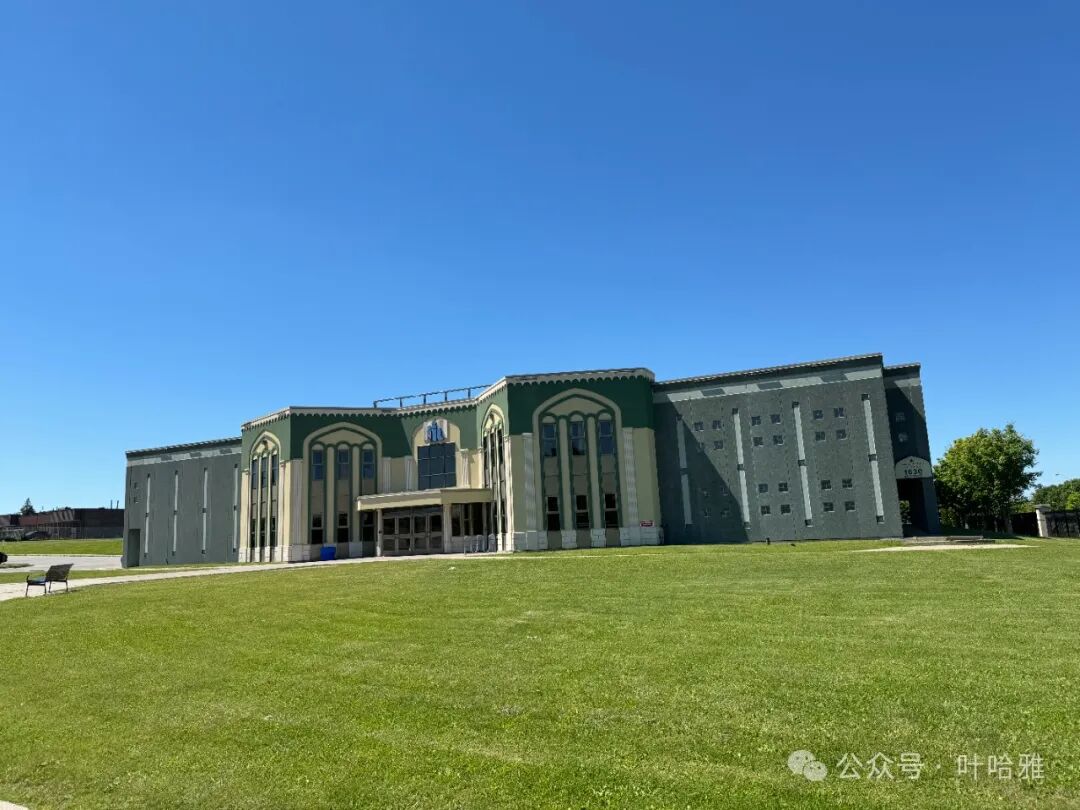
Islamic Institute of Toronto
The Islamic Institute of Toronto was founded in 1996 and moved to its new location in 2006. It covers 8 acres and is very large.
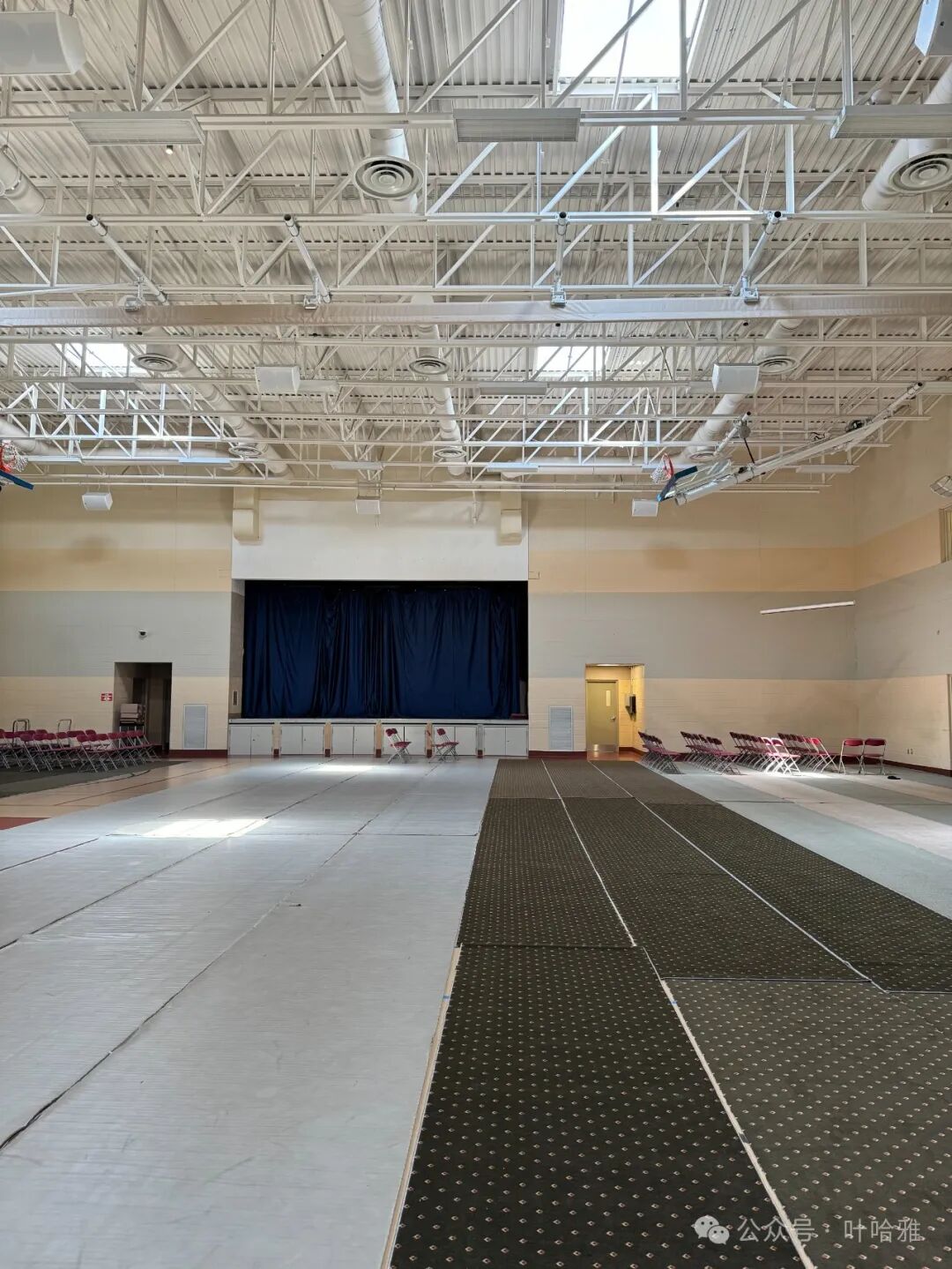
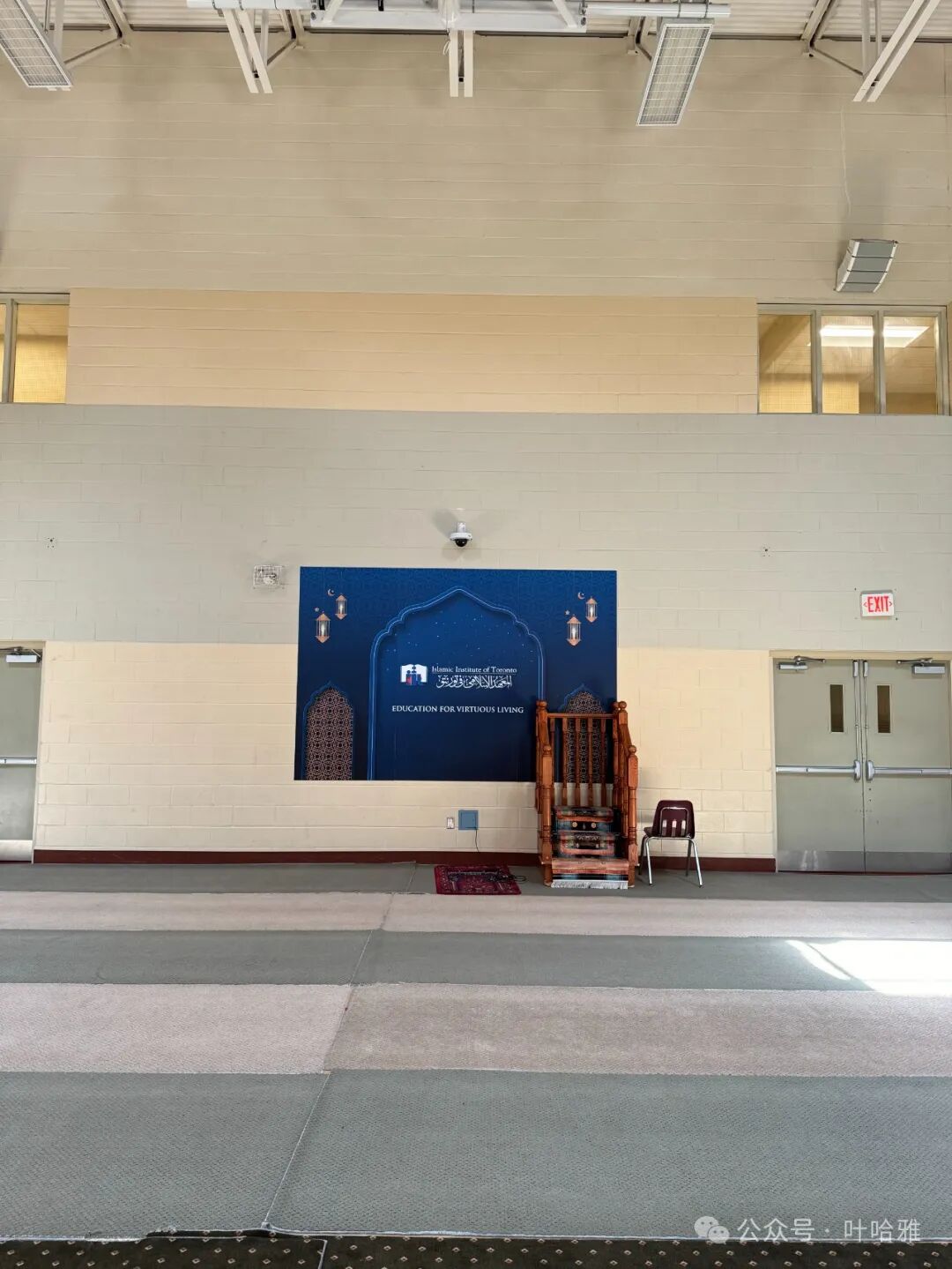
The school is usually not open to the public, but I knocked on the door and went in for a visit.
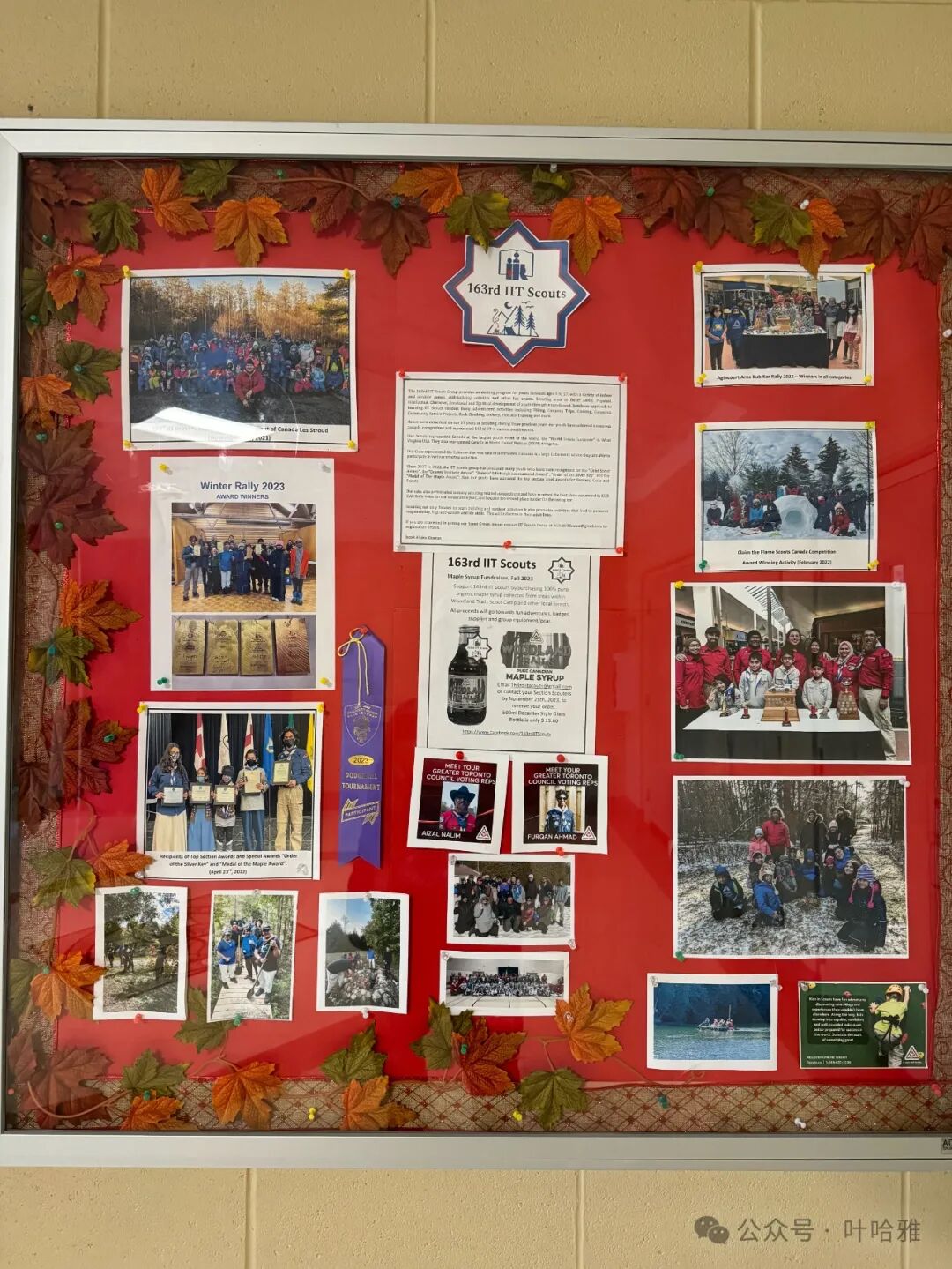
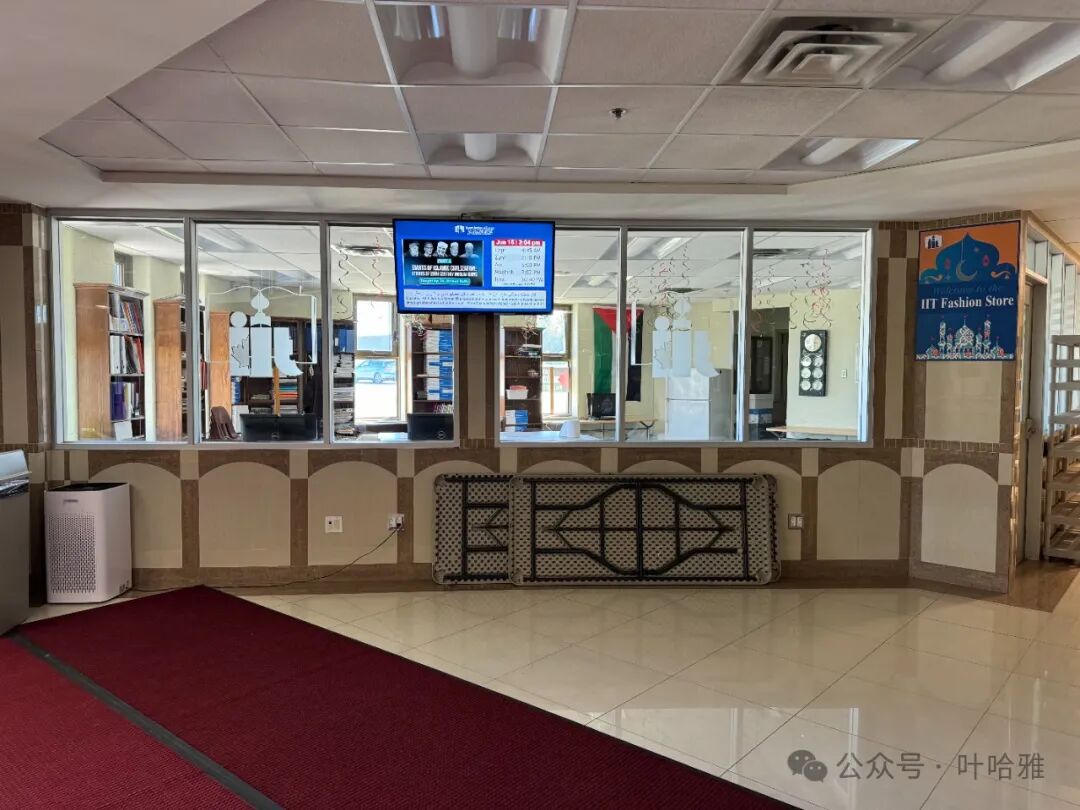
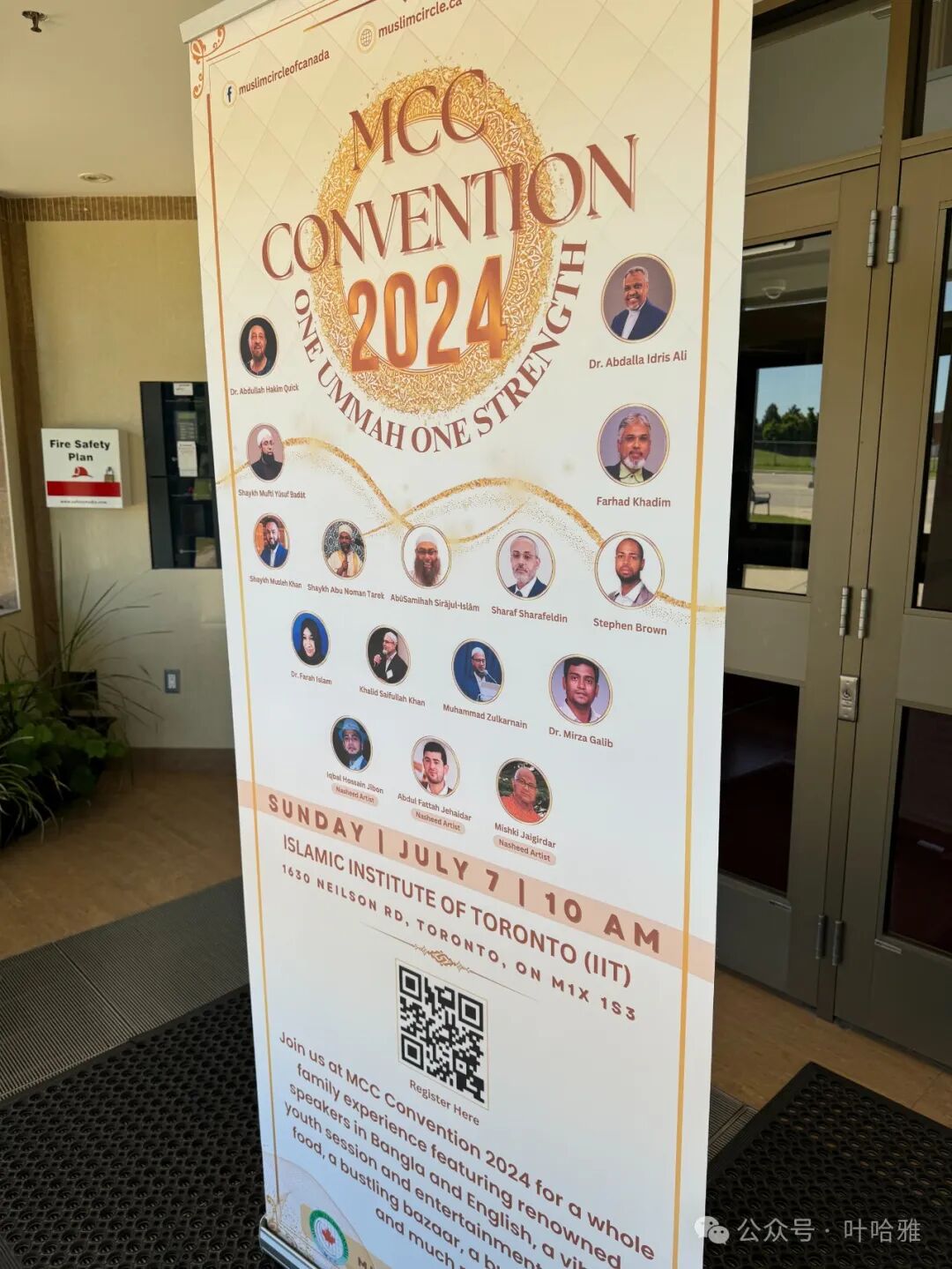
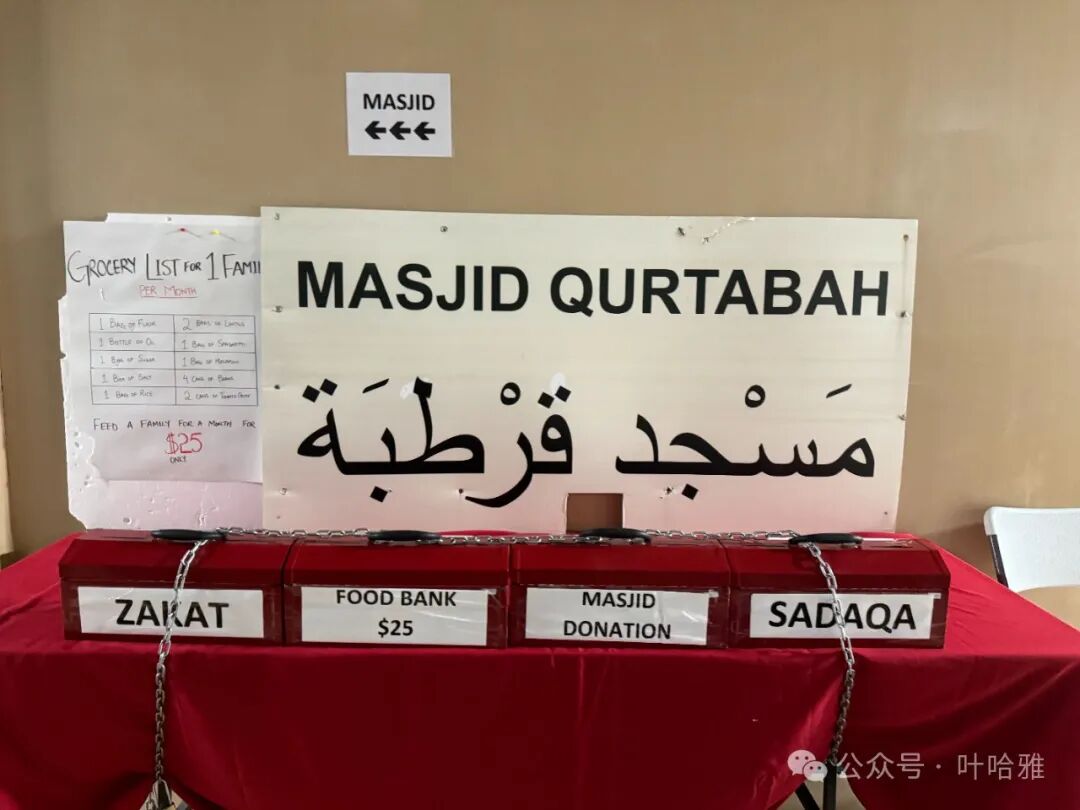
Masjid Qurtabah
This is the home of the Muslim Association of Canada. President Baolin brought me here because before the Hui Muslim community bought their own property, they did not have a permanent place for religious activities, so they used to borrow this space for Chinese Muslim events.
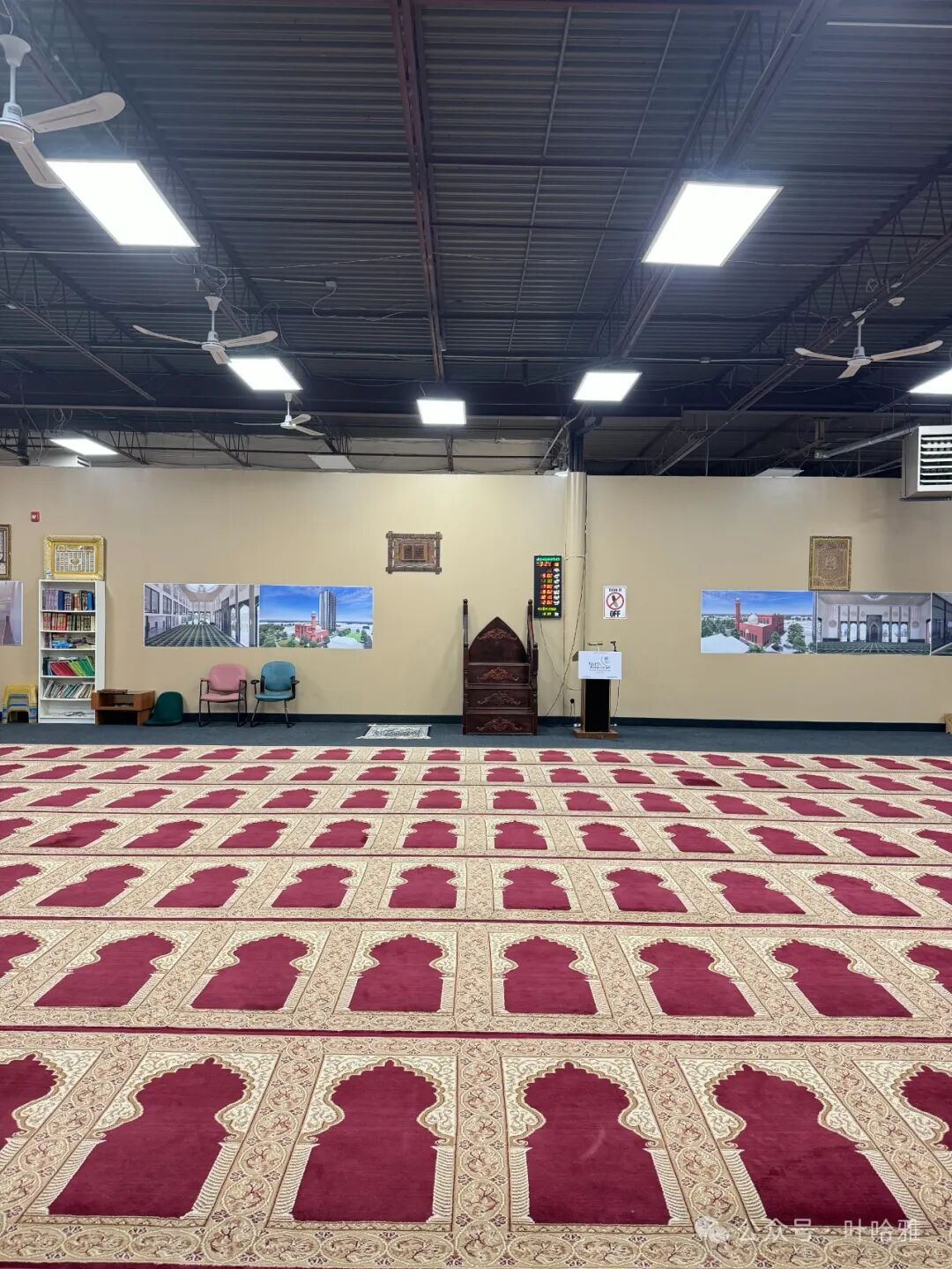
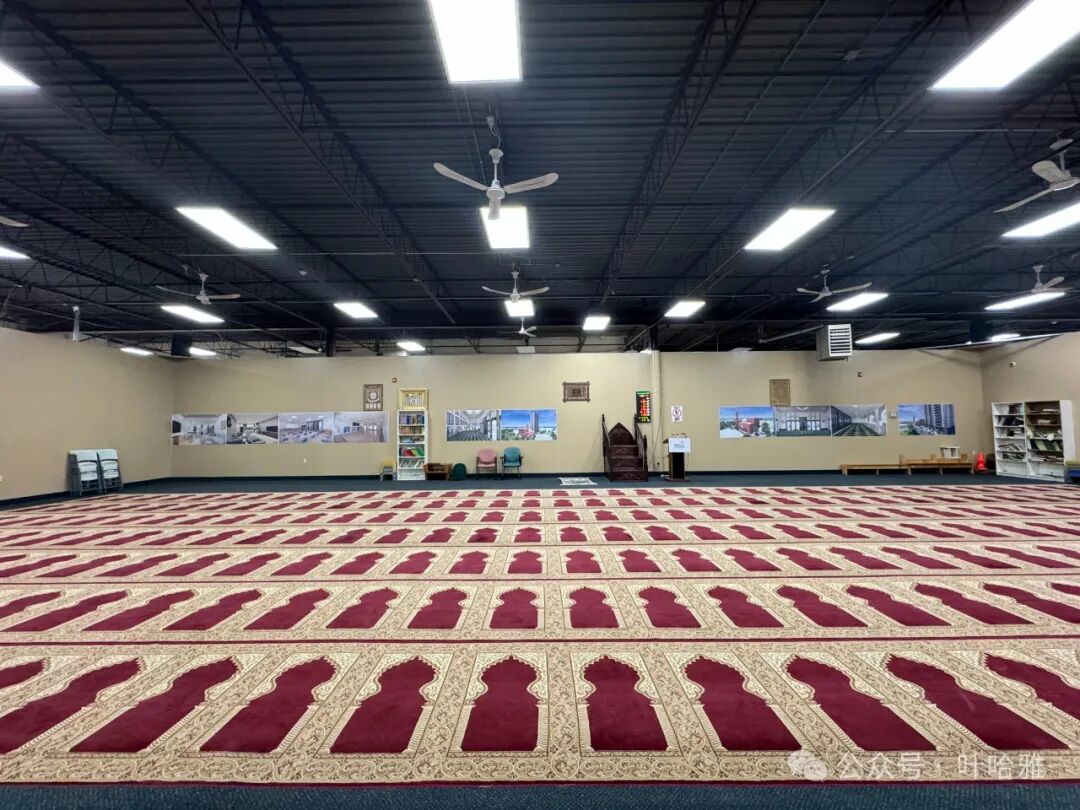
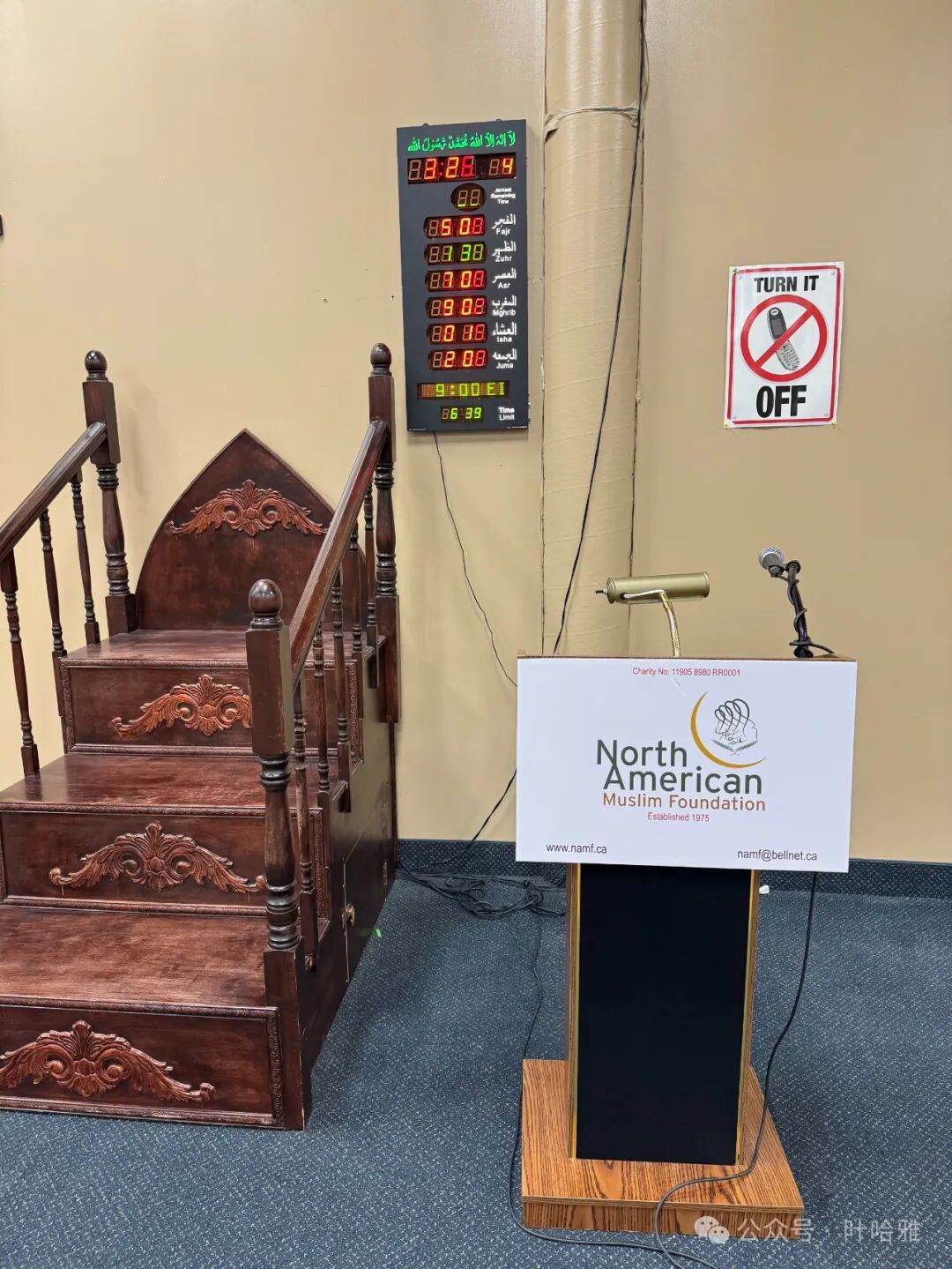
This place will also soon be renovated into a large Islamic activity center.
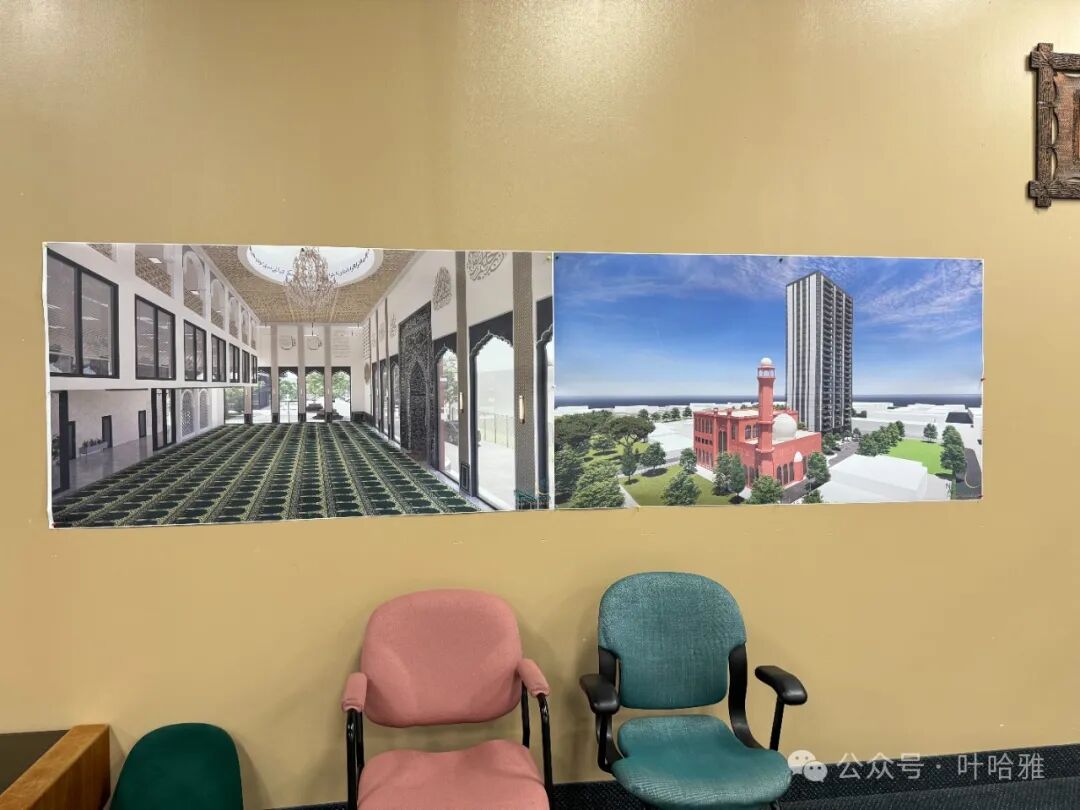
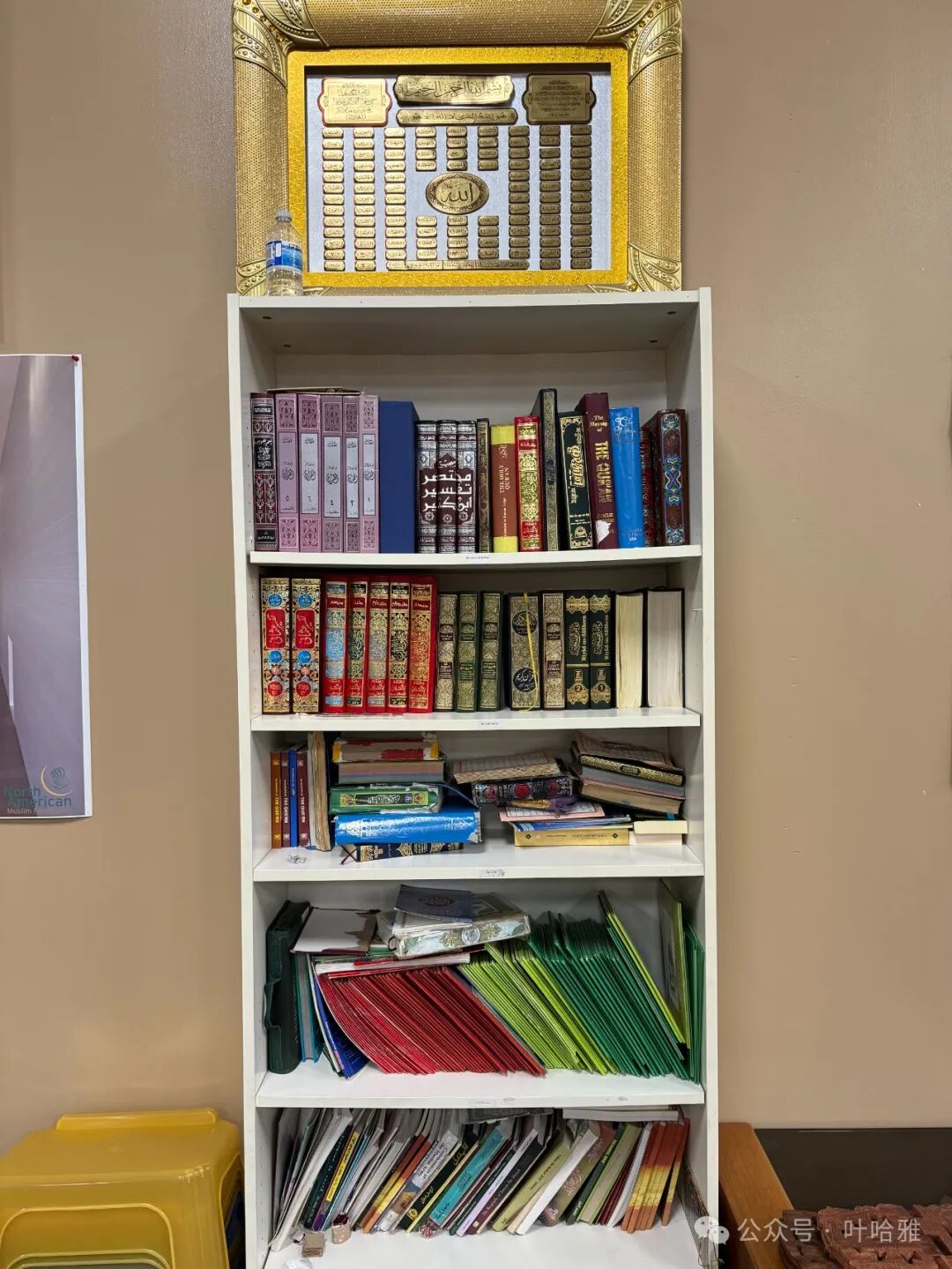
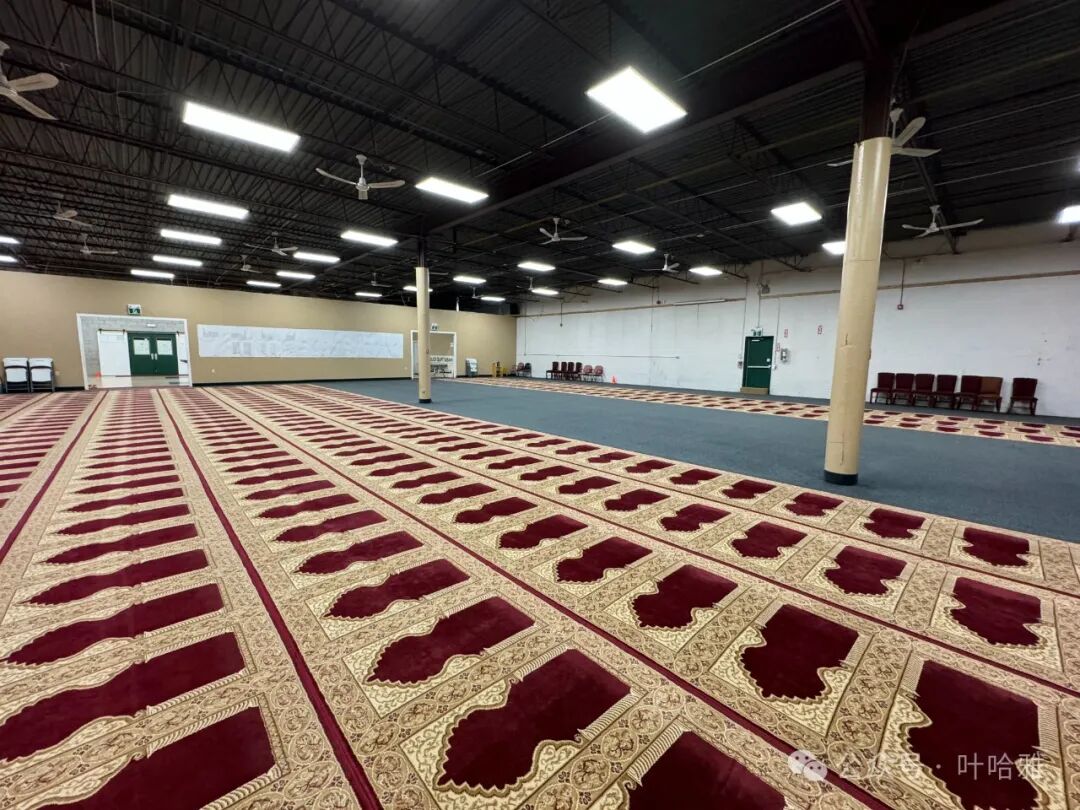
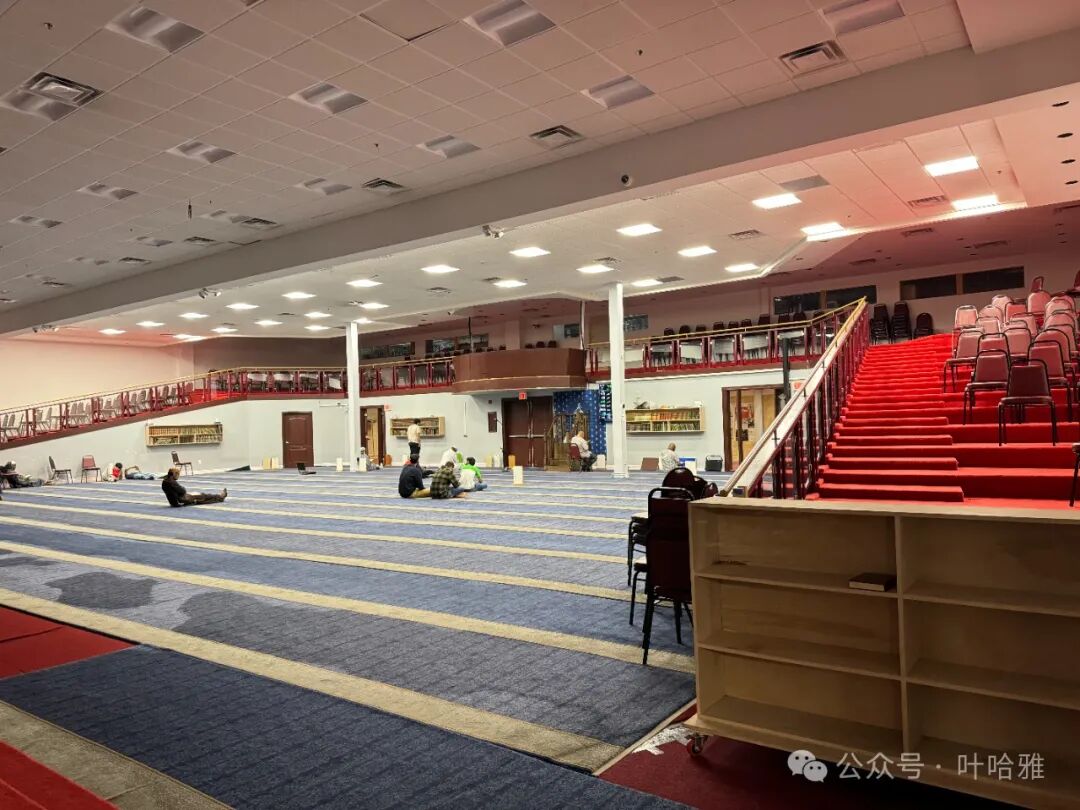
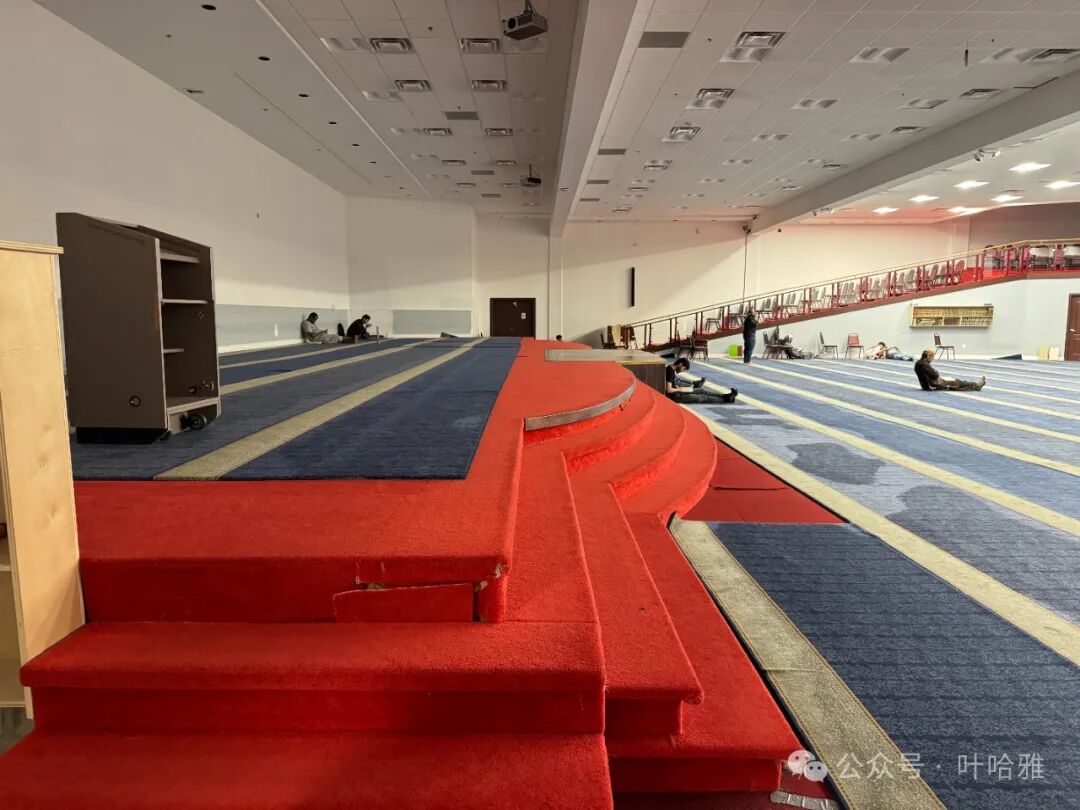
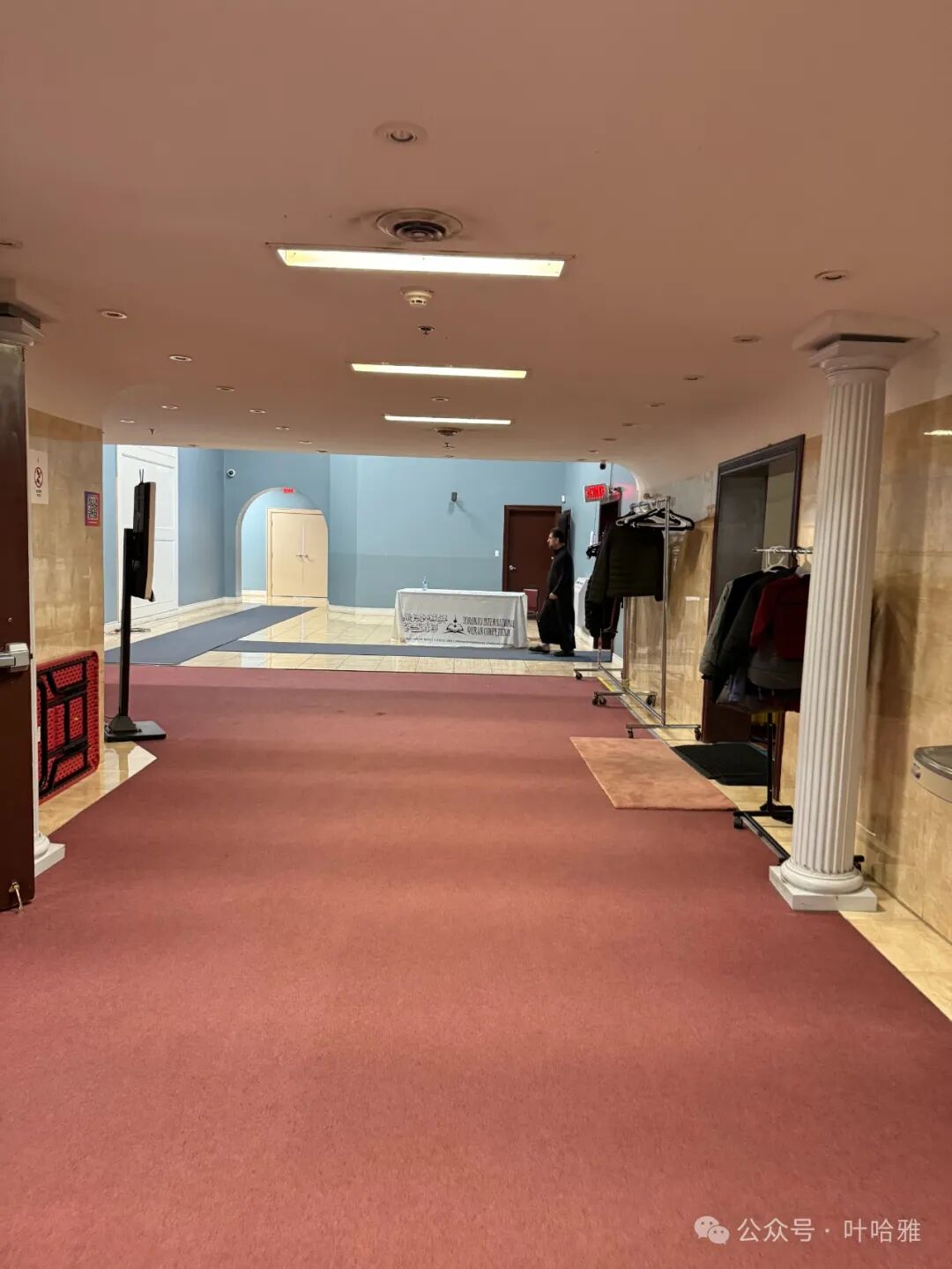
This is a mosque for Somali people.
Seeing that the Somali community has its own mosque—which was converted from a church, as many mosques in Canada were—the president hopes that one day he can also establish a Chinese Muslim community center.
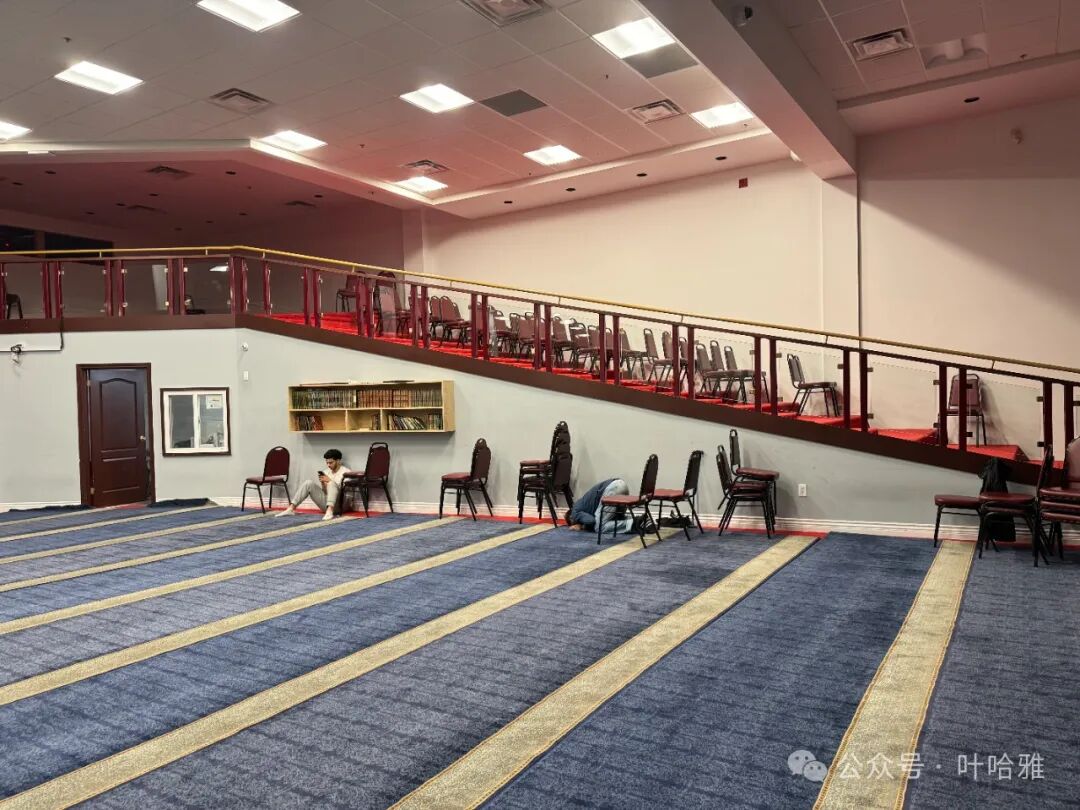
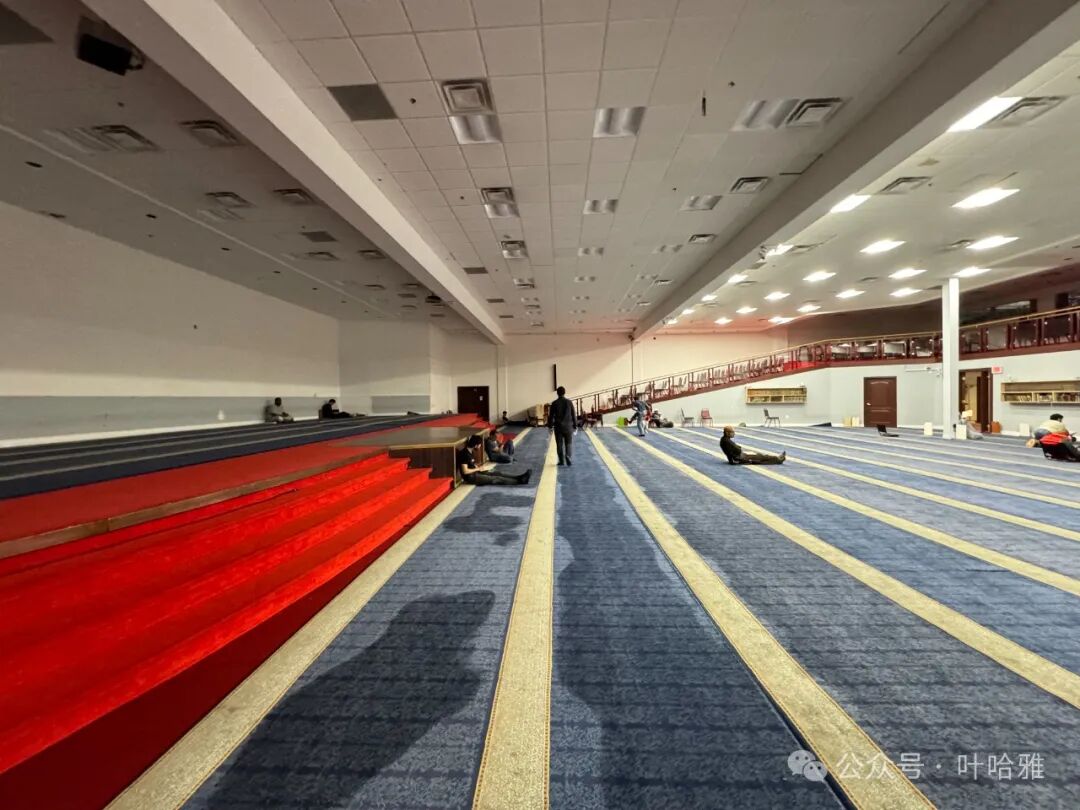
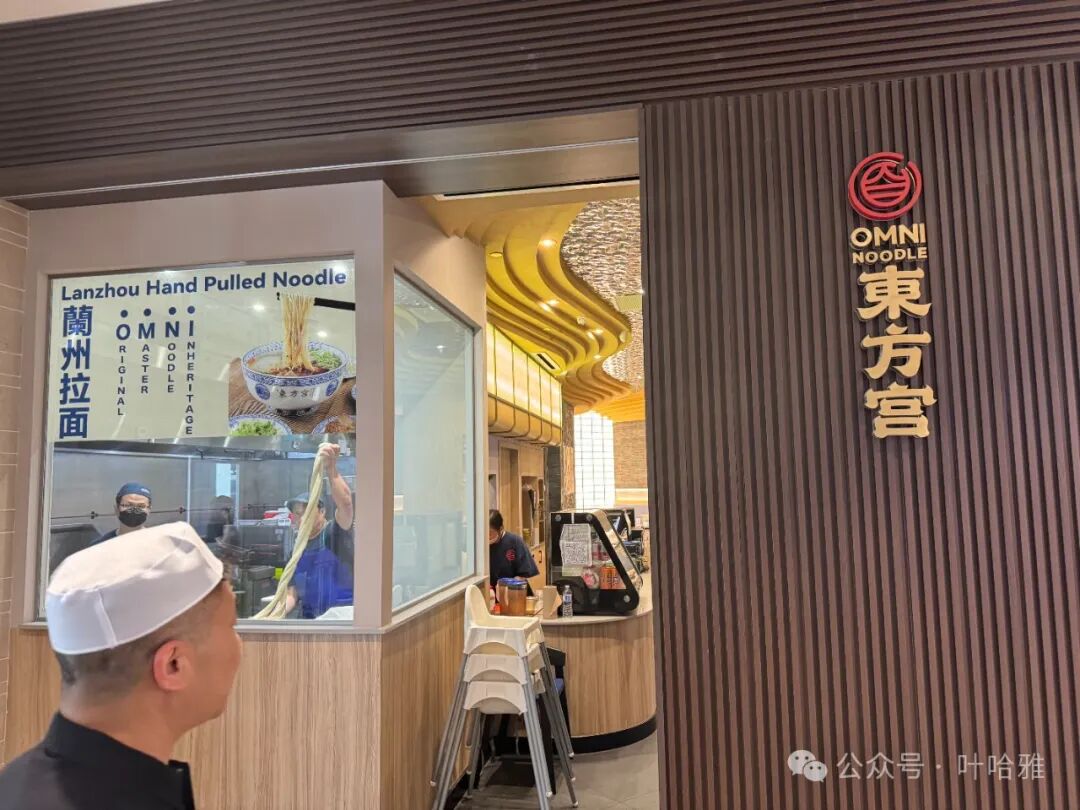
Oriental Palace (Dongfang Gong)
This is truly the Lanzhou chain brand Oriental Palace (Dongfang Gong). It has arrived in Canada and has many branches in Toronto.
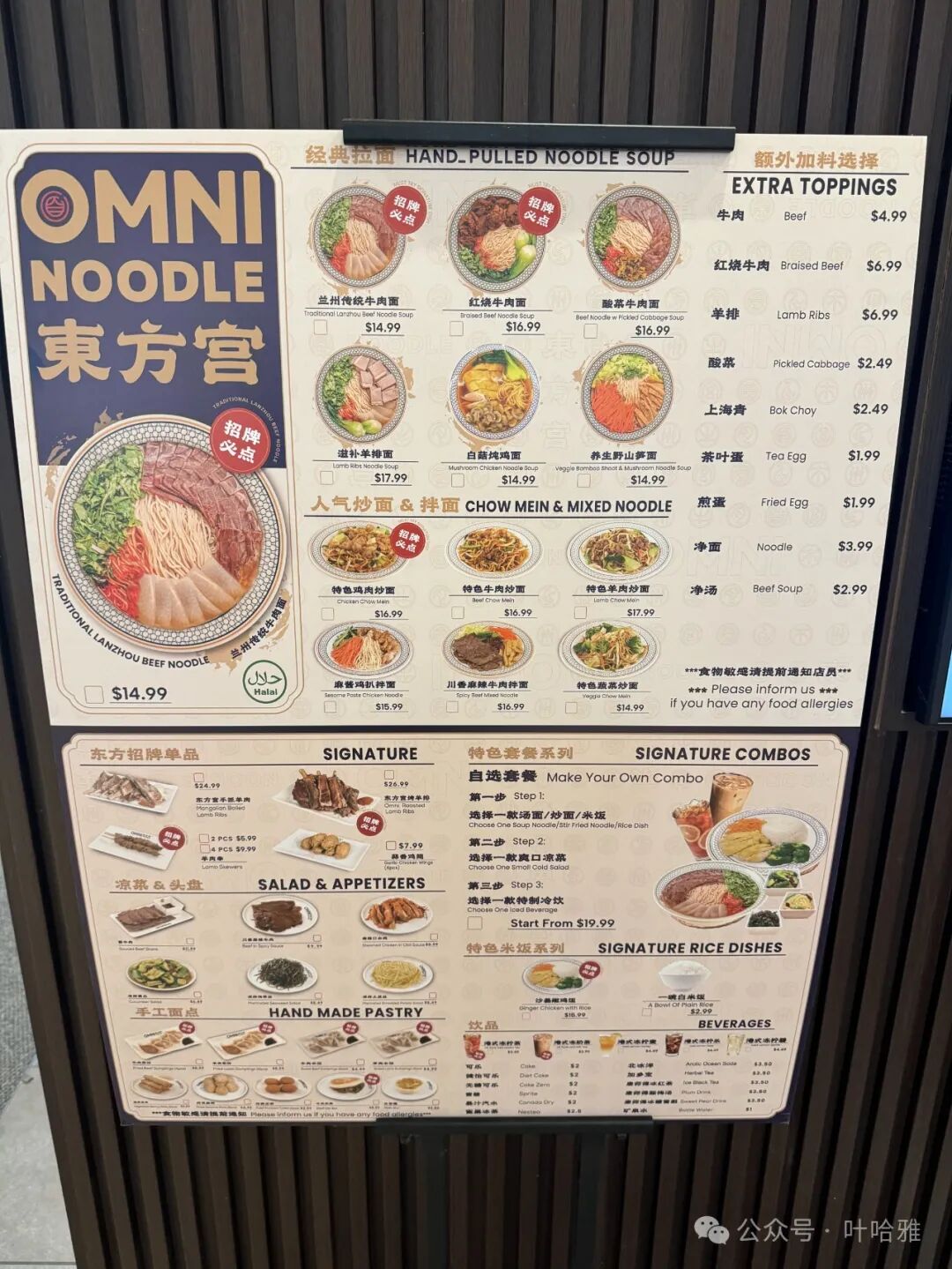
This bowl of beef noodles costs 14.99 Canadian dollars, which is about 80 yuan. That does not include the tip. With a 12-15% tip, the bowl costs nearly 100 yuan. Prices in Canada are high. Even if you work locally and earn Canadian dollars, eating out is not cheap.
I saw at least three Dongfanggong restaurants in Toronto.
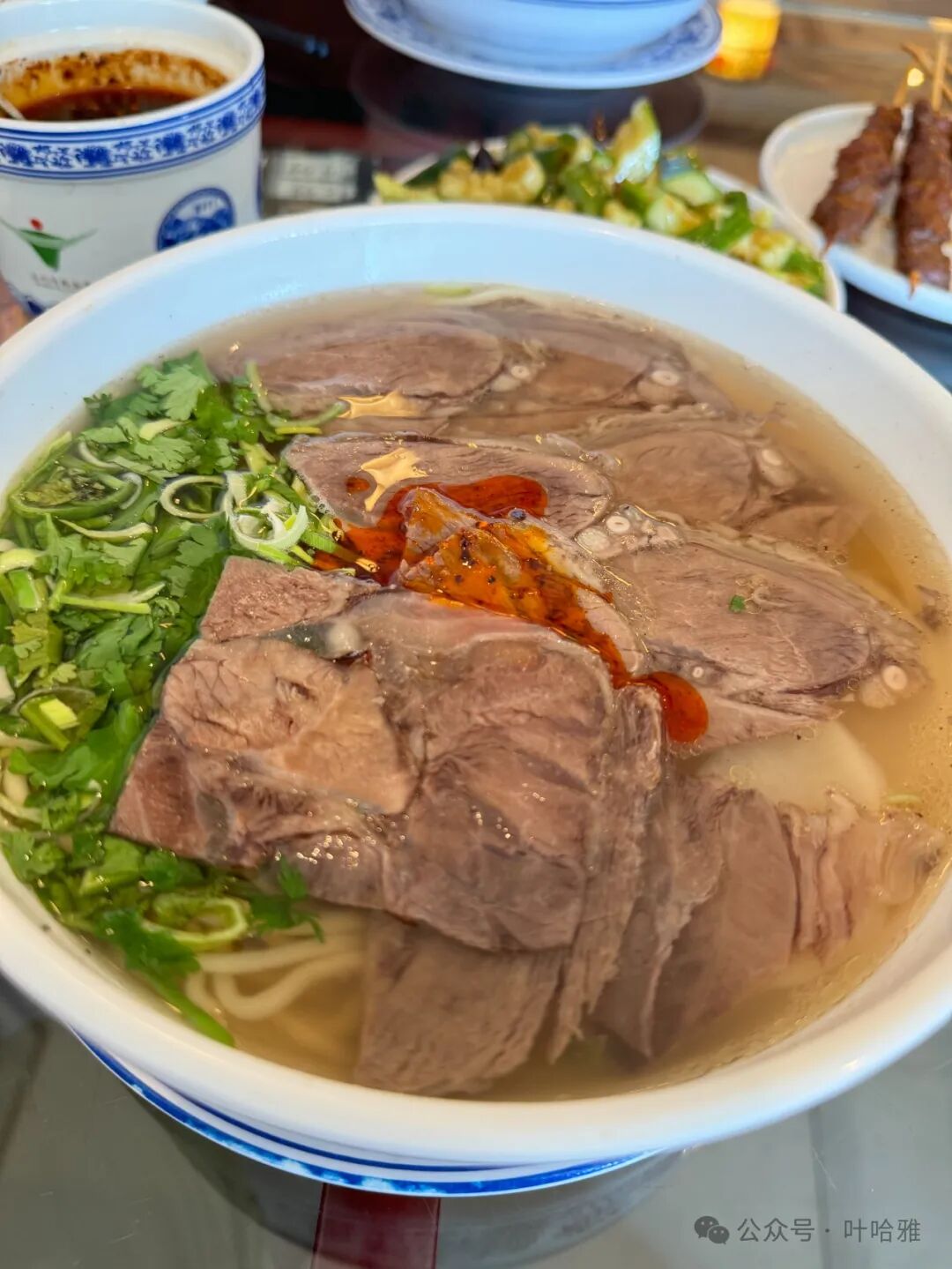
To be fair, the noodles tasted quite good. They were chewy and had plenty of meat. This was the most satisfying meal I have had in my ten days in Canada. Thanks to Brother Baolin.
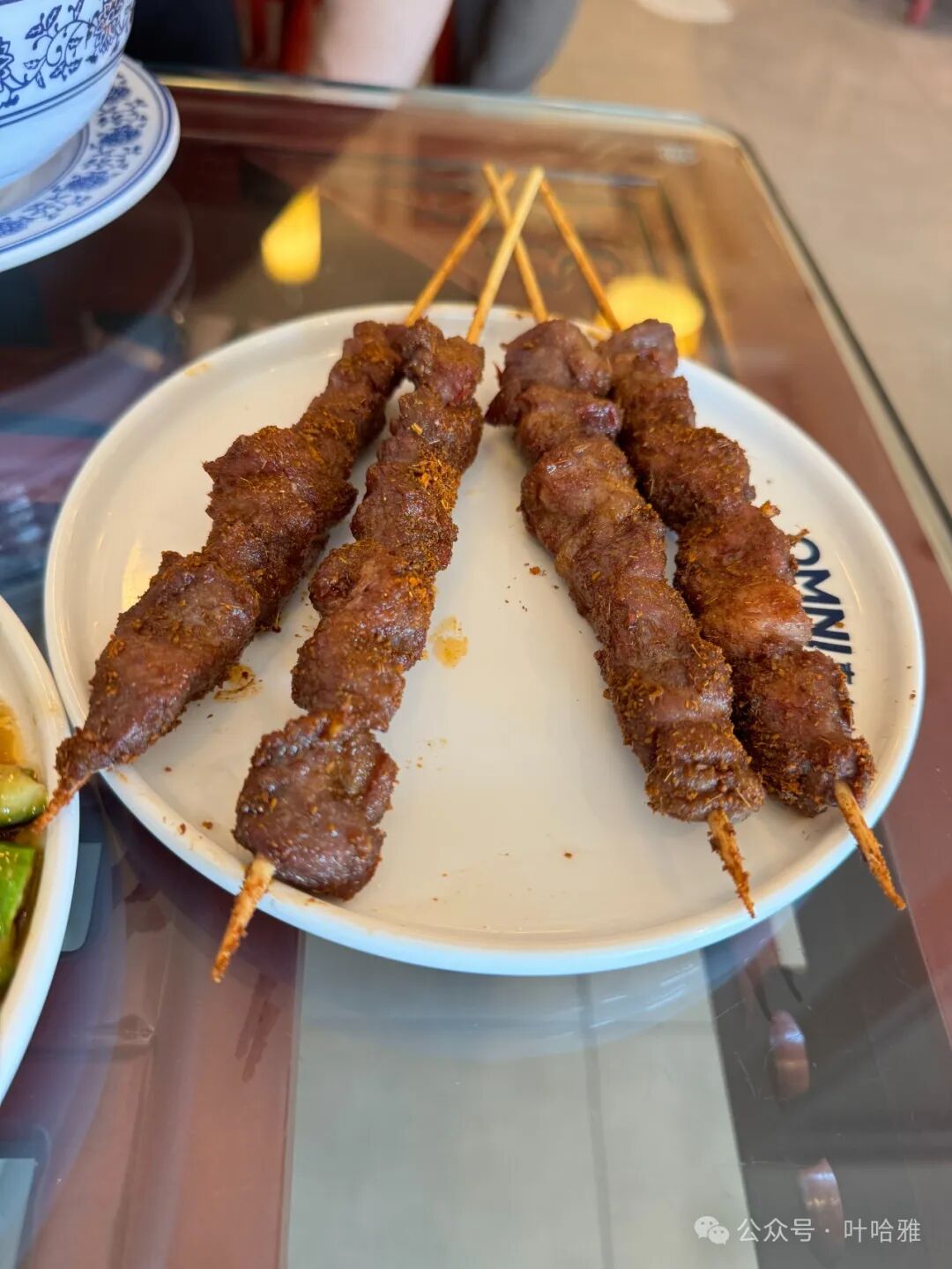
But the lamb skewers (yangrouchuan) are still better back home.
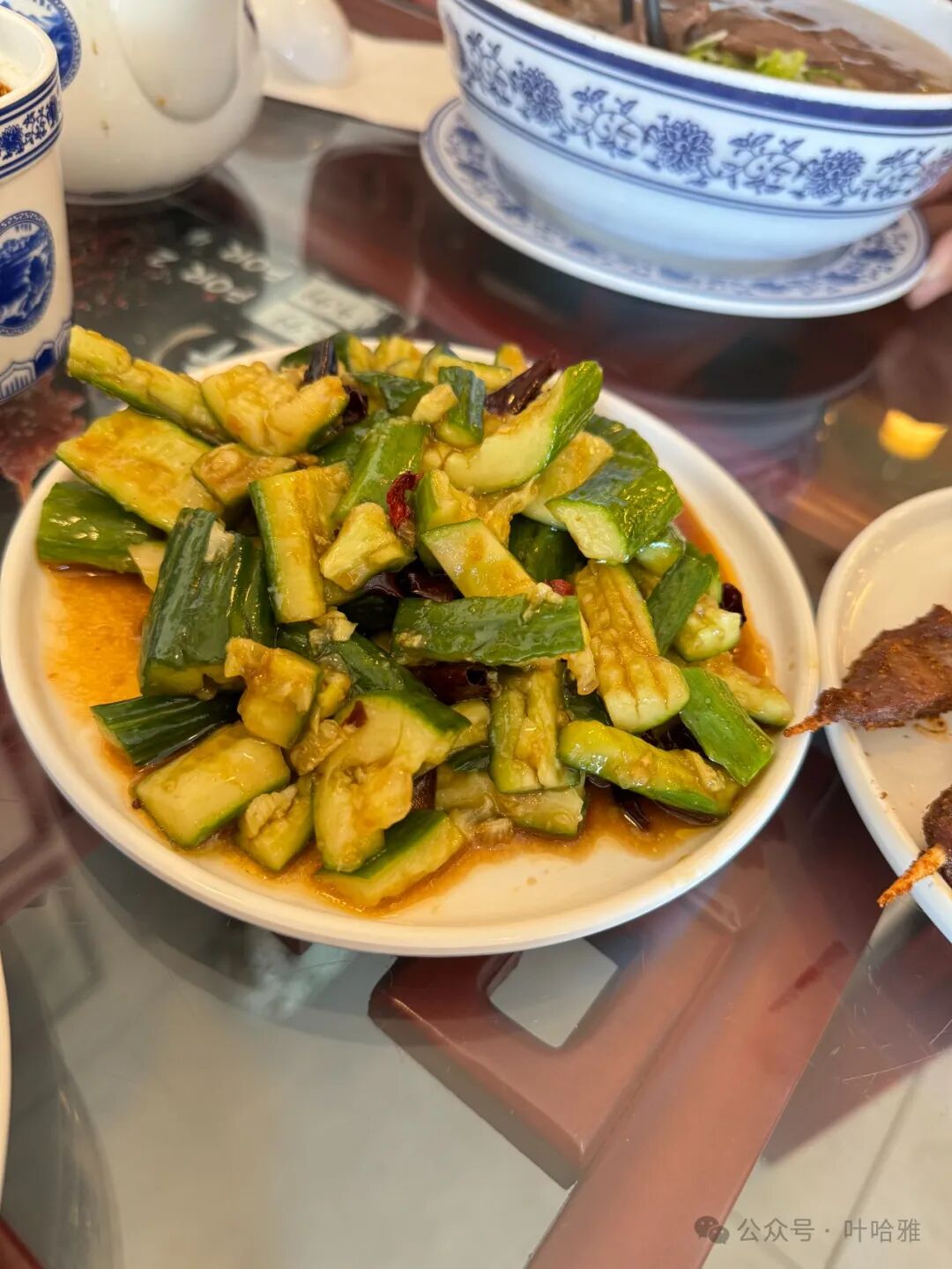
This smashed cucumber salad (pai huanggua) is more expensive than the lamb skewers. It is common in Western countries for meat to be cheaper than vegetables.
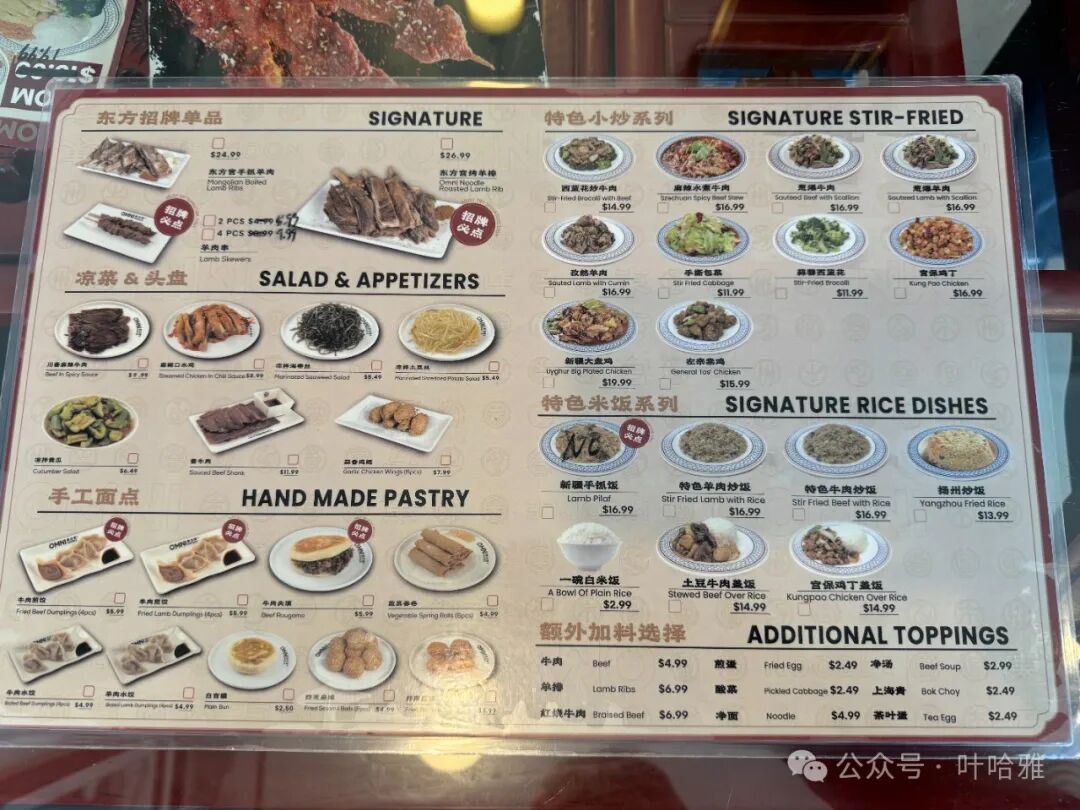
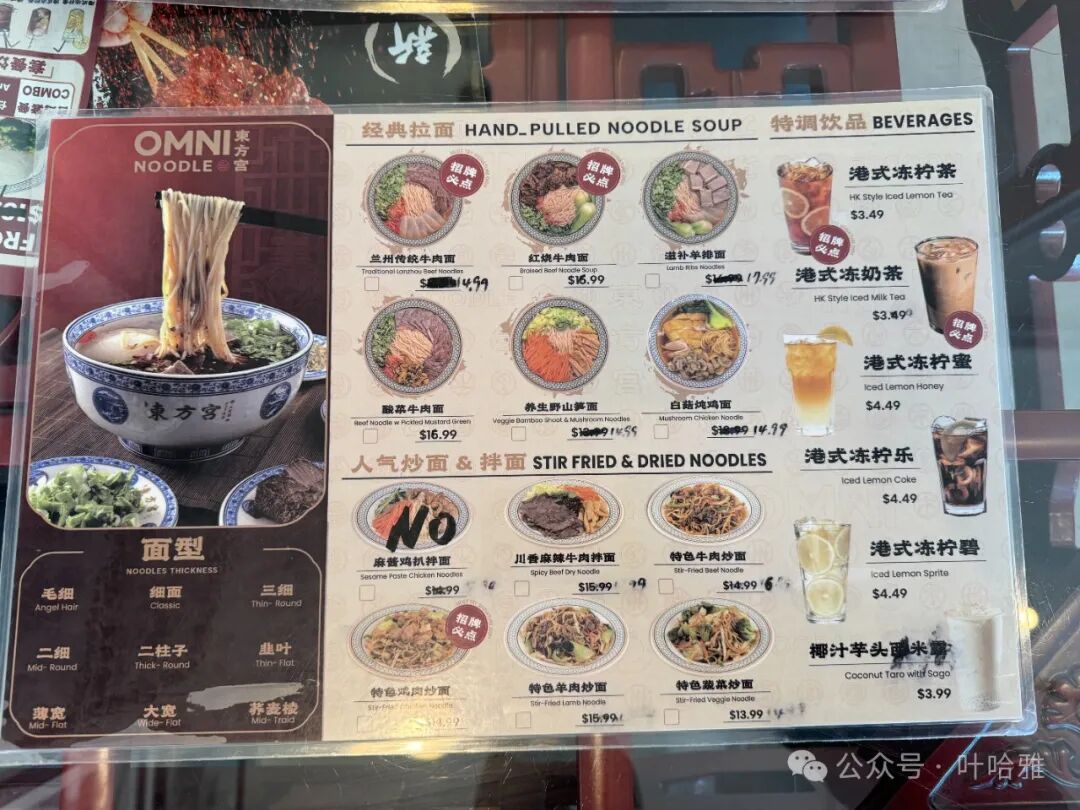
After finishing the beef noodles, Brother Baolin drove me back to the hotel to rest. I had flown all night from Calgary to Toronto and dealt with a two-hour time difference. I fell asleep as soon as I lay down in bed, needing to recharge for Eid al-Adha the next day.
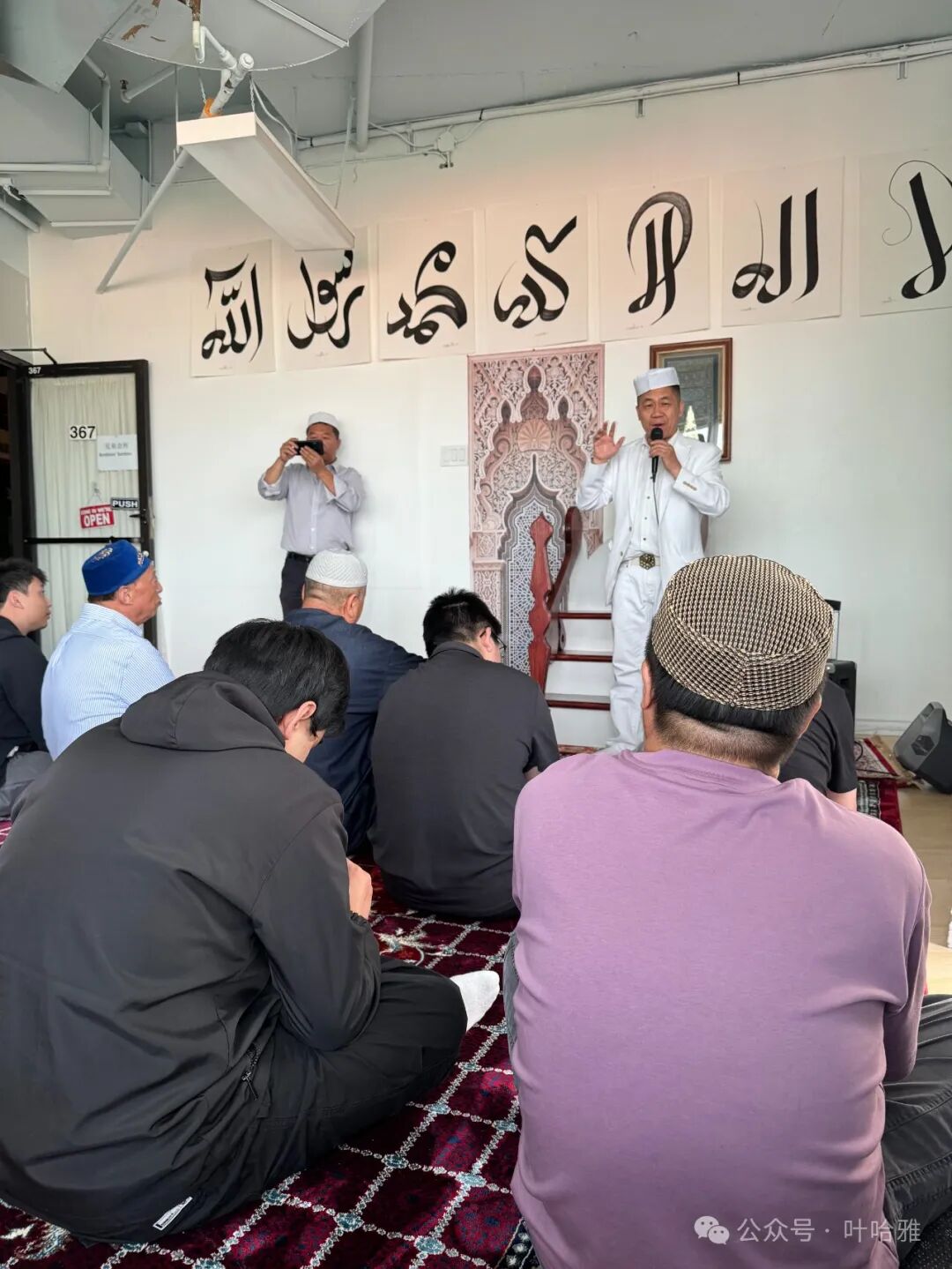
Early the next morning, Brother Baolin was setting up the venue, and I arrived early too. Unfortunately, we still could not find an imam to lead the prayer. However, a Hui Muslim brother from Xinjiang who had studied the scriptures stepped up. Even though he had a cold, he insisted on leading everyone in the Eid prayer. I will not post his photo.
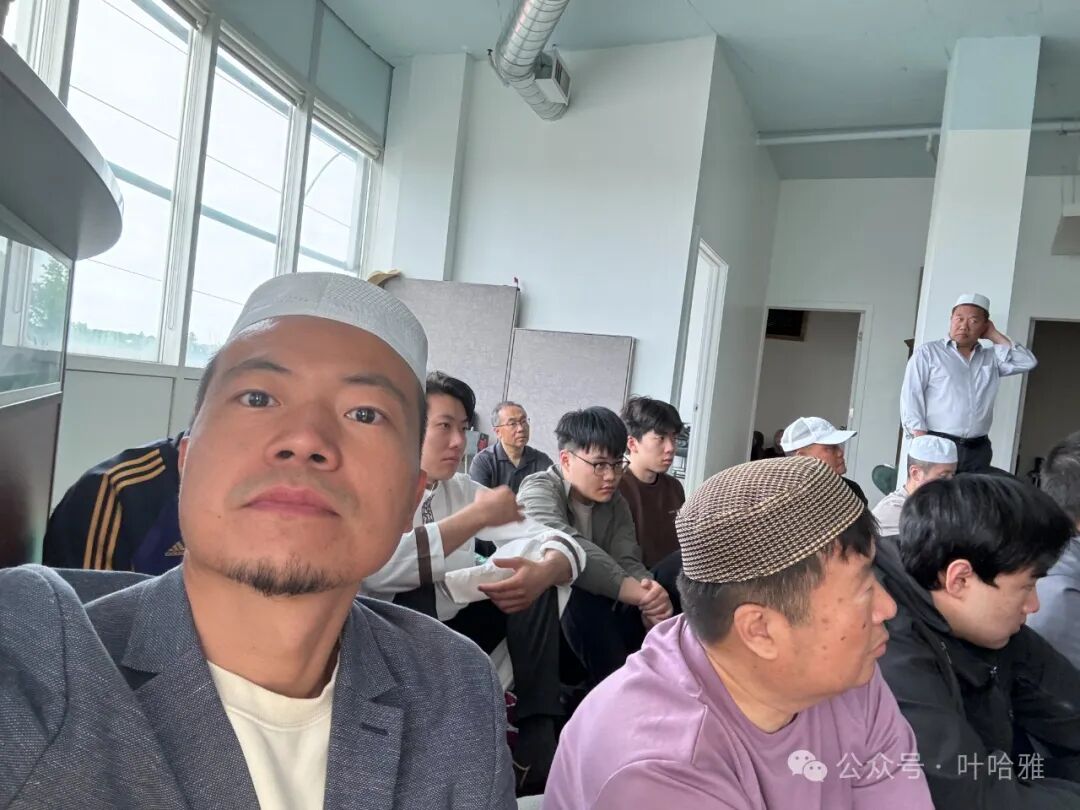
After the prayer, I shared some thoughts on what I have learned from my travels over the years. I said the North American Chinese Muslim Association needs doers like Brother Baolin. Many people are well-read in scriptures but lack real-world experience. Their words and actions are disconnected from society, and they create division locally. Such 'smart' people do not help the faith. Throughout history, we have never lacked scholars who only talk. We need well-rounded, excellent people to strengthen our ability to take root and thrive in a foreign land.
After the sharing session, we went to the second floor to eat. Everyone brought food they prepared themselves, sharing their favorite hometown dishes. Those who did not have a specialty just contributed money.
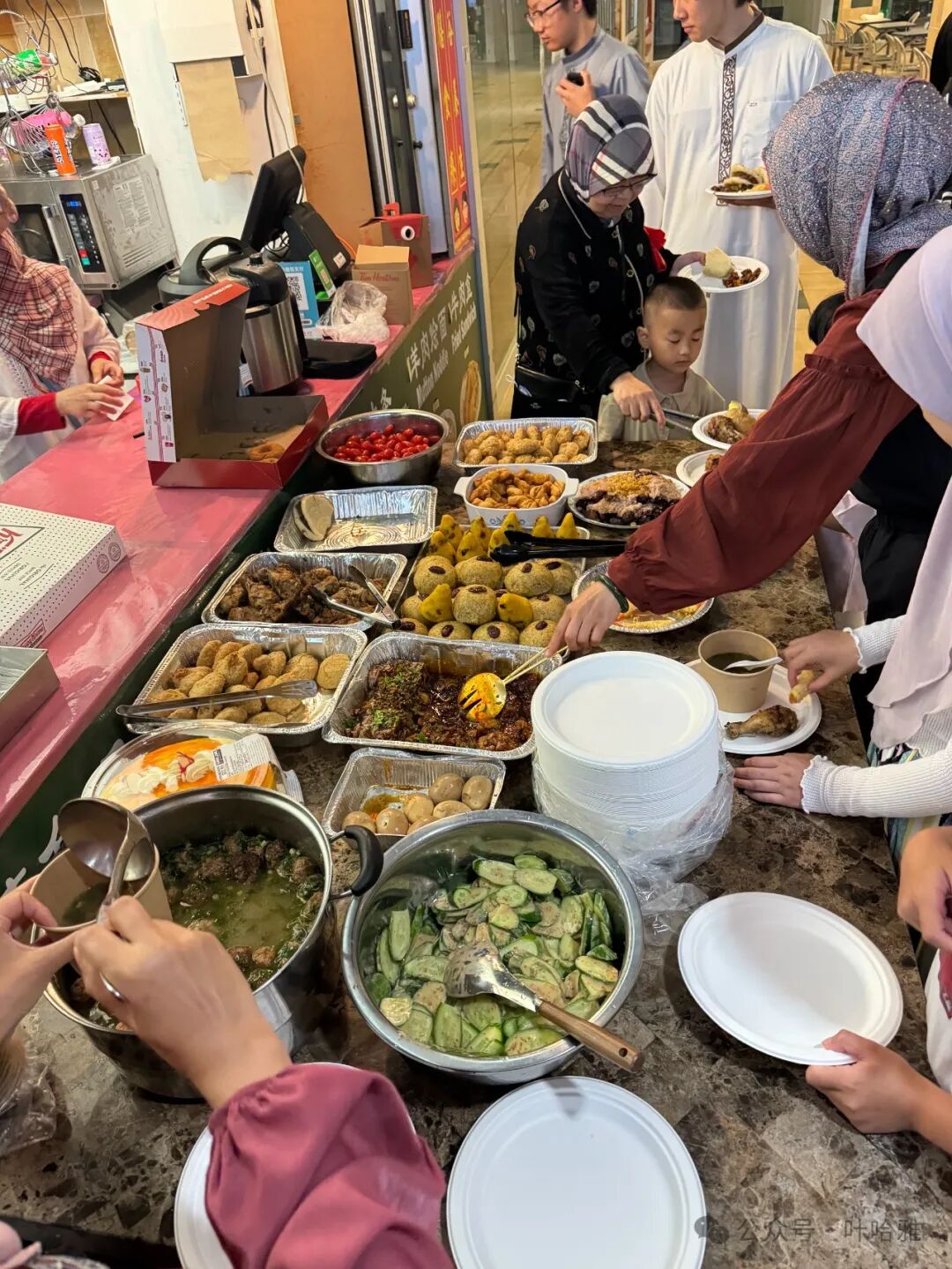
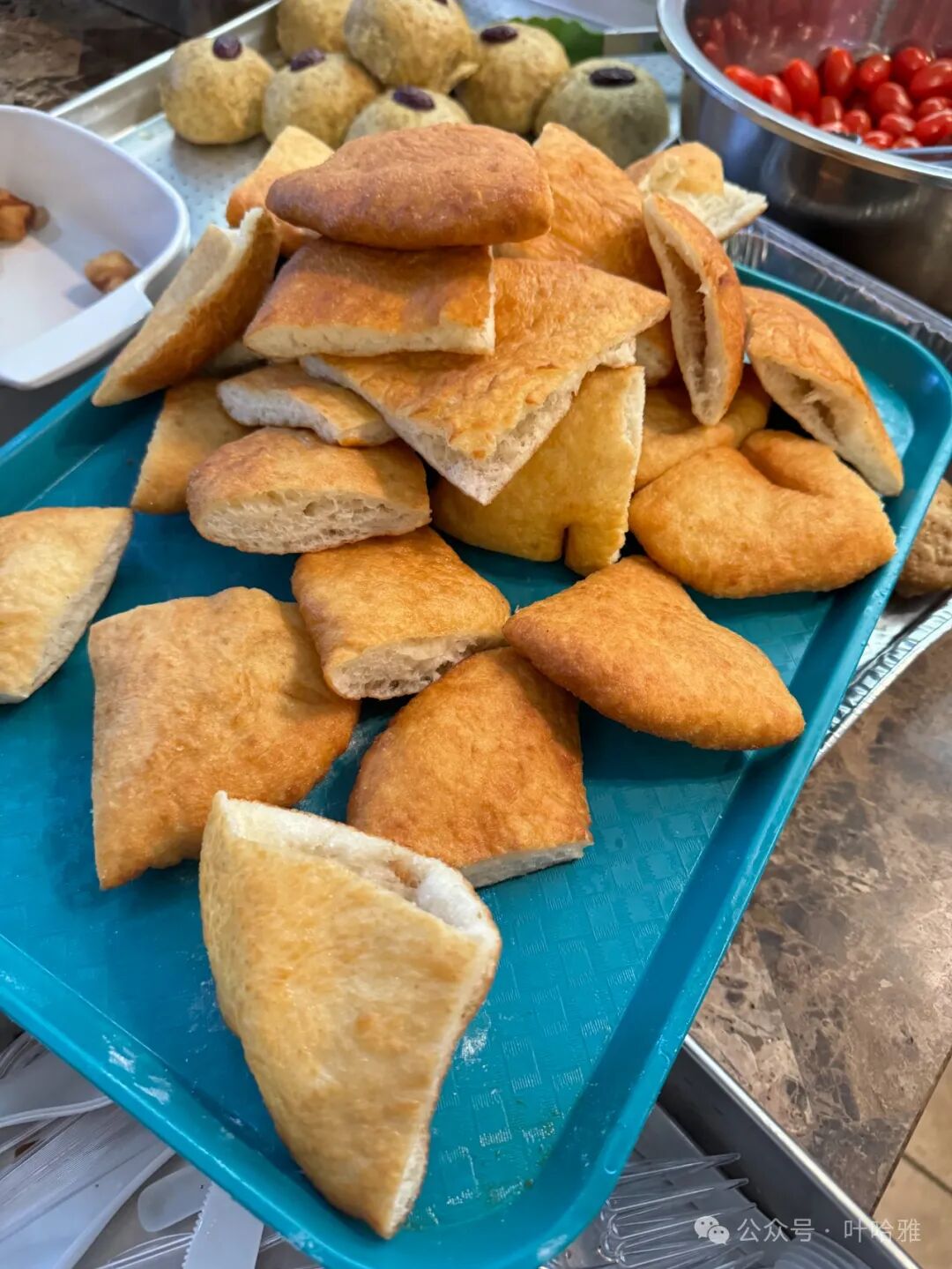
For Hui Muslims, a holiday is not complete without fried dough (youxiang). This youxiang looks like the Henan style. There are many Henan friends (dost) in the community, so much so that before I came here, people told me there was a Henan Hui neighborhood in Canada. In reality, it is not just Henan people here. There are people from Beijing, Inner Mongolia, the Northwest, and Uyghurs.
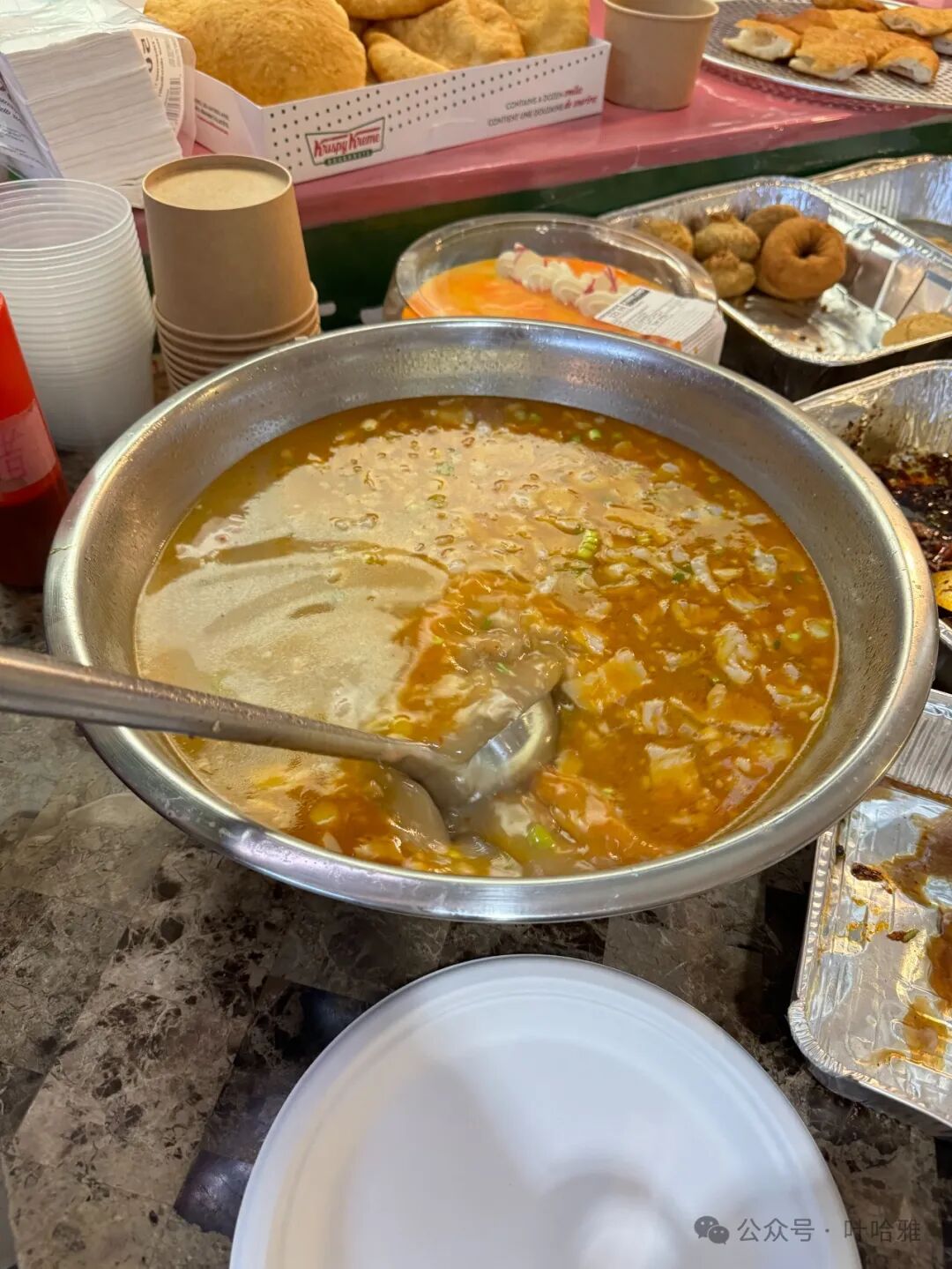
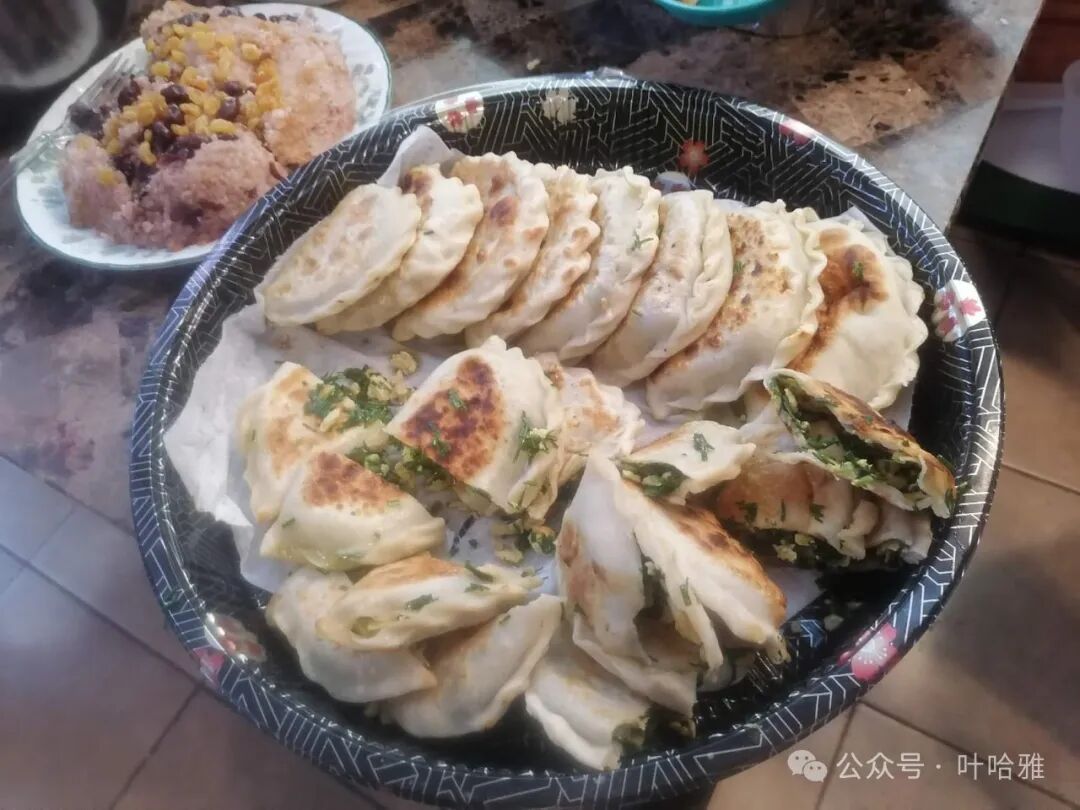
The lamb soup (yangrou tang) and chive pockets (jiucai hezi) both have a Henan flair. They smelled delicious and were very good.
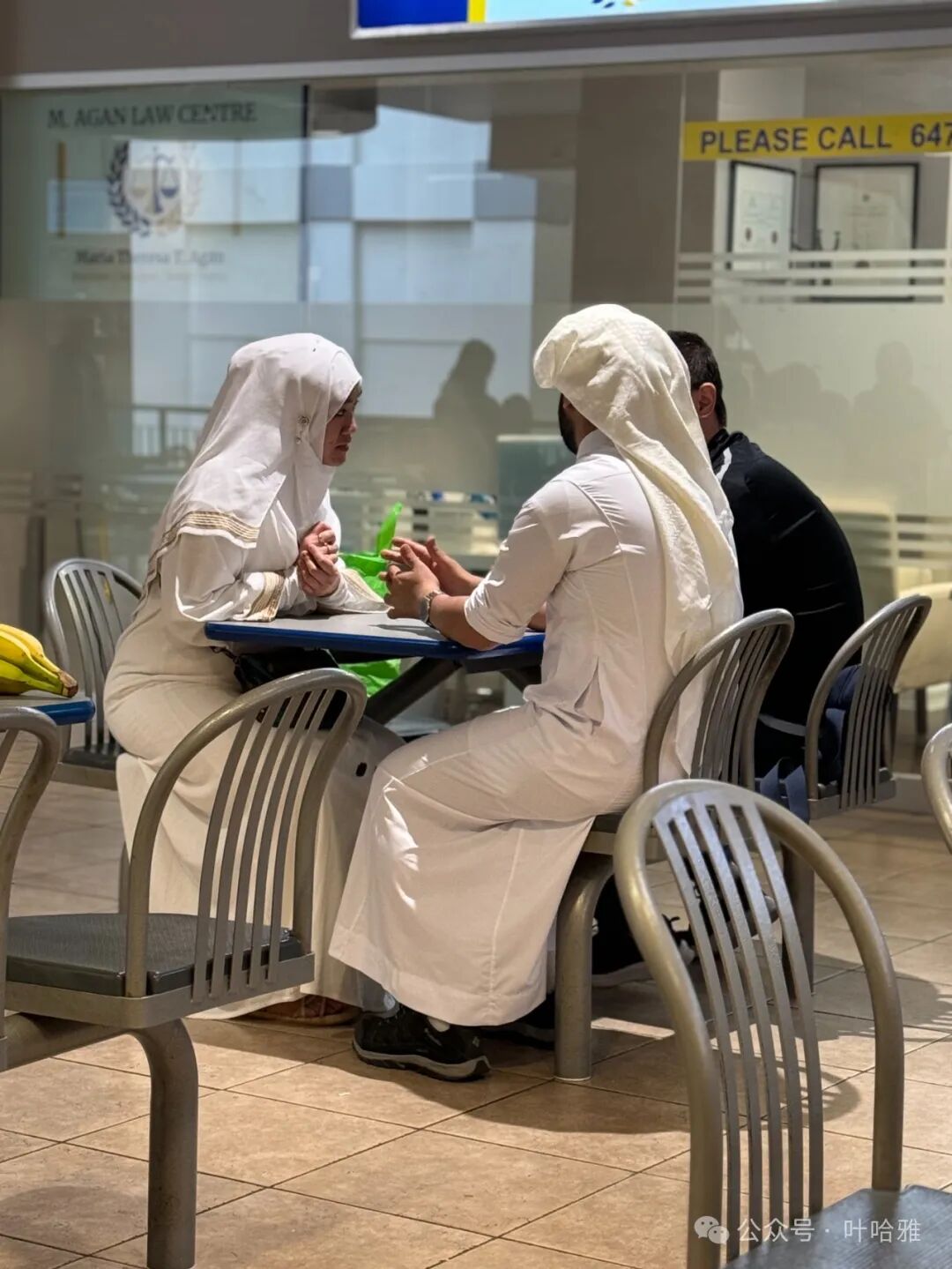
Some non-Chinese brothers also attended the event. They met Chinese Muslims through marriage.
As is the custom, Eid al-Adha (Qurban) ended in the morning. In the afternoon, Vice President Davei ZHU drove me to Toronto's most famous attraction, Niagara Falls, which often appears on the National Geographic channel.
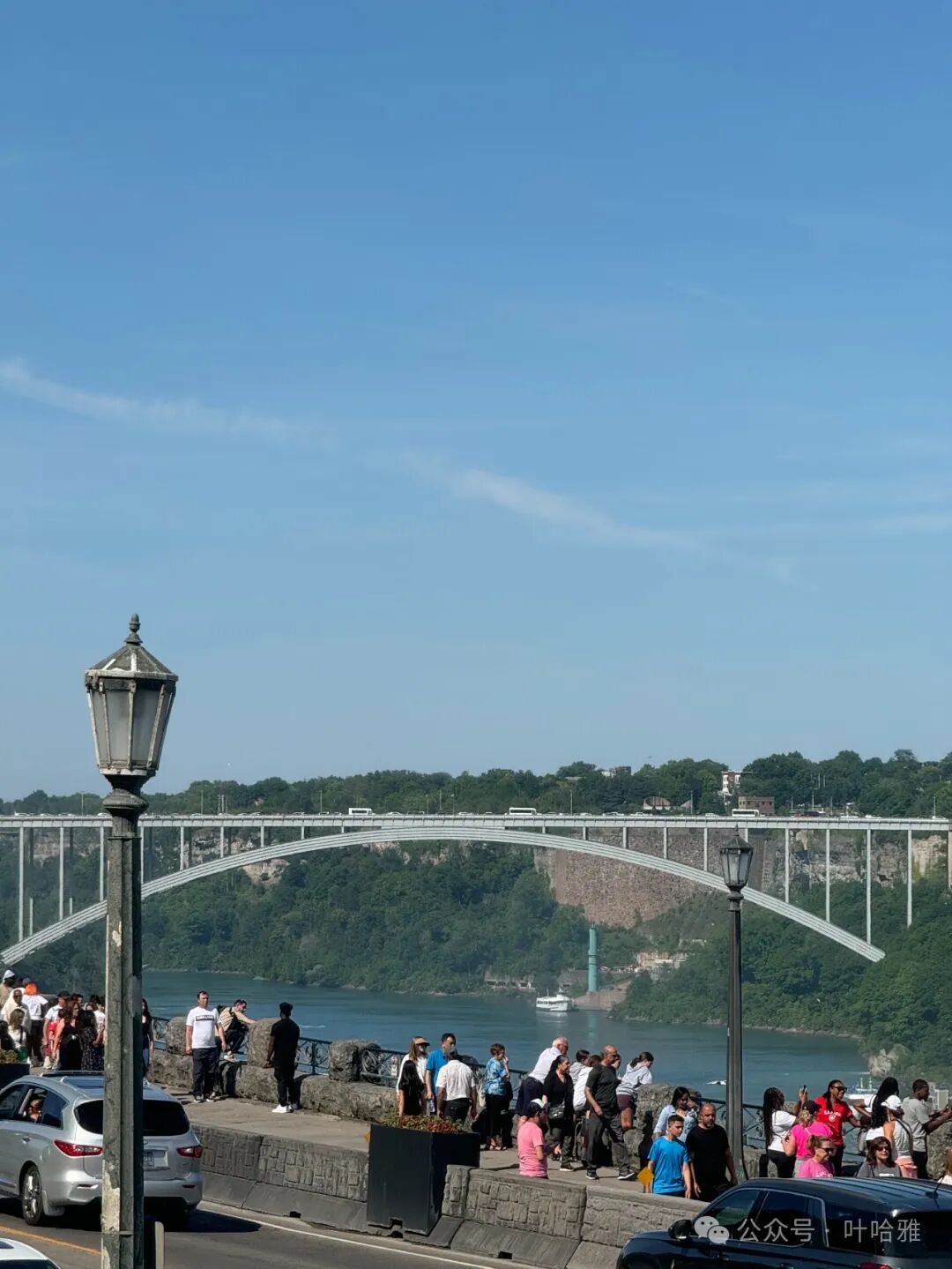
Rainbow Bridge
Rainbow Bridge connects Canada and the United States and was built by both countries. Driving across this bridge takes you to New York State in the U.S. Canadian citizens do not need a visa to enter the U.S., and the process is very simple, so many Canadians choose to work in the U.S.
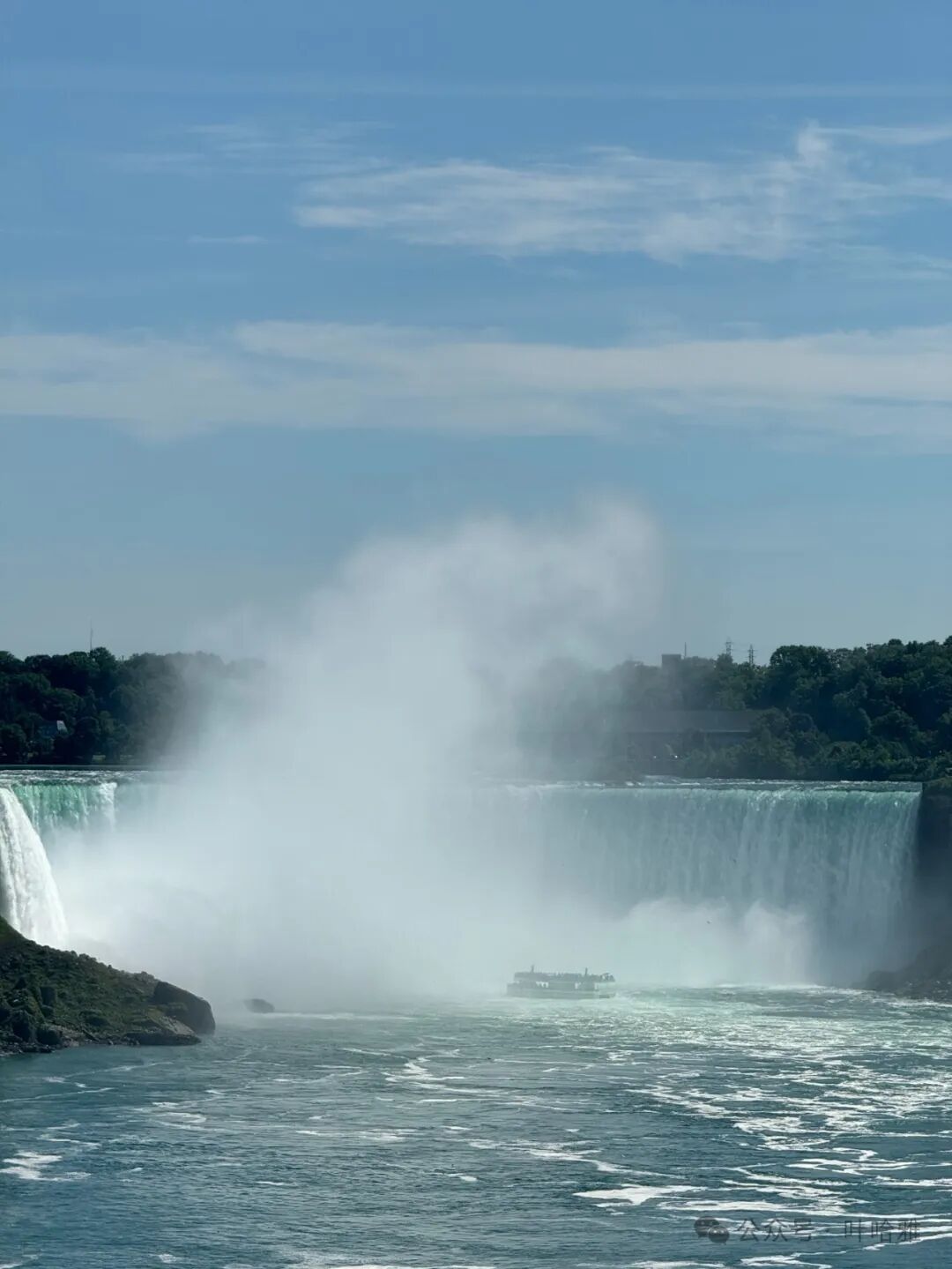
Niagara Falls spans both the U.S. and Canada, but the main view is on the Canadian side. You cannot see the full picture if you stand on the American side.

It took us over two hours to drive there, and we even hit traffic on the way. I chatted a lot with Vice President ZHU. His whole family has lived in Canada for over twenty years. As overseas Chinese, their longing for their hometown grows deeper with age.
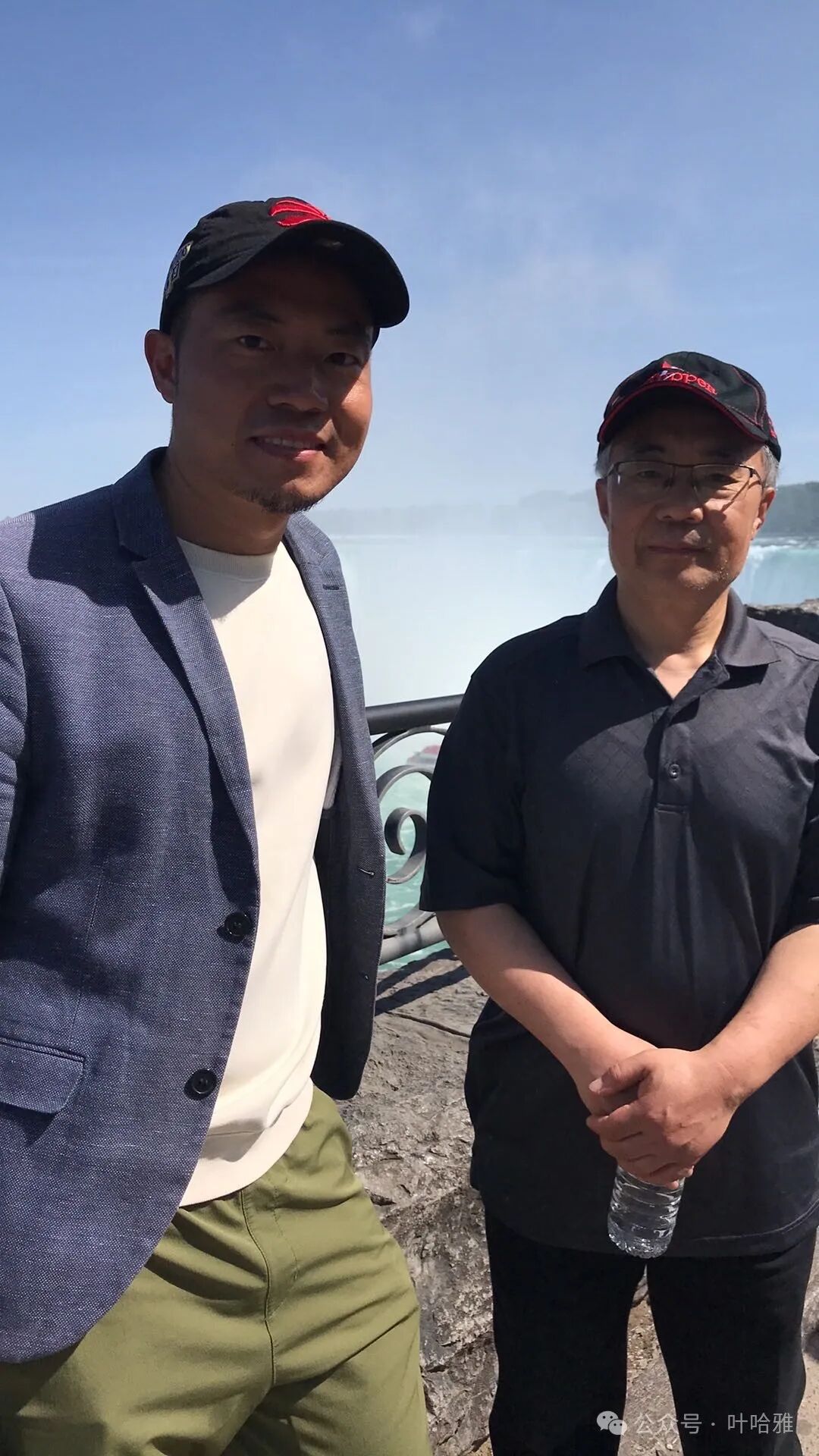

When the weather is good, you can see a double rainbow at the waterfall.
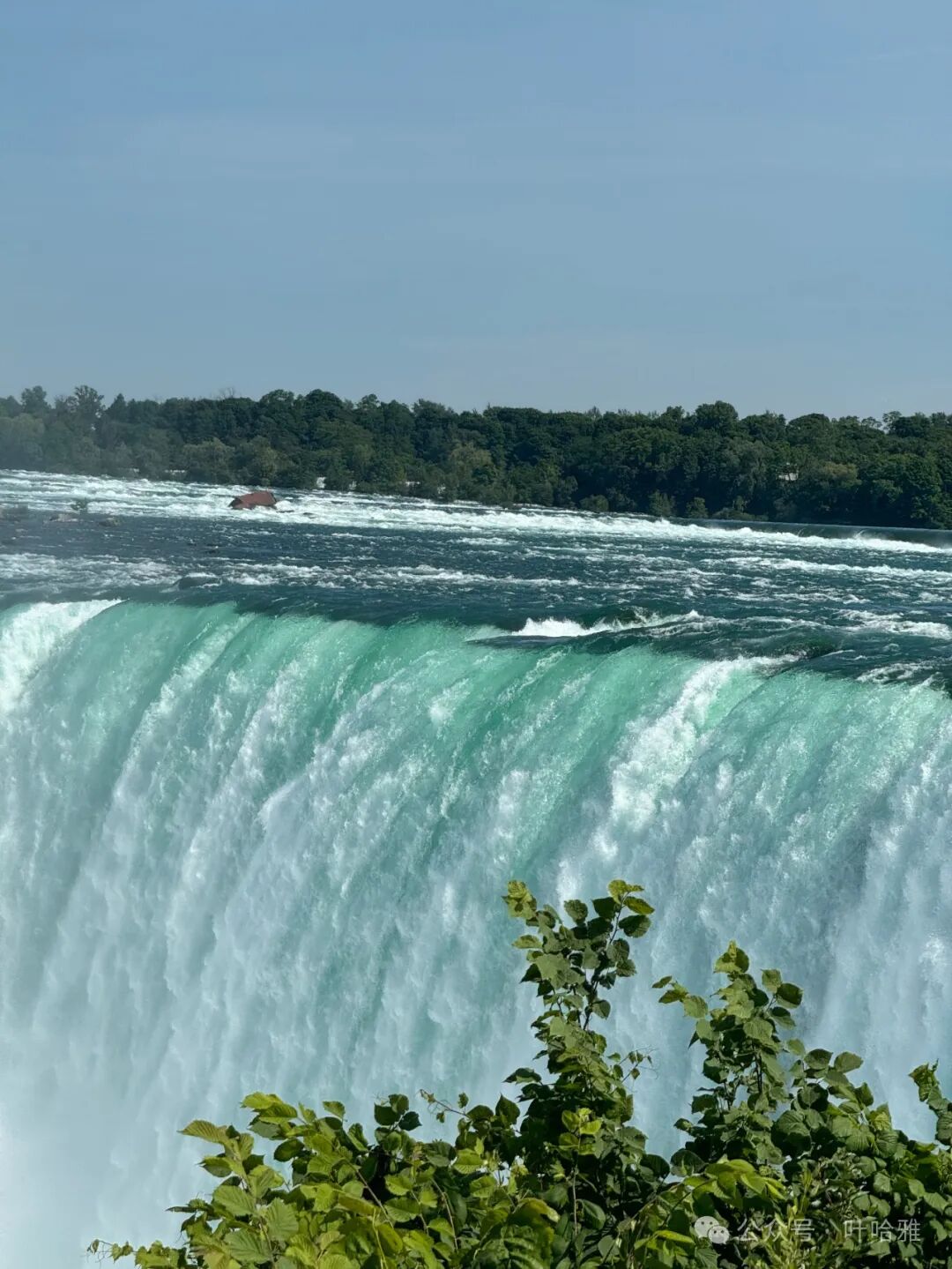
There is no admission fee for natural scenery like the waterfall, but you have to pay if you want to take a boat for a close-up tour or ride the zipline.
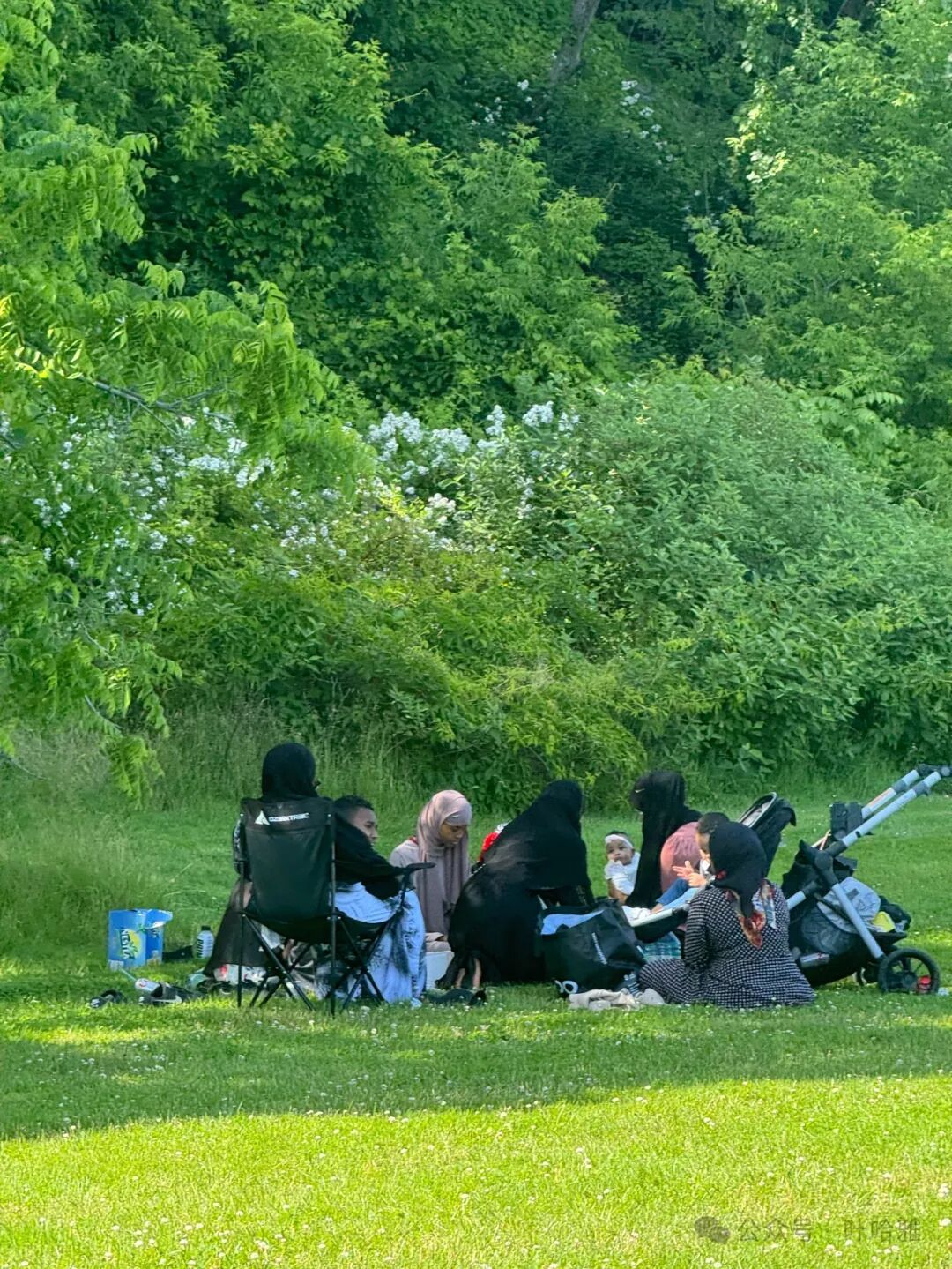
A group of Muslims were having a picnic on the grass. The proportion of Muslims in Canada is very high, and you can see young women wearing beautiful headscarves everywhere on the street. However, Vice President ZHU warned me not to walk barefoot on the grass. He said that the number of drug addicts in Canada has increased over the years, and some of them carelessly throw used needles into the grass.
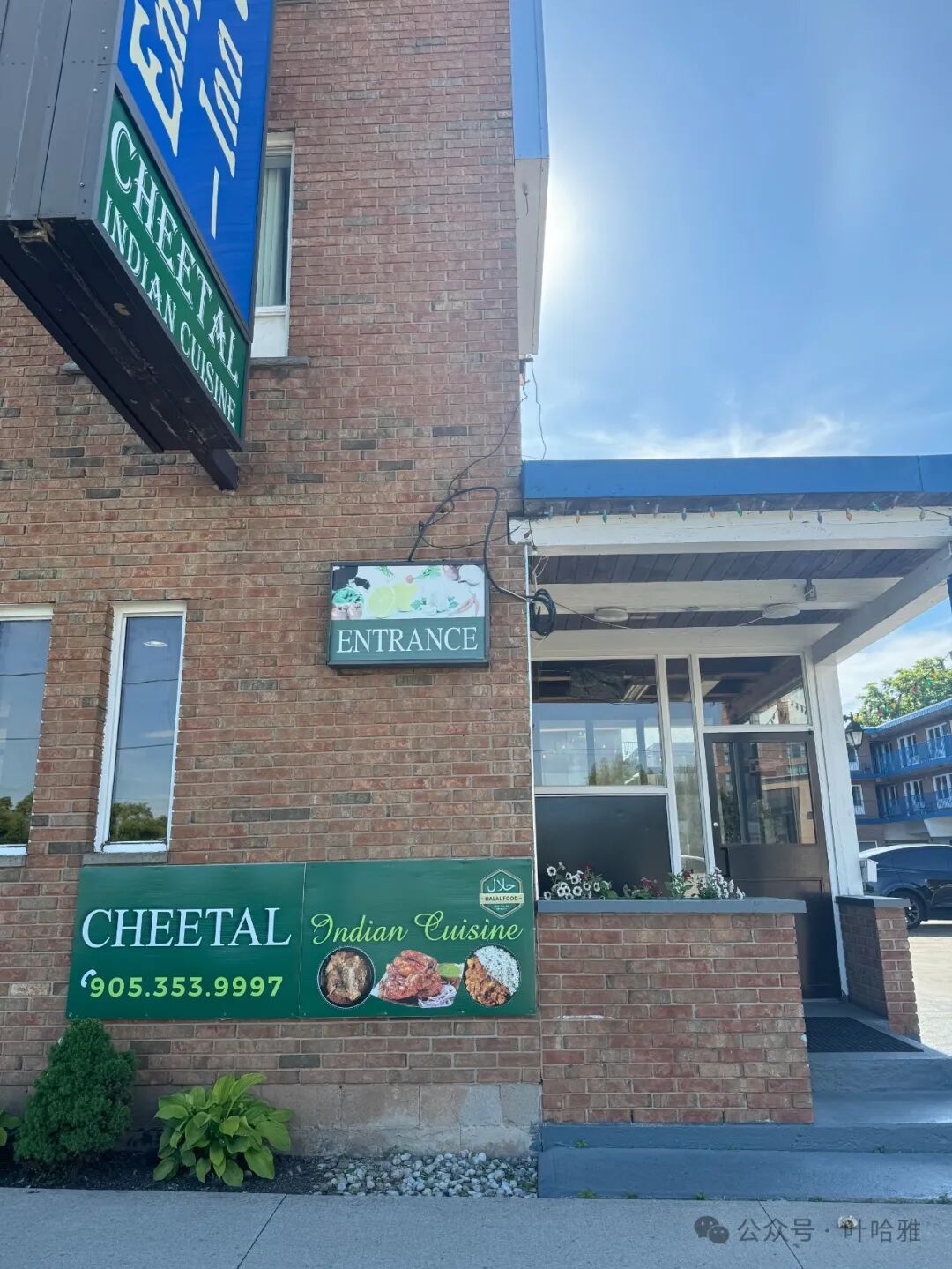
There are many halal restaurants around the waterfall, and there is a whole street full of halal food. We stumbled upon this Indian buffet restaurant by chance.
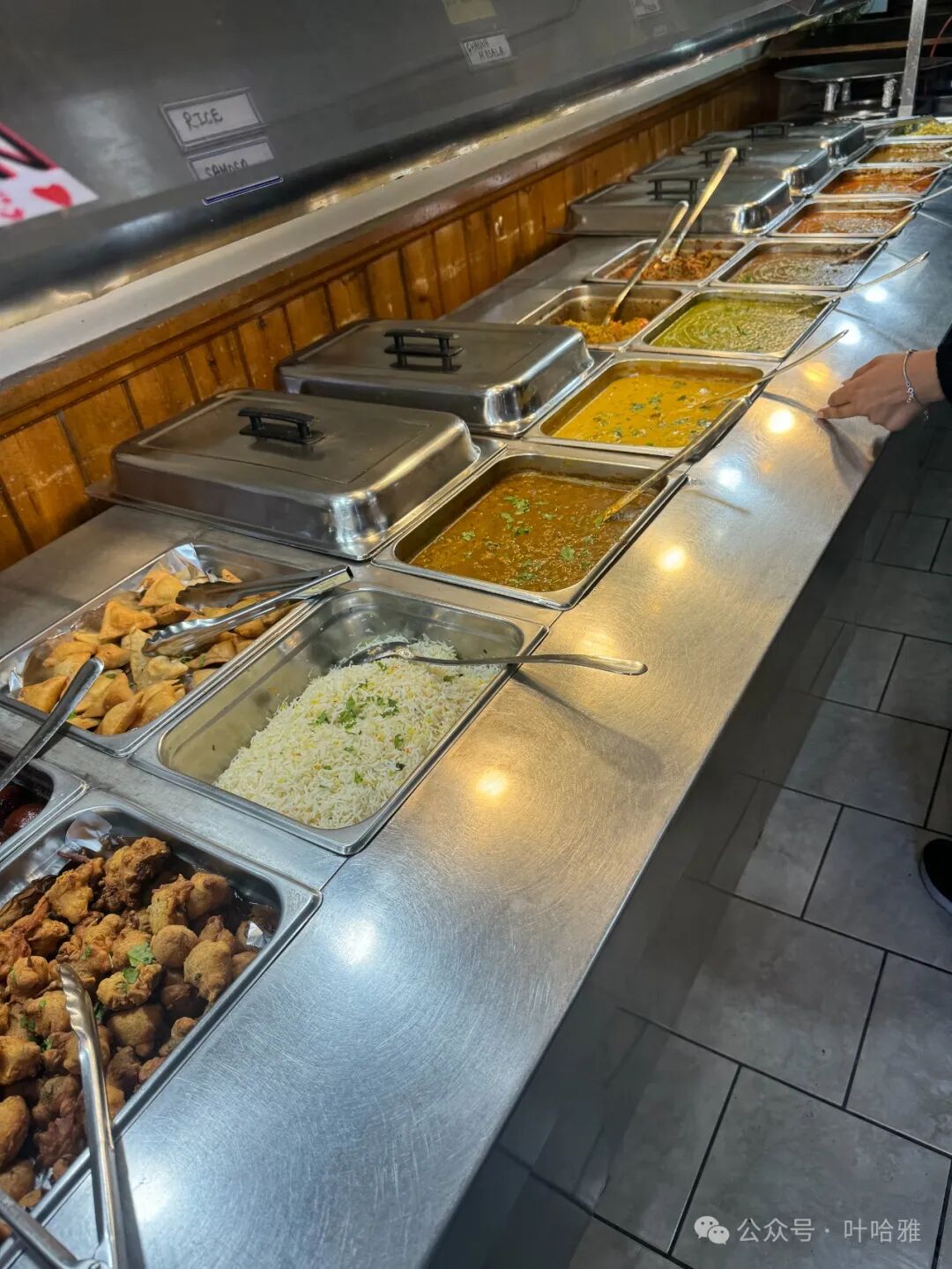
The buffet is 21 Canadian dollars per person. The selection is quite complete, and this price is actually not expensive. Even in Beijing, a similar Indian-Pakistani buffet would cost 98 yuan.
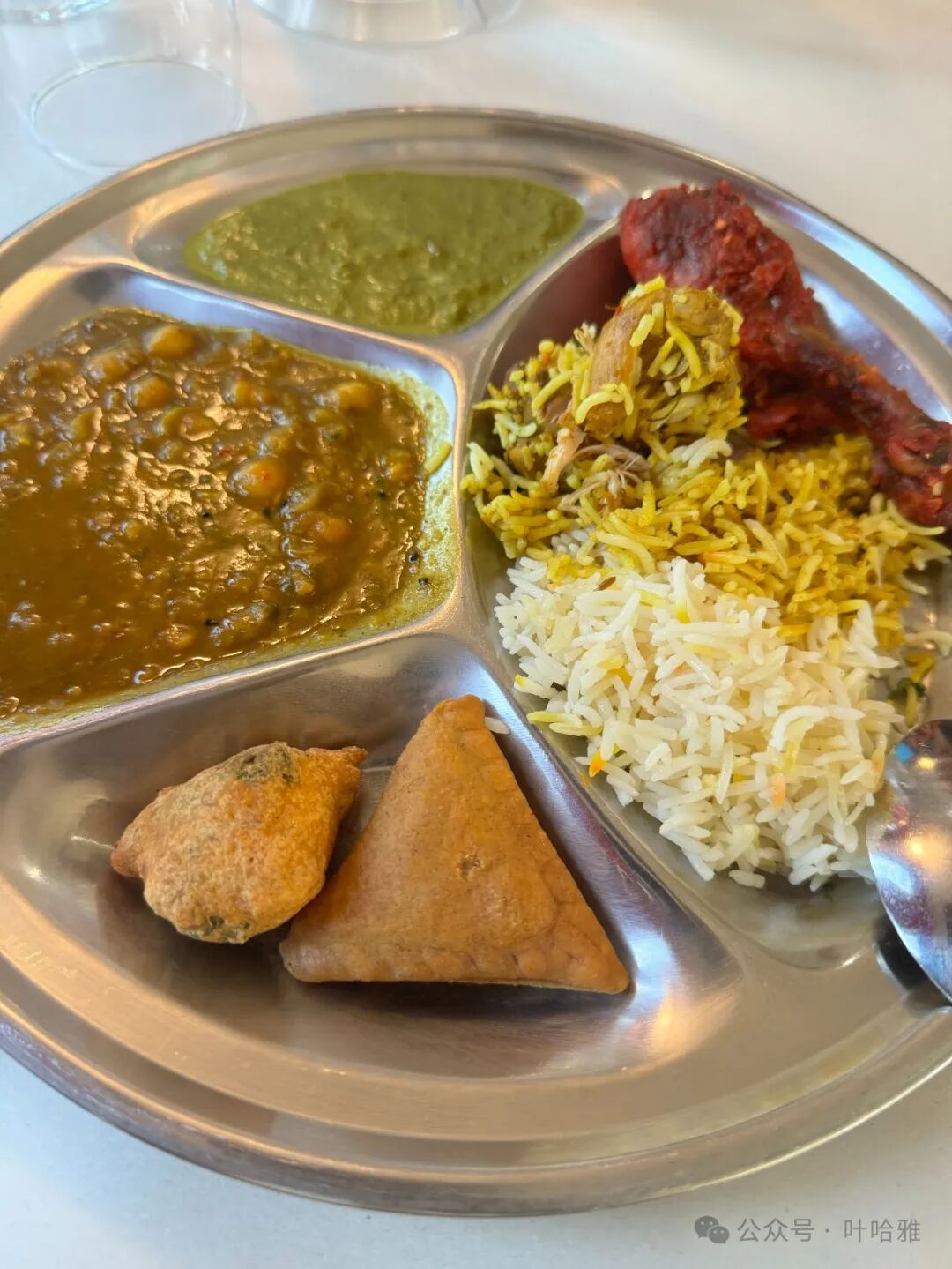
Indian-Pakistani cuisine is like Lanzhou hand-pulled noodles (Lanzhou lamian) in the eyes of Westerners; it is convenient, delicious, affordable, and accepted by people from all countries.
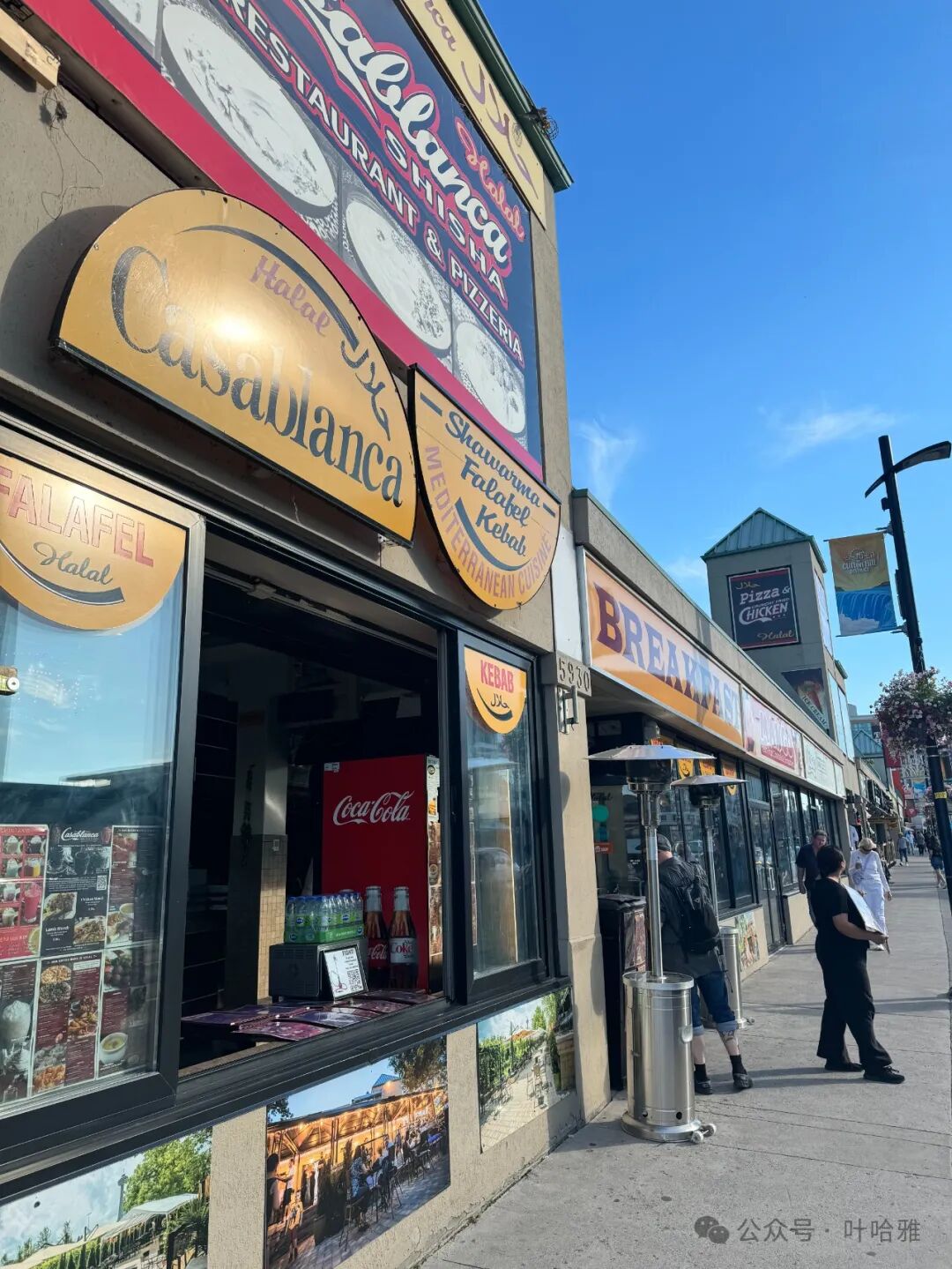
Near the big Ferris wheel is this halal food street. You do not have to worry about finding halal food in Canada at all; it is everywhere. However, halal food in North America mainly falls into three categories: Arab, Turkish, and Indo-Pakistani, and most of it is fast food or snacks.
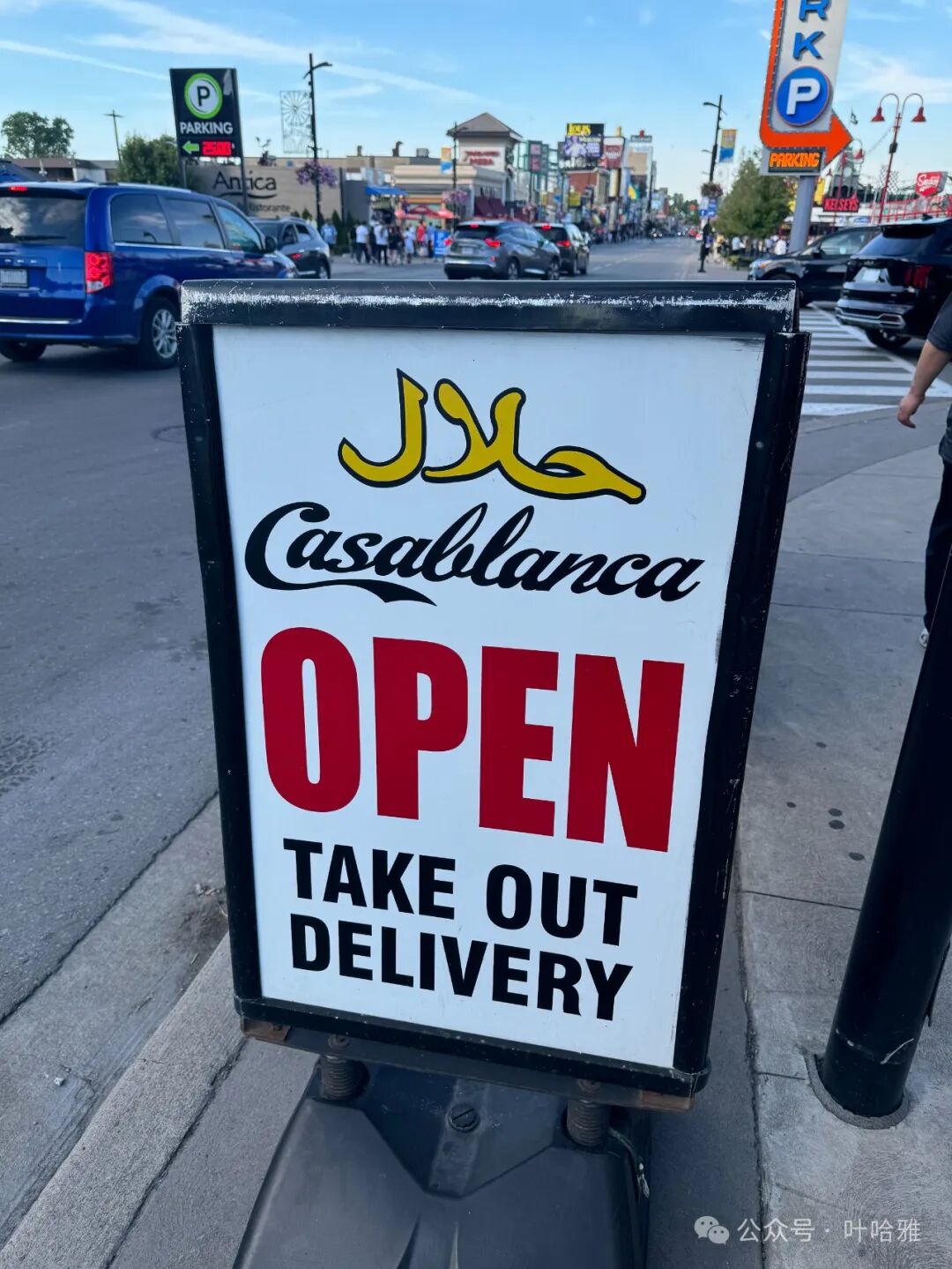
This place serves Moroccan-style food.
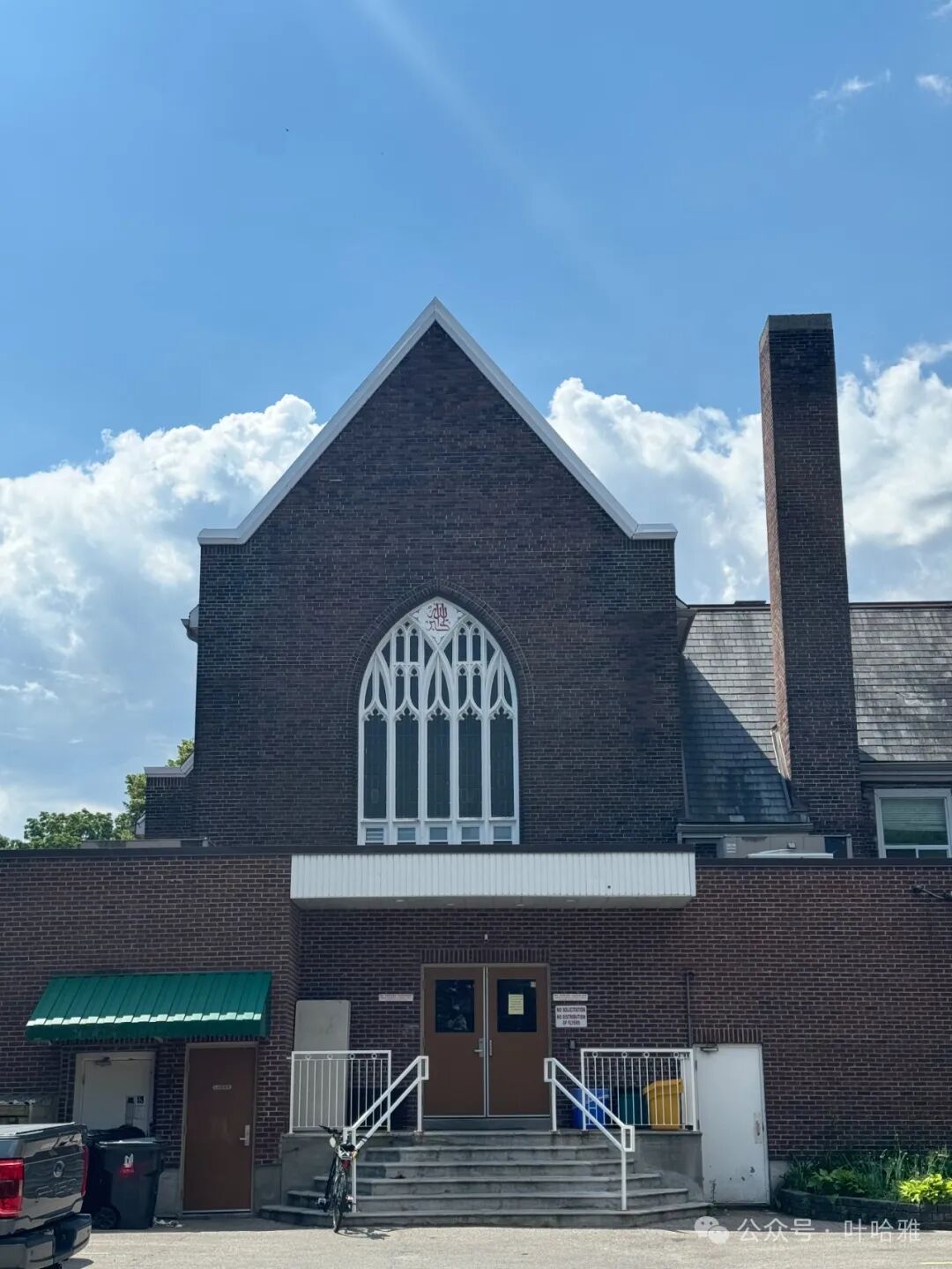
After saying goodbye to President Zhu, I left Toronto the next day. On the way to the airport, I saw this mosque converted from a church. Many places of worship in the city are usually locked, and this one was not open.
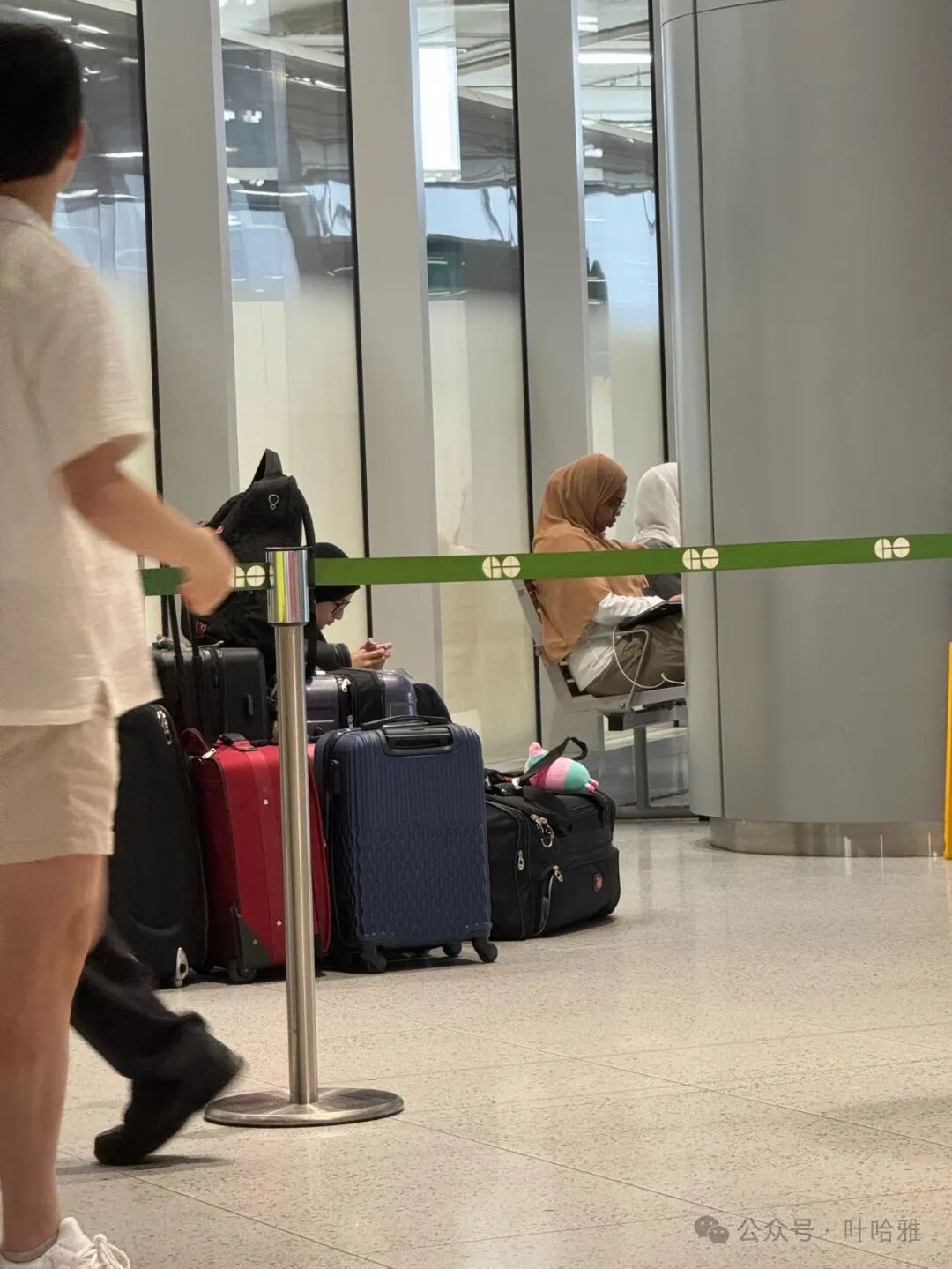
It is very common to see young women wearing headscarves in public. The streets of Canada are very diverse with people of all races. I even saw many women wearing headscarves working as customs and airport staff.
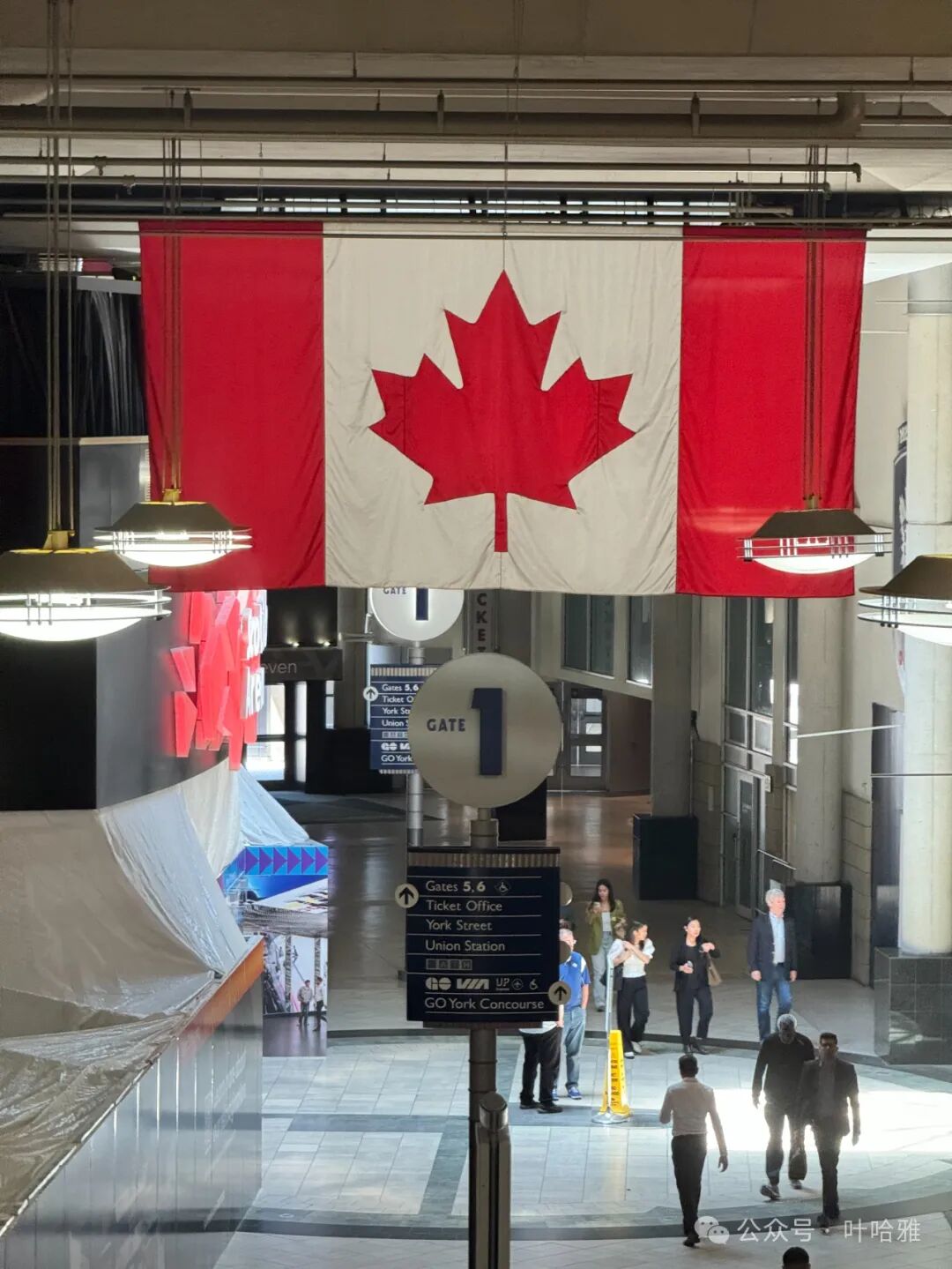
On the way back, the president told me a story about someone he knew. When he first arrived in Canada, he lived with an international student from Beijing, and they later became good friends. This roommate was introverted, quiet, and grew up in a military compound, but he had a tense relationship with his family. After coming to Canada, he almost never contacted his family. He had a very small social circle and showed signs of depression. Later, they moved to different cities for work. They kept in touch occasionally but never met again. A few years ago, the president received a call from the Canadian police. The police said his friend was found dead in his car in a parking lot. They ruled out foul play, and it was likely an overdose. The only emergency contact number the friend had left was the president's, with no other family contact information.
Because the president was not a relative, the police could not provide more information. Later, the police buried him in a public cemetery as an unclaimed body. The president only knew his name was Zhang Qiang, he was from Beijing, and he was about 50 years old when he died. He was single, had no wife or children, and there was not even a single photo of him. He died alone in a foreign land, and his family still does not know where he is.
The president hoped I could find out about this person in Beijing, but there is too little useful information. I also feel that since his family does not know he has passed away, it might be better if they never find out. That way, his family can still hold onto the hope that he is alive somewhere in the world.
Muslim Life Guide Qinghai: Salar Eid al-Adha, Qurban and Real Halal Family Traditions
Articles • yusuf908 posted the article • 0 comments • 221 views • 2026-05-22 09:39
Summary: Muslim Life Guide Qinghai: Salar Eid al-Adha, Qurban and Real Halal Family Traditions is presented here as a clear English account for Muslim readers, starting with this scene: I spent this year's Eid al-Adha in my wife's hometown, Xunhua Salar Autonomous County in Qinghai. I wanted to slaughter a sheep myself to fulfill this emphasized Sunnah, as it is not possible in Beijing. It was a very happy. It keeps the original names, food details, mosque details, photographs, and cultural context while focusing on Salar Muslims, Eid al-Adha, Qinghai Muslims.
I spent this year's Eid al-Adha in my wife's hometown, Xunhua Salar Autonomous County in Qinghai. I wanted to slaughter a sheep myself to fulfill this emphasized Sunnah, as it is not possible in Beijing. It was a very happy experience to see many Salar relatives in Xunhua and personally give them the lamb I slaughtered.
My wife's relatives are very traditional and take their faith seriously. At first, they worried that marrying their daughter to a Hui Muslim from Beijing might mean he lacked proper religious knowledge and would affect the faith of the next generation. I just smiled. After getting to know me, they realized their worries were unnecessary. My Salar elders are very keen to learn about the faith, but they are not very literate, so they sometimes ask me for advice on religious matters. I think I did the Beijing Hui community proud. (Facepalm)
I felt very relaxed with my Salar relatives in Xunhua. They spoke the Salar language, which I don't understand, so I just kept my head down and ate the food they served. Xunhua is a place where many ethnic groups live together. Besides the common Salar language, there is also Tibetan and the Qinghai dialect. I don't understand any of these three. I could only barely understand them when they asked about my background in their thick northwestern-accented Mandarin, and sometimes I still needed my father-in-law to translate.
My Salar relatives, led by my father-in-law, admire my work. Years ago, before I was married, my father-in-law told me that working for others has no future, lacks freedom, and makes it hard to pray on time. He suggested I become my own boss and open a restaurant. In his view, a good career is one that earns clean money while allowing for freedom of faith. I completely agree with that. I wasn't in the insurance industry then, but later I became an insurance broker and achieved good results. My father-in-law changed his mind and admitted that my job has more of a future than running his restaurant.
I bought snacks for the children at the small shop on the mountain run by a mute person and told them to pick whatever they wanted. Each child chose a snack worth 50 cents or one yuan.
Every time my father-in-law met a relative, he would tell them my job is good, has flexible hours, and isn't limited by location, encouraging them to buy insurance from me. The relatives were quite willing, which comforted me. Although I have clients all over the country, very few people from the Northwest buy insurance from me. Some imams say insurance is not halal, even though they cannot provide evidence from the Quran or Hadith.
My Salar relatives have suffered from not having insurance. My wife's young cousin died of cancer last year. Her aunt's eyes turned red when she told me about it. When the child was brought to Beijing for treatment, the costs were over 100,000 yuan. A fundraiser from a crowdfunding platform came to the hospital room and said they could raise money online. Although the aunt was not wealthy, she refused. She felt online fundraising is like begging and harms the dignity of Muslims. The Prophet Muhammad repeatedly emphasized that Muslims should not beg.
Since the cousin was in the late stages when diagnosed with cancer, she passed away after a few months. I told her aunt not to be too sad. The child is happier than us living adults. We adults still have to face the test of our deeds, and whether we enter Paradise or Hell is unknown. A child who dies young goes directly to Paradise and is cared for by the Prophet Ibrahim.
I have written many articles before about the legality of insurance, and recently I found more scholars who support the view of insurance.
Translated into English, the general idea is that some scholars oppose equating insurance with gambling. In gambling, there is no transfer of risk, and no loss is reduced. Gambling is just a game, and participants can control the outcome. When an insurance event occurs, both the insurance company and the client suffer a loss. Insurance companies use probability and statistical methods to accurately calculate the balance between profit and loss, so the claim that insurance is uncertain does not hold up.
Death benefit clauses in Malaysian Muslim insurance policies.
(This example is to refute those who say Muslims cannot buy life insurance.)
Actually, the harm of gambling is not its uncertainty, and the result of gambling is not necessarily uncertain. Theoretically, as long as you have all the data, the result of gambling can be calculated. The harm of gambling is that it allows people to gain without working and can even lead to bankruptcy. Insurance does not have these harms. Life insurance is based on human health; you have to pay the price of health or even life to receive a claim. buying insurance requires health and financial audits of the policyholder. People with few assets cannot buy high-leverage life insurance, and malicious insurance fraud is a criminal offense. Gambling harms society, while insurance is a stabilizer for society. These are fundamentally different from gambling.
Islamic insurance companies in Malaysia also note the relevant religious basis on their life insurance contracts.
I worked in financial credit for nearly ten years. As my understanding of my faith deepened, I increasingly felt that a Muslim working in a bank to lend money and collect interest was not earning a halal income. I felt very uneasy, which is why I traveled frequently in the past few years—I wanted to escape the depression my job brought me. Until I transitioned into the insurance brokerage industry and gained the approval of my relatives.
These sheep all belong to my wife's grandfather. There has been little rain in Xunhua this year, and the grass on the mountain has not grown well, so the sheep are thin. I wish we could share the rain from Henan with Qinghai. My uncle asked me to pick one from the flock, so I chose a black-headed white sheep. My uncle praised me for knowing how to pick a sheep, saying I chose the best one. I said I don't know much about sheep, I just remembered that the Prophet Muhammad slaughtered black and white sheep.
Narrated by Anas: The Prophet Muhammad personally slaughtered two horned, black and white sheep. He mentioned the name of Allah and recited the Takbir. Umm Salama reported that the Prophet said: 'When you see the new moon of Dhu al-Hijjah, those of you who intend to perform the sacrifice should not cut their hair or trim their nails.' The phrase 'intend to perform the sacrifice' in this hadith shows that the sacrifice is a sunnah, not a mandatory duty.
When slaughtering a sheep, we cover its eyes with a white towel, recite the takbir and tasmiyah, and slaughter it in the name of Allah. We dig a pit in the ground so the blood flows into it and can be buried. We let the blood drain for twenty minutes. This ensures the animal receives blessings in the afterlife. This is why we Salar people eat halal-slaughtered meat; we must not kill living things without cause.
Aisha reported that the Prophet said: 'On the day of Eid al-Adha, there is no deed more beloved to Allah than the shedding of blood.' In the afterlife, the sacrificial animal will appear with its horns, hair, and hooves. Before the blood of the sacrifice hits the ground, it has already reached a high status with Allah, so you should perform the sacrifice with a happy and willing heart. — Islamic Sharia, page 877
By that afternoon, my sheep had become lamb skewers (yangrou chuan). We all sat in the courtyard eating them. Grandpa asked me how much money I earned a month. I told him the number. He didn't react at first, but after a pause, his eyes went wide. I laughed and asked him how much he would make if he sold all his hundreds of sheep.
On the afternoon of Eid al-Adha, some Tibetan people came to visit our home. The two people in the photo are the Tibetans who help Grandpa herd his sheep. Behind Mengda Mountain village in Xunhua is the Tibetan region. The Salar elders have a good relationship with the Tibetan people. Both Grandma and Grandpa speak Tibetan, and since the Tibetans are very skilled at herding, the Salar people of Mengda Mountain hire them to look after their sheep.
I sat to the side, unable to understand their conversation, and watched the Tibetans eat skewers. Grandma turned around and asked if I felt bored. I said no, it was interesting to hear them speak Tibetan. It is rare to see such a scene of ethnic unity. view all
Summary: Muslim Life Guide Qinghai: Salar Eid al-Adha, Qurban and Real Halal Family Traditions is presented here as a clear English account for Muslim readers, starting with this scene: I spent this year's Eid al-Adha in my wife's hometown, Xunhua Salar Autonomous County in Qinghai. I wanted to slaughter a sheep myself to fulfill this emphasized Sunnah, as it is not possible in Beijing. It was a very happy. It keeps the original names, food details, mosque details, photographs, and cultural context while focusing on Salar Muslims, Eid al-Adha, Qinghai Muslims.
I spent this year's Eid al-Adha in my wife's hometown, Xunhua Salar Autonomous County in Qinghai. I wanted to slaughter a sheep myself to fulfill this emphasized Sunnah, as it is not possible in Beijing. It was a very happy experience to see many Salar relatives in Xunhua and personally give them the lamb I slaughtered.
My wife's relatives are very traditional and take their faith seriously. At first, they worried that marrying their daughter to a Hui Muslim from Beijing might mean he lacked proper religious knowledge and would affect the faith of the next generation. I just smiled. After getting to know me, they realized their worries were unnecessary. My Salar elders are very keen to learn about the faith, but they are not very literate, so they sometimes ask me for advice on religious matters. I think I did the Beijing Hui community proud. (Facepalm)
I felt very relaxed with my Salar relatives in Xunhua. They spoke the Salar language, which I don't understand, so I just kept my head down and ate the food they served. Xunhua is a place where many ethnic groups live together. Besides the common Salar language, there is also Tibetan and the Qinghai dialect. I don't understand any of these three. I could only barely understand them when they asked about my background in their thick northwestern-accented Mandarin, and sometimes I still needed my father-in-law to translate.
My Salar relatives, led by my father-in-law, admire my work. Years ago, before I was married, my father-in-law told me that working for others has no future, lacks freedom, and makes it hard to pray on time. He suggested I become my own boss and open a restaurant. In his view, a good career is one that earns clean money while allowing for freedom of faith. I completely agree with that. I wasn't in the insurance industry then, but later I became an insurance broker and achieved good results. My father-in-law changed his mind and admitted that my job has more of a future than running his restaurant.
I bought snacks for the children at the small shop on the mountain run by a mute person and told them to pick whatever they wanted. Each child chose a snack worth 50 cents or one yuan.
Every time my father-in-law met a relative, he would tell them my job is good, has flexible hours, and isn't limited by location, encouraging them to buy insurance from me. The relatives were quite willing, which comforted me. Although I have clients all over the country, very few people from the Northwest buy insurance from me. Some imams say insurance is not halal, even though they cannot provide evidence from the Quran or Hadith.
My Salar relatives have suffered from not having insurance. My wife's young cousin died of cancer last year. Her aunt's eyes turned red when she told me about it. When the child was brought to Beijing for treatment, the costs were over 100,000 yuan. A fundraiser from a crowdfunding platform came to the hospital room and said they could raise money online. Although the aunt was not wealthy, she refused. She felt online fundraising is like begging and harms the dignity of Muslims. The Prophet Muhammad repeatedly emphasized that Muslims should not beg.
Since the cousin was in the late stages when diagnosed with cancer, she passed away after a few months. I told her aunt not to be too sad. The child is happier than us living adults. We adults still have to face the test of our deeds, and whether we enter Paradise or Hell is unknown. A child who dies young goes directly to Paradise and is cared for by the Prophet Ibrahim.
I have written many articles before about the legality of insurance, and recently I found more scholars who support the view of insurance.
Translated into English, the general idea is that some scholars oppose equating insurance with gambling. In gambling, there is no transfer of risk, and no loss is reduced. Gambling is just a game, and participants can control the outcome. When an insurance event occurs, both the insurance company and the client suffer a loss. Insurance companies use probability and statistical methods to accurately calculate the balance between profit and loss, so the claim that insurance is uncertain does not hold up.
Death benefit clauses in Malaysian Muslim insurance policies.
(This example is to refute those who say Muslims cannot buy life insurance.)
Actually, the harm of gambling is not its uncertainty, and the result of gambling is not necessarily uncertain. Theoretically, as long as you have all the data, the result of gambling can be calculated. The harm of gambling is that it allows people to gain without working and can even lead to bankruptcy. Insurance does not have these harms. Life insurance is based on human health; you have to pay the price of health or even life to receive a claim. buying insurance requires health and financial audits of the policyholder. People with few assets cannot buy high-leverage life insurance, and malicious insurance fraud is a criminal offense. Gambling harms society, while insurance is a stabilizer for society. These are fundamentally different from gambling.
Islamic insurance companies in Malaysia also note the relevant religious basis on their life insurance contracts.
I worked in financial credit for nearly ten years. As my understanding of my faith deepened, I increasingly felt that a Muslim working in a bank to lend money and collect interest was not earning a halal income. I felt very uneasy, which is why I traveled frequently in the past few years—I wanted to escape the depression my job brought me. Until I transitioned into the insurance brokerage industry and gained the approval of my relatives.
These sheep all belong to my wife's grandfather. There has been little rain in Xunhua this year, and the grass on the mountain has not grown well, so the sheep are thin. I wish we could share the rain from Henan with Qinghai. My uncle asked me to pick one from the flock, so I chose a black-headed white sheep. My uncle praised me for knowing how to pick a sheep, saying I chose the best one. I said I don't know much about sheep, I just remembered that the Prophet Muhammad slaughtered black and white sheep.
Narrated by Anas: The Prophet Muhammad personally slaughtered two horned, black and white sheep. He mentioned the name of Allah and recited the Takbir. Umm Salama reported that the Prophet said: 'When you see the new moon of Dhu al-Hijjah, those of you who intend to perform the sacrifice should not cut their hair or trim their nails.' The phrase 'intend to perform the sacrifice' in this hadith shows that the sacrifice is a sunnah, not a mandatory duty.
When slaughtering a sheep, we cover its eyes with a white towel, recite the takbir and tasmiyah, and slaughter it in the name of Allah. We dig a pit in the ground so the blood flows into it and can be buried. We let the blood drain for twenty minutes. This ensures the animal receives blessings in the afterlife. This is why we Salar people eat halal-slaughtered meat; we must not kill living things without cause.
Aisha reported that the Prophet said: 'On the day of Eid al-Adha, there is no deed more beloved to Allah than the shedding of blood.' In the afterlife, the sacrificial animal will appear with its horns, hair, and hooves. Before the blood of the sacrifice hits the ground, it has already reached a high status with Allah, so you should perform the sacrifice with a happy and willing heart. — Islamic Sharia, page 877
By that afternoon, my sheep had become lamb skewers (yangrou chuan). We all sat in the courtyard eating them. Grandpa asked me how much money I earned a month. I told him the number. He didn't react at first, but after a pause, his eyes went wide. I laughed and asked him how much he would make if he sold all his hundreds of sheep.
On the afternoon of Eid al-Adha, some Tibetan people came to visit our home. The two people in the photo are the Tibetans who help Grandpa herd his sheep. Behind Mengda Mountain village in Xunhua is the Tibetan region. The Salar elders have a good relationship with the Tibetan people. Both Grandma and Grandpa speak Tibetan, and since the Tibetans are very skilled at herding, the Salar people of Mengda Mountain hire them to look after their sheep.
I sat to the side, unable to understand their conversation, and watched the Tibetans eat skewers. Grandma turned around and asked if I felt bored. I said no, it was interesting to hear them speak Tibetan. It is rare to see such a scene of ethnic unity.
Muslim Travel Journal: Celebrating Eid al-Adha with Food, Family and Dua
Articles • ali2007fr posted the article • 0 comments • 250 views • 2026-05-19 09:31
Summary: Muslim Travel Journal: Celebrating Eid al-Adha with Food, Family and Dua is presented here as a firsthand travel account in clear, natural English. The account focuses on Eid al-Adha, Dua, Muslim Life while preserving the names, places, food, photos, and historical details from the Chinese source.
It is Eid al-Adha again. The night before, we stayed in Xiguanshi Village, known as the first Hui Muslim village north of Beijing. Early in the morning, I performed the major ritual washing (ghusl), brushed my teeth, applied perfume, and recited the takbir. Then, I walked from the hotel to Xiguanshi Mosque to join the congregational prayer.
Xiguanshi Mosque was first built in the seventh year of the Hongzhi reign of the Ming Dynasty. The main prayer hall was rebuilt in the forty-eighth year of the Kangxi reign, and the rear hall was rebuilt during the Qianlong reign. In 1900, when Empress Dowager Cixi fled Beijing, she spent her first night in the main hall of Xiguanshi Mosque, while Emperor Guangxu stayed in the side rooms. Two years later, when Cixi returned to Beijing, she donated silver to renovate Xiguanshi Mosque and sent glazed tiles, a treasure top, and roof ornaments fired at the imperial kilns in Liulihe.
The plaques inscribed by Cixi, Guangxu, Prince Su, and Prince Qing for Xiguanshi Mosque were all destroyed in the last century. The ones currently in the mosque are replicas.
After the congregational prayer, we went to Jingyi Farmhouse at the foot of the Western Hills to perform the sacrifice (qurbani). This year, we chose a 110-pound sheep. It was raised on grass in the mountains, which is usually hard to find. Then we had the holiday noodle soup (fentang) made by my sister-in-law, and Zainab drank three bowls in one go!
The apricots at the farmhouse were ripe, so we ate some fresh ones.
Steamed buns with bitter bean powder (kudoufen momo) brought by our friends (dost) from Qinghai.
In the afternoon, Zainab made hand-grabbed lamb neck (shouzhuayangbozi), and our family ate the lamb from the Qurbani sacrifice. This was also the first time Suleiman ate meat from the Qurbani sacrifice, and he really loved it. view all
Summary: Muslim Travel Journal: Celebrating Eid al-Adha with Food, Family and Dua is presented here as a firsthand travel account in clear, natural English. The account focuses on Eid al-Adha, Dua, Muslim Life while preserving the names, places, food, photos, and historical details from the Chinese source.
It is Eid al-Adha again. The night before, we stayed in Xiguanshi Village, known as the first Hui Muslim village north of Beijing. Early in the morning, I performed the major ritual washing (ghusl), brushed my teeth, applied perfume, and recited the takbir. Then, I walked from the hotel to Xiguanshi Mosque to join the congregational prayer.
Xiguanshi Mosque was first built in the seventh year of the Hongzhi reign of the Ming Dynasty. The main prayer hall was rebuilt in the forty-eighth year of the Kangxi reign, and the rear hall was rebuilt during the Qianlong reign. In 1900, when Empress Dowager Cixi fled Beijing, she spent her first night in the main hall of Xiguanshi Mosque, while Emperor Guangxu stayed in the side rooms. Two years later, when Cixi returned to Beijing, she donated silver to renovate Xiguanshi Mosque and sent glazed tiles, a treasure top, and roof ornaments fired at the imperial kilns in Liulihe.
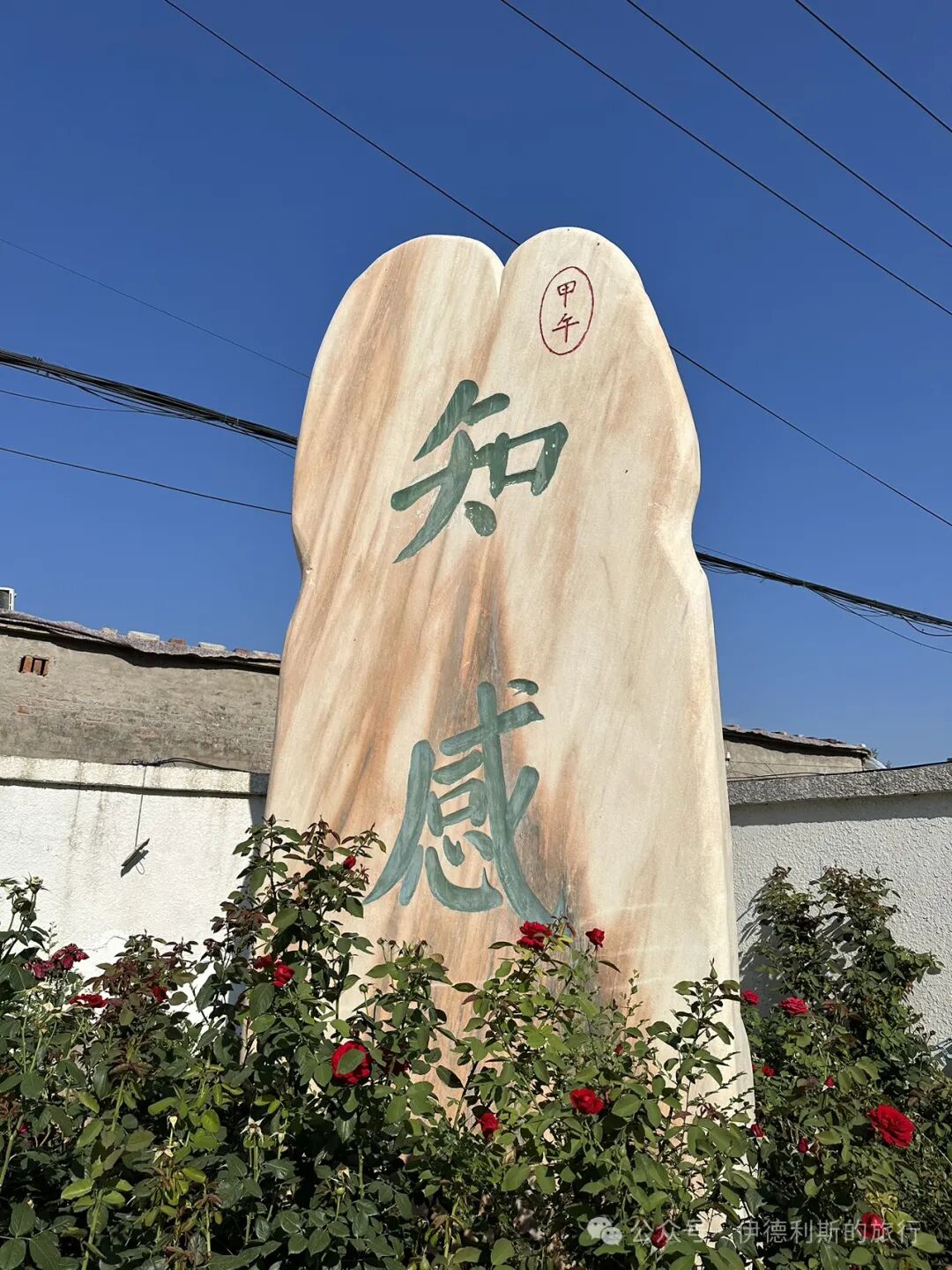
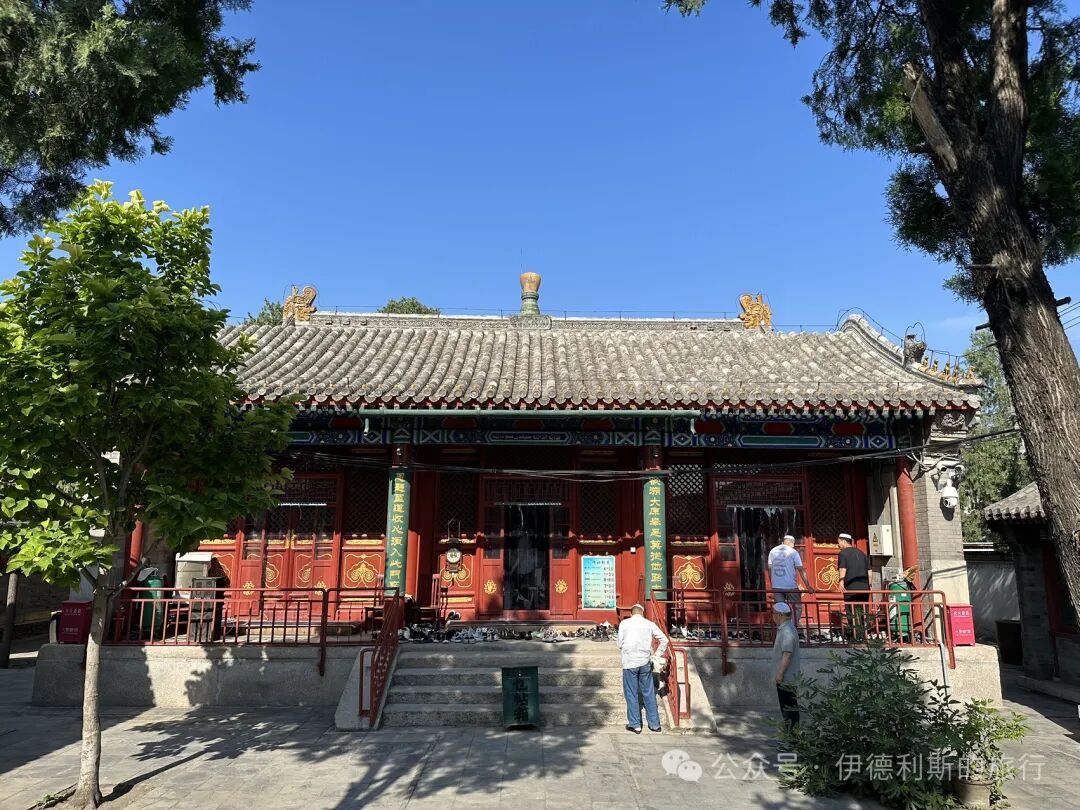
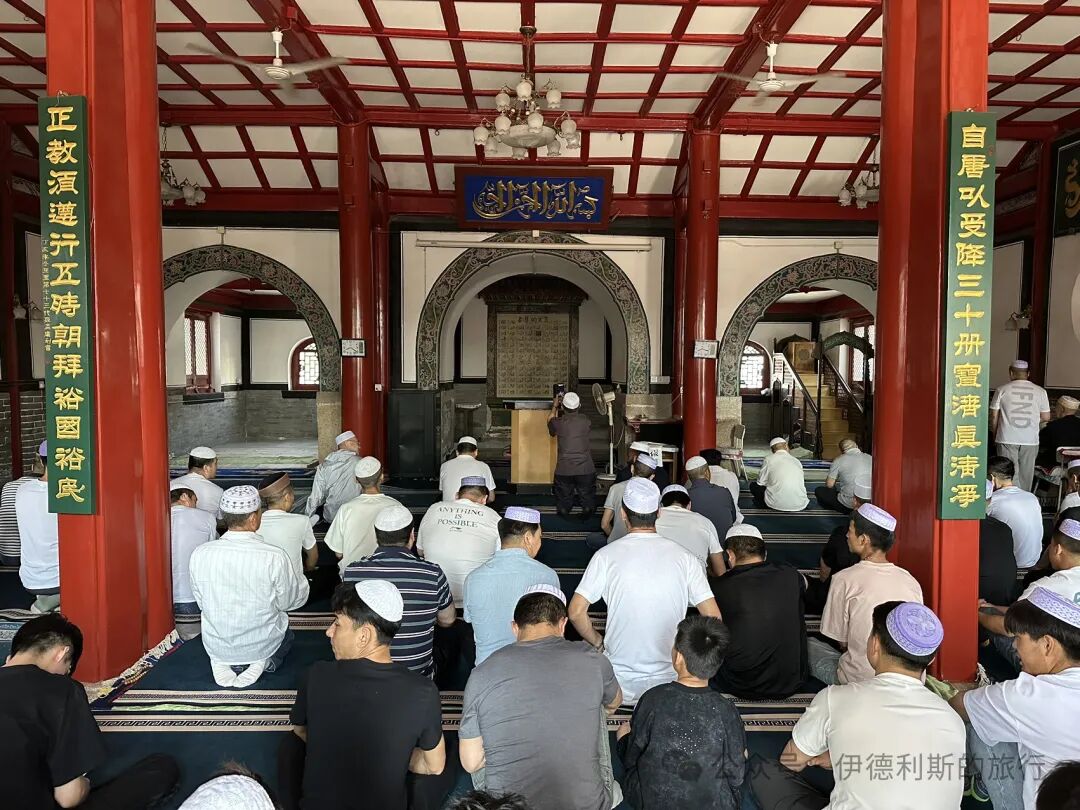
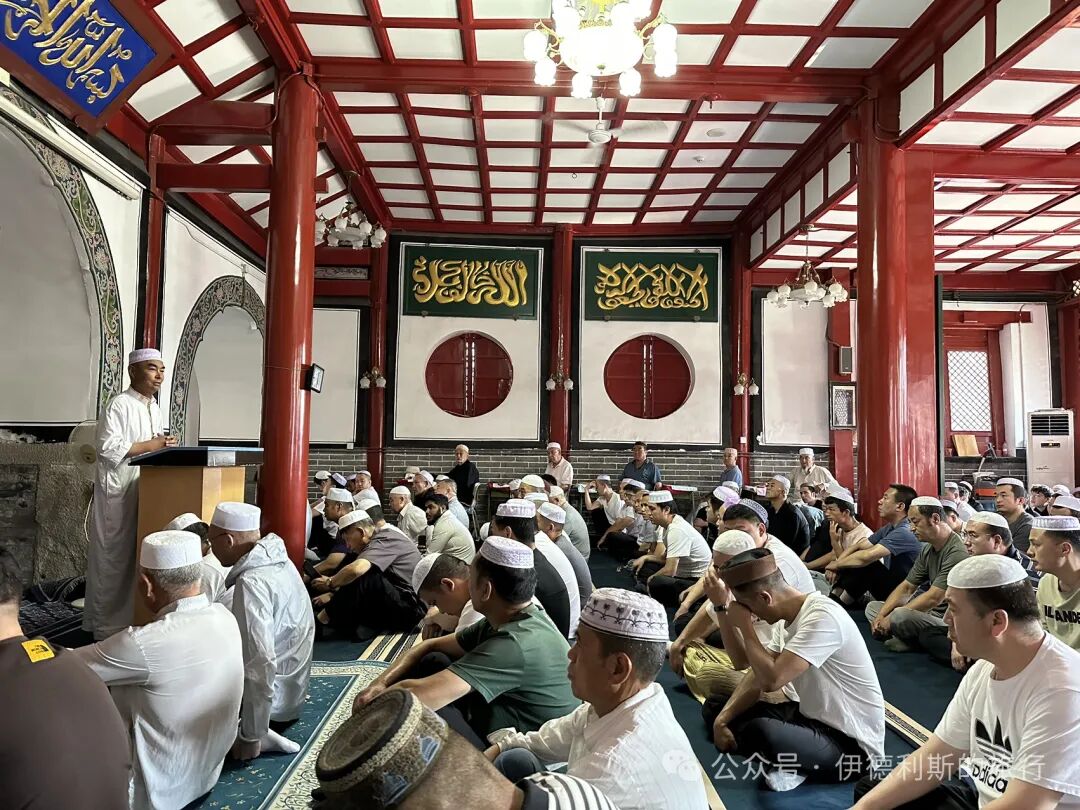
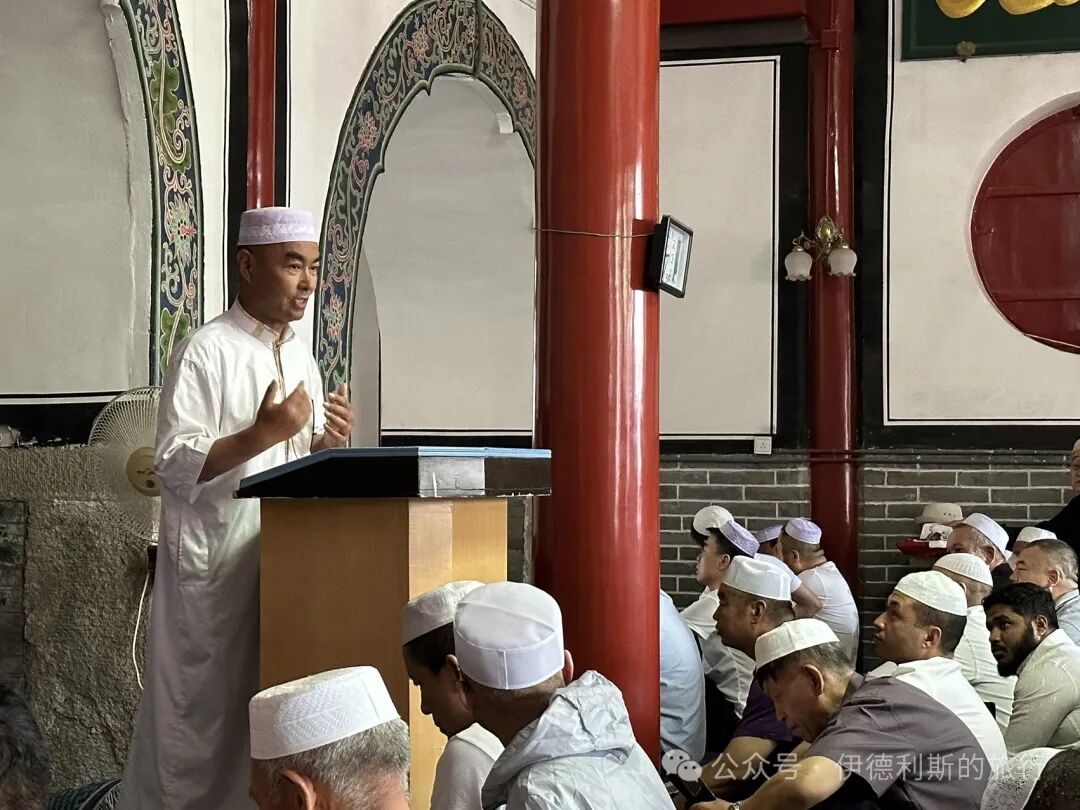
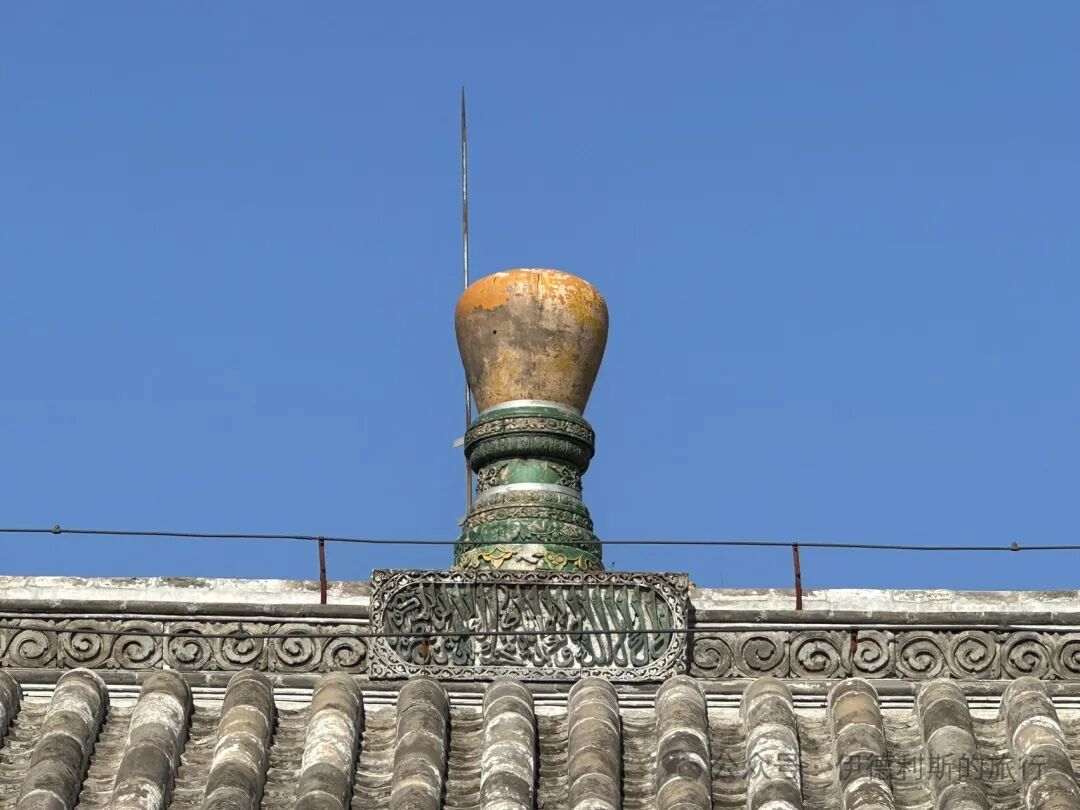
The plaques inscribed by Cixi, Guangxu, Prince Su, and Prince Qing for Xiguanshi Mosque were all destroyed in the last century. The ones currently in the mosque are replicas.
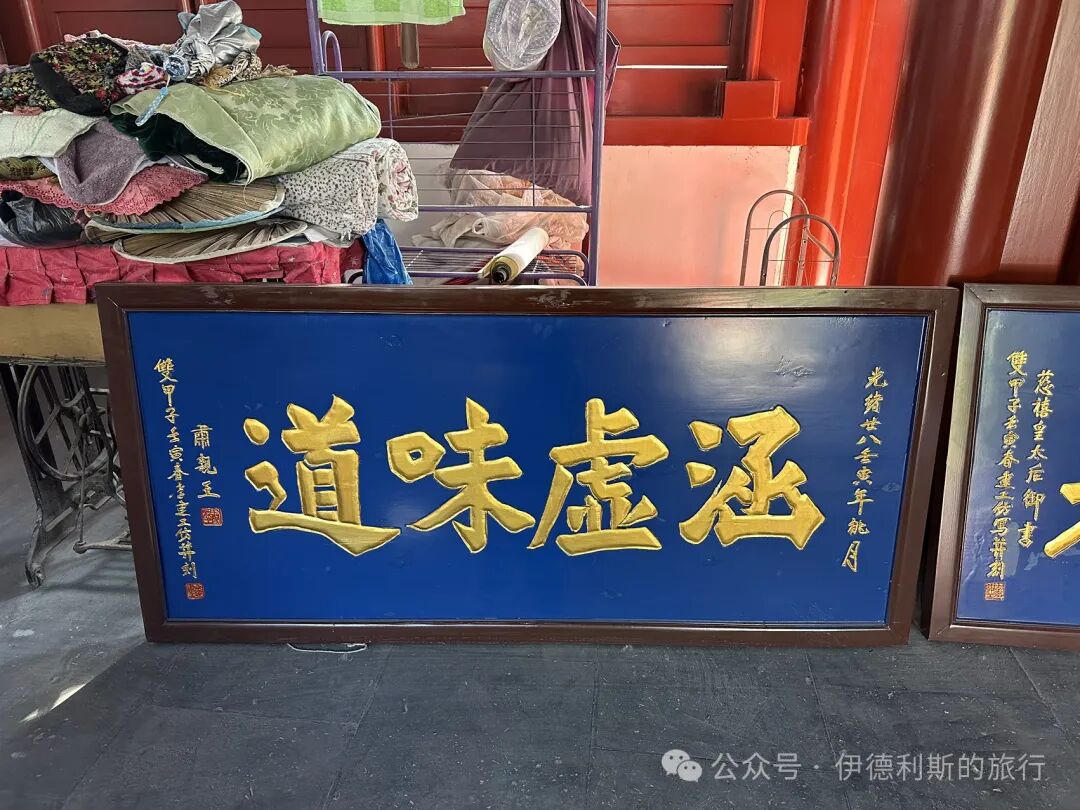
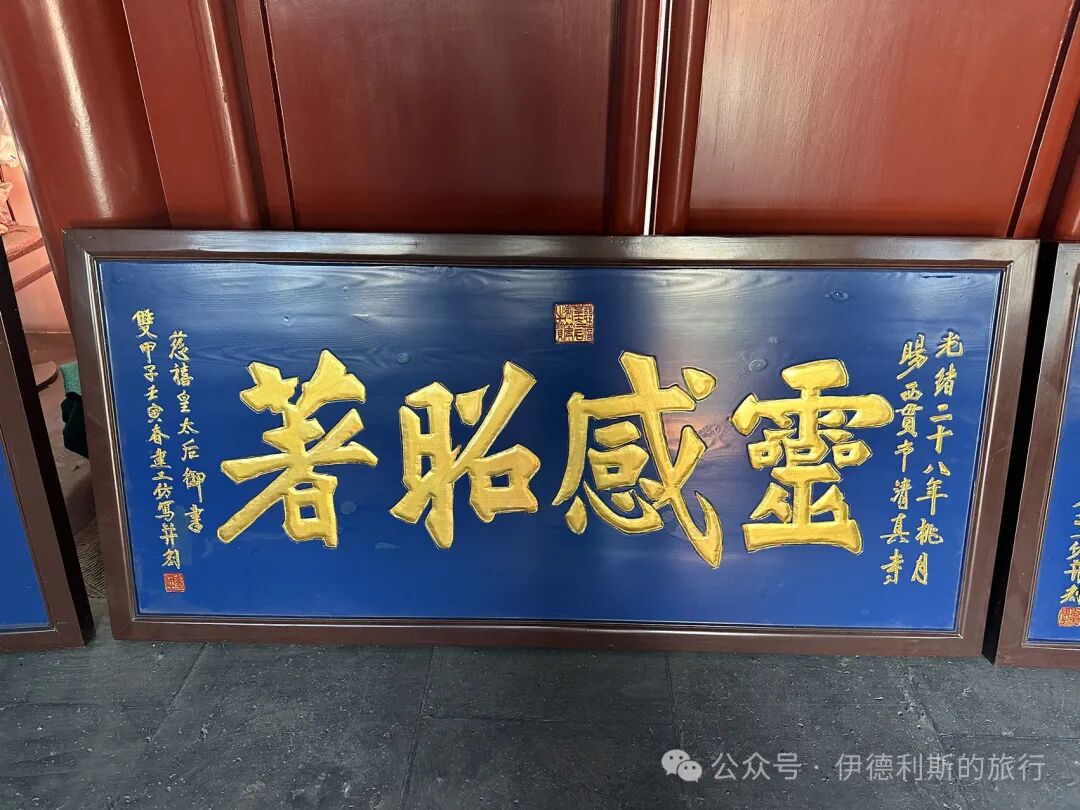
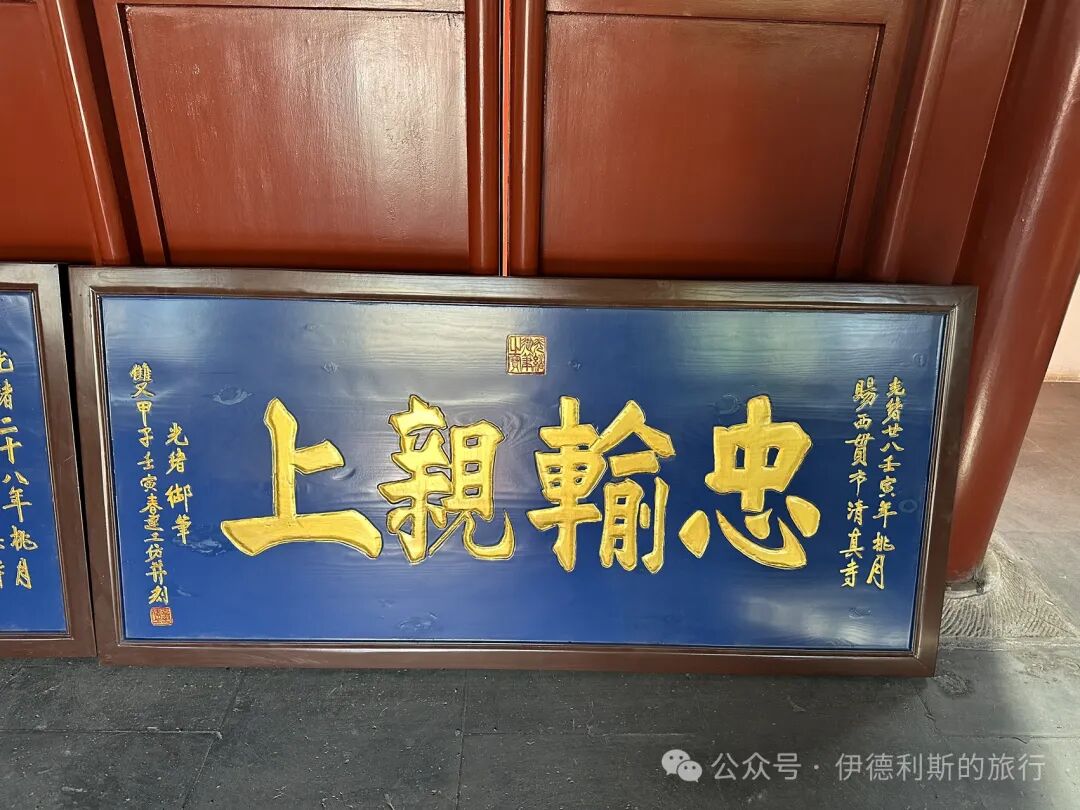
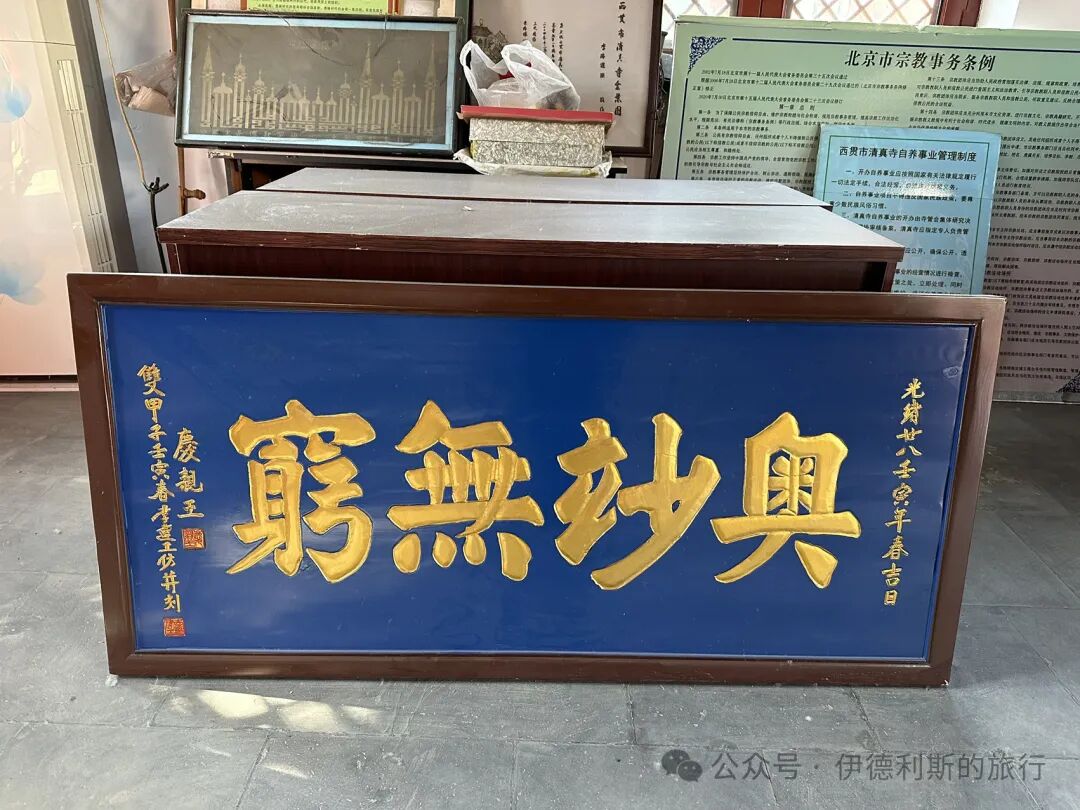
After the congregational prayer, we went to Jingyi Farmhouse at the foot of the Western Hills to perform the sacrifice (qurbani). This year, we chose a 110-pound sheep. It was raised on grass in the mountains, which is usually hard to find. Then we had the holiday noodle soup (fentang) made by my sister-in-law, and Zainab drank three bowls in one go!
The apricots at the farmhouse were ripe, so we ate some fresh ones.
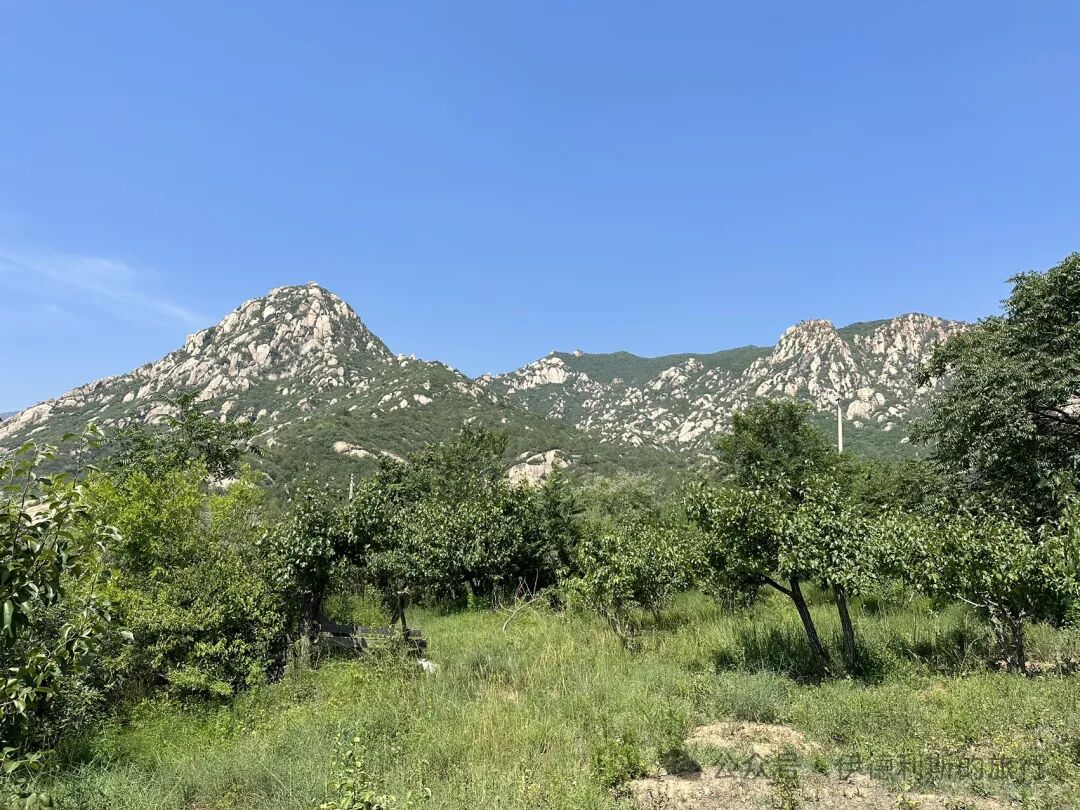
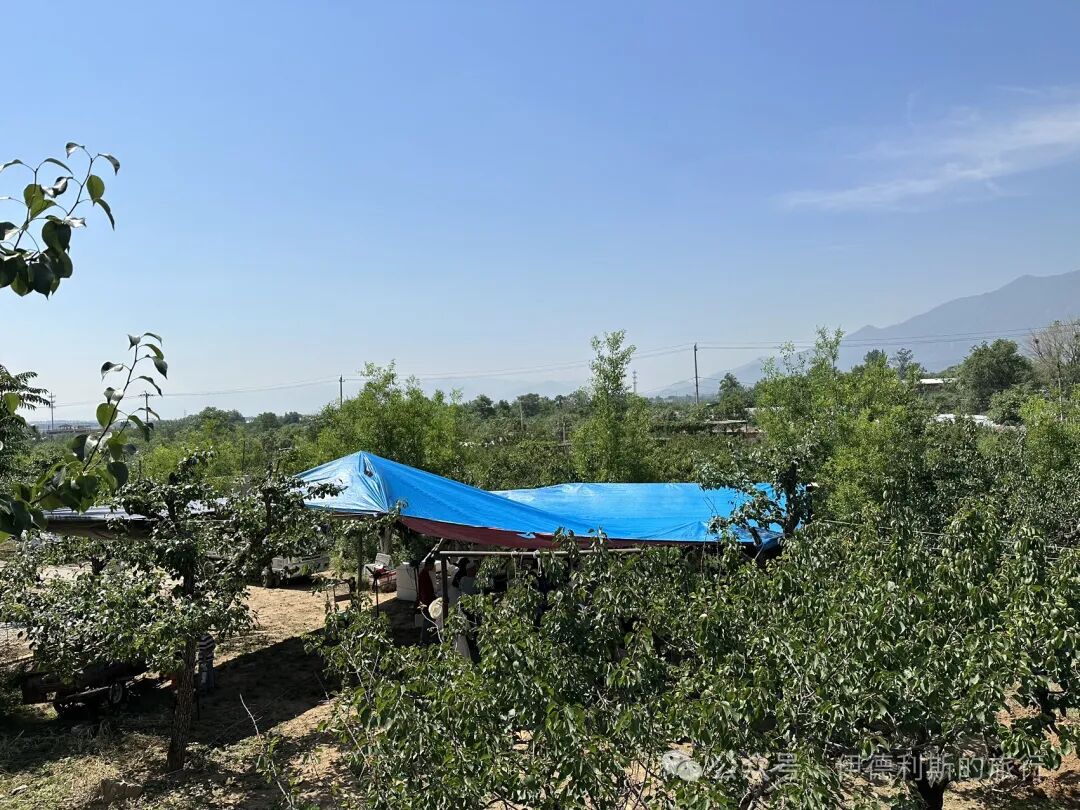
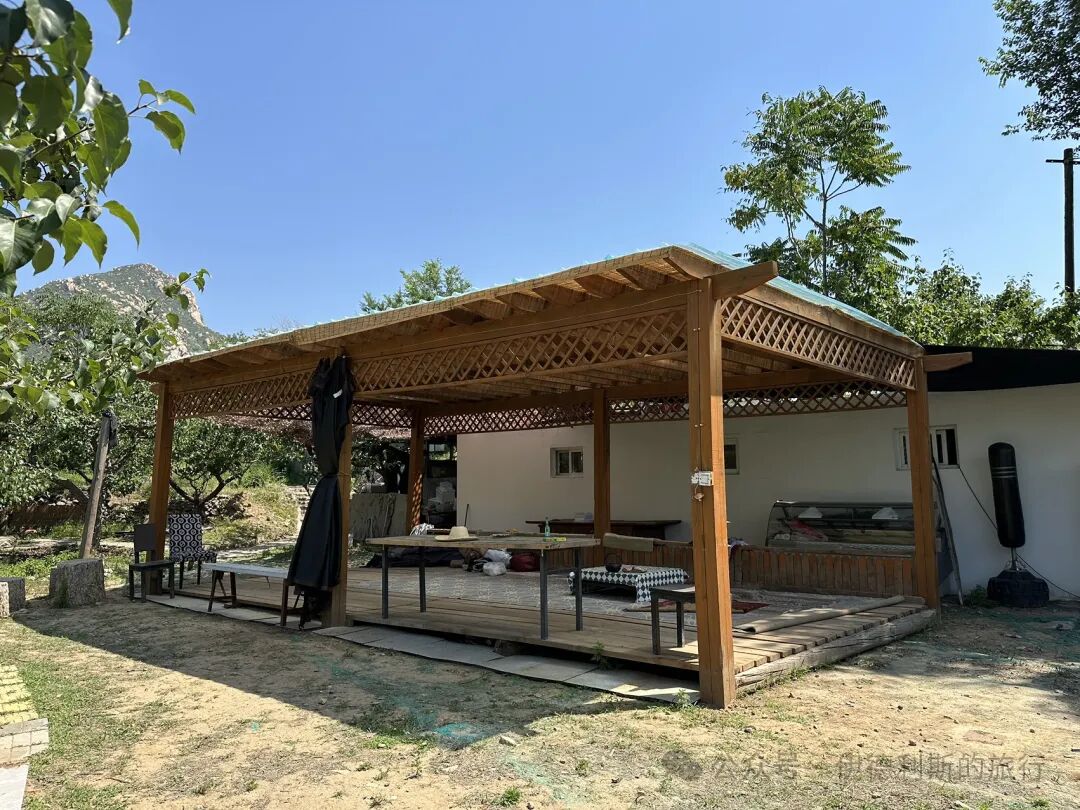
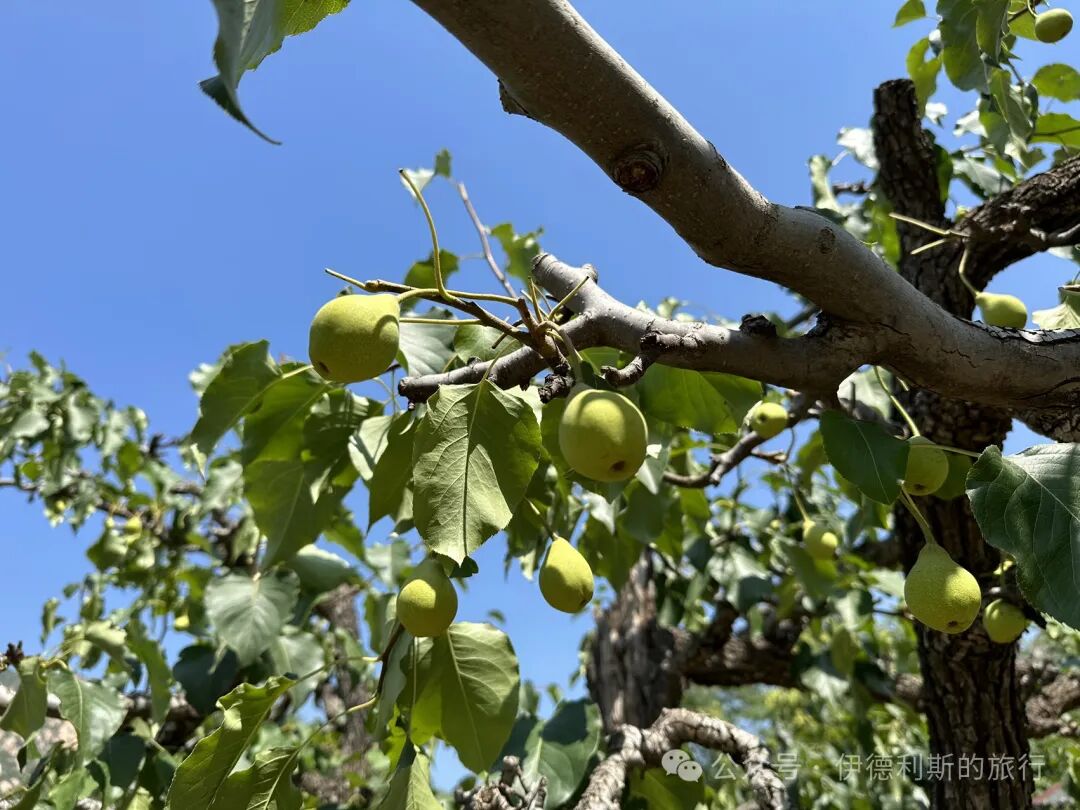
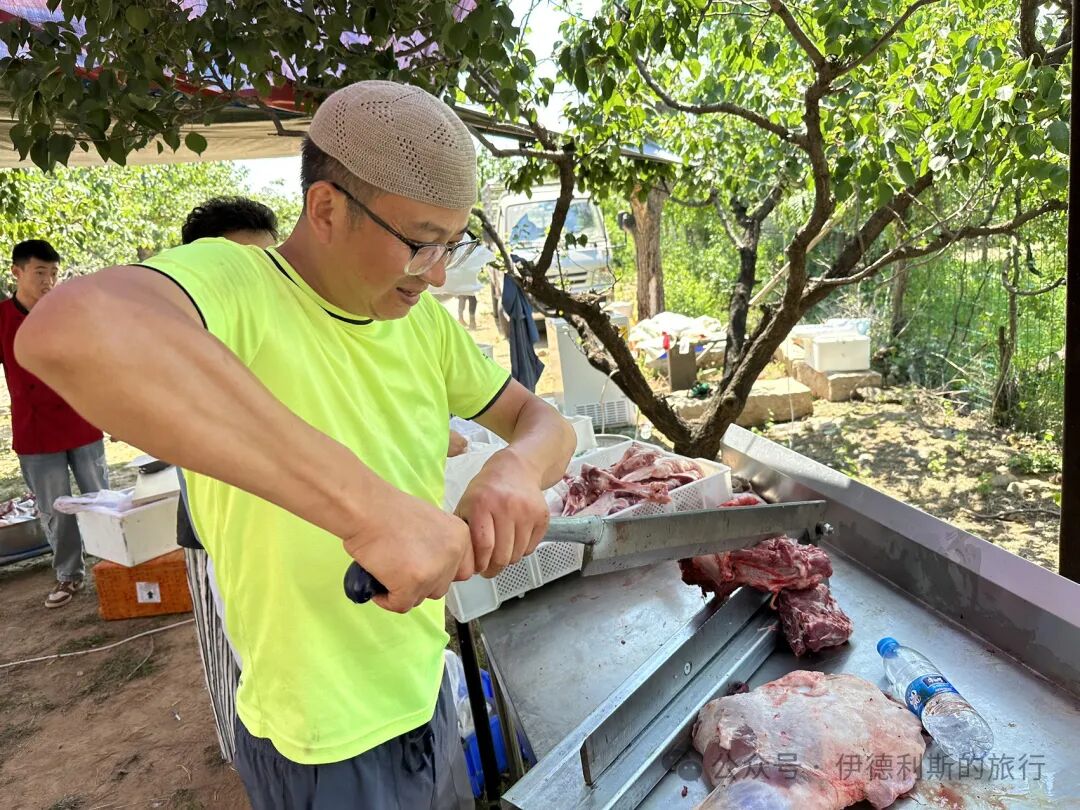
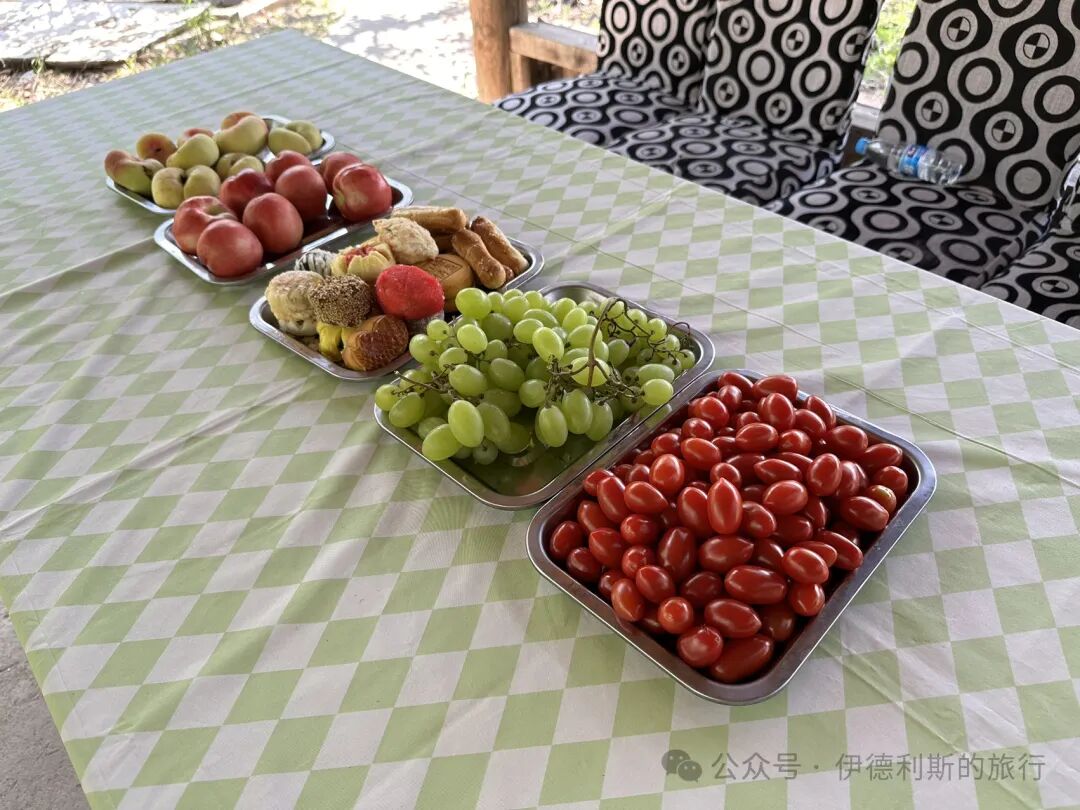
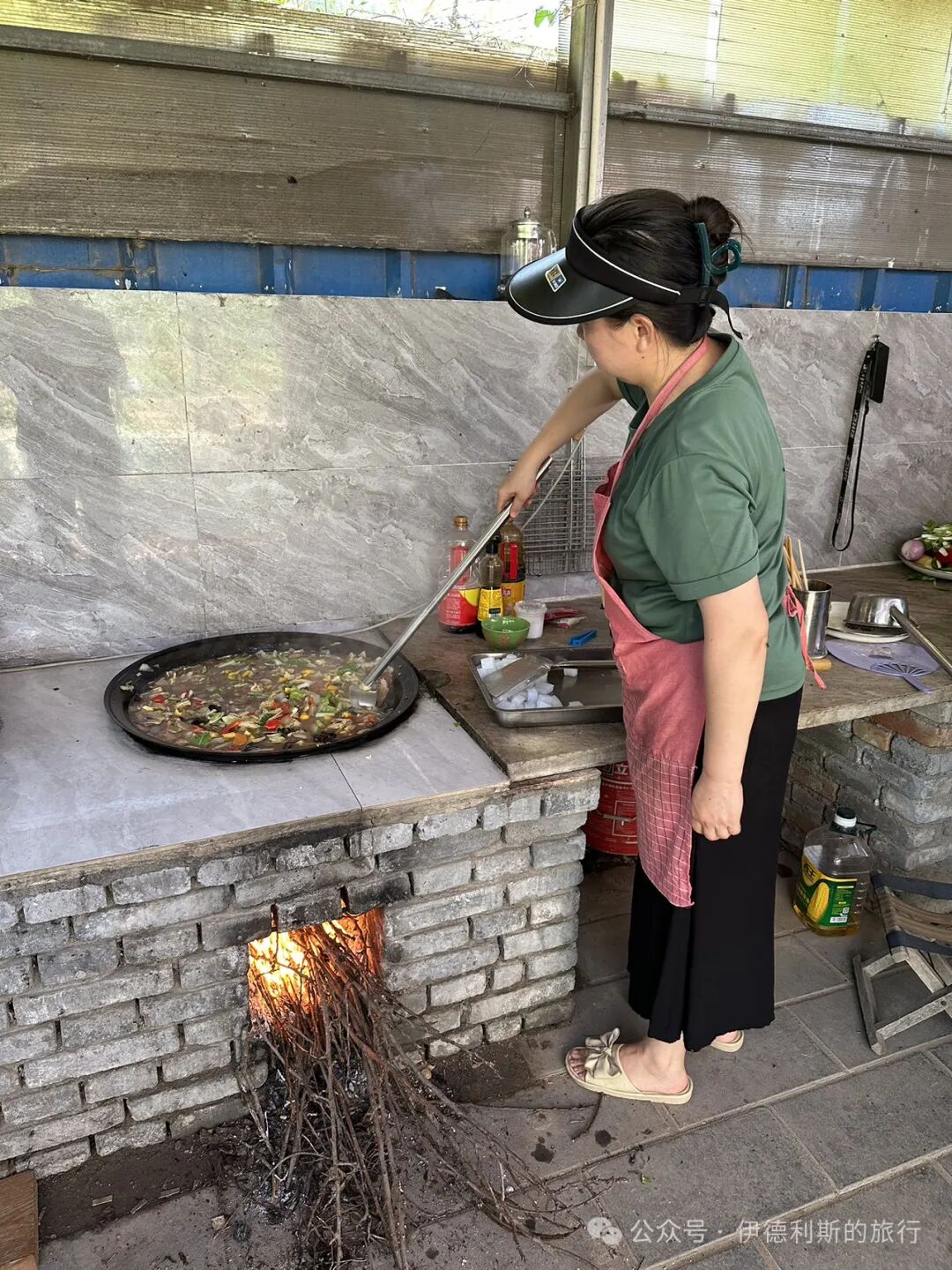
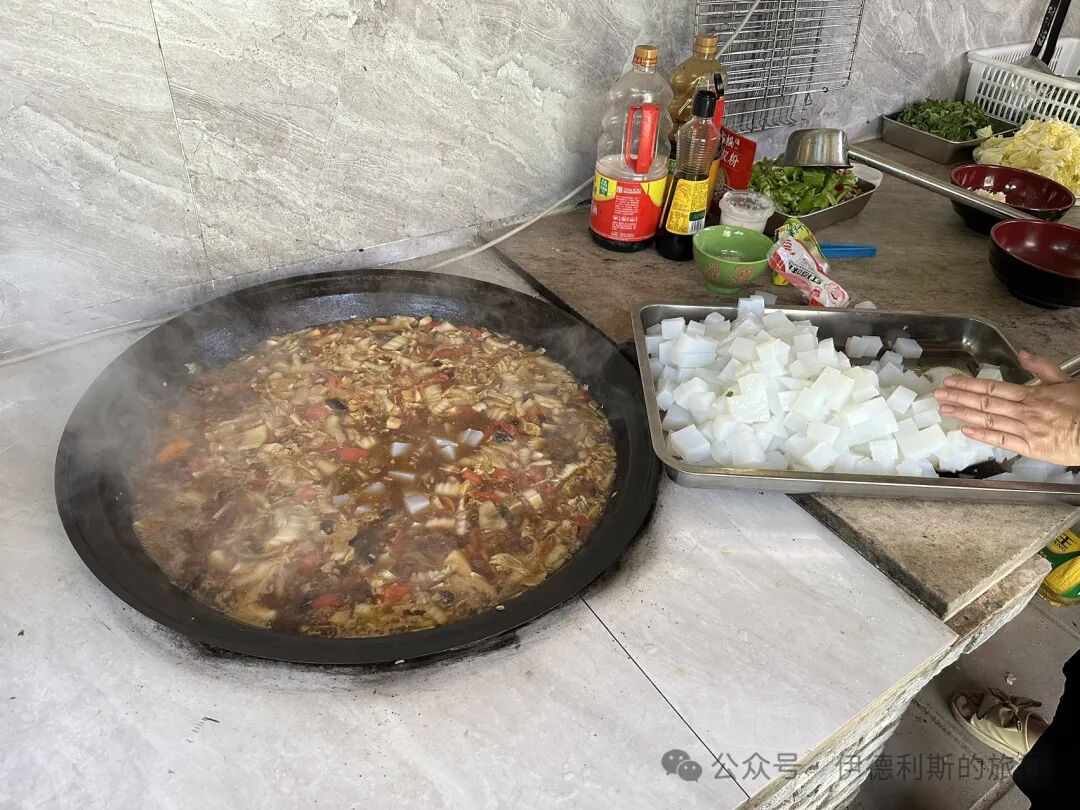
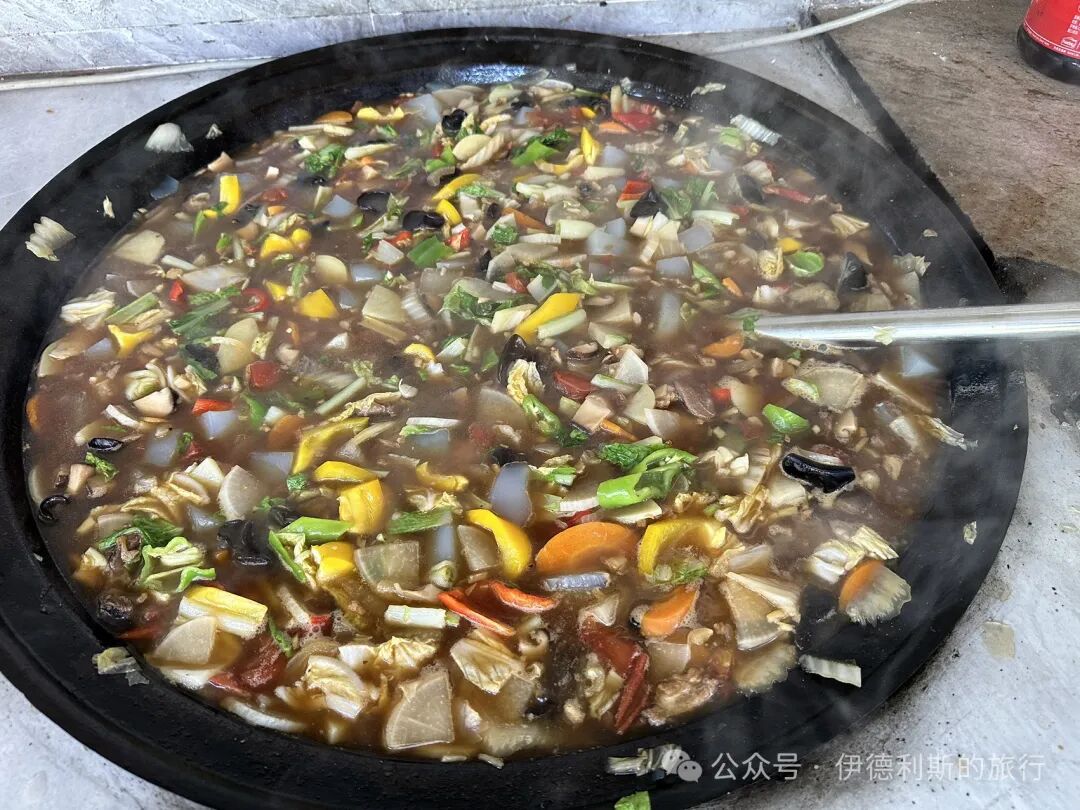
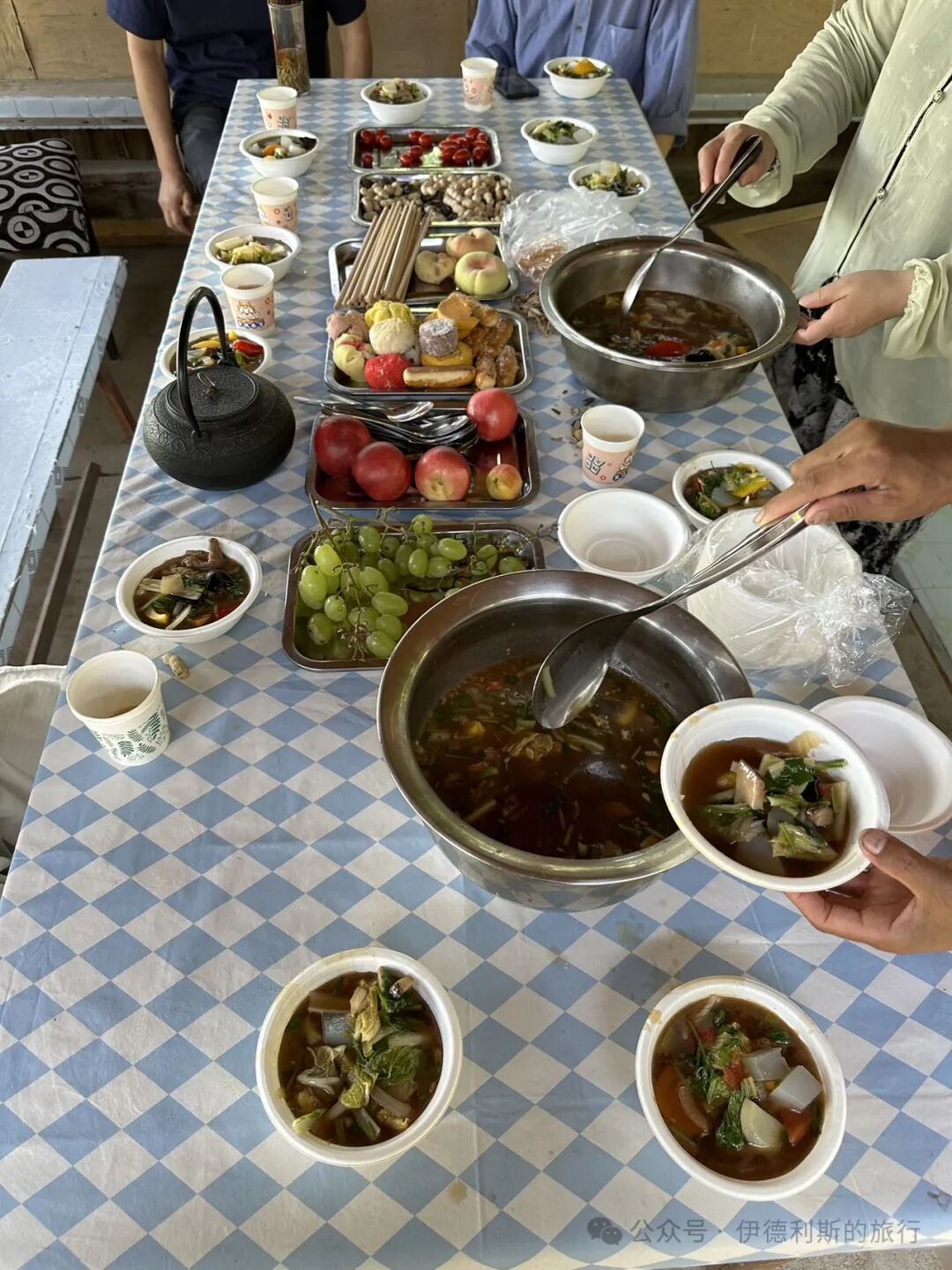
Steamed buns with bitter bean powder (kudoufen momo) brought by our friends (dost) from Qinghai.
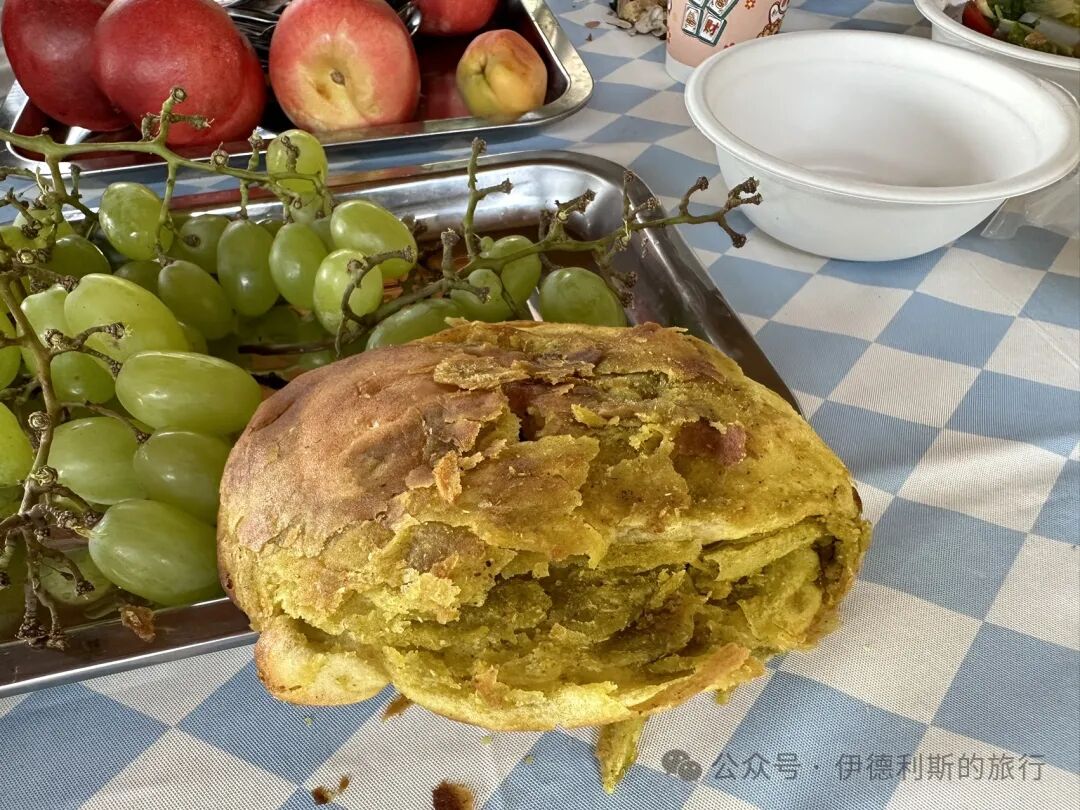
In the afternoon, Zainab made hand-grabbed lamb neck (shouzhuayangbozi), and our family ate the lamb from the Qurbani sacrifice. This was also the first time Suleiman ate meat from the Qurbani sacrifice, and he really loved it.
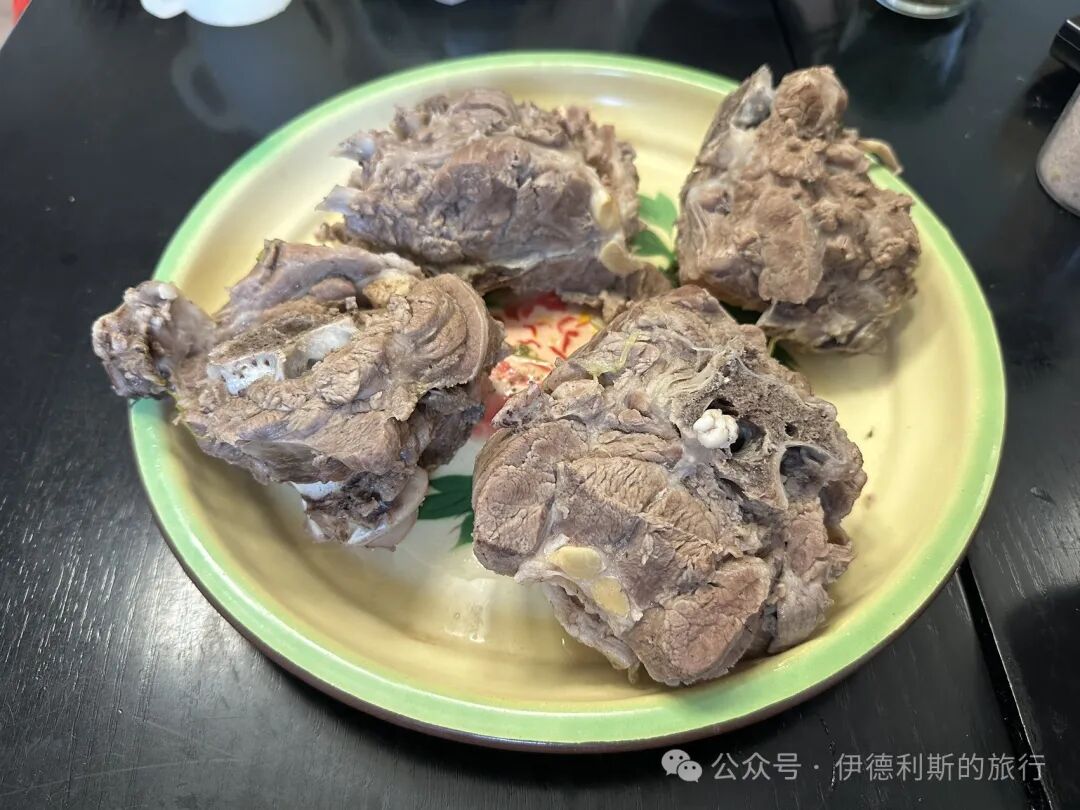
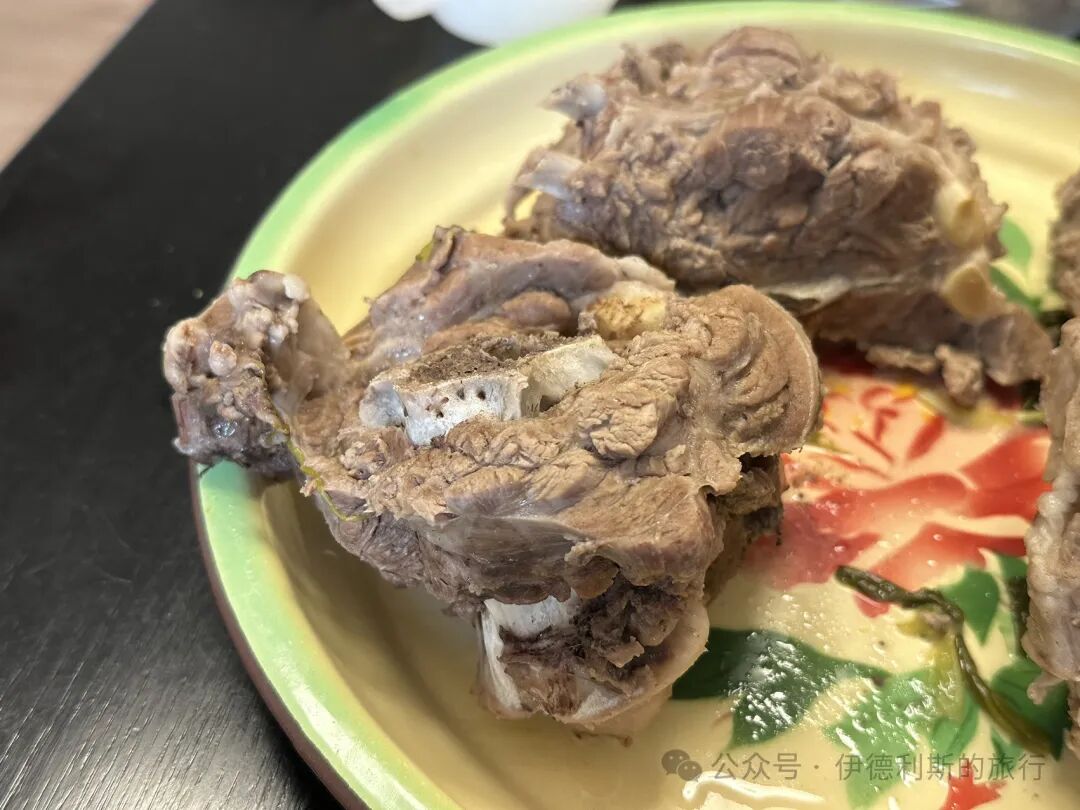
Eid al-Adha in Sanya: Hainan Muslim Travel Notes (Part 1)
Articles • ali2007fr posted the article • 0 comments • 128 views • 2026-05-17 06:26
Summary: This travel note introduces Eid al-Adha in Sanya: Hainan Muslim Travel Notes (Part 1). In July and August 2020, Zainab and I took our marriage leave to travel, and our first stop was Sanya to celebrate Eid al-Adha. It is useful for readers interested in Sanya Travel, Eid al-Adha, Muslim Travel.
In July and August 2020, Zainab and I took our marriage leave to travel, and our first stop was Sanya to celebrate Eid al-Adha. A few years ago, I visited the local Muslim community in Sanya on my own, but this time, having our good friend, the young Muslim artist Muning, guide us through the holiday made it much more interesting.
July 31st
We flew from Beijing on the night of July 30th and arrived in Sanya in the early hours of the 31st. Muning arranged for us to stay right next to the Southern Mosque in Huixin Village, a room with a pure view of the mosque. In winter, Muslims from all over the country come here to rent rooms, but in summer, there is almost no one.
On the wall is Arabic calligraphy by Muning.
After resting a little, we went downstairs to the Southern Mosque to perform the Fajr (dawn) prayer.
After the Fajr prayer, we rested for a while, and at 7 o'clock, we went back to the main hall to perform the Eid al-Adha prayer. The Imams here are all local Hui Muslims from the Huihui community, and the wa'z (sermon) is delivered in the Huihui language. To someone who doesn't understand the language, it sounds like a mixture of Malay, Chinese, and Arabic.
The Huihui language (Tsat language) is currently classified under the Chamic branch of the Malayo-Polynesian languages within the Austronesian language family. It is most closely related to the Roglai language of the Chamic branch in southern Vietnam, but it is also the most unique language in the Chamic branch, as it contains a large amount of Sino-Tibetan components. The language used by the Huihui people when they first entered Hainan was likely similar to the original Chamic language. However, with close interaction with the surrounding Chinese-speaking groups, the Huihui language has constantly changed. Its grammar has become closer to Chinese, its Chinese vocabulary has increased significantly, and it has developed a monosyllabic, multi-tonal system that does not exist in the Austronesian language family.
Professor Zheng Yiqing's book, Research on the Huihui Language, compares the Huihui language with the Rade language, a Chamic language in the mountainous areas of southern Vietnam, and concludes that the separation of the Huihui language and the Rade language should have occurred 1,000 years ago.
After the Eid prayer, Muning showed me the roof purlins and plaques from the Qing Dynasty that were stored in the warehouse of the Southern Mosque.
The roof purlins of traditional brick-and-tile houses of the Sanya Huihui people usually featured exquisite wood carvings of scriptures, but with the renovation and reconstruction of houses, there are very few left now.
Minbar (pulpit) components and Qing Dynasty tombstones are piled up in every corner of the Southern Mosque.
After leaving the Southern Mosque, Muning took me to the home of a teacher who collects traditional Huihui scripture-inscribed roof purlins. Every purlin here was once part of a traditional brick-and-tile house of the Sanya Huihui people.
Muning took us for breakfast, and we happened to run into a family hosting a banquet because their child had been admitted to Tsinghua University.
Rice porridge with chicken.
The soybean paste was delicious.
After breakfast, Muning took us to her home to pull the sheep. One of these two sheep was intended for sacrifice by Zainab and me, and the other was intended by Muning's family. They were Hainan Dongshan goats bought by Muning.
We took the sheep to the place of slaughter.
After the slaughter, we divided the meat into three parts: one for ourselves, one for friends, and one for the poor.
Cleaned sheep tripe and intestines.
We asked our neighbor to make us a dish of dry-fried mutton in the local Sanya style. Their family usually sells roast duck next to the Southern Mosque in Huixin Village, but they were closed for the Eid al-Adha holiday.
The Imam from Turpan, Xinjiang, who performed the sacrifice for us, made us Xinjiang-style clear-stewed mutton, which was super delicious, and the mutton soup was also very good.
Muning gave me an Arabic handicraft he carved by hand from a coconut shell; it was super beautiful.
After the meal, I went with Muning to distribute the other part of the meat to friends.
We prayed at the Nankai Mosque in Huixin Village, where mats, not carpets, were laid out in the main hall.
In the afternoon, Muning took me to see old houses in the Huihui village of Sanya, and for the first time, I saw old roof purlins with scripture inscriptions.
This is the most beautiful set of scripture-inscribed roof purlins preserved in their original location in Huihui Village, with the gold-painted scripture characters shining under the light.
The last old house in Huihui Village.
In the evening, Muning's family treated Zainab and me to fresh fish soup at the entrance of Huixin Village in Sanya. The Huihui people's signature fresh fish soup is made with starfruit, tamarind, and tomatoes, giving it a very strong sour taste. You can choose from a variety of sea fish. When eating, you have to make your own dipping sauce. You must use the Hainan yellow lantern chili in moderation, as it is extremely spicy. We also ate coconut milk red rice, sweet potato vines, and stir-fried squid, all of which were quite delicious.
Yellow lantern chili.
In the evening, we went to the Guangbaina night market next to Huixin Village. Since the rise of the street stall economy this year, Guangbaina has become increasingly lively. There is no stall fee here, and many people sell fruit grown in their own homes, so the prices are the lowest in the area. We ate sugar-apple, jackfruit, and mango, all of which were cheap and delicious.
After visiting the night market, we returned to Huixin Village to eat Qingbuliang (a refreshing dessert with coconut milk and various toppings). The ingredients for Qingbuliang in every shop in Sanya are different, and you have to try them all to know which one you like.
Still wanting more, we went out again in the evening to ride an electric scooter.
After returning, I looked through the old books collected by Muning, which included records of Eid al-Adha in 1979.
August 1st
I woke up in the morning and had beef noodles made by the Huihui people in Huixin Village, then bought white fungus and lotus seed porridge and chicken porridge at the gate of the Southern Mosque to drink by the sea. After drinking, we took a walk in the coconut grove by the sea.
After strolling by the sea, we went to Huihui Village to drink some coconut juice. view all
Summary: This travel note introduces Eid al-Adha in Sanya: Hainan Muslim Travel Notes (Part 1). In July and August 2020, Zainab and I took our marriage leave to travel, and our first stop was Sanya to celebrate Eid al-Adha. It is useful for readers interested in Sanya Travel, Eid al-Adha, Muslim Travel.
In July and August 2020, Zainab and I took our marriage leave to travel, and our first stop was Sanya to celebrate Eid al-Adha. A few years ago, I visited the local Muslim community in Sanya on my own, but this time, having our good friend, the young Muslim artist Muning, guide us through the holiday made it much more interesting.
July 31st
We flew from Beijing on the night of July 30th and arrived in Sanya in the early hours of the 31st. Muning arranged for us to stay right next to the Southern Mosque in Huixin Village, a room with a pure view of the mosque. In winter, Muslims from all over the country come here to rent rooms, but in summer, there is almost no one.
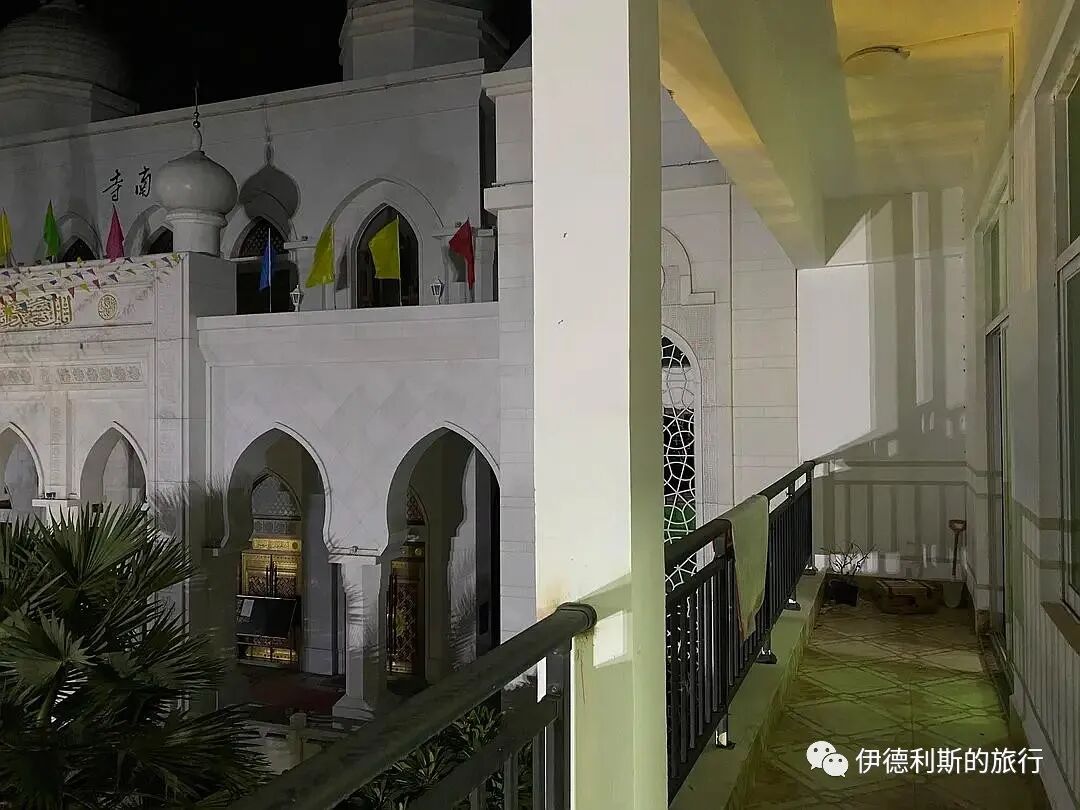
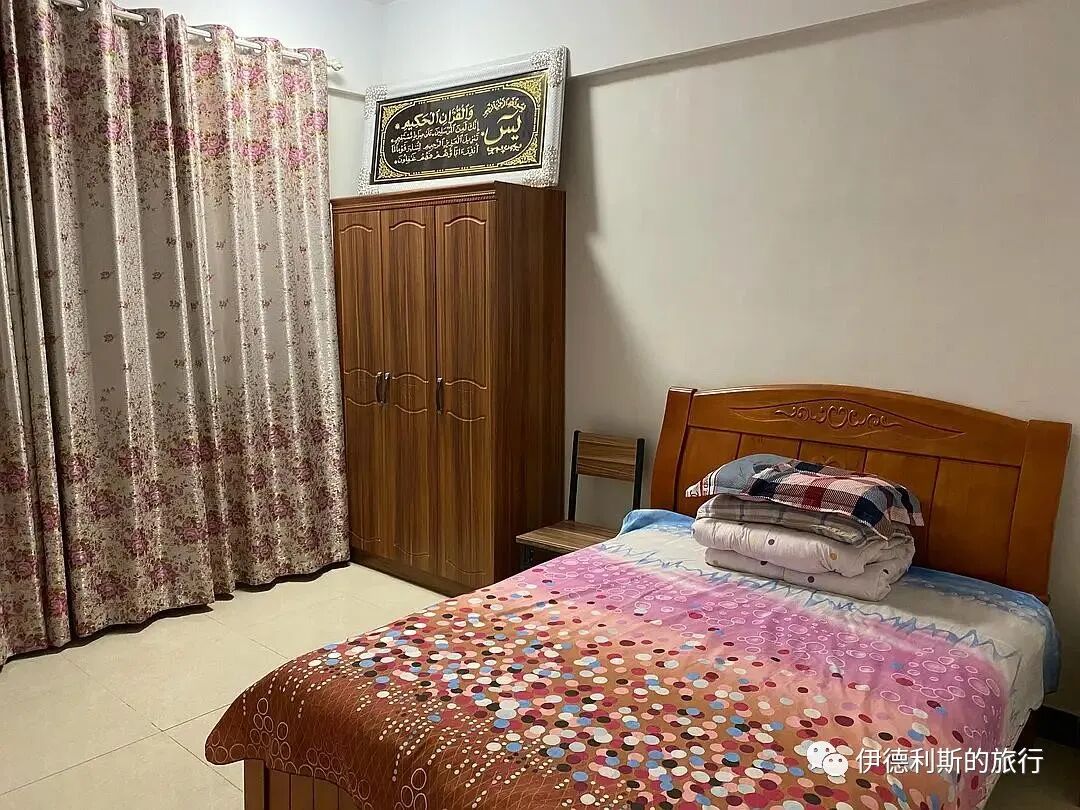
On the wall is Arabic calligraphy by Muning.
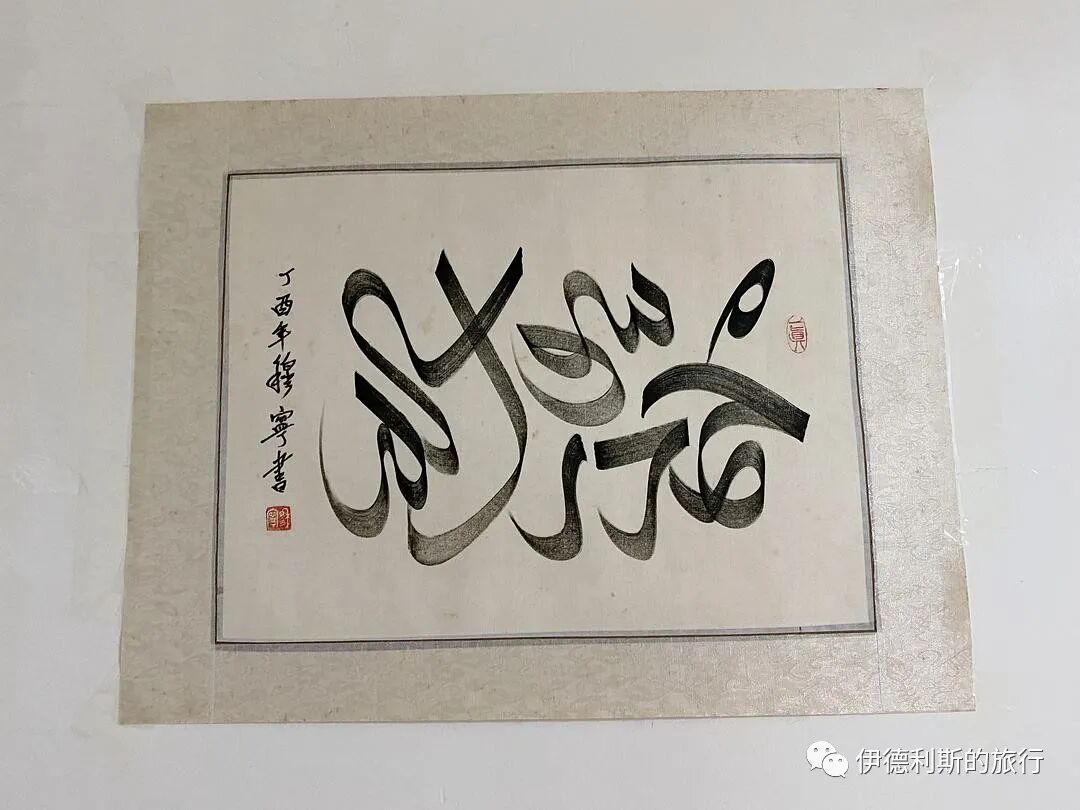
After resting a little, we went downstairs to the Southern Mosque to perform the Fajr (dawn) prayer.
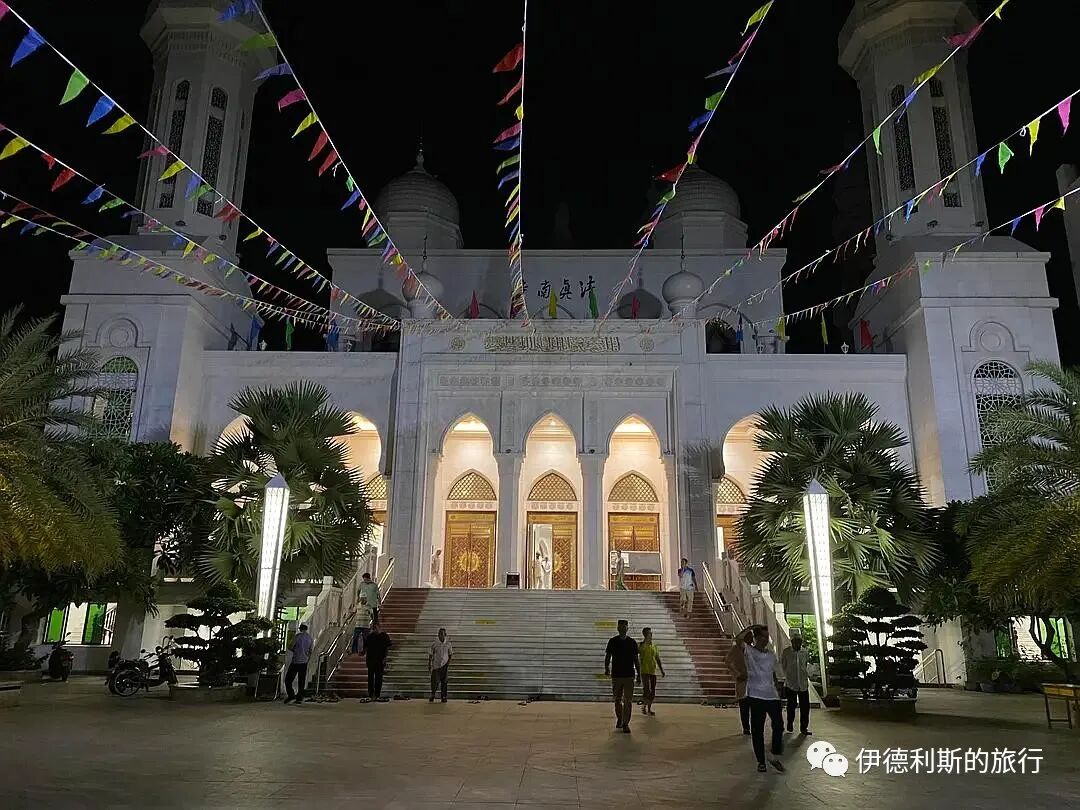
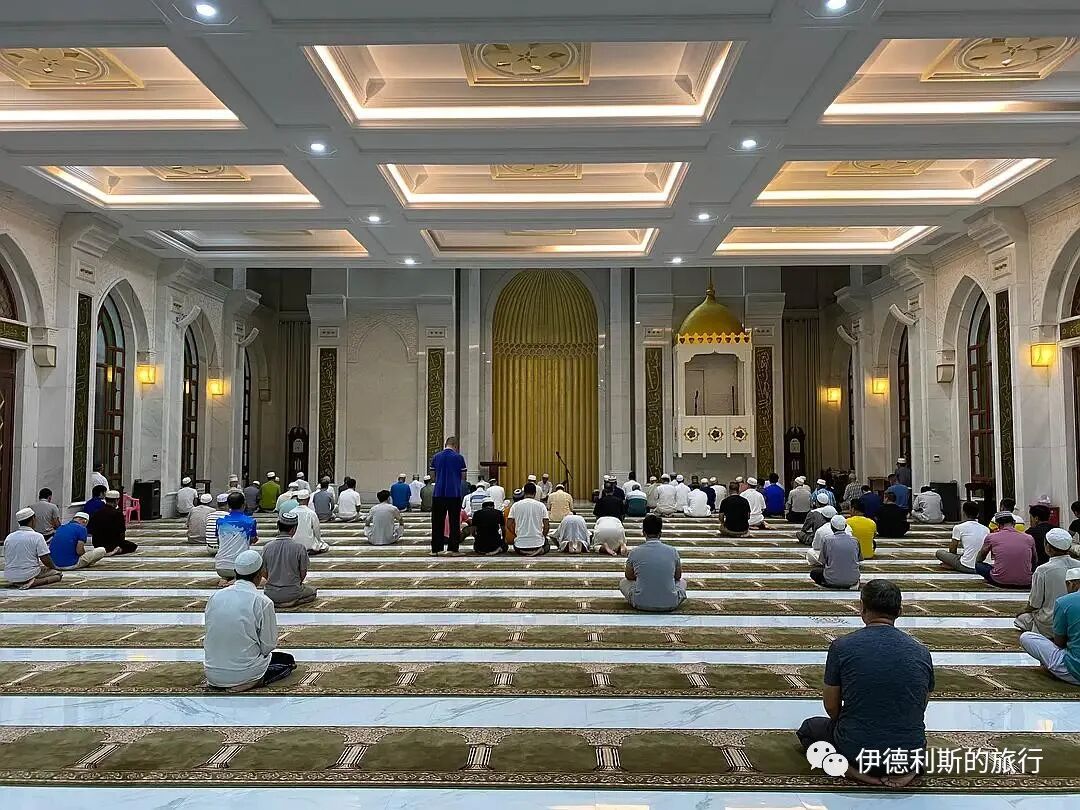
After the Fajr prayer, we rested for a while, and at 7 o'clock, we went back to the main hall to perform the Eid al-Adha prayer. The Imams here are all local Hui Muslims from the Huihui community, and the wa'z (sermon) is delivered in the Huihui language. To someone who doesn't understand the language, it sounds like a mixture of Malay, Chinese, and Arabic.
The Huihui language (Tsat language) is currently classified under the Chamic branch of the Malayo-Polynesian languages within the Austronesian language family. It is most closely related to the Roglai language of the Chamic branch in southern Vietnam, but it is also the most unique language in the Chamic branch, as it contains a large amount of Sino-Tibetan components. The language used by the Huihui people when they first entered Hainan was likely similar to the original Chamic language. However, with close interaction with the surrounding Chinese-speaking groups, the Huihui language has constantly changed. Its grammar has become closer to Chinese, its Chinese vocabulary has increased significantly, and it has developed a monosyllabic, multi-tonal system that does not exist in the Austronesian language family.
Professor Zheng Yiqing's book, Research on the Huihui Language, compares the Huihui language with the Rade language, a Chamic language in the mountainous areas of southern Vietnam, and concludes that the separation of the Huihui language and the Rade language should have occurred 1,000 years ago.
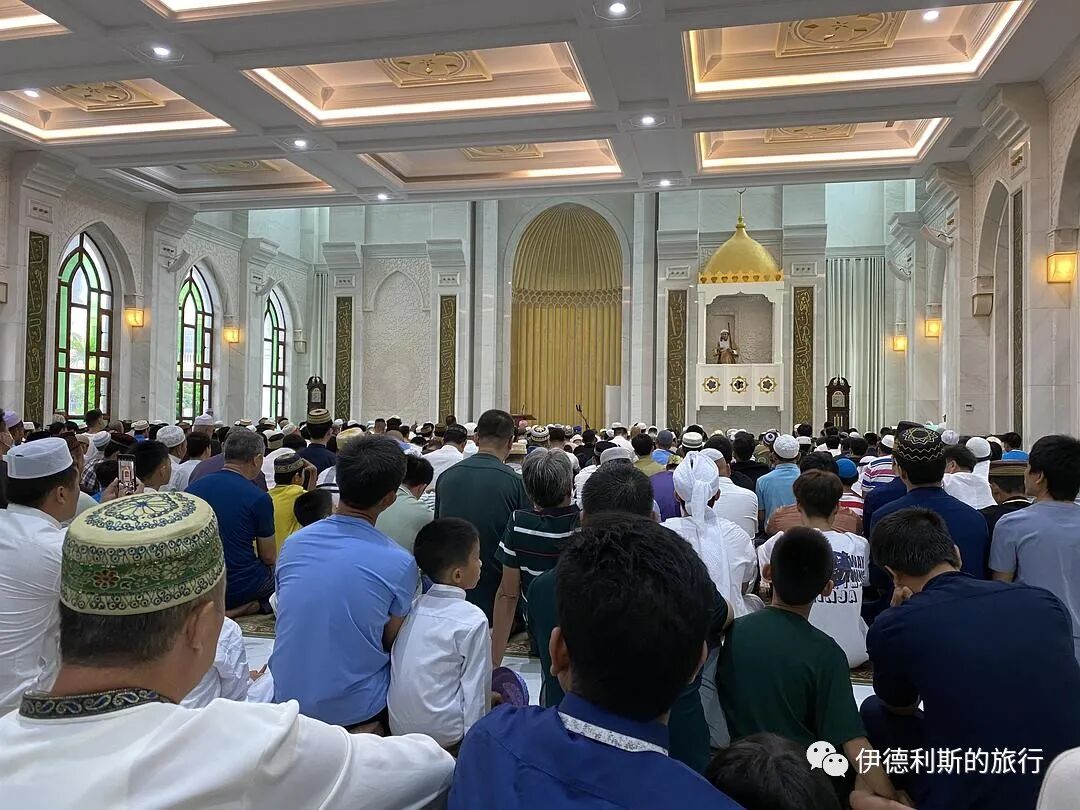
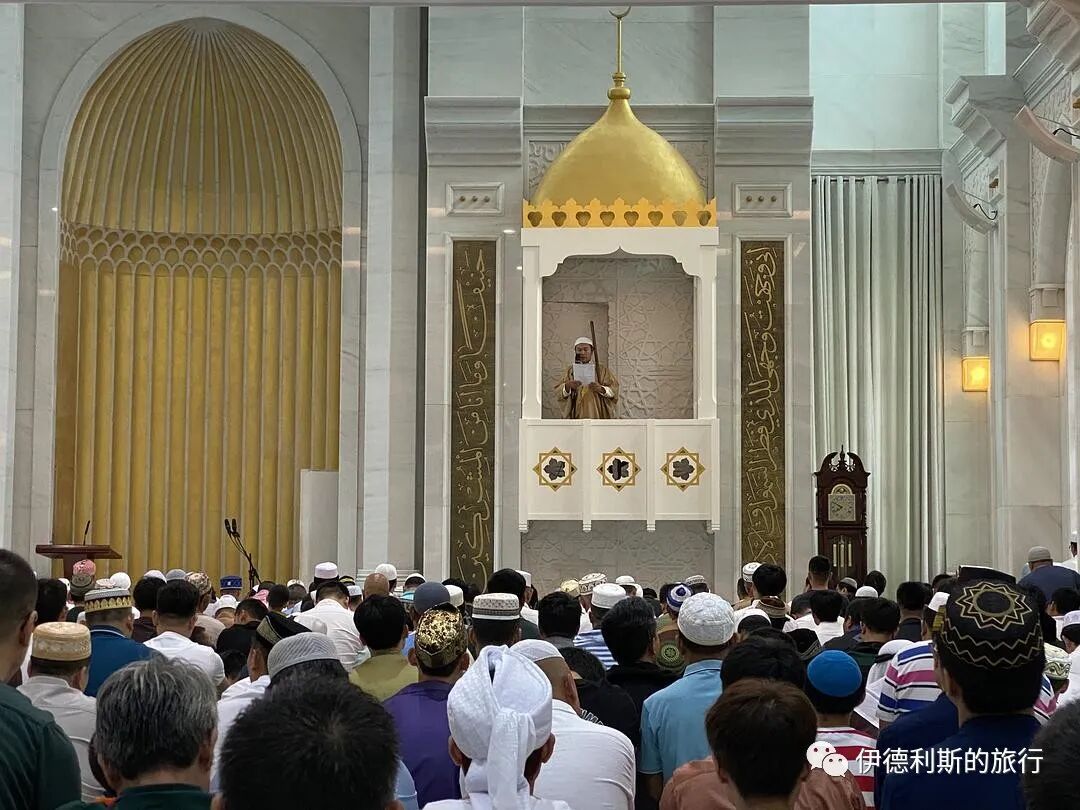
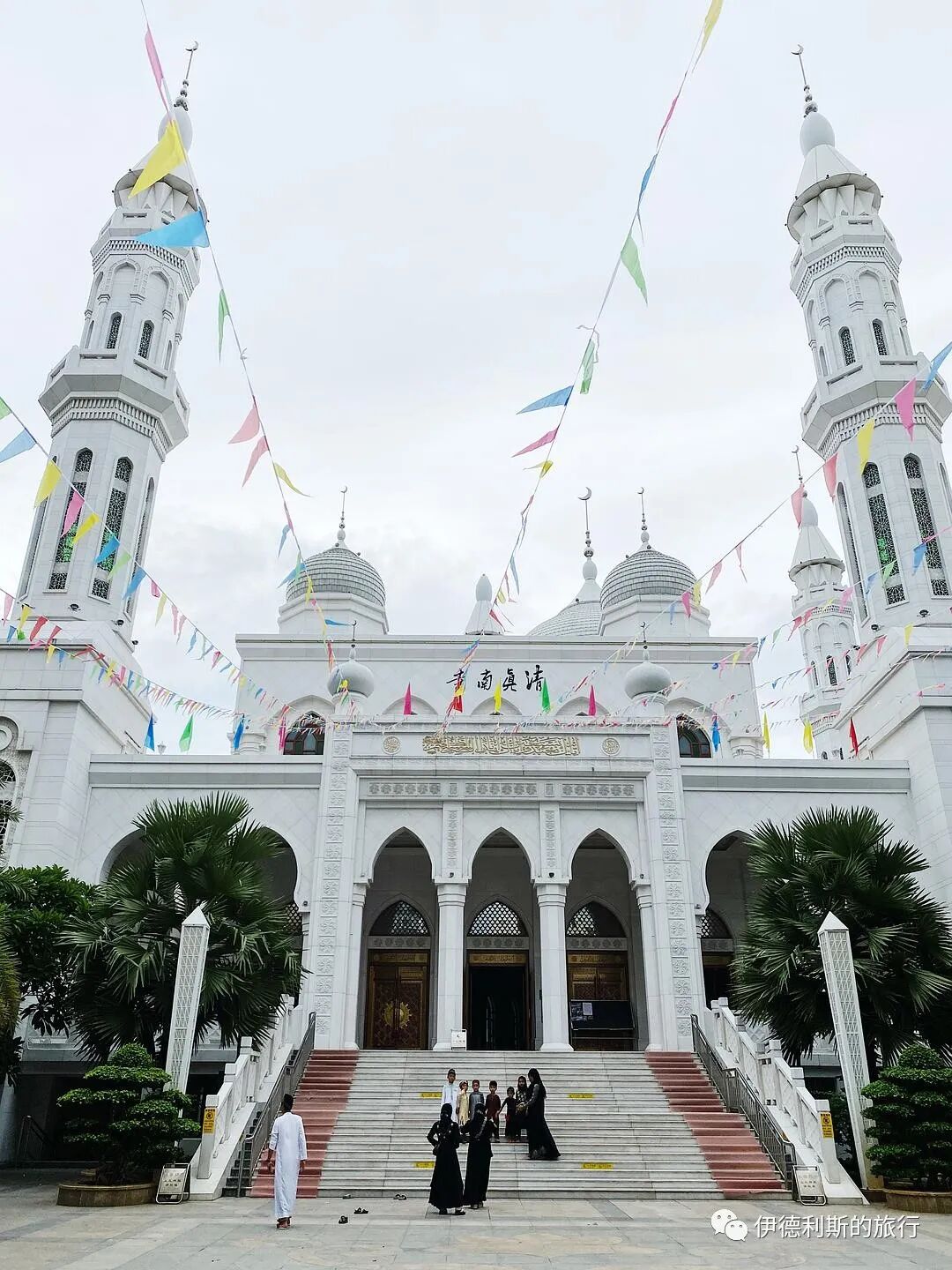
After the Eid prayer, Muning showed me the roof purlins and plaques from the Qing Dynasty that were stored in the warehouse of the Southern Mosque.
The roof purlins of traditional brick-and-tile houses of the Sanya Huihui people usually featured exquisite wood carvings of scriptures, but with the renovation and reconstruction of houses, there are very few left now.
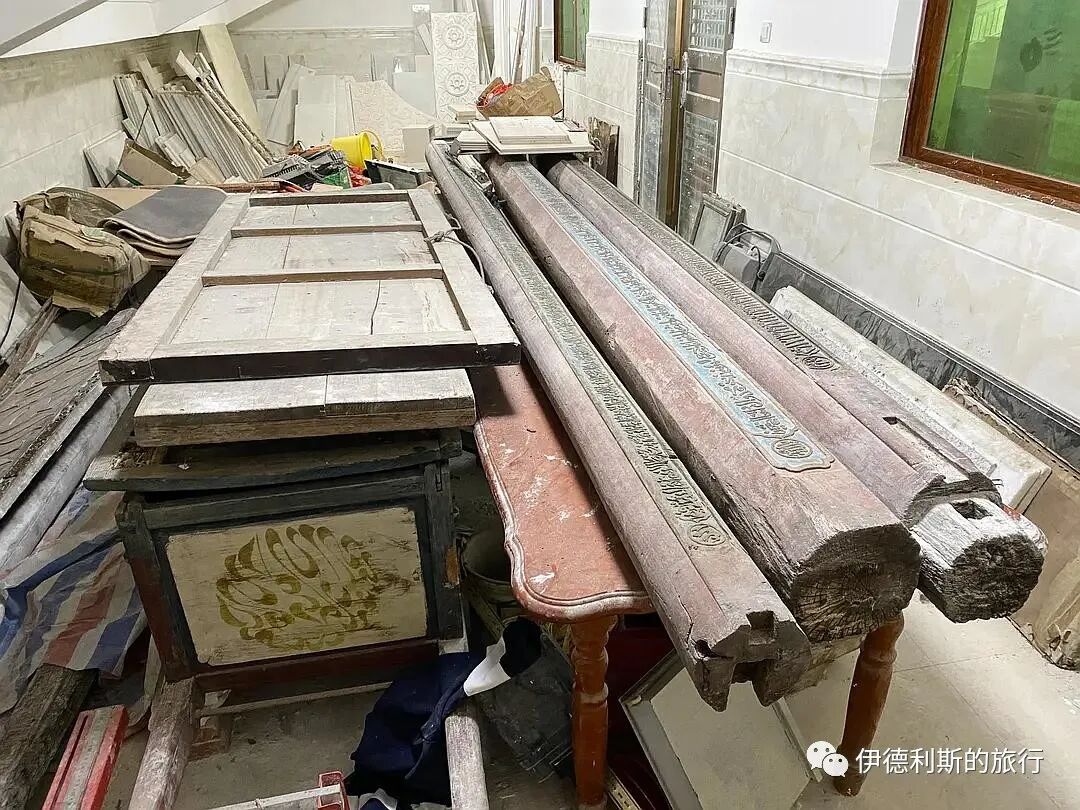
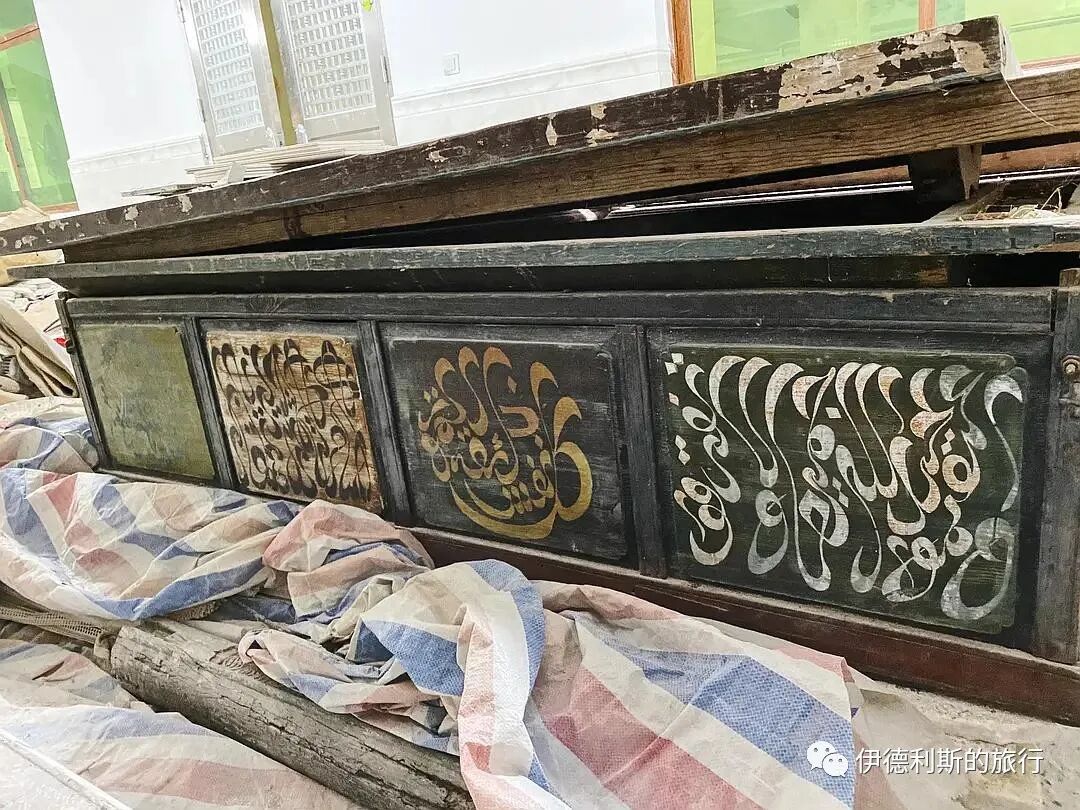
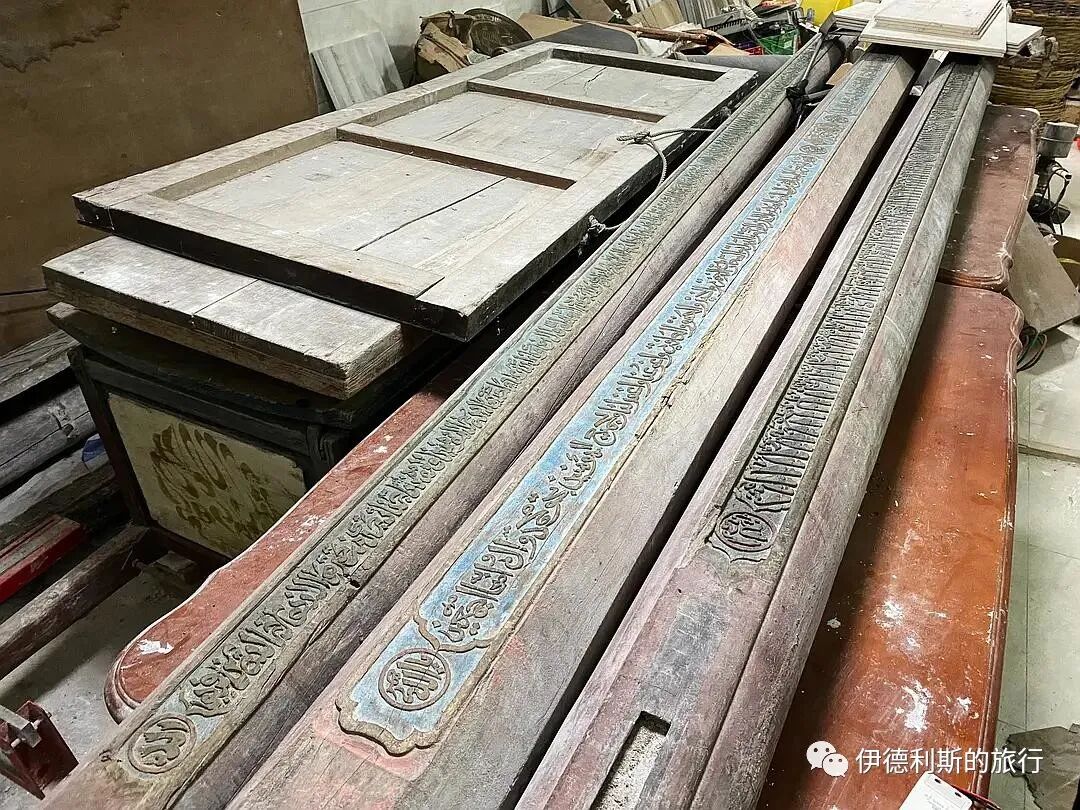
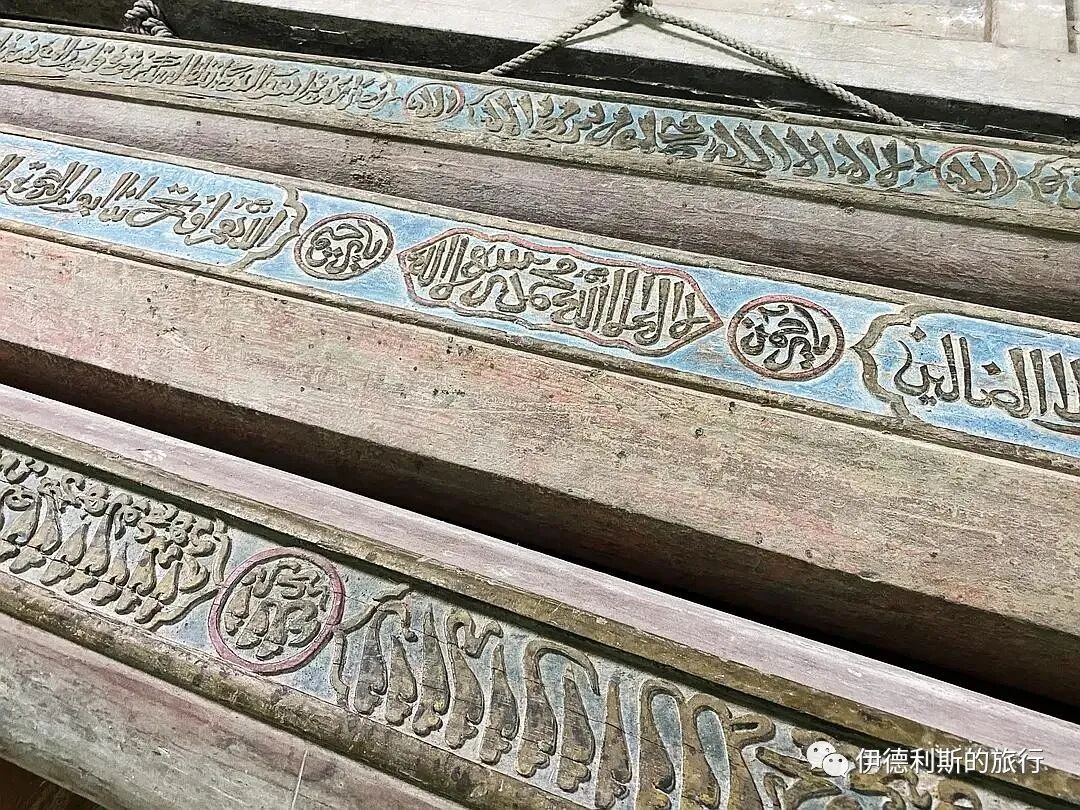
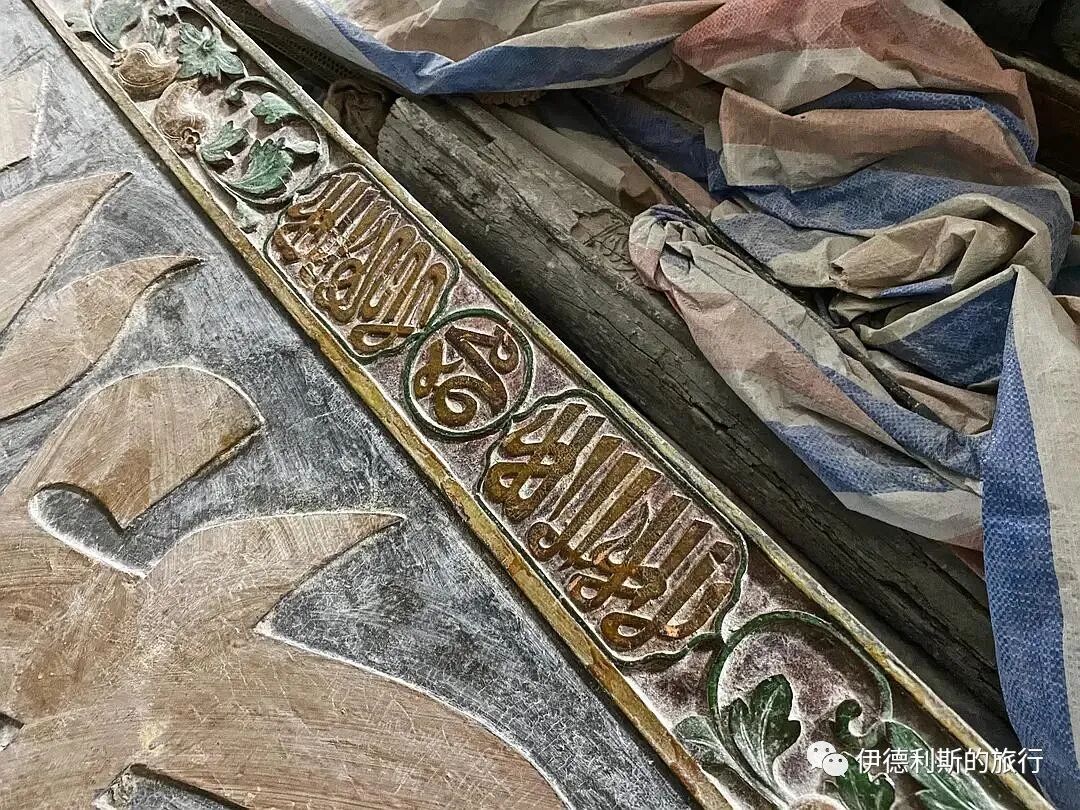
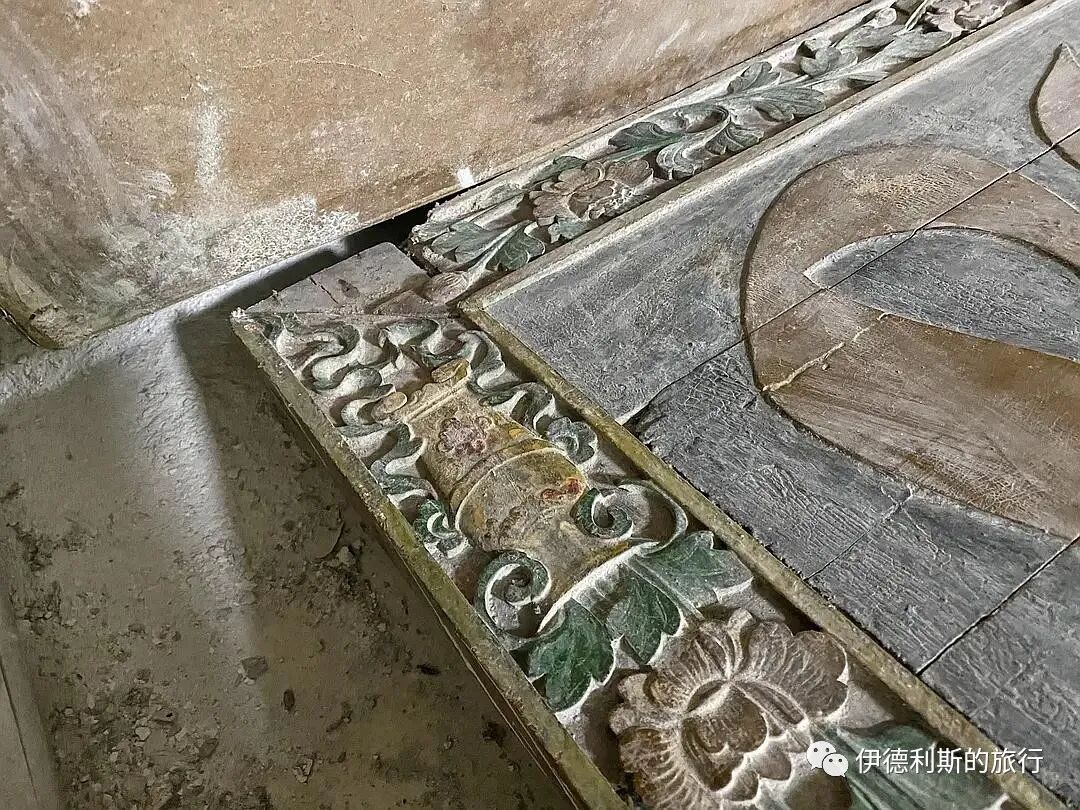
Minbar (pulpit) components and Qing Dynasty tombstones are piled up in every corner of the Southern Mosque.
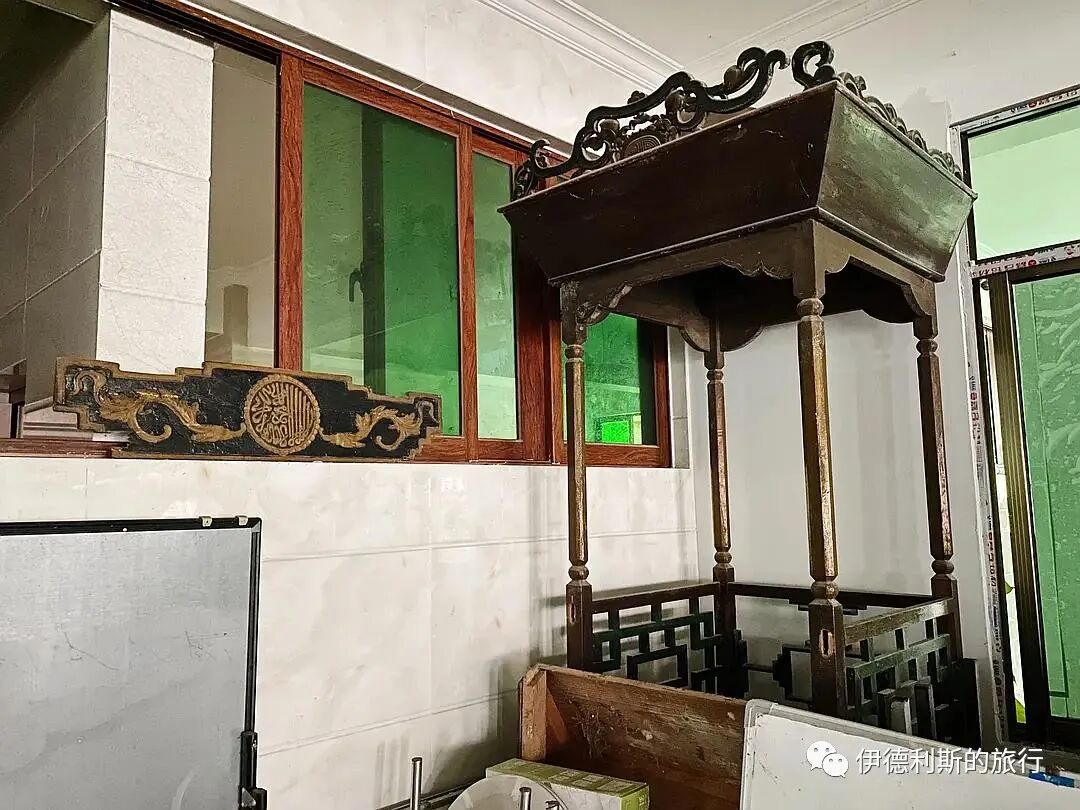
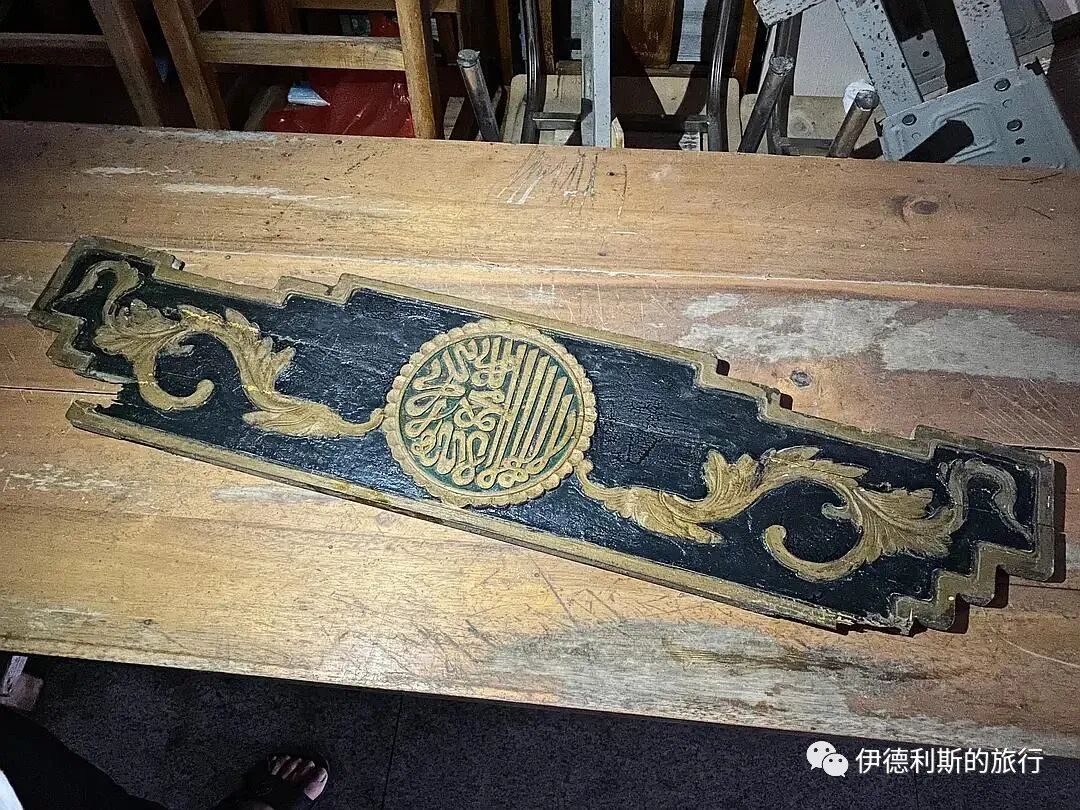
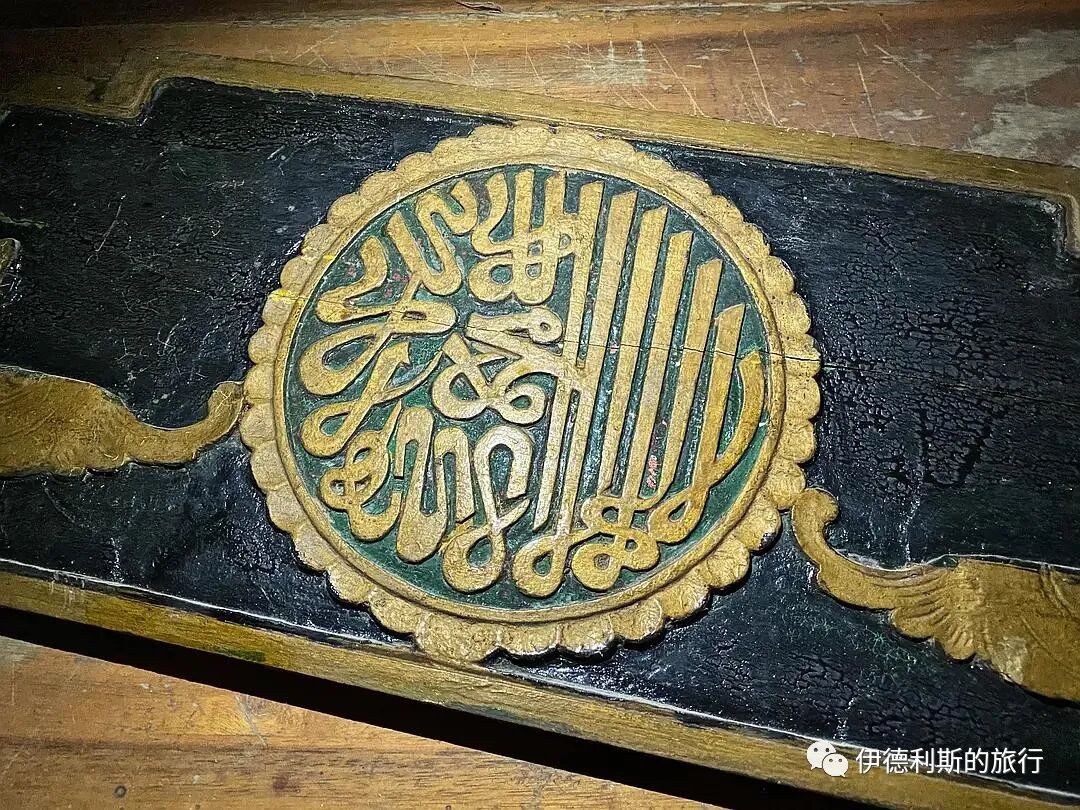
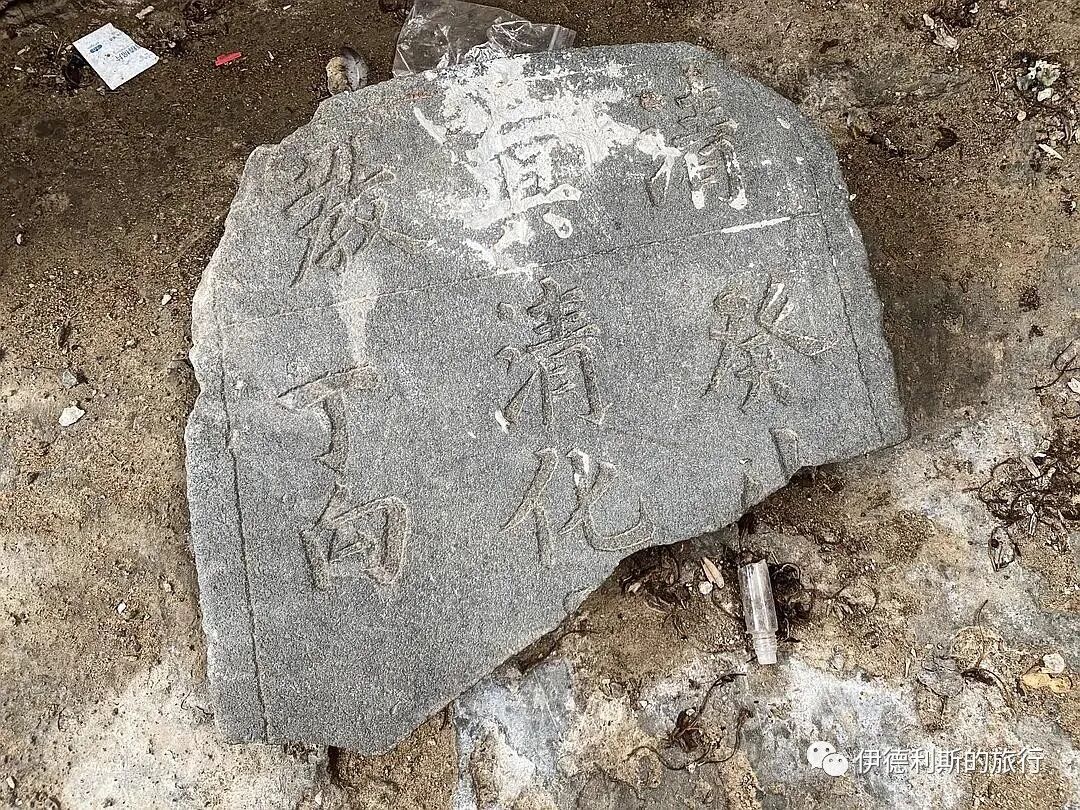
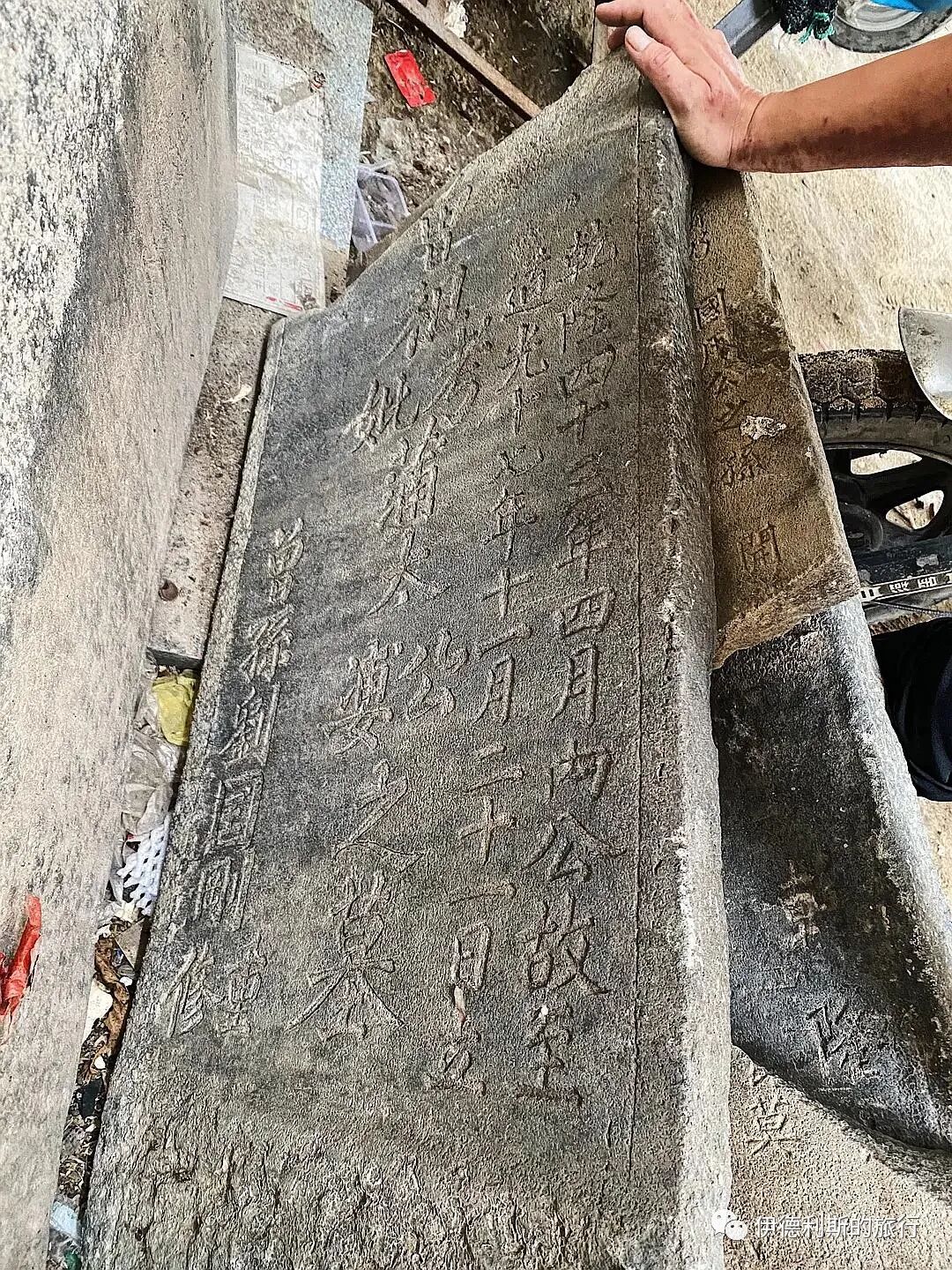
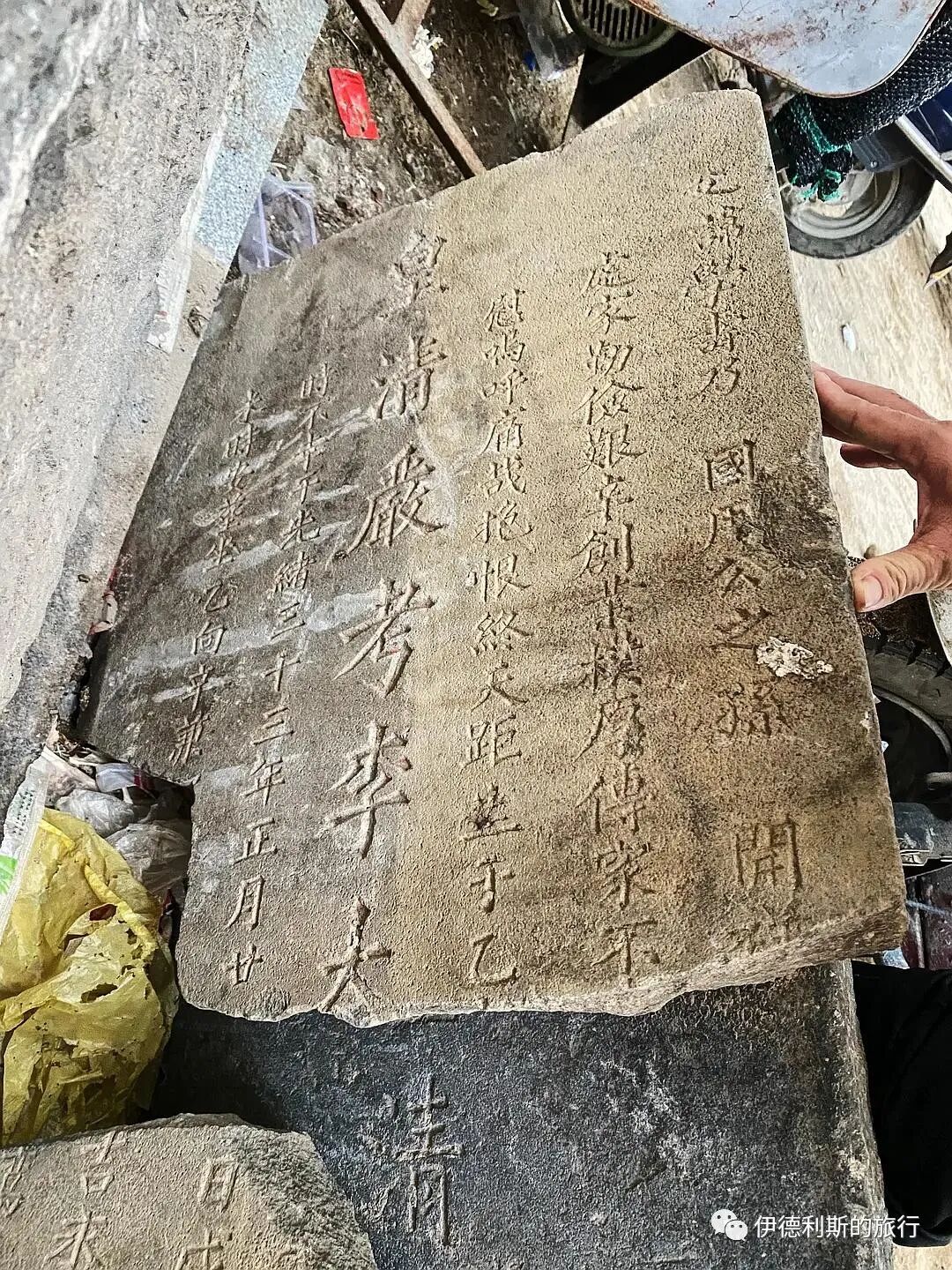
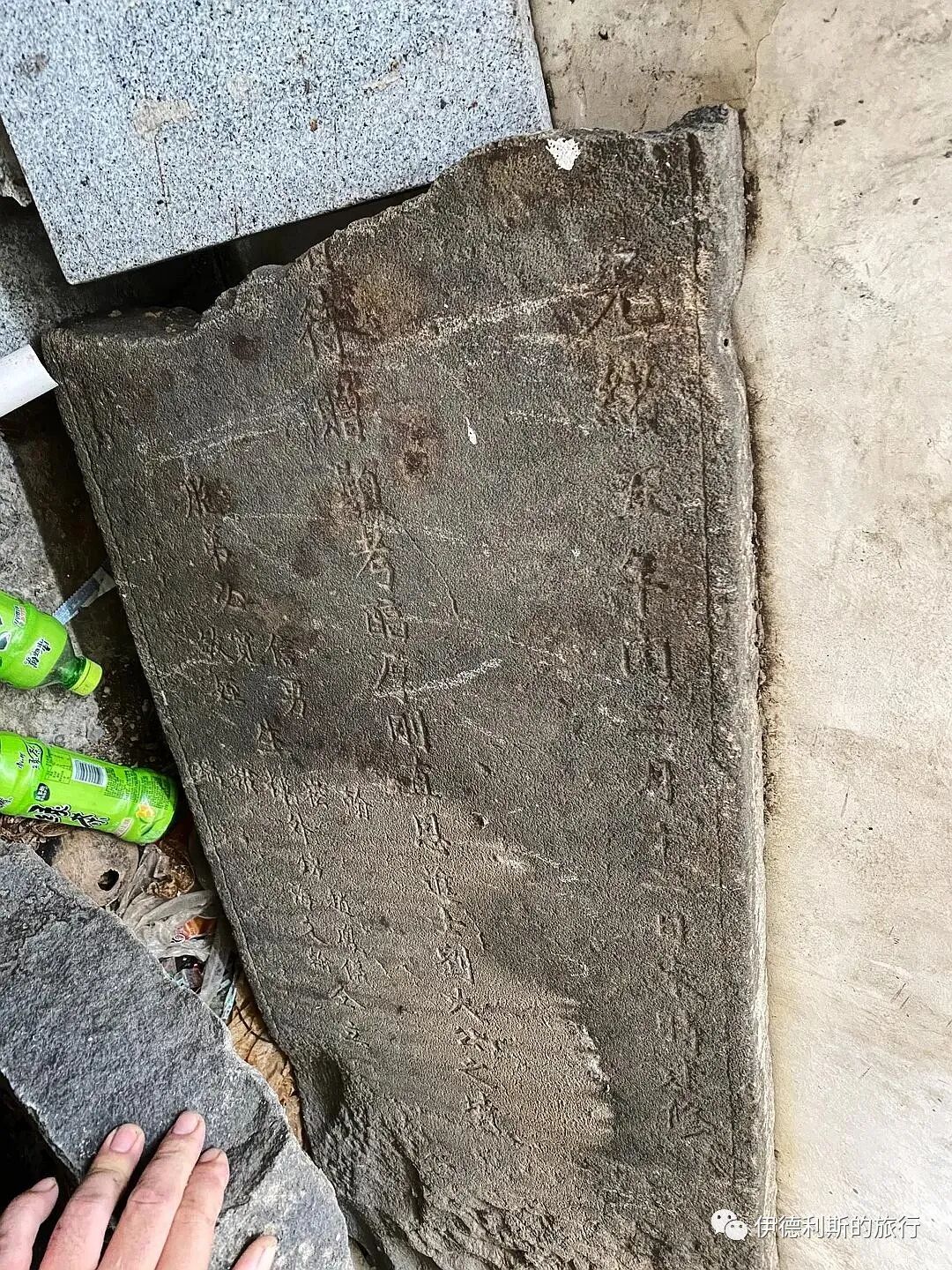
After leaving the Southern Mosque, Muning took me to the home of a teacher who collects traditional Huihui scripture-inscribed roof purlins. Every purlin here was once part of a traditional brick-and-tile house of the Sanya Huihui people.
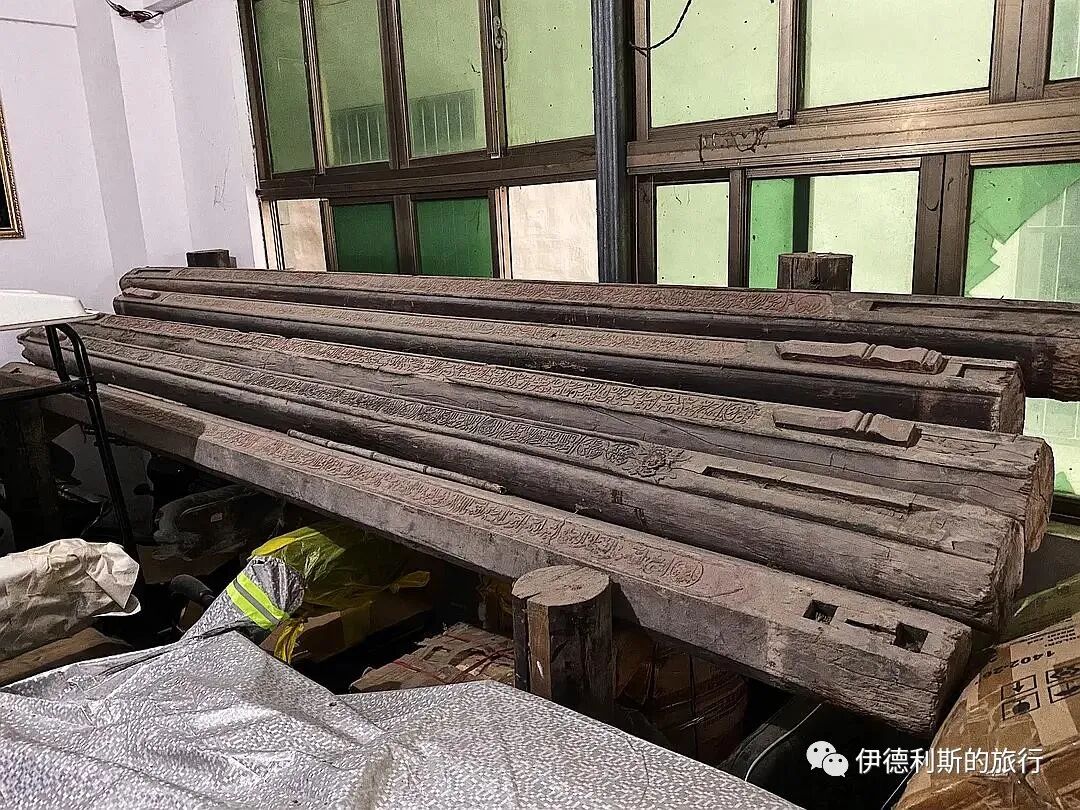
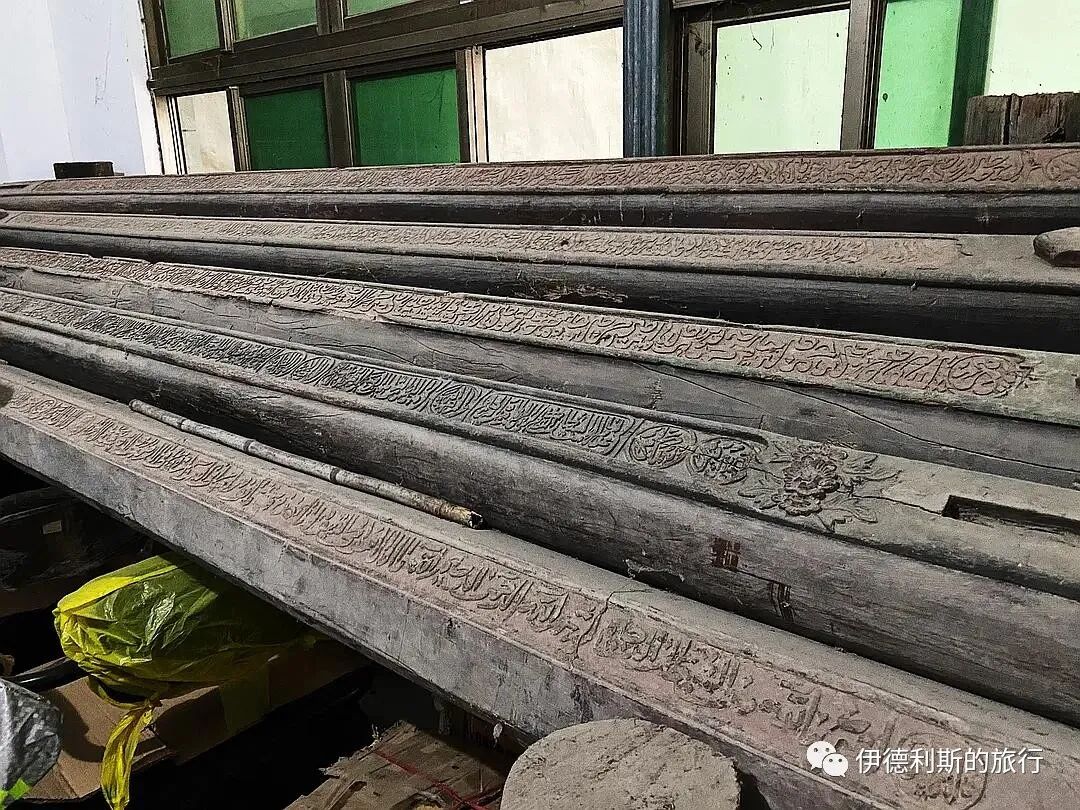
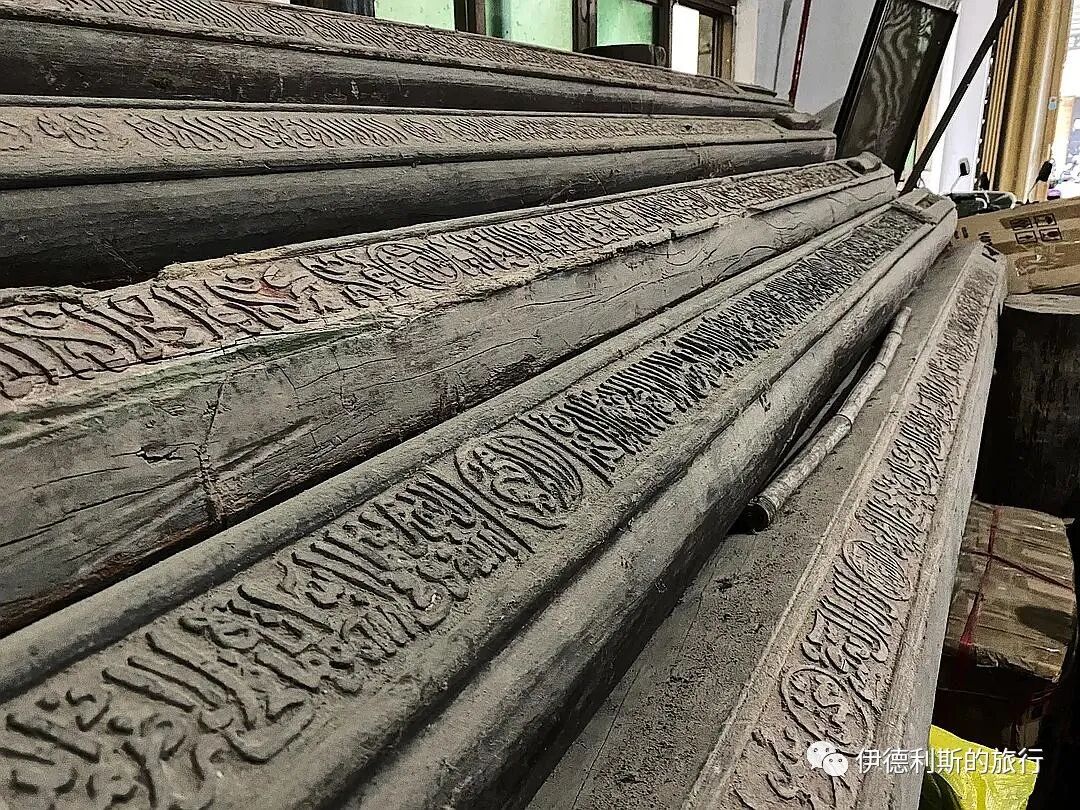
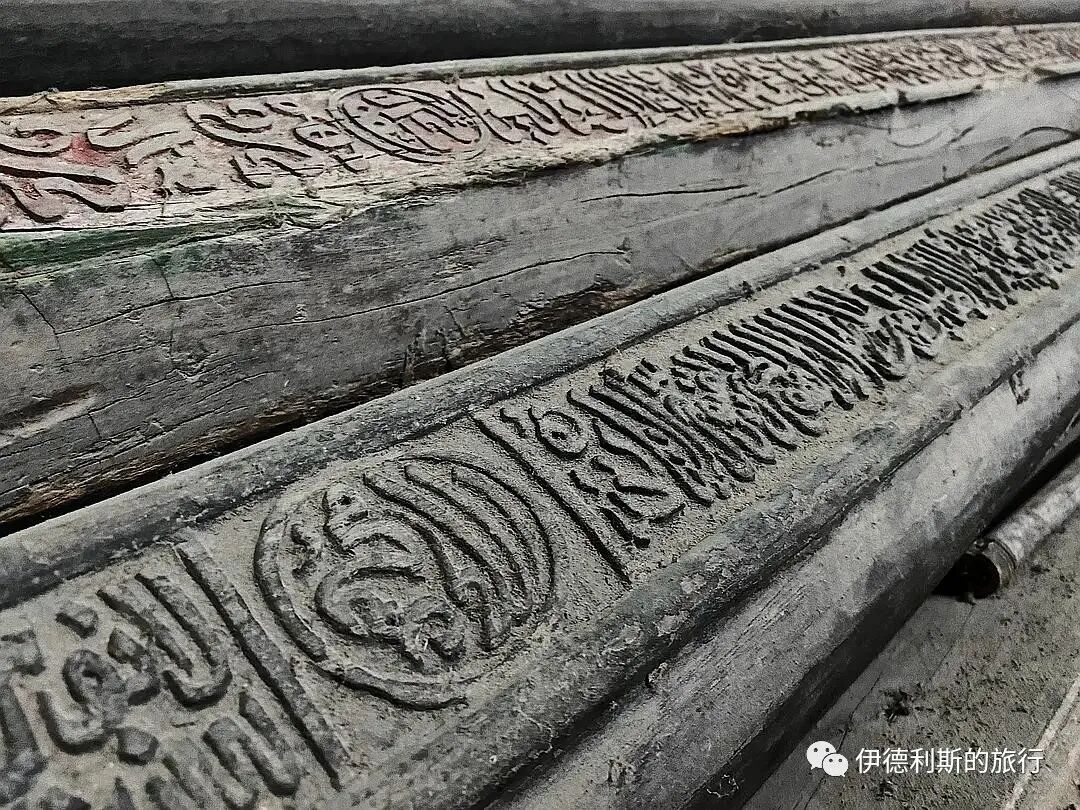
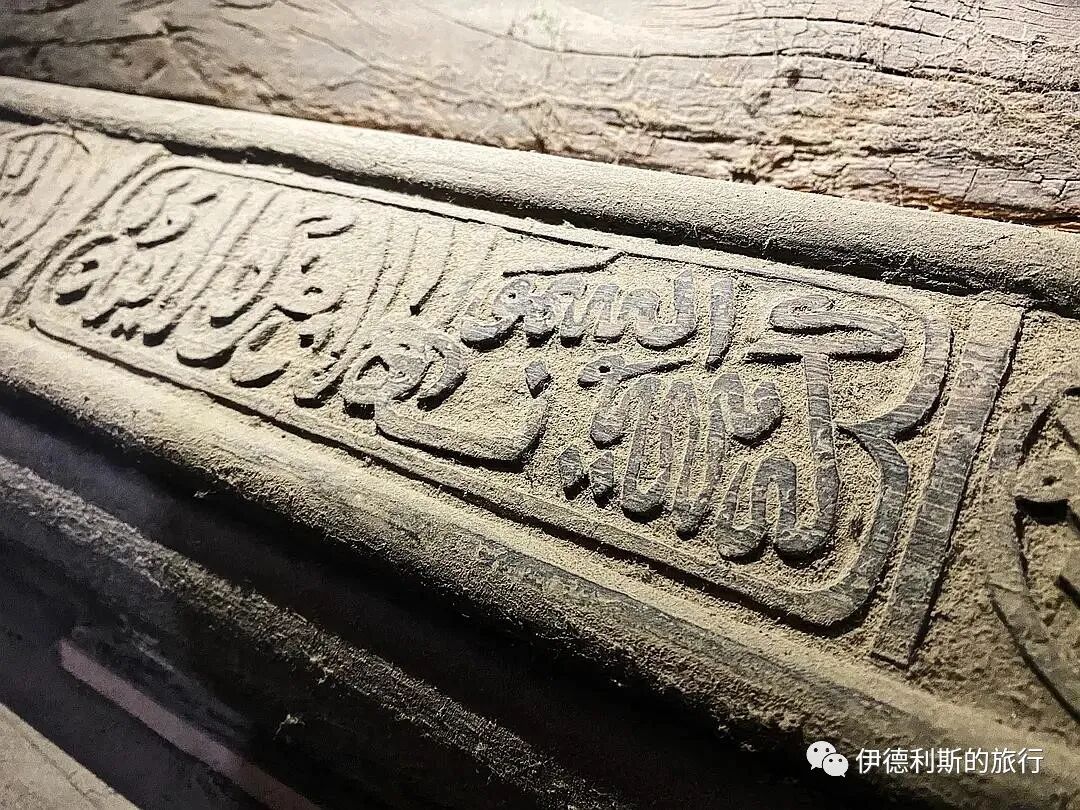
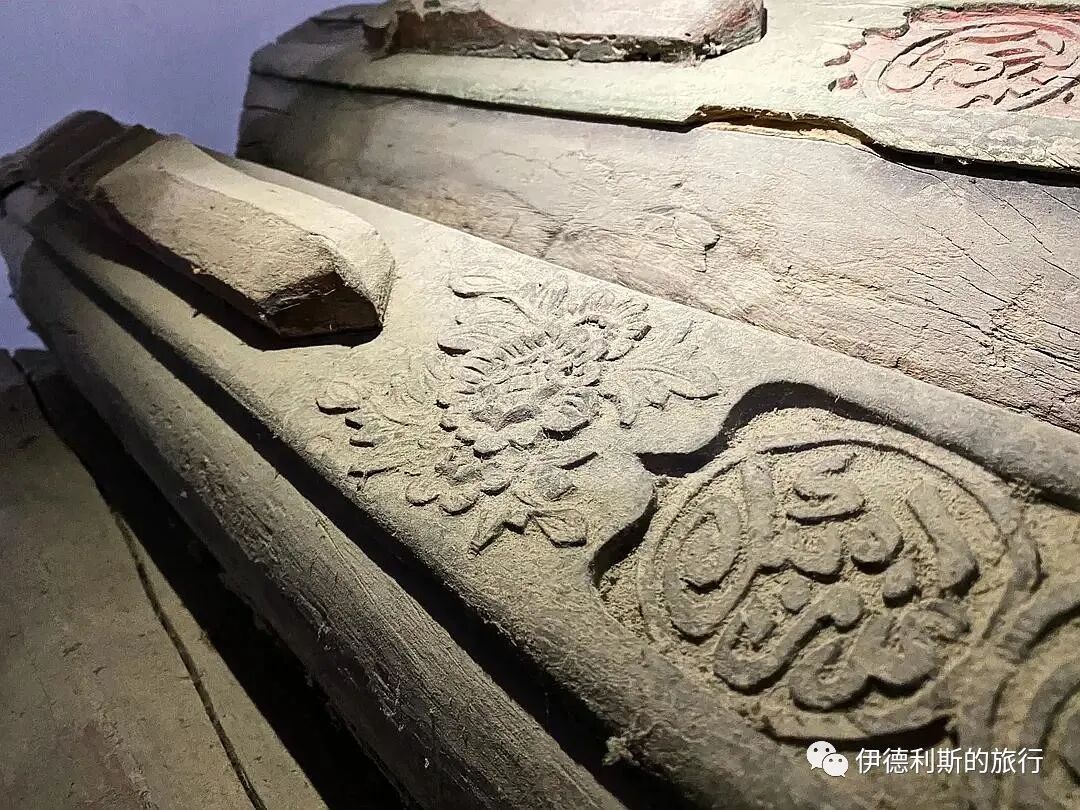
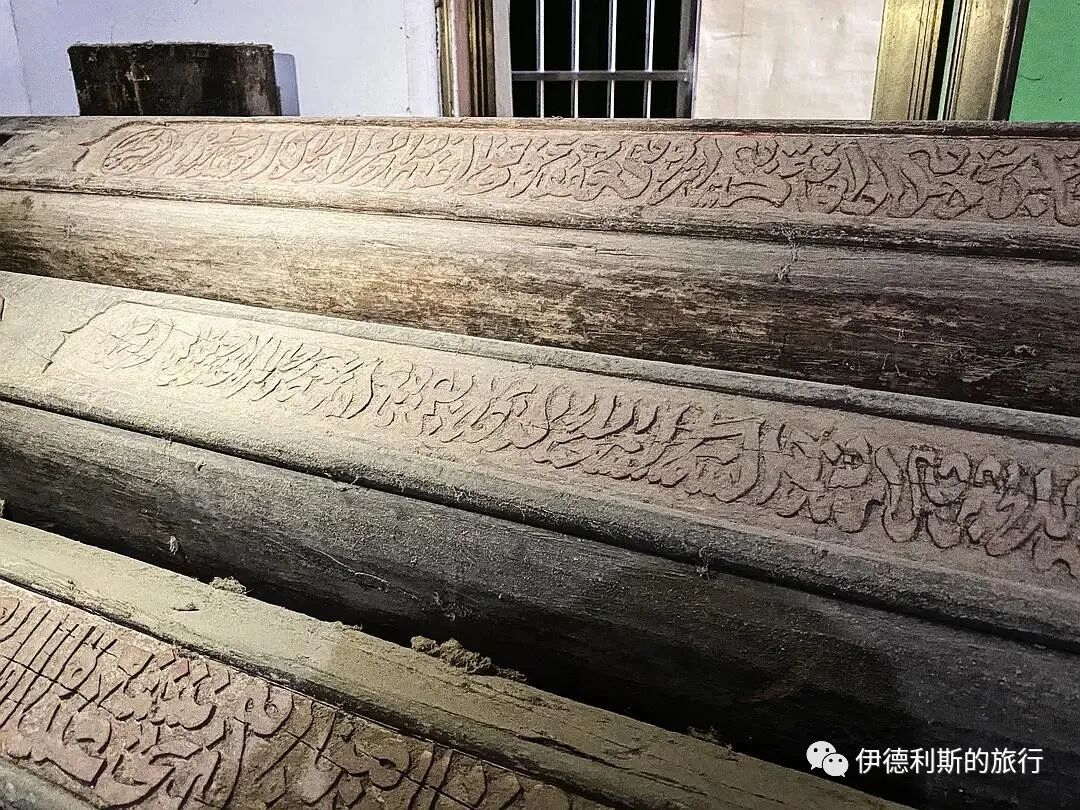
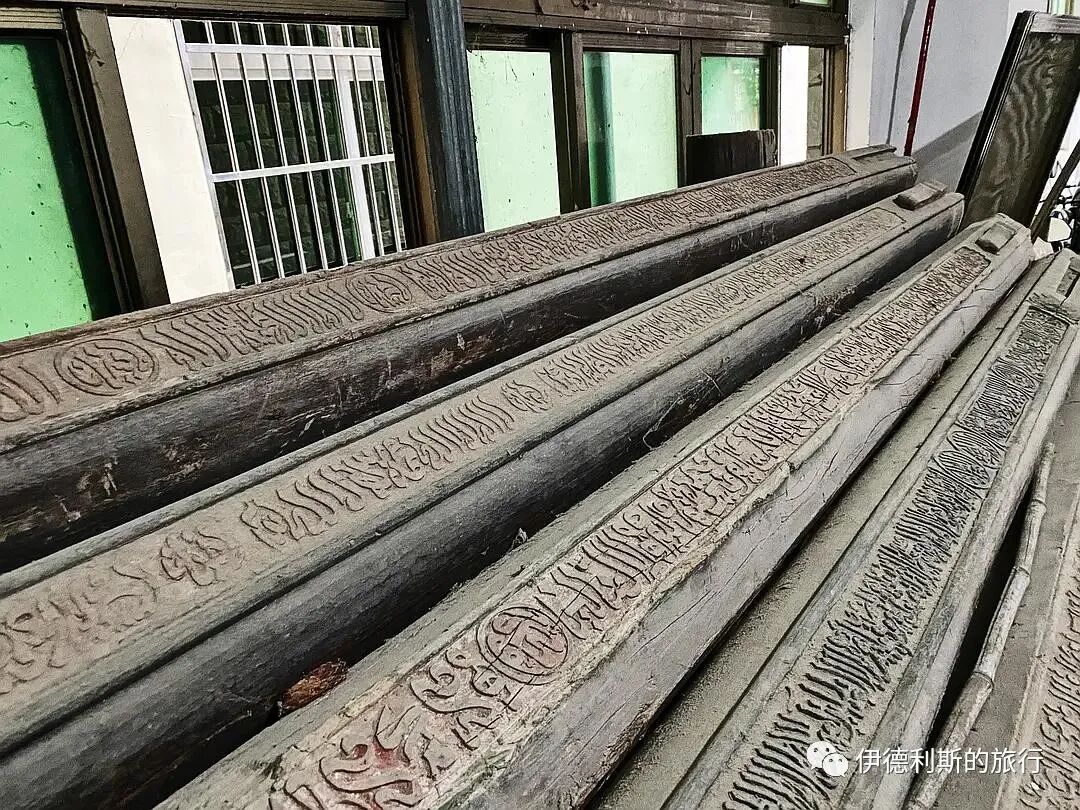
Muning took us for breakfast, and we happened to run into a family hosting a banquet because their child had been admitted to Tsinghua University.
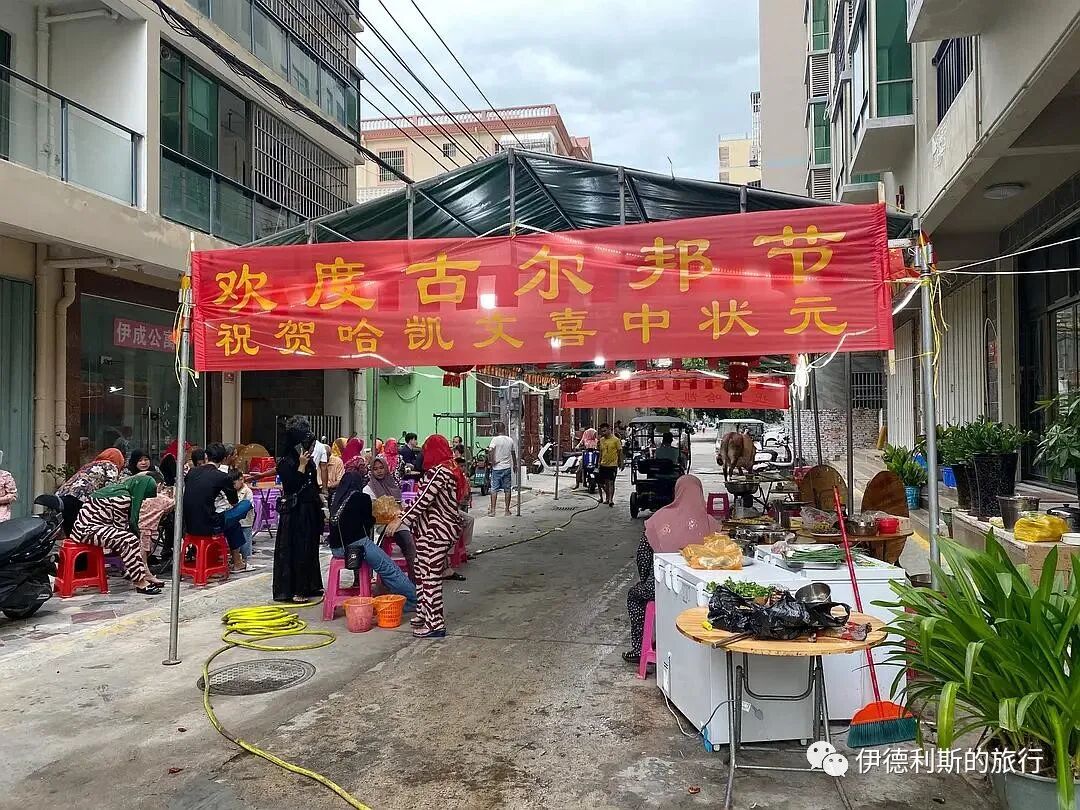
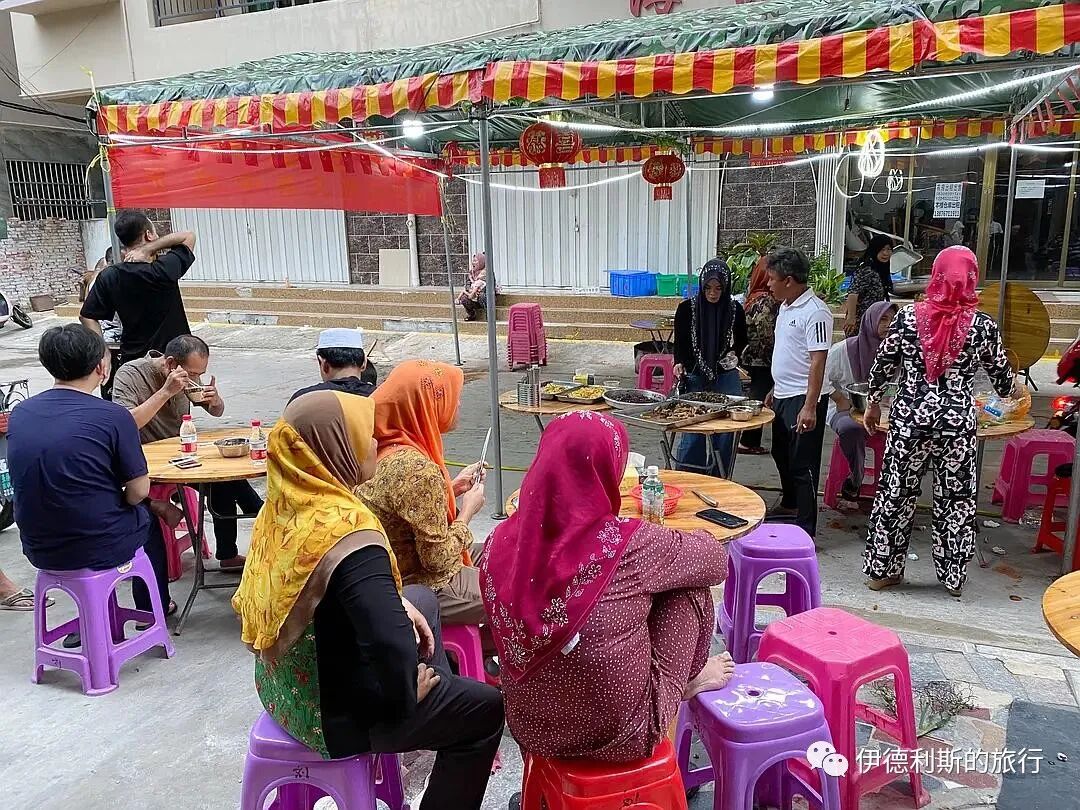
Rice porridge with chicken.
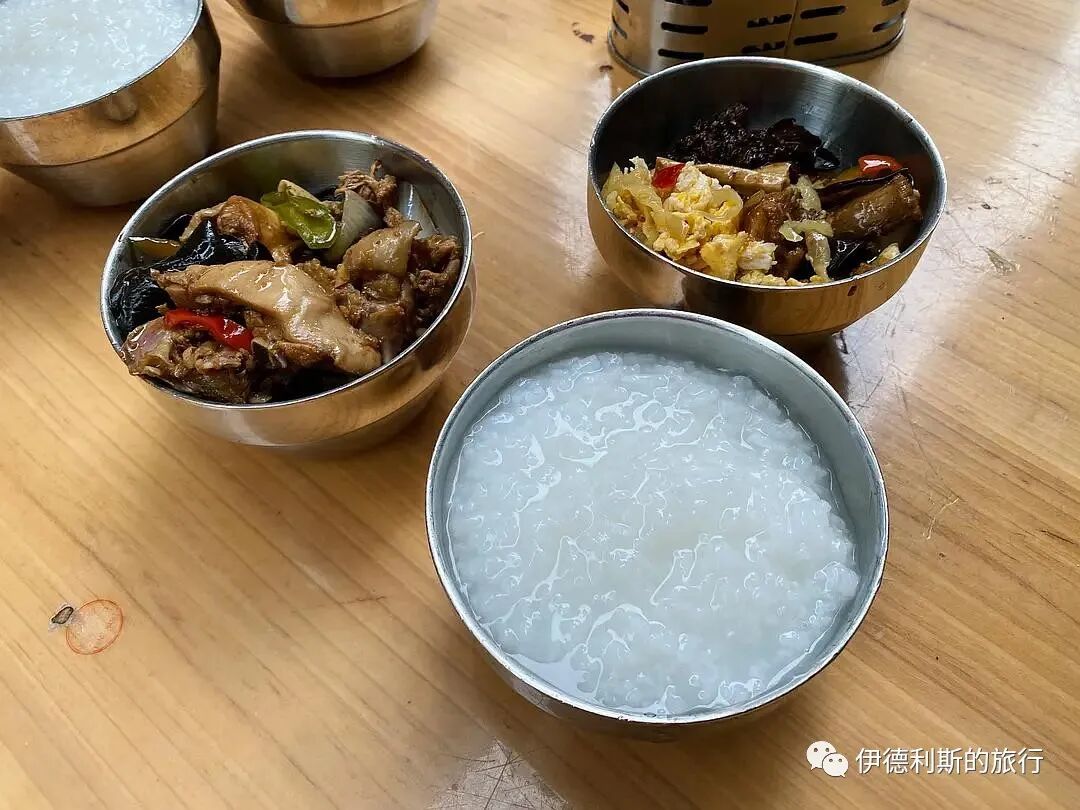
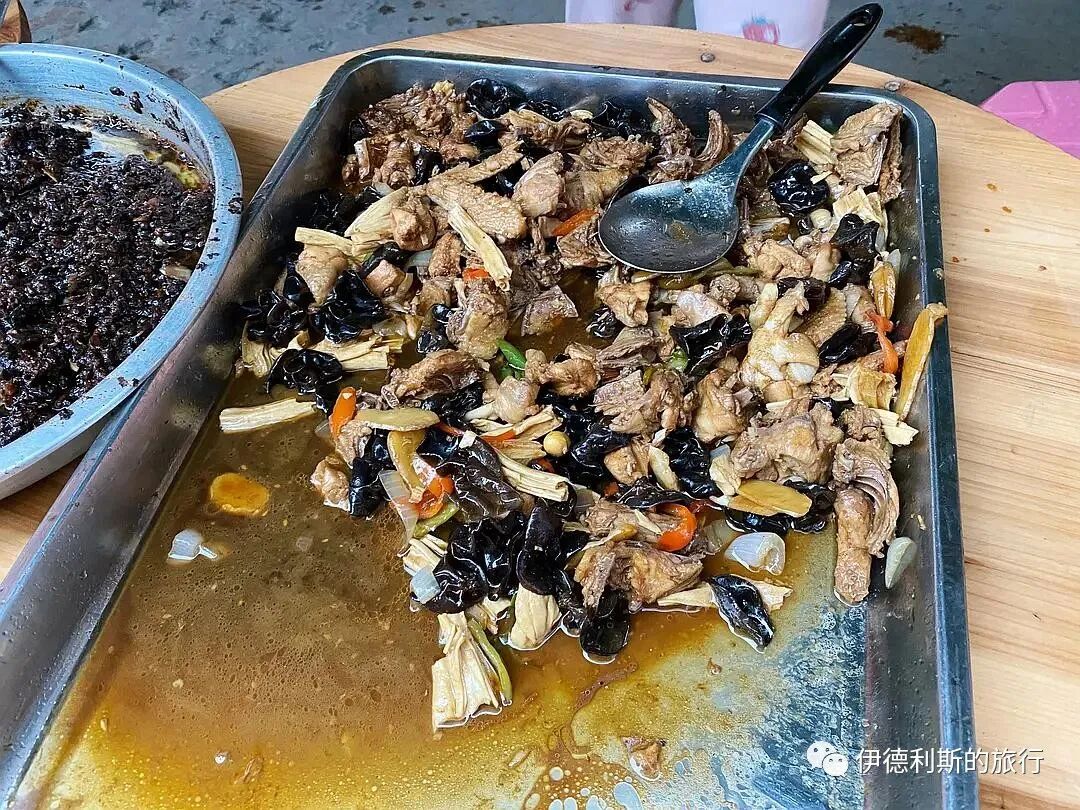
The soybean paste was delicious.
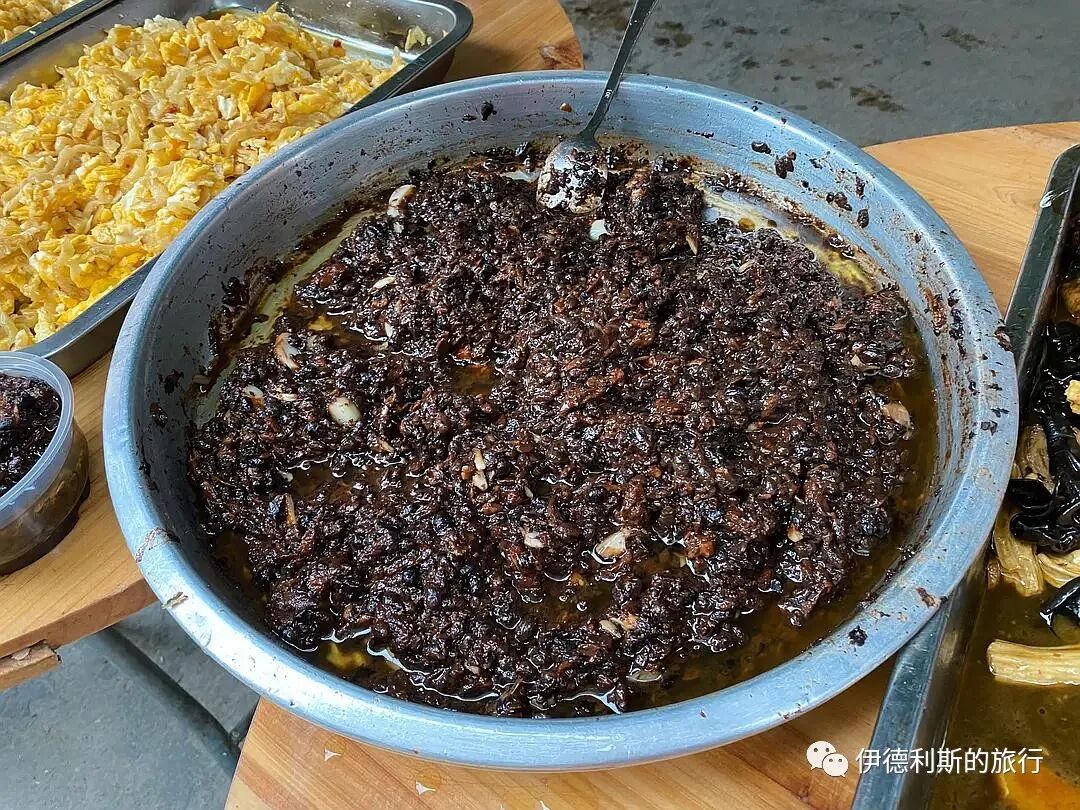
After breakfast, Muning took us to her home to pull the sheep. One of these two sheep was intended for sacrifice by Zainab and me, and the other was intended by Muning's family. They were Hainan Dongshan goats bought by Muning.
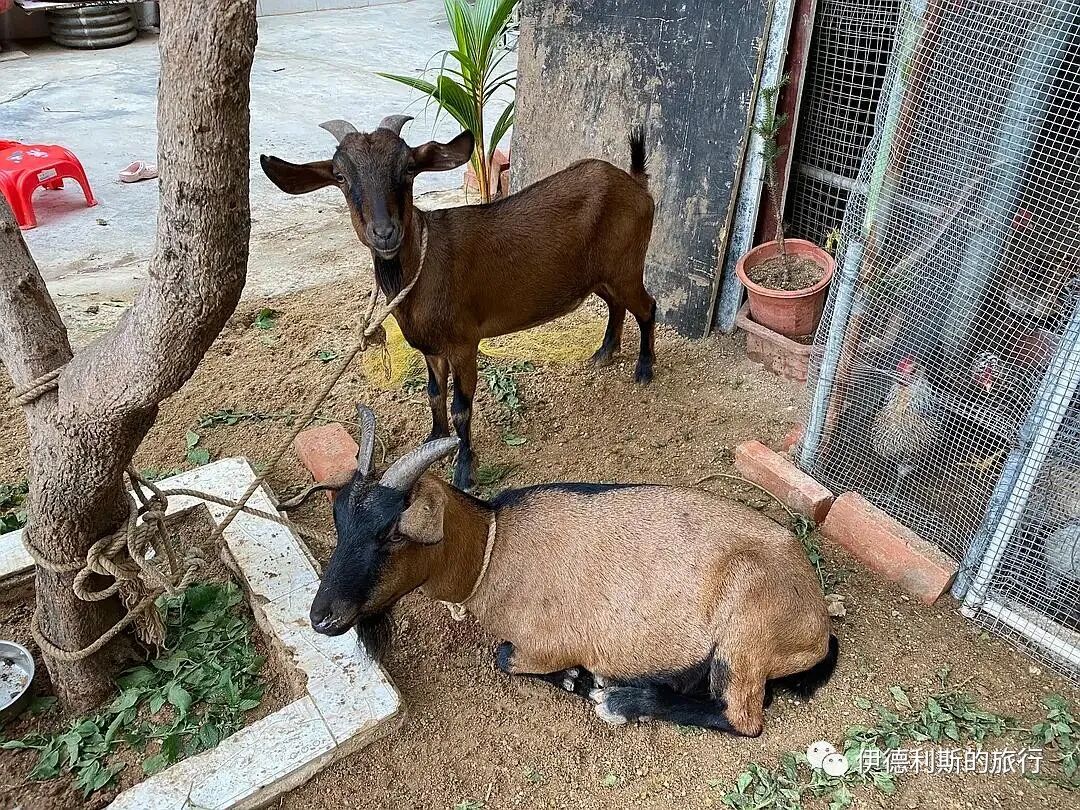
We took the sheep to the place of slaughter.
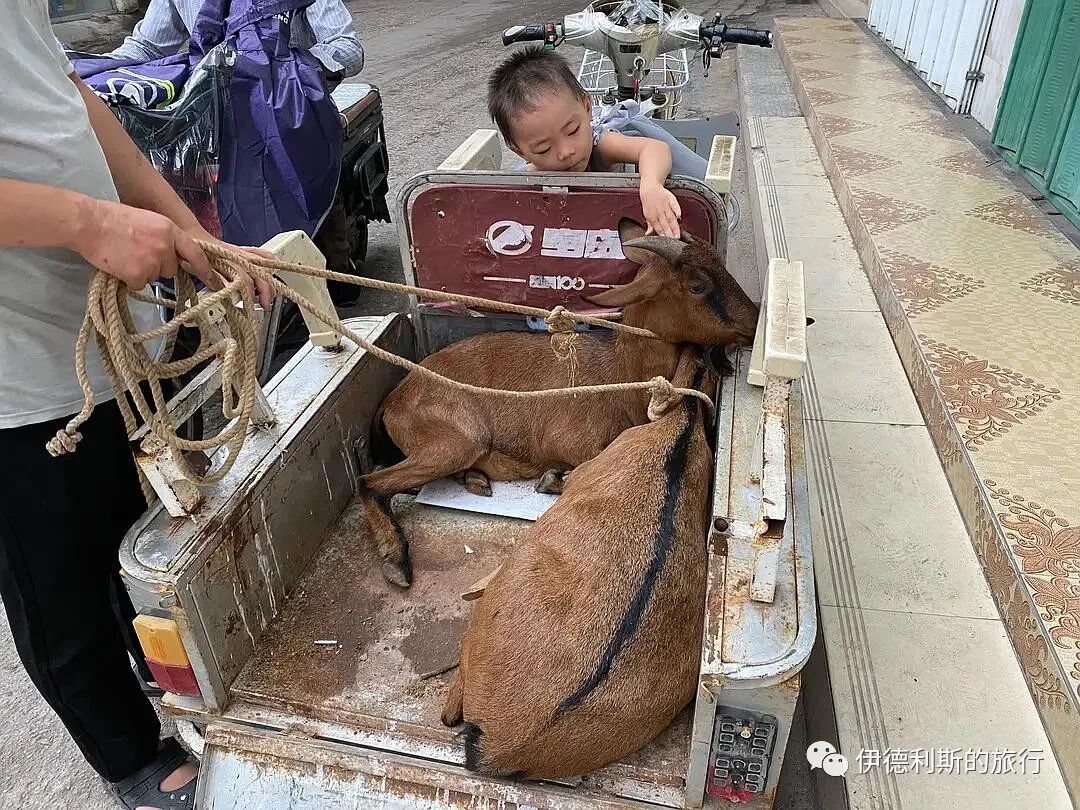
After the slaughter, we divided the meat into three parts: one for ourselves, one for friends, and one for the poor.
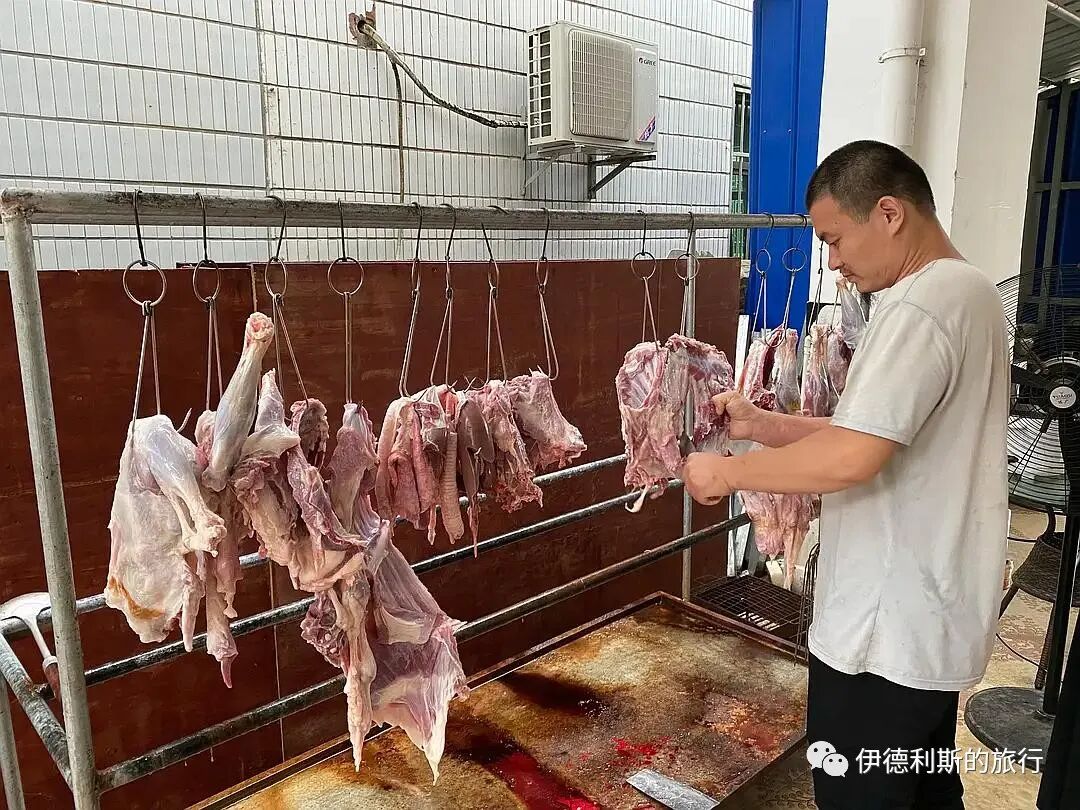
Cleaned sheep tripe and intestines.
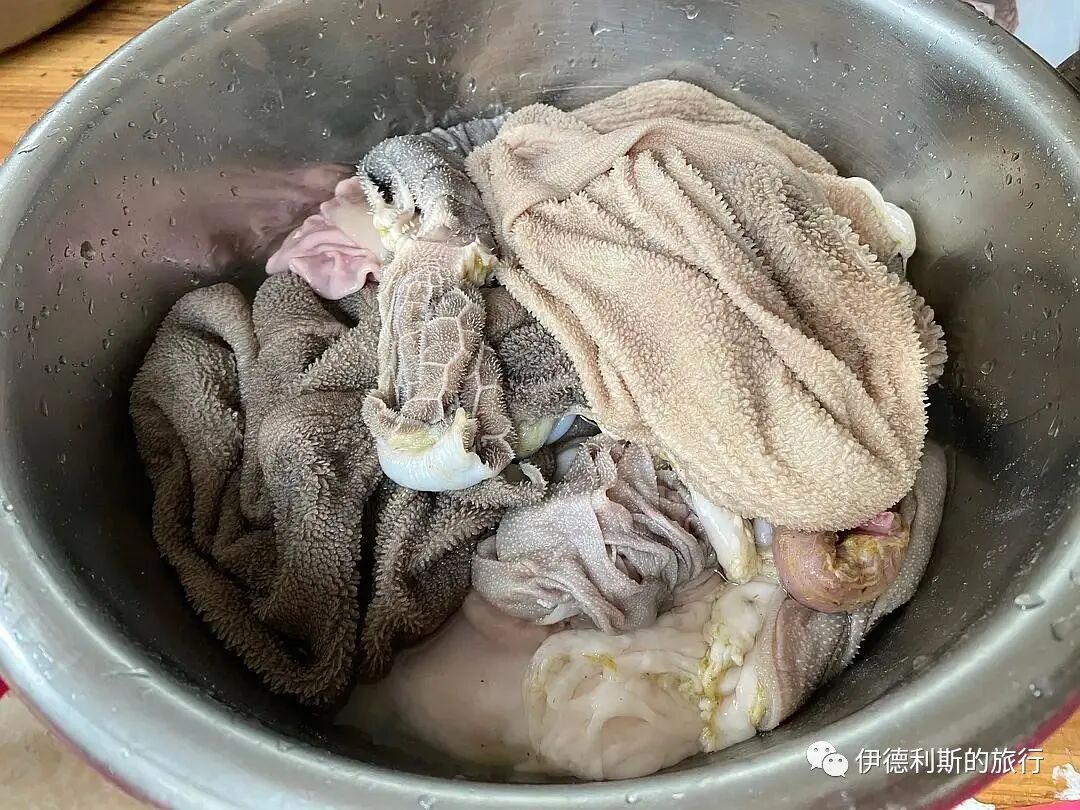
We asked our neighbor to make us a dish of dry-fried mutton in the local Sanya style. Their family usually sells roast duck next to the Southern Mosque in Huixin Village, but they were closed for the Eid al-Adha holiday.
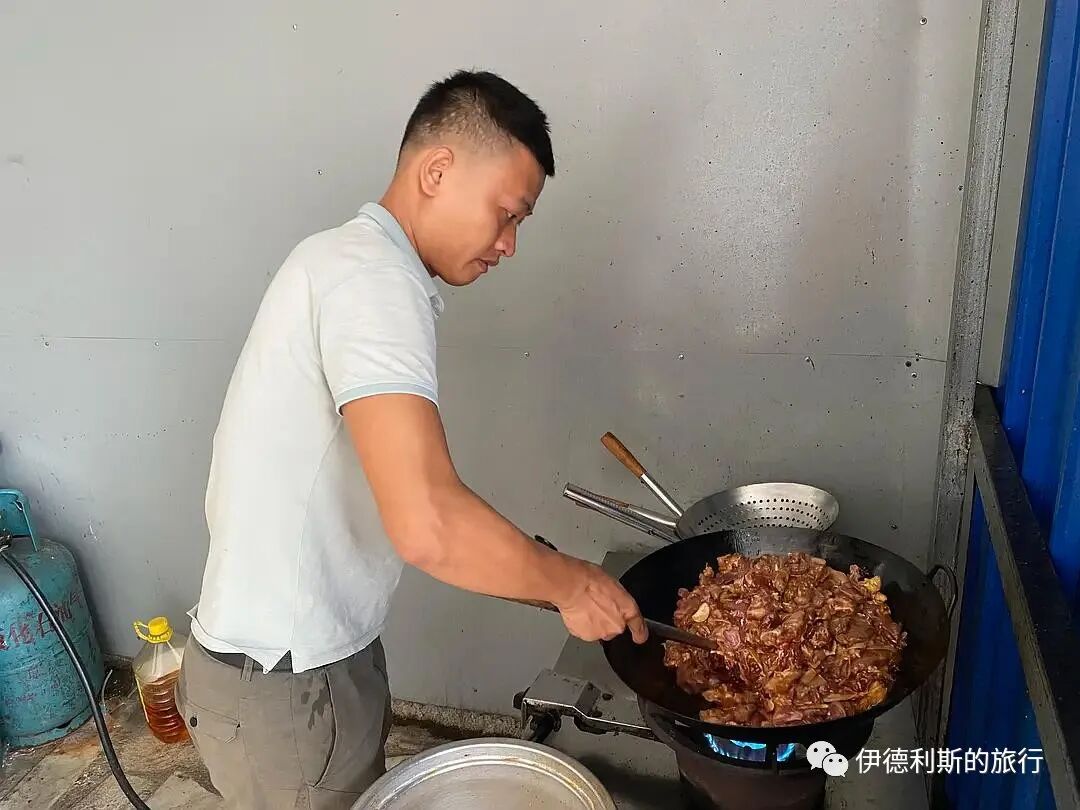
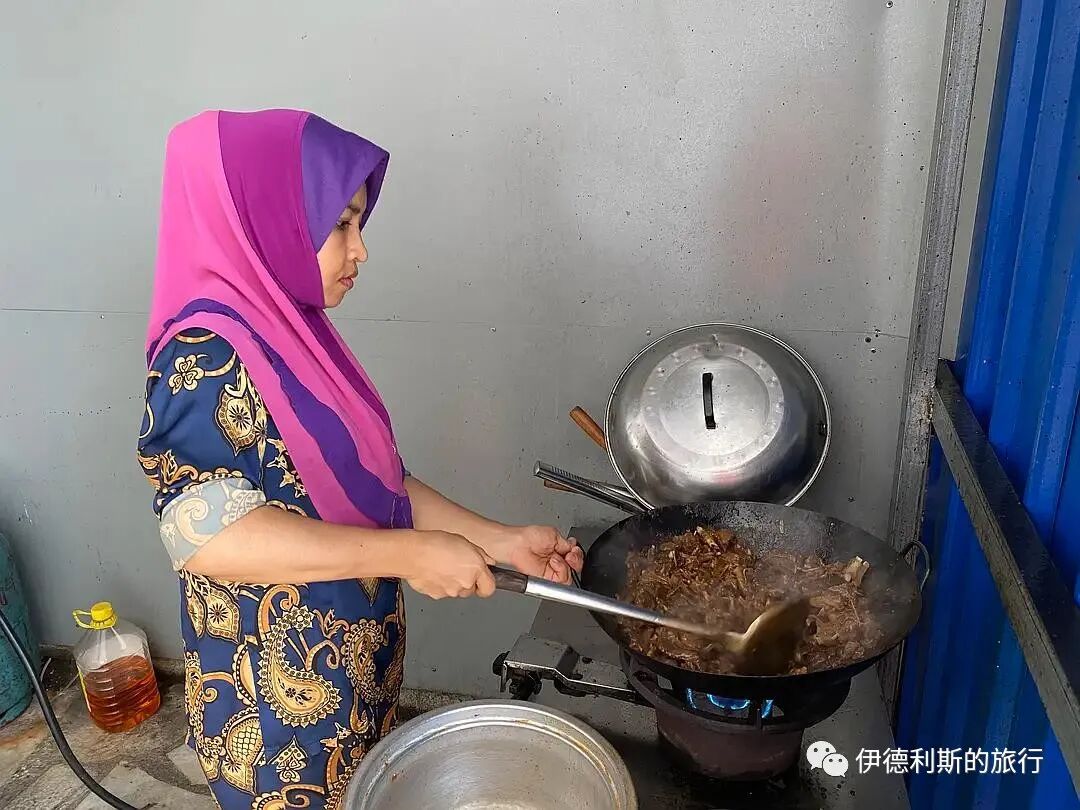
The Imam from Turpan, Xinjiang, who performed the sacrifice for us, made us Xinjiang-style clear-stewed mutton, which was super delicious, and the mutton soup was also very good.
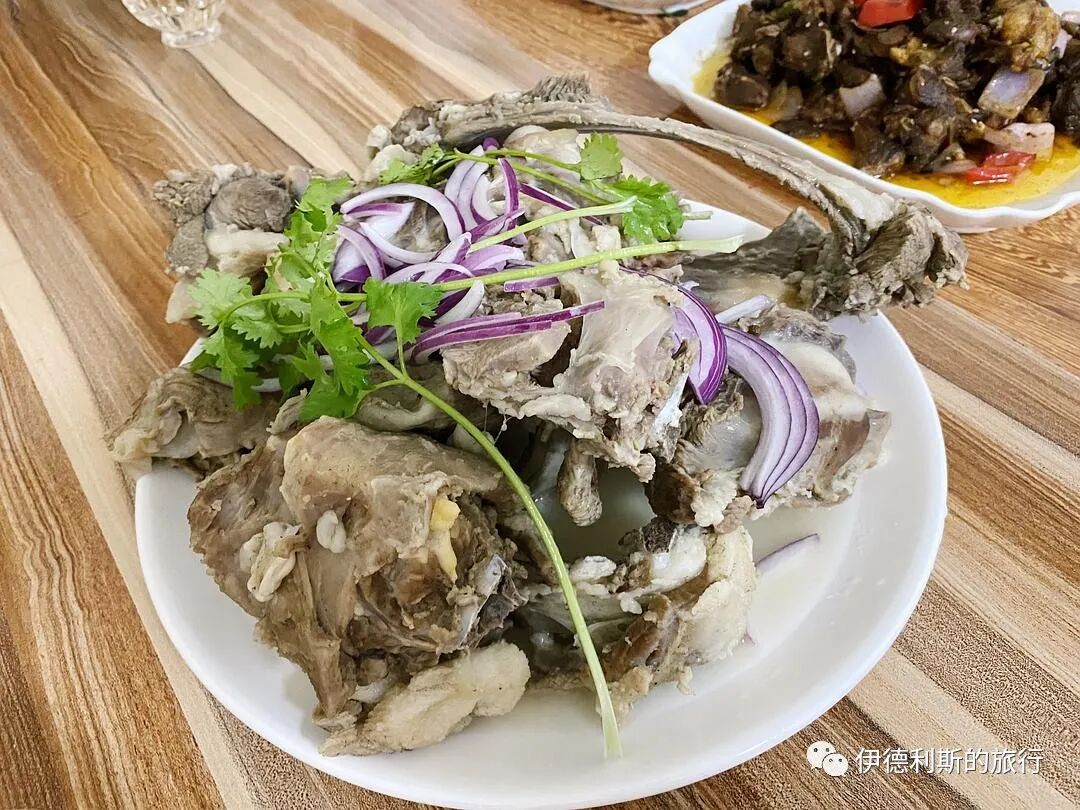
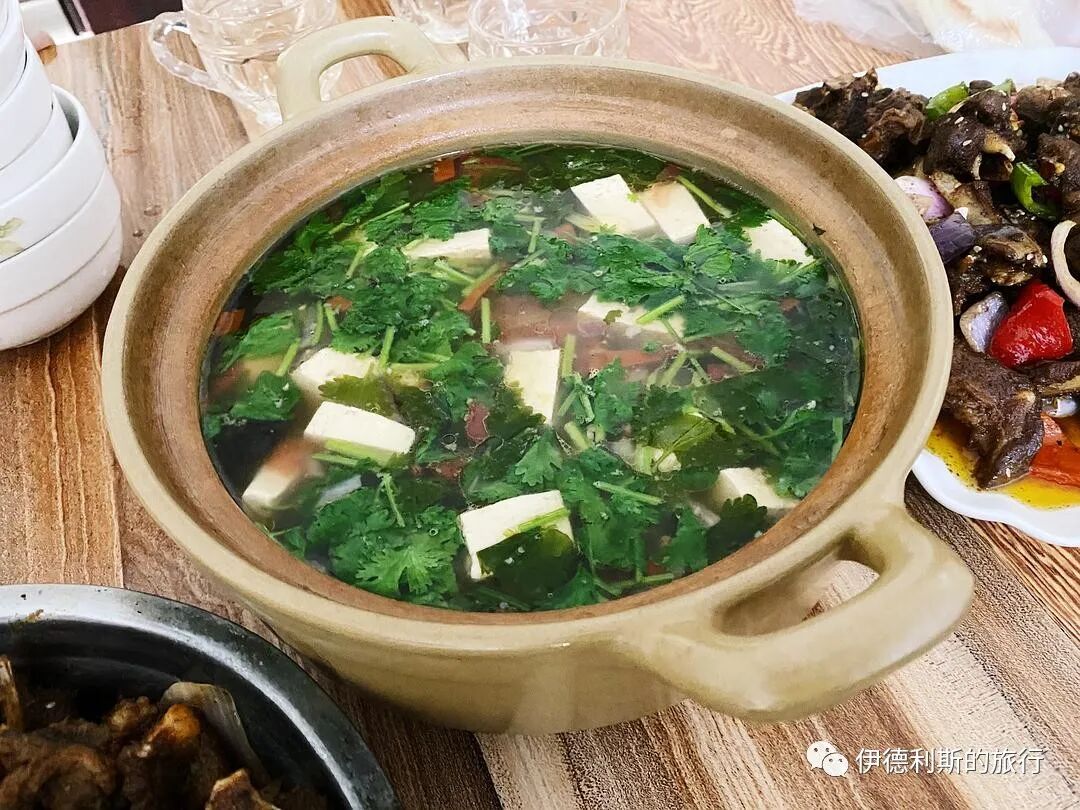
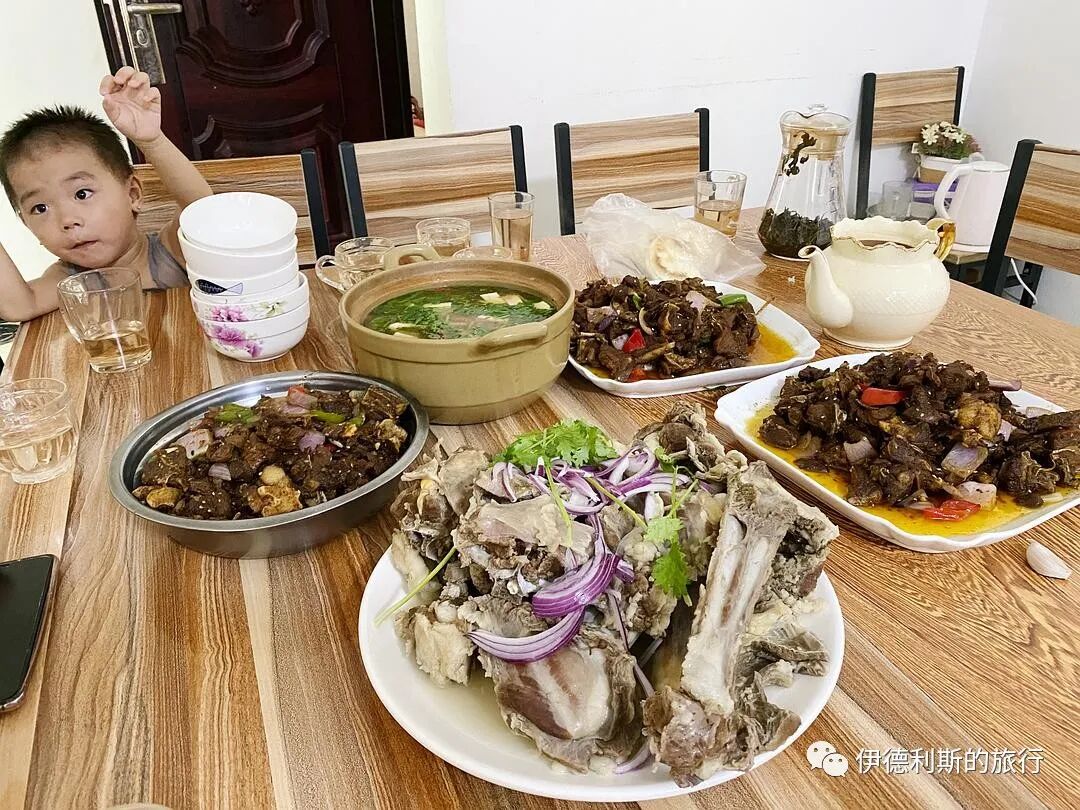
Muning gave me an Arabic handicraft he carved by hand from a coconut shell; it was super beautiful.
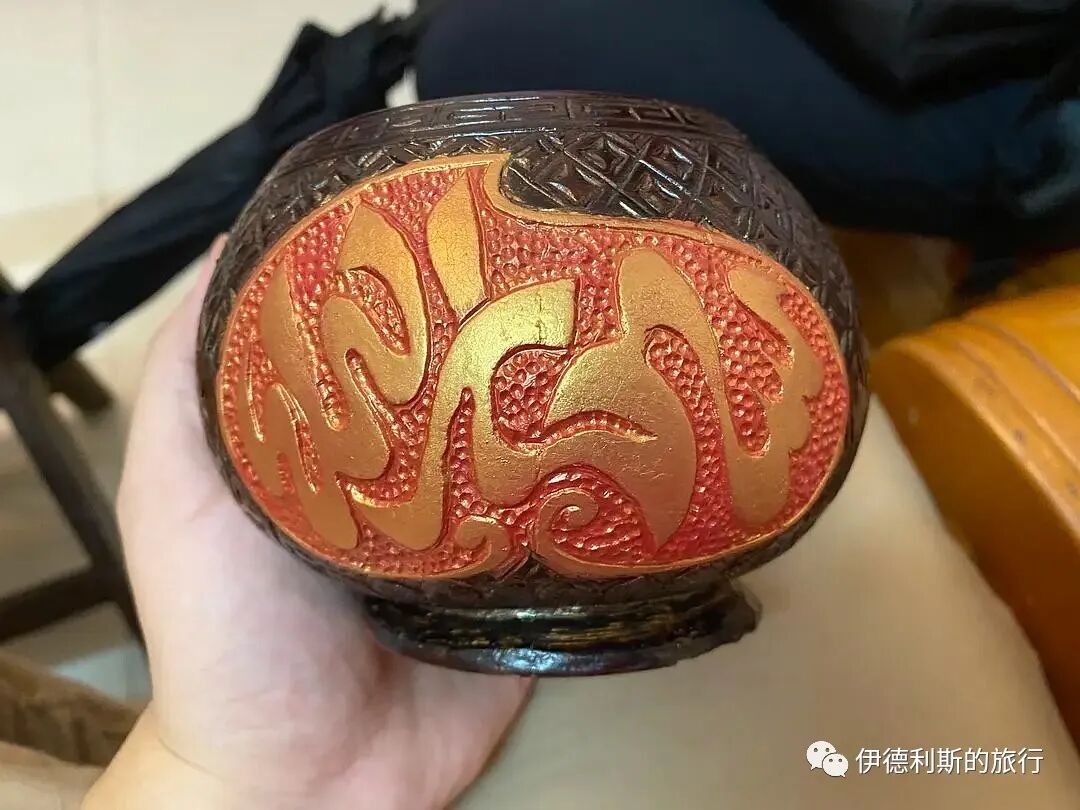
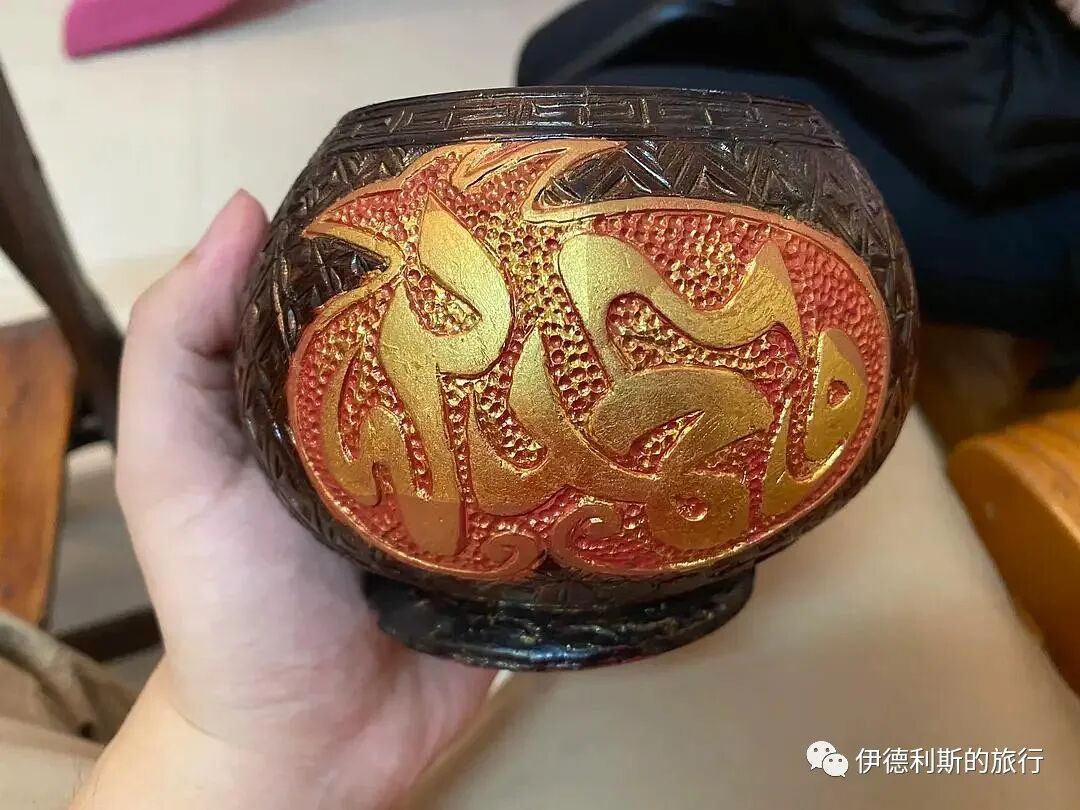
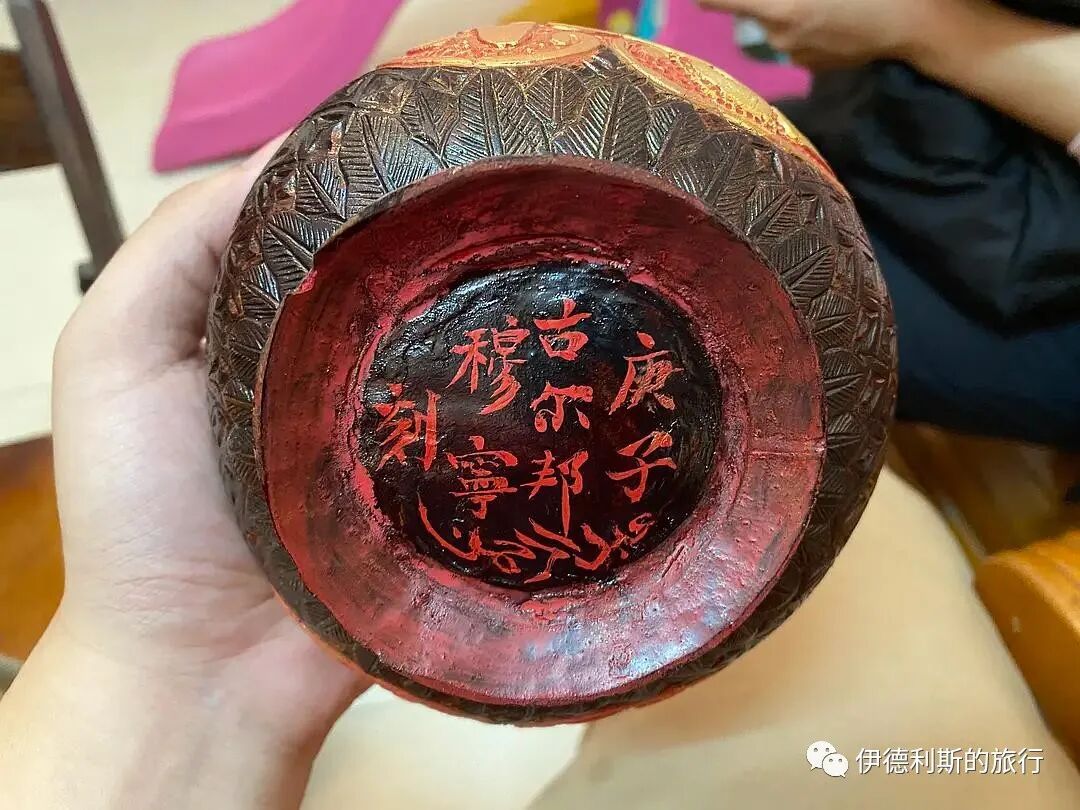
After the meal, I went with Muning to distribute the other part of the meat to friends.
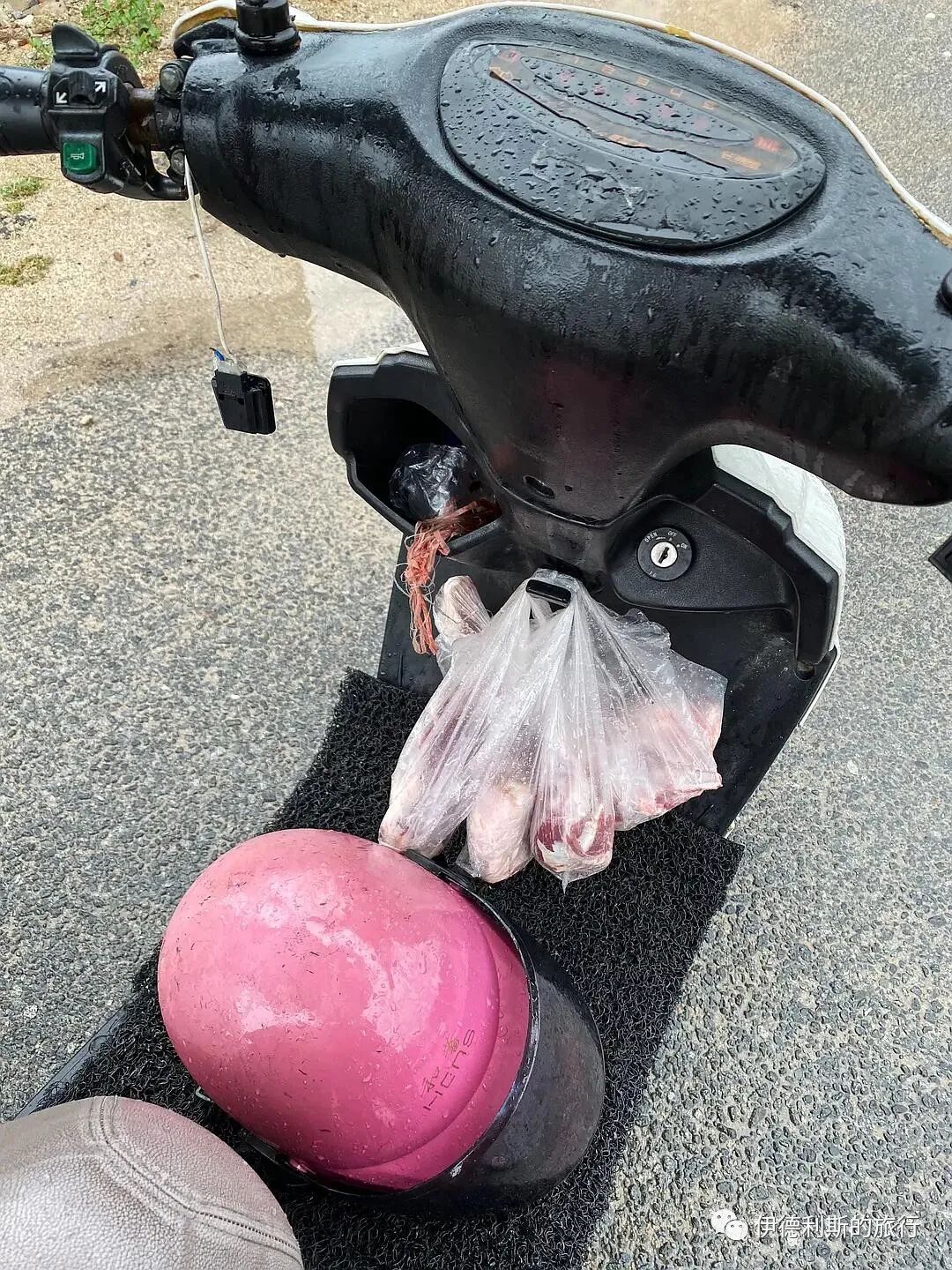
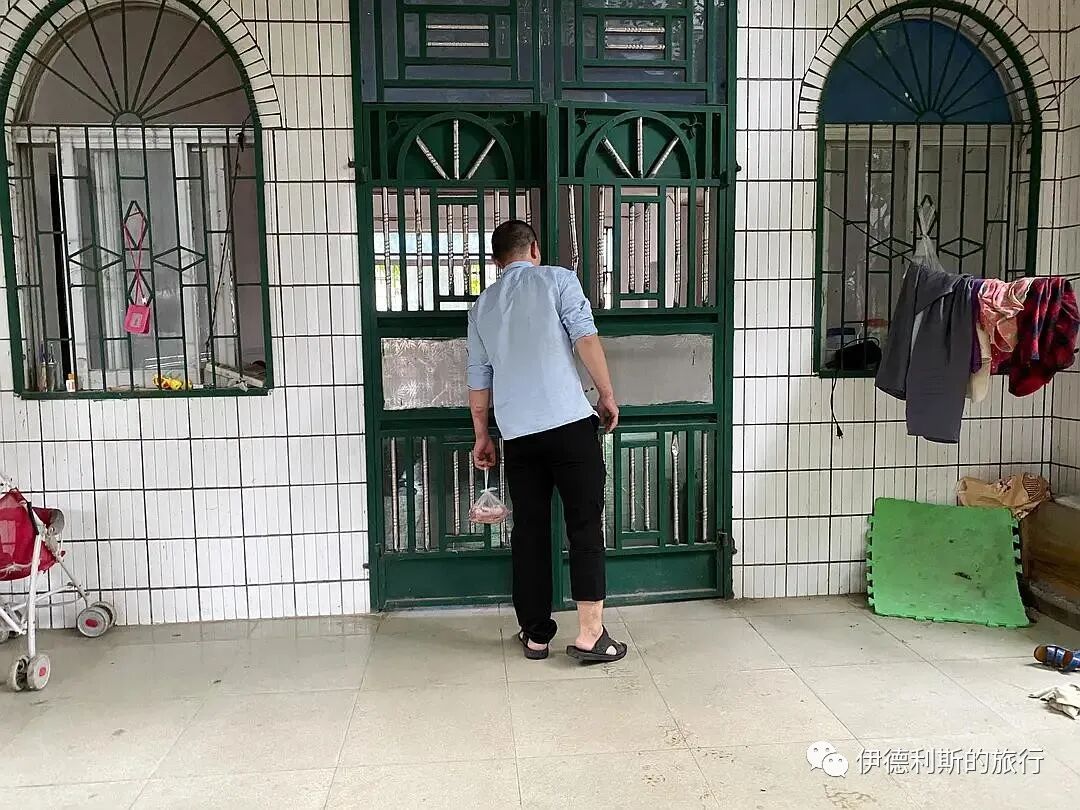
We prayed at the Nankai Mosque in Huixin Village, where mats, not carpets, were laid out in the main hall.
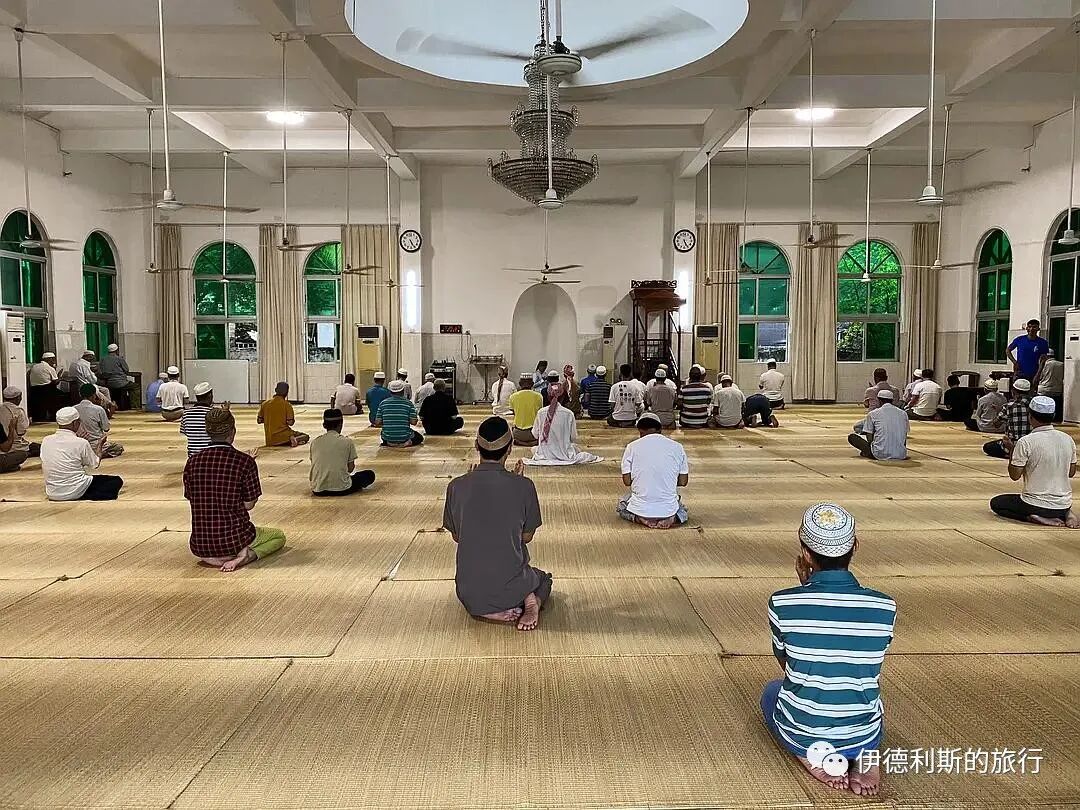
In the afternoon, Muning took me to see old houses in the Huihui village of Sanya, and for the first time, I saw old roof purlins with scripture inscriptions.
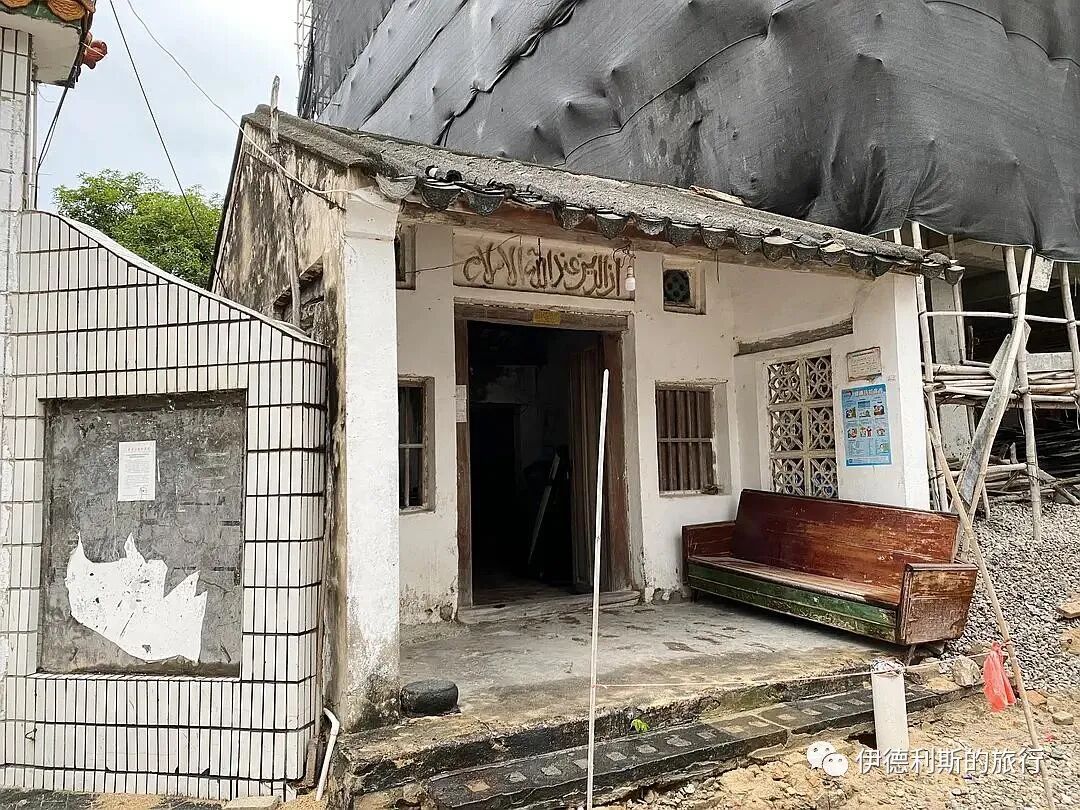
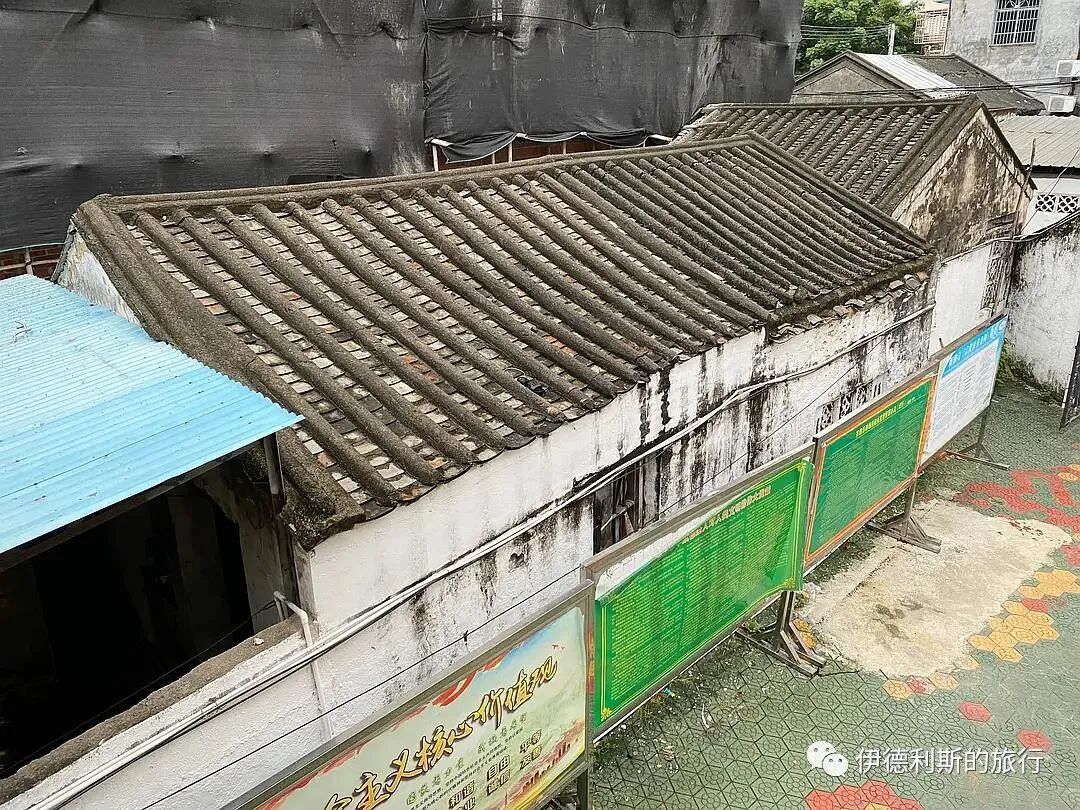
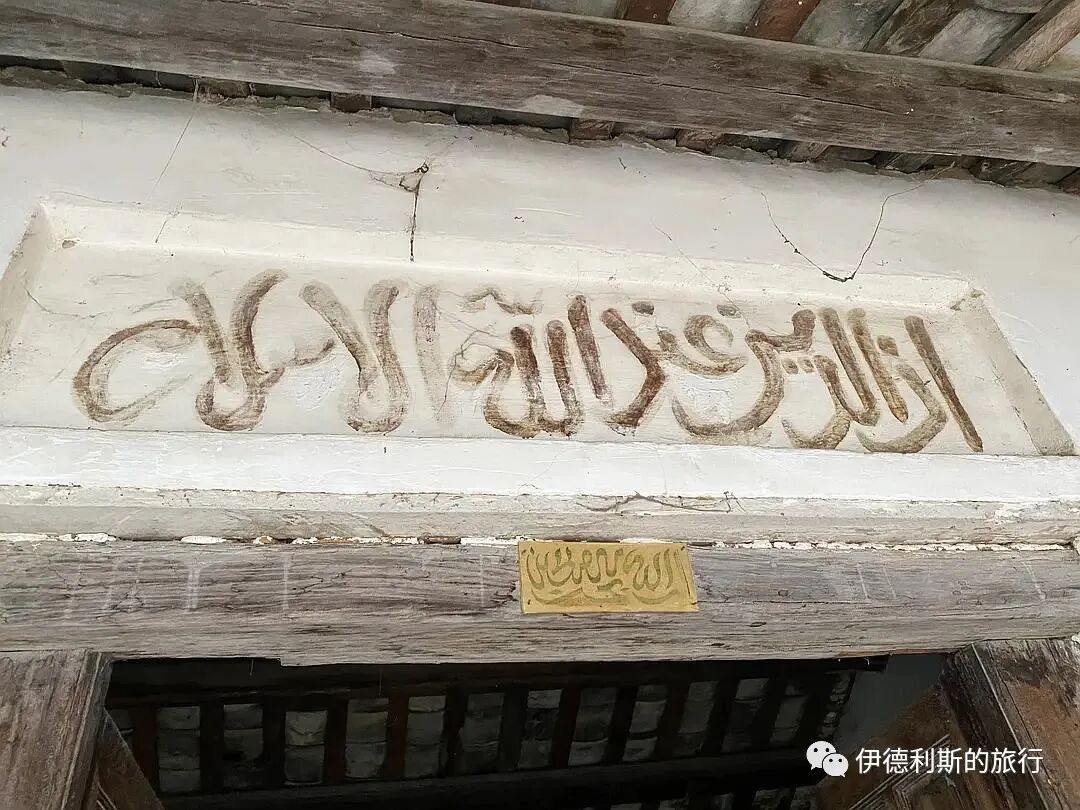
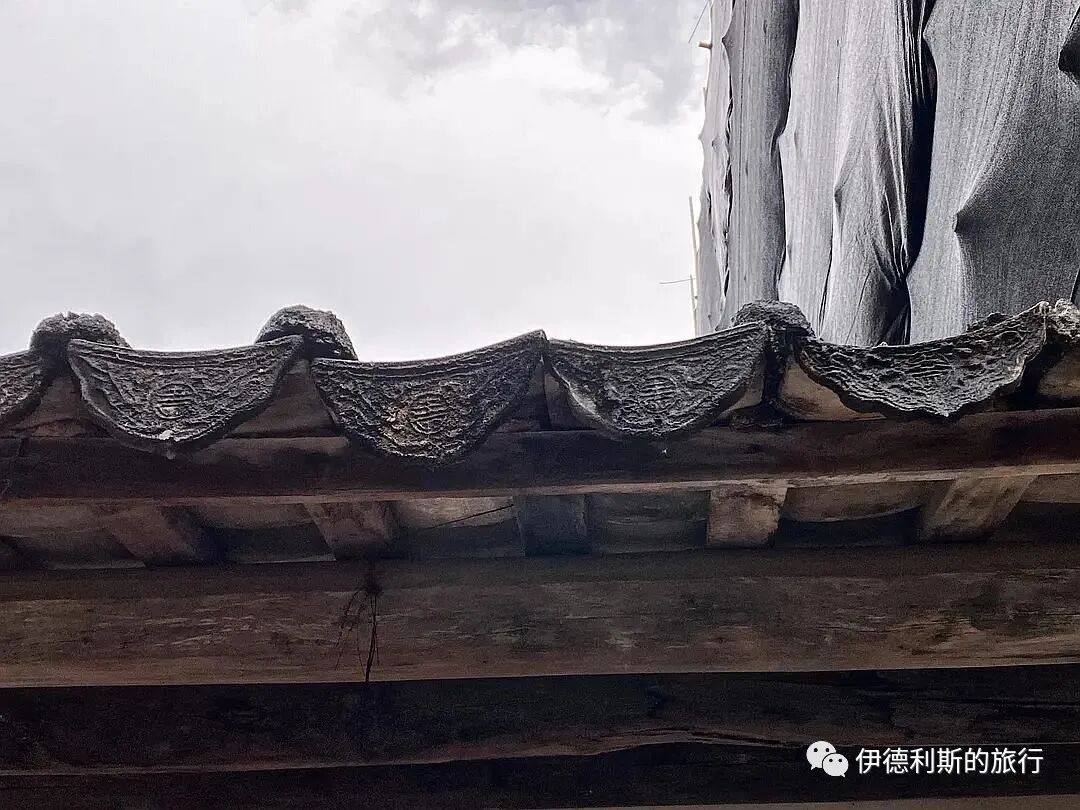
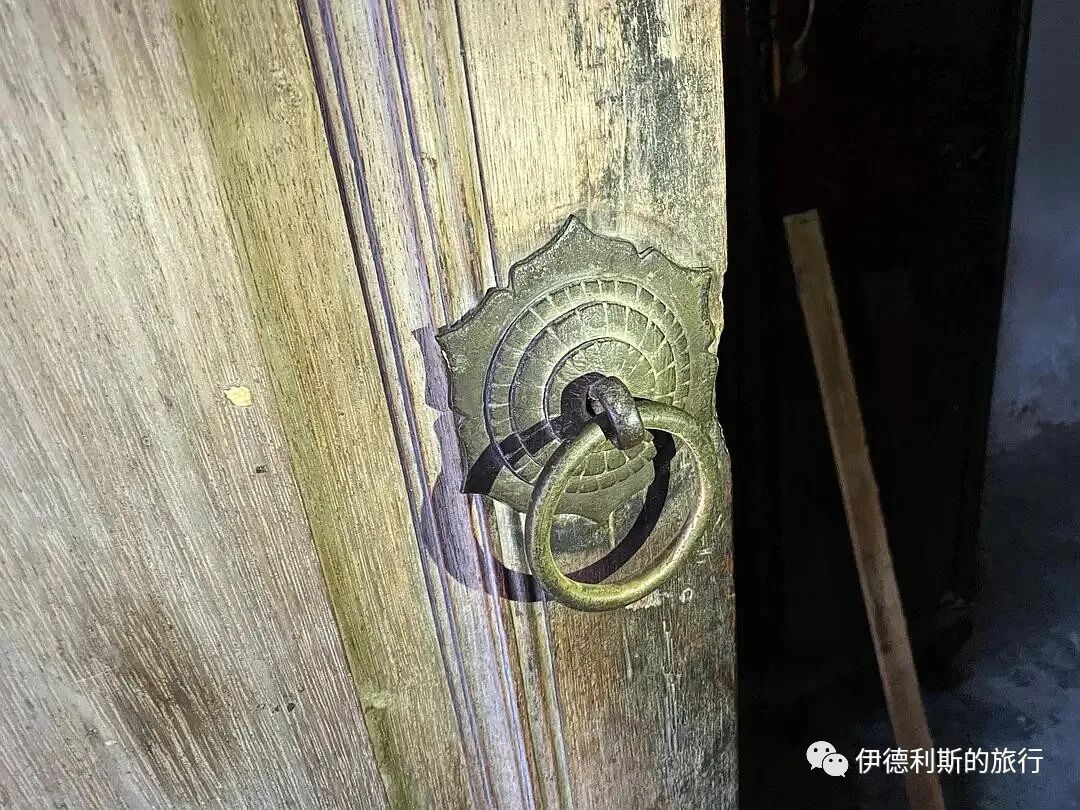
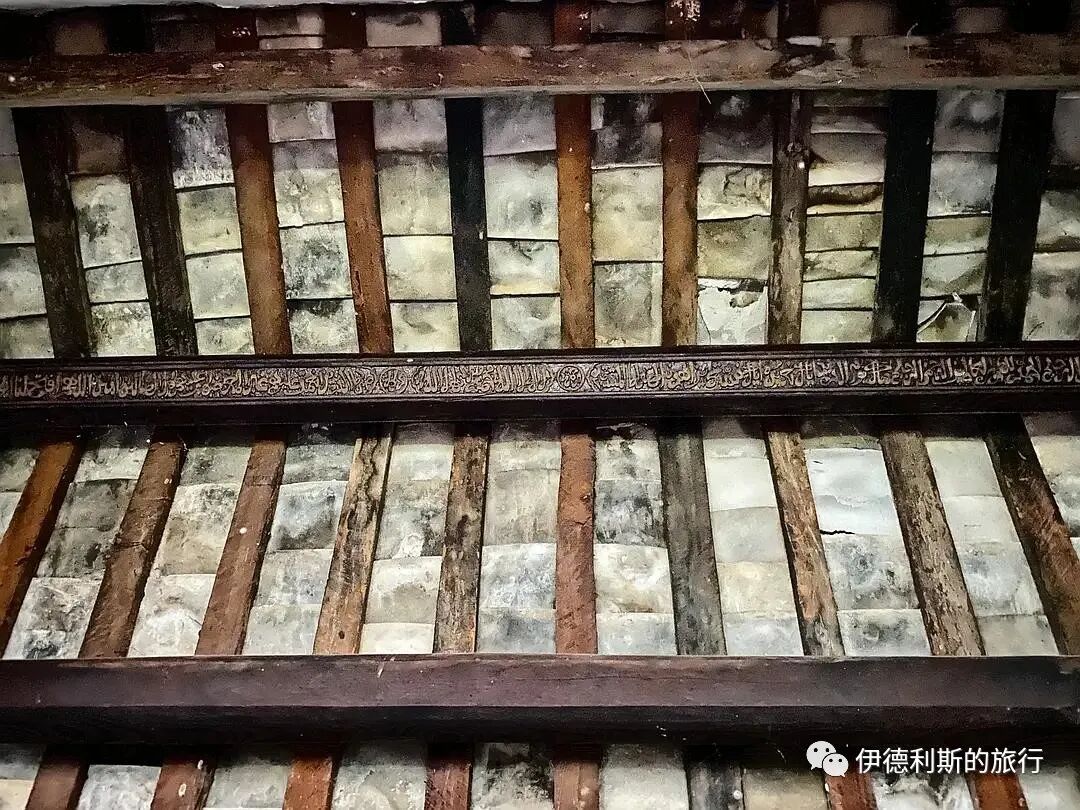
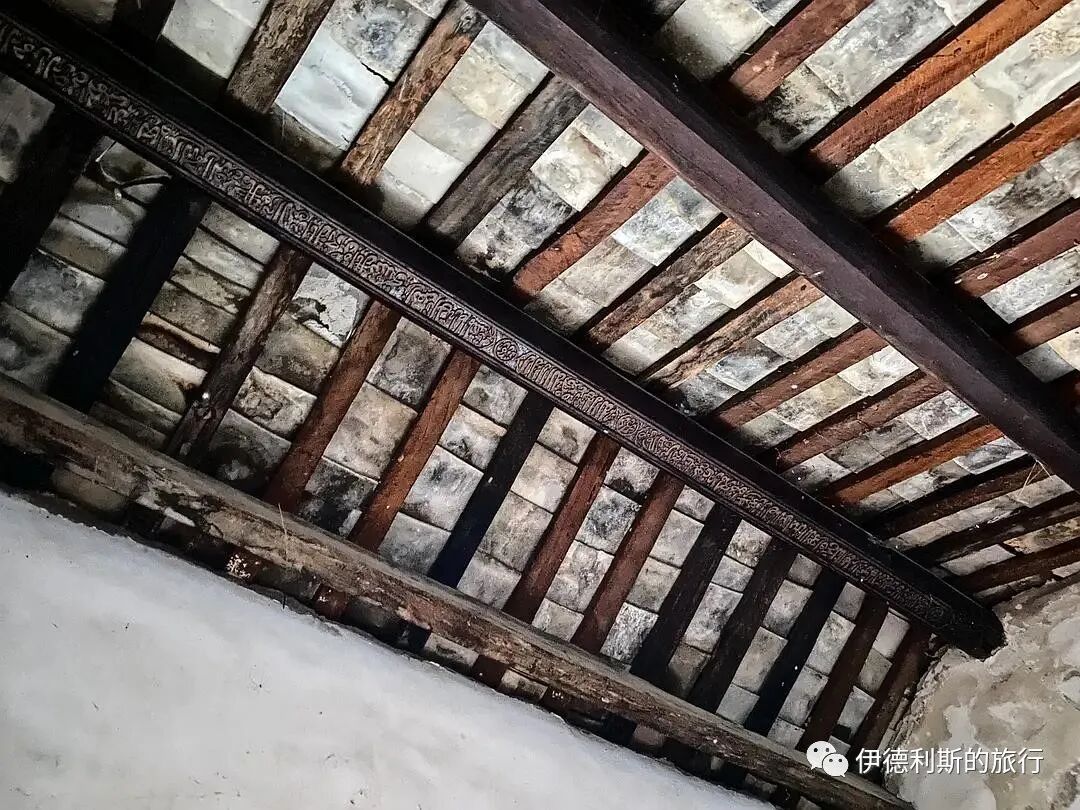
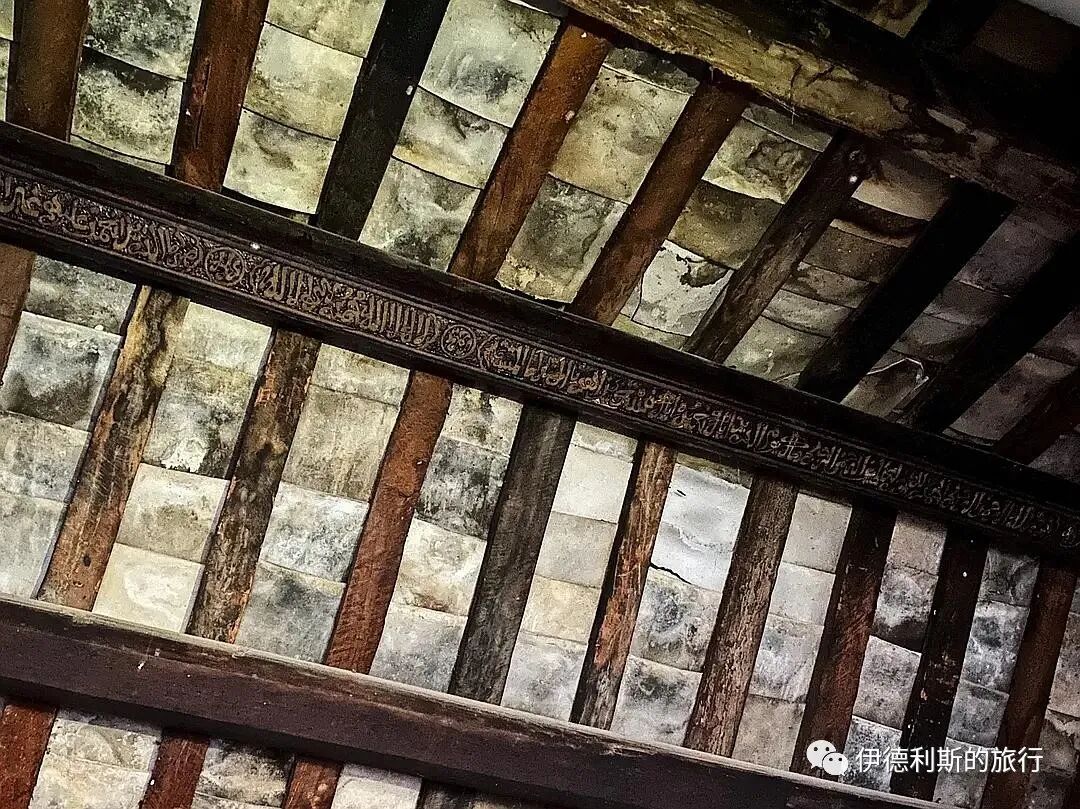
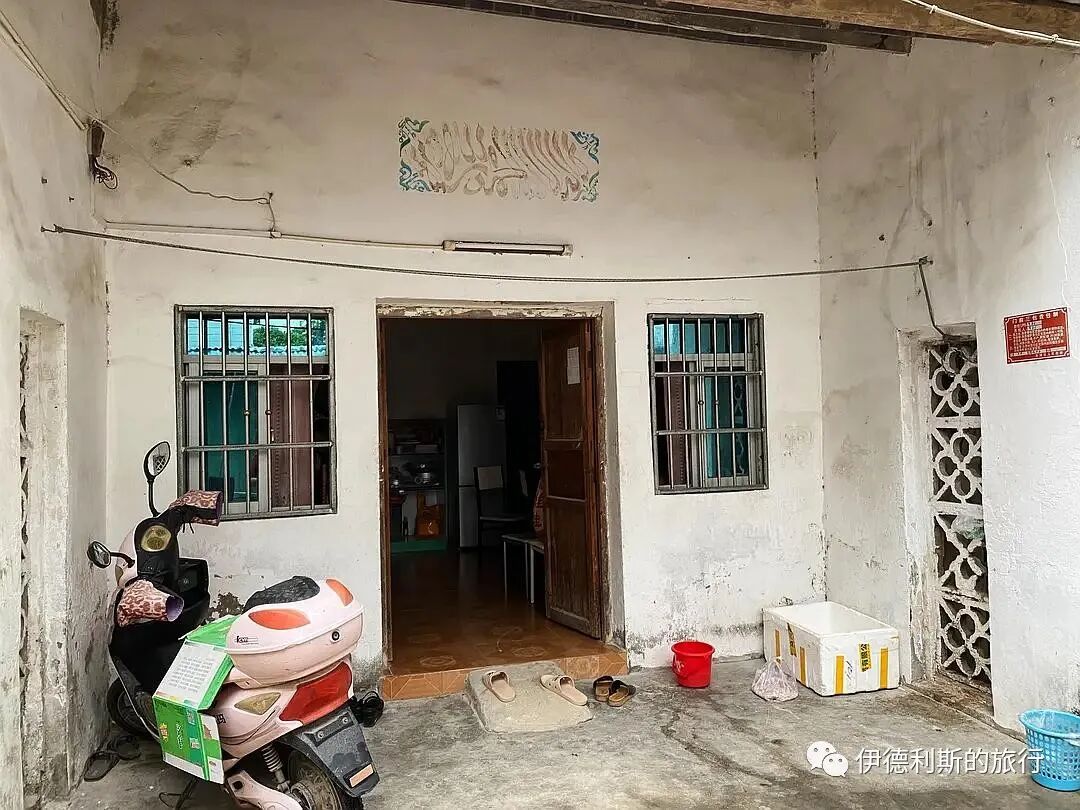
This is the most beautiful set of scripture-inscribed roof purlins preserved in their original location in Huihui Village, with the gold-painted scripture characters shining under the light.
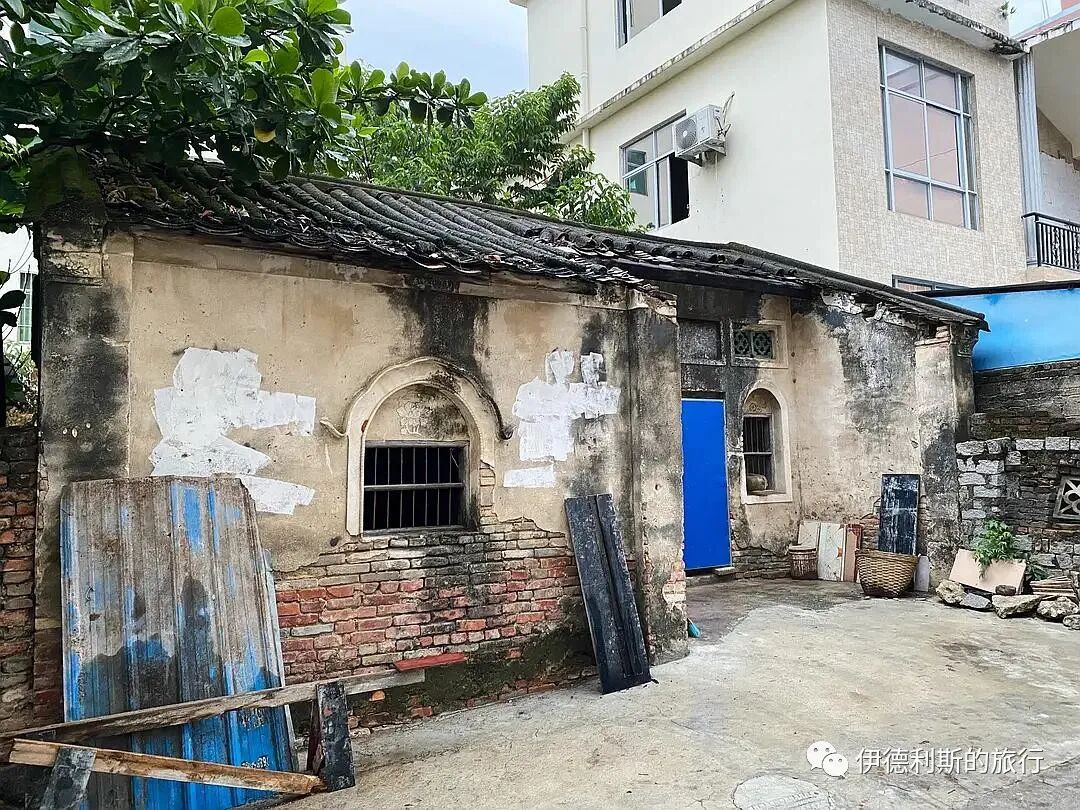
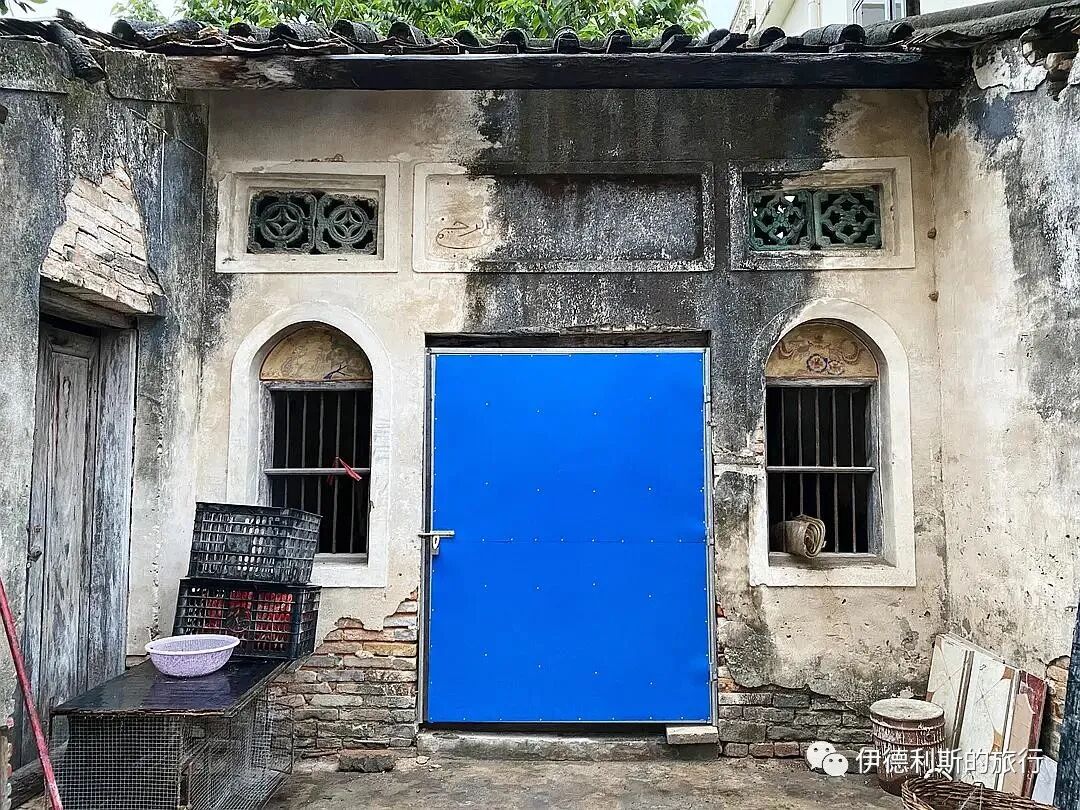
The last old house in Huihui Village.
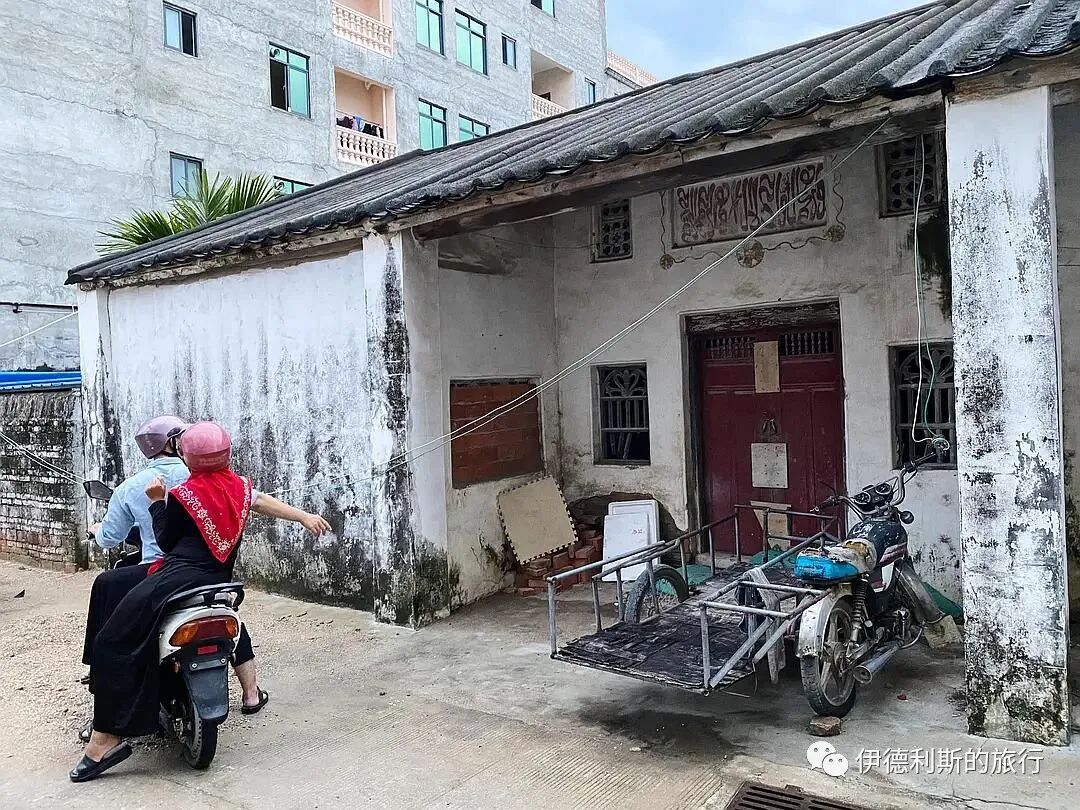
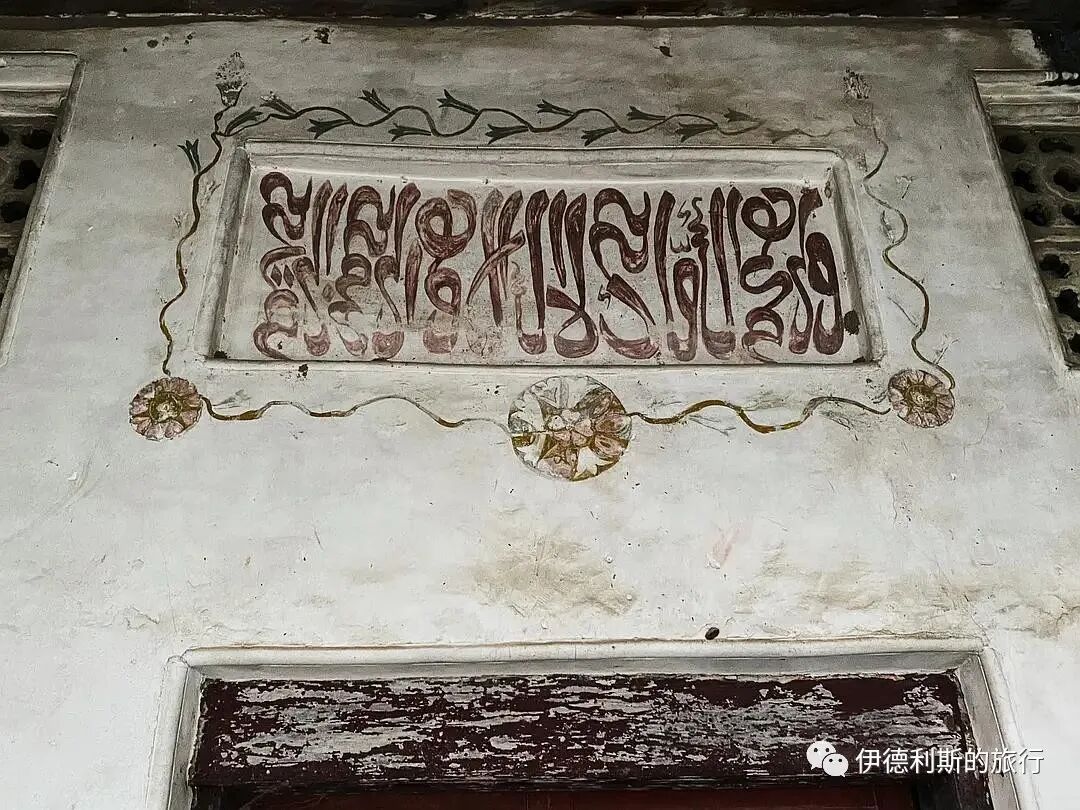
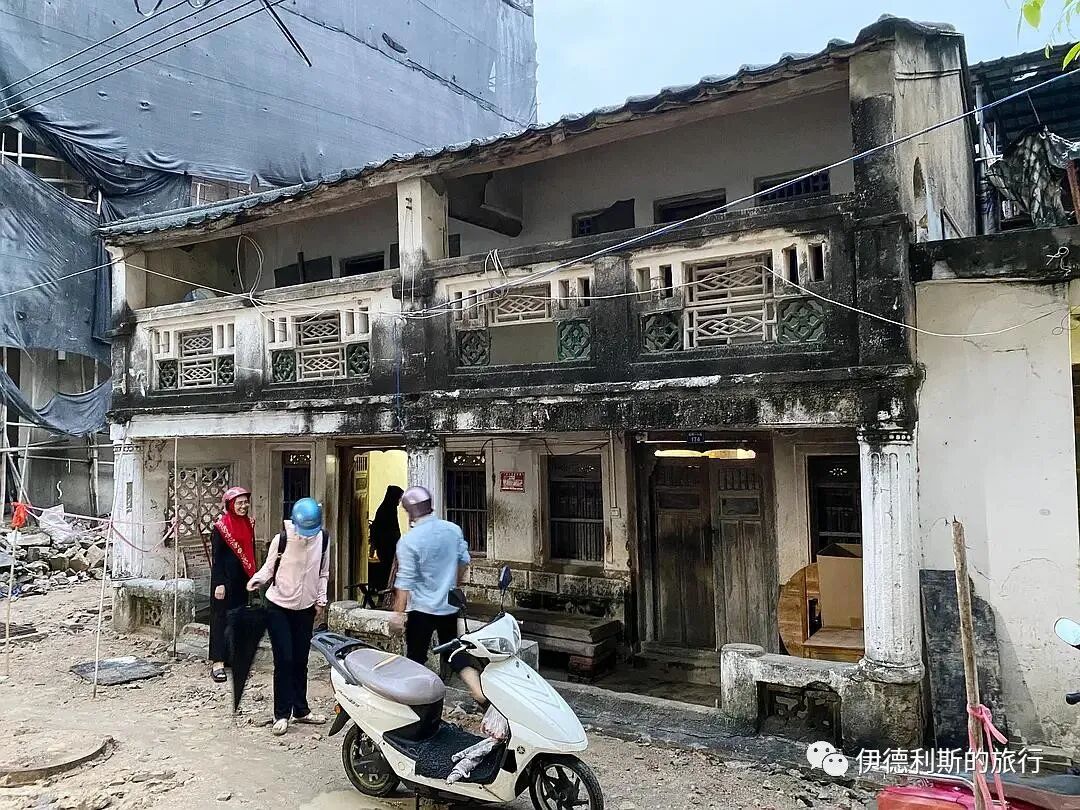
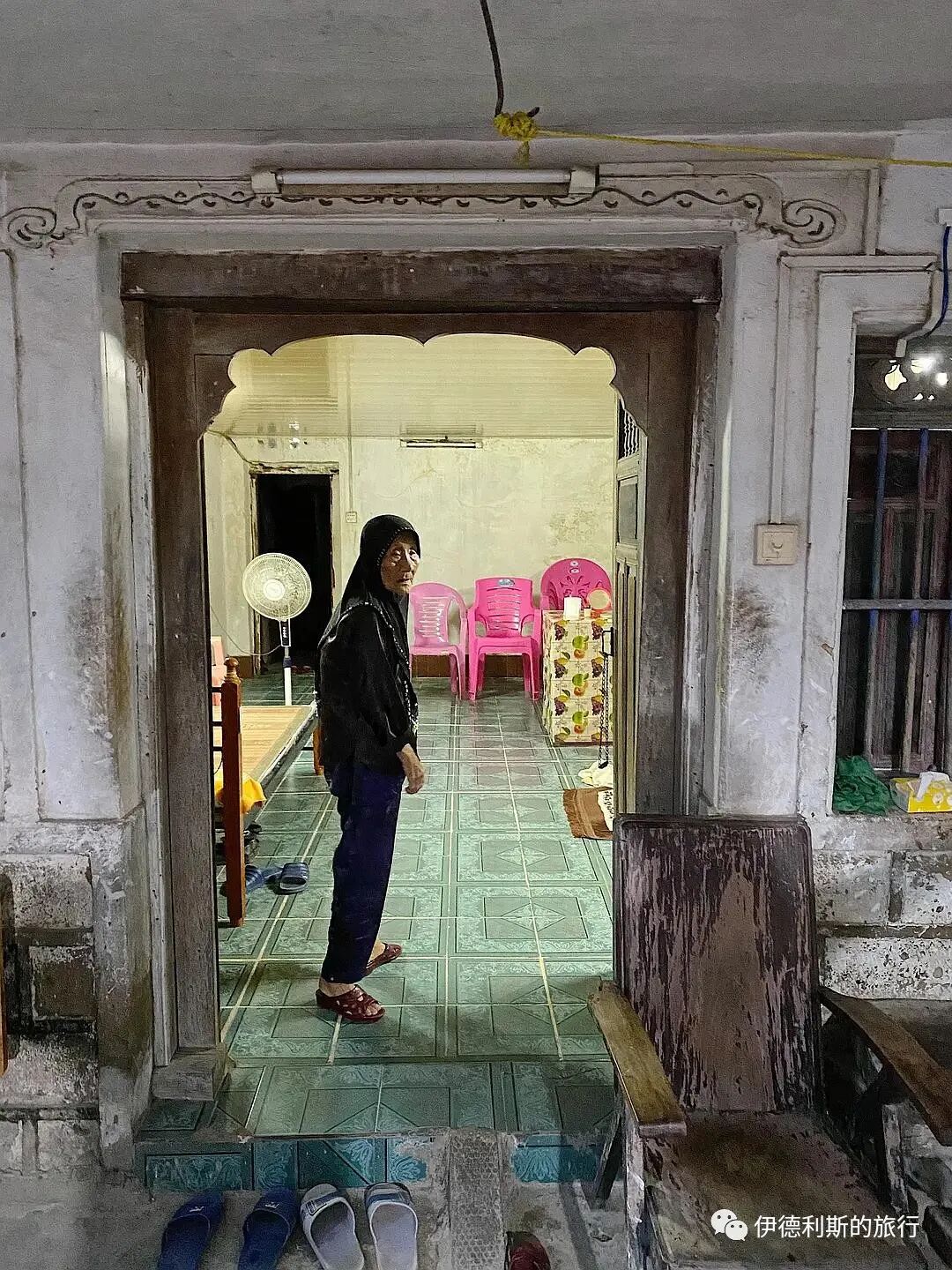
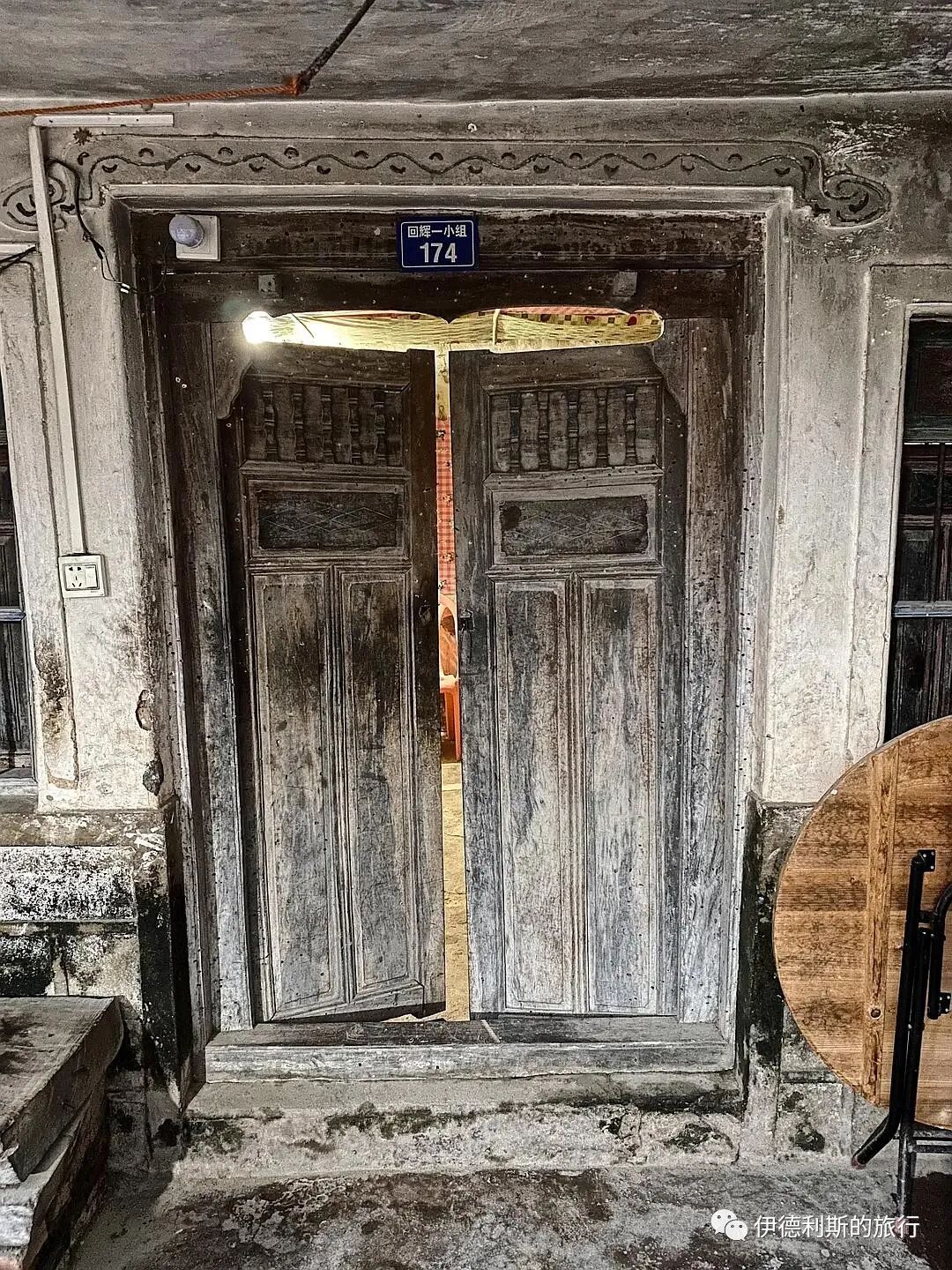
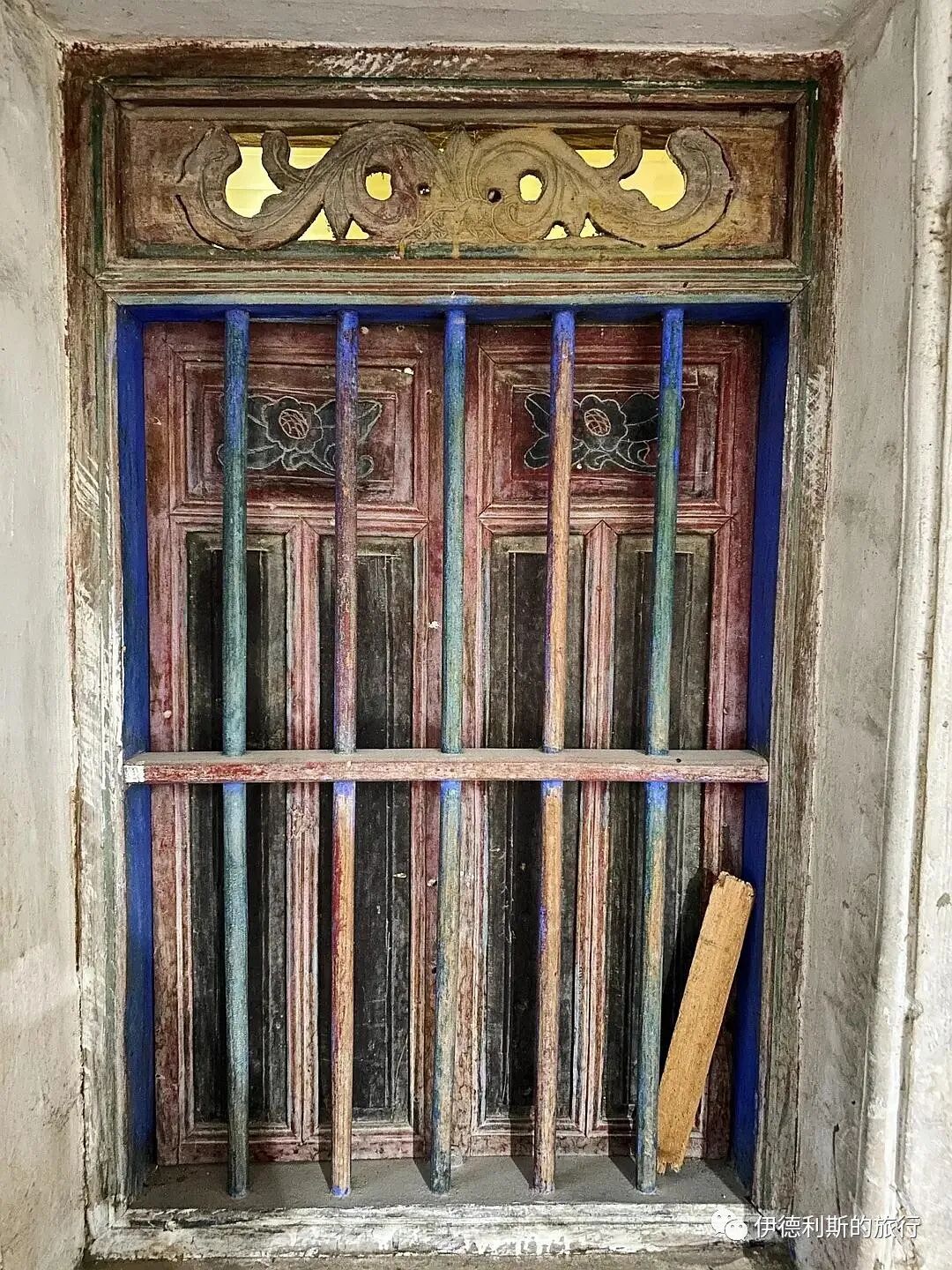
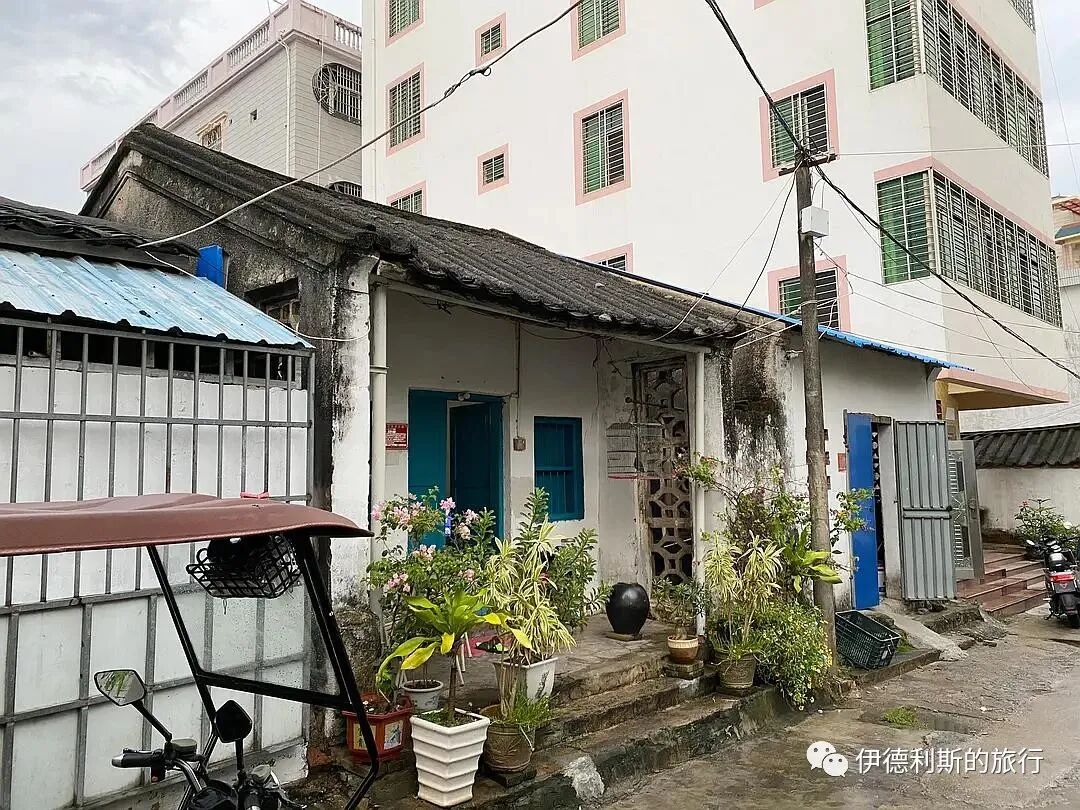
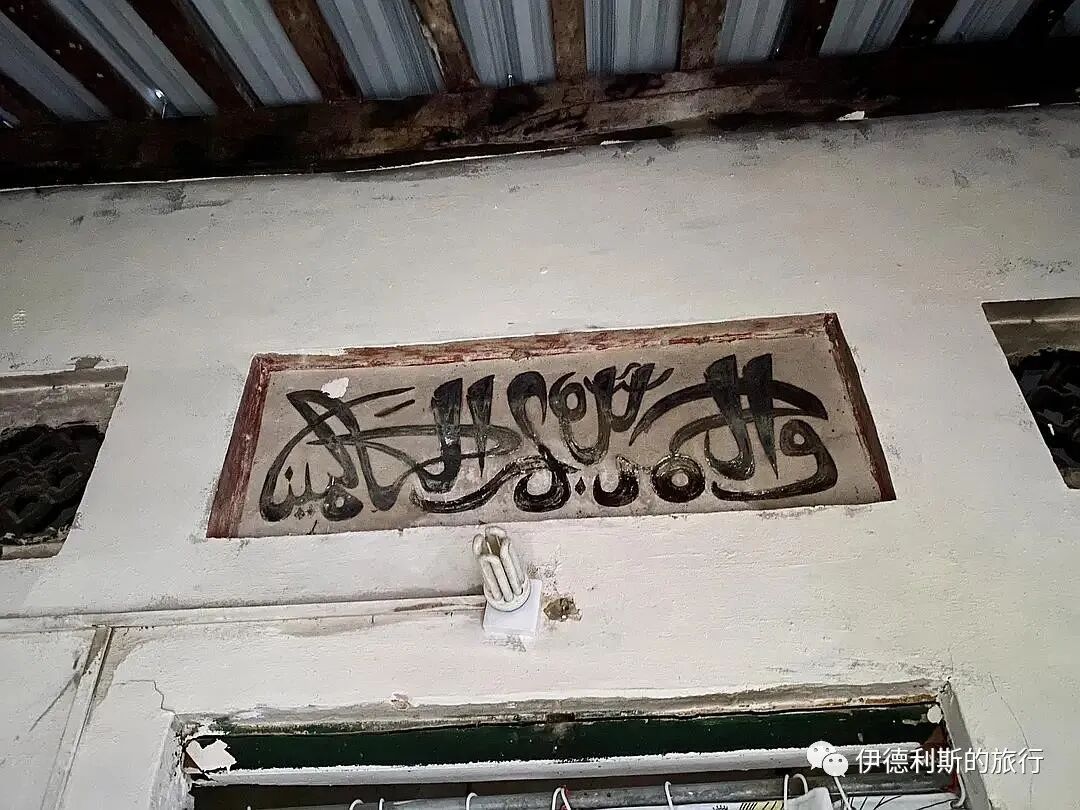
In the evening, Muning's family treated Zainab and me to fresh fish soup at the entrance of Huixin Village in Sanya. The Huihui people's signature fresh fish soup is made with starfruit, tamarind, and tomatoes, giving it a very strong sour taste. You can choose from a variety of sea fish. When eating, you have to make your own dipping sauce. You must use the Hainan yellow lantern chili in moderation, as it is extremely spicy. We also ate coconut milk red rice, sweet potato vines, and stir-fried squid, all of which were quite delicious.

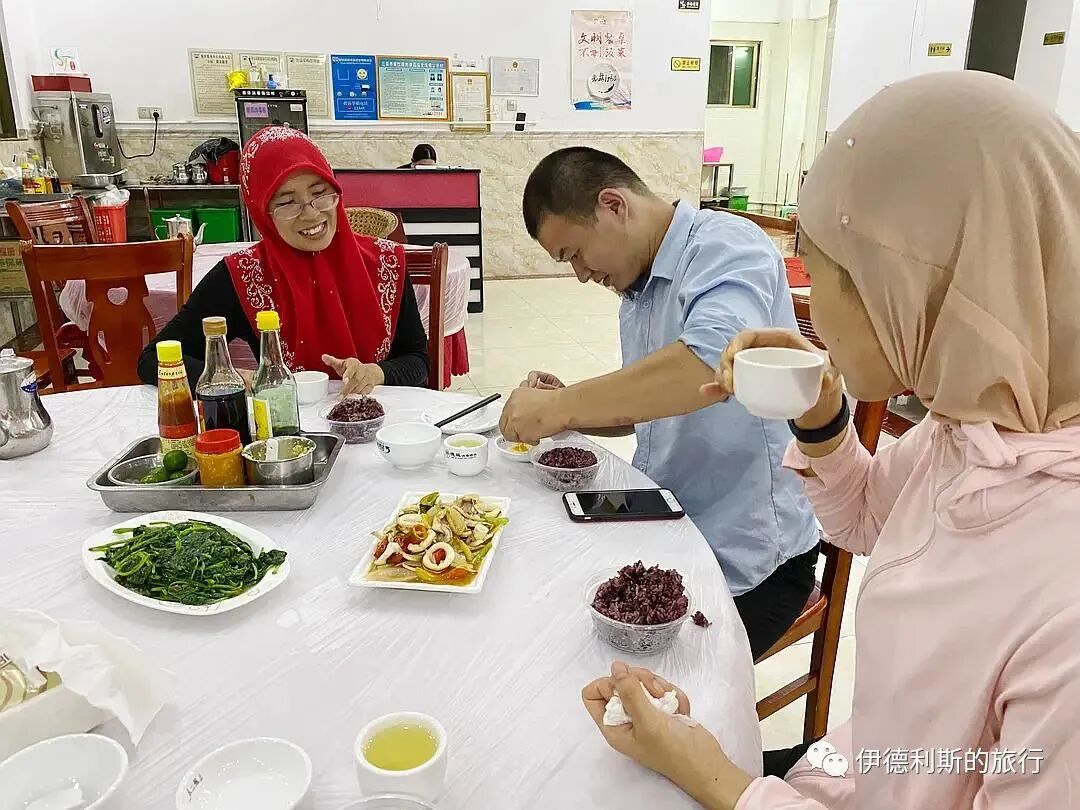
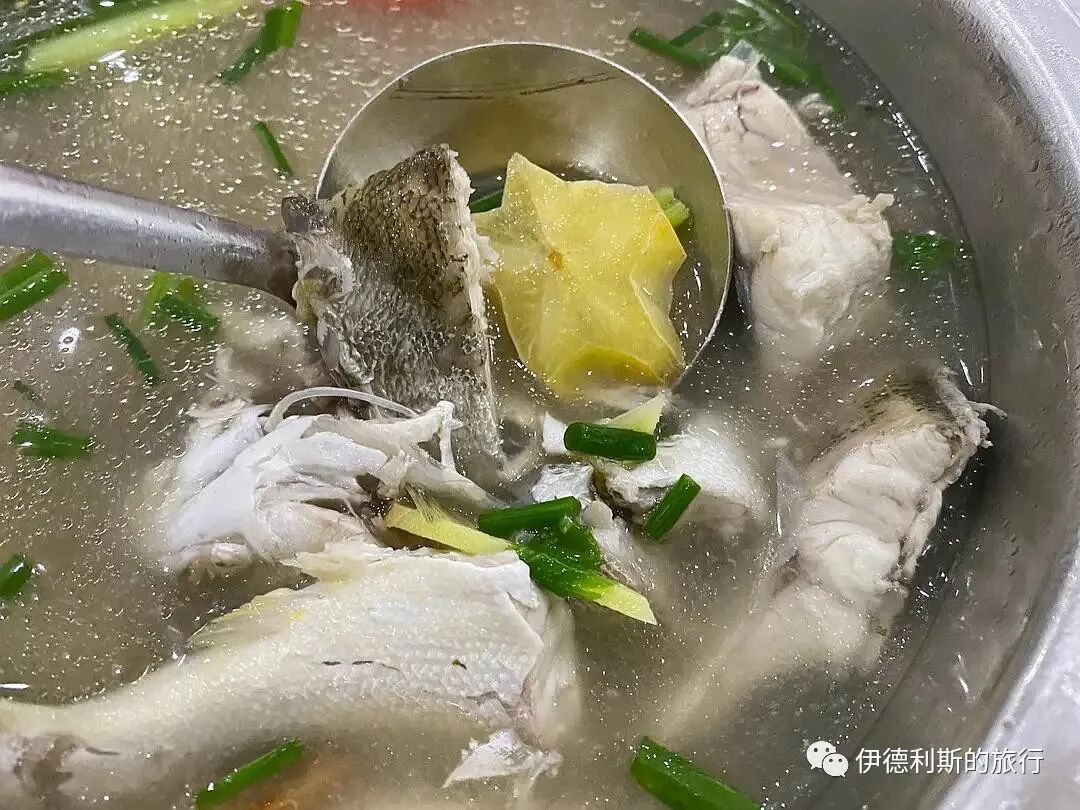
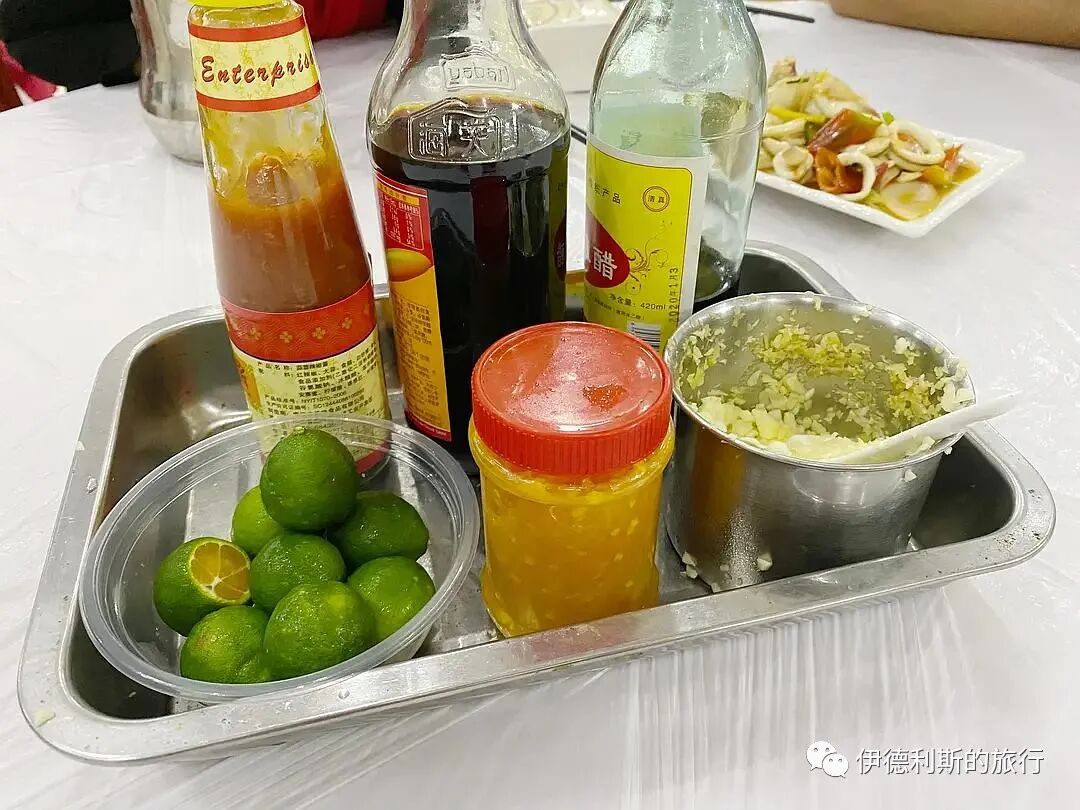
Yellow lantern chili.
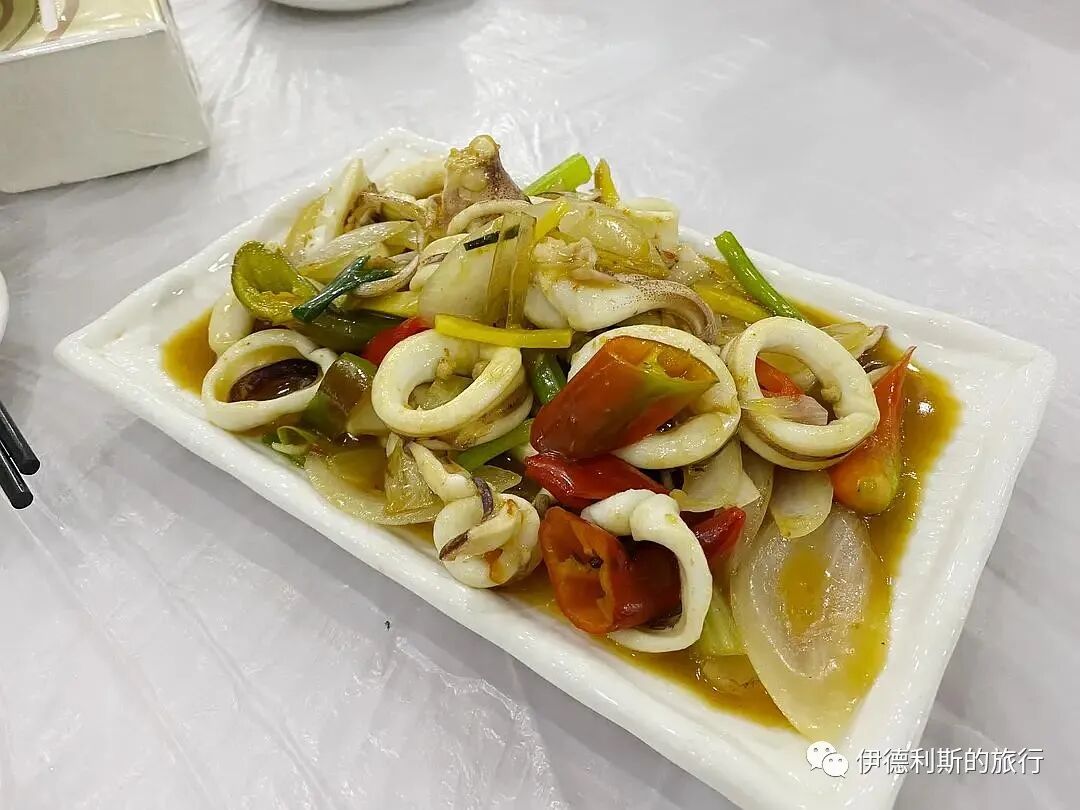
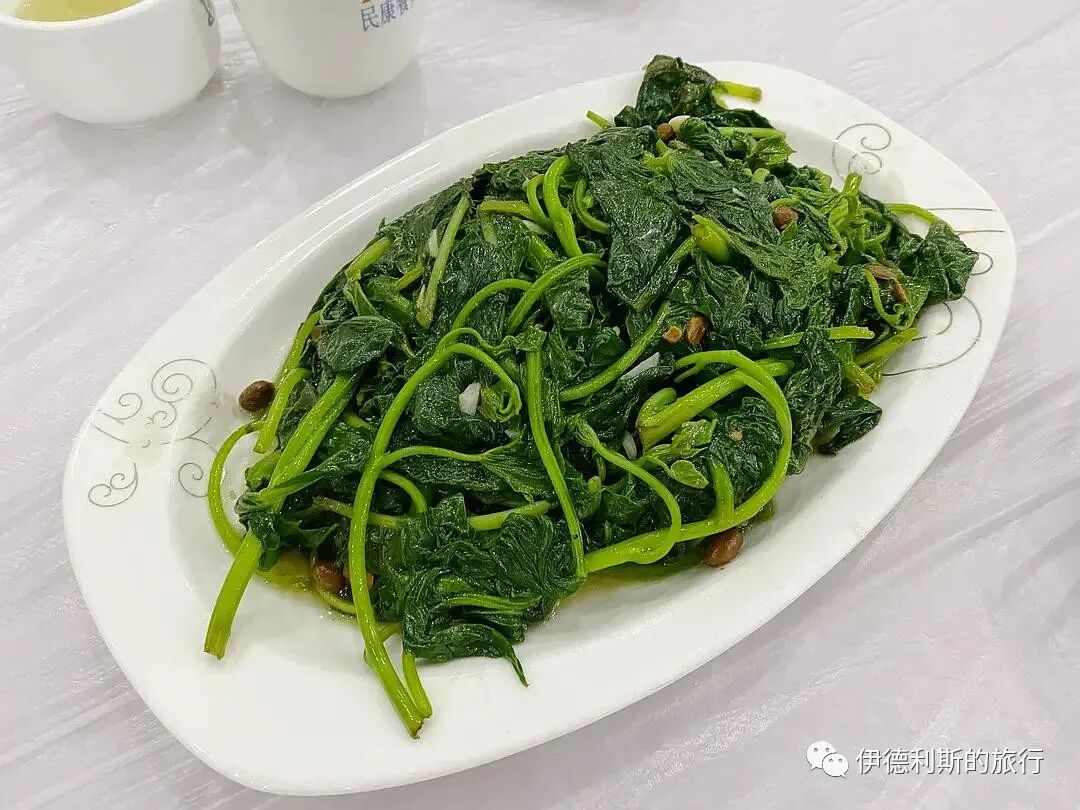
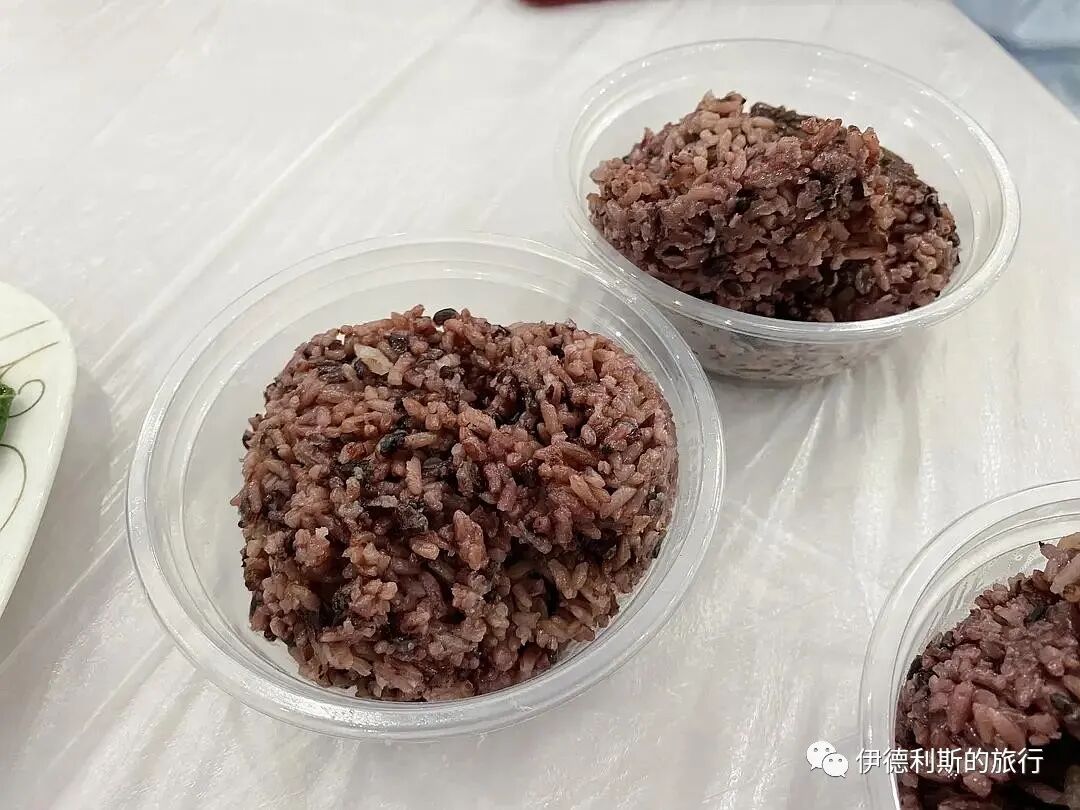
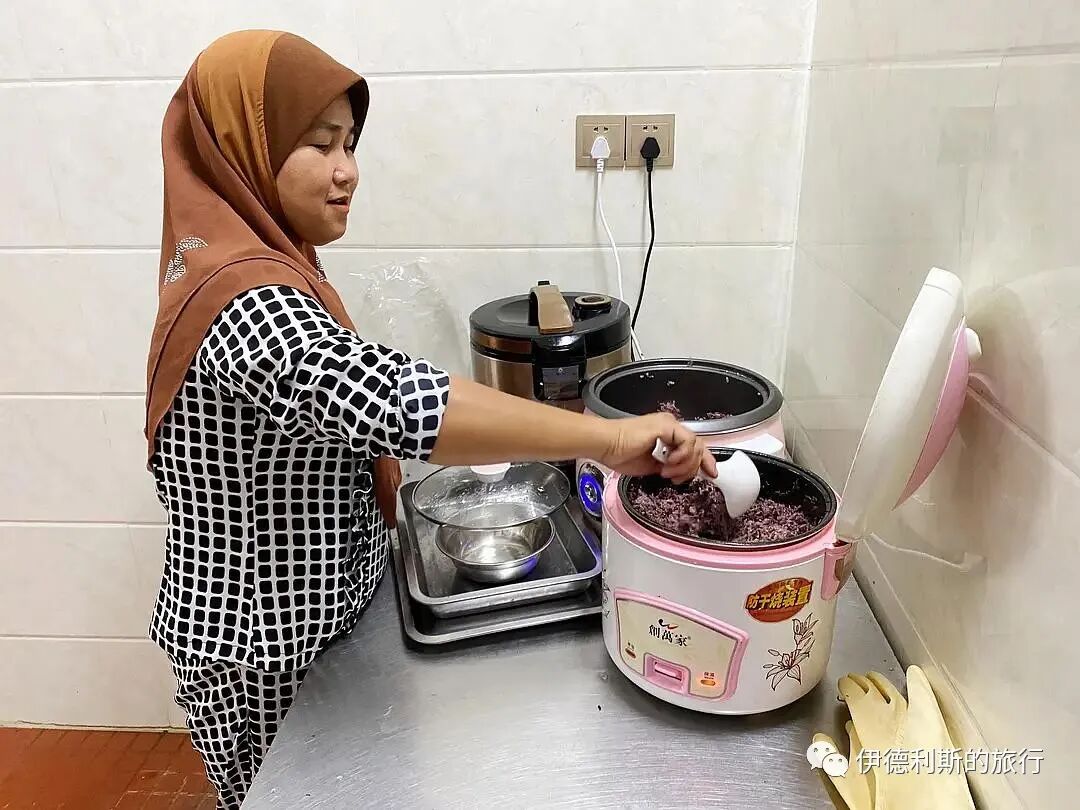
In the evening, we went to the Guangbaina night market next to Huixin Village. Since the rise of the street stall economy this year, Guangbaina has become increasingly lively. There is no stall fee here, and many people sell fruit grown in their own homes, so the prices are the lowest in the area. We ate sugar-apple, jackfruit, and mango, all of which were cheap and delicious.
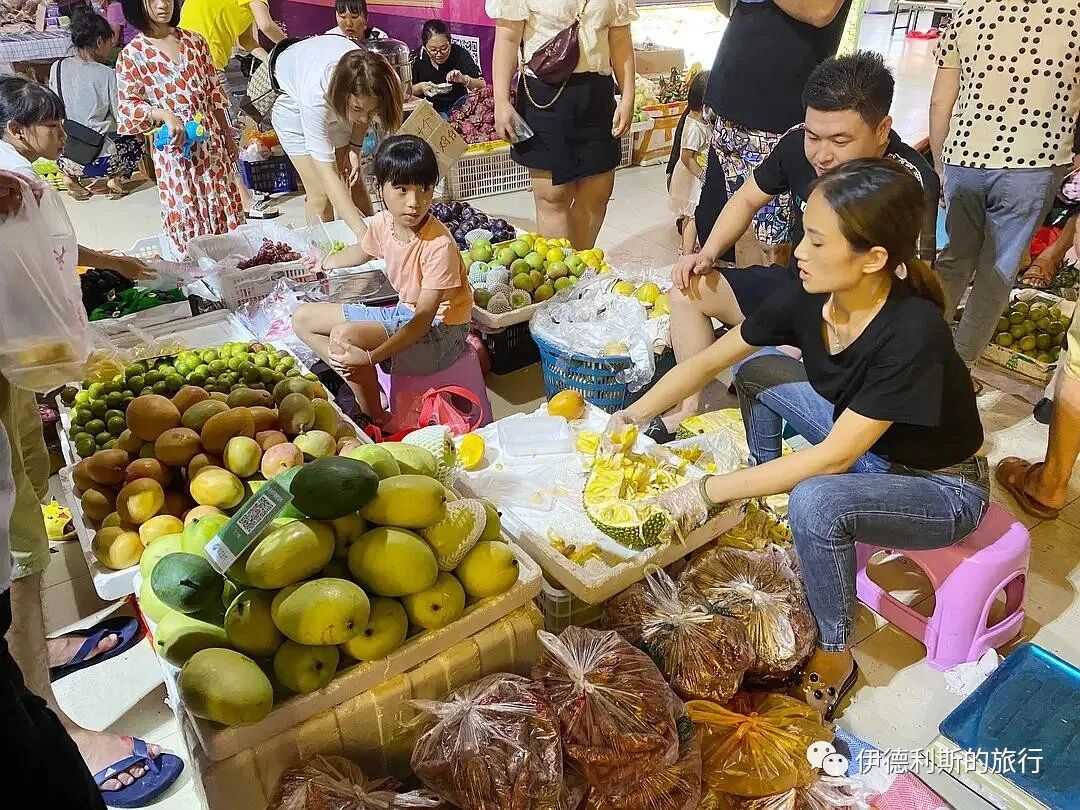
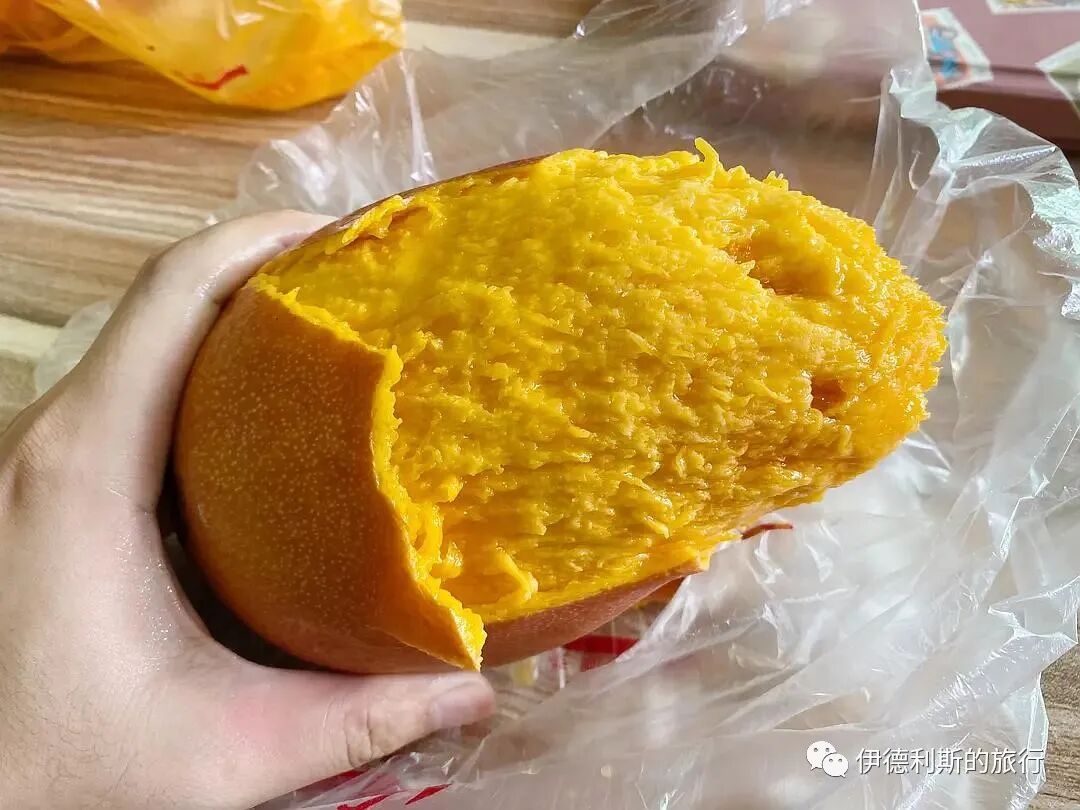
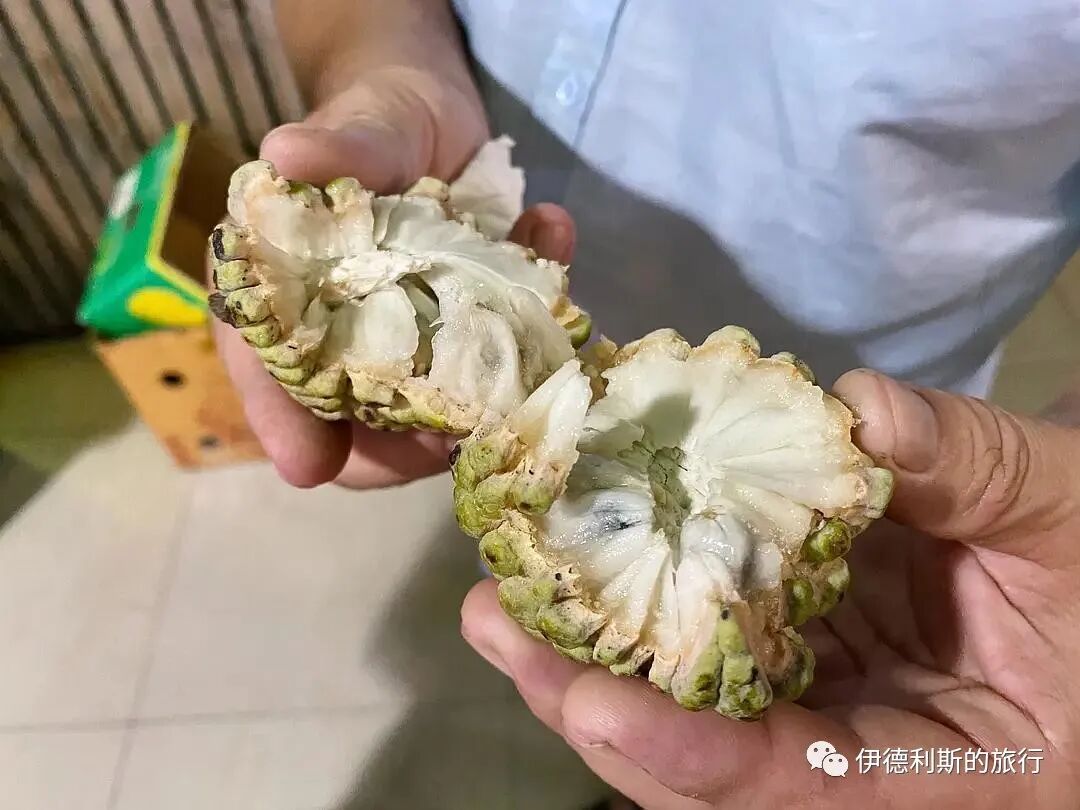
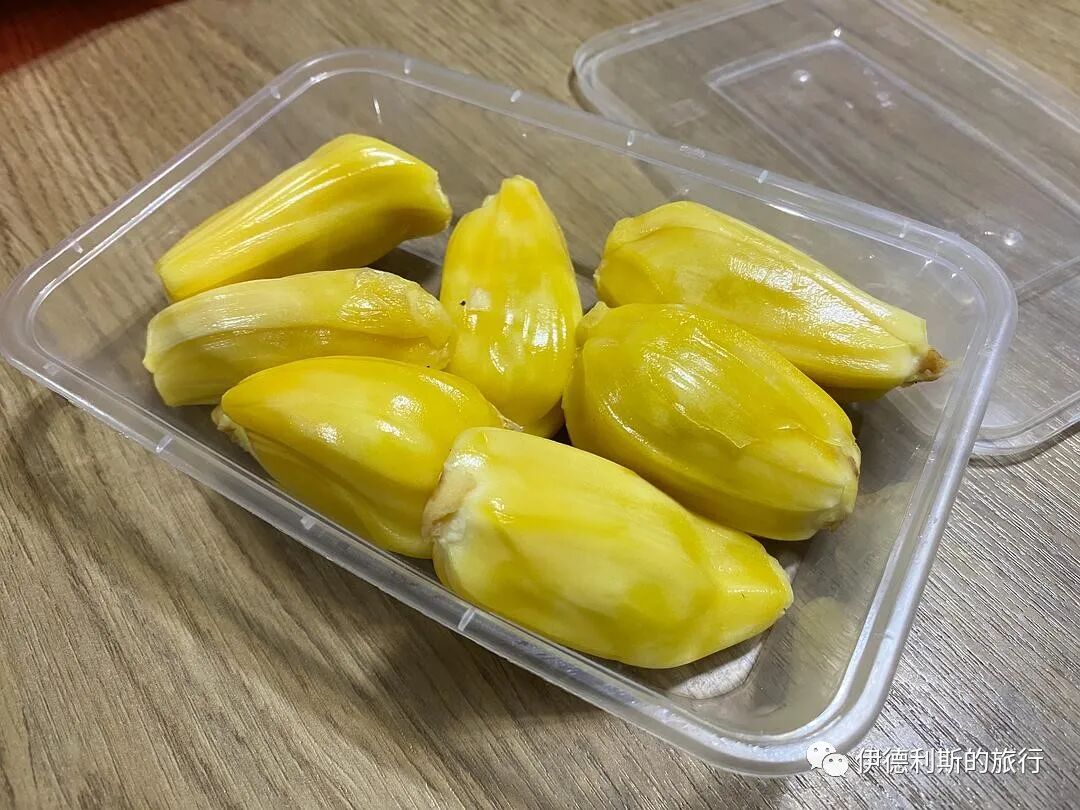
After visiting the night market, we returned to Huixin Village to eat Qingbuliang (a refreshing dessert with coconut milk and various toppings). The ingredients for Qingbuliang in every shop in Sanya are different, and you have to try them all to know which one you like.
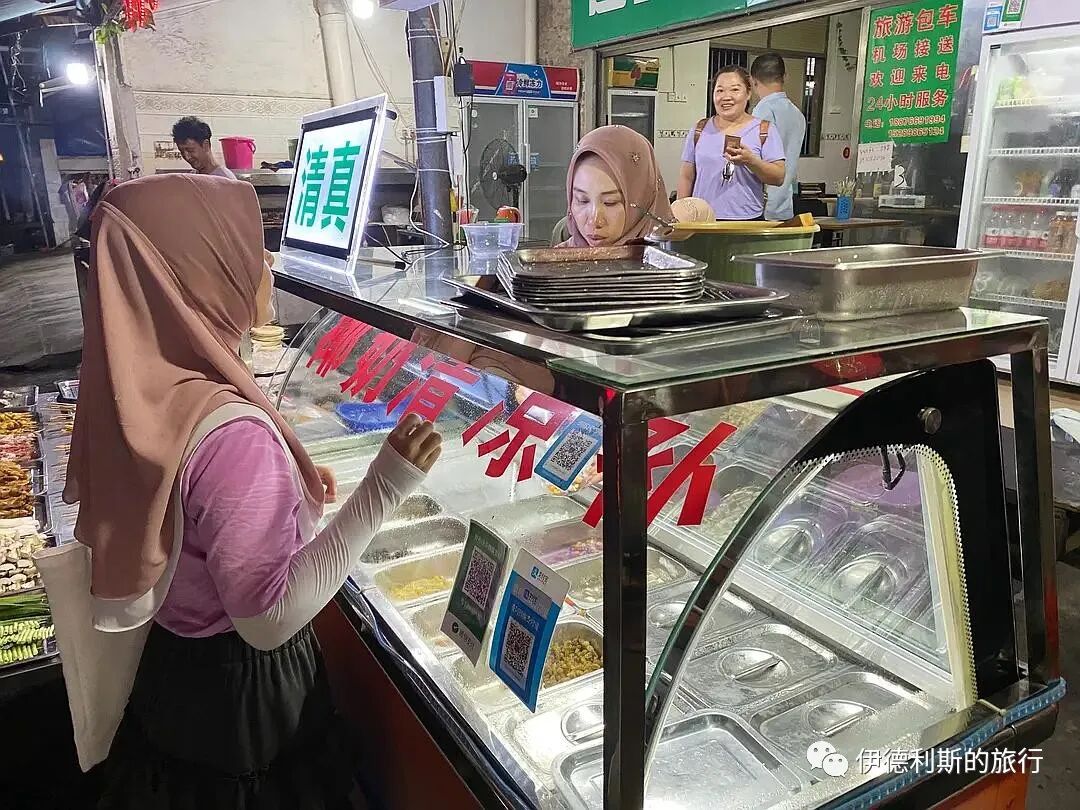
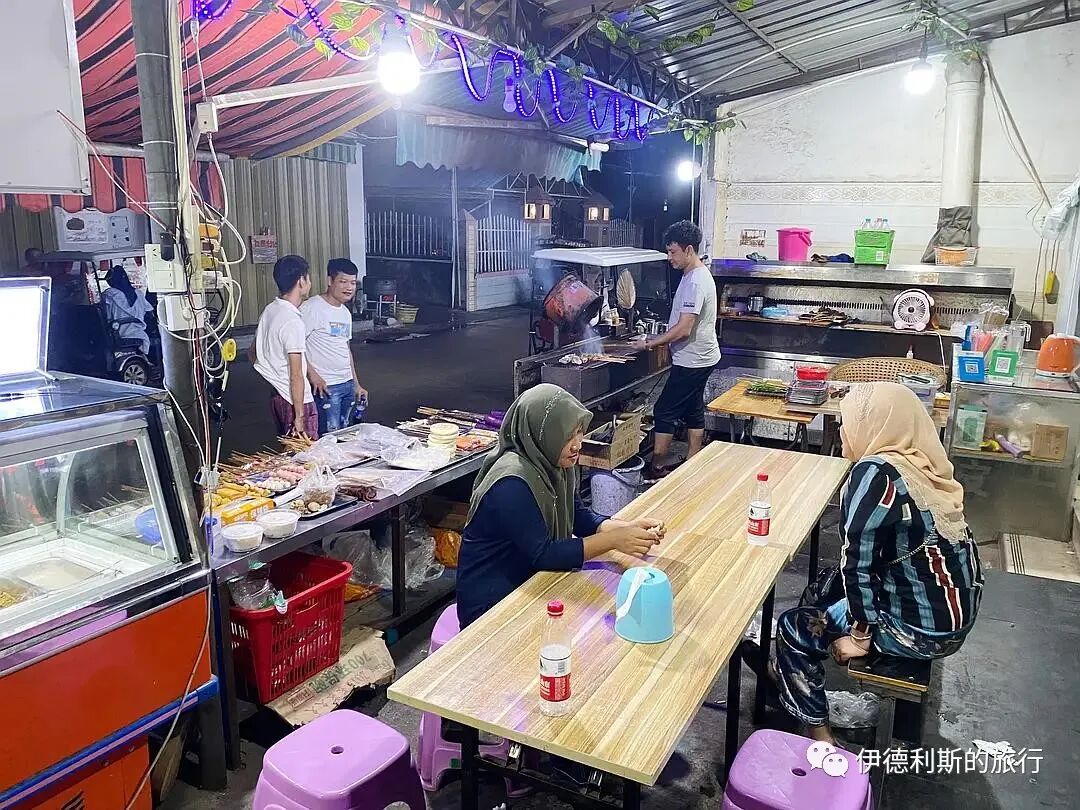

Still wanting more, we went out again in the evening to ride an electric scooter.
After returning, I looked through the old books collected by Muning, which included records of Eid al-Adha in 1979.
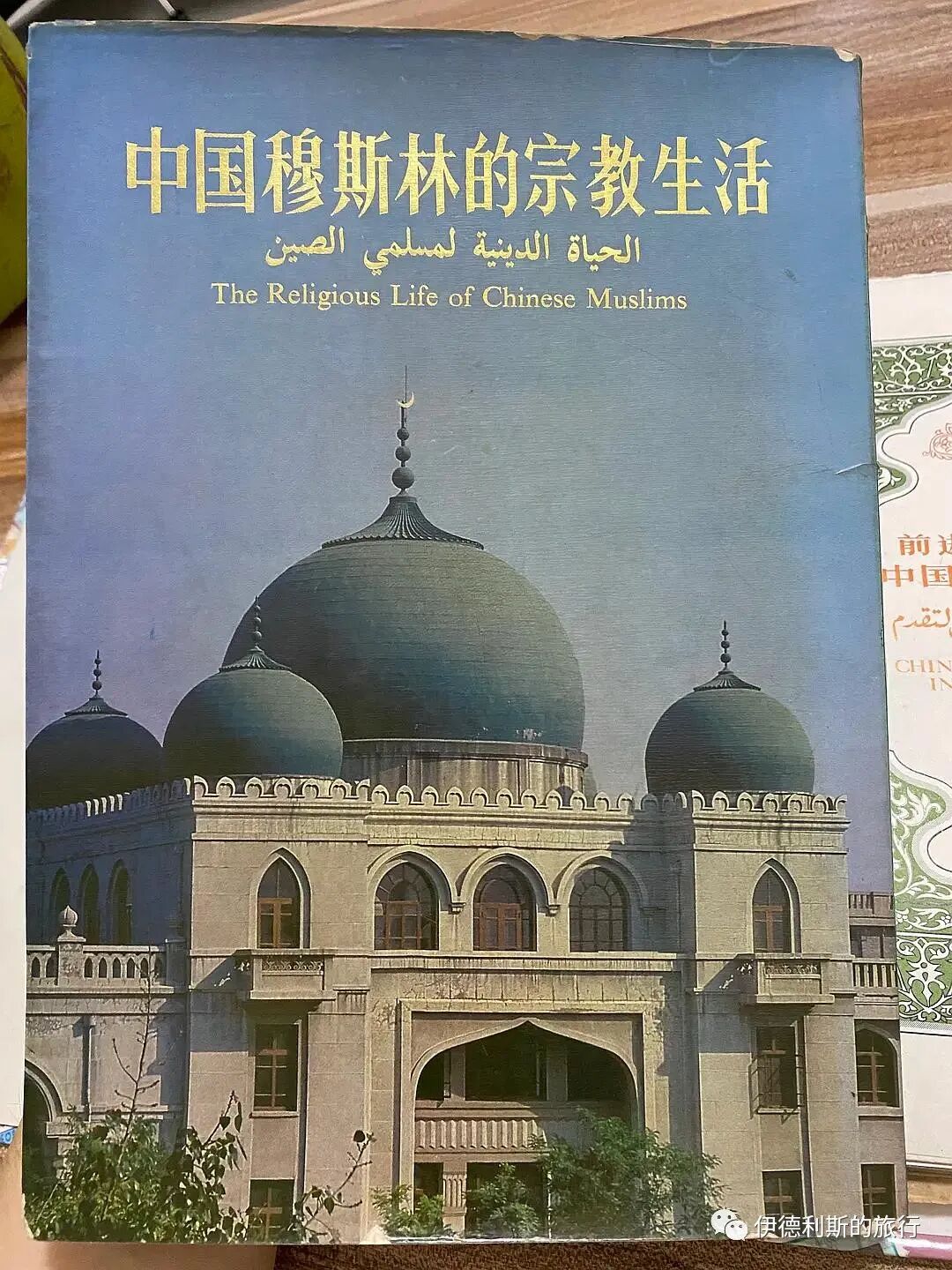
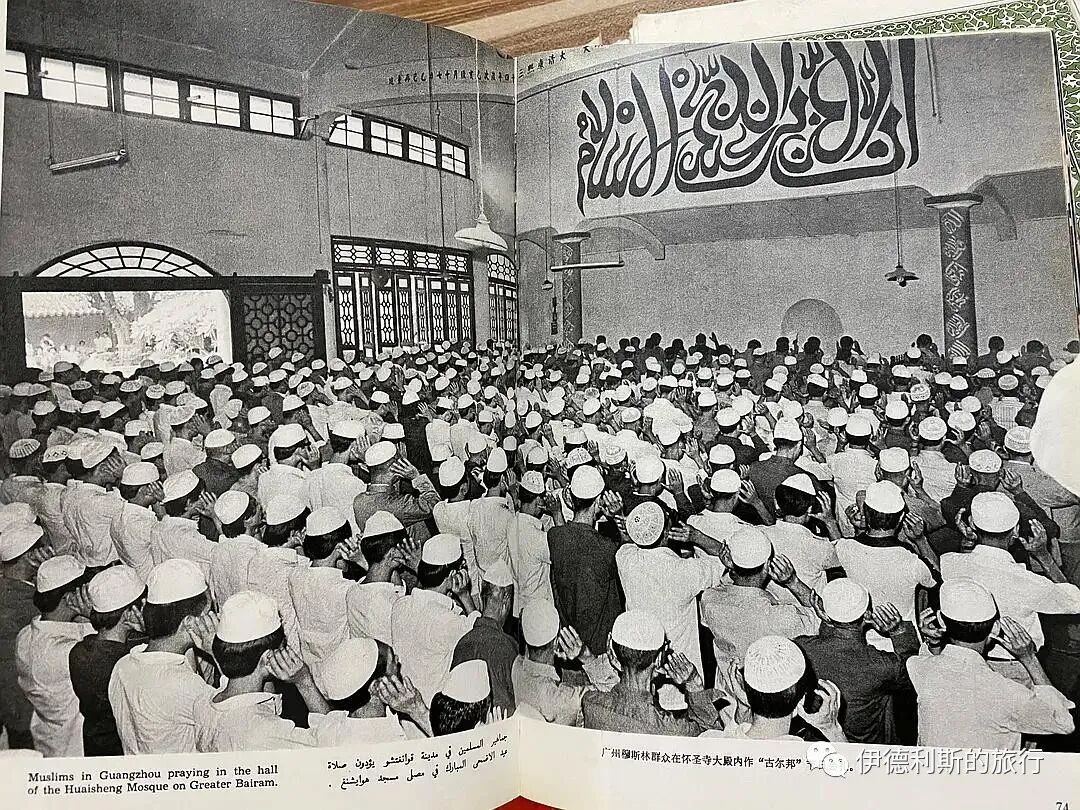
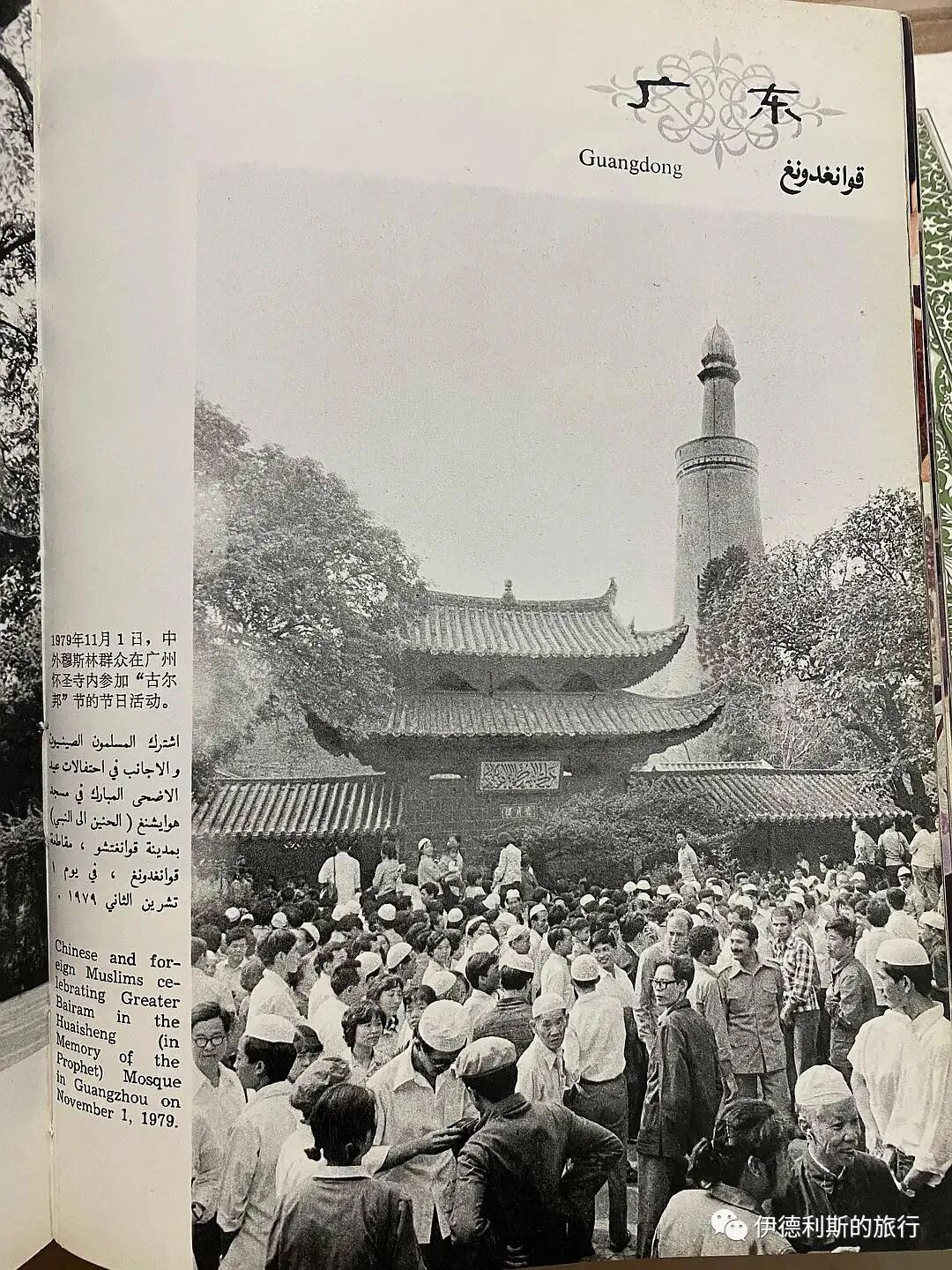
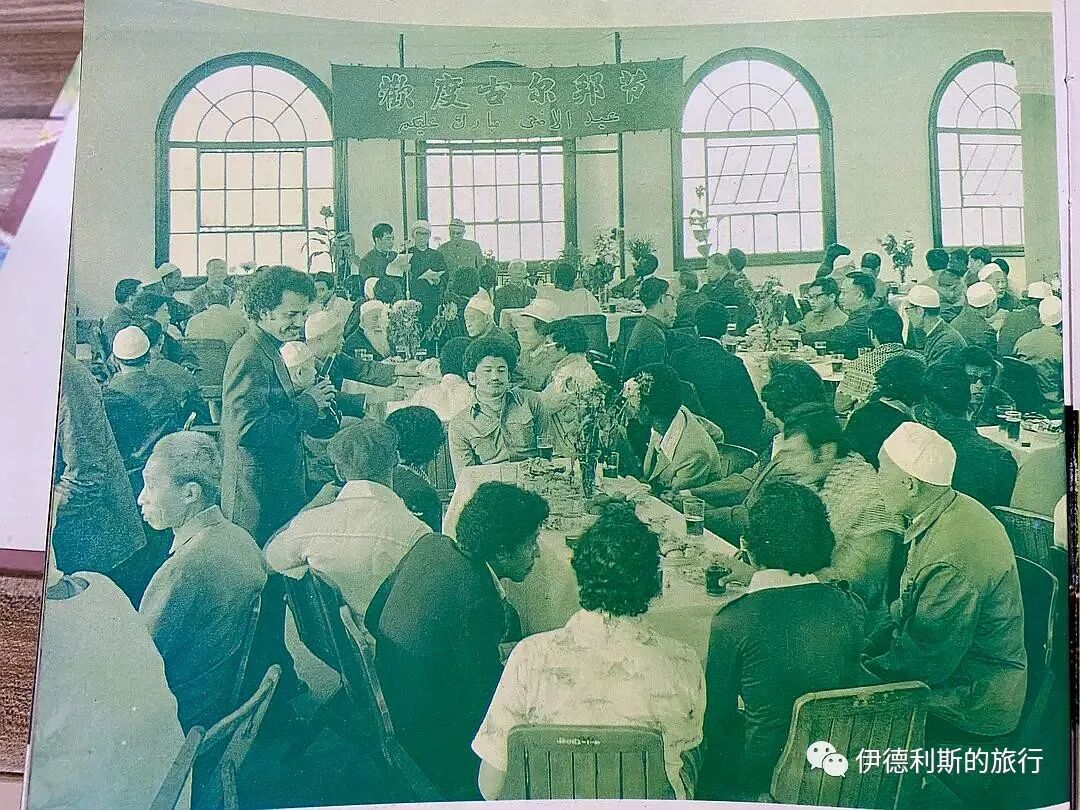
August 1st
I woke up in the morning and had beef noodles made by the Huihui people in Huixin Village, then bought white fungus and lotus seed porridge and chicken porridge at the gate of the Southern Mosque to drink by the sea. After drinking, we took a walk in the coconut grove by the sea.
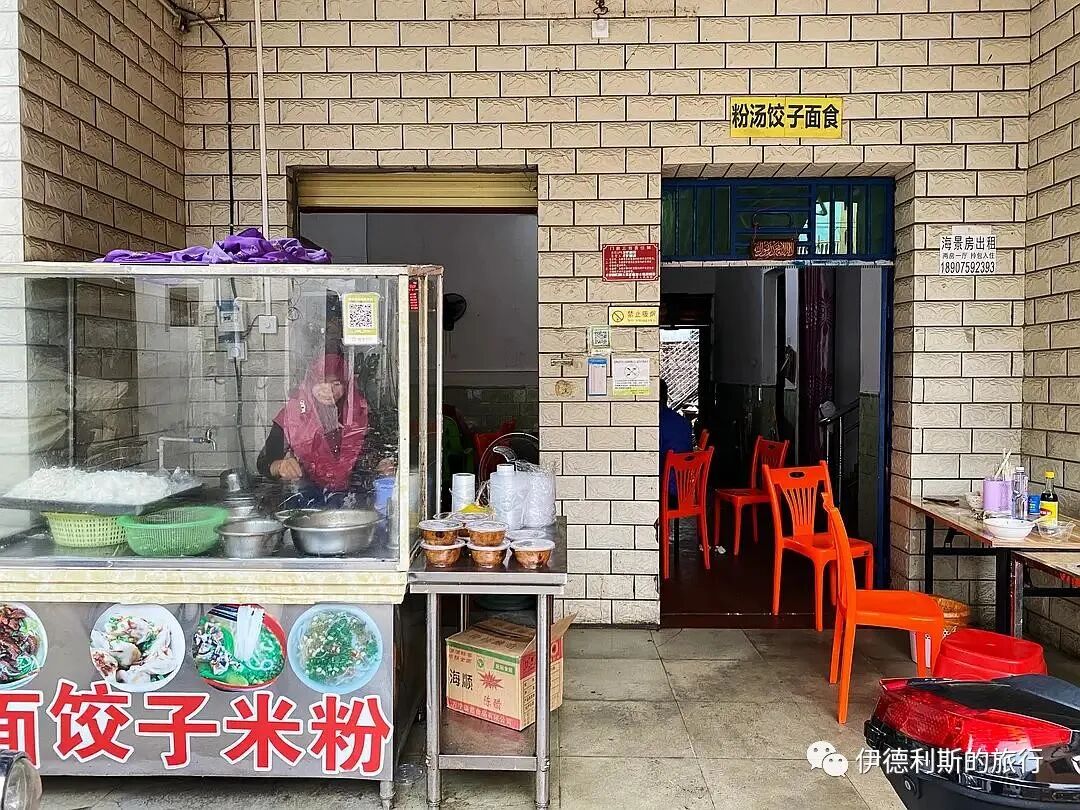
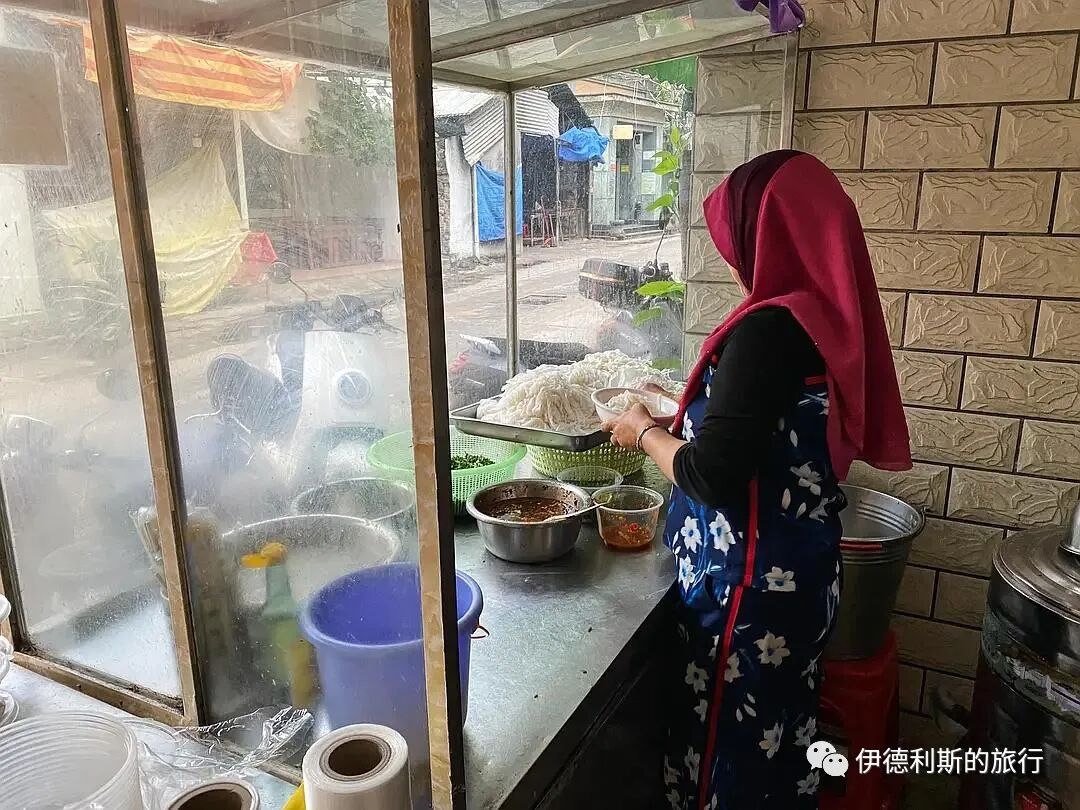
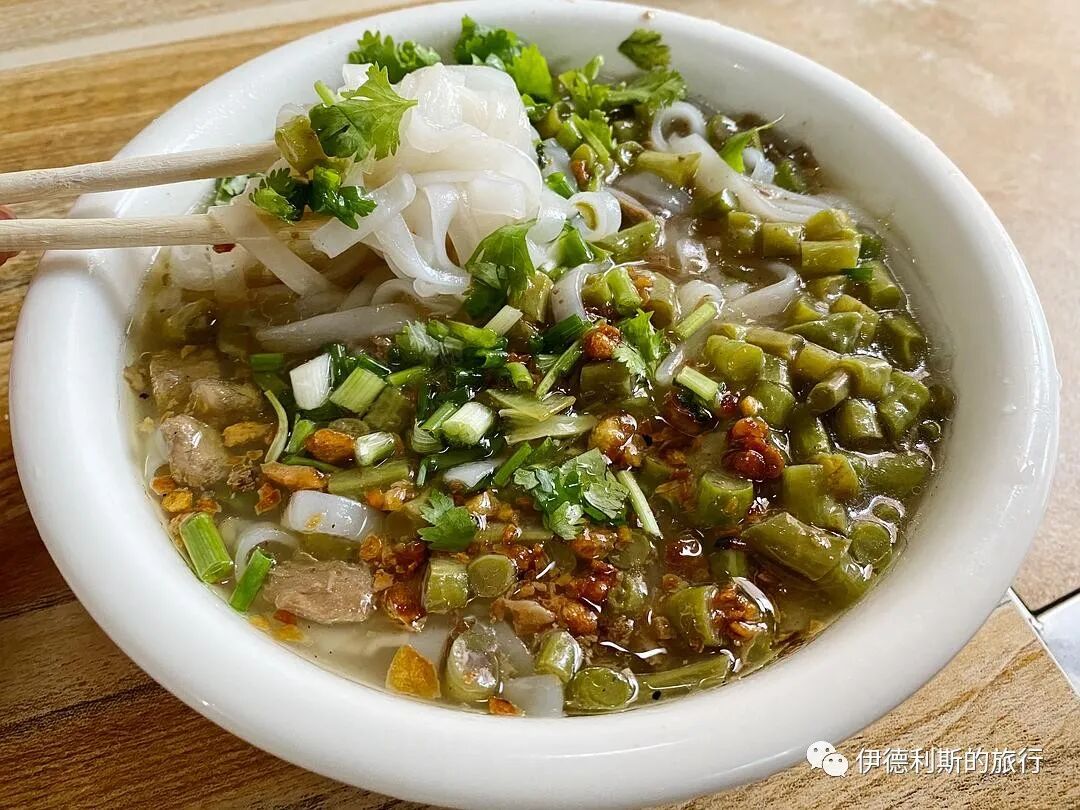
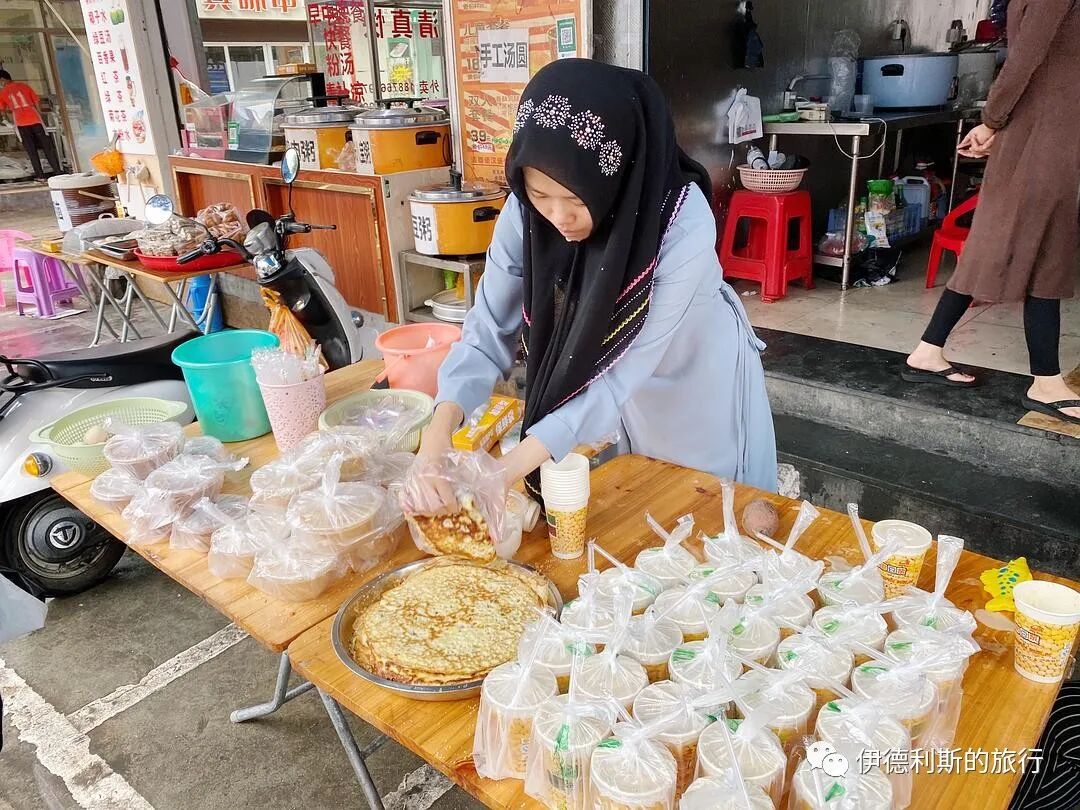
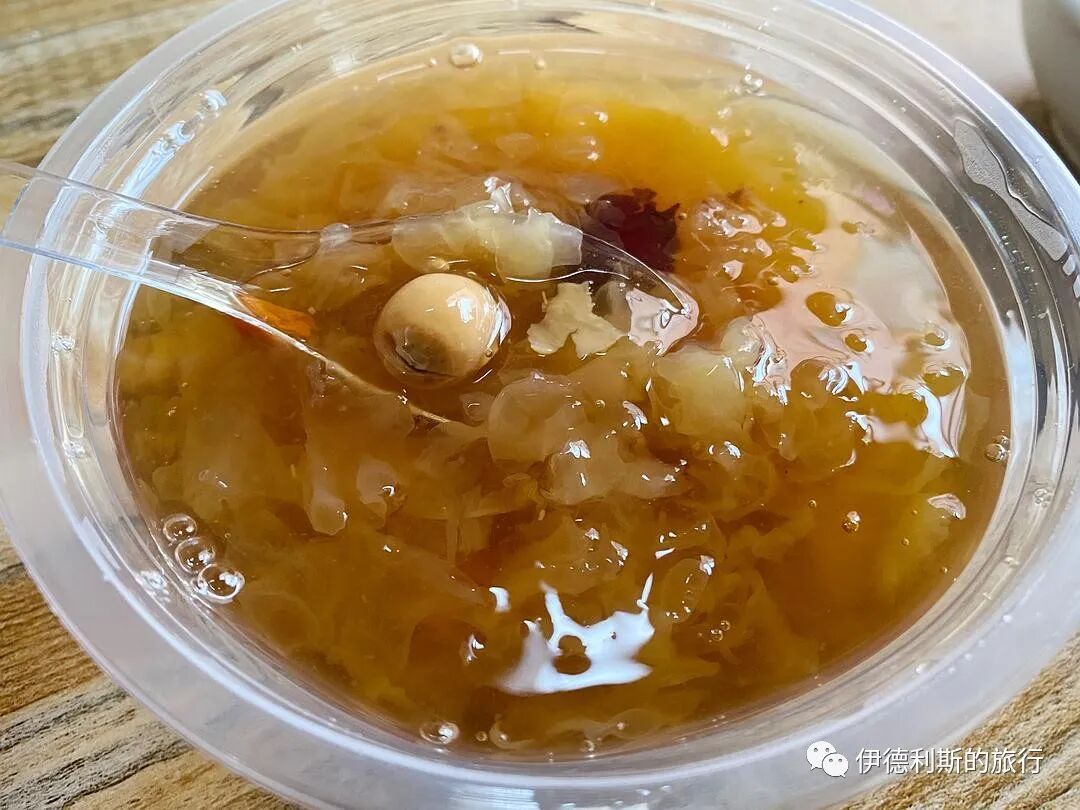
After strolling by the sea, we went to Huihui Village to drink some coconut juice.
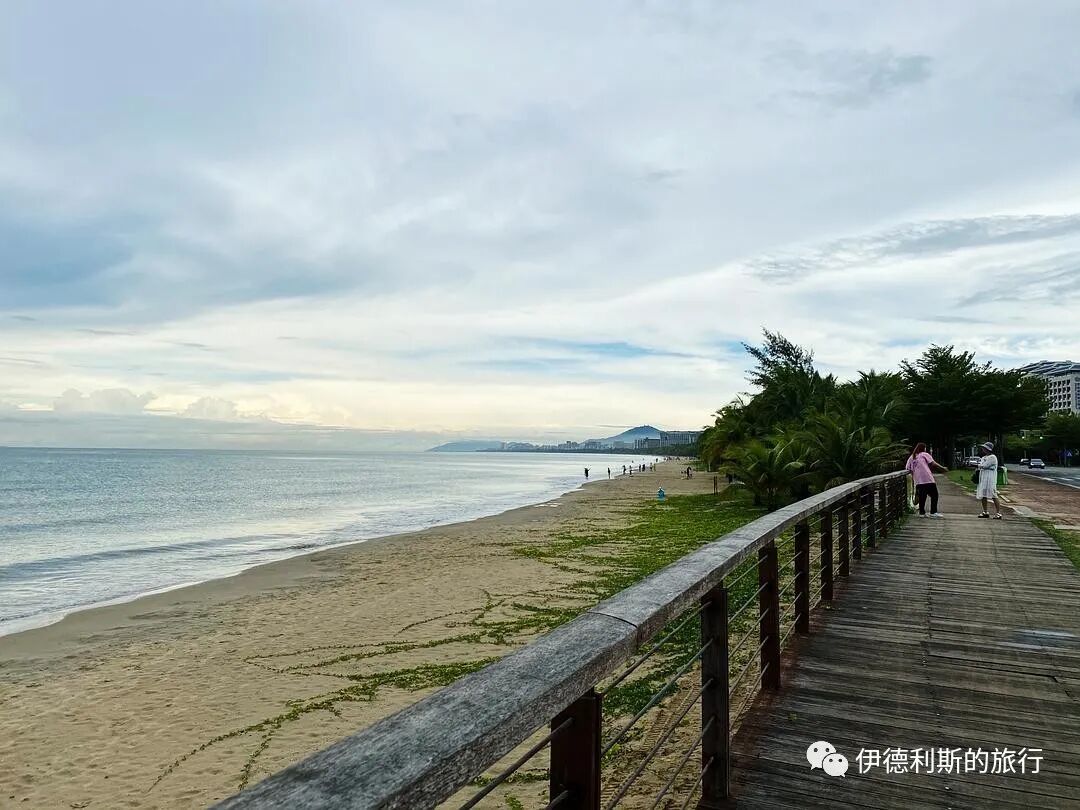
Eid al-Adha in Sanya: Hainan Muslim Travel Notes (Part 2)
Articles • ali2007fr posted the article • 0 comments • 138 views • 2026-05-17 06:26
Summary: This travel note introduces Eid al-Adha in Sanya: Hainan Muslim Travel Notes (Part 2). On a summer afternoon in Huixin Village, a coconut and a bowl of qingbuliang (a refreshing herbal dessert soup) are so pleasant. It is useful for readers interested in Sanya Travel, Eid al-Adha, Muslim Travel.
On a summer afternoon in Huixin Village, a coconut and a bowl of qingbuliang (a refreshing herbal dessert soup) are so pleasant.
Time to rest.
In the afternoon, I returned to the place that hosted the banquet for the Zhongzhuangyuan (a top scholar) to watch the Hui Muslims of Huihui village make traditional nasi lemak (coconut milk rice).
First, you must use old coconuts with thick meat, scrape all the coconut meat into shreds, and then use cheesecloth to squeeze out all the coconut oil.
The rice is steamed using a traditional Li ethnic group pottery steamer, and after the rice is cooked, the coconut milk and rice are thoroughly mixed together. At this stage, the coconut milk rice is very firm and chewy.
Then, the mixed coconut milk rice is steamed a second time in the pottery steamer; at this point, the rice is softer and stickier than in the first stage, and the coconut milk and rice are completely fused together.
They used beef slaughtered the day before for Eid al-Adha, stewing the meat first and then adding wood ear mushrooms and dried bean curd sticks; this is a classic main dish at Huihui village banquets.
A Huihui family living downstairs from us slaughtered a sheep yesterday, and today they are stewing lamb offal soup. The Huihui people in Sanya rarely eat lamb, basically only eating the Dongshan goat they slaughter themselves once a year during Eid al-Adha. After slaughtering the sheep, the Huihui people scrape off the hair, as they believe lamb with the skin on is the most delicious.
When stewing the lamb offal, they include the sheep's feet, stewing from morning until afternoon, and also adding various meat seasonings. Finally, they add radishes, corn, and shiitake mushrooms; the taste is completely different from northern lamb soup, offering another unique delicious flavor.
In the evening, I had beef brisket noodles at Haxuanren in Huihui Village, and then had coconut milk ice jelly across the street.
August 2nd
In the morning, I went back to Haxuanren beef brisket noodles in Huihui Village to eat stewed beef feet. Due to the summer off-season and the Eid al-Adha holiday, most restaurants in Huixin Village were closed, so Haxuanren was very crowded because it was open every day. After eating, I continued to stroll through the coconut grove by the beach.
In the afternoon, I went to visit the Guangbaina night market next to Huixin Village; the papayas, wax apples, small pineapples, and various other fruits were all fresh and delicious, and I also bought some pearl bracelets as gifts for the children at home.
In the evening, Muning treated us to seafood at the seafood market near the beach in Huixin Village. We ordered crab, scallops, abalone, clams, octopus, fried calamari rings, and the specialty winged beans; everything was exceptionally delicious, with no fishy smell at all, only a fragrant aroma. I especially recommend the signature dipping sauce, made with ketchup, sweet chili sauce, minced garlic, and tamarind; it was so good with the seafood that I couldn't stop eating.
This seafood market in Huixin Village is likely the best value in the area; not only Hui Muslims but also the surrounding Han people love to come here to eat, and business is booming.
August 3rd
In the morning, I had chicken rice noodles at Li's Rice Noodles in Huixin Village, Sanya; it was super fresh! After the three-day Eid al-Adha celebration ended, their shop finally opened.
Then, I reluctantly left Sanya. view all
Summary: This travel note introduces Eid al-Adha in Sanya: Hainan Muslim Travel Notes (Part 2). On a summer afternoon in Huixin Village, a coconut and a bowl of qingbuliang (a refreshing herbal dessert soup) are so pleasant. It is useful for readers interested in Sanya Travel, Eid al-Adha, Muslim Travel.
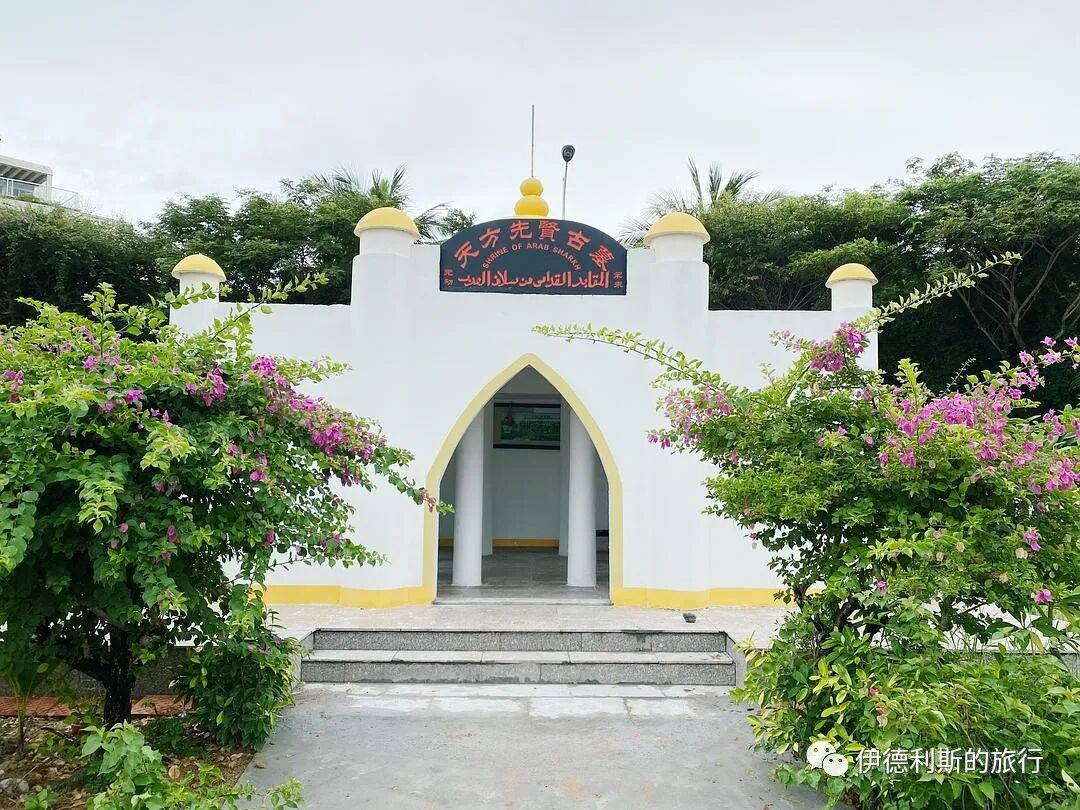
On a summer afternoon in Huixin Village, a coconut and a bowl of qingbuliang (a refreshing herbal dessert soup) are so pleasant.
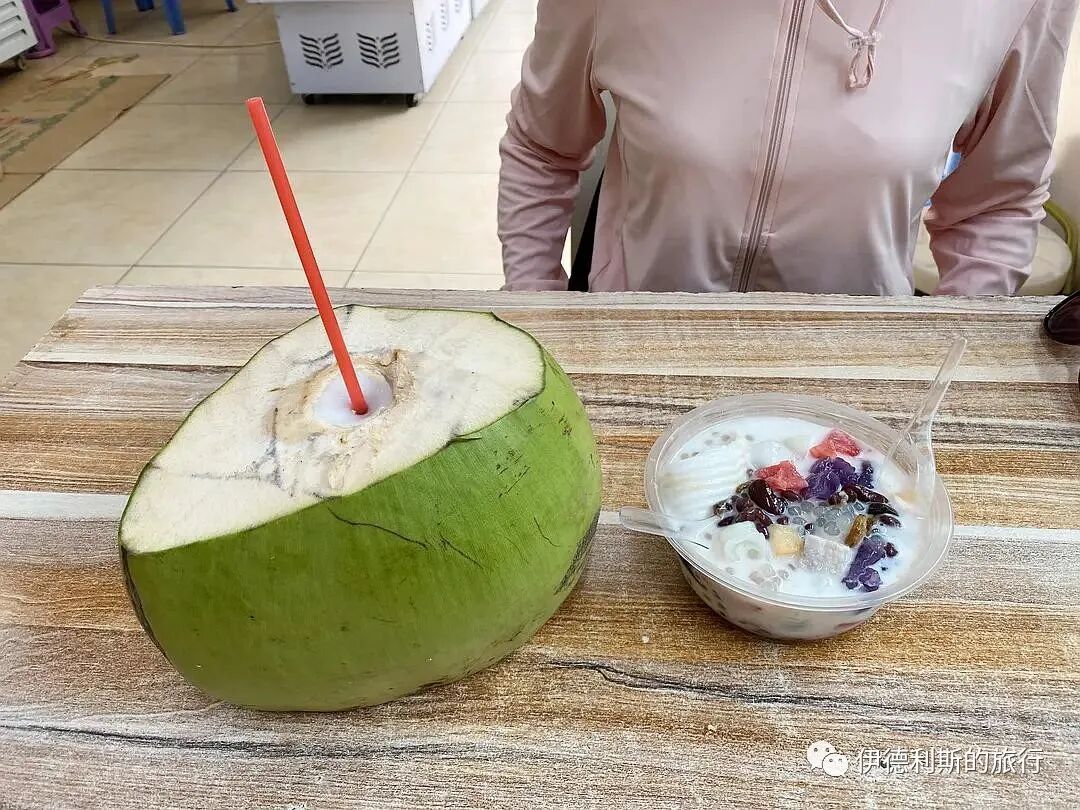

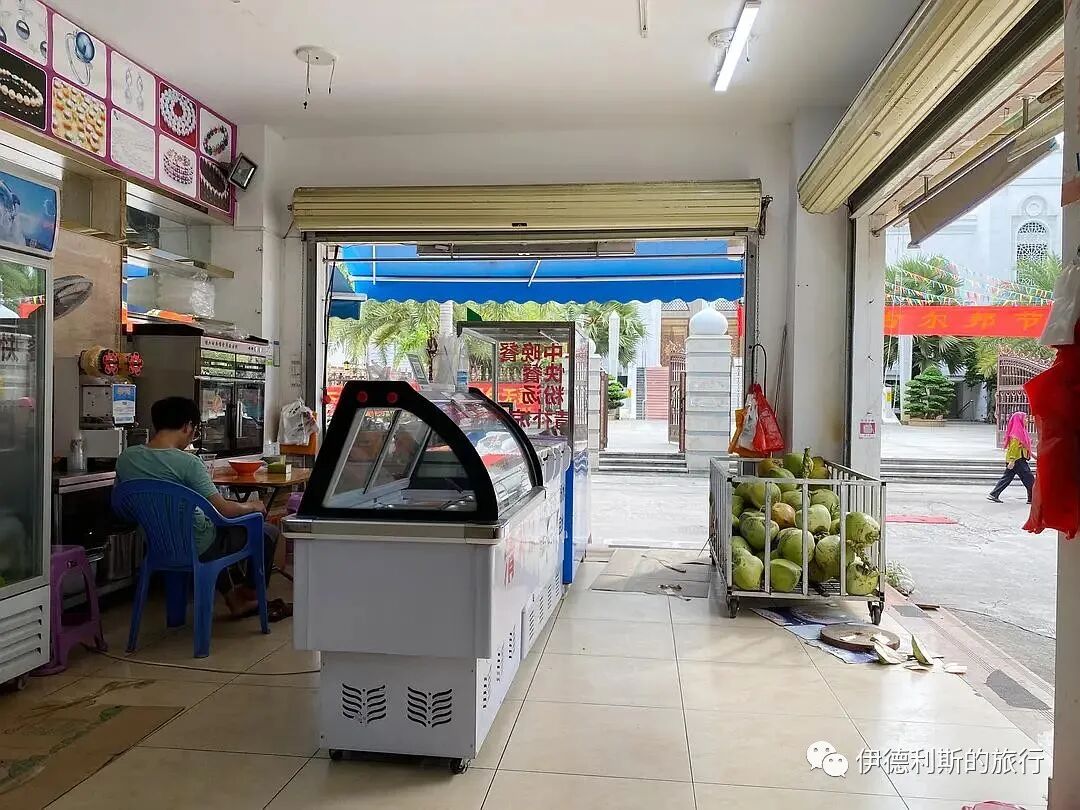
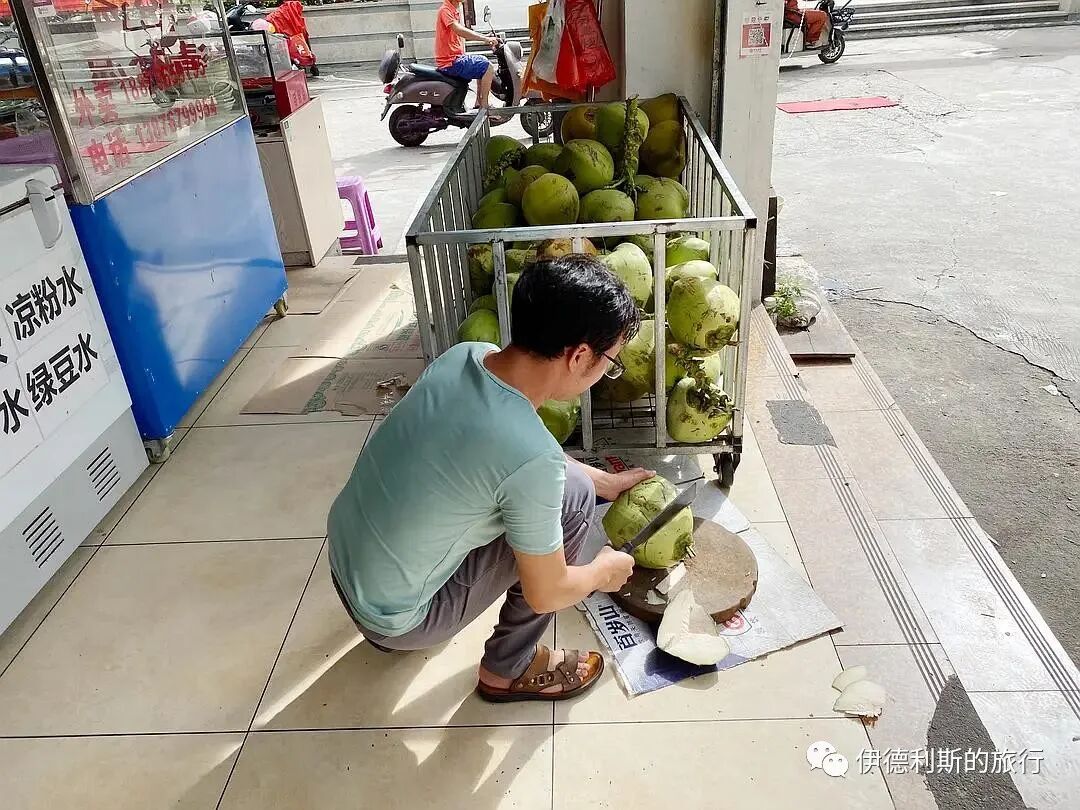
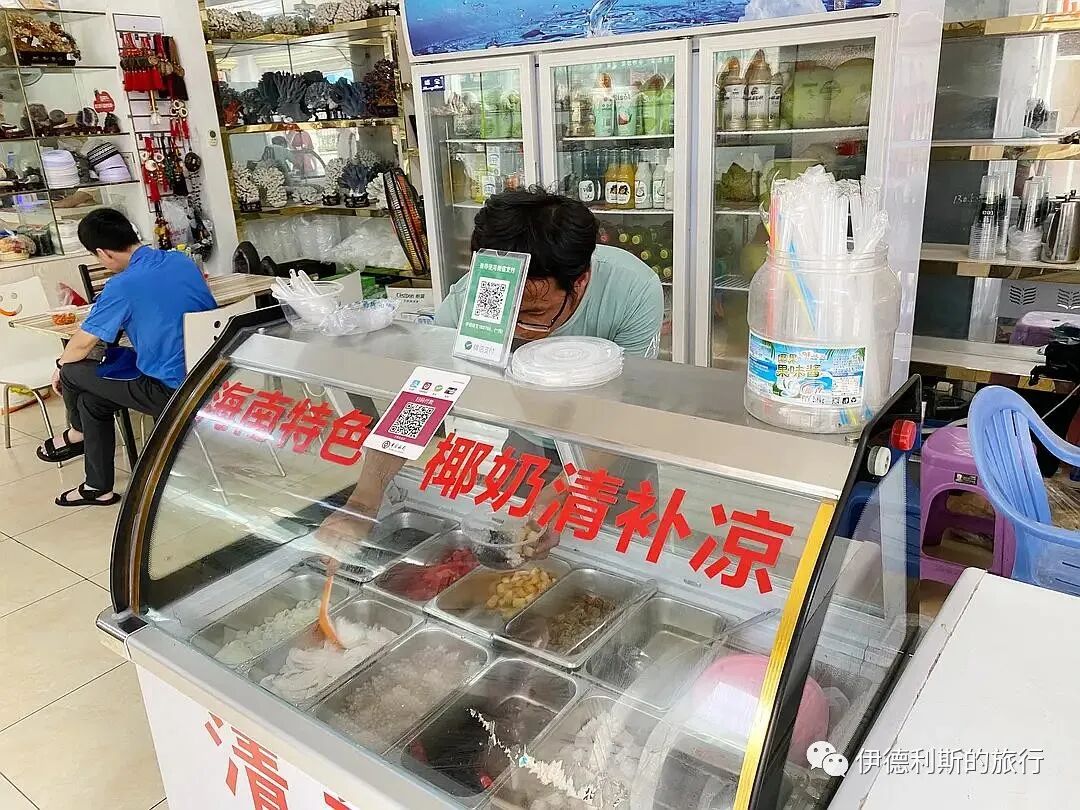
Time to rest.
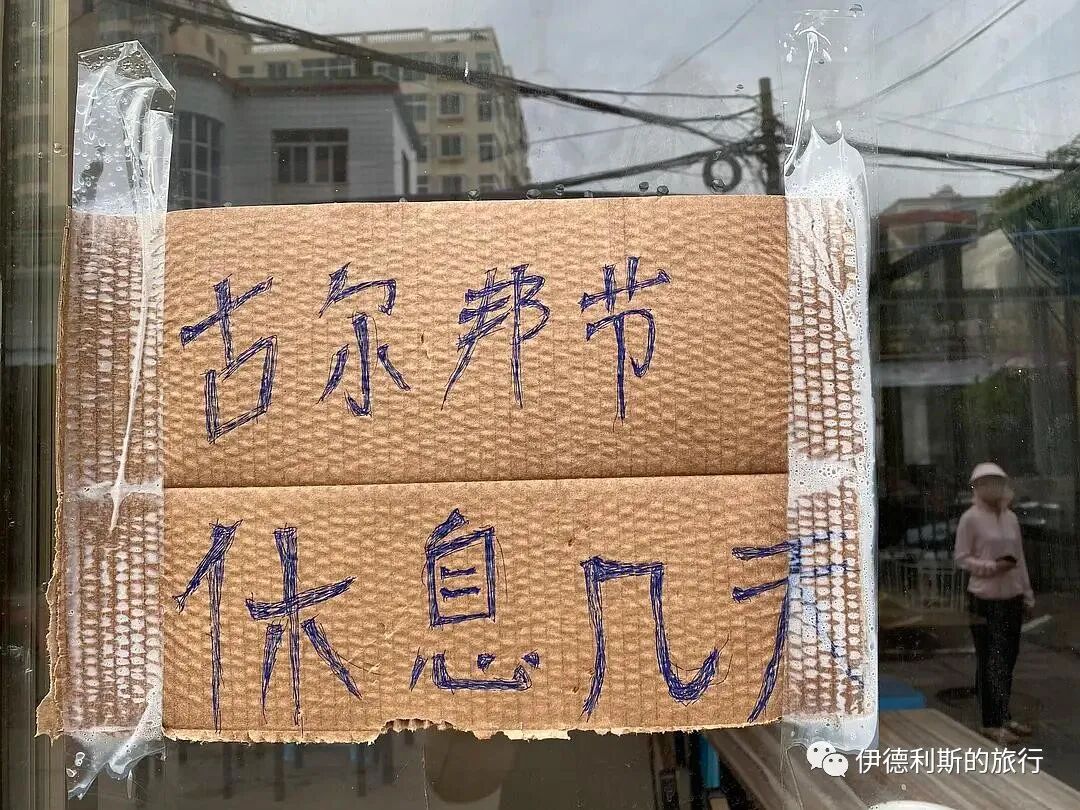
In the afternoon, I returned to the place that hosted the banquet for the Zhongzhuangyuan (a top scholar) to watch the Hui Muslims of Huihui village make traditional nasi lemak (coconut milk rice).
First, you must use old coconuts with thick meat, scrape all the coconut meat into shreds, and then use cheesecloth to squeeze out all the coconut oil.
The rice is steamed using a traditional Li ethnic group pottery steamer, and after the rice is cooked, the coconut milk and rice are thoroughly mixed together. At this stage, the coconut milk rice is very firm and chewy.
Then, the mixed coconut milk rice is steamed a second time in the pottery steamer; at this point, the rice is softer and stickier than in the first stage, and the coconut milk and rice are completely fused together.
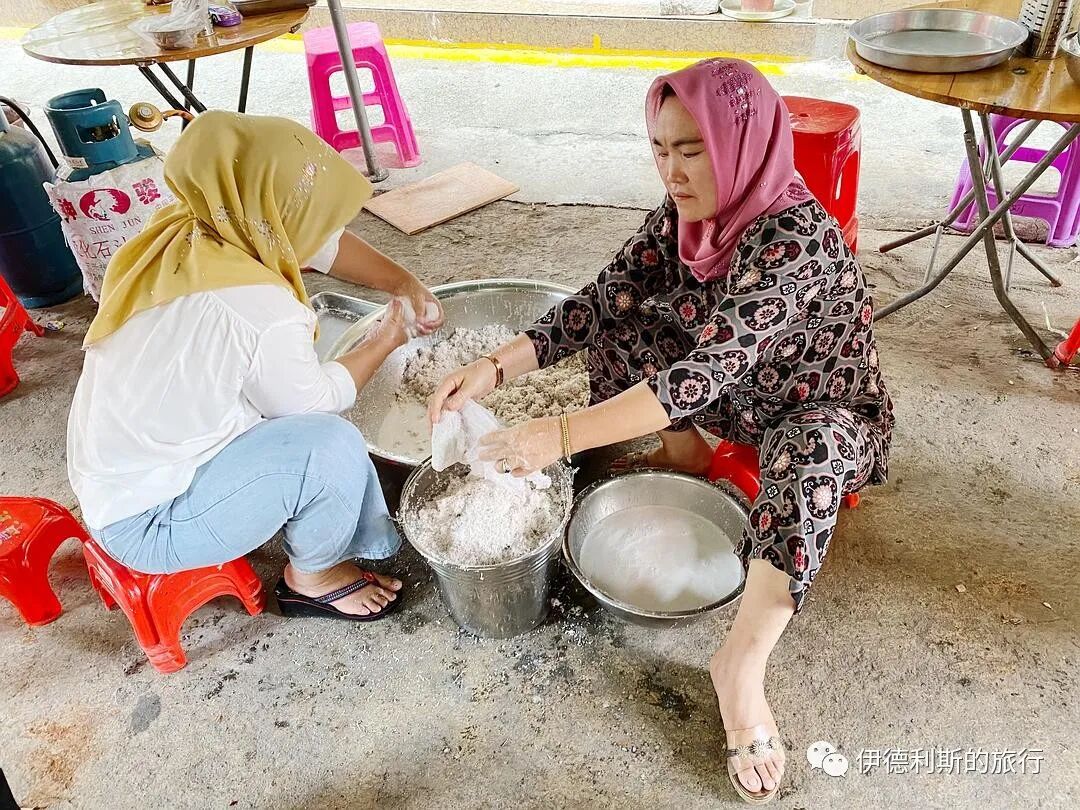
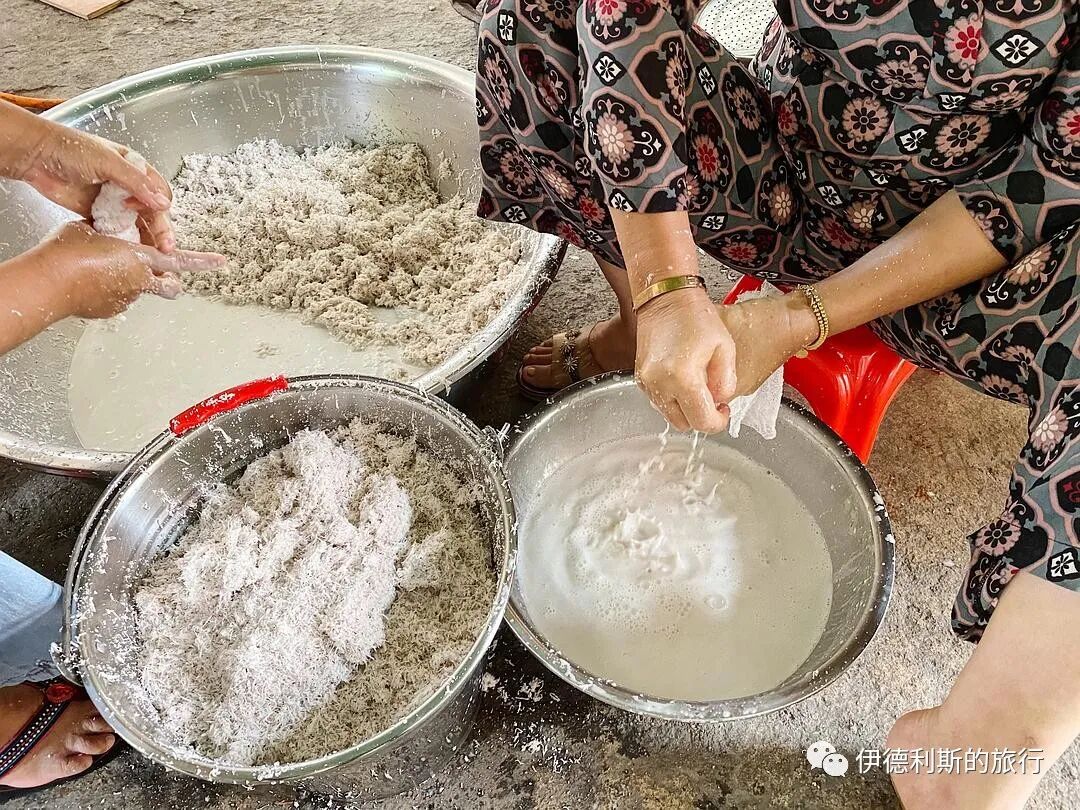
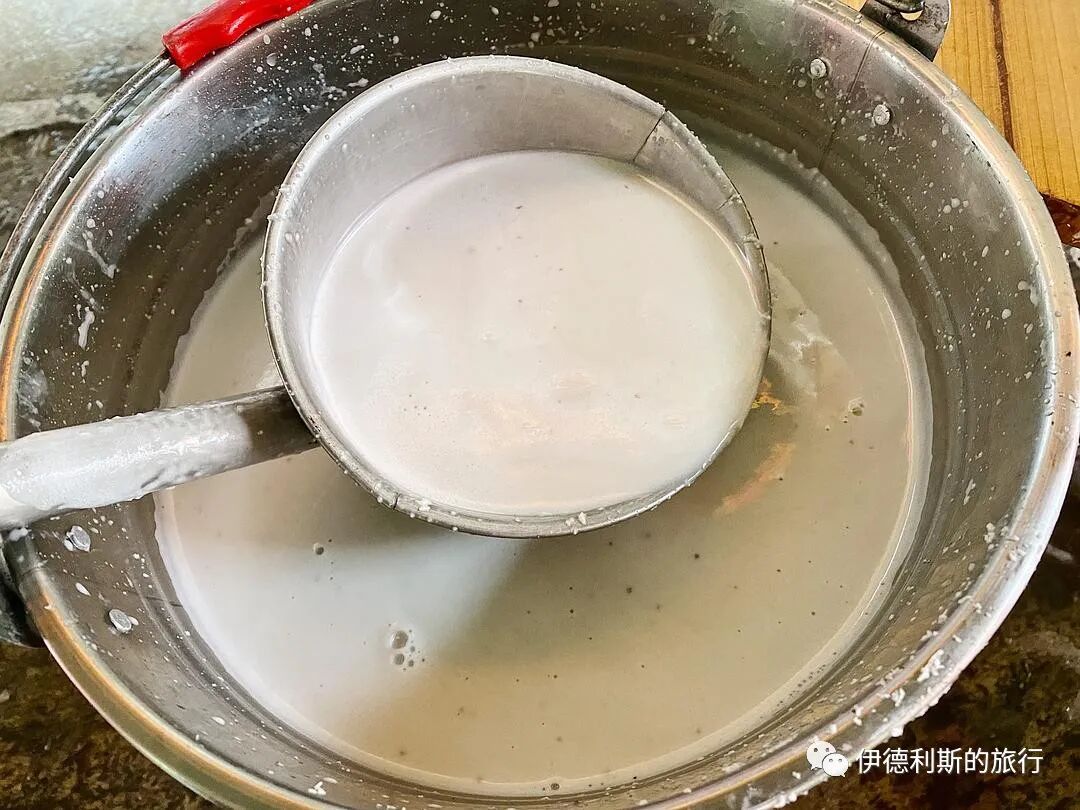
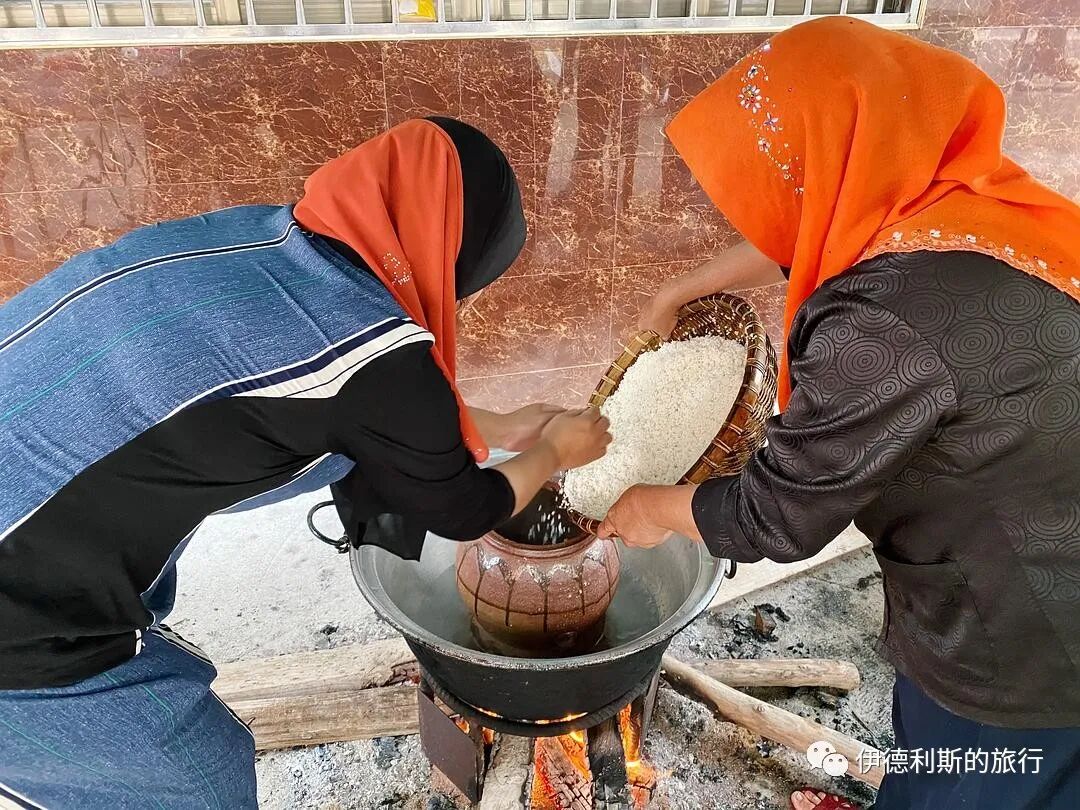
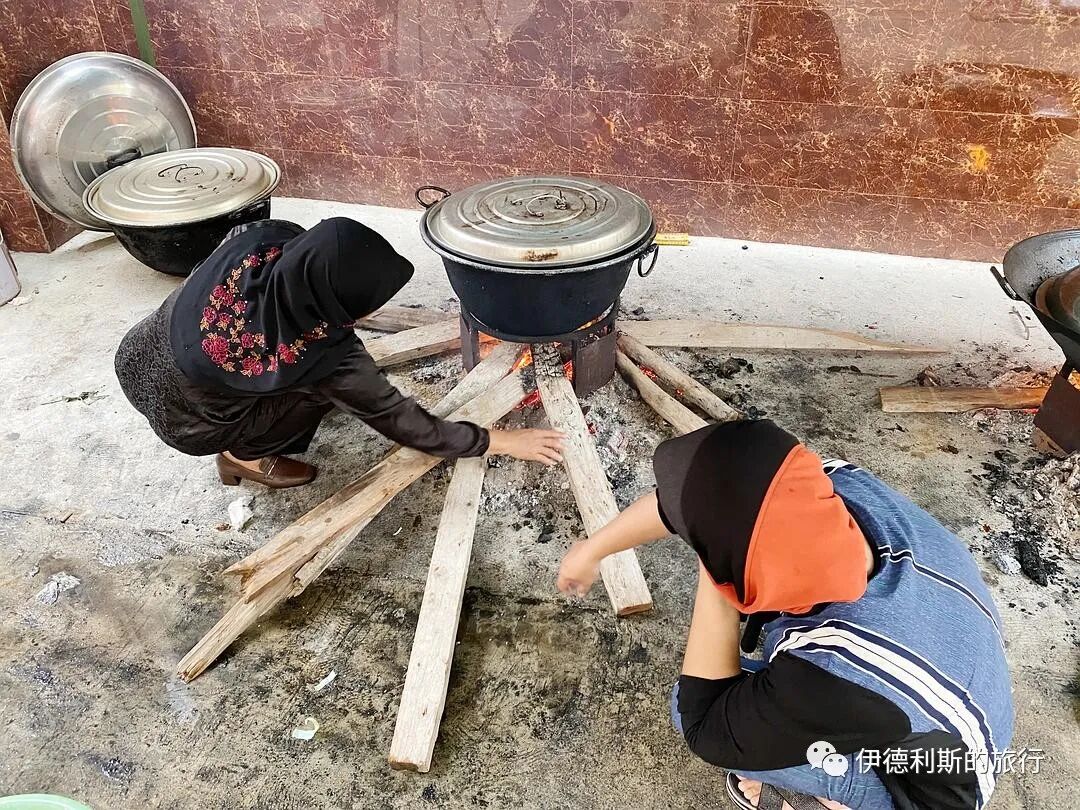
They used beef slaughtered the day before for Eid al-Adha, stewing the meat first and then adding wood ear mushrooms and dried bean curd sticks; this is a classic main dish at Huihui village banquets.
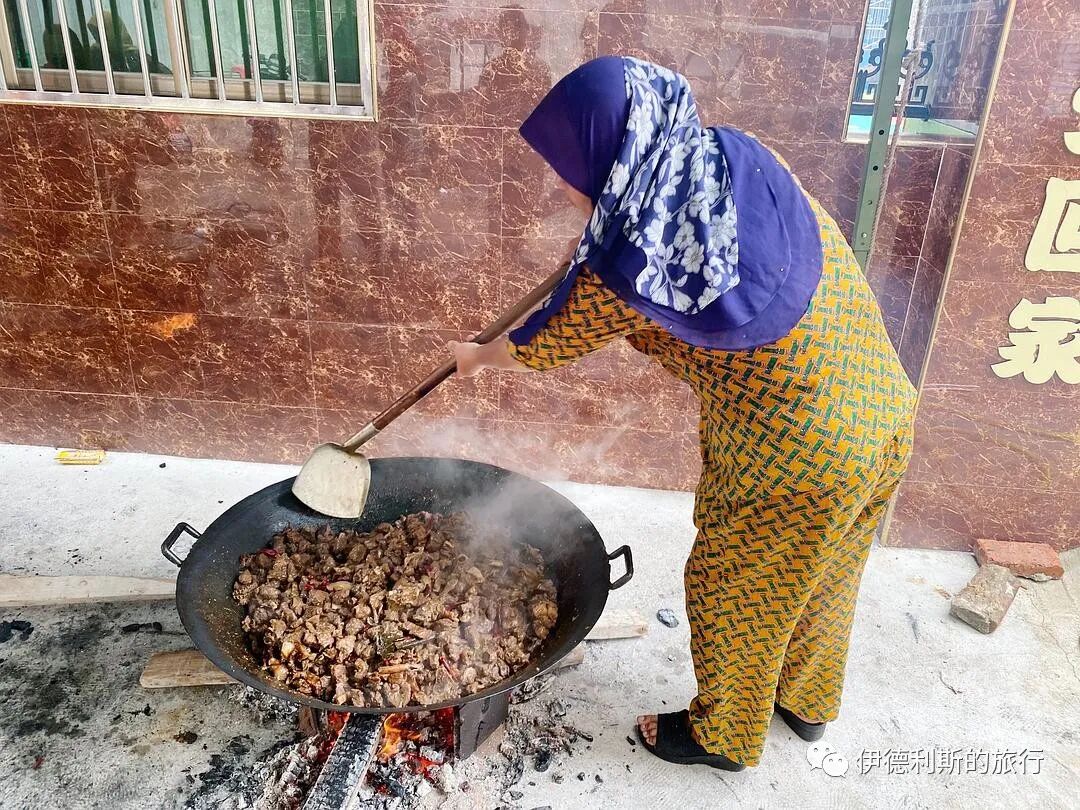
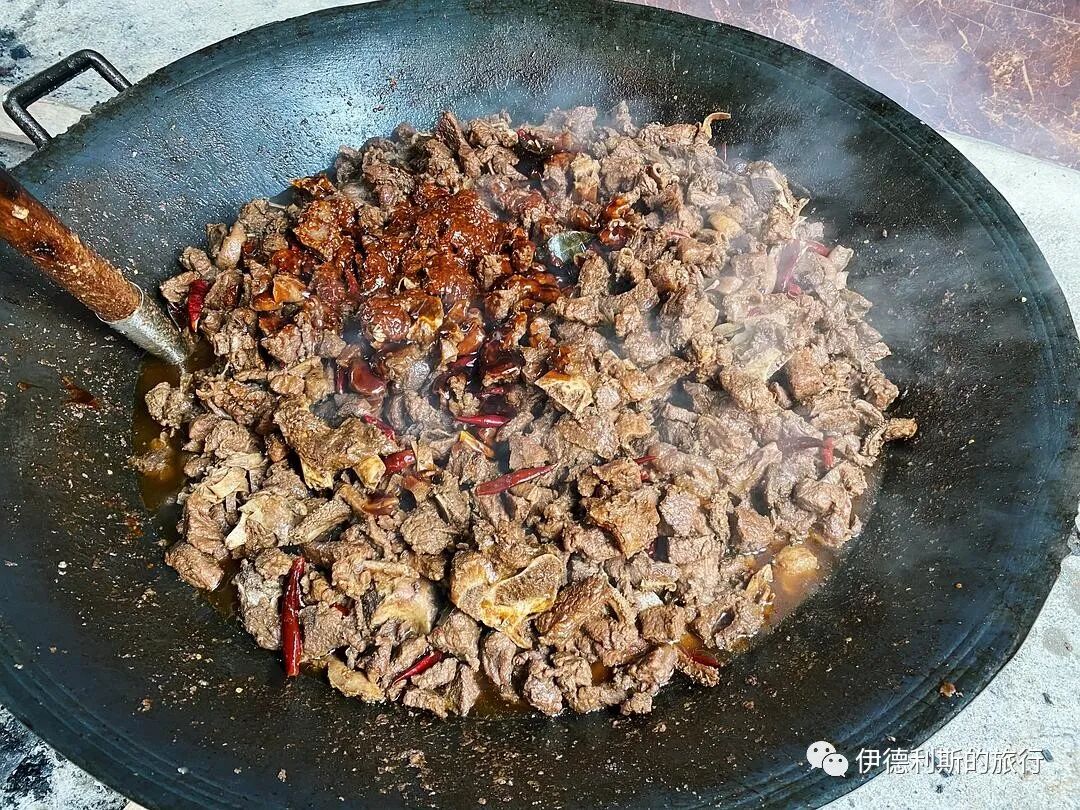
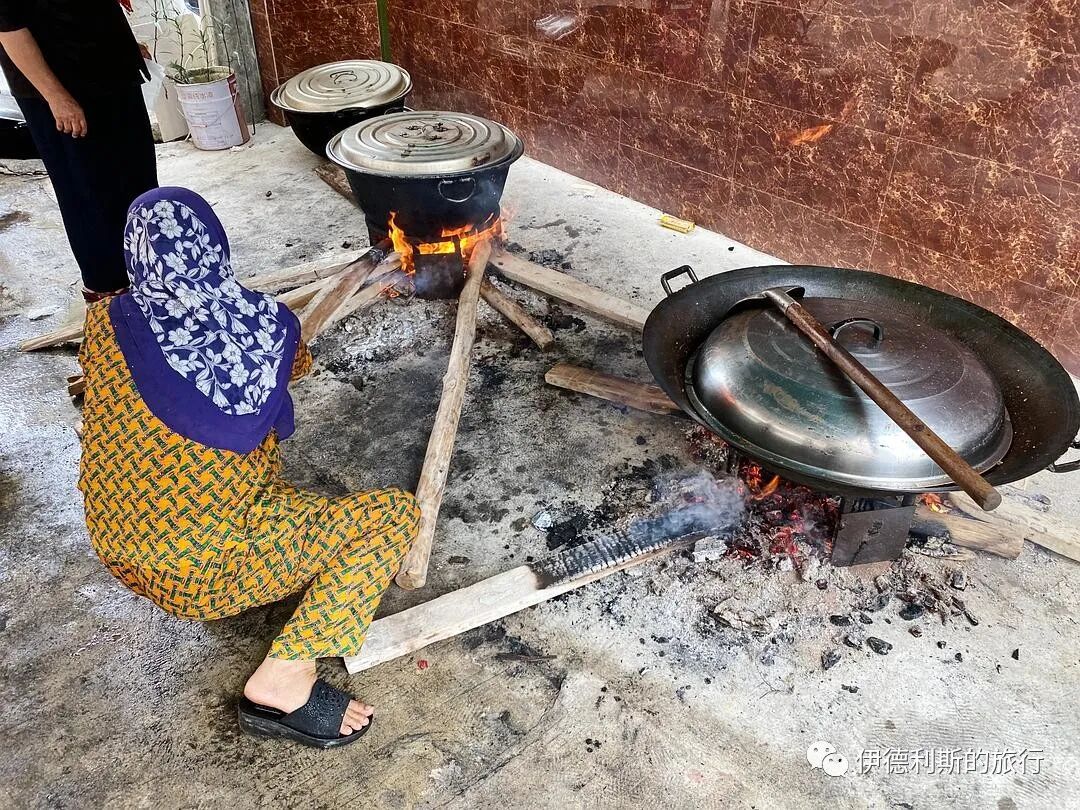
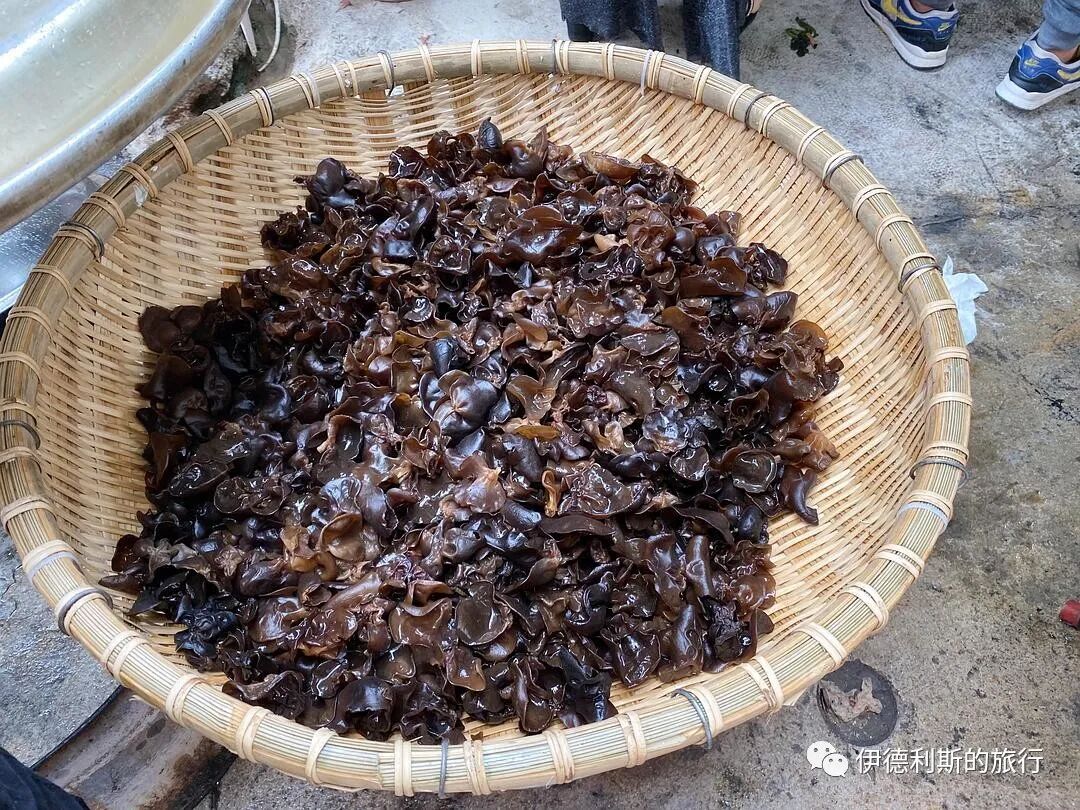
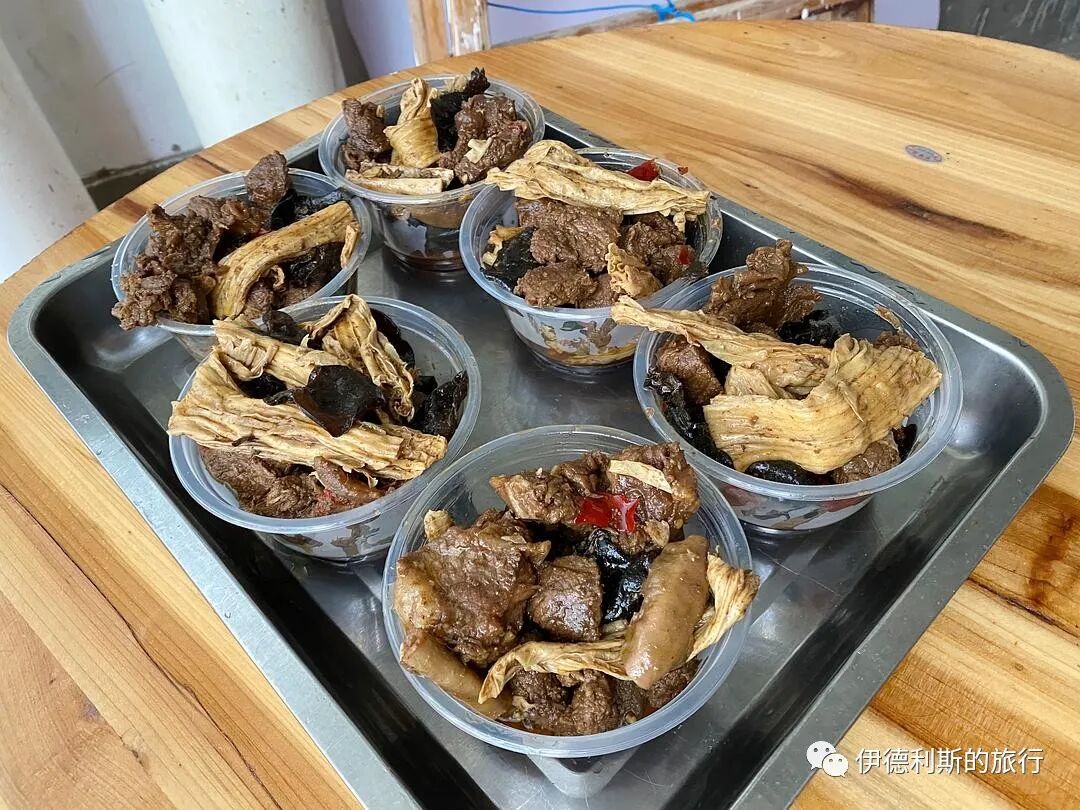
A Huihui family living downstairs from us slaughtered a sheep yesterday, and today they are stewing lamb offal soup. The Huihui people in Sanya rarely eat lamb, basically only eating the Dongshan goat they slaughter themselves once a year during Eid al-Adha. After slaughtering the sheep, the Huihui people scrape off the hair, as they believe lamb with the skin on is the most delicious.
When stewing the lamb offal, they include the sheep's feet, stewing from morning until afternoon, and also adding various meat seasonings. Finally, they add radishes, corn, and shiitake mushrooms; the taste is completely different from northern lamb soup, offering another unique delicious flavor.
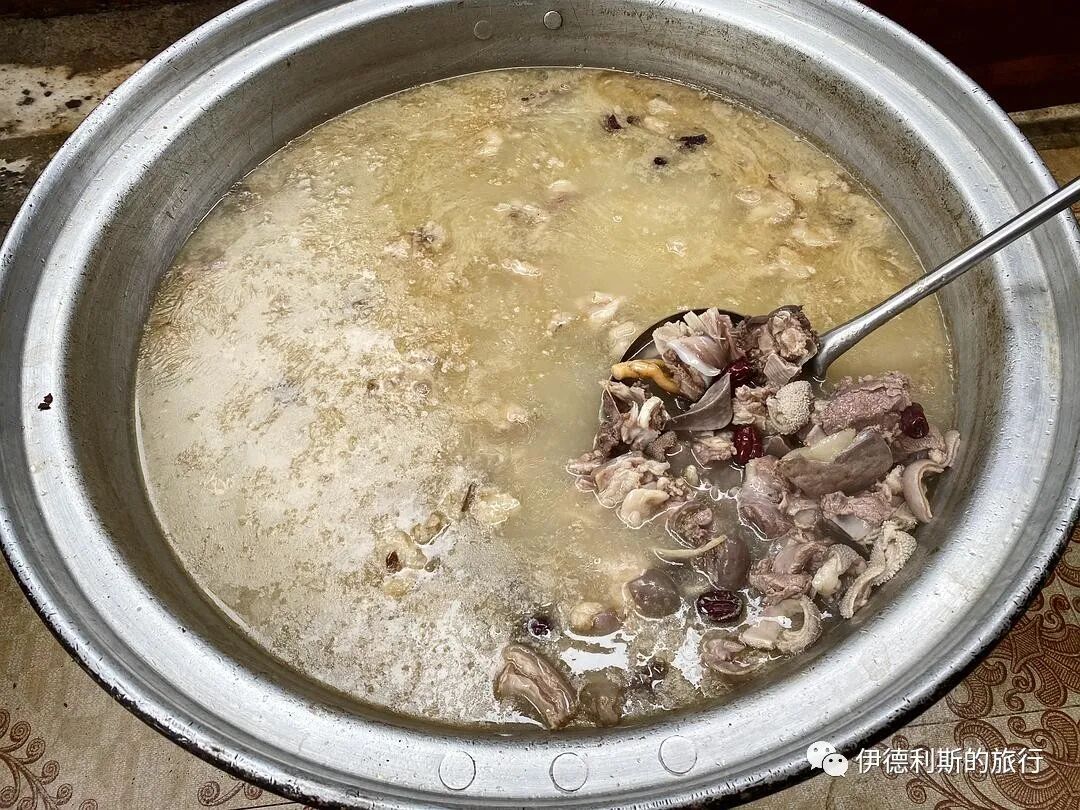
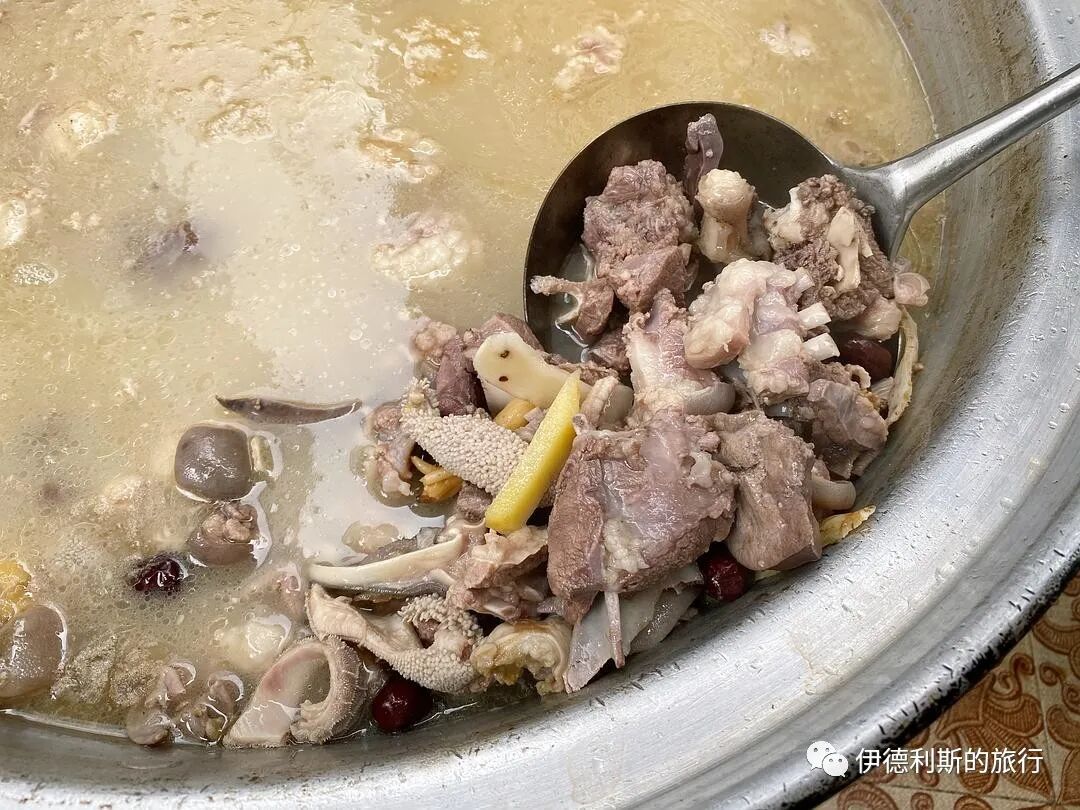
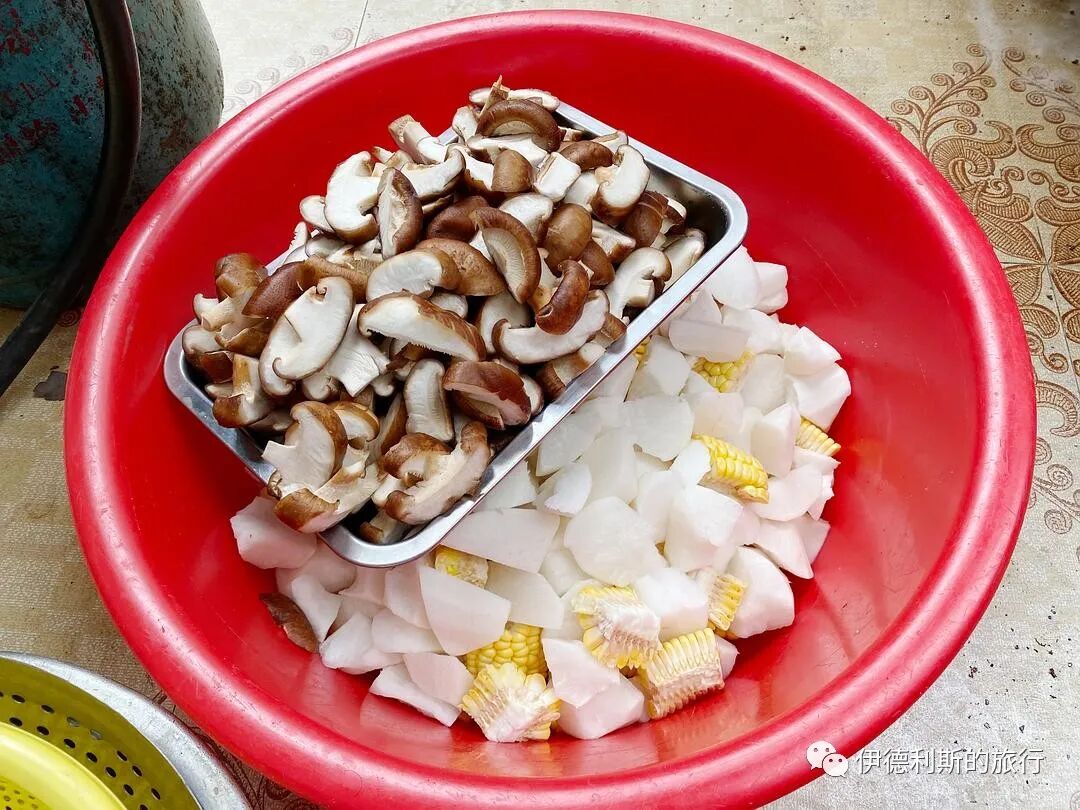
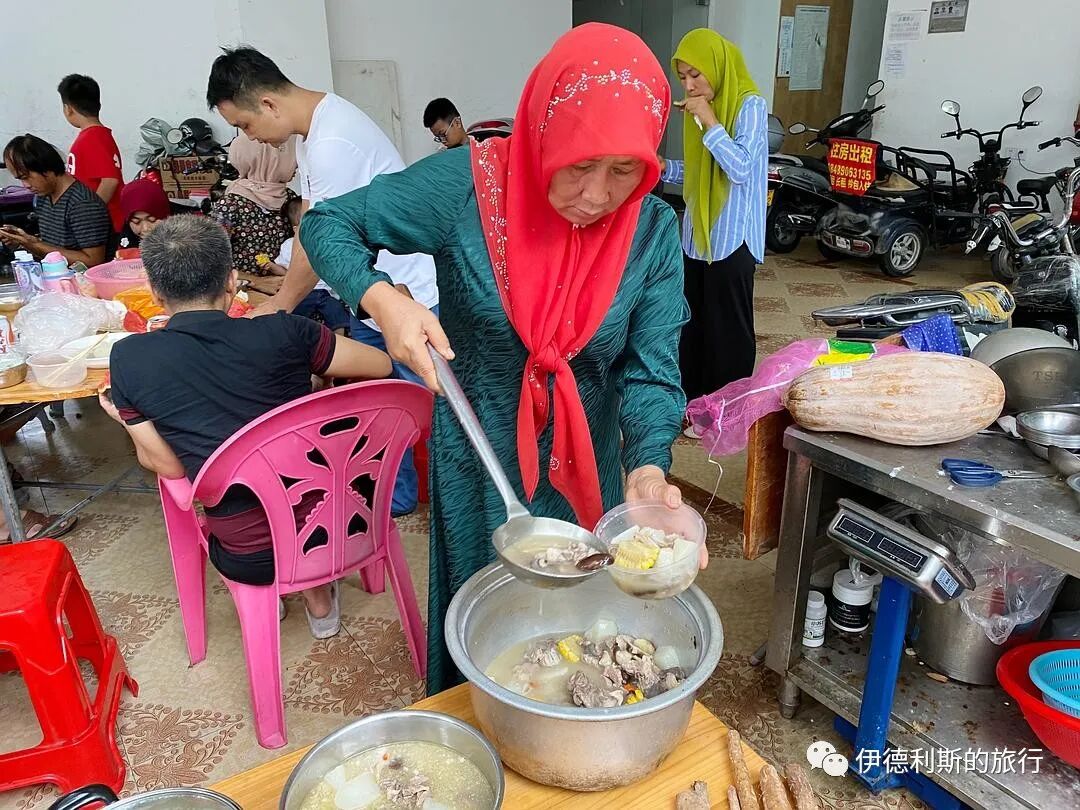
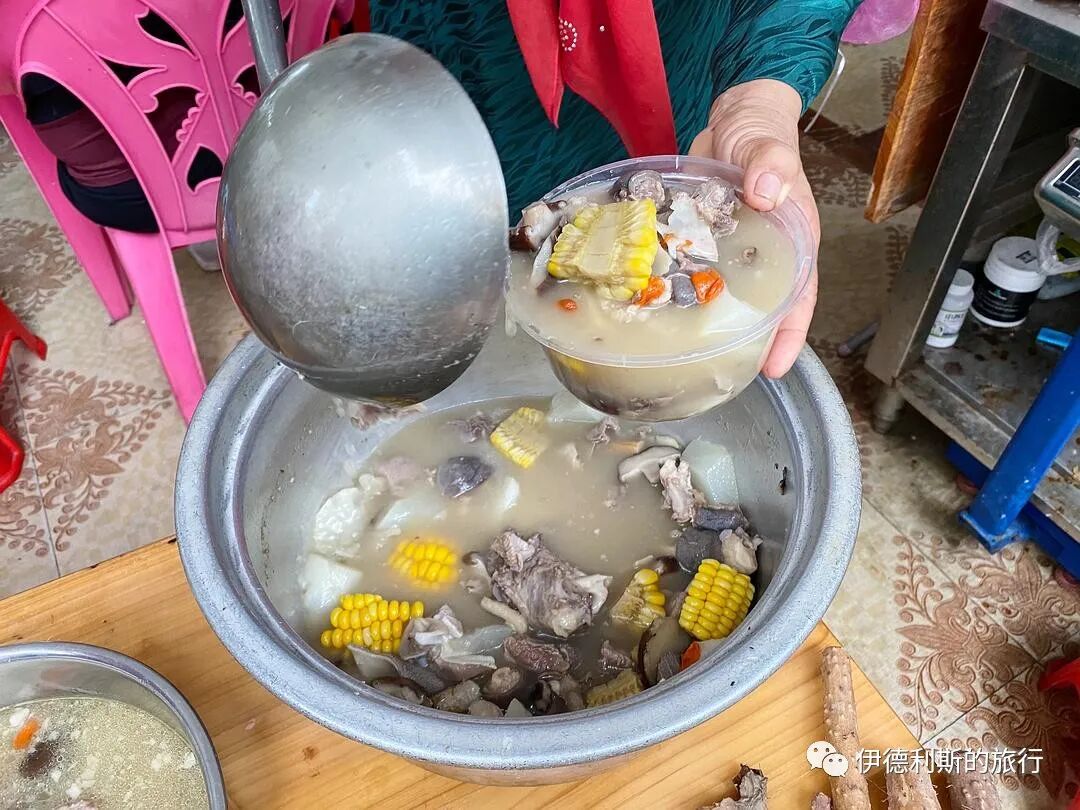
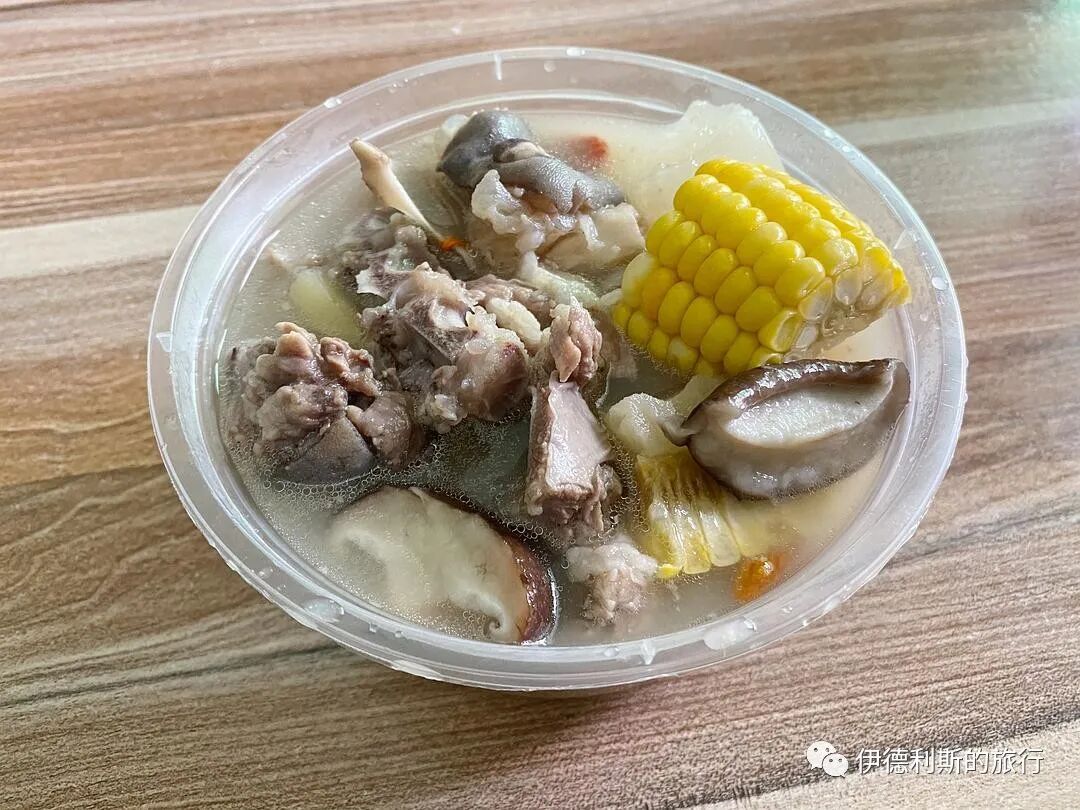
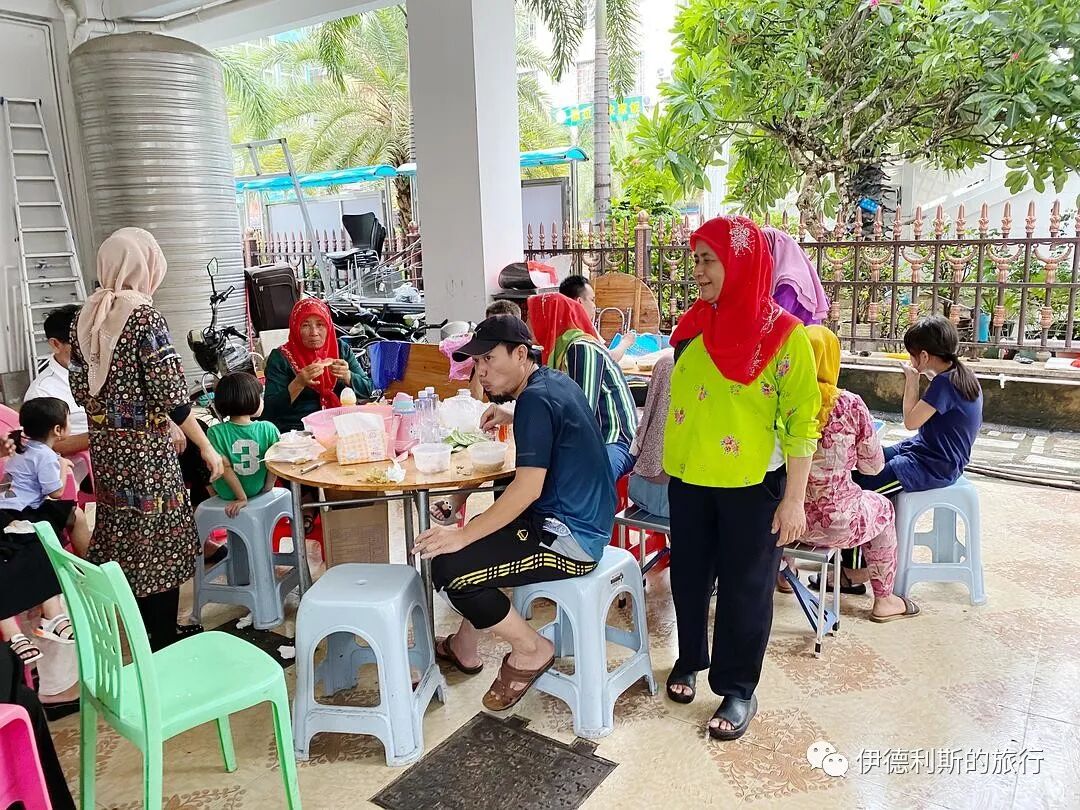
In the evening, I had beef brisket noodles at Haxuanren in Huihui Village, and then had coconut milk ice jelly across the street.
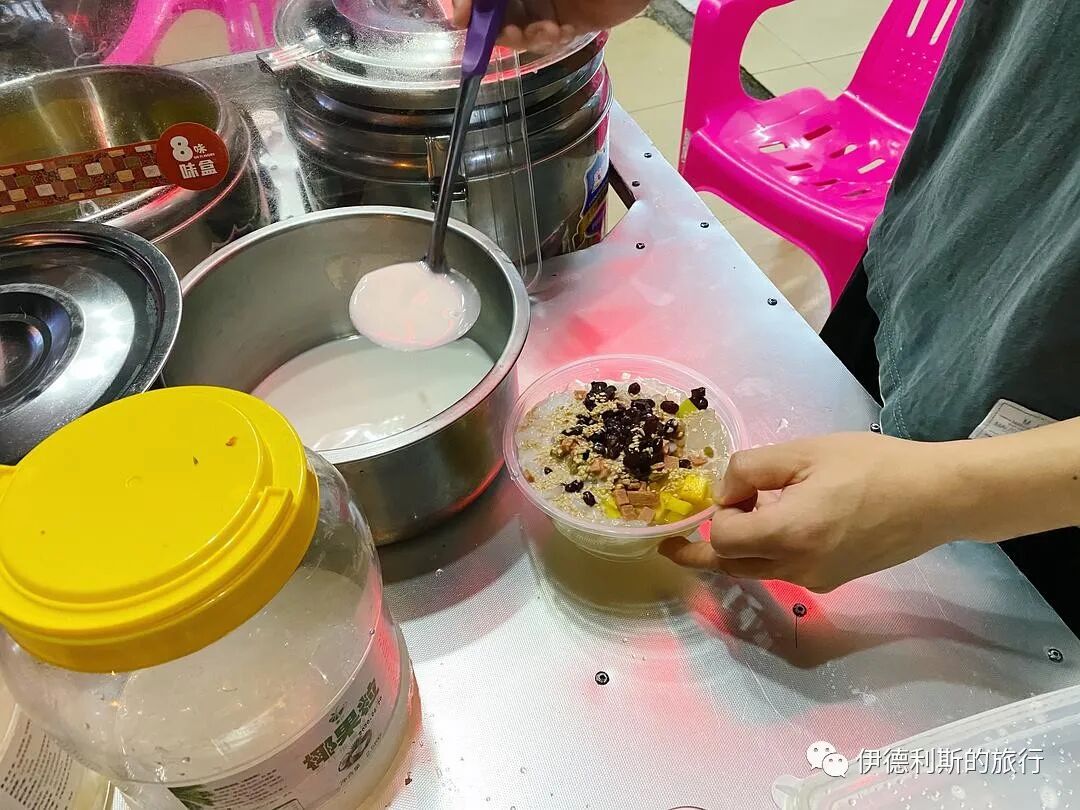
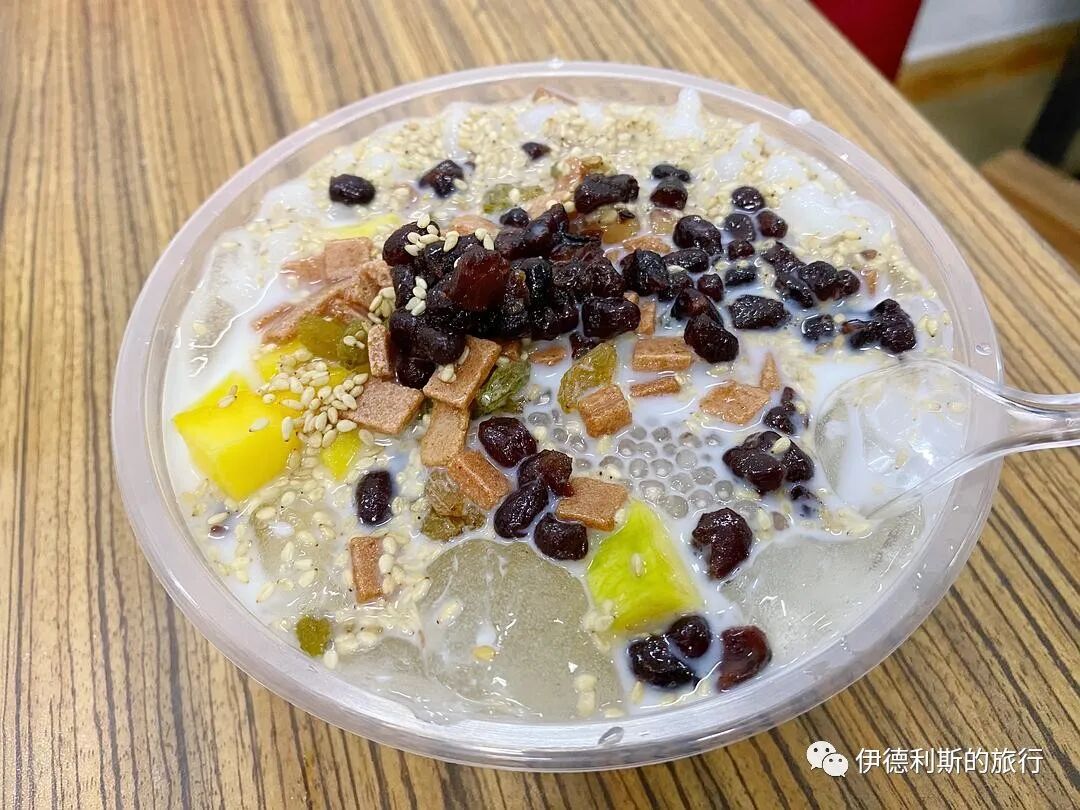
August 2nd
In the morning, I went back to Haxuanren beef brisket noodles in Huihui Village to eat stewed beef feet. Due to the summer off-season and the Eid al-Adha holiday, most restaurants in Huixin Village were closed, so Haxuanren was very crowded because it was open every day. After eating, I continued to stroll through the coconut grove by the beach.
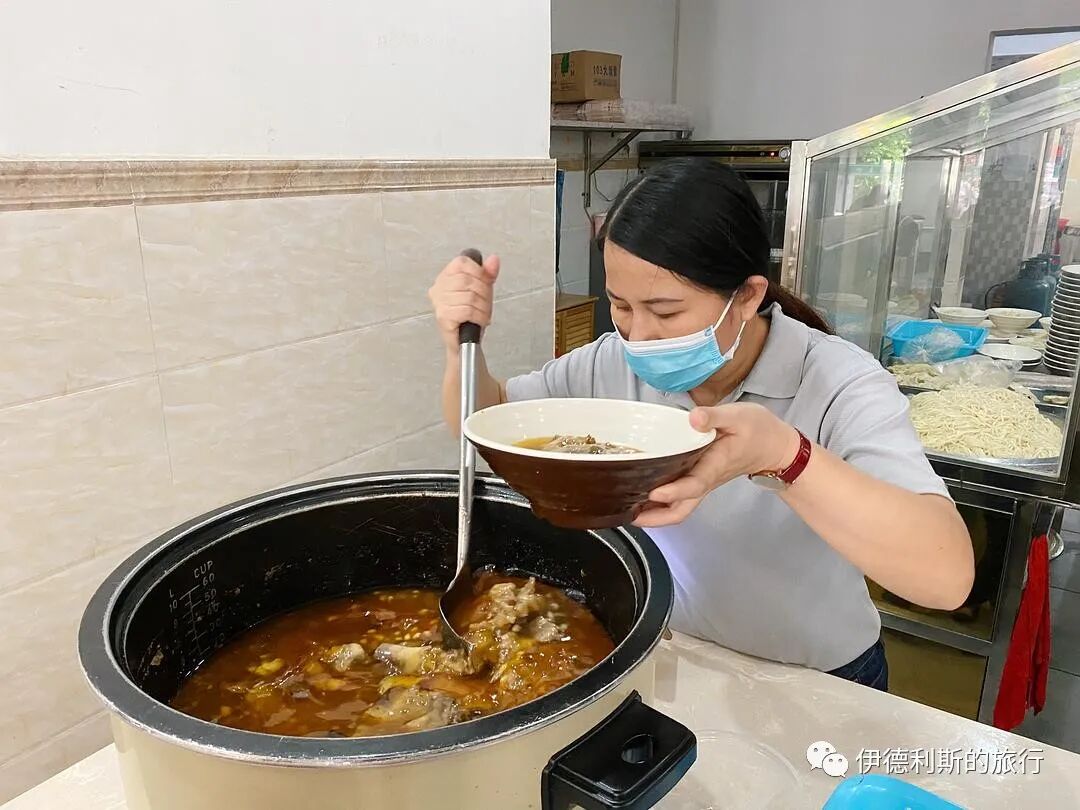
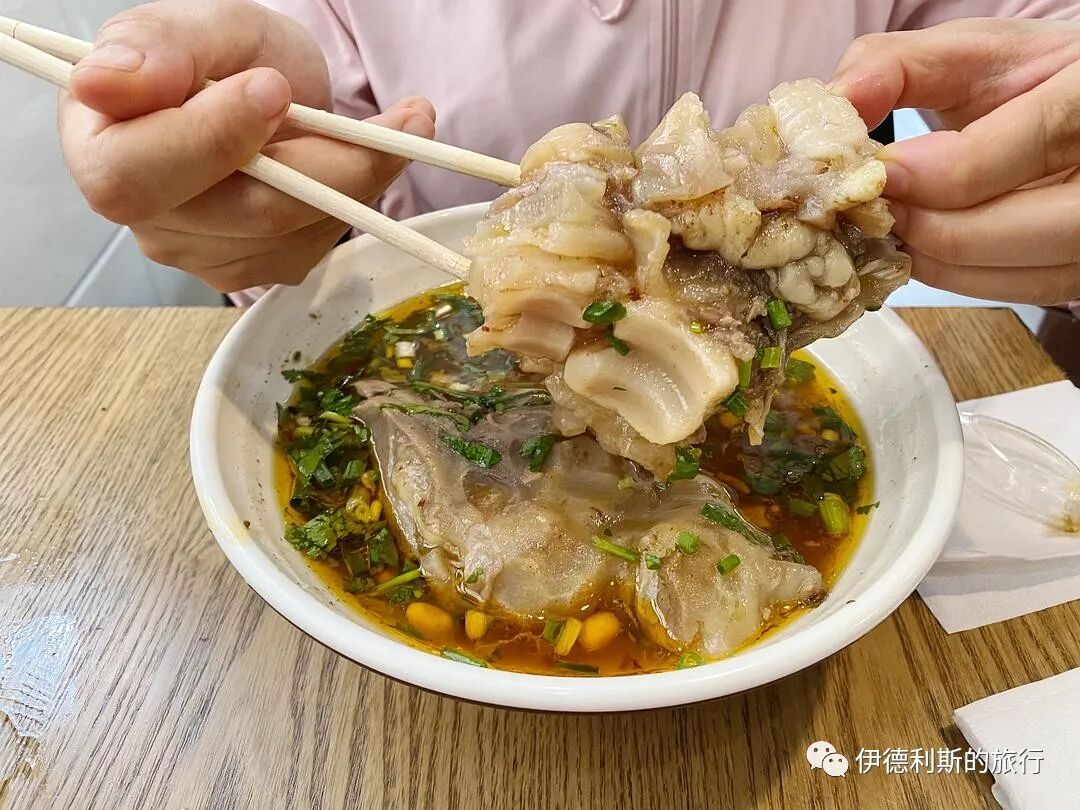
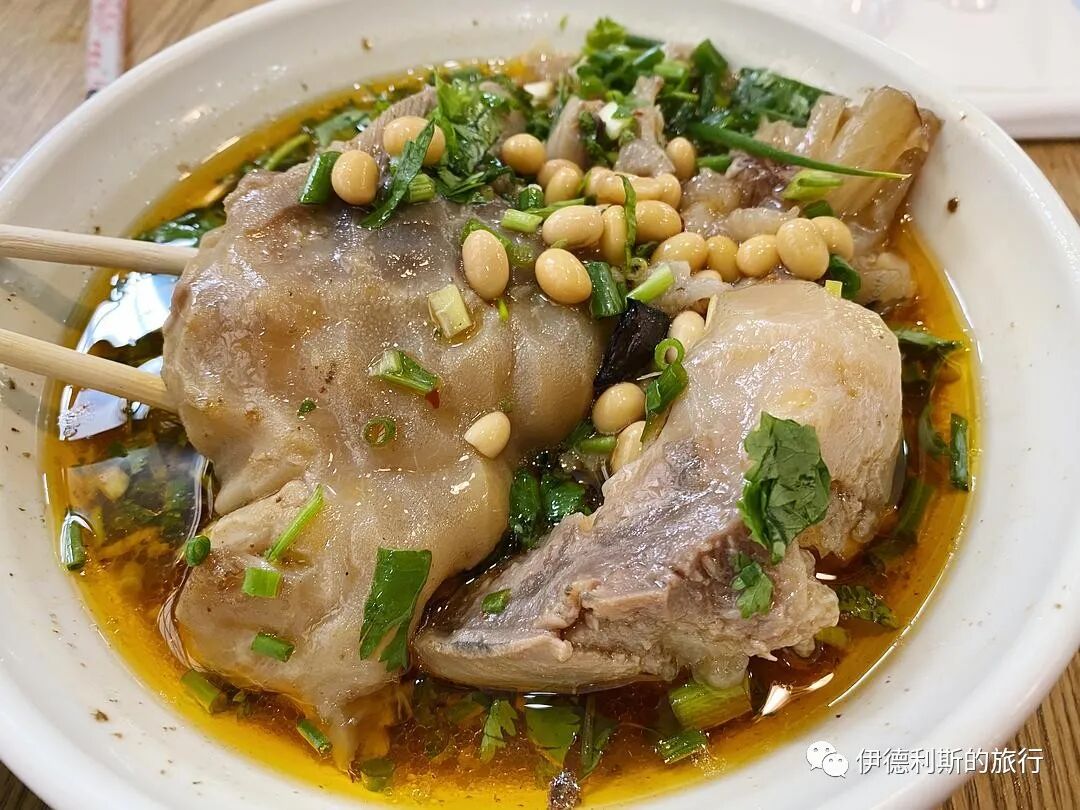
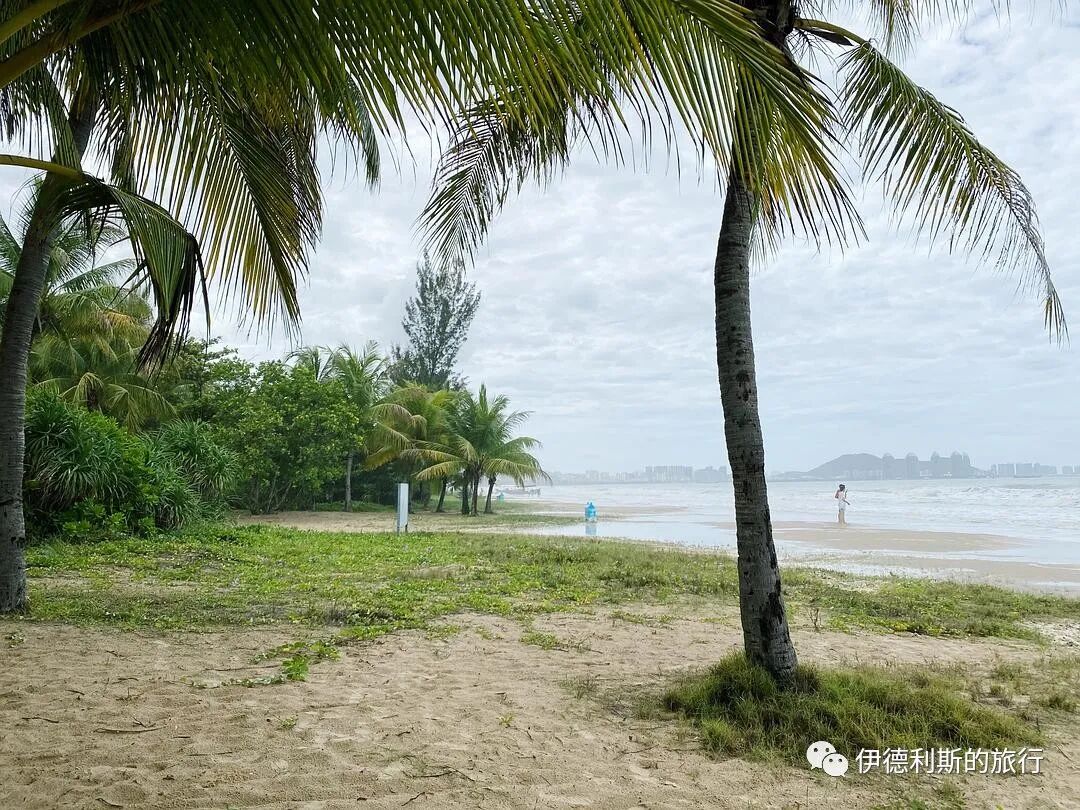
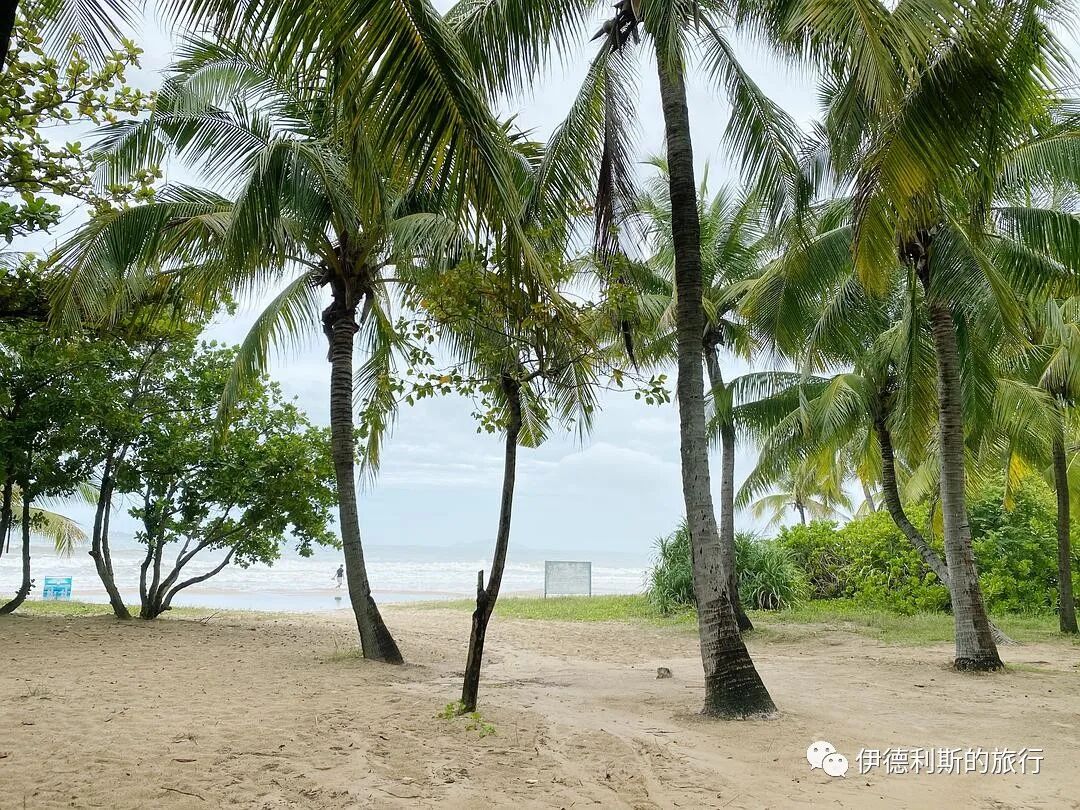
In the afternoon, I went to visit the Guangbaina night market next to Huixin Village; the papayas, wax apples, small pineapples, and various other fruits were all fresh and delicious, and I also bought some pearl bracelets as gifts for the children at home.
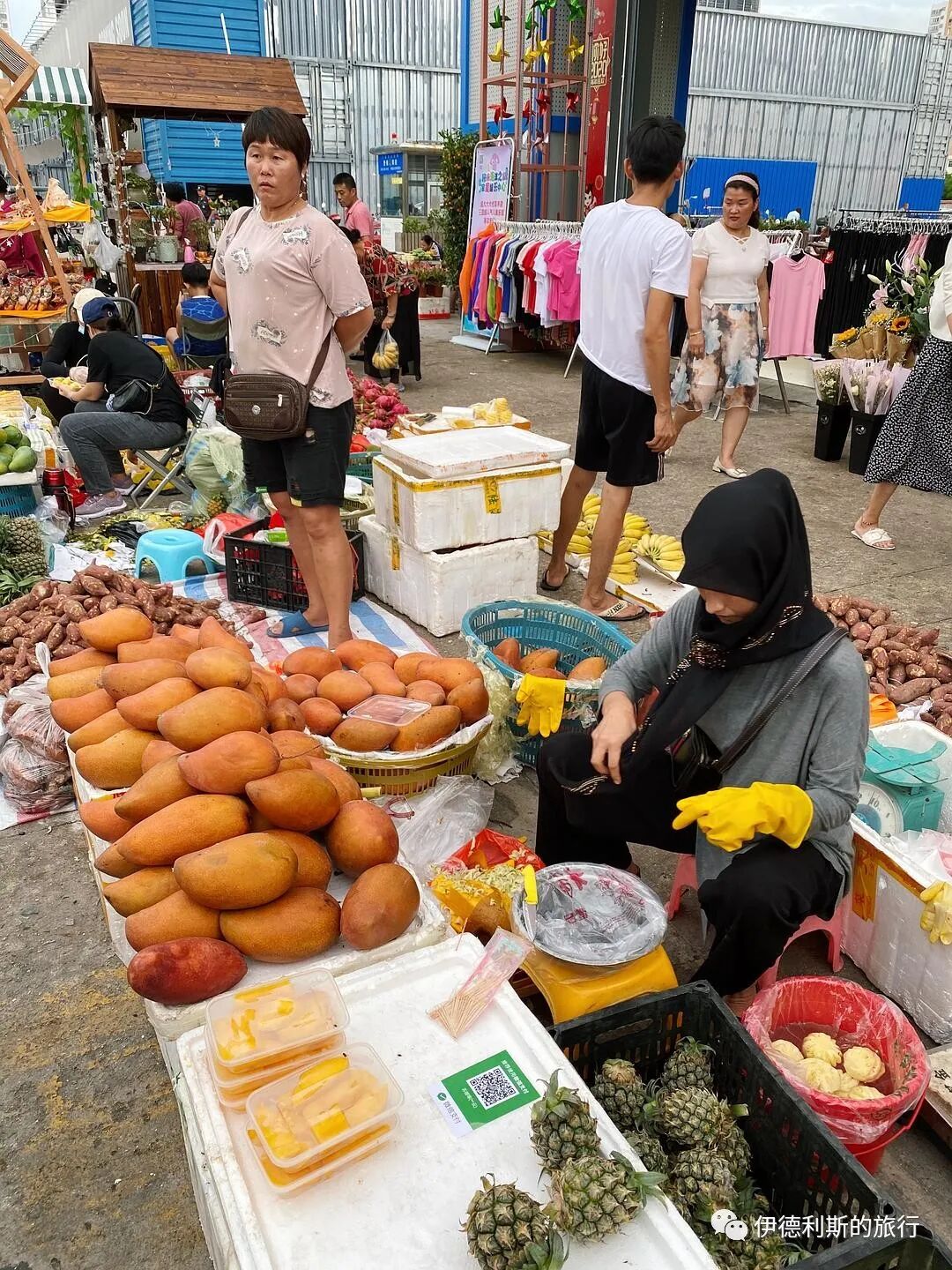
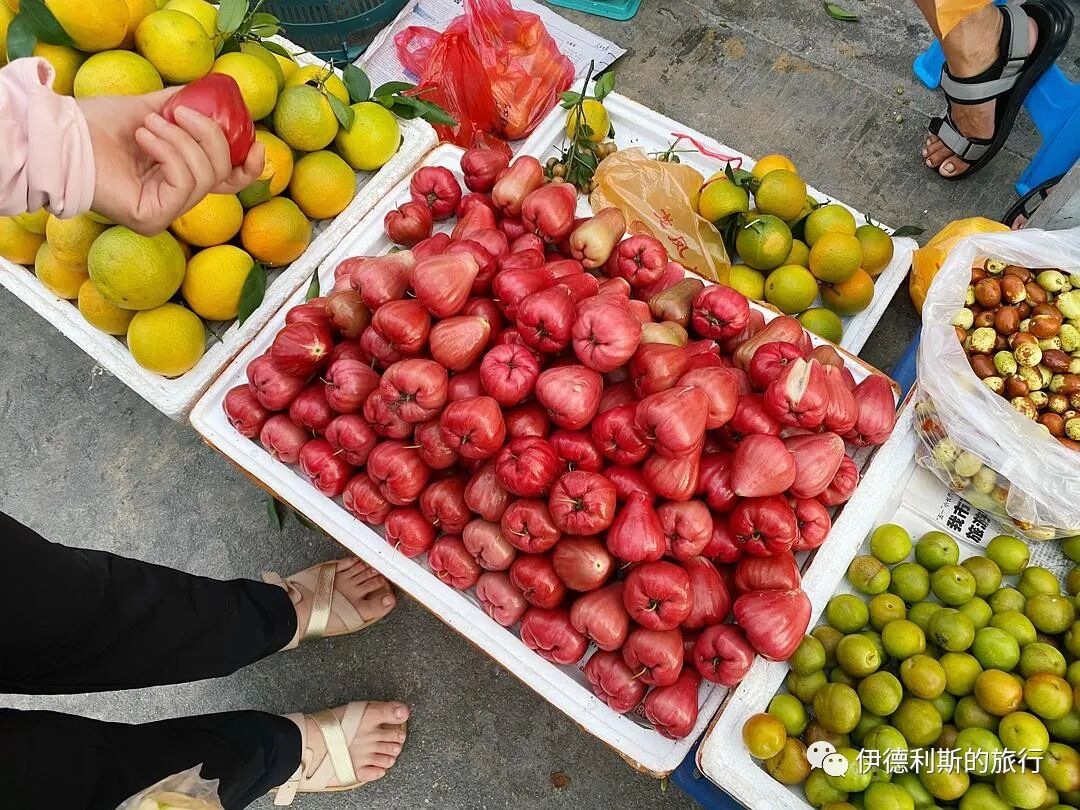
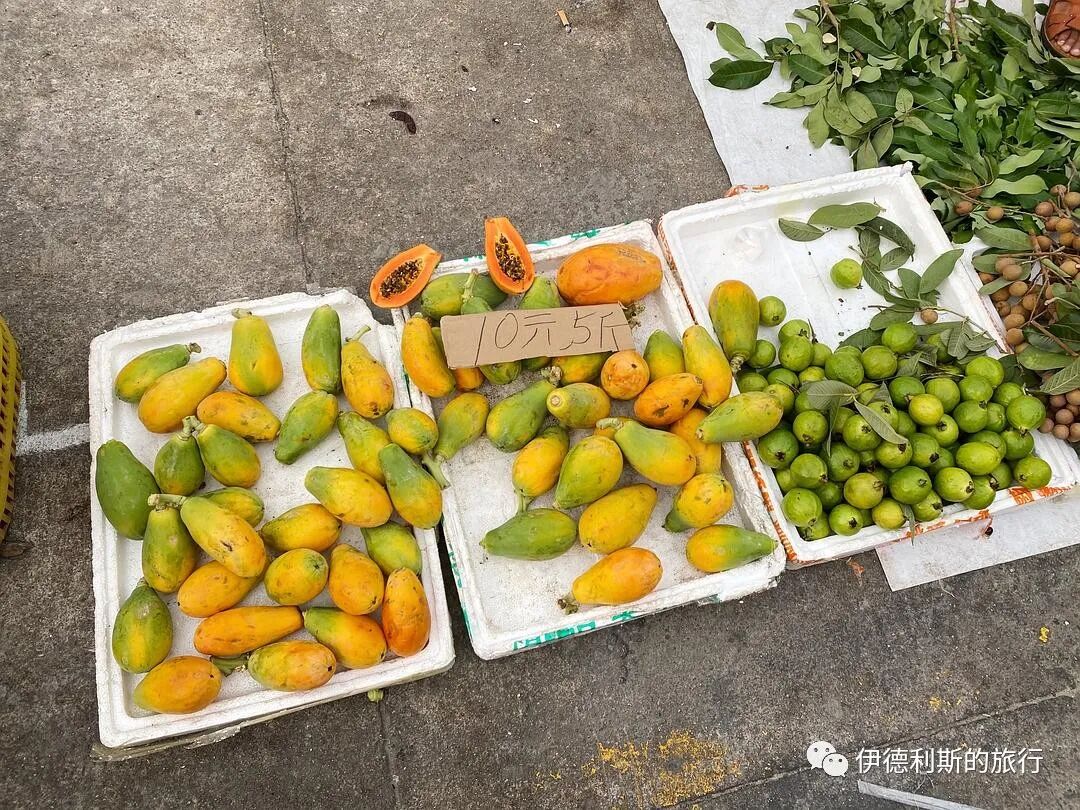
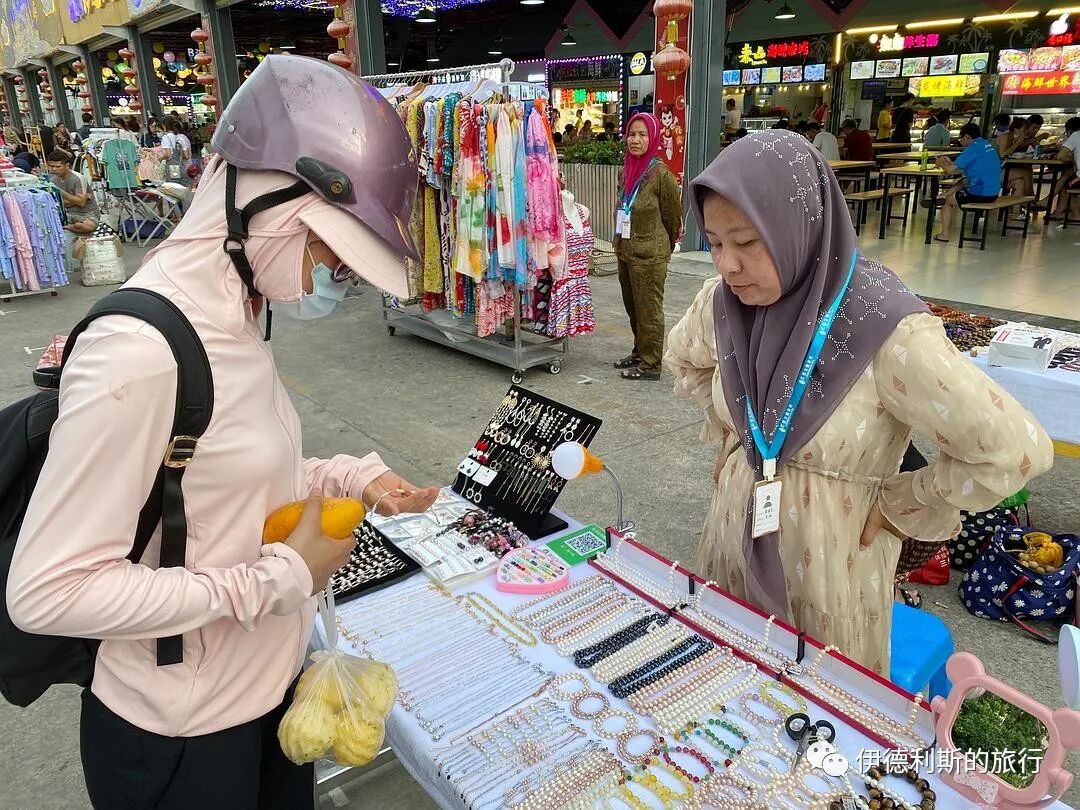
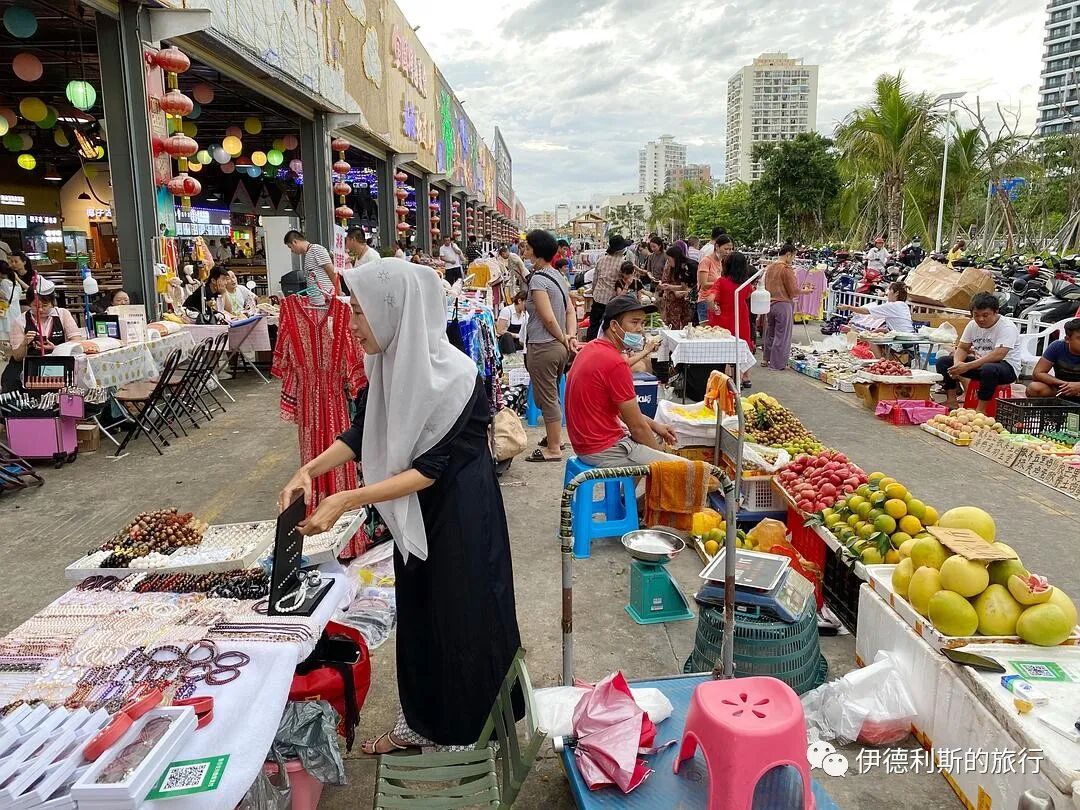
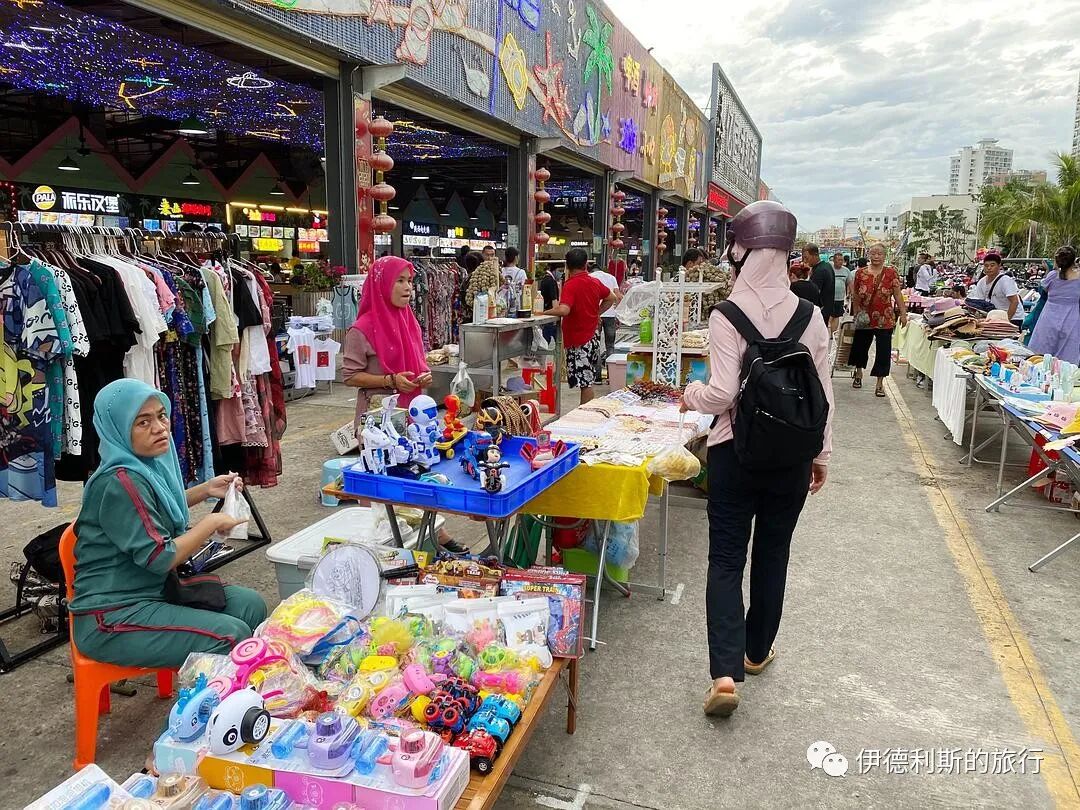
In the evening, Muning treated us to seafood at the seafood market near the beach in Huixin Village. We ordered crab, scallops, abalone, clams, octopus, fried calamari rings, and the specialty winged beans; everything was exceptionally delicious, with no fishy smell at all, only a fragrant aroma. I especially recommend the signature dipping sauce, made with ketchup, sweet chili sauce, minced garlic, and tamarind; it was so good with the seafood that I couldn't stop eating.
This seafood market in Huixin Village is likely the best value in the area; not only Hui Muslims but also the surrounding Han people love to come here to eat, and business is booming.
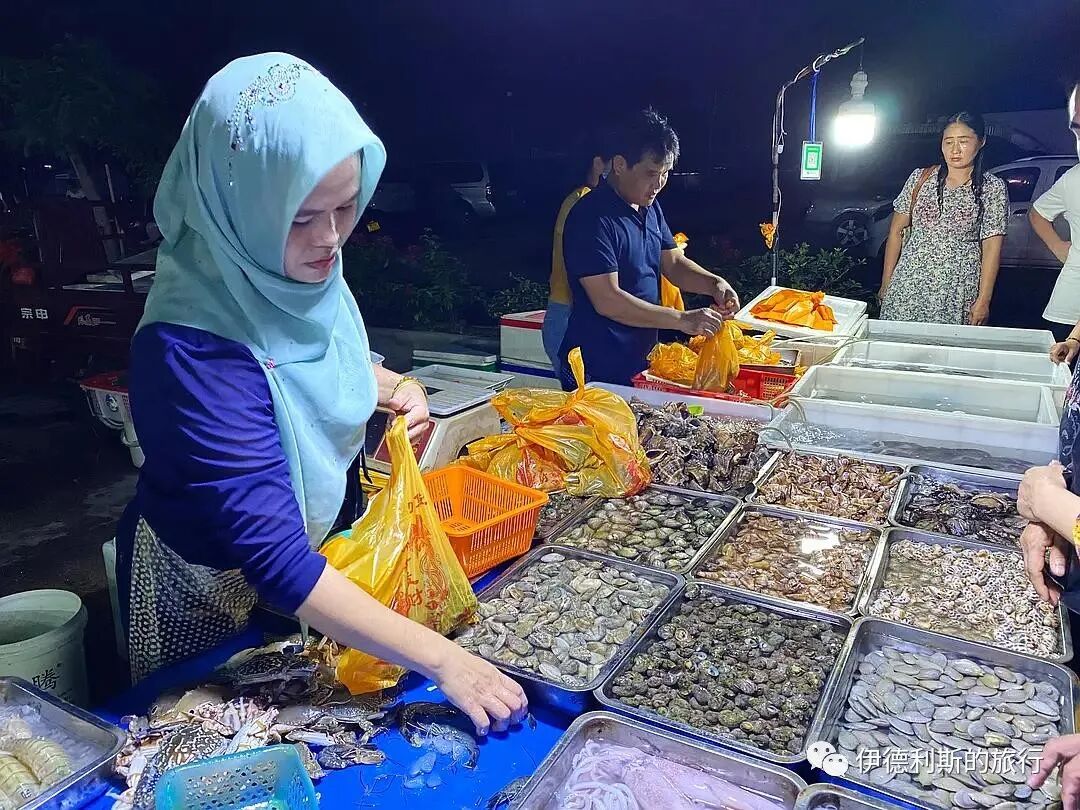
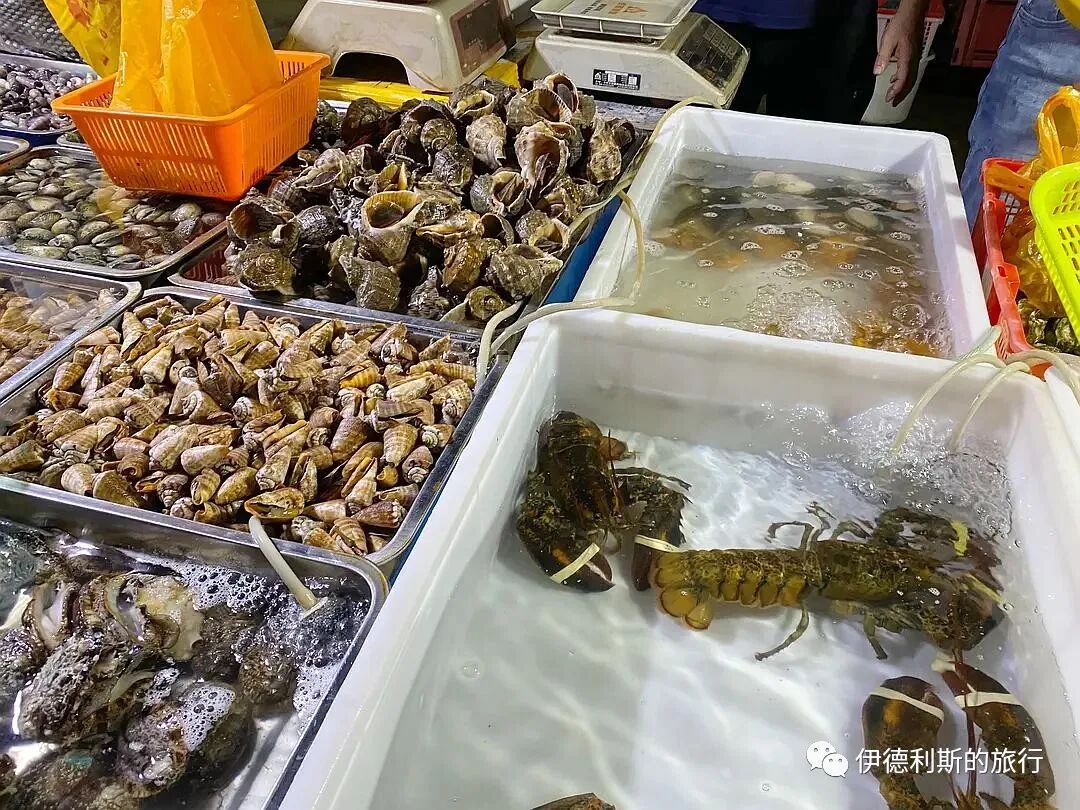
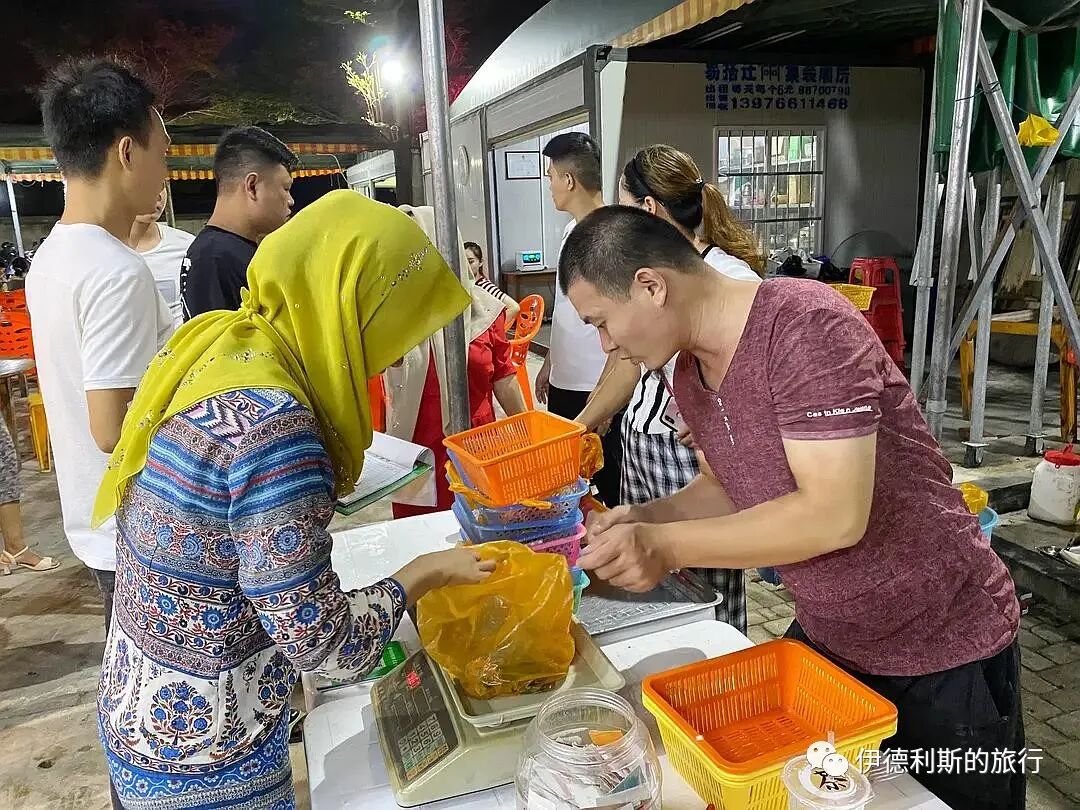
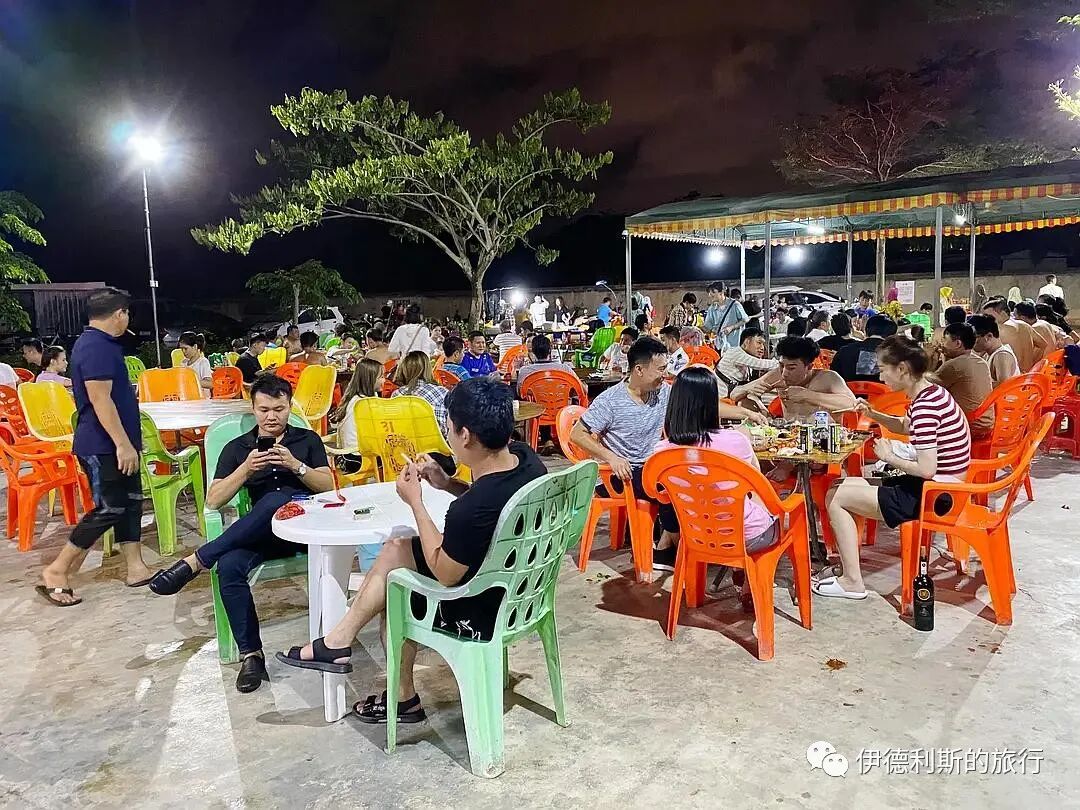
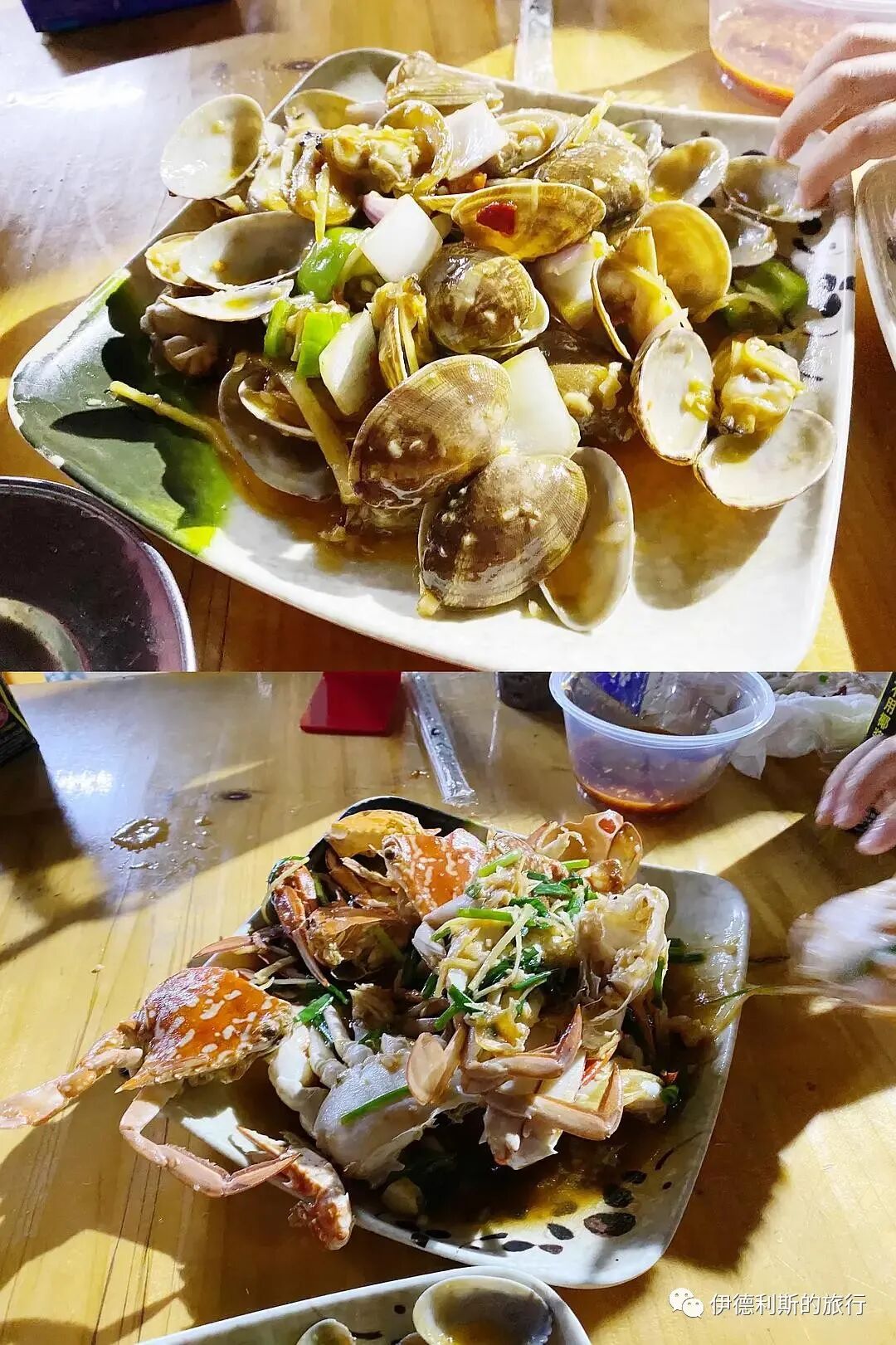
August 3rd
In the morning, I had chicken rice noodles at Li's Rice Noodles in Huixin Village, Sanya; it was super fresh! After the three-day Eid al-Adha celebration ended, their shop finally opened.
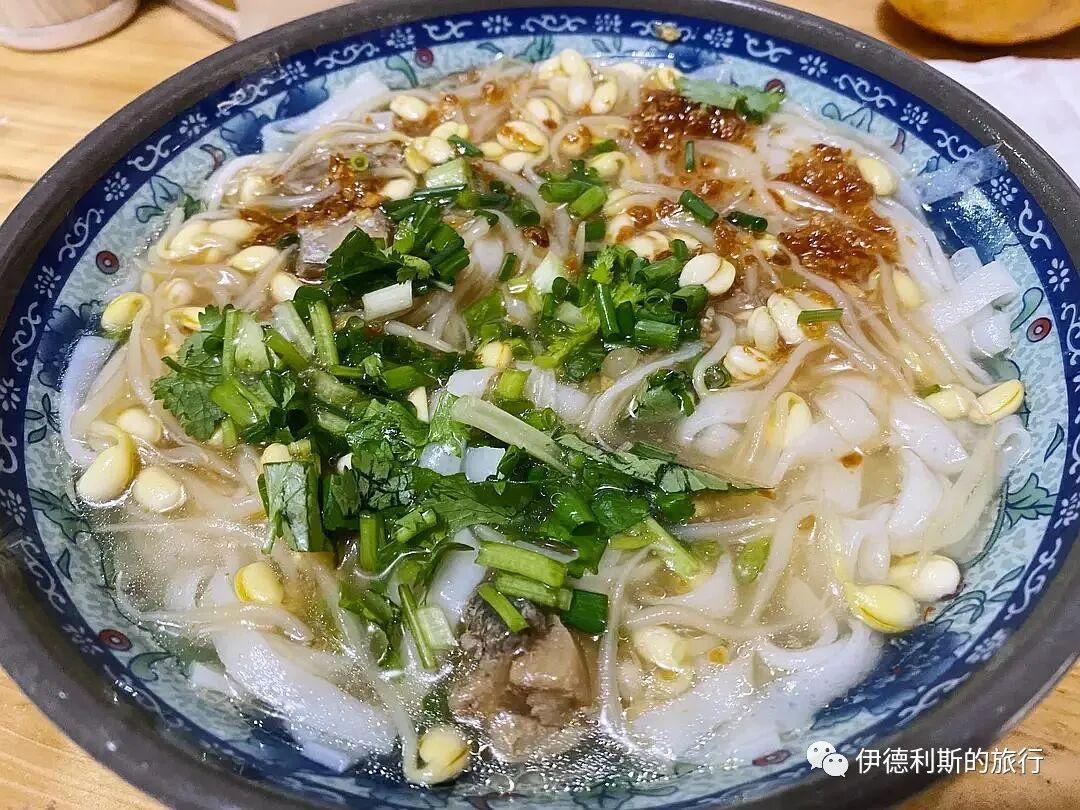
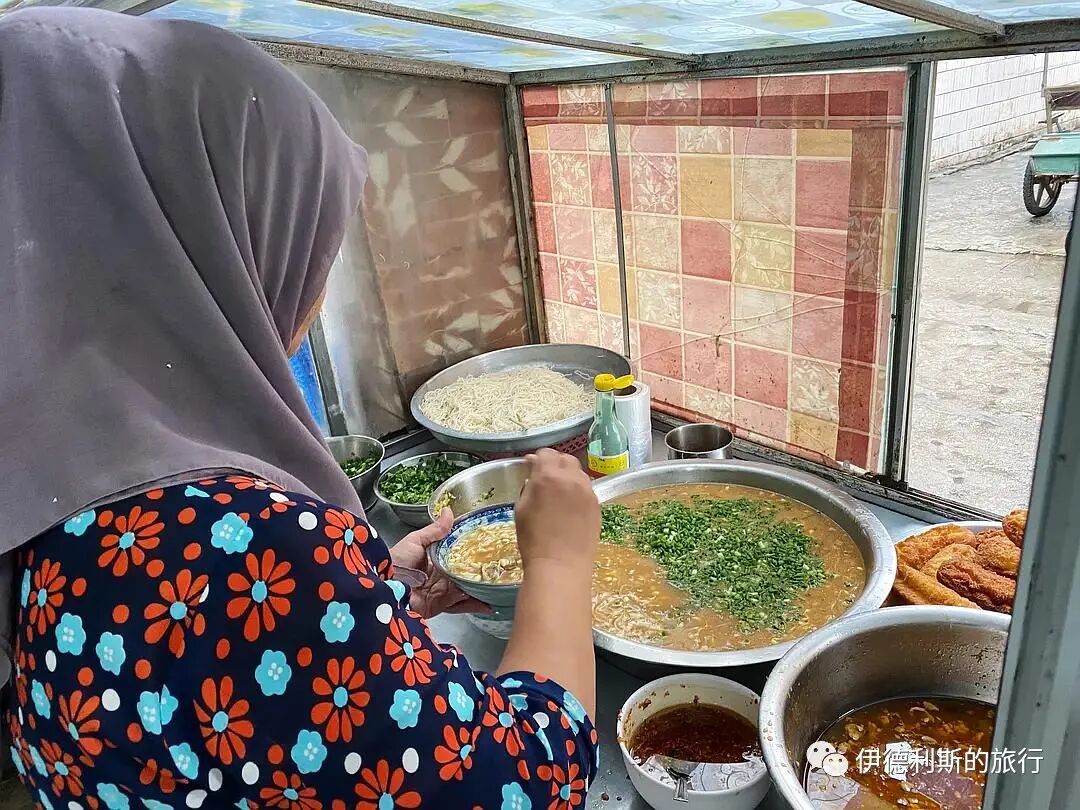
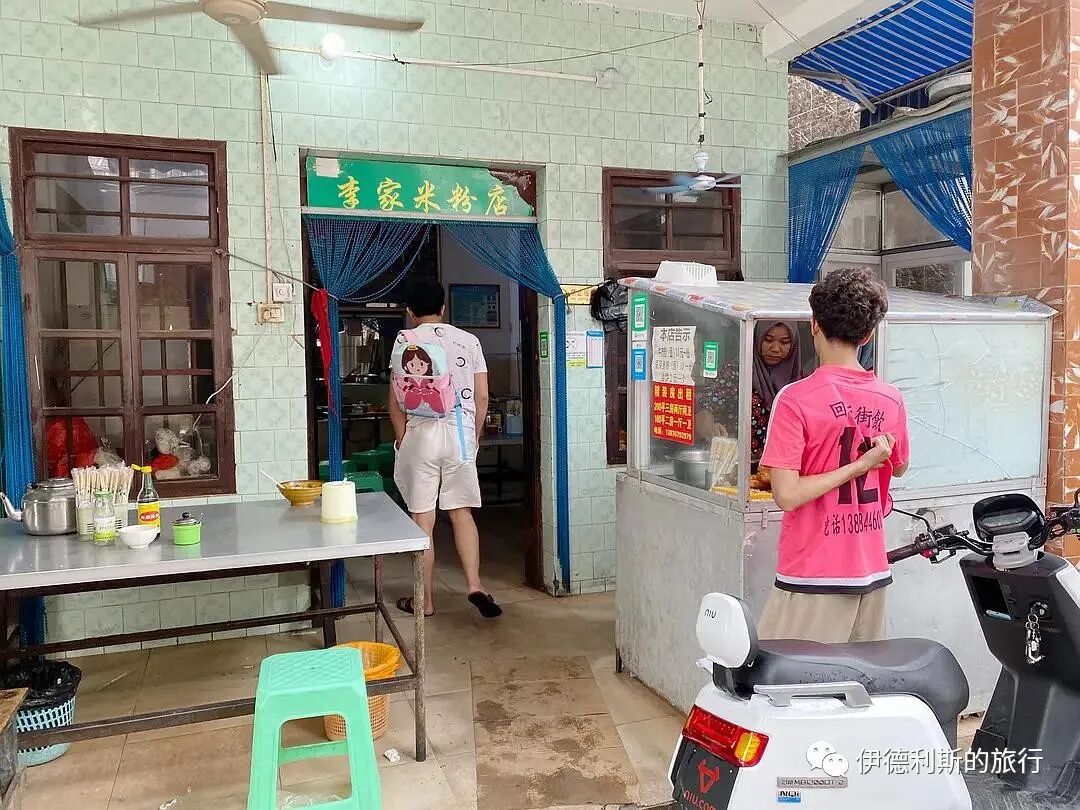
Then, I reluctantly left Sanya.
Muslim Life Guide Qinghai: Salar Eid al-Adha, Qurban and Real Halal Family Traditions
Articles • yusuf908 posted the article • 0 comments • 172 views • 2026-05-24 00:17
Summary: Muslim Life Guide Qinghai: Salar Eid al-Adha, Qurban and Real Halal Family Traditions is presented here as a clear English account for Muslim readers, starting with this scene: I spent this year's Eid al-Adha in my wife's hometown, Xunhua Salar Autonomous County in Qinghai. I wanted to slaughter a sheep myself to fulfill this emphasized Sunnah, as it is not possible in Beijing. It was a very happy. It keeps the original names, food details, mosque details, photographs, and cultural context while focusing on Salar Muslims, Eid al-Adha, Qinghai Muslims.
I spent this year's Eid al-Adha in my wife's hometown, Xunhua Salar Autonomous County in Qinghai. I wanted to slaughter a sheep myself to fulfill this emphasized Sunnah, as it is not possible in Beijing. It was a very happy experience to see many Salar relatives in Xunhua and personally give them the lamb I slaughtered.
My wife's relatives are very traditional and take their faith seriously. At first, they worried that marrying their daughter to a Hui Muslim from Beijing might mean he lacked proper religious knowledge and would affect the faith of the next generation. I just smiled. After getting to know me, they realized their worries were unnecessary. My Salar elders are very keen to learn about the faith, but they are not very literate, so they sometimes ask me for advice on religious matters. I think I did the Beijing Hui community proud. (Facepalm)
I felt very relaxed with my Salar relatives in Xunhua. They spoke the Salar language, which I don't understand, so I just kept my head down and ate the food they served. Xunhua is a place where many ethnic groups live together. Besides the common Salar language, there is also Tibetan and the Qinghai dialect. I don't understand any of these three. I could only barely understand them when they asked about my background in their thick northwestern-accented Mandarin, and sometimes I still needed my father-in-law to translate.
My Salar relatives, led by my father-in-law, admire my work. Years ago, before I was married, my father-in-law told me that working for others has no future, lacks freedom, and makes it hard to pray on time. He suggested I become my own boss and open a restaurant. In his view, a good career is one that earns clean money while allowing for freedom of faith. I completely agree with that. I wasn't in the insurance industry then, but later I became an insurance broker and achieved good results. My father-in-law changed his mind and admitted that my job has more of a future than running his restaurant.
I bought snacks for the children at the small shop on the mountain run by a mute person and told them to pick whatever they wanted. Each child chose a snack worth 50 cents or one yuan.
Every time my father-in-law met a relative, he would tell them my job is good, has flexible hours, and isn't limited by location, encouraging them to buy insurance from me. The relatives were quite willing, which comforted me. Although I have clients all over the country, very few people from the Northwest buy insurance from me. Some imams say insurance is not halal, even though they cannot provide evidence from the Quran or Hadith.
My Salar relatives have suffered from not having insurance. My wife's young cousin died of cancer last year. Her aunt's eyes turned red when she told me about it. When the child was brought to Beijing for treatment, the costs were over 100,000 yuan. A fundraiser from a crowdfunding platform came to the hospital room and said they could raise money online. Although the aunt was not wealthy, she refused. She felt online fundraising is like begging and harms the dignity of Muslims. The Prophet Muhammad repeatedly emphasized that Muslims should not beg.
Since the cousin was in the late stages when diagnosed with cancer, she passed away after a few months. I told her aunt not to be too sad. The child is happier than us living adults. We adults still have to face the test of our deeds, and whether we enter Paradise or Hell is unknown. A child who dies young goes directly to Paradise and is cared for by the Prophet Ibrahim.
I have written many articles before about the legality of insurance, and recently I found more scholars who support the view of insurance.
Translated into English, the general idea is that some scholars oppose equating insurance with gambling. In gambling, there is no transfer of risk, and no loss is reduced. Gambling is just a game, and participants can control the outcome. When an insurance event occurs, both the insurance company and the client suffer a loss. Insurance companies use probability and statistical methods to accurately calculate the balance between profit and loss, so the claim that insurance is uncertain does not hold up.
Death benefit clauses in Malaysian Muslim insurance policies.
(This example is to refute those who say Muslims cannot buy life insurance.)
Actually, the harm of gambling is not its uncertainty, and the result of gambling is not necessarily uncertain. Theoretically, as long as you have all the data, the result of gambling can be calculated. The harm of gambling is that it allows people to gain without working and can even lead to bankruptcy. Insurance does not have these harms. Life insurance is based on human health; you have to pay the price of health or even life to receive a claim. buying insurance requires health and financial audits of the policyholder. People with few assets cannot buy high-leverage life insurance, and malicious insurance fraud is a criminal offense. Gambling harms society, while insurance is a stabilizer for society. These are fundamentally different from gambling.
Islamic insurance companies in Malaysia also note the relevant religious basis on their life insurance contracts.
I worked in financial credit for nearly ten years. As my understanding of my faith deepened, I increasingly felt that a Muslim working in a bank to lend money and collect interest was not earning a halal income. I felt very uneasy, which is why I traveled frequently in the past few years—I wanted to escape the depression my job brought me. Until I transitioned into the insurance brokerage industry and gained the approval of my relatives.
These sheep all belong to my wife's grandfather. There has been little rain in Xunhua this year, and the grass on the mountain has not grown well, so the sheep are thin. I wish we could share the rain from Henan with Qinghai. My uncle asked me to pick one from the flock, so I chose a black-headed white sheep. My uncle praised me for knowing how to pick a sheep, saying I chose the best one. I said I don't know much about sheep, I just remembered that the Prophet Muhammad slaughtered black and white sheep.
Narrated by Anas: The Prophet Muhammad personally slaughtered two horned, black and white sheep. He mentioned the name of Allah and recited the Takbir. Umm Salama reported that the Prophet said: 'When you see the new moon of Dhu al-Hijjah, those of you who intend to perform the sacrifice should not cut their hair or trim their nails.' The phrase 'intend to perform the sacrifice' in this hadith shows that the sacrifice is a sunnah, not a mandatory duty.
When slaughtering a sheep, we cover its eyes with a white towel, recite the takbir and tasmiyah, and slaughter it in the name of Allah. We dig a pit in the ground so the blood flows into it and can be buried. We let the blood drain for twenty minutes. This ensures the animal receives blessings in the afterlife. This is why we Salar people eat halal-slaughtered meat; we must not kill living things without cause.
Aisha reported that the Prophet said: 'On the day of Eid al-Adha, there is no deed more beloved to Allah than the shedding of blood.' In the afterlife, the sacrificial animal will appear with its horns, hair, and hooves. Before the blood of the sacrifice hits the ground, it has already reached a high status with Allah, so you should perform the sacrifice with a happy and willing heart. — Islamic Sharia, page 877
By that afternoon, my sheep had become lamb skewers (yangrou chuan). We all sat in the courtyard eating them. Grandpa asked me how much money I earned a month. I told him the number. He didn't react at first, but after a pause, his eyes went wide. I laughed and asked him how much he would make if he sold all his hundreds of sheep.
On the afternoon of Eid al-Adha, some Tibetan people came to visit our home. The two people in the photo are the Tibetans who help Grandpa herd his sheep. Behind Mengda Mountain village in Xunhua is the Tibetan region. The Salar elders have a good relationship with the Tibetan people. Both Grandma and Grandpa speak Tibetan, and since the Tibetans are very skilled at herding, the Salar people of Mengda Mountain hire them to look after their sheep.
I sat to the side, unable to understand their conversation, and watched the Tibetans eat skewers. Grandma turned around and asked if I felt bored. I said no, it was interesting to hear them speak Tibetan. It is rare to see such a scene of ethnic unity. view all
Summary: Muslim Life Guide Qinghai: Salar Eid al-Adha, Qurban and Real Halal Family Traditions is presented here as a clear English account for Muslim readers, starting with this scene: I spent this year's Eid al-Adha in my wife's hometown, Xunhua Salar Autonomous County in Qinghai. I wanted to slaughter a sheep myself to fulfill this emphasized Sunnah, as it is not possible in Beijing. It was a very happy. It keeps the original names, food details, mosque details, photographs, and cultural context while focusing on Salar Muslims, Eid al-Adha, Qinghai Muslims.
I spent this year's Eid al-Adha in my wife's hometown, Xunhua Salar Autonomous County in Qinghai. I wanted to slaughter a sheep myself to fulfill this emphasized Sunnah, as it is not possible in Beijing. It was a very happy experience to see many Salar relatives in Xunhua and personally give them the lamb I slaughtered.
My wife's relatives are very traditional and take their faith seriously. At first, they worried that marrying their daughter to a Hui Muslim from Beijing might mean he lacked proper religious knowledge and would affect the faith of the next generation. I just smiled. After getting to know me, they realized their worries were unnecessary. My Salar elders are very keen to learn about the faith, but they are not very literate, so they sometimes ask me for advice on religious matters. I think I did the Beijing Hui community proud. (Facepalm)
I felt very relaxed with my Salar relatives in Xunhua. They spoke the Salar language, which I don't understand, so I just kept my head down and ate the food they served. Xunhua is a place where many ethnic groups live together. Besides the common Salar language, there is also Tibetan and the Qinghai dialect. I don't understand any of these three. I could only barely understand them when they asked about my background in their thick northwestern-accented Mandarin, and sometimes I still needed my father-in-law to translate.
My Salar relatives, led by my father-in-law, admire my work. Years ago, before I was married, my father-in-law told me that working for others has no future, lacks freedom, and makes it hard to pray on time. He suggested I become my own boss and open a restaurant. In his view, a good career is one that earns clean money while allowing for freedom of faith. I completely agree with that. I wasn't in the insurance industry then, but later I became an insurance broker and achieved good results. My father-in-law changed his mind and admitted that my job has more of a future than running his restaurant.
I bought snacks for the children at the small shop on the mountain run by a mute person and told them to pick whatever they wanted. Each child chose a snack worth 50 cents or one yuan.
Every time my father-in-law met a relative, he would tell them my job is good, has flexible hours, and isn't limited by location, encouraging them to buy insurance from me. The relatives were quite willing, which comforted me. Although I have clients all over the country, very few people from the Northwest buy insurance from me. Some imams say insurance is not halal, even though they cannot provide evidence from the Quran or Hadith.
My Salar relatives have suffered from not having insurance. My wife's young cousin died of cancer last year. Her aunt's eyes turned red when she told me about it. When the child was brought to Beijing for treatment, the costs were over 100,000 yuan. A fundraiser from a crowdfunding platform came to the hospital room and said they could raise money online. Although the aunt was not wealthy, she refused. She felt online fundraising is like begging and harms the dignity of Muslims. The Prophet Muhammad repeatedly emphasized that Muslims should not beg.
Since the cousin was in the late stages when diagnosed with cancer, she passed away after a few months. I told her aunt not to be too sad. The child is happier than us living adults. We adults still have to face the test of our deeds, and whether we enter Paradise or Hell is unknown. A child who dies young goes directly to Paradise and is cared for by the Prophet Ibrahim.
I have written many articles before about the legality of insurance, and recently I found more scholars who support the view of insurance.
Translated into English, the general idea is that some scholars oppose equating insurance with gambling. In gambling, there is no transfer of risk, and no loss is reduced. Gambling is just a game, and participants can control the outcome. When an insurance event occurs, both the insurance company and the client suffer a loss. Insurance companies use probability and statistical methods to accurately calculate the balance between profit and loss, so the claim that insurance is uncertain does not hold up.
Death benefit clauses in Malaysian Muslim insurance policies.
(This example is to refute those who say Muslims cannot buy life insurance.)
Actually, the harm of gambling is not its uncertainty, and the result of gambling is not necessarily uncertain. Theoretically, as long as you have all the data, the result of gambling can be calculated. The harm of gambling is that it allows people to gain without working and can even lead to bankruptcy. Insurance does not have these harms. Life insurance is based on human health; you have to pay the price of health or even life to receive a claim. buying insurance requires health and financial audits of the policyholder. People with few assets cannot buy high-leverage life insurance, and malicious insurance fraud is a criminal offense. Gambling harms society, while insurance is a stabilizer for society. These are fundamentally different from gambling.
Islamic insurance companies in Malaysia also note the relevant religious basis on their life insurance contracts.
I worked in financial credit for nearly ten years. As my understanding of my faith deepened, I increasingly felt that a Muslim working in a bank to lend money and collect interest was not earning a halal income. I felt very uneasy, which is why I traveled frequently in the past few years—I wanted to escape the depression my job brought me. Until I transitioned into the insurance brokerage industry and gained the approval of my relatives.
These sheep all belong to my wife's grandfather. There has been little rain in Xunhua this year, and the grass on the mountain has not grown well, so the sheep are thin. I wish we could share the rain from Henan with Qinghai. My uncle asked me to pick one from the flock, so I chose a black-headed white sheep. My uncle praised me for knowing how to pick a sheep, saying I chose the best one. I said I don't know much about sheep, I just remembered that the Prophet Muhammad slaughtered black and white sheep.
Narrated by Anas: The Prophet Muhammad personally slaughtered two horned, black and white sheep. He mentioned the name of Allah and recited the Takbir. Umm Salama reported that the Prophet said: 'When you see the new moon of Dhu al-Hijjah, those of you who intend to perform the sacrifice should not cut their hair or trim their nails.' The phrase 'intend to perform the sacrifice' in this hadith shows that the sacrifice is a sunnah, not a mandatory duty.
When slaughtering a sheep, we cover its eyes with a white towel, recite the takbir and tasmiyah, and slaughter it in the name of Allah. We dig a pit in the ground so the blood flows into it and can be buried. We let the blood drain for twenty minutes. This ensures the animal receives blessings in the afterlife. This is why we Salar people eat halal-slaughtered meat; we must not kill living things without cause.
Aisha reported that the Prophet said: 'On the day of Eid al-Adha, there is no deed more beloved to Allah than the shedding of blood.' In the afterlife, the sacrificial animal will appear with its horns, hair, and hooves. Before the blood of the sacrifice hits the ground, it has already reached a high status with Allah, so you should perform the sacrifice with a happy and willing heart. — Islamic Sharia, page 877
By that afternoon, my sheep had become lamb skewers (yangrou chuan). We all sat in the courtyard eating them. Grandpa asked me how much money I earned a month. I told him the number. He didn't react at first, but after a pause, his eyes went wide. I laughed and asked him how much he would make if he sold all his hundreds of sheep.
On the afternoon of Eid al-Adha, some Tibetan people came to visit our home. The two people in the photo are the Tibetans who help Grandpa herd his sheep. Behind Mengda Mountain village in Xunhua is the Tibetan region. The Salar elders have a good relationship with the Tibetan people. Both Grandma and Grandpa speak Tibetan, and since the Tibetans are very skilled at herding, the Salar people of Mengda Mountain hire them to look after their sheep.
I sat to the side, unable to understand their conversation, and watched the Tibetans eat skewers. Grandma turned around and asked if I felt bored. I said no, it was interesting to hear them speak Tibetan. It is rare to see such a scene of ethnic unity.
China Mosque Travel Guide Zhaotong: Baxianda Mosque, Eid al-Adha Graduation and Muslim Youth Hope
Articles • yusuf908 posted the article • 0 comments • 225 views • 2026-05-23 21:33
Summary: This mosque travel essay records the Eid al-Adha and student graduation event at Zhaotong Baxianda Mosque in Yunnan, with reflections on mosque education, Hui Muslim youth, religious learning, local history, and hope for the next generation.
On July 2, 2023, the sun was shining brightly and the sky was cloudless. Muslims from Zhaowei-Lu gathered from all directions at the Baxianda Mosque in Zhaoyang District, Zhaotong City, because the annual Eid al-Adha and the graduation celebration of graduating students will be held here today.
The main mosque of Zhaotong Baxianda Mosque is also known as [Zhaowei-Lu Ancient Mosque]. It was first built in the eighth year of the reign of Emperor Yongzheng of the Qing Dynasty (1730) and is located in Baxianying, Shouwang Hui Township, Zhaotong City, Yunnan Province. It has experienced damage and reconstruction during this period. In 1983, the Zhaotong Baxianda Mosque was designated as a county-level cultural relic protection unit. Imam Ma Minglun (1898-1938) taught for ten years, and the mosque became the well-known "Haiyi" mosque in Zhaotong. He himself served as the general dean of Zhaoshi 36 Mosque, and his disciple Ma Weihai (a well-known alim in Yunnan and a former member of the China Islamic Association) founded the "Zhaowei-Lu State Education United Chongzhen Normal School" when he was teaching (1942-1956). The Baxianda Ancient Mosque is surrounded by green cypresses, with a quiet environment and complete school buildings. Well-planned school leadership, capable and outstanding teaching staff, scientific and complete teaching syllabus, comfortable and elegant library, and meticulous logistical services. The school-running orientation of "school, academy, publicity", the school-running philosophy of "education and academic compatibility, Yi-Confucian culture compatibility", and four compatible school-running characteristics, namely "compatibility of academics and employment, compatibility of classics and Chinese studies, compatibility of tradition and modernity, compatibility of majors and electives". The Baxianda Mosque is waiting for your arrival in the spirit of "cultural exchange and inclusiveness", because every teacher, mosque management committee and the community of the Baxianda Mosque always firmly believes that "success comes from the right choice." We work hard and contribute diligently to cultivate a younger generation of scholar-imams and imam-type scholars who are patriotic, loving, knowledgeable, noble in character, and willing to contribute!
The Baxianda Mosque, Maohao Street Mosque in Zhaoyang District, Tuogu Mosque, Tiejiawan Mosque, Wenping Mosque and Longtoushan Mosque in Ludian County are the earliest mosques built in Zhaotong City. For hundreds of years, these mosques have always put education first. Even today, these famous mosques still have more or less dozens or hundreds of students who are eager to study. These mosques bring a large amount of fresh blood to Zhaowei-Lu's religious deen every year, allowing this nation's faith to be well passed on.
I pass by the Baxianda Mosque on the main road under its wall every year, but I have never come in to see it. Just like what I said in the part about the Baxianda Mosque in "A Little Poem for the Mosque", "Every time I ride to my uncle's house / I pass by your feet / But I have never walked inside to get to know you / My image of you is / solemn / majestic / rich in history." Today I finally walked into the Baxianda Mosque that I had longed for and fulfilled my long-cherished wish for many years.
As soon as you enter the gate, you are greeted by a winding stone path with strong historical traces. However, due to people's continuous stepping on it for hundreds of years, deep "footprints" have appeared on the thick stone. At this moment, I believed Li Bai's stories of "an iron pestle ground into a needle" and "a drop of water penetrated a stone". I believed that as long as we strive towards the same goal day after day, year after year, everything is possible. At the end of the stone path is a small "patio". To the left of the patio is the wing room, and further down is the water room. The right wing of the patio is the headquarters of the 43rd Division of the People's Liberation Army that liberated Zhaotong City, and immediately next to it is the main hall of the mosque. The main hall is not very large, and it is also decorated with an ancient pure wooden structure. The pillars standing upright are like the heroes of our nation who are not afraid of sacrificing everything for the people. The pillars support the beams. Aren't these beams the people of our nation who actively support the heroes who are the pillars? If our nation and this group can be compared to a person, those pillars that stand upright are the spirit of our group, then these people who actively support the heroes are the backbone of this person. Because this nation has a spirit and a backbone, it can endure for a long time!
When I came to the venue, I was touched by a couplet on the rostrum. This couplet said, "Faith saves the heart. If faith does not prosper, the heart will die. Culture will save the nation. If culture does not prosper, the nation will perish." Maybe in the eyes of many people, these are just twenty short words, but in my opinion, these twenty words are a sincere hope for the future of our nation. In my opinion, the person who can write this couplet is definitely a person who cares about the future of our nation all day long. Only such a person can see education so thoroughly! If an imam has such a sense of urgency, the students he teaches will definitely not be bad, no! They will definitely become the pillars of Zhaowei-Lu deen like their teacher!
Seeing the high-spirited and heroic appearance of the graduates, and hearing the passionate and exciting speech of the graduate representative, one has to say sincerely, "It's good to be young." Once upon a time, I also sat on the podium as a graduate and gave a passionate speech as a graduate representative. In the blink of an eye, it has been more than ten years, which is enough time for the entire environment to undergo tremendous changes, and I have also changed from the young boy who claimed to have "the physical fitness of a special forces soldier" to a middle-aged old man who may die from illness at any time.
Principal Ma's sincere teachings to the graduates are like an old father's instructions to his children who are about to go away. It can be seen that Principal Ma is extremely proud and proud in his heart, but he also contains the slightest reluctance to let go of the children. What makes us proud and proud is that there are only a handful of mosques running schools in Zhaowei-Lu today, and even fewer of our students can withstand the interference of the world and the impact of the economic wave and finally graduate successfully. Thinking that these students will soon become the pillars of Zhaowei-Lu, how can this not make their teachers proud and proud? But when you think about the students you have taught for many years, they are about to leave you and choose a new life. After all, how can you let the teacher let go of the teacher-student relationship for so many years? Therefore, Principal Ma repeatedly gave instructions to his students. These instructions made me, an "outsider" who came to participate in the event, moved to tears...
When I returned home and paid my respects to "the local family gathering place", I sat on the sofa and thought about it. I thought I should write something for the Baxianda Mosque. In particular, we allow the aspiring young people of our nation to come to the Baxianda Mosque and thrive under the moisture of the Baxianda Mosque. Ever since, I took up pen and wrote this long tweet.
Principal Ma: 13087486664 WeChat: ztmyt123
Director Ma: 15925514131 WeChat: 15925514131
Rain or shine, the Baxianda Mosque is waiting for you! view all
Summary: This mosque travel essay records the Eid al-Adha and student graduation event at Zhaotong Baxianda Mosque in Yunnan, with reflections on mosque education, Hui Muslim youth, religious learning, local history, and hope for the next generation.
On July 2, 2023, the sun was shining brightly and the sky was cloudless. Muslims from Zhaowei-Lu gathered from all directions at the Baxianda Mosque in Zhaoyang District, Zhaotong City, because the annual Eid al-Adha and the graduation celebration of graduating students will be held here today.
The main mosque of Zhaotong Baxianda Mosque is also known as [Zhaowei-Lu Ancient Mosque]. It was first built in the eighth year of the reign of Emperor Yongzheng of the Qing Dynasty (1730) and is located in Baxianying, Shouwang Hui Township, Zhaotong City, Yunnan Province. It has experienced damage and reconstruction during this period. In 1983, the Zhaotong Baxianda Mosque was designated as a county-level cultural relic protection unit. Imam Ma Minglun (1898-1938) taught for ten years, and the mosque became the well-known "Haiyi" mosque in Zhaotong. He himself served as the general dean of Zhaoshi 36 Mosque, and his disciple Ma Weihai (a well-known alim in Yunnan and a former member of the China Islamic Association) founded the "Zhaowei-Lu State Education United Chongzhen Normal School" when he was teaching (1942-1956). The Baxianda Ancient Mosque is surrounded by green cypresses, with a quiet environment and complete school buildings. Well-planned school leadership, capable and outstanding teaching staff, scientific and complete teaching syllabus, comfortable and elegant library, and meticulous logistical services. The school-running orientation of "school, academy, publicity", the school-running philosophy of "education and academic compatibility, Yi-Confucian culture compatibility", and four compatible school-running characteristics, namely "compatibility of academics and employment, compatibility of classics and Chinese studies, compatibility of tradition and modernity, compatibility of majors and electives". The Baxianda Mosque is waiting for your arrival in the spirit of "cultural exchange and inclusiveness", because every teacher, mosque management committee and the community of the Baxianda Mosque always firmly believes that "success comes from the right choice." We work hard and contribute diligently to cultivate a younger generation of scholar-imams and imam-type scholars who are patriotic, loving, knowledgeable, noble in character, and willing to contribute!
The Baxianda Mosque, Maohao Street Mosque in Zhaoyang District, Tuogu Mosque, Tiejiawan Mosque, Wenping Mosque and Longtoushan Mosque in Ludian County are the earliest mosques built in Zhaotong City. For hundreds of years, these mosques have always put education first. Even today, these famous mosques still have more or less dozens or hundreds of students who are eager to study. These mosques bring a large amount of fresh blood to Zhaowei-Lu's religious deen every year, allowing this nation's faith to be well passed on.
I pass by the Baxianda Mosque on the main road under its wall every year, but I have never come in to see it. Just like what I said in the part about the Baxianda Mosque in "A Little Poem for the Mosque", "Every time I ride to my uncle's house / I pass by your feet / But I have never walked inside to get to know you / My image of you is / solemn / majestic / rich in history." Today I finally walked into the Baxianda Mosque that I had longed for and fulfilled my long-cherished wish for many years.
As soon as you enter the gate, you are greeted by a winding stone path with strong historical traces. However, due to people's continuous stepping on it for hundreds of years, deep "footprints" have appeared on the thick stone. At this moment, I believed Li Bai's stories of "an iron pestle ground into a needle" and "a drop of water penetrated a stone". I believed that as long as we strive towards the same goal day after day, year after year, everything is possible. At the end of the stone path is a small "patio". To the left of the patio is the wing room, and further down is the water room. The right wing of the patio is the headquarters of the 43rd Division of the People's Liberation Army that liberated Zhaotong City, and immediately next to it is the main hall of the mosque. The main hall is not very large, and it is also decorated with an ancient pure wooden structure. The pillars standing upright are like the heroes of our nation who are not afraid of sacrificing everything for the people. The pillars support the beams. Aren't these beams the people of our nation who actively support the heroes who are the pillars? If our nation and this group can be compared to a person, those pillars that stand upright are the spirit of our group, then these people who actively support the heroes are the backbone of this person. Because this nation has a spirit and a backbone, it can endure for a long time!
When I came to the venue, I was touched by a couplet on the rostrum. This couplet said, "Faith saves the heart. If faith does not prosper, the heart will die. Culture will save the nation. If culture does not prosper, the nation will perish." Maybe in the eyes of many people, these are just twenty short words, but in my opinion, these twenty words are a sincere hope for the future of our nation. In my opinion, the person who can write this couplet is definitely a person who cares about the future of our nation all day long. Only such a person can see education so thoroughly! If an imam has such a sense of urgency, the students he teaches will definitely not be bad, no! They will definitely become the pillars of Zhaowei-Lu deen like their teacher!
Seeing the high-spirited and heroic appearance of the graduates, and hearing the passionate and exciting speech of the graduate representative, one has to say sincerely, "It's good to be young." Once upon a time, I also sat on the podium as a graduate and gave a passionate speech as a graduate representative. In the blink of an eye, it has been more than ten years, which is enough time for the entire environment to undergo tremendous changes, and I have also changed from the young boy who claimed to have "the physical fitness of a special forces soldier" to a middle-aged old man who may die from illness at any time.
Principal Ma's sincere teachings to the graduates are like an old father's instructions to his children who are about to go away. It can be seen that Principal Ma is extremely proud and proud in his heart, but he also contains the slightest reluctance to let go of the children. What makes us proud and proud is that there are only a handful of mosques running schools in Zhaowei-Lu today, and even fewer of our students can withstand the interference of the world and the impact of the economic wave and finally graduate successfully. Thinking that these students will soon become the pillars of Zhaowei-Lu, how can this not make their teachers proud and proud? But when you think about the students you have taught for many years, they are about to leave you and choose a new life. After all, how can you let the teacher let go of the teacher-student relationship for so many years? Therefore, Principal Ma repeatedly gave instructions to his students. These instructions made me, an "outsider" who came to participate in the event, moved to tears...
When I returned home and paid my respects to "the local family gathering place", I sat on the sofa and thought about it. I thought I should write something for the Baxianda Mosque. In particular, we allow the aspiring young people of our nation to come to the Baxianda Mosque and thrive under the moisture of the Baxianda Mosque. Ever since, I took up pen and wrote this long tweet.
Principal Ma: 13087486664 WeChat: ztmyt123
Director Ma: 15925514131 WeChat: 15925514131
Rain or shine, the Baxianda Mosque is waiting for you!
Muslim Travel Guide Toronto: Chinese Hui Muslim Eid al-Adha, Halal Noodles and Scarborough Mosque
Articles • yusuf908 posted the article • 0 comments • 292 views • 2026-05-22 23:36
Summary: This Muslim travel guide to Toronto follows Eid al-Adha with the Chinese Muslim Association of Canada in Scarborough, halal Hui Muslim food, Fang Zhongshan-style spicy soup, halal noodles, Canadian diversity, Muslim communities, and reflections on immigrant life.
Celebrating Eid Al-Adha in the Hui Muslim Neighborhood of Toronto, Canada is presented here as a firsthand travel account in clear English, beginning with this scene: I traveled around Canada while attending the MDRT global life insurance conference this year. The account keeps its focus on Sanya Travel, Eid al-Adha, Muslim Travel while preserving the names, places, food, and historical details from the Chinese source.
I traveled around Canada while attending the MDRT global life insurance conference this year. I visited Toronto, Ottawa, Montreal, Calgary, and Vancouver, covering the most important cities from the east to the west coast. Since Eid al-Adha was approaching, I learned that the Chinese Muslim Association of Canada is in Toronto, so I made a special trip there to attend the holiday prayers.
Toronto is Canada's largest city. It has a large population, sits near New York State in the U.S., and has a strong economy and convenient transportation. Many Chinese immigrants live here. The photos above and below show Lanzhou hand-pulled noodle shops (Lanzhou lamian) I spotted on the street, but neither of these two shops is halal.
Don't worry, I will introduce a halal noodle shop later.
India is not currently issuing visas to Chinese citizens, so if you want to see Indian people, come to Canada. India is the top source of immigrants to Canada, and you can find Indian people everywhere here. They are clean and hygienic. The ones wearing turbans are Sikhs. There are over 700,000 Sikhs in Canada. They are often mistaken for Muslims, but Sikhs and Muslims are actually rivals. Sikh teachings seem designed to oppose Islam. For example, Sikhs do not eat any religious food, including halal food. If they don't know the source of the meat, they cannot eat it. They only eat meat slaughtered by their own people, which leads some to mistakenly think Sikhs are vegetarians. They are also not allowed to marry Muslims. Because Sikhs are a minority in India and face oppression, a large number of them have immigrated to North America as refugees.
The Chinese Muslim Association of Canada is located on the third floor of the Oriental Centre in Scarborough. It used to be on the second floor. In June 2024, the association president, Bao Lin Zhu, paid in full to purchase a property on the third floor for the association's use. The original second-floor location remains open as the Hui Muslim Food Culture Center.
The Fang Zhongshan spicy soup (hulatang) on the second floor is run by the president, who is from Henan province and a fellow townsman of Fang Zhongshan. The shop is authorized by Fang Zhongshan, but the taste of the spicy soup is completely different from the one in the Central Plains. It leans more toward the Xiaoyao Town style and is not as spicy.
The person on the far right is President Bao Lin. The chef on the left is also from Henan and immigrated to Canada to follow his children's studies.
Besides spicy soup and pan-fried buns (shuijianbao), the shop also prepares traditional Chinese Hui Muslim foods like fried dough (youxiang) for Eid al-Adha.
The room next to the spicy soup shop was the association's original prayer room. Now that they have the third-floor property, this space is used for reception, office work, and daily tasks.
This is a plaque inscribed by Mr. Mi Guangjiang for the Chinese Muslim Association of Canada. He has also visited this place himself.
I did not know President Bao Lin before I came to Toronto. I planned to visit the day before Eid al-Adha to check the time for the holiday prayers. I happened to run into the president, and he very warmly invited me to take a tour.
To promote the Chinese Muslim Association, President Baolin installed a light box on the property window and kept it lit all night. This is how the building looks from the outside at night; it is very eye-catching.
The building management thought this was inappropriate and cut off the power without permission. The building is owned by Chinese people, but the overseas Chinese here do not seem friendly toward Muslims. President Baolin is now taking legal action to protect his rights.
The third-floor property was just bought. When I arrived, it was being used for the first time, so many decorations had not been changed yet. The facilities look very simple, but everything necessary is there, except for an imam.
I was surprised that the Eid prayer was the next day, but they still had not found an imam to lead the prayer. President Baolin was anxious and made several calls, including asking a Pakistani student from a brother mosque for help, but he could not find anyone suitable. He said if there was no other choice, he would ask me to do it.
I felt very caught off guard. In the Canadian Hui Muslim community, there are about a hundred people who visit regularly. Many people from China have a weak sense of faith and are not in this circle. Others did not have the chance to learn back home, so they have a strong desire to learn here. Everyone is eager for a full-time imam to guide them in their studies and daily worship, but unfortunately, they have not found the right person yet.
President Baolin really hopes that a capable and willing scholar will come here to teach, and he will provide all the help he can.
Then, President Baolin drove me around to visit a few unique mosques in the area.
JAME ABU BAKR SIDDIQUE
In North America, the largest and most numerous mosques are definitely built by our Pakistani brothers. This is one of them. It shows that the Pakistani community is doing well overseas, not just in North America but also in Europe. They are doing better than the Chinese community, which I will explain in more detail later.
Toronto Prayer Schedule
Islamic Foundation of Toronto
The Islamic Foundation of Toronto is a mosque still managed by our Pakistani brothers. President Baolin came here to ask the mosque management to help find a Pakistani student to lead the Eid al-Adha (Qurban Festival) prayer. The Pakistani prayer time is June 17, while the Hui Muslim community's is on the 16th, but we could not find anyone available.
Islamic Institute of Toronto
The Islamic Institute of Toronto was founded in 1996 and moved to its new location in 2006. It covers 8 acres and is very large.
The school is usually not open to the public, but I knocked on the door and went in for a visit.
Masjid Qurtabah
This is the home of the Muslim Association of Canada. President Baolin brought me here because before the Hui Muslim community bought their own property, they did not have a permanent place for religious activities, so they used to borrow this space for Chinese Muslim events.
This place will also soon be renovated into a large Islamic activity center.
This is a mosque for Somali people.
Seeing that the Somali community has its own mosque—which was converted from a church, as many mosques in Canada were—the president hopes that one day he can also establish a Chinese Muslim community center.
Oriental Palace (Dongfang Gong)
This is truly the Lanzhou chain brand Oriental Palace (Dongfang Gong). It has arrived in Canada and has many branches in Toronto.
This bowl of beef noodles costs 14.99 Canadian dollars, which is about 80 yuan. That does not include the tip. With a 12-15% tip, the bowl costs nearly 100 yuan. Prices in Canada are high. Even if you work locally and earn Canadian dollars, eating out is not cheap.
I saw at least three Dongfanggong restaurants in Toronto.
To be fair, the noodles tasted quite good. They were chewy and had plenty of meat. This was the most satisfying meal I have had in my ten days in Canada. Thanks to Brother Baolin.
But the lamb skewers (yangrouchuan) are still better back home.
This smashed cucumber salad (pai huanggua) is more expensive than the lamb skewers. It is common in Western countries for meat to be cheaper than vegetables.
After finishing the beef noodles, Brother Baolin drove me back to the hotel to rest. I had flown all night from Calgary to Toronto and dealt with a two-hour time difference. I fell asleep as soon as I lay down in bed, needing to recharge for Eid al-Adha the next day.
Early the next morning, Brother Baolin was setting up the venue, and I arrived early too. Unfortunately, we still could not find an imam to lead the prayer. However, a Hui Muslim brother from Xinjiang who had studied the scriptures stepped up. Even though he had a cold, he insisted on leading everyone in the Eid prayer. I will not post his photo.
After the prayer, I shared some thoughts on what I have learned from my travels over the years. I said the North American Chinese Muslim Association needs doers like Brother Baolin. Many people are well-read in scriptures but lack real-world experience. Their words and actions are disconnected from society, and they create division locally. Such 'smart' people do not help the faith. Throughout history, we have never lacked scholars who only talk. We need well-rounded, excellent people to strengthen our ability to take root and thrive in a foreign land.
After the sharing session, we went to the second floor to eat. Everyone brought food they prepared themselves, sharing their favorite hometown dishes. Those who did not have a specialty just contributed money.
For Hui Muslims, a holiday is not complete without fried dough (youxiang). This youxiang looks like the Henan style. There are many Henan friends (dost) in the community, so much so that before I came here, people told me there was a Henan Hui neighborhood in Canada. In reality, it is not just Henan people here. There are people from Beijing, Inner Mongolia, the Northwest, and Uyghurs.
The lamb soup (yangrou tang) and chive pockets (jiucai hezi) both have a Henan flair. They smelled delicious and were very good.
Some non-Chinese brothers also attended the event. They met Chinese Muslims through marriage.
As is the custom, Eid al-Adha (Qurban) ended in the morning. In the afternoon, Vice President Davei ZHU drove me to Toronto's most famous attraction, Niagara Falls, which often appears on the National Geographic channel.
Rainbow Bridge
Rainbow Bridge connects Canada and the United States and was built by both countries. Driving across this bridge takes you to New York State in the U.S. Canadian citizens do not need a visa to enter the U.S., and the process is very simple, so many Canadians choose to work in the U.S.
Niagara Falls spans both the U.S. and Canada, but the main view is on the Canadian side. You cannot see the full picture if you stand on the American side.
It took us over two hours to drive there, and we even hit traffic on the way. I chatted a lot with Vice President ZHU. His whole family has lived in Canada for over twenty years. As overseas Chinese, their longing for their hometown grows deeper with age.
When the weather is good, you can see a double rainbow at the waterfall.
There is no admission fee for natural scenery like the waterfall, but you have to pay if you want to take a boat for a close-up tour or ride the zipline.
A group of Muslims were having a picnic on the grass. The proportion of Muslims in Canada is very high, and you can see young women wearing beautiful headscarves everywhere on the street. However, Vice President ZHU warned me not to walk barefoot on the grass. He said that the number of drug addicts in Canada has increased over the years, and some of them carelessly throw used needles into the grass.
There are many halal restaurants around the waterfall, and there is a whole street full of halal food. We stumbled upon this Indian buffet restaurant by chance.
The buffet is 21 Canadian dollars per person. The selection is quite complete, and this price is actually not expensive. Even in Beijing, a similar Indian-Pakistani buffet would cost 98 yuan.
Indian-Pakistani cuisine is like Lanzhou hand-pulled noodles (Lanzhou lamian) in the eyes of Westerners; it is convenient, delicious, affordable, and accepted by people from all countries.
Near the big Ferris wheel is this halal food street. You do not have to worry about finding halal food in Canada at all; it is everywhere. However, halal food in North America mainly falls into three categories: Arab, Turkish, and Indo-Pakistani, and most of it is fast food or snacks.
This place serves Moroccan-style food.
After saying goodbye to President Zhu, I left Toronto the next day. On the way to the airport, I saw this mosque converted from a church. Many places of worship in the city are usually locked, and this one was not open.
It is very common to see young women wearing headscarves in public. The streets of Canada are very diverse with people of all races. I even saw many women wearing headscarves working as customs and airport staff.
On the way back, the president told me a story about someone he knew. When he first arrived in Canada, he lived with an international student from Beijing, and they later became good friends. This roommate was introverted, quiet, and grew up in a military compound, but he had a tense relationship with his family. After coming to Canada, he almost never contacted his family. He had a very small social circle and showed signs of depression. Later, they moved to different cities for work. They kept in touch occasionally but never met again. A few years ago, the president received a call from the Canadian police. The police said his friend was found dead in his car in a parking lot. They ruled out foul play, and it was likely an overdose. The only emergency contact number the friend had left was the president's, with no other family contact information.
Because the president was not a relative, the police could not provide more information. Later, the police buried him in a public cemetery as an unclaimed body. The president only knew his name was Zhang Qiang, he was from Beijing, and he was about 50 years old when he died. He was single, had no wife or children, and there was not even a single photo of him. He died alone in a foreign land, and his family still does not know where he is.
The president hoped I could find out about this person in Beijing, but there is too little useful information. I also feel that since his family does not know he has passed away, it might be better if they never find out. That way, his family can still hold onto the hope that he is alive somewhere in the world. view all
Summary: This Muslim travel guide to Toronto follows Eid al-Adha with the Chinese Muslim Association of Canada in Scarborough, halal Hui Muslim food, Fang Zhongshan-style spicy soup, halal noodles, Canadian diversity, Muslim communities, and reflections on immigrant life.
Celebrating Eid Al-Adha in the Hui Muslim Neighborhood of Toronto, Canada is presented here as a firsthand travel account in clear English, beginning with this scene: I traveled around Canada while attending the MDRT global life insurance conference this year. The account keeps its focus on Sanya Travel, Eid al-Adha, Muslim Travel while preserving the names, places, food, and historical details from the Chinese source.
I traveled around Canada while attending the MDRT global life insurance conference this year. I visited Toronto, Ottawa, Montreal, Calgary, and Vancouver, covering the most important cities from the east to the west coast. Since Eid al-Adha was approaching, I learned that the Chinese Muslim Association of Canada is in Toronto, so I made a special trip there to attend the holiday prayers.
Toronto is Canada's largest city. It has a large population, sits near New York State in the U.S., and has a strong economy and convenient transportation. Many Chinese immigrants live here. The photos above and below show Lanzhou hand-pulled noodle shops (Lanzhou lamian) I spotted on the street, but neither of these two shops is halal.
Don't worry, I will introduce a halal noodle shop later.
India is not currently issuing visas to Chinese citizens, so if you want to see Indian people, come to Canada. India is the top source of immigrants to Canada, and you can find Indian people everywhere here. They are clean and hygienic. The ones wearing turbans are Sikhs. There are over 700,000 Sikhs in Canada. They are often mistaken for Muslims, but Sikhs and Muslims are actually rivals. Sikh teachings seem designed to oppose Islam. For example, Sikhs do not eat any religious food, including halal food. If they don't know the source of the meat, they cannot eat it. They only eat meat slaughtered by their own people, which leads some to mistakenly think Sikhs are vegetarians. They are also not allowed to marry Muslims. Because Sikhs are a minority in India and face oppression, a large number of them have immigrated to North America as refugees.
The Chinese Muslim Association of Canada is located on the third floor of the Oriental Centre in Scarborough. It used to be on the second floor. In June 2024, the association president, Bao Lin Zhu, paid in full to purchase a property on the third floor for the association's use. The original second-floor location remains open as the Hui Muslim Food Culture Center.
The Fang Zhongshan spicy soup (hulatang) on the second floor is run by the president, who is from Henan province and a fellow townsman of Fang Zhongshan. The shop is authorized by Fang Zhongshan, but the taste of the spicy soup is completely different from the one in the Central Plains. It leans more toward the Xiaoyao Town style and is not as spicy.
The person on the far right is President Bao Lin. The chef on the left is also from Henan and immigrated to Canada to follow his children's studies.
Besides spicy soup and pan-fried buns (shuijianbao), the shop also prepares traditional Chinese Hui Muslim foods like fried dough (youxiang) for Eid al-Adha.
The room next to the spicy soup shop was the association's original prayer room. Now that they have the third-floor property, this space is used for reception, office work, and daily tasks.
This is a plaque inscribed by Mr. Mi Guangjiang for the Chinese Muslim Association of Canada. He has also visited this place himself.
I did not know President Bao Lin before I came to Toronto. I planned to visit the day before Eid al-Adha to check the time for the holiday prayers. I happened to run into the president, and he very warmly invited me to take a tour.
To promote the Chinese Muslim Association, President Baolin installed a light box on the property window and kept it lit all night. This is how the building looks from the outside at night; it is very eye-catching.
The building management thought this was inappropriate and cut off the power without permission. The building is owned by Chinese people, but the overseas Chinese here do not seem friendly toward Muslims. President Baolin is now taking legal action to protect his rights.
The third-floor property was just bought. When I arrived, it was being used for the first time, so many decorations had not been changed yet. The facilities look very simple, but everything necessary is there, except for an imam.
I was surprised that the Eid prayer was the next day, but they still had not found an imam to lead the prayer. President Baolin was anxious and made several calls, including asking a Pakistani student from a brother mosque for help, but he could not find anyone suitable. He said if there was no other choice, he would ask me to do it.
I felt very caught off guard. In the Canadian Hui Muslim community, there are about a hundred people who visit regularly. Many people from China have a weak sense of faith and are not in this circle. Others did not have the chance to learn back home, so they have a strong desire to learn here. Everyone is eager for a full-time imam to guide them in their studies and daily worship, but unfortunately, they have not found the right person yet.
President Baolin really hopes that a capable and willing scholar will come here to teach, and he will provide all the help he can.
Then, President Baolin drove me around to visit a few unique mosques in the area.
JAME ABU BAKR SIDDIQUE
In North America, the largest and most numerous mosques are definitely built by our Pakistani brothers. This is one of them. It shows that the Pakistani community is doing well overseas, not just in North America but also in Europe. They are doing better than the Chinese community, which I will explain in more detail later.
Toronto Prayer Schedule
Islamic Foundation of Toronto
The Islamic Foundation of Toronto is a mosque still managed by our Pakistani brothers. President Baolin came here to ask the mosque management to help find a Pakistani student to lead the Eid al-Adha (Qurban Festival) prayer. The Pakistani prayer time is June 17, while the Hui Muslim community's is on the 16th, but we could not find anyone available.
Islamic Institute of Toronto
The Islamic Institute of Toronto was founded in 1996 and moved to its new location in 2006. It covers 8 acres and is very large.
The school is usually not open to the public, but I knocked on the door and went in for a visit.
Masjid Qurtabah
This is the home of the Muslim Association of Canada. President Baolin brought me here because before the Hui Muslim community bought their own property, they did not have a permanent place for religious activities, so they used to borrow this space for Chinese Muslim events.
This place will also soon be renovated into a large Islamic activity center.
This is a mosque for Somali people.
Seeing that the Somali community has its own mosque—which was converted from a church, as many mosques in Canada were—the president hopes that one day he can also establish a Chinese Muslim community center.
Oriental Palace (Dongfang Gong)
This is truly the Lanzhou chain brand Oriental Palace (Dongfang Gong). It has arrived in Canada and has many branches in Toronto.
This bowl of beef noodles costs 14.99 Canadian dollars, which is about 80 yuan. That does not include the tip. With a 12-15% tip, the bowl costs nearly 100 yuan. Prices in Canada are high. Even if you work locally and earn Canadian dollars, eating out is not cheap.
I saw at least three Dongfanggong restaurants in Toronto.
To be fair, the noodles tasted quite good. They were chewy and had plenty of meat. This was the most satisfying meal I have had in my ten days in Canada. Thanks to Brother Baolin.
But the lamb skewers (yangrouchuan) are still better back home.
This smashed cucumber salad (pai huanggua) is more expensive than the lamb skewers. It is common in Western countries for meat to be cheaper than vegetables.
After finishing the beef noodles, Brother Baolin drove me back to the hotel to rest. I had flown all night from Calgary to Toronto and dealt with a two-hour time difference. I fell asleep as soon as I lay down in bed, needing to recharge for Eid al-Adha the next day.
Early the next morning, Brother Baolin was setting up the venue, and I arrived early too. Unfortunately, we still could not find an imam to lead the prayer. However, a Hui Muslim brother from Xinjiang who had studied the scriptures stepped up. Even though he had a cold, he insisted on leading everyone in the Eid prayer. I will not post his photo.
After the prayer, I shared some thoughts on what I have learned from my travels over the years. I said the North American Chinese Muslim Association needs doers like Brother Baolin. Many people are well-read in scriptures but lack real-world experience. Their words and actions are disconnected from society, and they create division locally. Such 'smart' people do not help the faith. Throughout history, we have never lacked scholars who only talk. We need well-rounded, excellent people to strengthen our ability to take root and thrive in a foreign land.
After the sharing session, we went to the second floor to eat. Everyone brought food they prepared themselves, sharing their favorite hometown dishes. Those who did not have a specialty just contributed money.
For Hui Muslims, a holiday is not complete without fried dough (youxiang). This youxiang looks like the Henan style. There are many Henan friends (dost) in the community, so much so that before I came here, people told me there was a Henan Hui neighborhood in Canada. In reality, it is not just Henan people here. There are people from Beijing, Inner Mongolia, the Northwest, and Uyghurs.
The lamb soup (yangrou tang) and chive pockets (jiucai hezi) both have a Henan flair. They smelled delicious and were very good.
Some non-Chinese brothers also attended the event. They met Chinese Muslims through marriage.
As is the custom, Eid al-Adha (Qurban) ended in the morning. In the afternoon, Vice President Davei ZHU drove me to Toronto's most famous attraction, Niagara Falls, which often appears on the National Geographic channel.
Rainbow Bridge
Rainbow Bridge connects Canada and the United States and was built by both countries. Driving across this bridge takes you to New York State in the U.S. Canadian citizens do not need a visa to enter the U.S., and the process is very simple, so many Canadians choose to work in the U.S.
Niagara Falls spans both the U.S. and Canada, but the main view is on the Canadian side. You cannot see the full picture if you stand on the American side.
It took us over two hours to drive there, and we even hit traffic on the way. I chatted a lot with Vice President ZHU. His whole family has lived in Canada for over twenty years. As overseas Chinese, their longing for their hometown grows deeper with age.
When the weather is good, you can see a double rainbow at the waterfall.
There is no admission fee for natural scenery like the waterfall, but you have to pay if you want to take a boat for a close-up tour or ride the zipline.
A group of Muslims were having a picnic on the grass. The proportion of Muslims in Canada is very high, and you can see young women wearing beautiful headscarves everywhere on the street. However, Vice President ZHU warned me not to walk barefoot on the grass. He said that the number of drug addicts in Canada has increased over the years, and some of them carelessly throw used needles into the grass.
There are many halal restaurants around the waterfall, and there is a whole street full of halal food. We stumbled upon this Indian buffet restaurant by chance.
The buffet is 21 Canadian dollars per person. The selection is quite complete, and this price is actually not expensive. Even in Beijing, a similar Indian-Pakistani buffet would cost 98 yuan.
Indian-Pakistani cuisine is like Lanzhou hand-pulled noodles (Lanzhou lamian) in the eyes of Westerners; it is convenient, delicious, affordable, and accepted by people from all countries.
Near the big Ferris wheel is this halal food street. You do not have to worry about finding halal food in Canada at all; it is everywhere. However, halal food in North America mainly falls into three categories: Arab, Turkish, and Indo-Pakistani, and most of it is fast food or snacks.
This place serves Moroccan-style food.
After saying goodbye to President Zhu, I left Toronto the next day. On the way to the airport, I saw this mosque converted from a church. Many places of worship in the city are usually locked, and this one was not open.
It is very common to see young women wearing headscarves in public. The streets of Canada are very diverse with people of all races. I even saw many women wearing headscarves working as customs and airport staff.
On the way back, the president told me a story about someone he knew. When he first arrived in Canada, he lived with an international student from Beijing, and they later became good friends. This roommate was introverted, quiet, and grew up in a military compound, but he had a tense relationship with his family. After coming to Canada, he almost never contacted his family. He had a very small social circle and showed signs of depression. Later, they moved to different cities for work. They kept in touch occasionally but never met again. A few years ago, the president received a call from the Canadian police. The police said his friend was found dead in his car in a parking lot. They ruled out foul play, and it was likely an overdose. The only emergency contact number the friend had left was the president's, with no other family contact information.
Because the president was not a relative, the police could not provide more information. Later, the police buried him in a public cemetery as an unclaimed body. The president only knew his name was Zhang Qiang, he was from Beijing, and he was about 50 years old when he died. He was single, had no wife or children, and there was not even a single photo of him. He died alone in a foreign land, and his family still does not know where he is.
The president hoped I could find out about this person in Beijing, but there is too little useful information. I also feel that since his family does not know he has passed away, it might be better if they never find out. That way, his family can still hold onto the hope that he is alive somewhere in the world.
Muslim Life Guide Qinghai: Salar Eid al-Adha, Qurban and Real Halal Family Traditions
Articles • yusuf908 posted the article • 0 comments • 221 views • 2026-05-22 09:39
Summary: Muslim Life Guide Qinghai: Salar Eid al-Adha, Qurban and Real Halal Family Traditions is presented here as a clear English account for Muslim readers, starting with this scene: I spent this year's Eid al-Adha in my wife's hometown, Xunhua Salar Autonomous County in Qinghai. I wanted to slaughter a sheep myself to fulfill this emphasized Sunnah, as it is not possible in Beijing. It was a very happy. It keeps the original names, food details, mosque details, photographs, and cultural context while focusing on Salar Muslims, Eid al-Adha, Qinghai Muslims.
I spent this year's Eid al-Adha in my wife's hometown, Xunhua Salar Autonomous County in Qinghai. I wanted to slaughter a sheep myself to fulfill this emphasized Sunnah, as it is not possible in Beijing. It was a very happy experience to see many Salar relatives in Xunhua and personally give them the lamb I slaughtered.
My wife's relatives are very traditional and take their faith seriously. At first, they worried that marrying their daughter to a Hui Muslim from Beijing might mean he lacked proper religious knowledge and would affect the faith of the next generation. I just smiled. After getting to know me, they realized their worries were unnecessary. My Salar elders are very keen to learn about the faith, but they are not very literate, so they sometimes ask me for advice on religious matters. I think I did the Beijing Hui community proud. (Facepalm)
I felt very relaxed with my Salar relatives in Xunhua. They spoke the Salar language, which I don't understand, so I just kept my head down and ate the food they served. Xunhua is a place where many ethnic groups live together. Besides the common Salar language, there is also Tibetan and the Qinghai dialect. I don't understand any of these three. I could only barely understand them when they asked about my background in their thick northwestern-accented Mandarin, and sometimes I still needed my father-in-law to translate.
My Salar relatives, led by my father-in-law, admire my work. Years ago, before I was married, my father-in-law told me that working for others has no future, lacks freedom, and makes it hard to pray on time. He suggested I become my own boss and open a restaurant. In his view, a good career is one that earns clean money while allowing for freedom of faith. I completely agree with that. I wasn't in the insurance industry then, but later I became an insurance broker and achieved good results. My father-in-law changed his mind and admitted that my job has more of a future than running his restaurant.
I bought snacks for the children at the small shop on the mountain run by a mute person and told them to pick whatever they wanted. Each child chose a snack worth 50 cents or one yuan.
Every time my father-in-law met a relative, he would tell them my job is good, has flexible hours, and isn't limited by location, encouraging them to buy insurance from me. The relatives were quite willing, which comforted me. Although I have clients all over the country, very few people from the Northwest buy insurance from me. Some imams say insurance is not halal, even though they cannot provide evidence from the Quran or Hadith.
My Salar relatives have suffered from not having insurance. My wife's young cousin died of cancer last year. Her aunt's eyes turned red when she told me about it. When the child was brought to Beijing for treatment, the costs were over 100,000 yuan. A fundraiser from a crowdfunding platform came to the hospital room and said they could raise money online. Although the aunt was not wealthy, she refused. She felt online fundraising is like begging and harms the dignity of Muslims. The Prophet Muhammad repeatedly emphasized that Muslims should not beg.
Since the cousin was in the late stages when diagnosed with cancer, she passed away after a few months. I told her aunt not to be too sad. The child is happier than us living adults. We adults still have to face the test of our deeds, and whether we enter Paradise or Hell is unknown. A child who dies young goes directly to Paradise and is cared for by the Prophet Ibrahim.
I have written many articles before about the legality of insurance, and recently I found more scholars who support the view of insurance.
Translated into English, the general idea is that some scholars oppose equating insurance with gambling. In gambling, there is no transfer of risk, and no loss is reduced. Gambling is just a game, and participants can control the outcome. When an insurance event occurs, both the insurance company and the client suffer a loss. Insurance companies use probability and statistical methods to accurately calculate the balance between profit and loss, so the claim that insurance is uncertain does not hold up.
Death benefit clauses in Malaysian Muslim insurance policies.
(This example is to refute those who say Muslims cannot buy life insurance.)
Actually, the harm of gambling is not its uncertainty, and the result of gambling is not necessarily uncertain. Theoretically, as long as you have all the data, the result of gambling can be calculated. The harm of gambling is that it allows people to gain without working and can even lead to bankruptcy. Insurance does not have these harms. Life insurance is based on human health; you have to pay the price of health or even life to receive a claim. buying insurance requires health and financial audits of the policyholder. People with few assets cannot buy high-leverage life insurance, and malicious insurance fraud is a criminal offense. Gambling harms society, while insurance is a stabilizer for society. These are fundamentally different from gambling.
Islamic insurance companies in Malaysia also note the relevant religious basis on their life insurance contracts.
I worked in financial credit for nearly ten years. As my understanding of my faith deepened, I increasingly felt that a Muslim working in a bank to lend money and collect interest was not earning a halal income. I felt very uneasy, which is why I traveled frequently in the past few years—I wanted to escape the depression my job brought me. Until I transitioned into the insurance brokerage industry and gained the approval of my relatives.
These sheep all belong to my wife's grandfather. There has been little rain in Xunhua this year, and the grass on the mountain has not grown well, so the sheep are thin. I wish we could share the rain from Henan with Qinghai. My uncle asked me to pick one from the flock, so I chose a black-headed white sheep. My uncle praised me for knowing how to pick a sheep, saying I chose the best one. I said I don't know much about sheep, I just remembered that the Prophet Muhammad slaughtered black and white sheep.
Narrated by Anas: The Prophet Muhammad personally slaughtered two horned, black and white sheep. He mentioned the name of Allah and recited the Takbir. Umm Salama reported that the Prophet said: 'When you see the new moon of Dhu al-Hijjah, those of you who intend to perform the sacrifice should not cut their hair or trim their nails.' The phrase 'intend to perform the sacrifice' in this hadith shows that the sacrifice is a sunnah, not a mandatory duty.
When slaughtering a sheep, we cover its eyes with a white towel, recite the takbir and tasmiyah, and slaughter it in the name of Allah. We dig a pit in the ground so the blood flows into it and can be buried. We let the blood drain for twenty minutes. This ensures the animal receives blessings in the afterlife. This is why we Salar people eat halal-slaughtered meat; we must not kill living things without cause.
Aisha reported that the Prophet said: 'On the day of Eid al-Adha, there is no deed more beloved to Allah than the shedding of blood.' In the afterlife, the sacrificial animal will appear with its horns, hair, and hooves. Before the blood of the sacrifice hits the ground, it has already reached a high status with Allah, so you should perform the sacrifice with a happy and willing heart. — Islamic Sharia, page 877
By that afternoon, my sheep had become lamb skewers (yangrou chuan). We all sat in the courtyard eating them. Grandpa asked me how much money I earned a month. I told him the number. He didn't react at first, but after a pause, his eyes went wide. I laughed and asked him how much he would make if he sold all his hundreds of sheep.
On the afternoon of Eid al-Adha, some Tibetan people came to visit our home. The two people in the photo are the Tibetans who help Grandpa herd his sheep. Behind Mengda Mountain village in Xunhua is the Tibetan region. The Salar elders have a good relationship with the Tibetan people. Both Grandma and Grandpa speak Tibetan, and since the Tibetans are very skilled at herding, the Salar people of Mengda Mountain hire them to look after their sheep.
I sat to the side, unable to understand their conversation, and watched the Tibetans eat skewers. Grandma turned around and asked if I felt bored. I said no, it was interesting to hear them speak Tibetan. It is rare to see such a scene of ethnic unity. view all
Summary: Muslim Life Guide Qinghai: Salar Eid al-Adha, Qurban and Real Halal Family Traditions is presented here as a clear English account for Muslim readers, starting with this scene: I spent this year's Eid al-Adha in my wife's hometown, Xunhua Salar Autonomous County in Qinghai. I wanted to slaughter a sheep myself to fulfill this emphasized Sunnah, as it is not possible in Beijing. It was a very happy. It keeps the original names, food details, mosque details, photographs, and cultural context while focusing on Salar Muslims, Eid al-Adha, Qinghai Muslims.
I spent this year's Eid al-Adha in my wife's hometown, Xunhua Salar Autonomous County in Qinghai. I wanted to slaughter a sheep myself to fulfill this emphasized Sunnah, as it is not possible in Beijing. It was a very happy experience to see many Salar relatives in Xunhua and personally give them the lamb I slaughtered.
My wife's relatives are very traditional and take their faith seriously. At first, they worried that marrying their daughter to a Hui Muslim from Beijing might mean he lacked proper religious knowledge and would affect the faith of the next generation. I just smiled. After getting to know me, they realized their worries were unnecessary. My Salar elders are very keen to learn about the faith, but they are not very literate, so they sometimes ask me for advice on religious matters. I think I did the Beijing Hui community proud. (Facepalm)
I felt very relaxed with my Salar relatives in Xunhua. They spoke the Salar language, which I don't understand, so I just kept my head down and ate the food they served. Xunhua is a place where many ethnic groups live together. Besides the common Salar language, there is also Tibetan and the Qinghai dialect. I don't understand any of these three. I could only barely understand them when they asked about my background in their thick northwestern-accented Mandarin, and sometimes I still needed my father-in-law to translate.
My Salar relatives, led by my father-in-law, admire my work. Years ago, before I was married, my father-in-law told me that working for others has no future, lacks freedom, and makes it hard to pray on time. He suggested I become my own boss and open a restaurant. In his view, a good career is one that earns clean money while allowing for freedom of faith. I completely agree with that. I wasn't in the insurance industry then, but later I became an insurance broker and achieved good results. My father-in-law changed his mind and admitted that my job has more of a future than running his restaurant.
I bought snacks for the children at the small shop on the mountain run by a mute person and told them to pick whatever they wanted. Each child chose a snack worth 50 cents or one yuan.
Every time my father-in-law met a relative, he would tell them my job is good, has flexible hours, and isn't limited by location, encouraging them to buy insurance from me. The relatives were quite willing, which comforted me. Although I have clients all over the country, very few people from the Northwest buy insurance from me. Some imams say insurance is not halal, even though they cannot provide evidence from the Quran or Hadith.
My Salar relatives have suffered from not having insurance. My wife's young cousin died of cancer last year. Her aunt's eyes turned red when she told me about it. When the child was brought to Beijing for treatment, the costs were over 100,000 yuan. A fundraiser from a crowdfunding platform came to the hospital room and said they could raise money online. Although the aunt was not wealthy, she refused. She felt online fundraising is like begging and harms the dignity of Muslims. The Prophet Muhammad repeatedly emphasized that Muslims should not beg.
Since the cousin was in the late stages when diagnosed with cancer, she passed away after a few months. I told her aunt not to be too sad. The child is happier than us living adults. We adults still have to face the test of our deeds, and whether we enter Paradise or Hell is unknown. A child who dies young goes directly to Paradise and is cared for by the Prophet Ibrahim.
I have written many articles before about the legality of insurance, and recently I found more scholars who support the view of insurance.
Translated into English, the general idea is that some scholars oppose equating insurance with gambling. In gambling, there is no transfer of risk, and no loss is reduced. Gambling is just a game, and participants can control the outcome. When an insurance event occurs, both the insurance company and the client suffer a loss. Insurance companies use probability and statistical methods to accurately calculate the balance between profit and loss, so the claim that insurance is uncertain does not hold up.
Death benefit clauses in Malaysian Muslim insurance policies.
(This example is to refute those who say Muslims cannot buy life insurance.)
Actually, the harm of gambling is not its uncertainty, and the result of gambling is not necessarily uncertain. Theoretically, as long as you have all the data, the result of gambling can be calculated. The harm of gambling is that it allows people to gain without working and can even lead to bankruptcy. Insurance does not have these harms. Life insurance is based on human health; you have to pay the price of health or even life to receive a claim. buying insurance requires health and financial audits of the policyholder. People with few assets cannot buy high-leverage life insurance, and malicious insurance fraud is a criminal offense. Gambling harms society, while insurance is a stabilizer for society. These are fundamentally different from gambling.
Islamic insurance companies in Malaysia also note the relevant religious basis on their life insurance contracts.
I worked in financial credit for nearly ten years. As my understanding of my faith deepened, I increasingly felt that a Muslim working in a bank to lend money and collect interest was not earning a halal income. I felt very uneasy, which is why I traveled frequently in the past few years—I wanted to escape the depression my job brought me. Until I transitioned into the insurance brokerage industry and gained the approval of my relatives.
These sheep all belong to my wife's grandfather. There has been little rain in Xunhua this year, and the grass on the mountain has not grown well, so the sheep are thin. I wish we could share the rain from Henan with Qinghai. My uncle asked me to pick one from the flock, so I chose a black-headed white sheep. My uncle praised me for knowing how to pick a sheep, saying I chose the best one. I said I don't know much about sheep, I just remembered that the Prophet Muhammad slaughtered black and white sheep.
Narrated by Anas: The Prophet Muhammad personally slaughtered two horned, black and white sheep. He mentioned the name of Allah and recited the Takbir. Umm Salama reported that the Prophet said: 'When you see the new moon of Dhu al-Hijjah, those of you who intend to perform the sacrifice should not cut their hair or trim their nails.' The phrase 'intend to perform the sacrifice' in this hadith shows that the sacrifice is a sunnah, not a mandatory duty.
When slaughtering a sheep, we cover its eyes with a white towel, recite the takbir and tasmiyah, and slaughter it in the name of Allah. We dig a pit in the ground so the blood flows into it and can be buried. We let the blood drain for twenty minutes. This ensures the animal receives blessings in the afterlife. This is why we Salar people eat halal-slaughtered meat; we must not kill living things without cause.
Aisha reported that the Prophet said: 'On the day of Eid al-Adha, there is no deed more beloved to Allah than the shedding of blood.' In the afterlife, the sacrificial animal will appear with its horns, hair, and hooves. Before the blood of the sacrifice hits the ground, it has already reached a high status with Allah, so you should perform the sacrifice with a happy and willing heart. — Islamic Sharia, page 877
By that afternoon, my sheep had become lamb skewers (yangrou chuan). We all sat in the courtyard eating them. Grandpa asked me how much money I earned a month. I told him the number. He didn't react at first, but after a pause, his eyes went wide. I laughed and asked him how much he would make if he sold all his hundreds of sheep.
On the afternoon of Eid al-Adha, some Tibetan people came to visit our home. The two people in the photo are the Tibetans who help Grandpa herd his sheep. Behind Mengda Mountain village in Xunhua is the Tibetan region. The Salar elders have a good relationship with the Tibetan people. Both Grandma and Grandpa speak Tibetan, and since the Tibetans are very skilled at herding, the Salar people of Mengda Mountain hire them to look after their sheep.
I sat to the side, unable to understand their conversation, and watched the Tibetans eat skewers. Grandma turned around and asked if I felt bored. I said no, it was interesting to hear them speak Tibetan. It is rare to see such a scene of ethnic unity.
Muslim Travel Journal: Celebrating Eid al-Adha with Food, Family and Dua
Articles • ali2007fr posted the article • 0 comments • 250 views • 2026-05-19 09:31
Summary: Muslim Travel Journal: Celebrating Eid al-Adha with Food, Family and Dua is presented here as a firsthand travel account in clear, natural English. The account focuses on Eid al-Adha, Dua, Muslim Life while preserving the names, places, food, photos, and historical details from the Chinese source.
It is Eid al-Adha again. The night before, we stayed in Xiguanshi Village, known as the first Hui Muslim village north of Beijing. Early in the morning, I performed the major ritual washing (ghusl), brushed my teeth, applied perfume, and recited the takbir. Then, I walked from the hotel to Xiguanshi Mosque to join the congregational prayer.
Xiguanshi Mosque was first built in the seventh year of the Hongzhi reign of the Ming Dynasty. The main prayer hall was rebuilt in the forty-eighth year of the Kangxi reign, and the rear hall was rebuilt during the Qianlong reign. In 1900, when Empress Dowager Cixi fled Beijing, she spent her first night in the main hall of Xiguanshi Mosque, while Emperor Guangxu stayed in the side rooms. Two years later, when Cixi returned to Beijing, she donated silver to renovate Xiguanshi Mosque and sent glazed tiles, a treasure top, and roof ornaments fired at the imperial kilns in Liulihe.
The plaques inscribed by Cixi, Guangxu, Prince Su, and Prince Qing for Xiguanshi Mosque were all destroyed in the last century. The ones currently in the mosque are replicas.
After the congregational prayer, we went to Jingyi Farmhouse at the foot of the Western Hills to perform the sacrifice (qurbani). This year, we chose a 110-pound sheep. It was raised on grass in the mountains, which is usually hard to find. Then we had the holiday noodle soup (fentang) made by my sister-in-law, and Zainab drank three bowls in one go!
The apricots at the farmhouse were ripe, so we ate some fresh ones.
Steamed buns with bitter bean powder (kudoufen momo) brought by our friends (dost) from Qinghai.
In the afternoon, Zainab made hand-grabbed lamb neck (shouzhuayangbozi), and our family ate the lamb from the Qurbani sacrifice. This was also the first time Suleiman ate meat from the Qurbani sacrifice, and he really loved it. view all
Summary: Muslim Travel Journal: Celebrating Eid al-Adha with Food, Family and Dua is presented here as a firsthand travel account in clear, natural English. The account focuses on Eid al-Adha, Dua, Muslim Life while preserving the names, places, food, photos, and historical details from the Chinese source.
It is Eid al-Adha again. The night before, we stayed in Xiguanshi Village, known as the first Hui Muslim village north of Beijing. Early in the morning, I performed the major ritual washing (ghusl), brushed my teeth, applied perfume, and recited the takbir. Then, I walked from the hotel to Xiguanshi Mosque to join the congregational prayer.
Xiguanshi Mosque was first built in the seventh year of the Hongzhi reign of the Ming Dynasty. The main prayer hall was rebuilt in the forty-eighth year of the Kangxi reign, and the rear hall was rebuilt during the Qianlong reign. In 1900, when Empress Dowager Cixi fled Beijing, she spent her first night in the main hall of Xiguanshi Mosque, while Emperor Guangxu stayed in the side rooms. Two years later, when Cixi returned to Beijing, she donated silver to renovate Xiguanshi Mosque and sent glazed tiles, a treasure top, and roof ornaments fired at the imperial kilns in Liulihe.
The plaques inscribed by Cixi, Guangxu, Prince Su, and Prince Qing for Xiguanshi Mosque were all destroyed in the last century. The ones currently in the mosque are replicas.
After the congregational prayer, we went to Jingyi Farmhouse at the foot of the Western Hills to perform the sacrifice (qurbani). This year, we chose a 110-pound sheep. It was raised on grass in the mountains, which is usually hard to find. Then we had the holiday noodle soup (fentang) made by my sister-in-law, and Zainab drank three bowls in one go!
The apricots at the farmhouse were ripe, so we ate some fresh ones.
Steamed buns with bitter bean powder (kudoufen momo) brought by our friends (dost) from Qinghai.
In the afternoon, Zainab made hand-grabbed lamb neck (shouzhuayangbozi), and our family ate the lamb from the Qurbani sacrifice. This was also the first time Suleiman ate meat from the Qurbani sacrifice, and he really loved it.
Eid al-Adha in Sanya: Hainan Muslim Travel Notes (Part 1)
Articles • ali2007fr posted the article • 0 comments • 128 views • 2026-05-17 06:26
Summary: This travel note introduces Eid al-Adha in Sanya: Hainan Muslim Travel Notes (Part 1). In July and August 2020, Zainab and I took our marriage leave to travel, and our first stop was Sanya to celebrate Eid al-Adha. It is useful for readers interested in Sanya Travel, Eid al-Adha, Muslim Travel.
In July and August 2020, Zainab and I took our marriage leave to travel, and our first stop was Sanya to celebrate Eid al-Adha. A few years ago, I visited the local Muslim community in Sanya on my own, but this time, having our good friend, the young Muslim artist Muning, guide us through the holiday made it much more interesting.
July 31st
We flew from Beijing on the night of July 30th and arrived in Sanya in the early hours of the 31st. Muning arranged for us to stay right next to the Southern Mosque in Huixin Village, a room with a pure view of the mosque. In winter, Muslims from all over the country come here to rent rooms, but in summer, there is almost no one.
On the wall is Arabic calligraphy by Muning.
After resting a little, we went downstairs to the Southern Mosque to perform the Fajr (dawn) prayer.
After the Fajr prayer, we rested for a while, and at 7 o'clock, we went back to the main hall to perform the Eid al-Adha prayer. The Imams here are all local Hui Muslims from the Huihui community, and the wa'z (sermon) is delivered in the Huihui language. To someone who doesn't understand the language, it sounds like a mixture of Malay, Chinese, and Arabic.
The Huihui language (Tsat language) is currently classified under the Chamic branch of the Malayo-Polynesian languages within the Austronesian language family. It is most closely related to the Roglai language of the Chamic branch in southern Vietnam, but it is also the most unique language in the Chamic branch, as it contains a large amount of Sino-Tibetan components. The language used by the Huihui people when they first entered Hainan was likely similar to the original Chamic language. However, with close interaction with the surrounding Chinese-speaking groups, the Huihui language has constantly changed. Its grammar has become closer to Chinese, its Chinese vocabulary has increased significantly, and it has developed a monosyllabic, multi-tonal system that does not exist in the Austronesian language family.
Professor Zheng Yiqing's book, Research on the Huihui Language, compares the Huihui language with the Rade language, a Chamic language in the mountainous areas of southern Vietnam, and concludes that the separation of the Huihui language and the Rade language should have occurred 1,000 years ago.
After the Eid prayer, Muning showed me the roof purlins and plaques from the Qing Dynasty that were stored in the warehouse of the Southern Mosque.
The roof purlins of traditional brick-and-tile houses of the Sanya Huihui people usually featured exquisite wood carvings of scriptures, but with the renovation and reconstruction of houses, there are very few left now.
Minbar (pulpit) components and Qing Dynasty tombstones are piled up in every corner of the Southern Mosque.
After leaving the Southern Mosque, Muning took me to the home of a teacher who collects traditional Huihui scripture-inscribed roof purlins. Every purlin here was once part of a traditional brick-and-tile house of the Sanya Huihui people.
Muning took us for breakfast, and we happened to run into a family hosting a banquet because their child had been admitted to Tsinghua University.
Rice porridge with chicken.
The soybean paste was delicious.
After breakfast, Muning took us to her home to pull the sheep. One of these two sheep was intended for sacrifice by Zainab and me, and the other was intended by Muning's family. They were Hainan Dongshan goats bought by Muning.
We took the sheep to the place of slaughter.
After the slaughter, we divided the meat into three parts: one for ourselves, one for friends, and one for the poor.
Cleaned sheep tripe and intestines.
We asked our neighbor to make us a dish of dry-fried mutton in the local Sanya style. Their family usually sells roast duck next to the Southern Mosque in Huixin Village, but they were closed for the Eid al-Adha holiday.
The Imam from Turpan, Xinjiang, who performed the sacrifice for us, made us Xinjiang-style clear-stewed mutton, which was super delicious, and the mutton soup was also very good.
Muning gave me an Arabic handicraft he carved by hand from a coconut shell; it was super beautiful.
After the meal, I went with Muning to distribute the other part of the meat to friends.
We prayed at the Nankai Mosque in Huixin Village, where mats, not carpets, were laid out in the main hall.
In the afternoon, Muning took me to see old houses in the Huihui village of Sanya, and for the first time, I saw old roof purlins with scripture inscriptions.
This is the most beautiful set of scripture-inscribed roof purlins preserved in their original location in Huihui Village, with the gold-painted scripture characters shining under the light.
The last old house in Huihui Village.
In the evening, Muning's family treated Zainab and me to fresh fish soup at the entrance of Huixin Village in Sanya. The Huihui people's signature fresh fish soup is made with starfruit, tamarind, and tomatoes, giving it a very strong sour taste. You can choose from a variety of sea fish. When eating, you have to make your own dipping sauce. You must use the Hainan yellow lantern chili in moderation, as it is extremely spicy. We also ate coconut milk red rice, sweet potato vines, and stir-fried squid, all of which were quite delicious.
Yellow lantern chili.
In the evening, we went to the Guangbaina night market next to Huixin Village. Since the rise of the street stall economy this year, Guangbaina has become increasingly lively. There is no stall fee here, and many people sell fruit grown in their own homes, so the prices are the lowest in the area. We ate sugar-apple, jackfruit, and mango, all of which were cheap and delicious.
After visiting the night market, we returned to Huixin Village to eat Qingbuliang (a refreshing dessert with coconut milk and various toppings). The ingredients for Qingbuliang in every shop in Sanya are different, and you have to try them all to know which one you like.
Still wanting more, we went out again in the evening to ride an electric scooter.
After returning, I looked through the old books collected by Muning, which included records of Eid al-Adha in 1979.
August 1st
I woke up in the morning and had beef noodles made by the Huihui people in Huixin Village, then bought white fungus and lotus seed porridge and chicken porridge at the gate of the Southern Mosque to drink by the sea. After drinking, we took a walk in the coconut grove by the sea.
After strolling by the sea, we went to Huihui Village to drink some coconut juice. view all
Summary: This travel note introduces Eid al-Adha in Sanya: Hainan Muslim Travel Notes (Part 1). In July and August 2020, Zainab and I took our marriage leave to travel, and our first stop was Sanya to celebrate Eid al-Adha. It is useful for readers interested in Sanya Travel, Eid al-Adha, Muslim Travel.
In July and August 2020, Zainab and I took our marriage leave to travel, and our first stop was Sanya to celebrate Eid al-Adha. A few years ago, I visited the local Muslim community in Sanya on my own, but this time, having our good friend, the young Muslim artist Muning, guide us through the holiday made it much more interesting.
July 31st
We flew from Beijing on the night of July 30th and arrived in Sanya in the early hours of the 31st. Muning arranged for us to stay right next to the Southern Mosque in Huixin Village, a room with a pure view of the mosque. In winter, Muslims from all over the country come here to rent rooms, but in summer, there is almost no one.
On the wall is Arabic calligraphy by Muning.
After resting a little, we went downstairs to the Southern Mosque to perform the Fajr (dawn) prayer.
After the Fajr prayer, we rested for a while, and at 7 o'clock, we went back to the main hall to perform the Eid al-Adha prayer. The Imams here are all local Hui Muslims from the Huihui community, and the wa'z (sermon) is delivered in the Huihui language. To someone who doesn't understand the language, it sounds like a mixture of Malay, Chinese, and Arabic.
The Huihui language (Tsat language) is currently classified under the Chamic branch of the Malayo-Polynesian languages within the Austronesian language family. It is most closely related to the Roglai language of the Chamic branch in southern Vietnam, but it is also the most unique language in the Chamic branch, as it contains a large amount of Sino-Tibetan components. The language used by the Huihui people when they first entered Hainan was likely similar to the original Chamic language. However, with close interaction with the surrounding Chinese-speaking groups, the Huihui language has constantly changed. Its grammar has become closer to Chinese, its Chinese vocabulary has increased significantly, and it has developed a monosyllabic, multi-tonal system that does not exist in the Austronesian language family.
Professor Zheng Yiqing's book, Research on the Huihui Language, compares the Huihui language with the Rade language, a Chamic language in the mountainous areas of southern Vietnam, and concludes that the separation of the Huihui language and the Rade language should have occurred 1,000 years ago.
After the Eid prayer, Muning showed me the roof purlins and plaques from the Qing Dynasty that were stored in the warehouse of the Southern Mosque.
The roof purlins of traditional brick-and-tile houses of the Sanya Huihui people usually featured exquisite wood carvings of scriptures, but with the renovation and reconstruction of houses, there are very few left now.
Minbar (pulpit) components and Qing Dynasty tombstones are piled up in every corner of the Southern Mosque.
After leaving the Southern Mosque, Muning took me to the home of a teacher who collects traditional Huihui scripture-inscribed roof purlins. Every purlin here was once part of a traditional brick-and-tile house of the Sanya Huihui people.
Muning took us for breakfast, and we happened to run into a family hosting a banquet because their child had been admitted to Tsinghua University.
Rice porridge with chicken.
The soybean paste was delicious.
After breakfast, Muning took us to her home to pull the sheep. One of these two sheep was intended for sacrifice by Zainab and me, and the other was intended by Muning's family. They were Hainan Dongshan goats bought by Muning.
We took the sheep to the place of slaughter.
After the slaughter, we divided the meat into three parts: one for ourselves, one for friends, and one for the poor.
Cleaned sheep tripe and intestines.
We asked our neighbor to make us a dish of dry-fried mutton in the local Sanya style. Their family usually sells roast duck next to the Southern Mosque in Huixin Village, but they were closed for the Eid al-Adha holiday.
The Imam from Turpan, Xinjiang, who performed the sacrifice for us, made us Xinjiang-style clear-stewed mutton, which was super delicious, and the mutton soup was also very good.
Muning gave me an Arabic handicraft he carved by hand from a coconut shell; it was super beautiful.
After the meal, I went with Muning to distribute the other part of the meat to friends.
We prayed at the Nankai Mosque in Huixin Village, where mats, not carpets, were laid out in the main hall.
In the afternoon, Muning took me to see old houses in the Huihui village of Sanya, and for the first time, I saw old roof purlins with scripture inscriptions.
This is the most beautiful set of scripture-inscribed roof purlins preserved in their original location in Huihui Village, with the gold-painted scripture characters shining under the light.
The last old house in Huihui Village.
In the evening, Muning's family treated Zainab and me to fresh fish soup at the entrance of Huixin Village in Sanya. The Huihui people's signature fresh fish soup is made with starfruit, tamarind, and tomatoes, giving it a very strong sour taste. You can choose from a variety of sea fish. When eating, you have to make your own dipping sauce. You must use the Hainan yellow lantern chili in moderation, as it is extremely spicy. We also ate coconut milk red rice, sweet potato vines, and stir-fried squid, all of which were quite delicious.
Yellow lantern chili.
In the evening, we went to the Guangbaina night market next to Huixin Village. Since the rise of the street stall economy this year, Guangbaina has become increasingly lively. There is no stall fee here, and many people sell fruit grown in their own homes, so the prices are the lowest in the area. We ate sugar-apple, jackfruit, and mango, all of which were cheap and delicious.
After visiting the night market, we returned to Huixin Village to eat Qingbuliang (a refreshing dessert with coconut milk and various toppings). The ingredients for Qingbuliang in every shop in Sanya are different, and you have to try them all to know which one you like.
Still wanting more, we went out again in the evening to ride an electric scooter.
After returning, I looked through the old books collected by Muning, which included records of Eid al-Adha in 1979.
August 1st
I woke up in the morning and had beef noodles made by the Huihui people in Huixin Village, then bought white fungus and lotus seed porridge and chicken porridge at the gate of the Southern Mosque to drink by the sea. After drinking, we took a walk in the coconut grove by the sea.
After strolling by the sea, we went to Huihui Village to drink some coconut juice.
Eid al-Adha in Sanya: Hainan Muslim Travel Notes (Part 2)
Articles • ali2007fr posted the article • 0 comments • 138 views • 2026-05-17 06:26
Summary: This travel note introduces Eid al-Adha in Sanya: Hainan Muslim Travel Notes (Part 2). On a summer afternoon in Huixin Village, a coconut and a bowl of qingbuliang (a refreshing herbal dessert soup) are so pleasant. It is useful for readers interested in Sanya Travel, Eid al-Adha, Muslim Travel.
On a summer afternoon in Huixin Village, a coconut and a bowl of qingbuliang (a refreshing herbal dessert soup) are so pleasant.
Time to rest.
In the afternoon, I returned to the place that hosted the banquet for the Zhongzhuangyuan (a top scholar) to watch the Hui Muslims of Huihui village make traditional nasi lemak (coconut milk rice).
First, you must use old coconuts with thick meat, scrape all the coconut meat into shreds, and then use cheesecloth to squeeze out all the coconut oil.
The rice is steamed using a traditional Li ethnic group pottery steamer, and after the rice is cooked, the coconut milk and rice are thoroughly mixed together. At this stage, the coconut milk rice is very firm and chewy.
Then, the mixed coconut milk rice is steamed a second time in the pottery steamer; at this point, the rice is softer and stickier than in the first stage, and the coconut milk and rice are completely fused together.
They used beef slaughtered the day before for Eid al-Adha, stewing the meat first and then adding wood ear mushrooms and dried bean curd sticks; this is a classic main dish at Huihui village banquets.
A Huihui family living downstairs from us slaughtered a sheep yesterday, and today they are stewing lamb offal soup. The Huihui people in Sanya rarely eat lamb, basically only eating the Dongshan goat they slaughter themselves once a year during Eid al-Adha. After slaughtering the sheep, the Huihui people scrape off the hair, as they believe lamb with the skin on is the most delicious.
When stewing the lamb offal, they include the sheep's feet, stewing from morning until afternoon, and also adding various meat seasonings. Finally, they add radishes, corn, and shiitake mushrooms; the taste is completely different from northern lamb soup, offering another unique delicious flavor.
In the evening, I had beef brisket noodles at Haxuanren in Huihui Village, and then had coconut milk ice jelly across the street.
August 2nd
In the morning, I went back to Haxuanren beef brisket noodles in Huihui Village to eat stewed beef feet. Due to the summer off-season and the Eid al-Adha holiday, most restaurants in Huixin Village were closed, so Haxuanren was very crowded because it was open every day. After eating, I continued to stroll through the coconut grove by the beach.
In the afternoon, I went to visit the Guangbaina night market next to Huixin Village; the papayas, wax apples, small pineapples, and various other fruits were all fresh and delicious, and I also bought some pearl bracelets as gifts for the children at home.
In the evening, Muning treated us to seafood at the seafood market near the beach in Huixin Village. We ordered crab, scallops, abalone, clams, octopus, fried calamari rings, and the specialty winged beans; everything was exceptionally delicious, with no fishy smell at all, only a fragrant aroma. I especially recommend the signature dipping sauce, made with ketchup, sweet chili sauce, minced garlic, and tamarind; it was so good with the seafood that I couldn't stop eating.
This seafood market in Huixin Village is likely the best value in the area; not only Hui Muslims but also the surrounding Han people love to come here to eat, and business is booming.
August 3rd
In the morning, I had chicken rice noodles at Li's Rice Noodles in Huixin Village, Sanya; it was super fresh! After the three-day Eid al-Adha celebration ended, their shop finally opened.
Then, I reluctantly left Sanya. view all
Summary: This travel note introduces Eid al-Adha in Sanya: Hainan Muslim Travel Notes (Part 2). On a summer afternoon in Huixin Village, a coconut and a bowl of qingbuliang (a refreshing herbal dessert soup) are so pleasant. It is useful for readers interested in Sanya Travel, Eid al-Adha, Muslim Travel.
On a summer afternoon in Huixin Village, a coconut and a bowl of qingbuliang (a refreshing herbal dessert soup) are so pleasant.
Time to rest.
In the afternoon, I returned to the place that hosted the banquet for the Zhongzhuangyuan (a top scholar) to watch the Hui Muslims of Huihui village make traditional nasi lemak (coconut milk rice).
First, you must use old coconuts with thick meat, scrape all the coconut meat into shreds, and then use cheesecloth to squeeze out all the coconut oil.
The rice is steamed using a traditional Li ethnic group pottery steamer, and after the rice is cooked, the coconut milk and rice are thoroughly mixed together. At this stage, the coconut milk rice is very firm and chewy.
Then, the mixed coconut milk rice is steamed a second time in the pottery steamer; at this point, the rice is softer and stickier than in the first stage, and the coconut milk and rice are completely fused together.
They used beef slaughtered the day before for Eid al-Adha, stewing the meat first and then adding wood ear mushrooms and dried bean curd sticks; this is a classic main dish at Huihui village banquets.
A Huihui family living downstairs from us slaughtered a sheep yesterday, and today they are stewing lamb offal soup. The Huihui people in Sanya rarely eat lamb, basically only eating the Dongshan goat they slaughter themselves once a year during Eid al-Adha. After slaughtering the sheep, the Huihui people scrape off the hair, as they believe lamb with the skin on is the most delicious.
When stewing the lamb offal, they include the sheep's feet, stewing from morning until afternoon, and also adding various meat seasonings. Finally, they add radishes, corn, and shiitake mushrooms; the taste is completely different from northern lamb soup, offering another unique delicious flavor.
In the evening, I had beef brisket noodles at Haxuanren in Huihui Village, and then had coconut milk ice jelly across the street.
August 2nd
In the morning, I went back to Haxuanren beef brisket noodles in Huihui Village to eat stewed beef feet. Due to the summer off-season and the Eid al-Adha holiday, most restaurants in Huixin Village were closed, so Haxuanren was very crowded because it was open every day. After eating, I continued to stroll through the coconut grove by the beach.
In the afternoon, I went to visit the Guangbaina night market next to Huixin Village; the papayas, wax apples, small pineapples, and various other fruits were all fresh and delicious, and I also bought some pearl bracelets as gifts for the children at home.
In the evening, Muning treated us to seafood at the seafood market near the beach in Huixin Village. We ordered crab, scallops, abalone, clams, octopus, fried calamari rings, and the specialty winged beans; everything was exceptionally delicious, with no fishy smell at all, only a fragrant aroma. I especially recommend the signature dipping sauce, made with ketchup, sweet chili sauce, minced garlic, and tamarind; it was so good with the seafood that I couldn't stop eating.
This seafood market in Huixin Village is likely the best value in the area; not only Hui Muslims but also the surrounding Han people love to come here to eat, and business is booming.
August 3rd
In the morning, I had chicken rice noodles at Li's Rice Noodles in Huixin Village, Sanya; it was super fresh! After the three-day Eid al-Adha celebration ended, their shop finally opened.
Then, I reluctantly left Sanya.