
Exploring Sanya Ancient Mosque & Utsul Muslim Heritage in Hainan: History, Halal Culture & Architecture
[Internet Repost]
Exploring Sanya Ancient Mosque: Hainan's Oldest Surviving Mosque Architecture and Faith Heritage
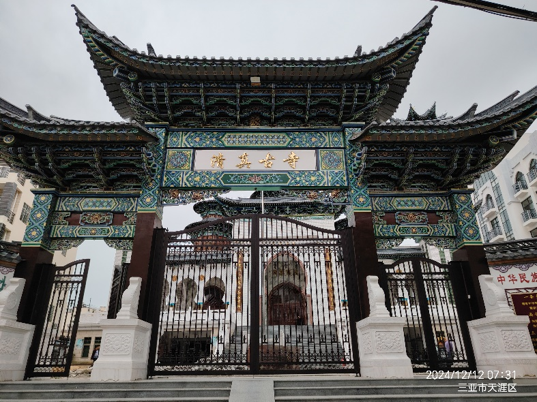
Abstract:
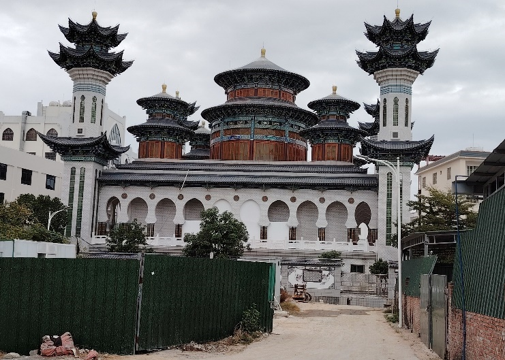
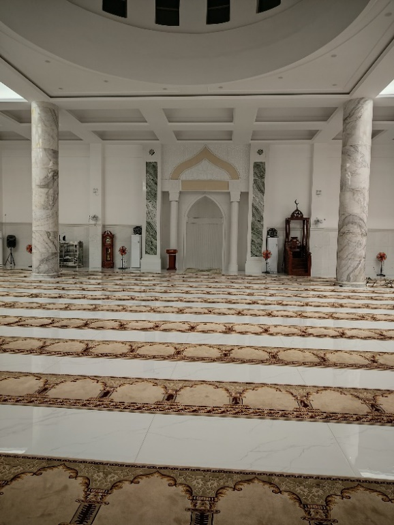
A field visit to Sanya Ancient Mosque located in Huihui Village (Huihui Muslim Village), Tianya District, Sanya. We trace the centuries-long history of the mosque's multiple restorations, showcase its spacious courtyard and solemn prayer hall blending Islamic styles with tropical Lingnan architectural features, and experience the deep-rooted piety of the island's Hui Muslims.
Sanya Ancient Mosque is one of the six active mosques in Sanya. It is located in Huihui Village (Huihui Muslim Community), Tianya District, Sanya City, Hainan Province, specifically in the 1st Alley of Huihui 4th Village. It is about 6 kilometers from downtown Sanya, roughly 3 kilometers from Huixin Village (Huixin Muslim Village), and right next to Sanya Phoenix International Airport. According to records in the Ming Dynasty's Wanli-era "Gazetteer of Qiongzhou Prefecture" and the early Qing Dynasty's "Complete Classics and Records of Ancient and Modern Times: Department of Official Territories" Vol., ancestors of the Hui Muslims arrived around the Song and Yuan dynasties from Champa (around present-day Bình Định Province in Vietnam), "carrying their families and sailing by boat, scattering and settling along the coast." They gathered by lineage to form "Fancun" (Foreigners' Village), which is today's Huixin Village area. Historically, there were four mosques here: the Ancient Mosque (Eastern Mosque), Southern Mosque, Western Mosque, and Northern Mosque. In 1940, due to the Japanese military constructing an airport, the residents of Huixin Village were forcibly relocated 6 kilometers southwest to Yanglan. All the mosques were completely destroyed. The relocation site eventually evolved into Huihui Village, a name chosen to signify "reviving the glory of the Hui ethnic group" and "the prosperity of the Hui people."
During the Tang Dynasty, Hainan Island was already a mandatory transit route for China's maritime spice and silk trade. Muslim merchants traveling from Persia and the Arabian Peninsula through the islands into Chinese ports like Guangzhou and Quanzhou chose to come ashore and settle in Sanya. By the Northern and Southern Song dynasties, Vietnamese Muslims had also migrated to Sanya. Later, during modern crackdowns on Muslims on the mainland, imperial authorities also drove certain mainland Muslims out of the mainland, and these individuals eventually settled in Sanya, Hainan.

Today, the Hui Muslims of Huihui Village in Sanya, Hainan, are the descendants of those Sanya Hui people who were relocated west to Yanglan by the Japanese. Before Liberation, the Yanglan and Lizhiguo areas were called Mingya Township, governing 15 baos (administrative units) and 3 special baos (first, second, and third), totaling 229 jias. In 1950, Yanglan Township was established, followed by the formation of Yanglan Commune in 1961. The Yanglan Commune was changed to Yanglan District in 1983, converted into Yanglan Town in 1986, and in 2001, Yanglan Town was abolished and merged into Fenghuang Town. In 2014, Fenghuang Town, Tianya Town, and Yucai Town were consolidated to establish Tianya District of Sanya City. The former Yanglan is now Yangxin Community under the jurisdiction of Tianya District, primarily a residential area consisting of Han Chinese and migrant populations.
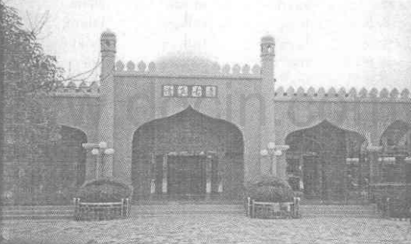
Huihui Village now belongs to the Huihui Community of Tianya District. It boasts a unique geographic location, with the West Ring National Highway cutting right through the village. It is only 5 kilometers away from Sanya Phoenix International Airport, making transportation extremely convenient. It is bounded by the sea to the south, and connects to tourist hotspots like Tianhai Haijiao (Ends of the Earth), Nanshan Temple, and Daxiao Dongtian (Greater and Lesser Views of the Ocean) to the west. Its jurisdiction stretches east to Yanglan Village (Yangxin Community), south to Haipo Village, west to Haihong Road near Phoenix Airport, and north to Shuijiao Village. Covering an area of about 1.6 square kilometers, it has 7 resident groups and is a strictly Hui Muslim-concentrated community. By the end of 2014, the jurisdiction had 598 households with a population of 4,078 people, including 3,747 permanent residents and 331 floating residents. The predecessor of Huihui Village was Fancun (around present-day Huixin Village). In the summer of 1940, the original villagers were all forcibly relocated west to the Yanglan area by Japanese aggressors, forming a settlement that was renamed Hui Muslim Village in 1945. In 1951, Huihui Village established a mutual aid team, followed by a primary cooperative in 1953, an advanced cooperative in 1955, and the Huihui Production Brigade in 1958. Hui Muslims who moved back to their original old village (Fancun) fell under the administration of the Huihui Brigade. In 1982 (1983), it was changed to Huihui Township, and in 1988, the Huihui Residents Committee was established, which eventually became the Huihui Community Residents Committee in 2013, a name that continues to this day.

Additionally, historical and anthropological research suggests that most villagers in Huihui Village exhibit typical South Asian physical characteristics: noses that are not very high, but are relatively wide with depressed nasal bridges, and prominent, protruding cheekbones, indicating that they are largely descendants of the Champa people. Meanwhile, villagers in Huixin mostly display typical West Asian and Central Asian features—narrow faces, high nasal bridges, large eyes, long eyelashes, and other distinct Western Regions traits. In 1942, the Medical College of Taihoku Imperial University dispatched Kaneto Huna to Sanya to conduct somatological measurements on 198 adult male and female Hui residents over the age of 30 in Yanglan. The results showed that compared to southern Han Chinese, the Sanya Hui people belong to a taller, higher-nosed human group, carrying Arabian ancestry.
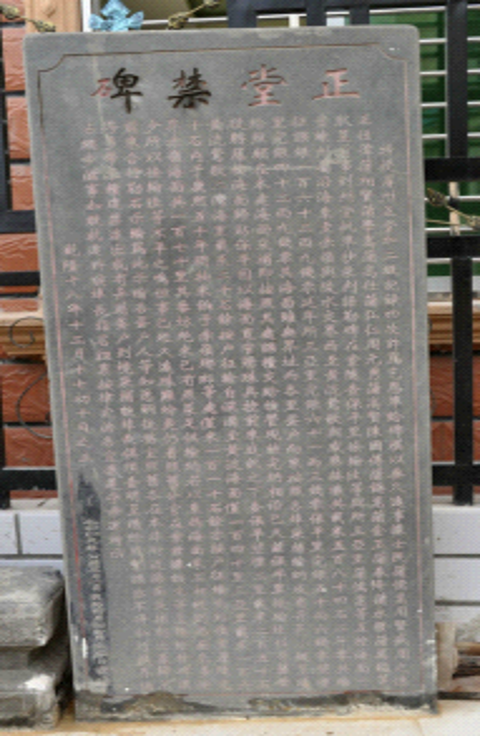
Hui Muslims have a traditional saying: "You can go without a home for a lifetime, but you cannot go a single day without a mosque." Therefore, living clustered around a mosque is a primary characteristic of the Hui people's settlement pattern of "large dispersal, small concentration." According to oral tradition, Sanya Ancient Mosque dates back to the early Southern Song Dynasty, making it rich in history, Hainan's very first mosque, and the earliest built mosque in Sanya. Its predecessor was the Eastern Mosque of Fancun in Sanya. Xiaoye Tianchun referred to it as the Eastern Temple in his book "History of Hainan Island," and it was originally located in Sanya Street (present-day southwest suburbs of Sanya City). However, written records state it was built in the 6th year of the Chenghua reign in the Ming Dynasty (1470) and was originally built in a Chinese style. In the 1920s, the old mosque was originally a brick-and-tile structure, but was later rebuilt into an Arabic-arched reinforced concrete structure, with an octagonal prayer hall. Around 1940, due to the Japanese invasion and airport construction, the original ancient mosque was destroyed. In the 1950s, the Huihui villagers of Yanglan raised funds to rebuild it at a new site and renamed it the "Ancient Mosque," retaining the Arabic-arched style. After 1966, it suffered damage again, and the temple hall was dismantled. In 1982, it was rebuilt once more using black tiles and brick walls, with a prayer hall consisting of only 3 connected rooms, covering an area of just over 300 square meters. Because the temple hall was cramped while believers were numerous, donations totaling 300,000 RMB were contributed by Hong Kong Muslims in 1986 to expand it into an Arabic-style building. A new prayer hall spanning 600 square meters was reconstructed, featuring a dome tower that looked quite magnificent. After remodeling in 1999, a dome was added. In 2008 and 2009, the ancient mosque was hit by floods twice, so funds were raised to rebuild it into a more modern Arabic-style building in time for the Mawlid (Prophet's Birthday) celebration in 2010. Following the expansion in 2011, the new ancient mosque covers an area of 821 square meters and can accommodate over 1,000 people for congregational prayer simultaneously.
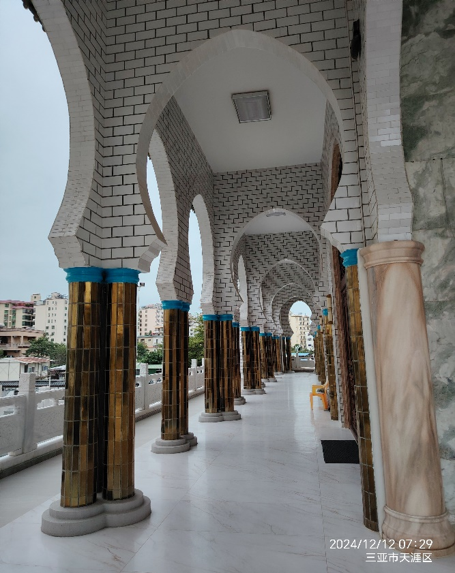
The mosque originally housed multiple stone tablets and plaques, of which only a single "Official Prohibition Tablet" from the 18th year of the Qianlong reign in the Qing Dynasty (1753) survives today. The tablet stands 150 centimeters tall and 55 centimeters wide. It is the only precious cultural relic engraved on a Chinese stone tablet discovered and preserved by the Hui ethnic group in Sanya over the years, holding significant value for studying the economic life of Hainan Muslims in the early Qing period.
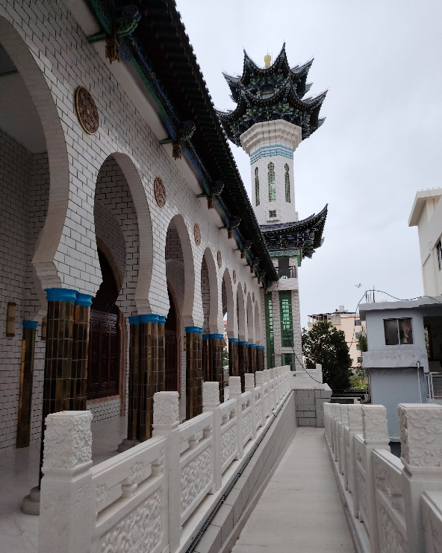
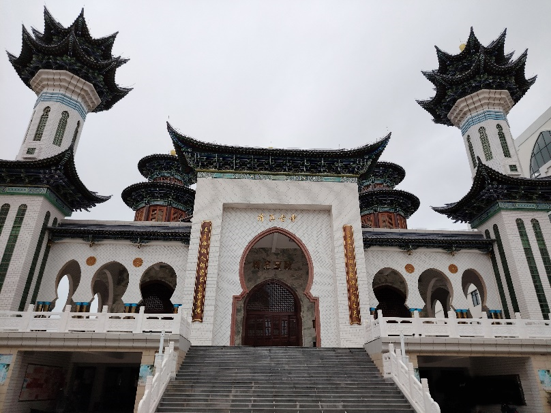
During recent architectural style renovations of the mosque, Sanya Ancient Mosque underwent another round of reconstruction. Today's ancient mosque's towers and corridors seamlessly blend Chinese and Western elements, showcasing both the aesthetic beauty of traditional Chinese architecture and contemporary classical charm, fully expressing its religious and cultural identity.
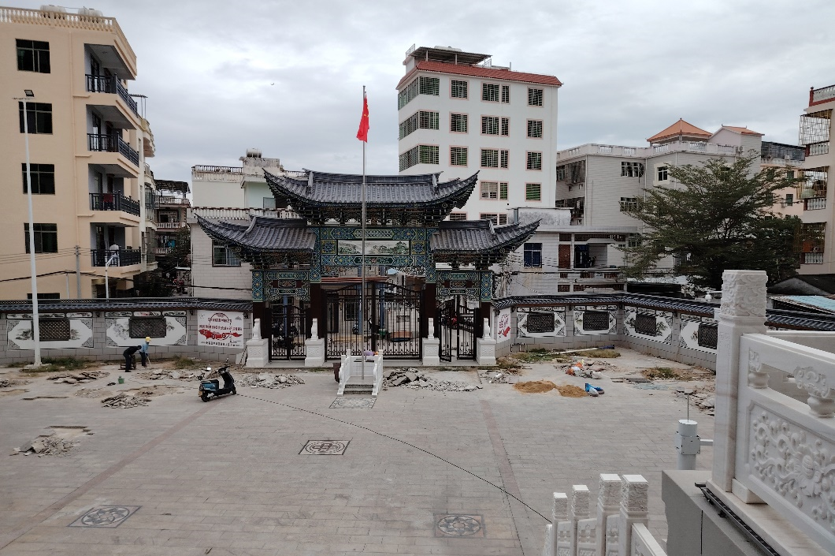
With Sanya's continuous social and economic development—especially the booming tourism industry—Muslims from countries like Sudan, Saudi Arabia, Iran, Pakistan, and Southeast Asia are drawn to visit and pray at mosques in Sanya, Hainan. Today, the Sanya Ancient Mosque continues to play an active, vital role in the religious life of our local Hui compatriots and in external religious and cultural exchanges.
Exploring Sanya Ancient Mosque: Hainan's Oldest Surviving Mosque Architecture and Faith Heritage
Abstract:
A field visit to Sanya Ancient Mosque located in Huihui Village (Huihui Muslim Village), Tianya District, Sanya. We trace the centuries-long history of the mosque's multiple restorations, showcase its spacious courtyard and solemn prayer hall blending Islamic styles with tropical Lingnan architectural features, and experience the deep-rooted piety of the island's Hui Muslims.
Sanya Ancient Mosque is one of the six active mosques in Sanya. It is located in Huihui Village (Huihui Muslim Community), Tianya District, Sanya City, Hainan Province, specifically in the 1st Alley of Huihui 4th Village. It is about 6 kilometers from downtown Sanya, roughly 3 kilometers from Huixin Village (Huixin Muslim Village), and right next to Sanya Phoenix International Airport. According to records in the Ming Dynasty's Wanli-era "Gazetteer of Qiongzhou Prefecture" and the early Qing Dynasty's "Complete Classics and Records of Ancient and Modern Times: Department of Official Territories" Vol., ancestors of the Hui Muslims arrived around the Song and Yuan dynasties from Champa (around present-day Bình Định Province in Vietnam), "carrying their families and sailing by boat, scattering and settling along the coast." They gathered by lineage to form "Fancun" (Foreigners' Village), which is today's Huixin Village area. Historically, there were four mosques here: the Ancient Mosque (Eastern Mosque), Southern Mosque, Western Mosque, and Northern Mosque. In 1940, due to the Japanese military constructing an airport, the residents of Huixin Village were forcibly relocated 6 kilometers southwest to Yanglan. All the mosques were completely destroyed. The relocation site eventually evolved into Huihui Village, a name chosen to signify "reviving the glory of the Hui ethnic group" and "the prosperity of the Hui people."
During the Tang Dynasty, Hainan Island was already a mandatory transit route for China's maritime spice and silk trade. Muslim merchants traveling from Persia and the Arabian Peninsula through the islands into Chinese ports like Guangzhou and Quanzhou chose to come ashore and settle in Sanya. By the Northern and Southern Song dynasties, Vietnamese Muslims had also migrated to Sanya. Later, during modern crackdowns on Muslims on the mainland, imperial authorities also drove certain mainland Muslims out of the mainland, and these individuals eventually settled in Sanya, Hainan.
Today, the Hui Muslims of Huihui Village in Sanya, Hainan, are the descendants of those Sanya Hui people who were relocated west to Yanglan by the Japanese. Before Liberation, the Yanglan and Lizhiguo areas were called Mingya Township, governing 15 baos (administrative units) and 3 special baos (first, second, and third), totaling 229 jias. In 1950, Yanglan Township was established, followed by the formation of Yanglan Commune in 1961. The Yanglan Commune was changed to Yanglan District in 1983, converted into Yanglan Town in 1986, and in 2001, Yanglan Town was abolished and merged into Fenghuang Town. In 2014, Fenghuang Town, Tianya Town, and Yucai Town were consolidated to establish Tianya District of Sanya City. The former Yanglan is now Yangxin Community under the jurisdiction of Tianya District, primarily a residential area consisting of Han Chinese and migrant populations.
Huihui Village now belongs to the Huihui Community of Tianya District. It boasts a unique geographic location, with the West Ring National Highway cutting right through the village. It is only 5 kilometers away from Sanya Phoenix International Airport, making transportation extremely convenient. It is bounded by the sea to the south, and connects to tourist hotspots like Tianhai Haijiao (Ends of the Earth), Nanshan Temple, and Daxiao Dongtian (Greater and Lesser Views of the Ocean) to the west. Its jurisdiction stretches east to Yanglan Village (Yangxin Community), south to Haipo Village, west to Haihong Road near Phoenix Airport, and north to Shuijiao Village. Covering an area of about 1.6 square kilometers, it has 7 resident groups and is a strictly Hui Muslim-concentrated community. By the end of 2014, the jurisdiction had 598 households with a population of 4,078 people, including 3,747 permanent residents and 331 floating residents. The predecessor of Huihui Village was Fancun (around present-day Huixin Village). In the summer of 1940, the original villagers were all forcibly relocated west to the Yanglan area by Japanese aggressors, forming a settlement that was renamed Hui Muslim Village in 1945. In 1951, Huihui Village established a mutual aid team, followed by a primary cooperative in 1953, an advanced cooperative in 1955, and the Huihui Production Brigade in 1958. Hui Muslims who moved back to their original old village (Fancun) fell under the administration of the Huihui Brigade. In 1982 (1983), it was changed to Huihui Township, and in 1988, the Huihui Residents Committee was established, which eventually became the Huihui Community Residents Committee in 2013, a name that continues to this day.
Additionally, historical and anthropological research suggests that most villagers in Huihui Village exhibit typical South Asian physical characteristics: noses that are not very high, but are relatively wide with depressed nasal bridges, and prominent, protruding cheekbones, indicating that they are largely descendants of the Champa people. Meanwhile, villagers in Huixin mostly display typical West Asian and Central Asian features—narrow faces, high nasal bridges, large eyes, long eyelashes, and other distinct Western Regions traits. In 1942, the Medical College of Taihoku Imperial University dispatched Kaneto Huna to Sanya to conduct somatological measurements on 198 adult male and female Hui residents over the age of 30 in Yanglan. The results showed that compared to southern Han Chinese, the Sanya Hui people belong to a taller, higher-nosed human group, carrying Arabian ancestry.
Hui Muslims have a traditional saying: "You can go without a home for a lifetime, but you cannot go a single day without a mosque." Therefore, living clustered around a mosque is a primary characteristic of the Hui people's settlement pattern of "large dispersal, small concentration." According to oral tradition, Sanya Ancient Mosque dates back to the early Southern Song Dynasty, making it rich in history, Hainan's very first mosque, and the earliest built mosque in Sanya. Its predecessor was the Eastern Mosque of Fancun in Sanya. Xiaoye Tianchun referred to it as the Eastern Temple in his book "History of Hainan Island," and it was originally located in Sanya Street (present-day southwest suburbs of Sanya City). However, written records state it was built in the 6th year of the Chenghua reign in the Ming Dynasty (1470) and was originally built in a Chinese style. In the 1920s, the old mosque was originally a brick-and-tile structure, but was later rebuilt into an Arabic-arched reinforced concrete structure, with an octagonal prayer hall. Around 1940, due to the Japanese invasion and airport construction, the original ancient mosque was destroyed. In the 1950s, the Huihui villagers of Yanglan raised funds to rebuild it at a new site and renamed it the "Ancient Mosque," retaining the Arabic-arched style. After 1966, it suffered damage again, and the temple hall was dismantled. In 1982, it was rebuilt once more using black tiles and brick walls, with a prayer hall consisting of only 3 connected rooms, covering an area of just over 300 square meters. Because the temple hall was cramped while believers were numerous, donations totaling 300,000 RMB were contributed by Hong Kong Muslims in 1986 to expand it into an Arabic-style building. A new prayer hall spanning 600 square meters was reconstructed, featuring a dome tower that looked quite magnificent. After remodeling in 1999, a dome was added. In 2008 and 2009, the ancient mosque was hit by floods twice, so funds were raised to rebuild it into a more modern Arabic-style building in time for the Mawlid (Prophet's Birthday) celebration in 2010. Following the expansion in 2011, the new ancient mosque covers an area of 821 square meters and can accommodate over 1,000 people for congregational prayer simultaneously.
The mosque originally housed multiple stone tablets and plaques, of which only a single "Official Prohibition Tablet" from the 18th year of the Qianlong reign in the Qing Dynasty (1753) survives today. The tablet stands 150 centimeters tall and 55 centimeters wide. It is the only precious cultural relic engraved on a Chinese stone tablet discovered and preserved by the Hui ethnic group in Sanya over the years, holding significant value for studying the economic life of Hainan Muslims in the early Qing period.
During recent architectural style renovations of the mosque, Sanya Ancient Mosque underwent another round of reconstruction. Today's ancient mosque's towers and corridors seamlessly blend Chinese and Western elements, showcasing both the aesthetic beauty of traditional Chinese architecture and contemporary classical charm, fully expressing its religious and cultural identity.
With Sanya's continuous social and economic development—especially the booming tourism industry—Muslims from countries like Sudan, Saudi Arabia, Iran, Pakistan, and Southeast Asia are drawn to visit and pray at mosques in Sanya, Hainan. Today, the Sanya Ancient Mosque continues to play an active, vital role in the religious life of our local Hui compatriots and in external religious and cultural exchanges.
