
Best Islamic Heritage in Xi'an: Huajuexiang Great Mosque Calligraphy, Architecture, and Travel Guide
[Internet Repost]
Explore the Huajuexiang Great Mosque in Xi'an's Lianhu District, a stunning 1,300-year-old national-level treasure featuring traditional Chinese palace architecture, rare calligraphy by Song Dynasty master Mi Fu and Ming Dynasty master Dong Qichang, and a practical visitor's guide.

Walk a few hundred meters down Huajuexiang alley and you'll find a 1,300-year-old national treasure.
Inside, there are no domes and no minarets—it looks entirely like a traditional Chinese imperial palace.
For 25 yuan, I think it's one of the best value-for-money tickets in Xi'an.
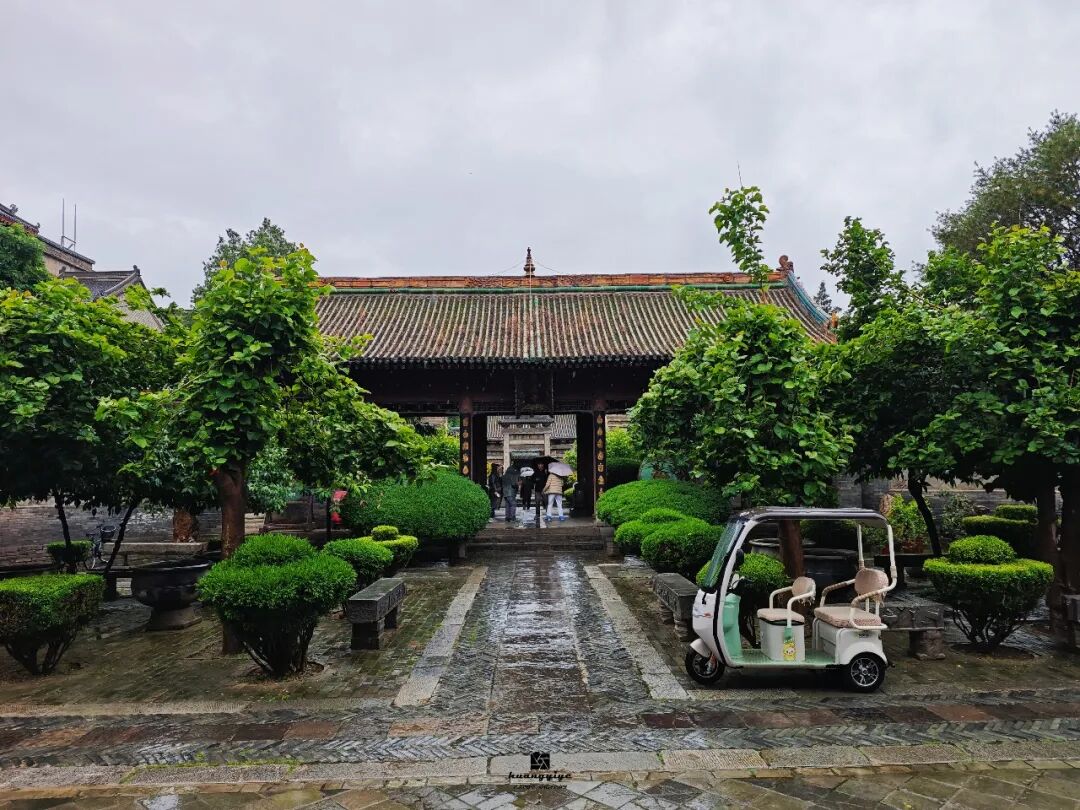
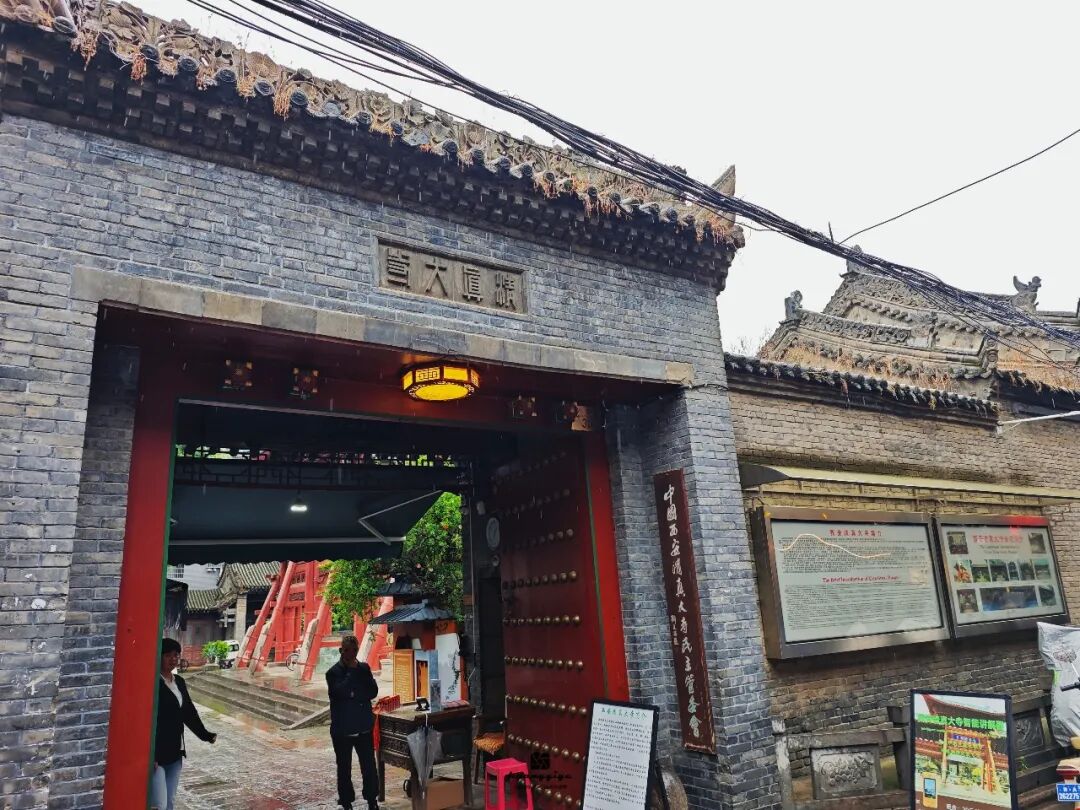
Address: 30 Huajuexiang, Lianhu District
Tickets: 25 yuan in peak season / 15 yuan in off-peak season, half-price for students, buy tickets on-site with no reservation needed
Hours: Around 8:00 AM to 7:00 PM
Transportation: Take Metro Line 6 to Guangjijie Station, Exit B, and walk for 5 minutes. It's actually closer than the Zhonglou (Bell Tower) Station.
⚠️ It's closed to visitors on Fridays during Jummah prayer (around 12:00 PM to 2:00 PM), so avoid visiting during those hours.
1. The Wooden Paifang (Traditional Chinese Gateway Arch) | Worth the Ticket Price the Moment You Walk In
Calligraphy from both the Song and Ming Dynasties, all gathered in a single archway.
Standing about 9 meters tall, it features glazed tile roofs, stacked dougong (traditional interlocking wooden brackets), and upturned eaves.
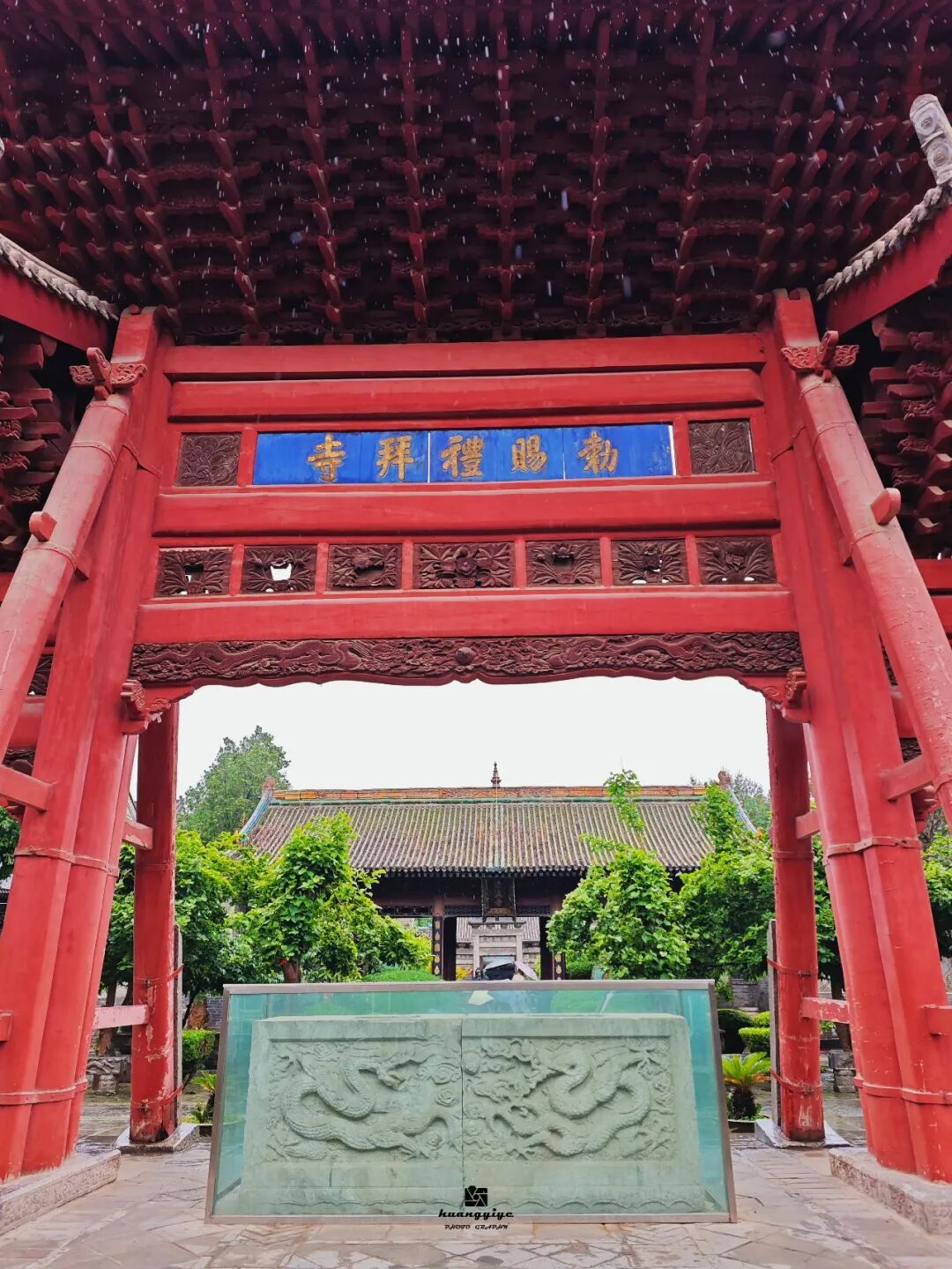
The eastern side reads "Chici Libaisi" (Imperial Edict Bestowed Mosque) handwritten by Ming Dynasty master Dong Qichang, while the western side reads "Daofa Can Tiandi" (The Way Emulates Heaven and Earth) handwritten by Song Dynasty master Mi Fu.
In a single archway, you get handwriting from calligraphy masters of both the Song and Ming Dynasties.
2. The Stone Paifang "Tian Jian Zai Zi"
This three-bay, four-pillar stone archway features carvings on both side lintels that read "Qin Yi Zhao Shi" and "Qian Cheng Sheng Li".
The two soaring dragon-carved steles behind it are even more impressive: one stele has Mi Fu's "Daofa Can Tiandi" carved on the back, and the other has Dong Qichang's "Chici Libaisi" carved on the back.
3. The Chixiu Hall | Home to Calligraphy by Empress Dowager Cixi
Legend has it that this was originally the main prayer hall, but after being renovated during the Jiajing reign of the Ming Dynasty, it became an antechamber.
Hanging inside facing west is the calligraphy "Pai Yan Tian Fang" (Lineage Spreading to Mecca) written by Empress Dowager Cixi, and facing east is "Gu Jiao Qing Zhen" (Ancient Pure Religion). (She wrote these when she fled to Xi'an in 1900 and returned to the capital the following year.)
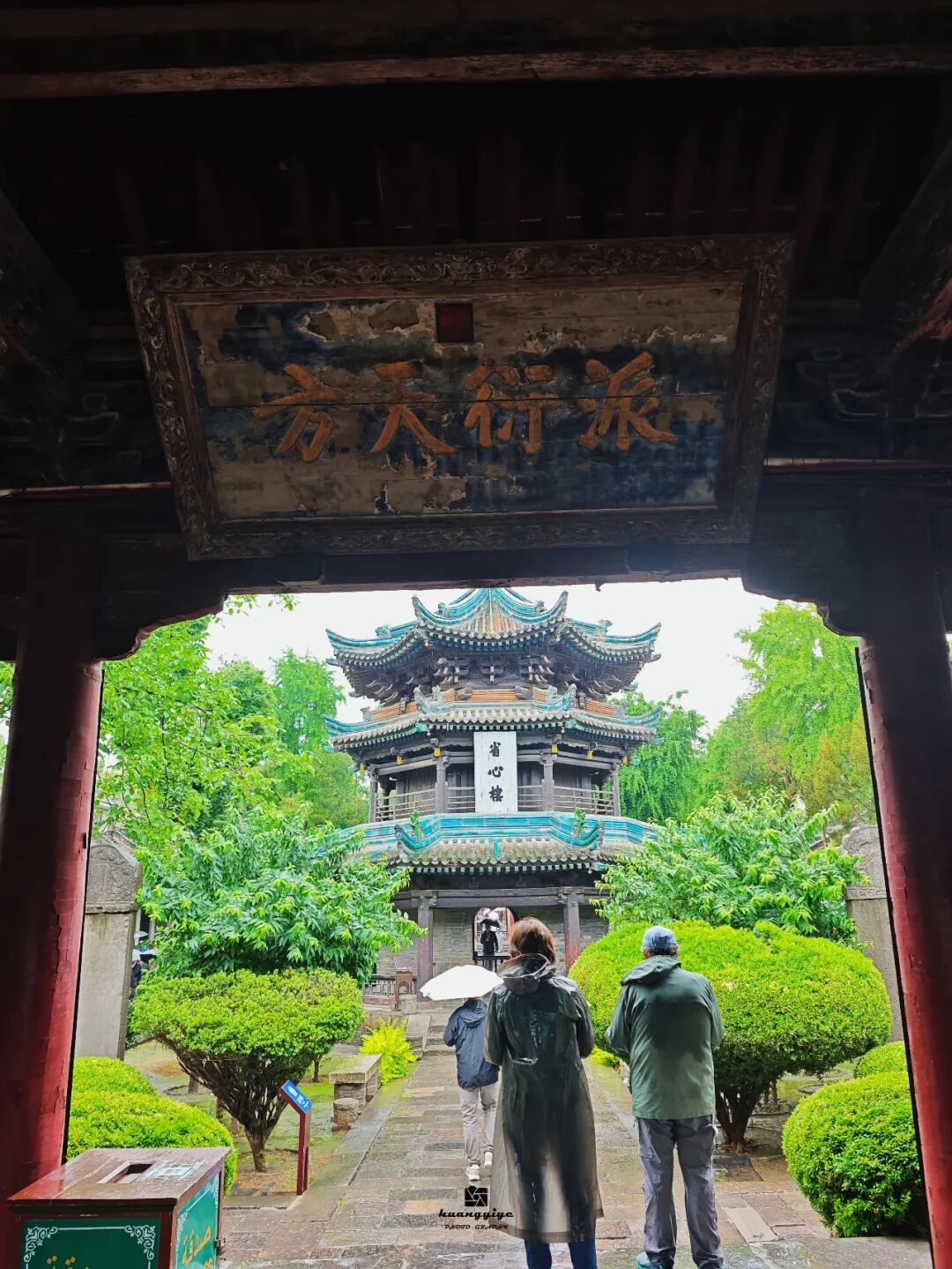
There is also an Arabic "Yue Bei" (Moon Stele) erected in the tenth year of the Yongzheng reign of the Qing Dynasty (1732), which explains how to calculate the lunar calendar for Ramadan—people who study cultural relics will definitely want to take a closer look at this.
4. The Shengxin Lou (Shengxin Tower) | The Highest Point of the Entire Mosque
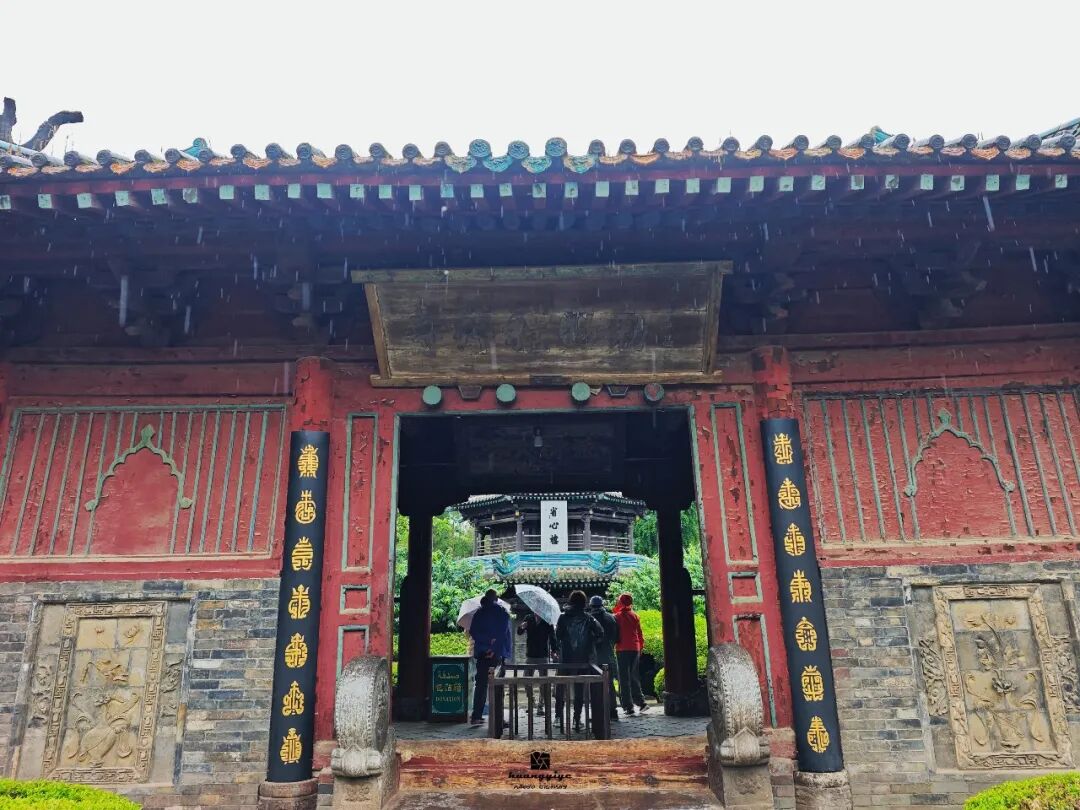
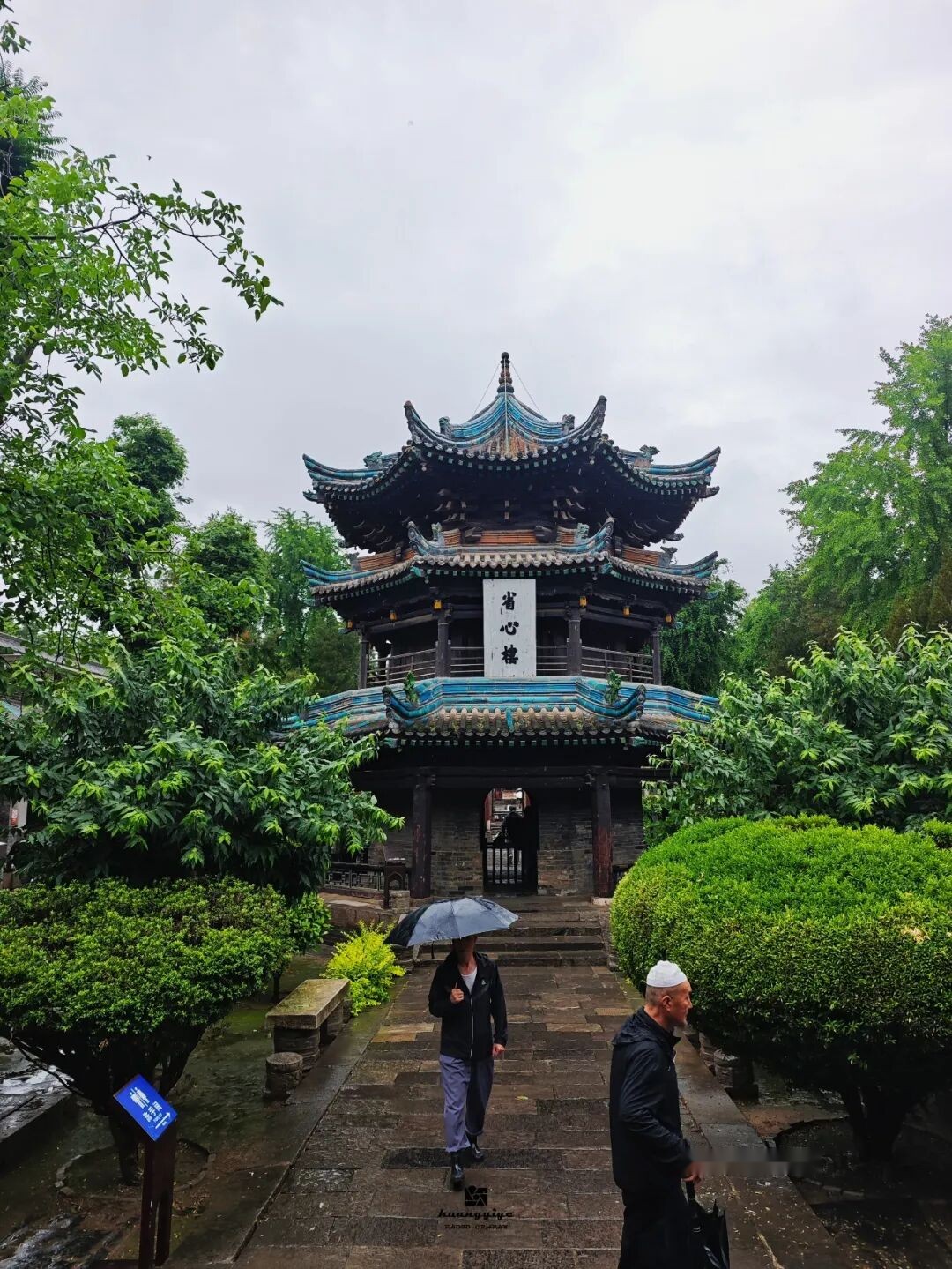
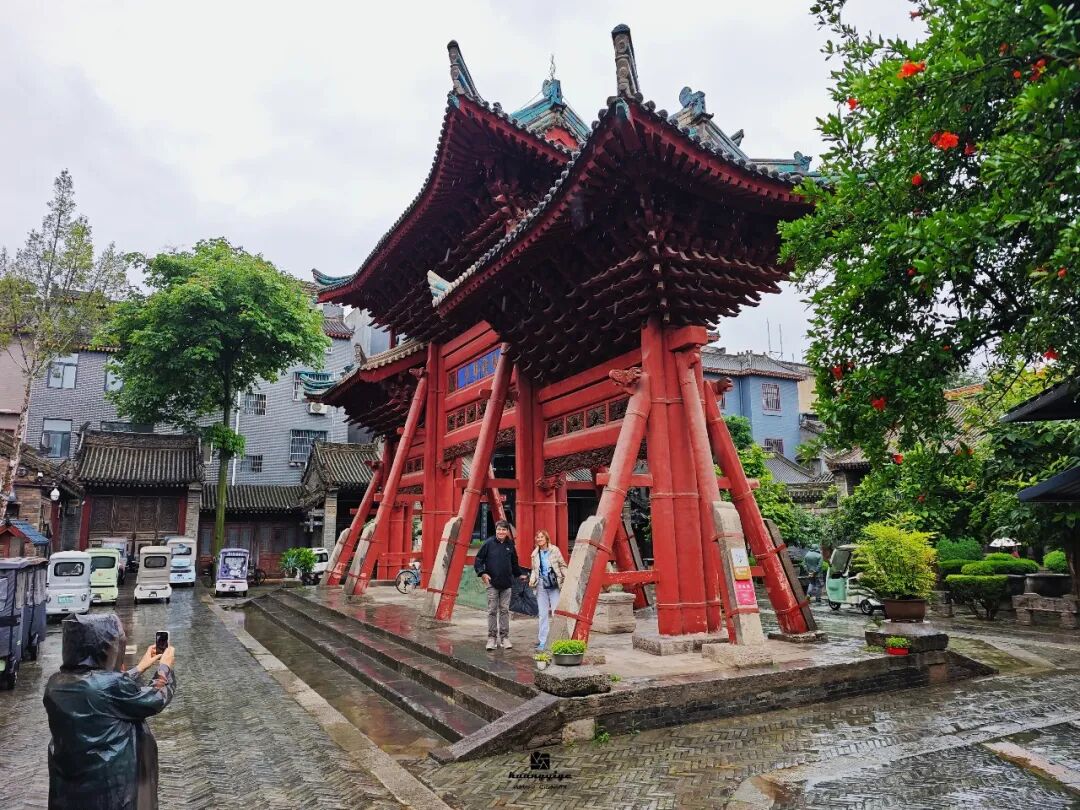
This is a three-story, octagonal pavilion-roofed tower with blue glazed tiles. It serves as the minaret (bunker tower), used to call the faithful to prayer.
The name is brilliantly chosen: instead of just calling out with the voice, it calls out to the heart, drawing inspiration from the Confucian concept of "reflecting on oneself thrice daily"—this is one of the most gorgeous fusions of Chinese Neo-Confucian philosophy and Islamic function.
5. The Fenghuang Ting (Phoenix Pavilion) | My Personal Favorite Spot
Also known as the "Yizhen Pavilion" (Pavilion of Absolute Truth). The main pavilion is hexagonal, flanked by two triangular side pavilions. Connected together, the three pavilions look like a phoenix spreading its wings, a unique architectural layout in China.
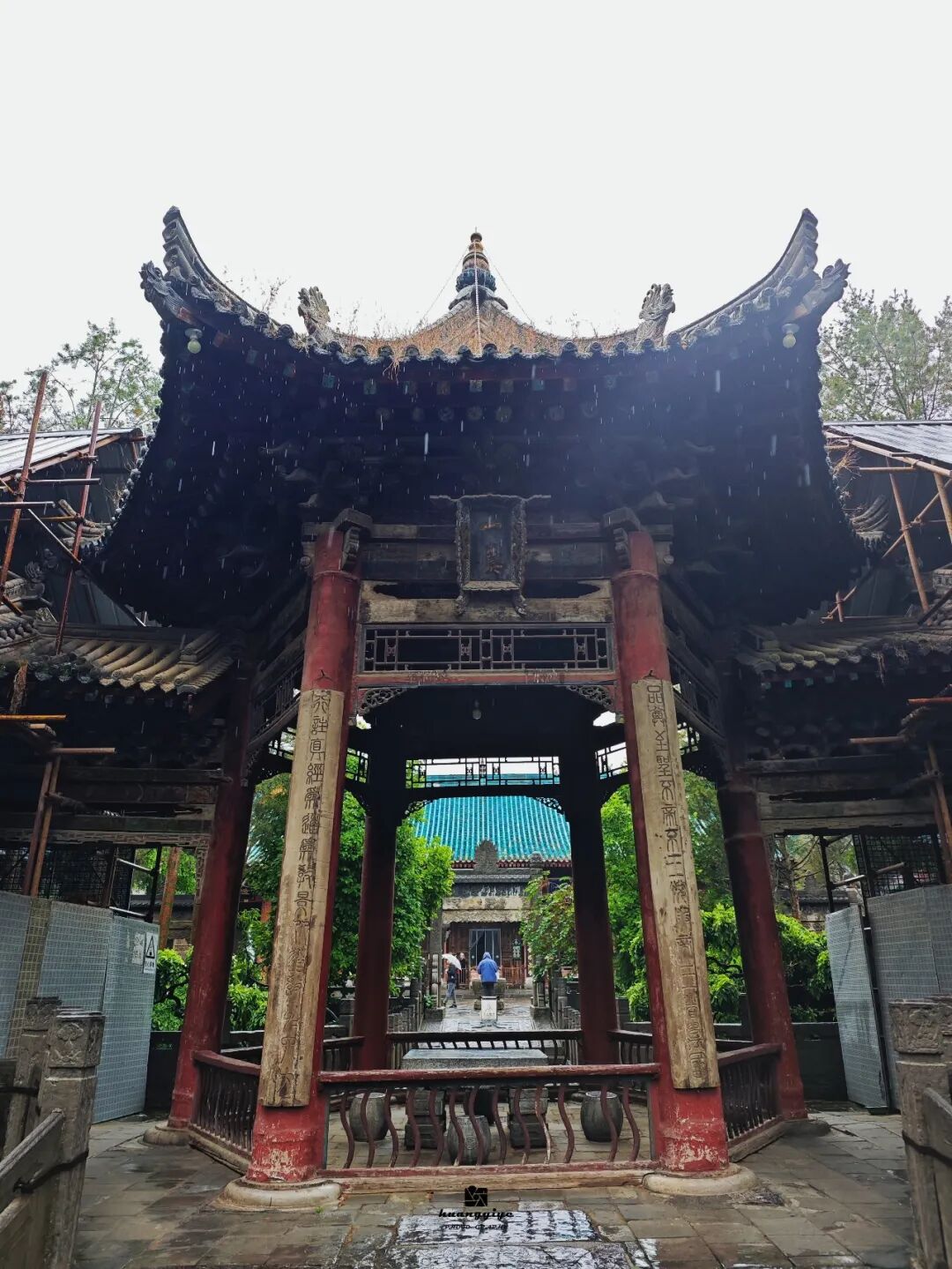
Under the eaves, the small dragon-carved plaque reading "Yizhen" was handwritten by Tie Xuan, Minister of War in the first year of the Jianwen reign of the Ming Dynasty (1399).
Behind the pavilion is a begonia-flower-shaped fish pond. Sitting here to rest gives you the tranquil vibe of a classical southern Chinese garden.
6. The Main Prayer Hall | Where You Can't Go Inside
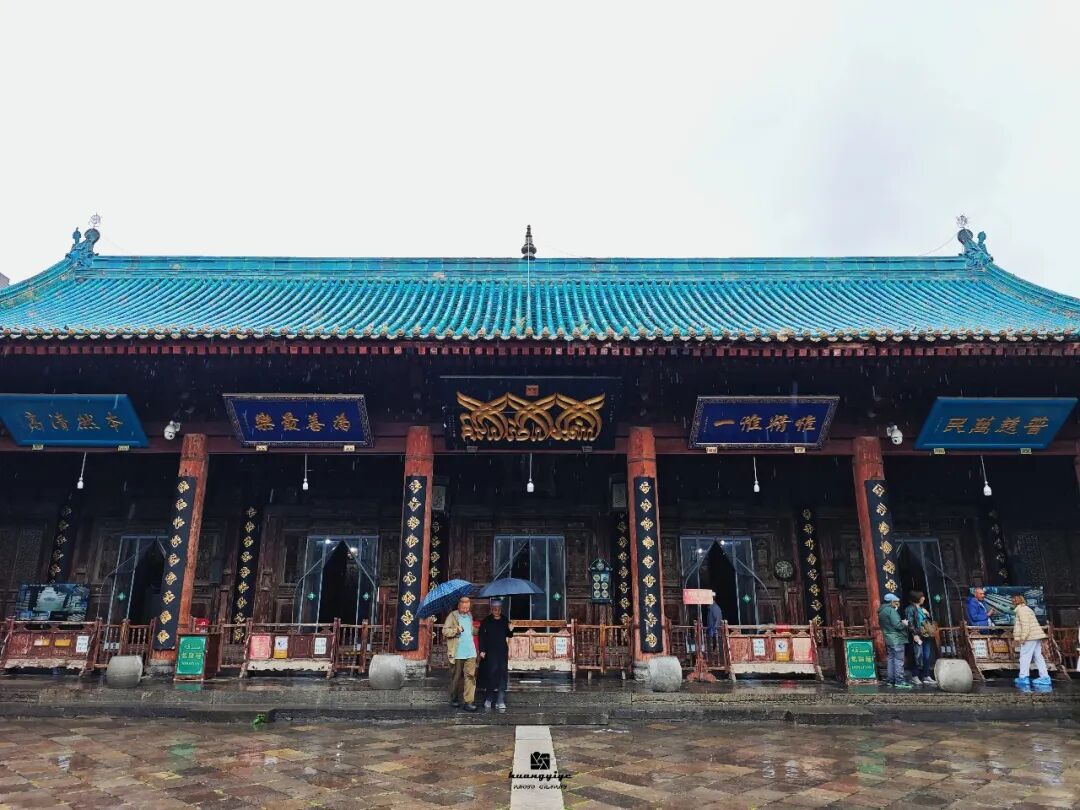
It spans 7 bays wide and 9 bays deep, topped with peacock-blue glazed tiles, and can accommodate over a thousand people.
Inside the hall are over 600 painted caisson ceilings, surrounded by 30 wood-carved panels featuring Chinese and Arabic calligraphy of the Quran.
However, non-Muslims are not allowed inside the main prayer hall. Catching a glimpse of that blue glazed roof and the dougong brackets from the terrace is already breathtaking enough.
7. Two Quick Reminders
Don't take photos of people while they are praying, and photography is strictly prohibited inside the hall.
And here's something I want to say: at the Forest of Stone Steles Museum, you're looking at the history of Chinese calligraphy carved into stone; at this mosque, you're looking at it hanging on wood.
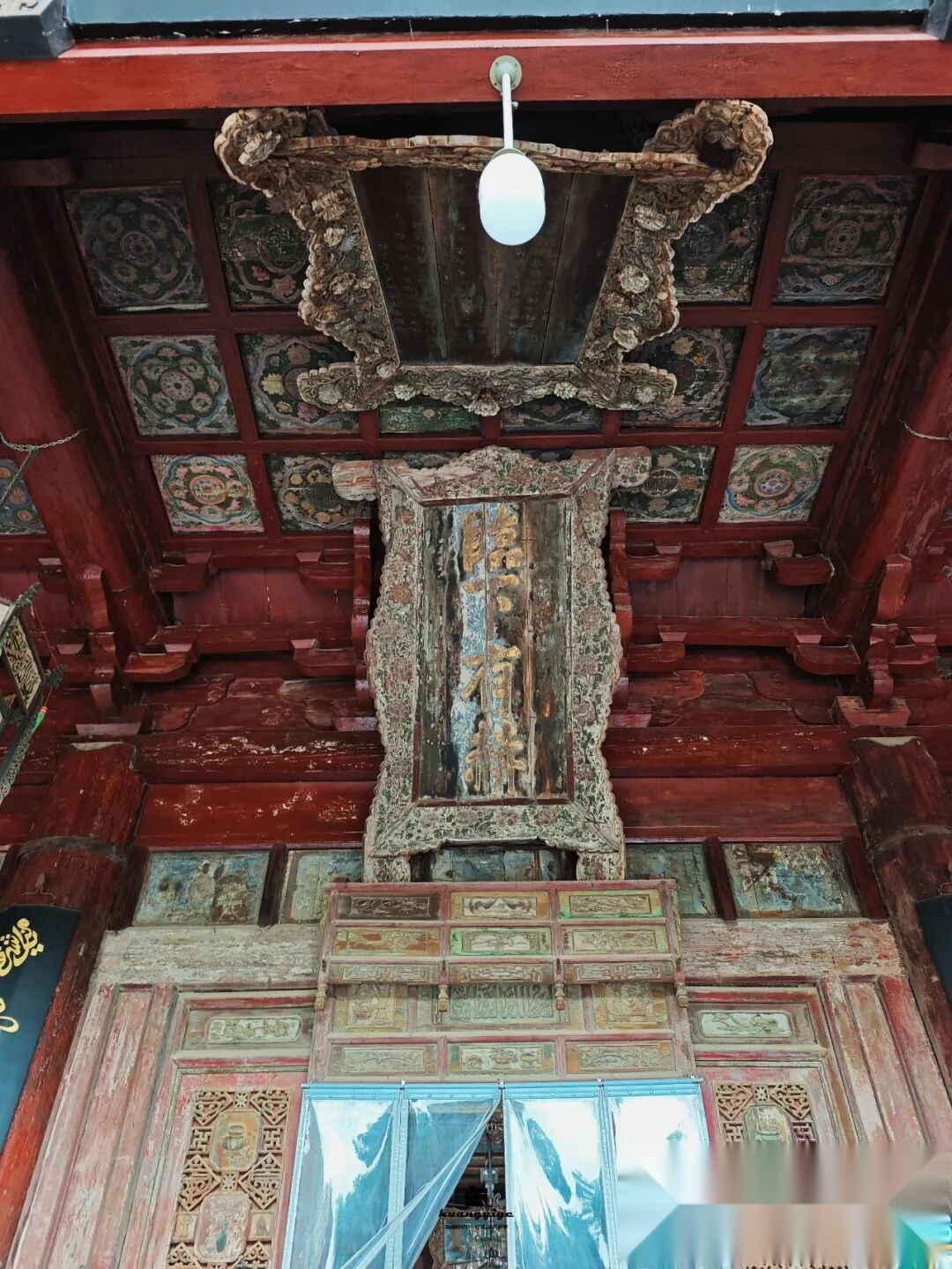
Mi Fu, Dong Qichang, Tie Xuan, and Empress Dowager Cixi are all lined up here.
Since the two locations are quite close to each other, calligraphy lovers can easily knock both out in a single day.
Finally
A quick summary: for 25 yuan, you get to see a 1,300-year-old courtyard that hasn't changed, along with calligraphy from the Song, Ming, and Qing dynasties. Just don't go on Friday at noon.
Explore the Huajuexiang Great Mosque in Xi'an's Lianhu District, a stunning 1,300-year-old national-level treasure featuring traditional Chinese palace architecture, rare calligraphy by Song Dynasty master Mi Fu and Ming Dynasty master Dong Qichang, and a practical visitor's guide.
Walk a few hundred meters down Huajuexiang alley and you'll find a 1,300-year-old national treasure.
Inside, there are no domes and no minarets—it looks entirely like a traditional Chinese imperial palace.
For 25 yuan, I think it's one of the best value-for-money tickets in Xi'an.
Address: 30 Huajuexiang, Lianhu District
Tickets: 25 yuan in peak season / 15 yuan in off-peak season, half-price for students, buy tickets on-site with no reservation needed
Hours: Around 8:00 AM to 7:00 PM
Transportation: Take Metro Line 6 to Guangjijie Station, Exit B, and walk for 5 minutes. It's actually closer than the Zhonglou (Bell Tower) Station.
⚠️ It's closed to visitors on Fridays during Jummah prayer (around 12:00 PM to 2:00 PM), so avoid visiting during those hours.
1. The Wooden Paifang (Traditional Chinese Gateway Arch) | Worth the Ticket Price the Moment You Walk In
Calligraphy from both the Song and Ming Dynasties, all gathered in a single archway.
Standing about 9 meters tall, it features glazed tile roofs, stacked dougong (traditional interlocking wooden brackets), and upturned eaves.
The eastern side reads "Chici Libaisi" (Imperial Edict Bestowed Mosque) handwritten by Ming Dynasty master Dong Qichang, while the western side reads "Daofa Can Tiandi" (The Way Emulates Heaven and Earth) handwritten by Song Dynasty master Mi Fu.
In a single archway, you get handwriting from calligraphy masters of both the Song and Ming Dynasties.
2. The Stone Paifang "Tian Jian Zai Zi"
This three-bay, four-pillar stone archway features carvings on both side lintels that read "Qin Yi Zhao Shi" and "Qian Cheng Sheng Li".
The two soaring dragon-carved steles behind it are even more impressive: one stele has Mi Fu's "Daofa Can Tiandi" carved on the back, and the other has Dong Qichang's "Chici Libaisi" carved on the back.
3. The Chixiu Hall | Home to Calligraphy by Empress Dowager Cixi
Legend has it that this was originally the main prayer hall, but after being renovated during the Jiajing reign of the Ming Dynasty, it became an antechamber.
Hanging inside facing west is the calligraphy "Pai Yan Tian Fang" (Lineage Spreading to Mecca) written by Empress Dowager Cixi, and facing east is "Gu Jiao Qing Zhen" (Ancient Pure Religion). (She wrote these when she fled to Xi'an in 1900 and returned to the capital the following year.)
There is also an Arabic "Yue Bei" (Moon Stele) erected in the tenth year of the Yongzheng reign of the Qing Dynasty (1732), which explains how to calculate the lunar calendar for Ramadan—people who study cultural relics will definitely want to take a closer look at this.
4. The Shengxin Lou (Shengxin Tower) | The Highest Point of the Entire Mosque
This is a three-story, octagonal pavilion-roofed tower with blue glazed tiles. It serves as the minaret (bunker tower), used to call the faithful to prayer.
The name is brilliantly chosen: instead of just calling out with the voice, it calls out to the heart, drawing inspiration from the Confucian concept of "reflecting on oneself thrice daily"—this is one of the most gorgeous fusions of Chinese Neo-Confucian philosophy and Islamic function.
5. The Fenghuang Ting (Phoenix Pavilion) | My Personal Favorite Spot
Also known as the "Yizhen Pavilion" (Pavilion of Absolute Truth). The main pavilion is hexagonal, flanked by two triangular side pavilions. Connected together, the three pavilions look like a phoenix spreading its wings, a unique architectural layout in China.
Under the eaves, the small dragon-carved plaque reading "Yizhen" was handwritten by Tie Xuan, Minister of War in the first year of the Jianwen reign of the Ming Dynasty (1399).
Behind the pavilion is a begonia-flower-shaped fish pond. Sitting here to rest gives you the tranquil vibe of a classical southern Chinese garden.
6. The Main Prayer Hall | Where You Can't Go Inside
It spans 7 bays wide and 9 bays deep, topped with peacock-blue glazed tiles, and can accommodate over a thousand people.
Inside the hall are over 600 painted caisson ceilings, surrounded by 30 wood-carved panels featuring Chinese and Arabic calligraphy of the Quran.
However, non-Muslims are not allowed inside the main prayer hall. Catching a glimpse of that blue glazed roof and the dougong brackets from the terrace is already breathtaking enough.
7. Two Quick Reminders
Don't take photos of people while they are praying, and photography is strictly prohibited inside the hall.
And here's something I want to say: at the Forest of Stone Steles Museum, you're looking at the history of Chinese calligraphy carved into stone; at this mosque, you're looking at it hanging on wood.
Mi Fu, Dong Qichang, Tie Xuan, and Empress Dowager Cixi are all lined up here.
Since the two locations are quite close to each other, calligraphy lovers can easily knock both out in a single day.
Finally
A quick summary: for 25 yuan, you get to see a 1,300-year-old courtyard that hasn't changed, along with calligraphy from the Song, Ming, and Qing dynasties. Just don't go on Friday at noon.
