
Qinghai's Hidden Gem: Hongshui Spring Mosque, 600-Year-Old Hui Muslim Architecture & "Heavenly Umbrella" Art
Exploring Hongshui Spring Mosque in Ping'an, Haidong, Qinghai: A 600-Year-Old National Heritage Mosque with "Heavenly Umbrella" Architecture Hidden Deep in the Mountains
We're taking you on a virtual tour with 11 high-definition photos inside the Hongshui Spring Mosque, tucked away in an ancient mountain village in Ping'an District, Haidong City, Qinghai Province. Tracing its more than 600-year history, we'll dive into the detailed architecture, featuring the "Heavenly Umbrella" (Tianluosan) — a multi-eaved, pyramidal screen wall, traditional Han-style temple structures with intricate mortise-and-tenon joints, and absolutely stunning brick and wood carvings. This place totally breaks any stereotypes you might have about mosques, showcasing the timeless charm of this Chinese Islamic national heritage site.
From Xining, head towards Ping'an, and the last dozen kilometers are winding mountain roads. Outside the car window, you'll see the typical loess hills of the Hehuang Valley, crisscrossed with ravines and dotted with scattered villages. Without navigation, it's really hard to imagine that this hidden mountain hollow holds a mosque over 600 years old – the Hongshui Spring Mosque.
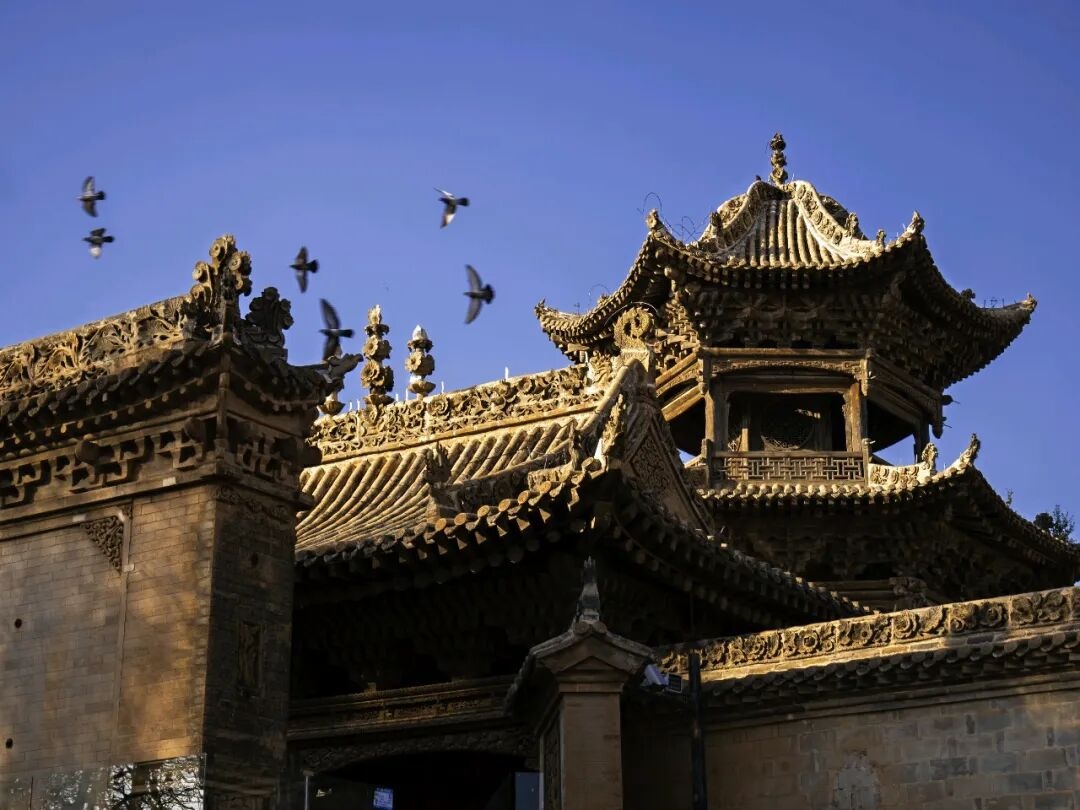
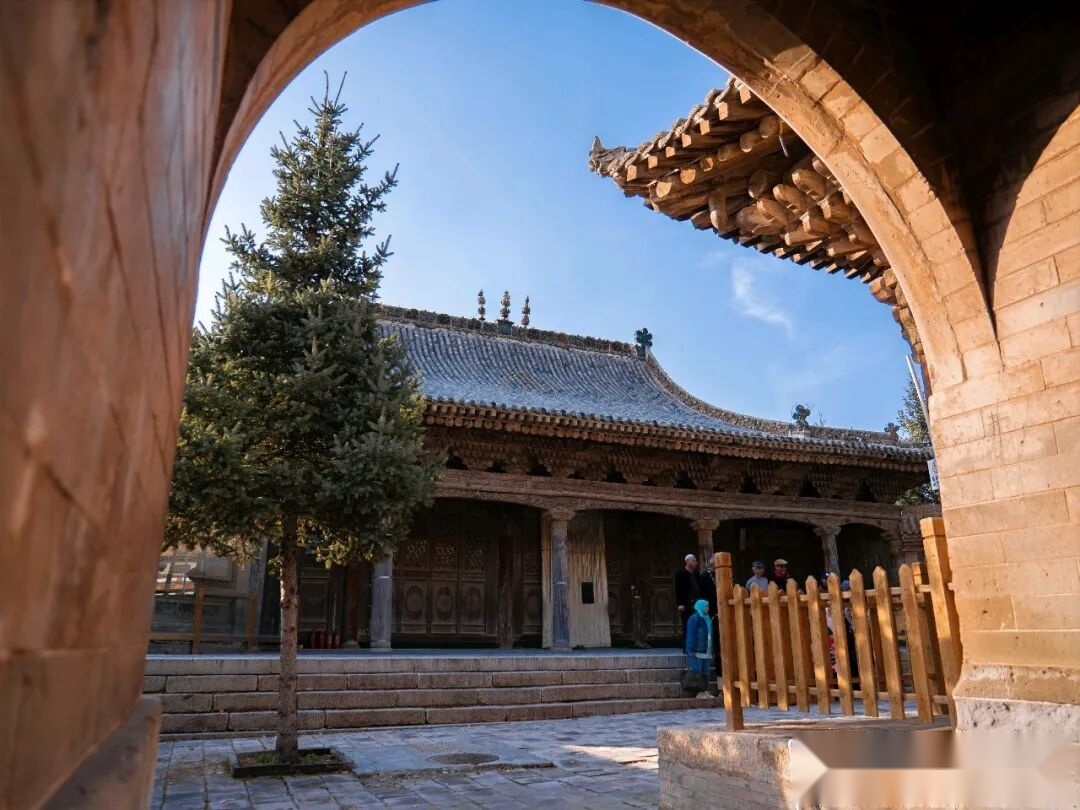
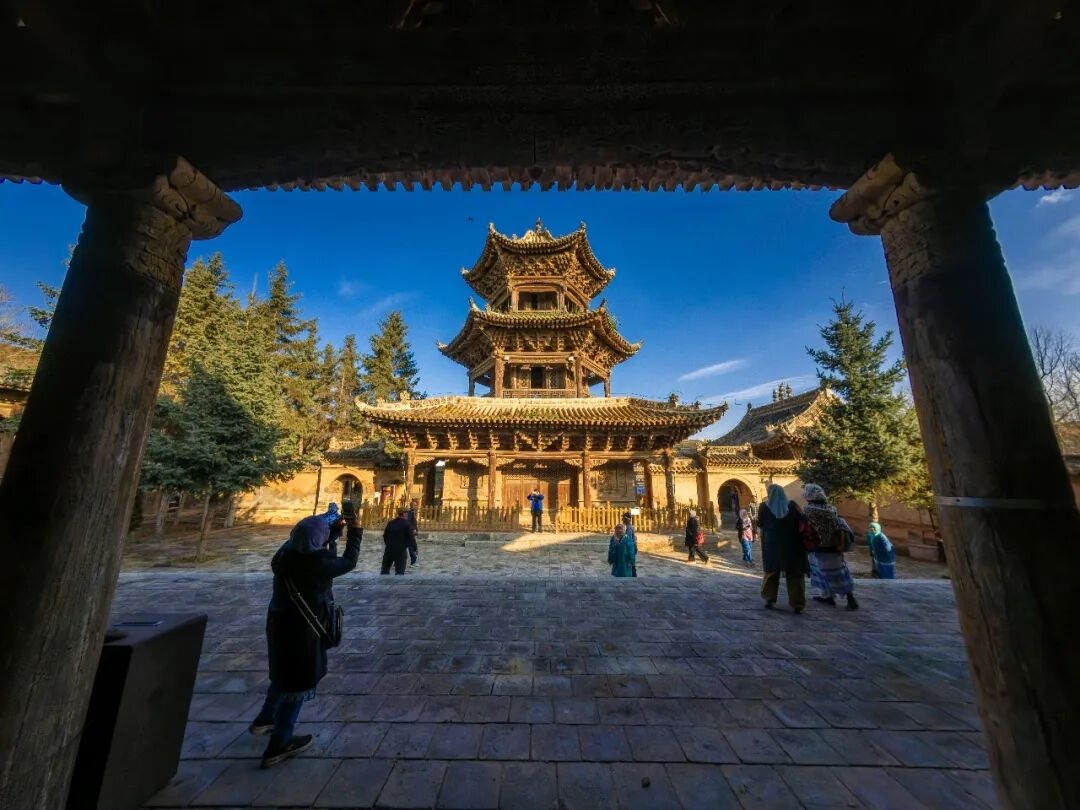
It's not in a city, or even right by the road. Instead, it's built into the side of a mountain, facing east, in Hongshui Spring Village, part of Hongshui Spring Hui Muslim Township. From a distance, with its gray bricks, dark tiles, and layered flying eaves (feiyan dougong – traditional Chinese architectural element), it looks like an old Chinese courtyard forgotten by time. Only when you step inside do you realize it's a mosque – a mosque that, from head to toe, doesn't fit people's typical idea of what a mosque looks like.
A Mosque within a Han-Style Temple Structure
Based on existing stone tablets and local records, the Hongshui Spring Mosque was first built in the second year of the Yongle reign of the Ming Dynasty (1404). After that, it was expanded five times, with its current main layout finalized during the Qianlong reign of the Qing Dynasty. For that specific expansion, local Muslims pooled their resources, and hundreds of artisans from various ethnic groups, including many from Shanxi, came to work on it. It took them thirteen long years to finish.
Thirteen years is a significant chunk of a person's life, but for a building, it's the time meticulously carved into every brick sculpture and fitted into every mortise-and-tenon joint.
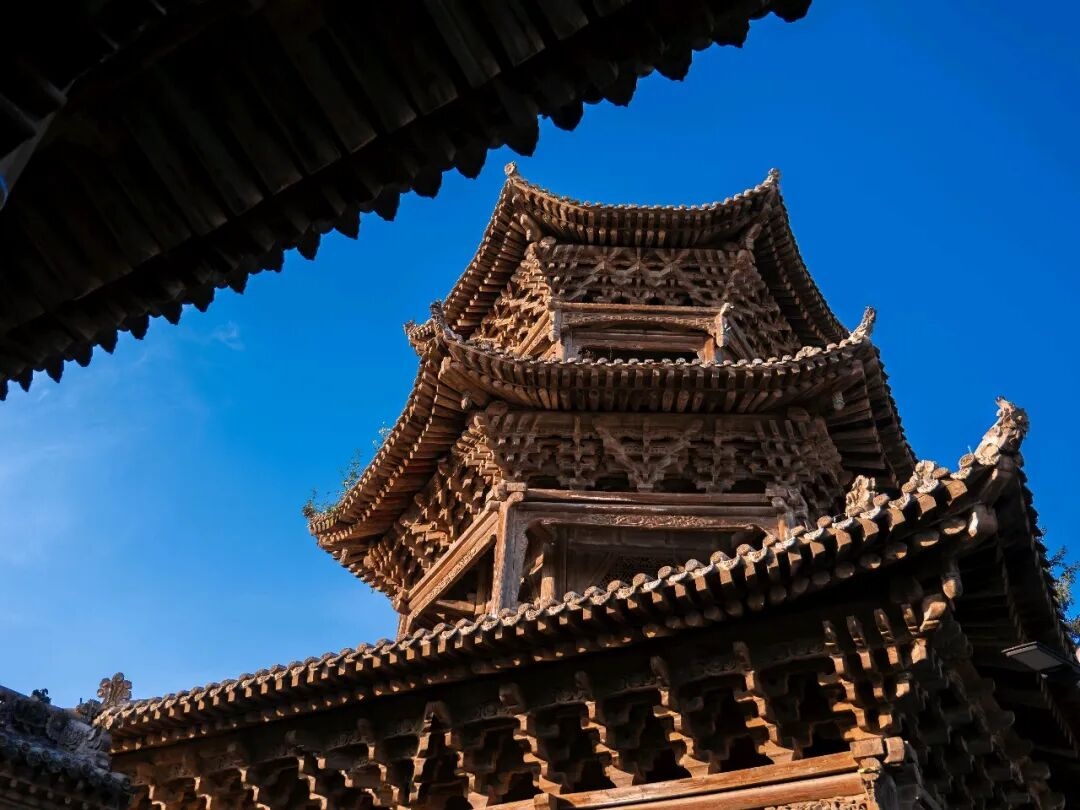
The entire mosque doesn't have any Arabic-style domes or common foreign decorations. Instead, it uses traditional Chinese Han-style temple architecture, with brick and wood construction and a courtyard layout. At the same time, it incorporates Tibetan building techniques and fulfills the functional needs of Islam. Academics call it a classic example of "Hehuang Islamic architecture" – which sounds like a fancy academic label. But standing in the courtyard, it feels more like a simple answer: different artisans, each with their own skills and aesthetic, came together and ultimately built a "home" that everyone could recognize as their own.
Look Up and See the "Heavenly Umbrella"
The main prayer hall (libaidian) is definitely the heart and soul of the entire mosque. And the most breathtaking thing inside is right above your head.
That's a massive wooden octagonal caisson ceiling (zaojing). It narrows upwards in layers, with intricate dougong (bracket sets) stacked on top of each other. The overall shape looks like a giant umbrella falling from the sky, which locals call "Tianluosan" (Heavenly Umbrella) or "Tianluosan" (Heavenly Net Umbrella). Thousands of tiny wooden components are interlocked using mortise-and-tenon joints, without a single metal nail. There's no record of the main wooden structure of the caisson ceiling ever being fully disassembled for major repairs; daily maintenance mostly focuses on pest control and wood preservation.
No blueprints were used; everything was passed down orally from master to apprentice. Standing beneath it today, you're not just seeing layers of wood expertly fitted together. You're witnessing a precise "dialogue" that a group of nameless artisans completed with their own hands hundreds of years ago. One visitor said that only after seeing this caisson ceiling in person do you truly understand what "the ceiling of all ceilings" means. It's a clever way to put it, but honestly, standing in the hall, it's hard to find a more fitting description.
The Mountain Gate Has No Beams, and the Screen Wall Features "Momos"
The uniqueness of Hongshui Spring Mosque isn't just confined to its prayer hall.
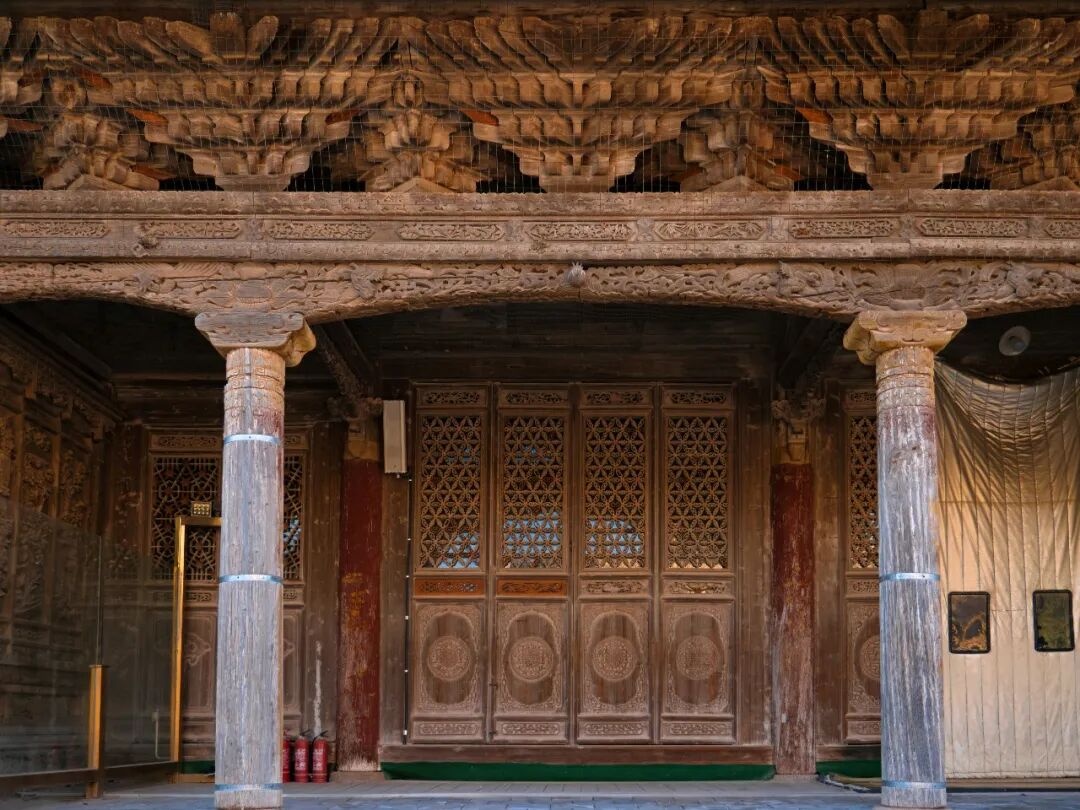
The mountain gate (shanmen) is a fascinating structure without a main beam. The ceiling has no conventional rafters; instead, short horizontal timbers are crisscrossed, stacked, and interlocked to bear the weight, a technique commonly known as "two ghosts carrying a load" (ergui tiaodan). There isn't a single continuous beam; the crisscrossing dougong (bracket sets) gradually dissipate the force layer by layer. It really shows off the incredible timber-frame wisdom of our ancestors, pushed almost to a level of pure showmanship here.
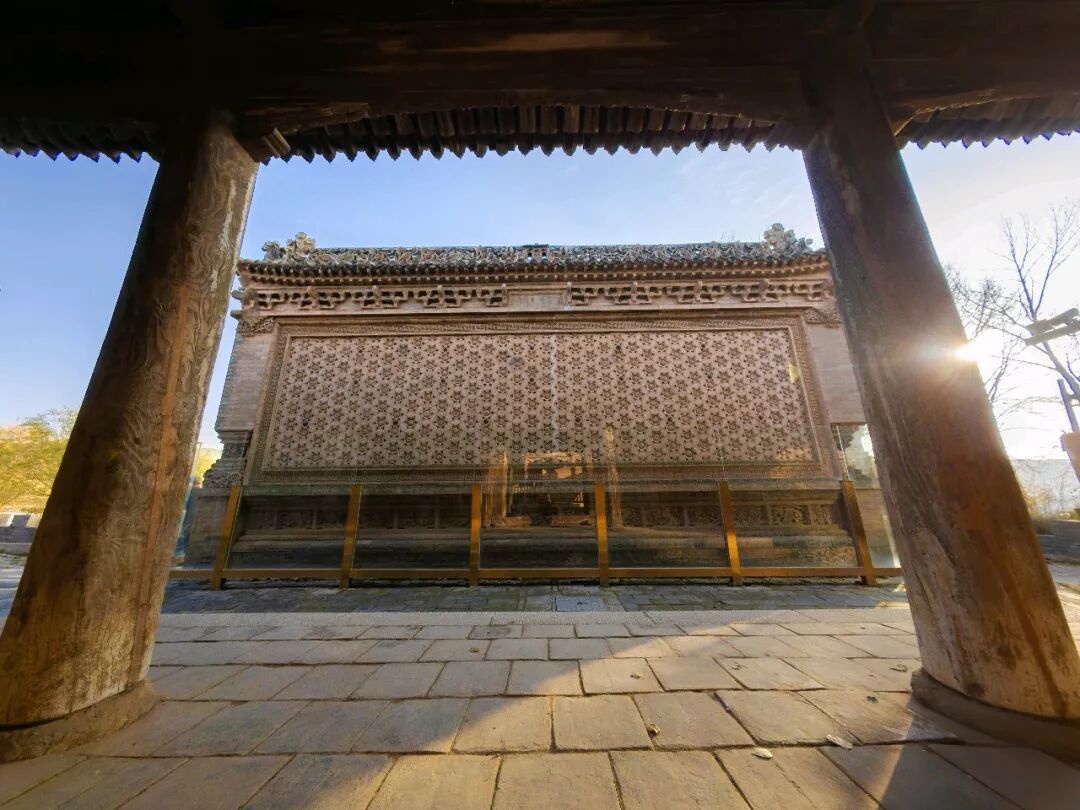
Right in front of the mountain gate stands a green brick screen wall (zhaobi), ten meters long and six meters high, built from green bricks that imitate wood. The brick carvings at the center of the screen wall are locally known as "Hundred Flowers Picture" (Baihua Tu) or "Hundred Momo Picture" (Baimo Tu). There are 255 hydrangea-like brick panels, each carved with unique floral patterns like peonies, chrysanthemums, pomegranates, Buddha's hand fruit, gourds, and lotus flowers. You'll also spot lions, bats, the Chinese character "Shou" (longevity), and even Taijitu (Yin-Yang symbols), all packed tightly together, with not a single one repeating.
There's a cool story that goes around the village about this screen wall. Back when the artisans were carving it, the momos (steamed buns) they ate every day were made by different village women, and each family's steamed buns had unique patterns. The artisans, seeing these patterns repeatedly, were inspired to transfer them onto the bricks, essentially using the momos as "models" for their carvings. While legends aren't always 100% accurate, the patterns on the screen wall really do have a soft, homey feel, like baked goods. They don't feel like strict designs from a grand temple; instead, they seem like a bit of everyday inspiration borrowed from a kitchen stove.


The "Unconventional" Brick Carvings
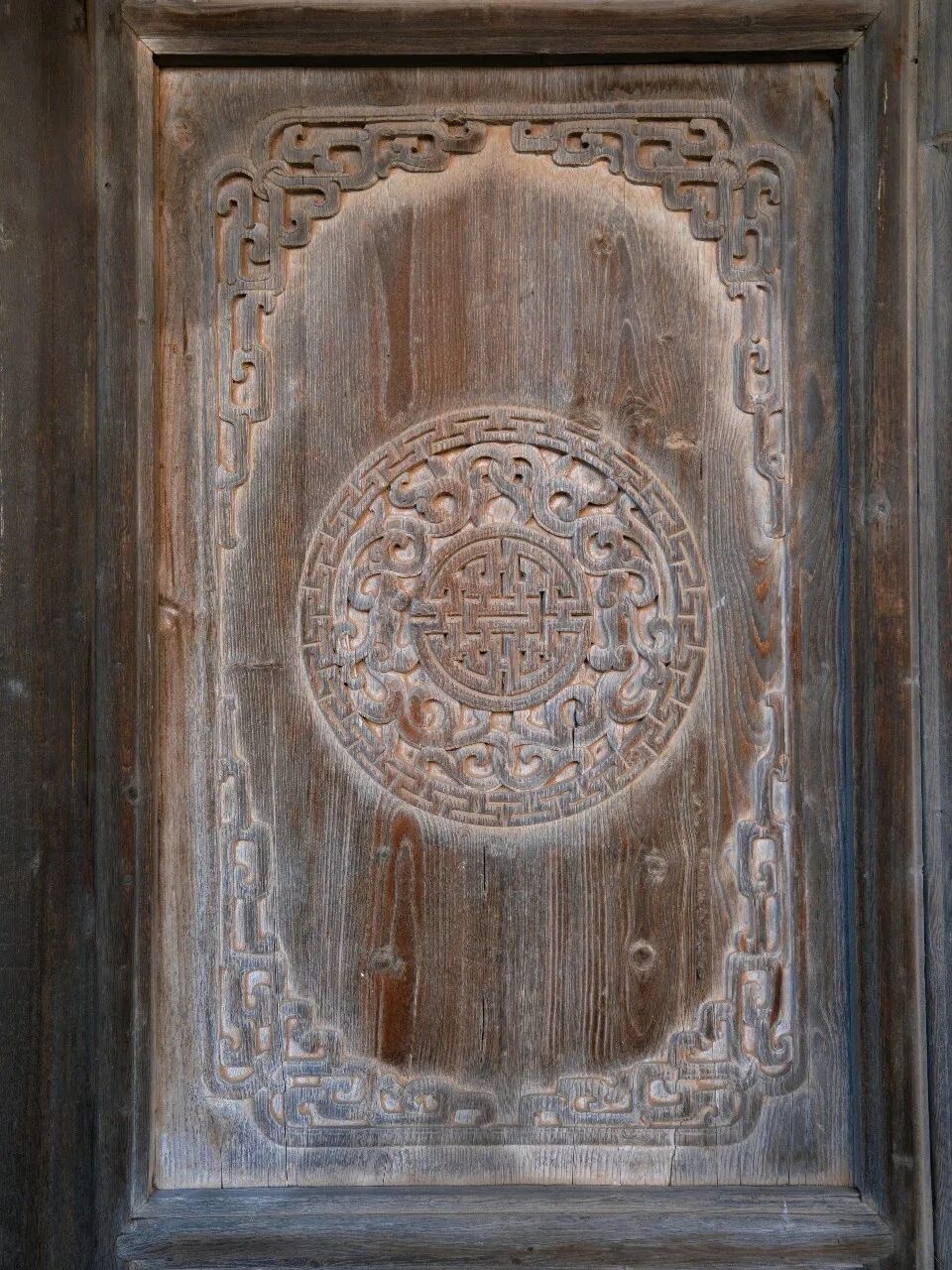
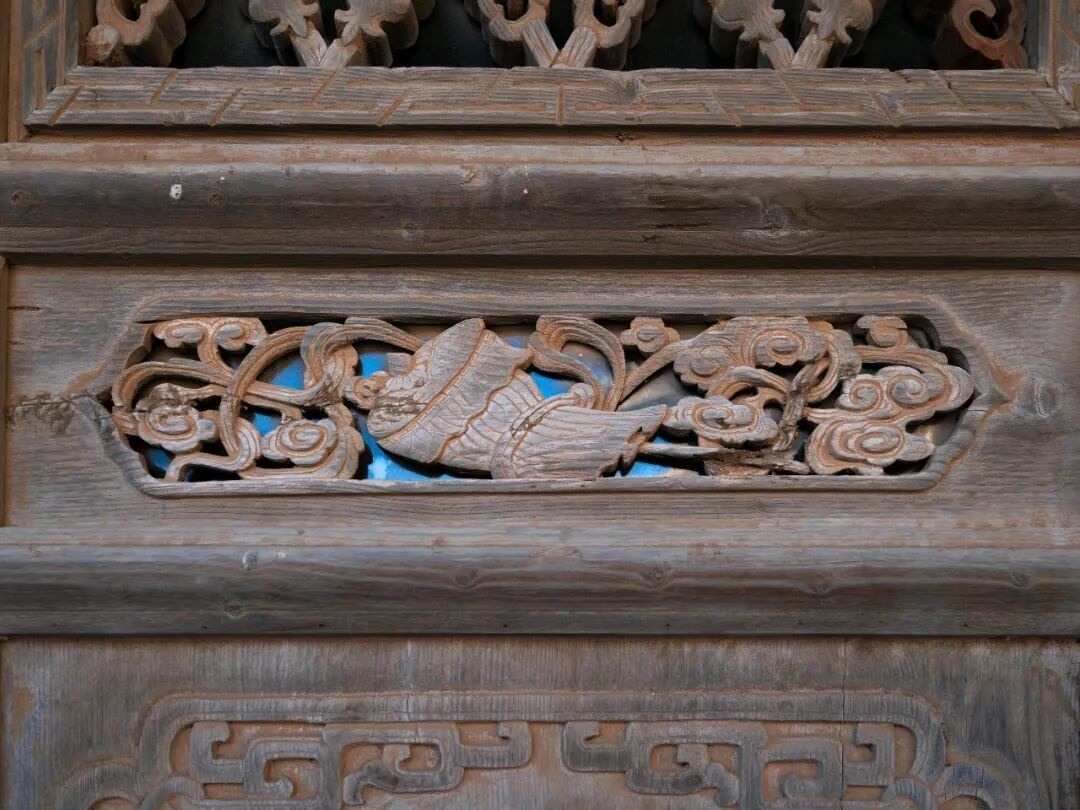
According to strict Islamic cultural tradition, mosque decorations typically avoid figurative animal motifs, mainly focusing on plant and geometric patterns. However, at Hongshui Spring Mosque, you'll find dragons, phoenixes, Qilins (mythical hoofed chimerical creatures), lions, mice, and rabbits in both the brick and wood carvings. You can even spot scenes like "Two Dragons Playing with a Pearl" (Er Long Xi Zhu), "Phoenix and Qilin Bringing Auspiciousness" (Feng Lin Cheng Xiang), "Mouse Stealing Grapes," and "Cat Leaping and Butterfly Dancing."
This isn't "breaking the rules"; it's more like a deeper cultural language at play. Auspicious Han Chinese patterns, precious vase ornaments from Tibetan Buddhism, the Eight Immortals symbols (An Baxian) from Taoism, and the "Four Arts" (qin, qi, shu, hua – zither, chess, calligraphy, painting) from Confucianism are all placed together on the beams, purlins, and brick surfaces of this single mosque. The relationship between these different cultural symbols isn't about one swallowing the other. Instead, it's about each giving a little space, piecing together a picture that no one had seen before, but everyone can understand.
On the screen panels in the back prayer hall (Houyaodian), you'll find a poem inscribed: "Receiving precepts, scriptures, and decrees; becoming kings, saints, and masters." To have a Confucian-style verse in an Islamic prayer space might feel out of place elsewhere, but here, it's surprisingly peaceful. This mosque, from its initial site selection to its completion, was never an "isolated temple." It grew organically within the villages of the Hehuang Valley, along the ancient Tang-Tibet Road and the southern route of the Silk Road, and through the shared craftsmanship of Han, Tibetan, and Hui Muslim artisans.
If You Want to Check It Out
Good news! Hongshui Spring Mosque doesn't charge an entrance fee and is open all day. However, the main prayer hall (libaidian) is closed to visitors on Fridays for Jumu'ah (congregational prayers). So, if you really want to get a close look at that caisson ceiling, you'll need to plan your visit around that day.
You can only get there by car. It's about an hour's drive from Xining city center, or roughly 26 kilometers (40 minutes) from Caojiabao Airport. The last stretch is a winding mountain road, but the conditions are decent, so regular cars can handle it fine. While it's not far from Xining Airport as the crow flies, because it's tucked deep into the mountains, just getting there feels like a special journey where you have to "go over the ridge to finally see it."
The mosque isn't huge, with a total building area of about 1,600 square meters. You could probably do a quick run-through in half an hour. But if you're willing to sit for a bit longer in the prayer hall, look up at the "Heavenly Umbrella," and try to spot all 255 unique patterns on the screen wall, an hour or two can easily fly by without you even realizing it.
Over 600 years have passed. This mosque hasn't moved into a city or become a noisy tourist hotspot. It's still nestled in that mountain hollow, holding up the sky with its wooden "umbrella" and remembering the human touch of everyday life with its brick "momos" (steamed buns). The real value of some places isn't about how many people check them out on social media. It's about how quietly and profoundly they prove that different hands can build a house together that everyone feels welcome to enter.
We're taking you on a virtual tour with 11 high-definition photos inside the Hongshui Spring Mosque, tucked away in an ancient mountain village in Ping'an District, Haidong City, Qinghai Province. Tracing its more than 600-year history, we'll dive into the detailed architecture, featuring the "Heavenly Umbrella" (Tianluosan) — a multi-eaved, pyramidal screen wall, traditional Han-style temple structures with intricate mortise-and-tenon joints, and absolutely stunning brick and wood carvings. This place totally breaks any stereotypes you might have about mosques, showcasing the timeless charm of this Chinese Islamic national heritage site.
From Xining, head towards Ping'an, and the last dozen kilometers are winding mountain roads. Outside the car window, you'll see the typical loess hills of the Hehuang Valley, crisscrossed with ravines and dotted with scattered villages. Without navigation, it's really hard to imagine that this hidden mountain hollow holds a mosque over 600 years old – the Hongshui Spring Mosque.
It's not in a city, or even right by the road. Instead, it's built into the side of a mountain, facing east, in Hongshui Spring Village, part of Hongshui Spring Hui Muslim Township. From a distance, with its gray bricks, dark tiles, and layered flying eaves (feiyan dougong – traditional Chinese architectural element), it looks like an old Chinese courtyard forgotten by time. Only when you step inside do you realize it's a mosque – a mosque that, from head to toe, doesn't fit people's typical idea of what a mosque looks like.
A Mosque within a Han-Style Temple Structure
Based on existing stone tablets and local records, the Hongshui Spring Mosque was first built in the second year of the Yongle reign of the Ming Dynasty (1404). After that, it was expanded five times, with its current main layout finalized during the Qianlong reign of the Qing Dynasty. For that specific expansion, local Muslims pooled their resources, and hundreds of artisans from various ethnic groups, including many from Shanxi, came to work on it. It took them thirteen long years to finish.
Thirteen years is a significant chunk of a person's life, but for a building, it's the time meticulously carved into every brick sculpture and fitted into every mortise-and-tenon joint.
The entire mosque doesn't have any Arabic-style domes or common foreign decorations. Instead, it uses traditional Chinese Han-style temple architecture, with brick and wood construction and a courtyard layout. At the same time, it incorporates Tibetan building techniques and fulfills the functional needs of Islam. Academics call it a classic example of "Hehuang Islamic architecture" – which sounds like a fancy academic label. But standing in the courtyard, it feels more like a simple answer: different artisans, each with their own skills and aesthetic, came together and ultimately built a "home" that everyone could recognize as their own.
Look Up and See the "Heavenly Umbrella"
The main prayer hall (libaidian) is definitely the heart and soul of the entire mosque. And the most breathtaking thing inside is right above your head.
That's a massive wooden octagonal caisson ceiling (zaojing). It narrows upwards in layers, with intricate dougong (bracket sets) stacked on top of each other. The overall shape looks like a giant umbrella falling from the sky, which locals call "Tianluosan" (Heavenly Umbrella) or "Tianluosan" (Heavenly Net Umbrella). Thousands of tiny wooden components are interlocked using mortise-and-tenon joints, without a single metal nail. There's no record of the main wooden structure of the caisson ceiling ever being fully disassembled for major repairs; daily maintenance mostly focuses on pest control and wood preservation.
No blueprints were used; everything was passed down orally from master to apprentice. Standing beneath it today, you're not just seeing layers of wood expertly fitted together. You're witnessing a precise "dialogue" that a group of nameless artisans completed with their own hands hundreds of years ago. One visitor said that only after seeing this caisson ceiling in person do you truly understand what "the ceiling of all ceilings" means. It's a clever way to put it, but honestly, standing in the hall, it's hard to find a more fitting description.
The Mountain Gate Has No Beams, and the Screen Wall Features "Momos"
The uniqueness of Hongshui Spring Mosque isn't just confined to its prayer hall.
The mountain gate (shanmen) is a fascinating structure without a main beam. The ceiling has no conventional rafters; instead, short horizontal timbers are crisscrossed, stacked, and interlocked to bear the weight, a technique commonly known as "two ghosts carrying a load" (ergui tiaodan). There isn't a single continuous beam; the crisscrossing dougong (bracket sets) gradually dissipate the force layer by layer. It really shows off the incredible timber-frame wisdom of our ancestors, pushed almost to a level of pure showmanship here.
Right in front of the mountain gate stands a green brick screen wall (zhaobi), ten meters long and six meters high, built from green bricks that imitate wood. The brick carvings at the center of the screen wall are locally known as "Hundred Flowers Picture" (Baihua Tu) or "Hundred Momo Picture" (Baimo Tu). There are 255 hydrangea-like brick panels, each carved with unique floral patterns like peonies, chrysanthemums, pomegranates, Buddha's hand fruit, gourds, and lotus flowers. You'll also spot lions, bats, the Chinese character "Shou" (longevity), and even Taijitu (Yin-Yang symbols), all packed tightly together, with not a single one repeating.
There's a cool story that goes around the village about this screen wall. Back when the artisans were carving it, the momos (steamed buns) they ate every day were made by different village women, and each family's steamed buns had unique patterns. The artisans, seeing these patterns repeatedly, were inspired to transfer them onto the bricks, essentially using the momos as "models" for their carvings. While legends aren't always 100% accurate, the patterns on the screen wall really do have a soft, homey feel, like baked goods. They don't feel like strict designs from a grand temple; instead, they seem like a bit of everyday inspiration borrowed from a kitchen stove.
The "Unconventional" Brick Carvings
According to strict Islamic cultural tradition, mosque decorations typically avoid figurative animal motifs, mainly focusing on plant and geometric patterns. However, at Hongshui Spring Mosque, you'll find dragons, phoenixes, Qilins (mythical hoofed chimerical creatures), lions, mice, and rabbits in both the brick and wood carvings. You can even spot scenes like "Two Dragons Playing with a Pearl" (Er Long Xi Zhu), "Phoenix and Qilin Bringing Auspiciousness" (Feng Lin Cheng Xiang), "Mouse Stealing Grapes," and "Cat Leaping and Butterfly Dancing."
This isn't "breaking the rules"; it's more like a deeper cultural language at play. Auspicious Han Chinese patterns, precious vase ornaments from Tibetan Buddhism, the Eight Immortals symbols (An Baxian) from Taoism, and the "Four Arts" (qin, qi, shu, hua – zither, chess, calligraphy, painting) from Confucianism are all placed together on the beams, purlins, and brick surfaces of this single mosque. The relationship between these different cultural symbols isn't about one swallowing the other. Instead, it's about each giving a little space, piecing together a picture that no one had seen before, but everyone can understand.
On the screen panels in the back prayer hall (Houyaodian), you'll find a poem inscribed: "Receiving precepts, scriptures, and decrees; becoming kings, saints, and masters." To have a Confucian-style verse in an Islamic prayer space might feel out of place elsewhere, but here, it's surprisingly peaceful. This mosque, from its initial site selection to its completion, was never an "isolated temple." It grew organically within the villages of the Hehuang Valley, along the ancient Tang-Tibet Road and the southern route of the Silk Road, and through the shared craftsmanship of Han, Tibetan, and Hui Muslim artisans.
If You Want to Check It Out
Good news! Hongshui Spring Mosque doesn't charge an entrance fee and is open all day. However, the main prayer hall (libaidian) is closed to visitors on Fridays for Jumu'ah (congregational prayers). So, if you really want to get a close look at that caisson ceiling, you'll need to plan your visit around that day.
You can only get there by car. It's about an hour's drive from Xining city center, or roughly 26 kilometers (40 minutes) from Caojiabao Airport. The last stretch is a winding mountain road, but the conditions are decent, so regular cars can handle it fine. While it's not far from Xining Airport as the crow flies, because it's tucked deep into the mountains, just getting there feels like a special journey where you have to "go over the ridge to finally see it."
The mosque isn't huge, with a total building area of about 1,600 square meters. You could probably do a quick run-through in half an hour. But if you're willing to sit for a bit longer in the prayer hall, look up at the "Heavenly Umbrella," and try to spot all 255 unique patterns on the screen wall, an hour or two can easily fly by without you even realizing it.
Over 600 years have passed. This mosque hasn't moved into a city or become a noisy tourist hotspot. It's still nestled in that mountain hollow, holding up the sky with its wooden "umbrella" and remembering the human touch of everyday life with its brick "momos" (steamed buns). The real value of some places isn't about how many people check them out on social media. It's about how quietly and profoundly they prove that different hands can build a house together that everyone feels welcome to enter.
