
Samarkand Travel Guide: Exploring Ancient Silk Road Mosques and Islamic Architecture in Uzbekistan
Come along as we step into Samarkand, Uzbekistan—the legendary crossroads of ancient Eurasia. We’re tracing the history of the Kang Kingdom and the Sogdian clans mentioned in Han and Tang dynasty records, exploring majestic turquoise-domed mosques, grand madrasas (Islamic colleges), and Silk Road ruins that stand as witnesses to a millennium of cultural exchange between the East and the West.
Samarkand, known in historical records as the Kang Kingdom, was the leader of the Nine Sogdian clans and the absolute golden hub of medieval Eurasia. If you recognize family names like Kang, An, Shi, Cao, or He, their ancestral roots are all firmly planted in this oasis.
I used to find the history of the Western Regions boring when reading old texts, but standing on this land changes everything. You quickly realize that much of the prosperity during the Tang Dynasty and the vibrant clash of Eastern and Western civilizations all stemmed from Samarkand.
To dodge the massive tour groups, I headed into the city early the next morning. When the morning light hits the old town, the contrast between the earth-toned mud-brick walls and the vibrant blue tiles is stunning—the vibe is just unmatched and incredibly peaceful.
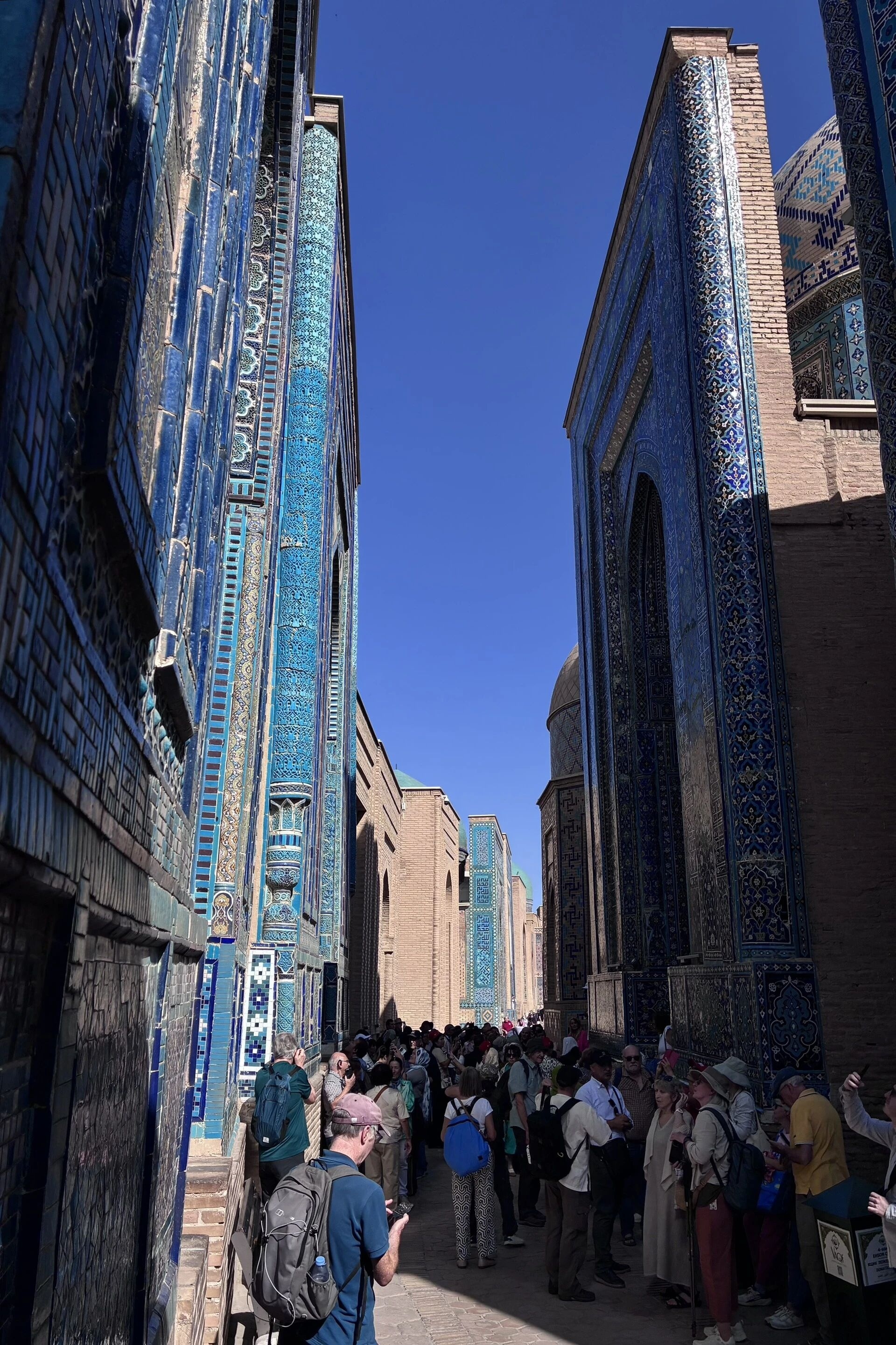
Our first stop is the Shah-i-Zinda necropolis, often called the 'Blue Tile Corridor' of Central Asia. Many people hear 'tomb' and think of something spooky, but your perspective shifts the second you arrive: this isn't just a graveyard; it's the absolute king of aesthetics in the world of ancient monuments!
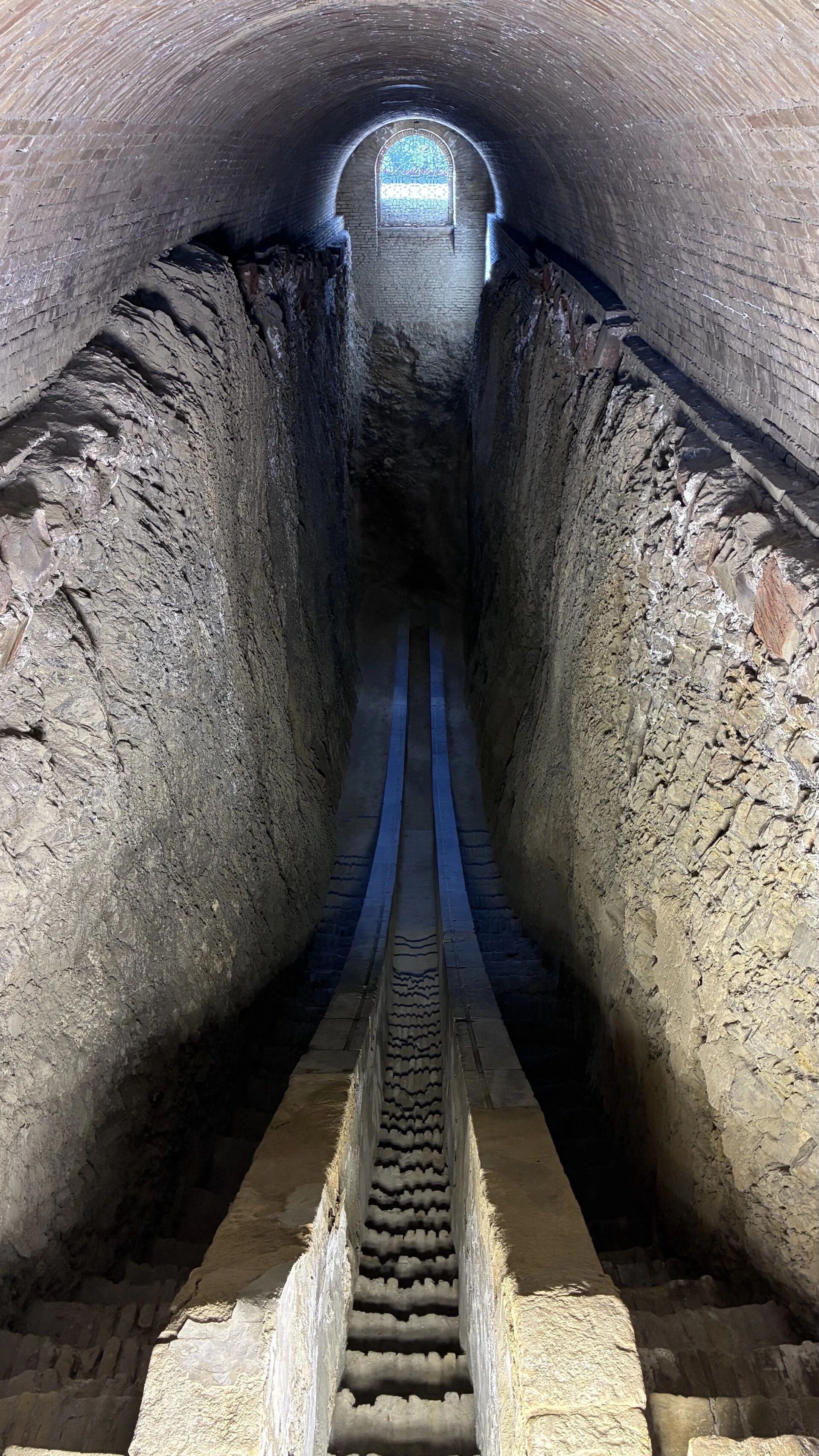
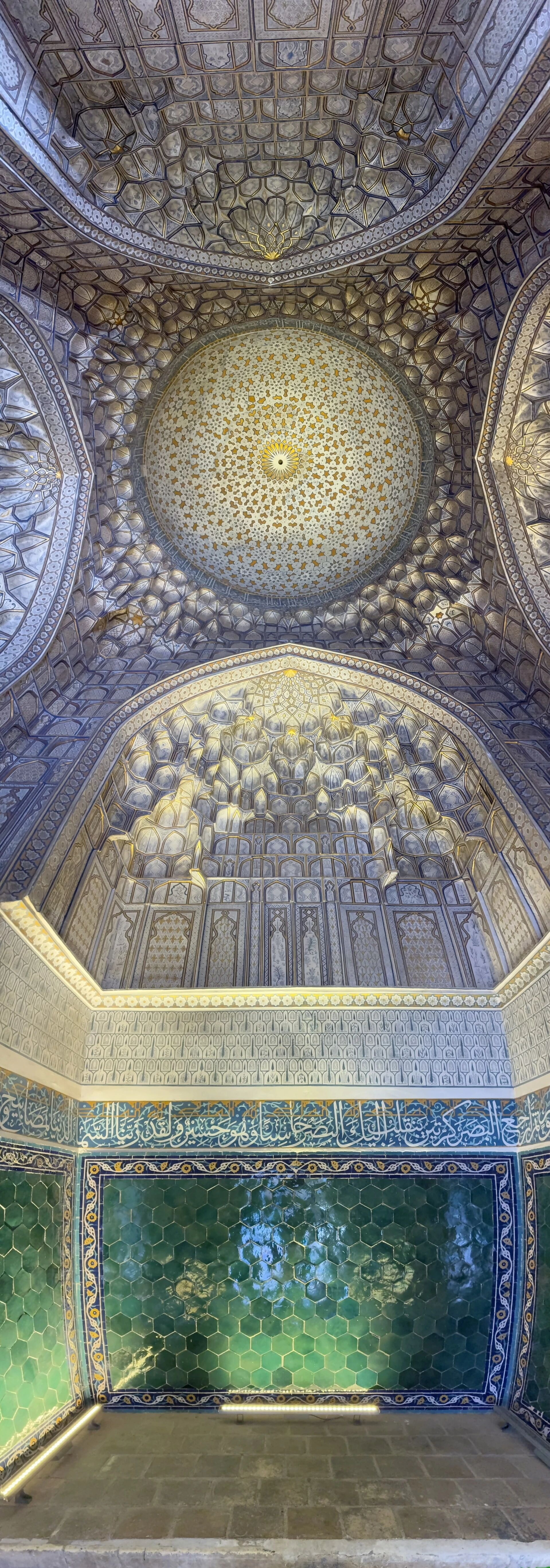
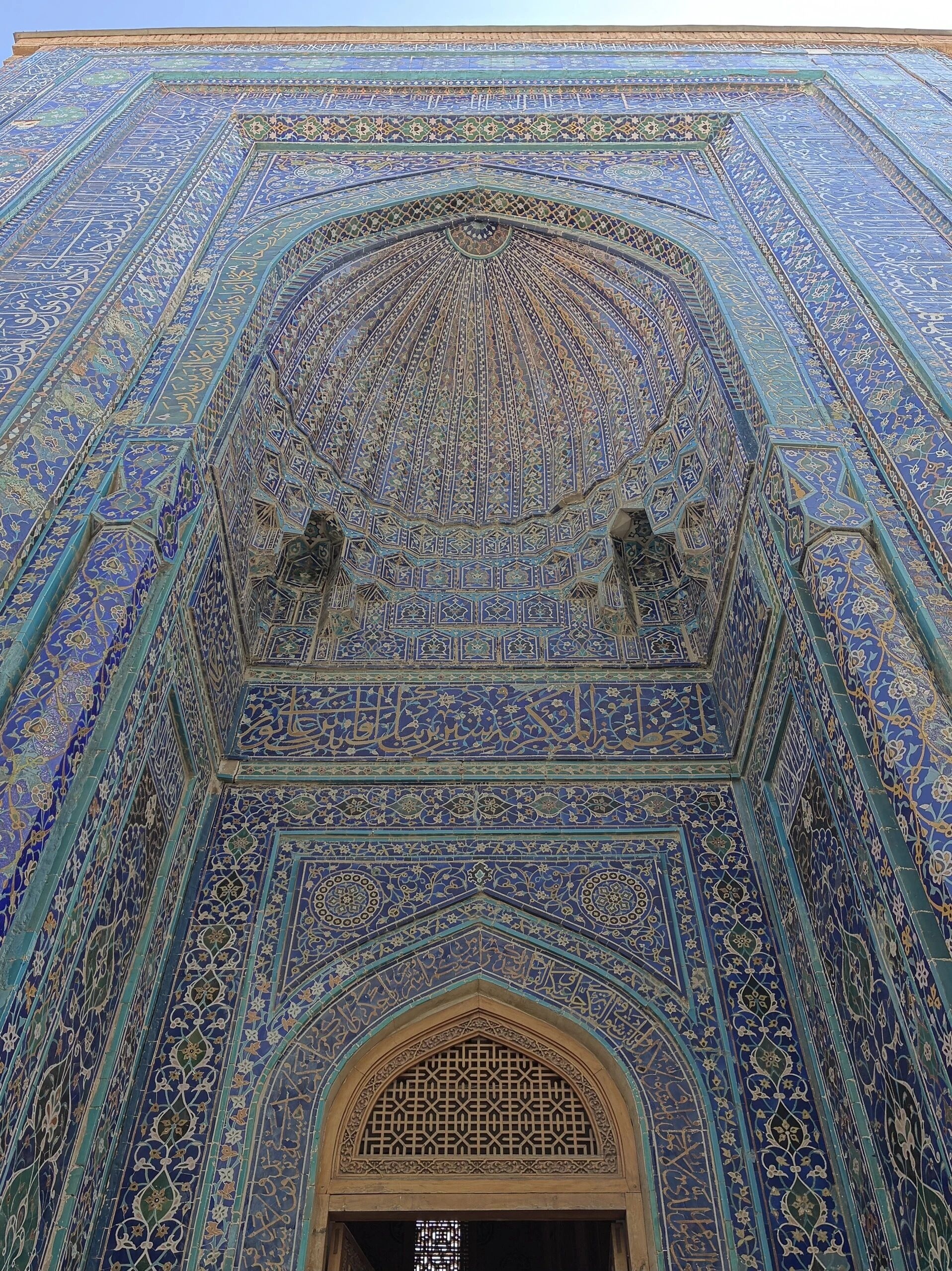
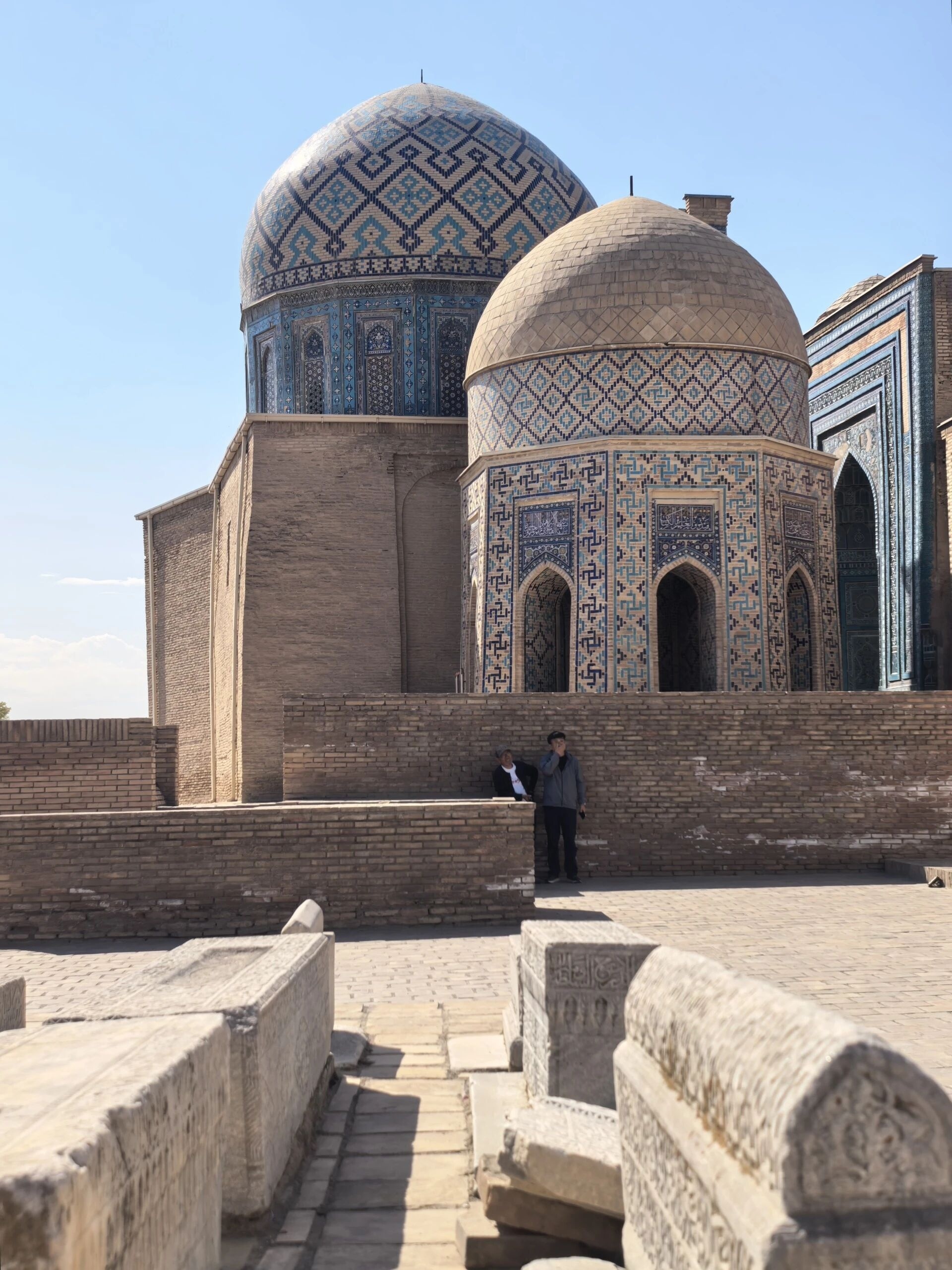
A pro tip for visitors: this site is a collection of mausoleums for the Timurid royalty from the 14th and 15th centuries. Built into the hillside, it was expanded over generations, featuring two top-tier architectural styles: cobalt blue mosaic tiles and Muqarnas (decorative honeycomb vaulting)—the absolute pinnacle of Central Asian craftsmanship at the time.
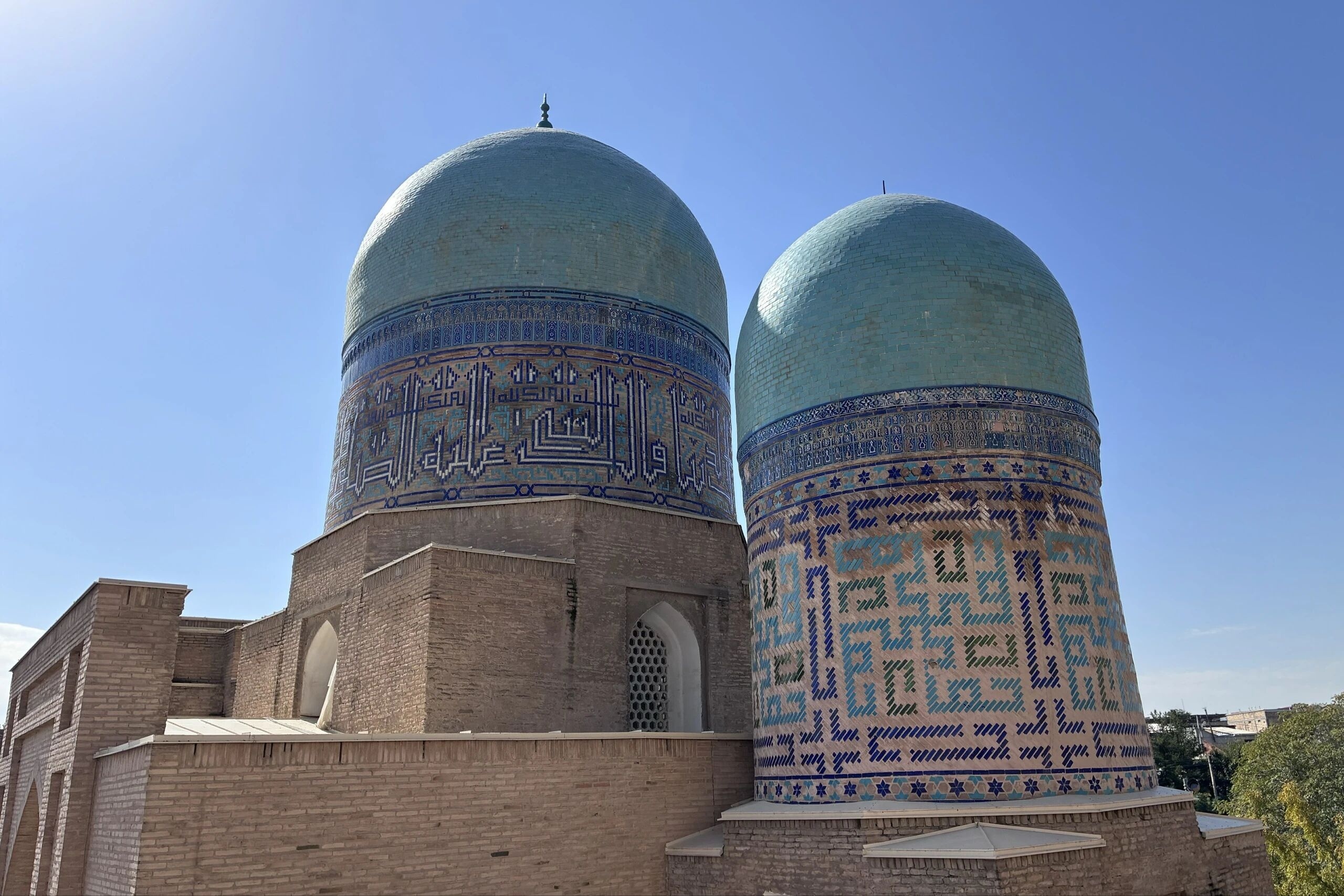
The domes are scattered across the site, with honeycomb vaults nesting within each other, precise Kufic calligraphy, and intricate geometric patterns that are a dream for anyone who loves symmetry. Every mausoleum has a unique design. The outer walls are a clear, gem-like blue, while the interiors are dripping with gold and sparkling star patterns—it’s honestly almost too beautiful to be real.
It’s less of a burial ground and more like an open-air royal exhibition of ceramic art that’s been around for centuries, and it’s free to enter. Since it was early and not too crowded, I saw plenty of women in simple long dresses walking through; the white fabric against the blue background was perfect for photos. Every shot is practically wallpaper-ready.
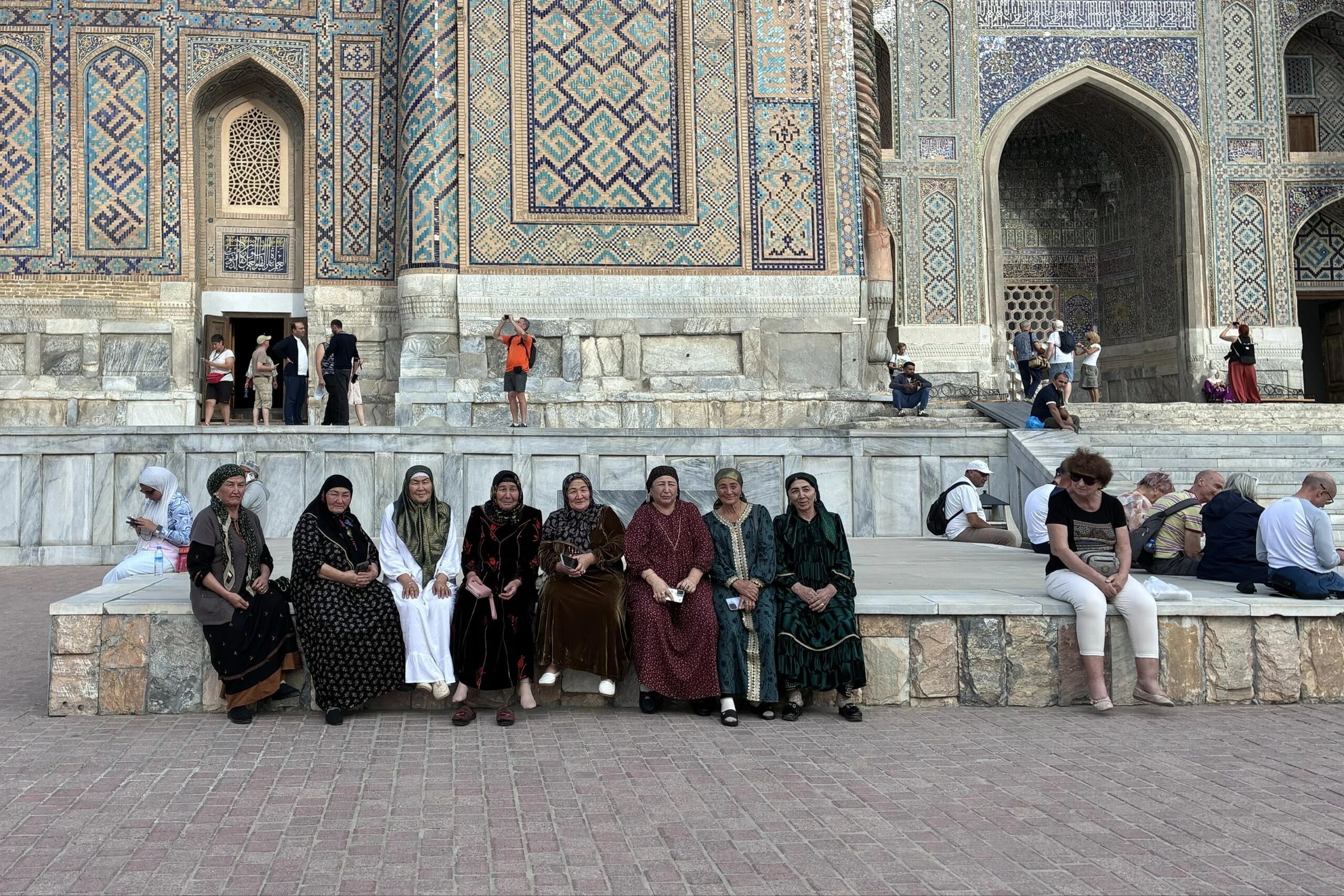
After watching the latest archaeological briefing video at the site, I turned around to find the place completely packed. As a world-class highlight of the Silk Road, it never loses its popularity.
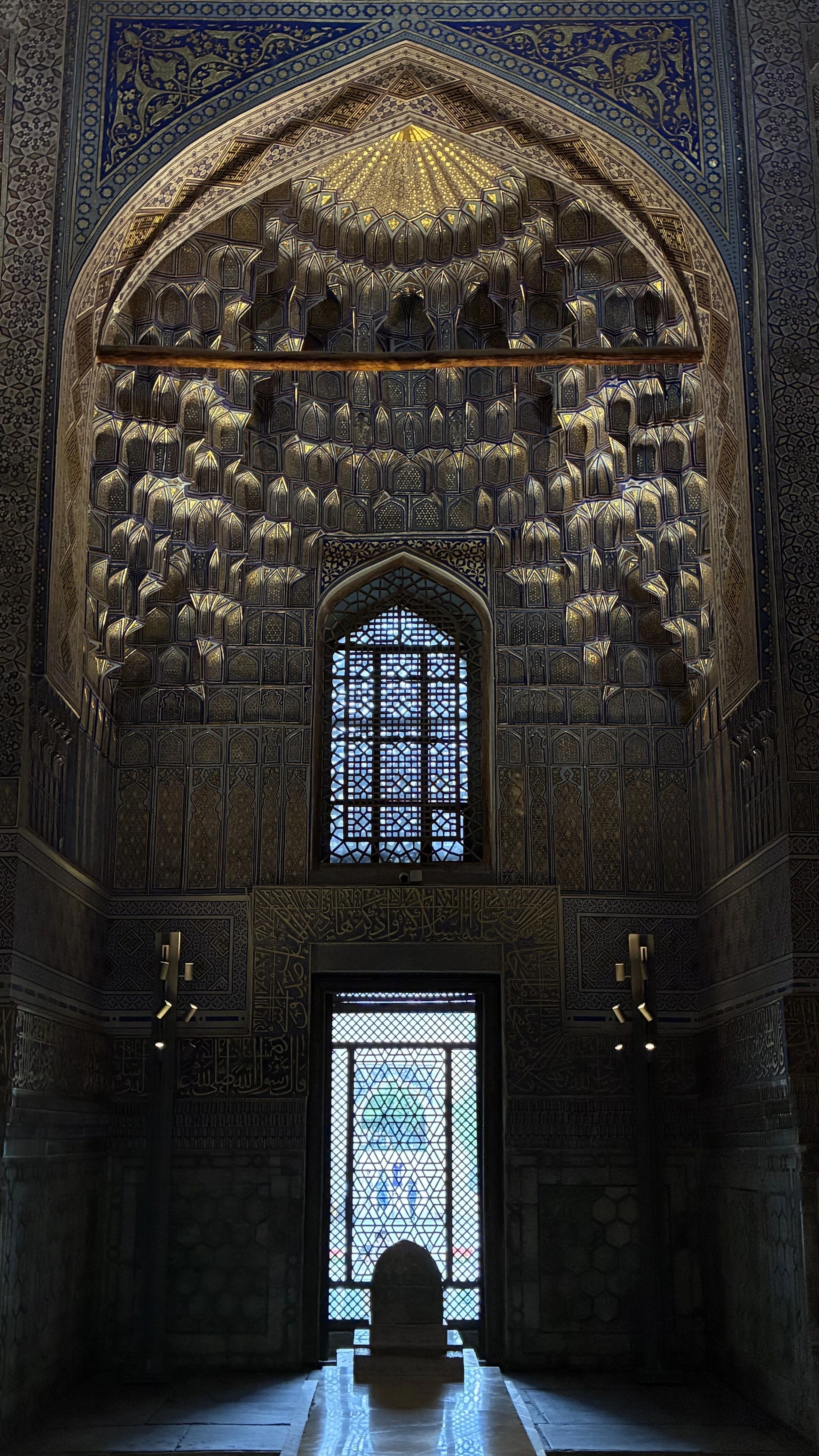
A massive surprise this trip: I bumped into the famous Silk Road historian Professor Hou Yangfang in the crowd. It’s such a thrill to run into a fellow enthusiast while standing at a historic site thousands of miles from home—this was a total win!
After soaking in the 'Blue Corridor,' I headed straight to the heart of Samarkand: the Registan Square. It’s the benchmark of 15th to 17th-century madrasas in the Transoxiana region. With three massive madrasas standing together, each with different eras, styles, and purposes, it was the scholarly, religious, and social center of Central Asia. The sheer presence of the place is overwhelming.
The Ulugh Beg Madrasa was the 'STEM school' of ancient Central Asia. While other madrasas focused solely on scripture, this one took a different path, diving deep into astronomy, geometry, and mathematics. The founder, Ulugh Beg, was an emperor himself who personally taught classes, successfully elevating natural sciences in medieval Central Asia to the top tier globally.
The Sher-Dor Madrasa is the rebel of the ancient architecture world. Islamic architectural tradition usually forbids depicting living creatures, but the relief on its main entrance features lions chasing white deer. It’s been 'violently' breaking the rules for four hundred years, making it instantly recognizable!
The Tilya-Kori Madrasa is known as the 'Gilded Hall.' Its double-shelled dome is completely covered in gold leaf, shimmering brilliantly. It served as a lecture hall, a place for dua (prayer), and a reception area for royalty—the absolute peak of luxury architecture in the post-Timurid era.
Samarkand, known in historical records as the Kang Kingdom, was the leader of the Nine Sogdian clans and the absolute golden hub of medieval Eurasia. If you recognize family names like Kang, An, Shi, Cao, or He, their ancestral roots are all firmly planted in this oasis.
I used to find the history of the Western Regions boring when reading old texts, but standing on this land changes everything. You quickly realize that much of the prosperity during the Tang Dynasty and the vibrant clash of Eastern and Western civilizations all stemmed from Samarkand.
To dodge the massive tour groups, I headed into the city early the next morning. When the morning light hits the old town, the contrast between the earth-toned mud-brick walls and the vibrant blue tiles is stunning—the vibe is just unmatched and incredibly peaceful.
Our first stop is the Shah-i-Zinda necropolis, often called the 'Blue Tile Corridor' of Central Asia. Many people hear 'tomb' and think of something spooky, but your perspective shifts the second you arrive: this isn't just a graveyard; it's the absolute king of aesthetics in the world of ancient monuments!
A pro tip for visitors: this site is a collection of mausoleums for the Timurid royalty from the 14th and 15th centuries. Built into the hillside, it was expanded over generations, featuring two top-tier architectural styles: cobalt blue mosaic tiles and Muqarnas (decorative honeycomb vaulting)—the absolute pinnacle of Central Asian craftsmanship at the time.
The domes are scattered across the site, with honeycomb vaults nesting within each other, precise Kufic calligraphy, and intricate geometric patterns that are a dream for anyone who loves symmetry. Every mausoleum has a unique design. The outer walls are a clear, gem-like blue, while the interiors are dripping with gold and sparkling star patterns—it’s honestly almost too beautiful to be real.
It’s less of a burial ground and more like an open-air royal exhibition of ceramic art that’s been around for centuries, and it’s free to enter. Since it was early and not too crowded, I saw plenty of women in simple long dresses walking through; the white fabric against the blue background was perfect for photos. Every shot is practically wallpaper-ready.
After watching the latest archaeological briefing video at the site, I turned around to find the place completely packed. As a world-class highlight of the Silk Road, it never loses its popularity.
A massive surprise this trip: I bumped into the famous Silk Road historian Professor Hou Yangfang in the crowd. It’s such a thrill to run into a fellow enthusiast while standing at a historic site thousands of miles from home—this was a total win!
After soaking in the 'Blue Corridor,' I headed straight to the heart of Samarkand: the Registan Square. It’s the benchmark of 15th to 17th-century madrasas in the Transoxiana region. With three massive madrasas standing together, each with different eras, styles, and purposes, it was the scholarly, religious, and social center of Central Asia. The sheer presence of the place is overwhelming.
The Ulugh Beg Madrasa was the 'STEM school' of ancient Central Asia. While other madrasas focused solely on scripture, this one took a different path, diving deep into astronomy, geometry, and mathematics. The founder, Ulugh Beg, was an emperor himself who personally taught classes, successfully elevating natural sciences in medieval Central Asia to the top tier globally.
The Sher-Dor Madrasa is the rebel of the ancient architecture world. Islamic architectural tradition usually forbids depicting living creatures, but the relief on its main entrance features lions chasing white deer. It’s been 'violently' breaking the rules for four hundred years, making it instantly recognizable!
The Tilya-Kori Madrasa is known as the 'Gilded Hall.' Its double-shelled dome is completely covered in gold leaf, shimmering brilliantly. It served as a lecture hall, a place for dua (prayer), and a reception area for royalty—the absolute peak of luxury architecture in the post-Timurid era.
