
Yinchuan Travel Guide: Remembering Nanguan Mosque and Northwest China Architecture Through Vintage Photos
I'm looking back at Yinchuan's Nanguan Mosque and the old city streets through precious documentary photos from a trip to Western China twelve years ago. By reflecting on my early experiences staying in hostels and with local hosts, I'm tracing the dramatic evolution of urban spaces and mosque architecture across the Northwest as the times have changed.
My first experience as a couchsurfer in Yinchuan.
It turns out I took quite a few historical photos during that trip through Western China twelve years ago. After learning that the mosques in Lanzhou (see: Photos of mosques taken 12 years ago that have since become history) had been demolished and renovated, I wondered if Yinchuan's Nanguan Mosque had suffered the same fate.
I looked it up online and barely recognized the place.
Yinchuan was my stop before reaching Lanzhou. I took an overnight train from Hohhot and arrived in Yinchuan early in the morning. As soon as I arrived, I met up with my couchsurfing host—the first time I'd ever stayed in a stranger's home while traveling.
Back then in China, many travel trends that had been popular abroad for years were just starting to take off. Youth hostels had only been around for a few years, and they became my primary way of finding a place to sleep on that trip.
Couchsurfing was even more of a novelty. There weren't any dedicated apps or websites for it yet; young people would just post on BBS forums to welcome travelers into their homes.
I got in touch with a young guy from Ningxia online. I was expecting to sleep on a sofa, so I was pretty surprised when he let me use his entire apartment. He was very curious about my trip, so I told him my plan: heading west all the way to Tibet and eventually Nepal.
An Arabian-style mosque.
At the time, there wasn't much travel advice online, and I didn't have a smartphone. I just kind of went wherever the mood took me. While riding the bus, a building with a green dome caught my eye.
I walked over and saw "Yinchuan Nanguan Grand Mosque" written on the gate. The large circular archway was outlined in gold, decorated with floral and plant patterns. The top of the green dome was topped with a crescent moon.
The look of the building instantly reminded me of the Arab world I had seen in books and on TV. It hit me then: wasn't Islam born in the Arab world? This was my first time seeing Arabic-style architecture, and I never expected to find it in China.
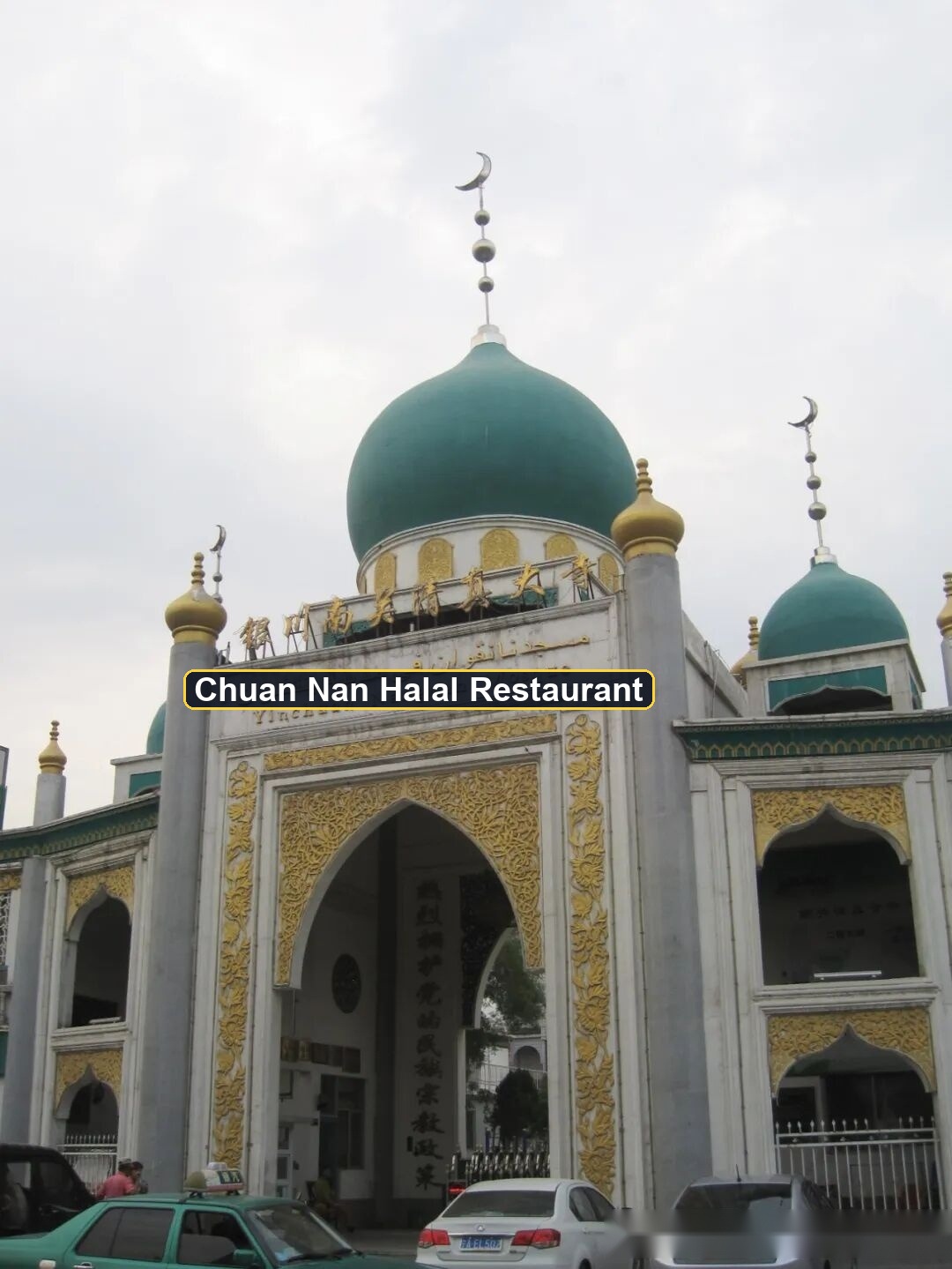
Mosque main gate (photo).
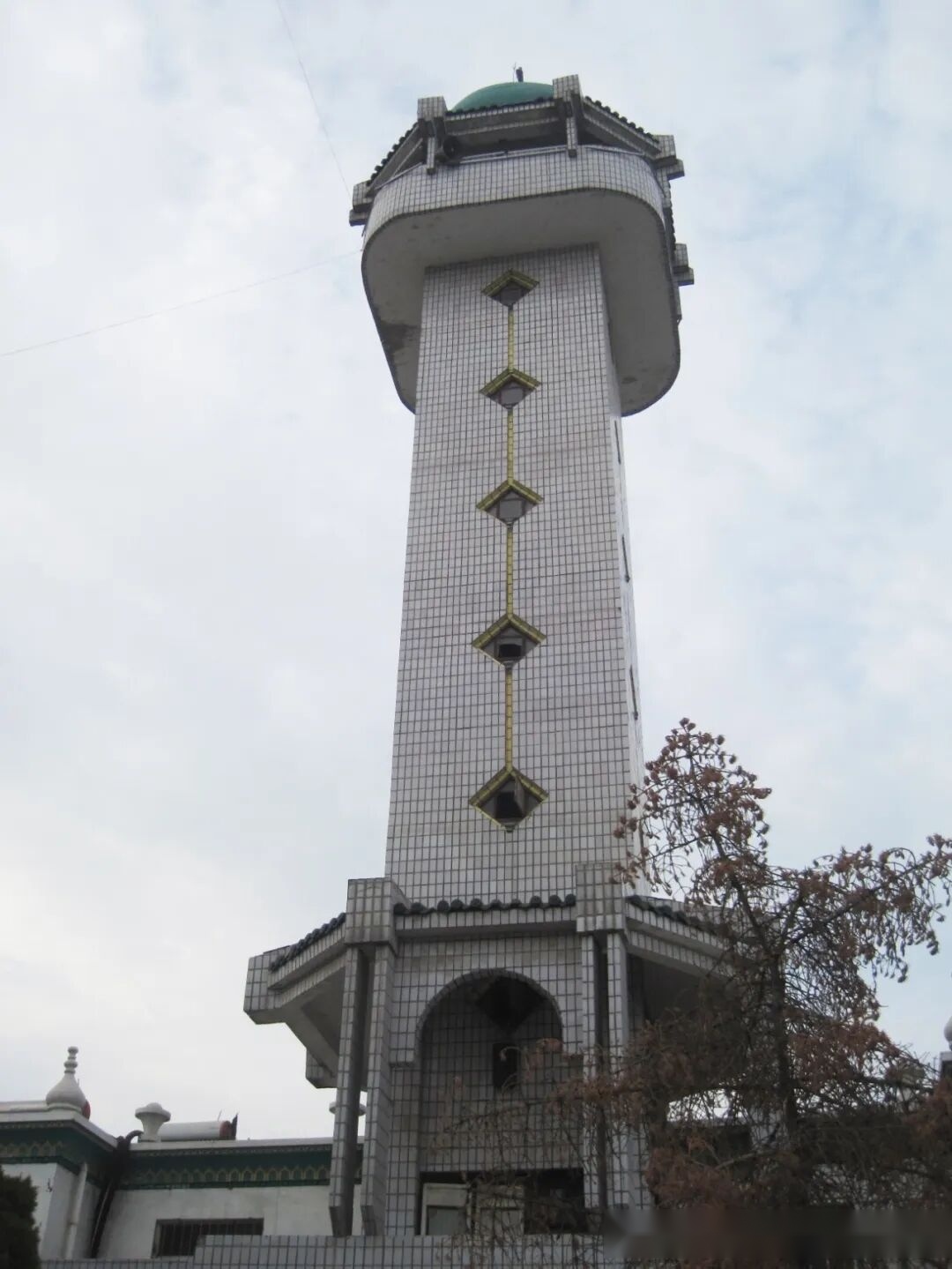
Minaret (photo).
This was also my first time stepping into a real mosque, and I was full of curiosity. Since it wasn't prayer time, there were only a few older men chatting inside.
I climbed the stairs to the main prayer hall on the second floor. The hall was covered in carpets for the Muslims to use for their dua (prayer). In the center stood the green mihrab (a semicircular niche in the wall that indicates the direction of Mecca), decorated with beautiful calligraphy and filled with holy books.
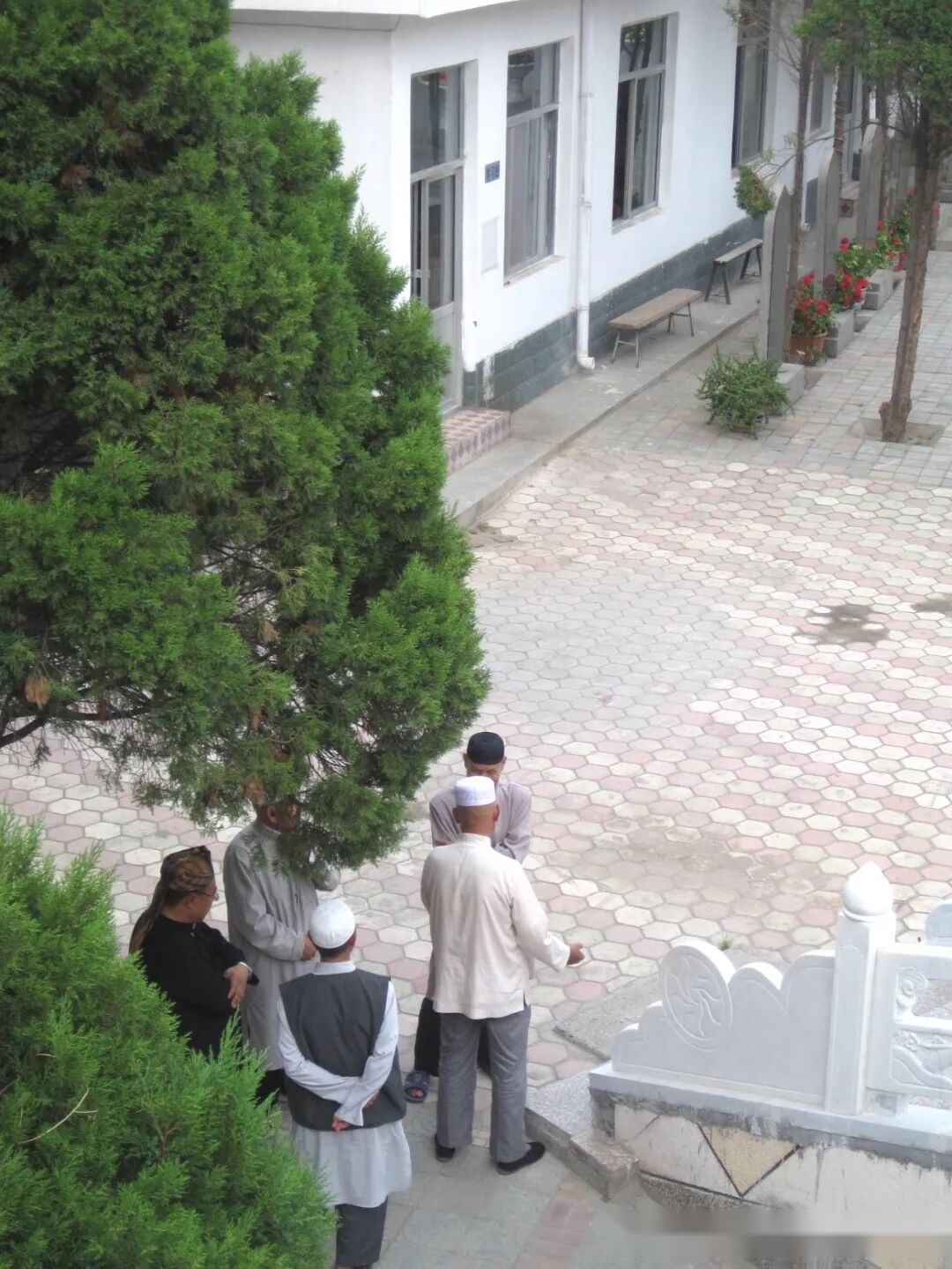
People inside the mosque (photo).
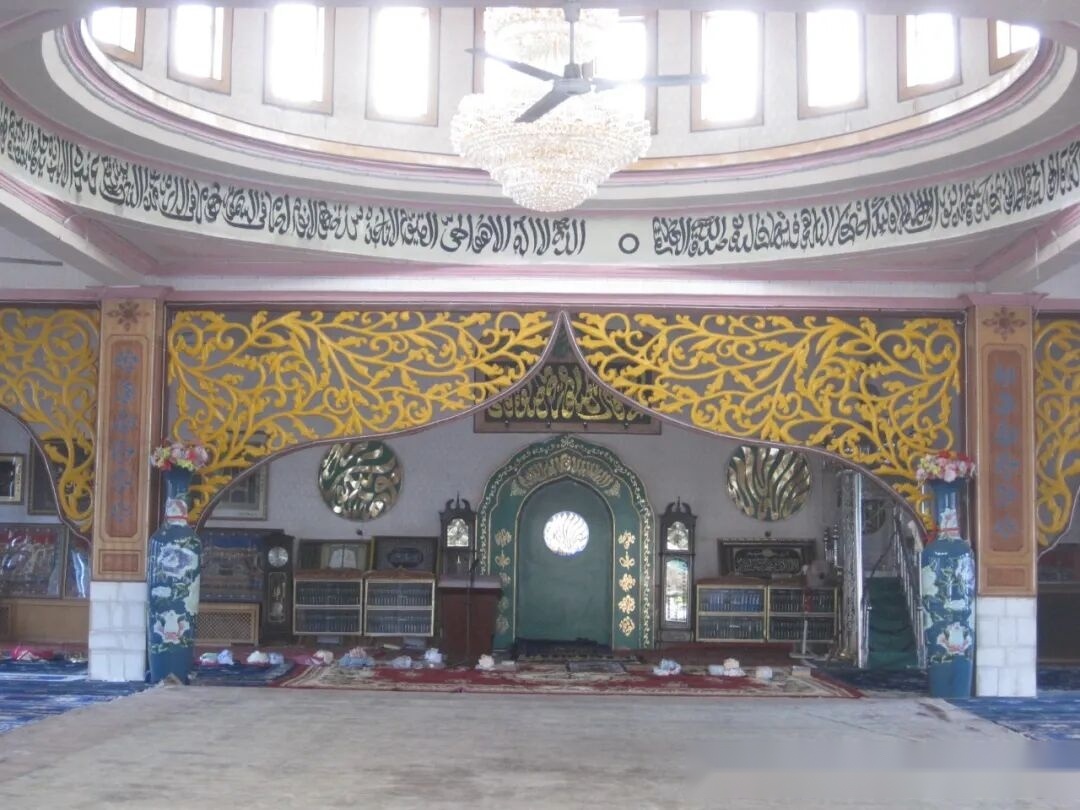
Inside the prayer hall (photo).
The past and present of the mosque.
The full name of the region is the "Ningxia Hui Autonomous Region," the only provincial-level administrative unit in China named after the Hui Muslims. A long-settled Muslim community has lived here since the Ming and Qing dynasties.
After the Republic of China was founded, Sun Yat-sen proposed the concept of the "Union of Five Ethnic Groups." "Hui" became the official term for Chinese Muslims.
Nanguan Mosque was originally built in the late Ming Dynasty outside the South Gate. During the Republican era, it was moved to the city center and rebuilt in a traditional Chinese palace-style architecture (see: A Chinese-style mosque built in Kazakhstan).
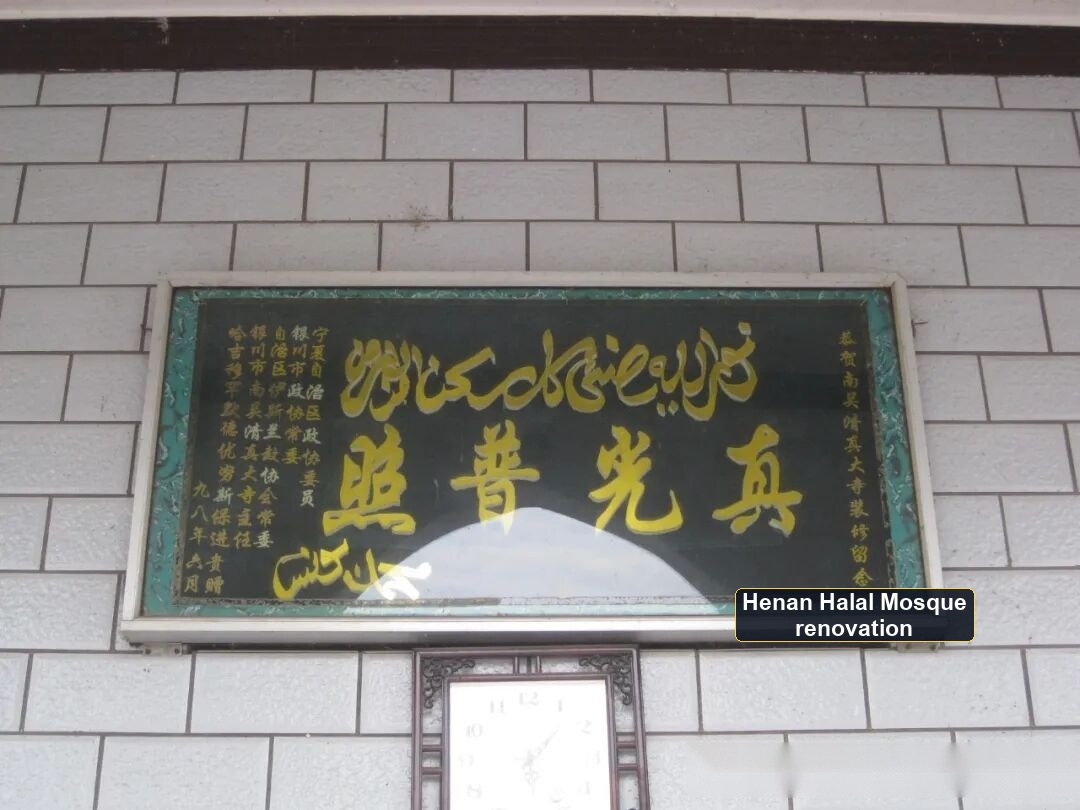
Plaque from 1998 (photo).
During the Cultural Revolution, the Nanguan Mosque, much like the Xiguan Mosque in Lanzhou, was destroyed and vanished from public view.
In 1981, the mosque was rebuilt. The new structure was Arabian-style and filled with exotic charm. Beyond serving as a place for local Hui Muslims to perform their dua, it opened its doors to both domestic and international tourists, becoming a landmark of Yinchuan (Aifumei & Ma Jun, 2006).
The mosque even hosted an Arabic language class, with Arabic letters neatly written on the chalkboard.
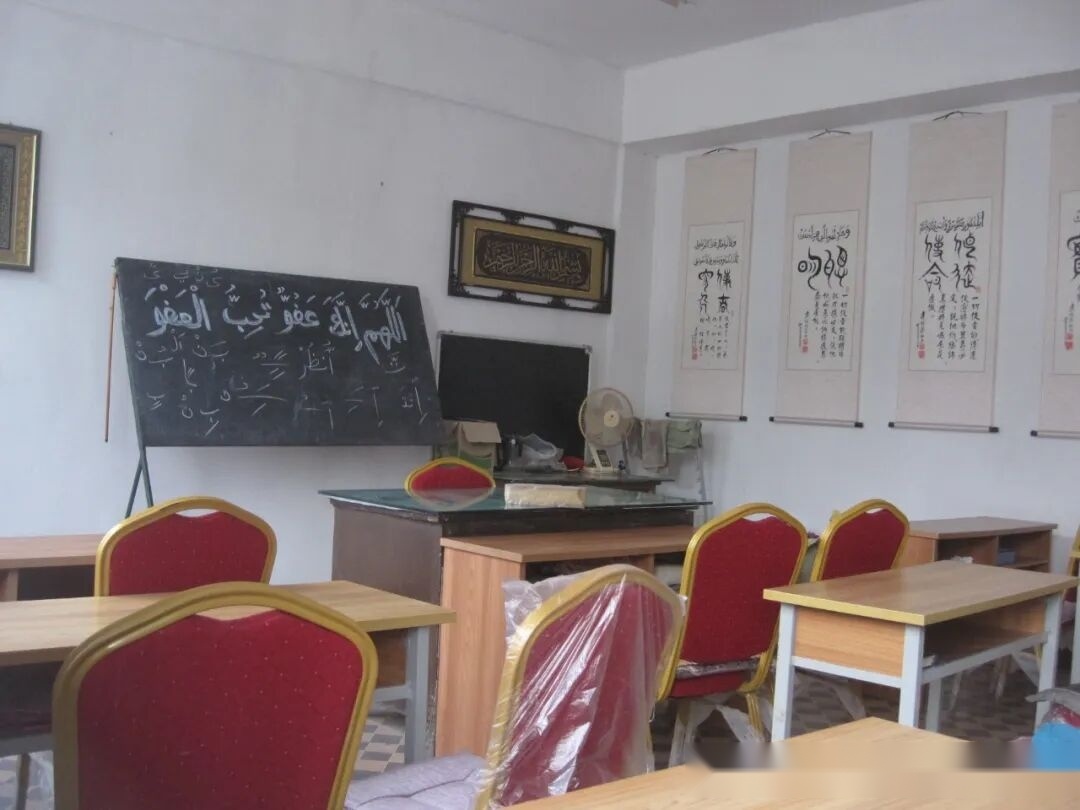
Arabic language class (photo).
I flipped through a scripture book; the top line was in Arabic, and the bottom line used Chinese characters for phonetic transcription. Because Arabic, like ancient Chinese, is written from right to left, the Chinese phonetic markers also had to be read from right to left.
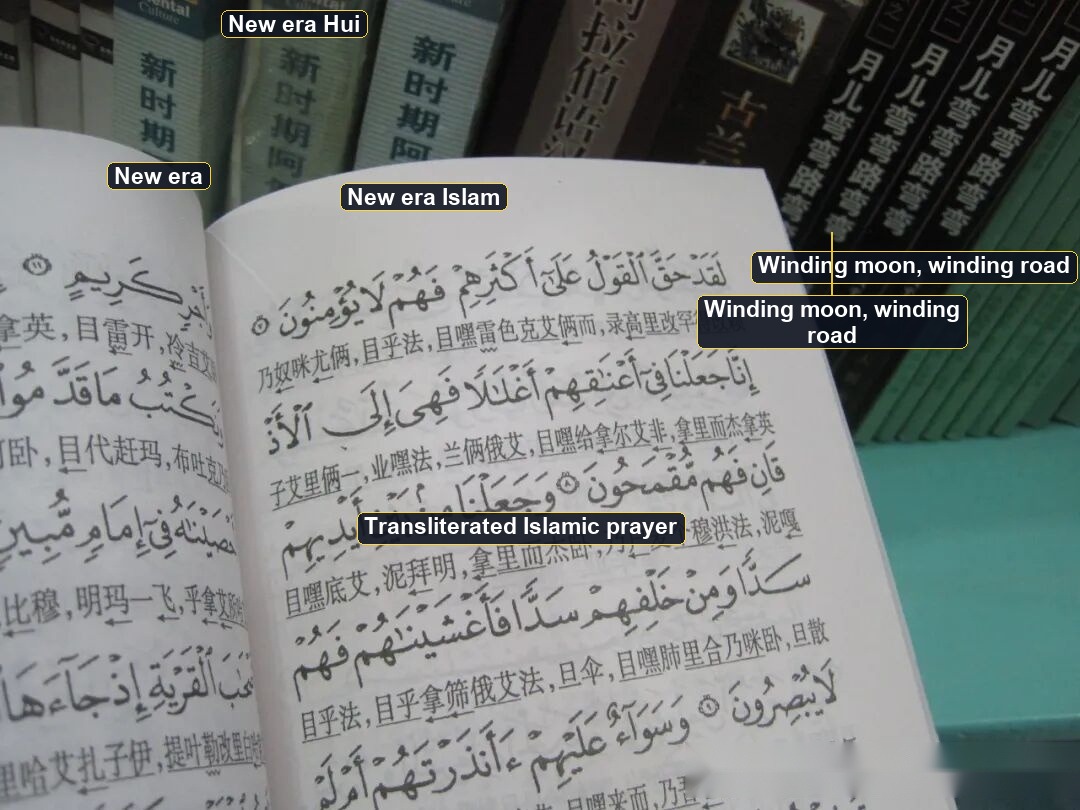
Scripture (photo).
On the wall inside hung six clocks—a schedule for the five daily prayers for Muslims, with the last one for the Friday Jumu'ah (Friday prayer). The names of the five daily prayer times were written in Chinese: Bangbuda, Pieshini, Digaier, Shamu, and Hufutan.
These aren't phonetics of Arabic, but rather phonetics of Persian, which is a unique naming convention used by Chinese Muslims.
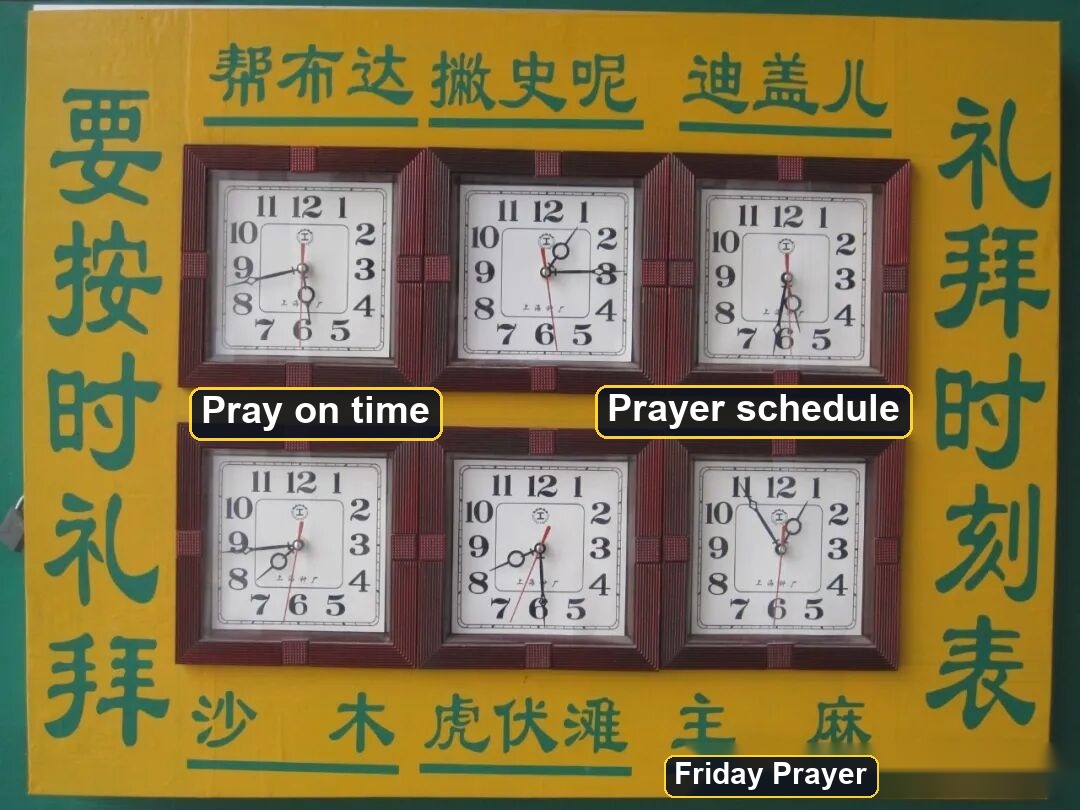
Prayer schedule (photo).
The 'Little Tiananmen' is the most distinctive part.
In 2020, the mosque's domes were completely dismantled, the towering minarets disappeared, the main hall was converted to a wudian-style (traditional Chinese hip roof) structure, all the floral patterns on the gates were removed, and even the Arabic and English names of the mosque were wiped away.
If the renovated Lanzhou mosque feels 'technological,' this one has definitely gone for a 'minimalist' look.
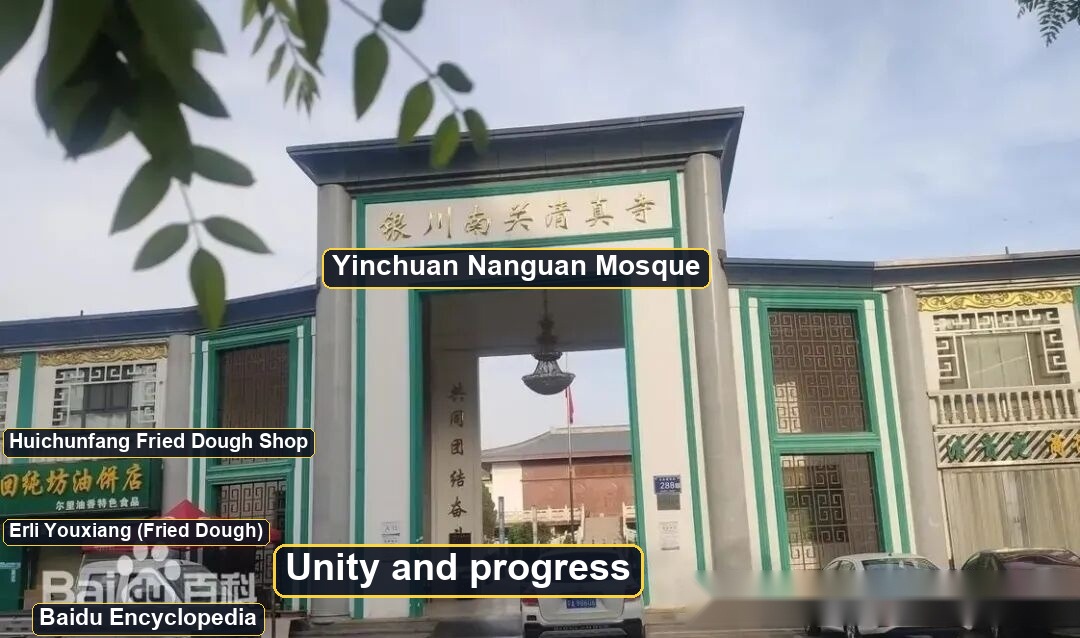
The current look of the Nanguan Mosque (photo).
Twelve years ago, what grabbed my attention in the city—aside from this mosque—was a building on the main road that looked just like Tiananmen. This gate is actually the Nanxun Gate of the old city of Yinchuan.
Back in the 80s, it was remodeled to resemble Tiananmen and even featured a portrait of Chairman Mao, who had passed away shortly before; people locally nicknamed it the Little Tiananmen. Twelve years ago, the plaza in front of the Little Tiananmen was always lively, with street performers singing away.
I looked up current photos of the Little Tiananmen online, and it still looks exactly as it did back then. With the uniquely Arabian-style mosque no longer there, this Little Tiananmen has rightfully become Yinchuan’s most iconic landmark.
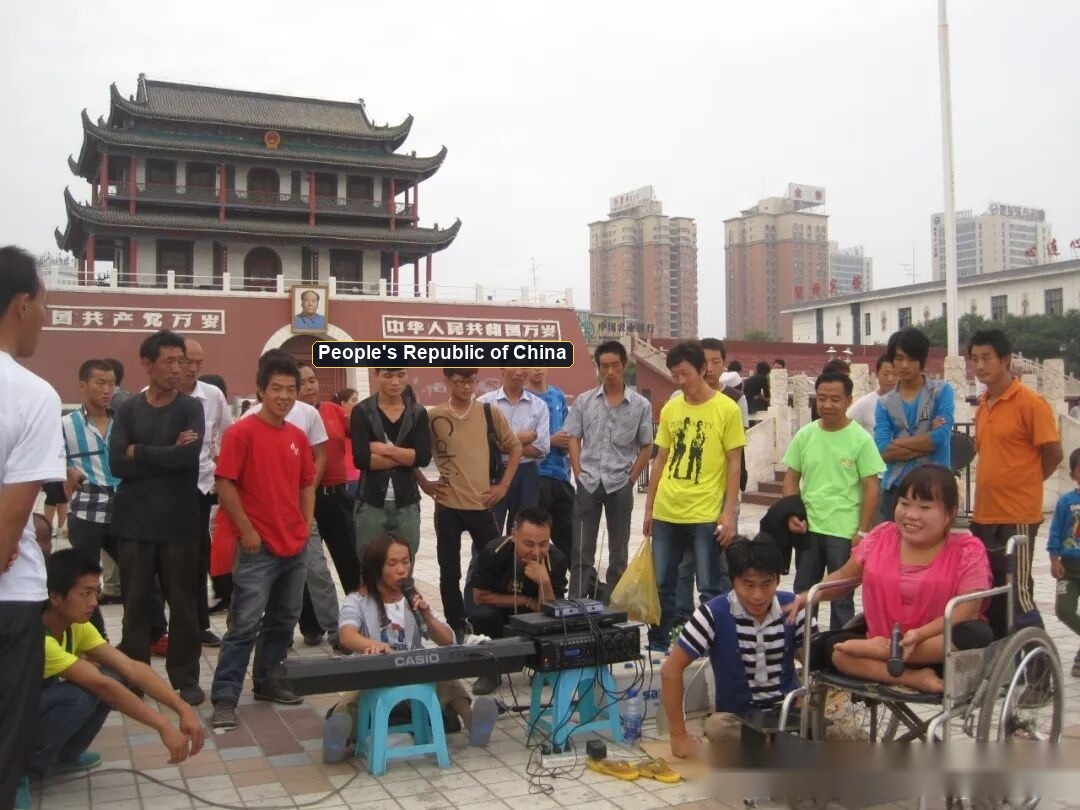
The Little Tiananmen twelve years ago (photo).
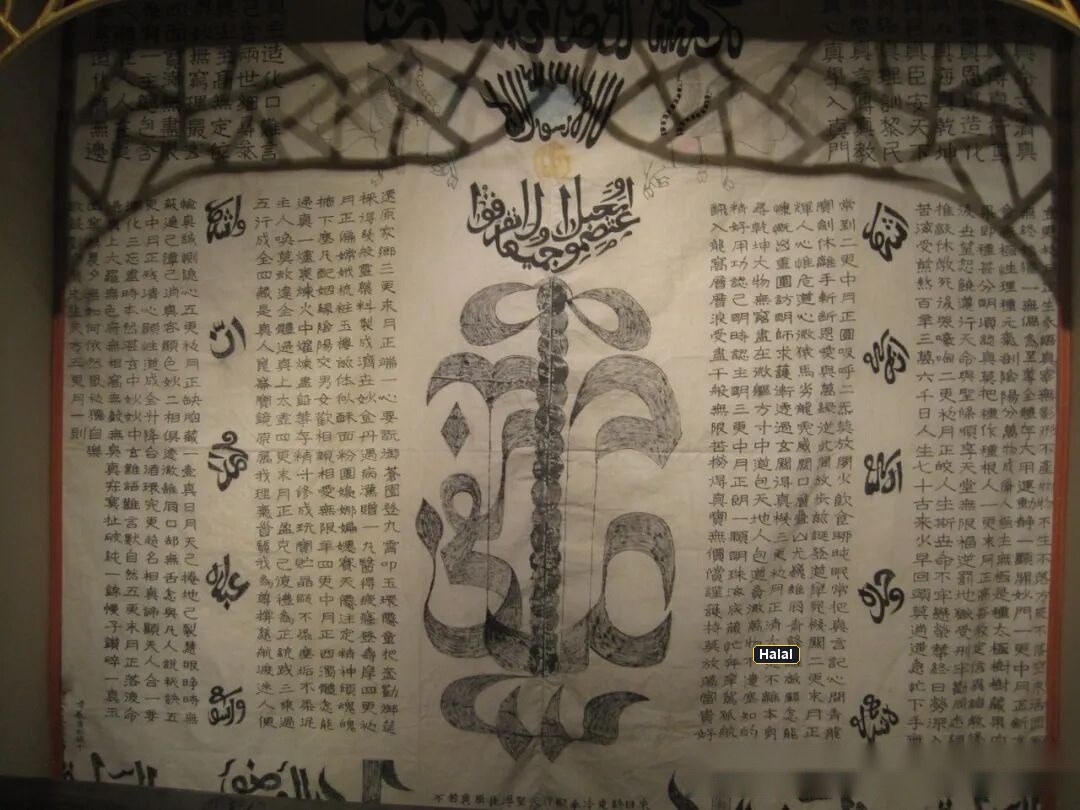
Cultural relics housed in the Ningxia Museum (photo).
My first experience as a couchsurfer in Yinchuan.
It turns out I took quite a few historical photos during that trip through Western China twelve years ago. After learning that the mosques in Lanzhou (see: Photos of mosques taken 12 years ago that have since become history) had been demolished and renovated, I wondered if Yinchuan's Nanguan Mosque had suffered the same fate.
I looked it up online and barely recognized the place.
Yinchuan was my stop before reaching Lanzhou. I took an overnight train from Hohhot and arrived in Yinchuan early in the morning. As soon as I arrived, I met up with my couchsurfing host—the first time I'd ever stayed in a stranger's home while traveling.
Back then in China, many travel trends that had been popular abroad for years were just starting to take off. Youth hostels had only been around for a few years, and they became my primary way of finding a place to sleep on that trip.
Couchsurfing was even more of a novelty. There weren't any dedicated apps or websites for it yet; young people would just post on BBS forums to welcome travelers into their homes.
I got in touch with a young guy from Ningxia online. I was expecting to sleep on a sofa, so I was pretty surprised when he let me use his entire apartment. He was very curious about my trip, so I told him my plan: heading west all the way to Tibet and eventually Nepal.
An Arabian-style mosque.
At the time, there wasn't much travel advice online, and I didn't have a smartphone. I just kind of went wherever the mood took me. While riding the bus, a building with a green dome caught my eye.
I walked over and saw "Yinchuan Nanguan Grand Mosque" written on the gate. The large circular archway was outlined in gold, decorated with floral and plant patterns. The top of the green dome was topped with a crescent moon.
The look of the building instantly reminded me of the Arab world I had seen in books and on TV. It hit me then: wasn't Islam born in the Arab world? This was my first time seeing Arabic-style architecture, and I never expected to find it in China.
Mosque main gate (photo).
Minaret (photo).
This was also my first time stepping into a real mosque, and I was full of curiosity. Since it wasn't prayer time, there were only a few older men chatting inside.
I climbed the stairs to the main prayer hall on the second floor. The hall was covered in carpets for the Muslims to use for their dua (prayer). In the center stood the green mihrab (a semicircular niche in the wall that indicates the direction of Mecca), decorated with beautiful calligraphy and filled with holy books.
People inside the mosque (photo).
Inside the prayer hall (photo).
The past and present of the mosque.
The full name of the region is the "Ningxia Hui Autonomous Region," the only provincial-level administrative unit in China named after the Hui Muslims. A long-settled Muslim community has lived here since the Ming and Qing dynasties.
After the Republic of China was founded, Sun Yat-sen proposed the concept of the "Union of Five Ethnic Groups." "Hui" became the official term for Chinese Muslims.
Nanguan Mosque was originally built in the late Ming Dynasty outside the South Gate. During the Republican era, it was moved to the city center and rebuilt in a traditional Chinese palace-style architecture (see: A Chinese-style mosque built in Kazakhstan).
Plaque from 1998 (photo).
During the Cultural Revolution, the Nanguan Mosque, much like the Xiguan Mosque in Lanzhou, was destroyed and vanished from public view.
In 1981, the mosque was rebuilt. The new structure was Arabian-style and filled with exotic charm. Beyond serving as a place for local Hui Muslims to perform their dua, it opened its doors to both domestic and international tourists, becoming a landmark of Yinchuan (Aifumei & Ma Jun, 2006).
The mosque even hosted an Arabic language class, with Arabic letters neatly written on the chalkboard.
Arabic language class (photo).
I flipped through a scripture book; the top line was in Arabic, and the bottom line used Chinese characters for phonetic transcription. Because Arabic, like ancient Chinese, is written from right to left, the Chinese phonetic markers also had to be read from right to left.
Scripture (photo).
On the wall inside hung six clocks—a schedule for the five daily prayers for Muslims, with the last one for the Friday Jumu'ah (Friday prayer). The names of the five daily prayer times were written in Chinese: Bangbuda, Pieshini, Digaier, Shamu, and Hufutan.
These aren't phonetics of Arabic, but rather phonetics of Persian, which is a unique naming convention used by Chinese Muslims.
Prayer schedule (photo).
The 'Little Tiananmen' is the most distinctive part.
In 2020, the mosque's domes were completely dismantled, the towering minarets disappeared, the main hall was converted to a wudian-style (traditional Chinese hip roof) structure, all the floral patterns on the gates were removed, and even the Arabic and English names of the mosque were wiped away.
If the renovated Lanzhou mosque feels 'technological,' this one has definitely gone for a 'minimalist' look.
The current look of the Nanguan Mosque (photo).
Twelve years ago, what grabbed my attention in the city—aside from this mosque—was a building on the main road that looked just like Tiananmen. This gate is actually the Nanxun Gate of the old city of Yinchuan.
Back in the 80s, it was remodeled to resemble Tiananmen and even featured a portrait of Chairman Mao, who had passed away shortly before; people locally nicknamed it the Little Tiananmen. Twelve years ago, the plaza in front of the Little Tiananmen was always lively, with street performers singing away.
I looked up current photos of the Little Tiananmen online, and it still looks exactly as it did back then. With the uniquely Arabian-style mosque no longer there, this Little Tiananmen has rightfully become Yinchuan’s most iconic landmark.
The Little Tiananmen twelve years ago (photo).
Cultural relics housed in the Ningxia Museum (photo).
