
Exploring Qinghai’s Changing Mosques: A Documentary Journey Through Xunhua’s Hui Muslim Heritage and Authentic Food
This documentary photography project, titled 'Vanishing Spires,' enters its sixth installment: 'Beneath the Jishi Mountains.' Through the eyes of an everyday passerby, I explore the foothills of the Jishi Mountains and the Salar-populated regions of Xunhua, Qinghai. By comparing images of the Xunhua Chengguan Mosque and surrounding rural mosques between 2016 and 2023, this series captures the real-world architectural transformation of mosques across the Hehuang Valley.
I intentionally adopted the perspective of an ordinary passerby to view these religious buildings. I refuse to use the distancing effect of high-angle shots or drones, as those viewpoints are disconnected from daily life. The cramped environment and tight spaces of these mosques make them appear less 'sublime,' but this reflects the true status of Islam in China—it is simply the current reality. While spiritual architecture is often designed with vast open spaces to emphasize a sense of ethereal purity, that is rarely achievable here, and the documentary nature of my work aims to capture precisely these realities.
1
Urban mosques have completed a glamorous makeover, replacing their old features with new ones—much like trading traditional robes for a suit or Hanfu—all made possible by ample funding, which at least looks pleasant to the eye. Rural mosques, however, have nothing left to splurge on. Many were already struggling financially when they were last built, so this latest round of 'Sinicization' renovations has proven difficult to execute. In many villages, the approach is haphazard: simply covering up or removing mandatory-regulated elements. In some cases, even that minimal effort is skipped, and the Arabic minarets, pointed arches, and massive domes are simply torn down. The original, complete architecture is left mutilated—much like a Sufi girl who has lost her headscarf and can no longer maintain her basic dignity, leaving behind an inexplicable sense of jarring loss and bitterness.
The Mocuan Mosque was originally a square building in an Arabic style, featuring a gracefully curved dome at the top and tall minarets on either side. Because it was made of reinforced concrete, removing the dome would have caused severe damage to the building's structure. What you see now is a 'Chinese-style' look: the minarets have been trimmed down and topped with glazed tiles. The dome wasn't removed; instead, it's covered by a two-tiered, 12-sided glazed tile roof. These layers look like the stacked felt hats of Central Asian nomadic Turkic peoples. Since the two-tiered 'hat' couldn't be fixed or bear its own weight, it was cleverly reinforced with steel bands and at least 12 steel columns to distribute the weight across the roof. Below the hat, on the original eaves, decorative dougong (traditional wooden brackets) and glazed roof tiles were added, resembling the ruffled collars of European medieval gentlemen.
I took a short drive through the village. The alleys are narrow, deep, and winding, with motorcycles frequently darting out. Elderly people walk with a slow, unsteady gait, barely having the energy to move out of the way of my camera. I ran into a few young wives who weren't wearing headscarves (hijabs), but they only leaned out of the thick courtyard gates for a quick chat. Their way of avoiding the camera was to simply pull back into the doorway, or turn away before I could frame a shot; either way, you don't get to see their faces. The village is full of wide steel gates—the proportion between the gates and the courtyard walls is mismatched, as the walls remain from the agricultural era while the gates belong to the automobile age. Two houses still had red spring couplets on their doors. To my surprise, there are still Han Chinese people in the village. I asked a woman peeking out from a neighboring house, and she told me there are only two Han families left. There used to be more, but living with the Hui Muslims required them to follow many customs, which became inconvenient, so they moved away. Ironically, they are the true ethnic minority here.
Dali-jia Mountain is the border range between Linxia and Xunhua in Qinghai, standing like a giant gateway. Now, a highway tunnels through the mountain, but I didn't take it. Instead, I took the old national road that twists and turns through the peaks. The rising altitude caused the air pressure to drop, and I drifted in and out of a light sleep until we reached the mountain pass. Up there, the air was crisp, the snow heavy, and the light and wind felt dry, clear, transparent, vibrant, and sharp. This is the taste of Qinghai—a sensation you get every time you arrive in the province from a mountain pass.
In reality, this is an ancient path. For a long period in history, people traveling into Qinghai from Dingxi or Lintao in Gansu took this very road.
Descending from Dali-jia Mountain is a long, winding road for tens of kilometers, ending only when you reach Qingshuiwan on the banks of the Yellow River. From the summit to the foot of the mountain, the sparse villages tucked among cold, bare trees look mostly the same. The only difference lies in the 'spiritual carriers'—the temples. First, you see the white pagodas of Tibetan Buddhism, indicating Tibetan villages; later, you see mosques with eaves that flare out like the wings of a giant bird—these are surely villages of the Salar or Hui Muslims. The sun was already setting outside the car window. At this time of year, there are no tourists; in the freezing winter, the Salar people are tucked away inside their warm mud-brick homes. On this ancient road, it was only the three of us.
As we lost altitude, the vegetation became denser. In winter, the bark of the trees blends into the earthy gray of the landscape. The tangled, wild branches of poplars, willows, and elms are rarely pruned, growing in a nearly sprawling state.
"The Salar are a people who love to plant trees," I blurted out while staring out the car window.
"Where there are trees, there's a good place to live." My father said this. He spent his entire life working in the wilderness of the high, cold, and harsh Qinghai-Tibet Plateau, and he had his own understanding of Qinghai's climate. On the plateau and in the northwest deserts, a place with trees is indeed a good place.
The Salar are an ethnic group who migrated here from Central Asia hundreds of years ago. They planted trees on the bitter, cold mountains, working hard to turn the wilderness into a home. Every resilient individual in their history is worth singing praises for.
Passing through Zhang-ga, the village still preserves an old mosque from the Ming Dynasty. Zhang-ga was historically known as the 'Zhang-ha Gong,' one of the twelve 'Gongs'—an internal management system established by the Salar people, similar to a township today.
In the 26th year of the Qianlong Emperor (1762), the debate that caused a complete falling out between the Jahriyya and the Huasi sects took place at this very mosque. On that Jumu'ah (Friday prayer), Ma Mingxin was preaching at the Zhang-ga Mosque when he ran into Ma Guobao, the second-generation leader of the Huasi sect, who was there for Jumu'ah as well. Ma Guobao was dismissive of Ma Mingxin's teachings, and the debate between the two leaders began. Unable to win the argument, Ma Guobao denounced Ma Mingxin and the Jahriyya as a 'heretical cult' and reported them to the authorities, ultimately leading to both leaders being expelled from Xunhua.
The religious disputes of over 250 years ago have faded, but blood has continued to flow on Salar land. After the Jahriyya withdrew from Xunhua, the armed conflicts sparked by religion never fully ceased. Throughout the history of the Hehuang region, the opposition between believers and the government played out many times. In the winter of the 9th year of the Tongzhi Emperor (1870), Bai Yanhu, who started an uprising in Guanzhong, fled west to the Hehuang region. In the 21st year of the Guangxu Emperor (1895), a sectarian clash in Xunhua turned into the 'Hehuang Incident.' In 1928, conflict broke out between Feng Yuxiang's troops and local Muslims, leading Ma Qilin, a subordinate of Ma Qi in Xining, to order his nephew Ma Zhongying to reinforce Hezhou. These wars began with sectarian disputes, leading to mutual exclusion, confrontation, fighting, and massacres, eventually escalating into military conflict with the government, leaving the land in turmoil.
Qingshuiwan on the Yellow River is a place of breathtaking scenery. When the Yellow River finishes its rush down the Qinghai-Tibet Plateau and prepares to enter the Loess Plateau, it is blocked by the Jishi Mountains. The peninsula that curves before the Jishi Gorge is Qingshuiwan. Once known as 'Qingshui Gong,' it is famous for a niche type of chili pepper—the 'Xunhua chili.' It is legendary on the plateau and is the main ingredient most loved by Xining locals for their chili oil. Even though I left Qinghai over 20 years ago, there is always a stash of Xunhua chili powder in my fridge.
The 'red' of Qingshuiwan isn't just the harvest of plateau chili peppers; it’s also the color of tragic, heavy bloodshed. In 1781, Su Sishisan, a Jahriyya Akhund, led a massive slaughter of Huasi sect members right here. The massacre fueled by this sectarian dispute triggered a Salar uprising, first attacking Hezhou, then reaching the gates of Lanzhou, where it ultimately led to the death of their leader.
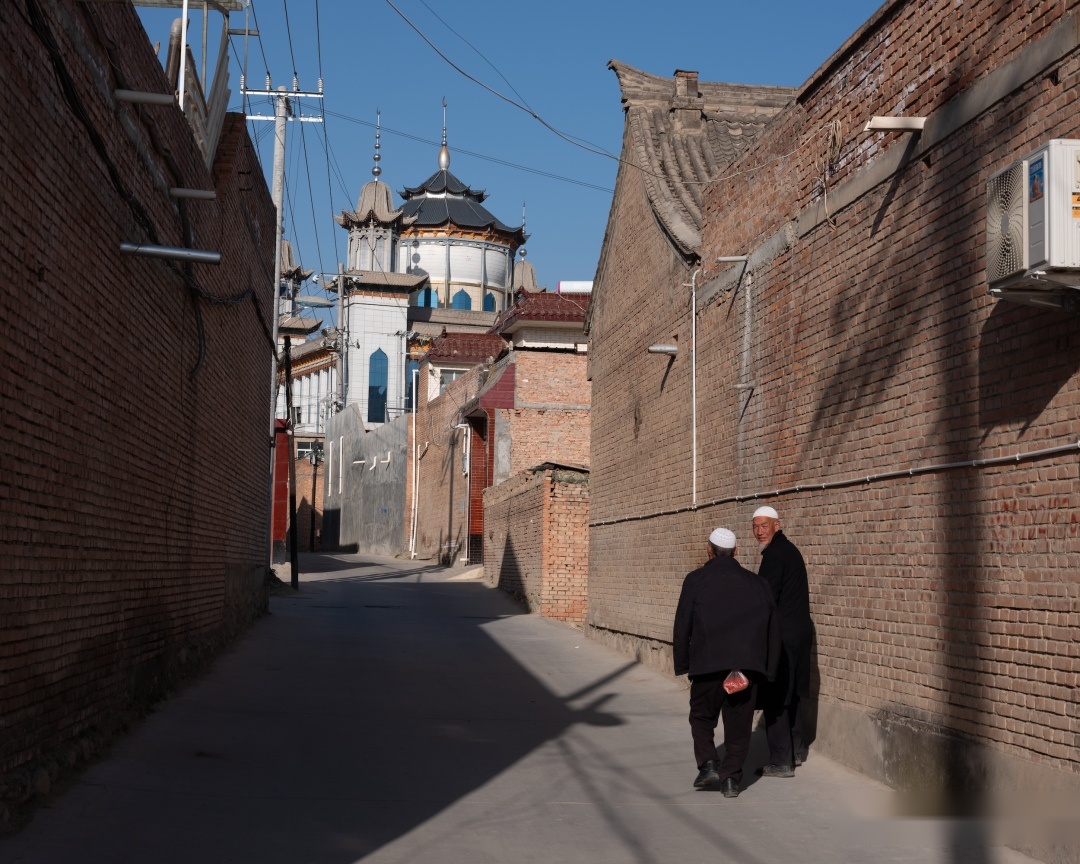
The 'hat-wearing' Mocuan Mosque in Linxia County.
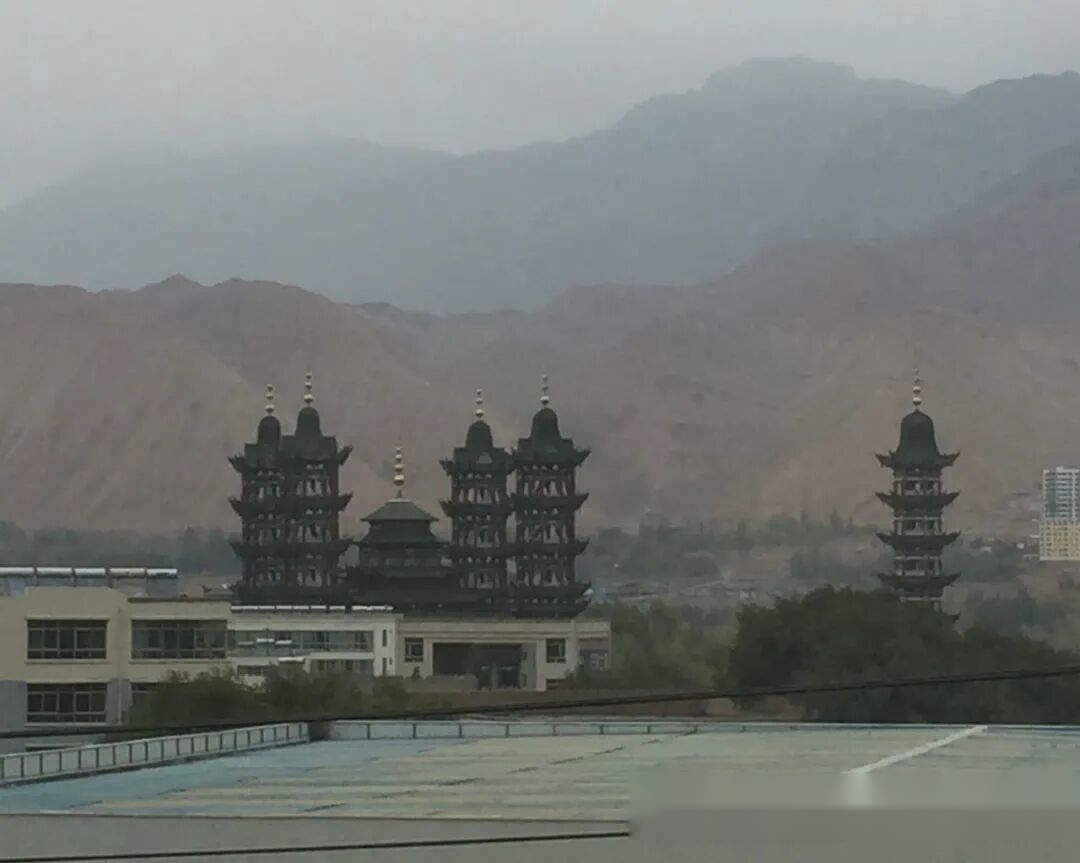
Xunhua Caotanba Mosque.
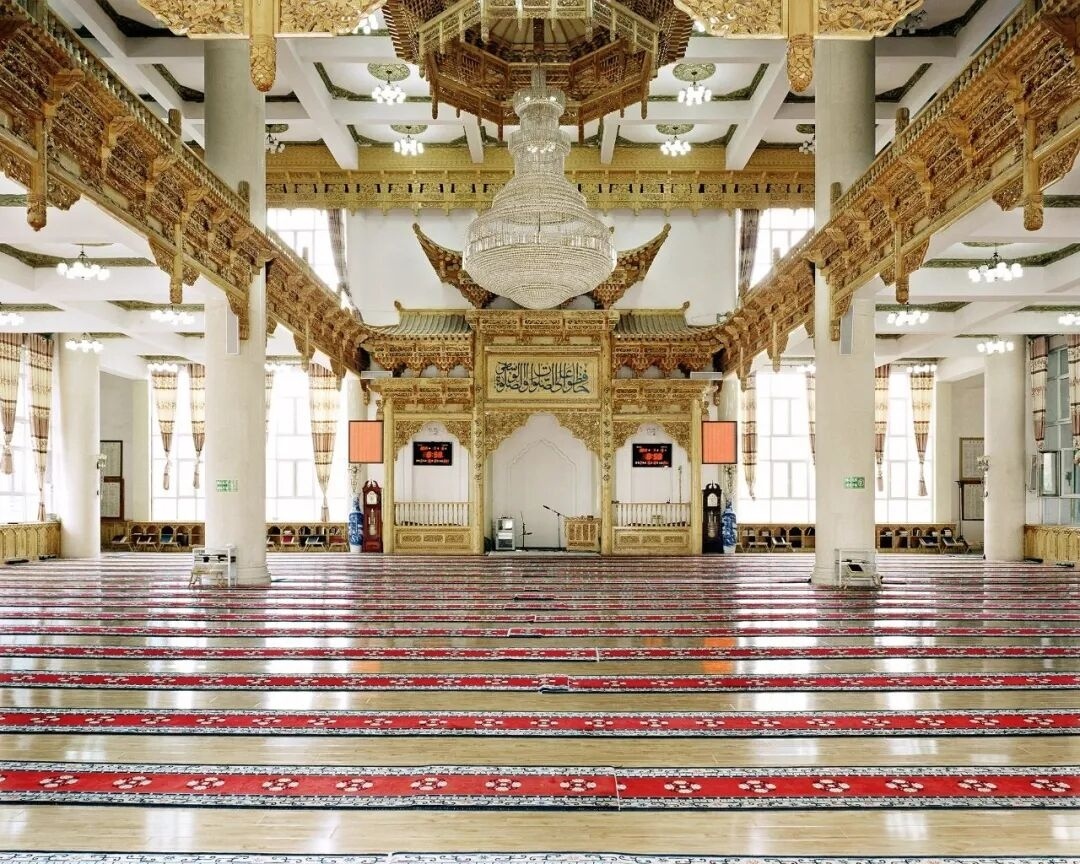
Inside the prayer hall of the Caotanba Mosque, showcasing Salar woodcarving craftsmanship, photographed in 2016.
2
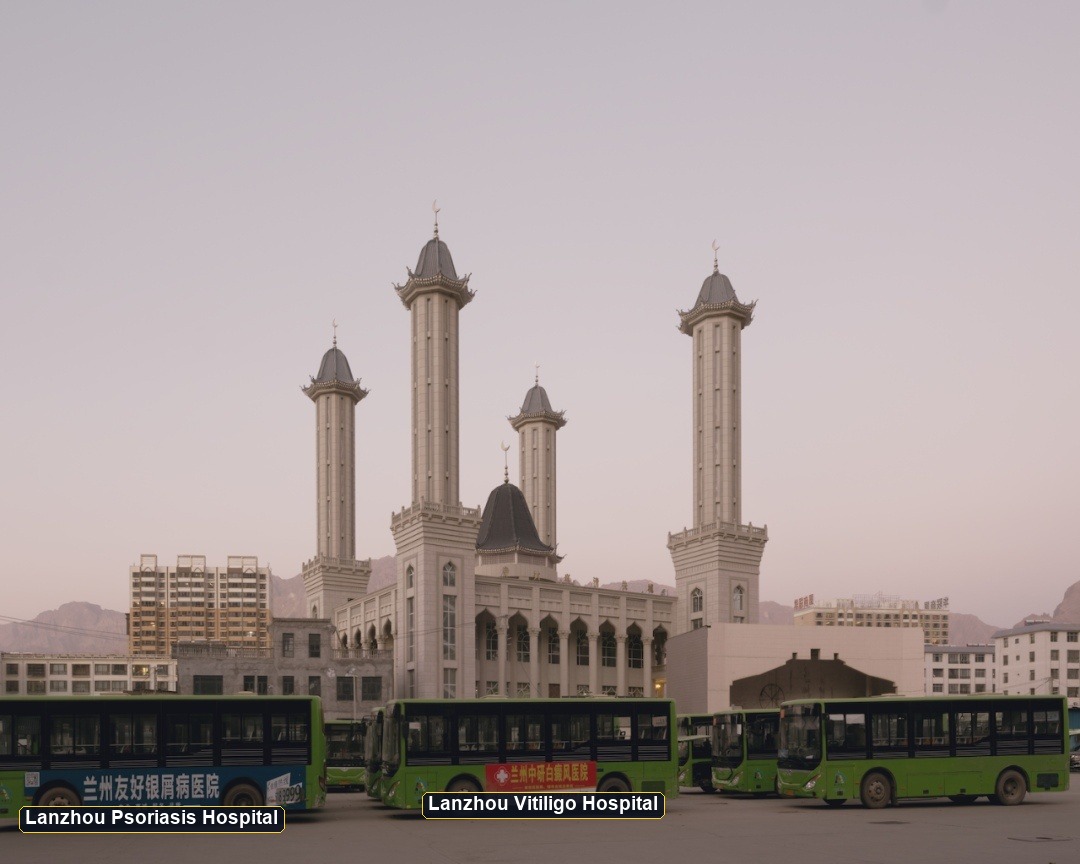
It was dark by the time we reached Xunhua County. There is only one photo spot in Xunhua: the Chengguan Mosque. I arrived in Xunhua at this same time in May 2016, driving from Minhe through the Jishi Gorge. That evening, I found a stadium behind the mosque that wasn't in use and used it as the foreground. If you look closely at the photo, the main rostrum of the stadium is behind the mosque, and the lights are shining through the mosque windows. It was definitely dusk, and that long exposure took at least two or three minutes.
I instructed Zhang Yi to drive straight into the stadium. An automatic toll gate had been installed at the entrance, so it seemed to be a parking lot now. Once inside, we realized the empty field had become a parking lot for buses. Some green buses plastered with advertising decals occupied the space near the entrance, but luckily, the rest of the area was empty. From my original shooting angle, the buses didn't block the view of the mosque.
The scene in front of me wasn't 'perfect' for a photo, but it was the real scene—the true condition of Islam in China. Just like when I was shooting the Xiguan Mosque in Lanzhou, Liu Sheng asked me why I included the overpass in the foreground, calling it the biggest obstacle in the photo. I chose an ordinary passerby's perspective. I refuse the distance of high-angle or drone shots. The cramped, real-world environment of these mosques makes them look less grand, but this is the reality of Chinese Islam. Spiritual architecture usually has vast open spaces to highlight its purity, but that's hard to find in reality, and the documentary nature of my work includes exactly these compromises.
It was already dark, and we weren't going anywhere else today. We checked into a newly opened hotel. While registering, a polite Salar girl gave us yogurt. Qinghai is the home of yogurt. Judging by the packaging, this was made locally in the town—no factory address, not mass-produced, likely a private batch. The girl delivering yogurt to the rooms got in the elevator with us. I asked her if the yogurt in her cart was good; she pursed her lips and nodded rapidly, saying it was excellent. I asked if I could have some extra, and she said no—the yogurt for guests was rationed. She had very distinctive features, looking exactly like the image of a Salar girl I had in my mind.
For lunch, we each had a pound of shouzhua yangrou (hand-grabbed lamb) and a bowl of mianpian (pulled noodle soup), so we weren't hungry even as it got dark. Searching for dinner became a kind of ritual. I remembered some 'chao paozhang' (stir-fried firecracker noodles) at a noodle shop from a few years ago—it was one of the best stir-fried noodles I'd ever had. The cashier at the shop was a cold, stunningly beautiful woman whom I wrote about in my piece 'Moving Herds in He-Guan.' I told Zhang Yi and Yu Li about this, and they started teasing me, insisting I read the article. I pulled up the version on my phone, found the chapter, and read a passage. They were eager to see this 'stunning beauty,' so the three of us went downstairs, drove to the restaurant just a street away.
In the dim light of the night, I checked the signs of the surrounding restaurants. I didn't see the name I remembered, and to be honest, I didn't remember the exact name anyway. I picked the one in the middle, and Zhang Yi stayed in the car while Yu Li and I went to confirm.
Walking inside, the layout looked familiar—the counter on the left with the open kitchen behind it, four booths on the right, and two rows of tables in the middle. But the woman at the counter clearly wasn't the one I was looking for.
"What would you like to eat?" she asked, watching me look around. She was trying to guess why I was there.
"Hi, I've been here before. Don't you guys have 'chao paozhang'? It was delicious, and I was passing through so I decided to stop by."
"Welcome!" she smiled.
"But I haven't seen you before. Is the shop owned by your family?" I couldn't just ask where the beautiful woman went.
"Right, it’s not me. That was my uncle. He transferred the shop to us, and we have paozhang too."
"And what about the lady who used to be the cashier?"
She didn't seem to remember the female cashier, so I gave her a gentle nudge, mentioning that the woman seemed to be pretty close to her uncle.
"Oh, that might be my aunt," she said, though her memory of her aunt was vague. I figured this uncle was probably a distant relative rather than a direct one. The Salar people live in a very tight-knit clan-based society where relatives are super close; if the previous shop owner had been her real uncle, she wouldn't have been so unfamiliar with his wife.
"What would you like to eat?" she asked again with a smile.
I had learned just about everything I wanted to know, so I didn't want to pry any further. I went ahead and ordered a plate of lu niunan (soy-braised beef brisket) and a big bowl of tang mianpian (hand-torn noodle soup) just to be polite and go through the motions. But the real highlight of dinner was actually three massive gaiwan cha (traditional covered-bowl tea); the royal-style tea bowls were packed with rock sugar, longan, red dates, goji berries, walnuts, and dried apricots.
(To be continued)
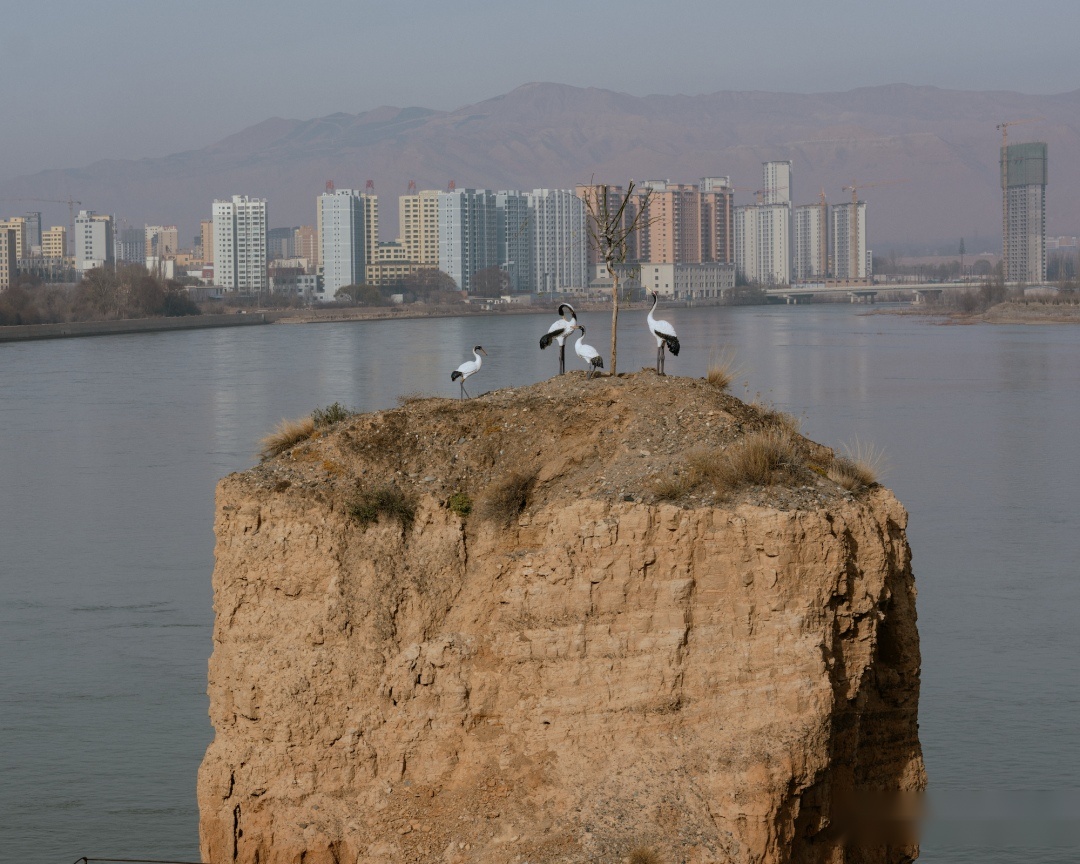
The Xunhua Yellow River that lost its wild side
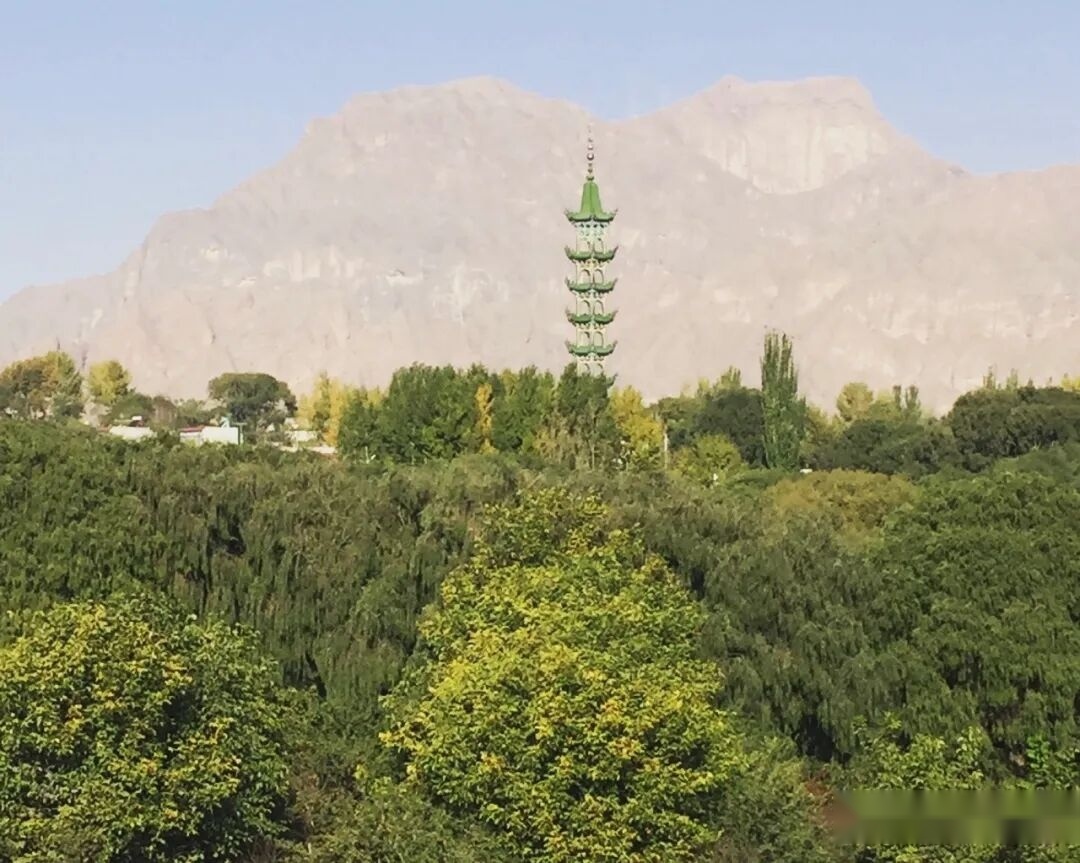
Qingshuiwan (Clear Water Bay)
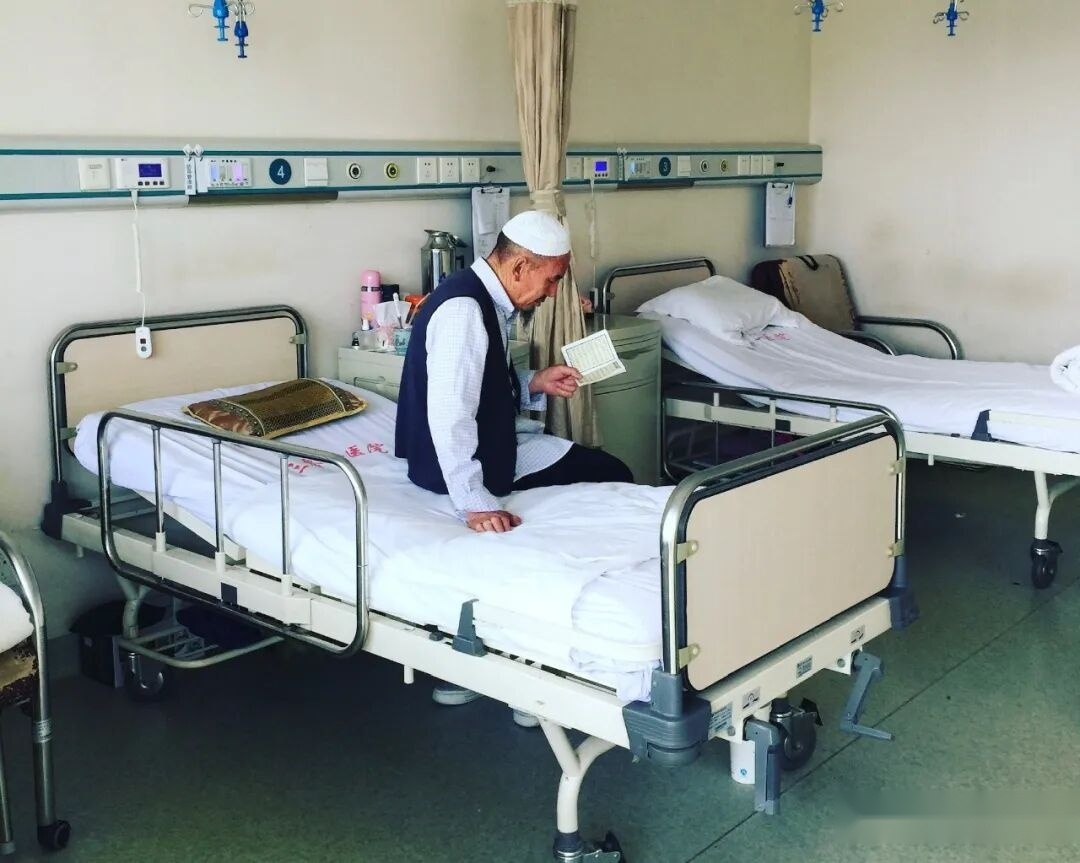
A Salar patient from Xunhua, Qinghai, whom I met at a hospital in Beijing back in 2015
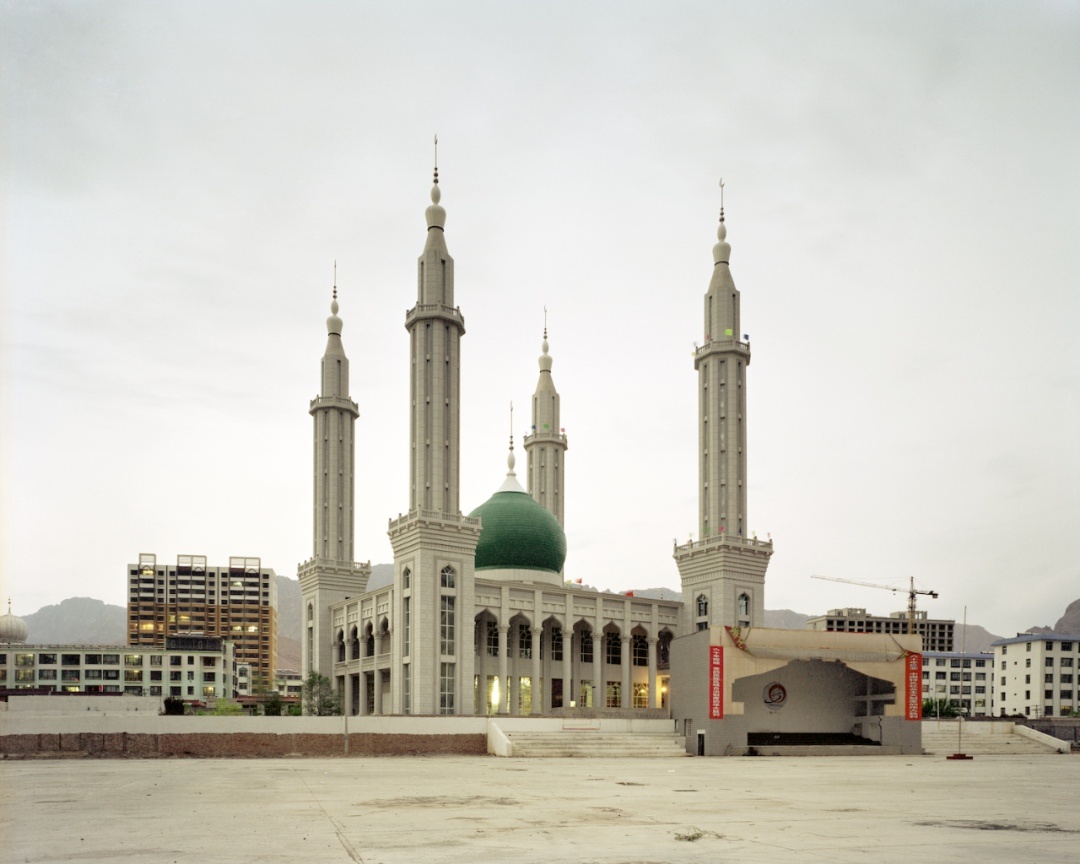
Xunhua Chengguan Grand Mosque in 2016
Xunhua Chengguan Grand Mosque in 2023
I intentionally adopted the perspective of an ordinary passerby to view these religious buildings. I refuse to use the distancing effect of high-angle shots or drones, as those viewpoints are disconnected from daily life. The cramped environment and tight spaces of these mosques make them appear less 'sublime,' but this reflects the true status of Islam in China—it is simply the current reality. While spiritual architecture is often designed with vast open spaces to emphasize a sense of ethereal purity, that is rarely achievable here, and the documentary nature of my work aims to capture precisely these realities.
1
Urban mosques have completed a glamorous makeover, replacing their old features with new ones—much like trading traditional robes for a suit or Hanfu—all made possible by ample funding, which at least looks pleasant to the eye. Rural mosques, however, have nothing left to splurge on. Many were already struggling financially when they were last built, so this latest round of 'Sinicization' renovations has proven difficult to execute. In many villages, the approach is haphazard: simply covering up or removing mandatory-regulated elements. In some cases, even that minimal effort is skipped, and the Arabic minarets, pointed arches, and massive domes are simply torn down. The original, complete architecture is left mutilated—much like a Sufi girl who has lost her headscarf and can no longer maintain her basic dignity, leaving behind an inexplicable sense of jarring loss and bitterness.
The Mocuan Mosque was originally a square building in an Arabic style, featuring a gracefully curved dome at the top and tall minarets on either side. Because it was made of reinforced concrete, removing the dome would have caused severe damage to the building's structure. What you see now is a 'Chinese-style' look: the minarets have been trimmed down and topped with glazed tiles. The dome wasn't removed; instead, it's covered by a two-tiered, 12-sided glazed tile roof. These layers look like the stacked felt hats of Central Asian nomadic Turkic peoples. Since the two-tiered 'hat' couldn't be fixed or bear its own weight, it was cleverly reinforced with steel bands and at least 12 steel columns to distribute the weight across the roof. Below the hat, on the original eaves, decorative dougong (traditional wooden brackets) and glazed roof tiles were added, resembling the ruffled collars of European medieval gentlemen.
I took a short drive through the village. The alleys are narrow, deep, and winding, with motorcycles frequently darting out. Elderly people walk with a slow, unsteady gait, barely having the energy to move out of the way of my camera. I ran into a few young wives who weren't wearing headscarves (hijabs), but they only leaned out of the thick courtyard gates for a quick chat. Their way of avoiding the camera was to simply pull back into the doorway, or turn away before I could frame a shot; either way, you don't get to see their faces. The village is full of wide steel gates—the proportion between the gates and the courtyard walls is mismatched, as the walls remain from the agricultural era while the gates belong to the automobile age. Two houses still had red spring couplets on their doors. To my surprise, there are still Han Chinese people in the village. I asked a woman peeking out from a neighboring house, and she told me there are only two Han families left. There used to be more, but living with the Hui Muslims required them to follow many customs, which became inconvenient, so they moved away. Ironically, they are the true ethnic minority here.
Dali-jia Mountain is the border range between Linxia and Xunhua in Qinghai, standing like a giant gateway. Now, a highway tunnels through the mountain, but I didn't take it. Instead, I took the old national road that twists and turns through the peaks. The rising altitude caused the air pressure to drop, and I drifted in and out of a light sleep until we reached the mountain pass. Up there, the air was crisp, the snow heavy, and the light and wind felt dry, clear, transparent, vibrant, and sharp. This is the taste of Qinghai—a sensation you get every time you arrive in the province from a mountain pass.
In reality, this is an ancient path. For a long period in history, people traveling into Qinghai from Dingxi or Lintao in Gansu took this very road.
Descending from Dali-jia Mountain is a long, winding road for tens of kilometers, ending only when you reach Qingshuiwan on the banks of the Yellow River. From the summit to the foot of the mountain, the sparse villages tucked among cold, bare trees look mostly the same. The only difference lies in the 'spiritual carriers'—the temples. First, you see the white pagodas of Tibetan Buddhism, indicating Tibetan villages; later, you see mosques with eaves that flare out like the wings of a giant bird—these are surely villages of the Salar or Hui Muslims. The sun was already setting outside the car window. At this time of year, there are no tourists; in the freezing winter, the Salar people are tucked away inside their warm mud-brick homes. On this ancient road, it was only the three of us.
As we lost altitude, the vegetation became denser. In winter, the bark of the trees blends into the earthy gray of the landscape. The tangled, wild branches of poplars, willows, and elms are rarely pruned, growing in a nearly sprawling state.
"The Salar are a people who love to plant trees," I blurted out while staring out the car window.
"Where there are trees, there's a good place to live." My father said this. He spent his entire life working in the wilderness of the high, cold, and harsh Qinghai-Tibet Plateau, and he had his own understanding of Qinghai's climate. On the plateau and in the northwest deserts, a place with trees is indeed a good place.
The Salar are an ethnic group who migrated here from Central Asia hundreds of years ago. They planted trees on the bitter, cold mountains, working hard to turn the wilderness into a home. Every resilient individual in their history is worth singing praises for.
Passing through Zhang-ga, the village still preserves an old mosque from the Ming Dynasty. Zhang-ga was historically known as the 'Zhang-ha Gong,' one of the twelve 'Gongs'—an internal management system established by the Salar people, similar to a township today.
In the 26th year of the Qianlong Emperor (1762), the debate that caused a complete falling out between the Jahriyya and the Huasi sects took place at this very mosque. On that Jumu'ah (Friday prayer), Ma Mingxin was preaching at the Zhang-ga Mosque when he ran into Ma Guobao, the second-generation leader of the Huasi sect, who was there for Jumu'ah as well. Ma Guobao was dismissive of Ma Mingxin's teachings, and the debate between the two leaders began. Unable to win the argument, Ma Guobao denounced Ma Mingxin and the Jahriyya as a 'heretical cult' and reported them to the authorities, ultimately leading to both leaders being expelled from Xunhua.
The religious disputes of over 250 years ago have faded, but blood has continued to flow on Salar land. After the Jahriyya withdrew from Xunhua, the armed conflicts sparked by religion never fully ceased. Throughout the history of the Hehuang region, the opposition between believers and the government played out many times. In the winter of the 9th year of the Tongzhi Emperor (1870), Bai Yanhu, who started an uprising in Guanzhong, fled west to the Hehuang region. In the 21st year of the Guangxu Emperor (1895), a sectarian clash in Xunhua turned into the 'Hehuang Incident.' In 1928, conflict broke out between Feng Yuxiang's troops and local Muslims, leading Ma Qilin, a subordinate of Ma Qi in Xining, to order his nephew Ma Zhongying to reinforce Hezhou. These wars began with sectarian disputes, leading to mutual exclusion, confrontation, fighting, and massacres, eventually escalating into military conflict with the government, leaving the land in turmoil.
Qingshuiwan on the Yellow River is a place of breathtaking scenery. When the Yellow River finishes its rush down the Qinghai-Tibet Plateau and prepares to enter the Loess Plateau, it is blocked by the Jishi Mountains. The peninsula that curves before the Jishi Gorge is Qingshuiwan. Once known as 'Qingshui Gong,' it is famous for a niche type of chili pepper—the 'Xunhua chili.' It is legendary on the plateau and is the main ingredient most loved by Xining locals for their chili oil. Even though I left Qinghai over 20 years ago, there is always a stash of Xunhua chili powder in my fridge.
The 'red' of Qingshuiwan isn't just the harvest of plateau chili peppers; it’s also the color of tragic, heavy bloodshed. In 1781, Su Sishisan, a Jahriyya Akhund, led a massive slaughter of Huasi sect members right here. The massacre fueled by this sectarian dispute triggered a Salar uprising, first attacking Hezhou, then reaching the gates of Lanzhou, where it ultimately led to the death of their leader.
The 'hat-wearing' Mocuan Mosque in Linxia County.
Xunhua Caotanba Mosque.
Inside the prayer hall of the Caotanba Mosque, showcasing Salar woodcarving craftsmanship, photographed in 2016.
2
It was dark by the time we reached Xunhua County. There is only one photo spot in Xunhua: the Chengguan Mosque. I arrived in Xunhua at this same time in May 2016, driving from Minhe through the Jishi Gorge. That evening, I found a stadium behind the mosque that wasn't in use and used it as the foreground. If you look closely at the photo, the main rostrum of the stadium is behind the mosque, and the lights are shining through the mosque windows. It was definitely dusk, and that long exposure took at least two or three minutes.
I instructed Zhang Yi to drive straight into the stadium. An automatic toll gate had been installed at the entrance, so it seemed to be a parking lot now. Once inside, we realized the empty field had become a parking lot for buses. Some green buses plastered with advertising decals occupied the space near the entrance, but luckily, the rest of the area was empty. From my original shooting angle, the buses didn't block the view of the mosque.
The scene in front of me wasn't 'perfect' for a photo, but it was the real scene—the true condition of Islam in China. Just like when I was shooting the Xiguan Mosque in Lanzhou, Liu Sheng asked me why I included the overpass in the foreground, calling it the biggest obstacle in the photo. I chose an ordinary passerby's perspective. I refuse the distance of high-angle or drone shots. The cramped, real-world environment of these mosques makes them look less grand, but this is the reality of Chinese Islam. Spiritual architecture usually has vast open spaces to highlight its purity, but that's hard to find in reality, and the documentary nature of my work includes exactly these compromises.
It was already dark, and we weren't going anywhere else today. We checked into a newly opened hotel. While registering, a polite Salar girl gave us yogurt. Qinghai is the home of yogurt. Judging by the packaging, this was made locally in the town—no factory address, not mass-produced, likely a private batch. The girl delivering yogurt to the rooms got in the elevator with us. I asked her if the yogurt in her cart was good; she pursed her lips and nodded rapidly, saying it was excellent. I asked if I could have some extra, and she said no—the yogurt for guests was rationed. She had very distinctive features, looking exactly like the image of a Salar girl I had in my mind.
For lunch, we each had a pound of shouzhua yangrou (hand-grabbed lamb) and a bowl of mianpian (pulled noodle soup), so we weren't hungry even as it got dark. Searching for dinner became a kind of ritual. I remembered some 'chao paozhang' (stir-fried firecracker noodles) at a noodle shop from a few years ago—it was one of the best stir-fried noodles I'd ever had. The cashier at the shop was a cold, stunningly beautiful woman whom I wrote about in my piece 'Moving Herds in He-Guan.' I told Zhang Yi and Yu Li about this, and they started teasing me, insisting I read the article. I pulled up the version on my phone, found the chapter, and read a passage. They were eager to see this 'stunning beauty,' so the three of us went downstairs, drove to the restaurant just a street away.
In the dim light of the night, I checked the signs of the surrounding restaurants. I didn't see the name I remembered, and to be honest, I didn't remember the exact name anyway. I picked the one in the middle, and Zhang Yi stayed in the car while Yu Li and I went to confirm.
Walking inside, the layout looked familiar—the counter on the left with the open kitchen behind it, four booths on the right, and two rows of tables in the middle. But the woman at the counter clearly wasn't the one I was looking for.
"What would you like to eat?" she asked, watching me look around. She was trying to guess why I was there.
"Hi, I've been here before. Don't you guys have 'chao paozhang'? It was delicious, and I was passing through so I decided to stop by."
"Welcome!" she smiled.
"But I haven't seen you before. Is the shop owned by your family?" I couldn't just ask where the beautiful woman went.
"Right, it’s not me. That was my uncle. He transferred the shop to us, and we have paozhang too."
"And what about the lady who used to be the cashier?"
She didn't seem to remember the female cashier, so I gave her a gentle nudge, mentioning that the woman seemed to be pretty close to her uncle.
"Oh, that might be my aunt," she said, though her memory of her aunt was vague. I figured this uncle was probably a distant relative rather than a direct one. The Salar people live in a very tight-knit clan-based society where relatives are super close; if the previous shop owner had been her real uncle, she wouldn't have been so unfamiliar with his wife.
"What would you like to eat?" she asked again with a smile.
I had learned just about everything I wanted to know, so I didn't want to pry any further. I went ahead and ordered a plate of lu niunan (soy-braised beef brisket) and a big bowl of tang mianpian (hand-torn noodle soup) just to be polite and go through the motions. But the real highlight of dinner was actually three massive gaiwan cha (traditional covered-bowl tea); the royal-style tea bowls were packed with rock sugar, longan, red dates, goji berries, walnuts, and dried apricots.
(To be continued)
The Xunhua Yellow River that lost its wild side
Qingshuiwan (Clear Water Bay)
A Salar patient from Xunhua, Qinghai, whom I met at a hospital in Beijing back in 2015
Xunhua Chengguan Grand Mosque in 2016
Xunhua Chengguan Grand Mosque in 2023
