

Bengali New Year
Halal Food Guide: Beijing Dastan — Ramadan Iftar and Bengali New Year (Segment A) (Revised)
Articles • ali2007fr posted the article • 0 comments • 123 views • 2026-05-18 21:21
Summary: Halal Food Guide: Beijing Dastan — Ramadan Iftar and Bengali New Year is presented here as a firsthand travel account in clear English, beginning with this scene: April 14th is the Bengali New Year. I was very happy to be invited by Yahya Dost to the Dastaan restaurant, an Indian spot in Sanlitun Soho, Beijing, to join a Ramadan iftar buffet celebrating the Bengali New Year. The account keeps its focus on Beijing Iftar, Bengali New Year, Halal Food while preserving the names, places, food, and historical details from the Chinese source.
The main rice dish was Kolkata-style potato biryani (Kolkata aloo biryani). Among South Asian biryanis, this version is known for using potatoes. Kolkata is the capital of West Bengal in India, and after Dhaka in Bangladesh it is one of the largest Bengali-speaking cities. view all
Summary: Halal Food Guide: Beijing Dastan — Ramadan Iftar and Bengali New Year is presented here as a firsthand travel account in clear English, beginning with this scene: April 14th is the Bengali New Year. I was very happy to be invited by Yahya Dost to the Dastaan restaurant, an Indian spot in Sanlitun Soho, Beijing, to join a Ramadan iftar buffet celebrating the Bengali New Year. The account keeps its focus on Beijing Iftar, Bengali New Year, Halal Food while preserving the names, places, food, and historical details from the Chinese source.
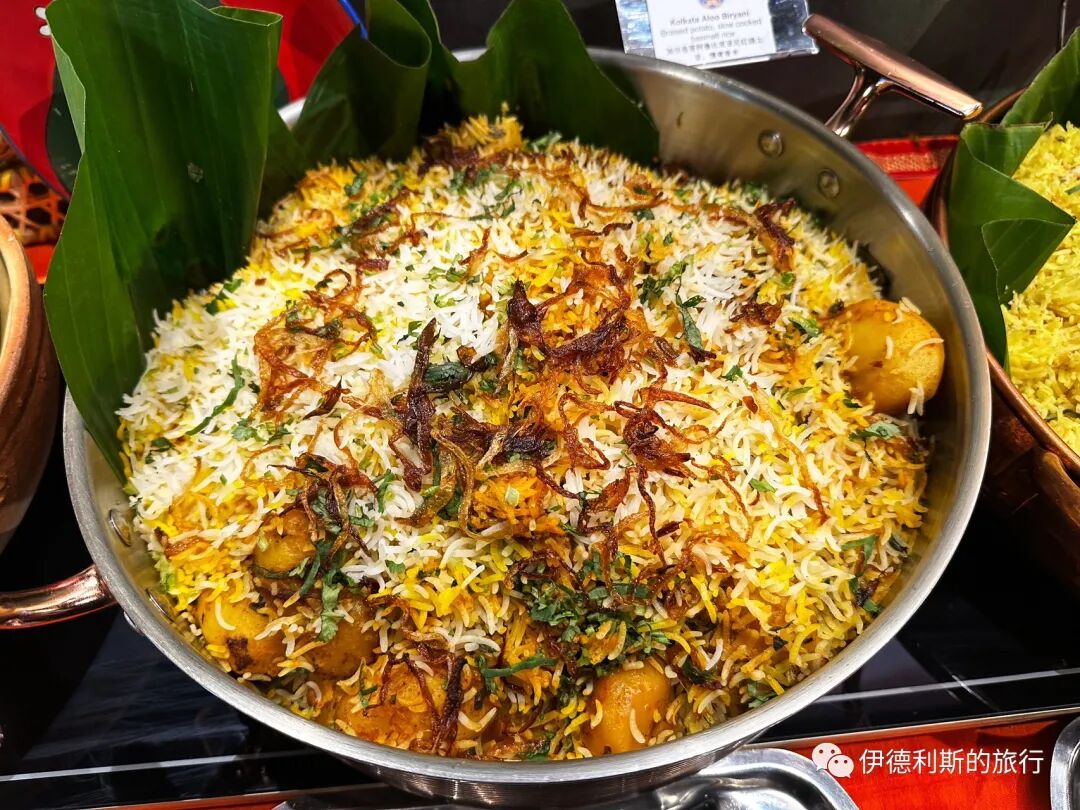
The main rice dish was Kolkata-style potato biryani (Kolkata aloo biryani). Among South Asian biryanis, this version is known for using potatoes. Kolkata is the capital of West Bengal in India, and after Dhaka in Bangladesh it is one of the largest Bengali-speaking cities.
Halal Food Guide: Beijing Dastan — Ramadan Iftar and Bengali New Year (Segment A)
Articles • ali2007fr posted the article • 0 comments • 156 views • 2026-05-18 21:20
Summary: Halal Food Guide: Beijing Dastan — Ramadan Iftar and Bengali New Year is presented here as a firsthand travel account in clear English, beginning with this scene: April 14th is the Bengali New Year. I was very happy to be invited by Yahya Dost to the Dastaan restaurant, an Indian spot in Sanlitun Soho, Beijing, to join a Ramadan iftar buffet celebrating the Bengali New Year. The account keeps its focus on Beijing Iftar, Bengali New Year, Halal Food while preserving the names, places, food, and historical details from the Chinese source.
For the main course, there was Kolkata potato rice (Kolkata aloo biryani). This is the only type of biryani in South Asia that uses potatoes as an ingredient. Kolkata, the capital of the Indian state of West Bengal, is the second-largest Bengali-speaking city after Dhaka, the capital of Bangladesh. view all
Summary: Halal Food Guide: Beijing Dastan — Ramadan Iftar and Bengali New Year is presented here as a firsthand travel account in clear English, beginning with this scene: April 14th is the Bengali New Year. I was very happy to be invited by Yahya Dost to the Dastaan restaurant, an Indian spot in Sanlitun Soho, Beijing, to join a Ramadan iftar buffet celebrating the Bengali New Year. The account keeps its focus on Beijing Iftar, Bengali New Year, Halal Food while preserving the names, places, food, and historical details from the Chinese source.
For the main course, there was Kolkata potato rice (Kolkata aloo biryani). This is the only type of biryani in South Asia that uses potatoes as an ingredient. Kolkata, the capital of the Indian state of West Bengal, is the second-largest Bengali-speaking city after Dhaka, the capital of Bangladesh.
Halal Food Guide: Beijing Dastan — Ramadan Iftar and Bengali New Year (Part 2D of 4)
Articles • ali2007fr posted the article • 0 comments • 148 views • 2026-05-18 21:20
Summary: Halal Food Guide: Beijing Dastan — Ramadan Iftar and Bengali New Year is presented here as a firsthand travel account in clear English, beginning with this scene: April 14th is the Bengali New Year. I was very happy to be invited by Yahya Dost to the Dastaan restaurant, an Indian spot in Sanlitun Soho, Beijing, to join a Ramadan iftar buffet celebrating the Bengali New Year. The account keeps its focus on Beijing Iftar, Bengali New Year, Halal Food while preserving the names, places, food, and historical details from the Chinese source.
For the main course, there was Kolkata potato rice (Kolkata aloo biryani). This is the only type of biryani in South Asia that uses potatoes as an ingredient. Kolkata, the capital of the Indian state of West Bengal, is the second-largest Bengali-speaking city after Dhaka, the capital of Bangladesh.
In 1856, after Wajid Ali Shah, the ruler of the Awadh region in northern India, was deposed by the British, he moved to Kolkata. The potato biryani was invented by his accompanying court chefs. Potatoes were a foreign food and were not brought to India by the Dutch until the 1830s. When Wajid Ali Shah's court chefs were cooking biryani with saffron, various spices, and meat, they once tried adding fried baby potatoes. It was unexpectedly delicious, became a favorite of Wajid Ali Shah, and quickly spread throughout Kolkata.
The second dish is yellow pilaf (basanti pulao), a special rice dish for the Bengali New Year, colored with turmeric and topped with fried cashews and raisins. view all
Summary: Halal Food Guide: Beijing Dastan — Ramadan Iftar and Bengali New Year is presented here as a firsthand travel account in clear English, beginning with this scene: April 14th is the Bengali New Year. I was very happy to be invited by Yahya Dost to the Dastaan restaurant, an Indian spot in Sanlitun Soho, Beijing, to join a Ramadan iftar buffet celebrating the Bengali New Year. The account keeps its focus on Beijing Iftar, Bengali New Year, Halal Food while preserving the names, places, food, and historical details from the Chinese source.
For the main course, there was Kolkata potato rice (Kolkata aloo biryani). This is the only type of biryani in South Asia that uses potatoes as an ingredient. Kolkata, the capital of the Indian state of West Bengal, is the second-largest Bengali-speaking city after Dhaka, the capital of Bangladesh.
In 1856, after Wajid Ali Shah, the ruler of the Awadh region in northern India, was deposed by the British, he moved to Kolkata. The potato biryani was invented by his accompanying court chefs. Potatoes were a foreign food and were not brought to India by the Dutch until the 1830s. When Wajid Ali Shah's court chefs were cooking biryani with saffron, various spices, and meat, they once tried adding fried baby potatoes. It was unexpectedly delicious, became a favorite of Wajid Ali Shah, and quickly spread throughout Kolkata.
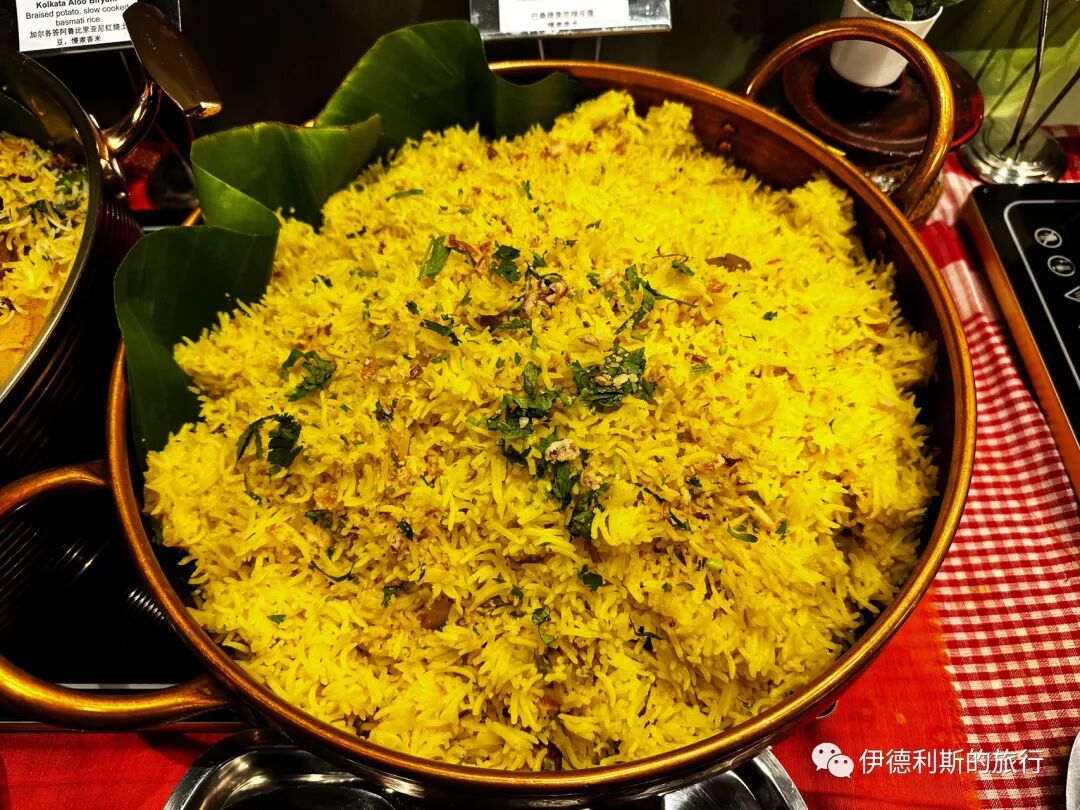
The second dish is yellow pilaf (basanti pulao), a special rice dish for the Bengali New Year, colored with turmeric and topped with fried cashews and raisins.
Halal Food Guide: Beijing Dastan — Ramadan Iftar and Bengali New Year (Part 2 of 4)
Articles • ali2007fr posted the article • 0 comments • 128 views • 2026-05-18 21:20
Summary: Halal Food Guide: Beijing Dastan — Ramadan Iftar and Bengali New Year is presented here as a firsthand travel account in clear English, beginning with this scene: April 14th is the Bengali New Year. I was very happy to be invited by Yahya Dost to the Dastaan restaurant, an Indian spot in Sanlitun Soho, Beijing, to join a Ramadan iftar buffet celebrating the Bengali New Year. The account keeps its focus on Beijing Iftar, Bengali New Year, Halal Food while preserving the names, places, food, and historical details from the Chinese source.
The classic Bengali side dish vegetable mash (bhurta) is made by mashing various vegetables or fish with mustard oil, onion, garlic, and red chili. The ingredients can be boiled, roasted, or fried before mashing.
There are many types of bhurta depending on the ingredients. The most popular is potato mash (aloo bharta), made by boiling potatoes and mixing them with fried onions, chili, and mustard oil. The rich taste of mustard oil in the potato mash really boosts your appetite. Another common one is eggplant mash (baingan bharta), made by roasting the eggplant, chopping it up, and mixing it with onion, chili, and mustard oil.
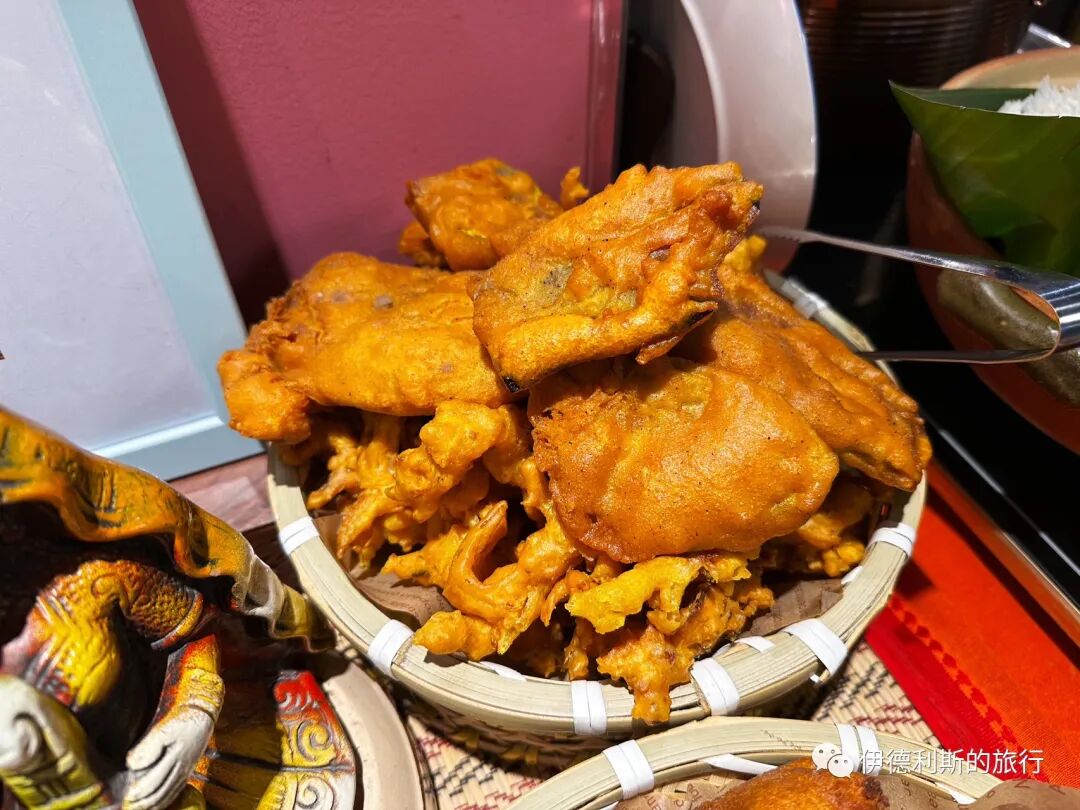
Fried dishes made by Bengalis using mustard oil are called bhaja, and there are many different kinds. The most classic is crispy fried potato strips (jhure-jhure aloo bhaja). The potatoes are fried until golden and very crispy, and it is a classic snack for the Bengali New Year. Also, fried eggplant slices (muchmuche beguni) and fried potato patties (aloo chop) are both part of the bhaja fried dish family.
For the main course, there was Kolkata potato rice (Kolkata aloo biryani). This is the only type of biryani in South Asia that uses potatoes as an ingredient. Kolkata, the capital of the Indian state of West Bengal, is the second-largest Bengali-speaking city after Dhaka, the capital of Bangladesh.
In 1856, after Wajid Ali Shah, the ruler of the Awadh region in northern India, was deposed by the British, he moved to Kolkata. The potato biryani was invented by his accompanying court chefs. Potatoes were a foreign food and were not brought to India by the Dutch until the 1830s. When Wajid Ali Shah's court chefs were cooking biryani with saffron, various spices, and meat, they once tried adding fried baby potatoes. It was unexpectedly delicious, became a favorite of Wajid Ali Shah, and quickly spread throughout Kolkata.
The second dish is yellow pilaf (basanti pulao), a special rice dish for the Bengali New Year, colored with turmeric and topped with fried cashews and raisins.
Main dishes include yogurt and cilantro roasted chicken, pan-fried spicy tilapia, mixed nut and vegetable patties, and roasted cauliflower with five-spice blend (panch phoron). Panch phoron consists of five spice seeds: radhuni seeds, fenugreek seeds, fennel seeds, mustard seeds, and nigella seeds. They are not roasted or ground, but mixed and added directly to food. Radhuni is a close relative of ajwain, but it is rarely used in South Asia outside of Bengal. It tastes a bit like celery, but is very strong. view all
Summary: Halal Food Guide: Beijing Dastan — Ramadan Iftar and Bengali New Year is presented here as a firsthand travel account in clear English, beginning with this scene: April 14th is the Bengali New Year. I was very happy to be invited by Yahya Dost to the Dastaan restaurant, an Indian spot in Sanlitun Soho, Beijing, to join a Ramadan iftar buffet celebrating the Bengali New Year. The account keeps its focus on Beijing Iftar, Bengali New Year, Halal Food while preserving the names, places, food, and historical details from the Chinese source.
The classic Bengali side dish vegetable mash (bhurta) is made by mashing various vegetables or fish with mustard oil, onion, garlic, and red chili. The ingredients can be boiled, roasted, or fried before mashing.
There are many types of bhurta depending on the ingredients. The most popular is potato mash (aloo bharta), made by boiling potatoes and mixing them with fried onions, chili, and mustard oil. The rich taste of mustard oil in the potato mash really boosts your appetite. Another common one is eggplant mash (baingan bharta), made by roasting the eggplant, chopping it up, and mixing it with onion, chili, and mustard oil.
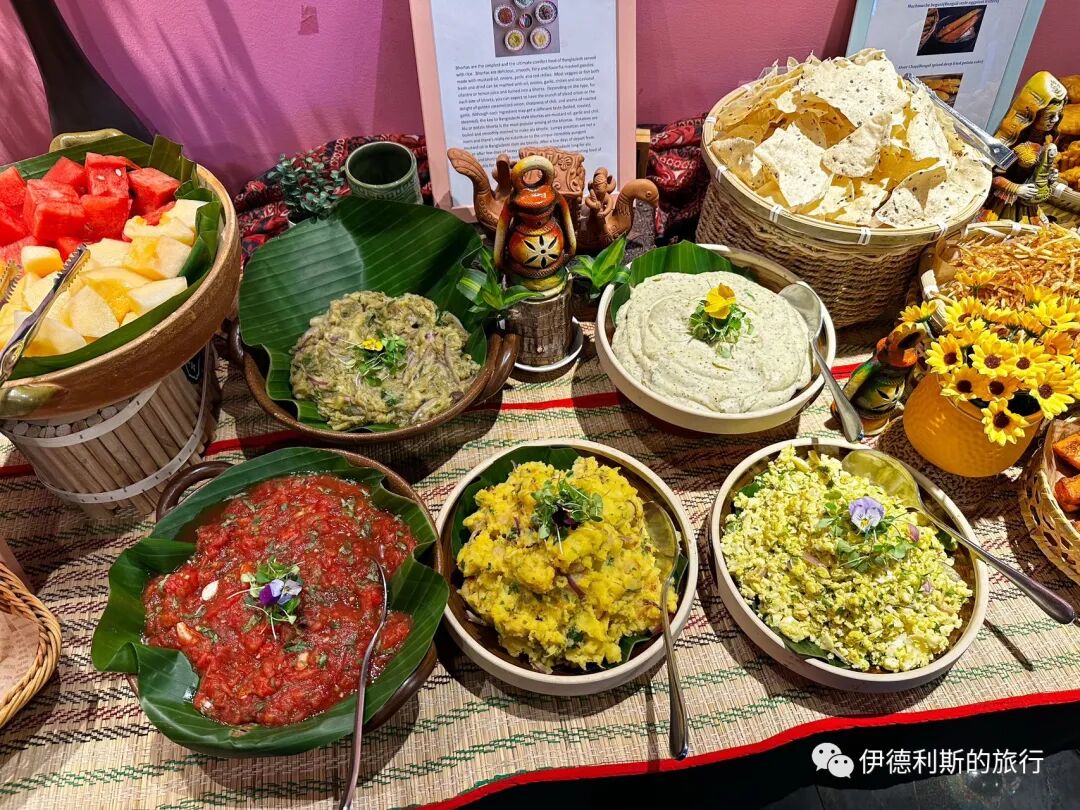
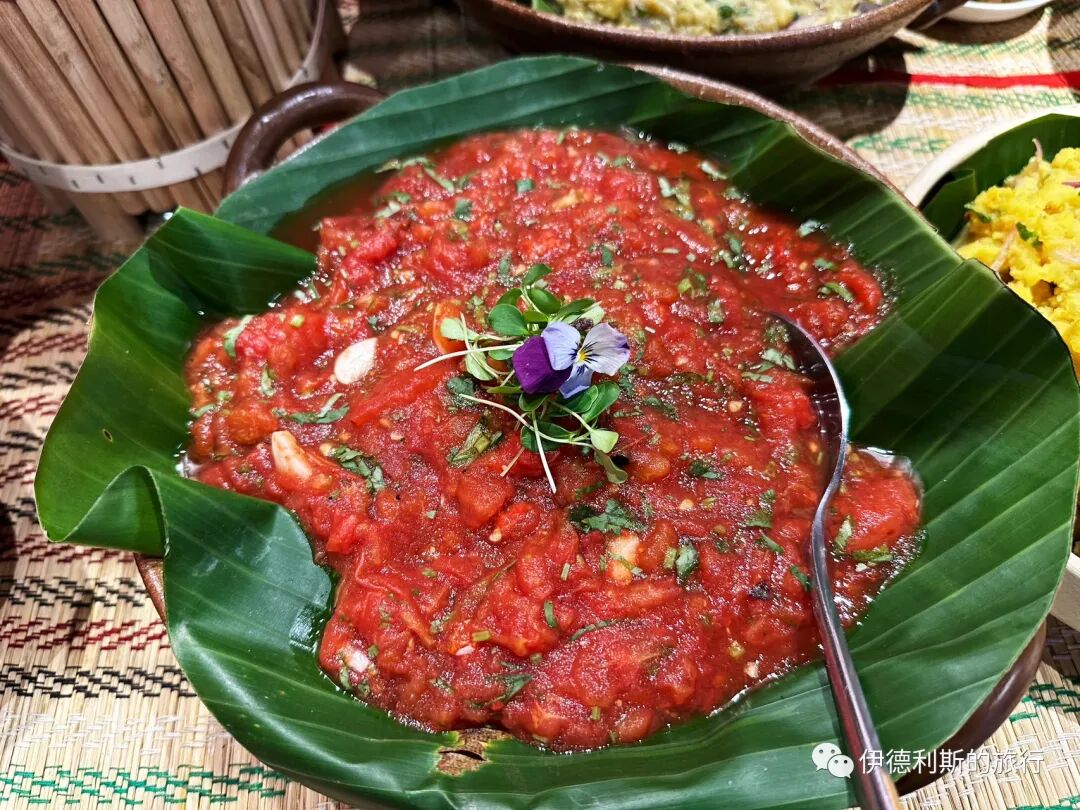
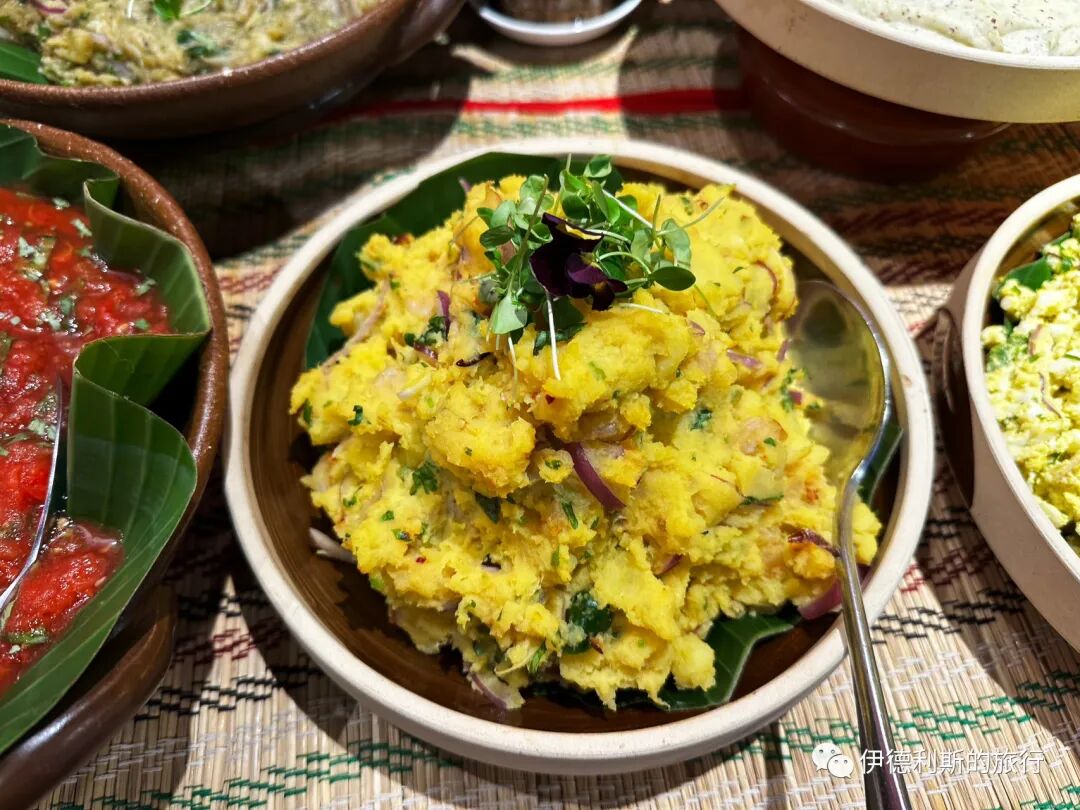
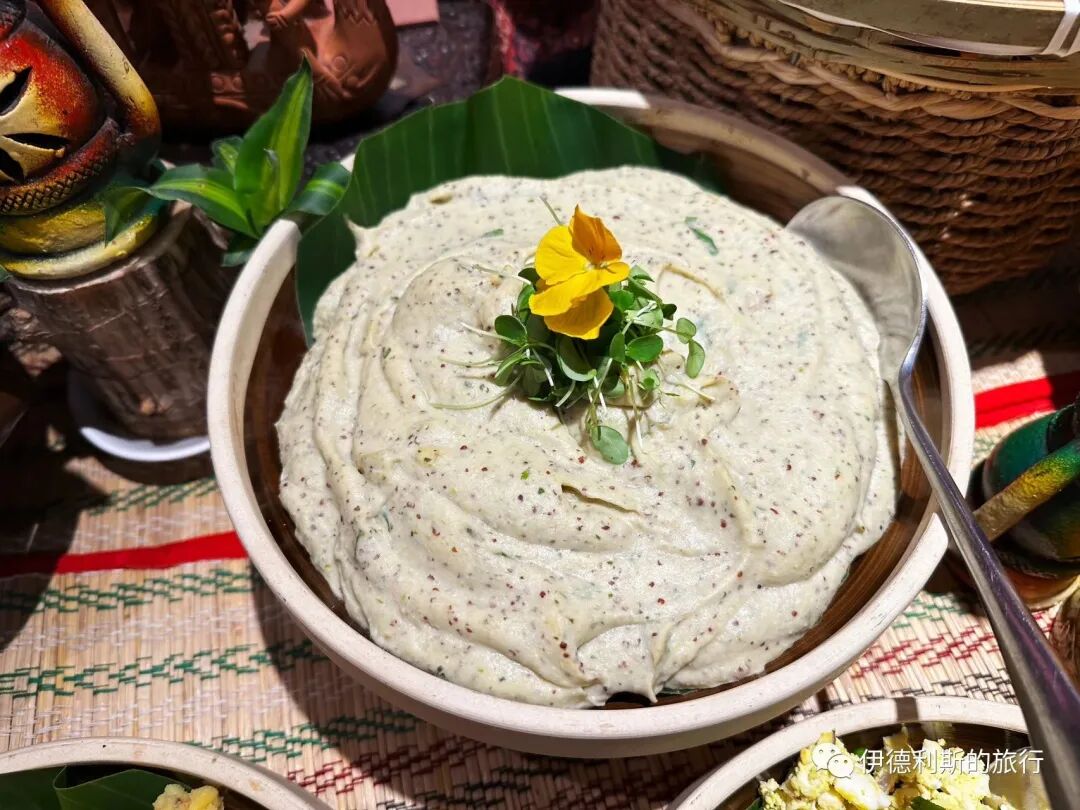
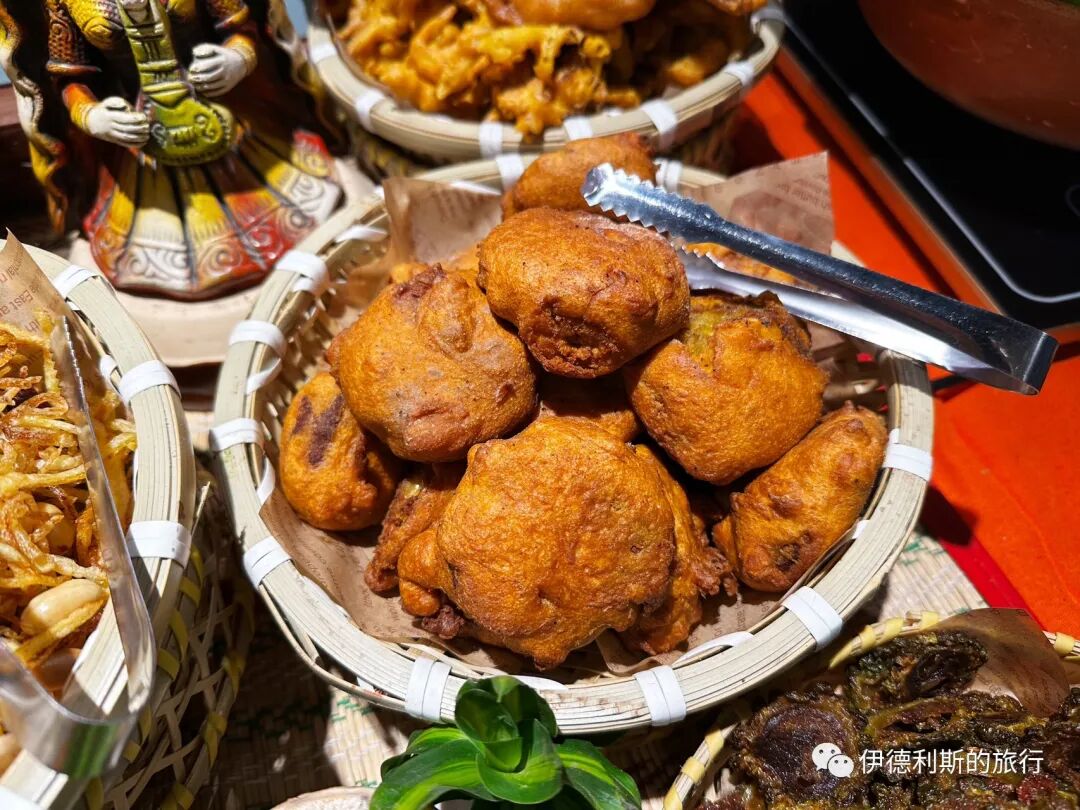
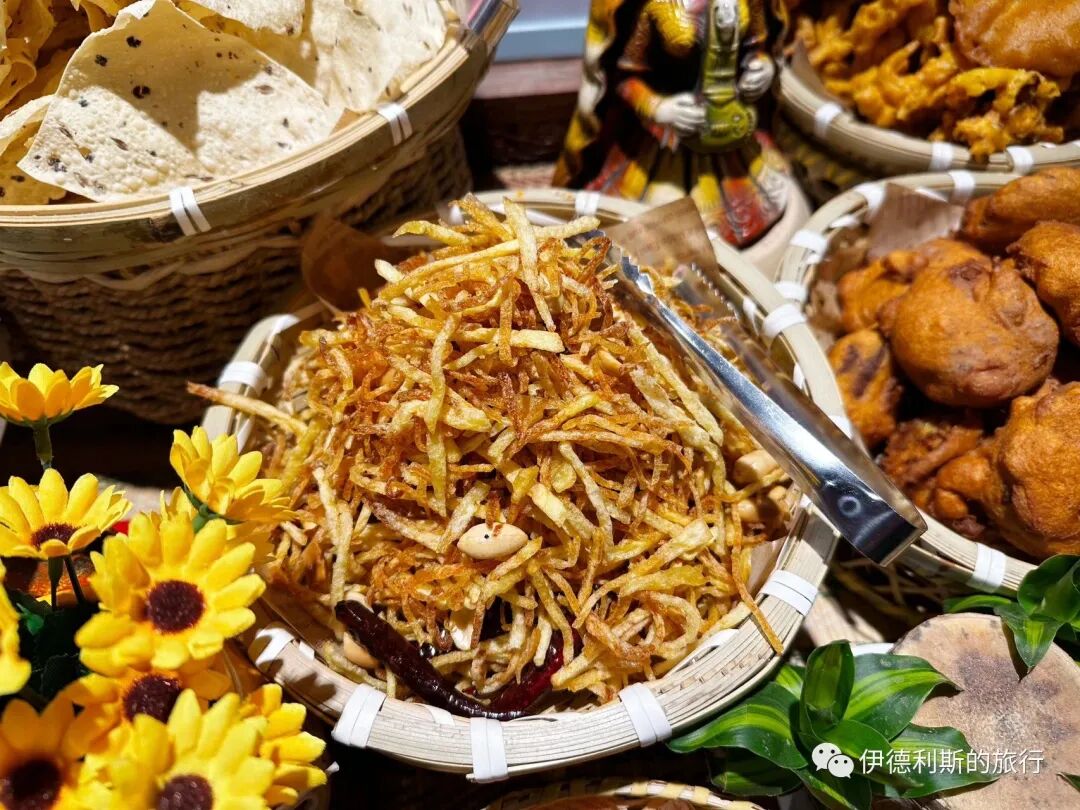
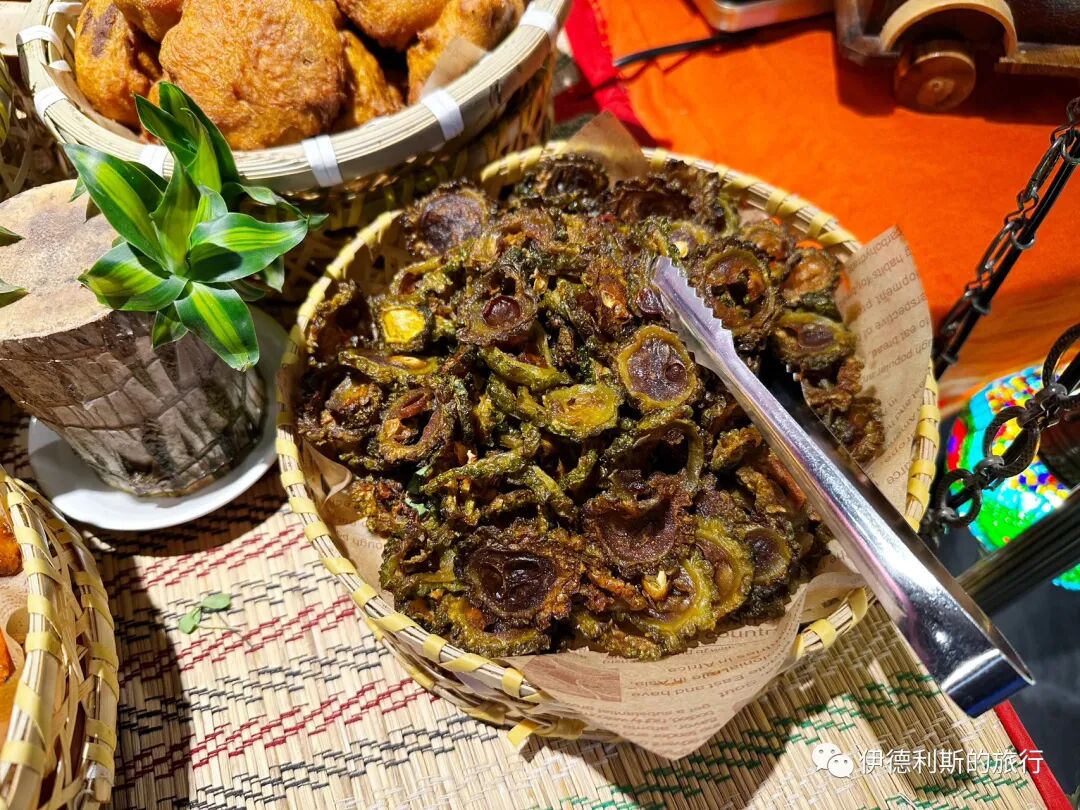
Fried dishes made by Bengalis using mustard oil are called bhaja, and there are many different kinds. The most classic is crispy fried potato strips (jhure-jhure aloo bhaja). The potatoes are fried until golden and very crispy, and it is a classic snack for the Bengali New Year. Also, fried eggplant slices (muchmuche beguni) and fried potato patties (aloo chop) are both part of the bhaja fried dish family.
For the main course, there was Kolkata potato rice (Kolkata aloo biryani). This is the only type of biryani in South Asia that uses potatoes as an ingredient. Kolkata, the capital of the Indian state of West Bengal, is the second-largest Bengali-speaking city after Dhaka, the capital of Bangladesh.
In 1856, after Wajid Ali Shah, the ruler of the Awadh region in northern India, was deposed by the British, he moved to Kolkata. The potato biryani was invented by his accompanying court chefs. Potatoes were a foreign food and were not brought to India by the Dutch until the 1830s. When Wajid Ali Shah's court chefs were cooking biryani with saffron, various spices, and meat, they once tried adding fried baby potatoes. It was unexpectedly delicious, became a favorite of Wajid Ali Shah, and quickly spread throughout Kolkata.
The second dish is yellow pilaf (basanti pulao), a special rice dish for the Bengali New Year, colored with turmeric and topped with fried cashews and raisins.
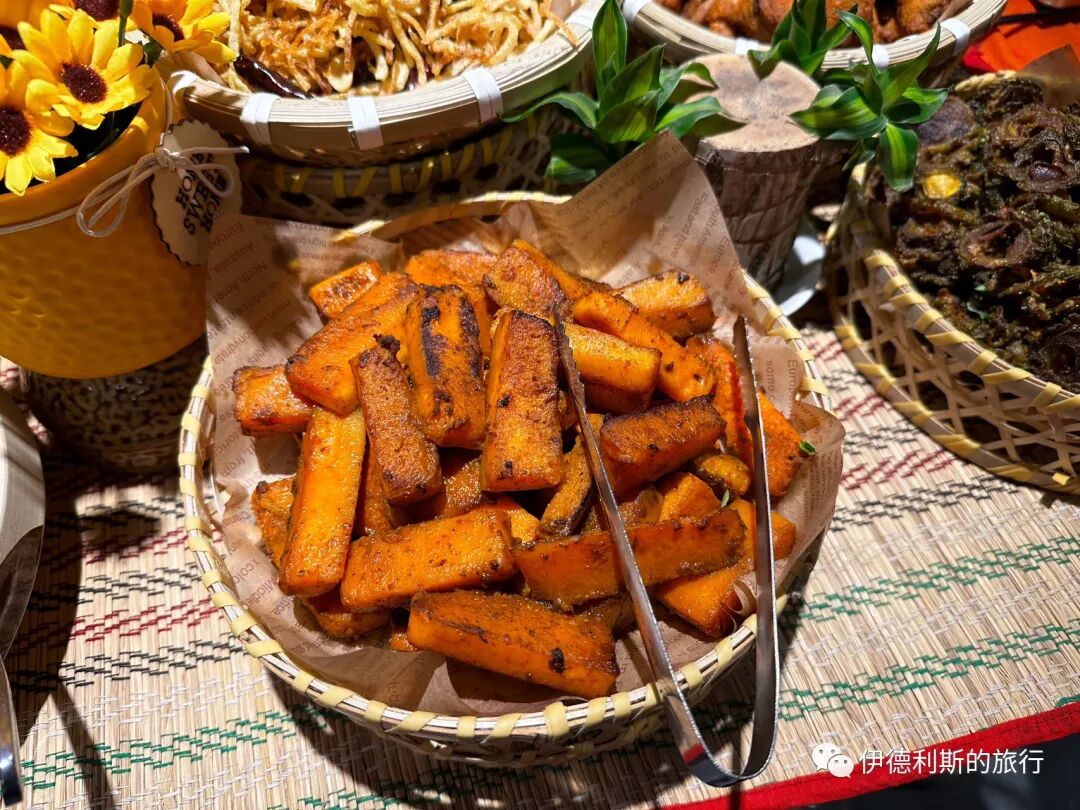
Main dishes include yogurt and cilantro roasted chicken, pan-fried spicy tilapia, mixed nut and vegetable patties, and roasted cauliflower with five-spice blend (panch phoron). Panch phoron consists of five spice seeds: radhuni seeds, fenugreek seeds, fennel seeds, mustard seeds, and nigella seeds. They are not roasted or ground, but mixed and added directly to food. Radhuni is a close relative of ajwain, but it is rarely used in South Asia outside of Bengal. It tastes a bit like celery, but is very strong.
Halal Food Guide: Beijing Dastan — Ramadan Iftar and Bengali New Year
Articles • ali2007fr posted the article • 0 comments • 154 views • 2026-05-18 21:20
Summary: Halal Food Guide: Beijing Dastan — Ramadan Iftar and Bengali New Year is presented here as a firsthand travel account in clear English, beginning with this scene: April 14th is the Bengali New Year. I was very happy to be invited by Yahya Dost to the Dastaan restaurant, an Indian spot in Sanlitun Soho, Beijing, to join a Ramadan iftar buffet celebrating the Bengali New Year. The account keeps its focus on Beijing Iftar, Bengali New Year, Halal Food while preserving the names, places, food, and historical details from the Chinese source.
April 14th is the Bengali New Year. I was very happy to be invited by Yahya Dost to the Dastaan restaurant, an Indian spot in Sanlitun Soho, Beijing, to join a Ramadan iftar buffet celebrating the Bengali New Year. I ate various Bengali and Kolkata delicacies I don't usually get to try and watched some wonderful dancing. Even though some of the snacks took a little getting used to, it was a fantastic opportunity.
The Bengali New Year is called Pohela Boishakh, and on this day, Bengali people everywhere hold celebrations and offer dua. One theory is that the Bengali calendar was finalized during the reign of the Mughal Emperor Akbar. The Mughal Empire originally used the Islamic calendar to collect land taxes from the Bengali people. Because the Islamic calendar is a lunar calendar, its cycle did not match the rhythm of farming work. Emperor Akbar asked his court astronomers to combine the Islamic calendar with the local Indian solar calendar to create a new one, which eventually became the Bengali calendar. To make it easier to collect taxes after the spring harvest each year, the Bengali New Year was set in April.
Bengali food is strongly influenced by the Mughal Empire. Between 1576 and 1765, the Bengal Subah under Mughal rule included what is now Bangladesh and eastern India. It was one of the wealthiest regions in South Asia at the time, known as the 'Nation of Nations,' with world-leading textile and shipbuilding industries. Many merchants, immigrants, and travelers entered the Bengal Subah, influencing Bengali eating habits in different ways, including the use of beef, mutton, yogurt, and various spice blends.
After the 18th century, the British East India Company built a trading post in the Bengal Subah, which later grew into Kolkata, the capital of British India. Kolkata is the second-largest Bengali-speaking city after Dhaka, the capital of Bangladesh, and Kolkata cuisine is an important part of Bengali food culture.
I will share the delicious food I ate at the buffet.
First is the street snack puffed rice (jhalmuri), popular in Bangladesh and eastern India. It is made by mixing puffed rice (muri) with various spices, chopped vegetables like cucumber, lemon, onion, chili, tomato, and potato, and mustard oil. In Bangladesh and eastern India, puffed rice is an ancient and important staple food. People boil and dry the rice, then heat it in a pan with salt. They add the rice and stir, and it starts to puff up immediately, taking less than a minute to make.
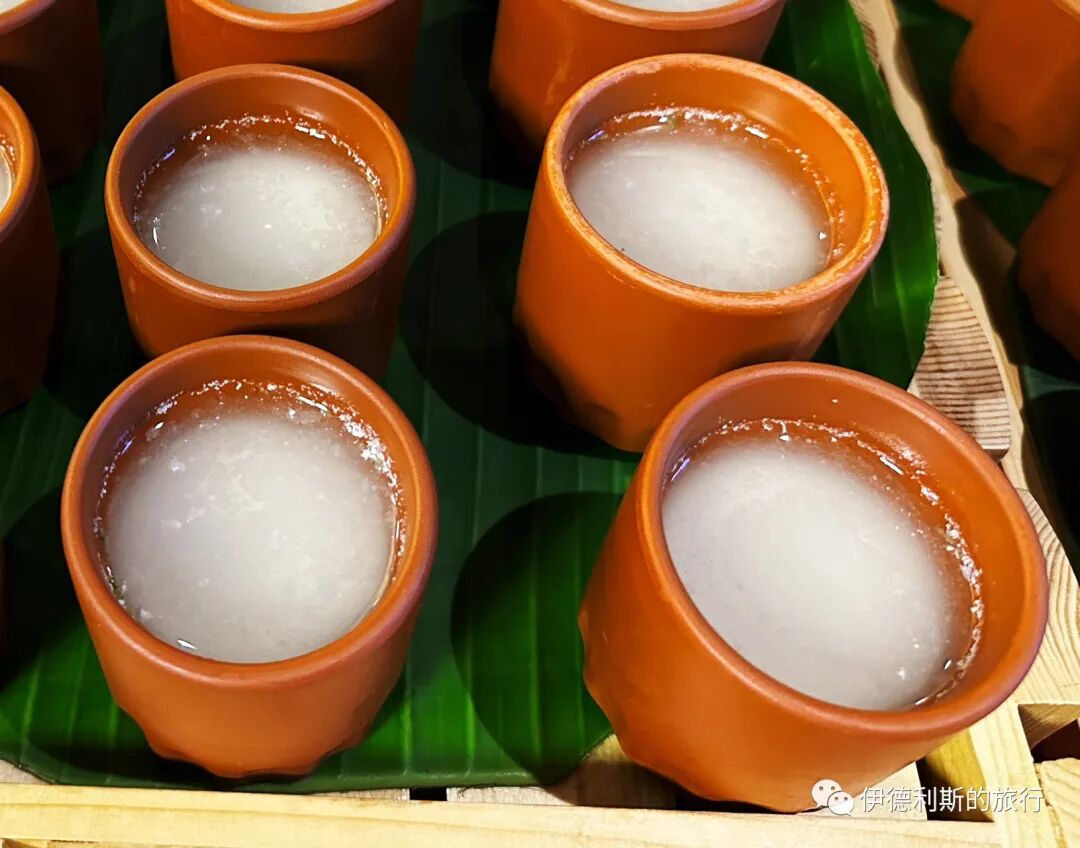
Two Bengali summer drinks, the lime yogurt drink (gondhoraj ghol) and the roasted sour mango drink (aam pora sharbat), are the best ways for Bengalis to cool down in the 40-degree summer heat. Gondhoraj lebu is a type of lime from Bangladesh with a very unique taste that might take some getting used to for first-timers. Aam Pora Sharbat is made by roasting unripe sour mangoes over charcoal. Once the mangoes soften, the pulp is scooped out and blended with sugar, salt, cumin, and fresh mint. It has a light, smoky flavor when you drink it.
The classic Bengali side dish vegetable mash (bhurta) is made by mashing various vegetables or fish with mustard oil, onion, garlic, and red chili. The ingredients can be boiled, roasted, or fried before mashing.
There are many types of bhurta depending on the ingredients. The most popular is potato mash (aloo bharta), made by boiling potatoes and mixing them with fried onions, chili, and mustard oil. The rich taste of mustard oil in the potato mash really boosts your appetite. Another common one is eggplant mash (baingan bharta), made by roasting the eggplant, chopping it up, and mixing it with onion, chili, and mustard oil.
Fried dishes made by Bengalis using mustard oil are called bhaja, and there are many different kinds. The most classic is crispy fried potato strips (jhure-jhure aloo bhaja). The potatoes are fried until golden and very crispy, and it is a classic snack for the Bengali New Year. Also, fried eggplant slices (muchmuche beguni) and fried potato patties (aloo chop) are both part of the bhaja fried dish family.
For the main course, there was Kolkata potato rice (Kolkata aloo biryani). This is the only type of biryani in South Asia that uses potatoes as an ingredient. Kolkata, the capital of the Indian state of West Bengal, is the second-largest Bengali-speaking city after Dhaka, the capital of Bangladesh.
In 1856, after Wajid Ali Shah, the ruler of the Awadh region in northern India, was deposed by the British, he moved to Kolkata. The potato biryani was invented by his accompanying court chefs. Potatoes were a foreign food and were not brought to India by the Dutch until the 1830s. When Wajid Ali Shah's court chefs were cooking biryani with saffron, various spices, and meat, they once tried adding fried baby potatoes. It was unexpectedly delicious, became a favorite of Wajid Ali Shah, and quickly spread throughout Kolkata.
The second dish is yellow pilaf (basanti pulao), a special rice dish for the Bengali New Year, colored with turmeric and topped with fried cashews and raisins.
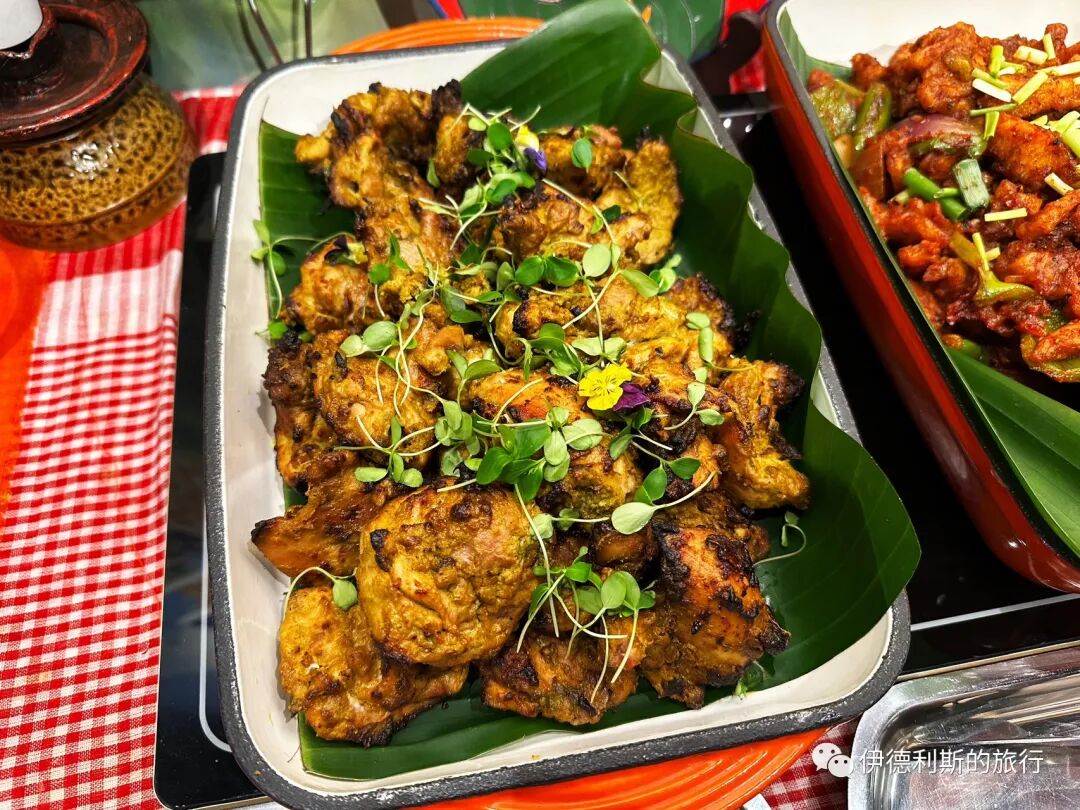
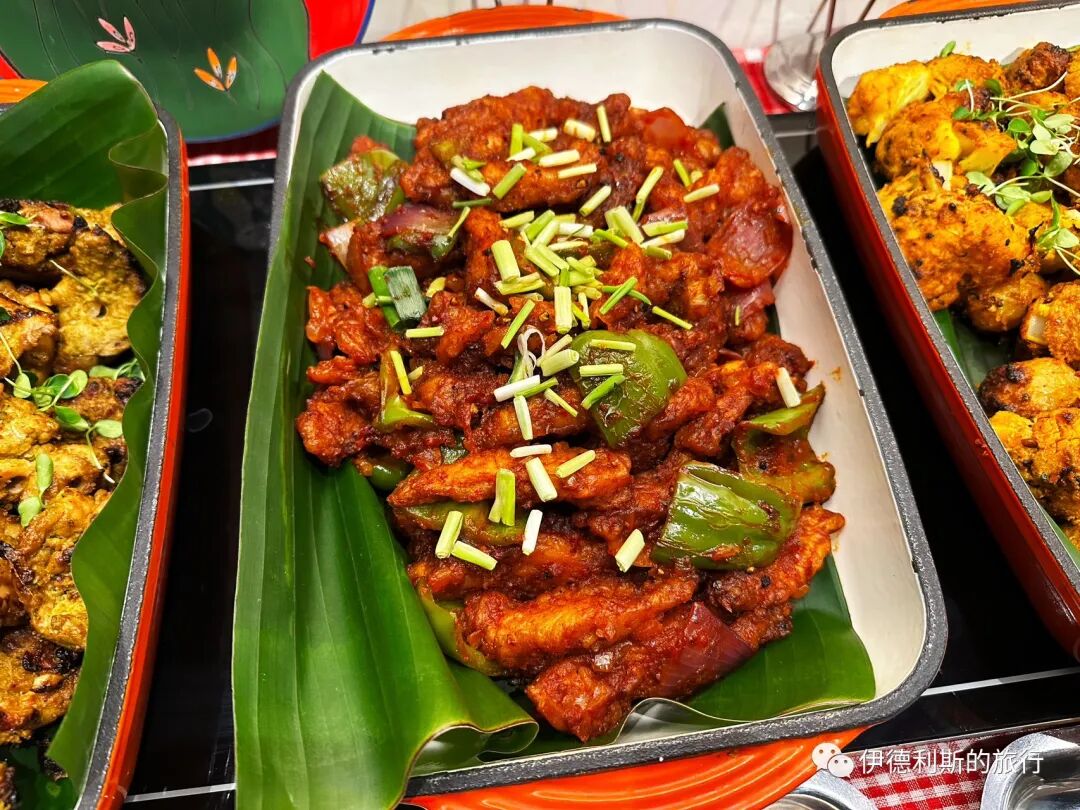
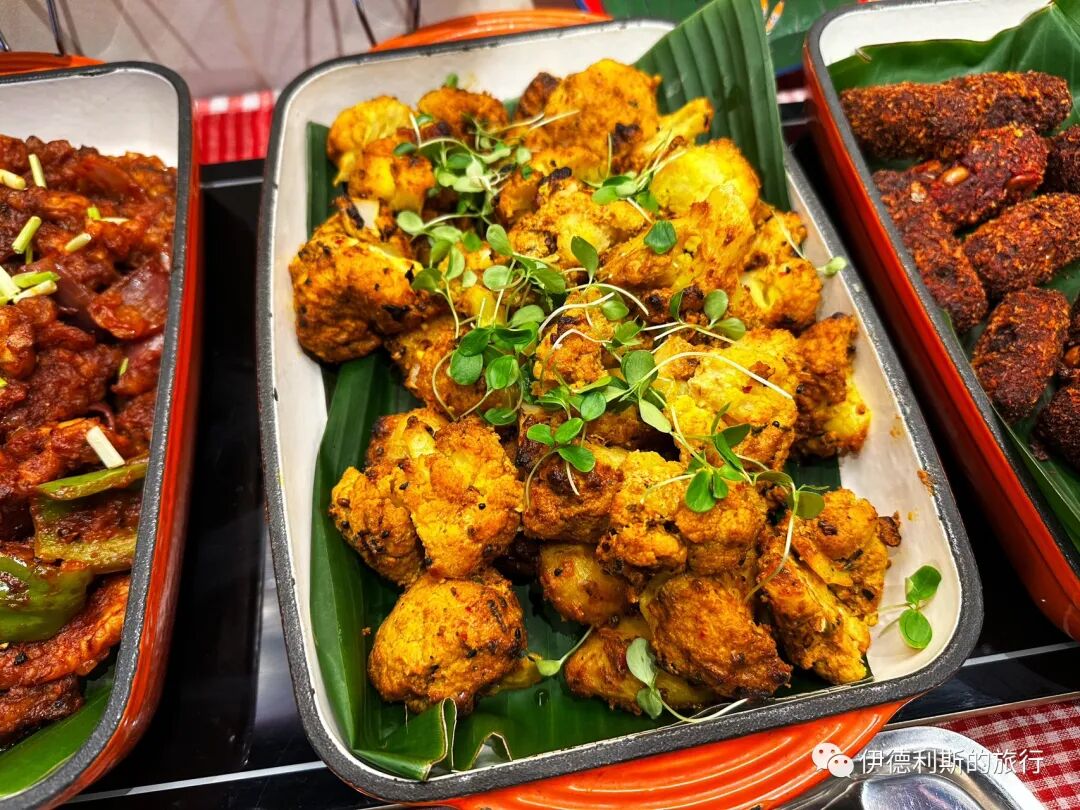
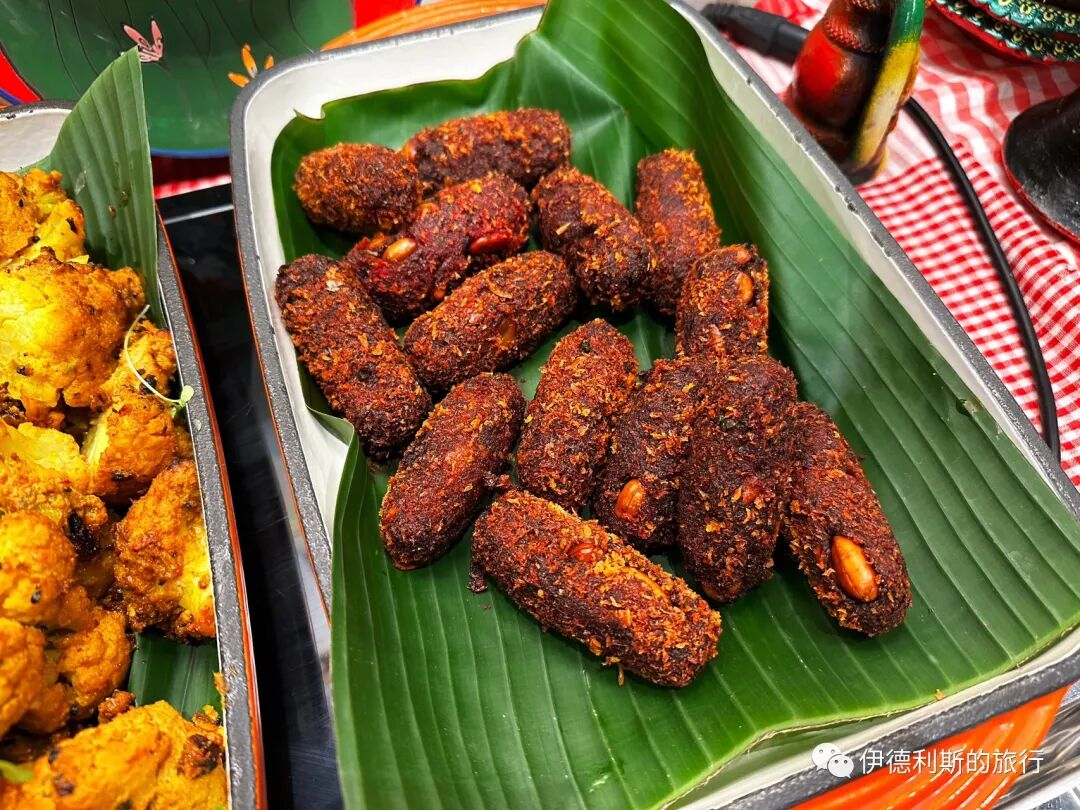
Main dishes include yogurt and cilantro roasted chicken, pan-fried spicy tilapia, mixed nut and vegetable patties, and roasted cauliflower with five-spice blend (panch phoron). Panch phoron consists of five spice seeds: radhuni seeds, fenugreek seeds, fennel seeds, mustard seeds, and nigella seeds. They are not roasted or ground, but mixed and added directly to food. Radhuni is a close relative of ajwain, but it is rarely used in South Asia outside of Bengal. It tastes a bit like celery, but is very strong.
Here are a few types of Bengali curry.
Doi shorshe katla is a Bengali yogurt fish curry. In this name, 'doi' means yogurt, 'shorshe' means mustard seeds, and 'katla' means carp. Mustard seeds and mustard oil are the basic elements of Bengali fish curry. Besides these, many spices are added, and the yellow color in the curry mainly comes from turmeric.
Mutton chaap is a lamb chop curry special to Kolkata. It is slow-cooked with various spices like masala. This cooking method comes from the Mughal Empire and is a classic curry for holidays like Eid al-Fitr.
Chicken rezala is a Bengali white sauce chicken curry. It also comes from the Mughal Empire and is slow-cooked with yogurt and nuts. The spices include cloves, black pepper, cinnamon, black cardamom, dried red chili, and green cardamom.
To go with the curry, you must have Bengali flatbread (ruti), which is the same as Indian roti. The word comes from the Sanskrit 'roṭikā', which means bread. In Bengal, ruti is made with whole wheat flour. If finer wheat flour is used, it is called 'porota'.
Finally, here are a few Bengali snacks and desserts.
Aloo kabli is a special street snack in Kolkata. It is made with boiled potatoes, chopped onions, green chilies, cilantro, tamarind, lime, and masala spices. Aloo kabli stalls are most popular at the gates of schools in Kolkata. Students surround the stalls as soon as school ends, waiting for the vendor to wrap the aloo kabli in old newspapers to sell to them.
Malpua is a deep-fried dessert soaked in syrup that Bengalis eat during holidays. It is crispy on the outside and fluffy and juicy on the inside, with a fragrance from fennel and green cardamom powder.
Chaler payesh is a rice pudding that Bengalis eat during holidays, similar to kheer in North India. Besides milk and basmati rice, it also contains ghee, sugar, cardamom powder, and nuts.
Narkel naru is a Bengali coconut ball dessert and an essential part of holidays. The ingredients for making narkel naru are very simple: just fresh coconut, sugar, and cardamom powder.
Rosogolla is a Bengali cheese dessert made by soaking soft, juicy cheese in syrup. view all
Summary: Halal Food Guide: Beijing Dastan — Ramadan Iftar and Bengali New Year is presented here as a firsthand travel account in clear English, beginning with this scene: April 14th is the Bengali New Year. I was very happy to be invited by Yahya Dost to the Dastaan restaurant, an Indian spot in Sanlitun Soho, Beijing, to join a Ramadan iftar buffet celebrating the Bengali New Year. The account keeps its focus on Beijing Iftar, Bengali New Year, Halal Food while preserving the names, places, food, and historical details from the Chinese source.
April 14th is the Bengali New Year. I was very happy to be invited by Yahya Dost to the Dastaan restaurant, an Indian spot in Sanlitun Soho, Beijing, to join a Ramadan iftar buffet celebrating the Bengali New Year. I ate various Bengali and Kolkata delicacies I don't usually get to try and watched some wonderful dancing. Even though some of the snacks took a little getting used to, it was a fantastic opportunity.
The Bengali New Year is called Pohela Boishakh, and on this day, Bengali people everywhere hold celebrations and offer dua. One theory is that the Bengali calendar was finalized during the reign of the Mughal Emperor Akbar. The Mughal Empire originally used the Islamic calendar to collect land taxes from the Bengali people. Because the Islamic calendar is a lunar calendar, its cycle did not match the rhythm of farming work. Emperor Akbar asked his court astronomers to combine the Islamic calendar with the local Indian solar calendar to create a new one, which eventually became the Bengali calendar. To make it easier to collect taxes after the spring harvest each year, the Bengali New Year was set in April.
Bengali food is strongly influenced by the Mughal Empire. Between 1576 and 1765, the Bengal Subah under Mughal rule included what is now Bangladesh and eastern India. It was one of the wealthiest regions in South Asia at the time, known as the 'Nation of Nations,' with world-leading textile and shipbuilding industries. Many merchants, immigrants, and travelers entered the Bengal Subah, influencing Bengali eating habits in different ways, including the use of beef, mutton, yogurt, and various spice blends.
After the 18th century, the British East India Company built a trading post in the Bengal Subah, which later grew into Kolkata, the capital of British India. Kolkata is the second-largest Bengali-speaking city after Dhaka, the capital of Bangladesh, and Kolkata cuisine is an important part of Bengali food culture.
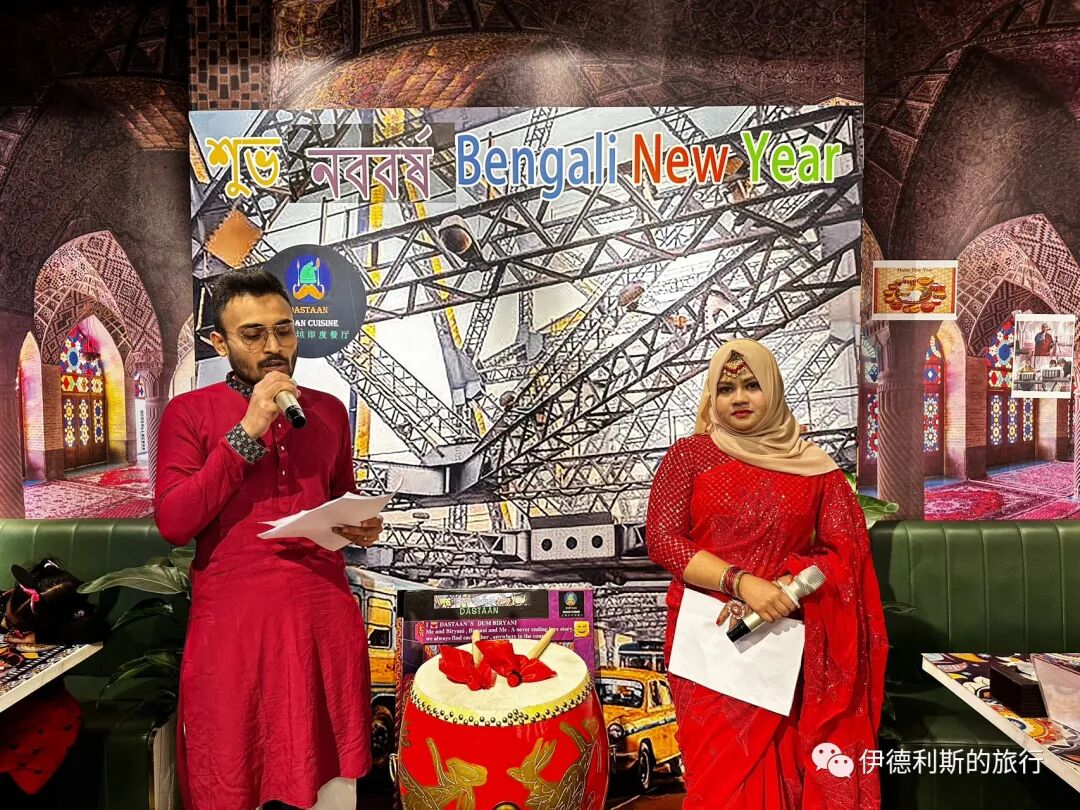
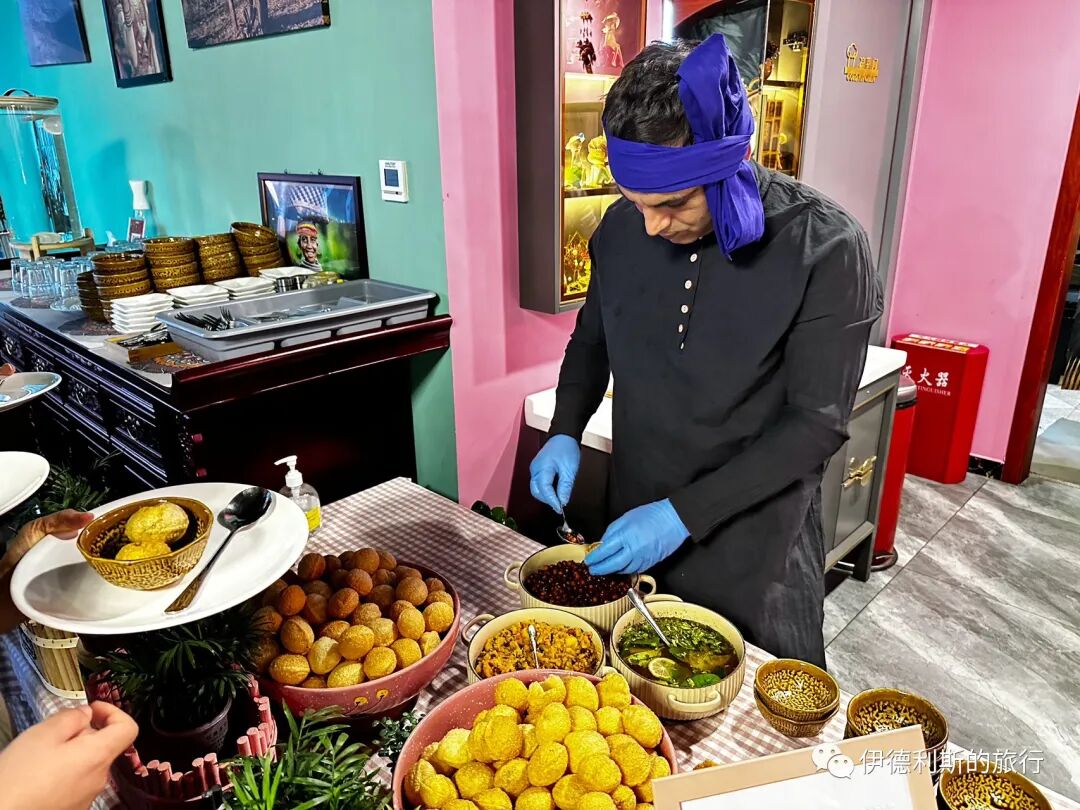
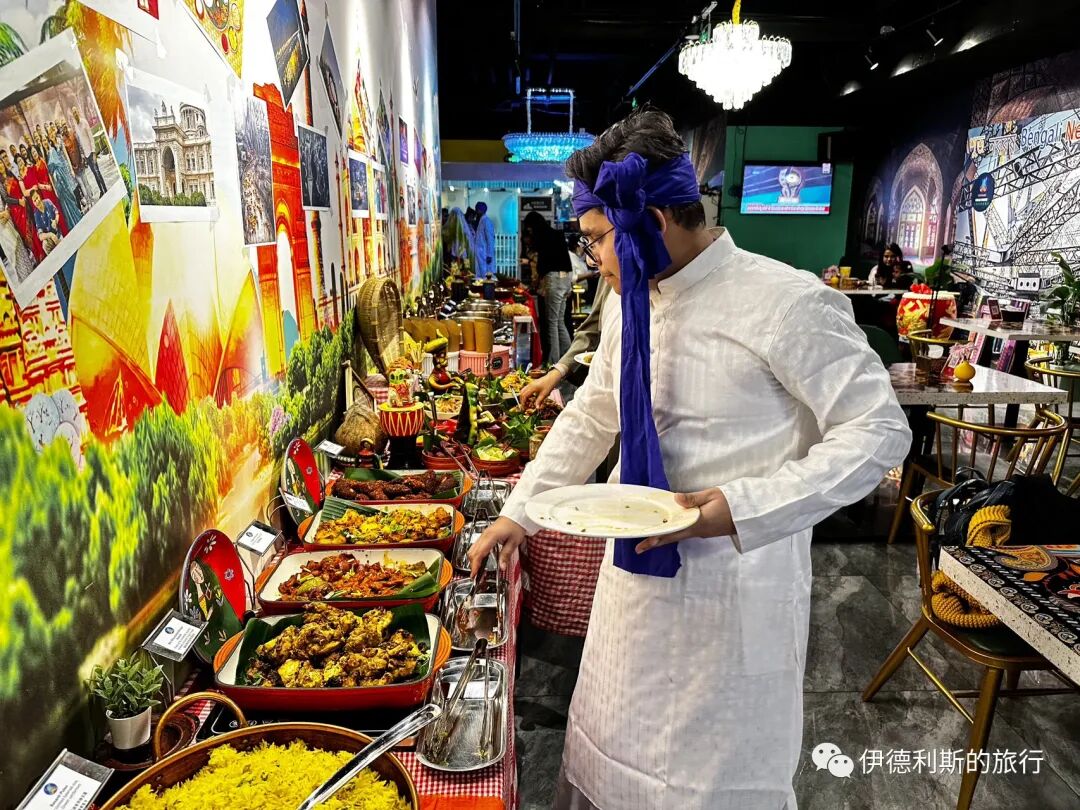
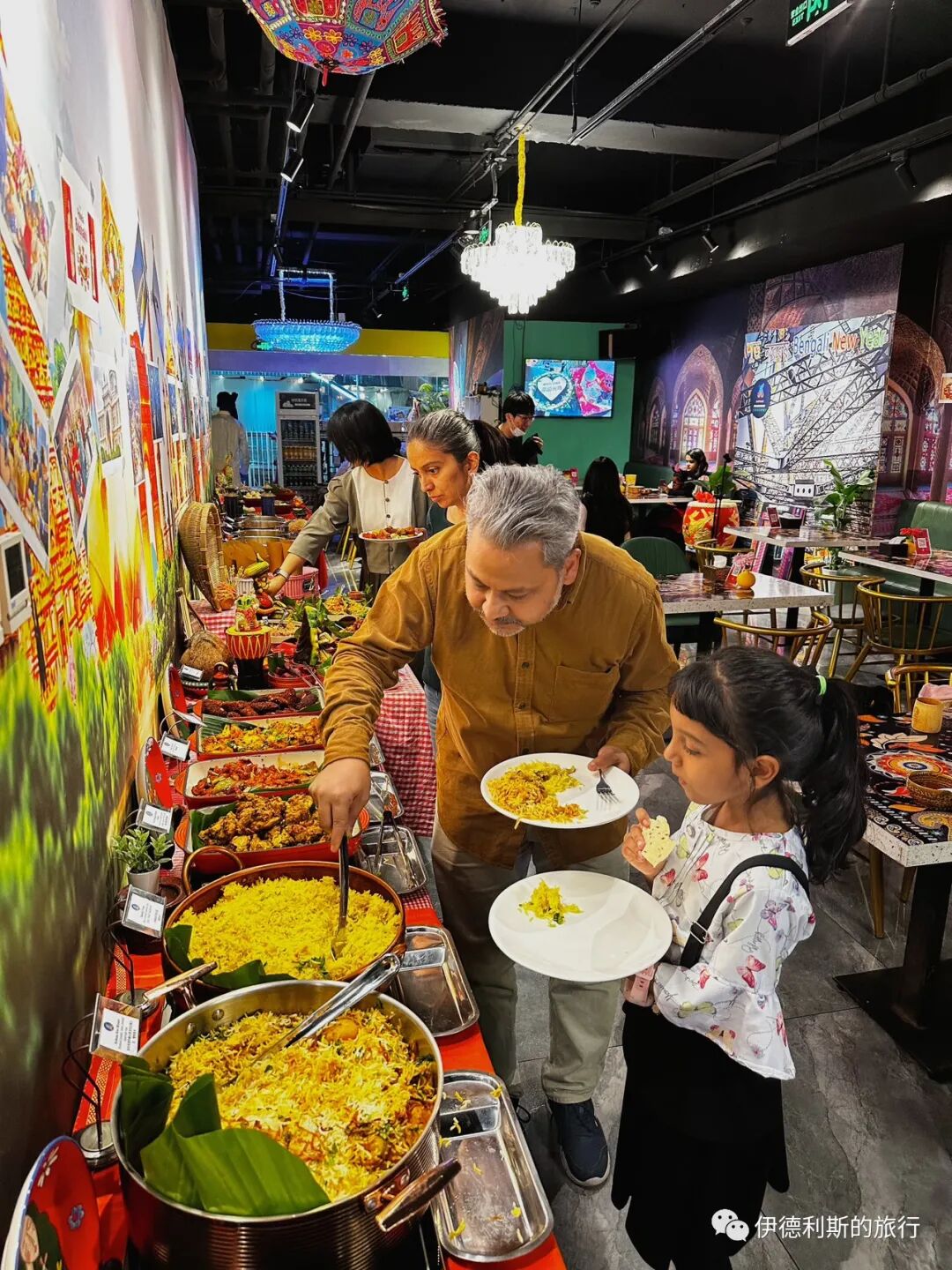
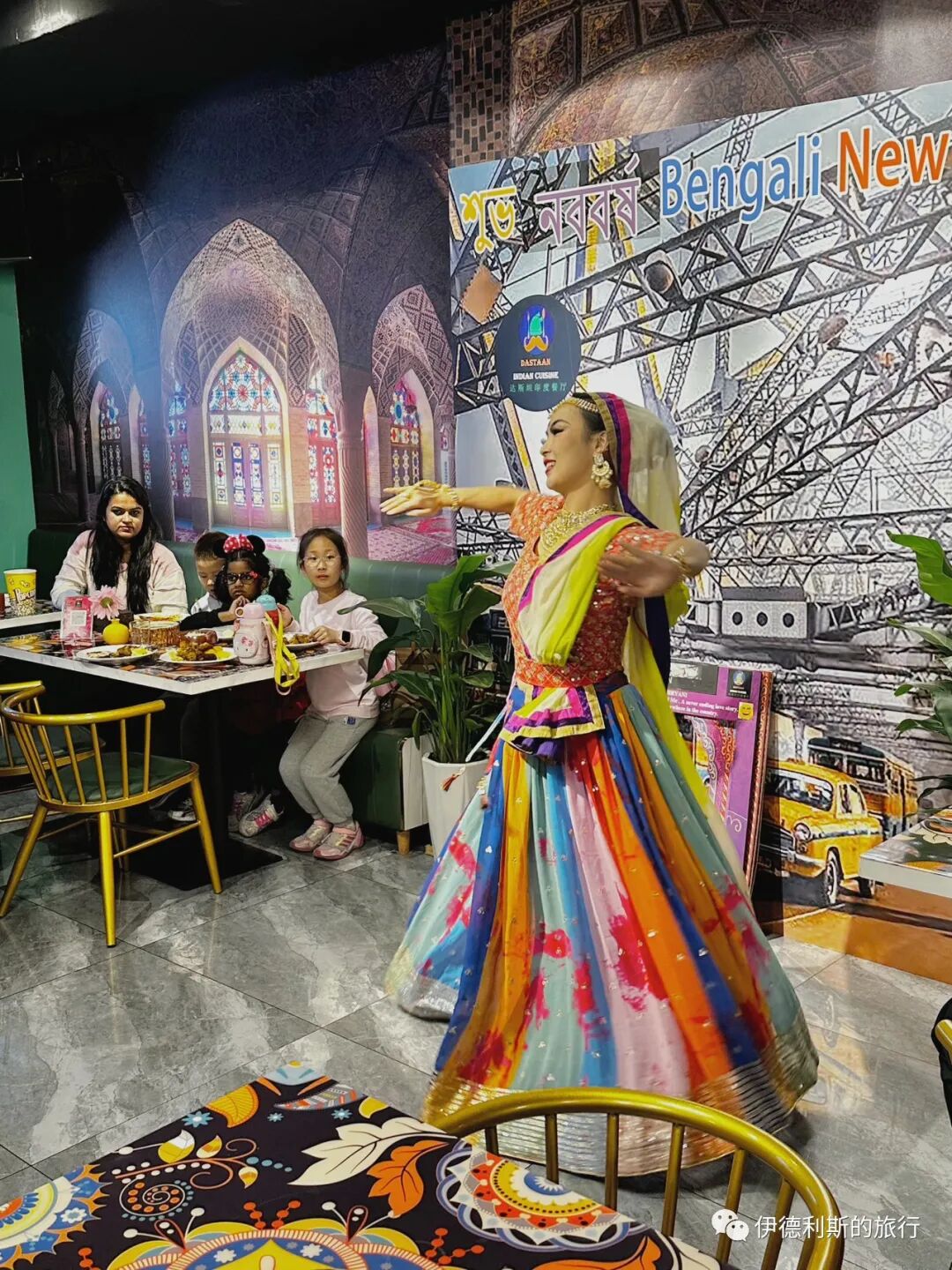
I will share the delicious food I ate at the buffet.
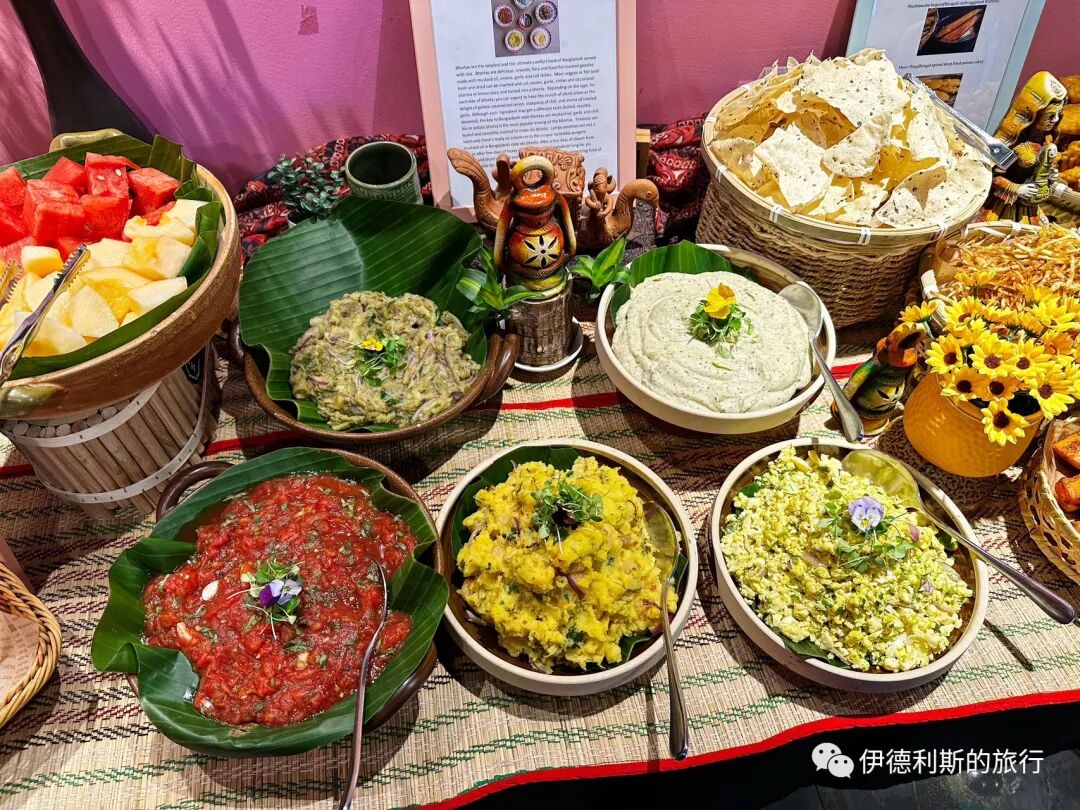
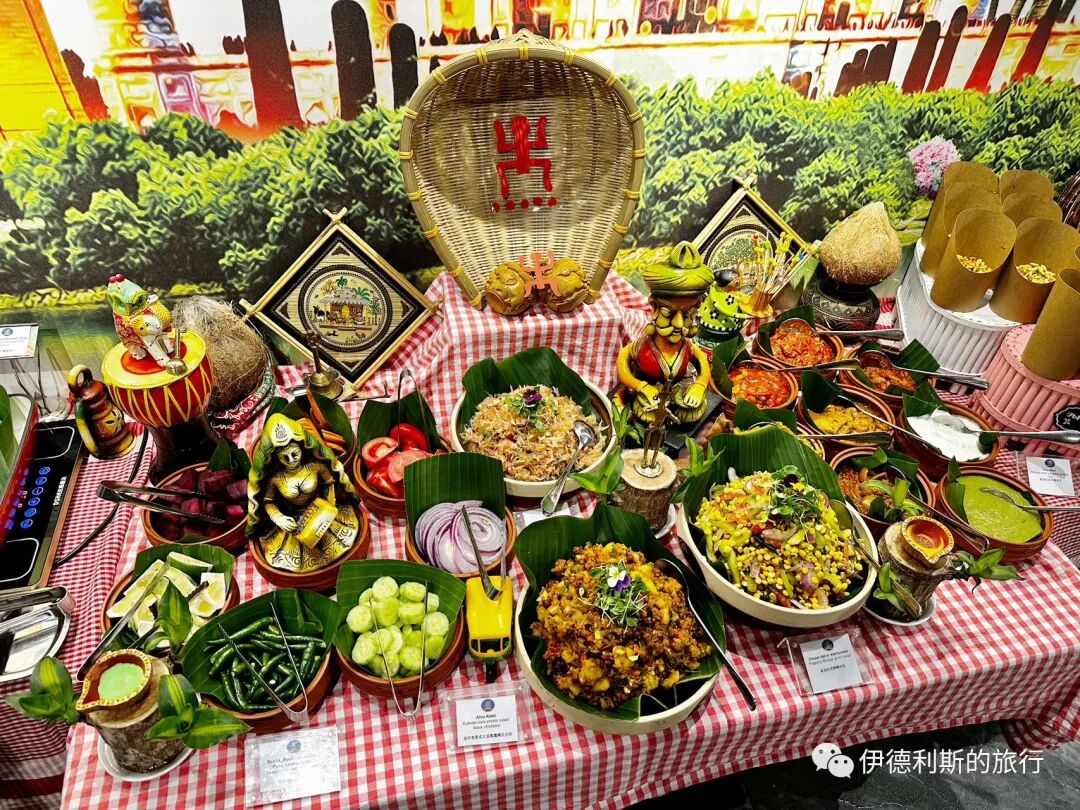
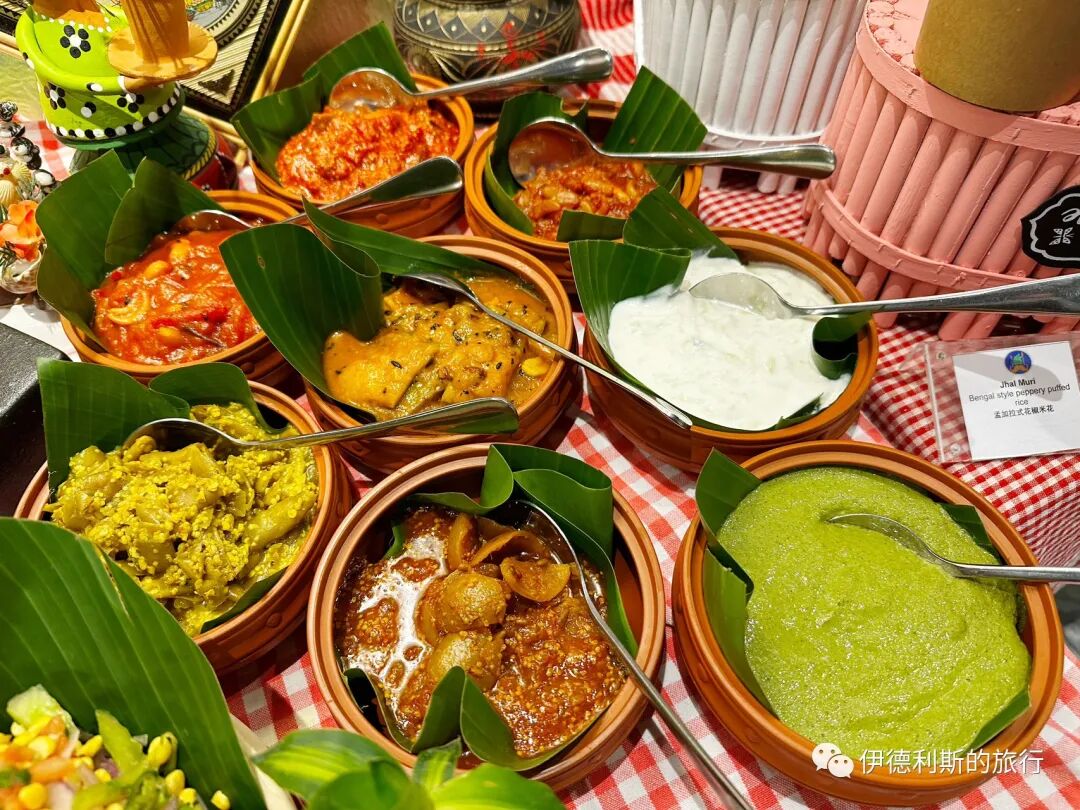
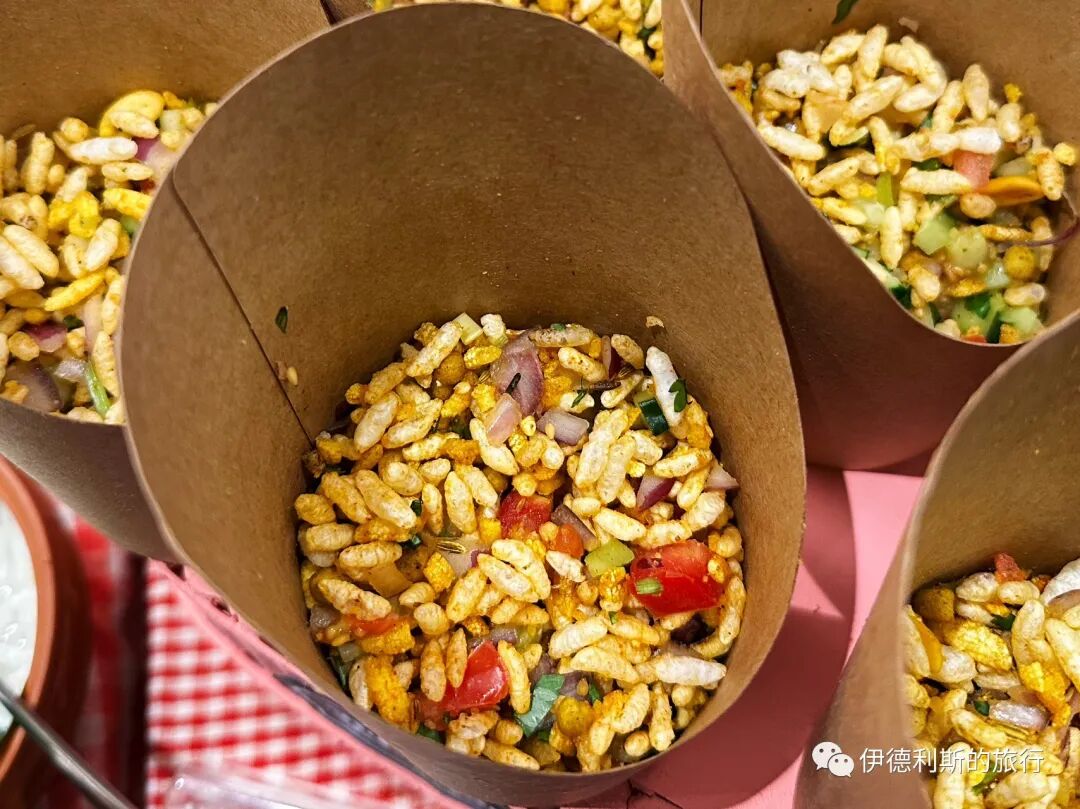
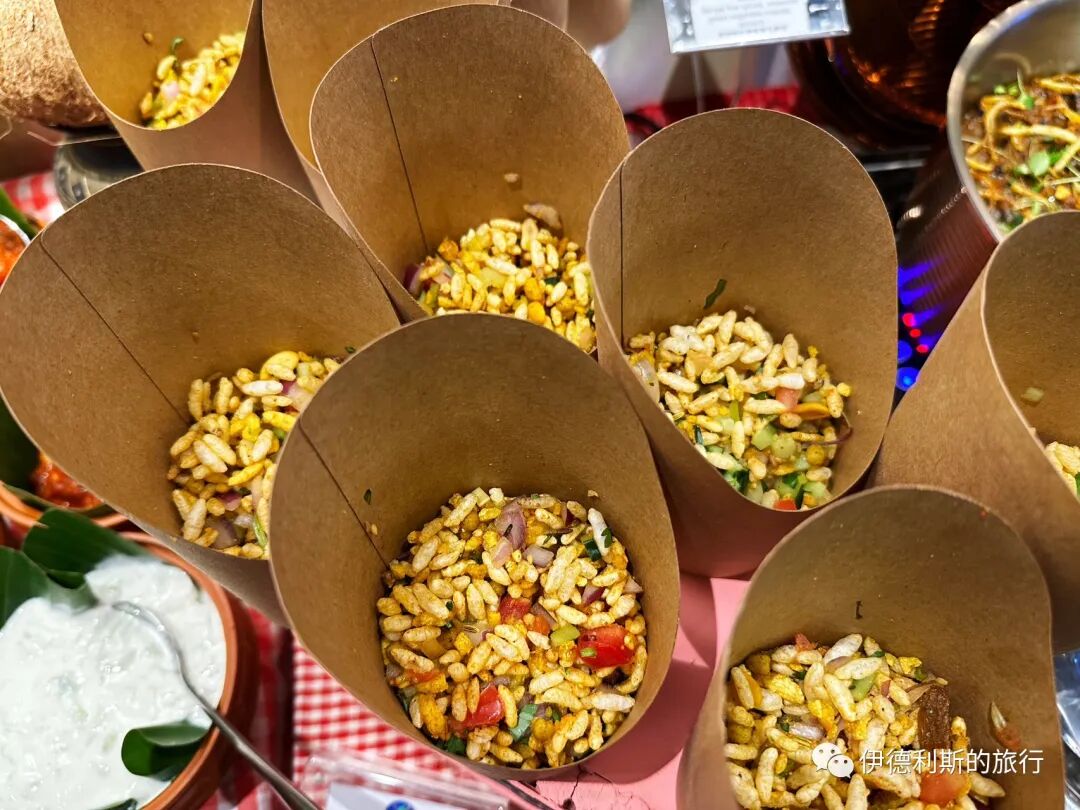
First is the street snack puffed rice (jhalmuri), popular in Bangladesh and eastern India. It is made by mixing puffed rice (muri) with various spices, chopped vegetables like cucumber, lemon, onion, chili, tomato, and potato, and mustard oil. In Bangladesh and eastern India, puffed rice is an ancient and important staple food. People boil and dry the rice, then heat it in a pan with salt. They add the rice and stir, and it starts to puff up immediately, taking less than a minute to make.
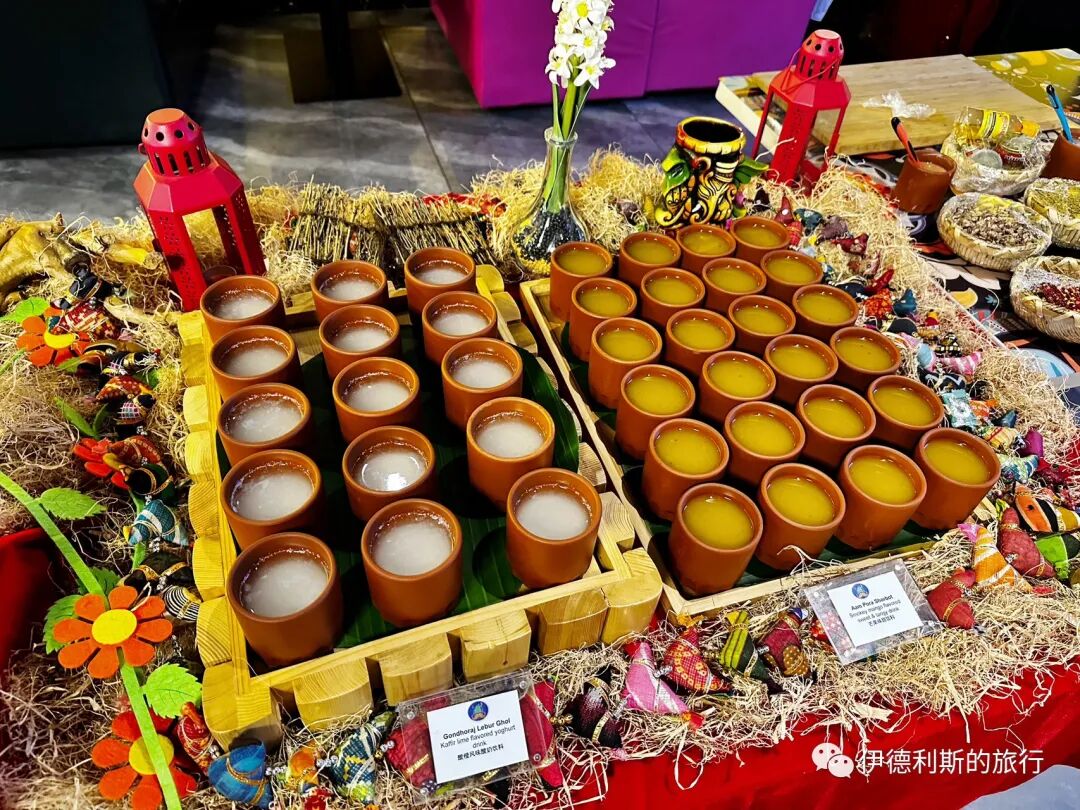
Two Bengali summer drinks, the lime yogurt drink (gondhoraj ghol) and the roasted sour mango drink (aam pora sharbat), are the best ways for Bengalis to cool down in the 40-degree summer heat. Gondhoraj lebu is a type of lime from Bangladesh with a very unique taste that might take some getting used to for first-timers. Aam Pora Sharbat is made by roasting unripe sour mangoes over charcoal. Once the mangoes soften, the pulp is scooped out and blended with sugar, salt, cumin, and fresh mint. It has a light, smoky flavor when you drink it.
The classic Bengali side dish vegetable mash (bhurta) is made by mashing various vegetables or fish with mustard oil, onion, garlic, and red chili. The ingredients can be boiled, roasted, or fried before mashing.
There are many types of bhurta depending on the ingredients. The most popular is potato mash (aloo bharta), made by boiling potatoes and mixing them with fried onions, chili, and mustard oil. The rich taste of mustard oil in the potato mash really boosts your appetite. Another common one is eggplant mash (baingan bharta), made by roasting the eggplant, chopping it up, and mixing it with onion, chili, and mustard oil.
Fried dishes made by Bengalis using mustard oil are called bhaja, and there are many different kinds. The most classic is crispy fried potato strips (jhure-jhure aloo bhaja). The potatoes are fried until golden and very crispy, and it is a classic snack for the Bengali New Year. Also, fried eggplant slices (muchmuche beguni) and fried potato patties (aloo chop) are both part of the bhaja fried dish family.
For the main course, there was Kolkata potato rice (Kolkata aloo biryani). This is the only type of biryani in South Asia that uses potatoes as an ingredient. Kolkata, the capital of the Indian state of West Bengal, is the second-largest Bengali-speaking city after Dhaka, the capital of Bangladesh.
In 1856, after Wajid Ali Shah, the ruler of the Awadh region in northern India, was deposed by the British, he moved to Kolkata. The potato biryani was invented by his accompanying court chefs. Potatoes were a foreign food and were not brought to India by the Dutch until the 1830s. When Wajid Ali Shah's court chefs were cooking biryani with saffron, various spices, and meat, they once tried adding fried baby potatoes. It was unexpectedly delicious, became a favorite of Wajid Ali Shah, and quickly spread throughout Kolkata.
The second dish is yellow pilaf (basanti pulao), a special rice dish for the Bengali New Year, colored with turmeric and topped with fried cashews and raisins.
Main dishes include yogurt and cilantro roasted chicken, pan-fried spicy tilapia, mixed nut and vegetable patties, and roasted cauliflower with five-spice blend (panch phoron). Panch phoron consists of five spice seeds: radhuni seeds, fenugreek seeds, fennel seeds, mustard seeds, and nigella seeds. They are not roasted or ground, but mixed and added directly to food. Radhuni is a close relative of ajwain, but it is rarely used in South Asia outside of Bengal. It tastes a bit like celery, but is very strong.
Here are a few types of Bengali curry.
Doi shorshe katla is a Bengali yogurt fish curry. In this name, 'doi' means yogurt, 'shorshe' means mustard seeds, and 'katla' means carp. Mustard seeds and mustard oil are the basic elements of Bengali fish curry. Besides these, many spices are added, and the yellow color in the curry mainly comes from turmeric.
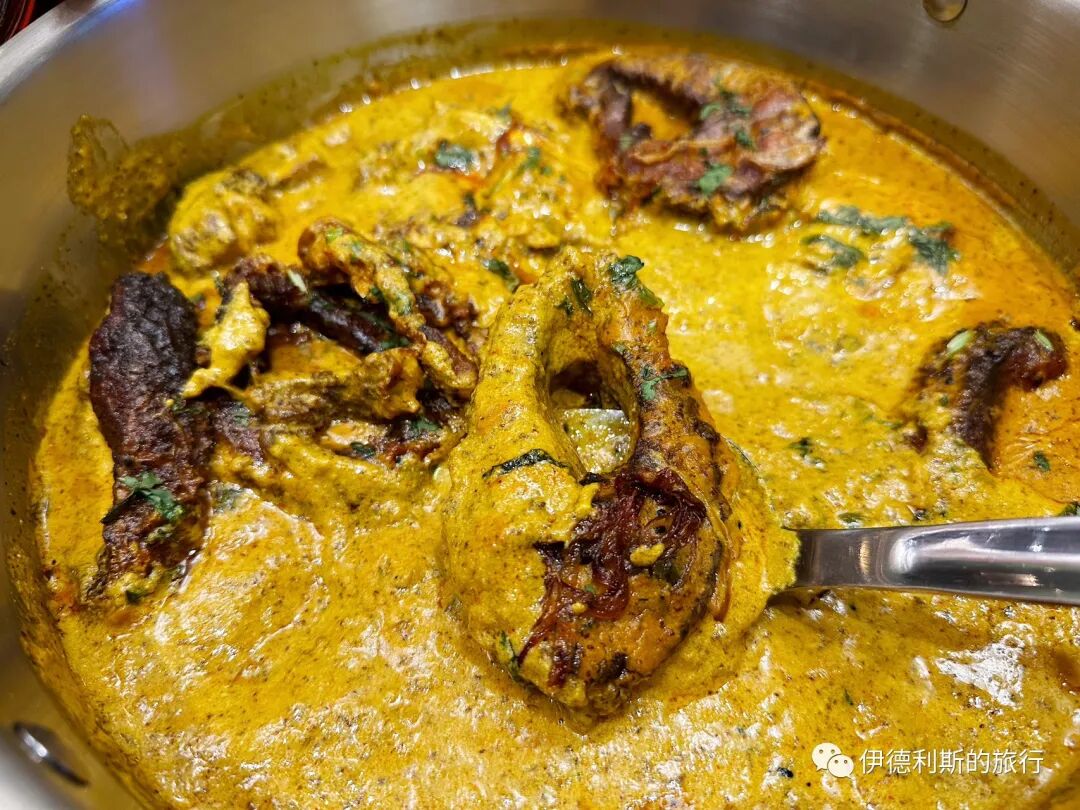
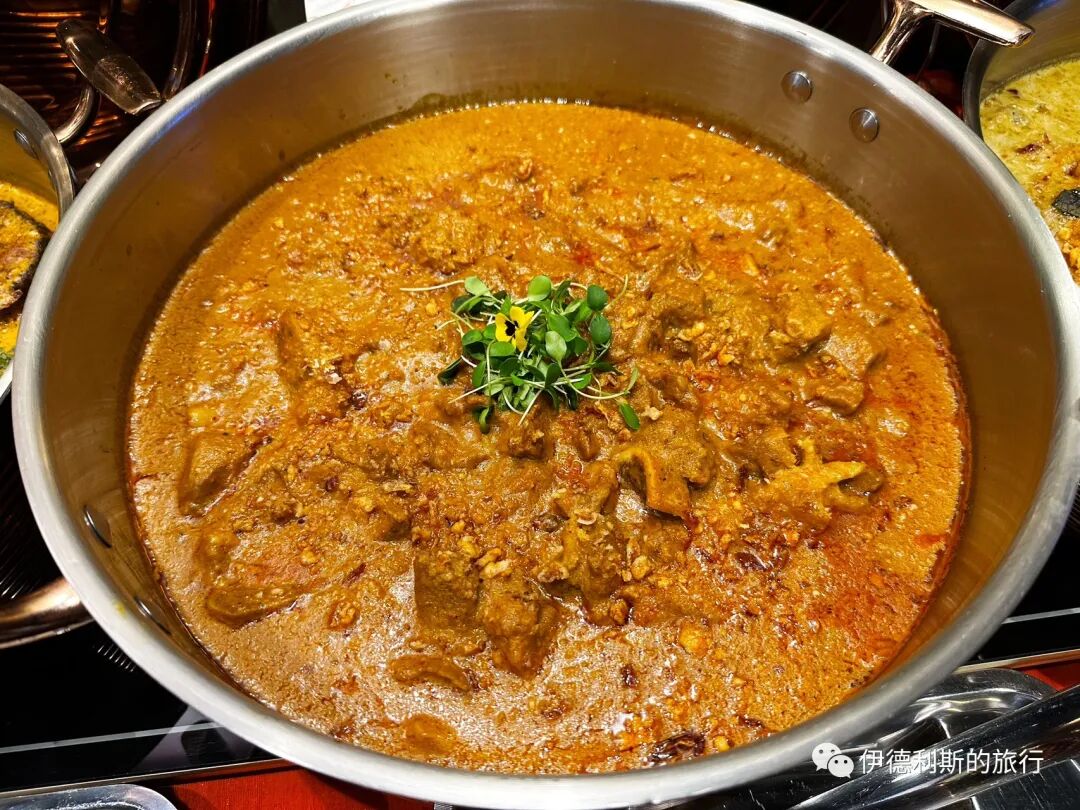
Mutton chaap is a lamb chop curry special to Kolkata. It is slow-cooked with various spices like masala. This cooking method comes from the Mughal Empire and is a classic curry for holidays like Eid al-Fitr.
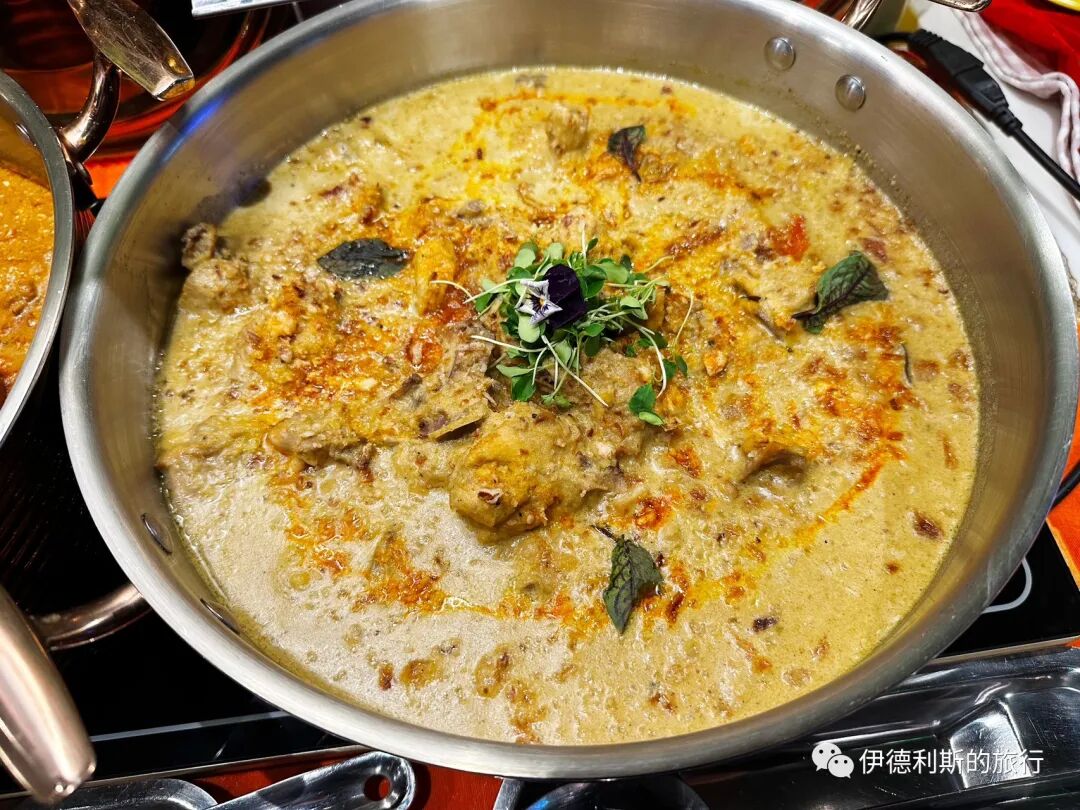
Chicken rezala is a Bengali white sauce chicken curry. It also comes from the Mughal Empire and is slow-cooked with yogurt and nuts. The spices include cloves, black pepper, cinnamon, black cardamom, dried red chili, and green cardamom.
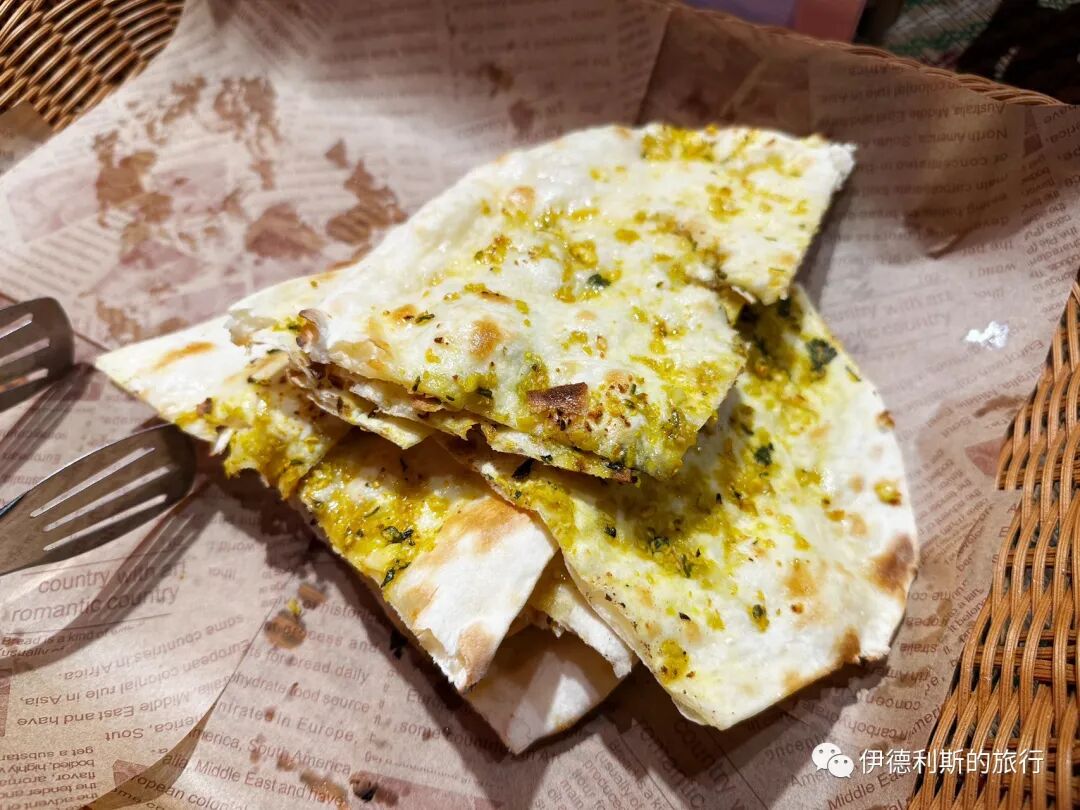
To go with the curry, you must have Bengali flatbread (ruti), which is the same as Indian roti. The word comes from the Sanskrit 'roṭikā', which means bread. In Bengal, ruti is made with whole wheat flour. If finer wheat flour is used, it is called 'porota'.
Finally, here are a few Bengali snacks and desserts.
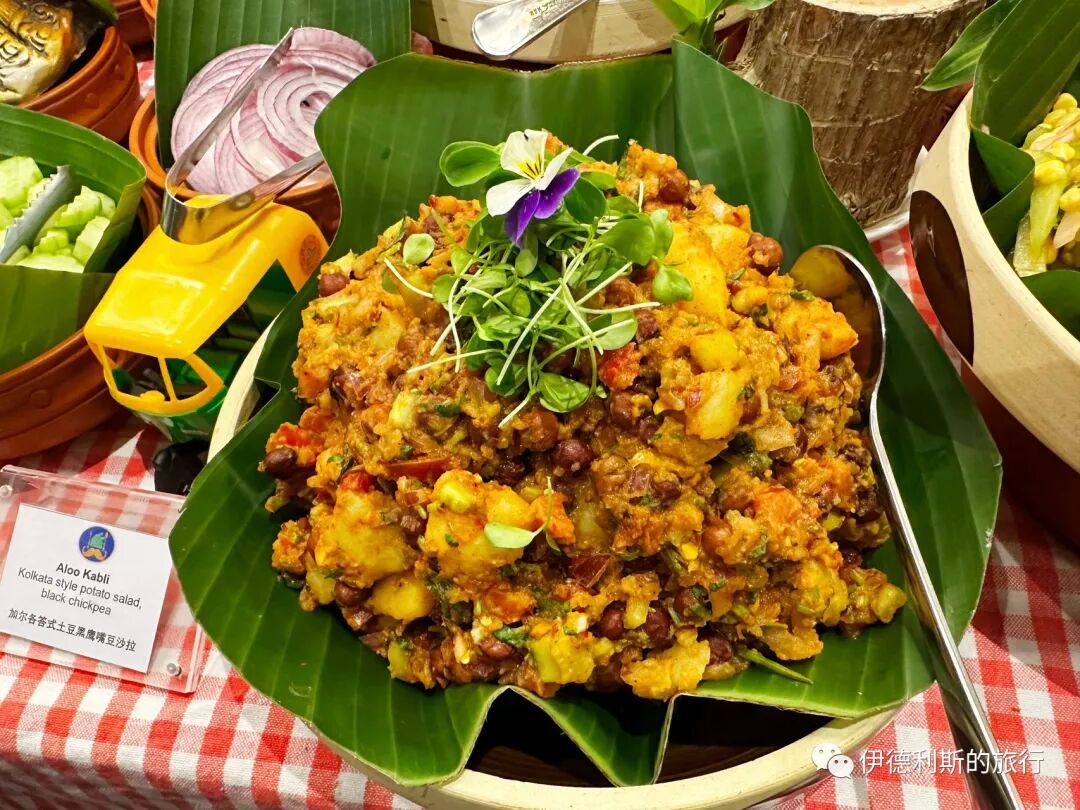
Aloo kabli is a special street snack in Kolkata. It is made with boiled potatoes, chopped onions, green chilies, cilantro, tamarind, lime, and masala spices. Aloo kabli stalls are most popular at the gates of schools in Kolkata. Students surround the stalls as soon as school ends, waiting for the vendor to wrap the aloo kabli in old newspapers to sell to them.
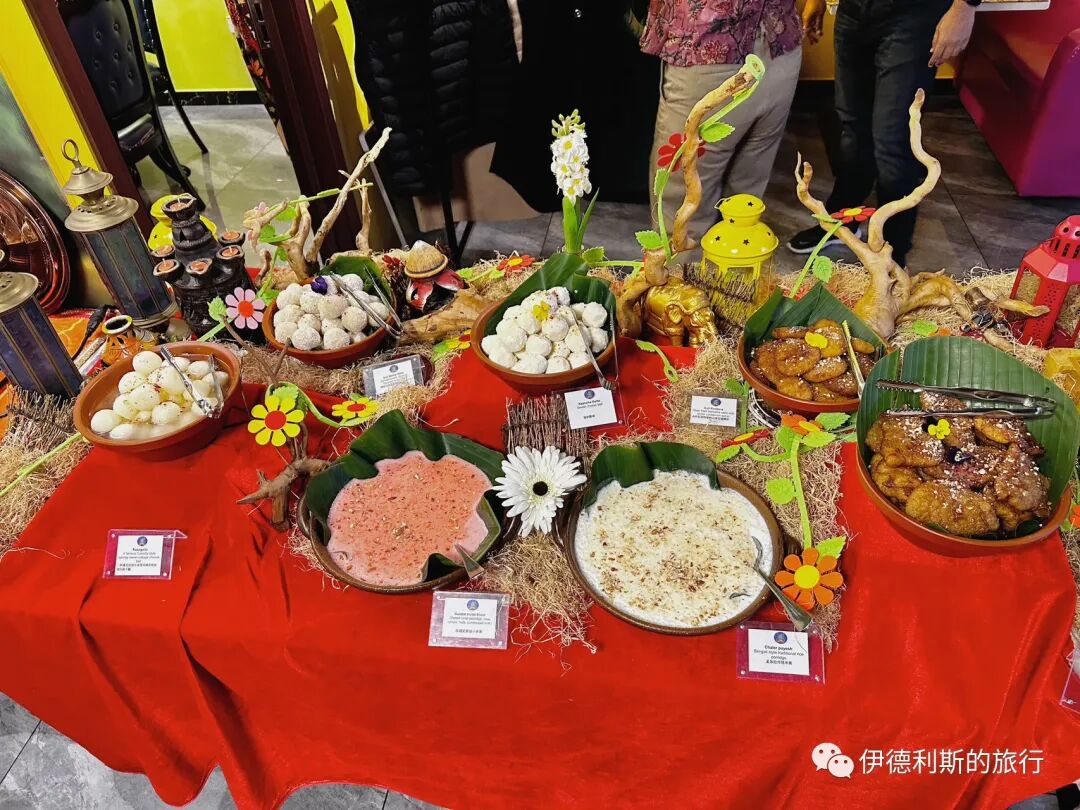
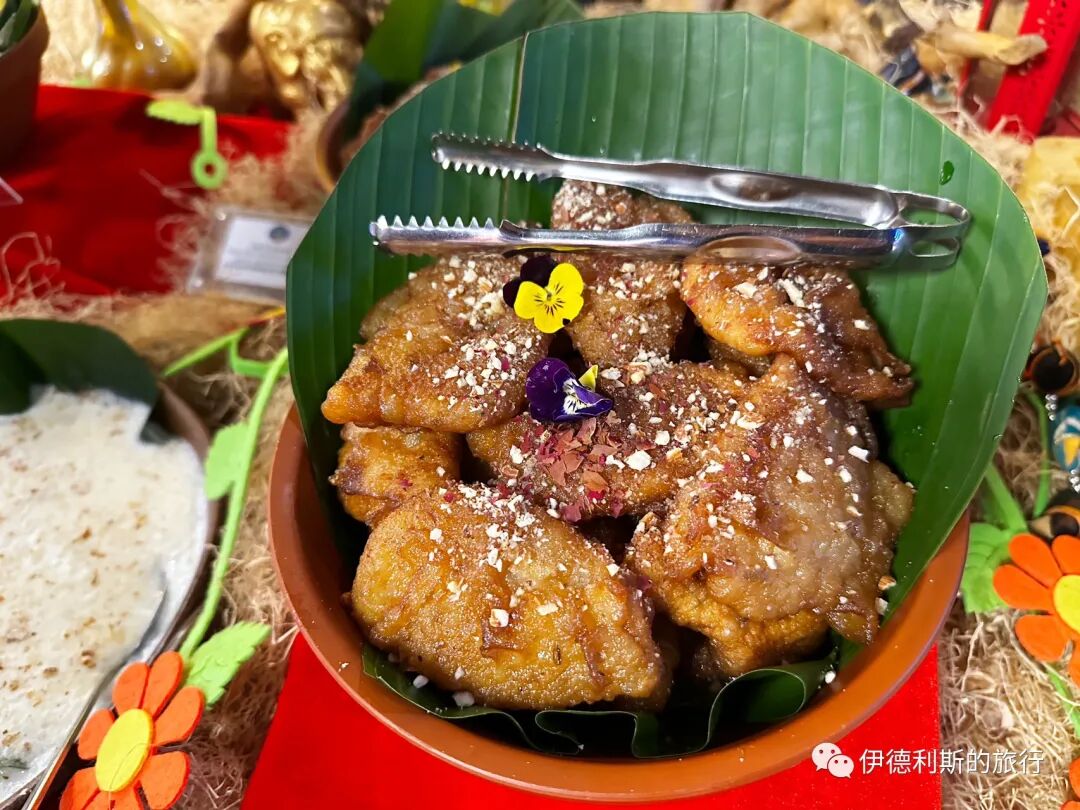
Malpua is a deep-fried dessert soaked in syrup that Bengalis eat during holidays. It is crispy on the outside and fluffy and juicy on the inside, with a fragrance from fennel and green cardamom powder.
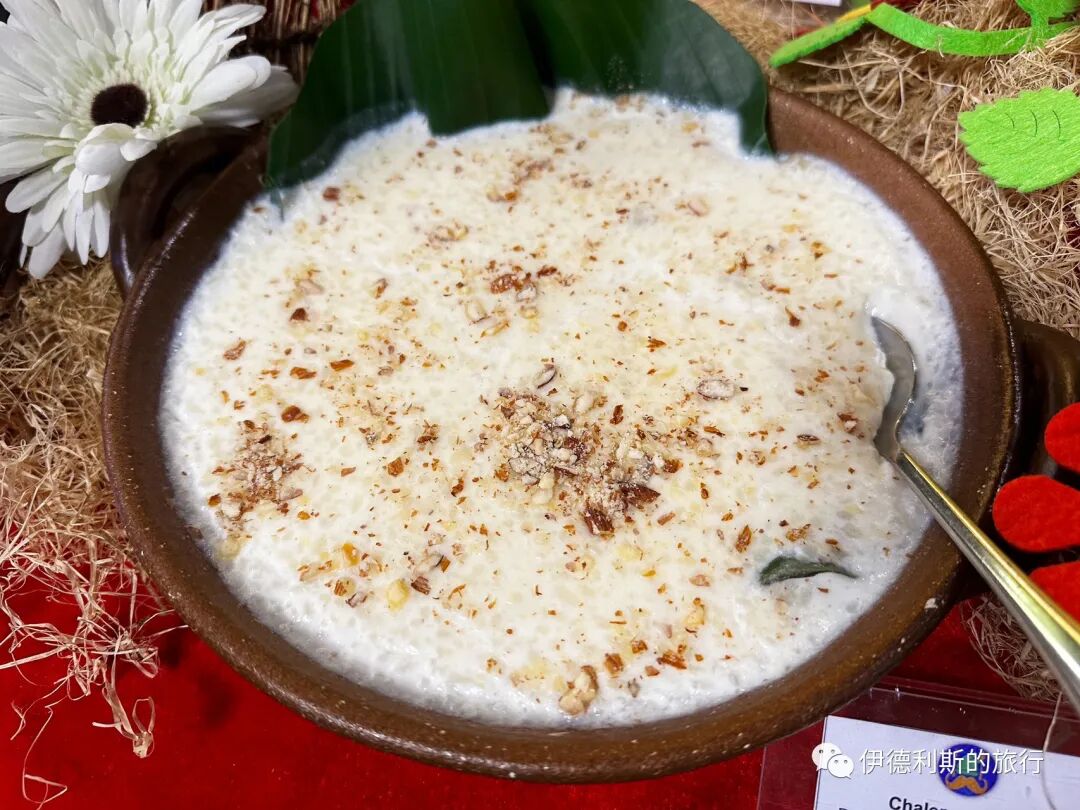
Chaler payesh is a rice pudding that Bengalis eat during holidays, similar to kheer in North India. Besides milk and basmati rice, it also contains ghee, sugar, cardamom powder, and nuts.
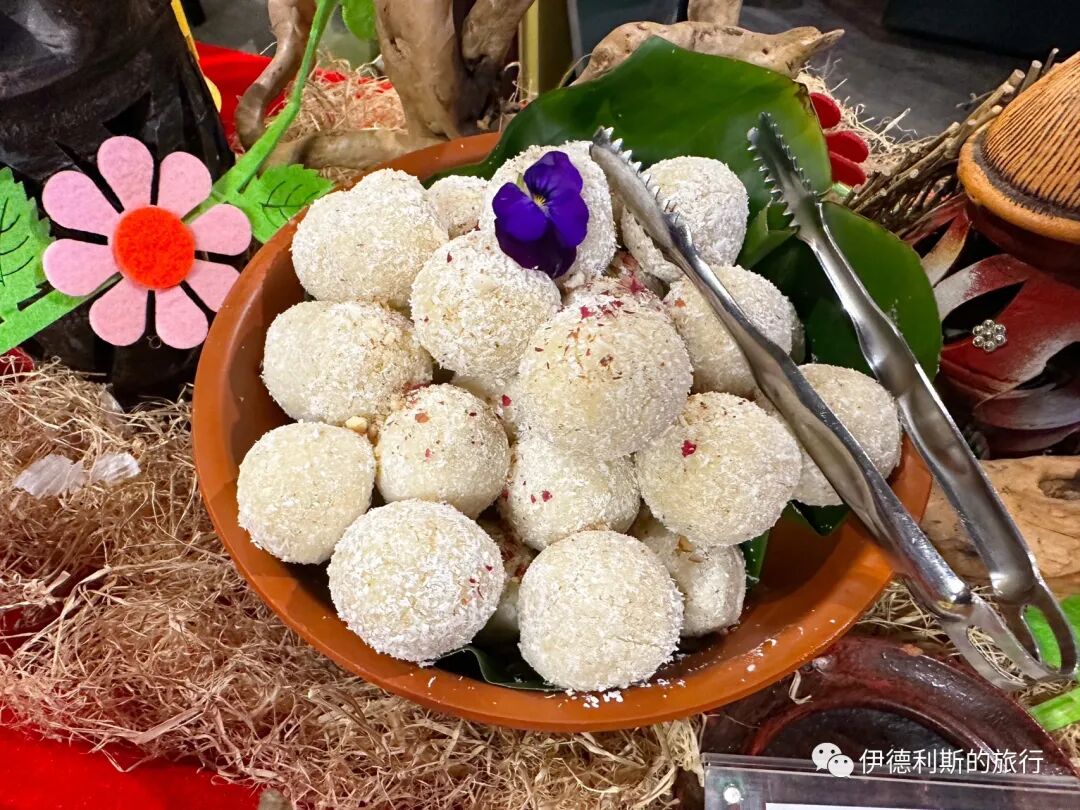
Narkel naru is a Bengali coconut ball dessert and an essential part of holidays. The ingredients for making narkel naru are very simple: just fresh coconut, sugar, and cardamom powder.
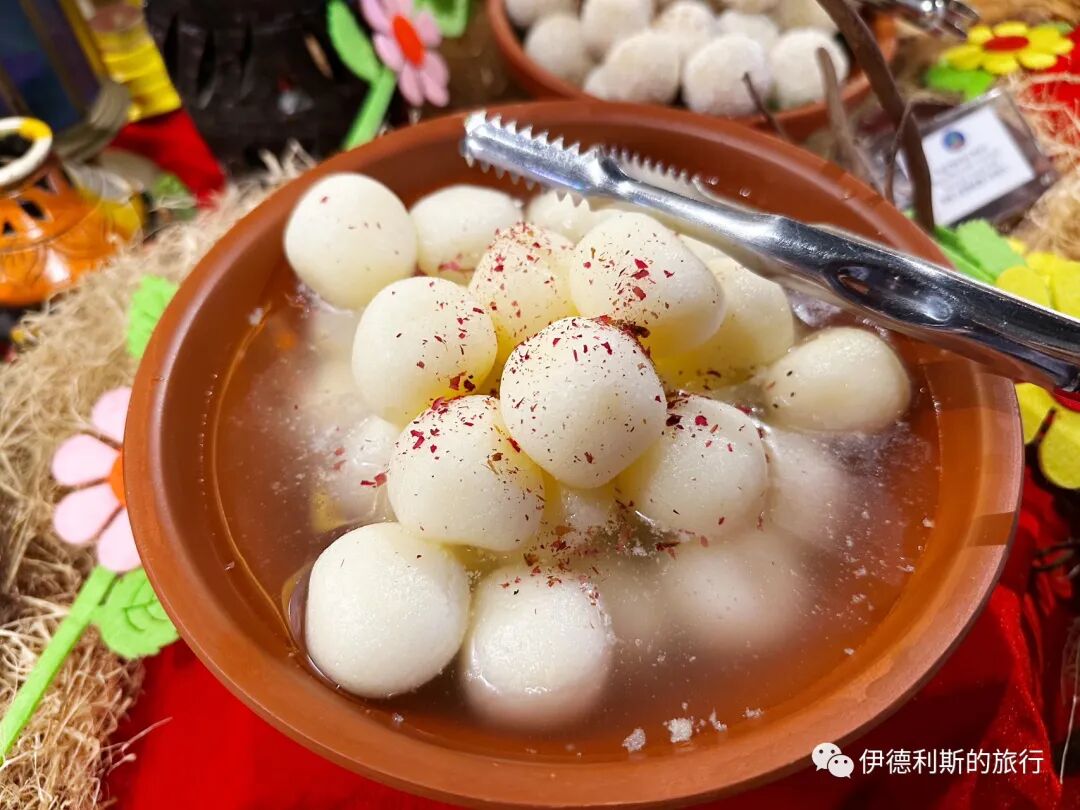
Rosogolla is a Bengali cheese dessert made by soaking soft, juicy cheese in syrup.
Halal Food Guide: Beijing Dastan — Ramadan Iftar and Bengali New Year (Segment C)
Articles • ali2007fr posted the article • 0 comments • 142 views • 2026-05-18 21:20
Summary: Halal Food Guide: Beijing Dastan — Ramadan Iftar and Bengali New Year is presented here as a firsthand travel account in clear English, beginning with this scene: April 14th is the Bengali New Year. I was very happy to be invited by Yahya Dost to the Dastaan restaurant, an Indian spot in Sanlitun Soho, Beijing, to join a Ramadan iftar buffet celebrating the Bengali New Year. The account keeps its focus on Beijing Iftar, Bengali New Year, Halal Food while preserving the names, places, food, and historical details from the Chinese source.
The second dish is yellow pilaf (basanti pulao), a special rice dish for the Bengali New Year, colored with turmeric and topped with fried cashews and raisins. view all
Summary: Halal Food Guide: Beijing Dastan — Ramadan Iftar and Bengali New Year is presented here as a firsthand travel account in clear English, beginning with this scene: April 14th is the Bengali New Year. I was very happy to be invited by Yahya Dost to the Dastaan restaurant, an Indian spot in Sanlitun Soho, Beijing, to join a Ramadan iftar buffet celebrating the Bengali New Year. The account keeps its focus on Beijing Iftar, Bengali New Year, Halal Food while preserving the names, places, food, and historical details from the Chinese source.
The second dish is yellow pilaf (basanti pulao), a special rice dish for the Bengali New Year, colored with turmeric and topped with fried cashews and raisins.
Halal Food Guide: Beijing Dastan — Ramadan Iftar and Bengali New Year (Segment B)
Articles • ali2007fr posted the article • 0 comments • 178 views • 2026-05-18 21:20
Summary: Halal Food Guide: Beijing Dastan — Ramadan Iftar and Bengali New Year is presented here as a firsthand travel account in clear English, beginning with this scene: April 14th is the Bengali New Year. I was very happy to be invited by Yahya Dost to the Dastaan restaurant, an Indian spot in Sanlitun Soho, Beijing, to join a Ramadan iftar buffet celebrating the Bengali New Year. The account keeps its focus on Beijing Iftar, Bengali New Year, Halal Food while preserving the names, places, food, and historical details from the Chinese source.
In 1856, after Wajid Ali Shah, the ruler of the Awadh region in northern India, was deposed by the British, he moved to Kolkata. The potato biryani was invented by his accompanying court chefs. Potatoes were a foreign food and were not brought to India by the Dutch until the 1830s. When Wajid Ali Shah's court chefs were cooking biryani with saffron, various spices, and meat, they once tried adding fried baby potatoes. It was unexpectedly delicious, became a favorite of Wajid Ali Shah, and quickly spread throughout Kolkata. view all
Summary: Halal Food Guide: Beijing Dastan — Ramadan Iftar and Bengali New Year is presented here as a firsthand travel account in clear English, beginning with this scene: April 14th is the Bengali New Year. I was very happy to be invited by Yahya Dost to the Dastaan restaurant, an Indian spot in Sanlitun Soho, Beijing, to join a Ramadan iftar buffet celebrating the Bengali New Year. The account keeps its focus on Beijing Iftar, Bengali New Year, Halal Food while preserving the names, places, food, and historical details from the Chinese source.
In 1856, after Wajid Ali Shah, the ruler of the Awadh region in northern India, was deposed by the British, he moved to Kolkata. The potato biryani was invented by his accompanying court chefs. Potatoes were a foreign food and were not brought to India by the Dutch until the 1830s. When Wajid Ali Shah's court chefs were cooking biryani with saffron, various spices, and meat, they once tried adding fried baby potatoes. It was unexpectedly delicious, became a favorite of Wajid Ali Shah, and quickly spread throughout Kolkata.
Halal Food Guide: Beijing Dastan — Ramadan Iftar and Bengali New Year (Part 2E of 4)
Articles • ali2007fr posted the article • 0 comments • 160 views • 2026-05-18 21:19
Summary: Halal Food Guide: Beijing Dastan — Ramadan Iftar and Bengali New Year is presented here as a firsthand travel account in clear English, beginning with this scene: April 14th is the Bengali New Year. I was very happy to be invited by Yahya Dost to the Dastaan restaurant, an Indian spot in Sanlitun Soho, Beijing, to join a Ramadan iftar buffet celebrating the Bengali New Year. The account keeps its focus on Beijing Iftar, Bengali New Year, Halal Food while preserving the names, places, food, and historical details from the Chinese source.
Main dishes include yogurt and cilantro roasted chicken, pan-fried spicy tilapia, mixed nut and vegetable patties, and roasted cauliflower with five-spice blend (panch phoron). Panch phoron consists of five spice seeds: radhuni seeds, fenugreek seeds, fennel seeds, mustard seeds, and nigella seeds. They are not roasted or ground, but mixed and added directly to food. Radhuni is a close relative of ajwain, but it is rarely used in South Asia outside of Bengal. It tastes a bit like celery, but is very strong. view all
Summary: Halal Food Guide: Beijing Dastan — Ramadan Iftar and Bengali New Year is presented here as a firsthand travel account in clear English, beginning with this scene: April 14th is the Bengali New Year. I was very happy to be invited by Yahya Dost to the Dastaan restaurant, an Indian spot in Sanlitun Soho, Beijing, to join a Ramadan iftar buffet celebrating the Bengali New Year. The account keeps its focus on Beijing Iftar, Bengali New Year, Halal Food while preserving the names, places, food, and historical details from the Chinese source.
Main dishes include yogurt and cilantro roasted chicken, pan-fried spicy tilapia, mixed nut and vegetable patties, and roasted cauliflower with five-spice blend (panch phoron). Panch phoron consists of five spice seeds: radhuni seeds, fenugreek seeds, fennel seeds, mustard seeds, and nigella seeds. They are not roasted or ground, but mixed and added directly to food. Radhuni is a close relative of ajwain, but it is rarely used in South Asia outside of Bengal. It tastes a bit like celery, but is very strong.
Halal Food Guide: Beijing Dastan — Ramadan Iftar and Bengali New Year (Part 2C of 4)
Articles • ali2007fr posted the article • 0 comments • 153 views • 2026-05-18 21:18
Summary: Halal Food Guide: Beijing Dastan — Ramadan Iftar and Bengali New Year is presented here as a firsthand travel account in clear English, beginning with this scene: April 14th is the Bengali New Year. I was very happy to be invited by Yahya Dost to the Dastaan restaurant, an Indian spot in Sanlitun Soho, Beijing, to join a Ramadan iftar buffet celebrating the Bengali New Year. The account keeps its focus on Beijing Iftar, Bengali New Year, Halal Food while preserving the names, places, food, and historical details from the Chinese source. view all
Summary: Halal Food Guide: Beijing Dastan — Ramadan Iftar and Bengali New Year is presented here as a firsthand travel account in clear English, beginning with this scene: April 14th is the Bengali New Year. I was very happy to be invited by Yahya Dost to the Dastaan restaurant, an Indian spot in Sanlitun Soho, Beijing, to join a Ramadan iftar buffet celebrating the Bengali New Year. The account keeps its focus on Beijing Iftar, Bengali New Year, Halal Food while preserving the names, places, food, and historical details from the Chinese source.
Halal Food Guide: Beijing Dastan — Ramadan Iftar and Bengali New Year (Part 2B of 4)
Articles • ali2007fr posted the article • 0 comments • 161 views • 2026-05-18 21:18
Summary: Halal Food Guide: Beijing Dastan — Ramadan Iftar and Bengali New Year is presented here as a firsthand travel account in clear English, beginning with this scene: April 14th is the Bengali New Year. I was very happy to be invited by Yahya Dost to the Dastaan restaurant, an Indian spot in Sanlitun Soho, Beijing, to join a Ramadan iftar buffet celebrating the Bengali New Year. The account keeps its focus on Beijing Iftar, Bengali New Year, Halal Food while preserving the names, places, food, and historical details from the Chinese source.
Fried dishes made by Bengalis using mustard oil are called bhaja, and there are many different kinds. The most classic is crispy fried potato strips (jhure-jhure aloo bhaja). The potatoes are fried until golden and very crispy, and it is a classic snack for the Bengali New Year. Also, fried eggplant slices (muchmuche beguni) and fried potato patties (aloo chop) are both part of the bhaja fried dish family. view all
Summary: Halal Food Guide: Beijing Dastan — Ramadan Iftar and Bengali New Year is presented here as a firsthand travel account in clear English, beginning with this scene: April 14th is the Bengali New Year. I was very happy to be invited by Yahya Dost to the Dastaan restaurant, an Indian spot in Sanlitun Soho, Beijing, to join a Ramadan iftar buffet celebrating the Bengali New Year. The account keeps its focus on Beijing Iftar, Bengali New Year, Halal Food while preserving the names, places, food, and historical details from the Chinese source.
Fried dishes made by Bengalis using mustard oil are called bhaja, and there are many different kinds. The most classic is crispy fried potato strips (jhure-jhure aloo bhaja). The potatoes are fried until golden and very crispy, and it is a classic snack for the Bengali New Year. Also, fried eggplant slices (muchmuche beguni) and fried potato patties (aloo chop) are both part of the bhaja fried dish family.
Halal Food Guide: Beijing Dastan — Ramadan Iftar and Bengali New Year (Part 2A of 4)
Articles • ali2007fr posted the article • 0 comments • 168 views • 2026-05-18 21:18
Summary: Halal Food Guide: Beijing Dastan — Ramadan Iftar and Bengali New Year is presented here as a firsthand travel account in clear English, beginning with this scene: April 14th is the Bengali New Year. I was very happy to be invited by Yahya Dost to the Dastaan restaurant, an Indian spot in Sanlitun Soho, Beijing, to join a Ramadan iftar buffet celebrating the Bengali New Year. The account keeps its focus on Beijing Iftar, Bengali New Year, Halal Food while preserving the names, places, food, and historical details from the Chinese source.
The classic Bengali side dish vegetable mash (bhurta) is made by mashing various vegetables or fish with mustard oil, onion, garlic, and red chili. The ingredients can be boiled, roasted, or fried before mashing.
There are many types of bhurta depending on the ingredients. The most popular is potato mash (aloo bharta), made by boiling potatoes and mixing them with fried onions, chili, and mustard oil. The rich taste of mustard oil in the potato mash really boosts your appetite. Another common one is eggplant mash (baingan bharta), made by roasting the eggplant, chopping it up, and mixing it with onion, chili, and mustard oil. view all
Summary: Halal Food Guide: Beijing Dastan — Ramadan Iftar and Bengali New Year is presented here as a firsthand travel account in clear English, beginning with this scene: April 14th is the Bengali New Year. I was very happy to be invited by Yahya Dost to the Dastaan restaurant, an Indian spot in Sanlitun Soho, Beijing, to join a Ramadan iftar buffet celebrating the Bengali New Year. The account keeps its focus on Beijing Iftar, Bengali New Year, Halal Food while preserving the names, places, food, and historical details from the Chinese source.
The classic Bengali side dish vegetable mash (bhurta) is made by mashing various vegetables or fish with mustard oil, onion, garlic, and red chili. The ingredients can be boiled, roasted, or fried before mashing.
There are many types of bhurta depending on the ingredients. The most popular is potato mash (aloo bharta), made by boiling potatoes and mixing them with fried onions, chili, and mustard oil. The rich taste of mustard oil in the potato mash really boosts your appetite. Another common one is eggplant mash (baingan bharta), made by roasting the eggplant, chopping it up, and mixing it with onion, chili, and mustard oil.
Halal Food Guide: Beijing Dastan — Ramadan Iftar and Bengali New Year (Part 4 of 4)
Articles • ali2007fr posted the article • 0 comments • 177 views • 2026-05-18 21:17
Summary: Halal Food Guide: Beijing Dastan — Ramadan Iftar and Bengali New Year is presented here as a firsthand travel account in clear English, beginning with this scene: April 14th is the Bengali New Year. I was very happy to be invited by Yahya Dost to the Dastaan restaurant, an Indian spot in Sanlitun Soho, Beijing, to join a Ramadan iftar buffet celebrating the Bengali New Year. The account keeps its focus on Beijing Iftar, Bengali New Year, Halal Food while preserving the names, places, food, and historical details from the Chinese source. view all
Summary: Halal Food Guide: Beijing Dastan — Ramadan Iftar and Bengali New Year is presented here as a firsthand travel account in clear English, beginning with this scene: April 14th is the Bengali New Year. I was very happy to be invited by Yahya Dost to the Dastaan restaurant, an Indian spot in Sanlitun Soho, Beijing, to join a Ramadan iftar buffet celebrating the Bengali New Year. The account keeps its focus on Beijing Iftar, Bengali New Year, Halal Food while preserving the names, places, food, and historical details from the Chinese source.
Halal Food Guide: Beijing Dastan — Ramadan Iftar and Bengali New Year (Part 3 of 4)
Articles • ali2007fr posted the article • 0 comments • 157 views • 2026-05-18 21:17
Summary: Halal Food Guide: Beijing Dastan — Ramadan Iftar and Bengali New Year is presented here as a firsthand travel account in clear English, beginning with this scene: April 14th is the Bengali New Year. I was very happy to be invited by Yahya Dost to the Dastaan restaurant, an Indian spot in Sanlitun Soho, Beijing, to join a Ramadan iftar buffet celebrating the Bengali New Year. The account keeps its focus on Beijing Iftar, Bengali New Year, Halal Food while preserving the names, places, food, and historical details from the Chinese source.
Here are a few types of Bengali curry.
Doi shorshe katla is a Bengali yogurt fish curry. In this name, 'doi' means yogurt, 'shorshe' means mustard seeds, and 'katla' means carp. Mustard seeds and mustard oil are the basic elements of Bengali fish curry. Besides these, many spices are added, and the yellow color in the curry mainly comes from turmeric.
Mutton chaap is a lamb chop curry special to Kolkata. It is slow-cooked with various spices like masala. This cooking method comes from the Mughal Empire and is a classic curry for holidays like Eid al-Fitr.
Chicken rezala is a Bengali white sauce chicken curry. It also comes from the Mughal Empire and is slow-cooked with yogurt and nuts. The spices include cloves, black pepper, cinnamon, black cardamom, dried red chili, and green cardamom.
To go with the curry, you must have Bengali flatbread (ruti), which is the same as Indian roti. The word comes from the Sanskrit 'roṭikā', which means bread. In Bengal, ruti is made with whole wheat flour. If finer wheat flour is used, it is called 'porota'.
Finally, here are a few Bengali snacks and desserts.
Aloo kabli is a special street snack in Kolkata. It is made with boiled potatoes, chopped onions, green chilies, cilantro, tamarind, lime, and masala spices. Aloo kabli stalls are most popular at the gates of schools in Kolkata. Students surround the stalls as soon as school ends, waiting for the vendor to wrap the aloo kabli in old newspapers to sell to them.
Malpua is a deep-fried dessert soaked in syrup that Bengalis eat during holidays. It is crispy on the outside and fluffy and juicy on the inside, with a fragrance from fennel and green cardamom powder.
Chaler payesh is a rice pudding that Bengalis eat during holidays, similar to kheer in North India. Besides milk and basmati rice, it also contains ghee, sugar, cardamom powder, and nuts.
Narkel naru is a Bengali coconut ball dessert and an essential part of holidays. The ingredients for making narkel naru are very simple: just fresh coconut, sugar, and cardamom powder.
Rosogolla is a Bengali cheese dessert made by soaking soft, juicy cheese in syrup. view all
Summary: Halal Food Guide: Beijing Dastan — Ramadan Iftar and Bengali New Year is presented here as a firsthand travel account in clear English, beginning with this scene: April 14th is the Bengali New Year. I was very happy to be invited by Yahya Dost to the Dastaan restaurant, an Indian spot in Sanlitun Soho, Beijing, to join a Ramadan iftar buffet celebrating the Bengali New Year. The account keeps its focus on Beijing Iftar, Bengali New Year, Halal Food while preserving the names, places, food, and historical details from the Chinese source.
Here are a few types of Bengali curry.
Doi shorshe katla is a Bengali yogurt fish curry. In this name, 'doi' means yogurt, 'shorshe' means mustard seeds, and 'katla' means carp. Mustard seeds and mustard oil are the basic elements of Bengali fish curry. Besides these, many spices are added, and the yellow color in the curry mainly comes from turmeric.
Mutton chaap is a lamb chop curry special to Kolkata. It is slow-cooked with various spices like masala. This cooking method comes from the Mughal Empire and is a classic curry for holidays like Eid al-Fitr.
Chicken rezala is a Bengali white sauce chicken curry. It also comes from the Mughal Empire and is slow-cooked with yogurt and nuts. The spices include cloves, black pepper, cinnamon, black cardamom, dried red chili, and green cardamom.
To go with the curry, you must have Bengali flatbread (ruti), which is the same as Indian roti. The word comes from the Sanskrit 'roṭikā', which means bread. In Bengal, ruti is made with whole wheat flour. If finer wheat flour is used, it is called 'porota'.
Finally, here are a few Bengali snacks and desserts.
Aloo kabli is a special street snack in Kolkata. It is made with boiled potatoes, chopped onions, green chilies, cilantro, tamarind, lime, and masala spices. Aloo kabli stalls are most popular at the gates of schools in Kolkata. Students surround the stalls as soon as school ends, waiting for the vendor to wrap the aloo kabli in old newspapers to sell to them.
Malpua is a deep-fried dessert soaked in syrup that Bengalis eat during holidays. It is crispy on the outside and fluffy and juicy on the inside, with a fragrance from fennel and green cardamom powder.
Chaler payesh is a rice pudding that Bengalis eat during holidays, similar to kheer in North India. Besides milk and basmati rice, it also contains ghee, sugar, cardamom powder, and nuts.
Narkel naru is a Bengali coconut ball dessert and an essential part of holidays. The ingredients for making narkel naru are very simple: just fresh coconut, sugar, and cardamom powder.
Rosogolla is a Bengali cheese dessert made by soaking soft, juicy cheese in syrup.
Halal Food Guide: Beijing Dastan — Ramadan Iftar and Bengali New Year
Articles • ali2007fr posted the article • 0 comments • 169 views • 2026-05-18 21:16
Summary: Halal Food Guide: Beijing Dastan — Ramadan Iftar and Bengali New Year is presented here as a firsthand travel account in clear English, beginning with this scene: April 14th is the Bengali New Year. I was very happy to be invited by Yahya Dost to the Dastaan restaurant, an Indian spot in Sanlitun Soho, Beijing, to join a Ramadan iftar buffet celebrating the Bengali New Year. The account keeps its focus on Beijing Iftar, Bengali New Year, Halal Food while preserving the names, places, food, and historical details from the Chinese source.
April 14th is the Bengali New Year. I was very happy to be invited by Yahya Dost to the Dastaan restaurant, an Indian spot in Sanlitun Soho, Beijing, to join a Ramadan iftar buffet celebrating the Bengali New Year. I ate various Bengali and Kolkata delicacies I don't usually get to try and watched some wonderful dancing. Even though some of the snacks took a little getting used to, it was a fantastic opportunity.
The Bengali New Year is called Pohela Boishakh, and on this day, Bengali people everywhere hold celebrations and offer dua. One theory is that the Bengali calendar was finalized during the reign of the Mughal Emperor Akbar. The Mughal Empire originally used the Islamic calendar to collect land taxes from the Bengali people. Because the Islamic calendar is a lunar calendar, its cycle did not match the rhythm of farming work. Emperor Akbar asked his court astronomers to combine the Islamic calendar with the local Indian solar calendar to create a new one, which eventually became the Bengali calendar. To make it easier to collect taxes after the spring harvest each year, the Bengali New Year was set in April.
Bengali food is strongly influenced by the Mughal Empire. Between 1576 and 1765, the Bengal Subah under Mughal rule included what is now Bangladesh and eastern India. It was one of the wealthiest regions in South Asia at the time, known as the 'Nation of Nations,' with world-leading textile and shipbuilding industries. Many merchants, immigrants, and travelers entered the Bengal Subah, influencing Bengali eating habits in different ways, including the use of beef, mutton, yogurt, and various spice blends.
After the 18th century, the British East India Company built a trading post in the Bengal Subah, which later grew into Kolkata, the capital of British India. Kolkata is the second-largest Bengali-speaking city after Dhaka, the capital of Bangladesh, and Kolkata cuisine is an important part of Bengali food culture.
I will share the delicious food I ate at the buffet.
First is the street snack puffed rice (jhalmuri), popular in Bangladesh and eastern India. It is made by mixing puffed rice (muri) with various spices, chopped vegetables like cucumber, lemon, onion, chili, tomato, and potato, and mustard oil. In Bangladesh and eastern India, puffed rice is an ancient and important staple food. People boil and dry the rice, then heat it in a pan with salt. They add the rice and stir, and it starts to puff up immediately, taking less than a minute to make.
Two Bengali summer drinks, the lime yogurt drink (gondhoraj ghol) and the roasted sour mango drink (aam pora sharbat), are the best ways for Bengalis to cool down in the 40-degree summer heat. Gondhoraj lebu is a type of lime from Bangladesh with a very unique taste that might take some getting used to for first-timers. Aam Pora Sharbat is made by roasting unripe sour mangoes over charcoal. Once the mangoes soften, the pulp is scooped out and blended with sugar, salt, cumin, and fresh mint. It has a light, smoky flavor when you drink it.
The classic Bengali side dish vegetable mash (bhurta) is made by mashing various vegetables or fish with mustard oil, onion, garlic, and red chili. The ingredients can be boiled, roasted, or fried before mashing.
There are many types of bhurta depending on the ingredients. The most popular is potato mash (aloo bharta), made by boiling potatoes and mixing them with fried onions, chili, and mustard oil. The rich taste of mustard oil in the potato mash really boosts your appetite. Another common one is eggplant mash (baingan bharta), made by roasting the eggplant, chopping it up, and mixing it with onion, chili, and mustard oil.
Fried dishes made by Bengalis using mustard oil are called bhaja, and there are many different kinds. The most classic is crispy fried potato strips (jhure-jhure aloo bhaja). The potatoes are fried until golden and very crispy, and it is a classic snack for the Bengali New Year. Also, fried eggplant slices (muchmuche beguni) and fried potato patties (aloo chop) are both part of the bhaja fried dish family.
For the main course, there was Kolkata potato rice (Kolkata aloo biryani). This is the only type of biryani in South Asia that uses potatoes as an ingredient. Kolkata, the capital of the Indian state of West Bengal, is the second-largest Bengali-speaking city after Dhaka, the capital of Bangladesh.
In 1856, after Wajid Ali Shah, the ruler of the Awadh region in northern India, was deposed by the British, he moved to Kolkata. The potato biryani was invented by his accompanying court chefs. Potatoes were a foreign food and were not brought to India by the Dutch until the 1830s. When Wajid Ali Shah's court chefs were cooking biryani with saffron, various spices, and meat, they once tried adding fried baby potatoes. It was unexpectedly delicious, became a favorite of Wajid Ali Shah, and quickly spread throughout Kolkata.
The second dish is yellow pilaf (basanti pulao), a special rice dish for the Bengali New Year, colored with turmeric and topped with fried cashews and raisins.
Main dishes include yogurt and cilantro roasted chicken, pan-fried spicy tilapia, mixed nut and vegetable patties, and roasted cauliflower with five-spice blend (panch phoron). Panch phoron consists of five spice seeds: radhuni seeds, fenugreek seeds, fennel seeds, mustard seeds, and nigella seeds. They are not roasted or ground, but mixed and added directly to food. Radhuni is a close relative of ajwain, but it is rarely used in South Asia outside of Bengal. It tastes a bit like celery, but is very strong.
Here are a few types of Bengali curry.
Doi shorshe katla is a Bengali yogurt fish curry. In this name, 'doi' means yogurt, 'shorshe' means mustard seeds, and 'katla' means carp. Mustard seeds and mustard oil are the basic elements of Bengali fish curry. Besides these, many spices are added, and the yellow color in the curry mainly comes from turmeric.
Mutton chaap is a lamb chop curry special to Kolkata. It is slow-cooked with various spices like masala. This cooking method comes from the Mughal Empire and is a classic curry for holidays like Eid al-Fitr.
Chicken rezala is a Bengali white sauce chicken curry. It also comes from the Mughal Empire and is slow-cooked with yogurt and nuts. The spices include cloves, black pepper, cinnamon, black cardamom, dried red chili, and green cardamom.
To go with the curry, you must have Bengali flatbread (ruti), which is the same as Indian roti. The word comes from the Sanskrit 'roṭikā', which means bread. In Bengal, ruti is made with whole wheat flour. If finer wheat flour is used, it is called 'porota'.
Finally, here are a few Bengali snacks and desserts.
Aloo kabli is a special street snack in Kolkata. It is made with boiled potatoes, chopped onions, green chilies, cilantro, tamarind, lime, and masala spices. Aloo kabli stalls are most popular at the gates of schools in Kolkata. Students surround the stalls as soon as school ends, waiting for the vendor to wrap the aloo kabli in old newspapers to sell to them.
Malpua is a deep-fried dessert soaked in syrup that Bengalis eat during holidays. It is crispy on the outside and fluffy and juicy on the inside, with a fragrance from fennel and green cardamom powder.
Chaler payesh is a rice pudding that Bengalis eat during holidays, similar to kheer in North India. Besides milk and basmati rice, it also contains ghee, sugar, cardamom powder, and nuts.
Narkel naru is a Bengali coconut ball dessert and an essential part of holidays. The ingredients for making narkel naru are very simple: just fresh coconut, sugar, and cardamom powder.
Rosogolla is a Bengali cheese dessert made by soaking soft, juicy cheese in syrup. view all
Summary: Halal Food Guide: Beijing Dastan — Ramadan Iftar and Bengali New Year is presented here as a firsthand travel account in clear English, beginning with this scene: April 14th is the Bengali New Year. I was very happy to be invited by Yahya Dost to the Dastaan restaurant, an Indian spot in Sanlitun Soho, Beijing, to join a Ramadan iftar buffet celebrating the Bengali New Year. The account keeps its focus on Beijing Iftar, Bengali New Year, Halal Food while preserving the names, places, food, and historical details from the Chinese source.
April 14th is the Bengali New Year. I was very happy to be invited by Yahya Dost to the Dastaan restaurant, an Indian spot in Sanlitun Soho, Beijing, to join a Ramadan iftar buffet celebrating the Bengali New Year. I ate various Bengali and Kolkata delicacies I don't usually get to try and watched some wonderful dancing. Even though some of the snacks took a little getting used to, it was a fantastic opportunity.
The Bengali New Year is called Pohela Boishakh, and on this day, Bengali people everywhere hold celebrations and offer dua. One theory is that the Bengali calendar was finalized during the reign of the Mughal Emperor Akbar. The Mughal Empire originally used the Islamic calendar to collect land taxes from the Bengali people. Because the Islamic calendar is a lunar calendar, its cycle did not match the rhythm of farming work. Emperor Akbar asked his court astronomers to combine the Islamic calendar with the local Indian solar calendar to create a new one, which eventually became the Bengali calendar. To make it easier to collect taxes after the spring harvest each year, the Bengali New Year was set in April.
Bengali food is strongly influenced by the Mughal Empire. Between 1576 and 1765, the Bengal Subah under Mughal rule included what is now Bangladesh and eastern India. It was one of the wealthiest regions in South Asia at the time, known as the 'Nation of Nations,' with world-leading textile and shipbuilding industries. Many merchants, immigrants, and travelers entered the Bengal Subah, influencing Bengali eating habits in different ways, including the use of beef, mutton, yogurt, and various spice blends.
After the 18th century, the British East India Company built a trading post in the Bengal Subah, which later grew into Kolkata, the capital of British India. Kolkata is the second-largest Bengali-speaking city after Dhaka, the capital of Bangladesh, and Kolkata cuisine is an important part of Bengali food culture.
I will share the delicious food I ate at the buffet.
First is the street snack puffed rice (jhalmuri), popular in Bangladesh and eastern India. It is made by mixing puffed rice (muri) with various spices, chopped vegetables like cucumber, lemon, onion, chili, tomato, and potato, and mustard oil. In Bangladesh and eastern India, puffed rice is an ancient and important staple food. People boil and dry the rice, then heat it in a pan with salt. They add the rice and stir, and it starts to puff up immediately, taking less than a minute to make.
Two Bengali summer drinks, the lime yogurt drink (gondhoraj ghol) and the roasted sour mango drink (aam pora sharbat), are the best ways for Bengalis to cool down in the 40-degree summer heat. Gondhoraj lebu is a type of lime from Bangladesh with a very unique taste that might take some getting used to for first-timers. Aam Pora Sharbat is made by roasting unripe sour mangoes over charcoal. Once the mangoes soften, the pulp is scooped out and blended with sugar, salt, cumin, and fresh mint. It has a light, smoky flavor when you drink it.
The classic Bengali side dish vegetable mash (bhurta) is made by mashing various vegetables or fish with mustard oil, onion, garlic, and red chili. The ingredients can be boiled, roasted, or fried before mashing.
There are many types of bhurta depending on the ingredients. The most popular is potato mash (aloo bharta), made by boiling potatoes and mixing them with fried onions, chili, and mustard oil. The rich taste of mustard oil in the potato mash really boosts your appetite. Another common one is eggplant mash (baingan bharta), made by roasting the eggplant, chopping it up, and mixing it with onion, chili, and mustard oil.
Fried dishes made by Bengalis using mustard oil are called bhaja, and there are many different kinds. The most classic is crispy fried potato strips (jhure-jhure aloo bhaja). The potatoes are fried until golden and very crispy, and it is a classic snack for the Bengali New Year. Also, fried eggplant slices (muchmuche beguni) and fried potato patties (aloo chop) are both part of the bhaja fried dish family.
For the main course, there was Kolkata potato rice (Kolkata aloo biryani). This is the only type of biryani in South Asia that uses potatoes as an ingredient. Kolkata, the capital of the Indian state of West Bengal, is the second-largest Bengali-speaking city after Dhaka, the capital of Bangladesh.
In 1856, after Wajid Ali Shah, the ruler of the Awadh region in northern India, was deposed by the British, he moved to Kolkata. The potato biryani was invented by his accompanying court chefs. Potatoes were a foreign food and were not brought to India by the Dutch until the 1830s. When Wajid Ali Shah's court chefs were cooking biryani with saffron, various spices, and meat, they once tried adding fried baby potatoes. It was unexpectedly delicious, became a favorite of Wajid Ali Shah, and quickly spread throughout Kolkata.
The second dish is yellow pilaf (basanti pulao), a special rice dish for the Bengali New Year, colored with turmeric and topped with fried cashews and raisins.
Main dishes include yogurt and cilantro roasted chicken, pan-fried spicy tilapia, mixed nut and vegetable patties, and roasted cauliflower with five-spice blend (panch phoron). Panch phoron consists of five spice seeds: radhuni seeds, fenugreek seeds, fennel seeds, mustard seeds, and nigella seeds. They are not roasted or ground, but mixed and added directly to food. Radhuni is a close relative of ajwain, but it is rarely used in South Asia outside of Bengal. It tastes a bit like celery, but is very strong.
Here are a few types of Bengali curry.
Doi shorshe katla is a Bengali yogurt fish curry. In this name, 'doi' means yogurt, 'shorshe' means mustard seeds, and 'katla' means carp. Mustard seeds and mustard oil are the basic elements of Bengali fish curry. Besides these, many spices are added, and the yellow color in the curry mainly comes from turmeric.
Mutton chaap is a lamb chop curry special to Kolkata. It is slow-cooked with various spices like masala. This cooking method comes from the Mughal Empire and is a classic curry for holidays like Eid al-Fitr.
Chicken rezala is a Bengali white sauce chicken curry. It also comes from the Mughal Empire and is slow-cooked with yogurt and nuts. The spices include cloves, black pepper, cinnamon, black cardamom, dried red chili, and green cardamom.
To go with the curry, you must have Bengali flatbread (ruti), which is the same as Indian roti. The word comes from the Sanskrit 'roṭikā', which means bread. In Bengal, ruti is made with whole wheat flour. If finer wheat flour is used, it is called 'porota'.
Finally, here are a few Bengali snacks and desserts.
Aloo kabli is a special street snack in Kolkata. It is made with boiled potatoes, chopped onions, green chilies, cilantro, tamarind, lime, and masala spices. Aloo kabli stalls are most popular at the gates of schools in Kolkata. Students surround the stalls as soon as school ends, waiting for the vendor to wrap the aloo kabli in old newspapers to sell to them.
Malpua is a deep-fried dessert soaked in syrup that Bengalis eat during holidays. It is crispy on the outside and fluffy and juicy on the inside, with a fragrance from fennel and green cardamom powder.
Chaler payesh is a rice pudding that Bengalis eat during holidays, similar to kheer in North India. Besides milk and basmati rice, it also contains ghee, sugar, cardamom powder, and nuts.
Narkel naru is a Bengali coconut ball dessert and an essential part of holidays. The ingredients for making narkel naru are very simple: just fresh coconut, sugar, and cardamom powder.
Rosogolla is a Bengali cheese dessert made by soaking soft, juicy cheese in syrup.
Halal Food Guide: Beijing Dastan — Ramadan Iftar and Bengali New Year (Segment A) (Revised)
Articles • ali2007fr posted the article • 0 comments • 123 views • 2026-05-18 21:21
Summary: Halal Food Guide: Beijing Dastan — Ramadan Iftar and Bengali New Year is presented here as a firsthand travel account in clear English, beginning with this scene: April 14th is the Bengali New Year. I was very happy to be invited by Yahya Dost to the Dastaan restaurant, an Indian spot in Sanlitun Soho, Beijing, to join a Ramadan iftar buffet celebrating the Bengali New Year. The account keeps its focus on Beijing Iftar, Bengali New Year, Halal Food while preserving the names, places, food, and historical details from the Chinese source.
The main rice dish was Kolkata-style potato biryani (Kolkata aloo biryani). Among South Asian biryanis, this version is known for using potatoes. Kolkata is the capital of West Bengal in India, and after Dhaka in Bangladesh it is one of the largest Bengali-speaking cities. view all
Summary: Halal Food Guide: Beijing Dastan — Ramadan Iftar and Bengali New Year is presented here as a firsthand travel account in clear English, beginning with this scene: April 14th is the Bengali New Year. I was very happy to be invited by Yahya Dost to the Dastaan restaurant, an Indian spot in Sanlitun Soho, Beijing, to join a Ramadan iftar buffet celebrating the Bengali New Year. The account keeps its focus on Beijing Iftar, Bengali New Year, Halal Food while preserving the names, places, food, and historical details from the Chinese source.
The main rice dish was Kolkata-style potato biryani (Kolkata aloo biryani). Among South Asian biryanis, this version is known for using potatoes. Kolkata is the capital of West Bengal in India, and after Dhaka in Bangladesh it is one of the largest Bengali-speaking cities.
Halal Food Guide: Beijing Dastan — Ramadan Iftar and Bengali New Year (Segment A)
Articles • ali2007fr posted the article • 0 comments • 156 views • 2026-05-18 21:20
Summary: Halal Food Guide: Beijing Dastan — Ramadan Iftar and Bengali New Year is presented here as a firsthand travel account in clear English, beginning with this scene: April 14th is the Bengali New Year. I was very happy to be invited by Yahya Dost to the Dastaan restaurant, an Indian spot in Sanlitun Soho, Beijing, to join a Ramadan iftar buffet celebrating the Bengali New Year. The account keeps its focus on Beijing Iftar, Bengali New Year, Halal Food while preserving the names, places, food, and historical details from the Chinese source.
For the main course, there was Kolkata potato rice (Kolkata aloo biryani). This is the only type of biryani in South Asia that uses potatoes as an ingredient. Kolkata, the capital of the Indian state of West Bengal, is the second-largest Bengali-speaking city after Dhaka, the capital of Bangladesh. view all
Summary: Halal Food Guide: Beijing Dastan — Ramadan Iftar and Bengali New Year is presented here as a firsthand travel account in clear English, beginning with this scene: April 14th is the Bengali New Year. I was very happy to be invited by Yahya Dost to the Dastaan restaurant, an Indian spot in Sanlitun Soho, Beijing, to join a Ramadan iftar buffet celebrating the Bengali New Year. The account keeps its focus on Beijing Iftar, Bengali New Year, Halal Food while preserving the names, places, food, and historical details from the Chinese source.
For the main course, there was Kolkata potato rice (Kolkata aloo biryani). This is the only type of biryani in South Asia that uses potatoes as an ingredient. Kolkata, the capital of the Indian state of West Bengal, is the second-largest Bengali-speaking city after Dhaka, the capital of Bangladesh.
Halal Food Guide: Beijing Dastan — Ramadan Iftar and Bengali New Year (Part 2D of 4)
Articles • ali2007fr posted the article • 0 comments • 148 views • 2026-05-18 21:20
Summary: Halal Food Guide: Beijing Dastan — Ramadan Iftar and Bengali New Year is presented here as a firsthand travel account in clear English, beginning with this scene: April 14th is the Bengali New Year. I was very happy to be invited by Yahya Dost to the Dastaan restaurant, an Indian spot in Sanlitun Soho, Beijing, to join a Ramadan iftar buffet celebrating the Bengali New Year. The account keeps its focus on Beijing Iftar, Bengali New Year, Halal Food while preserving the names, places, food, and historical details from the Chinese source.
For the main course, there was Kolkata potato rice (Kolkata aloo biryani). This is the only type of biryani in South Asia that uses potatoes as an ingredient. Kolkata, the capital of the Indian state of West Bengal, is the second-largest Bengali-speaking city after Dhaka, the capital of Bangladesh.
In 1856, after Wajid Ali Shah, the ruler of the Awadh region in northern India, was deposed by the British, he moved to Kolkata. The potato biryani was invented by his accompanying court chefs. Potatoes were a foreign food and were not brought to India by the Dutch until the 1830s. When Wajid Ali Shah's court chefs were cooking biryani with saffron, various spices, and meat, they once tried adding fried baby potatoes. It was unexpectedly delicious, became a favorite of Wajid Ali Shah, and quickly spread throughout Kolkata.
The second dish is yellow pilaf (basanti pulao), a special rice dish for the Bengali New Year, colored with turmeric and topped with fried cashews and raisins. view all
Summary: Halal Food Guide: Beijing Dastan — Ramadan Iftar and Bengali New Year is presented here as a firsthand travel account in clear English, beginning with this scene: April 14th is the Bengali New Year. I was very happy to be invited by Yahya Dost to the Dastaan restaurant, an Indian spot in Sanlitun Soho, Beijing, to join a Ramadan iftar buffet celebrating the Bengali New Year. The account keeps its focus on Beijing Iftar, Bengali New Year, Halal Food while preserving the names, places, food, and historical details from the Chinese source.
For the main course, there was Kolkata potato rice (Kolkata aloo biryani). This is the only type of biryani in South Asia that uses potatoes as an ingredient. Kolkata, the capital of the Indian state of West Bengal, is the second-largest Bengali-speaking city after Dhaka, the capital of Bangladesh.
In 1856, after Wajid Ali Shah, the ruler of the Awadh region in northern India, was deposed by the British, he moved to Kolkata. The potato biryani was invented by his accompanying court chefs. Potatoes were a foreign food and were not brought to India by the Dutch until the 1830s. When Wajid Ali Shah's court chefs were cooking biryani with saffron, various spices, and meat, they once tried adding fried baby potatoes. It was unexpectedly delicious, became a favorite of Wajid Ali Shah, and quickly spread throughout Kolkata.
The second dish is yellow pilaf (basanti pulao), a special rice dish for the Bengali New Year, colored with turmeric and topped with fried cashews and raisins.
Halal Food Guide: Beijing Dastan — Ramadan Iftar and Bengali New Year (Part 2 of 4)
Articles • ali2007fr posted the article • 0 comments • 128 views • 2026-05-18 21:20
Summary: Halal Food Guide: Beijing Dastan — Ramadan Iftar and Bengali New Year is presented here as a firsthand travel account in clear English, beginning with this scene: April 14th is the Bengali New Year. I was very happy to be invited by Yahya Dost to the Dastaan restaurant, an Indian spot in Sanlitun Soho, Beijing, to join a Ramadan iftar buffet celebrating the Bengali New Year. The account keeps its focus on Beijing Iftar, Bengali New Year, Halal Food while preserving the names, places, food, and historical details from the Chinese source.
The classic Bengali side dish vegetable mash (bhurta) is made by mashing various vegetables or fish with mustard oil, onion, garlic, and red chili. The ingredients can be boiled, roasted, or fried before mashing.
There are many types of bhurta depending on the ingredients. The most popular is potato mash (aloo bharta), made by boiling potatoes and mixing them with fried onions, chili, and mustard oil. The rich taste of mustard oil in the potato mash really boosts your appetite. Another common one is eggplant mash (baingan bharta), made by roasting the eggplant, chopping it up, and mixing it with onion, chili, and mustard oil.
Fried dishes made by Bengalis using mustard oil are called bhaja, and there are many different kinds. The most classic is crispy fried potato strips (jhure-jhure aloo bhaja). The potatoes are fried until golden and very crispy, and it is a classic snack for the Bengali New Year. Also, fried eggplant slices (muchmuche beguni) and fried potato patties (aloo chop) are both part of the bhaja fried dish family.
For the main course, there was Kolkata potato rice (Kolkata aloo biryani). This is the only type of biryani in South Asia that uses potatoes as an ingredient. Kolkata, the capital of the Indian state of West Bengal, is the second-largest Bengali-speaking city after Dhaka, the capital of Bangladesh.
In 1856, after Wajid Ali Shah, the ruler of the Awadh region in northern India, was deposed by the British, he moved to Kolkata. The potato biryani was invented by his accompanying court chefs. Potatoes were a foreign food and were not brought to India by the Dutch until the 1830s. When Wajid Ali Shah's court chefs were cooking biryani with saffron, various spices, and meat, they once tried adding fried baby potatoes. It was unexpectedly delicious, became a favorite of Wajid Ali Shah, and quickly spread throughout Kolkata.
The second dish is yellow pilaf (basanti pulao), a special rice dish for the Bengali New Year, colored with turmeric and topped with fried cashews and raisins.
Main dishes include yogurt and cilantro roasted chicken, pan-fried spicy tilapia, mixed nut and vegetable patties, and roasted cauliflower with five-spice blend (panch phoron). Panch phoron consists of five spice seeds: radhuni seeds, fenugreek seeds, fennel seeds, mustard seeds, and nigella seeds. They are not roasted or ground, but mixed and added directly to food. Radhuni is a close relative of ajwain, but it is rarely used in South Asia outside of Bengal. It tastes a bit like celery, but is very strong. view all
Summary: Halal Food Guide: Beijing Dastan — Ramadan Iftar and Bengali New Year is presented here as a firsthand travel account in clear English, beginning with this scene: April 14th is the Bengali New Year. I was very happy to be invited by Yahya Dost to the Dastaan restaurant, an Indian spot in Sanlitun Soho, Beijing, to join a Ramadan iftar buffet celebrating the Bengali New Year. The account keeps its focus on Beijing Iftar, Bengali New Year, Halal Food while preserving the names, places, food, and historical details from the Chinese source.
The classic Bengali side dish vegetable mash (bhurta) is made by mashing various vegetables or fish with mustard oil, onion, garlic, and red chili. The ingredients can be boiled, roasted, or fried before mashing.
There are many types of bhurta depending on the ingredients. The most popular is potato mash (aloo bharta), made by boiling potatoes and mixing them with fried onions, chili, and mustard oil. The rich taste of mustard oil in the potato mash really boosts your appetite. Another common one is eggplant mash (baingan bharta), made by roasting the eggplant, chopping it up, and mixing it with onion, chili, and mustard oil.
Fried dishes made by Bengalis using mustard oil are called bhaja, and there are many different kinds. The most classic is crispy fried potato strips (jhure-jhure aloo bhaja). The potatoes are fried until golden and very crispy, and it is a classic snack for the Bengali New Year. Also, fried eggplant slices (muchmuche beguni) and fried potato patties (aloo chop) are both part of the bhaja fried dish family.
For the main course, there was Kolkata potato rice (Kolkata aloo biryani). This is the only type of biryani in South Asia that uses potatoes as an ingredient. Kolkata, the capital of the Indian state of West Bengal, is the second-largest Bengali-speaking city after Dhaka, the capital of Bangladesh.
In 1856, after Wajid Ali Shah, the ruler of the Awadh region in northern India, was deposed by the British, he moved to Kolkata. The potato biryani was invented by his accompanying court chefs. Potatoes were a foreign food and were not brought to India by the Dutch until the 1830s. When Wajid Ali Shah's court chefs were cooking biryani with saffron, various spices, and meat, they once tried adding fried baby potatoes. It was unexpectedly delicious, became a favorite of Wajid Ali Shah, and quickly spread throughout Kolkata.
The second dish is yellow pilaf (basanti pulao), a special rice dish for the Bengali New Year, colored with turmeric and topped with fried cashews and raisins.
Main dishes include yogurt and cilantro roasted chicken, pan-fried spicy tilapia, mixed nut and vegetable patties, and roasted cauliflower with five-spice blend (panch phoron). Panch phoron consists of five spice seeds: radhuni seeds, fenugreek seeds, fennel seeds, mustard seeds, and nigella seeds. They are not roasted or ground, but mixed and added directly to food. Radhuni is a close relative of ajwain, but it is rarely used in South Asia outside of Bengal. It tastes a bit like celery, but is very strong.
Halal Food Guide: Beijing Dastan — Ramadan Iftar and Bengali New Year
Articles • ali2007fr posted the article • 0 comments • 154 views • 2026-05-18 21:20
Summary: Halal Food Guide: Beijing Dastan — Ramadan Iftar and Bengali New Year is presented here as a firsthand travel account in clear English, beginning with this scene: April 14th is the Bengali New Year. I was very happy to be invited by Yahya Dost to the Dastaan restaurant, an Indian spot in Sanlitun Soho, Beijing, to join a Ramadan iftar buffet celebrating the Bengali New Year. The account keeps its focus on Beijing Iftar, Bengali New Year, Halal Food while preserving the names, places, food, and historical details from the Chinese source.
April 14th is the Bengali New Year. I was very happy to be invited by Yahya Dost to the Dastaan restaurant, an Indian spot in Sanlitun Soho, Beijing, to join a Ramadan iftar buffet celebrating the Bengali New Year. I ate various Bengali and Kolkata delicacies I don't usually get to try and watched some wonderful dancing. Even though some of the snacks took a little getting used to, it was a fantastic opportunity.
The Bengali New Year is called Pohela Boishakh, and on this day, Bengali people everywhere hold celebrations and offer dua. One theory is that the Bengali calendar was finalized during the reign of the Mughal Emperor Akbar. The Mughal Empire originally used the Islamic calendar to collect land taxes from the Bengali people. Because the Islamic calendar is a lunar calendar, its cycle did not match the rhythm of farming work. Emperor Akbar asked his court astronomers to combine the Islamic calendar with the local Indian solar calendar to create a new one, which eventually became the Bengali calendar. To make it easier to collect taxes after the spring harvest each year, the Bengali New Year was set in April.
Bengali food is strongly influenced by the Mughal Empire. Between 1576 and 1765, the Bengal Subah under Mughal rule included what is now Bangladesh and eastern India. It was one of the wealthiest regions in South Asia at the time, known as the 'Nation of Nations,' with world-leading textile and shipbuilding industries. Many merchants, immigrants, and travelers entered the Bengal Subah, influencing Bengali eating habits in different ways, including the use of beef, mutton, yogurt, and various spice blends.
After the 18th century, the British East India Company built a trading post in the Bengal Subah, which later grew into Kolkata, the capital of British India. Kolkata is the second-largest Bengali-speaking city after Dhaka, the capital of Bangladesh, and Kolkata cuisine is an important part of Bengali food culture.
I will share the delicious food I ate at the buffet.
First is the street snack puffed rice (jhalmuri), popular in Bangladesh and eastern India. It is made by mixing puffed rice (muri) with various spices, chopped vegetables like cucumber, lemon, onion, chili, tomato, and potato, and mustard oil. In Bangladesh and eastern India, puffed rice is an ancient and important staple food. People boil and dry the rice, then heat it in a pan with salt. They add the rice and stir, and it starts to puff up immediately, taking less than a minute to make.
Two Bengali summer drinks, the lime yogurt drink (gondhoraj ghol) and the roasted sour mango drink (aam pora sharbat), are the best ways for Bengalis to cool down in the 40-degree summer heat. Gondhoraj lebu is a type of lime from Bangladesh with a very unique taste that might take some getting used to for first-timers. Aam Pora Sharbat is made by roasting unripe sour mangoes over charcoal. Once the mangoes soften, the pulp is scooped out and blended with sugar, salt, cumin, and fresh mint. It has a light, smoky flavor when you drink it.
The classic Bengali side dish vegetable mash (bhurta) is made by mashing various vegetables or fish with mustard oil, onion, garlic, and red chili. The ingredients can be boiled, roasted, or fried before mashing.
There are many types of bhurta depending on the ingredients. The most popular is potato mash (aloo bharta), made by boiling potatoes and mixing them with fried onions, chili, and mustard oil. The rich taste of mustard oil in the potato mash really boosts your appetite. Another common one is eggplant mash (baingan bharta), made by roasting the eggplant, chopping it up, and mixing it with onion, chili, and mustard oil.
Fried dishes made by Bengalis using mustard oil are called bhaja, and there are many different kinds. The most classic is crispy fried potato strips (jhure-jhure aloo bhaja). The potatoes are fried until golden and very crispy, and it is a classic snack for the Bengali New Year. Also, fried eggplant slices (muchmuche beguni) and fried potato patties (aloo chop) are both part of the bhaja fried dish family.
For the main course, there was Kolkata potato rice (Kolkata aloo biryani). This is the only type of biryani in South Asia that uses potatoes as an ingredient. Kolkata, the capital of the Indian state of West Bengal, is the second-largest Bengali-speaking city after Dhaka, the capital of Bangladesh.
In 1856, after Wajid Ali Shah, the ruler of the Awadh region in northern India, was deposed by the British, he moved to Kolkata. The potato biryani was invented by his accompanying court chefs. Potatoes were a foreign food and were not brought to India by the Dutch until the 1830s. When Wajid Ali Shah's court chefs were cooking biryani with saffron, various spices, and meat, they once tried adding fried baby potatoes. It was unexpectedly delicious, became a favorite of Wajid Ali Shah, and quickly spread throughout Kolkata.
The second dish is yellow pilaf (basanti pulao), a special rice dish for the Bengali New Year, colored with turmeric and topped with fried cashews and raisins.
Main dishes include yogurt and cilantro roasted chicken, pan-fried spicy tilapia, mixed nut and vegetable patties, and roasted cauliflower with five-spice blend (panch phoron). Panch phoron consists of five spice seeds: radhuni seeds, fenugreek seeds, fennel seeds, mustard seeds, and nigella seeds. They are not roasted or ground, but mixed and added directly to food. Radhuni is a close relative of ajwain, but it is rarely used in South Asia outside of Bengal. It tastes a bit like celery, but is very strong.
Here are a few types of Bengali curry.
Doi shorshe katla is a Bengali yogurt fish curry. In this name, 'doi' means yogurt, 'shorshe' means mustard seeds, and 'katla' means carp. Mustard seeds and mustard oil are the basic elements of Bengali fish curry. Besides these, many spices are added, and the yellow color in the curry mainly comes from turmeric.
Mutton chaap is a lamb chop curry special to Kolkata. It is slow-cooked with various spices like masala. This cooking method comes from the Mughal Empire and is a classic curry for holidays like Eid al-Fitr.
Chicken rezala is a Bengali white sauce chicken curry. It also comes from the Mughal Empire and is slow-cooked with yogurt and nuts. The spices include cloves, black pepper, cinnamon, black cardamom, dried red chili, and green cardamom.
To go with the curry, you must have Bengali flatbread (ruti), which is the same as Indian roti. The word comes from the Sanskrit 'roṭikā', which means bread. In Bengal, ruti is made with whole wheat flour. If finer wheat flour is used, it is called 'porota'.
Finally, here are a few Bengali snacks and desserts.
Aloo kabli is a special street snack in Kolkata. It is made with boiled potatoes, chopped onions, green chilies, cilantro, tamarind, lime, and masala spices. Aloo kabli stalls are most popular at the gates of schools in Kolkata. Students surround the stalls as soon as school ends, waiting for the vendor to wrap the aloo kabli in old newspapers to sell to them.
Malpua is a deep-fried dessert soaked in syrup that Bengalis eat during holidays. It is crispy on the outside and fluffy and juicy on the inside, with a fragrance from fennel and green cardamom powder.
Chaler payesh is a rice pudding that Bengalis eat during holidays, similar to kheer in North India. Besides milk and basmati rice, it also contains ghee, sugar, cardamom powder, and nuts.
Narkel naru is a Bengali coconut ball dessert and an essential part of holidays. The ingredients for making narkel naru are very simple: just fresh coconut, sugar, and cardamom powder.
Rosogolla is a Bengali cheese dessert made by soaking soft, juicy cheese in syrup. view all
Summary: Halal Food Guide: Beijing Dastan — Ramadan Iftar and Bengali New Year is presented here as a firsthand travel account in clear English, beginning with this scene: April 14th is the Bengali New Year. I was very happy to be invited by Yahya Dost to the Dastaan restaurant, an Indian spot in Sanlitun Soho, Beijing, to join a Ramadan iftar buffet celebrating the Bengali New Year. The account keeps its focus on Beijing Iftar, Bengali New Year, Halal Food while preserving the names, places, food, and historical details from the Chinese source.
April 14th is the Bengali New Year. I was very happy to be invited by Yahya Dost to the Dastaan restaurant, an Indian spot in Sanlitun Soho, Beijing, to join a Ramadan iftar buffet celebrating the Bengali New Year. I ate various Bengali and Kolkata delicacies I don't usually get to try and watched some wonderful dancing. Even though some of the snacks took a little getting used to, it was a fantastic opportunity.
The Bengali New Year is called Pohela Boishakh, and on this day, Bengali people everywhere hold celebrations and offer dua. One theory is that the Bengali calendar was finalized during the reign of the Mughal Emperor Akbar. The Mughal Empire originally used the Islamic calendar to collect land taxes from the Bengali people. Because the Islamic calendar is a lunar calendar, its cycle did not match the rhythm of farming work. Emperor Akbar asked his court astronomers to combine the Islamic calendar with the local Indian solar calendar to create a new one, which eventually became the Bengali calendar. To make it easier to collect taxes after the spring harvest each year, the Bengali New Year was set in April.
Bengali food is strongly influenced by the Mughal Empire. Between 1576 and 1765, the Bengal Subah under Mughal rule included what is now Bangladesh and eastern India. It was one of the wealthiest regions in South Asia at the time, known as the 'Nation of Nations,' with world-leading textile and shipbuilding industries. Many merchants, immigrants, and travelers entered the Bengal Subah, influencing Bengali eating habits in different ways, including the use of beef, mutton, yogurt, and various spice blends.
After the 18th century, the British East India Company built a trading post in the Bengal Subah, which later grew into Kolkata, the capital of British India. Kolkata is the second-largest Bengali-speaking city after Dhaka, the capital of Bangladesh, and Kolkata cuisine is an important part of Bengali food culture.
I will share the delicious food I ate at the buffet.
First is the street snack puffed rice (jhalmuri), popular in Bangladesh and eastern India. It is made by mixing puffed rice (muri) with various spices, chopped vegetables like cucumber, lemon, onion, chili, tomato, and potato, and mustard oil. In Bangladesh and eastern India, puffed rice is an ancient and important staple food. People boil and dry the rice, then heat it in a pan with salt. They add the rice and stir, and it starts to puff up immediately, taking less than a minute to make.
Two Bengali summer drinks, the lime yogurt drink (gondhoraj ghol) and the roasted sour mango drink (aam pora sharbat), are the best ways for Bengalis to cool down in the 40-degree summer heat. Gondhoraj lebu is a type of lime from Bangladesh with a very unique taste that might take some getting used to for first-timers. Aam Pora Sharbat is made by roasting unripe sour mangoes over charcoal. Once the mangoes soften, the pulp is scooped out and blended with sugar, salt, cumin, and fresh mint. It has a light, smoky flavor when you drink it.
The classic Bengali side dish vegetable mash (bhurta) is made by mashing various vegetables or fish with mustard oil, onion, garlic, and red chili. The ingredients can be boiled, roasted, or fried before mashing.
There are many types of bhurta depending on the ingredients. The most popular is potato mash (aloo bharta), made by boiling potatoes and mixing them with fried onions, chili, and mustard oil. The rich taste of mustard oil in the potato mash really boosts your appetite. Another common one is eggplant mash (baingan bharta), made by roasting the eggplant, chopping it up, and mixing it with onion, chili, and mustard oil.
Fried dishes made by Bengalis using mustard oil are called bhaja, and there are many different kinds. The most classic is crispy fried potato strips (jhure-jhure aloo bhaja). The potatoes are fried until golden and very crispy, and it is a classic snack for the Bengali New Year. Also, fried eggplant slices (muchmuche beguni) and fried potato patties (aloo chop) are both part of the bhaja fried dish family.
For the main course, there was Kolkata potato rice (Kolkata aloo biryani). This is the only type of biryani in South Asia that uses potatoes as an ingredient. Kolkata, the capital of the Indian state of West Bengal, is the second-largest Bengali-speaking city after Dhaka, the capital of Bangladesh.
In 1856, after Wajid Ali Shah, the ruler of the Awadh region in northern India, was deposed by the British, he moved to Kolkata. The potato biryani was invented by his accompanying court chefs. Potatoes were a foreign food and were not brought to India by the Dutch until the 1830s. When Wajid Ali Shah's court chefs were cooking biryani with saffron, various spices, and meat, they once tried adding fried baby potatoes. It was unexpectedly delicious, became a favorite of Wajid Ali Shah, and quickly spread throughout Kolkata.
The second dish is yellow pilaf (basanti pulao), a special rice dish for the Bengali New Year, colored with turmeric and topped with fried cashews and raisins.
Main dishes include yogurt and cilantro roasted chicken, pan-fried spicy tilapia, mixed nut and vegetable patties, and roasted cauliflower with five-spice blend (panch phoron). Panch phoron consists of five spice seeds: radhuni seeds, fenugreek seeds, fennel seeds, mustard seeds, and nigella seeds. They are not roasted or ground, but mixed and added directly to food. Radhuni is a close relative of ajwain, but it is rarely used in South Asia outside of Bengal. It tastes a bit like celery, but is very strong.
Here are a few types of Bengali curry.
Doi shorshe katla is a Bengali yogurt fish curry. In this name, 'doi' means yogurt, 'shorshe' means mustard seeds, and 'katla' means carp. Mustard seeds and mustard oil are the basic elements of Bengali fish curry. Besides these, many spices are added, and the yellow color in the curry mainly comes from turmeric.
Mutton chaap is a lamb chop curry special to Kolkata. It is slow-cooked with various spices like masala. This cooking method comes from the Mughal Empire and is a classic curry for holidays like Eid al-Fitr.
Chicken rezala is a Bengali white sauce chicken curry. It also comes from the Mughal Empire and is slow-cooked with yogurt and nuts. The spices include cloves, black pepper, cinnamon, black cardamom, dried red chili, and green cardamom.
To go with the curry, you must have Bengali flatbread (ruti), which is the same as Indian roti. The word comes from the Sanskrit 'roṭikā', which means bread. In Bengal, ruti is made with whole wheat flour. If finer wheat flour is used, it is called 'porota'.
Finally, here are a few Bengali snacks and desserts.
Aloo kabli is a special street snack in Kolkata. It is made with boiled potatoes, chopped onions, green chilies, cilantro, tamarind, lime, and masala spices. Aloo kabli stalls are most popular at the gates of schools in Kolkata. Students surround the stalls as soon as school ends, waiting for the vendor to wrap the aloo kabli in old newspapers to sell to them.
Malpua is a deep-fried dessert soaked in syrup that Bengalis eat during holidays. It is crispy on the outside and fluffy and juicy on the inside, with a fragrance from fennel and green cardamom powder.
Chaler payesh is a rice pudding that Bengalis eat during holidays, similar to kheer in North India. Besides milk and basmati rice, it also contains ghee, sugar, cardamom powder, and nuts.
Narkel naru is a Bengali coconut ball dessert and an essential part of holidays. The ingredients for making narkel naru are very simple: just fresh coconut, sugar, and cardamom powder.
Rosogolla is a Bengali cheese dessert made by soaking soft, juicy cheese in syrup.
Halal Food Guide: Beijing Dastan — Ramadan Iftar and Bengali New Year (Segment C)
Articles • ali2007fr posted the article • 0 comments • 142 views • 2026-05-18 21:20
Summary: Halal Food Guide: Beijing Dastan — Ramadan Iftar and Bengali New Year is presented here as a firsthand travel account in clear English, beginning with this scene: April 14th is the Bengali New Year. I was very happy to be invited by Yahya Dost to the Dastaan restaurant, an Indian spot in Sanlitun Soho, Beijing, to join a Ramadan iftar buffet celebrating the Bengali New Year. The account keeps its focus on Beijing Iftar, Bengali New Year, Halal Food while preserving the names, places, food, and historical details from the Chinese source.
The second dish is yellow pilaf (basanti pulao), a special rice dish for the Bengali New Year, colored with turmeric and topped with fried cashews and raisins. view all
Summary: Halal Food Guide: Beijing Dastan — Ramadan Iftar and Bengali New Year is presented here as a firsthand travel account in clear English, beginning with this scene: April 14th is the Bengali New Year. I was very happy to be invited by Yahya Dost to the Dastaan restaurant, an Indian spot in Sanlitun Soho, Beijing, to join a Ramadan iftar buffet celebrating the Bengali New Year. The account keeps its focus on Beijing Iftar, Bengali New Year, Halal Food while preserving the names, places, food, and historical details from the Chinese source.
The second dish is yellow pilaf (basanti pulao), a special rice dish for the Bengali New Year, colored with turmeric and topped with fried cashews and raisins.
Halal Food Guide: Beijing Dastan — Ramadan Iftar and Bengali New Year (Segment B)
Articles • ali2007fr posted the article • 0 comments • 178 views • 2026-05-18 21:20
Summary: Halal Food Guide: Beijing Dastan — Ramadan Iftar and Bengali New Year is presented here as a firsthand travel account in clear English, beginning with this scene: April 14th is the Bengali New Year. I was very happy to be invited by Yahya Dost to the Dastaan restaurant, an Indian spot in Sanlitun Soho, Beijing, to join a Ramadan iftar buffet celebrating the Bengali New Year. The account keeps its focus on Beijing Iftar, Bengali New Year, Halal Food while preserving the names, places, food, and historical details from the Chinese source.
In 1856, after Wajid Ali Shah, the ruler of the Awadh region in northern India, was deposed by the British, he moved to Kolkata. The potato biryani was invented by his accompanying court chefs. Potatoes were a foreign food and were not brought to India by the Dutch until the 1830s. When Wajid Ali Shah's court chefs were cooking biryani with saffron, various spices, and meat, they once tried adding fried baby potatoes. It was unexpectedly delicious, became a favorite of Wajid Ali Shah, and quickly spread throughout Kolkata. view all
Summary: Halal Food Guide: Beijing Dastan — Ramadan Iftar and Bengali New Year is presented here as a firsthand travel account in clear English, beginning with this scene: April 14th is the Bengali New Year. I was very happy to be invited by Yahya Dost to the Dastaan restaurant, an Indian spot in Sanlitun Soho, Beijing, to join a Ramadan iftar buffet celebrating the Bengali New Year. The account keeps its focus on Beijing Iftar, Bengali New Year, Halal Food while preserving the names, places, food, and historical details from the Chinese source.
In 1856, after Wajid Ali Shah, the ruler of the Awadh region in northern India, was deposed by the British, he moved to Kolkata. The potato biryani was invented by his accompanying court chefs. Potatoes were a foreign food and were not brought to India by the Dutch until the 1830s. When Wajid Ali Shah's court chefs were cooking biryani with saffron, various spices, and meat, they once tried adding fried baby potatoes. It was unexpectedly delicious, became a favorite of Wajid Ali Shah, and quickly spread throughout Kolkata.
Halal Food Guide: Beijing Dastan — Ramadan Iftar and Bengali New Year (Part 2E of 4)
Articles • ali2007fr posted the article • 0 comments • 160 views • 2026-05-18 21:19
Summary: Halal Food Guide: Beijing Dastan — Ramadan Iftar and Bengali New Year is presented here as a firsthand travel account in clear English, beginning with this scene: April 14th is the Bengali New Year. I was very happy to be invited by Yahya Dost to the Dastaan restaurant, an Indian spot in Sanlitun Soho, Beijing, to join a Ramadan iftar buffet celebrating the Bengali New Year. The account keeps its focus on Beijing Iftar, Bengali New Year, Halal Food while preserving the names, places, food, and historical details from the Chinese source.
Main dishes include yogurt and cilantro roasted chicken, pan-fried spicy tilapia, mixed nut and vegetable patties, and roasted cauliflower with five-spice blend (panch phoron). Panch phoron consists of five spice seeds: radhuni seeds, fenugreek seeds, fennel seeds, mustard seeds, and nigella seeds. They are not roasted or ground, but mixed and added directly to food. Radhuni is a close relative of ajwain, but it is rarely used in South Asia outside of Bengal. It tastes a bit like celery, but is very strong. view all
Summary: Halal Food Guide: Beijing Dastan — Ramadan Iftar and Bengali New Year is presented here as a firsthand travel account in clear English, beginning with this scene: April 14th is the Bengali New Year. I was very happy to be invited by Yahya Dost to the Dastaan restaurant, an Indian spot in Sanlitun Soho, Beijing, to join a Ramadan iftar buffet celebrating the Bengali New Year. The account keeps its focus on Beijing Iftar, Bengali New Year, Halal Food while preserving the names, places, food, and historical details from the Chinese source.
Main dishes include yogurt and cilantro roasted chicken, pan-fried spicy tilapia, mixed nut and vegetable patties, and roasted cauliflower with five-spice blend (panch phoron). Panch phoron consists of five spice seeds: radhuni seeds, fenugreek seeds, fennel seeds, mustard seeds, and nigella seeds. They are not roasted or ground, but mixed and added directly to food. Radhuni is a close relative of ajwain, but it is rarely used in South Asia outside of Bengal. It tastes a bit like celery, but is very strong.
Halal Food Guide: Beijing Dastan — Ramadan Iftar and Bengali New Year (Part 2C of 4)
Articles • ali2007fr posted the article • 0 comments • 153 views • 2026-05-18 21:18
Summary: Halal Food Guide: Beijing Dastan — Ramadan Iftar and Bengali New Year is presented here as a firsthand travel account in clear English, beginning with this scene: April 14th is the Bengali New Year. I was very happy to be invited by Yahya Dost to the Dastaan restaurant, an Indian spot in Sanlitun Soho, Beijing, to join a Ramadan iftar buffet celebrating the Bengali New Year. The account keeps its focus on Beijing Iftar, Bengali New Year, Halal Food while preserving the names, places, food, and historical details from the Chinese source. view all
Summary: Halal Food Guide: Beijing Dastan — Ramadan Iftar and Bengali New Year is presented here as a firsthand travel account in clear English, beginning with this scene: April 14th is the Bengali New Year. I was very happy to be invited by Yahya Dost to the Dastaan restaurant, an Indian spot in Sanlitun Soho, Beijing, to join a Ramadan iftar buffet celebrating the Bengali New Year. The account keeps its focus on Beijing Iftar, Bengali New Year, Halal Food while preserving the names, places, food, and historical details from the Chinese source.
Halal Food Guide: Beijing Dastan — Ramadan Iftar and Bengali New Year (Part 2B of 4)
Articles • ali2007fr posted the article • 0 comments • 161 views • 2026-05-18 21:18
Summary: Halal Food Guide: Beijing Dastan — Ramadan Iftar and Bengali New Year is presented here as a firsthand travel account in clear English, beginning with this scene: April 14th is the Bengali New Year. I was very happy to be invited by Yahya Dost to the Dastaan restaurant, an Indian spot in Sanlitun Soho, Beijing, to join a Ramadan iftar buffet celebrating the Bengali New Year. The account keeps its focus on Beijing Iftar, Bengali New Year, Halal Food while preserving the names, places, food, and historical details from the Chinese source.
Fried dishes made by Bengalis using mustard oil are called bhaja, and there are many different kinds. The most classic is crispy fried potato strips (jhure-jhure aloo bhaja). The potatoes are fried until golden and very crispy, and it is a classic snack for the Bengali New Year. Also, fried eggplant slices (muchmuche beguni) and fried potato patties (aloo chop) are both part of the bhaja fried dish family. view all
Summary: Halal Food Guide: Beijing Dastan — Ramadan Iftar and Bengali New Year is presented here as a firsthand travel account in clear English, beginning with this scene: April 14th is the Bengali New Year. I was very happy to be invited by Yahya Dost to the Dastaan restaurant, an Indian spot in Sanlitun Soho, Beijing, to join a Ramadan iftar buffet celebrating the Bengali New Year. The account keeps its focus on Beijing Iftar, Bengali New Year, Halal Food while preserving the names, places, food, and historical details from the Chinese source.
Fried dishes made by Bengalis using mustard oil are called bhaja, and there are many different kinds. The most classic is crispy fried potato strips (jhure-jhure aloo bhaja). The potatoes are fried until golden and very crispy, and it is a classic snack for the Bengali New Year. Also, fried eggplant slices (muchmuche beguni) and fried potato patties (aloo chop) are both part of the bhaja fried dish family.
Halal Food Guide: Beijing Dastan — Ramadan Iftar and Bengali New Year (Part 2A of 4)
Articles • ali2007fr posted the article • 0 comments • 168 views • 2026-05-18 21:18
Summary: Halal Food Guide: Beijing Dastan — Ramadan Iftar and Bengali New Year is presented here as a firsthand travel account in clear English, beginning with this scene: April 14th is the Bengali New Year. I was very happy to be invited by Yahya Dost to the Dastaan restaurant, an Indian spot in Sanlitun Soho, Beijing, to join a Ramadan iftar buffet celebrating the Bengali New Year. The account keeps its focus on Beijing Iftar, Bengali New Year, Halal Food while preserving the names, places, food, and historical details from the Chinese source.
The classic Bengali side dish vegetable mash (bhurta) is made by mashing various vegetables or fish with mustard oil, onion, garlic, and red chili. The ingredients can be boiled, roasted, or fried before mashing.
There are many types of bhurta depending on the ingredients. The most popular is potato mash (aloo bharta), made by boiling potatoes and mixing them with fried onions, chili, and mustard oil. The rich taste of mustard oil in the potato mash really boosts your appetite. Another common one is eggplant mash (baingan bharta), made by roasting the eggplant, chopping it up, and mixing it with onion, chili, and mustard oil. view all
Summary: Halal Food Guide: Beijing Dastan — Ramadan Iftar and Bengali New Year is presented here as a firsthand travel account in clear English, beginning with this scene: April 14th is the Bengali New Year. I was very happy to be invited by Yahya Dost to the Dastaan restaurant, an Indian spot in Sanlitun Soho, Beijing, to join a Ramadan iftar buffet celebrating the Bengali New Year. The account keeps its focus on Beijing Iftar, Bengali New Year, Halal Food while preserving the names, places, food, and historical details from the Chinese source.
The classic Bengali side dish vegetable mash (bhurta) is made by mashing various vegetables or fish with mustard oil, onion, garlic, and red chili. The ingredients can be boiled, roasted, or fried before mashing.
There are many types of bhurta depending on the ingredients. The most popular is potato mash (aloo bharta), made by boiling potatoes and mixing them with fried onions, chili, and mustard oil. The rich taste of mustard oil in the potato mash really boosts your appetite. Another common one is eggplant mash (baingan bharta), made by roasting the eggplant, chopping it up, and mixing it with onion, chili, and mustard oil.
Halal Food Guide: Beijing Dastan — Ramadan Iftar and Bengali New Year (Part 4 of 4)
Articles • ali2007fr posted the article • 0 comments • 177 views • 2026-05-18 21:17
Summary: Halal Food Guide: Beijing Dastan — Ramadan Iftar and Bengali New Year is presented here as a firsthand travel account in clear English, beginning with this scene: April 14th is the Bengali New Year. I was very happy to be invited by Yahya Dost to the Dastaan restaurant, an Indian spot in Sanlitun Soho, Beijing, to join a Ramadan iftar buffet celebrating the Bengali New Year. The account keeps its focus on Beijing Iftar, Bengali New Year, Halal Food while preserving the names, places, food, and historical details from the Chinese source. view all
Summary: Halal Food Guide: Beijing Dastan — Ramadan Iftar and Bengali New Year is presented here as a firsthand travel account in clear English, beginning with this scene: April 14th is the Bengali New Year. I was very happy to be invited by Yahya Dost to the Dastaan restaurant, an Indian spot in Sanlitun Soho, Beijing, to join a Ramadan iftar buffet celebrating the Bengali New Year. The account keeps its focus on Beijing Iftar, Bengali New Year, Halal Food while preserving the names, places, food, and historical details from the Chinese source.
Halal Food Guide: Beijing Dastan — Ramadan Iftar and Bengali New Year (Part 3 of 4)
Articles • ali2007fr posted the article • 0 comments • 157 views • 2026-05-18 21:17
Summary: Halal Food Guide: Beijing Dastan — Ramadan Iftar and Bengali New Year is presented here as a firsthand travel account in clear English, beginning with this scene: April 14th is the Bengali New Year. I was very happy to be invited by Yahya Dost to the Dastaan restaurant, an Indian spot in Sanlitun Soho, Beijing, to join a Ramadan iftar buffet celebrating the Bengali New Year. The account keeps its focus on Beijing Iftar, Bengali New Year, Halal Food while preserving the names, places, food, and historical details from the Chinese source.
Here are a few types of Bengali curry.
Doi shorshe katla is a Bengali yogurt fish curry. In this name, 'doi' means yogurt, 'shorshe' means mustard seeds, and 'katla' means carp. Mustard seeds and mustard oil are the basic elements of Bengali fish curry. Besides these, many spices are added, and the yellow color in the curry mainly comes from turmeric.
Mutton chaap is a lamb chop curry special to Kolkata. It is slow-cooked with various spices like masala. This cooking method comes from the Mughal Empire and is a classic curry for holidays like Eid al-Fitr.
Chicken rezala is a Bengali white sauce chicken curry. It also comes from the Mughal Empire and is slow-cooked with yogurt and nuts. The spices include cloves, black pepper, cinnamon, black cardamom, dried red chili, and green cardamom.
To go with the curry, you must have Bengali flatbread (ruti), which is the same as Indian roti. The word comes from the Sanskrit 'roṭikā', which means bread. In Bengal, ruti is made with whole wheat flour. If finer wheat flour is used, it is called 'porota'.
Finally, here are a few Bengali snacks and desserts.
Aloo kabli is a special street snack in Kolkata. It is made with boiled potatoes, chopped onions, green chilies, cilantro, tamarind, lime, and masala spices. Aloo kabli stalls are most popular at the gates of schools in Kolkata. Students surround the stalls as soon as school ends, waiting for the vendor to wrap the aloo kabli in old newspapers to sell to them.
Malpua is a deep-fried dessert soaked in syrup that Bengalis eat during holidays. It is crispy on the outside and fluffy and juicy on the inside, with a fragrance from fennel and green cardamom powder.
Chaler payesh is a rice pudding that Bengalis eat during holidays, similar to kheer in North India. Besides milk and basmati rice, it also contains ghee, sugar, cardamom powder, and nuts.
Narkel naru is a Bengali coconut ball dessert and an essential part of holidays. The ingredients for making narkel naru are very simple: just fresh coconut, sugar, and cardamom powder.
Rosogolla is a Bengali cheese dessert made by soaking soft, juicy cheese in syrup. view all
Summary: Halal Food Guide: Beijing Dastan — Ramadan Iftar and Bengali New Year is presented here as a firsthand travel account in clear English, beginning with this scene: April 14th is the Bengali New Year. I was very happy to be invited by Yahya Dost to the Dastaan restaurant, an Indian spot in Sanlitun Soho, Beijing, to join a Ramadan iftar buffet celebrating the Bengali New Year. The account keeps its focus on Beijing Iftar, Bengali New Year, Halal Food while preserving the names, places, food, and historical details from the Chinese source.
Here are a few types of Bengali curry.
Doi shorshe katla is a Bengali yogurt fish curry. In this name, 'doi' means yogurt, 'shorshe' means mustard seeds, and 'katla' means carp. Mustard seeds and mustard oil are the basic elements of Bengali fish curry. Besides these, many spices are added, and the yellow color in the curry mainly comes from turmeric.
Mutton chaap is a lamb chop curry special to Kolkata. It is slow-cooked with various spices like masala. This cooking method comes from the Mughal Empire and is a classic curry for holidays like Eid al-Fitr.
Chicken rezala is a Bengali white sauce chicken curry. It also comes from the Mughal Empire and is slow-cooked with yogurt and nuts. The spices include cloves, black pepper, cinnamon, black cardamom, dried red chili, and green cardamom.
To go with the curry, you must have Bengali flatbread (ruti), which is the same as Indian roti. The word comes from the Sanskrit 'roṭikā', which means bread. In Bengal, ruti is made with whole wheat flour. If finer wheat flour is used, it is called 'porota'.
Finally, here are a few Bengali snacks and desserts.
Aloo kabli is a special street snack in Kolkata. It is made with boiled potatoes, chopped onions, green chilies, cilantro, tamarind, lime, and masala spices. Aloo kabli stalls are most popular at the gates of schools in Kolkata. Students surround the stalls as soon as school ends, waiting for the vendor to wrap the aloo kabli in old newspapers to sell to them.
Malpua is a deep-fried dessert soaked in syrup that Bengalis eat during holidays. It is crispy on the outside and fluffy and juicy on the inside, with a fragrance from fennel and green cardamom powder.
Chaler payesh is a rice pudding that Bengalis eat during holidays, similar to kheer in North India. Besides milk and basmati rice, it also contains ghee, sugar, cardamom powder, and nuts.
Narkel naru is a Bengali coconut ball dessert and an essential part of holidays. The ingredients for making narkel naru are very simple: just fresh coconut, sugar, and cardamom powder.
Rosogolla is a Bengali cheese dessert made by soaking soft, juicy cheese in syrup.
Halal Food Guide: Beijing Dastan — Ramadan Iftar and Bengali New Year
Articles • ali2007fr posted the article • 0 comments • 169 views • 2026-05-18 21:16
Summary: Halal Food Guide: Beijing Dastan — Ramadan Iftar and Bengali New Year is presented here as a firsthand travel account in clear English, beginning with this scene: April 14th is the Bengali New Year. I was very happy to be invited by Yahya Dost to the Dastaan restaurant, an Indian spot in Sanlitun Soho, Beijing, to join a Ramadan iftar buffet celebrating the Bengali New Year. The account keeps its focus on Beijing Iftar, Bengali New Year, Halal Food while preserving the names, places, food, and historical details from the Chinese source.
April 14th is the Bengali New Year. I was very happy to be invited by Yahya Dost to the Dastaan restaurant, an Indian spot in Sanlitun Soho, Beijing, to join a Ramadan iftar buffet celebrating the Bengali New Year. I ate various Bengali and Kolkata delicacies I don't usually get to try and watched some wonderful dancing. Even though some of the snacks took a little getting used to, it was a fantastic opportunity.
The Bengali New Year is called Pohela Boishakh, and on this day, Bengali people everywhere hold celebrations and offer dua. One theory is that the Bengali calendar was finalized during the reign of the Mughal Emperor Akbar. The Mughal Empire originally used the Islamic calendar to collect land taxes from the Bengali people. Because the Islamic calendar is a lunar calendar, its cycle did not match the rhythm of farming work. Emperor Akbar asked his court astronomers to combine the Islamic calendar with the local Indian solar calendar to create a new one, which eventually became the Bengali calendar. To make it easier to collect taxes after the spring harvest each year, the Bengali New Year was set in April.
Bengali food is strongly influenced by the Mughal Empire. Between 1576 and 1765, the Bengal Subah under Mughal rule included what is now Bangladesh and eastern India. It was one of the wealthiest regions in South Asia at the time, known as the 'Nation of Nations,' with world-leading textile and shipbuilding industries. Many merchants, immigrants, and travelers entered the Bengal Subah, influencing Bengali eating habits in different ways, including the use of beef, mutton, yogurt, and various spice blends.
After the 18th century, the British East India Company built a trading post in the Bengal Subah, which later grew into Kolkata, the capital of British India. Kolkata is the second-largest Bengali-speaking city after Dhaka, the capital of Bangladesh, and Kolkata cuisine is an important part of Bengali food culture.
I will share the delicious food I ate at the buffet.
First is the street snack puffed rice (jhalmuri), popular in Bangladesh and eastern India. It is made by mixing puffed rice (muri) with various spices, chopped vegetables like cucumber, lemon, onion, chili, tomato, and potato, and mustard oil. In Bangladesh and eastern India, puffed rice is an ancient and important staple food. People boil and dry the rice, then heat it in a pan with salt. They add the rice and stir, and it starts to puff up immediately, taking less than a minute to make.
Two Bengali summer drinks, the lime yogurt drink (gondhoraj ghol) and the roasted sour mango drink (aam pora sharbat), are the best ways for Bengalis to cool down in the 40-degree summer heat. Gondhoraj lebu is a type of lime from Bangladesh with a very unique taste that might take some getting used to for first-timers. Aam Pora Sharbat is made by roasting unripe sour mangoes over charcoal. Once the mangoes soften, the pulp is scooped out and blended with sugar, salt, cumin, and fresh mint. It has a light, smoky flavor when you drink it.
The classic Bengali side dish vegetable mash (bhurta) is made by mashing various vegetables or fish with mustard oil, onion, garlic, and red chili. The ingredients can be boiled, roasted, or fried before mashing.
There are many types of bhurta depending on the ingredients. The most popular is potato mash (aloo bharta), made by boiling potatoes and mixing them with fried onions, chili, and mustard oil. The rich taste of mustard oil in the potato mash really boosts your appetite. Another common one is eggplant mash (baingan bharta), made by roasting the eggplant, chopping it up, and mixing it with onion, chili, and mustard oil.
Fried dishes made by Bengalis using mustard oil are called bhaja, and there are many different kinds. The most classic is crispy fried potato strips (jhure-jhure aloo bhaja). The potatoes are fried until golden and very crispy, and it is a classic snack for the Bengali New Year. Also, fried eggplant slices (muchmuche beguni) and fried potato patties (aloo chop) are both part of the bhaja fried dish family.
For the main course, there was Kolkata potato rice (Kolkata aloo biryani). This is the only type of biryani in South Asia that uses potatoes as an ingredient. Kolkata, the capital of the Indian state of West Bengal, is the second-largest Bengali-speaking city after Dhaka, the capital of Bangladesh.
In 1856, after Wajid Ali Shah, the ruler of the Awadh region in northern India, was deposed by the British, he moved to Kolkata. The potato biryani was invented by his accompanying court chefs. Potatoes were a foreign food and were not brought to India by the Dutch until the 1830s. When Wajid Ali Shah's court chefs were cooking biryani with saffron, various spices, and meat, they once tried adding fried baby potatoes. It was unexpectedly delicious, became a favorite of Wajid Ali Shah, and quickly spread throughout Kolkata.
The second dish is yellow pilaf (basanti pulao), a special rice dish for the Bengali New Year, colored with turmeric and topped with fried cashews and raisins.
Main dishes include yogurt and cilantro roasted chicken, pan-fried spicy tilapia, mixed nut and vegetable patties, and roasted cauliflower with five-spice blend (panch phoron). Panch phoron consists of five spice seeds: radhuni seeds, fenugreek seeds, fennel seeds, mustard seeds, and nigella seeds. They are not roasted or ground, but mixed and added directly to food. Radhuni is a close relative of ajwain, but it is rarely used in South Asia outside of Bengal. It tastes a bit like celery, but is very strong.
Here are a few types of Bengali curry.
Doi shorshe katla is a Bengali yogurt fish curry. In this name, 'doi' means yogurt, 'shorshe' means mustard seeds, and 'katla' means carp. Mustard seeds and mustard oil are the basic elements of Bengali fish curry. Besides these, many spices are added, and the yellow color in the curry mainly comes from turmeric.
Mutton chaap is a lamb chop curry special to Kolkata. It is slow-cooked with various spices like masala. This cooking method comes from the Mughal Empire and is a classic curry for holidays like Eid al-Fitr.
Chicken rezala is a Bengali white sauce chicken curry. It also comes from the Mughal Empire and is slow-cooked with yogurt and nuts. The spices include cloves, black pepper, cinnamon, black cardamom, dried red chili, and green cardamom.
To go with the curry, you must have Bengali flatbread (ruti), which is the same as Indian roti. The word comes from the Sanskrit 'roṭikā', which means bread. In Bengal, ruti is made with whole wheat flour. If finer wheat flour is used, it is called 'porota'.
Finally, here are a few Bengali snacks and desserts.
Aloo kabli is a special street snack in Kolkata. It is made with boiled potatoes, chopped onions, green chilies, cilantro, tamarind, lime, and masala spices. Aloo kabli stalls are most popular at the gates of schools in Kolkata. Students surround the stalls as soon as school ends, waiting for the vendor to wrap the aloo kabli in old newspapers to sell to them.
Malpua is a deep-fried dessert soaked in syrup that Bengalis eat during holidays. It is crispy on the outside and fluffy and juicy on the inside, with a fragrance from fennel and green cardamom powder.
Chaler payesh is a rice pudding that Bengalis eat during holidays, similar to kheer in North India. Besides milk and basmati rice, it also contains ghee, sugar, cardamom powder, and nuts.
Narkel naru is a Bengali coconut ball dessert and an essential part of holidays. The ingredients for making narkel naru are very simple: just fresh coconut, sugar, and cardamom powder.
Rosogolla is a Bengali cheese dessert made by soaking soft, juicy cheese in syrup. view all
Summary: Halal Food Guide: Beijing Dastan — Ramadan Iftar and Bengali New Year is presented here as a firsthand travel account in clear English, beginning with this scene: April 14th is the Bengali New Year. I was very happy to be invited by Yahya Dost to the Dastaan restaurant, an Indian spot in Sanlitun Soho, Beijing, to join a Ramadan iftar buffet celebrating the Bengali New Year. The account keeps its focus on Beijing Iftar, Bengali New Year, Halal Food while preserving the names, places, food, and historical details from the Chinese source.
April 14th is the Bengali New Year. I was very happy to be invited by Yahya Dost to the Dastaan restaurant, an Indian spot in Sanlitun Soho, Beijing, to join a Ramadan iftar buffet celebrating the Bengali New Year. I ate various Bengali and Kolkata delicacies I don't usually get to try and watched some wonderful dancing. Even though some of the snacks took a little getting used to, it was a fantastic opportunity.
The Bengali New Year is called Pohela Boishakh, and on this day, Bengali people everywhere hold celebrations and offer dua. One theory is that the Bengali calendar was finalized during the reign of the Mughal Emperor Akbar. The Mughal Empire originally used the Islamic calendar to collect land taxes from the Bengali people. Because the Islamic calendar is a lunar calendar, its cycle did not match the rhythm of farming work. Emperor Akbar asked his court astronomers to combine the Islamic calendar with the local Indian solar calendar to create a new one, which eventually became the Bengali calendar. To make it easier to collect taxes after the spring harvest each year, the Bengali New Year was set in April.
Bengali food is strongly influenced by the Mughal Empire. Between 1576 and 1765, the Bengal Subah under Mughal rule included what is now Bangladesh and eastern India. It was one of the wealthiest regions in South Asia at the time, known as the 'Nation of Nations,' with world-leading textile and shipbuilding industries. Many merchants, immigrants, and travelers entered the Bengal Subah, influencing Bengali eating habits in different ways, including the use of beef, mutton, yogurt, and various spice blends.
After the 18th century, the British East India Company built a trading post in the Bengal Subah, which later grew into Kolkata, the capital of British India. Kolkata is the second-largest Bengali-speaking city after Dhaka, the capital of Bangladesh, and Kolkata cuisine is an important part of Bengali food culture.
I will share the delicious food I ate at the buffet.
First is the street snack puffed rice (jhalmuri), popular in Bangladesh and eastern India. It is made by mixing puffed rice (muri) with various spices, chopped vegetables like cucumber, lemon, onion, chili, tomato, and potato, and mustard oil. In Bangladesh and eastern India, puffed rice is an ancient and important staple food. People boil and dry the rice, then heat it in a pan with salt. They add the rice and stir, and it starts to puff up immediately, taking less than a minute to make.
Two Bengali summer drinks, the lime yogurt drink (gondhoraj ghol) and the roasted sour mango drink (aam pora sharbat), are the best ways for Bengalis to cool down in the 40-degree summer heat. Gondhoraj lebu is a type of lime from Bangladesh with a very unique taste that might take some getting used to for first-timers. Aam Pora Sharbat is made by roasting unripe sour mangoes over charcoal. Once the mangoes soften, the pulp is scooped out and blended with sugar, salt, cumin, and fresh mint. It has a light, smoky flavor when you drink it.
The classic Bengali side dish vegetable mash (bhurta) is made by mashing various vegetables or fish with mustard oil, onion, garlic, and red chili. The ingredients can be boiled, roasted, or fried before mashing.
There are many types of bhurta depending on the ingredients. The most popular is potato mash (aloo bharta), made by boiling potatoes and mixing them with fried onions, chili, and mustard oil. The rich taste of mustard oil in the potato mash really boosts your appetite. Another common one is eggplant mash (baingan bharta), made by roasting the eggplant, chopping it up, and mixing it with onion, chili, and mustard oil.
Fried dishes made by Bengalis using mustard oil are called bhaja, and there are many different kinds. The most classic is crispy fried potato strips (jhure-jhure aloo bhaja). The potatoes are fried until golden and very crispy, and it is a classic snack for the Bengali New Year. Also, fried eggplant slices (muchmuche beguni) and fried potato patties (aloo chop) are both part of the bhaja fried dish family.
For the main course, there was Kolkata potato rice (Kolkata aloo biryani). This is the only type of biryani in South Asia that uses potatoes as an ingredient. Kolkata, the capital of the Indian state of West Bengal, is the second-largest Bengali-speaking city after Dhaka, the capital of Bangladesh.
In 1856, after Wajid Ali Shah, the ruler of the Awadh region in northern India, was deposed by the British, he moved to Kolkata. The potato biryani was invented by his accompanying court chefs. Potatoes were a foreign food and were not brought to India by the Dutch until the 1830s. When Wajid Ali Shah's court chefs were cooking biryani with saffron, various spices, and meat, they once tried adding fried baby potatoes. It was unexpectedly delicious, became a favorite of Wajid Ali Shah, and quickly spread throughout Kolkata.
The second dish is yellow pilaf (basanti pulao), a special rice dish for the Bengali New Year, colored with turmeric and topped with fried cashews and raisins.
Main dishes include yogurt and cilantro roasted chicken, pan-fried spicy tilapia, mixed nut and vegetable patties, and roasted cauliflower with five-spice blend (panch phoron). Panch phoron consists of five spice seeds: radhuni seeds, fenugreek seeds, fennel seeds, mustard seeds, and nigella seeds. They are not roasted or ground, but mixed and added directly to food. Radhuni is a close relative of ajwain, but it is rarely used in South Asia outside of Bengal. It tastes a bit like celery, but is very strong.
Here are a few types of Bengali curry.
Doi shorshe katla is a Bengali yogurt fish curry. In this name, 'doi' means yogurt, 'shorshe' means mustard seeds, and 'katla' means carp. Mustard seeds and mustard oil are the basic elements of Bengali fish curry. Besides these, many spices are added, and the yellow color in the curry mainly comes from turmeric.
Mutton chaap is a lamb chop curry special to Kolkata. It is slow-cooked with various spices like masala. This cooking method comes from the Mughal Empire and is a classic curry for holidays like Eid al-Fitr.
Chicken rezala is a Bengali white sauce chicken curry. It also comes from the Mughal Empire and is slow-cooked with yogurt and nuts. The spices include cloves, black pepper, cinnamon, black cardamom, dried red chili, and green cardamom.
To go with the curry, you must have Bengali flatbread (ruti), which is the same as Indian roti. The word comes from the Sanskrit 'roṭikā', which means bread. In Bengal, ruti is made with whole wheat flour. If finer wheat flour is used, it is called 'porota'.
Finally, here are a few Bengali snacks and desserts.
Aloo kabli is a special street snack in Kolkata. It is made with boiled potatoes, chopped onions, green chilies, cilantro, tamarind, lime, and masala spices. Aloo kabli stalls are most popular at the gates of schools in Kolkata. Students surround the stalls as soon as school ends, waiting for the vendor to wrap the aloo kabli in old newspapers to sell to them.
Malpua is a deep-fried dessert soaked in syrup that Bengalis eat during holidays. It is crispy on the outside and fluffy and juicy on the inside, with a fragrance from fennel and green cardamom powder.
Chaler payesh is a rice pudding that Bengalis eat during holidays, similar to kheer in North India. Besides milk and basmati rice, it also contains ghee, sugar, cardamom powder, and nuts.
Narkel naru is a Bengali coconut ball dessert and an essential part of holidays. The ingredients for making narkel naru are very simple: just fresh coconut, sugar, and cardamom powder.
Rosogolla is a Bengali cheese dessert made by soaking soft, juicy cheese in syrup.