

Canal History
China Mosque Travel Guide Jiangsu Huai'an: Wangjiaying Hui Muslim Town, Mosques and Canal History
Articles • yusuf908 posted the article • 0 comments • 244 views • 2026-05-23 23:30
Reposted from the web
Summary: Wangjiaying in Huai'an, Jiangsu, sits between the old Yellow River course and the Salt River and has long been an important Hui Muslim town. This account covers its mosque history, family stories, streets, food, and photographs as recorded in the source visit.
Wangjiaying in Huai'an, Jiangsu, sits between the old Yellow River course and the Salt River. During the Ming Dynasty, the government set up the Dahe Guard in Huai'an and built ten military camps along the Yellow River. Wangjiaying was one of them. Travel on the Yellow River section of the canal was slow and dangerous, often leading to broken ropes and sunken boats. Many merchants chose to leave their boats at Qingjiangpu, cross the Yellow River at Wangjiaying, and switch to horse-drawn carriages to head north. Together, Wangjiaying and Qingjiangpu grew into a busy town.
Wangjiaying survived many floods from the Yellow River and moved east three times to reach its current location. In 1831, the Viceroy of Liangjiang, Tao Peng, chose Wangjiaying as a new hub for Huai salt distribution. After that, eighteen salt warehouses and seventy-two salt offices opened in Wangjiaying. Salt boats traveled constantly along the three-hundred-mile waterway from the Huaibei salt fields to Wangjiaying.
The prosperity of Wangjiaying attracted Hui Muslims to settle there. The first Hui Muslims to arrive were the Ma and Sha families, who came from Lingwu County in Ningxia by way of Shandong and Zhenjiang. Later, families named Jin, Dai, Chang, Ge, Fan, Li, and Yang also settled here.
The Wangjiaying Mosque was first built during the Yongzheng era. It started as three thatched rooms next to the Lotus Pond (Hehuawang) in Wangjiapo. After Wangjiaying became a salt hub in the late Daoguang era, the mosque moved to the south bank of the Salt River. Two imams, Chang Tingzhang and Dai Mingxuan, led the religious affairs. Imam Chang Tingzhang was known as 'Third Master Chang.' He was from Jining, Shandong, and was born in 1785 in Taoyuan County, Huai'an Prefecture (now Siyang, Jiangsu). In his youth, he studied in Lingzhou (now Lingwu County, Ningxia). After finishing his studies, he traveled to Jining, Shandong, to continue learning. In 1810, the 26-year-old Imam Chang Tingzhang was invited to lead the Wangjiaying Mosque. Imam Chang Tingzhang had deep knowledge of Arabic classics, astronomy, and medicine. According to the 'Wangjiaying Records,' a man named Third Master Tao from Hangzhou died in Huai'an during the Daoguang era. Because it was the heat of summer, Imam Chang Tingzhang personally bought a boat and traveled south along the canal to take the body back to Hangzhou for the family.
In 1860, the Nian Army burned down the Wangjiaying Mosque. In 1867, Imam Dai Jingzhai, the son of Imam Dai Mingxuan, led the construction of a few thatched huts. Later, with donations from the community, they built a main hall with three thatched rooms.
Imam Chang Tingzhang passed away in 1870. Imam Dai Jingzhai took over, and in 1884, they replaced the thatched rooms with tiled ones. Because Imam Chang Tingzhang had studied at the Jahriyya Banqiao Daotang in Jinjipu, Ningxia, in his youth, the Wangjiaying Mosque later invited five successive imams from the Jahriyya order in Jinjipu to lead the mosque and teach. Future imams also went to Ningxia for advanced study, making the Wangjiaying Mosque one of the nine major branches of the Banqiao Daotang.
In 1912, the Wangjiaying Mosque built a new gate, a south lecture hall, a kitchen, and a washroom. In 1920, with funding from the Jingshan Tang in Gansu and money from selling willow trees at the public cemetery, they rebuilt the three tiled, curved-eave rooms in front of the main hall and added three new rooms for the east lecture hall. Currently, there is a 1920 Republic of China renovation tablet on the north wall of the main hall, but the top part is covered.
In 1958, the Wangjiaying Mosque moved to the east of West Horse Road in Wangying. In 1961, it moved to its current site because a bank needed the land for a building. During the destruction of the Four Olds, the main hall's plaques reading 'The Way Spreads to the Middle Land,' 'The Religion Follows the Western Regions,' and 'Striving for Perfection,' along with gold-lettered Arabic plaques and couplets, were all smashed and burned. The couplets read: 'See the invisible, hear the silent, rectify the intention and sincerity, become a saint or a sage, the original nature; The Way is established, movement brings harmony, reach others through oneself, benefit the world, all is complete.' Funeral tools were also destroyed, and the main hall was used as a warehouse by a shoe and hat factory.
In 1979, under the leadership of Imam Ge Weili, the Wangjiaying Mosque was rebuilt in a traditional style. It was finished in 1985 and underwent two more renovations and expansions in 2003 and 2006 to reach its current appearance.
Imam Ge Weili was born in 1924. He went to Ningxia to study in 1937. In 1945, after completing his religious training and receiving his robe, he became the imam of Wangjiaying Mosque. He took on the role of imam in 1966. Today, the religious affairs at Wangjiaying Mosque are led by Imam Fan Weiming, a student of Imam Ge Weili.
The inscription from the Republic of China era reads as follows:
Wangying Mosque was founded during the Yongzheng reign of the Qing Dynasty. By the end of the Daoguang reign, our community was at its peak. Our population grew, our businesses thrived, and we had elders like Chang and Dai Mingxuan leading our religious affairs. They taught many students, and this history is recorded in local chronicles for all to verify. In the tenth year of the Xianfeng reign, the Nian Rebellion broke out. The mosque was burned to the ground, our people fled or died, and our community dwindled.
In the sixth year of the Tongzhi reign, Dai Jingzhai, the son of Elder Dai Mingxuan, followed his father's teachings and took over the leadership. He first built a few thatched huts to hold prayers morning and evening. However, the space was too simple for proper worship. It was too small to hold gatherings. The imam was deeply worried. He raised funds from many sources and built a main hall with three rooms made of grass. Later, he consulted with Yang Xuting, Ma Yunfeng, and Guo Daosheng. With their help, they rebuilt the main tiled hall and lecture hall in the tenth year of the Guangxu reign, and things began to return to normal. As more of our people moved here, the original public cemetery became so full there was almost no space left. The imam was concerned that our community lacked its own burial ground, which made things very difficult during times of loss. He planned to buy land to solve this, and Mr. Ma Yunfeng agreed to help. Sadly, Mr. Ma passed away before the task was finished. Fortunately, Mr. Ma's brother, Runzhi, carried on his brother's wishes. With the strong support of local elder Li Yunpo, they set aside differences and raised enough money to buy two new cemetery plots. The imam's kindness to our community was thorough. This was due to the support of many public-spirited people, but it was also the result of the imam's decades of hard work and sincere devotion.
In the first year of the Republic of China, we worked to continue the efforts of our predecessors by adding a main gate, a south lecture hall, and a kitchen. Mr. Ge Ziming built a washroom (shuifang) and donated hundreds of thousands in currency. We also invited Imam Wang Pinqing from Gansu Province to teach the scriptures. Visitors from all over praised the work. In recent years, wind and rain damage made the halls look like they might collapse. We met and decided to sell dozens of willow trees around the cemetery, raising over two hundred thousand. The Jinshan Hall in Gansu also kindly donated many wooden beams and tiles. We then built a three-room tiled hall with curved eaves in front of the main hall, and repaired the surrounding walls, the three-room east lecture hall, and the courtyard gates. This was a massive project funded by public property and donations. We are humble about our own contributions, but we record these details because, despite two hundred years of change, our mosque still stands. This is largely due to the efforts of our ancestors and elders. We hope future generations will remember how hard it was to build this place and will protect it forever so it never falls into ruin. This is our deepest wish. We record this history here.
July, the ninth year of the Republic of China.
Jin Jiasheng, Jin Jialin, Guo Chunlin, Yang Fangtian
Chang Bingkui, Li Shunjie, Chang Guanying, Mu Hongbin
Jin Jiayuan, Ma Jianong, Fan Zhaofeng, Yang Guiyuan
Ge Futang, Li Dianqing, Ma Jiarang, Mu Hong'en
Ma Jialin, Ge Zhenqing, He Wenquan, Zhou Fengling
Sha Faxiang, Liu Lianyuan, Zhou Riyang, Mu Hongye
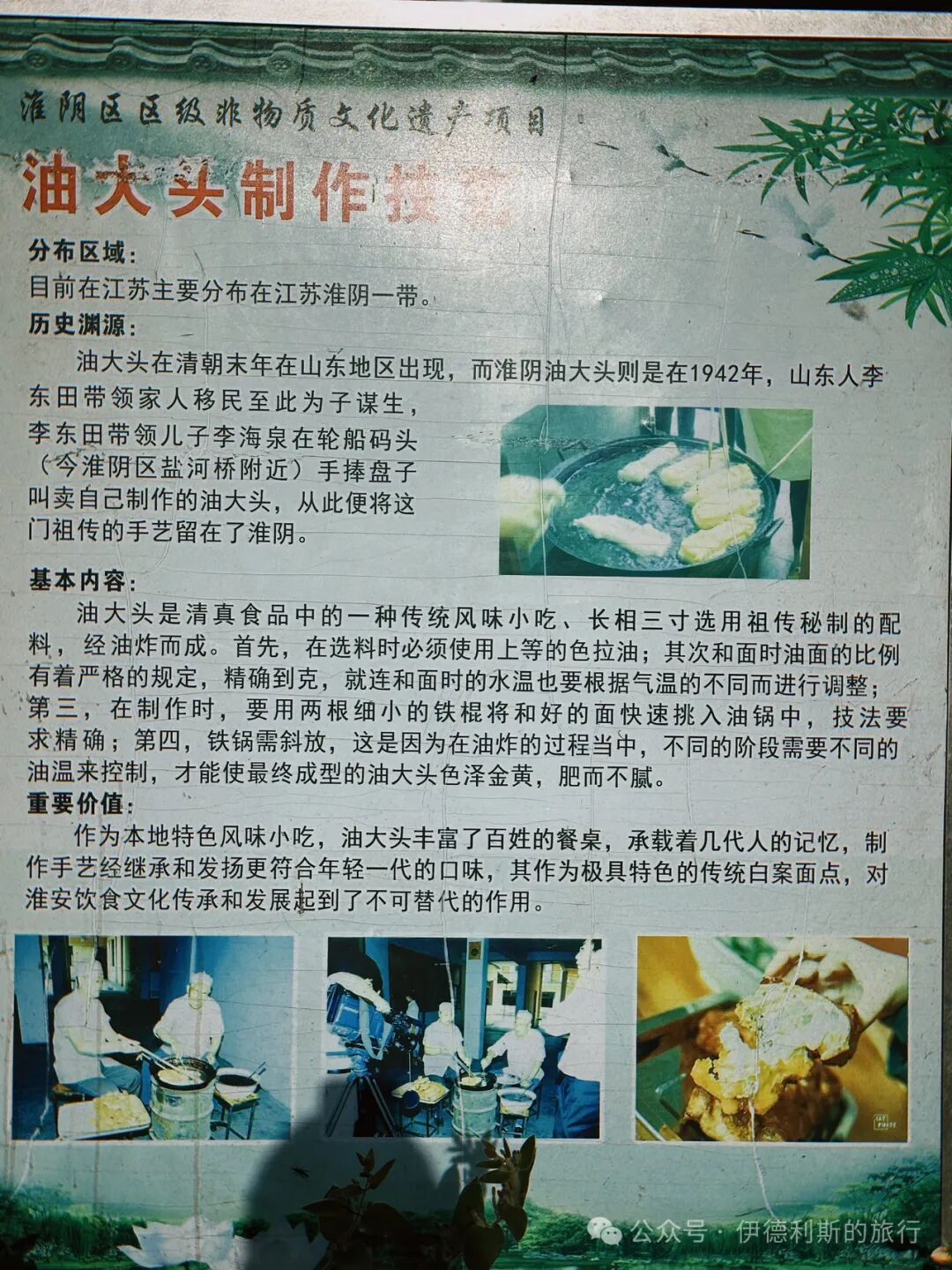
The most famous Hui Muslim food in Wangjiaying is the fried dough snack (youtoutou) from the Hui Muslim Restaurant, made by Old Li Ku. Their version was added to the Huaiyin District intangible cultural heritage list in 2016. In 1942, Li Dongtian from Shandong brought his family to Wangjiaying to make a living. He and his son, Li Haiquan, sold their homemade fried dough snacks (youtoutou) near the Yanhe Bridge in Huaiyin while carrying trays. That is how the Huaiyin fried dough snack (youtoutou) became popular.
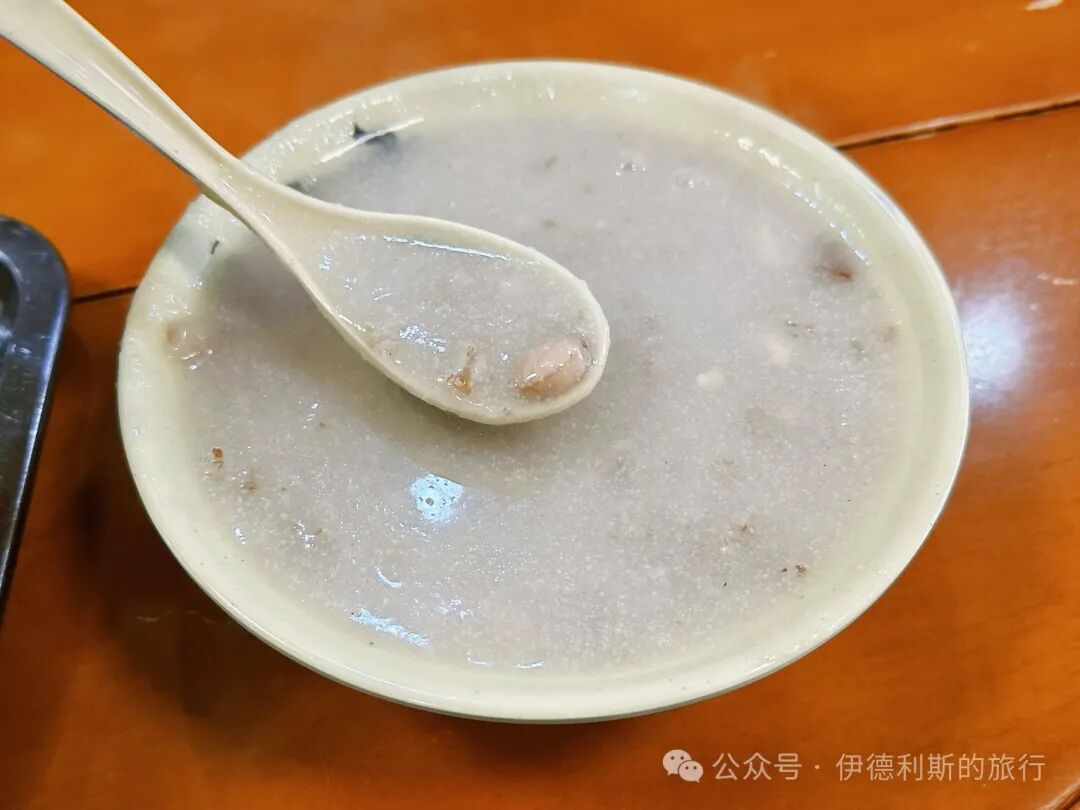
The fried dough snack (youtoutou) is three inches long. It turns golden yellow when fried. It is delicious when wrapped in an egg and served with wheat porridge. Wheat porridge is rare in other places. It has a unique taste and includes peanuts. In Huai'an, breakfast is usually served with several types of pickles, such as pickled mustard greens (datoucai), cold tossed eggplant, tossed snow cabbage (xuelihong), and tossed green peppers. They all go well with porridge.
The history of the Wangjiaying Hui Muslim Restaurant dates back to the Daoguang period of the Qing Dynasty. After the salt administration expanded at the West Dam in Wangjiaying in 1831 (the 11th year of Daoguang), Imam Dai Mingxuan of the Wangjiaying Mosque opened a halal restaurant at the north end of Yushan Street. He hired the best chefs in Wangjiaying, making it a high-end establishment where many Huai'an officials and dignitaries held banquets.
In 1860 (the 10th year of Xianfeng), after the Nian Army broke through Wangjiaying, the halal restaurant and the Wangjiaying Mosque were both destroyed in the war. In 1886 (the 12th year of Guangxu), with everyone's help, Imam Dai Jingzhai, the son of Imam Dai Mingxuan, reopened the restaurant at the North Weimen Gate of Wangjiaying. It was forced to close after 1937 due to the Japanese invasion of China, but it reopened after 1945. After the public-private partnership in 1958, the halal restaurant was merged into the Huaiyin Food and Beverage Company No. 2, with Ma Hengpu serving as manager. At the end of 1959, it moved to Beijing Road. It had three storefront rooms in the front and four kitchen rooms in the back, with Wang Jinbiao taking over as manager. After the 1970s, Li Haiquan took over as manager and renamed it the Hui Muslim Restaurant. After the 1980s, Ma Hengbao led the construction of a new two-story building, and Dai Peng took over as manager. In 2003, the Hui Muslim Restaurant was restructured into a private enterprise and has continued to operate to this day.
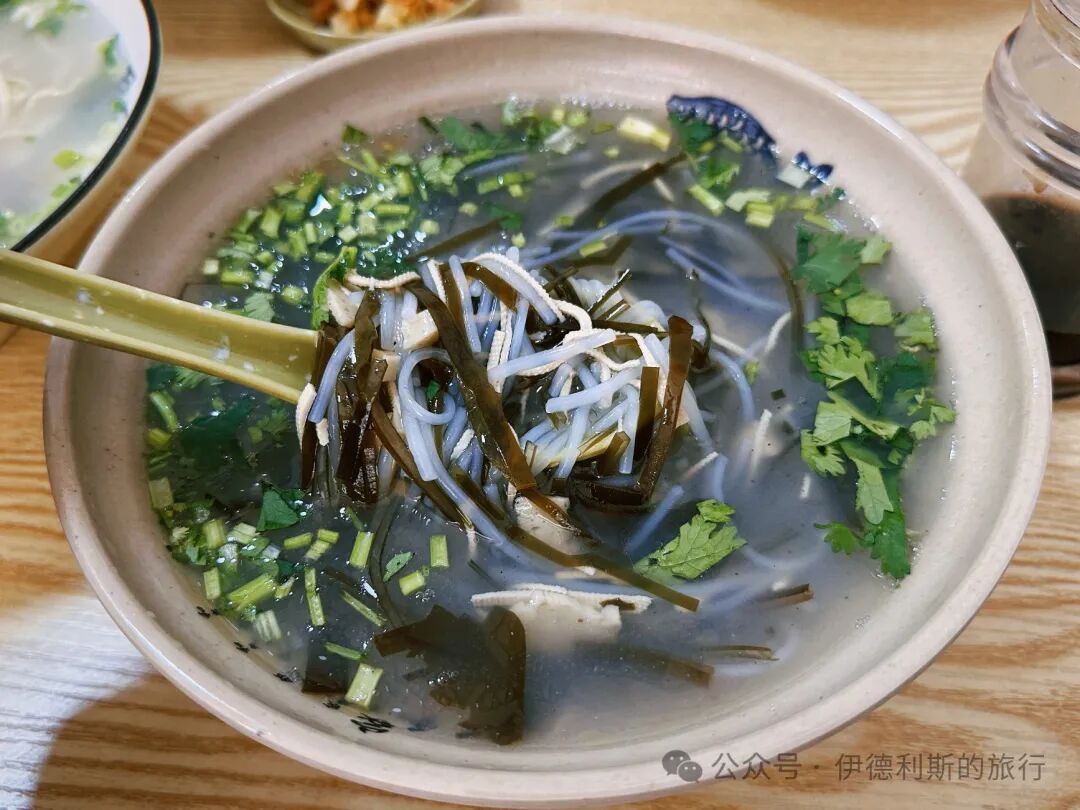
Besides the fried dough snack (youtoutou), you should also try Huai'an spicy soup (latang) when visiting Wangjiaying. Many restaurants here serve it. Compared to Henan spicy soup (hulatang), the Huai'an spicy soup (latang) has a milder taste. It uses less ginger and pepper. It contains shredded kelp, gluten, dried tofu strips (gansi), and glass noodles (fensi). Those who prefer a light flavor can drink it as is, while those who like it stronger can add chili sauce.
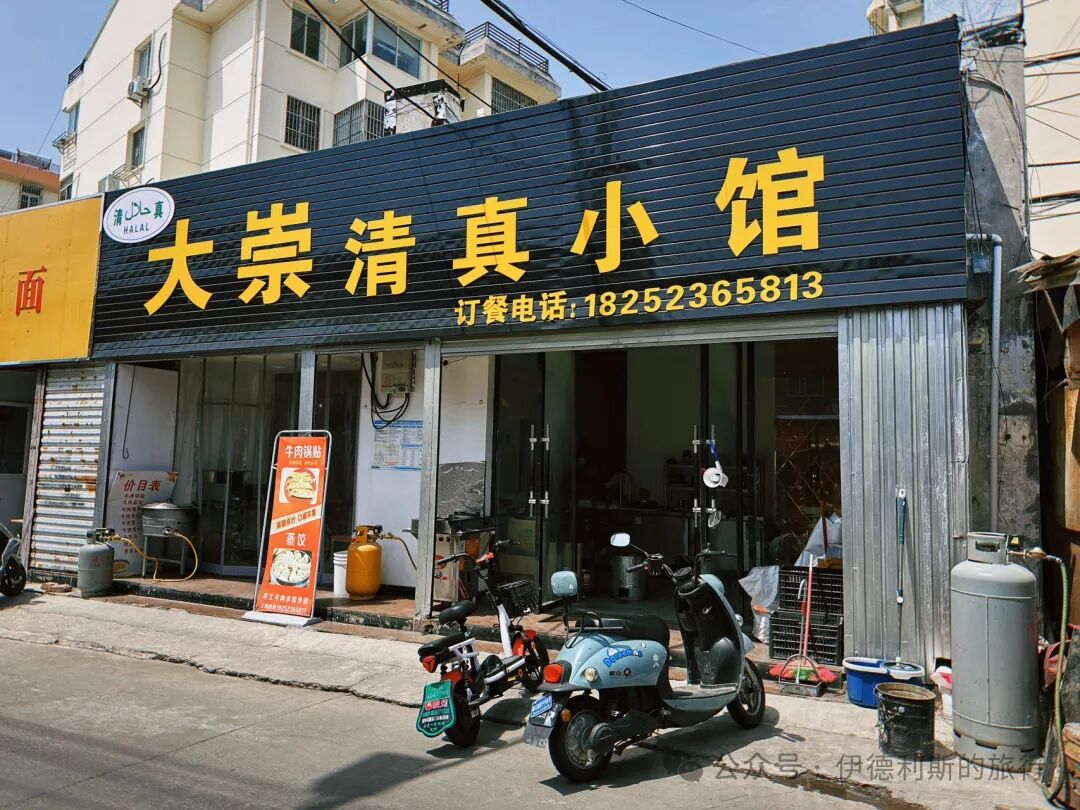
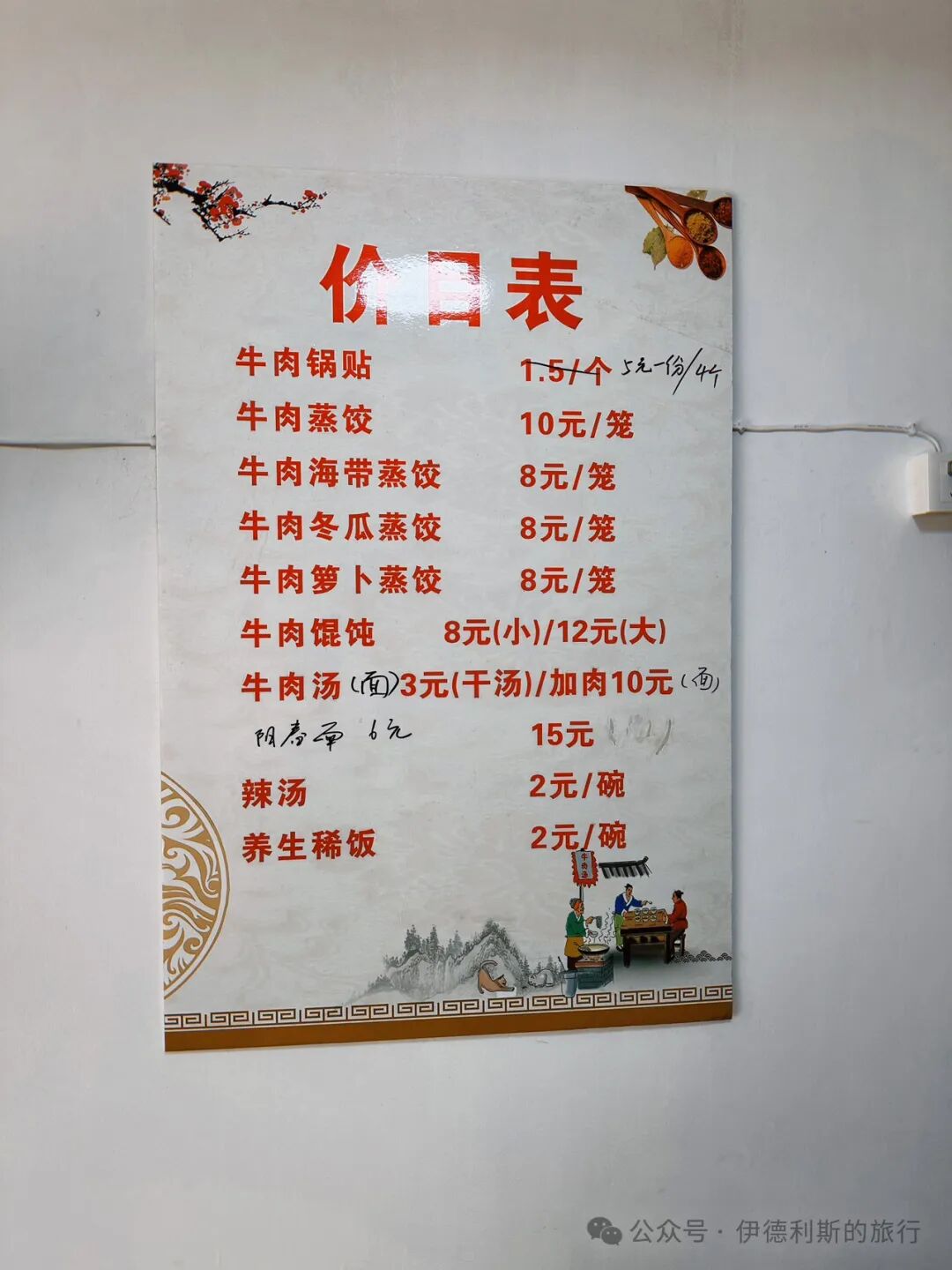
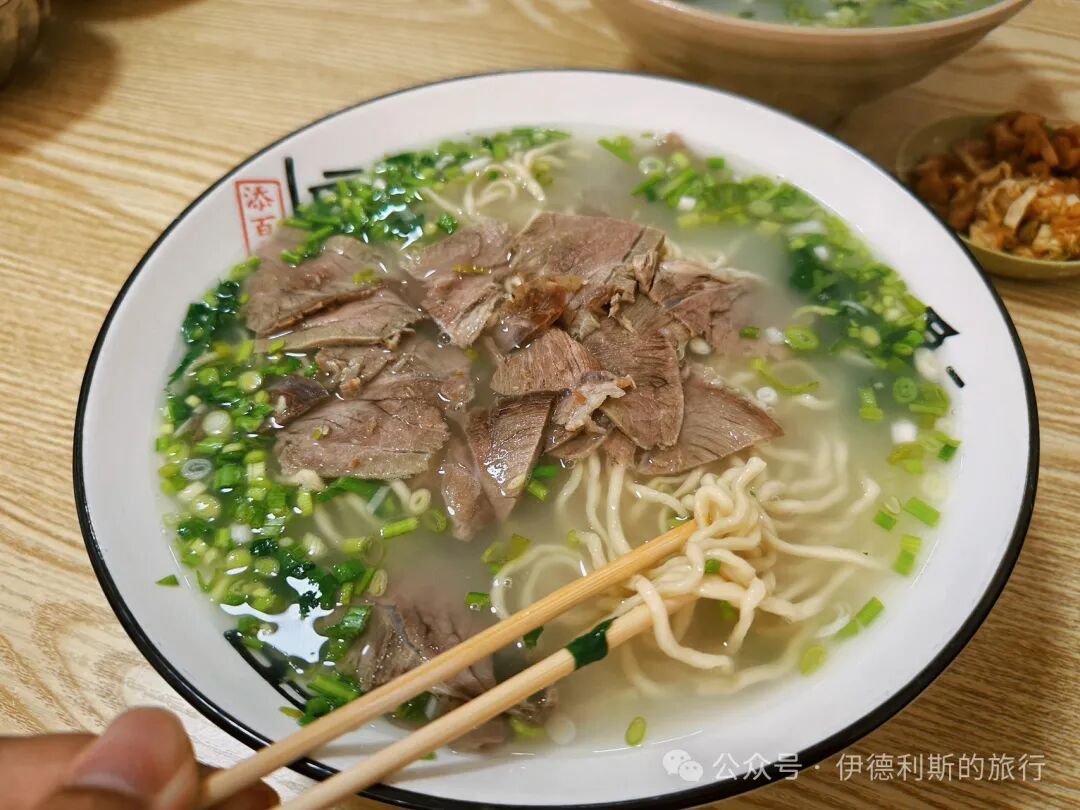
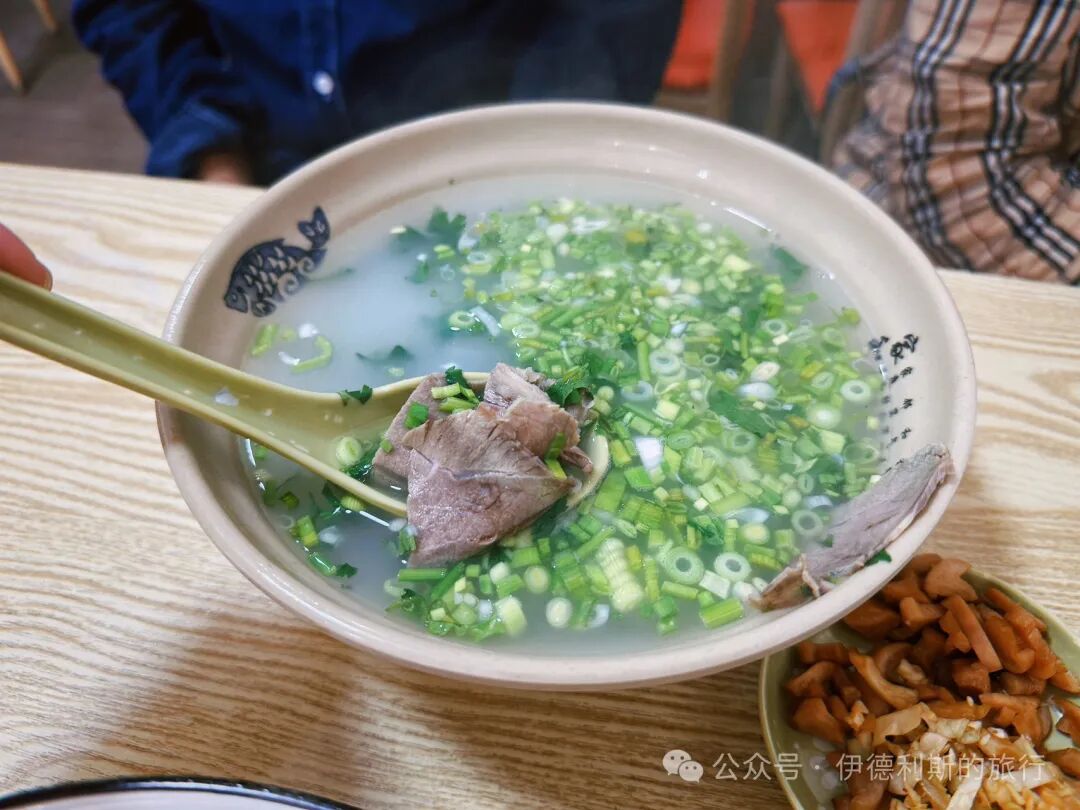
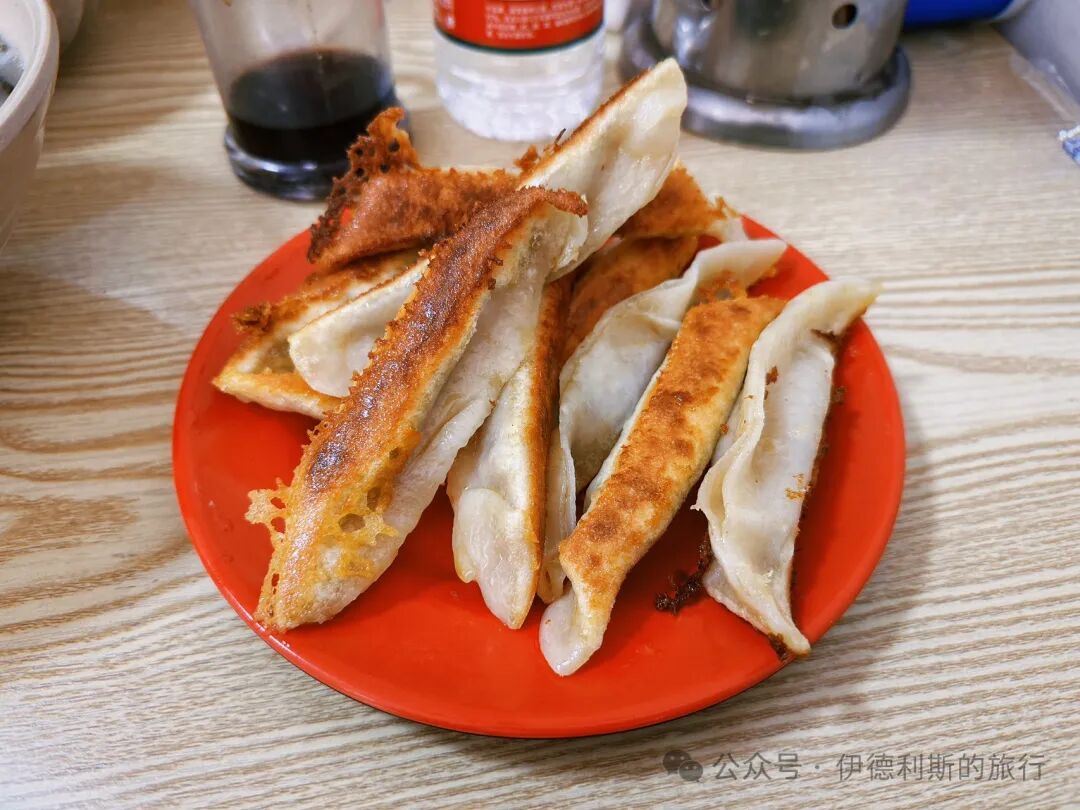
We drank the spicy soup (latang) at the Dachong Small Restaurant in front of the Wangjiaying Mosque and also ate beef potstickers (guotie), beef soup, and beef noodles. The potstickers (guotie) here are quite small. One serving has five, so you can order two servings. They are all pan-fried to order.
The Hui Muslim shops near Wangjiaying are likely the most concentrated in all of Jiangsu Province, which shows the strength of the local faith.
Shops opened by Hui Muslims from Matou Town near Wangjiaying. Matou Town was once the meeting point of the Middle Grand Canal and the Li Canal. Many Hui Muslims have lived there since the Qing Dynasty. They built three mosques over time at Xiyuba Village, the mouth of the Li Canal, and the old long street at the south end of town. The current Matou Mosque was moved and rebuilt in 2008, but I did not have time to visit it on this trip. view all
Summary: Wangjiaying in Huai'an, Jiangsu, sits between the old Yellow River course and the Salt River and has long been an important Hui Muslim town. This account covers its mosque history, family stories, streets, food, and photographs as recorded in the source visit.
Wangjiaying in Huai'an, Jiangsu, sits between the old Yellow River course and the Salt River. During the Ming Dynasty, the government set up the Dahe Guard in Huai'an and built ten military camps along the Yellow River. Wangjiaying was one of them. Travel on the Yellow River section of the canal was slow and dangerous, often leading to broken ropes and sunken boats. Many merchants chose to leave their boats at Qingjiangpu, cross the Yellow River at Wangjiaying, and switch to horse-drawn carriages to head north. Together, Wangjiaying and Qingjiangpu grew into a busy town.
Wangjiaying survived many floods from the Yellow River and moved east three times to reach its current location. In 1831, the Viceroy of Liangjiang, Tao Peng, chose Wangjiaying as a new hub for Huai salt distribution. After that, eighteen salt warehouses and seventy-two salt offices opened in Wangjiaying. Salt boats traveled constantly along the three-hundred-mile waterway from the Huaibei salt fields to Wangjiaying.
The prosperity of Wangjiaying attracted Hui Muslims to settle there. The first Hui Muslims to arrive were the Ma and Sha families, who came from Lingwu County in Ningxia by way of Shandong and Zhenjiang. Later, families named Jin, Dai, Chang, Ge, Fan, Li, and Yang also settled here.
The Wangjiaying Mosque was first built during the Yongzheng era. It started as three thatched rooms next to the Lotus Pond (Hehuawang) in Wangjiapo. After Wangjiaying became a salt hub in the late Daoguang era, the mosque moved to the south bank of the Salt River. Two imams, Chang Tingzhang and Dai Mingxuan, led the religious affairs. Imam Chang Tingzhang was known as 'Third Master Chang.' He was from Jining, Shandong, and was born in 1785 in Taoyuan County, Huai'an Prefecture (now Siyang, Jiangsu). In his youth, he studied in Lingzhou (now Lingwu County, Ningxia). After finishing his studies, he traveled to Jining, Shandong, to continue learning. In 1810, the 26-year-old Imam Chang Tingzhang was invited to lead the Wangjiaying Mosque. Imam Chang Tingzhang had deep knowledge of Arabic classics, astronomy, and medicine. According to the 'Wangjiaying Records,' a man named Third Master Tao from Hangzhou died in Huai'an during the Daoguang era. Because it was the heat of summer, Imam Chang Tingzhang personally bought a boat and traveled south along the canal to take the body back to Hangzhou for the family.
In 1860, the Nian Army burned down the Wangjiaying Mosque. In 1867, Imam Dai Jingzhai, the son of Imam Dai Mingxuan, led the construction of a few thatched huts. Later, with donations from the community, they built a main hall with three thatched rooms.
Imam Chang Tingzhang passed away in 1870. Imam Dai Jingzhai took over, and in 1884, they replaced the thatched rooms with tiled ones. Because Imam Chang Tingzhang had studied at the Jahriyya Banqiao Daotang in Jinjipu, Ningxia, in his youth, the Wangjiaying Mosque later invited five successive imams from the Jahriyya order in Jinjipu to lead the mosque and teach. Future imams also went to Ningxia for advanced study, making the Wangjiaying Mosque one of the nine major branches of the Banqiao Daotang.
In 1912, the Wangjiaying Mosque built a new gate, a south lecture hall, a kitchen, and a washroom. In 1920, with funding from the Jingshan Tang in Gansu and money from selling willow trees at the public cemetery, they rebuilt the three tiled, curved-eave rooms in front of the main hall and added three new rooms for the east lecture hall. Currently, there is a 1920 Republic of China renovation tablet on the north wall of the main hall, but the top part is covered.
In 1958, the Wangjiaying Mosque moved to the east of West Horse Road in Wangying. In 1961, it moved to its current site because a bank needed the land for a building. During the destruction of the Four Olds, the main hall's plaques reading 'The Way Spreads to the Middle Land,' 'The Religion Follows the Western Regions,' and 'Striving for Perfection,' along with gold-lettered Arabic plaques and couplets, were all smashed and burned. The couplets read: 'See the invisible, hear the silent, rectify the intention and sincerity, become a saint or a sage, the original nature; The Way is established, movement brings harmony, reach others through oneself, benefit the world, all is complete.' Funeral tools were also destroyed, and the main hall was used as a warehouse by a shoe and hat factory.
In 1979, under the leadership of Imam Ge Weili, the Wangjiaying Mosque was rebuilt in a traditional style. It was finished in 1985 and underwent two more renovations and expansions in 2003 and 2006 to reach its current appearance.
Imam Ge Weili was born in 1924. He went to Ningxia to study in 1937. In 1945, after completing his religious training and receiving his robe, he became the imam of Wangjiaying Mosque. He took on the role of imam in 1966. Today, the religious affairs at Wangjiaying Mosque are led by Imam Fan Weiming, a student of Imam Ge Weili.
The inscription from the Republic of China era reads as follows:
Wangying Mosque was founded during the Yongzheng reign of the Qing Dynasty. By the end of the Daoguang reign, our community was at its peak. Our population grew, our businesses thrived, and we had elders like Chang and Dai Mingxuan leading our religious affairs. They taught many students, and this history is recorded in local chronicles for all to verify. In the tenth year of the Xianfeng reign, the Nian Rebellion broke out. The mosque was burned to the ground, our people fled or died, and our community dwindled.
In the sixth year of the Tongzhi reign, Dai Jingzhai, the son of Elder Dai Mingxuan, followed his father's teachings and took over the leadership. He first built a few thatched huts to hold prayers morning and evening. However, the space was too simple for proper worship. It was too small to hold gatherings. The imam was deeply worried. He raised funds from many sources and built a main hall with three rooms made of grass. Later, he consulted with Yang Xuting, Ma Yunfeng, and Guo Daosheng. With their help, they rebuilt the main tiled hall and lecture hall in the tenth year of the Guangxu reign, and things began to return to normal. As more of our people moved here, the original public cemetery became so full there was almost no space left. The imam was concerned that our community lacked its own burial ground, which made things very difficult during times of loss. He planned to buy land to solve this, and Mr. Ma Yunfeng agreed to help. Sadly, Mr. Ma passed away before the task was finished. Fortunately, Mr. Ma's brother, Runzhi, carried on his brother's wishes. With the strong support of local elder Li Yunpo, they set aside differences and raised enough money to buy two new cemetery plots. The imam's kindness to our community was thorough. This was due to the support of many public-spirited people, but it was also the result of the imam's decades of hard work and sincere devotion.
In the first year of the Republic of China, we worked to continue the efforts of our predecessors by adding a main gate, a south lecture hall, and a kitchen. Mr. Ge Ziming built a washroom (shuifang) and donated hundreds of thousands in currency. We also invited Imam Wang Pinqing from Gansu Province to teach the scriptures. Visitors from all over praised the work. In recent years, wind and rain damage made the halls look like they might collapse. We met and decided to sell dozens of willow trees around the cemetery, raising over two hundred thousand. The Jinshan Hall in Gansu also kindly donated many wooden beams and tiles. We then built a three-room tiled hall with curved eaves in front of the main hall, and repaired the surrounding walls, the three-room east lecture hall, and the courtyard gates. This was a massive project funded by public property and donations. We are humble about our own contributions, but we record these details because, despite two hundred years of change, our mosque still stands. This is largely due to the efforts of our ancestors and elders. We hope future generations will remember how hard it was to build this place and will protect it forever so it never falls into ruin. This is our deepest wish. We record this history here.
July, the ninth year of the Republic of China.
Jin Jiasheng, Jin Jialin, Guo Chunlin, Yang Fangtian
Chang Bingkui, Li Shunjie, Chang Guanying, Mu Hongbin
Jin Jiayuan, Ma Jianong, Fan Zhaofeng, Yang Guiyuan
Ge Futang, Li Dianqing, Ma Jiarang, Mu Hong'en
Ma Jialin, Ge Zhenqing, He Wenquan, Zhou Fengling
Sha Faxiang, Liu Lianyuan, Zhou Riyang, Mu Hongye
The most famous Hui Muslim food in Wangjiaying is the fried dough snack (youtoutou) from the Hui Muslim Restaurant, made by Old Li Ku. Their version was added to the Huaiyin District intangible cultural heritage list in 2016. In 1942, Li Dongtian from Shandong brought his family to Wangjiaying to make a living. He and his son, Li Haiquan, sold their homemade fried dough snacks (youtoutou) near the Yanhe Bridge in Huaiyin while carrying trays. That is how the Huaiyin fried dough snack (youtoutou) became popular.
The fried dough snack (youtoutou) is three inches long. It turns golden yellow when fried. It is delicious when wrapped in an egg and served with wheat porridge. Wheat porridge is rare in other places. It has a unique taste and includes peanuts. In Huai'an, breakfast is usually served with several types of pickles, such as pickled mustard greens (datoucai), cold tossed eggplant, tossed snow cabbage (xuelihong), and tossed green peppers. They all go well with porridge.
The history of the Wangjiaying Hui Muslim Restaurant dates back to the Daoguang period of the Qing Dynasty. After the salt administration expanded at the West Dam in Wangjiaying in 1831 (the 11th year of Daoguang), Imam Dai Mingxuan of the Wangjiaying Mosque opened a halal restaurant at the north end of Yushan Street. He hired the best chefs in Wangjiaying, making it a high-end establishment where many Huai'an officials and dignitaries held banquets.
In 1860 (the 10th year of Xianfeng), after the Nian Army broke through Wangjiaying, the halal restaurant and the Wangjiaying Mosque were both destroyed in the war. In 1886 (the 12th year of Guangxu), with everyone's help, Imam Dai Jingzhai, the son of Imam Dai Mingxuan, reopened the restaurant at the North Weimen Gate of Wangjiaying. It was forced to close after 1937 due to the Japanese invasion of China, but it reopened after 1945. After the public-private partnership in 1958, the halal restaurant was merged into the Huaiyin Food and Beverage Company No. 2, with Ma Hengpu serving as manager. At the end of 1959, it moved to Beijing Road. It had three storefront rooms in the front and four kitchen rooms in the back, with Wang Jinbiao taking over as manager. After the 1970s, Li Haiquan took over as manager and renamed it the Hui Muslim Restaurant. After the 1980s, Ma Hengbao led the construction of a new two-story building, and Dai Peng took over as manager. In 2003, the Hui Muslim Restaurant was restructured into a private enterprise and has continued to operate to this day.
Besides the fried dough snack (youtoutou), you should also try Huai'an spicy soup (latang) when visiting Wangjiaying. Many restaurants here serve it. Compared to Henan spicy soup (hulatang), the Huai'an spicy soup (latang) has a milder taste. It uses less ginger and pepper. It contains shredded kelp, gluten, dried tofu strips (gansi), and glass noodles (fensi). Those who prefer a light flavor can drink it as is, while those who like it stronger can add chili sauce.
We drank the spicy soup (latang) at the Dachong Small Restaurant in front of the Wangjiaying Mosque and also ate beef potstickers (guotie), beef soup, and beef noodles. The potstickers (guotie) here are quite small. One serving has five, so you can order two servings. They are all pan-fried to order.
The Hui Muslim shops near Wangjiaying are likely the most concentrated in all of Jiangsu Province, which shows the strength of the local faith.
Shops opened by Hui Muslims from Matou Town near Wangjiaying. Matou Town was once the meeting point of the Middle Grand Canal and the Li Canal. Many Hui Muslims have lived there since the Qing Dynasty. They built three mosques over time at Xiyuba Village, the mouth of the Li Canal, and the old long street at the south end of town. The current Matou Mosque was moved and rebuilt in 2008, but I did not have time to visit it on this trip. view all
Reposted from the web
Summary: Wangjiaying in Huai'an, Jiangsu, sits between the old Yellow River course and the Salt River and has long been an important Hui Muslim town. This account covers its mosque history, family stories, streets, food, and photographs as recorded in the source visit.
Wangjiaying in Huai'an, Jiangsu, sits between the old Yellow River course and the Salt River. During the Ming Dynasty, the government set up the Dahe Guard in Huai'an and built ten military camps along the Yellow River. Wangjiaying was one of them. Travel on the Yellow River section of the canal was slow and dangerous, often leading to broken ropes and sunken boats. Many merchants chose to leave their boats at Qingjiangpu, cross the Yellow River at Wangjiaying, and switch to horse-drawn carriages to head north. Together, Wangjiaying and Qingjiangpu grew into a busy town.
Wangjiaying survived many floods from the Yellow River and moved east three times to reach its current location. In 1831, the Viceroy of Liangjiang, Tao Peng, chose Wangjiaying as a new hub for Huai salt distribution. After that, eighteen salt warehouses and seventy-two salt offices opened in Wangjiaying. Salt boats traveled constantly along the three-hundred-mile waterway from the Huaibei salt fields to Wangjiaying.
The prosperity of Wangjiaying attracted Hui Muslims to settle there. The first Hui Muslims to arrive were the Ma and Sha families, who came from Lingwu County in Ningxia by way of Shandong and Zhenjiang. Later, families named Jin, Dai, Chang, Ge, Fan, Li, and Yang also settled here.
The Wangjiaying Mosque was first built during the Yongzheng era. It started as three thatched rooms next to the Lotus Pond (Hehuawang) in Wangjiapo. After Wangjiaying became a salt hub in the late Daoguang era, the mosque moved to the south bank of the Salt River. Two imams, Chang Tingzhang and Dai Mingxuan, led the religious affairs. Imam Chang Tingzhang was known as 'Third Master Chang.' He was from Jining, Shandong, and was born in 1785 in Taoyuan County, Huai'an Prefecture (now Siyang, Jiangsu). In his youth, he studied in Lingzhou (now Lingwu County, Ningxia). After finishing his studies, he traveled to Jining, Shandong, to continue learning. In 1810, the 26-year-old Imam Chang Tingzhang was invited to lead the Wangjiaying Mosque. Imam Chang Tingzhang had deep knowledge of Arabic classics, astronomy, and medicine. According to the 'Wangjiaying Records,' a man named Third Master Tao from Hangzhou died in Huai'an during the Daoguang era. Because it was the heat of summer, Imam Chang Tingzhang personally bought a boat and traveled south along the canal to take the body back to Hangzhou for the family.
In 1860, the Nian Army burned down the Wangjiaying Mosque. In 1867, Imam Dai Jingzhai, the son of Imam Dai Mingxuan, led the construction of a few thatched huts. Later, with donations from the community, they built a main hall with three thatched rooms.
Imam Chang Tingzhang passed away in 1870. Imam Dai Jingzhai took over, and in 1884, they replaced the thatched rooms with tiled ones. Because Imam Chang Tingzhang had studied at the Jahriyya Banqiao Daotang in Jinjipu, Ningxia, in his youth, the Wangjiaying Mosque later invited five successive imams from the Jahriyya order in Jinjipu to lead the mosque and teach. Future imams also went to Ningxia for advanced study, making the Wangjiaying Mosque one of the nine major branches of the Banqiao Daotang.
In 1912, the Wangjiaying Mosque built a new gate, a south lecture hall, a kitchen, and a washroom. In 1920, with funding from the Jingshan Tang in Gansu and money from selling willow trees at the public cemetery, they rebuilt the three tiled, curved-eave rooms in front of the main hall and added three new rooms for the east lecture hall. Currently, there is a 1920 Republic of China renovation tablet on the north wall of the main hall, but the top part is covered.
In 1958, the Wangjiaying Mosque moved to the east of West Horse Road in Wangying. In 1961, it moved to its current site because a bank needed the land for a building. During the destruction of the Four Olds, the main hall's plaques reading 'The Way Spreads to the Middle Land,' 'The Religion Follows the Western Regions,' and 'Striving for Perfection,' along with gold-lettered Arabic plaques and couplets, were all smashed and burned. The couplets read: 'See the invisible, hear the silent, rectify the intention and sincerity, become a saint or a sage, the original nature; The Way is established, movement brings harmony, reach others through oneself, benefit the world, all is complete.' Funeral tools were also destroyed, and the main hall was used as a warehouse by a shoe and hat factory.
In 1979, under the leadership of Imam Ge Weili, the Wangjiaying Mosque was rebuilt in a traditional style. It was finished in 1985 and underwent two more renovations and expansions in 2003 and 2006 to reach its current appearance.
Imam Ge Weili was born in 1924. He went to Ningxia to study in 1937. In 1945, after completing his religious training and receiving his robe, he became the imam of Wangjiaying Mosque. He took on the role of imam in 1966. Today, the religious affairs at Wangjiaying Mosque are led by Imam Fan Weiming, a student of Imam Ge Weili.
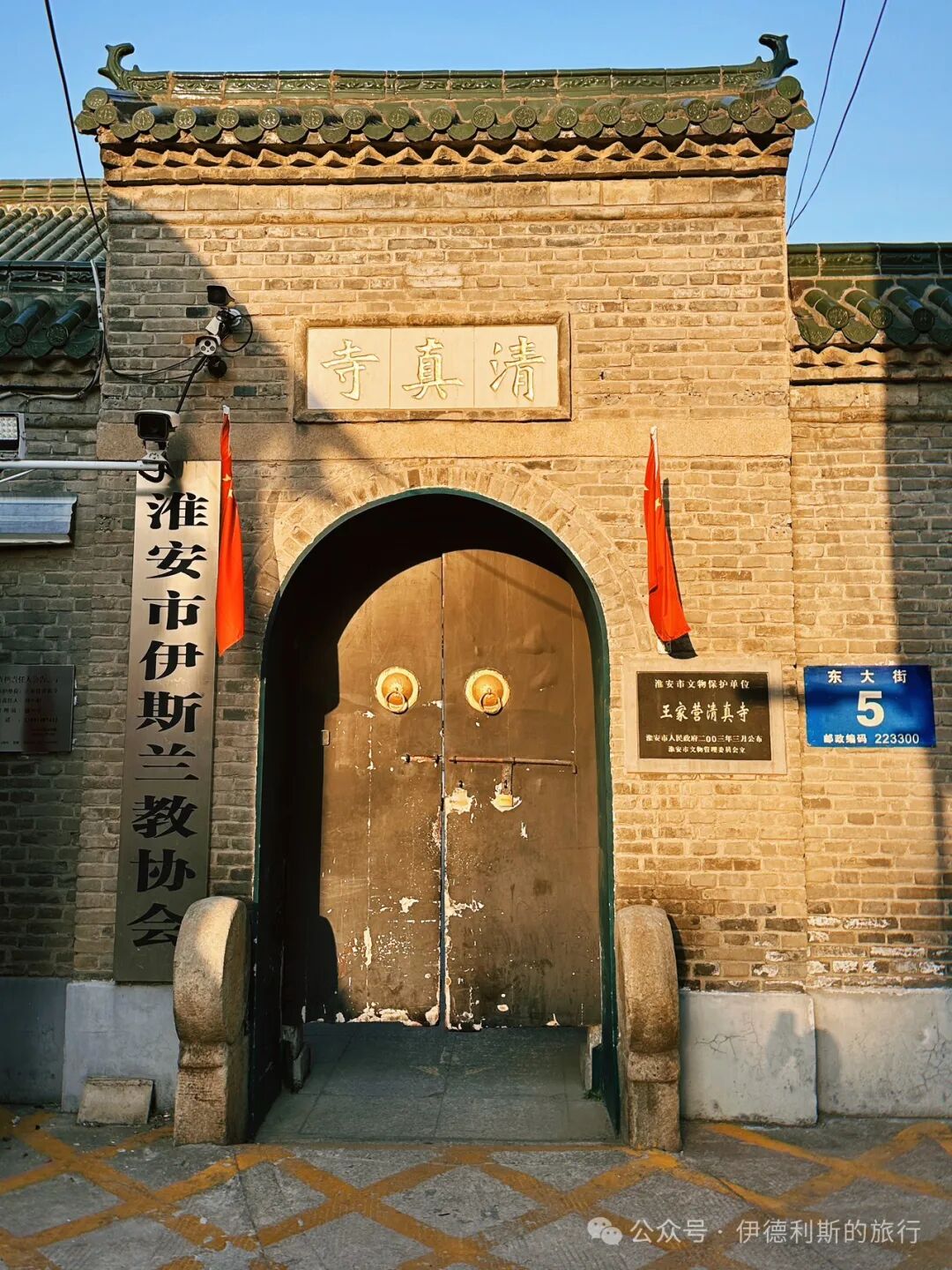
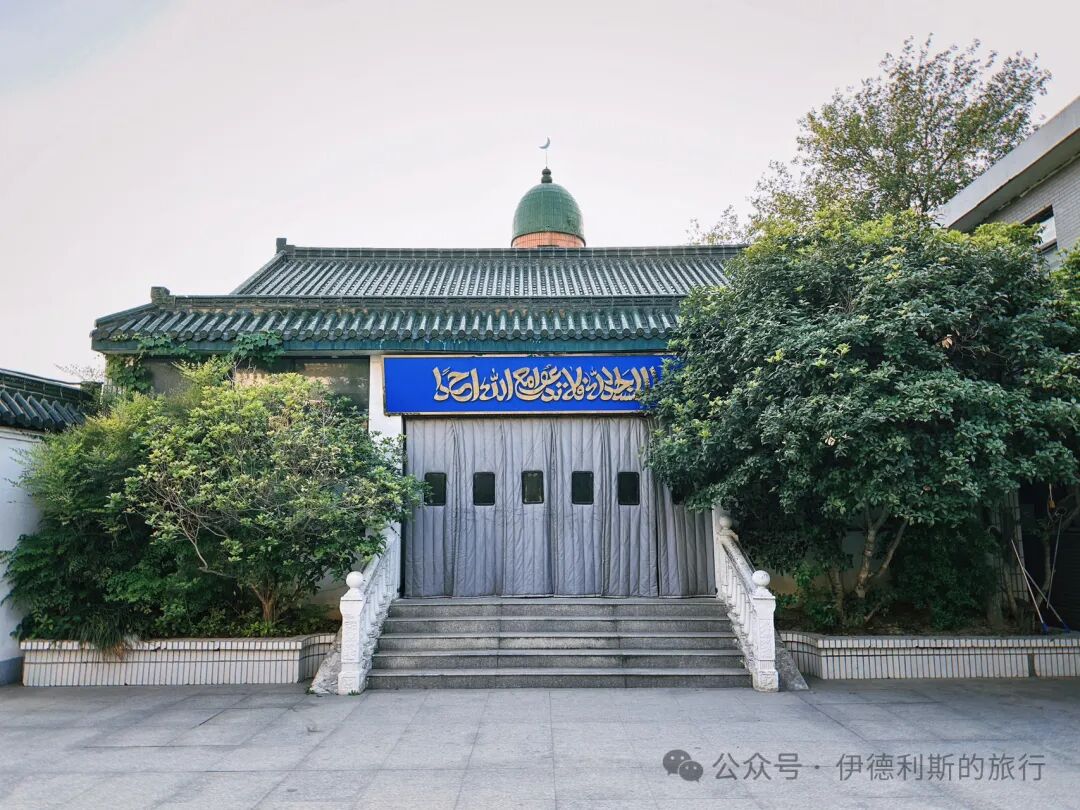
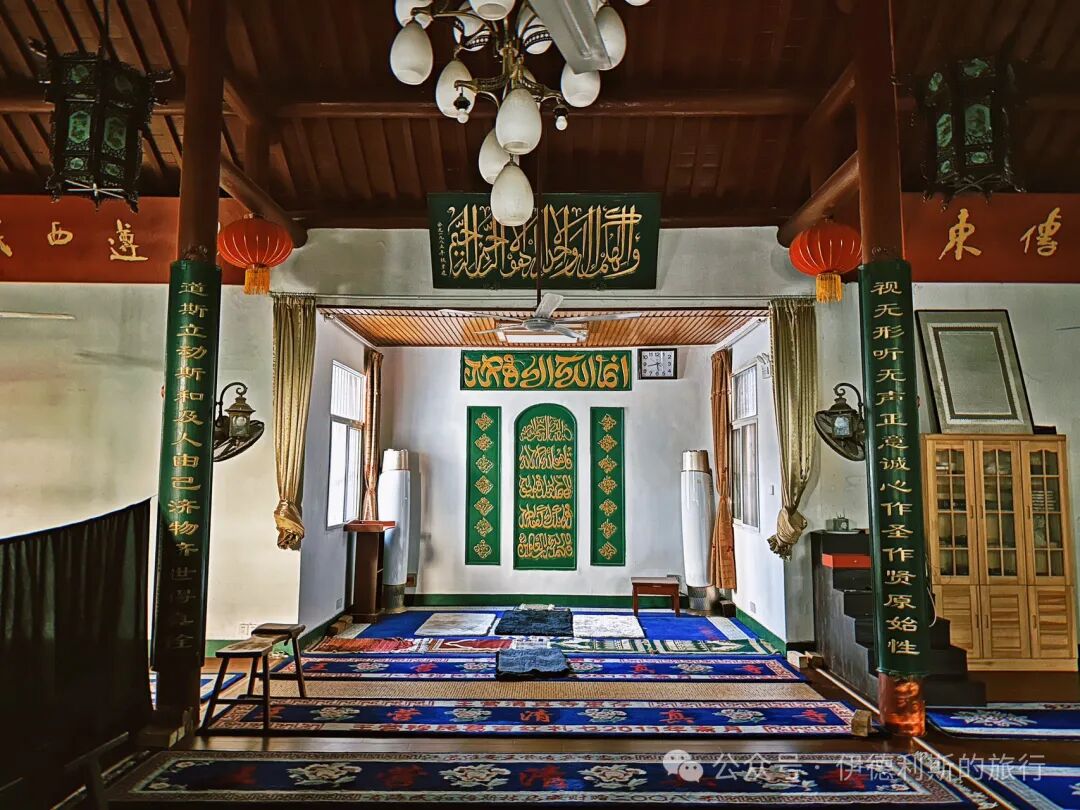
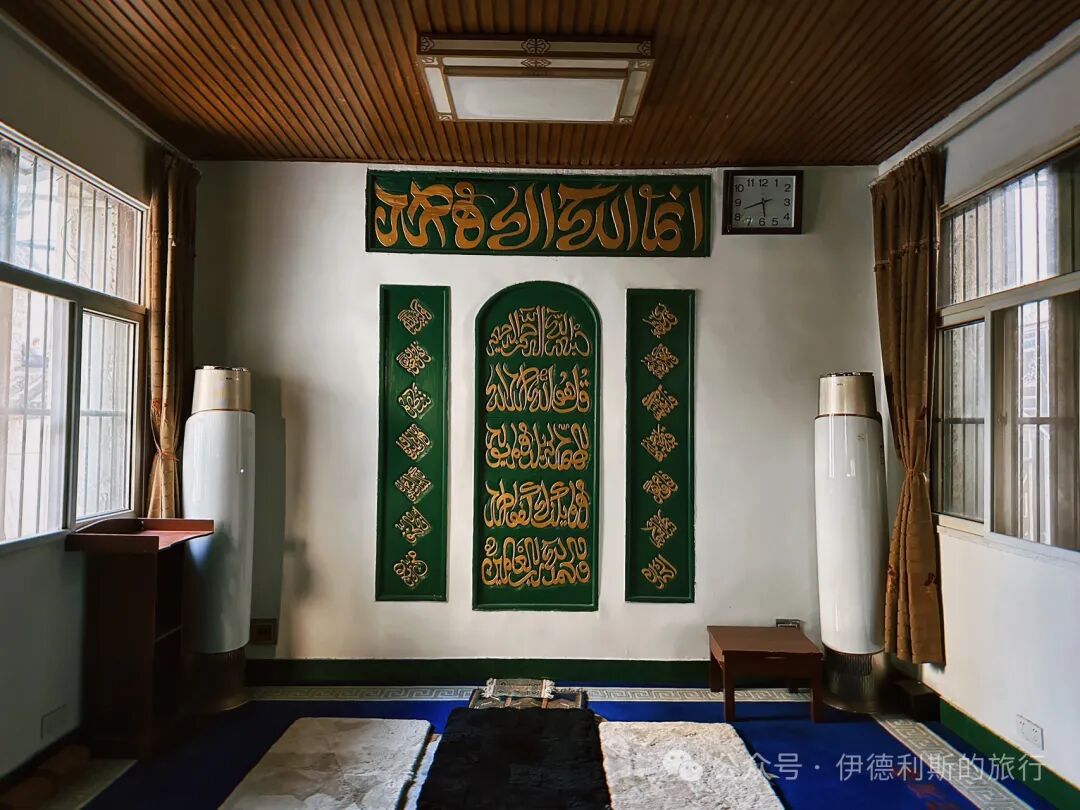
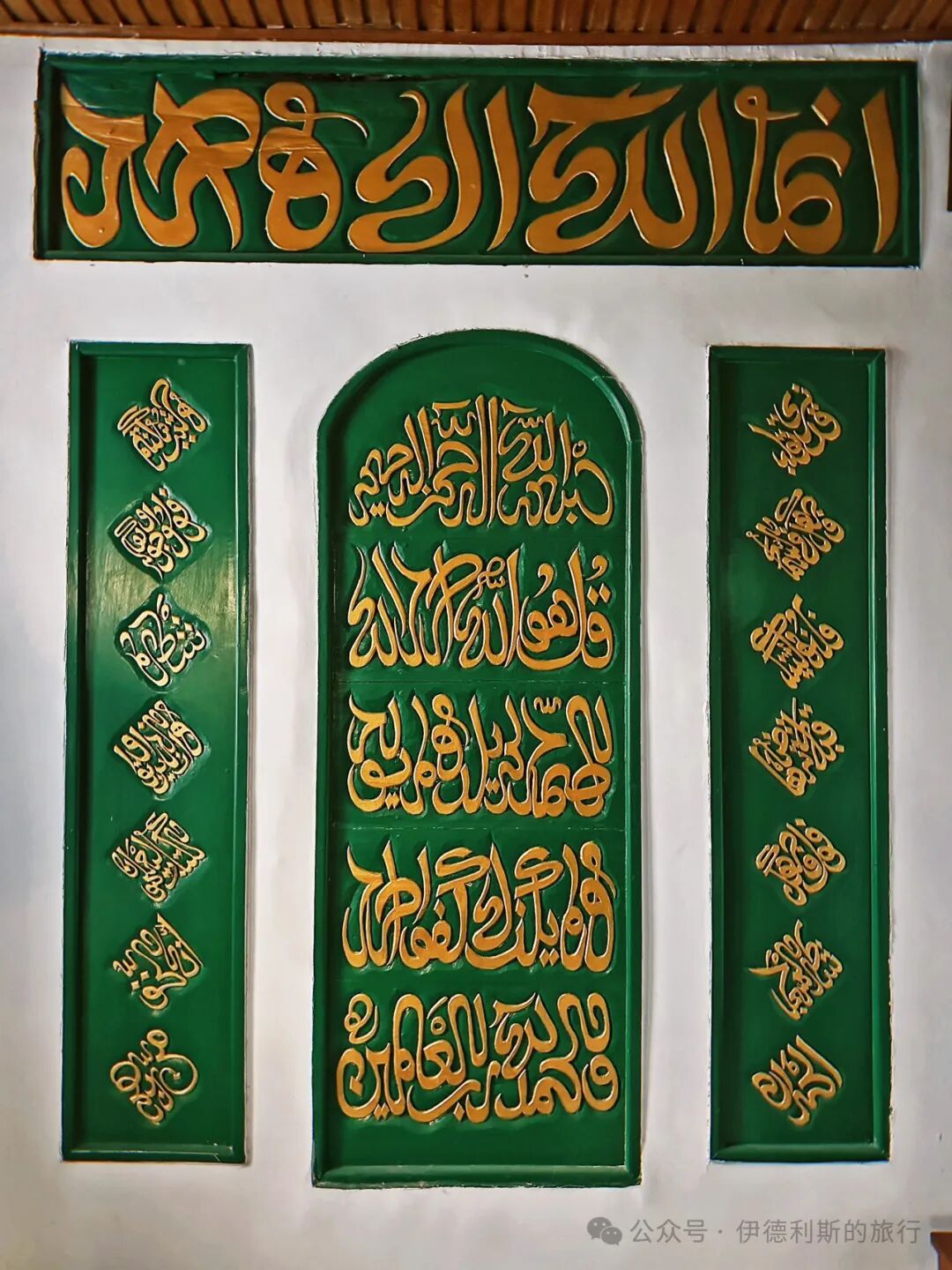
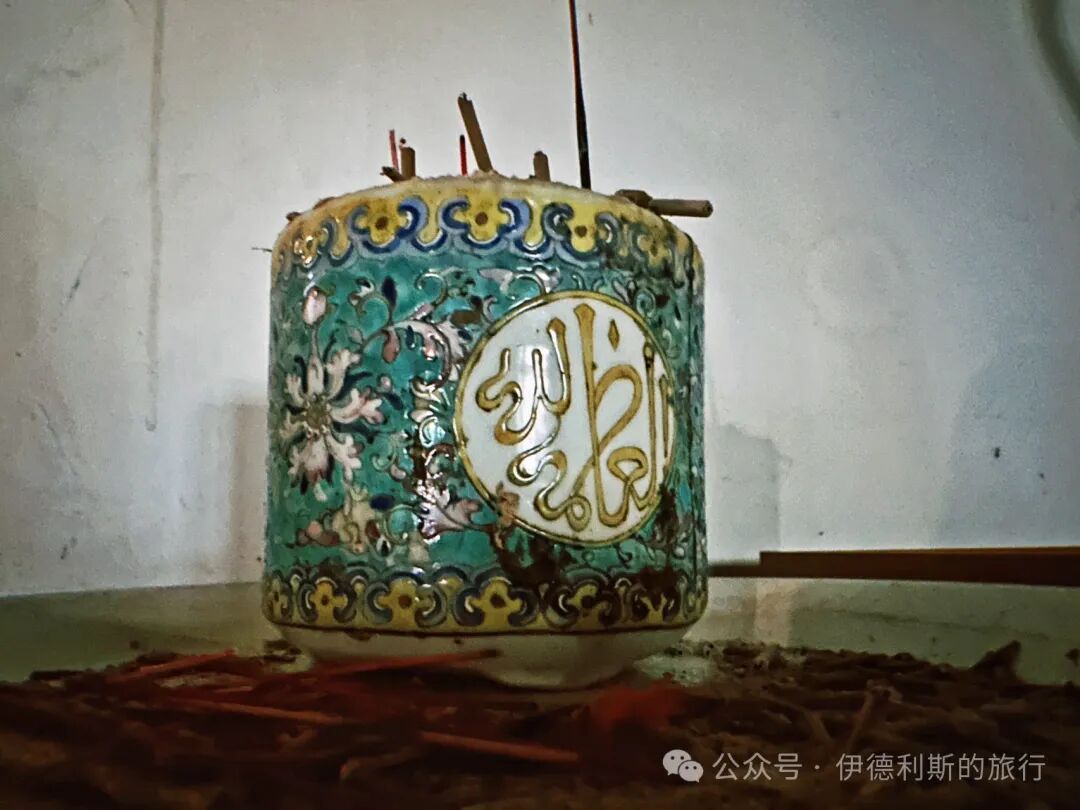
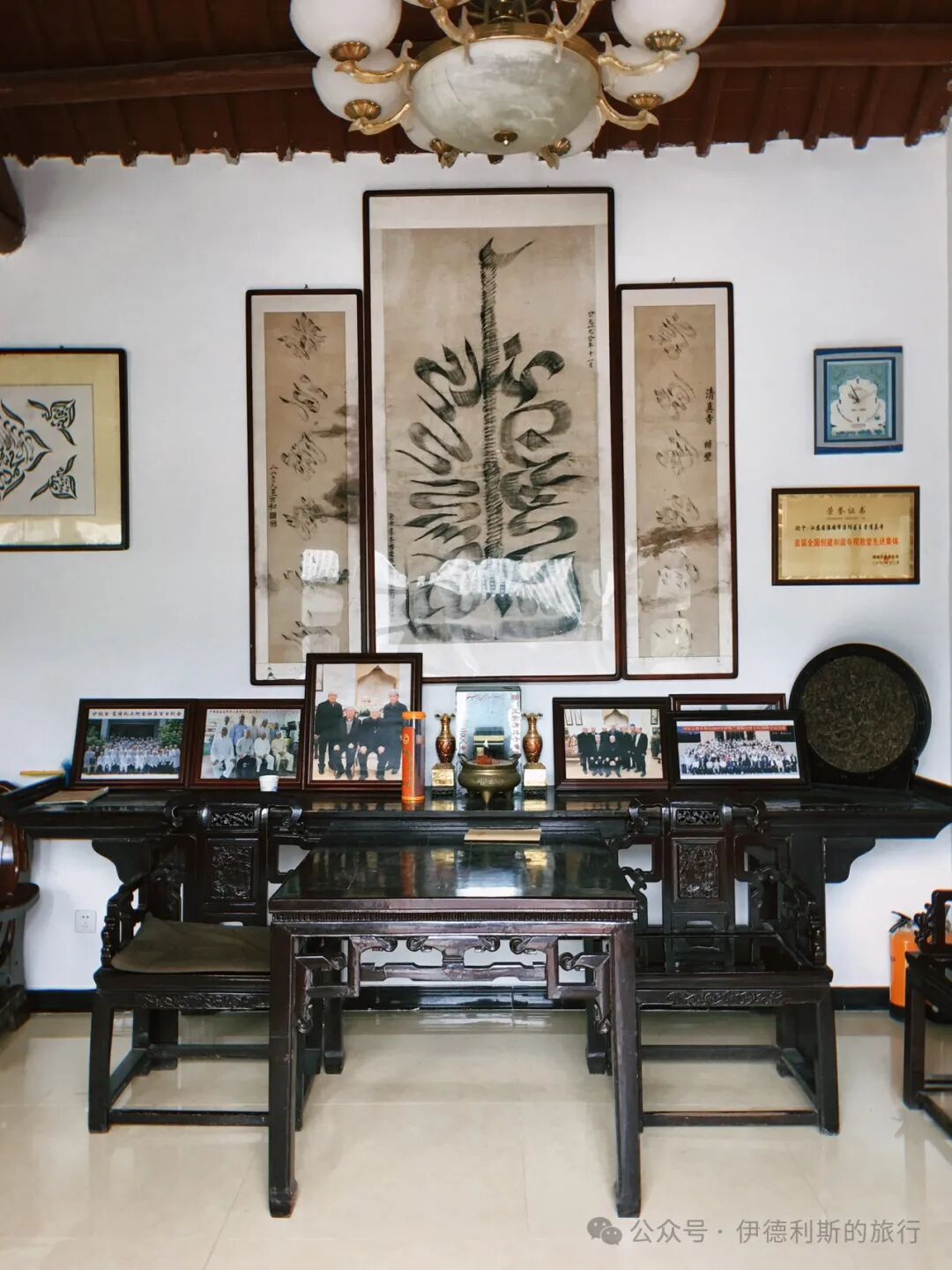
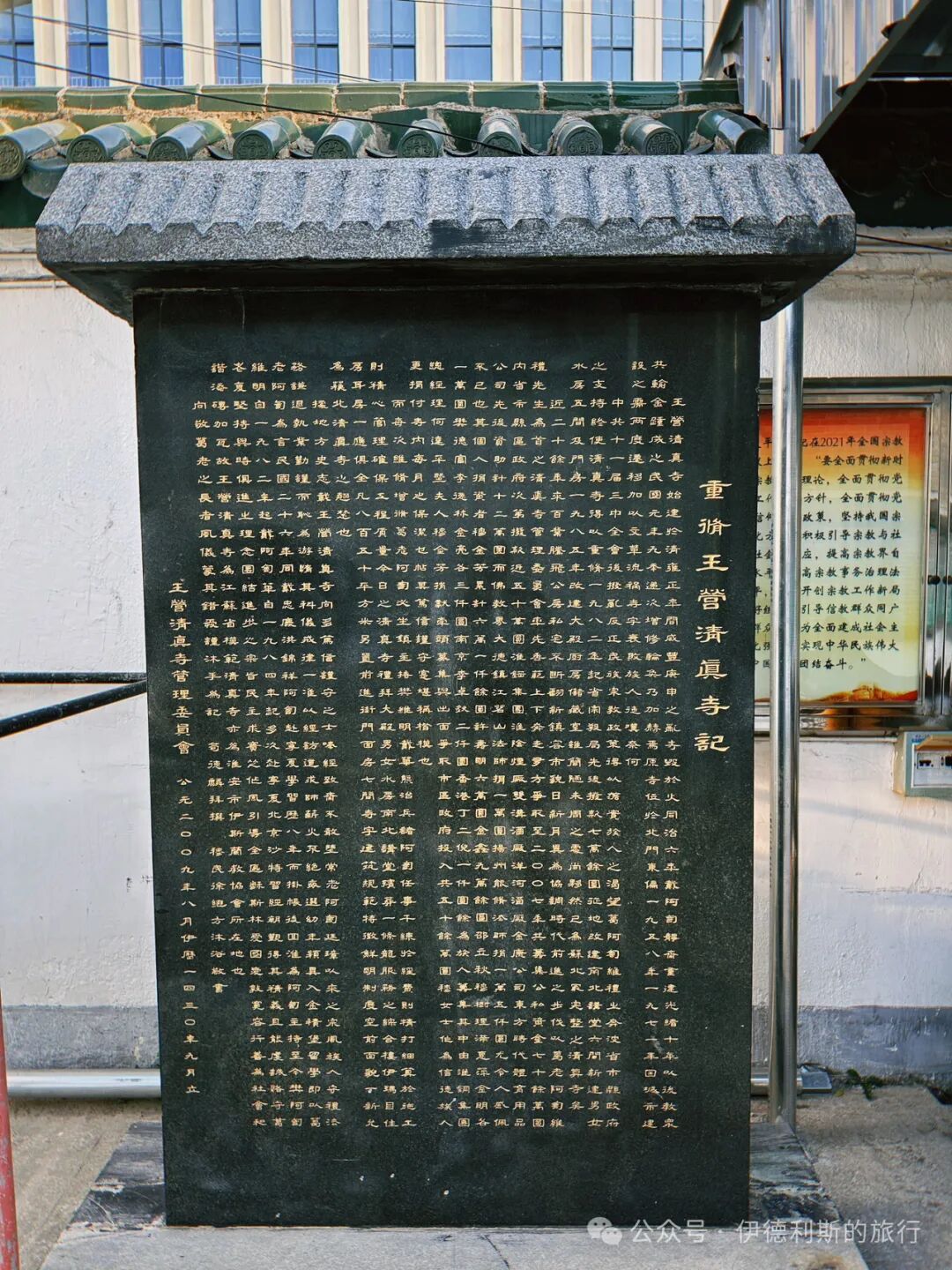
The inscription from the Republic of China era reads as follows:
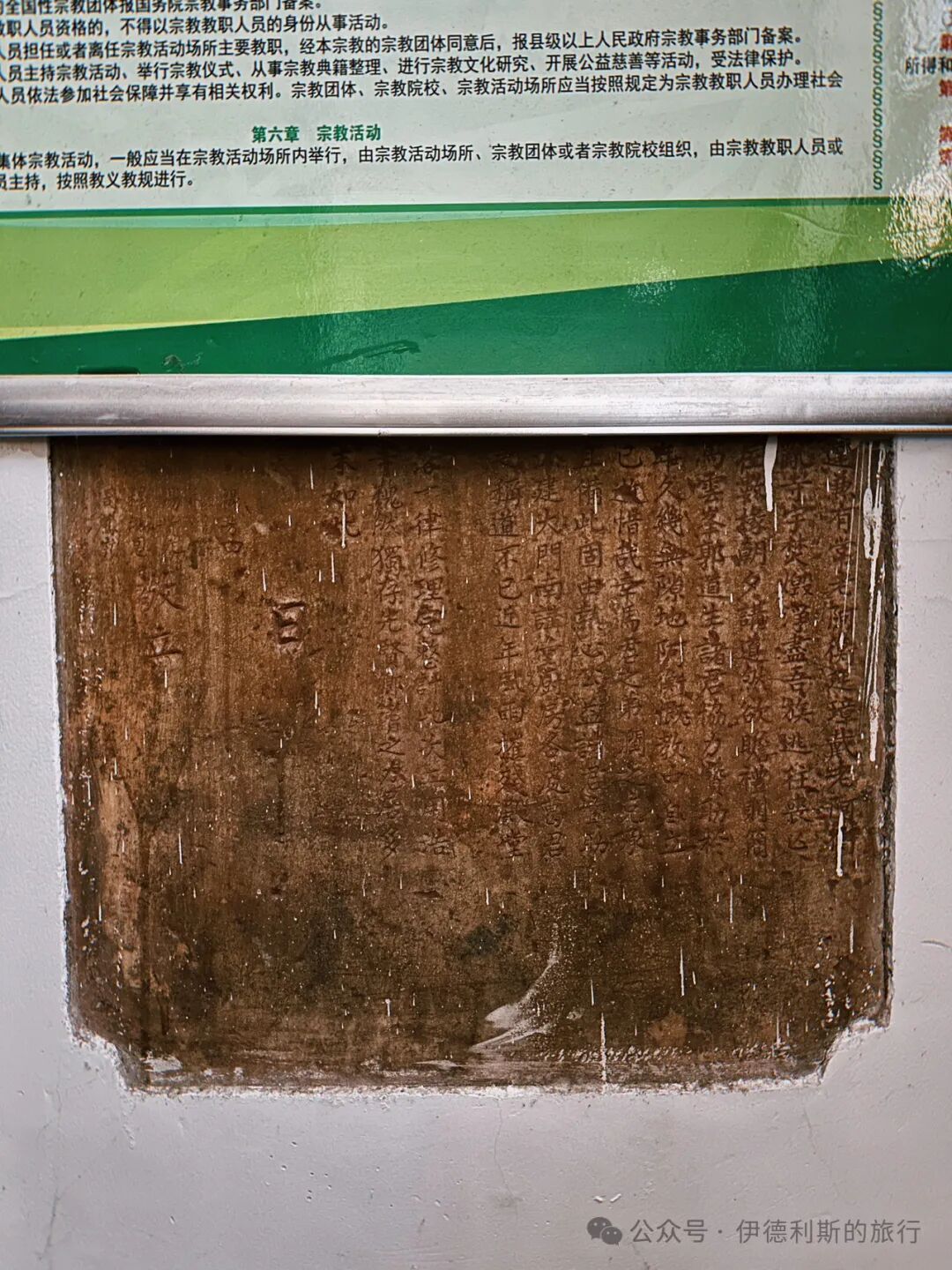
Wangying Mosque was founded during the Yongzheng reign of the Qing Dynasty. By the end of the Daoguang reign, our community was at its peak. Our population grew, our businesses thrived, and we had elders like Chang and Dai Mingxuan leading our religious affairs. They taught many students, and this history is recorded in local chronicles for all to verify. In the tenth year of the Xianfeng reign, the Nian Rebellion broke out. The mosque was burned to the ground, our people fled or died, and our community dwindled.
In the sixth year of the Tongzhi reign, Dai Jingzhai, the son of Elder Dai Mingxuan, followed his father's teachings and took over the leadership. He first built a few thatched huts to hold prayers morning and evening. However, the space was too simple for proper worship. It was too small to hold gatherings. The imam was deeply worried. He raised funds from many sources and built a main hall with three rooms made of grass. Later, he consulted with Yang Xuting, Ma Yunfeng, and Guo Daosheng. With their help, they rebuilt the main tiled hall and lecture hall in the tenth year of the Guangxu reign, and things began to return to normal. As more of our people moved here, the original public cemetery became so full there was almost no space left. The imam was concerned that our community lacked its own burial ground, which made things very difficult during times of loss. He planned to buy land to solve this, and Mr. Ma Yunfeng agreed to help. Sadly, Mr. Ma passed away before the task was finished. Fortunately, Mr. Ma's brother, Runzhi, carried on his brother's wishes. With the strong support of local elder Li Yunpo, they set aside differences and raised enough money to buy two new cemetery plots. The imam's kindness to our community was thorough. This was due to the support of many public-spirited people, but it was also the result of the imam's decades of hard work and sincere devotion.
In the first year of the Republic of China, we worked to continue the efforts of our predecessors by adding a main gate, a south lecture hall, and a kitchen. Mr. Ge Ziming built a washroom (shuifang) and donated hundreds of thousands in currency. We also invited Imam Wang Pinqing from Gansu Province to teach the scriptures. Visitors from all over praised the work. In recent years, wind and rain damage made the halls look like they might collapse. We met and decided to sell dozens of willow trees around the cemetery, raising over two hundred thousand. The Jinshan Hall in Gansu also kindly donated many wooden beams and tiles. We then built a three-room tiled hall with curved eaves in front of the main hall, and repaired the surrounding walls, the three-room east lecture hall, and the courtyard gates. This was a massive project funded by public property and donations. We are humble about our own contributions, but we record these details because, despite two hundred years of change, our mosque still stands. This is largely due to the efforts of our ancestors and elders. We hope future generations will remember how hard it was to build this place and will protect it forever so it never falls into ruin. This is our deepest wish. We record this history here.
July, the ninth year of the Republic of China.
Jin Jiasheng, Jin Jialin, Guo Chunlin, Yang Fangtian
Chang Bingkui, Li Shunjie, Chang Guanying, Mu Hongbin
Jin Jiayuan, Ma Jianong, Fan Zhaofeng, Yang Guiyuan
Ge Futang, Li Dianqing, Ma Jiarang, Mu Hong'en
Ma Jialin, Ge Zhenqing, He Wenquan, Zhou Fengling
Sha Faxiang, Liu Lianyuan, Zhou Riyang, Mu Hongye
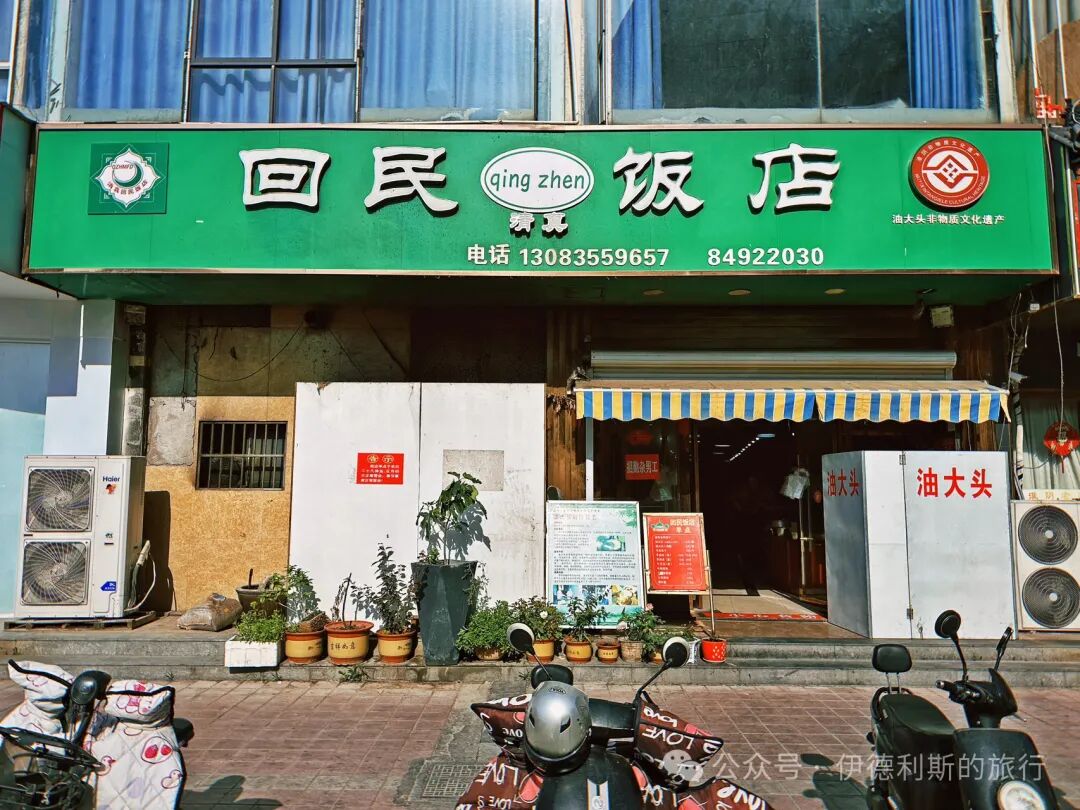
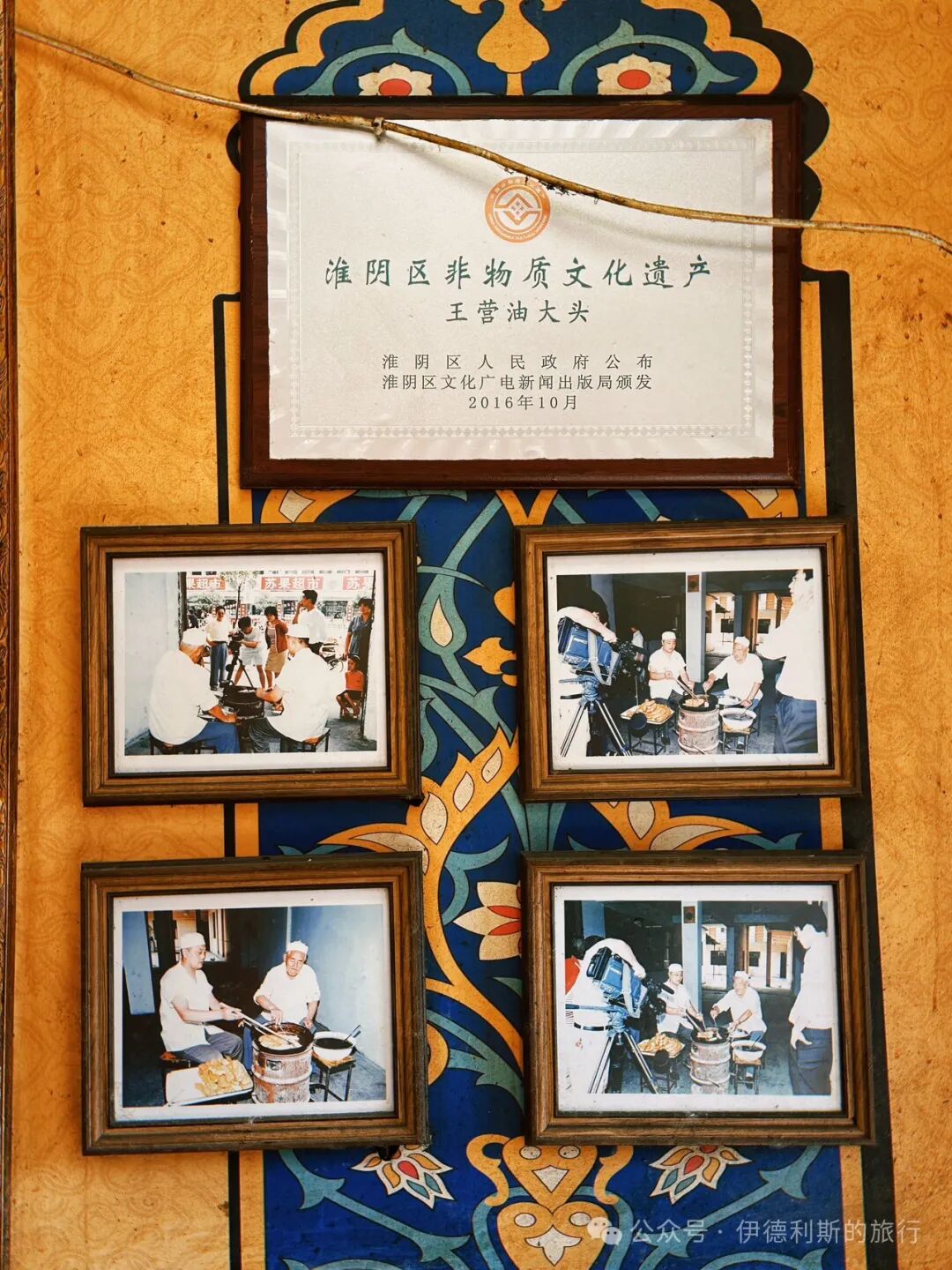
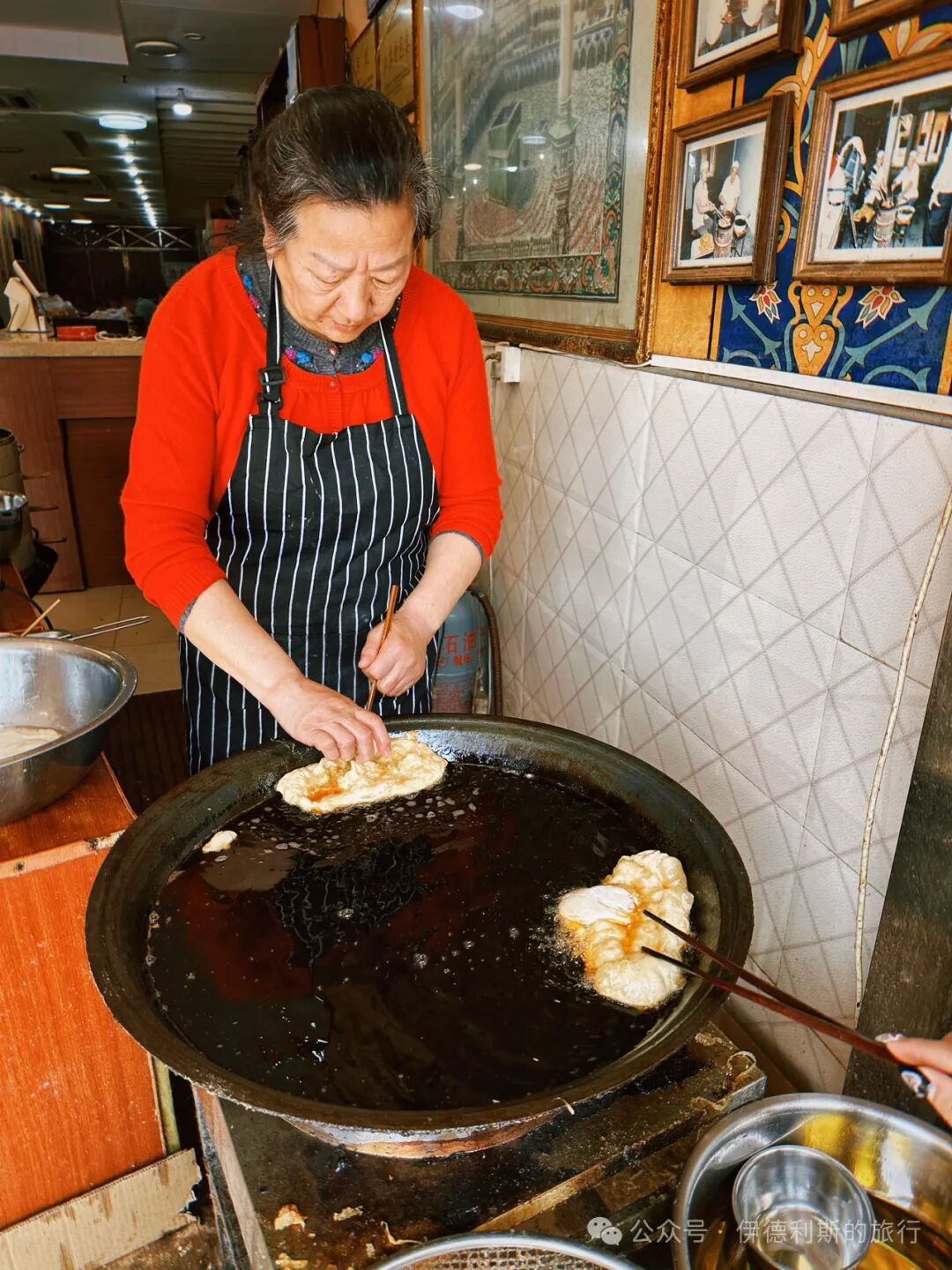
The most famous Hui Muslim food in Wangjiaying is the fried dough snack (youtoutou) from the Hui Muslim Restaurant, made by Old Li Ku. Their version was added to the Huaiyin District intangible cultural heritage list in 2016. In 1942, Li Dongtian from Shandong brought his family to Wangjiaying to make a living. He and his son, Li Haiquan, sold their homemade fried dough snacks (youtoutou) near the Yanhe Bridge in Huaiyin while carrying trays. That is how the Huaiyin fried dough snack (youtoutou) became popular.
The fried dough snack (youtoutou) is three inches long. It turns golden yellow when fried. It is delicious when wrapped in an egg and served with wheat porridge. Wheat porridge is rare in other places. It has a unique taste and includes peanuts. In Huai'an, breakfast is usually served with several types of pickles, such as pickled mustard greens (datoucai), cold tossed eggplant, tossed snow cabbage (xuelihong), and tossed green peppers. They all go well with porridge.
The history of the Wangjiaying Hui Muslim Restaurant dates back to the Daoguang period of the Qing Dynasty. After the salt administration expanded at the West Dam in Wangjiaying in 1831 (the 11th year of Daoguang), Imam Dai Mingxuan of the Wangjiaying Mosque opened a halal restaurant at the north end of Yushan Street. He hired the best chefs in Wangjiaying, making it a high-end establishment where many Huai'an officials and dignitaries held banquets.
In 1860 (the 10th year of Xianfeng), after the Nian Army broke through Wangjiaying, the halal restaurant and the Wangjiaying Mosque were both destroyed in the war. In 1886 (the 12th year of Guangxu), with everyone's help, Imam Dai Jingzhai, the son of Imam Dai Mingxuan, reopened the restaurant at the North Weimen Gate of Wangjiaying. It was forced to close after 1937 due to the Japanese invasion of China, but it reopened after 1945. After the public-private partnership in 1958, the halal restaurant was merged into the Huaiyin Food and Beverage Company No. 2, with Ma Hengpu serving as manager. At the end of 1959, it moved to Beijing Road. It had three storefront rooms in the front and four kitchen rooms in the back, with Wang Jinbiao taking over as manager. After the 1970s, Li Haiquan took over as manager and renamed it the Hui Muslim Restaurant. After the 1980s, Ma Hengbao led the construction of a new two-story building, and Dai Peng took over as manager. In 2003, the Hui Muslim Restaurant was restructured into a private enterprise and has continued to operate to this day.
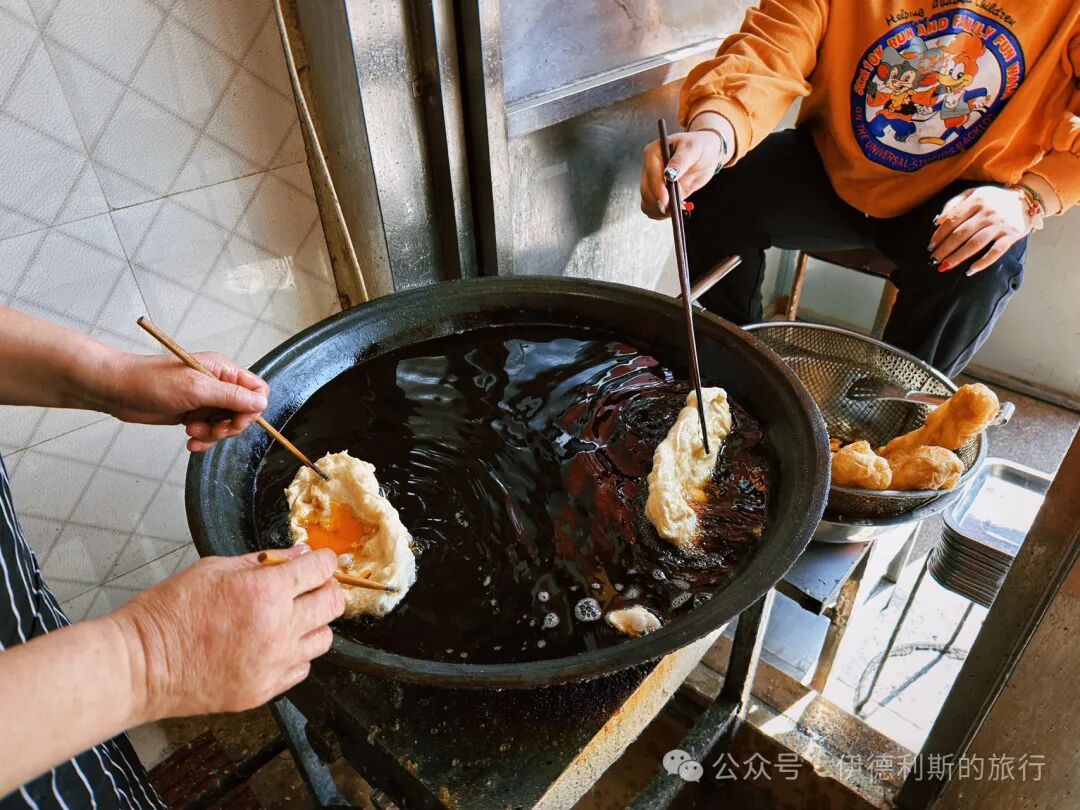
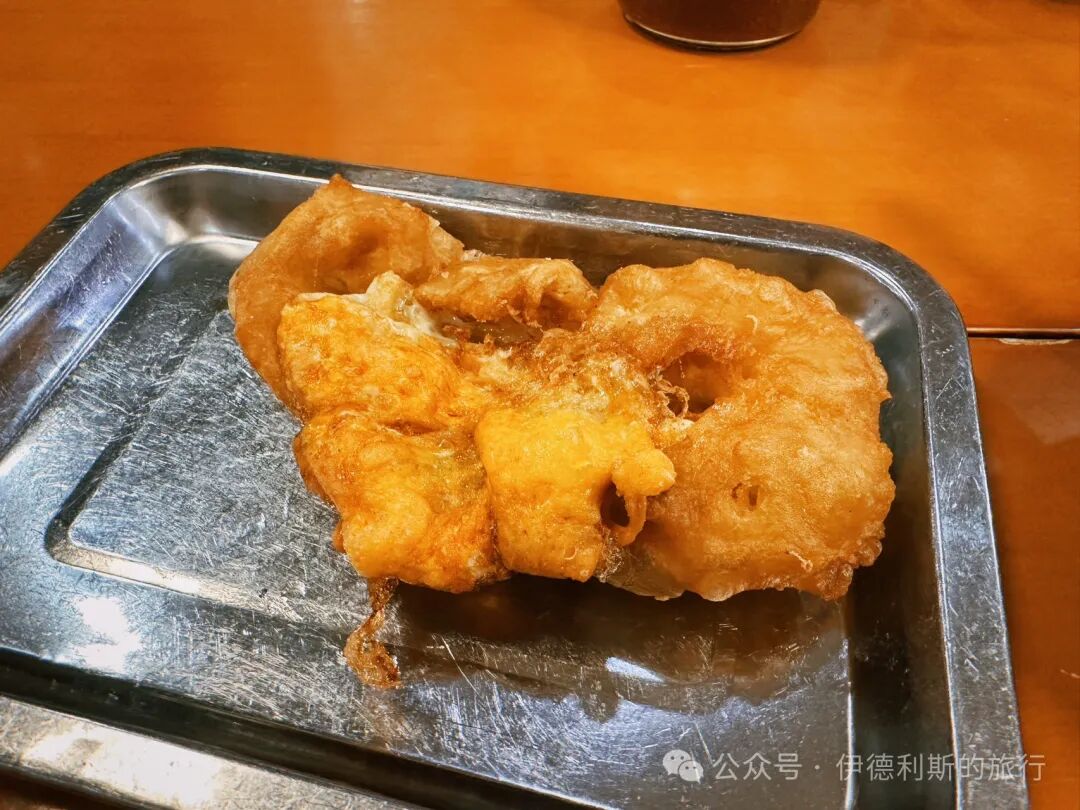
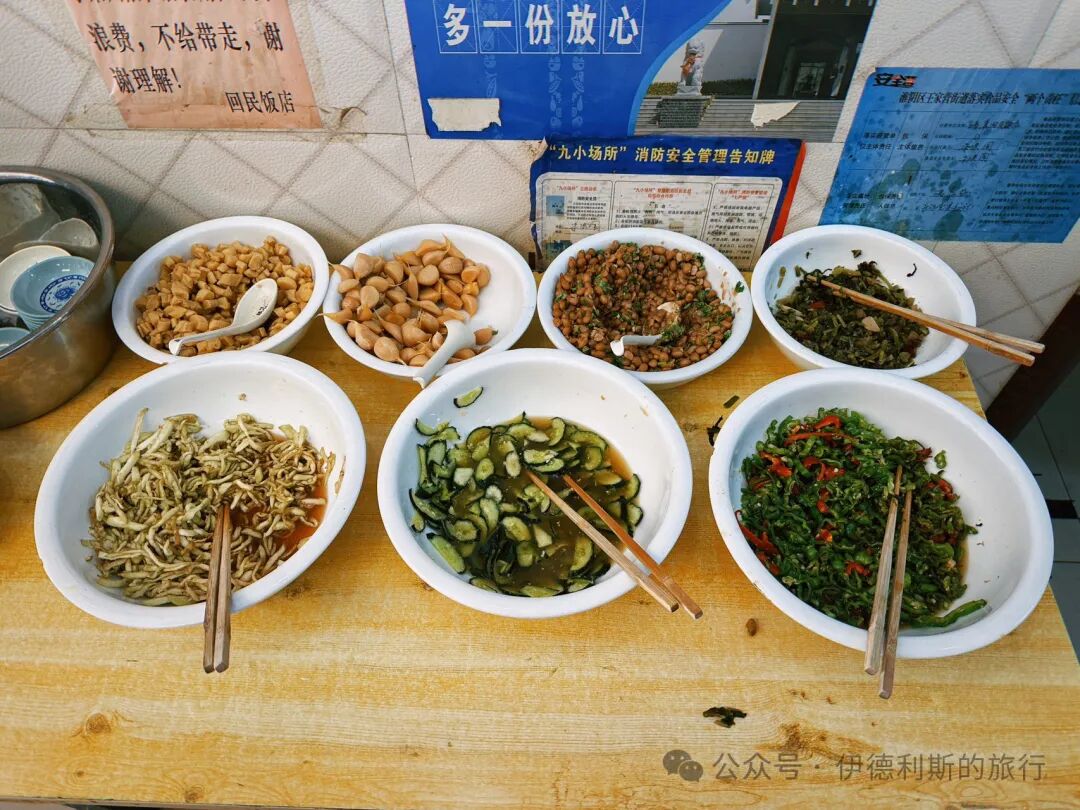
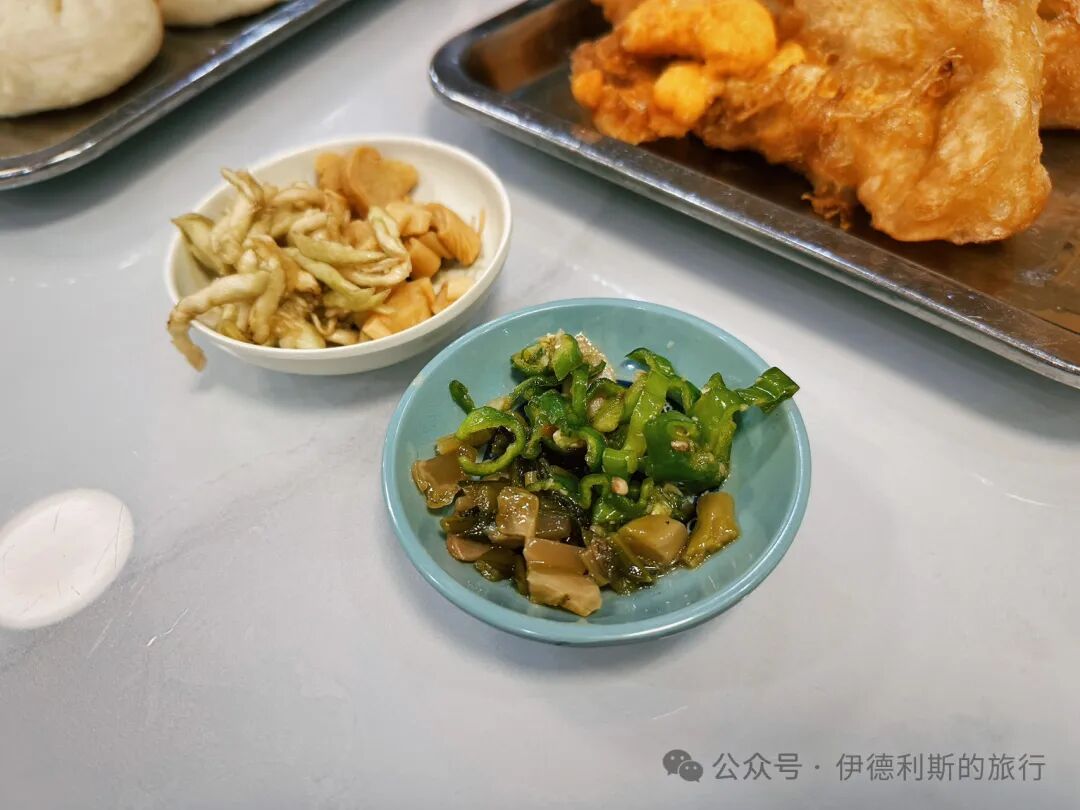
Besides the fried dough snack (youtoutou), you should also try Huai'an spicy soup (latang) when visiting Wangjiaying. Many restaurants here serve it. Compared to Henan spicy soup (hulatang), the Huai'an spicy soup (latang) has a milder taste. It uses less ginger and pepper. It contains shredded kelp, gluten, dried tofu strips (gansi), and glass noodles (fensi). Those who prefer a light flavor can drink it as is, while those who like it stronger can add chili sauce.
We drank the spicy soup (latang) at the Dachong Small Restaurant in front of the Wangjiaying Mosque and also ate beef potstickers (guotie), beef soup, and beef noodles. The potstickers (guotie) here are quite small. One serving has five, so you can order two servings. They are all pan-fried to order.
The Hui Muslim shops near Wangjiaying are likely the most concentrated in all of Jiangsu Province, which shows the strength of the local faith.
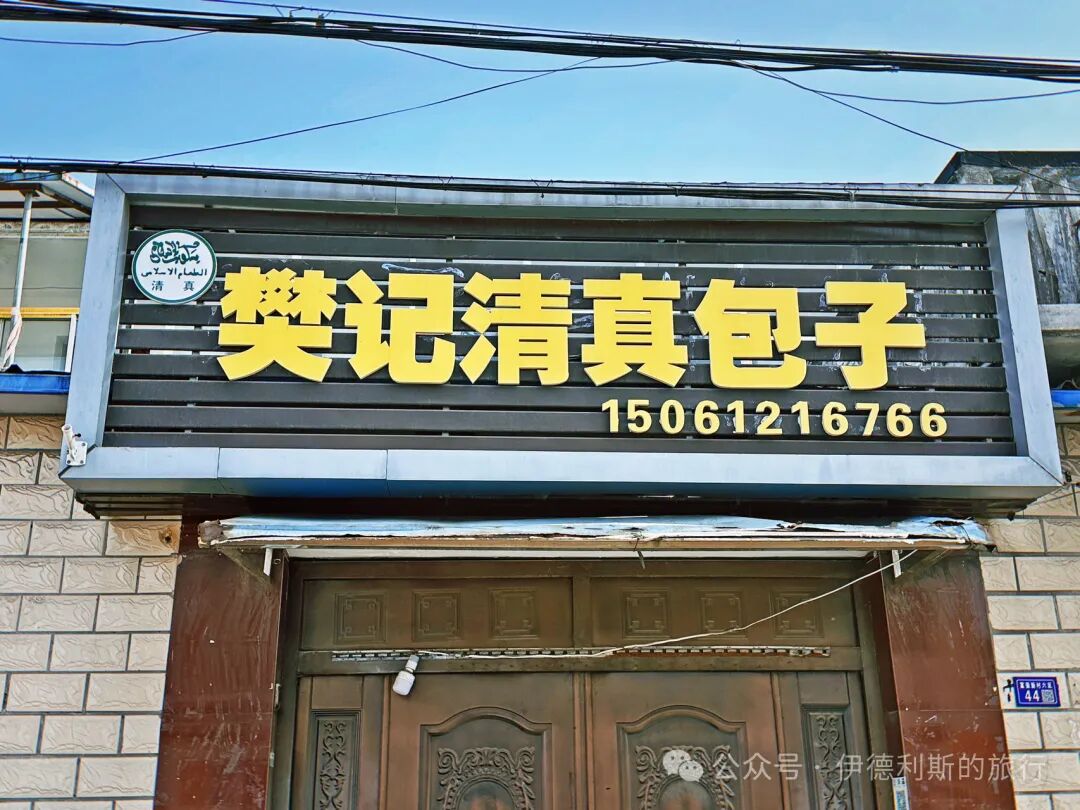
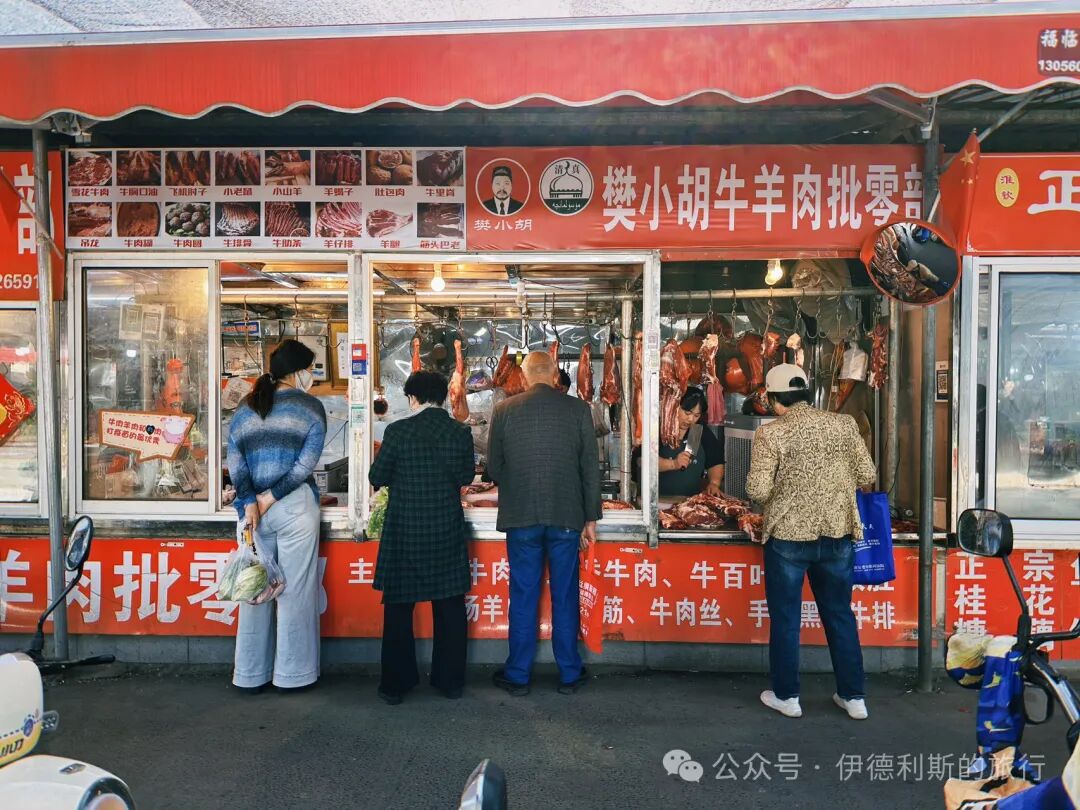
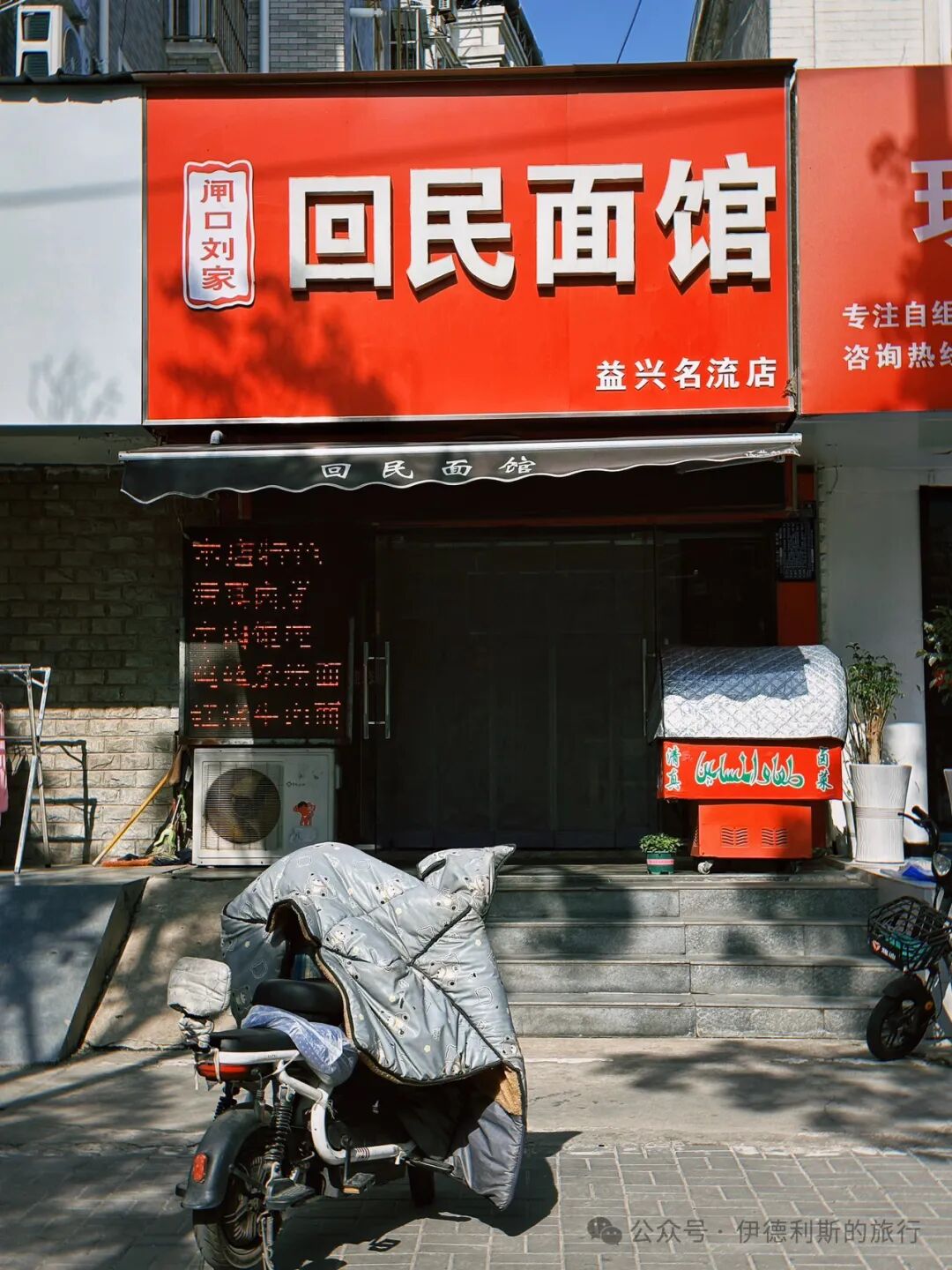
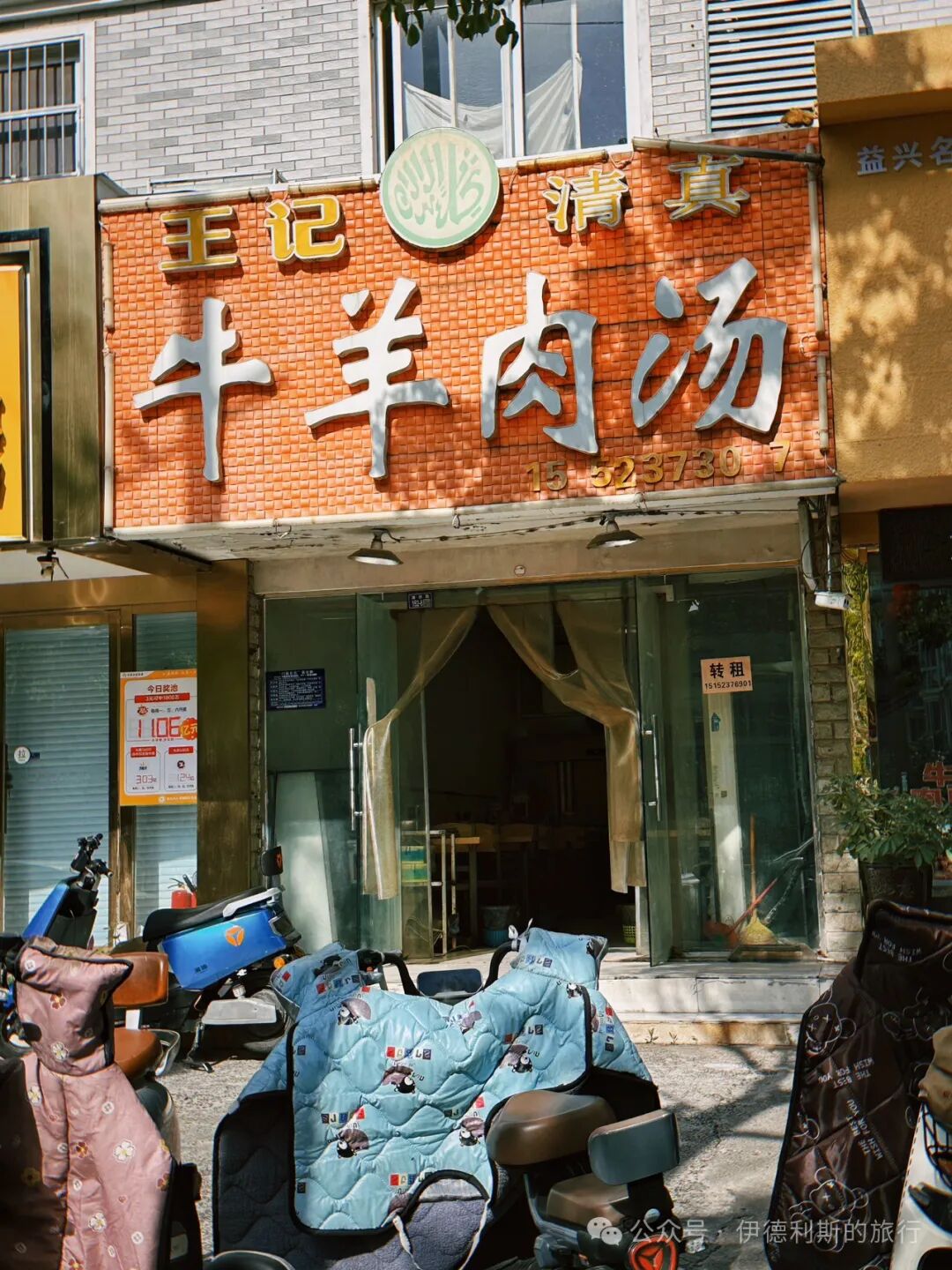
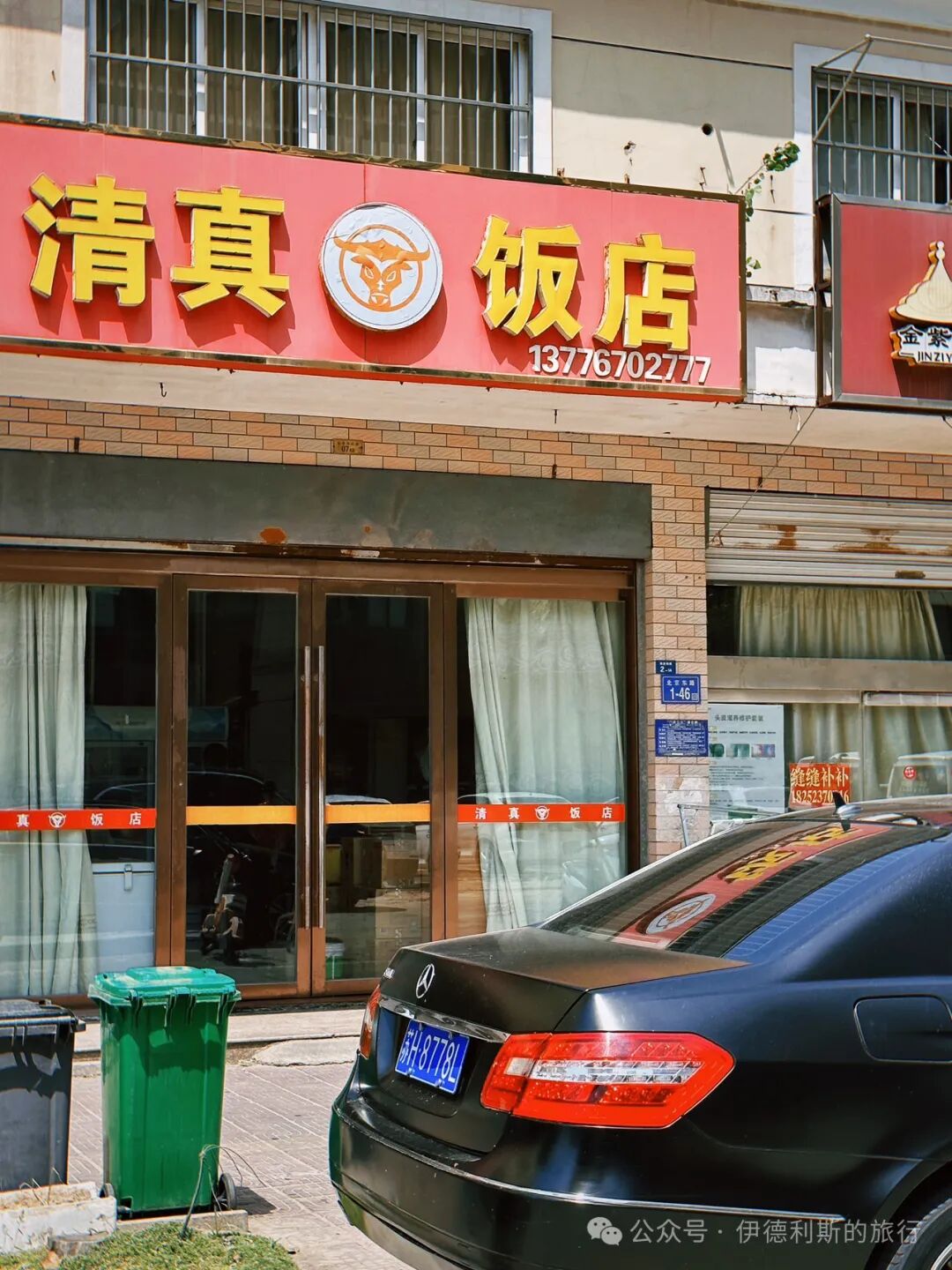
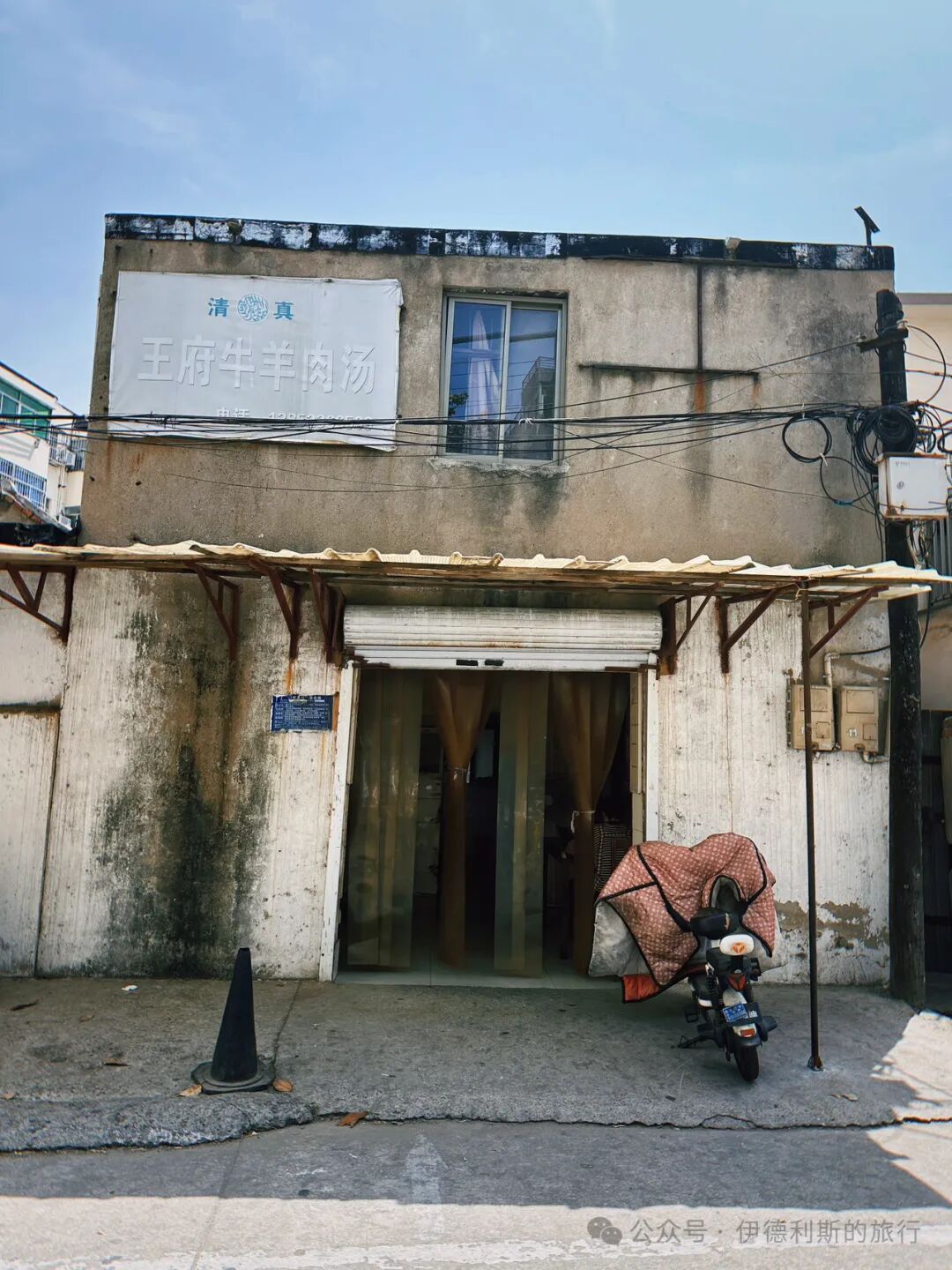
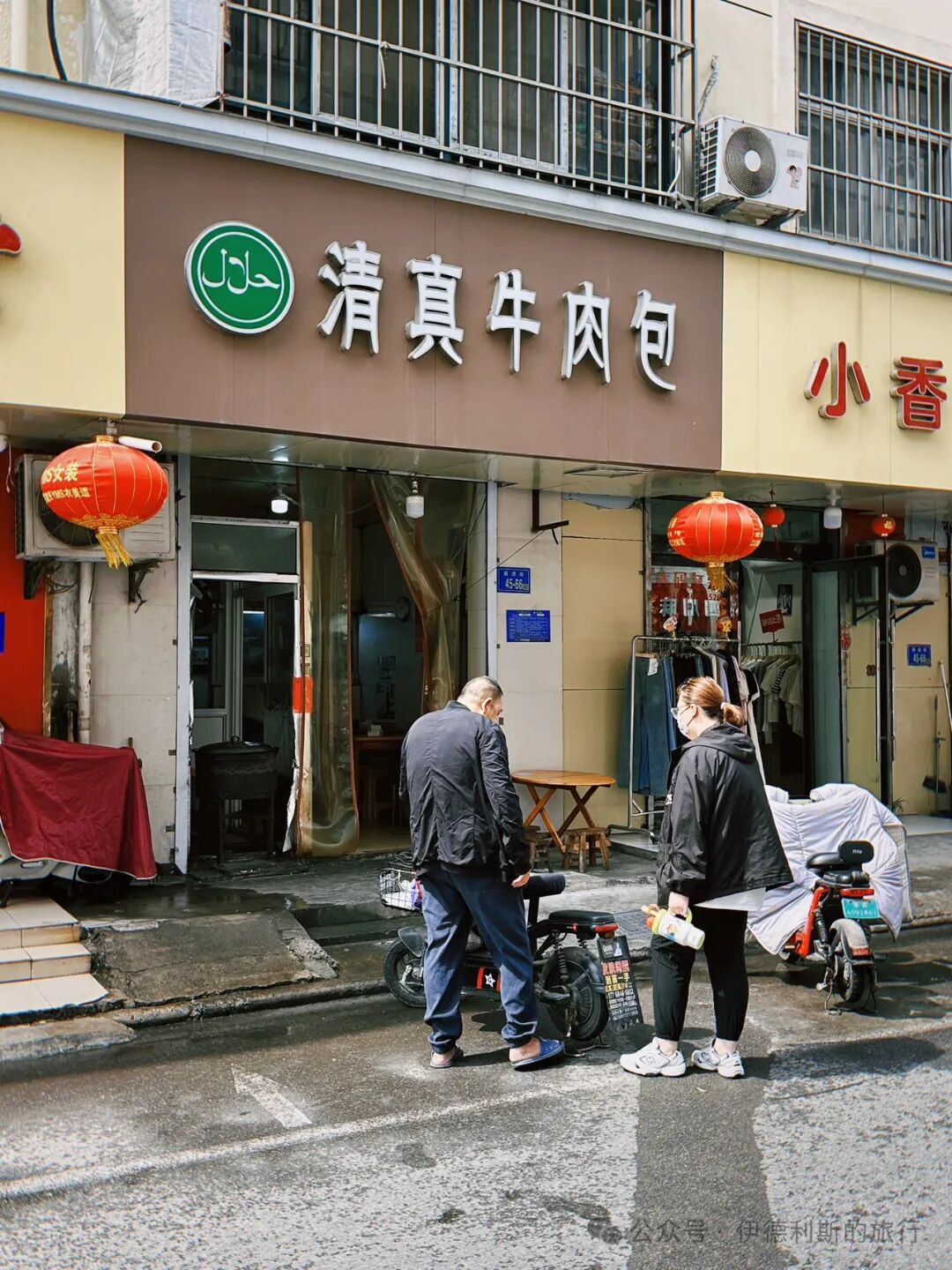
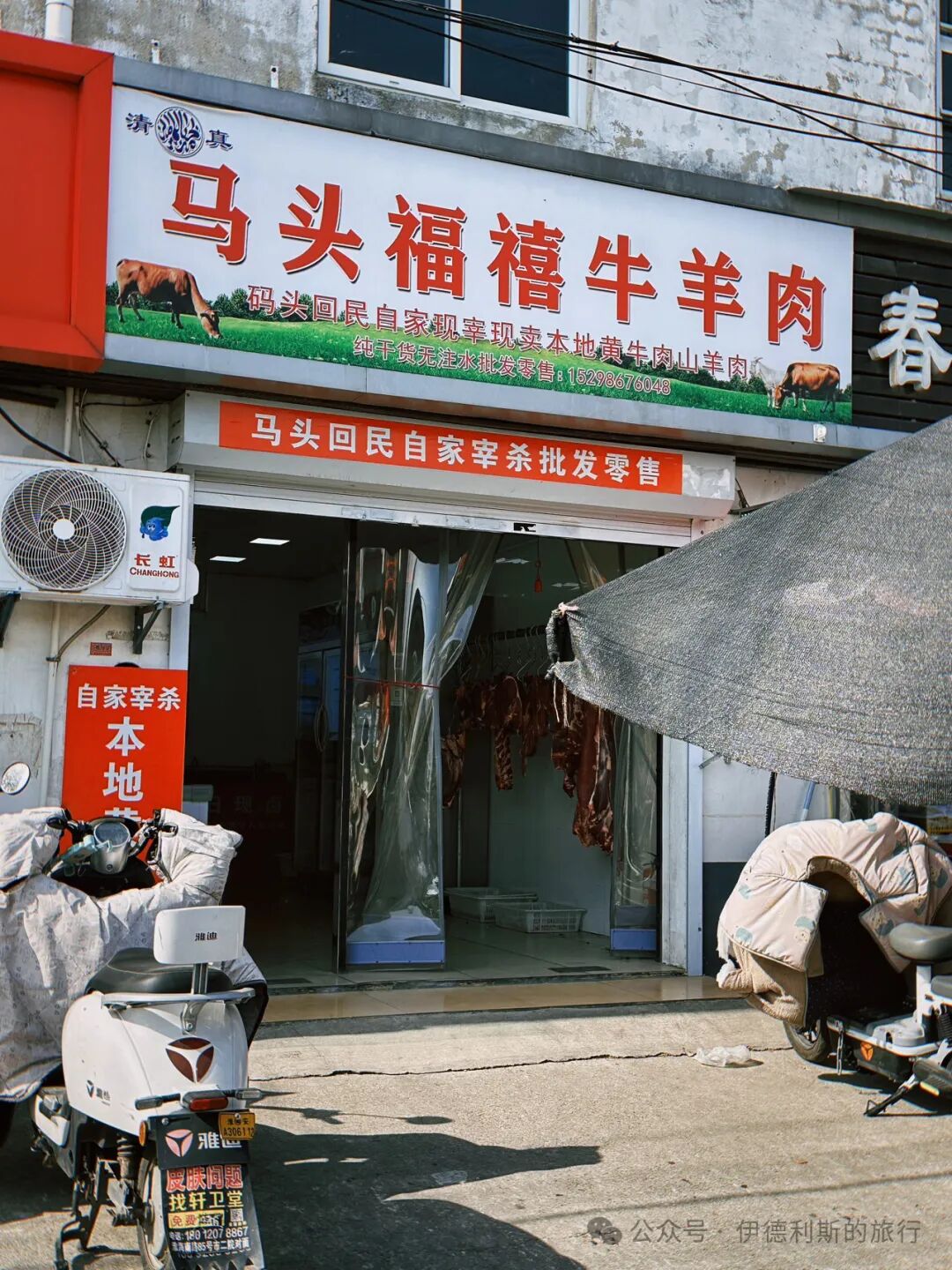
Shops opened by Hui Muslims from Matou Town near Wangjiaying. Matou Town was once the meeting point of the Middle Grand Canal and the Li Canal. Many Hui Muslims have lived there since the Qing Dynasty. They built three mosques over time at Xiyuba Village, the mouth of the Li Canal, and the old long street at the south end of town. The current Matou Mosque was moved and rebuilt in 2008, but I did not have time to visit it on this trip.
Summary: Wangjiaying in Huai'an, Jiangsu, sits between the old Yellow River course and the Salt River and has long been an important Hui Muslim town. This account covers its mosque history, family stories, streets, food, and photographs as recorded in the source visit.
Wangjiaying in Huai'an, Jiangsu, sits between the old Yellow River course and the Salt River. During the Ming Dynasty, the government set up the Dahe Guard in Huai'an and built ten military camps along the Yellow River. Wangjiaying was one of them. Travel on the Yellow River section of the canal was slow and dangerous, often leading to broken ropes and sunken boats. Many merchants chose to leave their boats at Qingjiangpu, cross the Yellow River at Wangjiaying, and switch to horse-drawn carriages to head north. Together, Wangjiaying and Qingjiangpu grew into a busy town.
Wangjiaying survived many floods from the Yellow River and moved east three times to reach its current location. In 1831, the Viceroy of Liangjiang, Tao Peng, chose Wangjiaying as a new hub for Huai salt distribution. After that, eighteen salt warehouses and seventy-two salt offices opened in Wangjiaying. Salt boats traveled constantly along the three-hundred-mile waterway from the Huaibei salt fields to Wangjiaying.
The prosperity of Wangjiaying attracted Hui Muslims to settle there. The first Hui Muslims to arrive were the Ma and Sha families, who came from Lingwu County in Ningxia by way of Shandong and Zhenjiang. Later, families named Jin, Dai, Chang, Ge, Fan, Li, and Yang also settled here.
The Wangjiaying Mosque was first built during the Yongzheng era. It started as three thatched rooms next to the Lotus Pond (Hehuawang) in Wangjiapo. After Wangjiaying became a salt hub in the late Daoguang era, the mosque moved to the south bank of the Salt River. Two imams, Chang Tingzhang and Dai Mingxuan, led the religious affairs. Imam Chang Tingzhang was known as 'Third Master Chang.' He was from Jining, Shandong, and was born in 1785 in Taoyuan County, Huai'an Prefecture (now Siyang, Jiangsu). In his youth, he studied in Lingzhou (now Lingwu County, Ningxia). After finishing his studies, he traveled to Jining, Shandong, to continue learning. In 1810, the 26-year-old Imam Chang Tingzhang was invited to lead the Wangjiaying Mosque. Imam Chang Tingzhang had deep knowledge of Arabic classics, astronomy, and medicine. According to the 'Wangjiaying Records,' a man named Third Master Tao from Hangzhou died in Huai'an during the Daoguang era. Because it was the heat of summer, Imam Chang Tingzhang personally bought a boat and traveled south along the canal to take the body back to Hangzhou for the family.
In 1860, the Nian Army burned down the Wangjiaying Mosque. In 1867, Imam Dai Jingzhai, the son of Imam Dai Mingxuan, led the construction of a few thatched huts. Later, with donations from the community, they built a main hall with three thatched rooms.
Imam Chang Tingzhang passed away in 1870. Imam Dai Jingzhai took over, and in 1884, they replaced the thatched rooms with tiled ones. Because Imam Chang Tingzhang had studied at the Jahriyya Banqiao Daotang in Jinjipu, Ningxia, in his youth, the Wangjiaying Mosque later invited five successive imams from the Jahriyya order in Jinjipu to lead the mosque and teach. Future imams also went to Ningxia for advanced study, making the Wangjiaying Mosque one of the nine major branches of the Banqiao Daotang.
In 1912, the Wangjiaying Mosque built a new gate, a south lecture hall, a kitchen, and a washroom. In 1920, with funding from the Jingshan Tang in Gansu and money from selling willow trees at the public cemetery, they rebuilt the three tiled, curved-eave rooms in front of the main hall and added three new rooms for the east lecture hall. Currently, there is a 1920 Republic of China renovation tablet on the north wall of the main hall, but the top part is covered.
In 1958, the Wangjiaying Mosque moved to the east of West Horse Road in Wangying. In 1961, it moved to its current site because a bank needed the land for a building. During the destruction of the Four Olds, the main hall's plaques reading 'The Way Spreads to the Middle Land,' 'The Religion Follows the Western Regions,' and 'Striving for Perfection,' along with gold-lettered Arabic plaques and couplets, were all smashed and burned. The couplets read: 'See the invisible, hear the silent, rectify the intention and sincerity, become a saint or a sage, the original nature; The Way is established, movement brings harmony, reach others through oneself, benefit the world, all is complete.' Funeral tools were also destroyed, and the main hall was used as a warehouse by a shoe and hat factory.
In 1979, under the leadership of Imam Ge Weili, the Wangjiaying Mosque was rebuilt in a traditional style. It was finished in 1985 and underwent two more renovations and expansions in 2003 and 2006 to reach its current appearance.
Imam Ge Weili was born in 1924. He went to Ningxia to study in 1937. In 1945, after completing his religious training and receiving his robe, he became the imam of Wangjiaying Mosque. He took on the role of imam in 1966. Today, the religious affairs at Wangjiaying Mosque are led by Imam Fan Weiming, a student of Imam Ge Weili.
The inscription from the Republic of China era reads as follows:
Wangying Mosque was founded during the Yongzheng reign of the Qing Dynasty. By the end of the Daoguang reign, our community was at its peak. Our population grew, our businesses thrived, and we had elders like Chang and Dai Mingxuan leading our religious affairs. They taught many students, and this history is recorded in local chronicles for all to verify. In the tenth year of the Xianfeng reign, the Nian Rebellion broke out. The mosque was burned to the ground, our people fled or died, and our community dwindled.
In the sixth year of the Tongzhi reign, Dai Jingzhai, the son of Elder Dai Mingxuan, followed his father's teachings and took over the leadership. He first built a few thatched huts to hold prayers morning and evening. However, the space was too simple for proper worship. It was too small to hold gatherings. The imam was deeply worried. He raised funds from many sources and built a main hall with three rooms made of grass. Later, he consulted with Yang Xuting, Ma Yunfeng, and Guo Daosheng. With their help, they rebuilt the main tiled hall and lecture hall in the tenth year of the Guangxu reign, and things began to return to normal. As more of our people moved here, the original public cemetery became so full there was almost no space left. The imam was concerned that our community lacked its own burial ground, which made things very difficult during times of loss. He planned to buy land to solve this, and Mr. Ma Yunfeng agreed to help. Sadly, Mr. Ma passed away before the task was finished. Fortunately, Mr. Ma's brother, Runzhi, carried on his brother's wishes. With the strong support of local elder Li Yunpo, they set aside differences and raised enough money to buy two new cemetery plots. The imam's kindness to our community was thorough. This was due to the support of many public-spirited people, but it was also the result of the imam's decades of hard work and sincere devotion.
In the first year of the Republic of China, we worked to continue the efforts of our predecessors by adding a main gate, a south lecture hall, and a kitchen. Mr. Ge Ziming built a washroom (shuifang) and donated hundreds of thousands in currency. We also invited Imam Wang Pinqing from Gansu Province to teach the scriptures. Visitors from all over praised the work. In recent years, wind and rain damage made the halls look like they might collapse. We met and decided to sell dozens of willow trees around the cemetery, raising over two hundred thousand. The Jinshan Hall in Gansu also kindly donated many wooden beams and tiles. We then built a three-room tiled hall with curved eaves in front of the main hall, and repaired the surrounding walls, the three-room east lecture hall, and the courtyard gates. This was a massive project funded by public property and donations. We are humble about our own contributions, but we record these details because, despite two hundred years of change, our mosque still stands. This is largely due to the efforts of our ancestors and elders. We hope future generations will remember how hard it was to build this place and will protect it forever so it never falls into ruin. This is our deepest wish. We record this history here.
July, the ninth year of the Republic of China.
Jin Jiasheng, Jin Jialin, Guo Chunlin, Yang Fangtian
Chang Bingkui, Li Shunjie, Chang Guanying, Mu Hongbin
Jin Jiayuan, Ma Jianong, Fan Zhaofeng, Yang Guiyuan
Ge Futang, Li Dianqing, Ma Jiarang, Mu Hong'en
Ma Jialin, Ge Zhenqing, He Wenquan, Zhou Fengling
Sha Faxiang, Liu Lianyuan, Zhou Riyang, Mu Hongye
The most famous Hui Muslim food in Wangjiaying is the fried dough snack (youtoutou) from the Hui Muslim Restaurant, made by Old Li Ku. Their version was added to the Huaiyin District intangible cultural heritage list in 2016. In 1942, Li Dongtian from Shandong brought his family to Wangjiaying to make a living. He and his son, Li Haiquan, sold their homemade fried dough snacks (youtoutou) near the Yanhe Bridge in Huaiyin while carrying trays. That is how the Huaiyin fried dough snack (youtoutou) became popular.
The fried dough snack (youtoutou) is three inches long. It turns golden yellow when fried. It is delicious when wrapped in an egg and served with wheat porridge. Wheat porridge is rare in other places. It has a unique taste and includes peanuts. In Huai'an, breakfast is usually served with several types of pickles, such as pickled mustard greens (datoucai), cold tossed eggplant, tossed snow cabbage (xuelihong), and tossed green peppers. They all go well with porridge.
The history of the Wangjiaying Hui Muslim Restaurant dates back to the Daoguang period of the Qing Dynasty. After the salt administration expanded at the West Dam in Wangjiaying in 1831 (the 11th year of Daoguang), Imam Dai Mingxuan of the Wangjiaying Mosque opened a halal restaurant at the north end of Yushan Street. He hired the best chefs in Wangjiaying, making it a high-end establishment where many Huai'an officials and dignitaries held banquets.
In 1860 (the 10th year of Xianfeng), after the Nian Army broke through Wangjiaying, the halal restaurant and the Wangjiaying Mosque were both destroyed in the war. In 1886 (the 12th year of Guangxu), with everyone's help, Imam Dai Jingzhai, the son of Imam Dai Mingxuan, reopened the restaurant at the North Weimen Gate of Wangjiaying. It was forced to close after 1937 due to the Japanese invasion of China, but it reopened after 1945. After the public-private partnership in 1958, the halal restaurant was merged into the Huaiyin Food and Beverage Company No. 2, with Ma Hengpu serving as manager. At the end of 1959, it moved to Beijing Road. It had three storefront rooms in the front and four kitchen rooms in the back, with Wang Jinbiao taking over as manager. After the 1970s, Li Haiquan took over as manager and renamed it the Hui Muslim Restaurant. After the 1980s, Ma Hengbao led the construction of a new two-story building, and Dai Peng took over as manager. In 2003, the Hui Muslim Restaurant was restructured into a private enterprise and has continued to operate to this day.
Besides the fried dough snack (youtoutou), you should also try Huai'an spicy soup (latang) when visiting Wangjiaying. Many restaurants here serve it. Compared to Henan spicy soup (hulatang), the Huai'an spicy soup (latang) has a milder taste. It uses less ginger and pepper. It contains shredded kelp, gluten, dried tofu strips (gansi), and glass noodles (fensi). Those who prefer a light flavor can drink it as is, while those who like it stronger can add chili sauce.
We drank the spicy soup (latang) at the Dachong Small Restaurant in front of the Wangjiaying Mosque and also ate beef potstickers (guotie), beef soup, and beef noodles. The potstickers (guotie) here are quite small. One serving has five, so you can order two servings. They are all pan-fried to order.
The Hui Muslim shops near Wangjiaying are likely the most concentrated in all of Jiangsu Province, which shows the strength of the local faith.
Shops opened by Hui Muslims from Matou Town near Wangjiaying. Matou Town was once the meeting point of the Middle Grand Canal and the Li Canal. Many Hui Muslims have lived there since the Qing Dynasty. They built three mosques over time at Xiyuba Village, the mouth of the Li Canal, and the old long street at the south end of town. The current Matou Mosque was moved and rebuilt in 2008, but I did not have time to visit it on this trip.
Halal Travel Guide: Linqing, Shandong - Canal City Mosques, Food and History (Part 1)
Articles • ali2007fr posted the article • 0 comments • 221 views • 2026-05-19 10:24
Reposted from the web
Summary: Linqing, Shandong - Canal City Mosques, Food and History (Part 1) is presented as a clear English travel account for readers interested in Muslim life, halal food, mosques, and local history. The article keeps the original place names, food details, photographs, and cultural context while focusing on Linqing, Shandong, Canal History.
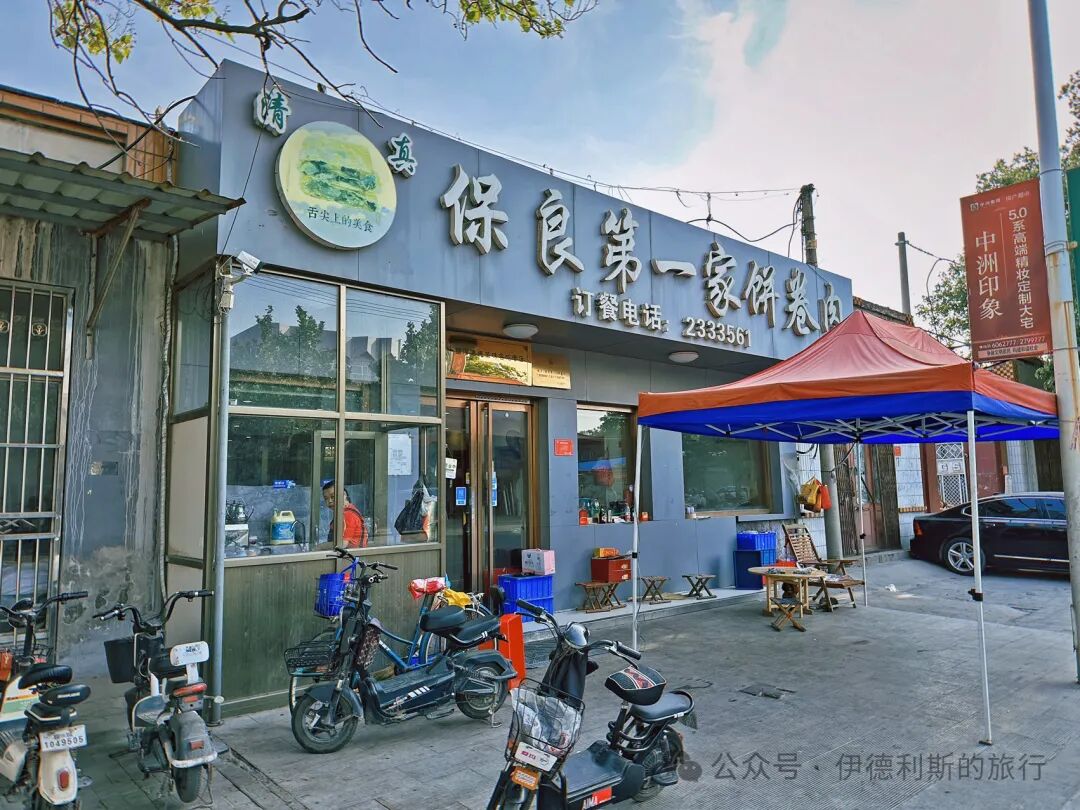
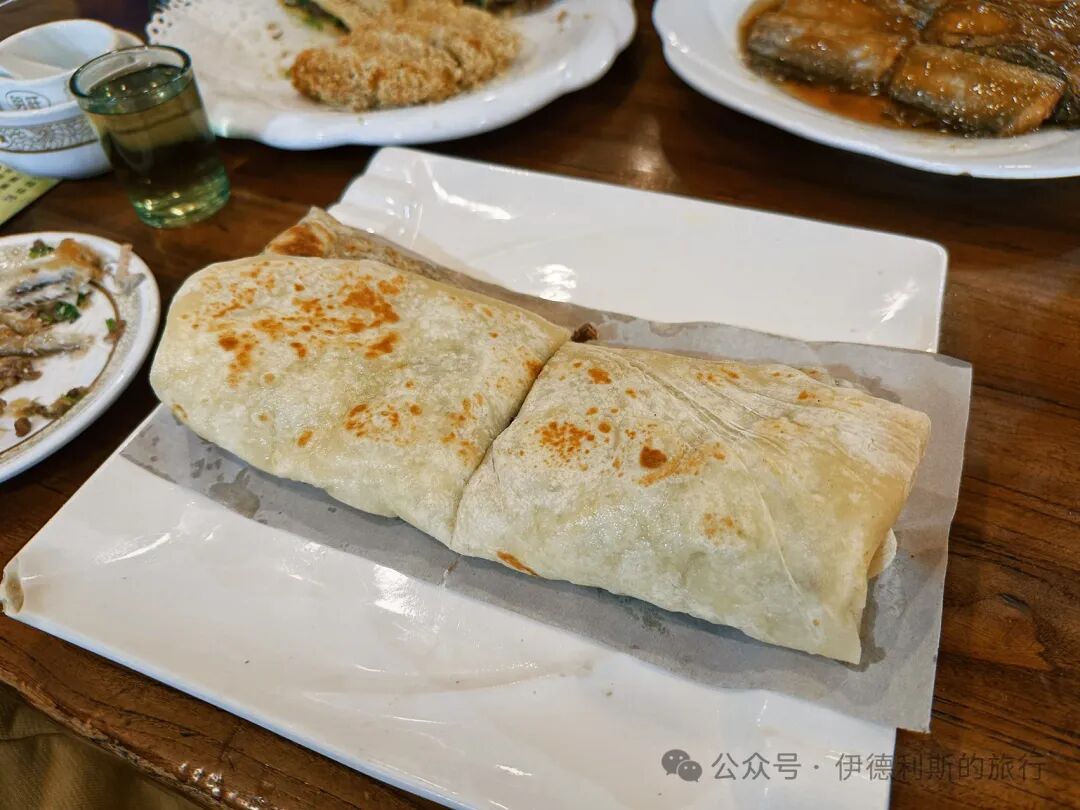
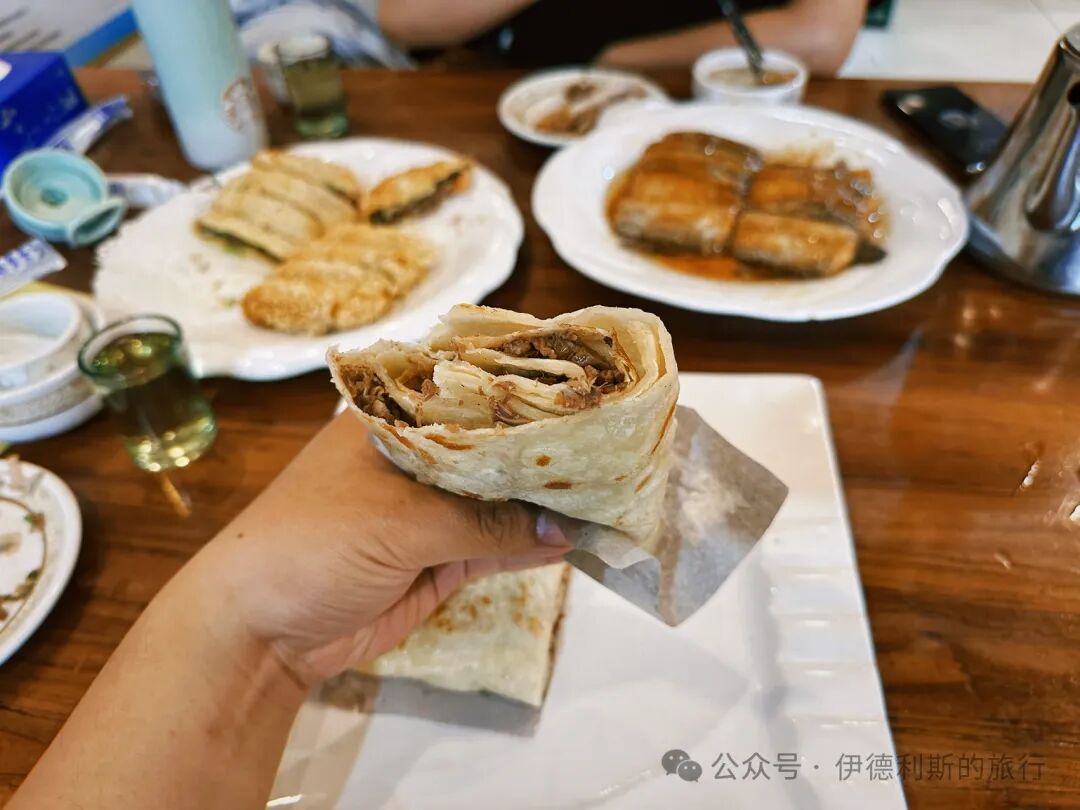
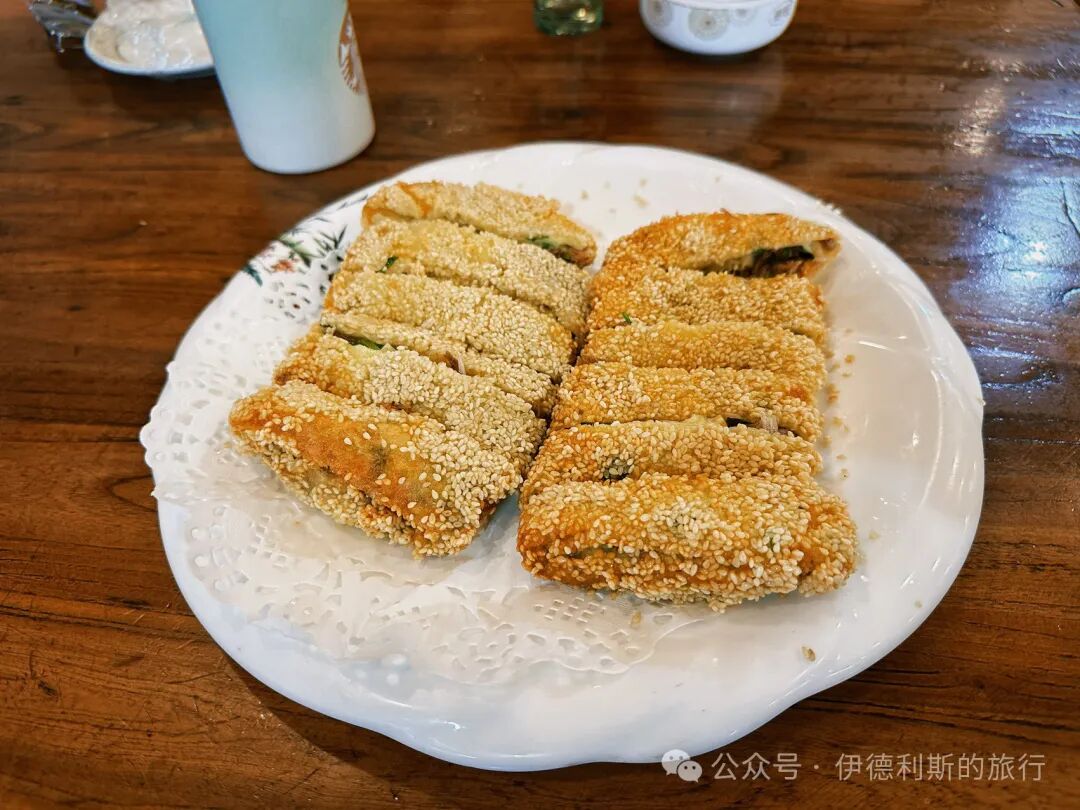
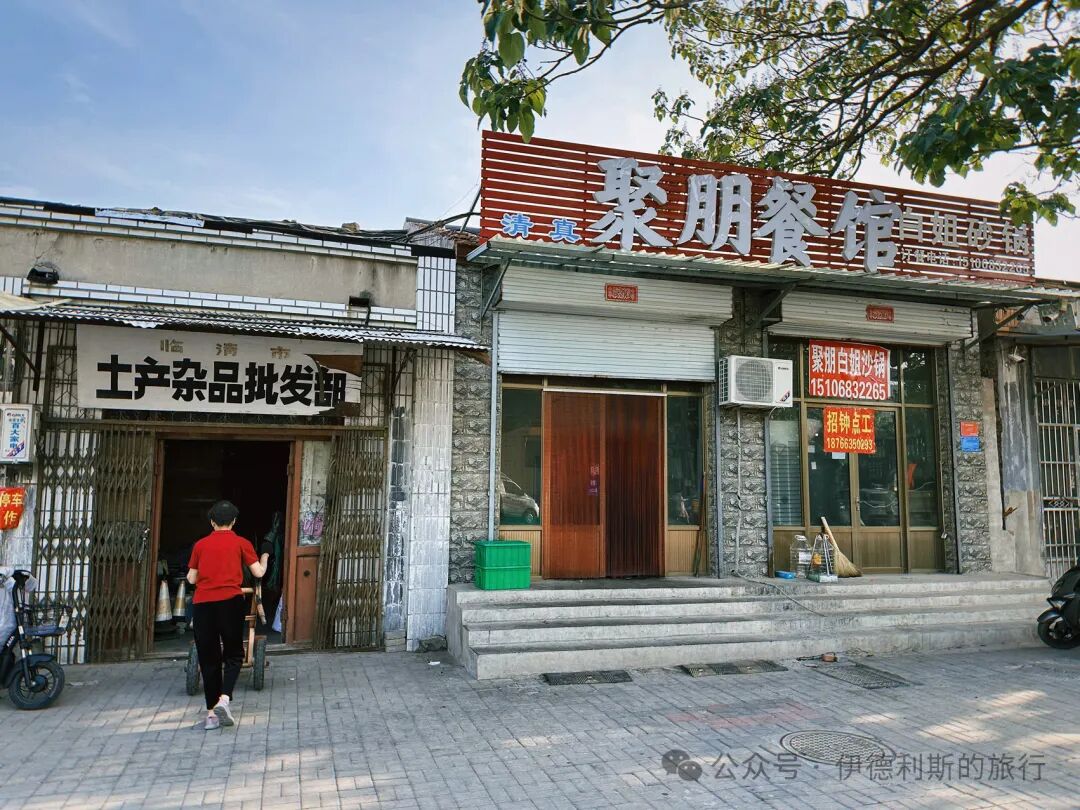
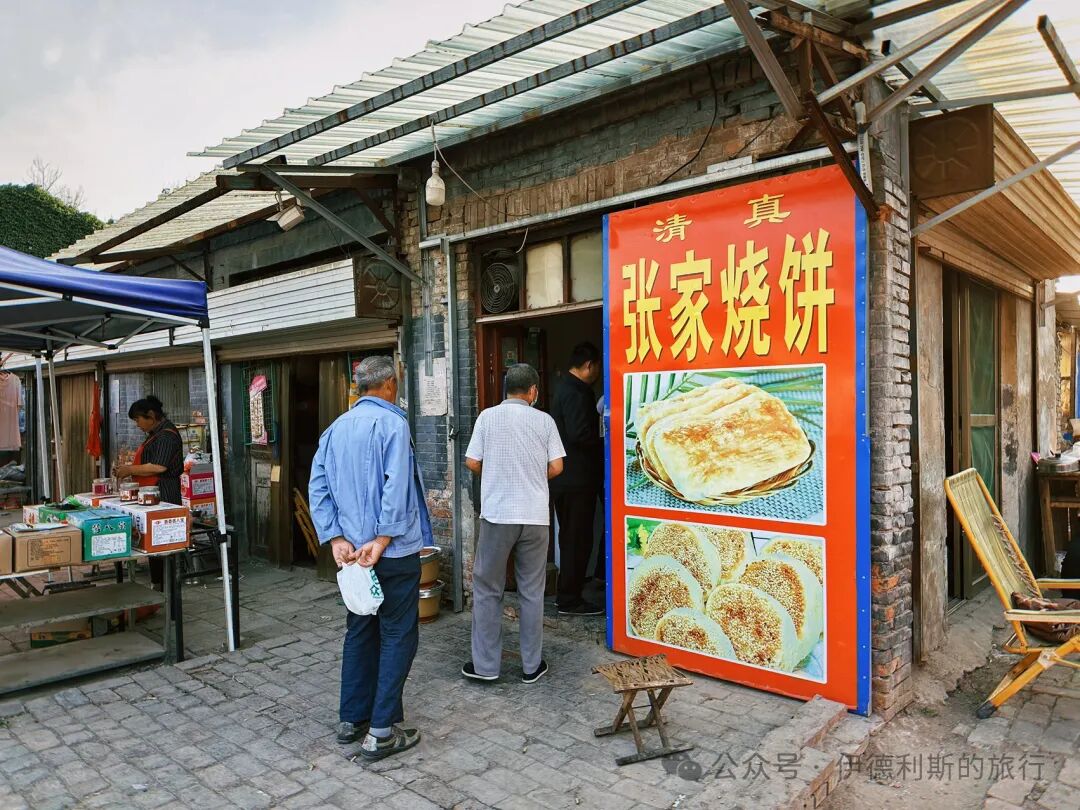
Following my last post, 'Revisiting the Big and Small Mosque Streets in Dongguan, Liaocheng,' we took an afternoon train from Liaocheng to Linqing. We went straight to Baoliang's First Shop for a meat-filled flatbread roll (bingjuanrou). Wang Baoliang opened this shop in the 1980s, so it has been around for 40 years now. I ate their meat-filled flatbread roll back in 2017, and it was truly satisfying. The price of the roll has gone up by 5 yuan since my last visit, but it still tastes great.
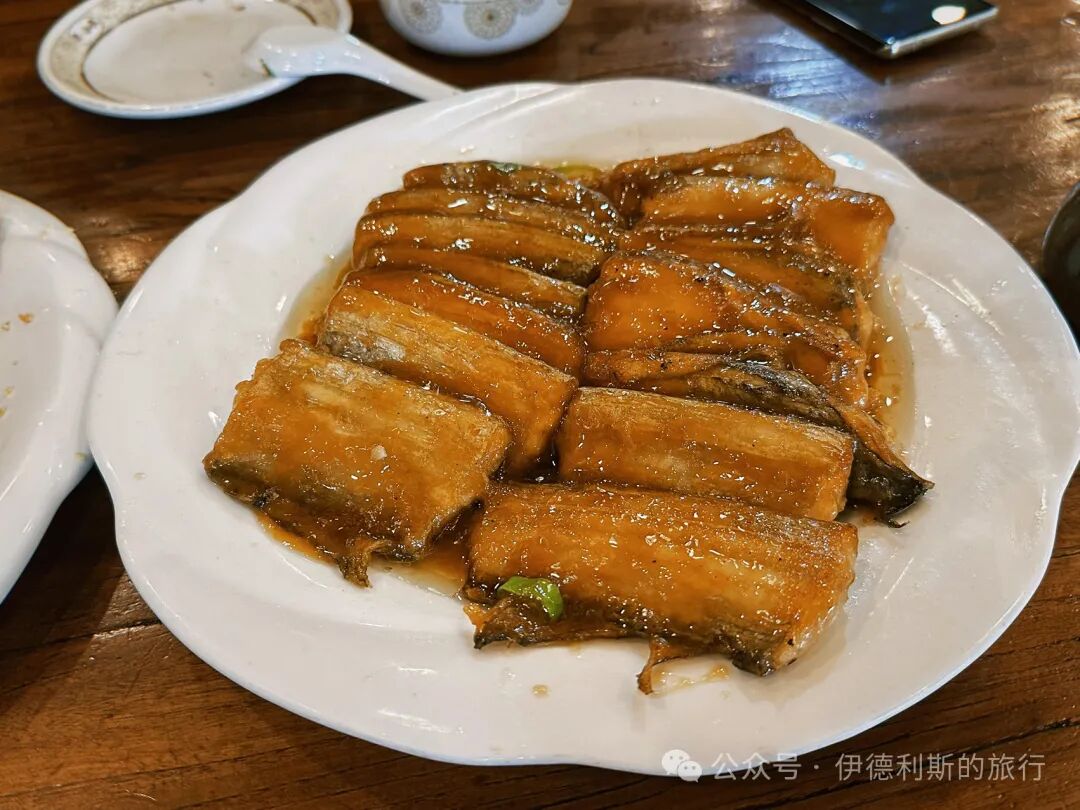
Last time, I ordered the braised butterfly fish head, which was delicious, but I did not choose my dishes as well this time. This time, I ordered sesame beef and pan-braised hairtail fish. The meat in the sesame beef is the same as the meat in the flatbread roll, so I ended up ordering the same thing twice. The pan-braised hairtail fish had a fishy smell. I think ordering the braised hairtail or fried hairtail would have been a better choice.
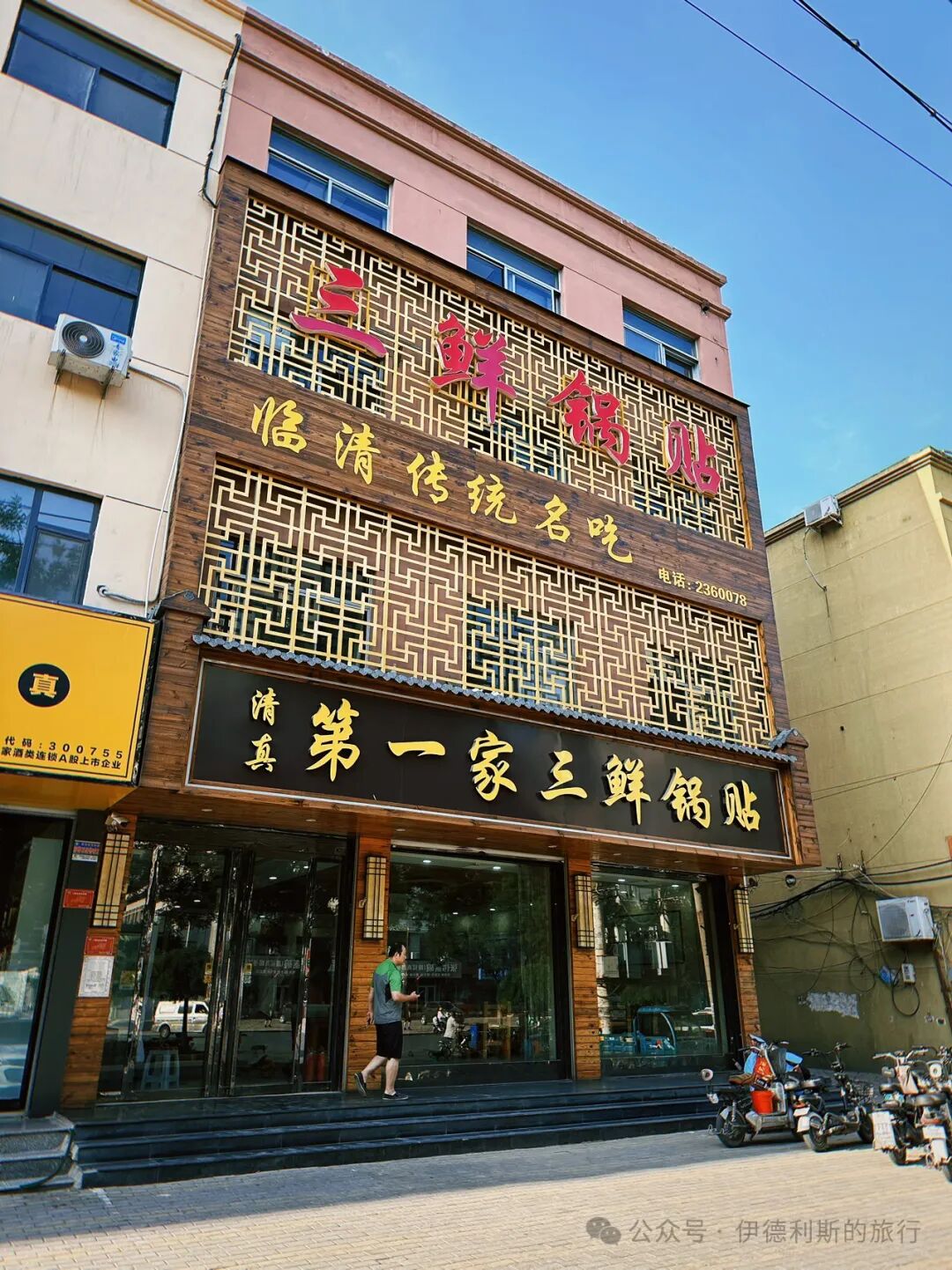
Leaving Linqing Railway Station, I passed by the First Family Three-Fresh Potstickers (diyijia sanxian guotie). I ate there when I visited Linqing 17 years ago, and it remains the best Shandong cuisine I have ever had, especially the sesame lamb which was delicious.
Linqing North Mosque
I spent the afternoon performing namaz at the Linqing North Mosque. Linqing North Mosque sits where the Huitong River and Wei River meet. It was first built in 1504 (the seventh year of the Hongzhi reign of the Ming Dynasty). It underwent major expansions in 1564 (the 43rd year of the Jiajing reign), 1779 (the 44th year of the Qianlong reign), and 1809 (the 14th year of the Jiaqing reign) to reach its current form.
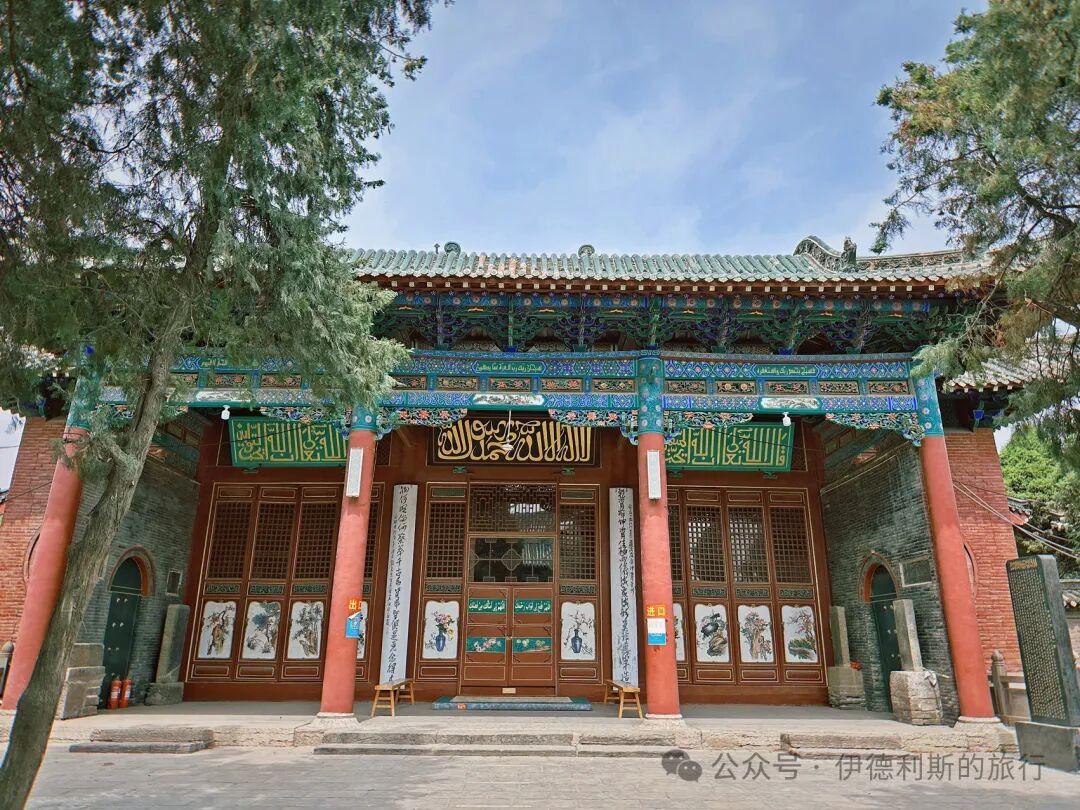
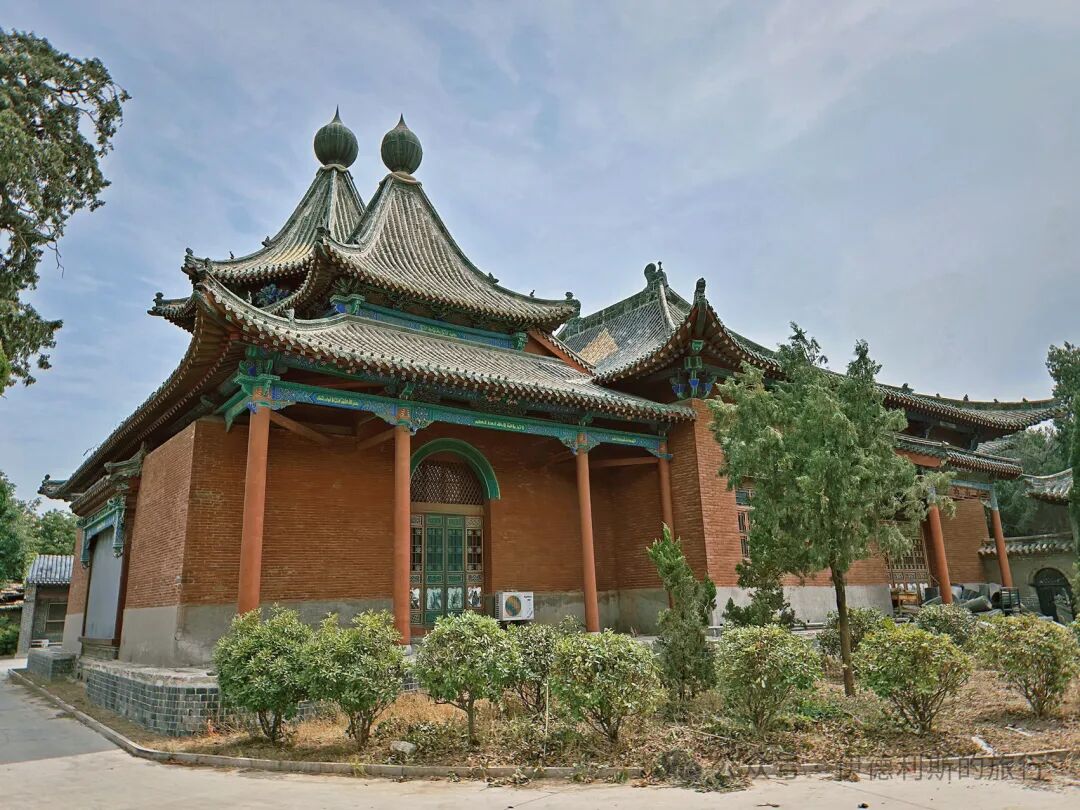
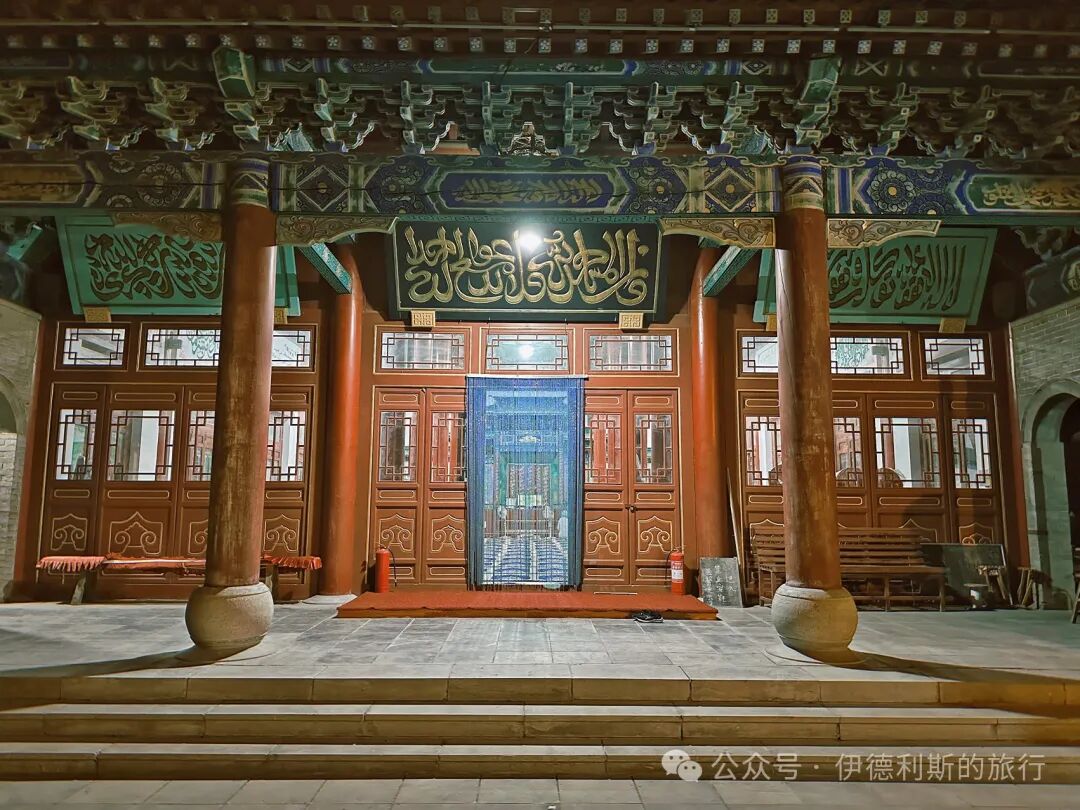
The main hall of Linqing North Mosque stands on a 1-meter-high stone platform and consists of a porch, the main hall, and a rear kiln-style hall (yaodian), making it very grand. The roof of the kiln-style hall has three moon-watching towers. The middle one has an octagonal pointed roof, while the two sides have square pointed roofs, all topped with peach-shaped finials.
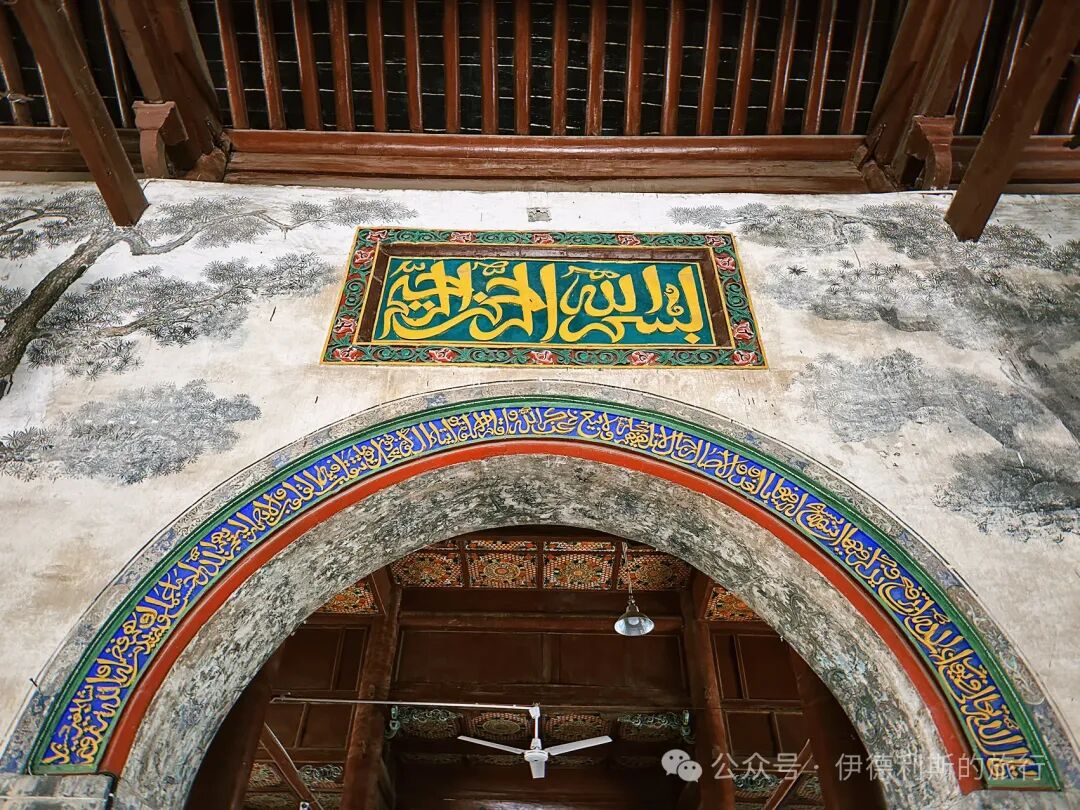
The mosque features a memorial archway-style mihrab decorated with floral patterns and Arabic calligraphy, and the ceiling of the kiln-style hall also displays Arabic calligraphy.
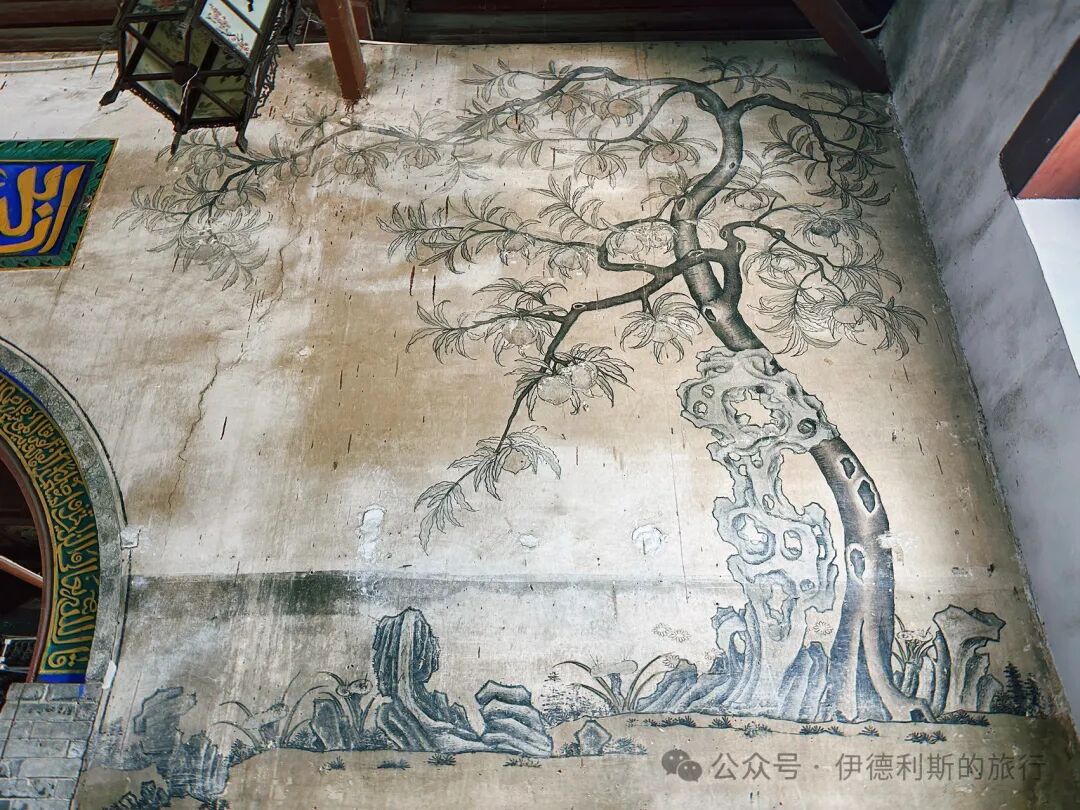
The main hall of the North Mosque preserves precious murals from the Qing Dynasty.
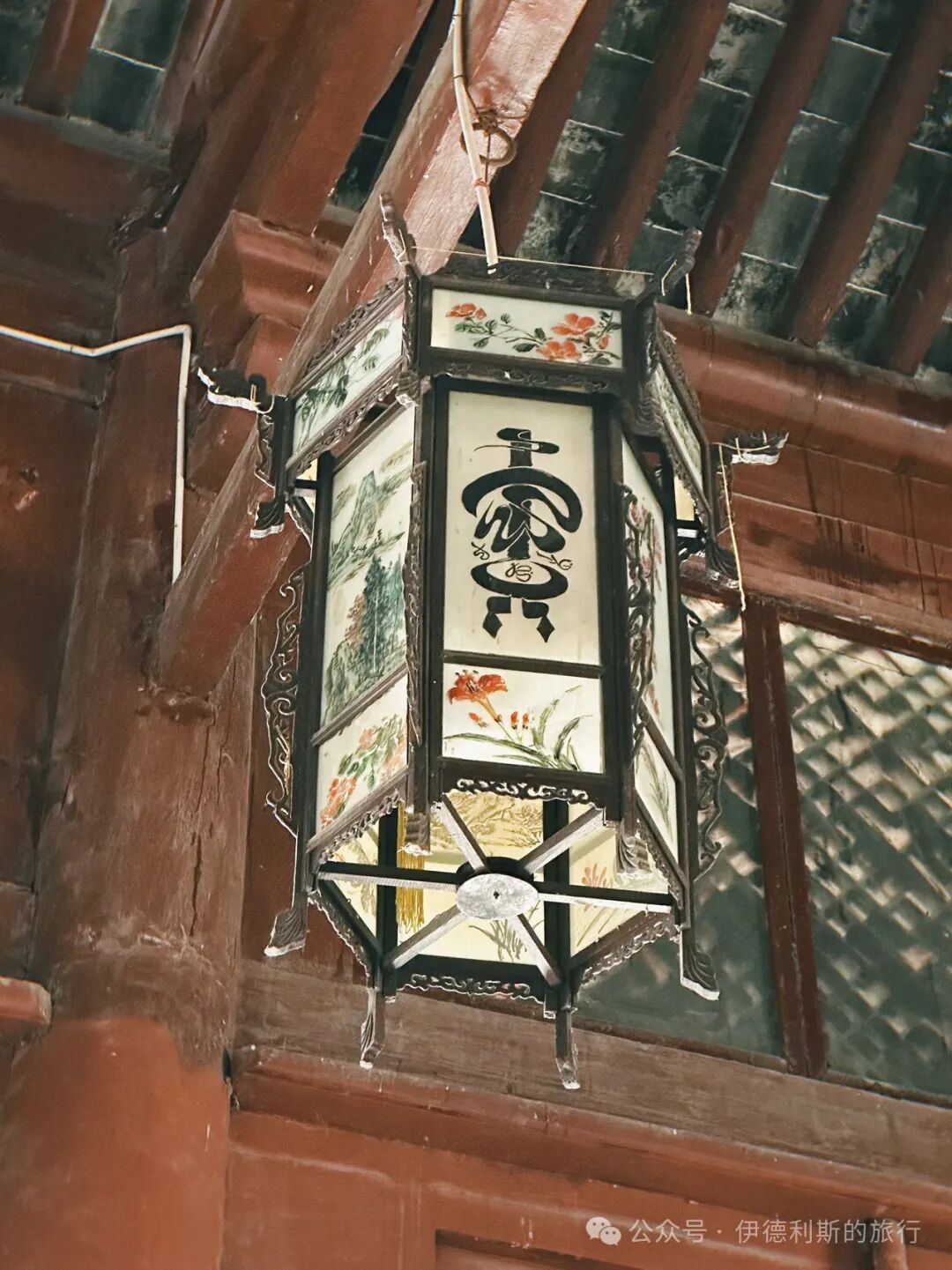
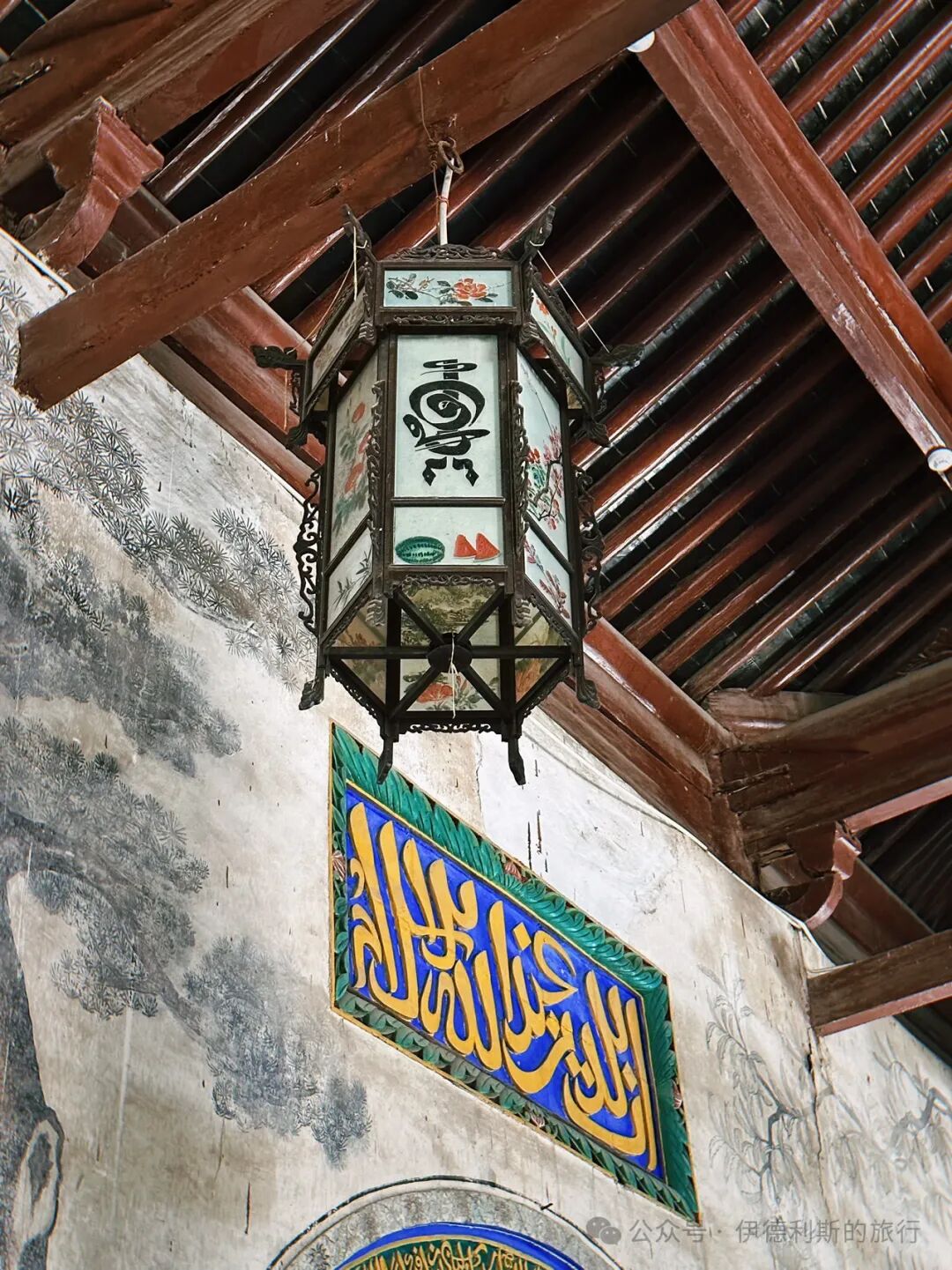
The North Mosque (Beidasi) features various forms of calligraphy, including palace lanterns (gongdeng), brick carvings, plaques, architectural paintings, and wood carvings.
At the far east end of the North Mosque stands a gate in the style of a memorial archway (pailou), featuring delicate bracket sets (dougong) and upturned eaves.
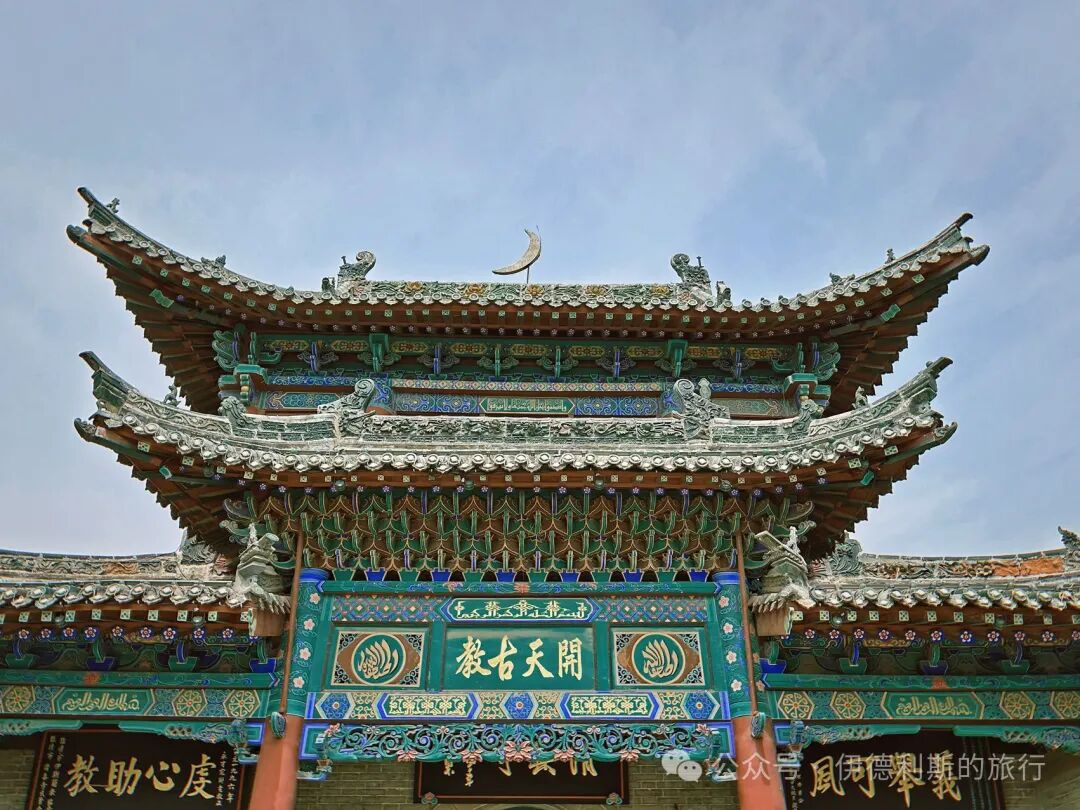
After entering the main gate, you reach a ceremonial gate (yimen) built in the style of a memorial archway. Two Qing Dynasty plaques hang on the ceremonial gate:
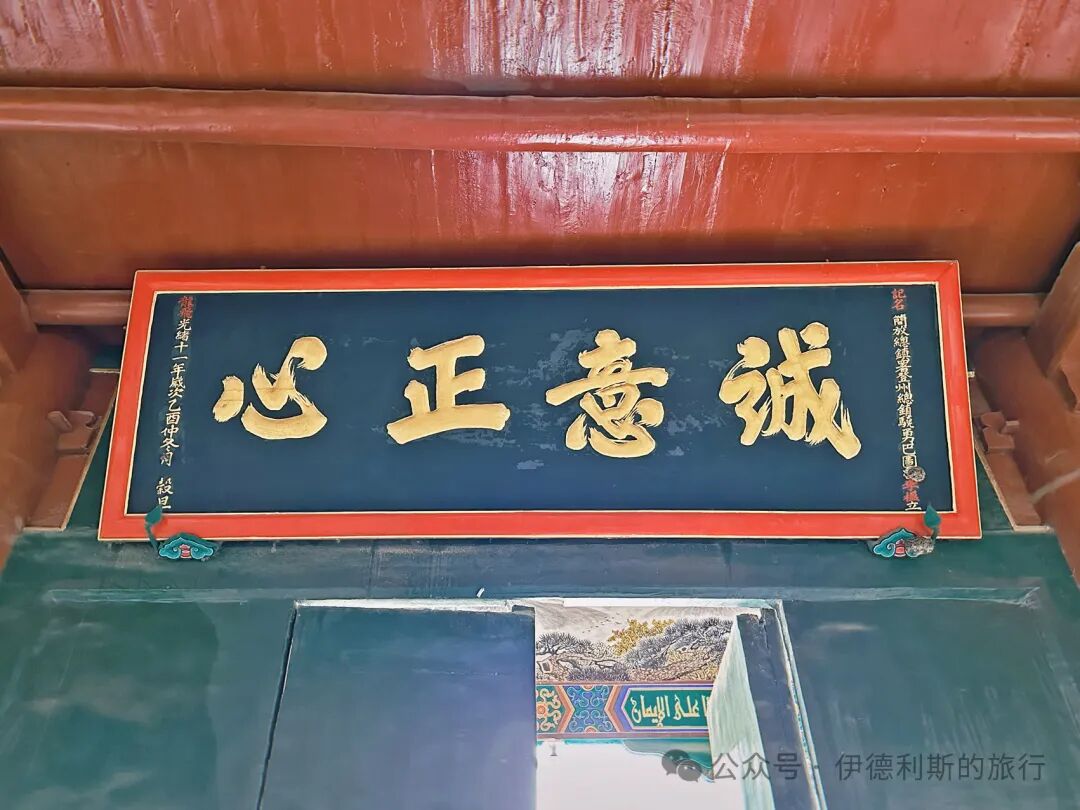
A plaque reading 'Sincerity and Rectitude' (Chengyi Zhengxin) erected in the 11th year of the Guangxu reign by Li Ying, a decorated military official.
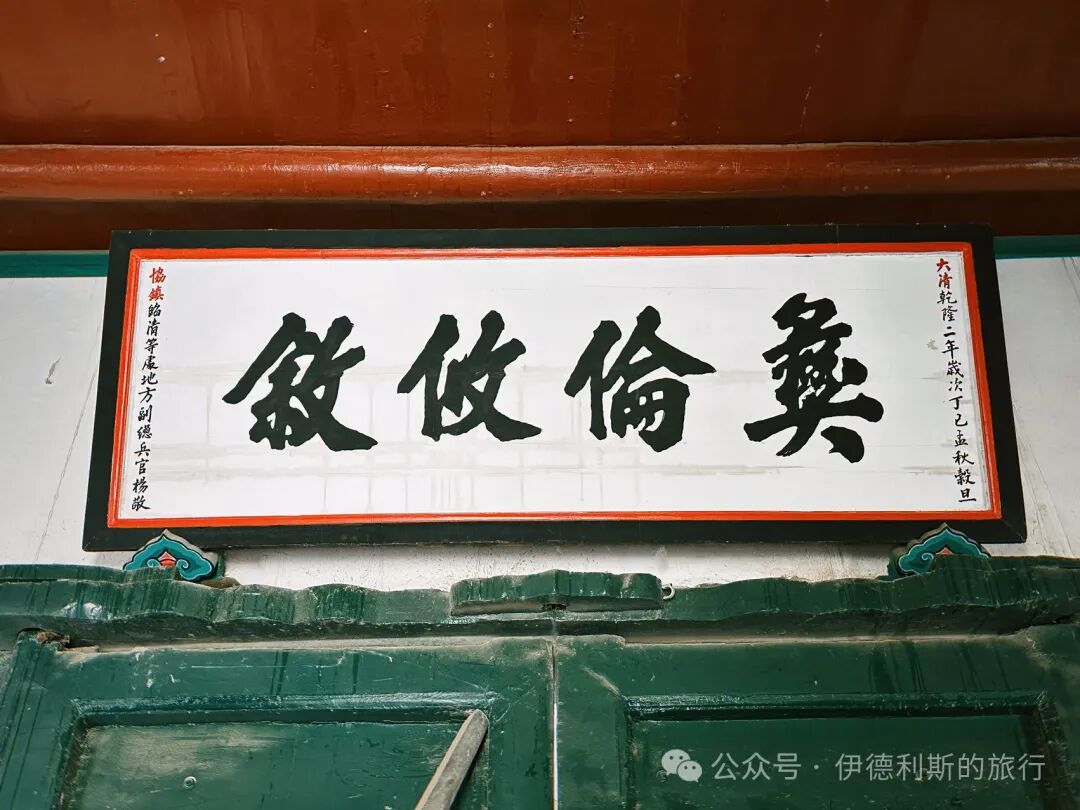
A plaque reading 'Orderly Human Relations' (Yilun Youxu) from the 2nd year of the Qianlong reign by Yang Jing, a deputy military commander; this one appears to be a replica.
Behind the ceremonial gate is a path leading to the main prayer hall, with lecture halls (jiangtang) located on the north and south sides.
On the north and south sides of the main prayer hall are two scripture pavilions (cangjingting) with four-cornered pointed roofs and small porches (baoxia) in front of the doors. In front of the pavilion stands a 500-year-old Chinese arborvitae (cebai) planted when the mosque was built.
Behind the main hall is the back gate, which features a plaque inscribed with "Qingzhen Libaisi" (Mosque) dated to the first month of the Jiajing jiazi year. The mosque also houses several stone tablets from the Qing dynasty and the Republic of China era.
Linqing East Mosque
After leaving the Linqing North Mosque, I went across the street to the East Mosque to pay my respects at the tombs of the saints (shamu) and the Hufu cemetery (Hufutan). The Linqing East Mosque was first built in 1465 (the first year of the Chenghua reign of the Ming dynasty). It was renovated twice in 1583 (the eleventh year of the Wanli reign) and 1649 (the sixth year of the Shunzhi reign), then expanded again in 1734 (the twelfth year of the Yongzheng reign), resulting in its grand scale.
On the far west side of the Linqing East Mosque is the back gate, which features a "Libaisi" (Mosque) plaque inscribed during the renovation in the sixth year of the Shunzhi reign. Behind the back gate is the main prayer hall, which consists of a front porch (juanpeng), the main hall, and a rear vaulted hall (yaodian). The roof of the vaulted hall has four sloping sides meeting at a point, topped with a gilded gourd-shaped finial.
The main hall is nearly 30 meters deep, with 14 pillars supporting the roof beams. The mihrab is the same style as the one in the North Mosque, featuring a decorative archway design.
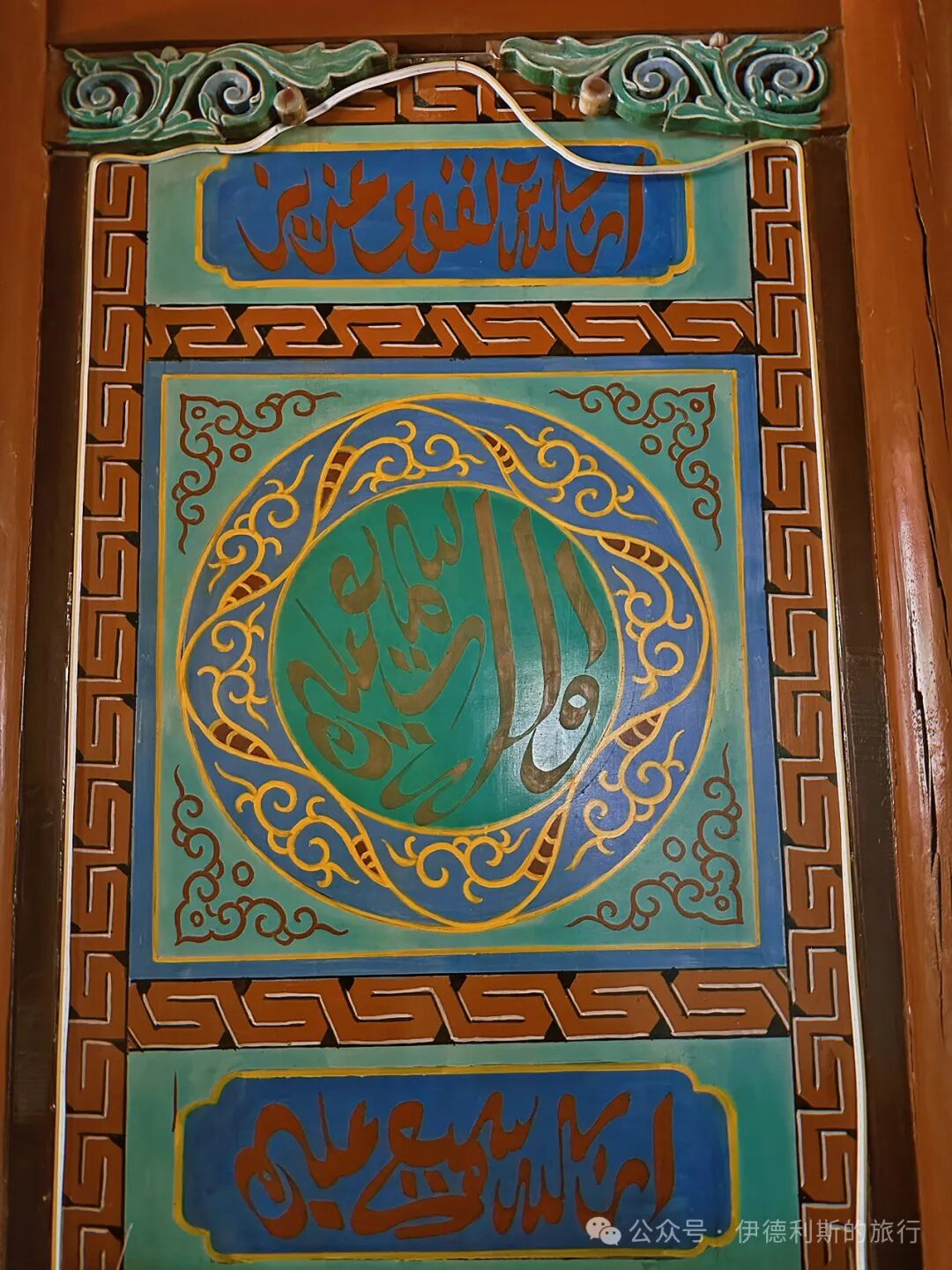
The East Mosque has a porch roof (juanpeng) over the main hall and traditional calligraphy preserved on the pillars inside.
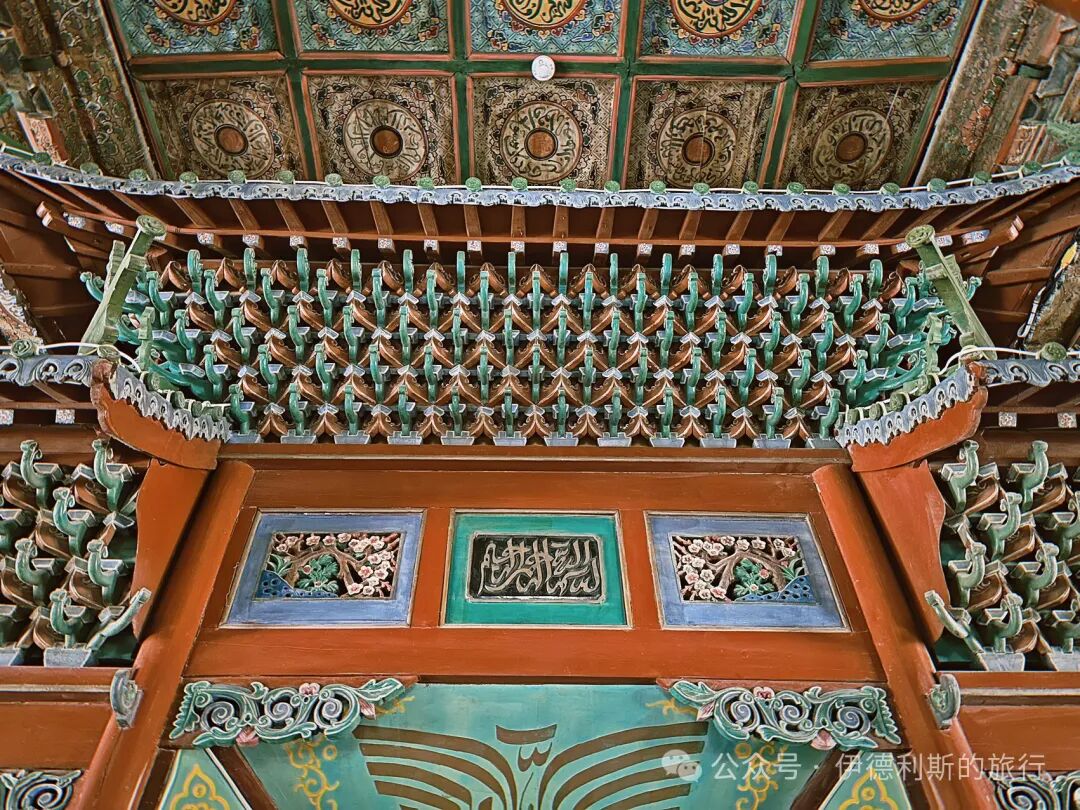
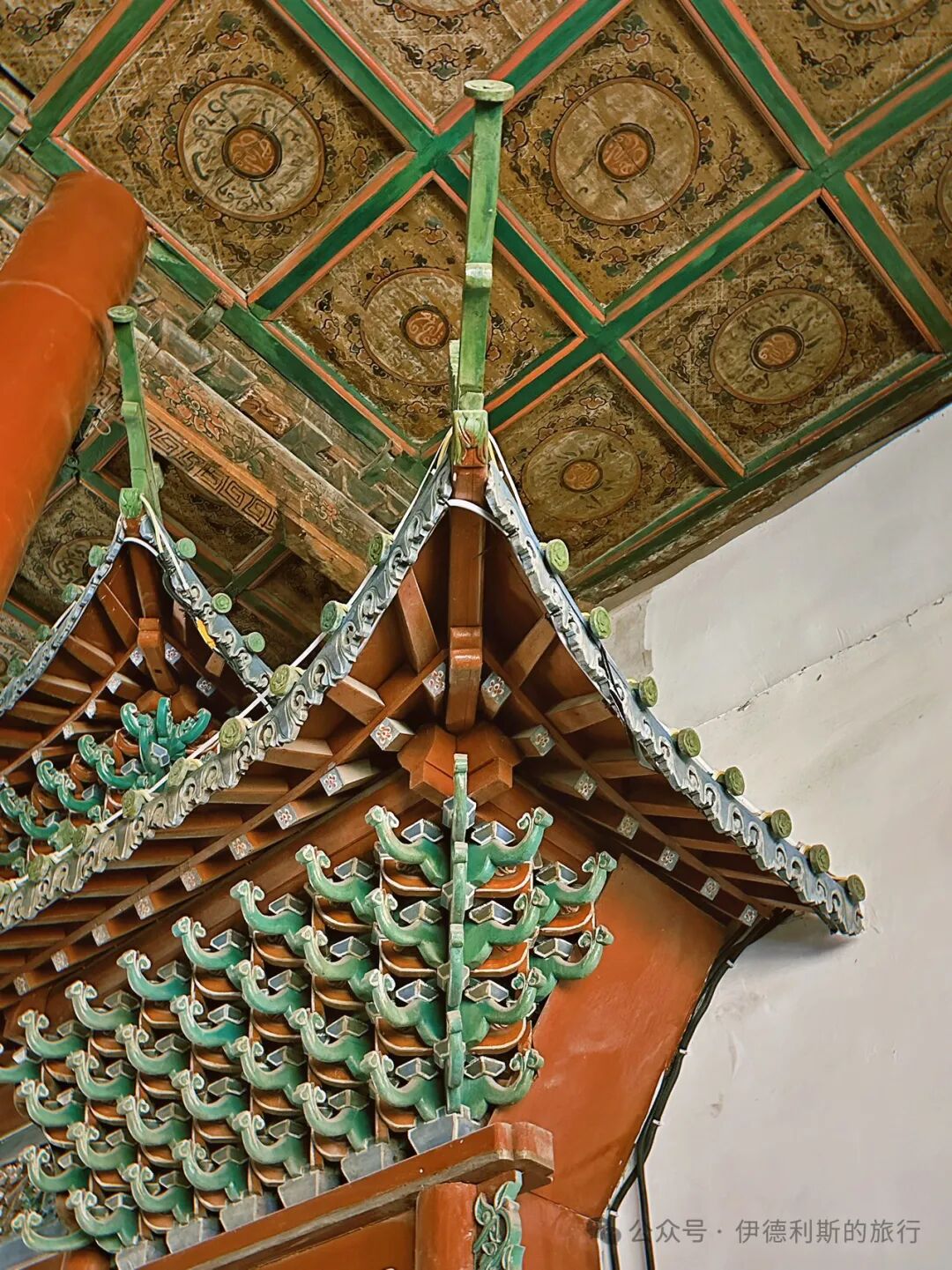
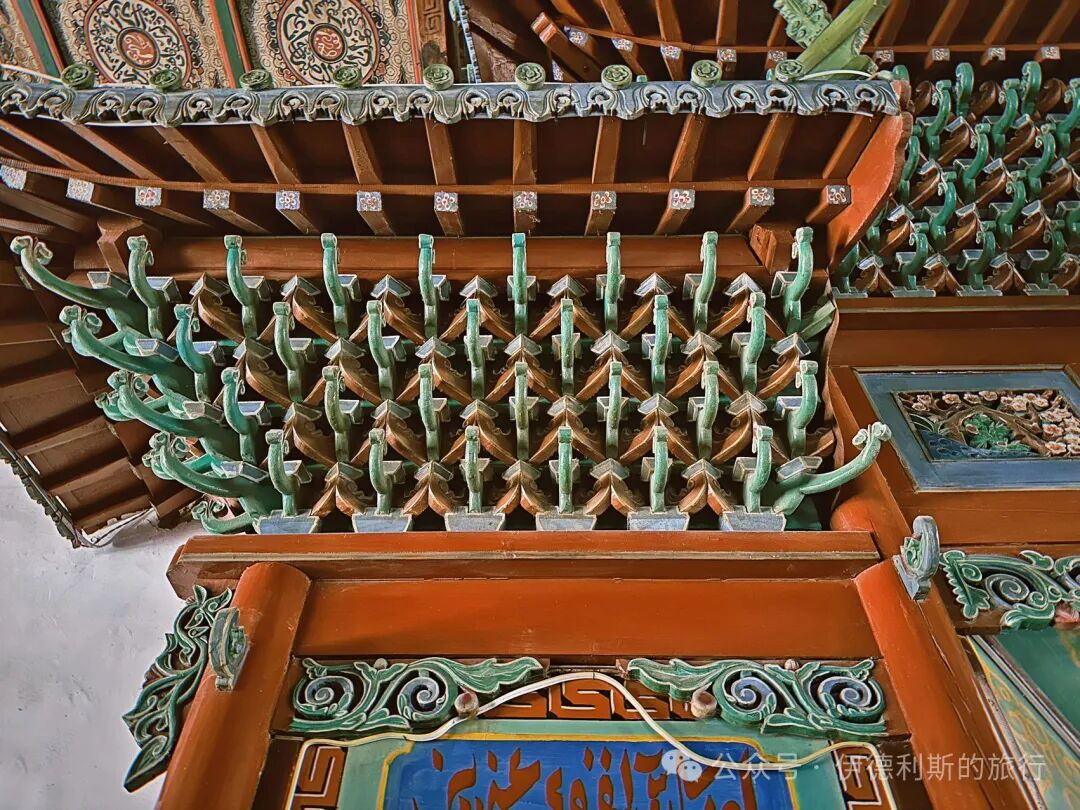
The main hall of the East Mosque features detailed roof beams and ridges, along with beautiful painted ceilings inside the prayer niche (yaodian).
The partition wall between the main hall and the prayer niche (yaodian) once held beautiful paintings. On both sides of the arched door in the middle were rows of intricate openwork calligraphy wood carvings. They were very beautiful, but unfortunately, they were destroyed during a difficult period.
The East Mosque features an archway-style mihrab, traditional wooden structures, and a 700-year-old locust tree in the courtyard.
The south gate of the East Mosque is no longer in use, and a pair of damaged stone lions sit in front of it. After entering the main gate, you reach the first courtyard and the hanging flower gate (chuihuamen) on the north side. Moving further in, you find the second courtyard and the South Lecture Hall on the north side. You must pass through the South Lecture Hall to reach the main courtyard where the main hall is located.
Linqing Women's Mosque
After leaving Hufu Beach, I rode my bike from the Linqing East Mosque to the Linqing Women's Mosque to find Zainab. The Linqing Women's Mosque was first built in 1924, making it exactly one hundred years old this year. In 2009, community elder Wan Yongcai and his wife Chen Zhong'e initiated the project, and their eldest son, Wan Qiusheng, chairman of the Linqing Sanhe Textile Group, along with his wife Hei Yuzhi, funded the reconstruction of the current building. This women's mosque is likely the largest one I have ever visited. view all
Summary: Linqing, Shandong - Canal City Mosques, Food and History (Part 1) is presented as a clear English travel account for readers interested in Muslim life, halal food, mosques, and local history. The article keeps the original place names, food details, photographs, and cultural context while focusing on Linqing, Shandong, Canal History.
Following my last post, 'Revisiting the Big and Small Mosque Streets in Dongguan, Liaocheng,' we took an afternoon train from Liaocheng to Linqing. We went straight to Baoliang's First Shop for a meat-filled flatbread roll (bingjuanrou). Wang Baoliang opened this shop in the 1980s, so it has been around for 40 years now. I ate their meat-filled flatbread roll back in 2017, and it was truly satisfying. The price of the roll has gone up by 5 yuan since my last visit, but it still tastes great.
Last time, I ordered the braised butterfly fish head, which was delicious, but I did not choose my dishes as well this time. This time, I ordered sesame beef and pan-braised hairtail fish. The meat in the sesame beef is the same as the meat in the flatbread roll, so I ended up ordering the same thing twice. The pan-braised hairtail fish had a fishy smell. I think ordering the braised hairtail or fried hairtail would have been a better choice.
Leaving Linqing Railway Station, I passed by the First Family Three-Fresh Potstickers (diyijia sanxian guotie). I ate there when I visited Linqing 17 years ago, and it remains the best Shandong cuisine I have ever had, especially the sesame lamb which was delicious.
Linqing North Mosque
I spent the afternoon performing namaz at the Linqing North Mosque. Linqing North Mosque sits where the Huitong River and Wei River meet. It was first built in 1504 (the seventh year of the Hongzhi reign of the Ming Dynasty). It underwent major expansions in 1564 (the 43rd year of the Jiajing reign), 1779 (the 44th year of the Qianlong reign), and 1809 (the 14th year of the Jiaqing reign) to reach its current form.
The main hall of Linqing North Mosque stands on a 1-meter-high stone platform and consists of a porch, the main hall, and a rear kiln-style hall (yaodian), making it very grand. The roof of the kiln-style hall has three moon-watching towers. The middle one has an octagonal pointed roof, while the two sides have square pointed roofs, all topped with peach-shaped finials.
The mosque features a memorial archway-style mihrab decorated with floral patterns and Arabic calligraphy, and the ceiling of the kiln-style hall also displays Arabic calligraphy.
The main hall of the North Mosque preserves precious murals from the Qing Dynasty.
The North Mosque (Beidasi) features various forms of calligraphy, including palace lanterns (gongdeng), brick carvings, plaques, architectural paintings, and wood carvings.
At the far east end of the North Mosque stands a gate in the style of a memorial archway (pailou), featuring delicate bracket sets (dougong) and upturned eaves.
After entering the main gate, you reach a ceremonial gate (yimen) built in the style of a memorial archway. Two Qing Dynasty plaques hang on the ceremonial gate:
A plaque reading 'Sincerity and Rectitude' (Chengyi Zhengxin) erected in the 11th year of the Guangxu reign by Li Ying, a decorated military official.
A plaque reading 'Orderly Human Relations' (Yilun Youxu) from the 2nd year of the Qianlong reign by Yang Jing, a deputy military commander; this one appears to be a replica.
Behind the ceremonial gate is a path leading to the main prayer hall, with lecture halls (jiangtang) located on the north and south sides.
On the north and south sides of the main prayer hall are two scripture pavilions (cangjingting) with four-cornered pointed roofs and small porches (baoxia) in front of the doors. In front of the pavilion stands a 500-year-old Chinese arborvitae (cebai) planted when the mosque was built.
Behind the main hall is the back gate, which features a plaque inscribed with "Qingzhen Libaisi" (Mosque) dated to the first month of the Jiajing jiazi year. The mosque also houses several stone tablets from the Qing dynasty and the Republic of China era.
Linqing East Mosque
After leaving the Linqing North Mosque, I went across the street to the East Mosque to pay my respects at the tombs of the saints (shamu) and the Hufu cemetery (Hufutan). The Linqing East Mosque was first built in 1465 (the first year of the Chenghua reign of the Ming dynasty). It was renovated twice in 1583 (the eleventh year of the Wanli reign) and 1649 (the sixth year of the Shunzhi reign), then expanded again in 1734 (the twelfth year of the Yongzheng reign), resulting in its grand scale.
On the far west side of the Linqing East Mosque is the back gate, which features a "Libaisi" (Mosque) plaque inscribed during the renovation in the sixth year of the Shunzhi reign. Behind the back gate is the main prayer hall, which consists of a front porch (juanpeng), the main hall, and a rear vaulted hall (yaodian). The roof of the vaulted hall has four sloping sides meeting at a point, topped with a gilded gourd-shaped finial.
The main hall is nearly 30 meters deep, with 14 pillars supporting the roof beams. The mihrab is the same style as the one in the North Mosque, featuring a decorative archway design.
The East Mosque has a porch roof (juanpeng) over the main hall and traditional calligraphy preserved on the pillars inside.
The main hall of the East Mosque features detailed roof beams and ridges, along with beautiful painted ceilings inside the prayer niche (yaodian).
The partition wall between the main hall and the prayer niche (yaodian) once held beautiful paintings. On both sides of the arched door in the middle were rows of intricate openwork calligraphy wood carvings. They were very beautiful, but unfortunately, they were destroyed during a difficult period.
The East Mosque features an archway-style mihrab, traditional wooden structures, and a 700-year-old locust tree in the courtyard.
The south gate of the East Mosque is no longer in use, and a pair of damaged stone lions sit in front of it. After entering the main gate, you reach the first courtyard and the hanging flower gate (chuihuamen) on the north side. Moving further in, you find the second courtyard and the South Lecture Hall on the north side. You must pass through the South Lecture Hall to reach the main courtyard where the main hall is located.
Linqing Women's Mosque
After leaving Hufu Beach, I rode my bike from the Linqing East Mosque to the Linqing Women's Mosque to find Zainab. The Linqing Women's Mosque was first built in 1924, making it exactly one hundred years old this year. In 2009, community elder Wan Yongcai and his wife Chen Zhong'e initiated the project, and their eldest son, Wan Qiusheng, chairman of the Linqing Sanhe Textile Group, along with his wife Hei Yuzhi, funded the reconstruction of the current building. This women's mosque is likely the largest one I have ever visited. view all
Reposted from the web
Summary: Linqing, Shandong - Canal City Mosques, Food and History (Part 1) is presented as a clear English travel account for readers interested in Muslim life, halal food, mosques, and local history. The article keeps the original place names, food details, photographs, and cultural context while focusing on Linqing, Shandong, Canal History.
Following my last post, 'Revisiting the Big and Small Mosque Streets in Dongguan, Liaocheng,' we took an afternoon train from Liaocheng to Linqing. We went straight to Baoliang's First Shop for a meat-filled flatbread roll (bingjuanrou). Wang Baoliang opened this shop in the 1980s, so it has been around for 40 years now. I ate their meat-filled flatbread roll back in 2017, and it was truly satisfying. The price of the roll has gone up by 5 yuan since my last visit, but it still tastes great.
Last time, I ordered the braised butterfly fish head, which was delicious, but I did not choose my dishes as well this time. This time, I ordered sesame beef and pan-braised hairtail fish. The meat in the sesame beef is the same as the meat in the flatbread roll, so I ended up ordering the same thing twice. The pan-braised hairtail fish had a fishy smell. I think ordering the braised hairtail or fried hairtail would have been a better choice.
Leaving Linqing Railway Station, I passed by the First Family Three-Fresh Potstickers (diyijia sanxian guotie). I ate there when I visited Linqing 17 years ago, and it remains the best Shandong cuisine I have ever had, especially the sesame lamb which was delicious.
Linqing North Mosque
I spent the afternoon performing namaz at the Linqing North Mosque. Linqing North Mosque sits where the Huitong River and Wei River meet. It was first built in 1504 (the seventh year of the Hongzhi reign of the Ming Dynasty). It underwent major expansions in 1564 (the 43rd year of the Jiajing reign), 1779 (the 44th year of the Qianlong reign), and 1809 (the 14th year of the Jiaqing reign) to reach its current form.
The main hall of Linqing North Mosque stands on a 1-meter-high stone platform and consists of a porch, the main hall, and a rear kiln-style hall (yaodian), making it very grand. The roof of the kiln-style hall has three moon-watching towers. The middle one has an octagonal pointed roof, while the two sides have square pointed roofs, all topped with peach-shaped finials.
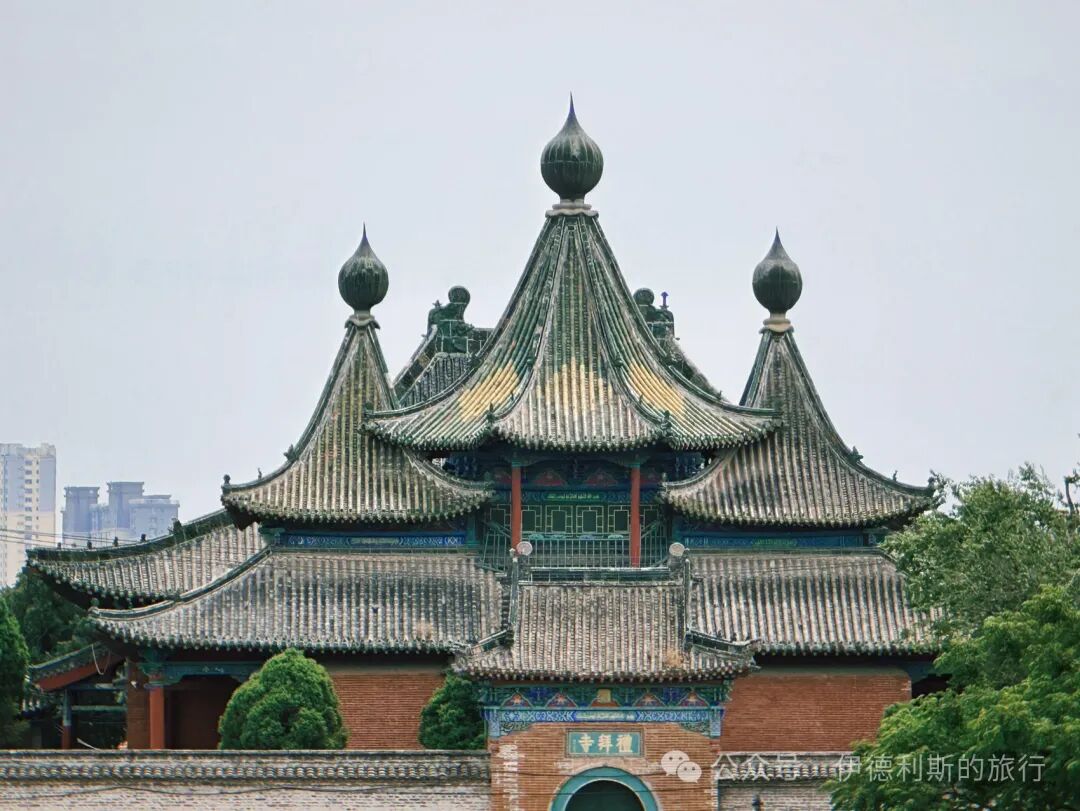
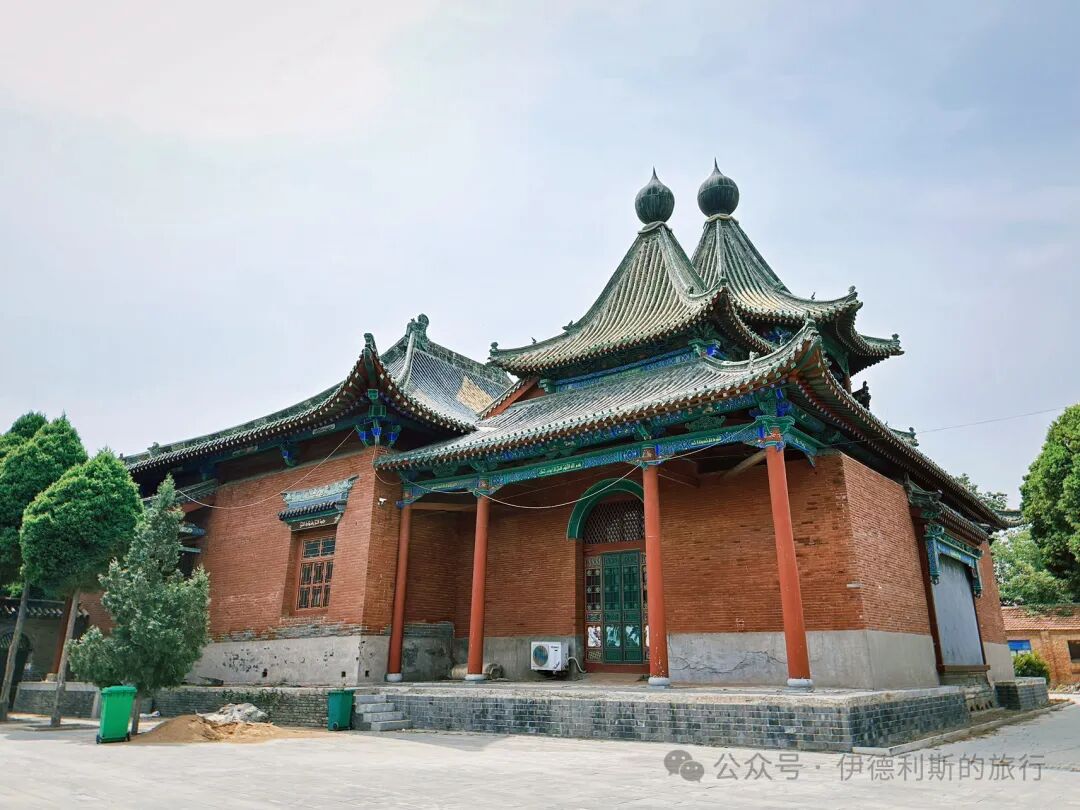
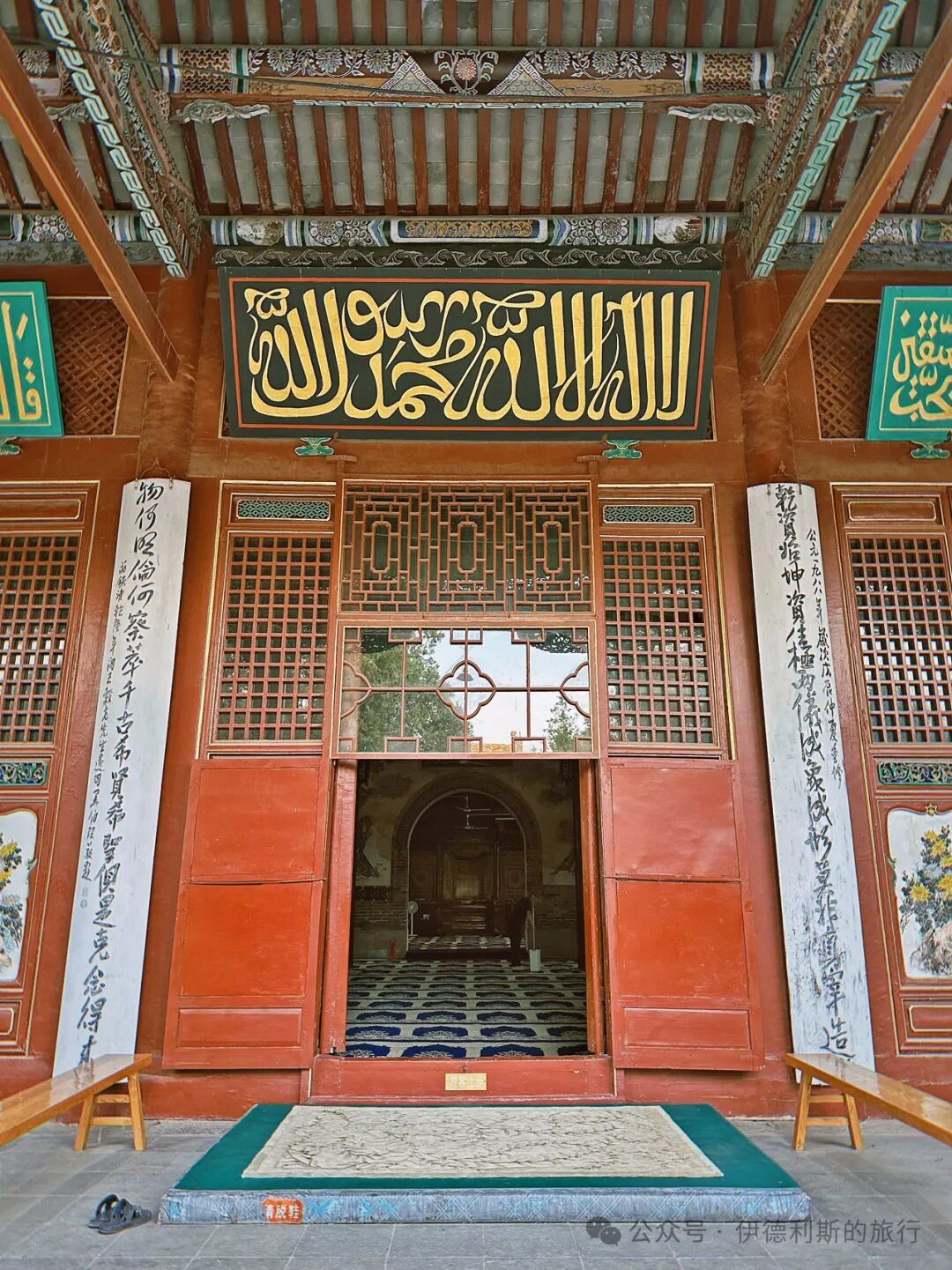
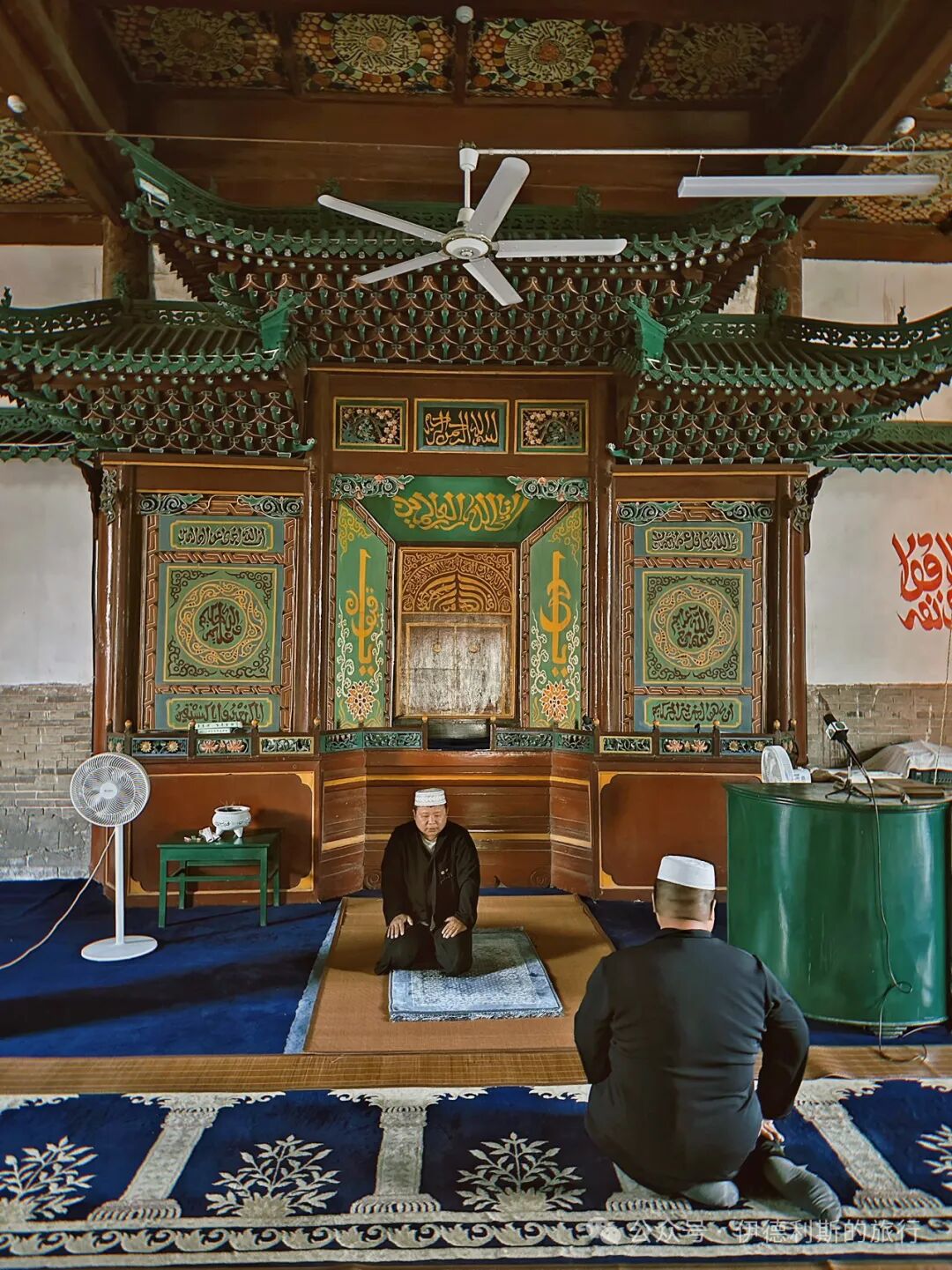
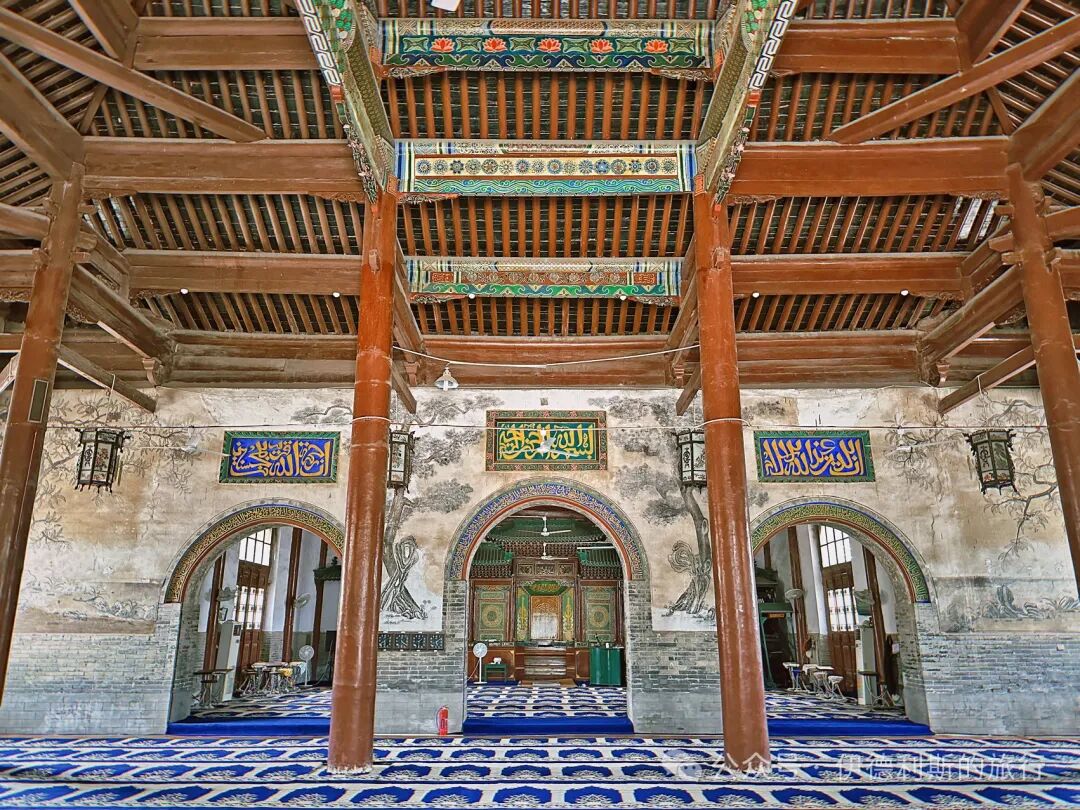
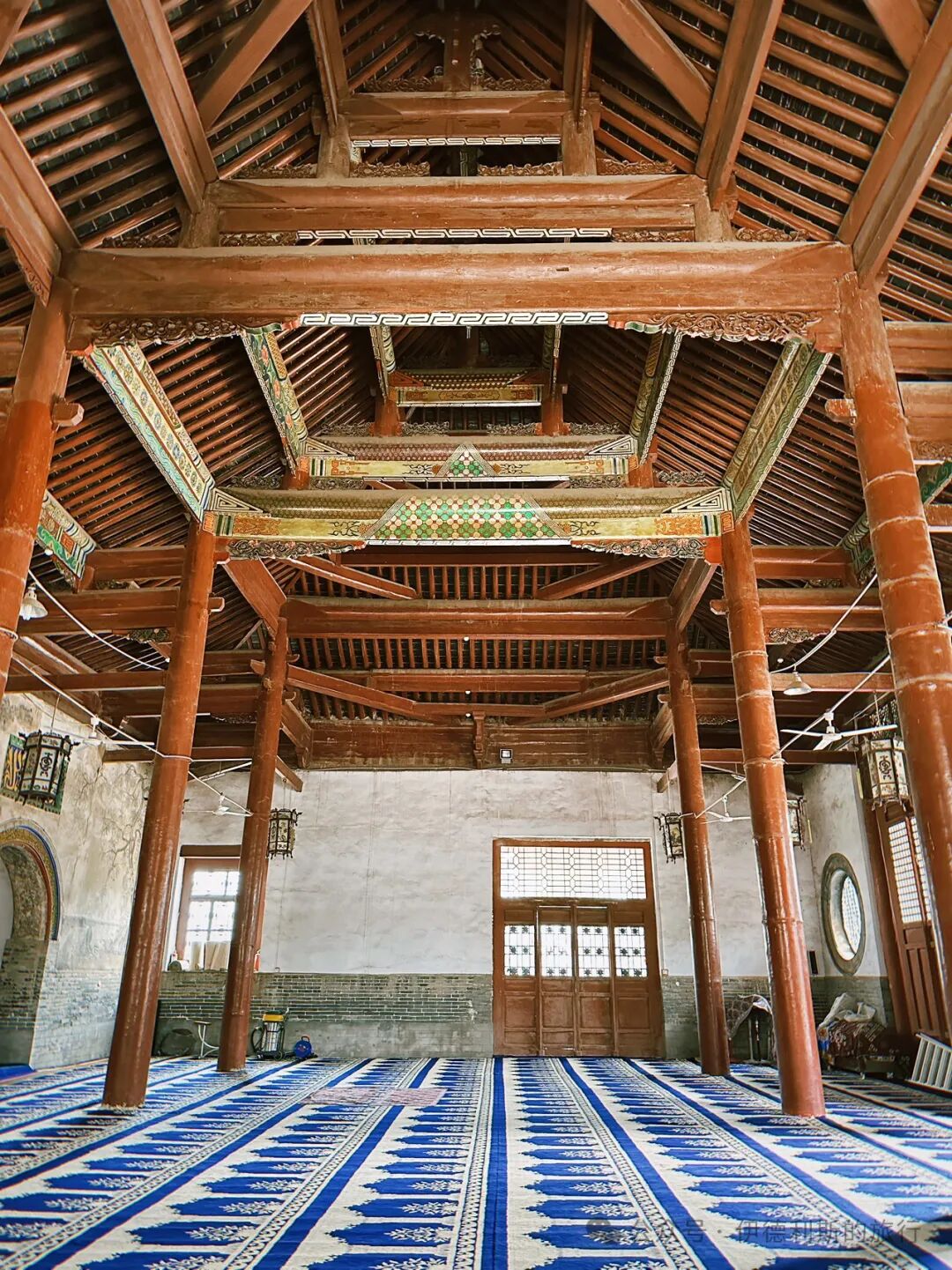
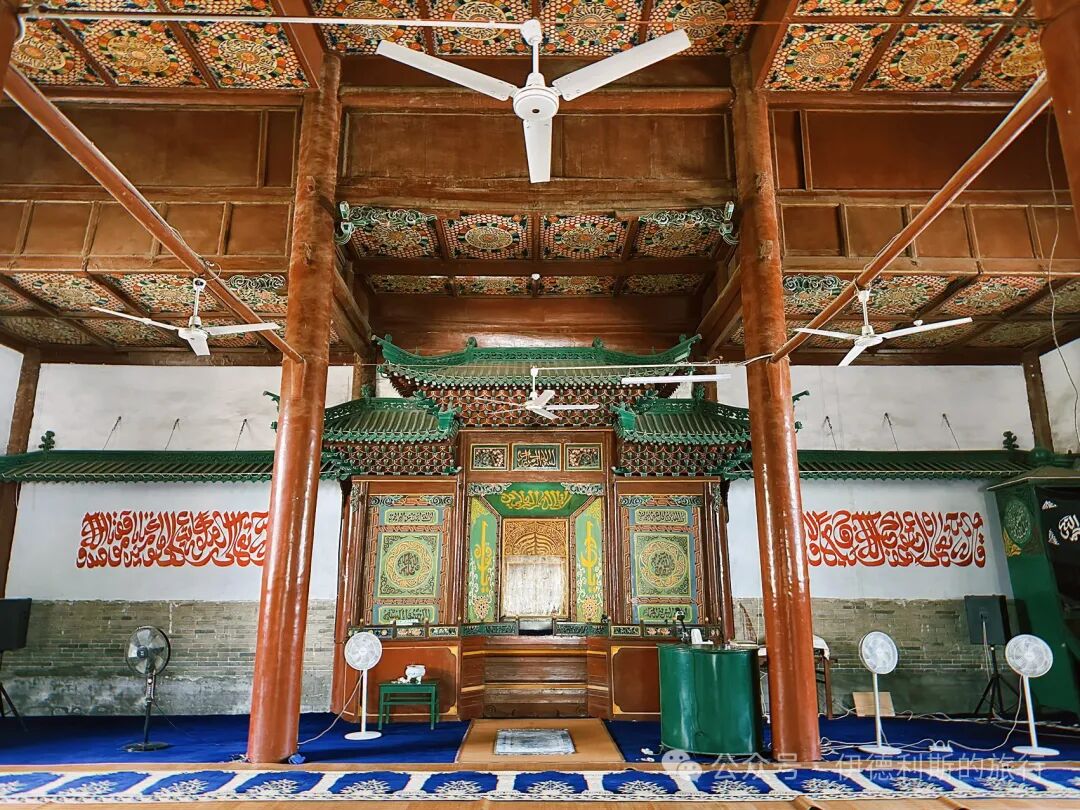
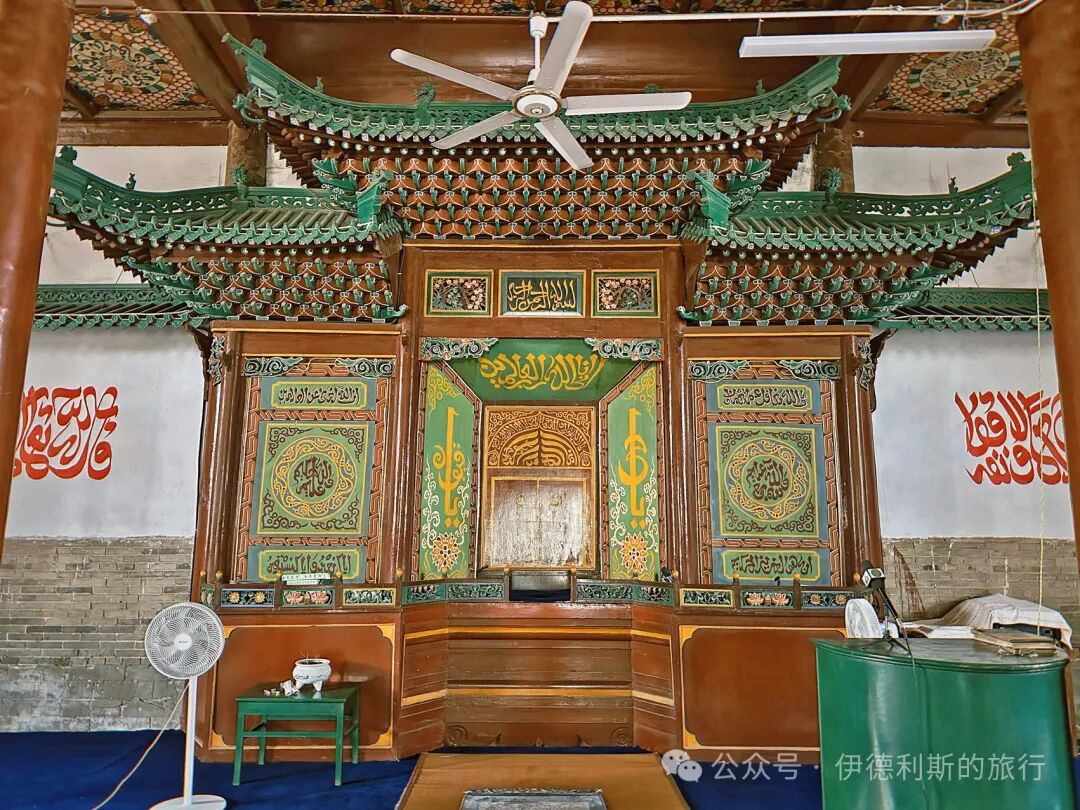
The mosque features a memorial archway-style mihrab decorated with floral patterns and Arabic calligraphy, and the ceiling of the kiln-style hall also displays Arabic calligraphy.
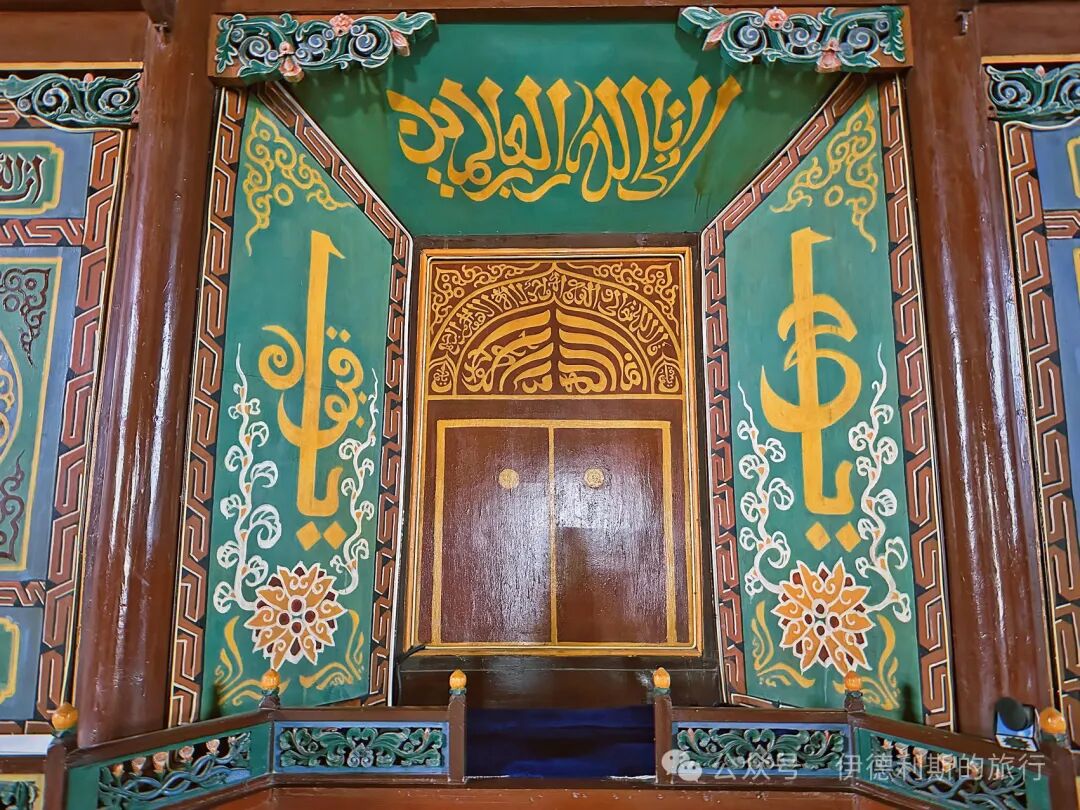
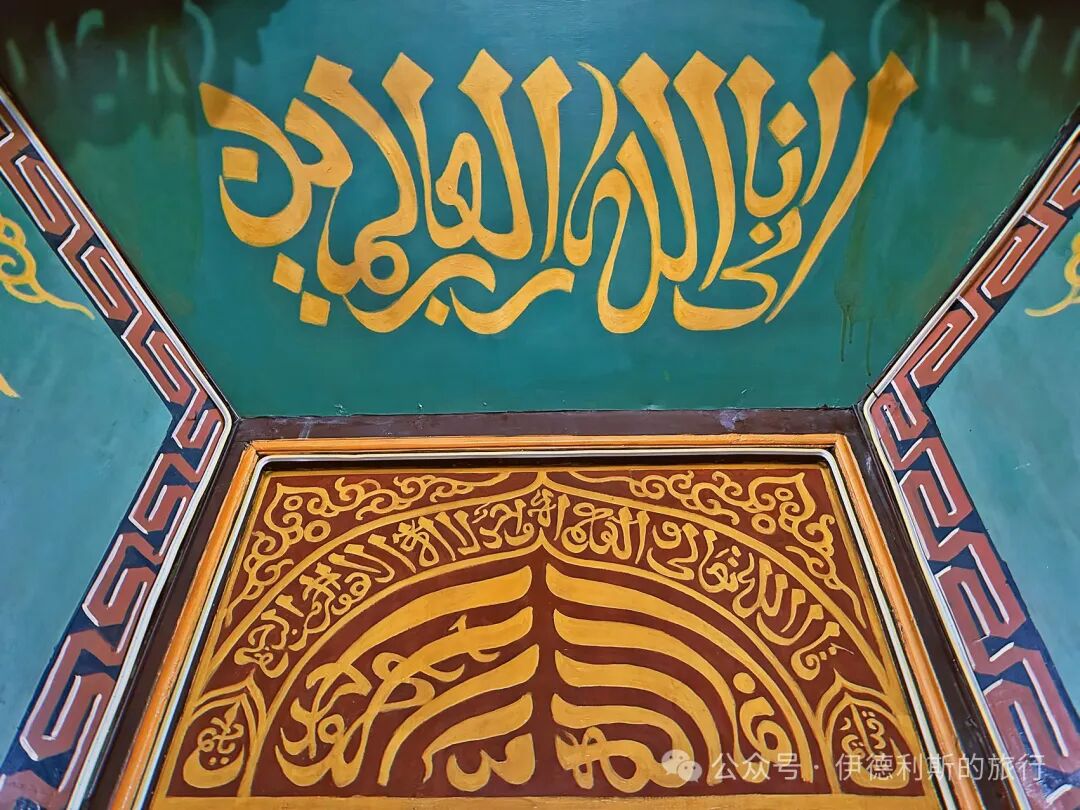
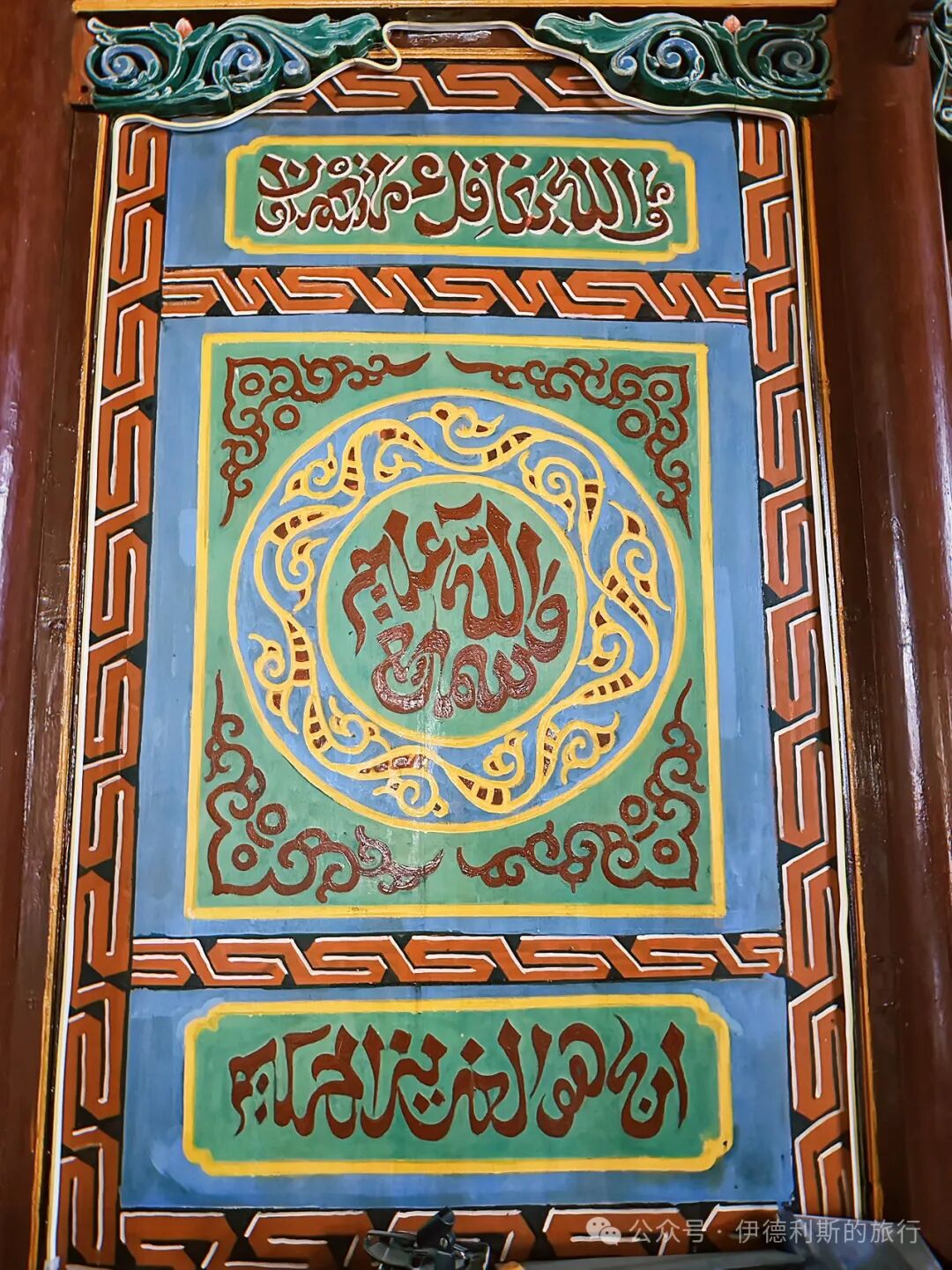
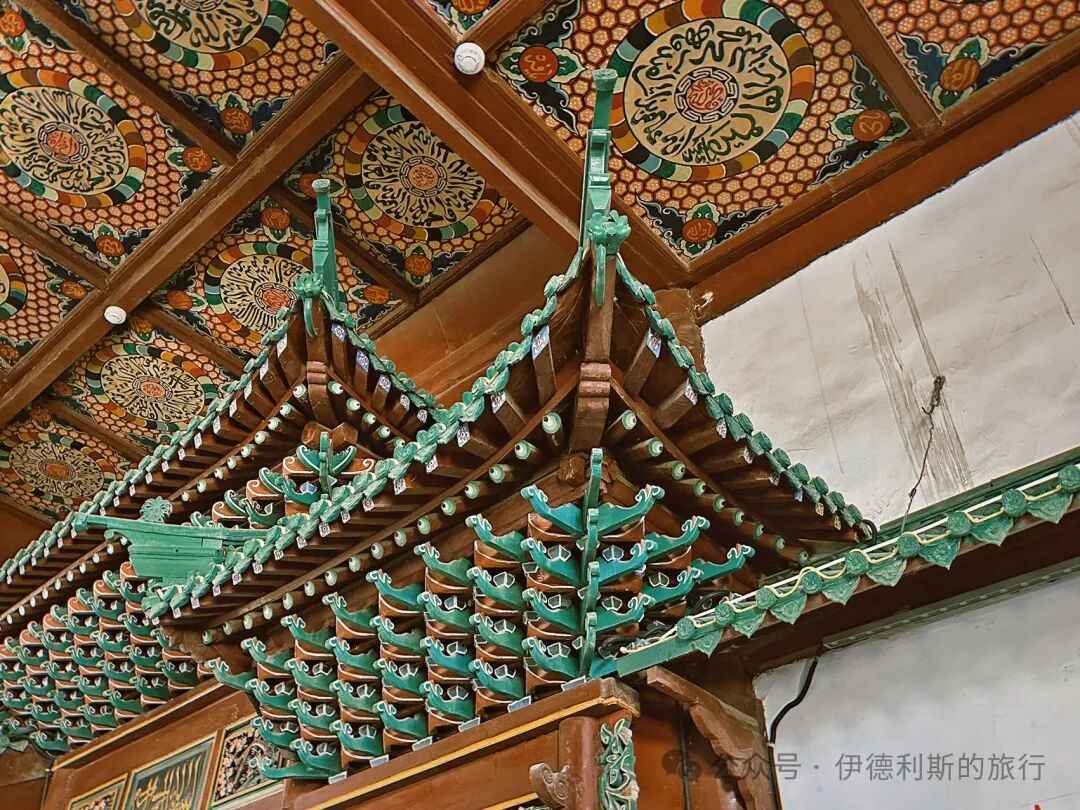
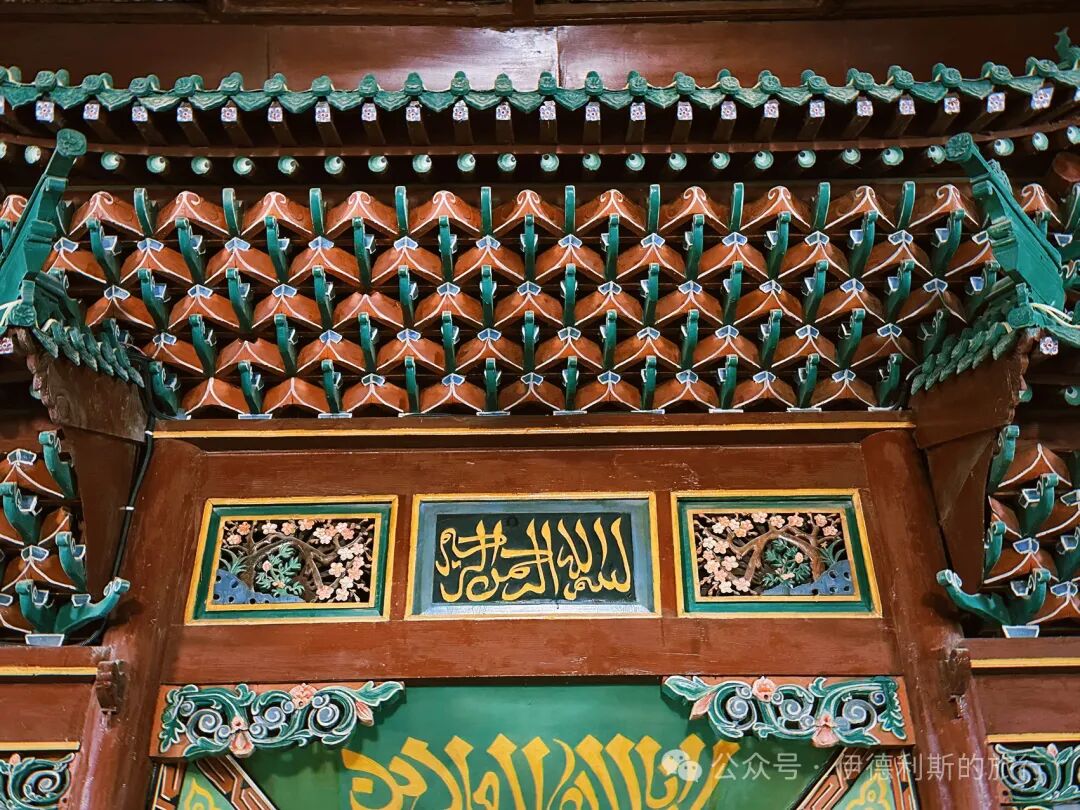
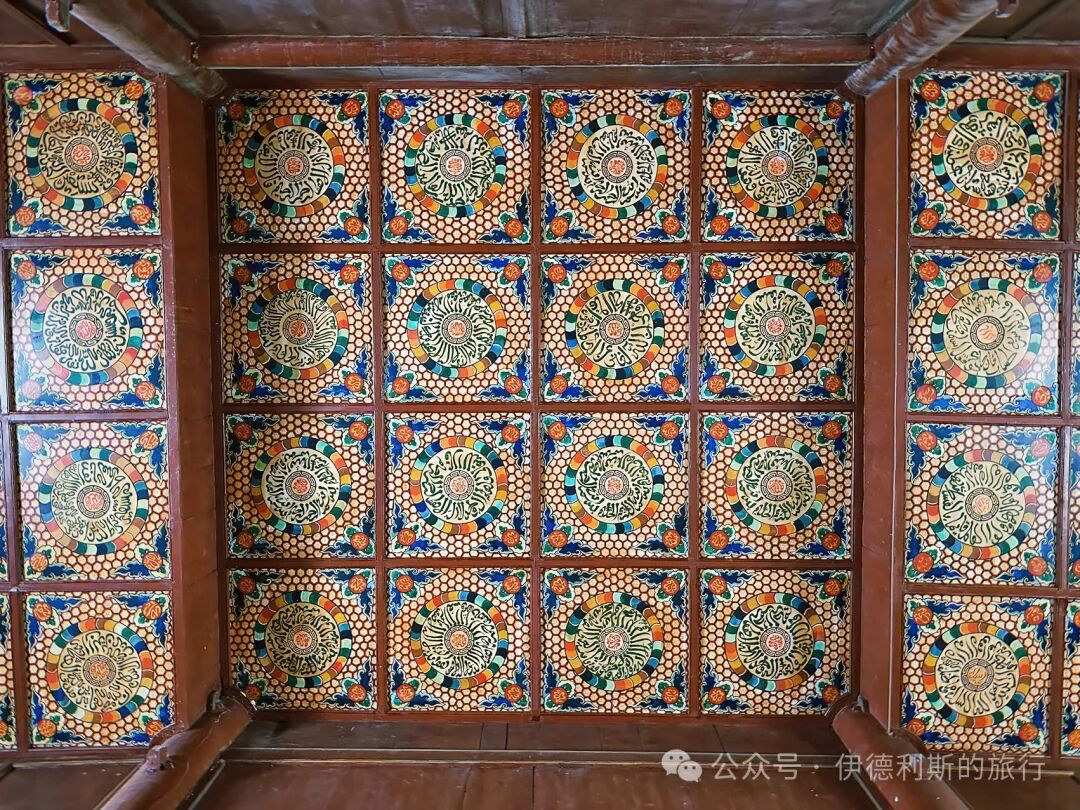
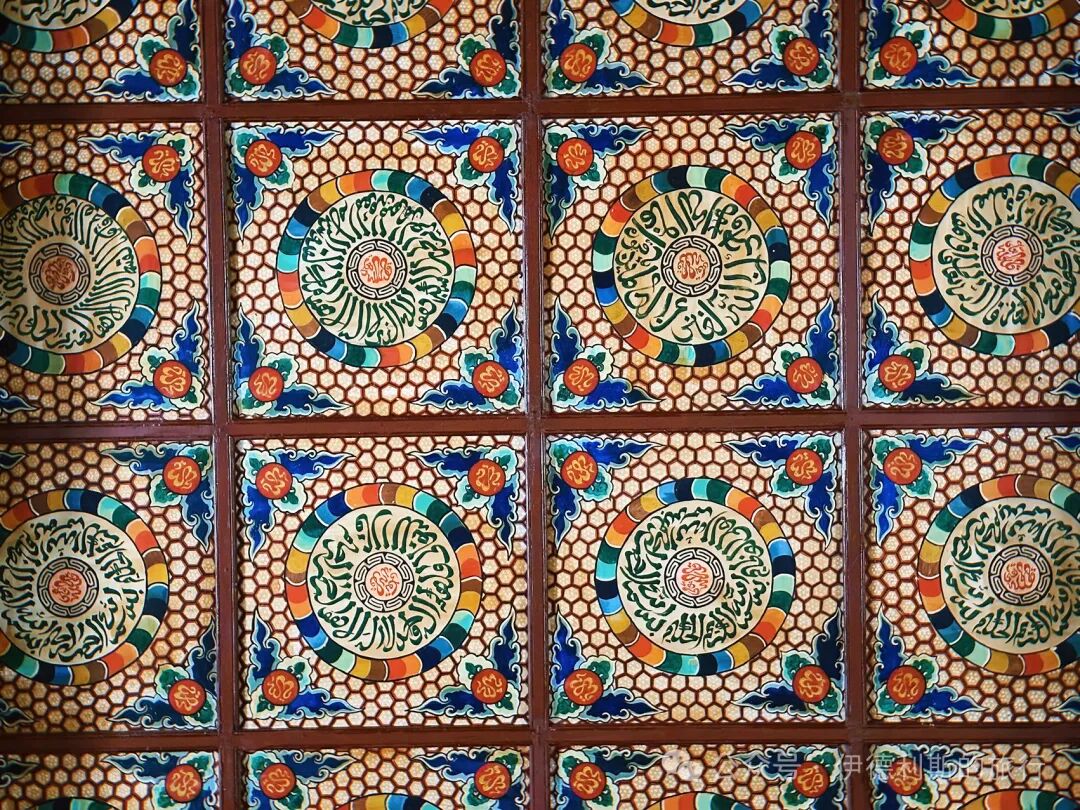
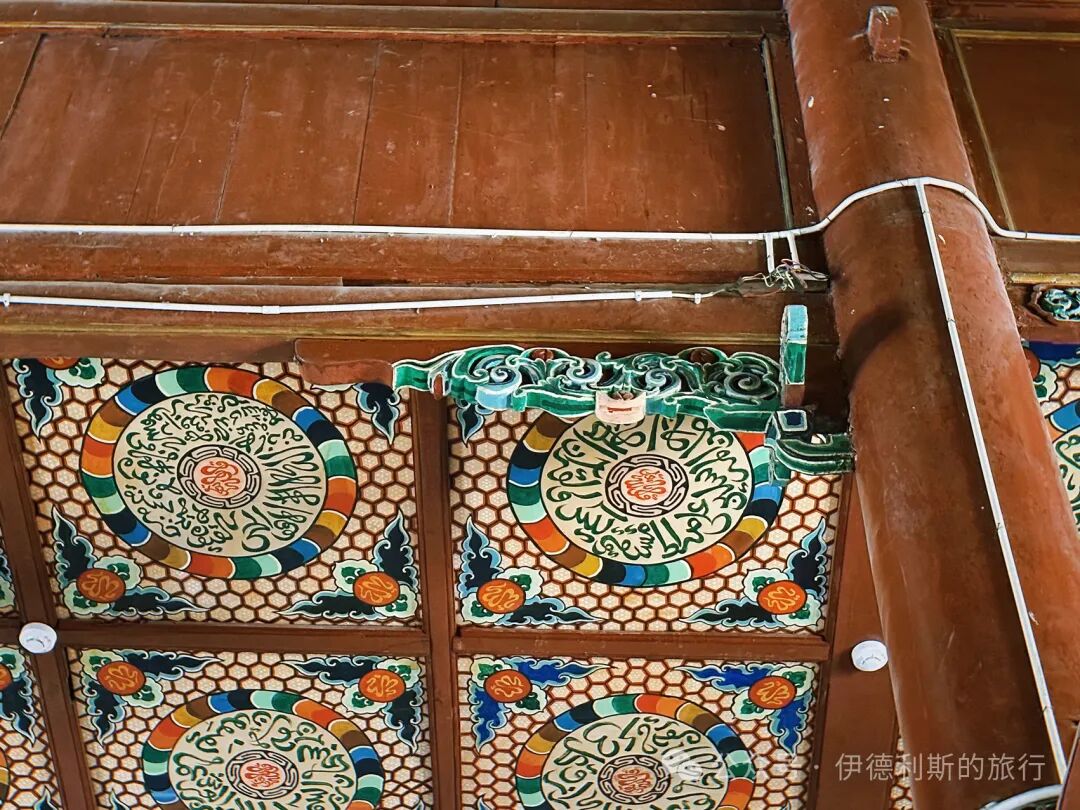
The main hall of the North Mosque preserves precious murals from the Qing Dynasty.
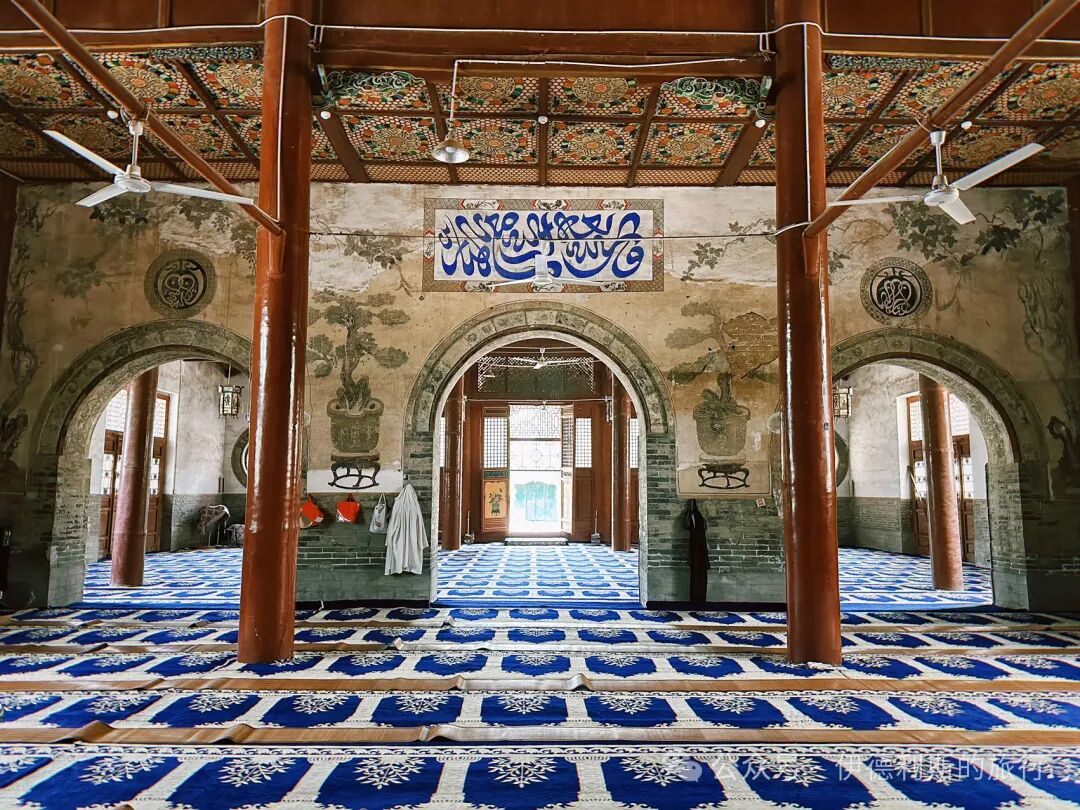
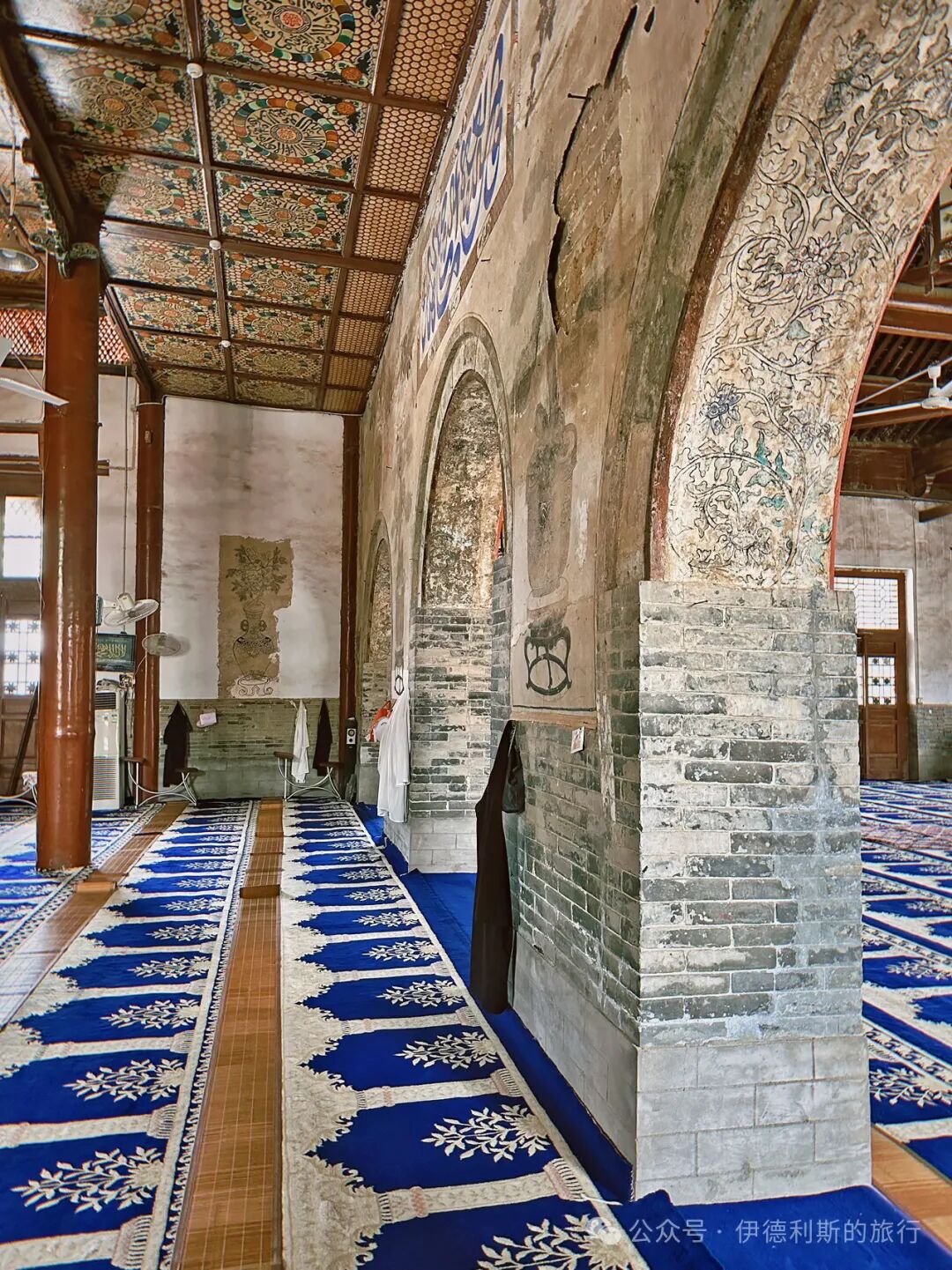
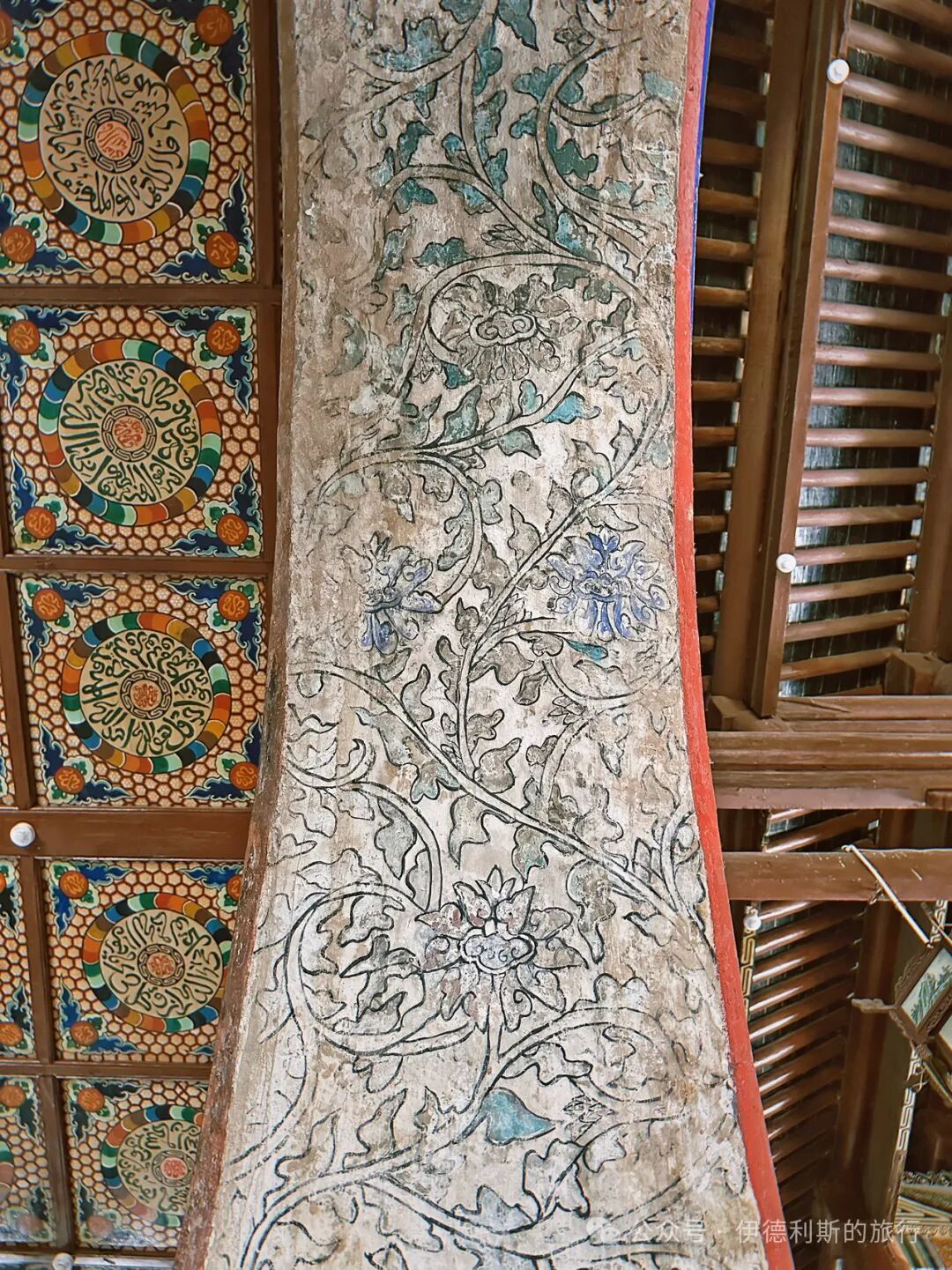
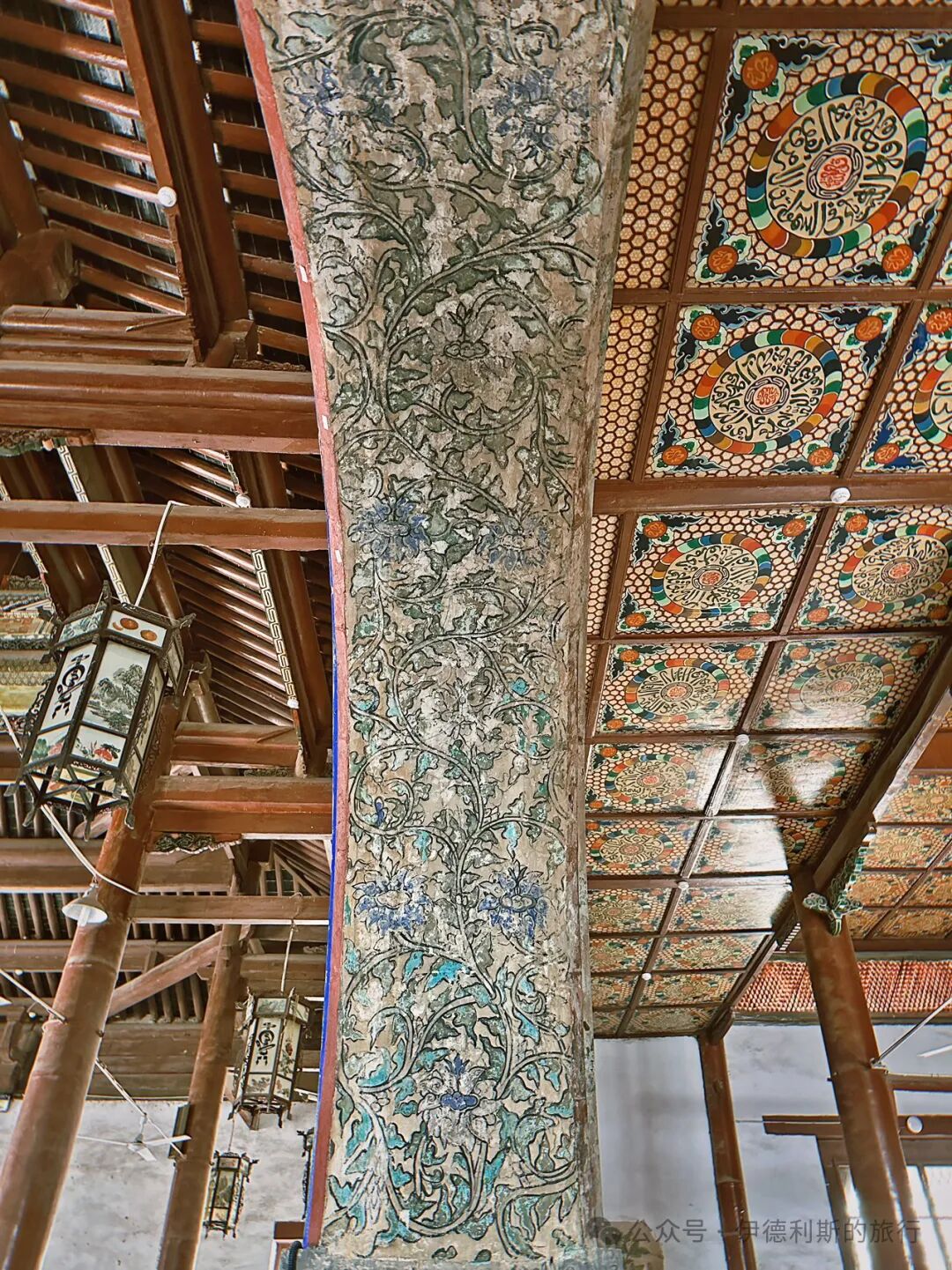
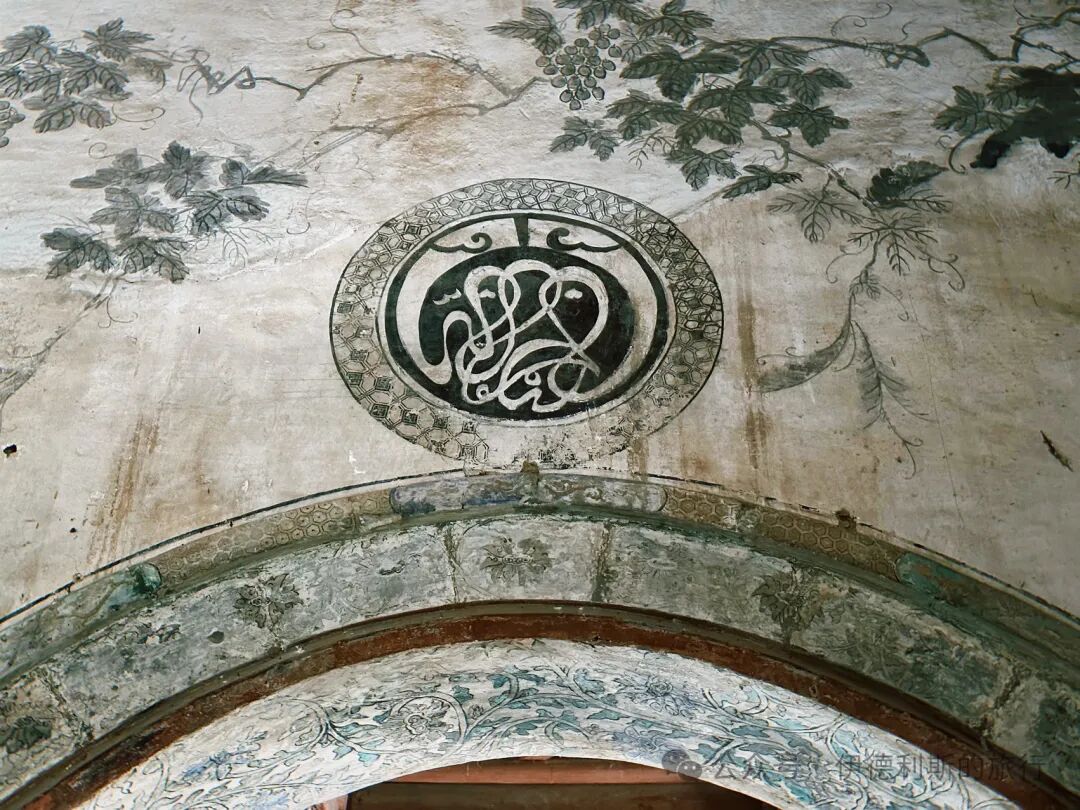
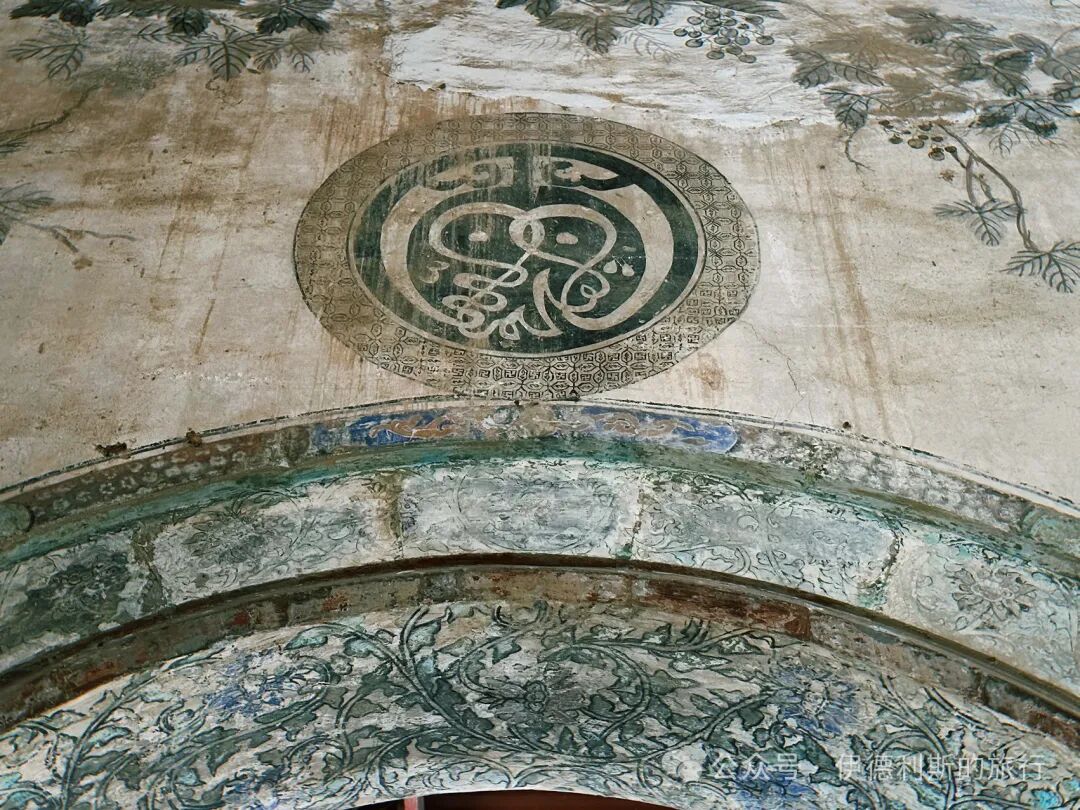
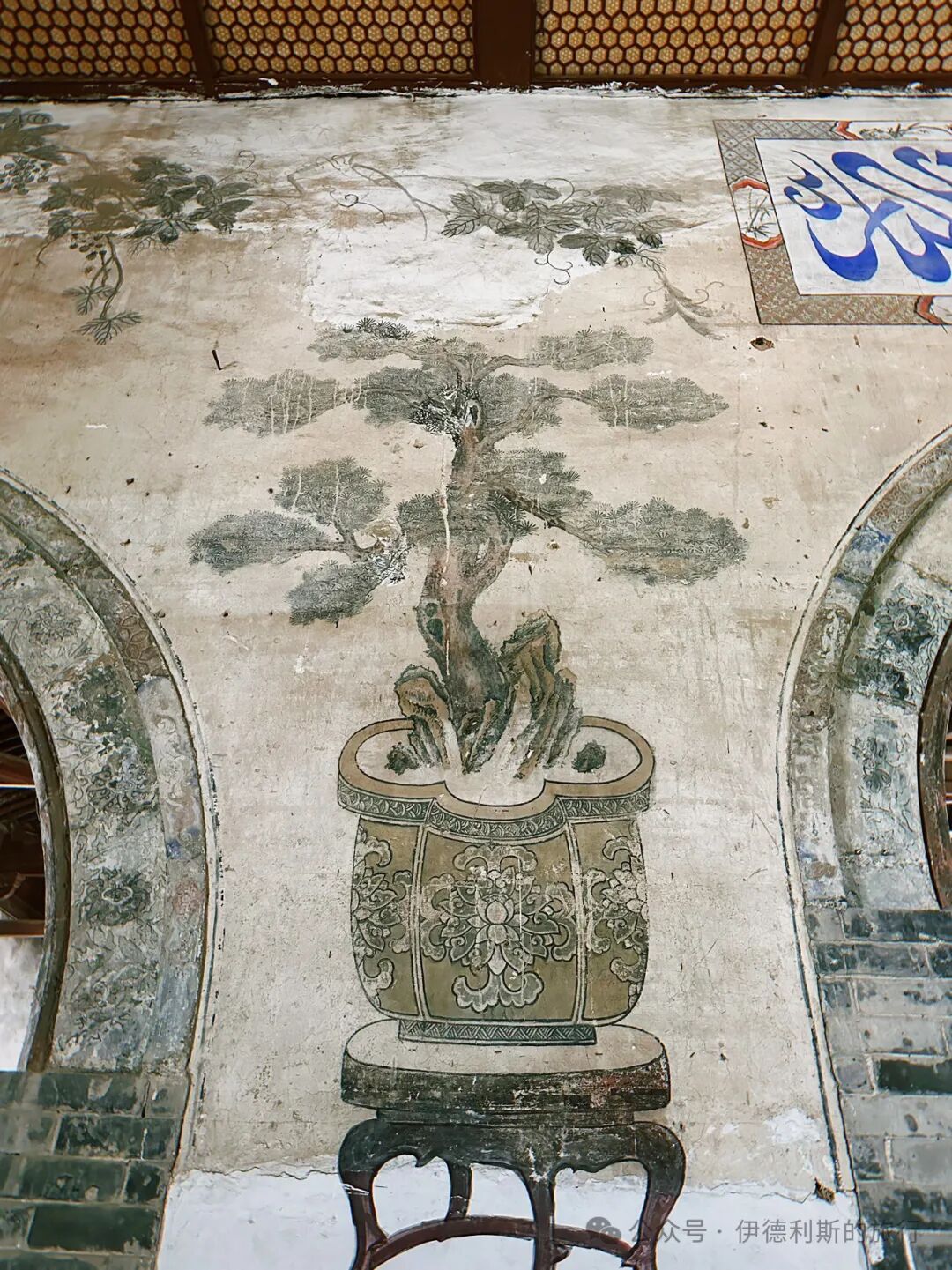
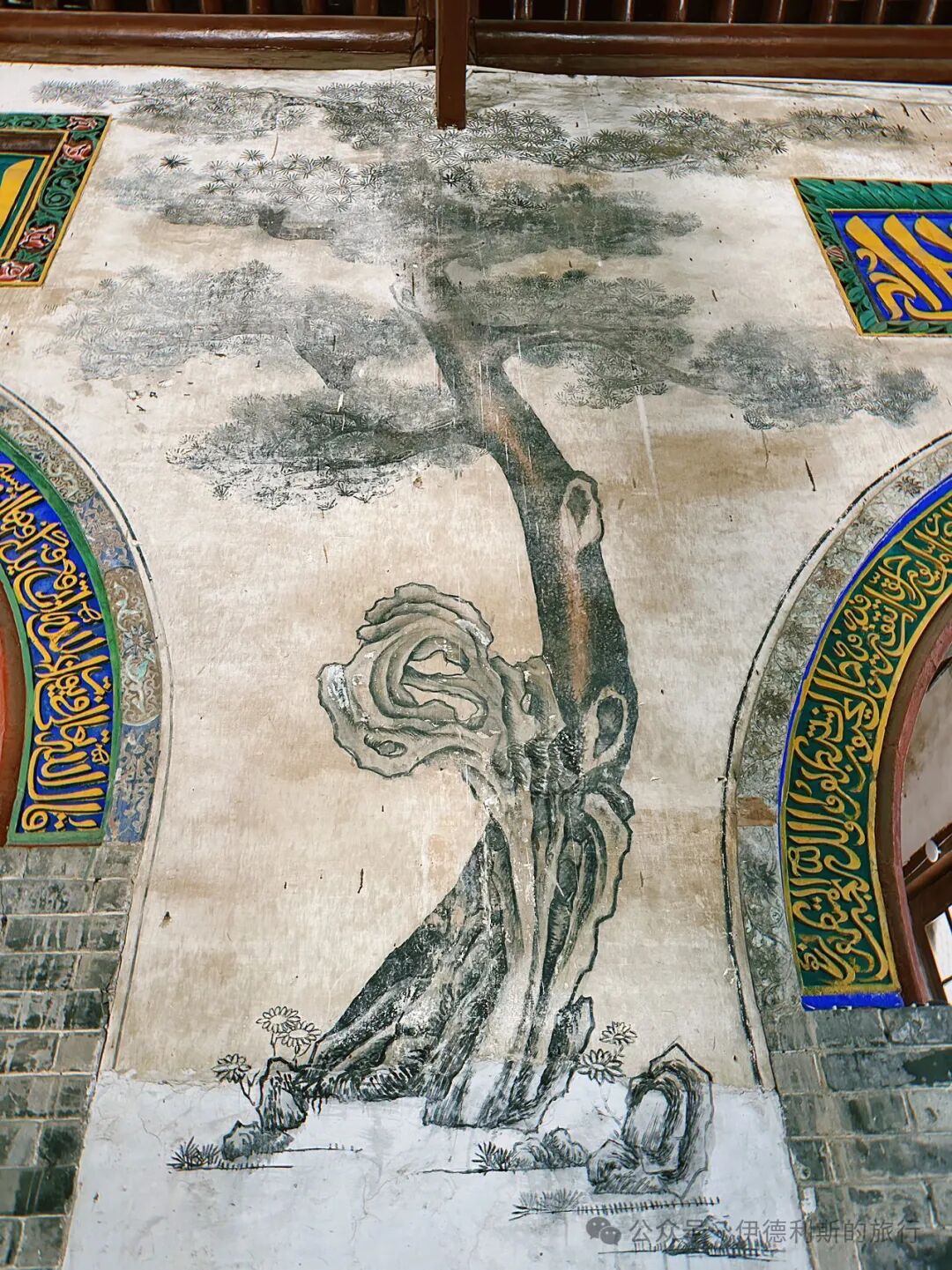
The North Mosque (Beidasi) features various forms of calligraphy, including palace lanterns (gongdeng), brick carvings, plaques, architectural paintings, and wood carvings.
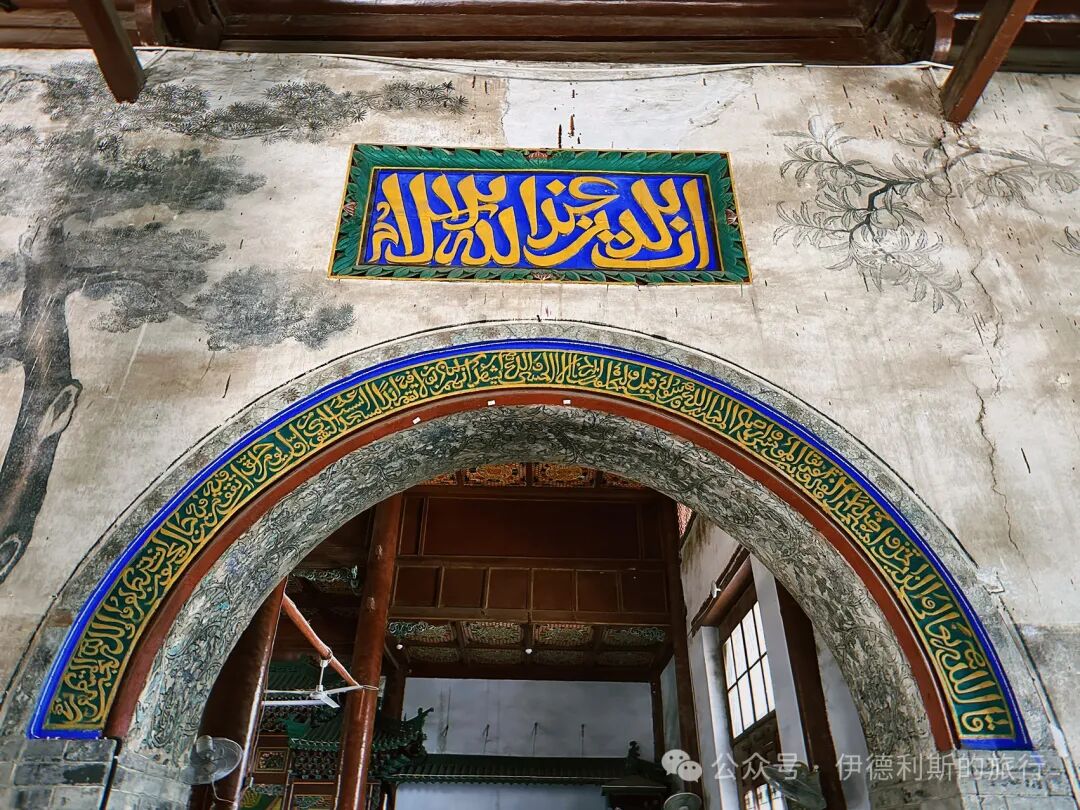
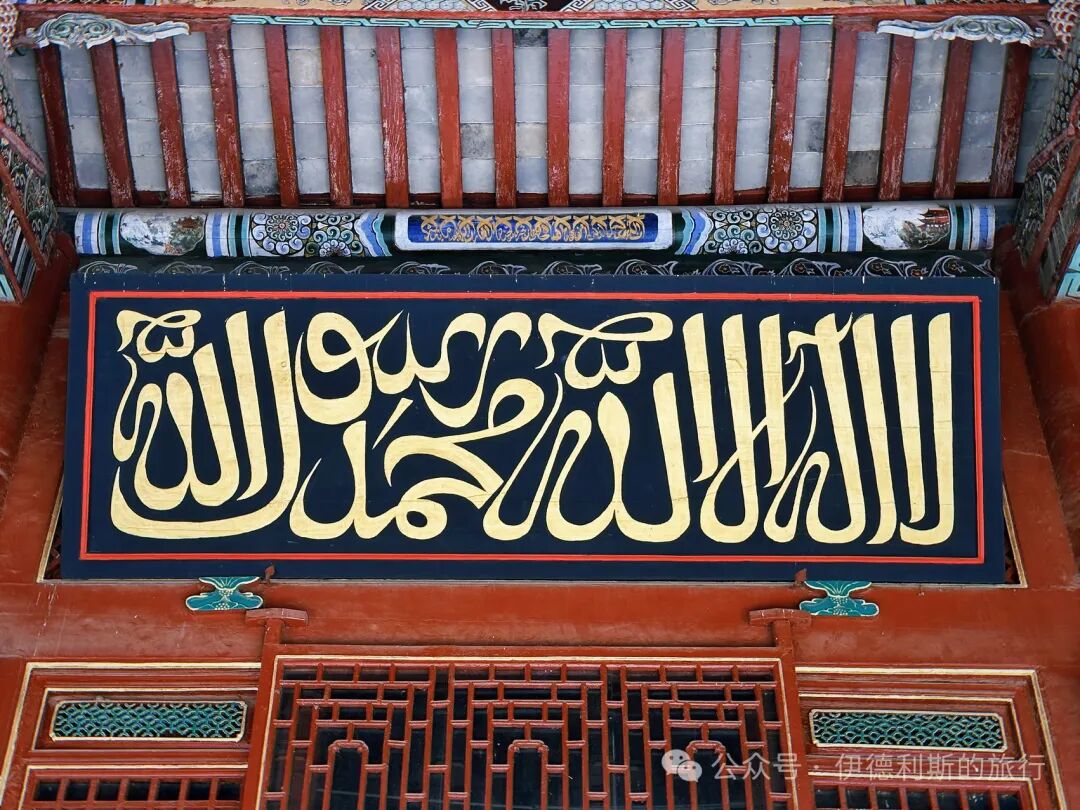
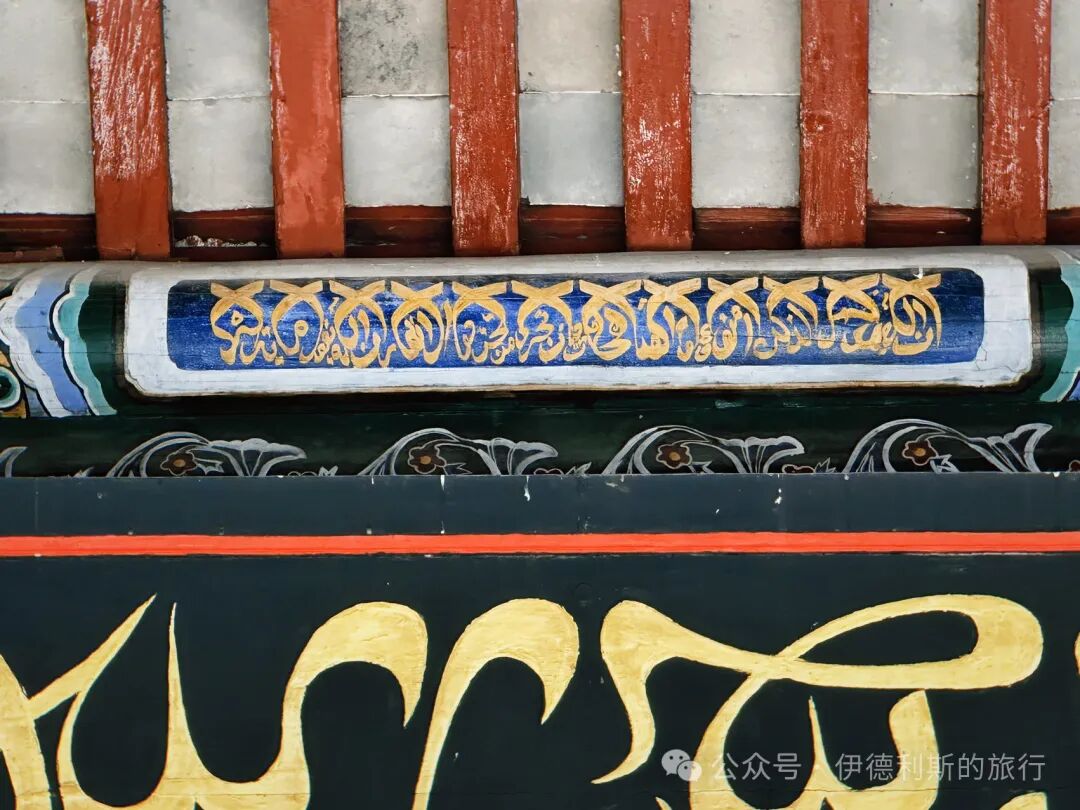
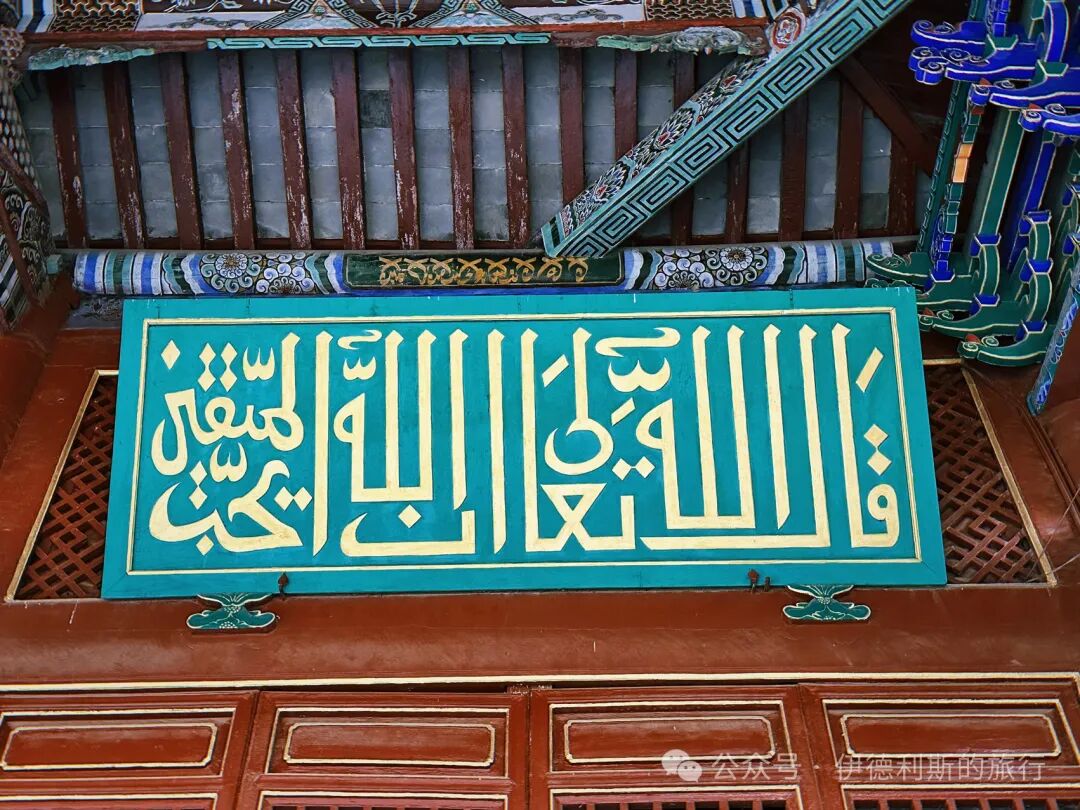
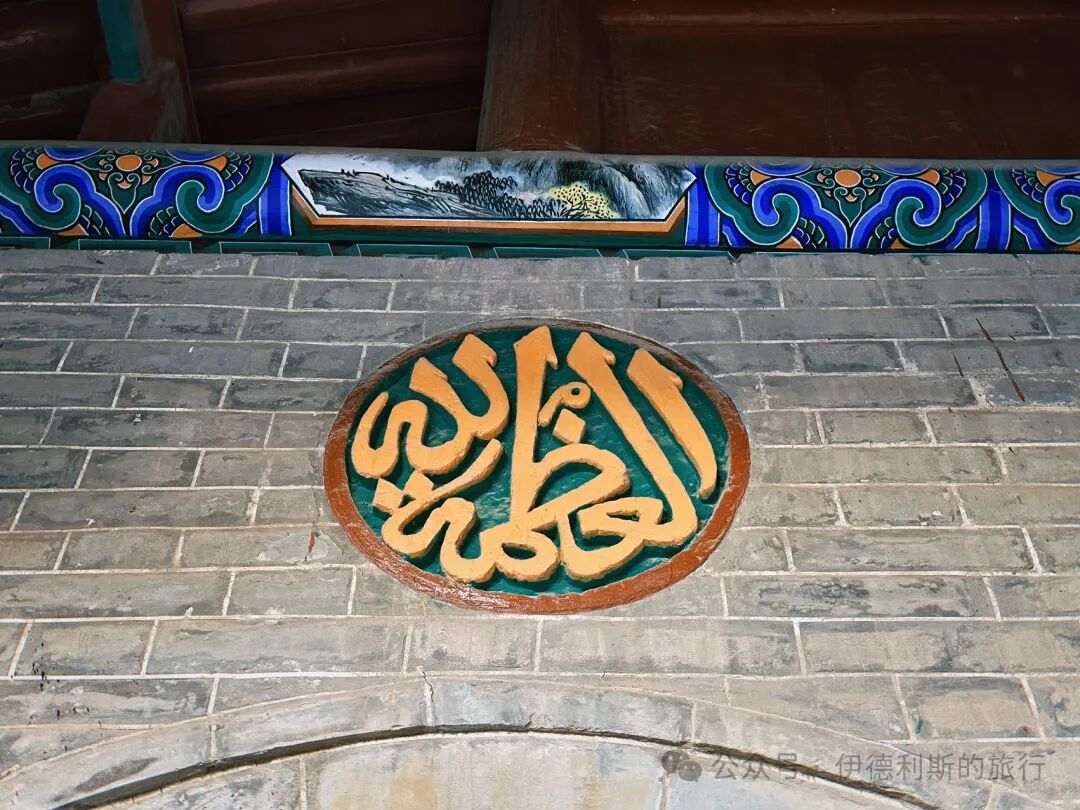
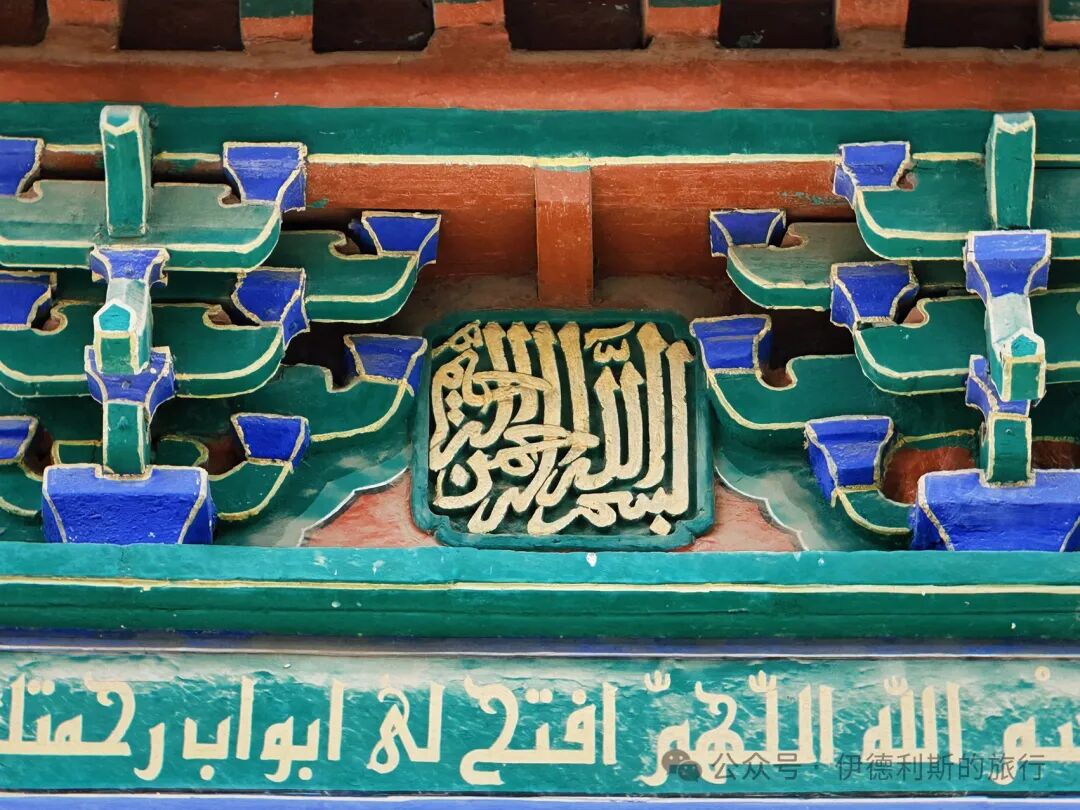
At the far east end of the North Mosque stands a gate in the style of a memorial archway (pailou), featuring delicate bracket sets (dougong) and upturned eaves.
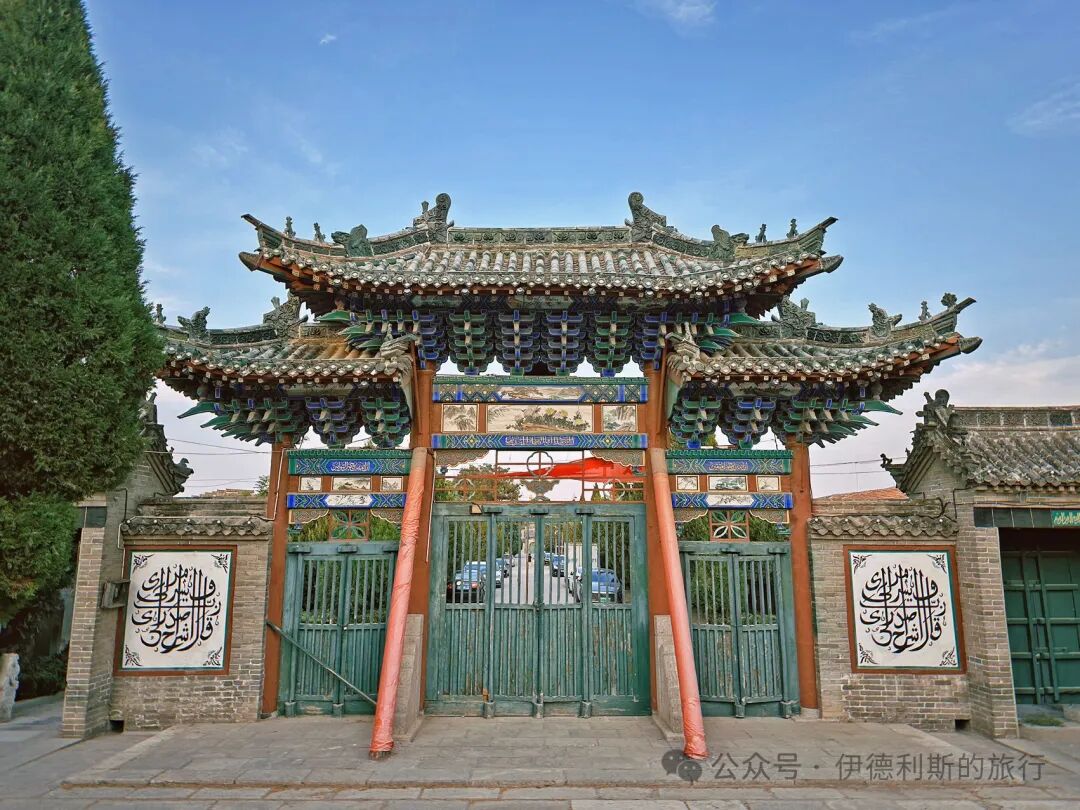
After entering the main gate, you reach a ceremonial gate (yimen) built in the style of a memorial archway. Two Qing Dynasty plaques hang on the ceremonial gate:
A plaque reading 'Sincerity and Rectitude' (Chengyi Zhengxin) erected in the 11th year of the Guangxu reign by Li Ying, a decorated military official.
A plaque reading 'Orderly Human Relations' (Yilun Youxu) from the 2nd year of the Qianlong reign by Yang Jing, a deputy military commander; this one appears to be a replica.
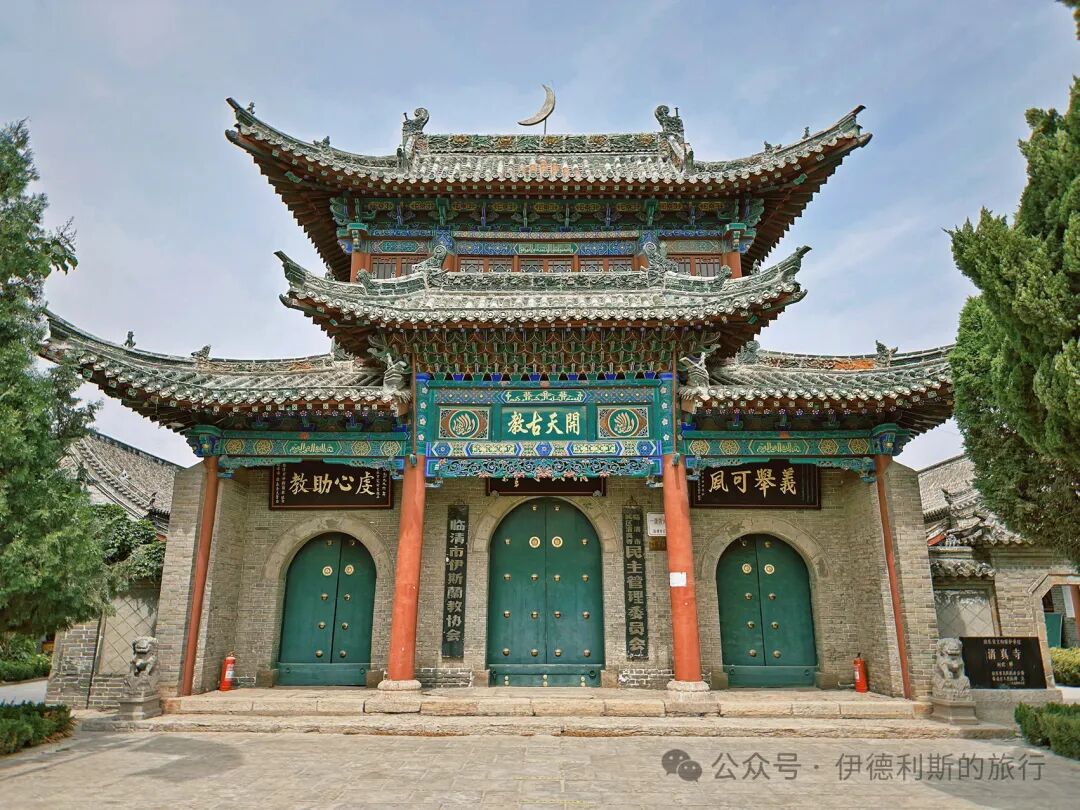
Behind the ceremonial gate is a path leading to the main prayer hall, with lecture halls (jiangtang) located on the north and south sides.
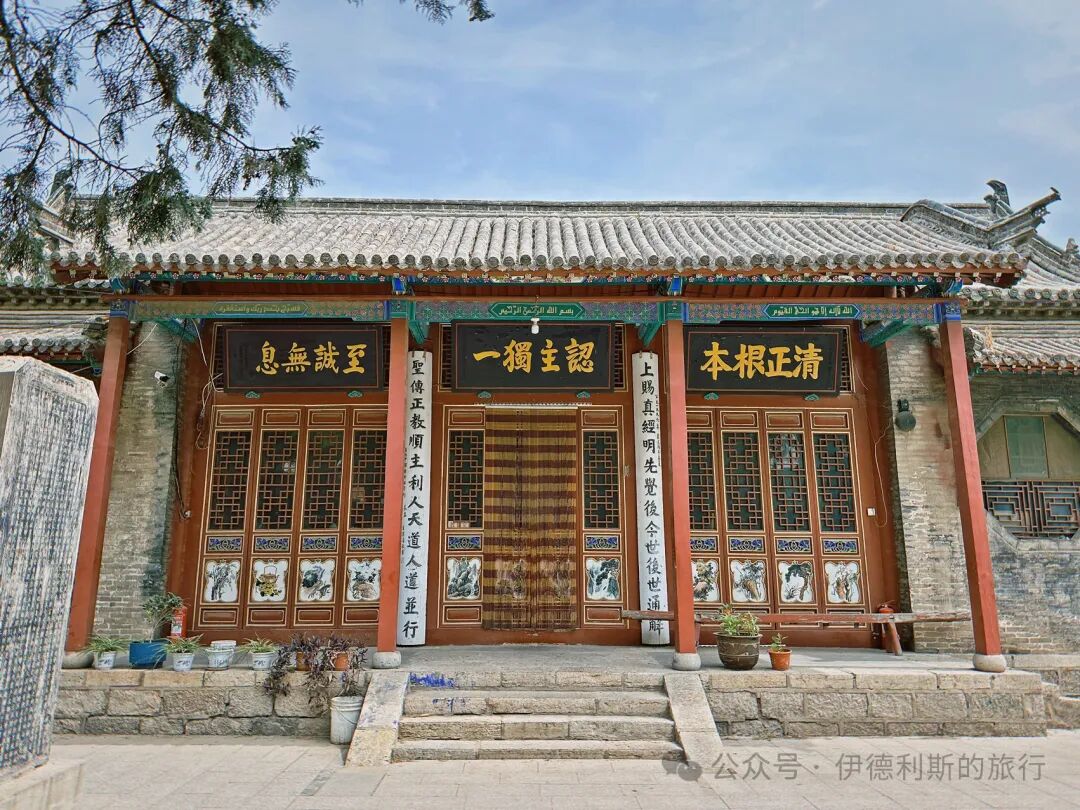
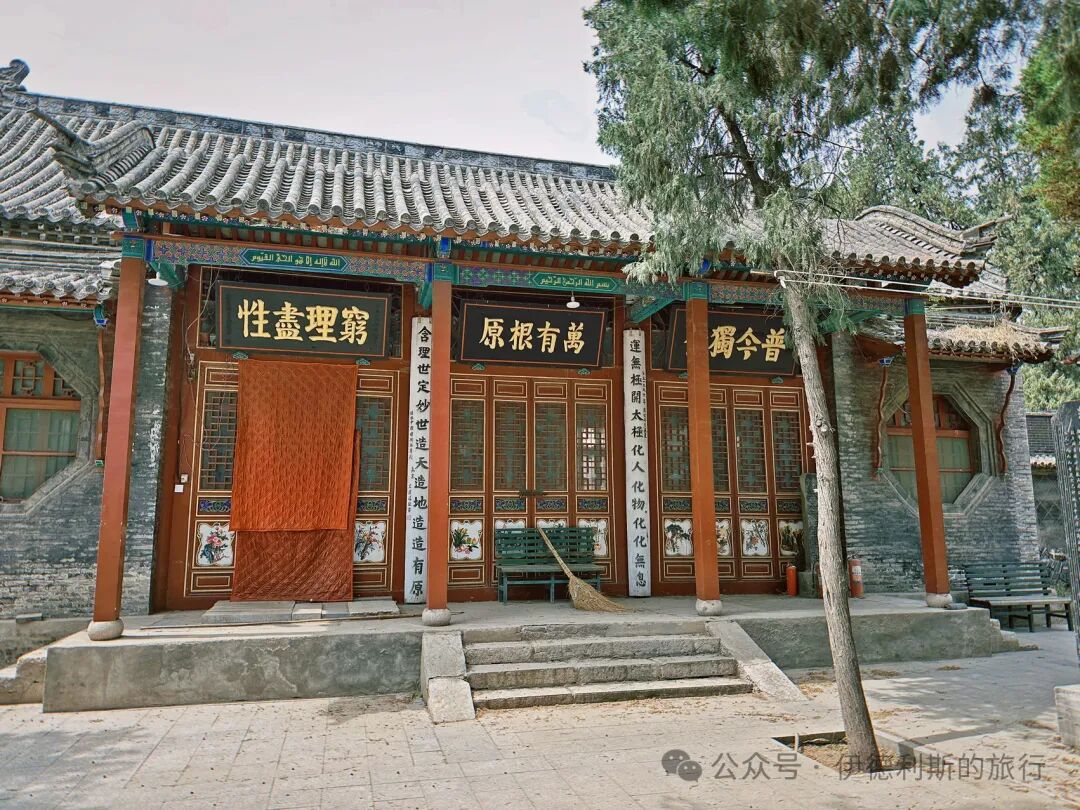
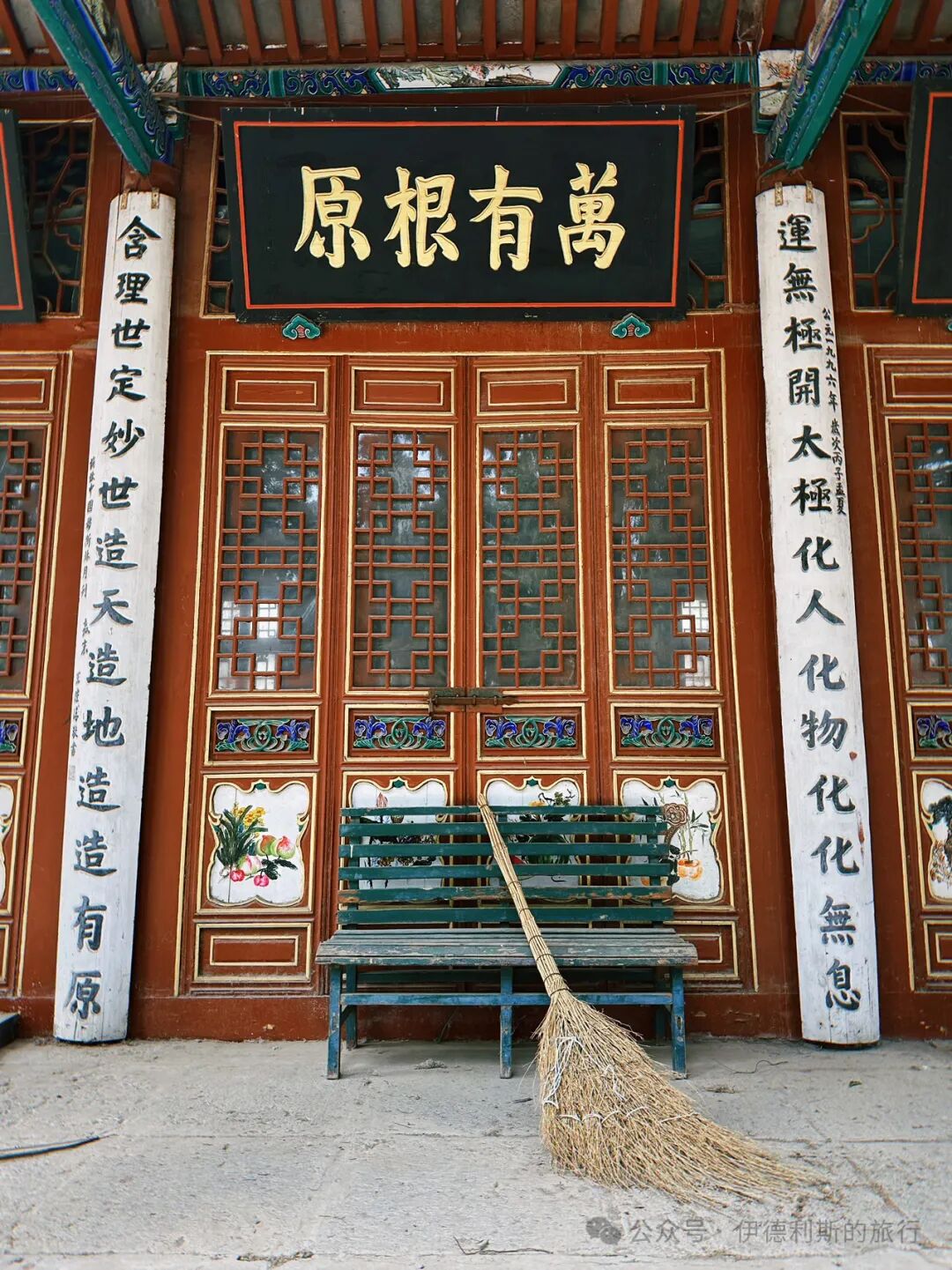
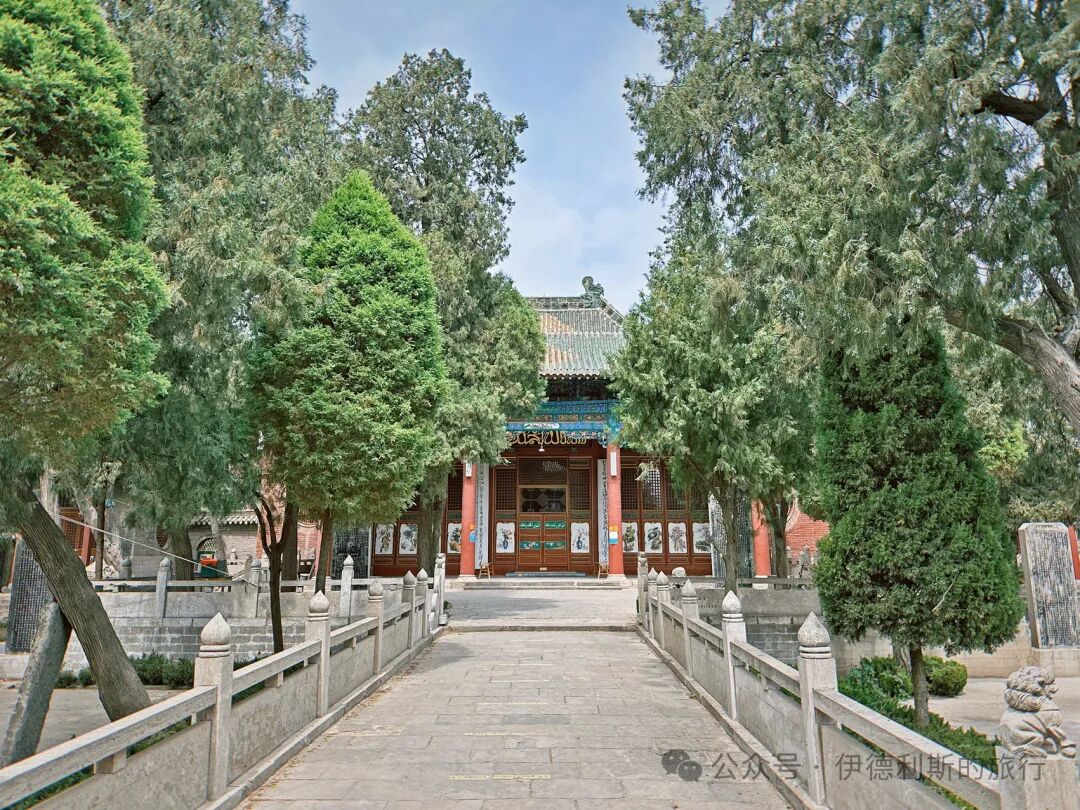
On the north and south sides of the main prayer hall are two scripture pavilions (cangjingting) with four-cornered pointed roofs and small porches (baoxia) in front of the doors. In front of the pavilion stands a 500-year-old Chinese arborvitae (cebai) planted when the mosque was built.
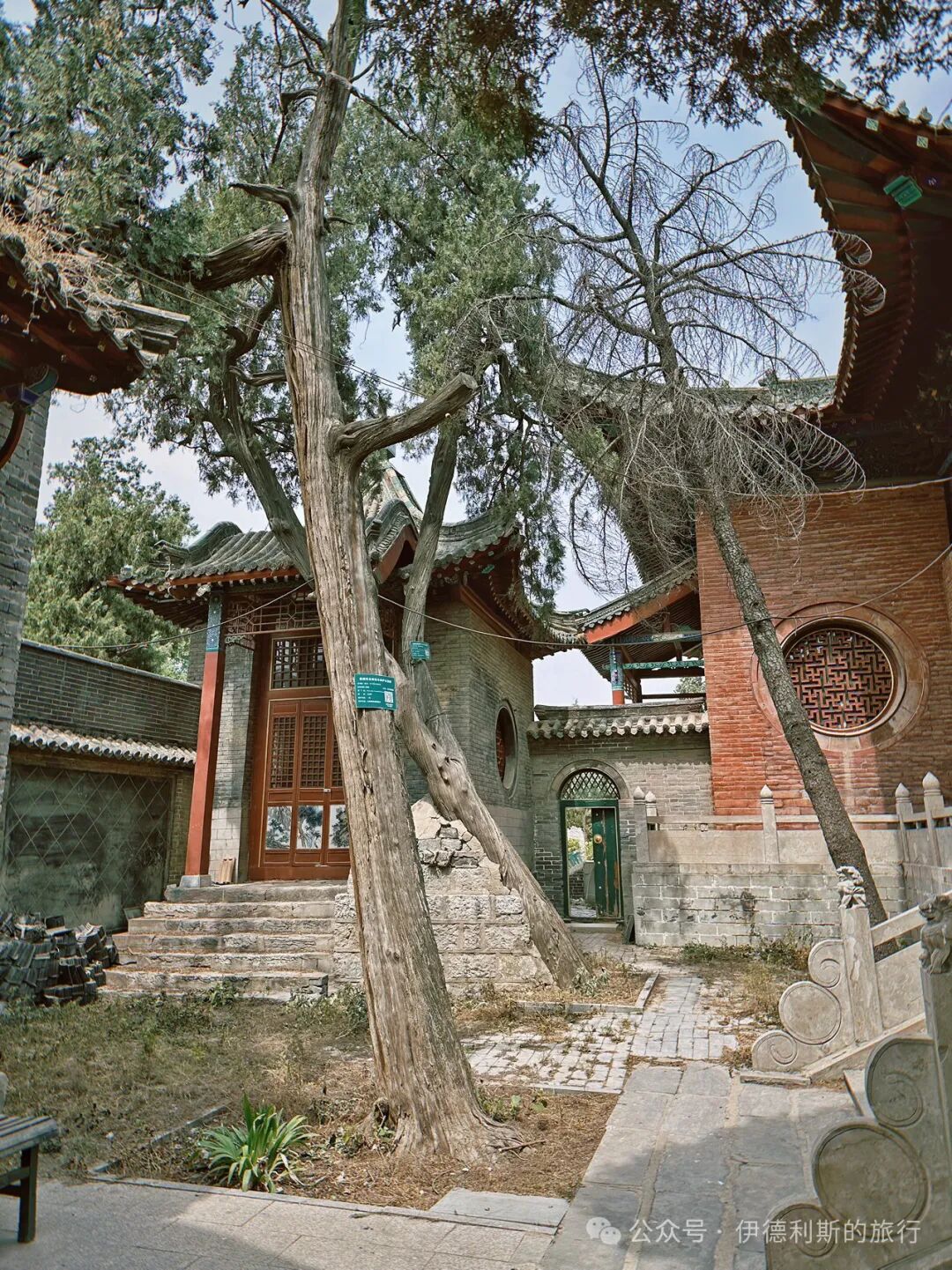
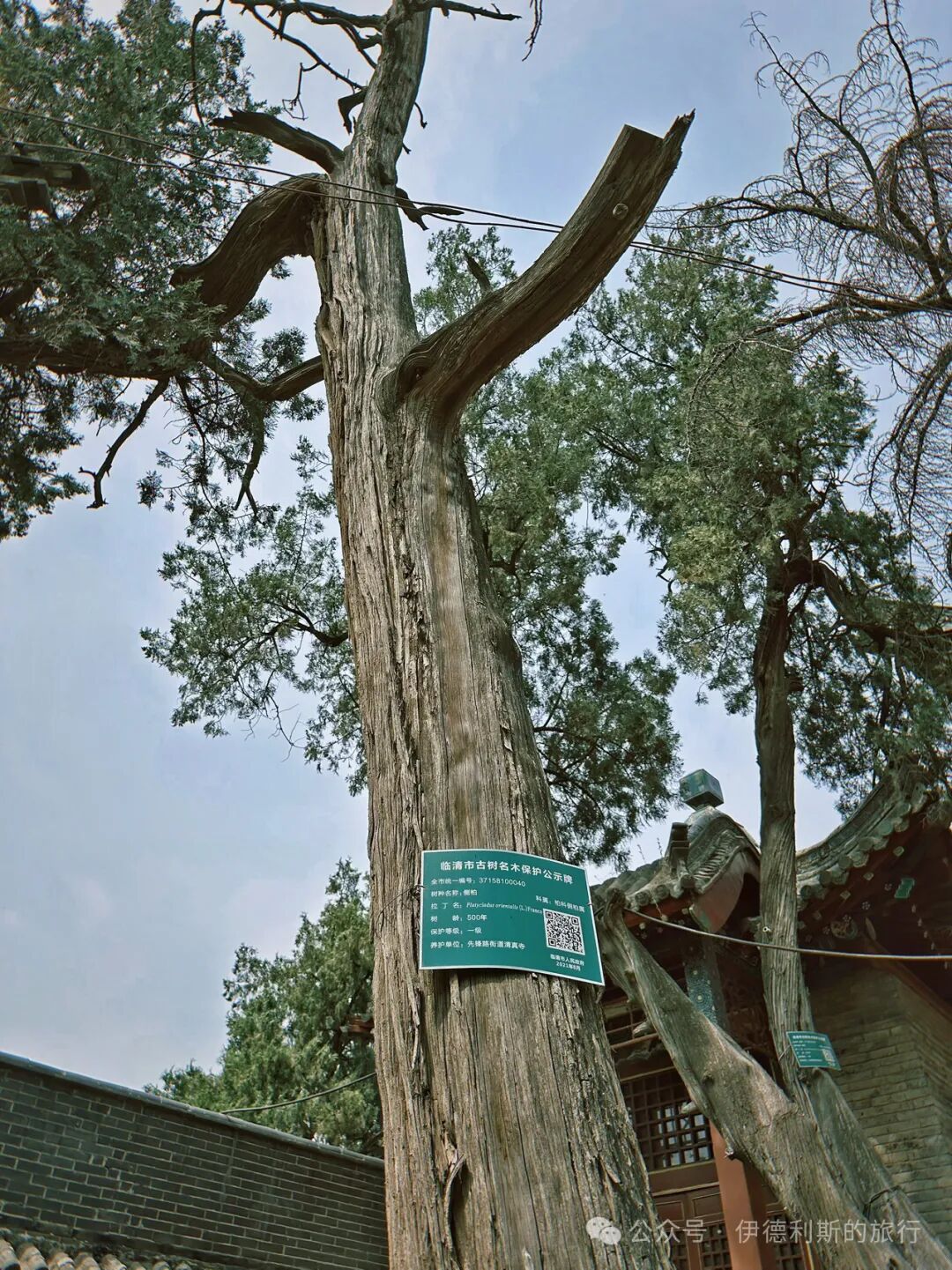
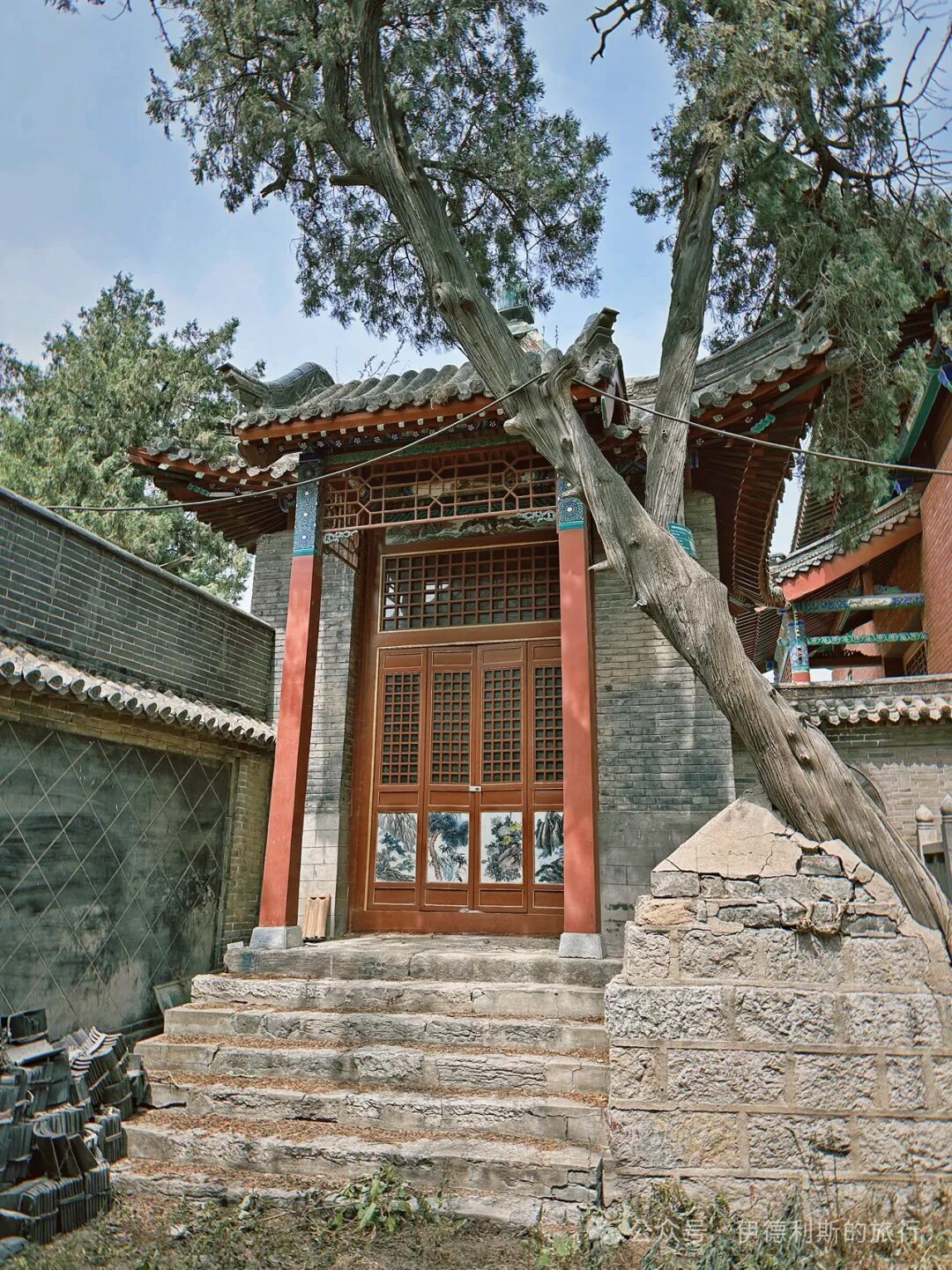
Behind the main hall is the back gate, which features a plaque inscribed with "Qingzhen Libaisi" (Mosque) dated to the first month of the Jiajing jiazi year. The mosque also houses several stone tablets from the Qing dynasty and the Republic of China era.
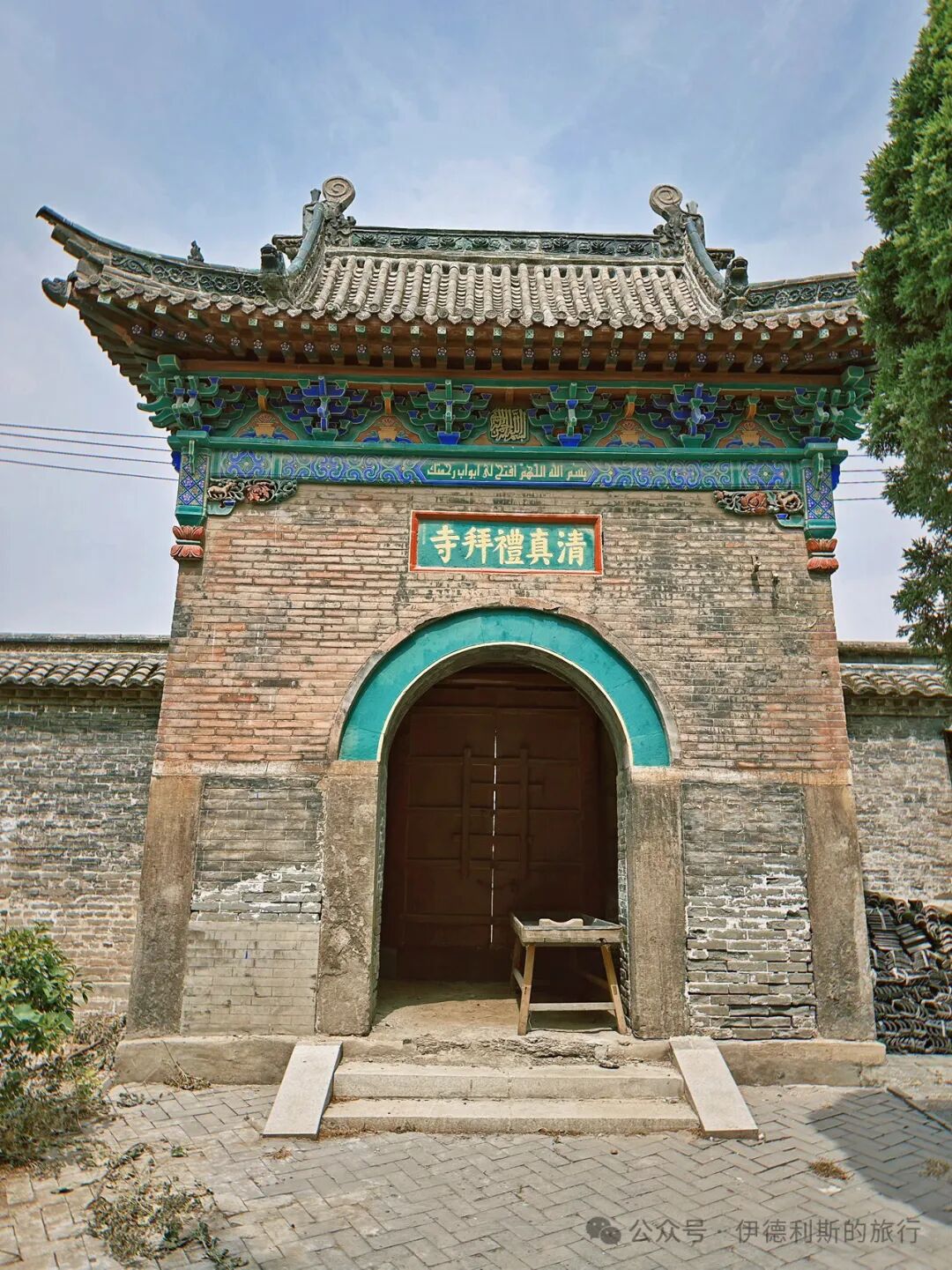
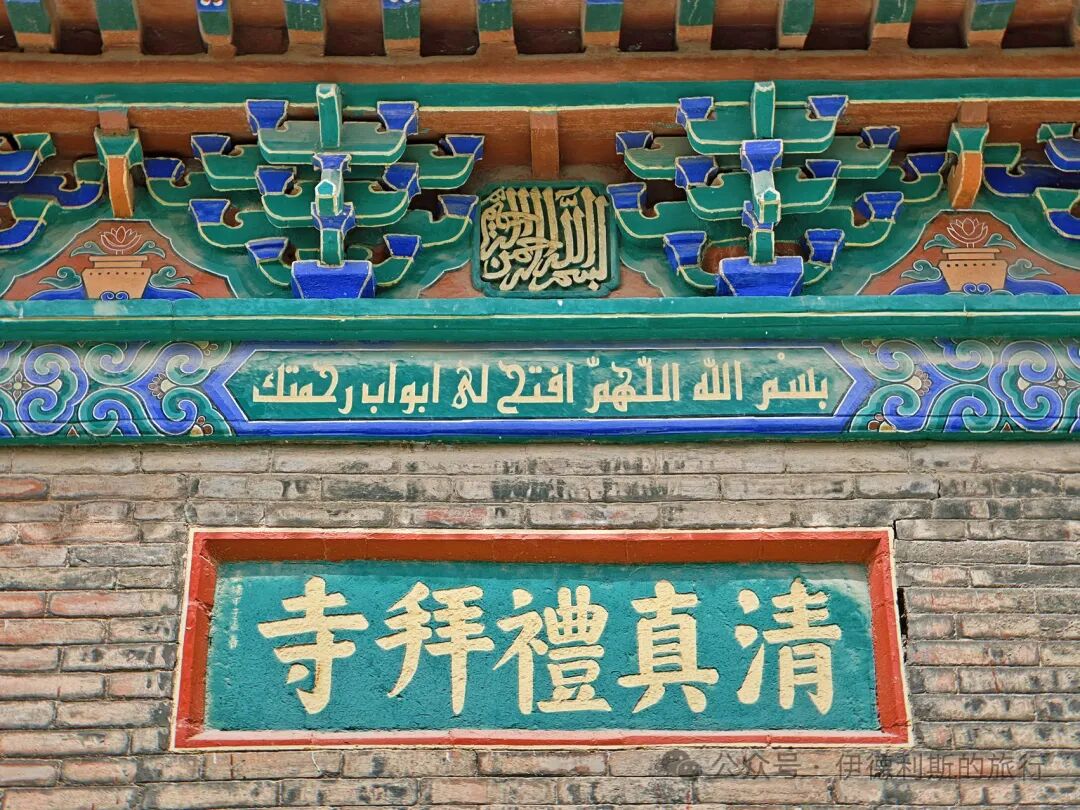
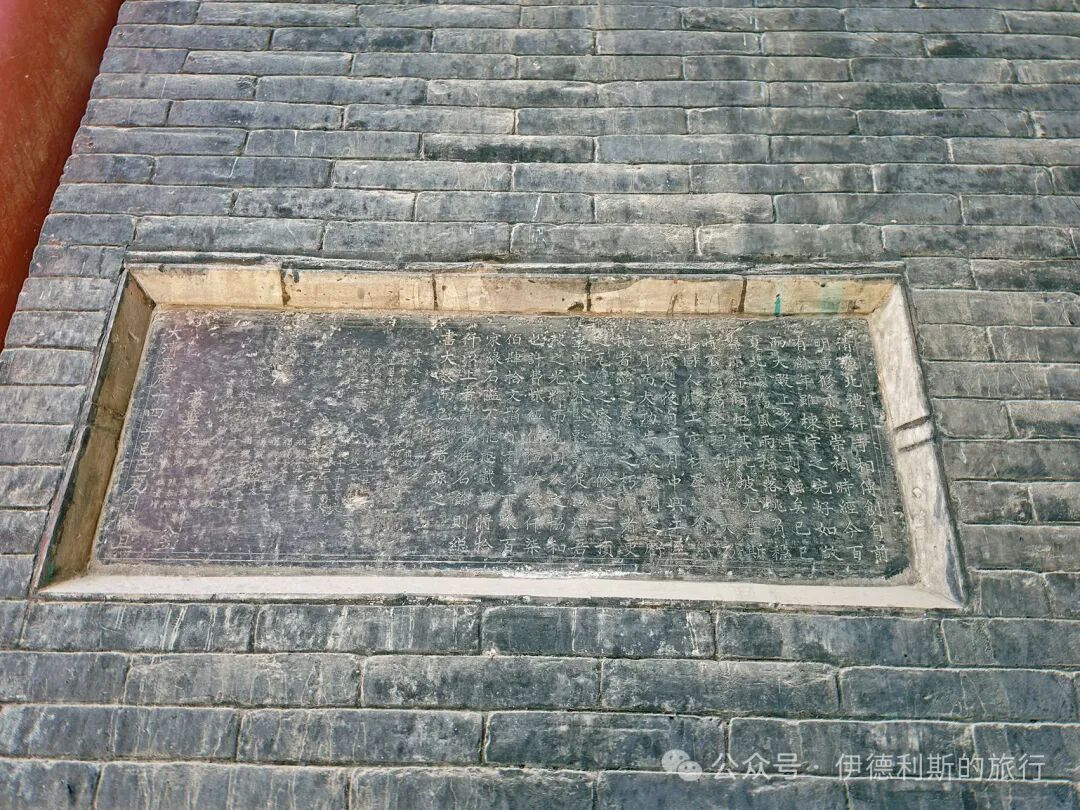
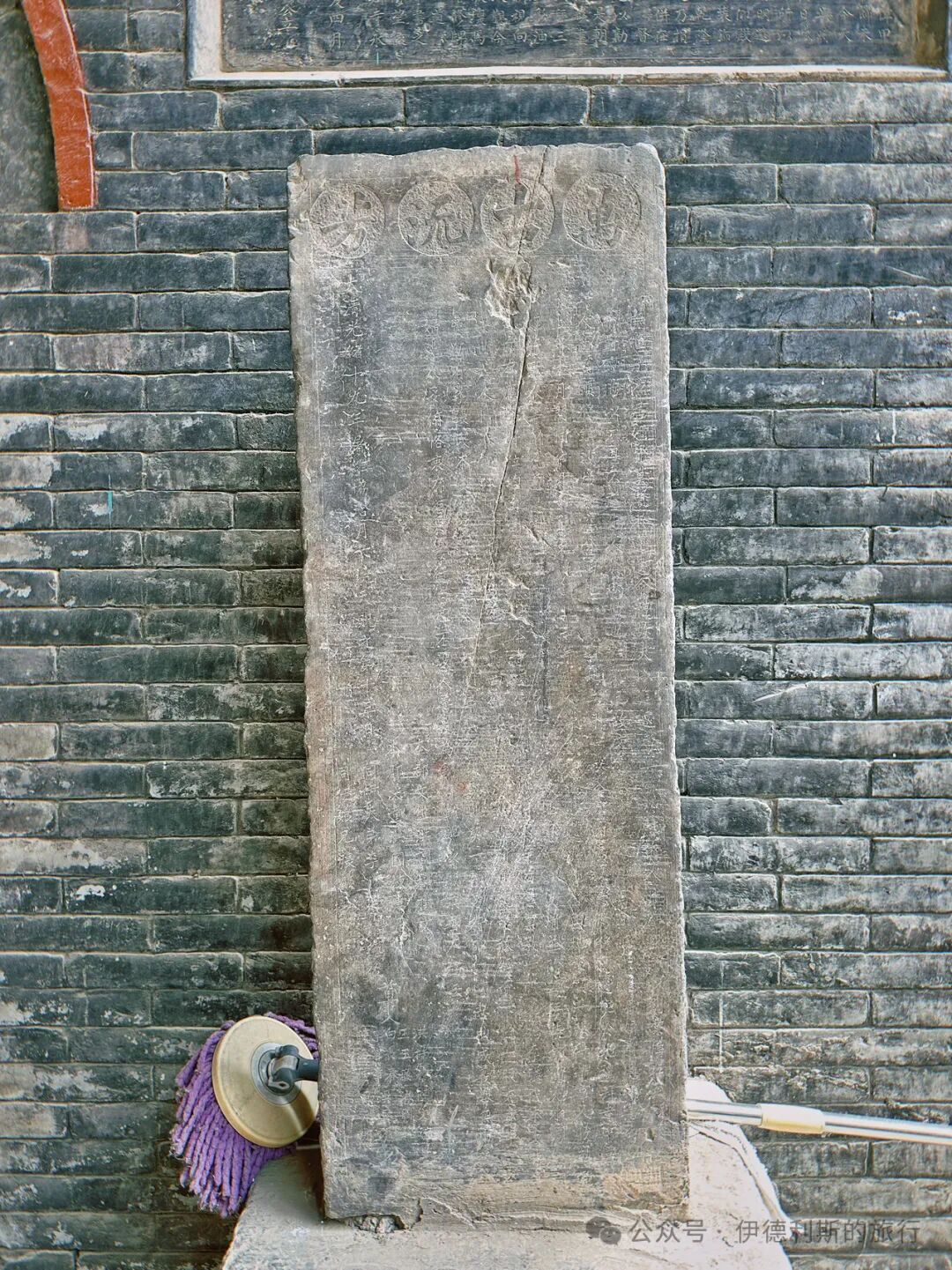
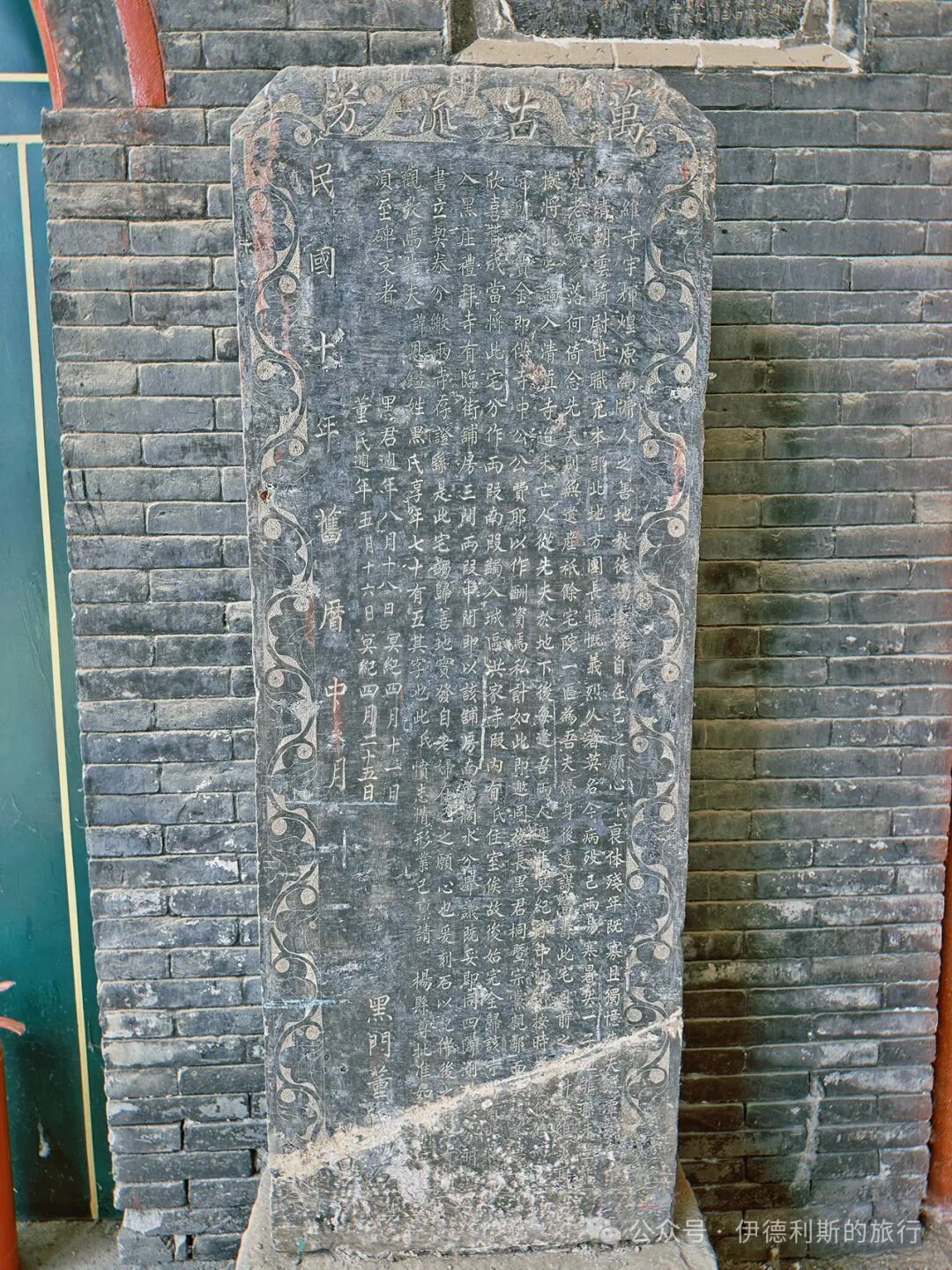
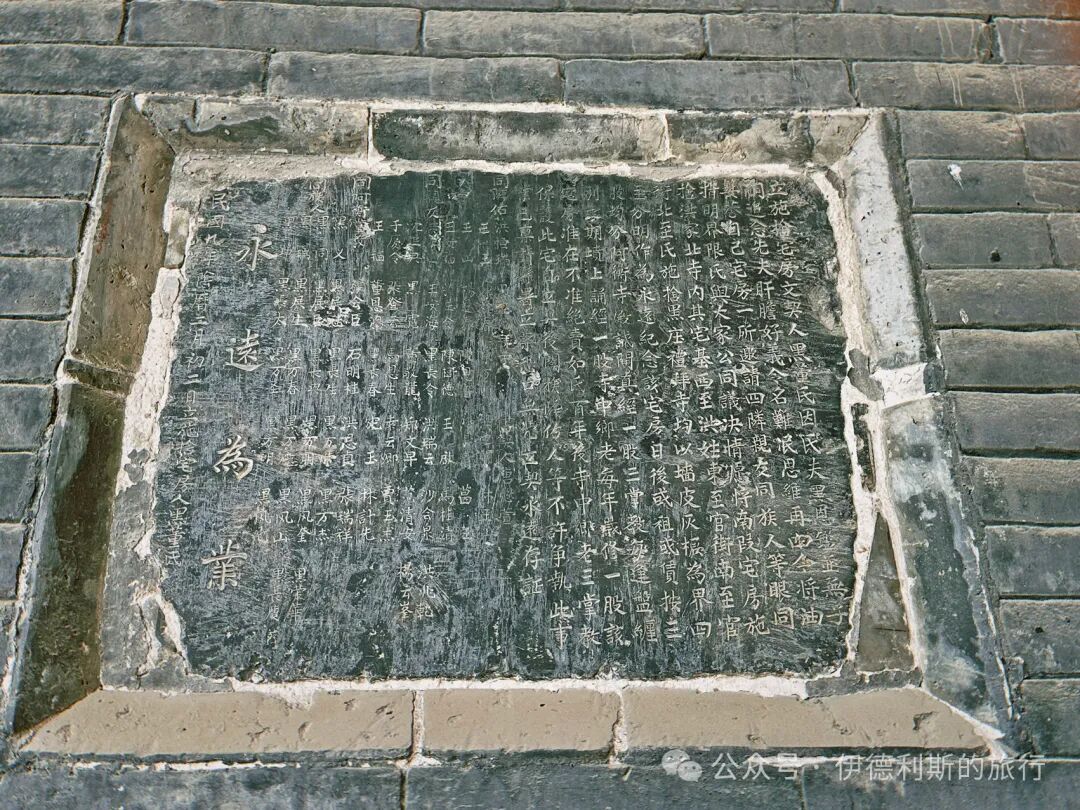
Linqing East Mosque
After leaving the Linqing North Mosque, I went across the street to the East Mosque to pay my respects at the tombs of the saints (shamu) and the Hufu cemetery (Hufutan). The Linqing East Mosque was first built in 1465 (the first year of the Chenghua reign of the Ming dynasty). It was renovated twice in 1583 (the eleventh year of the Wanli reign) and 1649 (the sixth year of the Shunzhi reign), then expanded again in 1734 (the twelfth year of the Yongzheng reign), resulting in its grand scale.
On the far west side of the Linqing East Mosque is the back gate, which features a "Libaisi" (Mosque) plaque inscribed during the renovation in the sixth year of the Shunzhi reign. Behind the back gate is the main prayer hall, which consists of a front porch (juanpeng), the main hall, and a rear vaulted hall (yaodian). The roof of the vaulted hall has four sloping sides meeting at a point, topped with a gilded gourd-shaped finial.
The main hall is nearly 30 meters deep, with 14 pillars supporting the roof beams. The mihrab is the same style as the one in the North Mosque, featuring a decorative archway design.
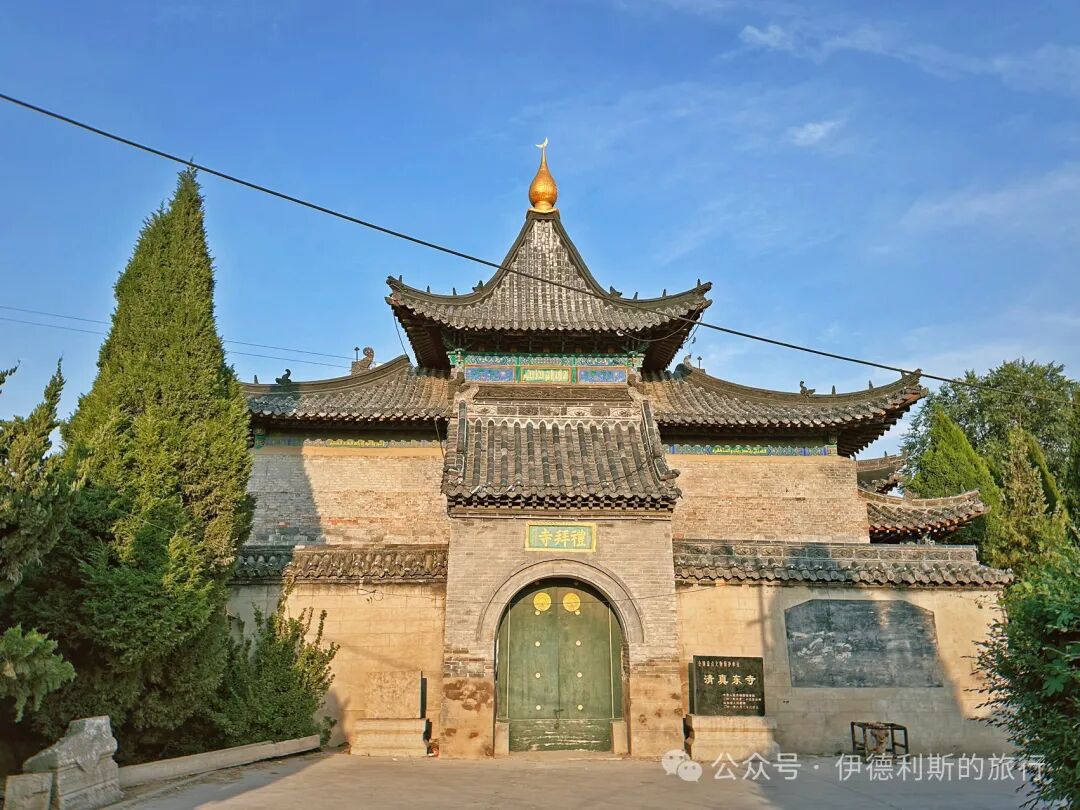
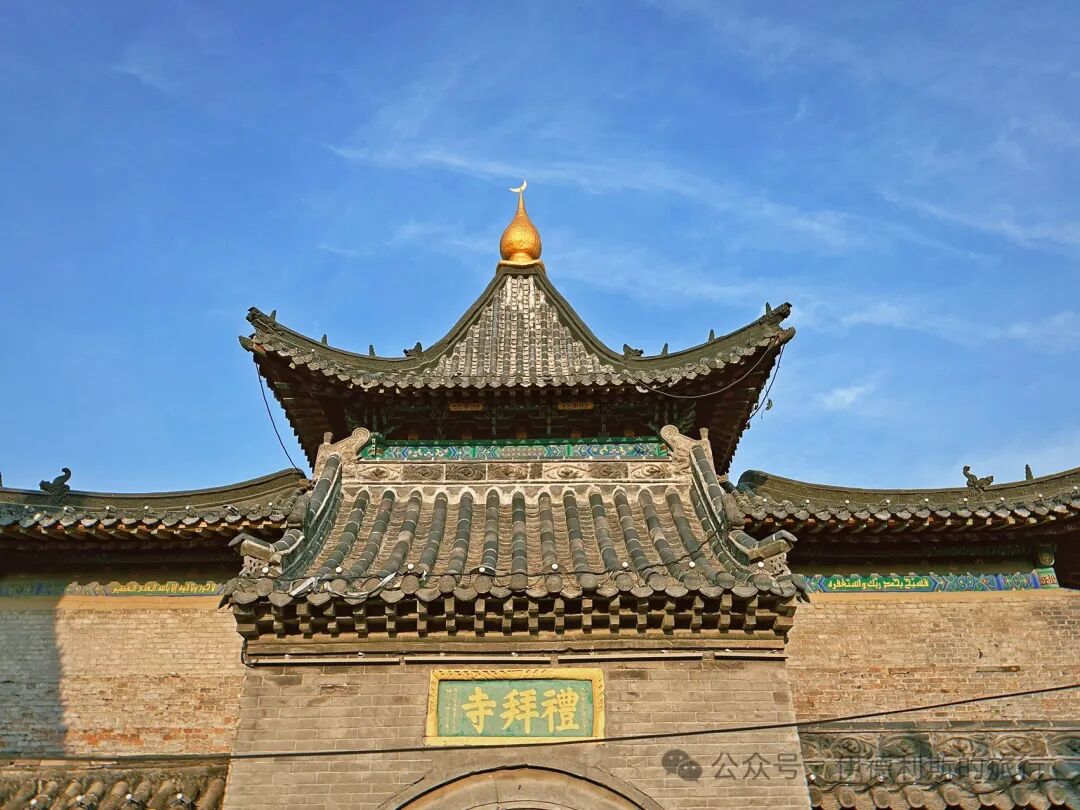
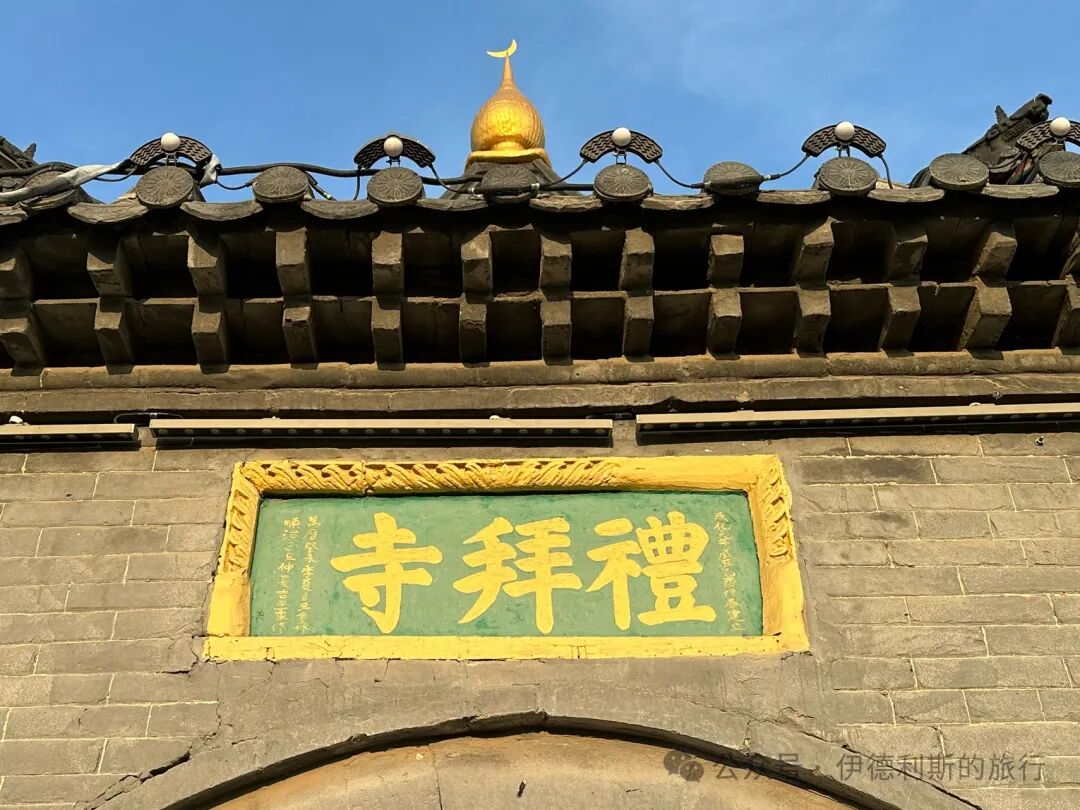
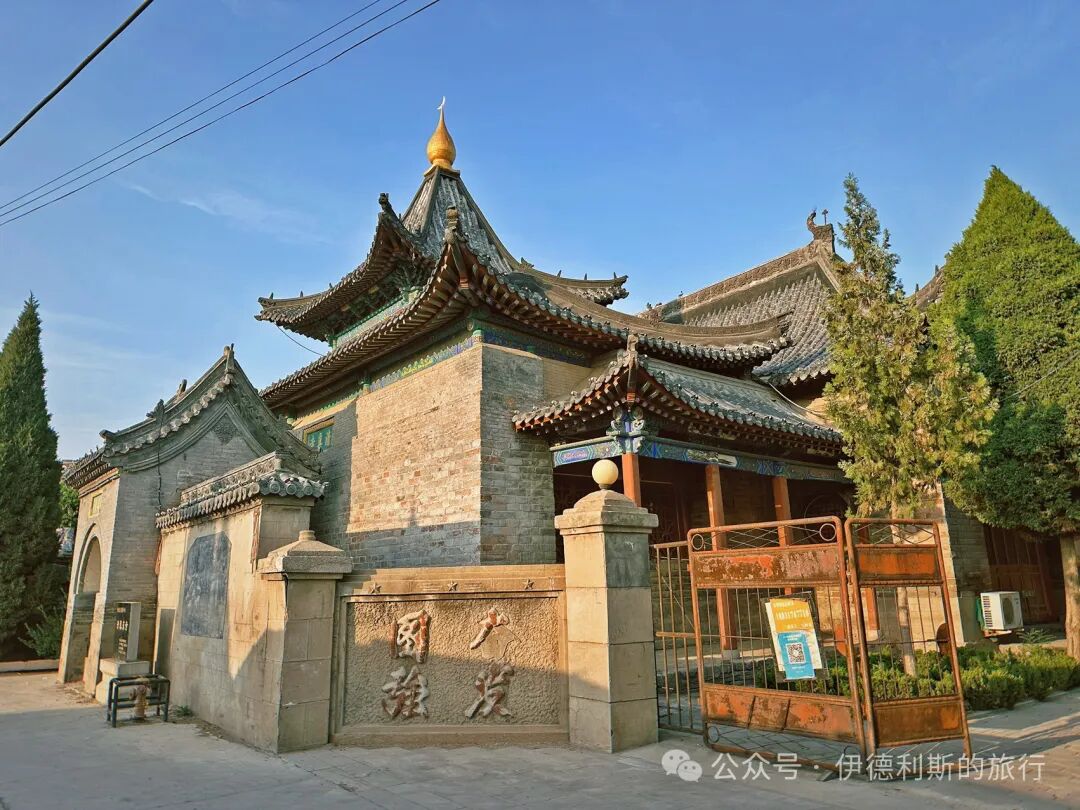
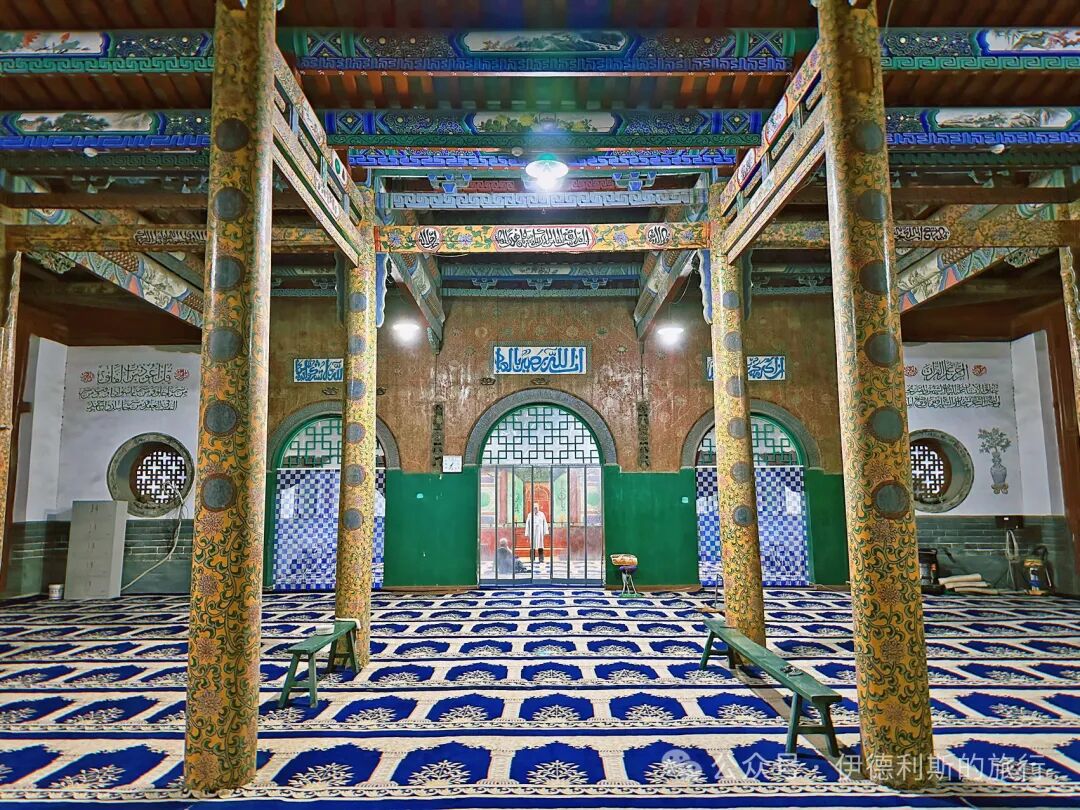
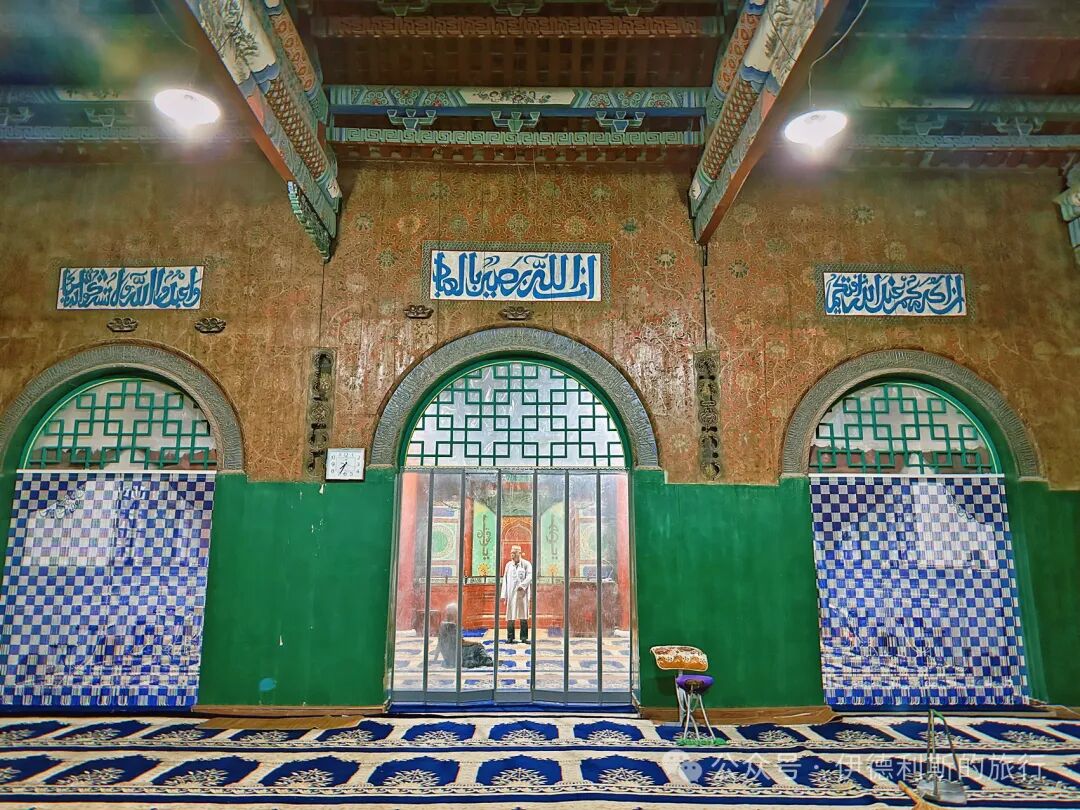
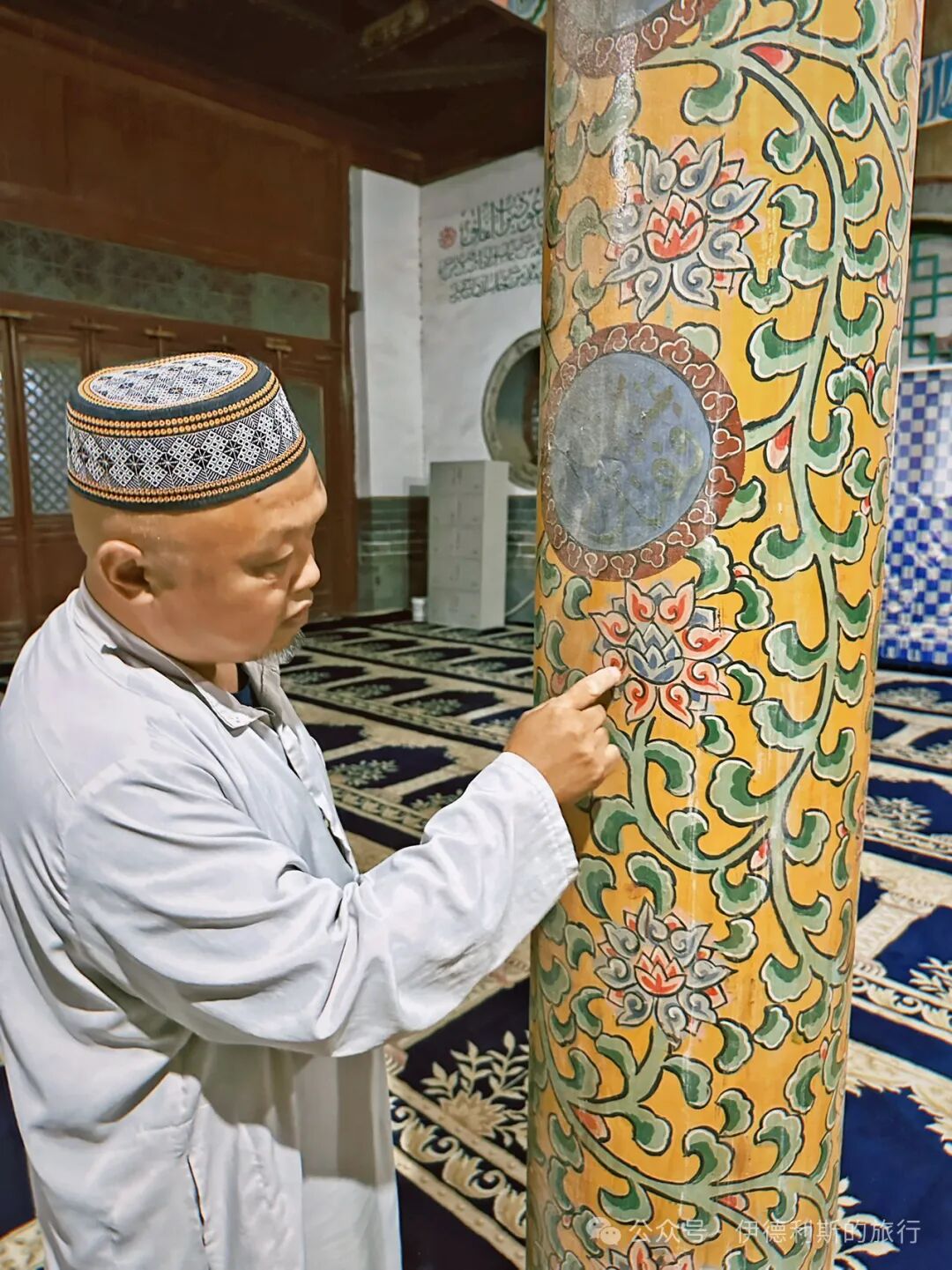
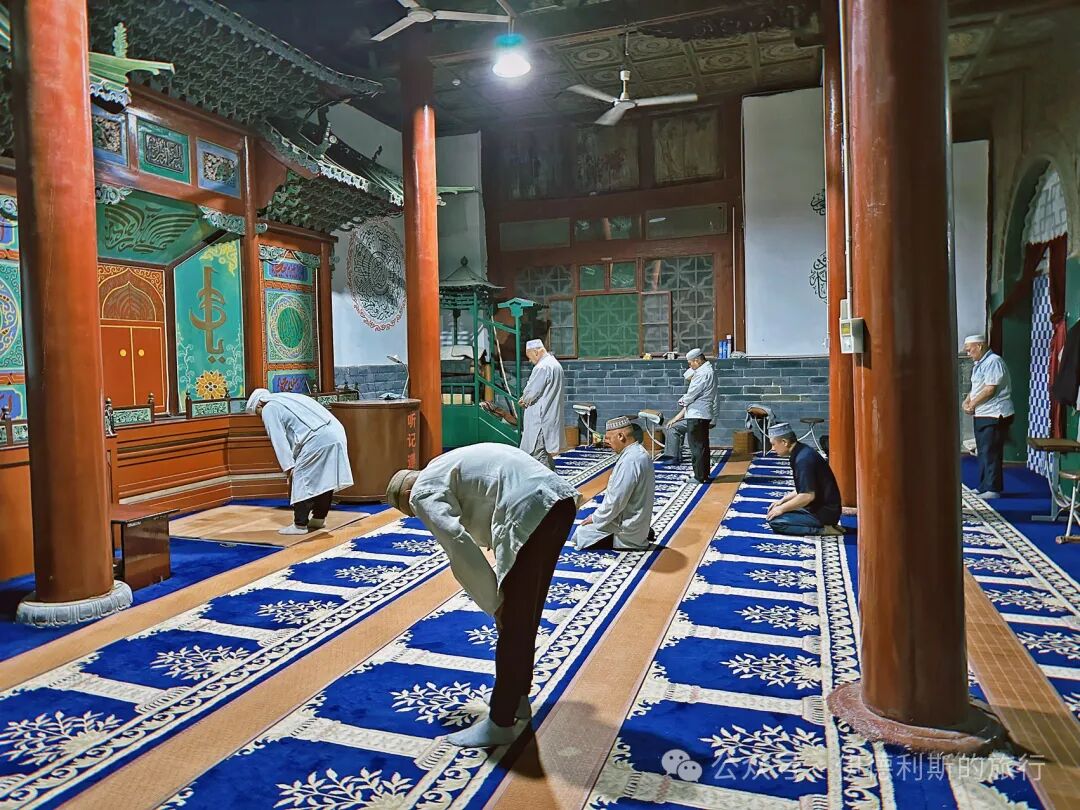
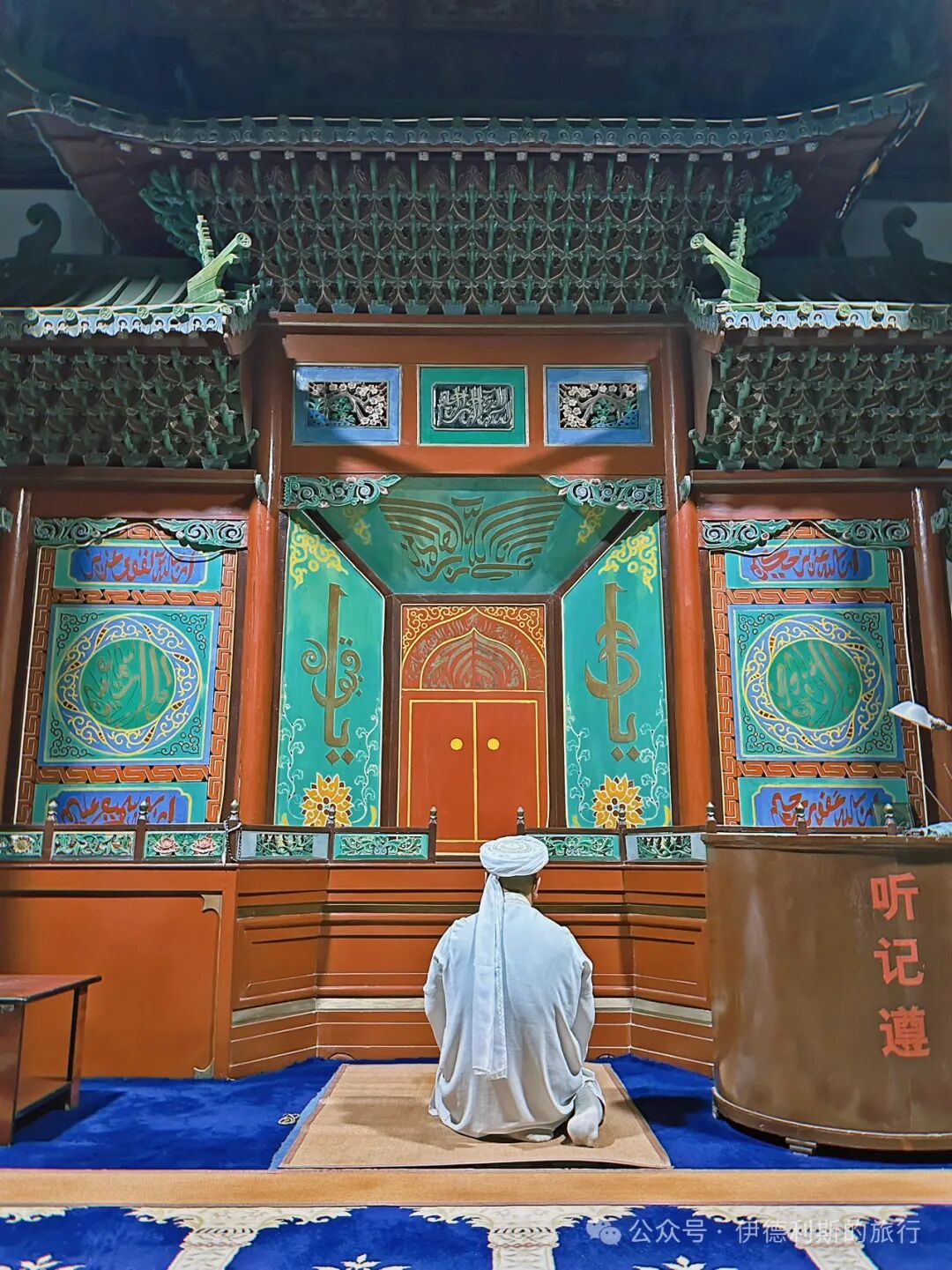
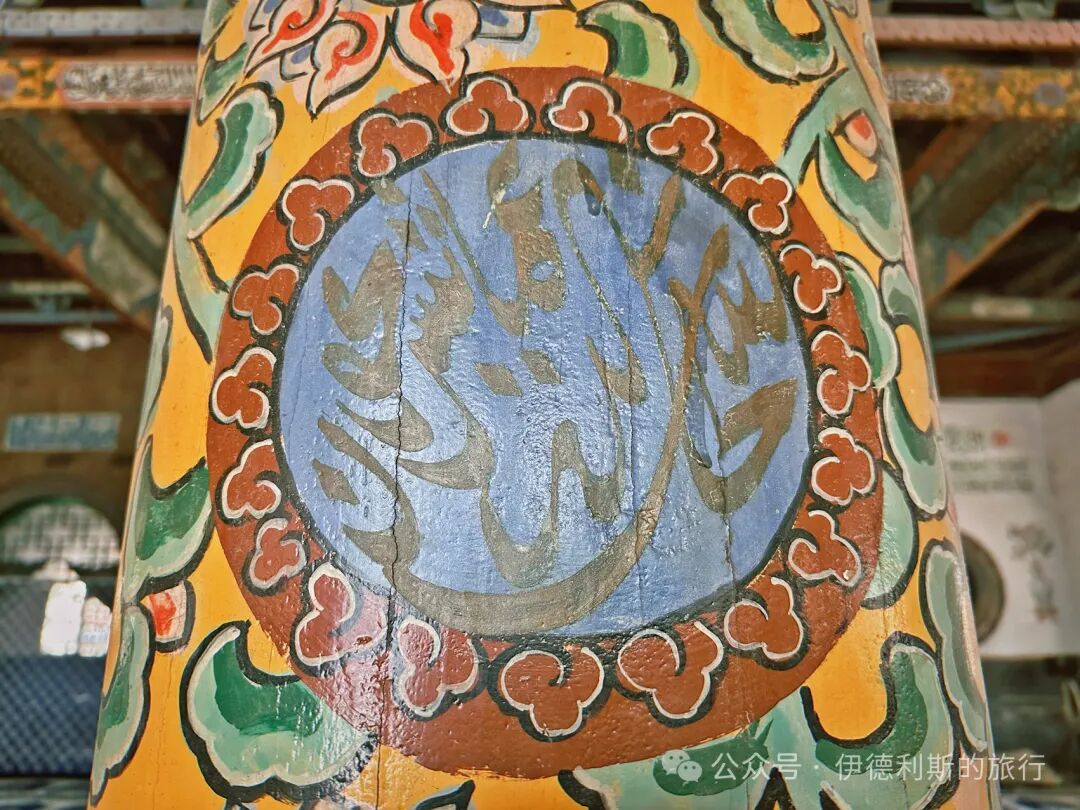
The East Mosque has a porch roof (juanpeng) over the main hall and traditional calligraphy preserved on the pillars inside.
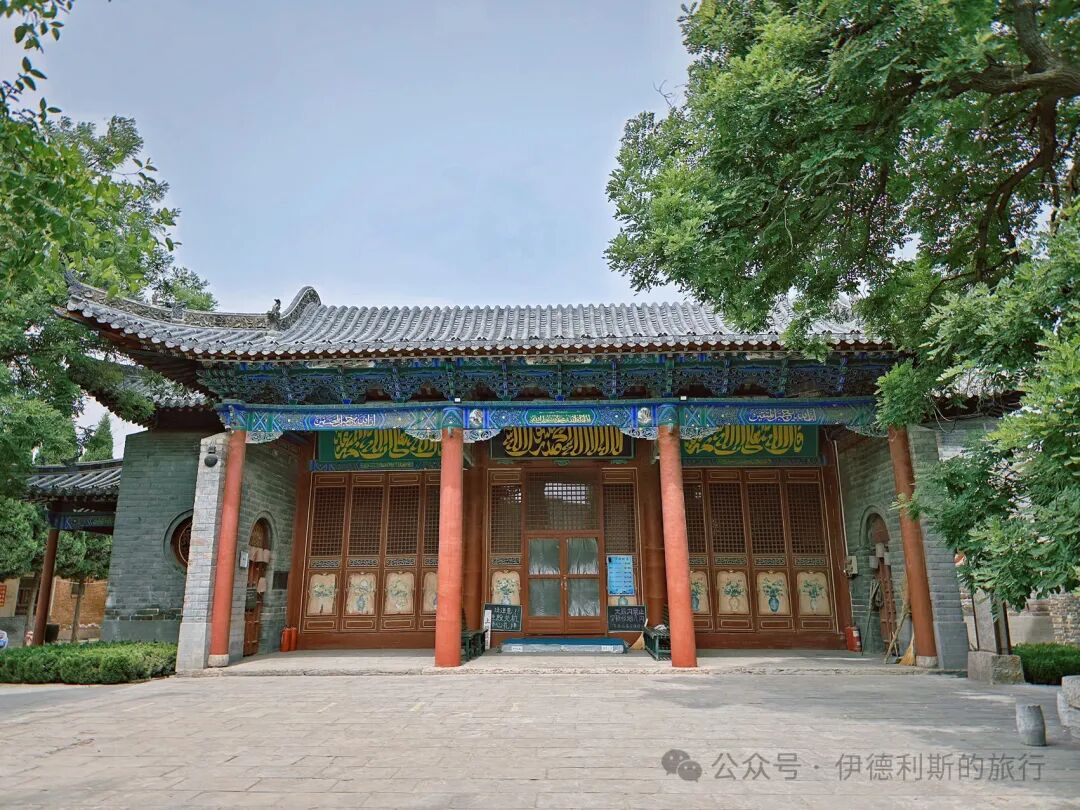
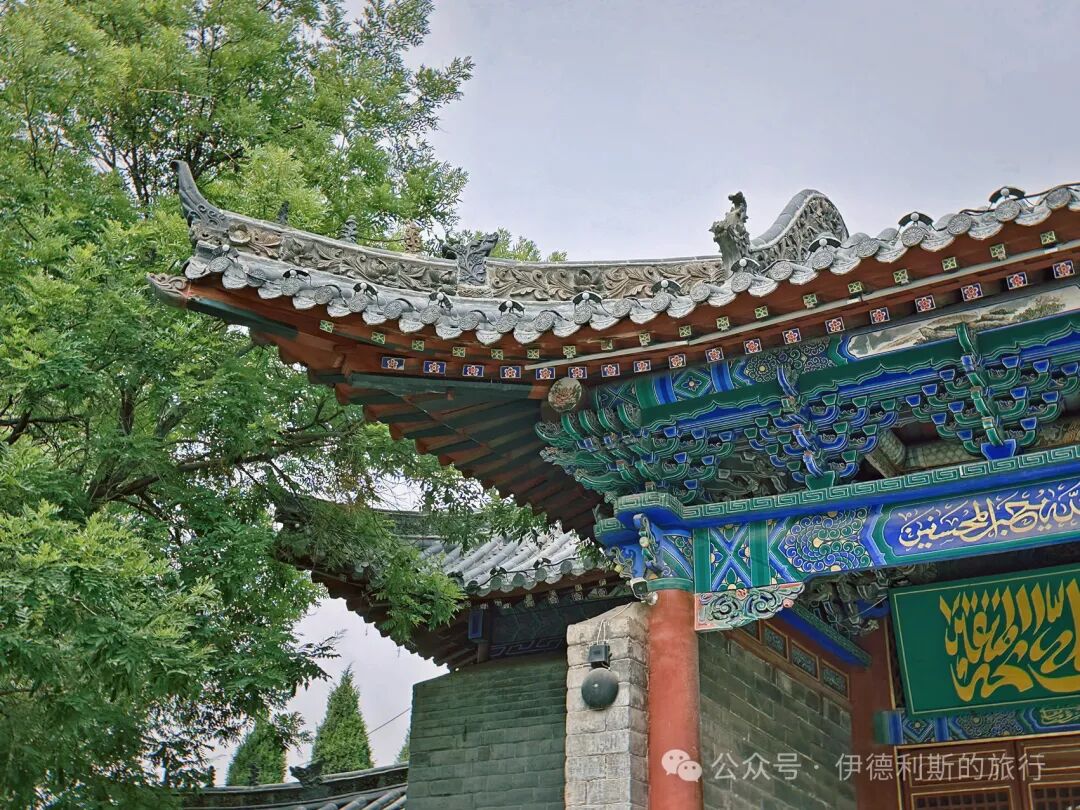
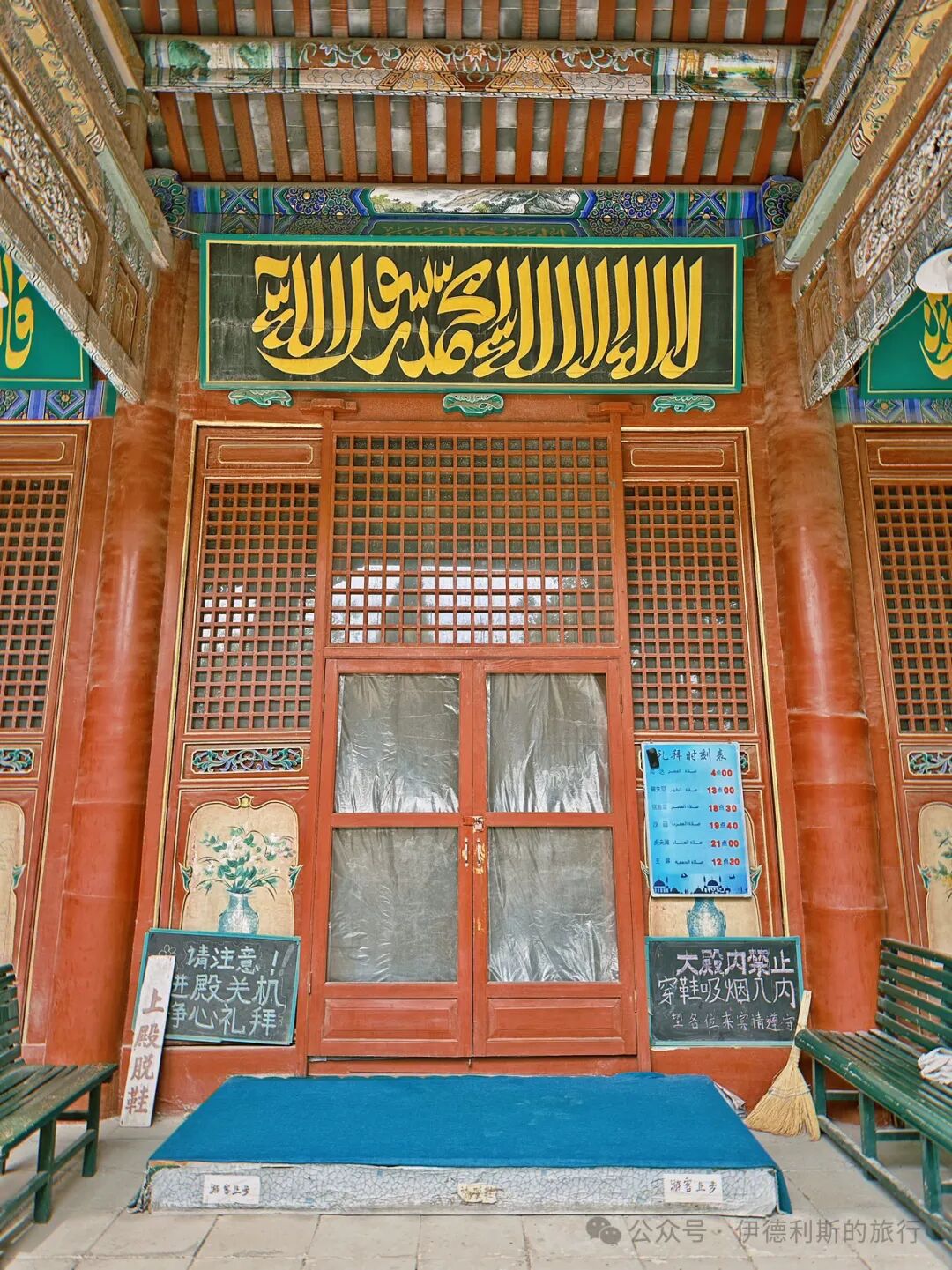
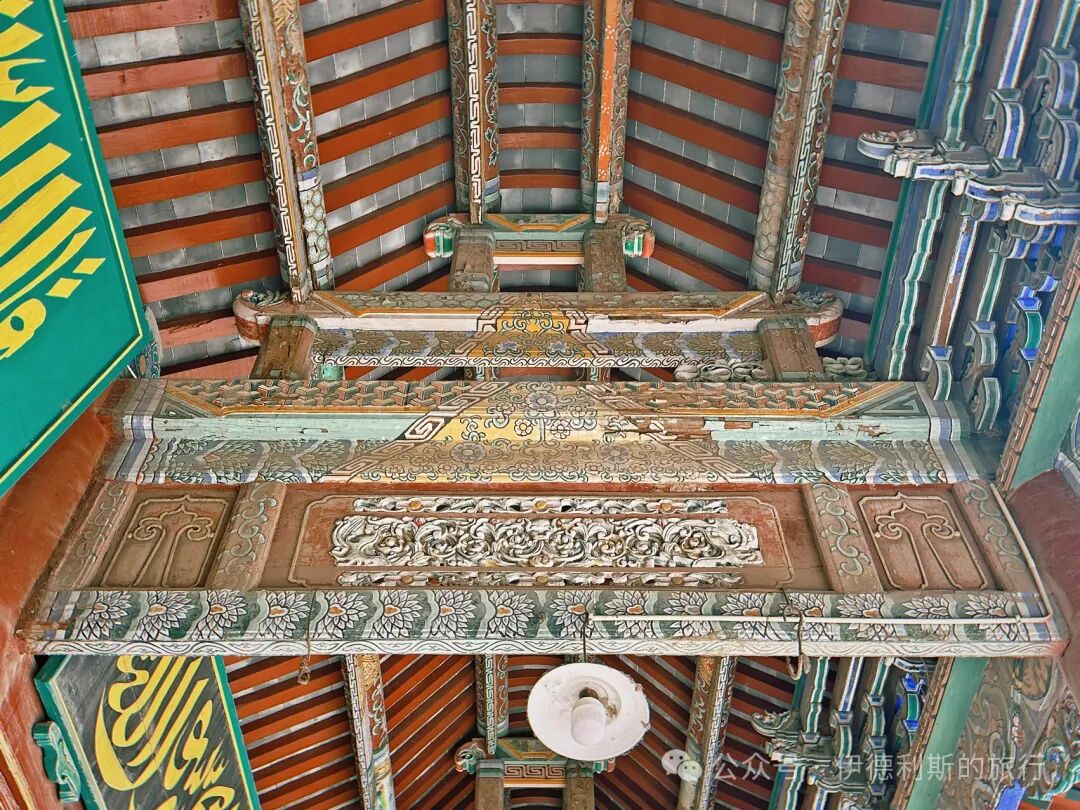
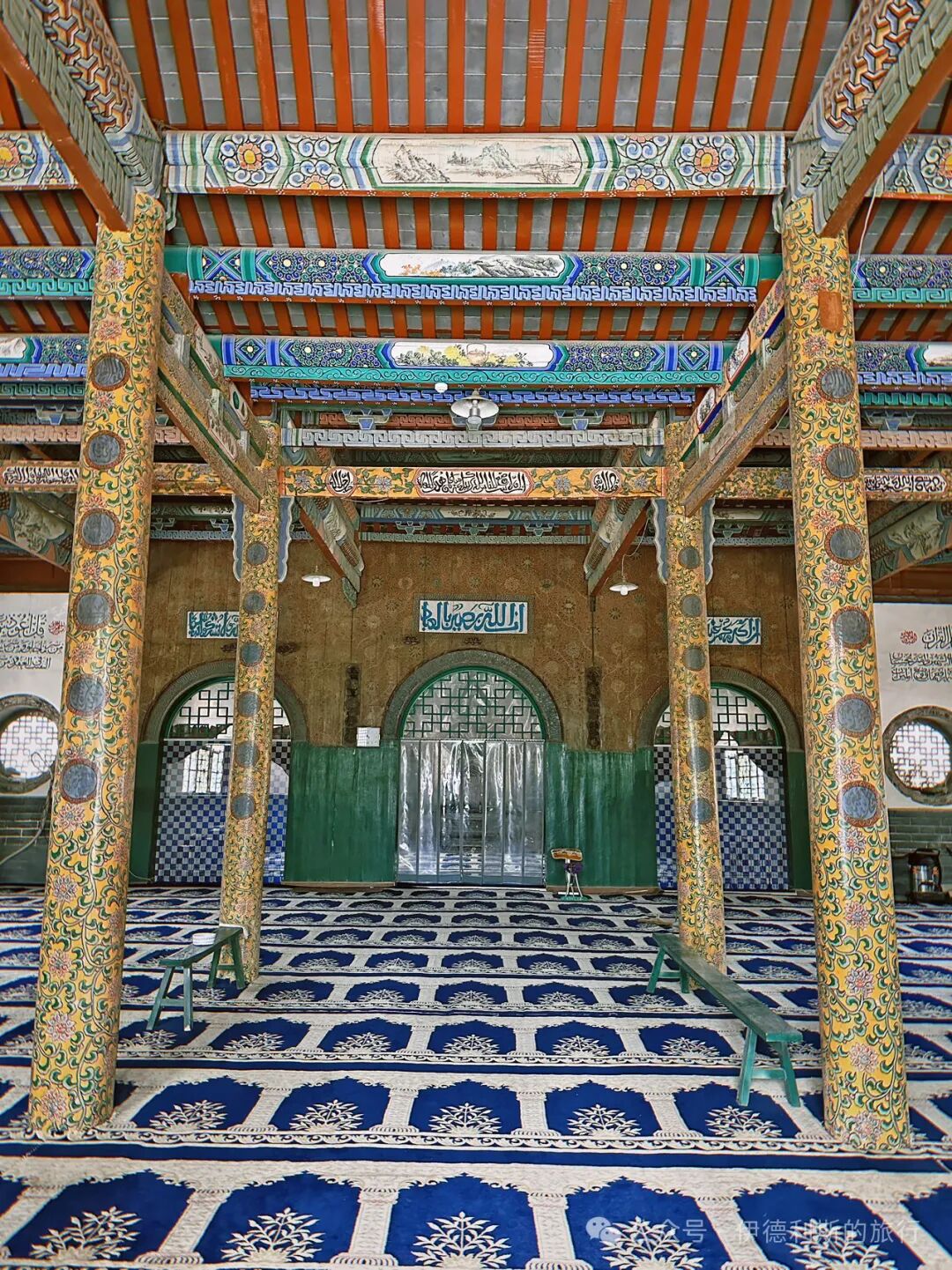
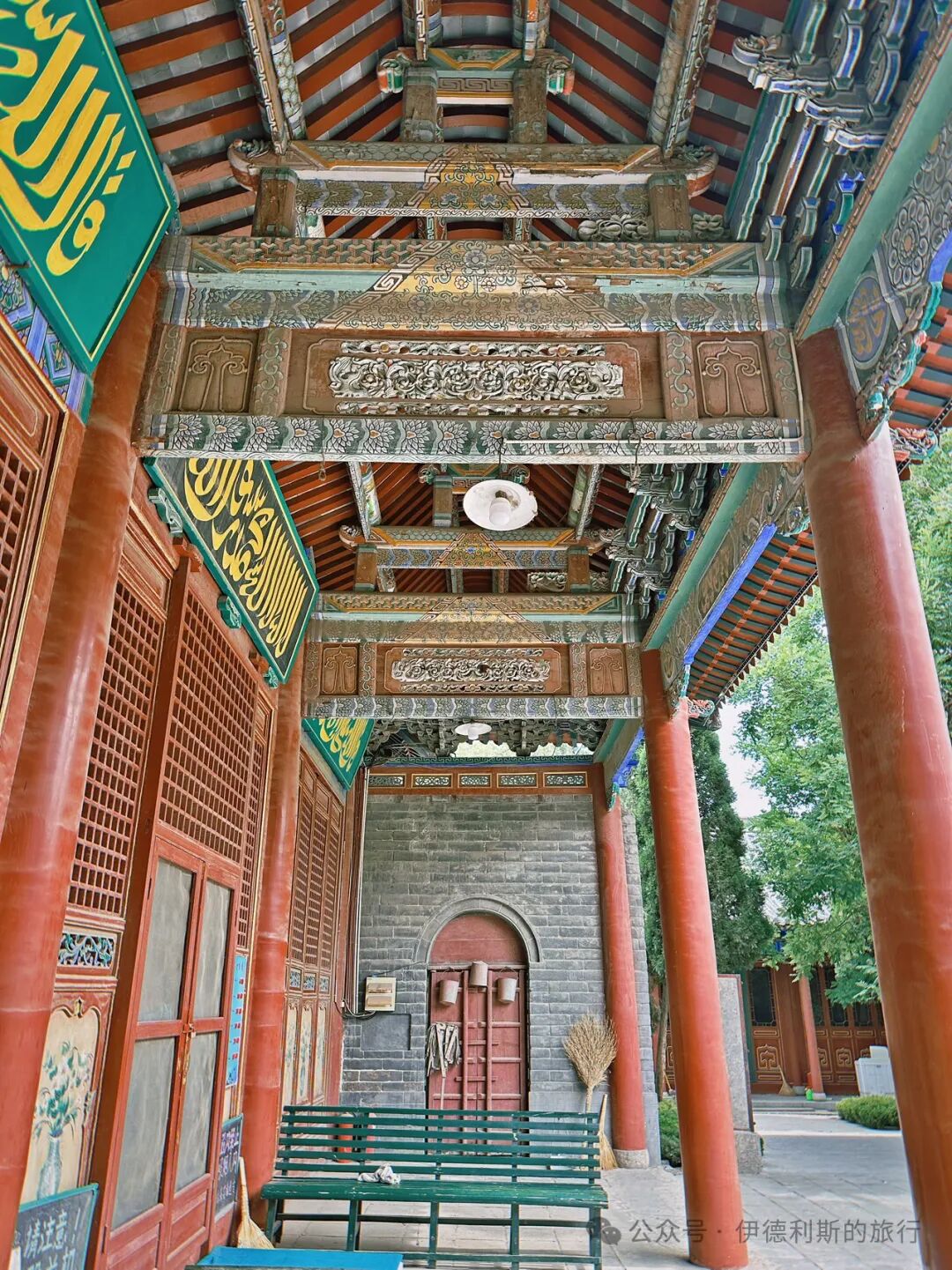
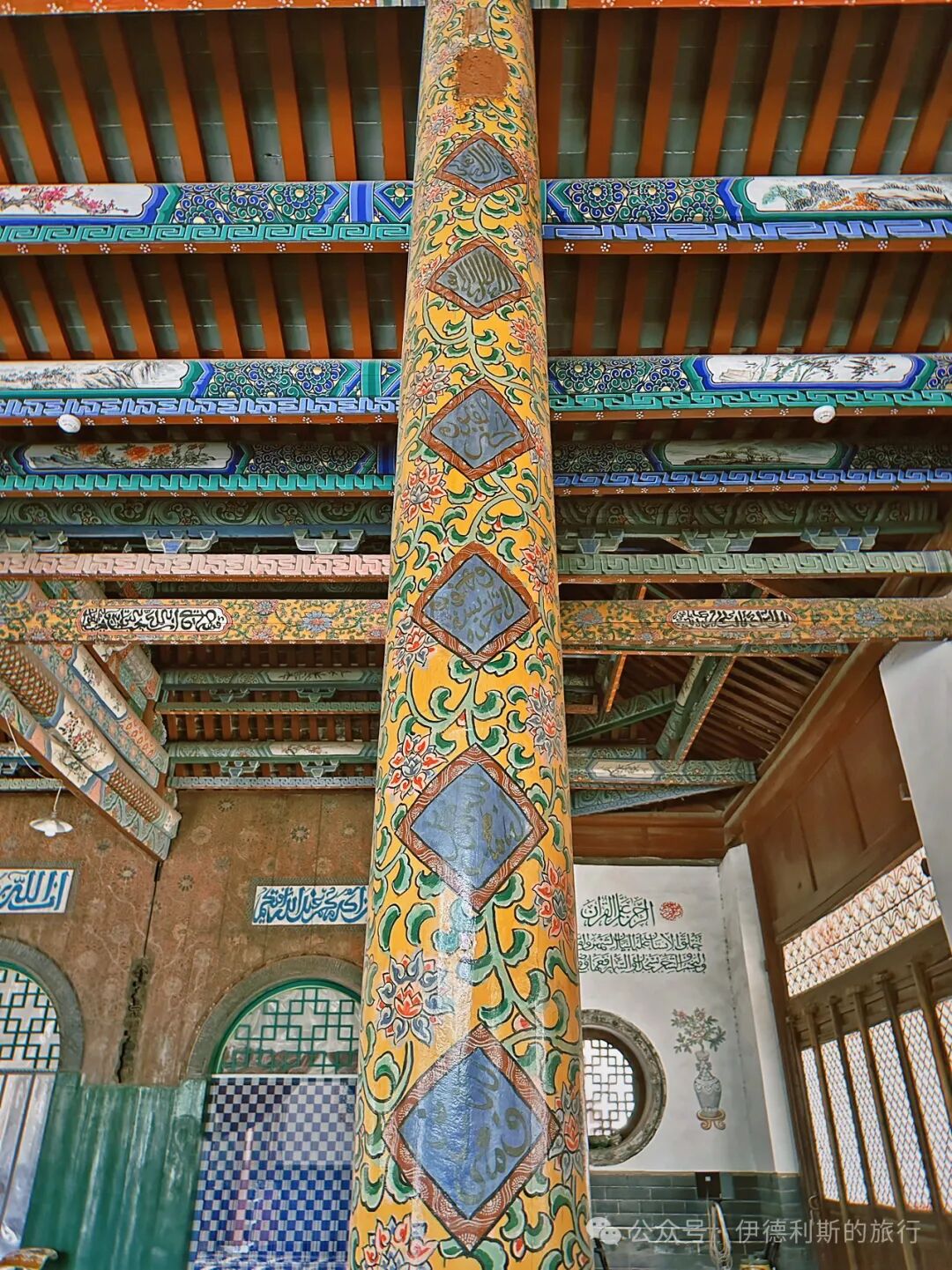
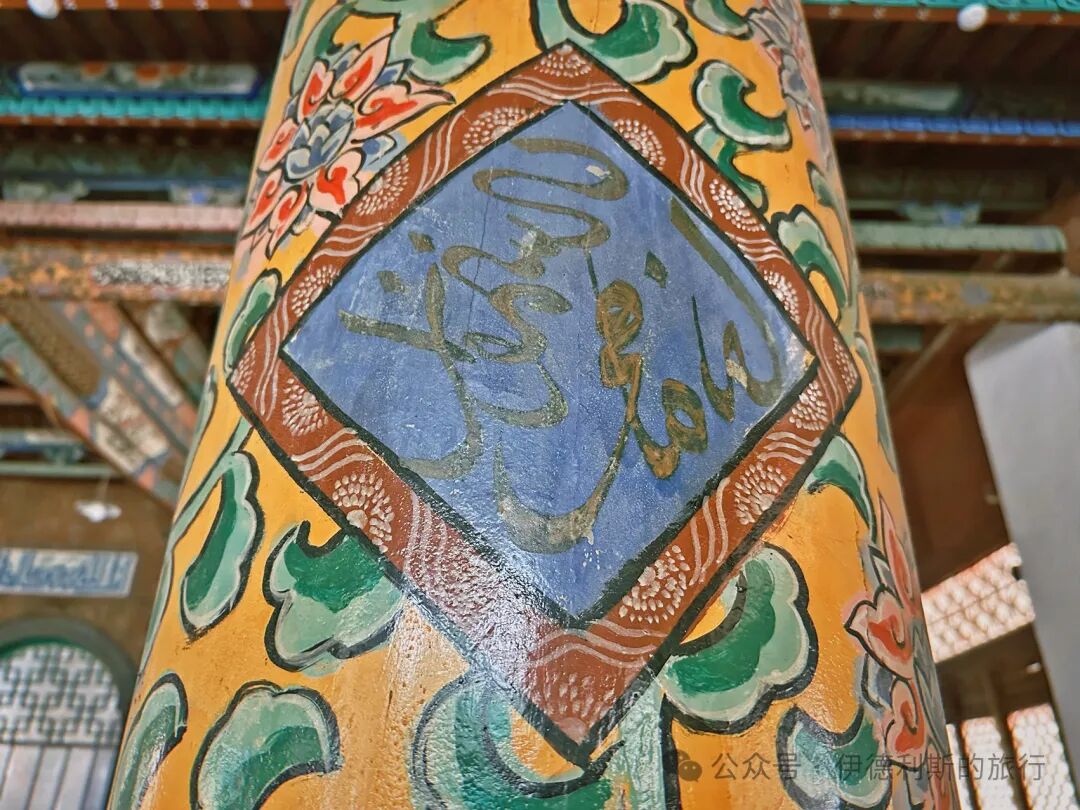
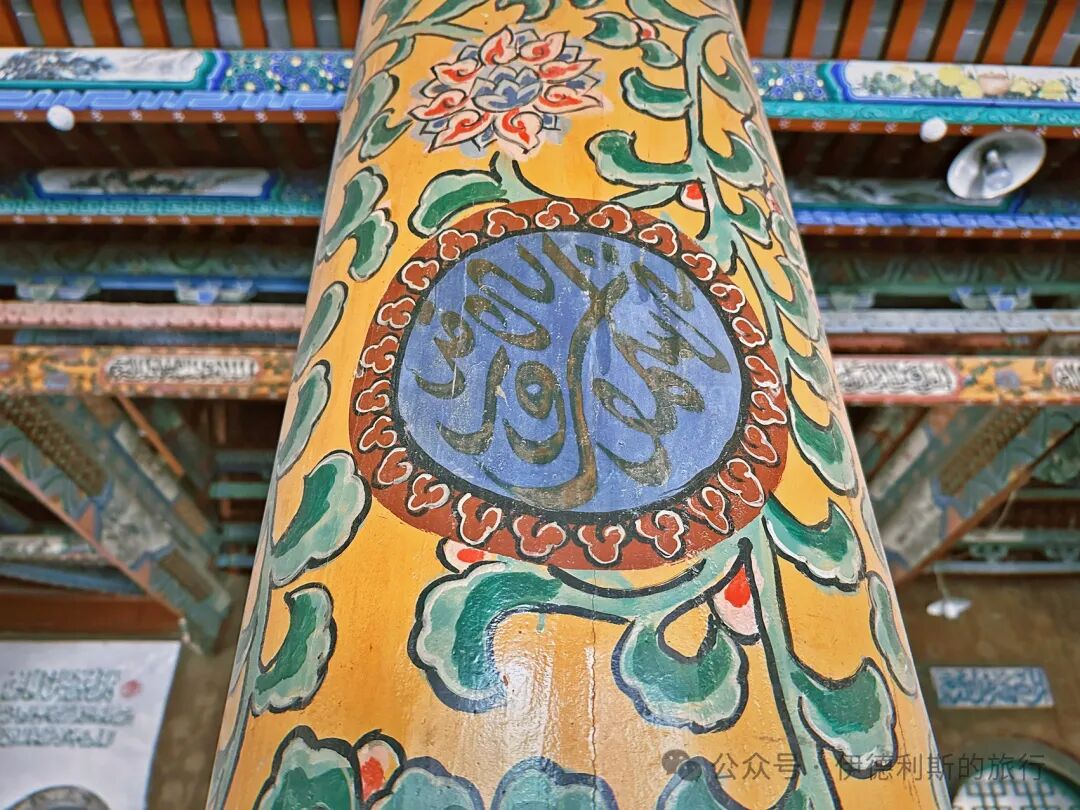
The main hall of the East Mosque features detailed roof beams and ridges, along with beautiful painted ceilings inside the prayer niche (yaodian).
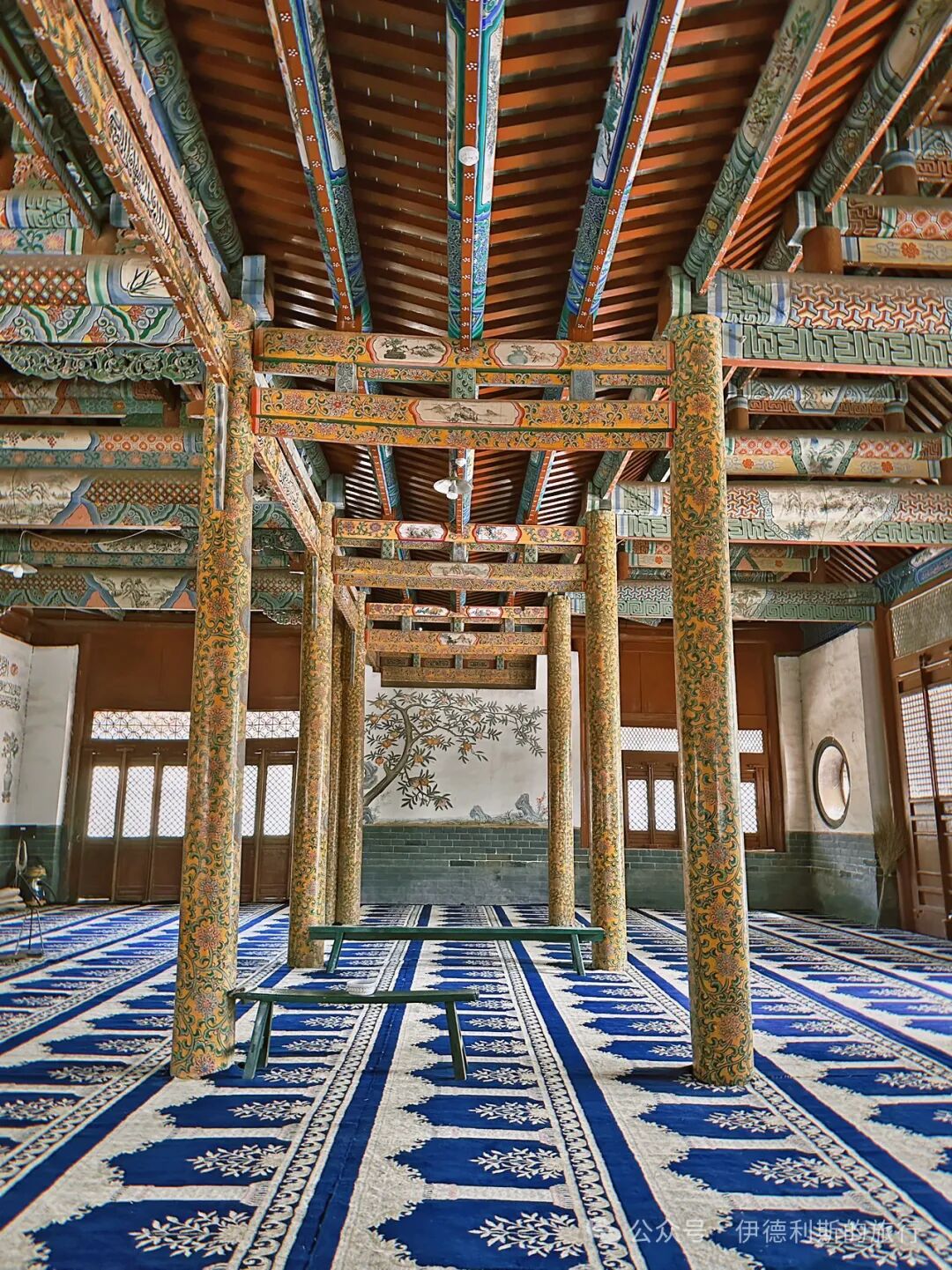
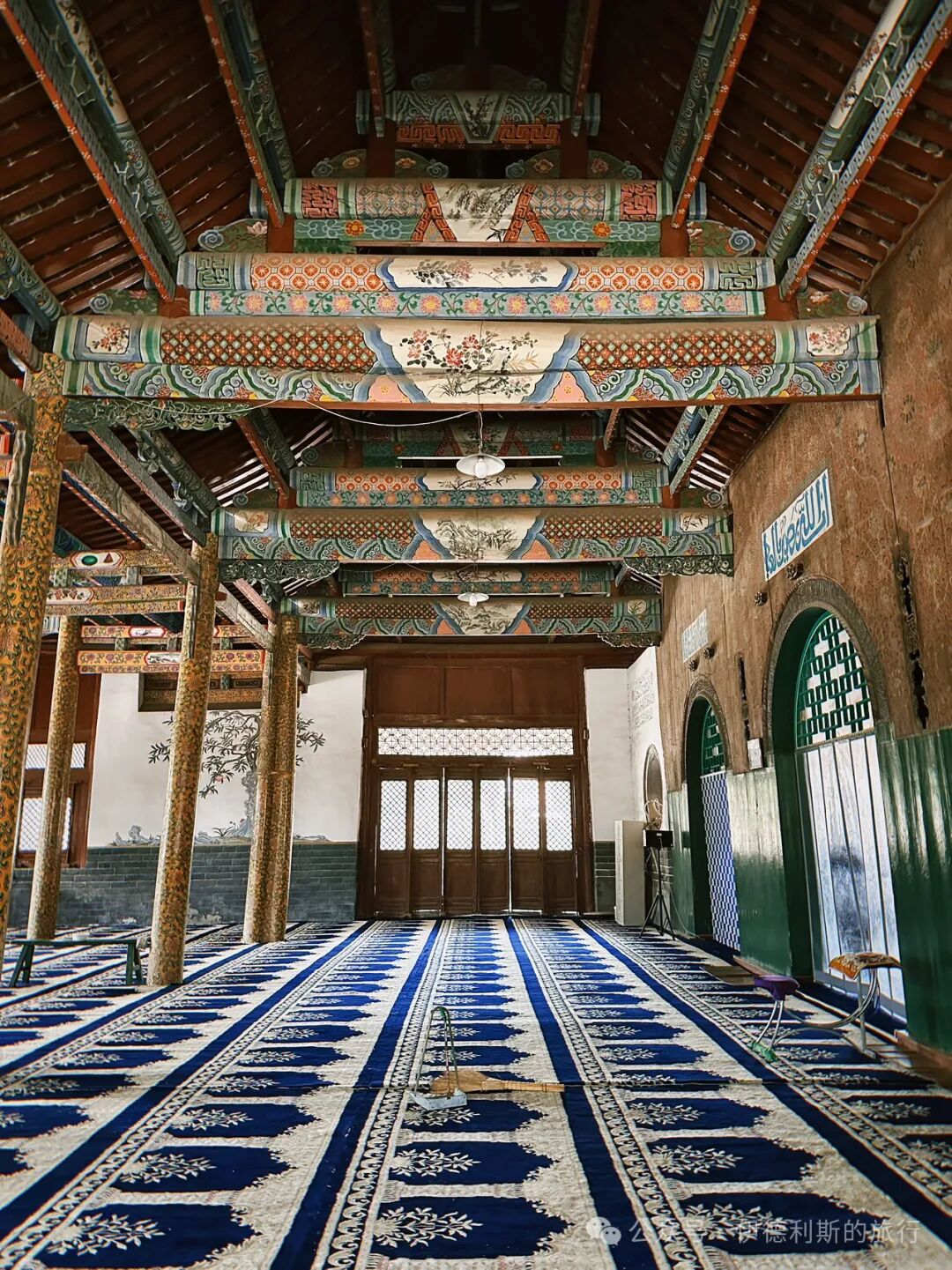
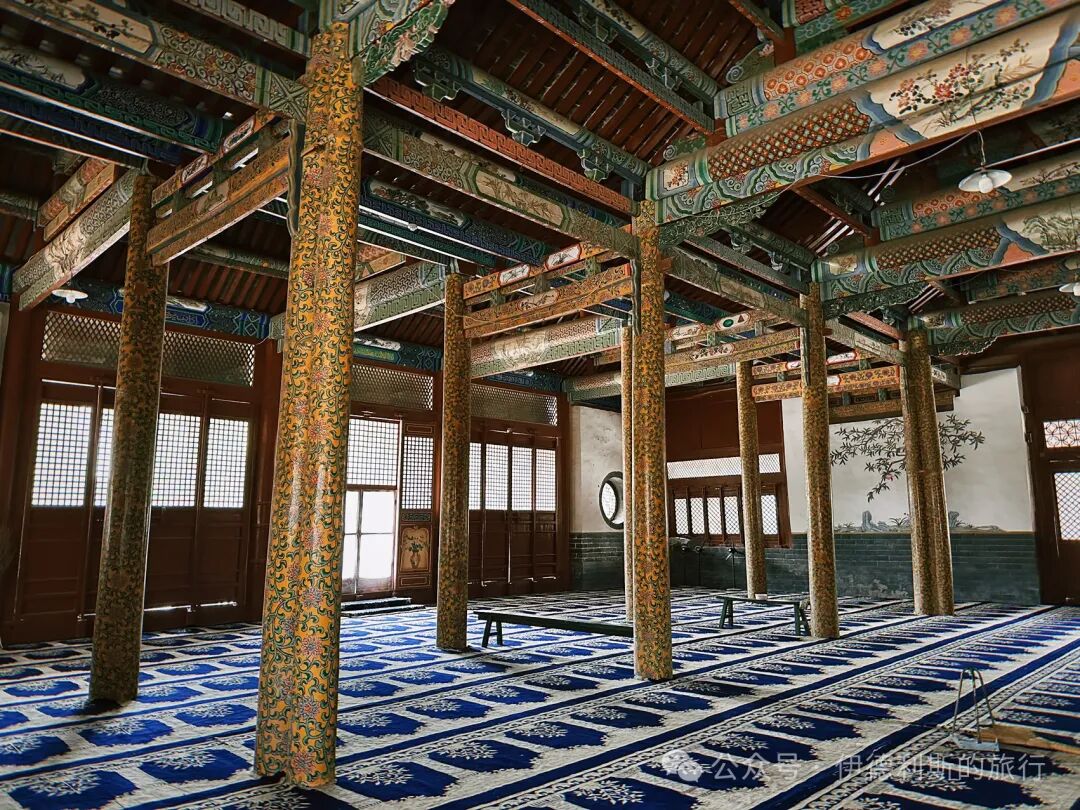
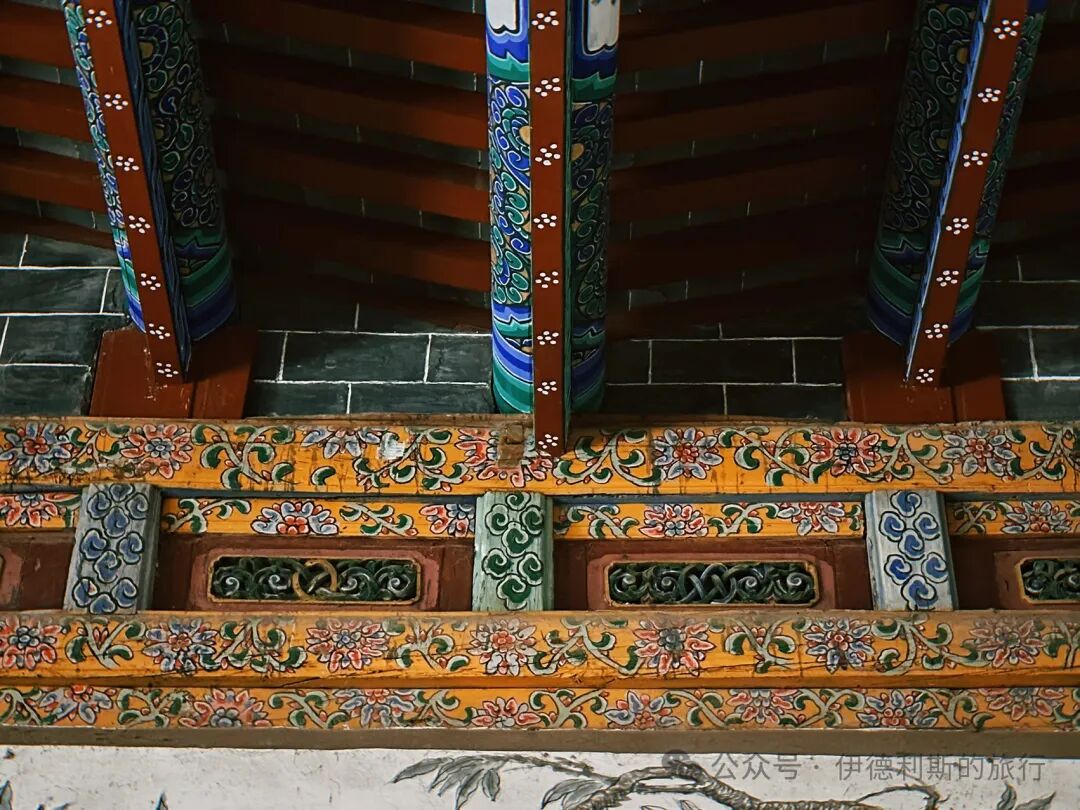
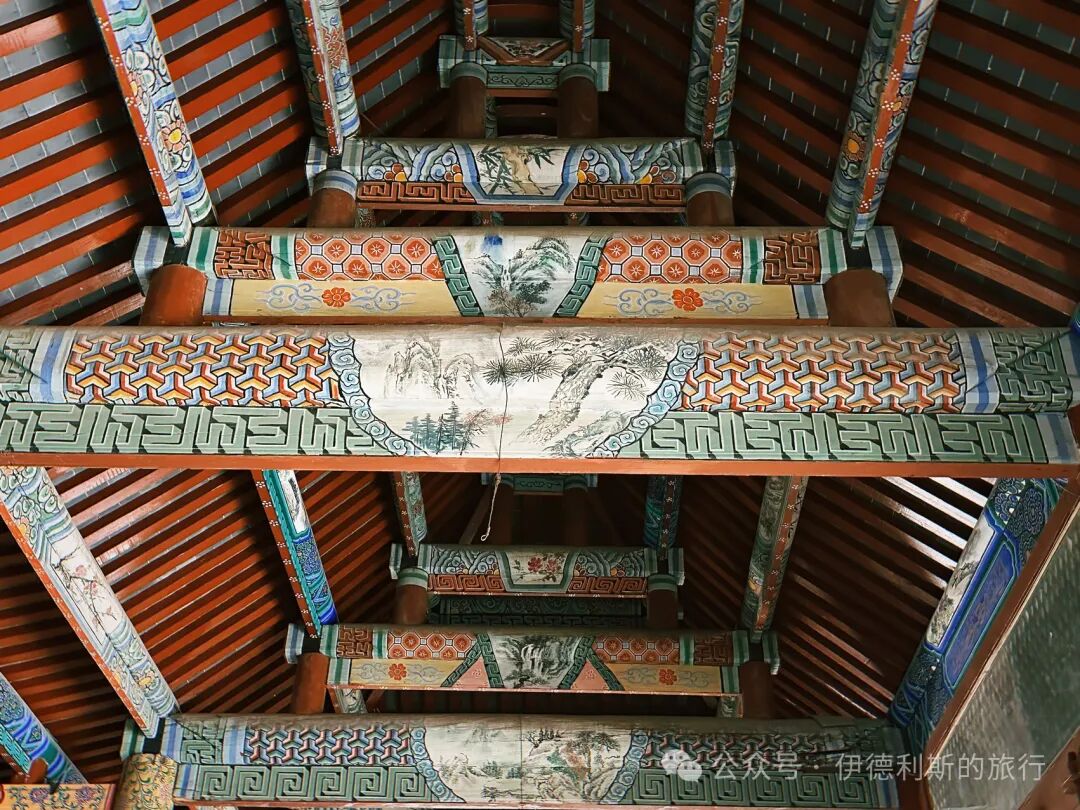
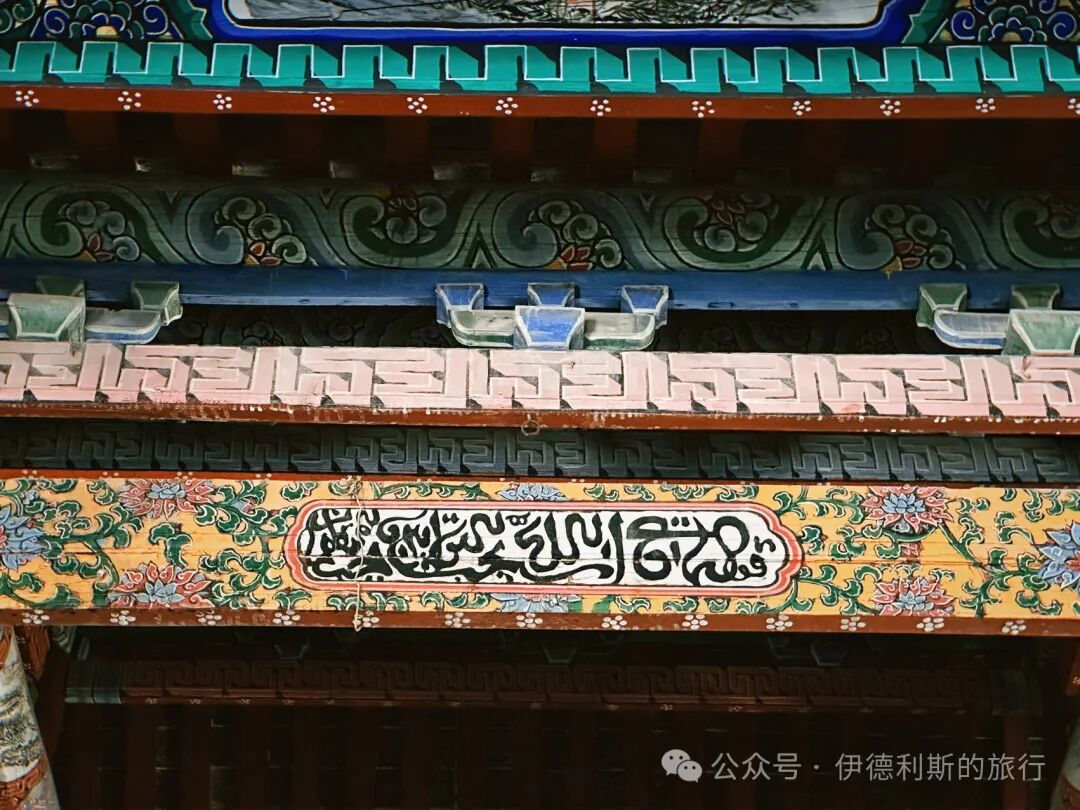
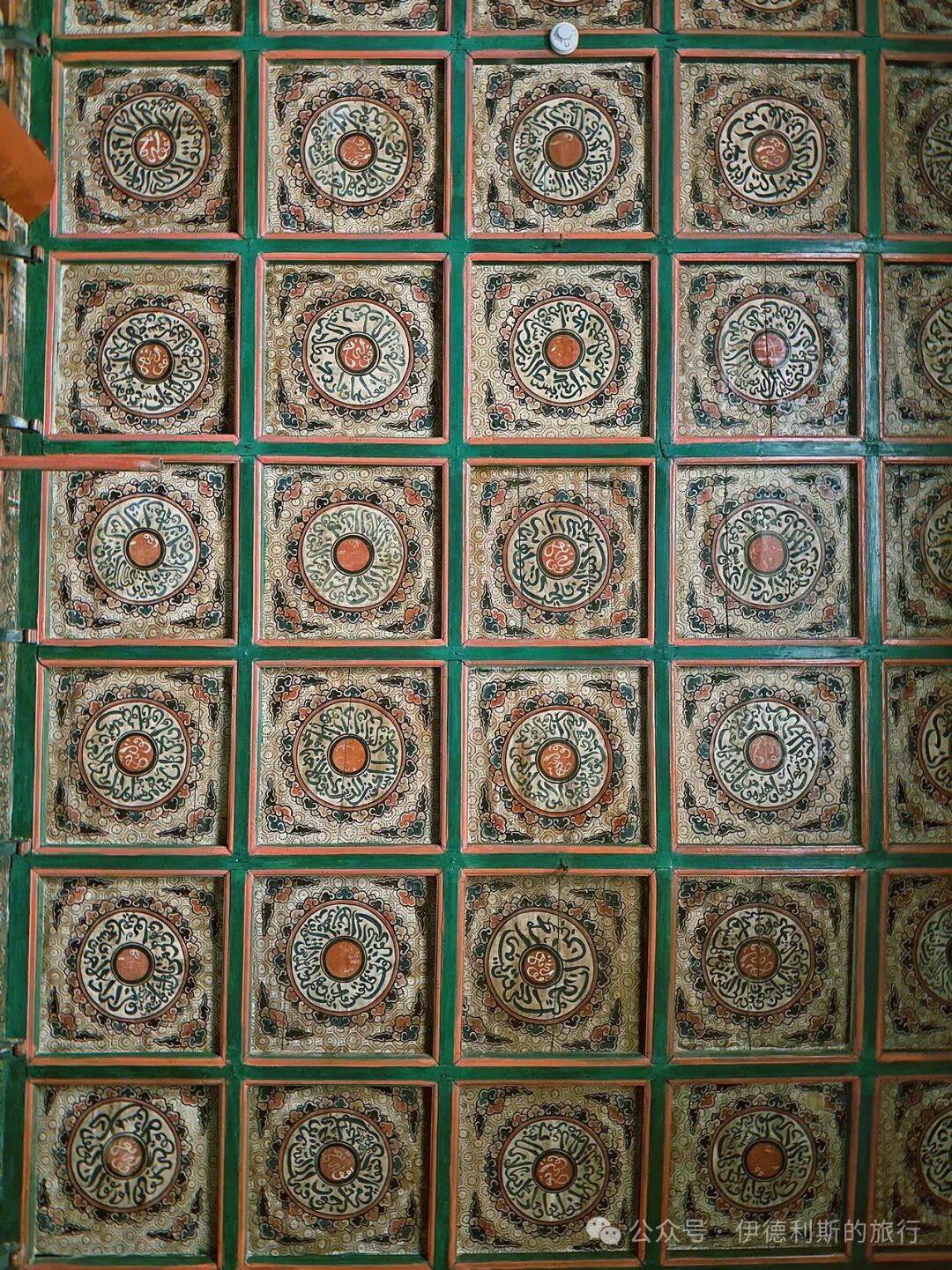
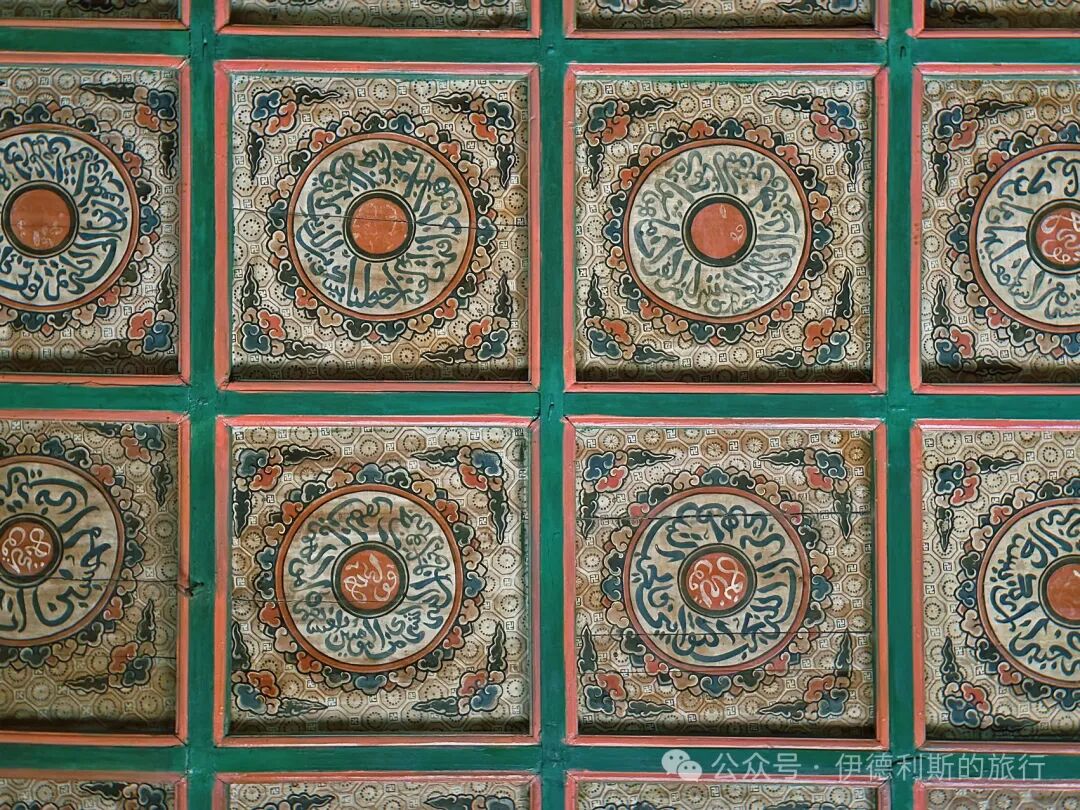
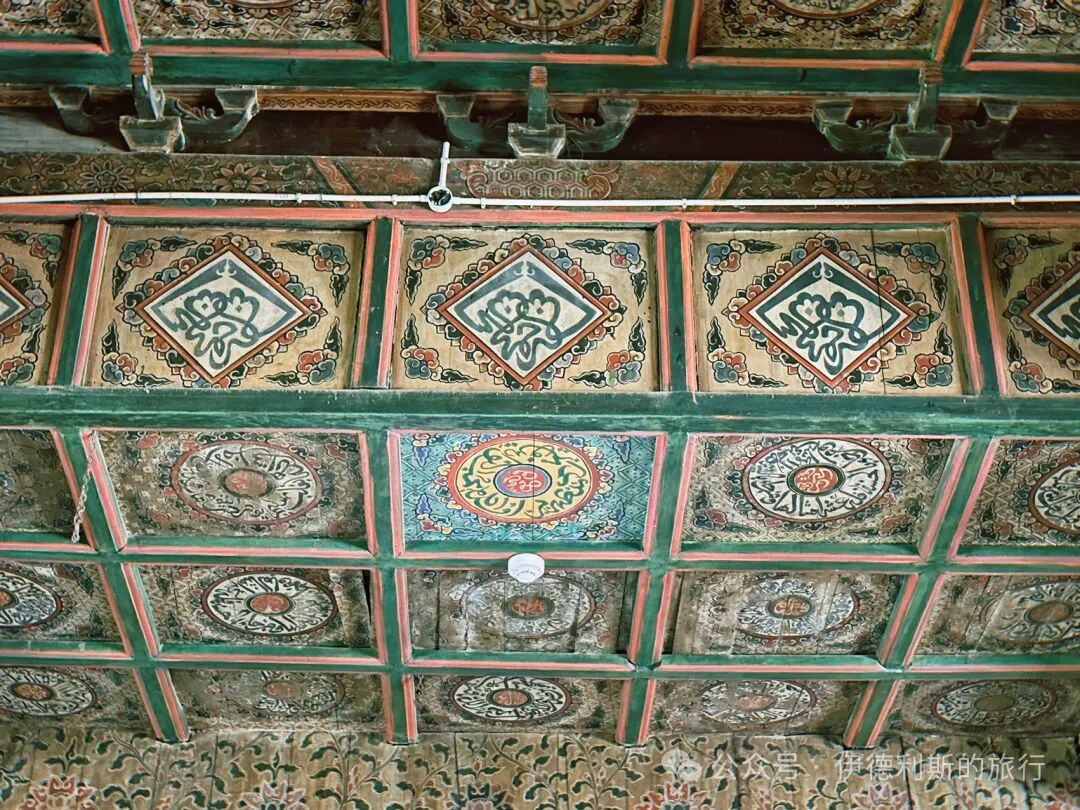
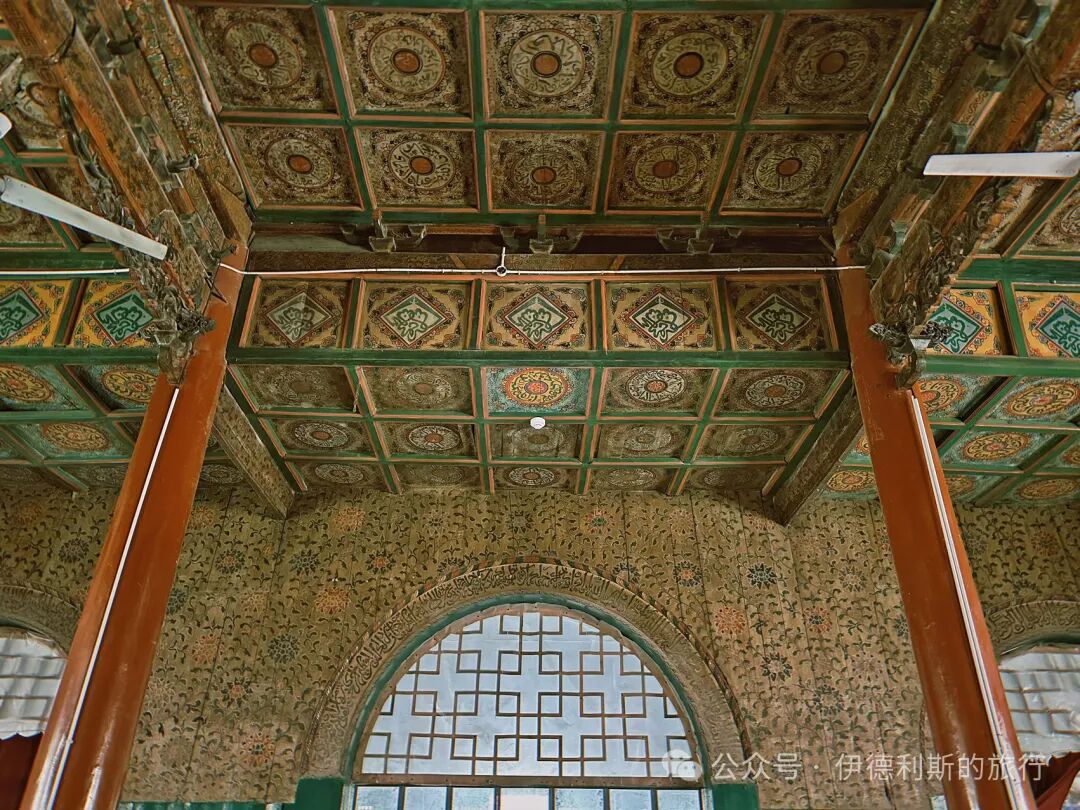
The partition wall between the main hall and the prayer niche (yaodian) once held beautiful paintings. On both sides of the arched door in the middle were rows of intricate openwork calligraphy wood carvings. They were very beautiful, but unfortunately, they were destroyed during a difficult period.
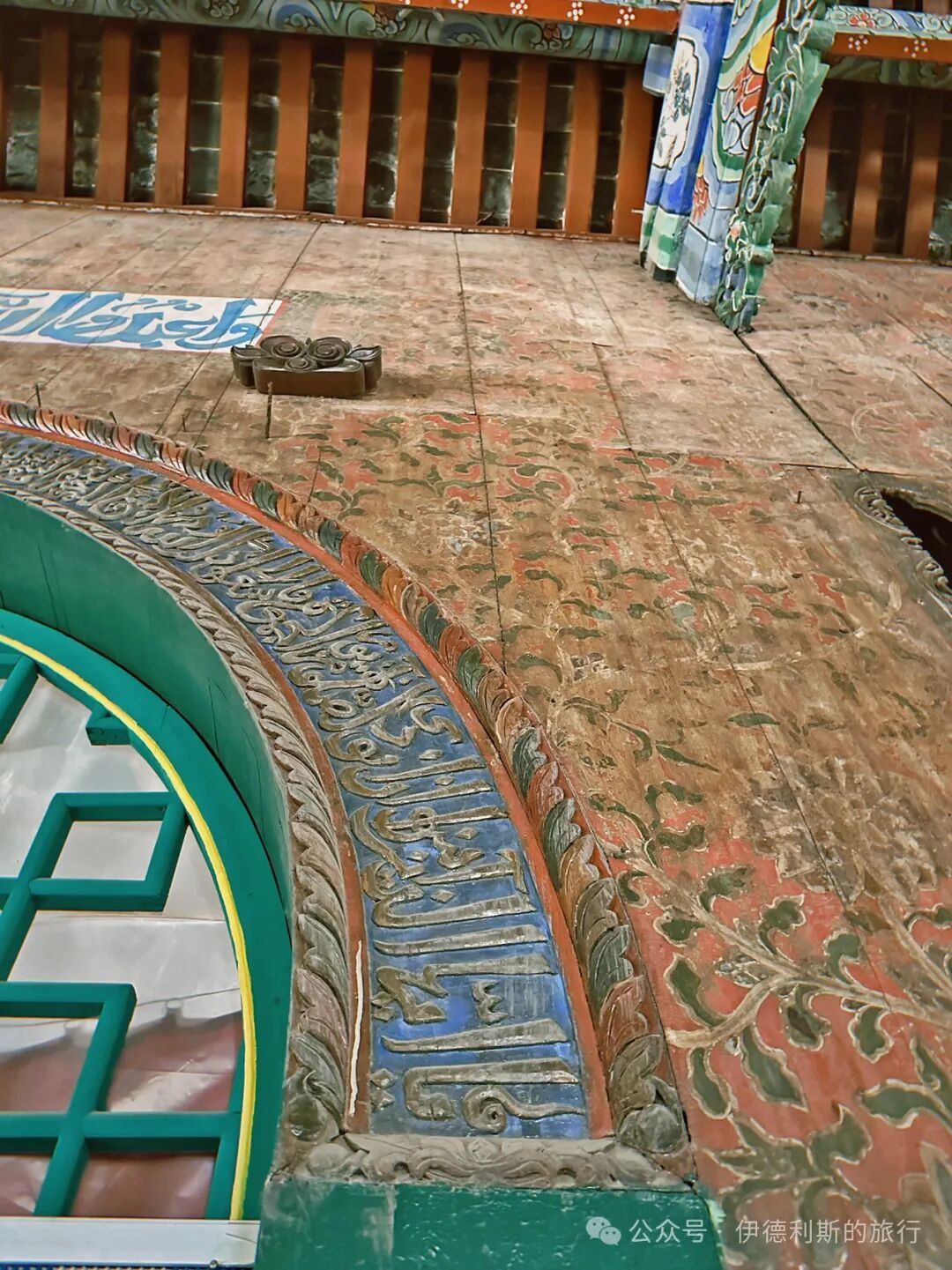
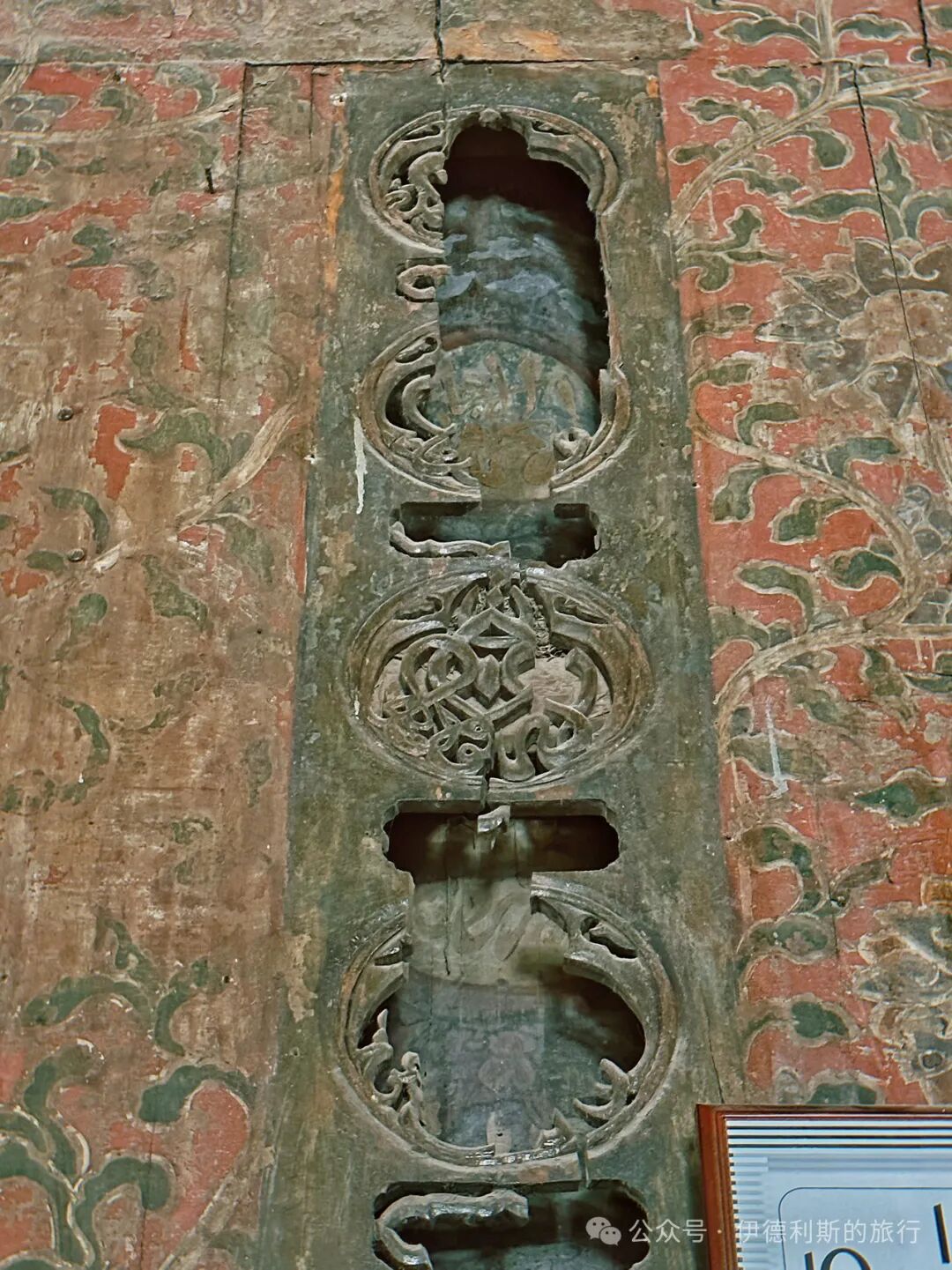
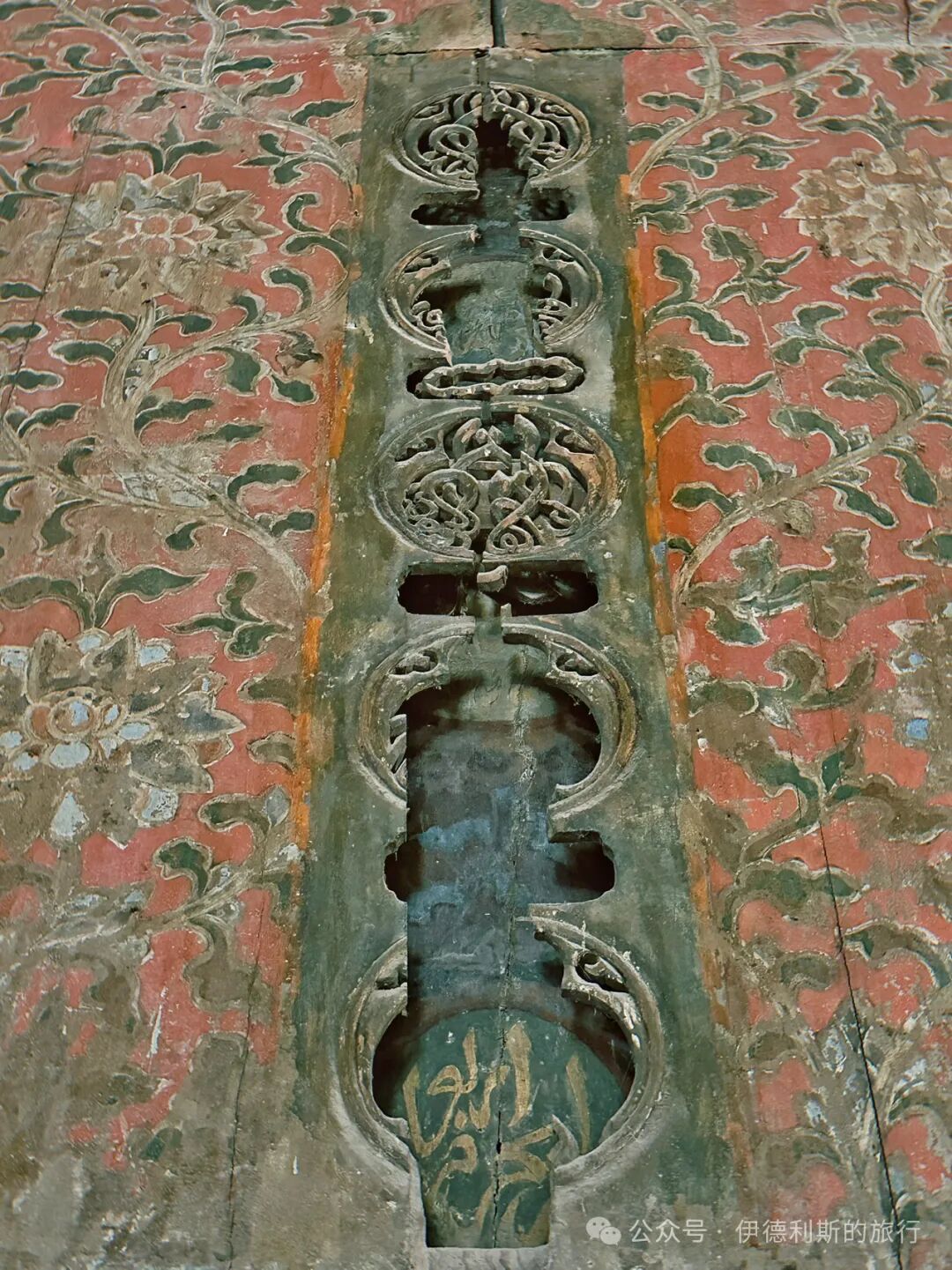
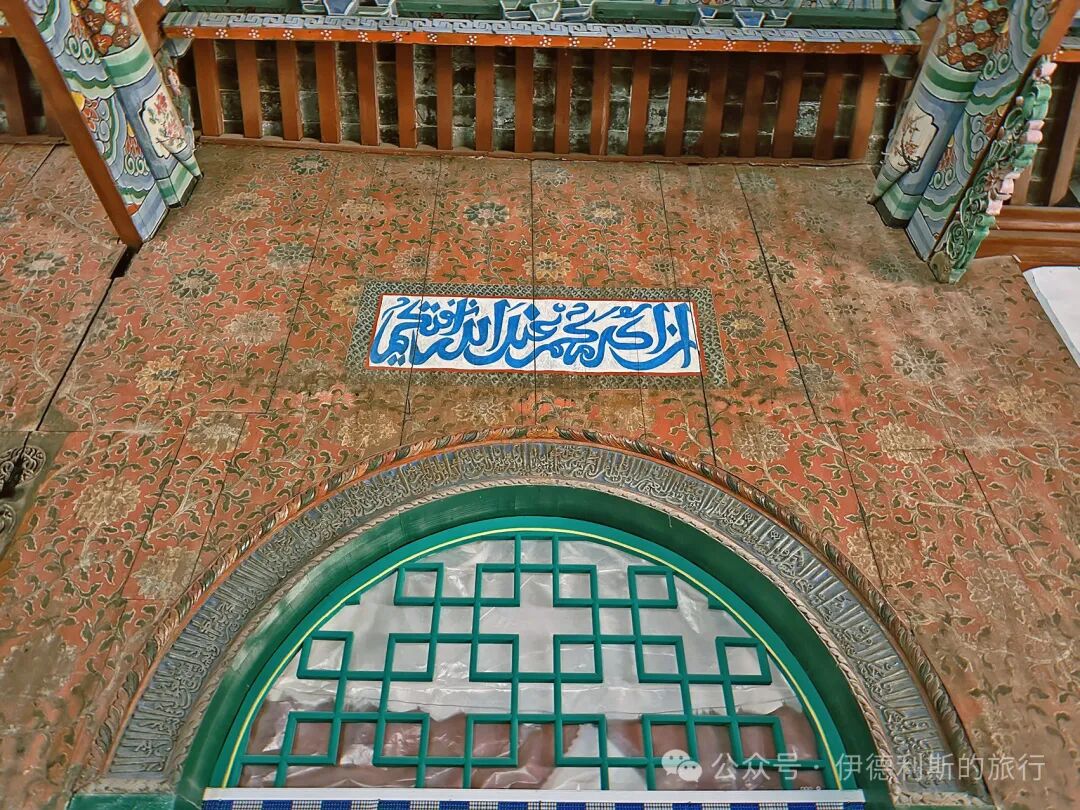
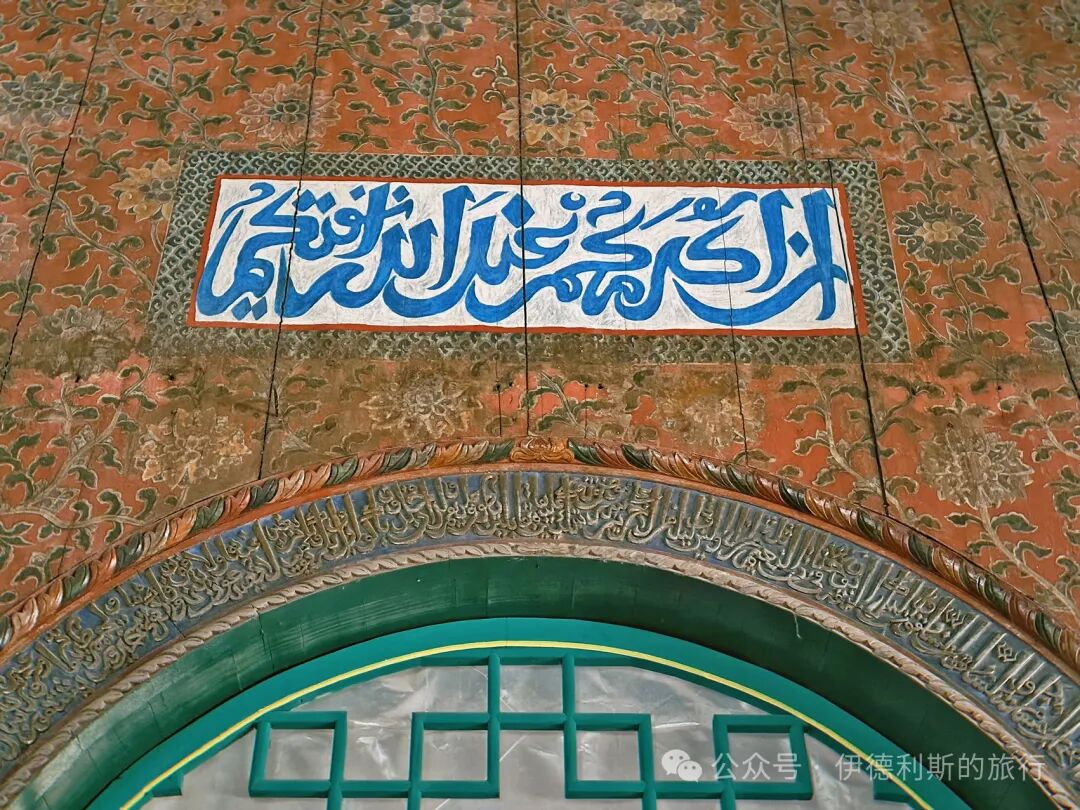
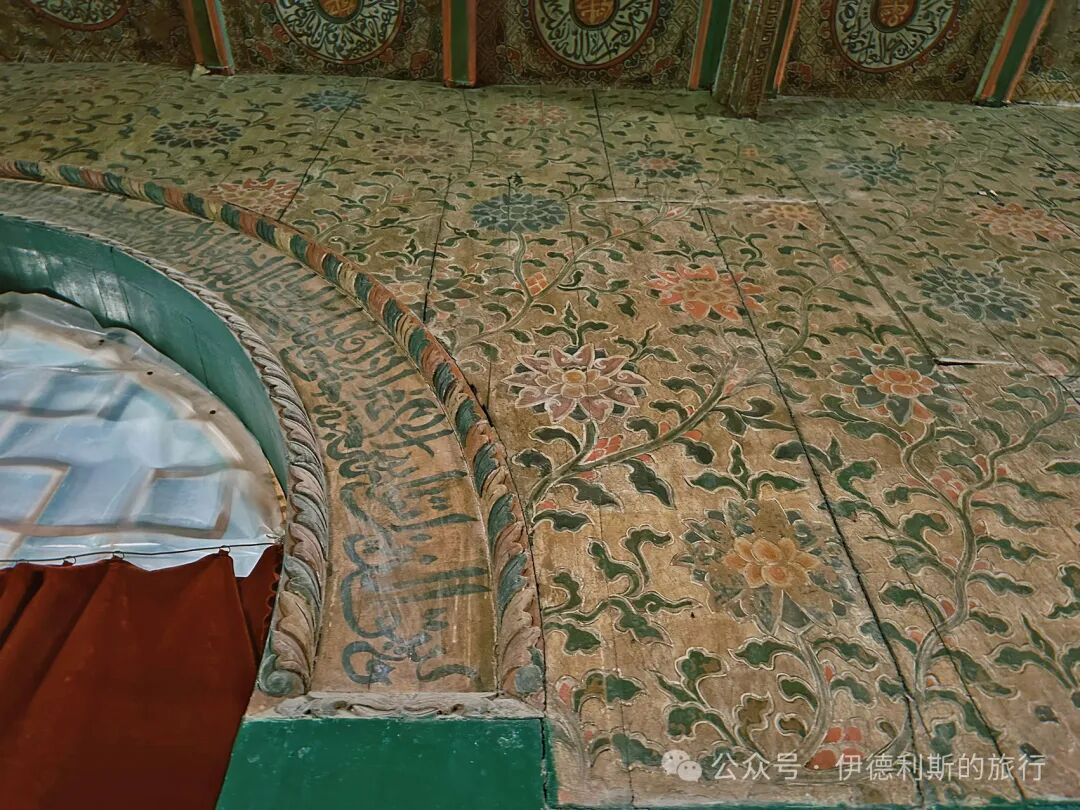
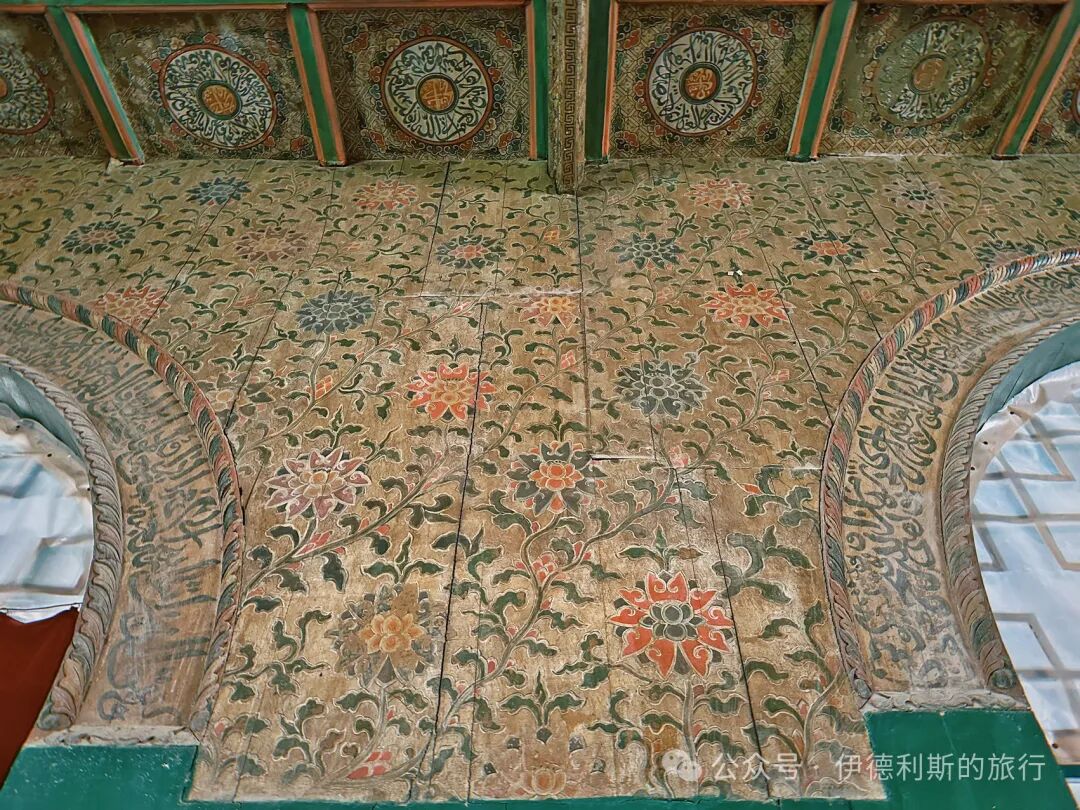
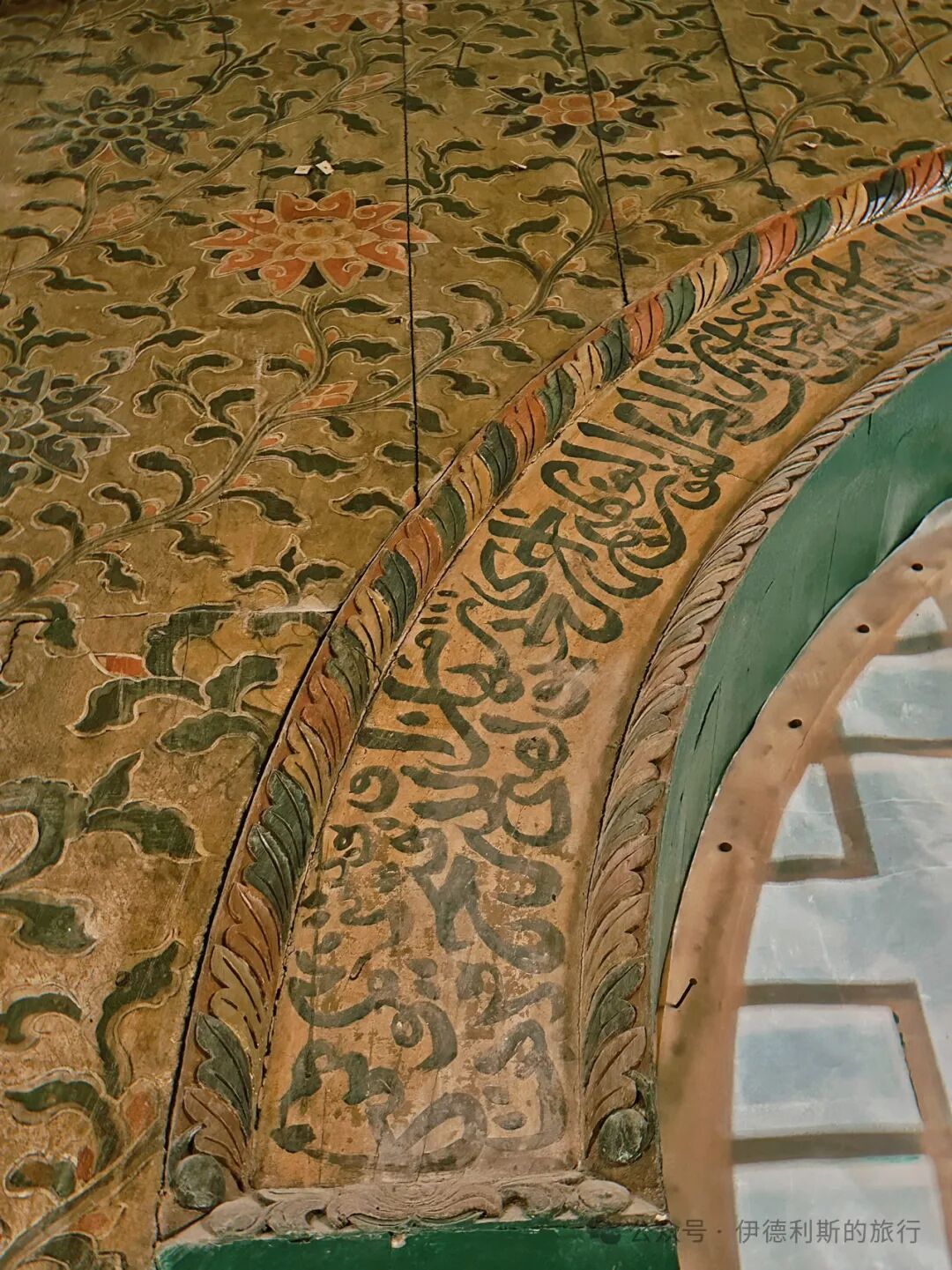
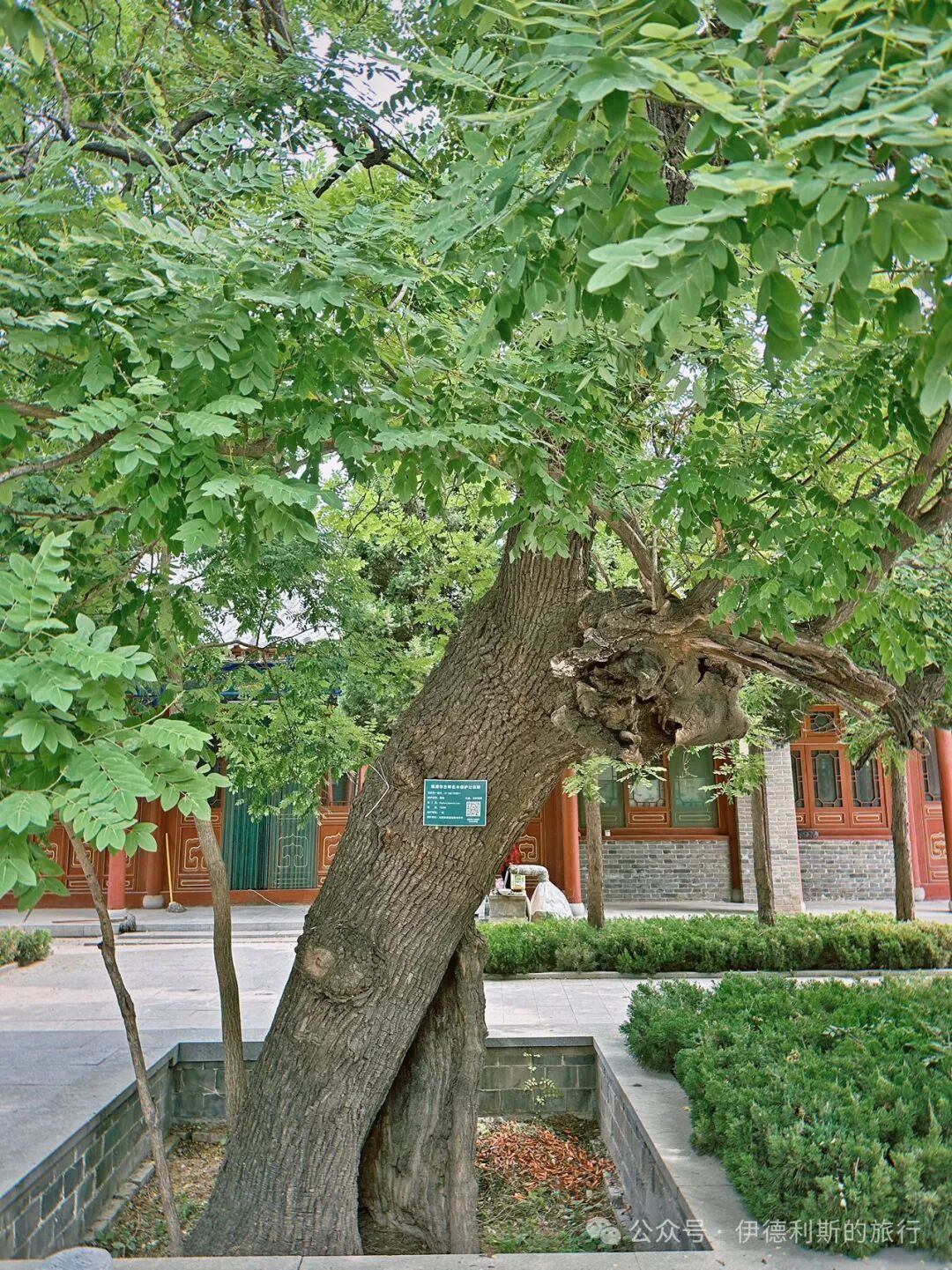
The East Mosque features an archway-style mihrab, traditional wooden structures, and a 700-year-old locust tree in the courtyard.
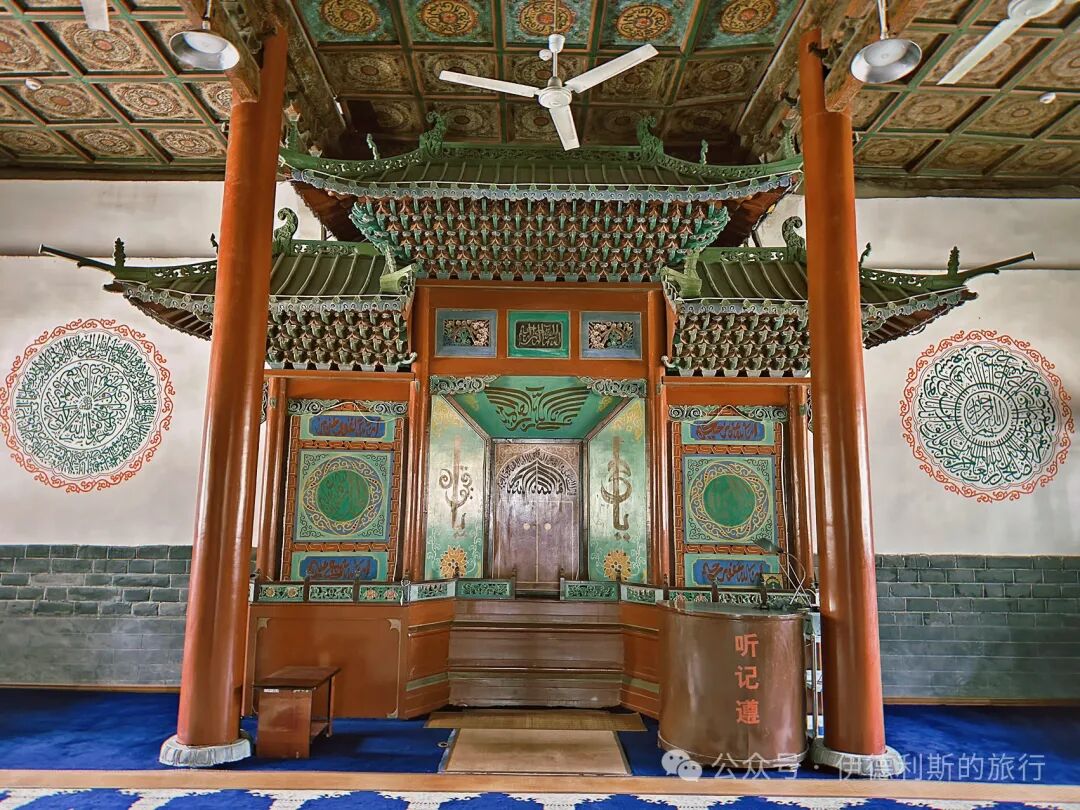
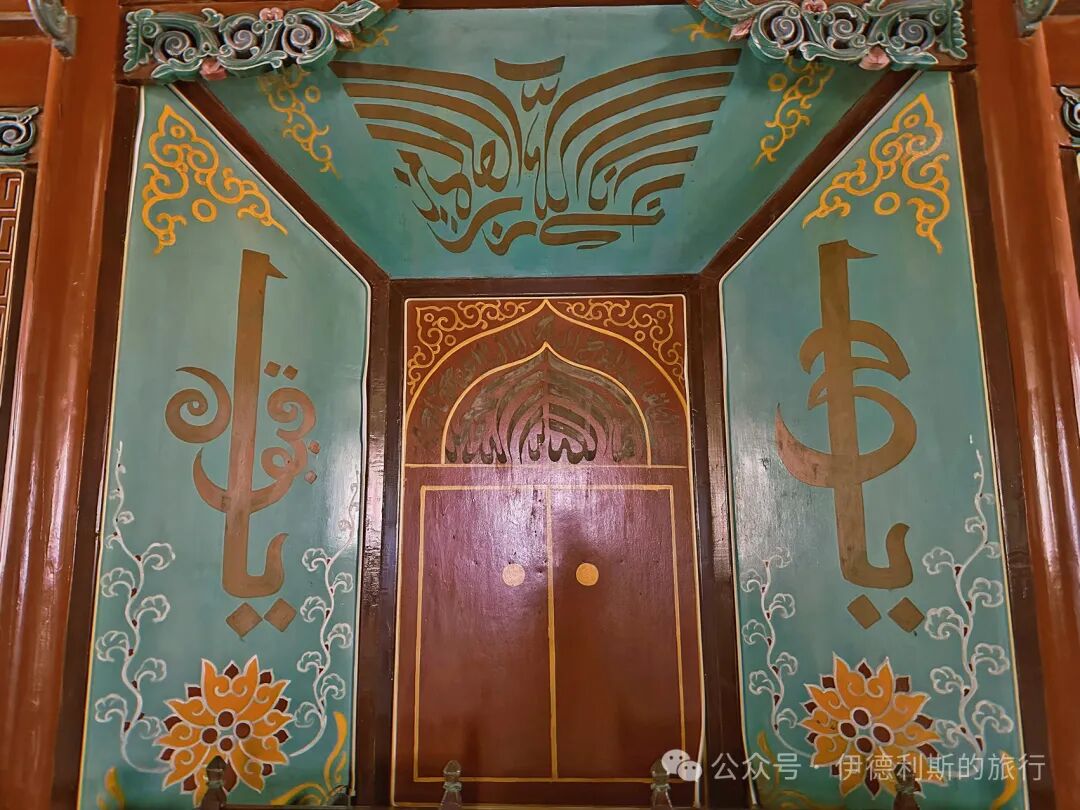
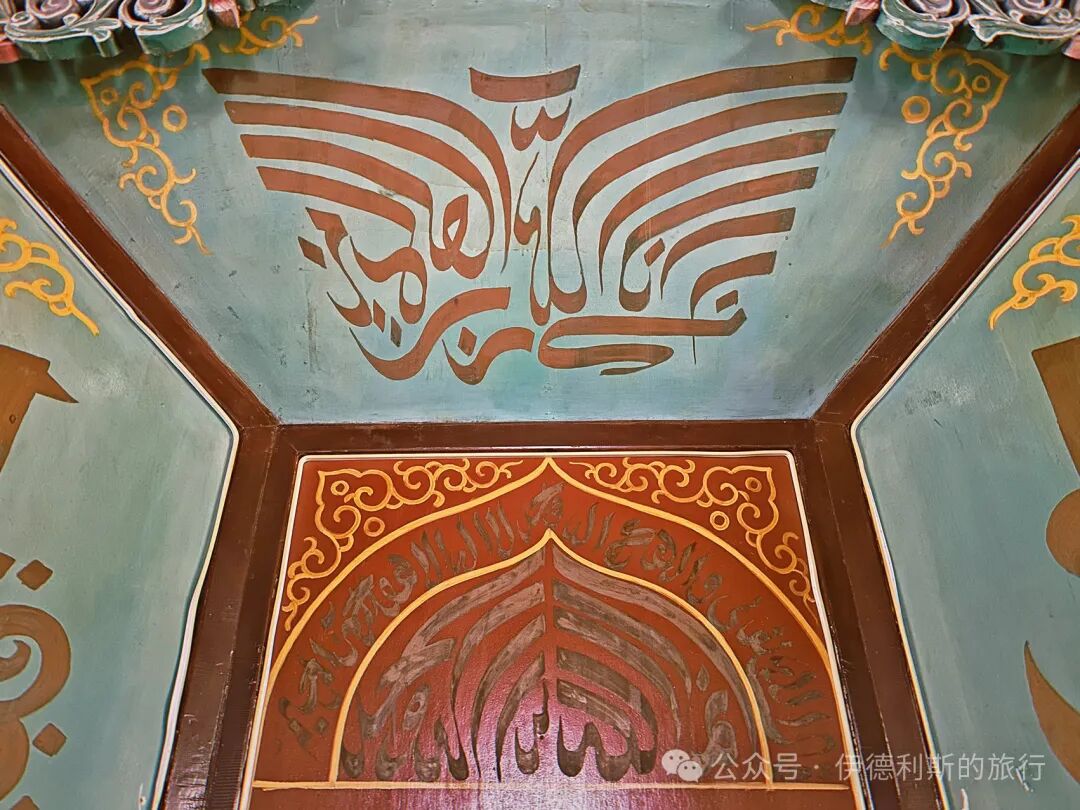
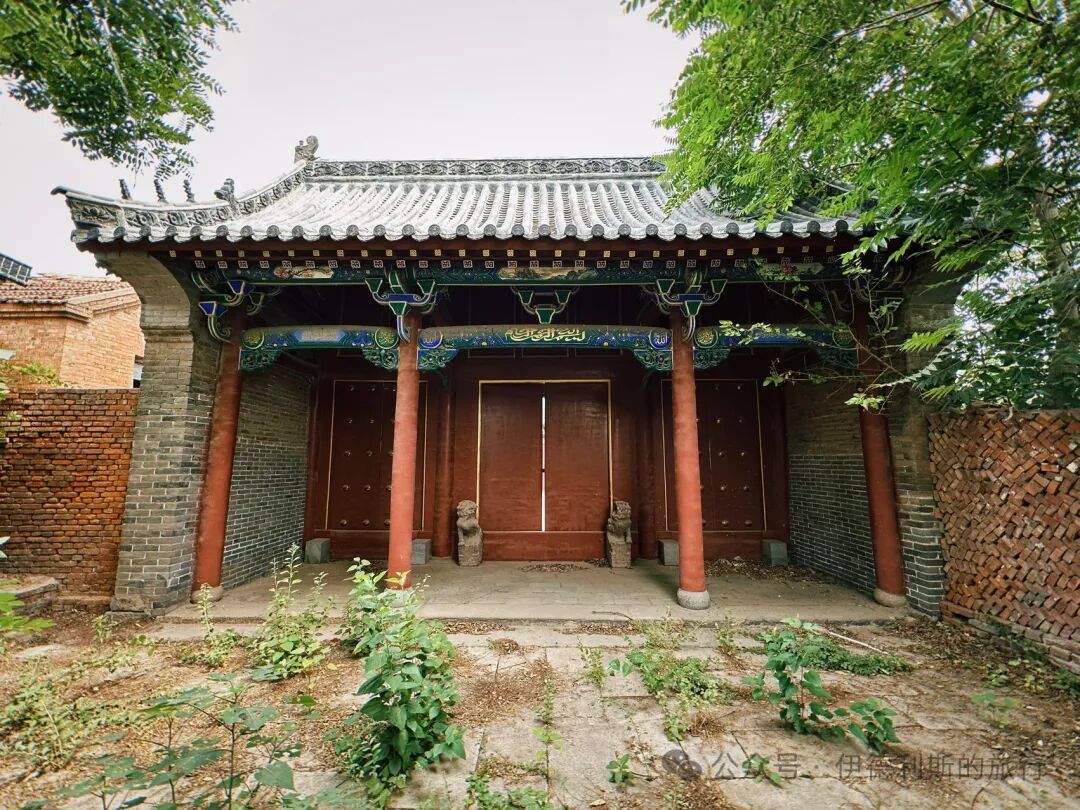
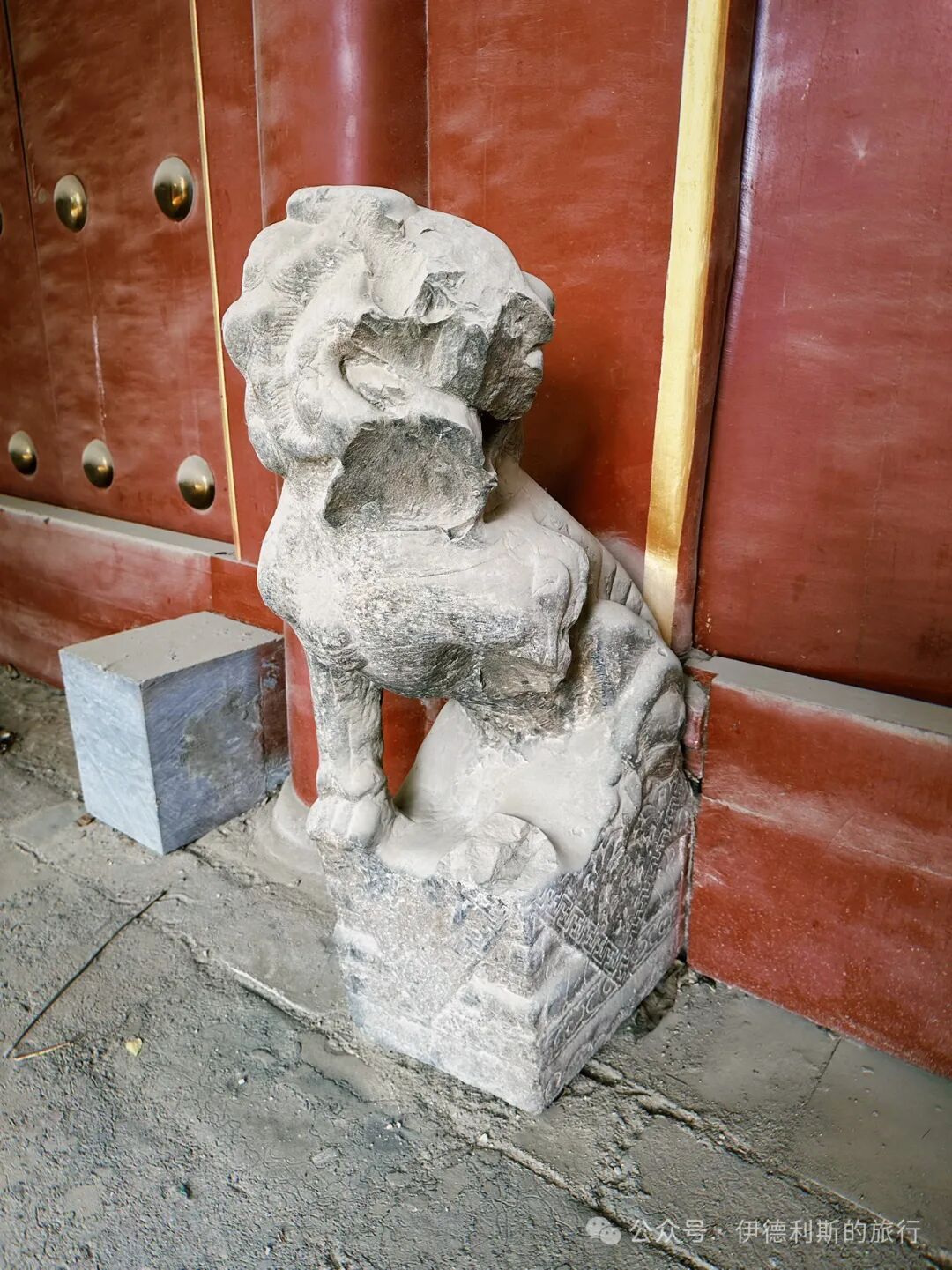
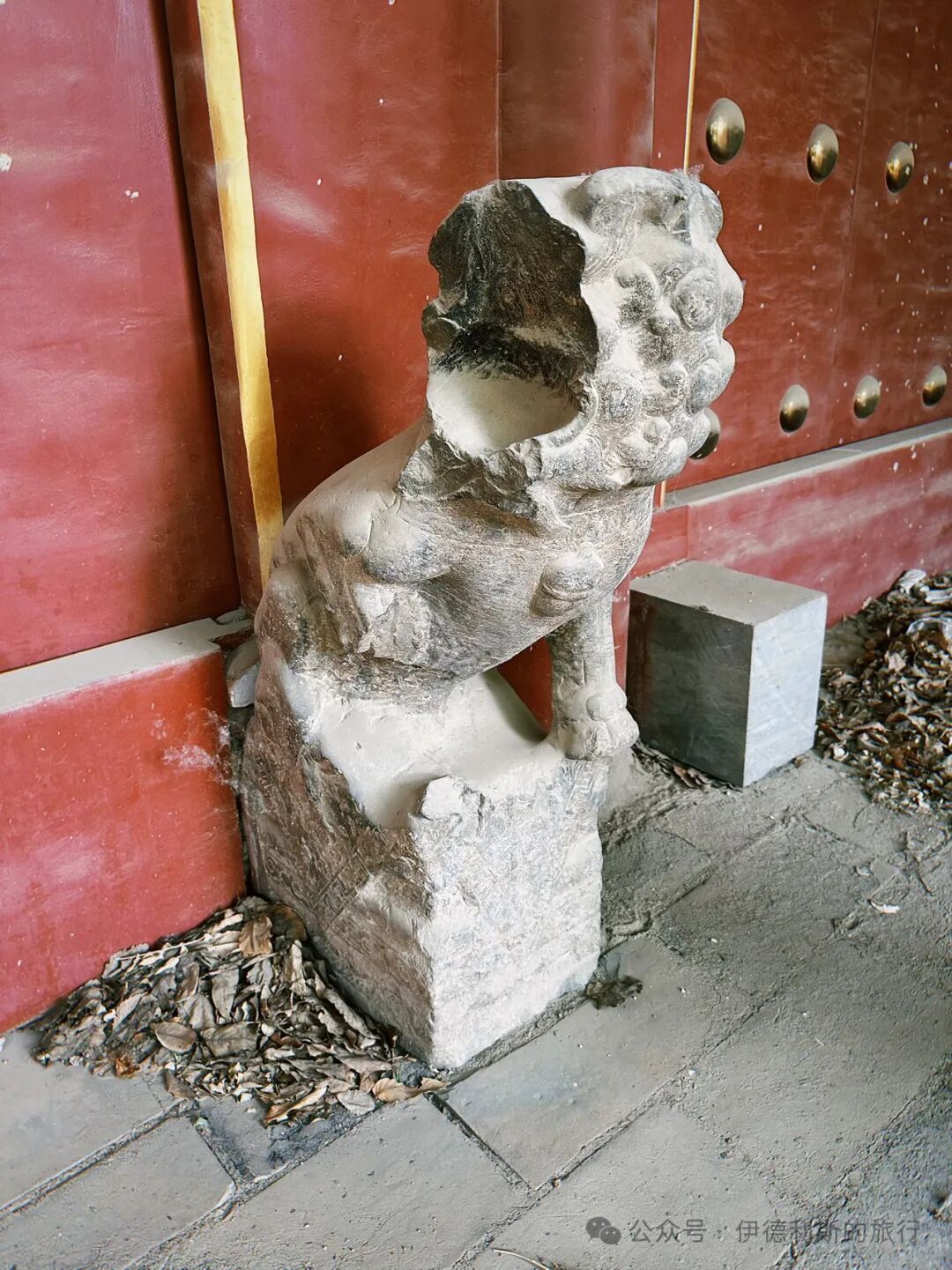
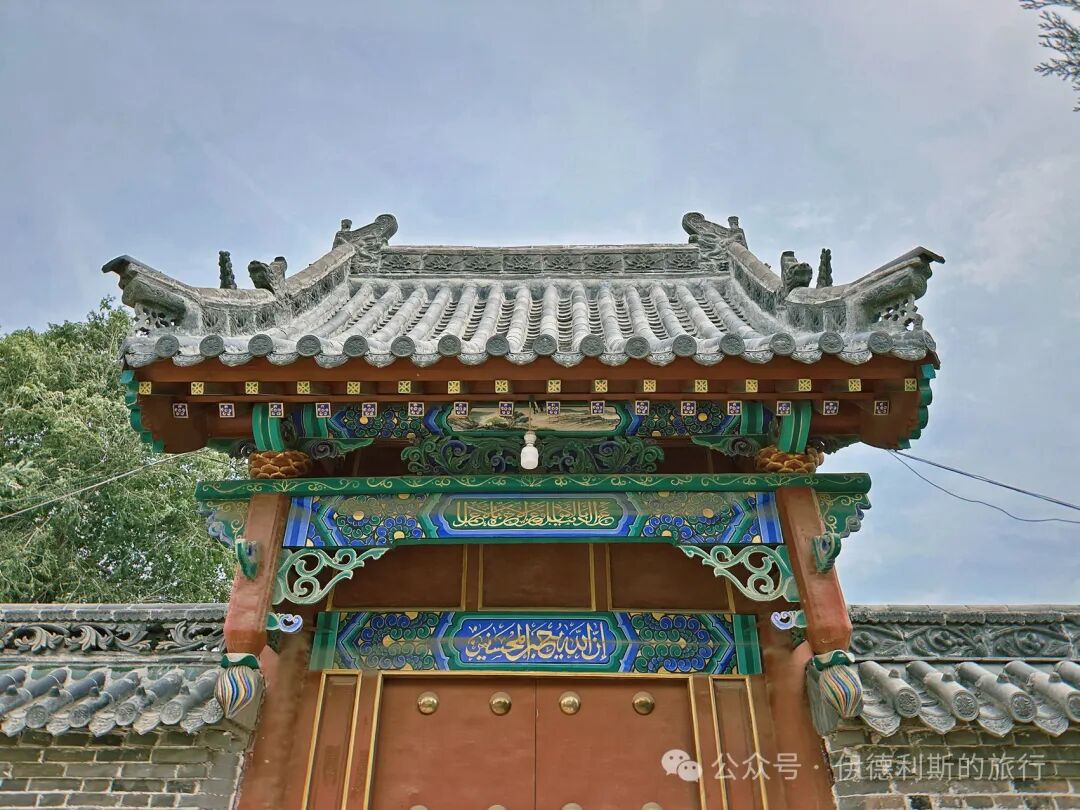
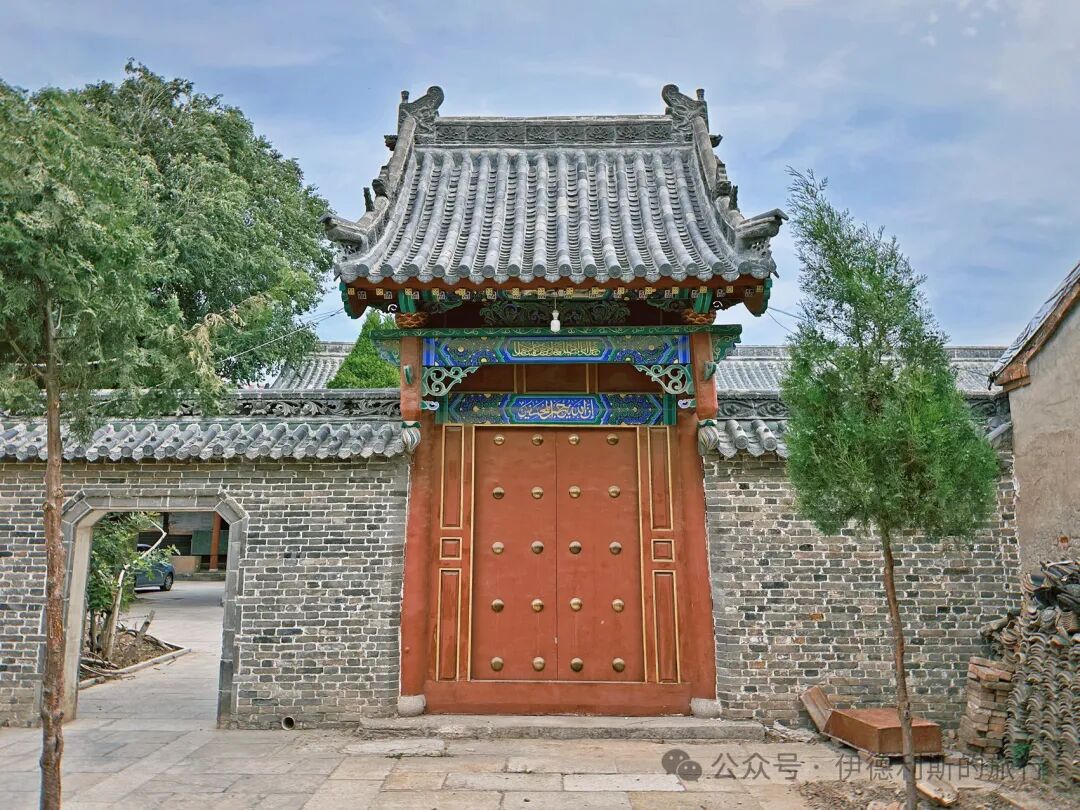
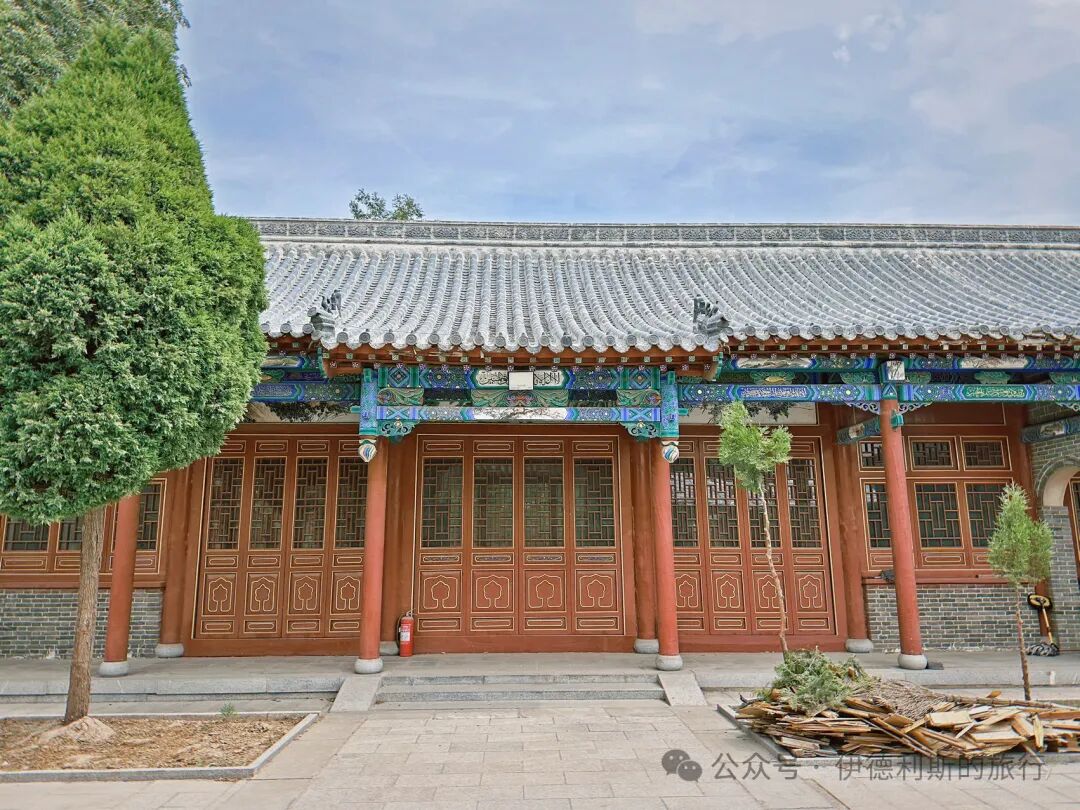
The south gate of the East Mosque is no longer in use, and a pair of damaged stone lions sit in front of it. After entering the main gate, you reach the first courtyard and the hanging flower gate (chuihuamen) on the north side. Moving further in, you find the second courtyard and the South Lecture Hall on the north side. You must pass through the South Lecture Hall to reach the main courtyard where the main hall is located.
Linqing Women's Mosque
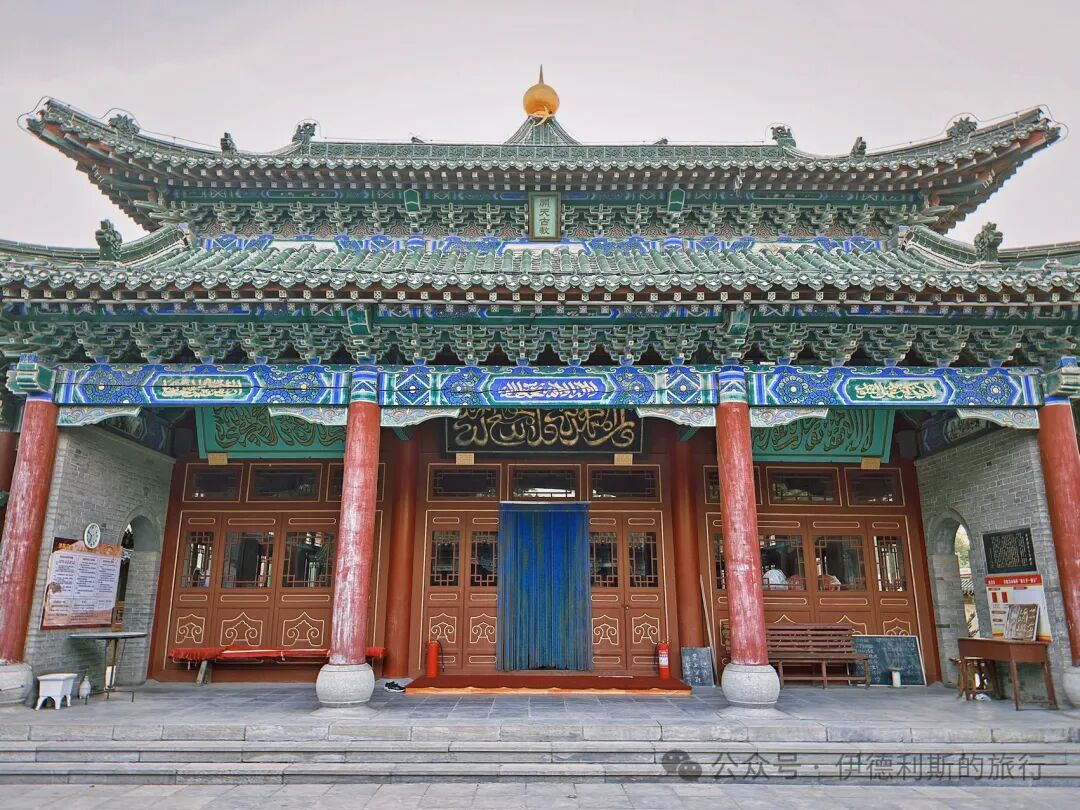
After leaving Hufu Beach, I rode my bike from the Linqing East Mosque to the Linqing Women's Mosque to find Zainab. The Linqing Women's Mosque was first built in 1924, making it exactly one hundred years old this year. In 2009, community elder Wan Yongcai and his wife Chen Zhong'e initiated the project, and their eldest son, Wan Qiusheng, chairman of the Linqing Sanhe Textile Group, along with his wife Hei Yuzhi, funded the reconstruction of the current building. This women's mosque is likely the largest one I have ever visited.
Summary: Linqing, Shandong - Canal City Mosques, Food and History (Part 1) is presented as a clear English travel account for readers interested in Muslim life, halal food, mosques, and local history. The article keeps the original place names, food details, photographs, and cultural context while focusing on Linqing, Shandong, Canal History.
Following my last post, 'Revisiting the Big and Small Mosque Streets in Dongguan, Liaocheng,' we took an afternoon train from Liaocheng to Linqing. We went straight to Baoliang's First Shop for a meat-filled flatbread roll (bingjuanrou). Wang Baoliang opened this shop in the 1980s, so it has been around for 40 years now. I ate their meat-filled flatbread roll back in 2017, and it was truly satisfying. The price of the roll has gone up by 5 yuan since my last visit, but it still tastes great.
Last time, I ordered the braised butterfly fish head, which was delicious, but I did not choose my dishes as well this time. This time, I ordered sesame beef and pan-braised hairtail fish. The meat in the sesame beef is the same as the meat in the flatbread roll, so I ended up ordering the same thing twice. The pan-braised hairtail fish had a fishy smell. I think ordering the braised hairtail or fried hairtail would have been a better choice.
Leaving Linqing Railway Station, I passed by the First Family Three-Fresh Potstickers (diyijia sanxian guotie). I ate there when I visited Linqing 17 years ago, and it remains the best Shandong cuisine I have ever had, especially the sesame lamb which was delicious.
Linqing North Mosque
I spent the afternoon performing namaz at the Linqing North Mosque. Linqing North Mosque sits where the Huitong River and Wei River meet. It was first built in 1504 (the seventh year of the Hongzhi reign of the Ming Dynasty). It underwent major expansions in 1564 (the 43rd year of the Jiajing reign), 1779 (the 44th year of the Qianlong reign), and 1809 (the 14th year of the Jiaqing reign) to reach its current form.
The main hall of Linqing North Mosque stands on a 1-meter-high stone platform and consists of a porch, the main hall, and a rear kiln-style hall (yaodian), making it very grand. The roof of the kiln-style hall has three moon-watching towers. The middle one has an octagonal pointed roof, while the two sides have square pointed roofs, all topped with peach-shaped finials.
The mosque features a memorial archway-style mihrab decorated with floral patterns and Arabic calligraphy, and the ceiling of the kiln-style hall also displays Arabic calligraphy.
The main hall of the North Mosque preserves precious murals from the Qing Dynasty.
The North Mosque (Beidasi) features various forms of calligraphy, including palace lanterns (gongdeng), brick carvings, plaques, architectural paintings, and wood carvings.
At the far east end of the North Mosque stands a gate in the style of a memorial archway (pailou), featuring delicate bracket sets (dougong) and upturned eaves.
After entering the main gate, you reach a ceremonial gate (yimen) built in the style of a memorial archway. Two Qing Dynasty plaques hang on the ceremonial gate:
A plaque reading 'Sincerity and Rectitude' (Chengyi Zhengxin) erected in the 11th year of the Guangxu reign by Li Ying, a decorated military official.
A plaque reading 'Orderly Human Relations' (Yilun Youxu) from the 2nd year of the Qianlong reign by Yang Jing, a deputy military commander; this one appears to be a replica.
Behind the ceremonial gate is a path leading to the main prayer hall, with lecture halls (jiangtang) located on the north and south sides.
On the north and south sides of the main prayer hall are two scripture pavilions (cangjingting) with four-cornered pointed roofs and small porches (baoxia) in front of the doors. In front of the pavilion stands a 500-year-old Chinese arborvitae (cebai) planted when the mosque was built.
Behind the main hall is the back gate, which features a plaque inscribed with "Qingzhen Libaisi" (Mosque) dated to the first month of the Jiajing jiazi year. The mosque also houses several stone tablets from the Qing dynasty and the Republic of China era.
Linqing East Mosque
After leaving the Linqing North Mosque, I went across the street to the East Mosque to pay my respects at the tombs of the saints (shamu) and the Hufu cemetery (Hufutan). The Linqing East Mosque was first built in 1465 (the first year of the Chenghua reign of the Ming dynasty). It was renovated twice in 1583 (the eleventh year of the Wanli reign) and 1649 (the sixth year of the Shunzhi reign), then expanded again in 1734 (the twelfth year of the Yongzheng reign), resulting in its grand scale.
On the far west side of the Linqing East Mosque is the back gate, which features a "Libaisi" (Mosque) plaque inscribed during the renovation in the sixth year of the Shunzhi reign. Behind the back gate is the main prayer hall, which consists of a front porch (juanpeng), the main hall, and a rear vaulted hall (yaodian). The roof of the vaulted hall has four sloping sides meeting at a point, topped with a gilded gourd-shaped finial.
The main hall is nearly 30 meters deep, with 14 pillars supporting the roof beams. The mihrab is the same style as the one in the North Mosque, featuring a decorative archway design.
The East Mosque has a porch roof (juanpeng) over the main hall and traditional calligraphy preserved on the pillars inside.
The main hall of the East Mosque features detailed roof beams and ridges, along with beautiful painted ceilings inside the prayer niche (yaodian).
The partition wall between the main hall and the prayer niche (yaodian) once held beautiful paintings. On both sides of the arched door in the middle were rows of intricate openwork calligraphy wood carvings. They were very beautiful, but unfortunately, they were destroyed during a difficult period.
The East Mosque features an archway-style mihrab, traditional wooden structures, and a 700-year-old locust tree in the courtyard.
The south gate of the East Mosque is no longer in use, and a pair of damaged stone lions sit in front of it. After entering the main gate, you reach the first courtyard and the hanging flower gate (chuihuamen) on the north side. Moving further in, you find the second courtyard and the South Lecture Hall on the north side. You must pass through the South Lecture Hall to reach the main courtyard where the main hall is located.
Linqing Women's Mosque
After leaving Hufu Beach, I rode my bike from the Linqing East Mosque to the Linqing Women's Mosque to find Zainab. The Linqing Women's Mosque was first built in 1924, making it exactly one hundred years old this year. In 2009, community elder Wan Yongcai and his wife Chen Zhong'e initiated the project, and their eldest son, Wan Qiusheng, chairman of the Linqing Sanhe Textile Group, along with his wife Hei Yuzhi, funded the reconstruction of the current building. This women's mosque is likely the largest one I have ever visited.
Halal Travel Guide: Linqing, Shandong - Canal City Mosques, Food and History (Part 2)
Articles • ali2007fr posted the article • 0 comments • 259 views • 2026-05-19 10:23
Reposted from the web
Summary: Linqing, Shandong - Canal City Mosques, Food and History (Part 2) is presented as a clear English travel account for readers interested in Muslim life, halal food, mosques, and local history. The article keeps the original place names, food details, photographs, and cultural context while focusing on Linqing, Shandong, Canal History.
After the evening prayer (shamu), we ate big bowl dishes (dawan cai) at Erliang Diguo Millet Porridge, located at the intersection of Xianfeng Road and Dazhong Road in Linqing. They serve porridge and eight big bowls (ba da wan) in the morning, noodles in the afternoon, and big bowl dishes (dawan cai) at night, all of which look delicious. We ordered a serving of big bowl dishes and a cold appetizer. The big bowl dish had plenty of ingredients inside, and it felt very healthy to eat.
Zainab and I both really like the atmosphere in Linqing. There are few cars on the street at night, no delivery scooters, and it feels great to ride a shared electric bike around. There are many halal restaurants on Xianfeng Road. People sit on small stools outside the shops at night to eat and chat, which feels very relaxed.
Linqing at night is full of various halal restaurants and even a small halal night market.
We had breakfast at Kong Family Steamed Bowls (Kongjia kouwan) at the intersection of Xianfeng Road, where we ate braised pork and steamed pork tenderloin (liji kouwan) with steamed buns (mantou). Turning the traditional steamed bowls (kouwan) from North China's scripture hall banquets into a breakfast seems to be a local specialty of Linqing, allowing tourists like us to enjoy traditional banquet dishes. They keep their steamed bowls (kouwan) in a large steamer. They have many kinds like pine-flower egg (songhua), meatballs (wanzi), pork tenderloin (liji), starch jelly (menzi), and braised pork (shaorou). You pick what you want, they flip it into a bowl, pour broth over it, and it is ready to eat.
Their shop was originally the Taoyuan Street Supply and Marketing Cooperative built in the 1970s. Eating here feels very retro. Besides selling steamed bowls in the morning, they also sell cold noodles (liangmian) at noon, which is another specialty of Linqing.
After finishing the steamed bowls, I went to Xianfeng Road to eat tofu pudding (doufunao) and firm tofu (laodoufu). Breakfast shops in Linqing sell both tofu pudding and firm tofu. The difference is that tofu pudding is set with gypsum, making the texture smooth and delicate. Firm tofu is set with brine, making the texture tough and chewy. I like both kinds.
At noon, we ate Wang Family Ten-Fragrance Noodles (shixiangmian) on Xinhua Road. Ten-Fragrance Noodles are also called Assorted-Fragrance Noodles (shixiangmian). The main feature is the large variety of vegetable toppings. A deluxe bowl can have over eighteen types, and the ingredients change based on the solar terms. The toppings mainly include stir-fried minced meat with eggplant strips, mung bean sprouts, chives, minced garlic sprouts, minced green beans, and tomato with egg. You also get fresh shredded cucumber, minced carrots, and pickled vegetables like pickled melon (jianggua), salted mustard greens (xian gede), and minced chive flowers (jiuhua mo), all finished with a drizzle of sesame paste. The homemade version we ate wasn't quite as elaborate, but it still had plenty of variety.
Hongguanying Mosque
At noon, we went to the Hongguanying Mosque in Linxi County, Xingtai, Hebei. Linxi County in Xingtai is actually right on the west side of the Wei Canal in Linqing. Once you cross the Xianfeng Bridge, there is a bus that goes to Hongguanying.
Hongguanying gets its name from the Hong family of Hui Muslims. According to the Linqing Hong Family Genealogy, the ancestor of the Hong family of Hui Muslims was Sayyid Ajjal Shams al-Din. His sixth-generation descendant, Hong Badan, served as an official in Linqing during the Ming Dynasty. His descendants took Hong as their surname and settled in Linqing. One branch settled in the urban area of Linqing and once built the Hong Family Mosque, but unfortunately, it no longer exists. Another group settled in Hongguanying Village and built the Hongguanying Mosque. The Hongguanying Mosque was first built between the Xuande and Tianshun periods of the Ming Dynasty. It was burned down in 1854 during the Northern Expedition of the Taiping Rebellion and rebuilt into its current form in 1874.
We were warmly welcomed at the Hongguanying Mosque by Imam Lan. He is skilled at Arabic calligraphy, and his scripture paintings and stone carvings are very impressive. I was very lucky to receive a one-stroke Basmala (tasmi) as a gift from Imam Lan.
On the road heading west from Linqing to Hongguanying, we saw wheat fields, the Wei Canal, and Hui Muslim villages. The Xianfeng Bridge over the Wei Canal was built in 1959 and expanded in 1974. It was once very famous, but it stopped allowing motor vehicles in 1992 and is now a protected cultural site.
Returning from Hongguanying to downtown Linqing, we found that most restaurants here are closed between 2:00 PM and 5:00 PM. We found a place that sells deep-stir-fried meat tenderloin (ganzha liji) and bought some to eat on the train. I tried it as soon as I got on the train and it was super delicious! It was fried but not greasy at all. It even tasted great cold, just like a snack, and I couldn't stop eating it. Then we went to a shop that sells meat flatbreads (huoshao) and stuffed flatbreads (xian huoshao). There are many ways to make flatbreads here in Linqing. We bought a beef-stuffed flatbread, and it was packed with filling. I think it tasted much better than the ones I've had in Beijing.
The last photo shows two shops next to the Linqing No. 1 Kindergarten. One is a stationery shop that also serves breakfast, and the other is a sesame oil shop that provides lunch and tutoring for students. I thought that was really interesting.
After buying the stuffed flatbread, we happened to run into the imam's wife from the Linqing Women's Mosque. She told us her family runs a braised chicken and smoked pigeon shop right next door, so we went in to take a look. Once inside, we learned that their shop is a city-level intangible cultural heritage site for Linqing smoked deli techniques. We bought two of their signature smoked pigeons and some chicken gizzards to eat on the train. The smoked pigeon was really fragrant. Even though it didn't have as much meat as chicken, the smoky flavor was delicious and worth eating. view all
Summary: Linqing, Shandong - Canal City Mosques, Food and History (Part 2) is presented as a clear English travel account for readers interested in Muslim life, halal food, mosques, and local history. The article keeps the original place names, food details, photographs, and cultural context while focusing on Linqing, Shandong, Canal History.
After the evening prayer (shamu), we ate big bowl dishes (dawan cai) at Erliang Diguo Millet Porridge, located at the intersection of Xianfeng Road and Dazhong Road in Linqing. They serve porridge and eight big bowls (ba da wan) in the morning, noodles in the afternoon, and big bowl dishes (dawan cai) at night, all of which look delicious. We ordered a serving of big bowl dishes and a cold appetizer. The big bowl dish had plenty of ingredients inside, and it felt very healthy to eat.
Zainab and I both really like the atmosphere in Linqing. There are few cars on the street at night, no delivery scooters, and it feels great to ride a shared electric bike around. There are many halal restaurants on Xianfeng Road. People sit on small stools outside the shops at night to eat and chat, which feels very relaxed.
Linqing at night is full of various halal restaurants and even a small halal night market.
We had breakfast at Kong Family Steamed Bowls (Kongjia kouwan) at the intersection of Xianfeng Road, where we ate braised pork and steamed pork tenderloin (liji kouwan) with steamed buns (mantou). Turning the traditional steamed bowls (kouwan) from North China's scripture hall banquets into a breakfast seems to be a local specialty of Linqing, allowing tourists like us to enjoy traditional banquet dishes. They keep their steamed bowls (kouwan) in a large steamer. They have many kinds like pine-flower egg (songhua), meatballs (wanzi), pork tenderloin (liji), starch jelly (menzi), and braised pork (shaorou). You pick what you want, they flip it into a bowl, pour broth over it, and it is ready to eat.
Their shop was originally the Taoyuan Street Supply and Marketing Cooperative built in the 1970s. Eating here feels very retro. Besides selling steamed bowls in the morning, they also sell cold noodles (liangmian) at noon, which is another specialty of Linqing.
After finishing the steamed bowls, I went to Xianfeng Road to eat tofu pudding (doufunao) and firm tofu (laodoufu). Breakfast shops in Linqing sell both tofu pudding and firm tofu. The difference is that tofu pudding is set with gypsum, making the texture smooth and delicate. Firm tofu is set with brine, making the texture tough and chewy. I like both kinds.
At noon, we ate Wang Family Ten-Fragrance Noodles (shixiangmian) on Xinhua Road. Ten-Fragrance Noodles are also called Assorted-Fragrance Noodles (shixiangmian). The main feature is the large variety of vegetable toppings. A deluxe bowl can have over eighteen types, and the ingredients change based on the solar terms. The toppings mainly include stir-fried minced meat with eggplant strips, mung bean sprouts, chives, minced garlic sprouts, minced green beans, and tomato with egg. You also get fresh shredded cucumber, minced carrots, and pickled vegetables like pickled melon (jianggua), salted mustard greens (xian gede), and minced chive flowers (jiuhua mo), all finished with a drizzle of sesame paste. The homemade version we ate wasn't quite as elaborate, but it still had plenty of variety.
Hongguanying Mosque
At noon, we went to the Hongguanying Mosque in Linxi County, Xingtai, Hebei. Linxi County in Xingtai is actually right on the west side of the Wei Canal in Linqing. Once you cross the Xianfeng Bridge, there is a bus that goes to Hongguanying.
Hongguanying gets its name from the Hong family of Hui Muslims. According to the Linqing Hong Family Genealogy, the ancestor of the Hong family of Hui Muslims was Sayyid Ajjal Shams al-Din. His sixth-generation descendant, Hong Badan, served as an official in Linqing during the Ming Dynasty. His descendants took Hong as their surname and settled in Linqing. One branch settled in the urban area of Linqing and once built the Hong Family Mosque, but unfortunately, it no longer exists. Another group settled in Hongguanying Village and built the Hongguanying Mosque. The Hongguanying Mosque was first built between the Xuande and Tianshun periods of the Ming Dynasty. It was burned down in 1854 during the Northern Expedition of the Taiping Rebellion and rebuilt into its current form in 1874.
We were warmly welcomed at the Hongguanying Mosque by Imam Lan. He is skilled at Arabic calligraphy, and his scripture paintings and stone carvings are very impressive. I was very lucky to receive a one-stroke Basmala (tasmi) as a gift from Imam Lan.
On the road heading west from Linqing to Hongguanying, we saw wheat fields, the Wei Canal, and Hui Muslim villages. The Xianfeng Bridge over the Wei Canal was built in 1959 and expanded in 1974. It was once very famous, but it stopped allowing motor vehicles in 1992 and is now a protected cultural site.
Returning from Hongguanying to downtown Linqing, we found that most restaurants here are closed between 2:00 PM and 5:00 PM. We found a place that sells deep-stir-fried meat tenderloin (ganzha liji) and bought some to eat on the train. I tried it as soon as I got on the train and it was super delicious! It was fried but not greasy at all. It even tasted great cold, just like a snack, and I couldn't stop eating it. Then we went to a shop that sells meat flatbreads (huoshao) and stuffed flatbreads (xian huoshao). There are many ways to make flatbreads here in Linqing. We bought a beef-stuffed flatbread, and it was packed with filling. I think it tasted much better than the ones I've had in Beijing.
The last photo shows two shops next to the Linqing No. 1 Kindergarten. One is a stationery shop that also serves breakfast, and the other is a sesame oil shop that provides lunch and tutoring for students. I thought that was really interesting.
After buying the stuffed flatbread, we happened to run into the imam's wife from the Linqing Women's Mosque. She told us her family runs a braised chicken and smoked pigeon shop right next door, so we went in to take a look. Once inside, we learned that their shop is a city-level intangible cultural heritage site for Linqing smoked deli techniques. We bought two of their signature smoked pigeons and some chicken gizzards to eat on the train. The smoked pigeon was really fragrant. Even though it didn't have as much meat as chicken, the smoky flavor was delicious and worth eating. view all
Reposted from the web
Summary: Linqing, Shandong - Canal City Mosques, Food and History (Part 2) is presented as a clear English travel account for readers interested in Muslim life, halal food, mosques, and local history. The article keeps the original place names, food details, photographs, and cultural context while focusing on Linqing, Shandong, Canal History.
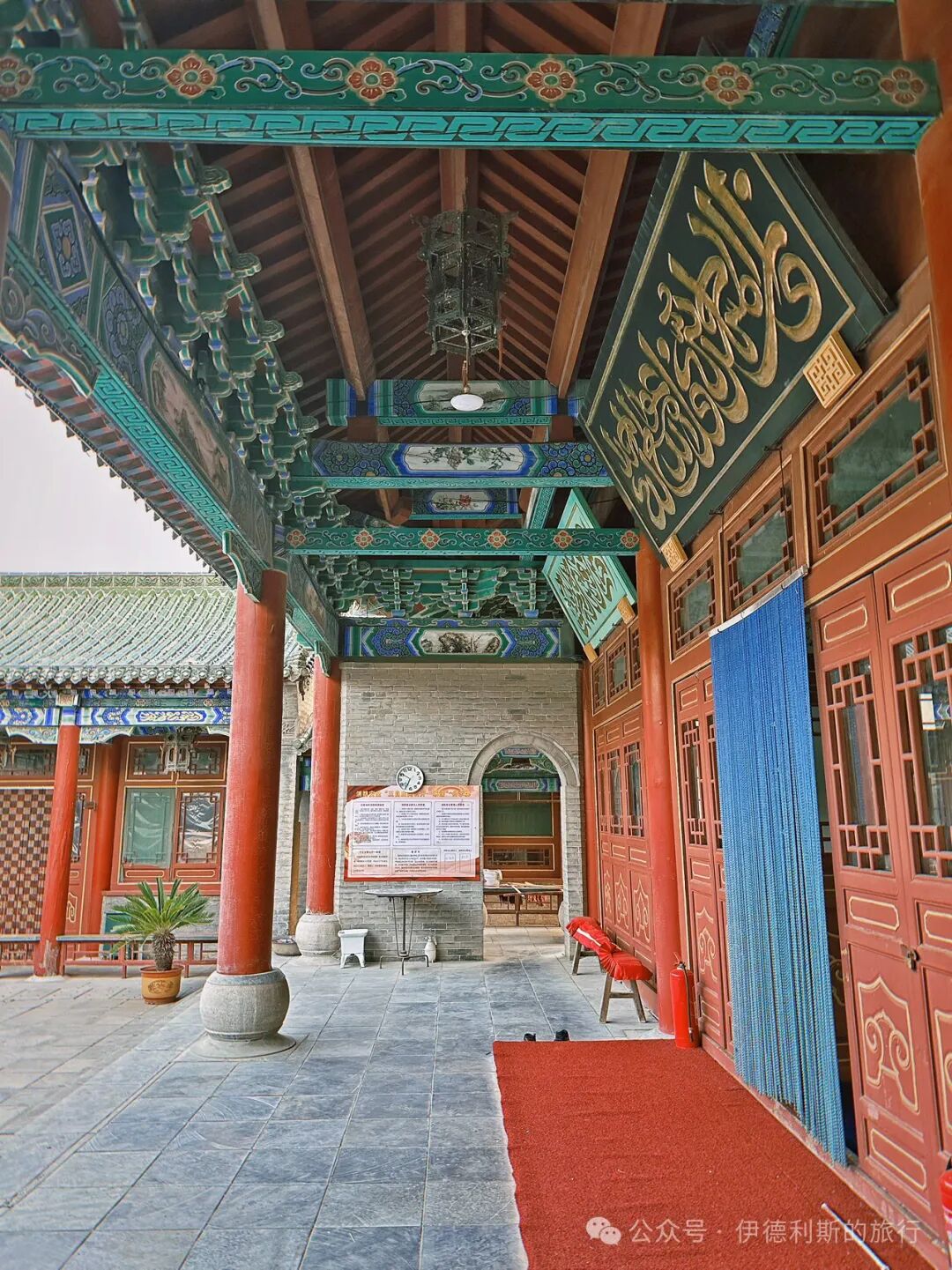
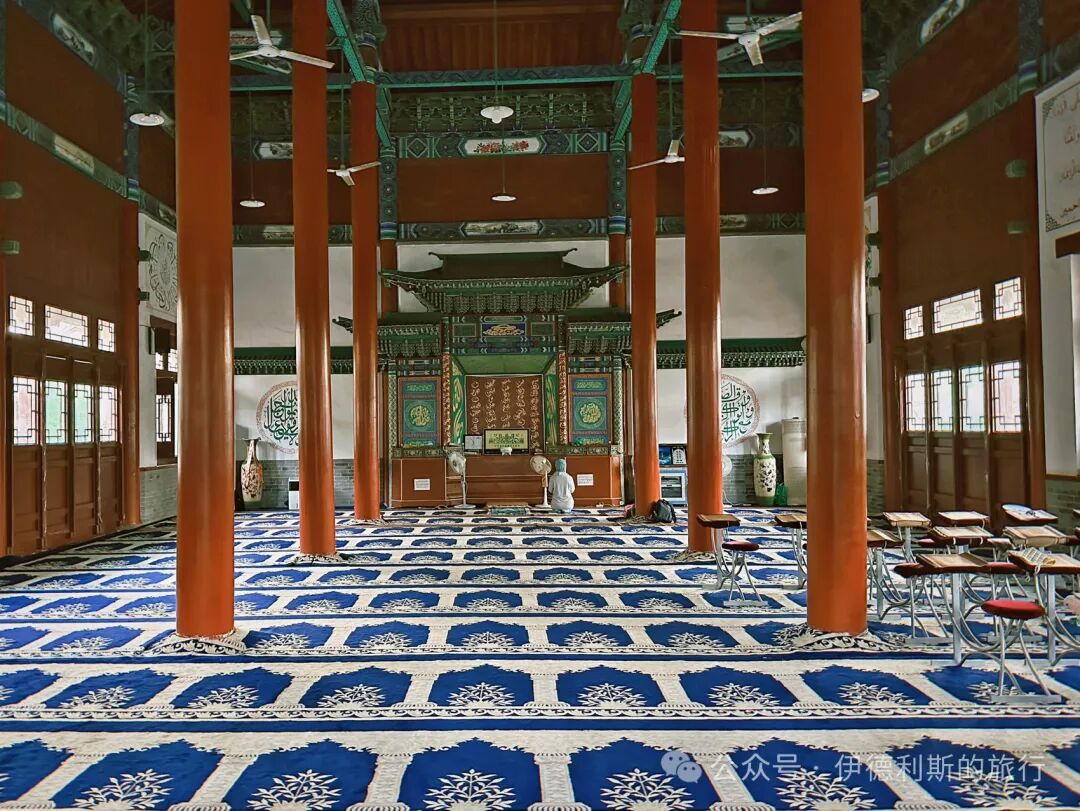
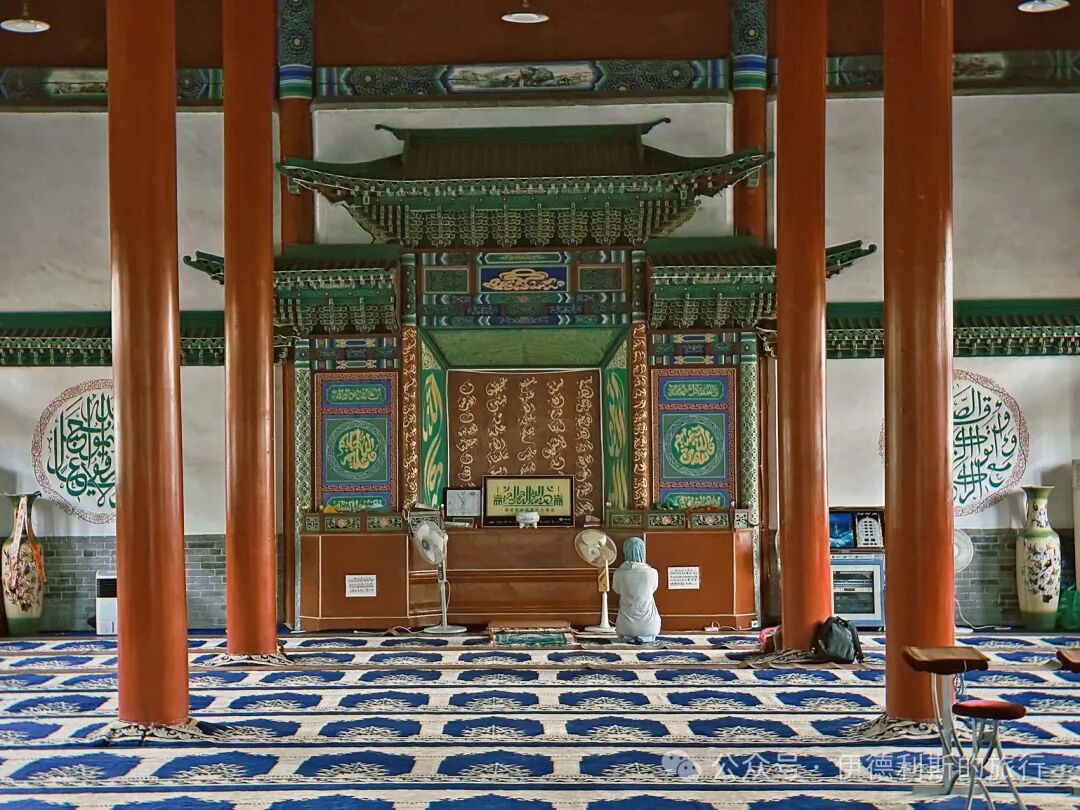
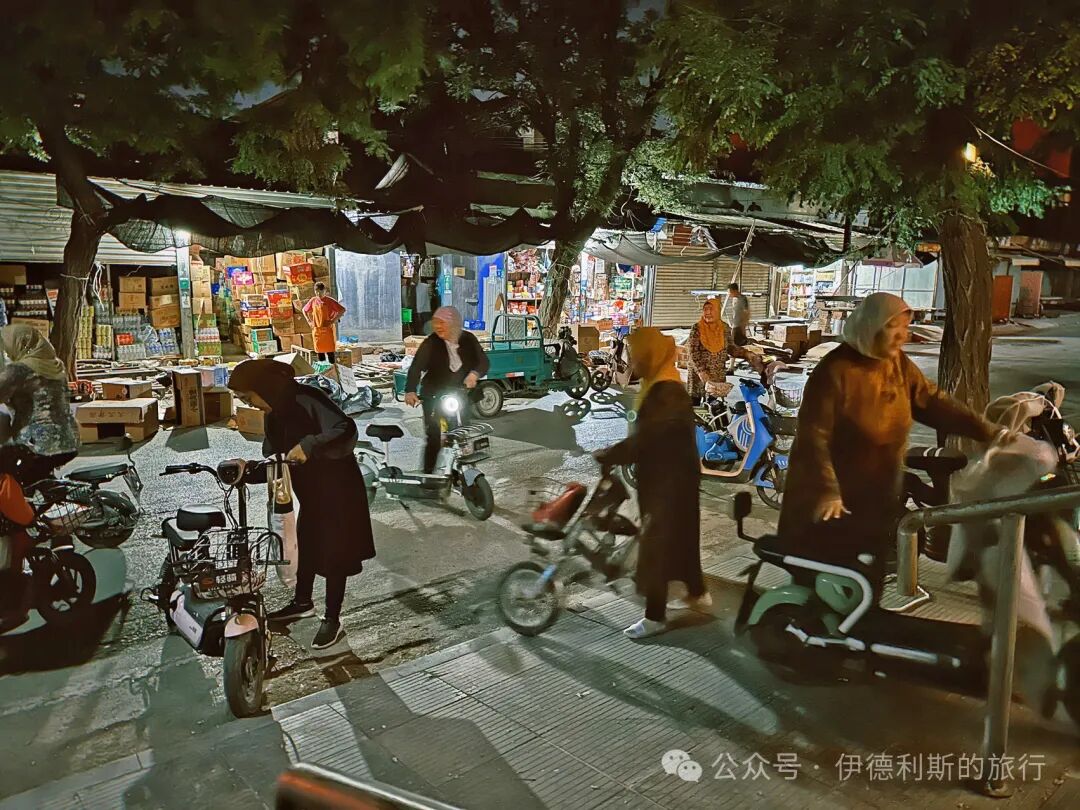
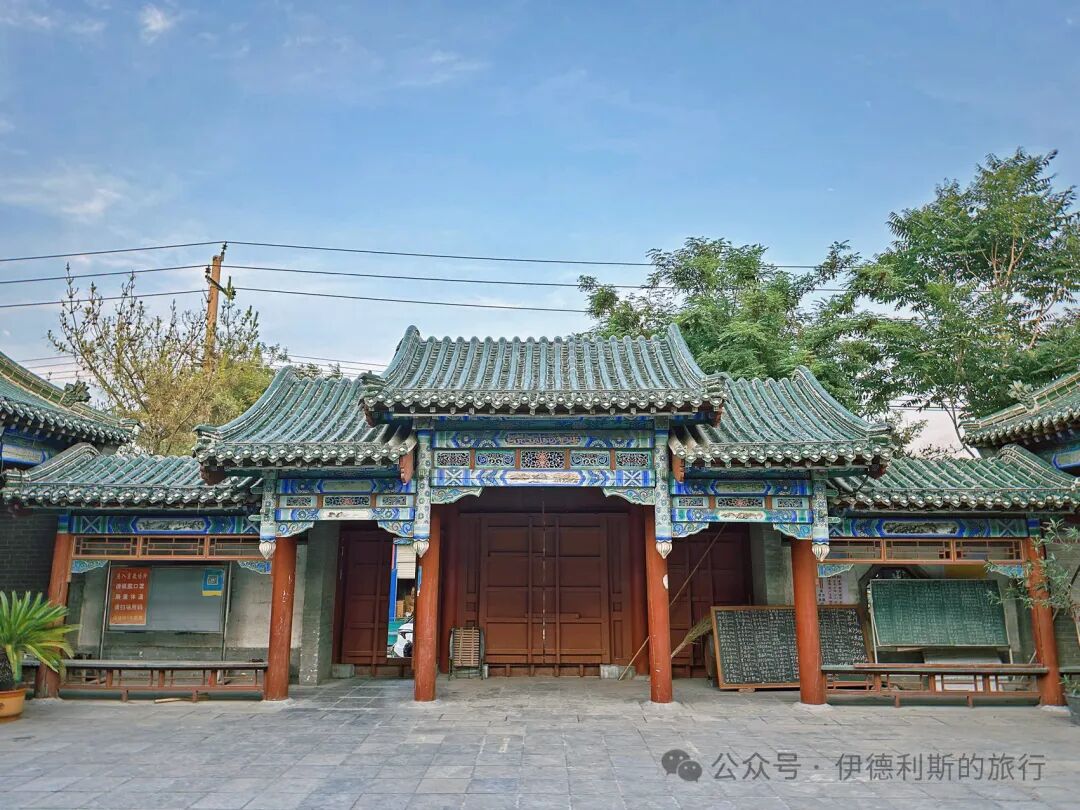
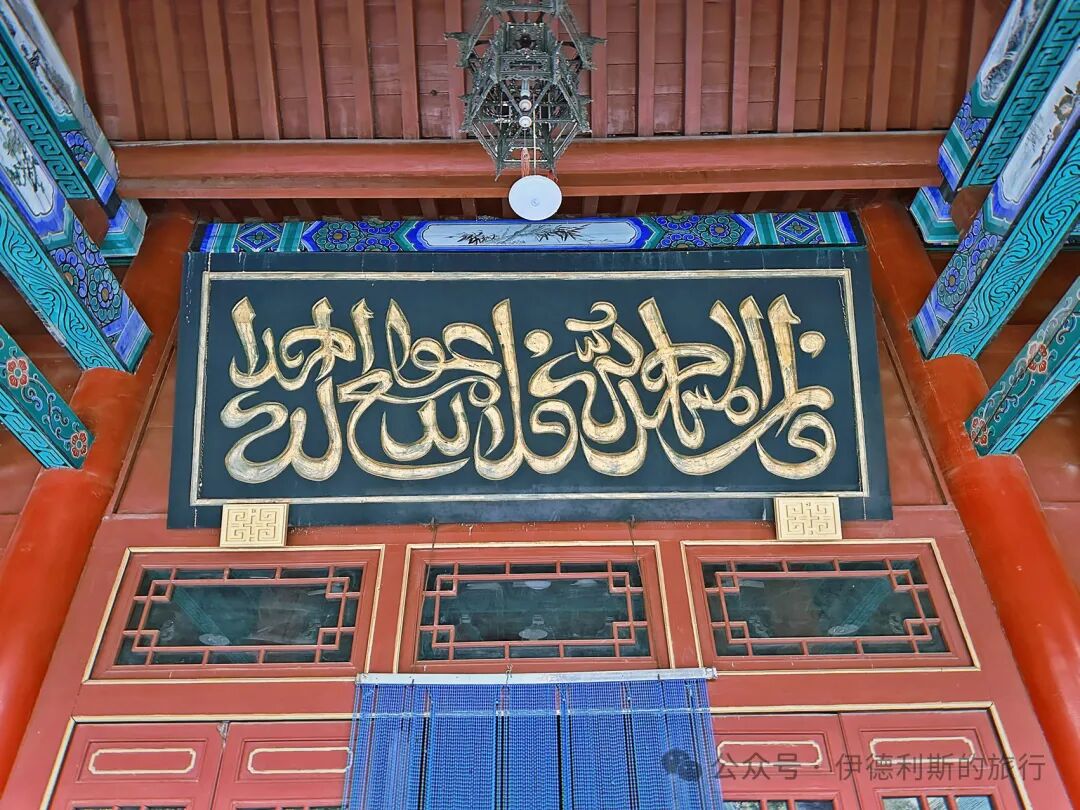
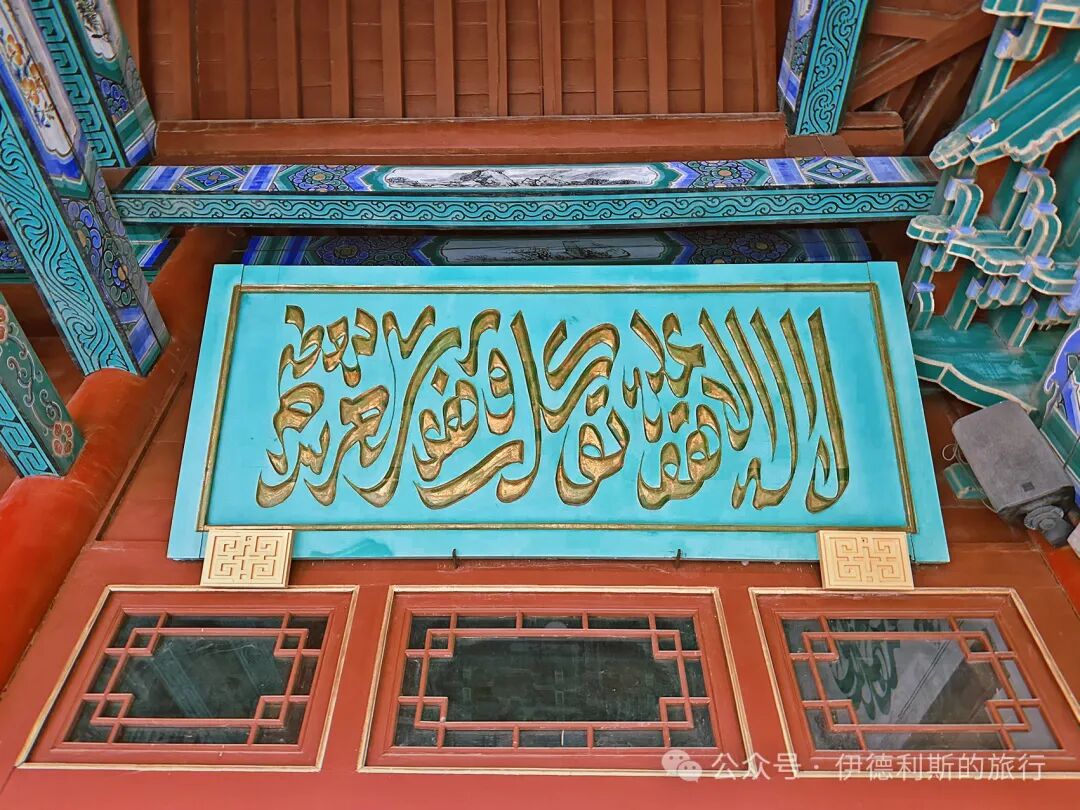
After the evening prayer (shamu), we ate big bowl dishes (dawan cai) at Erliang Diguo Millet Porridge, located at the intersection of Xianfeng Road and Dazhong Road in Linqing. They serve porridge and eight big bowls (ba da wan) in the morning, noodles in the afternoon, and big bowl dishes (dawan cai) at night, all of which look delicious. We ordered a serving of big bowl dishes and a cold appetizer. The big bowl dish had plenty of ingredients inside, and it felt very healthy to eat.
Zainab and I both really like the atmosphere in Linqing. There are few cars on the street at night, no delivery scooters, and it feels great to ride a shared electric bike around. There are many halal restaurants on Xianfeng Road. People sit on small stools outside the shops at night to eat and chat, which feels very relaxed.
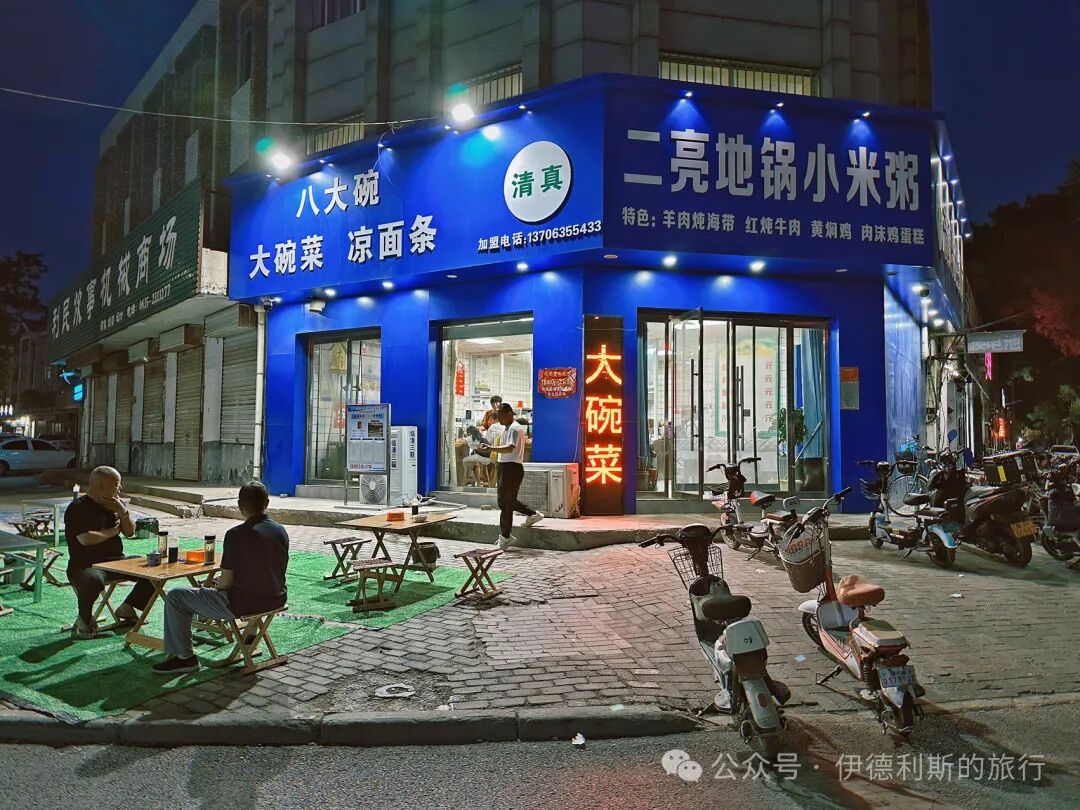
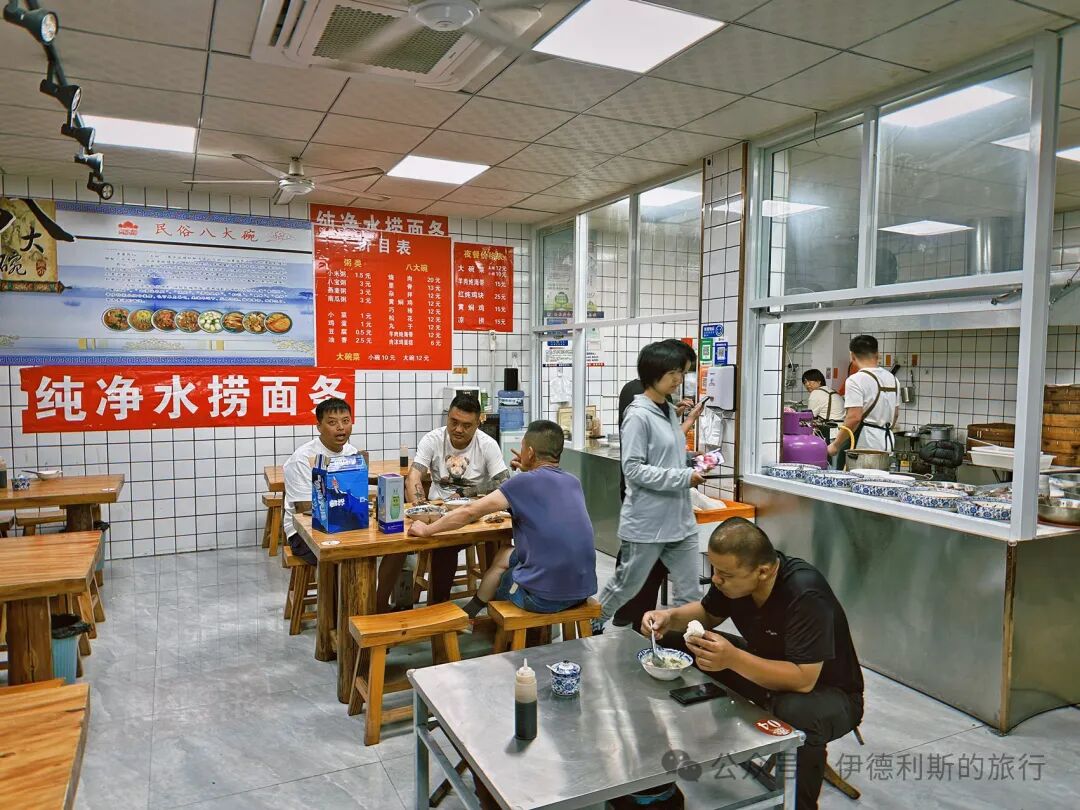
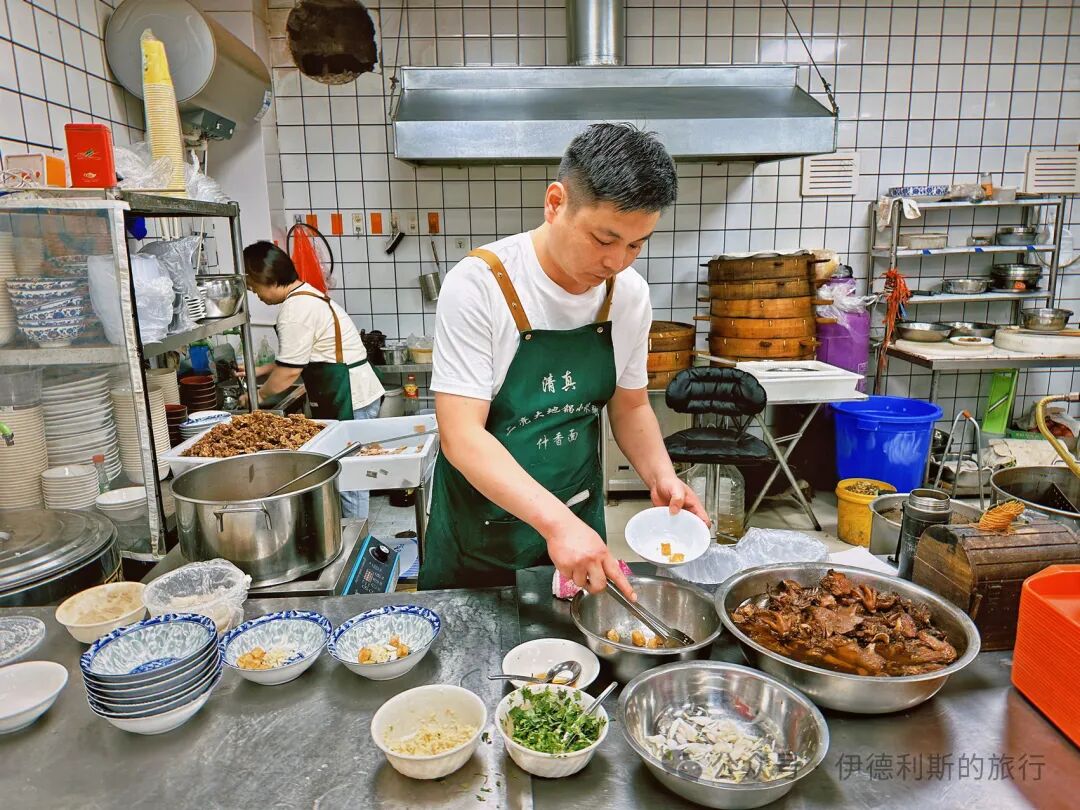
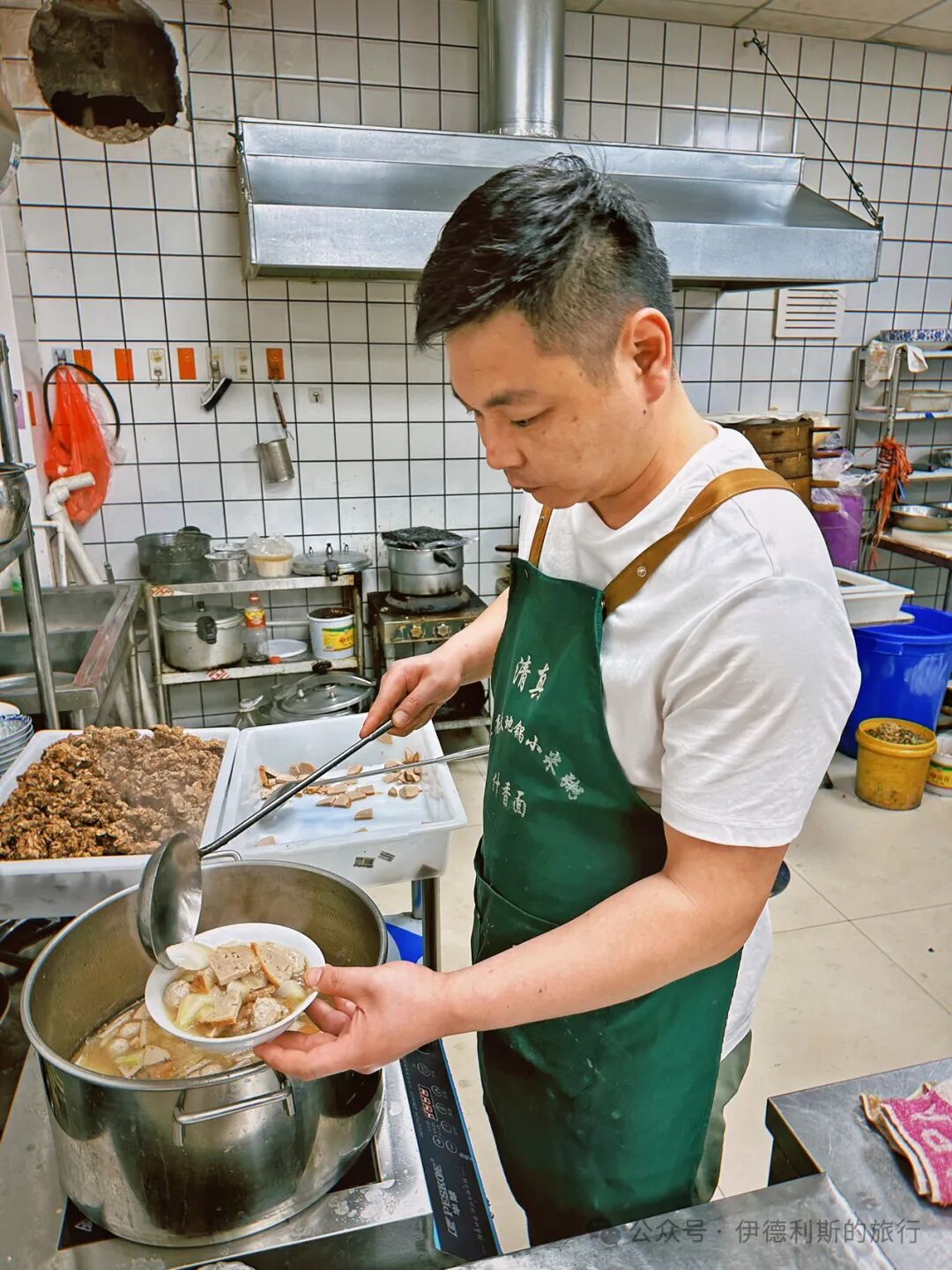
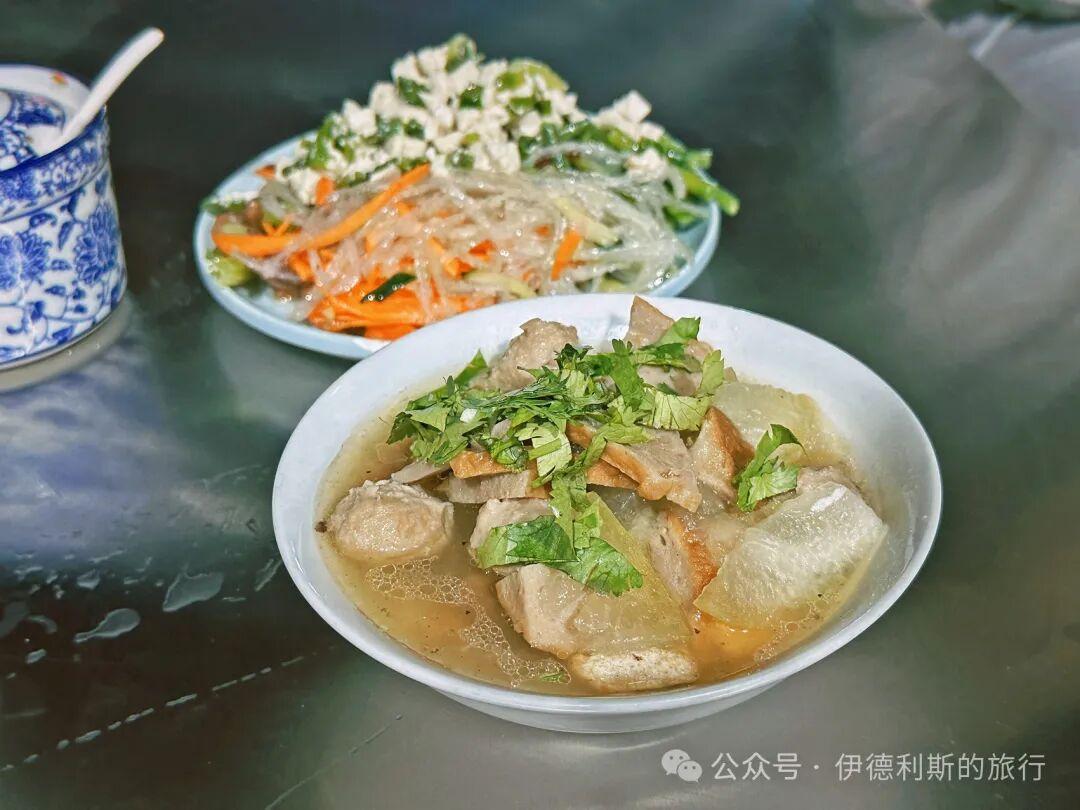
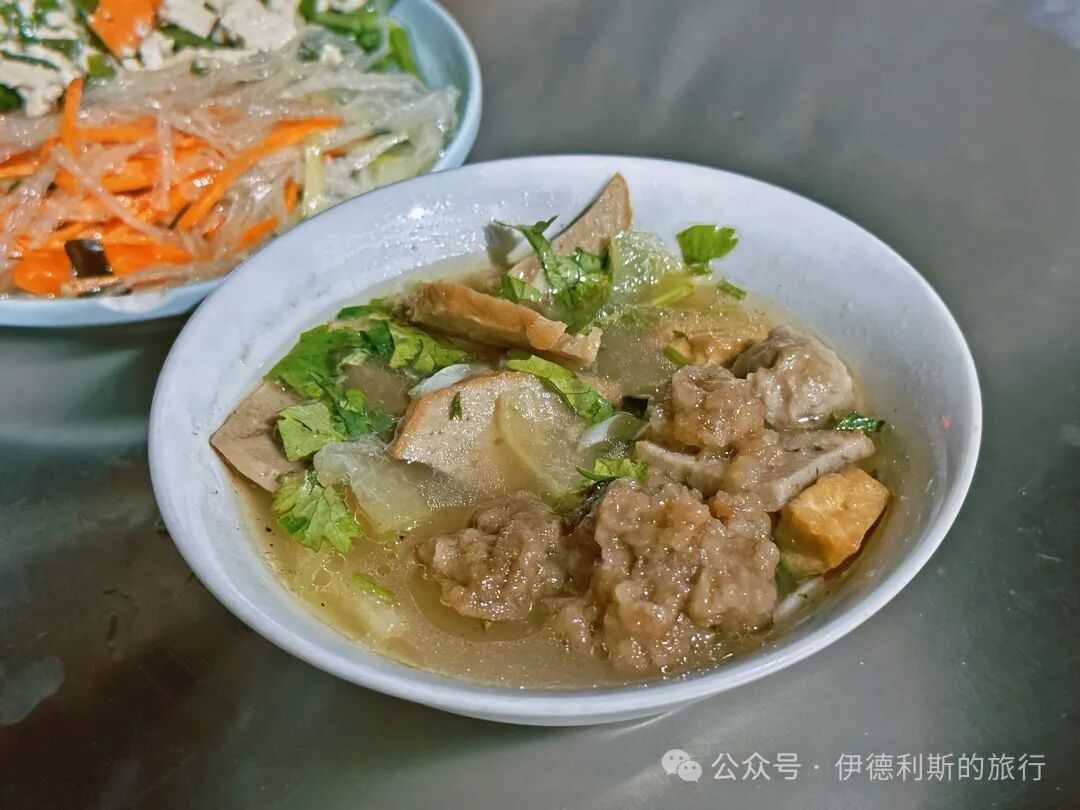
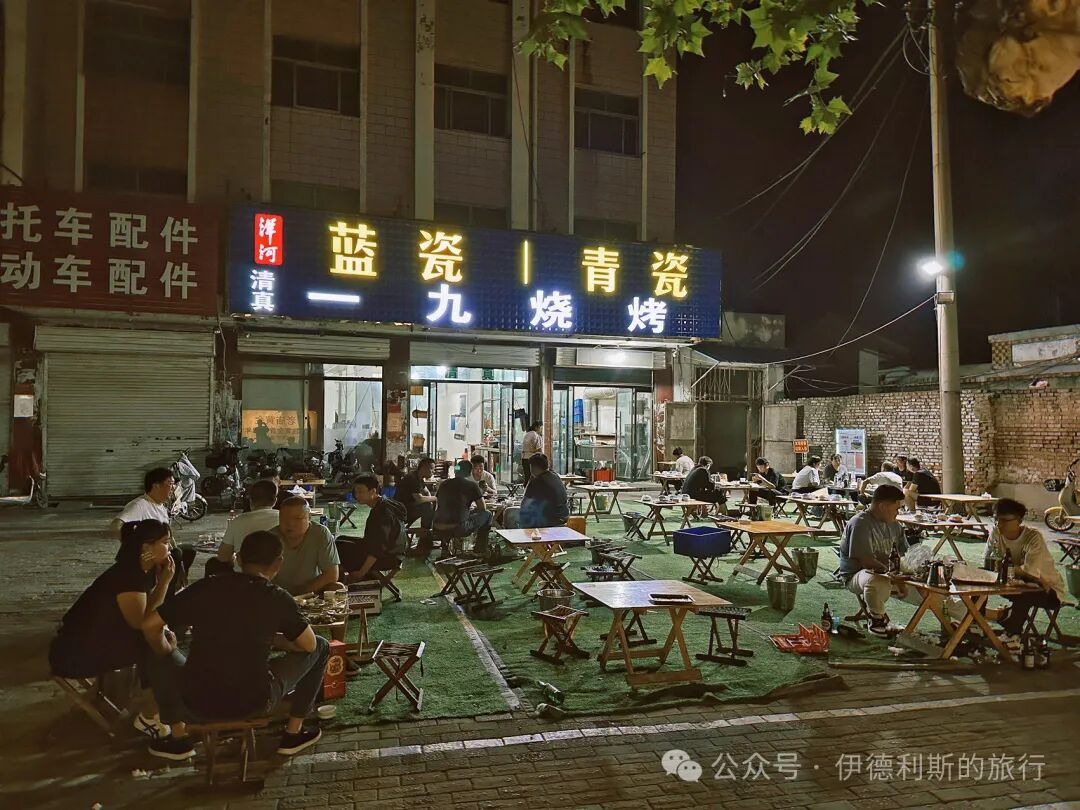
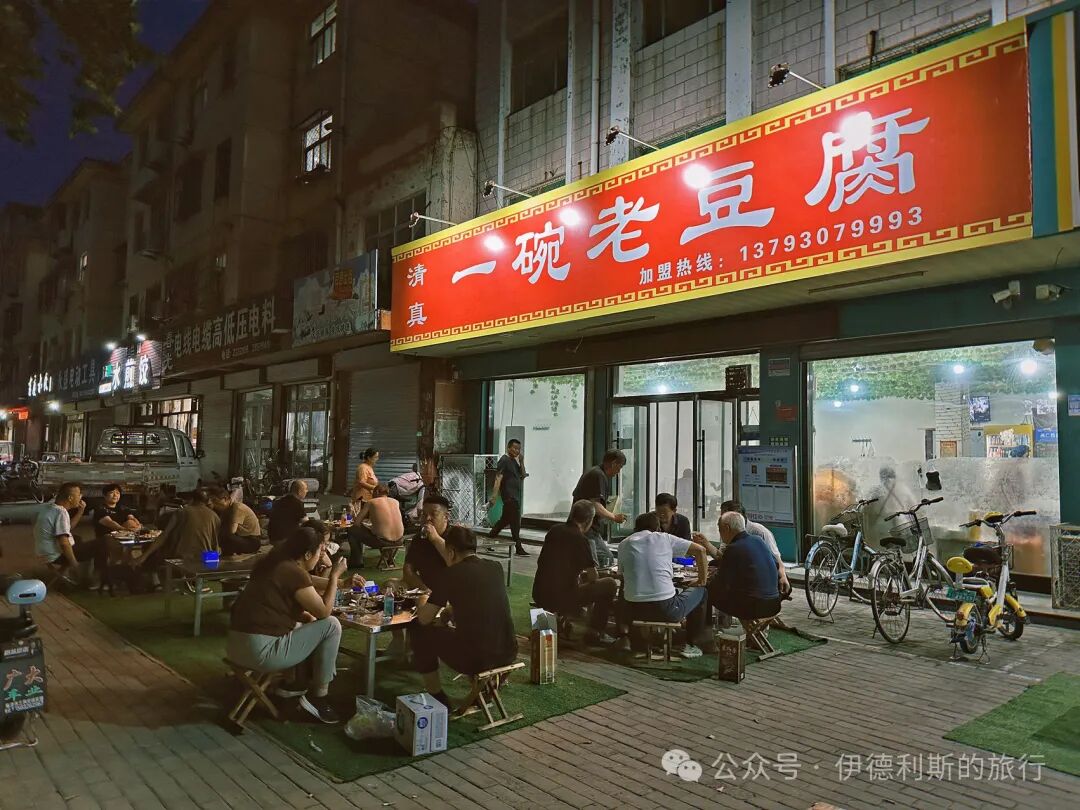
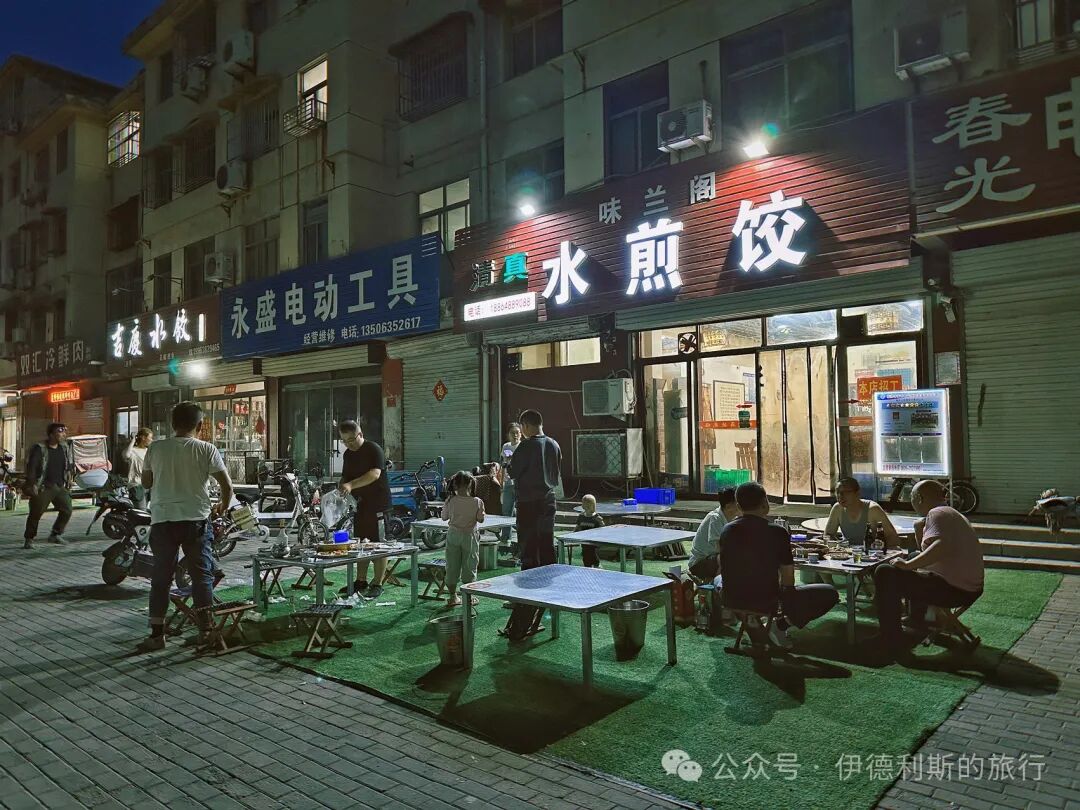
Linqing at night is full of various halal restaurants and even a small halal night market.
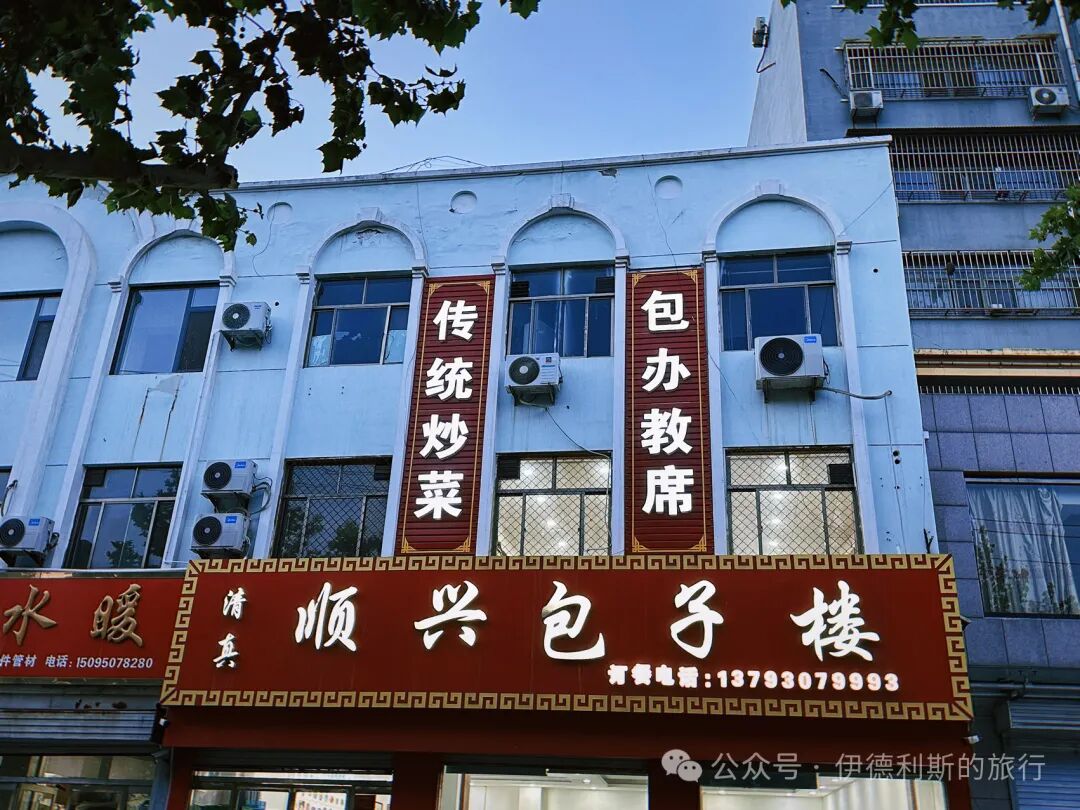
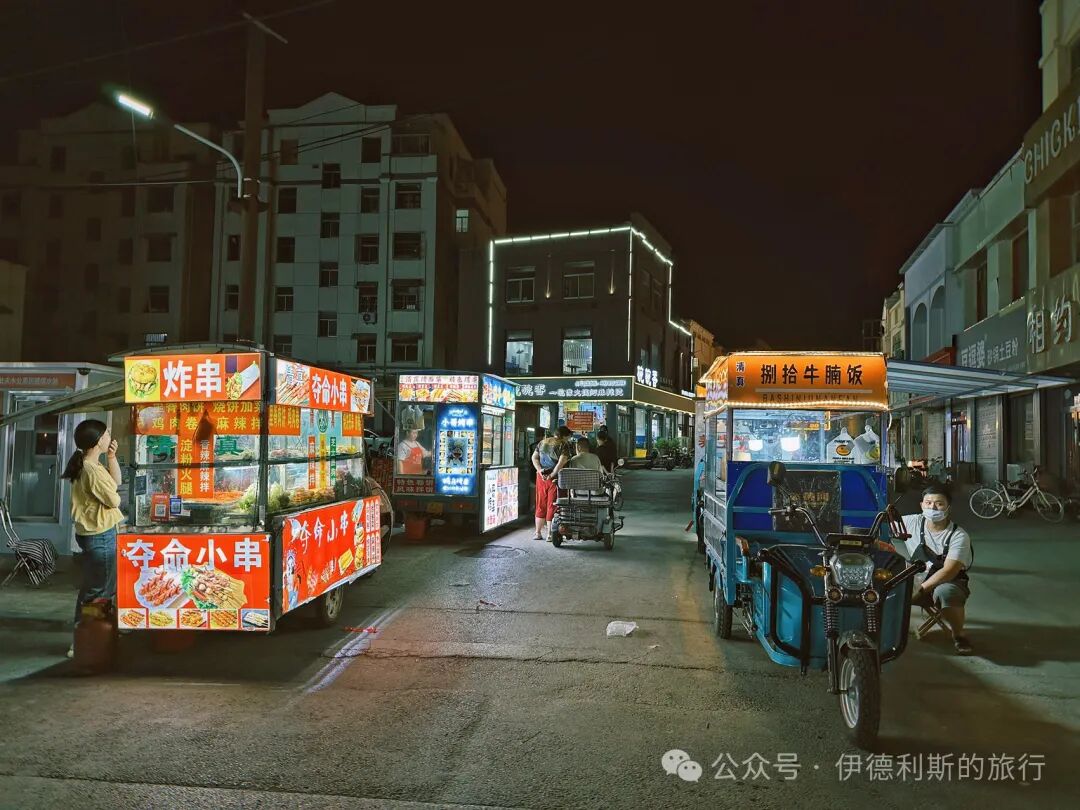
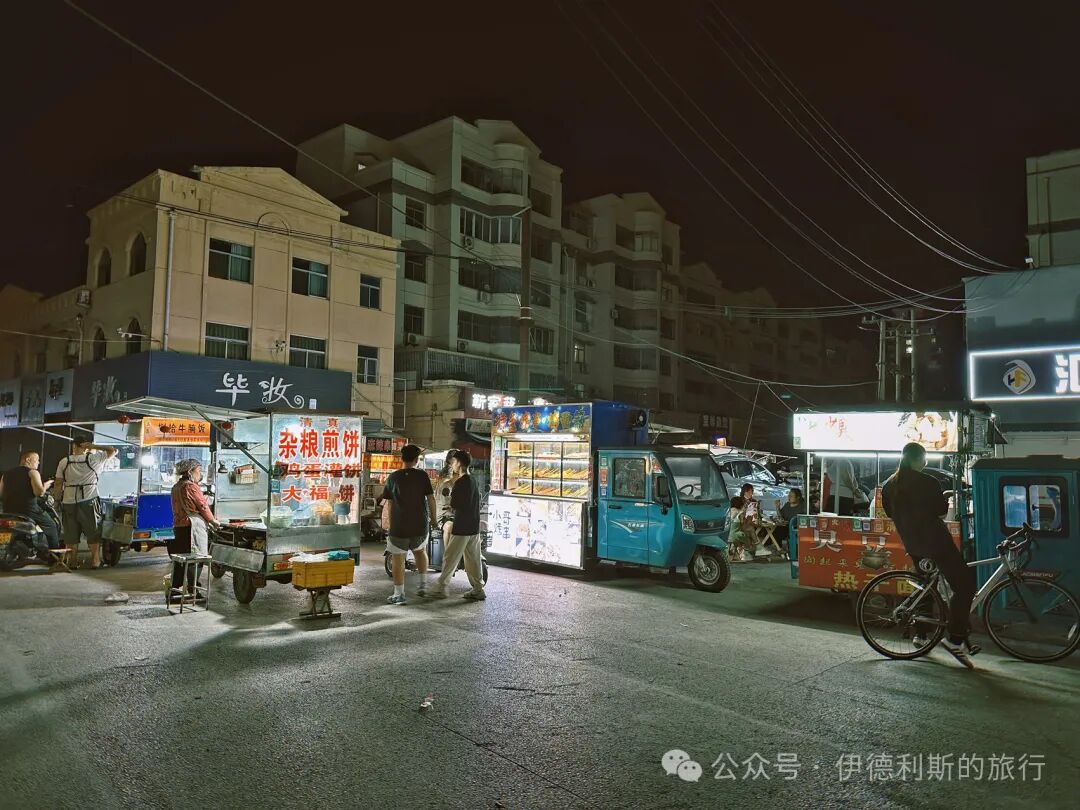
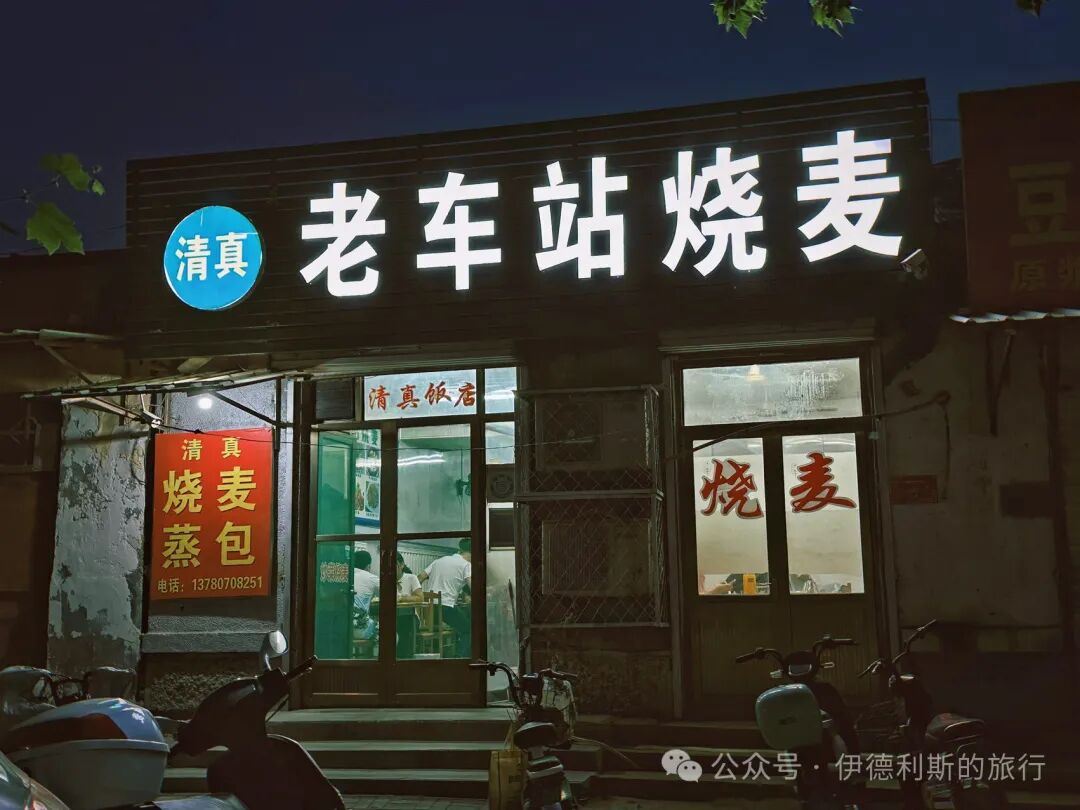
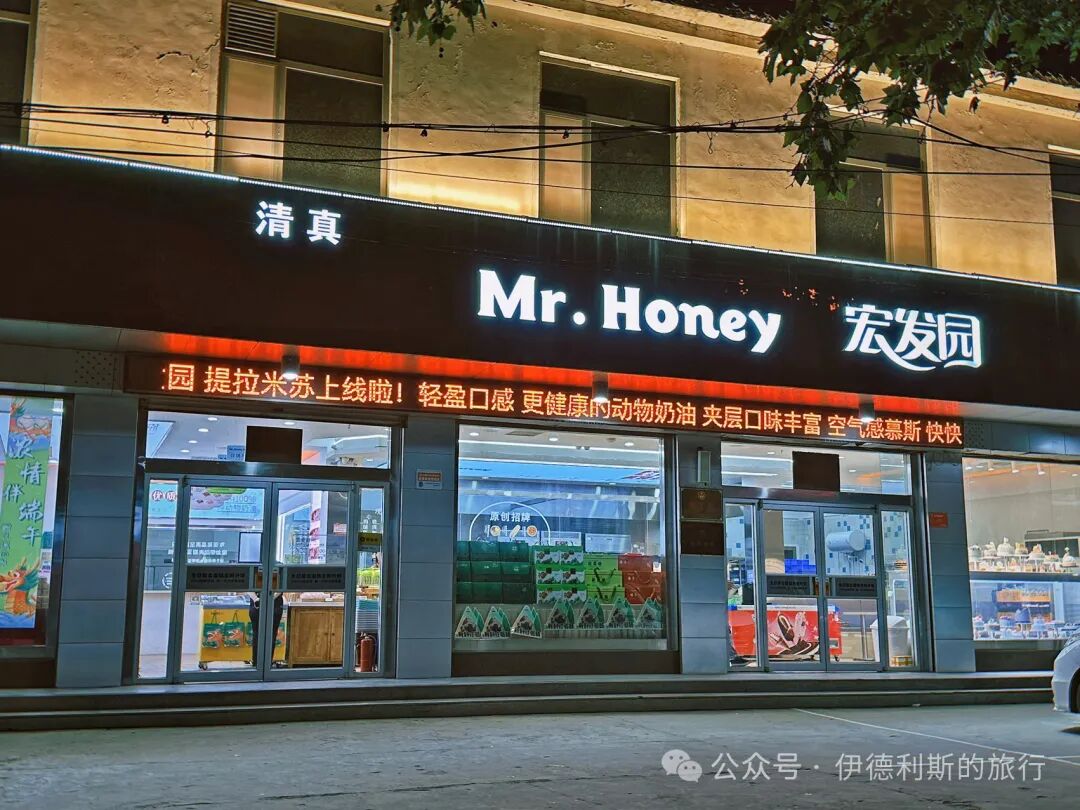
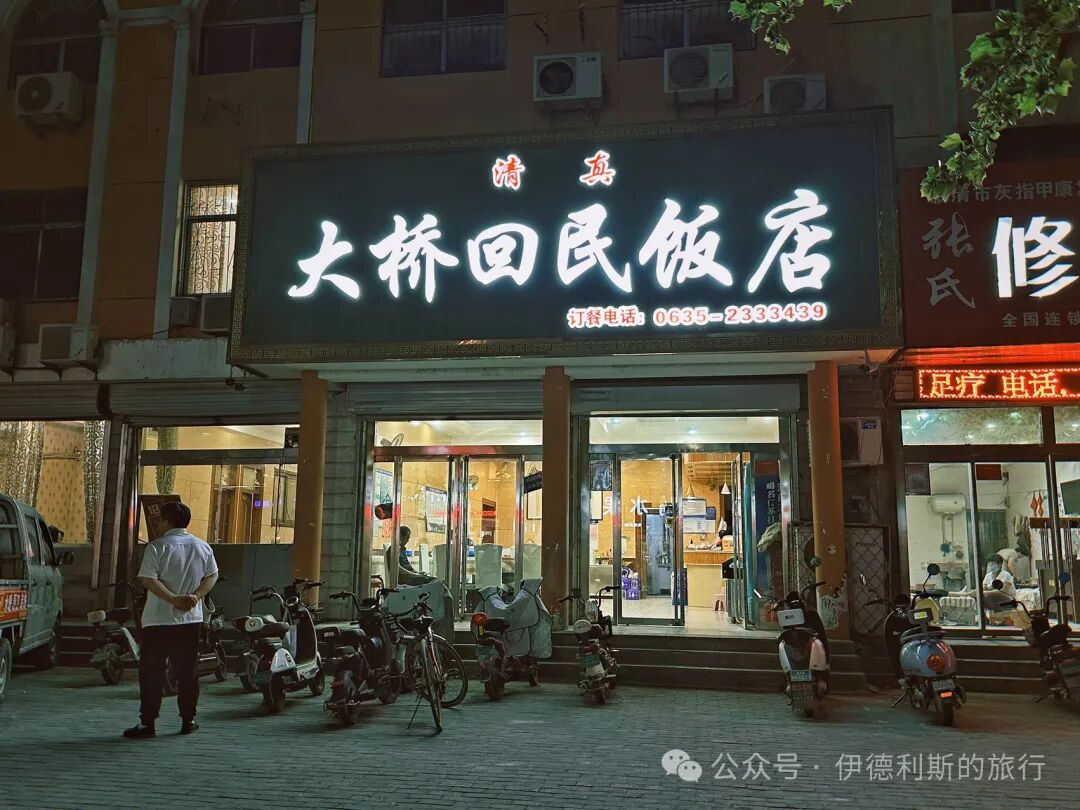
We had breakfast at Kong Family Steamed Bowls (Kongjia kouwan) at the intersection of Xianfeng Road, where we ate braised pork and steamed pork tenderloin (liji kouwan) with steamed buns (mantou). Turning the traditional steamed bowls (kouwan) from North China's scripture hall banquets into a breakfast seems to be a local specialty of Linqing, allowing tourists like us to enjoy traditional banquet dishes. They keep their steamed bowls (kouwan) in a large steamer. They have many kinds like pine-flower egg (songhua), meatballs (wanzi), pork tenderloin (liji), starch jelly (menzi), and braised pork (shaorou). You pick what you want, they flip it into a bowl, pour broth over it, and it is ready to eat.
Their shop was originally the Taoyuan Street Supply and Marketing Cooperative built in the 1970s. Eating here feels very retro. Besides selling steamed bowls in the morning, they also sell cold noodles (liangmian) at noon, which is another specialty of Linqing.
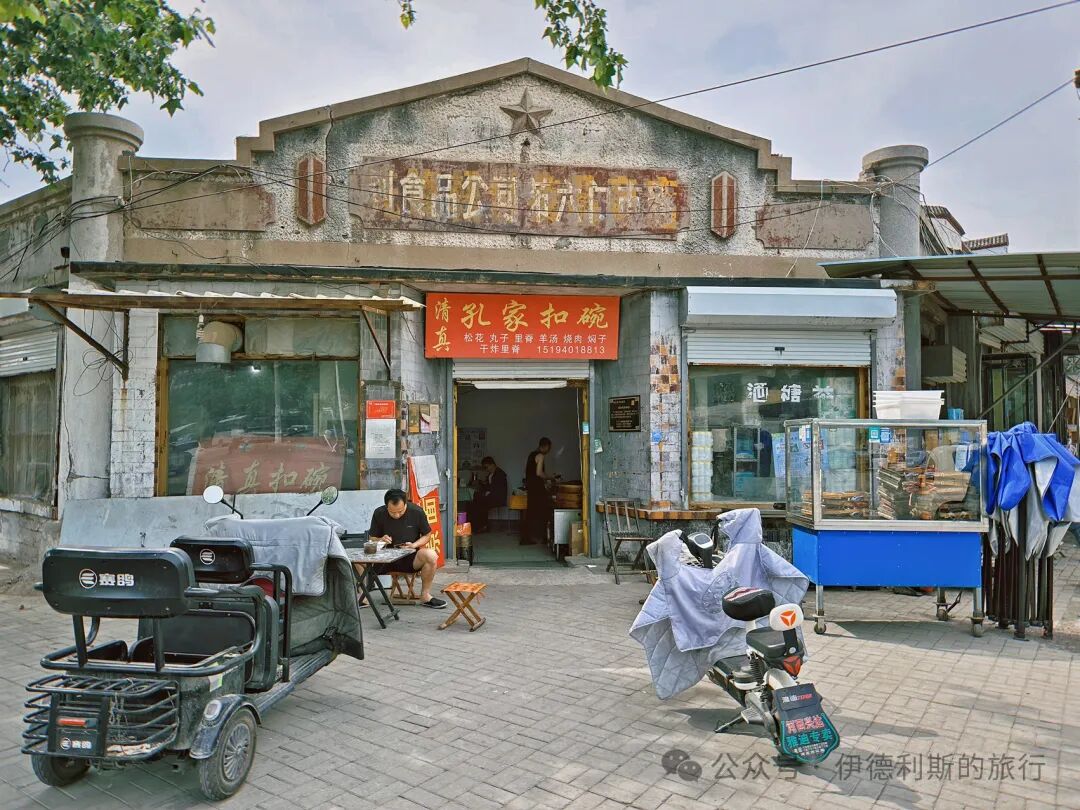
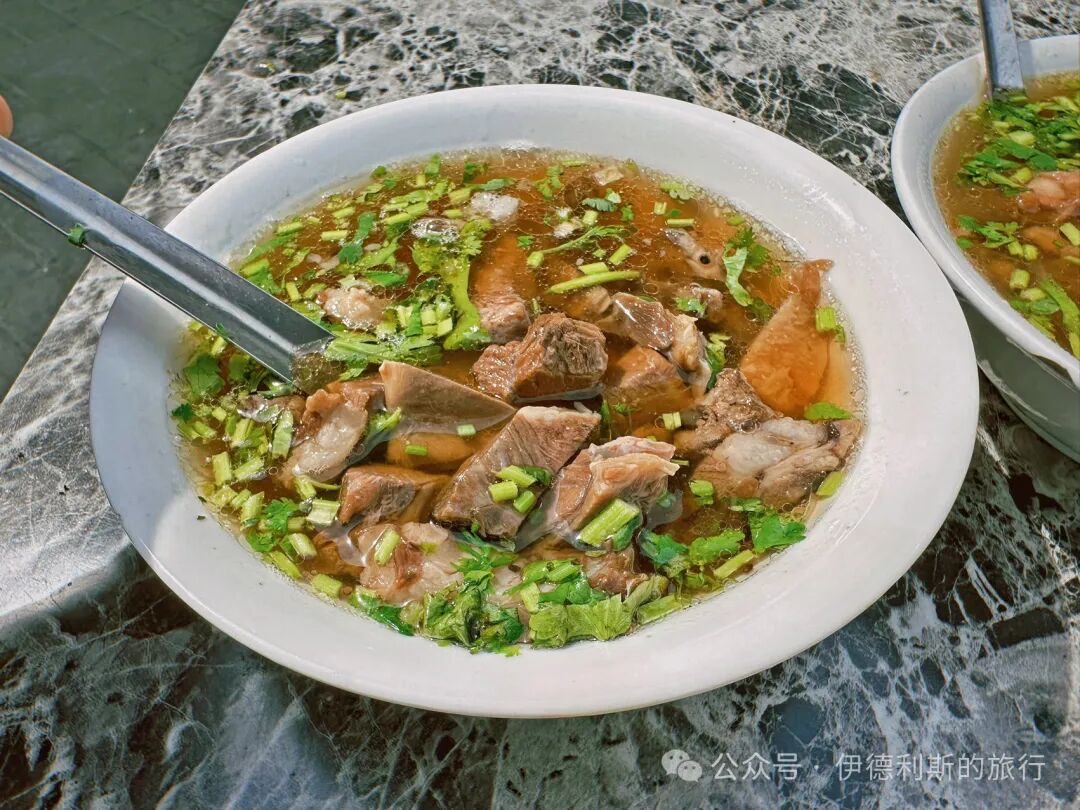
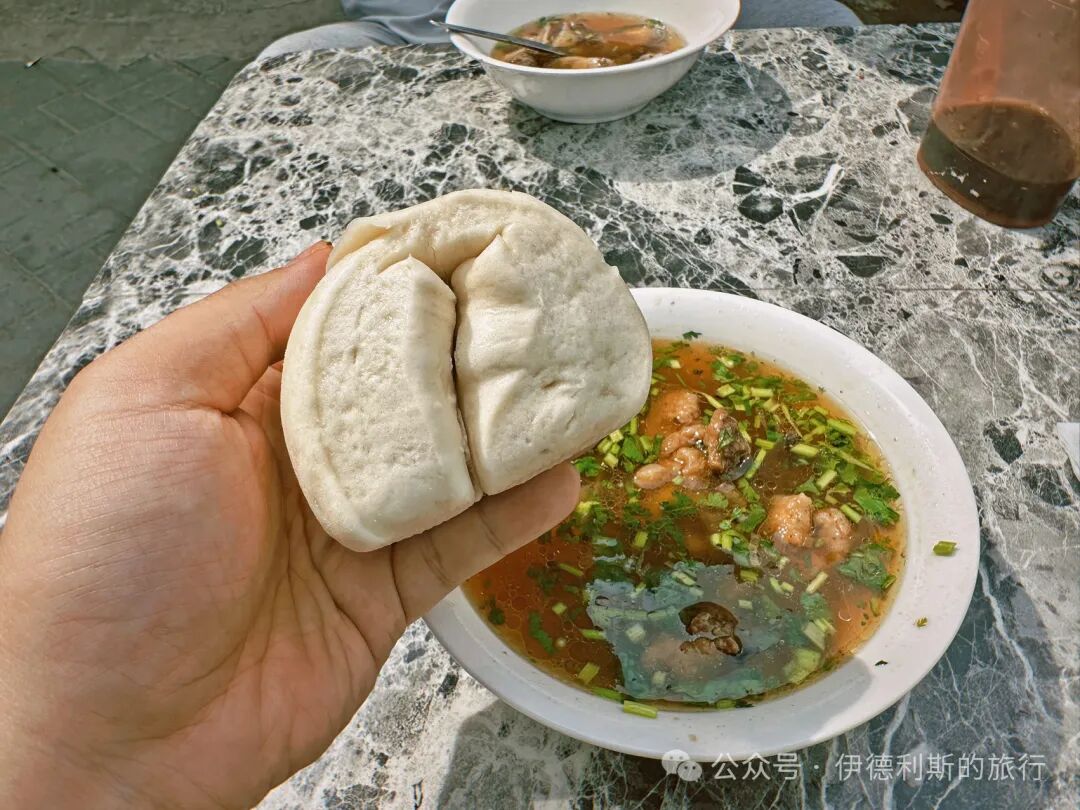
After finishing the steamed bowls, I went to Xianfeng Road to eat tofu pudding (doufunao) and firm tofu (laodoufu). Breakfast shops in Linqing sell both tofu pudding and firm tofu. The difference is that tofu pudding is set with gypsum, making the texture smooth and delicate. Firm tofu is set with brine, making the texture tough and chewy. I like both kinds.
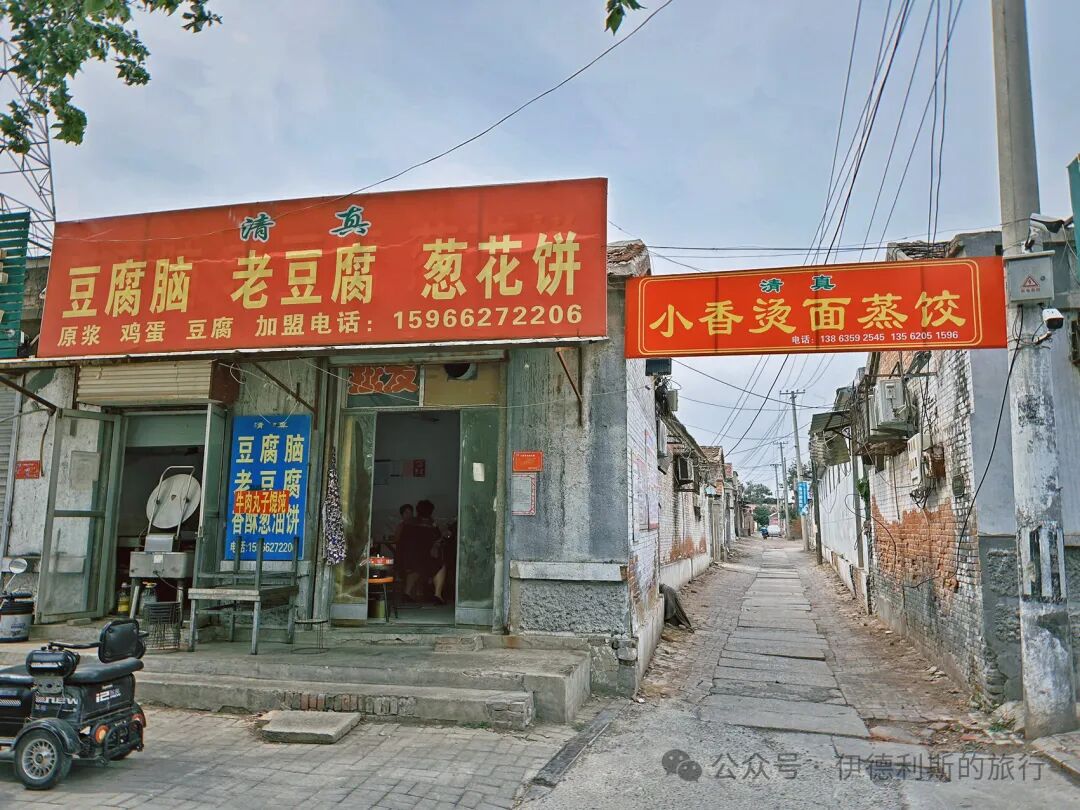
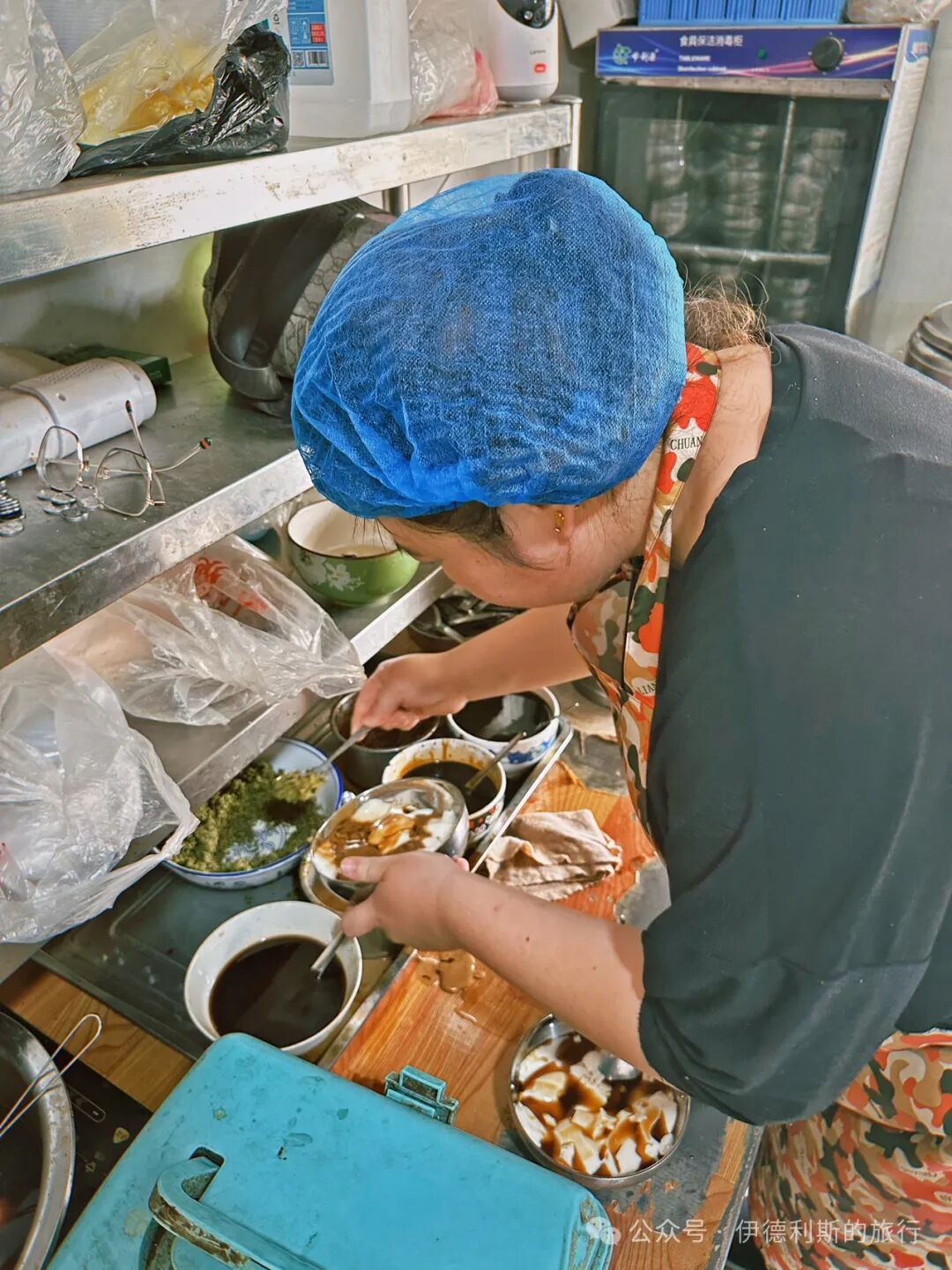
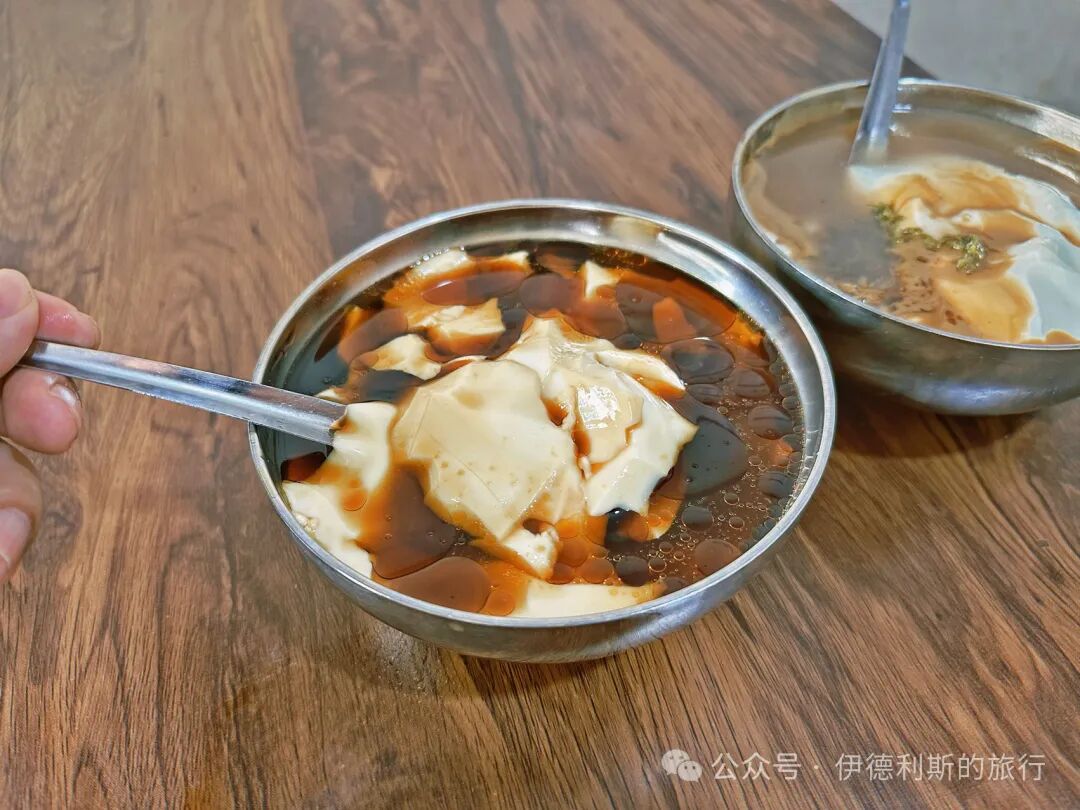
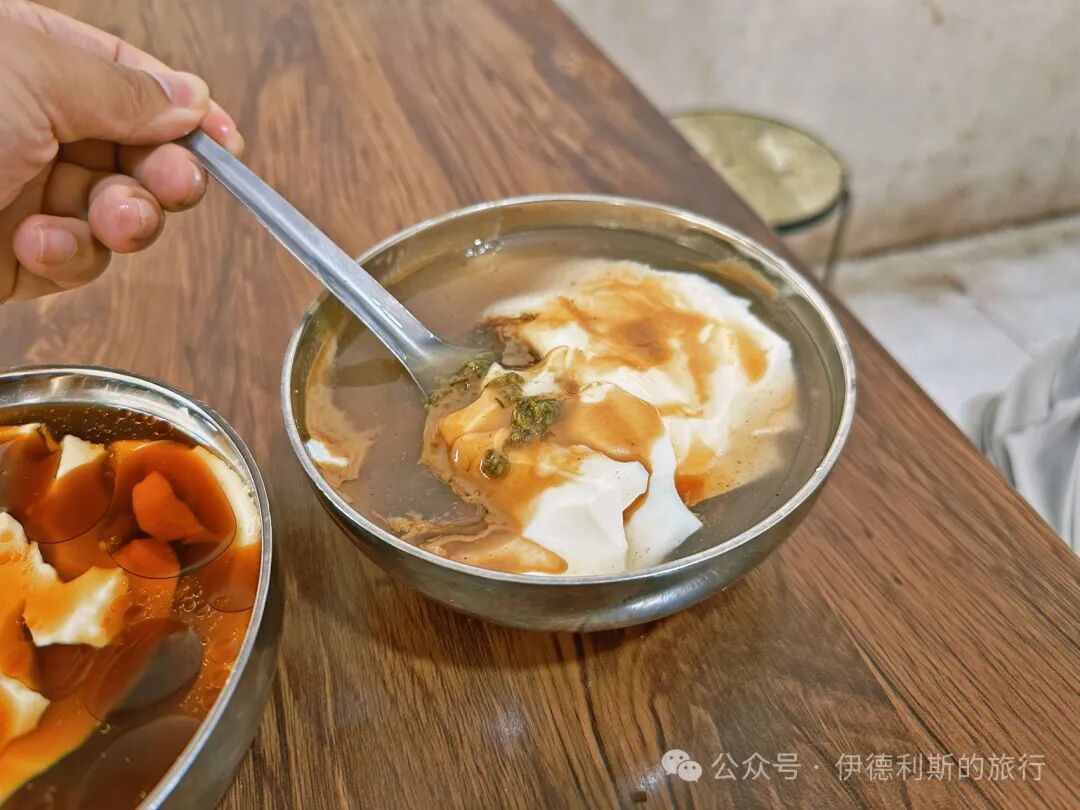
At noon, we ate Wang Family Ten-Fragrance Noodles (shixiangmian) on Xinhua Road. Ten-Fragrance Noodles are also called Assorted-Fragrance Noodles (shixiangmian). The main feature is the large variety of vegetable toppings. A deluxe bowl can have over eighteen types, and the ingredients change based on the solar terms. The toppings mainly include stir-fried minced meat with eggplant strips, mung bean sprouts, chives, minced garlic sprouts, minced green beans, and tomato with egg. You also get fresh shredded cucumber, minced carrots, and pickled vegetables like pickled melon (jianggua), salted mustard greens (xian gede), and minced chive flowers (jiuhua mo), all finished with a drizzle of sesame paste. The homemade version we ate wasn't quite as elaborate, but it still had plenty of variety.
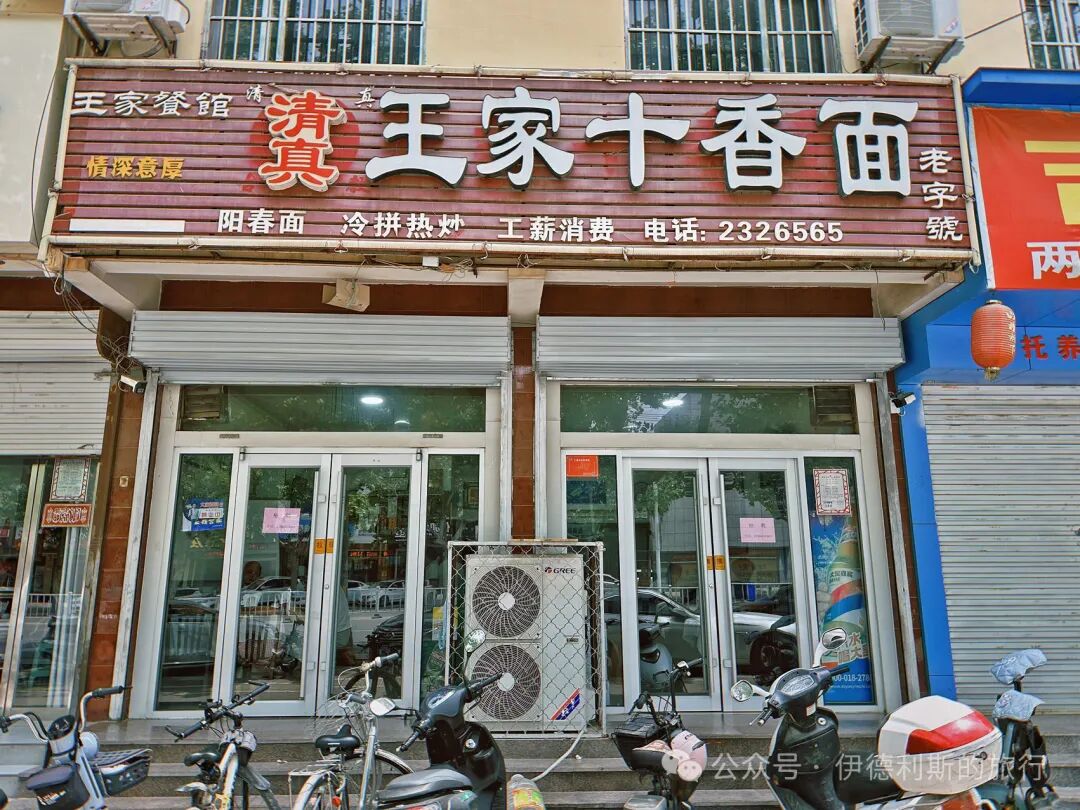
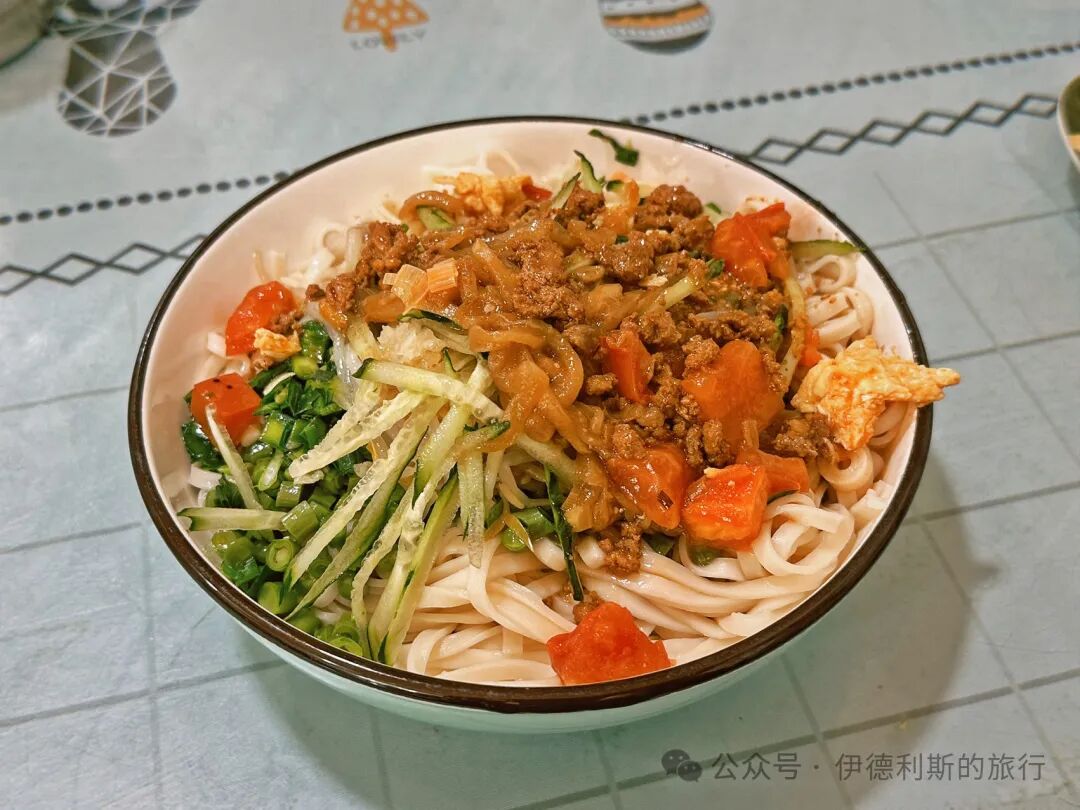
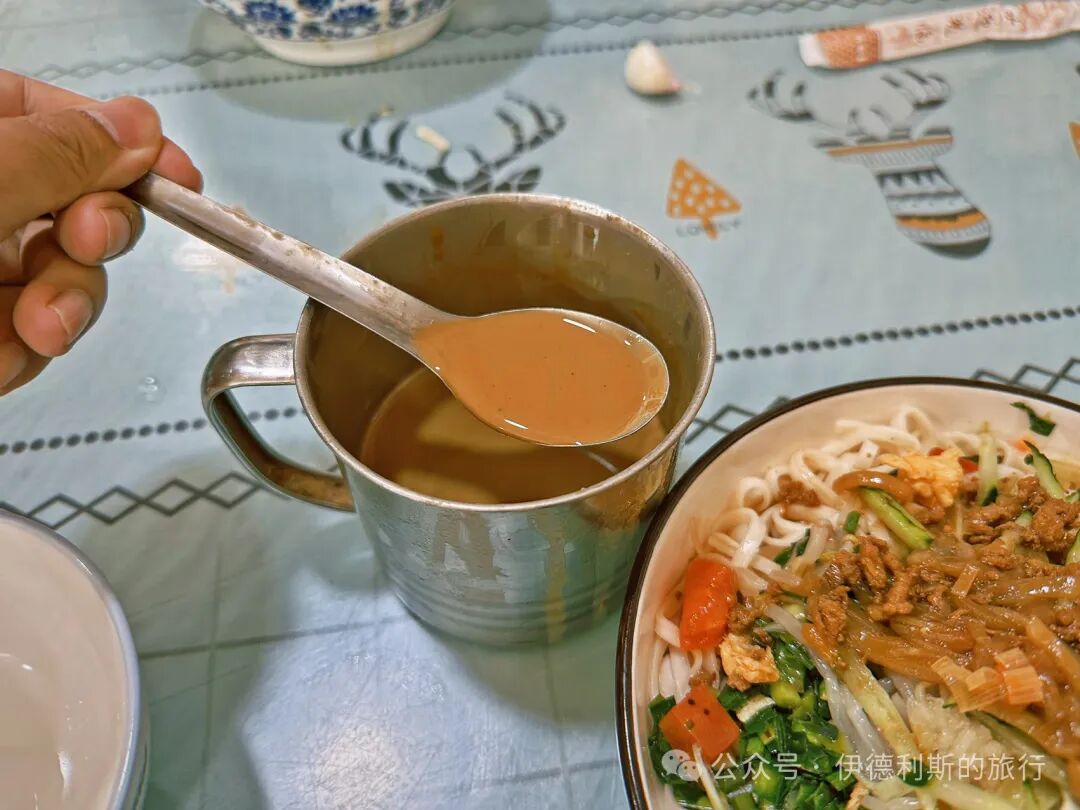
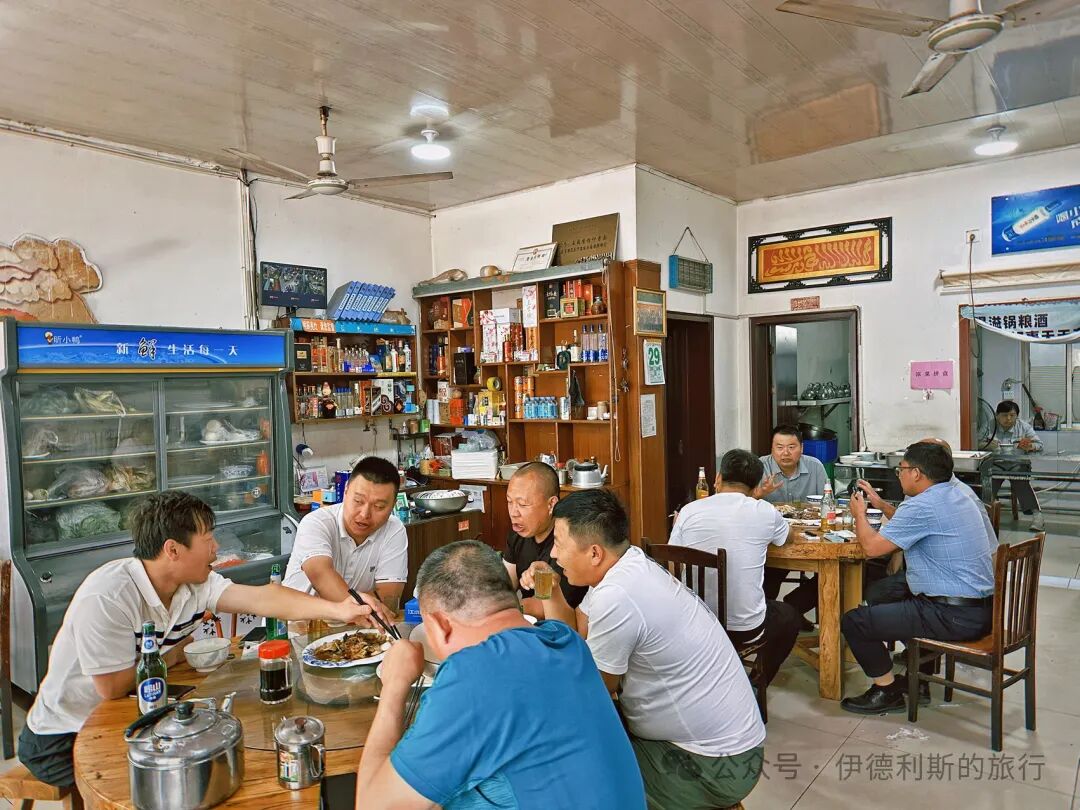
Hongguanying Mosque
At noon, we went to the Hongguanying Mosque in Linxi County, Xingtai, Hebei. Linxi County in Xingtai is actually right on the west side of the Wei Canal in Linqing. Once you cross the Xianfeng Bridge, there is a bus that goes to Hongguanying.
Hongguanying gets its name from the Hong family of Hui Muslims. According to the Linqing Hong Family Genealogy, the ancestor of the Hong family of Hui Muslims was Sayyid Ajjal Shams al-Din. His sixth-generation descendant, Hong Badan, served as an official in Linqing during the Ming Dynasty. His descendants took Hong as their surname and settled in Linqing. One branch settled in the urban area of Linqing and once built the Hong Family Mosque, but unfortunately, it no longer exists. Another group settled in Hongguanying Village and built the Hongguanying Mosque. The Hongguanying Mosque was first built between the Xuande and Tianshun periods of the Ming Dynasty. It was burned down in 1854 during the Northern Expedition of the Taiping Rebellion and rebuilt into its current form in 1874.
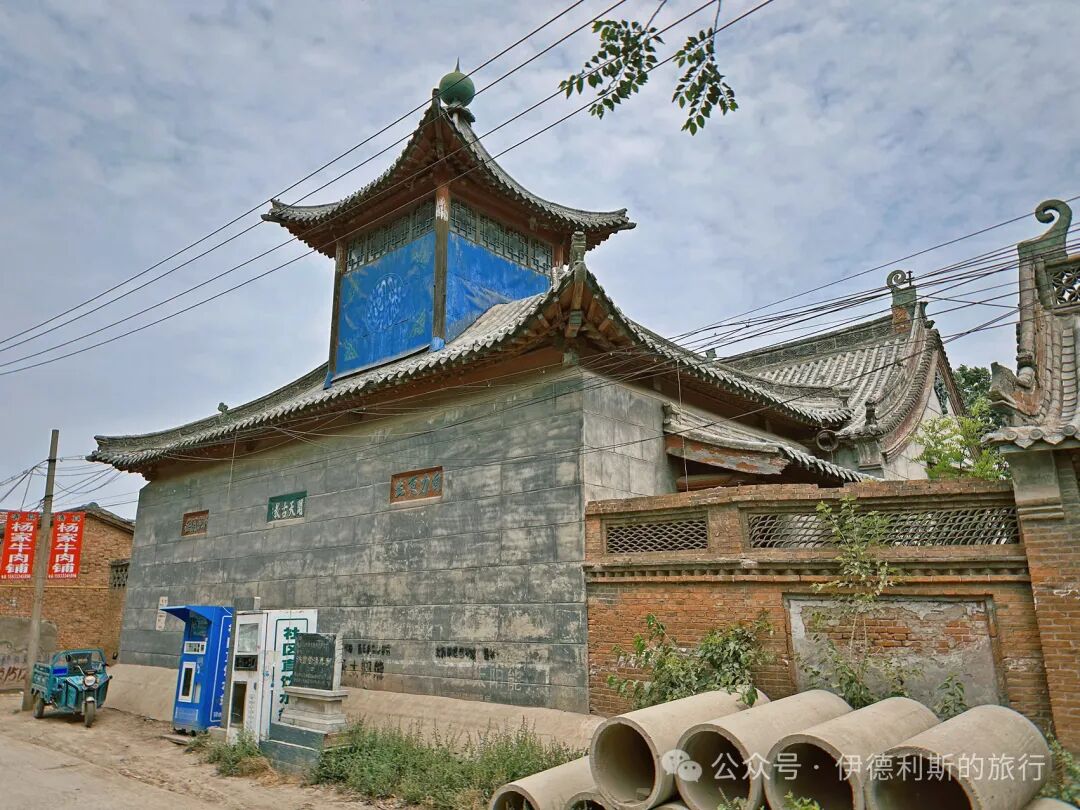
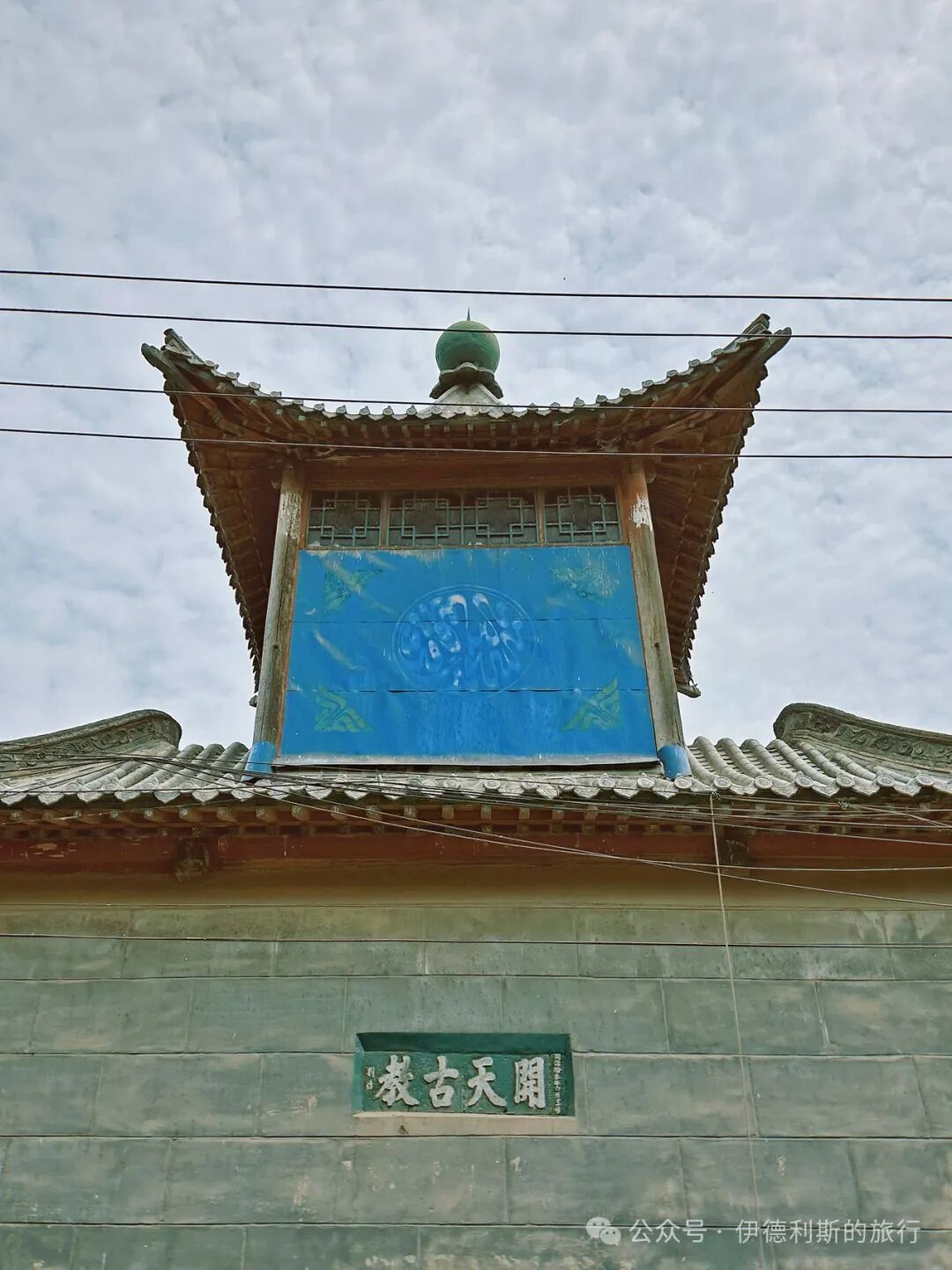
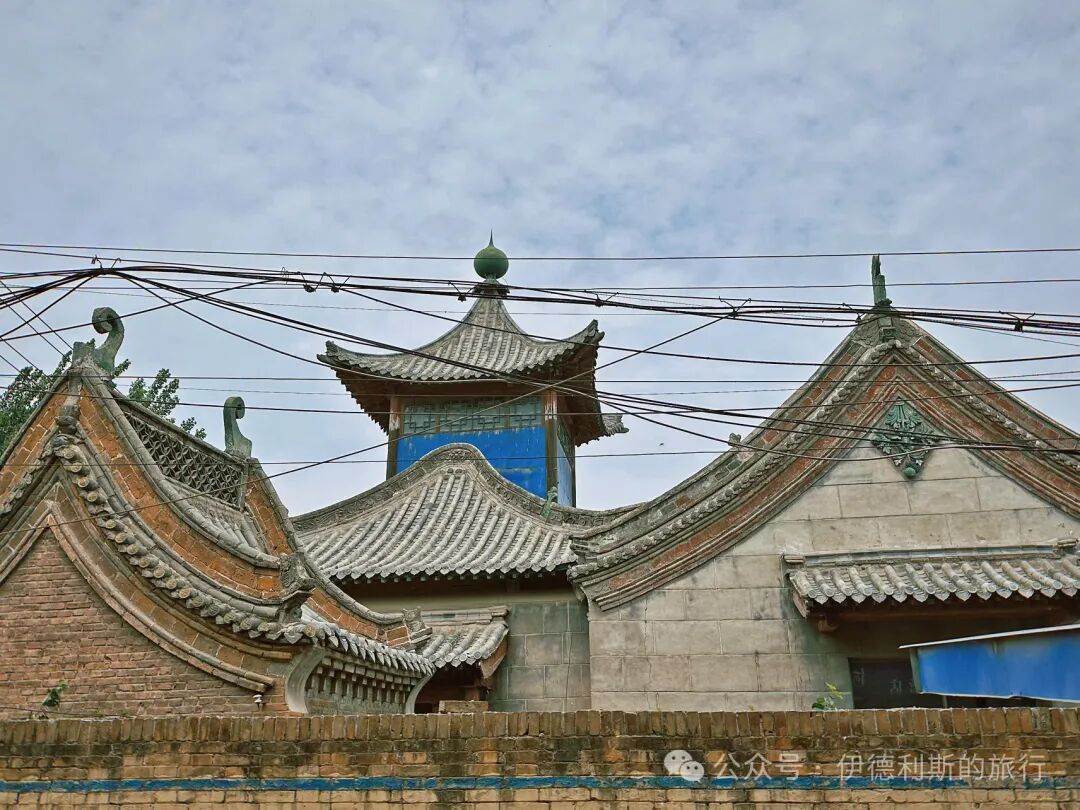
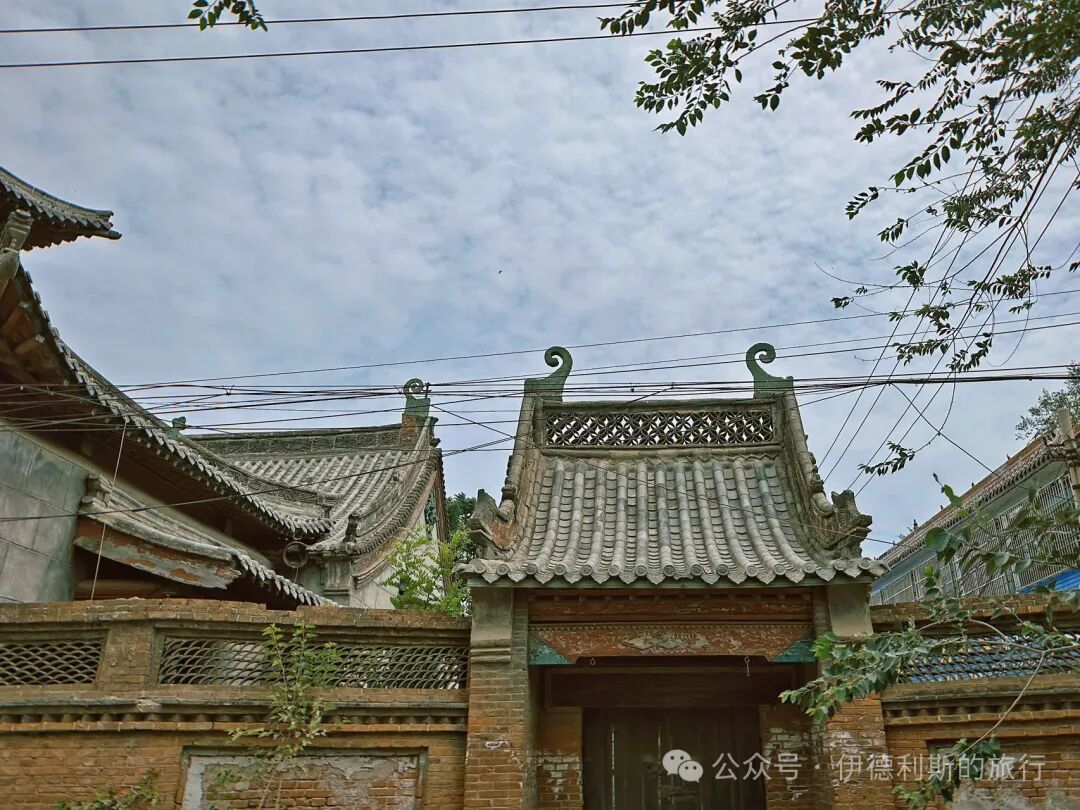
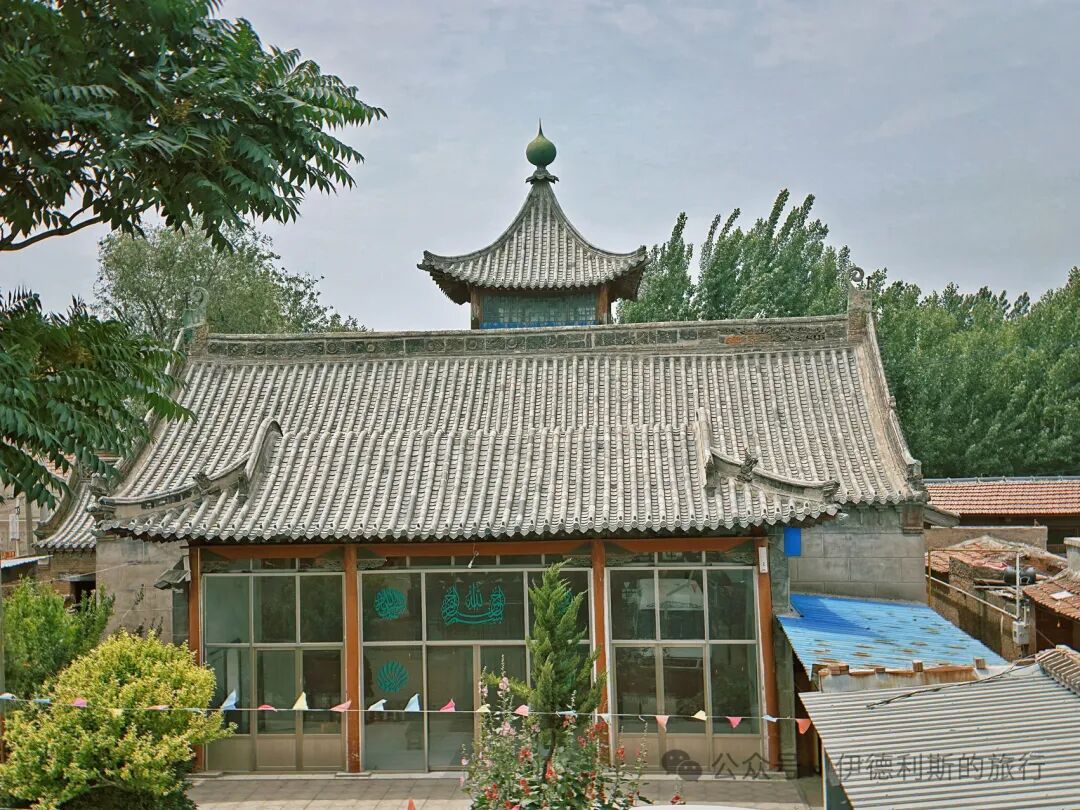
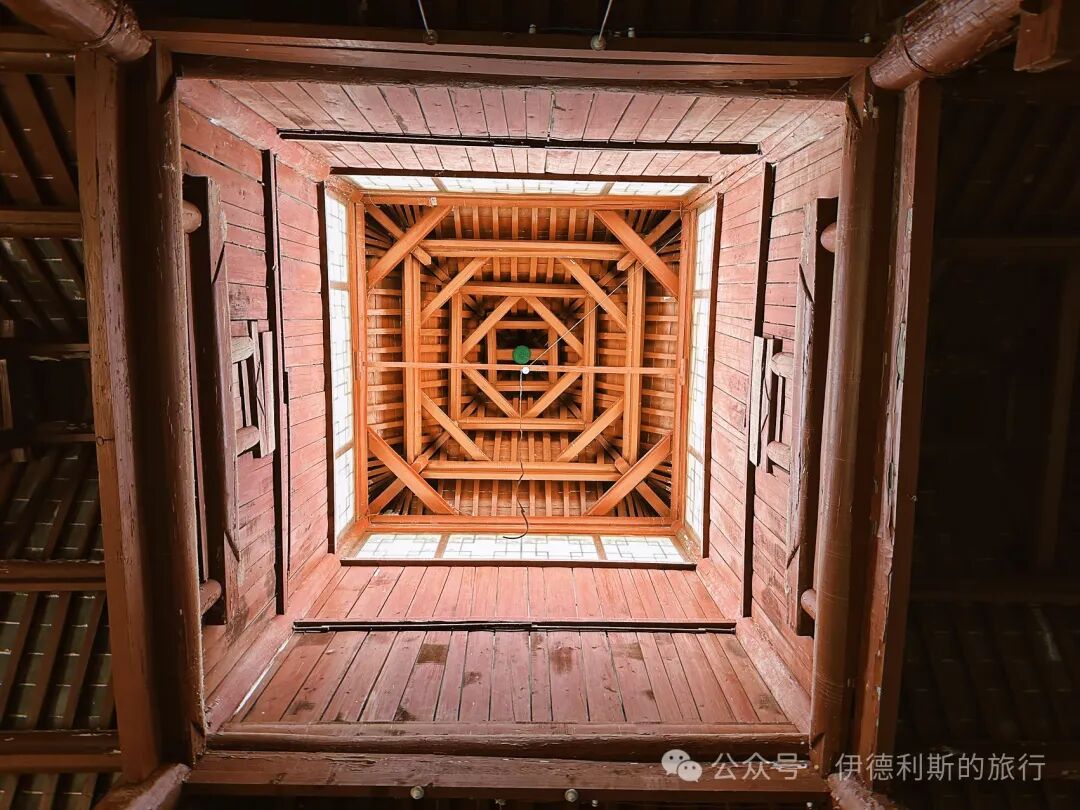
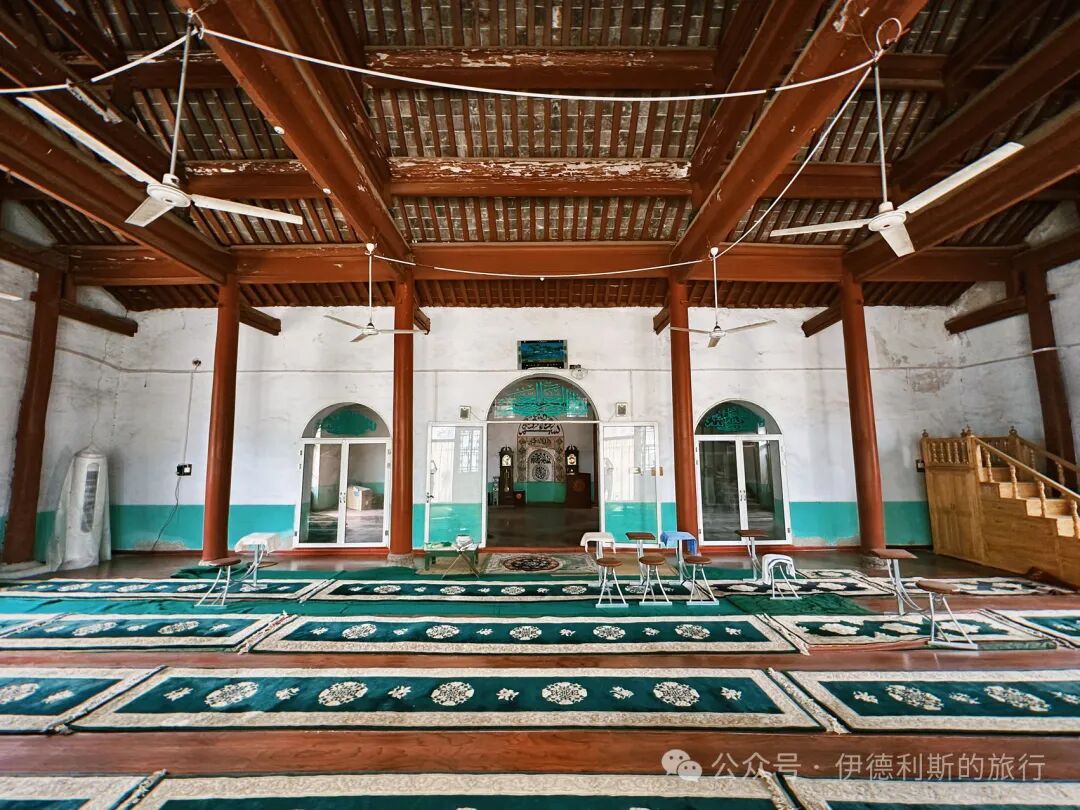
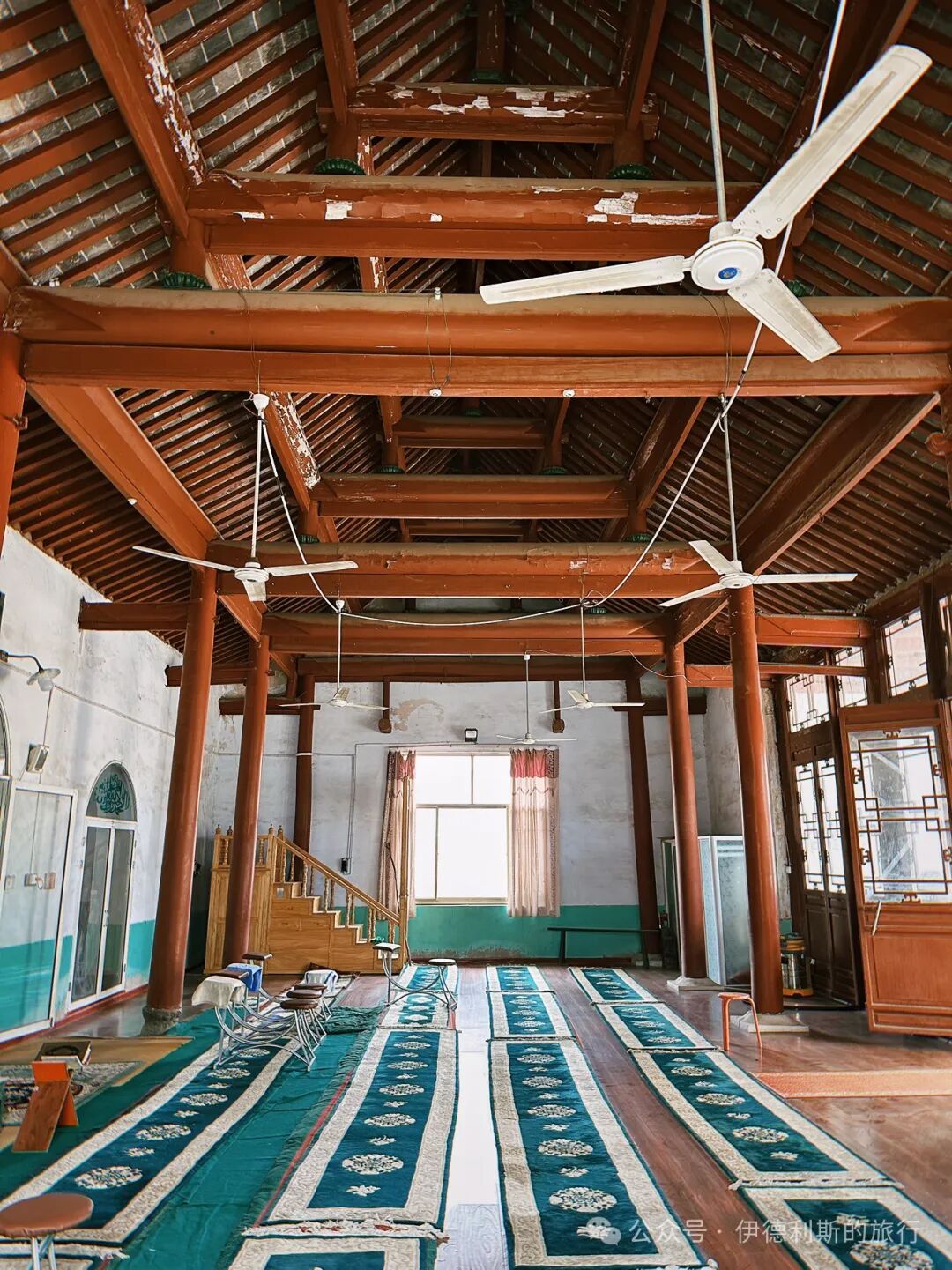
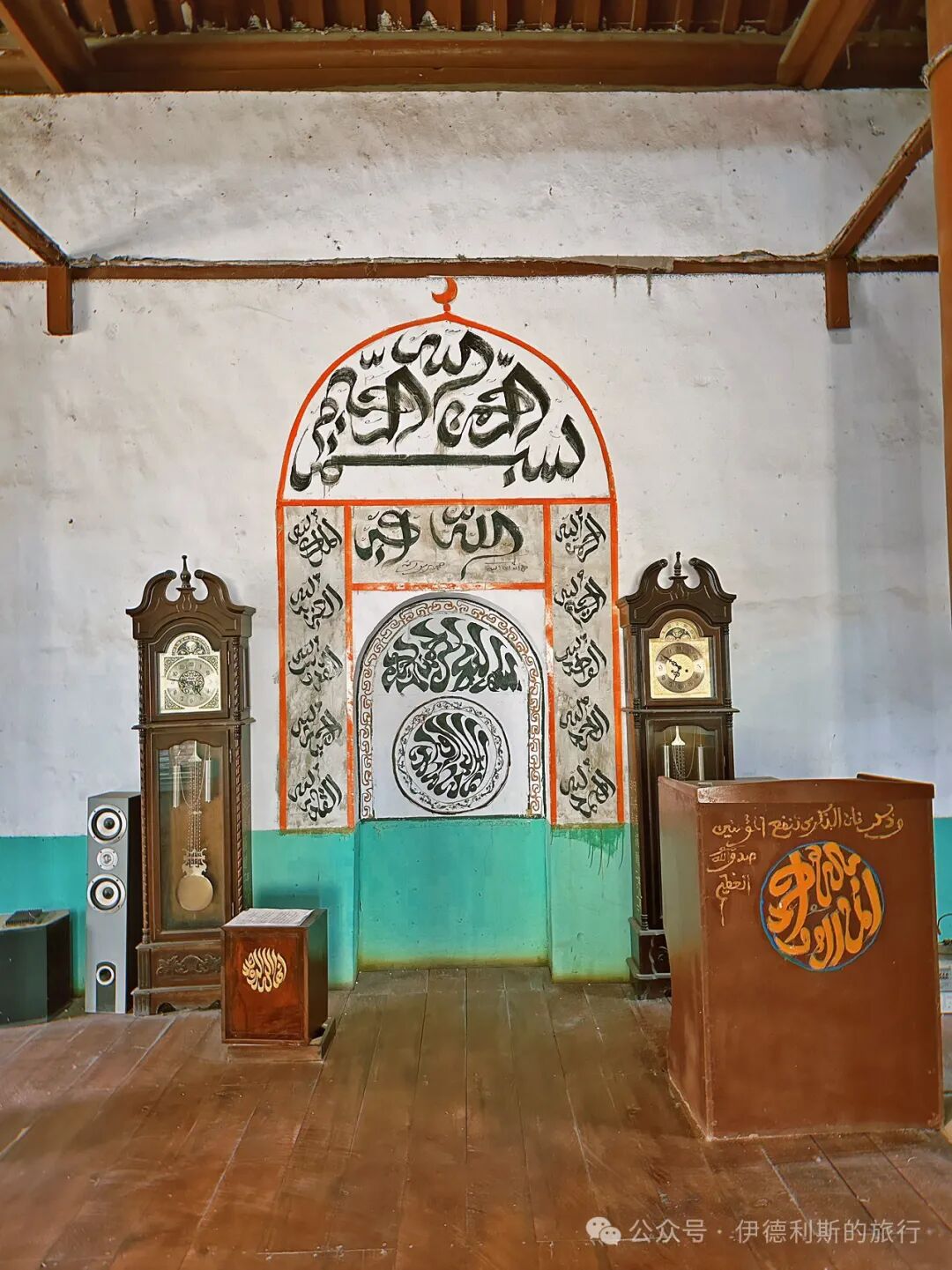
We were warmly welcomed at the Hongguanying Mosque by Imam Lan. He is skilled at Arabic calligraphy, and his scripture paintings and stone carvings are very impressive. I was very lucky to receive a one-stroke Basmala (tasmi) as a gift from Imam Lan.
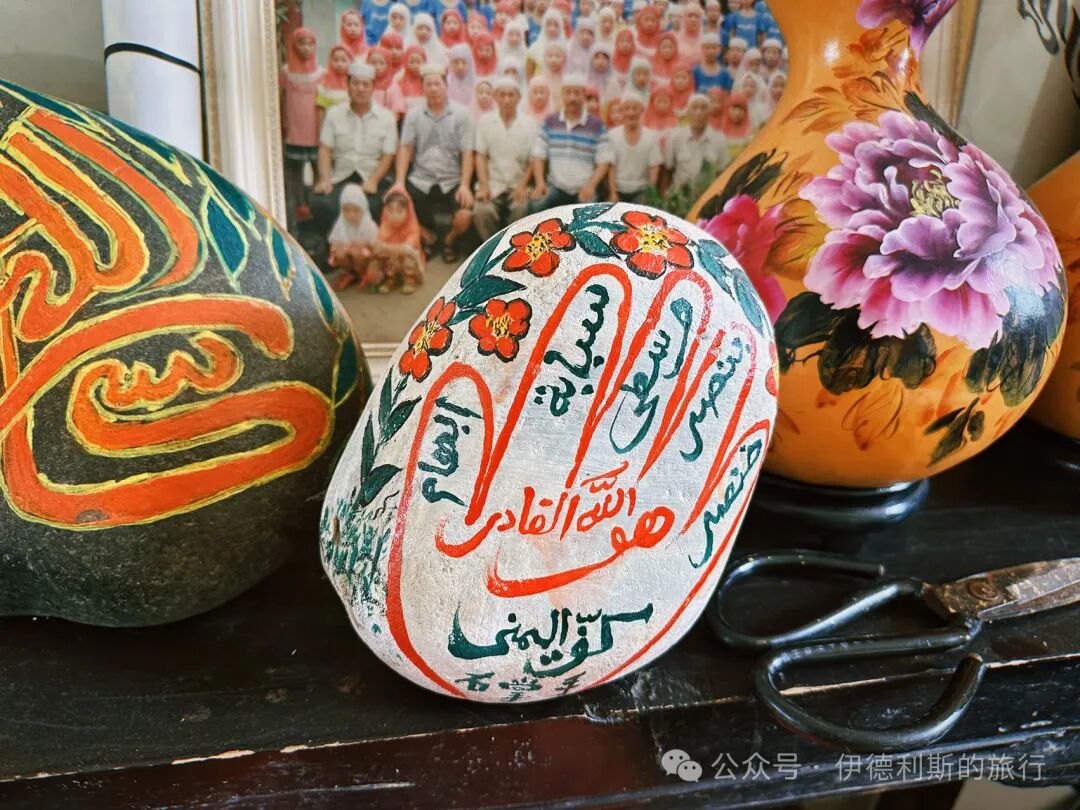
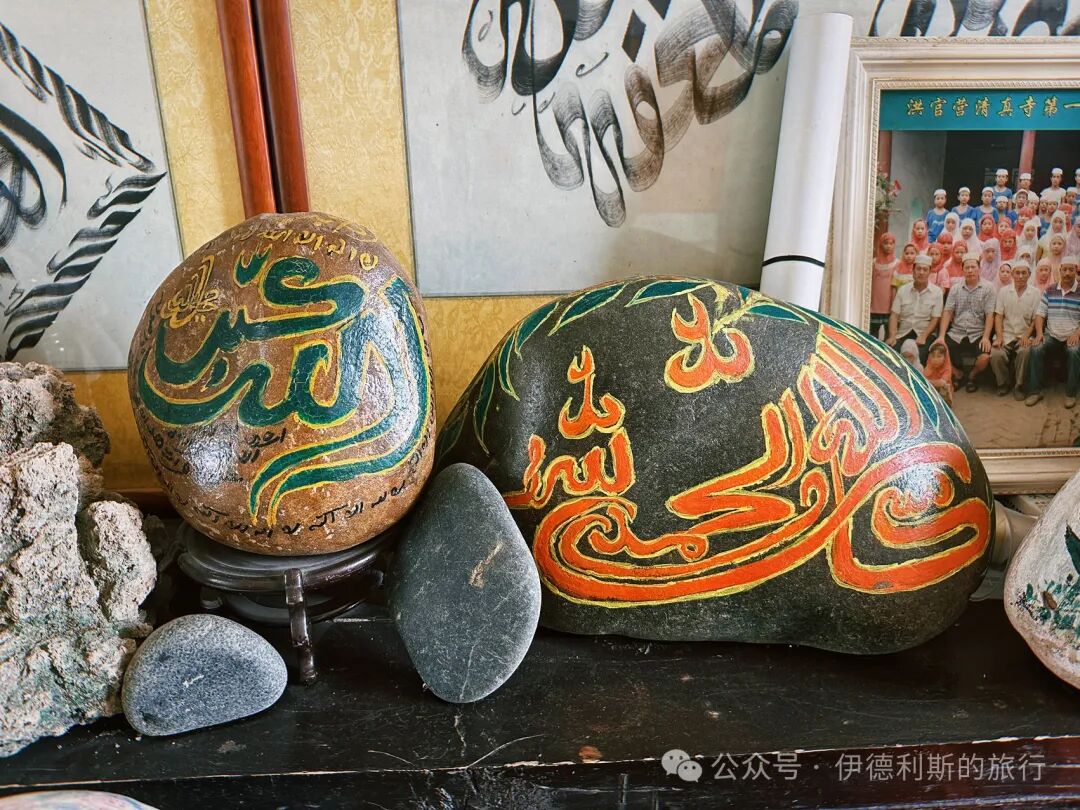
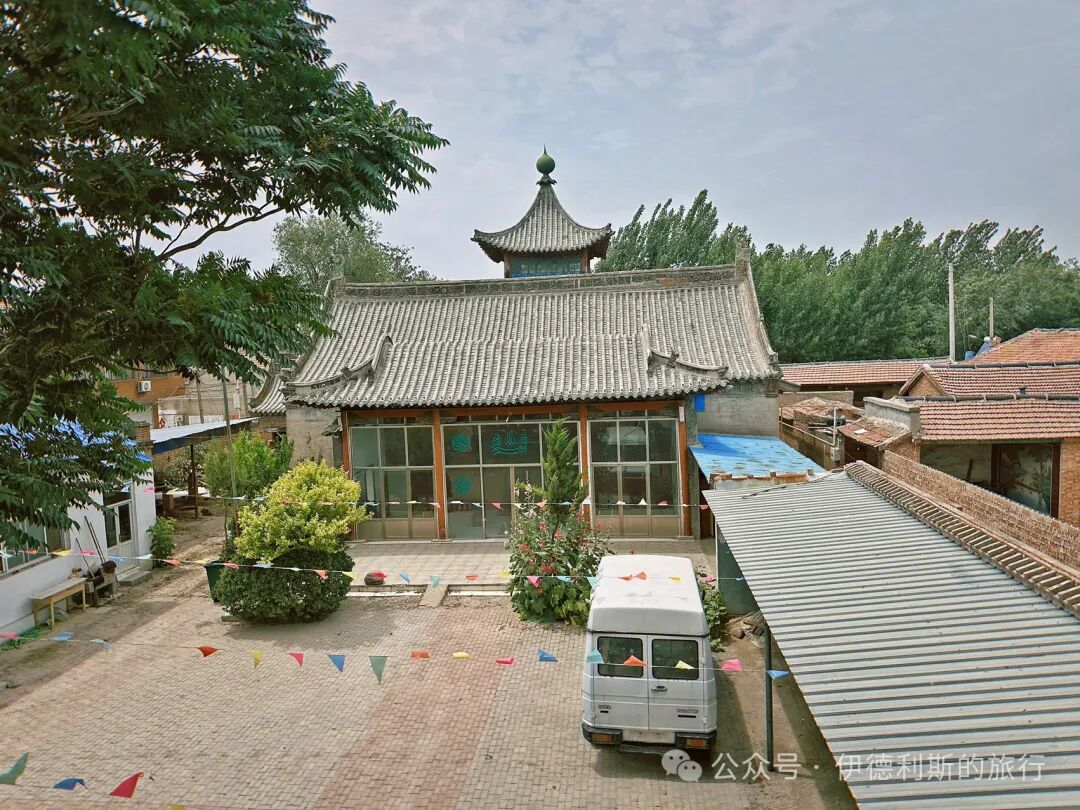
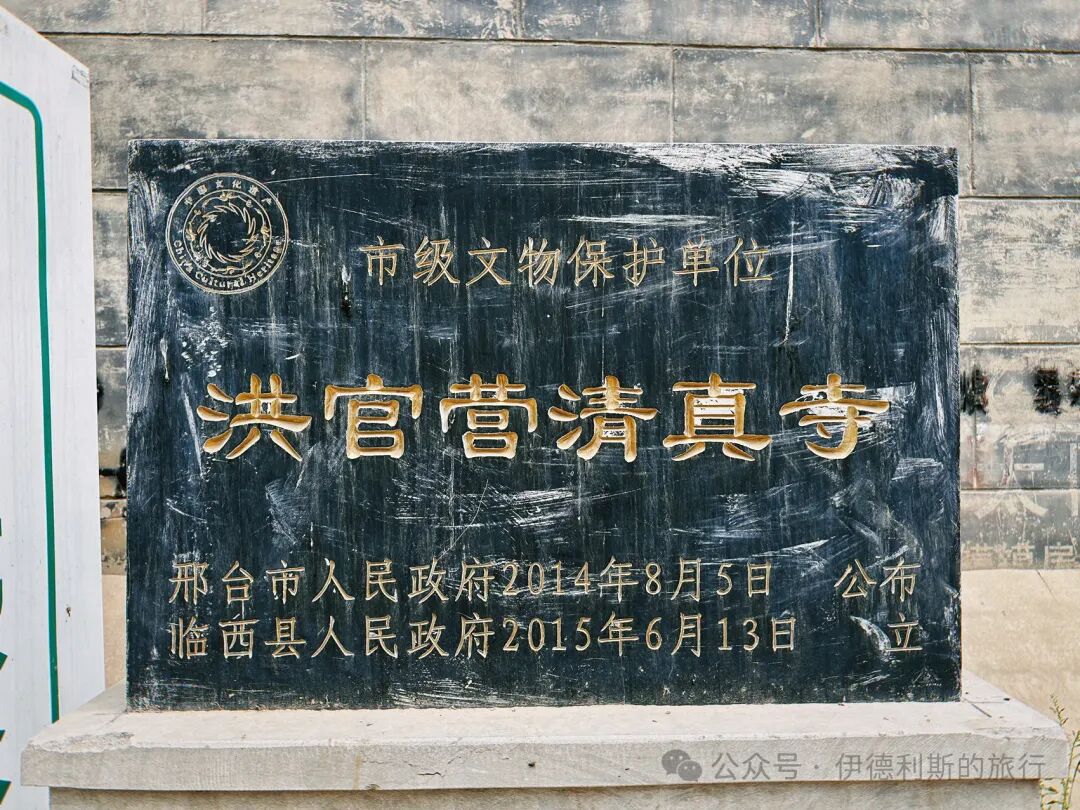
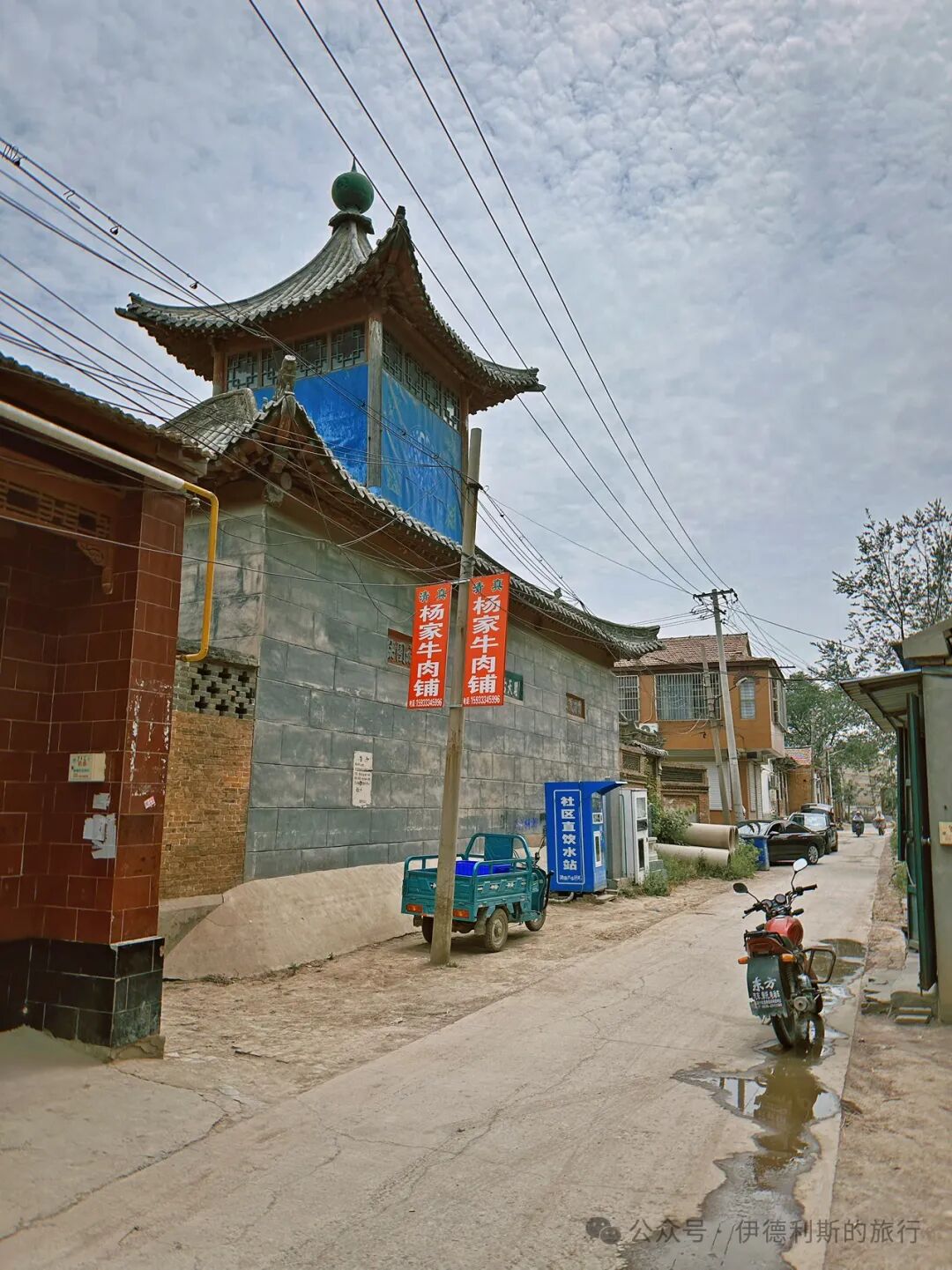
On the road heading west from Linqing to Hongguanying, we saw wheat fields, the Wei Canal, and Hui Muslim villages. The Xianfeng Bridge over the Wei Canal was built in 1959 and expanded in 1974. It was once very famous, but it stopped allowing motor vehicles in 1992 and is now a protected cultural site.
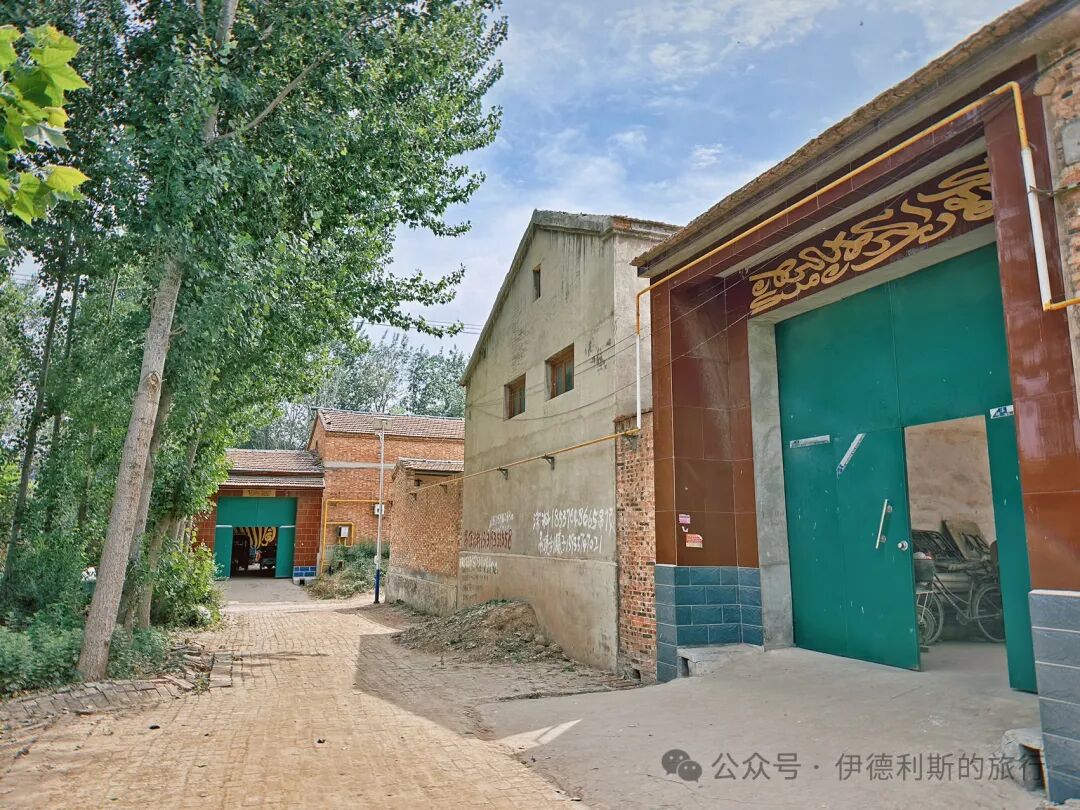
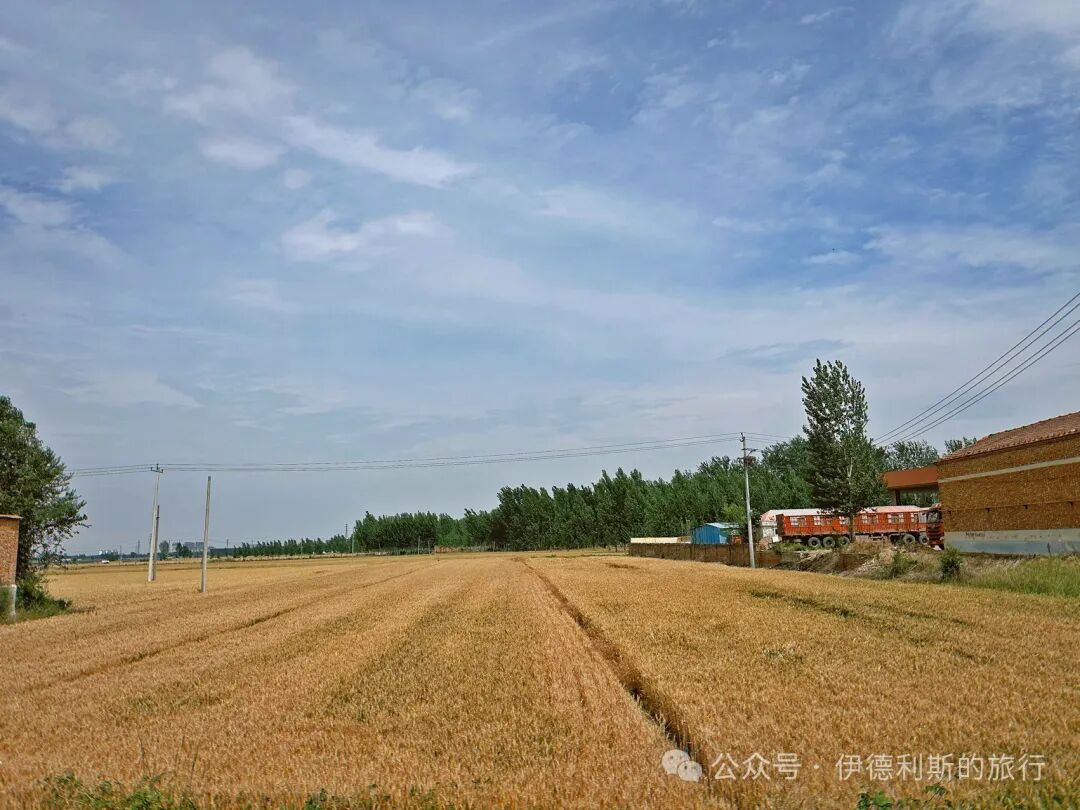
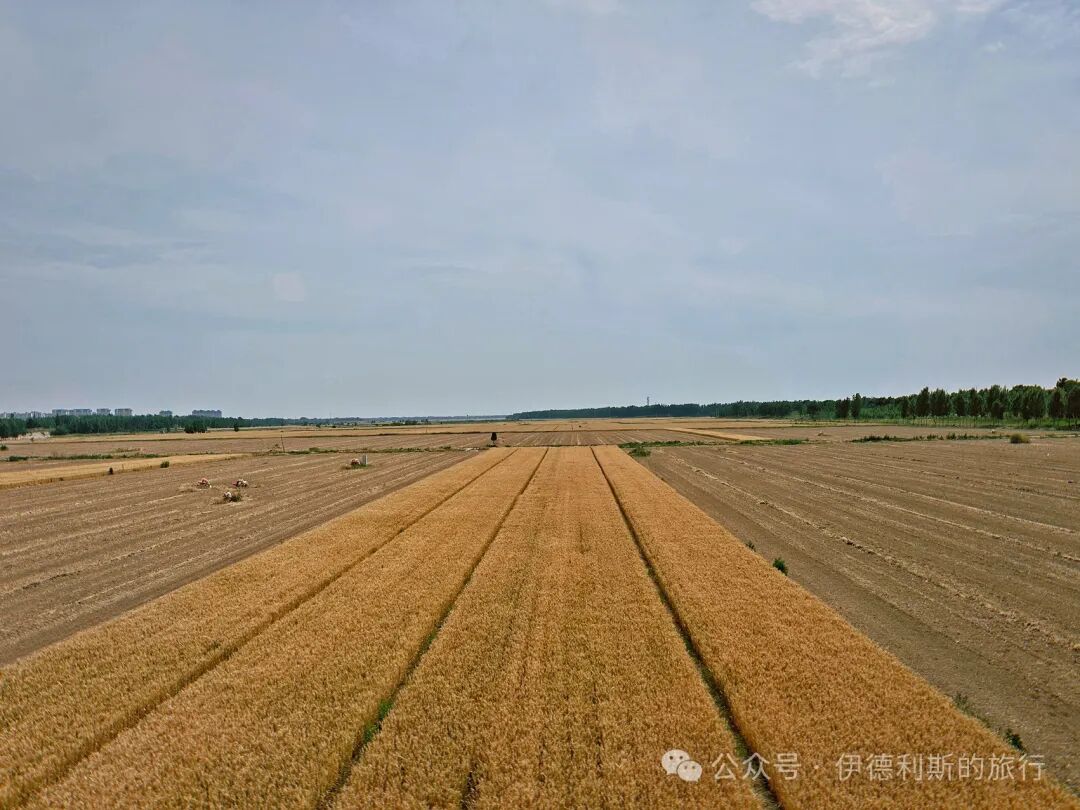
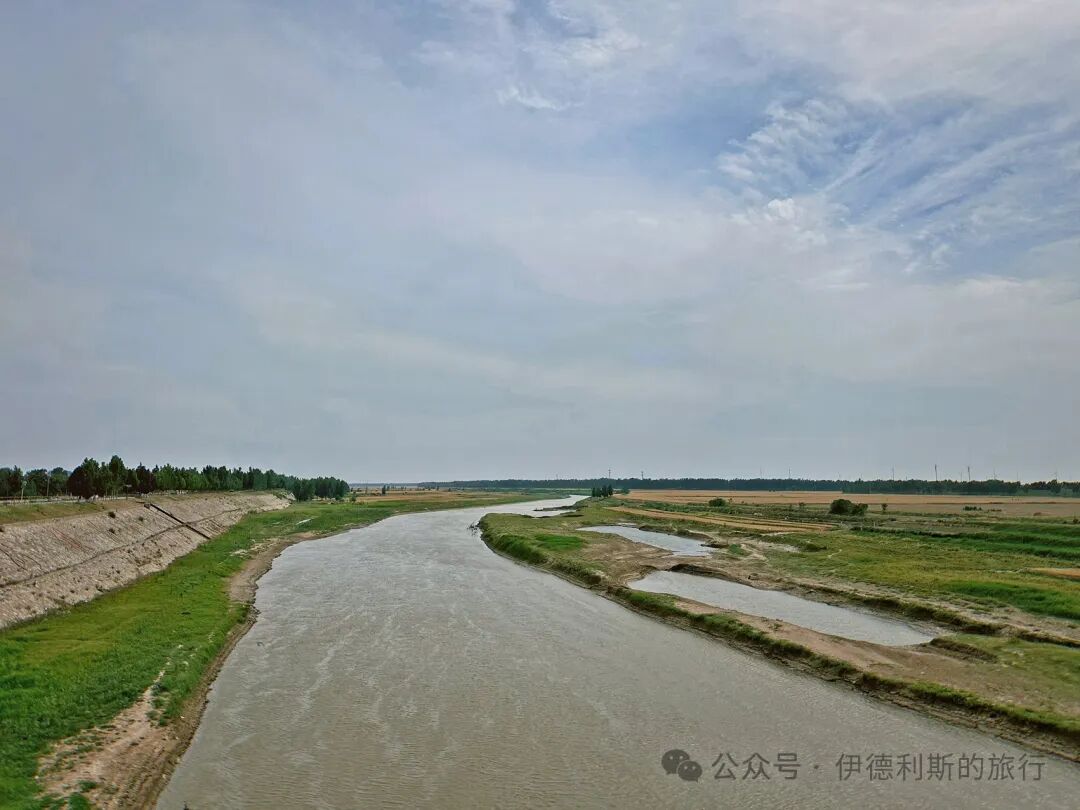
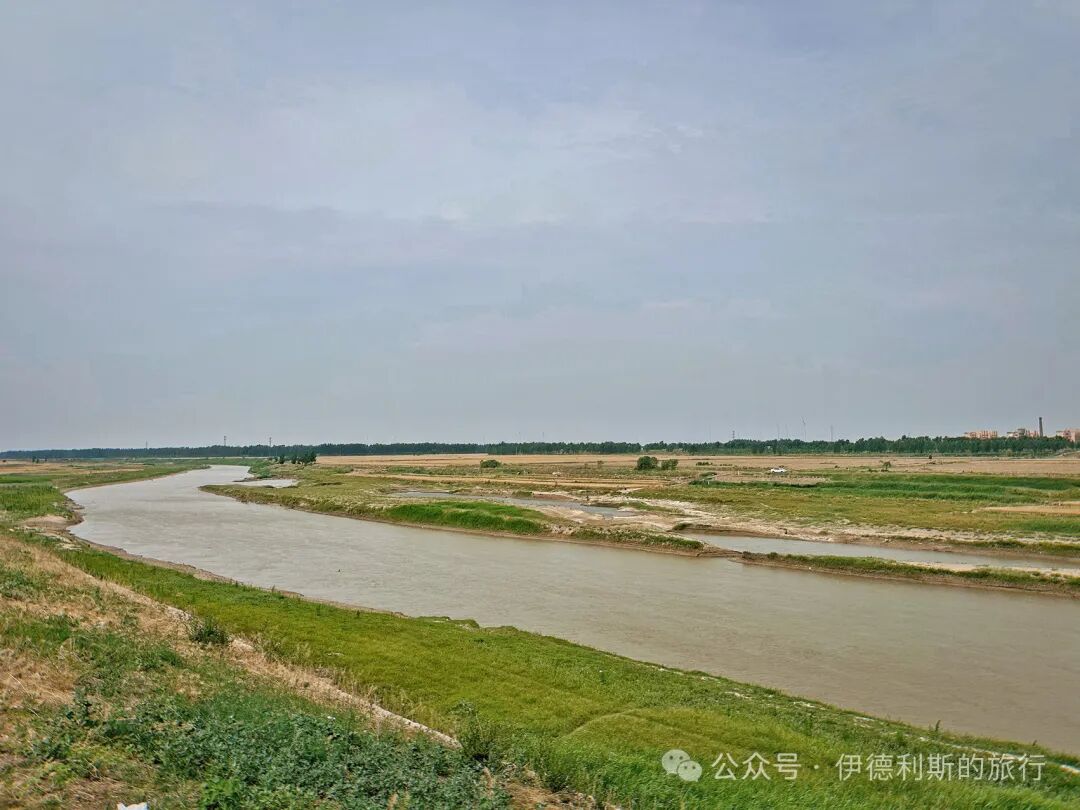
Returning from Hongguanying to downtown Linqing, we found that most restaurants here are closed between 2:00 PM and 5:00 PM. We found a place that sells deep-stir-fried meat tenderloin (ganzha liji) and bought some to eat on the train. I tried it as soon as I got on the train and it was super delicious! It was fried but not greasy at all. It even tasted great cold, just like a snack, and I couldn't stop eating it. Then we went to a shop that sells meat flatbreads (huoshao) and stuffed flatbreads (xian huoshao). There are many ways to make flatbreads here in Linqing. We bought a beef-stuffed flatbread, and it was packed with filling. I think it tasted much better than the ones I've had in Beijing.
The last photo shows two shops next to the Linqing No. 1 Kindergarten. One is a stationery shop that also serves breakfast, and the other is a sesame oil shop that provides lunch and tutoring for students. I thought that was really interesting.
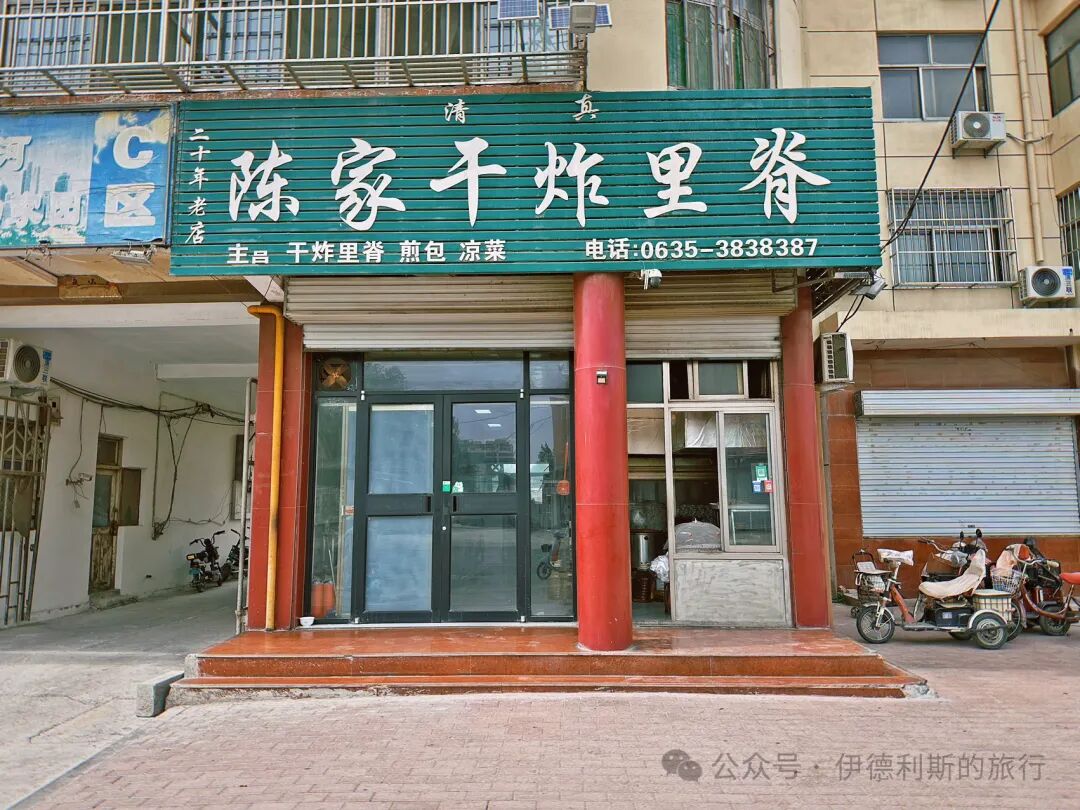
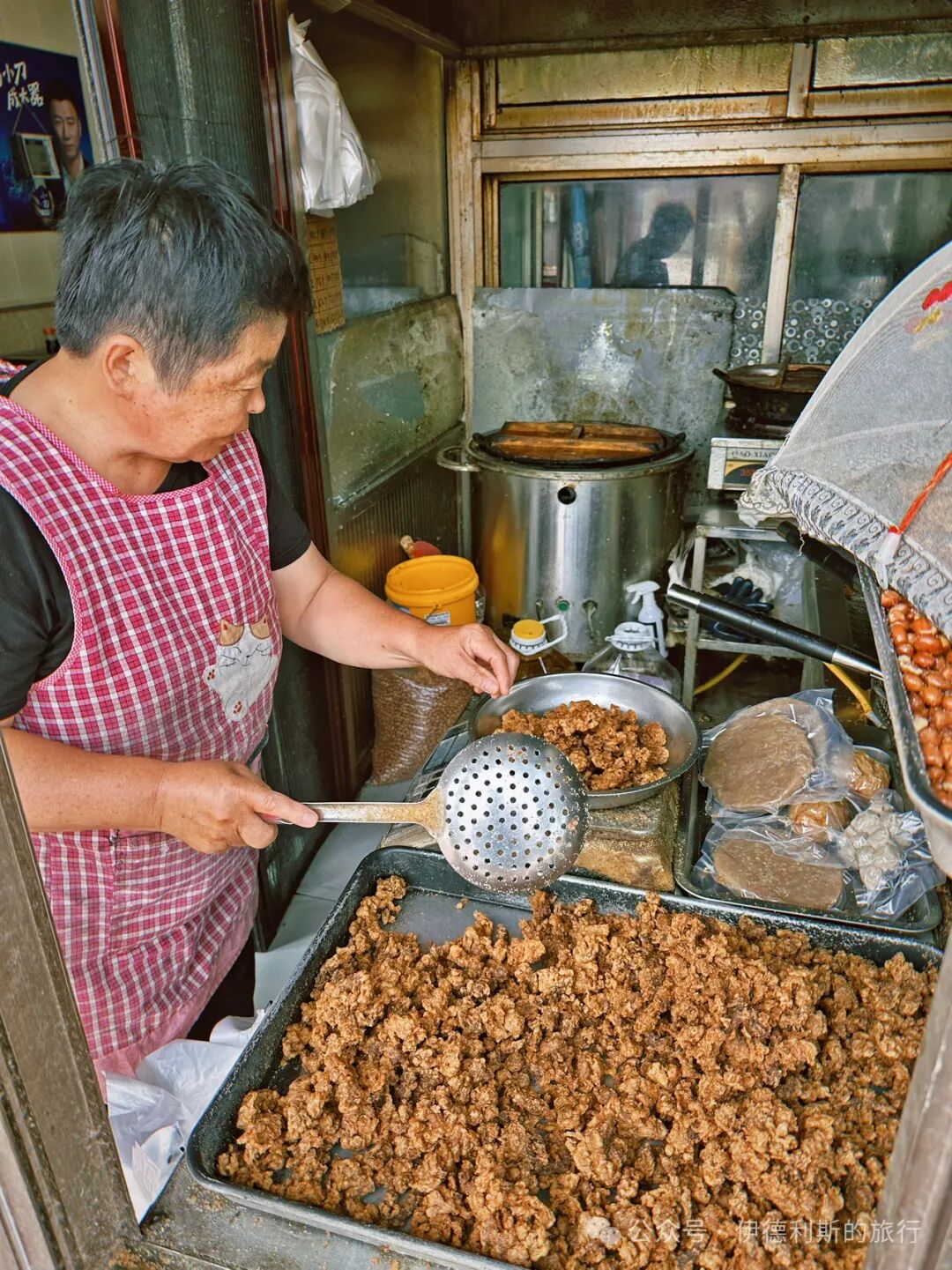
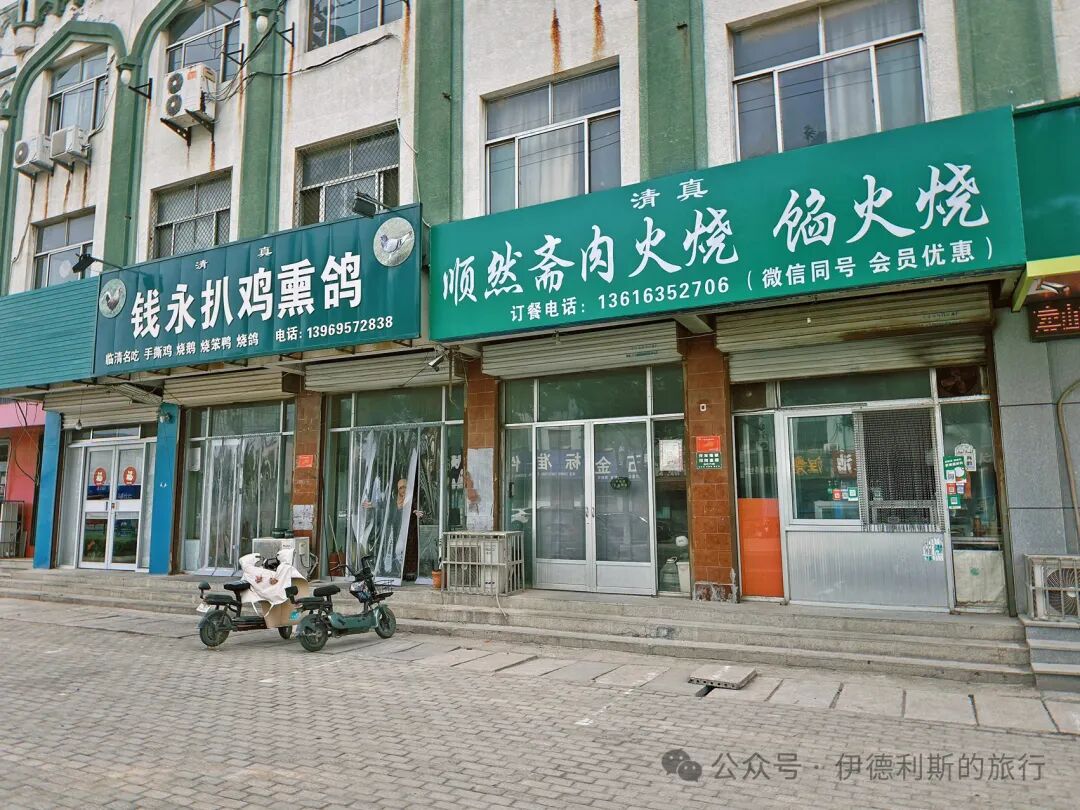
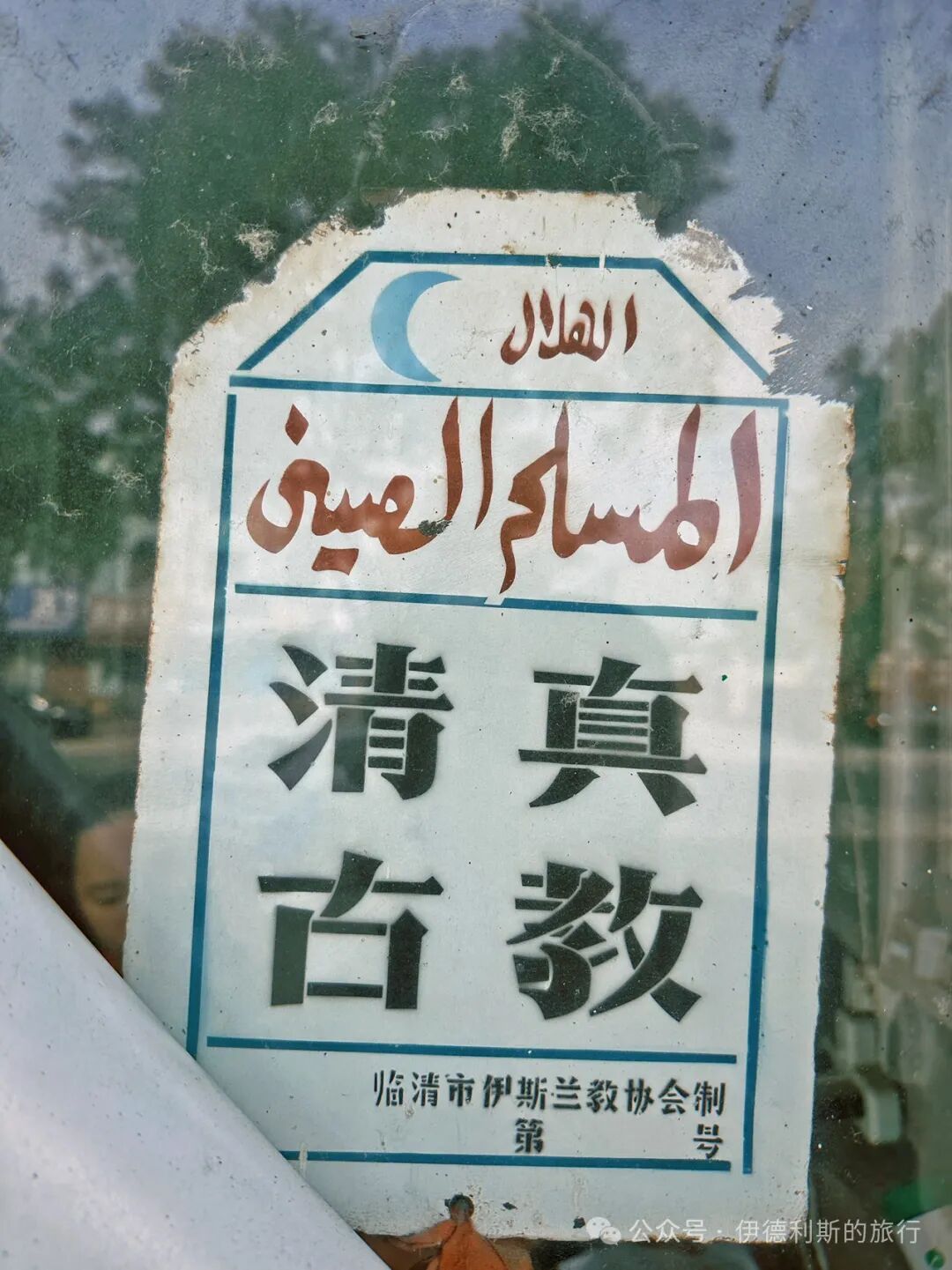
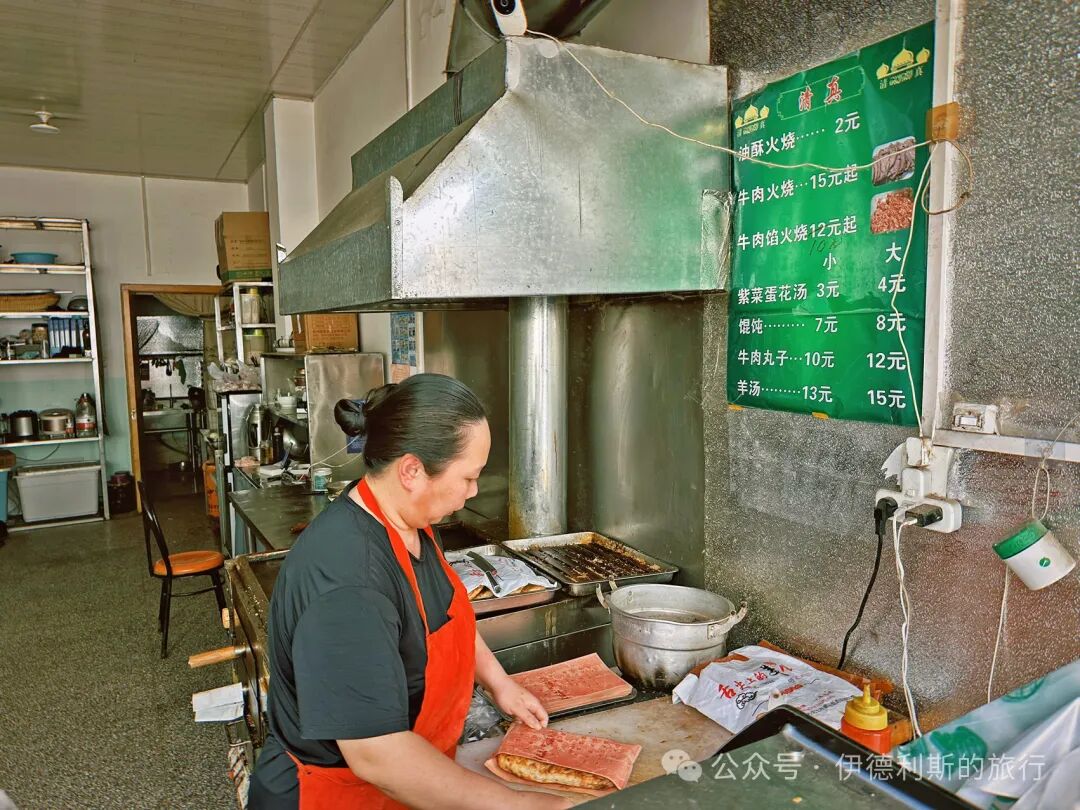
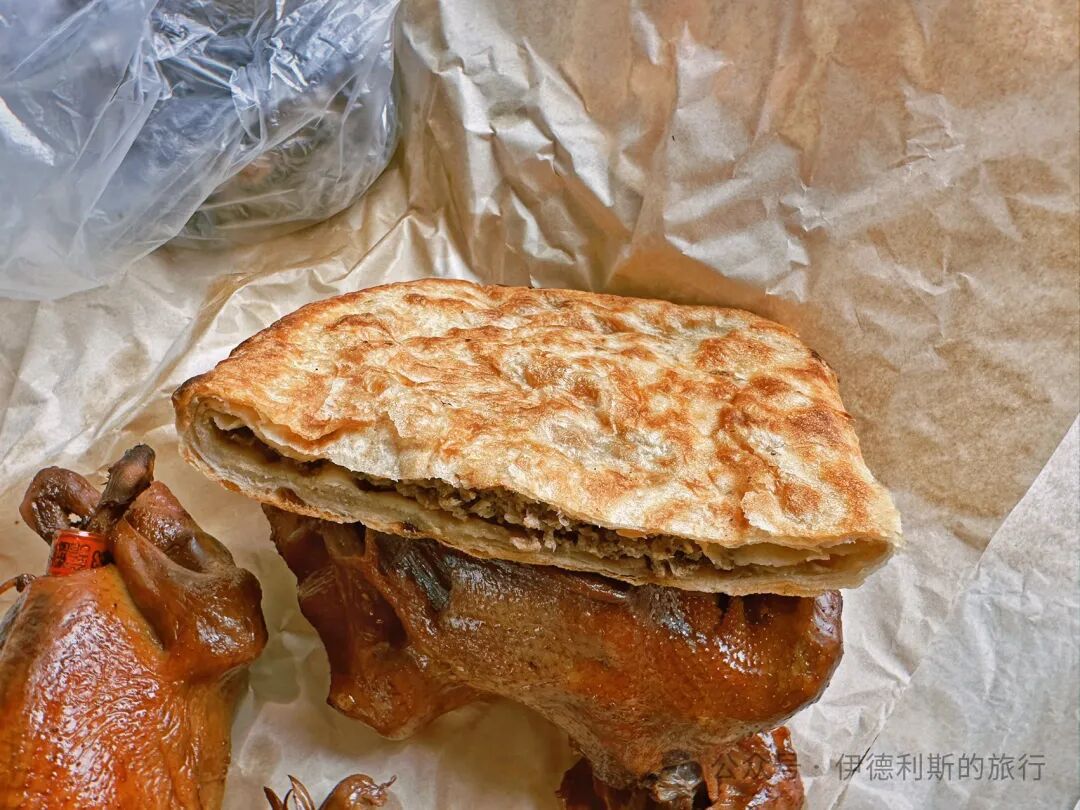
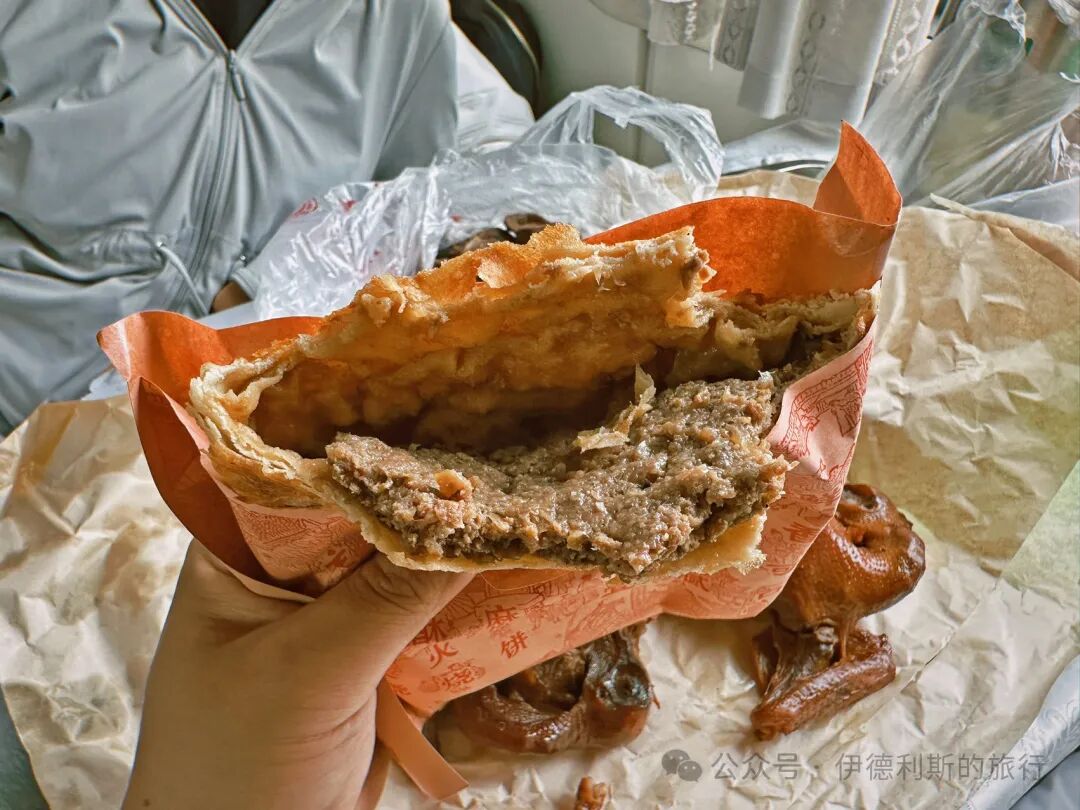
After buying the stuffed flatbread, we happened to run into the imam's wife from the Linqing Women's Mosque. She told us her family runs a braised chicken and smoked pigeon shop right next door, so we went in to take a look. Once inside, we learned that their shop is a city-level intangible cultural heritage site for Linqing smoked deli techniques. We bought two of their signature smoked pigeons and some chicken gizzards to eat on the train. The smoked pigeon was really fragrant. Even though it didn't have as much meat as chicken, the smoky flavor was delicious and worth eating.
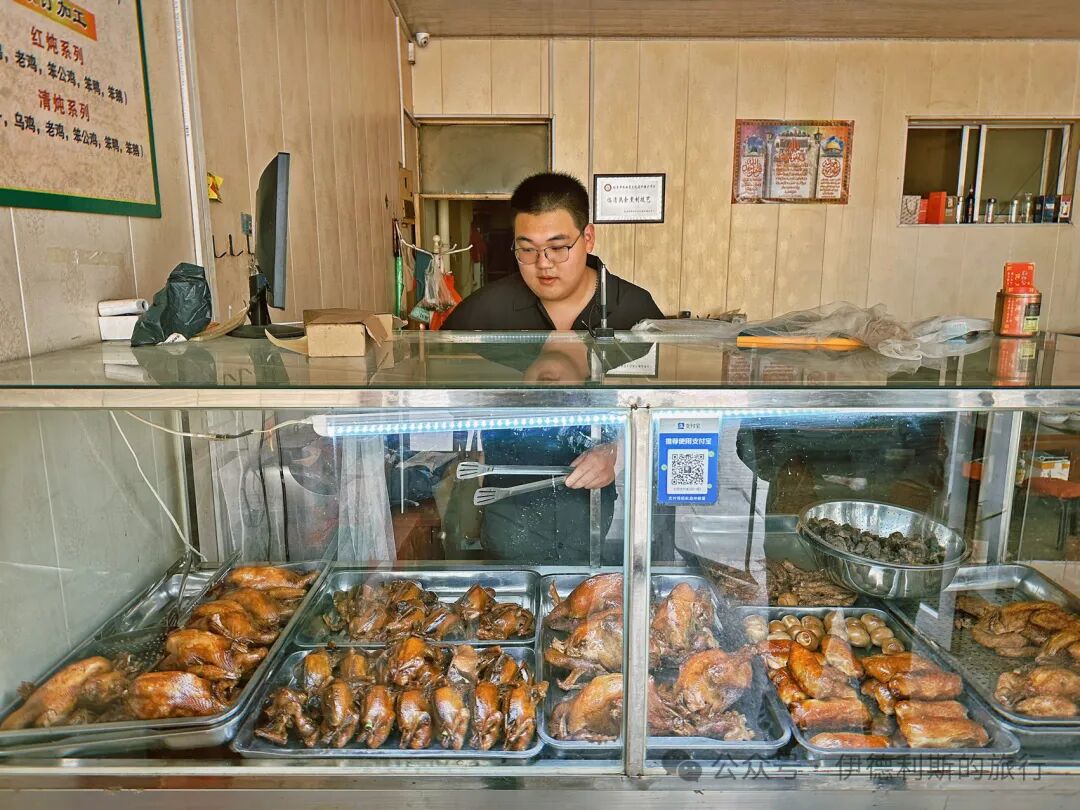
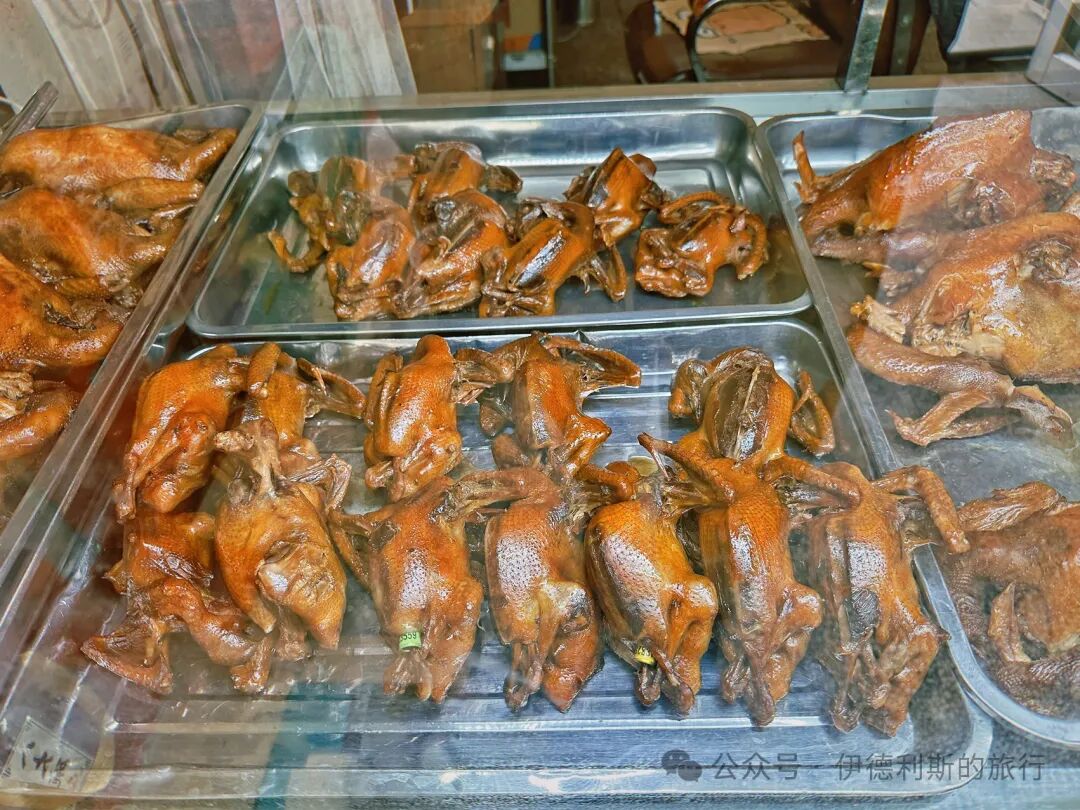
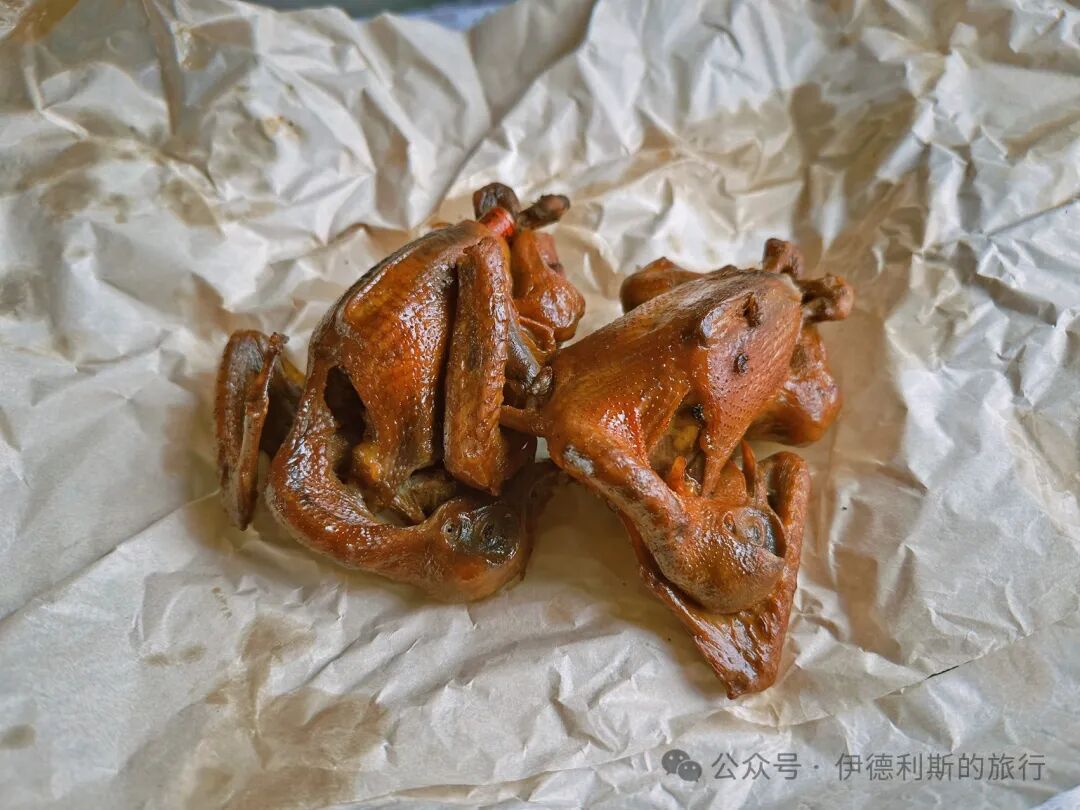
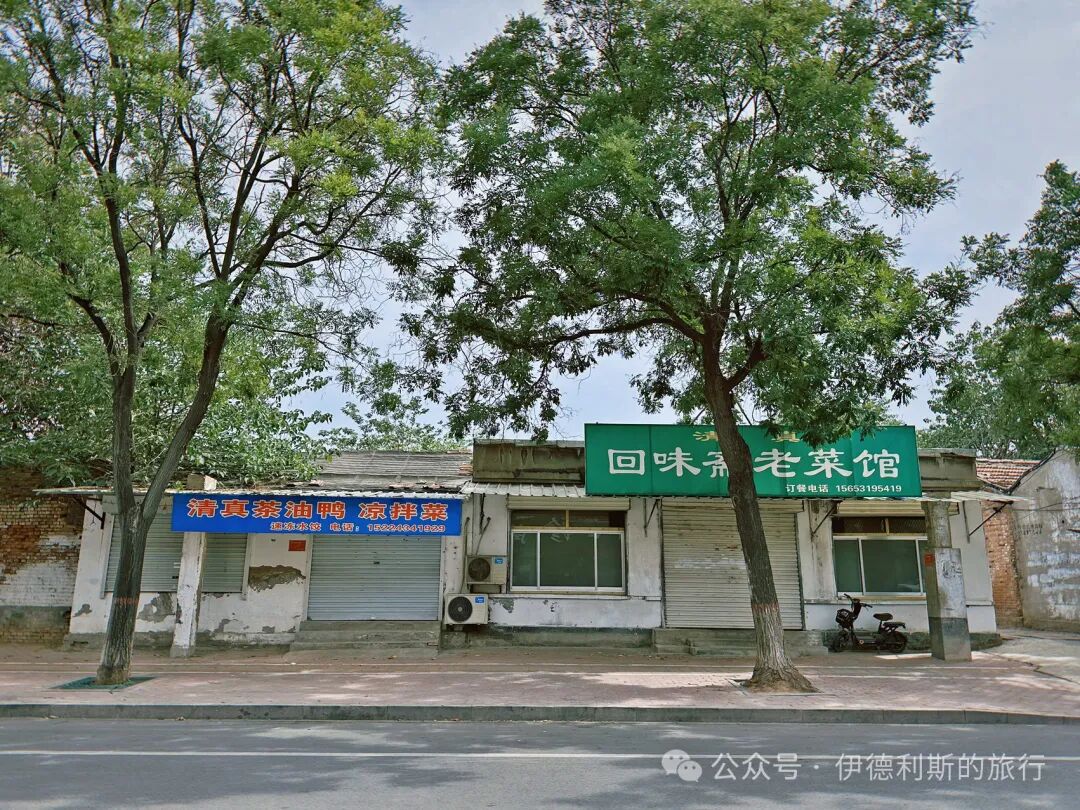
Summary: Linqing, Shandong - Canal City Mosques, Food and History (Part 2) is presented as a clear English travel account for readers interested in Muslim life, halal food, mosques, and local history. The article keeps the original place names, food details, photographs, and cultural context while focusing on Linqing, Shandong, Canal History.
After the evening prayer (shamu), we ate big bowl dishes (dawan cai) at Erliang Diguo Millet Porridge, located at the intersection of Xianfeng Road and Dazhong Road in Linqing. They serve porridge and eight big bowls (ba da wan) in the morning, noodles in the afternoon, and big bowl dishes (dawan cai) at night, all of which look delicious. We ordered a serving of big bowl dishes and a cold appetizer. The big bowl dish had plenty of ingredients inside, and it felt very healthy to eat.
Zainab and I both really like the atmosphere in Linqing. There are few cars on the street at night, no delivery scooters, and it feels great to ride a shared electric bike around. There are many halal restaurants on Xianfeng Road. People sit on small stools outside the shops at night to eat and chat, which feels very relaxed.
Linqing at night is full of various halal restaurants and even a small halal night market.
We had breakfast at Kong Family Steamed Bowls (Kongjia kouwan) at the intersection of Xianfeng Road, where we ate braised pork and steamed pork tenderloin (liji kouwan) with steamed buns (mantou). Turning the traditional steamed bowls (kouwan) from North China's scripture hall banquets into a breakfast seems to be a local specialty of Linqing, allowing tourists like us to enjoy traditional banquet dishes. They keep their steamed bowls (kouwan) in a large steamer. They have many kinds like pine-flower egg (songhua), meatballs (wanzi), pork tenderloin (liji), starch jelly (menzi), and braised pork (shaorou). You pick what you want, they flip it into a bowl, pour broth over it, and it is ready to eat.
Their shop was originally the Taoyuan Street Supply and Marketing Cooperative built in the 1970s. Eating here feels very retro. Besides selling steamed bowls in the morning, they also sell cold noodles (liangmian) at noon, which is another specialty of Linqing.
After finishing the steamed bowls, I went to Xianfeng Road to eat tofu pudding (doufunao) and firm tofu (laodoufu). Breakfast shops in Linqing sell both tofu pudding and firm tofu. The difference is that tofu pudding is set with gypsum, making the texture smooth and delicate. Firm tofu is set with brine, making the texture tough and chewy. I like both kinds.
At noon, we ate Wang Family Ten-Fragrance Noodles (shixiangmian) on Xinhua Road. Ten-Fragrance Noodles are also called Assorted-Fragrance Noodles (shixiangmian). The main feature is the large variety of vegetable toppings. A deluxe bowl can have over eighteen types, and the ingredients change based on the solar terms. The toppings mainly include stir-fried minced meat with eggplant strips, mung bean sprouts, chives, minced garlic sprouts, minced green beans, and tomato with egg. You also get fresh shredded cucumber, minced carrots, and pickled vegetables like pickled melon (jianggua), salted mustard greens (xian gede), and minced chive flowers (jiuhua mo), all finished with a drizzle of sesame paste. The homemade version we ate wasn't quite as elaborate, but it still had plenty of variety.
Hongguanying Mosque
At noon, we went to the Hongguanying Mosque in Linxi County, Xingtai, Hebei. Linxi County in Xingtai is actually right on the west side of the Wei Canal in Linqing. Once you cross the Xianfeng Bridge, there is a bus that goes to Hongguanying.
Hongguanying gets its name from the Hong family of Hui Muslims. According to the Linqing Hong Family Genealogy, the ancestor of the Hong family of Hui Muslims was Sayyid Ajjal Shams al-Din. His sixth-generation descendant, Hong Badan, served as an official in Linqing during the Ming Dynasty. His descendants took Hong as their surname and settled in Linqing. One branch settled in the urban area of Linqing and once built the Hong Family Mosque, but unfortunately, it no longer exists. Another group settled in Hongguanying Village and built the Hongguanying Mosque. The Hongguanying Mosque was first built between the Xuande and Tianshun periods of the Ming Dynasty. It was burned down in 1854 during the Northern Expedition of the Taiping Rebellion and rebuilt into its current form in 1874.
We were warmly welcomed at the Hongguanying Mosque by Imam Lan. He is skilled at Arabic calligraphy, and his scripture paintings and stone carvings are very impressive. I was very lucky to receive a one-stroke Basmala (tasmi) as a gift from Imam Lan.
On the road heading west from Linqing to Hongguanying, we saw wheat fields, the Wei Canal, and Hui Muslim villages. The Xianfeng Bridge over the Wei Canal was built in 1959 and expanded in 1974. It was once very famous, but it stopped allowing motor vehicles in 1992 and is now a protected cultural site.
Returning from Hongguanying to downtown Linqing, we found that most restaurants here are closed between 2:00 PM and 5:00 PM. We found a place that sells deep-stir-fried meat tenderloin (ganzha liji) and bought some to eat on the train. I tried it as soon as I got on the train and it was super delicious! It was fried but not greasy at all. It even tasted great cold, just like a snack, and I couldn't stop eating it. Then we went to a shop that sells meat flatbreads (huoshao) and stuffed flatbreads (xian huoshao). There are many ways to make flatbreads here in Linqing. We bought a beef-stuffed flatbread, and it was packed with filling. I think it tasted much better than the ones I've had in Beijing.
The last photo shows two shops next to the Linqing No. 1 Kindergarten. One is a stationery shop that also serves breakfast, and the other is a sesame oil shop that provides lunch and tutoring for students. I thought that was really interesting.
After buying the stuffed flatbread, we happened to run into the imam's wife from the Linqing Women's Mosque. She told us her family runs a braised chicken and smoked pigeon shop right next door, so we went in to take a look. Once inside, we learned that their shop is a city-level intangible cultural heritage site for Linqing smoked deli techniques. We bought two of their signature smoked pigeons and some chicken gizzards to eat on the train. The smoked pigeon was really fragrant. Even though it didn't have as much meat as chicken, the smoky flavor was delicious and worth eating.
China Mosque Travel Guide Jiangsu Huai'an: Wangjiaying Hui Muslim Town, Mosques and Canal History
Articles • yusuf908 posted the article • 0 comments • 244 views • 2026-05-23 23:30
Reposted from the web
Summary: Wangjiaying in Huai'an, Jiangsu, sits between the old Yellow River course and the Salt River and has long been an important Hui Muslim town. This account covers its mosque history, family stories, streets, food, and photographs as recorded in the source visit.
Wangjiaying in Huai'an, Jiangsu, sits between the old Yellow River course and the Salt River. During the Ming Dynasty, the government set up the Dahe Guard in Huai'an and built ten military camps along the Yellow River. Wangjiaying was one of them. Travel on the Yellow River section of the canal was slow and dangerous, often leading to broken ropes and sunken boats. Many merchants chose to leave their boats at Qingjiangpu, cross the Yellow River at Wangjiaying, and switch to horse-drawn carriages to head north. Together, Wangjiaying and Qingjiangpu grew into a busy town.
Wangjiaying survived many floods from the Yellow River and moved east three times to reach its current location. In 1831, the Viceroy of Liangjiang, Tao Peng, chose Wangjiaying as a new hub for Huai salt distribution. After that, eighteen salt warehouses and seventy-two salt offices opened in Wangjiaying. Salt boats traveled constantly along the three-hundred-mile waterway from the Huaibei salt fields to Wangjiaying.
The prosperity of Wangjiaying attracted Hui Muslims to settle there. The first Hui Muslims to arrive were the Ma and Sha families, who came from Lingwu County in Ningxia by way of Shandong and Zhenjiang. Later, families named Jin, Dai, Chang, Ge, Fan, Li, and Yang also settled here.
The Wangjiaying Mosque was first built during the Yongzheng era. It started as three thatched rooms next to the Lotus Pond (Hehuawang) in Wangjiapo. After Wangjiaying became a salt hub in the late Daoguang era, the mosque moved to the south bank of the Salt River. Two imams, Chang Tingzhang and Dai Mingxuan, led the religious affairs. Imam Chang Tingzhang was known as 'Third Master Chang.' He was from Jining, Shandong, and was born in 1785 in Taoyuan County, Huai'an Prefecture (now Siyang, Jiangsu). In his youth, he studied in Lingzhou (now Lingwu County, Ningxia). After finishing his studies, he traveled to Jining, Shandong, to continue learning. In 1810, the 26-year-old Imam Chang Tingzhang was invited to lead the Wangjiaying Mosque. Imam Chang Tingzhang had deep knowledge of Arabic classics, astronomy, and medicine. According to the 'Wangjiaying Records,' a man named Third Master Tao from Hangzhou died in Huai'an during the Daoguang era. Because it was the heat of summer, Imam Chang Tingzhang personally bought a boat and traveled south along the canal to take the body back to Hangzhou for the family.
In 1860, the Nian Army burned down the Wangjiaying Mosque. In 1867, Imam Dai Jingzhai, the son of Imam Dai Mingxuan, led the construction of a few thatched huts. Later, with donations from the community, they built a main hall with three thatched rooms.
Imam Chang Tingzhang passed away in 1870. Imam Dai Jingzhai took over, and in 1884, they replaced the thatched rooms with tiled ones. Because Imam Chang Tingzhang had studied at the Jahriyya Banqiao Daotang in Jinjipu, Ningxia, in his youth, the Wangjiaying Mosque later invited five successive imams from the Jahriyya order in Jinjipu to lead the mosque and teach. Future imams also went to Ningxia for advanced study, making the Wangjiaying Mosque one of the nine major branches of the Banqiao Daotang.
In 1912, the Wangjiaying Mosque built a new gate, a south lecture hall, a kitchen, and a washroom. In 1920, with funding from the Jingshan Tang in Gansu and money from selling willow trees at the public cemetery, they rebuilt the three tiled, curved-eave rooms in front of the main hall and added three new rooms for the east lecture hall. Currently, there is a 1920 Republic of China renovation tablet on the north wall of the main hall, but the top part is covered.
In 1958, the Wangjiaying Mosque moved to the east of West Horse Road in Wangying. In 1961, it moved to its current site because a bank needed the land for a building. During the destruction of the Four Olds, the main hall's plaques reading 'The Way Spreads to the Middle Land,' 'The Religion Follows the Western Regions,' and 'Striving for Perfection,' along with gold-lettered Arabic plaques and couplets, were all smashed and burned. The couplets read: 'See the invisible, hear the silent, rectify the intention and sincerity, become a saint or a sage, the original nature; The Way is established, movement brings harmony, reach others through oneself, benefit the world, all is complete.' Funeral tools were also destroyed, and the main hall was used as a warehouse by a shoe and hat factory.
In 1979, under the leadership of Imam Ge Weili, the Wangjiaying Mosque was rebuilt in a traditional style. It was finished in 1985 and underwent two more renovations and expansions in 2003 and 2006 to reach its current appearance.
Imam Ge Weili was born in 1924. He went to Ningxia to study in 1937. In 1945, after completing his religious training and receiving his robe, he became the imam of Wangjiaying Mosque. He took on the role of imam in 1966. Today, the religious affairs at Wangjiaying Mosque are led by Imam Fan Weiming, a student of Imam Ge Weili.
The inscription from the Republic of China era reads as follows:
Wangying Mosque was founded during the Yongzheng reign of the Qing Dynasty. By the end of the Daoguang reign, our community was at its peak. Our population grew, our businesses thrived, and we had elders like Chang and Dai Mingxuan leading our religious affairs. They taught many students, and this history is recorded in local chronicles for all to verify. In the tenth year of the Xianfeng reign, the Nian Rebellion broke out. The mosque was burned to the ground, our people fled or died, and our community dwindled.
In the sixth year of the Tongzhi reign, Dai Jingzhai, the son of Elder Dai Mingxuan, followed his father's teachings and took over the leadership. He first built a few thatched huts to hold prayers morning and evening. However, the space was too simple for proper worship. It was too small to hold gatherings. The imam was deeply worried. He raised funds from many sources and built a main hall with three rooms made of grass. Later, he consulted with Yang Xuting, Ma Yunfeng, and Guo Daosheng. With their help, they rebuilt the main tiled hall and lecture hall in the tenth year of the Guangxu reign, and things began to return to normal. As more of our people moved here, the original public cemetery became so full there was almost no space left. The imam was concerned that our community lacked its own burial ground, which made things very difficult during times of loss. He planned to buy land to solve this, and Mr. Ma Yunfeng agreed to help. Sadly, Mr. Ma passed away before the task was finished. Fortunately, Mr. Ma's brother, Runzhi, carried on his brother's wishes. With the strong support of local elder Li Yunpo, they set aside differences and raised enough money to buy two new cemetery plots. The imam's kindness to our community was thorough. This was due to the support of many public-spirited people, but it was also the result of the imam's decades of hard work and sincere devotion.
In the first year of the Republic of China, we worked to continue the efforts of our predecessors by adding a main gate, a south lecture hall, and a kitchen. Mr. Ge Ziming built a washroom (shuifang) and donated hundreds of thousands in currency. We also invited Imam Wang Pinqing from Gansu Province to teach the scriptures. Visitors from all over praised the work. In recent years, wind and rain damage made the halls look like they might collapse. We met and decided to sell dozens of willow trees around the cemetery, raising over two hundred thousand. The Jinshan Hall in Gansu also kindly donated many wooden beams and tiles. We then built a three-room tiled hall with curved eaves in front of the main hall, and repaired the surrounding walls, the three-room east lecture hall, and the courtyard gates. This was a massive project funded by public property and donations. We are humble about our own contributions, but we record these details because, despite two hundred years of change, our mosque still stands. This is largely due to the efforts of our ancestors and elders. We hope future generations will remember how hard it was to build this place and will protect it forever so it never falls into ruin. This is our deepest wish. We record this history here.
July, the ninth year of the Republic of China.
Jin Jiasheng, Jin Jialin, Guo Chunlin, Yang Fangtian
Chang Bingkui, Li Shunjie, Chang Guanying, Mu Hongbin
Jin Jiayuan, Ma Jianong, Fan Zhaofeng, Yang Guiyuan
Ge Futang, Li Dianqing, Ma Jiarang, Mu Hong'en
Ma Jialin, Ge Zhenqing, He Wenquan, Zhou Fengling
Sha Faxiang, Liu Lianyuan, Zhou Riyang, Mu Hongye
The most famous Hui Muslim food in Wangjiaying is the fried dough snack (youtoutou) from the Hui Muslim Restaurant, made by Old Li Ku. Their version was added to the Huaiyin District intangible cultural heritage list in 2016. In 1942, Li Dongtian from Shandong brought his family to Wangjiaying to make a living. He and his son, Li Haiquan, sold their homemade fried dough snacks (youtoutou) near the Yanhe Bridge in Huaiyin while carrying trays. That is how the Huaiyin fried dough snack (youtoutou) became popular.
The fried dough snack (youtoutou) is three inches long. It turns golden yellow when fried. It is delicious when wrapped in an egg and served with wheat porridge. Wheat porridge is rare in other places. It has a unique taste and includes peanuts. In Huai'an, breakfast is usually served with several types of pickles, such as pickled mustard greens (datoucai), cold tossed eggplant, tossed snow cabbage (xuelihong), and tossed green peppers. They all go well with porridge.
The history of the Wangjiaying Hui Muslim Restaurant dates back to the Daoguang period of the Qing Dynasty. After the salt administration expanded at the West Dam in Wangjiaying in 1831 (the 11th year of Daoguang), Imam Dai Mingxuan of the Wangjiaying Mosque opened a halal restaurant at the north end of Yushan Street. He hired the best chefs in Wangjiaying, making it a high-end establishment where many Huai'an officials and dignitaries held banquets.
In 1860 (the 10th year of Xianfeng), after the Nian Army broke through Wangjiaying, the halal restaurant and the Wangjiaying Mosque were both destroyed in the war. In 1886 (the 12th year of Guangxu), with everyone's help, Imam Dai Jingzhai, the son of Imam Dai Mingxuan, reopened the restaurant at the North Weimen Gate of Wangjiaying. It was forced to close after 1937 due to the Japanese invasion of China, but it reopened after 1945. After the public-private partnership in 1958, the halal restaurant was merged into the Huaiyin Food and Beverage Company No. 2, with Ma Hengpu serving as manager. At the end of 1959, it moved to Beijing Road. It had three storefront rooms in the front and four kitchen rooms in the back, with Wang Jinbiao taking over as manager. After the 1970s, Li Haiquan took over as manager and renamed it the Hui Muslim Restaurant. After the 1980s, Ma Hengbao led the construction of a new two-story building, and Dai Peng took over as manager. In 2003, the Hui Muslim Restaurant was restructured into a private enterprise and has continued to operate to this day.
Besides the fried dough snack (youtoutou), you should also try Huai'an spicy soup (latang) when visiting Wangjiaying. Many restaurants here serve it. Compared to Henan spicy soup (hulatang), the Huai'an spicy soup (latang) has a milder taste. It uses less ginger and pepper. It contains shredded kelp, gluten, dried tofu strips (gansi), and glass noodles (fensi). Those who prefer a light flavor can drink it as is, while those who like it stronger can add chili sauce.
We drank the spicy soup (latang) at the Dachong Small Restaurant in front of the Wangjiaying Mosque and also ate beef potstickers (guotie), beef soup, and beef noodles. The potstickers (guotie) here are quite small. One serving has five, so you can order two servings. They are all pan-fried to order.
The Hui Muslim shops near Wangjiaying are likely the most concentrated in all of Jiangsu Province, which shows the strength of the local faith.
Shops opened by Hui Muslims from Matou Town near Wangjiaying. Matou Town was once the meeting point of the Middle Grand Canal and the Li Canal. Many Hui Muslims have lived there since the Qing Dynasty. They built three mosques over time at Xiyuba Village, the mouth of the Li Canal, and the old long street at the south end of town. The current Matou Mosque was moved and rebuilt in 2008, but I did not have time to visit it on this trip. view all
Summary: Wangjiaying in Huai'an, Jiangsu, sits between the old Yellow River course and the Salt River and has long been an important Hui Muslim town. This account covers its mosque history, family stories, streets, food, and photographs as recorded in the source visit.
Wangjiaying in Huai'an, Jiangsu, sits between the old Yellow River course and the Salt River. During the Ming Dynasty, the government set up the Dahe Guard in Huai'an and built ten military camps along the Yellow River. Wangjiaying was one of them. Travel on the Yellow River section of the canal was slow and dangerous, often leading to broken ropes and sunken boats. Many merchants chose to leave their boats at Qingjiangpu, cross the Yellow River at Wangjiaying, and switch to horse-drawn carriages to head north. Together, Wangjiaying and Qingjiangpu grew into a busy town.
Wangjiaying survived many floods from the Yellow River and moved east three times to reach its current location. In 1831, the Viceroy of Liangjiang, Tao Peng, chose Wangjiaying as a new hub for Huai salt distribution. After that, eighteen salt warehouses and seventy-two salt offices opened in Wangjiaying. Salt boats traveled constantly along the three-hundred-mile waterway from the Huaibei salt fields to Wangjiaying.
The prosperity of Wangjiaying attracted Hui Muslims to settle there. The first Hui Muslims to arrive were the Ma and Sha families, who came from Lingwu County in Ningxia by way of Shandong and Zhenjiang. Later, families named Jin, Dai, Chang, Ge, Fan, Li, and Yang also settled here.
The Wangjiaying Mosque was first built during the Yongzheng era. It started as three thatched rooms next to the Lotus Pond (Hehuawang) in Wangjiapo. After Wangjiaying became a salt hub in the late Daoguang era, the mosque moved to the south bank of the Salt River. Two imams, Chang Tingzhang and Dai Mingxuan, led the religious affairs. Imam Chang Tingzhang was known as 'Third Master Chang.' He was from Jining, Shandong, and was born in 1785 in Taoyuan County, Huai'an Prefecture (now Siyang, Jiangsu). In his youth, he studied in Lingzhou (now Lingwu County, Ningxia). After finishing his studies, he traveled to Jining, Shandong, to continue learning. In 1810, the 26-year-old Imam Chang Tingzhang was invited to lead the Wangjiaying Mosque. Imam Chang Tingzhang had deep knowledge of Arabic classics, astronomy, and medicine. According to the 'Wangjiaying Records,' a man named Third Master Tao from Hangzhou died in Huai'an during the Daoguang era. Because it was the heat of summer, Imam Chang Tingzhang personally bought a boat and traveled south along the canal to take the body back to Hangzhou for the family.
In 1860, the Nian Army burned down the Wangjiaying Mosque. In 1867, Imam Dai Jingzhai, the son of Imam Dai Mingxuan, led the construction of a few thatched huts. Later, with donations from the community, they built a main hall with three thatched rooms.
Imam Chang Tingzhang passed away in 1870. Imam Dai Jingzhai took over, and in 1884, they replaced the thatched rooms with tiled ones. Because Imam Chang Tingzhang had studied at the Jahriyya Banqiao Daotang in Jinjipu, Ningxia, in his youth, the Wangjiaying Mosque later invited five successive imams from the Jahriyya order in Jinjipu to lead the mosque and teach. Future imams also went to Ningxia for advanced study, making the Wangjiaying Mosque one of the nine major branches of the Banqiao Daotang.
In 1912, the Wangjiaying Mosque built a new gate, a south lecture hall, a kitchen, and a washroom. In 1920, with funding from the Jingshan Tang in Gansu and money from selling willow trees at the public cemetery, they rebuilt the three tiled, curved-eave rooms in front of the main hall and added three new rooms for the east lecture hall. Currently, there is a 1920 Republic of China renovation tablet on the north wall of the main hall, but the top part is covered.
In 1958, the Wangjiaying Mosque moved to the east of West Horse Road in Wangying. In 1961, it moved to its current site because a bank needed the land for a building. During the destruction of the Four Olds, the main hall's plaques reading 'The Way Spreads to the Middle Land,' 'The Religion Follows the Western Regions,' and 'Striving for Perfection,' along with gold-lettered Arabic plaques and couplets, were all smashed and burned. The couplets read: 'See the invisible, hear the silent, rectify the intention and sincerity, become a saint or a sage, the original nature; The Way is established, movement brings harmony, reach others through oneself, benefit the world, all is complete.' Funeral tools were also destroyed, and the main hall was used as a warehouse by a shoe and hat factory.
In 1979, under the leadership of Imam Ge Weili, the Wangjiaying Mosque was rebuilt in a traditional style. It was finished in 1985 and underwent two more renovations and expansions in 2003 and 2006 to reach its current appearance.
Imam Ge Weili was born in 1924. He went to Ningxia to study in 1937. In 1945, after completing his religious training and receiving his robe, he became the imam of Wangjiaying Mosque. He took on the role of imam in 1966. Today, the religious affairs at Wangjiaying Mosque are led by Imam Fan Weiming, a student of Imam Ge Weili.
The inscription from the Republic of China era reads as follows:
Wangying Mosque was founded during the Yongzheng reign of the Qing Dynasty. By the end of the Daoguang reign, our community was at its peak. Our population grew, our businesses thrived, and we had elders like Chang and Dai Mingxuan leading our religious affairs. They taught many students, and this history is recorded in local chronicles for all to verify. In the tenth year of the Xianfeng reign, the Nian Rebellion broke out. The mosque was burned to the ground, our people fled or died, and our community dwindled.
In the sixth year of the Tongzhi reign, Dai Jingzhai, the son of Elder Dai Mingxuan, followed his father's teachings and took over the leadership. He first built a few thatched huts to hold prayers morning and evening. However, the space was too simple for proper worship. It was too small to hold gatherings. The imam was deeply worried. He raised funds from many sources and built a main hall with three rooms made of grass. Later, he consulted with Yang Xuting, Ma Yunfeng, and Guo Daosheng. With their help, they rebuilt the main tiled hall and lecture hall in the tenth year of the Guangxu reign, and things began to return to normal. As more of our people moved here, the original public cemetery became so full there was almost no space left. The imam was concerned that our community lacked its own burial ground, which made things very difficult during times of loss. He planned to buy land to solve this, and Mr. Ma Yunfeng agreed to help. Sadly, Mr. Ma passed away before the task was finished. Fortunately, Mr. Ma's brother, Runzhi, carried on his brother's wishes. With the strong support of local elder Li Yunpo, they set aside differences and raised enough money to buy two new cemetery plots. The imam's kindness to our community was thorough. This was due to the support of many public-spirited people, but it was also the result of the imam's decades of hard work and sincere devotion.
In the first year of the Republic of China, we worked to continue the efforts of our predecessors by adding a main gate, a south lecture hall, and a kitchen. Mr. Ge Ziming built a washroom (shuifang) and donated hundreds of thousands in currency. We also invited Imam Wang Pinqing from Gansu Province to teach the scriptures. Visitors from all over praised the work. In recent years, wind and rain damage made the halls look like they might collapse. We met and decided to sell dozens of willow trees around the cemetery, raising over two hundred thousand. The Jinshan Hall in Gansu also kindly donated many wooden beams and tiles. We then built a three-room tiled hall with curved eaves in front of the main hall, and repaired the surrounding walls, the three-room east lecture hall, and the courtyard gates. This was a massive project funded by public property and donations. We are humble about our own contributions, but we record these details because, despite two hundred years of change, our mosque still stands. This is largely due to the efforts of our ancestors and elders. We hope future generations will remember how hard it was to build this place and will protect it forever so it never falls into ruin. This is our deepest wish. We record this history here.
July, the ninth year of the Republic of China.
Jin Jiasheng, Jin Jialin, Guo Chunlin, Yang Fangtian
Chang Bingkui, Li Shunjie, Chang Guanying, Mu Hongbin
Jin Jiayuan, Ma Jianong, Fan Zhaofeng, Yang Guiyuan
Ge Futang, Li Dianqing, Ma Jiarang, Mu Hong'en
Ma Jialin, Ge Zhenqing, He Wenquan, Zhou Fengling
Sha Faxiang, Liu Lianyuan, Zhou Riyang, Mu Hongye
The most famous Hui Muslim food in Wangjiaying is the fried dough snack (youtoutou) from the Hui Muslim Restaurant, made by Old Li Ku. Their version was added to the Huaiyin District intangible cultural heritage list in 2016. In 1942, Li Dongtian from Shandong brought his family to Wangjiaying to make a living. He and his son, Li Haiquan, sold their homemade fried dough snacks (youtoutou) near the Yanhe Bridge in Huaiyin while carrying trays. That is how the Huaiyin fried dough snack (youtoutou) became popular.
The fried dough snack (youtoutou) is three inches long. It turns golden yellow when fried. It is delicious when wrapped in an egg and served with wheat porridge. Wheat porridge is rare in other places. It has a unique taste and includes peanuts. In Huai'an, breakfast is usually served with several types of pickles, such as pickled mustard greens (datoucai), cold tossed eggplant, tossed snow cabbage (xuelihong), and tossed green peppers. They all go well with porridge.
The history of the Wangjiaying Hui Muslim Restaurant dates back to the Daoguang period of the Qing Dynasty. After the salt administration expanded at the West Dam in Wangjiaying in 1831 (the 11th year of Daoguang), Imam Dai Mingxuan of the Wangjiaying Mosque opened a halal restaurant at the north end of Yushan Street. He hired the best chefs in Wangjiaying, making it a high-end establishment where many Huai'an officials and dignitaries held banquets.
In 1860 (the 10th year of Xianfeng), after the Nian Army broke through Wangjiaying, the halal restaurant and the Wangjiaying Mosque were both destroyed in the war. In 1886 (the 12th year of Guangxu), with everyone's help, Imam Dai Jingzhai, the son of Imam Dai Mingxuan, reopened the restaurant at the North Weimen Gate of Wangjiaying. It was forced to close after 1937 due to the Japanese invasion of China, but it reopened after 1945. After the public-private partnership in 1958, the halal restaurant was merged into the Huaiyin Food and Beverage Company No. 2, with Ma Hengpu serving as manager. At the end of 1959, it moved to Beijing Road. It had three storefront rooms in the front and four kitchen rooms in the back, with Wang Jinbiao taking over as manager. After the 1970s, Li Haiquan took over as manager and renamed it the Hui Muslim Restaurant. After the 1980s, Ma Hengbao led the construction of a new two-story building, and Dai Peng took over as manager. In 2003, the Hui Muslim Restaurant was restructured into a private enterprise and has continued to operate to this day.
Besides the fried dough snack (youtoutou), you should also try Huai'an spicy soup (latang) when visiting Wangjiaying. Many restaurants here serve it. Compared to Henan spicy soup (hulatang), the Huai'an spicy soup (latang) has a milder taste. It uses less ginger and pepper. It contains shredded kelp, gluten, dried tofu strips (gansi), and glass noodles (fensi). Those who prefer a light flavor can drink it as is, while those who like it stronger can add chili sauce.
We drank the spicy soup (latang) at the Dachong Small Restaurant in front of the Wangjiaying Mosque and also ate beef potstickers (guotie), beef soup, and beef noodles. The potstickers (guotie) here are quite small. One serving has five, so you can order two servings. They are all pan-fried to order.
The Hui Muslim shops near Wangjiaying are likely the most concentrated in all of Jiangsu Province, which shows the strength of the local faith.
Shops opened by Hui Muslims from Matou Town near Wangjiaying. Matou Town was once the meeting point of the Middle Grand Canal and the Li Canal. Many Hui Muslims have lived there since the Qing Dynasty. They built three mosques over time at Xiyuba Village, the mouth of the Li Canal, and the old long street at the south end of town. The current Matou Mosque was moved and rebuilt in 2008, but I did not have time to visit it on this trip. view all
Reposted from the web
Summary: Wangjiaying in Huai'an, Jiangsu, sits between the old Yellow River course and the Salt River and has long been an important Hui Muslim town. This account covers its mosque history, family stories, streets, food, and photographs as recorded in the source visit.
Wangjiaying in Huai'an, Jiangsu, sits between the old Yellow River course and the Salt River. During the Ming Dynasty, the government set up the Dahe Guard in Huai'an and built ten military camps along the Yellow River. Wangjiaying was one of them. Travel on the Yellow River section of the canal was slow and dangerous, often leading to broken ropes and sunken boats. Many merchants chose to leave their boats at Qingjiangpu, cross the Yellow River at Wangjiaying, and switch to horse-drawn carriages to head north. Together, Wangjiaying and Qingjiangpu grew into a busy town.
Wangjiaying survived many floods from the Yellow River and moved east three times to reach its current location. In 1831, the Viceroy of Liangjiang, Tao Peng, chose Wangjiaying as a new hub for Huai salt distribution. After that, eighteen salt warehouses and seventy-two salt offices opened in Wangjiaying. Salt boats traveled constantly along the three-hundred-mile waterway from the Huaibei salt fields to Wangjiaying.
The prosperity of Wangjiaying attracted Hui Muslims to settle there. The first Hui Muslims to arrive were the Ma and Sha families, who came from Lingwu County in Ningxia by way of Shandong and Zhenjiang. Later, families named Jin, Dai, Chang, Ge, Fan, Li, and Yang also settled here.
The Wangjiaying Mosque was first built during the Yongzheng era. It started as three thatched rooms next to the Lotus Pond (Hehuawang) in Wangjiapo. After Wangjiaying became a salt hub in the late Daoguang era, the mosque moved to the south bank of the Salt River. Two imams, Chang Tingzhang and Dai Mingxuan, led the religious affairs. Imam Chang Tingzhang was known as 'Third Master Chang.' He was from Jining, Shandong, and was born in 1785 in Taoyuan County, Huai'an Prefecture (now Siyang, Jiangsu). In his youth, he studied in Lingzhou (now Lingwu County, Ningxia). After finishing his studies, he traveled to Jining, Shandong, to continue learning. In 1810, the 26-year-old Imam Chang Tingzhang was invited to lead the Wangjiaying Mosque. Imam Chang Tingzhang had deep knowledge of Arabic classics, astronomy, and medicine. According to the 'Wangjiaying Records,' a man named Third Master Tao from Hangzhou died in Huai'an during the Daoguang era. Because it was the heat of summer, Imam Chang Tingzhang personally bought a boat and traveled south along the canal to take the body back to Hangzhou for the family.
In 1860, the Nian Army burned down the Wangjiaying Mosque. In 1867, Imam Dai Jingzhai, the son of Imam Dai Mingxuan, led the construction of a few thatched huts. Later, with donations from the community, they built a main hall with three thatched rooms.
Imam Chang Tingzhang passed away in 1870. Imam Dai Jingzhai took over, and in 1884, they replaced the thatched rooms with tiled ones. Because Imam Chang Tingzhang had studied at the Jahriyya Banqiao Daotang in Jinjipu, Ningxia, in his youth, the Wangjiaying Mosque later invited five successive imams from the Jahriyya order in Jinjipu to lead the mosque and teach. Future imams also went to Ningxia for advanced study, making the Wangjiaying Mosque one of the nine major branches of the Banqiao Daotang.
In 1912, the Wangjiaying Mosque built a new gate, a south lecture hall, a kitchen, and a washroom. In 1920, with funding from the Jingshan Tang in Gansu and money from selling willow trees at the public cemetery, they rebuilt the three tiled, curved-eave rooms in front of the main hall and added three new rooms for the east lecture hall. Currently, there is a 1920 Republic of China renovation tablet on the north wall of the main hall, but the top part is covered.
In 1958, the Wangjiaying Mosque moved to the east of West Horse Road in Wangying. In 1961, it moved to its current site because a bank needed the land for a building. During the destruction of the Four Olds, the main hall's plaques reading 'The Way Spreads to the Middle Land,' 'The Religion Follows the Western Regions,' and 'Striving for Perfection,' along with gold-lettered Arabic plaques and couplets, were all smashed and burned. The couplets read: 'See the invisible, hear the silent, rectify the intention and sincerity, become a saint or a sage, the original nature; The Way is established, movement brings harmony, reach others through oneself, benefit the world, all is complete.' Funeral tools were also destroyed, and the main hall was used as a warehouse by a shoe and hat factory.
In 1979, under the leadership of Imam Ge Weili, the Wangjiaying Mosque was rebuilt in a traditional style. It was finished in 1985 and underwent two more renovations and expansions in 2003 and 2006 to reach its current appearance.
Imam Ge Weili was born in 1924. He went to Ningxia to study in 1937. In 1945, after completing his religious training and receiving his robe, he became the imam of Wangjiaying Mosque. He took on the role of imam in 1966. Today, the religious affairs at Wangjiaying Mosque are led by Imam Fan Weiming, a student of Imam Ge Weili.
The inscription from the Republic of China era reads as follows:
Wangying Mosque was founded during the Yongzheng reign of the Qing Dynasty. By the end of the Daoguang reign, our community was at its peak. Our population grew, our businesses thrived, and we had elders like Chang and Dai Mingxuan leading our religious affairs. They taught many students, and this history is recorded in local chronicles for all to verify. In the tenth year of the Xianfeng reign, the Nian Rebellion broke out. The mosque was burned to the ground, our people fled or died, and our community dwindled.
In the sixth year of the Tongzhi reign, Dai Jingzhai, the son of Elder Dai Mingxuan, followed his father's teachings and took over the leadership. He first built a few thatched huts to hold prayers morning and evening. However, the space was too simple for proper worship. It was too small to hold gatherings. The imam was deeply worried. He raised funds from many sources and built a main hall with three rooms made of grass. Later, he consulted with Yang Xuting, Ma Yunfeng, and Guo Daosheng. With their help, they rebuilt the main tiled hall and lecture hall in the tenth year of the Guangxu reign, and things began to return to normal. As more of our people moved here, the original public cemetery became so full there was almost no space left. The imam was concerned that our community lacked its own burial ground, which made things very difficult during times of loss. He planned to buy land to solve this, and Mr. Ma Yunfeng agreed to help. Sadly, Mr. Ma passed away before the task was finished. Fortunately, Mr. Ma's brother, Runzhi, carried on his brother's wishes. With the strong support of local elder Li Yunpo, they set aside differences and raised enough money to buy two new cemetery plots. The imam's kindness to our community was thorough. This was due to the support of many public-spirited people, but it was also the result of the imam's decades of hard work and sincere devotion.
In the first year of the Republic of China, we worked to continue the efforts of our predecessors by adding a main gate, a south lecture hall, and a kitchen. Mr. Ge Ziming built a washroom (shuifang) and donated hundreds of thousands in currency. We also invited Imam Wang Pinqing from Gansu Province to teach the scriptures. Visitors from all over praised the work. In recent years, wind and rain damage made the halls look like they might collapse. We met and decided to sell dozens of willow trees around the cemetery, raising over two hundred thousand. The Jinshan Hall in Gansu also kindly donated many wooden beams and tiles. We then built a three-room tiled hall with curved eaves in front of the main hall, and repaired the surrounding walls, the three-room east lecture hall, and the courtyard gates. This was a massive project funded by public property and donations. We are humble about our own contributions, but we record these details because, despite two hundred years of change, our mosque still stands. This is largely due to the efforts of our ancestors and elders. We hope future generations will remember how hard it was to build this place and will protect it forever so it never falls into ruin. This is our deepest wish. We record this history here.
July, the ninth year of the Republic of China.
Jin Jiasheng, Jin Jialin, Guo Chunlin, Yang Fangtian
Chang Bingkui, Li Shunjie, Chang Guanying, Mu Hongbin
Jin Jiayuan, Ma Jianong, Fan Zhaofeng, Yang Guiyuan
Ge Futang, Li Dianqing, Ma Jiarang, Mu Hong'en
Ma Jialin, Ge Zhenqing, He Wenquan, Zhou Fengling
Sha Faxiang, Liu Lianyuan, Zhou Riyang, Mu Hongye
The most famous Hui Muslim food in Wangjiaying is the fried dough snack (youtoutou) from the Hui Muslim Restaurant, made by Old Li Ku. Their version was added to the Huaiyin District intangible cultural heritage list in 2016. In 1942, Li Dongtian from Shandong brought his family to Wangjiaying to make a living. He and his son, Li Haiquan, sold their homemade fried dough snacks (youtoutou) near the Yanhe Bridge in Huaiyin while carrying trays. That is how the Huaiyin fried dough snack (youtoutou) became popular.
The fried dough snack (youtoutou) is three inches long. It turns golden yellow when fried. It is delicious when wrapped in an egg and served with wheat porridge. Wheat porridge is rare in other places. It has a unique taste and includes peanuts. In Huai'an, breakfast is usually served with several types of pickles, such as pickled mustard greens (datoucai), cold tossed eggplant, tossed snow cabbage (xuelihong), and tossed green peppers. They all go well with porridge.
The history of the Wangjiaying Hui Muslim Restaurant dates back to the Daoguang period of the Qing Dynasty. After the salt administration expanded at the West Dam in Wangjiaying in 1831 (the 11th year of Daoguang), Imam Dai Mingxuan of the Wangjiaying Mosque opened a halal restaurant at the north end of Yushan Street. He hired the best chefs in Wangjiaying, making it a high-end establishment where many Huai'an officials and dignitaries held banquets.
In 1860 (the 10th year of Xianfeng), after the Nian Army broke through Wangjiaying, the halal restaurant and the Wangjiaying Mosque were both destroyed in the war. In 1886 (the 12th year of Guangxu), with everyone's help, Imam Dai Jingzhai, the son of Imam Dai Mingxuan, reopened the restaurant at the North Weimen Gate of Wangjiaying. It was forced to close after 1937 due to the Japanese invasion of China, but it reopened after 1945. After the public-private partnership in 1958, the halal restaurant was merged into the Huaiyin Food and Beverage Company No. 2, with Ma Hengpu serving as manager. At the end of 1959, it moved to Beijing Road. It had three storefront rooms in the front and four kitchen rooms in the back, with Wang Jinbiao taking over as manager. After the 1970s, Li Haiquan took over as manager and renamed it the Hui Muslim Restaurant. After the 1980s, Ma Hengbao led the construction of a new two-story building, and Dai Peng took over as manager. In 2003, the Hui Muslim Restaurant was restructured into a private enterprise and has continued to operate to this day.
Besides the fried dough snack (youtoutou), you should also try Huai'an spicy soup (latang) when visiting Wangjiaying. Many restaurants here serve it. Compared to Henan spicy soup (hulatang), the Huai'an spicy soup (latang) has a milder taste. It uses less ginger and pepper. It contains shredded kelp, gluten, dried tofu strips (gansi), and glass noodles (fensi). Those who prefer a light flavor can drink it as is, while those who like it stronger can add chili sauce.
We drank the spicy soup (latang) at the Dachong Small Restaurant in front of the Wangjiaying Mosque and also ate beef potstickers (guotie), beef soup, and beef noodles. The potstickers (guotie) here are quite small. One serving has five, so you can order two servings. They are all pan-fried to order.
The Hui Muslim shops near Wangjiaying are likely the most concentrated in all of Jiangsu Province, which shows the strength of the local faith.
Shops opened by Hui Muslims from Matou Town near Wangjiaying. Matou Town was once the meeting point of the Middle Grand Canal and the Li Canal. Many Hui Muslims have lived there since the Qing Dynasty. They built three mosques over time at Xiyuba Village, the mouth of the Li Canal, and the old long street at the south end of town. The current Matou Mosque was moved and rebuilt in 2008, but I did not have time to visit it on this trip.
Summary: Wangjiaying in Huai'an, Jiangsu, sits between the old Yellow River course and the Salt River and has long been an important Hui Muslim town. This account covers its mosque history, family stories, streets, food, and photographs as recorded in the source visit.
Wangjiaying in Huai'an, Jiangsu, sits between the old Yellow River course and the Salt River. During the Ming Dynasty, the government set up the Dahe Guard in Huai'an and built ten military camps along the Yellow River. Wangjiaying was one of them. Travel on the Yellow River section of the canal was slow and dangerous, often leading to broken ropes and sunken boats. Many merchants chose to leave their boats at Qingjiangpu, cross the Yellow River at Wangjiaying, and switch to horse-drawn carriages to head north. Together, Wangjiaying and Qingjiangpu grew into a busy town.
Wangjiaying survived many floods from the Yellow River and moved east three times to reach its current location. In 1831, the Viceroy of Liangjiang, Tao Peng, chose Wangjiaying as a new hub for Huai salt distribution. After that, eighteen salt warehouses and seventy-two salt offices opened in Wangjiaying. Salt boats traveled constantly along the three-hundred-mile waterway from the Huaibei salt fields to Wangjiaying.
The prosperity of Wangjiaying attracted Hui Muslims to settle there. The first Hui Muslims to arrive were the Ma and Sha families, who came from Lingwu County in Ningxia by way of Shandong and Zhenjiang. Later, families named Jin, Dai, Chang, Ge, Fan, Li, and Yang also settled here.
The Wangjiaying Mosque was first built during the Yongzheng era. It started as three thatched rooms next to the Lotus Pond (Hehuawang) in Wangjiapo. After Wangjiaying became a salt hub in the late Daoguang era, the mosque moved to the south bank of the Salt River. Two imams, Chang Tingzhang and Dai Mingxuan, led the religious affairs. Imam Chang Tingzhang was known as 'Third Master Chang.' He was from Jining, Shandong, and was born in 1785 in Taoyuan County, Huai'an Prefecture (now Siyang, Jiangsu). In his youth, he studied in Lingzhou (now Lingwu County, Ningxia). After finishing his studies, he traveled to Jining, Shandong, to continue learning. In 1810, the 26-year-old Imam Chang Tingzhang was invited to lead the Wangjiaying Mosque. Imam Chang Tingzhang had deep knowledge of Arabic classics, astronomy, and medicine. According to the 'Wangjiaying Records,' a man named Third Master Tao from Hangzhou died in Huai'an during the Daoguang era. Because it was the heat of summer, Imam Chang Tingzhang personally bought a boat and traveled south along the canal to take the body back to Hangzhou for the family.
In 1860, the Nian Army burned down the Wangjiaying Mosque. In 1867, Imam Dai Jingzhai, the son of Imam Dai Mingxuan, led the construction of a few thatched huts. Later, with donations from the community, they built a main hall with three thatched rooms.
Imam Chang Tingzhang passed away in 1870. Imam Dai Jingzhai took over, and in 1884, they replaced the thatched rooms with tiled ones. Because Imam Chang Tingzhang had studied at the Jahriyya Banqiao Daotang in Jinjipu, Ningxia, in his youth, the Wangjiaying Mosque later invited five successive imams from the Jahriyya order in Jinjipu to lead the mosque and teach. Future imams also went to Ningxia for advanced study, making the Wangjiaying Mosque one of the nine major branches of the Banqiao Daotang.
In 1912, the Wangjiaying Mosque built a new gate, a south lecture hall, a kitchen, and a washroom. In 1920, with funding from the Jingshan Tang in Gansu and money from selling willow trees at the public cemetery, they rebuilt the three tiled, curved-eave rooms in front of the main hall and added three new rooms for the east lecture hall. Currently, there is a 1920 Republic of China renovation tablet on the north wall of the main hall, but the top part is covered.
In 1958, the Wangjiaying Mosque moved to the east of West Horse Road in Wangying. In 1961, it moved to its current site because a bank needed the land for a building. During the destruction of the Four Olds, the main hall's plaques reading 'The Way Spreads to the Middle Land,' 'The Religion Follows the Western Regions,' and 'Striving for Perfection,' along with gold-lettered Arabic plaques and couplets, were all smashed and burned. The couplets read: 'See the invisible, hear the silent, rectify the intention and sincerity, become a saint or a sage, the original nature; The Way is established, movement brings harmony, reach others through oneself, benefit the world, all is complete.' Funeral tools were also destroyed, and the main hall was used as a warehouse by a shoe and hat factory.
In 1979, under the leadership of Imam Ge Weili, the Wangjiaying Mosque was rebuilt in a traditional style. It was finished in 1985 and underwent two more renovations and expansions in 2003 and 2006 to reach its current appearance.
Imam Ge Weili was born in 1924. He went to Ningxia to study in 1937. In 1945, after completing his religious training and receiving his robe, he became the imam of Wangjiaying Mosque. He took on the role of imam in 1966. Today, the religious affairs at Wangjiaying Mosque are led by Imam Fan Weiming, a student of Imam Ge Weili.
The inscription from the Republic of China era reads as follows:
Wangying Mosque was founded during the Yongzheng reign of the Qing Dynasty. By the end of the Daoguang reign, our community was at its peak. Our population grew, our businesses thrived, and we had elders like Chang and Dai Mingxuan leading our religious affairs. They taught many students, and this history is recorded in local chronicles for all to verify. In the tenth year of the Xianfeng reign, the Nian Rebellion broke out. The mosque was burned to the ground, our people fled or died, and our community dwindled.
In the sixth year of the Tongzhi reign, Dai Jingzhai, the son of Elder Dai Mingxuan, followed his father's teachings and took over the leadership. He first built a few thatched huts to hold prayers morning and evening. However, the space was too simple for proper worship. It was too small to hold gatherings. The imam was deeply worried. He raised funds from many sources and built a main hall with three rooms made of grass. Later, he consulted with Yang Xuting, Ma Yunfeng, and Guo Daosheng. With their help, they rebuilt the main tiled hall and lecture hall in the tenth year of the Guangxu reign, and things began to return to normal. As more of our people moved here, the original public cemetery became so full there was almost no space left. The imam was concerned that our community lacked its own burial ground, which made things very difficult during times of loss. He planned to buy land to solve this, and Mr. Ma Yunfeng agreed to help. Sadly, Mr. Ma passed away before the task was finished. Fortunately, Mr. Ma's brother, Runzhi, carried on his brother's wishes. With the strong support of local elder Li Yunpo, they set aside differences and raised enough money to buy two new cemetery plots. The imam's kindness to our community was thorough. This was due to the support of many public-spirited people, but it was also the result of the imam's decades of hard work and sincere devotion.
In the first year of the Republic of China, we worked to continue the efforts of our predecessors by adding a main gate, a south lecture hall, and a kitchen. Mr. Ge Ziming built a washroom (shuifang) and donated hundreds of thousands in currency. We also invited Imam Wang Pinqing from Gansu Province to teach the scriptures. Visitors from all over praised the work. In recent years, wind and rain damage made the halls look like they might collapse. We met and decided to sell dozens of willow trees around the cemetery, raising over two hundred thousand. The Jinshan Hall in Gansu also kindly donated many wooden beams and tiles. We then built a three-room tiled hall with curved eaves in front of the main hall, and repaired the surrounding walls, the three-room east lecture hall, and the courtyard gates. This was a massive project funded by public property and donations. We are humble about our own contributions, but we record these details because, despite two hundred years of change, our mosque still stands. This is largely due to the efforts of our ancestors and elders. We hope future generations will remember how hard it was to build this place and will protect it forever so it never falls into ruin. This is our deepest wish. We record this history here.
July, the ninth year of the Republic of China.
Jin Jiasheng, Jin Jialin, Guo Chunlin, Yang Fangtian
Chang Bingkui, Li Shunjie, Chang Guanying, Mu Hongbin
Jin Jiayuan, Ma Jianong, Fan Zhaofeng, Yang Guiyuan
Ge Futang, Li Dianqing, Ma Jiarang, Mu Hong'en
Ma Jialin, Ge Zhenqing, He Wenquan, Zhou Fengling
Sha Faxiang, Liu Lianyuan, Zhou Riyang, Mu Hongye
The most famous Hui Muslim food in Wangjiaying is the fried dough snack (youtoutou) from the Hui Muslim Restaurant, made by Old Li Ku. Their version was added to the Huaiyin District intangible cultural heritage list in 2016. In 1942, Li Dongtian from Shandong brought his family to Wangjiaying to make a living. He and his son, Li Haiquan, sold their homemade fried dough snacks (youtoutou) near the Yanhe Bridge in Huaiyin while carrying trays. That is how the Huaiyin fried dough snack (youtoutou) became popular.
The fried dough snack (youtoutou) is three inches long. It turns golden yellow when fried. It is delicious when wrapped in an egg and served with wheat porridge. Wheat porridge is rare in other places. It has a unique taste and includes peanuts. In Huai'an, breakfast is usually served with several types of pickles, such as pickled mustard greens (datoucai), cold tossed eggplant, tossed snow cabbage (xuelihong), and tossed green peppers. They all go well with porridge.
The history of the Wangjiaying Hui Muslim Restaurant dates back to the Daoguang period of the Qing Dynasty. After the salt administration expanded at the West Dam in Wangjiaying in 1831 (the 11th year of Daoguang), Imam Dai Mingxuan of the Wangjiaying Mosque opened a halal restaurant at the north end of Yushan Street. He hired the best chefs in Wangjiaying, making it a high-end establishment where many Huai'an officials and dignitaries held banquets.
In 1860 (the 10th year of Xianfeng), after the Nian Army broke through Wangjiaying, the halal restaurant and the Wangjiaying Mosque were both destroyed in the war. In 1886 (the 12th year of Guangxu), with everyone's help, Imam Dai Jingzhai, the son of Imam Dai Mingxuan, reopened the restaurant at the North Weimen Gate of Wangjiaying. It was forced to close after 1937 due to the Japanese invasion of China, but it reopened after 1945. After the public-private partnership in 1958, the halal restaurant was merged into the Huaiyin Food and Beverage Company No. 2, with Ma Hengpu serving as manager. At the end of 1959, it moved to Beijing Road. It had three storefront rooms in the front and four kitchen rooms in the back, with Wang Jinbiao taking over as manager. After the 1970s, Li Haiquan took over as manager and renamed it the Hui Muslim Restaurant. After the 1980s, Ma Hengbao led the construction of a new two-story building, and Dai Peng took over as manager. In 2003, the Hui Muslim Restaurant was restructured into a private enterprise and has continued to operate to this day.
Besides the fried dough snack (youtoutou), you should also try Huai'an spicy soup (latang) when visiting Wangjiaying. Many restaurants here serve it. Compared to Henan spicy soup (hulatang), the Huai'an spicy soup (latang) has a milder taste. It uses less ginger and pepper. It contains shredded kelp, gluten, dried tofu strips (gansi), and glass noodles (fensi). Those who prefer a light flavor can drink it as is, while those who like it stronger can add chili sauce.
We drank the spicy soup (latang) at the Dachong Small Restaurant in front of the Wangjiaying Mosque and also ate beef potstickers (guotie), beef soup, and beef noodles. The potstickers (guotie) here are quite small. One serving has five, so you can order two servings. They are all pan-fried to order.
The Hui Muslim shops near Wangjiaying are likely the most concentrated in all of Jiangsu Province, which shows the strength of the local faith.
Shops opened by Hui Muslims from Matou Town near Wangjiaying. Matou Town was once the meeting point of the Middle Grand Canal and the Li Canal. Many Hui Muslims have lived there since the Qing Dynasty. They built three mosques over time at Xiyuba Village, the mouth of the Li Canal, and the old long street at the south end of town. The current Matou Mosque was moved and rebuilt in 2008, but I did not have time to visit it on this trip.
Halal Travel Guide: Linqing, Shandong - Canal City Mosques, Food and History (Part 1)
Articles • ali2007fr posted the article • 0 comments • 221 views • 2026-05-19 10:24
Reposted from the web
Summary: Linqing, Shandong - Canal City Mosques, Food and History (Part 1) is presented as a clear English travel account for readers interested in Muslim life, halal food, mosques, and local history. The article keeps the original place names, food details, photographs, and cultural context while focusing on Linqing, Shandong, Canal History.
Following my last post, 'Revisiting the Big and Small Mosque Streets in Dongguan, Liaocheng,' we took an afternoon train from Liaocheng to Linqing. We went straight to Baoliang's First Shop for a meat-filled flatbread roll (bingjuanrou). Wang Baoliang opened this shop in the 1980s, so it has been around for 40 years now. I ate their meat-filled flatbread roll back in 2017, and it was truly satisfying. The price of the roll has gone up by 5 yuan since my last visit, but it still tastes great.
Last time, I ordered the braised butterfly fish head, which was delicious, but I did not choose my dishes as well this time. This time, I ordered sesame beef and pan-braised hairtail fish. The meat in the sesame beef is the same as the meat in the flatbread roll, so I ended up ordering the same thing twice. The pan-braised hairtail fish had a fishy smell. I think ordering the braised hairtail or fried hairtail would have been a better choice.
Leaving Linqing Railway Station, I passed by the First Family Three-Fresh Potstickers (diyijia sanxian guotie). I ate there when I visited Linqing 17 years ago, and it remains the best Shandong cuisine I have ever had, especially the sesame lamb which was delicious.
Linqing North Mosque
I spent the afternoon performing namaz at the Linqing North Mosque. Linqing North Mosque sits where the Huitong River and Wei River meet. It was first built in 1504 (the seventh year of the Hongzhi reign of the Ming Dynasty). It underwent major expansions in 1564 (the 43rd year of the Jiajing reign), 1779 (the 44th year of the Qianlong reign), and 1809 (the 14th year of the Jiaqing reign) to reach its current form.
The main hall of Linqing North Mosque stands on a 1-meter-high stone platform and consists of a porch, the main hall, and a rear kiln-style hall (yaodian), making it very grand. The roof of the kiln-style hall has three moon-watching towers. The middle one has an octagonal pointed roof, while the two sides have square pointed roofs, all topped with peach-shaped finials.
The mosque features a memorial archway-style mihrab decorated with floral patterns and Arabic calligraphy, and the ceiling of the kiln-style hall also displays Arabic calligraphy.
The main hall of the North Mosque preserves precious murals from the Qing Dynasty.
The North Mosque (Beidasi) features various forms of calligraphy, including palace lanterns (gongdeng), brick carvings, plaques, architectural paintings, and wood carvings.
At the far east end of the North Mosque stands a gate in the style of a memorial archway (pailou), featuring delicate bracket sets (dougong) and upturned eaves.
After entering the main gate, you reach a ceremonial gate (yimen) built in the style of a memorial archway. Two Qing Dynasty plaques hang on the ceremonial gate:
A plaque reading 'Sincerity and Rectitude' (Chengyi Zhengxin) erected in the 11th year of the Guangxu reign by Li Ying, a decorated military official.
A plaque reading 'Orderly Human Relations' (Yilun Youxu) from the 2nd year of the Qianlong reign by Yang Jing, a deputy military commander; this one appears to be a replica.
Behind the ceremonial gate is a path leading to the main prayer hall, with lecture halls (jiangtang) located on the north and south sides.
On the north and south sides of the main prayer hall are two scripture pavilions (cangjingting) with four-cornered pointed roofs and small porches (baoxia) in front of the doors. In front of the pavilion stands a 500-year-old Chinese arborvitae (cebai) planted when the mosque was built.
Behind the main hall is the back gate, which features a plaque inscribed with "Qingzhen Libaisi" (Mosque) dated to the first month of the Jiajing jiazi year. The mosque also houses several stone tablets from the Qing dynasty and the Republic of China era.
Linqing East Mosque
After leaving the Linqing North Mosque, I went across the street to the East Mosque to pay my respects at the tombs of the saints (shamu) and the Hufu cemetery (Hufutan). The Linqing East Mosque was first built in 1465 (the first year of the Chenghua reign of the Ming dynasty). It was renovated twice in 1583 (the eleventh year of the Wanli reign) and 1649 (the sixth year of the Shunzhi reign), then expanded again in 1734 (the twelfth year of the Yongzheng reign), resulting in its grand scale.
On the far west side of the Linqing East Mosque is the back gate, which features a "Libaisi" (Mosque) plaque inscribed during the renovation in the sixth year of the Shunzhi reign. Behind the back gate is the main prayer hall, which consists of a front porch (juanpeng), the main hall, and a rear vaulted hall (yaodian). The roof of the vaulted hall has four sloping sides meeting at a point, topped with a gilded gourd-shaped finial.
The main hall is nearly 30 meters deep, with 14 pillars supporting the roof beams. The mihrab is the same style as the one in the North Mosque, featuring a decorative archway design.
The East Mosque has a porch roof (juanpeng) over the main hall and traditional calligraphy preserved on the pillars inside.
The main hall of the East Mosque features detailed roof beams and ridges, along with beautiful painted ceilings inside the prayer niche (yaodian).
The partition wall between the main hall and the prayer niche (yaodian) once held beautiful paintings. On both sides of the arched door in the middle were rows of intricate openwork calligraphy wood carvings. They were very beautiful, but unfortunately, they were destroyed during a difficult period.
The East Mosque features an archway-style mihrab, traditional wooden structures, and a 700-year-old locust tree in the courtyard.
The south gate of the East Mosque is no longer in use, and a pair of damaged stone lions sit in front of it. After entering the main gate, you reach the first courtyard and the hanging flower gate (chuihuamen) on the north side. Moving further in, you find the second courtyard and the South Lecture Hall on the north side. You must pass through the South Lecture Hall to reach the main courtyard where the main hall is located.
Linqing Women's Mosque
After leaving Hufu Beach, I rode my bike from the Linqing East Mosque to the Linqing Women's Mosque to find Zainab. The Linqing Women's Mosque was first built in 1924, making it exactly one hundred years old this year. In 2009, community elder Wan Yongcai and his wife Chen Zhong'e initiated the project, and their eldest son, Wan Qiusheng, chairman of the Linqing Sanhe Textile Group, along with his wife Hei Yuzhi, funded the reconstruction of the current building. This women's mosque is likely the largest one I have ever visited. view all
Summary: Linqing, Shandong - Canal City Mosques, Food and History (Part 1) is presented as a clear English travel account for readers interested in Muslim life, halal food, mosques, and local history. The article keeps the original place names, food details, photographs, and cultural context while focusing on Linqing, Shandong, Canal History.
Following my last post, 'Revisiting the Big and Small Mosque Streets in Dongguan, Liaocheng,' we took an afternoon train from Liaocheng to Linqing. We went straight to Baoliang's First Shop for a meat-filled flatbread roll (bingjuanrou). Wang Baoliang opened this shop in the 1980s, so it has been around for 40 years now. I ate their meat-filled flatbread roll back in 2017, and it was truly satisfying. The price of the roll has gone up by 5 yuan since my last visit, but it still tastes great.
Last time, I ordered the braised butterfly fish head, which was delicious, but I did not choose my dishes as well this time. This time, I ordered sesame beef and pan-braised hairtail fish. The meat in the sesame beef is the same as the meat in the flatbread roll, so I ended up ordering the same thing twice. The pan-braised hairtail fish had a fishy smell. I think ordering the braised hairtail or fried hairtail would have been a better choice.
Leaving Linqing Railway Station, I passed by the First Family Three-Fresh Potstickers (diyijia sanxian guotie). I ate there when I visited Linqing 17 years ago, and it remains the best Shandong cuisine I have ever had, especially the sesame lamb which was delicious.
Linqing North Mosque
I spent the afternoon performing namaz at the Linqing North Mosque. Linqing North Mosque sits where the Huitong River and Wei River meet. It was first built in 1504 (the seventh year of the Hongzhi reign of the Ming Dynasty). It underwent major expansions in 1564 (the 43rd year of the Jiajing reign), 1779 (the 44th year of the Qianlong reign), and 1809 (the 14th year of the Jiaqing reign) to reach its current form.
The main hall of Linqing North Mosque stands on a 1-meter-high stone platform and consists of a porch, the main hall, and a rear kiln-style hall (yaodian), making it very grand. The roof of the kiln-style hall has three moon-watching towers. The middle one has an octagonal pointed roof, while the two sides have square pointed roofs, all topped with peach-shaped finials.
The mosque features a memorial archway-style mihrab decorated with floral patterns and Arabic calligraphy, and the ceiling of the kiln-style hall also displays Arabic calligraphy.
The main hall of the North Mosque preserves precious murals from the Qing Dynasty.
The North Mosque (Beidasi) features various forms of calligraphy, including palace lanterns (gongdeng), brick carvings, plaques, architectural paintings, and wood carvings.
At the far east end of the North Mosque stands a gate in the style of a memorial archway (pailou), featuring delicate bracket sets (dougong) and upturned eaves.
After entering the main gate, you reach a ceremonial gate (yimen) built in the style of a memorial archway. Two Qing Dynasty plaques hang on the ceremonial gate:
A plaque reading 'Sincerity and Rectitude' (Chengyi Zhengxin) erected in the 11th year of the Guangxu reign by Li Ying, a decorated military official.
A plaque reading 'Orderly Human Relations' (Yilun Youxu) from the 2nd year of the Qianlong reign by Yang Jing, a deputy military commander; this one appears to be a replica.
Behind the ceremonial gate is a path leading to the main prayer hall, with lecture halls (jiangtang) located on the north and south sides.
On the north and south sides of the main prayer hall are two scripture pavilions (cangjingting) with four-cornered pointed roofs and small porches (baoxia) in front of the doors. In front of the pavilion stands a 500-year-old Chinese arborvitae (cebai) planted when the mosque was built.
Behind the main hall is the back gate, which features a plaque inscribed with "Qingzhen Libaisi" (Mosque) dated to the first month of the Jiajing jiazi year. The mosque also houses several stone tablets from the Qing dynasty and the Republic of China era.
Linqing East Mosque
After leaving the Linqing North Mosque, I went across the street to the East Mosque to pay my respects at the tombs of the saints (shamu) and the Hufu cemetery (Hufutan). The Linqing East Mosque was first built in 1465 (the first year of the Chenghua reign of the Ming dynasty). It was renovated twice in 1583 (the eleventh year of the Wanli reign) and 1649 (the sixth year of the Shunzhi reign), then expanded again in 1734 (the twelfth year of the Yongzheng reign), resulting in its grand scale.
On the far west side of the Linqing East Mosque is the back gate, which features a "Libaisi" (Mosque) plaque inscribed during the renovation in the sixth year of the Shunzhi reign. Behind the back gate is the main prayer hall, which consists of a front porch (juanpeng), the main hall, and a rear vaulted hall (yaodian). The roof of the vaulted hall has four sloping sides meeting at a point, topped with a gilded gourd-shaped finial.
The main hall is nearly 30 meters deep, with 14 pillars supporting the roof beams. The mihrab is the same style as the one in the North Mosque, featuring a decorative archway design.
The East Mosque has a porch roof (juanpeng) over the main hall and traditional calligraphy preserved on the pillars inside.
The main hall of the East Mosque features detailed roof beams and ridges, along with beautiful painted ceilings inside the prayer niche (yaodian).
The partition wall between the main hall and the prayer niche (yaodian) once held beautiful paintings. On both sides of the arched door in the middle were rows of intricate openwork calligraphy wood carvings. They were very beautiful, but unfortunately, they were destroyed during a difficult period.
The East Mosque features an archway-style mihrab, traditional wooden structures, and a 700-year-old locust tree in the courtyard.
The south gate of the East Mosque is no longer in use, and a pair of damaged stone lions sit in front of it. After entering the main gate, you reach the first courtyard and the hanging flower gate (chuihuamen) on the north side. Moving further in, you find the second courtyard and the South Lecture Hall on the north side. You must pass through the South Lecture Hall to reach the main courtyard where the main hall is located.
Linqing Women's Mosque
After leaving Hufu Beach, I rode my bike from the Linqing East Mosque to the Linqing Women's Mosque to find Zainab. The Linqing Women's Mosque was first built in 1924, making it exactly one hundred years old this year. In 2009, community elder Wan Yongcai and his wife Chen Zhong'e initiated the project, and their eldest son, Wan Qiusheng, chairman of the Linqing Sanhe Textile Group, along with his wife Hei Yuzhi, funded the reconstruction of the current building. This women's mosque is likely the largest one I have ever visited. view all
Reposted from the web
Summary: Linqing, Shandong - Canal City Mosques, Food and History (Part 1) is presented as a clear English travel account for readers interested in Muslim life, halal food, mosques, and local history. The article keeps the original place names, food details, photographs, and cultural context while focusing on Linqing, Shandong, Canal History.
Following my last post, 'Revisiting the Big and Small Mosque Streets in Dongguan, Liaocheng,' we took an afternoon train from Liaocheng to Linqing. We went straight to Baoliang's First Shop for a meat-filled flatbread roll (bingjuanrou). Wang Baoliang opened this shop in the 1980s, so it has been around for 40 years now. I ate their meat-filled flatbread roll back in 2017, and it was truly satisfying. The price of the roll has gone up by 5 yuan since my last visit, but it still tastes great.
Last time, I ordered the braised butterfly fish head, which was delicious, but I did not choose my dishes as well this time. This time, I ordered sesame beef and pan-braised hairtail fish. The meat in the sesame beef is the same as the meat in the flatbread roll, so I ended up ordering the same thing twice. The pan-braised hairtail fish had a fishy smell. I think ordering the braised hairtail or fried hairtail would have been a better choice.
Leaving Linqing Railway Station, I passed by the First Family Three-Fresh Potstickers (diyijia sanxian guotie). I ate there when I visited Linqing 17 years ago, and it remains the best Shandong cuisine I have ever had, especially the sesame lamb which was delicious.
Linqing North Mosque
I spent the afternoon performing namaz at the Linqing North Mosque. Linqing North Mosque sits where the Huitong River and Wei River meet. It was first built in 1504 (the seventh year of the Hongzhi reign of the Ming Dynasty). It underwent major expansions in 1564 (the 43rd year of the Jiajing reign), 1779 (the 44th year of the Qianlong reign), and 1809 (the 14th year of the Jiaqing reign) to reach its current form.
The main hall of Linqing North Mosque stands on a 1-meter-high stone platform and consists of a porch, the main hall, and a rear kiln-style hall (yaodian), making it very grand. The roof of the kiln-style hall has three moon-watching towers. The middle one has an octagonal pointed roof, while the two sides have square pointed roofs, all topped with peach-shaped finials.
The mosque features a memorial archway-style mihrab decorated with floral patterns and Arabic calligraphy, and the ceiling of the kiln-style hall also displays Arabic calligraphy.
The main hall of the North Mosque preserves precious murals from the Qing Dynasty.
The North Mosque (Beidasi) features various forms of calligraphy, including palace lanterns (gongdeng), brick carvings, plaques, architectural paintings, and wood carvings.
At the far east end of the North Mosque stands a gate in the style of a memorial archway (pailou), featuring delicate bracket sets (dougong) and upturned eaves.
After entering the main gate, you reach a ceremonial gate (yimen) built in the style of a memorial archway. Two Qing Dynasty plaques hang on the ceremonial gate:
A plaque reading 'Sincerity and Rectitude' (Chengyi Zhengxin) erected in the 11th year of the Guangxu reign by Li Ying, a decorated military official.
A plaque reading 'Orderly Human Relations' (Yilun Youxu) from the 2nd year of the Qianlong reign by Yang Jing, a deputy military commander; this one appears to be a replica.
Behind the ceremonial gate is a path leading to the main prayer hall, with lecture halls (jiangtang) located on the north and south sides.
On the north and south sides of the main prayer hall are two scripture pavilions (cangjingting) with four-cornered pointed roofs and small porches (baoxia) in front of the doors. In front of the pavilion stands a 500-year-old Chinese arborvitae (cebai) planted when the mosque was built.
Behind the main hall is the back gate, which features a plaque inscribed with "Qingzhen Libaisi" (Mosque) dated to the first month of the Jiajing jiazi year. The mosque also houses several stone tablets from the Qing dynasty and the Republic of China era.
Linqing East Mosque
After leaving the Linqing North Mosque, I went across the street to the East Mosque to pay my respects at the tombs of the saints (shamu) and the Hufu cemetery (Hufutan). The Linqing East Mosque was first built in 1465 (the first year of the Chenghua reign of the Ming dynasty). It was renovated twice in 1583 (the eleventh year of the Wanli reign) and 1649 (the sixth year of the Shunzhi reign), then expanded again in 1734 (the twelfth year of the Yongzheng reign), resulting in its grand scale.
On the far west side of the Linqing East Mosque is the back gate, which features a "Libaisi" (Mosque) plaque inscribed during the renovation in the sixth year of the Shunzhi reign. Behind the back gate is the main prayer hall, which consists of a front porch (juanpeng), the main hall, and a rear vaulted hall (yaodian). The roof of the vaulted hall has four sloping sides meeting at a point, topped with a gilded gourd-shaped finial.
The main hall is nearly 30 meters deep, with 14 pillars supporting the roof beams. The mihrab is the same style as the one in the North Mosque, featuring a decorative archway design.
The East Mosque has a porch roof (juanpeng) over the main hall and traditional calligraphy preserved on the pillars inside.
The main hall of the East Mosque features detailed roof beams and ridges, along with beautiful painted ceilings inside the prayer niche (yaodian).
The partition wall between the main hall and the prayer niche (yaodian) once held beautiful paintings. On both sides of the arched door in the middle were rows of intricate openwork calligraphy wood carvings. They were very beautiful, but unfortunately, they were destroyed during a difficult period.
The East Mosque features an archway-style mihrab, traditional wooden structures, and a 700-year-old locust tree in the courtyard.
The south gate of the East Mosque is no longer in use, and a pair of damaged stone lions sit in front of it. After entering the main gate, you reach the first courtyard and the hanging flower gate (chuihuamen) on the north side. Moving further in, you find the second courtyard and the South Lecture Hall on the north side. You must pass through the South Lecture Hall to reach the main courtyard where the main hall is located.
Linqing Women's Mosque
After leaving Hufu Beach, I rode my bike from the Linqing East Mosque to the Linqing Women's Mosque to find Zainab. The Linqing Women's Mosque was first built in 1924, making it exactly one hundred years old this year. In 2009, community elder Wan Yongcai and his wife Chen Zhong'e initiated the project, and their eldest son, Wan Qiusheng, chairman of the Linqing Sanhe Textile Group, along with his wife Hei Yuzhi, funded the reconstruction of the current building. This women's mosque is likely the largest one I have ever visited.
Summary: Linqing, Shandong - Canal City Mosques, Food and History (Part 1) is presented as a clear English travel account for readers interested in Muslim life, halal food, mosques, and local history. The article keeps the original place names, food details, photographs, and cultural context while focusing on Linqing, Shandong, Canal History.
Following my last post, 'Revisiting the Big and Small Mosque Streets in Dongguan, Liaocheng,' we took an afternoon train from Liaocheng to Linqing. We went straight to Baoliang's First Shop for a meat-filled flatbread roll (bingjuanrou). Wang Baoliang opened this shop in the 1980s, so it has been around for 40 years now. I ate their meat-filled flatbread roll back in 2017, and it was truly satisfying. The price of the roll has gone up by 5 yuan since my last visit, but it still tastes great.
Last time, I ordered the braised butterfly fish head, which was delicious, but I did not choose my dishes as well this time. This time, I ordered sesame beef and pan-braised hairtail fish. The meat in the sesame beef is the same as the meat in the flatbread roll, so I ended up ordering the same thing twice. The pan-braised hairtail fish had a fishy smell. I think ordering the braised hairtail or fried hairtail would have been a better choice.
Leaving Linqing Railway Station, I passed by the First Family Three-Fresh Potstickers (diyijia sanxian guotie). I ate there when I visited Linqing 17 years ago, and it remains the best Shandong cuisine I have ever had, especially the sesame lamb which was delicious.
Linqing North Mosque
I spent the afternoon performing namaz at the Linqing North Mosque. Linqing North Mosque sits where the Huitong River and Wei River meet. It was first built in 1504 (the seventh year of the Hongzhi reign of the Ming Dynasty). It underwent major expansions in 1564 (the 43rd year of the Jiajing reign), 1779 (the 44th year of the Qianlong reign), and 1809 (the 14th year of the Jiaqing reign) to reach its current form.
The main hall of Linqing North Mosque stands on a 1-meter-high stone platform and consists of a porch, the main hall, and a rear kiln-style hall (yaodian), making it very grand. The roof of the kiln-style hall has three moon-watching towers. The middle one has an octagonal pointed roof, while the two sides have square pointed roofs, all topped with peach-shaped finials.
The mosque features a memorial archway-style mihrab decorated with floral patterns and Arabic calligraphy, and the ceiling of the kiln-style hall also displays Arabic calligraphy.
The main hall of the North Mosque preserves precious murals from the Qing Dynasty.
The North Mosque (Beidasi) features various forms of calligraphy, including palace lanterns (gongdeng), brick carvings, plaques, architectural paintings, and wood carvings.
At the far east end of the North Mosque stands a gate in the style of a memorial archway (pailou), featuring delicate bracket sets (dougong) and upturned eaves.
After entering the main gate, you reach a ceremonial gate (yimen) built in the style of a memorial archway. Two Qing Dynasty plaques hang on the ceremonial gate:
A plaque reading 'Sincerity and Rectitude' (Chengyi Zhengxin) erected in the 11th year of the Guangxu reign by Li Ying, a decorated military official.
A plaque reading 'Orderly Human Relations' (Yilun Youxu) from the 2nd year of the Qianlong reign by Yang Jing, a deputy military commander; this one appears to be a replica.
Behind the ceremonial gate is a path leading to the main prayer hall, with lecture halls (jiangtang) located on the north and south sides.
On the north and south sides of the main prayer hall are two scripture pavilions (cangjingting) with four-cornered pointed roofs and small porches (baoxia) in front of the doors. In front of the pavilion stands a 500-year-old Chinese arborvitae (cebai) planted when the mosque was built.
Behind the main hall is the back gate, which features a plaque inscribed with "Qingzhen Libaisi" (Mosque) dated to the first month of the Jiajing jiazi year. The mosque also houses several stone tablets from the Qing dynasty and the Republic of China era.
Linqing East Mosque
After leaving the Linqing North Mosque, I went across the street to the East Mosque to pay my respects at the tombs of the saints (shamu) and the Hufu cemetery (Hufutan). The Linqing East Mosque was first built in 1465 (the first year of the Chenghua reign of the Ming dynasty). It was renovated twice in 1583 (the eleventh year of the Wanli reign) and 1649 (the sixth year of the Shunzhi reign), then expanded again in 1734 (the twelfth year of the Yongzheng reign), resulting in its grand scale.
On the far west side of the Linqing East Mosque is the back gate, which features a "Libaisi" (Mosque) plaque inscribed during the renovation in the sixth year of the Shunzhi reign. Behind the back gate is the main prayer hall, which consists of a front porch (juanpeng), the main hall, and a rear vaulted hall (yaodian). The roof of the vaulted hall has four sloping sides meeting at a point, topped with a gilded gourd-shaped finial.
The main hall is nearly 30 meters deep, with 14 pillars supporting the roof beams. The mihrab is the same style as the one in the North Mosque, featuring a decorative archway design.
The East Mosque has a porch roof (juanpeng) over the main hall and traditional calligraphy preserved on the pillars inside.
The main hall of the East Mosque features detailed roof beams and ridges, along with beautiful painted ceilings inside the prayer niche (yaodian).
The partition wall between the main hall and the prayer niche (yaodian) once held beautiful paintings. On both sides of the arched door in the middle were rows of intricate openwork calligraphy wood carvings. They were very beautiful, but unfortunately, they were destroyed during a difficult period.
The East Mosque features an archway-style mihrab, traditional wooden structures, and a 700-year-old locust tree in the courtyard.
The south gate of the East Mosque is no longer in use, and a pair of damaged stone lions sit in front of it. After entering the main gate, you reach the first courtyard and the hanging flower gate (chuihuamen) on the north side. Moving further in, you find the second courtyard and the South Lecture Hall on the north side. You must pass through the South Lecture Hall to reach the main courtyard where the main hall is located.
Linqing Women's Mosque
After leaving Hufu Beach, I rode my bike from the Linqing East Mosque to the Linqing Women's Mosque to find Zainab. The Linqing Women's Mosque was first built in 1924, making it exactly one hundred years old this year. In 2009, community elder Wan Yongcai and his wife Chen Zhong'e initiated the project, and their eldest son, Wan Qiusheng, chairman of the Linqing Sanhe Textile Group, along with his wife Hei Yuzhi, funded the reconstruction of the current building. This women's mosque is likely the largest one I have ever visited.
Halal Travel Guide: Linqing, Shandong - Canal City Mosques, Food and History (Part 2)
Articles • ali2007fr posted the article • 0 comments • 259 views • 2026-05-19 10:23
Reposted from the web
Summary: Linqing, Shandong - Canal City Mosques, Food and History (Part 2) is presented as a clear English travel account for readers interested in Muslim life, halal food, mosques, and local history. The article keeps the original place names, food details, photographs, and cultural context while focusing on Linqing, Shandong, Canal History.
After the evening prayer (shamu), we ate big bowl dishes (dawan cai) at Erliang Diguo Millet Porridge, located at the intersection of Xianfeng Road and Dazhong Road in Linqing. They serve porridge and eight big bowls (ba da wan) in the morning, noodles in the afternoon, and big bowl dishes (dawan cai) at night, all of which look delicious. We ordered a serving of big bowl dishes and a cold appetizer. The big bowl dish had plenty of ingredients inside, and it felt very healthy to eat.
Zainab and I both really like the atmosphere in Linqing. There are few cars on the street at night, no delivery scooters, and it feels great to ride a shared electric bike around. There are many halal restaurants on Xianfeng Road. People sit on small stools outside the shops at night to eat and chat, which feels very relaxed.
Linqing at night is full of various halal restaurants and even a small halal night market.
We had breakfast at Kong Family Steamed Bowls (Kongjia kouwan) at the intersection of Xianfeng Road, where we ate braised pork and steamed pork tenderloin (liji kouwan) with steamed buns (mantou). Turning the traditional steamed bowls (kouwan) from North China's scripture hall banquets into a breakfast seems to be a local specialty of Linqing, allowing tourists like us to enjoy traditional banquet dishes. They keep their steamed bowls (kouwan) in a large steamer. They have many kinds like pine-flower egg (songhua), meatballs (wanzi), pork tenderloin (liji), starch jelly (menzi), and braised pork (shaorou). You pick what you want, they flip it into a bowl, pour broth over it, and it is ready to eat.
Their shop was originally the Taoyuan Street Supply and Marketing Cooperative built in the 1970s. Eating here feels very retro. Besides selling steamed bowls in the morning, they also sell cold noodles (liangmian) at noon, which is another specialty of Linqing.
After finishing the steamed bowls, I went to Xianfeng Road to eat tofu pudding (doufunao) and firm tofu (laodoufu). Breakfast shops in Linqing sell both tofu pudding and firm tofu. The difference is that tofu pudding is set with gypsum, making the texture smooth and delicate. Firm tofu is set with brine, making the texture tough and chewy. I like both kinds.
At noon, we ate Wang Family Ten-Fragrance Noodles (shixiangmian) on Xinhua Road. Ten-Fragrance Noodles are also called Assorted-Fragrance Noodles (shixiangmian). The main feature is the large variety of vegetable toppings. A deluxe bowl can have over eighteen types, and the ingredients change based on the solar terms. The toppings mainly include stir-fried minced meat with eggplant strips, mung bean sprouts, chives, minced garlic sprouts, minced green beans, and tomato with egg. You also get fresh shredded cucumber, minced carrots, and pickled vegetables like pickled melon (jianggua), salted mustard greens (xian gede), and minced chive flowers (jiuhua mo), all finished with a drizzle of sesame paste. The homemade version we ate wasn't quite as elaborate, but it still had plenty of variety.
Hongguanying Mosque
At noon, we went to the Hongguanying Mosque in Linxi County, Xingtai, Hebei. Linxi County in Xingtai is actually right on the west side of the Wei Canal in Linqing. Once you cross the Xianfeng Bridge, there is a bus that goes to Hongguanying.
Hongguanying gets its name from the Hong family of Hui Muslims. According to the Linqing Hong Family Genealogy, the ancestor of the Hong family of Hui Muslims was Sayyid Ajjal Shams al-Din. His sixth-generation descendant, Hong Badan, served as an official in Linqing during the Ming Dynasty. His descendants took Hong as their surname and settled in Linqing. One branch settled in the urban area of Linqing and once built the Hong Family Mosque, but unfortunately, it no longer exists. Another group settled in Hongguanying Village and built the Hongguanying Mosque. The Hongguanying Mosque was first built between the Xuande and Tianshun periods of the Ming Dynasty. It was burned down in 1854 during the Northern Expedition of the Taiping Rebellion and rebuilt into its current form in 1874.
We were warmly welcomed at the Hongguanying Mosque by Imam Lan. He is skilled at Arabic calligraphy, and his scripture paintings and stone carvings are very impressive. I was very lucky to receive a one-stroke Basmala (tasmi) as a gift from Imam Lan.
On the road heading west from Linqing to Hongguanying, we saw wheat fields, the Wei Canal, and Hui Muslim villages. The Xianfeng Bridge over the Wei Canal was built in 1959 and expanded in 1974. It was once very famous, but it stopped allowing motor vehicles in 1992 and is now a protected cultural site.
Returning from Hongguanying to downtown Linqing, we found that most restaurants here are closed between 2:00 PM and 5:00 PM. We found a place that sells deep-stir-fried meat tenderloin (ganzha liji) and bought some to eat on the train. I tried it as soon as I got on the train and it was super delicious! It was fried but not greasy at all. It even tasted great cold, just like a snack, and I couldn't stop eating it. Then we went to a shop that sells meat flatbreads (huoshao) and stuffed flatbreads (xian huoshao). There are many ways to make flatbreads here in Linqing. We bought a beef-stuffed flatbread, and it was packed with filling. I think it tasted much better than the ones I've had in Beijing.
The last photo shows two shops next to the Linqing No. 1 Kindergarten. One is a stationery shop that also serves breakfast, and the other is a sesame oil shop that provides lunch and tutoring for students. I thought that was really interesting.
After buying the stuffed flatbread, we happened to run into the imam's wife from the Linqing Women's Mosque. She told us her family runs a braised chicken and smoked pigeon shop right next door, so we went in to take a look. Once inside, we learned that their shop is a city-level intangible cultural heritage site for Linqing smoked deli techniques. We bought two of their signature smoked pigeons and some chicken gizzards to eat on the train. The smoked pigeon was really fragrant. Even though it didn't have as much meat as chicken, the smoky flavor was delicious and worth eating. view all
Summary: Linqing, Shandong - Canal City Mosques, Food and History (Part 2) is presented as a clear English travel account for readers interested in Muslim life, halal food, mosques, and local history. The article keeps the original place names, food details, photographs, and cultural context while focusing on Linqing, Shandong, Canal History.
After the evening prayer (shamu), we ate big bowl dishes (dawan cai) at Erliang Diguo Millet Porridge, located at the intersection of Xianfeng Road and Dazhong Road in Linqing. They serve porridge and eight big bowls (ba da wan) in the morning, noodles in the afternoon, and big bowl dishes (dawan cai) at night, all of which look delicious. We ordered a serving of big bowl dishes and a cold appetizer. The big bowl dish had plenty of ingredients inside, and it felt very healthy to eat.
Zainab and I both really like the atmosphere in Linqing. There are few cars on the street at night, no delivery scooters, and it feels great to ride a shared electric bike around. There are many halal restaurants on Xianfeng Road. People sit on small stools outside the shops at night to eat and chat, which feels very relaxed.
Linqing at night is full of various halal restaurants and even a small halal night market.
We had breakfast at Kong Family Steamed Bowls (Kongjia kouwan) at the intersection of Xianfeng Road, where we ate braised pork and steamed pork tenderloin (liji kouwan) with steamed buns (mantou). Turning the traditional steamed bowls (kouwan) from North China's scripture hall banquets into a breakfast seems to be a local specialty of Linqing, allowing tourists like us to enjoy traditional banquet dishes. They keep their steamed bowls (kouwan) in a large steamer. They have many kinds like pine-flower egg (songhua), meatballs (wanzi), pork tenderloin (liji), starch jelly (menzi), and braised pork (shaorou). You pick what you want, they flip it into a bowl, pour broth over it, and it is ready to eat.
Their shop was originally the Taoyuan Street Supply and Marketing Cooperative built in the 1970s. Eating here feels very retro. Besides selling steamed bowls in the morning, they also sell cold noodles (liangmian) at noon, which is another specialty of Linqing.
After finishing the steamed bowls, I went to Xianfeng Road to eat tofu pudding (doufunao) and firm tofu (laodoufu). Breakfast shops in Linqing sell both tofu pudding and firm tofu. The difference is that tofu pudding is set with gypsum, making the texture smooth and delicate. Firm tofu is set with brine, making the texture tough and chewy. I like both kinds.
At noon, we ate Wang Family Ten-Fragrance Noodles (shixiangmian) on Xinhua Road. Ten-Fragrance Noodles are also called Assorted-Fragrance Noodles (shixiangmian). The main feature is the large variety of vegetable toppings. A deluxe bowl can have over eighteen types, and the ingredients change based on the solar terms. The toppings mainly include stir-fried minced meat with eggplant strips, mung bean sprouts, chives, minced garlic sprouts, minced green beans, and tomato with egg. You also get fresh shredded cucumber, minced carrots, and pickled vegetables like pickled melon (jianggua), salted mustard greens (xian gede), and minced chive flowers (jiuhua mo), all finished with a drizzle of sesame paste. The homemade version we ate wasn't quite as elaborate, but it still had plenty of variety.
Hongguanying Mosque
At noon, we went to the Hongguanying Mosque in Linxi County, Xingtai, Hebei. Linxi County in Xingtai is actually right on the west side of the Wei Canal in Linqing. Once you cross the Xianfeng Bridge, there is a bus that goes to Hongguanying.
Hongguanying gets its name from the Hong family of Hui Muslims. According to the Linqing Hong Family Genealogy, the ancestor of the Hong family of Hui Muslims was Sayyid Ajjal Shams al-Din. His sixth-generation descendant, Hong Badan, served as an official in Linqing during the Ming Dynasty. His descendants took Hong as their surname and settled in Linqing. One branch settled in the urban area of Linqing and once built the Hong Family Mosque, but unfortunately, it no longer exists. Another group settled in Hongguanying Village and built the Hongguanying Mosque. The Hongguanying Mosque was first built between the Xuande and Tianshun periods of the Ming Dynasty. It was burned down in 1854 during the Northern Expedition of the Taiping Rebellion and rebuilt into its current form in 1874.
We were warmly welcomed at the Hongguanying Mosque by Imam Lan. He is skilled at Arabic calligraphy, and his scripture paintings and stone carvings are very impressive. I was very lucky to receive a one-stroke Basmala (tasmi) as a gift from Imam Lan.
On the road heading west from Linqing to Hongguanying, we saw wheat fields, the Wei Canal, and Hui Muslim villages. The Xianfeng Bridge over the Wei Canal was built in 1959 and expanded in 1974. It was once very famous, but it stopped allowing motor vehicles in 1992 and is now a protected cultural site.
Returning from Hongguanying to downtown Linqing, we found that most restaurants here are closed between 2:00 PM and 5:00 PM. We found a place that sells deep-stir-fried meat tenderloin (ganzha liji) and bought some to eat on the train. I tried it as soon as I got on the train and it was super delicious! It was fried but not greasy at all. It even tasted great cold, just like a snack, and I couldn't stop eating it. Then we went to a shop that sells meat flatbreads (huoshao) and stuffed flatbreads (xian huoshao). There are many ways to make flatbreads here in Linqing. We bought a beef-stuffed flatbread, and it was packed with filling. I think it tasted much better than the ones I've had in Beijing.
The last photo shows two shops next to the Linqing No. 1 Kindergarten. One is a stationery shop that also serves breakfast, and the other is a sesame oil shop that provides lunch and tutoring for students. I thought that was really interesting.
After buying the stuffed flatbread, we happened to run into the imam's wife from the Linqing Women's Mosque. She told us her family runs a braised chicken and smoked pigeon shop right next door, so we went in to take a look. Once inside, we learned that their shop is a city-level intangible cultural heritage site for Linqing smoked deli techniques. We bought two of their signature smoked pigeons and some chicken gizzards to eat on the train. The smoked pigeon was really fragrant. Even though it didn't have as much meat as chicken, the smoky flavor was delicious and worth eating. view all
Reposted from the web
Summary: Linqing, Shandong - Canal City Mosques, Food and History (Part 2) is presented as a clear English travel account for readers interested in Muslim life, halal food, mosques, and local history. The article keeps the original place names, food details, photographs, and cultural context while focusing on Linqing, Shandong, Canal History.
After the evening prayer (shamu), we ate big bowl dishes (dawan cai) at Erliang Diguo Millet Porridge, located at the intersection of Xianfeng Road and Dazhong Road in Linqing. They serve porridge and eight big bowls (ba da wan) in the morning, noodles in the afternoon, and big bowl dishes (dawan cai) at night, all of which look delicious. We ordered a serving of big bowl dishes and a cold appetizer. The big bowl dish had plenty of ingredients inside, and it felt very healthy to eat.
Zainab and I both really like the atmosphere in Linqing. There are few cars on the street at night, no delivery scooters, and it feels great to ride a shared electric bike around. There are many halal restaurants on Xianfeng Road. People sit on small stools outside the shops at night to eat and chat, which feels very relaxed.
Linqing at night is full of various halal restaurants and even a small halal night market.
We had breakfast at Kong Family Steamed Bowls (Kongjia kouwan) at the intersection of Xianfeng Road, where we ate braised pork and steamed pork tenderloin (liji kouwan) with steamed buns (mantou). Turning the traditional steamed bowls (kouwan) from North China's scripture hall banquets into a breakfast seems to be a local specialty of Linqing, allowing tourists like us to enjoy traditional banquet dishes. They keep their steamed bowls (kouwan) in a large steamer. They have many kinds like pine-flower egg (songhua), meatballs (wanzi), pork tenderloin (liji), starch jelly (menzi), and braised pork (shaorou). You pick what you want, they flip it into a bowl, pour broth over it, and it is ready to eat.
Their shop was originally the Taoyuan Street Supply and Marketing Cooperative built in the 1970s. Eating here feels very retro. Besides selling steamed bowls in the morning, they also sell cold noodles (liangmian) at noon, which is another specialty of Linqing.
After finishing the steamed bowls, I went to Xianfeng Road to eat tofu pudding (doufunao) and firm tofu (laodoufu). Breakfast shops in Linqing sell both tofu pudding and firm tofu. The difference is that tofu pudding is set with gypsum, making the texture smooth and delicate. Firm tofu is set with brine, making the texture tough and chewy. I like both kinds.
At noon, we ate Wang Family Ten-Fragrance Noodles (shixiangmian) on Xinhua Road. Ten-Fragrance Noodles are also called Assorted-Fragrance Noodles (shixiangmian). The main feature is the large variety of vegetable toppings. A deluxe bowl can have over eighteen types, and the ingredients change based on the solar terms. The toppings mainly include stir-fried minced meat with eggplant strips, mung bean sprouts, chives, minced garlic sprouts, minced green beans, and tomato with egg. You also get fresh shredded cucumber, minced carrots, and pickled vegetables like pickled melon (jianggua), salted mustard greens (xian gede), and minced chive flowers (jiuhua mo), all finished with a drizzle of sesame paste. The homemade version we ate wasn't quite as elaborate, but it still had plenty of variety.
Hongguanying Mosque
At noon, we went to the Hongguanying Mosque in Linxi County, Xingtai, Hebei. Linxi County in Xingtai is actually right on the west side of the Wei Canal in Linqing. Once you cross the Xianfeng Bridge, there is a bus that goes to Hongguanying.
Hongguanying gets its name from the Hong family of Hui Muslims. According to the Linqing Hong Family Genealogy, the ancestor of the Hong family of Hui Muslims was Sayyid Ajjal Shams al-Din. His sixth-generation descendant, Hong Badan, served as an official in Linqing during the Ming Dynasty. His descendants took Hong as their surname and settled in Linqing. One branch settled in the urban area of Linqing and once built the Hong Family Mosque, but unfortunately, it no longer exists. Another group settled in Hongguanying Village and built the Hongguanying Mosque. The Hongguanying Mosque was first built between the Xuande and Tianshun periods of the Ming Dynasty. It was burned down in 1854 during the Northern Expedition of the Taiping Rebellion and rebuilt into its current form in 1874.
We were warmly welcomed at the Hongguanying Mosque by Imam Lan. He is skilled at Arabic calligraphy, and his scripture paintings and stone carvings are very impressive. I was very lucky to receive a one-stroke Basmala (tasmi) as a gift from Imam Lan.
On the road heading west from Linqing to Hongguanying, we saw wheat fields, the Wei Canal, and Hui Muslim villages. The Xianfeng Bridge over the Wei Canal was built in 1959 and expanded in 1974. It was once very famous, but it stopped allowing motor vehicles in 1992 and is now a protected cultural site.
Returning from Hongguanying to downtown Linqing, we found that most restaurants here are closed between 2:00 PM and 5:00 PM. We found a place that sells deep-stir-fried meat tenderloin (ganzha liji) and bought some to eat on the train. I tried it as soon as I got on the train and it was super delicious! It was fried but not greasy at all. It even tasted great cold, just like a snack, and I couldn't stop eating it. Then we went to a shop that sells meat flatbreads (huoshao) and stuffed flatbreads (xian huoshao). There are many ways to make flatbreads here in Linqing. We bought a beef-stuffed flatbread, and it was packed with filling. I think it tasted much better than the ones I've had in Beijing.
The last photo shows two shops next to the Linqing No. 1 Kindergarten. One is a stationery shop that also serves breakfast, and the other is a sesame oil shop that provides lunch and tutoring for students. I thought that was really interesting.
After buying the stuffed flatbread, we happened to run into the imam's wife from the Linqing Women's Mosque. She told us her family runs a braised chicken and smoked pigeon shop right next door, so we went in to take a look. Once inside, we learned that their shop is a city-level intangible cultural heritage site for Linqing smoked deli techniques. We bought two of their signature smoked pigeons and some chicken gizzards to eat on the train. The smoked pigeon was really fragrant. Even though it didn't have as much meat as chicken, the smoky flavor was delicious and worth eating.
Summary: Linqing, Shandong - Canal City Mosques, Food and History (Part 2) is presented as a clear English travel account for readers interested in Muslim life, halal food, mosques, and local history. The article keeps the original place names, food details, photographs, and cultural context while focusing on Linqing, Shandong, Canal History.
After the evening prayer (shamu), we ate big bowl dishes (dawan cai) at Erliang Diguo Millet Porridge, located at the intersection of Xianfeng Road and Dazhong Road in Linqing. They serve porridge and eight big bowls (ba da wan) in the morning, noodles in the afternoon, and big bowl dishes (dawan cai) at night, all of which look delicious. We ordered a serving of big bowl dishes and a cold appetizer. The big bowl dish had plenty of ingredients inside, and it felt very healthy to eat.
Zainab and I both really like the atmosphere in Linqing. There are few cars on the street at night, no delivery scooters, and it feels great to ride a shared electric bike around. There are many halal restaurants on Xianfeng Road. People sit on small stools outside the shops at night to eat and chat, which feels very relaxed.
Linqing at night is full of various halal restaurants and even a small halal night market.
We had breakfast at Kong Family Steamed Bowls (Kongjia kouwan) at the intersection of Xianfeng Road, where we ate braised pork and steamed pork tenderloin (liji kouwan) with steamed buns (mantou). Turning the traditional steamed bowls (kouwan) from North China's scripture hall banquets into a breakfast seems to be a local specialty of Linqing, allowing tourists like us to enjoy traditional banquet dishes. They keep their steamed bowls (kouwan) in a large steamer. They have many kinds like pine-flower egg (songhua), meatballs (wanzi), pork tenderloin (liji), starch jelly (menzi), and braised pork (shaorou). You pick what you want, they flip it into a bowl, pour broth over it, and it is ready to eat.
Their shop was originally the Taoyuan Street Supply and Marketing Cooperative built in the 1970s. Eating here feels very retro. Besides selling steamed bowls in the morning, they also sell cold noodles (liangmian) at noon, which is another specialty of Linqing.
After finishing the steamed bowls, I went to Xianfeng Road to eat tofu pudding (doufunao) and firm tofu (laodoufu). Breakfast shops in Linqing sell both tofu pudding and firm tofu. The difference is that tofu pudding is set with gypsum, making the texture smooth and delicate. Firm tofu is set with brine, making the texture tough and chewy. I like both kinds.
At noon, we ate Wang Family Ten-Fragrance Noodles (shixiangmian) on Xinhua Road. Ten-Fragrance Noodles are also called Assorted-Fragrance Noodles (shixiangmian). The main feature is the large variety of vegetable toppings. A deluxe bowl can have over eighteen types, and the ingredients change based on the solar terms. The toppings mainly include stir-fried minced meat with eggplant strips, mung bean sprouts, chives, minced garlic sprouts, minced green beans, and tomato with egg. You also get fresh shredded cucumber, minced carrots, and pickled vegetables like pickled melon (jianggua), salted mustard greens (xian gede), and minced chive flowers (jiuhua mo), all finished with a drizzle of sesame paste. The homemade version we ate wasn't quite as elaborate, but it still had plenty of variety.
Hongguanying Mosque
At noon, we went to the Hongguanying Mosque in Linxi County, Xingtai, Hebei. Linxi County in Xingtai is actually right on the west side of the Wei Canal in Linqing. Once you cross the Xianfeng Bridge, there is a bus that goes to Hongguanying.
Hongguanying gets its name from the Hong family of Hui Muslims. According to the Linqing Hong Family Genealogy, the ancestor of the Hong family of Hui Muslims was Sayyid Ajjal Shams al-Din. His sixth-generation descendant, Hong Badan, served as an official in Linqing during the Ming Dynasty. His descendants took Hong as their surname and settled in Linqing. One branch settled in the urban area of Linqing and once built the Hong Family Mosque, but unfortunately, it no longer exists. Another group settled in Hongguanying Village and built the Hongguanying Mosque. The Hongguanying Mosque was first built between the Xuande and Tianshun periods of the Ming Dynasty. It was burned down in 1854 during the Northern Expedition of the Taiping Rebellion and rebuilt into its current form in 1874.
We were warmly welcomed at the Hongguanying Mosque by Imam Lan. He is skilled at Arabic calligraphy, and his scripture paintings and stone carvings are very impressive. I was very lucky to receive a one-stroke Basmala (tasmi) as a gift from Imam Lan.
On the road heading west from Linqing to Hongguanying, we saw wheat fields, the Wei Canal, and Hui Muslim villages. The Xianfeng Bridge over the Wei Canal was built in 1959 and expanded in 1974. It was once very famous, but it stopped allowing motor vehicles in 1992 and is now a protected cultural site.
Returning from Hongguanying to downtown Linqing, we found that most restaurants here are closed between 2:00 PM and 5:00 PM. We found a place that sells deep-stir-fried meat tenderloin (ganzha liji) and bought some to eat on the train. I tried it as soon as I got on the train and it was super delicious! It was fried but not greasy at all. It even tasted great cold, just like a snack, and I couldn't stop eating it. Then we went to a shop that sells meat flatbreads (huoshao) and stuffed flatbreads (xian huoshao). There are many ways to make flatbreads here in Linqing. We bought a beef-stuffed flatbread, and it was packed with filling. I think it tasted much better than the ones I've had in Beijing.
The last photo shows two shops next to the Linqing No. 1 Kindergarten. One is a stationery shop that also serves breakfast, and the other is a sesame oil shop that provides lunch and tutoring for students. I thought that was really interesting.
After buying the stuffed flatbread, we happened to run into the imam's wife from the Linqing Women's Mosque. She told us her family runs a braised chicken and smoked pigeon shop right next door, so we went in to take a look. Once inside, we learned that their shop is a city-level intangible cultural heritage site for Linqing smoked deli techniques. We bought two of their signature smoked pigeons and some chicken gizzards to eat on the train. The smoked pigeon was really fragrant. Even though it didn't have as much meat as chicken, the smoky flavor was delicious and worth eating.