
China Mosque Travel Guide Jiangsu Huai'an: Wangjiaying Hui Muslim Town, Mosques and Canal History
Reposted from the web
Summary: Wangjiaying in Huai'an, Jiangsu, sits between the old Yellow River course and the Salt River and has long been an important Hui Muslim town. This account covers its mosque history, family stories, streets, food, and photographs as recorded in the source visit.
Wangjiaying in Huai'an, Jiangsu, sits between the old Yellow River course and the Salt River. During the Ming Dynasty, the government set up the Dahe Guard in Huai'an and built ten military camps along the Yellow River. Wangjiaying was one of them. Travel on the Yellow River section of the canal was slow and dangerous, often leading to broken ropes and sunken boats. Many merchants chose to leave their boats at Qingjiangpu, cross the Yellow River at Wangjiaying, and switch to horse-drawn carriages to head north. Together, Wangjiaying and Qingjiangpu grew into a busy town.
Wangjiaying survived many floods from the Yellow River and moved east three times to reach its current location. In 1831, the Viceroy of Liangjiang, Tao Peng, chose Wangjiaying as a new hub for Huai salt distribution. After that, eighteen salt warehouses and seventy-two salt offices opened in Wangjiaying. Salt boats traveled constantly along the three-hundred-mile waterway from the Huaibei salt fields to Wangjiaying.
The prosperity of Wangjiaying attracted Hui Muslims to settle there. The first Hui Muslims to arrive were the Ma and Sha families, who came from Lingwu County in Ningxia by way of Shandong and Zhenjiang. Later, families named Jin, Dai, Chang, Ge, Fan, Li, and Yang also settled here.
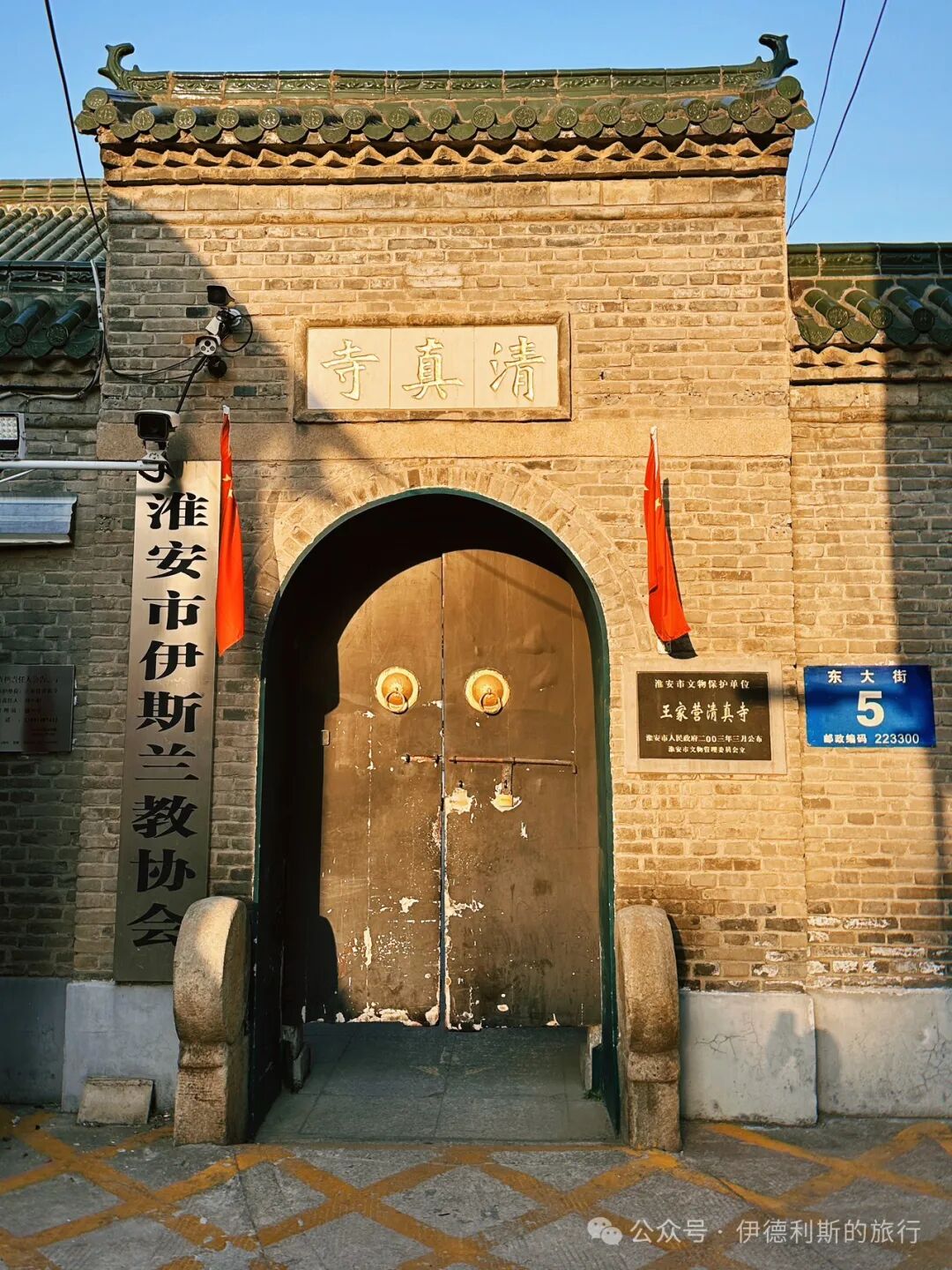
The Wangjiaying Mosque was first built during the Yongzheng era. It started as three thatched rooms next to the Lotus Pond (Hehuawang) in Wangjiapo. After Wangjiaying became a salt hub in the late Daoguang era, the mosque moved to the south bank of the Salt River. Two imams, Chang Tingzhang and Dai Mingxuan, led the religious affairs. Imam Chang Tingzhang was known as 'Third Master Chang.' He was from Jining, Shandong, and was born in 1785 in Taoyuan County, Huai'an Prefecture (now Siyang, Jiangsu). In his youth, he studied in Lingzhou (now Lingwu County, Ningxia). After finishing his studies, he traveled to Jining, Shandong, to continue learning. In 1810, the 26-year-old Imam Chang Tingzhang was invited to lead the Wangjiaying Mosque. Imam Chang Tingzhang had deep knowledge of Arabic classics, astronomy, and medicine. According to the 'Wangjiaying Records,' a man named Third Master Tao from Hangzhou died in Huai'an during the Daoguang era. Because it was the heat of summer, Imam Chang Tingzhang personally bought a boat and traveled south along the canal to take the body back to Hangzhou for the family.
In 1860, the Nian Army burned down the Wangjiaying Mosque. In 1867, Imam Dai Jingzhai, the son of Imam Dai Mingxuan, led the construction of a few thatched huts. Later, with donations from the community, they built a main hall with three thatched rooms.
Imam Chang Tingzhang passed away in 1870. Imam Dai Jingzhai took over, and in 1884, they replaced the thatched rooms with tiled ones. Because Imam Chang Tingzhang had studied at the Jahriyya Banqiao Daotang in Jinjipu, Ningxia, in his youth, the Wangjiaying Mosque later invited five successive imams from the Jahriyya order in Jinjipu to lead the mosque and teach. Future imams also went to Ningxia for advanced study, making the Wangjiaying Mosque one of the nine major branches of the Banqiao Daotang.
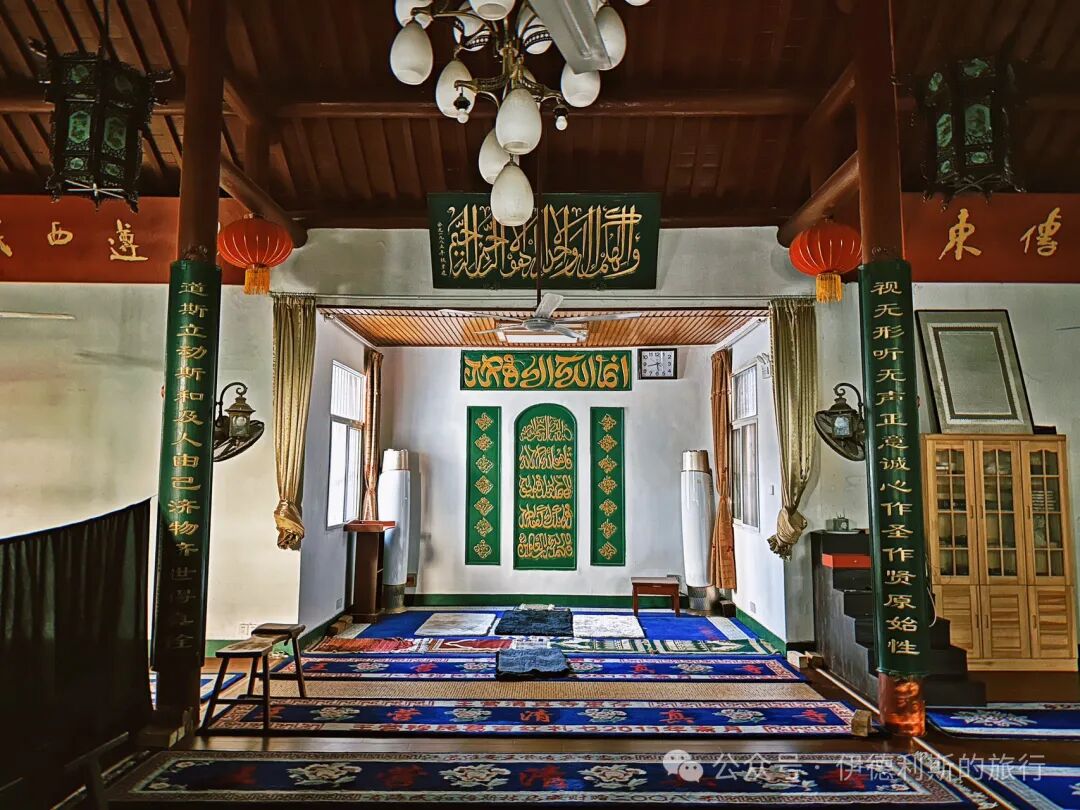
In 1912, the Wangjiaying Mosque built a new gate, a south lecture hall, a kitchen, and a washroom. In 1920, with funding from the Jingshan Tang in Gansu and money from selling willow trees at the public cemetery, they rebuilt the three tiled, curved-eave rooms in front of the main hall and added three new rooms for the east lecture hall. Currently, there is a 1920 Republic of China renovation tablet on the north wall of the main hall, but the top part is covered.
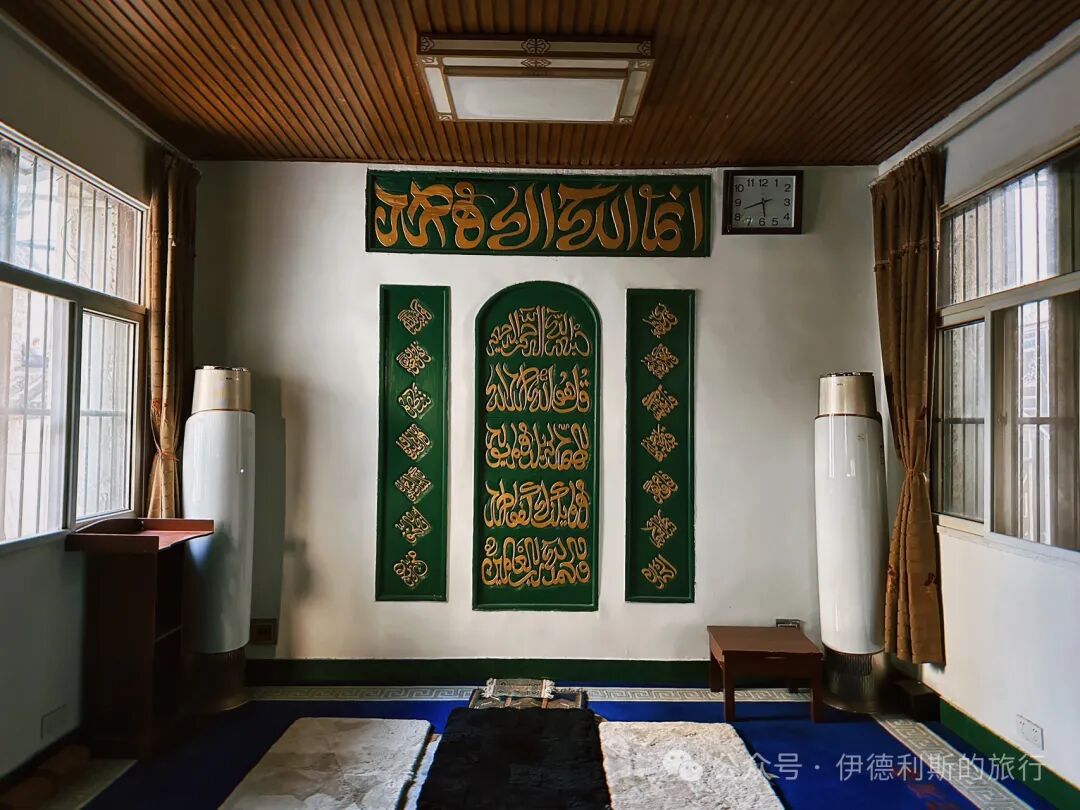
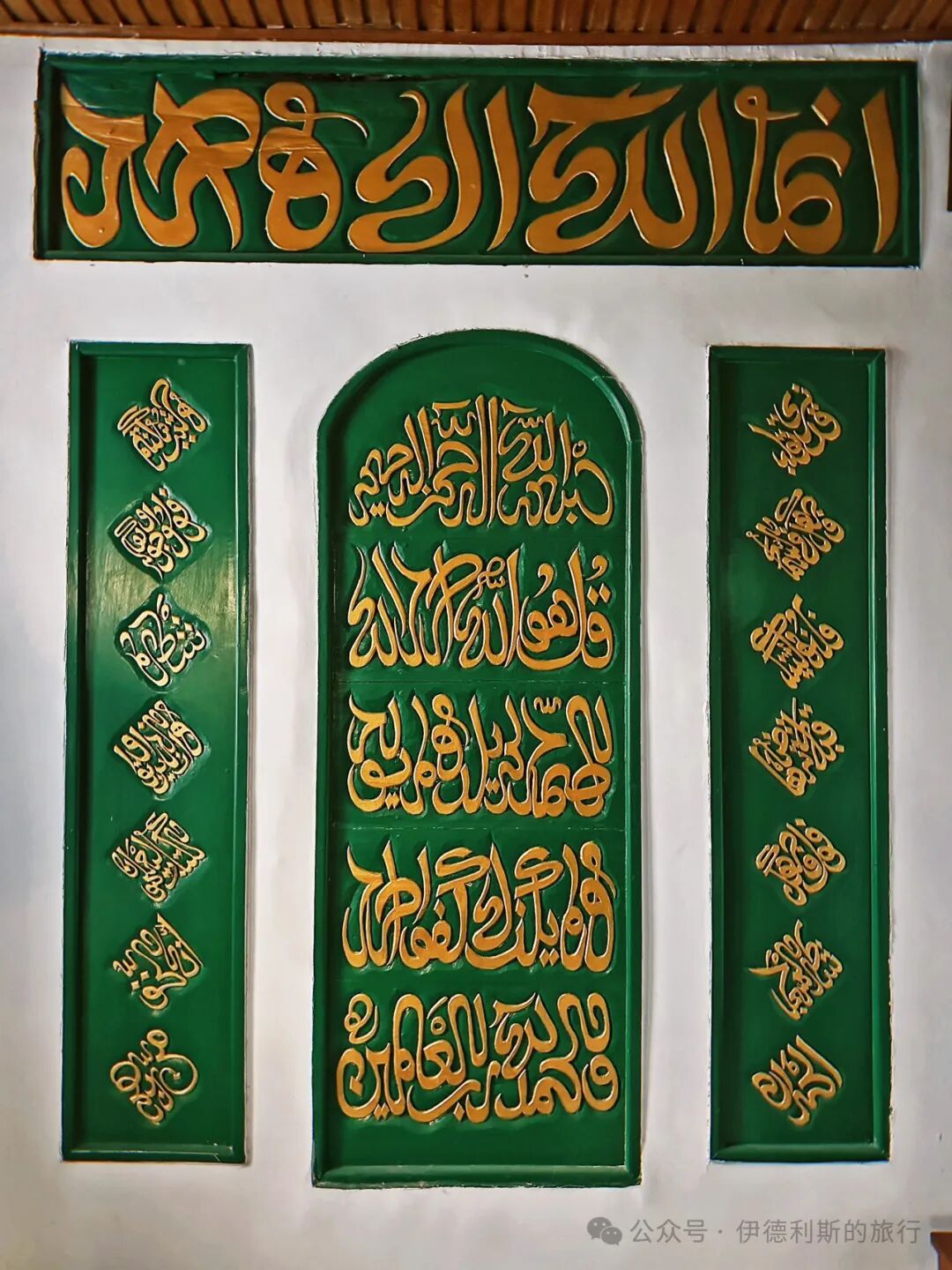
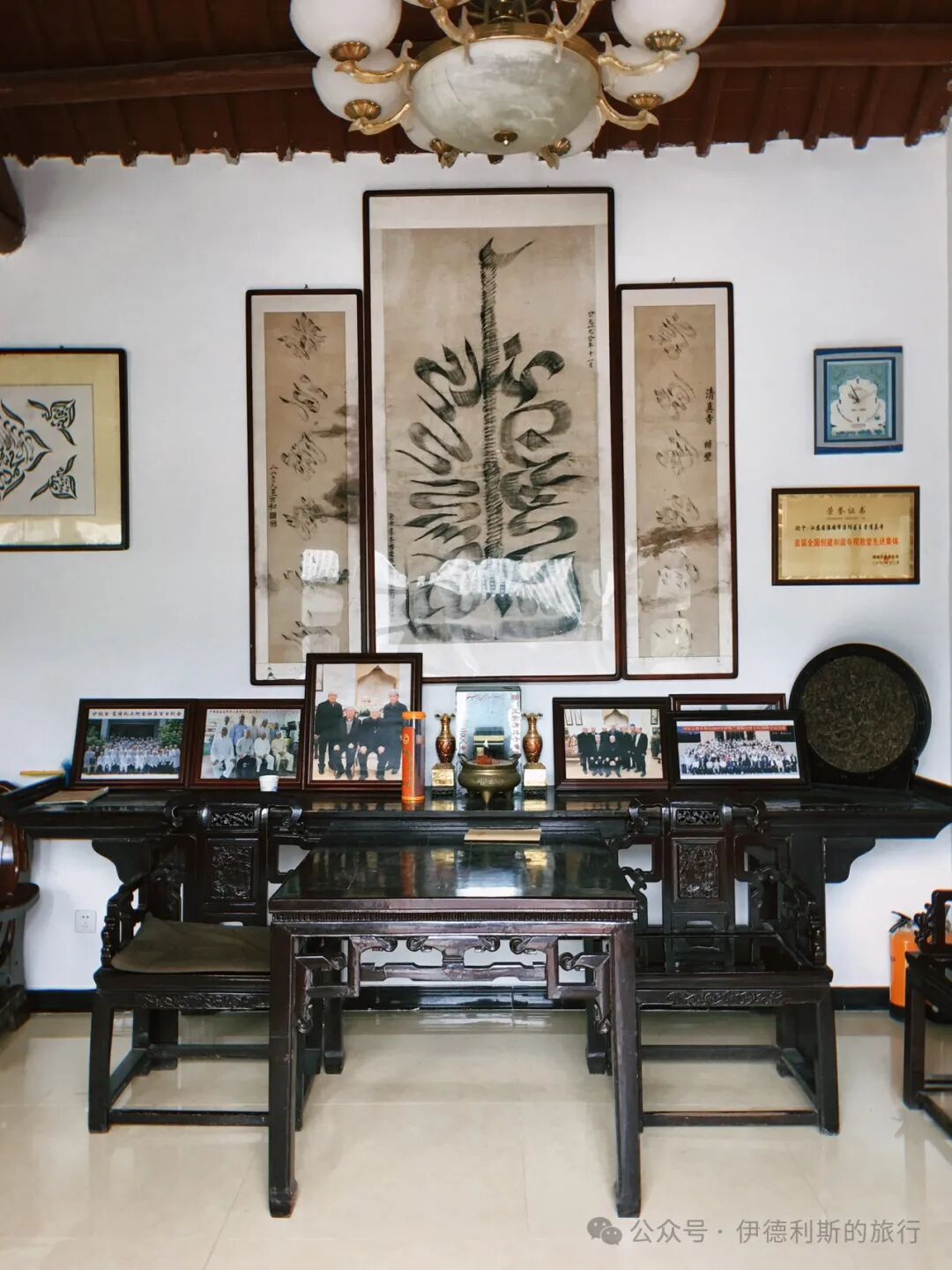
In 1958, the Wangjiaying Mosque moved to the east of West Horse Road in Wangying. In 1961, it moved to its current site because a bank needed the land for a building. During the destruction of the Four Olds, the main hall's plaques reading 'The Way Spreads to the Middle Land,' 'The Religion Follows the Western Regions,' and 'Striving for Perfection,' along with gold-lettered Arabic plaques and couplets, were all smashed and burned. The couplets read: 'See the invisible, hear the silent, rectify the intention and sincerity, become a saint or a sage, the original nature; The Way is established, movement brings harmony, reach others through oneself, benefit the world, all is complete.' Funeral tools were also destroyed, and the main hall was used as a warehouse by a shoe and hat factory.
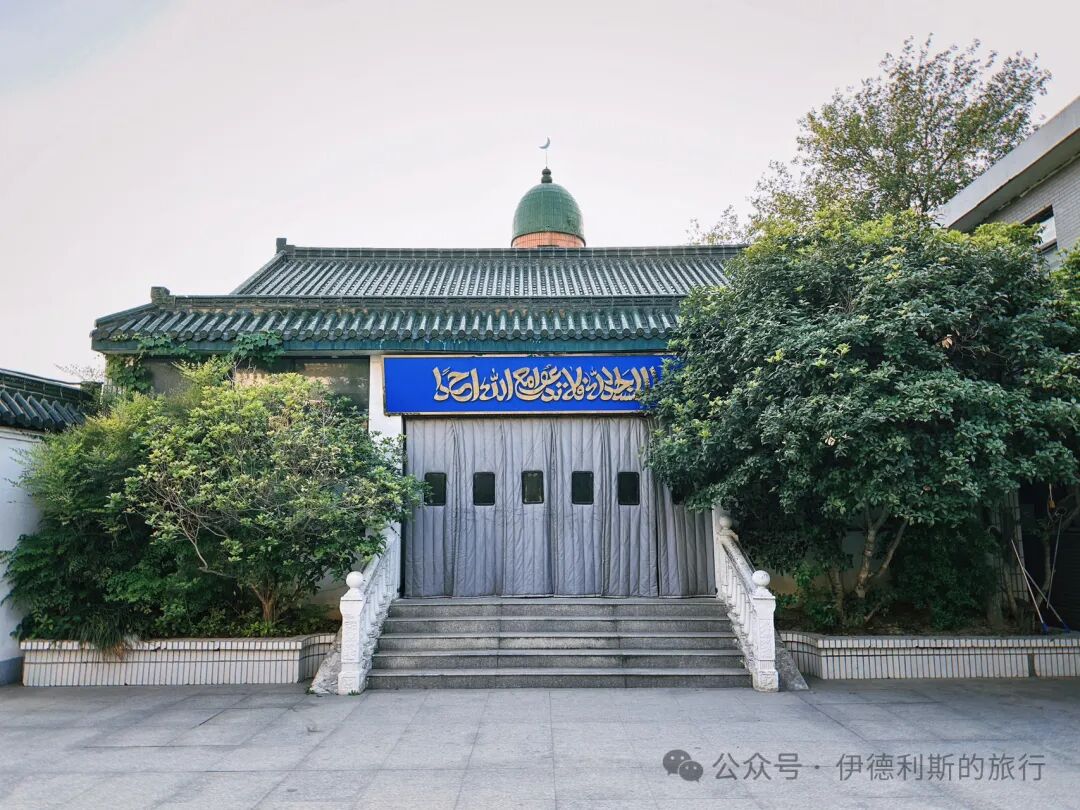
In 1979, under the leadership of Imam Ge Weili, the Wangjiaying Mosque was rebuilt in a traditional style. It was finished in 1985 and underwent two more renovations and expansions in 2003 and 2006 to reach its current appearance.
Imam Ge Weili was born in 1924. He went to Ningxia to study in 1937. In 1945, after completing his religious training and receiving his robe, he became the imam of Wangjiaying Mosque. He took on the role of imam in 1966. Today, the religious affairs at Wangjiaying Mosque are led by Imam Fan Weiming, a student of Imam Ge Weili.
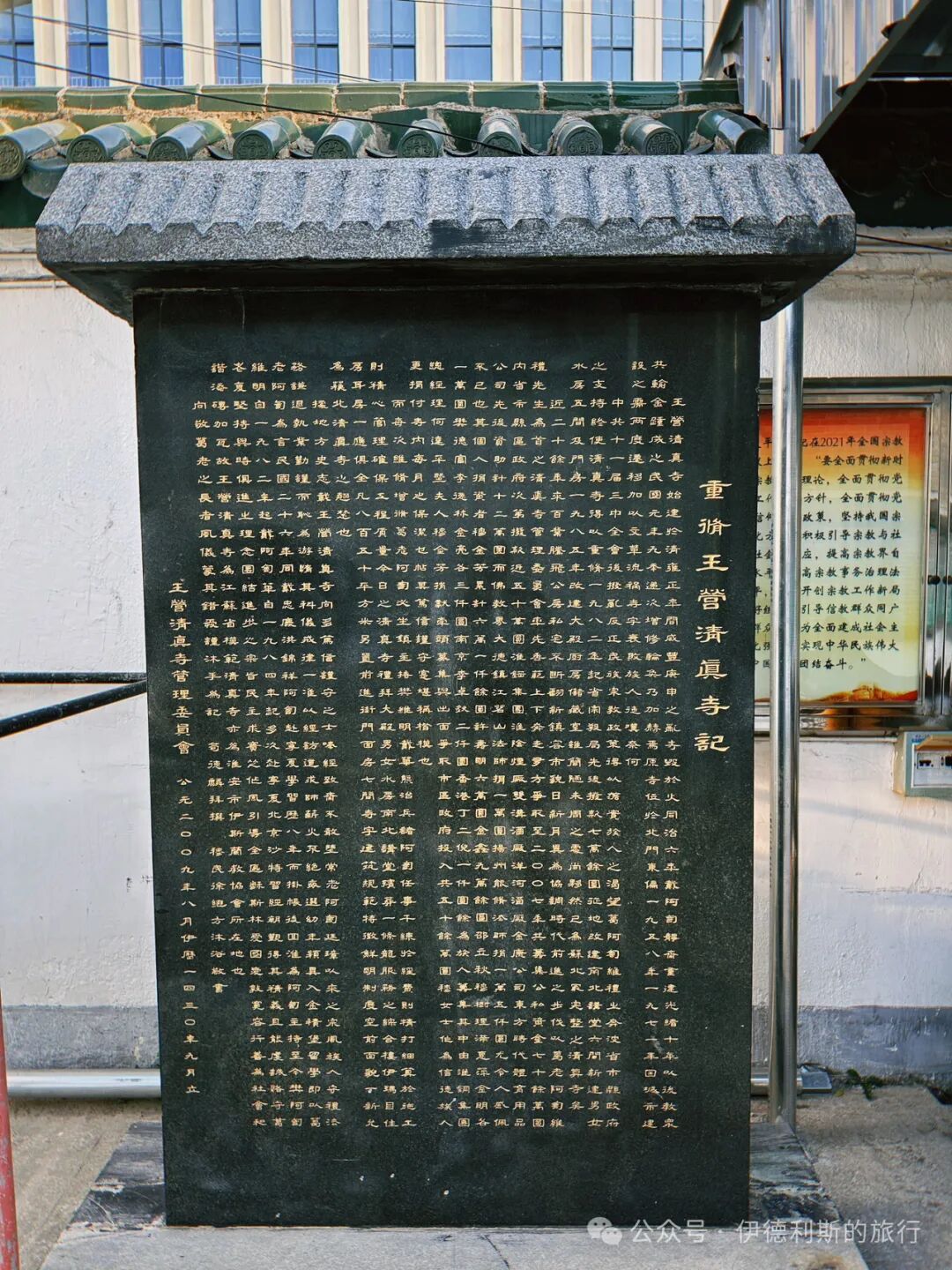
The inscription from the Republic of China era reads as follows:
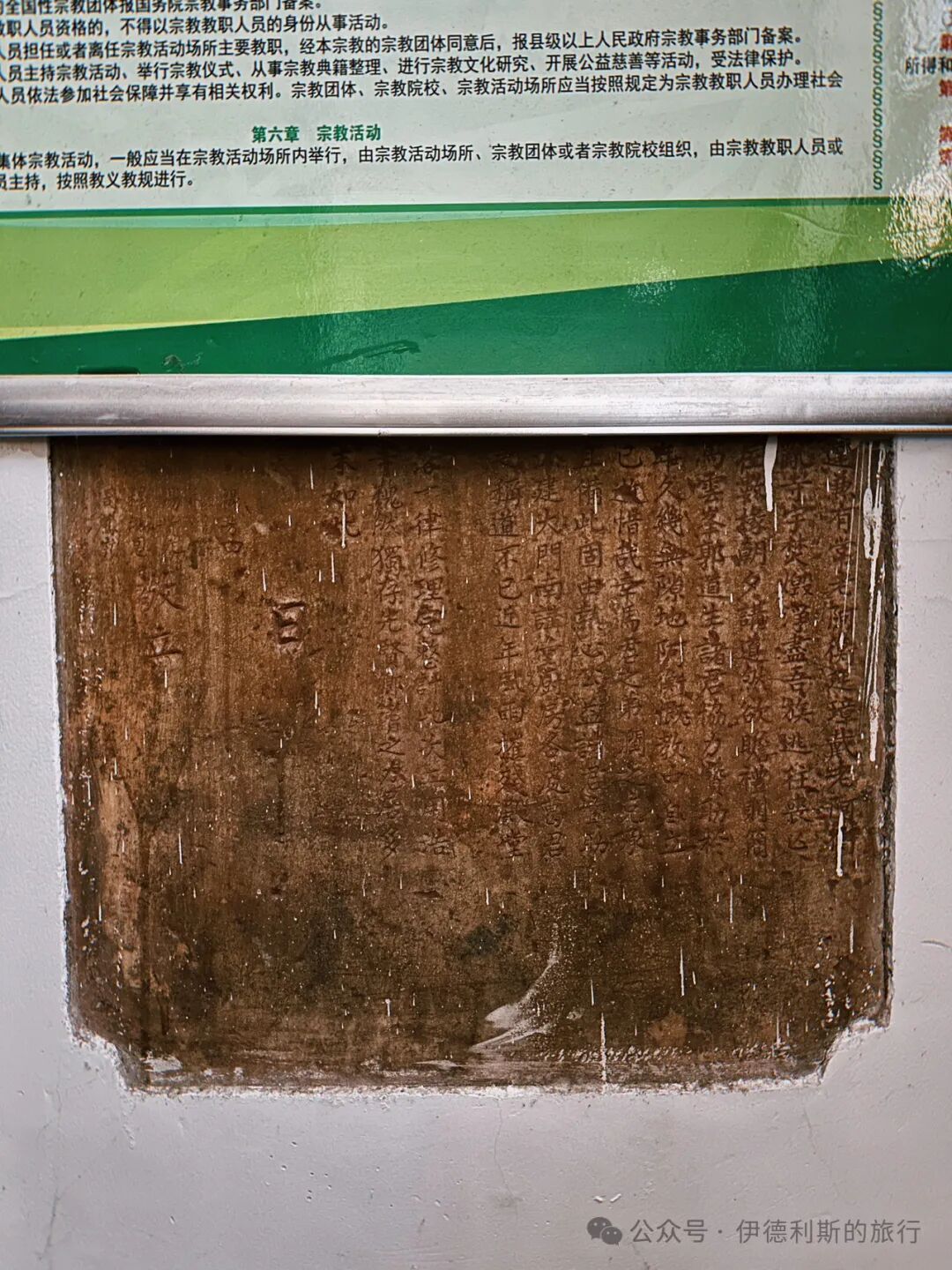
Wangying Mosque was founded during the Yongzheng reign of the Qing Dynasty. By the end of the Daoguang reign, our community was at its peak. Our population grew, our businesses thrived, and we had elders like Chang and Dai Mingxuan leading our religious affairs. They taught many students, and this history is recorded in local chronicles for all to verify. In the tenth year of the Xianfeng reign, the Nian Rebellion broke out. The mosque was burned to the ground, our people fled or died, and our community dwindled.
In the sixth year of the Tongzhi reign, Dai Jingzhai, the son of Elder Dai Mingxuan, followed his father's teachings and took over the leadership. He first built a few thatched huts to hold prayers morning and evening. However, the space was too simple for proper worship. It was too small to hold gatherings. The imam was deeply worried. He raised funds from many sources and built a main hall with three rooms made of grass. Later, he consulted with Yang Xuting, Ma Yunfeng, and Guo Daosheng. With their help, they rebuilt the main tiled hall and lecture hall in the tenth year of the Guangxu reign, and things began to return to normal. As more of our people moved here, the original public cemetery became so full there was almost no space left. The imam was concerned that our community lacked its own burial ground, which made things very difficult during times of loss. He planned to buy land to solve this, and Mr. Ma Yunfeng agreed to help. Sadly, Mr. Ma passed away before the task was finished. Fortunately, Mr. Ma's brother, Runzhi, carried on his brother's wishes. With the strong support of local elder Li Yunpo, they set aside differences and raised enough money to buy two new cemetery plots. The imam's kindness to our community was thorough. This was due to the support of many public-spirited people, but it was also the result of the imam's decades of hard work and sincere devotion.
In the first year of the Republic of China, we worked to continue the efforts of our predecessors by adding a main gate, a south lecture hall, and a kitchen. Mr. Ge Ziming built a washroom (shuifang) and donated hundreds of thousands in currency. We also invited Imam Wang Pinqing from Gansu Province to teach the scriptures. Visitors from all over praised the work. In recent years, wind and rain damage made the halls look like they might collapse. We met and decided to sell dozens of willow trees around the cemetery, raising over two hundred thousand. The Jinshan Hall in Gansu also kindly donated many wooden beams and tiles. We then built a three-room tiled hall with curved eaves in front of the main hall, and repaired the surrounding walls, the three-room east lecture hall, and the courtyard gates. This was a massive project funded by public property and donations. We are humble about our own contributions, but we record these details because, despite two hundred years of change, our mosque still stands. This is largely due to the efforts of our ancestors and elders. We hope future generations will remember how hard it was to build this place and will protect it forever so it never falls into ruin. This is our deepest wish. We record this history here.
July, the ninth year of the Republic of China.
Jin Jiasheng, Jin Jialin, Guo Chunlin, Yang Fangtian
Chang Bingkui, Li Shunjie, Chang Guanying, Mu Hongbin
Jin Jiayuan, Ma Jianong, Fan Zhaofeng, Yang Guiyuan
Ge Futang, Li Dianqing, Ma Jiarang, Mu Hong'en
Ma Jialin, Ge Zhenqing, He Wenquan, Zhou Fengling
Sha Faxiang, Liu Lianyuan, Zhou Riyang, Mu Hongye
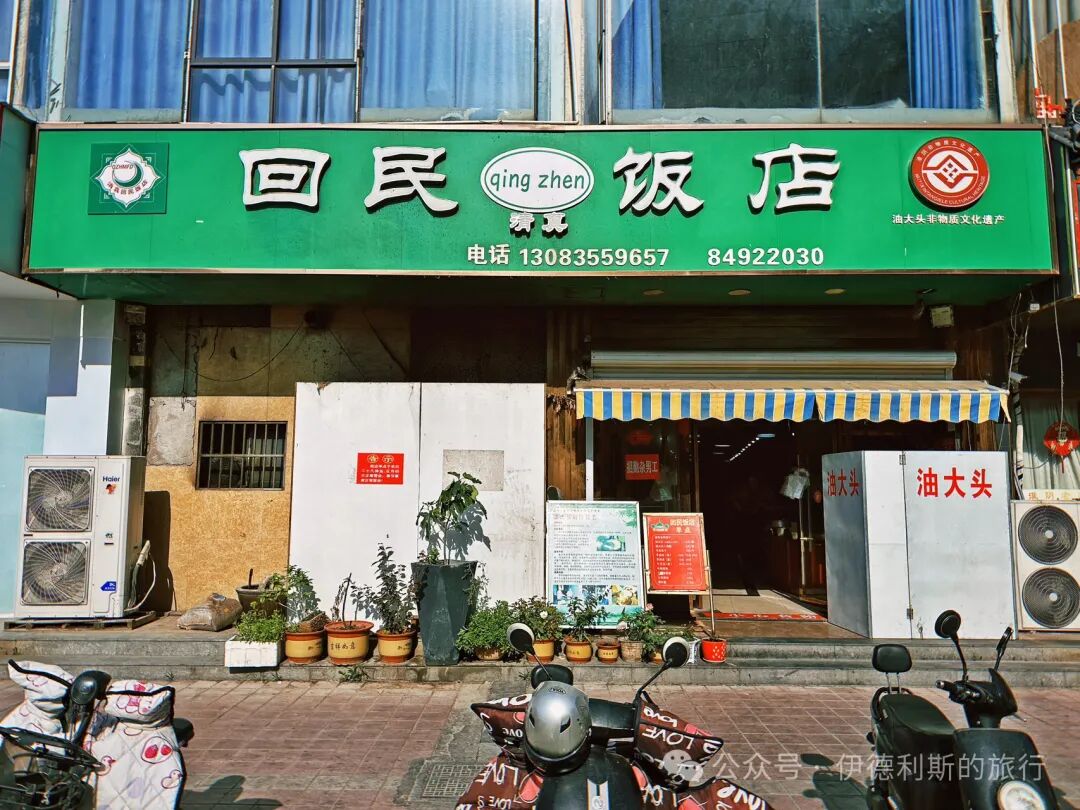
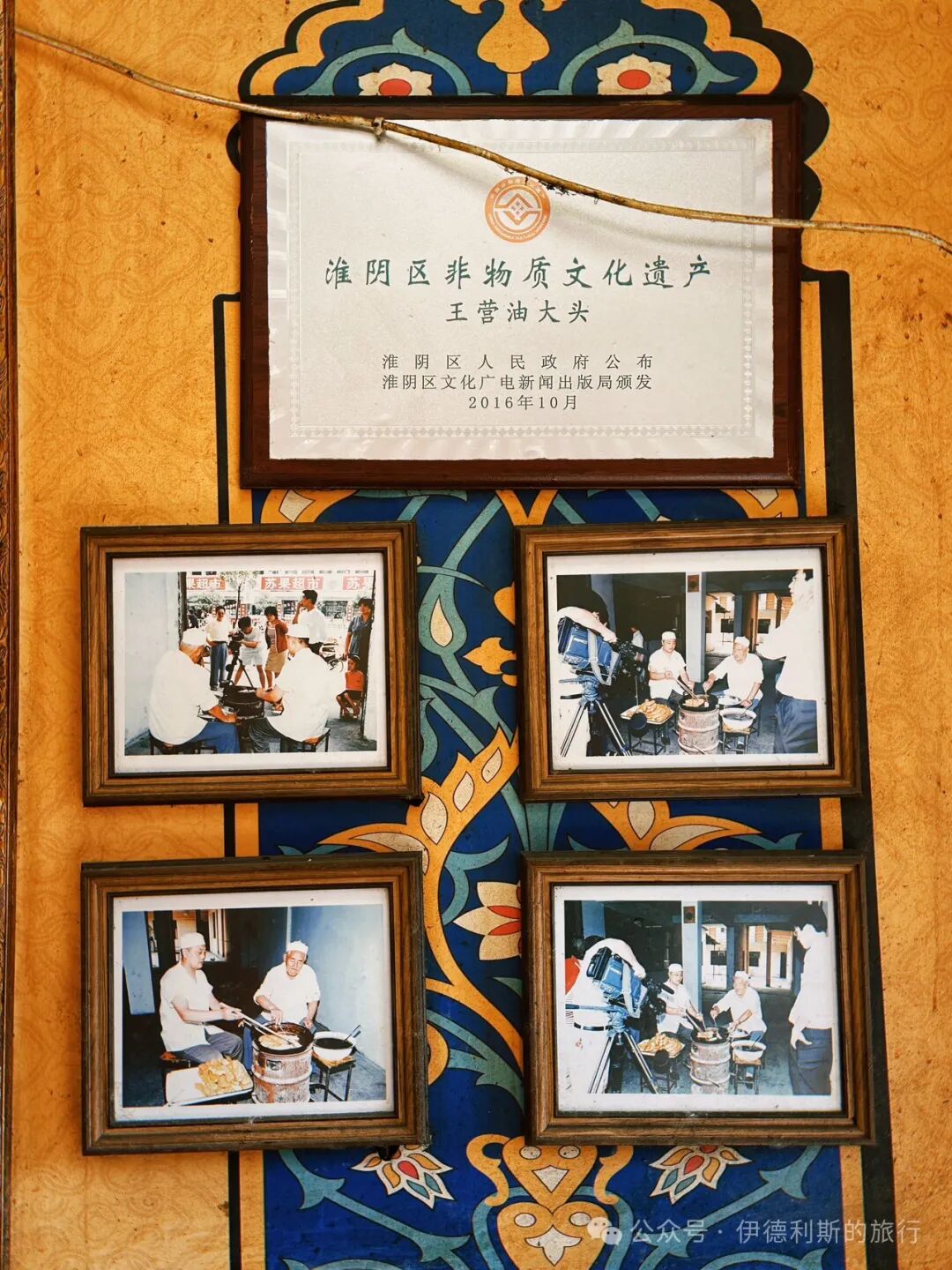
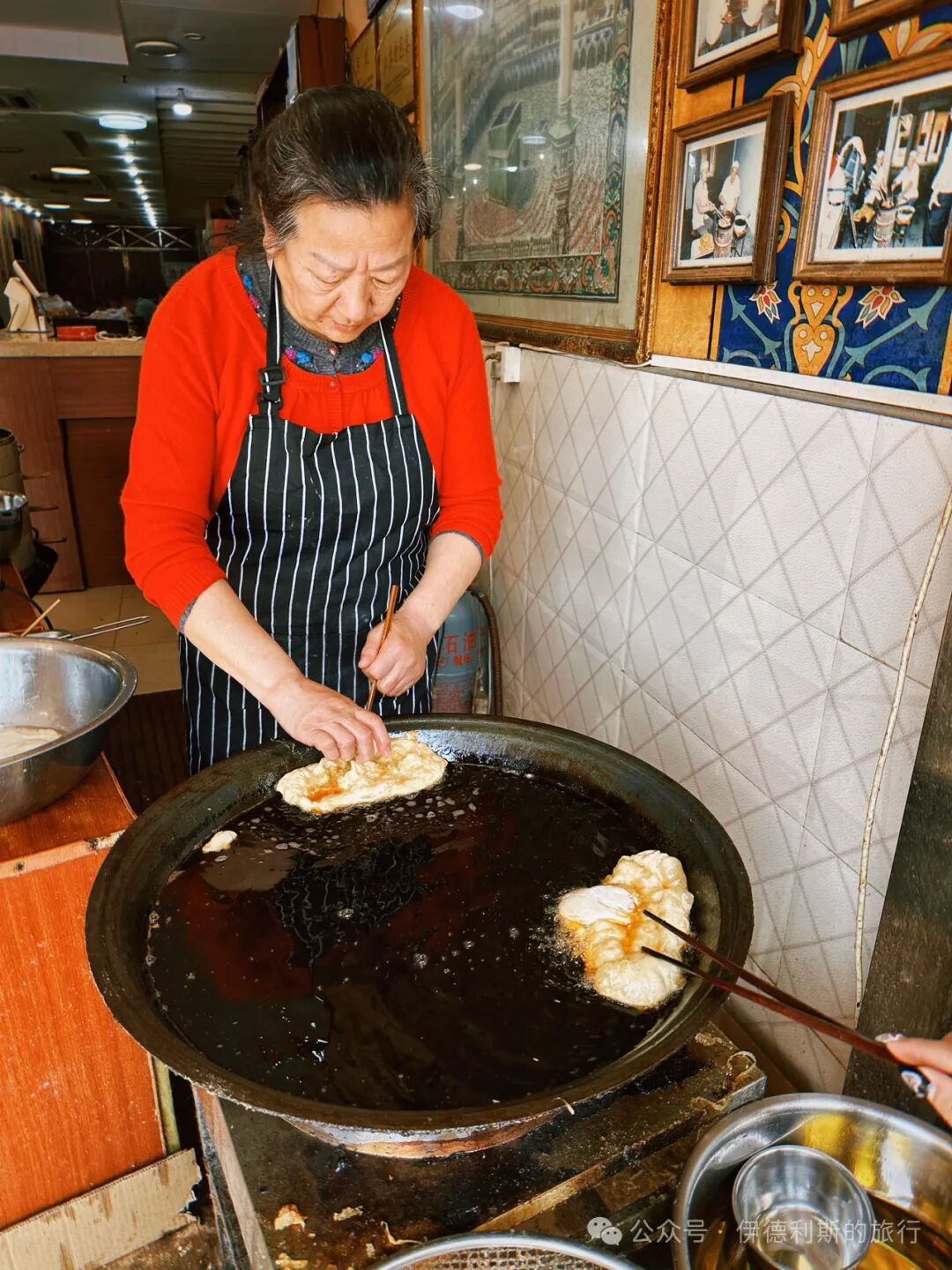
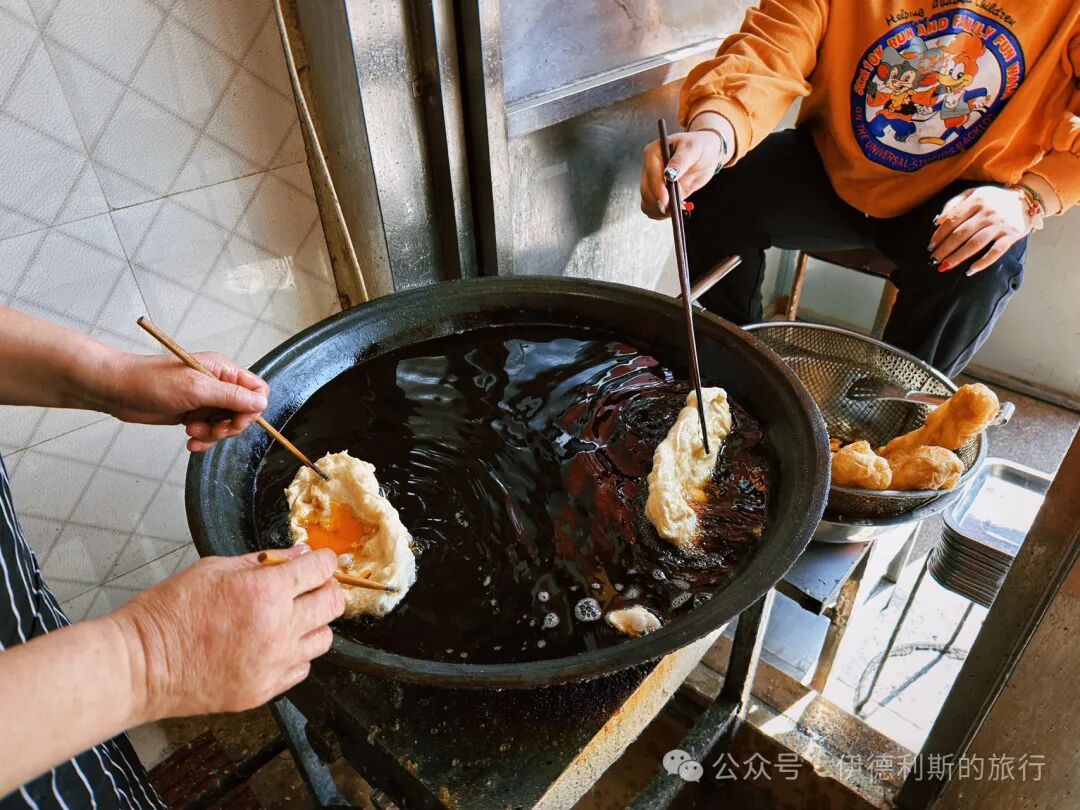
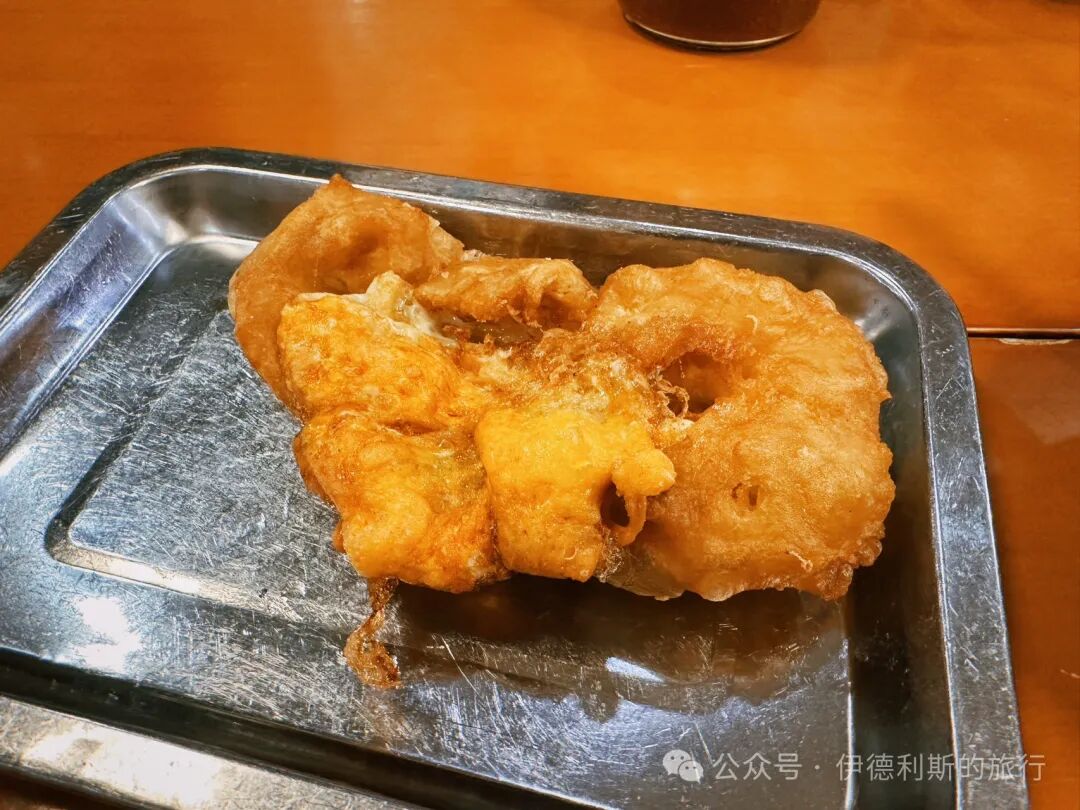
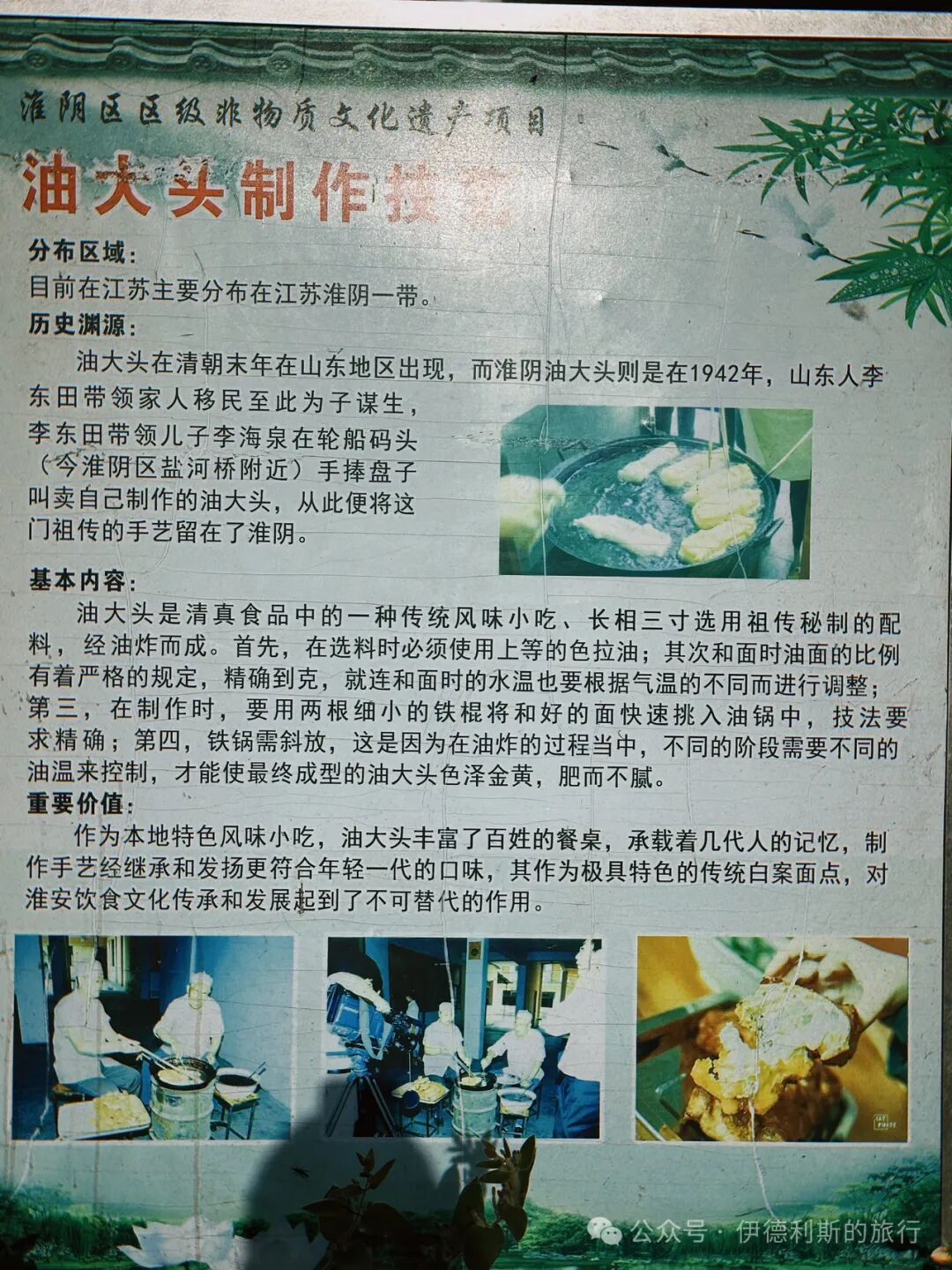
The most famous Hui Muslim food in Wangjiaying is the fried dough snack (youtoutou) from the Hui Muslim Restaurant, made by Old Li Ku. Their version was added to the Huaiyin District intangible cultural heritage list in 2016. In 1942, Li Dongtian from Shandong brought his family to Wangjiaying to make a living. He and his son, Li Haiquan, sold their homemade fried dough snacks (youtoutou) near the Yanhe Bridge in Huaiyin while carrying trays. That is how the Huaiyin fried dough snack (youtoutou) became popular.
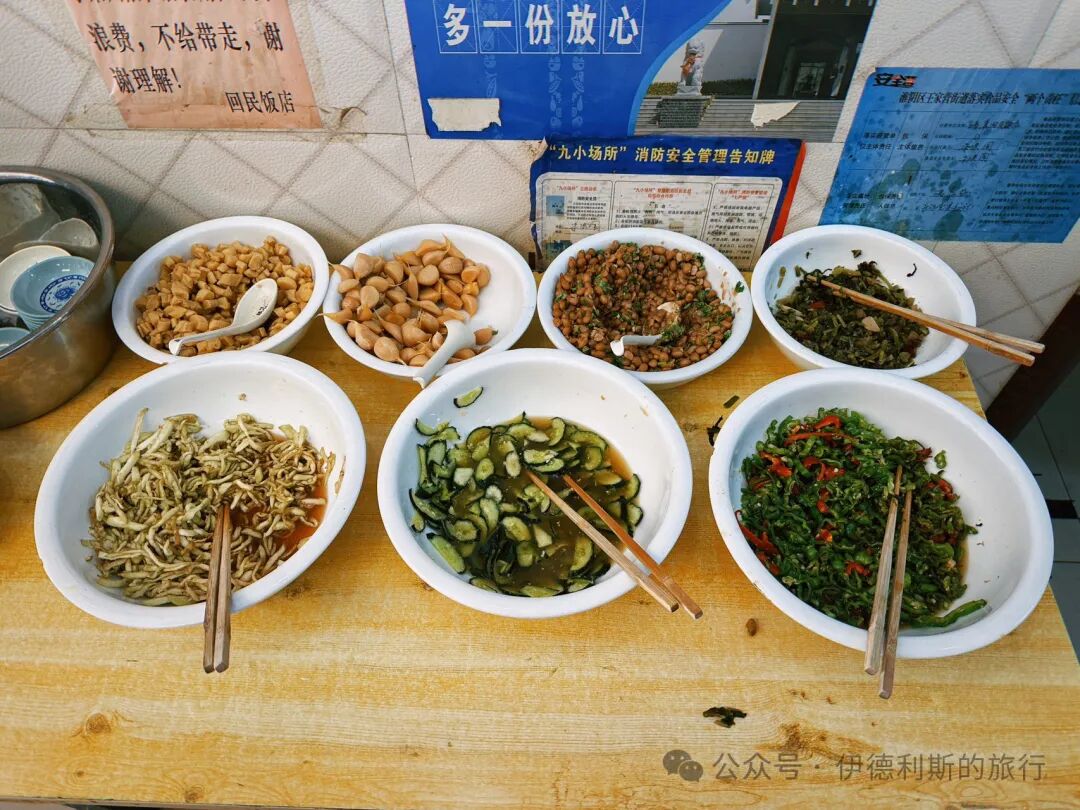
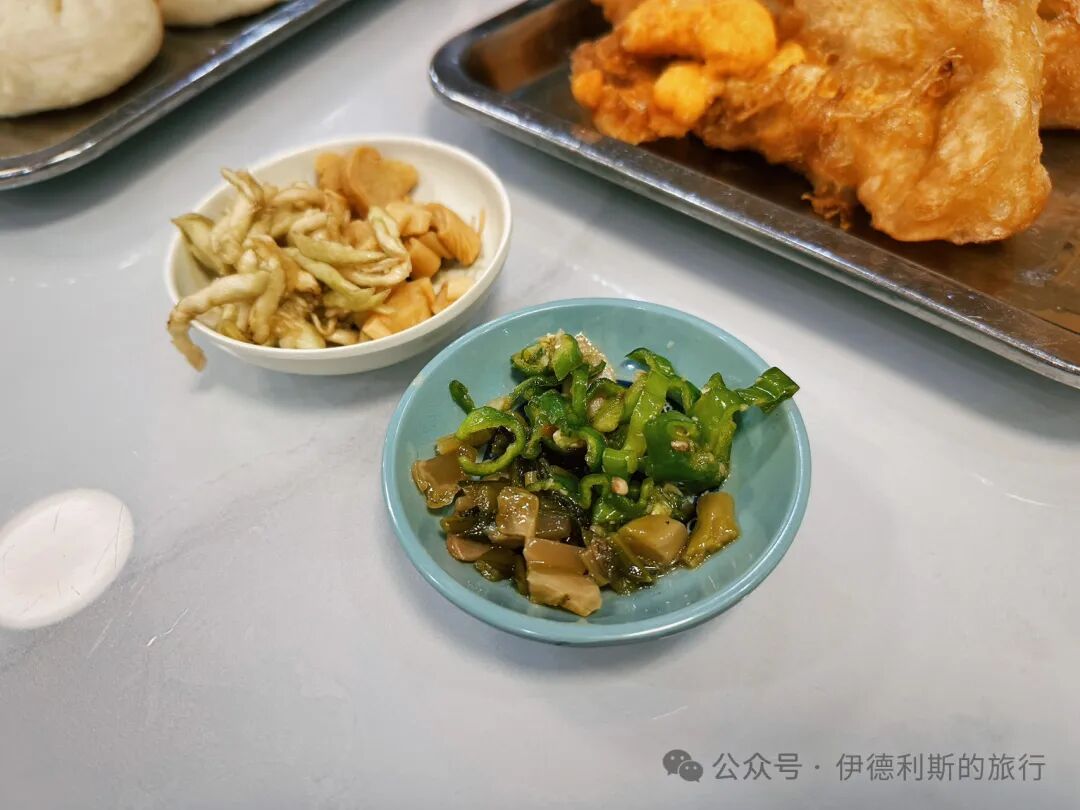
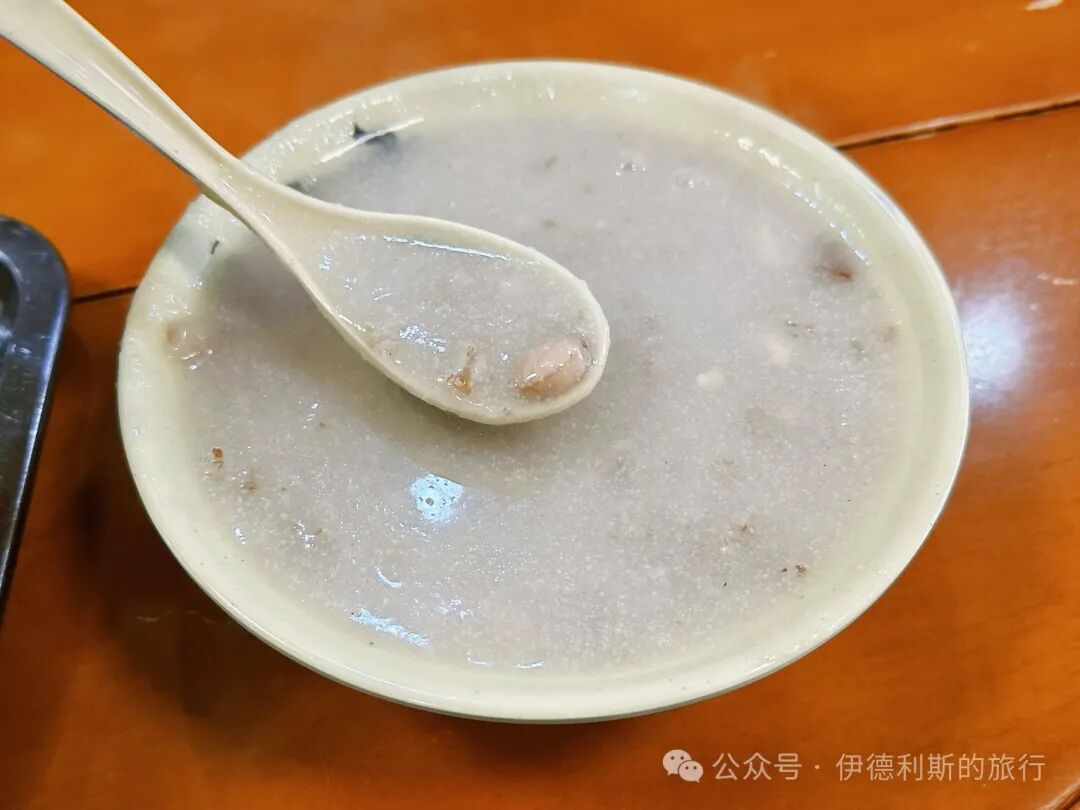
The fried dough snack (youtoutou) is three inches long. It turns golden yellow when fried. It is delicious when wrapped in an egg and served with wheat porridge. Wheat porridge is rare in other places. It has a unique taste and includes peanuts. In Huai'an, breakfast is usually served with several types of pickles, such as pickled mustard greens (datoucai), cold tossed eggplant, tossed snow cabbage (xuelihong), and tossed green peppers. They all go well with porridge.
The history of the Wangjiaying Hui Muslim Restaurant dates back to the Daoguang period of the Qing Dynasty. After the salt administration expanded at the West Dam in Wangjiaying in 1831 (the 11th year of Daoguang), Imam Dai Mingxuan of the Wangjiaying Mosque opened a halal restaurant at the north end of Yushan Street. He hired the best chefs in Wangjiaying, making it a high-end establishment where many Huai'an officials and dignitaries held banquets.
In 1860 (the 10th year of Xianfeng), after the Nian Army broke through Wangjiaying, the halal restaurant and the Wangjiaying Mosque were both destroyed in the war. In 1886 (the 12th year of Guangxu), with everyone's help, Imam Dai Jingzhai, the son of Imam Dai Mingxuan, reopened the restaurant at the North Weimen Gate of Wangjiaying. It was forced to close after 1937 due to the Japanese invasion of China, but it reopened after 1945. After the public-private partnership in 1958, the halal restaurant was merged into the Huaiyin Food and Beverage Company No. 2, with Ma Hengpu serving as manager. At the end of 1959, it moved to Beijing Road. It had three storefront rooms in the front and four kitchen rooms in the back, with Wang Jinbiao taking over as manager. After the 1970s, Li Haiquan took over as manager and renamed it the Hui Muslim Restaurant. After the 1980s, Ma Hengbao led the construction of a new two-story building, and Dai Peng took over as manager. In 2003, the Hui Muslim Restaurant was restructured into a private enterprise and has continued to operate to this day.
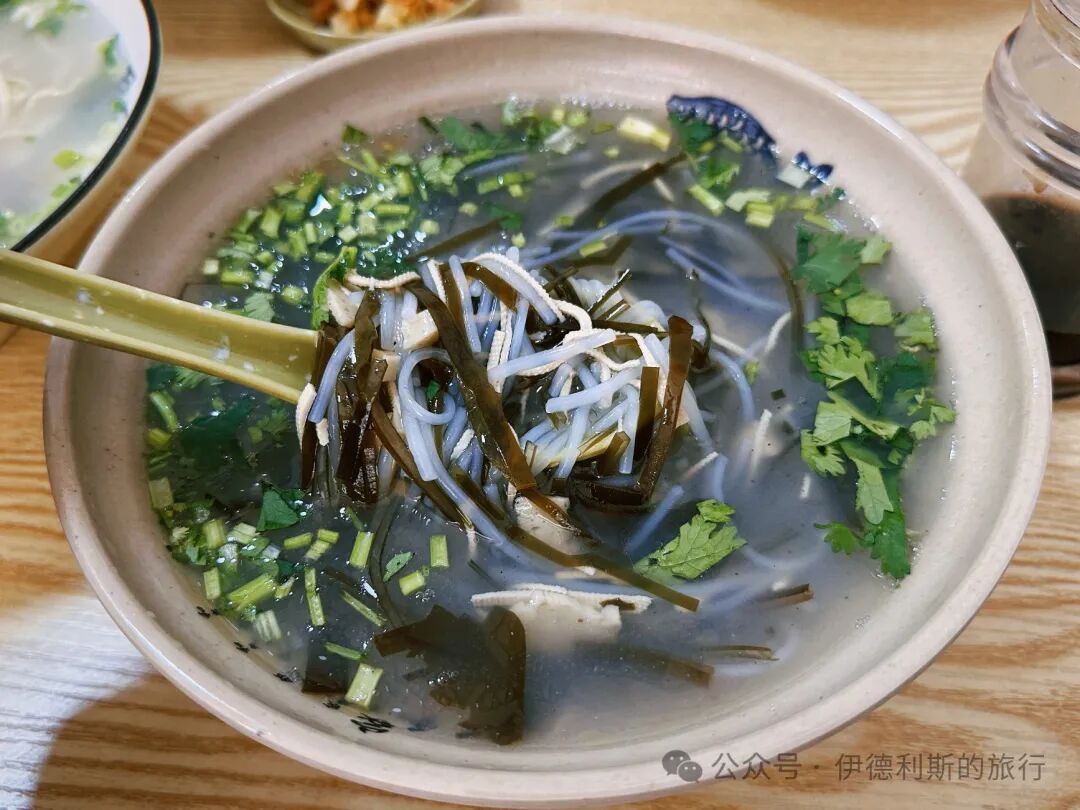
Besides the fried dough snack (youtoutou), you should also try Huai'an spicy soup (latang) when visiting Wangjiaying. Many restaurants here serve it. Compared to Henan spicy soup (hulatang), the Huai'an spicy soup (latang) has a milder taste. It uses less ginger and pepper. It contains shredded kelp, gluten, dried tofu strips (gansi), and glass noodles (fensi). Those who prefer a light flavor can drink it as is, while those who like it stronger can add chili sauce.
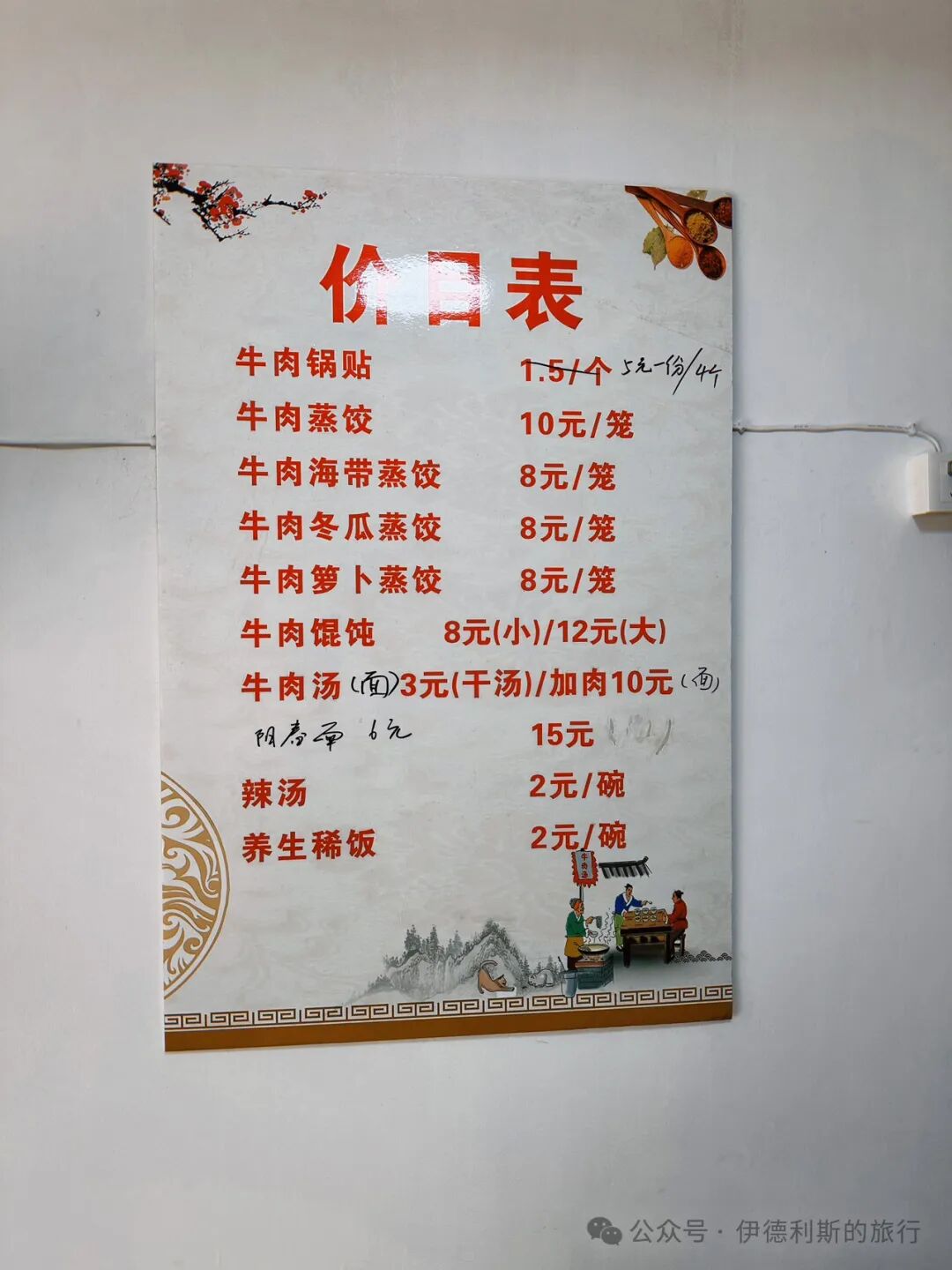
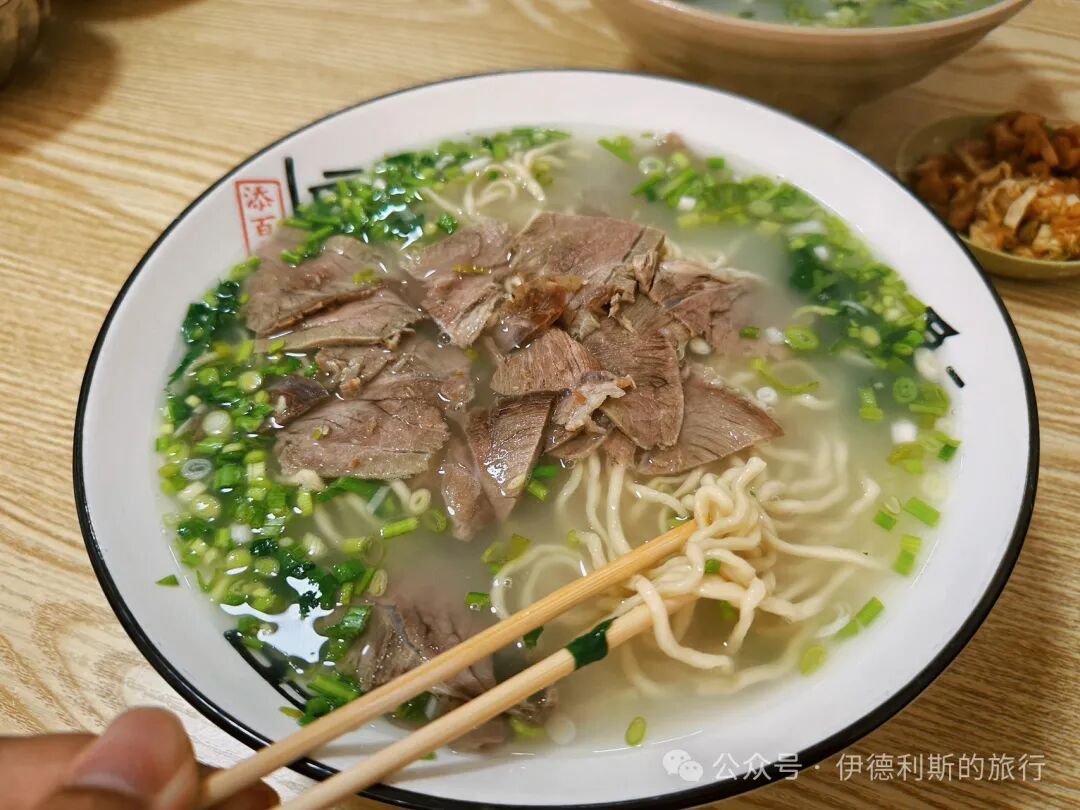
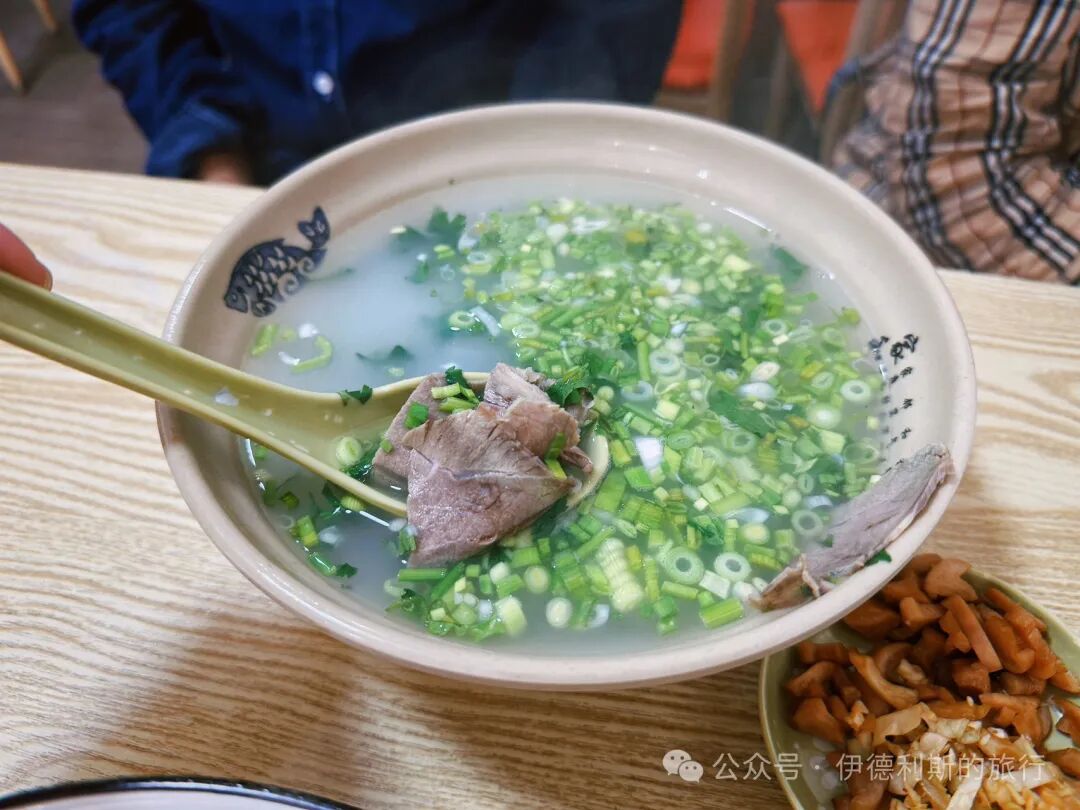
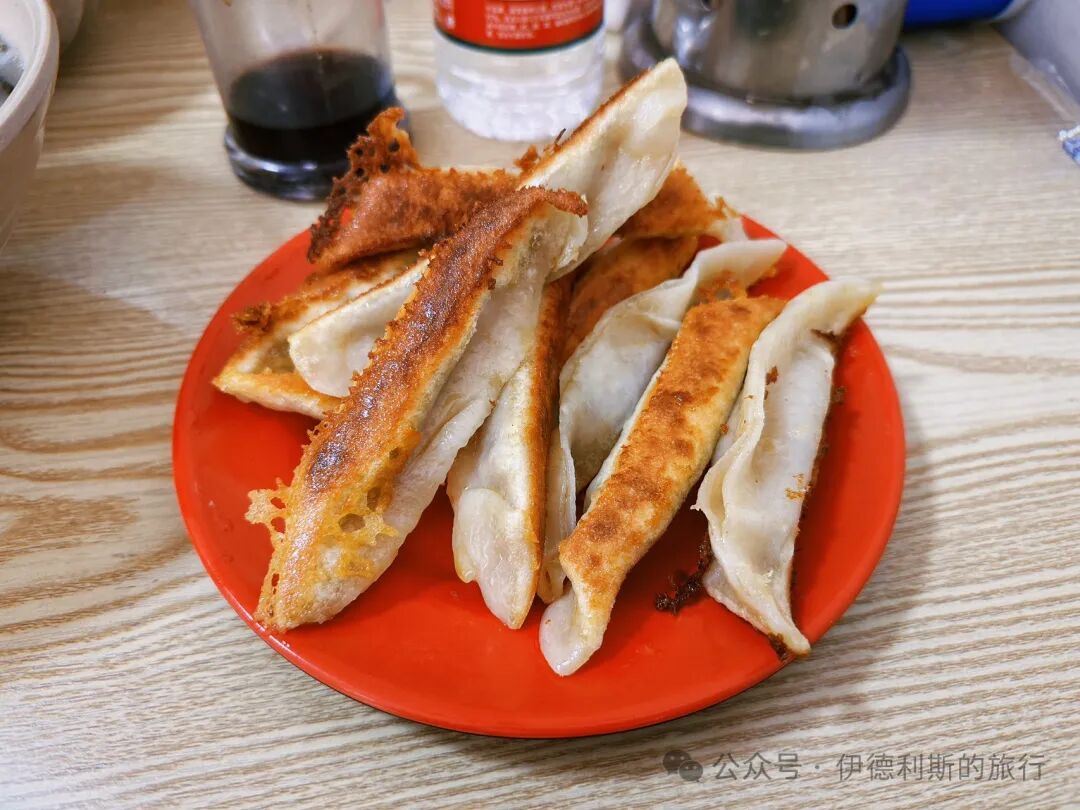
We drank the spicy soup (latang) at the Dachong Small Restaurant in front of the Wangjiaying Mosque and also ate beef potstickers (guotie), beef soup, and beef noodles. The potstickers (guotie) here are quite small. One serving has five, so you can order two servings. They are all pan-fried to order.
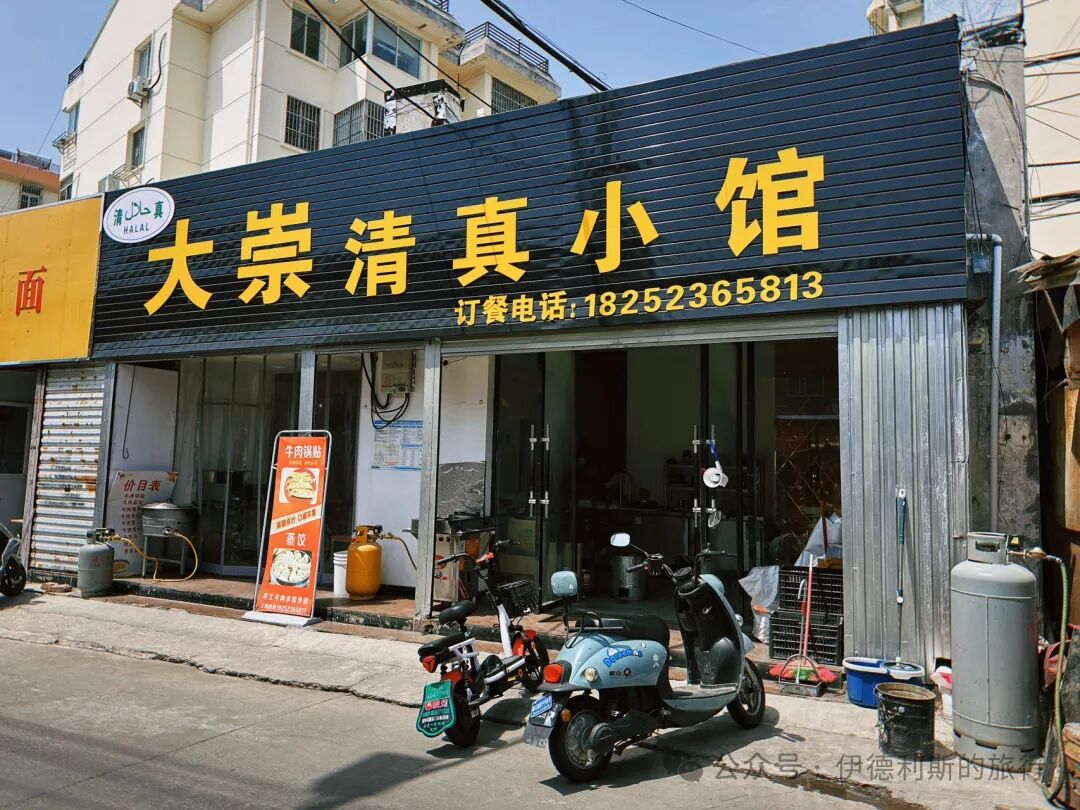
The Hui Muslim shops near Wangjiaying are likely the most concentrated in all of Jiangsu Province, which shows the strength of the local faith.
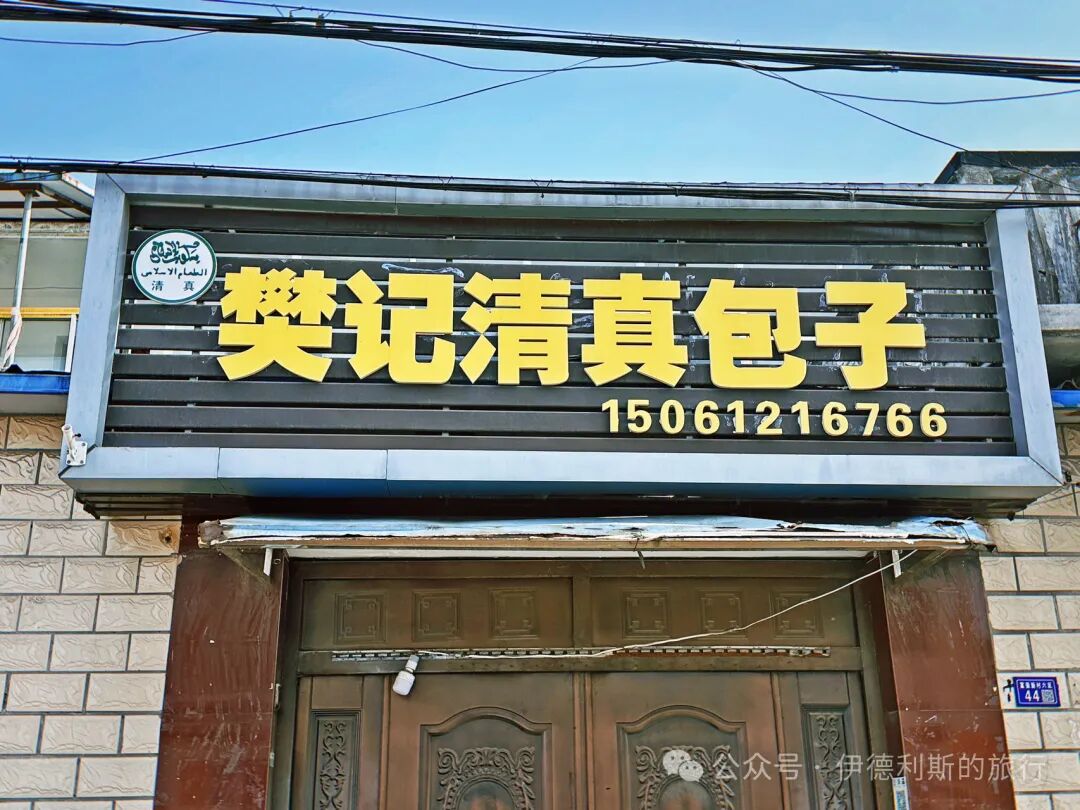
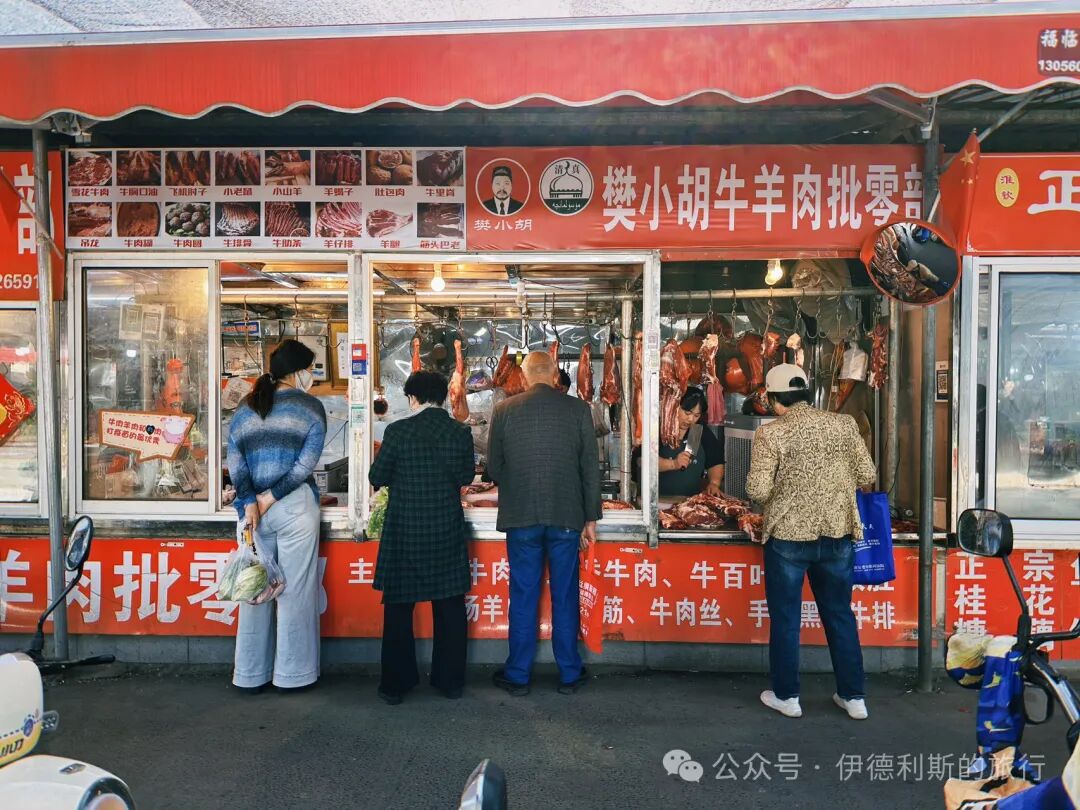
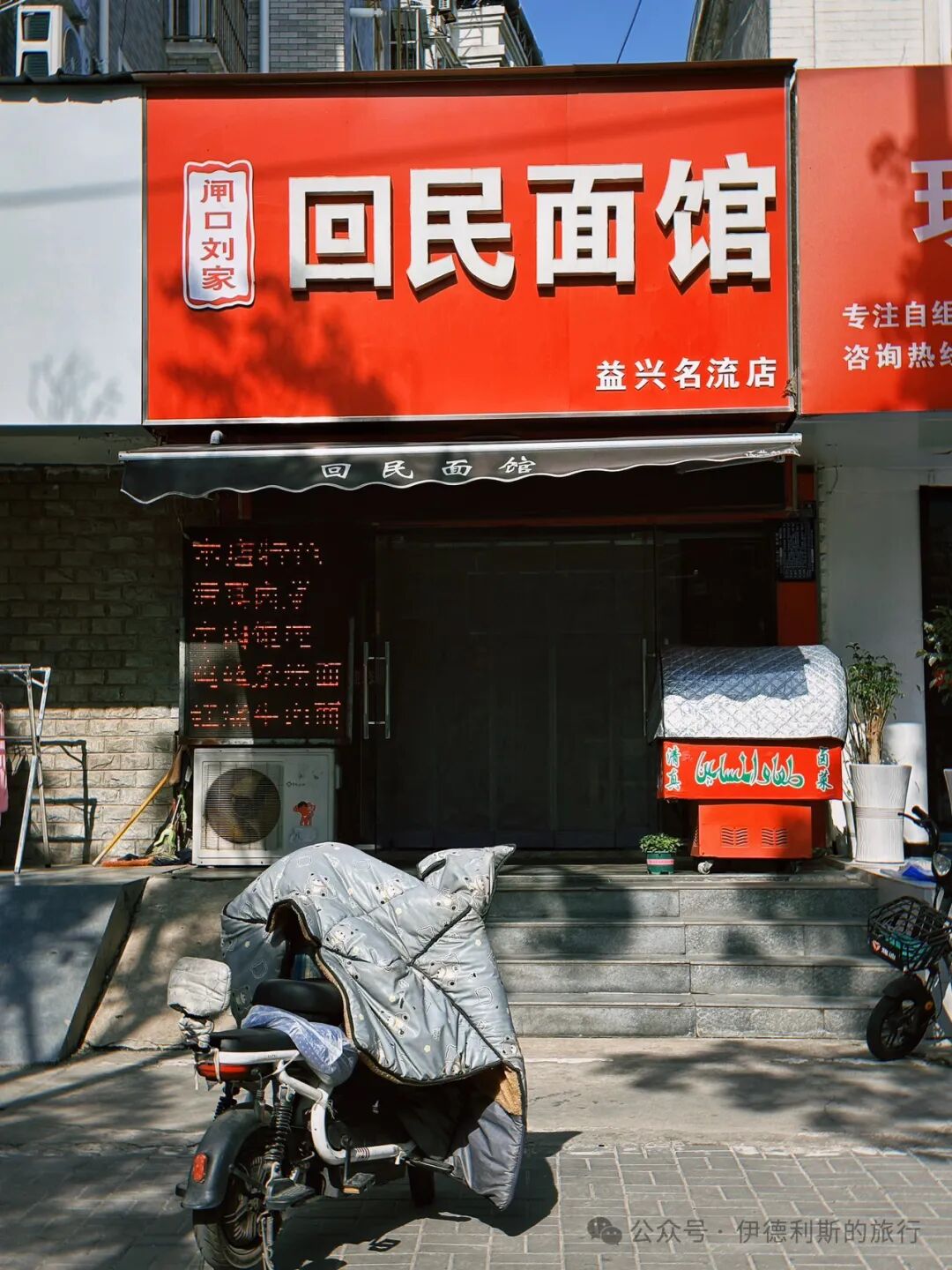
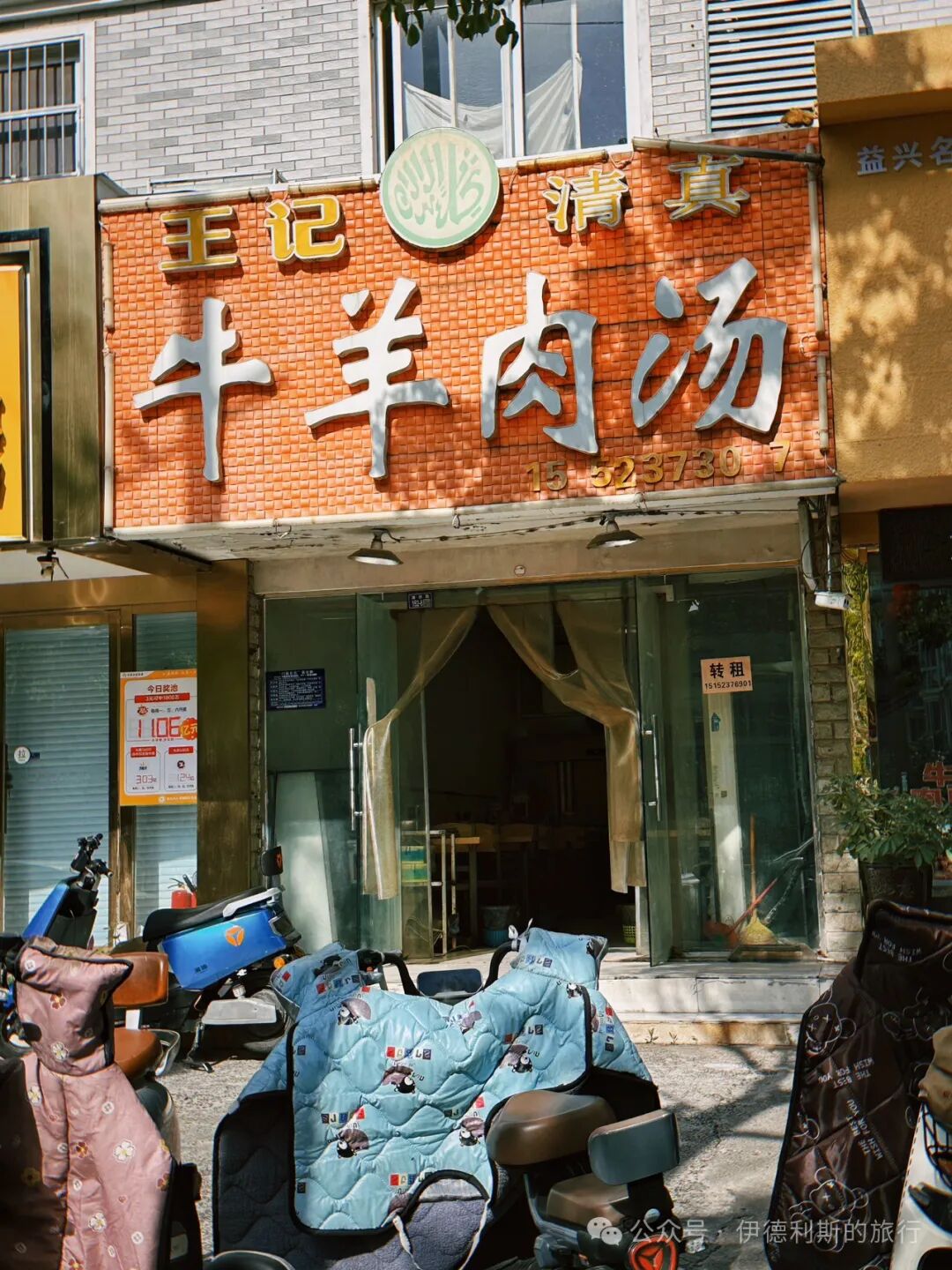
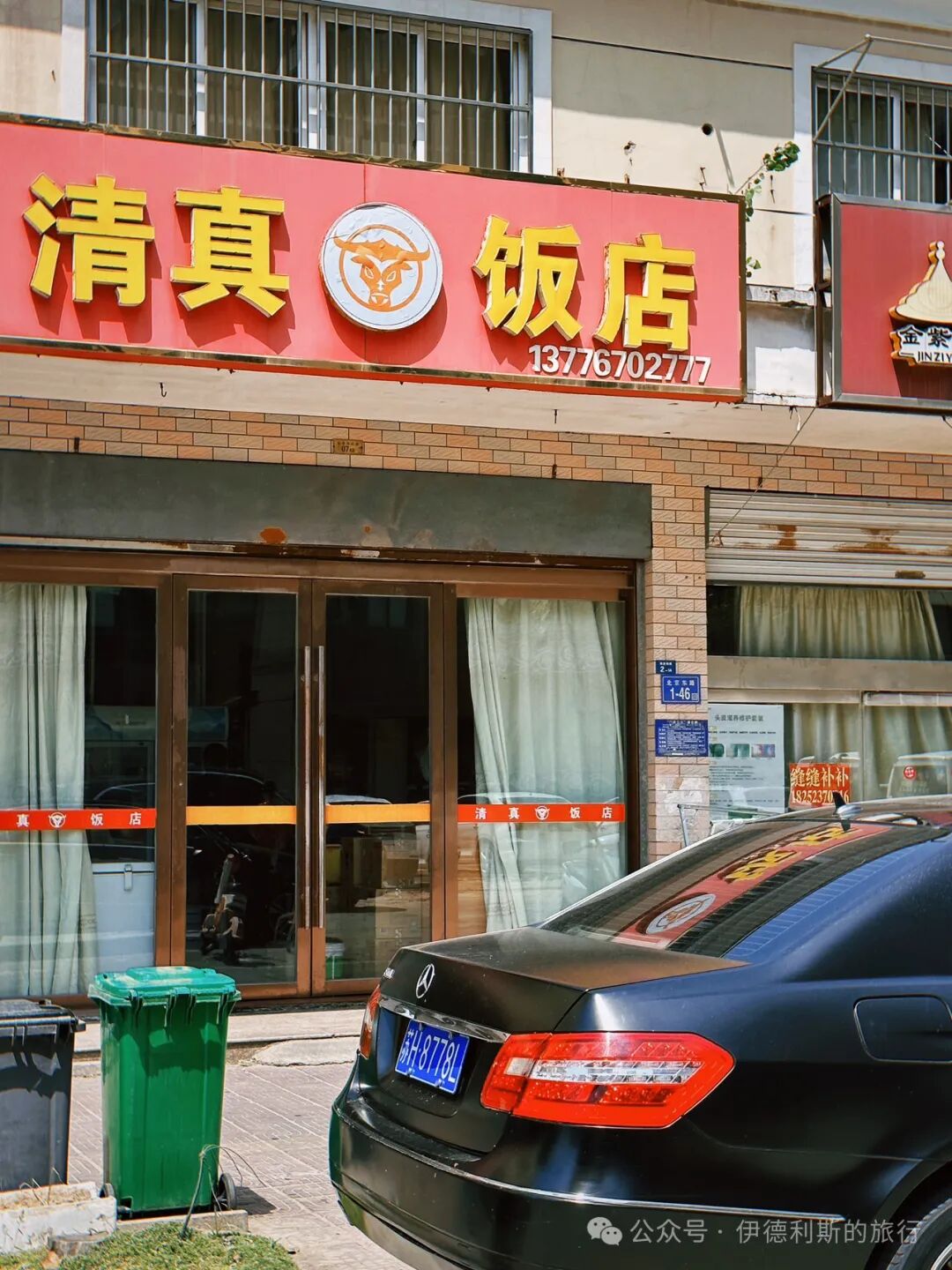
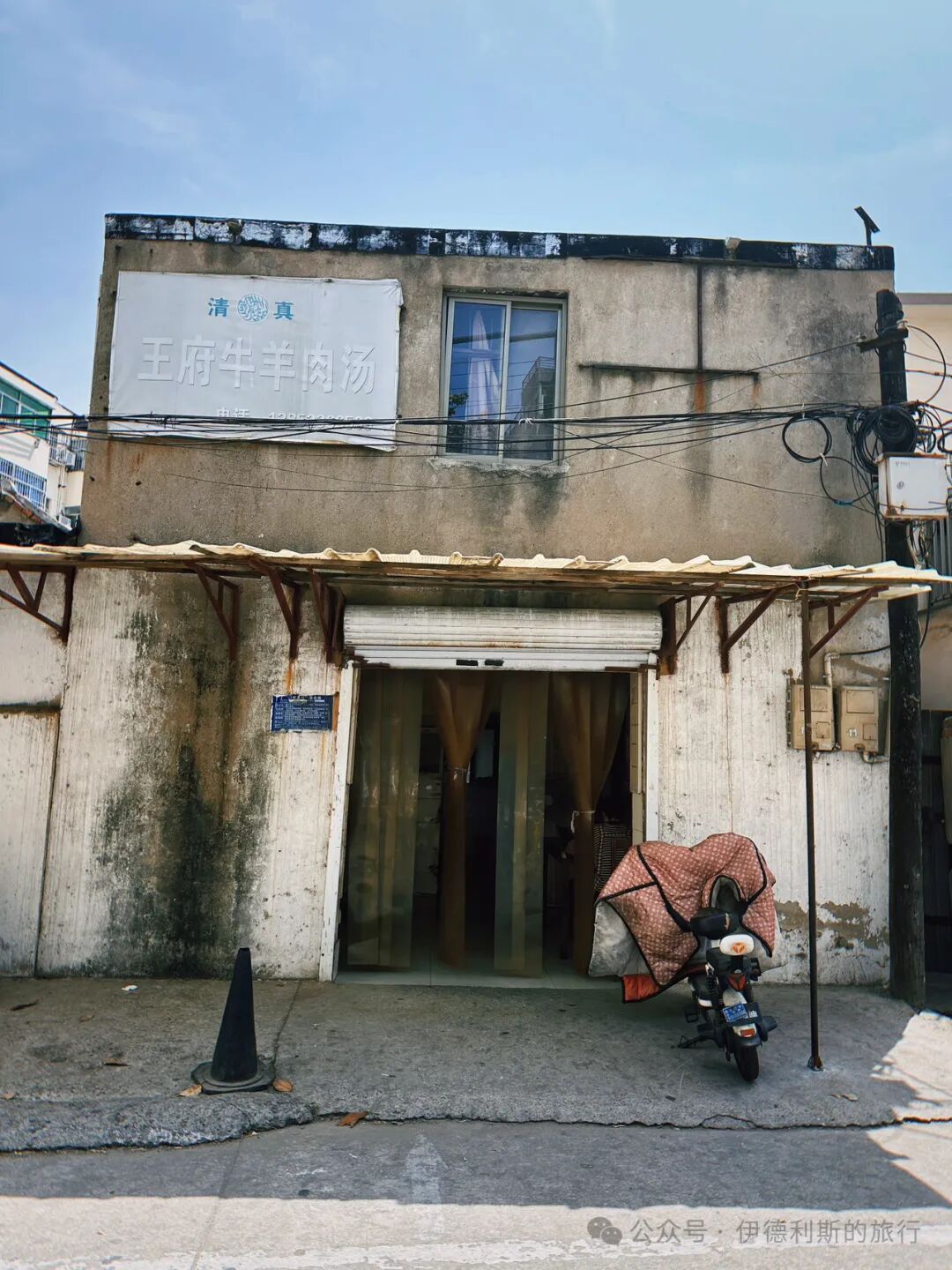
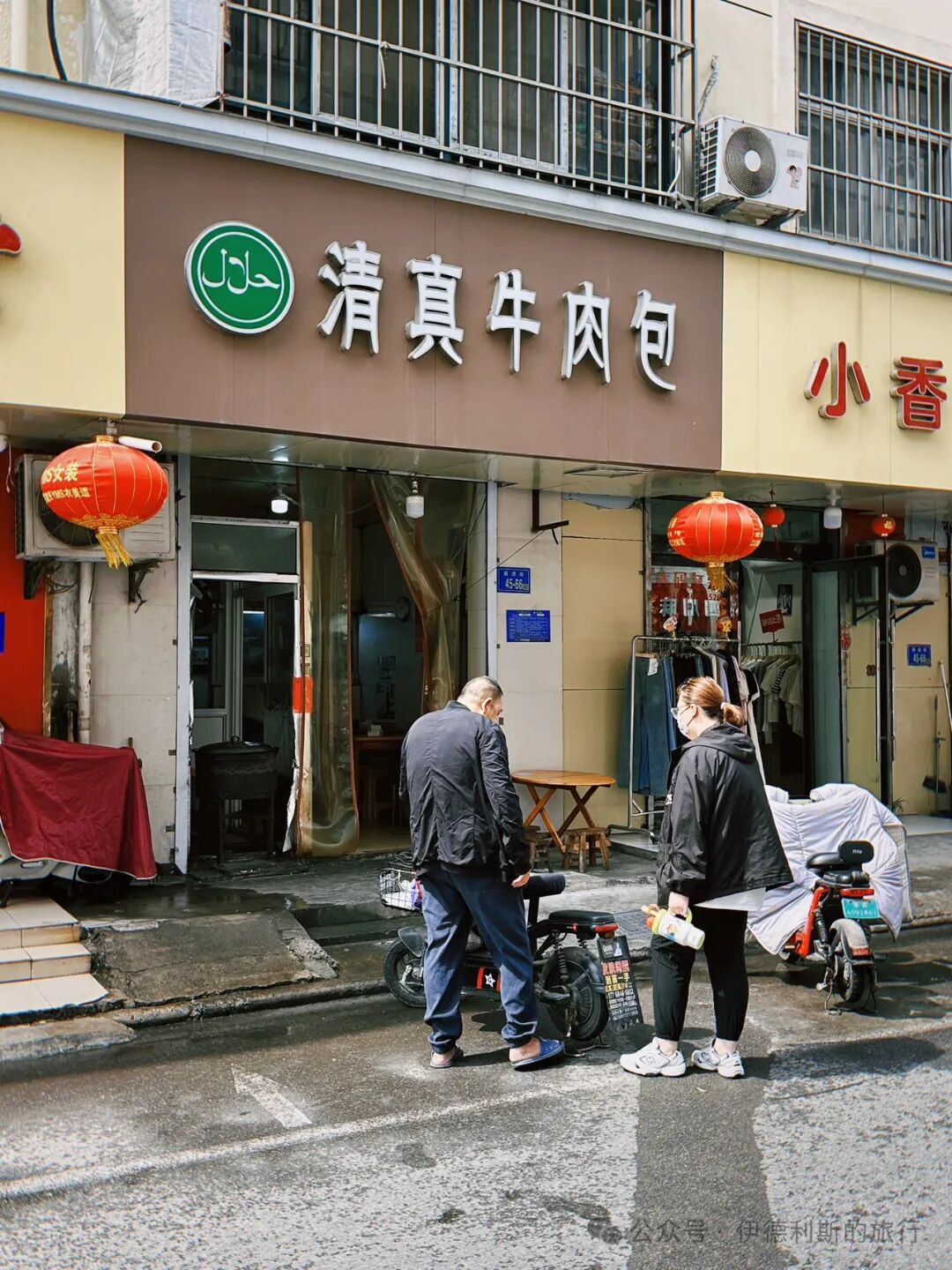
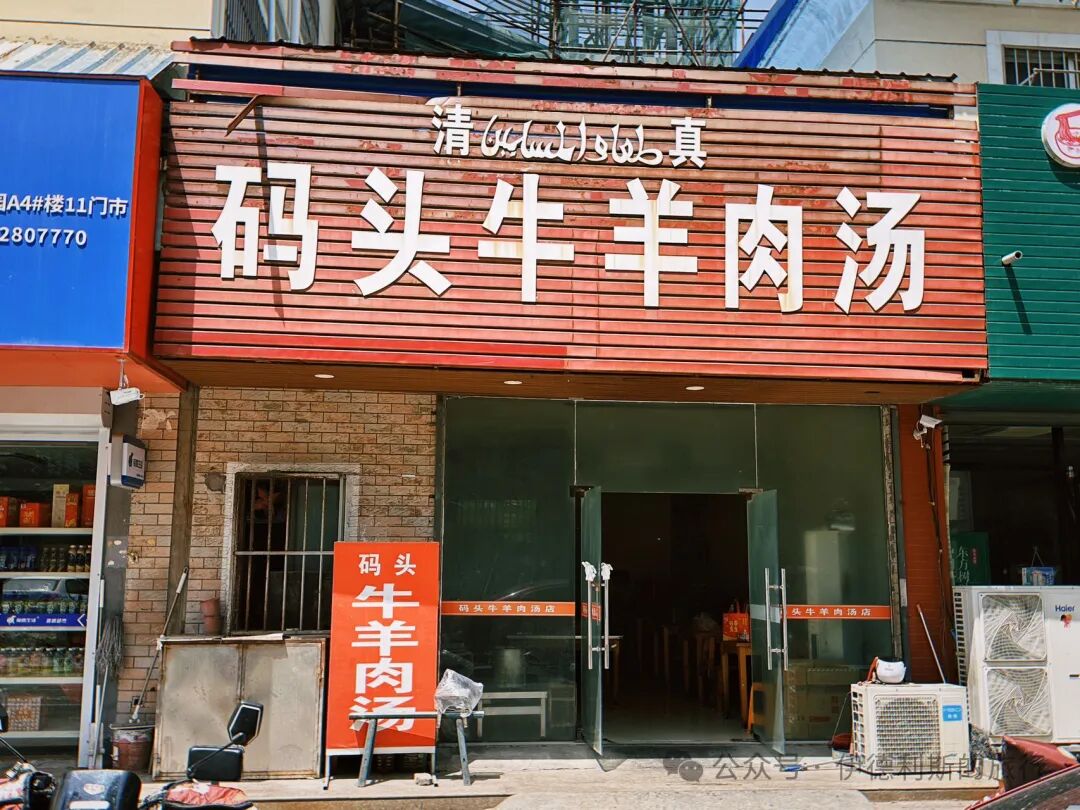
Shops opened by Hui Muslims from Matou Town near Wangjiaying. Matou Town was once the meeting point of the Middle Grand Canal and the Li Canal. Many Hui Muslims have lived there since the Qing Dynasty. They built three mosques over time at Xiyuba Village, the mouth of the Li Canal, and the old long street at the south end of town. The current Matou Mosque was moved and rebuilt in 2008, but I did not have time to visit it on this trip.
Summary: Wangjiaying in Huai'an, Jiangsu, sits between the old Yellow River course and the Salt River and has long been an important Hui Muslim town. This account covers its mosque history, family stories, streets, food, and photographs as recorded in the source visit.
Wangjiaying in Huai'an, Jiangsu, sits between the old Yellow River course and the Salt River. During the Ming Dynasty, the government set up the Dahe Guard in Huai'an and built ten military camps along the Yellow River. Wangjiaying was one of them. Travel on the Yellow River section of the canal was slow and dangerous, often leading to broken ropes and sunken boats. Many merchants chose to leave their boats at Qingjiangpu, cross the Yellow River at Wangjiaying, and switch to horse-drawn carriages to head north. Together, Wangjiaying and Qingjiangpu grew into a busy town.
Wangjiaying survived many floods from the Yellow River and moved east three times to reach its current location. In 1831, the Viceroy of Liangjiang, Tao Peng, chose Wangjiaying as a new hub for Huai salt distribution. After that, eighteen salt warehouses and seventy-two salt offices opened in Wangjiaying. Salt boats traveled constantly along the three-hundred-mile waterway from the Huaibei salt fields to Wangjiaying.
The prosperity of Wangjiaying attracted Hui Muslims to settle there. The first Hui Muslims to arrive were the Ma and Sha families, who came from Lingwu County in Ningxia by way of Shandong and Zhenjiang. Later, families named Jin, Dai, Chang, Ge, Fan, Li, and Yang also settled here.
The Wangjiaying Mosque was first built during the Yongzheng era. It started as three thatched rooms next to the Lotus Pond (Hehuawang) in Wangjiapo. After Wangjiaying became a salt hub in the late Daoguang era, the mosque moved to the south bank of the Salt River. Two imams, Chang Tingzhang and Dai Mingxuan, led the religious affairs. Imam Chang Tingzhang was known as 'Third Master Chang.' He was from Jining, Shandong, and was born in 1785 in Taoyuan County, Huai'an Prefecture (now Siyang, Jiangsu). In his youth, he studied in Lingzhou (now Lingwu County, Ningxia). After finishing his studies, he traveled to Jining, Shandong, to continue learning. In 1810, the 26-year-old Imam Chang Tingzhang was invited to lead the Wangjiaying Mosque. Imam Chang Tingzhang had deep knowledge of Arabic classics, astronomy, and medicine. According to the 'Wangjiaying Records,' a man named Third Master Tao from Hangzhou died in Huai'an during the Daoguang era. Because it was the heat of summer, Imam Chang Tingzhang personally bought a boat and traveled south along the canal to take the body back to Hangzhou for the family.
In 1860, the Nian Army burned down the Wangjiaying Mosque. In 1867, Imam Dai Jingzhai, the son of Imam Dai Mingxuan, led the construction of a few thatched huts. Later, with donations from the community, they built a main hall with three thatched rooms.
Imam Chang Tingzhang passed away in 1870. Imam Dai Jingzhai took over, and in 1884, they replaced the thatched rooms with tiled ones. Because Imam Chang Tingzhang had studied at the Jahriyya Banqiao Daotang in Jinjipu, Ningxia, in his youth, the Wangjiaying Mosque later invited five successive imams from the Jahriyya order in Jinjipu to lead the mosque and teach. Future imams also went to Ningxia for advanced study, making the Wangjiaying Mosque one of the nine major branches of the Banqiao Daotang.
In 1912, the Wangjiaying Mosque built a new gate, a south lecture hall, a kitchen, and a washroom. In 1920, with funding from the Jingshan Tang in Gansu and money from selling willow trees at the public cemetery, they rebuilt the three tiled, curved-eave rooms in front of the main hall and added three new rooms for the east lecture hall. Currently, there is a 1920 Republic of China renovation tablet on the north wall of the main hall, but the top part is covered.
In 1958, the Wangjiaying Mosque moved to the east of West Horse Road in Wangying. In 1961, it moved to its current site because a bank needed the land for a building. During the destruction of the Four Olds, the main hall's plaques reading 'The Way Spreads to the Middle Land,' 'The Religion Follows the Western Regions,' and 'Striving for Perfection,' along with gold-lettered Arabic plaques and couplets, were all smashed and burned. The couplets read: 'See the invisible, hear the silent, rectify the intention and sincerity, become a saint or a sage, the original nature; The Way is established, movement brings harmony, reach others through oneself, benefit the world, all is complete.' Funeral tools were also destroyed, and the main hall was used as a warehouse by a shoe and hat factory.
In 1979, under the leadership of Imam Ge Weili, the Wangjiaying Mosque was rebuilt in a traditional style. It was finished in 1985 and underwent two more renovations and expansions in 2003 and 2006 to reach its current appearance.
Imam Ge Weili was born in 1924. He went to Ningxia to study in 1937. In 1945, after completing his religious training and receiving his robe, he became the imam of Wangjiaying Mosque. He took on the role of imam in 1966. Today, the religious affairs at Wangjiaying Mosque are led by Imam Fan Weiming, a student of Imam Ge Weili.
The inscription from the Republic of China era reads as follows:
Wangying Mosque was founded during the Yongzheng reign of the Qing Dynasty. By the end of the Daoguang reign, our community was at its peak. Our population grew, our businesses thrived, and we had elders like Chang and Dai Mingxuan leading our religious affairs. They taught many students, and this history is recorded in local chronicles for all to verify. In the tenth year of the Xianfeng reign, the Nian Rebellion broke out. The mosque was burned to the ground, our people fled or died, and our community dwindled.
In the sixth year of the Tongzhi reign, Dai Jingzhai, the son of Elder Dai Mingxuan, followed his father's teachings and took over the leadership. He first built a few thatched huts to hold prayers morning and evening. However, the space was too simple for proper worship. It was too small to hold gatherings. The imam was deeply worried. He raised funds from many sources and built a main hall with three rooms made of grass. Later, he consulted with Yang Xuting, Ma Yunfeng, and Guo Daosheng. With their help, they rebuilt the main tiled hall and lecture hall in the tenth year of the Guangxu reign, and things began to return to normal. As more of our people moved here, the original public cemetery became so full there was almost no space left. The imam was concerned that our community lacked its own burial ground, which made things very difficult during times of loss. He planned to buy land to solve this, and Mr. Ma Yunfeng agreed to help. Sadly, Mr. Ma passed away before the task was finished. Fortunately, Mr. Ma's brother, Runzhi, carried on his brother's wishes. With the strong support of local elder Li Yunpo, they set aside differences and raised enough money to buy two new cemetery plots. The imam's kindness to our community was thorough. This was due to the support of many public-spirited people, but it was also the result of the imam's decades of hard work and sincere devotion.
In the first year of the Republic of China, we worked to continue the efforts of our predecessors by adding a main gate, a south lecture hall, and a kitchen. Mr. Ge Ziming built a washroom (shuifang) and donated hundreds of thousands in currency. We also invited Imam Wang Pinqing from Gansu Province to teach the scriptures. Visitors from all over praised the work. In recent years, wind and rain damage made the halls look like they might collapse. We met and decided to sell dozens of willow trees around the cemetery, raising over two hundred thousand. The Jinshan Hall in Gansu also kindly donated many wooden beams and tiles. We then built a three-room tiled hall with curved eaves in front of the main hall, and repaired the surrounding walls, the three-room east lecture hall, and the courtyard gates. This was a massive project funded by public property and donations. We are humble about our own contributions, but we record these details because, despite two hundred years of change, our mosque still stands. This is largely due to the efforts of our ancestors and elders. We hope future generations will remember how hard it was to build this place and will protect it forever so it never falls into ruin. This is our deepest wish. We record this history here.
July, the ninth year of the Republic of China.
Jin Jiasheng, Jin Jialin, Guo Chunlin, Yang Fangtian
Chang Bingkui, Li Shunjie, Chang Guanying, Mu Hongbin
Jin Jiayuan, Ma Jianong, Fan Zhaofeng, Yang Guiyuan
Ge Futang, Li Dianqing, Ma Jiarang, Mu Hong'en
Ma Jialin, Ge Zhenqing, He Wenquan, Zhou Fengling
Sha Faxiang, Liu Lianyuan, Zhou Riyang, Mu Hongye
The most famous Hui Muslim food in Wangjiaying is the fried dough snack (youtoutou) from the Hui Muslim Restaurant, made by Old Li Ku. Their version was added to the Huaiyin District intangible cultural heritage list in 2016. In 1942, Li Dongtian from Shandong brought his family to Wangjiaying to make a living. He and his son, Li Haiquan, sold their homemade fried dough snacks (youtoutou) near the Yanhe Bridge in Huaiyin while carrying trays. That is how the Huaiyin fried dough snack (youtoutou) became popular.
The fried dough snack (youtoutou) is three inches long. It turns golden yellow when fried. It is delicious when wrapped in an egg and served with wheat porridge. Wheat porridge is rare in other places. It has a unique taste and includes peanuts. In Huai'an, breakfast is usually served with several types of pickles, such as pickled mustard greens (datoucai), cold tossed eggplant, tossed snow cabbage (xuelihong), and tossed green peppers. They all go well with porridge.
The history of the Wangjiaying Hui Muslim Restaurant dates back to the Daoguang period of the Qing Dynasty. After the salt administration expanded at the West Dam in Wangjiaying in 1831 (the 11th year of Daoguang), Imam Dai Mingxuan of the Wangjiaying Mosque opened a halal restaurant at the north end of Yushan Street. He hired the best chefs in Wangjiaying, making it a high-end establishment where many Huai'an officials and dignitaries held banquets.
In 1860 (the 10th year of Xianfeng), after the Nian Army broke through Wangjiaying, the halal restaurant and the Wangjiaying Mosque were both destroyed in the war. In 1886 (the 12th year of Guangxu), with everyone's help, Imam Dai Jingzhai, the son of Imam Dai Mingxuan, reopened the restaurant at the North Weimen Gate of Wangjiaying. It was forced to close after 1937 due to the Japanese invasion of China, but it reopened after 1945. After the public-private partnership in 1958, the halal restaurant was merged into the Huaiyin Food and Beverage Company No. 2, with Ma Hengpu serving as manager. At the end of 1959, it moved to Beijing Road. It had three storefront rooms in the front and four kitchen rooms in the back, with Wang Jinbiao taking over as manager. After the 1970s, Li Haiquan took over as manager and renamed it the Hui Muslim Restaurant. After the 1980s, Ma Hengbao led the construction of a new two-story building, and Dai Peng took over as manager. In 2003, the Hui Muslim Restaurant was restructured into a private enterprise and has continued to operate to this day.
Besides the fried dough snack (youtoutou), you should also try Huai'an spicy soup (latang) when visiting Wangjiaying. Many restaurants here serve it. Compared to Henan spicy soup (hulatang), the Huai'an spicy soup (latang) has a milder taste. It uses less ginger and pepper. It contains shredded kelp, gluten, dried tofu strips (gansi), and glass noodles (fensi). Those who prefer a light flavor can drink it as is, while those who like it stronger can add chili sauce.
We drank the spicy soup (latang) at the Dachong Small Restaurant in front of the Wangjiaying Mosque and also ate beef potstickers (guotie), beef soup, and beef noodles. The potstickers (guotie) here are quite small. One serving has five, so you can order two servings. They are all pan-fried to order.
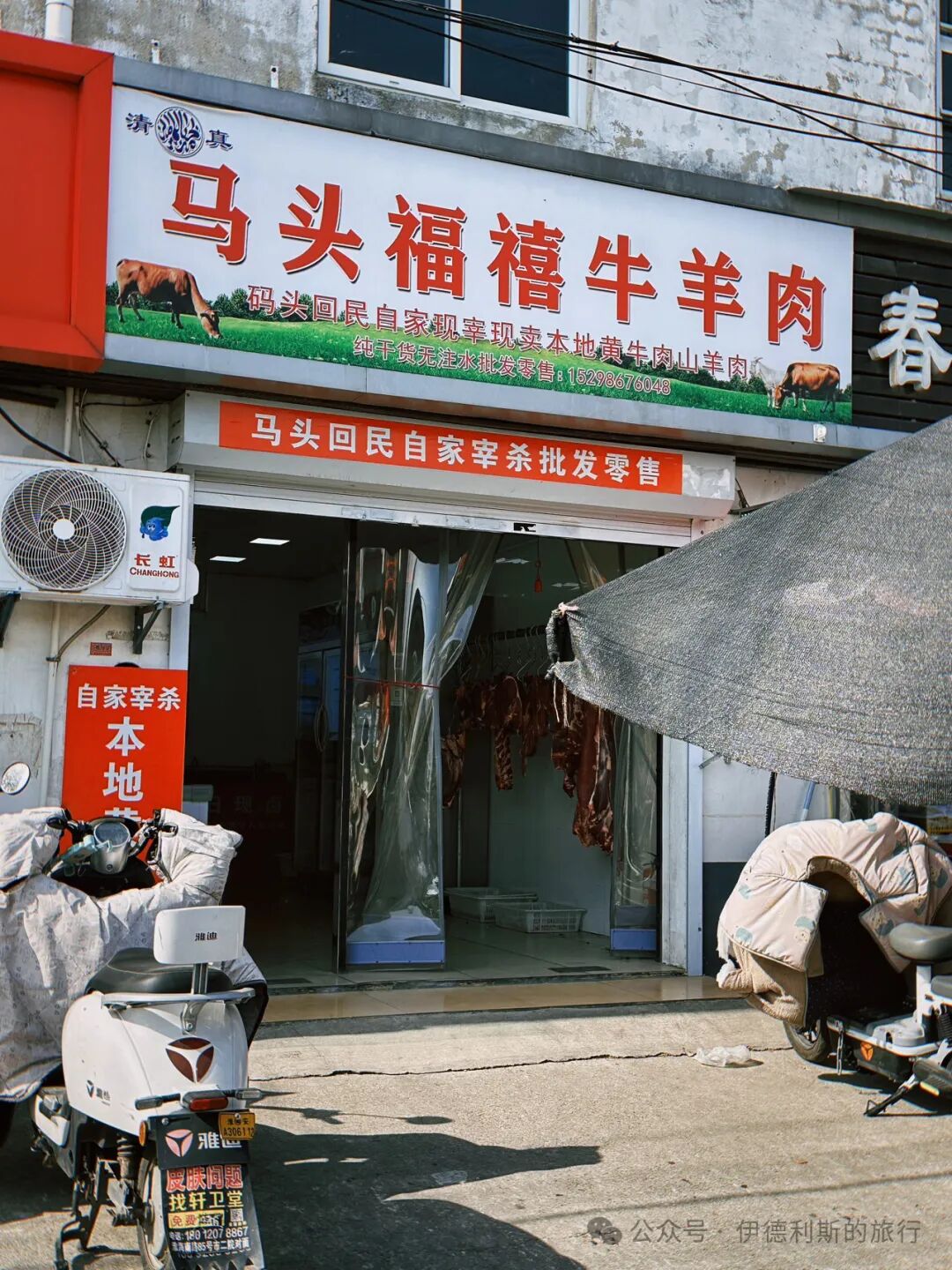
The Hui Muslim shops near Wangjiaying are likely the most concentrated in all of Jiangsu Province, which shows the strength of the local faith.
Shops opened by Hui Muslims from Matou Town near Wangjiaying. Matou Town was once the meeting point of the Middle Grand Canal and the Li Canal. Many Hui Muslims have lived there since the Qing Dynasty. They built three mosques over time at Xiyuba Village, the mouth of the Li Canal, and the old long street at the south end of town. The current Matou Mosque was moved and rebuilt in 2008, but I did not have time to visit it on this trip.
