

Halal Buffets
Halal Food Guide: Beijing Ramadan Iftar — Couscous and Tajine Note
Articles • ali2007fr posted the article • 0 comments • 158 views • 2026-05-18 21:25
Summary: Halal Food Guide: Beijing Ramadan Iftar — Five International Buffets is presented here as a firsthand travel account in clear English, beginning with this scene: Every year during Ramadan, having an Iftar buffet at one of the foreign restaurants in Beijing is a regular tradition for me. The account keeps its focus on Beijing Iftar, Ramadan Food, Halal Buffets while preserving the names, places, food, and historical details from the Chinese source.
The main course was North African couscous served with tajine stew. Cooks make couscous by rubbing semolina flour into tiny grains and drying them. Tajine is cooked in a round clay pot with a tall lid; the steam rises, gathers under the lid, and falls back into the stew. Some pots also have a small top vent where water can be added during cooking. view all
Summary: Halal Food Guide: Beijing Ramadan Iftar — Five International Buffets is presented here as a firsthand travel account in clear English, beginning with this scene: Every year during Ramadan, having an Iftar buffet at one of the foreign restaurants in Beijing is a regular tradition for me. The account keeps its focus on Beijing Iftar, Ramadan Food, Halal Buffets while preserving the names, places, food, and historical details from the Chinese source.
The main course was North African couscous served with tajine stew. Cooks make couscous by rubbing semolina flour into tiny grains and drying them. Tajine is cooked in a round clay pot with a tall lid; the steam rises, gathers under the lid, and falls back into the stew. Some pots also have a small top vent where water can be added during cooking.
Halal Food Guide: Beijing Ramadan Iftar — La Medina Couscous Photo 2
Articles • ali2007fr posted the article • 0 comments • 159 views • 2026-05-18 21:24
Summary: Halal Food Guide: Beijing Ramadan Iftar — Five International Buffets is presented here as a firsthand travel account in clear English, beginning with this scene: Every year during Ramadan, having an Iftar buffet at one of the foreign restaurants in Beijing is a regular tradition for me. The account keeps its focus on Beijing Iftar, Ramadan Food, Halal Buffets while preserving the names, places, food, and historical details from the Chinese source. view all
Summary: Halal Food Guide: Beijing Ramadan Iftar — Five International Buffets is presented here as a firsthand travel account in clear English, beginning with this scene: Every year during Ramadan, having an Iftar buffet at one of the foreign restaurants in Beijing is a regular tradition for me. The account keeps its focus on Beijing Iftar, Ramadan Food, Halal Buffets while preserving the names, places, food, and historical details from the Chinese source.
Halal Food Guide: Beijing Ramadan Iftar — La Medina Main Course
Articles • ali2007fr posted the article • 0 comments • 129 views • 2026-05-18 21:24
Summary: Halal Food Guide: Beijing Ramadan Iftar — Five International Buffets is presented here as a firsthand travel account in clear English, beginning with this scene: Every year during Ramadan, having an Iftar buffet at one of the foreign restaurants in Beijing is a regular tradition for me. The account keeps its focus on Beijing Iftar, Ramadan Food, Halal Buffets while preserving the names, places, food, and historical details from the Chinese source.
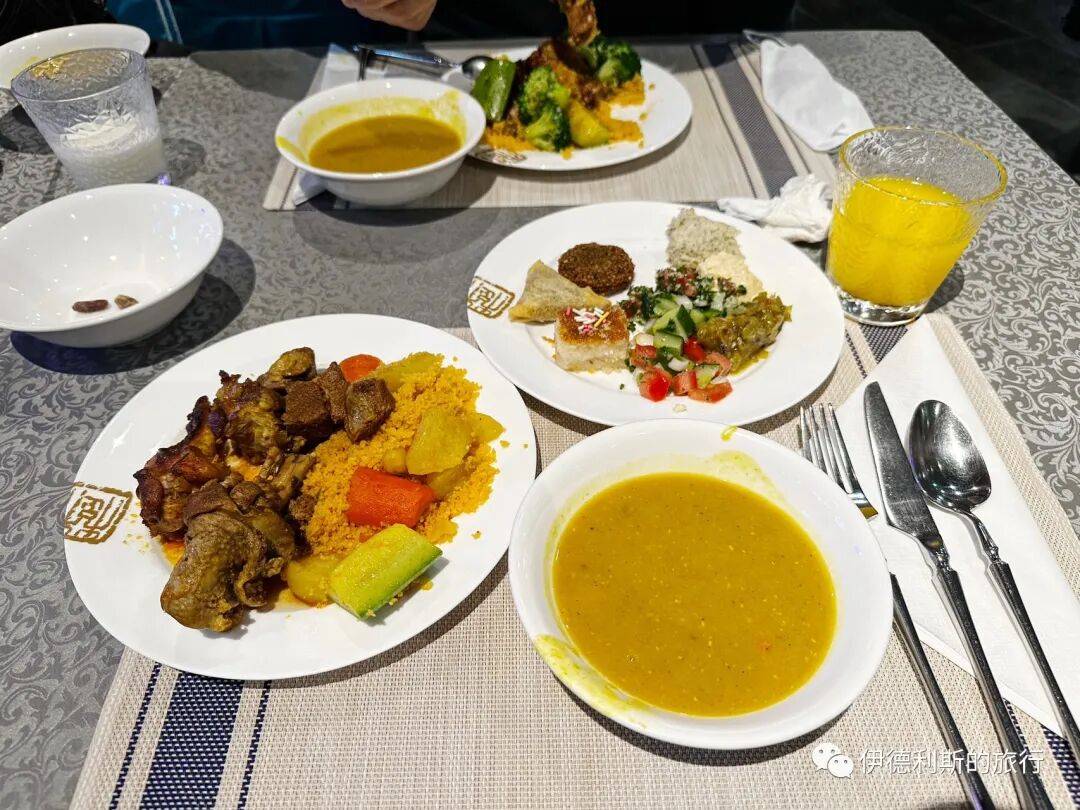
The main course was couscous with tajine. Couscous is made from semolina shaped into small dry grains. Tajine uses a covered round pot. As the food cooks, the lid keeps the moisture inside and sends it back into the dish. Some pots have a small top opening for adding water. view all
Summary: Halal Food Guide: Beijing Ramadan Iftar — Five International Buffets is presented here as a firsthand travel account in clear English, beginning with this scene: Every year during Ramadan, having an Iftar buffet at one of the foreign restaurants in Beijing is a regular tradition for me. The account keeps its focus on Beijing Iftar, Ramadan Food, Halal Buffets while preserving the names, places, food, and historical details from the Chinese source.
The main course was couscous with tajine. Couscous is made from semolina shaped into small dry grains. Tajine uses a covered round pot. As the food cooks, the lid keeps the moisture inside and sends it back into the dish. Some pots have a small top opening for adding water.
Halal Food Guide: Beijing Ramadan Iftar — Five International Buffets (Segment B) (Revised)
Articles • ali2007fr posted the article • 0 comments • 132 views • 2026-05-18 21:22
Summary: Halal Food Guide: Beijing Ramadan Iftar — Five International Buffets is presented here as a firsthand travel account in clear English, beginning with this scene: Every year during Ramadan, having an Iftar buffet at one of the foreign restaurants in Beijing is a regular tradition for me. The account keeps its focus on Beijing Iftar, Ramadan Food, Halal Buffets while preserving the names, places, food, and historical details from the Chinese source.
The main course was couscous, the classic North African Amazigh dish, served with tajine, a clay-pot stew. Cooks make couscous by rubbing semolina flour into grains about the size of millet, then drying them. The tajine pot has a round flat base and a cone-shaped or domed lid. Steam rises, gathers under the lid, and drips back down; water can also be added through the small opening at the top. view all
Summary: Halal Food Guide: Beijing Ramadan Iftar — Five International Buffets is presented here as a firsthand travel account in clear English, beginning with this scene: Every year during Ramadan, having an Iftar buffet at one of the foreign restaurants in Beijing is a regular tradition for me. The account keeps its focus on Beijing Iftar, Ramadan Food, Halal Buffets while preserving the names, places, food, and historical details from the Chinese source.
The main course was couscous, the classic North African Amazigh dish, served with tajine, a clay-pot stew. Cooks make couscous by rubbing semolina flour into grains about the size of millet, then drying them. The tajine pot has a round flat base and a cone-shaped or domed lid. Steam rises, gathers under the lid, and drips back down; water can also be added through the small opening at the top.
Halal Food Guide: Beijing Ramadan Iftar — Five International Buffets (Segment B)
Articles • ali2007fr posted the article • 0 comments • 155 views • 2026-05-18 21:20
Summary: Halal Food Guide: Beijing Ramadan Iftar — Five International Buffets is presented here as a firsthand travel account in clear English, beginning with this scene: Every year during Ramadan, having an Iftar buffet at one of the foreign restaurants in Beijing is a regular tradition for me. The account keeps its focus on Beijing Iftar, Ramadan Food, Halal Buffets while preserving the names, places, food, and historical details from the Chinese source.
The main course is the classic North African Berber dish, couscous, served with tajine (stew cooked in a clay pot). Couscous is a staple food for the Berbers. It is made by rubbing semolina flour into millet-sized grains, which are then dried. A clay pot (tajine) is a cooking vessel with a round, flat bottom and a conical or domed top. This design lets evaporated steam return to the bottom, and you can add water through the hole in the lid. view all
Summary: Halal Food Guide: Beijing Ramadan Iftar — Five International Buffets is presented here as a firsthand travel account in clear English, beginning with this scene: Every year during Ramadan, having an Iftar buffet at one of the foreign restaurants in Beijing is a regular tradition for me. The account keeps its focus on Beijing Iftar, Ramadan Food, Halal Buffets while preserving the names, places, food, and historical details from the Chinese source.
The main course is the classic North African Berber dish, couscous, served with tajine (stew cooked in a clay pot). Couscous is a staple food for the Berbers. It is made by rubbing semolina flour into millet-sized grains, which are then dried. A clay pot (tajine) is a cooking vessel with a round, flat bottom and a conical or domed top. This design lets evaporated steam return to the bottom, and you can add water through the hole in the lid.
Halal Food Guide: Beijing Ramadan Iftar — Five International Buffets (Part 5C of 7)
Articles • ali2007fr posted the article • 0 comments • 151 views • 2026-05-18 21:20
Summary: Halal Food Guide: Beijing Ramadan Iftar — Five International Buffets is presented here as a firsthand travel account in clear English, beginning with this scene: Every year during Ramadan, having an Iftar buffet at one of the foreign restaurants in Beijing is a regular tradition for me. The account keeps its focus on Beijing Iftar, Ramadan Food, Halal Buffets while preserving the names, places, food, and historical details from the Chinese source.
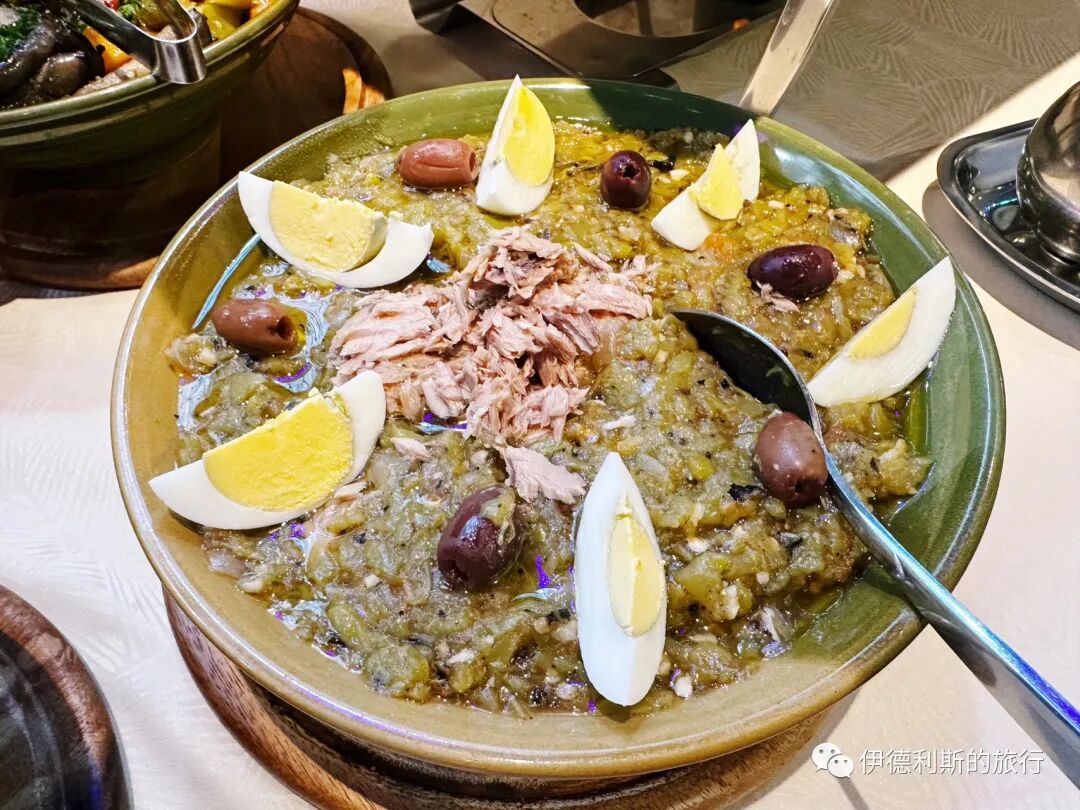
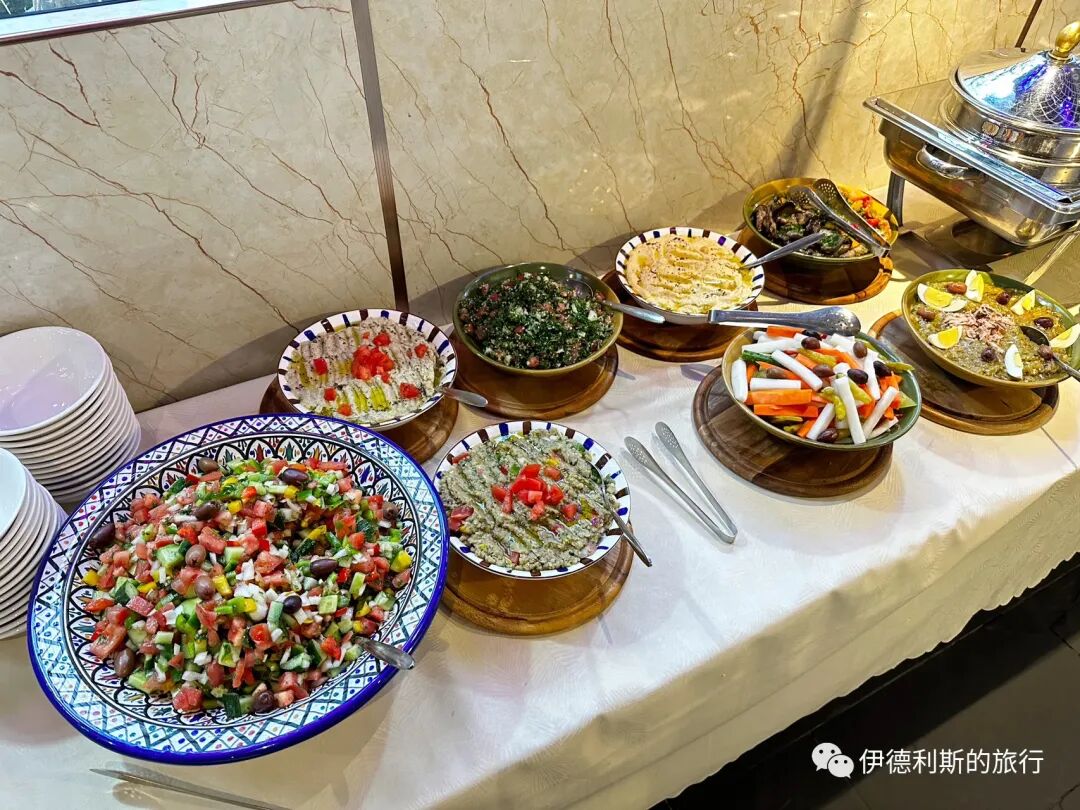
First, there were eight meze appetizers, including hummus, baba ghanoush, and tabbouleh, which can be found in every Arab restaurant. The most worth trying is the Tunisian-style mechouia salad, which you can only find at their place in Beijing. Mechouia means "grilled" in Arabic. It is made by roasting onions, green peppers, tomatoes, and garlic in an oven, seasoning them with caraway, salt, and black pepper, adding olive oil, and finally garnishing with olives, tuna, and boiled eggs.
The main course is the classic North African Berber dish, couscous, served with tajine (stew cooked in a clay pot). Couscous is a staple food for the Berbers. It is made by rubbing semolina flour into millet-sized grains, which are then dried. A clay pot (tajine) is a cooking vessel with a round, flat bottom and a conical or domed top. This design lets evaporated steam return to the bottom, and you can add water through the hole in the lid. view all
Summary: Halal Food Guide: Beijing Ramadan Iftar — Five International Buffets is presented here as a firsthand travel account in clear English, beginning with this scene: Every year during Ramadan, having an Iftar buffet at one of the foreign restaurants in Beijing is a regular tradition for me. The account keeps its focus on Beijing Iftar, Ramadan Food, Halal Buffets while preserving the names, places, food, and historical details from the Chinese source.
First, there were eight meze appetizers, including hummus, baba ghanoush, and tabbouleh, which can be found in every Arab restaurant. The most worth trying is the Tunisian-style mechouia salad, which you can only find at their place in Beijing. Mechouia means "grilled" in Arabic. It is made by roasting onions, green peppers, tomatoes, and garlic in an oven, seasoning them with caraway, salt, and black pepper, adding olive oil, and finally garnishing with olives, tuna, and boiled eggs.
The main course is the classic North African Berber dish, couscous, served with tajine (stew cooked in a clay pot). Couscous is a staple food for the Berbers. It is made by rubbing semolina flour into millet-sized grains, which are then dried. A clay pot (tajine) is a cooking vessel with a round, flat bottom and a conical or domed top. This design lets evaporated steam return to the bottom, and you can add water through the hole in the lid.
Halal Food Guide: Beijing Ramadan Iftar — Five International Buffets (Part 5 of 7)
Articles • ali2007fr posted the article • 0 comments • 159 views • 2026-05-18 21:20
Summary: Halal Food Guide: Beijing Ramadan Iftar — Five International Buffets is presented here as a firsthand travel account in clear English, beginning with this scene: Every year during Ramadan, having an Iftar buffet at one of the foreign restaurants in Beijing is a regular tradition for me. The account keeps its focus on Beijing Iftar, Ramadan Food, Halal Buffets while preserving the names, places, food, and historical details from the Chinese source.
4. Tunisian restaurant La Medina
I had the Ramadan iftar buffet at the Tunisian restaurant La Medina by the Liangma River. It is super crowded on weekends, which is likely the case for all iftar buffets in Beijing, so friends, it is better to choose a weekday.
First, let me introduce their restaurant name. Medina means "city" in Arabic. In North Africa, a medina usually refers to an old town built with city walls and many narrow, maze-like alleys. The Medina of Tunis, the capital of Tunisia, was listed as a UNESCO World Heritage site in 1979. It is one of the most famous medinas, containing 700 historical buildings including palaces, mosques, mausoleums, madrasas, and fountains.
Compared to last year, the variety at La Medina has decreased, which is truly a pity. Last year at the buffet, I had Tunisian harissa soup, merguez (North African sausage), and kibbeh, but I didn't get to eat them this time. I am not sure if it was just bad timing.
First, there were eight meze appetizers, including hummus, baba ghanoush, and tabbouleh, which can be found in every Arab restaurant. The most worth trying is the Tunisian-style mechouia salad, which you can only find at their place in Beijing. Mechouia means "grilled" in Arabic. It is made by roasting onions, green peppers, tomatoes, and garlic in an oven, seasoning them with caraway, salt, and black pepper, adding olive oil, and finally garnishing with olives, tuna, and boiled eggs.
The main course is the classic North African Berber dish, couscous, served with tajine (stew cooked in a clay pot). Couscous is a staple food for the Berbers. It is made by rubbing semolina flour into millet-sized grains, which are then dried. A clay pot (tajine) is a cooking vessel with a round, flat bottom and a conical or domed top. This design lets evaporated steam return to the bottom, and you can add water through the hole in the lid.
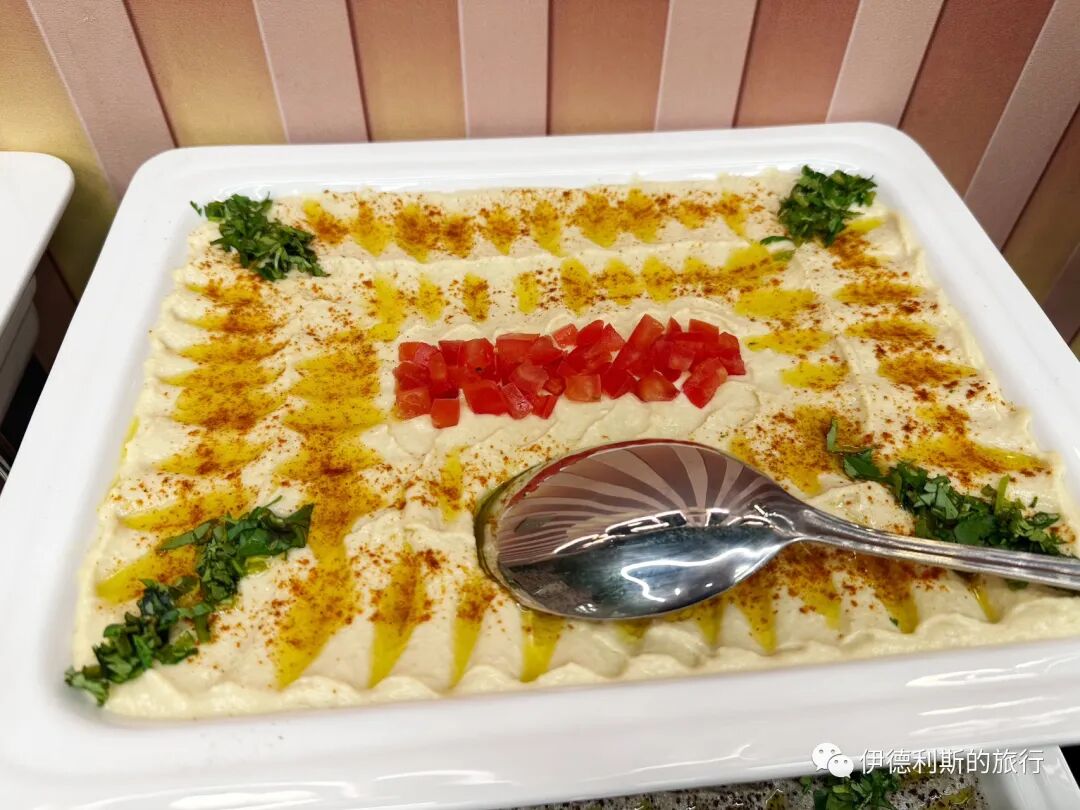
They also serve fried triangular pastries (sambousek) and chickpea fritters (falafel). Sambousek is a classic snack for Arabs during Ramadan. It originated from the Iranian sanbosag and later spread to various places with the spread of Persian culture. It entered Arab cuisine after the 10th century, reached South Asia with the Delhi Sultanate after the 13th century, and later spread to China, Indonesia, and across Africa. In some Hui Muslim communities in China, this snack is still called sanmosan.
For dessert after the meal, there is basbousa, which originated in Egypt. Basbousa is a semolina cake soaked in syrup. It is first baked in a pan and then soaked with orange blossom water, rose water, or syrup. view all
Summary: Halal Food Guide: Beijing Ramadan Iftar — Five International Buffets is presented here as a firsthand travel account in clear English, beginning with this scene: Every year during Ramadan, having an Iftar buffet at one of the foreign restaurants in Beijing is a regular tradition for me. The account keeps its focus on Beijing Iftar, Ramadan Food, Halal Buffets while preserving the names, places, food, and historical details from the Chinese source.
4. Tunisian restaurant La Medina
I had the Ramadan iftar buffet at the Tunisian restaurant La Medina by the Liangma River. It is super crowded on weekends, which is likely the case for all iftar buffets in Beijing, so friends, it is better to choose a weekday.
First, let me introduce their restaurant name. Medina means "city" in Arabic. In North Africa, a medina usually refers to an old town built with city walls and many narrow, maze-like alleys. The Medina of Tunis, the capital of Tunisia, was listed as a UNESCO World Heritage site in 1979. It is one of the most famous medinas, containing 700 historical buildings including palaces, mosques, mausoleums, madrasas, and fountains.
Compared to last year, the variety at La Medina has decreased, which is truly a pity. Last year at the buffet, I had Tunisian harissa soup, merguez (North African sausage), and kibbeh, but I didn't get to eat them this time. I am not sure if it was just bad timing.
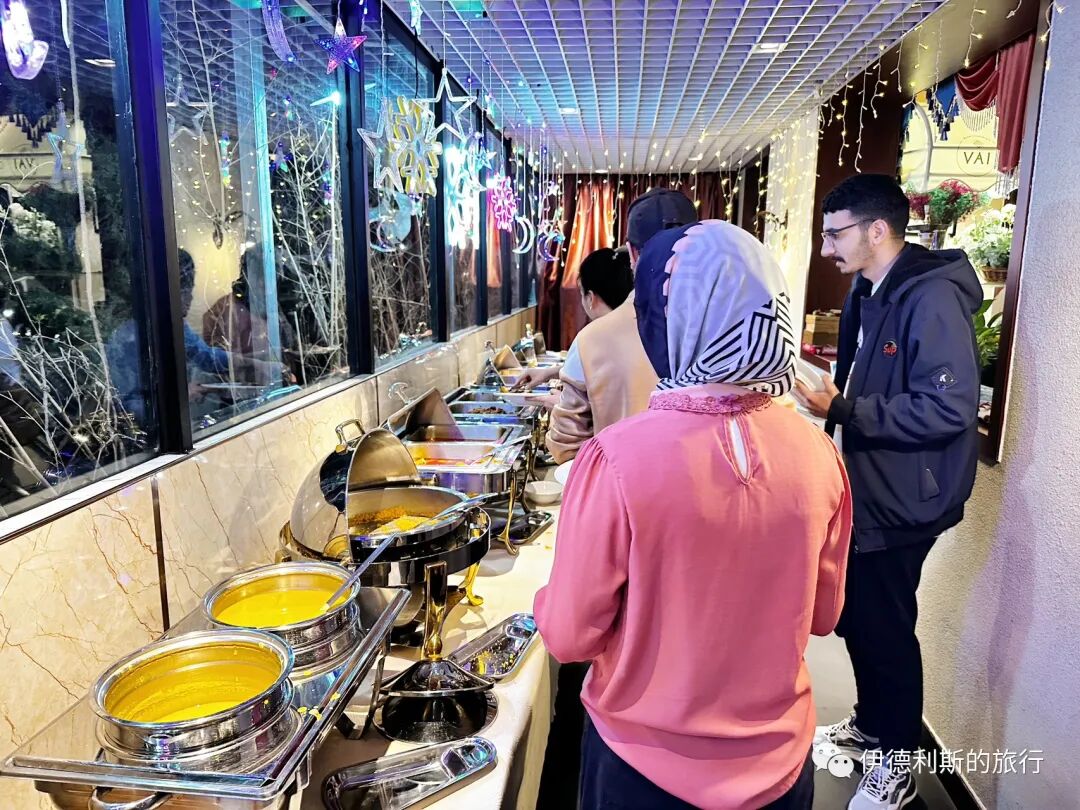
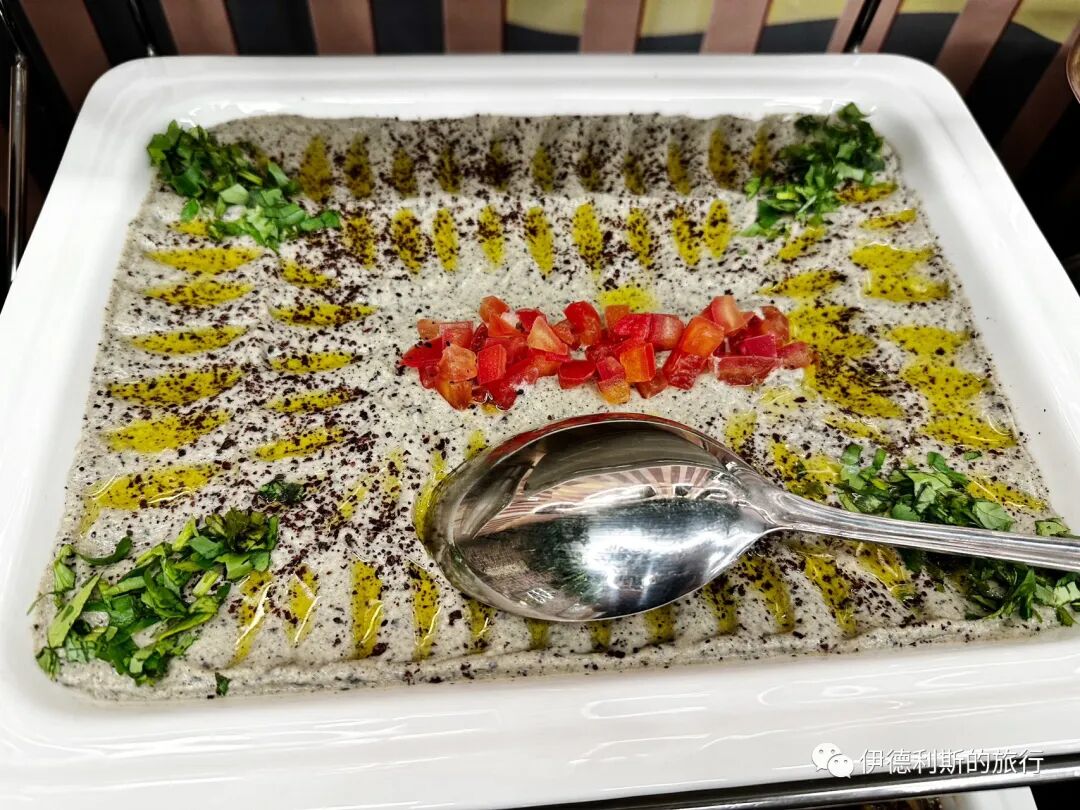
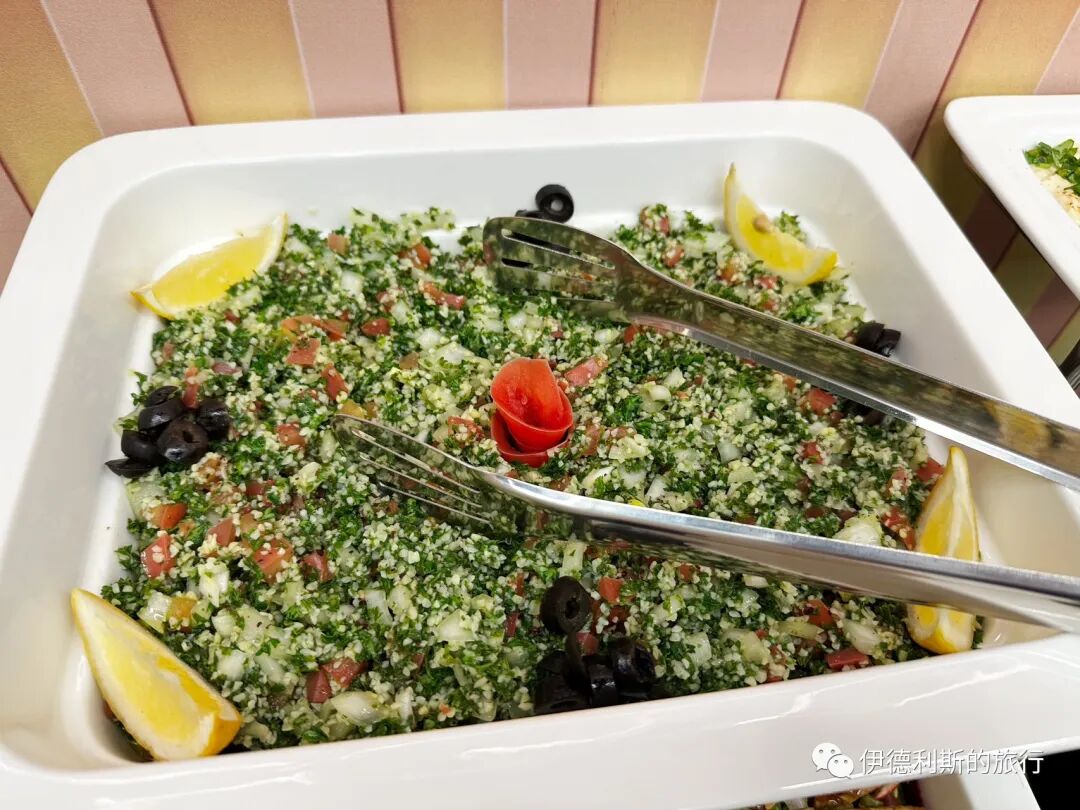
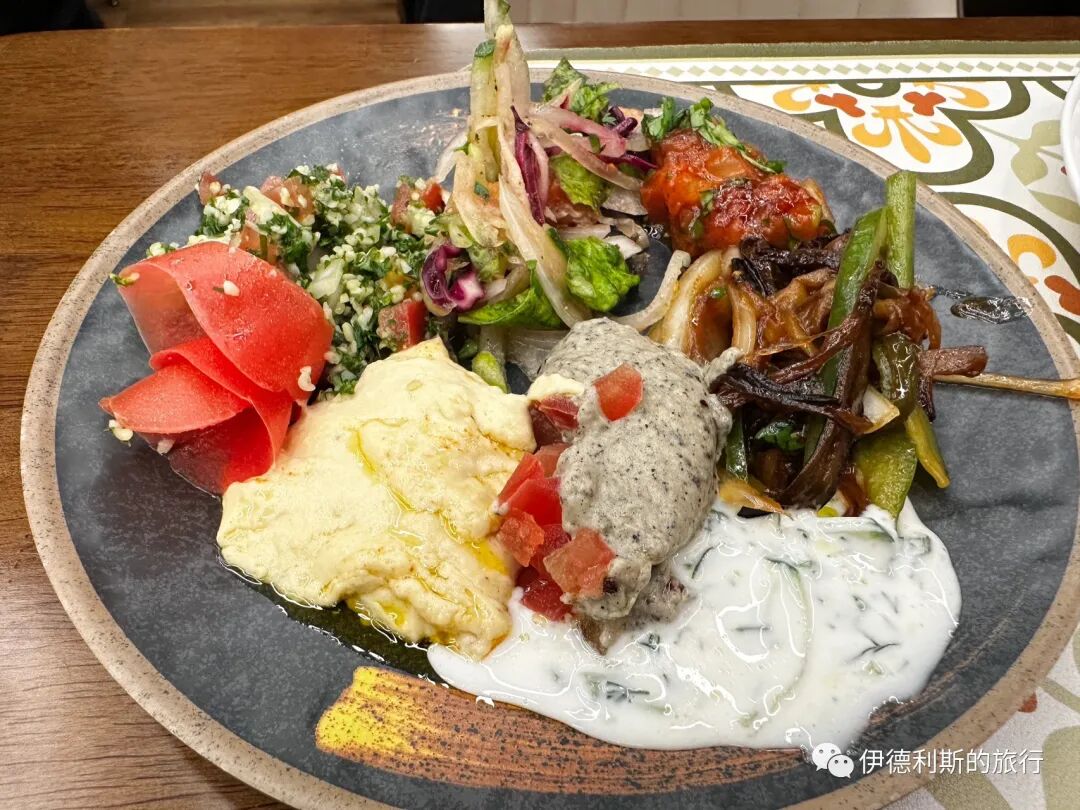
First, there were eight meze appetizers, including hummus, baba ghanoush, and tabbouleh, which can be found in every Arab restaurant. The most worth trying is the Tunisian-style mechouia salad, which you can only find at their place in Beijing. Mechouia means "grilled" in Arabic. It is made by roasting onions, green peppers, tomatoes, and garlic in an oven, seasoning them with caraway, salt, and black pepper, adding olive oil, and finally garnishing with olives, tuna, and boiled eggs.
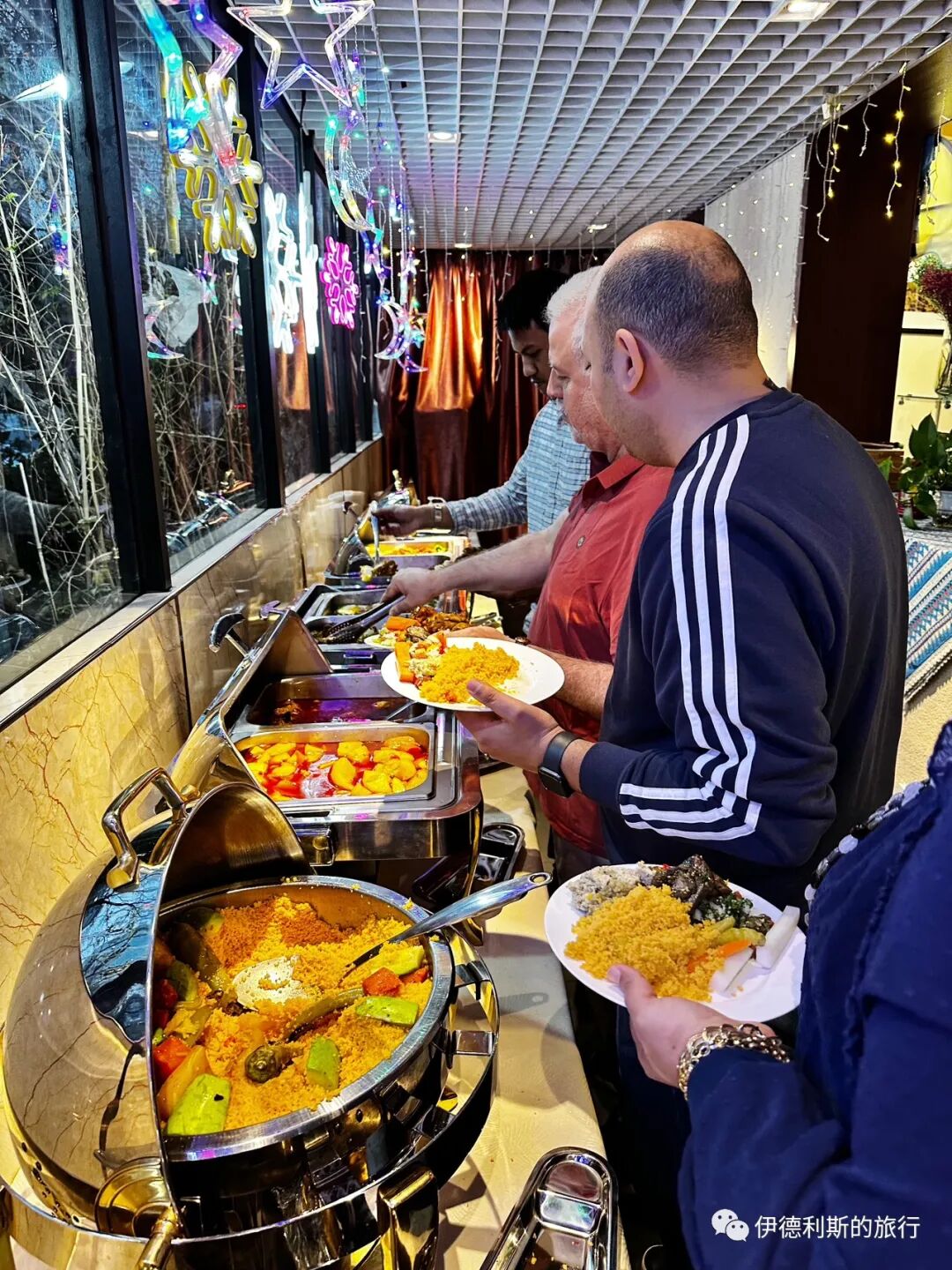
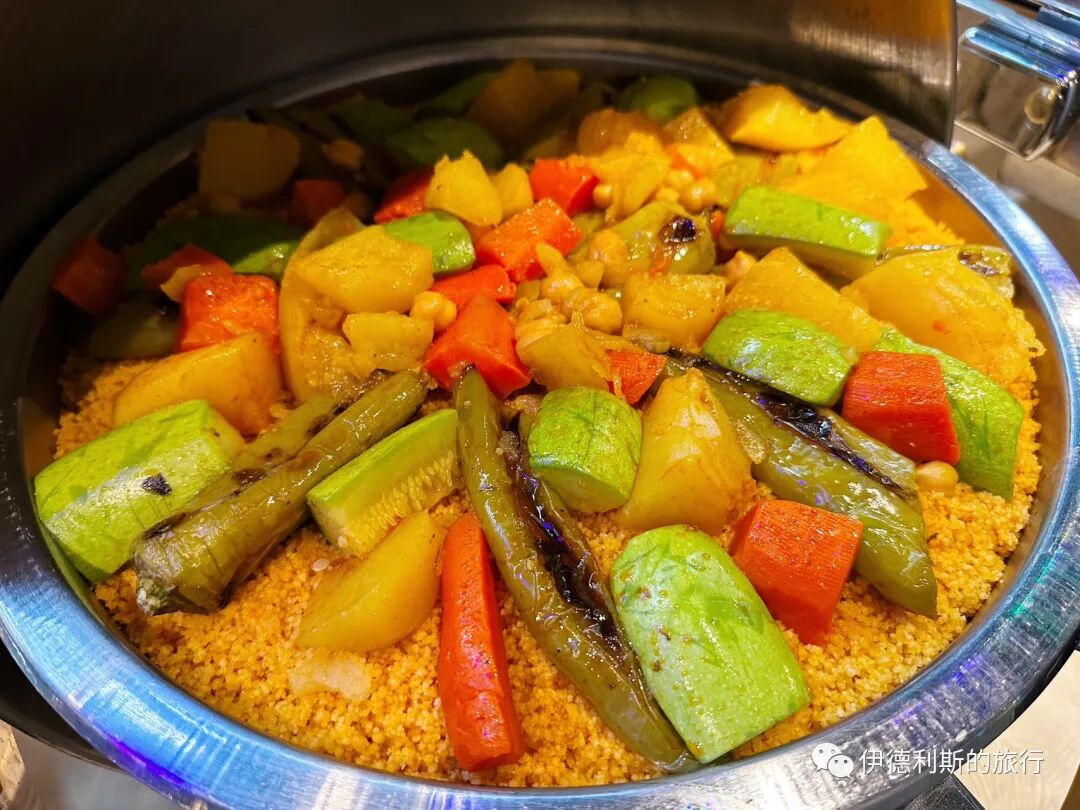
The main course is the classic North African Berber dish, couscous, served with tajine (stew cooked in a clay pot). Couscous is a staple food for the Berbers. It is made by rubbing semolina flour into millet-sized grains, which are then dried. A clay pot (tajine) is a cooking vessel with a round, flat bottom and a conical or domed top. This design lets evaporated steam return to the bottom, and you can add water through the hole in the lid.
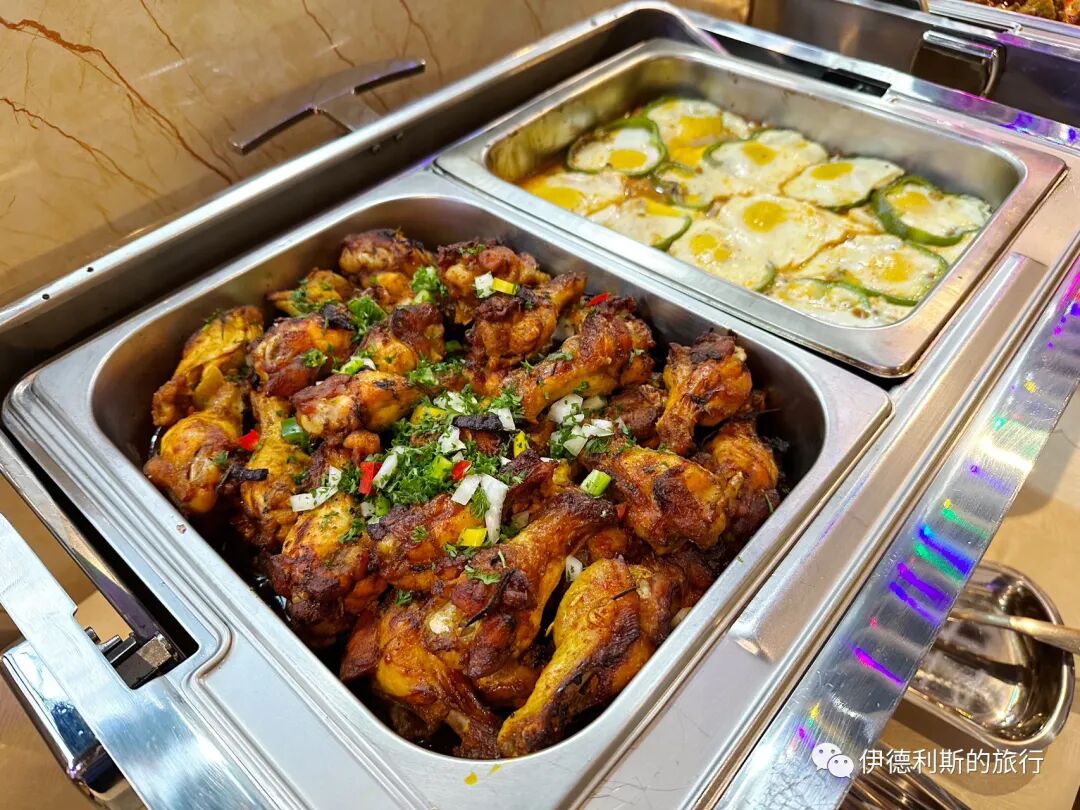
They also serve fried triangular pastries (sambousek) and chickpea fritters (falafel). Sambousek is a classic snack for Arabs during Ramadan. It originated from the Iranian sanbosag and later spread to various places with the spread of Persian culture. It entered Arab cuisine after the 10th century, reached South Asia with the Delhi Sultanate after the 13th century, and later spread to China, Indonesia, and across Africa. In some Hui Muslim communities in China, this snack is still called sanmosan.
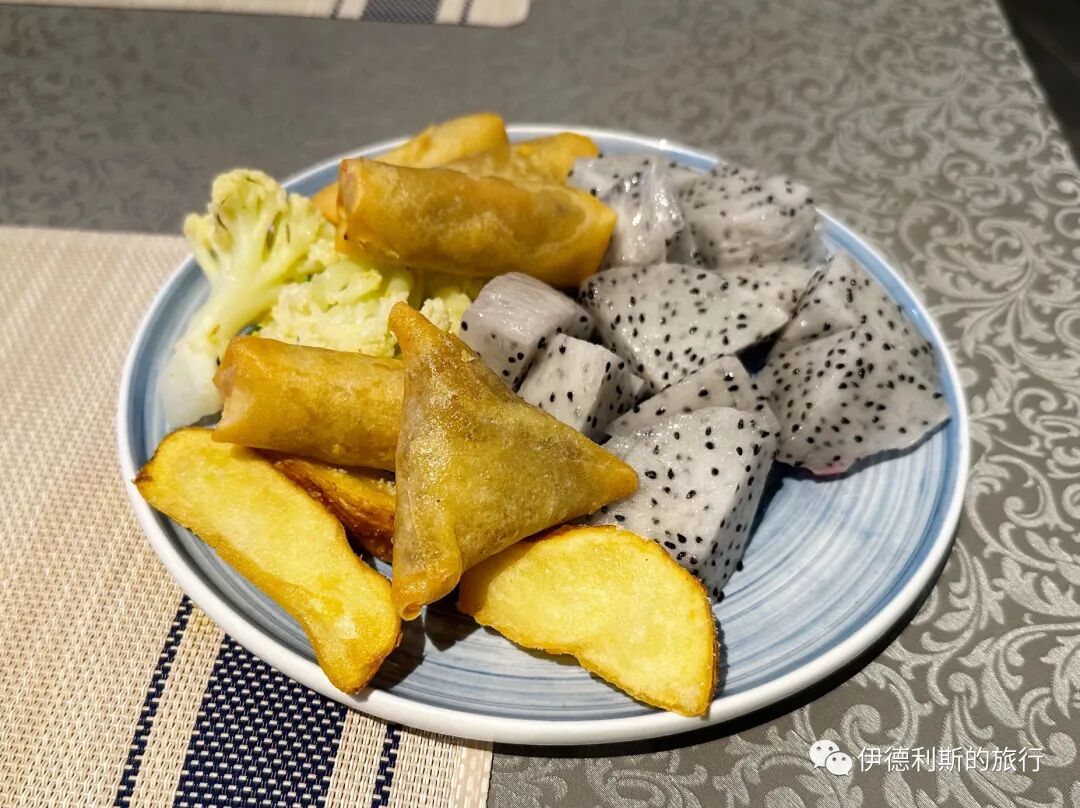
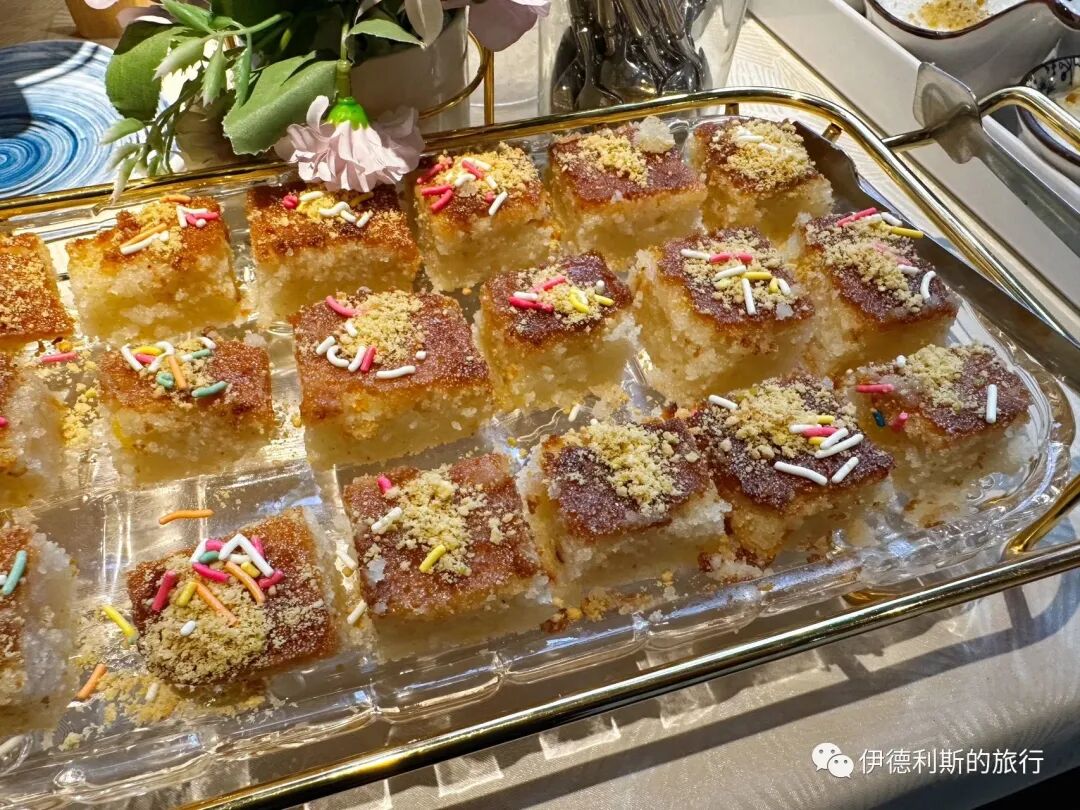
For dessert after the meal, there is basbousa, which originated in Egypt. Basbousa is a semolina cake soaked in syrup. It is first baked in a pan and then soaked with orange blossom water, rose water, or syrup.
Halal Food Guide: Beijing Ramadan Iftar — Five International Buffets
Articles • ali2007fr posted the article • 0 comments • 128 views • 2026-05-18 21:20
Summary: Halal Food Guide: Beijing Ramadan Iftar — Five International Buffets is presented here as a firsthand travel account in clear English, beginning with this scene: Every year during Ramadan, having an Iftar buffet at one of the foreign restaurants in Beijing is a regular tradition for me. The account keeps its focus on Beijing Iftar, Ramadan Food, Halal Buffets while preserving the names, places, food, and historical details from the Chinese source.
Every year during Ramadan, having an Iftar buffet at one of the foreign restaurants in Beijing is a regular tradition for me. Compared to last year, there are two main changes. First, the Iraqi restaurant Taiba in Sanlitun expanded its space and now offers an Iftar buffet. Their lamb Mandi rice is delicious and comes highly recommended. The second change is that the Azerbaijani/Turkish restaurant Dardanelles on Ritan Shangjie has raised its prices and upgraded its menu. They added many hearty dishes, and the stewed lamb leg is so big and tender that it leaves you completely full.
Let me briefly explain two terms here.
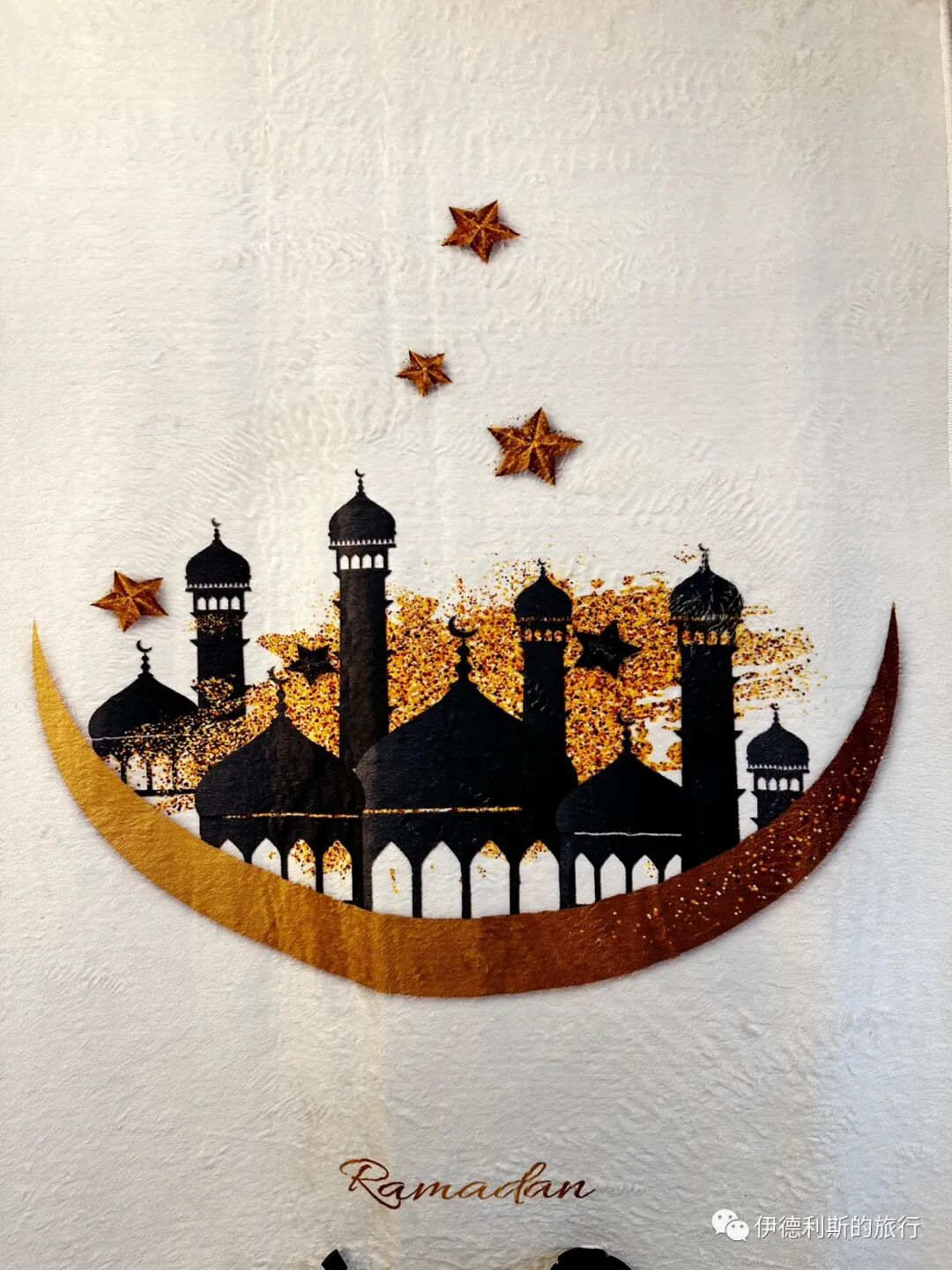
Ramadan is the ninth month of the Islamic calendar and the month when the Quran was revealed. All eligible Muslims (excluding the elderly, young, sick, pregnant, or those traveling) must fast from food and drink between dawn and nightfall, avoid backbiting, and refrain from arguing. This is one of the five pillars of the faith.
Iftar is the meal eaten after sunset every day during Ramadan.
1. Azerbaijani/Turkish restaurant Dardanelles
Yabaolu, located outside Chaoyangmen in Beijing, used to be a major hub for China-Russia trade. Back when China-Russia trade was at its peak, the tricycle drivers in Yabaolu spoke fluent Russian. Because of this, Azerbaijani friends (dosti) who spoke fluent Russian started opening restaurants on the Ritan Shangjie food street near Yabaolu. Due to their neighboring locations and similar cultural customs, some Azerbaijani owners chose to open Turkish restaurants, and Dardanelles is one of them.
As a long-standing Turkish restaurant, I have been eating the Iftar buffet at Dardanelles for many years. They are always very popular every year, so I went early this year to avoid the crowds that come later in the month.
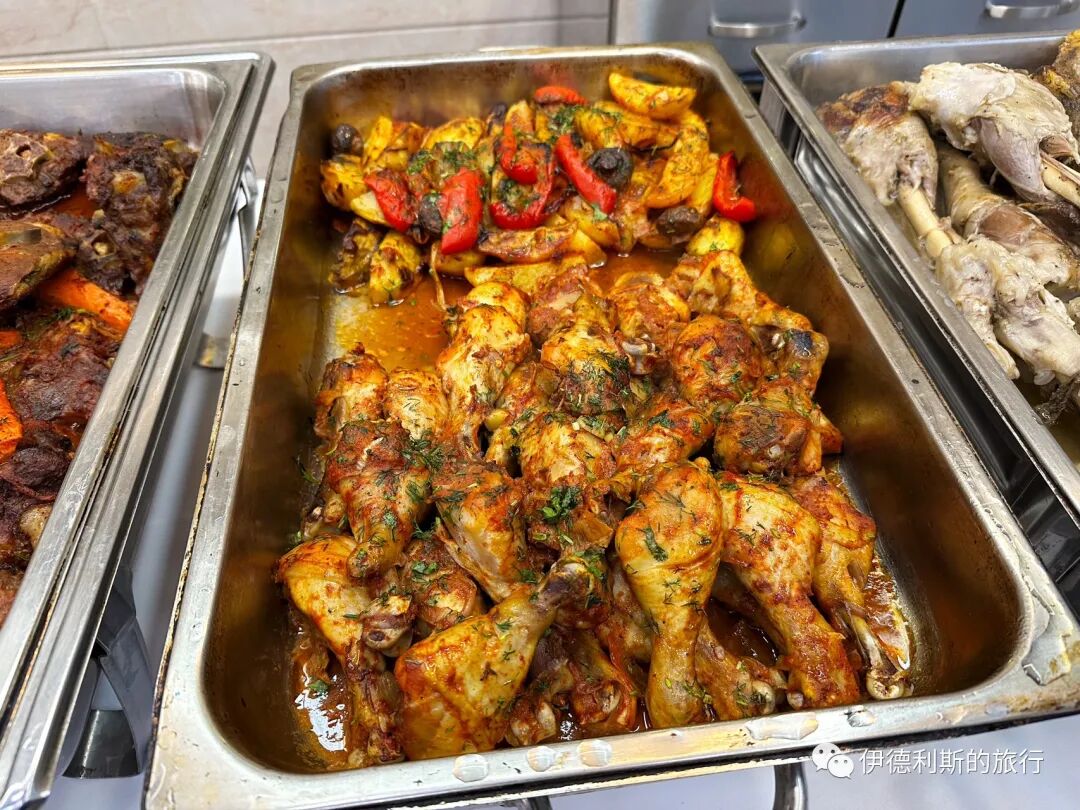
Compared to last year, there are even more hearty dishes this year. It is truly the heartiest Iftar buffet in Beijing. I think the best dish is the lamb leg. It is stewed until soft, and the meat falls off the bone with just a touch of a knife. The meat is very fresh, and you can tell it is high quality. The braised lamb spine (yangxiezi) is also very good. The meat is tender, and the flavor is even richer.
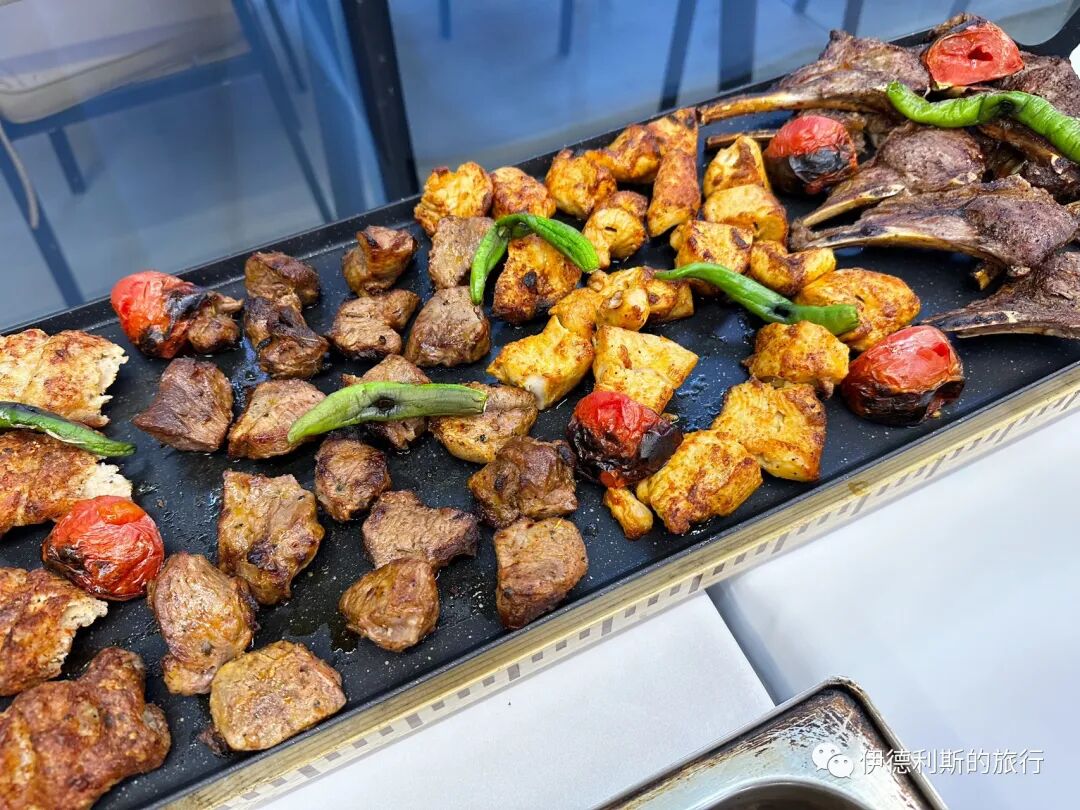
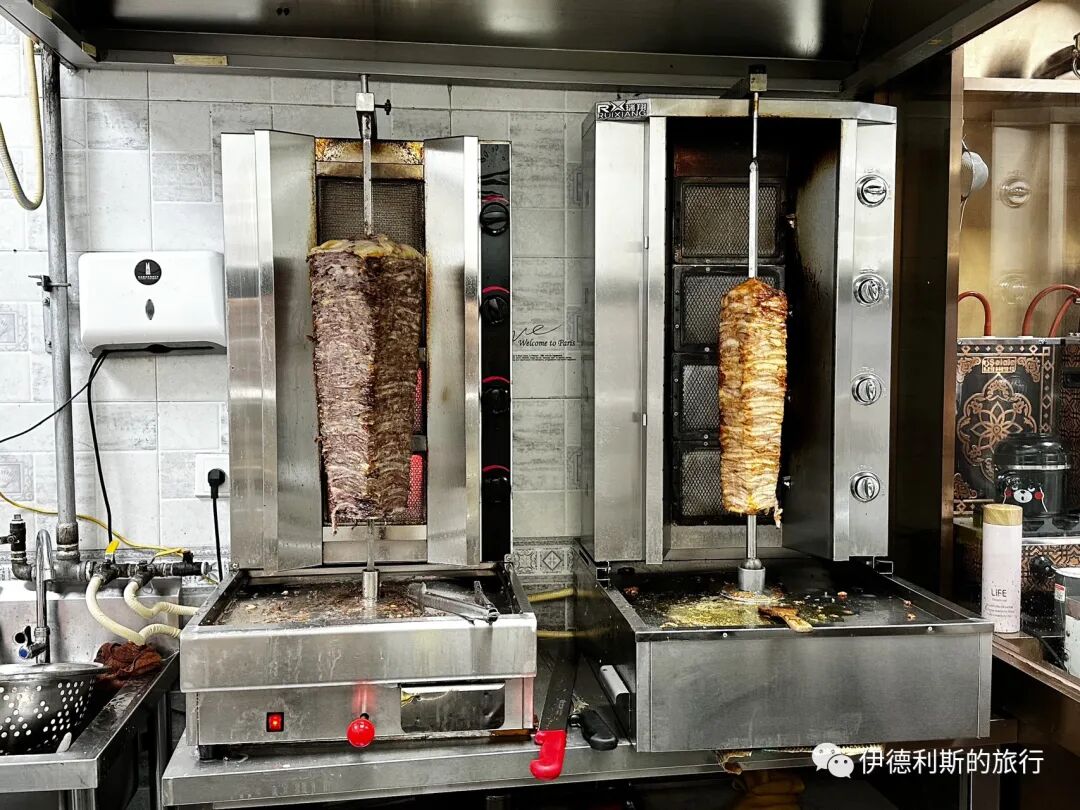
The classic kebab platter remains the same as in previous years, featuring a variety of grilled meats, including both minced meat and chunks. They also added Doner rotisserie meat this year, with both beef and chicken options. Personally, I think the thinly sliced meat isn't as satisfying as the grilled skewers.
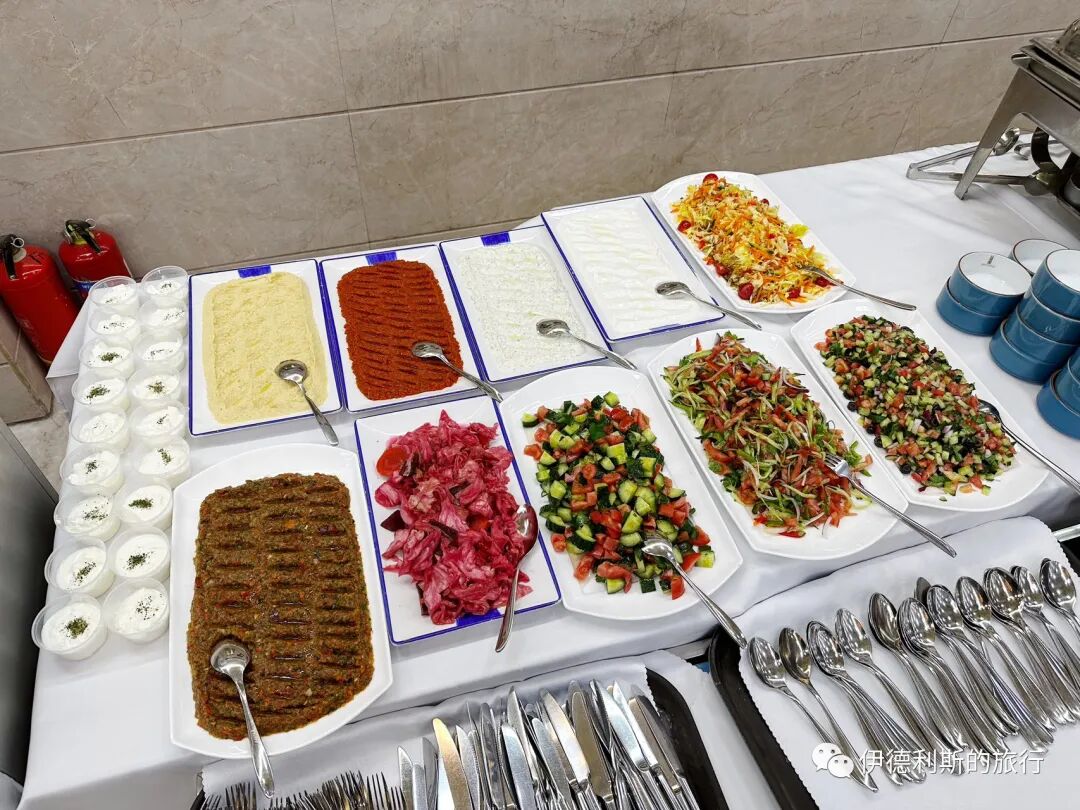
There are various Ottoman appetizers (meze) from the Levant region, including chickpea dip (hummus), vegetable yogurt (haydari), spicy tomato paste (acili ezme), and strained thick yogurt (suzme), which are great for dipping bread. I especially recommend their thick yogurt, which has no added sugar and a very rich milky flavor.
For bread, you can have various Turkish pizzas (pide) with meat or cheese fillings. Since they are prepared in advance, they aren't as good as when they come straight out of the oven, but I still think they taste great.
Besides that, the stews are very rich. I highly recommend the Ottoman specialty vegetable rolls (sarma), which can be wrapped in grape leaves or cabbage. This is a classic Iftar food from the former Ottoman region. Sarma means 'wrapped' in Turkish, and this method is a type of traditional Ottoman stuffed dish (dolma). In winter, cabbage was the main vegetable for Ottoman farmers. People would wrap meat filling and rice in cabbage to eat, which is very delicious.
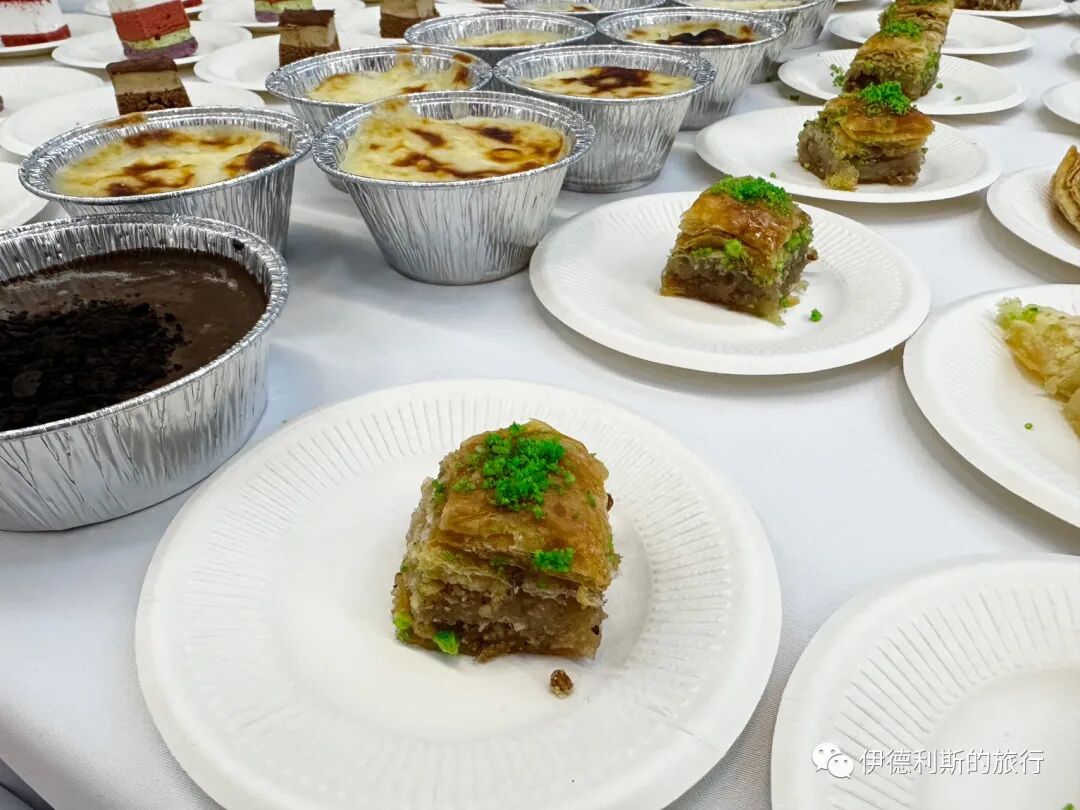
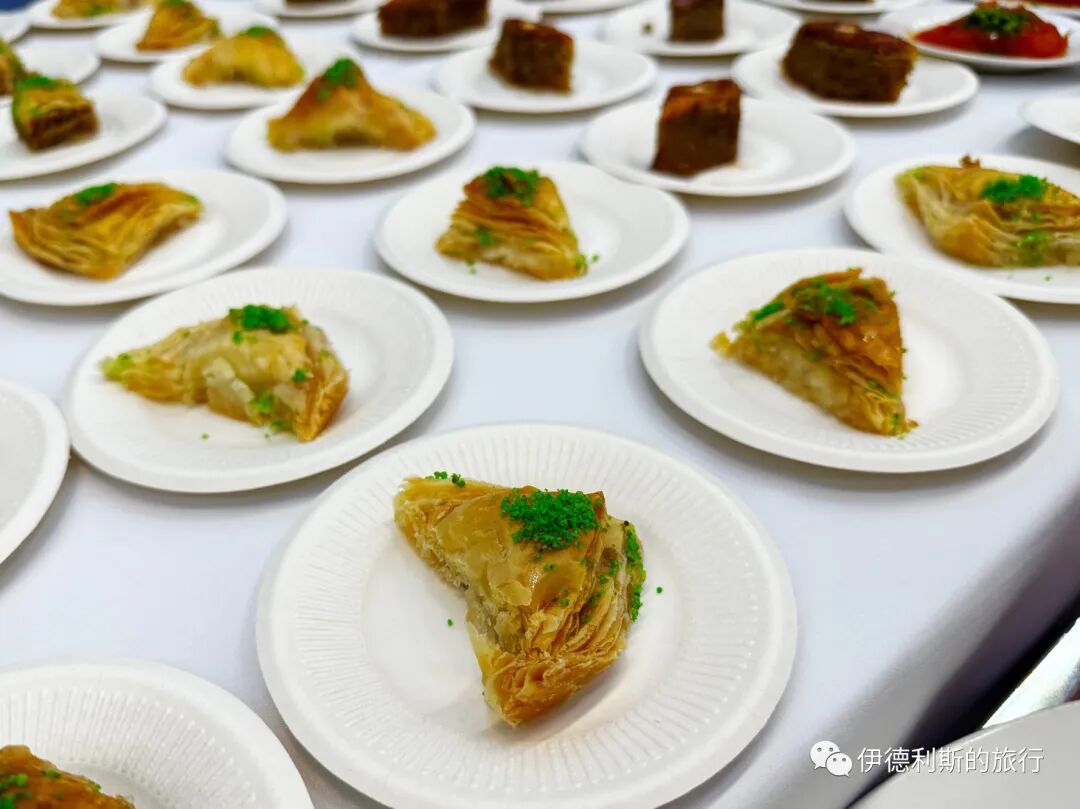
There are several different flavors of Ottoman pastry dessert (baklava). Baklava originated in the Ottoman imperial kitchens of Topkapi Palace in Istanbul. Every year during Ramadan, the Ottoman Sultan would gift baklava on trays to the Janissaries, a ceremony known as the Baklava Procession (Baklava Alayı). Baklava in the Azerbaijan region usually contains almonds or walnuts and is cut into diamond shapes. It is a classic dessert for Iftar.
2. Pakistani restaurant Khan Baba
After tasting Ottoman-style food at the first stop, Dardanelles, the second stop is to try some Mughal specialties. Khan Baba is the first Pakistani restaurant I ever visited, and it has been over ten years now. They have a very good atmosphere, and every meal there is comforting. Having an Iftar buffet at Khan Baba is also a must-do every Ramadan.
Let me share a few dishes from their buffet. First is the grilled chicken chunks (tikka). Tikka comes from the Turkic word tikkü, which means "piece." The Mughal Empire brought this style of grilling spice-marinated boneless meat to South Asia, and chicken is the most common version.
Second is the bean curry (masala), a common way to prepare curry in northern South Asia. Masala is a spice blend. The ingredients vary by region, but it usually includes black and white pepper, cloves, bay leaves, nutmeg, cumin, cinnamon, coriander seeds, fennel, and chili powder.
Third is the minced beef curry, and fourth is the chicken clay pot (handi). Handi is a popular way to eat curry in northern South Asia. You slow-cook meat in a copper pot or clay pot, sealing the lid so the steam stays inside and keeps all the aroma in the food.
Fifth is the fried vegetable fritters (pakora). This is a classic South Asian street snack made by coating onions, eggplant, potatoes, or spinach in chickpea flour and frying them. It is often served as an appetizer with masala tea at South Asian weddings.
The main dish is the classic biryani rice. Biryani is a Persian loanword in Urdu. It likely started in the Mughal royal kitchens, where chefs supposedly combined spicy Indian rice with Persian pilaf. Mughal documents mention both biryanis and pulao (pilaf), and the terms were interchangeable back then. People generally think biryani has more spices and a stronger curry flavor than pilaf.
For dessert, there is milk pudding (kheer). Kheer comes from the Sanskrit word for milk, "kshira," and it has a history of over two thousand years. Kheer is made by boiling milk, sugar, and rice together. You can add toppings like shredded coconut, raisins, saffron, cashews, or pistachios.
The buffet features a classic South Asian Ramadan Iftar drink called Rooh Afza, a concentrated syrup made with various herbs and fruits. Rooh Afza was perfected in 1906 by a Delhi Muslim herbalist named Hakim Hafiz Abdul Majeed. Majeed’s ancestors moved from Kashgar, Xinjiang, to the Mughal Empire in the late 18th century and worked in the herbal medicine trade.
Majeed wanted to create a herbal blend to help the people of Delhi cool down during the summer. He chose various herbs and fruit syrups from traditional South Asian Muslim Unani medicine to make a drink that effectively prevents heatstroke and dehydration during Ramadan. After 1906, Majeed opened a herbal shop in Delhi, which became a factory with a full production line after 1920. He named the factory Hamdard, a Persian loanword in Urdu meaning "companion in pain."
After the partition of India and Pakistan in 1947, Majeed’s eldest son, Hakim Abdul Hameed, stayed in India. His younger son, Hakeem Muhammad Saeed, moved to Karachi, Pakistan, in 1948 and later opened branches in East Pakistan (Bangladesh), making Rooh Afza popular across South Asia.
3. Iraqi Restaurant Taiba
At Taiba in Sanlitun SOHO, you can have an Iftar buffet. The owners are a couple from China and Iraq who serve authentic Arabic food.
Besides grilled chicken and various kebabs, their main dish is lamb and chicken mandi rice. Mandi is a classic Arabic staple. The most traditional way to eat it is to dig a pit in the ground to cook the rice, then spread out a mat, sit on the floor, and eat with your hands. Mandi originated in the Hadhramaut region on the southern coast of the Arabian Peninsula (there is a Yemeni restaurant in Xiaobei, Guangzhou, with this name). It later spread to Egypt, the Levant, and other Arab regions, where it became very popular.
To make traditional mandi, you burn dry wood in a clay oven until it turns into charcoal, then hang meat (mostly lamb, camel, or chicken) rubbed with Hawaij spice inside the oven. The main ingredients of Hawaij spice are cumin, black pepper, turmeric, and cardamom. Once the meat is tender, you pour spiced broth into basmati rice, place the pot at the bottom of the oven, seal the oven with clay, and slow-cook it for up to 8 hours. The finished mandi meat is soft and tender, and the rice is full of the aroma of the meat and spices. It is delicious.
They also have Middle Eastern stuffed vegetables (dolma), which are green peppers, tomatoes, and eggplants stuffed with meat and rice and then stewed. The name dolma comes from the Ottoman era, and you can find recipes for stuffed eggplant in some medieval Arabic cookbooks. Beyond the Middle East, stuffed vegetables (dolma) are found across the Balkans, the South Caucasus, and North Africa under Ottoman rule, with different preparation methods in each place. For example, the Arab region prefers stuffed eggplant, Bosnia and Herzegovina prefers stuffed onions, and the Ottoman court also had a tradition of stuffing melons and fruits.
Another Middle Eastern snack they serve is kibbeh meatballs. These are made by wrapping minced meat, chopped onions, and Middle Eastern spices like cinnamon, nutmeg, cloves, and allspice in cracked wheat, and are usually deep-fried. Lebanon and Syria both consider kibbeh a national dish, but it is actually found in other Arab countries like Egypt and Iraq, as well as in Iran and Armenia.
They have a rich variety of desserts, and the most worth trying is the classic Arab Ramadan dessert, knafeh. According to a famous Arab legend, a physician in the court of the Fatimid or Umayyad Caliphate invented knafeh to satisfy the Caliph's hunger during Ramadan. Knafeh later became a classic Arab iftar dessert and even appeared in One Thousand and One Nights.
Knafeh is made of buttery pastry, stretchy cheese, and crushed pistachios, and is drizzled with a syrup called attar when eaten. Although it has a history of over a thousand years, the current fried, stretchy style formed in the mid-15th century during the Ottoman period and gradually spread throughout the Ottoman-ruled Middle East.
They also serve the classic Arab appetizer mezza, which is perfect for dipping with flatbread. The term mezza for an appetizer is borrowed from the Persian word "mazzeh," meaning "taste," which later entered the Middle East under Ottoman rule via Persian. When I visited, they served six appetizers, including two dips: hummus (chickpea puree) and baba ghanoush (roasted eggplant puree). Tabbouleh salad is made by mixing parsley, tomatoes, mint, onions, and soaked cracked wheat with olive oil and lemon juice. Fattoush salad is made by mixing toasted or fried pieces of khubz (Arab flatbread) with various vegetables.
4. Tunisian restaurant La Medina
I had the Ramadan iftar buffet at the Tunisian restaurant La Medina by the Liangma River. It is super crowded on weekends, which is likely the case for all iftar buffets in Beijing, so friends, it is better to choose a weekday.
First, let me introduce their restaurant name. Medina means "city" in Arabic. In North Africa, a medina usually refers to an old town built with city walls and many narrow, maze-like alleys. The Medina of Tunis, the capital of Tunisia, was listed as a UNESCO World Heritage site in 1979. It is one of the most famous medinas, containing 700 historical buildings including palaces, mosques, mausoleums, madrasas, and fountains.
Compared to last year, the variety at La Medina has decreased, which is truly a pity. Last year at the buffet, I had Tunisian harissa soup, merguez (North African sausage), and kibbeh, but I didn't get to eat them this time. I am not sure if it was just bad timing.
First, there were eight meze appetizers, including hummus, baba ghanoush, and tabbouleh, which can be found in every Arab restaurant. The most worth trying is the Tunisian-style mechouia salad, which you can only find at their place in Beijing. Mechouia means "grilled" in Arabic. It is made by roasting onions, green peppers, tomatoes, and garlic in an oven, seasoning them with caraway, salt, and black pepper, adding olive oil, and finally garnishing with olives, tuna, and boiled eggs.
The main course is the classic North African Berber dish, couscous, served with tajine (stew cooked in a clay pot). Couscous is a staple food for the Berbers. It is made by rubbing semolina flour into millet-sized grains, which are then dried. A clay pot (tajine) is a cooking vessel with a round, flat bottom and a conical or domed top. This design lets evaporated steam return to the bottom, and you can add water through the hole in the lid.
They also serve fried triangular pastries (sambousek) and chickpea fritters (falafel). Sambousek is a classic snack for Arabs during Ramadan. It originated from the Iranian sanbosag and later spread to various places with the spread of Persian culture. It entered Arab cuisine after the 10th century, reached South Asia with the Delhi Sultanate after the 13th century, and later spread to China, Indonesia, and across Africa. In some Hui Muslim communities in China, this snack is still called sanmosan.
For dessert after the meal, there is basbousa, which originated in Egypt. Basbousa is a semolina cake soaked in syrup. It is first baked in a pan and then soaked with orange blossom water, rose water, or syrup.
5. Palestinian restaurant Al Safir
I had the Ramadan iftar buffet at the Palestinian restaurant Al Safir in Sanyuanqiao. This is the fifth iftar buffet I have tried, following La Medina, Taiba, Dardanelles, and Khan Baba.
I make sure to eat at Al Safir's iftar buffet every year. Their 15 types of Levantine appetizers, known as meze, are their biggest highlight. The owner is also a very kind, hospitable person with strong faith, which makes dining there feel very comfortable. They have plenty of outdoor seating. It would be great to eat outside once the weather warms up next week, but we were worried about the crowds, so we specifically chose today because it was windy and less busy, which made the meal feel more relaxed.
For a traditional Arab iftar, you should follow the Sunnah by eating dates first, then having soup. They usually serve lentil soup or chicken soup. This year they added broccoli soup, which I am not quite used to, but you can give it a try. After the prayer, the main meal begins. Here you can eat sambousek, the classic lamb-filled fried pastry that Arabs enjoy during Ramadan.
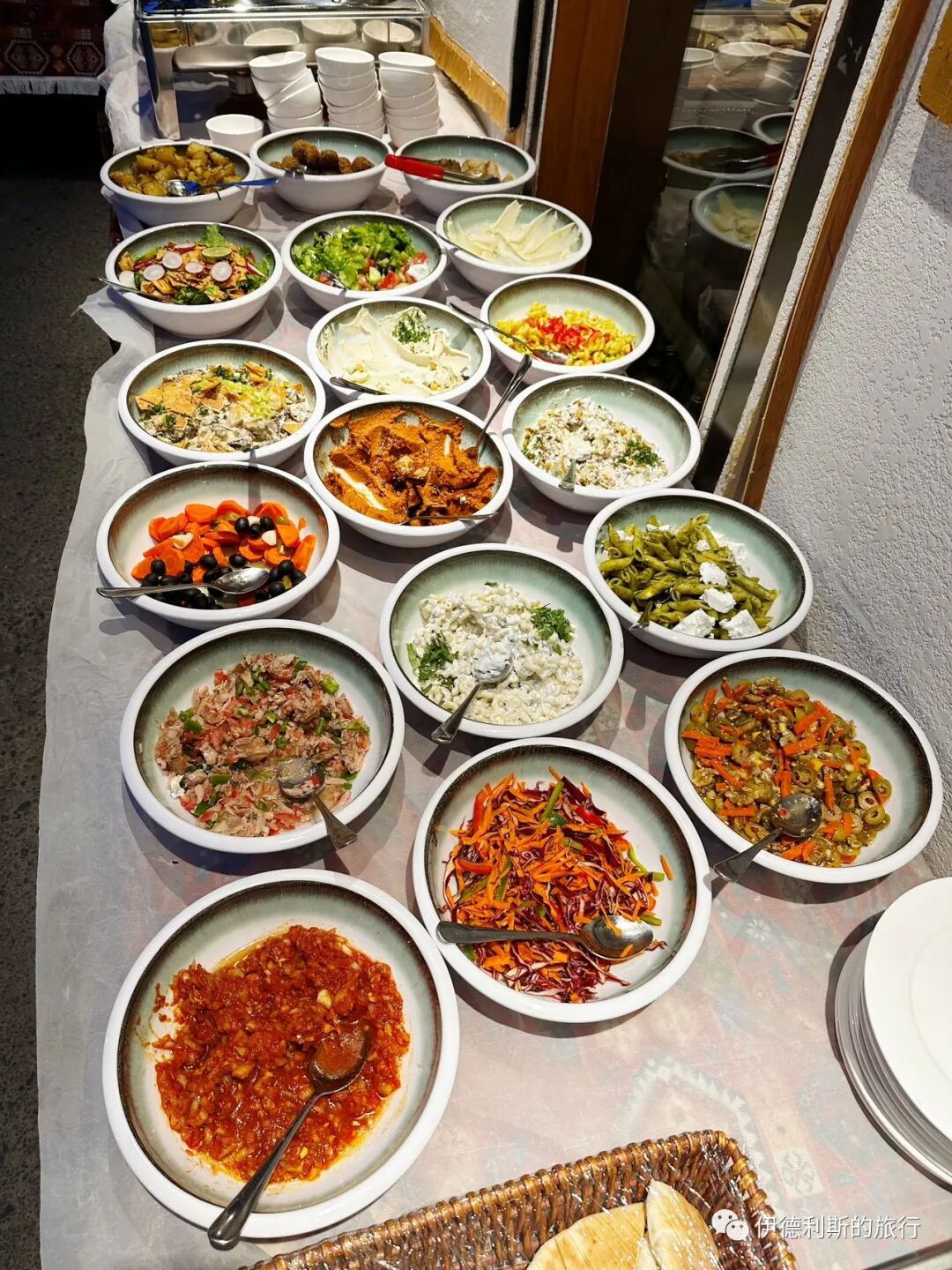
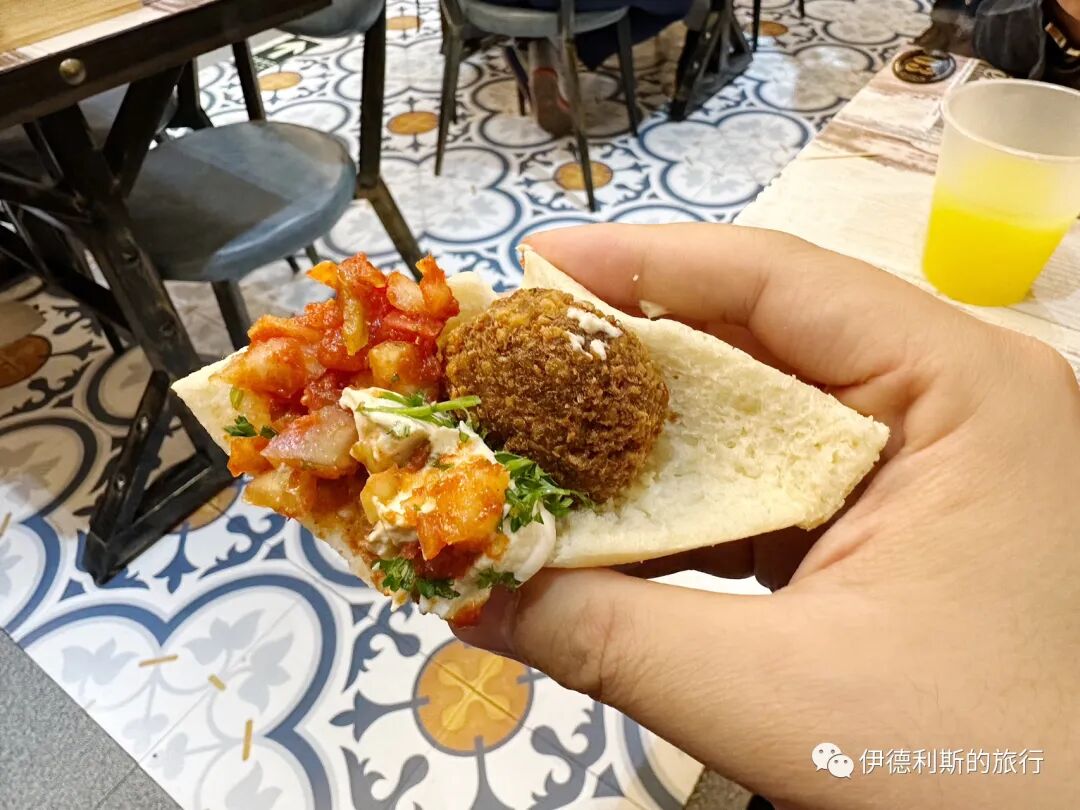
The classic Levantine way to eat is to stuff falafel and various sauces into pita bread, or simply dip the pita bread into the sauces. Among all the meze, my favorite is the red qalayet bandora. Al Safir might be the only place in Beijing that serves it. This dish is made with tomatoes, onions, chili peppers, and olive oil. It is said to have originated in the villages near the Dead Sea, where the hot climate of the Jordan Valley is perfect for growing tomatoes. They also have muhammara, made with walnuts, red bell peppers, pomegranate molasses, and breadcrumbs. This meze is said to have originated in Aleppo, Syria.
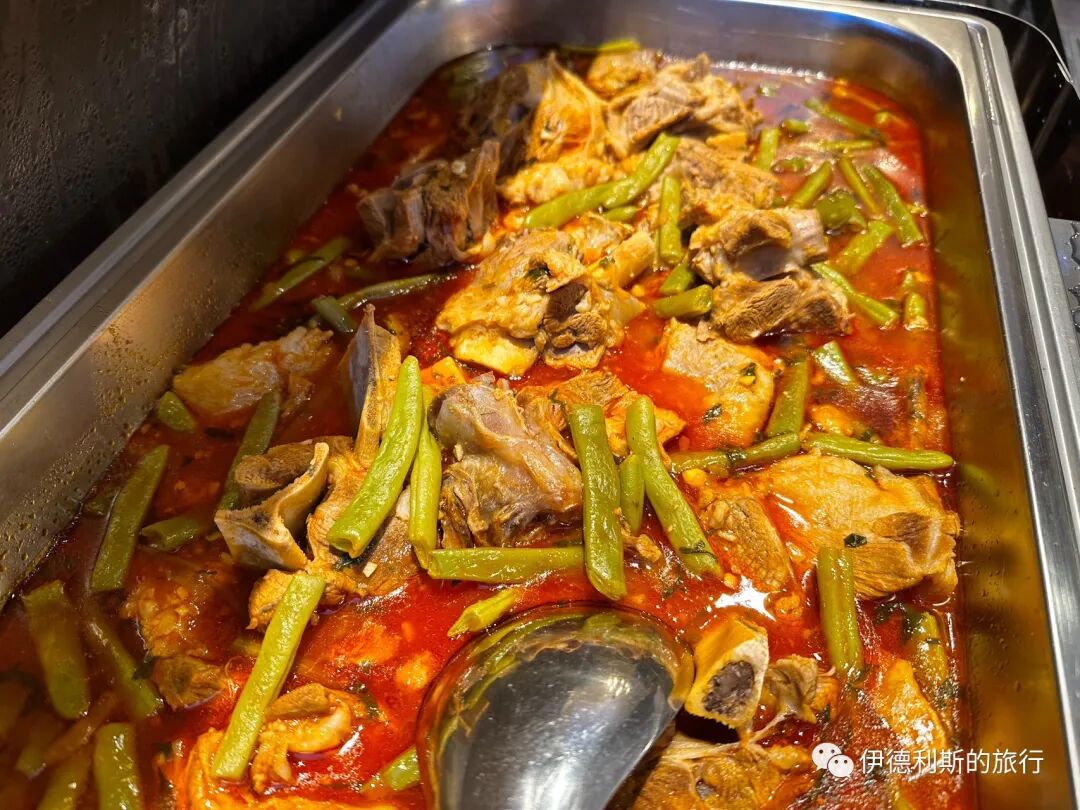
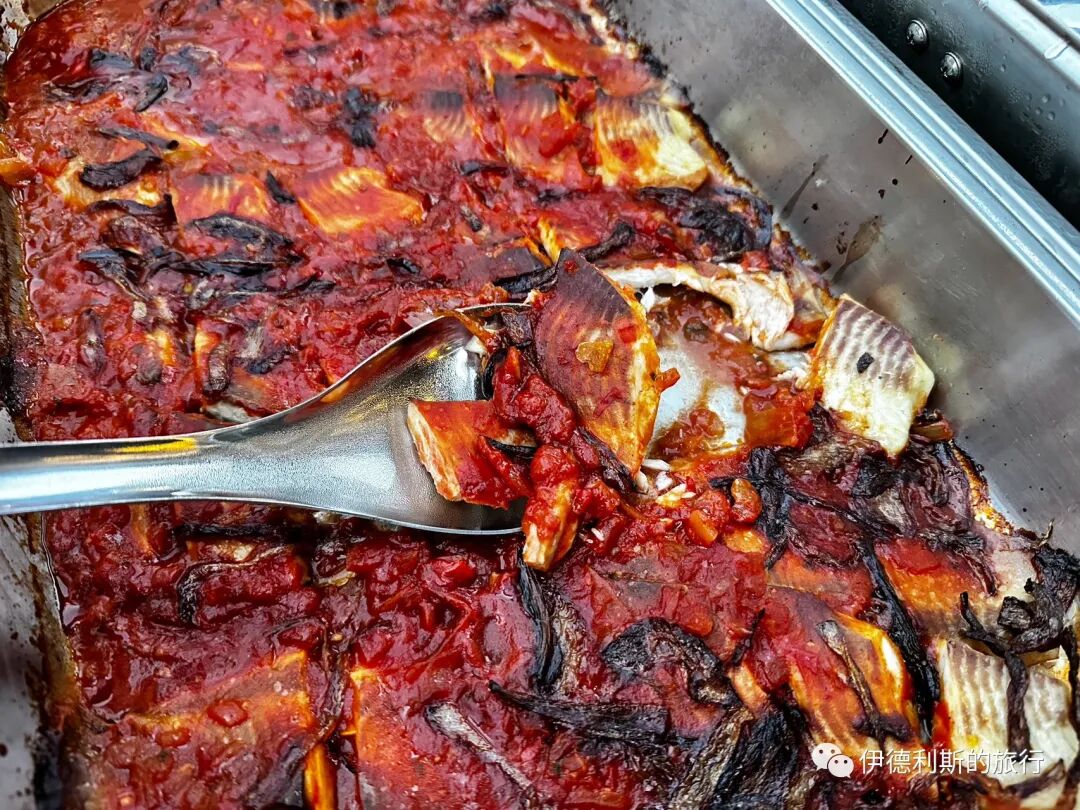
Their main dishes are stewed lamb and roasted chicken. The lamb is tender and fragrant, and it tastes great with long-grain rice. I could not stop eating it. The roasted chicken is a bit tougher than the stewed lamb, but the flavor is still good.
I will take this opportunity to explain the different categories of Arab cuisine. First, the Arab world can be divided into two main parts: east and west. The North African region, excluding Egypt, is called the Maghreb, which means the land of the sunset. The food here is strongly influenced by the Berbers. The staple food is couscous, and specialties include North African sausages and tagine. The Tunisian restaurant La Medina on Liangma River is a representative of this style.
The eastern part of the Arab world is called the Mashriq, which means the land of the sunrise. The Arab regions east of Egypt belong to this area. The staple food here is long-grain rice rather than couscous. All Arab restaurants in Beijing except for La Medina belong to this region.
The Mashriq region can be further divided into several areas. First is the Arabian Peninsula. This region loves camel meat and various types of rice pilaf, with Yemeni cuisine being the most famous. There are several Yemeni restaurants in Guangzhou.
Cuisine in the Mesopotamia region, dominated by Iraq, is also very rich. This was once the court of the Abbasid Caliphate, and the earliest Arab cookbooks came from here. The owner of Taiba in Sanlitun is Iraqi. If you are interested, you can go and have a taste.
Among all Arab cuisines, Levantine cuisine has the most far-reaching influence. The Levant refers to the eastern Mediterranean coast, including Palestine, Jordan, Lebanon, Syria, and surrounding areas. Levantine cuisine is most famous for its meze, which has influenced the eating habits of the entire Middle East. Syrian restaurants like 1001 Nights and BRBR in Beijing, the Lebanese restaurant Al Ameen, and Palestinian restaurants like Al Safir and Zayton all belong to Levantine cuisine. view all
Summary: Halal Food Guide: Beijing Ramadan Iftar — Five International Buffets is presented here as a firsthand travel account in clear English, beginning with this scene: Every year during Ramadan, having an Iftar buffet at one of the foreign restaurants in Beijing is a regular tradition for me. The account keeps its focus on Beijing Iftar, Ramadan Food, Halal Buffets while preserving the names, places, food, and historical details from the Chinese source.
Every year during Ramadan, having an Iftar buffet at one of the foreign restaurants in Beijing is a regular tradition for me. Compared to last year, there are two main changes. First, the Iraqi restaurant Taiba in Sanlitun expanded its space and now offers an Iftar buffet. Their lamb Mandi rice is delicious and comes highly recommended. The second change is that the Azerbaijani/Turkish restaurant Dardanelles on Ritan Shangjie has raised its prices and upgraded its menu. They added many hearty dishes, and the stewed lamb leg is so big and tender that it leaves you completely full.
Let me briefly explain two terms here.
Ramadan is the ninth month of the Islamic calendar and the month when the Quran was revealed. All eligible Muslims (excluding the elderly, young, sick, pregnant, or those traveling) must fast from food and drink between dawn and nightfall, avoid backbiting, and refrain from arguing. This is one of the five pillars of the faith.
Iftar is the meal eaten after sunset every day during Ramadan.
1. Azerbaijani/Turkish restaurant Dardanelles
Yabaolu, located outside Chaoyangmen in Beijing, used to be a major hub for China-Russia trade. Back when China-Russia trade was at its peak, the tricycle drivers in Yabaolu spoke fluent Russian. Because of this, Azerbaijani friends (dosti) who spoke fluent Russian started opening restaurants on the Ritan Shangjie food street near Yabaolu. Due to their neighboring locations and similar cultural customs, some Azerbaijani owners chose to open Turkish restaurants, and Dardanelles is one of them.
As a long-standing Turkish restaurant, I have been eating the Iftar buffet at Dardanelles for many years. They are always very popular every year, so I went early this year to avoid the crowds that come later in the month.
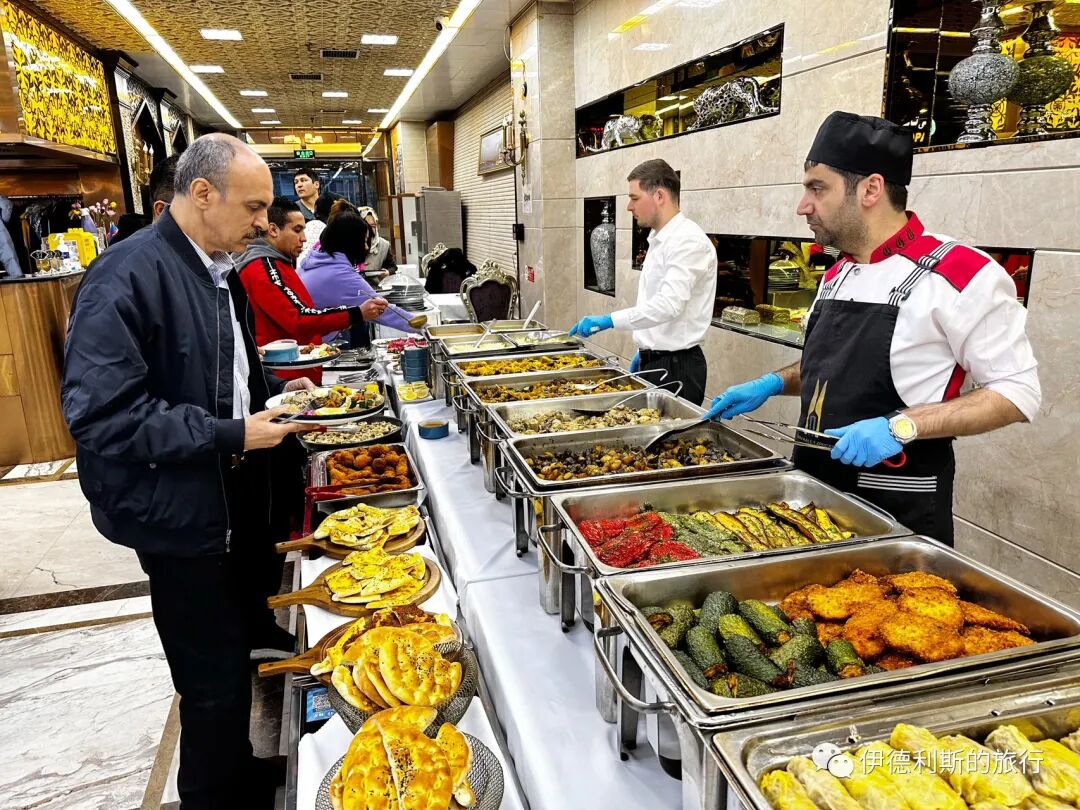
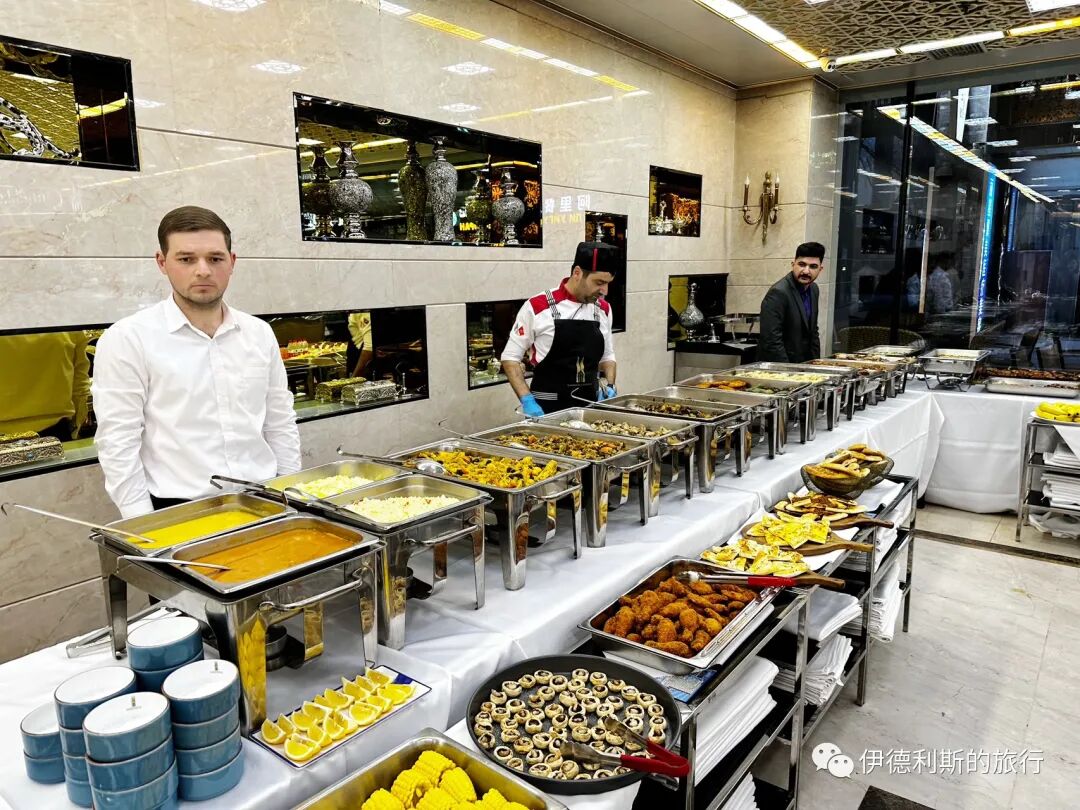
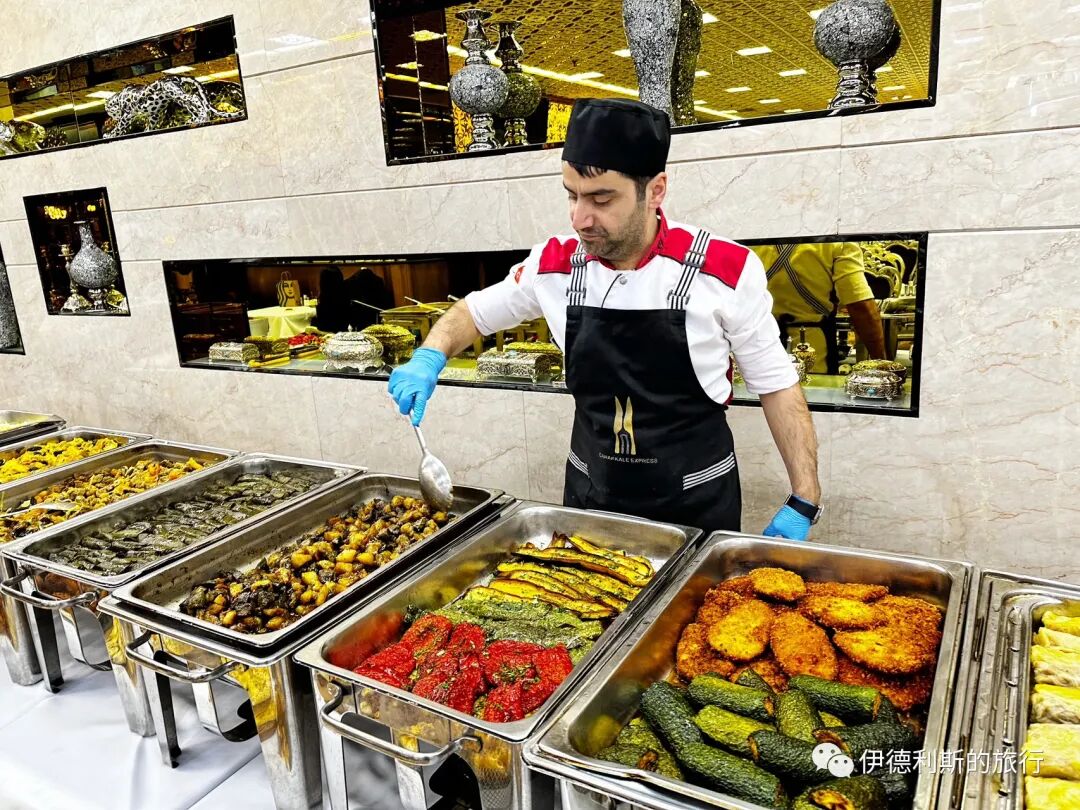
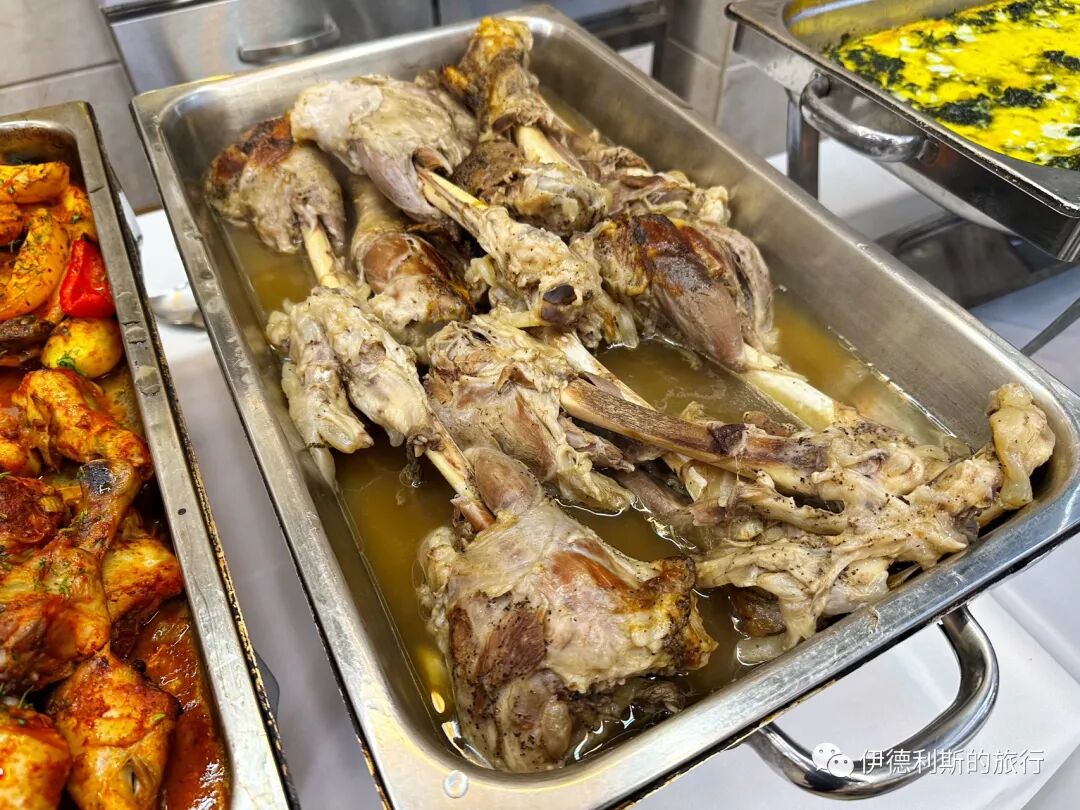
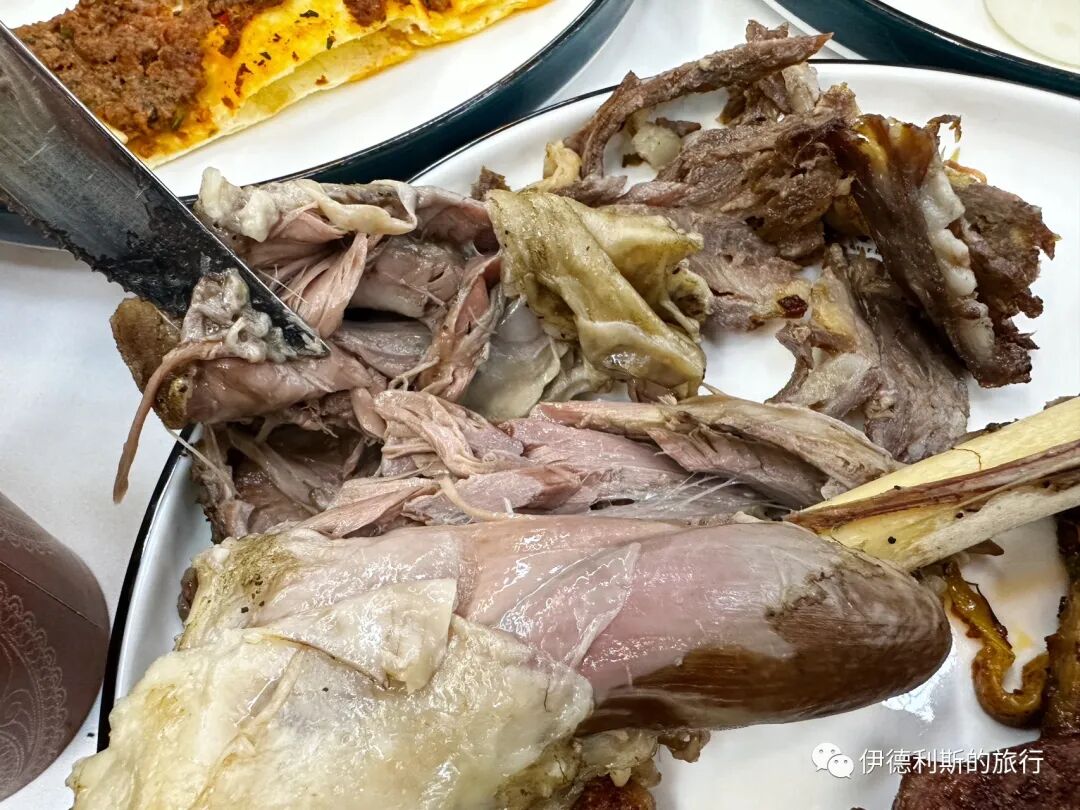
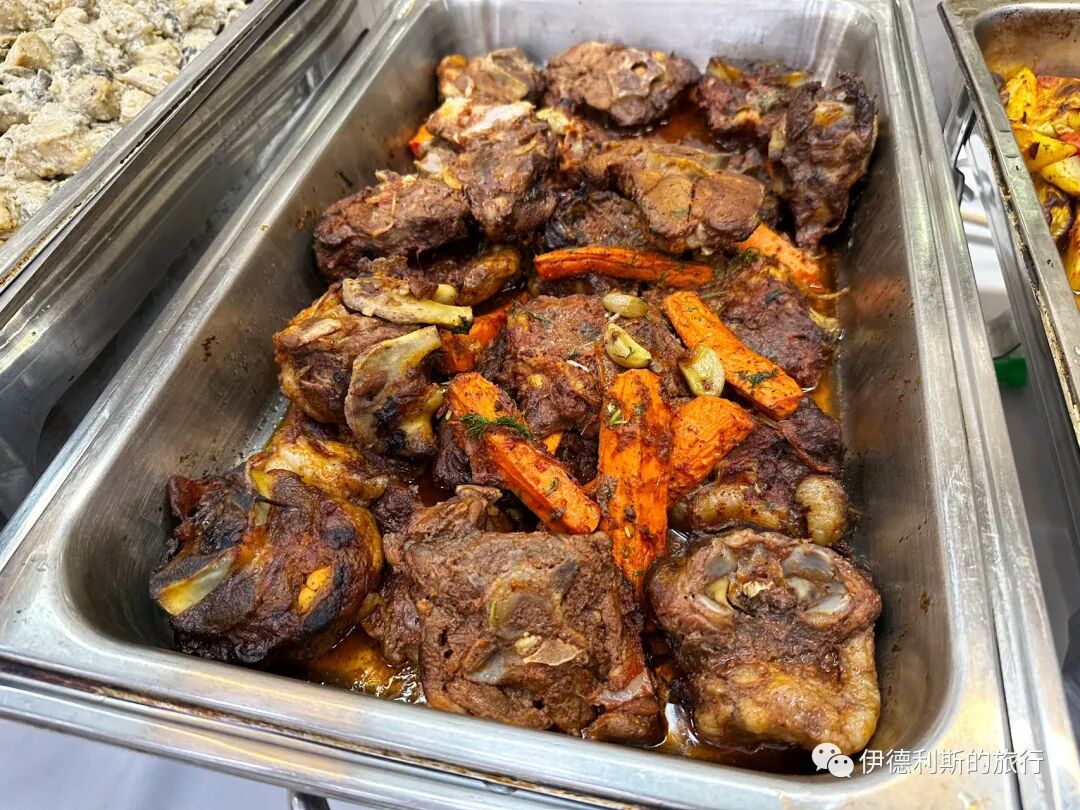
Compared to last year, there are even more hearty dishes this year. It is truly the heartiest Iftar buffet in Beijing. I think the best dish is the lamb leg. It is stewed until soft, and the meat falls off the bone with just a touch of a knife. The meat is very fresh, and you can tell it is high quality. The braised lamb spine (yangxiezi) is also very good. The meat is tender, and the flavor is even richer.
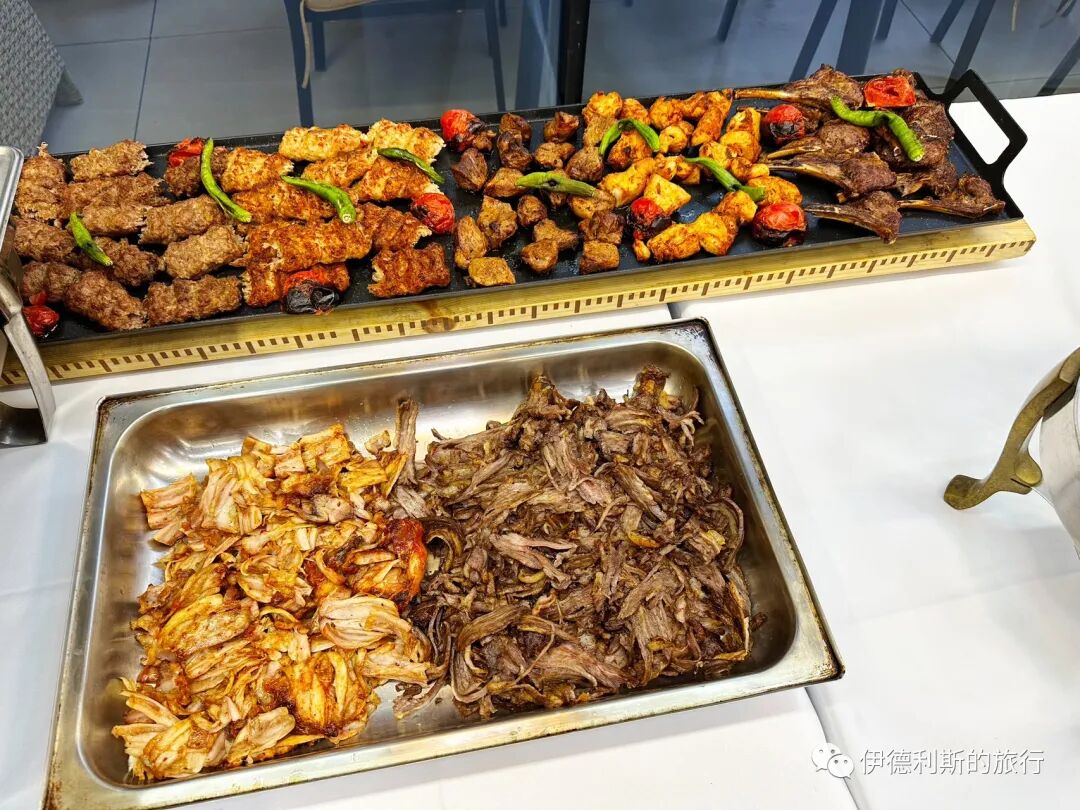
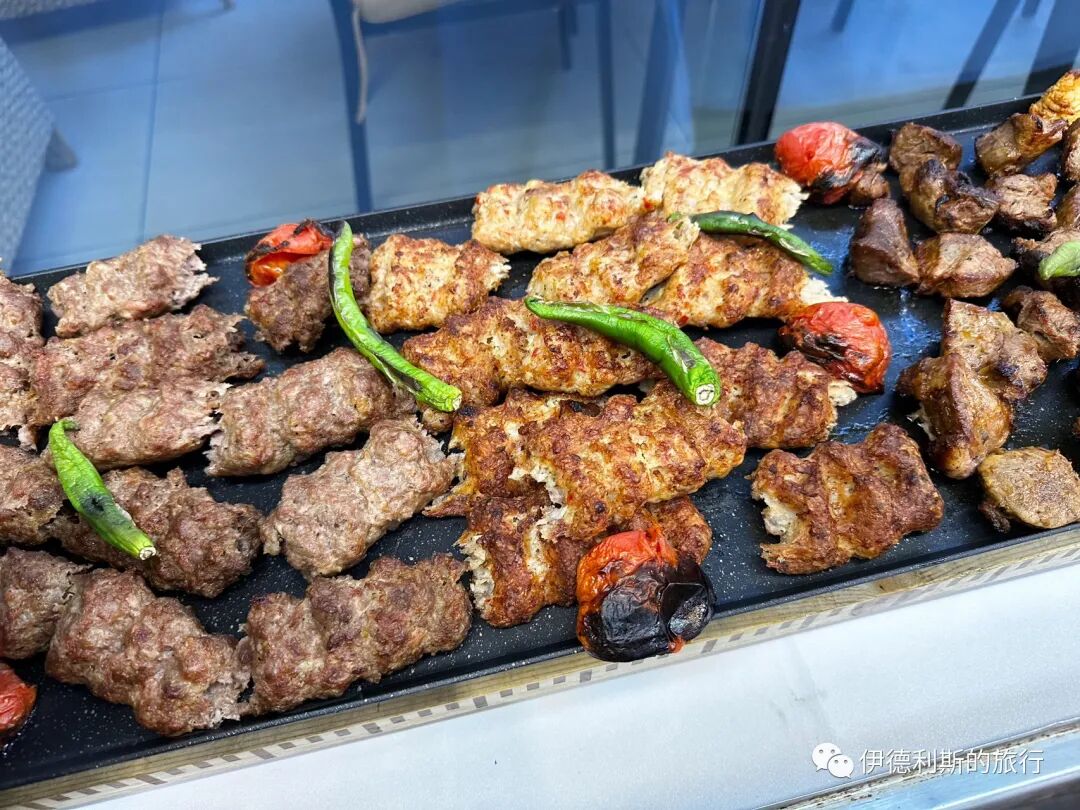
The classic kebab platter remains the same as in previous years, featuring a variety of grilled meats, including both minced meat and chunks. They also added Doner rotisserie meat this year, with both beef and chicken options. Personally, I think the thinly sliced meat isn't as satisfying as the grilled skewers.
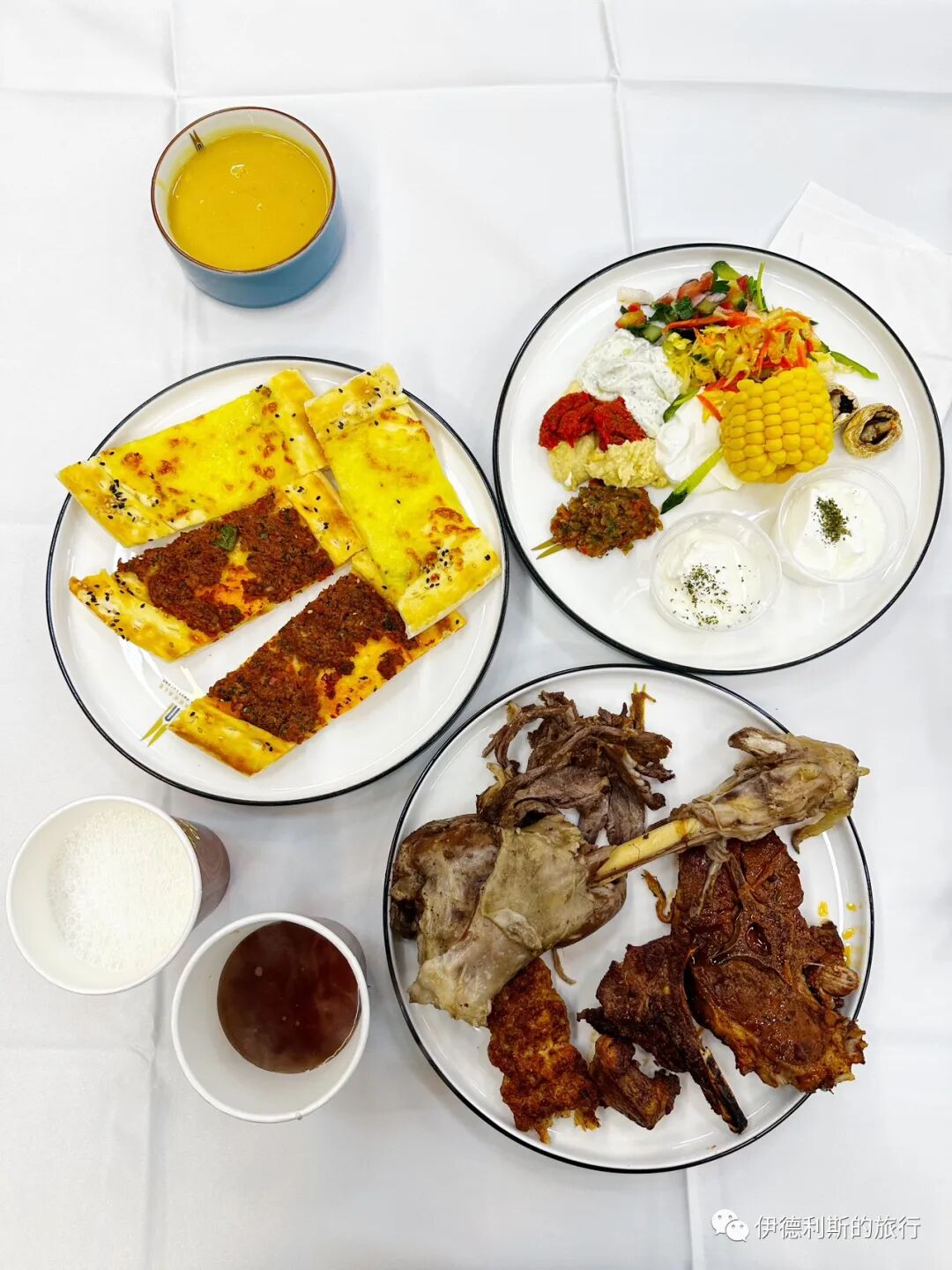
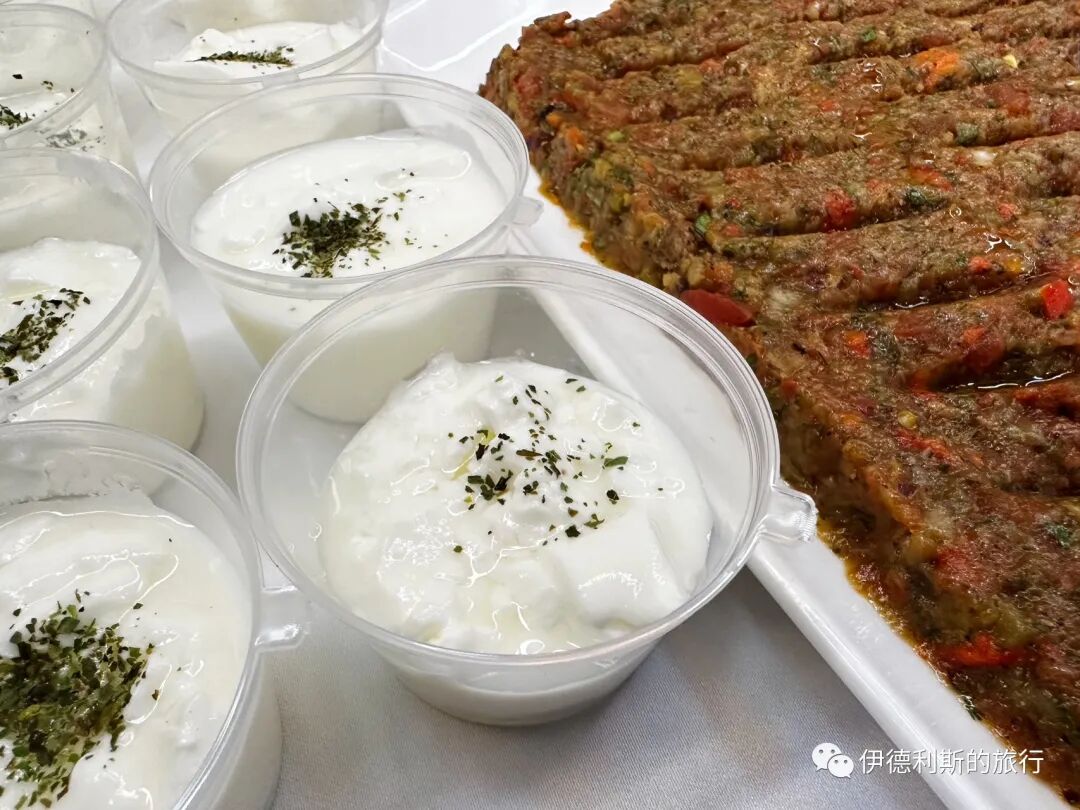
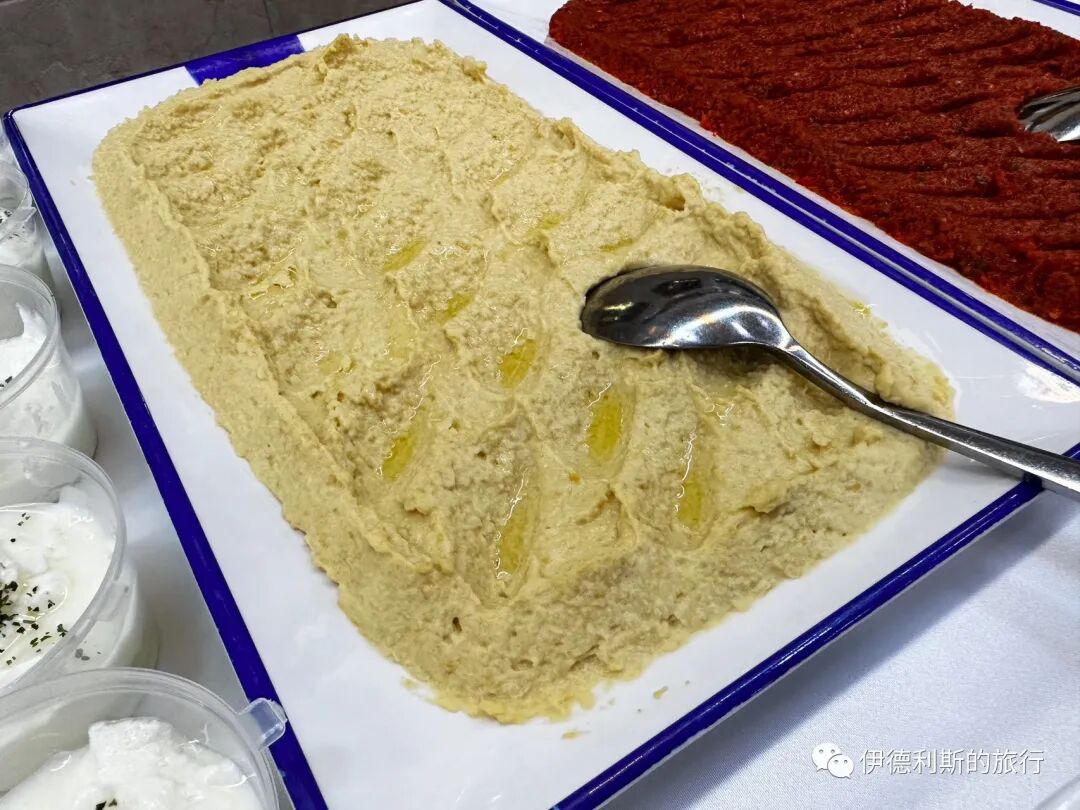
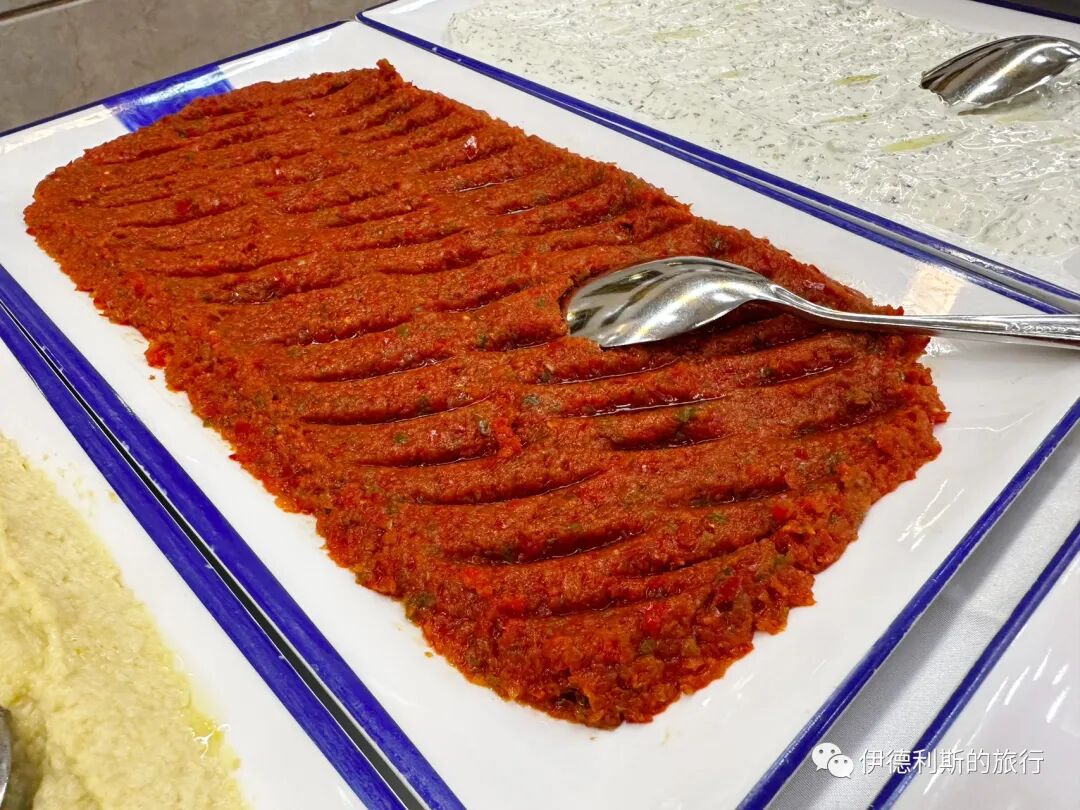
There are various Ottoman appetizers (meze) from the Levant region, including chickpea dip (hummus), vegetable yogurt (haydari), spicy tomato paste (acili ezme), and strained thick yogurt (suzme), which are great for dipping bread. I especially recommend their thick yogurt, which has no added sugar and a very rich milky flavor.
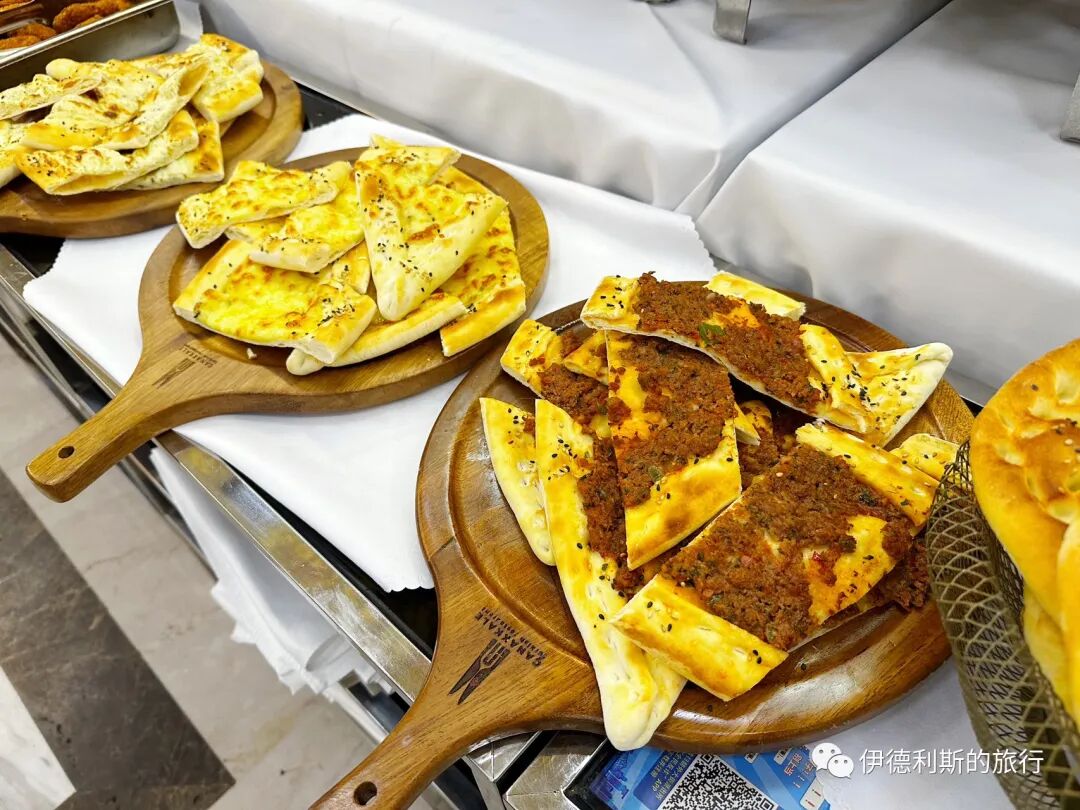
For bread, you can have various Turkish pizzas (pide) with meat or cheese fillings. Since they are prepared in advance, they aren't as good as when they come straight out of the oven, but I still think they taste great.
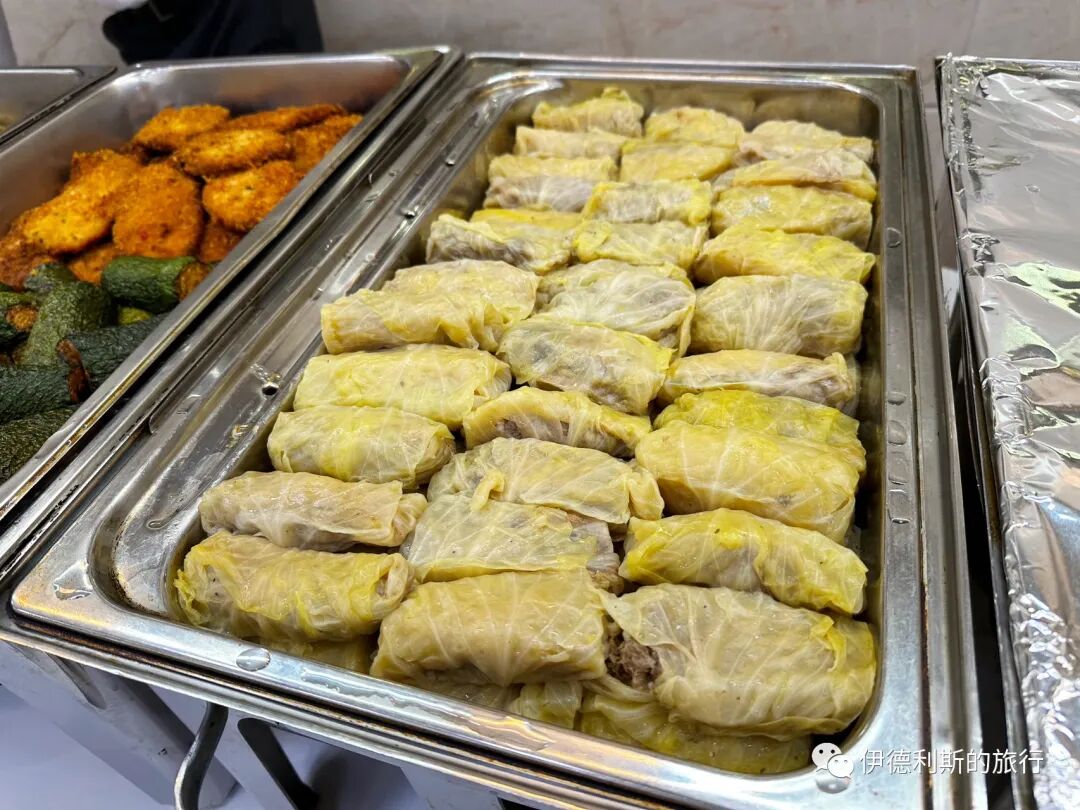
Besides that, the stews are very rich. I highly recommend the Ottoman specialty vegetable rolls (sarma), which can be wrapped in grape leaves or cabbage. This is a classic Iftar food from the former Ottoman region. Sarma means 'wrapped' in Turkish, and this method is a type of traditional Ottoman stuffed dish (dolma). In winter, cabbage was the main vegetable for Ottoman farmers. People would wrap meat filling and rice in cabbage to eat, which is very delicious.
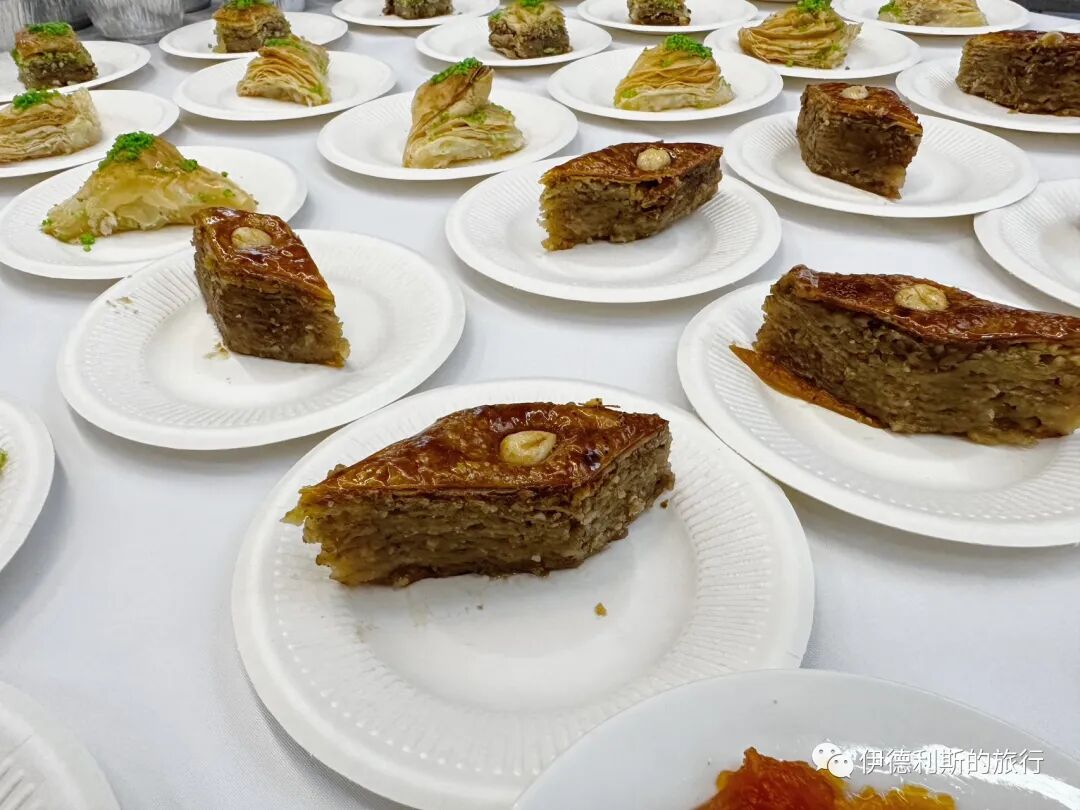
There are several different flavors of Ottoman pastry dessert (baklava). Baklava originated in the Ottoman imperial kitchens of Topkapi Palace in Istanbul. Every year during Ramadan, the Ottoman Sultan would gift baklava on trays to the Janissaries, a ceremony known as the Baklava Procession (Baklava Alayı). Baklava in the Azerbaijan region usually contains almonds or walnuts and is cut into diamond shapes. It is a classic dessert for Iftar.
2. Pakistani restaurant Khan Baba
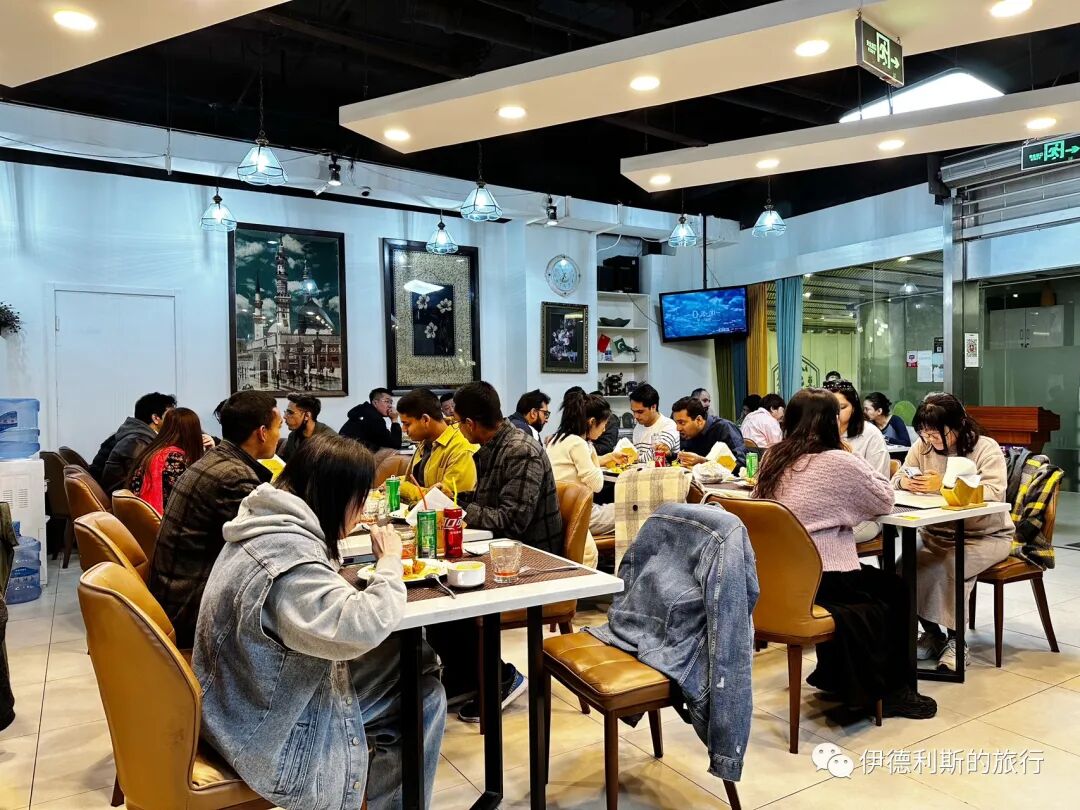
After tasting Ottoman-style food at the first stop, Dardanelles, the second stop is to try some Mughal specialties. Khan Baba is the first Pakistani restaurant I ever visited, and it has been over ten years now. They have a very good atmosphere, and every meal there is comforting. Having an Iftar buffet at Khan Baba is also a must-do every Ramadan.
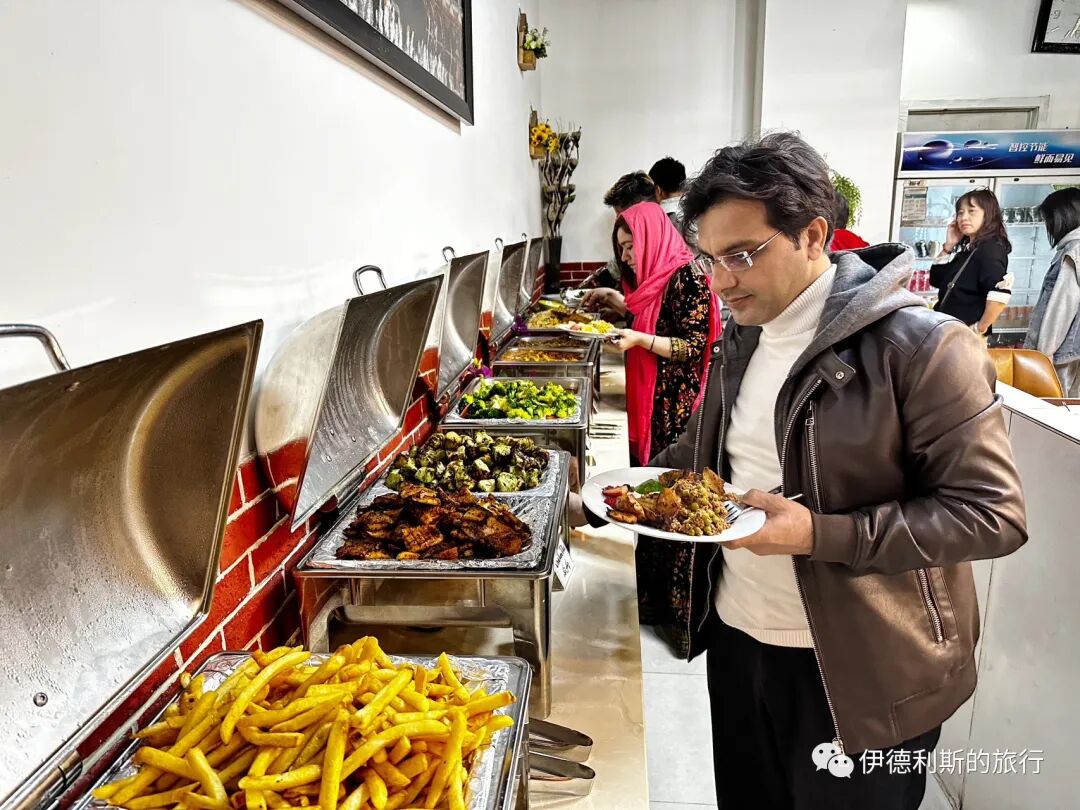
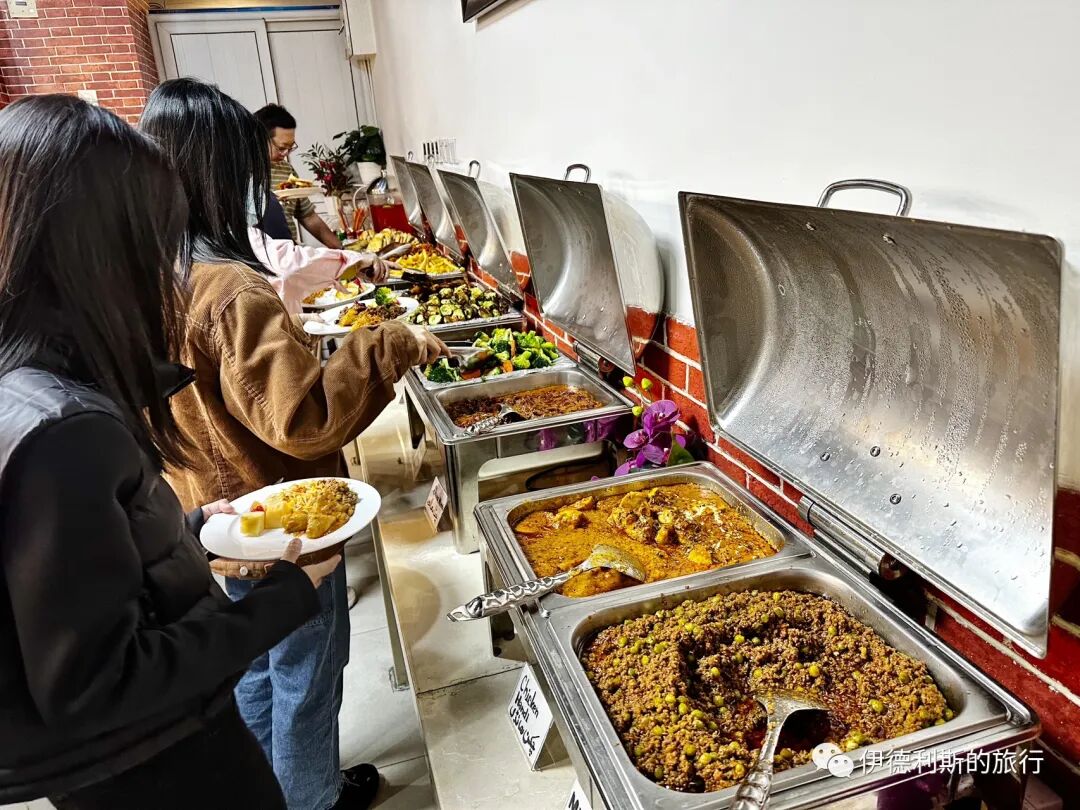
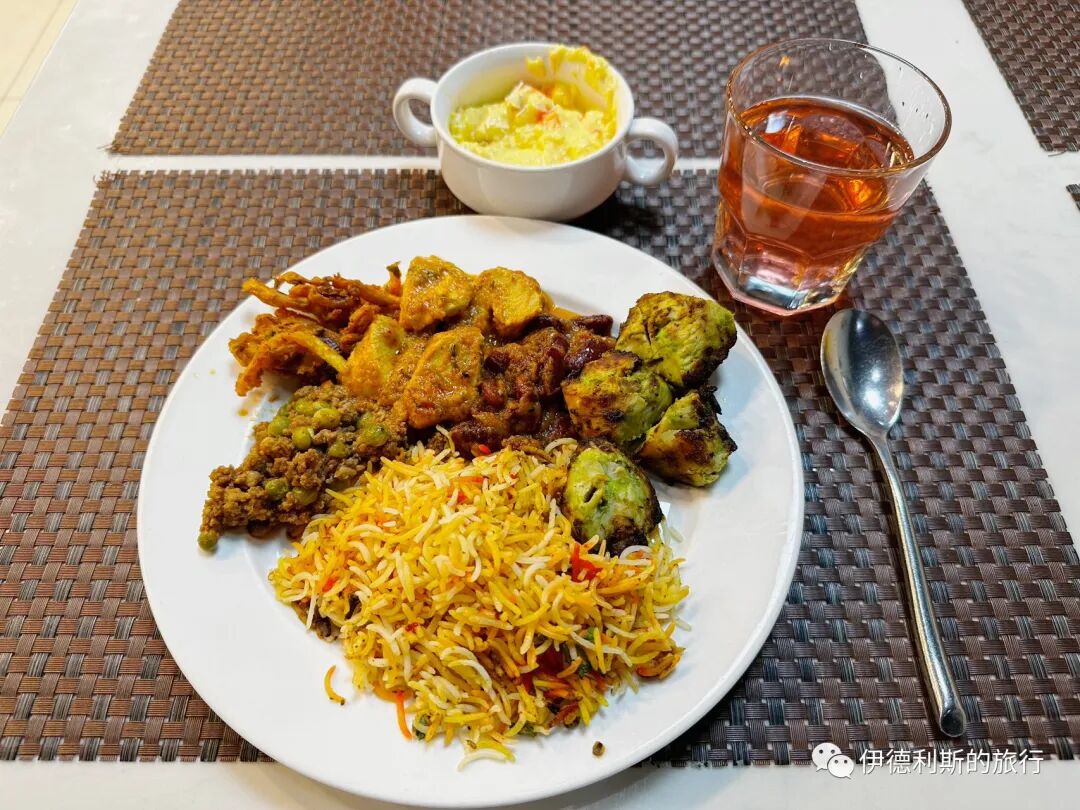
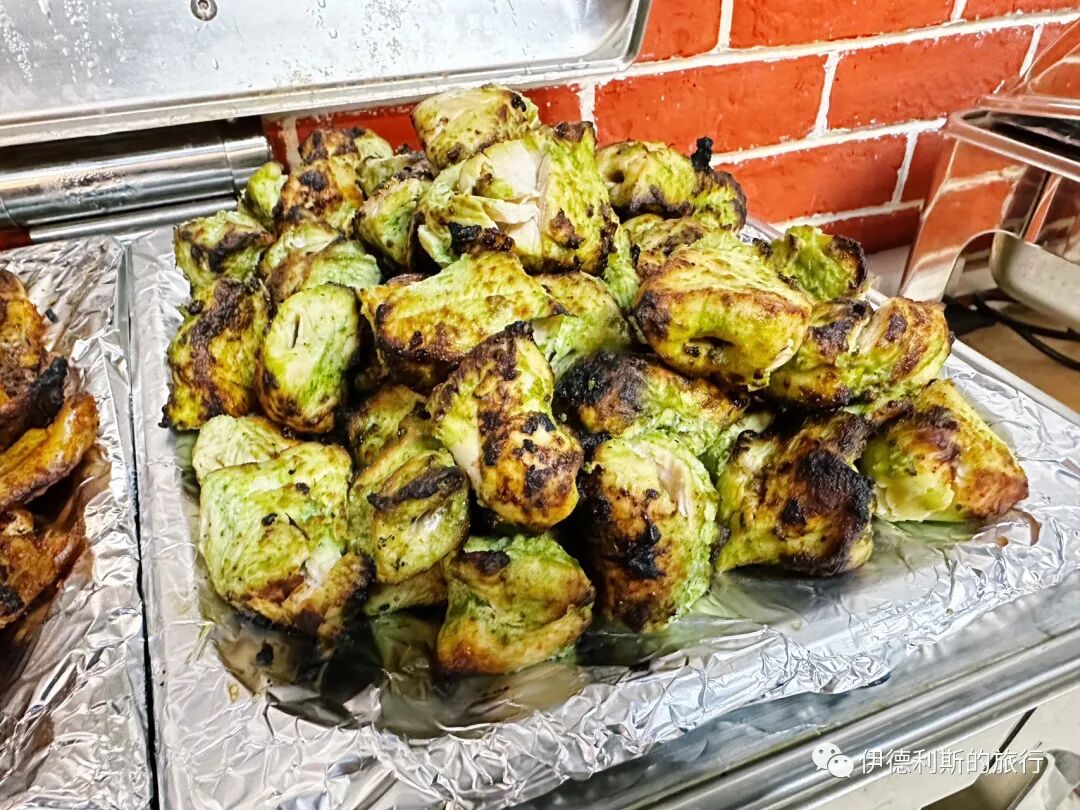
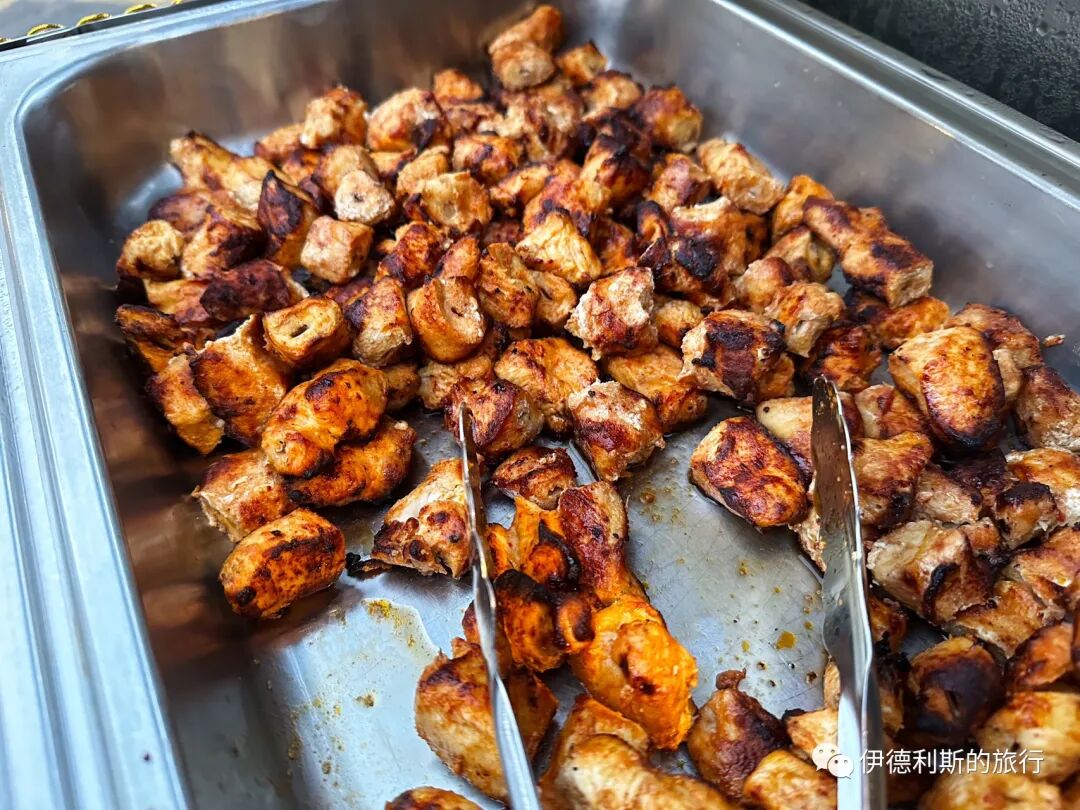
Let me share a few dishes from their buffet. First is the grilled chicken chunks (tikka). Tikka comes from the Turkic word tikkü, which means "piece." The Mughal Empire brought this style of grilling spice-marinated boneless meat to South Asia, and chicken is the most common version.
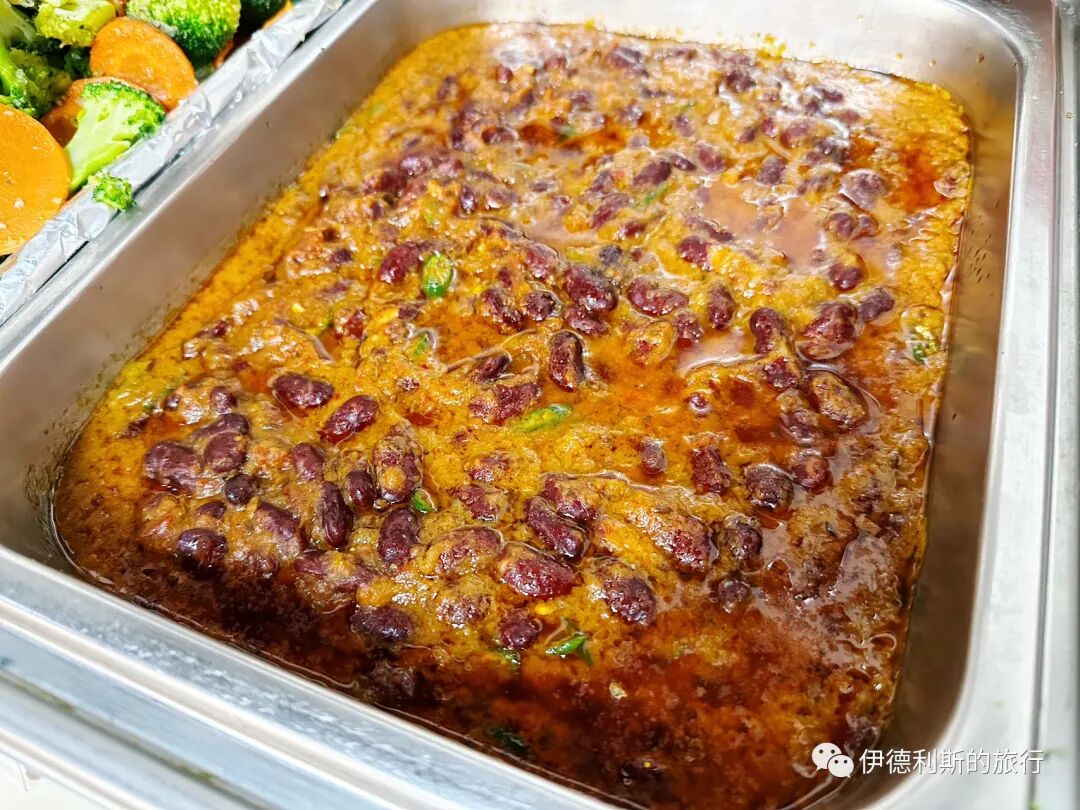
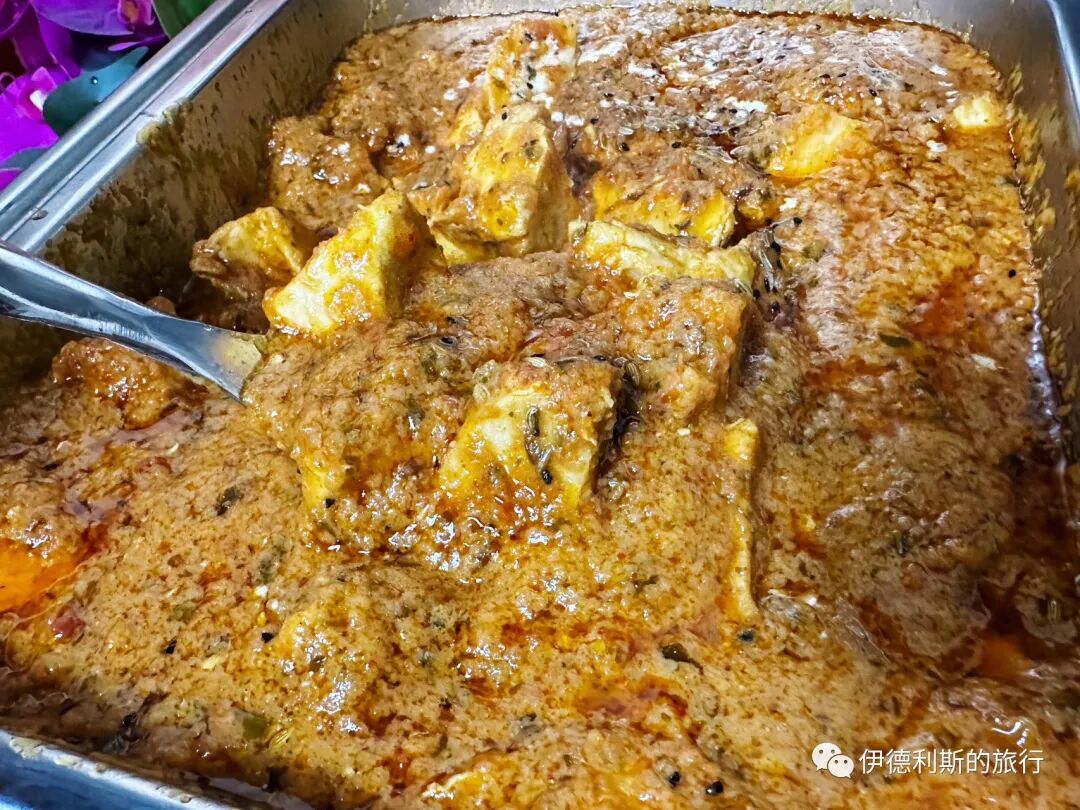
Second is the bean curry (masala), a common way to prepare curry in northern South Asia. Masala is a spice blend. The ingredients vary by region, but it usually includes black and white pepper, cloves, bay leaves, nutmeg, cumin, cinnamon, coriander seeds, fennel, and chili powder.
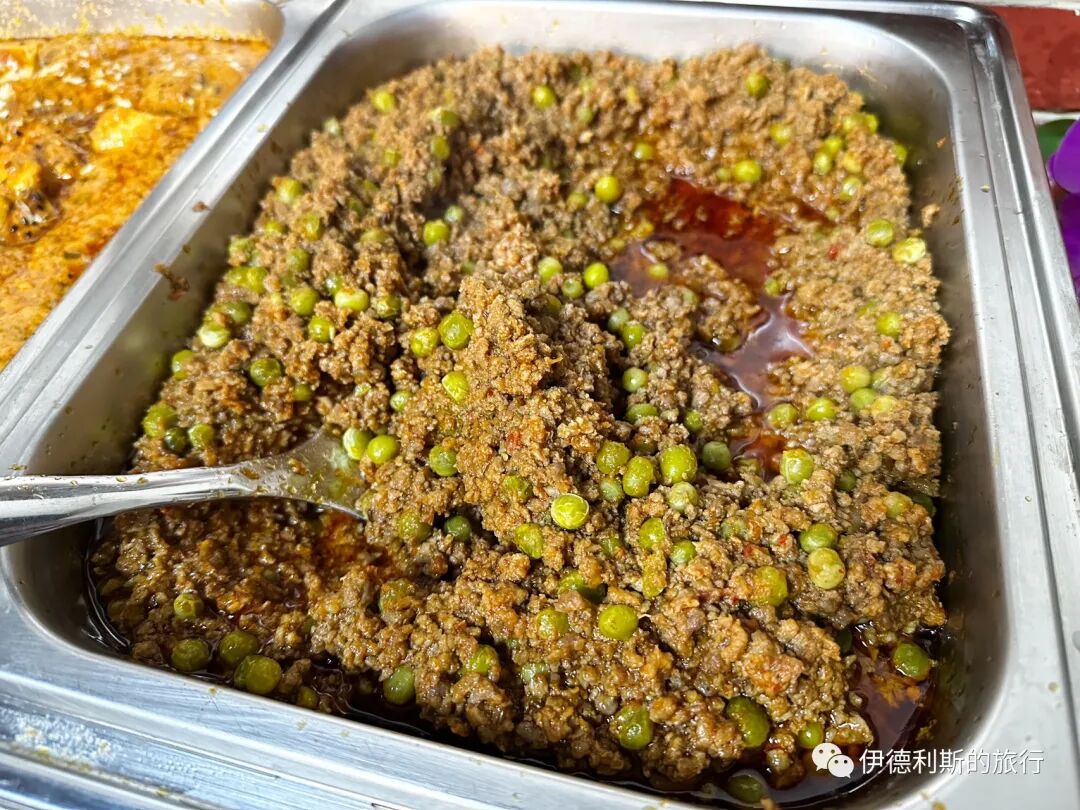
Third is the minced beef curry, and fourth is the chicken clay pot (handi). Handi is a popular way to eat curry in northern South Asia. You slow-cook meat in a copper pot or clay pot, sealing the lid so the steam stays inside and keeps all the aroma in the food.
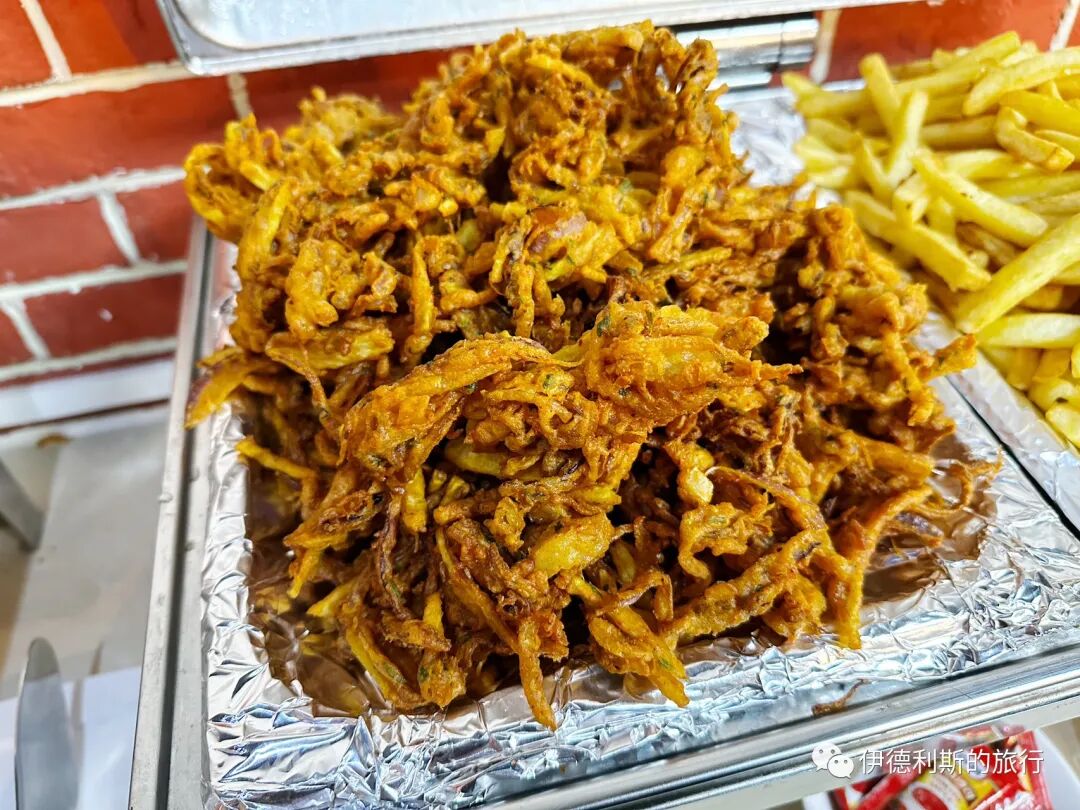
Fifth is the fried vegetable fritters (pakora). This is a classic South Asian street snack made by coating onions, eggplant, potatoes, or spinach in chickpea flour and frying them. It is often served as an appetizer with masala tea at South Asian weddings.
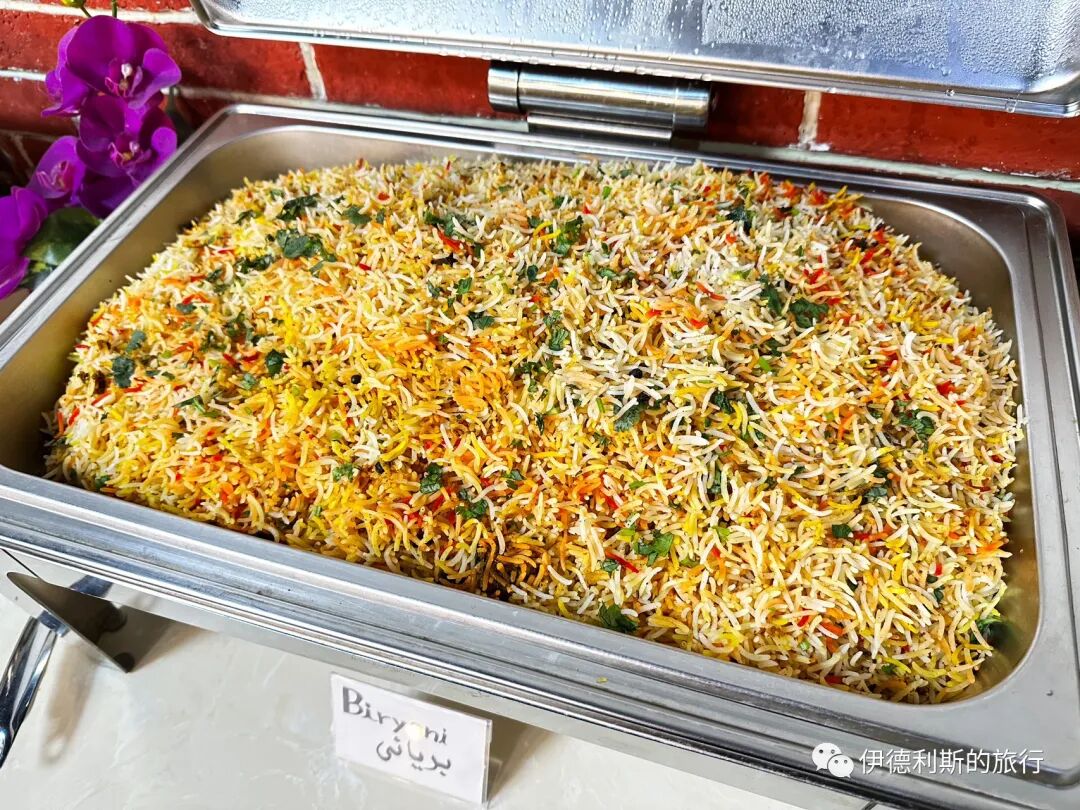
The main dish is the classic biryani rice. Biryani is a Persian loanword in Urdu. It likely started in the Mughal royal kitchens, where chefs supposedly combined spicy Indian rice with Persian pilaf. Mughal documents mention both biryanis and pulao (pilaf), and the terms were interchangeable back then. People generally think biryani has more spices and a stronger curry flavor than pilaf.
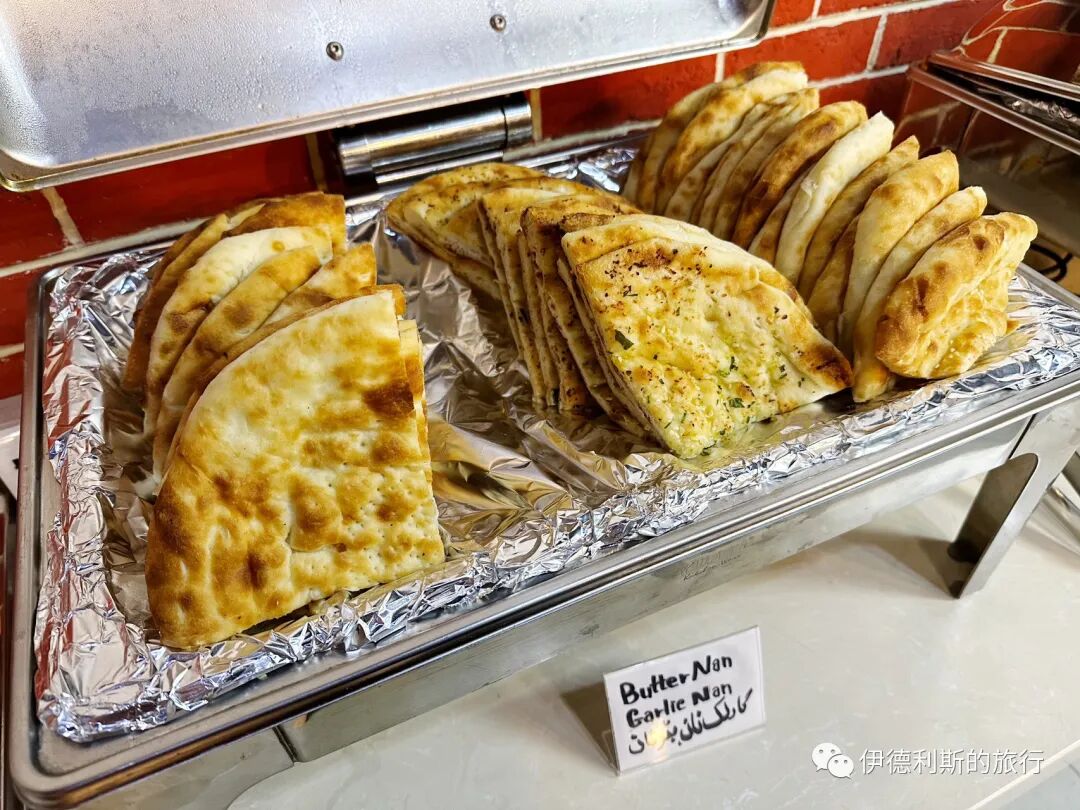
For dessert, there is milk pudding (kheer). Kheer comes from the Sanskrit word for milk, "kshira," and it has a history of over two thousand years. Kheer is made by boiling milk, sugar, and rice together. You can add toppings like shredded coconut, raisins, saffron, cashews, or pistachios.
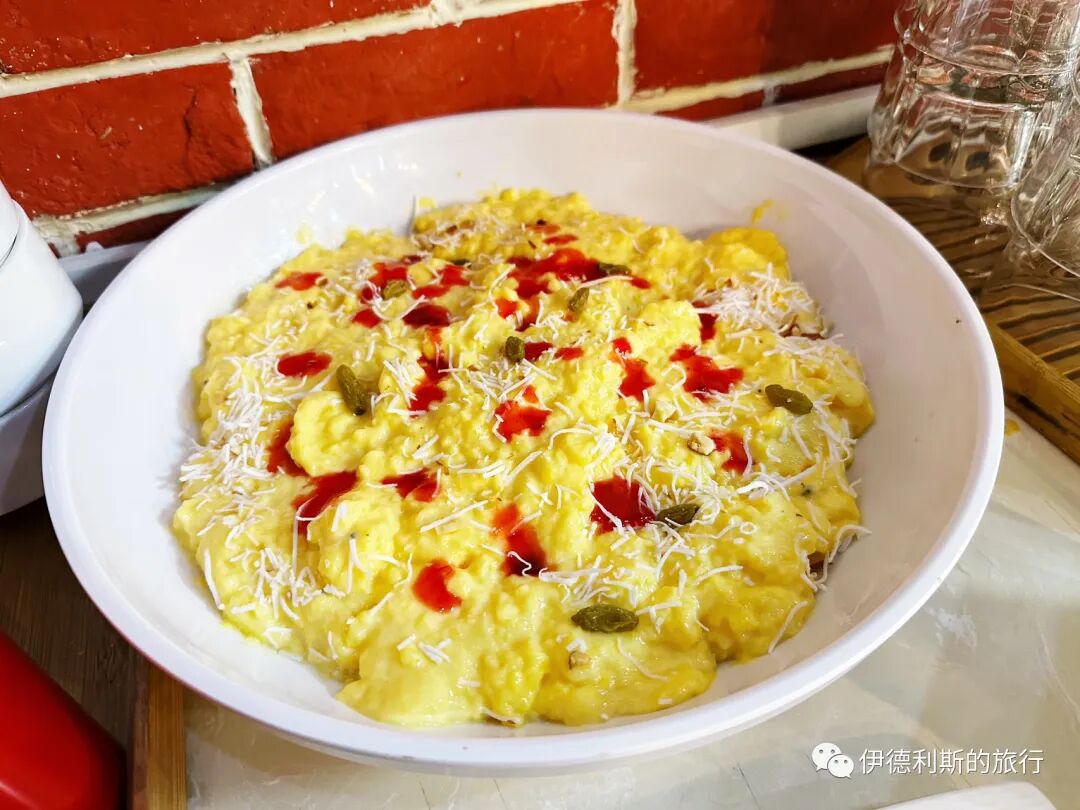
The buffet features a classic South Asian Ramadan Iftar drink called Rooh Afza, a concentrated syrup made with various herbs and fruits. Rooh Afza was perfected in 1906 by a Delhi Muslim herbalist named Hakim Hafiz Abdul Majeed. Majeed’s ancestors moved from Kashgar, Xinjiang, to the Mughal Empire in the late 18th century and worked in the herbal medicine trade.
Majeed wanted to create a herbal blend to help the people of Delhi cool down during the summer. He chose various herbs and fruit syrups from traditional South Asian Muslim Unani medicine to make a drink that effectively prevents heatstroke and dehydration during Ramadan. After 1906, Majeed opened a herbal shop in Delhi, which became a factory with a full production line after 1920. He named the factory Hamdard, a Persian loanword in Urdu meaning "companion in pain."
After the partition of India and Pakistan in 1947, Majeed’s eldest son, Hakim Abdul Hameed, stayed in India. His younger son, Hakeem Muhammad Saeed, moved to Karachi, Pakistan, in 1948 and later opened branches in East Pakistan (Bangladesh), making Rooh Afza popular across South Asia.
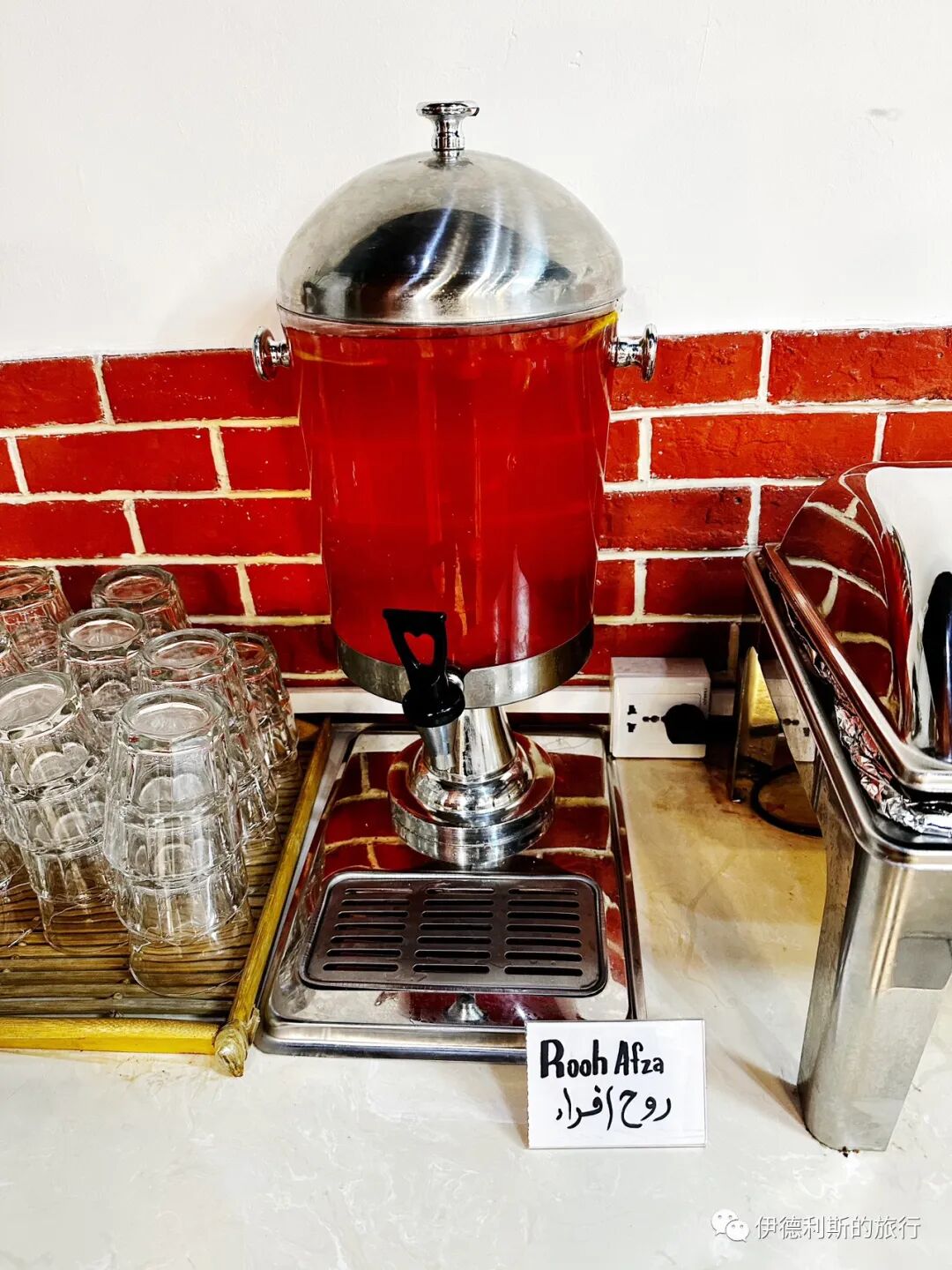
3. Iraqi Restaurant Taiba
At Taiba in Sanlitun SOHO, you can have an Iftar buffet. The owners are a couple from China and Iraq who serve authentic Arabic food.
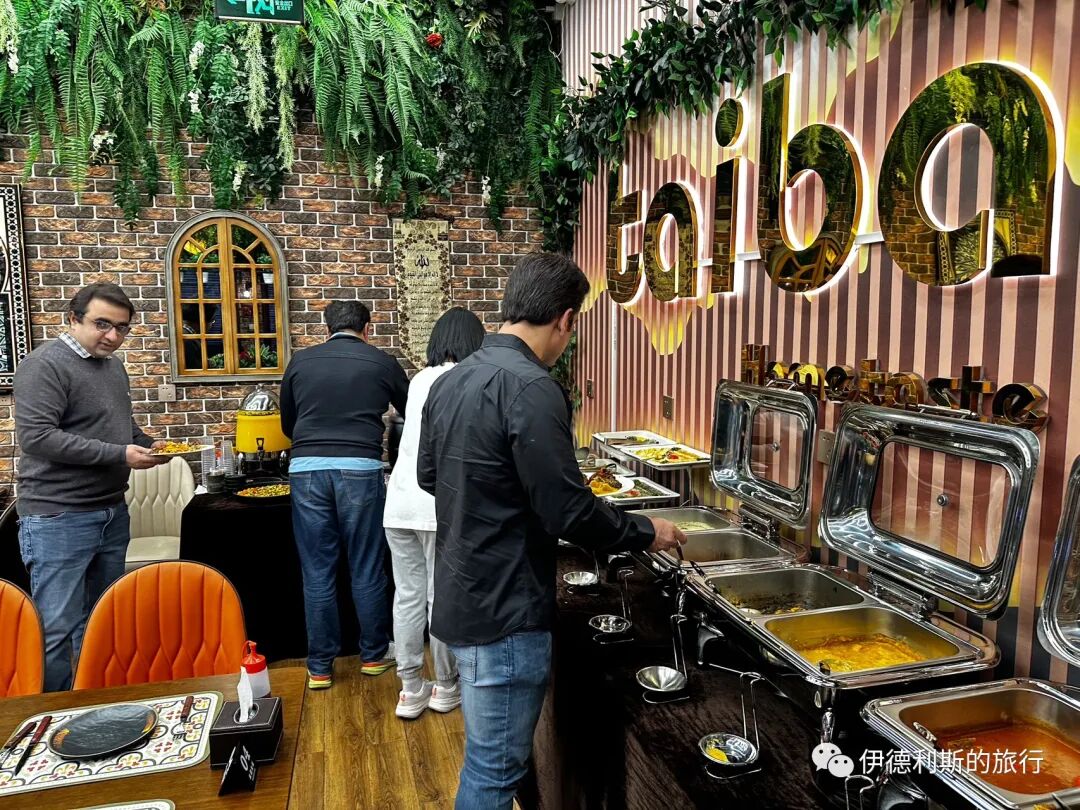
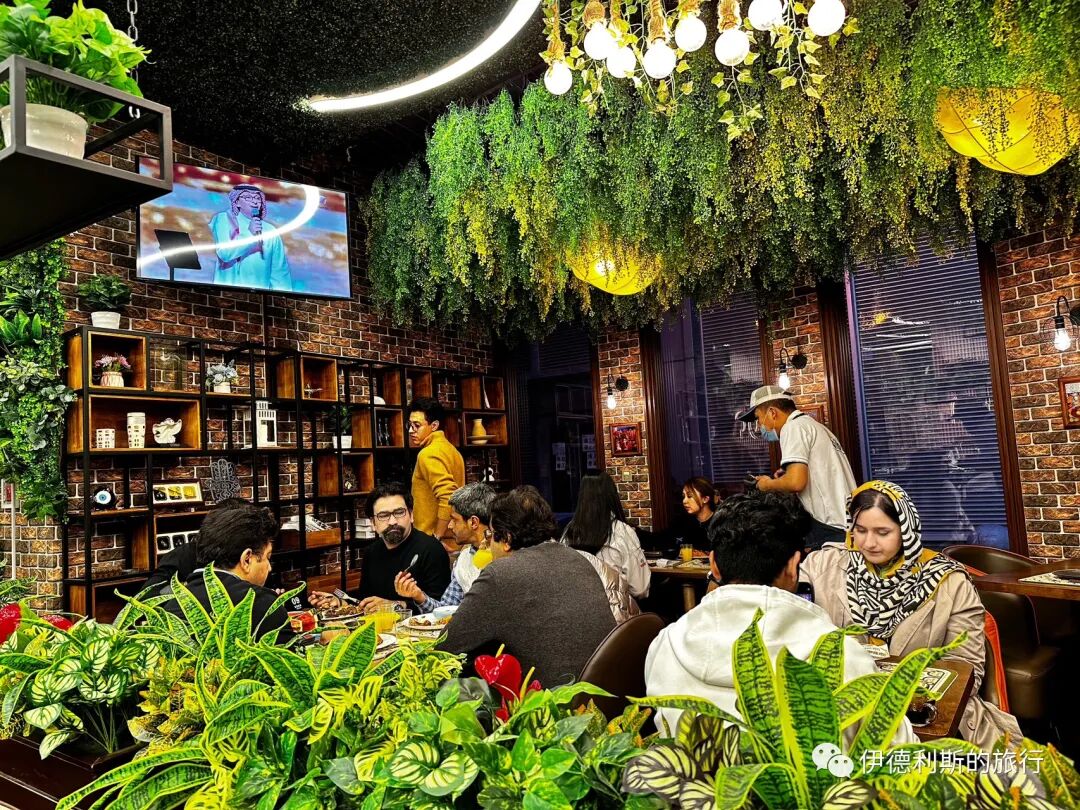
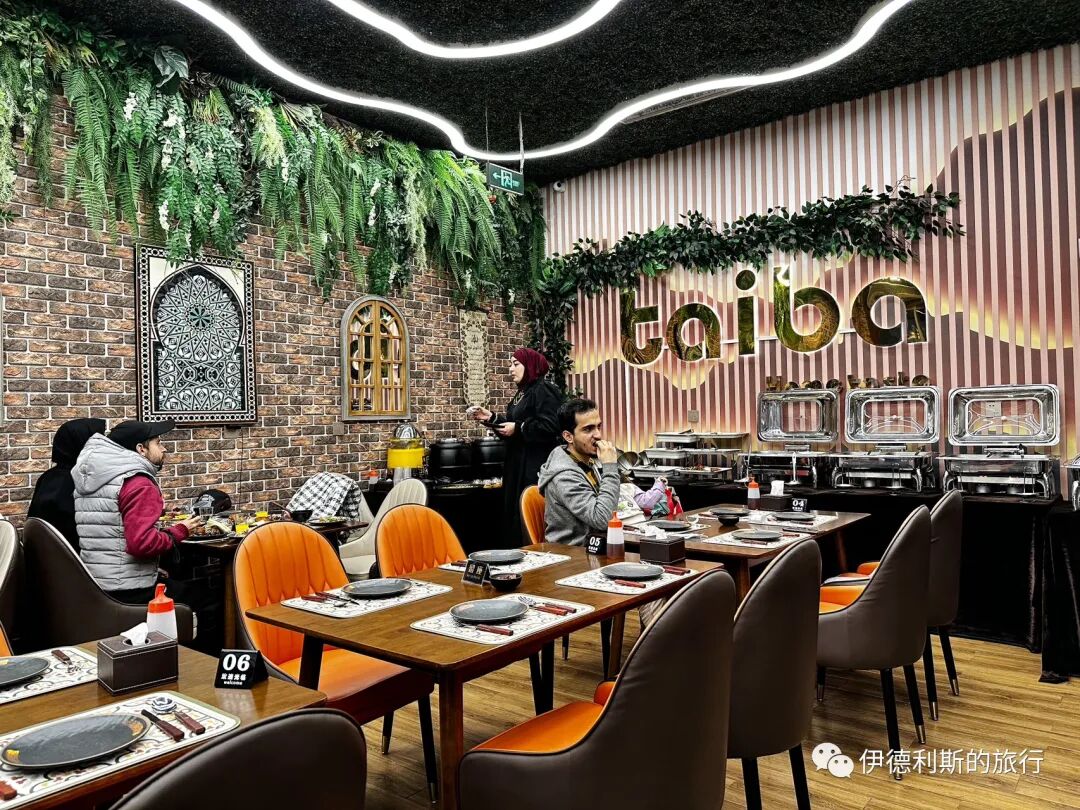
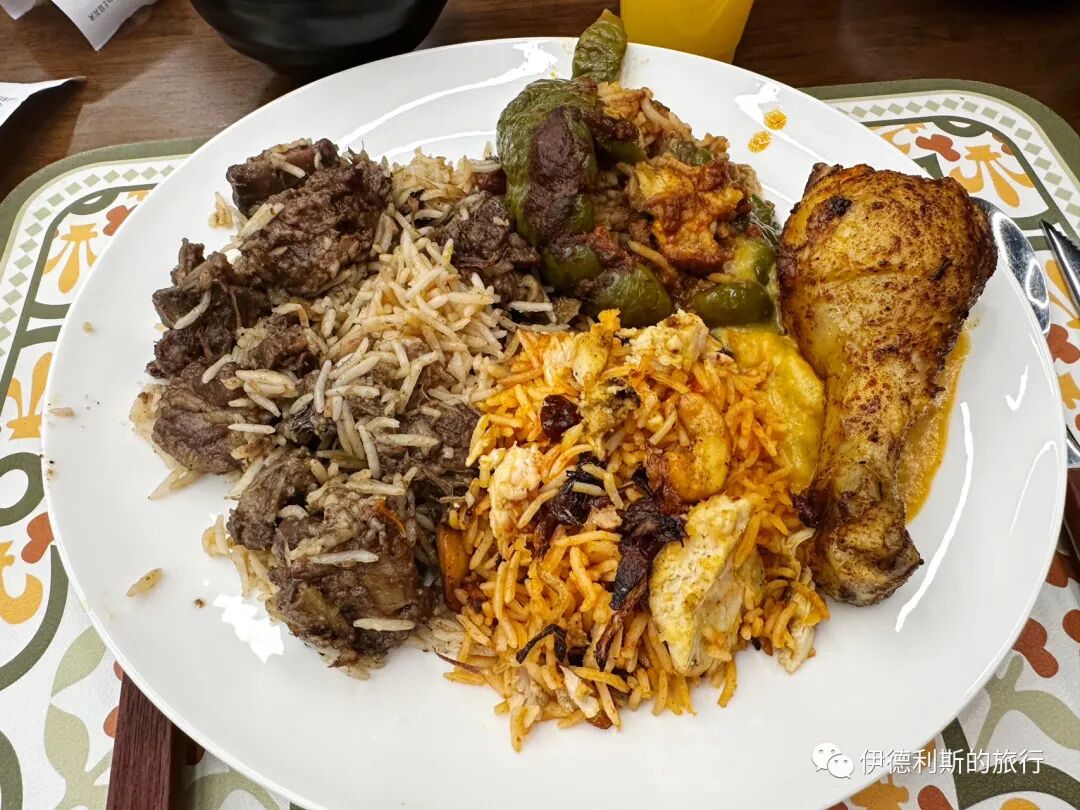
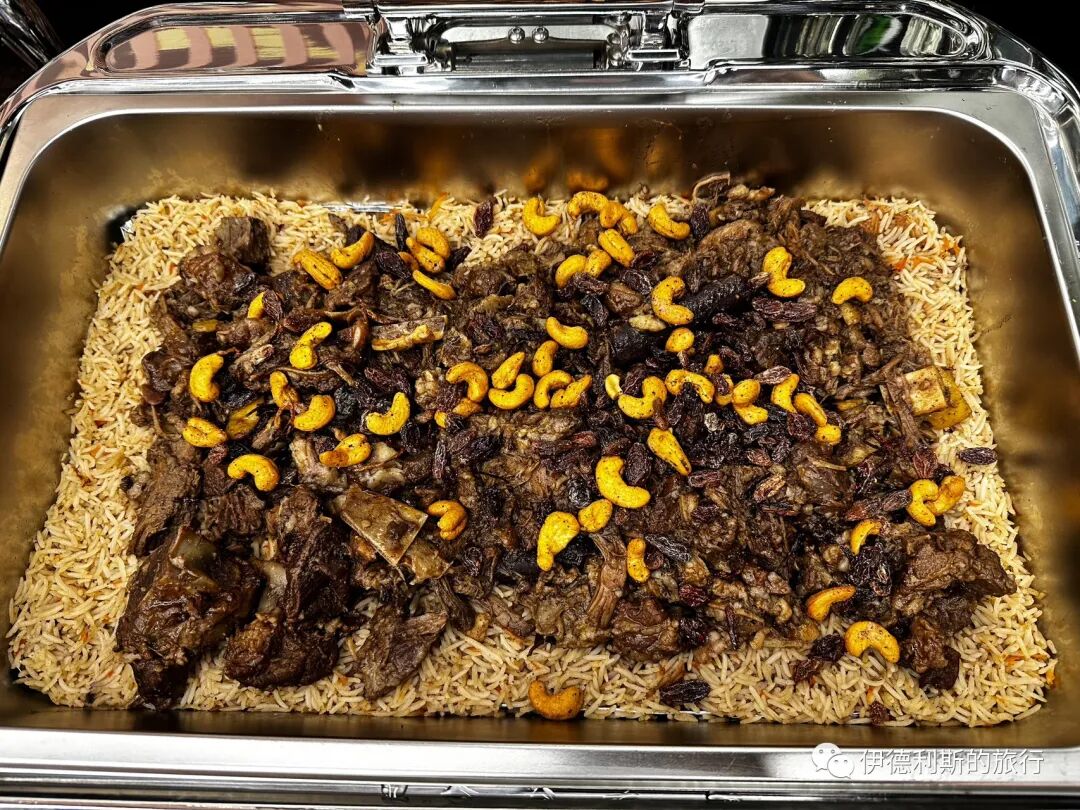
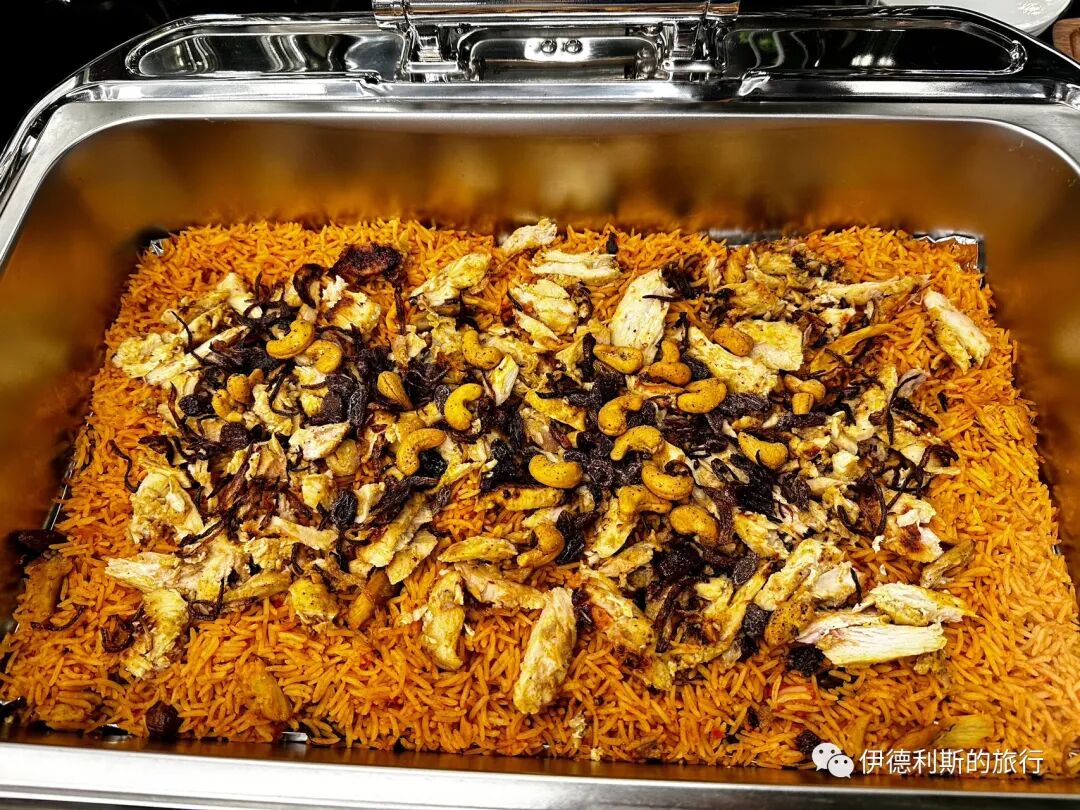
Besides grilled chicken and various kebabs, their main dish is lamb and chicken mandi rice. Mandi is a classic Arabic staple. The most traditional way to eat it is to dig a pit in the ground to cook the rice, then spread out a mat, sit on the floor, and eat with your hands. Mandi originated in the Hadhramaut region on the southern coast of the Arabian Peninsula (there is a Yemeni restaurant in Xiaobei, Guangzhou, with this name). It later spread to Egypt, the Levant, and other Arab regions, where it became very popular.
To make traditional mandi, you burn dry wood in a clay oven until it turns into charcoal, then hang meat (mostly lamb, camel, or chicken) rubbed with Hawaij spice inside the oven. The main ingredients of Hawaij spice are cumin, black pepper, turmeric, and cardamom. Once the meat is tender, you pour spiced broth into basmati rice, place the pot at the bottom of the oven, seal the oven with clay, and slow-cook it for up to 8 hours. The finished mandi meat is soft and tender, and the rice is full of the aroma of the meat and spices. It is delicious.
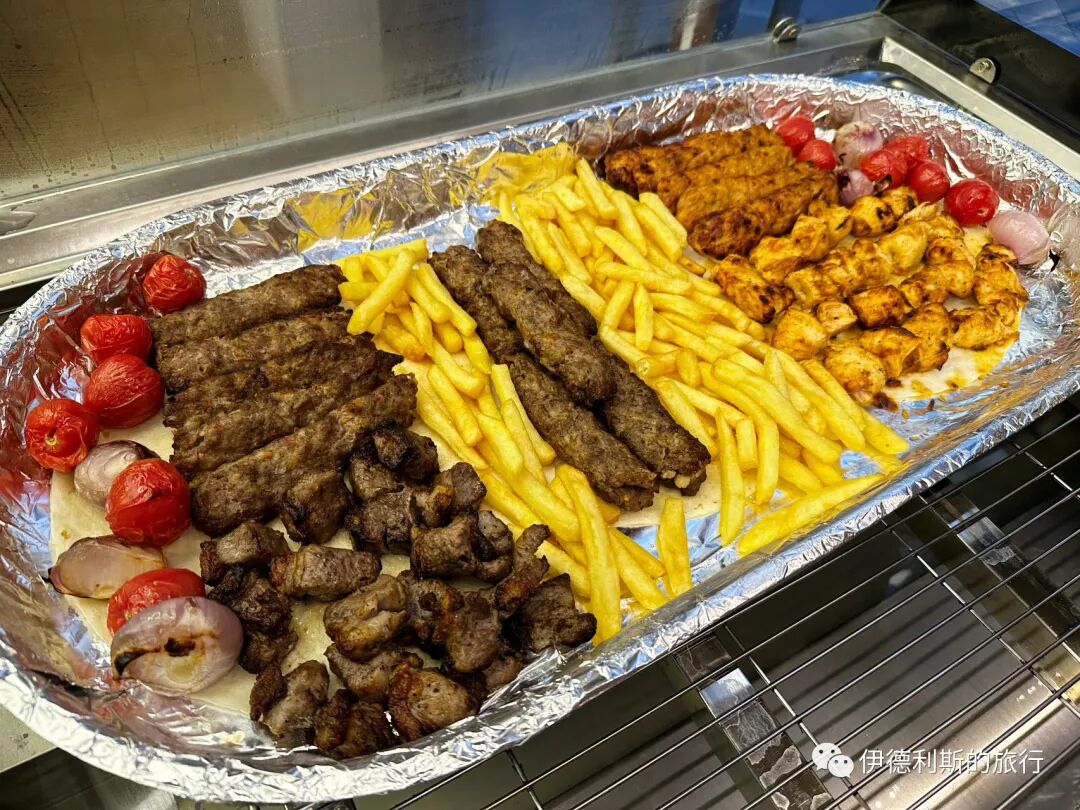
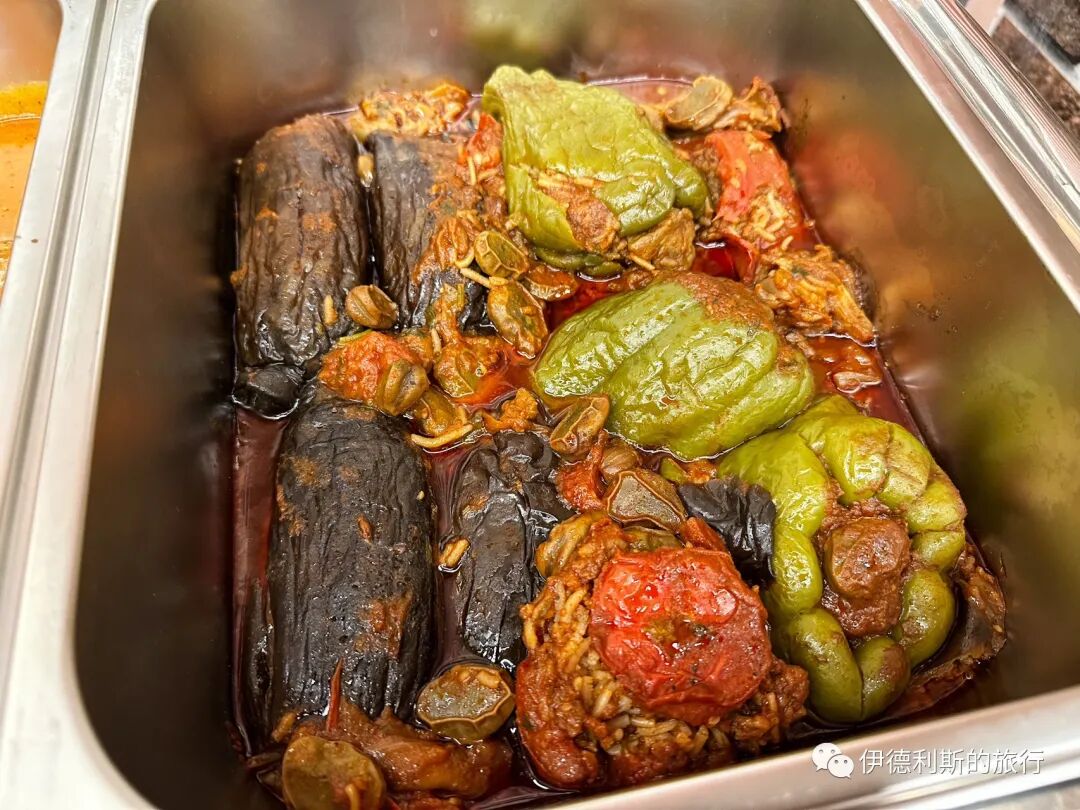
They also have Middle Eastern stuffed vegetables (dolma), which are green peppers, tomatoes, and eggplants stuffed with meat and rice and then stewed. The name dolma comes from the Ottoman era, and you can find recipes for stuffed eggplant in some medieval Arabic cookbooks. Beyond the Middle East, stuffed vegetables (dolma) are found across the Balkans, the South Caucasus, and North Africa under Ottoman rule, with different preparation methods in each place. For example, the Arab region prefers stuffed eggplant, Bosnia and Herzegovina prefers stuffed onions, and the Ottoman court also had a tradition of stuffing melons and fruits.
Another Middle Eastern snack they serve is kibbeh meatballs. These are made by wrapping minced meat, chopped onions, and Middle Eastern spices like cinnamon, nutmeg, cloves, and allspice in cracked wheat, and are usually deep-fried. Lebanon and Syria both consider kibbeh a national dish, but it is actually found in other Arab countries like Egypt and Iraq, as well as in Iran and Armenia.
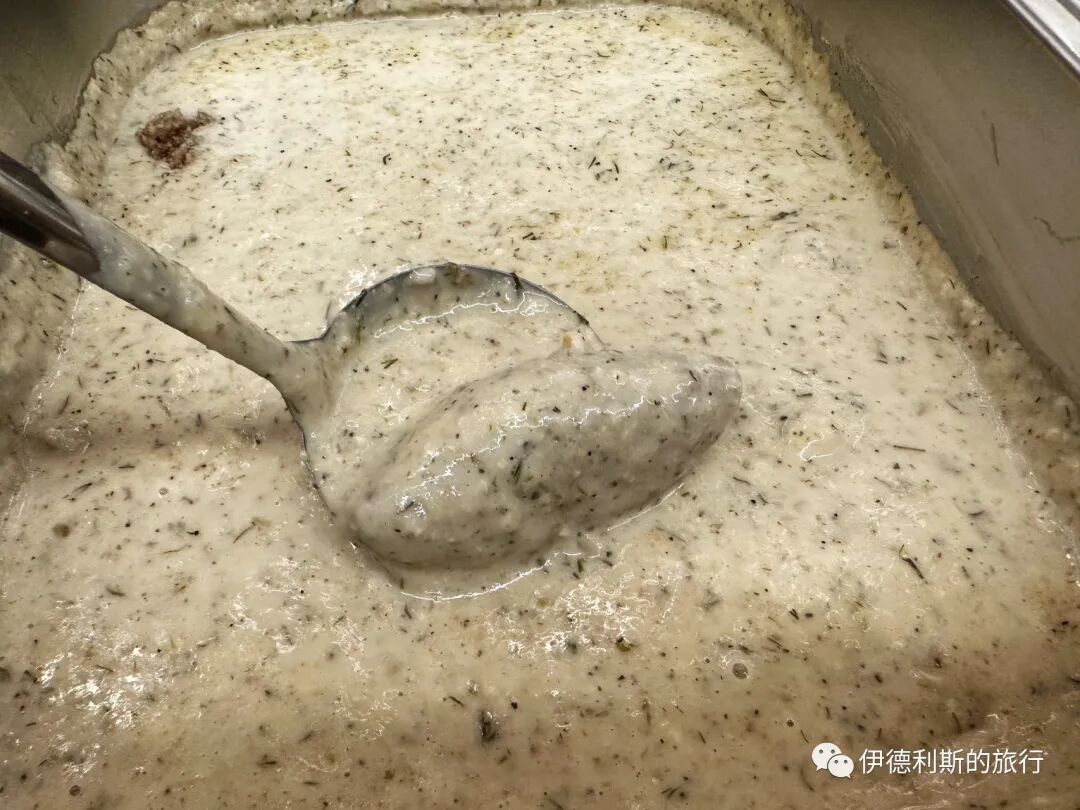
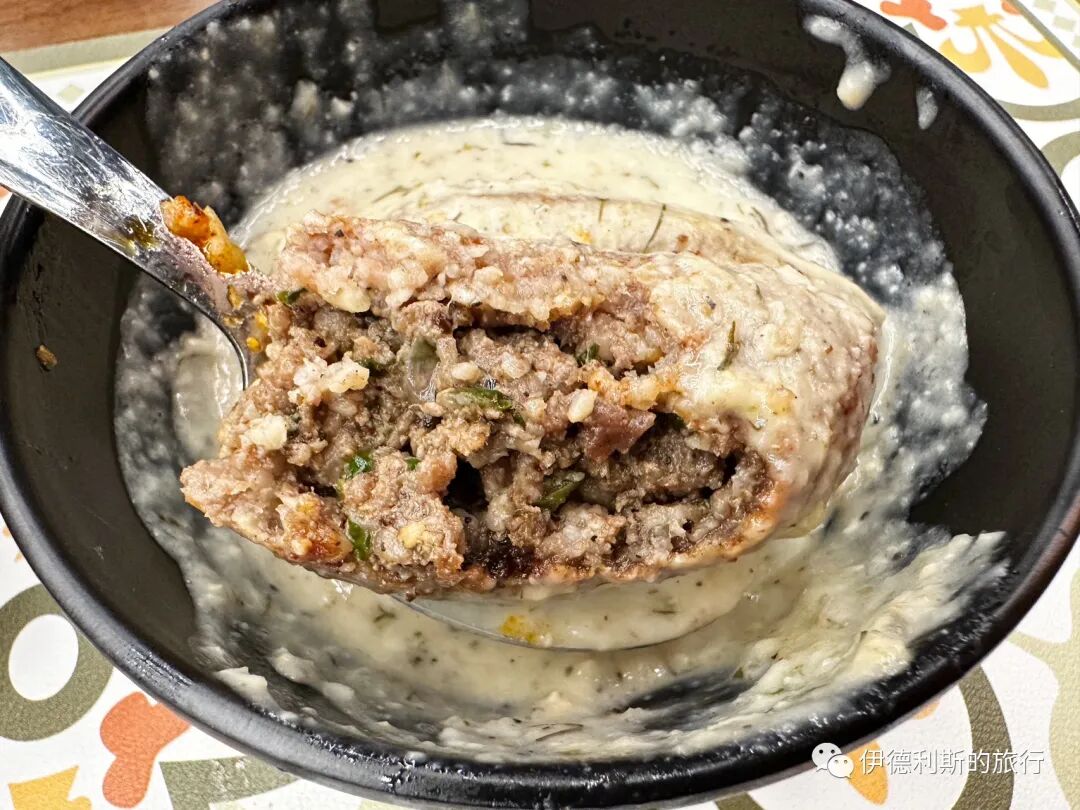
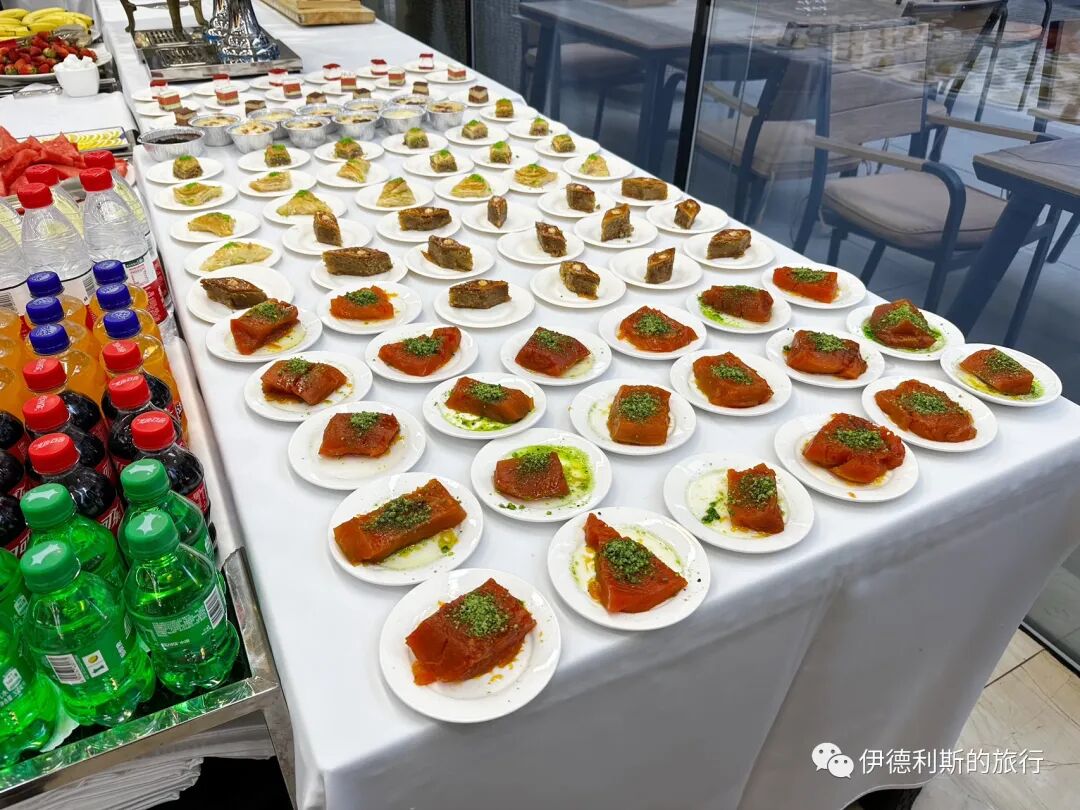
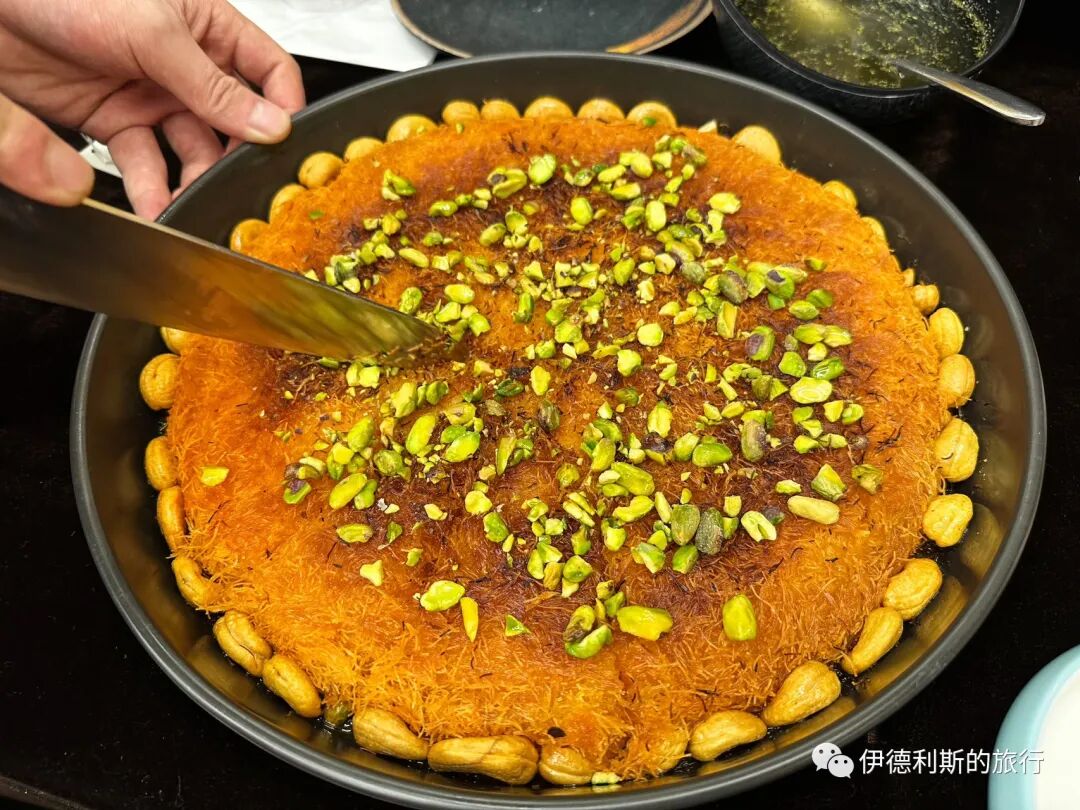
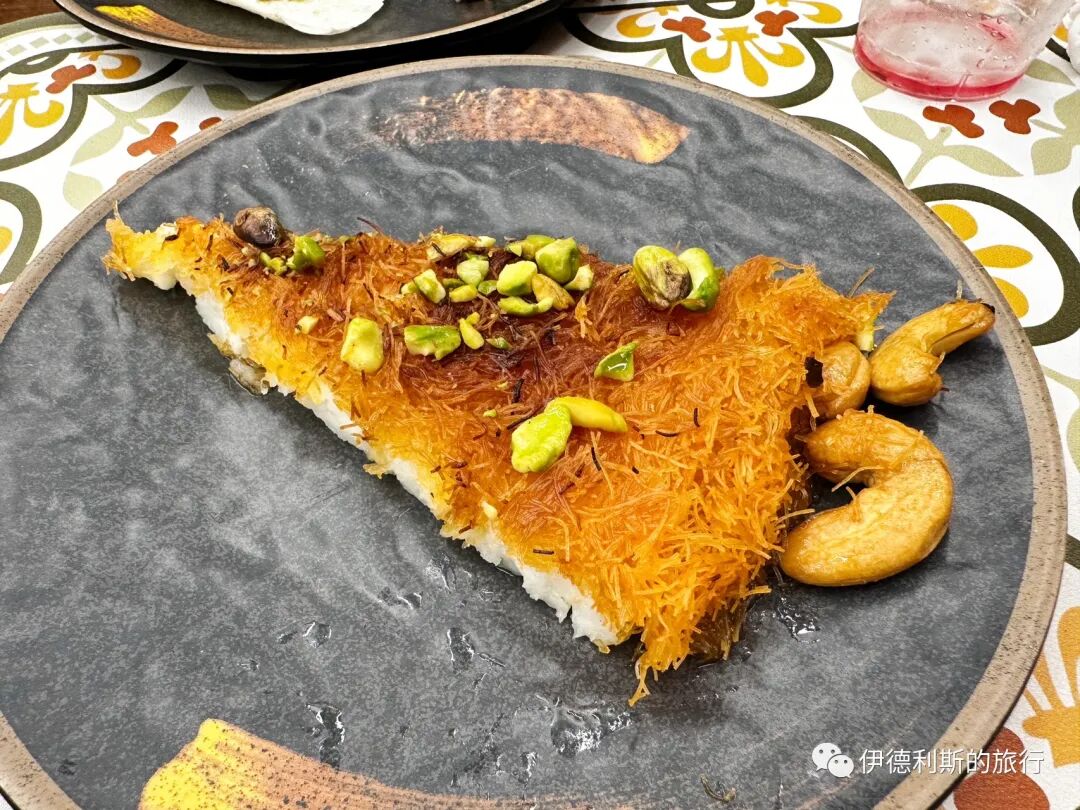
They have a rich variety of desserts, and the most worth trying is the classic Arab Ramadan dessert, knafeh. According to a famous Arab legend, a physician in the court of the Fatimid or Umayyad Caliphate invented knafeh to satisfy the Caliph's hunger during Ramadan. Knafeh later became a classic Arab iftar dessert and even appeared in One Thousand and One Nights.
Knafeh is made of buttery pastry, stretchy cheese, and crushed pistachios, and is drizzled with a syrup called attar when eaten. Although it has a history of over a thousand years, the current fried, stretchy style formed in the mid-15th century during the Ottoman period and gradually spread throughout the Ottoman-ruled Middle East.
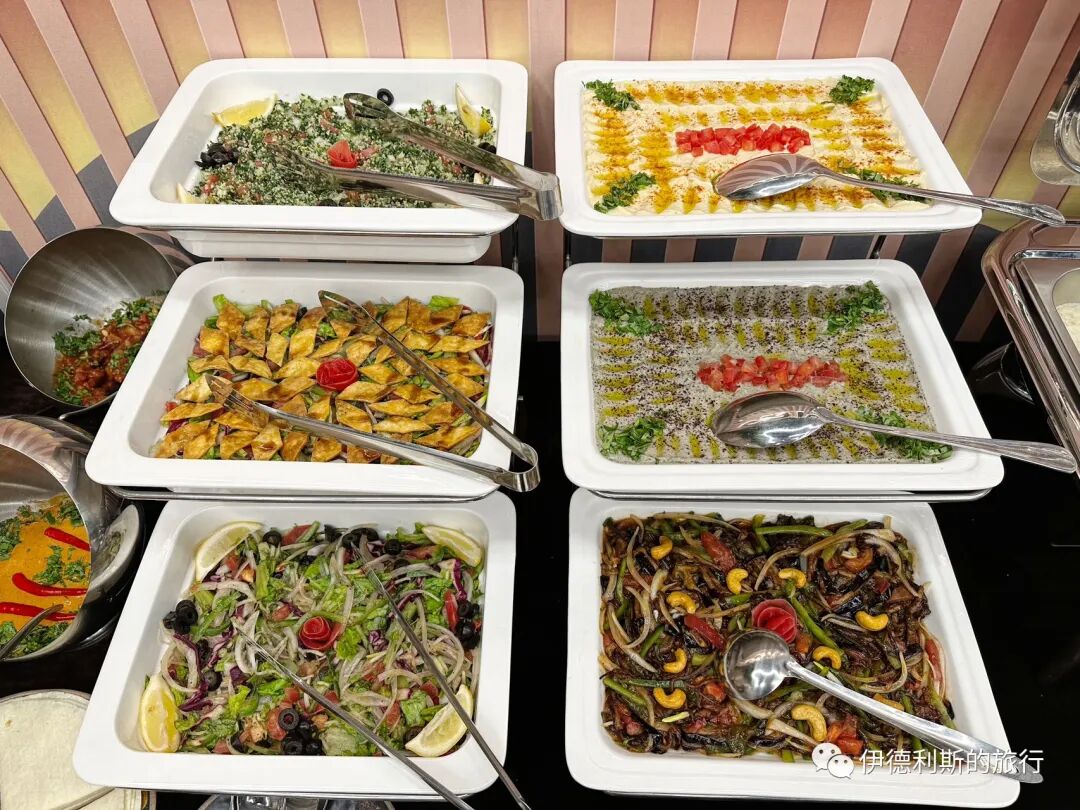
They also serve the classic Arab appetizer mezza, which is perfect for dipping with flatbread. The term mezza for an appetizer is borrowed from the Persian word "mazzeh," meaning "taste," which later entered the Middle East under Ottoman rule via Persian. When I visited, they served six appetizers, including two dips: hummus (chickpea puree) and baba ghanoush (roasted eggplant puree). Tabbouleh salad is made by mixing parsley, tomatoes, mint, onions, and soaked cracked wheat with olive oil and lemon juice. Fattoush salad is made by mixing toasted or fried pieces of khubz (Arab flatbread) with various vegetables.
4. Tunisian restaurant La Medina
I had the Ramadan iftar buffet at the Tunisian restaurant La Medina by the Liangma River. It is super crowded on weekends, which is likely the case for all iftar buffets in Beijing, so friends, it is better to choose a weekday.
First, let me introduce their restaurant name. Medina means "city" in Arabic. In North Africa, a medina usually refers to an old town built with city walls and many narrow, maze-like alleys. The Medina of Tunis, the capital of Tunisia, was listed as a UNESCO World Heritage site in 1979. It is one of the most famous medinas, containing 700 historical buildings including palaces, mosques, mausoleums, madrasas, and fountains.
Compared to last year, the variety at La Medina has decreased, which is truly a pity. Last year at the buffet, I had Tunisian harissa soup, merguez (North African sausage), and kibbeh, but I didn't get to eat them this time. I am not sure if it was just bad timing.
First, there were eight meze appetizers, including hummus, baba ghanoush, and tabbouleh, which can be found in every Arab restaurant. The most worth trying is the Tunisian-style mechouia salad, which you can only find at their place in Beijing. Mechouia means "grilled" in Arabic. It is made by roasting onions, green peppers, tomatoes, and garlic in an oven, seasoning them with caraway, salt, and black pepper, adding olive oil, and finally garnishing with olives, tuna, and boiled eggs.
The main course is the classic North African Berber dish, couscous, served with tajine (stew cooked in a clay pot). Couscous is a staple food for the Berbers. It is made by rubbing semolina flour into millet-sized grains, which are then dried. A clay pot (tajine) is a cooking vessel with a round, flat bottom and a conical or domed top. This design lets evaporated steam return to the bottom, and you can add water through the hole in the lid.
They also serve fried triangular pastries (sambousek) and chickpea fritters (falafel). Sambousek is a classic snack for Arabs during Ramadan. It originated from the Iranian sanbosag and later spread to various places with the spread of Persian culture. It entered Arab cuisine after the 10th century, reached South Asia with the Delhi Sultanate after the 13th century, and later spread to China, Indonesia, and across Africa. In some Hui Muslim communities in China, this snack is still called sanmosan.
For dessert after the meal, there is basbousa, which originated in Egypt. Basbousa is a semolina cake soaked in syrup. It is first baked in a pan and then soaked with orange blossom water, rose water, or syrup.
5. Palestinian restaurant Al Safir
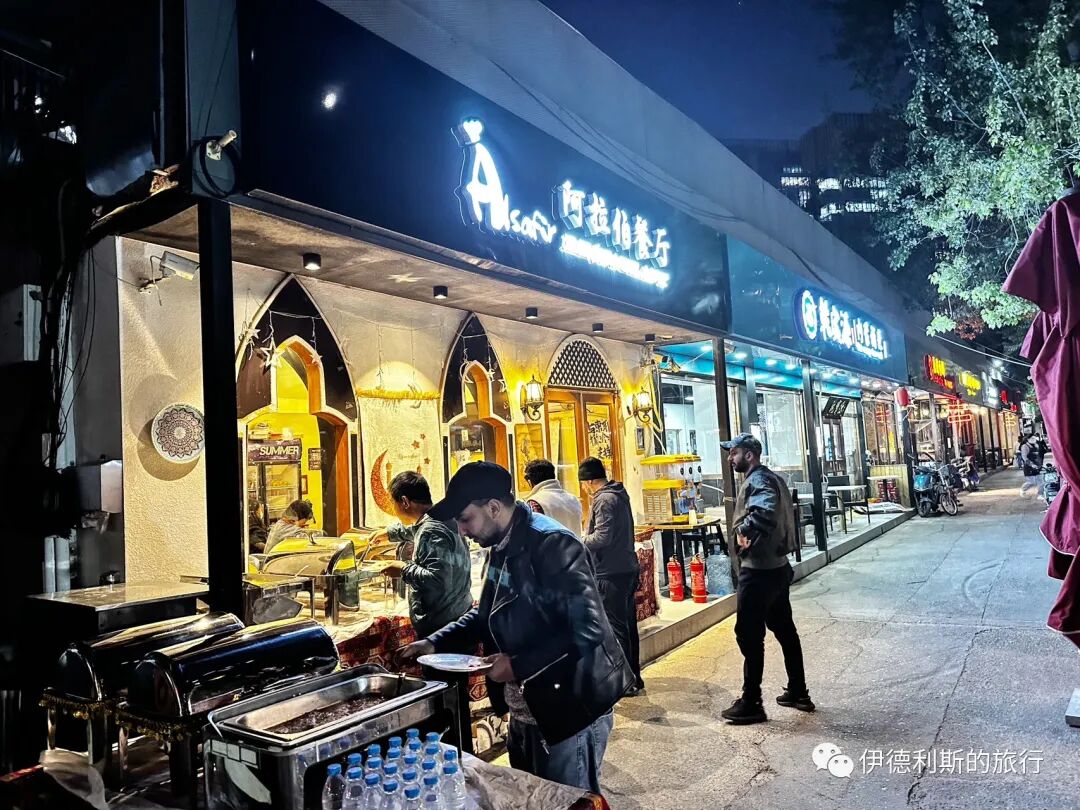
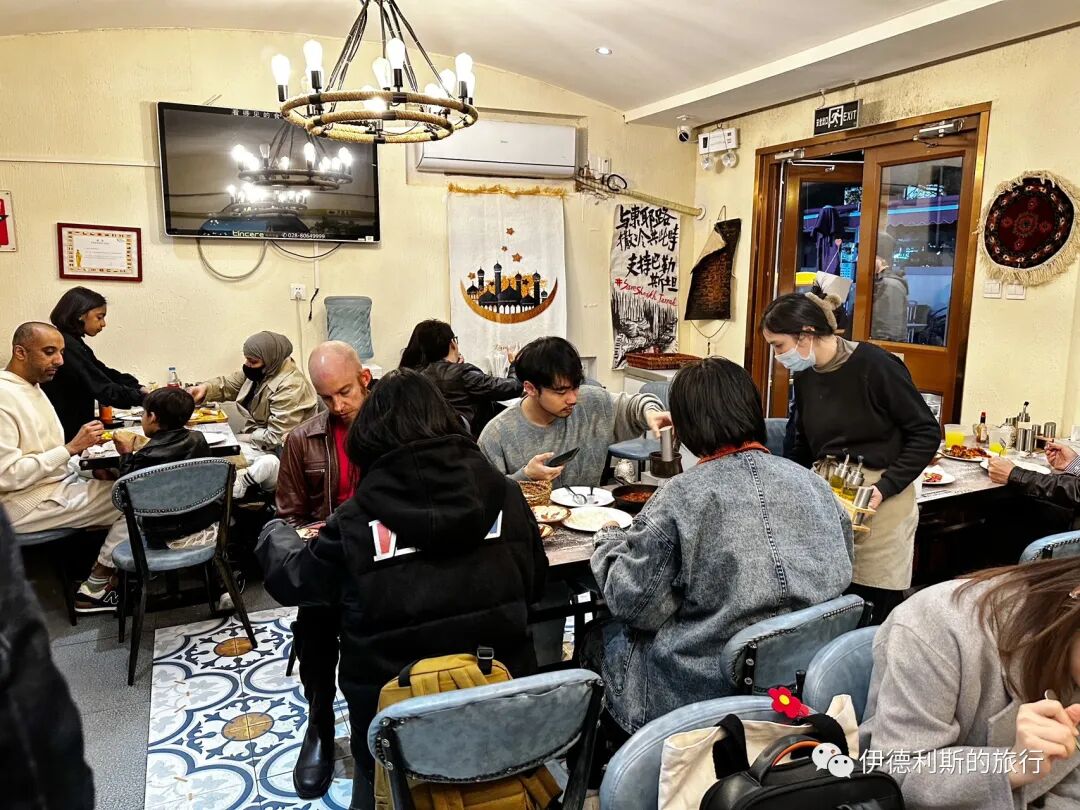
I had the Ramadan iftar buffet at the Palestinian restaurant Al Safir in Sanyuanqiao. This is the fifth iftar buffet I have tried, following La Medina, Taiba, Dardanelles, and Khan Baba.
I make sure to eat at Al Safir's iftar buffet every year. Their 15 types of Levantine appetizers, known as meze, are their biggest highlight. The owner is also a very kind, hospitable person with strong faith, which makes dining there feel very comfortable. They have plenty of outdoor seating. It would be great to eat outside once the weather warms up next week, but we were worried about the crowds, so we specifically chose today because it was windy and less busy, which made the meal feel more relaxed.
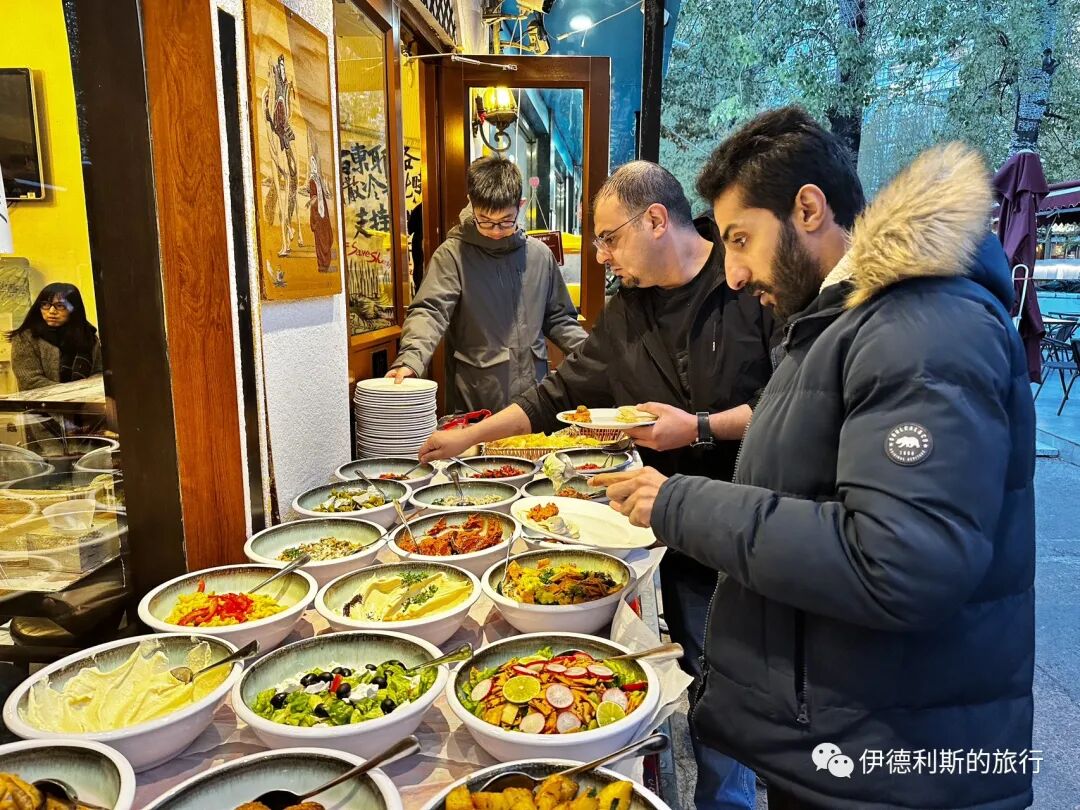
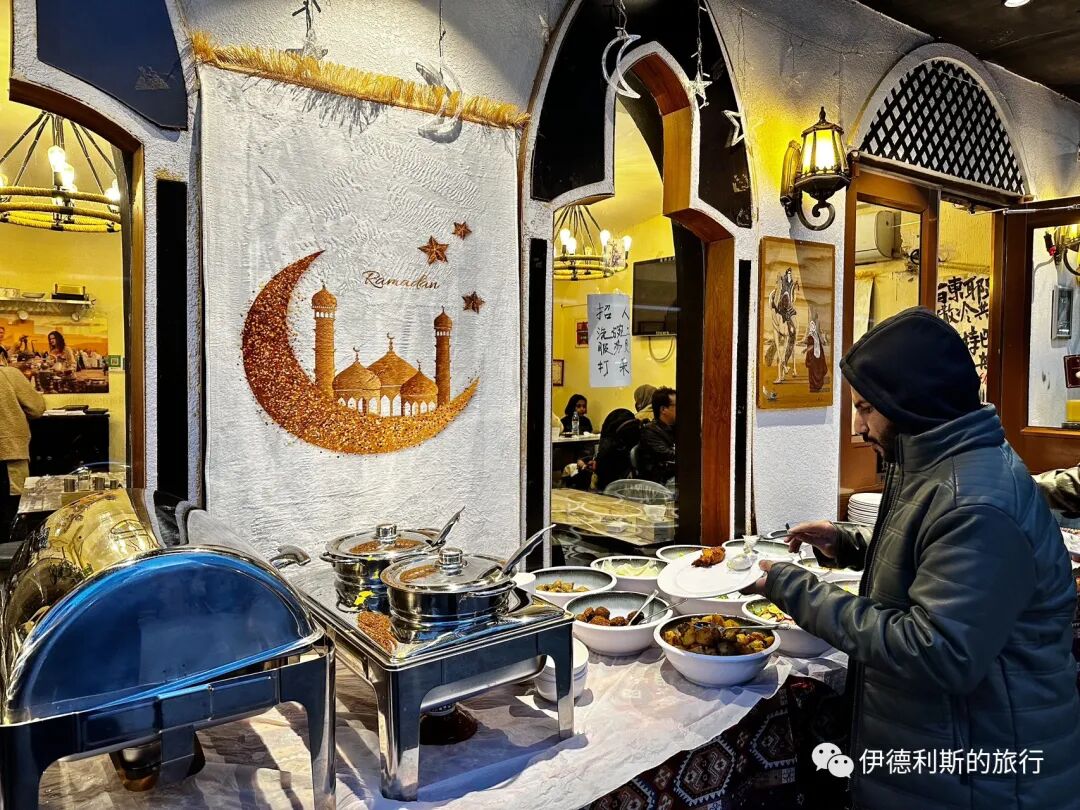
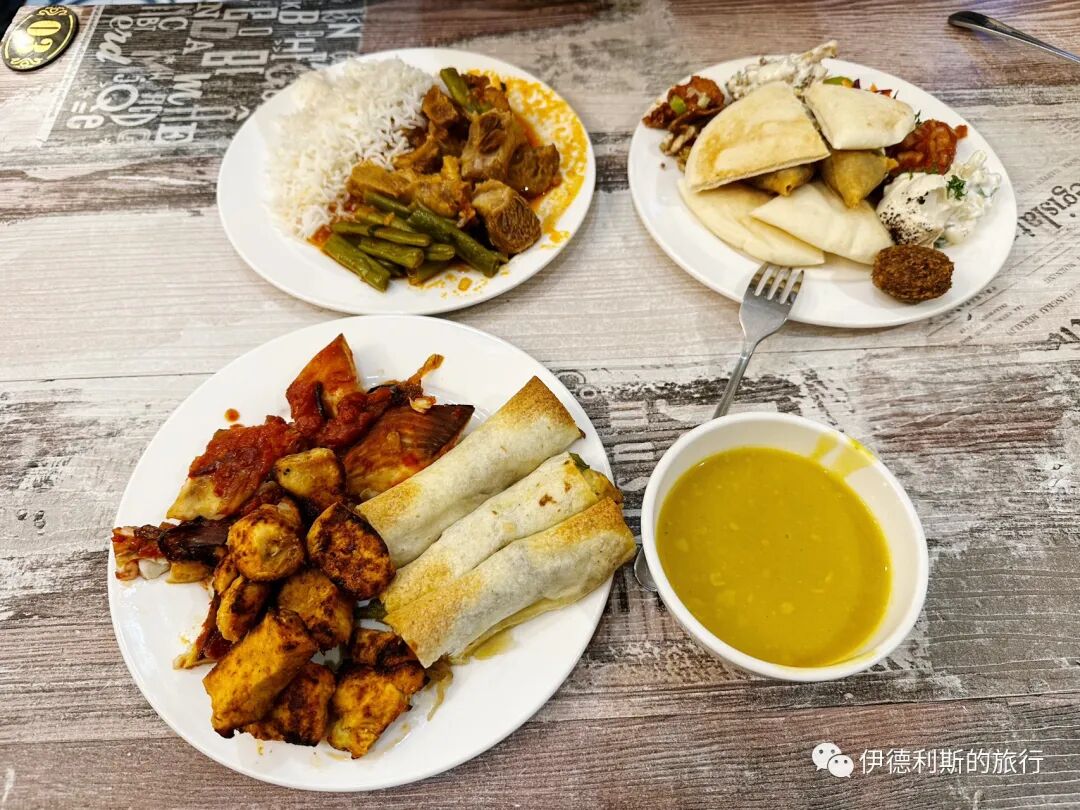
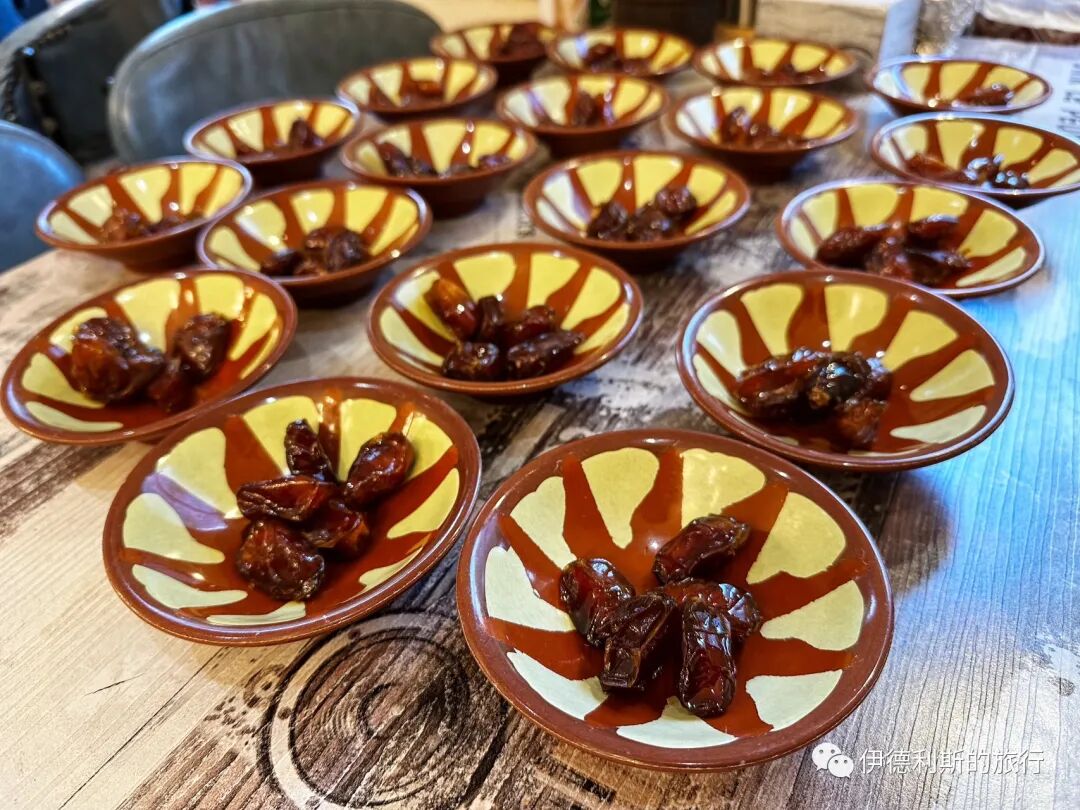
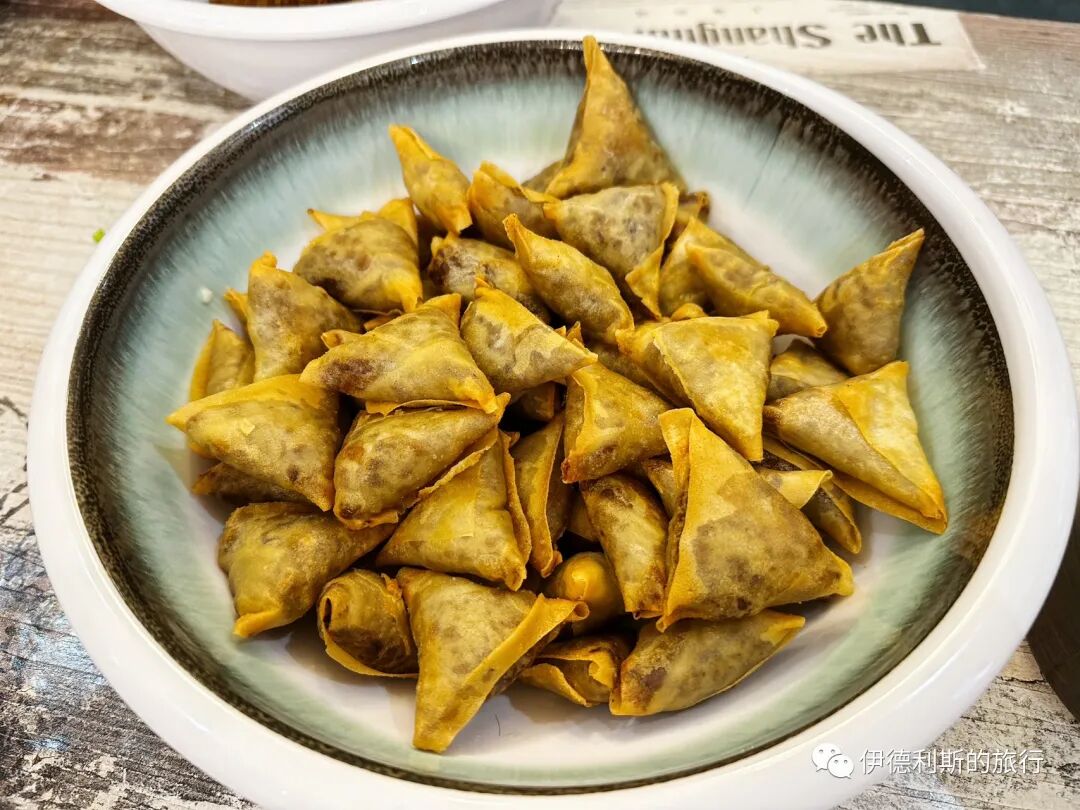
For a traditional Arab iftar, you should follow the Sunnah by eating dates first, then having soup. They usually serve lentil soup or chicken soup. This year they added broccoli soup, which I am not quite used to, but you can give it a try. After the prayer, the main meal begins. Here you can eat sambousek, the classic lamb-filled fried pastry that Arabs enjoy during Ramadan.
The classic Levantine way to eat is to stuff falafel and various sauces into pita bread, or simply dip the pita bread into the sauces. Among all the meze, my favorite is the red qalayet bandora. Al Safir might be the only place in Beijing that serves it. This dish is made with tomatoes, onions, chili peppers, and olive oil. It is said to have originated in the villages near the Dead Sea, where the hot climate of the Jordan Valley is perfect for growing tomatoes. They also have muhammara, made with walnuts, red bell peppers, pomegranate molasses, and breadcrumbs. This meze is said to have originated in Aleppo, Syria.
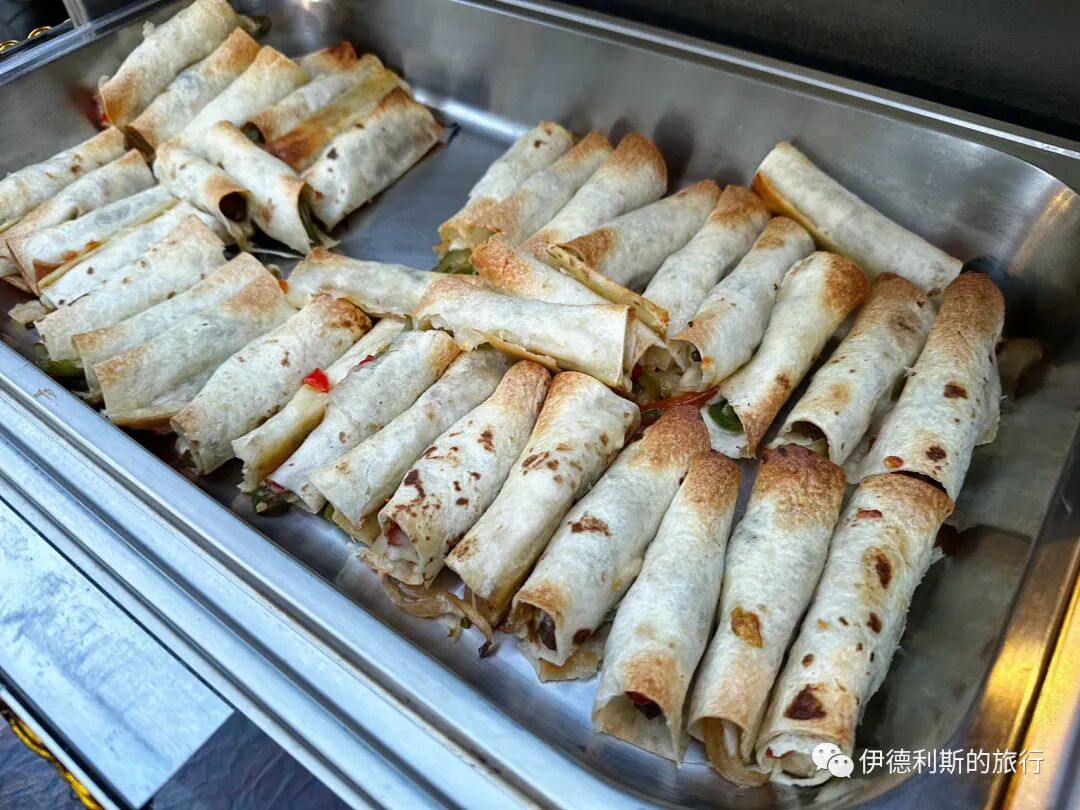
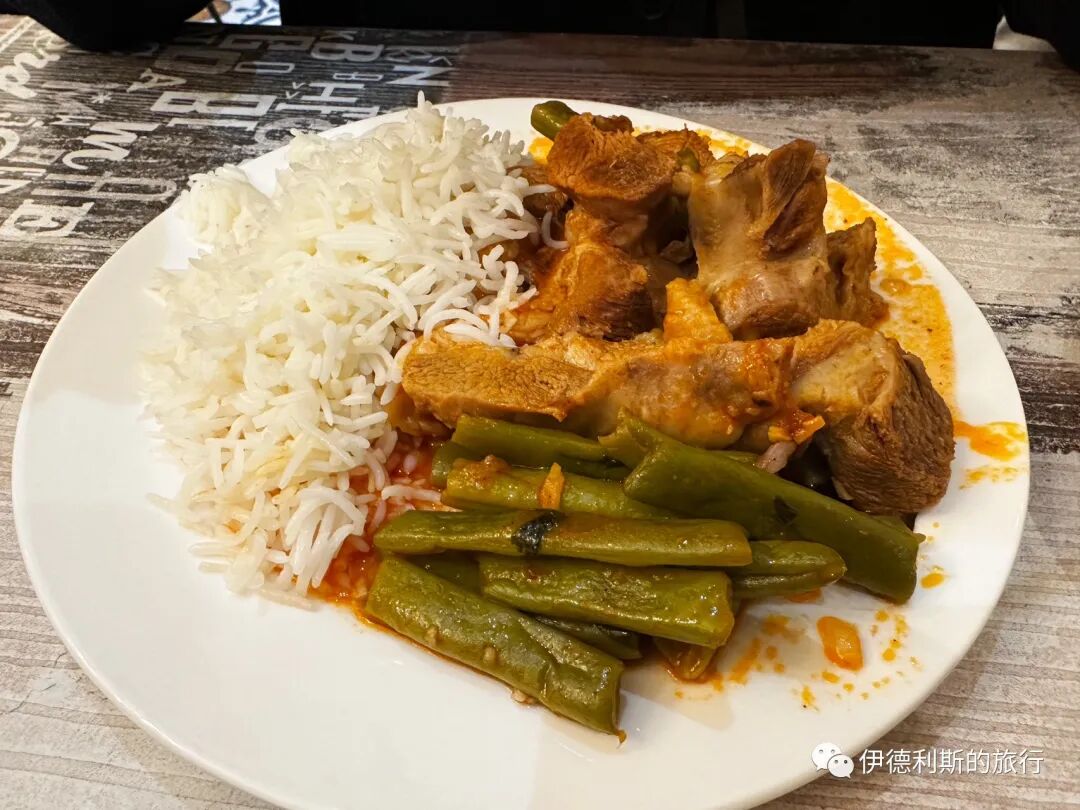
Their main dishes are stewed lamb and roasted chicken. The lamb is tender and fragrant, and it tastes great with long-grain rice. I could not stop eating it. The roasted chicken is a bit tougher than the stewed lamb, but the flavor is still good.
I will take this opportunity to explain the different categories of Arab cuisine. First, the Arab world can be divided into two main parts: east and west. The North African region, excluding Egypt, is called the Maghreb, which means the land of the sunset. The food here is strongly influenced by the Berbers. The staple food is couscous, and specialties include North African sausages and tagine. The Tunisian restaurant La Medina on Liangma River is a representative of this style.
The eastern part of the Arab world is called the Mashriq, which means the land of the sunrise. The Arab regions east of Egypt belong to this area. The staple food here is long-grain rice rather than couscous. All Arab restaurants in Beijing except for La Medina belong to this region.
The Mashriq region can be further divided into several areas. First is the Arabian Peninsula. This region loves camel meat and various types of rice pilaf, with Yemeni cuisine being the most famous. There are several Yemeni restaurants in Guangzhou.
Cuisine in the Mesopotamia region, dominated by Iraq, is also very rich. This was once the court of the Abbasid Caliphate, and the earliest Arab cookbooks came from here. The owner of Taiba in Sanlitun is Iraqi. If you are interested, you can go and have a taste.
Among all Arab cuisines, Levantine cuisine has the most far-reaching influence. The Levant refers to the eastern Mediterranean coast, including Palestine, Jordan, Lebanon, Syria, and surrounding areas. Levantine cuisine is most famous for its meze, which has influenced the eating habits of the entire Middle East. Syrian restaurants like 1001 Nights and BRBR in Beijing, the Lebanese restaurant Al Ameen, and Palestinian restaurants like Al Safir and Zayton all belong to Levantine cuisine.
Halal Food Guide: Beijing Ramadan Iftar — Five International Buffets (Segment A)
Articles • ali2007fr posted the article • 0 comments • 135 views • 2026-05-18 21:20
Summary: Halal Food Guide: Beijing Ramadan Iftar — Five International Buffets is presented here as a firsthand travel account in clear English, beginning with this scene: Every year during Ramadan, having an Iftar buffet at one of the foreign restaurants in Beijing is a regular tradition for me. The account keeps its focus on Beijing Iftar, Ramadan Food, Halal Buffets while preserving the names, places, food, and historical details from the Chinese source.
First, there were eight meze appetizers, including hummus, baba ghanoush, and tabbouleh, which can be found in every Arab restaurant. The most worth trying is the Tunisian-style mechouia salad, which you can only find at their place in Beijing. Mechouia means "grilled" in Arabic. It is made by roasting onions, green peppers, tomatoes, and garlic in an oven, seasoning them with caraway, salt, and black pepper, adding olive oil, and finally garnishing with olives, tuna, and boiled eggs. view all
Summary: Halal Food Guide: Beijing Ramadan Iftar — Five International Buffets is presented here as a firsthand travel account in clear English, beginning with this scene: Every year during Ramadan, having an Iftar buffet at one of the foreign restaurants in Beijing is a regular tradition for me. The account keeps its focus on Beijing Iftar, Ramadan Food, Halal Buffets while preserving the names, places, food, and historical details from the Chinese source.
First, there were eight meze appetizers, including hummus, baba ghanoush, and tabbouleh, which can be found in every Arab restaurant. The most worth trying is the Tunisian-style mechouia salad, which you can only find at their place in Beijing. Mechouia means "grilled" in Arabic. It is made by roasting onions, green peppers, tomatoes, and garlic in an oven, seasoning them with caraway, salt, and black pepper, adding olive oil, and finally garnishing with olives, tuna, and boiled eggs.
Halal Food Guide: Beijing Ramadan Iftar — Five International Buffets (Part 5D of 7)
Articles • ali2007fr posted the article • 0 comments • 173 views • 2026-05-18 21:18
Summary: Halal Food Guide: Beijing Ramadan Iftar — Five International Buffets is presented here as a firsthand travel account in clear English, beginning with this scene: Every year during Ramadan, having an Iftar buffet at one of the foreign restaurants in Beijing is a regular tradition for me. The account keeps its focus on Beijing Iftar, Ramadan Food, Halal Buffets while preserving the names, places, food, and historical details from the Chinese source.
They also serve fried triangular pastries (sambousek) and chickpea fritters (falafel). Sambousek is a classic snack for Arabs during Ramadan. It originated from the Iranian sanbosag and later spread to various places with the spread of Persian culture. It entered Arab cuisine after the 10th century, reached South Asia with the Delhi Sultanate after the 13th century, and later spread to China, Indonesia, and across Africa. In some Hui Muslim communities in China, this snack is still called sanmosan.
For dessert after the meal, there is basbousa, which originated in Egypt. Basbousa is a semolina cake soaked in syrup. It is first baked in a pan and then soaked with orange blossom water, rose water, or syrup. view all
Summary: Halal Food Guide: Beijing Ramadan Iftar — Five International Buffets is presented here as a firsthand travel account in clear English, beginning with this scene: Every year during Ramadan, having an Iftar buffet at one of the foreign restaurants in Beijing is a regular tradition for me. The account keeps its focus on Beijing Iftar, Ramadan Food, Halal Buffets while preserving the names, places, food, and historical details from the Chinese source.
They also serve fried triangular pastries (sambousek) and chickpea fritters (falafel). Sambousek is a classic snack for Arabs during Ramadan. It originated from the Iranian sanbosag and later spread to various places with the spread of Persian culture. It entered Arab cuisine after the 10th century, reached South Asia with the Delhi Sultanate after the 13th century, and later spread to China, Indonesia, and across Africa. In some Hui Muslim communities in China, this snack is still called sanmosan.
For dessert after the meal, there is basbousa, which originated in Egypt. Basbousa is a semolina cake soaked in syrup. It is first baked in a pan and then soaked with orange blossom water, rose water, or syrup.
Halal Food Guide: Beijing Ramadan Iftar — Five International Buffets (Part 5B of 7)
Articles • ali2007fr posted the article • 0 comments • 160 views • 2026-05-18 21:18
Summary: Halal Food Guide: Beijing Ramadan Iftar — Five International Buffets is presented here as a firsthand travel account in clear English, beginning with this scene: Every year during Ramadan, having an Iftar buffet at one of the foreign restaurants in Beijing is a regular tradition for me. The account keeps its focus on Beijing Iftar, Ramadan Food, Halal Buffets while preserving the names, places, food, and historical details from the Chinese source.
4. Tunisian restaurant La Medina
I had the Ramadan iftar buffet at the Tunisian restaurant La Medina by the Liangma River. It is super crowded on weekends, which is likely the case for all iftar buffets in Beijing, so friends, it is better to choose a weekday.
First, let me introduce their restaurant name. Medina means "city" in Arabic. In North Africa, a medina usually refers to an old town built with city walls and many narrow, maze-like alleys. The Medina of Tunis, the capital of Tunisia, was listed as a UNESCO World Heritage site in 1979. It is one of the most famous medinas, containing 700 historical buildings including palaces, mosques, mausoleums, madrasas, and fountains.
Compared to last year, the variety at La Medina has decreased, which is truly a pity. Last year at the buffet, I had Tunisian harissa soup, merguez (North African sausage), and kibbeh, but I didn't get to eat them this time. I am not sure if it was just bad timing. view all
Summary: Halal Food Guide: Beijing Ramadan Iftar — Five International Buffets is presented here as a firsthand travel account in clear English, beginning with this scene: Every year during Ramadan, having an Iftar buffet at one of the foreign restaurants in Beijing is a regular tradition for me. The account keeps its focus on Beijing Iftar, Ramadan Food, Halal Buffets while preserving the names, places, food, and historical details from the Chinese source.
4. Tunisian restaurant La Medina
I had the Ramadan iftar buffet at the Tunisian restaurant La Medina by the Liangma River. It is super crowded on weekends, which is likely the case for all iftar buffets in Beijing, so friends, it is better to choose a weekday.
First, let me introduce their restaurant name. Medina means "city" in Arabic. In North Africa, a medina usually refers to an old town built with city walls and many narrow, maze-like alleys. The Medina of Tunis, the capital of Tunisia, was listed as a UNESCO World Heritage site in 1979. It is one of the most famous medinas, containing 700 historical buildings including palaces, mosques, mausoleums, madrasas, and fountains.
Compared to last year, the variety at La Medina has decreased, which is truly a pity. Last year at the buffet, I had Tunisian harissa soup, merguez (North African sausage), and kibbeh, but I didn't get to eat them this time. I am not sure if it was just bad timing.
Halal Food Guide: Beijing Ramadan Iftar — Five International Buffets (Part 5A of 7)
Articles • ali2007fr posted the article • 0 comments • 163 views • 2026-05-18 21:18
Summary: Halal Food Guide: Beijing Ramadan Iftar — Five International Buffets is presented here as a firsthand travel account in clear English, beginning with this scene: Every year during Ramadan, having an Iftar buffet at one of the foreign restaurants in Beijing is a regular tradition for me. The account keeps its focus on Beijing Iftar, Ramadan Food, Halal Buffets while preserving the names, places, food, and historical details from the Chinese source. view all
Summary: Halal Food Guide: Beijing Ramadan Iftar — Five International Buffets is presented here as a firsthand travel account in clear English, beginning with this scene: Every year during Ramadan, having an Iftar buffet at one of the foreign restaurants in Beijing is a regular tradition for me. The account keeps its focus on Beijing Iftar, Ramadan Food, Halal Buffets while preserving the names, places, food, and historical details from the Chinese source.
Halal Food Guide: Beijing Ramadan Iftar — Five International Buffets (Part 7 of 7)
Articles • ali2007fr posted the article • 0 comments • 145 views • 2026-05-18 21:16
Summary: Halal Food Guide: Beijing Ramadan Iftar — Five International Buffets is presented here as a firsthand travel account in clear English, beginning with this scene: Every year during Ramadan, having an Iftar buffet at one of the foreign restaurants in Beijing is a regular tradition for me. The account keeps its focus on Beijing Iftar, Ramadan Food, Halal Buffets while preserving the names, places, food, and historical details from the Chinese source.
I will take this opportunity to explain the different categories of Arab cuisine. First, the Arab world can be divided into two main parts: east and west. The North African region, excluding Egypt, is called the Maghreb, which means the land of the sunset. The food here is strongly influenced by the Berbers. The staple food is couscous, and specialties include North African sausages and tagine. The Tunisian restaurant La Medina on Liangma River is a representative of this style.
The eastern part of the Arab world is called the Mashriq, which means the land of the sunrise. The Arab regions east of Egypt belong to this area. The staple food here is long-grain rice rather than couscous. All Arab restaurants in Beijing except for La Medina belong to this region.
The Mashriq region can be further divided into several areas. First is the Arabian Peninsula. This region loves camel meat and various types of rice pilaf, with Yemeni cuisine being the most famous. There are several Yemeni restaurants in Guangzhou.
Cuisine in the Mesopotamia region, dominated by Iraq, is also very rich. This was once the court of the Abbasid Caliphate, and the earliest Arab cookbooks came from here. The owner of Taiba in Sanlitun is Iraqi. If you are interested, you can go and have a taste.
Among all Arab cuisines, Levantine cuisine has the most far-reaching influence. The Levant refers to the eastern Mediterranean coast, including Palestine, Jordan, Lebanon, Syria, and surrounding areas. Levantine cuisine is most famous for its meze, which has influenced the eating habits of the entire Middle East. Syrian restaurants like 1001 Nights and BRBR in Beijing, the Lebanese restaurant Al Ameen, and Palestinian restaurants like Al Safir and Zayton all belong to Levantine cuisine. view all
Summary: Halal Food Guide: Beijing Ramadan Iftar — Five International Buffets is presented here as a firsthand travel account in clear English, beginning with this scene: Every year during Ramadan, having an Iftar buffet at one of the foreign restaurants in Beijing is a regular tradition for me. The account keeps its focus on Beijing Iftar, Ramadan Food, Halal Buffets while preserving the names, places, food, and historical details from the Chinese source.
I will take this opportunity to explain the different categories of Arab cuisine. First, the Arab world can be divided into two main parts: east and west. The North African region, excluding Egypt, is called the Maghreb, which means the land of the sunset. The food here is strongly influenced by the Berbers. The staple food is couscous, and specialties include North African sausages and tagine. The Tunisian restaurant La Medina on Liangma River is a representative of this style.
The eastern part of the Arab world is called the Mashriq, which means the land of the sunrise. The Arab regions east of Egypt belong to this area. The staple food here is long-grain rice rather than couscous. All Arab restaurants in Beijing except for La Medina belong to this region.
The Mashriq region can be further divided into several areas. First is the Arabian Peninsula. This region loves camel meat and various types of rice pilaf, with Yemeni cuisine being the most famous. There are several Yemeni restaurants in Guangzhou.
Cuisine in the Mesopotamia region, dominated by Iraq, is also very rich. This was once the court of the Abbasid Caliphate, and the earliest Arab cookbooks came from here. The owner of Taiba in Sanlitun is Iraqi. If you are interested, you can go and have a taste.
Among all Arab cuisines, Levantine cuisine has the most far-reaching influence. The Levant refers to the eastern Mediterranean coast, including Palestine, Jordan, Lebanon, Syria, and surrounding areas. Levantine cuisine is most famous for its meze, which has influenced the eating habits of the entire Middle East. Syrian restaurants like 1001 Nights and BRBR in Beijing, the Lebanese restaurant Al Ameen, and Palestinian restaurants like Al Safir and Zayton all belong to Levantine cuisine.
Halal Food Guide: Beijing Ramadan Iftar — Five International Buffets (Part 6 of 7)
Articles • ali2007fr posted the article • 0 comments • 144 views • 2026-05-18 21:16
Summary: Halal Food Guide: Beijing Ramadan Iftar — Five International Buffets is presented here as a firsthand travel account in clear English, beginning with this scene: Every year during Ramadan, having an Iftar buffet at one of the foreign restaurants in Beijing is a regular tradition for me. The account keeps its focus on Beijing Iftar, Ramadan Food, Halal Buffets while preserving the names, places, food, and historical details from the Chinese source.
5. Palestinian restaurant Al Safir
I had the Ramadan iftar buffet at the Palestinian restaurant Al Safir in Sanyuanqiao. This is the fifth iftar buffet I have tried, following La Medina, Taiba, Dardanelles, and Khan Baba.
I make sure to eat at Al Safir's iftar buffet every year. Their 15 types of Levantine appetizers, known as meze, are their biggest highlight. The owner is also a very kind, hospitable person with strong faith, which makes dining there feel very comfortable. They have plenty of outdoor seating. It would be great to eat outside once the weather warms up next week, but we were worried about the crowds, so we specifically chose today because it was windy and less busy, which made the meal feel more relaxed.
For a traditional Arab iftar, you should follow the Sunnah by eating dates first, then having soup. They usually serve lentil soup or chicken soup. This year they added broccoli soup, which I am not quite used to, but you can give it a try. After the prayer, the main meal begins. Here you can eat sambousek, the classic lamb-filled fried pastry that Arabs enjoy during Ramadan.
The classic Levantine way to eat is to stuff falafel and various sauces into pita bread, or simply dip the pita bread into the sauces. Among all the meze, my favorite is the red qalayet bandora. Al Safir might be the only place in Beijing that serves it. This dish is made with tomatoes, onions, chili peppers, and olive oil. It is said to have originated in the villages near the Dead Sea, where the hot climate of the Jordan Valley is perfect for growing tomatoes. They also have muhammara, made with walnuts, red bell peppers, pomegranate molasses, and breadcrumbs. This meze is said to have originated in Aleppo, Syria.
Their main dishes are stewed lamb and roasted chicken. The lamb is tender and fragrant, and it tastes great with long-grain rice. I could not stop eating it. The roasted chicken is a bit tougher than the stewed lamb, but the flavor is still good. view all
Summary: Halal Food Guide: Beijing Ramadan Iftar — Five International Buffets is presented here as a firsthand travel account in clear English, beginning with this scene: Every year during Ramadan, having an Iftar buffet at one of the foreign restaurants in Beijing is a regular tradition for me. The account keeps its focus on Beijing Iftar, Ramadan Food, Halal Buffets while preserving the names, places, food, and historical details from the Chinese source.
5. Palestinian restaurant Al Safir
I had the Ramadan iftar buffet at the Palestinian restaurant Al Safir in Sanyuanqiao. This is the fifth iftar buffet I have tried, following La Medina, Taiba, Dardanelles, and Khan Baba.
I make sure to eat at Al Safir's iftar buffet every year. Their 15 types of Levantine appetizers, known as meze, are their biggest highlight. The owner is also a very kind, hospitable person with strong faith, which makes dining there feel very comfortable. They have plenty of outdoor seating. It would be great to eat outside once the weather warms up next week, but we were worried about the crowds, so we specifically chose today because it was windy and less busy, which made the meal feel more relaxed.
For a traditional Arab iftar, you should follow the Sunnah by eating dates first, then having soup. They usually serve lentil soup or chicken soup. This year they added broccoli soup, which I am not quite used to, but you can give it a try. After the prayer, the main meal begins. Here you can eat sambousek, the classic lamb-filled fried pastry that Arabs enjoy during Ramadan.
The classic Levantine way to eat is to stuff falafel and various sauces into pita bread, or simply dip the pita bread into the sauces. Among all the meze, my favorite is the red qalayet bandora. Al Safir might be the only place in Beijing that serves it. This dish is made with tomatoes, onions, chili peppers, and olive oil. It is said to have originated in the villages near the Dead Sea, where the hot climate of the Jordan Valley is perfect for growing tomatoes. They also have muhammara, made with walnuts, red bell peppers, pomegranate molasses, and breadcrumbs. This meze is said to have originated in Aleppo, Syria.
Their main dishes are stewed lamb and roasted chicken. The lamb is tender and fragrant, and it tastes great with long-grain rice. I could not stop eating it. The roasted chicken is a bit tougher than the stewed lamb, but the flavor is still good.
Halal Food Guide: Beijing Ramadan Iftar — Five International Buffets (Part 4 of 7)
Articles • ali2007fr posted the article • 0 comments • 147 views • 2026-05-18 21:16
Summary: Halal Food Guide: Beijing Ramadan Iftar — Five International Buffets is presented here as a firsthand travel account in clear English, beginning with this scene: Every year during Ramadan, having an Iftar buffet at one of the foreign restaurants in Beijing is a regular tradition for me. The account keeps its focus on Beijing Iftar, Ramadan Food, Halal Buffets while preserving the names, places, food, and historical details from the Chinese source.
Besides grilled chicken and various kebabs, their main dish is lamb and chicken mandi rice. Mandi is a classic Arabic staple. The most traditional way to eat it is to dig a pit in the ground to cook the rice, then spread out a mat, sit on the floor, and eat with your hands. Mandi originated in the Hadhramaut region on the southern coast of the Arabian Peninsula (there is a Yemeni restaurant in Xiaobei, Guangzhou, with this name). It later spread to Egypt, the Levant, and other Arab regions, where it became very popular.
To make traditional mandi, you burn dry wood in a clay oven until it turns into charcoal, then hang meat (mostly lamb, camel, or chicken) rubbed with Hawaij spice inside the oven. The main ingredients of Hawaij spice are cumin, black pepper, turmeric, and cardamom. Once the meat is tender, you pour spiced broth into basmati rice, place the pot at the bottom of the oven, seal the oven with clay, and slow-cook it for up to 8 hours. The finished mandi meat is soft and tender, and the rice is full of the aroma of the meat and spices. It is delicious.
They also have Middle Eastern stuffed vegetables (dolma), which are green peppers, tomatoes, and eggplants stuffed with meat and rice and then stewed. The name dolma comes from the Ottoman era, and you can find recipes for stuffed eggplant in some medieval Arabic cookbooks. Beyond the Middle East, stuffed vegetables (dolma) are found across the Balkans, the South Caucasus, and North Africa under Ottoman rule, with different preparation methods in each place. For example, the Arab region prefers stuffed eggplant, Bosnia and Herzegovina prefers stuffed onions, and the Ottoman court also had a tradition of stuffing melons and fruits.
Another Middle Eastern snack they serve is kibbeh meatballs. These are made by wrapping minced meat, chopped onions, and Middle Eastern spices like cinnamon, nutmeg, cloves, and allspice in cracked wheat, and are usually deep-fried. Lebanon and Syria both consider kibbeh a national dish, but it is actually found in other Arab countries like Egypt and Iraq, as well as in Iran and Armenia.
They have a rich variety of desserts, and the most worth trying is the classic Arab Ramadan dessert, knafeh. According to a famous Arab legend, a physician in the court of the Fatimid or Umayyad Caliphate invented knafeh to satisfy the Caliph's hunger during Ramadan. Knafeh later became a classic Arab iftar dessert and even appeared in One Thousand and One Nights.
Knafeh is made of buttery pastry, stretchy cheese, and crushed pistachios, and is drizzled with a syrup called attar when eaten. Although it has a history of over a thousand years, the current fried, stretchy style formed in the mid-15th century during the Ottoman period and gradually spread throughout the Ottoman-ruled Middle East.
They also serve the classic Arab appetizer mezza, which is perfect for dipping with flatbread. The term mezza for an appetizer is borrowed from the Persian word "mazzeh," meaning "taste," which later entered the Middle East under Ottoman rule via Persian. When I visited, they served six appetizers, including two dips: hummus (chickpea puree) and baba ghanoush (roasted eggplant puree). Tabbouleh salad is made by mixing parsley, tomatoes, mint, onions, and soaked cracked wheat with olive oil and lemon juice. Fattoush salad is made by mixing toasted or fried pieces of khubz (Arab flatbread) with various vegetables. view all
Summary: Halal Food Guide: Beijing Ramadan Iftar — Five International Buffets is presented here as a firsthand travel account in clear English, beginning with this scene: Every year during Ramadan, having an Iftar buffet at one of the foreign restaurants in Beijing is a regular tradition for me. The account keeps its focus on Beijing Iftar, Ramadan Food, Halal Buffets while preserving the names, places, food, and historical details from the Chinese source.
Besides grilled chicken and various kebabs, their main dish is lamb and chicken mandi rice. Mandi is a classic Arabic staple. The most traditional way to eat it is to dig a pit in the ground to cook the rice, then spread out a mat, sit on the floor, and eat with your hands. Mandi originated in the Hadhramaut region on the southern coast of the Arabian Peninsula (there is a Yemeni restaurant in Xiaobei, Guangzhou, with this name). It later spread to Egypt, the Levant, and other Arab regions, where it became very popular.
To make traditional mandi, you burn dry wood in a clay oven until it turns into charcoal, then hang meat (mostly lamb, camel, or chicken) rubbed with Hawaij spice inside the oven. The main ingredients of Hawaij spice are cumin, black pepper, turmeric, and cardamom. Once the meat is tender, you pour spiced broth into basmati rice, place the pot at the bottom of the oven, seal the oven with clay, and slow-cook it for up to 8 hours. The finished mandi meat is soft and tender, and the rice is full of the aroma of the meat and spices. It is delicious.
They also have Middle Eastern stuffed vegetables (dolma), which are green peppers, tomatoes, and eggplants stuffed with meat and rice and then stewed. The name dolma comes from the Ottoman era, and you can find recipes for stuffed eggplant in some medieval Arabic cookbooks. Beyond the Middle East, stuffed vegetables (dolma) are found across the Balkans, the South Caucasus, and North Africa under Ottoman rule, with different preparation methods in each place. For example, the Arab region prefers stuffed eggplant, Bosnia and Herzegovina prefers stuffed onions, and the Ottoman court also had a tradition of stuffing melons and fruits.
Another Middle Eastern snack they serve is kibbeh meatballs. These are made by wrapping minced meat, chopped onions, and Middle Eastern spices like cinnamon, nutmeg, cloves, and allspice in cracked wheat, and are usually deep-fried. Lebanon and Syria both consider kibbeh a national dish, but it is actually found in other Arab countries like Egypt and Iraq, as well as in Iran and Armenia.
They have a rich variety of desserts, and the most worth trying is the classic Arab Ramadan dessert, knafeh. According to a famous Arab legend, a physician in the court of the Fatimid or Umayyad Caliphate invented knafeh to satisfy the Caliph's hunger during Ramadan. Knafeh later became a classic Arab iftar dessert and even appeared in One Thousand and One Nights.
Knafeh is made of buttery pastry, stretchy cheese, and crushed pistachios, and is drizzled with a syrup called attar when eaten. Although it has a history of over a thousand years, the current fried, stretchy style formed in the mid-15th century during the Ottoman period and gradually spread throughout the Ottoman-ruled Middle East.
They also serve the classic Arab appetizer mezza, which is perfect for dipping with flatbread. The term mezza for an appetizer is borrowed from the Persian word "mazzeh," meaning "taste," which later entered the Middle East under Ottoman rule via Persian. When I visited, they served six appetizers, including two dips: hummus (chickpea puree) and baba ghanoush (roasted eggplant puree). Tabbouleh salad is made by mixing parsley, tomatoes, mint, onions, and soaked cracked wheat with olive oil and lemon juice. Fattoush salad is made by mixing toasted or fried pieces of khubz (Arab flatbread) with various vegetables.
Halal Food Guide: Beijing Ramadan Iftar — Five International Buffets (Part 3 of 7)
Articles • ali2007fr posted the article • 0 comments • 162 views • 2026-05-18 21:16
Summary: Halal Food Guide: Beijing Ramadan Iftar — Five International Buffets is presented here as a firsthand travel account in clear English, beginning with this scene: Every year during Ramadan, having an Iftar buffet at one of the foreign restaurants in Beijing is a regular tradition for me. The account keeps its focus on Beijing Iftar, Ramadan Food, Halal Buffets while preserving the names, places, food, and historical details from the Chinese source.
Let me share a few dishes from their buffet. First is the grilled chicken chunks (tikka). Tikka comes from the Turkic word tikkü, which means "piece." The Mughal Empire brought this style of grilling spice-marinated boneless meat to South Asia, and chicken is the most common version.
Second is the bean curry (masala), a common way to prepare curry in northern South Asia. Masala is a spice blend. The ingredients vary by region, but it usually includes black and white pepper, cloves, bay leaves, nutmeg, cumin, cinnamon, coriander seeds, fennel, and chili powder.
Third is the minced beef curry, and fourth is the chicken clay pot (handi). Handi is a popular way to eat curry in northern South Asia. You slow-cook meat in a copper pot or clay pot, sealing the lid so the steam stays inside and keeps all the aroma in the food.
Fifth is the fried vegetable fritters (pakora). This is a classic South Asian street snack made by coating onions, eggplant, potatoes, or spinach in chickpea flour and frying them. It is often served as an appetizer with masala tea at South Asian weddings.
The main dish is the classic biryani rice. Biryani is a Persian loanword in Urdu. It likely started in the Mughal royal kitchens, where chefs supposedly combined spicy Indian rice with Persian pilaf. Mughal documents mention both biryanis and pulao (pilaf), and the terms were interchangeable back then. People generally think biryani has more spices and a stronger curry flavor than pilaf.
For dessert, there is milk pudding (kheer). Kheer comes from the Sanskrit word for milk, "kshira," and it has a history of over two thousand years. Kheer is made by boiling milk, sugar, and rice together. You can add toppings like shredded coconut, raisins, saffron, cashews, or pistachios.
The buffet features a classic South Asian Ramadan Iftar drink called Rooh Afza, a concentrated syrup made with various herbs and fruits. Rooh Afza was perfected in 1906 by a Delhi Muslim herbalist named Hakim Hafiz Abdul Majeed. Majeed’s ancestors moved from Kashgar, Xinjiang, to the Mughal Empire in the late 18th century and worked in the herbal medicine trade.
Majeed wanted to create a herbal blend to help the people of Delhi cool down during the summer. He chose various herbs and fruit syrups from traditional South Asian Muslim Unani medicine to make a drink that effectively prevents heatstroke and dehydration during Ramadan. After 1906, Majeed opened a herbal shop in Delhi, which became a factory with a full production line after 1920. He named the factory Hamdard, a Persian loanword in Urdu meaning "companion in pain."
After the partition of India and Pakistan in 1947, Majeed’s eldest son, Hakim Abdul Hameed, stayed in India. His younger son, Hakeem Muhammad Saeed, moved to Karachi, Pakistan, in 1948 and later opened branches in East Pakistan (Bangladesh), making Rooh Afza popular across South Asia.
3. Iraqi Restaurant Taiba
At Taiba in Sanlitun SOHO, you can have an Iftar buffet. The owners are a couple from China and Iraq who serve authentic Arabic food. view all
Summary: Halal Food Guide: Beijing Ramadan Iftar — Five International Buffets is presented here as a firsthand travel account in clear English, beginning with this scene: Every year during Ramadan, having an Iftar buffet at one of the foreign restaurants in Beijing is a regular tradition for me. The account keeps its focus on Beijing Iftar, Ramadan Food, Halal Buffets while preserving the names, places, food, and historical details from the Chinese source.
Let me share a few dishes from their buffet. First is the grilled chicken chunks (tikka). Tikka comes from the Turkic word tikkü, which means "piece." The Mughal Empire brought this style of grilling spice-marinated boneless meat to South Asia, and chicken is the most common version.
Second is the bean curry (masala), a common way to prepare curry in northern South Asia. Masala is a spice blend. The ingredients vary by region, but it usually includes black and white pepper, cloves, bay leaves, nutmeg, cumin, cinnamon, coriander seeds, fennel, and chili powder.
Third is the minced beef curry, and fourth is the chicken clay pot (handi). Handi is a popular way to eat curry in northern South Asia. You slow-cook meat in a copper pot or clay pot, sealing the lid so the steam stays inside and keeps all the aroma in the food.
Fifth is the fried vegetable fritters (pakora). This is a classic South Asian street snack made by coating onions, eggplant, potatoes, or spinach in chickpea flour and frying them. It is often served as an appetizer with masala tea at South Asian weddings.
The main dish is the classic biryani rice. Biryani is a Persian loanword in Urdu. It likely started in the Mughal royal kitchens, where chefs supposedly combined spicy Indian rice with Persian pilaf. Mughal documents mention both biryanis and pulao (pilaf), and the terms were interchangeable back then. People generally think biryani has more spices and a stronger curry flavor than pilaf.
For dessert, there is milk pudding (kheer). Kheer comes from the Sanskrit word for milk, "kshira," and it has a history of over two thousand years. Kheer is made by boiling milk, sugar, and rice together. You can add toppings like shredded coconut, raisins, saffron, cashews, or pistachios.
The buffet features a classic South Asian Ramadan Iftar drink called Rooh Afza, a concentrated syrup made with various herbs and fruits. Rooh Afza was perfected in 1906 by a Delhi Muslim herbalist named Hakim Hafiz Abdul Majeed. Majeed’s ancestors moved from Kashgar, Xinjiang, to the Mughal Empire in the late 18th century and worked in the herbal medicine trade.
Majeed wanted to create a herbal blend to help the people of Delhi cool down during the summer. He chose various herbs and fruit syrups from traditional South Asian Muslim Unani medicine to make a drink that effectively prevents heatstroke and dehydration during Ramadan. After 1906, Majeed opened a herbal shop in Delhi, which became a factory with a full production line after 1920. He named the factory Hamdard, a Persian loanword in Urdu meaning "companion in pain."
After the partition of India and Pakistan in 1947, Majeed’s eldest son, Hakim Abdul Hameed, stayed in India. His younger son, Hakeem Muhammad Saeed, moved to Karachi, Pakistan, in 1948 and later opened branches in East Pakistan (Bangladesh), making Rooh Afza popular across South Asia.
3. Iraqi Restaurant Taiba
At Taiba in Sanlitun SOHO, you can have an Iftar buffet. The owners are a couple from China and Iraq who serve authentic Arabic food.
Halal Food Guide: Beijing Ramadan Iftar — Five International Buffets (Part 2 of 7)
Articles • ali2007fr posted the article • 0 comments • 189 views • 2026-05-18 21:16
Summary: Halal Food Guide: Beijing Ramadan Iftar — Five International Buffets is presented here as a firsthand travel account in clear English, beginning with this scene: Every year during Ramadan, having an Iftar buffet at one of the foreign restaurants in Beijing is a regular tradition for me. The account keeps its focus on Beijing Iftar, Ramadan Food, Halal Buffets while preserving the names, places, food, and historical details from the Chinese source.
For bread, you can have various Turkish pizzas (pide) with meat or cheese fillings. Since they are prepared in advance, they aren't as good as when they come straight out of the oven, but I still think they taste great.
Besides that, the stews are very rich. I highly recommend the Ottoman specialty vegetable rolls (sarma), which can be wrapped in grape leaves or cabbage. This is a classic Iftar food from the former Ottoman region. Sarma means 'wrapped' in Turkish, and this method is a type of traditional Ottoman stuffed dish (dolma). In winter, cabbage was the main vegetable for Ottoman farmers. People would wrap meat filling and rice in cabbage to eat, which is very delicious.
There are several different flavors of Ottoman pastry dessert (baklava). Baklava originated in the Ottoman imperial kitchens of Topkapi Palace in Istanbul. Every year during Ramadan, the Ottoman Sultan would gift baklava on trays to the Janissaries, a ceremony known as the Baklava Procession (Baklava Alayı). Baklava in the Azerbaijan region usually contains almonds or walnuts and is cut into diamond shapes. It is a classic dessert for Iftar.
2. Pakistani restaurant Khan Baba
After tasting Ottoman-style food at the first stop, Dardanelles, the second stop is to try some Mughal specialties. Khan Baba is the first Pakistani restaurant I ever visited, and it has been over ten years now. They have a very good atmosphere, and every meal there is comforting. Having an Iftar buffet at Khan Baba is also a must-do every Ramadan. view all
Summary: Halal Food Guide: Beijing Ramadan Iftar — Five International Buffets is presented here as a firsthand travel account in clear English, beginning with this scene: Every year during Ramadan, having an Iftar buffet at one of the foreign restaurants in Beijing is a regular tradition for me. The account keeps its focus on Beijing Iftar, Ramadan Food, Halal Buffets while preserving the names, places, food, and historical details from the Chinese source.
For bread, you can have various Turkish pizzas (pide) with meat or cheese fillings. Since they are prepared in advance, they aren't as good as when they come straight out of the oven, but I still think they taste great.
Besides that, the stews are very rich. I highly recommend the Ottoman specialty vegetable rolls (sarma), which can be wrapped in grape leaves or cabbage. This is a classic Iftar food from the former Ottoman region. Sarma means 'wrapped' in Turkish, and this method is a type of traditional Ottoman stuffed dish (dolma). In winter, cabbage was the main vegetable for Ottoman farmers. People would wrap meat filling and rice in cabbage to eat, which is very delicious.
There are several different flavors of Ottoman pastry dessert (baklava). Baklava originated in the Ottoman imperial kitchens of Topkapi Palace in Istanbul. Every year during Ramadan, the Ottoman Sultan would gift baklava on trays to the Janissaries, a ceremony known as the Baklava Procession (Baklava Alayı). Baklava in the Azerbaijan region usually contains almonds or walnuts and is cut into diamond shapes. It is a classic dessert for Iftar.
2. Pakistani restaurant Khan Baba
After tasting Ottoman-style food at the first stop, Dardanelles, the second stop is to try some Mughal specialties. Khan Baba is the first Pakistani restaurant I ever visited, and it has been over ten years now. They have a very good atmosphere, and every meal there is comforting. Having an Iftar buffet at Khan Baba is also a must-do every Ramadan.
Halal Food Guide: Beijing Ramadan Iftar — Five International Buffets
Articles • ali2007fr posted the article • 0 comments • 157 views • 2026-05-18 21:16
Summary: Halal Food Guide: Beijing Ramadan Iftar — Five International Buffets is presented here as a firsthand travel account in clear English, beginning with this scene: Every year during Ramadan, having an Iftar buffet at one of the foreign restaurants in Beijing is a regular tradition for me. The account keeps its focus on Beijing Iftar, Ramadan Food, Halal Buffets while preserving the names, places, food, and historical details from the Chinese source.
Every year during Ramadan, having an Iftar buffet at one of the foreign restaurants in Beijing is a regular tradition for me. Compared to last year, there are two main changes. First, the Iraqi restaurant Taiba in Sanlitun expanded its space and now offers an Iftar buffet. Their lamb Mandi rice is delicious and comes highly recommended. The second change is that the Azerbaijani/Turkish restaurant Dardanelles on Ritan Shangjie has raised its prices and upgraded its menu. They added many hearty dishes, and the stewed lamb leg is so big and tender that it leaves you completely full.
Let me briefly explain two terms here.
Ramadan is the ninth month of the Islamic calendar and the month when the Quran was revealed. All eligible Muslims (excluding the elderly, young, sick, pregnant, or those traveling) must fast from food and drink between dawn and nightfall, avoid backbiting, and refrain from arguing. This is one of the five pillars of the faith.
Iftar is the meal eaten after sunset every day during Ramadan.
1. Azerbaijani/Turkish restaurant Dardanelles
Yabaolu, located outside Chaoyangmen in Beijing, used to be a major hub for China-Russia trade. Back when China-Russia trade was at its peak, the tricycle drivers in Yabaolu spoke fluent Russian. Because of this, Azerbaijani friends (dosti) who spoke fluent Russian started opening restaurants on the Ritan Shangjie food street near Yabaolu. Due to their neighboring locations and similar cultural customs, some Azerbaijani owners chose to open Turkish restaurants, and Dardanelles is one of them.
As a long-standing Turkish restaurant, I have been eating the Iftar buffet at Dardanelles for many years. They are always very popular every year, so I went early this year to avoid the crowds that come later in the month.
Compared to last year, there are even more hearty dishes this year. It is truly the heartiest Iftar buffet in Beijing. I think the best dish is the lamb leg. It is stewed until soft, and the meat falls off the bone with just a touch of a knife. The meat is very fresh, and you can tell it is high quality. The braised lamb spine (yangxiezi) is also very good. The meat is tender, and the flavor is even richer.
The classic kebab platter remains the same as in previous years, featuring a variety of grilled meats, including both minced meat and chunks. They also added Doner rotisserie meat this year, with both beef and chicken options. Personally, I think the thinly sliced meat isn't as satisfying as the grilled skewers.
There are various Ottoman appetizers (meze) from the Levant region, including chickpea dip (hummus), vegetable yogurt (haydari), spicy tomato paste (acili ezme), and strained thick yogurt (suzme), which are great for dipping bread. I especially recommend their thick yogurt, which has no added sugar and a very rich milky flavor.
For bread, you can have various Turkish pizzas (pide) with meat or cheese fillings. Since they are prepared in advance, they aren't as good as when they come straight out of the oven, but I still think they taste great.
Besides that, the stews are very rich. I highly recommend the Ottoman specialty vegetable rolls (sarma), which can be wrapped in grape leaves or cabbage. This is a classic Iftar food from the former Ottoman region. Sarma means 'wrapped' in Turkish, and this method is a type of traditional Ottoman stuffed dish (dolma). In winter, cabbage was the main vegetable for Ottoman farmers. People would wrap meat filling and rice in cabbage to eat, which is very delicious.
There are several different flavors of Ottoman pastry dessert (baklava). Baklava originated in the Ottoman imperial kitchens of Topkapi Palace in Istanbul. Every year during Ramadan, the Ottoman Sultan would gift baklava on trays to the Janissaries, a ceremony known as the Baklava Procession (Baklava Alayı). Baklava in the Azerbaijan region usually contains almonds or walnuts and is cut into diamond shapes. It is a classic dessert for Iftar.
2. Pakistani restaurant Khan Baba
After tasting Ottoman-style food at the first stop, Dardanelles, the second stop is to try some Mughal specialties. Khan Baba is the first Pakistani restaurant I ever visited, and it has been over ten years now. They have a very good atmosphere, and every meal there is comforting. Having an Iftar buffet at Khan Baba is also a must-do every Ramadan.
Let me share a few dishes from their buffet. First is the grilled chicken chunks (tikka). Tikka comes from the Turkic word tikkü, which means "piece." The Mughal Empire brought this style of grilling spice-marinated boneless meat to South Asia, and chicken is the most common version.
Second is the bean curry (masala), a common way to prepare curry in northern South Asia. Masala is a spice blend. The ingredients vary by region, but it usually includes black and white pepper, cloves, bay leaves, nutmeg, cumin, cinnamon, coriander seeds, fennel, and chili powder.
Third is the minced beef curry, and fourth is the chicken clay pot (handi). Handi is a popular way to eat curry in northern South Asia. You slow-cook meat in a copper pot or clay pot, sealing the lid so the steam stays inside and keeps all the aroma in the food.
Fifth is the fried vegetable fritters (pakora). This is a classic South Asian street snack made by coating onions, eggplant, potatoes, or spinach in chickpea flour and frying them. It is often served as an appetizer with masala tea at South Asian weddings.
The main dish is the classic biryani rice. Biryani is a Persian loanword in Urdu. It likely started in the Mughal royal kitchens, where chefs supposedly combined spicy Indian rice with Persian pilaf. Mughal documents mention both biryanis and pulao (pilaf), and the terms were interchangeable back then. People generally think biryani has more spices and a stronger curry flavor than pilaf.
For dessert, there is milk pudding (kheer). Kheer comes from the Sanskrit word for milk, "kshira," and it has a history of over two thousand years. Kheer is made by boiling milk, sugar, and rice together. You can add toppings like shredded coconut, raisins, saffron, cashews, or pistachios.
The buffet features a classic South Asian Ramadan Iftar drink called Rooh Afza, a concentrated syrup made with various herbs and fruits. Rooh Afza was perfected in 1906 by a Delhi Muslim herbalist named Hakim Hafiz Abdul Majeed. Majeed’s ancestors moved from Kashgar, Xinjiang, to the Mughal Empire in the late 18th century and worked in the herbal medicine trade.
Majeed wanted to create a herbal blend to help the people of Delhi cool down during the summer. He chose various herbs and fruit syrups from traditional South Asian Muslim Unani medicine to make a drink that effectively prevents heatstroke and dehydration during Ramadan. After 1906, Majeed opened a herbal shop in Delhi, which became a factory with a full production line after 1920. He named the factory Hamdard, a Persian loanword in Urdu meaning "companion in pain."
After the partition of India and Pakistan in 1947, Majeed’s eldest son, Hakim Abdul Hameed, stayed in India. His younger son, Hakeem Muhammad Saeed, moved to Karachi, Pakistan, in 1948 and later opened branches in East Pakistan (Bangladesh), making Rooh Afza popular across South Asia.
3. Iraqi Restaurant Taiba
At Taiba in Sanlitun SOHO, you can have an Iftar buffet. The owners are a couple from China and Iraq who serve authentic Arabic food.
Besides grilled chicken and various kebabs, their main dish is lamb and chicken mandi rice. Mandi is a classic Arabic staple. The most traditional way to eat it is to dig a pit in the ground to cook the rice, then spread out a mat, sit on the floor, and eat with your hands. Mandi originated in the Hadhramaut region on the southern coast of the Arabian Peninsula (there is a Yemeni restaurant in Xiaobei, Guangzhou, with this name). It later spread to Egypt, the Levant, and other Arab regions, where it became very popular.
To make traditional mandi, you burn dry wood in a clay oven until it turns into charcoal, then hang meat (mostly lamb, camel, or chicken) rubbed with Hawaij spice inside the oven. The main ingredients of Hawaij spice are cumin, black pepper, turmeric, and cardamom. Once the meat is tender, you pour spiced broth into basmati rice, place the pot at the bottom of the oven, seal the oven with clay, and slow-cook it for up to 8 hours. The finished mandi meat is soft and tender, and the rice is full of the aroma of the meat and spices. It is delicious.
They also have Middle Eastern stuffed vegetables (dolma), which are green peppers, tomatoes, and eggplants stuffed with meat and rice and then stewed. The name dolma comes from the Ottoman era, and you can find recipes for stuffed eggplant in some medieval Arabic cookbooks. Beyond the Middle East, stuffed vegetables (dolma) are found across the Balkans, the South Caucasus, and North Africa under Ottoman rule, with different preparation methods in each place. For example, the Arab region prefers stuffed eggplant, Bosnia and Herzegovina prefers stuffed onions, and the Ottoman court also had a tradition of stuffing melons and fruits.
Another Middle Eastern snack they serve is kibbeh meatballs. These are made by wrapping minced meat, chopped onions, and Middle Eastern spices like cinnamon, nutmeg, cloves, and allspice in cracked wheat, and are usually deep-fried. Lebanon and Syria both consider kibbeh a national dish, but it is actually found in other Arab countries like Egypt and Iraq, as well as in Iran and Armenia.
They have a rich variety of desserts, and the most worth trying is the classic Arab Ramadan dessert, knafeh. According to a famous Arab legend, a physician in the court of the Fatimid or Umayyad Caliphate invented knafeh to satisfy the Caliph's hunger during Ramadan. Knafeh later became a classic Arab iftar dessert and even appeared in One Thousand and One Nights.
Knafeh is made of buttery pastry, stretchy cheese, and crushed pistachios, and is drizzled with a syrup called attar when eaten. Although it has a history of over a thousand years, the current fried, stretchy style formed in the mid-15th century during the Ottoman period and gradually spread throughout the Ottoman-ruled Middle East.
They also serve the classic Arab appetizer mezza, which is perfect for dipping with flatbread. The term mezza for an appetizer is borrowed from the Persian word "mazzeh," meaning "taste," which later entered the Middle East under Ottoman rule via Persian. When I visited, they served six appetizers, including two dips: hummus (chickpea puree) and baba ghanoush (roasted eggplant puree). Tabbouleh salad is made by mixing parsley, tomatoes, mint, onions, and soaked cracked wheat with olive oil and lemon juice. Fattoush salad is made by mixing toasted or fried pieces of khubz (Arab flatbread) with various vegetables.
4. Tunisian restaurant La Medina
I had the Ramadan iftar buffet at the Tunisian restaurant La Medina by the Liangma River. It is super crowded on weekends, which is likely the case for all iftar buffets in Beijing, so friends, it is better to choose a weekday.
First, let me introduce their restaurant name. Medina means "city" in Arabic. In North Africa, a medina usually refers to an old town built with city walls and many narrow, maze-like alleys. The Medina of Tunis, the capital of Tunisia, was listed as a UNESCO World Heritage site in 1979. It is one of the most famous medinas, containing 700 historical buildings including palaces, mosques, mausoleums, madrasas, and fountains.
Compared to last year, the variety at La Medina has decreased, which is truly a pity. Last year at the buffet, I had Tunisian harissa soup, merguez (North African sausage), and kibbeh, but I didn't get to eat them this time. I am not sure if it was just bad timing.
First, there were eight meze appetizers, including hummus, baba ghanoush, and tabbouleh, which can be found in every Arab restaurant. The most worth trying is the Tunisian-style mechouia salad, which you can only find at their place in Beijing. Mechouia means "grilled" in Arabic. It is made by roasting onions, green peppers, tomatoes, and garlic in an oven, seasoning them with caraway, salt, and black pepper, adding olive oil, and finally garnishing with olives, tuna, and boiled eggs.
The main course is the classic North African Berber dish, couscous, served with tajine (stew cooked in a clay pot). Couscous is a staple food for the Berbers. It is made by rubbing semolina flour into millet-sized grains, which are then dried. A clay pot (tajine) is a cooking vessel with a round, flat bottom and a conical or domed top. This design lets evaporated steam return to the bottom, and you can add water through the hole in the lid.
They also serve fried triangular pastries (sambousek) and chickpea fritters (falafel). Sambousek is a classic snack for Arabs during Ramadan. It originated from the Iranian sanbosag and later spread to various places with the spread of Persian culture. It entered Arab cuisine after the 10th century, reached South Asia with the Delhi Sultanate after the 13th century, and later spread to China, Indonesia, and across Africa. In some Hui Muslim communities in China, this snack is still called sanmosan.
For dessert after the meal, there is basbousa, which originated in Egypt. Basbousa is a semolina cake soaked in syrup. It is first baked in a pan and then soaked with orange blossom water, rose water, or syrup.
5. Palestinian restaurant Al Safir
I had the Ramadan iftar buffet at the Palestinian restaurant Al Safir in Sanyuanqiao. This is the fifth iftar buffet I have tried, following La Medina, Taiba, Dardanelles, and Khan Baba.
I make sure to eat at Al Safir's iftar buffet every year. Their 15 types of Levantine appetizers, known as meze, are their biggest highlight. The owner is also a very kind, hospitable person with strong faith, which makes dining there feel very comfortable. They have plenty of outdoor seating. It would be great to eat outside once the weather warms up next week, but we were worried about the crowds, so we specifically chose today because it was windy and less busy, which made the meal feel more relaxed.
For a traditional Arab iftar, you should follow the Sunnah by eating dates first, then having soup. They usually serve lentil soup or chicken soup. This year they added broccoli soup, which I am not quite used to, but you can give it a try. After the prayer, the main meal begins. Here you can eat sambousek, the classic lamb-filled fried pastry that Arabs enjoy during Ramadan.
The classic Levantine way to eat is to stuff falafel and various sauces into pita bread, or simply dip the pita bread into the sauces. Among all the meze, my favorite is the red qalayet bandora. Al Safir might be the only place in Beijing that serves it. This dish is made with tomatoes, onions, chili peppers, and olive oil. It is said to have originated in the villages near the Dead Sea, where the hot climate of the Jordan Valley is perfect for growing tomatoes. They also have muhammara, made with walnuts, red bell peppers, pomegranate molasses, and breadcrumbs. This meze is said to have originated in Aleppo, Syria.
Their main dishes are stewed lamb and roasted chicken. The lamb is tender and fragrant, and it tastes great with long-grain rice. I could not stop eating it. The roasted chicken is a bit tougher than the stewed lamb, but the flavor is still good.
I will take this opportunity to explain the different categories of Arab cuisine. First, the Arab world can be divided into two main parts: east and west. The North African region, excluding Egypt, is called the Maghreb, which means the land of the sunset. The food here is strongly influenced by the Berbers. The staple food is couscous, and specialties include North African sausages and tagine. The Tunisian restaurant La Medina on Liangma River is a representative of this style.
The eastern part of the Arab world is called the Mashriq, which means the land of the sunrise. The Arab regions east of Egypt belong to this area. The staple food here is long-grain rice rather than couscous. All Arab restaurants in Beijing except for La Medina belong to this region.
The Mashriq region can be further divided into several areas. First is the Arabian Peninsula. This region loves camel meat and various types of rice pilaf, with Yemeni cuisine being the most famous. There are several Yemeni restaurants in Guangzhou.
Cuisine in the Mesopotamia region, dominated by Iraq, is also very rich. This was once the court of the Abbasid Caliphate, and the earliest Arab cookbooks came from here. The owner of Taiba in Sanlitun is Iraqi. If you are interested, you can go and have a taste.
Among all Arab cuisines, Levantine cuisine has the most far-reaching influence. The Levant refers to the eastern Mediterranean coast, including Palestine, Jordan, Lebanon, Syria, and surrounding areas. Levantine cuisine is most famous for its meze, which has influenced the eating habits of the entire Middle East. Syrian restaurants like 1001 Nights and BRBR in Beijing, the Lebanese restaurant Al Ameen, and Palestinian restaurants like Al Safir and Zayton all belong to Levantine cuisine. view all
Summary: Halal Food Guide: Beijing Ramadan Iftar — Five International Buffets is presented here as a firsthand travel account in clear English, beginning with this scene: Every year during Ramadan, having an Iftar buffet at one of the foreign restaurants in Beijing is a regular tradition for me. The account keeps its focus on Beijing Iftar, Ramadan Food, Halal Buffets while preserving the names, places, food, and historical details from the Chinese source.
Every year during Ramadan, having an Iftar buffet at one of the foreign restaurants in Beijing is a regular tradition for me. Compared to last year, there are two main changes. First, the Iraqi restaurant Taiba in Sanlitun expanded its space and now offers an Iftar buffet. Their lamb Mandi rice is delicious and comes highly recommended. The second change is that the Azerbaijani/Turkish restaurant Dardanelles on Ritan Shangjie has raised its prices and upgraded its menu. They added many hearty dishes, and the stewed lamb leg is so big and tender that it leaves you completely full.
Let me briefly explain two terms here.
Ramadan is the ninth month of the Islamic calendar and the month when the Quran was revealed. All eligible Muslims (excluding the elderly, young, sick, pregnant, or those traveling) must fast from food and drink between dawn and nightfall, avoid backbiting, and refrain from arguing. This is one of the five pillars of the faith.
Iftar is the meal eaten after sunset every day during Ramadan.
1. Azerbaijani/Turkish restaurant Dardanelles
Yabaolu, located outside Chaoyangmen in Beijing, used to be a major hub for China-Russia trade. Back when China-Russia trade was at its peak, the tricycle drivers in Yabaolu spoke fluent Russian. Because of this, Azerbaijani friends (dosti) who spoke fluent Russian started opening restaurants on the Ritan Shangjie food street near Yabaolu. Due to their neighboring locations and similar cultural customs, some Azerbaijani owners chose to open Turkish restaurants, and Dardanelles is one of them.
As a long-standing Turkish restaurant, I have been eating the Iftar buffet at Dardanelles for many years. They are always very popular every year, so I went early this year to avoid the crowds that come later in the month.
Compared to last year, there are even more hearty dishes this year. It is truly the heartiest Iftar buffet in Beijing. I think the best dish is the lamb leg. It is stewed until soft, and the meat falls off the bone with just a touch of a knife. The meat is very fresh, and you can tell it is high quality. The braised lamb spine (yangxiezi) is also very good. The meat is tender, and the flavor is even richer.
The classic kebab platter remains the same as in previous years, featuring a variety of grilled meats, including both minced meat and chunks. They also added Doner rotisserie meat this year, with both beef and chicken options. Personally, I think the thinly sliced meat isn't as satisfying as the grilled skewers.
There are various Ottoman appetizers (meze) from the Levant region, including chickpea dip (hummus), vegetable yogurt (haydari), spicy tomato paste (acili ezme), and strained thick yogurt (suzme), which are great for dipping bread. I especially recommend their thick yogurt, which has no added sugar and a very rich milky flavor.
For bread, you can have various Turkish pizzas (pide) with meat or cheese fillings. Since they are prepared in advance, they aren't as good as when they come straight out of the oven, but I still think they taste great.
Besides that, the stews are very rich. I highly recommend the Ottoman specialty vegetable rolls (sarma), which can be wrapped in grape leaves or cabbage. This is a classic Iftar food from the former Ottoman region. Sarma means 'wrapped' in Turkish, and this method is a type of traditional Ottoman stuffed dish (dolma). In winter, cabbage was the main vegetable for Ottoman farmers. People would wrap meat filling and rice in cabbage to eat, which is very delicious.
There are several different flavors of Ottoman pastry dessert (baklava). Baklava originated in the Ottoman imperial kitchens of Topkapi Palace in Istanbul. Every year during Ramadan, the Ottoman Sultan would gift baklava on trays to the Janissaries, a ceremony known as the Baklava Procession (Baklava Alayı). Baklava in the Azerbaijan region usually contains almonds or walnuts and is cut into diamond shapes. It is a classic dessert for Iftar.
2. Pakistani restaurant Khan Baba
After tasting Ottoman-style food at the first stop, Dardanelles, the second stop is to try some Mughal specialties. Khan Baba is the first Pakistani restaurant I ever visited, and it has been over ten years now. They have a very good atmosphere, and every meal there is comforting. Having an Iftar buffet at Khan Baba is also a must-do every Ramadan.
Let me share a few dishes from their buffet. First is the grilled chicken chunks (tikka). Tikka comes from the Turkic word tikkü, which means "piece." The Mughal Empire brought this style of grilling spice-marinated boneless meat to South Asia, and chicken is the most common version.
Second is the bean curry (masala), a common way to prepare curry in northern South Asia. Masala is a spice blend. The ingredients vary by region, but it usually includes black and white pepper, cloves, bay leaves, nutmeg, cumin, cinnamon, coriander seeds, fennel, and chili powder.
Third is the minced beef curry, and fourth is the chicken clay pot (handi). Handi is a popular way to eat curry in northern South Asia. You slow-cook meat in a copper pot or clay pot, sealing the lid so the steam stays inside and keeps all the aroma in the food.
Fifth is the fried vegetable fritters (pakora). This is a classic South Asian street snack made by coating onions, eggplant, potatoes, or spinach in chickpea flour and frying them. It is often served as an appetizer with masala tea at South Asian weddings.
The main dish is the classic biryani rice. Biryani is a Persian loanword in Urdu. It likely started in the Mughal royal kitchens, where chefs supposedly combined spicy Indian rice with Persian pilaf. Mughal documents mention both biryanis and pulao (pilaf), and the terms were interchangeable back then. People generally think biryani has more spices and a stronger curry flavor than pilaf.
For dessert, there is milk pudding (kheer). Kheer comes from the Sanskrit word for milk, "kshira," and it has a history of over two thousand years. Kheer is made by boiling milk, sugar, and rice together. You can add toppings like shredded coconut, raisins, saffron, cashews, or pistachios.
The buffet features a classic South Asian Ramadan Iftar drink called Rooh Afza, a concentrated syrup made with various herbs and fruits. Rooh Afza was perfected in 1906 by a Delhi Muslim herbalist named Hakim Hafiz Abdul Majeed. Majeed’s ancestors moved from Kashgar, Xinjiang, to the Mughal Empire in the late 18th century and worked in the herbal medicine trade.
Majeed wanted to create a herbal blend to help the people of Delhi cool down during the summer. He chose various herbs and fruit syrups from traditional South Asian Muslim Unani medicine to make a drink that effectively prevents heatstroke and dehydration during Ramadan. After 1906, Majeed opened a herbal shop in Delhi, which became a factory with a full production line after 1920. He named the factory Hamdard, a Persian loanword in Urdu meaning "companion in pain."
After the partition of India and Pakistan in 1947, Majeed’s eldest son, Hakim Abdul Hameed, stayed in India. His younger son, Hakeem Muhammad Saeed, moved to Karachi, Pakistan, in 1948 and later opened branches in East Pakistan (Bangladesh), making Rooh Afza popular across South Asia.
3. Iraqi Restaurant Taiba
At Taiba in Sanlitun SOHO, you can have an Iftar buffet. The owners are a couple from China and Iraq who serve authentic Arabic food.
Besides grilled chicken and various kebabs, their main dish is lamb and chicken mandi rice. Mandi is a classic Arabic staple. The most traditional way to eat it is to dig a pit in the ground to cook the rice, then spread out a mat, sit on the floor, and eat with your hands. Mandi originated in the Hadhramaut region on the southern coast of the Arabian Peninsula (there is a Yemeni restaurant in Xiaobei, Guangzhou, with this name). It later spread to Egypt, the Levant, and other Arab regions, where it became very popular.
To make traditional mandi, you burn dry wood in a clay oven until it turns into charcoal, then hang meat (mostly lamb, camel, or chicken) rubbed with Hawaij spice inside the oven. The main ingredients of Hawaij spice are cumin, black pepper, turmeric, and cardamom. Once the meat is tender, you pour spiced broth into basmati rice, place the pot at the bottom of the oven, seal the oven with clay, and slow-cook it for up to 8 hours. The finished mandi meat is soft and tender, and the rice is full of the aroma of the meat and spices. It is delicious.
They also have Middle Eastern stuffed vegetables (dolma), which are green peppers, tomatoes, and eggplants stuffed with meat and rice and then stewed. The name dolma comes from the Ottoman era, and you can find recipes for stuffed eggplant in some medieval Arabic cookbooks. Beyond the Middle East, stuffed vegetables (dolma) are found across the Balkans, the South Caucasus, and North Africa under Ottoman rule, with different preparation methods in each place. For example, the Arab region prefers stuffed eggplant, Bosnia and Herzegovina prefers stuffed onions, and the Ottoman court also had a tradition of stuffing melons and fruits.
Another Middle Eastern snack they serve is kibbeh meatballs. These are made by wrapping minced meat, chopped onions, and Middle Eastern spices like cinnamon, nutmeg, cloves, and allspice in cracked wheat, and are usually deep-fried. Lebanon and Syria both consider kibbeh a national dish, but it is actually found in other Arab countries like Egypt and Iraq, as well as in Iran and Armenia.
They have a rich variety of desserts, and the most worth trying is the classic Arab Ramadan dessert, knafeh. According to a famous Arab legend, a physician in the court of the Fatimid or Umayyad Caliphate invented knafeh to satisfy the Caliph's hunger during Ramadan. Knafeh later became a classic Arab iftar dessert and even appeared in One Thousand and One Nights.
Knafeh is made of buttery pastry, stretchy cheese, and crushed pistachios, and is drizzled with a syrup called attar when eaten. Although it has a history of over a thousand years, the current fried, stretchy style formed in the mid-15th century during the Ottoman period and gradually spread throughout the Ottoman-ruled Middle East.
They also serve the classic Arab appetizer mezza, which is perfect for dipping with flatbread. The term mezza for an appetizer is borrowed from the Persian word "mazzeh," meaning "taste," which later entered the Middle East under Ottoman rule via Persian. When I visited, they served six appetizers, including two dips: hummus (chickpea puree) and baba ghanoush (roasted eggplant puree). Tabbouleh salad is made by mixing parsley, tomatoes, mint, onions, and soaked cracked wheat with olive oil and lemon juice. Fattoush salad is made by mixing toasted or fried pieces of khubz (Arab flatbread) with various vegetables.
4. Tunisian restaurant La Medina
I had the Ramadan iftar buffet at the Tunisian restaurant La Medina by the Liangma River. It is super crowded on weekends, which is likely the case for all iftar buffets in Beijing, so friends, it is better to choose a weekday.
First, let me introduce their restaurant name. Medina means "city" in Arabic. In North Africa, a medina usually refers to an old town built with city walls and many narrow, maze-like alleys. The Medina of Tunis, the capital of Tunisia, was listed as a UNESCO World Heritage site in 1979. It is one of the most famous medinas, containing 700 historical buildings including palaces, mosques, mausoleums, madrasas, and fountains.
Compared to last year, the variety at La Medina has decreased, which is truly a pity. Last year at the buffet, I had Tunisian harissa soup, merguez (North African sausage), and kibbeh, but I didn't get to eat them this time. I am not sure if it was just bad timing.
First, there were eight meze appetizers, including hummus, baba ghanoush, and tabbouleh, which can be found in every Arab restaurant. The most worth trying is the Tunisian-style mechouia salad, which you can only find at their place in Beijing. Mechouia means "grilled" in Arabic. It is made by roasting onions, green peppers, tomatoes, and garlic in an oven, seasoning them with caraway, salt, and black pepper, adding olive oil, and finally garnishing with olives, tuna, and boiled eggs.
The main course is the classic North African Berber dish, couscous, served with tajine (stew cooked in a clay pot). Couscous is a staple food for the Berbers. It is made by rubbing semolina flour into millet-sized grains, which are then dried. A clay pot (tajine) is a cooking vessel with a round, flat bottom and a conical or domed top. This design lets evaporated steam return to the bottom, and you can add water through the hole in the lid.
They also serve fried triangular pastries (sambousek) and chickpea fritters (falafel). Sambousek is a classic snack for Arabs during Ramadan. It originated from the Iranian sanbosag and later spread to various places with the spread of Persian culture. It entered Arab cuisine after the 10th century, reached South Asia with the Delhi Sultanate after the 13th century, and later spread to China, Indonesia, and across Africa. In some Hui Muslim communities in China, this snack is still called sanmosan.
For dessert after the meal, there is basbousa, which originated in Egypt. Basbousa is a semolina cake soaked in syrup. It is first baked in a pan and then soaked with orange blossom water, rose water, or syrup.
5. Palestinian restaurant Al Safir
I had the Ramadan iftar buffet at the Palestinian restaurant Al Safir in Sanyuanqiao. This is the fifth iftar buffet I have tried, following La Medina, Taiba, Dardanelles, and Khan Baba.
I make sure to eat at Al Safir's iftar buffet every year. Their 15 types of Levantine appetizers, known as meze, are their biggest highlight. The owner is also a very kind, hospitable person with strong faith, which makes dining there feel very comfortable. They have plenty of outdoor seating. It would be great to eat outside once the weather warms up next week, but we were worried about the crowds, so we specifically chose today because it was windy and less busy, which made the meal feel more relaxed.
For a traditional Arab iftar, you should follow the Sunnah by eating dates first, then having soup. They usually serve lentil soup or chicken soup. This year they added broccoli soup, which I am not quite used to, but you can give it a try. After the prayer, the main meal begins. Here you can eat sambousek, the classic lamb-filled fried pastry that Arabs enjoy during Ramadan.
The classic Levantine way to eat is to stuff falafel and various sauces into pita bread, or simply dip the pita bread into the sauces. Among all the meze, my favorite is the red qalayet bandora. Al Safir might be the only place in Beijing that serves it. This dish is made with tomatoes, onions, chili peppers, and olive oil. It is said to have originated in the villages near the Dead Sea, where the hot climate of the Jordan Valley is perfect for growing tomatoes. They also have muhammara, made with walnuts, red bell peppers, pomegranate molasses, and breadcrumbs. This meze is said to have originated in Aleppo, Syria.
Their main dishes are stewed lamb and roasted chicken. The lamb is tender and fragrant, and it tastes great with long-grain rice. I could not stop eating it. The roasted chicken is a bit tougher than the stewed lamb, but the flavor is still good.
I will take this opportunity to explain the different categories of Arab cuisine. First, the Arab world can be divided into two main parts: east and west. The North African region, excluding Egypt, is called the Maghreb, which means the land of the sunset. The food here is strongly influenced by the Berbers. The staple food is couscous, and specialties include North African sausages and tagine. The Tunisian restaurant La Medina on Liangma River is a representative of this style.
The eastern part of the Arab world is called the Mashriq, which means the land of the sunrise. The Arab regions east of Egypt belong to this area. The staple food here is long-grain rice rather than couscous. All Arab restaurants in Beijing except for La Medina belong to this region.
The Mashriq region can be further divided into several areas. First is the Arabian Peninsula. This region loves camel meat and various types of rice pilaf, with Yemeni cuisine being the most famous. There are several Yemeni restaurants in Guangzhou.
Cuisine in the Mesopotamia region, dominated by Iraq, is also very rich. This was once the court of the Abbasid Caliphate, and the earliest Arab cookbooks came from here. The owner of Taiba in Sanlitun is Iraqi. If you are interested, you can go and have a taste.
Among all Arab cuisines, Levantine cuisine has the most far-reaching influence. The Levant refers to the eastern Mediterranean coast, including Palestine, Jordan, Lebanon, Syria, and surrounding areas. Levantine cuisine is most famous for its meze, which has influenced the eating habits of the entire Middle East. Syrian restaurants like 1001 Nights and BRBR in Beijing, the Lebanese restaurant Al Ameen, and Palestinian restaurants like Al Safir and Zayton all belong to Levantine cuisine.
Halal Food Guide: Beijing Ramadan Iftar — Couscous and Tajine Note
Articles • ali2007fr posted the article • 0 comments • 158 views • 2026-05-18 21:25
Summary: Halal Food Guide: Beijing Ramadan Iftar — Five International Buffets is presented here as a firsthand travel account in clear English, beginning with this scene: Every year during Ramadan, having an Iftar buffet at one of the foreign restaurants in Beijing is a regular tradition for me. The account keeps its focus on Beijing Iftar, Ramadan Food, Halal Buffets while preserving the names, places, food, and historical details from the Chinese source.
The main course was North African couscous served with tajine stew. Cooks make couscous by rubbing semolina flour into tiny grains and drying them. Tajine is cooked in a round clay pot with a tall lid; the steam rises, gathers under the lid, and falls back into the stew. Some pots also have a small top vent where water can be added during cooking. view all
Summary: Halal Food Guide: Beijing Ramadan Iftar — Five International Buffets is presented here as a firsthand travel account in clear English, beginning with this scene: Every year during Ramadan, having an Iftar buffet at one of the foreign restaurants in Beijing is a regular tradition for me. The account keeps its focus on Beijing Iftar, Ramadan Food, Halal Buffets while preserving the names, places, food, and historical details from the Chinese source.
The main course was North African couscous served with tajine stew. Cooks make couscous by rubbing semolina flour into tiny grains and drying them. Tajine is cooked in a round clay pot with a tall lid; the steam rises, gathers under the lid, and falls back into the stew. Some pots also have a small top vent where water can be added during cooking.
Halal Food Guide: Beijing Ramadan Iftar — La Medina Couscous Photo 2
Articles • ali2007fr posted the article • 0 comments • 159 views • 2026-05-18 21:24
Summary: Halal Food Guide: Beijing Ramadan Iftar — Five International Buffets is presented here as a firsthand travel account in clear English, beginning with this scene: Every year during Ramadan, having an Iftar buffet at one of the foreign restaurants in Beijing is a regular tradition for me. The account keeps its focus on Beijing Iftar, Ramadan Food, Halal Buffets while preserving the names, places, food, and historical details from the Chinese source. view all
Summary: Halal Food Guide: Beijing Ramadan Iftar — Five International Buffets is presented here as a firsthand travel account in clear English, beginning with this scene: Every year during Ramadan, having an Iftar buffet at one of the foreign restaurants in Beijing is a regular tradition for me. The account keeps its focus on Beijing Iftar, Ramadan Food, Halal Buffets while preserving the names, places, food, and historical details from the Chinese source.
Halal Food Guide: Beijing Ramadan Iftar — La Medina Main Course
Articles • ali2007fr posted the article • 0 comments • 129 views • 2026-05-18 21:24
Summary: Halal Food Guide: Beijing Ramadan Iftar — Five International Buffets is presented here as a firsthand travel account in clear English, beginning with this scene: Every year during Ramadan, having an Iftar buffet at one of the foreign restaurants in Beijing is a regular tradition for me. The account keeps its focus on Beijing Iftar, Ramadan Food, Halal Buffets while preserving the names, places, food, and historical details from the Chinese source.
The main course was couscous with tajine. Couscous is made from semolina shaped into small dry grains. Tajine uses a covered round pot. As the food cooks, the lid keeps the moisture inside and sends it back into the dish. Some pots have a small top opening for adding water. view all
Summary: Halal Food Guide: Beijing Ramadan Iftar — Five International Buffets is presented here as a firsthand travel account in clear English, beginning with this scene: Every year during Ramadan, having an Iftar buffet at one of the foreign restaurants in Beijing is a regular tradition for me. The account keeps its focus on Beijing Iftar, Ramadan Food, Halal Buffets while preserving the names, places, food, and historical details from the Chinese source.
The main course was couscous with tajine. Couscous is made from semolina shaped into small dry grains. Tajine uses a covered round pot. As the food cooks, the lid keeps the moisture inside and sends it back into the dish. Some pots have a small top opening for adding water.
Halal Food Guide: Beijing Ramadan Iftar — Five International Buffets (Segment B) (Revised)
Articles • ali2007fr posted the article • 0 comments • 132 views • 2026-05-18 21:22
Summary: Halal Food Guide: Beijing Ramadan Iftar — Five International Buffets is presented here as a firsthand travel account in clear English, beginning with this scene: Every year during Ramadan, having an Iftar buffet at one of the foreign restaurants in Beijing is a regular tradition for me. The account keeps its focus on Beijing Iftar, Ramadan Food, Halal Buffets while preserving the names, places, food, and historical details from the Chinese source.
The main course was couscous, the classic North African Amazigh dish, served with tajine, a clay-pot stew. Cooks make couscous by rubbing semolina flour into grains about the size of millet, then drying them. The tajine pot has a round flat base and a cone-shaped or domed lid. Steam rises, gathers under the lid, and drips back down; water can also be added through the small opening at the top. view all
Summary: Halal Food Guide: Beijing Ramadan Iftar — Five International Buffets is presented here as a firsthand travel account in clear English, beginning with this scene: Every year during Ramadan, having an Iftar buffet at one of the foreign restaurants in Beijing is a regular tradition for me. The account keeps its focus on Beijing Iftar, Ramadan Food, Halal Buffets while preserving the names, places, food, and historical details from the Chinese source.
The main course was couscous, the classic North African Amazigh dish, served with tajine, a clay-pot stew. Cooks make couscous by rubbing semolina flour into grains about the size of millet, then drying them. The tajine pot has a round flat base and a cone-shaped or domed lid. Steam rises, gathers under the lid, and drips back down; water can also be added through the small opening at the top.
Halal Food Guide: Beijing Ramadan Iftar — Five International Buffets (Segment B)
Articles • ali2007fr posted the article • 0 comments • 155 views • 2026-05-18 21:20
Summary: Halal Food Guide: Beijing Ramadan Iftar — Five International Buffets is presented here as a firsthand travel account in clear English, beginning with this scene: Every year during Ramadan, having an Iftar buffet at one of the foreign restaurants in Beijing is a regular tradition for me. The account keeps its focus on Beijing Iftar, Ramadan Food, Halal Buffets while preserving the names, places, food, and historical details from the Chinese source.
The main course is the classic North African Berber dish, couscous, served with tajine (stew cooked in a clay pot). Couscous is a staple food for the Berbers. It is made by rubbing semolina flour into millet-sized grains, which are then dried. A clay pot (tajine) is a cooking vessel with a round, flat bottom and a conical or domed top. This design lets evaporated steam return to the bottom, and you can add water through the hole in the lid. view all
Summary: Halal Food Guide: Beijing Ramadan Iftar — Five International Buffets is presented here as a firsthand travel account in clear English, beginning with this scene: Every year during Ramadan, having an Iftar buffet at one of the foreign restaurants in Beijing is a regular tradition for me. The account keeps its focus on Beijing Iftar, Ramadan Food, Halal Buffets while preserving the names, places, food, and historical details from the Chinese source.
The main course is the classic North African Berber dish, couscous, served with tajine (stew cooked in a clay pot). Couscous is a staple food for the Berbers. It is made by rubbing semolina flour into millet-sized grains, which are then dried. A clay pot (tajine) is a cooking vessel with a round, flat bottom and a conical or domed top. This design lets evaporated steam return to the bottom, and you can add water through the hole in the lid.
Halal Food Guide: Beijing Ramadan Iftar — Five International Buffets (Part 5C of 7)
Articles • ali2007fr posted the article • 0 comments • 151 views • 2026-05-18 21:20
Summary: Halal Food Guide: Beijing Ramadan Iftar — Five International Buffets is presented here as a firsthand travel account in clear English, beginning with this scene: Every year during Ramadan, having an Iftar buffet at one of the foreign restaurants in Beijing is a regular tradition for me. The account keeps its focus on Beijing Iftar, Ramadan Food, Halal Buffets while preserving the names, places, food, and historical details from the Chinese source.
First, there were eight meze appetizers, including hummus, baba ghanoush, and tabbouleh, which can be found in every Arab restaurant. The most worth trying is the Tunisian-style mechouia salad, which you can only find at their place in Beijing. Mechouia means "grilled" in Arabic. It is made by roasting onions, green peppers, tomatoes, and garlic in an oven, seasoning them with caraway, salt, and black pepper, adding olive oil, and finally garnishing with olives, tuna, and boiled eggs.
The main course is the classic North African Berber dish, couscous, served with tajine (stew cooked in a clay pot). Couscous is a staple food for the Berbers. It is made by rubbing semolina flour into millet-sized grains, which are then dried. A clay pot (tajine) is a cooking vessel with a round, flat bottom and a conical or domed top. This design lets evaporated steam return to the bottom, and you can add water through the hole in the lid. view all
Summary: Halal Food Guide: Beijing Ramadan Iftar — Five International Buffets is presented here as a firsthand travel account in clear English, beginning with this scene: Every year during Ramadan, having an Iftar buffet at one of the foreign restaurants in Beijing is a regular tradition for me. The account keeps its focus on Beijing Iftar, Ramadan Food, Halal Buffets while preserving the names, places, food, and historical details from the Chinese source.
First, there were eight meze appetizers, including hummus, baba ghanoush, and tabbouleh, which can be found in every Arab restaurant. The most worth trying is the Tunisian-style mechouia salad, which you can only find at their place in Beijing. Mechouia means "grilled" in Arabic. It is made by roasting onions, green peppers, tomatoes, and garlic in an oven, seasoning them with caraway, salt, and black pepper, adding olive oil, and finally garnishing with olives, tuna, and boiled eggs.
The main course is the classic North African Berber dish, couscous, served with tajine (stew cooked in a clay pot). Couscous is a staple food for the Berbers. It is made by rubbing semolina flour into millet-sized grains, which are then dried. A clay pot (tajine) is a cooking vessel with a round, flat bottom and a conical or domed top. This design lets evaporated steam return to the bottom, and you can add water through the hole in the lid.
Halal Food Guide: Beijing Ramadan Iftar — Five International Buffets (Part 5 of 7)
Articles • ali2007fr posted the article • 0 comments • 159 views • 2026-05-18 21:20
Summary: Halal Food Guide: Beijing Ramadan Iftar — Five International Buffets is presented here as a firsthand travel account in clear English, beginning with this scene: Every year during Ramadan, having an Iftar buffet at one of the foreign restaurants in Beijing is a regular tradition for me. The account keeps its focus on Beijing Iftar, Ramadan Food, Halal Buffets while preserving the names, places, food, and historical details from the Chinese source.
4. Tunisian restaurant La Medina
I had the Ramadan iftar buffet at the Tunisian restaurant La Medina by the Liangma River. It is super crowded on weekends, which is likely the case for all iftar buffets in Beijing, so friends, it is better to choose a weekday.
First, let me introduce their restaurant name. Medina means "city" in Arabic. In North Africa, a medina usually refers to an old town built with city walls and many narrow, maze-like alleys. The Medina of Tunis, the capital of Tunisia, was listed as a UNESCO World Heritage site in 1979. It is one of the most famous medinas, containing 700 historical buildings including palaces, mosques, mausoleums, madrasas, and fountains.
Compared to last year, the variety at La Medina has decreased, which is truly a pity. Last year at the buffet, I had Tunisian harissa soup, merguez (North African sausage), and kibbeh, but I didn't get to eat them this time. I am not sure if it was just bad timing.
First, there were eight meze appetizers, including hummus, baba ghanoush, and tabbouleh, which can be found in every Arab restaurant. The most worth trying is the Tunisian-style mechouia salad, which you can only find at their place in Beijing. Mechouia means "grilled" in Arabic. It is made by roasting onions, green peppers, tomatoes, and garlic in an oven, seasoning them with caraway, salt, and black pepper, adding olive oil, and finally garnishing with olives, tuna, and boiled eggs.
The main course is the classic North African Berber dish, couscous, served with tajine (stew cooked in a clay pot). Couscous is a staple food for the Berbers. It is made by rubbing semolina flour into millet-sized grains, which are then dried. A clay pot (tajine) is a cooking vessel with a round, flat bottom and a conical or domed top. This design lets evaporated steam return to the bottom, and you can add water through the hole in the lid.
They also serve fried triangular pastries (sambousek) and chickpea fritters (falafel). Sambousek is a classic snack for Arabs during Ramadan. It originated from the Iranian sanbosag and later spread to various places with the spread of Persian culture. It entered Arab cuisine after the 10th century, reached South Asia with the Delhi Sultanate after the 13th century, and later spread to China, Indonesia, and across Africa. In some Hui Muslim communities in China, this snack is still called sanmosan.
For dessert after the meal, there is basbousa, which originated in Egypt. Basbousa is a semolina cake soaked in syrup. It is first baked in a pan and then soaked with orange blossom water, rose water, or syrup. view all
Summary: Halal Food Guide: Beijing Ramadan Iftar — Five International Buffets is presented here as a firsthand travel account in clear English, beginning with this scene: Every year during Ramadan, having an Iftar buffet at one of the foreign restaurants in Beijing is a regular tradition for me. The account keeps its focus on Beijing Iftar, Ramadan Food, Halal Buffets while preserving the names, places, food, and historical details from the Chinese source.
4. Tunisian restaurant La Medina
I had the Ramadan iftar buffet at the Tunisian restaurant La Medina by the Liangma River. It is super crowded on weekends, which is likely the case for all iftar buffets in Beijing, so friends, it is better to choose a weekday.
First, let me introduce their restaurant name. Medina means "city" in Arabic. In North Africa, a medina usually refers to an old town built with city walls and many narrow, maze-like alleys. The Medina of Tunis, the capital of Tunisia, was listed as a UNESCO World Heritage site in 1979. It is one of the most famous medinas, containing 700 historical buildings including palaces, mosques, mausoleums, madrasas, and fountains.
Compared to last year, the variety at La Medina has decreased, which is truly a pity. Last year at the buffet, I had Tunisian harissa soup, merguez (North African sausage), and kibbeh, but I didn't get to eat them this time. I am not sure if it was just bad timing.
First, there were eight meze appetizers, including hummus, baba ghanoush, and tabbouleh, which can be found in every Arab restaurant. The most worth trying is the Tunisian-style mechouia salad, which you can only find at their place in Beijing. Mechouia means "grilled" in Arabic. It is made by roasting onions, green peppers, tomatoes, and garlic in an oven, seasoning them with caraway, salt, and black pepper, adding olive oil, and finally garnishing with olives, tuna, and boiled eggs.
The main course is the classic North African Berber dish, couscous, served with tajine (stew cooked in a clay pot). Couscous is a staple food for the Berbers. It is made by rubbing semolina flour into millet-sized grains, which are then dried. A clay pot (tajine) is a cooking vessel with a round, flat bottom and a conical or domed top. This design lets evaporated steam return to the bottom, and you can add water through the hole in the lid.
They also serve fried triangular pastries (sambousek) and chickpea fritters (falafel). Sambousek is a classic snack for Arabs during Ramadan. It originated from the Iranian sanbosag and later spread to various places with the spread of Persian culture. It entered Arab cuisine after the 10th century, reached South Asia with the Delhi Sultanate after the 13th century, and later spread to China, Indonesia, and across Africa. In some Hui Muslim communities in China, this snack is still called sanmosan.
For dessert after the meal, there is basbousa, which originated in Egypt. Basbousa is a semolina cake soaked in syrup. It is first baked in a pan and then soaked with orange blossom water, rose water, or syrup.
Halal Food Guide: Beijing Ramadan Iftar — Five International Buffets
Articles • ali2007fr posted the article • 0 comments • 128 views • 2026-05-18 21:20
Summary: Halal Food Guide: Beijing Ramadan Iftar — Five International Buffets is presented here as a firsthand travel account in clear English, beginning with this scene: Every year during Ramadan, having an Iftar buffet at one of the foreign restaurants in Beijing is a regular tradition for me. The account keeps its focus on Beijing Iftar, Ramadan Food, Halal Buffets while preserving the names, places, food, and historical details from the Chinese source.
Every year during Ramadan, having an Iftar buffet at one of the foreign restaurants in Beijing is a regular tradition for me. Compared to last year, there are two main changes. First, the Iraqi restaurant Taiba in Sanlitun expanded its space and now offers an Iftar buffet. Their lamb Mandi rice is delicious and comes highly recommended. The second change is that the Azerbaijani/Turkish restaurant Dardanelles on Ritan Shangjie has raised its prices and upgraded its menu. They added many hearty dishes, and the stewed lamb leg is so big and tender that it leaves you completely full.
Let me briefly explain two terms here.
Ramadan is the ninth month of the Islamic calendar and the month when the Quran was revealed. All eligible Muslims (excluding the elderly, young, sick, pregnant, or those traveling) must fast from food and drink between dawn and nightfall, avoid backbiting, and refrain from arguing. This is one of the five pillars of the faith.
Iftar is the meal eaten after sunset every day during Ramadan.
1. Azerbaijani/Turkish restaurant Dardanelles
Yabaolu, located outside Chaoyangmen in Beijing, used to be a major hub for China-Russia trade. Back when China-Russia trade was at its peak, the tricycle drivers in Yabaolu spoke fluent Russian. Because of this, Azerbaijani friends (dosti) who spoke fluent Russian started opening restaurants on the Ritan Shangjie food street near Yabaolu. Due to their neighboring locations and similar cultural customs, some Azerbaijani owners chose to open Turkish restaurants, and Dardanelles is one of them.
As a long-standing Turkish restaurant, I have been eating the Iftar buffet at Dardanelles for many years. They are always very popular every year, so I went early this year to avoid the crowds that come later in the month.
Compared to last year, there are even more hearty dishes this year. It is truly the heartiest Iftar buffet in Beijing. I think the best dish is the lamb leg. It is stewed until soft, and the meat falls off the bone with just a touch of a knife. The meat is very fresh, and you can tell it is high quality. The braised lamb spine (yangxiezi) is also very good. The meat is tender, and the flavor is even richer.
The classic kebab platter remains the same as in previous years, featuring a variety of grilled meats, including both minced meat and chunks. They also added Doner rotisserie meat this year, with both beef and chicken options. Personally, I think the thinly sliced meat isn't as satisfying as the grilled skewers.
There are various Ottoman appetizers (meze) from the Levant region, including chickpea dip (hummus), vegetable yogurt (haydari), spicy tomato paste (acili ezme), and strained thick yogurt (suzme), which are great for dipping bread. I especially recommend their thick yogurt, which has no added sugar and a very rich milky flavor.
For bread, you can have various Turkish pizzas (pide) with meat or cheese fillings. Since they are prepared in advance, they aren't as good as when they come straight out of the oven, but I still think they taste great.
Besides that, the stews are very rich. I highly recommend the Ottoman specialty vegetable rolls (sarma), which can be wrapped in grape leaves or cabbage. This is a classic Iftar food from the former Ottoman region. Sarma means 'wrapped' in Turkish, and this method is a type of traditional Ottoman stuffed dish (dolma). In winter, cabbage was the main vegetable for Ottoman farmers. People would wrap meat filling and rice in cabbage to eat, which is very delicious.
There are several different flavors of Ottoman pastry dessert (baklava). Baklava originated in the Ottoman imperial kitchens of Topkapi Palace in Istanbul. Every year during Ramadan, the Ottoman Sultan would gift baklava on trays to the Janissaries, a ceremony known as the Baklava Procession (Baklava Alayı). Baklava in the Azerbaijan region usually contains almonds or walnuts and is cut into diamond shapes. It is a classic dessert for Iftar.
2. Pakistani restaurant Khan Baba
After tasting Ottoman-style food at the first stop, Dardanelles, the second stop is to try some Mughal specialties. Khan Baba is the first Pakistani restaurant I ever visited, and it has been over ten years now. They have a very good atmosphere, and every meal there is comforting. Having an Iftar buffet at Khan Baba is also a must-do every Ramadan.
Let me share a few dishes from their buffet. First is the grilled chicken chunks (tikka). Tikka comes from the Turkic word tikkü, which means "piece." The Mughal Empire brought this style of grilling spice-marinated boneless meat to South Asia, and chicken is the most common version.
Second is the bean curry (masala), a common way to prepare curry in northern South Asia. Masala is a spice blend. The ingredients vary by region, but it usually includes black and white pepper, cloves, bay leaves, nutmeg, cumin, cinnamon, coriander seeds, fennel, and chili powder.
Third is the minced beef curry, and fourth is the chicken clay pot (handi). Handi is a popular way to eat curry in northern South Asia. You slow-cook meat in a copper pot or clay pot, sealing the lid so the steam stays inside and keeps all the aroma in the food.
Fifth is the fried vegetable fritters (pakora). This is a classic South Asian street snack made by coating onions, eggplant, potatoes, or spinach in chickpea flour and frying them. It is often served as an appetizer with masala tea at South Asian weddings.
The main dish is the classic biryani rice. Biryani is a Persian loanword in Urdu. It likely started in the Mughal royal kitchens, where chefs supposedly combined spicy Indian rice with Persian pilaf. Mughal documents mention both biryanis and pulao (pilaf), and the terms were interchangeable back then. People generally think biryani has more spices and a stronger curry flavor than pilaf.
For dessert, there is milk pudding (kheer). Kheer comes from the Sanskrit word for milk, "kshira," and it has a history of over two thousand years. Kheer is made by boiling milk, sugar, and rice together. You can add toppings like shredded coconut, raisins, saffron, cashews, or pistachios.
The buffet features a classic South Asian Ramadan Iftar drink called Rooh Afza, a concentrated syrup made with various herbs and fruits. Rooh Afza was perfected in 1906 by a Delhi Muslim herbalist named Hakim Hafiz Abdul Majeed. Majeed’s ancestors moved from Kashgar, Xinjiang, to the Mughal Empire in the late 18th century and worked in the herbal medicine trade.
Majeed wanted to create a herbal blend to help the people of Delhi cool down during the summer. He chose various herbs and fruit syrups from traditional South Asian Muslim Unani medicine to make a drink that effectively prevents heatstroke and dehydration during Ramadan. After 1906, Majeed opened a herbal shop in Delhi, which became a factory with a full production line after 1920. He named the factory Hamdard, a Persian loanword in Urdu meaning "companion in pain."
After the partition of India and Pakistan in 1947, Majeed’s eldest son, Hakim Abdul Hameed, stayed in India. His younger son, Hakeem Muhammad Saeed, moved to Karachi, Pakistan, in 1948 and later opened branches in East Pakistan (Bangladesh), making Rooh Afza popular across South Asia.
3. Iraqi Restaurant Taiba
At Taiba in Sanlitun SOHO, you can have an Iftar buffet. The owners are a couple from China and Iraq who serve authentic Arabic food.
Besides grilled chicken and various kebabs, their main dish is lamb and chicken mandi rice. Mandi is a classic Arabic staple. The most traditional way to eat it is to dig a pit in the ground to cook the rice, then spread out a mat, sit on the floor, and eat with your hands. Mandi originated in the Hadhramaut region on the southern coast of the Arabian Peninsula (there is a Yemeni restaurant in Xiaobei, Guangzhou, with this name). It later spread to Egypt, the Levant, and other Arab regions, where it became very popular.
To make traditional mandi, you burn dry wood in a clay oven until it turns into charcoal, then hang meat (mostly lamb, camel, or chicken) rubbed with Hawaij spice inside the oven. The main ingredients of Hawaij spice are cumin, black pepper, turmeric, and cardamom. Once the meat is tender, you pour spiced broth into basmati rice, place the pot at the bottom of the oven, seal the oven with clay, and slow-cook it for up to 8 hours. The finished mandi meat is soft and tender, and the rice is full of the aroma of the meat and spices. It is delicious.
They also have Middle Eastern stuffed vegetables (dolma), which are green peppers, tomatoes, and eggplants stuffed with meat and rice and then stewed. The name dolma comes from the Ottoman era, and you can find recipes for stuffed eggplant in some medieval Arabic cookbooks. Beyond the Middle East, stuffed vegetables (dolma) are found across the Balkans, the South Caucasus, and North Africa under Ottoman rule, with different preparation methods in each place. For example, the Arab region prefers stuffed eggplant, Bosnia and Herzegovina prefers stuffed onions, and the Ottoman court also had a tradition of stuffing melons and fruits.
Another Middle Eastern snack they serve is kibbeh meatballs. These are made by wrapping minced meat, chopped onions, and Middle Eastern spices like cinnamon, nutmeg, cloves, and allspice in cracked wheat, and are usually deep-fried. Lebanon and Syria both consider kibbeh a national dish, but it is actually found in other Arab countries like Egypt and Iraq, as well as in Iran and Armenia.
They have a rich variety of desserts, and the most worth trying is the classic Arab Ramadan dessert, knafeh. According to a famous Arab legend, a physician in the court of the Fatimid or Umayyad Caliphate invented knafeh to satisfy the Caliph's hunger during Ramadan. Knafeh later became a classic Arab iftar dessert and even appeared in One Thousand and One Nights.
Knafeh is made of buttery pastry, stretchy cheese, and crushed pistachios, and is drizzled with a syrup called attar when eaten. Although it has a history of over a thousand years, the current fried, stretchy style formed in the mid-15th century during the Ottoman period and gradually spread throughout the Ottoman-ruled Middle East.
They also serve the classic Arab appetizer mezza, which is perfect for dipping with flatbread. The term mezza for an appetizer is borrowed from the Persian word "mazzeh," meaning "taste," which later entered the Middle East under Ottoman rule via Persian. When I visited, they served six appetizers, including two dips: hummus (chickpea puree) and baba ghanoush (roasted eggplant puree). Tabbouleh salad is made by mixing parsley, tomatoes, mint, onions, and soaked cracked wheat with olive oil and lemon juice. Fattoush salad is made by mixing toasted or fried pieces of khubz (Arab flatbread) with various vegetables.
4. Tunisian restaurant La Medina
I had the Ramadan iftar buffet at the Tunisian restaurant La Medina by the Liangma River. It is super crowded on weekends, which is likely the case for all iftar buffets in Beijing, so friends, it is better to choose a weekday.
First, let me introduce their restaurant name. Medina means "city" in Arabic. In North Africa, a medina usually refers to an old town built with city walls and many narrow, maze-like alleys. The Medina of Tunis, the capital of Tunisia, was listed as a UNESCO World Heritage site in 1979. It is one of the most famous medinas, containing 700 historical buildings including palaces, mosques, mausoleums, madrasas, and fountains.
Compared to last year, the variety at La Medina has decreased, which is truly a pity. Last year at the buffet, I had Tunisian harissa soup, merguez (North African sausage), and kibbeh, but I didn't get to eat them this time. I am not sure if it was just bad timing.
First, there were eight meze appetizers, including hummus, baba ghanoush, and tabbouleh, which can be found in every Arab restaurant. The most worth trying is the Tunisian-style mechouia salad, which you can only find at their place in Beijing. Mechouia means "grilled" in Arabic. It is made by roasting onions, green peppers, tomatoes, and garlic in an oven, seasoning them with caraway, salt, and black pepper, adding olive oil, and finally garnishing with olives, tuna, and boiled eggs.
The main course is the classic North African Berber dish, couscous, served with tajine (stew cooked in a clay pot). Couscous is a staple food for the Berbers. It is made by rubbing semolina flour into millet-sized grains, which are then dried. A clay pot (tajine) is a cooking vessel with a round, flat bottom and a conical or domed top. This design lets evaporated steam return to the bottom, and you can add water through the hole in the lid.
They also serve fried triangular pastries (sambousek) and chickpea fritters (falafel). Sambousek is a classic snack for Arabs during Ramadan. It originated from the Iranian sanbosag and later spread to various places with the spread of Persian culture. It entered Arab cuisine after the 10th century, reached South Asia with the Delhi Sultanate after the 13th century, and later spread to China, Indonesia, and across Africa. In some Hui Muslim communities in China, this snack is still called sanmosan.
For dessert after the meal, there is basbousa, which originated in Egypt. Basbousa is a semolina cake soaked in syrup. It is first baked in a pan and then soaked with orange blossom water, rose water, or syrup.
5. Palestinian restaurant Al Safir
I had the Ramadan iftar buffet at the Palestinian restaurant Al Safir in Sanyuanqiao. This is the fifth iftar buffet I have tried, following La Medina, Taiba, Dardanelles, and Khan Baba.
I make sure to eat at Al Safir's iftar buffet every year. Their 15 types of Levantine appetizers, known as meze, are their biggest highlight. The owner is also a very kind, hospitable person with strong faith, which makes dining there feel very comfortable. They have plenty of outdoor seating. It would be great to eat outside once the weather warms up next week, but we were worried about the crowds, so we specifically chose today because it was windy and less busy, which made the meal feel more relaxed.
For a traditional Arab iftar, you should follow the Sunnah by eating dates first, then having soup. They usually serve lentil soup or chicken soup. This year they added broccoli soup, which I am not quite used to, but you can give it a try. After the prayer, the main meal begins. Here you can eat sambousek, the classic lamb-filled fried pastry that Arabs enjoy during Ramadan.
The classic Levantine way to eat is to stuff falafel and various sauces into pita bread, or simply dip the pita bread into the sauces. Among all the meze, my favorite is the red qalayet bandora. Al Safir might be the only place in Beijing that serves it. This dish is made with tomatoes, onions, chili peppers, and olive oil. It is said to have originated in the villages near the Dead Sea, where the hot climate of the Jordan Valley is perfect for growing tomatoes. They also have muhammara, made with walnuts, red bell peppers, pomegranate molasses, and breadcrumbs. This meze is said to have originated in Aleppo, Syria.
Their main dishes are stewed lamb and roasted chicken. The lamb is tender and fragrant, and it tastes great with long-grain rice. I could not stop eating it. The roasted chicken is a bit tougher than the stewed lamb, but the flavor is still good.
I will take this opportunity to explain the different categories of Arab cuisine. First, the Arab world can be divided into two main parts: east and west. The North African region, excluding Egypt, is called the Maghreb, which means the land of the sunset. The food here is strongly influenced by the Berbers. The staple food is couscous, and specialties include North African sausages and tagine. The Tunisian restaurant La Medina on Liangma River is a representative of this style.
The eastern part of the Arab world is called the Mashriq, which means the land of the sunrise. The Arab regions east of Egypt belong to this area. The staple food here is long-grain rice rather than couscous. All Arab restaurants in Beijing except for La Medina belong to this region.
The Mashriq region can be further divided into several areas. First is the Arabian Peninsula. This region loves camel meat and various types of rice pilaf, with Yemeni cuisine being the most famous. There are several Yemeni restaurants in Guangzhou.
Cuisine in the Mesopotamia region, dominated by Iraq, is also very rich. This was once the court of the Abbasid Caliphate, and the earliest Arab cookbooks came from here. The owner of Taiba in Sanlitun is Iraqi. If you are interested, you can go and have a taste.
Among all Arab cuisines, Levantine cuisine has the most far-reaching influence. The Levant refers to the eastern Mediterranean coast, including Palestine, Jordan, Lebanon, Syria, and surrounding areas. Levantine cuisine is most famous for its meze, which has influenced the eating habits of the entire Middle East. Syrian restaurants like 1001 Nights and BRBR in Beijing, the Lebanese restaurant Al Ameen, and Palestinian restaurants like Al Safir and Zayton all belong to Levantine cuisine. view all
Summary: Halal Food Guide: Beijing Ramadan Iftar — Five International Buffets is presented here as a firsthand travel account in clear English, beginning with this scene: Every year during Ramadan, having an Iftar buffet at one of the foreign restaurants in Beijing is a regular tradition for me. The account keeps its focus on Beijing Iftar, Ramadan Food, Halal Buffets while preserving the names, places, food, and historical details from the Chinese source.
Every year during Ramadan, having an Iftar buffet at one of the foreign restaurants in Beijing is a regular tradition for me. Compared to last year, there are two main changes. First, the Iraqi restaurant Taiba in Sanlitun expanded its space and now offers an Iftar buffet. Their lamb Mandi rice is delicious and comes highly recommended. The second change is that the Azerbaijani/Turkish restaurant Dardanelles on Ritan Shangjie has raised its prices and upgraded its menu. They added many hearty dishes, and the stewed lamb leg is so big and tender that it leaves you completely full.
Let me briefly explain two terms here.
Ramadan is the ninth month of the Islamic calendar and the month when the Quran was revealed. All eligible Muslims (excluding the elderly, young, sick, pregnant, or those traveling) must fast from food and drink between dawn and nightfall, avoid backbiting, and refrain from arguing. This is one of the five pillars of the faith.
Iftar is the meal eaten after sunset every day during Ramadan.
1. Azerbaijani/Turkish restaurant Dardanelles
Yabaolu, located outside Chaoyangmen in Beijing, used to be a major hub for China-Russia trade. Back when China-Russia trade was at its peak, the tricycle drivers in Yabaolu spoke fluent Russian. Because of this, Azerbaijani friends (dosti) who spoke fluent Russian started opening restaurants on the Ritan Shangjie food street near Yabaolu. Due to their neighboring locations and similar cultural customs, some Azerbaijani owners chose to open Turkish restaurants, and Dardanelles is one of them.
As a long-standing Turkish restaurant, I have been eating the Iftar buffet at Dardanelles for many years. They are always very popular every year, so I went early this year to avoid the crowds that come later in the month.
Compared to last year, there are even more hearty dishes this year. It is truly the heartiest Iftar buffet in Beijing. I think the best dish is the lamb leg. It is stewed until soft, and the meat falls off the bone with just a touch of a knife. The meat is very fresh, and you can tell it is high quality. The braised lamb spine (yangxiezi) is also very good. The meat is tender, and the flavor is even richer.
The classic kebab platter remains the same as in previous years, featuring a variety of grilled meats, including both minced meat and chunks. They also added Doner rotisserie meat this year, with both beef and chicken options. Personally, I think the thinly sliced meat isn't as satisfying as the grilled skewers.
There are various Ottoman appetizers (meze) from the Levant region, including chickpea dip (hummus), vegetable yogurt (haydari), spicy tomato paste (acili ezme), and strained thick yogurt (suzme), which are great for dipping bread. I especially recommend their thick yogurt, which has no added sugar and a very rich milky flavor.
For bread, you can have various Turkish pizzas (pide) with meat or cheese fillings. Since they are prepared in advance, they aren't as good as when they come straight out of the oven, but I still think they taste great.
Besides that, the stews are very rich. I highly recommend the Ottoman specialty vegetable rolls (sarma), which can be wrapped in grape leaves or cabbage. This is a classic Iftar food from the former Ottoman region. Sarma means 'wrapped' in Turkish, and this method is a type of traditional Ottoman stuffed dish (dolma). In winter, cabbage was the main vegetable for Ottoman farmers. People would wrap meat filling and rice in cabbage to eat, which is very delicious.
There are several different flavors of Ottoman pastry dessert (baklava). Baklava originated in the Ottoman imperial kitchens of Topkapi Palace in Istanbul. Every year during Ramadan, the Ottoman Sultan would gift baklava on trays to the Janissaries, a ceremony known as the Baklava Procession (Baklava Alayı). Baklava in the Azerbaijan region usually contains almonds or walnuts and is cut into diamond shapes. It is a classic dessert for Iftar.
2. Pakistani restaurant Khan Baba
After tasting Ottoman-style food at the first stop, Dardanelles, the second stop is to try some Mughal specialties. Khan Baba is the first Pakistani restaurant I ever visited, and it has been over ten years now. They have a very good atmosphere, and every meal there is comforting. Having an Iftar buffet at Khan Baba is also a must-do every Ramadan.
Let me share a few dishes from their buffet. First is the grilled chicken chunks (tikka). Tikka comes from the Turkic word tikkü, which means "piece." The Mughal Empire brought this style of grilling spice-marinated boneless meat to South Asia, and chicken is the most common version.
Second is the bean curry (masala), a common way to prepare curry in northern South Asia. Masala is a spice blend. The ingredients vary by region, but it usually includes black and white pepper, cloves, bay leaves, nutmeg, cumin, cinnamon, coriander seeds, fennel, and chili powder.
Third is the minced beef curry, and fourth is the chicken clay pot (handi). Handi is a popular way to eat curry in northern South Asia. You slow-cook meat in a copper pot or clay pot, sealing the lid so the steam stays inside and keeps all the aroma in the food.
Fifth is the fried vegetable fritters (pakora). This is a classic South Asian street snack made by coating onions, eggplant, potatoes, or spinach in chickpea flour and frying them. It is often served as an appetizer with masala tea at South Asian weddings.
The main dish is the classic biryani rice. Biryani is a Persian loanword in Urdu. It likely started in the Mughal royal kitchens, where chefs supposedly combined spicy Indian rice with Persian pilaf. Mughal documents mention both biryanis and pulao (pilaf), and the terms were interchangeable back then. People generally think biryani has more spices and a stronger curry flavor than pilaf.
For dessert, there is milk pudding (kheer). Kheer comes from the Sanskrit word for milk, "kshira," and it has a history of over two thousand years. Kheer is made by boiling milk, sugar, and rice together. You can add toppings like shredded coconut, raisins, saffron, cashews, or pistachios.
The buffet features a classic South Asian Ramadan Iftar drink called Rooh Afza, a concentrated syrup made with various herbs and fruits. Rooh Afza was perfected in 1906 by a Delhi Muslim herbalist named Hakim Hafiz Abdul Majeed. Majeed’s ancestors moved from Kashgar, Xinjiang, to the Mughal Empire in the late 18th century and worked in the herbal medicine trade.
Majeed wanted to create a herbal blend to help the people of Delhi cool down during the summer. He chose various herbs and fruit syrups from traditional South Asian Muslim Unani medicine to make a drink that effectively prevents heatstroke and dehydration during Ramadan. After 1906, Majeed opened a herbal shop in Delhi, which became a factory with a full production line after 1920. He named the factory Hamdard, a Persian loanword in Urdu meaning "companion in pain."
After the partition of India and Pakistan in 1947, Majeed’s eldest son, Hakim Abdul Hameed, stayed in India. His younger son, Hakeem Muhammad Saeed, moved to Karachi, Pakistan, in 1948 and later opened branches in East Pakistan (Bangladesh), making Rooh Afza popular across South Asia.
3. Iraqi Restaurant Taiba
At Taiba in Sanlitun SOHO, you can have an Iftar buffet. The owners are a couple from China and Iraq who serve authentic Arabic food.
Besides grilled chicken and various kebabs, their main dish is lamb and chicken mandi rice. Mandi is a classic Arabic staple. The most traditional way to eat it is to dig a pit in the ground to cook the rice, then spread out a mat, sit on the floor, and eat with your hands. Mandi originated in the Hadhramaut region on the southern coast of the Arabian Peninsula (there is a Yemeni restaurant in Xiaobei, Guangzhou, with this name). It later spread to Egypt, the Levant, and other Arab regions, where it became very popular.
To make traditional mandi, you burn dry wood in a clay oven until it turns into charcoal, then hang meat (mostly lamb, camel, or chicken) rubbed with Hawaij spice inside the oven. The main ingredients of Hawaij spice are cumin, black pepper, turmeric, and cardamom. Once the meat is tender, you pour spiced broth into basmati rice, place the pot at the bottom of the oven, seal the oven with clay, and slow-cook it for up to 8 hours. The finished mandi meat is soft and tender, and the rice is full of the aroma of the meat and spices. It is delicious.
They also have Middle Eastern stuffed vegetables (dolma), which are green peppers, tomatoes, and eggplants stuffed with meat and rice and then stewed. The name dolma comes from the Ottoman era, and you can find recipes for stuffed eggplant in some medieval Arabic cookbooks. Beyond the Middle East, stuffed vegetables (dolma) are found across the Balkans, the South Caucasus, and North Africa under Ottoman rule, with different preparation methods in each place. For example, the Arab region prefers stuffed eggplant, Bosnia and Herzegovina prefers stuffed onions, and the Ottoman court also had a tradition of stuffing melons and fruits.
Another Middle Eastern snack they serve is kibbeh meatballs. These are made by wrapping minced meat, chopped onions, and Middle Eastern spices like cinnamon, nutmeg, cloves, and allspice in cracked wheat, and are usually deep-fried. Lebanon and Syria both consider kibbeh a national dish, but it is actually found in other Arab countries like Egypt and Iraq, as well as in Iran and Armenia.
They have a rich variety of desserts, and the most worth trying is the classic Arab Ramadan dessert, knafeh. According to a famous Arab legend, a physician in the court of the Fatimid or Umayyad Caliphate invented knafeh to satisfy the Caliph's hunger during Ramadan. Knafeh later became a classic Arab iftar dessert and even appeared in One Thousand and One Nights.
Knafeh is made of buttery pastry, stretchy cheese, and crushed pistachios, and is drizzled with a syrup called attar when eaten. Although it has a history of over a thousand years, the current fried, stretchy style formed in the mid-15th century during the Ottoman period and gradually spread throughout the Ottoman-ruled Middle East.
They also serve the classic Arab appetizer mezza, which is perfect for dipping with flatbread. The term mezza for an appetizer is borrowed from the Persian word "mazzeh," meaning "taste," which later entered the Middle East under Ottoman rule via Persian. When I visited, they served six appetizers, including two dips: hummus (chickpea puree) and baba ghanoush (roasted eggplant puree). Tabbouleh salad is made by mixing parsley, tomatoes, mint, onions, and soaked cracked wheat with olive oil and lemon juice. Fattoush salad is made by mixing toasted or fried pieces of khubz (Arab flatbread) with various vegetables.
4. Tunisian restaurant La Medina
I had the Ramadan iftar buffet at the Tunisian restaurant La Medina by the Liangma River. It is super crowded on weekends, which is likely the case for all iftar buffets in Beijing, so friends, it is better to choose a weekday.
First, let me introduce their restaurant name. Medina means "city" in Arabic. In North Africa, a medina usually refers to an old town built with city walls and many narrow, maze-like alleys. The Medina of Tunis, the capital of Tunisia, was listed as a UNESCO World Heritage site in 1979. It is one of the most famous medinas, containing 700 historical buildings including palaces, mosques, mausoleums, madrasas, and fountains.
Compared to last year, the variety at La Medina has decreased, which is truly a pity. Last year at the buffet, I had Tunisian harissa soup, merguez (North African sausage), and kibbeh, but I didn't get to eat them this time. I am not sure if it was just bad timing.
First, there were eight meze appetizers, including hummus, baba ghanoush, and tabbouleh, which can be found in every Arab restaurant. The most worth trying is the Tunisian-style mechouia salad, which you can only find at their place in Beijing. Mechouia means "grilled" in Arabic. It is made by roasting onions, green peppers, tomatoes, and garlic in an oven, seasoning them with caraway, salt, and black pepper, adding olive oil, and finally garnishing with olives, tuna, and boiled eggs.
The main course is the classic North African Berber dish, couscous, served with tajine (stew cooked in a clay pot). Couscous is a staple food for the Berbers. It is made by rubbing semolina flour into millet-sized grains, which are then dried. A clay pot (tajine) is a cooking vessel with a round, flat bottom and a conical or domed top. This design lets evaporated steam return to the bottom, and you can add water through the hole in the lid.
They also serve fried triangular pastries (sambousek) and chickpea fritters (falafel). Sambousek is a classic snack for Arabs during Ramadan. It originated from the Iranian sanbosag and later spread to various places with the spread of Persian culture. It entered Arab cuisine after the 10th century, reached South Asia with the Delhi Sultanate after the 13th century, and later spread to China, Indonesia, and across Africa. In some Hui Muslim communities in China, this snack is still called sanmosan.
For dessert after the meal, there is basbousa, which originated in Egypt. Basbousa is a semolina cake soaked in syrup. It is first baked in a pan and then soaked with orange blossom water, rose water, or syrup.
5. Palestinian restaurant Al Safir
I had the Ramadan iftar buffet at the Palestinian restaurant Al Safir in Sanyuanqiao. This is the fifth iftar buffet I have tried, following La Medina, Taiba, Dardanelles, and Khan Baba.
I make sure to eat at Al Safir's iftar buffet every year. Their 15 types of Levantine appetizers, known as meze, are their biggest highlight. The owner is also a very kind, hospitable person with strong faith, which makes dining there feel very comfortable. They have plenty of outdoor seating. It would be great to eat outside once the weather warms up next week, but we were worried about the crowds, so we specifically chose today because it was windy and less busy, which made the meal feel more relaxed.
For a traditional Arab iftar, you should follow the Sunnah by eating dates first, then having soup. They usually serve lentil soup or chicken soup. This year they added broccoli soup, which I am not quite used to, but you can give it a try. After the prayer, the main meal begins. Here you can eat sambousek, the classic lamb-filled fried pastry that Arabs enjoy during Ramadan.
The classic Levantine way to eat is to stuff falafel and various sauces into pita bread, or simply dip the pita bread into the sauces. Among all the meze, my favorite is the red qalayet bandora. Al Safir might be the only place in Beijing that serves it. This dish is made with tomatoes, onions, chili peppers, and olive oil. It is said to have originated in the villages near the Dead Sea, where the hot climate of the Jordan Valley is perfect for growing tomatoes. They also have muhammara, made with walnuts, red bell peppers, pomegranate molasses, and breadcrumbs. This meze is said to have originated in Aleppo, Syria.
Their main dishes are stewed lamb and roasted chicken. The lamb is tender and fragrant, and it tastes great with long-grain rice. I could not stop eating it. The roasted chicken is a bit tougher than the stewed lamb, but the flavor is still good.
I will take this opportunity to explain the different categories of Arab cuisine. First, the Arab world can be divided into two main parts: east and west. The North African region, excluding Egypt, is called the Maghreb, which means the land of the sunset. The food here is strongly influenced by the Berbers. The staple food is couscous, and specialties include North African sausages and tagine. The Tunisian restaurant La Medina on Liangma River is a representative of this style.
The eastern part of the Arab world is called the Mashriq, which means the land of the sunrise. The Arab regions east of Egypt belong to this area. The staple food here is long-grain rice rather than couscous. All Arab restaurants in Beijing except for La Medina belong to this region.
The Mashriq region can be further divided into several areas. First is the Arabian Peninsula. This region loves camel meat and various types of rice pilaf, with Yemeni cuisine being the most famous. There are several Yemeni restaurants in Guangzhou.
Cuisine in the Mesopotamia region, dominated by Iraq, is also very rich. This was once the court of the Abbasid Caliphate, and the earliest Arab cookbooks came from here. The owner of Taiba in Sanlitun is Iraqi. If you are interested, you can go and have a taste.
Among all Arab cuisines, Levantine cuisine has the most far-reaching influence. The Levant refers to the eastern Mediterranean coast, including Palestine, Jordan, Lebanon, Syria, and surrounding areas. Levantine cuisine is most famous for its meze, which has influenced the eating habits of the entire Middle East. Syrian restaurants like 1001 Nights and BRBR in Beijing, the Lebanese restaurant Al Ameen, and Palestinian restaurants like Al Safir and Zayton all belong to Levantine cuisine.
Halal Food Guide: Beijing Ramadan Iftar — Five International Buffets (Segment A)
Articles • ali2007fr posted the article • 0 comments • 135 views • 2026-05-18 21:20
Summary: Halal Food Guide: Beijing Ramadan Iftar — Five International Buffets is presented here as a firsthand travel account in clear English, beginning with this scene: Every year during Ramadan, having an Iftar buffet at one of the foreign restaurants in Beijing is a regular tradition for me. The account keeps its focus on Beijing Iftar, Ramadan Food, Halal Buffets while preserving the names, places, food, and historical details from the Chinese source.
First, there were eight meze appetizers, including hummus, baba ghanoush, and tabbouleh, which can be found in every Arab restaurant. The most worth trying is the Tunisian-style mechouia salad, which you can only find at their place in Beijing. Mechouia means "grilled" in Arabic. It is made by roasting onions, green peppers, tomatoes, and garlic in an oven, seasoning them with caraway, salt, and black pepper, adding olive oil, and finally garnishing with olives, tuna, and boiled eggs. view all
Summary: Halal Food Guide: Beijing Ramadan Iftar — Five International Buffets is presented here as a firsthand travel account in clear English, beginning with this scene: Every year during Ramadan, having an Iftar buffet at one of the foreign restaurants in Beijing is a regular tradition for me. The account keeps its focus on Beijing Iftar, Ramadan Food, Halal Buffets while preserving the names, places, food, and historical details from the Chinese source.
First, there were eight meze appetizers, including hummus, baba ghanoush, and tabbouleh, which can be found in every Arab restaurant. The most worth trying is the Tunisian-style mechouia salad, which you can only find at their place in Beijing. Mechouia means "grilled" in Arabic. It is made by roasting onions, green peppers, tomatoes, and garlic in an oven, seasoning them with caraway, salt, and black pepper, adding olive oil, and finally garnishing with olives, tuna, and boiled eggs.
Halal Food Guide: Beijing Ramadan Iftar — Five International Buffets (Part 5D of 7)
Articles • ali2007fr posted the article • 0 comments • 173 views • 2026-05-18 21:18
Summary: Halal Food Guide: Beijing Ramadan Iftar — Five International Buffets is presented here as a firsthand travel account in clear English, beginning with this scene: Every year during Ramadan, having an Iftar buffet at one of the foreign restaurants in Beijing is a regular tradition for me. The account keeps its focus on Beijing Iftar, Ramadan Food, Halal Buffets while preserving the names, places, food, and historical details from the Chinese source.
They also serve fried triangular pastries (sambousek) and chickpea fritters (falafel). Sambousek is a classic snack for Arabs during Ramadan. It originated from the Iranian sanbosag and later spread to various places with the spread of Persian culture. It entered Arab cuisine after the 10th century, reached South Asia with the Delhi Sultanate after the 13th century, and later spread to China, Indonesia, and across Africa. In some Hui Muslim communities in China, this snack is still called sanmosan.
For dessert after the meal, there is basbousa, which originated in Egypt. Basbousa is a semolina cake soaked in syrup. It is first baked in a pan and then soaked with orange blossom water, rose water, or syrup. view all
Summary: Halal Food Guide: Beijing Ramadan Iftar — Five International Buffets is presented here as a firsthand travel account in clear English, beginning with this scene: Every year during Ramadan, having an Iftar buffet at one of the foreign restaurants in Beijing is a regular tradition for me. The account keeps its focus on Beijing Iftar, Ramadan Food, Halal Buffets while preserving the names, places, food, and historical details from the Chinese source.
They also serve fried triangular pastries (sambousek) and chickpea fritters (falafel). Sambousek is a classic snack for Arabs during Ramadan. It originated from the Iranian sanbosag and later spread to various places with the spread of Persian culture. It entered Arab cuisine after the 10th century, reached South Asia with the Delhi Sultanate after the 13th century, and later spread to China, Indonesia, and across Africa. In some Hui Muslim communities in China, this snack is still called sanmosan.
For dessert after the meal, there is basbousa, which originated in Egypt. Basbousa is a semolina cake soaked in syrup. It is first baked in a pan and then soaked with orange blossom water, rose water, or syrup.
Halal Food Guide: Beijing Ramadan Iftar — Five International Buffets (Part 5B of 7)
Articles • ali2007fr posted the article • 0 comments • 160 views • 2026-05-18 21:18
Summary: Halal Food Guide: Beijing Ramadan Iftar — Five International Buffets is presented here as a firsthand travel account in clear English, beginning with this scene: Every year during Ramadan, having an Iftar buffet at one of the foreign restaurants in Beijing is a regular tradition for me. The account keeps its focus on Beijing Iftar, Ramadan Food, Halal Buffets while preserving the names, places, food, and historical details from the Chinese source.
4. Tunisian restaurant La Medina
I had the Ramadan iftar buffet at the Tunisian restaurant La Medina by the Liangma River. It is super crowded on weekends, which is likely the case for all iftar buffets in Beijing, so friends, it is better to choose a weekday.
First, let me introduce their restaurant name. Medina means "city" in Arabic. In North Africa, a medina usually refers to an old town built with city walls and many narrow, maze-like alleys. The Medina of Tunis, the capital of Tunisia, was listed as a UNESCO World Heritage site in 1979. It is one of the most famous medinas, containing 700 historical buildings including palaces, mosques, mausoleums, madrasas, and fountains.
Compared to last year, the variety at La Medina has decreased, which is truly a pity. Last year at the buffet, I had Tunisian harissa soup, merguez (North African sausage), and kibbeh, but I didn't get to eat them this time. I am not sure if it was just bad timing. view all
Summary: Halal Food Guide: Beijing Ramadan Iftar — Five International Buffets is presented here as a firsthand travel account in clear English, beginning with this scene: Every year during Ramadan, having an Iftar buffet at one of the foreign restaurants in Beijing is a regular tradition for me. The account keeps its focus on Beijing Iftar, Ramadan Food, Halal Buffets while preserving the names, places, food, and historical details from the Chinese source.
4. Tunisian restaurant La Medina
I had the Ramadan iftar buffet at the Tunisian restaurant La Medina by the Liangma River. It is super crowded on weekends, which is likely the case for all iftar buffets in Beijing, so friends, it is better to choose a weekday.
First, let me introduce their restaurant name. Medina means "city" in Arabic. In North Africa, a medina usually refers to an old town built with city walls and many narrow, maze-like alleys. The Medina of Tunis, the capital of Tunisia, was listed as a UNESCO World Heritage site in 1979. It is one of the most famous medinas, containing 700 historical buildings including palaces, mosques, mausoleums, madrasas, and fountains.
Compared to last year, the variety at La Medina has decreased, which is truly a pity. Last year at the buffet, I had Tunisian harissa soup, merguez (North African sausage), and kibbeh, but I didn't get to eat them this time. I am not sure if it was just bad timing.
Halal Food Guide: Beijing Ramadan Iftar — Five International Buffets (Part 5A of 7)
Articles • ali2007fr posted the article • 0 comments • 163 views • 2026-05-18 21:18
Summary: Halal Food Guide: Beijing Ramadan Iftar — Five International Buffets is presented here as a firsthand travel account in clear English, beginning with this scene: Every year during Ramadan, having an Iftar buffet at one of the foreign restaurants in Beijing is a regular tradition for me. The account keeps its focus on Beijing Iftar, Ramadan Food, Halal Buffets while preserving the names, places, food, and historical details from the Chinese source. view all
Summary: Halal Food Guide: Beijing Ramadan Iftar — Five International Buffets is presented here as a firsthand travel account in clear English, beginning with this scene: Every year during Ramadan, having an Iftar buffet at one of the foreign restaurants in Beijing is a regular tradition for me. The account keeps its focus on Beijing Iftar, Ramadan Food, Halal Buffets while preserving the names, places, food, and historical details from the Chinese source.
Halal Food Guide: Beijing Ramadan Iftar — Five International Buffets (Part 7 of 7)
Articles • ali2007fr posted the article • 0 comments • 145 views • 2026-05-18 21:16
Summary: Halal Food Guide: Beijing Ramadan Iftar — Five International Buffets is presented here as a firsthand travel account in clear English, beginning with this scene: Every year during Ramadan, having an Iftar buffet at one of the foreign restaurants in Beijing is a regular tradition for me. The account keeps its focus on Beijing Iftar, Ramadan Food, Halal Buffets while preserving the names, places, food, and historical details from the Chinese source.
I will take this opportunity to explain the different categories of Arab cuisine. First, the Arab world can be divided into two main parts: east and west. The North African region, excluding Egypt, is called the Maghreb, which means the land of the sunset. The food here is strongly influenced by the Berbers. The staple food is couscous, and specialties include North African sausages and tagine. The Tunisian restaurant La Medina on Liangma River is a representative of this style.
The eastern part of the Arab world is called the Mashriq, which means the land of the sunrise. The Arab regions east of Egypt belong to this area. The staple food here is long-grain rice rather than couscous. All Arab restaurants in Beijing except for La Medina belong to this region.
The Mashriq region can be further divided into several areas. First is the Arabian Peninsula. This region loves camel meat and various types of rice pilaf, with Yemeni cuisine being the most famous. There are several Yemeni restaurants in Guangzhou.
Cuisine in the Mesopotamia region, dominated by Iraq, is also very rich. This was once the court of the Abbasid Caliphate, and the earliest Arab cookbooks came from here. The owner of Taiba in Sanlitun is Iraqi. If you are interested, you can go and have a taste.
Among all Arab cuisines, Levantine cuisine has the most far-reaching influence. The Levant refers to the eastern Mediterranean coast, including Palestine, Jordan, Lebanon, Syria, and surrounding areas. Levantine cuisine is most famous for its meze, which has influenced the eating habits of the entire Middle East. Syrian restaurants like 1001 Nights and BRBR in Beijing, the Lebanese restaurant Al Ameen, and Palestinian restaurants like Al Safir and Zayton all belong to Levantine cuisine. view all
Summary: Halal Food Guide: Beijing Ramadan Iftar — Five International Buffets is presented here as a firsthand travel account in clear English, beginning with this scene: Every year during Ramadan, having an Iftar buffet at one of the foreign restaurants in Beijing is a regular tradition for me. The account keeps its focus on Beijing Iftar, Ramadan Food, Halal Buffets while preserving the names, places, food, and historical details from the Chinese source.
I will take this opportunity to explain the different categories of Arab cuisine. First, the Arab world can be divided into two main parts: east and west. The North African region, excluding Egypt, is called the Maghreb, which means the land of the sunset. The food here is strongly influenced by the Berbers. The staple food is couscous, and specialties include North African sausages and tagine. The Tunisian restaurant La Medina on Liangma River is a representative of this style.
The eastern part of the Arab world is called the Mashriq, which means the land of the sunrise. The Arab regions east of Egypt belong to this area. The staple food here is long-grain rice rather than couscous. All Arab restaurants in Beijing except for La Medina belong to this region.
The Mashriq region can be further divided into several areas. First is the Arabian Peninsula. This region loves camel meat and various types of rice pilaf, with Yemeni cuisine being the most famous. There are several Yemeni restaurants in Guangzhou.
Cuisine in the Mesopotamia region, dominated by Iraq, is also very rich. This was once the court of the Abbasid Caliphate, and the earliest Arab cookbooks came from here. The owner of Taiba in Sanlitun is Iraqi. If you are interested, you can go and have a taste.
Among all Arab cuisines, Levantine cuisine has the most far-reaching influence. The Levant refers to the eastern Mediterranean coast, including Palestine, Jordan, Lebanon, Syria, and surrounding areas. Levantine cuisine is most famous for its meze, which has influenced the eating habits of the entire Middle East. Syrian restaurants like 1001 Nights and BRBR in Beijing, the Lebanese restaurant Al Ameen, and Palestinian restaurants like Al Safir and Zayton all belong to Levantine cuisine.
Halal Food Guide: Beijing Ramadan Iftar — Five International Buffets (Part 6 of 7)
Articles • ali2007fr posted the article • 0 comments • 144 views • 2026-05-18 21:16
Summary: Halal Food Guide: Beijing Ramadan Iftar — Five International Buffets is presented here as a firsthand travel account in clear English, beginning with this scene: Every year during Ramadan, having an Iftar buffet at one of the foreign restaurants in Beijing is a regular tradition for me. The account keeps its focus on Beijing Iftar, Ramadan Food, Halal Buffets while preserving the names, places, food, and historical details from the Chinese source.
5. Palestinian restaurant Al Safir
I had the Ramadan iftar buffet at the Palestinian restaurant Al Safir in Sanyuanqiao. This is the fifth iftar buffet I have tried, following La Medina, Taiba, Dardanelles, and Khan Baba.
I make sure to eat at Al Safir's iftar buffet every year. Their 15 types of Levantine appetizers, known as meze, are their biggest highlight. The owner is also a very kind, hospitable person with strong faith, which makes dining there feel very comfortable. They have plenty of outdoor seating. It would be great to eat outside once the weather warms up next week, but we were worried about the crowds, so we specifically chose today because it was windy and less busy, which made the meal feel more relaxed.
For a traditional Arab iftar, you should follow the Sunnah by eating dates first, then having soup. They usually serve lentil soup or chicken soup. This year they added broccoli soup, which I am not quite used to, but you can give it a try. After the prayer, the main meal begins. Here you can eat sambousek, the classic lamb-filled fried pastry that Arabs enjoy during Ramadan.
The classic Levantine way to eat is to stuff falafel and various sauces into pita bread, or simply dip the pita bread into the sauces. Among all the meze, my favorite is the red qalayet bandora. Al Safir might be the only place in Beijing that serves it. This dish is made with tomatoes, onions, chili peppers, and olive oil. It is said to have originated in the villages near the Dead Sea, where the hot climate of the Jordan Valley is perfect for growing tomatoes. They also have muhammara, made with walnuts, red bell peppers, pomegranate molasses, and breadcrumbs. This meze is said to have originated in Aleppo, Syria.
Their main dishes are stewed lamb and roasted chicken. The lamb is tender and fragrant, and it tastes great with long-grain rice. I could not stop eating it. The roasted chicken is a bit tougher than the stewed lamb, but the flavor is still good. view all
Summary: Halal Food Guide: Beijing Ramadan Iftar — Five International Buffets is presented here as a firsthand travel account in clear English, beginning with this scene: Every year during Ramadan, having an Iftar buffet at one of the foreign restaurants in Beijing is a regular tradition for me. The account keeps its focus on Beijing Iftar, Ramadan Food, Halal Buffets while preserving the names, places, food, and historical details from the Chinese source.
5. Palestinian restaurant Al Safir
I had the Ramadan iftar buffet at the Palestinian restaurant Al Safir in Sanyuanqiao. This is the fifth iftar buffet I have tried, following La Medina, Taiba, Dardanelles, and Khan Baba.
I make sure to eat at Al Safir's iftar buffet every year. Their 15 types of Levantine appetizers, known as meze, are their biggest highlight. The owner is also a very kind, hospitable person with strong faith, which makes dining there feel very comfortable. They have plenty of outdoor seating. It would be great to eat outside once the weather warms up next week, but we were worried about the crowds, so we specifically chose today because it was windy and less busy, which made the meal feel more relaxed.
For a traditional Arab iftar, you should follow the Sunnah by eating dates first, then having soup. They usually serve lentil soup or chicken soup. This year they added broccoli soup, which I am not quite used to, but you can give it a try. After the prayer, the main meal begins. Here you can eat sambousek, the classic lamb-filled fried pastry that Arabs enjoy during Ramadan.
The classic Levantine way to eat is to stuff falafel and various sauces into pita bread, or simply dip the pita bread into the sauces. Among all the meze, my favorite is the red qalayet bandora. Al Safir might be the only place in Beijing that serves it. This dish is made with tomatoes, onions, chili peppers, and olive oil. It is said to have originated in the villages near the Dead Sea, where the hot climate of the Jordan Valley is perfect for growing tomatoes. They also have muhammara, made with walnuts, red bell peppers, pomegranate molasses, and breadcrumbs. This meze is said to have originated in Aleppo, Syria.
Their main dishes are stewed lamb and roasted chicken. The lamb is tender and fragrant, and it tastes great with long-grain rice. I could not stop eating it. The roasted chicken is a bit tougher than the stewed lamb, but the flavor is still good.
Halal Food Guide: Beijing Ramadan Iftar — Five International Buffets (Part 4 of 7)
Articles • ali2007fr posted the article • 0 comments • 147 views • 2026-05-18 21:16
Summary: Halal Food Guide: Beijing Ramadan Iftar — Five International Buffets is presented here as a firsthand travel account in clear English, beginning with this scene: Every year during Ramadan, having an Iftar buffet at one of the foreign restaurants in Beijing is a regular tradition for me. The account keeps its focus on Beijing Iftar, Ramadan Food, Halal Buffets while preserving the names, places, food, and historical details from the Chinese source.
Besides grilled chicken and various kebabs, their main dish is lamb and chicken mandi rice. Mandi is a classic Arabic staple. The most traditional way to eat it is to dig a pit in the ground to cook the rice, then spread out a mat, sit on the floor, and eat with your hands. Mandi originated in the Hadhramaut region on the southern coast of the Arabian Peninsula (there is a Yemeni restaurant in Xiaobei, Guangzhou, with this name). It later spread to Egypt, the Levant, and other Arab regions, where it became very popular.
To make traditional mandi, you burn dry wood in a clay oven until it turns into charcoal, then hang meat (mostly lamb, camel, or chicken) rubbed with Hawaij spice inside the oven. The main ingredients of Hawaij spice are cumin, black pepper, turmeric, and cardamom. Once the meat is tender, you pour spiced broth into basmati rice, place the pot at the bottom of the oven, seal the oven with clay, and slow-cook it for up to 8 hours. The finished mandi meat is soft and tender, and the rice is full of the aroma of the meat and spices. It is delicious.
They also have Middle Eastern stuffed vegetables (dolma), which are green peppers, tomatoes, and eggplants stuffed with meat and rice and then stewed. The name dolma comes from the Ottoman era, and you can find recipes for stuffed eggplant in some medieval Arabic cookbooks. Beyond the Middle East, stuffed vegetables (dolma) are found across the Balkans, the South Caucasus, and North Africa under Ottoman rule, with different preparation methods in each place. For example, the Arab region prefers stuffed eggplant, Bosnia and Herzegovina prefers stuffed onions, and the Ottoman court also had a tradition of stuffing melons and fruits.
Another Middle Eastern snack they serve is kibbeh meatballs. These are made by wrapping minced meat, chopped onions, and Middle Eastern spices like cinnamon, nutmeg, cloves, and allspice in cracked wheat, and are usually deep-fried. Lebanon and Syria both consider kibbeh a national dish, but it is actually found in other Arab countries like Egypt and Iraq, as well as in Iran and Armenia.
They have a rich variety of desserts, and the most worth trying is the classic Arab Ramadan dessert, knafeh. According to a famous Arab legend, a physician in the court of the Fatimid or Umayyad Caliphate invented knafeh to satisfy the Caliph's hunger during Ramadan. Knafeh later became a classic Arab iftar dessert and even appeared in One Thousand and One Nights.
Knafeh is made of buttery pastry, stretchy cheese, and crushed pistachios, and is drizzled with a syrup called attar when eaten. Although it has a history of over a thousand years, the current fried, stretchy style formed in the mid-15th century during the Ottoman period and gradually spread throughout the Ottoman-ruled Middle East.
They also serve the classic Arab appetizer mezza, which is perfect for dipping with flatbread. The term mezza for an appetizer is borrowed from the Persian word "mazzeh," meaning "taste," which later entered the Middle East under Ottoman rule via Persian. When I visited, they served six appetizers, including two dips: hummus (chickpea puree) and baba ghanoush (roasted eggplant puree). Tabbouleh salad is made by mixing parsley, tomatoes, mint, onions, and soaked cracked wheat with olive oil and lemon juice. Fattoush salad is made by mixing toasted or fried pieces of khubz (Arab flatbread) with various vegetables. view all
Summary: Halal Food Guide: Beijing Ramadan Iftar — Five International Buffets is presented here as a firsthand travel account in clear English, beginning with this scene: Every year during Ramadan, having an Iftar buffet at one of the foreign restaurants in Beijing is a regular tradition for me. The account keeps its focus on Beijing Iftar, Ramadan Food, Halal Buffets while preserving the names, places, food, and historical details from the Chinese source.
Besides grilled chicken and various kebabs, their main dish is lamb and chicken mandi rice. Mandi is a classic Arabic staple. The most traditional way to eat it is to dig a pit in the ground to cook the rice, then spread out a mat, sit on the floor, and eat with your hands. Mandi originated in the Hadhramaut region on the southern coast of the Arabian Peninsula (there is a Yemeni restaurant in Xiaobei, Guangzhou, with this name). It later spread to Egypt, the Levant, and other Arab regions, where it became very popular.
To make traditional mandi, you burn dry wood in a clay oven until it turns into charcoal, then hang meat (mostly lamb, camel, or chicken) rubbed with Hawaij spice inside the oven. The main ingredients of Hawaij spice are cumin, black pepper, turmeric, and cardamom. Once the meat is tender, you pour spiced broth into basmati rice, place the pot at the bottom of the oven, seal the oven with clay, and slow-cook it for up to 8 hours. The finished mandi meat is soft and tender, and the rice is full of the aroma of the meat and spices. It is delicious.
They also have Middle Eastern stuffed vegetables (dolma), which are green peppers, tomatoes, and eggplants stuffed with meat and rice and then stewed. The name dolma comes from the Ottoman era, and you can find recipes for stuffed eggplant in some medieval Arabic cookbooks. Beyond the Middle East, stuffed vegetables (dolma) are found across the Balkans, the South Caucasus, and North Africa under Ottoman rule, with different preparation methods in each place. For example, the Arab region prefers stuffed eggplant, Bosnia and Herzegovina prefers stuffed onions, and the Ottoman court also had a tradition of stuffing melons and fruits.
Another Middle Eastern snack they serve is kibbeh meatballs. These are made by wrapping minced meat, chopped onions, and Middle Eastern spices like cinnamon, nutmeg, cloves, and allspice in cracked wheat, and are usually deep-fried. Lebanon and Syria both consider kibbeh a national dish, but it is actually found in other Arab countries like Egypt and Iraq, as well as in Iran and Armenia.
They have a rich variety of desserts, and the most worth trying is the classic Arab Ramadan dessert, knafeh. According to a famous Arab legend, a physician in the court of the Fatimid or Umayyad Caliphate invented knafeh to satisfy the Caliph's hunger during Ramadan. Knafeh later became a classic Arab iftar dessert and even appeared in One Thousand and One Nights.
Knafeh is made of buttery pastry, stretchy cheese, and crushed pistachios, and is drizzled with a syrup called attar when eaten. Although it has a history of over a thousand years, the current fried, stretchy style formed in the mid-15th century during the Ottoman period and gradually spread throughout the Ottoman-ruled Middle East.
They also serve the classic Arab appetizer mezza, which is perfect for dipping with flatbread. The term mezza for an appetizer is borrowed from the Persian word "mazzeh," meaning "taste," which later entered the Middle East under Ottoman rule via Persian. When I visited, they served six appetizers, including two dips: hummus (chickpea puree) and baba ghanoush (roasted eggplant puree). Tabbouleh salad is made by mixing parsley, tomatoes, mint, onions, and soaked cracked wheat with olive oil and lemon juice. Fattoush salad is made by mixing toasted or fried pieces of khubz (Arab flatbread) with various vegetables.
Halal Food Guide: Beijing Ramadan Iftar — Five International Buffets (Part 3 of 7)
Articles • ali2007fr posted the article • 0 comments • 162 views • 2026-05-18 21:16
Summary: Halal Food Guide: Beijing Ramadan Iftar — Five International Buffets is presented here as a firsthand travel account in clear English, beginning with this scene: Every year during Ramadan, having an Iftar buffet at one of the foreign restaurants in Beijing is a regular tradition for me. The account keeps its focus on Beijing Iftar, Ramadan Food, Halal Buffets while preserving the names, places, food, and historical details from the Chinese source.
Let me share a few dishes from their buffet. First is the grilled chicken chunks (tikka). Tikka comes from the Turkic word tikkü, which means "piece." The Mughal Empire brought this style of grilling spice-marinated boneless meat to South Asia, and chicken is the most common version.
Second is the bean curry (masala), a common way to prepare curry in northern South Asia. Masala is a spice blend. The ingredients vary by region, but it usually includes black and white pepper, cloves, bay leaves, nutmeg, cumin, cinnamon, coriander seeds, fennel, and chili powder.
Third is the minced beef curry, and fourth is the chicken clay pot (handi). Handi is a popular way to eat curry in northern South Asia. You slow-cook meat in a copper pot or clay pot, sealing the lid so the steam stays inside and keeps all the aroma in the food.
Fifth is the fried vegetable fritters (pakora). This is a classic South Asian street snack made by coating onions, eggplant, potatoes, or spinach in chickpea flour and frying them. It is often served as an appetizer with masala tea at South Asian weddings.
The main dish is the classic biryani rice. Biryani is a Persian loanword in Urdu. It likely started in the Mughal royal kitchens, where chefs supposedly combined spicy Indian rice with Persian pilaf. Mughal documents mention both biryanis and pulao (pilaf), and the terms were interchangeable back then. People generally think biryani has more spices and a stronger curry flavor than pilaf.
For dessert, there is milk pudding (kheer). Kheer comes from the Sanskrit word for milk, "kshira," and it has a history of over two thousand years. Kheer is made by boiling milk, sugar, and rice together. You can add toppings like shredded coconut, raisins, saffron, cashews, or pistachios.
The buffet features a classic South Asian Ramadan Iftar drink called Rooh Afza, a concentrated syrup made with various herbs and fruits. Rooh Afza was perfected in 1906 by a Delhi Muslim herbalist named Hakim Hafiz Abdul Majeed. Majeed’s ancestors moved from Kashgar, Xinjiang, to the Mughal Empire in the late 18th century and worked in the herbal medicine trade.
Majeed wanted to create a herbal blend to help the people of Delhi cool down during the summer. He chose various herbs and fruit syrups from traditional South Asian Muslim Unani medicine to make a drink that effectively prevents heatstroke and dehydration during Ramadan. After 1906, Majeed opened a herbal shop in Delhi, which became a factory with a full production line after 1920. He named the factory Hamdard, a Persian loanword in Urdu meaning "companion in pain."
After the partition of India and Pakistan in 1947, Majeed’s eldest son, Hakim Abdul Hameed, stayed in India. His younger son, Hakeem Muhammad Saeed, moved to Karachi, Pakistan, in 1948 and later opened branches in East Pakistan (Bangladesh), making Rooh Afza popular across South Asia.
3. Iraqi Restaurant Taiba
At Taiba in Sanlitun SOHO, you can have an Iftar buffet. The owners are a couple from China and Iraq who serve authentic Arabic food. view all
Summary: Halal Food Guide: Beijing Ramadan Iftar — Five International Buffets is presented here as a firsthand travel account in clear English, beginning with this scene: Every year during Ramadan, having an Iftar buffet at one of the foreign restaurants in Beijing is a regular tradition for me. The account keeps its focus on Beijing Iftar, Ramadan Food, Halal Buffets while preserving the names, places, food, and historical details from the Chinese source.
Let me share a few dishes from their buffet. First is the grilled chicken chunks (tikka). Tikka comes from the Turkic word tikkü, which means "piece." The Mughal Empire brought this style of grilling spice-marinated boneless meat to South Asia, and chicken is the most common version.
Second is the bean curry (masala), a common way to prepare curry in northern South Asia. Masala is a spice blend. The ingredients vary by region, but it usually includes black and white pepper, cloves, bay leaves, nutmeg, cumin, cinnamon, coriander seeds, fennel, and chili powder.
Third is the minced beef curry, and fourth is the chicken clay pot (handi). Handi is a popular way to eat curry in northern South Asia. You slow-cook meat in a copper pot or clay pot, sealing the lid so the steam stays inside and keeps all the aroma in the food.
Fifth is the fried vegetable fritters (pakora). This is a classic South Asian street snack made by coating onions, eggplant, potatoes, or spinach in chickpea flour and frying them. It is often served as an appetizer with masala tea at South Asian weddings.
The main dish is the classic biryani rice. Biryani is a Persian loanword in Urdu. It likely started in the Mughal royal kitchens, where chefs supposedly combined spicy Indian rice with Persian pilaf. Mughal documents mention both biryanis and pulao (pilaf), and the terms were interchangeable back then. People generally think biryani has more spices and a stronger curry flavor than pilaf.
For dessert, there is milk pudding (kheer). Kheer comes from the Sanskrit word for milk, "kshira," and it has a history of over two thousand years. Kheer is made by boiling milk, sugar, and rice together. You can add toppings like shredded coconut, raisins, saffron, cashews, or pistachios.
The buffet features a classic South Asian Ramadan Iftar drink called Rooh Afza, a concentrated syrup made with various herbs and fruits. Rooh Afza was perfected in 1906 by a Delhi Muslim herbalist named Hakim Hafiz Abdul Majeed. Majeed’s ancestors moved from Kashgar, Xinjiang, to the Mughal Empire in the late 18th century and worked in the herbal medicine trade.
Majeed wanted to create a herbal blend to help the people of Delhi cool down during the summer. He chose various herbs and fruit syrups from traditional South Asian Muslim Unani medicine to make a drink that effectively prevents heatstroke and dehydration during Ramadan. After 1906, Majeed opened a herbal shop in Delhi, which became a factory with a full production line after 1920. He named the factory Hamdard, a Persian loanword in Urdu meaning "companion in pain."
After the partition of India and Pakistan in 1947, Majeed’s eldest son, Hakim Abdul Hameed, stayed in India. His younger son, Hakeem Muhammad Saeed, moved to Karachi, Pakistan, in 1948 and later opened branches in East Pakistan (Bangladesh), making Rooh Afza popular across South Asia.
3. Iraqi Restaurant Taiba
At Taiba in Sanlitun SOHO, you can have an Iftar buffet. The owners are a couple from China and Iraq who serve authentic Arabic food.
Halal Food Guide: Beijing Ramadan Iftar — Five International Buffets (Part 2 of 7)
Articles • ali2007fr posted the article • 0 comments • 189 views • 2026-05-18 21:16
Summary: Halal Food Guide: Beijing Ramadan Iftar — Five International Buffets is presented here as a firsthand travel account in clear English, beginning with this scene: Every year during Ramadan, having an Iftar buffet at one of the foreign restaurants in Beijing is a regular tradition for me. The account keeps its focus on Beijing Iftar, Ramadan Food, Halal Buffets while preserving the names, places, food, and historical details from the Chinese source.
For bread, you can have various Turkish pizzas (pide) with meat or cheese fillings. Since they are prepared in advance, they aren't as good as when they come straight out of the oven, but I still think they taste great.
Besides that, the stews are very rich. I highly recommend the Ottoman specialty vegetable rolls (sarma), which can be wrapped in grape leaves or cabbage. This is a classic Iftar food from the former Ottoman region. Sarma means 'wrapped' in Turkish, and this method is a type of traditional Ottoman stuffed dish (dolma). In winter, cabbage was the main vegetable for Ottoman farmers. People would wrap meat filling and rice in cabbage to eat, which is very delicious.
There are several different flavors of Ottoman pastry dessert (baklava). Baklava originated in the Ottoman imperial kitchens of Topkapi Palace in Istanbul. Every year during Ramadan, the Ottoman Sultan would gift baklava on trays to the Janissaries, a ceremony known as the Baklava Procession (Baklava Alayı). Baklava in the Azerbaijan region usually contains almonds or walnuts and is cut into diamond shapes. It is a classic dessert for Iftar.
2. Pakistani restaurant Khan Baba
After tasting Ottoman-style food at the first stop, Dardanelles, the second stop is to try some Mughal specialties. Khan Baba is the first Pakistani restaurant I ever visited, and it has been over ten years now. They have a very good atmosphere, and every meal there is comforting. Having an Iftar buffet at Khan Baba is also a must-do every Ramadan. view all
Summary: Halal Food Guide: Beijing Ramadan Iftar — Five International Buffets is presented here as a firsthand travel account in clear English, beginning with this scene: Every year during Ramadan, having an Iftar buffet at one of the foreign restaurants in Beijing is a regular tradition for me. The account keeps its focus on Beijing Iftar, Ramadan Food, Halal Buffets while preserving the names, places, food, and historical details from the Chinese source.
For bread, you can have various Turkish pizzas (pide) with meat or cheese fillings. Since they are prepared in advance, they aren't as good as when they come straight out of the oven, but I still think they taste great.
Besides that, the stews are very rich. I highly recommend the Ottoman specialty vegetable rolls (sarma), which can be wrapped in grape leaves or cabbage. This is a classic Iftar food from the former Ottoman region. Sarma means 'wrapped' in Turkish, and this method is a type of traditional Ottoman stuffed dish (dolma). In winter, cabbage was the main vegetable for Ottoman farmers. People would wrap meat filling and rice in cabbage to eat, which is very delicious.
There are several different flavors of Ottoman pastry dessert (baklava). Baklava originated in the Ottoman imperial kitchens of Topkapi Palace in Istanbul. Every year during Ramadan, the Ottoman Sultan would gift baklava on trays to the Janissaries, a ceremony known as the Baklava Procession (Baklava Alayı). Baklava in the Azerbaijan region usually contains almonds or walnuts and is cut into diamond shapes. It is a classic dessert for Iftar.
2. Pakistani restaurant Khan Baba
After tasting Ottoman-style food at the first stop, Dardanelles, the second stop is to try some Mughal specialties. Khan Baba is the first Pakistani restaurant I ever visited, and it has been over ten years now. They have a very good atmosphere, and every meal there is comforting. Having an Iftar buffet at Khan Baba is also a must-do every Ramadan.
Halal Food Guide: Beijing Ramadan Iftar — Five International Buffets
Articles • ali2007fr posted the article • 0 comments • 157 views • 2026-05-18 21:16
Summary: Halal Food Guide: Beijing Ramadan Iftar — Five International Buffets is presented here as a firsthand travel account in clear English, beginning with this scene: Every year during Ramadan, having an Iftar buffet at one of the foreign restaurants in Beijing is a regular tradition for me. The account keeps its focus on Beijing Iftar, Ramadan Food, Halal Buffets while preserving the names, places, food, and historical details from the Chinese source.
Every year during Ramadan, having an Iftar buffet at one of the foreign restaurants in Beijing is a regular tradition for me. Compared to last year, there are two main changes. First, the Iraqi restaurant Taiba in Sanlitun expanded its space and now offers an Iftar buffet. Their lamb Mandi rice is delicious and comes highly recommended. The second change is that the Azerbaijani/Turkish restaurant Dardanelles on Ritan Shangjie has raised its prices and upgraded its menu. They added many hearty dishes, and the stewed lamb leg is so big and tender that it leaves you completely full.
Let me briefly explain two terms here.
Ramadan is the ninth month of the Islamic calendar and the month when the Quran was revealed. All eligible Muslims (excluding the elderly, young, sick, pregnant, or those traveling) must fast from food and drink between dawn and nightfall, avoid backbiting, and refrain from arguing. This is one of the five pillars of the faith.
Iftar is the meal eaten after sunset every day during Ramadan.
1. Azerbaijani/Turkish restaurant Dardanelles
Yabaolu, located outside Chaoyangmen in Beijing, used to be a major hub for China-Russia trade. Back when China-Russia trade was at its peak, the tricycle drivers in Yabaolu spoke fluent Russian. Because of this, Azerbaijani friends (dosti) who spoke fluent Russian started opening restaurants on the Ritan Shangjie food street near Yabaolu. Due to their neighboring locations and similar cultural customs, some Azerbaijani owners chose to open Turkish restaurants, and Dardanelles is one of them.
As a long-standing Turkish restaurant, I have been eating the Iftar buffet at Dardanelles for many years. They are always very popular every year, so I went early this year to avoid the crowds that come later in the month.
Compared to last year, there are even more hearty dishes this year. It is truly the heartiest Iftar buffet in Beijing. I think the best dish is the lamb leg. It is stewed until soft, and the meat falls off the bone with just a touch of a knife. The meat is very fresh, and you can tell it is high quality. The braised lamb spine (yangxiezi) is also very good. The meat is tender, and the flavor is even richer.
The classic kebab platter remains the same as in previous years, featuring a variety of grilled meats, including both minced meat and chunks. They also added Doner rotisserie meat this year, with both beef and chicken options. Personally, I think the thinly sliced meat isn't as satisfying as the grilled skewers.
There are various Ottoman appetizers (meze) from the Levant region, including chickpea dip (hummus), vegetable yogurt (haydari), spicy tomato paste (acili ezme), and strained thick yogurt (suzme), which are great for dipping bread. I especially recommend their thick yogurt, which has no added sugar and a very rich milky flavor.
For bread, you can have various Turkish pizzas (pide) with meat or cheese fillings. Since they are prepared in advance, they aren't as good as when they come straight out of the oven, but I still think they taste great.
Besides that, the stews are very rich. I highly recommend the Ottoman specialty vegetable rolls (sarma), which can be wrapped in grape leaves or cabbage. This is a classic Iftar food from the former Ottoman region. Sarma means 'wrapped' in Turkish, and this method is a type of traditional Ottoman stuffed dish (dolma). In winter, cabbage was the main vegetable for Ottoman farmers. People would wrap meat filling and rice in cabbage to eat, which is very delicious.
There are several different flavors of Ottoman pastry dessert (baklava). Baklava originated in the Ottoman imperial kitchens of Topkapi Palace in Istanbul. Every year during Ramadan, the Ottoman Sultan would gift baklava on trays to the Janissaries, a ceremony known as the Baklava Procession (Baklava Alayı). Baklava in the Azerbaijan region usually contains almonds or walnuts and is cut into diamond shapes. It is a classic dessert for Iftar.
2. Pakistani restaurant Khan Baba
After tasting Ottoman-style food at the first stop, Dardanelles, the second stop is to try some Mughal specialties. Khan Baba is the first Pakistani restaurant I ever visited, and it has been over ten years now. They have a very good atmosphere, and every meal there is comforting. Having an Iftar buffet at Khan Baba is also a must-do every Ramadan.
Let me share a few dishes from their buffet. First is the grilled chicken chunks (tikka). Tikka comes from the Turkic word tikkü, which means "piece." The Mughal Empire brought this style of grilling spice-marinated boneless meat to South Asia, and chicken is the most common version.
Second is the bean curry (masala), a common way to prepare curry in northern South Asia. Masala is a spice blend. The ingredients vary by region, but it usually includes black and white pepper, cloves, bay leaves, nutmeg, cumin, cinnamon, coriander seeds, fennel, and chili powder.
Third is the minced beef curry, and fourth is the chicken clay pot (handi). Handi is a popular way to eat curry in northern South Asia. You slow-cook meat in a copper pot or clay pot, sealing the lid so the steam stays inside and keeps all the aroma in the food.
Fifth is the fried vegetable fritters (pakora). This is a classic South Asian street snack made by coating onions, eggplant, potatoes, or spinach in chickpea flour and frying them. It is often served as an appetizer with masala tea at South Asian weddings.
The main dish is the classic biryani rice. Biryani is a Persian loanword in Urdu. It likely started in the Mughal royal kitchens, where chefs supposedly combined spicy Indian rice with Persian pilaf. Mughal documents mention both biryanis and pulao (pilaf), and the terms were interchangeable back then. People generally think biryani has more spices and a stronger curry flavor than pilaf.
For dessert, there is milk pudding (kheer). Kheer comes from the Sanskrit word for milk, "kshira," and it has a history of over two thousand years. Kheer is made by boiling milk, sugar, and rice together. You can add toppings like shredded coconut, raisins, saffron, cashews, or pistachios.
The buffet features a classic South Asian Ramadan Iftar drink called Rooh Afza, a concentrated syrup made with various herbs and fruits. Rooh Afza was perfected in 1906 by a Delhi Muslim herbalist named Hakim Hafiz Abdul Majeed. Majeed’s ancestors moved from Kashgar, Xinjiang, to the Mughal Empire in the late 18th century and worked in the herbal medicine trade.
Majeed wanted to create a herbal blend to help the people of Delhi cool down during the summer. He chose various herbs and fruit syrups from traditional South Asian Muslim Unani medicine to make a drink that effectively prevents heatstroke and dehydration during Ramadan. After 1906, Majeed opened a herbal shop in Delhi, which became a factory with a full production line after 1920. He named the factory Hamdard, a Persian loanword in Urdu meaning "companion in pain."
After the partition of India and Pakistan in 1947, Majeed’s eldest son, Hakim Abdul Hameed, stayed in India. His younger son, Hakeem Muhammad Saeed, moved to Karachi, Pakistan, in 1948 and later opened branches in East Pakistan (Bangladesh), making Rooh Afza popular across South Asia.
3. Iraqi Restaurant Taiba
At Taiba in Sanlitun SOHO, you can have an Iftar buffet. The owners are a couple from China and Iraq who serve authentic Arabic food.
Besides grilled chicken and various kebabs, their main dish is lamb and chicken mandi rice. Mandi is a classic Arabic staple. The most traditional way to eat it is to dig a pit in the ground to cook the rice, then spread out a mat, sit on the floor, and eat with your hands. Mandi originated in the Hadhramaut region on the southern coast of the Arabian Peninsula (there is a Yemeni restaurant in Xiaobei, Guangzhou, with this name). It later spread to Egypt, the Levant, and other Arab regions, where it became very popular.
To make traditional mandi, you burn dry wood in a clay oven until it turns into charcoal, then hang meat (mostly lamb, camel, or chicken) rubbed with Hawaij spice inside the oven. The main ingredients of Hawaij spice are cumin, black pepper, turmeric, and cardamom. Once the meat is tender, you pour spiced broth into basmati rice, place the pot at the bottom of the oven, seal the oven with clay, and slow-cook it for up to 8 hours. The finished mandi meat is soft and tender, and the rice is full of the aroma of the meat and spices. It is delicious.
They also have Middle Eastern stuffed vegetables (dolma), which are green peppers, tomatoes, and eggplants stuffed with meat and rice and then stewed. The name dolma comes from the Ottoman era, and you can find recipes for stuffed eggplant in some medieval Arabic cookbooks. Beyond the Middle East, stuffed vegetables (dolma) are found across the Balkans, the South Caucasus, and North Africa under Ottoman rule, with different preparation methods in each place. For example, the Arab region prefers stuffed eggplant, Bosnia and Herzegovina prefers stuffed onions, and the Ottoman court also had a tradition of stuffing melons and fruits.
Another Middle Eastern snack they serve is kibbeh meatballs. These are made by wrapping minced meat, chopped onions, and Middle Eastern spices like cinnamon, nutmeg, cloves, and allspice in cracked wheat, and are usually deep-fried. Lebanon and Syria both consider kibbeh a national dish, but it is actually found in other Arab countries like Egypt and Iraq, as well as in Iran and Armenia.
They have a rich variety of desserts, and the most worth trying is the classic Arab Ramadan dessert, knafeh. According to a famous Arab legend, a physician in the court of the Fatimid or Umayyad Caliphate invented knafeh to satisfy the Caliph's hunger during Ramadan. Knafeh later became a classic Arab iftar dessert and even appeared in One Thousand and One Nights.
Knafeh is made of buttery pastry, stretchy cheese, and crushed pistachios, and is drizzled with a syrup called attar when eaten. Although it has a history of over a thousand years, the current fried, stretchy style formed in the mid-15th century during the Ottoman period and gradually spread throughout the Ottoman-ruled Middle East.
They also serve the classic Arab appetizer mezza, which is perfect for dipping with flatbread. The term mezza for an appetizer is borrowed from the Persian word "mazzeh," meaning "taste," which later entered the Middle East under Ottoman rule via Persian. When I visited, they served six appetizers, including two dips: hummus (chickpea puree) and baba ghanoush (roasted eggplant puree). Tabbouleh salad is made by mixing parsley, tomatoes, mint, onions, and soaked cracked wheat with olive oil and lemon juice. Fattoush salad is made by mixing toasted or fried pieces of khubz (Arab flatbread) with various vegetables.
4. Tunisian restaurant La Medina
I had the Ramadan iftar buffet at the Tunisian restaurant La Medina by the Liangma River. It is super crowded on weekends, which is likely the case for all iftar buffets in Beijing, so friends, it is better to choose a weekday.
First, let me introduce their restaurant name. Medina means "city" in Arabic. In North Africa, a medina usually refers to an old town built with city walls and many narrow, maze-like alleys. The Medina of Tunis, the capital of Tunisia, was listed as a UNESCO World Heritage site in 1979. It is one of the most famous medinas, containing 700 historical buildings including palaces, mosques, mausoleums, madrasas, and fountains.
Compared to last year, the variety at La Medina has decreased, which is truly a pity. Last year at the buffet, I had Tunisian harissa soup, merguez (North African sausage), and kibbeh, but I didn't get to eat them this time. I am not sure if it was just bad timing.
First, there were eight meze appetizers, including hummus, baba ghanoush, and tabbouleh, which can be found in every Arab restaurant. The most worth trying is the Tunisian-style mechouia salad, which you can only find at their place in Beijing. Mechouia means "grilled" in Arabic. It is made by roasting onions, green peppers, tomatoes, and garlic in an oven, seasoning them with caraway, salt, and black pepper, adding olive oil, and finally garnishing with olives, tuna, and boiled eggs.
The main course is the classic North African Berber dish, couscous, served with tajine (stew cooked in a clay pot). Couscous is a staple food for the Berbers. It is made by rubbing semolina flour into millet-sized grains, which are then dried. A clay pot (tajine) is a cooking vessel with a round, flat bottom and a conical or domed top. This design lets evaporated steam return to the bottom, and you can add water through the hole in the lid.
They also serve fried triangular pastries (sambousek) and chickpea fritters (falafel). Sambousek is a classic snack for Arabs during Ramadan. It originated from the Iranian sanbosag and later spread to various places with the spread of Persian culture. It entered Arab cuisine after the 10th century, reached South Asia with the Delhi Sultanate after the 13th century, and later spread to China, Indonesia, and across Africa. In some Hui Muslim communities in China, this snack is still called sanmosan.
For dessert after the meal, there is basbousa, which originated in Egypt. Basbousa is a semolina cake soaked in syrup. It is first baked in a pan and then soaked with orange blossom water, rose water, or syrup.
5. Palestinian restaurant Al Safir
I had the Ramadan iftar buffet at the Palestinian restaurant Al Safir in Sanyuanqiao. This is the fifth iftar buffet I have tried, following La Medina, Taiba, Dardanelles, and Khan Baba.
I make sure to eat at Al Safir's iftar buffet every year. Their 15 types of Levantine appetizers, known as meze, are their biggest highlight. The owner is also a very kind, hospitable person with strong faith, which makes dining there feel very comfortable. They have plenty of outdoor seating. It would be great to eat outside once the weather warms up next week, but we were worried about the crowds, so we specifically chose today because it was windy and less busy, which made the meal feel more relaxed.
For a traditional Arab iftar, you should follow the Sunnah by eating dates first, then having soup. They usually serve lentil soup or chicken soup. This year they added broccoli soup, which I am not quite used to, but you can give it a try. After the prayer, the main meal begins. Here you can eat sambousek, the classic lamb-filled fried pastry that Arabs enjoy during Ramadan.
The classic Levantine way to eat is to stuff falafel and various sauces into pita bread, or simply dip the pita bread into the sauces. Among all the meze, my favorite is the red qalayet bandora. Al Safir might be the only place in Beijing that serves it. This dish is made with tomatoes, onions, chili peppers, and olive oil. It is said to have originated in the villages near the Dead Sea, where the hot climate of the Jordan Valley is perfect for growing tomatoes. They also have muhammara, made with walnuts, red bell peppers, pomegranate molasses, and breadcrumbs. This meze is said to have originated in Aleppo, Syria.
Their main dishes are stewed lamb and roasted chicken. The lamb is tender and fragrant, and it tastes great with long-grain rice. I could not stop eating it. The roasted chicken is a bit tougher than the stewed lamb, but the flavor is still good.
I will take this opportunity to explain the different categories of Arab cuisine. First, the Arab world can be divided into two main parts: east and west. The North African region, excluding Egypt, is called the Maghreb, which means the land of the sunset. The food here is strongly influenced by the Berbers. The staple food is couscous, and specialties include North African sausages and tagine. The Tunisian restaurant La Medina on Liangma River is a representative of this style.
The eastern part of the Arab world is called the Mashriq, which means the land of the sunrise. The Arab regions east of Egypt belong to this area. The staple food here is long-grain rice rather than couscous. All Arab restaurants in Beijing except for La Medina belong to this region.
The Mashriq region can be further divided into several areas. First is the Arabian Peninsula. This region loves camel meat and various types of rice pilaf, with Yemeni cuisine being the most famous. There are several Yemeni restaurants in Guangzhou.
Cuisine in the Mesopotamia region, dominated by Iraq, is also very rich. This was once the court of the Abbasid Caliphate, and the earliest Arab cookbooks came from here. The owner of Taiba in Sanlitun is Iraqi. If you are interested, you can go and have a taste.
Among all Arab cuisines, Levantine cuisine has the most far-reaching influence. The Levant refers to the eastern Mediterranean coast, including Palestine, Jordan, Lebanon, Syria, and surrounding areas. Levantine cuisine is most famous for its meze, which has influenced the eating habits of the entire Middle East. Syrian restaurants like 1001 Nights and BRBR in Beijing, the Lebanese restaurant Al Ameen, and Palestinian restaurants like Al Safir and Zayton all belong to Levantine cuisine. view all
Summary: Halal Food Guide: Beijing Ramadan Iftar — Five International Buffets is presented here as a firsthand travel account in clear English, beginning with this scene: Every year during Ramadan, having an Iftar buffet at one of the foreign restaurants in Beijing is a regular tradition for me. The account keeps its focus on Beijing Iftar, Ramadan Food, Halal Buffets while preserving the names, places, food, and historical details from the Chinese source.
Every year during Ramadan, having an Iftar buffet at one of the foreign restaurants in Beijing is a regular tradition for me. Compared to last year, there are two main changes. First, the Iraqi restaurant Taiba in Sanlitun expanded its space and now offers an Iftar buffet. Their lamb Mandi rice is delicious and comes highly recommended. The second change is that the Azerbaijani/Turkish restaurant Dardanelles on Ritan Shangjie has raised its prices and upgraded its menu. They added many hearty dishes, and the stewed lamb leg is so big and tender that it leaves you completely full.
Let me briefly explain two terms here.
Ramadan is the ninth month of the Islamic calendar and the month when the Quran was revealed. All eligible Muslims (excluding the elderly, young, sick, pregnant, or those traveling) must fast from food and drink between dawn and nightfall, avoid backbiting, and refrain from arguing. This is one of the five pillars of the faith.
Iftar is the meal eaten after sunset every day during Ramadan.
1. Azerbaijani/Turkish restaurant Dardanelles
Yabaolu, located outside Chaoyangmen in Beijing, used to be a major hub for China-Russia trade. Back when China-Russia trade was at its peak, the tricycle drivers in Yabaolu spoke fluent Russian. Because of this, Azerbaijani friends (dosti) who spoke fluent Russian started opening restaurants on the Ritan Shangjie food street near Yabaolu. Due to their neighboring locations and similar cultural customs, some Azerbaijani owners chose to open Turkish restaurants, and Dardanelles is one of them.
As a long-standing Turkish restaurant, I have been eating the Iftar buffet at Dardanelles for many years. They are always very popular every year, so I went early this year to avoid the crowds that come later in the month.
Compared to last year, there are even more hearty dishes this year. It is truly the heartiest Iftar buffet in Beijing. I think the best dish is the lamb leg. It is stewed until soft, and the meat falls off the bone with just a touch of a knife. The meat is very fresh, and you can tell it is high quality. The braised lamb spine (yangxiezi) is also very good. The meat is tender, and the flavor is even richer.
The classic kebab platter remains the same as in previous years, featuring a variety of grilled meats, including both minced meat and chunks. They also added Doner rotisserie meat this year, with both beef and chicken options. Personally, I think the thinly sliced meat isn't as satisfying as the grilled skewers.
There are various Ottoman appetizers (meze) from the Levant region, including chickpea dip (hummus), vegetable yogurt (haydari), spicy tomato paste (acili ezme), and strained thick yogurt (suzme), which are great for dipping bread. I especially recommend their thick yogurt, which has no added sugar and a very rich milky flavor.
For bread, you can have various Turkish pizzas (pide) with meat or cheese fillings. Since they are prepared in advance, they aren't as good as when they come straight out of the oven, but I still think they taste great.
Besides that, the stews are very rich. I highly recommend the Ottoman specialty vegetable rolls (sarma), which can be wrapped in grape leaves or cabbage. This is a classic Iftar food from the former Ottoman region. Sarma means 'wrapped' in Turkish, and this method is a type of traditional Ottoman stuffed dish (dolma). In winter, cabbage was the main vegetable for Ottoman farmers. People would wrap meat filling and rice in cabbage to eat, which is very delicious.
There are several different flavors of Ottoman pastry dessert (baklava). Baklava originated in the Ottoman imperial kitchens of Topkapi Palace in Istanbul. Every year during Ramadan, the Ottoman Sultan would gift baklava on trays to the Janissaries, a ceremony known as the Baklava Procession (Baklava Alayı). Baklava in the Azerbaijan region usually contains almonds or walnuts and is cut into diamond shapes. It is a classic dessert for Iftar.
2. Pakistani restaurant Khan Baba
After tasting Ottoman-style food at the first stop, Dardanelles, the second stop is to try some Mughal specialties. Khan Baba is the first Pakistani restaurant I ever visited, and it has been over ten years now. They have a very good atmosphere, and every meal there is comforting. Having an Iftar buffet at Khan Baba is also a must-do every Ramadan.
Let me share a few dishes from their buffet. First is the grilled chicken chunks (tikka). Tikka comes from the Turkic word tikkü, which means "piece." The Mughal Empire brought this style of grilling spice-marinated boneless meat to South Asia, and chicken is the most common version.
Second is the bean curry (masala), a common way to prepare curry in northern South Asia. Masala is a spice blend. The ingredients vary by region, but it usually includes black and white pepper, cloves, bay leaves, nutmeg, cumin, cinnamon, coriander seeds, fennel, and chili powder.
Third is the minced beef curry, and fourth is the chicken clay pot (handi). Handi is a popular way to eat curry in northern South Asia. You slow-cook meat in a copper pot or clay pot, sealing the lid so the steam stays inside and keeps all the aroma in the food.
Fifth is the fried vegetable fritters (pakora). This is a classic South Asian street snack made by coating onions, eggplant, potatoes, or spinach in chickpea flour and frying them. It is often served as an appetizer with masala tea at South Asian weddings.
The main dish is the classic biryani rice. Biryani is a Persian loanword in Urdu. It likely started in the Mughal royal kitchens, where chefs supposedly combined spicy Indian rice with Persian pilaf. Mughal documents mention both biryanis and pulao (pilaf), and the terms were interchangeable back then. People generally think biryani has more spices and a stronger curry flavor than pilaf.
For dessert, there is milk pudding (kheer). Kheer comes from the Sanskrit word for milk, "kshira," and it has a history of over two thousand years. Kheer is made by boiling milk, sugar, and rice together. You can add toppings like shredded coconut, raisins, saffron, cashews, or pistachios.
The buffet features a classic South Asian Ramadan Iftar drink called Rooh Afza, a concentrated syrup made with various herbs and fruits. Rooh Afza was perfected in 1906 by a Delhi Muslim herbalist named Hakim Hafiz Abdul Majeed. Majeed’s ancestors moved from Kashgar, Xinjiang, to the Mughal Empire in the late 18th century and worked in the herbal medicine trade.
Majeed wanted to create a herbal blend to help the people of Delhi cool down during the summer. He chose various herbs and fruit syrups from traditional South Asian Muslim Unani medicine to make a drink that effectively prevents heatstroke and dehydration during Ramadan. After 1906, Majeed opened a herbal shop in Delhi, which became a factory with a full production line after 1920. He named the factory Hamdard, a Persian loanword in Urdu meaning "companion in pain."
After the partition of India and Pakistan in 1947, Majeed’s eldest son, Hakim Abdul Hameed, stayed in India. His younger son, Hakeem Muhammad Saeed, moved to Karachi, Pakistan, in 1948 and later opened branches in East Pakistan (Bangladesh), making Rooh Afza popular across South Asia.
3. Iraqi Restaurant Taiba
At Taiba in Sanlitun SOHO, you can have an Iftar buffet. The owners are a couple from China and Iraq who serve authentic Arabic food.
Besides grilled chicken and various kebabs, their main dish is lamb and chicken mandi rice. Mandi is a classic Arabic staple. The most traditional way to eat it is to dig a pit in the ground to cook the rice, then spread out a mat, sit on the floor, and eat with your hands. Mandi originated in the Hadhramaut region on the southern coast of the Arabian Peninsula (there is a Yemeni restaurant in Xiaobei, Guangzhou, with this name). It later spread to Egypt, the Levant, and other Arab regions, where it became very popular.
To make traditional mandi, you burn dry wood in a clay oven until it turns into charcoal, then hang meat (mostly lamb, camel, or chicken) rubbed with Hawaij spice inside the oven. The main ingredients of Hawaij spice are cumin, black pepper, turmeric, and cardamom. Once the meat is tender, you pour spiced broth into basmati rice, place the pot at the bottom of the oven, seal the oven with clay, and slow-cook it for up to 8 hours. The finished mandi meat is soft and tender, and the rice is full of the aroma of the meat and spices. It is delicious.
They also have Middle Eastern stuffed vegetables (dolma), which are green peppers, tomatoes, and eggplants stuffed with meat and rice and then stewed. The name dolma comes from the Ottoman era, and you can find recipes for stuffed eggplant in some medieval Arabic cookbooks. Beyond the Middle East, stuffed vegetables (dolma) are found across the Balkans, the South Caucasus, and North Africa under Ottoman rule, with different preparation methods in each place. For example, the Arab region prefers stuffed eggplant, Bosnia and Herzegovina prefers stuffed onions, and the Ottoman court also had a tradition of stuffing melons and fruits.
Another Middle Eastern snack they serve is kibbeh meatballs. These are made by wrapping minced meat, chopped onions, and Middle Eastern spices like cinnamon, nutmeg, cloves, and allspice in cracked wheat, and are usually deep-fried. Lebanon and Syria both consider kibbeh a national dish, but it is actually found in other Arab countries like Egypt and Iraq, as well as in Iran and Armenia.
They have a rich variety of desserts, and the most worth trying is the classic Arab Ramadan dessert, knafeh. According to a famous Arab legend, a physician in the court of the Fatimid or Umayyad Caliphate invented knafeh to satisfy the Caliph's hunger during Ramadan. Knafeh later became a classic Arab iftar dessert and even appeared in One Thousand and One Nights.
Knafeh is made of buttery pastry, stretchy cheese, and crushed pistachios, and is drizzled with a syrup called attar when eaten. Although it has a history of over a thousand years, the current fried, stretchy style formed in the mid-15th century during the Ottoman period and gradually spread throughout the Ottoman-ruled Middle East.
They also serve the classic Arab appetizer mezza, which is perfect for dipping with flatbread. The term mezza for an appetizer is borrowed from the Persian word "mazzeh," meaning "taste," which later entered the Middle East under Ottoman rule via Persian. When I visited, they served six appetizers, including two dips: hummus (chickpea puree) and baba ghanoush (roasted eggplant puree). Tabbouleh salad is made by mixing parsley, tomatoes, mint, onions, and soaked cracked wheat with olive oil and lemon juice. Fattoush salad is made by mixing toasted or fried pieces of khubz (Arab flatbread) with various vegetables.
4. Tunisian restaurant La Medina
I had the Ramadan iftar buffet at the Tunisian restaurant La Medina by the Liangma River. It is super crowded on weekends, which is likely the case for all iftar buffets in Beijing, so friends, it is better to choose a weekday.
First, let me introduce their restaurant name. Medina means "city" in Arabic. In North Africa, a medina usually refers to an old town built with city walls and many narrow, maze-like alleys. The Medina of Tunis, the capital of Tunisia, was listed as a UNESCO World Heritage site in 1979. It is one of the most famous medinas, containing 700 historical buildings including palaces, mosques, mausoleums, madrasas, and fountains.
Compared to last year, the variety at La Medina has decreased, which is truly a pity. Last year at the buffet, I had Tunisian harissa soup, merguez (North African sausage), and kibbeh, but I didn't get to eat them this time. I am not sure if it was just bad timing.
First, there were eight meze appetizers, including hummus, baba ghanoush, and tabbouleh, which can be found in every Arab restaurant. The most worth trying is the Tunisian-style mechouia salad, which you can only find at their place in Beijing. Mechouia means "grilled" in Arabic. It is made by roasting onions, green peppers, tomatoes, and garlic in an oven, seasoning them with caraway, salt, and black pepper, adding olive oil, and finally garnishing with olives, tuna, and boiled eggs.
The main course is the classic North African Berber dish, couscous, served with tajine (stew cooked in a clay pot). Couscous is a staple food for the Berbers. It is made by rubbing semolina flour into millet-sized grains, which are then dried. A clay pot (tajine) is a cooking vessel with a round, flat bottom and a conical or domed top. This design lets evaporated steam return to the bottom, and you can add water through the hole in the lid.
They also serve fried triangular pastries (sambousek) and chickpea fritters (falafel). Sambousek is a classic snack for Arabs during Ramadan. It originated from the Iranian sanbosag and later spread to various places with the spread of Persian culture. It entered Arab cuisine after the 10th century, reached South Asia with the Delhi Sultanate after the 13th century, and later spread to China, Indonesia, and across Africa. In some Hui Muslim communities in China, this snack is still called sanmosan.
For dessert after the meal, there is basbousa, which originated in Egypt. Basbousa is a semolina cake soaked in syrup. It is first baked in a pan and then soaked with orange blossom water, rose water, or syrup.
5. Palestinian restaurant Al Safir
I had the Ramadan iftar buffet at the Palestinian restaurant Al Safir in Sanyuanqiao. This is the fifth iftar buffet I have tried, following La Medina, Taiba, Dardanelles, and Khan Baba.
I make sure to eat at Al Safir's iftar buffet every year. Their 15 types of Levantine appetizers, known as meze, are their biggest highlight. The owner is also a very kind, hospitable person with strong faith, which makes dining there feel very comfortable. They have plenty of outdoor seating. It would be great to eat outside once the weather warms up next week, but we were worried about the crowds, so we specifically chose today because it was windy and less busy, which made the meal feel more relaxed.
For a traditional Arab iftar, you should follow the Sunnah by eating dates first, then having soup. They usually serve lentil soup or chicken soup. This year they added broccoli soup, which I am not quite used to, but you can give it a try. After the prayer, the main meal begins. Here you can eat sambousek, the classic lamb-filled fried pastry that Arabs enjoy during Ramadan.
The classic Levantine way to eat is to stuff falafel and various sauces into pita bread, or simply dip the pita bread into the sauces. Among all the meze, my favorite is the red qalayet bandora. Al Safir might be the only place in Beijing that serves it. This dish is made with tomatoes, onions, chili peppers, and olive oil. It is said to have originated in the villages near the Dead Sea, where the hot climate of the Jordan Valley is perfect for growing tomatoes. They also have muhammara, made with walnuts, red bell peppers, pomegranate molasses, and breadcrumbs. This meze is said to have originated in Aleppo, Syria.
Their main dishes are stewed lamb and roasted chicken. The lamb is tender and fragrant, and it tastes great with long-grain rice. I could not stop eating it. The roasted chicken is a bit tougher than the stewed lamb, but the flavor is still good.
I will take this opportunity to explain the different categories of Arab cuisine. First, the Arab world can be divided into two main parts: east and west. The North African region, excluding Egypt, is called the Maghreb, which means the land of the sunset. The food here is strongly influenced by the Berbers. The staple food is couscous, and specialties include North African sausages and tagine. The Tunisian restaurant La Medina on Liangma River is a representative of this style.
The eastern part of the Arab world is called the Mashriq, which means the land of the sunrise. The Arab regions east of Egypt belong to this area. The staple food here is long-grain rice rather than couscous. All Arab restaurants in Beijing except for La Medina belong to this region.
The Mashriq region can be further divided into several areas. First is the Arabian Peninsula. This region loves camel meat and various types of rice pilaf, with Yemeni cuisine being the most famous. There are several Yemeni restaurants in Guangzhou.
Cuisine in the Mesopotamia region, dominated by Iraq, is also very rich. This was once the court of the Abbasid Caliphate, and the earliest Arab cookbooks came from here. The owner of Taiba in Sanlitun is Iraqi. If you are interested, you can go and have a taste.
Among all Arab cuisines, Levantine cuisine has the most far-reaching influence. The Levant refers to the eastern Mediterranean coast, including Palestine, Jordan, Lebanon, Syria, and surrounding areas. Levantine cuisine is most famous for its meze, which has influenced the eating habits of the entire Middle East. Syrian restaurants like 1001 Nights and BRBR in Beijing, the Lebanese restaurant Al Ameen, and Palestinian restaurants like Al Safir and Zayton all belong to Levantine cuisine.