

Halal Yunnan
Hidden Gem on the Yunnan-Vietnam Railway: Why Young Hui Muslims Are Obsessed with Kaiyuan
Articles • Hasan09 posted the article • 0 comments • 1 views • 1 hours ago
Hidden Gem on the Yunnan-Vietnam Railway: Why Young Hui Muslims Are Obsessed with Kaiyuan
Abstract:
As an industrial hub along the historic Yunnan-Vietnam Railway, Kaiyuan in Honghe Prefecture, Yunnan, draws on the rich Halal culinary traditions of Dazhuang Hui Township to spawn a wave of youthful, stylish modern Halal eateries and cafes. This article takes a deep dive into Kaiyuan's evolving Halal food scene, the wave of young Hui entrepreneurs returning home, and a laid-back, livable picture of multi-ethnic harmony.
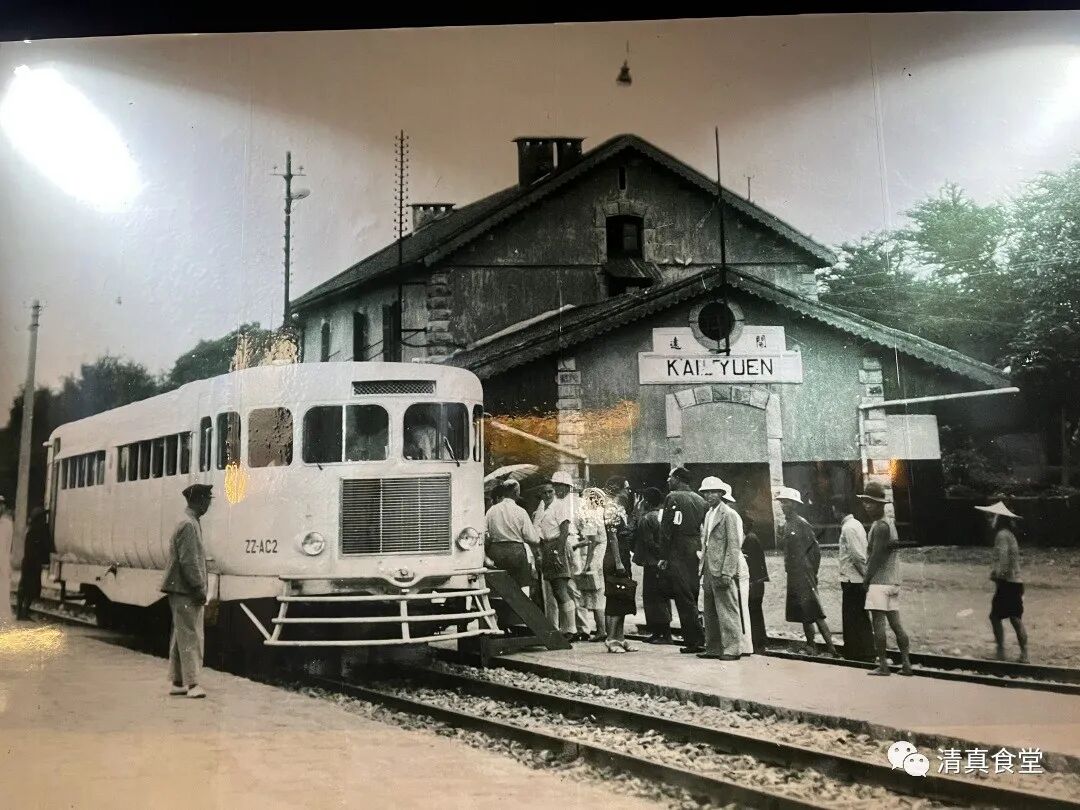
Kaiyuan is a cozy little county-level city in the Honghe Hani and Yi Autonomous Prefecture of Yunnan Province. Tucked along the historic Yunnan-Vietnam Railway, it's literally a city built by the train tracks.
You could say Kaiyuan is an industrial city, a tropical city, a youthful city, and definitely a delicious city. Everyone says Kaiyuan folks are truly blessed, and honestly, living here just feels amazing.
Dazhuang Township in Kaiyuan is a Hui township, and a huge number of people from Dazhuang have moved into Kaiyuan to build their careers in the restaurant business. That's why Kaiyuan's Halal food scene is completely off the charts—definitely way too massive for just one blog post to cover.
Over the past few years, tons of new Halal spots have popped up across Kaiyuan, though plenty have come and gone, too. But it's exactly this constant wave of new openings and culinary experiments that makes Kaiyuan such an awesome place for young Hui folks to hang out.
Why are Kaiyuan's Halal restaurants getting so youthful?
A huge chunk of Kaiyuan's Halal eateries are run by and geared toward the younger generation. These spots often feature stunning interior design, gorgeous plating, and major photo ops for social media. While these tags totally fit the vibe of modern viral internet-famous shops, what's amazing is that the food at these places actually tastes incredible!
I vaguely remember over a decade ago, one of the very first Halal spots in Kaiyuan to capture young people's attention was Da Rong Shu (The Big Banyan Tree). Back then, their various rice bowl meals, fried rice, and fried street-style snacks felt super fresh and exciting.
As time rolls on, newer spots naturally replace the old classics, but Kaiyuan's youthful Halal scene keeps constantly renewing itself, giving locals that fresh, exciting vibe all the time.
With so many young Hui professionals moving to Kaiyuan for work, these trendy Halal restaurants have naturally multiplied to match their lifestyle, satisfying young urbanites' cravings for a cool weekend vibe and great food.
Take Mousse Xiao Ge, for instance—it's a dessert shop with a gorgeous Halal sign out front. When you take traditional symbols and give them a fresh, modern aesthetic twist like this, it's hard for young people not to fall in love with it.
Even though these places sometimes catch the 'internet-famous' label, I really feel like the owners pour their hearts into building and running these businesses. Young Hui folks choosing to put down roots in Kaiyuan definitely has a lot to do with the rise of these creative spots.
Kaiyuan is seriously becoming more and more magnetic for young Hui Muslims.
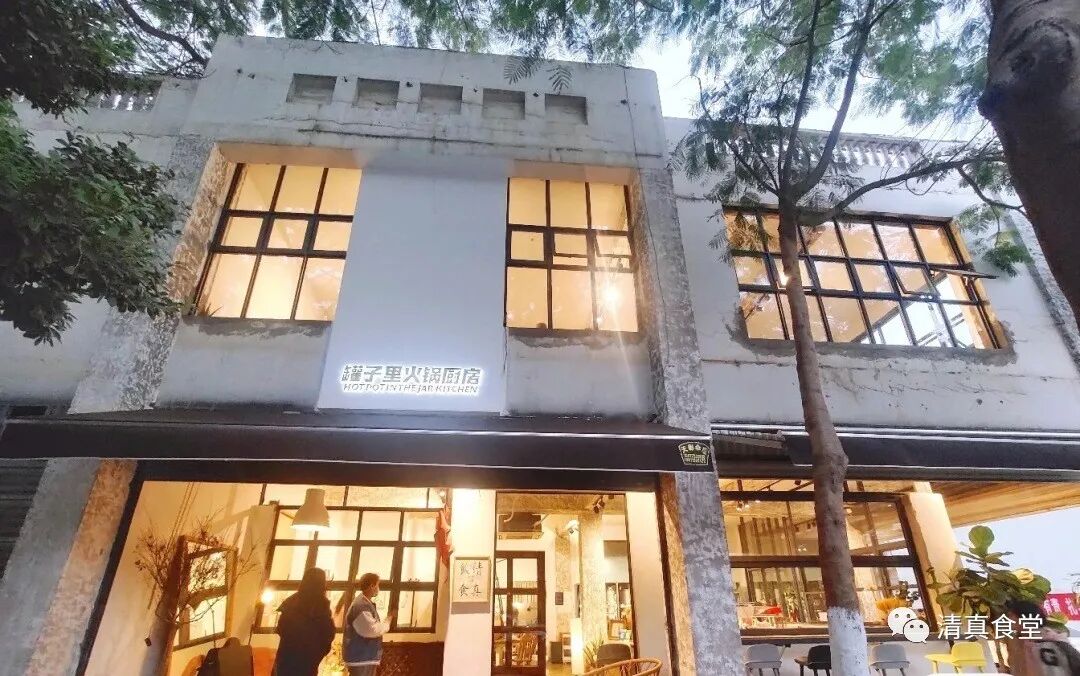
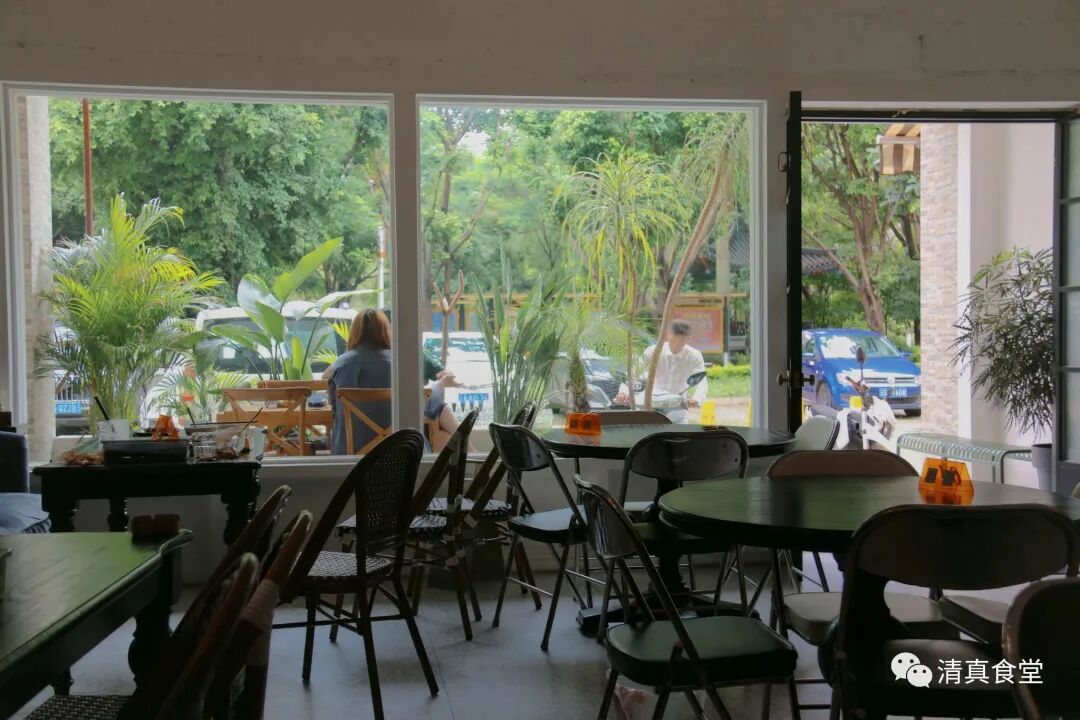
Kaiyuan has amazing greenery, and these restaurants really lean into lush plant styling to create gorgeous spaces. Sometimes, even before you know if the food is totally your thing, just walking in and sitting down at one of these places feels like self-care.
Uncle Sai (Sai Dashu) sits right along the banks of the Lujiang River, offering incredible views out the window.
A restaurant that puts real thought into its concept is always going to draw a crowd. Whether it's the interior design or the tiny details, these young entrepreneurs are putting serious work into figuring it out.
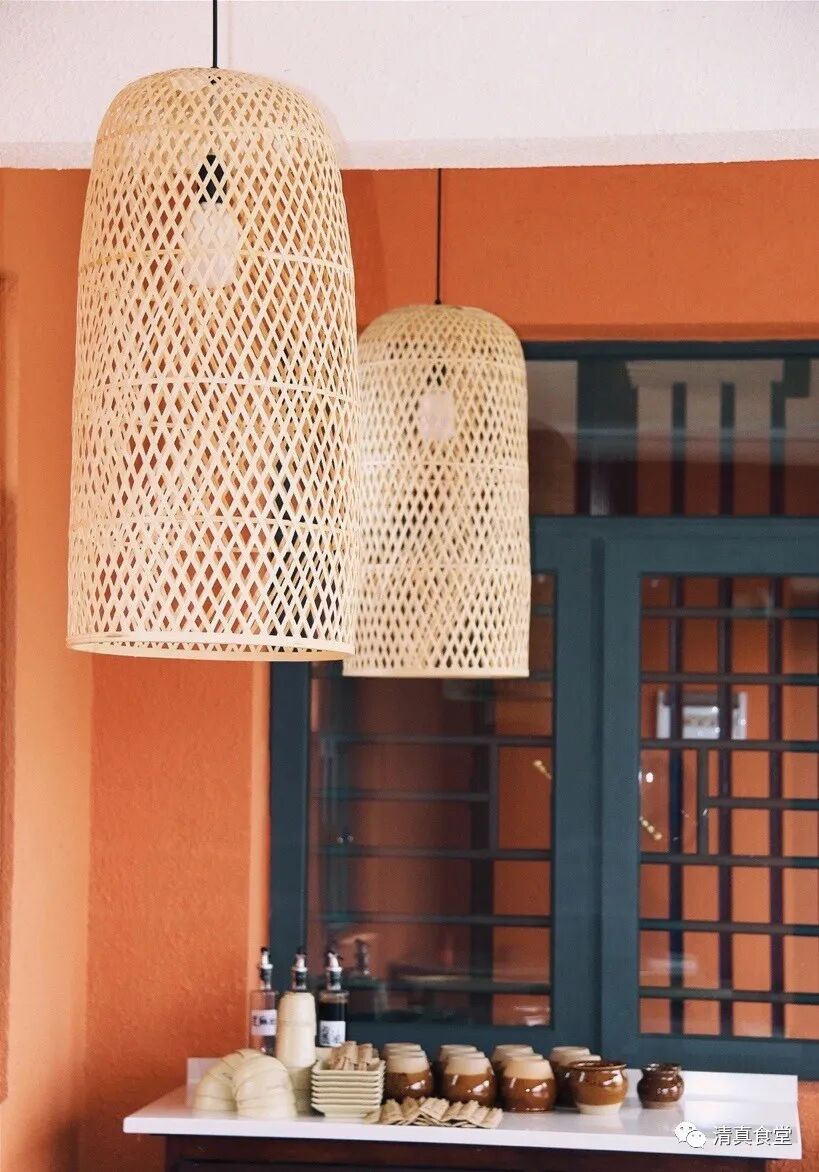
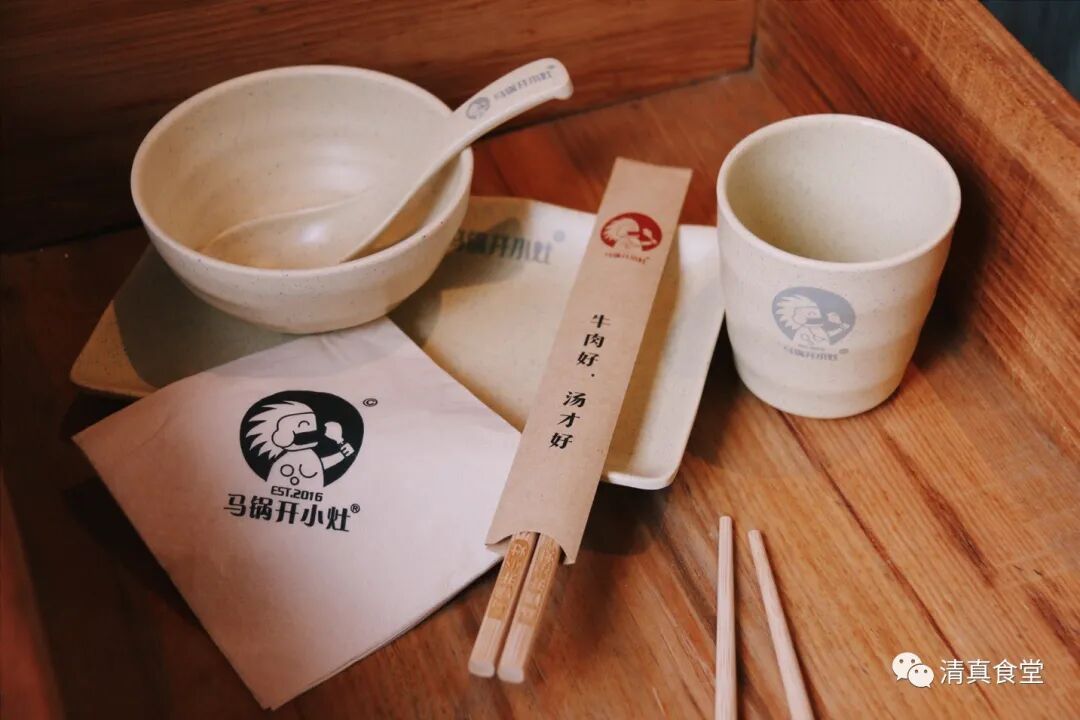
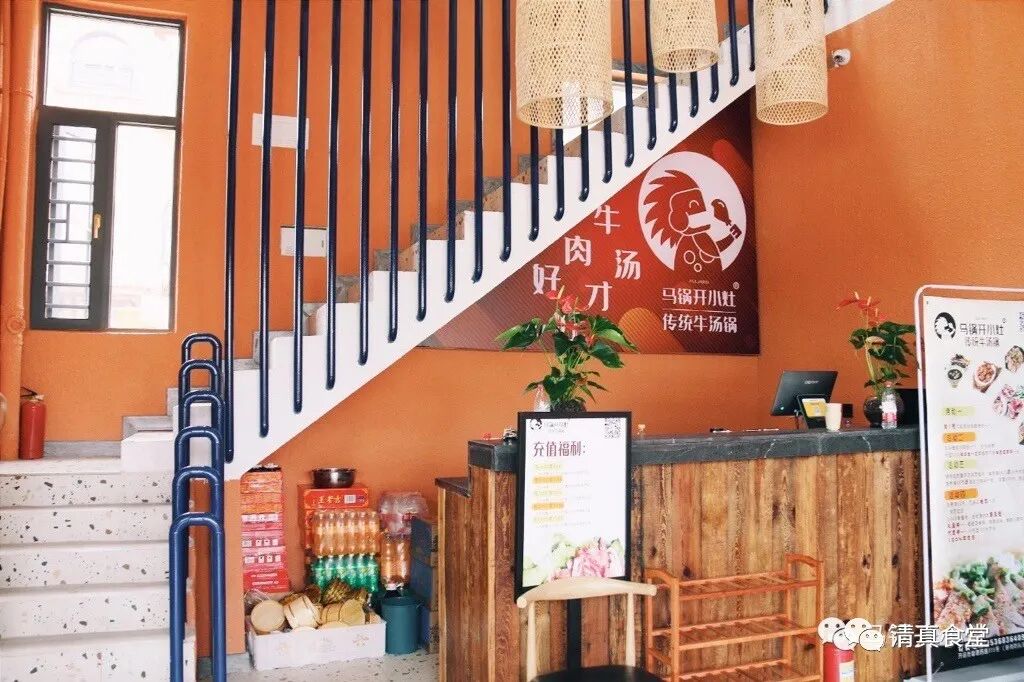
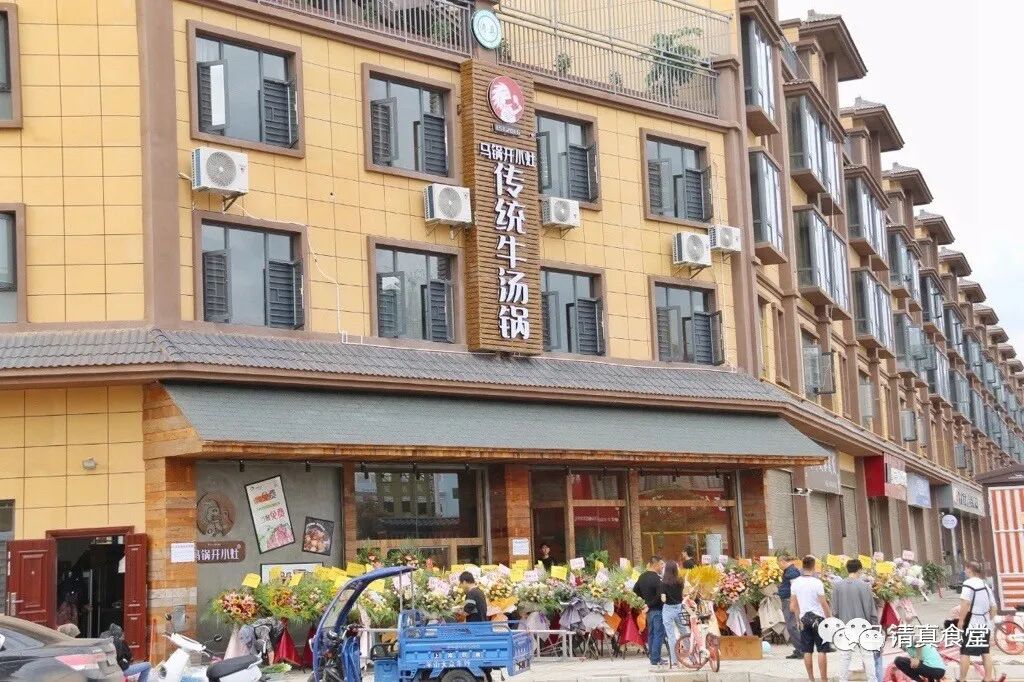
Ma Guo Kai Xiao Zuo Traditional Beef Soup Hot Pot is one of those places that nails the details. The owner chose a bunch of local Yunnan cultural elements for the decor: woven bamboo tools, earthen pottery jars, and more. Adding these touches gives the restaurant a ton of creative flair—and that creativity is a huge magnet for the younger crowd.
You can really see that more and more young Hui entrepreneurs are baking aesthetics right into their restaurant concepts from day one.
Of course, gorgeous interior design can never make up for food that doesn't taste good. That's also why these trendy young spots sometimes shut down—at the end of the day, incredible food is the absolute foundation of a lasting restaurant.
Why these specific Halal flavors?
Kaiyuan's Halal food scene basically breaks down into two main categories: first, fresh modern spins on classic local Kaiyuan flavors; and second, Halal adaptations of exotic cuisine.
Fresh Modern Spins on Classic Local Kaiyuan Flavors
Everyone knows that Yunnan's number one food love is rice noodles (mianxian). If you walk into 100 Halal restaurants in Kaiyuan, easily 90 of them are serving up noodles! Beyond the traditional beef soup rice noodles and stir-fried rice noodles at barbecue street stalls, younger foodies are totally hooked on these creative, innovative bowls.
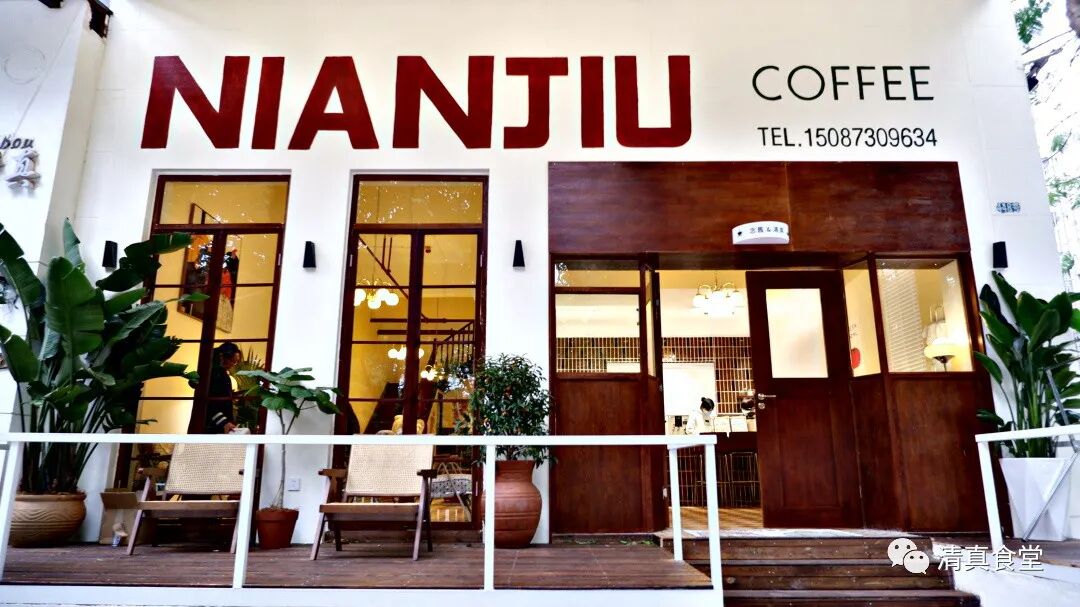
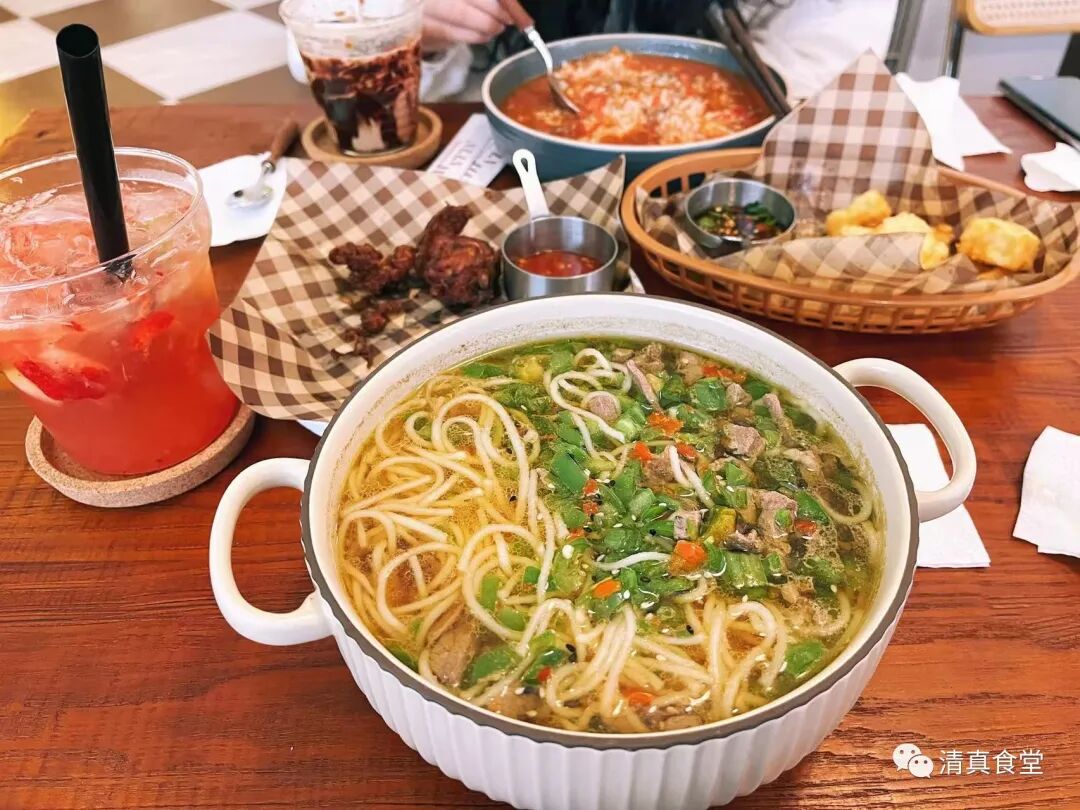
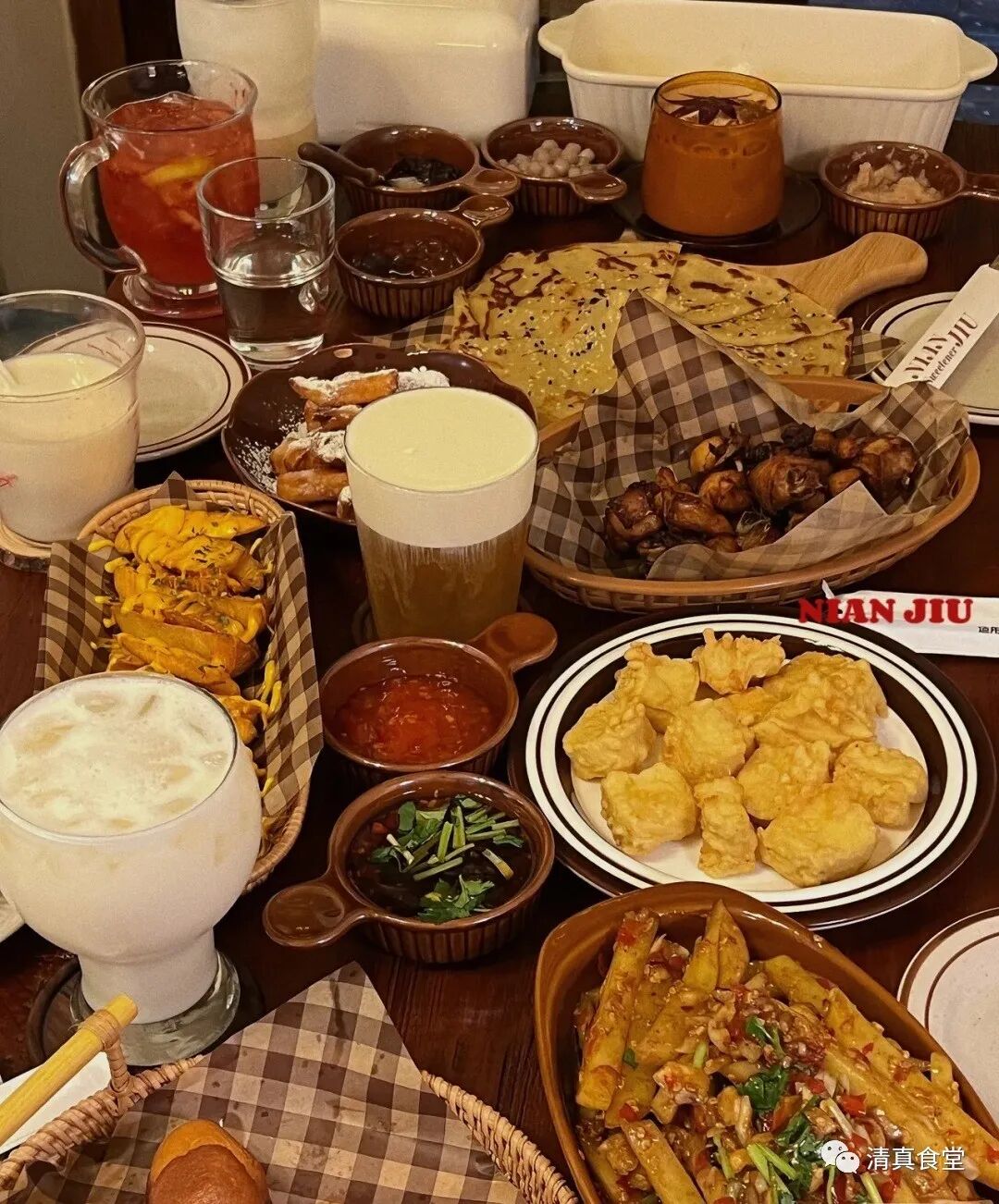
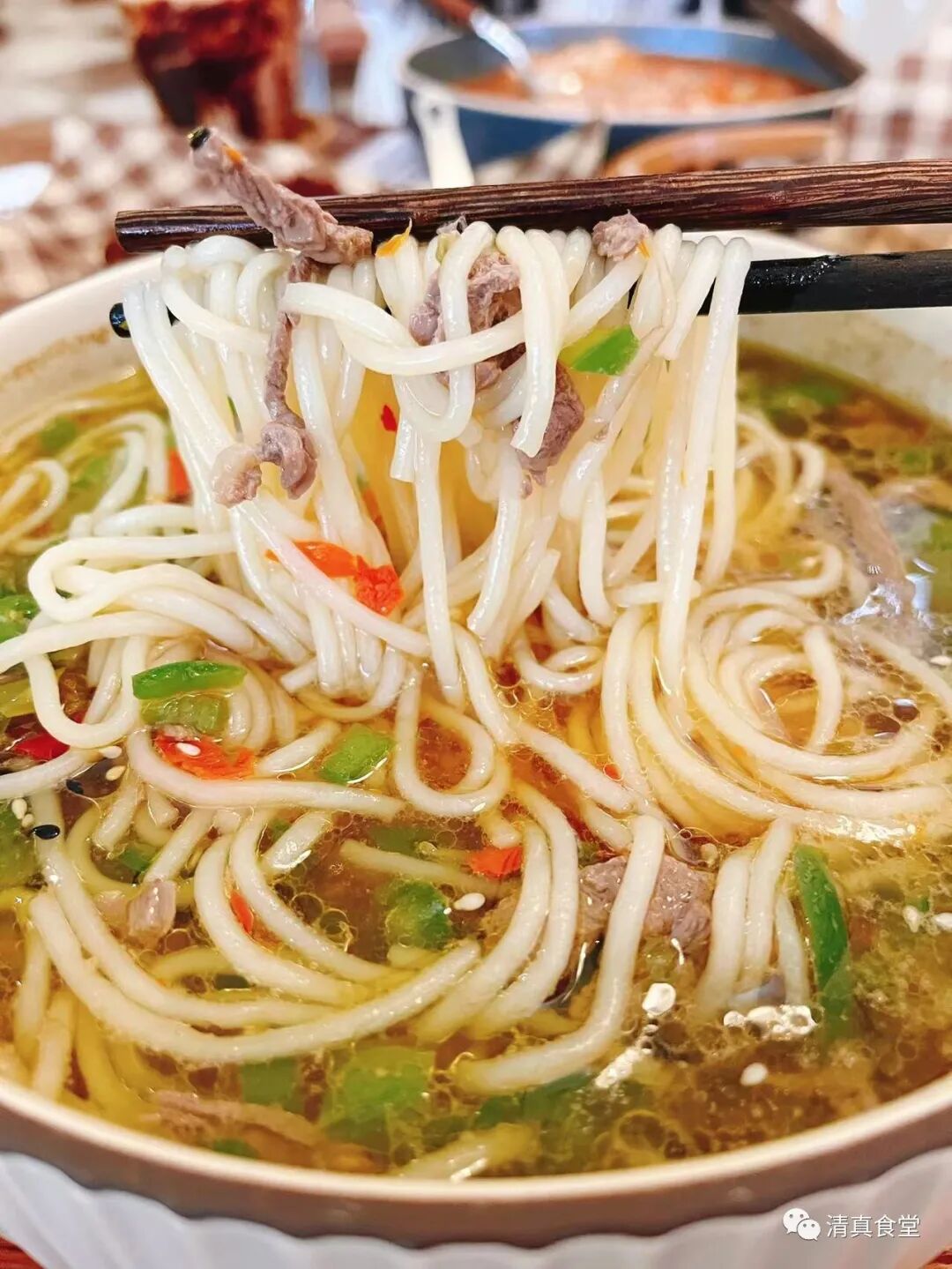
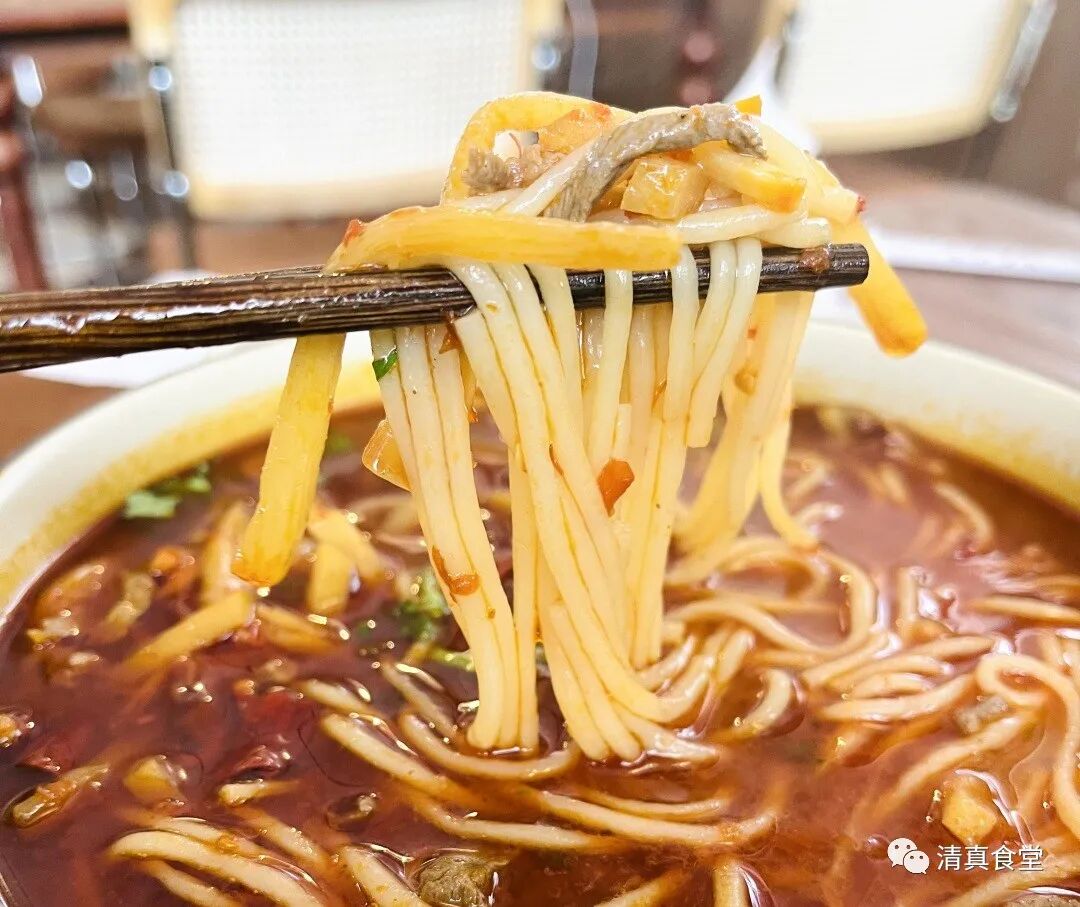
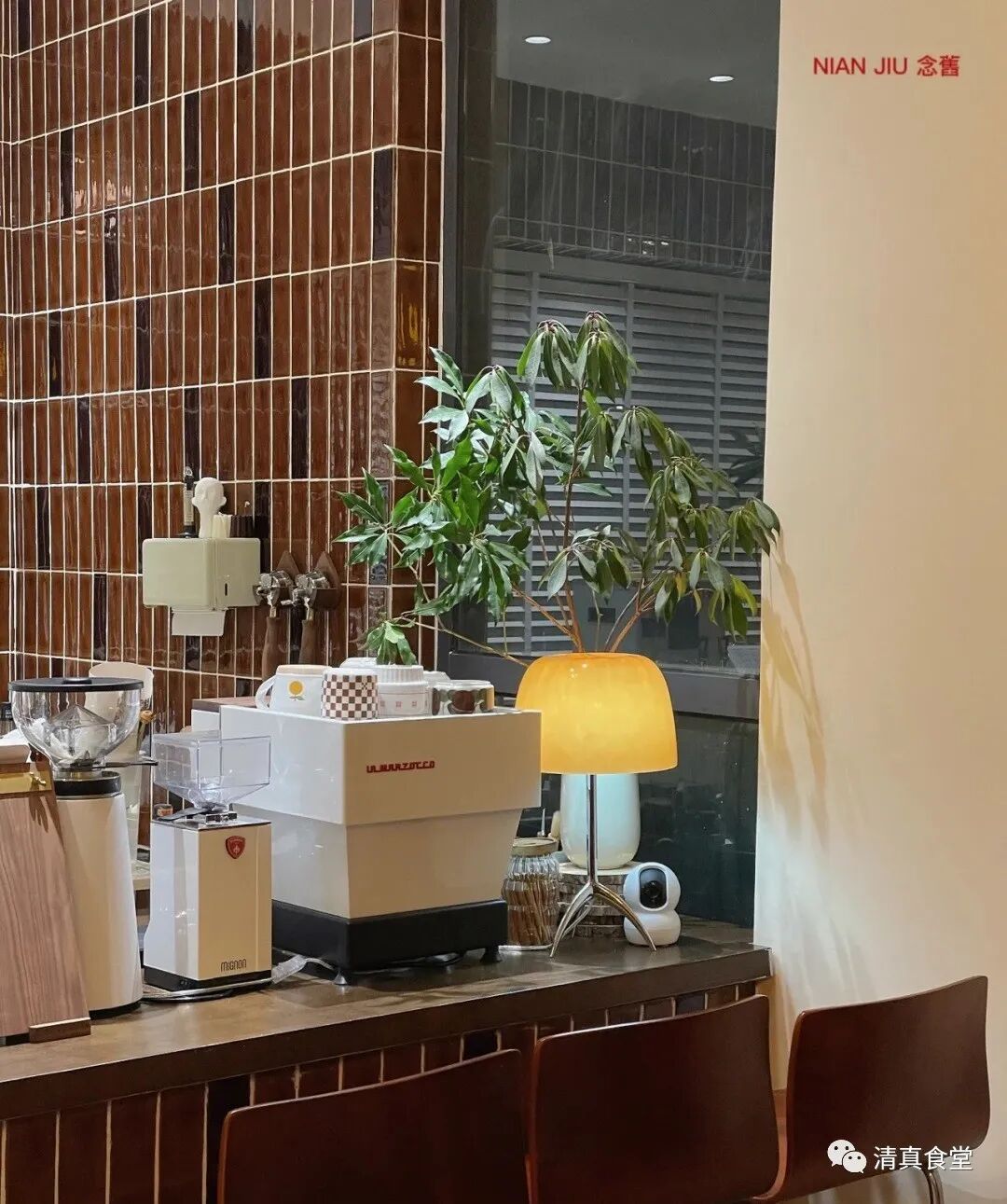
A spot called Nianjiu (Reminiscence) has seriously taken rice noodles to the next level. Their Sichuan pepper and green peppercorn beef noodles (tengjiao niurou mianxian), pickled bamboo shoot beef noodles (suansun niurou mianxian), and super-popular spicy chili oil noodles (huhu lazhi baokuan mianxian) are absolute flavor bombs!
The older generation might argue that rice noodles should only be eaten the classic way to be truly savory, but young people are always chasing fresh flavor profiles—and these creative upgrades totally deliver without any buyer's remorse.
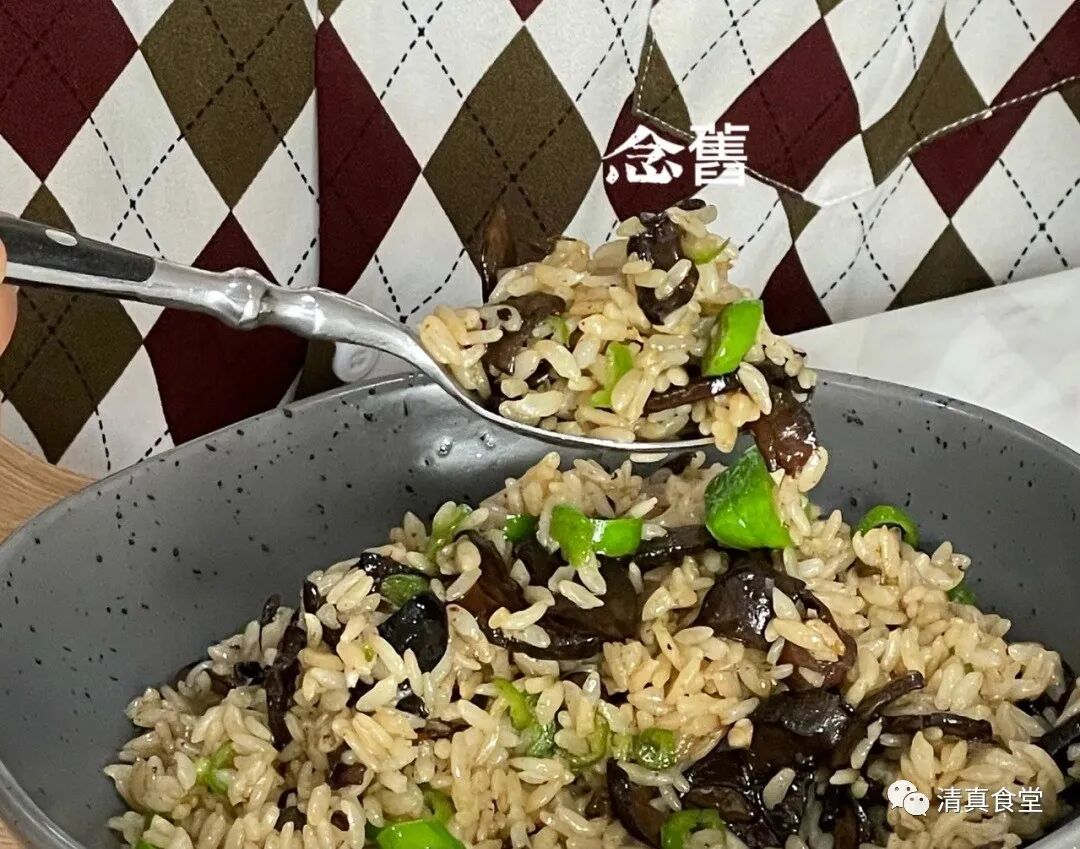
Their porcini mushroom fried rice (niuganjun chaofan) is also a must-try. Wild mushrooms are the ultimate Yunnan specialty, and in recent years, chefs have been loving to fold them into their menus. Porcini mushrooms and green chili peppers are an absolute match made in heaven, and tossing them into fried rice takes it to a whole new level.
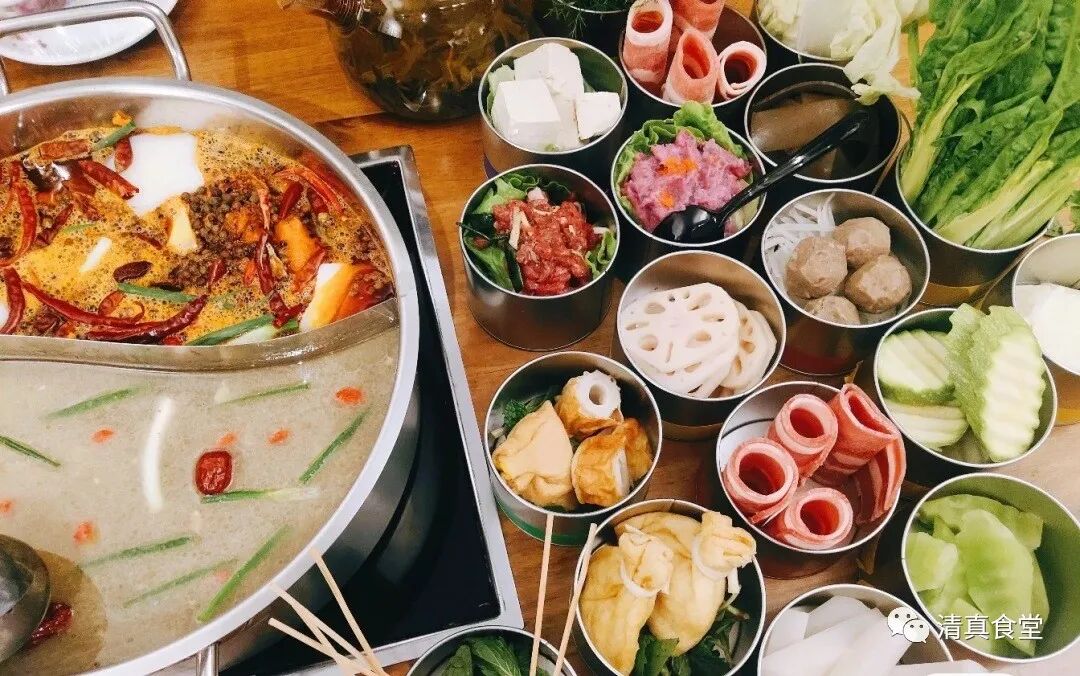
Kaiyuan has plenty of local signatures, and beef soup hot pot (niutangguo) is definitely near the top. It’s not just used as a noodle base, but served up family-style as a bubbling hot pot.
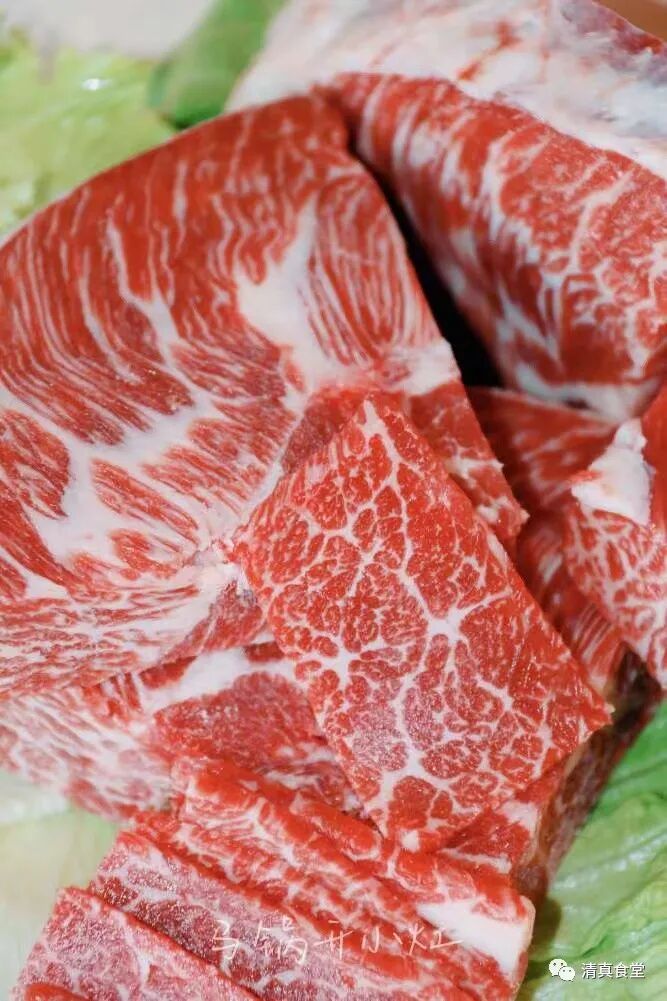
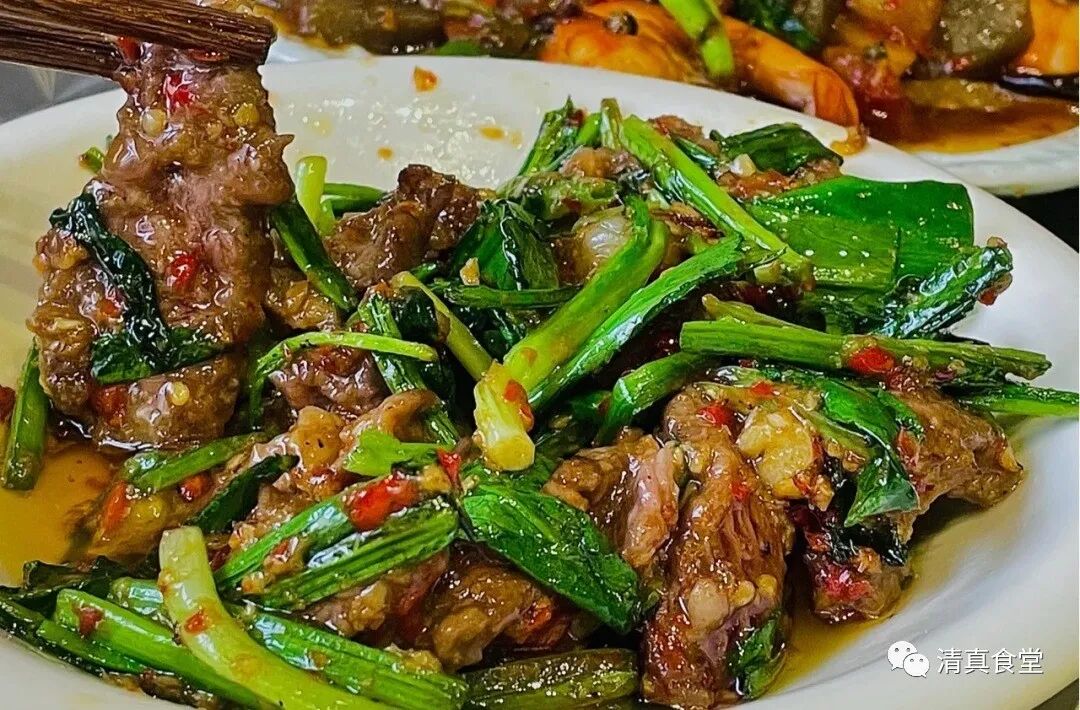
Ma Guo Kai Xiao Zuo sources its beef directly from local Dazhuang cattle. 'Dazhuang' is practically a badge of honor for top-tier beef; as soon as a restaurant advertises that their hot pot uses authentic local Dazhuang beef, you can bet it pulls in a massive crowd of hungry diners.
The owner says, "We only sell local beef." Stick to that one hard rule, and you're pretty much guaranteed to crush it. It just shows how insanely high the local respect is for Dazhuang local beef!
Halal twists on exotic global flavors
Dai cuisine, Thai flavors, Vietnamese street eats—you can find Halal versions of all these iconic regional styles right here in Kaiyuan.
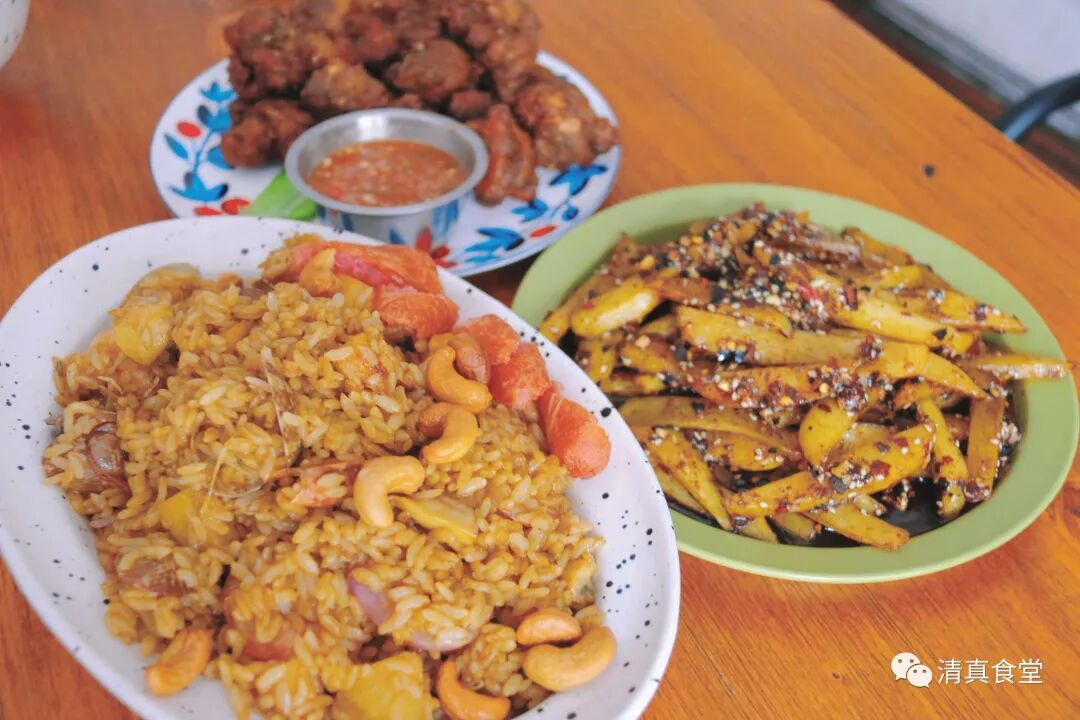
Lately, Thai and Dai flavors have been blowing up all over Yunnan. Since Kaiyuan has a huge population of young Hui Muslims, there's a serious appetite for these trending tastes, so naturally, restaurants dishing them out have been popping up back-to-back.
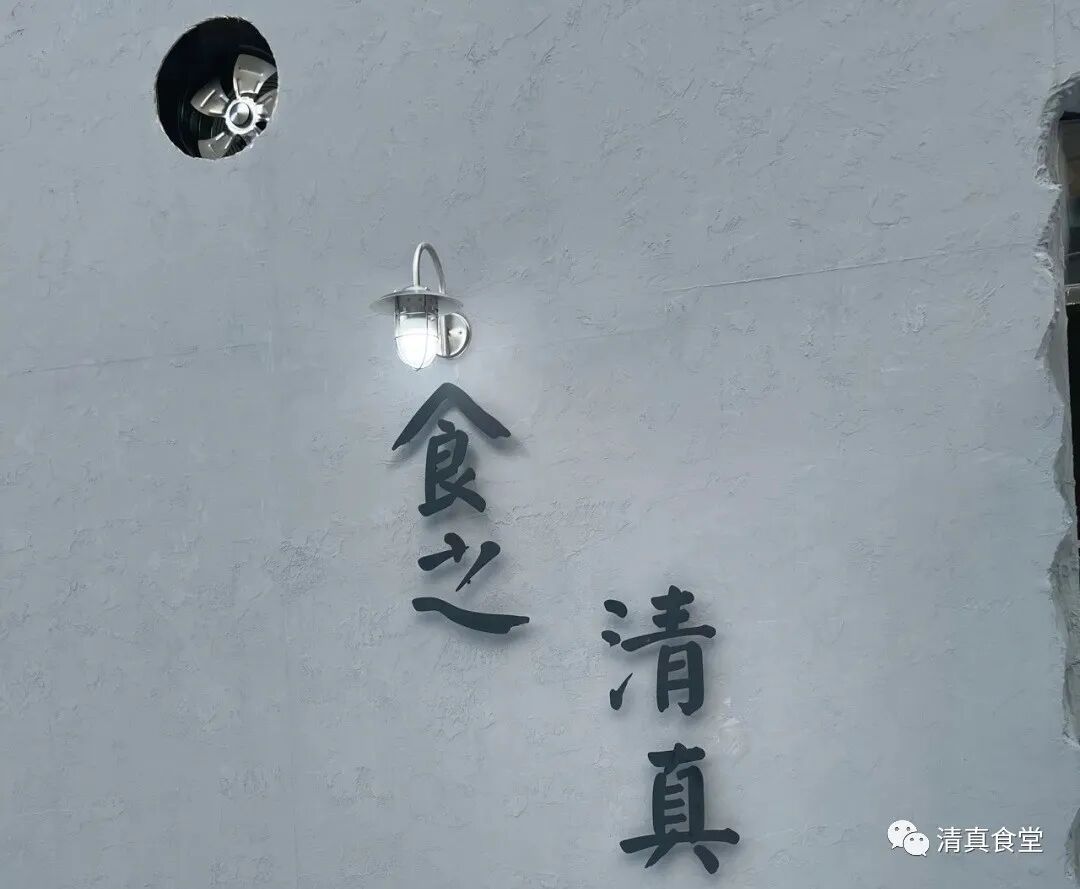
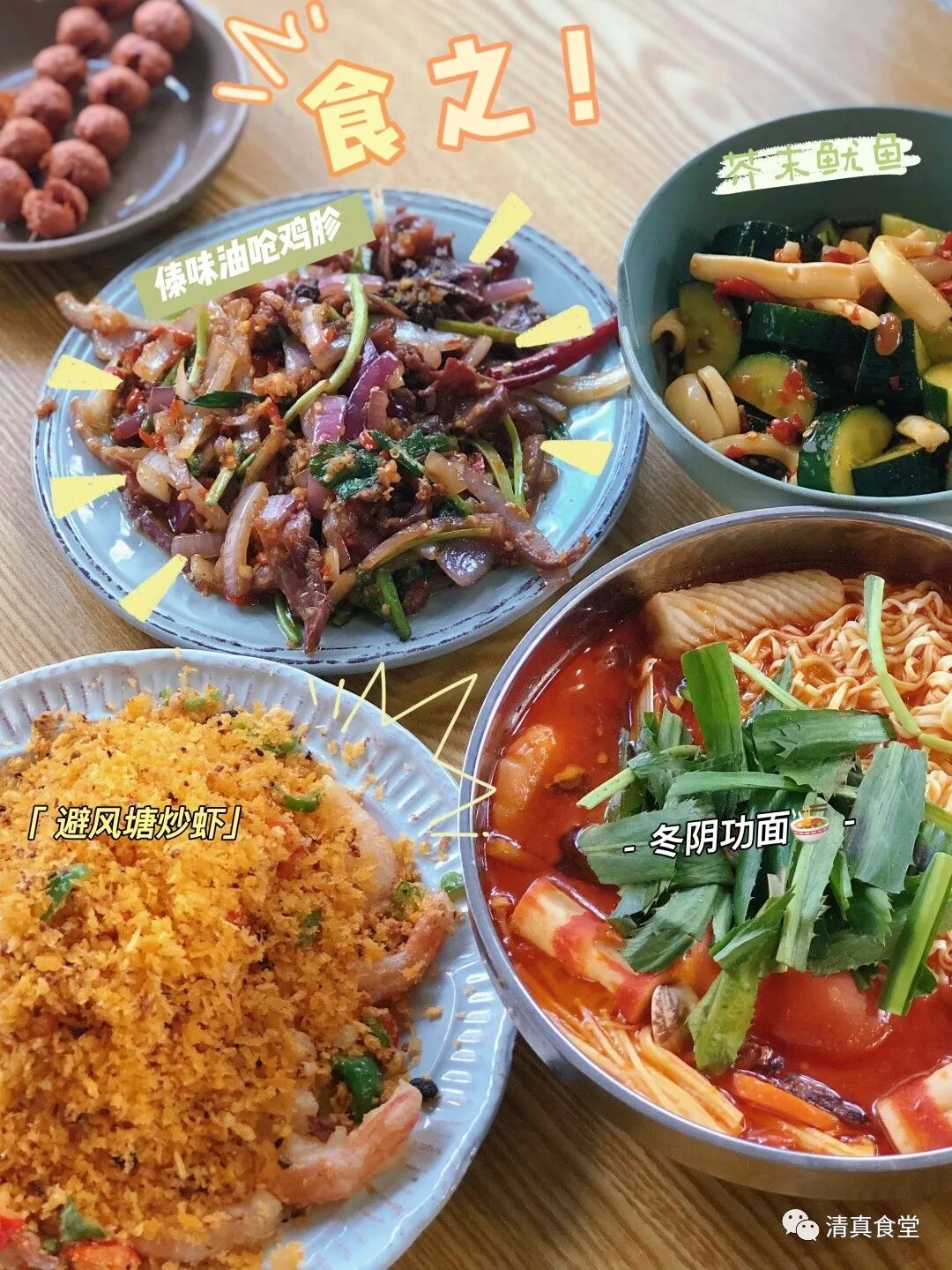
Shi Zhi Qingzhen, located in Jiete Plaza, specializes in Thai and Dai food. It's won a major following because the dishes taste super authentic.
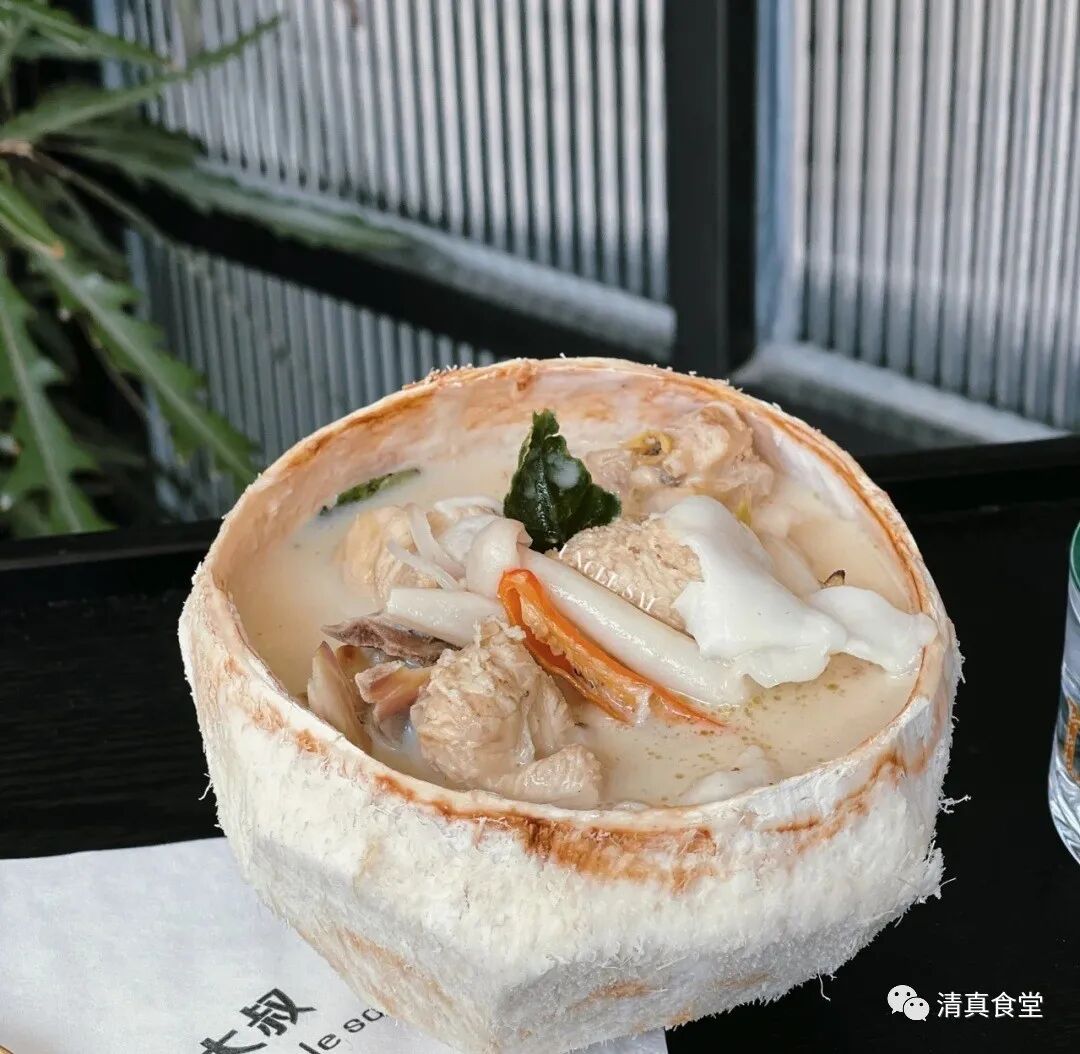
They've got everything from Dai-style oil-splashed dishes to Thai tom yum. You'll spot all the absolute must-have ingredients in these flavor profiles: Myanmar culantro, fresh lime, lemongrass, and tiny, fiery Xiaomi chili peppers...
It kinda reminds us of Uncle Sai, a super trendy Thai spot that blew up recently. Though sadly, the original location isn't open anymore.
Our foodie squad went twice and totally fell in love with it. Regardless of how you judge the exact flavor, Uncle Sai basically set a whole new, innovative high-water mark for Kaiyuan's Halal food scene.
We seriously respect Uncle Sai's spot—they put so much genuine thought into the design, the vibe, and the cooking. Their food genuinely transports you straight back to Thailand, and the aesthetic hits different.
Who wouldn't want to feast on exotic flavors in a gorgeous little spot like this?
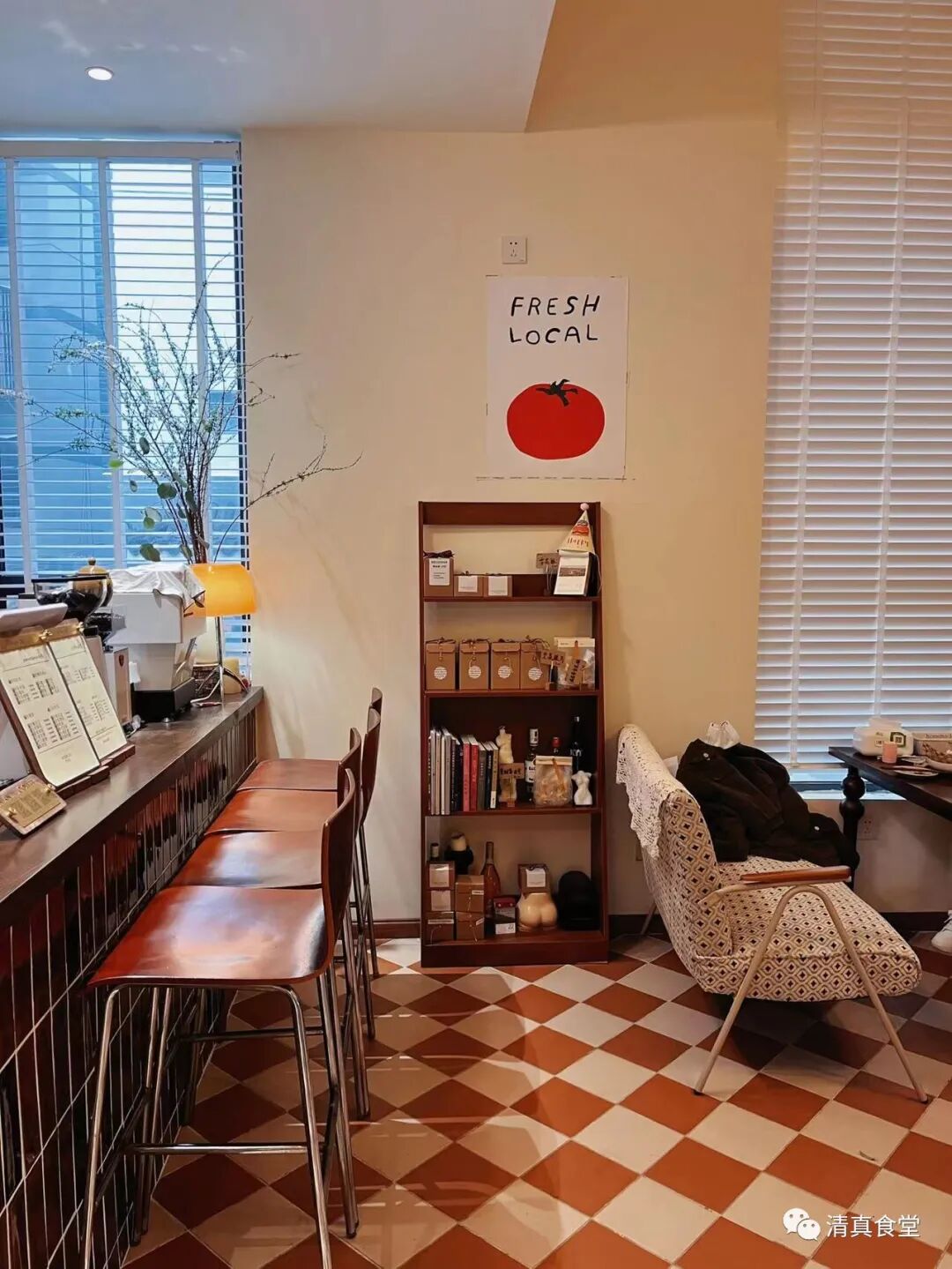
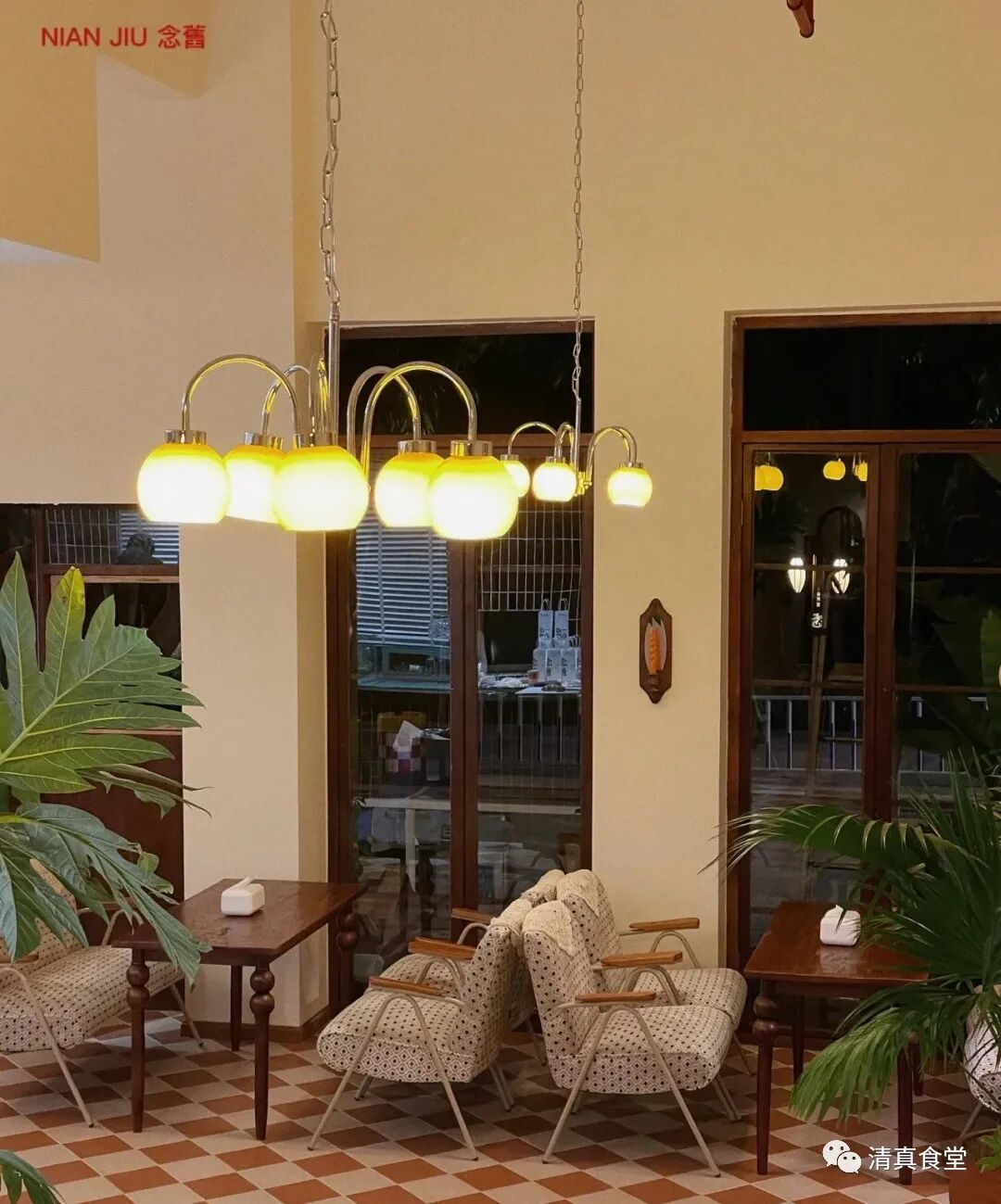
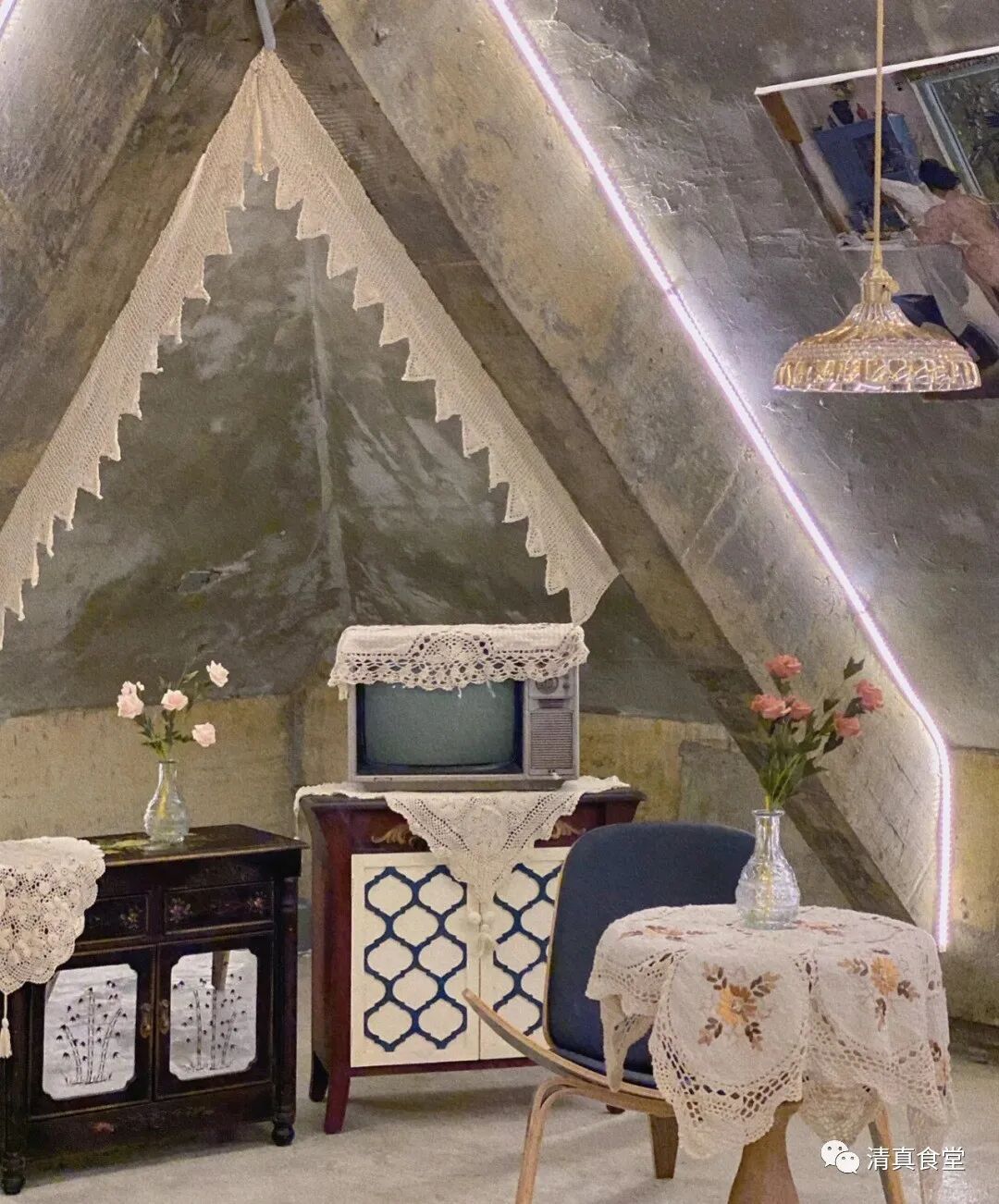
Beyond just the exotic food, having exotic interior design to match is an absolute vibe. Our squad is low-key obsessed with retro aesthetics—walking in literally makes you feel like you've jetted off to Chiang Mai~ The warm cocoa tones, indoor greenery, and vintage floor tiles tie everything together so well.
Why are so many young people grinding for the Halal food scene?
In Honghe Prefecture, Kaiyuan feels like a pretty youthful city.
And the power of youth is all about having fresh ideas.
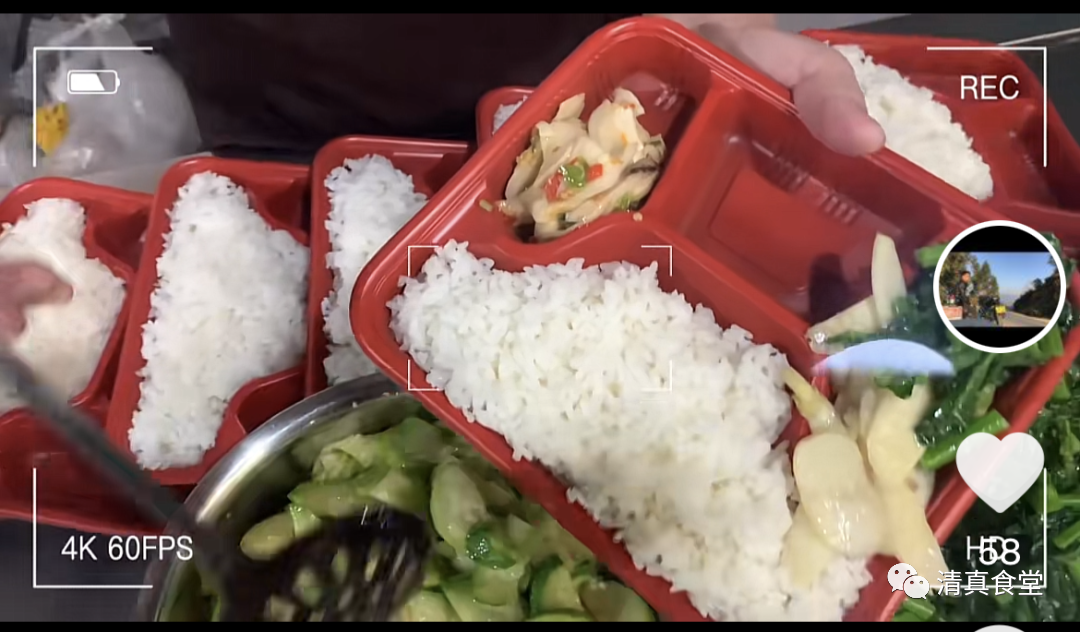
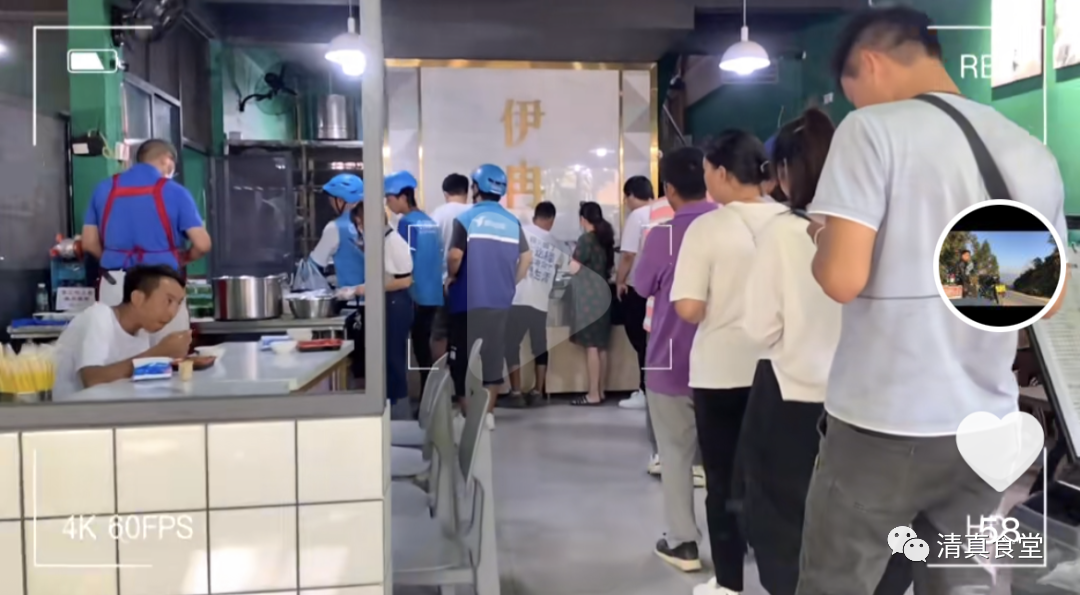
A fast-food joint called Yiran Halal is an absolute obsession for local nine-to-fivers and delivery workers in Kaiyuan. Even though it's just regular fast food—your standard three meat dishes and two veggie sides—their business is ridiculously booming.
The secret sauce behind this regular fast-food spot's massive success is the owner: the Lunchbox Knight.
Packing lunchboxes is the day job, but being a knight is the dream. A young, entrepreneurial boss running a fast-food joint while never losing sight of his dreams.
Running a Douyin (TikTok) account gives this little shop a unique soul—another flex of youth culture. Hui Muslim youth are constantly learning, leveling up, and building something totally unique. That is seriously so important.
Sure, it's just your standard three-meat-and-two-veggie setup, and the cooking is straightforward, but it slaps. Even in a seemingly basic Halal spot like this, the hustle and drive of these young Hui Muslims make the whole place shine bright.
You guys already know 'Maguo' from Maguo's Private Kitchen—yep, the genius behind our convenience store's viral coconut sesame chicken has opened up a hot pot spot right here in Kaiyuan.
Now, Kaiyuan already has tons and tons of hot pot joints in every style imaginable, including Halal Sichuan and Chongqing hot pots, but Maguo decided to focus strictly on local beef soup hot pot.
From the storefront decor to the ingredient curation, you can tell everything is filtered through young brains to keep the spot fresh and vibrant. Infusing modern youth culture into traditional eats is key—after all, only young people truly know what young people want.
When our foodie squad rolled into Kaiyuan, we were instantly hooked by how youthful the city felt. If you're a young Hui Muslim moving here to live, you'll never have to worry about finding a place that keeps you feeling young.
Critics might say these trendy spots won't stand the test of time, and hey, Kaiyuan has countless rock-solid, old-school Halal institutions. Every single year, new joints open up while others close down or relocate.
Yet these new spots are the physical embodiment of the Hui youth's dreams and hopes. If we had to pick anywhere in Honghe Prefecture to settle down, it would be Kaiyuan in a heartbeat. Come to Kaiyuan, and you'll never worry about what to eat, nor will you run out of fresh vibes, youthfulness, and aesthetic joy.
You might not be planning a dedicated trip to Kaiyuan just based on this article, but if you ever get the chance to visit Honghe Prefecture in Yunnan, do yourself a favor and come to Kaiyuan specifically for a food crawl.
The restaurants our squad listed here are just the tip of the iceberg, so let's shout out a few legendary, can't-miss, tried-and-true Halal spots in Kaiyuan!
There's a traditional *chuanguo* (bronze pot hot pot) spot at the Linjiang Farmers' Market, though we hear it's moved to Yingxu Plaza now. The Halal joints on Youth Road have been holding it down for ages, and Changjiu Xiaojuanfen (Changjiu rice noodles) tucked away in a small alley—if you know, you know. Every single Halal restaurant is packed to the brim. Old-school spots like Yingjiang and Dongqiao are absolute classics. And the stir-fry at the Muslim Alcohol-Free Restaurant right next to the Kaiyuan North Bus Station is mind-blowing!
These days, Meituan and Ele.me delivery drivers are zipping all over Kaiyuan, and Halal delivery takes up like half the action. Kaiyuan is a city so vibrant you couldn't possibly capture it all in just a few articles.
Long story short: Kaiyuan is seriously the ultimate vibe for young Hui Muslims! view all
Hidden Gem on the Yunnan-Vietnam Railway: Why Young Hui Muslims Are Obsessed with Kaiyuan
Abstract:
As an industrial hub along the historic Yunnan-Vietnam Railway, Kaiyuan in Honghe Prefecture, Yunnan, draws on the rich Halal culinary traditions of Dazhuang Hui Township to spawn a wave of youthful, stylish modern Halal eateries and cafes. This article takes a deep dive into Kaiyuan's evolving Halal food scene, the wave of young Hui entrepreneurs returning home, and a laid-back, livable picture of multi-ethnic harmony.
Kaiyuan is a cozy little county-level city in the Honghe Hani and Yi Autonomous Prefecture of Yunnan Province. Tucked along the historic Yunnan-Vietnam Railway, it's literally a city built by the train tracks.
You could say Kaiyuan is an industrial city, a tropical city, a youthful city, and definitely a delicious city. Everyone says Kaiyuan folks are truly blessed, and honestly, living here just feels amazing.
Dazhuang Township in Kaiyuan is a Hui township, and a huge number of people from Dazhuang have moved into Kaiyuan to build their careers in the restaurant business. That's why Kaiyuan's Halal food scene is completely off the charts—definitely way too massive for just one blog post to cover.
Over the past few years, tons of new Halal spots have popped up across Kaiyuan, though plenty have come and gone, too. But it's exactly this constant wave of new openings and culinary experiments that makes Kaiyuan such an awesome place for young Hui folks to hang out.
Why are Kaiyuan's Halal restaurants getting so youthful?
A huge chunk of Kaiyuan's Halal eateries are run by and geared toward the younger generation. These spots often feature stunning interior design, gorgeous plating, and major photo ops for social media. While these tags totally fit the vibe of modern viral internet-famous shops, what's amazing is that the food at these places actually tastes incredible!
I vaguely remember over a decade ago, one of the very first Halal spots in Kaiyuan to capture young people's attention was Da Rong Shu (The Big Banyan Tree). Back then, their various rice bowl meals, fried rice, and fried street-style snacks felt super fresh and exciting.
As time rolls on, newer spots naturally replace the old classics, but Kaiyuan's youthful Halal scene keeps constantly renewing itself, giving locals that fresh, exciting vibe all the time.
With so many young Hui professionals moving to Kaiyuan for work, these trendy Halal restaurants have naturally multiplied to match their lifestyle, satisfying young urbanites' cravings for a cool weekend vibe and great food.
Take Mousse Xiao Ge, for instance—it's a dessert shop with a gorgeous Halal sign out front. When you take traditional symbols and give them a fresh, modern aesthetic twist like this, it's hard for young people not to fall in love with it.
Even though these places sometimes catch the 'internet-famous' label, I really feel like the owners pour their hearts into building and running these businesses. Young Hui folks choosing to put down roots in Kaiyuan definitely has a lot to do with the rise of these creative spots.
Kaiyuan is seriously becoming more and more magnetic for young Hui Muslims.
Kaiyuan has amazing greenery, and these restaurants really lean into lush plant styling to create gorgeous spaces. Sometimes, even before you know if the food is totally your thing, just walking in and sitting down at one of these places feels like self-care.
Uncle Sai (Sai Dashu) sits right along the banks of the Lujiang River, offering incredible views out the window.
A restaurant that puts real thought into its concept is always going to draw a crowd. Whether it's the interior design or the tiny details, these young entrepreneurs are putting serious work into figuring it out.
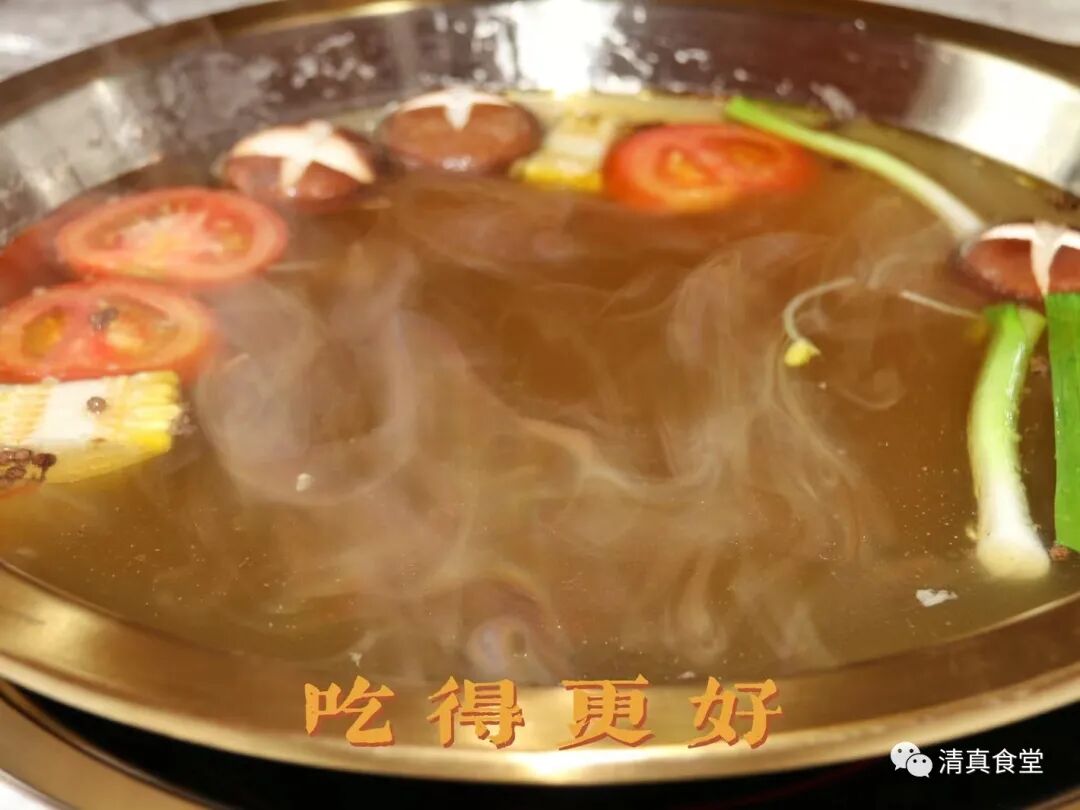
Ma Guo Kai Xiao Zuo Traditional Beef Soup Hot Pot is one of those places that nails the details. The owner chose a bunch of local Yunnan cultural elements for the decor: woven bamboo tools, earthen pottery jars, and more. Adding these touches gives the restaurant a ton of creative flair—and that creativity is a huge magnet for the younger crowd.
You can really see that more and more young Hui entrepreneurs are baking aesthetics right into their restaurant concepts from day one.
Of course, gorgeous interior design can never make up for food that doesn't taste good. That's also why these trendy young spots sometimes shut down—at the end of the day, incredible food is the absolute foundation of a lasting restaurant.
Why these specific Halal flavors?
Kaiyuan's Halal food scene basically breaks down into two main categories: first, fresh modern spins on classic local Kaiyuan flavors; and second, Halal adaptations of exotic cuisine.
Fresh Modern Spins on Classic Local Kaiyuan Flavors
Everyone knows that Yunnan's number one food love is rice noodles (mianxian). If you walk into 100 Halal restaurants in Kaiyuan, easily 90 of them are serving up noodles! Beyond the traditional beef soup rice noodles and stir-fried rice noodles at barbecue street stalls, younger foodies are totally hooked on these creative, innovative bowls.
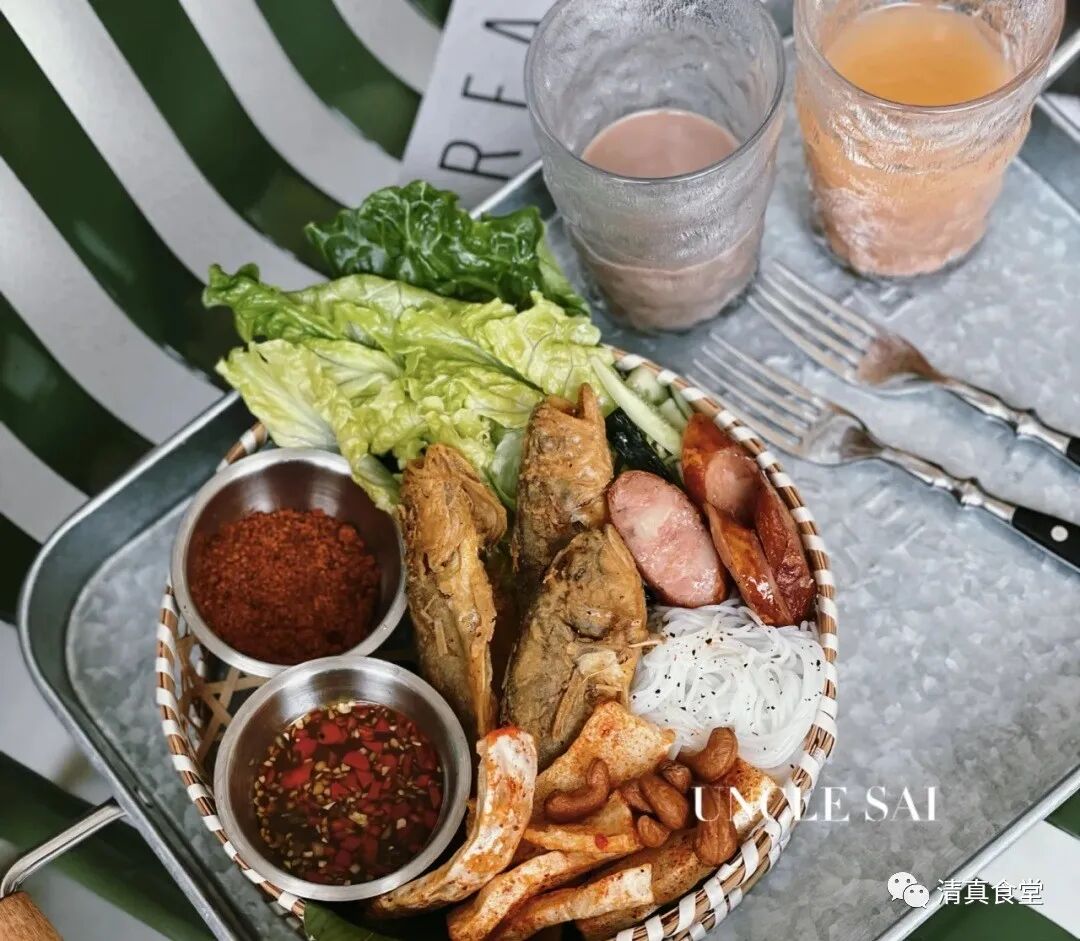
A spot called Nianjiu (Reminiscence) has seriously taken rice noodles to the next level. Their Sichuan pepper and green peppercorn beef noodles (tengjiao niurou mianxian), pickled bamboo shoot beef noodles (suansun niurou mianxian), and super-popular spicy chili oil noodles (huhu lazhi baokuan mianxian) are absolute flavor bombs!
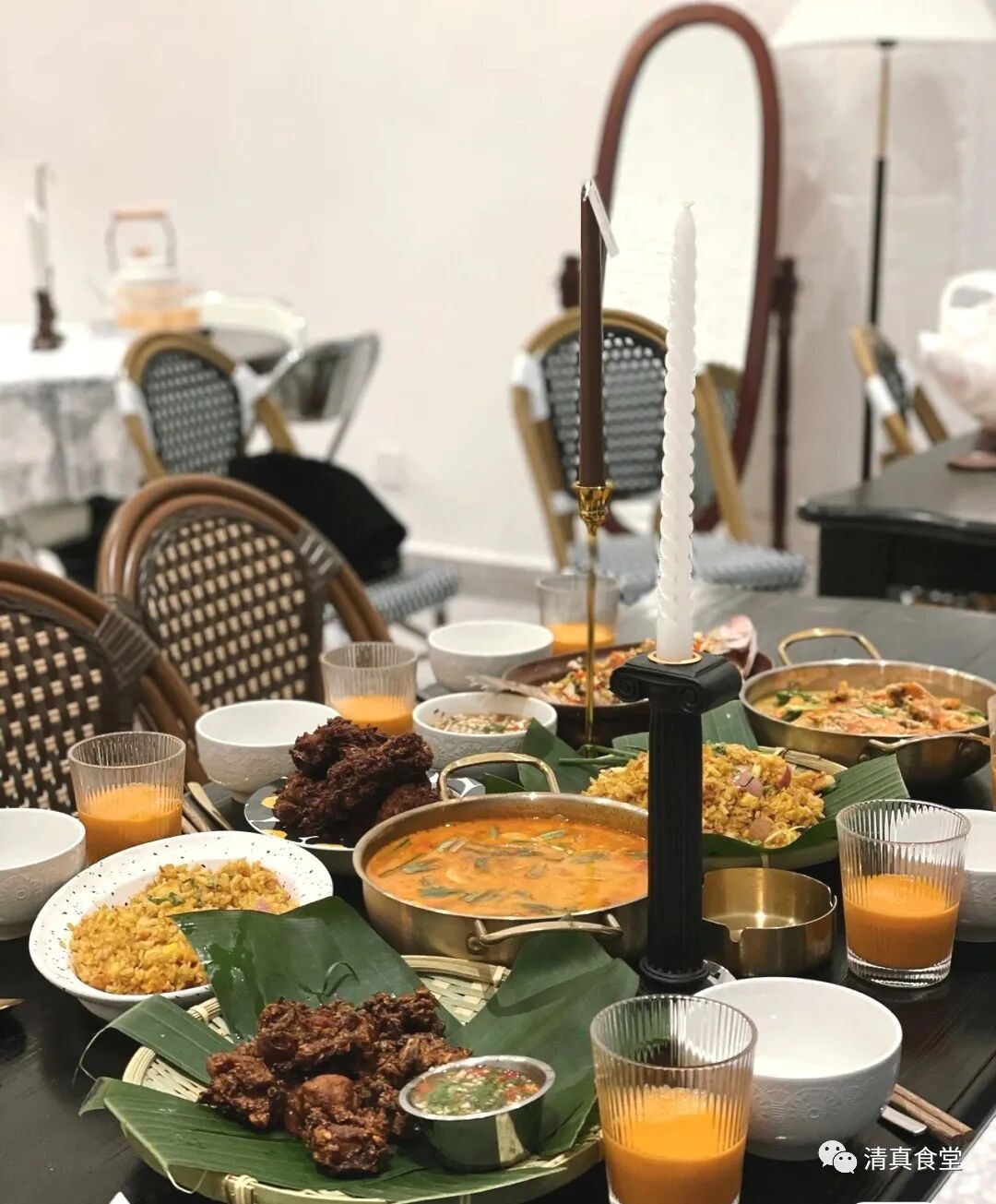
The older generation might argue that rice noodles should only be eaten the classic way to be truly savory, but young people are always chasing fresh flavor profiles—and these creative upgrades totally deliver without any buyer's remorse.
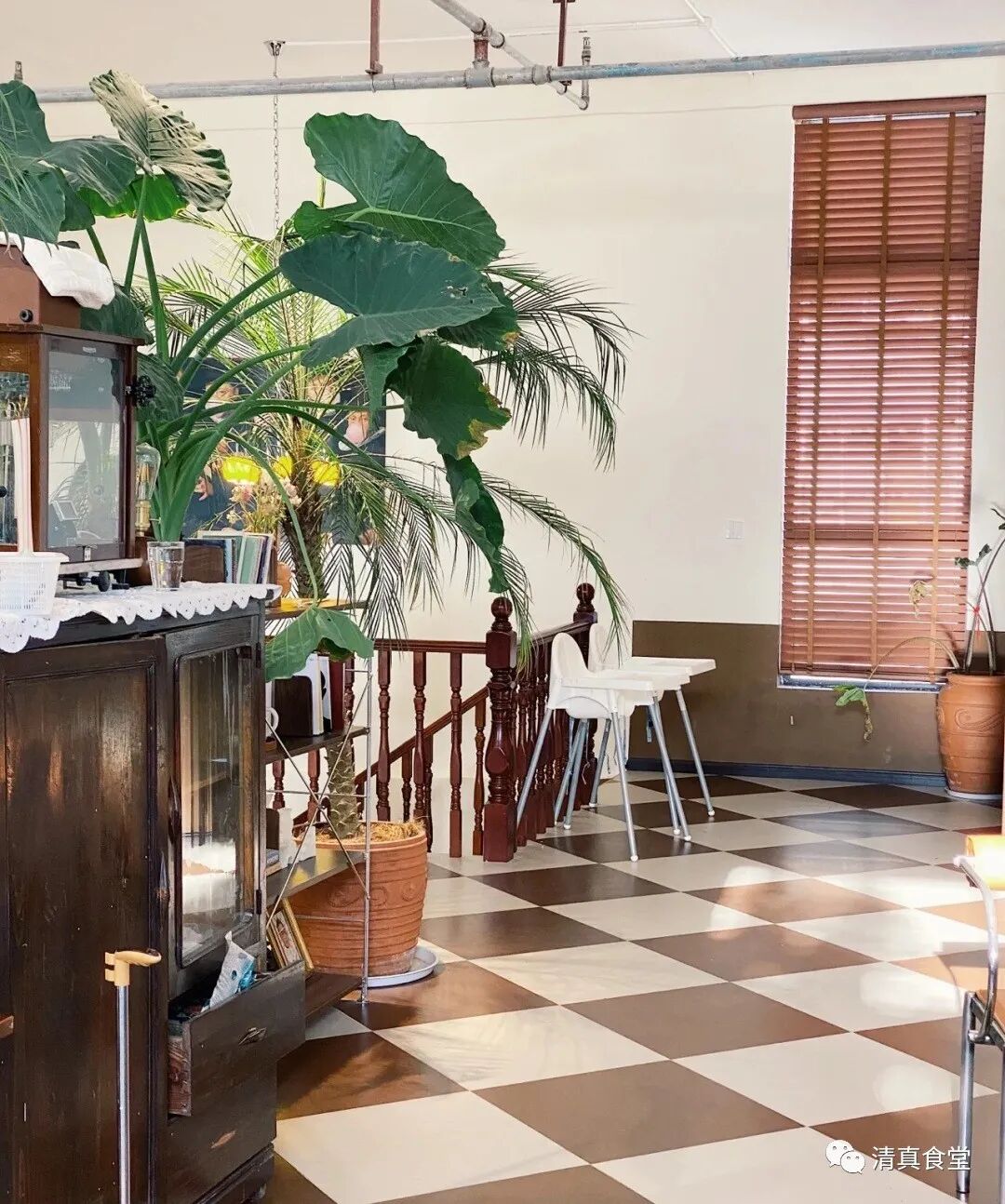
Their porcini mushroom fried rice (niuganjun chaofan) is also a must-try. Wild mushrooms are the ultimate Yunnan specialty, and in recent years, chefs have been loving to fold them into their menus. Porcini mushrooms and green chili peppers are an absolute match made in heaven, and tossing them into fried rice takes it to a whole new level.
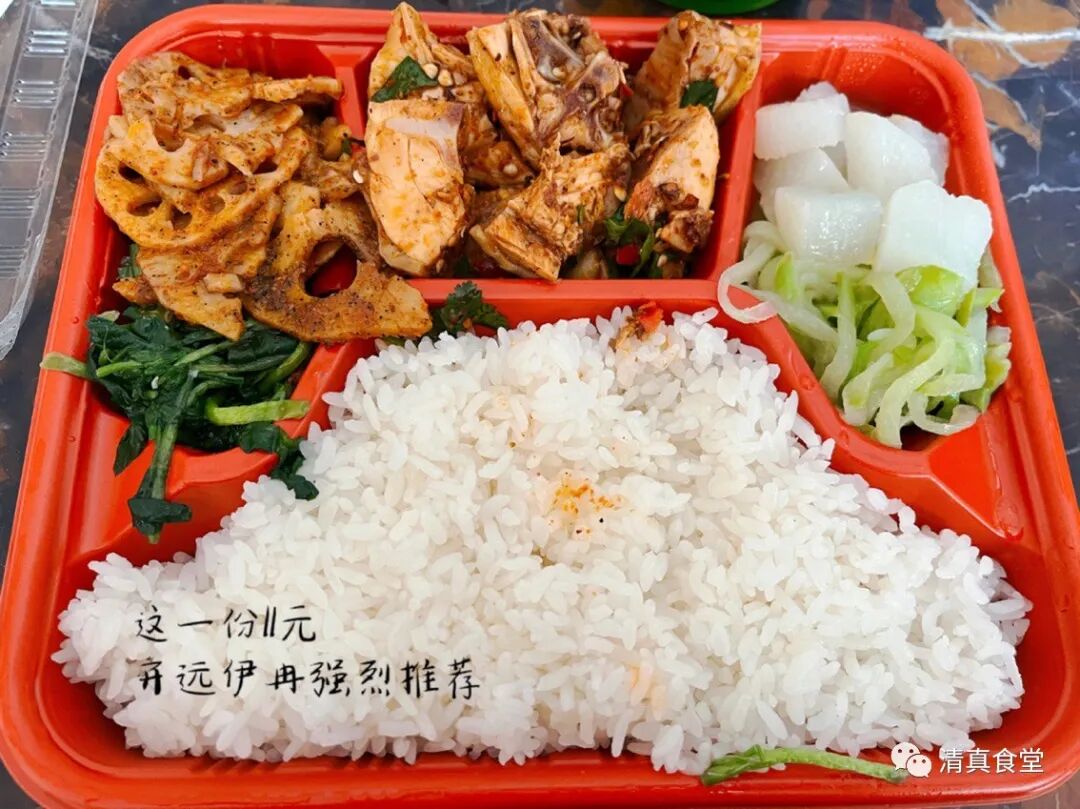
Kaiyuan has plenty of local signatures, and beef soup hot pot (niutangguo) is definitely near the top. It’s not just used as a noodle base, but served up family-style as a bubbling hot pot.
Ma Guo Kai Xiao Zuo sources its beef directly from local Dazhuang cattle. 'Dazhuang' is practically a badge of honor for top-tier beef; as soon as a restaurant advertises that their hot pot uses authentic local Dazhuang beef, you can bet it pulls in a massive crowd of hungry diners.
The owner says, "We only sell local beef." Stick to that one hard rule, and you're pretty much guaranteed to crush it. It just shows how insanely high the local respect is for Dazhuang local beef!
Halal twists on exotic global flavors
Dai cuisine, Thai flavors, Vietnamese street eats—you can find Halal versions of all these iconic regional styles right here in Kaiyuan.
Lately, Thai and Dai flavors have been blowing up all over Yunnan. Since Kaiyuan has a huge population of young Hui Muslims, there's a serious appetite for these trending tastes, so naturally, restaurants dishing them out have been popping up back-to-back.
Shi Zhi Qingzhen, located in Jiete Plaza, specializes in Thai and Dai food. It's won a major following because the dishes taste super authentic.
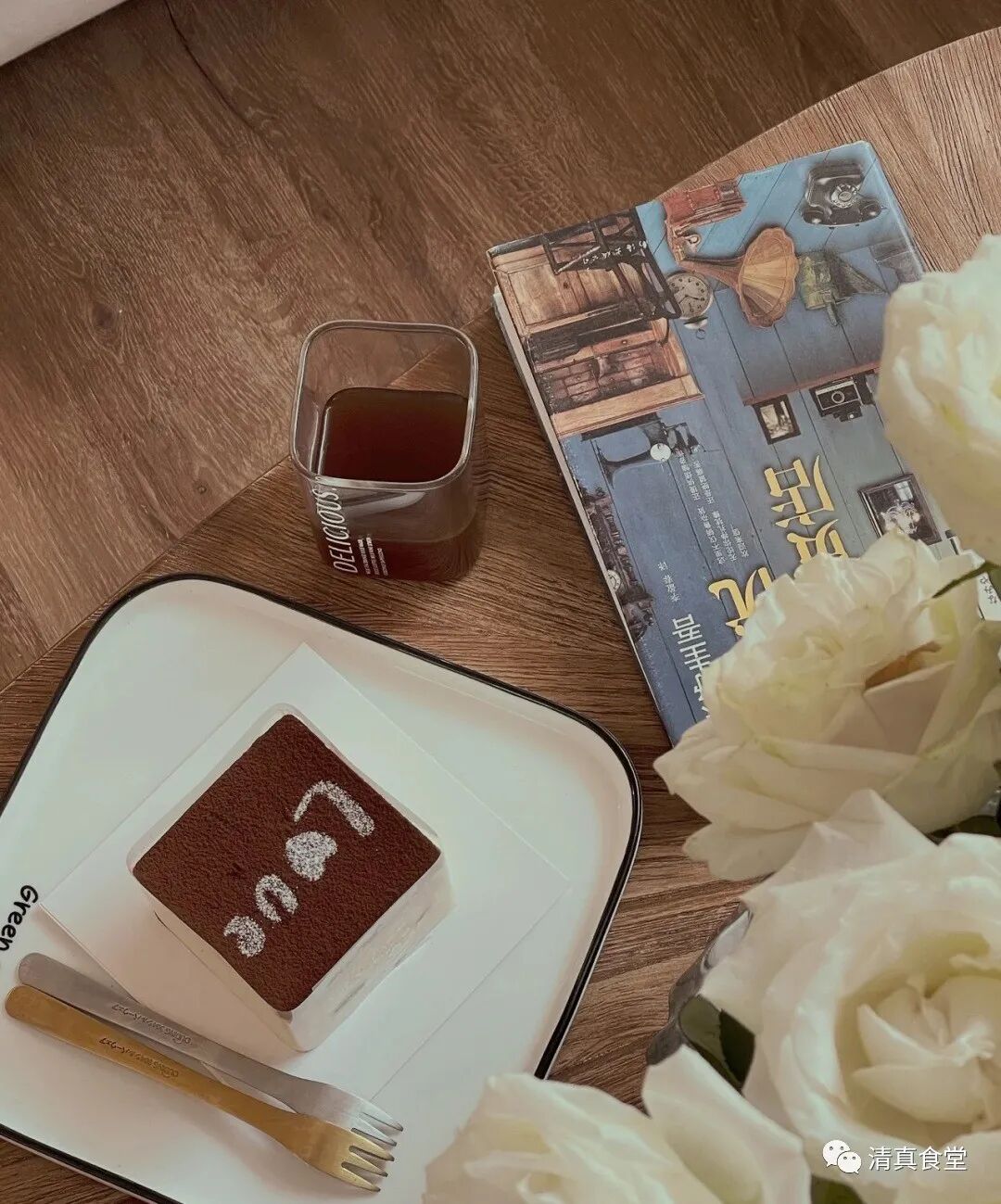
They've got everything from Dai-style oil-splashed dishes to Thai tom yum. You'll spot all the absolute must-have ingredients in these flavor profiles: Myanmar culantro, fresh lime, lemongrass, and tiny, fiery Xiaomi chili peppers...
It kinda reminds us of Uncle Sai, a super trendy Thai spot that blew up recently. Though sadly, the original location isn't open anymore.
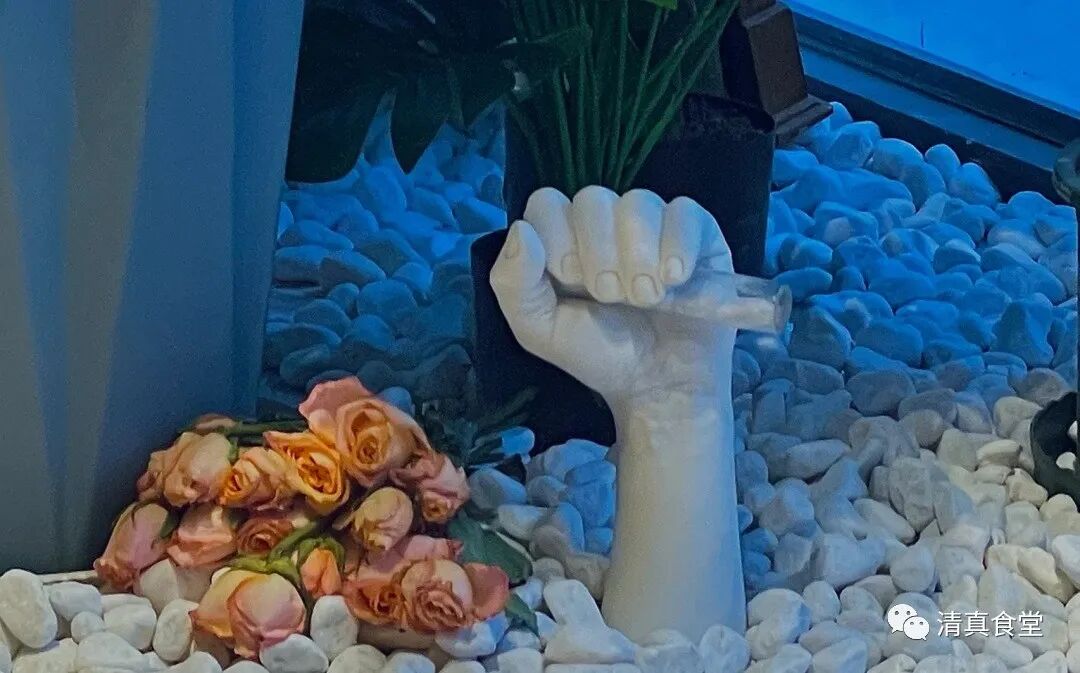
Our foodie squad went twice and totally fell in love with it. Regardless of how you judge the exact flavor, Uncle Sai basically set a whole new, innovative high-water mark for Kaiyuan's Halal food scene.
We seriously respect Uncle Sai's spot—they put so much genuine thought into the design, the vibe, and the cooking. Their food genuinely transports you straight back to Thailand, and the aesthetic hits different.
Who wouldn't want to feast on exotic flavors in a gorgeous little spot like this?
Beyond just the exotic food, having exotic interior design to match is an absolute vibe. Our squad is low-key obsessed with retro aesthetics—walking in literally makes you feel like you've jetted off to Chiang Mai~ The warm cocoa tones, indoor greenery, and vintage floor tiles tie everything together so well.
Why are so many young people grinding for the Halal food scene?
In Honghe Prefecture, Kaiyuan feels like a pretty youthful city.
And the power of youth is all about having fresh ideas.
A fast-food joint called Yiran Halal is an absolute obsession for local nine-to-fivers and delivery workers in Kaiyuan. Even though it's just regular fast food—your standard three meat dishes and two veggie sides—their business is ridiculously booming.
The secret sauce behind this regular fast-food spot's massive success is the owner: the Lunchbox Knight.
Packing lunchboxes is the day job, but being a knight is the dream. A young, entrepreneurial boss running a fast-food joint while never losing sight of his dreams.
Running a Douyin (TikTok) account gives this little shop a unique soul—another flex of youth culture. Hui Muslim youth are constantly learning, leveling up, and building something totally unique. That is seriously so important.
Sure, it's just your standard three-meat-and-two-veggie setup, and the cooking is straightforward, but it slaps. Even in a seemingly basic Halal spot like this, the hustle and drive of these young Hui Muslims make the whole place shine bright.
You guys already know 'Maguo' from Maguo's Private Kitchen—yep, the genius behind our convenience store's viral coconut sesame chicken has opened up a hot pot spot right here in Kaiyuan.
Now, Kaiyuan already has tons and tons of hot pot joints in every style imaginable, including Halal Sichuan and Chongqing hot pots, but Maguo decided to focus strictly on local beef soup hot pot.
From the storefront decor to the ingredient curation, you can tell everything is filtered through young brains to keep the spot fresh and vibrant. Infusing modern youth culture into traditional eats is key—after all, only young people truly know what young people want.
When our foodie squad rolled into Kaiyuan, we were instantly hooked by how youthful the city felt. If you're a young Hui Muslim moving here to live, you'll never have to worry about finding a place that keeps you feeling young.
Critics might say these trendy spots won't stand the test of time, and hey, Kaiyuan has countless rock-solid, old-school Halal institutions. Every single year, new joints open up while others close down or relocate.
Yet these new spots are the physical embodiment of the Hui youth's dreams and hopes. If we had to pick anywhere in Honghe Prefecture to settle down, it would be Kaiyuan in a heartbeat. Come to Kaiyuan, and you'll never worry about what to eat, nor will you run out of fresh vibes, youthfulness, and aesthetic joy.
You might not be planning a dedicated trip to Kaiyuan just based on this article, but if you ever get the chance to visit Honghe Prefecture in Yunnan, do yourself a favor and come to Kaiyuan specifically for a food crawl.
The restaurants our squad listed here are just the tip of the iceberg, so let's shout out a few legendary, can't-miss, tried-and-true Halal spots in Kaiyuan!
There's a traditional *chuanguo* (bronze pot hot pot) spot at the Linjiang Farmers' Market, though we hear it's moved to Yingxu Plaza now. The Halal joints on Youth Road have been holding it down for ages, and Changjiu Xiaojuanfen (Changjiu rice noodles) tucked away in a small alley—if you know, you know. Every single Halal restaurant is packed to the brim. Old-school spots like Yingjiang and Dongqiao are absolute classics. And the stir-fry at the Muslim Alcohol-Free Restaurant right next to the Kaiyuan North Bus Station is mind-blowing!
These days, Meituan and Ele.me delivery drivers are zipping all over Kaiyuan, and Halal delivery takes up like half the action. Kaiyuan is a city so vibrant you couldn't possibly capture it all in just a few articles.
Long story short: Kaiyuan is seriously the ultimate vibe for young Hui Muslims!
The Legend of Najiaying Knives: Exploring Yunnan's Historic Muslim Craftsmanship & Halal Culture
Articles • Hasan09 posted the article • 0 comments • 1 views • 1 hours ago
What’s the real deal with the knives from Najiaying, Yunnan?
Summary:
Hey everyone, I'm Chituanjun. July was absolute chaos and I was so swamped I didn't have the time or energy to push out new posts. If you've found any awesome spots to eat or hang out in Kunming or the surrounding areas lately, drop a comment or DM me—I'm totally down to check them out once I'm back in action.
Click the card above to follow me
Hey everyone, I'm Chituanjun, and July had me running around so crazy I barely had a second to breathe.
Found any killer food or fun spots around Kunming lately? Hit me up in the comments or shoot me a DM—I'm dying to go explore once I'm free.
As a local, free-roaming Halal food blogger, I suppose this day was bound to come: I received a few dozen kitchen knives sent over by a PR brand. My inner monologue was running so wild I actually started worrying about my personal safety (kidding... sort of).
True to our professional standards, as soon as we got our hands on them, the foodie squad launched into full-on crazy testing mode. One of our team members even paid for it in blood...
Seriously folks, always be super careful when handling knives, and store them safely when you're not using them!
Besides, being the perfectionists we are, we made a personal trip out to the source—Najiaying, Tonghai County, Yuxi City, Yunnan Province—to bring you this heavy-hitting feature.
Surrounded by "Flash and Gleam of Blades"
1.
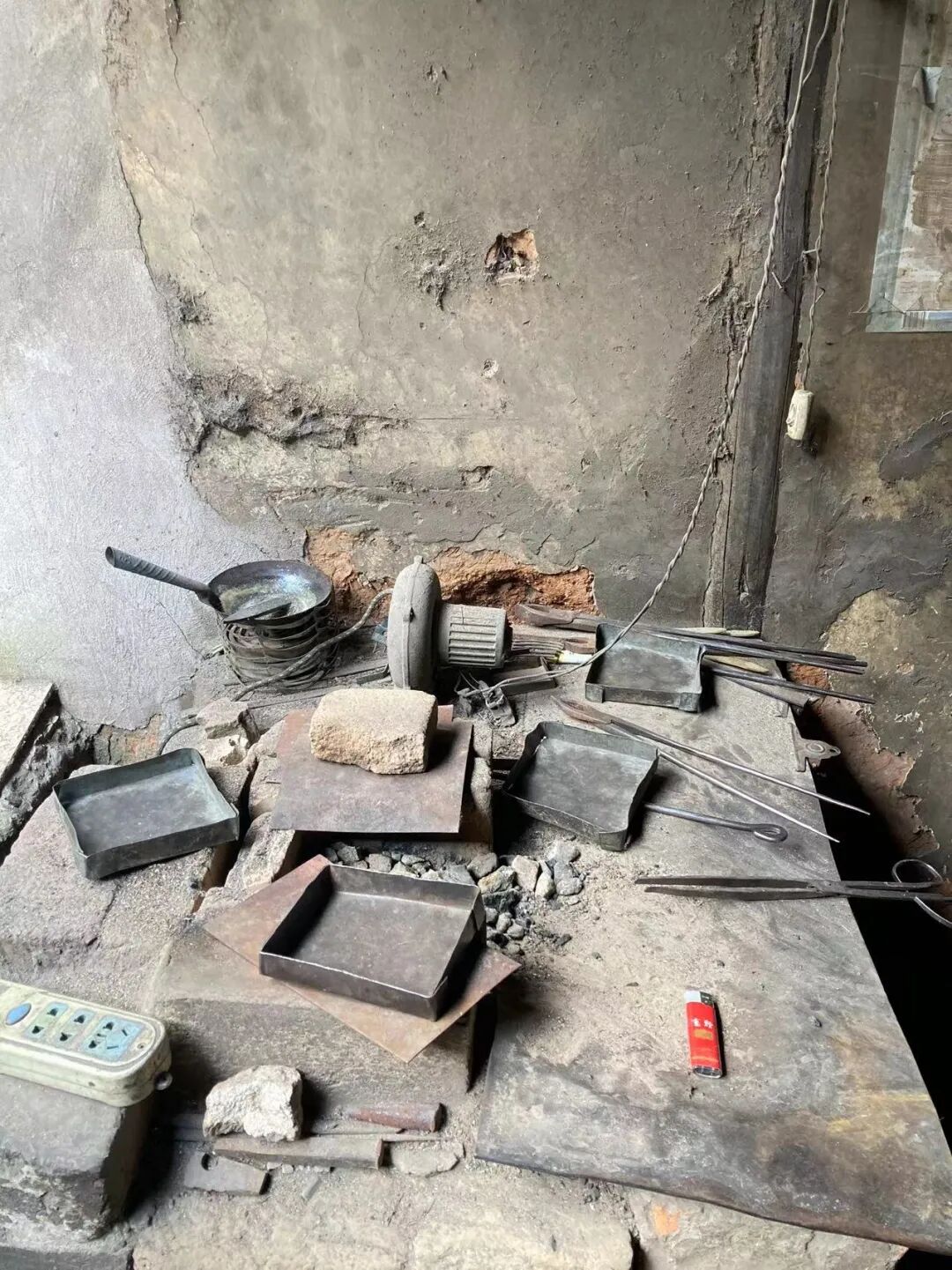
Nagu Town sits in the northwest of Tonghai County, a place famously known as a "land of rites and music." It's a renowned "hometown of handicrafts," where the local residents are primarily Hui Muslims and Han Chinese.
According to historical records, the knife-forging craft in Nagu Town dates all the way back to the Yuan Dynasty.
"As part of the 'Tamma' vanguard troops and accompanying military craftsmen, the ancestors of Nagu applied their exquisite skills and unique techniques to forge top-tier creations in military blades, civilian knives, horse gear, and more."
More than 700 years later, local artisans and businesses are still writing their handicraft history today by building on these fine traditions while blending in modern tech and practical everyday needs.
2.
Another little-known and fascinating story is that knives from Najiaying were once shortlisted as national contenders for the Chinese Tri-Service Honor Guard ceremonial swords.
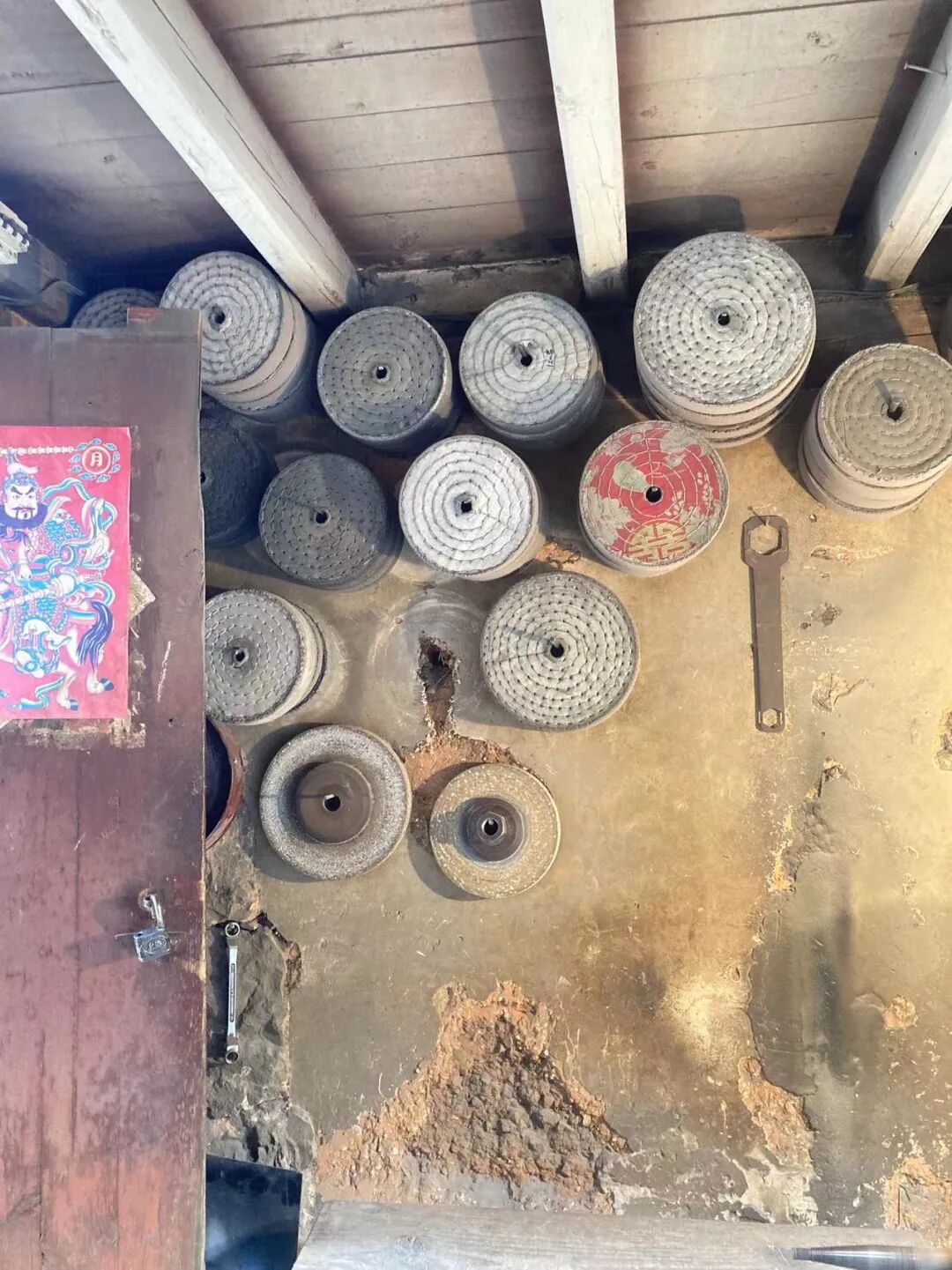
In early 1992, the Central Military Commission issued an order deciding to revamp the ceremonial uniforms for the Honor Guard. Along with the new threads, the executive and platoon commanders of the Honor Guard were switching out their sidearms for ceremonial swords, shifting from a standard unarmed salute to a much more formidable and solemn saber salute. (Note: Paragraph content is excerpted from the China Archives News, total issue No. 3251, titled "Vowing Loyalty to Forge the 'National Saber'").
The task of researching and designing this ceremonial sword was handed over to the Quartermaster Equipment Research Institute of the General Logistics Department of the Chinese People's Liberation Army.
They first headed to the Military Museum of the Chinese People's Revolution to gather reference materials on ceremonial swords from countries like France, Japan, the US, Sweden, and Italy. Based on China's actual national and military conditions as well as ethnic characteristics, they drafted 3 different sword designs and commissioned over 10 military enterprises and knife manufacturers to make sample blades.
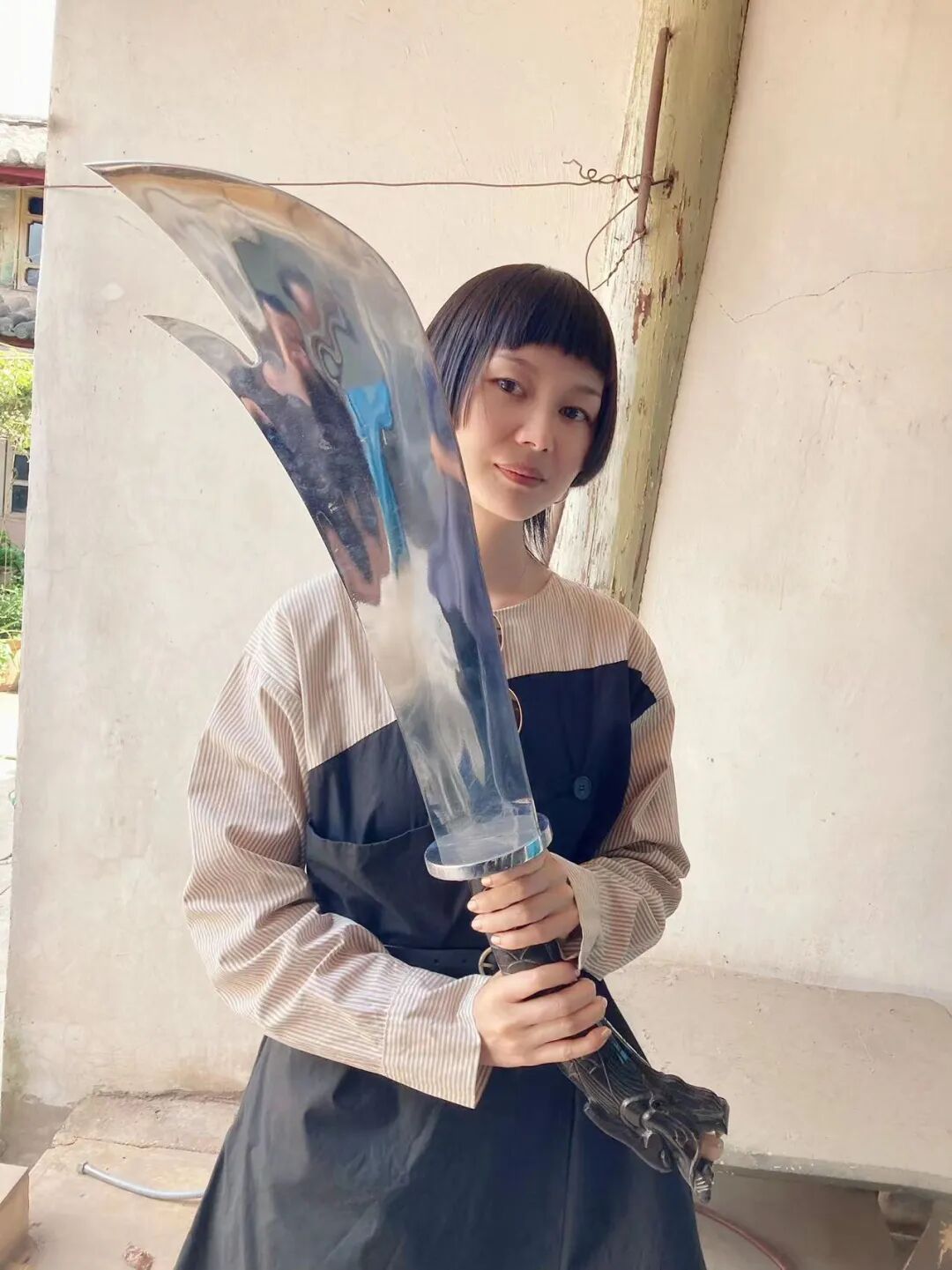
Among them were artisans from Najiaying who took part in the production at the time.
It's a real pity that although we tracked down the person involved and visited their home, we couldn't find the key to the display room. So we missed out on seeing more physical evidence related to it—which honestly just gives us a great excuse for another trip.
3.
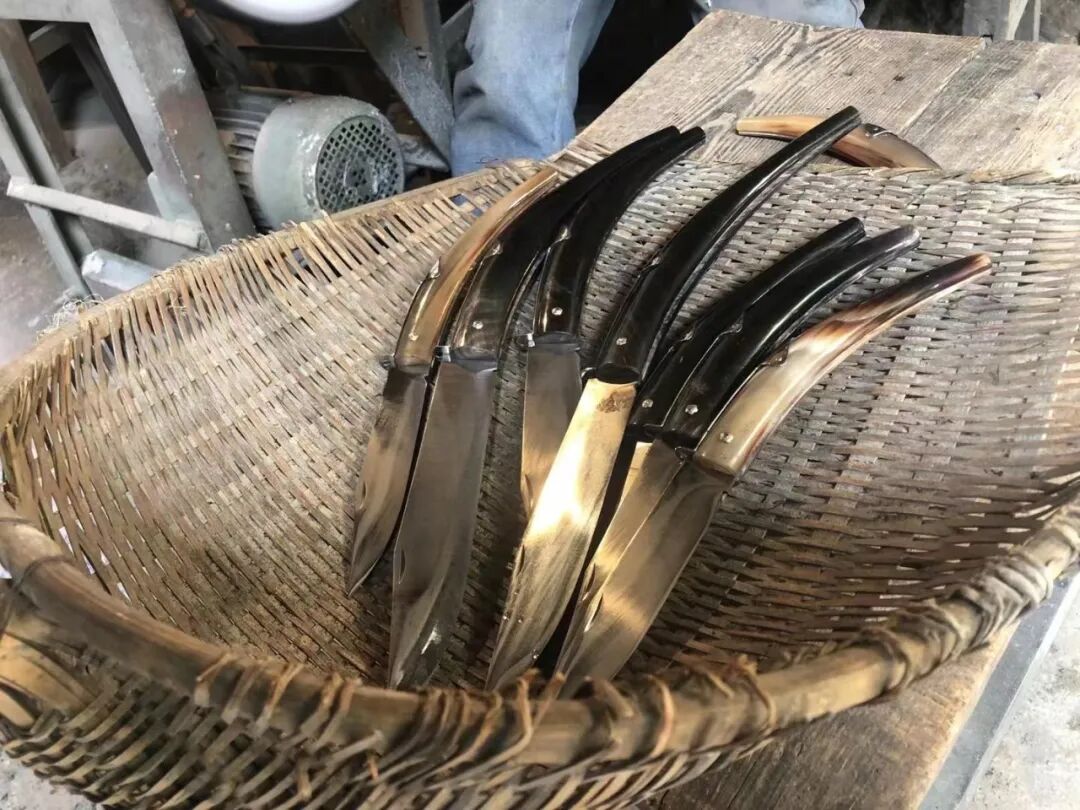
Walking down the streets of Najiaying today, you see specialty shops for civilian knives of all shapes and sizes everywhere: scissors, tea knives, nail clippers, unsharpened decorative blades...
Rows upon rows of uniquely shaped knives inside the glass counters reflect that chilling metallic gleam, looking totally badass and giving you a serious martial arts-style adrenaline rush.
Drivers and tourists cruising by can't help but pull over and wander into the shops to check things out. When they spot one they like, they pick up a reliable "kitchen weapon" for themselves, family, or friends.
Honestly, once you've got pro-grade gear and that atmosphere, your inner potential just naturally kicks in.
Take me for example: ever since I got my hands on a reliable knife, the frequency of me heading into the kitchen to prep ingredients has seriously shot up.
Looking forward to even more cool stuff ahead
Forged through over 600 years of accumulation and refinement, Najiaying's knives boast battle-tested craftsmanship that is passed down through generations. It's a priceless asset, but one that constantly faces the challenges of a fast-changing market.
After visiting more than a dozen workshops and specialty stores on the ground, my takeaway is this:
When it comes to tapping into their own cultural resources, telling a compelling brand story, proactively innovating, and connecting with contemporary young consumers, Najiaying's civilian cutlery still has a long road ahead for growth.
Finally, let me shout out an outstanding local Halal restaurant in Najiaying—Jieya Restaurant.
According to a good friend, this spot has been open locally for over 20 years. The quality is solid and the prices are super affordable, making it a great pick whether you're grabbing a casual bite, hanging out with family and friends, or hosting a business dinner.
Our foodie squad tried it out, and everyone was licking their chops.
My personal recommendations: Tom Yum chicken, sliced cold beef, and stir-fried wild mushrooms.
The dipping sauce for the cold beef has a sour and spicy kick—super complex and bursting with authentic Yuxi local flavor.
Until next time, Najiaying~
- Restaurant Info -
Name: Jieya Restaurant
Phone: 13887793491; 13887793492
Average cost: 60 RMB (spend as you like)
- Foodie Squad Perks -
For this issue, our foodie squad handpicked the most frequently used home-style kitchen slicer out of hundreds of knives in Najiaying to recommend to you all.
It has a substantial heft, a razor-sharp blade, and serious performance, totally handling all your daily needs for shredding, slicing, cutting strips, and dicing, while fitting right in with the habits of a Chinese kitchen.
If you want to experience the 600-year knife-making magic of Najiaying, why not start with this one?
Any quality issues under non-violent use within 2 years get a free trade-in for a brand new one.
- More Great Stuff -
Don't rush, 30 is just another beginning
I've been gatekeeping a Halal leisure resort in Xishan District, and I really hate to share it
Without our Zhaotong folks leading the charge, Kunming wouldn't have the Halal food scene it has today view all
What’s the real deal with the knives from Najiaying, Yunnan?
Summary:
Hey everyone, I'm Chituanjun. July was absolute chaos and I was so swamped I didn't have the time or energy to push out new posts. If you've found any awesome spots to eat or hang out in Kunming or the surrounding areas lately, drop a comment or DM me—I'm totally down to check them out once I'm back in action.
Click the card above to follow me
Hey everyone, I'm Chituanjun, and July had me running around so crazy I barely had a second to breathe.
Found any killer food or fun spots around Kunming lately? Hit me up in the comments or shoot me a DM—I'm dying to go explore once I'm free.
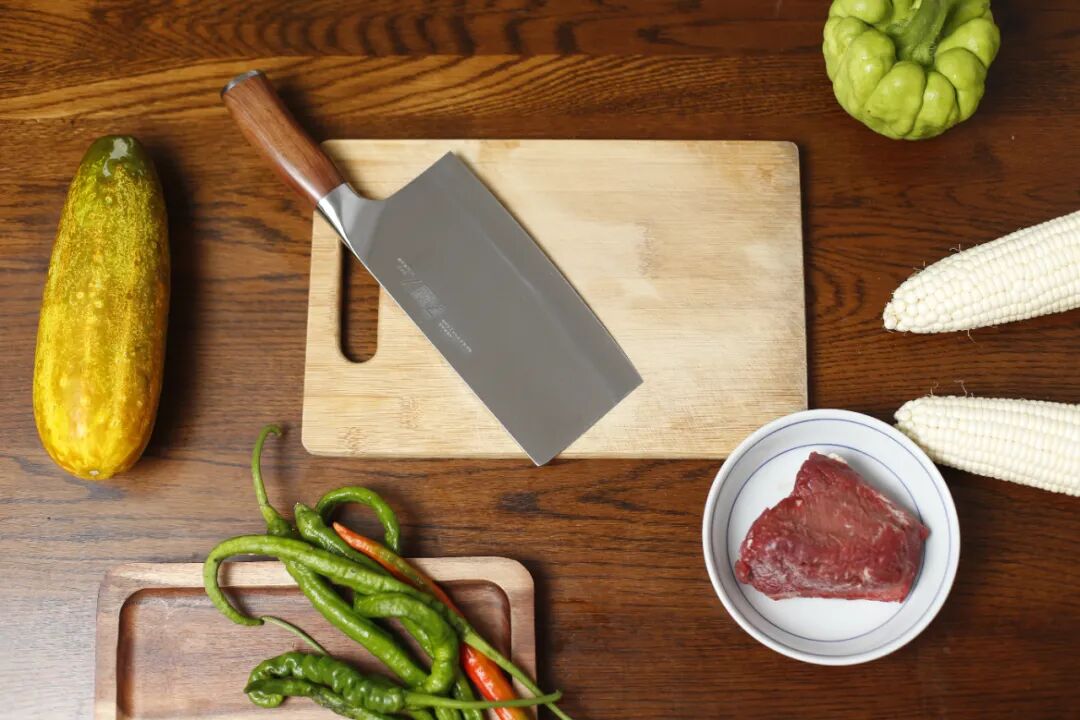
As a local, free-roaming Halal food blogger, I suppose this day was bound to come: I received a few dozen kitchen knives sent over by a PR brand. My inner monologue was running so wild I actually started worrying about my personal safety (kidding... sort of).
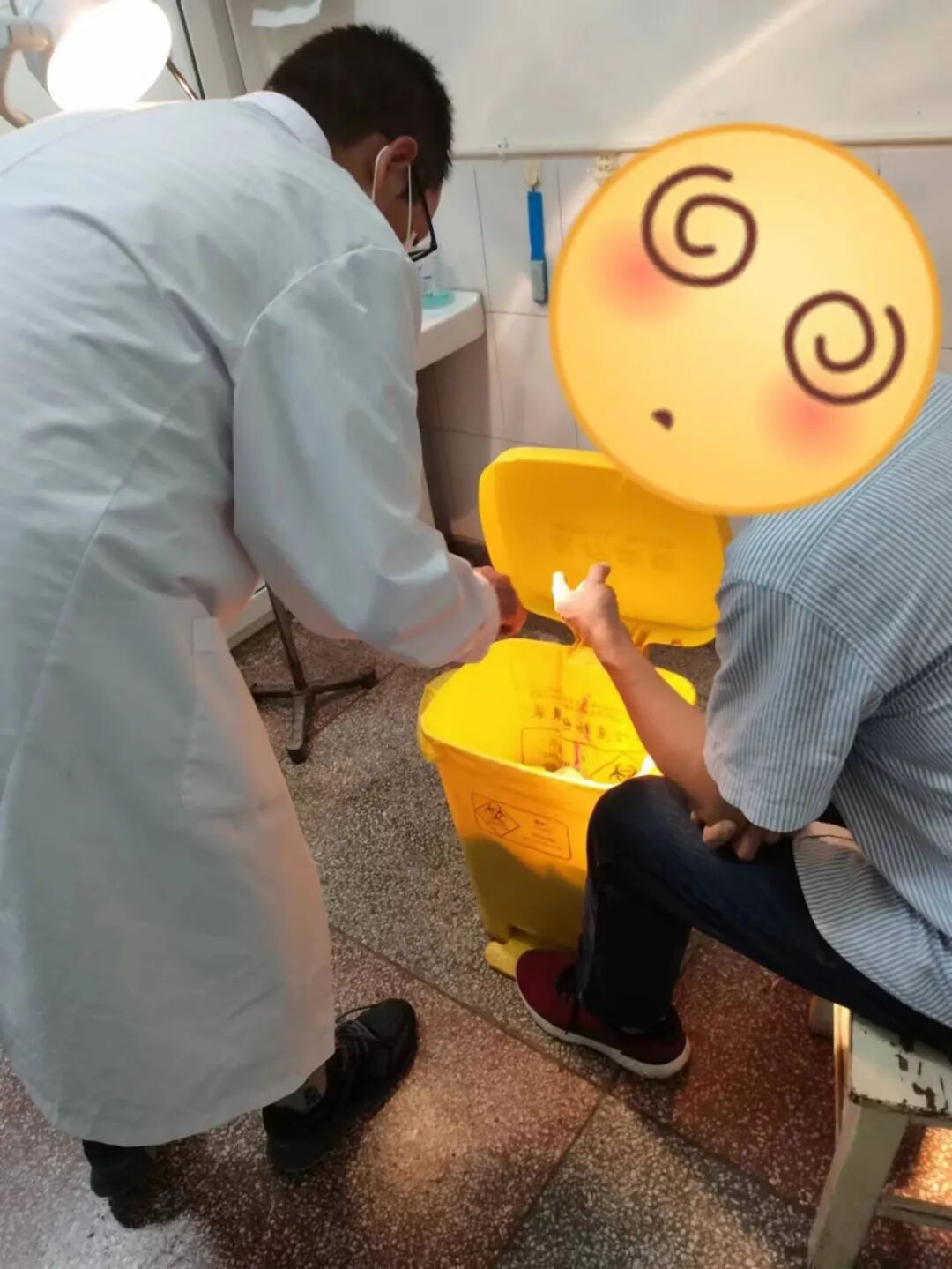
True to our professional standards, as soon as we got our hands on them, the foodie squad launched into full-on crazy testing mode. One of our team members even paid for it in blood...
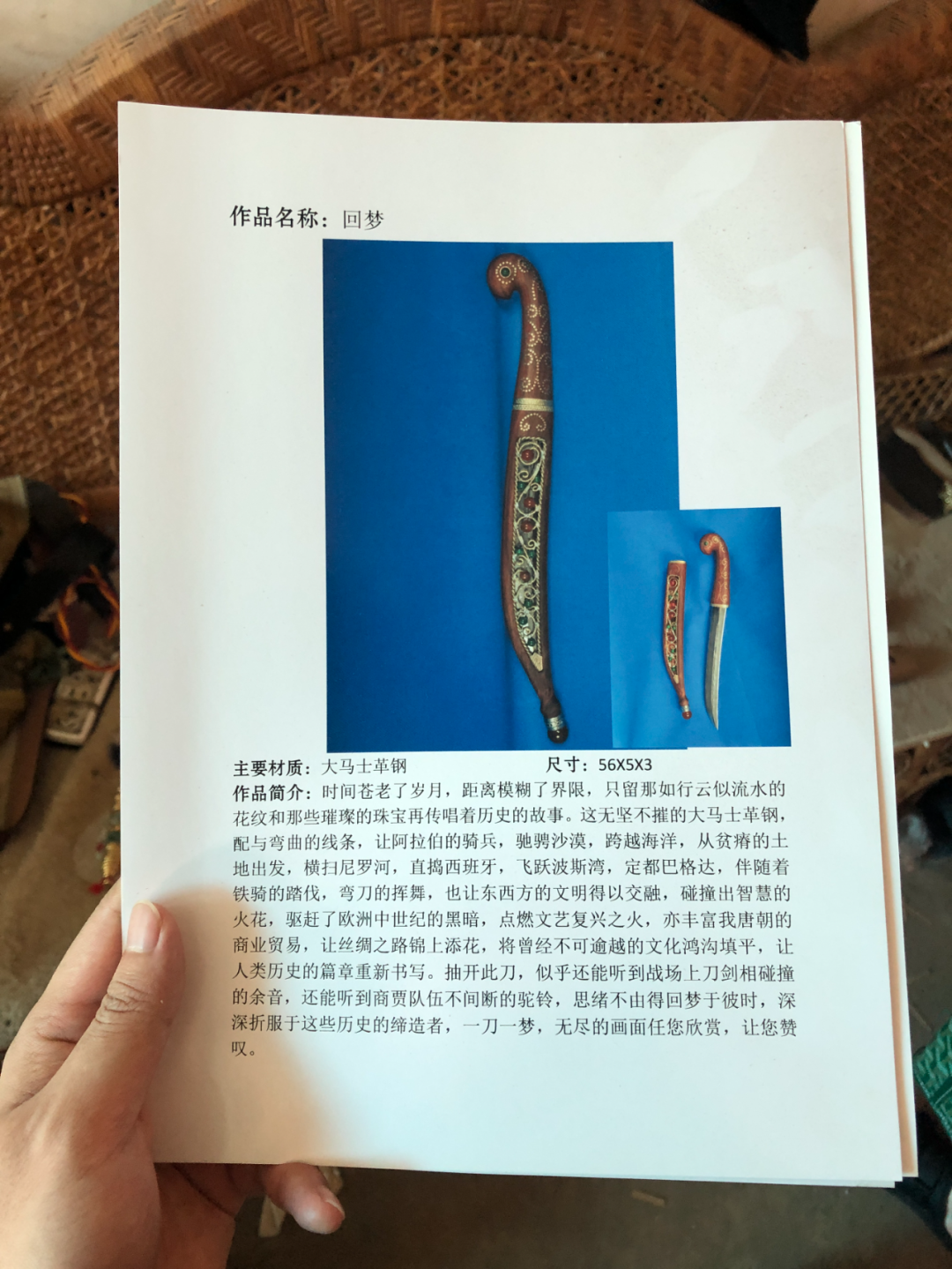
Seriously folks, always be super careful when handling knives, and store them safely when you're not using them!
Besides, being the perfectionists we are, we made a personal trip out to the source—Najiaying, Tonghai County, Yuxi City, Yunnan Province—to bring you this heavy-hitting feature.
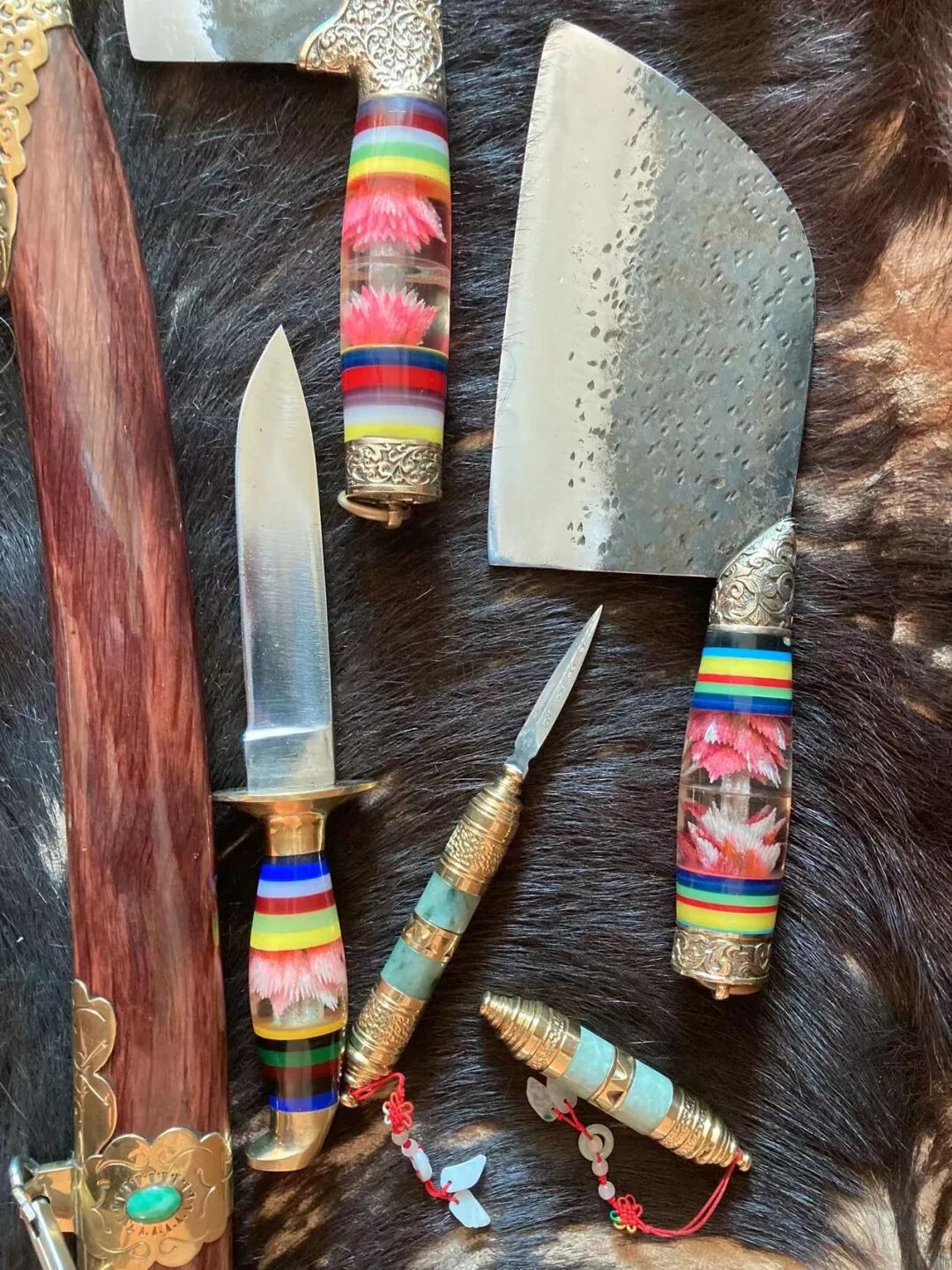
Surrounded by "Flash and Gleam of Blades"
1.
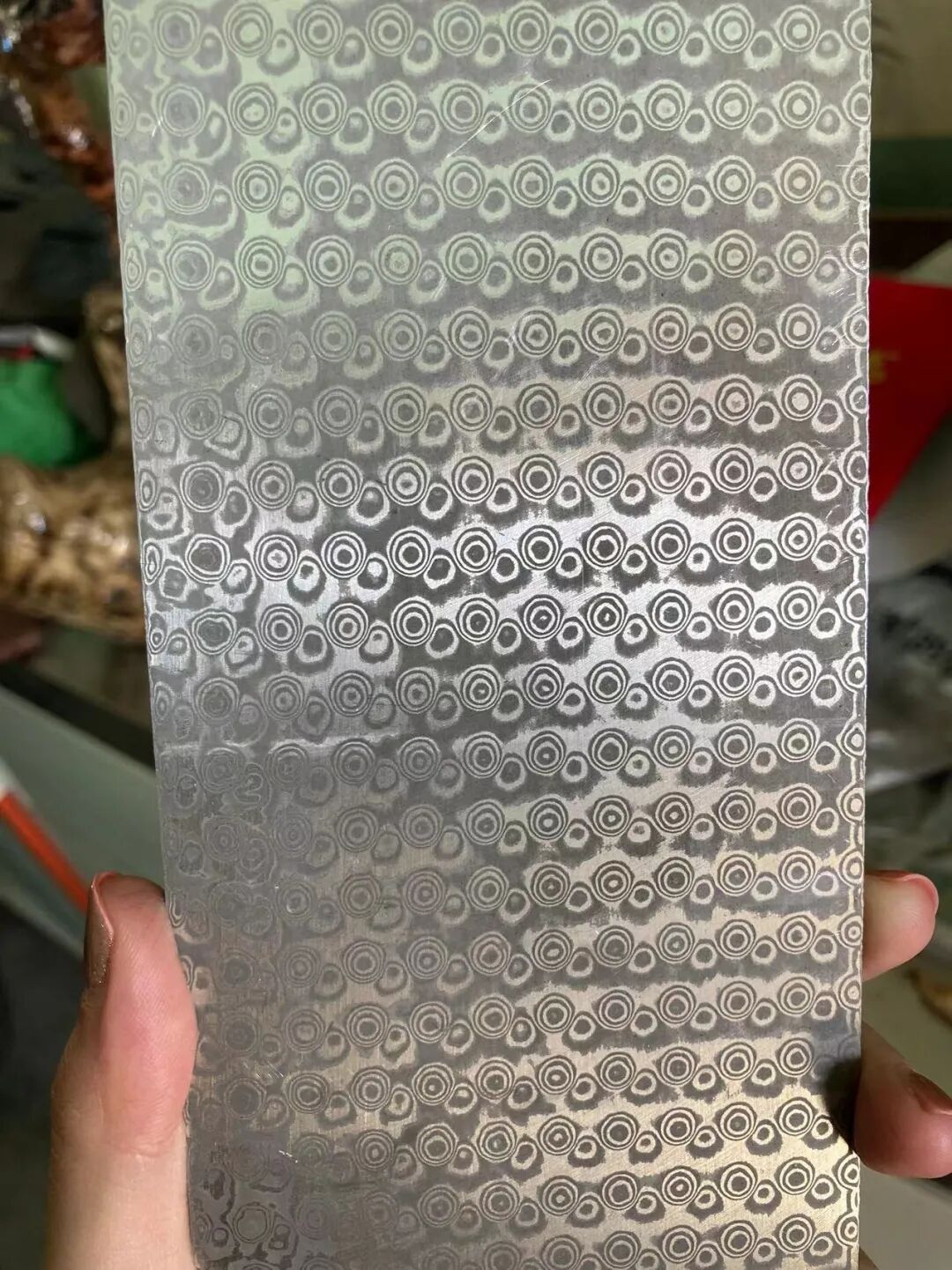
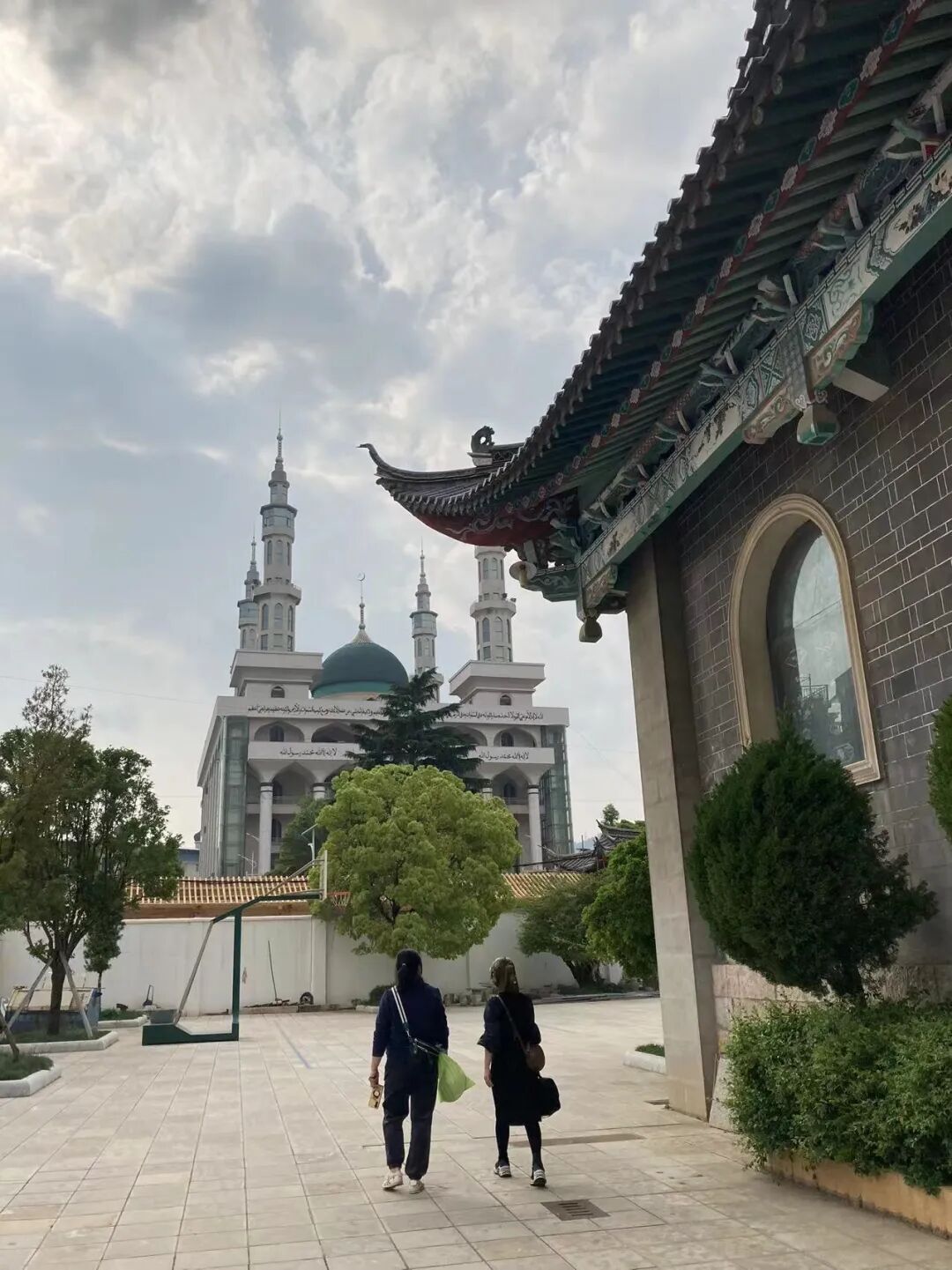
Nagu Town sits in the northwest of Tonghai County, a place famously known as a "land of rites and music." It's a renowned "hometown of handicrafts," where the local residents are primarily Hui Muslims and Han Chinese.
According to historical records, the knife-forging craft in Nagu Town dates all the way back to the Yuan Dynasty.
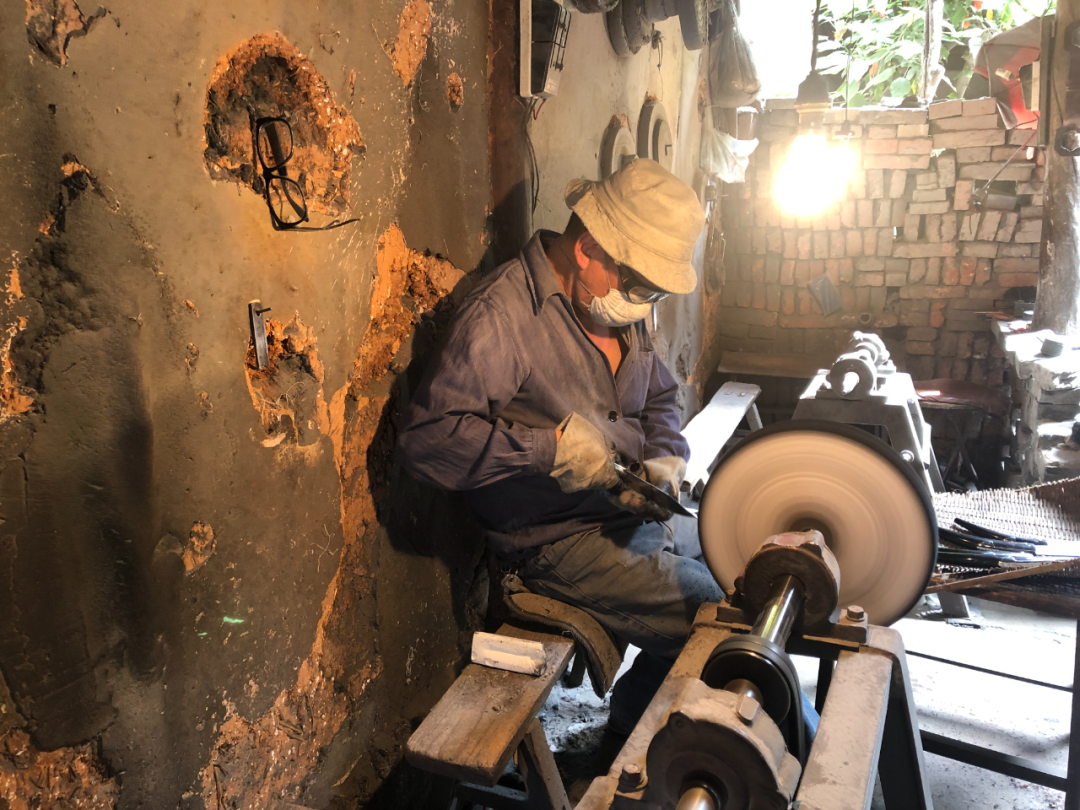
"As part of the 'Tamma' vanguard troops and accompanying military craftsmen, the ancestors of Nagu applied their exquisite skills and unique techniques to forge top-tier creations in military blades, civilian knives, horse gear, and more."
More than 700 years later, local artisans and businesses are still writing their handicraft history today by building on these fine traditions while blending in modern tech and practical everyday needs.
2.
Another little-known and fascinating story is that knives from Najiaying were once shortlisted as national contenders for the Chinese Tri-Service Honor Guard ceremonial swords.
In early 1992, the Central Military Commission issued an order deciding to revamp the ceremonial uniforms for the Honor Guard. Along with the new threads, the executive and platoon commanders of the Honor Guard were switching out their sidearms for ceremonial swords, shifting from a standard unarmed salute to a much more formidable and solemn saber salute. (Note: Paragraph content is excerpted from the China Archives News, total issue No. 3251, titled "Vowing Loyalty to Forge the 'National Saber'").
The task of researching and designing this ceremonial sword was handed over to the Quartermaster Equipment Research Institute of the General Logistics Department of the Chinese People's Liberation Army.
They first headed to the Military Museum of the Chinese People's Revolution to gather reference materials on ceremonial swords from countries like France, Japan, the US, Sweden, and Italy. Based on China's actual national and military conditions as well as ethnic characteristics, they drafted 3 different sword designs and commissioned over 10 military enterprises and knife manufacturers to make sample blades.
Among them were artisans from Najiaying who took part in the production at the time.
It's a real pity that although we tracked down the person involved and visited their home, we couldn't find the key to the display room. So we missed out on seeing more physical evidence related to it—which honestly just gives us a great excuse for another trip.
3.
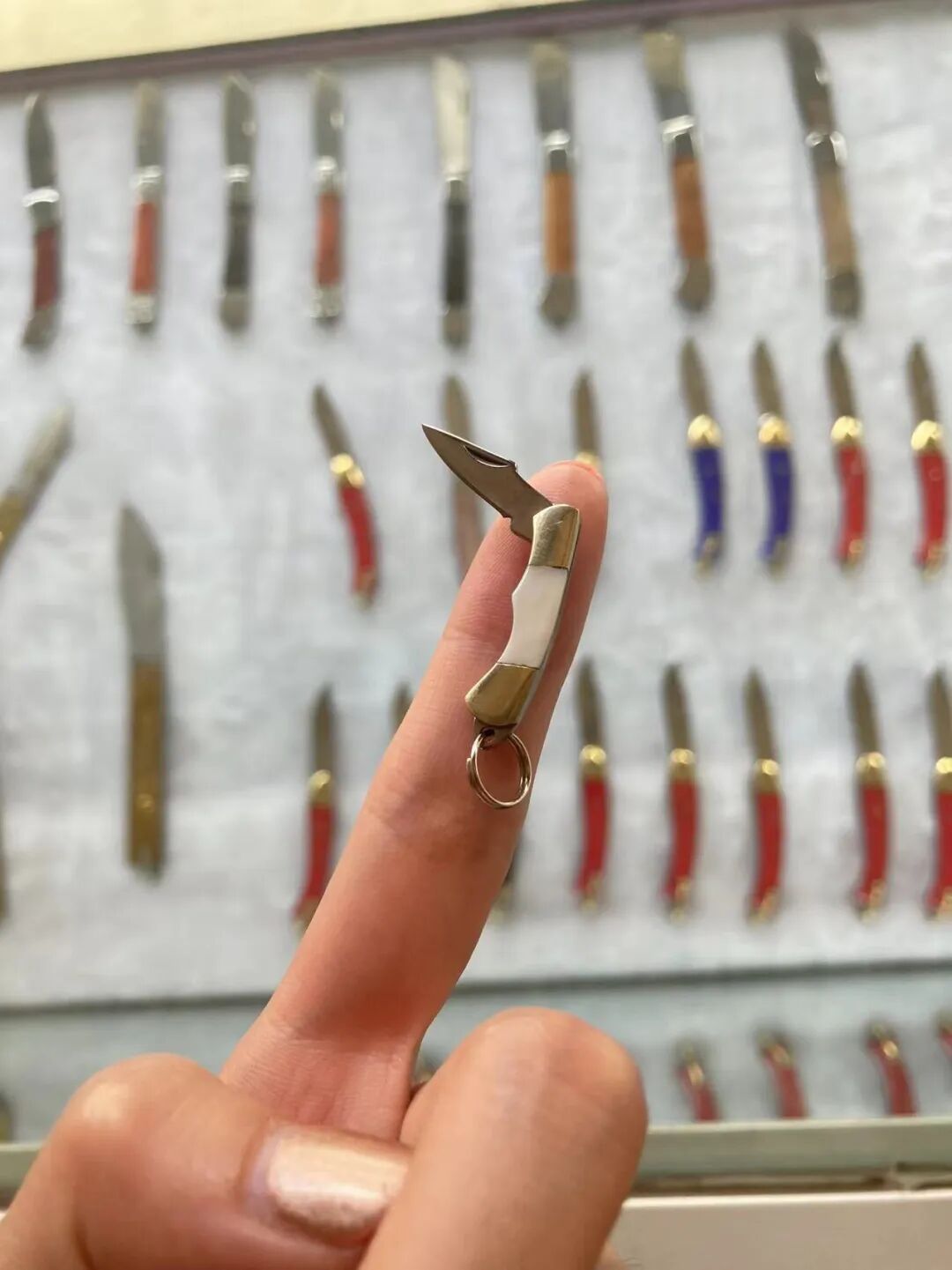
Walking down the streets of Najiaying today, you see specialty shops for civilian knives of all shapes and sizes everywhere: scissors, tea knives, nail clippers, unsharpened decorative blades...
Rows upon rows of uniquely shaped knives inside the glass counters reflect that chilling metallic gleam, looking totally badass and giving you a serious martial arts-style adrenaline rush.
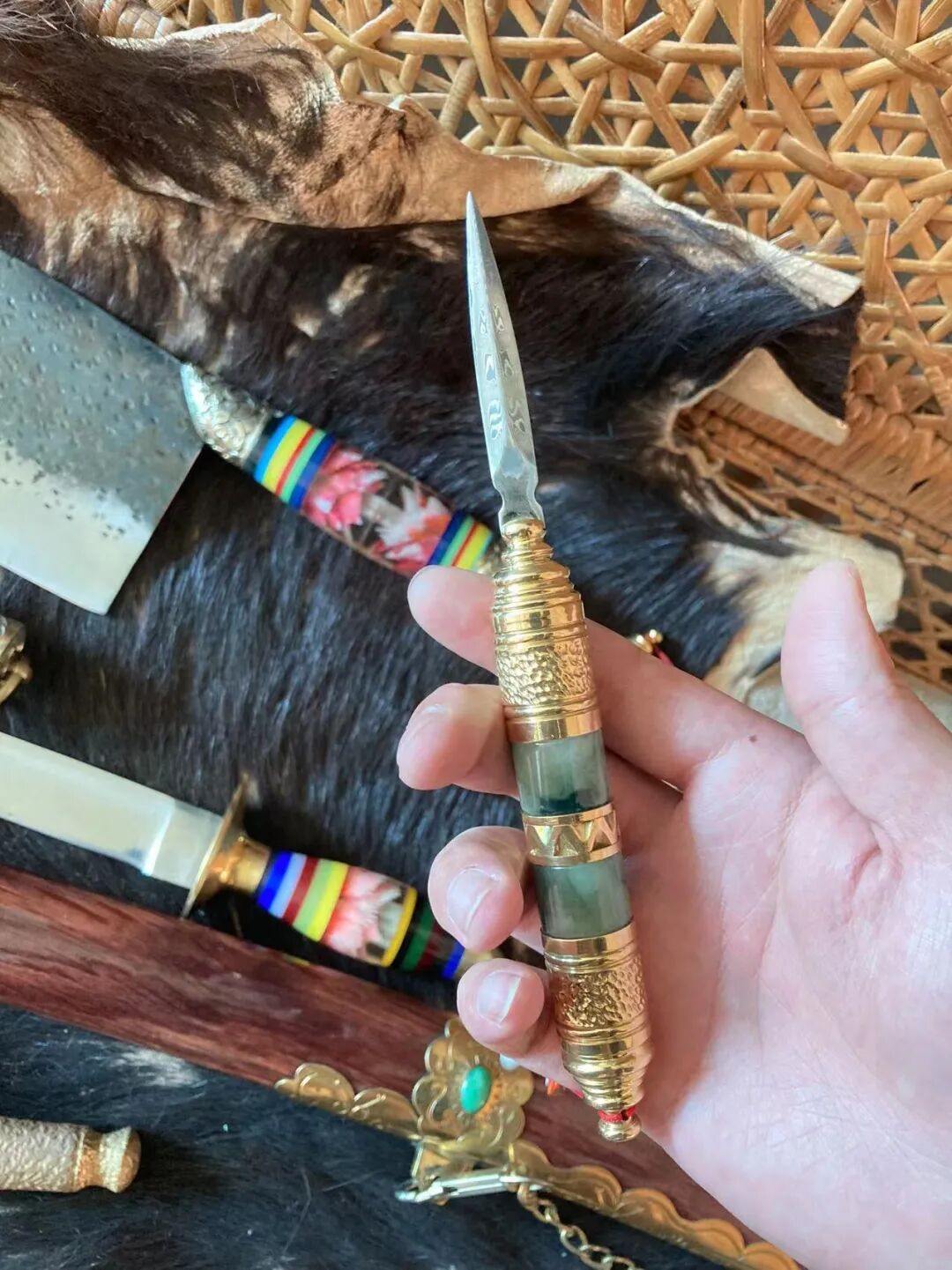
Drivers and tourists cruising by can't help but pull over and wander into the shops to check things out. When they spot one they like, they pick up a reliable "kitchen weapon" for themselves, family, or friends.
Honestly, once you've got pro-grade gear and that atmosphere, your inner potential just naturally kicks in.

Take me for example: ever since I got my hands on a reliable knife, the frequency of me heading into the kitchen to prep ingredients has seriously shot up.
Looking forward to even more cool stuff ahead
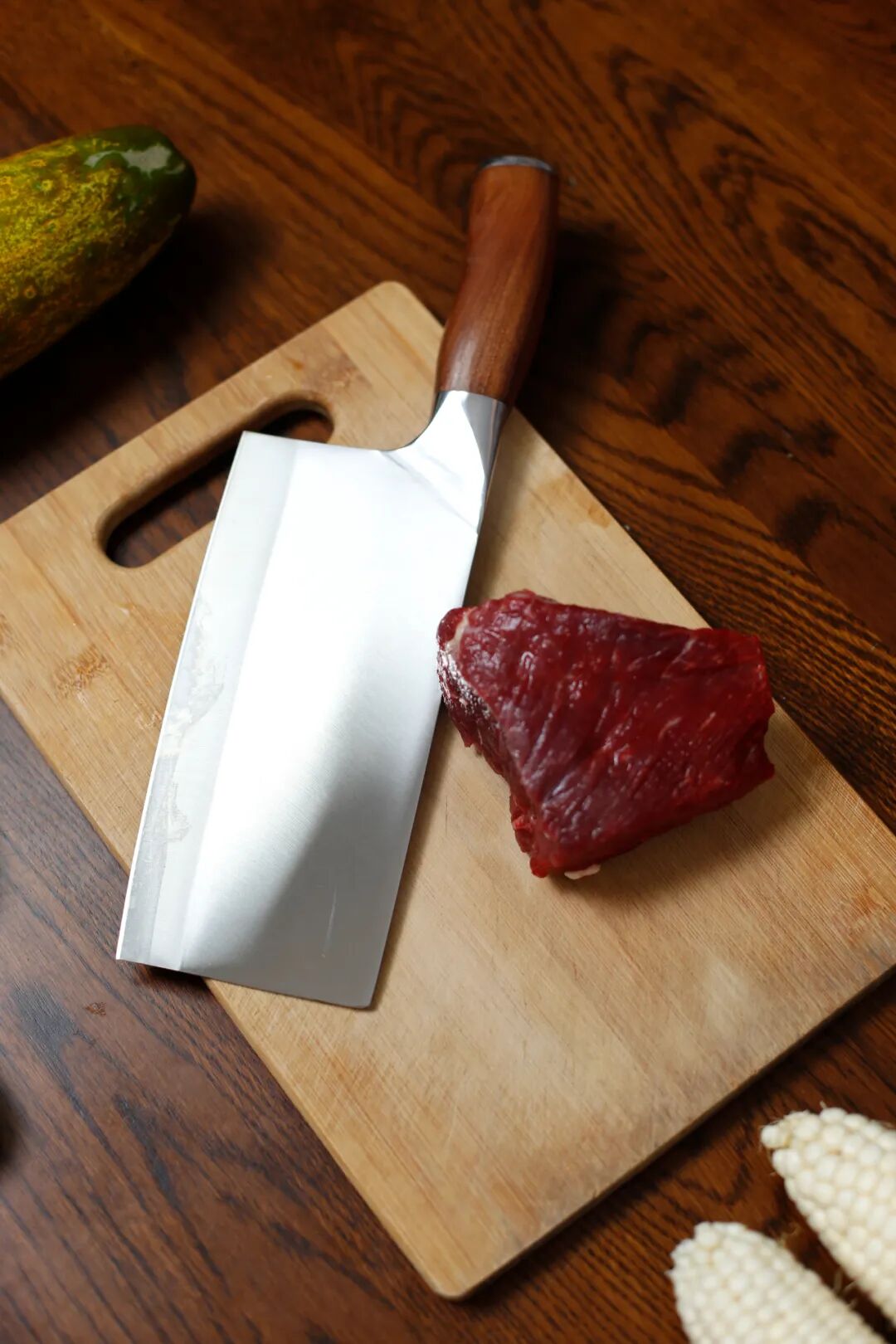
Forged through over 600 years of accumulation and refinement, Najiaying's knives boast battle-tested craftsmanship that is passed down through generations. It's a priceless asset, but one that constantly faces the challenges of a fast-changing market.
After visiting more than a dozen workshops and specialty stores on the ground, my takeaway is this:
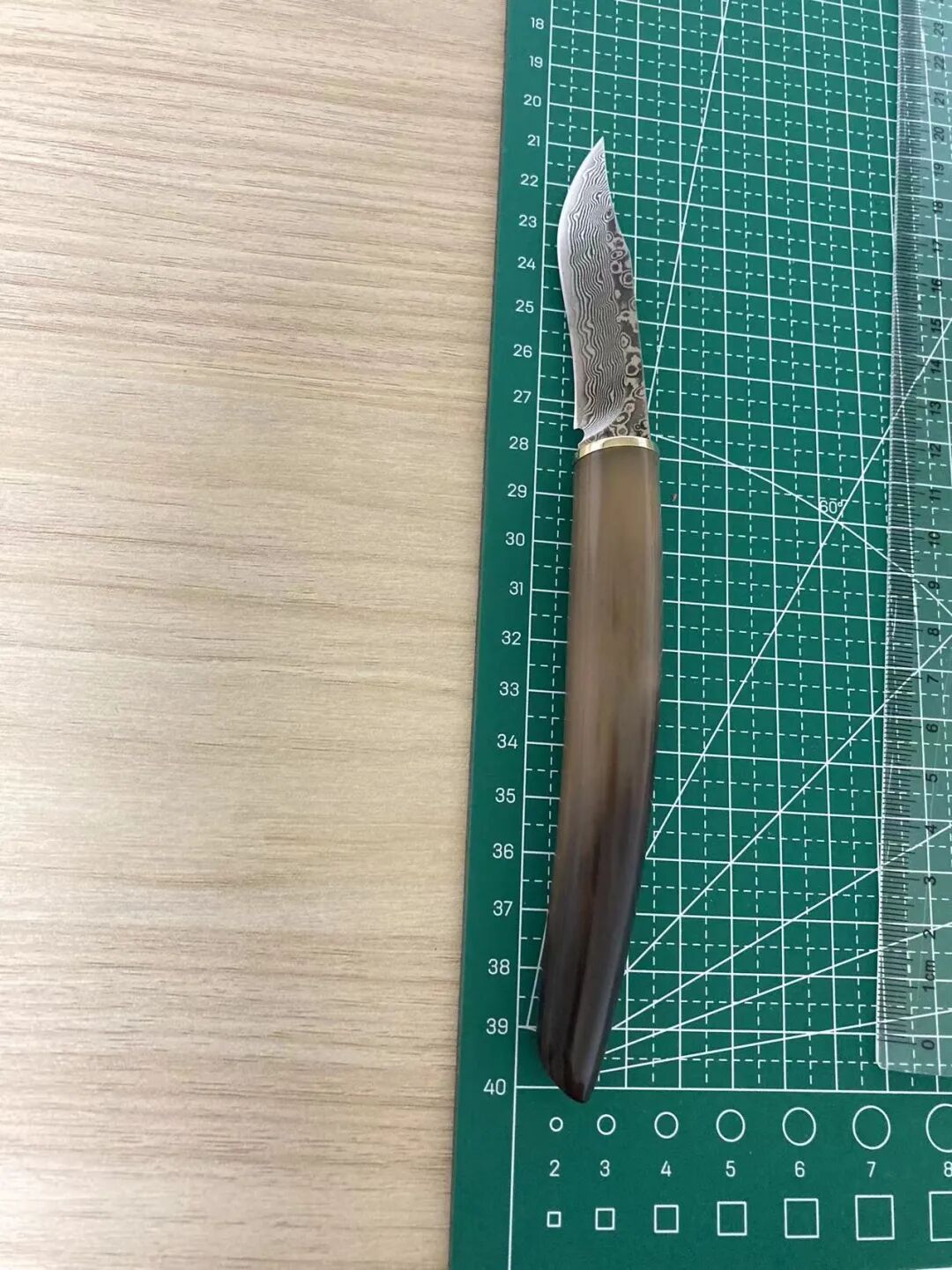
When it comes to tapping into their own cultural resources, telling a compelling brand story, proactively innovating, and connecting with contemporary young consumers, Najiaying's civilian cutlery still has a long road ahead for growth.
Finally, let me shout out an outstanding local Halal restaurant in Najiaying—Jieya Restaurant.
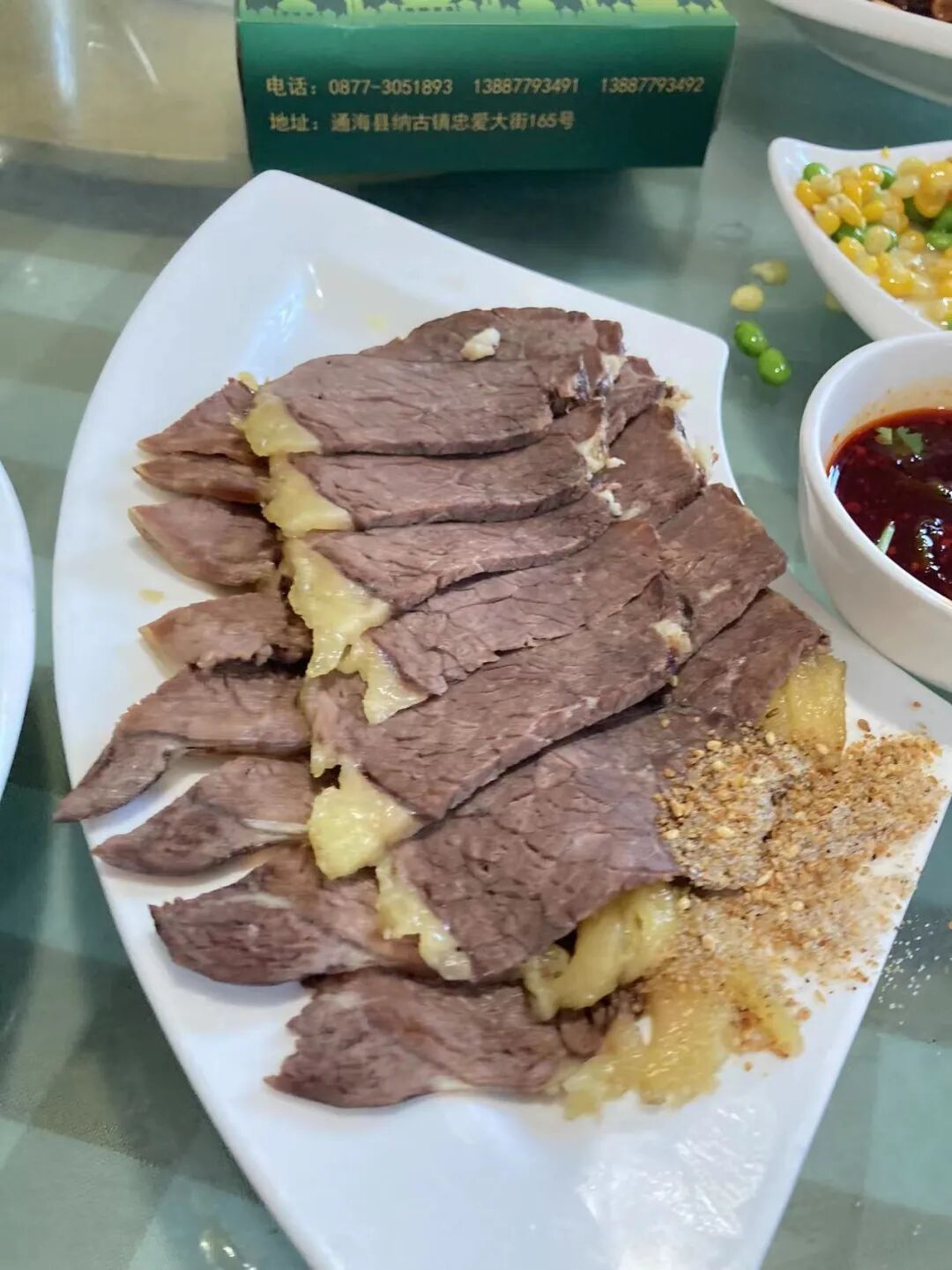
According to a good friend, this spot has been open locally for over 20 years. The quality is solid and the prices are super affordable, making it a great pick whether you're grabbing a casual bite, hanging out with family and friends, or hosting a business dinner.
Our foodie squad tried it out, and everyone was licking their chops.
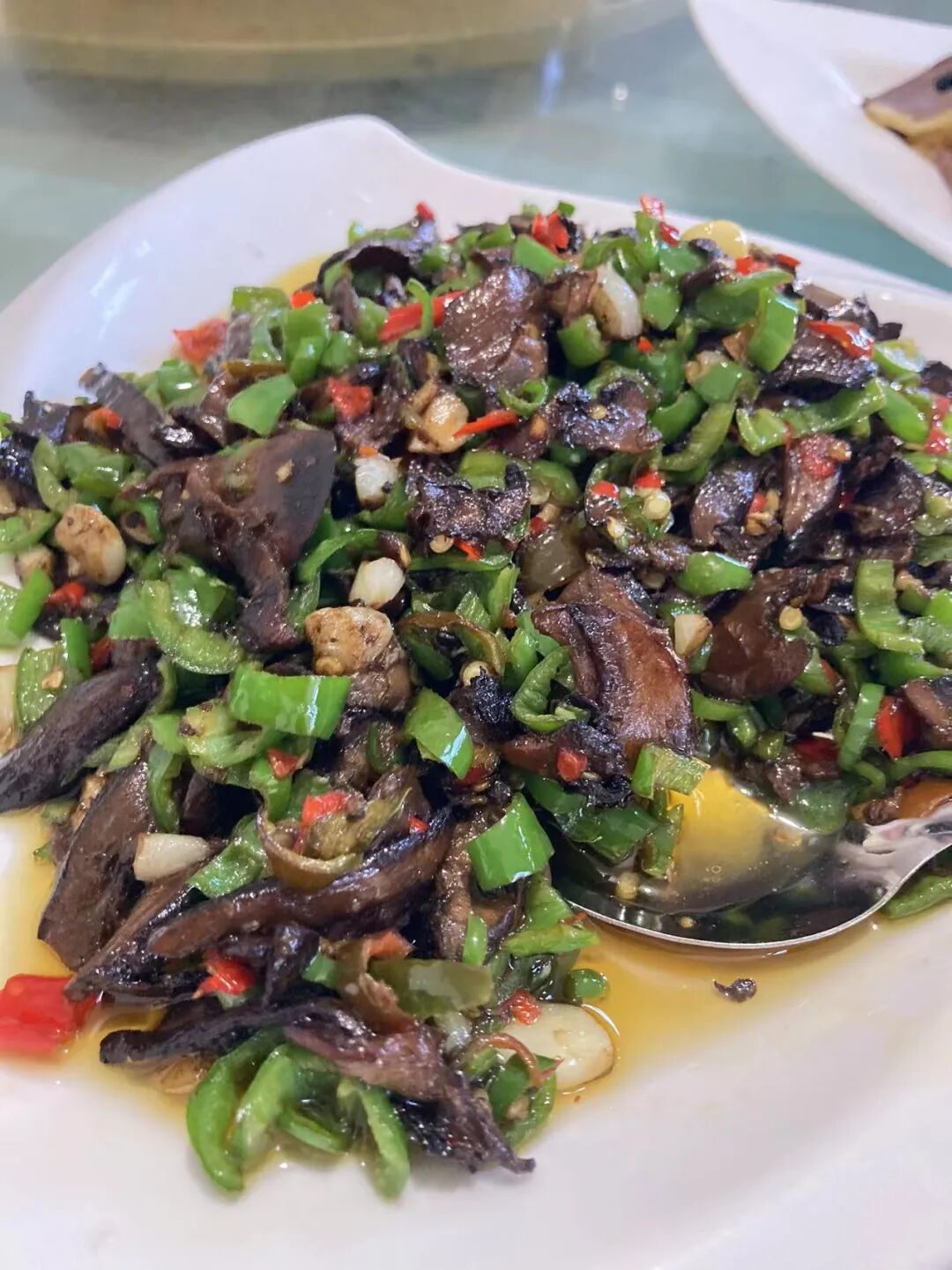
My personal recommendations: Tom Yum chicken, sliced cold beef, and stir-fried wild mushrooms.
The dipping sauce for the cold beef has a sour and spicy kick—super complex and bursting with authentic Yuxi local flavor.
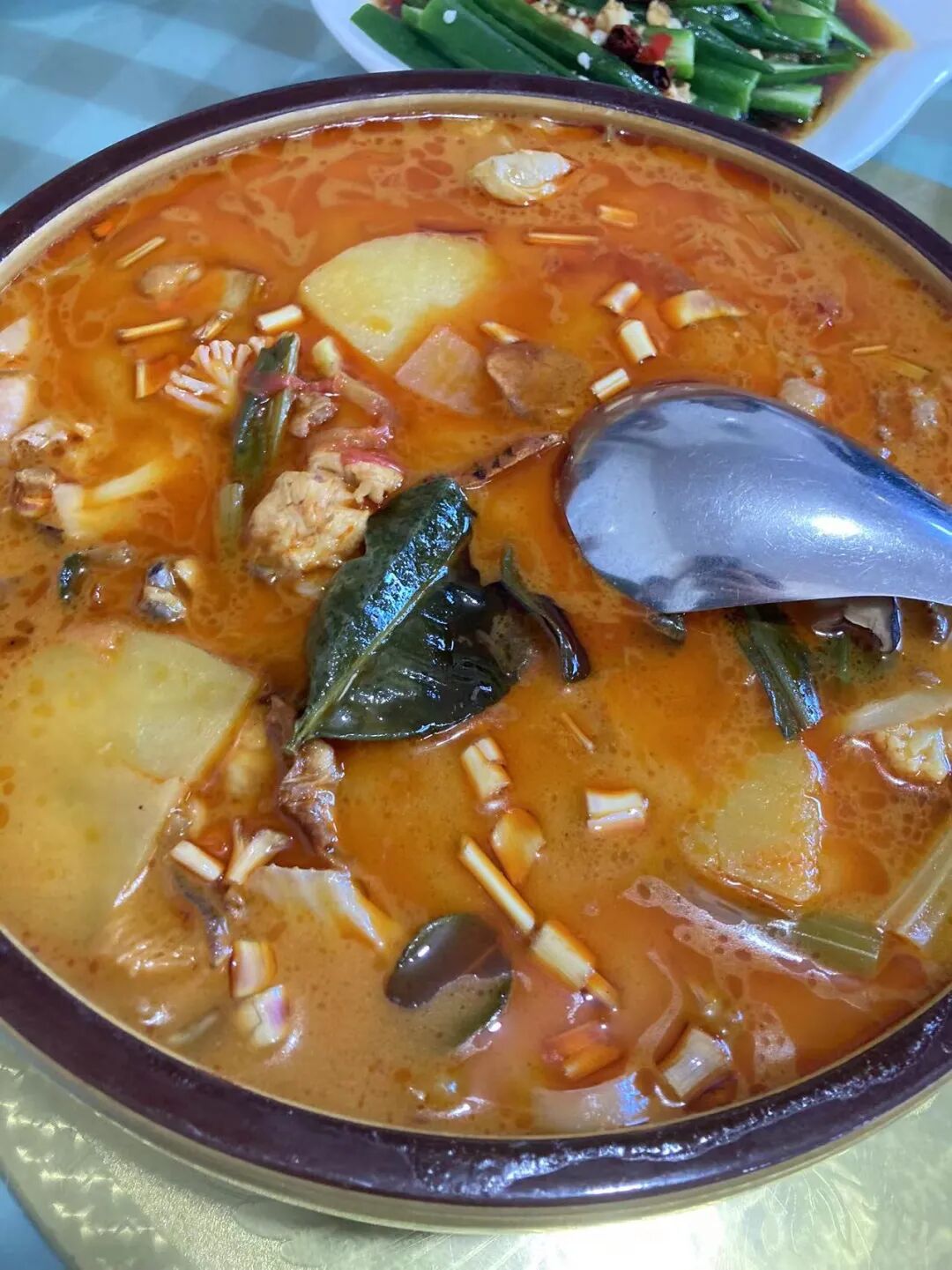
Until next time, Najiaying~
- Restaurant Info -

Name: Jieya Restaurant
Phone: 13887793491; 13887793492
Average cost: 60 RMB (spend as you like)
- Foodie Squad Perks -
For this issue, our foodie squad handpicked the most frequently used home-style kitchen slicer out of hundreds of knives in Najiaying to recommend to you all.
It has a substantial heft, a razor-sharp blade, and serious performance, totally handling all your daily needs for shredding, slicing, cutting strips, and dicing, while fitting right in with the habits of a Chinese kitchen.
If you want to experience the 600-year knife-making magic of Najiaying, why not start with this one?
Any quality issues under non-violent use within 2 years get a free trade-in for a brand new one.
- More Great Stuff -
Don't rush, 30 is just another beginning
I've been gatekeeping a Halal leisure resort in Xishan District, and I really hate to share it
Without our Zhaotong folks leading the charge, Kunming wouldn't have the Halal food scene it has today
The Ultimate Guide to Yunnan Muslim Culture, Halal Food & Historic Mosques (Part 1)
Articles • Hasan09 posted the article • 0 comments • 2 views • 1 hours ago
Overview of Yunnan-Origin Muslims in Taiwan, Thailand, and Myanmar (1): Overview of Homelands and Diaspora
Abstract:
Overview of Yunnan-Origin Muslims in Taiwan, Thailand, and Myanmar. Author: Yu Jiaming. Nestled in China's southwestern corner, Yunnan borders Myanmar, Thailand, Laos, and Vietnam, serving as a historic gateway to Southeast Asia. While the terrain is rugged, the region enjoys year-round spring weather and abundant resources. Home to multiple ethnic minority groups, Yunnan has spent millennia cultivating a rich, diverse cultural tapestry, which naturally includes the historical evolution and developmental journey of its Muslim communities. Section 1: Overview of Homelands and Diaspora. Nestled in China's southwestern corner, Yunnan borders Myanmar, Thailand, Laos, and Vietnam, serving as a historic gateway to Southeast Asia.
Overview of Yunnan-Origin Muslims in Taiwan, Thailand, and Myanmar
Author: Yu Jiaming
Nestled in China's southwestern corner, Yunnan borders Myanmar, Thailand, Laos, and Vietnam, serving as a historic gateway to Southeast Asia. While the terrain is rugged, the region enjoys year-round spring weather and abundant resources. Home to multiple ethnic minority groups, Yunnan has spent millennia cultivating a rich, diverse cultural tapestry, which naturally includes the historical evolution and developmental journey of its Muslim communities.
Section 1: Overview of Homelands and Diaspora
Nestled in China's southwestern corner, Yunnan borders Myanmar, Thailand, Laos, and Vietnam, serving as a historic gateway to Southeast Asia. While the terrain is rugged, the region enjoys year-round spring weather and abundant resources. Home to multiple ethnic minority groups, Yunnan has spent millennia cultivating a rich, diverse cultural tapestry, which naturally includes the historical evolution and developmental journey of its Muslim communities.
Beginning in the 7th century CE, merchants from the Arabian Peninsula and Persia began traveling to China for trade, eventually settling across various regions. Over centuries of development, they became one of the foundational roots of today's Hui Muslim minority in China. Of course, the composition of the Hui Muslims also includes Central Asian Muslim ethnic groups who moved eastward after Genghis Khan's western campaigns, alongside Arabs and Persians. In Yuan Dynasty official records, they were collectively referred to as "Huihui". After arriving in China, these individuals worked as soldiers, artisans, farmers, and merchants, while others entered government service or pursued religious and academic careers. Through intermarriage with locals and their deep integration into the socio-economic fabric, the concept and ethnic structure of the Hui Muslims gradually took shape.
As for the development of Islam in Yunnan, one theory suggests that during the Tang Dynasty, Tang forces allied with the Kingdom of Nanzhao to defeat the Tibetan Empire and the Abbasid army (referred to historically as the "Black-robed Da Shi"). The captured Abbasid soldiers were Muslims, marking the earliest presence of Muslims in Yunnan. Another widely circulated theory attributes their arrival to the Central Asian Huihui who migrated westward following the Mongol conquests, as well as Huihui soldiers in the Mongol army who stayed behind after conquering the "Southwestern Yi" tribes, thereby forming the earliest Muslim communities in Yunnan. [1]
According historical records, from Genghis Khan's western campaigns in 1219 to Hulagu's capture of Baghdad in 1258, the Mongols successively conquered numerous Islamicized nations spanning from Central to West Asia. Large numbers of these Muslims were subsequently relocated eastward, with some military units organized into the "Tamma troops" (frontier garrison forces) as part of Kublai Khan's unified army. In 1253 (the second year of Emperor Mengke's reign), Mengke ordered Kublai Khan and Uriankhadai to lead a 100,000-strong army to attack the Southwest, eventually conquering the Kingdom of Dali. Numerous Huihui generals and soldiers arrived in Yunnan wave after wave to garrison the borderlands and establish military agricultural colonies (tuntian) across various regions. Later, Uyghurs (ancestors of today's Uyghur ethnic group) also established the Wumeng military garrison around Zhaotong, laying a major foundation for today's Zhaotong Hui Muslim population. [2]
In 1274 (the 11th year of the Zhiyuan era under Kublai Khan), the Yuan Emperor appointed Sayyid Ajjal Shams al-Din Omar as the first Pingzhangmingshi (Administrator) of the Yunnan Branch Secretariat. Sayyid Ajjal Shams al-Din was originally from Bukhara in modern-day Central Asia. During his six years in office, he made remarkable achievements in local agriculture, transportation, and education. He introduced knowledge of Islam, the Arabic and Persian languages, artillery manufacturing, and medicine into Yunnan, and commissioned two mosques in Kunming that still stand today. His descendants also achieved prominence in politics and military affairs, continuing to contribute to the governance of Yunnan. His lineage eventually dispersed across China, becoming ancestral roots for many Chinese Muslims. [3]
The Ming Dynasty and early Qing Dynasty also marked critical phases for the development of Yunnan's Muslims. Many Muslim generals served among the founding figures of the Ming Dynasty; most notably, Mu Ying and his descendants were enfeoffed as the "Prince of Qianning" and the "Duke of Qian," governing Yunnan across generations. Additionally, a large contingent of Hui Muslim generals and soldiers from the Central Plains and the Jianghuai region followed Mu Ying to Yunnan. It is said that the Mu family in modern-day Baoshan, Yunnan, are descendants of Mu Ying. [4] Subsequently, even more Muslims arrived with military forces to garrison and reclaim land, forming numerous settlements in places such as modern-day Kunming, Chuxiong, Dali, Weishan, Baoshan, Tengchong, Kaiyuan, Mengzi, Xun甸, and Qujing. As they gradually integrated with various ethnic groups, Yunnan transformed into a major stronghold for Muslims in China, embodying the early spatial pattern of "widely dispersed, closely concentrated." [5]
Because Muslim village communities maintained distinct cultural and religious boundaries with outsiders, we frequently encounter villages bearing names explicitly tied to the Hui Muslims, such as "Huihuiying" (Hui Muslim Camp) or "Huizi Village" (Hui Village). These names immediately reveal that the local residents are Yunnan-origin Muslims. However, not all Muslims lived in exclusively Hui villages; many resided in urban areas. Though they were not the local majority, their homes and businesses clustered within specific Muslim quarters, allowing them to preserve their religious beliefs and ways of life with minimal outside interference. Because they inevitably interacted with Han Chinese in the cities, lifestyle and cultural differences occasionally sparked friction, with Han residents sometimes resorting to verbal insults or physical aggression against Muslims. [6]
Following the dawn of the Qing Dynasty, the development of Muslim communities began to face severe setbacks. For one, many Muslims still held loyalty to the fallen Ming Dynasty; moreover, the Qing court's ethnic policies were deeply inequitable, imposing heavy restrictions and discrimination against Hui Muslims while frequently instigating ethnic conflicts between Hui and Han populations. This fueled resistance among Muslim communities everywhere—not least in Yunnan, which boasted the second-largest Muslim population concentration in China, second only to the Northwest. In 1797 (the second year of the Jiaqing era), a salt-tax dispute erupted in the Dali and Chuxiong regions, serving as the spark for widespread uprisings. Participants spanned the Bai, Han, Yi, and Hui ethnic groups, uniting against corrupt salt administration officials who schemed for personal gain and extorted ordinary citizens. Soon, various conflicts and disputes flared up across regions. Officials routinely stoked divisions and refused to deliver fair judgments, causing public resentment to boil over. By the Daoguang era, the Qing court initiated violent crackdowns, ultimately triggering the major anti-Qing uprisings led by Du Wenxiu, Ma Long, and others. [7]
In 1856, Du Wenxiu established a regime in Dali, vigorously developing local agricultural and mineral economies, encouraging commerce, and fostering trade ties with neighboring Sichuan and Myanmar. By uniting various ethnic minorities, he won widespread popular support. Militarily, Du Wenxiu rallied the populace under slogans such as "Save the people, strike down tyranny," "Unite Hui and Han as one, raise the righteous banner, drive out the Tartars, and restore China..." His insurgent forces fought over two hundred battles against Qing troops, unifying the entire western half of Yunnan within five years. In 1867, they even mobilized a massive army to besiege Kunming. However, after failing to break the city and facing fresh Qing reinforcements mobilized from multiple provinces—combined with the Qing court's divide-and-conquer strategy of using Muslims to fight Muslims—the Dali regime suffered a series of defeats. In 1872, Du Wenxiu was executed, and two years later, Dali fell to Qing forces, bringing the 18-year Yunnan Hui uprising to a tragic end. [8]
By the mid-19th century, Yunnan's local Muslims accounted for one-tenth of the province's total population. Bound by shared historical and cultural symbols as well as common professions, they gradually forged a distinct ethnic identity. This very identity—compounded by their non-Yunnan and non-Han ancestral origins and their Islamic faith—created friction in regional, cultural, and religious spheres, ultimately leading to the tragic outcomes of the Hui uprisings. [9] In the wake of the Qing court's high-handed rule and massacres, the Muslim population inside Yunnan plummeted sharply. Fearing persecution, some Hui residents were forced to flee across the borders into neighboring countries, planting the seeds for the migration of Yunnan-origin Muslims into Southeast Asia. [10]
Yunnan and its surrounding regions feature towering mountain ranges soaring 6,000 meters high, forming the Yunnan-Guizhou Plateau. South of the plateau lie the Shan Plateau of Myanmar, northern Thailand, Laos, and the rugged highlands of Vietnam. Major rivers like the Lancang (Mekong) and Nujiang (Salween) carve deep gorges through the plateau while sculpting numerous mountain basins known locally as *bazi*. Different ethnic minorities settled across these basins. Given this challenging terrain, the most reliable transport for long-distance journeys was the Yunnan pony, giving rise to organized caravans known as *mabang* (horse caravans) that shuttled between mountain basins to handle cargo transport and trade. [11] These horse caravans not only traded goods from market to market but also bartered with highland farmers along the way, injecting vibrant economic life into diverse inter-ethnic regions. [12]
The Muslims of Yunnan province largely concentrated along major transportation arteries and the flat basin lands (bazi) in their immediate suburbs, with very few living deep in the mountainous interior. This settlement pattern was shaped by their long-term historical engagement in military agricultural colonies, commerce, and handicrafts. [13] Because these flat basins and semi-mountainous regions offered limited per capita arable land, relying solely on farming made survival difficult. Consequently, running long-distance transport via horse caravans became an essential avenue for Hui Muslims to make a living in commerce. Ever since the Yuan Dynasty, Hui horse caravans remained a cornerstone of Yunnan's transport network. In Muslim-heavy regions such as Baoshan, Weishan, Tonghai, and Yuxi, countless horse caravans specialized in transport and goods trading, constantly plying the routes between Yunnan, Thailand, and Myanmar. [14] Furthermore, the Qing court's massacres of Yunnan's Hui population plunged many areas into economic depression, which in turn spawned rampant banditry. The devastation of their home villages forced people to venture outward to find a livelihood—proving to be yet another reason why Yunnan Muslims took up the life of caravan traders. [15]
Wealthy Yunnan merchants had long-standing commercial ties extending through Laos, Thailand, Myanmar, and India, while local peddlers transporting goods between prefectures and counties routinely hired Hui-dominated horse caravans. Among all postal and courier routes, the western Yunnan Hui horse caravan route stretching from Dali all the way to Myanmar was the most convenient. Many Hui people sustained their livelihoods through caravanning: some purchased their own mules and horses to organize independent caravans, while others hired themselves out to wealthy merchants who already owned large caravans. This gave rise to the classic description of Yunnan Hui Muslims: "Their livelihood relies on the profits of mules and horses," and "They universally make their living by driving caravans, peddling oil, salt, and rice." [16]
Western Yunnan, bordering Myanmar, served as a crucial stretch of the Yunnan Silk Road and maintained close ties with the outside world since ancient times. Borderland grassroots trade had always been exceptionally active; following the social stability and economic development of the Ming Dynasty, waves of interior merchants flocked to the region seeking fortunes. Northern Myanmar still bears the footprints of these active Chinese merchants. Myanmar's native products like gemstones and cotton were imported into Yunnan, while Myanmar's demand for tea, silk, copper and ironware, ceramics, and salt was supplied outward from Yunnan. This dynamic southwestern corridor stimulated ongoing development and commercial prosperity across numerous regions. [17] Such booming trade also minted many wealthy merchant magnates—such as Ma Mingkui, a prominent Yunnan tycoon during the Xianfeng and Tongshi eras of the Qing Dynasty. Engaged in textiles, trade, and transport, Ma owned over a dozen horse caravans, traveling year-round between Yunnan and Myanmar to handle cross-border commodity trade, while operating multiple storefronts across Sichuan, Yunnan, and Myanmar. When Du Wenxiu established the Dali regime, Ma Mingkui provided robust financial backing as well. [18]
Driven by the thriving trade between Yunnan and Myanmar, numerous Yunnan-origin Muslims opened shops across various parts of Myanmar and eventually settled there. According to Kumiko Kishima's research, between the mid-19th century and the early 20th century, Yunnan Muslims primarily utilized five distinct routes to travel to Myanmar for trade and permanent settlement. [19] They gradually formed clustered communities along these trade arteries leading from Yunnan into Myanmar. Initially, they settled at the various terminal stations along the trade routes or in safe-haven towns near the border. After the onset of the British colonial period, settlements organically emerged along the trade routes, terminal stops, and transit hubs. However, terminal stations located too close to their homeland in Yunnan did not develop distinct ethnic enclaves. [20]
Although caravan trade was dominated primarily by Hui Muslims, a massive influx of Han Chinese began joining the trade in the 19th century. Hui and Han populations clashed not only over commerce but also over mining rights and land use. This inter-ethnic friction, combined with the late 19th-century Muslim anti-Qing uprisings crushed by the Qing government—culminating in the fall of Du Wenxiu's Dali regime in 1872 and the capture of the final insurgent stronghold of Tengyue (modern-day Tengchong) by Qing troops the following year—forced many Muslims to flee into Myanmar under severe political oppression. Shortly thereafter, the Konbaung dynasty of Myanmar collapsed, and Britain established colonial rule there in 1886, providing yet another catalyst for their migration to Myanmar. [21]
The Republican era in China was far from peaceful, marked by multiple brutal military conflicts. Although Yunnan sat in the remote borderlands, it was inevitably swept into the turmoil. In 1937, when Japanese forces invaded China and captured all of the nation's eastern sea ports, the government mobilized immense human labor to construct the 960-kilometer-long Burma Road stretching from Kunming, Yunnan, to Wanting, Myanmar, taking just one year to complete. It became China's sole external lifeline and supply route, channeling vital supplies from the outside world into the southwestern rear base. [22] Throughout the War of Resistance Against Japanese Aggression, Yunnan Hui Muslims enthusiastically enlisted in the military, fighting Japanese invaders across China, fiercely resisting the enemy along the Yunnan border, and reclaiming numerous occupied cities. Members of the Chinese Expeditionary Force that entered Myanmar in 1944 also included many Yunnan-origin Muslims. [23]
In the realm of education and culture, Yunnan's Muslims achieved remarkable development since ancient times, producing a steady stream of renowned scholars and imams. [24] Their translations and religious treatises profoundly influenced Chinese Muslims nationwide. Furthermore, *jingtang jiaoyu* (mosque-based scriptural education) served as a traditional educational format unique to Yunnan's Islamic heritage. Developed during the Ming Dynasty, this system utilized mosque study halls as classrooms where imams taught students using classical religious texts. This wielded widespread influence among local Muslim communities, and the so-called "Yunnan School of Islamic Thought" emerged as one of the three major scriptural educational traditions in China. [25]
With the turning tides of the era, several new organizations, educational institutions, and periodicals were successively established during the Republican period, including the Yunnan Branch of the China Islamic Progressive Association and the Yunnan Branch of the China Islamic National Salvation Association. Both actively responded to and participated in movements to build a democratic nation and resist the Japanese invasion. Additionally, the founding of the "Yunnan Mingde School" in 1929 symbolized the rise of modern Islamic education in Yunnan, which combined general academic subjects with religious knowledge. Periodicals such as the *Yunnan Muslim Monthly* and the *Yunnan Muslim Bell Magazine* were among the earliest regular Islamic publications issued nationwide. Scholars like Ma Jian and Na Zhong traveled to Egypt around 1931 for advanced studies, becoming preeminent experts in religious studies and Arabic linguistics who shaped 20th-century Chinese Islamic scholarship. [26]
As the War of Resistance drew to a close, the Chinese Civil War immediately erupted. In 1949, the Kuomintang (Nationalist) government retreated to the Southwest. At the time, the KMT forces stationed in Kunming consisted of the 8th and 26th Armies, led respectively by Li Mi and Lu Han (note: text says Lu Han / Qiu Qingquan / Yu Chenwan depending on historical context). Later, these armies withdrew toward western Yunnan. After being overtaken by the People's Liberation Army, just over a thousand surviving soldiers from both armies retreated across the border into Myanmar, becoming stranded in a foreign land as the "Lost Army" [27]—immortalized by author Pai Hsien-yung (or Bo Yang) in his book *Alien Land* (Yi Yu). After entering Myanmar, the Lost Army faced relentless combat, repeatedly clashing with the PLA. Ultimately, a portion of the soldiers, civilians, and their families were evacuated to Taiwan through arrangements made by the KMT government, while others entered Thailand, settling in places like Chiang Mai, Chiang Rai, Mae Salong, and Mae Sai.
The Yunnan-origin Muslims who migrated to Myanmar dispersed across the country. Major concentrations formed in Mandalay (formerly known as Wucheng / Mandalay), Yangon, Lashio, Tangyan, Myitkyina, Mogok, Maymyo, and Taunggyi, with most communities taking shape around the mid-19th century onward and establishing local mosques. Today, Mandalay still preserves a mosque ordered and funded by Du Wenxiu, completed in 1868, alongside the surrounding Muslim community settlements. Yunnan-origin Muslims generally refer to themselves as *Huihui* or *Huimin* (Hui people), but the local Burmese people use the term "Panthay"—a distinct ethnonym originally used as a blanket term for Muslims. [28]
When discussing the history of Yunnan-origin Muslims migrating to Myanmar, one cannot overlook "Panlong" (also known as Panglong), located in the Wa State region along the Yunnan-Myanmar border. To this day, Panlong holds a deep, vivid place in the memories of many Yunnan-origin Muslims as the homeland of their forebears. The site originally began as a refugee stronghold established by Ma Lingji, a subordinate commander under Du Wenxiu. Subsequently, numerous Muslims fleeing persecution by the Qing court fled to this location. Because people banded closely together to live there, the place was dubbed *Banlong* ("gathering together"), which eventually evolved into *Panlong* (Banglong). By the early 20th century, the local population grew rapidly and thrived, eventually becoming a dominant force in the Wa State. The people of Panlong proudly referred to their home as Panglong, a name preserved as they later migrated to various parts of Southeast Asia, including Myanmar and Thailand. Thus, the place name "Panglong" is an endonym used by the Panlong people themselves, whereas "Banlong" is the exonym used by surrounding ethnic groups and mainland Chinese Hui Muslims. However, due to the Japanese occupation of Myanmar and raids by other local armed groups, the local Muslim community in Panlong suffered severe devastation, prompting many residents to relocate onward to other Myanmar cities and northern Thailand. [29]
According to the author's field investigations, there are still roughly 1,200 households of Yunnan-origin Muslims living across heavy Muslim concentration areas such as Mandalay, Tangyan, Lashio, Mogok, and Taunggyi today. They continue to preserve their traditional religious culture and place great emphasis on passing down their faith within family life. Alongside family transmission and traditional mosque-based education, there are also well-established schools teaching Arabic and Islamic studies. For instance, the "Zhenguang School" in Maymyo has cultivated multiple imams specializing in Arabic language and religious knowledge, two of whom currently serve religious communities in Taiwan.
As for the Yunnan Muslims living in Thailand, their roots are largely the same as those who migrated to Myanmar. Some settled down along ancient caravan trade routes, but the more massive migrations were driven by the need to escape the Qing dynasty's crackdowns following the failure of the Panthay Rebellion. Traveling south along trade routes, they reached Myanmar as well as Thailand's northern provinces of Chiang Mai and Chiang Rai.
Locally in Thailand, these Yunnan-origin Muslims are called "Chin-Haw" (or Chin-Ho). While this is just a blanket term used by Thai locals for all Chinese people, these Muslims still proudly refer to themselves as Chinese or Hui Muslims. By the late 19th century, several major urban centers in northern Thailand, like Chiang Mai, had already established vibrant Chinese communities anchored by Yunnan Muslims. Keeping ties with long-distance caravan traders and leaning into their mercantile traditions, they carved out new economic niches and even acted as vital middlemen between the Chin-Haw and the ethnic Thai population. [28]
Throughout the 20th century, waves of Yunnan Muslims continued trickling across the border into Thailand—mostly escaping massive upheavals like the Japanese invasion of China and the Chinese Civil War, while others trickled down from Myanmar. Some were commercial travelers caught stranded in Thailand due to the founding of the People's Republic of China, unable to make their way back home, while others fled their homelands following the Nationalist (KMT) forces as mentioned earlier.
In the early 1960s, after two troop withdrawals, a faction of Yunnan-based KMT soldiers still remained in northern Myanmar. In 1961, led by Li Wenxuan and Duan Xiwen, about 2,600 troops split into two columns and headed to northern Thailand, setting up base in Chiang Mai and Chiang Rai provinces. The Thai government was sympathetic to their plight, but also needed their muscle to navigate regional tensions with Burmese and Thai communist forces. At the urging of Li and Duan, the Thai authorities agreed to grant legal residency to these troops and their families. In return, they helped the Thai government crush local communist insurgents. This paved the way for even more Yunnan refugees to stream out of Myanmar and settle down in Chiang Mai and Chiang Rai, creating "refugee villages"—often dubbed "KMT villages" by outsiders. This allowed them to keep their traditional lifestyles and culture alive far from home. By the 1980s, the military units slowly disbanded, and these Yunnan families built permanent roots in northern Thailand, raising generations that preserved their cultural identity while gradually adapting to mainstream Thai society. [29]
Much like Taiwan's iconic military dependents' villages (juancun), early Chinese settlers in northern Thailand lived in these refugee communities. Although the Thai government didn't strip away their right to survive, it essentially left them to fend for themselves. Learning Chinese was heavily restricted; they couldn't buy property or own land, and most lacked official legal status. While those Nationalist soldiers and their families who retreated into Thailand from Myanmar eventually earned Thai citizenship for their service in anti-communist campaigns, everyone else was stuck with mere refugee cards. They only had the right to live within designated refugee villages, and stepping outside those village boundaries was treated as a crime. [30] Through sheer grit and hustle, however, the economic standing of these Yunnan Muslims gradually rose, their access to education improved, and today, the vast majority have finally secured official Thai citizenship. [31]
No matter why they packed up and moved to Thailand, these Yunnan Muslims ended up primarily scattered across the northern provinces of Chiang Mai and Chiang Rai. Some brought their families along, while others married local non-Muslim Chinese or ethnic Thai women, raising all their kids as devoted Muslims. As early as 1917, a mosque primarily serving the Yunnan Muslim community was completed in Chiang Mai's Wiang Phing neighborhood. Over time, more mosques, Islamic schools, and the Chiang Mai chapter of the Thai Muslim Association popped up all over the city, effectively putting Yunnan Muslims at the helm of local Islamic affairs. [32] To this day, the community fiercely holds onto its distinct Yunnan Hui Muslim religious practices, customs, cultural traditions, and even the Yunnan Chinese dialects.
The total Muslim population across northern Thailand tops 20,000, spanning diverse backgrounds including Yunnanese, Burmese, Bengali, and Malay. Out of the 20 local mosques, 13 belong to the Yunnan Muslims, meaning they make up over 70 percent of the total Muslim population in northern Thailand. At the same time, Yunnan Muslims are rooted in 13 tight-knit communities across the region, including Wang He Street in Chiang Mai city, Wanyang Village in Chiang Mai's Fang District, Chiang Rai city, and the village of Mae Salong in Chiang Rai Province. [33] Institutions like the Chiang Mai Islamic Ching Chen School and the Wanyang Islamic Virtue School, founded by Yunnan Muslims for religious education, have equipped younger generations of Chinese Muslims with fluent Arabic and Islamic knowledge, while also giving local Chinese youth a place to learn Mandarin.
For these northern Thai Yunnan Muslims, active participation in religious affairs, mutual aid, and community networking serve as powerful anchors for ethnic cohesion and identity. Even though the community has internal divisions—stemming from different regional dialects, early versus late migration waves, or commercial versus political backgrounds—the strong unifying bonds of their faith, coupled with the external pressures of navigating a majority Buddhist and ethnic Thai society, help them brush aside petty differences and pull together for communal public affairs. [34]
Mainland Chinese scholar Li Xu studied the Ma family, a prominent clan that grew fabulously wealthy through caravan trade and maintained business ties with Thailand and Myanmar well into the 20th century. One family member noted that the overseas Chinese they met in Thailand were relentless, hardworking, and far more industrious than the locals, which is why so many managed to strike it rich. [35] Based on my own field interviews, my informants echoed this exact sentiment. Whether in Thailand or Myanmar, Chinese people—especially Muslims—truly out-hustle the locals. Since their starting line is a lot rougher than those born with local privileges, they have no choice but to grind twice as hard to carve out space for themselves under heavy restrictions.
All in all, ever since Islam was introduced to China during the Tang dynasty, it has ridden the waves of various dynasties. Leaning on the strengths of its culture and social lifestyle, local Muslims have managed to resist total assimilation despite living in heavily multi-ethnic environments. And even when population pressures forced them to migrate elsewhere, they never stopped practicing their faith or maintaining their distinct community structures. [36] Through continuous development, religious education, and the passing down of their heritage, Yunnan remains one of the major heartlands for concentrated Muslim populations in mainland China.
Straddling China's southwestern frontier, northern mainland Southeast Asia, and the northern part of the South Asian subcontinent lies an ancient trade route: the Southwestern Silk Road, historically known as the Shandu Road (Southern Silk Road). Early visits by Persian and Arab Muslims to Yunnan, as well as the later migrations of Yunnan Muslims into Southeast Asia, are deeply tied to this historic trade route. During the Yuan dynasty when Sayyid Ajjal Shams al-Din Omar governed Yunnan, he heavily upgraded and expanded this ancient route, setting up postal relay stations everywhere to encourage merchant travel. This prompted Yunnan Muslims to dive headfirst into caravan trade, doing business all the way down into Southeast Asia and South Asia, which ultimately sparked the earliest migrations into Myanmar and Thailand.
Because the bloody crackdowns of the late Qing dynasty's Panthay Rebellion forced massive numbers of Yunnan Muslims to flee through trade routes to seek refuge in Thailand and Myanmar, many ended up putting down permanent roots there. Later on, from World War II right up to the founding of the PRC, wave after wave of Yunnan Muslims fled China or found themselves stranded because they couldn't return home. Add in Nationalist army troops and their dependents, and even more people poured into Myanmar and Thailand. Over four or five decades, these communities blossomed into third- and even fourth-generation Yunnan Chinese Muslims. Combined with the early merchant migrants, this created a thriving diaspora society of ethnic Yunnan Chinese Muslims living across Thailand and Myanmar. [37]
Whether you call them the "Panthays" in Myanmar or the "Chin-Haw" in northern Thailand, these are two branches of the same Yunnan Hui diaspora tree, sharing identical roots but bearing different local names given by outsiders. [38] They share a common historical memory, religious lifestyle, and ethnic culture. Facing unfamiliar cultures and environments in their adopted homes, they manage to preserve a deep sense of communal kinship, anchoring their settlements around local mosques. At the same time, they keep alive the traditional lifestyle, cultural hallmarks, and tight ethnic solidarity of the Yunnan Hui people. Not only have they resisted assimilation by the mainstream local cultures, but they have also kept their community spirit and heritage thriving and evolving dynamically. [39]
Footnotes:
[1] Yunnan Provincial Editorial Team, eds., Social and Historical Investigation of Yunnan Hui Muslims (Vol. 3), Kunming: Yunnan People's Publishing House, 1986, pp. 4-5.
[2] Ma Weiliang, Research on the History and Culture of Yunnan Hui Muslims, Kunming: Yunnan University Press, November 2007 (3rd printing), pp. 27-28.
[3] Yunnan Provincial Editorial Team, eds., Social and Historical Investigation of Yunnan Hui Muslims (Vol. 3), pp. 5-8.
[4] Ma Weiliang, Research on the History and Culture of Yunnan Hui Muslims, p. 28.
[5] Yunnan Provincial Editorial Team, eds., Social and Historical Investigation of Yunnan Hui Muslims (Vol. 3), pp. 9-10.
[6] David G. Atwill, The Chinese Sultanate: Islam, Ethnicity, and the Panthay Rebellion in Southwest China, 1856-1873. Stanford: Stanford University Press, 2005, pp. 41-42.
[7] Yunnan Provincial Editorial Team, eds., Social and Historical Investigation of Yunnan Hui Muslims (Vol. 3), pp. 11-15.
[8] David G. Atwill, The Chinese Sultanate, pp. 46-47.
[9] Ma bang (caravan): Historically and currently the primary transport method across the rugged mountains of southwest China. Because mountain paths are too treacherous for carts, only packhorses can get through without being blocked. Yunnan merchants organized these horses into caravans to conduct trade all over the southwest, with trade routes extending as far as modern-day Laos, Thailand, and Myanmar.
[10] Yoshimatsu Kumiko, trans. Tu Huazhong, rev. Yao Jide, "A Study on the Yunnan Muslim Trade Routes to Myanmar and Their Settlement Sites: Focusing on the Late 19th to Early 20th Centuries," in Huizu Yanjiu (Journal of Hui Muslim Studies), 2008, No. 2 (Total Issue 70), Ningxia: Editorial Office of Huizu Yanjiu, 2008, p. 11.
[11] Yang Zhaojun, ed., History of Yunnan Hui Muslims, Kunming: Yunnan Nationalities Publishing House, 1989, p. 5.
[12] Wang Mingda and Zhang Xilu, Caravan Culture, Kunming: Yunnan People's Publishing House, 2008, p. 80.
[13] Narrated by Ma Zhishang et al.; Written and photographed by Li Xu, Legendary Families on the Ancient Tea Horse Road, Beijing: Zhonghua Book Company, 2009, p. 33.
[14] Wang Mingda and Zhang Xilu, Caravan Culture, pp. 107-110.
[15] Gu Yongji, "The Impact of Inland Immigrants in Western Yunnan During the Ming Dynasty on China-Myanmar Relations," in China Borderland History and Geography Studies, 2008, No. 3 (Total Issue 69), Beijing: Editorial Office of China Borderland History and Geography Studies, 2008, pp. 13-14.
[16] Ma Yingsheng, "Ma Mingkui: The Wealthy Dali Hui Muslim Merchant During the Xianfeng and Tongzhi Reigns," in Huizu Yanjiu (Journal of Hui Muslim Studies), 2008, No. 2 (Total Issue 70), Ningxia: Editorial Office of Huizu Yanjiu, 2008, pp. 26-28.
[17] According to Kumiko Yoshimatsu's research, the five trade routes passed through Mogaung, Bhamo, Wanting, Panglong, and Kengtung, respectively. These five locations are situated in today's northern Myanmar, commonly referred to as Upper Myanmar, while their starting points included Tengchong, Baoshan, Dali, and Kunming in Yunnan. These five places later became transit hubs for Yunnan-origin Muslims migrating to other regions, or where they settled to form communities.
[18] Written by Kumiko Yoshimatsu, translated by Huazhong Tu, reviewed by Jide Yao, "A Study on the Trade Routes and Settlement Points of Yunnan Hui Muslims Entering Burma: Focusing on the Late 19th to Early 20th Century," p. 15.
[19] Same as above, p. 11.
[20] Authored by Zhenxiao Zhai, "Experience and Identity: Ethnic Composition of Chinese and Burmese Overseas Immigrants," Taipei: Haihua Cultural and Educational Foundation, 2001, p. 25.
[21] Authored by Ruihai Zhou et al., "Draft History of the Chinese Hui People's Anti-Japanese War of Salvation," Beijing: Social Sciences Academic Press, 2006, pp. 318-320.
[22] Imam: A transliteration of the Persian word *akhond*, meaning teacher or scholar. An imam's qualifications require classical Islamic education, possessing religious knowledge related to Islamic doctrine and jurisprudence. Their main duties are leading Muslims in prayer at the mosque, handling various religious affairs, and educating and explaining doctrines to everyday Muslims. Reference: Edited by the Editorial Committee, "Encyclopedia of Islam in China," p. 13.
[23] Authored by Kaineng Ma and Rongkun Li, "Islam in Yunnan," Beijing: Religious Culture Publishing House, 2004, p. 88.
[24] Same as above, pp. 25-27.
[25] Dictated by Xuezhen Gong et al., primary interviewer Shiying Zhang, "The Orphans No Longer Wandering: Interviews of Zhongzhen New Village," Taipei: Academia Historica, 2002, pp. 4-6.
[26] Authored by Chaoqun Ma, "An Analysis of Exonyms for Yunnan Hui People: 'Panse,' 'Panxi,' and 'Paxi,'" included in *Journal of Hui Muslim Studies*, 2003, Issue 3 (Total Issue 51), Ningxia: *Journal of Hui Muslim Studies* Editorial Department, 2003, p. 30.
[27] Authored by Jide Yao, "The Migration of Yunnan Hui Muslims to Southeast Asia," included in *Journal of Hui Muslim Studies*, 2003, Issue 2 (Total Issue 50), Ningxia: *Journal of Hui Muslim Studies* Editorial Department, 2003, pp. 39-40. As stated in the text, Panglong was indeed a preliminary dwelling place for Yunnan-origin Muslims before advancing further to other cities in Myanmar and northern Thailand. According to many interviewees, their ancestors all had experiences living in Panglong. The author has also heard that some Yunnan-origin Muslims regarded Panglong as holding the concept of a state, a "Panglong Country," which seems to coincide with the background of the so-called "Panglong" naming.
[28] Authored by Andrew D. W. Forbes, excerpted and translated by Jide Yao, "Yunnan Muslims in Northern Thailand: The Chin Haw," included in *Journal of Yunnan Ethnology*, 1991, Issue 2 (Total Issue 31), Kunming: Editorial Department of the Journal of Yunnan Nationalities Institute, 1991, pp. 85-55.
[29] Authored by Wenqin Zhang, "The Leap from Refugees to Immigrants: Re-examining the Transformation of Migration Patterns of Former Kuomintang Yunnanese in Northern Thailand," included in *Haihua and Southeast Asia Studies*, Vol. 2, No. 1, Taipei: Haihua and Southeast Asia Studies Journal Agency, 2002, pp. 58-66.
[30] Authored by Shih-chung Hsieh, "The Construction, Categories, and Qualitative Change of the Nation-State: Half a Century of the Republic of China Army 93rd Division in Yunnan, Myanmar, Thailand, and Taiwan," included in his book *Nationalist Discourses: Fields of China and North-Southeast Asia*, Taipei: National Taiwan University Press, 2004, p. 65.
[31] Interview content with Mr. W1, interviewed at the Taipei Mosque on February 8, 2008.
[32] Authored by Andrew D. W. Forbes, excerpted and translated by Jide Yao, "Yunnan Muslims in Northern Thailand: The Chin Haw," p. 90.
[33] Authored by Jide Yao, Rongkun Li, and Zuo Zhang, "History of Islam in Yunnan," Kunming: Yunnan University Press, 2005, p. 199.
[34] Authored by Jide Yao, "Society and Culture of Yunnan-Origin Muslims in Northern Thailand," included in Zongbao Ma (ed.), *Collected Papers on Chinese Hui Muslim Studies (Vol. 1)*, Beijing: Ethnic Publishing House, 2005, pp. 414-416.
[35] Narrated by Zishang Ma et al.; written and photographed by Xu Li, "Legendary Families on the Ancient Tea Horse Road," pp. 79-81. view all
Overview of Yunnan-Origin Muslims in Taiwan, Thailand, and Myanmar (1): Overview of Homelands and Diaspora
Abstract:
Overview of Yunnan-Origin Muslims in Taiwan, Thailand, and Myanmar. Author: Yu Jiaming. Nestled in China's southwestern corner, Yunnan borders Myanmar, Thailand, Laos, and Vietnam, serving as a historic gateway to Southeast Asia. While the terrain is rugged, the region enjoys year-round spring weather and abundant resources. Home to multiple ethnic minority groups, Yunnan has spent millennia cultivating a rich, diverse cultural tapestry, which naturally includes the historical evolution and developmental journey of its Muslim communities. Section 1: Overview of Homelands and Diaspora. Nestled in China's southwestern corner, Yunnan borders Myanmar, Thailand, Laos, and Vietnam, serving as a historic gateway to Southeast Asia.
Overview of Yunnan-Origin Muslims in Taiwan, Thailand, and Myanmar
Author: Yu Jiaming
Nestled in China's southwestern corner, Yunnan borders Myanmar, Thailand, Laos, and Vietnam, serving as a historic gateway to Southeast Asia. While the terrain is rugged, the region enjoys year-round spring weather and abundant resources. Home to multiple ethnic minority groups, Yunnan has spent millennia cultivating a rich, diverse cultural tapestry, which naturally includes the historical evolution and developmental journey of its Muslim communities.
Section 1: Overview of Homelands and Diaspora
Nestled in China's southwestern corner, Yunnan borders Myanmar, Thailand, Laos, and Vietnam, serving as a historic gateway to Southeast Asia. While the terrain is rugged, the region enjoys year-round spring weather and abundant resources. Home to multiple ethnic minority groups, Yunnan has spent millennia cultivating a rich, diverse cultural tapestry, which naturally includes the historical evolution and developmental journey of its Muslim communities.
Beginning in the 7th century CE, merchants from the Arabian Peninsula and Persia began traveling to China for trade, eventually settling across various regions. Over centuries of development, they became one of the foundational roots of today's Hui Muslim minority in China. Of course, the composition of the Hui Muslims also includes Central Asian Muslim ethnic groups who moved eastward after Genghis Khan's western campaigns, alongside Arabs and Persians. In Yuan Dynasty official records, they were collectively referred to as "Huihui". After arriving in China, these individuals worked as soldiers, artisans, farmers, and merchants, while others entered government service or pursued religious and academic careers. Through intermarriage with locals and their deep integration into the socio-economic fabric, the concept and ethnic structure of the Hui Muslims gradually took shape.
As for the development of Islam in Yunnan, one theory suggests that during the Tang Dynasty, Tang forces allied with the Kingdom of Nanzhao to defeat the Tibetan Empire and the Abbasid army (referred to historically as the "Black-robed Da Shi"). The captured Abbasid soldiers were Muslims, marking the earliest presence of Muslims in Yunnan. Another widely circulated theory attributes their arrival to the Central Asian Huihui who migrated westward following the Mongol conquests, as well as Huihui soldiers in the Mongol army who stayed behind after conquering the "Southwestern Yi" tribes, thereby forming the earliest Muslim communities in Yunnan. [1]
According historical records, from Genghis Khan's western campaigns in 1219 to Hulagu's capture of Baghdad in 1258, the Mongols successively conquered numerous Islamicized nations spanning from Central to West Asia. Large numbers of these Muslims were subsequently relocated eastward, with some military units organized into the "Tamma troops" (frontier garrison forces) as part of Kublai Khan's unified army. In 1253 (the second year of Emperor Mengke's reign), Mengke ordered Kublai Khan and Uriankhadai to lead a 100,000-strong army to attack the Southwest, eventually conquering the Kingdom of Dali. Numerous Huihui generals and soldiers arrived in Yunnan wave after wave to garrison the borderlands and establish military agricultural colonies (tuntian) across various regions. Later, Uyghurs (ancestors of today's Uyghur ethnic group) also established the Wumeng military garrison around Zhaotong, laying a major foundation for today's Zhaotong Hui Muslim population. [2]
In 1274 (the 11th year of the Zhiyuan era under Kublai Khan), the Yuan Emperor appointed Sayyid Ajjal Shams al-Din Omar as the first Pingzhangmingshi (Administrator) of the Yunnan Branch Secretariat. Sayyid Ajjal Shams al-Din was originally from Bukhara in modern-day Central Asia. During his six years in office, he made remarkable achievements in local agriculture, transportation, and education. He introduced knowledge of Islam, the Arabic and Persian languages, artillery manufacturing, and medicine into Yunnan, and commissioned two mosques in Kunming that still stand today. His descendants also achieved prominence in politics and military affairs, continuing to contribute to the governance of Yunnan. His lineage eventually dispersed across China, becoming ancestral roots for many Chinese Muslims. [3]
The Ming Dynasty and early Qing Dynasty also marked critical phases for the development of Yunnan's Muslims. Many Muslim generals served among the founding figures of the Ming Dynasty; most notably, Mu Ying and his descendants were enfeoffed as the "Prince of Qianning" and the "Duke of Qian," governing Yunnan across generations. Additionally, a large contingent of Hui Muslim generals and soldiers from the Central Plains and the Jianghuai region followed Mu Ying to Yunnan. It is said that the Mu family in modern-day Baoshan, Yunnan, are descendants of Mu Ying. [4] Subsequently, even more Muslims arrived with military forces to garrison and reclaim land, forming numerous settlements in places such as modern-day Kunming, Chuxiong, Dali, Weishan, Baoshan, Tengchong, Kaiyuan, Mengzi, Xun甸, and Qujing. As they gradually integrated with various ethnic groups, Yunnan transformed into a major stronghold for Muslims in China, embodying the early spatial pattern of "widely dispersed, closely concentrated." [5]
Because Muslim village communities maintained distinct cultural and religious boundaries with outsiders, we frequently encounter villages bearing names explicitly tied to the Hui Muslims, such as "Huihuiying" (Hui Muslim Camp) or "Huizi Village" (Hui Village). These names immediately reveal that the local residents are Yunnan-origin Muslims. However, not all Muslims lived in exclusively Hui villages; many resided in urban areas. Though they were not the local majority, their homes and businesses clustered within specific Muslim quarters, allowing them to preserve their religious beliefs and ways of life with minimal outside interference. Because they inevitably interacted with Han Chinese in the cities, lifestyle and cultural differences occasionally sparked friction, with Han residents sometimes resorting to verbal insults or physical aggression against Muslims. [6]
Following the dawn of the Qing Dynasty, the development of Muslim communities began to face severe setbacks. For one, many Muslims still held loyalty to the fallen Ming Dynasty; moreover, the Qing court's ethnic policies were deeply inequitable, imposing heavy restrictions and discrimination against Hui Muslims while frequently instigating ethnic conflicts between Hui and Han populations. This fueled resistance among Muslim communities everywhere—not least in Yunnan, which boasted the second-largest Muslim population concentration in China, second only to the Northwest. In 1797 (the second year of the Jiaqing era), a salt-tax dispute erupted in the Dali and Chuxiong regions, serving as the spark for widespread uprisings. Participants spanned the Bai, Han, Yi, and Hui ethnic groups, uniting against corrupt salt administration officials who schemed for personal gain and extorted ordinary citizens. Soon, various conflicts and disputes flared up across regions. Officials routinely stoked divisions and refused to deliver fair judgments, causing public resentment to boil over. By the Daoguang era, the Qing court initiated violent crackdowns, ultimately triggering the major anti-Qing uprisings led by Du Wenxiu, Ma Long, and others. [7]
In 1856, Du Wenxiu established a regime in Dali, vigorously developing local agricultural and mineral economies, encouraging commerce, and fostering trade ties with neighboring Sichuan and Myanmar. By uniting various ethnic minorities, he won widespread popular support. Militarily, Du Wenxiu rallied the populace under slogans such as "Save the people, strike down tyranny," "Unite Hui and Han as one, raise the righteous banner, drive out the Tartars, and restore China..." His insurgent forces fought over two hundred battles against Qing troops, unifying the entire western half of Yunnan within five years. In 1867, they even mobilized a massive army to besiege Kunming. However, after failing to break the city and facing fresh Qing reinforcements mobilized from multiple provinces—combined with the Qing court's divide-and-conquer strategy of using Muslims to fight Muslims—the Dali regime suffered a series of defeats. In 1872, Du Wenxiu was executed, and two years later, Dali fell to Qing forces, bringing the 18-year Yunnan Hui uprising to a tragic end. [8]
By the mid-19th century, Yunnan's local Muslims accounted for one-tenth of the province's total population. Bound by shared historical and cultural symbols as well as common professions, they gradually forged a distinct ethnic identity. This very identity—compounded by their non-Yunnan and non-Han ancestral origins and their Islamic faith—created friction in regional, cultural, and religious spheres, ultimately leading to the tragic outcomes of the Hui uprisings. [9] In the wake of the Qing court's high-handed rule and massacres, the Muslim population inside Yunnan plummeted sharply. Fearing persecution, some Hui residents were forced to flee across the borders into neighboring countries, planting the seeds for the migration of Yunnan-origin Muslims into Southeast Asia. [10]
Yunnan and its surrounding regions feature towering mountain ranges soaring 6,000 meters high, forming the Yunnan-Guizhou Plateau. South of the plateau lie the Shan Plateau of Myanmar, northern Thailand, Laos, and the rugged highlands of Vietnam. Major rivers like the Lancang (Mekong) and Nujiang (Salween) carve deep gorges through the plateau while sculpting numerous mountain basins known locally as *bazi*. Different ethnic minorities settled across these basins. Given this challenging terrain, the most reliable transport for long-distance journeys was the Yunnan pony, giving rise to organized caravans known as *mabang* (horse caravans) that shuttled between mountain basins to handle cargo transport and trade. [11] These horse caravans not only traded goods from market to market but also bartered with highland farmers along the way, injecting vibrant economic life into diverse inter-ethnic regions. [12]
The Muslims of Yunnan province largely concentrated along major transportation arteries and the flat basin lands (bazi) in their immediate suburbs, with very few living deep in the mountainous interior. This settlement pattern was shaped by their long-term historical engagement in military agricultural colonies, commerce, and handicrafts. [13] Because these flat basins and semi-mountainous regions offered limited per capita arable land, relying solely on farming made survival difficult. Consequently, running long-distance transport via horse caravans became an essential avenue for Hui Muslims to make a living in commerce. Ever since the Yuan Dynasty, Hui horse caravans remained a cornerstone of Yunnan's transport network. In Muslim-heavy regions such as Baoshan, Weishan, Tonghai, and Yuxi, countless horse caravans specialized in transport and goods trading, constantly plying the routes between Yunnan, Thailand, and Myanmar. [14] Furthermore, the Qing court's massacres of Yunnan's Hui population plunged many areas into economic depression, which in turn spawned rampant banditry. The devastation of their home villages forced people to venture outward to find a livelihood—proving to be yet another reason why Yunnan Muslims took up the life of caravan traders. [15]
Wealthy Yunnan merchants had long-standing commercial ties extending through Laos, Thailand, Myanmar, and India, while local peddlers transporting goods between prefectures and counties routinely hired Hui-dominated horse caravans. Among all postal and courier routes, the western Yunnan Hui horse caravan route stretching from Dali all the way to Myanmar was the most convenient. Many Hui people sustained their livelihoods through caravanning: some purchased their own mules and horses to organize independent caravans, while others hired themselves out to wealthy merchants who already owned large caravans. This gave rise to the classic description of Yunnan Hui Muslims: "Their livelihood relies on the profits of mules and horses," and "They universally make their living by driving caravans, peddling oil, salt, and rice." [16]
Western Yunnan, bordering Myanmar, served as a crucial stretch of the Yunnan Silk Road and maintained close ties with the outside world since ancient times. Borderland grassroots trade had always been exceptionally active; following the social stability and economic development of the Ming Dynasty, waves of interior merchants flocked to the region seeking fortunes. Northern Myanmar still bears the footprints of these active Chinese merchants. Myanmar's native products like gemstones and cotton were imported into Yunnan, while Myanmar's demand for tea, silk, copper and ironware, ceramics, and salt was supplied outward from Yunnan. This dynamic southwestern corridor stimulated ongoing development and commercial prosperity across numerous regions. [17] Such booming trade also minted many wealthy merchant magnates—such as Ma Mingkui, a prominent Yunnan tycoon during the Xianfeng and Tongshi eras of the Qing Dynasty. Engaged in textiles, trade, and transport, Ma owned over a dozen horse caravans, traveling year-round between Yunnan and Myanmar to handle cross-border commodity trade, while operating multiple storefronts across Sichuan, Yunnan, and Myanmar. When Du Wenxiu established the Dali regime, Ma Mingkui provided robust financial backing as well. [18]
Driven by the thriving trade between Yunnan and Myanmar, numerous Yunnan-origin Muslims opened shops across various parts of Myanmar and eventually settled there. According to Kumiko Kishima's research, between the mid-19th century and the early 20th century, Yunnan Muslims primarily utilized five distinct routes to travel to Myanmar for trade and permanent settlement. [19] They gradually formed clustered communities along these trade arteries leading from Yunnan into Myanmar. Initially, they settled at the various terminal stations along the trade routes or in safe-haven towns near the border. After the onset of the British colonial period, settlements organically emerged along the trade routes, terminal stops, and transit hubs. However, terminal stations located too close to their homeland in Yunnan did not develop distinct ethnic enclaves. [20]
Although caravan trade was dominated primarily by Hui Muslims, a massive influx of Han Chinese began joining the trade in the 19th century. Hui and Han populations clashed not only over commerce but also over mining rights and land use. This inter-ethnic friction, combined with the late 19th-century Muslim anti-Qing uprisings crushed by the Qing government—culminating in the fall of Du Wenxiu's Dali regime in 1872 and the capture of the final insurgent stronghold of Tengyue (modern-day Tengchong) by Qing troops the following year—forced many Muslims to flee into Myanmar under severe political oppression. Shortly thereafter, the Konbaung dynasty of Myanmar collapsed, and Britain established colonial rule there in 1886, providing yet another catalyst for their migration to Myanmar. [21]
The Republican era in China was far from peaceful, marked by multiple brutal military conflicts. Although Yunnan sat in the remote borderlands, it was inevitably swept into the turmoil. In 1937, when Japanese forces invaded China and captured all of the nation's eastern sea ports, the government mobilized immense human labor to construct the 960-kilometer-long Burma Road stretching from Kunming, Yunnan, to Wanting, Myanmar, taking just one year to complete. It became China's sole external lifeline and supply route, channeling vital supplies from the outside world into the southwestern rear base. [22] Throughout the War of Resistance Against Japanese Aggression, Yunnan Hui Muslims enthusiastically enlisted in the military, fighting Japanese invaders across China, fiercely resisting the enemy along the Yunnan border, and reclaiming numerous occupied cities. Members of the Chinese Expeditionary Force that entered Myanmar in 1944 also included many Yunnan-origin Muslims. [23]
In the realm of education and culture, Yunnan's Muslims achieved remarkable development since ancient times, producing a steady stream of renowned scholars and imams. [24] Their translations and religious treatises profoundly influenced Chinese Muslims nationwide. Furthermore, *jingtang jiaoyu* (mosque-based scriptural education) served as a traditional educational format unique to Yunnan's Islamic heritage. Developed during the Ming Dynasty, this system utilized mosque study halls as classrooms where imams taught students using classical religious texts. This wielded widespread influence among local Muslim communities, and the so-called "Yunnan School of Islamic Thought" emerged as one of the three major scriptural educational traditions in China. [25]
With the turning tides of the era, several new organizations, educational institutions, and periodicals were successively established during the Republican period, including the Yunnan Branch of the China Islamic Progressive Association and the Yunnan Branch of the China Islamic National Salvation Association. Both actively responded to and participated in movements to build a democratic nation and resist the Japanese invasion. Additionally, the founding of the "Yunnan Mingde School" in 1929 symbolized the rise of modern Islamic education in Yunnan, which combined general academic subjects with religious knowledge. Periodicals such as the *Yunnan Muslim Monthly* and the *Yunnan Muslim Bell Magazine* were among the earliest regular Islamic publications issued nationwide. Scholars like Ma Jian and Na Zhong traveled to Egypt around 1931 for advanced studies, becoming preeminent experts in religious studies and Arabic linguistics who shaped 20th-century Chinese Islamic scholarship. [26]
As the War of Resistance drew to a close, the Chinese Civil War immediately erupted. In 1949, the Kuomintang (Nationalist) government retreated to the Southwest. At the time, the KMT forces stationed in Kunming consisted of the 8th and 26th Armies, led respectively by Li Mi and Lu Han (note: text says Lu Han / Qiu Qingquan / Yu Chenwan depending on historical context). Later, these armies withdrew toward western Yunnan. After being overtaken by the People's Liberation Army, just over a thousand surviving soldiers from both armies retreated across the border into Myanmar, becoming stranded in a foreign land as the "Lost Army" [27]—immortalized by author Pai Hsien-yung (or Bo Yang) in his book *Alien Land* (Yi Yu). After entering Myanmar, the Lost Army faced relentless combat, repeatedly clashing with the PLA. Ultimately, a portion of the soldiers, civilians, and their families were evacuated to Taiwan through arrangements made by the KMT government, while others entered Thailand, settling in places like Chiang Mai, Chiang Rai, Mae Salong, and Mae Sai.
The Yunnan-origin Muslims who migrated to Myanmar dispersed across the country. Major concentrations formed in Mandalay (formerly known as Wucheng / Mandalay), Yangon, Lashio, Tangyan, Myitkyina, Mogok, Maymyo, and Taunggyi, with most communities taking shape around the mid-19th century onward and establishing local mosques. Today, Mandalay still preserves a mosque ordered and funded by Du Wenxiu, completed in 1868, alongside the surrounding Muslim community settlements. Yunnan-origin Muslims generally refer to themselves as *Huihui* or *Huimin* (Hui people), but the local Burmese people use the term "Panthay"—a distinct ethnonym originally used as a blanket term for Muslims. [28]
When discussing the history of Yunnan-origin Muslims migrating to Myanmar, one cannot overlook "Panlong" (also known as Panglong), located in the Wa State region along the Yunnan-Myanmar border. To this day, Panlong holds a deep, vivid place in the memories of many Yunnan-origin Muslims as the homeland of their forebears. The site originally began as a refugee stronghold established by Ma Lingji, a subordinate commander under Du Wenxiu. Subsequently, numerous Muslims fleeing persecution by the Qing court fled to this location. Because people banded closely together to live there, the place was dubbed *Banlong* ("gathering together"), which eventually evolved into *Panlong* (Banglong). By the early 20th century, the local population grew rapidly and thrived, eventually becoming a dominant force in the Wa State. The people of Panlong proudly referred to their home as Panglong, a name preserved as they later migrated to various parts of Southeast Asia, including Myanmar and Thailand. Thus, the place name "Panglong" is an endonym used by the Panlong people themselves, whereas "Banlong" is the exonym used by surrounding ethnic groups and mainland Chinese Hui Muslims. However, due to the Japanese occupation of Myanmar and raids by other local armed groups, the local Muslim community in Panlong suffered severe devastation, prompting many residents to relocate onward to other Myanmar cities and northern Thailand. [29]
According to the author's field investigations, there are still roughly 1,200 households of Yunnan-origin Muslims living across heavy Muslim concentration areas such as Mandalay, Tangyan, Lashio, Mogok, and Taunggyi today. They continue to preserve their traditional religious culture and place great emphasis on passing down their faith within family life. Alongside family transmission and traditional mosque-based education, there are also well-established schools teaching Arabic and Islamic studies. For instance, the "Zhenguang School" in Maymyo has cultivated multiple imams specializing in Arabic language and religious knowledge, two of whom currently serve religious communities in Taiwan.
As for the Yunnan Muslims living in Thailand, their roots are largely the same as those who migrated to Myanmar. Some settled down along ancient caravan trade routes, but the more massive migrations were driven by the need to escape the Qing dynasty's crackdowns following the failure of the Panthay Rebellion. Traveling south along trade routes, they reached Myanmar as well as Thailand's northern provinces of Chiang Mai and Chiang Rai.
Locally in Thailand, these Yunnan-origin Muslims are called "Chin-Haw" (or Chin-Ho). While this is just a blanket term used by Thai locals for all Chinese people, these Muslims still proudly refer to themselves as Chinese or Hui Muslims. By the late 19th century, several major urban centers in northern Thailand, like Chiang Mai, had already established vibrant Chinese communities anchored by Yunnan Muslims. Keeping ties with long-distance caravan traders and leaning into their mercantile traditions, they carved out new economic niches and even acted as vital middlemen between the Chin-Haw and the ethnic Thai population. [28]
Throughout the 20th century, waves of Yunnan Muslims continued trickling across the border into Thailand—mostly escaping massive upheavals like the Japanese invasion of China and the Chinese Civil War, while others trickled down from Myanmar. Some were commercial travelers caught stranded in Thailand due to the founding of the People's Republic of China, unable to make their way back home, while others fled their homelands following the Nationalist (KMT) forces as mentioned earlier.
In the early 1960s, after two troop withdrawals, a faction of Yunnan-based KMT soldiers still remained in northern Myanmar. In 1961, led by Li Wenxuan and Duan Xiwen, about 2,600 troops split into two columns and headed to northern Thailand, setting up base in Chiang Mai and Chiang Rai provinces. The Thai government was sympathetic to their plight, but also needed their muscle to navigate regional tensions with Burmese and Thai communist forces. At the urging of Li and Duan, the Thai authorities agreed to grant legal residency to these troops and their families. In return, they helped the Thai government crush local communist insurgents. This paved the way for even more Yunnan refugees to stream out of Myanmar and settle down in Chiang Mai and Chiang Rai, creating "refugee villages"—often dubbed "KMT villages" by outsiders. This allowed them to keep their traditional lifestyles and culture alive far from home. By the 1980s, the military units slowly disbanded, and these Yunnan families built permanent roots in northern Thailand, raising generations that preserved their cultural identity while gradually adapting to mainstream Thai society. [29]
Much like Taiwan's iconic military dependents' villages (juancun), early Chinese settlers in northern Thailand lived in these refugee communities. Although the Thai government didn't strip away their right to survive, it essentially left them to fend for themselves. Learning Chinese was heavily restricted; they couldn't buy property or own land, and most lacked official legal status. While those Nationalist soldiers and their families who retreated into Thailand from Myanmar eventually earned Thai citizenship for their service in anti-communist campaigns, everyone else was stuck with mere refugee cards. They only had the right to live within designated refugee villages, and stepping outside those village boundaries was treated as a crime. [30] Through sheer grit and hustle, however, the economic standing of these Yunnan Muslims gradually rose, their access to education improved, and today, the vast majority have finally secured official Thai citizenship. [31]
No matter why they packed up and moved to Thailand, these Yunnan Muslims ended up primarily scattered across the northern provinces of Chiang Mai and Chiang Rai. Some brought their families along, while others married local non-Muslim Chinese or ethnic Thai women, raising all their kids as devoted Muslims. As early as 1917, a mosque primarily serving the Yunnan Muslim community was completed in Chiang Mai's Wiang Phing neighborhood. Over time, more mosques, Islamic schools, and the Chiang Mai chapter of the Thai Muslim Association popped up all over the city, effectively putting Yunnan Muslims at the helm of local Islamic affairs. [32] To this day, the community fiercely holds onto its distinct Yunnan Hui Muslim religious practices, customs, cultural traditions, and even the Yunnan Chinese dialects.
The total Muslim population across northern Thailand tops 20,000, spanning diverse backgrounds including Yunnanese, Burmese, Bengali, and Malay. Out of the 20 local mosques, 13 belong to the Yunnan Muslims, meaning they make up over 70 percent of the total Muslim population in northern Thailand. At the same time, Yunnan Muslims are rooted in 13 tight-knit communities across the region, including Wang He Street in Chiang Mai city, Wanyang Village in Chiang Mai's Fang District, Chiang Rai city, and the village of Mae Salong in Chiang Rai Province. [33] Institutions like the Chiang Mai Islamic Ching Chen School and the Wanyang Islamic Virtue School, founded by Yunnan Muslims for religious education, have equipped younger generations of Chinese Muslims with fluent Arabic and Islamic knowledge, while also giving local Chinese youth a place to learn Mandarin.
For these northern Thai Yunnan Muslims, active participation in religious affairs, mutual aid, and community networking serve as powerful anchors for ethnic cohesion and identity. Even though the community has internal divisions—stemming from different regional dialects, early versus late migration waves, or commercial versus political backgrounds—the strong unifying bonds of their faith, coupled with the external pressures of navigating a majority Buddhist and ethnic Thai society, help them brush aside petty differences and pull together for communal public affairs. [34]
Mainland Chinese scholar Li Xu studied the Ma family, a prominent clan that grew fabulously wealthy through caravan trade and maintained business ties with Thailand and Myanmar well into the 20th century. One family member noted that the overseas Chinese they met in Thailand were relentless, hardworking, and far more industrious than the locals, which is why so many managed to strike it rich. [35] Based on my own field interviews, my informants echoed this exact sentiment. Whether in Thailand or Myanmar, Chinese people—especially Muslims—truly out-hustle the locals. Since their starting line is a lot rougher than those born with local privileges, they have no choice but to grind twice as hard to carve out space for themselves under heavy restrictions.
All in all, ever since Islam was introduced to China during the Tang dynasty, it has ridden the waves of various dynasties. Leaning on the strengths of its culture and social lifestyle, local Muslims have managed to resist total assimilation despite living in heavily multi-ethnic environments. And even when population pressures forced them to migrate elsewhere, they never stopped practicing their faith or maintaining their distinct community structures. [36] Through continuous development, religious education, and the passing down of their heritage, Yunnan remains one of the major heartlands for concentrated Muslim populations in mainland China.
Straddling China's southwestern frontier, northern mainland Southeast Asia, and the northern part of the South Asian subcontinent lies an ancient trade route: the Southwestern Silk Road, historically known as the Shandu Road (Southern Silk Road). Early visits by Persian and Arab Muslims to Yunnan, as well as the later migrations of Yunnan Muslims into Southeast Asia, are deeply tied to this historic trade route. During the Yuan dynasty when Sayyid Ajjal Shams al-Din Omar governed Yunnan, he heavily upgraded and expanded this ancient route, setting up postal relay stations everywhere to encourage merchant travel. This prompted Yunnan Muslims to dive headfirst into caravan trade, doing business all the way down into Southeast Asia and South Asia, which ultimately sparked the earliest migrations into Myanmar and Thailand.
Because the bloody crackdowns of the late Qing dynasty's Panthay Rebellion forced massive numbers of Yunnan Muslims to flee through trade routes to seek refuge in Thailand and Myanmar, many ended up putting down permanent roots there. Later on, from World War II right up to the founding of the PRC, wave after wave of Yunnan Muslims fled China or found themselves stranded because they couldn't return home. Add in Nationalist army troops and their dependents, and even more people poured into Myanmar and Thailand. Over four or five decades, these communities blossomed into third- and even fourth-generation Yunnan Chinese Muslims. Combined with the early merchant migrants, this created a thriving diaspora society of ethnic Yunnan Chinese Muslims living across Thailand and Myanmar. [37]
Whether you call them the "Panthays" in Myanmar or the "Chin-Haw" in northern Thailand, these are two branches of the same Yunnan Hui diaspora tree, sharing identical roots but bearing different local names given by outsiders. [38] They share a common historical memory, religious lifestyle, and ethnic culture. Facing unfamiliar cultures and environments in their adopted homes, they manage to preserve a deep sense of communal kinship, anchoring their settlements around local mosques. At the same time, they keep alive the traditional lifestyle, cultural hallmarks, and tight ethnic solidarity of the Yunnan Hui people. Not only have they resisted assimilation by the mainstream local cultures, but they have also kept their community spirit and heritage thriving and evolving dynamically. [39]
Footnotes:
[1] Yunnan Provincial Editorial Team, eds., Social and Historical Investigation of Yunnan Hui Muslims (Vol. 3), Kunming: Yunnan People's Publishing House, 1986, pp. 4-5.
[2] Ma Weiliang, Research on the History and Culture of Yunnan Hui Muslims, Kunming: Yunnan University Press, November 2007 (3rd printing), pp. 27-28.
[3] Yunnan Provincial Editorial Team, eds., Social and Historical Investigation of Yunnan Hui Muslims (Vol. 3), pp. 5-8.
[4] Ma Weiliang, Research on the History and Culture of Yunnan Hui Muslims, p. 28.
[5] Yunnan Provincial Editorial Team, eds., Social and Historical Investigation of Yunnan Hui Muslims (Vol. 3), pp. 9-10.
[6] David G. Atwill, The Chinese Sultanate: Islam, Ethnicity, and the Panthay Rebellion in Southwest China, 1856-1873. Stanford: Stanford University Press, 2005, pp. 41-42.
[7] Yunnan Provincial Editorial Team, eds., Social and Historical Investigation of Yunnan Hui Muslims (Vol. 3), pp. 11-15.
[8] David G. Atwill, The Chinese Sultanate, pp. 46-47.
[9] Ma bang (caravan): Historically and currently the primary transport method across the rugged mountains of southwest China. Because mountain paths are too treacherous for carts, only packhorses can get through without being blocked. Yunnan merchants organized these horses into caravans to conduct trade all over the southwest, with trade routes extending as far as modern-day Laos, Thailand, and Myanmar.
[10] Yoshimatsu Kumiko, trans. Tu Huazhong, rev. Yao Jide, "A Study on the Yunnan Muslim Trade Routes to Myanmar and Their Settlement Sites: Focusing on the Late 19th to Early 20th Centuries," in Huizu Yanjiu (Journal of Hui Muslim Studies), 2008, No. 2 (Total Issue 70), Ningxia: Editorial Office of Huizu Yanjiu, 2008, p. 11.
[11] Yang Zhaojun, ed., History of Yunnan Hui Muslims, Kunming: Yunnan Nationalities Publishing House, 1989, p. 5.
[12] Wang Mingda and Zhang Xilu, Caravan Culture, Kunming: Yunnan People's Publishing House, 2008, p. 80.
[13] Narrated by Ma Zhishang et al.; Written and photographed by Li Xu, Legendary Families on the Ancient Tea Horse Road, Beijing: Zhonghua Book Company, 2009, p. 33.
[14] Wang Mingda and Zhang Xilu, Caravan Culture, pp. 107-110.
[15] Gu Yongji, "The Impact of Inland Immigrants in Western Yunnan During the Ming Dynasty on China-Myanmar Relations," in China Borderland History and Geography Studies, 2008, No. 3 (Total Issue 69), Beijing: Editorial Office of China Borderland History and Geography Studies, 2008, pp. 13-14.
[16] Ma Yingsheng, "Ma Mingkui: The Wealthy Dali Hui Muslim Merchant During the Xianfeng and Tongzhi Reigns," in Huizu Yanjiu (Journal of Hui Muslim Studies), 2008, No. 2 (Total Issue 70), Ningxia: Editorial Office of Huizu Yanjiu, 2008, pp. 26-28.
[17] According to Kumiko Yoshimatsu's research, the five trade routes passed through Mogaung, Bhamo, Wanting, Panglong, and Kengtung, respectively. These five locations are situated in today's northern Myanmar, commonly referred to as Upper Myanmar, while their starting points included Tengchong, Baoshan, Dali, and Kunming in Yunnan. These five places later became transit hubs for Yunnan-origin Muslims migrating to other regions, or where they settled to form communities.
[18] Written by Kumiko Yoshimatsu, translated by Huazhong Tu, reviewed by Jide Yao, "A Study on the Trade Routes and Settlement Points of Yunnan Hui Muslims Entering Burma: Focusing on the Late 19th to Early 20th Century," p. 15.
[19] Same as above, p. 11.
[20] Authored by Zhenxiao Zhai, "Experience and Identity: Ethnic Composition of Chinese and Burmese Overseas Immigrants," Taipei: Haihua Cultural and Educational Foundation, 2001, p. 25.
[21] Authored by Ruihai Zhou et al., "Draft History of the Chinese Hui People's Anti-Japanese War of Salvation," Beijing: Social Sciences Academic Press, 2006, pp. 318-320.
[22] Imam: A transliteration of the Persian word *akhond*, meaning teacher or scholar. An imam's qualifications require classical Islamic education, possessing religious knowledge related to Islamic doctrine and jurisprudence. Their main duties are leading Muslims in prayer at the mosque, handling various religious affairs, and educating and explaining doctrines to everyday Muslims. Reference: Edited by the Editorial Committee, "Encyclopedia of Islam in China," p. 13.
[23] Authored by Kaineng Ma and Rongkun Li, "Islam in Yunnan," Beijing: Religious Culture Publishing House, 2004, p. 88.
[24] Same as above, pp. 25-27.
[25] Dictated by Xuezhen Gong et al., primary interviewer Shiying Zhang, "The Orphans No Longer Wandering: Interviews of Zhongzhen New Village," Taipei: Academia Historica, 2002, pp. 4-6.
[26] Authored by Chaoqun Ma, "An Analysis of Exonyms for Yunnan Hui People: 'Panse,' 'Panxi,' and 'Paxi,'" included in *Journal of Hui Muslim Studies*, 2003, Issue 3 (Total Issue 51), Ningxia: *Journal of Hui Muslim Studies* Editorial Department, 2003, p. 30.
[27] Authored by Jide Yao, "The Migration of Yunnan Hui Muslims to Southeast Asia," included in *Journal of Hui Muslim Studies*, 2003, Issue 2 (Total Issue 50), Ningxia: *Journal of Hui Muslim Studies* Editorial Department, 2003, pp. 39-40. As stated in the text, Panglong was indeed a preliminary dwelling place for Yunnan-origin Muslims before advancing further to other cities in Myanmar and northern Thailand. According to many interviewees, their ancestors all had experiences living in Panglong. The author has also heard that some Yunnan-origin Muslims regarded Panglong as holding the concept of a state, a "Panglong Country," which seems to coincide with the background of the so-called "Panglong" naming.
[28] Authored by Andrew D. W. Forbes, excerpted and translated by Jide Yao, "Yunnan Muslims in Northern Thailand: The Chin Haw," included in *Journal of Yunnan Ethnology*, 1991, Issue 2 (Total Issue 31), Kunming: Editorial Department of the Journal of Yunnan Nationalities Institute, 1991, pp. 85-55.
[29] Authored by Wenqin Zhang, "The Leap from Refugees to Immigrants: Re-examining the Transformation of Migration Patterns of Former Kuomintang Yunnanese in Northern Thailand," included in *Haihua and Southeast Asia Studies*, Vol. 2, No. 1, Taipei: Haihua and Southeast Asia Studies Journal Agency, 2002, pp. 58-66.
[30] Authored by Shih-chung Hsieh, "The Construction, Categories, and Qualitative Change of the Nation-State: Half a Century of the Republic of China Army 93rd Division in Yunnan, Myanmar, Thailand, and Taiwan," included in his book *Nationalist Discourses: Fields of China and North-Southeast Asia*, Taipei: National Taiwan University Press, 2004, p. 65.
[31] Interview content with Mr. W1, interviewed at the Taipei Mosque on February 8, 2008.
[32] Authored by Andrew D. W. Forbes, excerpted and translated by Jide Yao, "Yunnan Muslims in Northern Thailand: The Chin Haw," p. 90.
[33] Authored by Jide Yao, Rongkun Li, and Zuo Zhang, "History of Islam in Yunnan," Kunming: Yunnan University Press, 2005, p. 199.
[34] Authored by Jide Yao, "Society and Culture of Yunnan-Origin Muslims in Northern Thailand," included in Zongbao Ma (ed.), *Collected Papers on Chinese Hui Muslim Studies (Vol. 1)*, Beijing: Ethnic Publishing House, 2005, pp. 414-416.
[35] Narrated by Zishang Ma et al.; written and photographed by Xu Li, "Legendary Families on the Ancient Tea Horse Road," pp. 79-81.
Discover Yunnan's Deep Muslim Culture, Historic Mosques & Halal Food
Articles • Hasan09 posted the article • 0 comments • 1 views • 1 hours ago
Mosques and the Ancient Tea Horse Road: How Islamic Culture Took Root and Wove Itself into Southwest China's Diverse Society
Abstract:
A deep dive into how Islamic culture took root and evolved on the Yunnan plateau. Using landmarks like the Najiaying Mosque and Shadian Mosque, and exploring Sayyid Ajjal Shams al-Din Omar's governance in Yunnan during the Yuan dynasty, the Hui Muslim caravan commercial networks along the Ancient Tea Horse Road, and their fusion with Confucian culture, this article examines the 600-plus-year-old roots of Yunnan's Muslim society.
As Friday approaches noon, the streets surrounding Najiaying Mosque start shifting into a different gear. Shopkeepers briefly put their businesses on hold, and Muslims from the village and nearby communities trickle in. Before stepping into the prayer hall, everyone performs wudu (ablution/ritual purification). Inside, there are no idols; the mihrab (prayer niche) right up front points the way to Mecca. People line up shoulder to shoulder in neat rows, standing, bowing, and prostrating under the guidance of an ahong (imam/Islamic teacher) or imam. Folks of all ages, jobs, and family backgrounds are turned toward the exact same direction at the exact same time. Once dua (personal prayer / supplication) and the prayer wrap up, the crowd flows back out onto the street. Some head back to their shops and factories, others jump back into house chores, and some hang out chatting inside and outside the courtyard. Kids study scripture and etiquette, while major milestones like weddings, funerals, Ramadan, holidays, and community charity work are almost always tied right back to the mosque.
That’s how a mosque connects faith to everyday life. If you drop pins on a map of Yunnan for every mosque and Hui Muslim community, you'll realize they're scattered practically all over the province. Kunming and its surrounding areas feature tons of sifang (mosque-centered community units); heading northeast, Xundian, Huize, Zhaotong, and Ludian connect the roads to Sichuan, Guizhou, and Yunnan; traveling south, Yuxi, Tonghai, Nagu, Shadian, Kaiyuan, Jianshui, Shiping, Yanshan, and Pingjie spread out along the basin valleys, mining zones, and the Yunnan-Vietnam railway corridor; and heading west, Dali, Weishan, Yongping, Baoshan, and Tengchong link up with the Ancient Yunnan-Burma Road. Yunnan's Hui Muslims show a classic pattern of being "widely dispersed yet closely clustered": they're spread across a huge area, but they usually form tight-knit communities centered around villages, alleyways, and local mosque districts.
This map brings up a whole string of questions. When exactly did Islam find its way into Yunnan? Were the earliest Muslims soldiers, officials, or merchants? Why do Hui settlements so often pop up near cities, basin valleys, mines, post roads, and markets? How does a single mosque hold scattered families together? Why did massive, grand mosques get built in places like Najiaying and Shadian? What did halal food, caravan trading, traditional mosque education, and cross-border networks leave behind in Yunnan?
In this section, let's face another side of history. Yunnan's Hui Muslims have weathered wars, ethnic clashes, mass migrations, and destroyed homes. The Du Wenxiu Rebellion during the Qing dynasty and the Hui-Han conflicts surrounding it led to heavy casualties across different ethnic groups; meanwhile, the Shadian Incident in the 1970s left deep, lasting trauma on the local community. If we only talk about booming trade and amazing food, history starts to sound way too rosy; but if we only focus on conflict and suffering, we end up boiling centuries of lived life down to a simple disaster movie.
What we really need to talk about is how a group of people arriving in Yunnan from all different directions managed to make a home for themselves amidst these mountains and rivers. They kept their faith alive through mosques, preserved their community through marriage and family, built their livelihoods through military farming, agriculture, craftsmanship, and trade, and—through long-term coexistence with the Han, Yi, Bai, Dai, Hani, and other ethnic groups—forged a unique local culture that stays deeply connected to the global Islamic world while remaining quintessentially Yunnan.
Part 1: When Did Islam Actually Arrive in Yunnan?—Separating Legend from History
Plenty of local stories float around about how Islam first reached Yunnan. Out in western Yunnan, there's the legend of the "three thousand exchanging for eight hundred": back when Tang dynasty troops were campaigning against the Nanchang kingdom, a bunch of soldiers known as "Huihui" came to Yunnan, stayed behind after losing the battle, and married local women. Old stone steles and local gazetteers in some Kunming mosques even trace their founding back to the Tang dynasty. Other legends claim that Arab or Persian elders traveled through Yunnan, with some passing away and getting buried in Kunming.
These stories get passed down generation after generation in Hui communities, expressing a heartfelt wish: that their ancestors arrived here ages ago, and that Islam has deep historical roots in Yunnan. They're worth recording, but we can't just pass them off as verified historical facts without taking a closer look. The reason is simple. The Tang dynasty concept of "Huihui" isn't the exact same thing as the Hui ethnic group that took shape much later, these legends were written down fairly late in history, and matching contemporary historical and archaeological records are super scarce. People definitely traveled back and forth between Yunnan and Tibet, South Asia, and Central Asia during the Tang dynasty, so it's not totally impossible that individual Muslims reached Yunnan; however, we still don't have enough solid evidence to prove that stable Muslim communities, mosques, and continuous generational traditions were already established back then.
The history we can actually trace with some clarity starts around the mid-13th century. In 1253, Mongol armies rolled into Yunnan. Aside from Mongols, the troops included "Huihui" soldiers, artisans, officials, and camp followers hailing from Central Asia, West Asia, and Northwest China. Once the fighting wrapped up, some of these folks stayed behind to garrison troops, farm the land, trade, and start families. For Yunnan, this wasn't just a simple shift in political regime; it brought brand-new ethnic groups and beliefs into the mix.
In 1274, Sayyid Ajjal Shams al-Din Omar stepped up as the Administrator of the Yunnan Branch Secretariat. He was a major Hui political figure during the Yuan dynasty, and his family and entourage left a massive footprint across Yunnan. Most of the specific records about how many mosques he built in Kunming come from later local historical accounts, meaning the founding dates of individual mosques still need to be verified using stone steles and architectural records; that said, there is clear historical backing that Muslims were already active in Kunming during the Yuan dynasty, and that Hui officials, soldiers, and merchants had broken into Yunnan's urban centers and transportation networks.
The Ming dynasty marked the second major chapter. After Ming troops marched into Yunnan, garrisons, military farming colonies (weisuo and tuntian), and post roads spread across the entire province. Hui soldiers, artisans, merchants, and their families from the Northwest, Central China, and the Jiangnan region followed the military into Yunnan, joined later by civilian farming colonies, merchant settlements, and ongoing waves of migration. Retired soldiers settled down as farmers, merchants set up shop near markets and transport hubs, artisans moved into towns and cities, and families clustered around local mosques. By the mid-to-late Ming dynasty, decent-sized Hui communities had popped up all over Kunming, Yuxi, Tonghai, Kaiyuan, Jianshui, Shiping, Xundian, Qujing, Dali, Weishan, Baoshan, and Tengchong.
So, Islam arriving in Yunnan wasn't just a story of a single caravan rolling in with a copy of the Quran and calling it a day. The first wave likely rolled in alongside warfare and imperial governance, while later groups trickled in through military garrisons, immigration, and trade networks. It started with a handful of outsider soldiers, officials, and artisans who, through decades of hanging out, intermarrying, and living side-by-side with local society, slowly shaped the Yunnan Hui people into an ethnic group with shared beliefs, customs, and historical memories.
Part 2: Why Hui Communities Are Always on the Move
At first glance, the distribution of Yunnan's Hui population looks scattered, but it's far from random. You'll usually spot them in four main types of places: military garrison and farming outposts, densely populated cities and basin valleys, buzzing mining and handicraft hubs, and trade routes and border ports connecting the province to the outside world. This ties right back into the history of how they got to Yunnan in the first place. Families who rolled in with the army needed to grab land near their bases, grow food, and build mosques; folks in trade needed to set up close to markets, ferry crossings, post stations, and city gates; people working in transport needed caravan inns (madian), water sources, fodder, and mutual-aid networks with others in the same line of work; and folks heading into the mining districts clustered around copper, silver, tin, salt, and other resources to form communities.
That's why a Hui village often plays a few different roles at the same time. It might have started out as a military farming colony before turning into an agricultural village; it could have popped up as a market town because horse caravans needed a place to rest, only to grow handicrafts as trade picked up; or it might have drawn a crowd during a mining boom, shifting over to transport, food service, and other industries once the mines slowed down. The whole idea of a "prosperous Hui enclave" didn't just happen automatically because of religion—it's the end result of roads, resources, family teamwork, business trust, and long-term hustle.
Faith built an essential social network right into the mix. Muleteers away from home for months at a time needed to know where they could grab halal food, crash for the night, and find backup from fellow travelers on the next leg of the journey; merchants crossing unfamiliar territory had to build up trust and information channels; and families packing up and moving far away needed folks who could handle weddings and funerals, teach scripture, and keep local traditions alive. Mosques and sifang communities gave all these needs a steady, reliable home base.
Along any trade route, as soon as a few spots popped up that could host Muslim travelers, it got way easier for the next wave of folks to keep pushing forward along that exact same trail. Merchants hauled in goods and news, but they also brought kin, scholars, ahongs, and new marriage ties straight to the next stop. In this way, roads didn't just move products—they reproduced the community itself.
Yunnan Hui Muslims are "widely dispersed yet closely clustered" precisely because of this constant movement. They aren't packed into one continuous stretch of land; instead, they've built countless mosque communities across city alleys, basin villages, mining outskirts, and ancient trail pit-stops. These spots are separated by distance—sometimes dozens of miles, sometimes hundreds—yet they're all stitched together into an invisible web powered by religion, family ties, marriage, education, and commerce.
Part 3: How Muslims Pray—Why Everyone Faces the Same Direction
Stepping inside a mosque, you first need to clear up a few concepts that people easily mix up. Islam is all about faith in the one and only Allah. Muslims deeply respect the Prophet Muhammad, but they don't turn the Prophet or anyone else into statues or idols to worship. Because of that, prayer halls in Yunnan mosques usually skip the Buddha statues, deities, and ancestral tablets. The core of the space isn't a visible idol at all—it's the mihrab, pointing the way to Mecca, which locals usually call the "kiln hall" (yaodian).
Before prayer, Muslims purify their bodies. Wudu (ablution) mainly involves washing the hands, mouth, nose, face, arms, head, and feet; under specific conditions, ghusl (full-body ritual bath) is performed. This cleansing isn't just about physical prep—it's the boundary line where you leave daily chores behind and step into a prayer state.
Daily prayers happen at set times. Facing Mecca, the worshiper goes through standing, reciting verses, bowing, prostrating, and sitting in sequence. Individuals can pray wherever it's appropriate, but group prayers are a huge deal. Friday congregational prayers bring nearby Muslims together at the mosque, where an ahong or imam leads the prayer and breaks down religious teachings and ethics.
Why do lines of people stand so straight and neat together? Because prayer stresses facing the exact same direction and moving to the exact same rhythm. Once you step into prayer, your wealth, job, and social status don't get to decide what row you stand in. Everyone stands shoulder to shoulder facing the same direction, symbolizing that every single person shares the exact same responsibility before Allah. Different mosques might set up their men's and women's prayer spaces a bit differently. Some have completely separate areas, while others make special arrangements during massive holidays and Friday gatherings. You definitely can't take how one specific spot does things and call it the universal rule for all Yunnan Muslims.
Prayer is just one piece of Islamic practice. The Five Pillars—commonly known as the confession of faith (Shahada), daily prayers (Salah), fasting during Ramadan (Sawm), charity (Zakah), and making the pilgrimage to Mecca (Hajj) if able—aren't just five separate chores for everyday people. Instead, they form a rhythm that shapes your day, your year, and your whole life.
During Ramadan, folks fast from dawn to sunset, skipping food and water while turning up the dial on self-discipline, charity, and reading scripture; when it's time to break the fast, families and communities gather right back together. Major holidays like Eid al-Fitr (Festival of Breaking the Fast) and Eid al-Adha (Festival of the Sacrifice) turn individual spiritual acts back into shared community life. Weddings, giving kids traditional Arabic names, animal sacrifices, funerals, and memorializing the departed are also handled with backup from local ahongs and mosque communities.
That's how a faith truly takes root: it gets woven right into time itself, with daily prayers, a yearly cycle of Ramadan and holidays, and life-stage rituals covering everything from marriage and duty to death and burial.
Part 4: Why a Mosque is Never Just a Prayer Hall
In traditional Yunnan Hui Muslim culture, communities naturally formed around the local mosque, known as a *sifang* (mosque parish) or *jiaofang* (religious parish). While the mosque represents the spiritual space, the *fang* refers to the surrounding families, homes, and streets.
A mosque isn't just a place for dua (personal prayer / supplication) and congregational worship; it's also the hub for education, ethics, and community organizing. An imam leads religious activities, teaches scripture and moral codes, and officiates at weddings, funerals, and other life events. Meanwhile, mosque administrators and community members pitch in to maintain the building, organize charity work, welcome visitors, and handle everyday public affairs.
Jingtang jiaoyu (traditional mosque education) is especially crucial. Muslims need to study the Quran and basic religious knowledge, but Yunnan Hui Muslims have long spoken Chinese in their daily lives. There's a linguistic gap between the Arabic used in scriptures—along with Persian in certain scholarly traditions—and everyday spoken Chinese. Mosque education serves as the vital bridge connecting these different linguistic worlds.
Students at the mosque learn the Arabic alphabet, scripture recitation, Islamic law (fiqh), ethics, and etiquette. Those who dive deeper receive rigorous training to become *manla* (mullah-in-training), imams, or scholars. Over time, teaching methods birthed a unique style of Chinese mixed with Arabic and Persian loanwords, helping Chinese Muslims truly grasp the scriptures. Ever since the Ming and Qing dynasties, Chinese Islamic mosque education and classical translations have continued to flourish, establishing an important academic tradition right here in Yunnan.
The mosque also functions as a safety net of mutual aid. If someone is traveling far from home, the *sifang* can help pass along news and connections; when a family faces a funeral, neighbors pitch in to help; the poor, the elderly without family, and disaster victims might receive charity and support; and travelers arriving in an unfamiliar place can easily find halal food and familiar cultural norms near the mosque. Still, it’s a mistake to romanticize the traditional parish as some kind of conflict-free utopia. Debates inevitably flare up over how mosque property is managed, how imams are hired, how different sects and educational philosophies get along, and how much financial weight rich families versus ordinary households should pull. A community isn’t harmoniously locked in place by default—it’s constantly sustained through worship, open negotiation, and long-term mutual aid.
Architecture also tells the story of this evolution. Early mosques in Yunnan often featured traditional Chinese courtyards, wooden beam structures, sloped tile roofs, and decorative archway gates (*pailou*). While the orientation for prayer always stayed true to Islamic requirements, the outer aesthetic was shaped entirely by local artisans and building materials. As modern transportation opened up, increasing numbers of people went on the Hajj (pilgrimage), studied abroad, and engaged in international exchanges, introducing domes, minarets, and Arabic-style decor into newly built or expanded mosques. In recent years, some of these mosques have undergone exterior redesigns to lean back into traditional Chinese architectural styles.
So, you can't just look for a dome to decide whether a building is a mosque. What truly defines it is its prayer direction (qibla), spatial function, religious life, and the community that uses it.
Section 5: Nagu and Najiaying—How a Surname Preserves 700 Years of Migration Memory
Nagu in Tonghai, Yuxi, is a key entry point for understanding the localization of Islam in Yunnan. Locals usually treat Najiaying and Gucheng—two neighboring Muslim settlements—as a single entity, known collectively as "Nagu." Many families here trace their lineage straight back to Sayyid Ajjal Shams al-Din Omar and his son Nasr al-Din. Historians have found that after the late Yuan and early Ming dynasties, various branches of the Sayyid family gradually adopted single Han Chinese-style surnames. Among Nasr al-Din’s descendants, some took the surname "Na," while others used La, Ding, and more.
Surnames thus act like a compressed archive of migration. On one hand, they record Central and West Asian Hui families from the Yuan dynasty; on the other, they show that these families had already adopted Chinese surnames and integrated into local Yunnan society. When descendants talk about their ancestors, it’s not just to flex some noble bloodline—it’s to answer the most fundamental questions of any community: Where did we come from, why are we here, and how did our mosque and faith get passed down to today?
The Najiaying Mosque (Najiaying Mosque) has been destroyed, rebuilt, and restored many times over the centuries. It’s not just a space for Friday congregational prayers; it’s also a major hub for mosque education and Islamic scholarship. The educational tradition built around the mosque made Nagu famous not just for trade, but also for producing scholars like Na Zhong and Na Xun, who dedicated themselves to researching Arabic history, language, and culture.
This goes to show that a wealthy community leaves behind much more than just grand architecture. Commerce could financially back the mosque and schools, and in turn, education plugged the community back into a wider world of knowledge. Some people built trade routes along horse caravan trails and modern highways, while others stepped out into the wider world through Arabic and academic research; whenever they returned home, they brought back fresh knowledge, architectural ideas, and social experience.
Nagu’s history also reminds us that ethnic identity isn't an either/or choice between "foreign" and "local." The remote ancestors of these families may have hailed from the distant Western Regions, but for seven centuries, every birth, marriage, day of labor, local accent, and cherished memory has taken place right here in Yunnan. They live in Chinese, practice their rituals through Islam, and are deeply tied to the agriculture, markets, and local culture of the Tonghai basin. The Yunnan Hui ethnic group was forged precisely through this long accumulation of history.
Section 6: From Northeast to Southwest Yunnan—How to Read the Map of Yunnan Hui Settlements
Yunnan’s major Hui Muslim communities each have distinct origins and can't be lumped into one single story.
The Zhaotong and Ludian areas sit right at the border of Yunnan, Sichuan, and Guizhou, connecting the Sichuan Basin, the Wumeng Mountains, and the heart of Yunnan. Military farming colonies (*juntun*), population migrations, mountainous agriculture, and regional trade all worked together to shape Hui settlements here. The local Hui didn't just farm and raise livestock; they also jumped into cattle and sheep trading, transport, and local markets. Places like the Tugu Mosque and settlements in Ludian bear witness to the long-standing ties between the Hui cultures of Northeast Yunnan and Northwest China.
Xundian, Songming, and northeastern Kunming sit squarely along the historic trade route running from Kunming toward Qujing, Zhaotong, and Guizhou. Today, Xundian is an autonomous county for the Hui and Yi peoples, proving that the local Hui population has deep historical roots and a large-scale presence. Mosques, markets, farming villages, and urban jobs all work together to keep these modern communities thriving.
The Yuxi, Tonghai, Huaning, and Eshan regions boast fertile basin lands and sit right on the crossroads from central Yunnan to the south. Nagu, Najiaying, and other Hui villages farm the land while running thriving businesses in trade, logistics, food processing, and modern enterprises. Some villages forged close ties with Myanmar and Thailand back in the era of horse caravan "walking the border lands" (*zou yifang*), eventually evolving into major hometowns of overseas Chinese (*qiaoxiang*).
The Shadian, Kaiyuan, Gejiu, and Mengzi areas are deeply tied to the mining, metallurgy, railway, and market networks of southern Yunnan. The Gejiu tin mines and surrounding operations drew massive populations and capital, with Hui merchants, laborers, and transport workers diving right into the regional economy. Shadian grew from a farming settlement into a bustling hub of commerce, halal dining, food processing, and industry, turning into a standout Hui community in southern Yunnan.
The Pingyuan Street area in Yanshan and the wider Wenshan prefecture sit along the roadways linking Yunnan to Guangxi and Vietnam. Markets, post roads, agriculture, and cross-border trade brought different ethnic groups together for centuries. The local Hui keep up their traditional parish life while sharing street markets and the regional economy with the Zhuang, Miao, Yi, Han, and other groups.
The Dali, Weishan, Yongping, Pengchong, and Tengchong corridor links the ancient western Yunnan trails with Myanmar. Hui villages like Donglianhua in Weishan once boomed thanks to horse caravan trade, and their historic courtyard homes, caravan inns (*madian*), mosques, and village layouts still preserve the memories of those old travelers. Hui merchants in Quodong (Yongping), Baoshan, and Tengchong hauled Yunnan goods over to Myanmar, bringing back cotton, jade, gemstones, and foreign goods.
Whether these communities struck it rich depended heavily on the era and the local industry. You can't just brush off "Hui people are good at business" as some sort of innate ethnic trait. A much more accurate explanation is this: many early Hui ancestors scattered across the region due to military colonies and migrations, facing totally different land conditions and social environments. Halal dietary rules, endogamous marriage, mosque mutual aid networks, and cross-regional kinship ties naturally helped build high-trust business networks. Back when Yunnan's transportation was brutal and markets were scattered far and wide, these networks made it much easier for certain families to break into long-distance transport, cattle trading, the restaurant business, mining, and cross-border trade.
Business savvy isn't some genetic superpower—it’s a survival toolkit forged generation after generation within specific historical environments.
Section 7: When Horse Caravans Crossed the Border—How Faith Followed the Trail
The trade routes of Yunnan's Hui merchants didn't just stop at today's provincial or national borders. From the Ming and Qing dynasties all the way through the Republic era, Hui horse caravans pushed deep into Myanmar, Thailand, Laos, and Vietnam along the Yunnan-Myanmar, Yunnan-Vietnam, and southern Yunnan routes. They hauled tea, salt, fabrics, herbal medicines, and daily goods, while importing raw cotton, jade, and gemstones back from Myanmar. These caravans ran both short local routes and grueling cross-border journeys that lasted months or even longer.
On these grueling trips, religious life had to travel right along with them. Caravaners had to figure out the qibla (prayer direction) and knock out their daily prayers whenever conditions allowed; their food had to strictly follow halal guidelines; and travel companions had to look out for each other when sickness, death, or burial happened on the road. Once a caravan rolled into a permanent market town, they’d hunt down the local Muslim community. If the number of staying traders slowly grew, they’d set up a makeshift place for worship, eventually building a full mosque and establishing a brand-new settlement.
Descendants of these Yunnan Muslims are still living in northern Myanmar and Thailand today. In parts of Myanmar, they're called the "Panthay," while in northern Thailand, terms like "Chin Haw" are used. While these names have a few different origin stories, they all document the history of Yunnan Hui merchants, soldiers, and migrants trekking into Southeast Asia along ancient trade roads.
They didn't just pick up an identical Yunnan village and drop it overseas. Many intermarried with local ethnic groups, picking up Burmese, Thai, Tai, or other local languages. While their homes, clothing, and food absorbed local styles, their mosques kept their faith and memories of their ancestral hometowns alive. Some took on citizenship in their new home countries, yet still traced their spiritual roots right back to Yunnan.
And that is how Yunnan’s Hui Muslims brought much more than just halal food and trading know-how to the table—they built a sprawling social network facing straight toward Southeast Asia. Long before modern ports and expressways ever existed, horse caravans, extended families, and local mosques had already successfully linked Kunming, Dali, Baoshan, Tengchong, Yuxi, and Wenshan with northern Myanmar, Thailand, and beyond.
Because of this, Yunnan didn't just welcome Islam as it poured in from the Northwest and the Central Plains; it also empowered its own homegrown Hui culture to keep spreading further down south.
Section 8: Conflict and Trauma—Why Yunnan's Hui Muslim History Can't Be Reduced to Just a Prosperous Trade Route
Roads bring trade, but they also bring competition. When minerals, land, market access, and local political power aren't distributed fairly, ethnic differences can quickly get blown out of proportion. In the mid-19th century, a massive Hui Muslim uprising broke out in Yunnan. You can't just chalk its background up to a simple "religious conflict." Fights over mining rights and commercial profits, clashes among local strongmen, bungled handling by government officials, decades of accumulated discrimination and retaliation, and the compounding crisis of the Qing Dynasty all combined to escalate localized friction into a province-wide war.
Around 1856, Du Wenxiu revolted in Menghua and subsequently established a regime centered in Dali. The participants weren't just Hui Muslims; they also included Han, Bai, Yi, and other ethnic groups. On the flip side, the Qing imperial forces similarly included diverse ethnic groups alongside Hui military commanders. Du Wenxiu's regime attempted to unite various ethnic groups, overhaul local administration, and revive production, but a protracted war inevitably brought heavy grain levies, military control, retaliation, and social devastation.
The war dragged on for over a decade before ultimately failing. Towns and villages along the way were battered, countless people from all ethnic groups perished, and the demographic and settlement patterns of Yunnan's Hui Muslims underwent drastic shifts. Some people were killed, others changed their surnames and went into hiding, some migrated to the borderlands, and others followed the horse caravan trails into Myanmar and Thailand.
This history can't be neatly framed as proof of an inherent, natural hostility between Hui and Han Chinese. Long before the conflicts erupted, the two groups had lived side by side for centuries; during the war, battle lines weren't drawn strictly along ethnic lines; and after the dust settled, the various ethnic groups still had to rebuild their markets, neighborhoods, and daily lives together. What we really need to examine is how resource competition and unfair governance pushed ordinary differences toward violence—and how we can keep future generations from inheriting that hatred.
In the 1970s, Shadian suffered another profound trauma. During the Cultural Revolution, religious activities took a direct hit, and mosques were shut down or repurposed. When local residents in Shadian demanded the right to resume religious practices, tensions continually escalated amid a toxic mix of political movements, armed factional fighting, and widespread loose weaponry. After the launch of the Reform and Opening-up policy, this tragic incident was thoroughly re-investigated and officially exonerated, with the government stepping in to help locals revive production and rebuild their homes.
Residents rebuilt their homes, mosques, and schools, got business and production back on track, and mended their relationships with the surrounding society. Shadian eventually developed large-scale mosques, Islamic scriptural education, and new industries, while its food scene and bustling markets drew people in from all over. Reconstruction didn't mean forgetting the past; rather, it meant people picking up the pieces of their memories to reorganize their lives.
Section 9: Shadian's Grand Mosque and Food Culture—How a Community Transformed Trauma into a New Chapter
The Shadian Grand Mosque (Shadian Mosque) stands out today as one of the most striking Islamic architectural landmarks in Yunnan. It has experienced numerous cycles of destruction and restoration—having been severely damaged in the 1970s before being rebuilt and later expanded. Public records typically cite it as one of the largest mosques in China's southwestern region, capable of hosting massive congregations for communal prayer.
Grand architecture stems first and foremost from community needs. On ordinary days, people fulfill their religious lives across various neighborhood mosques and prayer spots; but when major occasions roll around—like Friday congregational prayers, Eid al-Fitr, and Eid al-Adha—large crowds need a shared space. The grand mosque doesn't just reflect the sheer size of the local population; it also embodies pooled donations, hard labor, and the enduring memory of post-disaster recovery. Yet Shadian's public identity today extends far beyond just a single mosque. Markets, Halal eateries, beef and mutton processing plants, trading businesses, and other industries now form the backbone of the local economy. Food crawls centered around the tagline "Eating in Shadian" bring together traditional home-cooked dishes, Yunnan local street eats, and outside culinary styles all along a single bustling strip. Roasted beef and mutton, youxiang (crisp fried unleavened flatbreads), pastries, mianxian (rice noodles), juancan (rolled rice noodle sheets), and local drinks no longer serve just the immediate community; they draw in visitors from all surrounding ethnic groups and travelers from afar.
Why can Halal cuisine become such a powerful cultural bridge? Because food has boundaries, yet it's also something that can be shared. Islam has clear, strict guidelines regarding food sources, slaughter methods, and dietary taboos, which help Hui Muslims maintain their communal lifestyle; at the same time, Halal-compliant beef, mutton, wheat-based pastries, and Yunnan regional dishes can be happily enjoyed by people of all different faiths (or no faith at all). People might not step foot inside the prayer hall, but they can sit down at the exact same table to experience for the first time what Halal actually means, why dietary restrictions exist, and how these rules connect to family ethics and commercial trust.
Of course, food festivals aren't the sum total of Islam itself. If you reduce Hui culture down to just beef, barbecue, and youxiang, you completely obscure the scriptural texts, daily prayers, education, history, and spiritual life of the people. To put it more accurately: food opens up an accessible, welcoming front door for outsiders, but once you step inside, there's a vibrant community vastly more complex than mere taste buds. Modernization is also actively reshaping the lives of Yunnan's Hui Muslims.
Horse caravans have faded from the roads, replaced by cars, trains, airplanes, and digital commerce; younger generations are heading off to universities, corporate jobs, and big cities, meaning traditional villages are no longer the only spaces where life unfolds; traditional scriptural schooling and modern formal education must constantly coordinate with one another; the Hajj pilgrimage and international exchanges allow people to plug directly into global Islamic culture; and mosque architecture keeps evolving, constantly recalibrating itself somewhere between local traditions, global aesthetics, and contemporary regulations.
Change doesn't mean faith is inevitably fading away, nor does it mean every single old tradition will be preserved in amber. Some families place a higher priority on religious studies, while the prayer frequency and lifestyles of some young people are shifting; some villages are thriving and growing through industrial development, while other communities face the crunch of youth out-migration. Mosques still pull crowds together, but the community now exists simultaneously across villages, cities, schools, corporations, and the digital web.
Section 10: What Islam Ultimately Left Behind in Yunnan
Islam first made its way into Yunnan alongside armies, officials, artisans, and merchants, but over time it outgrew the label of a purely foreign import. It brought a brand-new sense of rhythm to Yunnan. Daily prayers, weekly Friday services, the annual fasting month of Ramadan, and major holidays folded personal lives into a shared communal beat. It introduced a completely new spatial landscape. Mosques, local temple districts, Halal markets, and cemeteries bound faith, family, education, and community organization tightly together. It also carved out new roads. Hui horse caravans helped link up mountain basins, mines, cities, borderlands, and Southeast Asia, carrying goods and information to the very ends of the earth; human settlements sprouted up along these very routes, enriching Yunnan's commercial map and cross-border relations. On top of all that, it completely transformed Yunnan's food culture. Halal standards established stable traditions in beef and mutton processing, dining, and holiday feasts, while youxiang, niuganba (cured and dried beef jerky), pastries, rice noodles, and local dishes developed distinct regional flavors across different communities. Food preserves distinct cultural boundaries, yet it also serves as the most everyday, natural way different ethnic groups cross paths.
More importantly, it shaped a population blessed with dual or even multiple cultural fluencies. They speak and write in Chinese while also studying Arabic scriptures; they live out their lives in Yunnan's villages and cities while keeping their spiritual compass pointed toward Mecca; and they actively participate in local Chinese society while simultaneously understanding the wider world through pilgrimage, academia, and trade.
Yunnan, in turn, reshaped the local face of Islam. Mosques adopted traditional Yunnan timber framing, courtyard layouts, wood carvings, and local craftsmanship; scriptural education began interpreting religious texts in the Chinese language; Hui cuisine started utilizing Yunnan's rice, teas, spices, and cooking techniques; and local settlements carved out their own harmonious social codes of interaction among Yi, Bai, Dai, Hani, and other neighboring ethnic groups. A faith that journeyed from afar ultimately took root with Yunnan's local accents, architectural styles, and flavors. That's why Yunnan's Hui Muslims are far from being some rootless group of eternal wanderers.
Their ancestors arrived here via military routes, post roads, and trade highways, and through more than 700 years of daily life, they turned those very roads into their homeland. The family surnames of Nagu, the horse-caravan inns of Weishan, the ancient trails leading toward Tengchong, the crowds of worshippers in Shadian, the villages of Zhaotong and Ludian, the bustling markets of Xundian, the bustling traders of Pingyuan Street, and the Halal restaurants scattered across the entire province all bear witness to one undeniable truth: Islam is no longer just an alien symbol on Yunnan's map—it is an inseparable part of Yunnan's history and living reality.
Yet, the story of global world religions entering Yunnan doesn't stop here. While Islam primarily took root since the Yuan and Ming dynasties via military garrisons, population migrations, and trade routes, in more modern times, Catholic missionaries carved out a completely different path into Yunnan. They crossed over the Sichuan-Yunnan border, the Lancang River gorges, and the Hengduan Mountains, establishing churches in villages like Cizhong. This brand-new faith would face fresh linguistic, ethnic, and political landscapes—and once again go through the trials of cultural translation, friction, and localization. view all
Mosques and the Ancient Tea Horse Road: How Islamic Culture Took Root and Wove Itself into Southwest China's Diverse Society
Abstract:
A deep dive into how Islamic culture took root and evolved on the Yunnan plateau. Using landmarks like the Najiaying Mosque and Shadian Mosque, and exploring Sayyid Ajjal Shams al-Din Omar's governance in Yunnan during the Yuan dynasty, the Hui Muslim caravan commercial networks along the Ancient Tea Horse Road, and their fusion with Confucian culture, this article examines the 600-plus-year-old roots of Yunnan's Muslim society.
As Friday approaches noon, the streets surrounding Najiaying Mosque start shifting into a different gear. Shopkeepers briefly put their businesses on hold, and Muslims from the village and nearby communities trickle in. Before stepping into the prayer hall, everyone performs wudu (ablution/ritual purification). Inside, there are no idols; the mihrab (prayer niche) right up front points the way to Mecca. People line up shoulder to shoulder in neat rows, standing, bowing, and prostrating under the guidance of an ahong (imam/Islamic teacher) or imam. Folks of all ages, jobs, and family backgrounds are turned toward the exact same direction at the exact same time. Once dua (personal prayer / supplication) and the prayer wrap up, the crowd flows back out onto the street. Some head back to their shops and factories, others jump back into house chores, and some hang out chatting inside and outside the courtyard. Kids study scripture and etiquette, while major milestones like weddings, funerals, Ramadan, holidays, and community charity work are almost always tied right back to the mosque.
That’s how a mosque connects faith to everyday life. If you drop pins on a map of Yunnan for every mosque and Hui Muslim community, you'll realize they're scattered practically all over the province. Kunming and its surrounding areas feature tons of sifang (mosque-centered community units); heading northeast, Xundian, Huize, Zhaotong, and Ludian connect the roads to Sichuan, Guizhou, and Yunnan; traveling south, Yuxi, Tonghai, Nagu, Shadian, Kaiyuan, Jianshui, Shiping, Yanshan, and Pingjie spread out along the basin valleys, mining zones, and the Yunnan-Vietnam railway corridor; and heading west, Dali, Weishan, Yongping, Baoshan, and Tengchong link up with the Ancient Yunnan-Burma Road. Yunnan's Hui Muslims show a classic pattern of being "widely dispersed yet closely clustered": they're spread across a huge area, but they usually form tight-knit communities centered around villages, alleyways, and local mosque districts.
This map brings up a whole string of questions. When exactly did Islam find its way into Yunnan? Were the earliest Muslims soldiers, officials, or merchants? Why do Hui settlements so often pop up near cities, basin valleys, mines, post roads, and markets? How does a single mosque hold scattered families together? Why did massive, grand mosques get built in places like Najiaying and Shadian? What did halal food, caravan trading, traditional mosque education, and cross-border networks leave behind in Yunnan?
In this section, let's face another side of history. Yunnan's Hui Muslims have weathered wars, ethnic clashes, mass migrations, and destroyed homes. The Du Wenxiu Rebellion during the Qing dynasty and the Hui-Han conflicts surrounding it led to heavy casualties across different ethnic groups; meanwhile, the Shadian Incident in the 1970s left deep, lasting trauma on the local community. If we only talk about booming trade and amazing food, history starts to sound way too rosy; but if we only focus on conflict and suffering, we end up boiling centuries of lived life down to a simple disaster movie.
What we really need to talk about is how a group of people arriving in Yunnan from all different directions managed to make a home for themselves amidst these mountains and rivers. They kept their faith alive through mosques, preserved their community through marriage and family, built their livelihoods through military farming, agriculture, craftsmanship, and trade, and—through long-term coexistence with the Han, Yi, Bai, Dai, Hani, and other ethnic groups—forged a unique local culture that stays deeply connected to the global Islamic world while remaining quintessentially Yunnan.
Part 1: When Did Islam Actually Arrive in Yunnan?—Separating Legend from History
Plenty of local stories float around about how Islam first reached Yunnan. Out in western Yunnan, there's the legend of the "three thousand exchanging for eight hundred": back when Tang dynasty troops were campaigning against the Nanchang kingdom, a bunch of soldiers known as "Huihui" came to Yunnan, stayed behind after losing the battle, and married local women. Old stone steles and local gazetteers in some Kunming mosques even trace their founding back to the Tang dynasty. Other legends claim that Arab or Persian elders traveled through Yunnan, with some passing away and getting buried in Kunming.
These stories get passed down generation after generation in Hui communities, expressing a heartfelt wish: that their ancestors arrived here ages ago, and that Islam has deep historical roots in Yunnan. They're worth recording, but we can't just pass them off as verified historical facts without taking a closer look. The reason is simple. The Tang dynasty concept of "Huihui" isn't the exact same thing as the Hui ethnic group that took shape much later, these legends were written down fairly late in history, and matching contemporary historical and archaeological records are super scarce. People definitely traveled back and forth between Yunnan and Tibet, South Asia, and Central Asia during the Tang dynasty, so it's not totally impossible that individual Muslims reached Yunnan; however, we still don't have enough solid evidence to prove that stable Muslim communities, mosques, and continuous generational traditions were already established back then.
The history we can actually trace with some clarity starts around the mid-13th century. In 1253, Mongol armies rolled into Yunnan. Aside from Mongols, the troops included "Huihui" soldiers, artisans, officials, and camp followers hailing from Central Asia, West Asia, and Northwest China. Once the fighting wrapped up, some of these folks stayed behind to garrison troops, farm the land, trade, and start families. For Yunnan, this wasn't just a simple shift in political regime; it brought brand-new ethnic groups and beliefs into the mix.
In 1274, Sayyid Ajjal Shams al-Din Omar stepped up as the Administrator of the Yunnan Branch Secretariat. He was a major Hui political figure during the Yuan dynasty, and his family and entourage left a massive footprint across Yunnan. Most of the specific records about how many mosques he built in Kunming come from later local historical accounts, meaning the founding dates of individual mosques still need to be verified using stone steles and architectural records; that said, there is clear historical backing that Muslims were already active in Kunming during the Yuan dynasty, and that Hui officials, soldiers, and merchants had broken into Yunnan's urban centers and transportation networks.
The Ming dynasty marked the second major chapter. After Ming troops marched into Yunnan, garrisons, military farming colonies (weisuo and tuntian), and post roads spread across the entire province. Hui soldiers, artisans, merchants, and their families from the Northwest, Central China, and the Jiangnan region followed the military into Yunnan, joined later by civilian farming colonies, merchant settlements, and ongoing waves of migration. Retired soldiers settled down as farmers, merchants set up shop near markets and transport hubs, artisans moved into towns and cities, and families clustered around local mosques. By the mid-to-late Ming dynasty, decent-sized Hui communities had popped up all over Kunming, Yuxi, Tonghai, Kaiyuan, Jianshui, Shiping, Xundian, Qujing, Dali, Weishan, Baoshan, and Tengchong.
So, Islam arriving in Yunnan wasn't just a story of a single caravan rolling in with a copy of the Quran and calling it a day. The first wave likely rolled in alongside warfare and imperial governance, while later groups trickled in through military garrisons, immigration, and trade networks. It started with a handful of outsider soldiers, officials, and artisans who, through decades of hanging out, intermarrying, and living side-by-side with local society, slowly shaped the Yunnan Hui people into an ethnic group with shared beliefs, customs, and historical memories.
Part 2: Why Hui Communities Are Always on the Move
At first glance, the distribution of Yunnan's Hui population looks scattered, but it's far from random. You'll usually spot them in four main types of places: military garrison and farming outposts, densely populated cities and basin valleys, buzzing mining and handicraft hubs, and trade routes and border ports connecting the province to the outside world. This ties right back into the history of how they got to Yunnan in the first place. Families who rolled in with the army needed to grab land near their bases, grow food, and build mosques; folks in trade needed to set up close to markets, ferry crossings, post stations, and city gates; people working in transport needed caravan inns (madian), water sources, fodder, and mutual-aid networks with others in the same line of work; and folks heading into the mining districts clustered around copper, silver, tin, salt, and other resources to form communities.
That's why a Hui village often plays a few different roles at the same time. It might have started out as a military farming colony before turning into an agricultural village; it could have popped up as a market town because horse caravans needed a place to rest, only to grow handicrafts as trade picked up; or it might have drawn a crowd during a mining boom, shifting over to transport, food service, and other industries once the mines slowed down. The whole idea of a "prosperous Hui enclave" didn't just happen automatically because of religion—it's the end result of roads, resources, family teamwork, business trust, and long-term hustle.
Faith built an essential social network right into the mix. Muleteers away from home for months at a time needed to know where they could grab halal food, crash for the night, and find backup from fellow travelers on the next leg of the journey; merchants crossing unfamiliar territory had to build up trust and information channels; and families packing up and moving far away needed folks who could handle weddings and funerals, teach scripture, and keep local traditions alive. Mosques and sifang communities gave all these needs a steady, reliable home base.
Along any trade route, as soon as a few spots popped up that could host Muslim travelers, it got way easier for the next wave of folks to keep pushing forward along that exact same trail. Merchants hauled in goods and news, but they also brought kin, scholars, ahongs, and new marriage ties straight to the next stop. In this way, roads didn't just move products—they reproduced the community itself.
Yunnan Hui Muslims are "widely dispersed yet closely clustered" precisely because of this constant movement. They aren't packed into one continuous stretch of land; instead, they've built countless mosque communities across city alleys, basin villages, mining outskirts, and ancient trail pit-stops. These spots are separated by distance—sometimes dozens of miles, sometimes hundreds—yet they're all stitched together into an invisible web powered by religion, family ties, marriage, education, and commerce.
Part 3: How Muslims Pray—Why Everyone Faces the Same Direction
Stepping inside a mosque, you first need to clear up a few concepts that people easily mix up. Islam is all about faith in the one and only Allah. Muslims deeply respect the Prophet Muhammad, but they don't turn the Prophet or anyone else into statues or idols to worship. Because of that, prayer halls in Yunnan mosques usually skip the Buddha statues, deities, and ancestral tablets. The core of the space isn't a visible idol at all—it's the mihrab, pointing the way to Mecca, which locals usually call the "kiln hall" (yaodian).
Before prayer, Muslims purify their bodies. Wudu (ablution) mainly involves washing the hands, mouth, nose, face, arms, head, and feet; under specific conditions, ghusl (full-body ritual bath) is performed. This cleansing isn't just about physical prep—it's the boundary line where you leave daily chores behind and step into a prayer state.
Daily prayers happen at set times. Facing Mecca, the worshiper goes through standing, reciting verses, bowing, prostrating, and sitting in sequence. Individuals can pray wherever it's appropriate, but group prayers are a huge deal. Friday congregational prayers bring nearby Muslims together at the mosque, where an ahong or imam leads the prayer and breaks down religious teachings and ethics.
Why do lines of people stand so straight and neat together? Because prayer stresses facing the exact same direction and moving to the exact same rhythm. Once you step into prayer, your wealth, job, and social status don't get to decide what row you stand in. Everyone stands shoulder to shoulder facing the same direction, symbolizing that every single person shares the exact same responsibility before Allah. Different mosques might set up their men's and women's prayer spaces a bit differently. Some have completely separate areas, while others make special arrangements during massive holidays and Friday gatherings. You definitely can't take how one specific spot does things and call it the universal rule for all Yunnan Muslims.
Prayer is just one piece of Islamic practice. The Five Pillars—commonly known as the confession of faith (Shahada), daily prayers (Salah), fasting during Ramadan (Sawm), charity (Zakah), and making the pilgrimage to Mecca (Hajj) if able—aren't just five separate chores for everyday people. Instead, they form a rhythm that shapes your day, your year, and your whole life.
During Ramadan, folks fast from dawn to sunset, skipping food and water while turning up the dial on self-discipline, charity, and reading scripture; when it's time to break the fast, families and communities gather right back together. Major holidays like Eid al-Fitr (Festival of Breaking the Fast) and Eid al-Adha (Festival of the Sacrifice) turn individual spiritual acts back into shared community life. Weddings, giving kids traditional Arabic names, animal sacrifices, funerals, and memorializing the departed are also handled with backup from local ahongs and mosque communities.
That's how a faith truly takes root: it gets woven right into time itself, with daily prayers, a yearly cycle of Ramadan and holidays, and life-stage rituals covering everything from marriage and duty to death and burial.
Part 4: Why a Mosque is Never Just a Prayer Hall
In traditional Yunnan Hui Muslim culture, communities naturally formed around the local mosque, known as a *sifang* (mosque parish) or *jiaofang* (religious parish). While the mosque represents the spiritual space, the *fang* refers to the surrounding families, homes, and streets.
A mosque isn't just a place for dua (personal prayer / supplication) and congregational worship; it's also the hub for education, ethics, and community organizing. An imam leads religious activities, teaches scripture and moral codes, and officiates at weddings, funerals, and other life events. Meanwhile, mosque administrators and community members pitch in to maintain the building, organize charity work, welcome visitors, and handle everyday public affairs.
Jingtang jiaoyu (traditional mosque education) is especially crucial. Muslims need to study the Quran and basic religious knowledge, but Yunnan Hui Muslims have long spoken Chinese in their daily lives. There's a linguistic gap between the Arabic used in scriptures—along with Persian in certain scholarly traditions—and everyday spoken Chinese. Mosque education serves as the vital bridge connecting these different linguistic worlds.
Students at the mosque learn the Arabic alphabet, scripture recitation, Islamic law (fiqh), ethics, and etiquette. Those who dive deeper receive rigorous training to become *manla* (mullah-in-training), imams, or scholars. Over time, teaching methods birthed a unique style of Chinese mixed with Arabic and Persian loanwords, helping Chinese Muslims truly grasp the scriptures. Ever since the Ming and Qing dynasties, Chinese Islamic mosque education and classical translations have continued to flourish, establishing an important academic tradition right here in Yunnan.
The mosque also functions as a safety net of mutual aid. If someone is traveling far from home, the *sifang* can help pass along news and connections; when a family faces a funeral, neighbors pitch in to help; the poor, the elderly without family, and disaster victims might receive charity and support; and travelers arriving in an unfamiliar place can easily find halal food and familiar cultural norms near the mosque. Still, it’s a mistake to romanticize the traditional parish as some kind of conflict-free utopia. Debates inevitably flare up over how mosque property is managed, how imams are hired, how different sects and educational philosophies get along, and how much financial weight rich families versus ordinary households should pull. A community isn’t harmoniously locked in place by default—it’s constantly sustained through worship, open negotiation, and long-term mutual aid.
Architecture also tells the story of this evolution. Early mosques in Yunnan often featured traditional Chinese courtyards, wooden beam structures, sloped tile roofs, and decorative archway gates (*pailou*). While the orientation for prayer always stayed true to Islamic requirements, the outer aesthetic was shaped entirely by local artisans and building materials. As modern transportation opened up, increasing numbers of people went on the Hajj (pilgrimage), studied abroad, and engaged in international exchanges, introducing domes, minarets, and Arabic-style decor into newly built or expanded mosques. In recent years, some of these mosques have undergone exterior redesigns to lean back into traditional Chinese architectural styles.
So, you can't just look for a dome to decide whether a building is a mosque. What truly defines it is its prayer direction (qibla), spatial function, religious life, and the community that uses it.
Section 5: Nagu and Najiaying—How a Surname Preserves 700 Years of Migration Memory
Nagu in Tonghai, Yuxi, is a key entry point for understanding the localization of Islam in Yunnan. Locals usually treat Najiaying and Gucheng—two neighboring Muslim settlements—as a single entity, known collectively as "Nagu." Many families here trace their lineage straight back to Sayyid Ajjal Shams al-Din Omar and his son Nasr al-Din. Historians have found that after the late Yuan and early Ming dynasties, various branches of the Sayyid family gradually adopted single Han Chinese-style surnames. Among Nasr al-Din’s descendants, some took the surname "Na," while others used La, Ding, and more.
Surnames thus act like a compressed archive of migration. On one hand, they record Central and West Asian Hui families from the Yuan dynasty; on the other, they show that these families had already adopted Chinese surnames and integrated into local Yunnan society. When descendants talk about their ancestors, it’s not just to flex some noble bloodline—it’s to answer the most fundamental questions of any community: Where did we come from, why are we here, and how did our mosque and faith get passed down to today?

The Najiaying Mosque (Najiaying Mosque) has been destroyed, rebuilt, and restored many times over the centuries. It’s not just a space for Friday congregational prayers; it’s also a major hub for mosque education and Islamic scholarship. The educational tradition built around the mosque made Nagu famous not just for trade, but also for producing scholars like Na Zhong and Na Xun, who dedicated themselves to researching Arabic history, language, and culture.
This goes to show that a wealthy community leaves behind much more than just grand architecture. Commerce could financially back the mosque and schools, and in turn, education plugged the community back into a wider world of knowledge. Some people built trade routes along horse caravan trails and modern highways, while others stepped out into the wider world through Arabic and academic research; whenever they returned home, they brought back fresh knowledge, architectural ideas, and social experience.
Nagu’s history also reminds us that ethnic identity isn't an either/or choice between "foreign" and "local." The remote ancestors of these families may have hailed from the distant Western Regions, but for seven centuries, every birth, marriage, day of labor, local accent, and cherished memory has taken place right here in Yunnan. They live in Chinese, practice their rituals through Islam, and are deeply tied to the agriculture, markets, and local culture of the Tonghai basin. The Yunnan Hui ethnic group was forged precisely through this long accumulation of history.
Section 6: From Northeast to Southwest Yunnan—How to Read the Map of Yunnan Hui Settlements
Yunnan’s major Hui Muslim communities each have distinct origins and can't be lumped into one single story.
The Zhaotong and Ludian areas sit right at the border of Yunnan, Sichuan, and Guizhou, connecting the Sichuan Basin, the Wumeng Mountains, and the heart of Yunnan. Military farming colonies (*juntun*), population migrations, mountainous agriculture, and regional trade all worked together to shape Hui settlements here. The local Hui didn't just farm and raise livestock; they also jumped into cattle and sheep trading, transport, and local markets. Places like the Tugu Mosque and settlements in Ludian bear witness to the long-standing ties between the Hui cultures of Northeast Yunnan and Northwest China.
Xundian, Songming, and northeastern Kunming sit squarely along the historic trade route running from Kunming toward Qujing, Zhaotong, and Guizhou. Today, Xundian is an autonomous county for the Hui and Yi peoples, proving that the local Hui population has deep historical roots and a large-scale presence. Mosques, markets, farming villages, and urban jobs all work together to keep these modern communities thriving.
The Yuxi, Tonghai, Huaning, and Eshan regions boast fertile basin lands and sit right on the crossroads from central Yunnan to the south. Nagu, Najiaying, and other Hui villages farm the land while running thriving businesses in trade, logistics, food processing, and modern enterprises. Some villages forged close ties with Myanmar and Thailand back in the era of horse caravan "walking the border lands" (*zou yifang*), eventually evolving into major hometowns of overseas Chinese (*qiaoxiang*).
The Shadian, Kaiyuan, Gejiu, and Mengzi areas are deeply tied to the mining, metallurgy, railway, and market networks of southern Yunnan. The Gejiu tin mines and surrounding operations drew massive populations and capital, with Hui merchants, laborers, and transport workers diving right into the regional economy. Shadian grew from a farming settlement into a bustling hub of commerce, halal dining, food processing, and industry, turning into a standout Hui community in southern Yunnan.
The Pingyuan Street area in Yanshan and the wider Wenshan prefecture sit along the roadways linking Yunnan to Guangxi and Vietnam. Markets, post roads, agriculture, and cross-border trade brought different ethnic groups together for centuries. The local Hui keep up their traditional parish life while sharing street markets and the regional economy with the Zhuang, Miao, Yi, Han, and other groups.
The Dali, Weishan, Yongping, Pengchong, and Tengchong corridor links the ancient western Yunnan trails with Myanmar. Hui villages like Donglianhua in Weishan once boomed thanks to horse caravan trade, and their historic courtyard homes, caravan inns (*madian*), mosques, and village layouts still preserve the memories of those old travelers. Hui merchants in Quodong (Yongping), Baoshan, and Tengchong hauled Yunnan goods over to Myanmar, bringing back cotton, jade, gemstones, and foreign goods.
Whether these communities struck it rich depended heavily on the era and the local industry. You can't just brush off "Hui people are good at business" as some sort of innate ethnic trait. A much more accurate explanation is this: many early Hui ancestors scattered across the region due to military colonies and migrations, facing totally different land conditions and social environments. Halal dietary rules, endogamous marriage, mosque mutual aid networks, and cross-regional kinship ties naturally helped build high-trust business networks. Back when Yunnan's transportation was brutal and markets were scattered far and wide, these networks made it much easier for certain families to break into long-distance transport, cattle trading, the restaurant business, mining, and cross-border trade.
Business savvy isn't some genetic superpower—it’s a survival toolkit forged generation after generation within specific historical environments.
Section 7: When Horse Caravans Crossed the Border—How Faith Followed the Trail
The trade routes of Yunnan's Hui merchants didn't just stop at today's provincial or national borders. From the Ming and Qing dynasties all the way through the Republic era, Hui horse caravans pushed deep into Myanmar, Thailand, Laos, and Vietnam along the Yunnan-Myanmar, Yunnan-Vietnam, and southern Yunnan routes. They hauled tea, salt, fabrics, herbal medicines, and daily goods, while importing raw cotton, jade, and gemstones back from Myanmar. These caravans ran both short local routes and grueling cross-border journeys that lasted months or even longer.
On these grueling trips, religious life had to travel right along with them. Caravaners had to figure out the qibla (prayer direction) and knock out their daily prayers whenever conditions allowed; their food had to strictly follow halal guidelines; and travel companions had to look out for each other when sickness, death, or burial happened on the road. Once a caravan rolled into a permanent market town, they’d hunt down the local Muslim community. If the number of staying traders slowly grew, they’d set up a makeshift place for worship, eventually building a full mosque and establishing a brand-new settlement.
Descendants of these Yunnan Muslims are still living in northern Myanmar and Thailand today. In parts of Myanmar, they're called the "Panthay," while in northern Thailand, terms like "Chin Haw" are used. While these names have a few different origin stories, they all document the history of Yunnan Hui merchants, soldiers, and migrants trekking into Southeast Asia along ancient trade roads.
They didn't just pick up an identical Yunnan village and drop it overseas. Many intermarried with local ethnic groups, picking up Burmese, Thai, Tai, or other local languages. While their homes, clothing, and food absorbed local styles, their mosques kept their faith and memories of their ancestral hometowns alive. Some took on citizenship in their new home countries, yet still traced their spiritual roots right back to Yunnan.
And that is how Yunnan’s Hui Muslims brought much more than just halal food and trading know-how to the table—they built a sprawling social network facing straight toward Southeast Asia. Long before modern ports and expressways ever existed, horse caravans, extended families, and local mosques had already successfully linked Kunming, Dali, Baoshan, Tengchong, Yuxi, and Wenshan with northern Myanmar, Thailand, and beyond.
Because of this, Yunnan didn't just welcome Islam as it poured in from the Northwest and the Central Plains; it also empowered its own homegrown Hui culture to keep spreading further down south.
Section 8: Conflict and Trauma—Why Yunnan's Hui Muslim History Can't Be Reduced to Just a Prosperous Trade Route
Roads bring trade, but they also bring competition. When minerals, land, market access, and local political power aren't distributed fairly, ethnic differences can quickly get blown out of proportion. In the mid-19th century, a massive Hui Muslim uprising broke out in Yunnan. You can't just chalk its background up to a simple "religious conflict." Fights over mining rights and commercial profits, clashes among local strongmen, bungled handling by government officials, decades of accumulated discrimination and retaliation, and the compounding crisis of the Qing Dynasty all combined to escalate localized friction into a province-wide war.
Around 1856, Du Wenxiu revolted in Menghua and subsequently established a regime centered in Dali. The participants weren't just Hui Muslims; they also included Han, Bai, Yi, and other ethnic groups. On the flip side, the Qing imperial forces similarly included diverse ethnic groups alongside Hui military commanders. Du Wenxiu's regime attempted to unite various ethnic groups, overhaul local administration, and revive production, but a protracted war inevitably brought heavy grain levies, military control, retaliation, and social devastation.
The war dragged on for over a decade before ultimately failing. Towns and villages along the way were battered, countless people from all ethnic groups perished, and the demographic and settlement patterns of Yunnan's Hui Muslims underwent drastic shifts. Some people were killed, others changed their surnames and went into hiding, some migrated to the borderlands, and others followed the horse caravan trails into Myanmar and Thailand.
This history can't be neatly framed as proof of an inherent, natural hostility between Hui and Han Chinese. Long before the conflicts erupted, the two groups had lived side by side for centuries; during the war, battle lines weren't drawn strictly along ethnic lines; and after the dust settled, the various ethnic groups still had to rebuild their markets, neighborhoods, and daily lives together. What we really need to examine is how resource competition and unfair governance pushed ordinary differences toward violence—and how we can keep future generations from inheriting that hatred.
In the 1970s, Shadian suffered another profound trauma. During the Cultural Revolution, religious activities took a direct hit, and mosques were shut down or repurposed. When local residents in Shadian demanded the right to resume religious practices, tensions continually escalated amid a toxic mix of political movements, armed factional fighting, and widespread loose weaponry. After the launch of the Reform and Opening-up policy, this tragic incident was thoroughly re-investigated and officially exonerated, with the government stepping in to help locals revive production and rebuild their homes.
Residents rebuilt their homes, mosques, and schools, got business and production back on track, and mended their relationships with the surrounding society. Shadian eventually developed large-scale mosques, Islamic scriptural education, and new industries, while its food scene and bustling markets drew people in from all over. Reconstruction didn't mean forgetting the past; rather, it meant people picking up the pieces of their memories to reorganize their lives.
Section 9: Shadian's Grand Mosque and Food Culture—How a Community Transformed Trauma into a New Chapter
The Shadian Grand Mosque (Shadian Mosque) stands out today as one of the most striking Islamic architectural landmarks in Yunnan. It has experienced numerous cycles of destruction and restoration—having been severely damaged in the 1970s before being rebuilt and later expanded. Public records typically cite it as one of the largest mosques in China's southwestern region, capable of hosting massive congregations for communal prayer.
Grand architecture stems first and foremost from community needs. On ordinary days, people fulfill their religious lives across various neighborhood mosques and prayer spots; but when major occasions roll around—like Friday congregational prayers, Eid al-Fitr, and Eid al-Adha—large crowds need a shared space. The grand mosque doesn't just reflect the sheer size of the local population; it also embodies pooled donations, hard labor, and the enduring memory of post-disaster recovery. Yet Shadian's public identity today extends far beyond just a single mosque. Markets, Halal eateries, beef and mutton processing plants, trading businesses, and other industries now form the backbone of the local economy. Food crawls centered around the tagline "Eating in Shadian" bring together traditional home-cooked dishes, Yunnan local street eats, and outside culinary styles all along a single bustling strip. Roasted beef and mutton, youxiang (crisp fried unleavened flatbreads), pastries, mianxian (rice noodles), juancan (rolled rice noodle sheets), and local drinks no longer serve just the immediate community; they draw in visitors from all surrounding ethnic groups and travelers from afar.
Why can Halal cuisine become such a powerful cultural bridge? Because food has boundaries, yet it's also something that can be shared. Islam has clear, strict guidelines regarding food sources, slaughter methods, and dietary taboos, which help Hui Muslims maintain their communal lifestyle; at the same time, Halal-compliant beef, mutton, wheat-based pastries, and Yunnan regional dishes can be happily enjoyed by people of all different faiths (or no faith at all). People might not step foot inside the prayer hall, but they can sit down at the exact same table to experience for the first time what Halal actually means, why dietary restrictions exist, and how these rules connect to family ethics and commercial trust.
Of course, food festivals aren't the sum total of Islam itself. If you reduce Hui culture down to just beef, barbecue, and youxiang, you completely obscure the scriptural texts, daily prayers, education, history, and spiritual life of the people. To put it more accurately: food opens up an accessible, welcoming front door for outsiders, but once you step inside, there's a vibrant community vastly more complex than mere taste buds. Modernization is also actively reshaping the lives of Yunnan's Hui Muslims.
Horse caravans have faded from the roads, replaced by cars, trains, airplanes, and digital commerce; younger generations are heading off to universities, corporate jobs, and big cities, meaning traditional villages are no longer the only spaces where life unfolds; traditional scriptural schooling and modern formal education must constantly coordinate with one another; the Hajj pilgrimage and international exchanges allow people to plug directly into global Islamic culture; and mosque architecture keeps evolving, constantly recalibrating itself somewhere between local traditions, global aesthetics, and contemporary regulations.
Change doesn't mean faith is inevitably fading away, nor does it mean every single old tradition will be preserved in amber. Some families place a higher priority on religious studies, while the prayer frequency and lifestyles of some young people are shifting; some villages are thriving and growing through industrial development, while other communities face the crunch of youth out-migration. Mosques still pull crowds together, but the community now exists simultaneously across villages, cities, schools, corporations, and the digital web.
Section 10: What Islam Ultimately Left Behind in Yunnan
Islam first made its way into Yunnan alongside armies, officials, artisans, and merchants, but over time it outgrew the label of a purely foreign import. It brought a brand-new sense of rhythm to Yunnan. Daily prayers, weekly Friday services, the annual fasting month of Ramadan, and major holidays folded personal lives into a shared communal beat. It introduced a completely new spatial landscape. Mosques, local temple districts, Halal markets, and cemeteries bound faith, family, education, and community organization tightly together. It also carved out new roads. Hui horse caravans helped link up mountain basins, mines, cities, borderlands, and Southeast Asia, carrying goods and information to the very ends of the earth; human settlements sprouted up along these very routes, enriching Yunnan's commercial map and cross-border relations. On top of all that, it completely transformed Yunnan's food culture. Halal standards established stable traditions in beef and mutton processing, dining, and holiday feasts, while youxiang, niuganba (cured and dried beef jerky), pastries, rice noodles, and local dishes developed distinct regional flavors across different communities. Food preserves distinct cultural boundaries, yet it also serves as the most everyday, natural way different ethnic groups cross paths.
More importantly, it shaped a population blessed with dual or even multiple cultural fluencies. They speak and write in Chinese while also studying Arabic scriptures; they live out their lives in Yunnan's villages and cities while keeping their spiritual compass pointed toward Mecca; and they actively participate in local Chinese society while simultaneously understanding the wider world through pilgrimage, academia, and trade.
Yunnan, in turn, reshaped the local face of Islam. Mosques adopted traditional Yunnan timber framing, courtyard layouts, wood carvings, and local craftsmanship; scriptural education began interpreting religious texts in the Chinese language; Hui cuisine started utilizing Yunnan's rice, teas, spices, and cooking techniques; and local settlements carved out their own harmonious social codes of interaction among Yi, Bai, Dai, Hani, and other neighboring ethnic groups. A faith that journeyed from afar ultimately took root with Yunnan's local accents, architectural styles, and flavors. That's why Yunnan's Hui Muslims are far from being some rootless group of eternal wanderers.
Their ancestors arrived here via military routes, post roads, and trade highways, and through more than 700 years of daily life, they turned those very roads into their homeland. The family surnames of Nagu, the horse-caravan inns of Weishan, the ancient trails leading toward Tengchong, the crowds of worshippers in Shadian, the villages of Zhaotong and Ludian, the bustling markets of Xundian, the bustling traders of Pingyuan Street, and the Halal restaurants scattered across the entire province all bear witness to one undeniable truth: Islam is no longer just an alien symbol on Yunnan's map—it is an inseparable part of Yunnan's history and living reality.
Yet, the story of global world religions entering Yunnan doesn't stop here. While Islam primarily took root since the Yuan and Ming dynasties via military garrisons, population migrations, and trade routes, in more modern times, Catholic missionaries carved out a completely different path into Yunnan. They crossed over the Sichuan-Yunnan border, the Lancang River gorges, and the Hengduan Mountains, establishing churches in villages like Cizhong. This brand-new faith would face fresh linguistic, ethnic, and political landscapes—and once again go through the trials of cultural translation, friction, and localization.
Wandering the Red River: Real Yunnan Hui Muslims, Shadian Mosque & Halal Food
Articles • Hasan09 posted the article • 0 comments • 11 views • 23 hours ago
Wandering the Red River Diary: Real Muslims Are Not What the Internet Claims (A Visit to Shadian and the Spirit of Zakat)
Abstract:
Venture deep into Gejiu's Jijie Town and the Shadian Grand Mosque in Yunnan's Red River Prefecture, where the author experiences a reality of Hui Muslims that shatters online stereotypes. From the warm hospitality at halal eateries and an unlatched-door level of safety to devout prayers and a bakery offering free near-expiration bread inspired by Quranic zakat teachings, this journey reveals the everyday peace, kindness, and compassion of the faith.
The Gejiu railway station isn't actually in downtown—it's in Jijie Town. Many people only stop here to visit Shadian and check out the Shadian Grand Mosque (Shadian Mosque). As Brother Chen put it, this massive Southeast Asian mosque pulls in travelers from all over.
Walking from the train station to Shadian, you'll pass gated compounds with deep yards and massive villas. Some rock an American-suburb vibe, making you feel like you've landed in the US, while others go full Thai with double rows of palm trees. It's totally mind-blowing. Word is, people here made a fortune running tin mining businesses and came back to build these mega-villas.
Once you reach Shadian Grand Mosque, the town feels super quiet. On one hand, it's got a slightly sleepy vibe with a lot of shops shuttered; on the other, it's peaceful, completely devoid of noisy entertainment spots.
Since it wasn't prayer time yet, we grabbed some grub at a halal restaurant staffed entirely by women in headscarves. The owner was a young woman, and after we explained what we were up to, she had the kitchen whip up two dishes for us: ants climbing a tree (glass noodles with minced pork in spicy sauce), stir-fried cabbage, and a gorgeously plated dish of pickled radishes. When we finished up and said goodbye, she asked with genuine concern how we got here and where we were crashing. When we told her we were hitchhiking and sleeping in tents, she said it was way too rough and suggested we could crash at a spot right next to the grand mosque. She added that Shadian is so safe that locals never even pull the keys out of their e-bikes. As we were leaving, the owner—who was hanging out nearby with a kid—handed us a bag of Zhadian milk. We were deeply moved and thanked them over and over.
After wandering off, we headed back to the grand mosque just as call to prayer time was kicking off. The loudspeaker broadcasted the recitation—staticky and cutting in and out—while waves of guys wearing white caps, black caps, and full beards streamed toward the mosque. They hit the steps, stripped off their shoes with their backs to the main hall, and headed inside. The security guards told us the prayer had already started, so we had to watch from the outside. Twenty minutes later, folks started trickling out after finishing their prayers, though a few stragglers were still prostrated inside, and others sat chatting by the doorway pillars. It was pure peace and tranquility.
The screens inside the main hall were broadcasting Quranic verses. It reminded me of a social work class I audited back at Fudan called 'Social Welfare Systems and Theories,' where the professor talked about the Islamic view of welfare. According to the Quran, a Muslim's wealth doesn't actually belong to them—it belongs to Allah. That's why zakat (obligatory charity) is a must: it's a routine of giving where, once your wealth hits a certain threshold, you fork over 2.5% of your income to help the poor and fund charitable causes as a form of spiritual devotion.
"It is not righteousness that you turn your faces towards the east and the west, but righteous is the one who believes in Allah, the Last Day, the angels, the Book, and the prophets, and gives of his wealth, in spite of love for it, to the kinsfolk, to the orphans, to the poor, who is stranded, to the beggars, and to the freeing of captives, and who establishes prayer and gives zakat, and those who fulfill their covenant when they make it, and who are patient in poverty, hardship, and times of danger. Such are the ones who are true, and such are the ones who are God-fearing." (Quran 2:177)
"They ask you what they should spend. Say, 'Whatever wealth you spend is for parents, relatives, orphans, the poor, and travelers.'" (Quran 2:215)
Yunnan is packed with Hui Muslims. Later, while strolling around Mengzi, I stumbled upon a halal bakery with a sign right on the counter blaring: 'Near-expiration products, take for free!' It was my first time ever seeing a business do that—most bakeries just toss out expired bread. I asked a clerk, and they said the owner is a Hui Muslim. Since the owner wasn't around, I couldn't confirm whether this move was driven by business strategy or religious faith, but I'm guessing faith played a huge part. Otherwise, it's pretty hard to explain why other shops don't copy them.
"And give the relative his due, and the poor, and the traveler, and do not squander your wealth wastefully. Indeed, the wasteful are brothers of the devils, and ever has Satan been ungrateful to his Lord."
— Quran 17:26-27
"And He it is who produces gardens... Eat of their fruit when they yield it, and pay their due on the day of harvest, and do not be excessive. Indeed, He does not like those who commit excess."
— Quran 6:141
Before this, browsing the internet, you'd think everyone harbors total disgust and hatred toward Islam. I never expected Hui Muslims, who practice Islam, to be so warm, friendly, and grounded.
Yesterday, my Couchsurfing host in Chuxiong, Huangfeng, shared a real-life story with me. During the most turbulent period in Xinjiang, he traveled to Southern Xinjiang just to see if the locals were really as extreme as the internet claimed. Turns out, once he got there, the local Uygur Muslims were super welcoming to visiting Han Chinese. Any hostility was strictly directed at the authorities, primarily as a protest against local policies. Amid economic development, the locals lost a ton of resources without getting much in return, breeding a sense of unfairness. Toss in completely different linguistic and cultural traditions, and you've got the roots of separatist sentiments. Over the next year, he went back to Xinjiang three more times, getting touched by the warmth and hospitality of the locals every single trip and walking away with incredible memories.
I guess in this supposedly hyper-connected information age, real truths still manage to stay hidden. Hitting the road and walking them out yourself matters more than ever. view all
Wandering the Red River Diary: Real Muslims Are Not What the Internet Claims (A Visit to Shadian and the Spirit of Zakat)
Abstract:
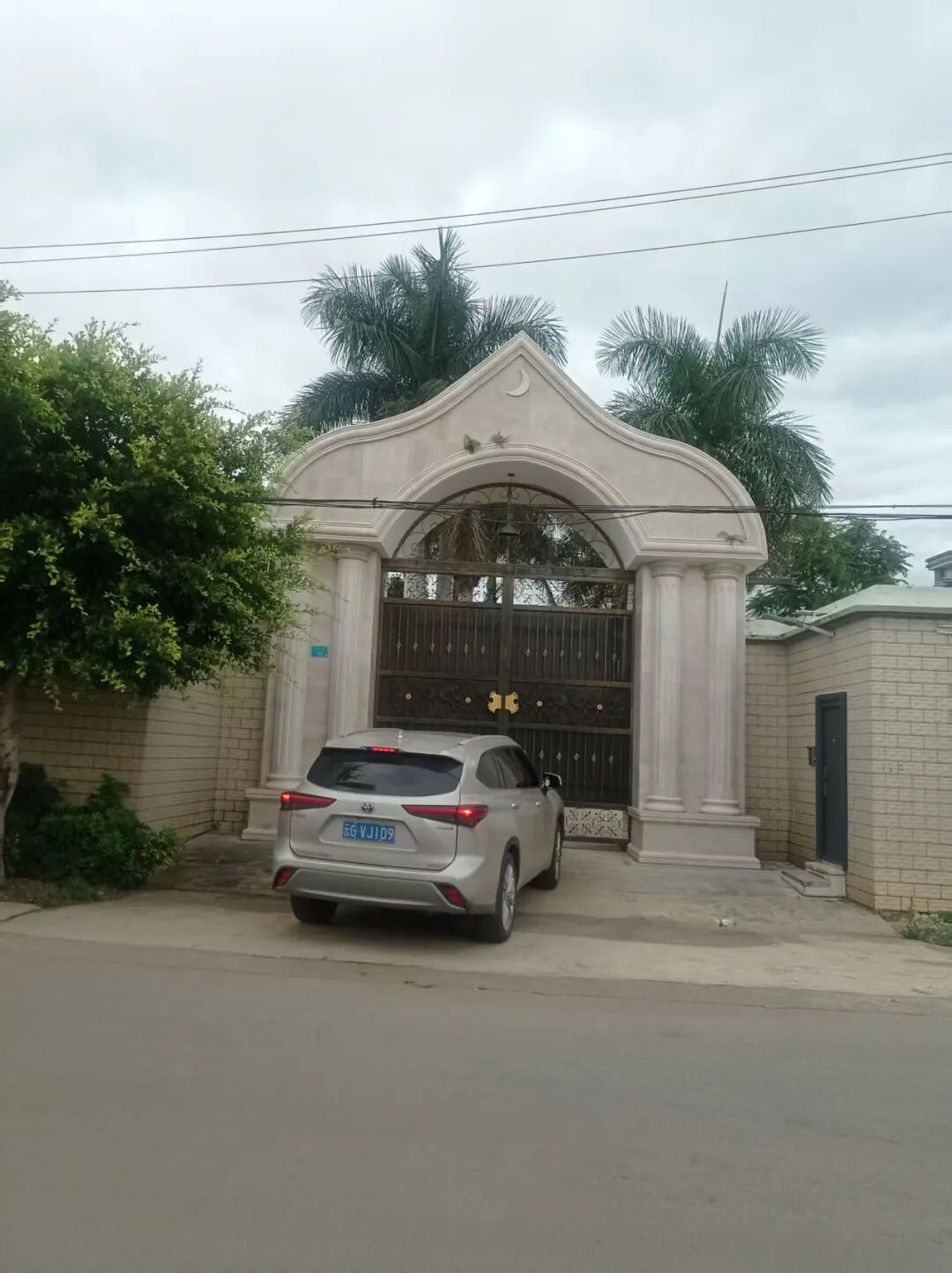
Venture deep into Gejiu's Jijie Town and the Shadian Grand Mosque in Yunnan's Red River Prefecture, where the author experiences a reality of Hui Muslims that shatters online stereotypes. From the warm hospitality at halal eateries and an unlatched-door level of safety to devout prayers and a bakery offering free near-expiration bread inspired by Quranic zakat teachings, this journey reveals the everyday peace, kindness, and compassion of the faith.
The Gejiu railway station isn't actually in downtown—it's in Jijie Town. Many people only stop here to visit Shadian and check out the Shadian Grand Mosque (Shadian Mosque). As Brother Chen put it, this massive Southeast Asian mosque pulls in travelers from all over.
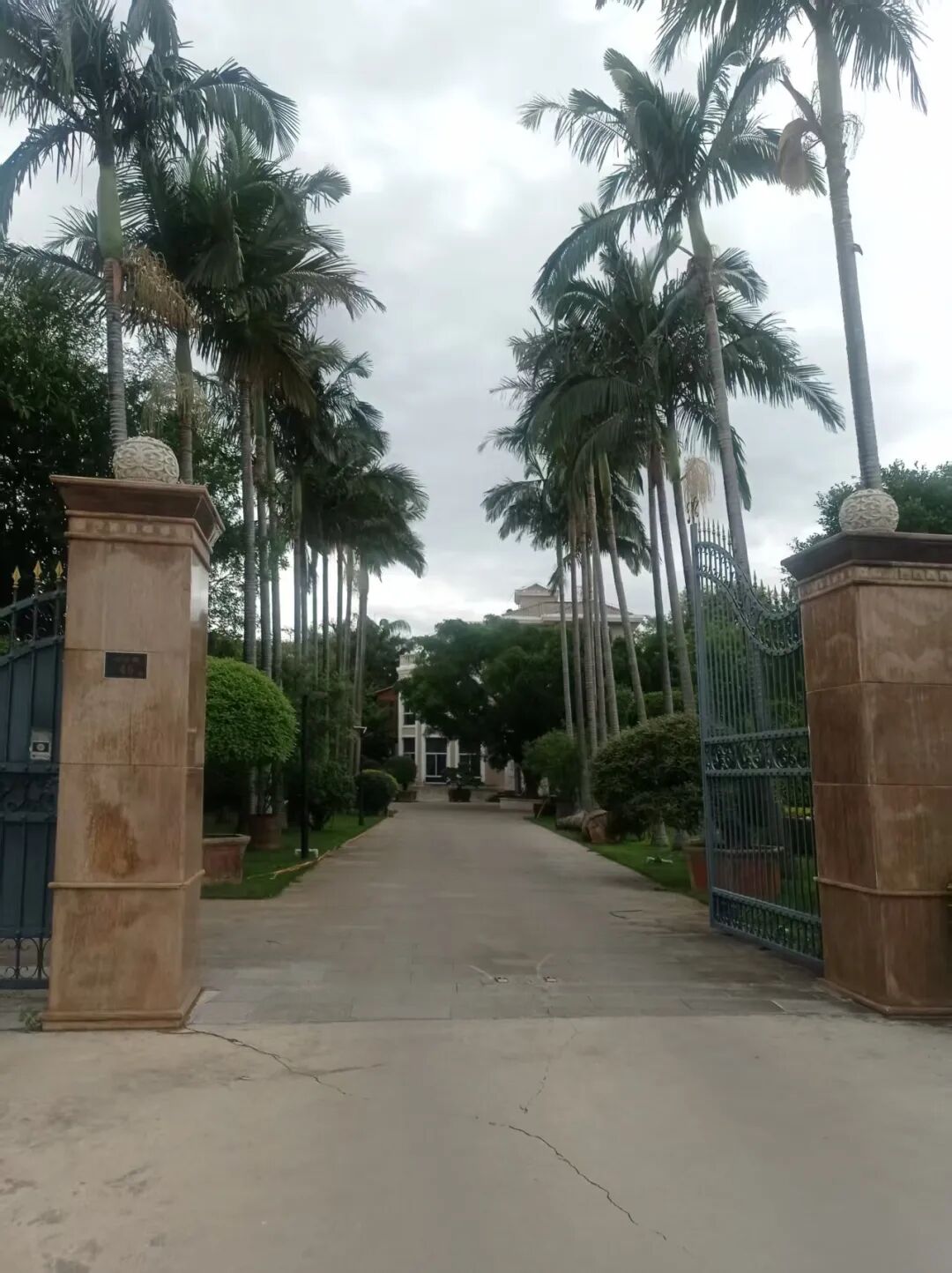
Walking from the train station to Shadian, you'll pass gated compounds with deep yards and massive villas. Some rock an American-suburb vibe, making you feel like you've landed in the US, while others go full Thai with double rows of palm trees. It's totally mind-blowing. Word is, people here made a fortune running tin mining businesses and came back to build these mega-villas.
Once you reach Shadian Grand Mosque, the town feels super quiet. On one hand, it's got a slightly sleepy vibe with a lot of shops shuttered; on the other, it's peaceful, completely devoid of noisy entertainment spots.
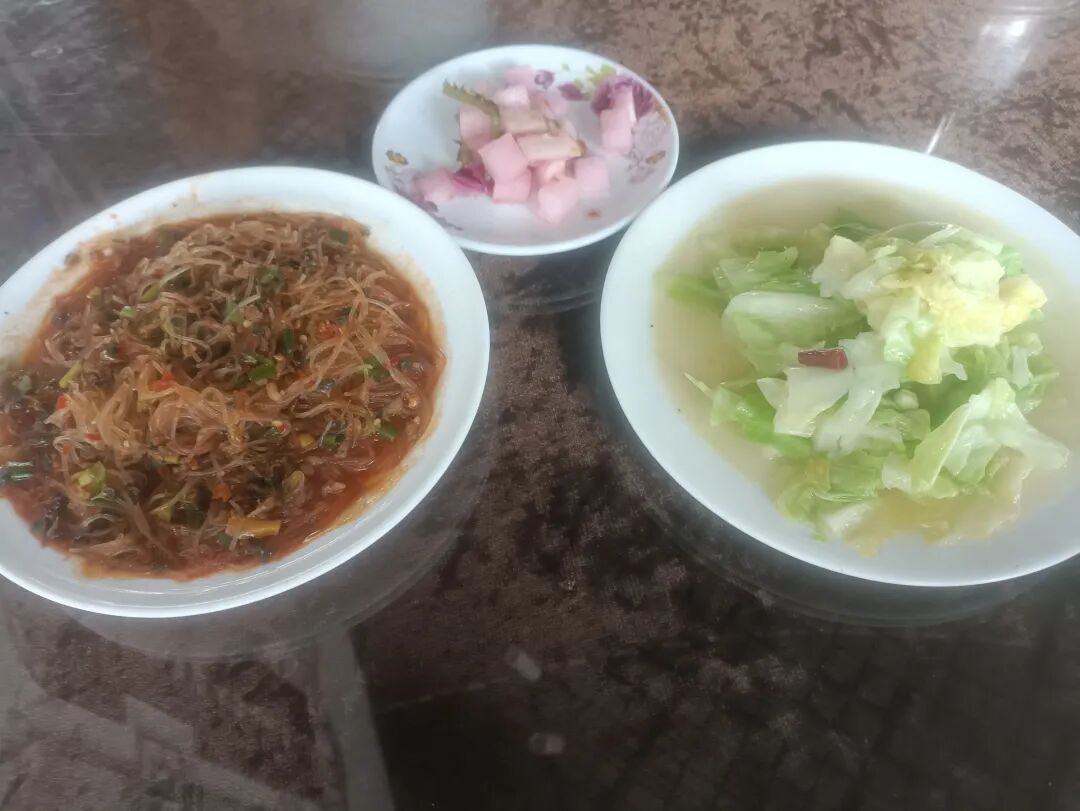
Since it wasn't prayer time yet, we grabbed some grub at a halal restaurant staffed entirely by women in headscarves. The owner was a young woman, and after we explained what we were up to, she had the kitchen whip up two dishes for us: ants climbing a tree (glass noodles with minced pork in spicy sauce), stir-fried cabbage, and a gorgeously plated dish of pickled radishes. When we finished up and said goodbye, she asked with genuine concern how we got here and where we were crashing. When we told her we were hitchhiking and sleeping in tents, she said it was way too rough and suggested we could crash at a spot right next to the grand mosque. She added that Shadian is so safe that locals never even pull the keys out of their e-bikes. As we were leaving, the owner—who was hanging out nearby with a kid—handed us a bag of Zhadian milk. We were deeply moved and thanked them over and over.
After wandering off, we headed back to the grand mosque just as call to prayer time was kicking off. The loudspeaker broadcasted the recitation—staticky and cutting in and out—while waves of guys wearing white caps, black caps, and full beards streamed toward the mosque. They hit the steps, stripped off their shoes with their backs to the main hall, and headed inside. The security guards told us the prayer had already started, so we had to watch from the outside. Twenty minutes later, folks started trickling out after finishing their prayers, though a few stragglers were still prostrated inside, and others sat chatting by the doorway pillars. It was pure peace and tranquility.
The screens inside the main hall were broadcasting Quranic verses. It reminded me of a social work class I audited back at Fudan called 'Social Welfare Systems and Theories,' where the professor talked about the Islamic view of welfare. According to the Quran, a Muslim's wealth doesn't actually belong to them—it belongs to Allah. That's why zakat (obligatory charity) is a must: it's a routine of giving where, once your wealth hits a certain threshold, you fork over 2.5% of your income to help the poor and fund charitable causes as a form of spiritual devotion.
"It is not righteousness that you turn your faces towards the east and the west, but righteous is the one who believes in Allah, the Last Day, the angels, the Book, and the prophets, and gives of his wealth, in spite of love for it, to the kinsfolk, to the orphans, to the poor, who is stranded, to the beggars, and to the freeing of captives, and who establishes prayer and gives zakat, and those who fulfill their covenant when they make it, and who are patient in poverty, hardship, and times of danger. Such are the ones who are true, and such are the ones who are God-fearing." (Quran 2:177)
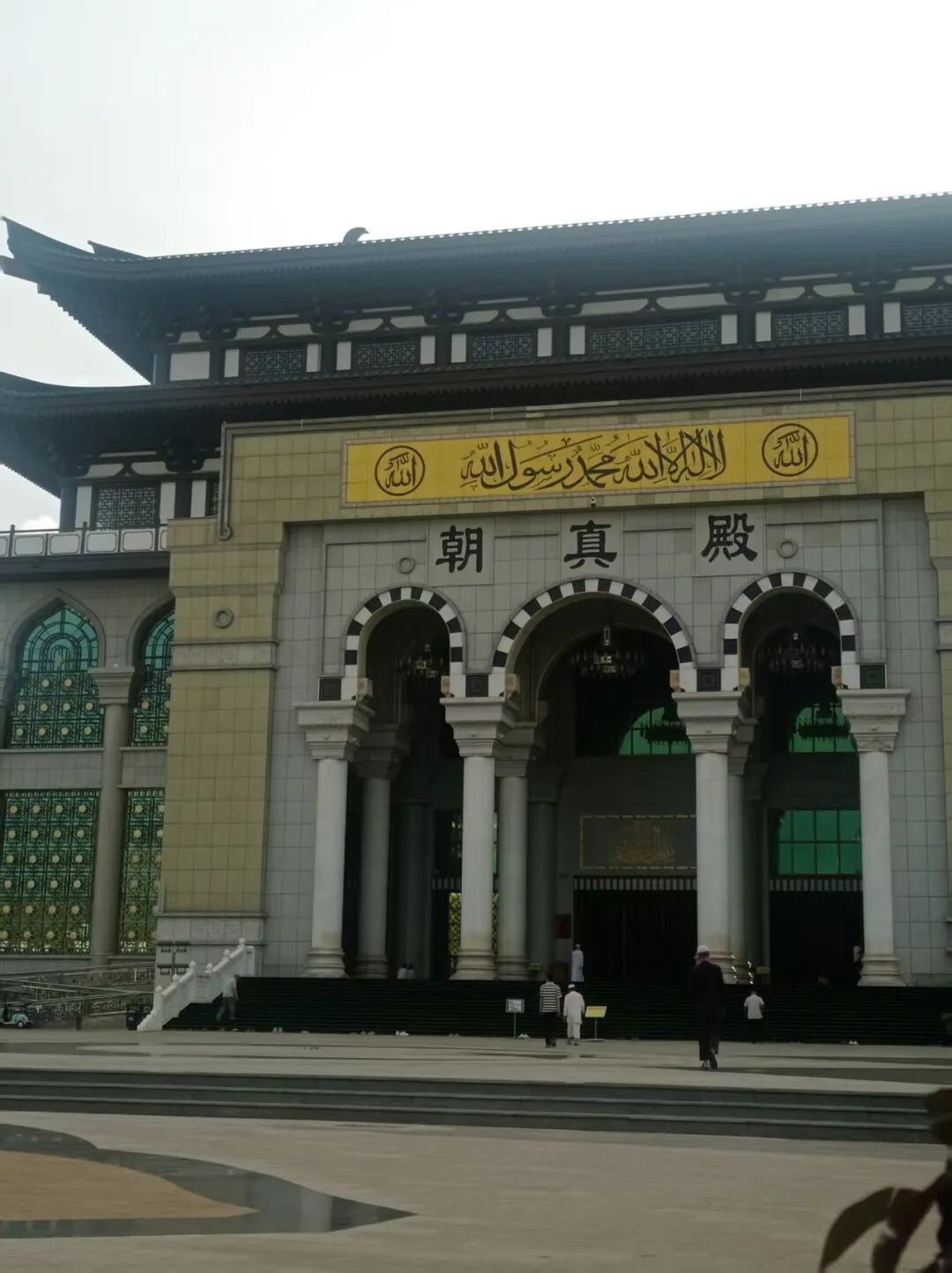
"They ask you what they should spend. Say, 'Whatever wealth you spend is for parents, relatives, orphans, the poor, and travelers.'" (Quran 2:215)
Yunnan is packed with Hui Muslims. Later, while strolling around Mengzi, I stumbled upon a halal bakery with a sign right on the counter blaring: 'Near-expiration products, take for free!' It was my first time ever seeing a business do that—most bakeries just toss out expired bread. I asked a clerk, and they said the owner is a Hui Muslim. Since the owner wasn't around, I couldn't confirm whether this move was driven by business strategy or religious faith, but I'm guessing faith played a huge part. Otherwise, it's pretty hard to explain why other shops don't copy them.
"And give the relative his due, and the poor, and the traveler, and do not squander your wealth wastefully. Indeed, the wasteful are brothers of the devils, and ever has Satan been ungrateful to his Lord."
— Quran 17:26-27
"And He it is who produces gardens... Eat of their fruit when they yield it, and pay their due on the day of harvest, and do not be excessive. Indeed, He does not like those who commit excess."
— Quran 6:141
Before this, browsing the internet, you'd think everyone harbors total disgust and hatred toward Islam. I never expected Hui Muslims, who practice Islam, to be so warm, friendly, and grounded.
Yesterday, my Couchsurfing host in Chuxiong, Huangfeng, shared a real-life story with me. During the most turbulent period in Xinjiang, he traveled to Southern Xinjiang just to see if the locals were really as extreme as the internet claimed. Turns out, once he got there, the local Uygur Muslims were super welcoming to visiting Han Chinese. Any hostility was strictly directed at the authorities, primarily as a protest against local policies. Amid economic development, the locals lost a ton of resources without getting much in return, breeding a sense of unfairness. Toss in completely different linguistic and cultural traditions, and you've got the roots of separatist sentiments. Over the next year, he went back to Xinjiang three more times, getting touched by the warmth and hospitality of the locals every single trip and walking away with incredible memories.
I guess in this supposedly hyper-connected information age, real truths still manage to stay hidden. Hitting the road and walking them out yourself matters more than ever.
Exploring Jianshui's Historic Mosque: Yunnan's Hidden Islamic Heritage & Halal Food Guide
Articles • Hasan09 posted the article • 0 comments • 13 views • 23 hours ago
Where Southern Yunnan's Historic Charm Meets Islamic Faith: Exploring the Ancient Mosque of Jianshui Ancient City, Honghe, Yunnan
Abstract:
Originally built during the Yanyou era of the Yuan Dynasty and surviving centuries of wind and rain through the Ming and Qing dynasties, the Ancient Mosque of Jianshui Ancient City is a municipal-level cultural heritage site in the Honghe Hani and Yi Autonomous Prefecture. This article takes you inside this serene, free-admission historic sanctuary to explore the rustic architectural artistry and cultural heritage of the local Hui Muslim community, where traditional Chinese hip-and-gable wooden architecture blends seamlessly with Islamic traditions.
Photography by Weng Sanlang
Location: Ancient Mosque of Jianshui Ancient City, Honghe Prefecture, Yunnan Province
The Ancient Mosque is a Honghe Prefecture (municipal-level) cultural heritage site. Originally built between 1312 and 1313 during the Yuan Dynasty, the structures standing today were rebuilt during the Guangxu reign in the late Qing Dynasty.
Admission is free, and you won't find crowds of out-of-town tourists here. Just a quick heads-up: Jianshui Ancient City actually has two mosques—one called the Ancient Mosque (Qingzhen Gusi) and another simply called the Mosque (Qingzhensi). Make sure you're heading to the Ancient Mosque, which is the actual historical landmark, whereas the newly built mosque is not a heritage site.
Time speaks of crisp, translucent days within the span of a single page. Passing years dream a fleeting illusion inside the ancient mosque.
As the summer breeze brushes your face, there are always grand floral blooms that fall right between your eyebrows. Flowers drift down the stone steps; a light drizzle knocks the blossoms to the ground. Unspooling the past, May unfolds in a tapestry of red and green. Boil a pot of tea, and you've brewed the heart of midsummer.
Time puts pen to paper, turning the page on the glorious early summer days, sealing away the past, and writing a wonderful chapter for May. Within a delicate poem, we pen our destiny's ending, opening up the beauty of summer in the promise of a long future ahead.
Moonlight falling on the left hand holds secrets kept tightly guarded; the season resting on the right hand captures lotus leaves swaying in the early summer wind. Toward the past, there is three parts sorrow and seven parts nostalgia. I walk all my yesterdays into a wisp of kitchen smoke in my eyes.
I once sat and watched the wind and clouds rise, the clear spring flowing over the stones. The moon opens half a window of flowers, the breeze scatters a touch of cool. Through the crack in the door of the past sits a cup of quiet, fragrant tea, writing our history stroke by stroke. Summer gallops in, and the early summer that has already arrived is brimming with poetic charm.
Without walking through the past, one cannot know the toll of the years. Quietly guarding this earthly hustle and bustle, may the days ahead always be filled with poetry, tea, and dreams. view all
Where Southern Yunnan's Historic Charm Meets Islamic Faith: Exploring the Ancient Mosque of Jianshui Ancient City, Honghe, Yunnan
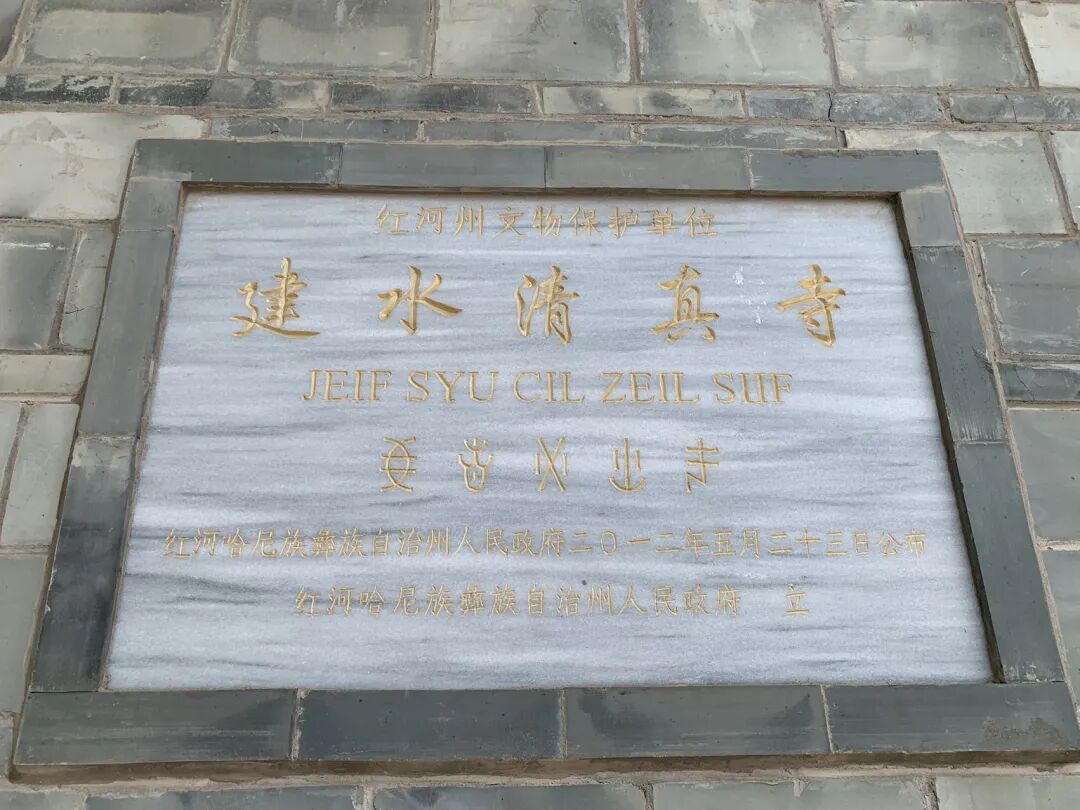
Abstract:
Originally built during the Yanyou era of the Yuan Dynasty and surviving centuries of wind and rain through the Ming and Qing dynasties, the Ancient Mosque of Jianshui Ancient City is a municipal-level cultural heritage site in the Honghe Hani and Yi Autonomous Prefecture. This article takes you inside this serene, free-admission historic sanctuary to explore the rustic architectural artistry and cultural heritage of the local Hui Muslim community, where traditional Chinese hip-and-gable wooden architecture blends seamlessly with Islamic traditions.
Photography by Weng Sanlang
Location: Ancient Mosque of Jianshui Ancient City, Honghe Prefecture, Yunnan Province
The Ancient Mosque is a Honghe Prefecture (municipal-level) cultural heritage site. Originally built between 1312 and 1313 during the Yuan Dynasty, the structures standing today were rebuilt during the Guangxu reign in the late Qing Dynasty.
Admission is free, and you won't find crowds of out-of-town tourists here. Just a quick heads-up: Jianshui Ancient City actually has two mosques—one called the Ancient Mosque (Qingzhen Gusi) and another simply called the Mosque (Qingzhensi). Make sure you're heading to the Ancient Mosque, which is the actual historical landmark, whereas the newly built mosque is not a heritage site.
Time speaks of crisp, translucent days within the span of a single page. Passing years dream a fleeting illusion inside the ancient mosque.
As the summer breeze brushes your face, there are always grand floral blooms that fall right between your eyebrows. Flowers drift down the stone steps; a light drizzle knocks the blossoms to the ground. Unspooling the past, May unfolds in a tapestry of red and green. Boil a pot of tea, and you've brewed the heart of midsummer.
Time puts pen to paper, turning the page on the glorious early summer days, sealing away the past, and writing a wonderful chapter for May. Within a delicate poem, we pen our destiny's ending, opening up the beauty of summer in the promise of a long future ahead.
Moonlight falling on the left hand holds secrets kept tightly guarded; the season resting on the right hand captures lotus leaves swaying in the early summer wind. Toward the past, there is three parts sorrow and seven parts nostalgia. I walk all my yesterdays into a wisp of kitchen smoke in my eyes.
I once sat and watched the wind and clouds rise, the clear spring flowing over the stones. The moon opens half a window of flowers, the breeze scatters a touch of cool. Through the crack in the door of the past sits a cup of quiet, fragrant tea, writing our history stroke by stroke. Summer gallops in, and the early summer that has already arrived is brimming with poetic charm.
Without walking through the past, one cannot know the toll of the years. Quietly guarding this earthly hustle and bustle, may the days ahead always be filled with poetry, tea, and dreams.
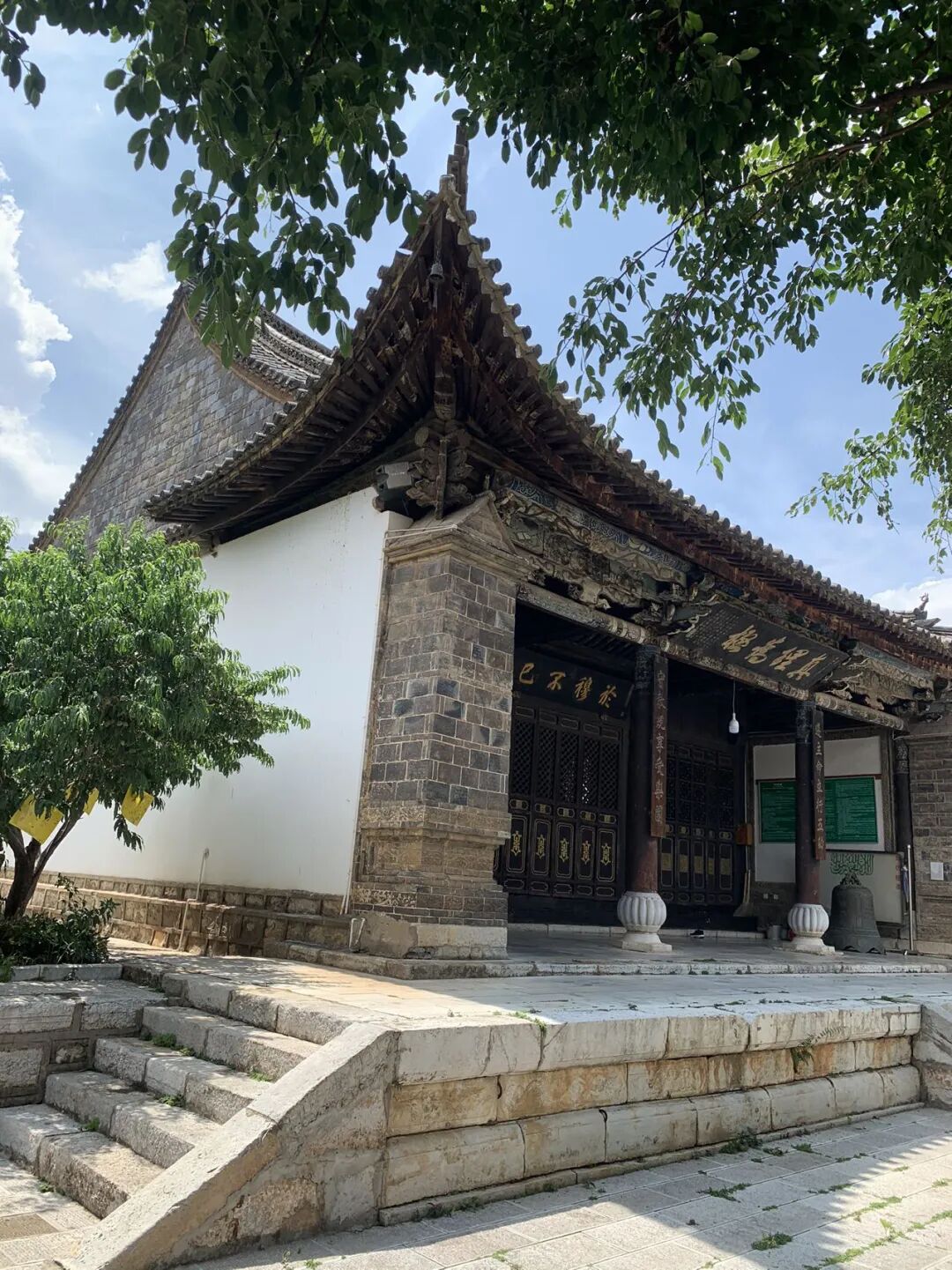
Exploring Guanyi Village, Yunnan: A Vibrant Hui Muslim Village & Halal Food Haven
Articles • Hasan09 posted the article • 0 comments • 12 views • 23 hours ago
Exploring Guanyi Village in Jianshui, Yunnan: A Happy Hui Muslim Village Packed with Southern Yunnan Halal Flavors and Rustic Vibes
Abstract:
Located in Jianshui County, Honghe Prefecture, Yunnan, Guanyi Village is a well-known Hui Muslim community. It brings together the most authentic traditional Hui culinary delights of southern Yunnan—niu ganba (cured and dried beef), liang mixian (cold rice noodles), roast meat, signature youxiang (fried dough snacks), and homestyle halal stir-fries. This article takes a field trip to Guanyi Village to capture the daily lives of our down-to-earth Hui neighbors and their mouthwatering rural halal flavors.
Today's article comes from a submission by our friend Guanyi from Qujiang Town, Jianshui County, Honghe Prefecture, Yunnan, who details the Ramadan food street in their hometown.
Even though Ramadan is coming to an end, the halal food is here to stay~
Yunnan — Jianshui — Guanyi Village
"A military and civilian post station in ancient times, a moderately prosperous home today" is the best way to describe the history and current status of Guanyi Village. Guanyi Village has a long history; according to records, it was established during the Tang Dynasty, flourished in the Yuan and Ming dynasties, and boasts a history of over 1,500 years.
More than a thousand years of historical accumulation have left behind countless historical stories and traces waiting for future generations to uncover and verify. The Bell and Drum Tower built during the Ming Dynasty echoes the big bell on Yunlong Mountain in Lihaozhai, serving to transmit military intelligence in ancient times. The moat and three earthen dam ponds formed by digging earth to build city walls during the Yuan Dynasty still play an important role in production today. Traces of the dragon kiln built in the Ming Dynasty for the exclusive use of the imperial court can still be found. The Xingmeng Tower, built during the Ming Dynasty, still stands proudly at the old Guanyi Mosque, serving as a testament to the village's long history. During the Chongzhen reign of the Ming Dynasty, Guanyi's population reached nearly 30,000. Today, Guanyi retains its former glory, with Hui, Han, Yi, and other ethnic groups living in harmony and jointly building ethnic unity.
The people of Guanyi are hardworking, which is clearly evident from the wide variety of food on the food street. The delicacies on the Ramadan food street—rich in variety, fresh in ingredients, unique in flavor, and highlighting Guanyi's characteristics—have already become a shining business card for Guanyi Village, attracting people of all ethnic groups from the village and nearby towns to come and taste them.
The 2019 Ramadan arrived in May, and the Ramadan food street in Guanyi Village arrived right on schedule. The food street is a unique memory for the people of Guanyi during Ramadan. Here, there is not only food, but also the warmth and affection between villagers. This street formed during the Muslim month of Ramadan to provide people with the convenience of buying ingredients. This street flourished under the people's demand for high-quality, hygienic, and delicious food.
The food street runs from May 7 to June 4, daily between 3:00 PM and 6:00 PM. Why not take a spontaneous food trip and experience this ordinary village's annual culinary feast?
The video was filmed and produced by college student volunteers from Guanyi Village.
Who knows how many generations of Guanyi residents this old tree in the village has accompanied? The elderly villagers always love to chat and laugh under the big tree to the sound of birdsong after dinner in the evening. As gusts of breeze blow by, the leaves rustle, sounding so much like the hearty laughter of the elders. Walking further down the street, trailing behind the big banyan tree, are a few smaller banyan trees. The Guanyi Village Ramadan food street takes place right along this row of trees.
During Ramadan, the big tree is accompanied by plenty of food, friends from all over, and the breeze of May.
Guanyi Village Food
Some say hometown is for nostalgia, youth is for memories, and the taste of home is engraved in your bones. No matter how long or how far you leave your hometown, a bowl of hometown food will definitely be the best cure for your homesickness.
Making food is like conducting yourself: you must use genuine ingredients, weed out the impurities, and cook with care to create a delicacy. Looking out across the Guanyi Village Ramadan food street, every single dish that catches the eye is carefully crafted by the villagers. Halal food must feature genuine ingredients. Most of the delicacies on the Guanyi Village food street carry distinct Guanyi characteristics.
Signature Delicacies
01
Fenzheng Lianou (Steamed Lotus Root with Rice Flour)
This must be a flavor the people of Guanyi will never forget! In the past, perhaps you could only eat steamed lotus root with rice flour at the mosque during the annual Mawlid (Prophet's Birthday), but now at the Ramadan food street, there are always hardworking people willing to serve everyone by making it, and people rush to buy it.
Steamed lotus root with rice flour is a specialty food of Guanyi Village. I've eaten it in other places, but it never has that joyful taste again. When hometown folks away from home are asked about "the taste of home," they probably all answer in unison: steamed lotus root with rice flour!
02
Qujiang Roast Duck
Qujiang Roast Duck is famous far and wide for its unique flavor, and it is said to have a history of over 100 years. Unlike other places across the country, Qujiang Roast Duck is roasted in earthen ovens. These ovens are narrow at the top and wide at the bottom, circular in shape, and built entirely with adobe bricks used for rural housing construction. An opening is made at the top and bottom of the earthen oven. When roasting, pine needles are first used to burn the oven until it is glowing red, and then the ducks are hung inside to roast.
Qujiang Roast Duck features a ruddily rosy color, a crispy skin with tender meat inside, and richness without being greasy. When eating, it is paired with a dipping sauce made of fine salt, MSG, chicken bouillon, chili powder, Sichuan peppercorn powder, white pepper powder, sesame seeds, bean paste, chopped scallions, cilantro, and the oil drippings from roasting the duck. The flavor is rich, long-lasting, numbing, spicy, and savory, making it a wonderful dish to go with rice.
Qujiang Roast Duck is not only wildly popular locally, but also loved by out-of-town visitors coming to Qujiang. Many tourists visiting Qujiang take away one or two roast ducks as gifts to bring back to friends and family.
Ma Feng's family from Guanyi Village has been running a restaurant in Qujiang (Qujiang Halal Xinyayuan Restaurant) for many years, and their roast duck has become a calling card for Qujiang Halal roast duck. The roast duck they bring to the village food street is deeply loved by their hometown folks.
[Qujiang Halal Xinyayuan Restaurant: 15094135539]
03
Guanyi Halal Pastries
When people talk about Guanyi Village, you just have to know that delicious halal pastries have practically become its calling card. Lindong's buckwheat cakes, Maliu's signature shagao (traditional sweet rice cakes), Maisuer's sachima (sweet fried dough pastry) and specialty red bean paste pastries—these are all the absolute must-haves when it comes to Guanyi halal treats.
Guanyi Village boasts a thriving halal pastry scene with several bakeries, each bringing its own unique style and strengths to the table, winning over tons of loyal customers. Huge shoutout to all the hardworking bakers who hustle every day to bring us these incredible, distinct flavors.
Lindong Halal Pastries
Lindong Halal Pastry Factory has been leading the charge in Guanyi Village for years. Founded way back in 1983, it's been around for over 36 years. Lindong's wide range of pastries features gorgeous packaging, and their buckwheat cakes, in particular, are basically the quintessential Guanyi specialty, shipped all over and loved by folks from every background.
Guanyi Maisuer Halal Pastries
Formerly known as Guanyi Shaohong Pastries, the shop has officially rebranded as Guanyi Maisuer Halal Pastries. As one of the village's newer bakeries, they bring a ton of variety and unique flavors to the table, with standout hits like sachima, specialty red bean paste pastries, hand-torn bread, fruit pizzas, and crepe cakes.
Guanyi Maliu Halal Pastries
Guanyi Maliu Halal Pastries has won over the hearts and taste buds of the locals with its signature shagao. Every batch is crafted with serious care, resulting in deeply satisfying, delicious treats.
04
Malaosan Traditional Beef Ganba
Malaosan Traditional Beef Ganba (cured spiced beef jerky) in Guanyi Village has been around for years. Sticking to their roots, they source and slaughter strong yellow cattle themselves and cure the ganba in-house. Their beef ganba and fresh beef have earned total trust from customers. You can find their stalls at the Ramadan food street and during Guanyi's regular local market days, where they sell fresh beef and beef ganba year-round. Phone number: 15925307899
Final Thoughts
All kinds of culinary creations might look simple on the surface, but they're actually packed with food science and culinary wisdom. Only when you truly grasp the control of heat, the nature of the ingredients, the principles of seasoning, and the hard work behind every dish can you truly appreciate the maker's heartfelt attention to the little details.
No matter what fancy gourmet feasts or top-shelf drinks you're having, if you don't finish with a solid carb, your stomach just won't feel settled. No matter how successful, carefree, or powerful you are, if you can't calmly settle into a peaceful old age, your life story isn't quite complete.
Our love for food usually comes straight from the heart. No matter where or when, long after a feast has spoiled our taste buds, we still find ourselves daydreaming about those amazing flavors, because that's just how food magic works. May your love for food be just like your love for life—full of flavor and excitement. And may our love for our hometown be as earnest, passionate, and deeply felt as the way we live our lives.
We dedicate this article to expressing our deep love for our hometown! view all
Exploring Guanyi Village in Jianshui, Yunnan: A Happy Hui Muslim Village Packed with Southern Yunnan Halal Flavors and Rustic Vibes
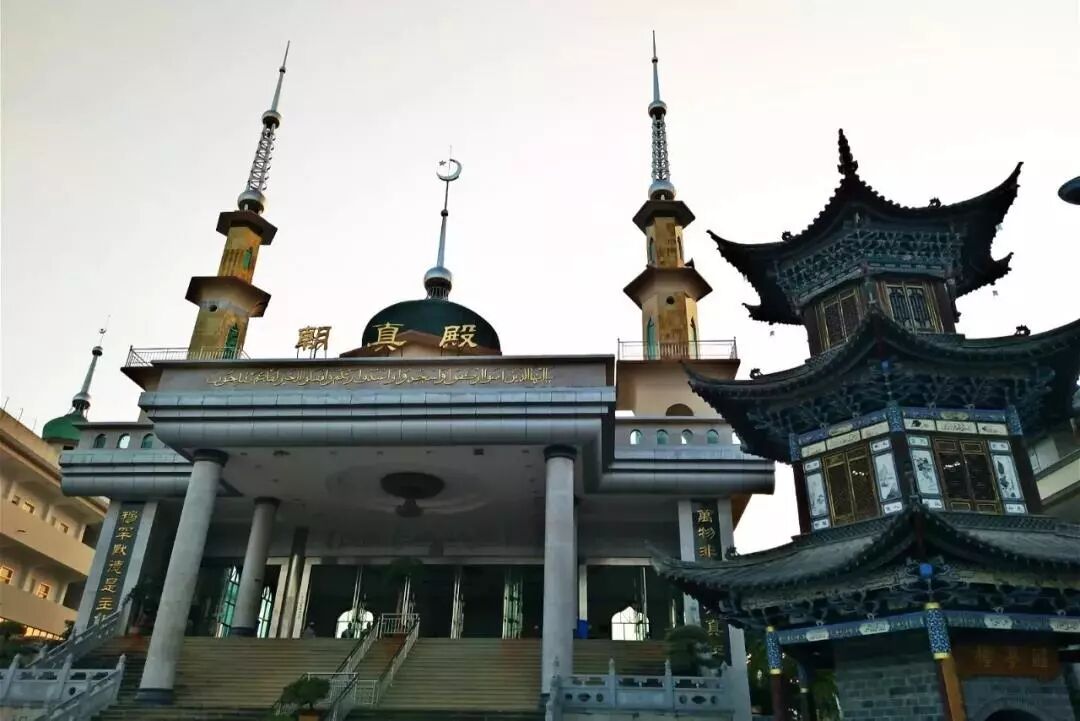
Abstract:

Located in Jianshui County, Honghe Prefecture, Yunnan, Guanyi Village is a well-known Hui Muslim community. It brings together the most authentic traditional Hui culinary delights of southern Yunnan—niu ganba (cured and dried beef), liang mixian (cold rice noodles), roast meat, signature youxiang (fried dough snacks), and homestyle halal stir-fries. This article takes a field trip to Guanyi Village to capture the daily lives of our down-to-earth Hui neighbors and their mouthwatering rural halal flavors.
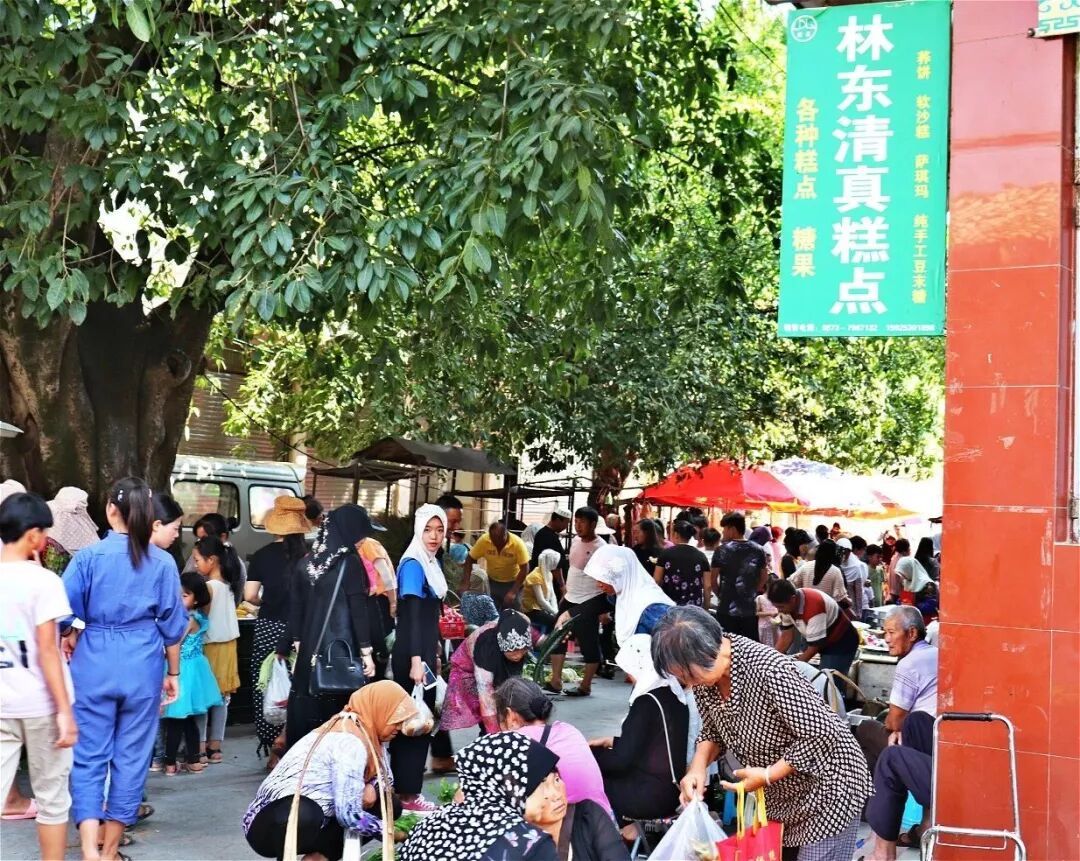
Today's article comes from a submission by our friend Guanyi from Qujiang Town, Jianshui County, Honghe Prefecture, Yunnan, who details the Ramadan food street in their hometown.
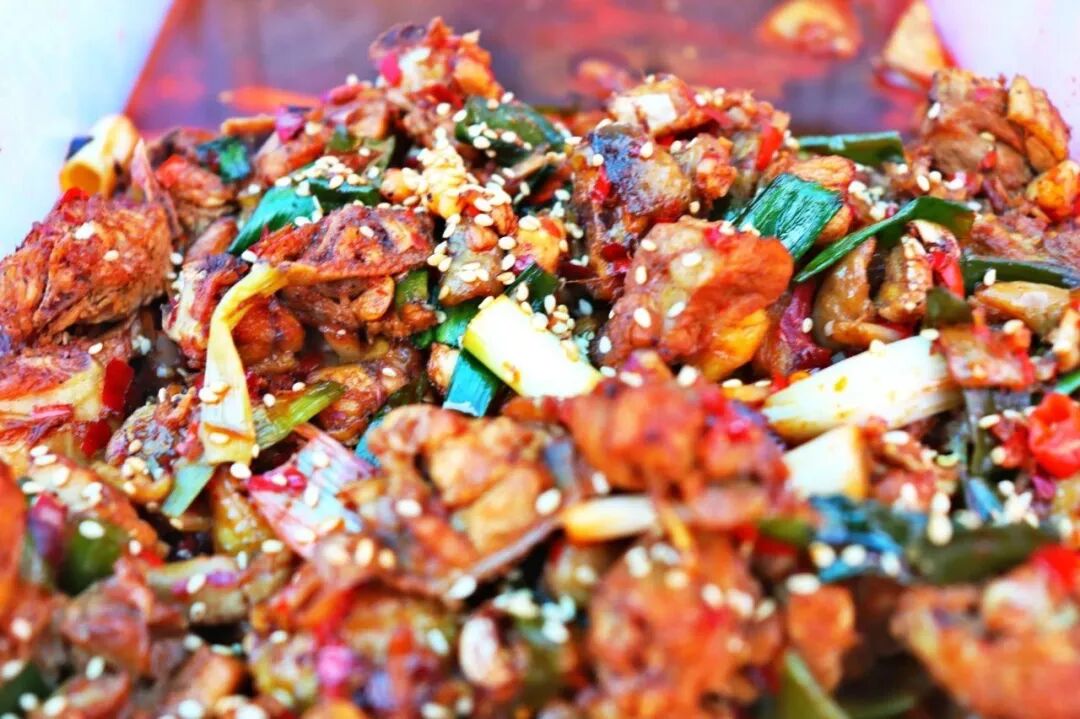
Even though Ramadan is coming to an end, the halal food is here to stay~
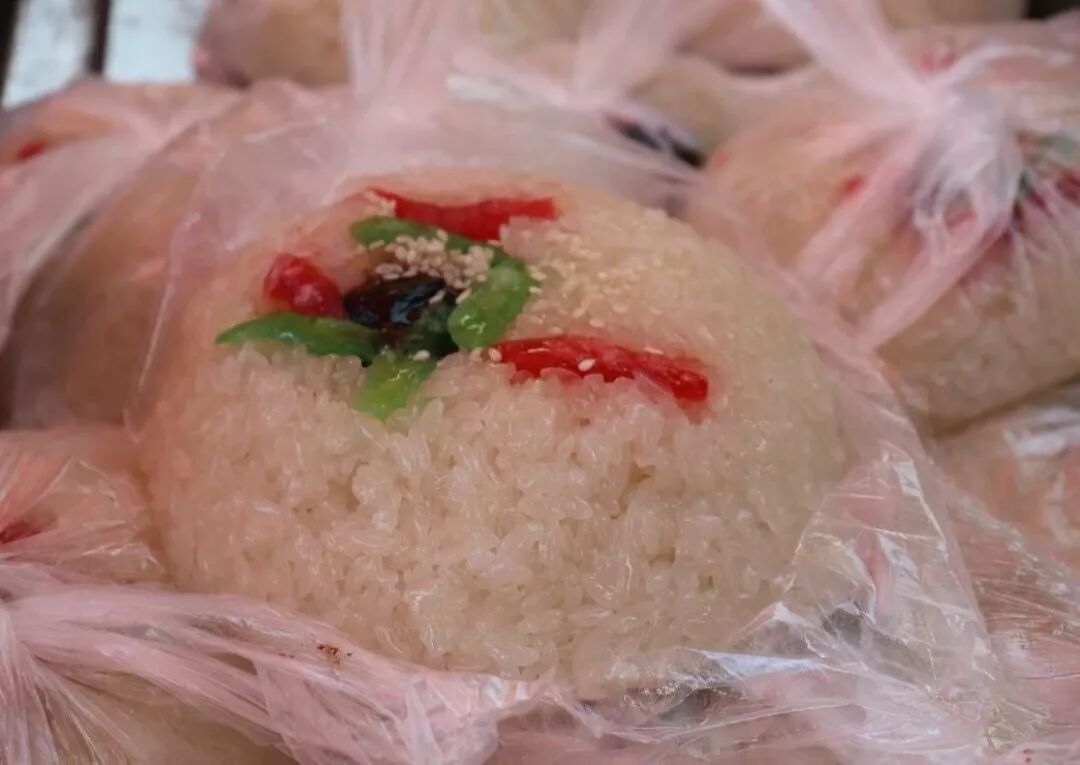
Yunnan — Jianshui — Guanyi Village
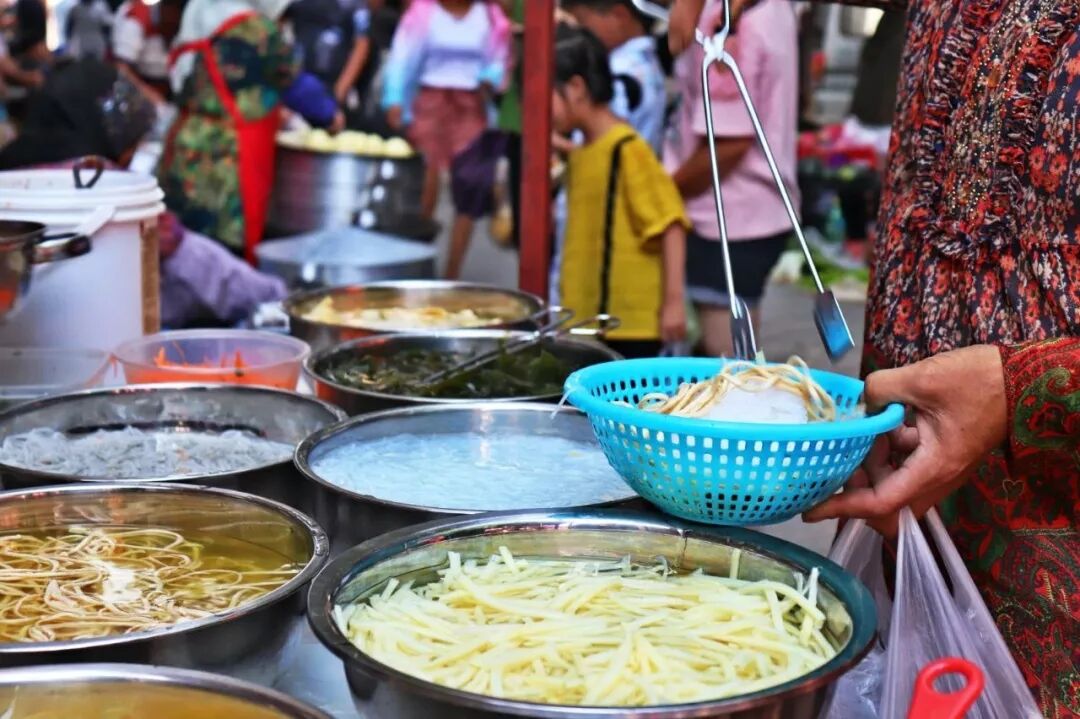
"A military and civilian post station in ancient times, a moderately prosperous home today" is the best way to describe the history and current status of Guanyi Village. Guanyi Village has a long history; according to records, it was established during the Tang Dynasty, flourished in the Yuan and Ming dynasties, and boasts a history of over 1,500 years.
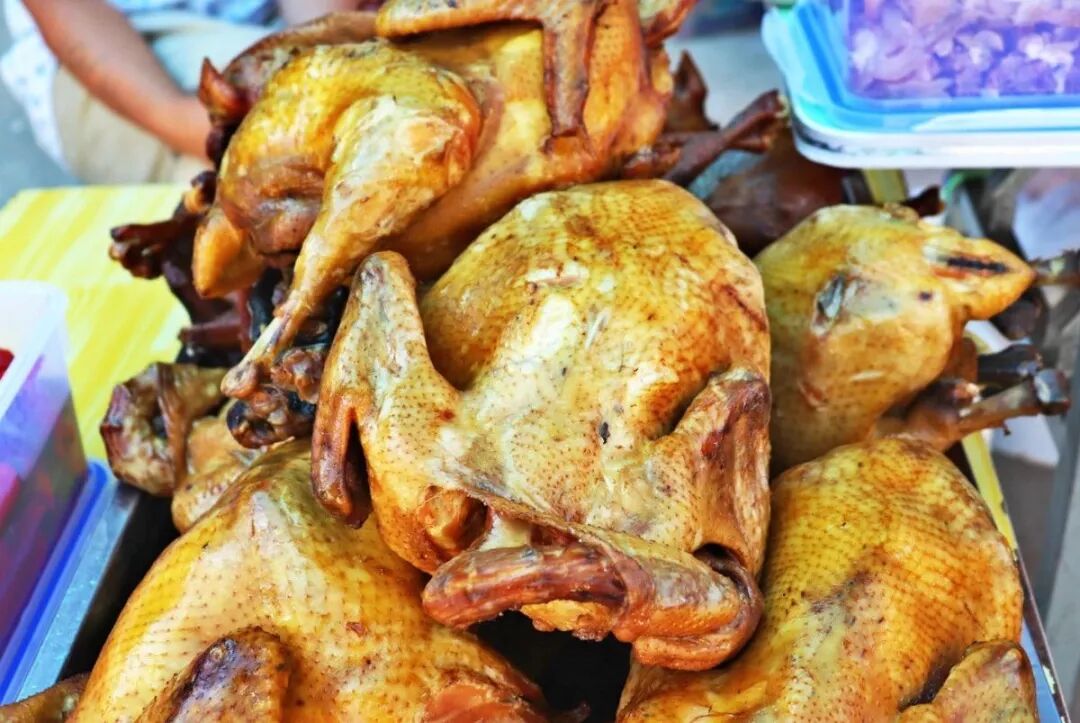
More than a thousand years of historical accumulation have left behind countless historical stories and traces waiting for future generations to uncover and verify. The Bell and Drum Tower built during the Ming Dynasty echoes the big bell on Yunlong Mountain in Lihaozhai, serving to transmit military intelligence in ancient times. The moat and three earthen dam ponds formed by digging earth to build city walls during the Yuan Dynasty still play an important role in production today. Traces of the dragon kiln built in the Ming Dynasty for the exclusive use of the imperial court can still be found. The Xingmeng Tower, built during the Ming Dynasty, still stands proudly at the old Guanyi Mosque, serving as a testament to the village's long history. During the Chongzhen reign of the Ming Dynasty, Guanyi's population reached nearly 30,000. Today, Guanyi retains its former glory, with Hui, Han, Yi, and other ethnic groups living in harmony and jointly building ethnic unity.
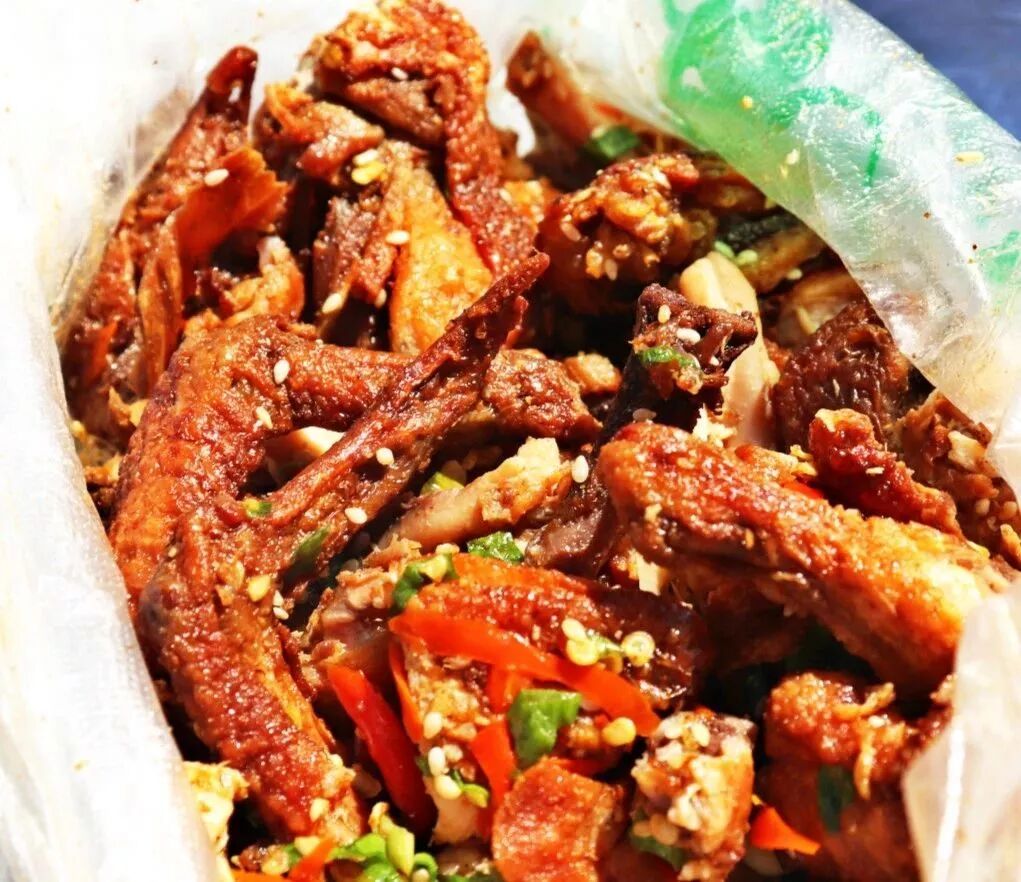
The people of Guanyi are hardworking, which is clearly evident from the wide variety of food on the food street. The delicacies on the Ramadan food street—rich in variety, fresh in ingredients, unique in flavor, and highlighting Guanyi's characteristics—have already become a shining business card for Guanyi Village, attracting people of all ethnic groups from the village and nearby towns to come and taste them.
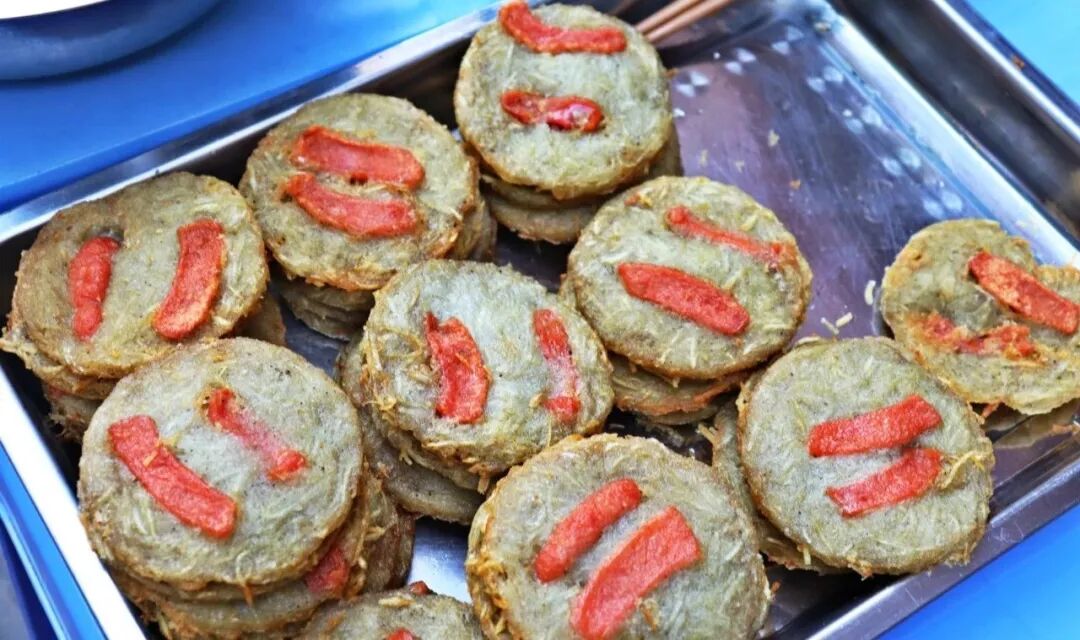
The 2019 Ramadan arrived in May, and the Ramadan food street in Guanyi Village arrived right on schedule. The food street is a unique memory for the people of Guanyi during Ramadan. Here, there is not only food, but also the warmth and affection between villagers. This street formed during the Muslim month of Ramadan to provide people with the convenience of buying ingredients. This street flourished under the people's demand for high-quality, hygienic, and delicious food.
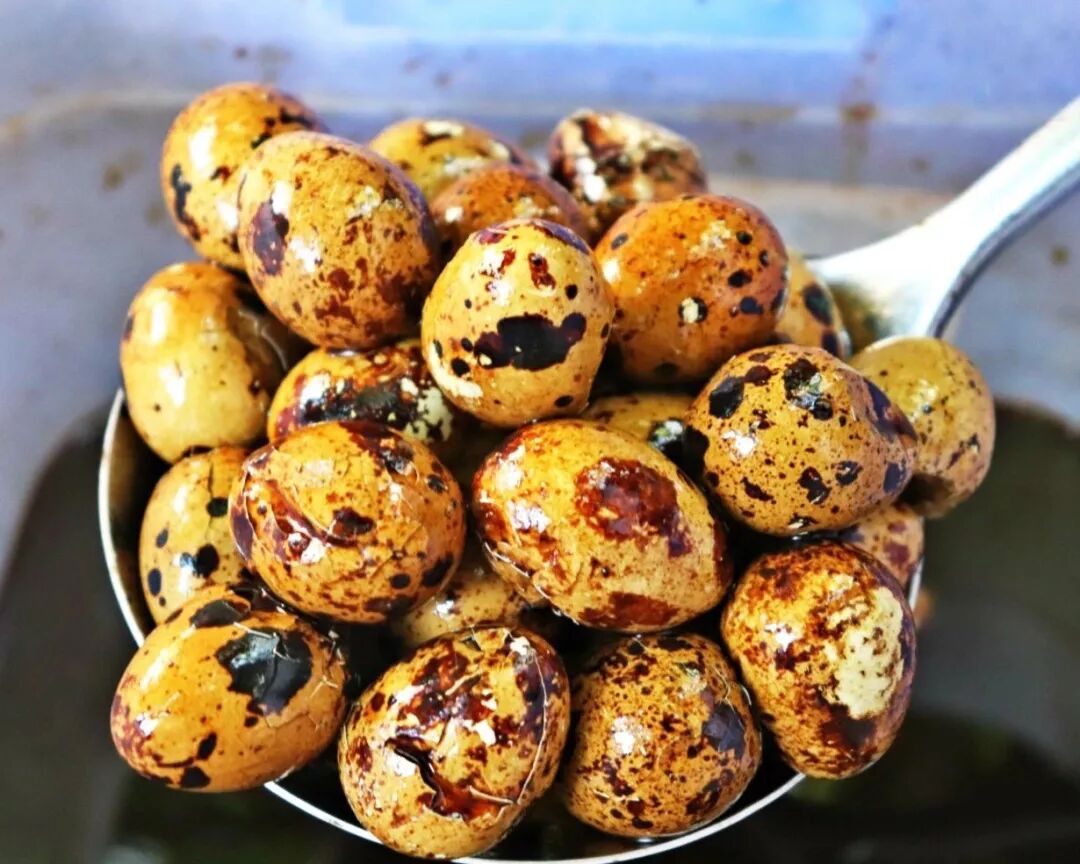
The food street runs from May 7 to June 4, daily between 3:00 PM and 6:00 PM. Why not take a spontaneous food trip and experience this ordinary village's annual culinary feast?
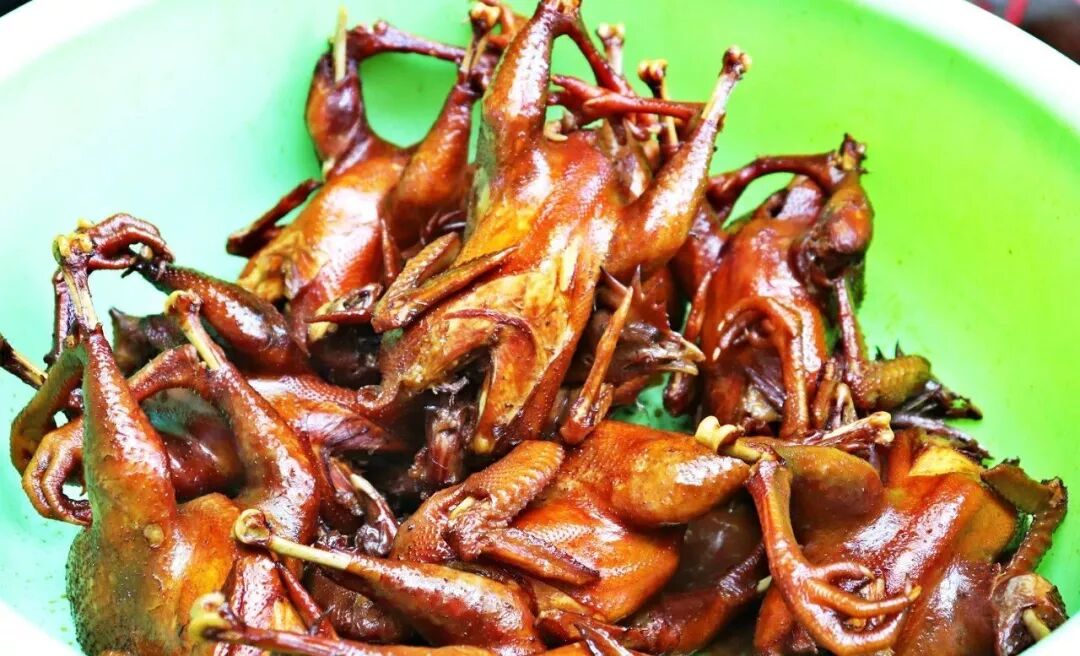
The video was filmed and produced by college student volunteers from Guanyi Village.
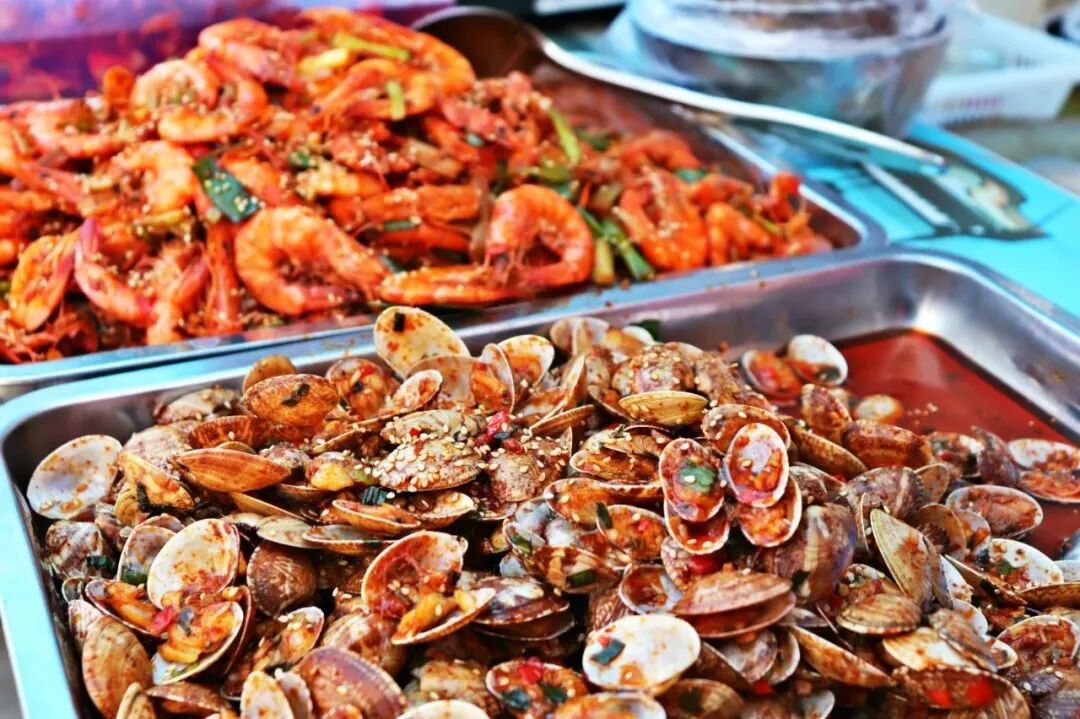
Who knows how many generations of Guanyi residents this old tree in the village has accompanied? The elderly villagers always love to chat and laugh under the big tree to the sound of birdsong after dinner in the evening. As gusts of breeze blow by, the leaves rustle, sounding so much like the hearty laughter of the elders. Walking further down the street, trailing behind the big banyan tree, are a few smaller banyan trees. The Guanyi Village Ramadan food street takes place right along this row of trees.
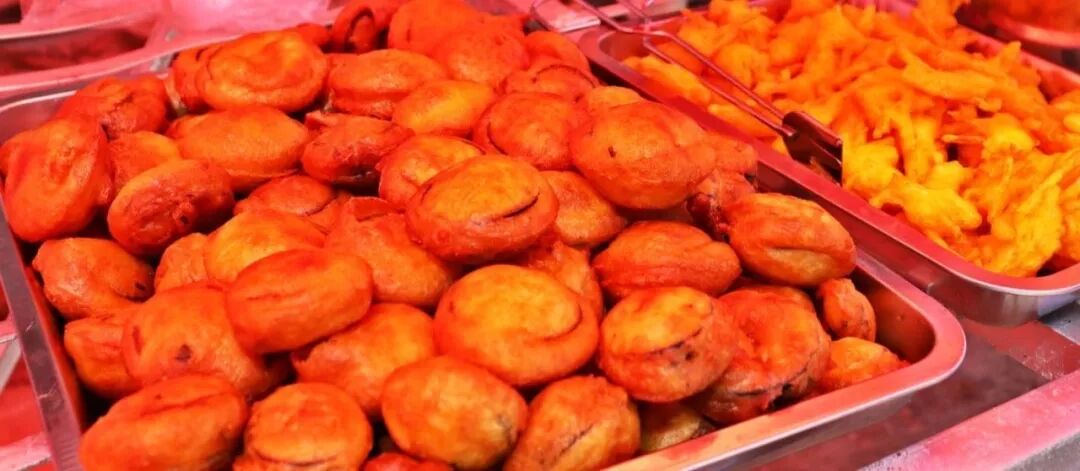
During Ramadan, the big tree is accompanied by plenty of food, friends from all over, and the breeze of May.
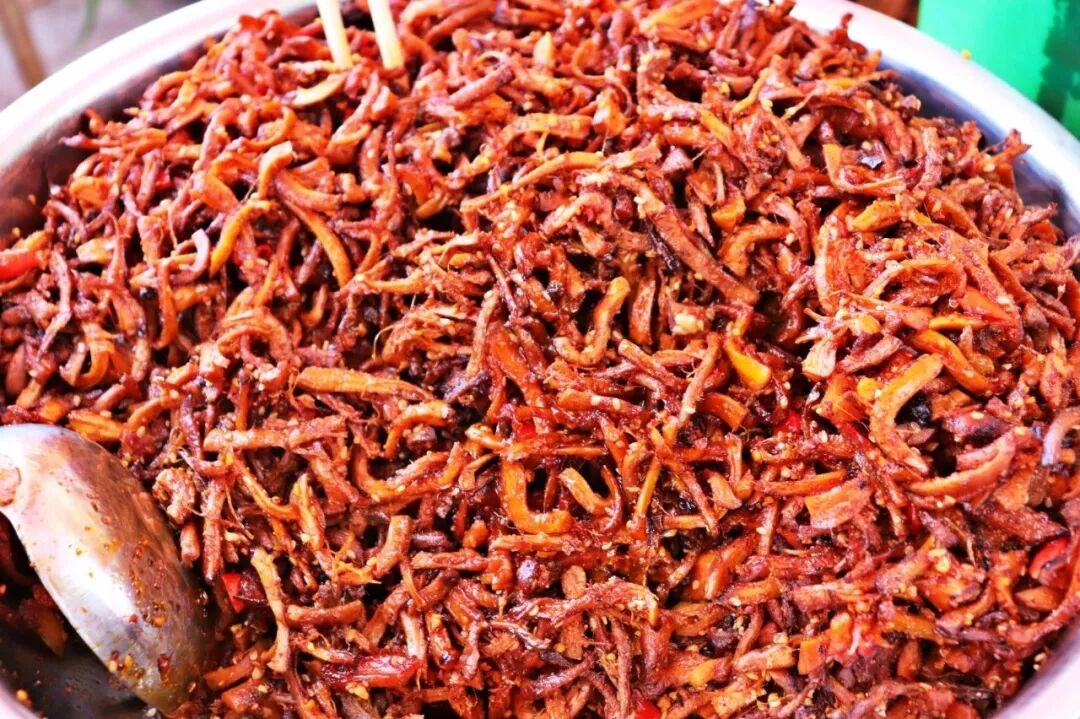
Guanyi Village Food
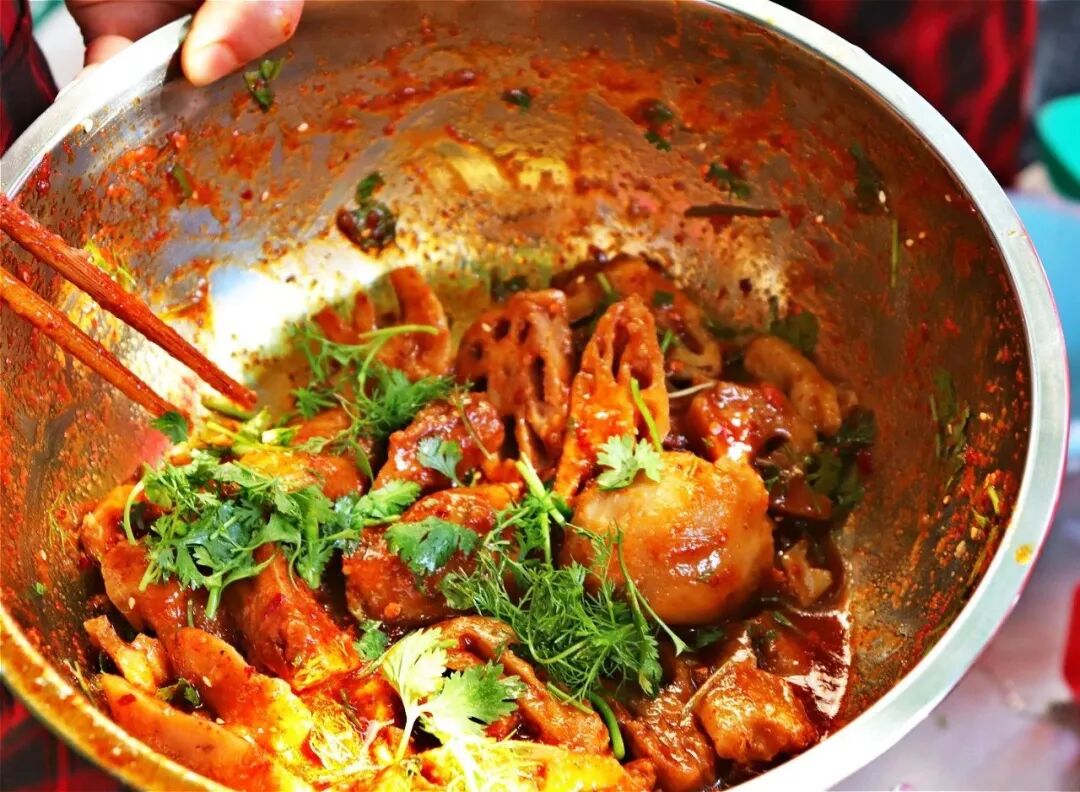
Some say hometown is for nostalgia, youth is for memories, and the taste of home is engraved in your bones. No matter how long or how far you leave your hometown, a bowl of hometown food will definitely be the best cure for your homesickness.
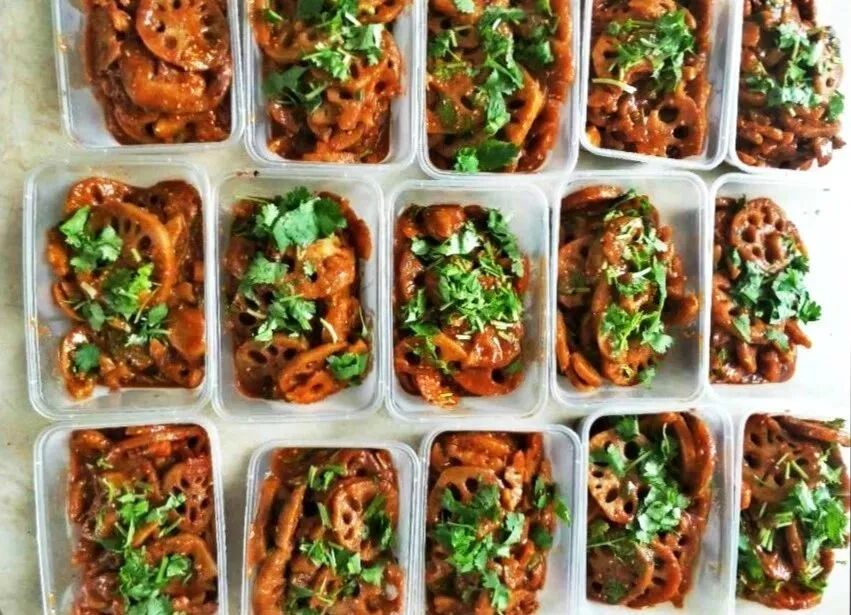
Making food is like conducting yourself: you must use genuine ingredients, weed out the impurities, and cook with care to create a delicacy. Looking out across the Guanyi Village Ramadan food street, every single dish that catches the eye is carefully crafted by the villagers. Halal food must feature genuine ingredients. Most of the delicacies on the Guanyi Village food street carry distinct Guanyi characteristics.
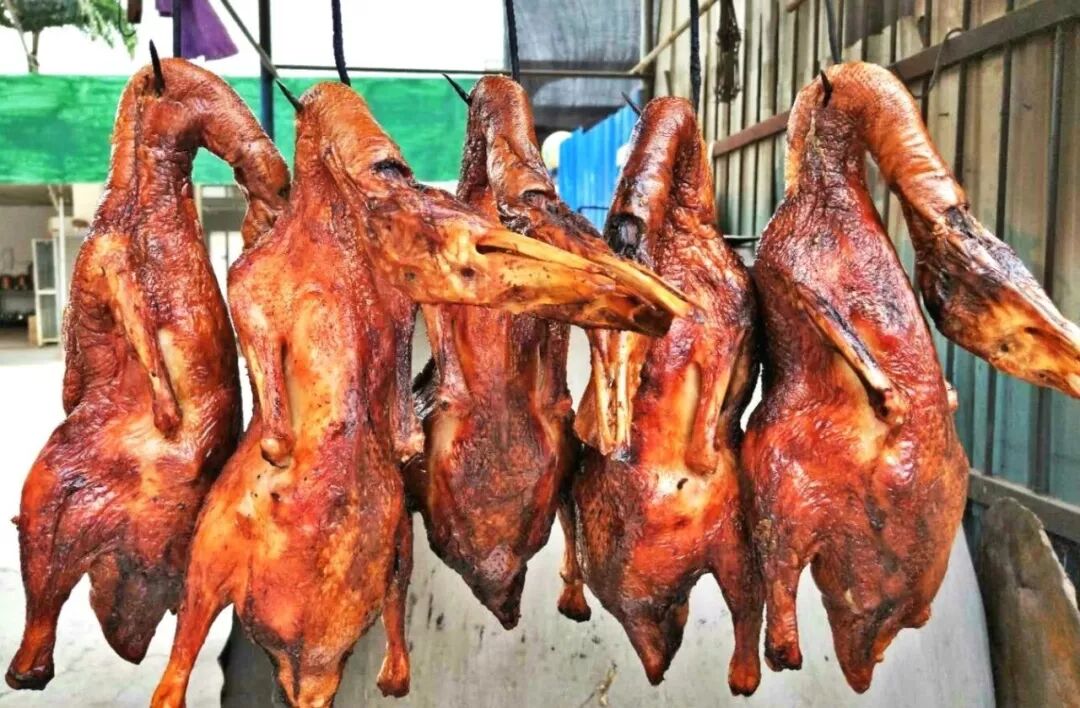
Signature Delicacies
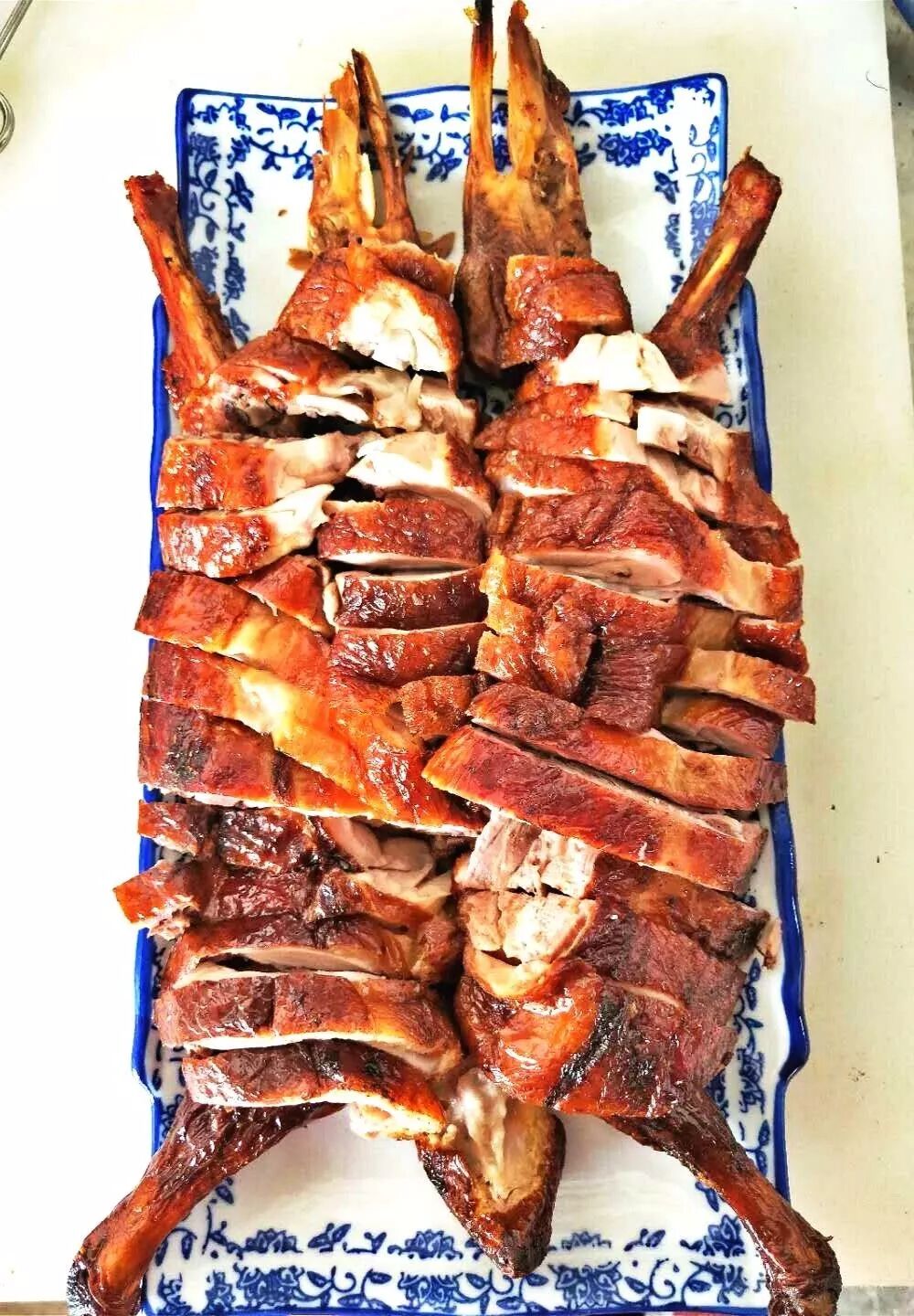
01
Fenzheng Lianou (Steamed Lotus Root with Rice Flour)
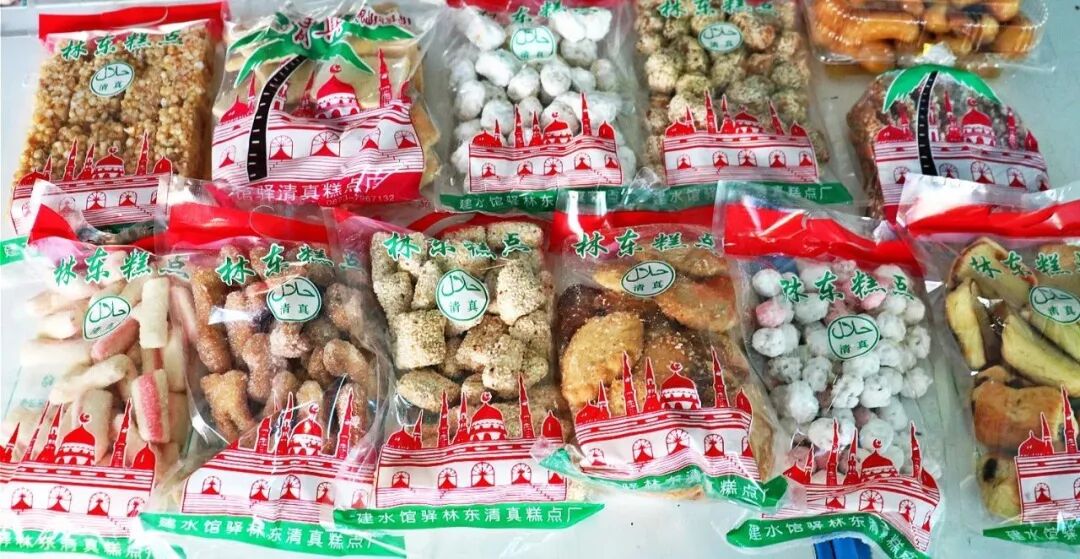
This must be a flavor the people of Guanyi will never forget! In the past, perhaps you could only eat steamed lotus root with rice flour at the mosque during the annual Mawlid (Prophet's Birthday), but now at the Ramadan food street, there are always hardworking people willing to serve everyone by making it, and people rush to buy it.
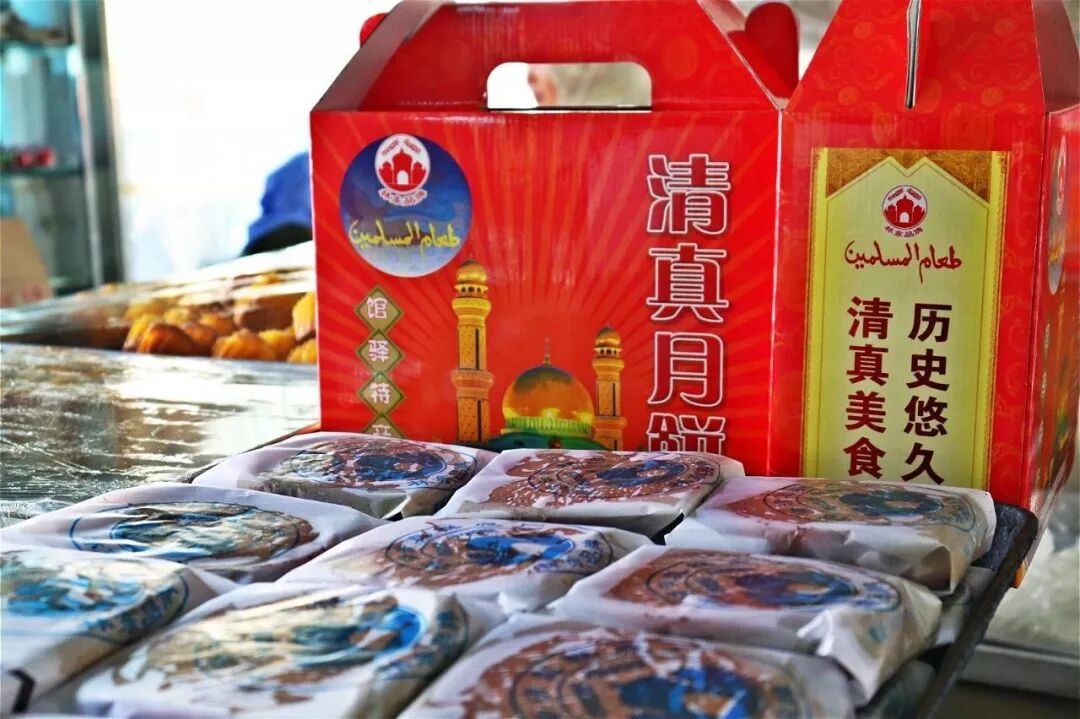
Steamed lotus root with rice flour is a specialty food of Guanyi Village. I've eaten it in other places, but it never has that joyful taste again. When hometown folks away from home are asked about "the taste of home," they probably all answer in unison: steamed lotus root with rice flour!
02
Qujiang Roast Duck
Qujiang Roast Duck is famous far and wide for its unique flavor, and it is said to have a history of over 100 years. Unlike other places across the country, Qujiang Roast Duck is roasted in earthen ovens. These ovens are narrow at the top and wide at the bottom, circular in shape, and built entirely with adobe bricks used for rural housing construction. An opening is made at the top and bottom of the earthen oven. When roasting, pine needles are first used to burn the oven until it is glowing red, and then the ducks are hung inside to roast.
Qujiang Roast Duck features a ruddily rosy color, a crispy skin with tender meat inside, and richness without being greasy. When eating, it is paired with a dipping sauce made of fine salt, MSG, chicken bouillon, chili powder, Sichuan peppercorn powder, white pepper powder, sesame seeds, bean paste, chopped scallions, cilantro, and the oil drippings from roasting the duck. The flavor is rich, long-lasting, numbing, spicy, and savory, making it a wonderful dish to go with rice.
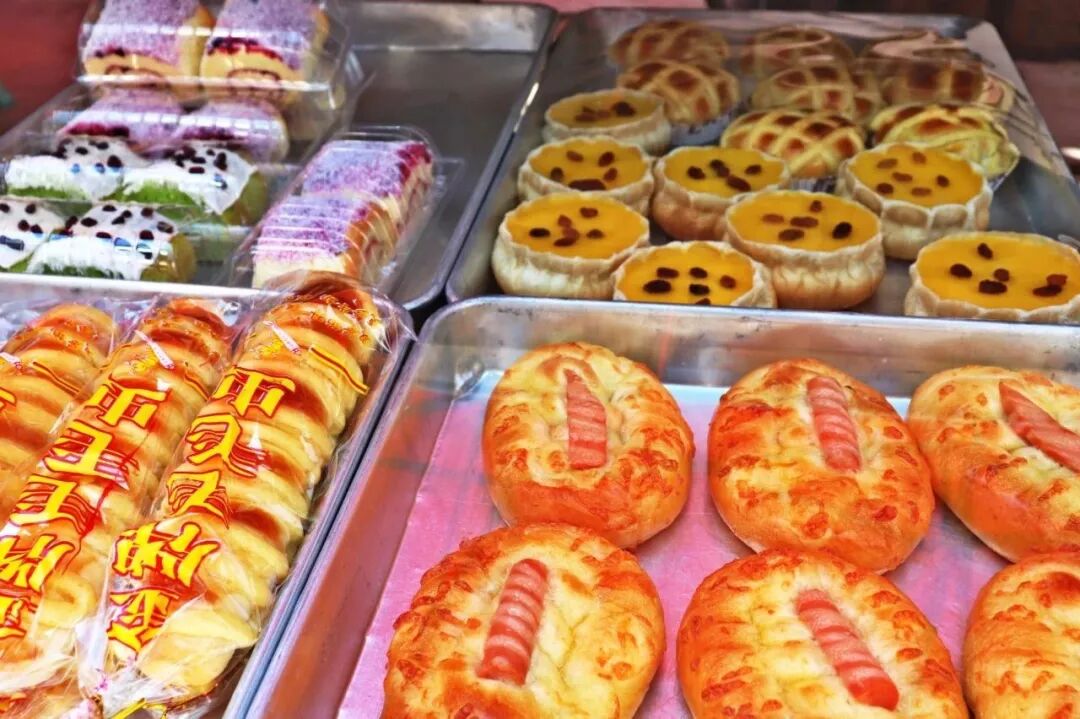
Qujiang Roast Duck is not only wildly popular locally, but also loved by out-of-town visitors coming to Qujiang. Many tourists visiting Qujiang take away one or two roast ducks as gifts to bring back to friends and family.
Ma Feng's family from Guanyi Village has been running a restaurant in Qujiang (Qujiang Halal Xinyayuan Restaurant) for many years, and their roast duck has become a calling card for Qujiang Halal roast duck. The roast duck they bring to the village food street is deeply loved by their hometown folks.
[Qujiang Halal Xinyayuan Restaurant: 15094135539]
03
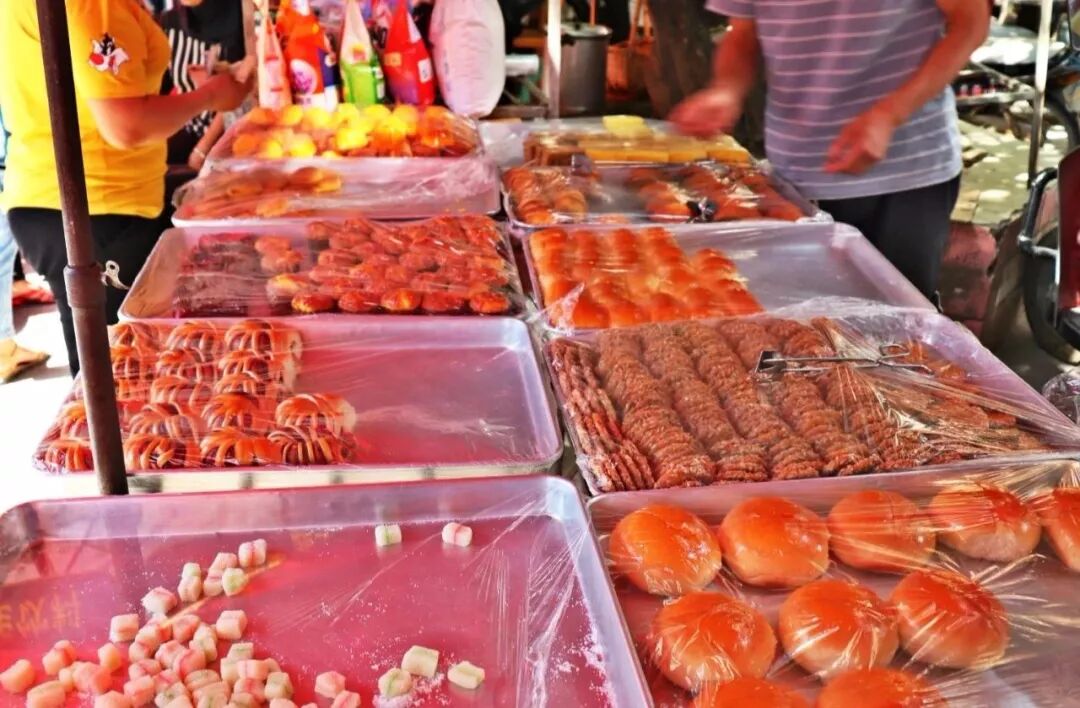
Guanyi Halal Pastries
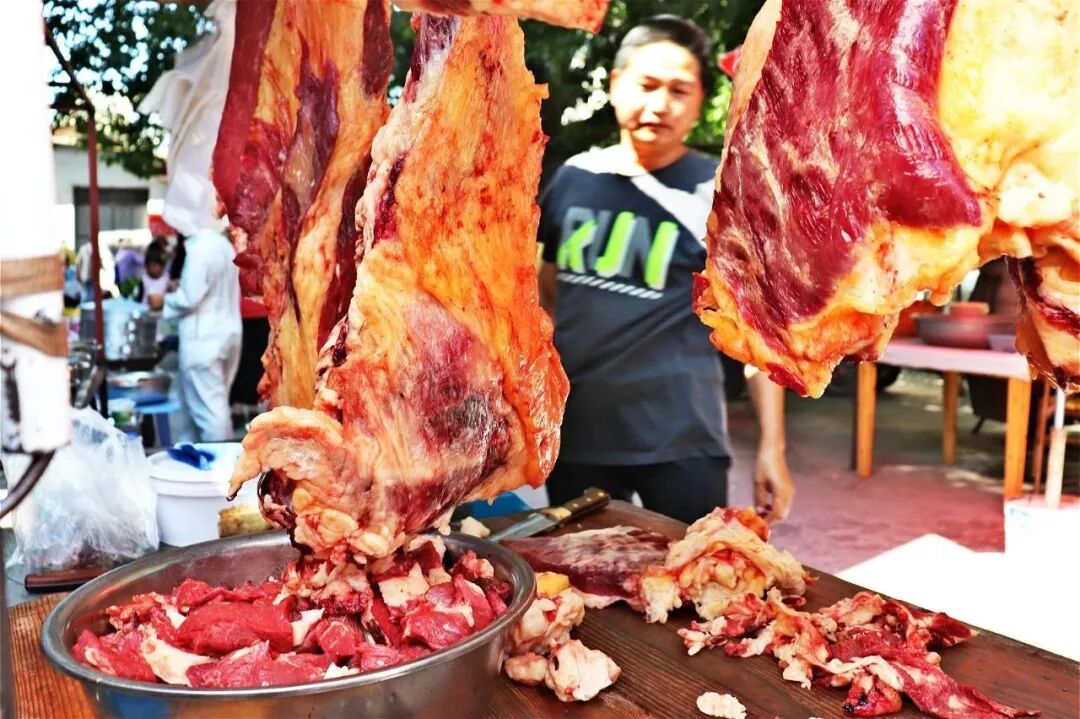
When people talk about Guanyi Village, you just have to know that delicious halal pastries have practically become its calling card. Lindong's buckwheat cakes, Maliu's signature shagao (traditional sweet rice cakes), Maisuer's sachima (sweet fried dough pastry) and specialty red bean paste pastries—these are all the absolute must-haves when it comes to Guanyi halal treats.
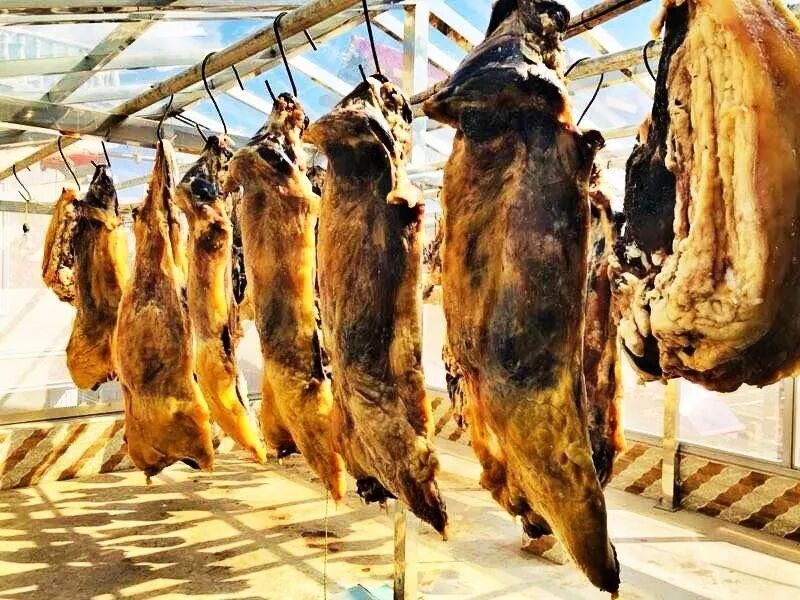
Guanyi Village boasts a thriving halal pastry scene with several bakeries, each bringing its own unique style and strengths to the table, winning over tons of loyal customers. Huge shoutout to all the hardworking bakers who hustle every day to bring us these incredible, distinct flavors.
Lindong Halal Pastries
Lindong Halal Pastry Factory has been leading the charge in Guanyi Village for years. Founded way back in 1983, it's been around for over 36 years. Lindong's wide range of pastries features gorgeous packaging, and their buckwheat cakes, in particular, are basically the quintessential Guanyi specialty, shipped all over and loved by folks from every background.
Guanyi Maisuer Halal Pastries

Formerly known as Guanyi Shaohong Pastries, the shop has officially rebranded as Guanyi Maisuer Halal Pastries. As one of the village's newer bakeries, they bring a ton of variety and unique flavors to the table, with standout hits like sachima, specialty red bean paste pastries, hand-torn bread, fruit pizzas, and crepe cakes.
Guanyi Maliu Halal Pastries
Guanyi Maliu Halal Pastries has won over the hearts and taste buds of the locals with its signature shagao. Every batch is crafted with serious care, resulting in deeply satisfying, delicious treats.
04
Malaosan Traditional Beef Ganba
Malaosan Traditional Beef Ganba (cured spiced beef jerky) in Guanyi Village has been around for years. Sticking to their roots, they source and slaughter strong yellow cattle themselves and cure the ganba in-house. Their beef ganba and fresh beef have earned total trust from customers. You can find their stalls at the Ramadan food street and during Guanyi's regular local market days, where they sell fresh beef and beef ganba year-round. Phone number: 15925307899
Final Thoughts
All kinds of culinary creations might look simple on the surface, but they're actually packed with food science and culinary wisdom. Only when you truly grasp the control of heat, the nature of the ingredients, the principles of seasoning, and the hard work behind every dish can you truly appreciate the maker's heartfelt attention to the little details.
No matter what fancy gourmet feasts or top-shelf drinks you're having, if you don't finish with a solid carb, your stomach just won't feel settled. No matter how successful, carefree, or powerful you are, if you can't calmly settle into a peaceful old age, your life story isn't quite complete.
Our love for food usually comes straight from the heart. No matter where or when, long after a feast has spoiled our taste buds, we still find ourselves daydreaming about those amazing flavors, because that's just how food magic works. May your love for food be just like your love for life—full of flavor and excitement. And may our love for our hometown be as earnest, passionate, and deeply felt as the way we live our lives.
We dedicate this article to expressing our deep love for our hometown!
Why Kunming's Legendary Jinji Roasted Chicken Keeps Locals Queuing for Decades
Articles • Hasan09 posted the article • 0 comments • 12 views • 23 hours ago
You Don't Get Kunming's Shuncheng Street Jinji Yet? You're Probably Not Old Enough
Abstract:
Tap the card above to follow me. Jinji Lu Ji (Jinji Braised Chicken) is the ultimate unsolved mystery of Shuncheng Street. Its braised chicken is wild: everyone who's tried it says the taste is just okay, but it easily costs over 100 RMB per person, and the staff can sometimes have a downright arrogant attitude. Yet, people are still clutching their cash, lining up just to hand their money over to Jinji. What's the deal? Beats me. Don't worry about it—just get in line first.
Tap the card above to follow me
Jinji Lu Ji (Jinji Braised Chicken), the unsolved mystery of Shuncheng Street in Kunming.
The Surreal Braised Chicken
Anyone who has tried Jinji will tell you the flavor is just so-so, yet it easily runs over 100 RMB a head, and the servers can occasionally be pretty snotty. So why are people clutching their cash and waiting in line just to hand their money over? Who knows? Don't ask—just get in line.
Even crazier, back during the pandemic, people wore masks and braved actual "life-or-death risks" just to queue up. Local internet lore says Jinji pulls in over 200,000 RMB a day.
Even more dramatic, with the explosion of short-video media, some opportunists spotted the shop's insane popularity and opened a competing stall just a wall away, selling the exact same products while bragging online that they were "better" and "more traceable." At its absolute trashiest, the two shops got into a public street-side shouting match over the queue lines, which some nosy onlookers carefully edited and posted online for the whole internet to gossip about.
Today, that "better" neighbor is long gone, while the endless line outside Jinji remains. The truth of what actually happened back then? Nobody cares. People only care about one thing: Can I still get my hands on this braised chicken today as usual?
I used to not get Jinji either, writing it off as some kind of metaphysical mystery. But today, holding my kid's hand and trailing behind my mom, I once again found myself forced to stand in Jinji's line. And suddenly, it hit me—Jinji stopped selling just braised food a long time ago.
Jinji Stopped Selling Just Braised Chicken Long Ago
As downtown Kunming's vibrant core, Shuncheng is the default weekend hangout spot for most ordinary families like mine.
When the elders say, "Let's head into town for a walk," our destination is basically locked onto the Shuncheng area. We head out after breakfast, wander around grazing and shopping until about three or four in the afternoon, by which time we've bought what we needed, seen what we wanted, and practically burned through all our energy. Right about then, one final, ultimate question looms: What are we doing for dinner?
Eat out again? But we just ate out for lunch, we really can't eat another heavy meal. Cook at home? After walking around all day, who has the energy to wash and chop veggies? Yet when the whole family manages to get together on a rare weekend, you can't just slap together a casual meal.
And so, the answer bubbles up to the surface: Might as well buy some ready-made braised food, whip up a quick veggie soup at home, stir-fry a couple of fast dishes, and steam a pot of rice. Braised food isn't spicy, but it's flavorful, perfect for kids, parents, and grandparents alike, and packed with solid protein. It hits the spot for flavor and nutrition while keeping everyone's palate happy.
Stand anywhere in Shuncheng and look around, and the only spot that checks every single one of those boxes is Jinji.
Only people who have genuinely stressed over their family's tastes and health truly understand Jinji's real value. If you still don't get it, I can only say—you probably just aren't old enough yet~
I personally hate waiting in line and flat-out refuse to do it. But every single time my mom and I come to Shuncheng, she insists on getting in that line, and while we wait, she tells me stories from her childhood: her dad used to bring her from the rural counties straight into the big provincial capital of Kunming, and whenever they had time, they'd take her to a nearby vendor who carried braised chicken on a shoulder pole. She said that braised chicken was insanely fragrant—a rare, precious delicacy in a childhood plagued by severe material shortages.
Her dad passed away a few years ago. I've heard this story countless times, but whenever we're right here, she still repeats the story of her and her dad as if she's talking to herself. No matter how much I might personally resist and hate waiting in lines, I'll always stand here with her just to do something that brings her joy.
Now my kid is 7 years old. While we queue, he stands right beside us, listening to his grandma tell stories from the distant past. He's also starting to fall in love with the place's braised tripe, beef shank rolls, and unclipped chicken feet. Maybe when he grows up, driven by that same craving for good food and memories of time spent with family, he'll come and wait in this line all by himself—as long as Jinji is still in business.
That right there is the secret behind why the line outside Jinji has kept right on going for decades.
A business might survive its first year on a secret recipe and clever tricks; but a business that stands tall in one spot for decades, consistently delivering reliable, dependable products, is undeniably solving a headache for its customers.
So whenever I see people who think they've cracked the braised chicken recipe, mastered internet traffic, and figured out all the tricks to crush Jinji and replace it, I honestly feel a twinge of pity.
Jinji's braised food recipe really isn't worth much. In today's China, where productivity is massive and overabundant, there are simply no uncrackable secret recipes. Don't believe me? Just visit a few OEM factories or tour some supply chains and you'll see.
But Jinji hasn't been selling just braised chicken for a long time—it's selling a problem-solving solution, a multi-generational vault of fond food memories. Recipes can be copied; memories cannot. So if anyone's thinking of copying this business model, they're probably in for a pretty tough time. view all
You Don't Get Kunming's Shuncheng Street Jinji Yet? You're Probably Not Old Enough
Abstract:
Tap the card above to follow me. Jinji Lu Ji (Jinji Braised Chicken) is the ultimate unsolved mystery of Shuncheng Street. Its braised chicken is wild: everyone who's tried it says the taste is just okay, but it easily costs over 100 RMB per person, and the staff can sometimes have a downright arrogant attitude. Yet, people are still clutching their cash, lining up just to hand their money over to Jinji. What's the deal? Beats me. Don't worry about it—just get in line first.
Tap the card above to follow me
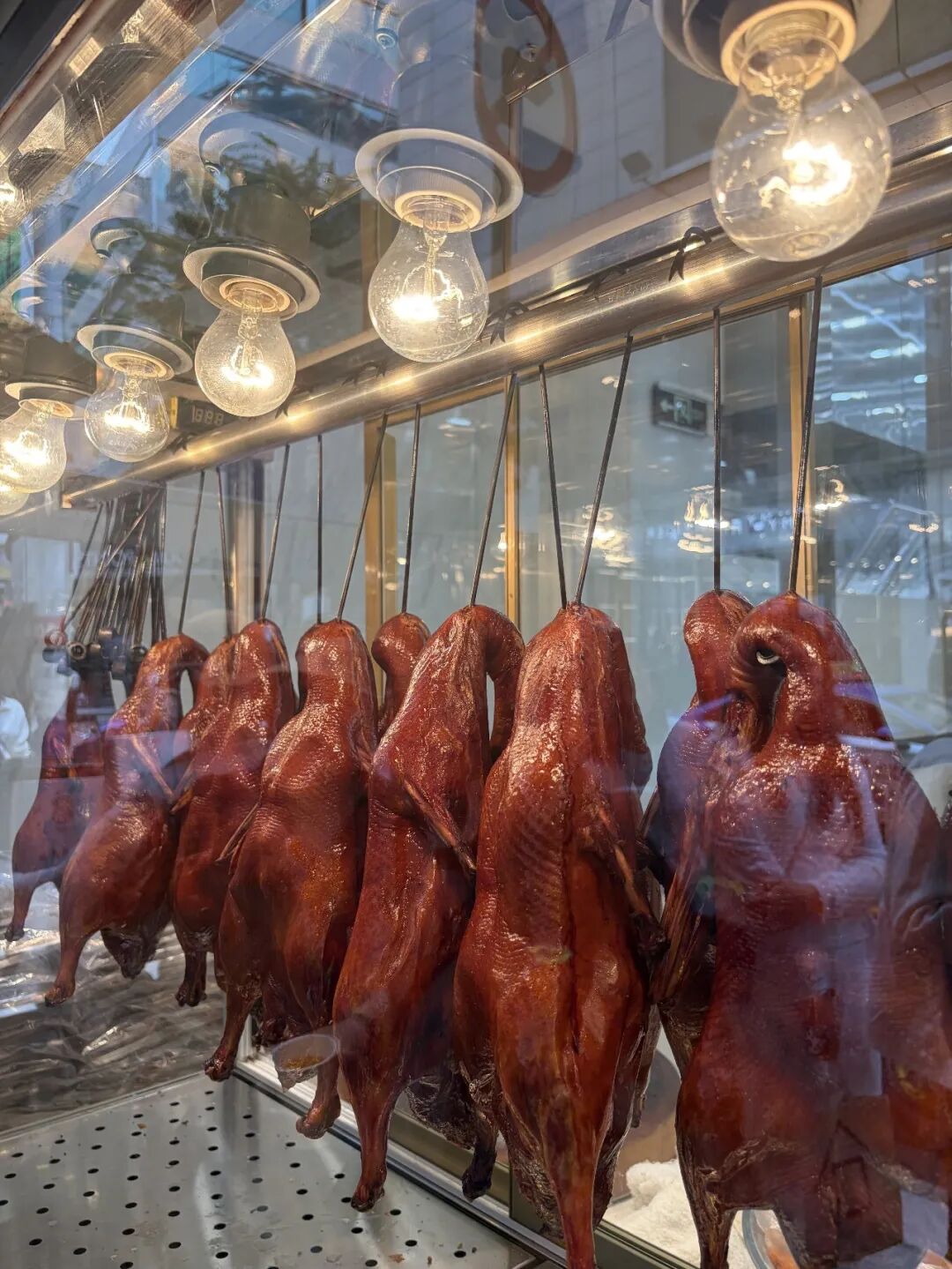
Jinji Lu Ji (Jinji Braised Chicken), the unsolved mystery of Shuncheng Street in Kunming.
The Surreal Braised Chicken
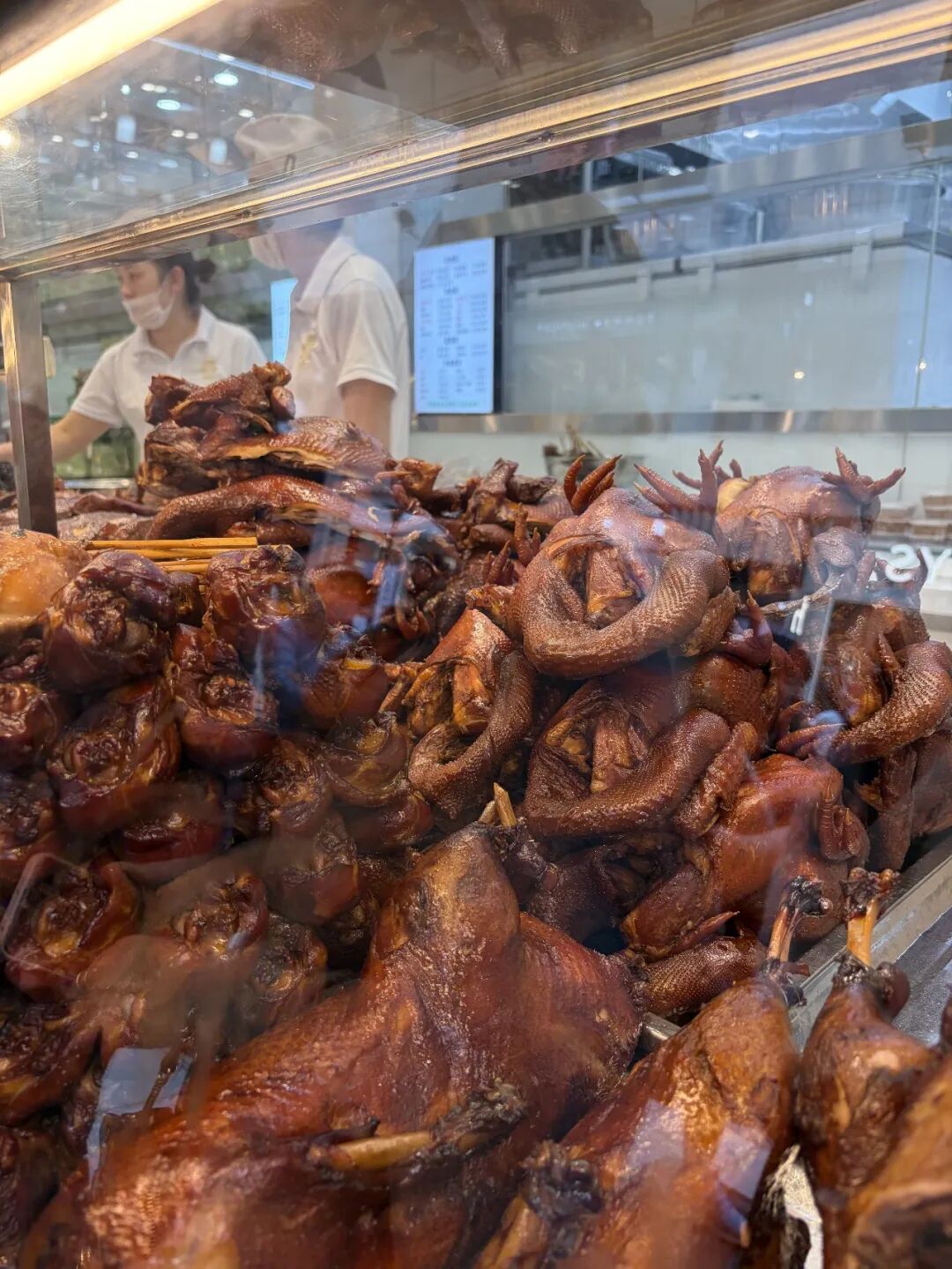
Anyone who has tried Jinji will tell you the flavor is just so-so, yet it easily runs over 100 RMB a head, and the servers can occasionally be pretty snotty. So why are people clutching their cash and waiting in line just to hand their money over? Who knows? Don't ask—just get in line.
Even crazier, back during the pandemic, people wore masks and braved actual "life-or-death risks" just to queue up. Local internet lore says Jinji pulls in over 200,000 RMB a day.
Even more dramatic, with the explosion of short-video media, some opportunists spotted the shop's insane popularity and opened a competing stall just a wall away, selling the exact same products while bragging online that they were "better" and "more traceable." At its absolute trashiest, the two shops got into a public street-side shouting match over the queue lines, which some nosy onlookers carefully edited and posted online for the whole internet to gossip about.
Today, that "better" neighbor is long gone, while the endless line outside Jinji remains. The truth of what actually happened back then? Nobody cares. People only care about one thing: Can I still get my hands on this braised chicken today as usual?
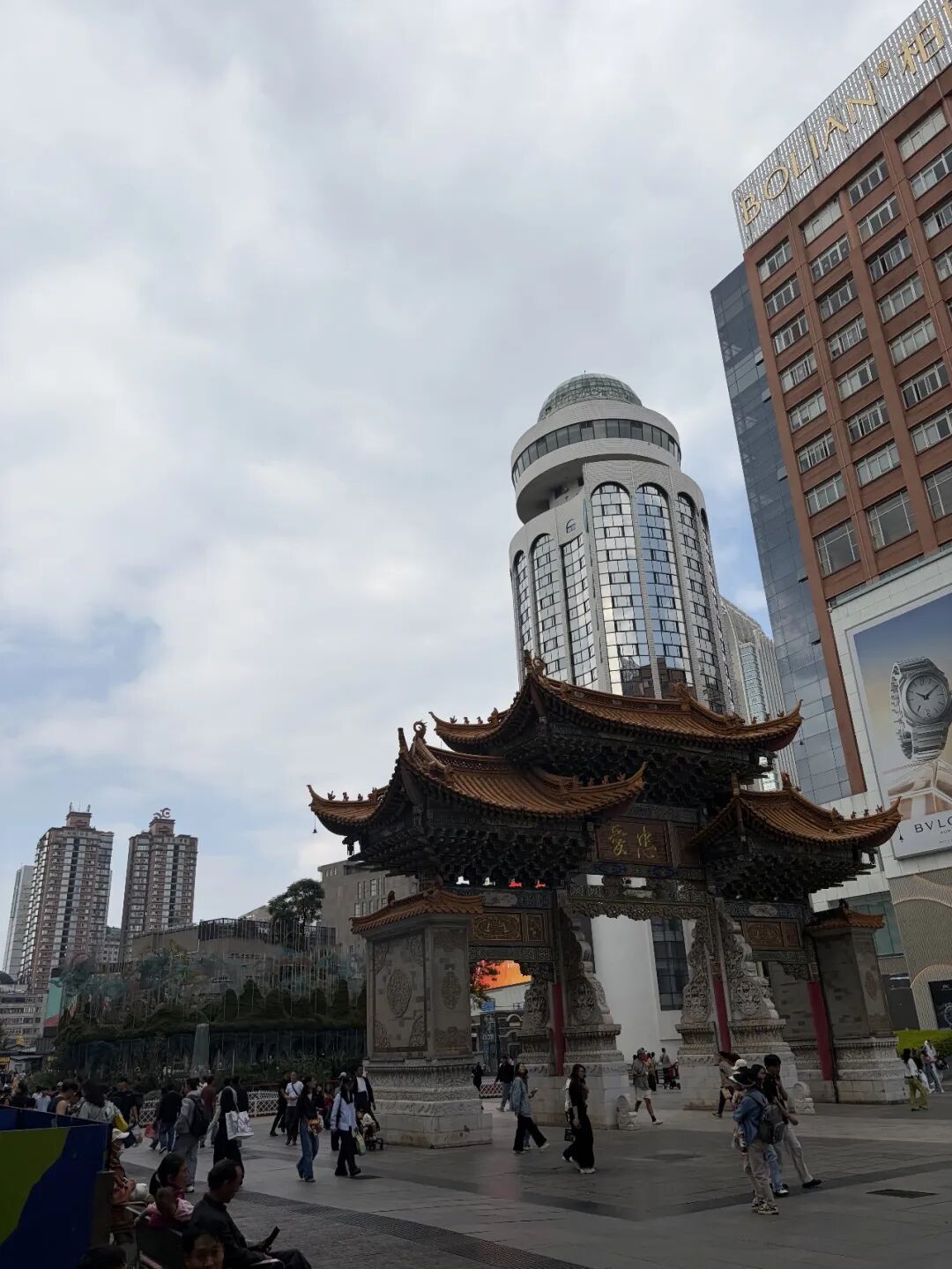
I used to not get Jinji either, writing it off as some kind of metaphysical mystery. But today, holding my kid's hand and trailing behind my mom, I once again found myself forced to stand in Jinji's line. And suddenly, it hit me—Jinji stopped selling just braised food a long time ago.
Jinji Stopped Selling Just Braised Chicken Long Ago
As downtown Kunming's vibrant core, Shuncheng is the default weekend hangout spot for most ordinary families like mine.
When the elders say, "Let's head into town for a walk," our destination is basically locked onto the Shuncheng area. We head out after breakfast, wander around grazing and shopping until about three or four in the afternoon, by which time we've bought what we needed, seen what we wanted, and practically burned through all our energy. Right about then, one final, ultimate question looms: What are we doing for dinner?
Eat out again? But we just ate out for lunch, we really can't eat another heavy meal. Cook at home? After walking around all day, who has the energy to wash and chop veggies? Yet when the whole family manages to get together on a rare weekend, you can't just slap together a casual meal.
And so, the answer bubbles up to the surface: Might as well buy some ready-made braised food, whip up a quick veggie soup at home, stir-fry a couple of fast dishes, and steam a pot of rice. Braised food isn't spicy, but it's flavorful, perfect for kids, parents, and grandparents alike, and packed with solid protein. It hits the spot for flavor and nutrition while keeping everyone's palate happy.
Stand anywhere in Shuncheng and look around, and the only spot that checks every single one of those boxes is Jinji.
Only people who have genuinely stressed over their family's tastes and health truly understand Jinji's real value. If you still don't get it, I can only say—you probably just aren't old enough yet~
I personally hate waiting in line and flat-out refuse to do it. But every single time my mom and I come to Shuncheng, she insists on getting in that line, and while we wait, she tells me stories from her childhood: her dad used to bring her from the rural counties straight into the big provincial capital of Kunming, and whenever they had time, they'd take her to a nearby vendor who carried braised chicken on a shoulder pole. She said that braised chicken was insanely fragrant—a rare, precious delicacy in a childhood plagued by severe material shortages.
Her dad passed away a few years ago. I've heard this story countless times, but whenever we're right here, she still repeats the story of her and her dad as if she's talking to herself. No matter how much I might personally resist and hate waiting in lines, I'll always stand here with her just to do something that brings her joy.
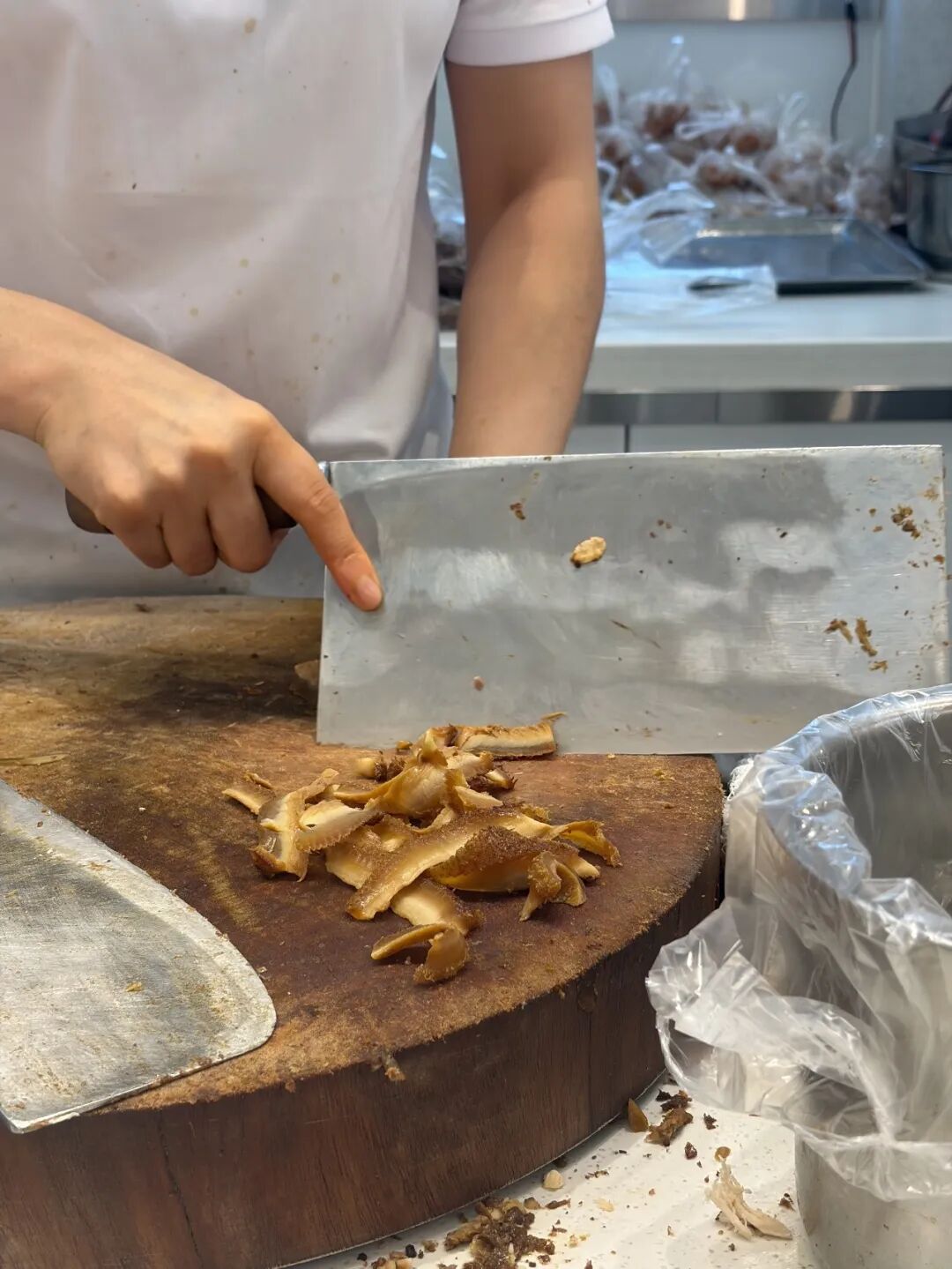
Now my kid is 7 years old. While we queue, he stands right beside us, listening to his grandma tell stories from the distant past. He's also starting to fall in love with the place's braised tripe, beef shank rolls, and unclipped chicken feet. Maybe when he grows up, driven by that same craving for good food and memories of time spent with family, he'll come and wait in this line all by himself—as long as Jinji is still in business.
That right there is the secret behind why the line outside Jinji has kept right on going for decades.
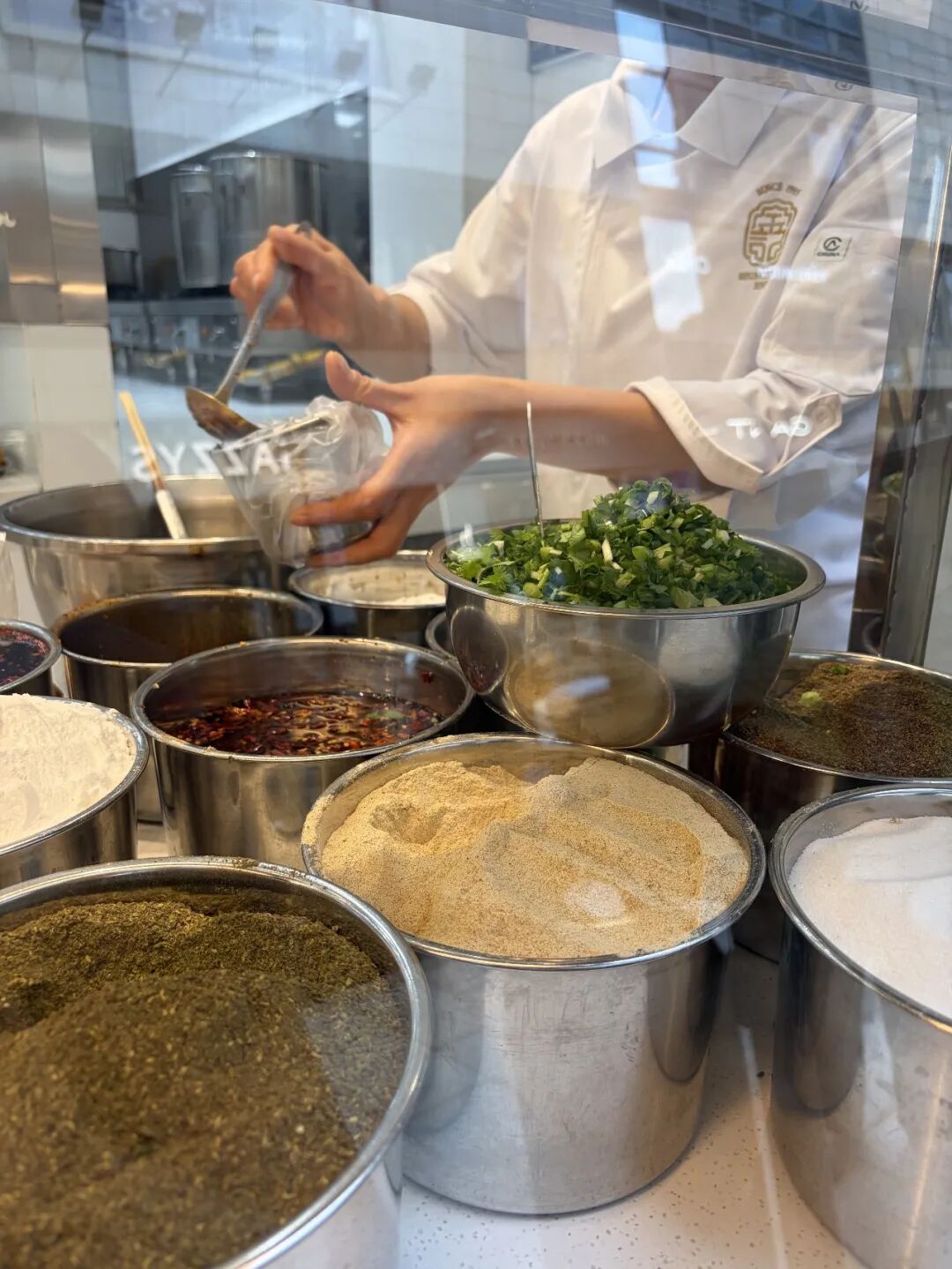
A business might survive its first year on a secret recipe and clever tricks; but a business that stands tall in one spot for decades, consistently delivering reliable, dependable products, is undeniably solving a headache for its customers.
So whenever I see people who think they've cracked the braised chicken recipe, mastered internet traffic, and figured out all the tricks to crush Jinji and replace it, I honestly feel a twinge of pity.
Jinji's braised food recipe really isn't worth much. In today's China, where productivity is massive and overabundant, there are simply no uncrackable secret recipes. Don't believe me? Just visit a few OEM factories or tour some supply chains and you'll see.
But Jinji hasn't been selling just braised chicken for a long time—it's selling a problem-solving solution, a multi-generational vault of fond food memories. Recipes can be copied; memories cannot. So if anyone's thinking of copying this business model, they're probably in for a pretty tough time.
The Ultimate Guide to Yunnan Muslim Culture, Halal Food & Historic Mosques (Part 2)
Articles • Hasan09 posted the article • 0 comments • 11 views • 23 hours ago
[37] Authored by Jide Yao, Rongkun Li, and Zuo Zhang, "History of Islam in Yunnan," p. 189.
[38] Authored by Jide Yao, "The Migration of Yunnan Hui Muslims to Southeast Asia," p. 37.
[39] Authored by Zuo Zhang, "A Study of Yunnan Hui Muslims Cross-Border into Southeast Asia," included in *Journal of Hui Muslim Studies*, 1998, Issue 3 (Total Issue 31), Ningxia: *Journal of Hui Muslim Studies* Editorial Department, 1998, p. 17.
++++++++++++++++++++++++++++++++++++++++++++++++++++++++++++++++++ view all
[37] Authored by Jide Yao, Rongkun Li, and Zuo Zhang, "History of Islam in Yunnan," p. 189.
[38] Authored by Jide Yao, "The Migration of Yunnan Hui Muslims to Southeast Asia," p. 37.
[39] Authored by Zuo Zhang, "A Study of Yunnan Hui Muslims Cross-Border into Southeast Asia," included in *Journal of Hui Muslim Studies*, 1998, Issue 3 (Total Issue 31), Ningxia: *Journal of Hui Muslim Studies* Editorial Department, 1998, p. 17.
++++++++++++++++++++++++++++++++++++++++++++++++++++++++++++++++++
Exploring Shadian Grand Mosque & Halal Night Market in Yunnan: A Food & Culture Guide
Articles • Hasan09 posted the article • 0 comments • 13 views • 23 hours ago
Southern Yunnan Vibe Check: Exploring the Shadian Grand Mosque in Gejiu, Honghe, and the Hui Muslim Night Market
Abstract:
An in-depth travel diary of southeastern Yunnan: stepping into the Hui Muslim community of Shadian in Gejiu, Honghe Prefecture. Witnessing the magnificent halls of the renowned Shadian Grand Mosque in Southwest China, wandering through Islamic-styled Hui neighborhoods, and savoring authentic Shadian halal BBQ and traditional Hui street food.
July 19
Today's game plan is to head straight into Yunnan, driving toward Gejiu. During the summer break of 2023, on my first road trip to Yunnan, I pulled up to the Shadian Grand Mosque only to find it undergoing renovations, having closed just a few days before we arrived. Missing out on one of the largest mosques in China's southwest region was a total bummer, so I came straight back this time to check it off the bucket list. The photo below shows what it looked like when I visited back in July 2023.
The drive from Chongzuo to Gejiu is about 600 kilometers. We hit the road around 9:00 AM and expected to roll in around 4:00 PM—two days on the road to reach Yunnan.
Summer in Yunnan means rainy season. Once you hit the expressway into Yunnan, you'll constantly run into heavy fog and torrential rain, so you definitely need to drive extra carefully.
Around 4:00 PM, we finally arrived at the Shadian Grand Mosque, making up for the visit we missed last time. Compared to before, post-renovation it blends traditional Chinese palatial architecture with Arabic Islamic styles. The main prayer hall covers roughly 17,700 square meters, giving off an epic, majestic vibe that makes you feel so humbled standing right in front of it.
The mosque doesn't charge an admission fee, and outside of prayer times, you can snap photos along the outer corridors. As one of the most influential mosques in the country, the architectural details are totally worth taking your time to appreciate.
I looked up some stats: the main dome has an inner diameter of 20 meters, with an interior clearance height of about 42 meters. This massive, pillarless space can easily accommodate tens of thousands of people for group prayer at the same time, delivering a mind-blowing sense of space.
Photos might not fully do it justice, so here's a picture of a staff member prepping inside to give y'all a sense of just how jaw-dropping that ceiling height is.
Exotic stained glass windows let the sunlight stream through, casting interwoven blue and golden geometric patterns across the terrazzo floors, keeping the entire interior of the prayer hall bathed in a soft, ethereal glow.
Even though we couldn't step inside to tour, as an open public spot, I personally think it's 100% worth the trip. It also let the kids experience this kind of solemn, sacred atmosphere firsthand.
After finishing up our tour in Gejiu, we headed straight to Shiping. I've been to this chill little town before—it's not super famous, which honestly makes it a really comfortable place to hang out. Yilong Lake is one of the nine major plateau lakes in Yunnan; today we just caught some distant glimpses of it, with plans to do a full lake lap tomorrow.
Since this is my second time here, I know my way around. We passed the tracks of the narrow-gauge sightseeing train (it only runs two fixed daily schedules, and with no trains outside those hours, I felt safe letting the kids snap a few photos). The kids were totally fascinated by the tracks, so we pulled over right away to let them play to their hearts' content.
You can't talk about a Yunnan night market without mentioning BBQ. Down here in Honghe Prefecture, even a simple rice noodle joint will have a grill going and Shiping stinky tofu on deck. The stinky tofu here is bomb too—it doesn't have an overpowering funk, and it's prepared by grilling or boiling rather than deep-frying, so it's not greasy at all. Especially the grilled tofu: crispy on the outside, tender on the inside, and dipped in a bit of chili sauce. The kids ate a ton of it. That whole plate of tofu in the pic was only 8 RMB—the cost of living here is heartwarming.
Then there are the smashed potatoes you can find all over Yunnan, tossed with various seasonings, which the kids also love. A mix of different street skewers and clay-pot stinky tofu rice noodles made up our dinner tonight, and everyone ate with huge smiles.
After grabbing food and hanging out at the night market, we headed back to our hotel to crash. A 600-kilometer drive is definitely exhausting, but getting to witness such epic architecture and enjoying everyday Yunnan comfort food as a feast made us genuinely happy!
That wraps up this post. See y'all next time, and thanks for keeping up with the journey! view all
Southern Yunnan Vibe Check: Exploring the Shadian Grand Mosque in Gejiu, Honghe, and the Hui Muslim Night Market

Abstract:

An in-depth travel diary of southeastern Yunnan: stepping into the Hui Muslim community of Shadian in Gejiu, Honghe Prefecture. Witnessing the magnificent halls of the renowned Shadian Grand Mosque in Southwest China, wandering through Islamic-styled Hui neighborhoods, and savoring authentic Shadian halal BBQ and traditional Hui street food.

July 19

Today's game plan is to head straight into Yunnan, driving toward Gejiu. During the summer break of 2023, on my first road trip to Yunnan, I pulled up to the Shadian Grand Mosque only to find it undergoing renovations, having closed just a few days before we arrived. Missing out on one of the largest mosques in China's southwest region was a total bummer, so I came straight back this time to check it off the bucket list. The photo below shows what it looked like when I visited back in July 2023.

The drive from Chongzuo to Gejiu is about 600 kilometers. We hit the road around 9:00 AM and expected to roll in around 4:00 PM—two days on the road to reach Yunnan.

Summer in Yunnan means rainy season. Once you hit the expressway into Yunnan, you'll constantly run into heavy fog and torrential rain, so you definitely need to drive extra carefully.

Around 4:00 PM, we finally arrived at the Shadian Grand Mosque, making up for the visit we missed last time. Compared to before, post-renovation it blends traditional Chinese palatial architecture with Arabic Islamic styles. The main prayer hall covers roughly 17,700 square meters, giving off an epic, majestic vibe that makes you feel so humbled standing right in front of it.

The mosque doesn't charge an admission fee, and outside of prayer times, you can snap photos along the outer corridors. As one of the most influential mosques in the country, the architectural details are totally worth taking your time to appreciate.

I looked up some stats: the main dome has an inner diameter of 20 meters, with an interior clearance height of about 42 meters. This massive, pillarless space can easily accommodate tens of thousands of people for group prayer at the same time, delivering a mind-blowing sense of space.

Photos might not fully do it justice, so here's a picture of a staff member prepping inside to give y'all a sense of just how jaw-dropping that ceiling height is.

Exotic stained glass windows let the sunlight stream through, casting interwoven blue and golden geometric patterns across the terrazzo floors, keeping the entire interior of the prayer hall bathed in a soft, ethereal glow.

Even though we couldn't step inside to tour, as an open public spot, I personally think it's 100% worth the trip. It also let the kids experience this kind of solemn, sacred atmosphere firsthand.

After finishing up our tour in Gejiu, we headed straight to Shiping. I've been to this chill little town before—it's not super famous, which honestly makes it a really comfortable place to hang out. Yilong Lake is one of the nine major plateau lakes in Yunnan; today we just caught some distant glimpses of it, with plans to do a full lake lap tomorrow.
Since this is my second time here, I know my way around. We passed the tracks of the narrow-gauge sightseeing train (it only runs two fixed daily schedules, and with no trains outside those hours, I felt safe letting the kids snap a few photos). The kids were totally fascinated by the tracks, so we pulled over right away to let them play to their hearts' content.
You can't talk about a Yunnan night market without mentioning BBQ. Down here in Honghe Prefecture, even a simple rice noodle joint will have a grill going and Shiping stinky tofu on deck. The stinky tofu here is bomb too—it doesn't have an overpowering funk, and it's prepared by grilling or boiling rather than deep-frying, so it's not greasy at all. Especially the grilled tofu: crispy on the outside, tender on the inside, and dipped in a bit of chili sauce. The kids ate a ton of it. That whole plate of tofu in the pic was only 8 RMB—the cost of living here is heartwarming.
Then there are the smashed potatoes you can find all over Yunnan, tossed with various seasonings, which the kids also love. A mix of different street skewers and clay-pot stinky tofu rice noodles made up our dinner tonight, and everyone ate with huge smiles.
After grabbing food and hanging out at the night market, we headed back to our hotel to crash. A 600-kilometer drive is definitely exhausting, but getting to witness such epic architecture and enjoying everyday Yunnan comfort food as a feast made us genuinely happy!
That wraps up this post. See y'all next time, and thanks for keeping up with the journey!
Visiting Shadian Grand Mosque in Yunnan: Exploring the Heart of Hui Muslim Culture & History
Articles • Hasan09 posted the article • 0 comments • 11 views • 23 hours ago
Living in Yunnan: Stepping into the Shadian Grand Mosque in Gejiu to Feel the Peace and Devotion of Hui Muslim Life in Southern Yunnan Valleys
Abstract:
A real-life travel log from living in Honghe Prefecture, Yunnan. Setting out from the 'Tin Capital' of Gejiu to visit the famous Shadian Grand Mosque, the author uses vivid prose to capture the front plaza, the grand silhouette of the main prayer hall, and the simple, serene daily rhythms of the surrounding Hui Muslim community, showcasing the cultural diversity of colorful Yunnan.
February 7, 2026, Sunny. The view right outside my window totally gives off that 'Mini Chongqing' vibe that Gejiu is known for.
Today, I'm heading out to the last spot on my Gejiu itinerary, the Shadian Grand Mosque (Shadian Mosque), before traveling to Mile tomorrow for the Lunar New Year.
The mosque is located in Shadian Subdistrict, Gejiu City. Sitting right at the intersection of Gejiu, Kaiyuan, and Mengzi, it's the heartland of the Hui Muslim community in southern Yunnan. It's the largest mosque in Southwest China and one of the country's top 100 famous mosques.
Flanking the Prayer Hall are four striking minarets. The entire structure has a strong traditional Chinese architectural style.
The Prayer Hall
The roof features a traditional Chinese double-eaves Xieshan (歇山 - resting hill) design, while the center incorporates Arabic-style arches and colonnades. The base blends elements of a traditional Chinese Xumizuo (须弥座 - Sumeru throne pedestal), perfectly fusing Islamic culture with traditional Chinese architecture. The golden plaque overhead displays the Islamic Shahada: 'There is no god but Allah, and Muhammad is His messenger,' which is the most fundamental declaration of faith in Islam.
Arabic scriptures are inscribed on both sides of the archways. The top features the 'Basmala' (In the name of Allah), and the main section contains Chapter 112 of the Quran, Al-Ikhlas (Sincerity), one of the core passages Muslims must recite during daily prayers.
Non-worshippers aren't allowed inside the main hall, so I just snapped some photos from the doorway. Since Islam strictly prohibits idol worship, the interior is completely empty and minimal.
A devoted worshiper was deeply engrossed in his personal prayer (dua)—what was he reflecting on?
The doorway to the hall is drop-dead gorgeous and super artistic. The circular reliefs showcase Arabic calligraphy, featuring the 'Basmala' from the Quran which means 'In the name of Allah.' It's one of the most classic decorative elements in Islamic architecture, symbolizing praise and awe for Allah.
The layered arches of the colonnade stretch out, creating a solemn, deep, and majestic vibe. view all
Living in Yunnan: Stepping into the Shadian Grand Mosque in Gejiu to Feel the Peace and Devotion of Hui Muslim Life in Southern Yunnan Valleys

Abstract:

A real-life travel log from living in Honghe Prefecture, Yunnan. Setting out from the 'Tin Capital' of Gejiu to visit the famous Shadian Grand Mosque, the author uses vivid prose to capture the front plaza, the grand silhouette of the main prayer hall, and the simple, serene daily rhythms of the surrounding Hui Muslim community, showcasing the cultural diversity of colorful Yunnan.

February 7, 2026, Sunny. The view right outside my window totally gives off that 'Mini Chongqing' vibe that Gejiu is known for.

Today, I'm heading out to the last spot on my Gejiu itinerary, the Shadian Grand Mosque (Shadian Mosque), before traveling to Mile tomorrow for the Lunar New Year.

The mosque is located in Shadian Subdistrict, Gejiu City. Sitting right at the intersection of Gejiu, Kaiyuan, and Mengzi, it's the heartland of the Hui Muslim community in southern Yunnan. It's the largest mosque in Southwest China and one of the country's top 100 famous mosques.

Flanking the Prayer Hall are four striking minarets. The entire structure has a strong traditional Chinese architectural style.

The Prayer Hall

The roof features a traditional Chinese double-eaves Xieshan (歇山 - resting hill) design, while the center incorporates Arabic-style arches and colonnades. The base blends elements of a traditional Chinese Xumizuo (须弥座 - Sumeru throne pedestal), perfectly fusing Islamic culture with traditional Chinese architecture. The golden plaque overhead displays the Islamic Shahada: 'There is no god but Allah, and Muhammad is His messenger,' which is the most fundamental declaration of faith in Islam.

Arabic scriptures are inscribed on both sides of the archways. The top features the 'Basmala' (In the name of Allah), and the main section contains Chapter 112 of the Quran, Al-Ikhlas (Sincerity), one of the core passages Muslims must recite during daily prayers.

Non-worshippers aren't allowed inside the main hall, so I just snapped some photos from the doorway. Since Islam strictly prohibits idol worship, the interior is completely empty and minimal.

A devoted worshiper was deeply engrossed in his personal prayer (dua)—what was he reflecting on?
The doorway to the hall is drop-dead gorgeous and super artistic. The circular reliefs showcase Arabic calligraphy, featuring the 'Basmala' from the Quran which means 'In the name of Allah.' It's one of the most classic decorative elements in Islamic architecture, symbolizing praise and awe for Allah.
The layered arches of the colonnade stretch out, creating a solemn, deep, and majestic vibe.
Exploring 6 Historic Qing-Dynasty Mosques in Zhaotong, Yunnan: A Halal Travel Guide
Articles • Hasan09 posted the article • 0 comments • 13 views • 23 hours ago
A Study of Six Traditional Historic Mosques in Zhaotong, Yunnan: Historical Origins of 'Gaituguiqiu' and a Complete Photo Collection of Ming and Qing Chinese-Style Palace Mosques
Abstract:
A detailed investigation of six precious traditional Ming and Qing-style historic mosques in Zhaotong, Yunnan. Combining the historical context of 'gaituguiqiu' (replacing native chieftains with imperial officials) during the reign of Emperor Yongzheng with the ancestral origins of General Ha Yuansheng's soldiers who settled in the region, this guide features nearly 80 precious real-life shots documenting the Sino-Arabic blended artistry of double-eave Xieshan roofs, exquisite carved water-milled bricks, wooden beams and rafters, and Arabic scripture plaques.
In August 2020, during our honeymoon trip, Zainab and I went to Zhaotong to hang out, and sister Azi showed us around Zhaotong's gorgeous traditional mosques.
During the Ming Dynasty, Zhaotong belonged to the Wumeng Native Prefecture and was governed by Yi ethnic chieftains. In 1726 (the fourth year of Emperor Yongzheng's reign), Yun-Gui Governor-General Ortai began implementing 'gaituguiqiu' (replacing native chieftains with imperial officials) in Wumeng. The Wumeng Native Prefecture raised troops to resist, and Weining Central Division Major Ha Yuansheng, alongside Central Division commander Liu Qiyuan, crushed the Wumeng Native Prefecture and local chieftains everywhere, finally completing the 'gaituguiqiu' and renaming Wumeng to Zhaotong. Ha Yuansheng was a Hui Muslim originally from Hejian, Hebei. During the 'gaituguiqiu' campaign, some Hui soldiers followed Ha Yuansheng into Zhaotong, and after the war ended, they 'registered their land and settled down.'
After Wumeng was pacified in 1732 (the tenth year of Emperor Yongzheng's reign), because the war had caused a sharp drop in the population, the newly appointed Yun-Gui Governor-General Gao Qizhuo ordered the reclamation of wasteland for garrison farming. Hui Muslim families and entire villages from the neighboring Weining area in Guizhou moved into Zhaotong to claim land, causing the Hui population in Zhaotong to surge. Most of the traditional mosques still standing today were built during this period.
1. Tuogu Grand Mosque: 1730
2. Longtouxiang Mosque: 1746
3. Chachong Mosque: 1734
4. Tiejiawan Mosque: 1738
5. Baxian Grand Mosque: 1779
6. Songjiashan Mosque: 1730
1. Tuogu Grand Mosque: 1730
On the morning of August 10, sister Azi drove us from Zhaotong to Ludian to kick off our tour of traditional mosques. Our first stop was Ludian's most famous Tuogu Grand Mosque.
We received a super warm welcome from Imam Hai at Tuogu Mosque, and he walked us through the history and various legends of Tuogu Mosque in great detail.
According to the stone inscriptions, Tuogu Mosque was built in 1730 when Anlong Town Central Division Imperial Guard Ma Xiangqian and conquering imperial examination graduates, the brothers Ma Lincan and Ma Linchi, donated funds to build the main prayer hall. In 1755, at the suggestion of Imam Sai Huanzhang, local fellow Muslims pooled funds to build the minaret (唤醒楼, huanxinglou), side halls, and other structures.
Before stepping into the masjid, the first thing that catches your eye is the hexagonal, triple-eaved, pyramidal-roofed minaret, with the three-bay wooden 'Wujuan Hall' (Hall of Indefatigable Study) right below it. Hanging on the minaret is a plaque reading 'Universal Mercy Over All Creation' (普慈万有), which was gifted in 1746 by Ye Daxiong, the Imperial Garrison General of Eastern Zhaotong, Yunnan and hereditary Cavalry Captain. This plaque originally hung in the main prayer hall and was later moved to the minaret.
Imam Hai pointed out that some of the stone pillars of the minaret actually feature ancient fossils—something you probably won't find in any other mosque anywhere else.
Passing through the Wujuan Hall brings you to the courtyard, where four ancient cypress trees are planted, and right across from them sits the main prayer hall. The center of the main hall reads 'Happy Paradise' (快乐天堂), and around it are eight Arabic calligraphy panels which, according to Imam Hai, were penned by the mosque's second imam, the senior elder Sai Huanzhang Sai Lao Baba.
Inside the main hall is the Mihrab (窑殿, yaodian—the prayer niche), and its roof is also a pyramidal-pavilion style structure, echoing the minaret in the distance.
An ancient Qing Dynasty tabu box (wooden box used for religious items), which Imam Hai said they don't use anymore because it's just way too heavy.
A stone stele dating back to the Qianlong Emperor's reign.
2. Longtouxiang Mosque: 1746
After checking out Tuogu Grand Mosque, we headed over to another famous historic mosque in Ludian, Longtouxiang Mosque, where we were warmly welcomed by Imam Ma Liming.
Built in 1746, Longtouxiang Mosque follows traditional Yunnan mosque architectural style, featuring a courtyard enclosed by a minaret, north and south side halls, and the main prayer hall. Unlike Tuogu Grand Mosque, Longtouxiang Mosque's Mihrab doesn't have a pyramidal pavilion on top, and its minaret only has four corners and two eaves, making its grandeur slightly milder than Tuogu's.
Longtouxiang's newly built prayer hall is entirely wooden and super majestic—you can spot it from way down the road. I’m totally down with this approach of building a new hall nearby without destroying historic cultural relics. Over the last few years, I’ve seen way too many places ruthlessly tear down centuries-old heritage architecture just to build a new hall.
3. Chachong Mosque: 1734
After leaving Longtouxiang Mosque, we hit up another historic mosque in Ludian, Chachong Mosque. Built in 1734, Chachong Mosque's minaret is a three-story, hexagonal, pyramidal-roofed structure just like the one at Tuogu Grand Mosque, only slightly smaller in scale. Hanging at the entrance of the main hall is a plaque reading 'Profound Mystery and Great Might' (玄奇大能) erected in reverence by Sa Depin in 1906.
Chachong Mosque is also gorgeous, though it's not quite as famous as nearby Tuogu Mosque and Longtouxiang Mosque. When we dropped by for a visit, the imam happened to be away attending a religious gathering at Longtouxiang Mosque, but the imam’s daughter was an old friend of sister Azi, so we all had a great time chatting together.
4. Tiejiawan Mosque: 1738
From Chachong Mosque, we headed over to Tiejiawan Mosque. Back in 1731, the Tie family settled down in the northeastern part of the Taoyuan basin in Ludian. In 1738, Tie Wanxuan, along with Tie Wanjin and Tie Zhongxuan, talked things over and decided to build Tiejiawan Mosque right on top of a little hill sitting between the villages of Tiejiawan and Tie Jiamen, with Tie Wanxuan stepping up as the imam.
Above the main hall's entrance hangs a plaque reading 'Great Virtue Transforms All' (Dade Dunhua), gifted in 1810 by Da Xiong, the hereditary commander-in-chief and military governor of Zhaotong Dongxiong and surrounding areas, alongside another plaque reading 'Pure and Elegant Transformation' (Qingzhen Yahua), erected in 1844 by Tie Chengjin from the Zhaotong Left Garrison.
5. Baxian Grand Mosque: 1779
Heading back to Zhaotong from Ludian as the evening rolled in, we made our way to Baxian Grand Mosque, easily the most famous masjid in Zhaotong.
Baxian Grand Mosque was first built in 1731 and rebuilt in 1779. After the Wumeng region was pacified in 1730, Zhaotong's old city was pretty much in ruins, so the military headquarters was temporarily set up at Baxian Grand Mosque. The very next year, the mosque launched Zhaoyang Academy right here—the first academy established in Zhaotong after the imperial court replaced local chieftains with appointed officials (gaitu guiliu). In 1898, Baxian Grand Mosque brought on Grand Imam Ma Minglun to lead the community, and the masjid was chosen by the thirty-six mosques across Zhaotong, Weining, and Ludian to serve as the head administrative masjid.
Flanking the entrance of the main hall are stone-carved couplets reading, 'Conquering one's own ego is the true path; returning to the divine law allows one to stand before Allah in prayer.' Up above in the main hall hangs a super unique Arabic wooden plaque inscribed with verses from Surah Az-Zukhruf (Chapter 43, Verse 44) of the Qur'an. Right behind the main hall sits the yaodian (dome-like rear prayer tower) featuring a triple-eaved, four-sided pyramidal roof.
6. Songjiashan Mosque: 1730
That evening, we caught the Maghrib prayer at Songjiashan Mosque. It was still dusk when we walked into the hall, but by the time we finished praying and stepped outside, night had completely fallen.
Songjiashan Mosque isn't far from Baxian Grand Mosque, and it's another seriously gorgeous historic masjid. In the early Yongzheng years, when the imperial government reformed the administrative system in Zhaotong, a branch of the Ma family from Xiaba in Weining followed General Hasenyuan—who had led troops to pacify Wumeng—straight to Zhaotong. They ended up settling by Baxian Lake and built Songjiashan Mosque in 1730. Songjiashan Mosque shares the exact same historical background as Baxian Grand Mosque, though because the local Muslim population was smaller, it's not quite as massive.
Songjiashan Mosque started painting the gorgeous ceiling murals inside its main hall in 1762, and the whole interior renovation was finally wrapped up in 1832, making it an insanely precious artistic treasure tucked inside the masjid. view all
A Study of Six Traditional Historic Mosques in Zhaotong, Yunnan: Historical Origins of 'Gaituguiqiu' and a Complete Photo Collection of Ming and Qing Chinese-Style Palace Mosques

Abstract:

A detailed investigation of six precious traditional Ming and Qing-style historic mosques in Zhaotong, Yunnan. Combining the historical context of 'gaituguiqiu' (replacing native chieftains with imperial officials) during the reign of Emperor Yongzheng with the ancestral origins of General Ha Yuansheng's soldiers who settled in the region, this guide features nearly 80 precious real-life shots documenting the Sino-Arabic blended artistry of double-eave Xieshan roofs, exquisite carved water-milled bricks, wooden beams and rafters, and Arabic scripture plaques.

In August 2020, during our honeymoon trip, Zainab and I went to Zhaotong to hang out, and sister Azi showed us around Zhaotong's gorgeous traditional mosques.

During the Ming Dynasty, Zhaotong belonged to the Wumeng Native Prefecture and was governed by Yi ethnic chieftains. In 1726 (the fourth year of Emperor Yongzheng's reign), Yun-Gui Governor-General Ortai began implementing 'gaituguiqiu' (replacing native chieftains with imperial officials) in Wumeng. The Wumeng Native Prefecture raised troops to resist, and Weining Central Division Major Ha Yuansheng, alongside Central Division commander Liu Qiyuan, crushed the Wumeng Native Prefecture and local chieftains everywhere, finally completing the 'gaituguiqiu' and renaming Wumeng to Zhaotong. Ha Yuansheng was a Hui Muslim originally from Hejian, Hebei. During the 'gaituguiqiu' campaign, some Hui soldiers followed Ha Yuansheng into Zhaotong, and after the war ended, they 'registered their land and settled down.'

After Wumeng was pacified in 1732 (the tenth year of Emperor Yongzheng's reign), because the war had caused a sharp drop in the population, the newly appointed Yun-Gui Governor-General Gao Qizhuo ordered the reclamation of wasteland for garrison farming. Hui Muslim families and entire villages from the neighboring Weining area in Guizhou moved into Zhaotong to claim land, causing the Hui population in Zhaotong to surge. Most of the traditional mosques still standing today were built during this period.

1. Tuogu Grand Mosque: 1730

2. Longtouxiang Mosque: 1746

3. Chachong Mosque: 1734

4. Tiejiawan Mosque: 1738

5. Baxian Grand Mosque: 1779

6. Songjiashan Mosque: 1730

1. Tuogu Grand Mosque: 1730

On the morning of August 10, sister Azi drove us from Zhaotong to Ludian to kick off our tour of traditional mosques. Our first stop was Ludian's most famous Tuogu Grand Mosque.

We received a super warm welcome from Imam Hai at Tuogu Mosque, and he walked us through the history and various legends of Tuogu Mosque in great detail.

According to the stone inscriptions, Tuogu Mosque was built in 1730 when Anlong Town Central Division Imperial Guard Ma Xiangqian and conquering imperial examination graduates, the brothers Ma Lincan and Ma Linchi, donated funds to build the main prayer hall. In 1755, at the suggestion of Imam Sai Huanzhang, local fellow Muslims pooled funds to build the minaret (唤醒楼, huanxinglou), side halls, and other structures.

Before stepping into the masjid, the first thing that catches your eye is the hexagonal, triple-eaved, pyramidal-roofed minaret, with the three-bay wooden 'Wujuan Hall' (Hall of Indefatigable Study) right below it. Hanging on the minaret is a plaque reading 'Universal Mercy Over All Creation' (普慈万有), which was gifted in 1746 by Ye Daxiong, the Imperial Garrison General of Eastern Zhaotong, Yunnan and hereditary Cavalry Captain. This plaque originally hung in the main prayer hall and was later moved to the minaret.

Imam Hai pointed out that some of the stone pillars of the minaret actually feature ancient fossils—something you probably won't find in any other mosque anywhere else.

Passing through the Wujuan Hall brings you to the courtyard, where four ancient cypress trees are planted, and right across from them sits the main prayer hall. The center of the main hall reads 'Happy Paradise' (快乐天堂), and around it are eight Arabic calligraphy panels which, according to Imam Hai, were penned by the mosque's second imam, the senior elder Sai Huanzhang Sai Lao Baba.

Inside the main hall is the Mihrab (窑殿, yaodian—the prayer niche), and its roof is also a pyramidal-pavilion style structure, echoing the minaret in the distance.

An ancient Qing Dynasty tabu box (wooden box used for religious items), which Imam Hai said they don't use anymore because it's just way too heavy.

A stone stele dating back to the Qianlong Emperor's reign.

2. Longtouxiang Mosque: 1746

After checking out Tuogu Grand Mosque, we headed over to another famous historic mosque in Ludian, Longtouxiang Mosque, where we were warmly welcomed by Imam Ma Liming.

Built in 1746, Longtouxiang Mosque follows traditional Yunnan mosque architectural style, featuring a courtyard enclosed by a minaret, north and south side halls, and the main prayer hall. Unlike Tuogu Grand Mosque, Longtouxiang Mosque's Mihrab doesn't have a pyramidal pavilion on top, and its minaret only has four corners and two eaves, making its grandeur slightly milder than Tuogu's.

Longtouxiang's newly built prayer hall is entirely wooden and super majestic—you can spot it from way down the road. I’m totally down with this approach of building a new hall nearby without destroying historic cultural relics. Over the last few years, I’ve seen way too many places ruthlessly tear down centuries-old heritage architecture just to build a new hall.

3. Chachong Mosque: 1734

After leaving Longtouxiang Mosque, we hit up another historic mosque in Ludian, Chachong Mosque. Built in 1734, Chachong Mosque's minaret is a three-story, hexagonal, pyramidal-roofed structure just like the one at Tuogu Grand Mosque, only slightly smaller in scale. Hanging at the entrance of the main hall is a plaque reading 'Profound Mystery and Great Might' (玄奇大能) erected in reverence by Sa Depin in 1906.

Chachong Mosque is also gorgeous, though it's not quite as famous as nearby Tuogu Mosque and Longtouxiang Mosque. When we dropped by for a visit, the imam happened to be away attending a religious gathering at Longtouxiang Mosque, but the imam’s daughter was an old friend of sister Azi, so we all had a great time chatting together.

4. Tiejiawan Mosque: 1738

From Chachong Mosque, we headed over to Tiejiawan Mosque. Back in 1731, the Tie family settled down in the northeastern part of the Taoyuan basin in Ludian. In 1738, Tie Wanxuan, along with Tie Wanjin and Tie Zhongxuan, talked things over and decided to build Tiejiawan Mosque right on top of a little hill sitting between the villages of Tiejiawan and Tie Jiamen, with Tie Wanxuan stepping up as the imam.

Above the main hall's entrance hangs a plaque reading 'Great Virtue Transforms All' (Dade Dunhua), gifted in 1810 by Da Xiong, the hereditary commander-in-chief and military governor of Zhaotong Dongxiong and surrounding areas, alongside another plaque reading 'Pure and Elegant Transformation' (Qingzhen Yahua), erected in 1844 by Tie Chengjin from the Zhaotong Left Garrison.

5. Baxian Grand Mosque: 1779

Heading back to Zhaotong from Ludian as the evening rolled in, we made our way to Baxian Grand Mosque, easily the most famous masjid in Zhaotong.

Baxian Grand Mosque was first built in 1731 and rebuilt in 1779. After the Wumeng region was pacified in 1730, Zhaotong's old city was pretty much in ruins, so the military headquarters was temporarily set up at Baxian Grand Mosque. The very next year, the mosque launched Zhaoyang Academy right here—the first academy established in Zhaotong after the imperial court replaced local chieftains with appointed officials (gaitu guiliu). In 1898, Baxian Grand Mosque brought on Grand Imam Ma Minglun to lead the community, and the masjid was chosen by the thirty-six mosques across Zhaotong, Weining, and Ludian to serve as the head administrative masjid.

Flanking the entrance of the main hall are stone-carved couplets reading, 'Conquering one's own ego is the true path; returning to the divine law allows one to stand before Allah in prayer.' Up above in the main hall hangs a super unique Arabic wooden plaque inscribed with verses from Surah Az-Zukhruf (Chapter 43, Verse 44) of the Qur'an. Right behind the main hall sits the yaodian (dome-like rear prayer tower) featuring a triple-eaved, four-sided pyramidal roof.

6. Songjiashan Mosque: 1730

That evening, we caught the Maghrib prayer at Songjiashan Mosque. It was still dusk when we walked into the hall, but by the time we finished praying and stepped outside, night had completely fallen.

Songjiashan Mosque isn't far from Baxian Grand Mosque, and it's another seriously gorgeous historic masjid. In the early Yongzheng years, when the imperial government reformed the administrative system in Zhaotong, a branch of the Ma family from Xiaba in Weining followed General Hasenyuan—who had led troops to pacify Wumeng—straight to Zhaotong. They ended up settling by Baxian Lake and built Songjiashan Mosque in 1730. Songjiashan Mosque shares the exact same historical background as Baxian Grand Mosque, though because the local Muslim population was smaller, it's not quite as massive.

Songjiashan Mosque started painting the gorgeous ceiling murals inside its main hall in 1762, and the whole interior renovation was finally wrapped up in 1832, making it an insanely precious artistic treasure tucked inside the masjid.


Exploring Najiaying Mosque & Halal Beef in Yunnan's Historic Nagu Town
Articles • Hasan09 posted the article • 0 comments • 13 views • 23 hours ago
Exploring Nagu Town by Qilu Lake in Tonghai, Yuxi: The Majestic Najiaying Mosque and Authentic Halal Yellow Beef
Summary:
Explore Nagu Town, a centuries-old, purely Hui Muslim historic town nestled by Qilu Lake in Yuxi, Yunnan. Marvel at the grand and historic Najiaying Mosque (Najiaying Mosque), take in the winter views of seagulls fluttering gracefully by the lakeside, and savor the town's renowned, authentic fresh halal beef alongside traditional local crafts.
Built right along the shores of Qilu Lake, the predominantly Hui Muslim town of Nagu sits about 25 kilometers from my resort near Fuxian Lake. After accidentally stumbling across some insanely fragrant beef there on a past trip, I've made it a rule: whenever the beef craving hits, I’m heading straight to Nagu.
The vendors in Nagu always leave a super warm impression—they're genuinely honest and keep their word. Aside from the beef, the town boasts some seriously delicious halal eateries, top-quality steel knives, and the most chill walking paths along the lake. Every winter, massive flocks of seagulls gather to winter by Qilu Lake, making it an absolute hotspot for hanging out with and feeding the gulls.
The absolute standout of Nagu Town is the Najiaying Mosque (Najiaying Mosque). Majestic and steeped in history, it's a classic Chinese Islamic masjid. Legend has it that its construction was commissioned in the late 13th century by Nasr al-Din, who served as the governor of the Yunnan Branch Secretariat, with further expansions taking place during the Kangxi reign of the Qing Dynasty.
Walking up the steps lined with various potted plants, you'll see gorgeous marble tiles gleaming brilliantly under the blue sky. Inside, the spacious hall laid with pink carpets is spotless and bright—definitely worth checking out. view all
Exploring Nagu Town by Qilu Lake in Tonghai, Yuxi: The Majestic Najiaying Mosque and Authentic Halal Yellow Beef

Summary:

Explore Nagu Town, a centuries-old, purely Hui Muslim historic town nestled by Qilu Lake in Yuxi, Yunnan. Marvel at the grand and historic Najiaying Mosque (Najiaying Mosque), take in the winter views of seagulls fluttering gracefully by the lakeside, and savor the town's renowned, authentic fresh halal beef alongside traditional local crafts.

Built right along the shores of Qilu Lake, the predominantly Hui Muslim town of Nagu sits about 25 kilometers from my resort near Fuxian Lake. After accidentally stumbling across some insanely fragrant beef there on a past trip, I've made it a rule: whenever the beef craving hits, I’m heading straight to Nagu.

The vendors in Nagu always leave a super warm impression—they're genuinely honest and keep their word. Aside from the beef, the town boasts some seriously delicious halal eateries, top-quality steel knives, and the most chill walking paths along the lake. Every winter, massive flocks of seagulls gather to winter by Qilu Lake, making it an absolute hotspot for hanging out with and feeding the gulls.

The absolute standout of Nagu Town is the Najiaying Mosque (Najiaying Mosque). Majestic and steeped in history, it's a classic Chinese Islamic masjid. Legend has it that its construction was commissioned in the late 13th century by Nasr al-Din, who served as the governor of the Yunnan Branch Secretariat, with further expansions taking place during the Kangxi reign of the Qing Dynasty.
Walking up the steps lined with various potted plants, you'll see gorgeous marble tiles gleaming brilliantly under the blue sky. Inside, the spacious hall laid with pink carpets is spotless and bright—definitely worth checking out.
The Ultimate Kunming Halal Food Guide: Must-Try Sour Cabbage Beef Hot Pot Near North Station
Articles • Hasan09 posted the article • 0 comments • 14 views • 23 hours ago
The legendary Halal spot in Kunming you gotta hit straight off the train! Real talk photo gallery of the super hyped sour cabbage beef hot pot and signature cold chicken near North Station.
Summary:
Checking out the mega-popular Halal copper pot hot pot joint near Kunming North Station where people literally roll up with their suitcases and wait in line. Featuring real talk photos and reviews of the sour, crunchy chunks of aged pickled cabbage broth, melt-in-your-mouth beef slices that cook in seconds, and the ultra-savory, flavorful signature caoguo liangji (cold chicken spiced with black cardamom).
Once you hop off the train, don't even waste time wandering around—just make a bee-line for the Halal hot pot spot near Kunming North Station. When I rolled up dragging my suitcase, the place was already completely packed. Total foodie hotspot vibes.
For the soup base, definitely go with the suancai (pickled cabbage) hot pot. The pot comes loaded with huge chunks of old suancai that pack a serious sour punch and stay super crunchy. Honestly, whatever you dip in there picks up that tangy, appetizing flavor, making you hungrier with every bite.
All the meat dishes are absolute hits—zero chance of ordering a dud. The liangji is sliced super neatly, and the chicken is firm without being dry. After a quick soak in the soup, it soaks up all those tangy flavors and tastes amazing. The sliced raw beef is the MVP though—drop it in the boiling pot for just a few seconds and it's good to go. It's so tender it practically melts, packed with that fresh beef flavor.
You seriously gotta try the niurou ganba (cured dried beef) boiled in the hot pot. The longer it boils, the more aromatic it gets. It has this super unique flavor that’s totally unforgettable. The xionglian (beef brisket fat) is another must-eat—the edges get crispy, it's not greasy at all, and it pairs insanely well with the sour cabbage broth.
To carb up, the ganba yangyu menfan (dried beef and potato claypot rice), cooked right in an aluminum pot, is the absolute move. It arrives at the table still sizzling, the potatoes are super soft and fluffy with a hint of smoky char, and the socarrat (crispy rice crust) at the bottom is super crunchy. Mixed with bits of ganba and rice, getting a bite of rice and meat together is the ultimate satisfaction.
The veggie selection is self-serve, super fresh, and clean—grab as much or as little as you want. Throwing potatoes, tofu, and vermicelli into the sour soup means every single bite soaks up all that flavor.
If you're traveling in Kunming, even if you're lugging your suitcase around, you gotta make time for this meal. Totally worth it, zero regrets!
Yunniufu Yunnan Beef Soup Pot (Halal) view all
The legendary Halal spot in Kunming you gotta hit straight off the train! Real talk photo gallery of the super hyped sour cabbage beef hot pot and signature cold chicken near North Station.

Summary:

Checking out the mega-popular Halal copper pot hot pot joint near Kunming North Station where people literally roll up with their suitcases and wait in line. Featuring real talk photos and reviews of the sour, crunchy chunks of aged pickled cabbage broth, melt-in-your-mouth beef slices that cook in seconds, and the ultra-savory, flavorful signature caoguo liangji (cold chicken spiced with black cardamom).

Once you hop off the train, don't even waste time wandering around—just make a bee-line for the Halal hot pot spot near Kunming North Station. When I rolled up dragging my suitcase, the place was already completely packed. Total foodie hotspot vibes.

For the soup base, definitely go with the suancai (pickled cabbage) hot pot. The pot comes loaded with huge chunks of old suancai that pack a serious sour punch and stay super crunchy. Honestly, whatever you dip in there picks up that tangy, appetizing flavor, making you hungrier with every bite.

All the meat dishes are absolute hits—zero chance of ordering a dud. The liangji is sliced super neatly, and the chicken is firm without being dry. After a quick soak in the soup, it soaks up all those tangy flavors and tastes amazing. The sliced raw beef is the MVP though—drop it in the boiling pot for just a few seconds and it's good to go. It's so tender it practically melts, packed with that fresh beef flavor.

You seriously gotta try the niurou ganba (cured dried beef) boiled in the hot pot. The longer it boils, the more aromatic it gets. It has this super unique flavor that’s totally unforgettable. The xionglian (beef brisket fat) is another must-eat—the edges get crispy, it's not greasy at all, and it pairs insanely well with the sour cabbage broth.
To carb up, the ganba yangyu menfan (dried beef and potato claypot rice), cooked right in an aluminum pot, is the absolute move. It arrives at the table still sizzling, the potatoes are super soft and fluffy with a hint of smoky char, and the socarrat (crispy rice crust) at the bottom is super crunchy. Mixed with bits of ganba and rice, getting a bite of rice and meat together is the ultimate satisfaction.
The veggie selection is self-serve, super fresh, and clean—grab as much or as little as you want. Throwing potatoes, tofu, and vermicelli into the sour soup means every single bite soaks up all that flavor.
If you're traveling in Kunming, even if you're lugging your suitcase around, you gotta make time for this meal. Totally worth it, zero regrets!
Yunniufu Yunnan Beef Soup Pot (Halal)
Hidden Gem on the Yunnan-Vietnam Railway: Why Young Hui Muslims Are Obsessed with Kaiyuan
Articles • Hasan09 posted the article • 0 comments • 1 views • 1 hours ago
Hidden Gem on the Yunnan-Vietnam Railway: Why Young Hui Muslims Are Obsessed with Kaiyuan
Abstract:
As an industrial hub along the historic Yunnan-Vietnam Railway, Kaiyuan in Honghe Prefecture, Yunnan, draws on the rich Halal culinary traditions of Dazhuang Hui Township to spawn a wave of youthful, stylish modern Halal eateries and cafes. This article takes a deep dive into Kaiyuan's evolving Halal food scene, the wave of young Hui entrepreneurs returning home, and a laid-back, livable picture of multi-ethnic harmony.
Kaiyuan is a cozy little county-level city in the Honghe Hani and Yi Autonomous Prefecture of Yunnan Province. Tucked along the historic Yunnan-Vietnam Railway, it's literally a city built by the train tracks.
You could say Kaiyuan is an industrial city, a tropical city, a youthful city, and definitely a delicious city. Everyone says Kaiyuan folks are truly blessed, and honestly, living here just feels amazing.
Dazhuang Township in Kaiyuan is a Hui township, and a huge number of people from Dazhuang have moved into Kaiyuan to build their careers in the restaurant business. That's why Kaiyuan's Halal food scene is completely off the charts—definitely way too massive for just one blog post to cover.
Over the past few years, tons of new Halal spots have popped up across Kaiyuan, though plenty have come and gone, too. But it's exactly this constant wave of new openings and culinary experiments that makes Kaiyuan such an awesome place for young Hui folks to hang out.
Why are Kaiyuan's Halal restaurants getting so youthful?
A huge chunk of Kaiyuan's Halal eateries are run by and geared toward the younger generation. These spots often feature stunning interior design, gorgeous plating, and major photo ops for social media. While these tags totally fit the vibe of modern viral internet-famous shops, what's amazing is that the food at these places actually tastes incredible!
I vaguely remember over a decade ago, one of the very first Halal spots in Kaiyuan to capture young people's attention was Da Rong Shu (The Big Banyan Tree). Back then, their various rice bowl meals, fried rice, and fried street-style snacks felt super fresh and exciting.
As time rolls on, newer spots naturally replace the old classics, but Kaiyuan's youthful Halal scene keeps constantly renewing itself, giving locals that fresh, exciting vibe all the time.
With so many young Hui professionals moving to Kaiyuan for work, these trendy Halal restaurants have naturally multiplied to match their lifestyle, satisfying young urbanites' cravings for a cool weekend vibe and great food.
Take Mousse Xiao Ge, for instance—it's a dessert shop with a gorgeous Halal sign out front. When you take traditional symbols and give them a fresh, modern aesthetic twist like this, it's hard for young people not to fall in love with it.
Even though these places sometimes catch the 'internet-famous' label, I really feel like the owners pour their hearts into building and running these businesses. Young Hui folks choosing to put down roots in Kaiyuan definitely has a lot to do with the rise of these creative spots.
Kaiyuan is seriously becoming more and more magnetic for young Hui Muslims.
Kaiyuan has amazing greenery, and these restaurants really lean into lush plant styling to create gorgeous spaces. Sometimes, even before you know if the food is totally your thing, just walking in and sitting down at one of these places feels like self-care.
Uncle Sai (Sai Dashu) sits right along the banks of the Lujiang River, offering incredible views out the window.
A restaurant that puts real thought into its concept is always going to draw a crowd. Whether it's the interior design or the tiny details, these young entrepreneurs are putting serious work into figuring it out.
Ma Guo Kai Xiao Zuo Traditional Beef Soup Hot Pot is one of those places that nails the details. The owner chose a bunch of local Yunnan cultural elements for the decor: woven bamboo tools, earthen pottery jars, and more. Adding these touches gives the restaurant a ton of creative flair—and that creativity is a huge magnet for the younger crowd.
You can really see that more and more young Hui entrepreneurs are baking aesthetics right into their restaurant concepts from day one.
Of course, gorgeous interior design can never make up for food that doesn't taste good. That's also why these trendy young spots sometimes shut down—at the end of the day, incredible food is the absolute foundation of a lasting restaurant.
Why these specific Halal flavors?
Kaiyuan's Halal food scene basically breaks down into two main categories: first, fresh modern spins on classic local Kaiyuan flavors; and second, Halal adaptations of exotic cuisine.
Fresh Modern Spins on Classic Local Kaiyuan Flavors
Everyone knows that Yunnan's number one food love is rice noodles (mianxian). If you walk into 100 Halal restaurants in Kaiyuan, easily 90 of them are serving up noodles! Beyond the traditional beef soup rice noodles and stir-fried rice noodles at barbecue street stalls, younger foodies are totally hooked on these creative, innovative bowls.
A spot called Nianjiu (Reminiscence) has seriously taken rice noodles to the next level. Their Sichuan pepper and green peppercorn beef noodles (tengjiao niurou mianxian), pickled bamboo shoot beef noodles (suansun niurou mianxian), and super-popular spicy chili oil noodles (huhu lazhi baokuan mianxian) are absolute flavor bombs!
The older generation might argue that rice noodles should only be eaten the classic way to be truly savory, but young people are always chasing fresh flavor profiles—and these creative upgrades totally deliver without any buyer's remorse.
Their porcini mushroom fried rice (niuganjun chaofan) is also a must-try. Wild mushrooms are the ultimate Yunnan specialty, and in recent years, chefs have been loving to fold them into their menus. Porcini mushrooms and green chili peppers are an absolute match made in heaven, and tossing them into fried rice takes it to a whole new level.
Kaiyuan has plenty of local signatures, and beef soup hot pot (niutangguo) is definitely near the top. It’s not just used as a noodle base, but served up family-style as a bubbling hot pot.
Ma Guo Kai Xiao Zuo sources its beef directly from local Dazhuang cattle. 'Dazhuang' is practically a badge of honor for top-tier beef; as soon as a restaurant advertises that their hot pot uses authentic local Dazhuang beef, you can bet it pulls in a massive crowd of hungry diners.
The owner says, "We only sell local beef." Stick to that one hard rule, and you're pretty much guaranteed to crush it. It just shows how insanely high the local respect is for Dazhuang local beef!
Halal twists on exotic global flavors
Dai cuisine, Thai flavors, Vietnamese street eats—you can find Halal versions of all these iconic regional styles right here in Kaiyuan.
Lately, Thai and Dai flavors have been blowing up all over Yunnan. Since Kaiyuan has a huge population of young Hui Muslims, there's a serious appetite for these trending tastes, so naturally, restaurants dishing them out have been popping up back-to-back.
Shi Zhi Qingzhen, located in Jiete Plaza, specializes in Thai and Dai food. It's won a major following because the dishes taste super authentic.
They've got everything from Dai-style oil-splashed dishes to Thai tom yum. You'll spot all the absolute must-have ingredients in these flavor profiles: Myanmar culantro, fresh lime, lemongrass, and tiny, fiery Xiaomi chili peppers...
It kinda reminds us of Uncle Sai, a super trendy Thai spot that blew up recently. Though sadly, the original location isn't open anymore.
Our foodie squad went twice and totally fell in love with it. Regardless of how you judge the exact flavor, Uncle Sai basically set a whole new, innovative high-water mark for Kaiyuan's Halal food scene.
We seriously respect Uncle Sai's spot—they put so much genuine thought into the design, the vibe, and the cooking. Their food genuinely transports you straight back to Thailand, and the aesthetic hits different.
Who wouldn't want to feast on exotic flavors in a gorgeous little spot like this?
Beyond just the exotic food, having exotic interior design to match is an absolute vibe. Our squad is low-key obsessed with retro aesthetics—walking in literally makes you feel like you've jetted off to Chiang Mai~ The warm cocoa tones, indoor greenery, and vintage floor tiles tie everything together so well.
Why are so many young people grinding for the Halal food scene?
In Honghe Prefecture, Kaiyuan feels like a pretty youthful city.
And the power of youth is all about having fresh ideas.
A fast-food joint called Yiran Halal is an absolute obsession for local nine-to-fivers and delivery workers in Kaiyuan. Even though it's just regular fast food—your standard three meat dishes and two veggie sides—their business is ridiculously booming.
The secret sauce behind this regular fast-food spot's massive success is the owner: the Lunchbox Knight.
Packing lunchboxes is the day job, but being a knight is the dream. A young, entrepreneurial boss running a fast-food joint while never losing sight of his dreams.
Running a Douyin (TikTok) account gives this little shop a unique soul—another flex of youth culture. Hui Muslim youth are constantly learning, leveling up, and building something totally unique. That is seriously so important.
Sure, it's just your standard three-meat-and-two-veggie setup, and the cooking is straightforward, but it slaps. Even in a seemingly basic Halal spot like this, the hustle and drive of these young Hui Muslims make the whole place shine bright.
You guys already know 'Maguo' from Maguo's Private Kitchen—yep, the genius behind our convenience store's viral coconut sesame chicken has opened up a hot pot spot right here in Kaiyuan.
Now, Kaiyuan already has tons and tons of hot pot joints in every style imaginable, including Halal Sichuan and Chongqing hot pots, but Maguo decided to focus strictly on local beef soup hot pot.
From the storefront decor to the ingredient curation, you can tell everything is filtered through young brains to keep the spot fresh and vibrant. Infusing modern youth culture into traditional eats is key—after all, only young people truly know what young people want.
When our foodie squad rolled into Kaiyuan, we were instantly hooked by how youthful the city felt. If you're a young Hui Muslim moving here to live, you'll never have to worry about finding a place that keeps you feeling young.
Critics might say these trendy spots won't stand the test of time, and hey, Kaiyuan has countless rock-solid, old-school Halal institutions. Every single year, new joints open up while others close down or relocate.
Yet these new spots are the physical embodiment of the Hui youth's dreams and hopes. If we had to pick anywhere in Honghe Prefecture to settle down, it would be Kaiyuan in a heartbeat. Come to Kaiyuan, and you'll never worry about what to eat, nor will you run out of fresh vibes, youthfulness, and aesthetic joy.
You might not be planning a dedicated trip to Kaiyuan just based on this article, but if you ever get the chance to visit Honghe Prefecture in Yunnan, do yourself a favor and come to Kaiyuan specifically for a food crawl.
The restaurants our squad listed here are just the tip of the iceberg, so let's shout out a few legendary, can't-miss, tried-and-true Halal spots in Kaiyuan!
There's a traditional *chuanguo* (bronze pot hot pot) spot at the Linjiang Farmers' Market, though we hear it's moved to Yingxu Plaza now. The Halal joints on Youth Road have been holding it down for ages, and Changjiu Xiaojuanfen (Changjiu rice noodles) tucked away in a small alley—if you know, you know. Every single Halal restaurant is packed to the brim. Old-school spots like Yingjiang and Dongqiao are absolute classics. And the stir-fry at the Muslim Alcohol-Free Restaurant right next to the Kaiyuan North Bus Station is mind-blowing!
These days, Meituan and Ele.me delivery drivers are zipping all over Kaiyuan, and Halal delivery takes up like half the action. Kaiyuan is a city so vibrant you couldn't possibly capture it all in just a few articles.
Long story short: Kaiyuan is seriously the ultimate vibe for young Hui Muslims! view all
Hidden Gem on the Yunnan-Vietnam Railway: Why Young Hui Muslims Are Obsessed with Kaiyuan
Abstract:
As an industrial hub along the historic Yunnan-Vietnam Railway, Kaiyuan in Honghe Prefecture, Yunnan, draws on the rich Halal culinary traditions of Dazhuang Hui Township to spawn a wave of youthful, stylish modern Halal eateries and cafes. This article takes a deep dive into Kaiyuan's evolving Halal food scene, the wave of young Hui entrepreneurs returning home, and a laid-back, livable picture of multi-ethnic harmony.
Kaiyuan is a cozy little county-level city in the Honghe Hani and Yi Autonomous Prefecture of Yunnan Province. Tucked along the historic Yunnan-Vietnam Railway, it's literally a city built by the train tracks.
You could say Kaiyuan is an industrial city, a tropical city, a youthful city, and definitely a delicious city. Everyone says Kaiyuan folks are truly blessed, and honestly, living here just feels amazing.
Dazhuang Township in Kaiyuan is a Hui township, and a huge number of people from Dazhuang have moved into Kaiyuan to build their careers in the restaurant business. That's why Kaiyuan's Halal food scene is completely off the charts—definitely way too massive for just one blog post to cover.
Over the past few years, tons of new Halal spots have popped up across Kaiyuan, though plenty have come and gone, too. But it's exactly this constant wave of new openings and culinary experiments that makes Kaiyuan such an awesome place for young Hui folks to hang out.
Why are Kaiyuan's Halal restaurants getting so youthful?
A huge chunk of Kaiyuan's Halal eateries are run by and geared toward the younger generation. These spots often feature stunning interior design, gorgeous plating, and major photo ops for social media. While these tags totally fit the vibe of modern viral internet-famous shops, what's amazing is that the food at these places actually tastes incredible!
I vaguely remember over a decade ago, one of the very first Halal spots in Kaiyuan to capture young people's attention was Da Rong Shu (The Big Banyan Tree). Back then, their various rice bowl meals, fried rice, and fried street-style snacks felt super fresh and exciting.
As time rolls on, newer spots naturally replace the old classics, but Kaiyuan's youthful Halal scene keeps constantly renewing itself, giving locals that fresh, exciting vibe all the time.
With so many young Hui professionals moving to Kaiyuan for work, these trendy Halal restaurants have naturally multiplied to match their lifestyle, satisfying young urbanites' cravings for a cool weekend vibe and great food.
Take Mousse Xiao Ge, for instance—it's a dessert shop with a gorgeous Halal sign out front. When you take traditional symbols and give them a fresh, modern aesthetic twist like this, it's hard for young people not to fall in love with it.
Even though these places sometimes catch the 'internet-famous' label, I really feel like the owners pour their hearts into building and running these businesses. Young Hui folks choosing to put down roots in Kaiyuan definitely has a lot to do with the rise of these creative spots.
Kaiyuan is seriously becoming more and more magnetic for young Hui Muslims.
Kaiyuan has amazing greenery, and these restaurants really lean into lush plant styling to create gorgeous spaces. Sometimes, even before you know if the food is totally your thing, just walking in and sitting down at one of these places feels like self-care.
Uncle Sai (Sai Dashu) sits right along the banks of the Lujiang River, offering incredible views out the window.
A restaurant that puts real thought into its concept is always going to draw a crowd. Whether it's the interior design or the tiny details, these young entrepreneurs are putting serious work into figuring it out.
Ma Guo Kai Xiao Zuo Traditional Beef Soup Hot Pot is one of those places that nails the details. The owner chose a bunch of local Yunnan cultural elements for the decor: woven bamboo tools, earthen pottery jars, and more. Adding these touches gives the restaurant a ton of creative flair—and that creativity is a huge magnet for the younger crowd.
You can really see that more and more young Hui entrepreneurs are baking aesthetics right into their restaurant concepts from day one.
Of course, gorgeous interior design can never make up for food that doesn't taste good. That's also why these trendy young spots sometimes shut down—at the end of the day, incredible food is the absolute foundation of a lasting restaurant.
Why these specific Halal flavors?
Kaiyuan's Halal food scene basically breaks down into two main categories: first, fresh modern spins on classic local Kaiyuan flavors; and second, Halal adaptations of exotic cuisine.
Fresh Modern Spins on Classic Local Kaiyuan Flavors
Everyone knows that Yunnan's number one food love is rice noodles (mianxian). If you walk into 100 Halal restaurants in Kaiyuan, easily 90 of them are serving up noodles! Beyond the traditional beef soup rice noodles and stir-fried rice noodles at barbecue street stalls, younger foodies are totally hooked on these creative, innovative bowls.
A spot called Nianjiu (Reminiscence) has seriously taken rice noodles to the next level. Their Sichuan pepper and green peppercorn beef noodles (tengjiao niurou mianxian), pickled bamboo shoot beef noodles (suansun niurou mianxian), and super-popular spicy chili oil noodles (huhu lazhi baokuan mianxian) are absolute flavor bombs!
The older generation might argue that rice noodles should only be eaten the classic way to be truly savory, but young people are always chasing fresh flavor profiles—and these creative upgrades totally deliver without any buyer's remorse.
Their porcini mushroom fried rice (niuganjun chaofan) is also a must-try. Wild mushrooms are the ultimate Yunnan specialty, and in recent years, chefs have been loving to fold them into their menus. Porcini mushrooms and green chili peppers are an absolute match made in heaven, and tossing them into fried rice takes it to a whole new level.
Kaiyuan has plenty of local signatures, and beef soup hot pot (niutangguo) is definitely near the top. It’s not just used as a noodle base, but served up family-style as a bubbling hot pot.
Ma Guo Kai Xiao Zuo sources its beef directly from local Dazhuang cattle. 'Dazhuang' is practically a badge of honor for top-tier beef; as soon as a restaurant advertises that their hot pot uses authentic local Dazhuang beef, you can bet it pulls in a massive crowd of hungry diners.
The owner says, "We only sell local beef." Stick to that one hard rule, and you're pretty much guaranteed to crush it. It just shows how insanely high the local respect is for Dazhuang local beef!
Halal twists on exotic global flavors
Dai cuisine, Thai flavors, Vietnamese street eats—you can find Halal versions of all these iconic regional styles right here in Kaiyuan.
Lately, Thai and Dai flavors have been blowing up all over Yunnan. Since Kaiyuan has a huge population of young Hui Muslims, there's a serious appetite for these trending tastes, so naturally, restaurants dishing them out have been popping up back-to-back.
Shi Zhi Qingzhen, located in Jiete Plaza, specializes in Thai and Dai food. It's won a major following because the dishes taste super authentic.
They've got everything from Dai-style oil-splashed dishes to Thai tom yum. You'll spot all the absolute must-have ingredients in these flavor profiles: Myanmar culantro, fresh lime, lemongrass, and tiny, fiery Xiaomi chili peppers...
It kinda reminds us of Uncle Sai, a super trendy Thai spot that blew up recently. Though sadly, the original location isn't open anymore.
Our foodie squad went twice and totally fell in love with it. Regardless of how you judge the exact flavor, Uncle Sai basically set a whole new, innovative high-water mark for Kaiyuan's Halal food scene.
We seriously respect Uncle Sai's spot—they put so much genuine thought into the design, the vibe, and the cooking. Their food genuinely transports you straight back to Thailand, and the aesthetic hits different.
Who wouldn't want to feast on exotic flavors in a gorgeous little spot like this?
Beyond just the exotic food, having exotic interior design to match is an absolute vibe. Our squad is low-key obsessed with retro aesthetics—walking in literally makes you feel like you've jetted off to Chiang Mai~ The warm cocoa tones, indoor greenery, and vintage floor tiles tie everything together so well.
Why are so many young people grinding for the Halal food scene?
In Honghe Prefecture, Kaiyuan feels like a pretty youthful city.
And the power of youth is all about having fresh ideas.
A fast-food joint called Yiran Halal is an absolute obsession for local nine-to-fivers and delivery workers in Kaiyuan. Even though it's just regular fast food—your standard three meat dishes and two veggie sides—their business is ridiculously booming.
The secret sauce behind this regular fast-food spot's massive success is the owner: the Lunchbox Knight.
Packing lunchboxes is the day job, but being a knight is the dream. A young, entrepreneurial boss running a fast-food joint while never losing sight of his dreams.
Running a Douyin (TikTok) account gives this little shop a unique soul—another flex of youth culture. Hui Muslim youth are constantly learning, leveling up, and building something totally unique. That is seriously so important.
Sure, it's just your standard three-meat-and-two-veggie setup, and the cooking is straightforward, but it slaps. Even in a seemingly basic Halal spot like this, the hustle and drive of these young Hui Muslims make the whole place shine bright.
You guys already know 'Maguo' from Maguo's Private Kitchen—yep, the genius behind our convenience store's viral coconut sesame chicken has opened up a hot pot spot right here in Kaiyuan.
Now, Kaiyuan already has tons and tons of hot pot joints in every style imaginable, including Halal Sichuan and Chongqing hot pots, but Maguo decided to focus strictly on local beef soup hot pot.
From the storefront decor to the ingredient curation, you can tell everything is filtered through young brains to keep the spot fresh and vibrant. Infusing modern youth culture into traditional eats is key—after all, only young people truly know what young people want.
When our foodie squad rolled into Kaiyuan, we were instantly hooked by how youthful the city felt. If you're a young Hui Muslim moving here to live, you'll never have to worry about finding a place that keeps you feeling young.
Critics might say these trendy spots won't stand the test of time, and hey, Kaiyuan has countless rock-solid, old-school Halal institutions. Every single year, new joints open up while others close down or relocate.
Yet these new spots are the physical embodiment of the Hui youth's dreams and hopes. If we had to pick anywhere in Honghe Prefecture to settle down, it would be Kaiyuan in a heartbeat. Come to Kaiyuan, and you'll never worry about what to eat, nor will you run out of fresh vibes, youthfulness, and aesthetic joy.
You might not be planning a dedicated trip to Kaiyuan just based on this article, but if you ever get the chance to visit Honghe Prefecture in Yunnan, do yourself a favor and come to Kaiyuan specifically for a food crawl.
The restaurants our squad listed here are just the tip of the iceberg, so let's shout out a few legendary, can't-miss, tried-and-true Halal spots in Kaiyuan!
There's a traditional *chuanguo* (bronze pot hot pot) spot at the Linjiang Farmers' Market, though we hear it's moved to Yingxu Plaza now. The Halal joints on Youth Road have been holding it down for ages, and Changjiu Xiaojuanfen (Changjiu rice noodles) tucked away in a small alley—if you know, you know. Every single Halal restaurant is packed to the brim. Old-school spots like Yingjiang and Dongqiao are absolute classics. And the stir-fry at the Muslim Alcohol-Free Restaurant right next to the Kaiyuan North Bus Station is mind-blowing!
These days, Meituan and Ele.me delivery drivers are zipping all over Kaiyuan, and Halal delivery takes up like half the action. Kaiyuan is a city so vibrant you couldn't possibly capture it all in just a few articles.
Long story short: Kaiyuan is seriously the ultimate vibe for young Hui Muslims!
The Legend of Najiaying Knives: Exploring Yunnan's Historic Muslim Craftsmanship & Halal Culture
Articles • Hasan09 posted the article • 0 comments • 1 views • 1 hours ago
What’s the real deal with the knives from Najiaying, Yunnan?
Summary:
Hey everyone, I'm Chituanjun. July was absolute chaos and I was so swamped I didn't have the time or energy to push out new posts. If you've found any awesome spots to eat or hang out in Kunming or the surrounding areas lately, drop a comment or DM me—I'm totally down to check them out once I'm back in action.
Click the card above to follow me
Hey everyone, I'm Chituanjun, and July had me running around so crazy I barely had a second to breathe.
Found any killer food or fun spots around Kunming lately? Hit me up in the comments or shoot me a DM—I'm dying to go explore once I'm free.
As a local, free-roaming Halal food blogger, I suppose this day was bound to come: I received a few dozen kitchen knives sent over by a PR brand. My inner monologue was running so wild I actually started worrying about my personal safety (kidding... sort of).
True to our professional standards, as soon as we got our hands on them, the foodie squad launched into full-on crazy testing mode. One of our team members even paid for it in blood...
Seriously folks, always be super careful when handling knives, and store them safely when you're not using them!
Besides, being the perfectionists we are, we made a personal trip out to the source—Najiaying, Tonghai County, Yuxi City, Yunnan Province—to bring you this heavy-hitting feature.
Surrounded by "Flash and Gleam of Blades"
1.
Nagu Town sits in the northwest of Tonghai County, a place famously known as a "land of rites and music." It's a renowned "hometown of handicrafts," where the local residents are primarily Hui Muslims and Han Chinese.
According to historical records, the knife-forging craft in Nagu Town dates all the way back to the Yuan Dynasty.
"As part of the 'Tamma' vanguard troops and accompanying military craftsmen, the ancestors of Nagu applied their exquisite skills and unique techniques to forge top-tier creations in military blades, civilian knives, horse gear, and more."
More than 700 years later, local artisans and businesses are still writing their handicraft history today by building on these fine traditions while blending in modern tech and practical everyday needs.
2.
Another little-known and fascinating story is that knives from Najiaying were once shortlisted as national contenders for the Chinese Tri-Service Honor Guard ceremonial swords.
In early 1992, the Central Military Commission issued an order deciding to revamp the ceremonial uniforms for the Honor Guard. Along with the new threads, the executive and platoon commanders of the Honor Guard were switching out their sidearms for ceremonial swords, shifting from a standard unarmed salute to a much more formidable and solemn saber salute. (Note: Paragraph content is excerpted from the China Archives News, total issue No. 3251, titled "Vowing Loyalty to Forge the 'National Saber'").
The task of researching and designing this ceremonial sword was handed over to the Quartermaster Equipment Research Institute of the General Logistics Department of the Chinese People's Liberation Army.
They first headed to the Military Museum of the Chinese People's Revolution to gather reference materials on ceremonial swords from countries like France, Japan, the US, Sweden, and Italy. Based on China's actual national and military conditions as well as ethnic characteristics, they drafted 3 different sword designs and commissioned over 10 military enterprises and knife manufacturers to make sample blades.
Among them were artisans from Najiaying who took part in the production at the time.
It's a real pity that although we tracked down the person involved and visited their home, we couldn't find the key to the display room. So we missed out on seeing more physical evidence related to it—which honestly just gives us a great excuse for another trip.
3.
Walking down the streets of Najiaying today, you see specialty shops for civilian knives of all shapes and sizes everywhere: scissors, tea knives, nail clippers, unsharpened decorative blades...
Rows upon rows of uniquely shaped knives inside the glass counters reflect that chilling metallic gleam, looking totally badass and giving you a serious martial arts-style adrenaline rush.
Drivers and tourists cruising by can't help but pull over and wander into the shops to check things out. When they spot one they like, they pick up a reliable "kitchen weapon" for themselves, family, or friends.
Honestly, once you've got pro-grade gear and that atmosphere, your inner potential just naturally kicks in.
Take me for example: ever since I got my hands on a reliable knife, the frequency of me heading into the kitchen to prep ingredients has seriously shot up.
Looking forward to even more cool stuff ahead
Forged through over 600 years of accumulation and refinement, Najiaying's knives boast battle-tested craftsmanship that is passed down through generations. It's a priceless asset, but one that constantly faces the challenges of a fast-changing market.
After visiting more than a dozen workshops and specialty stores on the ground, my takeaway is this:
When it comes to tapping into their own cultural resources, telling a compelling brand story, proactively innovating, and connecting with contemporary young consumers, Najiaying's civilian cutlery still has a long road ahead for growth.
Finally, let me shout out an outstanding local Halal restaurant in Najiaying—Jieya Restaurant.
According to a good friend, this spot has been open locally for over 20 years. The quality is solid and the prices are super affordable, making it a great pick whether you're grabbing a casual bite, hanging out with family and friends, or hosting a business dinner.
Our foodie squad tried it out, and everyone was licking their chops.
My personal recommendations: Tom Yum chicken, sliced cold beef, and stir-fried wild mushrooms.
The dipping sauce for the cold beef has a sour and spicy kick—super complex and bursting with authentic Yuxi local flavor.
Until next time, Najiaying~
- Restaurant Info -
Name: Jieya Restaurant
Phone: 13887793491; 13887793492
Average cost: 60 RMB (spend as you like)
- Foodie Squad Perks -
For this issue, our foodie squad handpicked the most frequently used home-style kitchen slicer out of hundreds of knives in Najiaying to recommend to you all.
It has a substantial heft, a razor-sharp blade, and serious performance, totally handling all your daily needs for shredding, slicing, cutting strips, and dicing, while fitting right in with the habits of a Chinese kitchen.
If you want to experience the 600-year knife-making magic of Najiaying, why not start with this one?
Any quality issues under non-violent use within 2 years get a free trade-in for a brand new one.
- More Great Stuff -
Don't rush, 30 is just another beginning
I've been gatekeeping a Halal leisure resort in Xishan District, and I really hate to share it
Without our Zhaotong folks leading the charge, Kunming wouldn't have the Halal food scene it has today view all
What’s the real deal with the knives from Najiaying, Yunnan?
Summary:
Hey everyone, I'm Chituanjun. July was absolute chaos and I was so swamped I didn't have the time or energy to push out new posts. If you've found any awesome spots to eat or hang out in Kunming or the surrounding areas lately, drop a comment or DM me—I'm totally down to check them out once I'm back in action.
Click the card above to follow me
Hey everyone, I'm Chituanjun, and July had me running around so crazy I barely had a second to breathe.
Found any killer food or fun spots around Kunming lately? Hit me up in the comments or shoot me a DM—I'm dying to go explore once I'm free.
As a local, free-roaming Halal food blogger, I suppose this day was bound to come: I received a few dozen kitchen knives sent over by a PR brand. My inner monologue was running so wild I actually started worrying about my personal safety (kidding... sort of).
True to our professional standards, as soon as we got our hands on them, the foodie squad launched into full-on crazy testing mode. One of our team members even paid for it in blood...
Seriously folks, always be super careful when handling knives, and store them safely when you're not using them!
Besides, being the perfectionists we are, we made a personal trip out to the source—Najiaying, Tonghai County, Yuxi City, Yunnan Province—to bring you this heavy-hitting feature.
Surrounded by "Flash and Gleam of Blades"
1.
Nagu Town sits in the northwest of Tonghai County, a place famously known as a "land of rites and music." It's a renowned "hometown of handicrafts," where the local residents are primarily Hui Muslims and Han Chinese.
According to historical records, the knife-forging craft in Nagu Town dates all the way back to the Yuan Dynasty.
"As part of the 'Tamma' vanguard troops and accompanying military craftsmen, the ancestors of Nagu applied their exquisite skills and unique techniques to forge top-tier creations in military blades, civilian knives, horse gear, and more."
More than 700 years later, local artisans and businesses are still writing their handicraft history today by building on these fine traditions while blending in modern tech and practical everyday needs.
2.
Another little-known and fascinating story is that knives from Najiaying were once shortlisted as national contenders for the Chinese Tri-Service Honor Guard ceremonial swords.
In early 1992, the Central Military Commission issued an order deciding to revamp the ceremonial uniforms for the Honor Guard. Along with the new threads, the executive and platoon commanders of the Honor Guard were switching out their sidearms for ceremonial swords, shifting from a standard unarmed salute to a much more formidable and solemn saber salute. (Note: Paragraph content is excerpted from the China Archives News, total issue No. 3251, titled "Vowing Loyalty to Forge the 'National Saber'").
The task of researching and designing this ceremonial sword was handed over to the Quartermaster Equipment Research Institute of the General Logistics Department of the Chinese People's Liberation Army.
They first headed to the Military Museum of the Chinese People's Revolution to gather reference materials on ceremonial swords from countries like France, Japan, the US, Sweden, and Italy. Based on China's actual national and military conditions as well as ethnic characteristics, they drafted 3 different sword designs and commissioned over 10 military enterprises and knife manufacturers to make sample blades.
Among them were artisans from Najiaying who took part in the production at the time.
It's a real pity that although we tracked down the person involved and visited their home, we couldn't find the key to the display room. So we missed out on seeing more physical evidence related to it—which honestly just gives us a great excuse for another trip.
3.
Walking down the streets of Najiaying today, you see specialty shops for civilian knives of all shapes and sizes everywhere: scissors, tea knives, nail clippers, unsharpened decorative blades...
Rows upon rows of uniquely shaped knives inside the glass counters reflect that chilling metallic gleam, looking totally badass and giving you a serious martial arts-style adrenaline rush.
Drivers and tourists cruising by can't help but pull over and wander into the shops to check things out. When they spot one they like, they pick up a reliable "kitchen weapon" for themselves, family, or friends.
Honestly, once you've got pro-grade gear and that atmosphere, your inner potential just naturally kicks in.
Take me for example: ever since I got my hands on a reliable knife, the frequency of me heading into the kitchen to prep ingredients has seriously shot up.
Looking forward to even more cool stuff ahead
Forged through over 600 years of accumulation and refinement, Najiaying's knives boast battle-tested craftsmanship that is passed down through generations. It's a priceless asset, but one that constantly faces the challenges of a fast-changing market.
After visiting more than a dozen workshops and specialty stores on the ground, my takeaway is this:
When it comes to tapping into their own cultural resources, telling a compelling brand story, proactively innovating, and connecting with contemporary young consumers, Najiaying's civilian cutlery still has a long road ahead for growth.
Finally, let me shout out an outstanding local Halal restaurant in Najiaying—Jieya Restaurant.
According to a good friend, this spot has been open locally for over 20 years. The quality is solid and the prices are super affordable, making it a great pick whether you're grabbing a casual bite, hanging out with family and friends, or hosting a business dinner.
Our foodie squad tried it out, and everyone was licking their chops.
My personal recommendations: Tom Yum chicken, sliced cold beef, and stir-fried wild mushrooms.
The dipping sauce for the cold beef has a sour and spicy kick—super complex and bursting with authentic Yuxi local flavor.
Until next time, Najiaying~
- Restaurant Info -
Name: Jieya Restaurant
Phone: 13887793491; 13887793492
Average cost: 60 RMB (spend as you like)
- Foodie Squad Perks -
For this issue, our foodie squad handpicked the most frequently used home-style kitchen slicer out of hundreds of knives in Najiaying to recommend to you all.
It has a substantial heft, a razor-sharp blade, and serious performance, totally handling all your daily needs for shredding, slicing, cutting strips, and dicing, while fitting right in with the habits of a Chinese kitchen.
If you want to experience the 600-year knife-making magic of Najiaying, why not start with this one?
Any quality issues under non-violent use within 2 years get a free trade-in for a brand new one.
- More Great Stuff -
Don't rush, 30 is just another beginning
I've been gatekeeping a Halal leisure resort in Xishan District, and I really hate to share it
Without our Zhaotong folks leading the charge, Kunming wouldn't have the Halal food scene it has today
The Ultimate Guide to Yunnan Muslim Culture, Halal Food & Historic Mosques (Part 1)
Articles • Hasan09 posted the article • 0 comments • 2 views • 1 hours ago
Overview of Yunnan-Origin Muslims in Taiwan, Thailand, and Myanmar (1): Overview of Homelands and Diaspora
Abstract:
Overview of Yunnan-Origin Muslims in Taiwan, Thailand, and Myanmar. Author: Yu Jiaming. Nestled in China's southwestern corner, Yunnan borders Myanmar, Thailand, Laos, and Vietnam, serving as a historic gateway to Southeast Asia. While the terrain is rugged, the region enjoys year-round spring weather and abundant resources. Home to multiple ethnic minority groups, Yunnan has spent millennia cultivating a rich, diverse cultural tapestry, which naturally includes the historical evolution and developmental journey of its Muslim communities. Section 1: Overview of Homelands and Diaspora. Nestled in China's southwestern corner, Yunnan borders Myanmar, Thailand, Laos, and Vietnam, serving as a historic gateway to Southeast Asia.
Overview of Yunnan-Origin Muslims in Taiwan, Thailand, and Myanmar
Author: Yu Jiaming
Nestled in China's southwestern corner, Yunnan borders Myanmar, Thailand, Laos, and Vietnam, serving as a historic gateway to Southeast Asia. While the terrain is rugged, the region enjoys year-round spring weather and abundant resources. Home to multiple ethnic minority groups, Yunnan has spent millennia cultivating a rich, diverse cultural tapestry, which naturally includes the historical evolution and developmental journey of its Muslim communities.
Section 1: Overview of Homelands and Diaspora
Nestled in China's southwestern corner, Yunnan borders Myanmar, Thailand, Laos, and Vietnam, serving as a historic gateway to Southeast Asia. While the terrain is rugged, the region enjoys year-round spring weather and abundant resources. Home to multiple ethnic minority groups, Yunnan has spent millennia cultivating a rich, diverse cultural tapestry, which naturally includes the historical evolution and developmental journey of its Muslim communities.
Beginning in the 7th century CE, merchants from the Arabian Peninsula and Persia began traveling to China for trade, eventually settling across various regions. Over centuries of development, they became one of the foundational roots of today's Hui Muslim minority in China. Of course, the composition of the Hui Muslims also includes Central Asian Muslim ethnic groups who moved eastward after Genghis Khan's western campaigns, alongside Arabs and Persians. In Yuan Dynasty official records, they were collectively referred to as "Huihui". After arriving in China, these individuals worked as soldiers, artisans, farmers, and merchants, while others entered government service or pursued religious and academic careers. Through intermarriage with locals and their deep integration into the socio-economic fabric, the concept and ethnic structure of the Hui Muslims gradually took shape.
As for the development of Islam in Yunnan, one theory suggests that during the Tang Dynasty, Tang forces allied with the Kingdom of Nanzhao to defeat the Tibetan Empire and the Abbasid army (referred to historically as the "Black-robed Da Shi"). The captured Abbasid soldiers were Muslims, marking the earliest presence of Muslims in Yunnan. Another widely circulated theory attributes their arrival to the Central Asian Huihui who migrated westward following the Mongol conquests, as well as Huihui soldiers in the Mongol army who stayed behind after conquering the "Southwestern Yi" tribes, thereby forming the earliest Muslim communities in Yunnan. [1]
According historical records, from Genghis Khan's western campaigns in 1219 to Hulagu's capture of Baghdad in 1258, the Mongols successively conquered numerous Islamicized nations spanning from Central to West Asia. Large numbers of these Muslims were subsequently relocated eastward, with some military units organized into the "Tamma troops" (frontier garrison forces) as part of Kublai Khan's unified army. In 1253 (the second year of Emperor Mengke's reign), Mengke ordered Kublai Khan and Uriankhadai to lead a 100,000-strong army to attack the Southwest, eventually conquering the Kingdom of Dali. Numerous Huihui generals and soldiers arrived in Yunnan wave after wave to garrison the borderlands and establish military agricultural colonies (tuntian) across various regions. Later, Uyghurs (ancestors of today's Uyghur ethnic group) also established the Wumeng military garrison around Zhaotong, laying a major foundation for today's Zhaotong Hui Muslim population. [2]
In 1274 (the 11th year of the Zhiyuan era under Kublai Khan), the Yuan Emperor appointed Sayyid Ajjal Shams al-Din Omar as the first Pingzhangmingshi (Administrator) of the Yunnan Branch Secretariat. Sayyid Ajjal Shams al-Din was originally from Bukhara in modern-day Central Asia. During his six years in office, he made remarkable achievements in local agriculture, transportation, and education. He introduced knowledge of Islam, the Arabic and Persian languages, artillery manufacturing, and medicine into Yunnan, and commissioned two mosques in Kunming that still stand today. His descendants also achieved prominence in politics and military affairs, continuing to contribute to the governance of Yunnan. His lineage eventually dispersed across China, becoming ancestral roots for many Chinese Muslims. [3]
The Ming Dynasty and early Qing Dynasty also marked critical phases for the development of Yunnan's Muslims. Many Muslim generals served among the founding figures of the Ming Dynasty; most notably, Mu Ying and his descendants were enfeoffed as the "Prince of Qianning" and the "Duke of Qian," governing Yunnan across generations. Additionally, a large contingent of Hui Muslim generals and soldiers from the Central Plains and the Jianghuai region followed Mu Ying to Yunnan. It is said that the Mu family in modern-day Baoshan, Yunnan, are descendants of Mu Ying. [4] Subsequently, even more Muslims arrived with military forces to garrison and reclaim land, forming numerous settlements in places such as modern-day Kunming, Chuxiong, Dali, Weishan, Baoshan, Tengchong, Kaiyuan, Mengzi, Xun甸, and Qujing. As they gradually integrated with various ethnic groups, Yunnan transformed into a major stronghold for Muslims in China, embodying the early spatial pattern of "widely dispersed, closely concentrated." [5]
Because Muslim village communities maintained distinct cultural and religious boundaries with outsiders, we frequently encounter villages bearing names explicitly tied to the Hui Muslims, such as "Huihuiying" (Hui Muslim Camp) or "Huizi Village" (Hui Village). These names immediately reveal that the local residents are Yunnan-origin Muslims. However, not all Muslims lived in exclusively Hui villages; many resided in urban areas. Though they were not the local majority, their homes and businesses clustered within specific Muslim quarters, allowing them to preserve their religious beliefs and ways of life with minimal outside interference. Because they inevitably interacted with Han Chinese in the cities, lifestyle and cultural differences occasionally sparked friction, with Han residents sometimes resorting to verbal insults or physical aggression against Muslims. [6]
Following the dawn of the Qing Dynasty, the development of Muslim communities began to face severe setbacks. For one, many Muslims still held loyalty to the fallen Ming Dynasty; moreover, the Qing court's ethnic policies were deeply inequitable, imposing heavy restrictions and discrimination against Hui Muslims while frequently instigating ethnic conflicts between Hui and Han populations. This fueled resistance among Muslim communities everywhere—not least in Yunnan, which boasted the second-largest Muslim population concentration in China, second only to the Northwest. In 1797 (the second year of the Jiaqing era), a salt-tax dispute erupted in the Dali and Chuxiong regions, serving as the spark for widespread uprisings. Participants spanned the Bai, Han, Yi, and Hui ethnic groups, uniting against corrupt salt administration officials who schemed for personal gain and extorted ordinary citizens. Soon, various conflicts and disputes flared up across regions. Officials routinely stoked divisions and refused to deliver fair judgments, causing public resentment to boil over. By the Daoguang era, the Qing court initiated violent crackdowns, ultimately triggering the major anti-Qing uprisings led by Du Wenxiu, Ma Long, and others. [7]
In 1856, Du Wenxiu established a regime in Dali, vigorously developing local agricultural and mineral economies, encouraging commerce, and fostering trade ties with neighboring Sichuan and Myanmar. By uniting various ethnic minorities, he won widespread popular support. Militarily, Du Wenxiu rallied the populace under slogans such as "Save the people, strike down tyranny," "Unite Hui and Han as one, raise the righteous banner, drive out the Tartars, and restore China..." His insurgent forces fought over two hundred battles against Qing troops, unifying the entire western half of Yunnan within five years. In 1867, they even mobilized a massive army to besiege Kunming. However, after failing to break the city and facing fresh Qing reinforcements mobilized from multiple provinces—combined with the Qing court's divide-and-conquer strategy of using Muslims to fight Muslims—the Dali regime suffered a series of defeats. In 1872, Du Wenxiu was executed, and two years later, Dali fell to Qing forces, bringing the 18-year Yunnan Hui uprising to a tragic end. [8]
By the mid-19th century, Yunnan's local Muslims accounted for one-tenth of the province's total population. Bound by shared historical and cultural symbols as well as common professions, they gradually forged a distinct ethnic identity. This very identity—compounded by their non-Yunnan and non-Han ancestral origins and their Islamic faith—created friction in regional, cultural, and religious spheres, ultimately leading to the tragic outcomes of the Hui uprisings. [9] In the wake of the Qing court's high-handed rule and massacres, the Muslim population inside Yunnan plummeted sharply. Fearing persecution, some Hui residents were forced to flee across the borders into neighboring countries, planting the seeds for the migration of Yunnan-origin Muslims into Southeast Asia. [10]
Yunnan and its surrounding regions feature towering mountain ranges soaring 6,000 meters high, forming the Yunnan-Guizhou Plateau. South of the plateau lie the Shan Plateau of Myanmar, northern Thailand, Laos, and the rugged highlands of Vietnam. Major rivers like the Lancang (Mekong) and Nujiang (Salween) carve deep gorges through the plateau while sculpting numerous mountain basins known locally as *bazi*. Different ethnic minorities settled across these basins. Given this challenging terrain, the most reliable transport for long-distance journeys was the Yunnan pony, giving rise to organized caravans known as *mabang* (horse caravans) that shuttled between mountain basins to handle cargo transport and trade. [11] These horse caravans not only traded goods from market to market but also bartered with highland farmers along the way, injecting vibrant economic life into diverse inter-ethnic regions. [12]
The Muslims of Yunnan province largely concentrated along major transportation arteries and the flat basin lands (bazi) in their immediate suburbs, with very few living deep in the mountainous interior. This settlement pattern was shaped by their long-term historical engagement in military agricultural colonies, commerce, and handicrafts. [13] Because these flat basins and semi-mountainous regions offered limited per capita arable land, relying solely on farming made survival difficult. Consequently, running long-distance transport via horse caravans became an essential avenue for Hui Muslims to make a living in commerce. Ever since the Yuan Dynasty, Hui horse caravans remained a cornerstone of Yunnan's transport network. In Muslim-heavy regions such as Baoshan, Weishan, Tonghai, and Yuxi, countless horse caravans specialized in transport and goods trading, constantly plying the routes between Yunnan, Thailand, and Myanmar. [14] Furthermore, the Qing court's massacres of Yunnan's Hui population plunged many areas into economic depression, which in turn spawned rampant banditry. The devastation of their home villages forced people to venture outward to find a livelihood—proving to be yet another reason why Yunnan Muslims took up the life of caravan traders. [15]
Wealthy Yunnan merchants had long-standing commercial ties extending through Laos, Thailand, Myanmar, and India, while local peddlers transporting goods between prefectures and counties routinely hired Hui-dominated horse caravans. Among all postal and courier routes, the western Yunnan Hui horse caravan route stretching from Dali all the way to Myanmar was the most convenient. Many Hui people sustained their livelihoods through caravanning: some purchased their own mules and horses to organize independent caravans, while others hired themselves out to wealthy merchants who already owned large caravans. This gave rise to the classic description of Yunnan Hui Muslims: "Their livelihood relies on the profits of mules and horses," and "They universally make their living by driving caravans, peddling oil, salt, and rice." [16]
Western Yunnan, bordering Myanmar, served as a crucial stretch of the Yunnan Silk Road and maintained close ties with the outside world since ancient times. Borderland grassroots trade had always been exceptionally active; following the social stability and economic development of the Ming Dynasty, waves of interior merchants flocked to the region seeking fortunes. Northern Myanmar still bears the footprints of these active Chinese merchants. Myanmar's native products like gemstones and cotton were imported into Yunnan, while Myanmar's demand for tea, silk, copper and ironware, ceramics, and salt was supplied outward from Yunnan. This dynamic southwestern corridor stimulated ongoing development and commercial prosperity across numerous regions. [17] Such booming trade also minted many wealthy merchant magnates—such as Ma Mingkui, a prominent Yunnan tycoon during the Xianfeng and Tongshi eras of the Qing Dynasty. Engaged in textiles, trade, and transport, Ma owned over a dozen horse caravans, traveling year-round between Yunnan and Myanmar to handle cross-border commodity trade, while operating multiple storefronts across Sichuan, Yunnan, and Myanmar. When Du Wenxiu established the Dali regime, Ma Mingkui provided robust financial backing as well. [18]
Driven by the thriving trade between Yunnan and Myanmar, numerous Yunnan-origin Muslims opened shops across various parts of Myanmar and eventually settled there. According to Kumiko Kishima's research, between the mid-19th century and the early 20th century, Yunnan Muslims primarily utilized five distinct routes to travel to Myanmar for trade and permanent settlement. [19] They gradually formed clustered communities along these trade arteries leading from Yunnan into Myanmar. Initially, they settled at the various terminal stations along the trade routes or in safe-haven towns near the border. After the onset of the British colonial period, settlements organically emerged along the trade routes, terminal stops, and transit hubs. However, terminal stations located too close to their homeland in Yunnan did not develop distinct ethnic enclaves. [20]
Although caravan trade was dominated primarily by Hui Muslims, a massive influx of Han Chinese began joining the trade in the 19th century. Hui and Han populations clashed not only over commerce but also over mining rights and land use. This inter-ethnic friction, combined with the late 19th-century Muslim anti-Qing uprisings crushed by the Qing government—culminating in the fall of Du Wenxiu's Dali regime in 1872 and the capture of the final insurgent stronghold of Tengyue (modern-day Tengchong) by Qing troops the following year—forced many Muslims to flee into Myanmar under severe political oppression. Shortly thereafter, the Konbaung dynasty of Myanmar collapsed, and Britain established colonial rule there in 1886, providing yet another catalyst for their migration to Myanmar. [21]
The Republican era in China was far from peaceful, marked by multiple brutal military conflicts. Although Yunnan sat in the remote borderlands, it was inevitably swept into the turmoil. In 1937, when Japanese forces invaded China and captured all of the nation's eastern sea ports, the government mobilized immense human labor to construct the 960-kilometer-long Burma Road stretching from Kunming, Yunnan, to Wanting, Myanmar, taking just one year to complete. It became China's sole external lifeline and supply route, channeling vital supplies from the outside world into the southwestern rear base. [22] Throughout the War of Resistance Against Japanese Aggression, Yunnan Hui Muslims enthusiastically enlisted in the military, fighting Japanese invaders across China, fiercely resisting the enemy along the Yunnan border, and reclaiming numerous occupied cities. Members of the Chinese Expeditionary Force that entered Myanmar in 1944 also included many Yunnan-origin Muslims. [23]
In the realm of education and culture, Yunnan's Muslims achieved remarkable development since ancient times, producing a steady stream of renowned scholars and imams. [24] Their translations and religious treatises profoundly influenced Chinese Muslims nationwide. Furthermore, *jingtang jiaoyu* (mosque-based scriptural education) served as a traditional educational format unique to Yunnan's Islamic heritage. Developed during the Ming Dynasty, this system utilized mosque study halls as classrooms where imams taught students using classical religious texts. This wielded widespread influence among local Muslim communities, and the so-called "Yunnan School of Islamic Thought" emerged as one of the three major scriptural educational traditions in China. [25]
With the turning tides of the era, several new organizations, educational institutions, and periodicals were successively established during the Republican period, including the Yunnan Branch of the China Islamic Progressive Association and the Yunnan Branch of the China Islamic National Salvation Association. Both actively responded to and participated in movements to build a democratic nation and resist the Japanese invasion. Additionally, the founding of the "Yunnan Mingde School" in 1929 symbolized the rise of modern Islamic education in Yunnan, which combined general academic subjects with religious knowledge. Periodicals such as the *Yunnan Muslim Monthly* and the *Yunnan Muslim Bell Magazine* were among the earliest regular Islamic publications issued nationwide. Scholars like Ma Jian and Na Zhong traveled to Egypt around 1931 for advanced studies, becoming preeminent experts in religious studies and Arabic linguistics who shaped 20th-century Chinese Islamic scholarship. [26]
As the War of Resistance drew to a close, the Chinese Civil War immediately erupted. In 1949, the Kuomintang (Nationalist) government retreated to the Southwest. At the time, the KMT forces stationed in Kunming consisted of the 8th and 26th Armies, led respectively by Li Mi and Lu Han (note: text says Lu Han / Qiu Qingquan / Yu Chenwan depending on historical context). Later, these armies withdrew toward western Yunnan. After being overtaken by the People's Liberation Army, just over a thousand surviving soldiers from both armies retreated across the border into Myanmar, becoming stranded in a foreign land as the "Lost Army" [27]—immortalized by author Pai Hsien-yung (or Bo Yang) in his book *Alien Land* (Yi Yu). After entering Myanmar, the Lost Army faced relentless combat, repeatedly clashing with the PLA. Ultimately, a portion of the soldiers, civilians, and their families were evacuated to Taiwan through arrangements made by the KMT government, while others entered Thailand, settling in places like Chiang Mai, Chiang Rai, Mae Salong, and Mae Sai.
The Yunnan-origin Muslims who migrated to Myanmar dispersed across the country. Major concentrations formed in Mandalay (formerly known as Wucheng / Mandalay), Yangon, Lashio, Tangyan, Myitkyina, Mogok, Maymyo, and Taunggyi, with most communities taking shape around the mid-19th century onward and establishing local mosques. Today, Mandalay still preserves a mosque ordered and funded by Du Wenxiu, completed in 1868, alongside the surrounding Muslim community settlements. Yunnan-origin Muslims generally refer to themselves as *Huihui* or *Huimin* (Hui people), but the local Burmese people use the term "Panthay"—a distinct ethnonym originally used as a blanket term for Muslims. [28]
When discussing the history of Yunnan-origin Muslims migrating to Myanmar, one cannot overlook "Panlong" (also known as Panglong), located in the Wa State region along the Yunnan-Myanmar border. To this day, Panlong holds a deep, vivid place in the memories of many Yunnan-origin Muslims as the homeland of their forebears. The site originally began as a refugee stronghold established by Ma Lingji, a subordinate commander under Du Wenxiu. Subsequently, numerous Muslims fleeing persecution by the Qing court fled to this location. Because people banded closely together to live there, the place was dubbed *Banlong* ("gathering together"), which eventually evolved into *Panlong* (Banglong). By the early 20th century, the local population grew rapidly and thrived, eventually becoming a dominant force in the Wa State. The people of Panlong proudly referred to their home as Panglong, a name preserved as they later migrated to various parts of Southeast Asia, including Myanmar and Thailand. Thus, the place name "Panglong" is an endonym used by the Panlong people themselves, whereas "Banlong" is the exonym used by surrounding ethnic groups and mainland Chinese Hui Muslims. However, due to the Japanese occupation of Myanmar and raids by other local armed groups, the local Muslim community in Panlong suffered severe devastation, prompting many residents to relocate onward to other Myanmar cities and northern Thailand. [29]
According to the author's field investigations, there are still roughly 1,200 households of Yunnan-origin Muslims living across heavy Muslim concentration areas such as Mandalay, Tangyan, Lashio, Mogok, and Taunggyi today. They continue to preserve their traditional religious culture and place great emphasis on passing down their faith within family life. Alongside family transmission and traditional mosque-based education, there are also well-established schools teaching Arabic and Islamic studies. For instance, the "Zhenguang School" in Maymyo has cultivated multiple imams specializing in Arabic language and religious knowledge, two of whom currently serve religious communities in Taiwan.
As for the Yunnan Muslims living in Thailand, their roots are largely the same as those who migrated to Myanmar. Some settled down along ancient caravan trade routes, but the more massive migrations were driven by the need to escape the Qing dynasty's crackdowns following the failure of the Panthay Rebellion. Traveling south along trade routes, they reached Myanmar as well as Thailand's northern provinces of Chiang Mai and Chiang Rai.
Locally in Thailand, these Yunnan-origin Muslims are called "Chin-Haw" (or Chin-Ho). While this is just a blanket term used by Thai locals for all Chinese people, these Muslims still proudly refer to themselves as Chinese or Hui Muslims. By the late 19th century, several major urban centers in northern Thailand, like Chiang Mai, had already established vibrant Chinese communities anchored by Yunnan Muslims. Keeping ties with long-distance caravan traders and leaning into their mercantile traditions, they carved out new economic niches and even acted as vital middlemen between the Chin-Haw and the ethnic Thai population. [28]
Throughout the 20th century, waves of Yunnan Muslims continued trickling across the border into Thailand—mostly escaping massive upheavals like the Japanese invasion of China and the Chinese Civil War, while others trickled down from Myanmar. Some were commercial travelers caught stranded in Thailand due to the founding of the People's Republic of China, unable to make their way back home, while others fled their homelands following the Nationalist (KMT) forces as mentioned earlier.
In the early 1960s, after two troop withdrawals, a faction of Yunnan-based KMT soldiers still remained in northern Myanmar. In 1961, led by Li Wenxuan and Duan Xiwen, about 2,600 troops split into two columns and headed to northern Thailand, setting up base in Chiang Mai and Chiang Rai provinces. The Thai government was sympathetic to their plight, but also needed their muscle to navigate regional tensions with Burmese and Thai communist forces. At the urging of Li and Duan, the Thai authorities agreed to grant legal residency to these troops and their families. In return, they helped the Thai government crush local communist insurgents. This paved the way for even more Yunnan refugees to stream out of Myanmar and settle down in Chiang Mai and Chiang Rai, creating "refugee villages"—often dubbed "KMT villages" by outsiders. This allowed them to keep their traditional lifestyles and culture alive far from home. By the 1980s, the military units slowly disbanded, and these Yunnan families built permanent roots in northern Thailand, raising generations that preserved their cultural identity while gradually adapting to mainstream Thai society. [29]
Much like Taiwan's iconic military dependents' villages (juancun), early Chinese settlers in northern Thailand lived in these refugee communities. Although the Thai government didn't strip away their right to survive, it essentially left them to fend for themselves. Learning Chinese was heavily restricted; they couldn't buy property or own land, and most lacked official legal status. While those Nationalist soldiers and their families who retreated into Thailand from Myanmar eventually earned Thai citizenship for their service in anti-communist campaigns, everyone else was stuck with mere refugee cards. They only had the right to live within designated refugee villages, and stepping outside those village boundaries was treated as a crime. [30] Through sheer grit and hustle, however, the economic standing of these Yunnan Muslims gradually rose, their access to education improved, and today, the vast majority have finally secured official Thai citizenship. [31]
No matter why they packed up and moved to Thailand, these Yunnan Muslims ended up primarily scattered across the northern provinces of Chiang Mai and Chiang Rai. Some brought their families along, while others married local non-Muslim Chinese or ethnic Thai women, raising all their kids as devoted Muslims. As early as 1917, a mosque primarily serving the Yunnan Muslim community was completed in Chiang Mai's Wiang Phing neighborhood. Over time, more mosques, Islamic schools, and the Chiang Mai chapter of the Thai Muslim Association popped up all over the city, effectively putting Yunnan Muslims at the helm of local Islamic affairs. [32] To this day, the community fiercely holds onto its distinct Yunnan Hui Muslim religious practices, customs, cultural traditions, and even the Yunnan Chinese dialects.
The total Muslim population across northern Thailand tops 20,000, spanning diverse backgrounds including Yunnanese, Burmese, Bengali, and Malay. Out of the 20 local mosques, 13 belong to the Yunnan Muslims, meaning they make up over 70 percent of the total Muslim population in northern Thailand. At the same time, Yunnan Muslims are rooted in 13 tight-knit communities across the region, including Wang He Street in Chiang Mai city, Wanyang Village in Chiang Mai's Fang District, Chiang Rai city, and the village of Mae Salong in Chiang Rai Province. [33] Institutions like the Chiang Mai Islamic Ching Chen School and the Wanyang Islamic Virtue School, founded by Yunnan Muslims for religious education, have equipped younger generations of Chinese Muslims with fluent Arabic and Islamic knowledge, while also giving local Chinese youth a place to learn Mandarin.
For these northern Thai Yunnan Muslims, active participation in religious affairs, mutual aid, and community networking serve as powerful anchors for ethnic cohesion and identity. Even though the community has internal divisions—stemming from different regional dialects, early versus late migration waves, or commercial versus political backgrounds—the strong unifying bonds of their faith, coupled with the external pressures of navigating a majority Buddhist and ethnic Thai society, help them brush aside petty differences and pull together for communal public affairs. [34]
Mainland Chinese scholar Li Xu studied the Ma family, a prominent clan that grew fabulously wealthy through caravan trade and maintained business ties with Thailand and Myanmar well into the 20th century. One family member noted that the overseas Chinese they met in Thailand were relentless, hardworking, and far more industrious than the locals, which is why so many managed to strike it rich. [35] Based on my own field interviews, my informants echoed this exact sentiment. Whether in Thailand or Myanmar, Chinese people—especially Muslims—truly out-hustle the locals. Since their starting line is a lot rougher than those born with local privileges, they have no choice but to grind twice as hard to carve out space for themselves under heavy restrictions.
All in all, ever since Islam was introduced to China during the Tang dynasty, it has ridden the waves of various dynasties. Leaning on the strengths of its culture and social lifestyle, local Muslims have managed to resist total assimilation despite living in heavily multi-ethnic environments. And even when population pressures forced them to migrate elsewhere, they never stopped practicing their faith or maintaining their distinct community structures. [36] Through continuous development, religious education, and the passing down of their heritage, Yunnan remains one of the major heartlands for concentrated Muslim populations in mainland China.
Straddling China's southwestern frontier, northern mainland Southeast Asia, and the northern part of the South Asian subcontinent lies an ancient trade route: the Southwestern Silk Road, historically known as the Shandu Road (Southern Silk Road). Early visits by Persian and Arab Muslims to Yunnan, as well as the later migrations of Yunnan Muslims into Southeast Asia, are deeply tied to this historic trade route. During the Yuan dynasty when Sayyid Ajjal Shams al-Din Omar governed Yunnan, he heavily upgraded and expanded this ancient route, setting up postal relay stations everywhere to encourage merchant travel. This prompted Yunnan Muslims to dive headfirst into caravan trade, doing business all the way down into Southeast Asia and South Asia, which ultimately sparked the earliest migrations into Myanmar and Thailand.
Because the bloody crackdowns of the late Qing dynasty's Panthay Rebellion forced massive numbers of Yunnan Muslims to flee through trade routes to seek refuge in Thailand and Myanmar, many ended up putting down permanent roots there. Later on, from World War II right up to the founding of the PRC, wave after wave of Yunnan Muslims fled China or found themselves stranded because they couldn't return home. Add in Nationalist army troops and their dependents, and even more people poured into Myanmar and Thailand. Over four or five decades, these communities blossomed into third- and even fourth-generation Yunnan Chinese Muslims. Combined with the early merchant migrants, this created a thriving diaspora society of ethnic Yunnan Chinese Muslims living across Thailand and Myanmar. [37]
Whether you call them the "Panthays" in Myanmar or the "Chin-Haw" in northern Thailand, these are two branches of the same Yunnan Hui diaspora tree, sharing identical roots but bearing different local names given by outsiders. [38] They share a common historical memory, religious lifestyle, and ethnic culture. Facing unfamiliar cultures and environments in their adopted homes, they manage to preserve a deep sense of communal kinship, anchoring their settlements around local mosques. At the same time, they keep alive the traditional lifestyle, cultural hallmarks, and tight ethnic solidarity of the Yunnan Hui people. Not only have they resisted assimilation by the mainstream local cultures, but they have also kept their community spirit and heritage thriving and evolving dynamically. [39]
Footnotes:
[1] Yunnan Provincial Editorial Team, eds., Social and Historical Investigation of Yunnan Hui Muslims (Vol. 3), Kunming: Yunnan People's Publishing House, 1986, pp. 4-5.
[2] Ma Weiliang, Research on the History and Culture of Yunnan Hui Muslims, Kunming: Yunnan University Press, November 2007 (3rd printing), pp. 27-28.
[3] Yunnan Provincial Editorial Team, eds., Social and Historical Investigation of Yunnan Hui Muslims (Vol. 3), pp. 5-8.
[4] Ma Weiliang, Research on the History and Culture of Yunnan Hui Muslims, p. 28.
[5] Yunnan Provincial Editorial Team, eds., Social and Historical Investigation of Yunnan Hui Muslims (Vol. 3), pp. 9-10.
[6] David G. Atwill, The Chinese Sultanate: Islam, Ethnicity, and the Panthay Rebellion in Southwest China, 1856-1873. Stanford: Stanford University Press, 2005, pp. 41-42.
[7] Yunnan Provincial Editorial Team, eds., Social and Historical Investigation of Yunnan Hui Muslims (Vol. 3), pp. 11-15.
[8] David G. Atwill, The Chinese Sultanate, pp. 46-47.
[9] Ma bang (caravan): Historically and currently the primary transport method across the rugged mountains of southwest China. Because mountain paths are too treacherous for carts, only packhorses can get through without being blocked. Yunnan merchants organized these horses into caravans to conduct trade all over the southwest, with trade routes extending as far as modern-day Laos, Thailand, and Myanmar.
[10] Yoshimatsu Kumiko, trans. Tu Huazhong, rev. Yao Jide, "A Study on the Yunnan Muslim Trade Routes to Myanmar and Their Settlement Sites: Focusing on the Late 19th to Early 20th Centuries," in Huizu Yanjiu (Journal of Hui Muslim Studies), 2008, No. 2 (Total Issue 70), Ningxia: Editorial Office of Huizu Yanjiu, 2008, p. 11.
[11] Yang Zhaojun, ed., History of Yunnan Hui Muslims, Kunming: Yunnan Nationalities Publishing House, 1989, p. 5.
[12] Wang Mingda and Zhang Xilu, Caravan Culture, Kunming: Yunnan People's Publishing House, 2008, p. 80.
[13] Narrated by Ma Zhishang et al.; Written and photographed by Li Xu, Legendary Families on the Ancient Tea Horse Road, Beijing: Zhonghua Book Company, 2009, p. 33.
[14] Wang Mingda and Zhang Xilu, Caravan Culture, pp. 107-110.
[15] Gu Yongji, "The Impact of Inland Immigrants in Western Yunnan During the Ming Dynasty on China-Myanmar Relations," in China Borderland History and Geography Studies, 2008, No. 3 (Total Issue 69), Beijing: Editorial Office of China Borderland History and Geography Studies, 2008, pp. 13-14.
[16] Ma Yingsheng, "Ma Mingkui: The Wealthy Dali Hui Muslim Merchant During the Xianfeng and Tongzhi Reigns," in Huizu Yanjiu (Journal of Hui Muslim Studies), 2008, No. 2 (Total Issue 70), Ningxia: Editorial Office of Huizu Yanjiu, 2008, pp. 26-28.
[17] According to Kumiko Yoshimatsu's research, the five trade routes passed through Mogaung, Bhamo, Wanting, Panglong, and Kengtung, respectively. These five locations are situated in today's northern Myanmar, commonly referred to as Upper Myanmar, while their starting points included Tengchong, Baoshan, Dali, and Kunming in Yunnan. These five places later became transit hubs for Yunnan-origin Muslims migrating to other regions, or where they settled to form communities.
[18] Written by Kumiko Yoshimatsu, translated by Huazhong Tu, reviewed by Jide Yao, "A Study on the Trade Routes and Settlement Points of Yunnan Hui Muslims Entering Burma: Focusing on the Late 19th to Early 20th Century," p. 15.
[19] Same as above, p. 11.
[20] Authored by Zhenxiao Zhai, "Experience and Identity: Ethnic Composition of Chinese and Burmese Overseas Immigrants," Taipei: Haihua Cultural and Educational Foundation, 2001, p. 25.
[21] Authored by Ruihai Zhou et al., "Draft History of the Chinese Hui People's Anti-Japanese War of Salvation," Beijing: Social Sciences Academic Press, 2006, pp. 318-320.
[22] Imam: A transliteration of the Persian word *akhond*, meaning teacher or scholar. An imam's qualifications require classical Islamic education, possessing religious knowledge related to Islamic doctrine and jurisprudence. Their main duties are leading Muslims in prayer at the mosque, handling various religious affairs, and educating and explaining doctrines to everyday Muslims. Reference: Edited by the Editorial Committee, "Encyclopedia of Islam in China," p. 13.
[23] Authored by Kaineng Ma and Rongkun Li, "Islam in Yunnan," Beijing: Religious Culture Publishing House, 2004, p. 88.
[24] Same as above, pp. 25-27.
[25] Dictated by Xuezhen Gong et al., primary interviewer Shiying Zhang, "The Orphans No Longer Wandering: Interviews of Zhongzhen New Village," Taipei: Academia Historica, 2002, pp. 4-6.
[26] Authored by Chaoqun Ma, "An Analysis of Exonyms for Yunnan Hui People: 'Panse,' 'Panxi,' and 'Paxi,'" included in *Journal of Hui Muslim Studies*, 2003, Issue 3 (Total Issue 51), Ningxia: *Journal of Hui Muslim Studies* Editorial Department, 2003, p. 30.
[27] Authored by Jide Yao, "The Migration of Yunnan Hui Muslims to Southeast Asia," included in *Journal of Hui Muslim Studies*, 2003, Issue 2 (Total Issue 50), Ningxia: *Journal of Hui Muslim Studies* Editorial Department, 2003, pp. 39-40. As stated in the text, Panglong was indeed a preliminary dwelling place for Yunnan-origin Muslims before advancing further to other cities in Myanmar and northern Thailand. According to many interviewees, their ancestors all had experiences living in Panglong. The author has also heard that some Yunnan-origin Muslims regarded Panglong as holding the concept of a state, a "Panglong Country," which seems to coincide with the background of the so-called "Panglong" naming.
[28] Authored by Andrew D. W. Forbes, excerpted and translated by Jide Yao, "Yunnan Muslims in Northern Thailand: The Chin Haw," included in *Journal of Yunnan Ethnology*, 1991, Issue 2 (Total Issue 31), Kunming: Editorial Department of the Journal of Yunnan Nationalities Institute, 1991, pp. 85-55.
[29] Authored by Wenqin Zhang, "The Leap from Refugees to Immigrants: Re-examining the Transformation of Migration Patterns of Former Kuomintang Yunnanese in Northern Thailand," included in *Haihua and Southeast Asia Studies*, Vol. 2, No. 1, Taipei: Haihua and Southeast Asia Studies Journal Agency, 2002, pp. 58-66.
[30] Authored by Shih-chung Hsieh, "The Construction, Categories, and Qualitative Change of the Nation-State: Half a Century of the Republic of China Army 93rd Division in Yunnan, Myanmar, Thailand, and Taiwan," included in his book *Nationalist Discourses: Fields of China and North-Southeast Asia*, Taipei: National Taiwan University Press, 2004, p. 65.
[31] Interview content with Mr. W1, interviewed at the Taipei Mosque on February 8, 2008.
[32] Authored by Andrew D. W. Forbes, excerpted and translated by Jide Yao, "Yunnan Muslims in Northern Thailand: The Chin Haw," p. 90.
[33] Authored by Jide Yao, Rongkun Li, and Zuo Zhang, "History of Islam in Yunnan," Kunming: Yunnan University Press, 2005, p. 199.
[34] Authored by Jide Yao, "Society and Culture of Yunnan-Origin Muslims in Northern Thailand," included in Zongbao Ma (ed.), *Collected Papers on Chinese Hui Muslim Studies (Vol. 1)*, Beijing: Ethnic Publishing House, 2005, pp. 414-416.
[35] Narrated by Zishang Ma et al.; written and photographed by Xu Li, "Legendary Families on the Ancient Tea Horse Road," pp. 79-81. view all
Overview of Yunnan-Origin Muslims in Taiwan, Thailand, and Myanmar (1): Overview of Homelands and Diaspora
Abstract:
Overview of Yunnan-Origin Muslims in Taiwan, Thailand, and Myanmar. Author: Yu Jiaming. Nestled in China's southwestern corner, Yunnan borders Myanmar, Thailand, Laos, and Vietnam, serving as a historic gateway to Southeast Asia. While the terrain is rugged, the region enjoys year-round spring weather and abundant resources. Home to multiple ethnic minority groups, Yunnan has spent millennia cultivating a rich, diverse cultural tapestry, which naturally includes the historical evolution and developmental journey of its Muslim communities. Section 1: Overview of Homelands and Diaspora. Nestled in China's southwestern corner, Yunnan borders Myanmar, Thailand, Laos, and Vietnam, serving as a historic gateway to Southeast Asia.
Overview of Yunnan-Origin Muslims in Taiwan, Thailand, and Myanmar
Author: Yu Jiaming
Nestled in China's southwestern corner, Yunnan borders Myanmar, Thailand, Laos, and Vietnam, serving as a historic gateway to Southeast Asia. While the terrain is rugged, the region enjoys year-round spring weather and abundant resources. Home to multiple ethnic minority groups, Yunnan has spent millennia cultivating a rich, diverse cultural tapestry, which naturally includes the historical evolution and developmental journey of its Muslim communities.
Section 1: Overview of Homelands and Diaspora
Nestled in China's southwestern corner, Yunnan borders Myanmar, Thailand, Laos, and Vietnam, serving as a historic gateway to Southeast Asia. While the terrain is rugged, the region enjoys year-round spring weather and abundant resources. Home to multiple ethnic minority groups, Yunnan has spent millennia cultivating a rich, diverse cultural tapestry, which naturally includes the historical evolution and developmental journey of its Muslim communities.
Beginning in the 7th century CE, merchants from the Arabian Peninsula and Persia began traveling to China for trade, eventually settling across various regions. Over centuries of development, they became one of the foundational roots of today's Hui Muslim minority in China. Of course, the composition of the Hui Muslims also includes Central Asian Muslim ethnic groups who moved eastward after Genghis Khan's western campaigns, alongside Arabs and Persians. In Yuan Dynasty official records, they were collectively referred to as "Huihui". After arriving in China, these individuals worked as soldiers, artisans, farmers, and merchants, while others entered government service or pursued religious and academic careers. Through intermarriage with locals and their deep integration into the socio-economic fabric, the concept and ethnic structure of the Hui Muslims gradually took shape.
As for the development of Islam in Yunnan, one theory suggests that during the Tang Dynasty, Tang forces allied with the Kingdom of Nanzhao to defeat the Tibetan Empire and the Abbasid army (referred to historically as the "Black-robed Da Shi"). The captured Abbasid soldiers were Muslims, marking the earliest presence of Muslims in Yunnan. Another widely circulated theory attributes their arrival to the Central Asian Huihui who migrated westward following the Mongol conquests, as well as Huihui soldiers in the Mongol army who stayed behind after conquering the "Southwestern Yi" tribes, thereby forming the earliest Muslim communities in Yunnan. [1]
According historical records, from Genghis Khan's western campaigns in 1219 to Hulagu's capture of Baghdad in 1258, the Mongols successively conquered numerous Islamicized nations spanning from Central to West Asia. Large numbers of these Muslims were subsequently relocated eastward, with some military units organized into the "Tamma troops" (frontier garrison forces) as part of Kublai Khan's unified army. In 1253 (the second year of Emperor Mengke's reign), Mengke ordered Kublai Khan and Uriankhadai to lead a 100,000-strong army to attack the Southwest, eventually conquering the Kingdom of Dali. Numerous Huihui generals and soldiers arrived in Yunnan wave after wave to garrison the borderlands and establish military agricultural colonies (tuntian) across various regions. Later, Uyghurs (ancestors of today's Uyghur ethnic group) also established the Wumeng military garrison around Zhaotong, laying a major foundation for today's Zhaotong Hui Muslim population. [2]
In 1274 (the 11th year of the Zhiyuan era under Kublai Khan), the Yuan Emperor appointed Sayyid Ajjal Shams al-Din Omar as the first Pingzhangmingshi (Administrator) of the Yunnan Branch Secretariat. Sayyid Ajjal Shams al-Din was originally from Bukhara in modern-day Central Asia. During his six years in office, he made remarkable achievements in local agriculture, transportation, and education. He introduced knowledge of Islam, the Arabic and Persian languages, artillery manufacturing, and medicine into Yunnan, and commissioned two mosques in Kunming that still stand today. His descendants also achieved prominence in politics and military affairs, continuing to contribute to the governance of Yunnan. His lineage eventually dispersed across China, becoming ancestral roots for many Chinese Muslims. [3]
The Ming Dynasty and early Qing Dynasty also marked critical phases for the development of Yunnan's Muslims. Many Muslim generals served among the founding figures of the Ming Dynasty; most notably, Mu Ying and his descendants were enfeoffed as the "Prince of Qianning" and the "Duke of Qian," governing Yunnan across generations. Additionally, a large contingent of Hui Muslim generals and soldiers from the Central Plains and the Jianghuai region followed Mu Ying to Yunnan. It is said that the Mu family in modern-day Baoshan, Yunnan, are descendants of Mu Ying. [4] Subsequently, even more Muslims arrived with military forces to garrison and reclaim land, forming numerous settlements in places such as modern-day Kunming, Chuxiong, Dali, Weishan, Baoshan, Tengchong, Kaiyuan, Mengzi, Xun甸, and Qujing. As they gradually integrated with various ethnic groups, Yunnan transformed into a major stronghold for Muslims in China, embodying the early spatial pattern of "widely dispersed, closely concentrated." [5]
Because Muslim village communities maintained distinct cultural and religious boundaries with outsiders, we frequently encounter villages bearing names explicitly tied to the Hui Muslims, such as "Huihuiying" (Hui Muslim Camp) or "Huizi Village" (Hui Village). These names immediately reveal that the local residents are Yunnan-origin Muslims. However, not all Muslims lived in exclusively Hui villages; many resided in urban areas. Though they were not the local majority, their homes and businesses clustered within specific Muslim quarters, allowing them to preserve their religious beliefs and ways of life with minimal outside interference. Because they inevitably interacted with Han Chinese in the cities, lifestyle and cultural differences occasionally sparked friction, with Han residents sometimes resorting to verbal insults or physical aggression against Muslims. [6]
Following the dawn of the Qing Dynasty, the development of Muslim communities began to face severe setbacks. For one, many Muslims still held loyalty to the fallen Ming Dynasty; moreover, the Qing court's ethnic policies were deeply inequitable, imposing heavy restrictions and discrimination against Hui Muslims while frequently instigating ethnic conflicts between Hui and Han populations. This fueled resistance among Muslim communities everywhere—not least in Yunnan, which boasted the second-largest Muslim population concentration in China, second only to the Northwest. In 1797 (the second year of the Jiaqing era), a salt-tax dispute erupted in the Dali and Chuxiong regions, serving as the spark for widespread uprisings. Participants spanned the Bai, Han, Yi, and Hui ethnic groups, uniting against corrupt salt administration officials who schemed for personal gain and extorted ordinary citizens. Soon, various conflicts and disputes flared up across regions. Officials routinely stoked divisions and refused to deliver fair judgments, causing public resentment to boil over. By the Daoguang era, the Qing court initiated violent crackdowns, ultimately triggering the major anti-Qing uprisings led by Du Wenxiu, Ma Long, and others. [7]
In 1856, Du Wenxiu established a regime in Dali, vigorously developing local agricultural and mineral economies, encouraging commerce, and fostering trade ties with neighboring Sichuan and Myanmar. By uniting various ethnic minorities, he won widespread popular support. Militarily, Du Wenxiu rallied the populace under slogans such as "Save the people, strike down tyranny," "Unite Hui and Han as one, raise the righteous banner, drive out the Tartars, and restore China..." His insurgent forces fought over two hundred battles against Qing troops, unifying the entire western half of Yunnan within five years. In 1867, they even mobilized a massive army to besiege Kunming. However, after failing to break the city and facing fresh Qing reinforcements mobilized from multiple provinces—combined with the Qing court's divide-and-conquer strategy of using Muslims to fight Muslims—the Dali regime suffered a series of defeats. In 1872, Du Wenxiu was executed, and two years later, Dali fell to Qing forces, bringing the 18-year Yunnan Hui uprising to a tragic end. [8]
By the mid-19th century, Yunnan's local Muslims accounted for one-tenth of the province's total population. Bound by shared historical and cultural symbols as well as common professions, they gradually forged a distinct ethnic identity. This very identity—compounded by their non-Yunnan and non-Han ancestral origins and their Islamic faith—created friction in regional, cultural, and religious spheres, ultimately leading to the tragic outcomes of the Hui uprisings. [9] In the wake of the Qing court's high-handed rule and massacres, the Muslim population inside Yunnan plummeted sharply. Fearing persecution, some Hui residents were forced to flee across the borders into neighboring countries, planting the seeds for the migration of Yunnan-origin Muslims into Southeast Asia. [10]
Yunnan and its surrounding regions feature towering mountain ranges soaring 6,000 meters high, forming the Yunnan-Guizhou Plateau. South of the plateau lie the Shan Plateau of Myanmar, northern Thailand, Laos, and the rugged highlands of Vietnam. Major rivers like the Lancang (Mekong) and Nujiang (Salween) carve deep gorges through the plateau while sculpting numerous mountain basins known locally as *bazi*. Different ethnic minorities settled across these basins. Given this challenging terrain, the most reliable transport for long-distance journeys was the Yunnan pony, giving rise to organized caravans known as *mabang* (horse caravans) that shuttled between mountain basins to handle cargo transport and trade. [11] These horse caravans not only traded goods from market to market but also bartered with highland farmers along the way, injecting vibrant economic life into diverse inter-ethnic regions. [12]
The Muslims of Yunnan province largely concentrated along major transportation arteries and the flat basin lands (bazi) in their immediate suburbs, with very few living deep in the mountainous interior. This settlement pattern was shaped by their long-term historical engagement in military agricultural colonies, commerce, and handicrafts. [13] Because these flat basins and semi-mountainous regions offered limited per capita arable land, relying solely on farming made survival difficult. Consequently, running long-distance transport via horse caravans became an essential avenue for Hui Muslims to make a living in commerce. Ever since the Yuan Dynasty, Hui horse caravans remained a cornerstone of Yunnan's transport network. In Muslim-heavy regions such as Baoshan, Weishan, Tonghai, and Yuxi, countless horse caravans specialized in transport and goods trading, constantly plying the routes between Yunnan, Thailand, and Myanmar. [14] Furthermore, the Qing court's massacres of Yunnan's Hui population plunged many areas into economic depression, which in turn spawned rampant banditry. The devastation of their home villages forced people to venture outward to find a livelihood—proving to be yet another reason why Yunnan Muslims took up the life of caravan traders. [15]
Wealthy Yunnan merchants had long-standing commercial ties extending through Laos, Thailand, Myanmar, and India, while local peddlers transporting goods between prefectures and counties routinely hired Hui-dominated horse caravans. Among all postal and courier routes, the western Yunnan Hui horse caravan route stretching from Dali all the way to Myanmar was the most convenient. Many Hui people sustained their livelihoods through caravanning: some purchased their own mules and horses to organize independent caravans, while others hired themselves out to wealthy merchants who already owned large caravans. This gave rise to the classic description of Yunnan Hui Muslims: "Their livelihood relies on the profits of mules and horses," and "They universally make their living by driving caravans, peddling oil, salt, and rice." [16]
Western Yunnan, bordering Myanmar, served as a crucial stretch of the Yunnan Silk Road and maintained close ties with the outside world since ancient times. Borderland grassroots trade had always been exceptionally active; following the social stability and economic development of the Ming Dynasty, waves of interior merchants flocked to the region seeking fortunes. Northern Myanmar still bears the footprints of these active Chinese merchants. Myanmar's native products like gemstones and cotton were imported into Yunnan, while Myanmar's demand for tea, silk, copper and ironware, ceramics, and salt was supplied outward from Yunnan. This dynamic southwestern corridor stimulated ongoing development and commercial prosperity across numerous regions. [17] Such booming trade also minted many wealthy merchant magnates—such as Ma Mingkui, a prominent Yunnan tycoon during the Xianfeng and Tongshi eras of the Qing Dynasty. Engaged in textiles, trade, and transport, Ma owned over a dozen horse caravans, traveling year-round between Yunnan and Myanmar to handle cross-border commodity trade, while operating multiple storefronts across Sichuan, Yunnan, and Myanmar. When Du Wenxiu established the Dali regime, Ma Mingkui provided robust financial backing as well. [18]
Driven by the thriving trade between Yunnan and Myanmar, numerous Yunnan-origin Muslims opened shops across various parts of Myanmar and eventually settled there. According to Kumiko Kishima's research, between the mid-19th century and the early 20th century, Yunnan Muslims primarily utilized five distinct routes to travel to Myanmar for trade and permanent settlement. [19] They gradually formed clustered communities along these trade arteries leading from Yunnan into Myanmar. Initially, they settled at the various terminal stations along the trade routes or in safe-haven towns near the border. After the onset of the British colonial period, settlements organically emerged along the trade routes, terminal stops, and transit hubs. However, terminal stations located too close to their homeland in Yunnan did not develop distinct ethnic enclaves. [20]
Although caravan trade was dominated primarily by Hui Muslims, a massive influx of Han Chinese began joining the trade in the 19th century. Hui and Han populations clashed not only over commerce but also over mining rights and land use. This inter-ethnic friction, combined with the late 19th-century Muslim anti-Qing uprisings crushed by the Qing government—culminating in the fall of Du Wenxiu's Dali regime in 1872 and the capture of the final insurgent stronghold of Tengyue (modern-day Tengchong) by Qing troops the following year—forced many Muslims to flee into Myanmar under severe political oppression. Shortly thereafter, the Konbaung dynasty of Myanmar collapsed, and Britain established colonial rule there in 1886, providing yet another catalyst for their migration to Myanmar. [21]
The Republican era in China was far from peaceful, marked by multiple brutal military conflicts. Although Yunnan sat in the remote borderlands, it was inevitably swept into the turmoil. In 1937, when Japanese forces invaded China and captured all of the nation's eastern sea ports, the government mobilized immense human labor to construct the 960-kilometer-long Burma Road stretching from Kunming, Yunnan, to Wanting, Myanmar, taking just one year to complete. It became China's sole external lifeline and supply route, channeling vital supplies from the outside world into the southwestern rear base. [22] Throughout the War of Resistance Against Japanese Aggression, Yunnan Hui Muslims enthusiastically enlisted in the military, fighting Japanese invaders across China, fiercely resisting the enemy along the Yunnan border, and reclaiming numerous occupied cities. Members of the Chinese Expeditionary Force that entered Myanmar in 1944 also included many Yunnan-origin Muslims. [23]
In the realm of education and culture, Yunnan's Muslims achieved remarkable development since ancient times, producing a steady stream of renowned scholars and imams. [24] Their translations and religious treatises profoundly influenced Chinese Muslims nationwide. Furthermore, *jingtang jiaoyu* (mosque-based scriptural education) served as a traditional educational format unique to Yunnan's Islamic heritage. Developed during the Ming Dynasty, this system utilized mosque study halls as classrooms where imams taught students using classical religious texts. This wielded widespread influence among local Muslim communities, and the so-called "Yunnan School of Islamic Thought" emerged as one of the three major scriptural educational traditions in China. [25]
With the turning tides of the era, several new organizations, educational institutions, and periodicals were successively established during the Republican period, including the Yunnan Branch of the China Islamic Progressive Association and the Yunnan Branch of the China Islamic National Salvation Association. Both actively responded to and participated in movements to build a democratic nation and resist the Japanese invasion. Additionally, the founding of the "Yunnan Mingde School" in 1929 symbolized the rise of modern Islamic education in Yunnan, which combined general academic subjects with religious knowledge. Periodicals such as the *Yunnan Muslim Monthly* and the *Yunnan Muslim Bell Magazine* were among the earliest regular Islamic publications issued nationwide. Scholars like Ma Jian and Na Zhong traveled to Egypt around 1931 for advanced studies, becoming preeminent experts in religious studies and Arabic linguistics who shaped 20th-century Chinese Islamic scholarship. [26]
As the War of Resistance drew to a close, the Chinese Civil War immediately erupted. In 1949, the Kuomintang (Nationalist) government retreated to the Southwest. At the time, the KMT forces stationed in Kunming consisted of the 8th and 26th Armies, led respectively by Li Mi and Lu Han (note: text says Lu Han / Qiu Qingquan / Yu Chenwan depending on historical context). Later, these armies withdrew toward western Yunnan. After being overtaken by the People's Liberation Army, just over a thousand surviving soldiers from both armies retreated across the border into Myanmar, becoming stranded in a foreign land as the "Lost Army" [27]—immortalized by author Pai Hsien-yung (or Bo Yang) in his book *Alien Land* (Yi Yu). After entering Myanmar, the Lost Army faced relentless combat, repeatedly clashing with the PLA. Ultimately, a portion of the soldiers, civilians, and their families were evacuated to Taiwan through arrangements made by the KMT government, while others entered Thailand, settling in places like Chiang Mai, Chiang Rai, Mae Salong, and Mae Sai.
The Yunnan-origin Muslims who migrated to Myanmar dispersed across the country. Major concentrations formed in Mandalay (formerly known as Wucheng / Mandalay), Yangon, Lashio, Tangyan, Myitkyina, Mogok, Maymyo, and Taunggyi, with most communities taking shape around the mid-19th century onward and establishing local mosques. Today, Mandalay still preserves a mosque ordered and funded by Du Wenxiu, completed in 1868, alongside the surrounding Muslim community settlements. Yunnan-origin Muslims generally refer to themselves as *Huihui* or *Huimin* (Hui people), but the local Burmese people use the term "Panthay"—a distinct ethnonym originally used as a blanket term for Muslims. [28]
When discussing the history of Yunnan-origin Muslims migrating to Myanmar, one cannot overlook "Panlong" (also known as Panglong), located in the Wa State region along the Yunnan-Myanmar border. To this day, Panlong holds a deep, vivid place in the memories of many Yunnan-origin Muslims as the homeland of their forebears. The site originally began as a refugee stronghold established by Ma Lingji, a subordinate commander under Du Wenxiu. Subsequently, numerous Muslims fleeing persecution by the Qing court fled to this location. Because people banded closely together to live there, the place was dubbed *Banlong* ("gathering together"), which eventually evolved into *Panlong* (Banglong). By the early 20th century, the local population grew rapidly and thrived, eventually becoming a dominant force in the Wa State. The people of Panlong proudly referred to their home as Panglong, a name preserved as they later migrated to various parts of Southeast Asia, including Myanmar and Thailand. Thus, the place name "Panglong" is an endonym used by the Panlong people themselves, whereas "Banlong" is the exonym used by surrounding ethnic groups and mainland Chinese Hui Muslims. However, due to the Japanese occupation of Myanmar and raids by other local armed groups, the local Muslim community in Panlong suffered severe devastation, prompting many residents to relocate onward to other Myanmar cities and northern Thailand. [29]
According to the author's field investigations, there are still roughly 1,200 households of Yunnan-origin Muslims living across heavy Muslim concentration areas such as Mandalay, Tangyan, Lashio, Mogok, and Taunggyi today. They continue to preserve their traditional religious culture and place great emphasis on passing down their faith within family life. Alongside family transmission and traditional mosque-based education, there are also well-established schools teaching Arabic and Islamic studies. For instance, the "Zhenguang School" in Maymyo has cultivated multiple imams specializing in Arabic language and religious knowledge, two of whom currently serve religious communities in Taiwan.
As for the Yunnan Muslims living in Thailand, their roots are largely the same as those who migrated to Myanmar. Some settled down along ancient caravan trade routes, but the more massive migrations were driven by the need to escape the Qing dynasty's crackdowns following the failure of the Panthay Rebellion. Traveling south along trade routes, they reached Myanmar as well as Thailand's northern provinces of Chiang Mai and Chiang Rai.
Locally in Thailand, these Yunnan-origin Muslims are called "Chin-Haw" (or Chin-Ho). While this is just a blanket term used by Thai locals for all Chinese people, these Muslims still proudly refer to themselves as Chinese or Hui Muslims. By the late 19th century, several major urban centers in northern Thailand, like Chiang Mai, had already established vibrant Chinese communities anchored by Yunnan Muslims. Keeping ties with long-distance caravan traders and leaning into their mercantile traditions, they carved out new economic niches and even acted as vital middlemen between the Chin-Haw and the ethnic Thai population. [28]
Throughout the 20th century, waves of Yunnan Muslims continued trickling across the border into Thailand—mostly escaping massive upheavals like the Japanese invasion of China and the Chinese Civil War, while others trickled down from Myanmar. Some were commercial travelers caught stranded in Thailand due to the founding of the People's Republic of China, unable to make their way back home, while others fled their homelands following the Nationalist (KMT) forces as mentioned earlier.
In the early 1960s, after two troop withdrawals, a faction of Yunnan-based KMT soldiers still remained in northern Myanmar. In 1961, led by Li Wenxuan and Duan Xiwen, about 2,600 troops split into two columns and headed to northern Thailand, setting up base in Chiang Mai and Chiang Rai provinces. The Thai government was sympathetic to their plight, but also needed their muscle to navigate regional tensions with Burmese and Thai communist forces. At the urging of Li and Duan, the Thai authorities agreed to grant legal residency to these troops and their families. In return, they helped the Thai government crush local communist insurgents. This paved the way for even more Yunnan refugees to stream out of Myanmar and settle down in Chiang Mai and Chiang Rai, creating "refugee villages"—often dubbed "KMT villages" by outsiders. This allowed them to keep their traditional lifestyles and culture alive far from home. By the 1980s, the military units slowly disbanded, and these Yunnan families built permanent roots in northern Thailand, raising generations that preserved their cultural identity while gradually adapting to mainstream Thai society. [29]
Much like Taiwan's iconic military dependents' villages (juancun), early Chinese settlers in northern Thailand lived in these refugee communities. Although the Thai government didn't strip away their right to survive, it essentially left them to fend for themselves. Learning Chinese was heavily restricted; they couldn't buy property or own land, and most lacked official legal status. While those Nationalist soldiers and their families who retreated into Thailand from Myanmar eventually earned Thai citizenship for their service in anti-communist campaigns, everyone else was stuck with mere refugee cards. They only had the right to live within designated refugee villages, and stepping outside those village boundaries was treated as a crime. [30] Through sheer grit and hustle, however, the economic standing of these Yunnan Muslims gradually rose, their access to education improved, and today, the vast majority have finally secured official Thai citizenship. [31]
No matter why they packed up and moved to Thailand, these Yunnan Muslims ended up primarily scattered across the northern provinces of Chiang Mai and Chiang Rai. Some brought their families along, while others married local non-Muslim Chinese or ethnic Thai women, raising all their kids as devoted Muslims. As early as 1917, a mosque primarily serving the Yunnan Muslim community was completed in Chiang Mai's Wiang Phing neighborhood. Over time, more mosques, Islamic schools, and the Chiang Mai chapter of the Thai Muslim Association popped up all over the city, effectively putting Yunnan Muslims at the helm of local Islamic affairs. [32] To this day, the community fiercely holds onto its distinct Yunnan Hui Muslim religious practices, customs, cultural traditions, and even the Yunnan Chinese dialects.
The total Muslim population across northern Thailand tops 20,000, spanning diverse backgrounds including Yunnanese, Burmese, Bengali, and Malay. Out of the 20 local mosques, 13 belong to the Yunnan Muslims, meaning they make up over 70 percent of the total Muslim population in northern Thailand. At the same time, Yunnan Muslims are rooted in 13 tight-knit communities across the region, including Wang He Street in Chiang Mai city, Wanyang Village in Chiang Mai's Fang District, Chiang Rai city, and the village of Mae Salong in Chiang Rai Province. [33] Institutions like the Chiang Mai Islamic Ching Chen School and the Wanyang Islamic Virtue School, founded by Yunnan Muslims for religious education, have equipped younger generations of Chinese Muslims with fluent Arabic and Islamic knowledge, while also giving local Chinese youth a place to learn Mandarin.
For these northern Thai Yunnan Muslims, active participation in religious affairs, mutual aid, and community networking serve as powerful anchors for ethnic cohesion and identity. Even though the community has internal divisions—stemming from different regional dialects, early versus late migration waves, or commercial versus political backgrounds—the strong unifying bonds of their faith, coupled with the external pressures of navigating a majority Buddhist and ethnic Thai society, help them brush aside petty differences and pull together for communal public affairs. [34]
Mainland Chinese scholar Li Xu studied the Ma family, a prominent clan that grew fabulously wealthy through caravan trade and maintained business ties with Thailand and Myanmar well into the 20th century. One family member noted that the overseas Chinese they met in Thailand were relentless, hardworking, and far more industrious than the locals, which is why so many managed to strike it rich. [35] Based on my own field interviews, my informants echoed this exact sentiment. Whether in Thailand or Myanmar, Chinese people—especially Muslims—truly out-hustle the locals. Since their starting line is a lot rougher than those born with local privileges, they have no choice but to grind twice as hard to carve out space for themselves under heavy restrictions.
All in all, ever since Islam was introduced to China during the Tang dynasty, it has ridden the waves of various dynasties. Leaning on the strengths of its culture and social lifestyle, local Muslims have managed to resist total assimilation despite living in heavily multi-ethnic environments. And even when population pressures forced them to migrate elsewhere, they never stopped practicing their faith or maintaining their distinct community structures. [36] Through continuous development, religious education, and the passing down of their heritage, Yunnan remains one of the major heartlands for concentrated Muslim populations in mainland China.
Straddling China's southwestern frontier, northern mainland Southeast Asia, and the northern part of the South Asian subcontinent lies an ancient trade route: the Southwestern Silk Road, historically known as the Shandu Road (Southern Silk Road). Early visits by Persian and Arab Muslims to Yunnan, as well as the later migrations of Yunnan Muslims into Southeast Asia, are deeply tied to this historic trade route. During the Yuan dynasty when Sayyid Ajjal Shams al-Din Omar governed Yunnan, he heavily upgraded and expanded this ancient route, setting up postal relay stations everywhere to encourage merchant travel. This prompted Yunnan Muslims to dive headfirst into caravan trade, doing business all the way down into Southeast Asia and South Asia, which ultimately sparked the earliest migrations into Myanmar and Thailand.
Because the bloody crackdowns of the late Qing dynasty's Panthay Rebellion forced massive numbers of Yunnan Muslims to flee through trade routes to seek refuge in Thailand and Myanmar, many ended up putting down permanent roots there. Later on, from World War II right up to the founding of the PRC, wave after wave of Yunnan Muslims fled China or found themselves stranded because they couldn't return home. Add in Nationalist army troops and their dependents, and even more people poured into Myanmar and Thailand. Over four or five decades, these communities blossomed into third- and even fourth-generation Yunnan Chinese Muslims. Combined with the early merchant migrants, this created a thriving diaspora society of ethnic Yunnan Chinese Muslims living across Thailand and Myanmar. [37]
Whether you call them the "Panthays" in Myanmar or the "Chin-Haw" in northern Thailand, these are two branches of the same Yunnan Hui diaspora tree, sharing identical roots but bearing different local names given by outsiders. [38] They share a common historical memory, religious lifestyle, and ethnic culture. Facing unfamiliar cultures and environments in their adopted homes, they manage to preserve a deep sense of communal kinship, anchoring their settlements around local mosques. At the same time, they keep alive the traditional lifestyle, cultural hallmarks, and tight ethnic solidarity of the Yunnan Hui people. Not only have they resisted assimilation by the mainstream local cultures, but they have also kept their community spirit and heritage thriving and evolving dynamically. [39]
Footnotes:
[1] Yunnan Provincial Editorial Team, eds., Social and Historical Investigation of Yunnan Hui Muslims (Vol. 3), Kunming: Yunnan People's Publishing House, 1986, pp. 4-5.
[2] Ma Weiliang, Research on the History and Culture of Yunnan Hui Muslims, Kunming: Yunnan University Press, November 2007 (3rd printing), pp. 27-28.
[3] Yunnan Provincial Editorial Team, eds., Social and Historical Investigation of Yunnan Hui Muslims (Vol. 3), pp. 5-8.
[4] Ma Weiliang, Research on the History and Culture of Yunnan Hui Muslims, p. 28.
[5] Yunnan Provincial Editorial Team, eds., Social and Historical Investigation of Yunnan Hui Muslims (Vol. 3), pp. 9-10.
[6] David G. Atwill, The Chinese Sultanate: Islam, Ethnicity, and the Panthay Rebellion in Southwest China, 1856-1873. Stanford: Stanford University Press, 2005, pp. 41-42.
[7] Yunnan Provincial Editorial Team, eds., Social and Historical Investigation of Yunnan Hui Muslims (Vol. 3), pp. 11-15.
[8] David G. Atwill, The Chinese Sultanate, pp. 46-47.
[9] Ma bang (caravan): Historically and currently the primary transport method across the rugged mountains of southwest China. Because mountain paths are too treacherous for carts, only packhorses can get through without being blocked. Yunnan merchants organized these horses into caravans to conduct trade all over the southwest, with trade routes extending as far as modern-day Laos, Thailand, and Myanmar.
[10] Yoshimatsu Kumiko, trans. Tu Huazhong, rev. Yao Jide, "A Study on the Yunnan Muslim Trade Routes to Myanmar and Their Settlement Sites: Focusing on the Late 19th to Early 20th Centuries," in Huizu Yanjiu (Journal of Hui Muslim Studies), 2008, No. 2 (Total Issue 70), Ningxia: Editorial Office of Huizu Yanjiu, 2008, p. 11.
[11] Yang Zhaojun, ed., History of Yunnan Hui Muslims, Kunming: Yunnan Nationalities Publishing House, 1989, p. 5.
[12] Wang Mingda and Zhang Xilu, Caravan Culture, Kunming: Yunnan People's Publishing House, 2008, p. 80.
[13] Narrated by Ma Zhishang et al.; Written and photographed by Li Xu, Legendary Families on the Ancient Tea Horse Road, Beijing: Zhonghua Book Company, 2009, p. 33.
[14] Wang Mingda and Zhang Xilu, Caravan Culture, pp. 107-110.
[15] Gu Yongji, "The Impact of Inland Immigrants in Western Yunnan During the Ming Dynasty on China-Myanmar Relations," in China Borderland History and Geography Studies, 2008, No. 3 (Total Issue 69), Beijing: Editorial Office of China Borderland History and Geography Studies, 2008, pp. 13-14.
[16] Ma Yingsheng, "Ma Mingkui: The Wealthy Dali Hui Muslim Merchant During the Xianfeng and Tongzhi Reigns," in Huizu Yanjiu (Journal of Hui Muslim Studies), 2008, No. 2 (Total Issue 70), Ningxia: Editorial Office of Huizu Yanjiu, 2008, pp. 26-28.
[17] According to Kumiko Yoshimatsu's research, the five trade routes passed through Mogaung, Bhamo, Wanting, Panglong, and Kengtung, respectively. These five locations are situated in today's northern Myanmar, commonly referred to as Upper Myanmar, while their starting points included Tengchong, Baoshan, Dali, and Kunming in Yunnan. These five places later became transit hubs for Yunnan-origin Muslims migrating to other regions, or where they settled to form communities.
[18] Written by Kumiko Yoshimatsu, translated by Huazhong Tu, reviewed by Jide Yao, "A Study on the Trade Routes and Settlement Points of Yunnan Hui Muslims Entering Burma: Focusing on the Late 19th to Early 20th Century," p. 15.
[19] Same as above, p. 11.
[20] Authored by Zhenxiao Zhai, "Experience and Identity: Ethnic Composition of Chinese and Burmese Overseas Immigrants," Taipei: Haihua Cultural and Educational Foundation, 2001, p. 25.
[21] Authored by Ruihai Zhou et al., "Draft History of the Chinese Hui People's Anti-Japanese War of Salvation," Beijing: Social Sciences Academic Press, 2006, pp. 318-320.
[22] Imam: A transliteration of the Persian word *akhond*, meaning teacher or scholar. An imam's qualifications require classical Islamic education, possessing religious knowledge related to Islamic doctrine and jurisprudence. Their main duties are leading Muslims in prayer at the mosque, handling various religious affairs, and educating and explaining doctrines to everyday Muslims. Reference: Edited by the Editorial Committee, "Encyclopedia of Islam in China," p. 13.
[23] Authored by Kaineng Ma and Rongkun Li, "Islam in Yunnan," Beijing: Religious Culture Publishing House, 2004, p. 88.
[24] Same as above, pp. 25-27.
[25] Dictated by Xuezhen Gong et al., primary interviewer Shiying Zhang, "The Orphans No Longer Wandering: Interviews of Zhongzhen New Village," Taipei: Academia Historica, 2002, pp. 4-6.
[26] Authored by Chaoqun Ma, "An Analysis of Exonyms for Yunnan Hui People: 'Panse,' 'Panxi,' and 'Paxi,'" included in *Journal of Hui Muslim Studies*, 2003, Issue 3 (Total Issue 51), Ningxia: *Journal of Hui Muslim Studies* Editorial Department, 2003, p. 30.
[27] Authored by Jide Yao, "The Migration of Yunnan Hui Muslims to Southeast Asia," included in *Journal of Hui Muslim Studies*, 2003, Issue 2 (Total Issue 50), Ningxia: *Journal of Hui Muslim Studies* Editorial Department, 2003, pp. 39-40. As stated in the text, Panglong was indeed a preliminary dwelling place for Yunnan-origin Muslims before advancing further to other cities in Myanmar and northern Thailand. According to many interviewees, their ancestors all had experiences living in Panglong. The author has also heard that some Yunnan-origin Muslims regarded Panglong as holding the concept of a state, a "Panglong Country," which seems to coincide with the background of the so-called "Panglong" naming.
[28] Authored by Andrew D. W. Forbes, excerpted and translated by Jide Yao, "Yunnan Muslims in Northern Thailand: The Chin Haw," included in *Journal of Yunnan Ethnology*, 1991, Issue 2 (Total Issue 31), Kunming: Editorial Department of the Journal of Yunnan Nationalities Institute, 1991, pp. 85-55.
[29] Authored by Wenqin Zhang, "The Leap from Refugees to Immigrants: Re-examining the Transformation of Migration Patterns of Former Kuomintang Yunnanese in Northern Thailand," included in *Haihua and Southeast Asia Studies*, Vol. 2, No. 1, Taipei: Haihua and Southeast Asia Studies Journal Agency, 2002, pp. 58-66.
[30] Authored by Shih-chung Hsieh, "The Construction, Categories, and Qualitative Change of the Nation-State: Half a Century of the Republic of China Army 93rd Division in Yunnan, Myanmar, Thailand, and Taiwan," included in his book *Nationalist Discourses: Fields of China and North-Southeast Asia*, Taipei: National Taiwan University Press, 2004, p. 65.
[31] Interview content with Mr. W1, interviewed at the Taipei Mosque on February 8, 2008.
[32] Authored by Andrew D. W. Forbes, excerpted and translated by Jide Yao, "Yunnan Muslims in Northern Thailand: The Chin Haw," p. 90.
[33] Authored by Jide Yao, Rongkun Li, and Zuo Zhang, "History of Islam in Yunnan," Kunming: Yunnan University Press, 2005, p. 199.
[34] Authored by Jide Yao, "Society and Culture of Yunnan-Origin Muslims in Northern Thailand," included in Zongbao Ma (ed.), *Collected Papers on Chinese Hui Muslim Studies (Vol. 1)*, Beijing: Ethnic Publishing House, 2005, pp. 414-416.
[35] Narrated by Zishang Ma et al.; written and photographed by Xu Li, "Legendary Families on the Ancient Tea Horse Road," pp. 79-81.
Discover Yunnan's Deep Muslim Culture, Historic Mosques & Halal Food
Articles • Hasan09 posted the article • 0 comments • 1 views • 1 hours ago
Mosques and the Ancient Tea Horse Road: How Islamic Culture Took Root and Wove Itself into Southwest China's Diverse Society
Abstract:
A deep dive into how Islamic culture took root and evolved on the Yunnan plateau. Using landmarks like the Najiaying Mosque and Shadian Mosque, and exploring Sayyid Ajjal Shams al-Din Omar's governance in Yunnan during the Yuan dynasty, the Hui Muslim caravan commercial networks along the Ancient Tea Horse Road, and their fusion with Confucian culture, this article examines the 600-plus-year-old roots of Yunnan's Muslim society.
As Friday approaches noon, the streets surrounding Najiaying Mosque start shifting into a different gear. Shopkeepers briefly put their businesses on hold, and Muslims from the village and nearby communities trickle in. Before stepping into the prayer hall, everyone performs wudu (ablution/ritual purification). Inside, there are no idols; the mihrab (prayer niche) right up front points the way to Mecca. People line up shoulder to shoulder in neat rows, standing, bowing, and prostrating under the guidance of an ahong (imam/Islamic teacher) or imam. Folks of all ages, jobs, and family backgrounds are turned toward the exact same direction at the exact same time. Once dua (personal prayer / supplication) and the prayer wrap up, the crowd flows back out onto the street. Some head back to their shops and factories, others jump back into house chores, and some hang out chatting inside and outside the courtyard. Kids study scripture and etiquette, while major milestones like weddings, funerals, Ramadan, holidays, and community charity work are almost always tied right back to the mosque.
That’s how a mosque connects faith to everyday life. If you drop pins on a map of Yunnan for every mosque and Hui Muslim community, you'll realize they're scattered practically all over the province. Kunming and its surrounding areas feature tons of sifang (mosque-centered community units); heading northeast, Xundian, Huize, Zhaotong, and Ludian connect the roads to Sichuan, Guizhou, and Yunnan; traveling south, Yuxi, Tonghai, Nagu, Shadian, Kaiyuan, Jianshui, Shiping, Yanshan, and Pingjie spread out along the basin valleys, mining zones, and the Yunnan-Vietnam railway corridor; and heading west, Dali, Weishan, Yongping, Baoshan, and Tengchong link up with the Ancient Yunnan-Burma Road. Yunnan's Hui Muslims show a classic pattern of being "widely dispersed yet closely clustered": they're spread across a huge area, but they usually form tight-knit communities centered around villages, alleyways, and local mosque districts.
This map brings up a whole string of questions. When exactly did Islam find its way into Yunnan? Were the earliest Muslims soldiers, officials, or merchants? Why do Hui settlements so often pop up near cities, basin valleys, mines, post roads, and markets? How does a single mosque hold scattered families together? Why did massive, grand mosques get built in places like Najiaying and Shadian? What did halal food, caravan trading, traditional mosque education, and cross-border networks leave behind in Yunnan?
In this section, let's face another side of history. Yunnan's Hui Muslims have weathered wars, ethnic clashes, mass migrations, and destroyed homes. The Du Wenxiu Rebellion during the Qing dynasty and the Hui-Han conflicts surrounding it led to heavy casualties across different ethnic groups; meanwhile, the Shadian Incident in the 1970s left deep, lasting trauma on the local community. If we only talk about booming trade and amazing food, history starts to sound way too rosy; but if we only focus on conflict and suffering, we end up boiling centuries of lived life down to a simple disaster movie.
What we really need to talk about is how a group of people arriving in Yunnan from all different directions managed to make a home for themselves amidst these mountains and rivers. They kept their faith alive through mosques, preserved their community through marriage and family, built their livelihoods through military farming, agriculture, craftsmanship, and trade, and—through long-term coexistence with the Han, Yi, Bai, Dai, Hani, and other ethnic groups—forged a unique local culture that stays deeply connected to the global Islamic world while remaining quintessentially Yunnan.
Part 1: When Did Islam Actually Arrive in Yunnan?—Separating Legend from History
Plenty of local stories float around about how Islam first reached Yunnan. Out in western Yunnan, there's the legend of the "three thousand exchanging for eight hundred": back when Tang dynasty troops were campaigning against the Nanchang kingdom, a bunch of soldiers known as "Huihui" came to Yunnan, stayed behind after losing the battle, and married local women. Old stone steles and local gazetteers in some Kunming mosques even trace their founding back to the Tang dynasty. Other legends claim that Arab or Persian elders traveled through Yunnan, with some passing away and getting buried in Kunming.
These stories get passed down generation after generation in Hui communities, expressing a heartfelt wish: that their ancestors arrived here ages ago, and that Islam has deep historical roots in Yunnan. They're worth recording, but we can't just pass them off as verified historical facts without taking a closer look. The reason is simple. The Tang dynasty concept of "Huihui" isn't the exact same thing as the Hui ethnic group that took shape much later, these legends were written down fairly late in history, and matching contemporary historical and archaeological records are super scarce. People definitely traveled back and forth between Yunnan and Tibet, South Asia, and Central Asia during the Tang dynasty, so it's not totally impossible that individual Muslims reached Yunnan; however, we still don't have enough solid evidence to prove that stable Muslim communities, mosques, and continuous generational traditions were already established back then.
The history we can actually trace with some clarity starts around the mid-13th century. In 1253, Mongol armies rolled into Yunnan. Aside from Mongols, the troops included "Huihui" soldiers, artisans, officials, and camp followers hailing from Central Asia, West Asia, and Northwest China. Once the fighting wrapped up, some of these folks stayed behind to garrison troops, farm the land, trade, and start families. For Yunnan, this wasn't just a simple shift in political regime; it brought brand-new ethnic groups and beliefs into the mix.
In 1274, Sayyid Ajjal Shams al-Din Omar stepped up as the Administrator of the Yunnan Branch Secretariat. He was a major Hui political figure during the Yuan dynasty, and his family and entourage left a massive footprint across Yunnan. Most of the specific records about how many mosques he built in Kunming come from later local historical accounts, meaning the founding dates of individual mosques still need to be verified using stone steles and architectural records; that said, there is clear historical backing that Muslims were already active in Kunming during the Yuan dynasty, and that Hui officials, soldiers, and merchants had broken into Yunnan's urban centers and transportation networks.
The Ming dynasty marked the second major chapter. After Ming troops marched into Yunnan, garrisons, military farming colonies (weisuo and tuntian), and post roads spread across the entire province. Hui soldiers, artisans, merchants, and their families from the Northwest, Central China, and the Jiangnan region followed the military into Yunnan, joined later by civilian farming colonies, merchant settlements, and ongoing waves of migration. Retired soldiers settled down as farmers, merchants set up shop near markets and transport hubs, artisans moved into towns and cities, and families clustered around local mosques. By the mid-to-late Ming dynasty, decent-sized Hui communities had popped up all over Kunming, Yuxi, Tonghai, Kaiyuan, Jianshui, Shiping, Xundian, Qujing, Dali, Weishan, Baoshan, and Tengchong.
So, Islam arriving in Yunnan wasn't just a story of a single caravan rolling in with a copy of the Quran and calling it a day. The first wave likely rolled in alongside warfare and imperial governance, while later groups trickled in through military garrisons, immigration, and trade networks. It started with a handful of outsider soldiers, officials, and artisans who, through decades of hanging out, intermarrying, and living side-by-side with local society, slowly shaped the Yunnan Hui people into an ethnic group with shared beliefs, customs, and historical memories.
Part 2: Why Hui Communities Are Always on the Move
At first glance, the distribution of Yunnan's Hui population looks scattered, but it's far from random. You'll usually spot them in four main types of places: military garrison and farming outposts, densely populated cities and basin valleys, buzzing mining and handicraft hubs, and trade routes and border ports connecting the province to the outside world. This ties right back into the history of how they got to Yunnan in the first place. Families who rolled in with the army needed to grab land near their bases, grow food, and build mosques; folks in trade needed to set up close to markets, ferry crossings, post stations, and city gates; people working in transport needed caravan inns (madian), water sources, fodder, and mutual-aid networks with others in the same line of work; and folks heading into the mining districts clustered around copper, silver, tin, salt, and other resources to form communities.
That's why a Hui village often plays a few different roles at the same time. It might have started out as a military farming colony before turning into an agricultural village; it could have popped up as a market town because horse caravans needed a place to rest, only to grow handicrafts as trade picked up; or it might have drawn a crowd during a mining boom, shifting over to transport, food service, and other industries once the mines slowed down. The whole idea of a "prosperous Hui enclave" didn't just happen automatically because of religion—it's the end result of roads, resources, family teamwork, business trust, and long-term hustle.
Faith built an essential social network right into the mix. Muleteers away from home for months at a time needed to know where they could grab halal food, crash for the night, and find backup from fellow travelers on the next leg of the journey; merchants crossing unfamiliar territory had to build up trust and information channels; and families packing up and moving far away needed folks who could handle weddings and funerals, teach scripture, and keep local traditions alive. Mosques and sifang communities gave all these needs a steady, reliable home base.
Along any trade route, as soon as a few spots popped up that could host Muslim travelers, it got way easier for the next wave of folks to keep pushing forward along that exact same trail. Merchants hauled in goods and news, but they also brought kin, scholars, ahongs, and new marriage ties straight to the next stop. In this way, roads didn't just move products—they reproduced the community itself.
Yunnan Hui Muslims are "widely dispersed yet closely clustered" precisely because of this constant movement. They aren't packed into one continuous stretch of land; instead, they've built countless mosque communities across city alleys, basin villages, mining outskirts, and ancient trail pit-stops. These spots are separated by distance—sometimes dozens of miles, sometimes hundreds—yet they're all stitched together into an invisible web powered by religion, family ties, marriage, education, and commerce.
Part 3: How Muslims Pray—Why Everyone Faces the Same Direction
Stepping inside a mosque, you first need to clear up a few concepts that people easily mix up. Islam is all about faith in the one and only Allah. Muslims deeply respect the Prophet Muhammad, but they don't turn the Prophet or anyone else into statues or idols to worship. Because of that, prayer halls in Yunnan mosques usually skip the Buddha statues, deities, and ancestral tablets. The core of the space isn't a visible idol at all—it's the mihrab, pointing the way to Mecca, which locals usually call the "kiln hall" (yaodian).
Before prayer, Muslims purify their bodies. Wudu (ablution) mainly involves washing the hands, mouth, nose, face, arms, head, and feet; under specific conditions, ghusl (full-body ritual bath) is performed. This cleansing isn't just about physical prep—it's the boundary line where you leave daily chores behind and step into a prayer state.
Daily prayers happen at set times. Facing Mecca, the worshiper goes through standing, reciting verses, bowing, prostrating, and sitting in sequence. Individuals can pray wherever it's appropriate, but group prayers are a huge deal. Friday congregational prayers bring nearby Muslims together at the mosque, where an ahong or imam leads the prayer and breaks down religious teachings and ethics.
Why do lines of people stand so straight and neat together? Because prayer stresses facing the exact same direction and moving to the exact same rhythm. Once you step into prayer, your wealth, job, and social status don't get to decide what row you stand in. Everyone stands shoulder to shoulder facing the same direction, symbolizing that every single person shares the exact same responsibility before Allah. Different mosques might set up their men's and women's prayer spaces a bit differently. Some have completely separate areas, while others make special arrangements during massive holidays and Friday gatherings. You definitely can't take how one specific spot does things and call it the universal rule for all Yunnan Muslims.
Prayer is just one piece of Islamic practice. The Five Pillars—commonly known as the confession of faith (Shahada), daily prayers (Salah), fasting during Ramadan (Sawm), charity (Zakah), and making the pilgrimage to Mecca (Hajj) if able—aren't just five separate chores for everyday people. Instead, they form a rhythm that shapes your day, your year, and your whole life.
During Ramadan, folks fast from dawn to sunset, skipping food and water while turning up the dial on self-discipline, charity, and reading scripture; when it's time to break the fast, families and communities gather right back together. Major holidays like Eid al-Fitr (Festival of Breaking the Fast) and Eid al-Adha (Festival of the Sacrifice) turn individual spiritual acts back into shared community life. Weddings, giving kids traditional Arabic names, animal sacrifices, funerals, and memorializing the departed are also handled with backup from local ahongs and mosque communities.
That's how a faith truly takes root: it gets woven right into time itself, with daily prayers, a yearly cycle of Ramadan and holidays, and life-stage rituals covering everything from marriage and duty to death and burial.
Part 4: Why a Mosque is Never Just a Prayer Hall
In traditional Yunnan Hui Muslim culture, communities naturally formed around the local mosque, known as a *sifang* (mosque parish) or *jiaofang* (religious parish). While the mosque represents the spiritual space, the *fang* refers to the surrounding families, homes, and streets.
A mosque isn't just a place for dua (personal prayer / supplication) and congregational worship; it's also the hub for education, ethics, and community organizing. An imam leads religious activities, teaches scripture and moral codes, and officiates at weddings, funerals, and other life events. Meanwhile, mosque administrators and community members pitch in to maintain the building, organize charity work, welcome visitors, and handle everyday public affairs.
Jingtang jiaoyu (traditional mosque education) is especially crucial. Muslims need to study the Quran and basic religious knowledge, but Yunnan Hui Muslims have long spoken Chinese in their daily lives. There's a linguistic gap between the Arabic used in scriptures—along with Persian in certain scholarly traditions—and everyday spoken Chinese. Mosque education serves as the vital bridge connecting these different linguistic worlds.
Students at the mosque learn the Arabic alphabet, scripture recitation, Islamic law (fiqh), ethics, and etiquette. Those who dive deeper receive rigorous training to become *manla* (mullah-in-training), imams, or scholars. Over time, teaching methods birthed a unique style of Chinese mixed with Arabic and Persian loanwords, helping Chinese Muslims truly grasp the scriptures. Ever since the Ming and Qing dynasties, Chinese Islamic mosque education and classical translations have continued to flourish, establishing an important academic tradition right here in Yunnan.
The mosque also functions as a safety net of mutual aid. If someone is traveling far from home, the *sifang* can help pass along news and connections; when a family faces a funeral, neighbors pitch in to help; the poor, the elderly without family, and disaster victims might receive charity and support; and travelers arriving in an unfamiliar place can easily find halal food and familiar cultural norms near the mosque. Still, it’s a mistake to romanticize the traditional parish as some kind of conflict-free utopia. Debates inevitably flare up over how mosque property is managed, how imams are hired, how different sects and educational philosophies get along, and how much financial weight rich families versus ordinary households should pull. A community isn’t harmoniously locked in place by default—it’s constantly sustained through worship, open negotiation, and long-term mutual aid.
Architecture also tells the story of this evolution. Early mosques in Yunnan often featured traditional Chinese courtyards, wooden beam structures, sloped tile roofs, and decorative archway gates (*pailou*). While the orientation for prayer always stayed true to Islamic requirements, the outer aesthetic was shaped entirely by local artisans and building materials. As modern transportation opened up, increasing numbers of people went on the Hajj (pilgrimage), studied abroad, and engaged in international exchanges, introducing domes, minarets, and Arabic-style decor into newly built or expanded mosques. In recent years, some of these mosques have undergone exterior redesigns to lean back into traditional Chinese architectural styles.
So, you can't just look for a dome to decide whether a building is a mosque. What truly defines it is its prayer direction (qibla), spatial function, religious life, and the community that uses it.
Section 5: Nagu and Najiaying—How a Surname Preserves 700 Years of Migration Memory
Nagu in Tonghai, Yuxi, is a key entry point for understanding the localization of Islam in Yunnan. Locals usually treat Najiaying and Gucheng—two neighboring Muslim settlements—as a single entity, known collectively as "Nagu." Many families here trace their lineage straight back to Sayyid Ajjal Shams al-Din Omar and his son Nasr al-Din. Historians have found that after the late Yuan and early Ming dynasties, various branches of the Sayyid family gradually adopted single Han Chinese-style surnames. Among Nasr al-Din’s descendants, some took the surname "Na," while others used La, Ding, and more.
Surnames thus act like a compressed archive of migration. On one hand, they record Central and West Asian Hui families from the Yuan dynasty; on the other, they show that these families had already adopted Chinese surnames and integrated into local Yunnan society. When descendants talk about their ancestors, it’s not just to flex some noble bloodline—it’s to answer the most fundamental questions of any community: Where did we come from, why are we here, and how did our mosque and faith get passed down to today?
The Najiaying Mosque (Najiaying Mosque) has been destroyed, rebuilt, and restored many times over the centuries. It’s not just a space for Friday congregational prayers; it’s also a major hub for mosque education and Islamic scholarship. The educational tradition built around the mosque made Nagu famous not just for trade, but also for producing scholars like Na Zhong and Na Xun, who dedicated themselves to researching Arabic history, language, and culture.
This goes to show that a wealthy community leaves behind much more than just grand architecture. Commerce could financially back the mosque and schools, and in turn, education plugged the community back into a wider world of knowledge. Some people built trade routes along horse caravan trails and modern highways, while others stepped out into the wider world through Arabic and academic research; whenever they returned home, they brought back fresh knowledge, architectural ideas, and social experience.
Nagu’s history also reminds us that ethnic identity isn't an either/or choice between "foreign" and "local." The remote ancestors of these families may have hailed from the distant Western Regions, but for seven centuries, every birth, marriage, day of labor, local accent, and cherished memory has taken place right here in Yunnan. They live in Chinese, practice their rituals through Islam, and are deeply tied to the agriculture, markets, and local culture of the Tonghai basin. The Yunnan Hui ethnic group was forged precisely through this long accumulation of history.
Section 6: From Northeast to Southwest Yunnan—How to Read the Map of Yunnan Hui Settlements
Yunnan’s major Hui Muslim communities each have distinct origins and can't be lumped into one single story.
The Zhaotong and Ludian areas sit right at the border of Yunnan, Sichuan, and Guizhou, connecting the Sichuan Basin, the Wumeng Mountains, and the heart of Yunnan. Military farming colonies (*juntun*), population migrations, mountainous agriculture, and regional trade all worked together to shape Hui settlements here. The local Hui didn't just farm and raise livestock; they also jumped into cattle and sheep trading, transport, and local markets. Places like the Tugu Mosque and settlements in Ludian bear witness to the long-standing ties between the Hui cultures of Northeast Yunnan and Northwest China.
Xundian, Songming, and northeastern Kunming sit squarely along the historic trade route running from Kunming toward Qujing, Zhaotong, and Guizhou. Today, Xundian is an autonomous county for the Hui and Yi peoples, proving that the local Hui population has deep historical roots and a large-scale presence. Mosques, markets, farming villages, and urban jobs all work together to keep these modern communities thriving.
The Yuxi, Tonghai, Huaning, and Eshan regions boast fertile basin lands and sit right on the crossroads from central Yunnan to the south. Nagu, Najiaying, and other Hui villages farm the land while running thriving businesses in trade, logistics, food processing, and modern enterprises. Some villages forged close ties with Myanmar and Thailand back in the era of horse caravan "walking the border lands" (*zou yifang*), eventually evolving into major hometowns of overseas Chinese (*qiaoxiang*).
The Shadian, Kaiyuan, Gejiu, and Mengzi areas are deeply tied to the mining, metallurgy, railway, and market networks of southern Yunnan. The Gejiu tin mines and surrounding operations drew massive populations and capital, with Hui merchants, laborers, and transport workers diving right into the regional economy. Shadian grew from a farming settlement into a bustling hub of commerce, halal dining, food processing, and industry, turning into a standout Hui community in southern Yunnan.
The Pingyuan Street area in Yanshan and the wider Wenshan prefecture sit along the roadways linking Yunnan to Guangxi and Vietnam. Markets, post roads, agriculture, and cross-border trade brought different ethnic groups together for centuries. The local Hui keep up their traditional parish life while sharing street markets and the regional economy with the Zhuang, Miao, Yi, Han, and other groups.
The Dali, Weishan, Yongping, Pengchong, and Tengchong corridor links the ancient western Yunnan trails with Myanmar. Hui villages like Donglianhua in Weishan once boomed thanks to horse caravan trade, and their historic courtyard homes, caravan inns (*madian*), mosques, and village layouts still preserve the memories of those old travelers. Hui merchants in Quodong (Yongping), Baoshan, and Tengchong hauled Yunnan goods over to Myanmar, bringing back cotton, jade, gemstones, and foreign goods.
Whether these communities struck it rich depended heavily on the era and the local industry. You can't just brush off "Hui people are good at business" as some sort of innate ethnic trait. A much more accurate explanation is this: many early Hui ancestors scattered across the region due to military colonies and migrations, facing totally different land conditions and social environments. Halal dietary rules, endogamous marriage, mosque mutual aid networks, and cross-regional kinship ties naturally helped build high-trust business networks. Back when Yunnan's transportation was brutal and markets were scattered far and wide, these networks made it much easier for certain families to break into long-distance transport, cattle trading, the restaurant business, mining, and cross-border trade.
Business savvy isn't some genetic superpower—it’s a survival toolkit forged generation after generation within specific historical environments.
Section 7: When Horse Caravans Crossed the Border—How Faith Followed the Trail
The trade routes of Yunnan's Hui merchants didn't just stop at today's provincial or national borders. From the Ming and Qing dynasties all the way through the Republic era, Hui horse caravans pushed deep into Myanmar, Thailand, Laos, and Vietnam along the Yunnan-Myanmar, Yunnan-Vietnam, and southern Yunnan routes. They hauled tea, salt, fabrics, herbal medicines, and daily goods, while importing raw cotton, jade, and gemstones back from Myanmar. These caravans ran both short local routes and grueling cross-border journeys that lasted months or even longer.
On these grueling trips, religious life had to travel right along with them. Caravaners had to figure out the qibla (prayer direction) and knock out their daily prayers whenever conditions allowed; their food had to strictly follow halal guidelines; and travel companions had to look out for each other when sickness, death, or burial happened on the road. Once a caravan rolled into a permanent market town, they’d hunt down the local Muslim community. If the number of staying traders slowly grew, they’d set up a makeshift place for worship, eventually building a full mosque and establishing a brand-new settlement.
Descendants of these Yunnan Muslims are still living in northern Myanmar and Thailand today. In parts of Myanmar, they're called the "Panthay," while in northern Thailand, terms like "Chin Haw" are used. While these names have a few different origin stories, they all document the history of Yunnan Hui merchants, soldiers, and migrants trekking into Southeast Asia along ancient trade roads.
They didn't just pick up an identical Yunnan village and drop it overseas. Many intermarried with local ethnic groups, picking up Burmese, Thai, Tai, or other local languages. While their homes, clothing, and food absorbed local styles, their mosques kept their faith and memories of their ancestral hometowns alive. Some took on citizenship in their new home countries, yet still traced their spiritual roots right back to Yunnan.
And that is how Yunnan’s Hui Muslims brought much more than just halal food and trading know-how to the table—they built a sprawling social network facing straight toward Southeast Asia. Long before modern ports and expressways ever existed, horse caravans, extended families, and local mosques had already successfully linked Kunming, Dali, Baoshan, Tengchong, Yuxi, and Wenshan with northern Myanmar, Thailand, and beyond.
Because of this, Yunnan didn't just welcome Islam as it poured in from the Northwest and the Central Plains; it also empowered its own homegrown Hui culture to keep spreading further down south.
Section 8: Conflict and Trauma—Why Yunnan's Hui Muslim History Can't Be Reduced to Just a Prosperous Trade Route
Roads bring trade, but they also bring competition. When minerals, land, market access, and local political power aren't distributed fairly, ethnic differences can quickly get blown out of proportion. In the mid-19th century, a massive Hui Muslim uprising broke out in Yunnan. You can't just chalk its background up to a simple "religious conflict." Fights over mining rights and commercial profits, clashes among local strongmen, bungled handling by government officials, decades of accumulated discrimination and retaliation, and the compounding crisis of the Qing Dynasty all combined to escalate localized friction into a province-wide war.
Around 1856, Du Wenxiu revolted in Menghua and subsequently established a regime centered in Dali. The participants weren't just Hui Muslims; they also included Han, Bai, Yi, and other ethnic groups. On the flip side, the Qing imperial forces similarly included diverse ethnic groups alongside Hui military commanders. Du Wenxiu's regime attempted to unite various ethnic groups, overhaul local administration, and revive production, but a protracted war inevitably brought heavy grain levies, military control, retaliation, and social devastation.
The war dragged on for over a decade before ultimately failing. Towns and villages along the way were battered, countless people from all ethnic groups perished, and the demographic and settlement patterns of Yunnan's Hui Muslims underwent drastic shifts. Some people were killed, others changed their surnames and went into hiding, some migrated to the borderlands, and others followed the horse caravan trails into Myanmar and Thailand.
This history can't be neatly framed as proof of an inherent, natural hostility between Hui and Han Chinese. Long before the conflicts erupted, the two groups had lived side by side for centuries; during the war, battle lines weren't drawn strictly along ethnic lines; and after the dust settled, the various ethnic groups still had to rebuild their markets, neighborhoods, and daily lives together. What we really need to examine is how resource competition and unfair governance pushed ordinary differences toward violence—and how we can keep future generations from inheriting that hatred.
In the 1970s, Shadian suffered another profound trauma. During the Cultural Revolution, religious activities took a direct hit, and mosques were shut down or repurposed. When local residents in Shadian demanded the right to resume religious practices, tensions continually escalated amid a toxic mix of political movements, armed factional fighting, and widespread loose weaponry. After the launch of the Reform and Opening-up policy, this tragic incident was thoroughly re-investigated and officially exonerated, with the government stepping in to help locals revive production and rebuild their homes.
Residents rebuilt their homes, mosques, and schools, got business and production back on track, and mended their relationships with the surrounding society. Shadian eventually developed large-scale mosques, Islamic scriptural education, and new industries, while its food scene and bustling markets drew people in from all over. Reconstruction didn't mean forgetting the past; rather, it meant people picking up the pieces of their memories to reorganize their lives.
Section 9: Shadian's Grand Mosque and Food Culture—How a Community Transformed Trauma into a New Chapter
The Shadian Grand Mosque (Shadian Mosque) stands out today as one of the most striking Islamic architectural landmarks in Yunnan. It has experienced numerous cycles of destruction and restoration—having been severely damaged in the 1970s before being rebuilt and later expanded. Public records typically cite it as one of the largest mosques in China's southwestern region, capable of hosting massive congregations for communal prayer.
Grand architecture stems first and foremost from community needs. On ordinary days, people fulfill their religious lives across various neighborhood mosques and prayer spots; but when major occasions roll around—like Friday congregational prayers, Eid al-Fitr, and Eid al-Adha—large crowds need a shared space. The grand mosque doesn't just reflect the sheer size of the local population; it also embodies pooled donations, hard labor, and the enduring memory of post-disaster recovery. Yet Shadian's public identity today extends far beyond just a single mosque. Markets, Halal eateries, beef and mutton processing plants, trading businesses, and other industries now form the backbone of the local economy. Food crawls centered around the tagline "Eating in Shadian" bring together traditional home-cooked dishes, Yunnan local street eats, and outside culinary styles all along a single bustling strip. Roasted beef and mutton, youxiang (crisp fried unleavened flatbreads), pastries, mianxian (rice noodles), juancan (rolled rice noodle sheets), and local drinks no longer serve just the immediate community; they draw in visitors from all surrounding ethnic groups and travelers from afar.
Why can Halal cuisine become such a powerful cultural bridge? Because food has boundaries, yet it's also something that can be shared. Islam has clear, strict guidelines regarding food sources, slaughter methods, and dietary taboos, which help Hui Muslims maintain their communal lifestyle; at the same time, Halal-compliant beef, mutton, wheat-based pastries, and Yunnan regional dishes can be happily enjoyed by people of all different faiths (or no faith at all). People might not step foot inside the prayer hall, but they can sit down at the exact same table to experience for the first time what Halal actually means, why dietary restrictions exist, and how these rules connect to family ethics and commercial trust.
Of course, food festivals aren't the sum total of Islam itself. If you reduce Hui culture down to just beef, barbecue, and youxiang, you completely obscure the scriptural texts, daily prayers, education, history, and spiritual life of the people. To put it more accurately: food opens up an accessible, welcoming front door for outsiders, but once you step inside, there's a vibrant community vastly more complex than mere taste buds. Modernization is also actively reshaping the lives of Yunnan's Hui Muslims.
Horse caravans have faded from the roads, replaced by cars, trains, airplanes, and digital commerce; younger generations are heading off to universities, corporate jobs, and big cities, meaning traditional villages are no longer the only spaces where life unfolds; traditional scriptural schooling and modern formal education must constantly coordinate with one another; the Hajj pilgrimage and international exchanges allow people to plug directly into global Islamic culture; and mosque architecture keeps evolving, constantly recalibrating itself somewhere between local traditions, global aesthetics, and contemporary regulations.
Change doesn't mean faith is inevitably fading away, nor does it mean every single old tradition will be preserved in amber. Some families place a higher priority on religious studies, while the prayer frequency and lifestyles of some young people are shifting; some villages are thriving and growing through industrial development, while other communities face the crunch of youth out-migration. Mosques still pull crowds together, but the community now exists simultaneously across villages, cities, schools, corporations, and the digital web.
Section 10: What Islam Ultimately Left Behind in Yunnan
Islam first made its way into Yunnan alongside armies, officials, artisans, and merchants, but over time it outgrew the label of a purely foreign import. It brought a brand-new sense of rhythm to Yunnan. Daily prayers, weekly Friday services, the annual fasting month of Ramadan, and major holidays folded personal lives into a shared communal beat. It introduced a completely new spatial landscape. Mosques, local temple districts, Halal markets, and cemeteries bound faith, family, education, and community organization tightly together. It also carved out new roads. Hui horse caravans helped link up mountain basins, mines, cities, borderlands, and Southeast Asia, carrying goods and information to the very ends of the earth; human settlements sprouted up along these very routes, enriching Yunnan's commercial map and cross-border relations. On top of all that, it completely transformed Yunnan's food culture. Halal standards established stable traditions in beef and mutton processing, dining, and holiday feasts, while youxiang, niuganba (cured and dried beef jerky), pastries, rice noodles, and local dishes developed distinct regional flavors across different communities. Food preserves distinct cultural boundaries, yet it also serves as the most everyday, natural way different ethnic groups cross paths.
More importantly, it shaped a population blessed with dual or even multiple cultural fluencies. They speak and write in Chinese while also studying Arabic scriptures; they live out their lives in Yunnan's villages and cities while keeping their spiritual compass pointed toward Mecca; and they actively participate in local Chinese society while simultaneously understanding the wider world through pilgrimage, academia, and trade.
Yunnan, in turn, reshaped the local face of Islam. Mosques adopted traditional Yunnan timber framing, courtyard layouts, wood carvings, and local craftsmanship; scriptural education began interpreting religious texts in the Chinese language; Hui cuisine started utilizing Yunnan's rice, teas, spices, and cooking techniques; and local settlements carved out their own harmonious social codes of interaction among Yi, Bai, Dai, Hani, and other neighboring ethnic groups. A faith that journeyed from afar ultimately took root with Yunnan's local accents, architectural styles, and flavors. That's why Yunnan's Hui Muslims are far from being some rootless group of eternal wanderers.
Their ancestors arrived here via military routes, post roads, and trade highways, and through more than 700 years of daily life, they turned those very roads into their homeland. The family surnames of Nagu, the horse-caravan inns of Weishan, the ancient trails leading toward Tengchong, the crowds of worshippers in Shadian, the villages of Zhaotong and Ludian, the bustling markets of Xundian, the bustling traders of Pingyuan Street, and the Halal restaurants scattered across the entire province all bear witness to one undeniable truth: Islam is no longer just an alien symbol on Yunnan's map—it is an inseparable part of Yunnan's history and living reality.
Yet, the story of global world religions entering Yunnan doesn't stop here. While Islam primarily took root since the Yuan and Ming dynasties via military garrisons, population migrations, and trade routes, in more modern times, Catholic missionaries carved out a completely different path into Yunnan. They crossed over the Sichuan-Yunnan border, the Lancang River gorges, and the Hengduan Mountains, establishing churches in villages like Cizhong. This brand-new faith would face fresh linguistic, ethnic, and political landscapes—and once again go through the trials of cultural translation, friction, and localization. view all
Mosques and the Ancient Tea Horse Road: How Islamic Culture Took Root and Wove Itself into Southwest China's Diverse Society
Abstract:
A deep dive into how Islamic culture took root and evolved on the Yunnan plateau. Using landmarks like the Najiaying Mosque and Shadian Mosque, and exploring Sayyid Ajjal Shams al-Din Omar's governance in Yunnan during the Yuan dynasty, the Hui Muslim caravan commercial networks along the Ancient Tea Horse Road, and their fusion with Confucian culture, this article examines the 600-plus-year-old roots of Yunnan's Muslim society.
As Friday approaches noon, the streets surrounding Najiaying Mosque start shifting into a different gear. Shopkeepers briefly put their businesses on hold, and Muslims from the village and nearby communities trickle in. Before stepping into the prayer hall, everyone performs wudu (ablution/ritual purification). Inside, there are no idols; the mihrab (prayer niche) right up front points the way to Mecca. People line up shoulder to shoulder in neat rows, standing, bowing, and prostrating under the guidance of an ahong (imam/Islamic teacher) or imam. Folks of all ages, jobs, and family backgrounds are turned toward the exact same direction at the exact same time. Once dua (personal prayer / supplication) and the prayer wrap up, the crowd flows back out onto the street. Some head back to their shops and factories, others jump back into house chores, and some hang out chatting inside and outside the courtyard. Kids study scripture and etiquette, while major milestones like weddings, funerals, Ramadan, holidays, and community charity work are almost always tied right back to the mosque.
That’s how a mosque connects faith to everyday life. If you drop pins on a map of Yunnan for every mosque and Hui Muslim community, you'll realize they're scattered practically all over the province. Kunming and its surrounding areas feature tons of sifang (mosque-centered community units); heading northeast, Xundian, Huize, Zhaotong, and Ludian connect the roads to Sichuan, Guizhou, and Yunnan; traveling south, Yuxi, Tonghai, Nagu, Shadian, Kaiyuan, Jianshui, Shiping, Yanshan, and Pingjie spread out along the basin valleys, mining zones, and the Yunnan-Vietnam railway corridor; and heading west, Dali, Weishan, Yongping, Baoshan, and Tengchong link up with the Ancient Yunnan-Burma Road. Yunnan's Hui Muslims show a classic pattern of being "widely dispersed yet closely clustered": they're spread across a huge area, but they usually form tight-knit communities centered around villages, alleyways, and local mosque districts.
This map brings up a whole string of questions. When exactly did Islam find its way into Yunnan? Were the earliest Muslims soldiers, officials, or merchants? Why do Hui settlements so often pop up near cities, basin valleys, mines, post roads, and markets? How does a single mosque hold scattered families together? Why did massive, grand mosques get built in places like Najiaying and Shadian? What did halal food, caravan trading, traditional mosque education, and cross-border networks leave behind in Yunnan?
In this section, let's face another side of history. Yunnan's Hui Muslims have weathered wars, ethnic clashes, mass migrations, and destroyed homes. The Du Wenxiu Rebellion during the Qing dynasty and the Hui-Han conflicts surrounding it led to heavy casualties across different ethnic groups; meanwhile, the Shadian Incident in the 1970s left deep, lasting trauma on the local community. If we only talk about booming trade and amazing food, history starts to sound way too rosy; but if we only focus on conflict and suffering, we end up boiling centuries of lived life down to a simple disaster movie.
What we really need to talk about is how a group of people arriving in Yunnan from all different directions managed to make a home for themselves amidst these mountains and rivers. They kept their faith alive through mosques, preserved their community through marriage and family, built their livelihoods through military farming, agriculture, craftsmanship, and trade, and—through long-term coexistence with the Han, Yi, Bai, Dai, Hani, and other ethnic groups—forged a unique local culture that stays deeply connected to the global Islamic world while remaining quintessentially Yunnan.
Part 1: When Did Islam Actually Arrive in Yunnan?—Separating Legend from History
Plenty of local stories float around about how Islam first reached Yunnan. Out in western Yunnan, there's the legend of the "three thousand exchanging for eight hundred": back when Tang dynasty troops were campaigning against the Nanchang kingdom, a bunch of soldiers known as "Huihui" came to Yunnan, stayed behind after losing the battle, and married local women. Old stone steles and local gazetteers in some Kunming mosques even trace their founding back to the Tang dynasty. Other legends claim that Arab or Persian elders traveled through Yunnan, with some passing away and getting buried in Kunming.
These stories get passed down generation after generation in Hui communities, expressing a heartfelt wish: that their ancestors arrived here ages ago, and that Islam has deep historical roots in Yunnan. They're worth recording, but we can't just pass them off as verified historical facts without taking a closer look. The reason is simple. The Tang dynasty concept of "Huihui" isn't the exact same thing as the Hui ethnic group that took shape much later, these legends were written down fairly late in history, and matching contemporary historical and archaeological records are super scarce. People definitely traveled back and forth between Yunnan and Tibet, South Asia, and Central Asia during the Tang dynasty, so it's not totally impossible that individual Muslims reached Yunnan; however, we still don't have enough solid evidence to prove that stable Muslim communities, mosques, and continuous generational traditions were already established back then.
The history we can actually trace with some clarity starts around the mid-13th century. In 1253, Mongol armies rolled into Yunnan. Aside from Mongols, the troops included "Huihui" soldiers, artisans, officials, and camp followers hailing from Central Asia, West Asia, and Northwest China. Once the fighting wrapped up, some of these folks stayed behind to garrison troops, farm the land, trade, and start families. For Yunnan, this wasn't just a simple shift in political regime; it brought brand-new ethnic groups and beliefs into the mix.
In 1274, Sayyid Ajjal Shams al-Din Omar stepped up as the Administrator of the Yunnan Branch Secretariat. He was a major Hui political figure during the Yuan dynasty, and his family and entourage left a massive footprint across Yunnan. Most of the specific records about how many mosques he built in Kunming come from later local historical accounts, meaning the founding dates of individual mosques still need to be verified using stone steles and architectural records; that said, there is clear historical backing that Muslims were already active in Kunming during the Yuan dynasty, and that Hui officials, soldiers, and merchants had broken into Yunnan's urban centers and transportation networks.
The Ming dynasty marked the second major chapter. After Ming troops marched into Yunnan, garrisons, military farming colonies (weisuo and tuntian), and post roads spread across the entire province. Hui soldiers, artisans, merchants, and their families from the Northwest, Central China, and the Jiangnan region followed the military into Yunnan, joined later by civilian farming colonies, merchant settlements, and ongoing waves of migration. Retired soldiers settled down as farmers, merchants set up shop near markets and transport hubs, artisans moved into towns and cities, and families clustered around local mosques. By the mid-to-late Ming dynasty, decent-sized Hui communities had popped up all over Kunming, Yuxi, Tonghai, Kaiyuan, Jianshui, Shiping, Xundian, Qujing, Dali, Weishan, Baoshan, and Tengchong.
So, Islam arriving in Yunnan wasn't just a story of a single caravan rolling in with a copy of the Quran and calling it a day. The first wave likely rolled in alongside warfare and imperial governance, while later groups trickled in through military garrisons, immigration, and trade networks. It started with a handful of outsider soldiers, officials, and artisans who, through decades of hanging out, intermarrying, and living side-by-side with local society, slowly shaped the Yunnan Hui people into an ethnic group with shared beliefs, customs, and historical memories.
Part 2: Why Hui Communities Are Always on the Move
At first glance, the distribution of Yunnan's Hui population looks scattered, but it's far from random. You'll usually spot them in four main types of places: military garrison and farming outposts, densely populated cities and basin valleys, buzzing mining and handicraft hubs, and trade routes and border ports connecting the province to the outside world. This ties right back into the history of how they got to Yunnan in the first place. Families who rolled in with the army needed to grab land near their bases, grow food, and build mosques; folks in trade needed to set up close to markets, ferry crossings, post stations, and city gates; people working in transport needed caravan inns (madian), water sources, fodder, and mutual-aid networks with others in the same line of work; and folks heading into the mining districts clustered around copper, silver, tin, salt, and other resources to form communities.
That's why a Hui village often plays a few different roles at the same time. It might have started out as a military farming colony before turning into an agricultural village; it could have popped up as a market town because horse caravans needed a place to rest, only to grow handicrafts as trade picked up; or it might have drawn a crowd during a mining boom, shifting over to transport, food service, and other industries once the mines slowed down. The whole idea of a "prosperous Hui enclave" didn't just happen automatically because of religion—it's the end result of roads, resources, family teamwork, business trust, and long-term hustle.
Faith built an essential social network right into the mix. Muleteers away from home for months at a time needed to know where they could grab halal food, crash for the night, and find backup from fellow travelers on the next leg of the journey; merchants crossing unfamiliar territory had to build up trust and information channels; and families packing up and moving far away needed folks who could handle weddings and funerals, teach scripture, and keep local traditions alive. Mosques and sifang communities gave all these needs a steady, reliable home base.
Along any trade route, as soon as a few spots popped up that could host Muslim travelers, it got way easier for the next wave of folks to keep pushing forward along that exact same trail. Merchants hauled in goods and news, but they also brought kin, scholars, ahongs, and new marriage ties straight to the next stop. In this way, roads didn't just move products—they reproduced the community itself.
Yunnan Hui Muslims are "widely dispersed yet closely clustered" precisely because of this constant movement. They aren't packed into one continuous stretch of land; instead, they've built countless mosque communities across city alleys, basin villages, mining outskirts, and ancient trail pit-stops. These spots are separated by distance—sometimes dozens of miles, sometimes hundreds—yet they're all stitched together into an invisible web powered by religion, family ties, marriage, education, and commerce.
Part 3: How Muslims Pray—Why Everyone Faces the Same Direction
Stepping inside a mosque, you first need to clear up a few concepts that people easily mix up. Islam is all about faith in the one and only Allah. Muslims deeply respect the Prophet Muhammad, but they don't turn the Prophet or anyone else into statues or idols to worship. Because of that, prayer halls in Yunnan mosques usually skip the Buddha statues, deities, and ancestral tablets. The core of the space isn't a visible idol at all—it's the mihrab, pointing the way to Mecca, which locals usually call the "kiln hall" (yaodian).
Before prayer, Muslims purify their bodies. Wudu (ablution) mainly involves washing the hands, mouth, nose, face, arms, head, and feet; under specific conditions, ghusl (full-body ritual bath) is performed. This cleansing isn't just about physical prep—it's the boundary line where you leave daily chores behind and step into a prayer state.
Daily prayers happen at set times. Facing Mecca, the worshiper goes through standing, reciting verses, bowing, prostrating, and sitting in sequence. Individuals can pray wherever it's appropriate, but group prayers are a huge deal. Friday congregational prayers bring nearby Muslims together at the mosque, where an ahong or imam leads the prayer and breaks down religious teachings and ethics.
Why do lines of people stand so straight and neat together? Because prayer stresses facing the exact same direction and moving to the exact same rhythm. Once you step into prayer, your wealth, job, and social status don't get to decide what row you stand in. Everyone stands shoulder to shoulder facing the same direction, symbolizing that every single person shares the exact same responsibility before Allah. Different mosques might set up their men's and women's prayer spaces a bit differently. Some have completely separate areas, while others make special arrangements during massive holidays and Friday gatherings. You definitely can't take how one specific spot does things and call it the universal rule for all Yunnan Muslims.
Prayer is just one piece of Islamic practice. The Five Pillars—commonly known as the confession of faith (Shahada), daily prayers (Salah), fasting during Ramadan (Sawm), charity (Zakah), and making the pilgrimage to Mecca (Hajj) if able—aren't just five separate chores for everyday people. Instead, they form a rhythm that shapes your day, your year, and your whole life.
During Ramadan, folks fast from dawn to sunset, skipping food and water while turning up the dial on self-discipline, charity, and reading scripture; when it's time to break the fast, families and communities gather right back together. Major holidays like Eid al-Fitr (Festival of Breaking the Fast) and Eid al-Adha (Festival of the Sacrifice) turn individual spiritual acts back into shared community life. Weddings, giving kids traditional Arabic names, animal sacrifices, funerals, and memorializing the departed are also handled with backup from local ahongs and mosque communities.
That's how a faith truly takes root: it gets woven right into time itself, with daily prayers, a yearly cycle of Ramadan and holidays, and life-stage rituals covering everything from marriage and duty to death and burial.
Part 4: Why a Mosque is Never Just a Prayer Hall
In traditional Yunnan Hui Muslim culture, communities naturally formed around the local mosque, known as a *sifang* (mosque parish) or *jiaofang* (religious parish). While the mosque represents the spiritual space, the *fang* refers to the surrounding families, homes, and streets.
A mosque isn't just a place for dua (personal prayer / supplication) and congregational worship; it's also the hub for education, ethics, and community organizing. An imam leads religious activities, teaches scripture and moral codes, and officiates at weddings, funerals, and other life events. Meanwhile, mosque administrators and community members pitch in to maintain the building, organize charity work, welcome visitors, and handle everyday public affairs.
Jingtang jiaoyu (traditional mosque education) is especially crucial. Muslims need to study the Quran and basic religious knowledge, but Yunnan Hui Muslims have long spoken Chinese in their daily lives. There's a linguistic gap between the Arabic used in scriptures—along with Persian in certain scholarly traditions—and everyday spoken Chinese. Mosque education serves as the vital bridge connecting these different linguistic worlds.
Students at the mosque learn the Arabic alphabet, scripture recitation, Islamic law (fiqh), ethics, and etiquette. Those who dive deeper receive rigorous training to become *manla* (mullah-in-training), imams, or scholars. Over time, teaching methods birthed a unique style of Chinese mixed with Arabic and Persian loanwords, helping Chinese Muslims truly grasp the scriptures. Ever since the Ming and Qing dynasties, Chinese Islamic mosque education and classical translations have continued to flourish, establishing an important academic tradition right here in Yunnan.
The mosque also functions as a safety net of mutual aid. If someone is traveling far from home, the *sifang* can help pass along news and connections; when a family faces a funeral, neighbors pitch in to help; the poor, the elderly without family, and disaster victims might receive charity and support; and travelers arriving in an unfamiliar place can easily find halal food and familiar cultural norms near the mosque. Still, it’s a mistake to romanticize the traditional parish as some kind of conflict-free utopia. Debates inevitably flare up over how mosque property is managed, how imams are hired, how different sects and educational philosophies get along, and how much financial weight rich families versus ordinary households should pull. A community isn’t harmoniously locked in place by default—it’s constantly sustained through worship, open negotiation, and long-term mutual aid.
Architecture also tells the story of this evolution. Early mosques in Yunnan often featured traditional Chinese courtyards, wooden beam structures, sloped tile roofs, and decorative archway gates (*pailou*). While the orientation for prayer always stayed true to Islamic requirements, the outer aesthetic was shaped entirely by local artisans and building materials. As modern transportation opened up, increasing numbers of people went on the Hajj (pilgrimage), studied abroad, and engaged in international exchanges, introducing domes, minarets, and Arabic-style decor into newly built or expanded mosques. In recent years, some of these mosques have undergone exterior redesigns to lean back into traditional Chinese architectural styles.
So, you can't just look for a dome to decide whether a building is a mosque. What truly defines it is its prayer direction (qibla), spatial function, religious life, and the community that uses it.
Section 5: Nagu and Najiaying—How a Surname Preserves 700 Years of Migration Memory
Nagu in Tonghai, Yuxi, is a key entry point for understanding the localization of Islam in Yunnan. Locals usually treat Najiaying and Gucheng—two neighboring Muslim settlements—as a single entity, known collectively as "Nagu." Many families here trace their lineage straight back to Sayyid Ajjal Shams al-Din Omar and his son Nasr al-Din. Historians have found that after the late Yuan and early Ming dynasties, various branches of the Sayyid family gradually adopted single Han Chinese-style surnames. Among Nasr al-Din’s descendants, some took the surname "Na," while others used La, Ding, and more.
Surnames thus act like a compressed archive of migration. On one hand, they record Central and West Asian Hui families from the Yuan dynasty; on the other, they show that these families had already adopted Chinese surnames and integrated into local Yunnan society. When descendants talk about their ancestors, it’s not just to flex some noble bloodline—it’s to answer the most fundamental questions of any community: Where did we come from, why are we here, and how did our mosque and faith get passed down to today?
The Najiaying Mosque (Najiaying Mosque) has been destroyed, rebuilt, and restored many times over the centuries. It’s not just a space for Friday congregational prayers; it’s also a major hub for mosque education and Islamic scholarship. The educational tradition built around the mosque made Nagu famous not just for trade, but also for producing scholars like Na Zhong and Na Xun, who dedicated themselves to researching Arabic history, language, and culture.
This goes to show that a wealthy community leaves behind much more than just grand architecture. Commerce could financially back the mosque and schools, and in turn, education plugged the community back into a wider world of knowledge. Some people built trade routes along horse caravan trails and modern highways, while others stepped out into the wider world through Arabic and academic research; whenever they returned home, they brought back fresh knowledge, architectural ideas, and social experience.
Nagu’s history also reminds us that ethnic identity isn't an either/or choice between "foreign" and "local." The remote ancestors of these families may have hailed from the distant Western Regions, but for seven centuries, every birth, marriage, day of labor, local accent, and cherished memory has taken place right here in Yunnan. They live in Chinese, practice their rituals through Islam, and are deeply tied to the agriculture, markets, and local culture of the Tonghai basin. The Yunnan Hui ethnic group was forged precisely through this long accumulation of history.
Section 6: From Northeast to Southwest Yunnan—How to Read the Map of Yunnan Hui Settlements
Yunnan’s major Hui Muslim communities each have distinct origins and can't be lumped into one single story.
The Zhaotong and Ludian areas sit right at the border of Yunnan, Sichuan, and Guizhou, connecting the Sichuan Basin, the Wumeng Mountains, and the heart of Yunnan. Military farming colonies (*juntun*), population migrations, mountainous agriculture, and regional trade all worked together to shape Hui settlements here. The local Hui didn't just farm and raise livestock; they also jumped into cattle and sheep trading, transport, and local markets. Places like the Tugu Mosque and settlements in Ludian bear witness to the long-standing ties between the Hui cultures of Northeast Yunnan and Northwest China.
Xundian, Songming, and northeastern Kunming sit squarely along the historic trade route running from Kunming toward Qujing, Zhaotong, and Guizhou. Today, Xundian is an autonomous county for the Hui and Yi peoples, proving that the local Hui population has deep historical roots and a large-scale presence. Mosques, markets, farming villages, and urban jobs all work together to keep these modern communities thriving.
The Yuxi, Tonghai, Huaning, and Eshan regions boast fertile basin lands and sit right on the crossroads from central Yunnan to the south. Nagu, Najiaying, and other Hui villages farm the land while running thriving businesses in trade, logistics, food processing, and modern enterprises. Some villages forged close ties with Myanmar and Thailand back in the era of horse caravan "walking the border lands" (*zou yifang*), eventually evolving into major hometowns of overseas Chinese (*qiaoxiang*).
The Shadian, Kaiyuan, Gejiu, and Mengzi areas are deeply tied to the mining, metallurgy, railway, and market networks of southern Yunnan. The Gejiu tin mines and surrounding operations drew massive populations and capital, with Hui merchants, laborers, and transport workers diving right into the regional economy. Shadian grew from a farming settlement into a bustling hub of commerce, halal dining, food processing, and industry, turning into a standout Hui community in southern Yunnan.
The Pingyuan Street area in Yanshan and the wider Wenshan prefecture sit along the roadways linking Yunnan to Guangxi and Vietnam. Markets, post roads, agriculture, and cross-border trade brought different ethnic groups together for centuries. The local Hui keep up their traditional parish life while sharing street markets and the regional economy with the Zhuang, Miao, Yi, Han, and other groups.
The Dali, Weishan, Yongping, Pengchong, and Tengchong corridor links the ancient western Yunnan trails with Myanmar. Hui villages like Donglianhua in Weishan once boomed thanks to horse caravan trade, and their historic courtyard homes, caravan inns (*madian*), mosques, and village layouts still preserve the memories of those old travelers. Hui merchants in Quodong (Yongping), Baoshan, and Tengchong hauled Yunnan goods over to Myanmar, bringing back cotton, jade, gemstones, and foreign goods.
Whether these communities struck it rich depended heavily on the era and the local industry. You can't just brush off "Hui people are good at business" as some sort of innate ethnic trait. A much more accurate explanation is this: many early Hui ancestors scattered across the region due to military colonies and migrations, facing totally different land conditions and social environments. Halal dietary rules, endogamous marriage, mosque mutual aid networks, and cross-regional kinship ties naturally helped build high-trust business networks. Back when Yunnan's transportation was brutal and markets were scattered far and wide, these networks made it much easier for certain families to break into long-distance transport, cattle trading, the restaurant business, mining, and cross-border trade.
Business savvy isn't some genetic superpower—it’s a survival toolkit forged generation after generation within specific historical environments.
Section 7: When Horse Caravans Crossed the Border—How Faith Followed the Trail
The trade routes of Yunnan's Hui merchants didn't just stop at today's provincial or national borders. From the Ming and Qing dynasties all the way through the Republic era, Hui horse caravans pushed deep into Myanmar, Thailand, Laos, and Vietnam along the Yunnan-Myanmar, Yunnan-Vietnam, and southern Yunnan routes. They hauled tea, salt, fabrics, herbal medicines, and daily goods, while importing raw cotton, jade, and gemstones back from Myanmar. These caravans ran both short local routes and grueling cross-border journeys that lasted months or even longer.
On these grueling trips, religious life had to travel right along with them. Caravaners had to figure out the qibla (prayer direction) and knock out their daily prayers whenever conditions allowed; their food had to strictly follow halal guidelines; and travel companions had to look out for each other when sickness, death, or burial happened on the road. Once a caravan rolled into a permanent market town, they’d hunt down the local Muslim community. If the number of staying traders slowly grew, they’d set up a makeshift place for worship, eventually building a full mosque and establishing a brand-new settlement.
Descendants of these Yunnan Muslims are still living in northern Myanmar and Thailand today. In parts of Myanmar, they're called the "Panthay," while in northern Thailand, terms like "Chin Haw" are used. While these names have a few different origin stories, they all document the history of Yunnan Hui merchants, soldiers, and migrants trekking into Southeast Asia along ancient trade roads.
They didn't just pick up an identical Yunnan village and drop it overseas. Many intermarried with local ethnic groups, picking up Burmese, Thai, Tai, or other local languages. While their homes, clothing, and food absorbed local styles, their mosques kept their faith and memories of their ancestral hometowns alive. Some took on citizenship in their new home countries, yet still traced their spiritual roots right back to Yunnan.
And that is how Yunnan’s Hui Muslims brought much more than just halal food and trading know-how to the table—they built a sprawling social network facing straight toward Southeast Asia. Long before modern ports and expressways ever existed, horse caravans, extended families, and local mosques had already successfully linked Kunming, Dali, Baoshan, Tengchong, Yuxi, and Wenshan with northern Myanmar, Thailand, and beyond.
Because of this, Yunnan didn't just welcome Islam as it poured in from the Northwest and the Central Plains; it also empowered its own homegrown Hui culture to keep spreading further down south.
Section 8: Conflict and Trauma—Why Yunnan's Hui Muslim History Can't Be Reduced to Just a Prosperous Trade Route
Roads bring trade, but they also bring competition. When minerals, land, market access, and local political power aren't distributed fairly, ethnic differences can quickly get blown out of proportion. In the mid-19th century, a massive Hui Muslim uprising broke out in Yunnan. You can't just chalk its background up to a simple "religious conflict." Fights over mining rights and commercial profits, clashes among local strongmen, bungled handling by government officials, decades of accumulated discrimination and retaliation, and the compounding crisis of the Qing Dynasty all combined to escalate localized friction into a province-wide war.
Around 1856, Du Wenxiu revolted in Menghua and subsequently established a regime centered in Dali. The participants weren't just Hui Muslims; they also included Han, Bai, Yi, and other ethnic groups. On the flip side, the Qing imperial forces similarly included diverse ethnic groups alongside Hui military commanders. Du Wenxiu's regime attempted to unite various ethnic groups, overhaul local administration, and revive production, but a protracted war inevitably brought heavy grain levies, military control, retaliation, and social devastation.
The war dragged on for over a decade before ultimately failing. Towns and villages along the way were battered, countless people from all ethnic groups perished, and the demographic and settlement patterns of Yunnan's Hui Muslims underwent drastic shifts. Some people were killed, others changed their surnames and went into hiding, some migrated to the borderlands, and others followed the horse caravan trails into Myanmar and Thailand.
This history can't be neatly framed as proof of an inherent, natural hostility between Hui and Han Chinese. Long before the conflicts erupted, the two groups had lived side by side for centuries; during the war, battle lines weren't drawn strictly along ethnic lines; and after the dust settled, the various ethnic groups still had to rebuild their markets, neighborhoods, and daily lives together. What we really need to examine is how resource competition and unfair governance pushed ordinary differences toward violence—and how we can keep future generations from inheriting that hatred.
In the 1970s, Shadian suffered another profound trauma. During the Cultural Revolution, religious activities took a direct hit, and mosques were shut down or repurposed. When local residents in Shadian demanded the right to resume religious practices, tensions continually escalated amid a toxic mix of political movements, armed factional fighting, and widespread loose weaponry. After the launch of the Reform and Opening-up policy, this tragic incident was thoroughly re-investigated and officially exonerated, with the government stepping in to help locals revive production and rebuild their homes.
Residents rebuilt their homes, mosques, and schools, got business and production back on track, and mended their relationships with the surrounding society. Shadian eventually developed large-scale mosques, Islamic scriptural education, and new industries, while its food scene and bustling markets drew people in from all over. Reconstruction didn't mean forgetting the past; rather, it meant people picking up the pieces of their memories to reorganize their lives.
Section 9: Shadian's Grand Mosque and Food Culture—How a Community Transformed Trauma into a New Chapter
The Shadian Grand Mosque (Shadian Mosque) stands out today as one of the most striking Islamic architectural landmarks in Yunnan. It has experienced numerous cycles of destruction and restoration—having been severely damaged in the 1970s before being rebuilt and later expanded. Public records typically cite it as one of the largest mosques in China's southwestern region, capable of hosting massive congregations for communal prayer.
Grand architecture stems first and foremost from community needs. On ordinary days, people fulfill their religious lives across various neighborhood mosques and prayer spots; but when major occasions roll around—like Friday congregational prayers, Eid al-Fitr, and Eid al-Adha—large crowds need a shared space. The grand mosque doesn't just reflect the sheer size of the local population; it also embodies pooled donations, hard labor, and the enduring memory of post-disaster recovery. Yet Shadian's public identity today extends far beyond just a single mosque. Markets, Halal eateries, beef and mutton processing plants, trading businesses, and other industries now form the backbone of the local economy. Food crawls centered around the tagline "Eating in Shadian" bring together traditional home-cooked dishes, Yunnan local street eats, and outside culinary styles all along a single bustling strip. Roasted beef and mutton, youxiang (crisp fried unleavened flatbreads), pastries, mianxian (rice noodles), juancan (rolled rice noodle sheets), and local drinks no longer serve just the immediate community; they draw in visitors from all surrounding ethnic groups and travelers from afar.
Why can Halal cuisine become such a powerful cultural bridge? Because food has boundaries, yet it's also something that can be shared. Islam has clear, strict guidelines regarding food sources, slaughter methods, and dietary taboos, which help Hui Muslims maintain their communal lifestyle; at the same time, Halal-compliant beef, mutton, wheat-based pastries, and Yunnan regional dishes can be happily enjoyed by people of all different faiths (or no faith at all). People might not step foot inside the prayer hall, but they can sit down at the exact same table to experience for the first time what Halal actually means, why dietary restrictions exist, and how these rules connect to family ethics and commercial trust.
Of course, food festivals aren't the sum total of Islam itself. If you reduce Hui culture down to just beef, barbecue, and youxiang, you completely obscure the scriptural texts, daily prayers, education, history, and spiritual life of the people. To put it more accurately: food opens up an accessible, welcoming front door for outsiders, but once you step inside, there's a vibrant community vastly more complex than mere taste buds. Modernization is also actively reshaping the lives of Yunnan's Hui Muslims.
Horse caravans have faded from the roads, replaced by cars, trains, airplanes, and digital commerce; younger generations are heading off to universities, corporate jobs, and big cities, meaning traditional villages are no longer the only spaces where life unfolds; traditional scriptural schooling and modern formal education must constantly coordinate with one another; the Hajj pilgrimage and international exchanges allow people to plug directly into global Islamic culture; and mosque architecture keeps evolving, constantly recalibrating itself somewhere between local traditions, global aesthetics, and contemporary regulations.
Change doesn't mean faith is inevitably fading away, nor does it mean every single old tradition will be preserved in amber. Some families place a higher priority on religious studies, while the prayer frequency and lifestyles of some young people are shifting; some villages are thriving and growing through industrial development, while other communities face the crunch of youth out-migration. Mosques still pull crowds together, but the community now exists simultaneously across villages, cities, schools, corporations, and the digital web.
Section 10: What Islam Ultimately Left Behind in Yunnan
Islam first made its way into Yunnan alongside armies, officials, artisans, and merchants, but over time it outgrew the label of a purely foreign import. It brought a brand-new sense of rhythm to Yunnan. Daily prayers, weekly Friday services, the annual fasting month of Ramadan, and major holidays folded personal lives into a shared communal beat. It introduced a completely new spatial landscape. Mosques, local temple districts, Halal markets, and cemeteries bound faith, family, education, and community organization tightly together. It also carved out new roads. Hui horse caravans helped link up mountain basins, mines, cities, borderlands, and Southeast Asia, carrying goods and information to the very ends of the earth; human settlements sprouted up along these very routes, enriching Yunnan's commercial map and cross-border relations. On top of all that, it completely transformed Yunnan's food culture. Halal standards established stable traditions in beef and mutton processing, dining, and holiday feasts, while youxiang, niuganba (cured and dried beef jerky), pastries, rice noodles, and local dishes developed distinct regional flavors across different communities. Food preserves distinct cultural boundaries, yet it also serves as the most everyday, natural way different ethnic groups cross paths.
More importantly, it shaped a population blessed with dual or even multiple cultural fluencies. They speak and write in Chinese while also studying Arabic scriptures; they live out their lives in Yunnan's villages and cities while keeping their spiritual compass pointed toward Mecca; and they actively participate in local Chinese society while simultaneously understanding the wider world through pilgrimage, academia, and trade.
Yunnan, in turn, reshaped the local face of Islam. Mosques adopted traditional Yunnan timber framing, courtyard layouts, wood carvings, and local craftsmanship; scriptural education began interpreting religious texts in the Chinese language; Hui cuisine started utilizing Yunnan's rice, teas, spices, and cooking techniques; and local settlements carved out their own harmonious social codes of interaction among Yi, Bai, Dai, Hani, and other neighboring ethnic groups. A faith that journeyed from afar ultimately took root with Yunnan's local accents, architectural styles, and flavors. That's why Yunnan's Hui Muslims are far from being some rootless group of eternal wanderers.
Their ancestors arrived here via military routes, post roads, and trade highways, and through more than 700 years of daily life, they turned those very roads into their homeland. The family surnames of Nagu, the horse-caravan inns of Weishan, the ancient trails leading toward Tengchong, the crowds of worshippers in Shadian, the villages of Zhaotong and Ludian, the bustling markets of Xundian, the bustling traders of Pingyuan Street, and the Halal restaurants scattered across the entire province all bear witness to one undeniable truth: Islam is no longer just an alien symbol on Yunnan's map—it is an inseparable part of Yunnan's history and living reality.
Yet, the story of global world religions entering Yunnan doesn't stop here. While Islam primarily took root since the Yuan and Ming dynasties via military garrisons, population migrations, and trade routes, in more modern times, Catholic missionaries carved out a completely different path into Yunnan. They crossed over the Sichuan-Yunnan border, the Lancang River gorges, and the Hengduan Mountains, establishing churches in villages like Cizhong. This brand-new faith would face fresh linguistic, ethnic, and political landscapes—and once again go through the trials of cultural translation, friction, and localization.
Wandering the Red River: Real Yunnan Hui Muslims, Shadian Mosque & Halal Food
Articles • Hasan09 posted the article • 0 comments • 11 views • 23 hours ago
Wandering the Red River Diary: Real Muslims Are Not What the Internet Claims (A Visit to Shadian and the Spirit of Zakat)
Abstract:
Venture deep into Gejiu's Jijie Town and the Shadian Grand Mosque in Yunnan's Red River Prefecture, where the author experiences a reality of Hui Muslims that shatters online stereotypes. From the warm hospitality at halal eateries and an unlatched-door level of safety to devout prayers and a bakery offering free near-expiration bread inspired by Quranic zakat teachings, this journey reveals the everyday peace, kindness, and compassion of the faith.
The Gejiu railway station isn't actually in downtown—it's in Jijie Town. Many people only stop here to visit Shadian and check out the Shadian Grand Mosque (Shadian Mosque). As Brother Chen put it, this massive Southeast Asian mosque pulls in travelers from all over.
Walking from the train station to Shadian, you'll pass gated compounds with deep yards and massive villas. Some rock an American-suburb vibe, making you feel like you've landed in the US, while others go full Thai with double rows of palm trees. It's totally mind-blowing. Word is, people here made a fortune running tin mining businesses and came back to build these mega-villas.
Once you reach Shadian Grand Mosque, the town feels super quiet. On one hand, it's got a slightly sleepy vibe with a lot of shops shuttered; on the other, it's peaceful, completely devoid of noisy entertainment spots.
Since it wasn't prayer time yet, we grabbed some grub at a halal restaurant staffed entirely by women in headscarves. The owner was a young woman, and after we explained what we were up to, she had the kitchen whip up two dishes for us: ants climbing a tree (glass noodles with minced pork in spicy sauce), stir-fried cabbage, and a gorgeously plated dish of pickled radishes. When we finished up and said goodbye, she asked with genuine concern how we got here and where we were crashing. When we told her we were hitchhiking and sleeping in tents, she said it was way too rough and suggested we could crash at a spot right next to the grand mosque. She added that Shadian is so safe that locals never even pull the keys out of their e-bikes. As we were leaving, the owner—who was hanging out nearby with a kid—handed us a bag of Zhadian milk. We were deeply moved and thanked them over and over.
After wandering off, we headed back to the grand mosque just as call to prayer time was kicking off. The loudspeaker broadcasted the recitation—staticky and cutting in and out—while waves of guys wearing white caps, black caps, and full beards streamed toward the mosque. They hit the steps, stripped off their shoes with their backs to the main hall, and headed inside. The security guards told us the prayer had already started, so we had to watch from the outside. Twenty minutes later, folks started trickling out after finishing their prayers, though a few stragglers were still prostrated inside, and others sat chatting by the doorway pillars. It was pure peace and tranquility.
The screens inside the main hall were broadcasting Quranic verses. It reminded me of a social work class I audited back at Fudan called 'Social Welfare Systems and Theories,' where the professor talked about the Islamic view of welfare. According to the Quran, a Muslim's wealth doesn't actually belong to them—it belongs to Allah. That's why zakat (obligatory charity) is a must: it's a routine of giving where, once your wealth hits a certain threshold, you fork over 2.5% of your income to help the poor and fund charitable causes as a form of spiritual devotion.
"It is not righteousness that you turn your faces towards the east and the west, but righteous is the one who believes in Allah, the Last Day, the angels, the Book, and the prophets, and gives of his wealth, in spite of love for it, to the kinsfolk, to the orphans, to the poor, who is stranded, to the beggars, and to the freeing of captives, and who establishes prayer and gives zakat, and those who fulfill their covenant when they make it, and who are patient in poverty, hardship, and times of danger. Such are the ones who are true, and such are the ones who are God-fearing." (Quran 2:177)
"They ask you what they should spend. Say, 'Whatever wealth you spend is for parents, relatives, orphans, the poor, and travelers.'" (Quran 2:215)
Yunnan is packed with Hui Muslims. Later, while strolling around Mengzi, I stumbled upon a halal bakery with a sign right on the counter blaring: 'Near-expiration products, take for free!' It was my first time ever seeing a business do that—most bakeries just toss out expired bread. I asked a clerk, and they said the owner is a Hui Muslim. Since the owner wasn't around, I couldn't confirm whether this move was driven by business strategy or religious faith, but I'm guessing faith played a huge part. Otherwise, it's pretty hard to explain why other shops don't copy them.
"And give the relative his due, and the poor, and the traveler, and do not squander your wealth wastefully. Indeed, the wasteful are brothers of the devils, and ever has Satan been ungrateful to his Lord."
— Quran 17:26-27
"And He it is who produces gardens... Eat of their fruit when they yield it, and pay their due on the day of harvest, and do not be excessive. Indeed, He does not like those who commit excess."
— Quran 6:141
Before this, browsing the internet, you'd think everyone harbors total disgust and hatred toward Islam. I never expected Hui Muslims, who practice Islam, to be so warm, friendly, and grounded.
Yesterday, my Couchsurfing host in Chuxiong, Huangfeng, shared a real-life story with me. During the most turbulent period in Xinjiang, he traveled to Southern Xinjiang just to see if the locals were really as extreme as the internet claimed. Turns out, once he got there, the local Uygur Muslims were super welcoming to visiting Han Chinese. Any hostility was strictly directed at the authorities, primarily as a protest against local policies. Amid economic development, the locals lost a ton of resources without getting much in return, breeding a sense of unfairness. Toss in completely different linguistic and cultural traditions, and you've got the roots of separatist sentiments. Over the next year, he went back to Xinjiang three more times, getting touched by the warmth and hospitality of the locals every single trip and walking away with incredible memories.
I guess in this supposedly hyper-connected information age, real truths still manage to stay hidden. Hitting the road and walking them out yourself matters more than ever. view all
Wandering the Red River Diary: Real Muslims Are Not What the Internet Claims (A Visit to Shadian and the Spirit of Zakat)
Abstract:
Venture deep into Gejiu's Jijie Town and the Shadian Grand Mosque in Yunnan's Red River Prefecture, where the author experiences a reality of Hui Muslims that shatters online stereotypes. From the warm hospitality at halal eateries and an unlatched-door level of safety to devout prayers and a bakery offering free near-expiration bread inspired by Quranic zakat teachings, this journey reveals the everyday peace, kindness, and compassion of the faith.
The Gejiu railway station isn't actually in downtown—it's in Jijie Town. Many people only stop here to visit Shadian and check out the Shadian Grand Mosque (Shadian Mosque). As Brother Chen put it, this massive Southeast Asian mosque pulls in travelers from all over.
Walking from the train station to Shadian, you'll pass gated compounds with deep yards and massive villas. Some rock an American-suburb vibe, making you feel like you've landed in the US, while others go full Thai with double rows of palm trees. It's totally mind-blowing. Word is, people here made a fortune running tin mining businesses and came back to build these mega-villas.
Once you reach Shadian Grand Mosque, the town feels super quiet. On one hand, it's got a slightly sleepy vibe with a lot of shops shuttered; on the other, it's peaceful, completely devoid of noisy entertainment spots.
Since it wasn't prayer time yet, we grabbed some grub at a halal restaurant staffed entirely by women in headscarves. The owner was a young woman, and after we explained what we were up to, she had the kitchen whip up two dishes for us: ants climbing a tree (glass noodles with minced pork in spicy sauce), stir-fried cabbage, and a gorgeously plated dish of pickled radishes. When we finished up and said goodbye, she asked with genuine concern how we got here and where we were crashing. When we told her we were hitchhiking and sleeping in tents, she said it was way too rough and suggested we could crash at a spot right next to the grand mosque. She added that Shadian is so safe that locals never even pull the keys out of their e-bikes. As we were leaving, the owner—who was hanging out nearby with a kid—handed us a bag of Zhadian milk. We were deeply moved and thanked them over and over.
After wandering off, we headed back to the grand mosque just as call to prayer time was kicking off. The loudspeaker broadcasted the recitation—staticky and cutting in and out—while waves of guys wearing white caps, black caps, and full beards streamed toward the mosque. They hit the steps, stripped off their shoes with their backs to the main hall, and headed inside. The security guards told us the prayer had already started, so we had to watch from the outside. Twenty minutes later, folks started trickling out after finishing their prayers, though a few stragglers were still prostrated inside, and others sat chatting by the doorway pillars. It was pure peace and tranquility.
The screens inside the main hall were broadcasting Quranic verses. It reminded me of a social work class I audited back at Fudan called 'Social Welfare Systems and Theories,' where the professor talked about the Islamic view of welfare. According to the Quran, a Muslim's wealth doesn't actually belong to them—it belongs to Allah. That's why zakat (obligatory charity) is a must: it's a routine of giving where, once your wealth hits a certain threshold, you fork over 2.5% of your income to help the poor and fund charitable causes as a form of spiritual devotion.
"It is not righteousness that you turn your faces towards the east and the west, but righteous is the one who believes in Allah, the Last Day, the angels, the Book, and the prophets, and gives of his wealth, in spite of love for it, to the kinsfolk, to the orphans, to the poor, who is stranded, to the beggars, and to the freeing of captives, and who establishes prayer and gives zakat, and those who fulfill their covenant when they make it, and who are patient in poverty, hardship, and times of danger. Such are the ones who are true, and such are the ones who are God-fearing." (Quran 2:177)
"They ask you what they should spend. Say, 'Whatever wealth you spend is for parents, relatives, orphans, the poor, and travelers.'" (Quran 2:215)
Yunnan is packed with Hui Muslims. Later, while strolling around Mengzi, I stumbled upon a halal bakery with a sign right on the counter blaring: 'Near-expiration products, take for free!' It was my first time ever seeing a business do that—most bakeries just toss out expired bread. I asked a clerk, and they said the owner is a Hui Muslim. Since the owner wasn't around, I couldn't confirm whether this move was driven by business strategy or religious faith, but I'm guessing faith played a huge part. Otherwise, it's pretty hard to explain why other shops don't copy them.
"And give the relative his due, and the poor, and the traveler, and do not squander your wealth wastefully. Indeed, the wasteful are brothers of the devils, and ever has Satan been ungrateful to his Lord."
— Quran 17:26-27
"And He it is who produces gardens... Eat of their fruit when they yield it, and pay their due on the day of harvest, and do not be excessive. Indeed, He does not like those who commit excess."
— Quran 6:141
Before this, browsing the internet, you'd think everyone harbors total disgust and hatred toward Islam. I never expected Hui Muslims, who practice Islam, to be so warm, friendly, and grounded.
Yesterday, my Couchsurfing host in Chuxiong, Huangfeng, shared a real-life story with me. During the most turbulent period in Xinjiang, he traveled to Southern Xinjiang just to see if the locals were really as extreme as the internet claimed. Turns out, once he got there, the local Uygur Muslims were super welcoming to visiting Han Chinese. Any hostility was strictly directed at the authorities, primarily as a protest against local policies. Amid economic development, the locals lost a ton of resources without getting much in return, breeding a sense of unfairness. Toss in completely different linguistic and cultural traditions, and you've got the roots of separatist sentiments. Over the next year, he went back to Xinjiang three more times, getting touched by the warmth and hospitality of the locals every single trip and walking away with incredible memories.
I guess in this supposedly hyper-connected information age, real truths still manage to stay hidden. Hitting the road and walking them out yourself matters more than ever.
Exploring Jianshui's Historic Mosque: Yunnan's Hidden Islamic Heritage & Halal Food Guide
Articles • Hasan09 posted the article • 0 comments • 13 views • 23 hours ago
Where Southern Yunnan's Historic Charm Meets Islamic Faith: Exploring the Ancient Mosque of Jianshui Ancient City, Honghe, Yunnan
Abstract:
Originally built during the Yanyou era of the Yuan Dynasty and surviving centuries of wind and rain through the Ming and Qing dynasties, the Ancient Mosque of Jianshui Ancient City is a municipal-level cultural heritage site in the Honghe Hani and Yi Autonomous Prefecture. This article takes you inside this serene, free-admission historic sanctuary to explore the rustic architectural artistry and cultural heritage of the local Hui Muslim community, where traditional Chinese hip-and-gable wooden architecture blends seamlessly with Islamic traditions.
Photography by Weng Sanlang
Location: Ancient Mosque of Jianshui Ancient City, Honghe Prefecture, Yunnan Province
The Ancient Mosque is a Honghe Prefecture (municipal-level) cultural heritage site. Originally built between 1312 and 1313 during the Yuan Dynasty, the structures standing today were rebuilt during the Guangxu reign in the late Qing Dynasty.
Admission is free, and you won't find crowds of out-of-town tourists here. Just a quick heads-up: Jianshui Ancient City actually has two mosques—one called the Ancient Mosque (Qingzhen Gusi) and another simply called the Mosque (Qingzhensi). Make sure you're heading to the Ancient Mosque, which is the actual historical landmark, whereas the newly built mosque is not a heritage site.
Time speaks of crisp, translucent days within the span of a single page. Passing years dream a fleeting illusion inside the ancient mosque.
As the summer breeze brushes your face, there are always grand floral blooms that fall right between your eyebrows. Flowers drift down the stone steps; a light drizzle knocks the blossoms to the ground. Unspooling the past, May unfolds in a tapestry of red and green. Boil a pot of tea, and you've brewed the heart of midsummer.
Time puts pen to paper, turning the page on the glorious early summer days, sealing away the past, and writing a wonderful chapter for May. Within a delicate poem, we pen our destiny's ending, opening up the beauty of summer in the promise of a long future ahead.
Moonlight falling on the left hand holds secrets kept tightly guarded; the season resting on the right hand captures lotus leaves swaying in the early summer wind. Toward the past, there is three parts sorrow and seven parts nostalgia. I walk all my yesterdays into a wisp of kitchen smoke in my eyes.
I once sat and watched the wind and clouds rise, the clear spring flowing over the stones. The moon opens half a window of flowers, the breeze scatters a touch of cool. Through the crack in the door of the past sits a cup of quiet, fragrant tea, writing our history stroke by stroke. Summer gallops in, and the early summer that has already arrived is brimming with poetic charm.
Without walking through the past, one cannot know the toll of the years. Quietly guarding this earthly hustle and bustle, may the days ahead always be filled with poetry, tea, and dreams. view all
Where Southern Yunnan's Historic Charm Meets Islamic Faith: Exploring the Ancient Mosque of Jianshui Ancient City, Honghe, Yunnan
Abstract:
Originally built during the Yanyou era of the Yuan Dynasty and surviving centuries of wind and rain through the Ming and Qing dynasties, the Ancient Mosque of Jianshui Ancient City is a municipal-level cultural heritage site in the Honghe Hani and Yi Autonomous Prefecture. This article takes you inside this serene, free-admission historic sanctuary to explore the rustic architectural artistry and cultural heritage of the local Hui Muslim community, where traditional Chinese hip-and-gable wooden architecture blends seamlessly with Islamic traditions.
Photography by Weng Sanlang
Location: Ancient Mosque of Jianshui Ancient City, Honghe Prefecture, Yunnan Province
The Ancient Mosque is a Honghe Prefecture (municipal-level) cultural heritage site. Originally built between 1312 and 1313 during the Yuan Dynasty, the structures standing today were rebuilt during the Guangxu reign in the late Qing Dynasty.
Admission is free, and you won't find crowds of out-of-town tourists here. Just a quick heads-up: Jianshui Ancient City actually has two mosques—one called the Ancient Mosque (Qingzhen Gusi) and another simply called the Mosque (Qingzhensi). Make sure you're heading to the Ancient Mosque, which is the actual historical landmark, whereas the newly built mosque is not a heritage site.
Time speaks of crisp, translucent days within the span of a single page. Passing years dream a fleeting illusion inside the ancient mosque.
As the summer breeze brushes your face, there are always grand floral blooms that fall right between your eyebrows. Flowers drift down the stone steps; a light drizzle knocks the blossoms to the ground. Unspooling the past, May unfolds in a tapestry of red and green. Boil a pot of tea, and you've brewed the heart of midsummer.
Time puts pen to paper, turning the page on the glorious early summer days, sealing away the past, and writing a wonderful chapter for May. Within a delicate poem, we pen our destiny's ending, opening up the beauty of summer in the promise of a long future ahead.
Moonlight falling on the left hand holds secrets kept tightly guarded; the season resting on the right hand captures lotus leaves swaying in the early summer wind. Toward the past, there is three parts sorrow and seven parts nostalgia. I walk all my yesterdays into a wisp of kitchen smoke in my eyes.
I once sat and watched the wind and clouds rise, the clear spring flowing over the stones. The moon opens half a window of flowers, the breeze scatters a touch of cool. Through the crack in the door of the past sits a cup of quiet, fragrant tea, writing our history stroke by stroke. Summer gallops in, and the early summer that has already arrived is brimming with poetic charm.
Without walking through the past, one cannot know the toll of the years. Quietly guarding this earthly hustle and bustle, may the days ahead always be filled with poetry, tea, and dreams.
Exploring Guanyi Village, Yunnan: A Vibrant Hui Muslim Village & Halal Food Haven
Articles • Hasan09 posted the article • 0 comments • 12 views • 23 hours ago
Exploring Guanyi Village in Jianshui, Yunnan: A Happy Hui Muslim Village Packed with Southern Yunnan Halal Flavors and Rustic Vibes
Abstract:
Located in Jianshui County, Honghe Prefecture, Yunnan, Guanyi Village is a well-known Hui Muslim community. It brings together the most authentic traditional Hui culinary delights of southern Yunnan—niu ganba (cured and dried beef), liang mixian (cold rice noodles), roast meat, signature youxiang (fried dough snacks), and homestyle halal stir-fries. This article takes a field trip to Guanyi Village to capture the daily lives of our down-to-earth Hui neighbors and their mouthwatering rural halal flavors.
Today's article comes from a submission by our friend Guanyi from Qujiang Town, Jianshui County, Honghe Prefecture, Yunnan, who details the Ramadan food street in their hometown.
Even though Ramadan is coming to an end, the halal food is here to stay~
Yunnan — Jianshui — Guanyi Village
"A military and civilian post station in ancient times, a moderately prosperous home today" is the best way to describe the history and current status of Guanyi Village. Guanyi Village has a long history; according to records, it was established during the Tang Dynasty, flourished in the Yuan and Ming dynasties, and boasts a history of over 1,500 years.
More than a thousand years of historical accumulation have left behind countless historical stories and traces waiting for future generations to uncover and verify. The Bell and Drum Tower built during the Ming Dynasty echoes the big bell on Yunlong Mountain in Lihaozhai, serving to transmit military intelligence in ancient times. The moat and three earthen dam ponds formed by digging earth to build city walls during the Yuan Dynasty still play an important role in production today. Traces of the dragon kiln built in the Ming Dynasty for the exclusive use of the imperial court can still be found. The Xingmeng Tower, built during the Ming Dynasty, still stands proudly at the old Guanyi Mosque, serving as a testament to the village's long history. During the Chongzhen reign of the Ming Dynasty, Guanyi's population reached nearly 30,000. Today, Guanyi retains its former glory, with Hui, Han, Yi, and other ethnic groups living in harmony and jointly building ethnic unity.
The people of Guanyi are hardworking, which is clearly evident from the wide variety of food on the food street. The delicacies on the Ramadan food street—rich in variety, fresh in ingredients, unique in flavor, and highlighting Guanyi's characteristics—have already become a shining business card for Guanyi Village, attracting people of all ethnic groups from the village and nearby towns to come and taste them.
The 2019 Ramadan arrived in May, and the Ramadan food street in Guanyi Village arrived right on schedule. The food street is a unique memory for the people of Guanyi during Ramadan. Here, there is not only food, but also the warmth and affection between villagers. This street formed during the Muslim month of Ramadan to provide people with the convenience of buying ingredients. This street flourished under the people's demand for high-quality, hygienic, and delicious food.
The food street runs from May 7 to June 4, daily between 3:00 PM and 6:00 PM. Why not take a spontaneous food trip and experience this ordinary village's annual culinary feast?
The video was filmed and produced by college student volunteers from Guanyi Village.
Who knows how many generations of Guanyi residents this old tree in the village has accompanied? The elderly villagers always love to chat and laugh under the big tree to the sound of birdsong after dinner in the evening. As gusts of breeze blow by, the leaves rustle, sounding so much like the hearty laughter of the elders. Walking further down the street, trailing behind the big banyan tree, are a few smaller banyan trees. The Guanyi Village Ramadan food street takes place right along this row of trees.
During Ramadan, the big tree is accompanied by plenty of food, friends from all over, and the breeze of May.
Guanyi Village Food
Some say hometown is for nostalgia, youth is for memories, and the taste of home is engraved in your bones. No matter how long or how far you leave your hometown, a bowl of hometown food will definitely be the best cure for your homesickness.
Making food is like conducting yourself: you must use genuine ingredients, weed out the impurities, and cook with care to create a delicacy. Looking out across the Guanyi Village Ramadan food street, every single dish that catches the eye is carefully crafted by the villagers. Halal food must feature genuine ingredients. Most of the delicacies on the Guanyi Village food street carry distinct Guanyi characteristics.
Signature Delicacies
01
Fenzheng Lianou (Steamed Lotus Root with Rice Flour)
This must be a flavor the people of Guanyi will never forget! In the past, perhaps you could only eat steamed lotus root with rice flour at the mosque during the annual Mawlid (Prophet's Birthday), but now at the Ramadan food street, there are always hardworking people willing to serve everyone by making it, and people rush to buy it.
Steamed lotus root with rice flour is a specialty food of Guanyi Village. I've eaten it in other places, but it never has that joyful taste again. When hometown folks away from home are asked about "the taste of home," they probably all answer in unison: steamed lotus root with rice flour!
02
Qujiang Roast Duck
Qujiang Roast Duck is famous far and wide for its unique flavor, and it is said to have a history of over 100 years. Unlike other places across the country, Qujiang Roast Duck is roasted in earthen ovens. These ovens are narrow at the top and wide at the bottom, circular in shape, and built entirely with adobe bricks used for rural housing construction. An opening is made at the top and bottom of the earthen oven. When roasting, pine needles are first used to burn the oven until it is glowing red, and then the ducks are hung inside to roast.
Qujiang Roast Duck features a ruddily rosy color, a crispy skin with tender meat inside, and richness without being greasy. When eating, it is paired with a dipping sauce made of fine salt, MSG, chicken bouillon, chili powder, Sichuan peppercorn powder, white pepper powder, sesame seeds, bean paste, chopped scallions, cilantro, and the oil drippings from roasting the duck. The flavor is rich, long-lasting, numbing, spicy, and savory, making it a wonderful dish to go with rice.
Qujiang Roast Duck is not only wildly popular locally, but also loved by out-of-town visitors coming to Qujiang. Many tourists visiting Qujiang take away one or two roast ducks as gifts to bring back to friends and family.
Ma Feng's family from Guanyi Village has been running a restaurant in Qujiang (Qujiang Halal Xinyayuan Restaurant) for many years, and their roast duck has become a calling card for Qujiang Halal roast duck. The roast duck they bring to the village food street is deeply loved by their hometown folks.
[Qujiang Halal Xinyayuan Restaurant: 15094135539]
03
Guanyi Halal Pastries
When people talk about Guanyi Village, you just have to know that delicious halal pastries have practically become its calling card. Lindong's buckwheat cakes, Maliu's signature shagao (traditional sweet rice cakes), Maisuer's sachima (sweet fried dough pastry) and specialty red bean paste pastries—these are all the absolute must-haves when it comes to Guanyi halal treats.
Guanyi Village boasts a thriving halal pastry scene with several bakeries, each bringing its own unique style and strengths to the table, winning over tons of loyal customers. Huge shoutout to all the hardworking bakers who hustle every day to bring us these incredible, distinct flavors.
Lindong Halal Pastries
Lindong Halal Pastry Factory has been leading the charge in Guanyi Village for years. Founded way back in 1983, it's been around for over 36 years. Lindong's wide range of pastries features gorgeous packaging, and their buckwheat cakes, in particular, are basically the quintessential Guanyi specialty, shipped all over and loved by folks from every background.
Guanyi Maisuer Halal Pastries
Formerly known as Guanyi Shaohong Pastries, the shop has officially rebranded as Guanyi Maisuer Halal Pastries. As one of the village's newer bakeries, they bring a ton of variety and unique flavors to the table, with standout hits like sachima, specialty red bean paste pastries, hand-torn bread, fruit pizzas, and crepe cakes.
Guanyi Maliu Halal Pastries
Guanyi Maliu Halal Pastries has won over the hearts and taste buds of the locals with its signature shagao. Every batch is crafted with serious care, resulting in deeply satisfying, delicious treats.
04
Malaosan Traditional Beef Ganba
Malaosan Traditional Beef Ganba (cured spiced beef jerky) in Guanyi Village has been around for years. Sticking to their roots, they source and slaughter strong yellow cattle themselves and cure the ganba in-house. Their beef ganba and fresh beef have earned total trust from customers. You can find their stalls at the Ramadan food street and during Guanyi's regular local market days, where they sell fresh beef and beef ganba year-round. Phone number: 15925307899
Final Thoughts
All kinds of culinary creations might look simple on the surface, but they're actually packed with food science and culinary wisdom. Only when you truly grasp the control of heat, the nature of the ingredients, the principles of seasoning, and the hard work behind every dish can you truly appreciate the maker's heartfelt attention to the little details.
No matter what fancy gourmet feasts or top-shelf drinks you're having, if you don't finish with a solid carb, your stomach just won't feel settled. No matter how successful, carefree, or powerful you are, if you can't calmly settle into a peaceful old age, your life story isn't quite complete.
Our love for food usually comes straight from the heart. No matter where or when, long after a feast has spoiled our taste buds, we still find ourselves daydreaming about those amazing flavors, because that's just how food magic works. May your love for food be just like your love for life—full of flavor and excitement. And may our love for our hometown be as earnest, passionate, and deeply felt as the way we live our lives.
We dedicate this article to expressing our deep love for our hometown! view all
Exploring Guanyi Village in Jianshui, Yunnan: A Happy Hui Muslim Village Packed with Southern Yunnan Halal Flavors and Rustic Vibes
Abstract:
Located in Jianshui County, Honghe Prefecture, Yunnan, Guanyi Village is a well-known Hui Muslim community. It brings together the most authentic traditional Hui culinary delights of southern Yunnan—niu ganba (cured and dried beef), liang mixian (cold rice noodles), roast meat, signature youxiang (fried dough snacks), and homestyle halal stir-fries. This article takes a field trip to Guanyi Village to capture the daily lives of our down-to-earth Hui neighbors and their mouthwatering rural halal flavors.
Today's article comes from a submission by our friend Guanyi from Qujiang Town, Jianshui County, Honghe Prefecture, Yunnan, who details the Ramadan food street in their hometown.
Even though Ramadan is coming to an end, the halal food is here to stay~
Yunnan — Jianshui — Guanyi Village
"A military and civilian post station in ancient times, a moderately prosperous home today" is the best way to describe the history and current status of Guanyi Village. Guanyi Village has a long history; according to records, it was established during the Tang Dynasty, flourished in the Yuan and Ming dynasties, and boasts a history of over 1,500 years.
More than a thousand years of historical accumulation have left behind countless historical stories and traces waiting for future generations to uncover and verify. The Bell and Drum Tower built during the Ming Dynasty echoes the big bell on Yunlong Mountain in Lihaozhai, serving to transmit military intelligence in ancient times. The moat and three earthen dam ponds formed by digging earth to build city walls during the Yuan Dynasty still play an important role in production today. Traces of the dragon kiln built in the Ming Dynasty for the exclusive use of the imperial court can still be found. The Xingmeng Tower, built during the Ming Dynasty, still stands proudly at the old Guanyi Mosque, serving as a testament to the village's long history. During the Chongzhen reign of the Ming Dynasty, Guanyi's population reached nearly 30,000. Today, Guanyi retains its former glory, with Hui, Han, Yi, and other ethnic groups living in harmony and jointly building ethnic unity.
The people of Guanyi are hardworking, which is clearly evident from the wide variety of food on the food street. The delicacies on the Ramadan food street—rich in variety, fresh in ingredients, unique in flavor, and highlighting Guanyi's characteristics—have already become a shining business card for Guanyi Village, attracting people of all ethnic groups from the village and nearby towns to come and taste them.
The 2019 Ramadan arrived in May, and the Ramadan food street in Guanyi Village arrived right on schedule. The food street is a unique memory for the people of Guanyi during Ramadan. Here, there is not only food, but also the warmth and affection between villagers. This street formed during the Muslim month of Ramadan to provide people with the convenience of buying ingredients. This street flourished under the people's demand for high-quality, hygienic, and delicious food.
The food street runs from May 7 to June 4, daily between 3:00 PM and 6:00 PM. Why not take a spontaneous food trip and experience this ordinary village's annual culinary feast?
The video was filmed and produced by college student volunteers from Guanyi Village.
Who knows how many generations of Guanyi residents this old tree in the village has accompanied? The elderly villagers always love to chat and laugh under the big tree to the sound of birdsong after dinner in the evening. As gusts of breeze blow by, the leaves rustle, sounding so much like the hearty laughter of the elders. Walking further down the street, trailing behind the big banyan tree, are a few smaller banyan trees. The Guanyi Village Ramadan food street takes place right along this row of trees.
During Ramadan, the big tree is accompanied by plenty of food, friends from all over, and the breeze of May.
Guanyi Village Food
Some say hometown is for nostalgia, youth is for memories, and the taste of home is engraved in your bones. No matter how long or how far you leave your hometown, a bowl of hometown food will definitely be the best cure for your homesickness.
Making food is like conducting yourself: you must use genuine ingredients, weed out the impurities, and cook with care to create a delicacy. Looking out across the Guanyi Village Ramadan food street, every single dish that catches the eye is carefully crafted by the villagers. Halal food must feature genuine ingredients. Most of the delicacies on the Guanyi Village food street carry distinct Guanyi characteristics.
Signature Delicacies
01
Fenzheng Lianou (Steamed Lotus Root with Rice Flour)
This must be a flavor the people of Guanyi will never forget! In the past, perhaps you could only eat steamed lotus root with rice flour at the mosque during the annual Mawlid (Prophet's Birthday), but now at the Ramadan food street, there are always hardworking people willing to serve everyone by making it, and people rush to buy it.
Steamed lotus root with rice flour is a specialty food of Guanyi Village. I've eaten it in other places, but it never has that joyful taste again. When hometown folks away from home are asked about "the taste of home," they probably all answer in unison: steamed lotus root with rice flour!
02
Qujiang Roast Duck
Qujiang Roast Duck is famous far and wide for its unique flavor, and it is said to have a history of over 100 years. Unlike other places across the country, Qujiang Roast Duck is roasted in earthen ovens. These ovens are narrow at the top and wide at the bottom, circular in shape, and built entirely with adobe bricks used for rural housing construction. An opening is made at the top and bottom of the earthen oven. When roasting, pine needles are first used to burn the oven until it is glowing red, and then the ducks are hung inside to roast.
Qujiang Roast Duck features a ruddily rosy color, a crispy skin with tender meat inside, and richness without being greasy. When eating, it is paired with a dipping sauce made of fine salt, MSG, chicken bouillon, chili powder, Sichuan peppercorn powder, white pepper powder, sesame seeds, bean paste, chopped scallions, cilantro, and the oil drippings from roasting the duck. The flavor is rich, long-lasting, numbing, spicy, and savory, making it a wonderful dish to go with rice.
Qujiang Roast Duck is not only wildly popular locally, but also loved by out-of-town visitors coming to Qujiang. Many tourists visiting Qujiang take away one or two roast ducks as gifts to bring back to friends and family.
Ma Feng's family from Guanyi Village has been running a restaurant in Qujiang (Qujiang Halal Xinyayuan Restaurant) for many years, and their roast duck has become a calling card for Qujiang Halal roast duck. The roast duck they bring to the village food street is deeply loved by their hometown folks.
[Qujiang Halal Xinyayuan Restaurant: 15094135539]
03
Guanyi Halal Pastries
When people talk about Guanyi Village, you just have to know that delicious halal pastries have practically become its calling card. Lindong's buckwheat cakes, Maliu's signature shagao (traditional sweet rice cakes), Maisuer's sachima (sweet fried dough pastry) and specialty red bean paste pastries—these are all the absolute must-haves when it comes to Guanyi halal treats.
Guanyi Village boasts a thriving halal pastry scene with several bakeries, each bringing its own unique style and strengths to the table, winning over tons of loyal customers. Huge shoutout to all the hardworking bakers who hustle every day to bring us these incredible, distinct flavors.
Lindong Halal Pastries
Lindong Halal Pastry Factory has been leading the charge in Guanyi Village for years. Founded way back in 1983, it's been around for over 36 years. Lindong's wide range of pastries features gorgeous packaging, and their buckwheat cakes, in particular, are basically the quintessential Guanyi specialty, shipped all over and loved by folks from every background.
Guanyi Maisuer Halal Pastries
Formerly known as Guanyi Shaohong Pastries, the shop has officially rebranded as Guanyi Maisuer Halal Pastries. As one of the village's newer bakeries, they bring a ton of variety and unique flavors to the table, with standout hits like sachima, specialty red bean paste pastries, hand-torn bread, fruit pizzas, and crepe cakes.
Guanyi Maliu Halal Pastries
Guanyi Maliu Halal Pastries has won over the hearts and taste buds of the locals with its signature shagao. Every batch is crafted with serious care, resulting in deeply satisfying, delicious treats.
04
Malaosan Traditional Beef Ganba
Malaosan Traditional Beef Ganba (cured spiced beef jerky) in Guanyi Village has been around for years. Sticking to their roots, they source and slaughter strong yellow cattle themselves and cure the ganba in-house. Their beef ganba and fresh beef have earned total trust from customers. You can find their stalls at the Ramadan food street and during Guanyi's regular local market days, where they sell fresh beef and beef ganba year-round. Phone number: 15925307899
Final Thoughts
All kinds of culinary creations might look simple on the surface, but they're actually packed with food science and culinary wisdom. Only when you truly grasp the control of heat, the nature of the ingredients, the principles of seasoning, and the hard work behind every dish can you truly appreciate the maker's heartfelt attention to the little details.
No matter what fancy gourmet feasts or top-shelf drinks you're having, if you don't finish with a solid carb, your stomach just won't feel settled. No matter how successful, carefree, or powerful you are, if you can't calmly settle into a peaceful old age, your life story isn't quite complete.
Our love for food usually comes straight from the heart. No matter where or when, long after a feast has spoiled our taste buds, we still find ourselves daydreaming about those amazing flavors, because that's just how food magic works. May your love for food be just like your love for life—full of flavor and excitement. And may our love for our hometown be as earnest, passionate, and deeply felt as the way we live our lives.
We dedicate this article to expressing our deep love for our hometown!
Why Kunming's Legendary Jinji Roasted Chicken Keeps Locals Queuing for Decades
Articles • Hasan09 posted the article • 0 comments • 12 views • 23 hours ago
You Don't Get Kunming's Shuncheng Street Jinji Yet? You're Probably Not Old Enough
Abstract:
Tap the card above to follow me. Jinji Lu Ji (Jinji Braised Chicken) is the ultimate unsolved mystery of Shuncheng Street. Its braised chicken is wild: everyone who's tried it says the taste is just okay, but it easily costs over 100 RMB per person, and the staff can sometimes have a downright arrogant attitude. Yet, people are still clutching their cash, lining up just to hand their money over to Jinji. What's the deal? Beats me. Don't worry about it—just get in line first.
Tap the card above to follow me
Jinji Lu Ji (Jinji Braised Chicken), the unsolved mystery of Shuncheng Street in Kunming.
The Surreal Braised Chicken
Anyone who has tried Jinji will tell you the flavor is just so-so, yet it easily runs over 100 RMB a head, and the servers can occasionally be pretty snotty. So why are people clutching their cash and waiting in line just to hand their money over? Who knows? Don't ask—just get in line.
Even crazier, back during the pandemic, people wore masks and braved actual "life-or-death risks" just to queue up. Local internet lore says Jinji pulls in over 200,000 RMB a day.
Even more dramatic, with the explosion of short-video media, some opportunists spotted the shop's insane popularity and opened a competing stall just a wall away, selling the exact same products while bragging online that they were "better" and "more traceable." At its absolute trashiest, the two shops got into a public street-side shouting match over the queue lines, which some nosy onlookers carefully edited and posted online for the whole internet to gossip about.
Today, that "better" neighbor is long gone, while the endless line outside Jinji remains. The truth of what actually happened back then? Nobody cares. People only care about one thing: Can I still get my hands on this braised chicken today as usual?
I used to not get Jinji either, writing it off as some kind of metaphysical mystery. But today, holding my kid's hand and trailing behind my mom, I once again found myself forced to stand in Jinji's line. And suddenly, it hit me—Jinji stopped selling just braised food a long time ago.
Jinji Stopped Selling Just Braised Chicken Long Ago
As downtown Kunming's vibrant core, Shuncheng is the default weekend hangout spot for most ordinary families like mine.
When the elders say, "Let's head into town for a walk," our destination is basically locked onto the Shuncheng area. We head out after breakfast, wander around grazing and shopping until about three or four in the afternoon, by which time we've bought what we needed, seen what we wanted, and practically burned through all our energy. Right about then, one final, ultimate question looms: What are we doing for dinner?
Eat out again? But we just ate out for lunch, we really can't eat another heavy meal. Cook at home? After walking around all day, who has the energy to wash and chop veggies? Yet when the whole family manages to get together on a rare weekend, you can't just slap together a casual meal.
And so, the answer bubbles up to the surface: Might as well buy some ready-made braised food, whip up a quick veggie soup at home, stir-fry a couple of fast dishes, and steam a pot of rice. Braised food isn't spicy, but it's flavorful, perfect for kids, parents, and grandparents alike, and packed with solid protein. It hits the spot for flavor and nutrition while keeping everyone's palate happy.
Stand anywhere in Shuncheng and look around, and the only spot that checks every single one of those boxes is Jinji.
Only people who have genuinely stressed over their family's tastes and health truly understand Jinji's real value. If you still don't get it, I can only say—you probably just aren't old enough yet~
I personally hate waiting in line and flat-out refuse to do it. But every single time my mom and I come to Shuncheng, she insists on getting in that line, and while we wait, she tells me stories from her childhood: her dad used to bring her from the rural counties straight into the big provincial capital of Kunming, and whenever they had time, they'd take her to a nearby vendor who carried braised chicken on a shoulder pole. She said that braised chicken was insanely fragrant—a rare, precious delicacy in a childhood plagued by severe material shortages.
Her dad passed away a few years ago. I've heard this story countless times, but whenever we're right here, she still repeats the story of her and her dad as if she's talking to herself. No matter how much I might personally resist and hate waiting in lines, I'll always stand here with her just to do something that brings her joy.
Now my kid is 7 years old. While we queue, he stands right beside us, listening to his grandma tell stories from the distant past. He's also starting to fall in love with the place's braised tripe, beef shank rolls, and unclipped chicken feet. Maybe when he grows up, driven by that same craving for good food and memories of time spent with family, he'll come and wait in this line all by himself—as long as Jinji is still in business.
That right there is the secret behind why the line outside Jinji has kept right on going for decades.
A business might survive its first year on a secret recipe and clever tricks; but a business that stands tall in one spot for decades, consistently delivering reliable, dependable products, is undeniably solving a headache for its customers.
So whenever I see people who think they've cracked the braised chicken recipe, mastered internet traffic, and figured out all the tricks to crush Jinji and replace it, I honestly feel a twinge of pity.
Jinji's braised food recipe really isn't worth much. In today's China, where productivity is massive and overabundant, there are simply no uncrackable secret recipes. Don't believe me? Just visit a few OEM factories or tour some supply chains and you'll see.
But Jinji hasn't been selling just braised chicken for a long time—it's selling a problem-solving solution, a multi-generational vault of fond food memories. Recipes can be copied; memories cannot. So if anyone's thinking of copying this business model, they're probably in for a pretty tough time. view all
You Don't Get Kunming's Shuncheng Street Jinji Yet? You're Probably Not Old Enough
Abstract:
Tap the card above to follow me. Jinji Lu Ji (Jinji Braised Chicken) is the ultimate unsolved mystery of Shuncheng Street. Its braised chicken is wild: everyone who's tried it says the taste is just okay, but it easily costs over 100 RMB per person, and the staff can sometimes have a downright arrogant attitude. Yet, people are still clutching their cash, lining up just to hand their money over to Jinji. What's the deal? Beats me. Don't worry about it—just get in line first.
Tap the card above to follow me
Jinji Lu Ji (Jinji Braised Chicken), the unsolved mystery of Shuncheng Street in Kunming.
The Surreal Braised Chicken
Anyone who has tried Jinji will tell you the flavor is just so-so, yet it easily runs over 100 RMB a head, and the servers can occasionally be pretty snotty. So why are people clutching their cash and waiting in line just to hand their money over? Who knows? Don't ask—just get in line.
Even crazier, back during the pandemic, people wore masks and braved actual "life-or-death risks" just to queue up. Local internet lore says Jinji pulls in over 200,000 RMB a day.
Even more dramatic, with the explosion of short-video media, some opportunists spotted the shop's insane popularity and opened a competing stall just a wall away, selling the exact same products while bragging online that they were "better" and "more traceable." At its absolute trashiest, the two shops got into a public street-side shouting match over the queue lines, which some nosy onlookers carefully edited and posted online for the whole internet to gossip about.
Today, that "better" neighbor is long gone, while the endless line outside Jinji remains. The truth of what actually happened back then? Nobody cares. People only care about one thing: Can I still get my hands on this braised chicken today as usual?
I used to not get Jinji either, writing it off as some kind of metaphysical mystery. But today, holding my kid's hand and trailing behind my mom, I once again found myself forced to stand in Jinji's line. And suddenly, it hit me—Jinji stopped selling just braised food a long time ago.
Jinji Stopped Selling Just Braised Chicken Long Ago
As downtown Kunming's vibrant core, Shuncheng is the default weekend hangout spot for most ordinary families like mine.
When the elders say, "Let's head into town for a walk," our destination is basically locked onto the Shuncheng area. We head out after breakfast, wander around grazing and shopping until about three or four in the afternoon, by which time we've bought what we needed, seen what we wanted, and practically burned through all our energy. Right about then, one final, ultimate question looms: What are we doing for dinner?
Eat out again? But we just ate out for lunch, we really can't eat another heavy meal. Cook at home? After walking around all day, who has the energy to wash and chop veggies? Yet when the whole family manages to get together on a rare weekend, you can't just slap together a casual meal.
And so, the answer bubbles up to the surface: Might as well buy some ready-made braised food, whip up a quick veggie soup at home, stir-fry a couple of fast dishes, and steam a pot of rice. Braised food isn't spicy, but it's flavorful, perfect for kids, parents, and grandparents alike, and packed with solid protein. It hits the spot for flavor and nutrition while keeping everyone's palate happy.
Stand anywhere in Shuncheng and look around, and the only spot that checks every single one of those boxes is Jinji.
Only people who have genuinely stressed over their family's tastes and health truly understand Jinji's real value. If you still don't get it, I can only say—you probably just aren't old enough yet~
I personally hate waiting in line and flat-out refuse to do it. But every single time my mom and I come to Shuncheng, she insists on getting in that line, and while we wait, she tells me stories from her childhood: her dad used to bring her from the rural counties straight into the big provincial capital of Kunming, and whenever they had time, they'd take her to a nearby vendor who carried braised chicken on a shoulder pole. She said that braised chicken was insanely fragrant—a rare, precious delicacy in a childhood plagued by severe material shortages.
Her dad passed away a few years ago. I've heard this story countless times, but whenever we're right here, she still repeats the story of her and her dad as if she's talking to herself. No matter how much I might personally resist and hate waiting in lines, I'll always stand here with her just to do something that brings her joy.
Now my kid is 7 years old. While we queue, he stands right beside us, listening to his grandma tell stories from the distant past. He's also starting to fall in love with the place's braised tripe, beef shank rolls, and unclipped chicken feet. Maybe when he grows up, driven by that same craving for good food and memories of time spent with family, he'll come and wait in this line all by himself—as long as Jinji is still in business.
That right there is the secret behind why the line outside Jinji has kept right on going for decades.
A business might survive its first year on a secret recipe and clever tricks; but a business that stands tall in one spot for decades, consistently delivering reliable, dependable products, is undeniably solving a headache for its customers.
So whenever I see people who think they've cracked the braised chicken recipe, mastered internet traffic, and figured out all the tricks to crush Jinji and replace it, I honestly feel a twinge of pity.
Jinji's braised food recipe really isn't worth much. In today's China, where productivity is massive and overabundant, there are simply no uncrackable secret recipes. Don't believe me? Just visit a few OEM factories or tour some supply chains and you'll see.
But Jinji hasn't been selling just braised chicken for a long time—it's selling a problem-solving solution, a multi-generational vault of fond food memories. Recipes can be copied; memories cannot. So if anyone's thinking of copying this business model, they're probably in for a pretty tough time.
The Ultimate Guide to Yunnan Muslim Culture, Halal Food & Historic Mosques (Part 2)
Articles • Hasan09 posted the article • 0 comments • 11 views • 23 hours ago
[37] Authored by Jide Yao, Rongkun Li, and Zuo Zhang, "History of Islam in Yunnan," p. 189.
[38] Authored by Jide Yao, "The Migration of Yunnan Hui Muslims to Southeast Asia," p. 37.
[39] Authored by Zuo Zhang, "A Study of Yunnan Hui Muslims Cross-Border into Southeast Asia," included in *Journal of Hui Muslim Studies*, 1998, Issue 3 (Total Issue 31), Ningxia: *Journal of Hui Muslim Studies* Editorial Department, 1998, p. 17.
++++++++++++++++++++++++++++++++++++++++++++++++++++++++++++++++++ view all
[37] Authored by Jide Yao, Rongkun Li, and Zuo Zhang, "History of Islam in Yunnan," p. 189.
[38] Authored by Jide Yao, "The Migration of Yunnan Hui Muslims to Southeast Asia," p. 37.
[39] Authored by Zuo Zhang, "A Study of Yunnan Hui Muslims Cross-Border into Southeast Asia," included in *Journal of Hui Muslim Studies*, 1998, Issue 3 (Total Issue 31), Ningxia: *Journal of Hui Muslim Studies* Editorial Department, 1998, p. 17.
++++++++++++++++++++++++++++++++++++++++++++++++++++++++++++++++++
Exploring Shadian Grand Mosque & Halal Night Market in Yunnan: A Food & Culture Guide
Articles • Hasan09 posted the article • 0 comments • 13 views • 23 hours ago
Southern Yunnan Vibe Check: Exploring the Shadian Grand Mosque in Gejiu, Honghe, and the Hui Muslim Night Market
Abstract:
An in-depth travel diary of southeastern Yunnan: stepping into the Hui Muslim community of Shadian in Gejiu, Honghe Prefecture. Witnessing the magnificent halls of the renowned Shadian Grand Mosque in Southwest China, wandering through Islamic-styled Hui neighborhoods, and savoring authentic Shadian halal BBQ and traditional Hui street food.
July 19
Today's game plan is to head straight into Yunnan, driving toward Gejiu. During the summer break of 2023, on my first road trip to Yunnan, I pulled up to the Shadian Grand Mosque only to find it undergoing renovations, having closed just a few days before we arrived. Missing out on one of the largest mosques in China's southwest region was a total bummer, so I came straight back this time to check it off the bucket list. The photo below shows what it looked like when I visited back in July 2023.
The drive from Chongzuo to Gejiu is about 600 kilometers. We hit the road around 9:00 AM and expected to roll in around 4:00 PM—two days on the road to reach Yunnan.
Summer in Yunnan means rainy season. Once you hit the expressway into Yunnan, you'll constantly run into heavy fog and torrential rain, so you definitely need to drive extra carefully.
Around 4:00 PM, we finally arrived at the Shadian Grand Mosque, making up for the visit we missed last time. Compared to before, post-renovation it blends traditional Chinese palatial architecture with Arabic Islamic styles. The main prayer hall covers roughly 17,700 square meters, giving off an epic, majestic vibe that makes you feel so humbled standing right in front of it.
The mosque doesn't charge an admission fee, and outside of prayer times, you can snap photos along the outer corridors. As one of the most influential mosques in the country, the architectural details are totally worth taking your time to appreciate.
I looked up some stats: the main dome has an inner diameter of 20 meters, with an interior clearance height of about 42 meters. This massive, pillarless space can easily accommodate tens of thousands of people for group prayer at the same time, delivering a mind-blowing sense of space.
Photos might not fully do it justice, so here's a picture of a staff member prepping inside to give y'all a sense of just how jaw-dropping that ceiling height is.
Exotic stained glass windows let the sunlight stream through, casting interwoven blue and golden geometric patterns across the terrazzo floors, keeping the entire interior of the prayer hall bathed in a soft, ethereal glow.
Even though we couldn't step inside to tour, as an open public spot, I personally think it's 100% worth the trip. It also let the kids experience this kind of solemn, sacred atmosphere firsthand.
After finishing up our tour in Gejiu, we headed straight to Shiping. I've been to this chill little town before—it's not super famous, which honestly makes it a really comfortable place to hang out. Yilong Lake is one of the nine major plateau lakes in Yunnan; today we just caught some distant glimpses of it, with plans to do a full lake lap tomorrow.
Since this is my second time here, I know my way around. We passed the tracks of the narrow-gauge sightseeing train (it only runs two fixed daily schedules, and with no trains outside those hours, I felt safe letting the kids snap a few photos). The kids were totally fascinated by the tracks, so we pulled over right away to let them play to their hearts' content.
You can't talk about a Yunnan night market without mentioning BBQ. Down here in Honghe Prefecture, even a simple rice noodle joint will have a grill going and Shiping stinky tofu on deck. The stinky tofu here is bomb too—it doesn't have an overpowering funk, and it's prepared by grilling or boiling rather than deep-frying, so it's not greasy at all. Especially the grilled tofu: crispy on the outside, tender on the inside, and dipped in a bit of chili sauce. The kids ate a ton of it. That whole plate of tofu in the pic was only 8 RMB—the cost of living here is heartwarming.
Then there are the smashed potatoes you can find all over Yunnan, tossed with various seasonings, which the kids also love. A mix of different street skewers and clay-pot stinky tofu rice noodles made up our dinner tonight, and everyone ate with huge smiles.
After grabbing food and hanging out at the night market, we headed back to our hotel to crash. A 600-kilometer drive is definitely exhausting, but getting to witness such epic architecture and enjoying everyday Yunnan comfort food as a feast made us genuinely happy!
That wraps up this post. See y'all next time, and thanks for keeping up with the journey! view all
Southern Yunnan Vibe Check: Exploring the Shadian Grand Mosque in Gejiu, Honghe, and the Hui Muslim Night Market
Abstract:
An in-depth travel diary of southeastern Yunnan: stepping into the Hui Muslim community of Shadian in Gejiu, Honghe Prefecture. Witnessing the magnificent halls of the renowned Shadian Grand Mosque in Southwest China, wandering through Islamic-styled Hui neighborhoods, and savoring authentic Shadian halal BBQ and traditional Hui street food.
July 19
Today's game plan is to head straight into Yunnan, driving toward Gejiu. During the summer break of 2023, on my first road trip to Yunnan, I pulled up to the Shadian Grand Mosque only to find it undergoing renovations, having closed just a few days before we arrived. Missing out on one of the largest mosques in China's southwest region was a total bummer, so I came straight back this time to check it off the bucket list. The photo below shows what it looked like when I visited back in July 2023.
The drive from Chongzuo to Gejiu is about 600 kilometers. We hit the road around 9:00 AM and expected to roll in around 4:00 PM—two days on the road to reach Yunnan.
Summer in Yunnan means rainy season. Once you hit the expressway into Yunnan, you'll constantly run into heavy fog and torrential rain, so you definitely need to drive extra carefully.
Around 4:00 PM, we finally arrived at the Shadian Grand Mosque, making up for the visit we missed last time. Compared to before, post-renovation it blends traditional Chinese palatial architecture with Arabic Islamic styles. The main prayer hall covers roughly 17,700 square meters, giving off an epic, majestic vibe that makes you feel so humbled standing right in front of it.
The mosque doesn't charge an admission fee, and outside of prayer times, you can snap photos along the outer corridors. As one of the most influential mosques in the country, the architectural details are totally worth taking your time to appreciate.
I looked up some stats: the main dome has an inner diameter of 20 meters, with an interior clearance height of about 42 meters. This massive, pillarless space can easily accommodate tens of thousands of people for group prayer at the same time, delivering a mind-blowing sense of space.
Photos might not fully do it justice, so here's a picture of a staff member prepping inside to give y'all a sense of just how jaw-dropping that ceiling height is.
Exotic stained glass windows let the sunlight stream through, casting interwoven blue and golden geometric patterns across the terrazzo floors, keeping the entire interior of the prayer hall bathed in a soft, ethereal glow.
Even though we couldn't step inside to tour, as an open public spot, I personally think it's 100% worth the trip. It also let the kids experience this kind of solemn, sacred atmosphere firsthand.
After finishing up our tour in Gejiu, we headed straight to Shiping. I've been to this chill little town before—it's not super famous, which honestly makes it a really comfortable place to hang out. Yilong Lake is one of the nine major plateau lakes in Yunnan; today we just caught some distant glimpses of it, with plans to do a full lake lap tomorrow.
Since this is my second time here, I know my way around. We passed the tracks of the narrow-gauge sightseeing train (it only runs two fixed daily schedules, and with no trains outside those hours, I felt safe letting the kids snap a few photos). The kids were totally fascinated by the tracks, so we pulled over right away to let them play to their hearts' content.
You can't talk about a Yunnan night market without mentioning BBQ. Down here in Honghe Prefecture, even a simple rice noodle joint will have a grill going and Shiping stinky tofu on deck. The stinky tofu here is bomb too—it doesn't have an overpowering funk, and it's prepared by grilling or boiling rather than deep-frying, so it's not greasy at all. Especially the grilled tofu: crispy on the outside, tender on the inside, and dipped in a bit of chili sauce. The kids ate a ton of it. That whole plate of tofu in the pic was only 8 RMB—the cost of living here is heartwarming.
Then there are the smashed potatoes you can find all over Yunnan, tossed with various seasonings, which the kids also love. A mix of different street skewers and clay-pot stinky tofu rice noodles made up our dinner tonight, and everyone ate with huge smiles.
After grabbing food and hanging out at the night market, we headed back to our hotel to crash. A 600-kilometer drive is definitely exhausting, but getting to witness such epic architecture and enjoying everyday Yunnan comfort food as a feast made us genuinely happy!
That wraps up this post. See y'all next time, and thanks for keeping up with the journey!
Visiting Shadian Grand Mosque in Yunnan: Exploring the Heart of Hui Muslim Culture & History
Articles • Hasan09 posted the article • 0 comments • 11 views • 23 hours ago
Living in Yunnan: Stepping into the Shadian Grand Mosque in Gejiu to Feel the Peace and Devotion of Hui Muslim Life in Southern Yunnan Valleys
Abstract:
A real-life travel log from living in Honghe Prefecture, Yunnan. Setting out from the 'Tin Capital' of Gejiu to visit the famous Shadian Grand Mosque, the author uses vivid prose to capture the front plaza, the grand silhouette of the main prayer hall, and the simple, serene daily rhythms of the surrounding Hui Muslim community, showcasing the cultural diversity of colorful Yunnan.
February 7, 2026, Sunny. The view right outside my window totally gives off that 'Mini Chongqing' vibe that Gejiu is known for.
Today, I'm heading out to the last spot on my Gejiu itinerary, the Shadian Grand Mosque (Shadian Mosque), before traveling to Mile tomorrow for the Lunar New Year.
The mosque is located in Shadian Subdistrict, Gejiu City. Sitting right at the intersection of Gejiu, Kaiyuan, and Mengzi, it's the heartland of the Hui Muslim community in southern Yunnan. It's the largest mosque in Southwest China and one of the country's top 100 famous mosques.
Flanking the Prayer Hall are four striking minarets. The entire structure has a strong traditional Chinese architectural style.
The Prayer Hall
The roof features a traditional Chinese double-eaves Xieshan (歇山 - resting hill) design, while the center incorporates Arabic-style arches and colonnades. The base blends elements of a traditional Chinese Xumizuo (须弥座 - Sumeru throne pedestal), perfectly fusing Islamic culture with traditional Chinese architecture. The golden plaque overhead displays the Islamic Shahada: 'There is no god but Allah, and Muhammad is His messenger,' which is the most fundamental declaration of faith in Islam.
Arabic scriptures are inscribed on both sides of the archways. The top features the 'Basmala' (In the name of Allah), and the main section contains Chapter 112 of the Quran, Al-Ikhlas (Sincerity), one of the core passages Muslims must recite during daily prayers.
Non-worshippers aren't allowed inside the main hall, so I just snapped some photos from the doorway. Since Islam strictly prohibits idol worship, the interior is completely empty and minimal.
A devoted worshiper was deeply engrossed in his personal prayer (dua)—what was he reflecting on?
The doorway to the hall is drop-dead gorgeous and super artistic. The circular reliefs showcase Arabic calligraphy, featuring the 'Basmala' from the Quran which means 'In the name of Allah.' It's one of the most classic decorative elements in Islamic architecture, symbolizing praise and awe for Allah.
The layered arches of the colonnade stretch out, creating a solemn, deep, and majestic vibe. view all
Living in Yunnan: Stepping into the Shadian Grand Mosque in Gejiu to Feel the Peace and Devotion of Hui Muslim Life in Southern Yunnan Valleys
Abstract:
A real-life travel log from living in Honghe Prefecture, Yunnan. Setting out from the 'Tin Capital' of Gejiu to visit the famous Shadian Grand Mosque, the author uses vivid prose to capture the front plaza, the grand silhouette of the main prayer hall, and the simple, serene daily rhythms of the surrounding Hui Muslim community, showcasing the cultural diversity of colorful Yunnan.
February 7, 2026, Sunny. The view right outside my window totally gives off that 'Mini Chongqing' vibe that Gejiu is known for.
Today, I'm heading out to the last spot on my Gejiu itinerary, the Shadian Grand Mosque (Shadian Mosque), before traveling to Mile tomorrow for the Lunar New Year.
The mosque is located in Shadian Subdistrict, Gejiu City. Sitting right at the intersection of Gejiu, Kaiyuan, and Mengzi, it's the heartland of the Hui Muslim community in southern Yunnan. It's the largest mosque in Southwest China and one of the country's top 100 famous mosques.
Flanking the Prayer Hall are four striking minarets. The entire structure has a strong traditional Chinese architectural style.
The Prayer Hall
The roof features a traditional Chinese double-eaves Xieshan (歇山 - resting hill) design, while the center incorporates Arabic-style arches and colonnades. The base blends elements of a traditional Chinese Xumizuo (须弥座 - Sumeru throne pedestal), perfectly fusing Islamic culture with traditional Chinese architecture. The golden plaque overhead displays the Islamic Shahada: 'There is no god but Allah, and Muhammad is His messenger,' which is the most fundamental declaration of faith in Islam.
Arabic scriptures are inscribed on both sides of the archways. The top features the 'Basmala' (In the name of Allah), and the main section contains Chapter 112 of the Quran, Al-Ikhlas (Sincerity), one of the core passages Muslims must recite during daily prayers.
Non-worshippers aren't allowed inside the main hall, so I just snapped some photos from the doorway. Since Islam strictly prohibits idol worship, the interior is completely empty and minimal.
A devoted worshiper was deeply engrossed in his personal prayer (dua)—what was he reflecting on?
The doorway to the hall is drop-dead gorgeous and super artistic. The circular reliefs showcase Arabic calligraphy, featuring the 'Basmala' from the Quran which means 'In the name of Allah.' It's one of the most classic decorative elements in Islamic architecture, symbolizing praise and awe for Allah.
The layered arches of the colonnade stretch out, creating a solemn, deep, and majestic vibe.
Exploring 6 Historic Qing-Dynasty Mosques in Zhaotong, Yunnan: A Halal Travel Guide
Articles • Hasan09 posted the article • 0 comments • 13 views • 23 hours ago
A Study of Six Traditional Historic Mosques in Zhaotong, Yunnan: Historical Origins of 'Gaituguiqiu' and a Complete Photo Collection of Ming and Qing Chinese-Style Palace Mosques
Abstract:
A detailed investigation of six precious traditional Ming and Qing-style historic mosques in Zhaotong, Yunnan. Combining the historical context of 'gaituguiqiu' (replacing native chieftains with imperial officials) during the reign of Emperor Yongzheng with the ancestral origins of General Ha Yuansheng's soldiers who settled in the region, this guide features nearly 80 precious real-life shots documenting the Sino-Arabic blended artistry of double-eave Xieshan roofs, exquisite carved water-milled bricks, wooden beams and rafters, and Arabic scripture plaques.
In August 2020, during our honeymoon trip, Zainab and I went to Zhaotong to hang out, and sister Azi showed us around Zhaotong's gorgeous traditional mosques.
During the Ming Dynasty, Zhaotong belonged to the Wumeng Native Prefecture and was governed by Yi ethnic chieftains. In 1726 (the fourth year of Emperor Yongzheng's reign), Yun-Gui Governor-General Ortai began implementing 'gaituguiqiu' (replacing native chieftains with imperial officials) in Wumeng. The Wumeng Native Prefecture raised troops to resist, and Weining Central Division Major Ha Yuansheng, alongside Central Division commander Liu Qiyuan, crushed the Wumeng Native Prefecture and local chieftains everywhere, finally completing the 'gaituguiqiu' and renaming Wumeng to Zhaotong. Ha Yuansheng was a Hui Muslim originally from Hejian, Hebei. During the 'gaituguiqiu' campaign, some Hui soldiers followed Ha Yuansheng into Zhaotong, and after the war ended, they 'registered their land and settled down.'
After Wumeng was pacified in 1732 (the tenth year of Emperor Yongzheng's reign), because the war had caused a sharp drop in the population, the newly appointed Yun-Gui Governor-General Gao Qizhuo ordered the reclamation of wasteland for garrison farming. Hui Muslim families and entire villages from the neighboring Weining area in Guizhou moved into Zhaotong to claim land, causing the Hui population in Zhaotong to surge. Most of the traditional mosques still standing today were built during this period.
1. Tuogu Grand Mosque: 1730
2. Longtouxiang Mosque: 1746
3. Chachong Mosque: 1734
4. Tiejiawan Mosque: 1738
5. Baxian Grand Mosque: 1779
6. Songjiashan Mosque: 1730
1. Tuogu Grand Mosque: 1730
On the morning of August 10, sister Azi drove us from Zhaotong to Ludian to kick off our tour of traditional mosques. Our first stop was Ludian's most famous Tuogu Grand Mosque.
We received a super warm welcome from Imam Hai at Tuogu Mosque, and he walked us through the history and various legends of Tuogu Mosque in great detail.
According to the stone inscriptions, Tuogu Mosque was built in 1730 when Anlong Town Central Division Imperial Guard Ma Xiangqian and conquering imperial examination graduates, the brothers Ma Lincan and Ma Linchi, donated funds to build the main prayer hall. In 1755, at the suggestion of Imam Sai Huanzhang, local fellow Muslims pooled funds to build the minaret (唤醒楼, huanxinglou), side halls, and other structures.
Before stepping into the masjid, the first thing that catches your eye is the hexagonal, triple-eaved, pyramidal-roofed minaret, with the three-bay wooden 'Wujuan Hall' (Hall of Indefatigable Study) right below it. Hanging on the minaret is a plaque reading 'Universal Mercy Over All Creation' (普慈万有), which was gifted in 1746 by Ye Daxiong, the Imperial Garrison General of Eastern Zhaotong, Yunnan and hereditary Cavalry Captain. This plaque originally hung in the main prayer hall and was later moved to the minaret.
Imam Hai pointed out that some of the stone pillars of the minaret actually feature ancient fossils—something you probably won't find in any other mosque anywhere else.
Passing through the Wujuan Hall brings you to the courtyard, where four ancient cypress trees are planted, and right across from them sits the main prayer hall. The center of the main hall reads 'Happy Paradise' (快乐天堂), and around it are eight Arabic calligraphy panels which, according to Imam Hai, were penned by the mosque's second imam, the senior elder Sai Huanzhang Sai Lao Baba.
Inside the main hall is the Mihrab (窑殿, yaodian—the prayer niche), and its roof is also a pyramidal-pavilion style structure, echoing the minaret in the distance.
An ancient Qing Dynasty tabu box (wooden box used for religious items), which Imam Hai said they don't use anymore because it's just way too heavy.
A stone stele dating back to the Qianlong Emperor's reign.
2. Longtouxiang Mosque: 1746
After checking out Tuogu Grand Mosque, we headed over to another famous historic mosque in Ludian, Longtouxiang Mosque, where we were warmly welcomed by Imam Ma Liming.
Built in 1746, Longtouxiang Mosque follows traditional Yunnan mosque architectural style, featuring a courtyard enclosed by a minaret, north and south side halls, and the main prayer hall. Unlike Tuogu Grand Mosque, Longtouxiang Mosque's Mihrab doesn't have a pyramidal pavilion on top, and its minaret only has four corners and two eaves, making its grandeur slightly milder than Tuogu's.
Longtouxiang's newly built prayer hall is entirely wooden and super majestic—you can spot it from way down the road. I’m totally down with this approach of building a new hall nearby without destroying historic cultural relics. Over the last few years, I’ve seen way too many places ruthlessly tear down centuries-old heritage architecture just to build a new hall.
3. Chachong Mosque: 1734
After leaving Longtouxiang Mosque, we hit up another historic mosque in Ludian, Chachong Mosque. Built in 1734, Chachong Mosque's minaret is a three-story, hexagonal, pyramidal-roofed structure just like the one at Tuogu Grand Mosque, only slightly smaller in scale. Hanging at the entrance of the main hall is a plaque reading 'Profound Mystery and Great Might' (玄奇大能) erected in reverence by Sa Depin in 1906.
Chachong Mosque is also gorgeous, though it's not quite as famous as nearby Tuogu Mosque and Longtouxiang Mosque. When we dropped by for a visit, the imam happened to be away attending a religious gathering at Longtouxiang Mosque, but the imam’s daughter was an old friend of sister Azi, so we all had a great time chatting together.
4. Tiejiawan Mosque: 1738
From Chachong Mosque, we headed over to Tiejiawan Mosque. Back in 1731, the Tie family settled down in the northeastern part of the Taoyuan basin in Ludian. In 1738, Tie Wanxuan, along with Tie Wanjin and Tie Zhongxuan, talked things over and decided to build Tiejiawan Mosque right on top of a little hill sitting between the villages of Tiejiawan and Tie Jiamen, with Tie Wanxuan stepping up as the imam.
Above the main hall's entrance hangs a plaque reading 'Great Virtue Transforms All' (Dade Dunhua), gifted in 1810 by Da Xiong, the hereditary commander-in-chief and military governor of Zhaotong Dongxiong and surrounding areas, alongside another plaque reading 'Pure and Elegant Transformation' (Qingzhen Yahua), erected in 1844 by Tie Chengjin from the Zhaotong Left Garrison.
5. Baxian Grand Mosque: 1779
Heading back to Zhaotong from Ludian as the evening rolled in, we made our way to Baxian Grand Mosque, easily the most famous masjid in Zhaotong.
Baxian Grand Mosque was first built in 1731 and rebuilt in 1779. After the Wumeng region was pacified in 1730, Zhaotong's old city was pretty much in ruins, so the military headquarters was temporarily set up at Baxian Grand Mosque. The very next year, the mosque launched Zhaoyang Academy right here—the first academy established in Zhaotong after the imperial court replaced local chieftains with appointed officials (gaitu guiliu). In 1898, Baxian Grand Mosque brought on Grand Imam Ma Minglun to lead the community, and the masjid was chosen by the thirty-six mosques across Zhaotong, Weining, and Ludian to serve as the head administrative masjid.
Flanking the entrance of the main hall are stone-carved couplets reading, 'Conquering one's own ego is the true path; returning to the divine law allows one to stand before Allah in prayer.' Up above in the main hall hangs a super unique Arabic wooden plaque inscribed with verses from Surah Az-Zukhruf (Chapter 43, Verse 44) of the Qur'an. Right behind the main hall sits the yaodian (dome-like rear prayer tower) featuring a triple-eaved, four-sided pyramidal roof.
6. Songjiashan Mosque: 1730
That evening, we caught the Maghrib prayer at Songjiashan Mosque. It was still dusk when we walked into the hall, but by the time we finished praying and stepped outside, night had completely fallen.
Songjiashan Mosque isn't far from Baxian Grand Mosque, and it's another seriously gorgeous historic masjid. In the early Yongzheng years, when the imperial government reformed the administrative system in Zhaotong, a branch of the Ma family from Xiaba in Weining followed General Hasenyuan—who had led troops to pacify Wumeng—straight to Zhaotong. They ended up settling by Baxian Lake and built Songjiashan Mosque in 1730. Songjiashan Mosque shares the exact same historical background as Baxian Grand Mosque, though because the local Muslim population was smaller, it's not quite as massive.
Songjiashan Mosque started painting the gorgeous ceiling murals inside its main hall in 1762, and the whole interior renovation was finally wrapped up in 1832, making it an insanely precious artistic treasure tucked inside the masjid. view all
A Study of Six Traditional Historic Mosques in Zhaotong, Yunnan: Historical Origins of 'Gaituguiqiu' and a Complete Photo Collection of Ming and Qing Chinese-Style Palace Mosques
Abstract:
A detailed investigation of six precious traditional Ming and Qing-style historic mosques in Zhaotong, Yunnan. Combining the historical context of 'gaituguiqiu' (replacing native chieftains with imperial officials) during the reign of Emperor Yongzheng with the ancestral origins of General Ha Yuansheng's soldiers who settled in the region, this guide features nearly 80 precious real-life shots documenting the Sino-Arabic blended artistry of double-eave Xieshan roofs, exquisite carved water-milled bricks, wooden beams and rafters, and Arabic scripture plaques.
In August 2020, during our honeymoon trip, Zainab and I went to Zhaotong to hang out, and sister Azi showed us around Zhaotong's gorgeous traditional mosques.
During the Ming Dynasty, Zhaotong belonged to the Wumeng Native Prefecture and was governed by Yi ethnic chieftains. In 1726 (the fourth year of Emperor Yongzheng's reign), Yun-Gui Governor-General Ortai began implementing 'gaituguiqiu' (replacing native chieftains with imperial officials) in Wumeng. The Wumeng Native Prefecture raised troops to resist, and Weining Central Division Major Ha Yuansheng, alongside Central Division commander Liu Qiyuan, crushed the Wumeng Native Prefecture and local chieftains everywhere, finally completing the 'gaituguiqiu' and renaming Wumeng to Zhaotong. Ha Yuansheng was a Hui Muslim originally from Hejian, Hebei. During the 'gaituguiqiu' campaign, some Hui soldiers followed Ha Yuansheng into Zhaotong, and after the war ended, they 'registered their land and settled down.'
After Wumeng was pacified in 1732 (the tenth year of Emperor Yongzheng's reign), because the war had caused a sharp drop in the population, the newly appointed Yun-Gui Governor-General Gao Qizhuo ordered the reclamation of wasteland for garrison farming. Hui Muslim families and entire villages from the neighboring Weining area in Guizhou moved into Zhaotong to claim land, causing the Hui population in Zhaotong to surge. Most of the traditional mosques still standing today were built during this period.
1. Tuogu Grand Mosque: 1730
2. Longtouxiang Mosque: 1746
3. Chachong Mosque: 1734
4. Tiejiawan Mosque: 1738
5. Baxian Grand Mosque: 1779
6. Songjiashan Mosque: 1730
1. Tuogu Grand Mosque: 1730
On the morning of August 10, sister Azi drove us from Zhaotong to Ludian to kick off our tour of traditional mosques. Our first stop was Ludian's most famous Tuogu Grand Mosque.
We received a super warm welcome from Imam Hai at Tuogu Mosque, and he walked us through the history and various legends of Tuogu Mosque in great detail.
According to the stone inscriptions, Tuogu Mosque was built in 1730 when Anlong Town Central Division Imperial Guard Ma Xiangqian and conquering imperial examination graduates, the brothers Ma Lincan and Ma Linchi, donated funds to build the main prayer hall. In 1755, at the suggestion of Imam Sai Huanzhang, local fellow Muslims pooled funds to build the minaret (唤醒楼, huanxinglou), side halls, and other structures.
Before stepping into the masjid, the first thing that catches your eye is the hexagonal, triple-eaved, pyramidal-roofed minaret, with the three-bay wooden 'Wujuan Hall' (Hall of Indefatigable Study) right below it. Hanging on the minaret is a plaque reading 'Universal Mercy Over All Creation' (普慈万有), which was gifted in 1746 by Ye Daxiong, the Imperial Garrison General of Eastern Zhaotong, Yunnan and hereditary Cavalry Captain. This plaque originally hung in the main prayer hall and was later moved to the minaret.
Imam Hai pointed out that some of the stone pillars of the minaret actually feature ancient fossils—something you probably won't find in any other mosque anywhere else.
Passing through the Wujuan Hall brings you to the courtyard, where four ancient cypress trees are planted, and right across from them sits the main prayer hall. The center of the main hall reads 'Happy Paradise' (快乐天堂), and around it are eight Arabic calligraphy panels which, according to Imam Hai, were penned by the mosque's second imam, the senior elder Sai Huanzhang Sai Lao Baba.
Inside the main hall is the Mihrab (窑殿, yaodian—the prayer niche), and its roof is also a pyramidal-pavilion style structure, echoing the minaret in the distance.
An ancient Qing Dynasty tabu box (wooden box used for religious items), which Imam Hai said they don't use anymore because it's just way too heavy.
A stone stele dating back to the Qianlong Emperor's reign.
2. Longtouxiang Mosque: 1746
After checking out Tuogu Grand Mosque, we headed over to another famous historic mosque in Ludian, Longtouxiang Mosque, where we were warmly welcomed by Imam Ma Liming.
Built in 1746, Longtouxiang Mosque follows traditional Yunnan mosque architectural style, featuring a courtyard enclosed by a minaret, north and south side halls, and the main prayer hall. Unlike Tuogu Grand Mosque, Longtouxiang Mosque's Mihrab doesn't have a pyramidal pavilion on top, and its minaret only has four corners and two eaves, making its grandeur slightly milder than Tuogu's.
Longtouxiang's newly built prayer hall is entirely wooden and super majestic—you can spot it from way down the road. I’m totally down with this approach of building a new hall nearby without destroying historic cultural relics. Over the last few years, I’ve seen way too many places ruthlessly tear down centuries-old heritage architecture just to build a new hall.
3. Chachong Mosque: 1734
After leaving Longtouxiang Mosque, we hit up another historic mosque in Ludian, Chachong Mosque. Built in 1734, Chachong Mosque's minaret is a three-story, hexagonal, pyramidal-roofed structure just like the one at Tuogu Grand Mosque, only slightly smaller in scale. Hanging at the entrance of the main hall is a plaque reading 'Profound Mystery and Great Might' (玄奇大能) erected in reverence by Sa Depin in 1906.
Chachong Mosque is also gorgeous, though it's not quite as famous as nearby Tuogu Mosque and Longtouxiang Mosque. When we dropped by for a visit, the imam happened to be away attending a religious gathering at Longtouxiang Mosque, but the imam’s daughter was an old friend of sister Azi, so we all had a great time chatting together.
4. Tiejiawan Mosque: 1738
From Chachong Mosque, we headed over to Tiejiawan Mosque. Back in 1731, the Tie family settled down in the northeastern part of the Taoyuan basin in Ludian. In 1738, Tie Wanxuan, along with Tie Wanjin and Tie Zhongxuan, talked things over and decided to build Tiejiawan Mosque right on top of a little hill sitting between the villages of Tiejiawan and Tie Jiamen, with Tie Wanxuan stepping up as the imam.
Above the main hall's entrance hangs a plaque reading 'Great Virtue Transforms All' (Dade Dunhua), gifted in 1810 by Da Xiong, the hereditary commander-in-chief and military governor of Zhaotong Dongxiong and surrounding areas, alongside another plaque reading 'Pure and Elegant Transformation' (Qingzhen Yahua), erected in 1844 by Tie Chengjin from the Zhaotong Left Garrison.
5. Baxian Grand Mosque: 1779
Heading back to Zhaotong from Ludian as the evening rolled in, we made our way to Baxian Grand Mosque, easily the most famous masjid in Zhaotong.
Baxian Grand Mosque was first built in 1731 and rebuilt in 1779. After the Wumeng region was pacified in 1730, Zhaotong's old city was pretty much in ruins, so the military headquarters was temporarily set up at Baxian Grand Mosque. The very next year, the mosque launched Zhaoyang Academy right here—the first academy established in Zhaotong after the imperial court replaced local chieftains with appointed officials (gaitu guiliu). In 1898, Baxian Grand Mosque brought on Grand Imam Ma Minglun to lead the community, and the masjid was chosen by the thirty-six mosques across Zhaotong, Weining, and Ludian to serve as the head administrative masjid.
Flanking the entrance of the main hall are stone-carved couplets reading, 'Conquering one's own ego is the true path; returning to the divine law allows one to stand before Allah in prayer.' Up above in the main hall hangs a super unique Arabic wooden plaque inscribed with verses from Surah Az-Zukhruf (Chapter 43, Verse 44) of the Qur'an. Right behind the main hall sits the yaodian (dome-like rear prayer tower) featuring a triple-eaved, four-sided pyramidal roof.
6. Songjiashan Mosque: 1730
That evening, we caught the Maghrib prayer at Songjiashan Mosque. It was still dusk when we walked into the hall, but by the time we finished praying and stepped outside, night had completely fallen.
Songjiashan Mosque isn't far from Baxian Grand Mosque, and it's another seriously gorgeous historic masjid. In the early Yongzheng years, when the imperial government reformed the administrative system in Zhaotong, a branch of the Ma family from Xiaba in Weining followed General Hasenyuan—who had led troops to pacify Wumeng—straight to Zhaotong. They ended up settling by Baxian Lake and built Songjiashan Mosque in 1730. Songjiashan Mosque shares the exact same historical background as Baxian Grand Mosque, though because the local Muslim population was smaller, it's not quite as massive.
Songjiashan Mosque started painting the gorgeous ceiling murals inside its main hall in 1762, and the whole interior renovation was finally wrapped up in 1832, making it an insanely precious artistic treasure tucked inside the masjid.
Exploring Najiaying Mosque & Halal Beef in Yunnan's Historic Nagu Town
Articles • Hasan09 posted the article • 0 comments • 13 views • 23 hours ago
Exploring Nagu Town by Qilu Lake in Tonghai, Yuxi: The Majestic Najiaying Mosque and Authentic Halal Yellow Beef
Summary:
Explore Nagu Town, a centuries-old, purely Hui Muslim historic town nestled by Qilu Lake in Yuxi, Yunnan. Marvel at the grand and historic Najiaying Mosque (Najiaying Mosque), take in the winter views of seagulls fluttering gracefully by the lakeside, and savor the town's renowned, authentic fresh halal beef alongside traditional local crafts.
Built right along the shores of Qilu Lake, the predominantly Hui Muslim town of Nagu sits about 25 kilometers from my resort near Fuxian Lake. After accidentally stumbling across some insanely fragrant beef there on a past trip, I've made it a rule: whenever the beef craving hits, I’m heading straight to Nagu.
The vendors in Nagu always leave a super warm impression—they're genuinely honest and keep their word. Aside from the beef, the town boasts some seriously delicious halal eateries, top-quality steel knives, and the most chill walking paths along the lake. Every winter, massive flocks of seagulls gather to winter by Qilu Lake, making it an absolute hotspot for hanging out with and feeding the gulls.
The absolute standout of Nagu Town is the Najiaying Mosque (Najiaying Mosque). Majestic and steeped in history, it's a classic Chinese Islamic masjid. Legend has it that its construction was commissioned in the late 13th century by Nasr al-Din, who served as the governor of the Yunnan Branch Secretariat, with further expansions taking place during the Kangxi reign of the Qing Dynasty.
Walking up the steps lined with various potted plants, you'll see gorgeous marble tiles gleaming brilliantly under the blue sky. Inside, the spacious hall laid with pink carpets is spotless and bright—definitely worth checking out. view all
Exploring Nagu Town by Qilu Lake in Tonghai, Yuxi: The Majestic Najiaying Mosque and Authentic Halal Yellow Beef
Summary:
Explore Nagu Town, a centuries-old, purely Hui Muslim historic town nestled by Qilu Lake in Yuxi, Yunnan. Marvel at the grand and historic Najiaying Mosque (Najiaying Mosque), take in the winter views of seagulls fluttering gracefully by the lakeside, and savor the town's renowned, authentic fresh halal beef alongside traditional local crafts.
Built right along the shores of Qilu Lake, the predominantly Hui Muslim town of Nagu sits about 25 kilometers from my resort near Fuxian Lake. After accidentally stumbling across some insanely fragrant beef there on a past trip, I've made it a rule: whenever the beef craving hits, I’m heading straight to Nagu.
The vendors in Nagu always leave a super warm impression—they're genuinely honest and keep their word. Aside from the beef, the town boasts some seriously delicious halal eateries, top-quality steel knives, and the most chill walking paths along the lake. Every winter, massive flocks of seagulls gather to winter by Qilu Lake, making it an absolute hotspot for hanging out with and feeding the gulls.
The absolute standout of Nagu Town is the Najiaying Mosque (Najiaying Mosque). Majestic and steeped in history, it's a classic Chinese Islamic masjid. Legend has it that its construction was commissioned in the late 13th century by Nasr al-Din, who served as the governor of the Yunnan Branch Secretariat, with further expansions taking place during the Kangxi reign of the Qing Dynasty.
Walking up the steps lined with various potted plants, you'll see gorgeous marble tiles gleaming brilliantly under the blue sky. Inside, the spacious hall laid with pink carpets is spotless and bright—definitely worth checking out.
The Ultimate Kunming Halal Food Guide: Must-Try Sour Cabbage Beef Hot Pot Near North Station
Articles • Hasan09 posted the article • 0 comments • 14 views • 23 hours ago
The legendary Halal spot in Kunming you gotta hit straight off the train! Real talk photo gallery of the super hyped sour cabbage beef hot pot and signature cold chicken near North Station.
Summary:
Checking out the mega-popular Halal copper pot hot pot joint near Kunming North Station where people literally roll up with their suitcases and wait in line. Featuring real talk photos and reviews of the sour, crunchy chunks of aged pickled cabbage broth, melt-in-your-mouth beef slices that cook in seconds, and the ultra-savory, flavorful signature caoguo liangji (cold chicken spiced with black cardamom).
Once you hop off the train, don't even waste time wandering around—just make a bee-line for the Halal hot pot spot near Kunming North Station. When I rolled up dragging my suitcase, the place was already completely packed. Total foodie hotspot vibes.
For the soup base, definitely go with the suancai (pickled cabbage) hot pot. The pot comes loaded with huge chunks of old suancai that pack a serious sour punch and stay super crunchy. Honestly, whatever you dip in there picks up that tangy, appetizing flavor, making you hungrier with every bite.
All the meat dishes are absolute hits—zero chance of ordering a dud. The liangji is sliced super neatly, and the chicken is firm without being dry. After a quick soak in the soup, it soaks up all those tangy flavors and tastes amazing. The sliced raw beef is the MVP though—drop it in the boiling pot for just a few seconds and it's good to go. It's so tender it practically melts, packed with that fresh beef flavor.
You seriously gotta try the niurou ganba (cured dried beef) boiled in the hot pot. The longer it boils, the more aromatic it gets. It has this super unique flavor that’s totally unforgettable. The xionglian (beef brisket fat) is another must-eat—the edges get crispy, it's not greasy at all, and it pairs insanely well with the sour cabbage broth.
To carb up, the ganba yangyu menfan (dried beef and potato claypot rice), cooked right in an aluminum pot, is the absolute move. It arrives at the table still sizzling, the potatoes are super soft and fluffy with a hint of smoky char, and the socarrat (crispy rice crust) at the bottom is super crunchy. Mixed with bits of ganba and rice, getting a bite of rice and meat together is the ultimate satisfaction.
The veggie selection is self-serve, super fresh, and clean—grab as much or as little as you want. Throwing potatoes, tofu, and vermicelli into the sour soup means every single bite soaks up all that flavor.
If you're traveling in Kunming, even if you're lugging your suitcase around, you gotta make time for this meal. Totally worth it, zero regrets!
Yunniufu Yunnan Beef Soup Pot (Halal) view all
The legendary Halal spot in Kunming you gotta hit straight off the train! Real talk photo gallery of the super hyped sour cabbage beef hot pot and signature cold chicken near North Station.
Summary:
Checking out the mega-popular Halal copper pot hot pot joint near Kunming North Station where people literally roll up with their suitcases and wait in line. Featuring real talk photos and reviews of the sour, crunchy chunks of aged pickled cabbage broth, melt-in-your-mouth beef slices that cook in seconds, and the ultra-savory, flavorful signature caoguo liangji (cold chicken spiced with black cardamom).
Once you hop off the train, don't even waste time wandering around—just make a bee-line for the Halal hot pot spot near Kunming North Station. When I rolled up dragging my suitcase, the place was already completely packed. Total foodie hotspot vibes.
For the soup base, definitely go with the suancai (pickled cabbage) hot pot. The pot comes loaded with huge chunks of old suancai that pack a serious sour punch and stay super crunchy. Honestly, whatever you dip in there picks up that tangy, appetizing flavor, making you hungrier with every bite.
All the meat dishes are absolute hits—zero chance of ordering a dud. The liangji is sliced super neatly, and the chicken is firm without being dry. After a quick soak in the soup, it soaks up all those tangy flavors and tastes amazing. The sliced raw beef is the MVP though—drop it in the boiling pot for just a few seconds and it's good to go. It's so tender it practically melts, packed with that fresh beef flavor.
You seriously gotta try the niurou ganba (cured dried beef) boiled in the hot pot. The longer it boils, the more aromatic it gets. It has this super unique flavor that’s totally unforgettable. The xionglian (beef brisket fat) is another must-eat—the edges get crispy, it's not greasy at all, and it pairs insanely well with the sour cabbage broth.
To carb up, the ganba yangyu menfan (dried beef and potato claypot rice), cooked right in an aluminum pot, is the absolute move. It arrives at the table still sizzling, the potatoes are super soft and fluffy with a hint of smoky char, and the socarrat (crispy rice crust) at the bottom is super crunchy. Mixed with bits of ganba and rice, getting a bite of rice and meat together is the ultimate satisfaction.
The veggie selection is self-serve, super fresh, and clean—grab as much or as little as you want. Throwing potatoes, tofu, and vermicelli into the sour soup means every single bite soaks up all that flavor.
If you're traveling in Kunming, even if you're lugging your suitcase around, you gotta make time for this meal. Totally worth it, zero regrets!
Yunniufu Yunnan Beef Soup Pot (Halal)