

Hui Muslim Cuisine
Best Halal Food in Nanjing: Famous Ma Xiangxing Restaurant's Four Classic Dishes and Authentic Hui Muslim Heritage
Articles • Hasan09 posted the article • 0 comments • 30 views • 1 days ago
Good food is the foundation of a good life.
When you travel to certain cities, you’ll find shops with histories that stop you in your tracks. Nanjing’s Ma Xiangxing is exactly that kind of place.
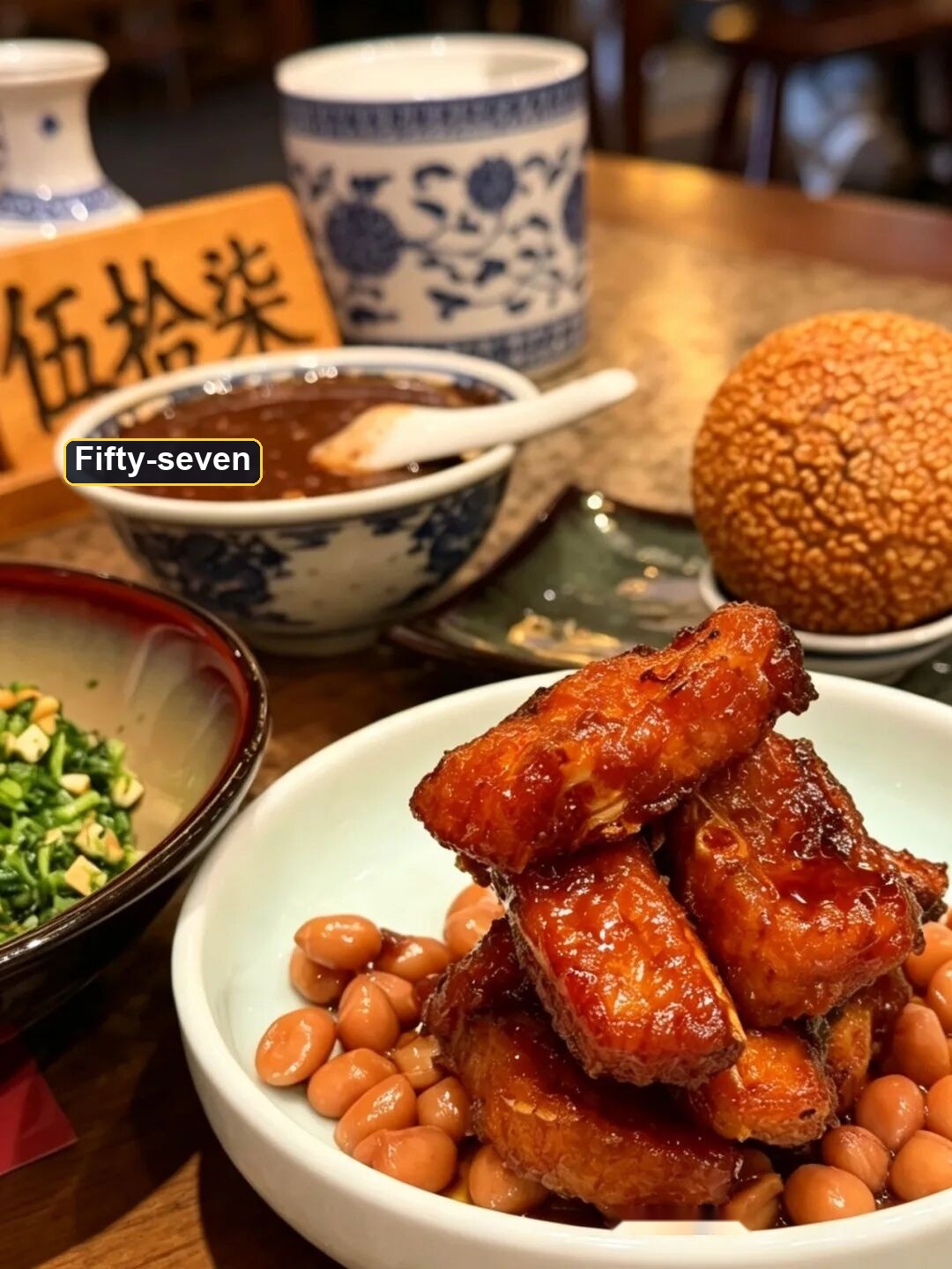
This restaurant is a century-old Halal landmark with nearly 200 years of history, often called a 'living fossil' of the Nanjing food scene. In 1845, the founder, Ma Sifa, fled a famine in his hometown and moved to Nanjing. He initially made a living running a small food stall near the Huashen Temple. Later, his son, Ma Shengxiang, took over the family business, moved the stall to the 'Huihui Ying' (Hui Muslim Barracks) area near Yuhuatai, and built a proper shop, officially naming it 'Ma Xiangxing.' 180 years later, that humble stall has grown into a full-blown building. They even created the 'Four Classic Dishes' that made them famous across Nanjing: Meiren Gan, Squirrel Fish, Phoenix Tail Shrimp, and Egg Shaomai. These dishes perfectly blend northern Halal techniques with local Jiangnan ingredients, becoming the restaurant's signatures. Nowadays, many old-school Nanjing locals consider this place their go-to family cafeteria.
Menu Recommendations
Meiren Gan (Beauty’s Liver)
This dish is the gold standard for 'turning the ordinary into something extraordinary.' The main ingredient is duck pancreas—specifically the white fatty tissue found under the duck’s neck—stir-fried in duck oil. It’s crispy, tender, and smooth, with a beautiful milky color, and pairs perfectly with asparagus and mushrooms. Rumor has it that a chef came up with it on the fly, turning an unwanted ingredient into a signature dish.
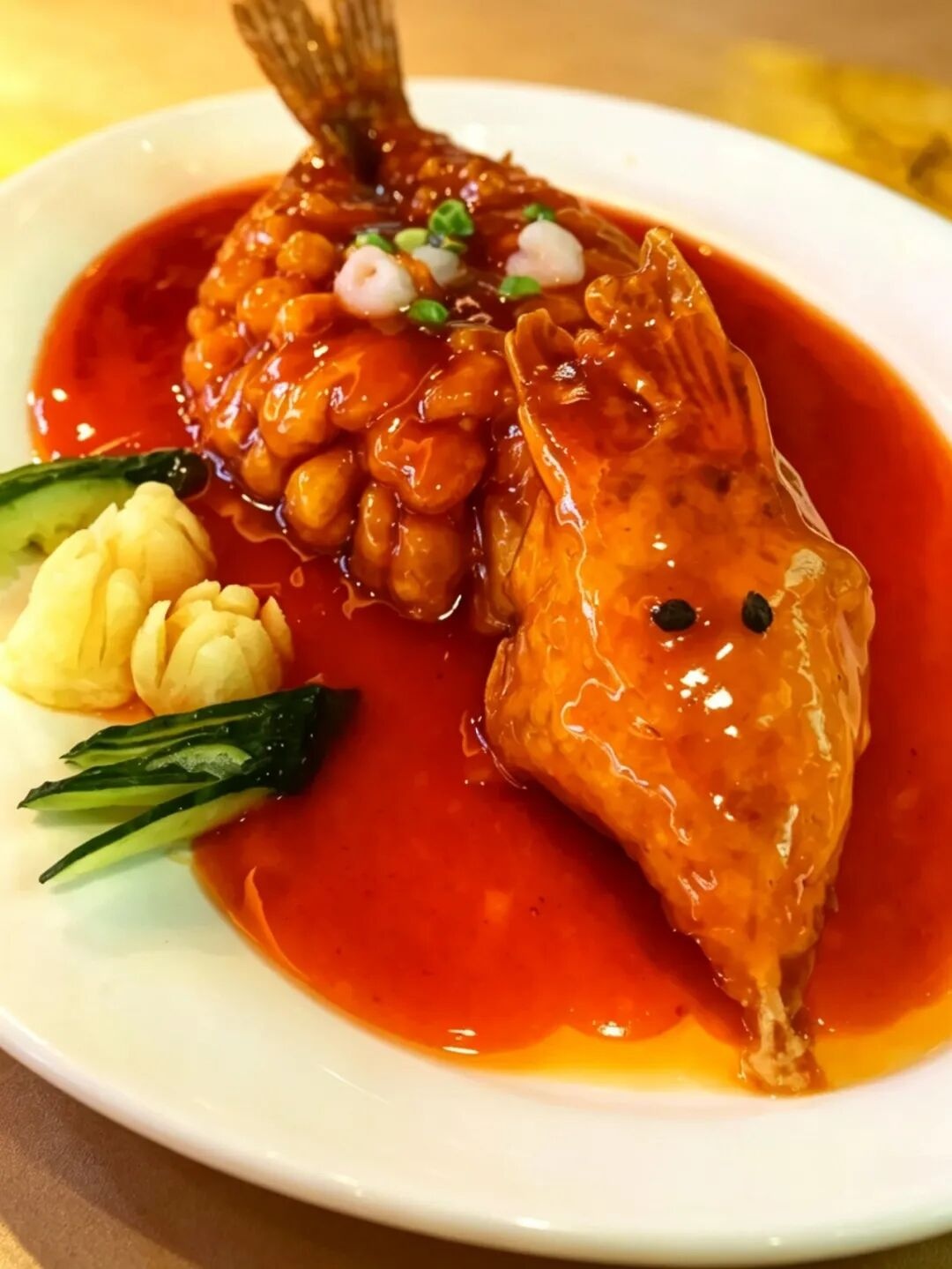
Squirrel Mandarin Fish
This is an upgrade on the classic Suzhou squirrel-style mandarin fish. They use live mandarin fish, slice it with precise knife work, and fry it until it looks like a squirrel. The secret is shaping the fish’s jaw into the head of a squirrel. It’s crispy on the outside, tender on the inside, and the sweet and sour sauce is just right. Truly delicious!
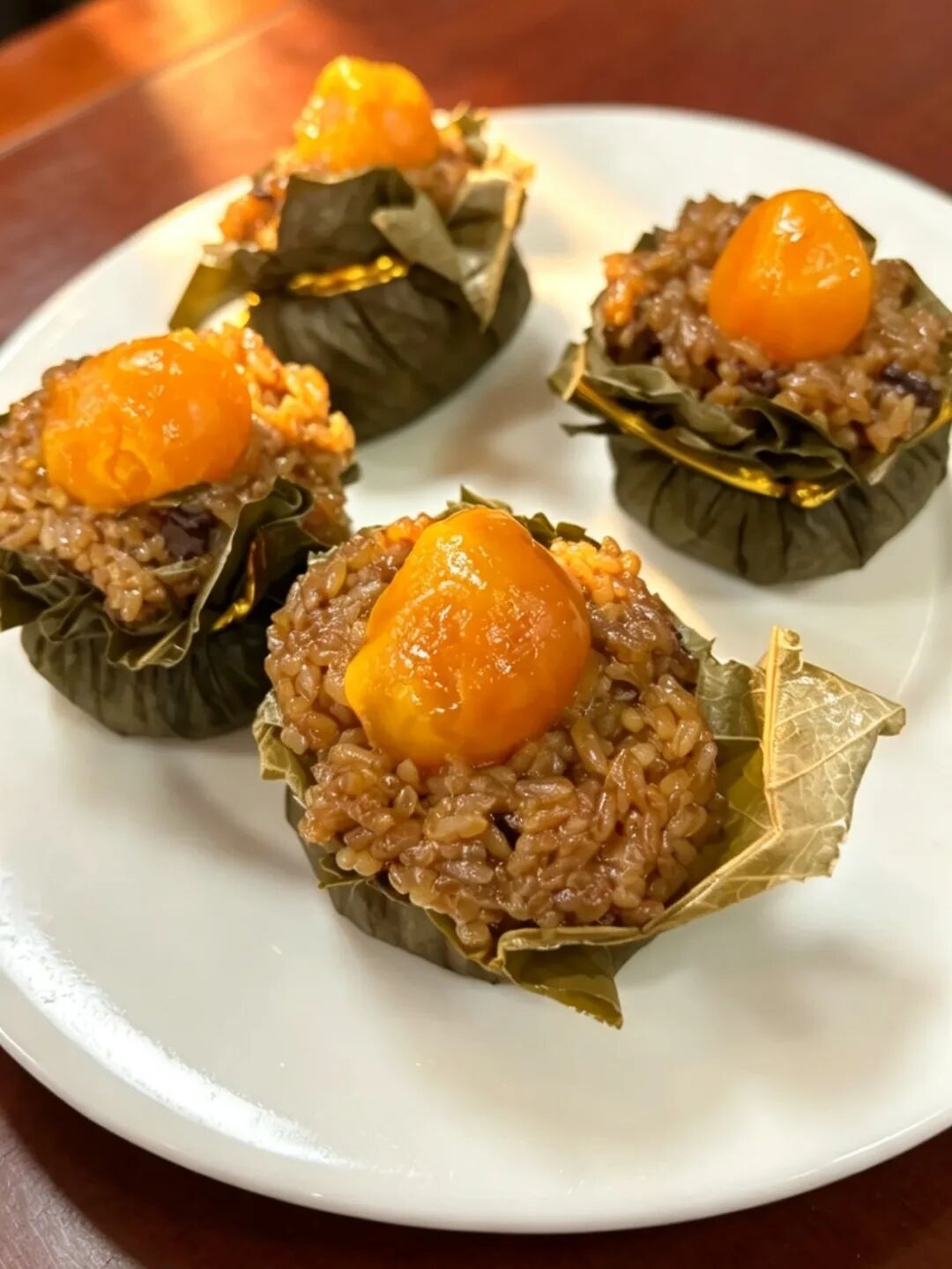
Egg Shaomai (Steamed Dumplings with Egg Wrappers)
There’s a fun story behind this one: it was created to satisfy the cravings of General Bai Chongxi, a leader from the Guangxi clique who loved shrimp. The chef replaced the traditional flour dough with an egg-based wrapper and filled it with shrimp. Once steamed and drizzled with a savory sauce, the texture is fresh, bouncy, and tender—especially when served hot.
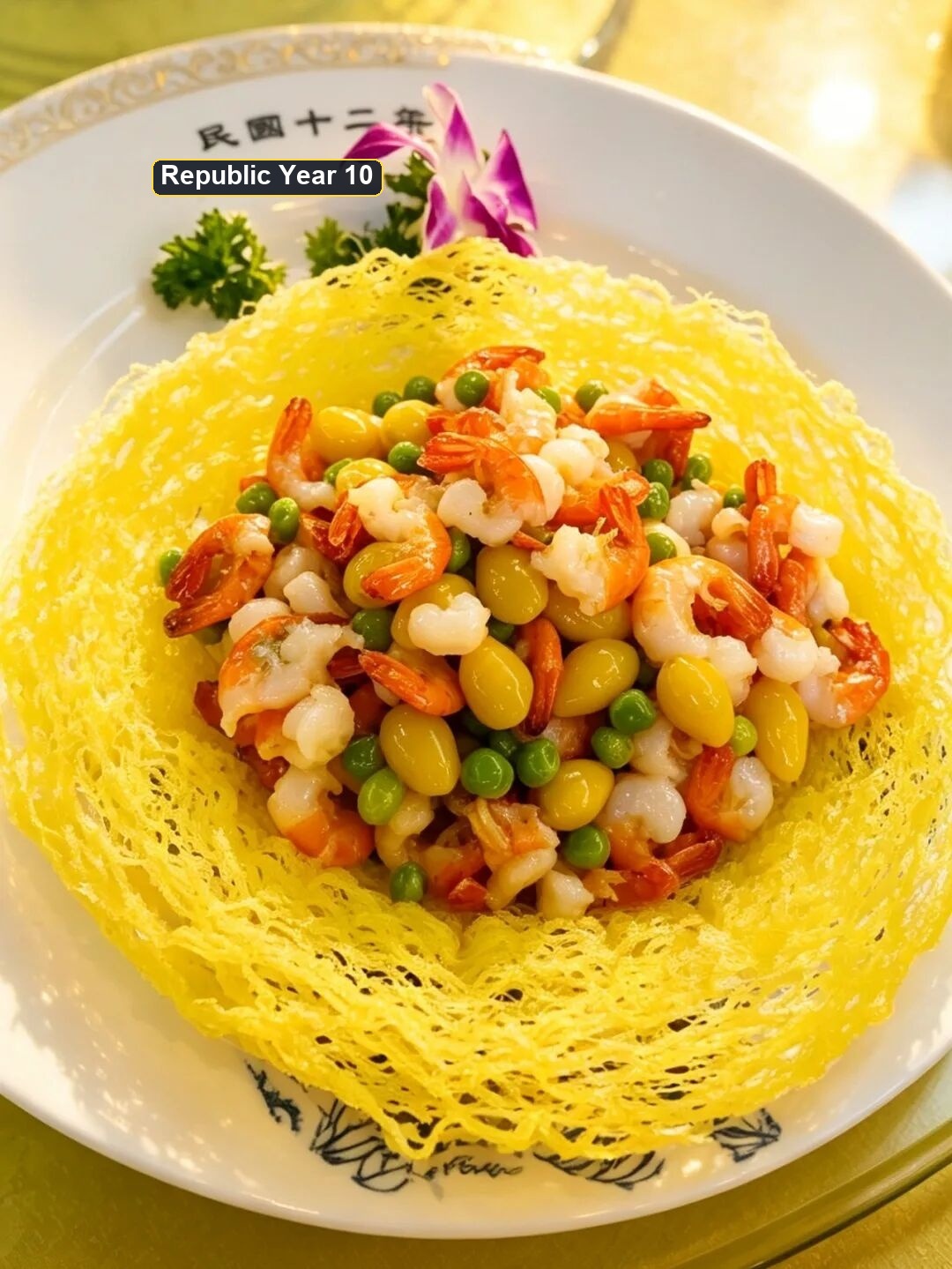
Fengwei Xia (Phoenix Tail Shrimp)
This is another must-order. They use large shrimp, keep the tail intact, and stir-fry them with ginkgo nuts, peas, and carrots. It’s light, refreshing, and not greasy at all. The flavor is fantastic.
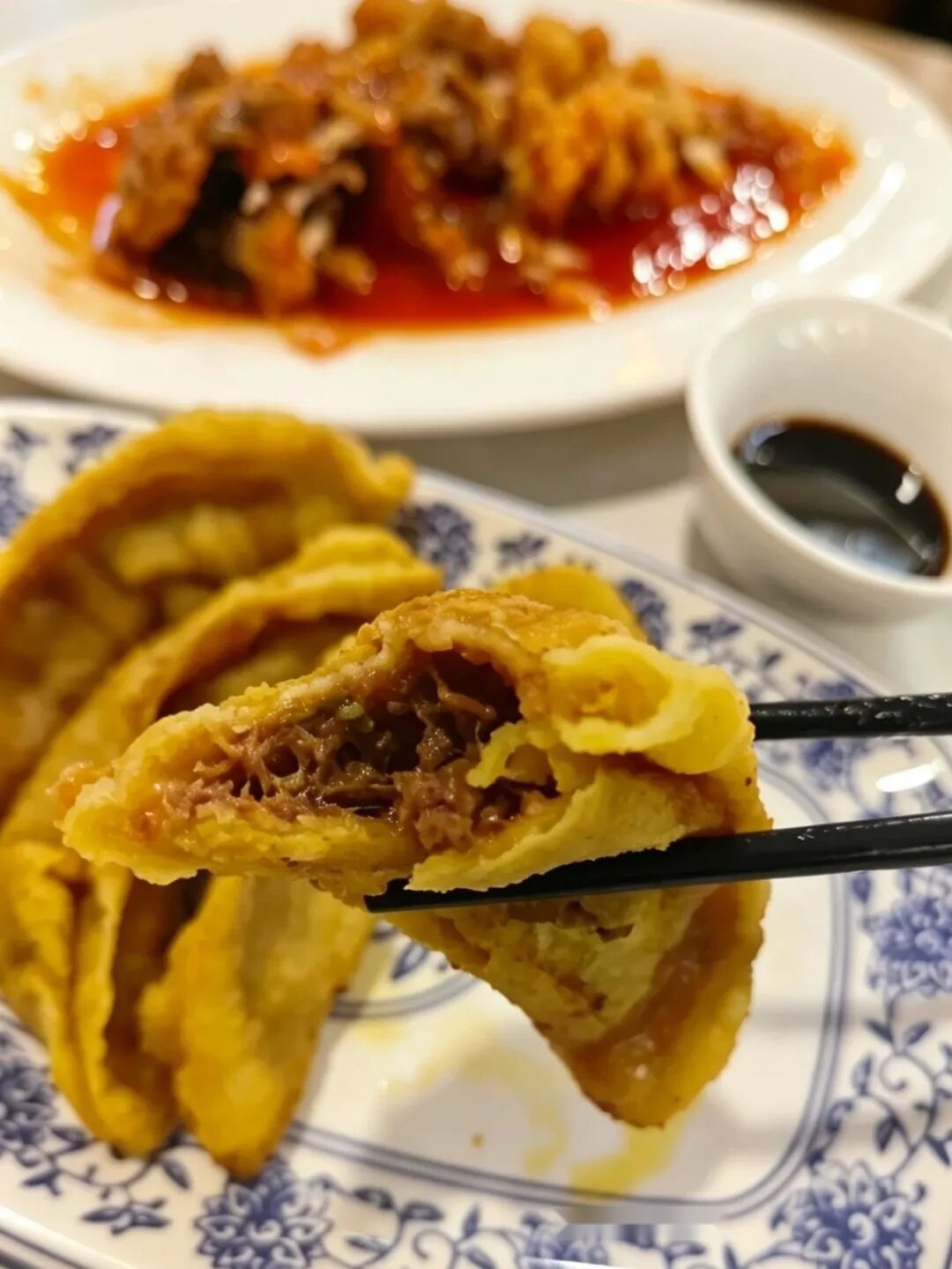
Beef Guotie (Pan-fried Dumplings)
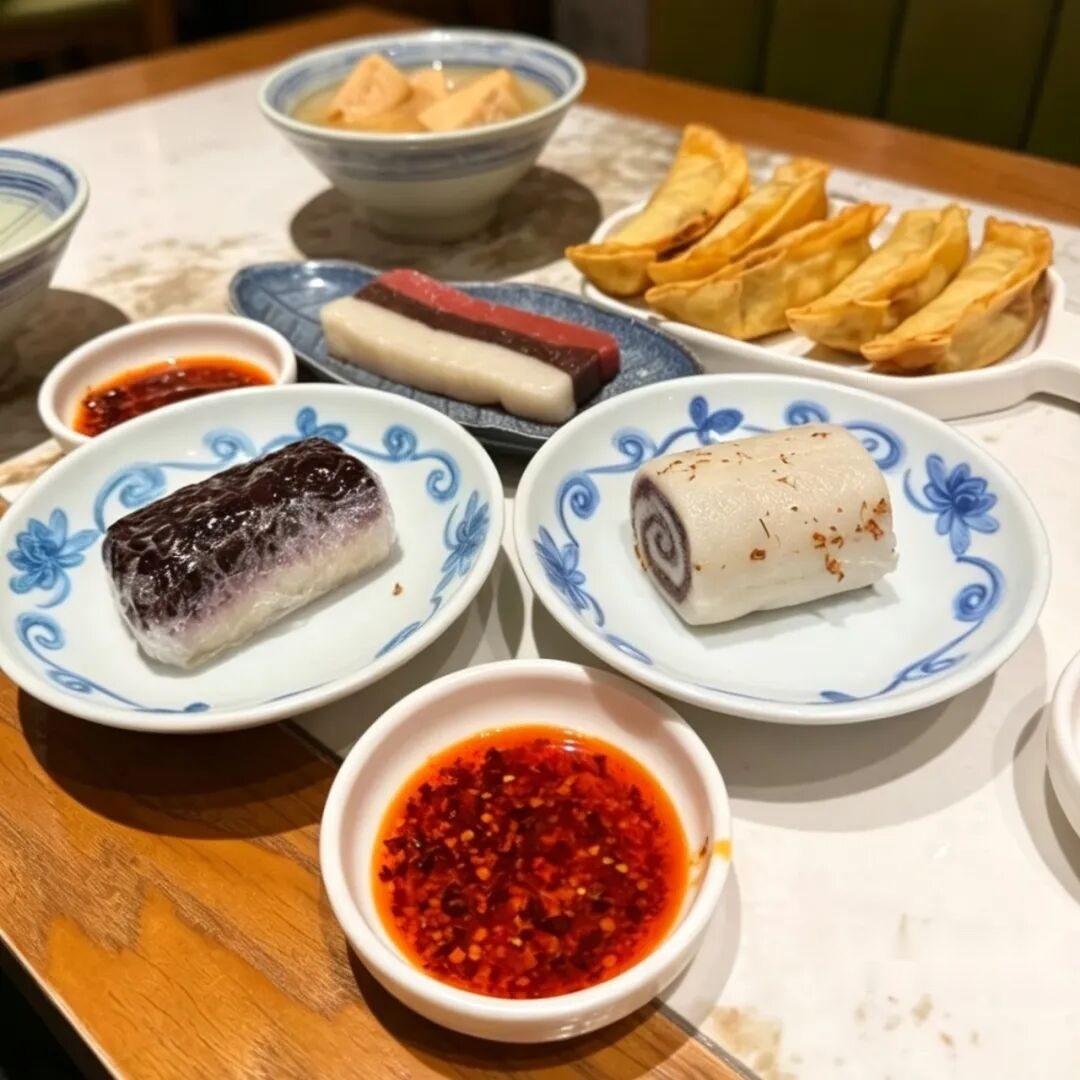
Their pan-fried dumplings have a golden, crispy bottom and a juicy, tender filling. Dipping them in vinegar and chili sauce is incredibly satisfying. It’s a classic snack that locals in Nanjing love.
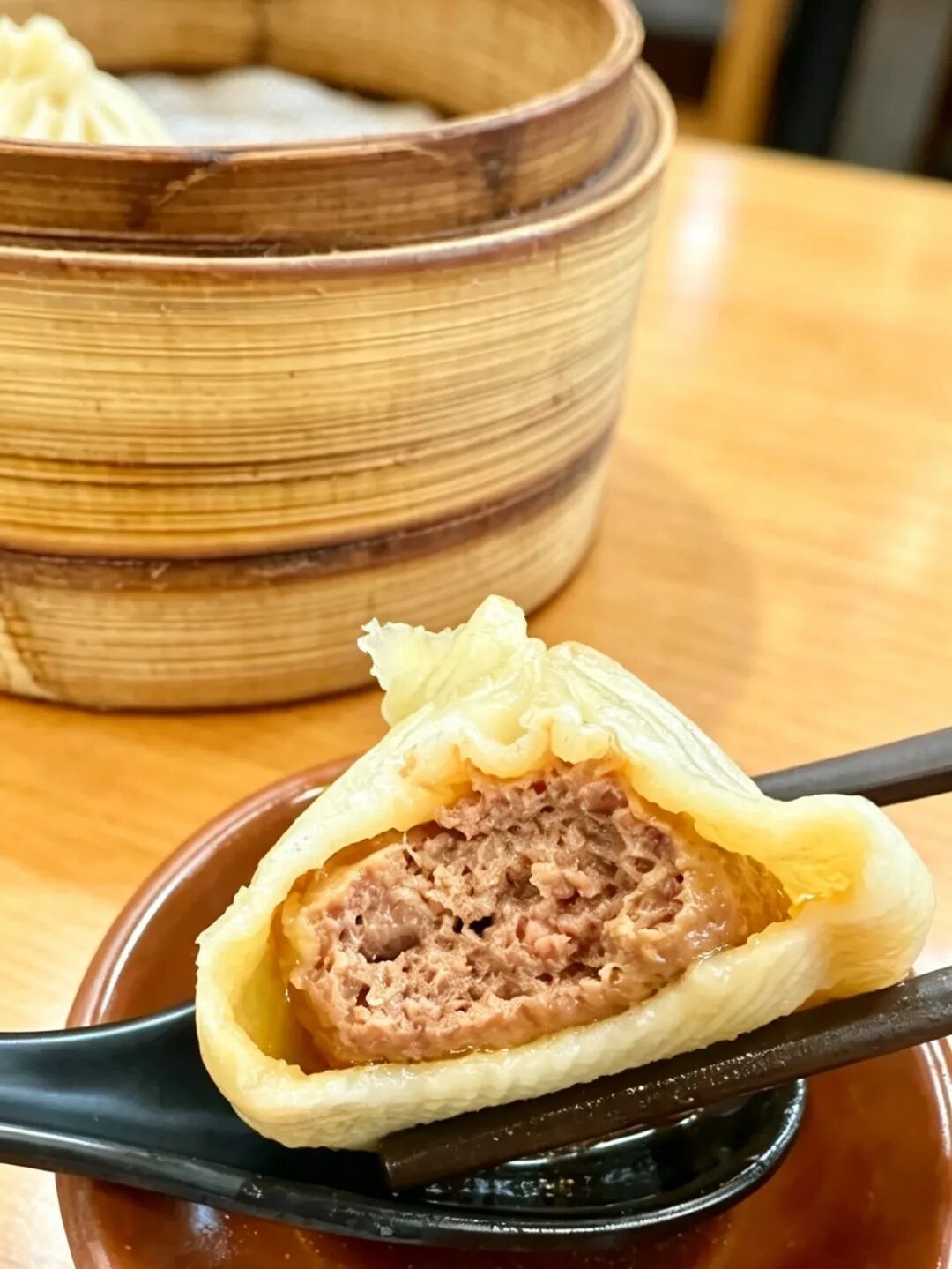
Beef Tangbao (Soup Dumplings)
These are another must-order. The skins are thin, the fillings are generous, and the beef is flavorful without any gamey taste. The soup inside is rich and savory; definitely get an order to try.
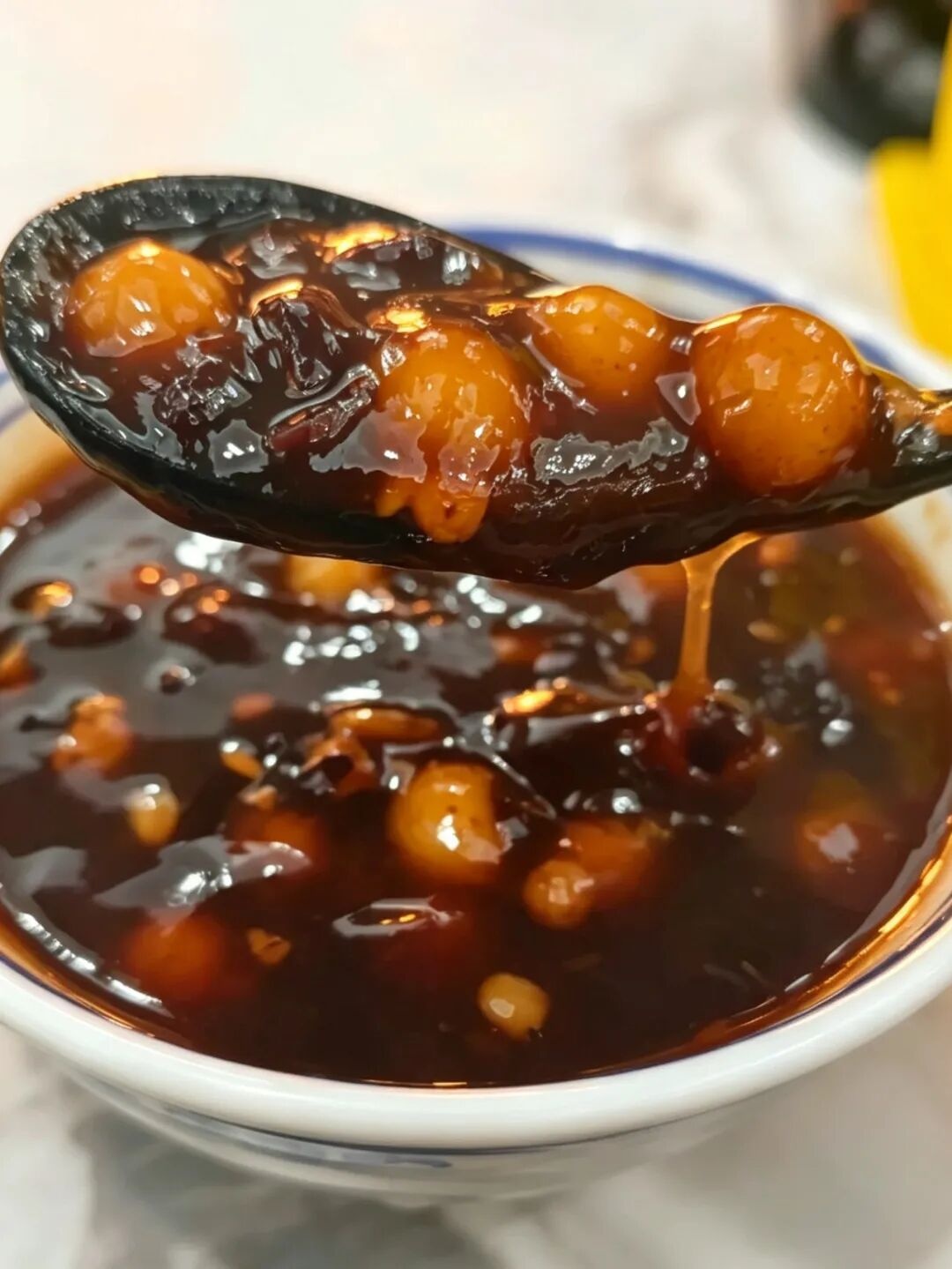
Red Bean Yuanxiao (Sweet Rice Ball Soup)
This is the perfect way to cut through the richness of a meal. The small glutinous rice balls are soft and chewy, the red bean paste is rich, and the thickened lotus root starch gives it a great, hearty texture. It’s not overly sweet, and the portion is huge. Go for it!
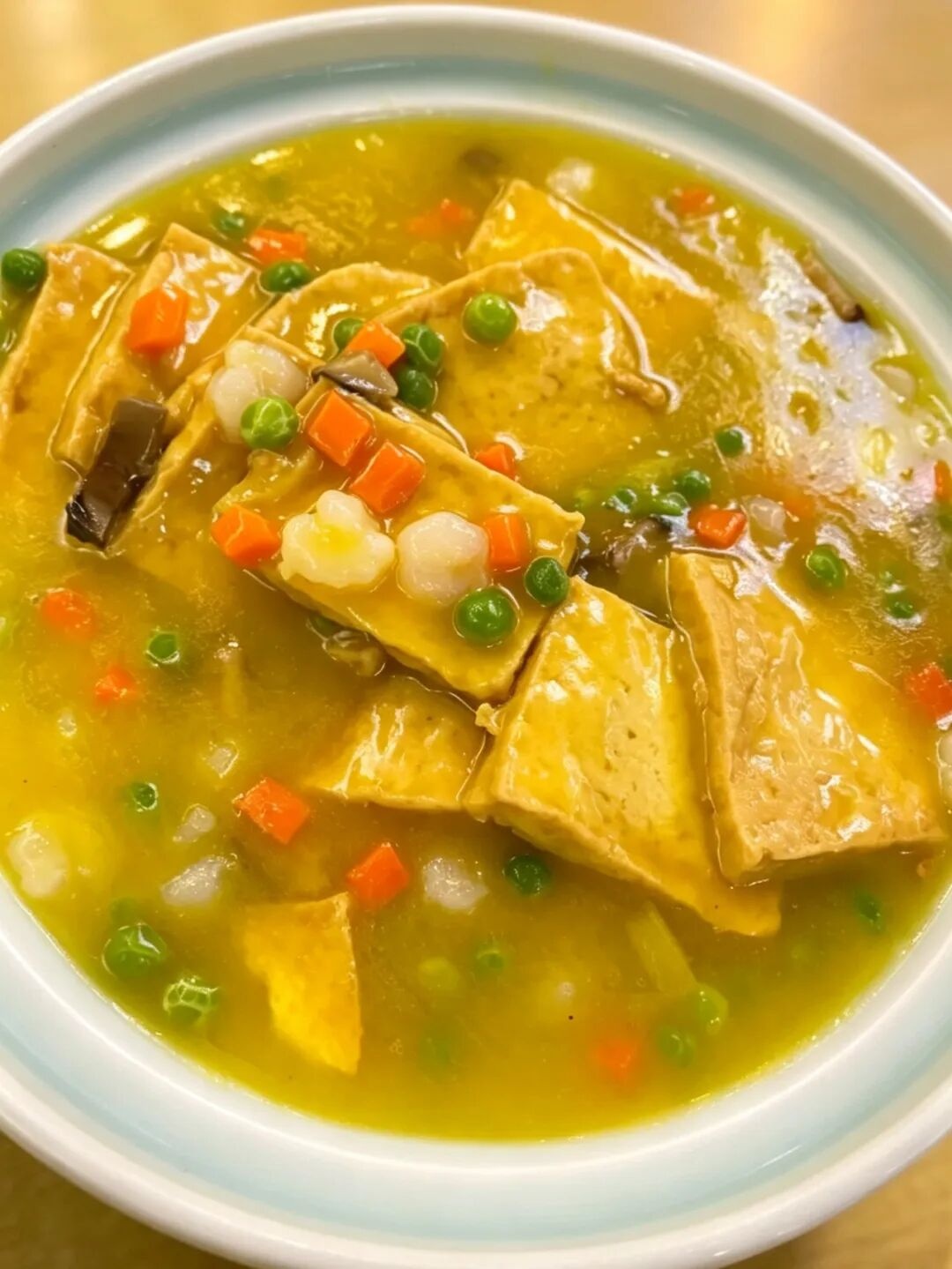
Mr. Hu’s Tofu
Legend has it that this tofu dish was specially made for a Professor Hu at Southeast University. It’s packed with chicken liver, shrimp, and other ingredients, making it incredibly savory and healthy enough for both kids and seniors to enjoy.
Ma Xiangxing Halal Restaurant
Address: No. 32 Yunnan Road, Gulou District, Nanjing
Business Hours: 07:00 - 20:30 view all
Good food is the foundation of a good life.
When you travel to certain cities, you’ll find shops with histories that stop you in your tracks. Nanjing’s Ma Xiangxing is exactly that kind of place.
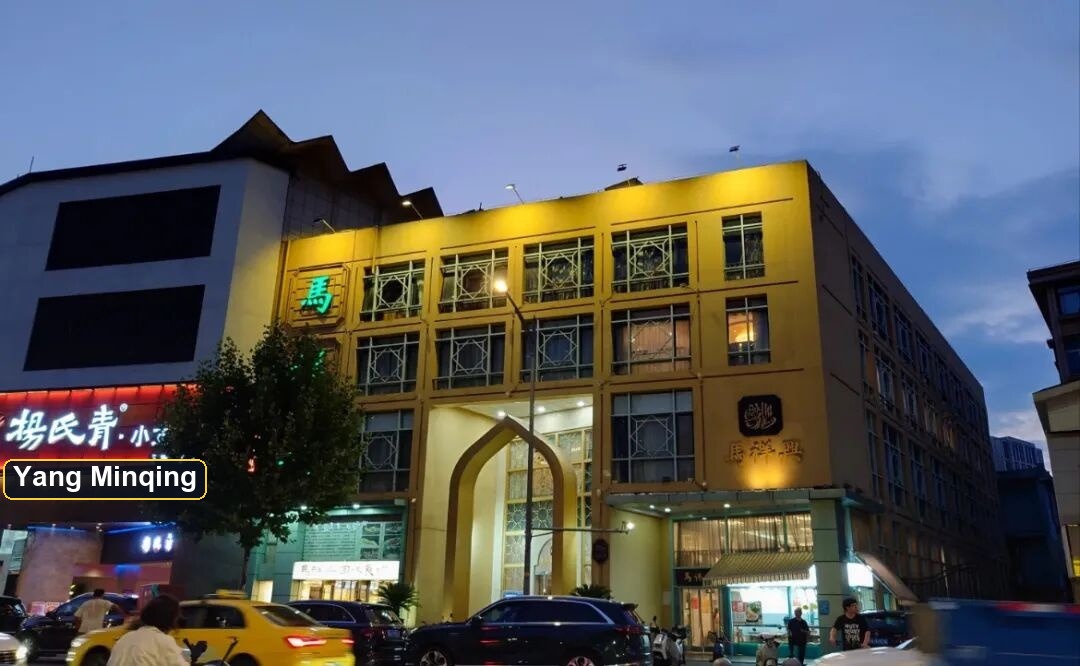
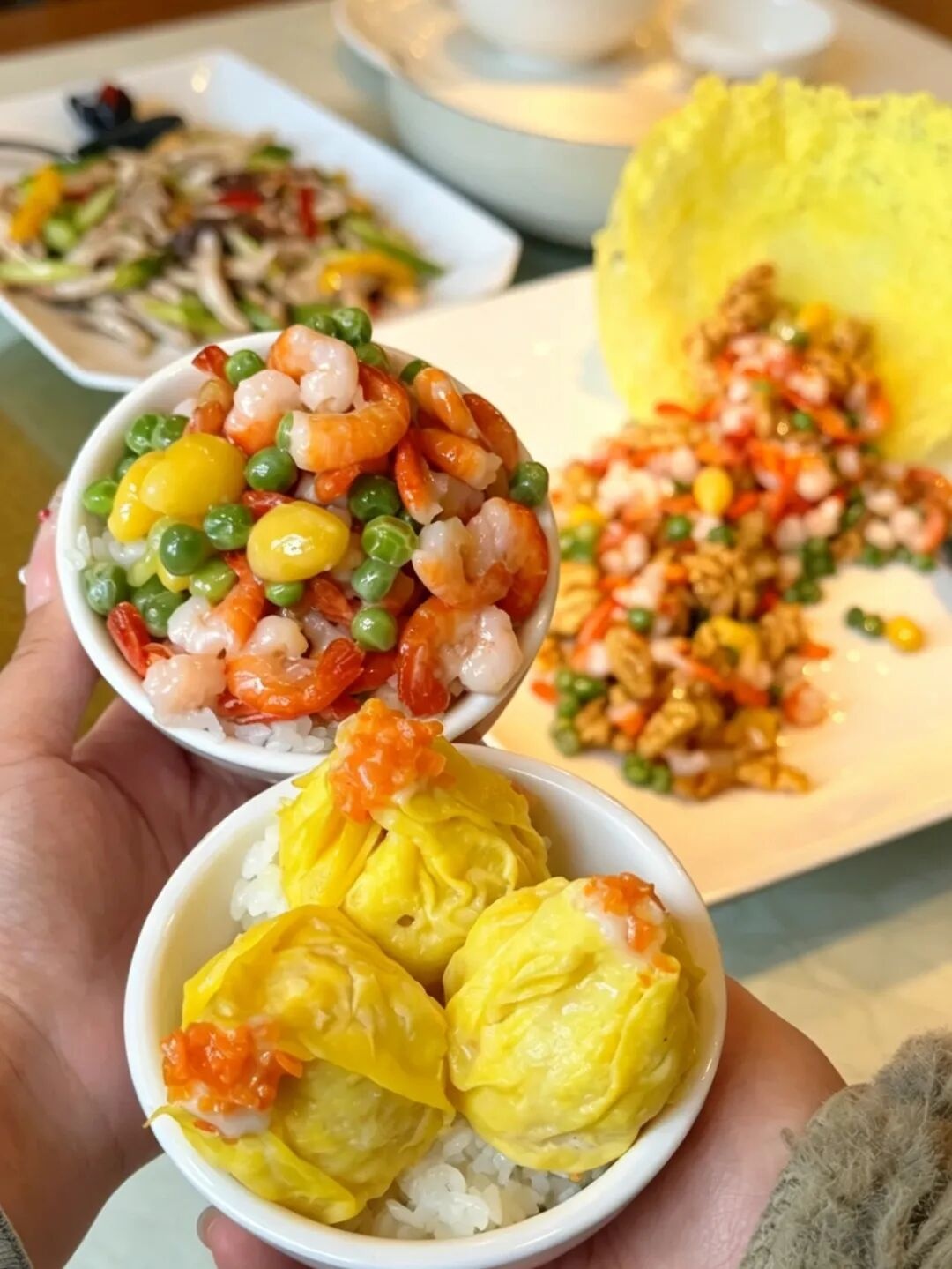
This restaurant is a century-old Halal landmark with nearly 200 years of history, often called a 'living fossil' of the Nanjing food scene. In 1845, the founder, Ma Sifa, fled a famine in his hometown and moved to Nanjing. He initially made a living running a small food stall near the Huashen Temple. Later, his son, Ma Shengxiang, took over the family business, moved the stall to the 'Huihui Ying' (Hui Muslim Barracks) area near Yuhuatai, and built a proper shop, officially naming it 'Ma Xiangxing.' 180 years later, that humble stall has grown into a full-blown building. They even created the 'Four Classic Dishes' that made them famous across Nanjing: Meiren Gan, Squirrel Fish, Phoenix Tail Shrimp, and Egg Shaomai. These dishes perfectly blend northern Halal techniques with local Jiangnan ingredients, becoming the restaurant's signatures. Nowadays, many old-school Nanjing locals consider this place their go-to family cafeteria.
Menu Recommendations
Meiren Gan (Beauty’s Liver)
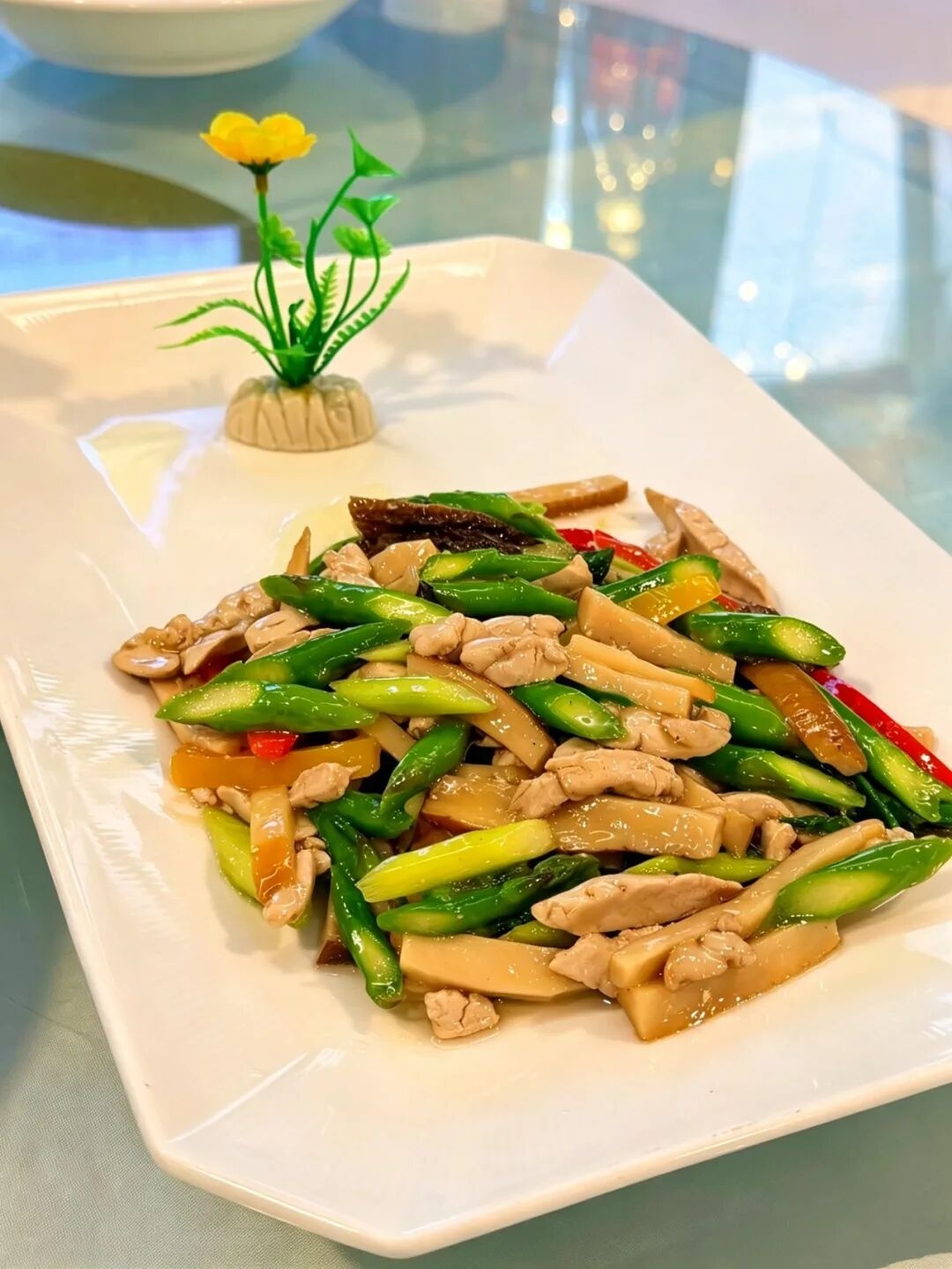
This dish is the gold standard for 'turning the ordinary into something extraordinary.' The main ingredient is duck pancreas—specifically the white fatty tissue found under the duck’s neck—stir-fried in duck oil. It’s crispy, tender, and smooth, with a beautiful milky color, and pairs perfectly with asparagus and mushrooms. Rumor has it that a chef came up with it on the fly, turning an unwanted ingredient into a signature dish.
Squirrel Mandarin Fish
This is an upgrade on the classic Suzhou squirrel-style mandarin fish. They use live mandarin fish, slice it with precise knife work, and fry it until it looks like a squirrel. The secret is shaping the fish’s jaw into the head of a squirrel. It’s crispy on the outside, tender on the inside, and the sweet and sour sauce is just right. Truly delicious!
Egg Shaomai (Steamed Dumplings with Egg Wrappers)
There’s a fun story behind this one: it was created to satisfy the cravings of General Bai Chongxi, a leader from the Guangxi clique who loved shrimp. The chef replaced the traditional flour dough with an egg-based wrapper and filled it with shrimp. Once steamed and drizzled with a savory sauce, the texture is fresh, bouncy, and tender—especially when served hot.
Fengwei Xia (Phoenix Tail Shrimp)
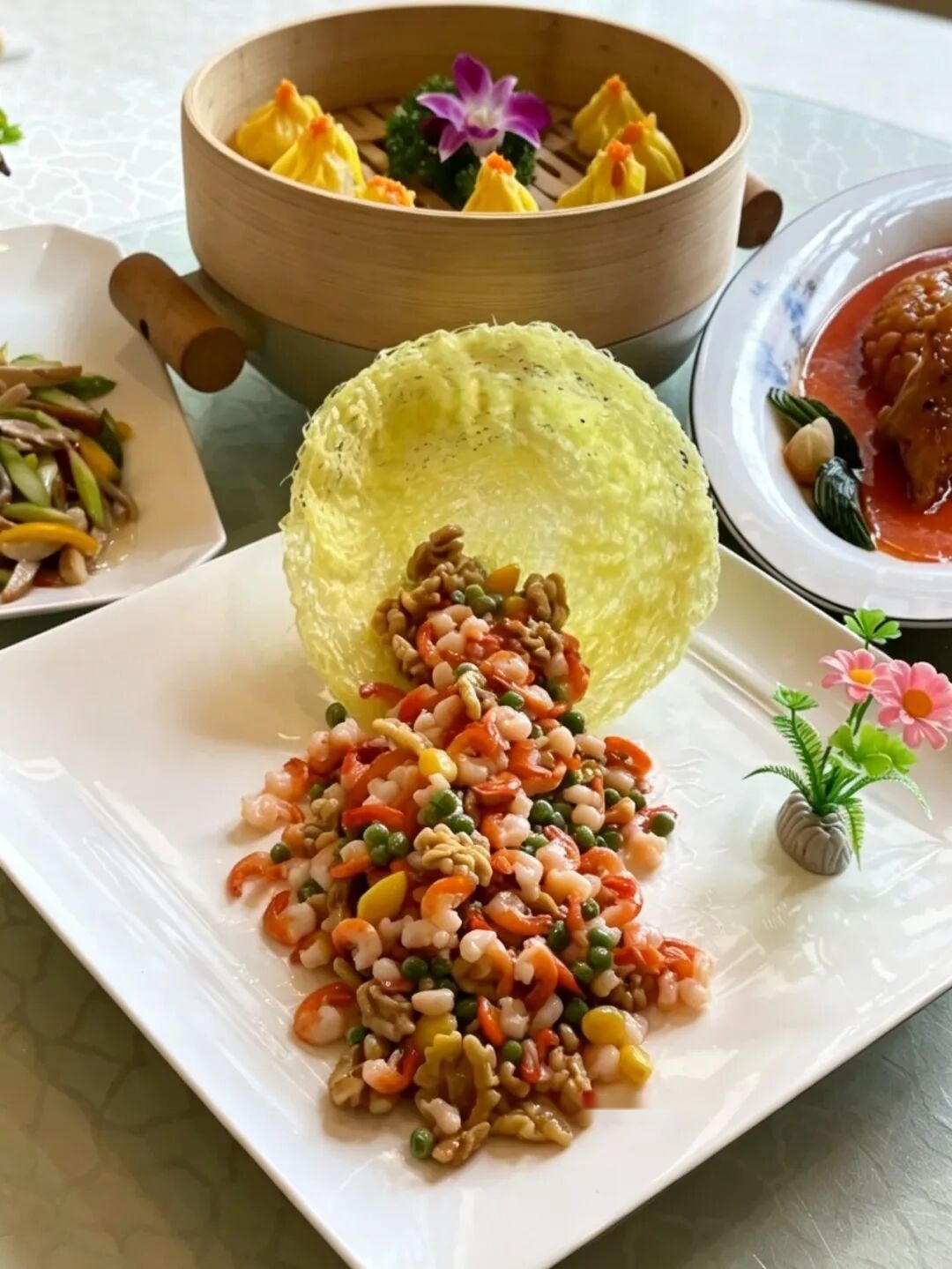
This is another must-order. They use large shrimp, keep the tail intact, and stir-fry them with ginkgo nuts, peas, and carrots. It’s light, refreshing, and not greasy at all. The flavor is fantastic.
Beef Guotie (Pan-fried Dumplings)
Their pan-fried dumplings have a golden, crispy bottom and a juicy, tender filling. Dipping them in vinegar and chili sauce is incredibly satisfying. It’s a classic snack that locals in Nanjing love.
Beef Tangbao (Soup Dumplings)
These are another must-order. The skins are thin, the fillings are generous, and the beef is flavorful without any gamey taste. The soup inside is rich and savory; definitely get an order to try.
Red Bean Yuanxiao (Sweet Rice Ball Soup)
This is the perfect way to cut through the richness of a meal. The small glutinous rice balls are soft and chewy, the red bean paste is rich, and the thickened lotus root starch gives it a great, hearty texture. It’s not overly sweet, and the portion is huge. Go for it!
Mr. Hu’s Tofu
Legend has it that this tofu dish was specially made for a Professor Hu at Southeast University. It’s packed with chicken liver, shrimp, and other ingredients, making it incredibly savory and healthy enough for both kids and seniors to enjoy.
Ma Xiangxing Halal Restaurant
Address: No. 32 Yunnan Road, Gulou District, Nanjing
Business Hours: 07:00 - 20:30
Traditional Hui Muslim Food: Deep Dive into the Cultural Significance and History of Youxiang (Fried Dough Cakes)
Articles • Hasan09 posted the article • 0 comments • 25 views • 1 days ago
Youxiang is a traditional delicacy among Hui Muslims, typically prepared only for special family occasions, celebrations like weddings and funerals, or major holidays such as Eid al-Fitr and Eid al-Adha.
In my childhood memories, my mother would fry youxiang every Eid al-Fitr. From kneading and proofing the dough to shaping and frying, she did it all by herself. My sister and I never learned the craft; my father used to say Mom was just too independent and insisted on doing everything on her own.
Whenever Mom finished frying them, it was my job to deliver the youxiang to our neighbors. It was a lovely back-and-forth tradition, and they would often send other treats back home with me.
After I grew up, my mother stopped frying youxiang at home as often. When she occasionally went to help others prepare them, she’d bring back a couple, and sometimes she’d even bring home a piece of mietie (blessed meat gifted for religious remembrance).
I always thought we had plenty of time left, but Mom’s sudden passing early this year caught us completely off guard. After we brought her home that night, it was our neighbors who stepped in to help fry the youxiang.
According to Hui Muslim traditions, families are expected to fry youxiang as an act of sadaqah (charity/giving) during memorial days after a loved one passes; it is a duty and a responsibility for the children.
On the seventh day, we were still deep in grief, and since neither my sister nor I knew how to fry them, we felt a void. I ordered 35 youxiang from the Tiankelai Restaurant, heated them up, cut them into pieces, and placed a plate on every table.
Forty days after my mother passed, which happened to be during Ramadan, my sister fried the youxiang. They weren't perfect, but Mom surely felt the love behind the gesture.
I personally bought 10 catties (approx. 5kg) of beef and 15 catties (approx. 7.5kg) of eggs, donating them to the Madian Mosque to be used as ingredients for their community iftar (the meal to break the fast).
Time flew, and by the end of March, Eid al-Fitr was approaching. On a Saturday morning, we visited Mom’s grave, and that afternoon, I wanted to fulfill a wish: to fry youxiang myself, also known as 'xiangxiang guo' (the fragrant pot), to honor her memory.
After getting home at noon, the 'Niu' family (my husband) and I started prepping the ingredients.
After performing ghusl (major ritual washing) and wudu (minor ritual washing), I lit a stick of incense in the burner, then dove into kneading, proofing, portioning, and frying the dough.
Even though the youxiang didn't come out perfectly round, I was relieved that the dough rose well, and my husband even gave me a thumbs-up.
The sunset that day was beautiful, and we drove over to deliver a few to my father.
May 5th marked the 100th day since Mom passed. My father, my sister, and I agreed to fry youxiang and invite an Ahong (Imam) to our home for a prayer reading.
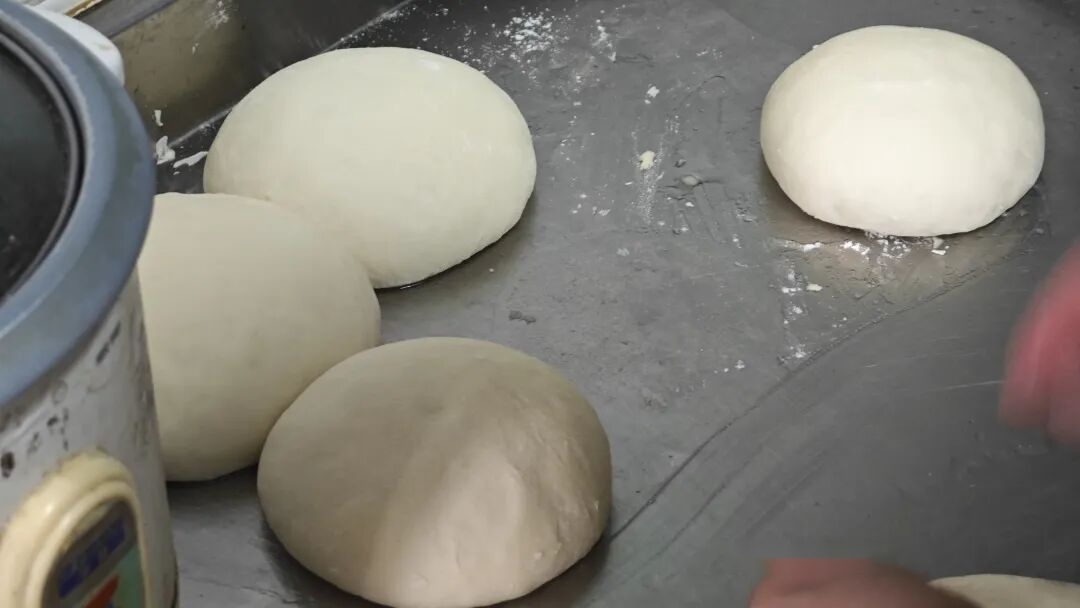
In the morning, after my husband and I arrived, my sister brought over the dough she had already proofed. We portioned it out, flattened it into circles, and waited for the oil to heat up before frying.
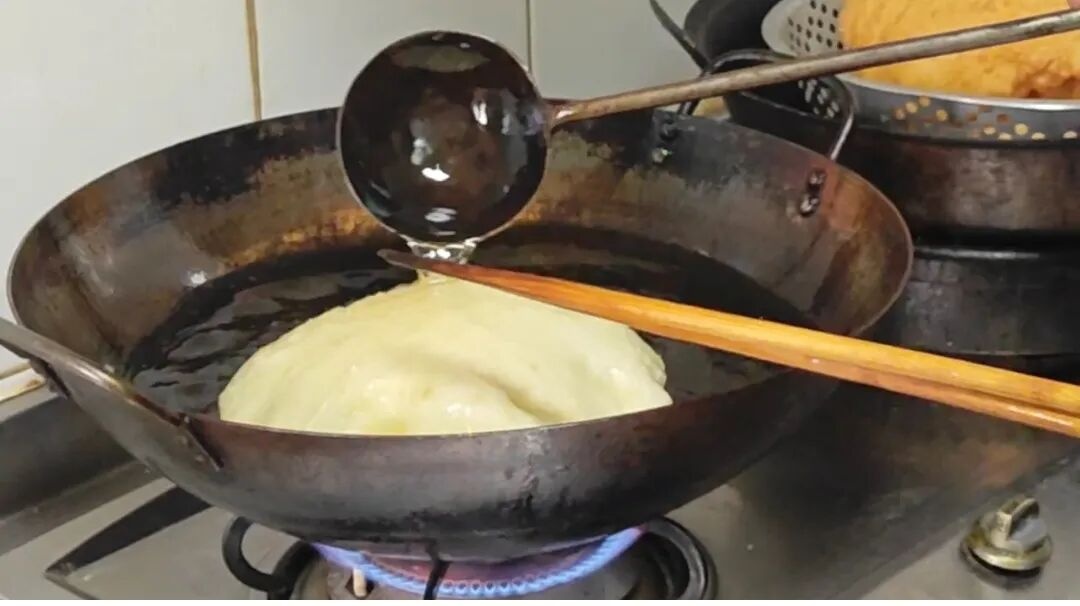
While frying, you have to keep spooning hot oil over the dough so the youxiang puffs up properly.
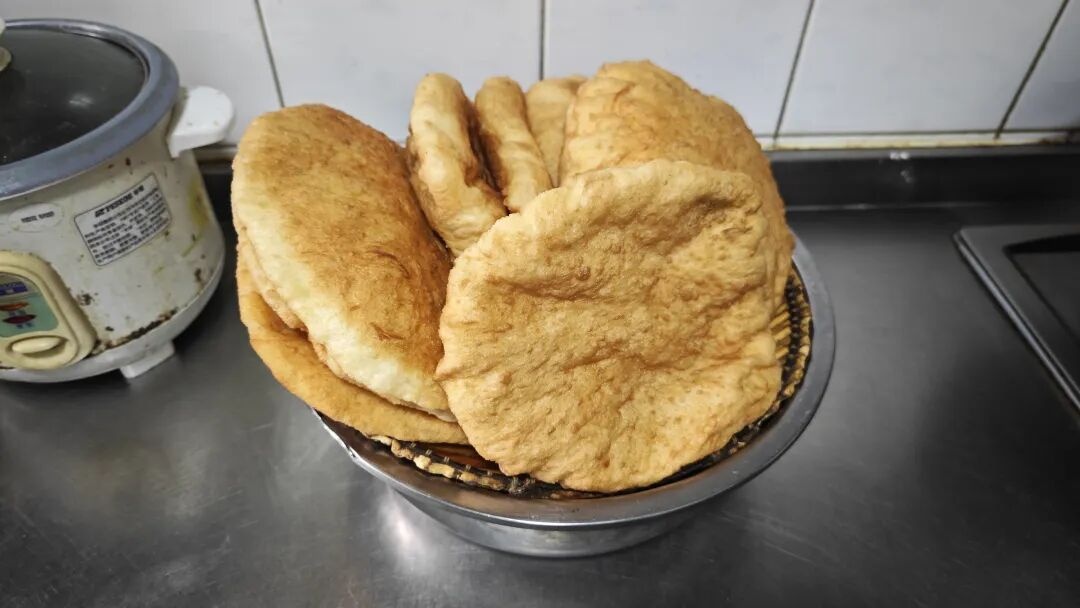
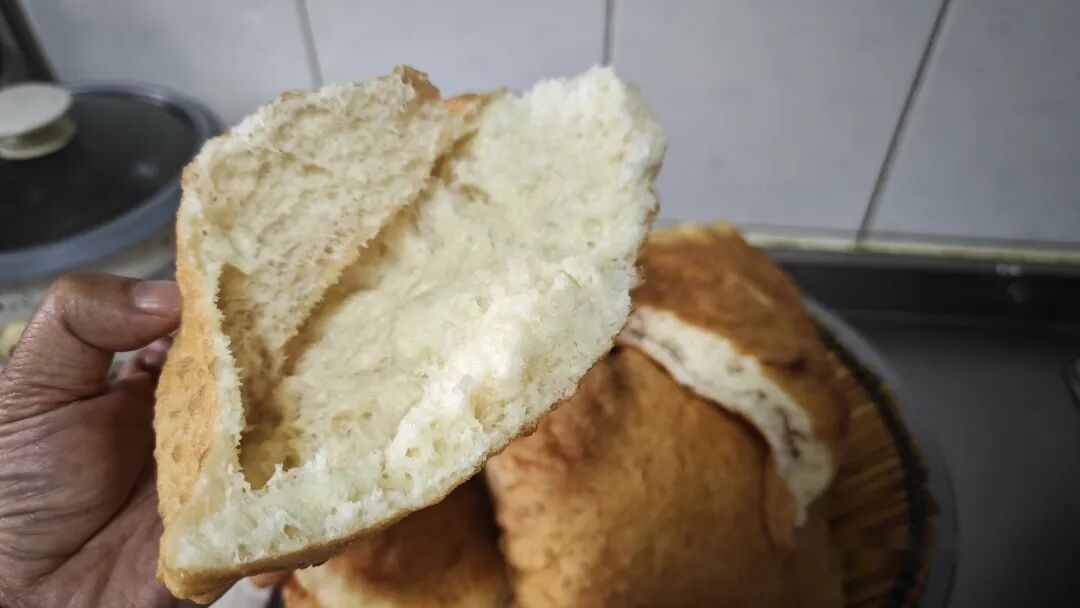
We fried less than 20 that day, but the dough turned out great, which brought my sister a lot of peace of mind.
When the Ahong left after the prayers, he took a few packages of mietie and two youxiang with him.
Youxiang comes in three main varieties: plain, sweet (sugar), and savory (meat). You can also find them in salty, bland, or sweet flavors, as well as the 'tangmian' (scalded dough) version.
As for their shape, youxiang in most Hui Muslim communities are round. However, there is one strict rule: you must never call them 'youbing' (fried pancakes). Even if they look exactly like youbing in some areas, it is considered taboo to use that name.
There is also a proper etiquette for eating youxiang: you should use your hands to tear it along the knife marks or split it in half, as it is considered improper to bite directly into the whole piece.
Youxiang is more than just food; it is a profound cultural symbol. Every holiday or family gathering brings families together to fry them, not just for themselves but to share with neighbors and friends. It preserves the dietary customs of the Hui Muslims and carries deep emotional meaning and cherished memories. view all
Youxiang is a traditional delicacy among Hui Muslims, typically prepared only for special family occasions, celebrations like weddings and funerals, or major holidays such as Eid al-Fitr and Eid al-Adha.
In my childhood memories, my mother would fry youxiang every Eid al-Fitr. From kneading and proofing the dough to shaping and frying, she did it all by herself. My sister and I never learned the craft; my father used to say Mom was just too independent and insisted on doing everything on her own.
Whenever Mom finished frying them, it was my job to deliver the youxiang to our neighbors. It was a lovely back-and-forth tradition, and they would often send other treats back home with me.
After I grew up, my mother stopped frying youxiang at home as often. When she occasionally went to help others prepare them, she’d bring back a couple, and sometimes she’d even bring home a piece of mietie (blessed meat gifted for religious remembrance).
I always thought we had plenty of time left, but Mom’s sudden passing early this year caught us completely off guard. After we brought her home that night, it was our neighbors who stepped in to help fry the youxiang.
According to Hui Muslim traditions, families are expected to fry youxiang as an act of sadaqah (charity/giving) during memorial days after a loved one passes; it is a duty and a responsibility for the children.

On the seventh day, we were still deep in grief, and since neither my sister nor I knew how to fry them, we felt a void. I ordered 35 youxiang from the Tiankelai Restaurant, heated them up, cut them into pieces, and placed a plate on every table.
Forty days after my mother passed, which happened to be during Ramadan, my sister fried the youxiang. They weren't perfect, but Mom surely felt the love behind the gesture.


I personally bought 10 catties (approx. 5kg) of beef and 15 catties (approx. 7.5kg) of eggs, donating them to the Madian Mosque to be used as ingredients for their community iftar (the meal to break the fast).
Time flew, and by the end of March, Eid al-Fitr was approaching. On a Saturday morning, we visited Mom’s grave, and that afternoon, I wanted to fulfill a wish: to fry youxiang myself, also known as 'xiangxiang guo' (the fragrant pot), to honor her memory.
After getting home at noon, the 'Niu' family (my husband) and I started prepping the ingredients.


After performing ghusl (major ritual washing) and wudu (minor ritual washing), I lit a stick of incense in the burner, then dove into kneading, proofing, portioning, and frying the dough.
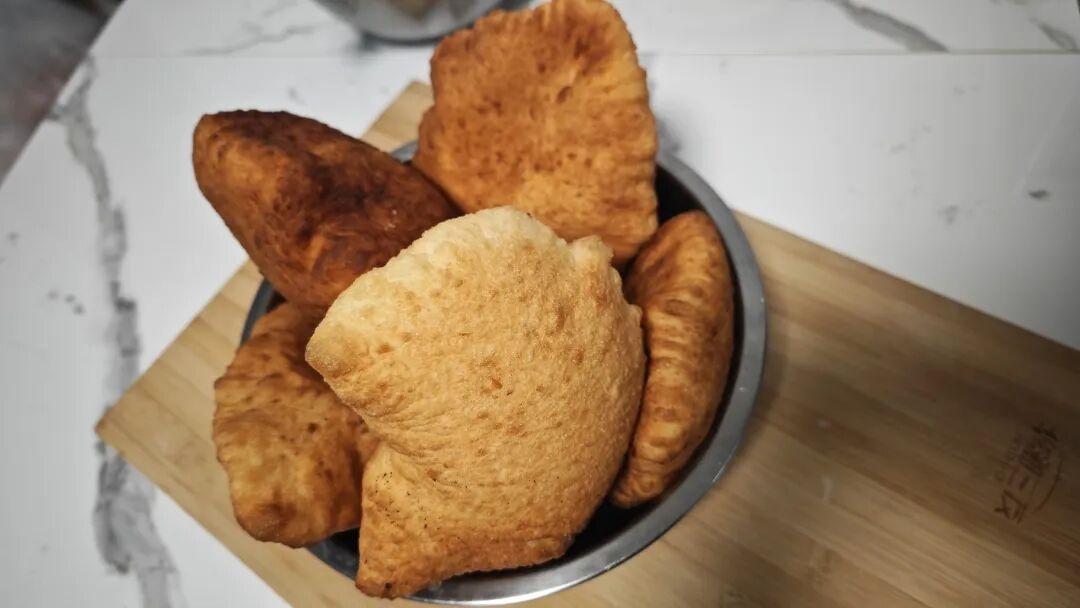
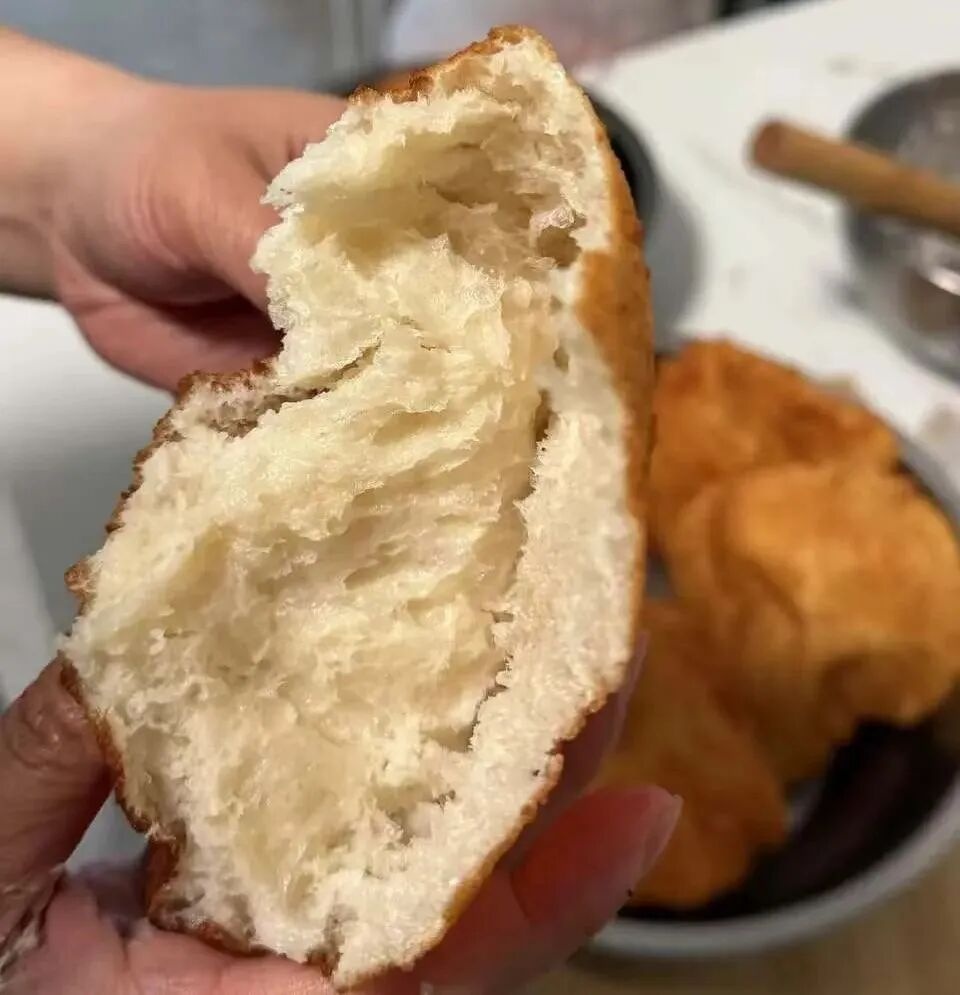
Even though the youxiang didn't come out perfectly round, I was relieved that the dough rose well, and my husband even gave me a thumbs-up.

The sunset that day was beautiful, and we drove over to deliver a few to my father.
May 5th marked the 100th day since Mom passed. My father, my sister, and I agreed to fry youxiang and invite an Ahong (Imam) to our home for a prayer reading.
In the morning, after my husband and I arrived, my sister brought over the dough she had already proofed. We portioned it out, flattened it into circles, and waited for the oil to heat up before frying.
While frying, you have to keep spooning hot oil over the dough so the youxiang puffs up properly.
We fried less than 20 that day, but the dough turned out great, which brought my sister a lot of peace of mind.
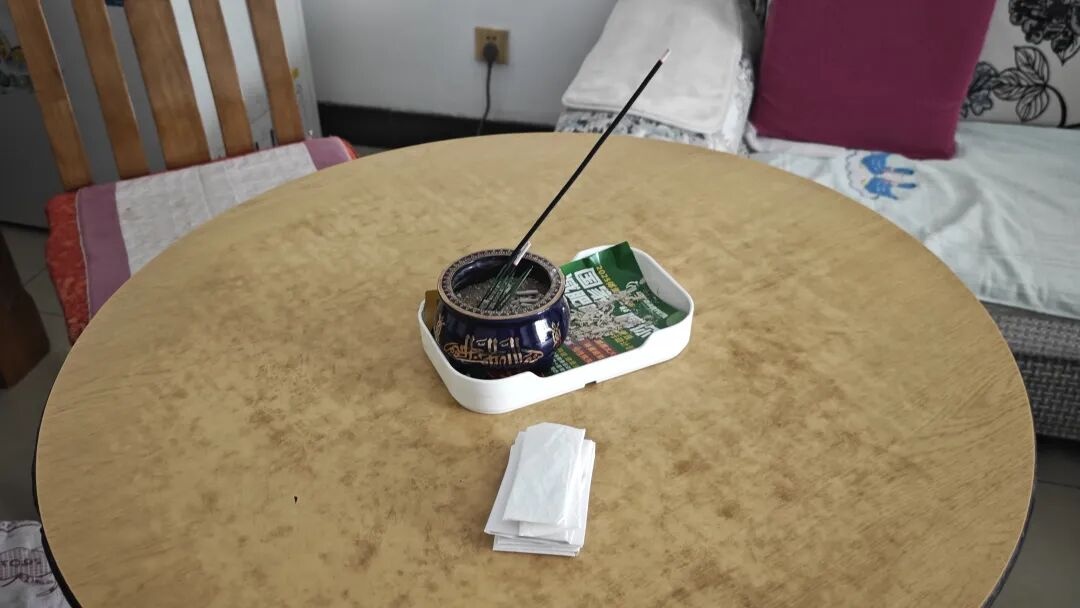
When the Ahong left after the prayers, he took a few packages of mietie and two youxiang with him.
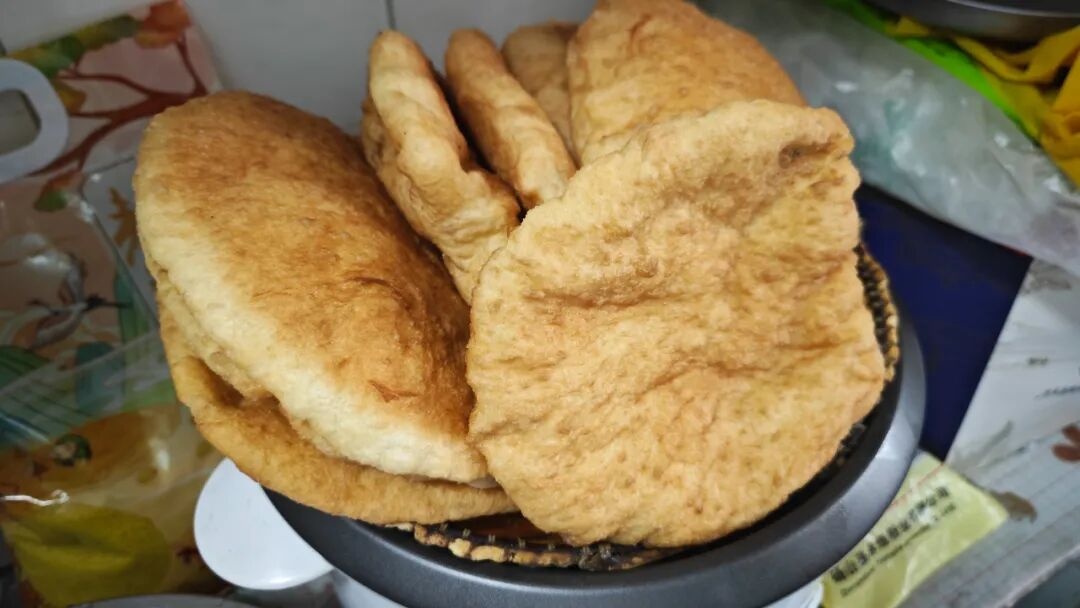
Youxiang comes in three main varieties: plain, sweet (sugar), and savory (meat). You can also find them in salty, bland, or sweet flavors, as well as the 'tangmian' (scalded dough) version.
As for their shape, youxiang in most Hui Muslim communities are round. However, there is one strict rule: you must never call them 'youbing' (fried pancakes). Even if they look exactly like youbing in some areas, it is considered taboo to use that name.
There is also a proper etiquette for eating youxiang: you should use your hands to tear it along the knife marks or split it in half, as it is considered improper to bite directly into the whole piece.
Youxiang is more than just food; it is a profound cultural symbol. Every holiday or family gathering brings families together to fry them, not just for themselves but to share with neighbors and friends. It preserves the dietary customs of the Hui Muslims and carries deep emotional meaning and cherished memories.
Traditional Hui Muslim Wedding Food: Exploring the Symbolism and Authentic Recipe of Fried Youxiang
Articles • Hasan09 posted the article • 0 comments • 23 views • 1 days ago
Golden, glistening, and incredibly fragrant—youxiang is a flavor that simply cannot be missing from a Hui Muslim wedding.
The kitchen is filled with steam as several ladies gather around the workbench, kneading and shaping the dough with practiced, nimble movements. The dough is folded back and forth in their hands until perfect round discs are prepped and ready to be dropped into a sizzling hot wok of oil.
The oil sizzles as the dough puffs up, slowly transforming from a pale white to an appetizing golden brown. Once lifted from the oil, the youxiang are slightly fluffy on the outside, smelling faintly of rich, fried dough, with a texture that is soft, chewy, and lightly sweet.
It is more than just a snack; it is a gesture of love. Serving youxiang at a wedding represents unity, happiness, and peace—it is the simplest yet most profound blessing from elders to the newlyweds, a tradition that has been passed down for generations.
There are no fancy decorations here, just the deep, genuine warmth of community and shared life. With the very first bite, you aren't just tasting a classic flavor, but also the comforting sense of ritual preserved through time.
Have you ever tried these youxiang that carry such beautiful meaning? view all
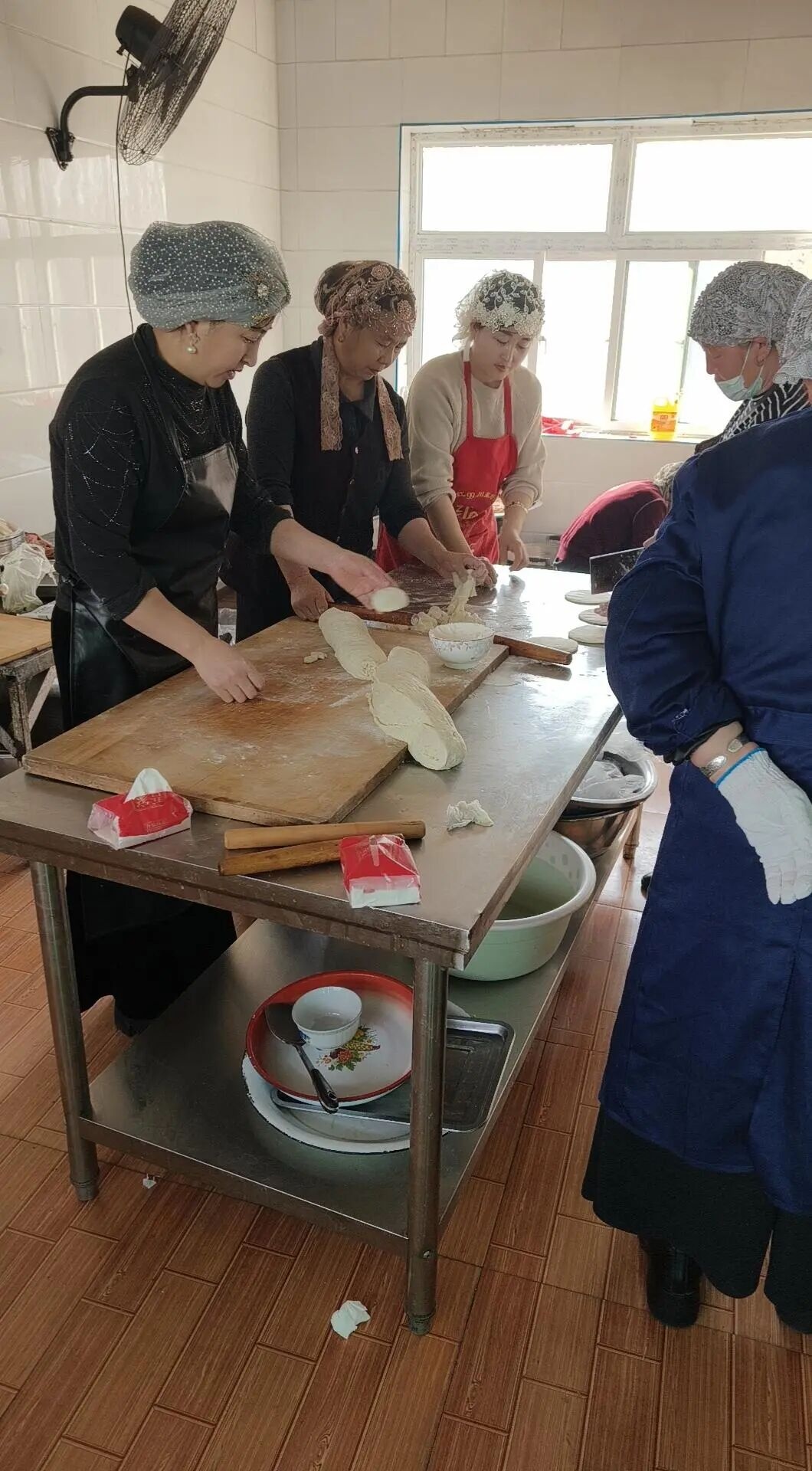
Golden, glistening, and incredibly fragrant—youxiang is a flavor that simply cannot be missing from a Hui Muslim wedding.
The kitchen is filled with steam as several ladies gather around the workbench, kneading and shaping the dough with practiced, nimble movements. The dough is folded back and forth in their hands until perfect round discs are prepped and ready to be dropped into a sizzling hot wok of oil.
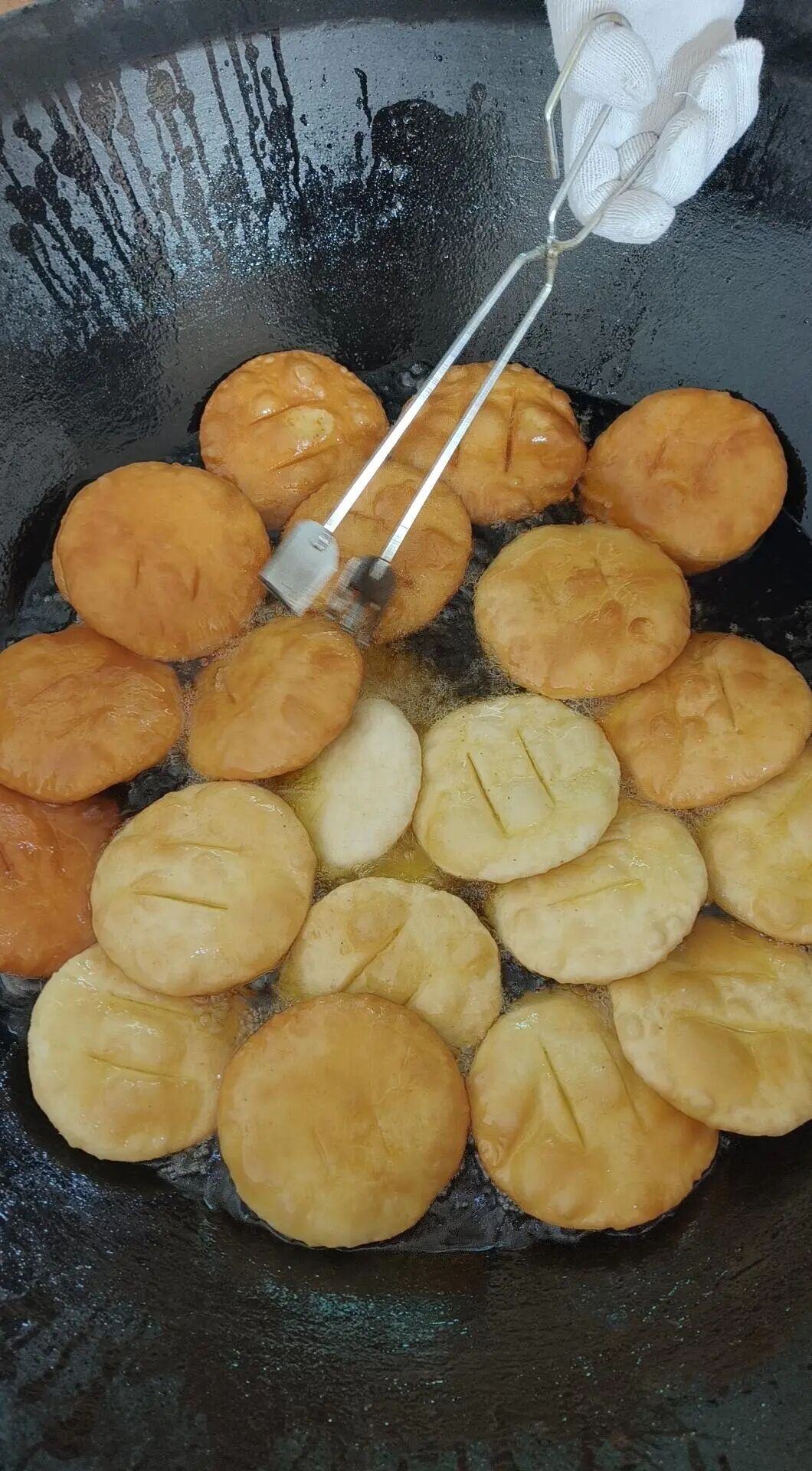
The oil sizzles as the dough puffs up, slowly transforming from a pale white to an appetizing golden brown. Once lifted from the oil, the youxiang are slightly fluffy on the outside, smelling faintly of rich, fried dough, with a texture that is soft, chewy, and lightly sweet.
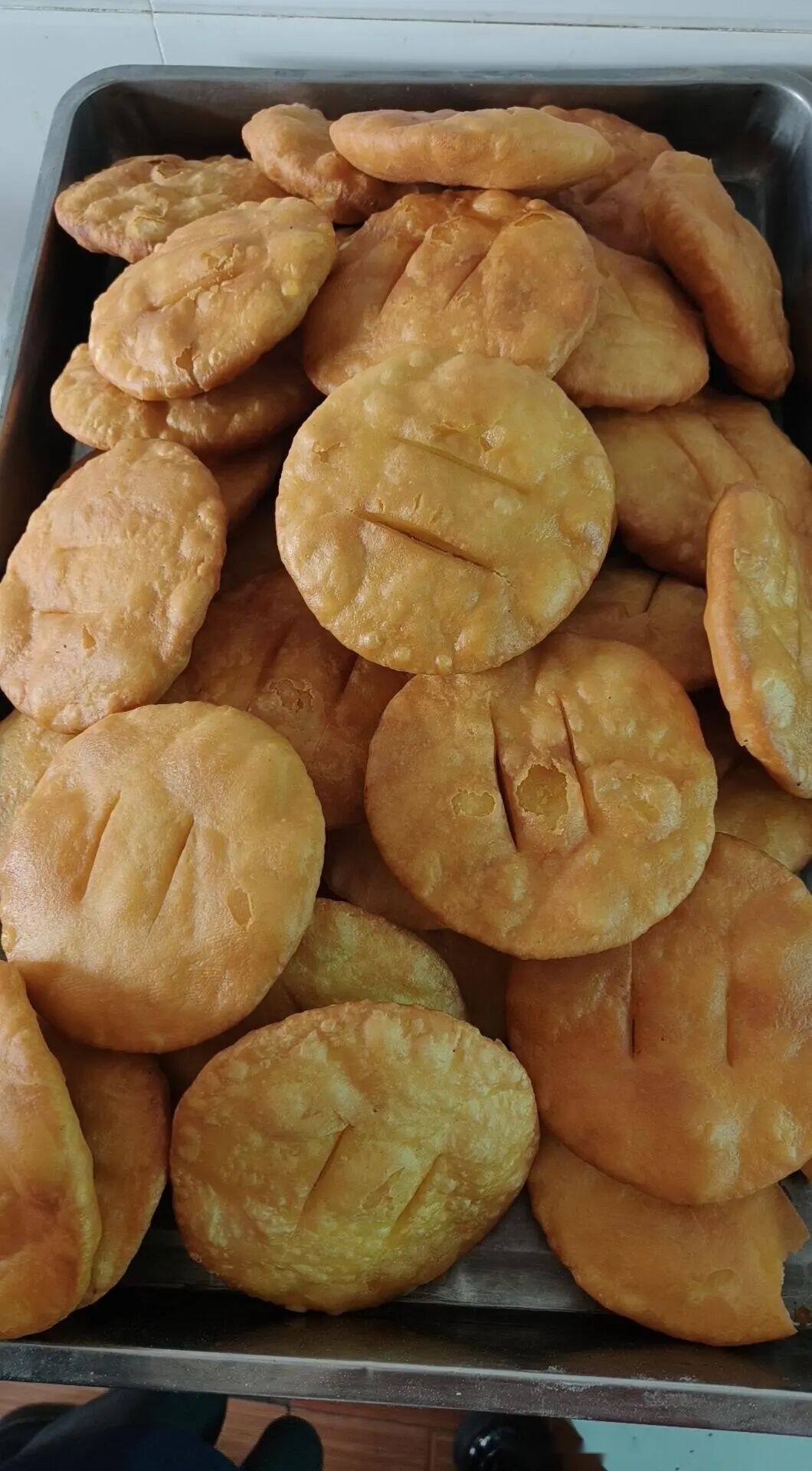
It is more than just a snack; it is a gesture of love. Serving youxiang at a wedding represents unity, happiness, and peace—it is the simplest yet most profound blessing from elders to the newlyweds, a tradition that has been passed down for generations.
There are no fancy decorations here, just the deep, genuine warmth of community and shared life. With the very first bite, you aren't just tasting a classic flavor, but also the comforting sense of ritual preserved through time.
Have you ever tried these youxiang that carry such beautiful meaning?
Best Halal Food in Hohhot: Authentic Hui Muslim Shaomai, Hand-Grabbed Lamb, and Traditional Mosque Cuisine Guide
Articles • Hasan09 posted the article • 0 comments • 24 views • 1 days ago
Hello everyone,
It’s been five days since I returned from Hohhot, and I’m already missing it.
When people mention Hohhot, their first reaction is usually the grasslands.
But during my brief three-day stay, I discovered a different kind of northern charm.
It is a place where grassland scenery and a modern city intertwine, and where the history of the old city coexists with the vibrant, everyday life of the streets.
The city itself possesses so much charm that it’s worth slowing down to truly experience.
As someone who loves food and specifically hunts for Halal cuisine, I started doing crazy amounts of research before leaving. Halal restaurants are everywhere in Hohhot, but my standards have always been high: it has to be authentic, delicious, and have a strong local character.
After eating there for several days straight, I’ve put together a Halal food list: it includes both long-standing establishments rooted in Hohhot for over a decade and some newer culinary finds.
Save this guide; I hope it serves as a helpful reference for those of you planning your trip.
If you haven't eaten shaomai, you haven't really been to Hohhot.
In Hohhot, shaomai is the city’s undisputed culinary business card.
Life here begins with a steaming basket of shaomai and a pot of savory brick tea.
It’s not just a must-have breakfast for locals, but it’s also been listed as an intangible cultural heritage at the autonomous region level.
There are nearly 3,000 shaomai shops in the city, which is proof enough of its importance in the daily lives of the locals.
Hohhot residents definitely have their own personal favorites when it comes to shaomai. I skipped the hyped-up spots online, listened to some local friends, and just took a taxi straight to Jufulin (a 12-year-old Halal institution).
They serve both steamed and pan-fried shaomai; I tried both, and I personally prefer the crispy pan-fried version, though both are excellent.
The mutton and green onion shaomai uses lamb leg meat cut by hand, so you can really taste distinct chunks of meat, not the finely minced kind.
The dough wrapper is the best I’ve ever had—thin but with a nice, oily richness.
For those who don't like fatty meat, you must order a basket of the lamb tenderloin and green onion shaomai. Even though it's tenderloin, it's not dry or greasy, and it's full of juice.
I barely tasted any mutton gamey flavor in either basket, and the dough wrapper had a faint sweetness when chewed. Dip it in vinegar and a little bit of chili oil.
One of the two giants of Hohhot stir-fry: Yu-Xiang Rou-Si (fish-flavored shredded pork).
In any old-school Hohhot restaurant, you’ll find Yu-Xiang Rou-Si on the menu.
Unlike the original Sichuan version, it’s a localized adaptation: it emphasizes the "wok hei" (breath of the wok), a balance of sweet and sour, and a prominent vinegar aroma. It’s not the heavy pickled pepper flavor, but rather the classic, familiar northern style.
This is a 'hole-in-the-wall' joint (a 10-year-old Halal spot) that a friend tipped me off about. They specialize in stir-fries, assorted hot pots, and copper-pot shabu-shabu. If you want to find authentic old-school Hohhot flavors, this is the place.
A quick heads-up: don’t set your expectations for the environment too high. Most long-standing shops are pretty much like this—simple and humble, because the focus is entirely on the flavor.
I came here specifically for their Yu-Xiang Rou-Si, and my friend kept insisting: 'You can order whatever else you want, but you have to eat this.'
It’s not cloyingly sweet, and the vinegar taste isn't overpowering. The shredded beef is tender, rich in savory sauce, and has that authentic old-fashioned taste—it’s amazing with noodles.
The hand-pulled noodles with 'Guoyou' (oil-blanched) meat are chewy; it’s worth visiting just for a bowl of these noodles, with every strand coated in savory sauce.
Eating copper-pot shabu-shabu in Inner Mongolia is hard to get wrong, and this place is no exception. The beef and mutton are thick-sliced to order, fresh enough to see, and have a great bite.
Bing Zhu Yang (ice-boiled lamb)—Hohhot’s most iconic signature dish.
Ice-boiled lamb isn't just some made-up viral trend.
The concept originated from nomadic herders on the grasslands: in the winter, when there was no running water, they would chisel ice to melt into water for boiling meat. It eventually evolved into the iconic specialty hot pot we see in Hohhot today.
I looked it up, and this spot is ranked number one for charcoal hot pot in the Huimin District! (A 10-year-old Halal shop).
When the pot was brought out, the visual impact was quite something. The bottom was layered with onions and carrots, topped with a thick layer of ice cubes, and then piled high with large chunks of raw mutton. You could tell at a glance that the meat was incredibly fresh.
Honestly, my expectations were sky-high before I started eating, and while it didn't quite hit that "mind-blowing" level I anticipated, the quality of the lamb itself was spot-on.
After waiting for the pot to boil and the meat to cook through, the texture was super tender and firm, with a natural, savory sweetness. The best way to enjoy it is to sip the broth first, then eat the meat—it really makes for a great experience.
I personally loved the sesame paste dipping sauce; it was rich and flavorful, complementing the lamb perfectly.
The peak of Hohhot lamb: 40 years of mastering lamb dishes.
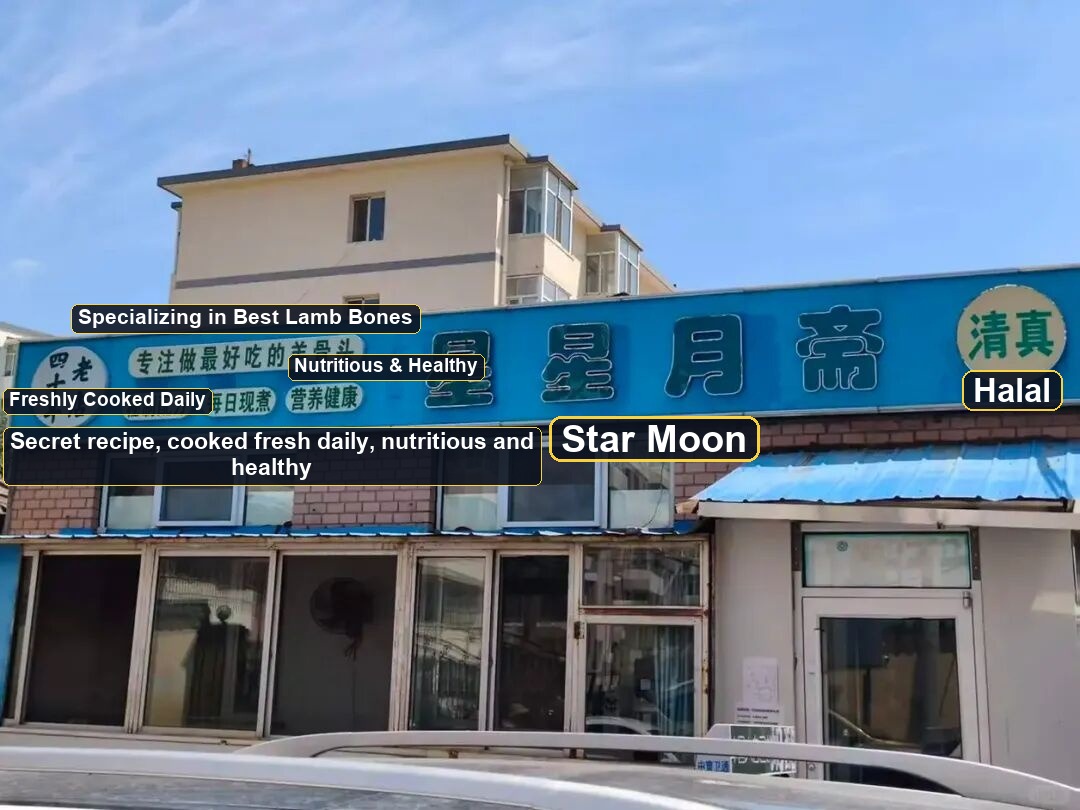
Xingyuezhai has been a Halal staple in Hohhot for 40 years. It’s not some trendy, mass-produced joint; they’ve been sticking to their traditional, time-honored techniques for decades.
Their signature lamb bones are slow-simmered in a traditional broth, and they are completely free of any gamey smell.
They’re stewed until so tender they fall right off the bone, and the marrow bones are absolutely packed with rich, creamy goodness.
You can choose between lamb spine or lamb shank, or go for a mix of both. I personally prefer the lamb spine—it’s meatier and really satisfying to gnaw on.
Pair it with a side of youmian yuyu (steamed oat noodles shaped like little fish). The broth is super thick and flavorful; the noodles have a great chewy texture, and they soak up all that meaty goodness, making every bite delicious.
The youmian wowo (rolled steamed oat noodles) are stacked up neatly, and they have such a rich, nutty grain aroma when steamed.
The side dishes are classic home-style comfort foods: scallion tofu, spicy and sour radishes, and pickled veggies. They’re refreshing and help cut through the richness—just order whatever suits your taste.
Copper Hot Pot: The most authentic way to enjoy prairie lamb.
Why is it a must-eat when you visit Hohhot?
If you really want to experience the true flavor of prairie lamb, a clear-broth hot pot is the most direct way to do it! You’ll know if it’s good from the very first bite.
This place specializes in about-one-year-old prairie lambs (an 11-year-old Halal shop). The owner says they run their own ranch, handling everything from the pasture to the table to ensure the meat stays fresh.
This kind of lamb is incredibly tender with very little gamey taste; it even has a subtle, milky sweetness, which is a profile I really love.
It uses a traditional clear-broth copper pot. The base looks simple, but it includes a bit of suancai (pickled cabbage) to add a slight tang that enhances the flavor without overpowering the lamb—it perfectly highlights the meat's natural taste.
The signature thinly sliced lamb is cut to the perfect thickness. Once you swish it in the pot, it turns out super tender and juicy, with a rich, milky flavor and almost no gamey scent.
The premium lamb slices are huge and delicious, with virtually no gamey taste—eating them is a real treat.
The hand-sliced fresh lamb might be a bit thicker because it’s cut by hand, but the flavor is spot-on and the texture isn't tough at all.
A clear water broth really puts the quality of the meat to the test, and their lamb passes with flying colors.
The most iconic 20-year-old Mongolian-style restaurant.
Gerile Ama (founded in 2000) is a great spot if you’re new to Inner Mongolian dairy products. This location is a Halal-certified restaurant.
What I was looking forward to most was their guocha (pot tea). Salty milk tea is boiled in a pot with milk skin, roasted millet, and dried beef—the moment that aroma hits you, you’re hooked.
If it’s your first time trying salty milk tea, it’s easy to fall in love with its rich, creamy flavor.
The sweet cheese pies have a fragrant crust, and the cheese inside is super stretchy. Just a heads-up: items with too much cheese can get a bit heavy, so don't order too much at once.
The lamb and shancong (wild onion) pie has an incredibly thin crust—every bite is just pure filling.
The red-broth lamb offal soup is bright, savory, and spicy. The offal is cleaned perfectly with no weird smells.
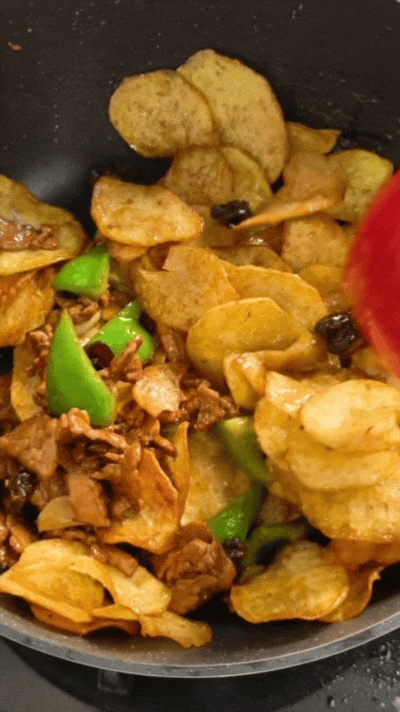
One of the two titans of Hohhot-style stir-fry: Guoyourou with potato slices.
Guoyourou (oil-blanched meat) actually originated as a Shanxi dish and made its way to Hohhot through the migration history known as "Zouxikou."
Here in Hohhot, they put their own spin on it: the potato slices are deep-fried until crispy, then stir-fried with tender beef and a bit of wood ear mushroom in a thickened sauce. It’s a mix of sweet, sour, and savory, creating a unique version you won't find anywhere else.
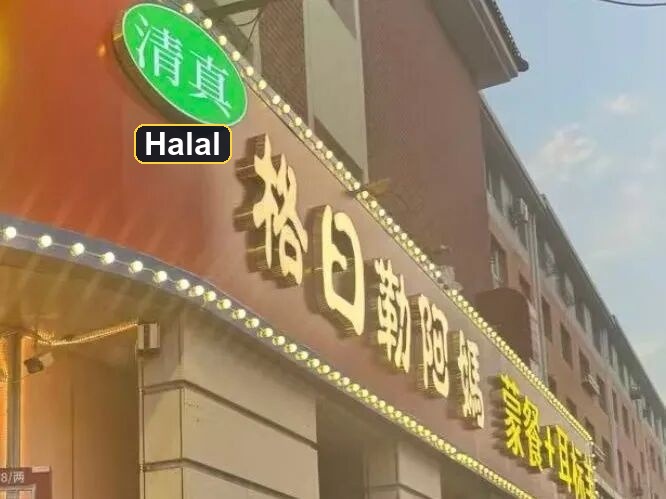
You have to try Yizhenxiang (a 6-year-old Halal restaurant) when in Hohhot. While it hasn't reached the 10-year mark yet, I’m confident they’ll easily maintain this level of quality.
Once I started eating, I couldn't help but say, "No wonder this place is so popular." Calling their cumin lamb and guoyourou with potato slices "god-tier" is no exaggeration.
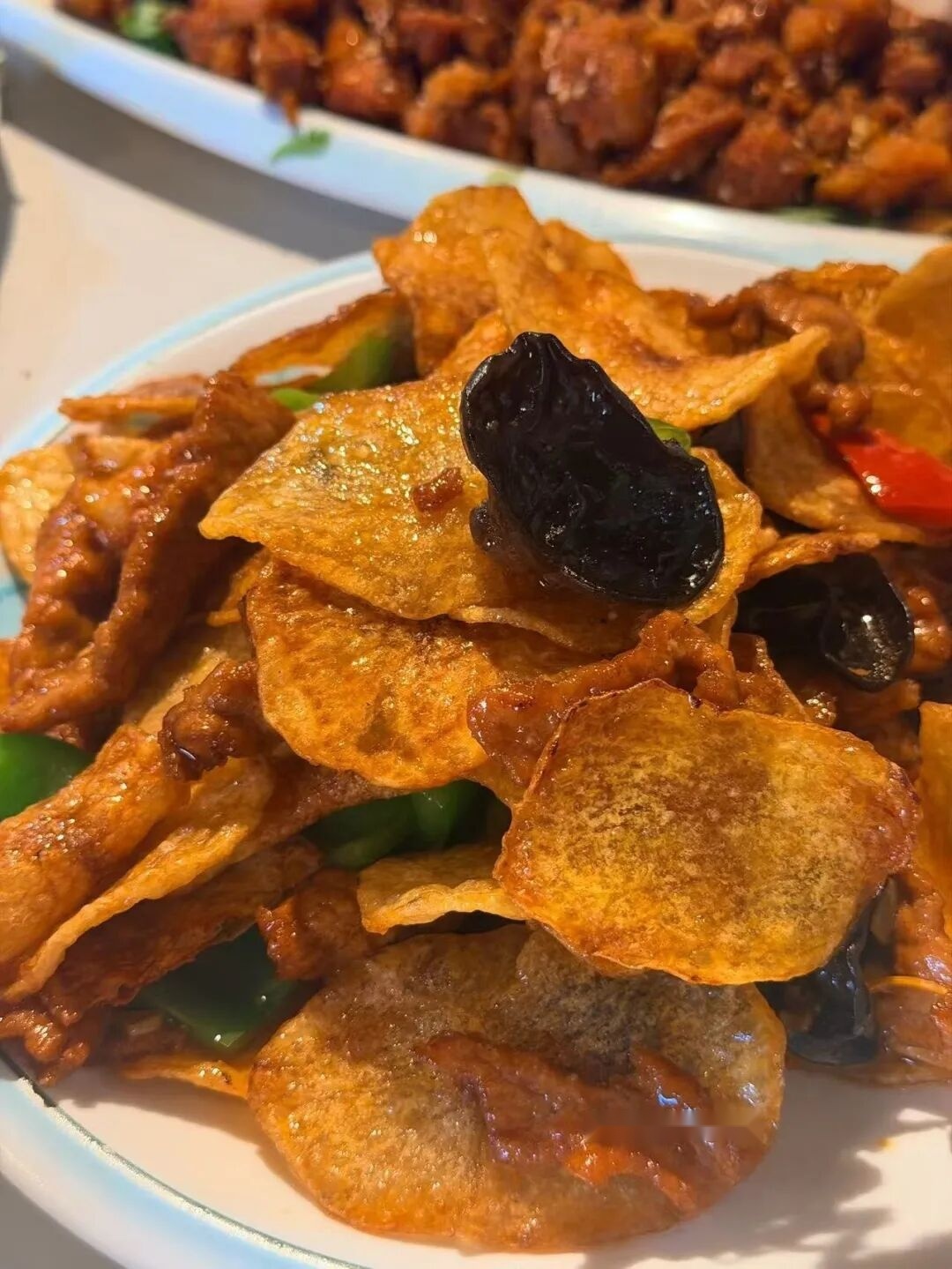
The potato slices in the guoyourou are crispy on the outside, and the beef slices are silky smooth. You wouldn't even know it was beef unless someone told you, and the sauce coats everything just right.
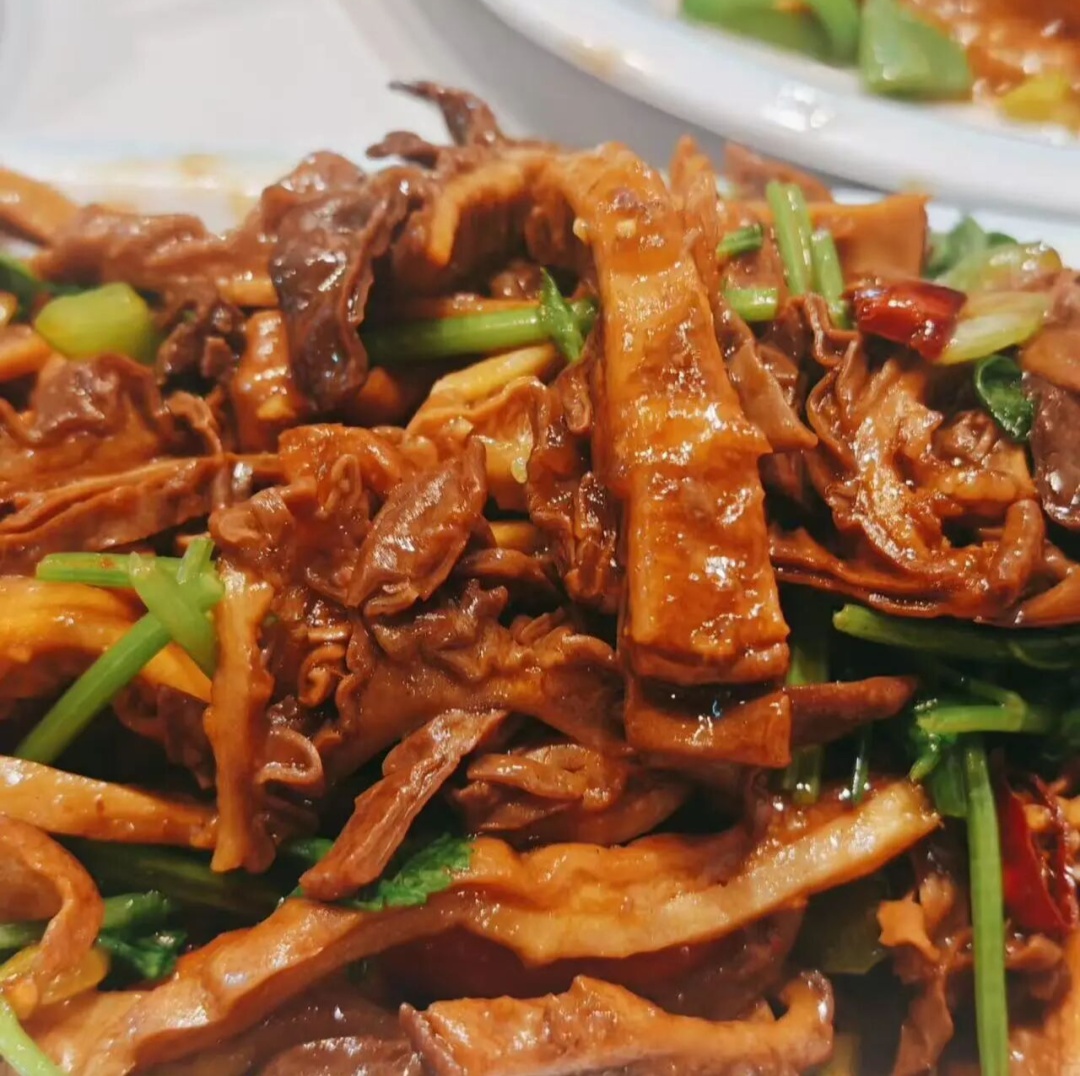
The stir-fried saudan (beef tripe/stomach) is also a specialty. The tripe is cleaned immaculately with absolutely no off-putting smell. It’s stir-fried over high heat, making it super flavorful and even better the more you chew.
Authentic Halal Food in Hohhot: A Guide to Best-Loved Hui Muslim Classics, Hand-Grabbed Lamb, and Shaomai.
When it’s cold out, you’ve got to order a shijin guo (assorted hot pot). It truly lives up to its name, packed with a ton of vegetables, soy products, meatballs, and glass noodles, all bubbling away and steaming in the pot.
Having a pot like this in Hohhot during winter will warm you up from your stomach all the way to your toes.
The cumin lamb is stir-fried quickly over high heat, giving it a savory, aromatic punch of cumin with just a hint of chili—not the aggressive, burning kind.
For your staple, go with the tangmian youpo (deep-fried dough cakes); it’s a unique way to eat them—you dip the fried dough into white sugar.
Old-school restaurants stand the test of time for a reason, but the new spots cropping up have their own special flavor, too.
Hohhot’s super-hyped la beizi (spicy stuffed baked flatbread).
Known as one of the nine must-try local delicacies in Hohhot, this is a spot locals shared with me in confidence. I was so curious to find out what exactly a beizi tastes like.
Their beizi are long and rectangular, toasted until fragrant, and they are super generous with the fillings—they practically spill out because the portions are so massive.
The yuxiang rousi (shredded pork in garlic sauce) beizi is so huge I couldn't even hold it with one hand!
The shredded pork filling is piled so high it’s overflowing; the amount of filling is honestly ridiculous—it feels like you're eating a rice bowl, just with bread instead.
The classic spicy la pian (chili strips) beizi gets tastier the more you chew. The chili oil is very fragrant, and the tofu skin inside is nice and soft.
The mala niujin mian (spicy beef tendon noodles) packs a serious punch. It’s wonderfully spicy, the texture is nice and chewy, and the seasoning is bold and savory—perfect if you love intense flavors.
They offer delivery too, so you should definitely give them a try.
The deep-fried skewers worth waiting an hour for.
Almost every person from Hohhot has a go-to deep-fried skewer spot they’re loyal to.
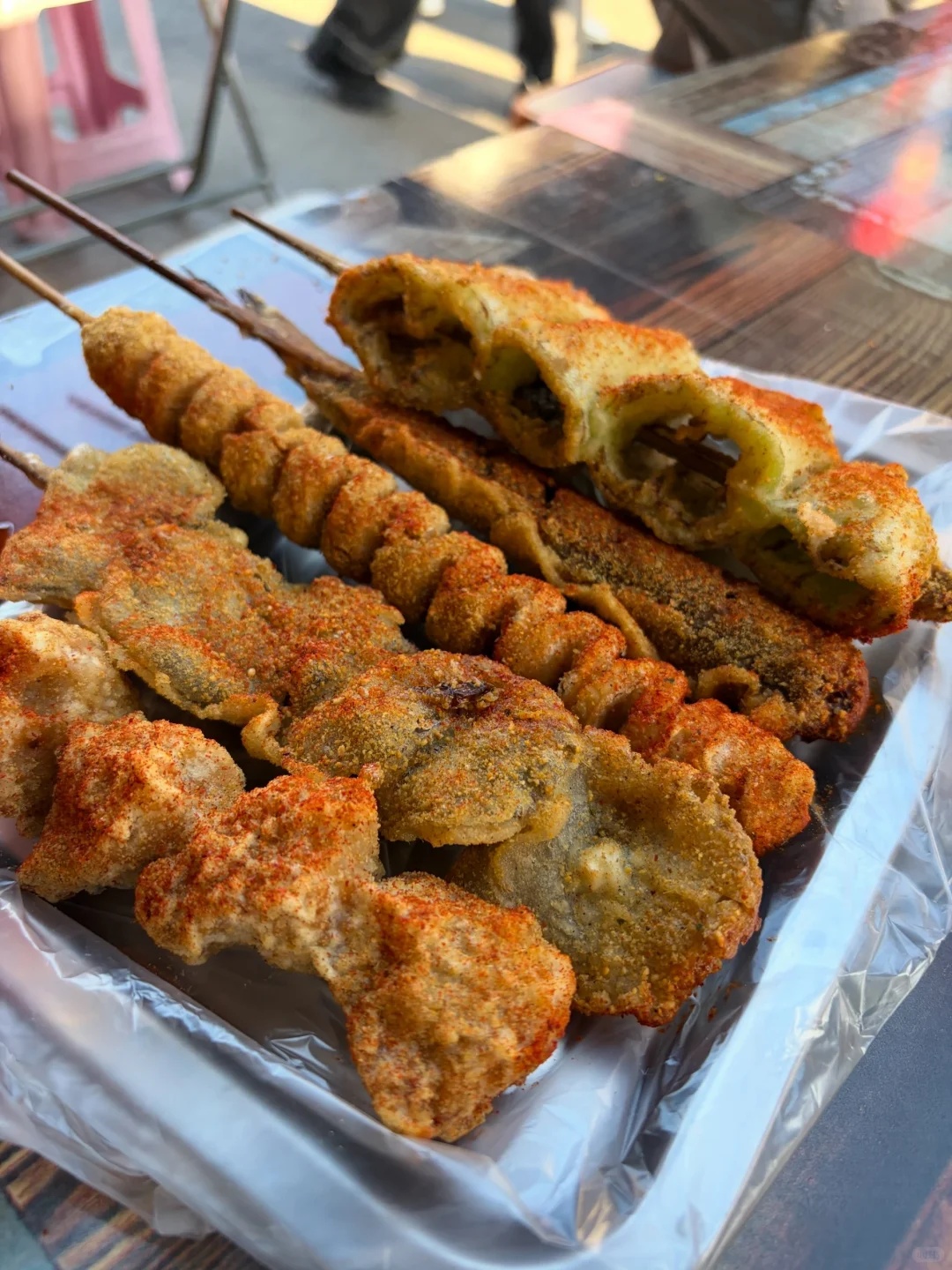
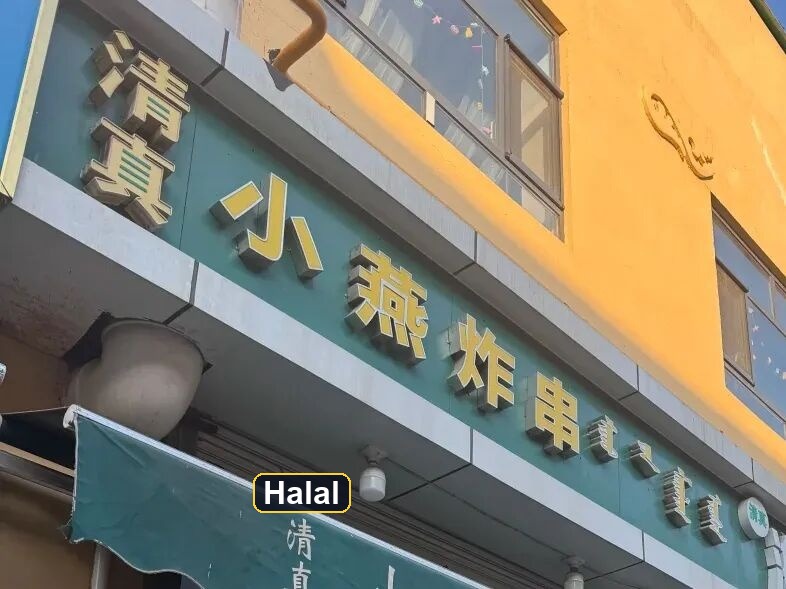
I happened to be passing by and decided to try Xiaoyan Fried Skewers, which consistently ranks in the top three for local reputation.
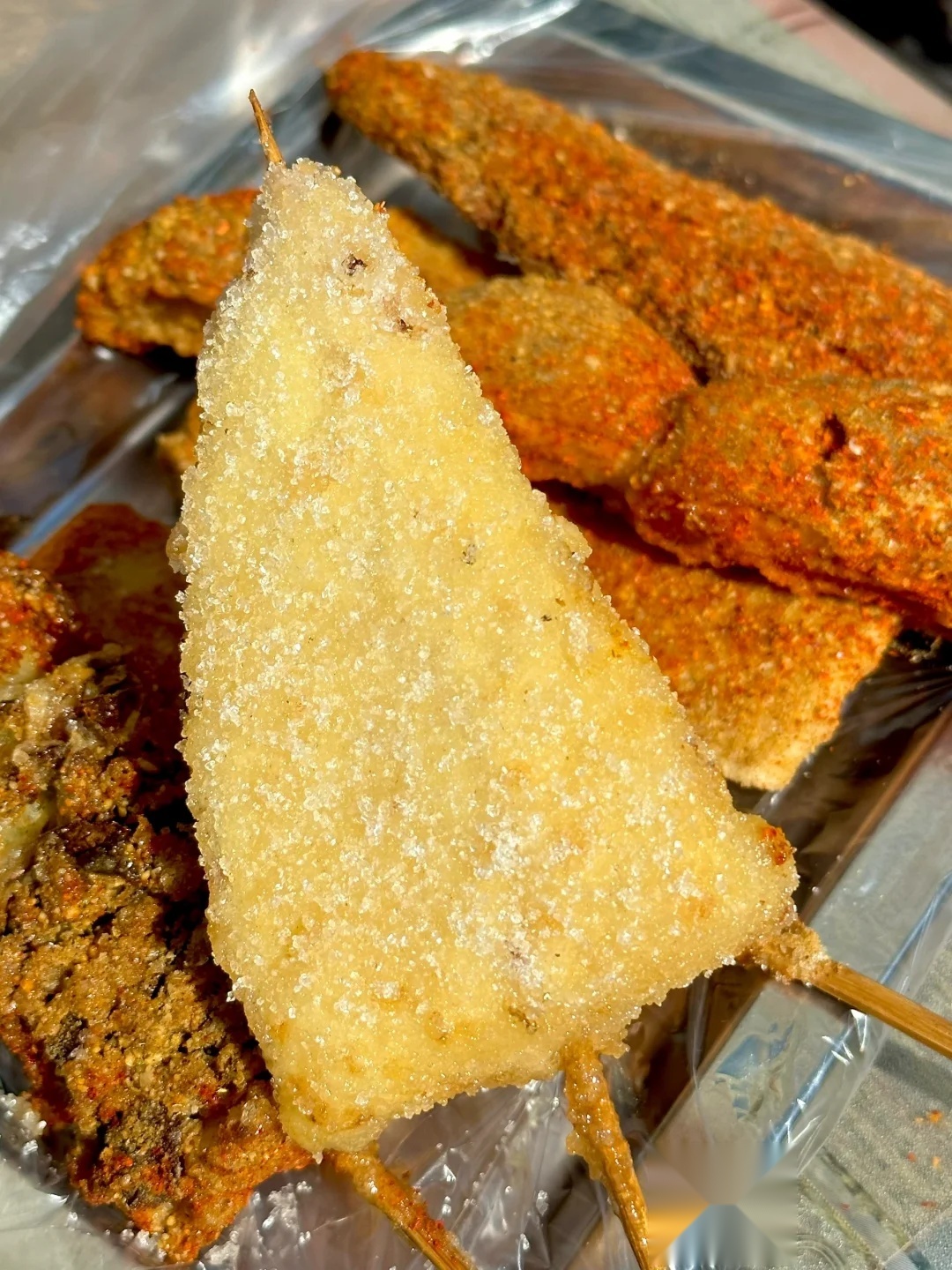
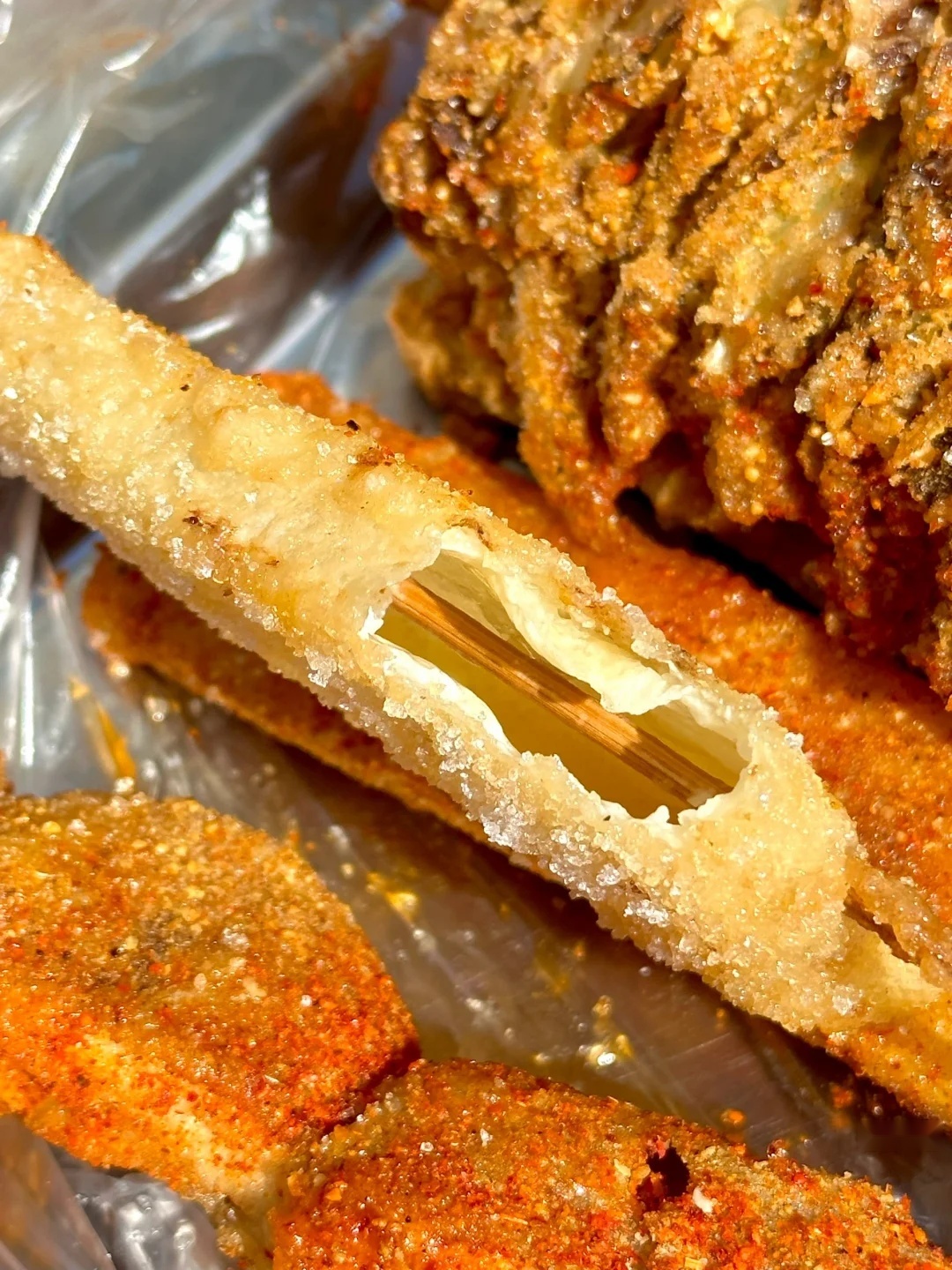
I was worried the batter-fried skewers would be too greasy, but I was totally wrong. The batter is applied in a very thin layer, making them crispy on the outside and tender on the inside, locking in all the vegetable juices so they don't get dry.
I highly recommend four must-order items: mushrooms, green beans, hawthorn, and naipizi (fried milk skin).
The mushrooms and green beans are fried to perfection and stay crisp; the hawthorn is sweet and tart, which is quite unique; the naipizi has a prominent milky aroma once fried, with a really interesting texture.
Just a quick tip: don't order too much at once, because there are so many other great things to eat nearby—just grab enough to get a taste.
Top-tier bean sprout fried noodles in Hohhot.
I found this spot serving local-style fried noodles near Hohhot’s Niu Jie (Beef Street), and a quick search revealed it’s considered one of the top-tier noodle spots on social media!
The beef and bean sprout fried noodles look simple enough, but you won't realize why it’s the signature dish until you take a bite.
It’s a massive plate made with thick, chewy noodles. It’s savory and seasoned just right with a tiny kick of heat, and the bean sprouts add a nice crunch to the mix.
The ganbian (dry-fried) noodles are just as good. The best part is that you can get free refills on the noodles, so if you have a big appetite, don’t worry—you won't leave hungry.
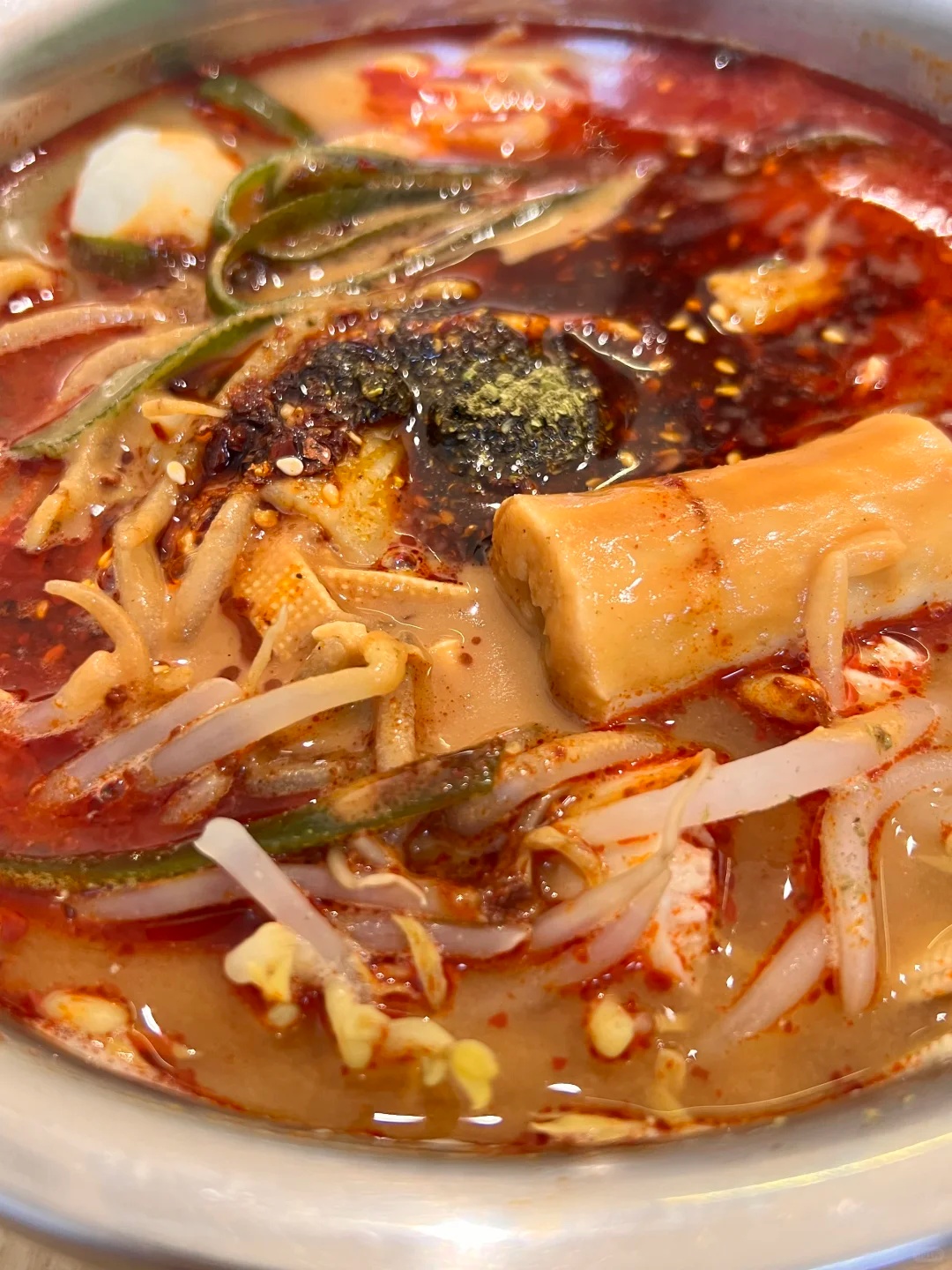
Hohhot’s signature Lâhūhū (thick spicy sauce) malatang.
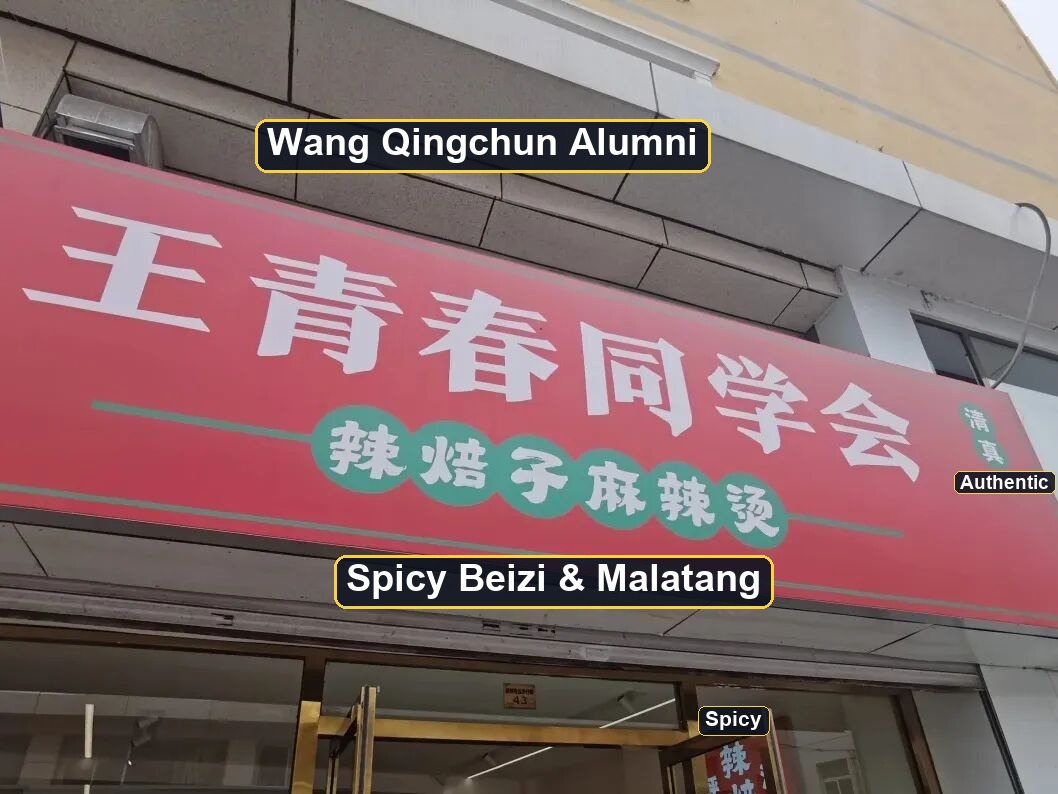
I discovered this malatang (spicy hot pot) shop while strolling through Kuanxiangzi, and they actually have the ingredients pre-selected for you.
The flavor profile is a bit like old-school Northeastern style malatang, but it definitely has its own distinct local twist.
There’s tons of sesame sauce, making the whole bowl thick and creamy, coating every single ingredient.
The variety of ingredients is impressive, and you have three noodle options to choose from: yellow noodles, cold noodles, or wide beef tendon noodles. Their fried skewers are also excellent, and they even top them with crushed peanuts—the seasoning is so generous it falls off with every bite. view all

Hello everyone,
It’s been five days since I returned from Hohhot, and I’m already missing it.
When people mention Hohhot, their first reaction is usually the grasslands.
But during my brief three-day stay, I discovered a different kind of northern charm.

It is a place where grassland scenery and a modern city intertwine, and where the history of the old city coexists with the vibrant, everyday life of the streets.

The city itself possesses so much charm that it’s worth slowing down to truly experience.
As someone who loves food and specifically hunts for Halal cuisine, I started doing crazy amounts of research before leaving. Halal restaurants are everywhere in Hohhot, but my standards have always been high: it has to be authentic, delicious, and have a strong local character.
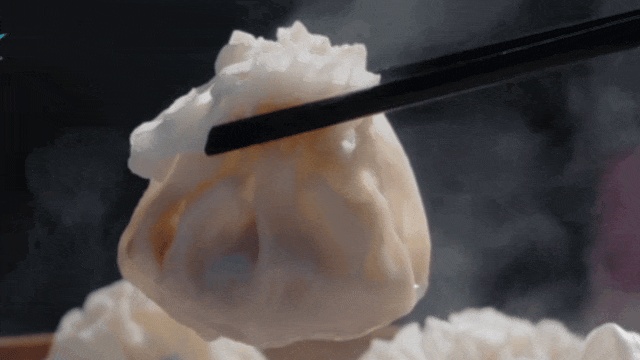
After eating there for several days straight, I’ve put together a Halal food list: it includes both long-standing establishments rooted in Hohhot for over a decade and some newer culinary finds.
Save this guide; I hope it serves as a helpful reference for those of you planning your trip.
If you haven't eaten shaomai, you haven't really been to Hohhot.
In Hohhot, shaomai is the city’s undisputed culinary business card.
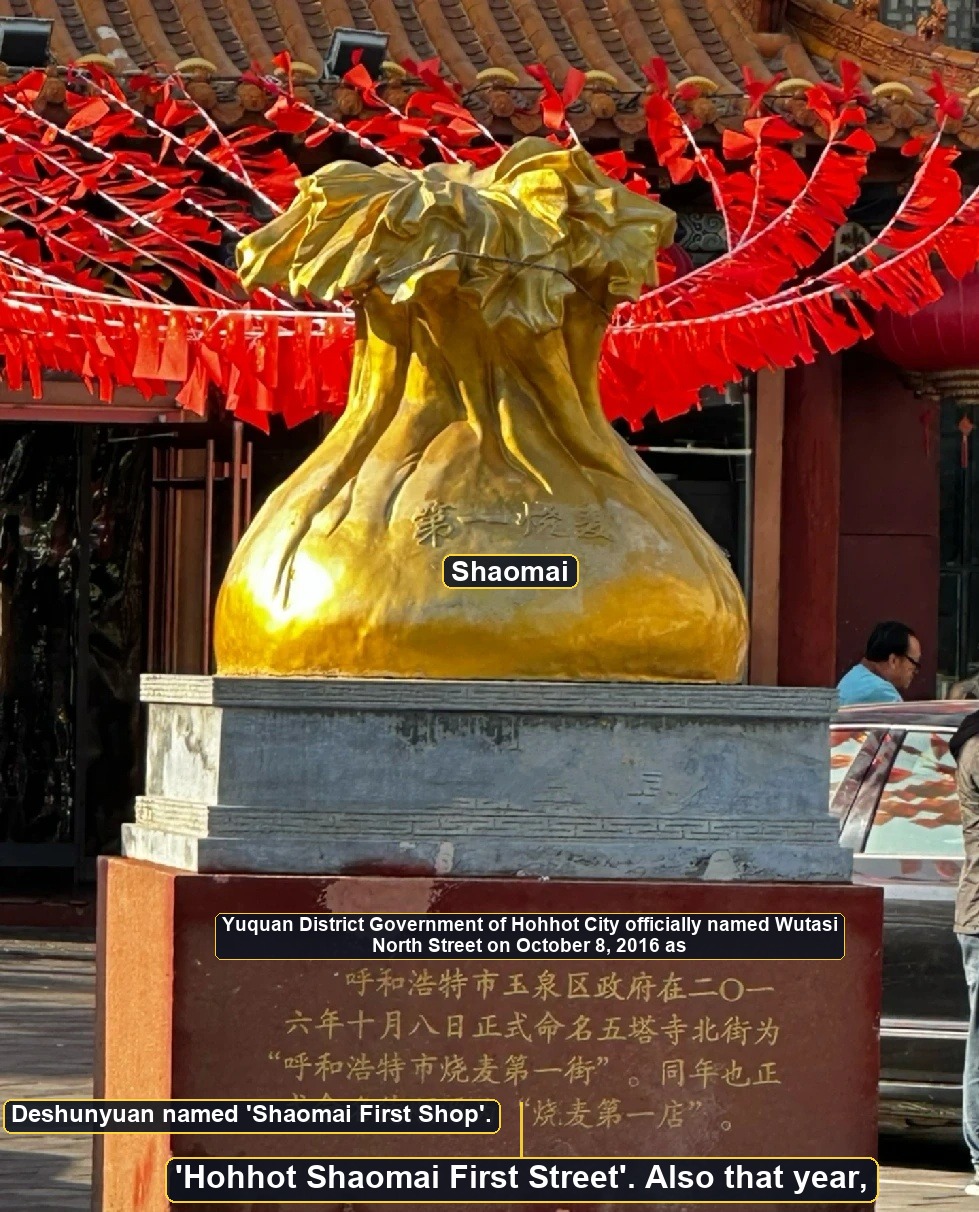
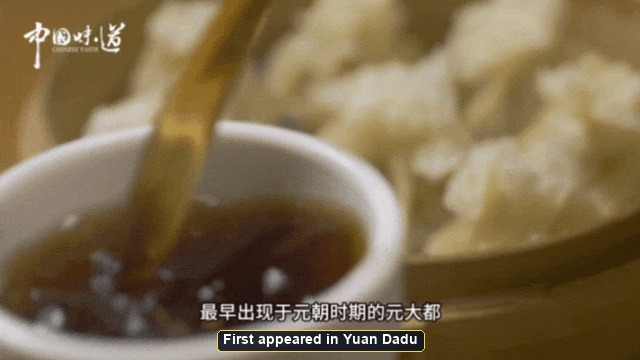
Life here begins with a steaming basket of shaomai and a pot of savory brick tea.
It’s not just a must-have breakfast for locals, but it’s also been listed as an intangible cultural heritage at the autonomous region level.
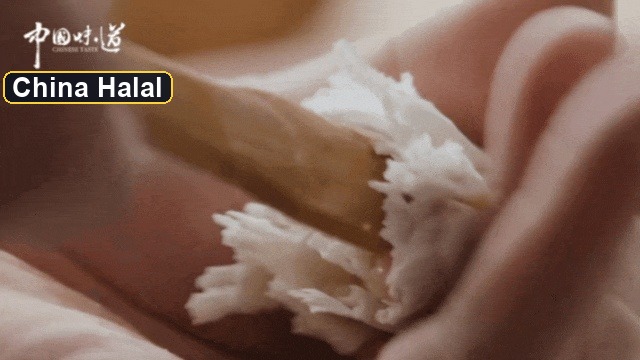
There are nearly 3,000 shaomai shops in the city, which is proof enough of its importance in the daily lives of the locals.
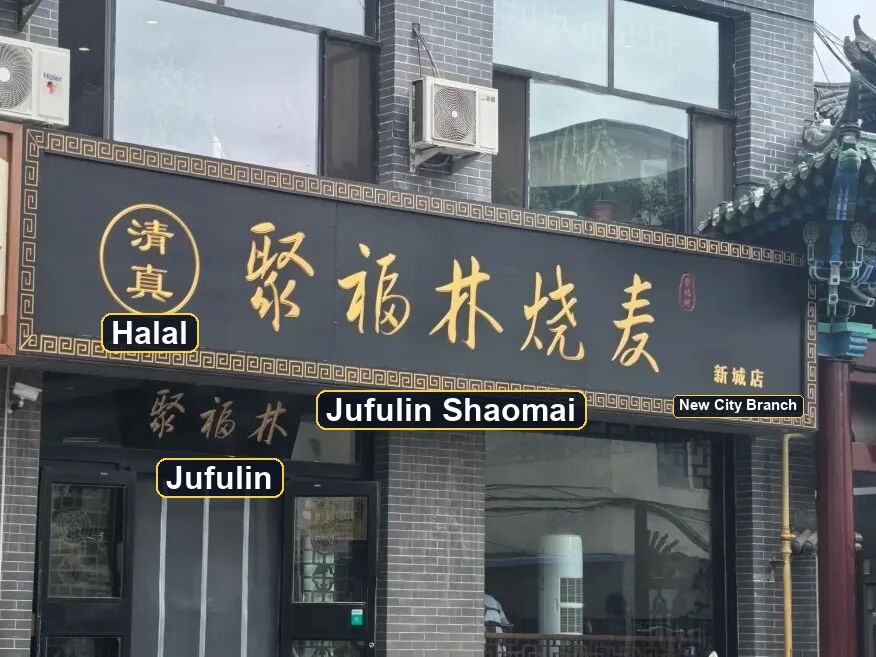
Hohhot residents definitely have their own personal favorites when it comes to shaomai. I skipped the hyped-up spots online, listened to some local friends, and just took a taxi straight to Jufulin (a 12-year-old Halal institution).
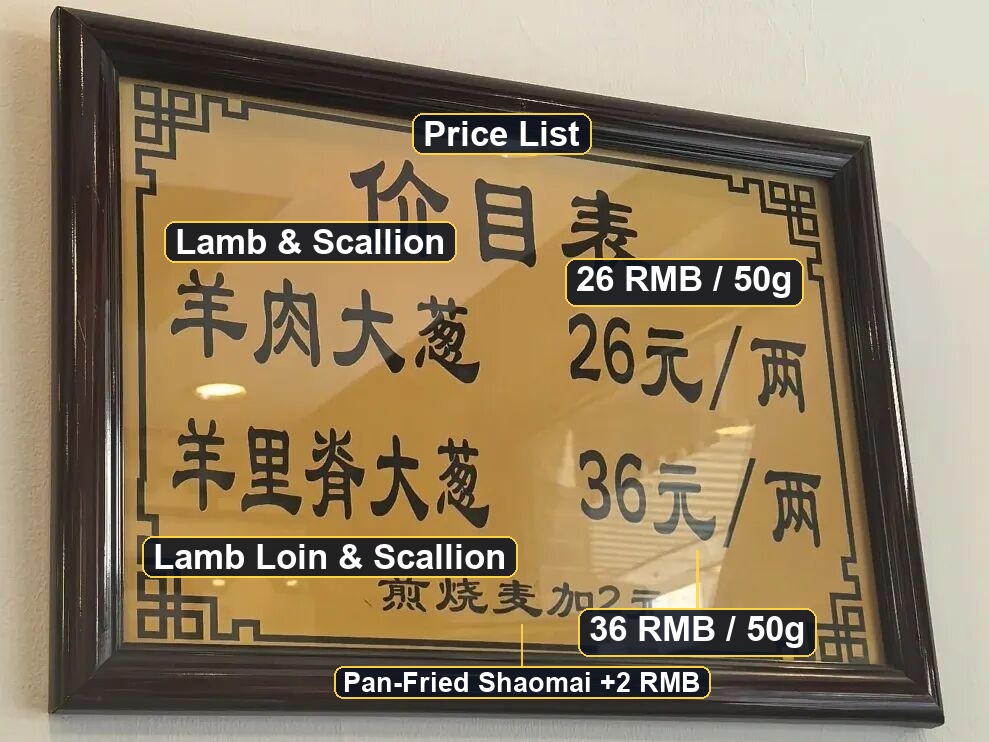
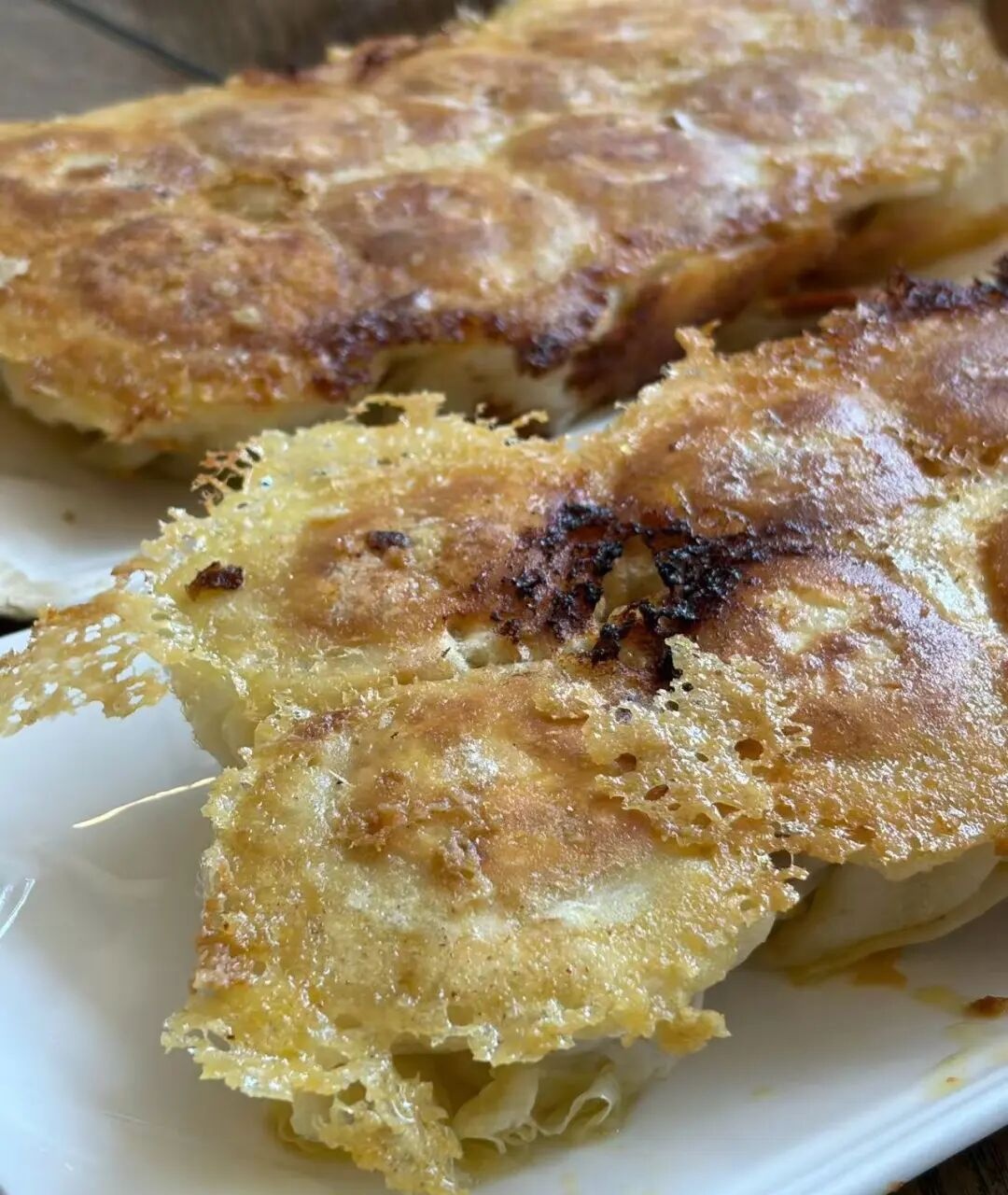
They serve both steamed and pan-fried shaomai; I tried both, and I personally prefer the crispy pan-fried version, though both are excellent.
The mutton and green onion shaomai uses lamb leg meat cut by hand, so you can really taste distinct chunks of meat, not the finely minced kind.
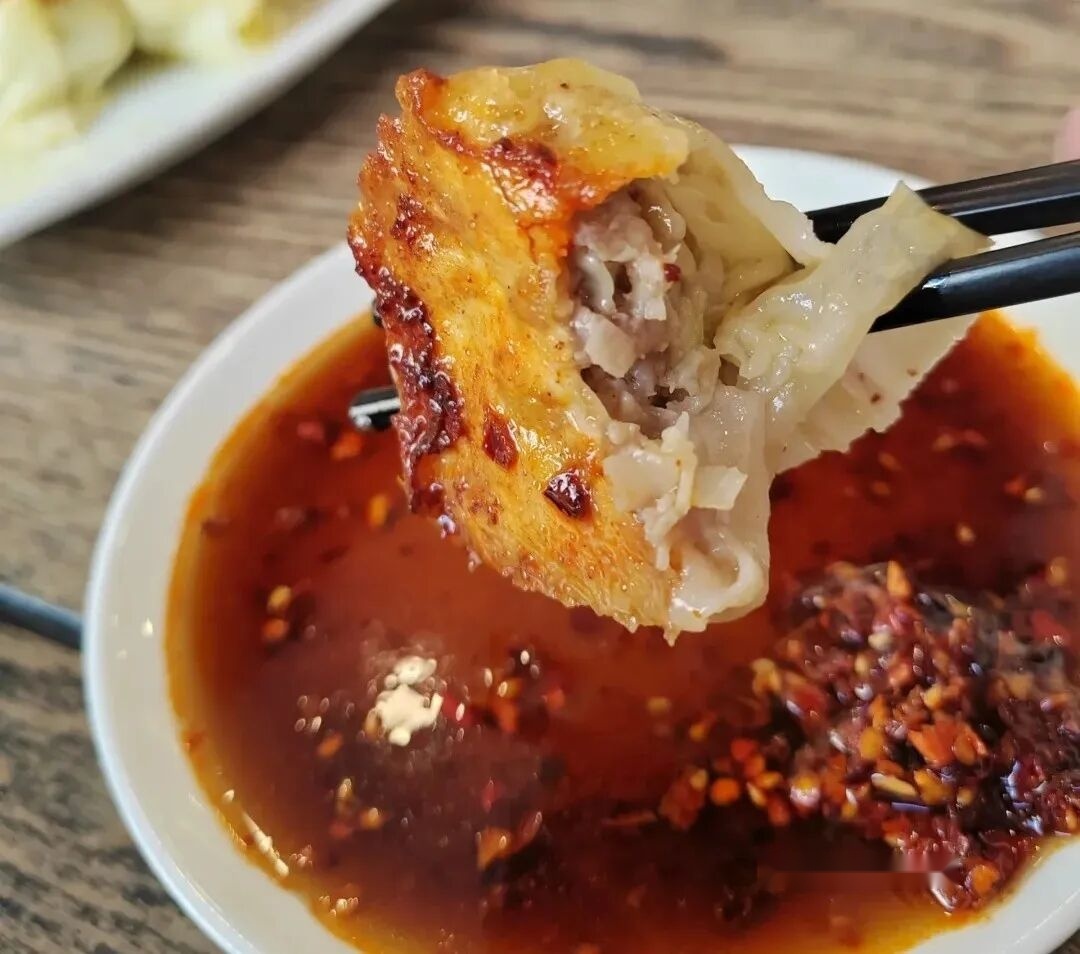
The dough wrapper is the best I’ve ever had—thin but with a nice, oily richness.
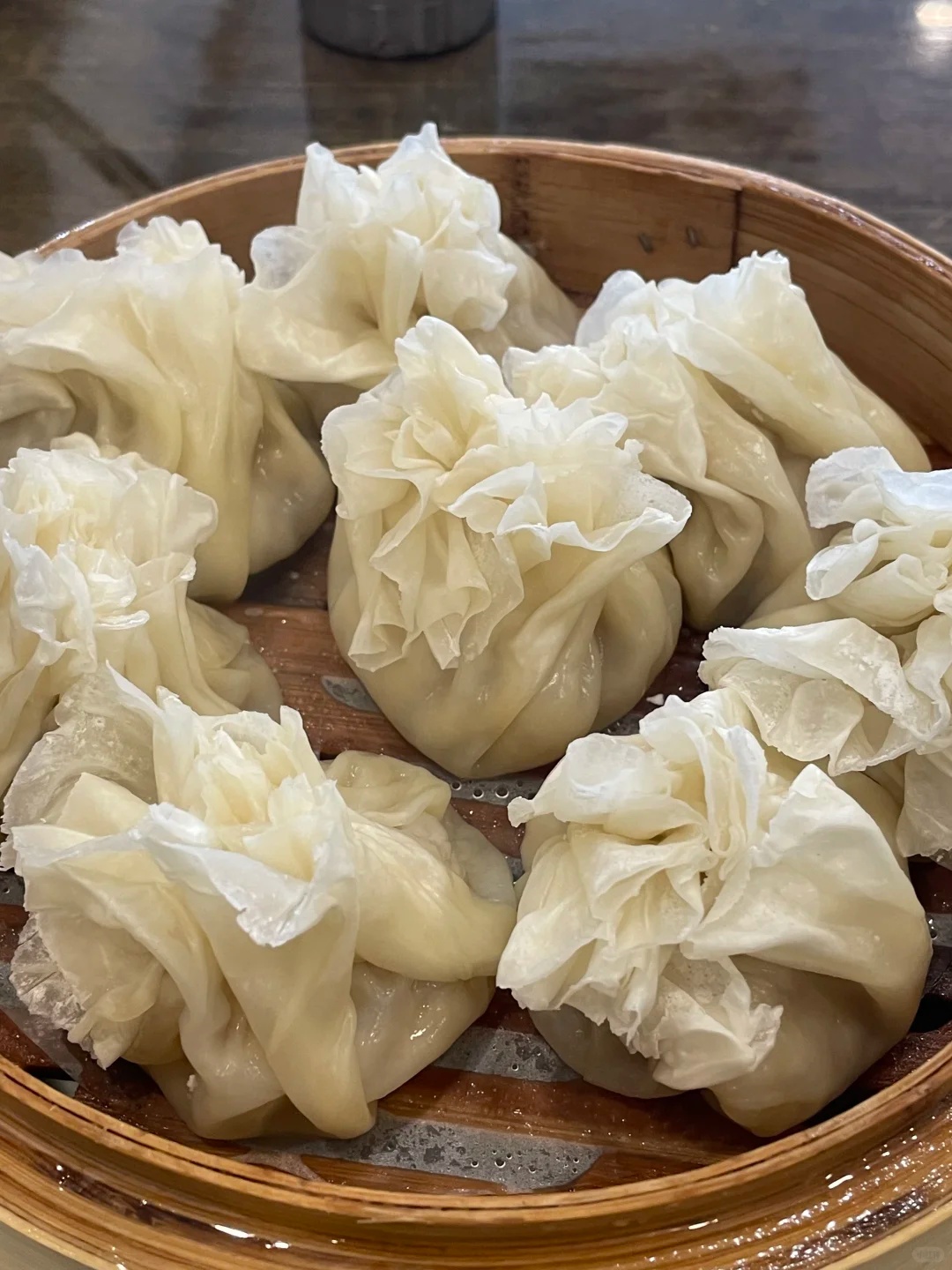
For those who don't like fatty meat, you must order a basket of the lamb tenderloin and green onion shaomai. Even though it's tenderloin, it's not dry or greasy, and it's full of juice.
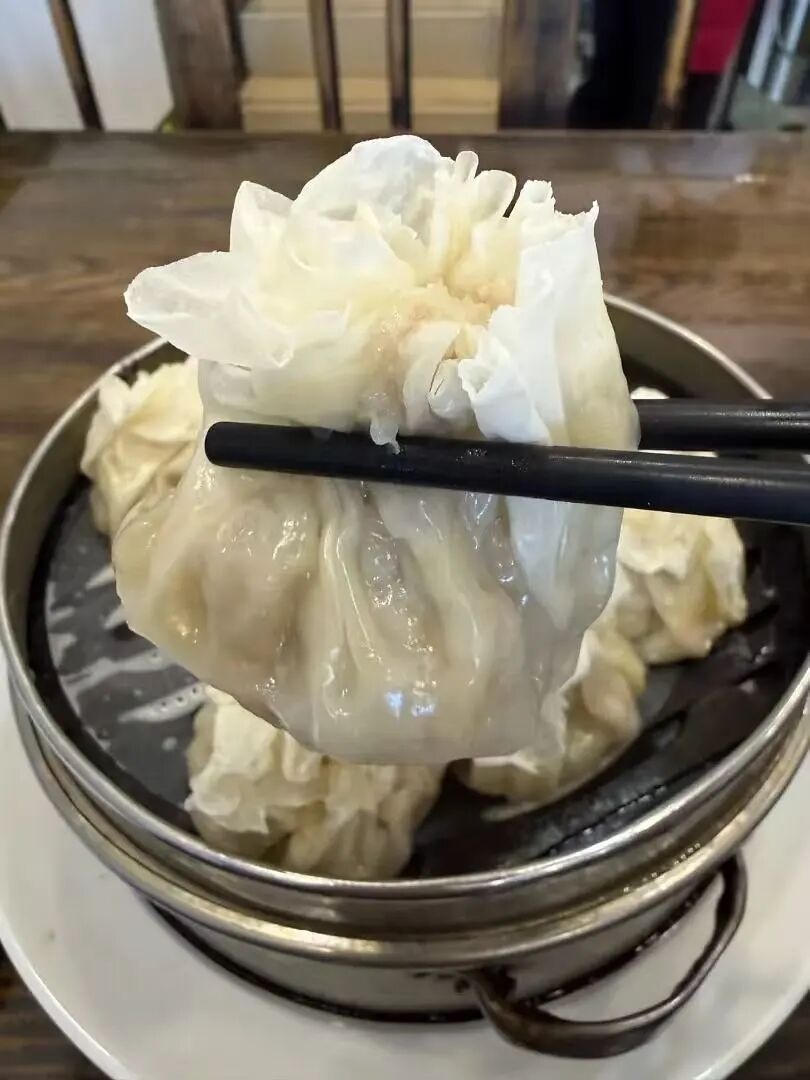
I barely tasted any mutton gamey flavor in either basket, and the dough wrapper had a faint sweetness when chewed. Dip it in vinegar and a little bit of chili oil.
One of the two giants of Hohhot stir-fry: Yu-Xiang Rou-Si (fish-flavored shredded pork).
In any old-school Hohhot restaurant, you’ll find Yu-Xiang Rou-Si on the menu.
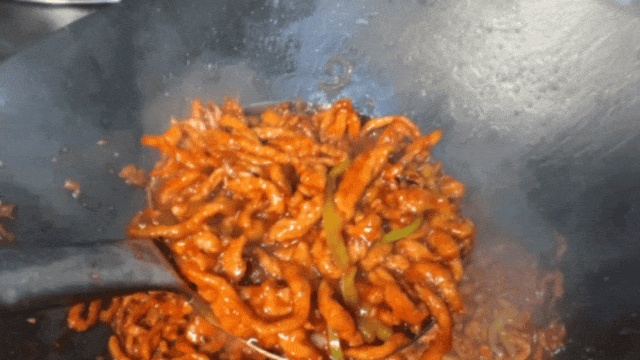
Unlike the original Sichuan version, it’s a localized adaptation: it emphasizes the "wok hei" (breath of the wok), a balance of sweet and sour, and a prominent vinegar aroma. It’s not the heavy pickled pepper flavor, but rather the classic, familiar northern style.
This is a 'hole-in-the-wall' joint (a 10-year-old Halal spot) that a friend tipped me off about. They specialize in stir-fries, assorted hot pots, and copper-pot shabu-shabu. If you want to find authentic old-school Hohhot flavors, this is the place.
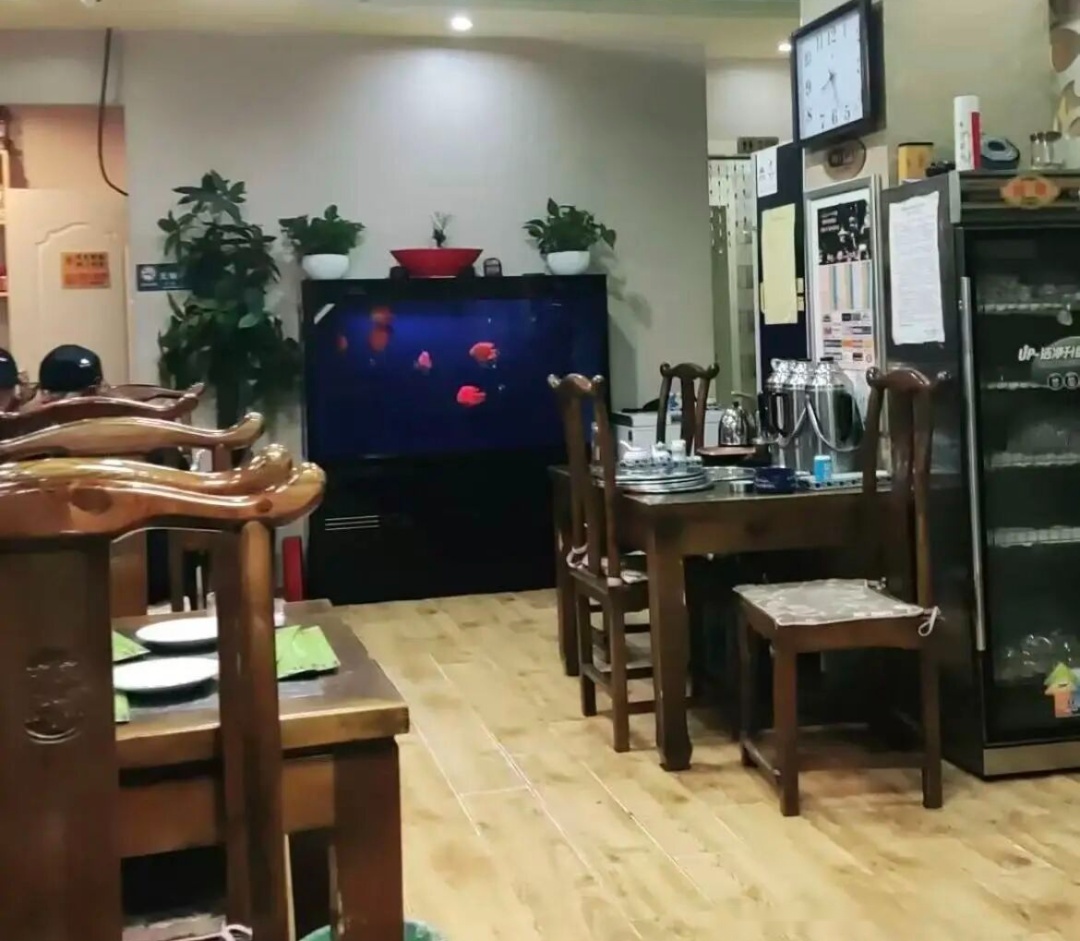
A quick heads-up: don’t set your expectations for the environment too high. Most long-standing shops are pretty much like this—simple and humble, because the focus is entirely on the flavor.
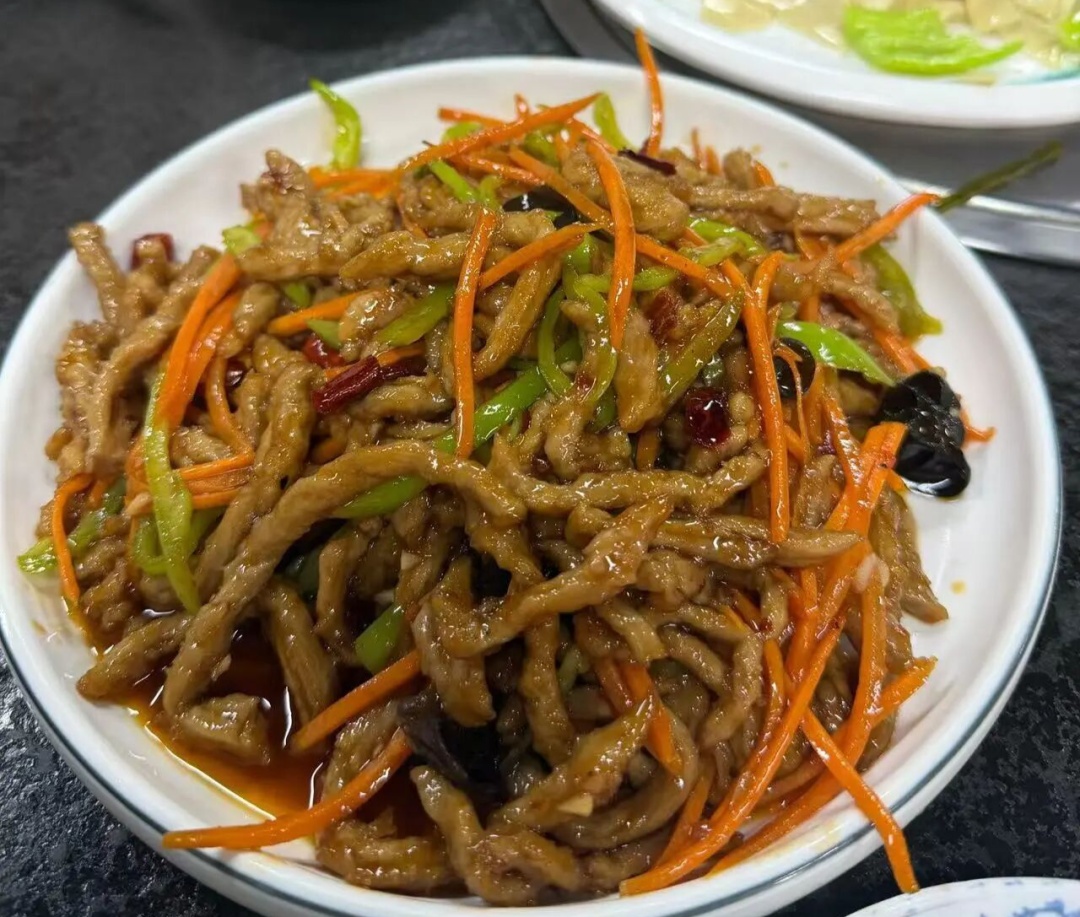
I came here specifically for their Yu-Xiang Rou-Si, and my friend kept insisting: 'You can order whatever else you want, but you have to eat this.'
It’s not cloyingly sweet, and the vinegar taste isn't overpowering. The shredded beef is tender, rich in savory sauce, and has that authentic old-fashioned taste—it’s amazing with noodles.
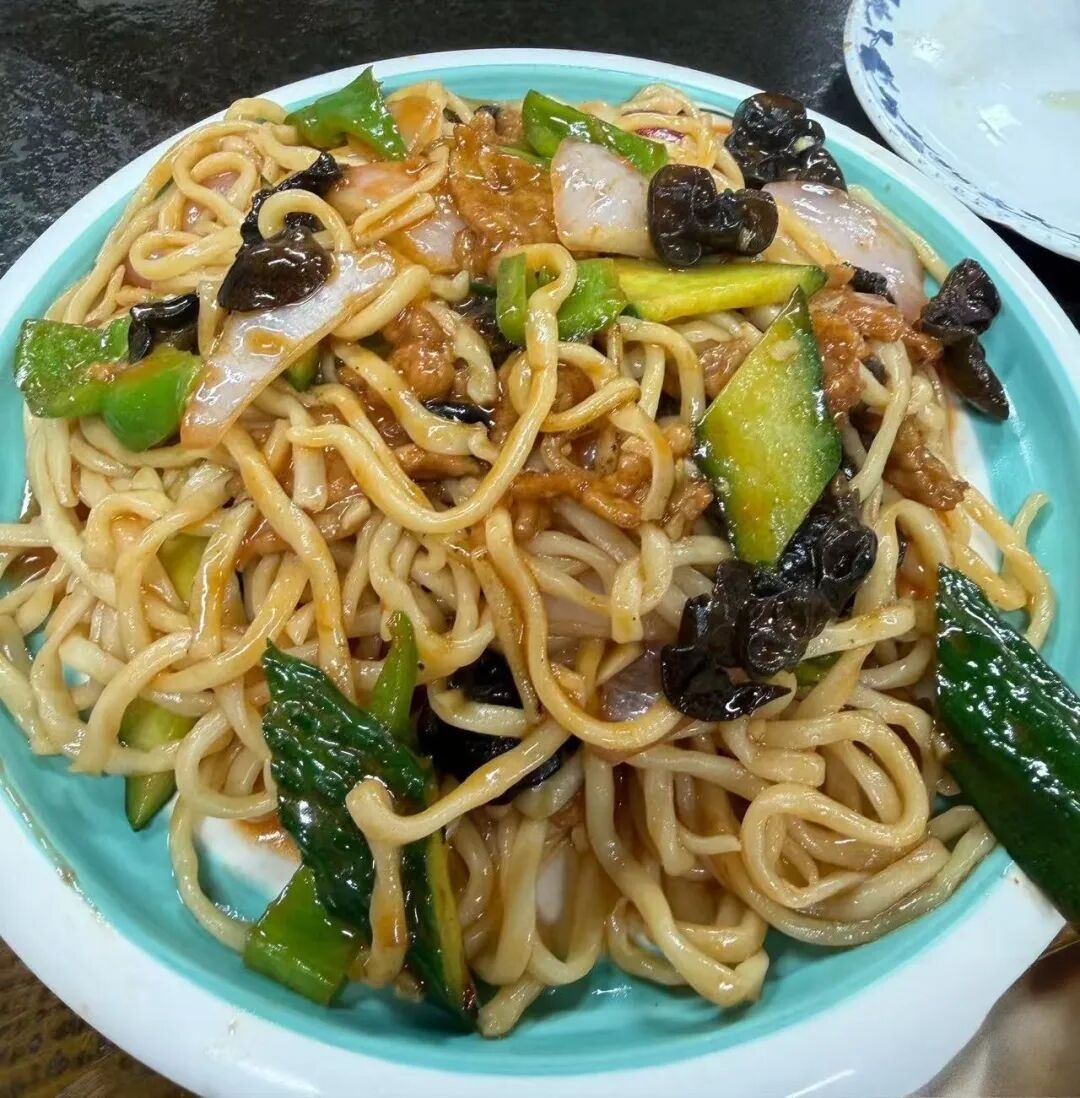
The hand-pulled noodles with 'Guoyou' (oil-blanched) meat are chewy; it’s worth visiting just for a bowl of these noodles, with every strand coated in savory sauce.

Eating copper-pot shabu-shabu in Inner Mongolia is hard to get wrong, and this place is no exception. The beef and mutton are thick-sliced to order, fresh enough to see, and have a great bite.
Bing Zhu Yang (ice-boiled lamb)—Hohhot’s most iconic signature dish.
Ice-boiled lamb isn't just some made-up viral trend.
The concept originated from nomadic herders on the grasslands: in the winter, when there was no running water, they would chisel ice to melt into water for boiling meat. It eventually evolved into the iconic specialty hot pot we see in Hohhot today.
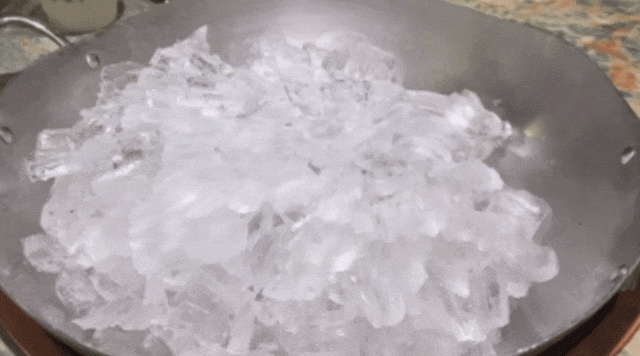
I looked it up, and this spot is ranked number one for charcoal hot pot in the Huimin District! (A 10-year-old Halal shop).

When the pot was brought out, the visual impact was quite something. The bottom was layered with onions and carrots, topped with a thick layer of ice cubes, and then piled high with large chunks of raw mutton. You could tell at a glance that the meat was incredibly fresh.

Honestly, my expectations were sky-high before I started eating, and while it didn't quite hit that "mind-blowing" level I anticipated, the quality of the lamb itself was spot-on.

After waiting for the pot to boil and the meat to cook through, the texture was super tender and firm, with a natural, savory sweetness. The best way to enjoy it is to sip the broth first, then eat the meat—it really makes for a great experience.

I personally loved the sesame paste dipping sauce; it was rich and flavorful, complementing the lamb perfectly.

The peak of Hohhot lamb: 40 years of mastering lamb dishes.
Xingyuezhai has been a Halal staple in Hohhot for 40 years. It’s not some trendy, mass-produced joint; they’ve been sticking to their traditional, time-honored techniques for decades.

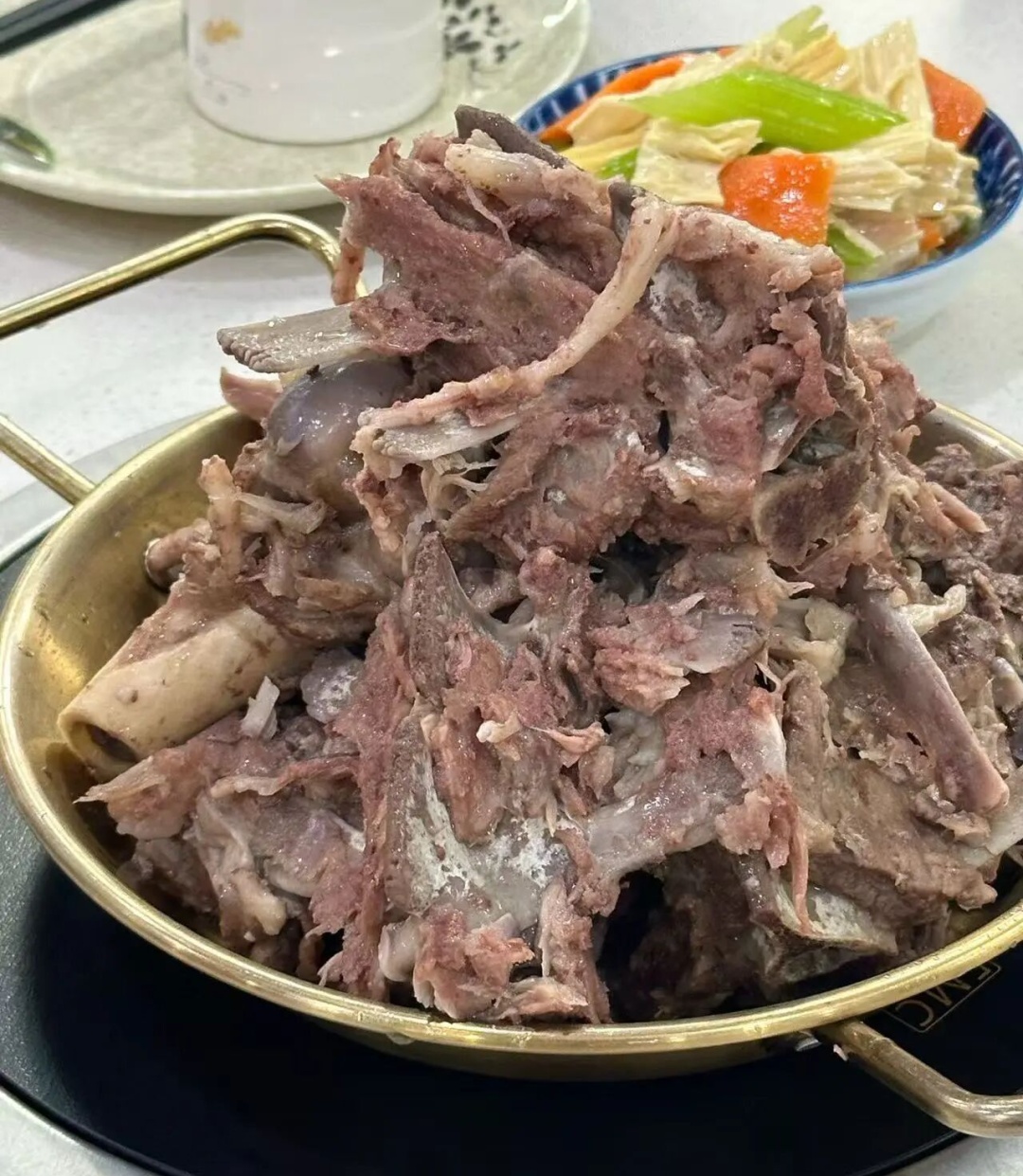
Their signature lamb bones are slow-simmered in a traditional broth, and they are completely free of any gamey smell.
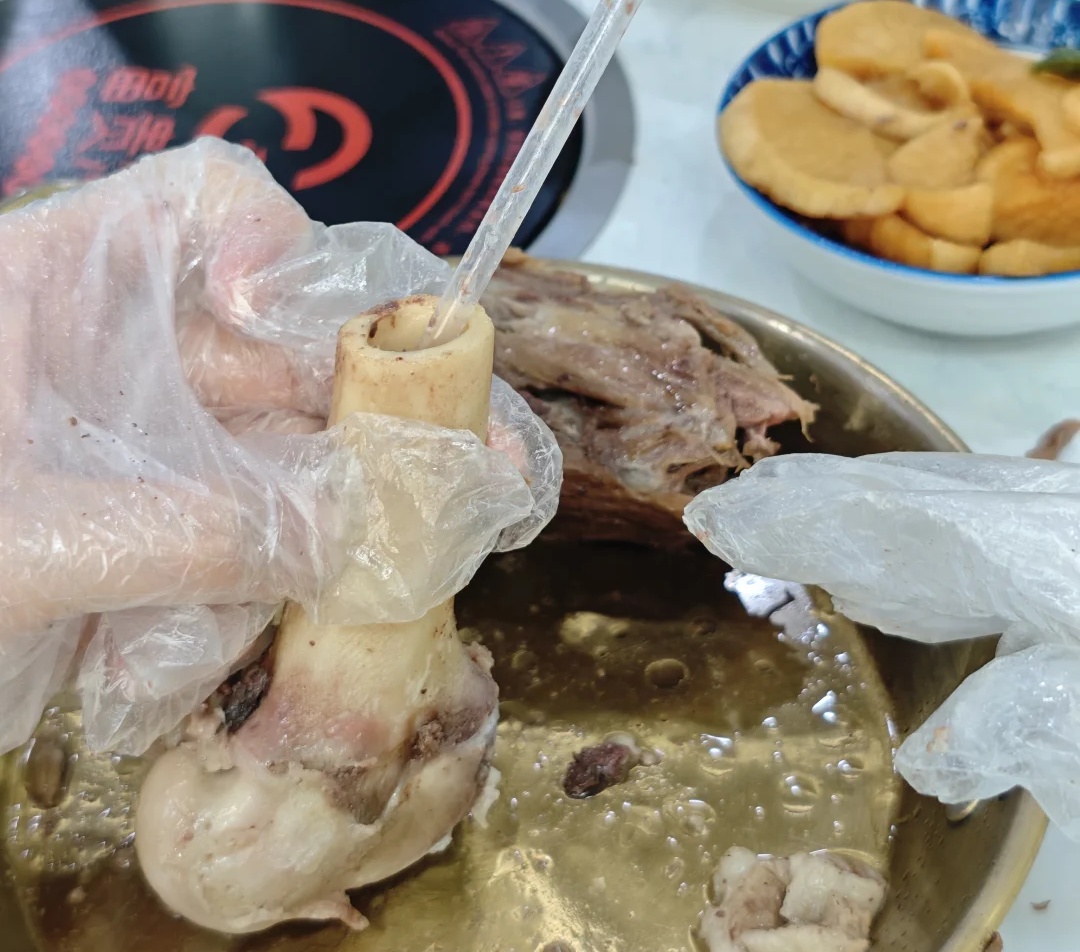
They’re stewed until so tender they fall right off the bone, and the marrow bones are absolutely packed with rich, creamy goodness.
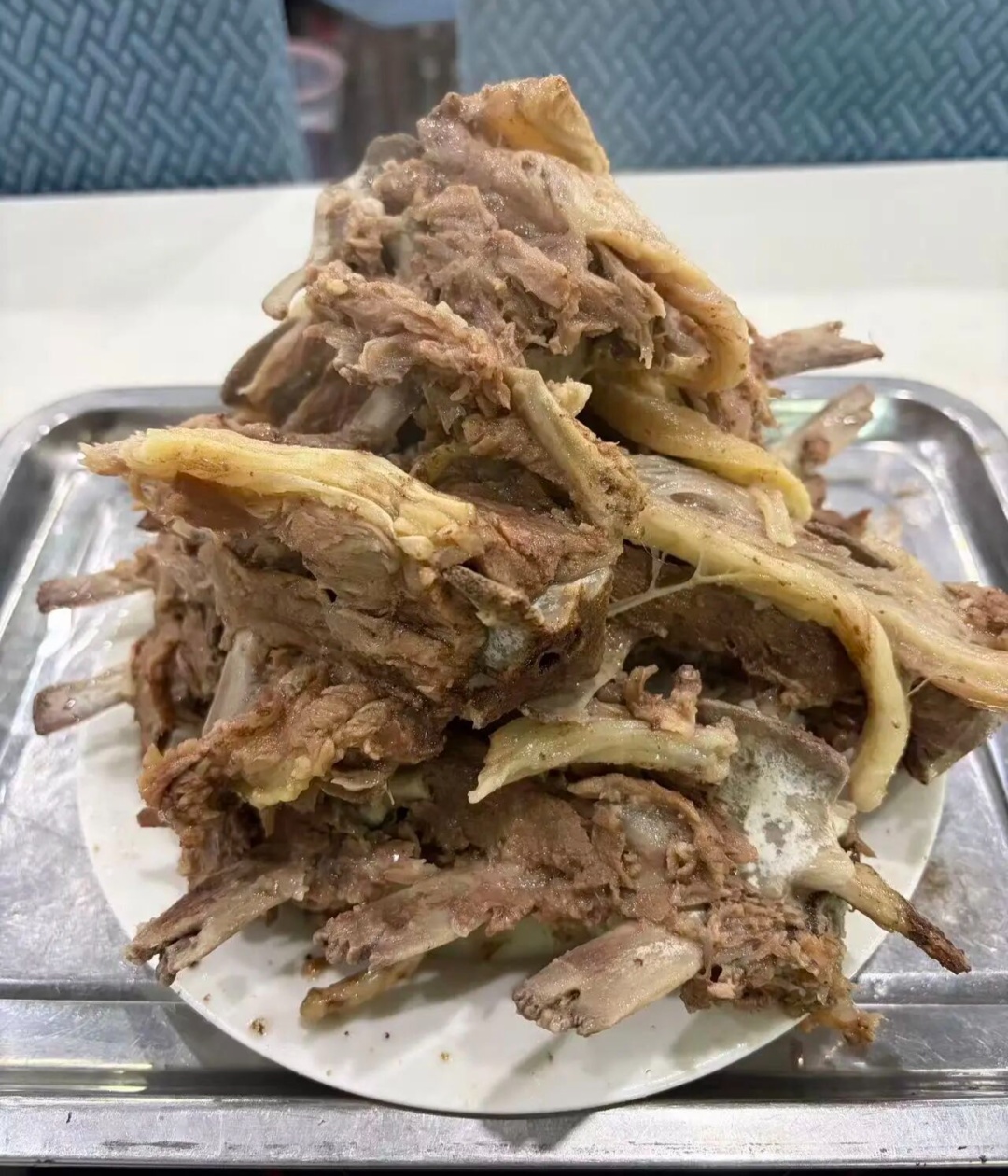
You can choose between lamb spine or lamb shank, or go for a mix of both. I personally prefer the lamb spine—it’s meatier and really satisfying to gnaw on.
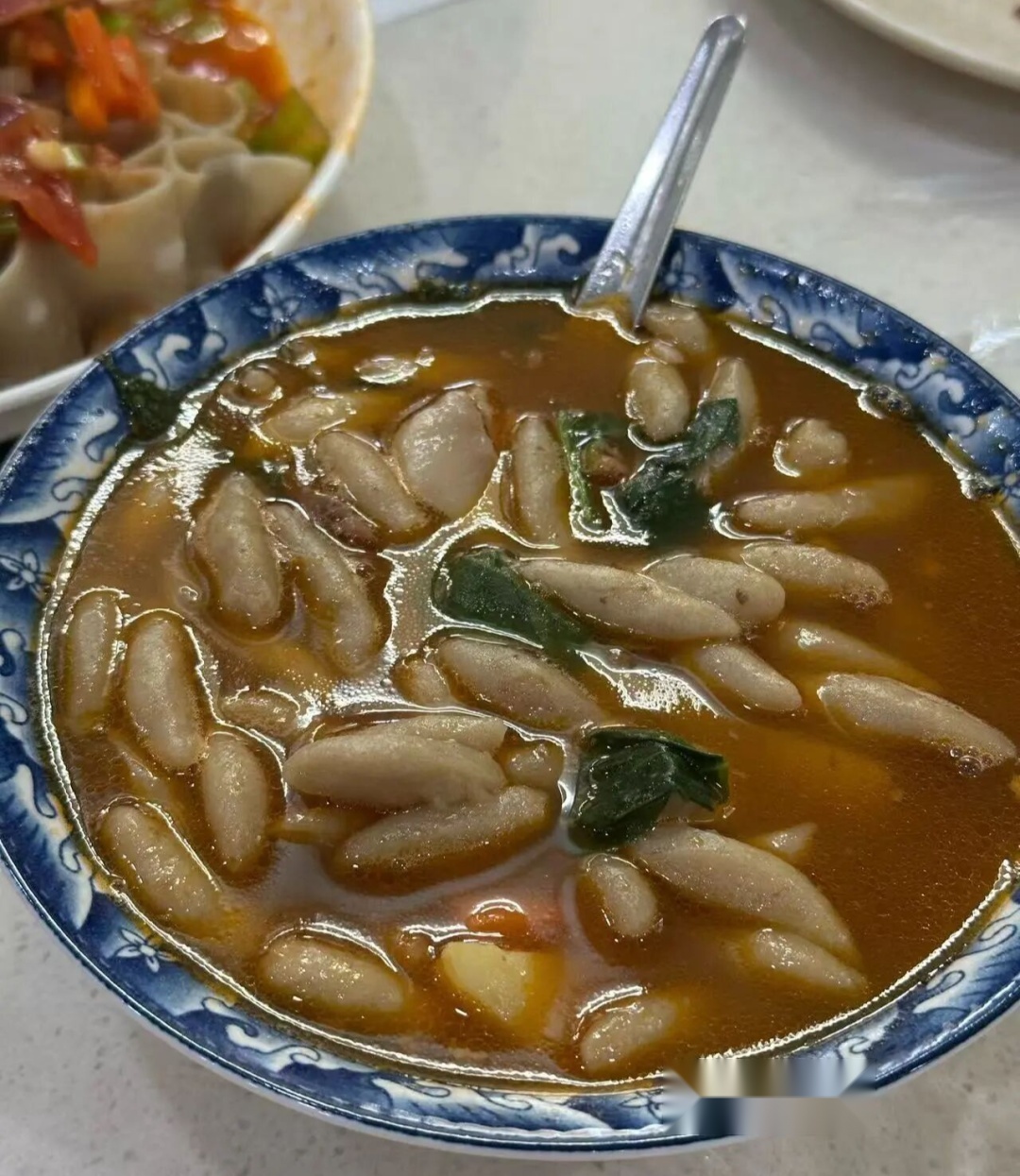
Pair it with a side of youmian yuyu (steamed oat noodles shaped like little fish). The broth is super thick and flavorful; the noodles have a great chewy texture, and they soak up all that meaty goodness, making every bite delicious.
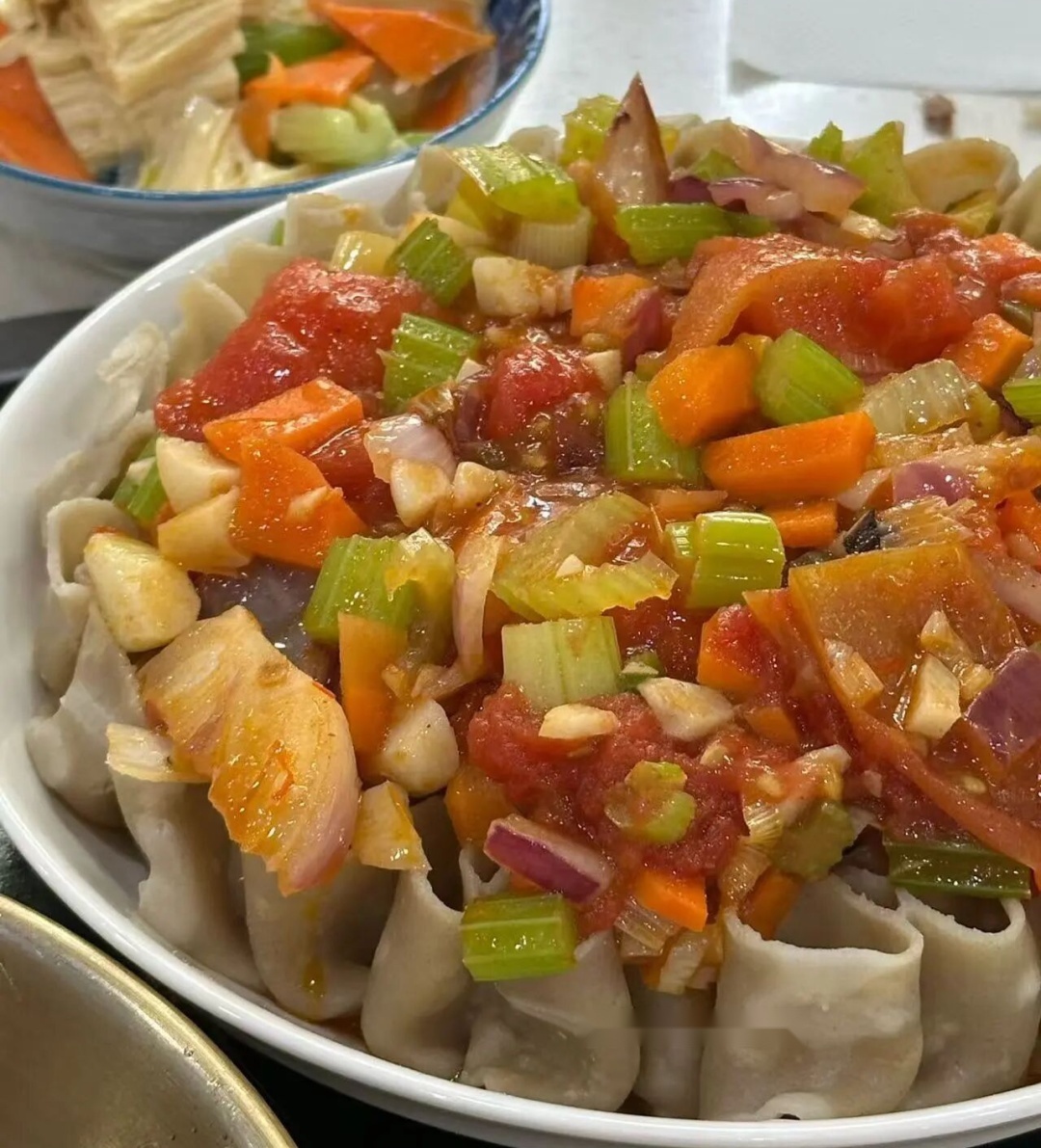
The youmian wowo (rolled steamed oat noodles) are stacked up neatly, and they have such a rich, nutty grain aroma when steamed.
The side dishes are classic home-style comfort foods: scallion tofu, spicy and sour radishes, and pickled veggies. They’re refreshing and help cut through the richness—just order whatever suits your taste.
Copper Hot Pot: The most authentic way to enjoy prairie lamb.
Why is it a must-eat when you visit Hohhot?
If you really want to experience the true flavor of prairie lamb, a clear-broth hot pot is the most direct way to do it! You’ll know if it’s good from the very first bite.
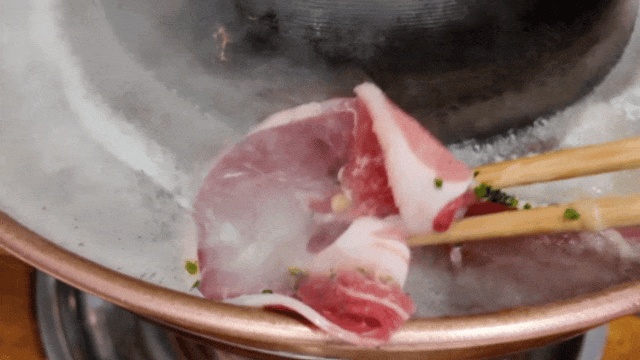
This place specializes in about-one-year-old prairie lambs (an 11-year-old Halal shop). The owner says they run their own ranch, handling everything from the pasture to the table to ensure the meat stays fresh.
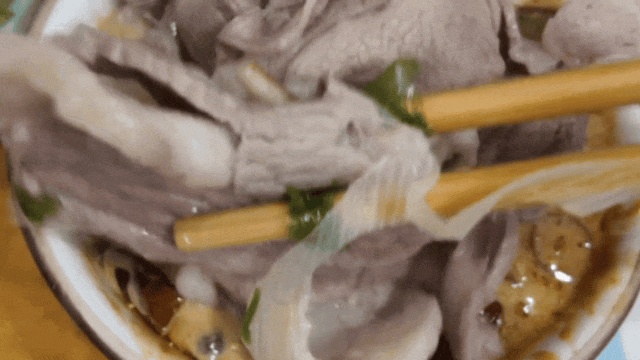
This kind of lamb is incredibly tender with very little gamey taste; it even has a subtle, milky sweetness, which is a profile I really love.
It uses a traditional clear-broth copper pot. The base looks simple, but it includes a bit of suancai (pickled cabbage) to add a slight tang that enhances the flavor without overpowering the lamb—it perfectly highlights the meat's natural taste.
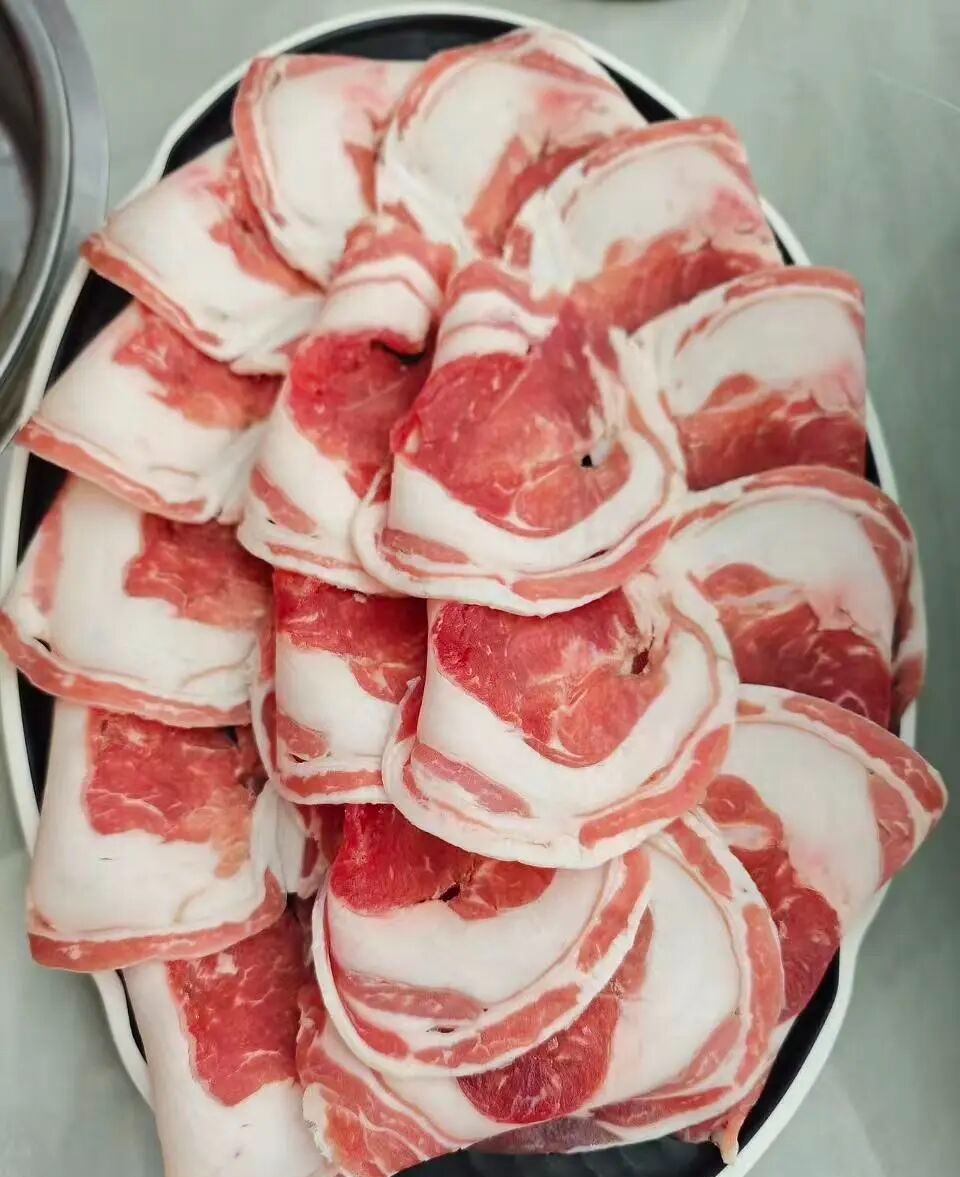
The signature thinly sliced lamb is cut to the perfect thickness. Once you swish it in the pot, it turns out super tender and juicy, with a rich, milky flavor and almost no gamey scent.
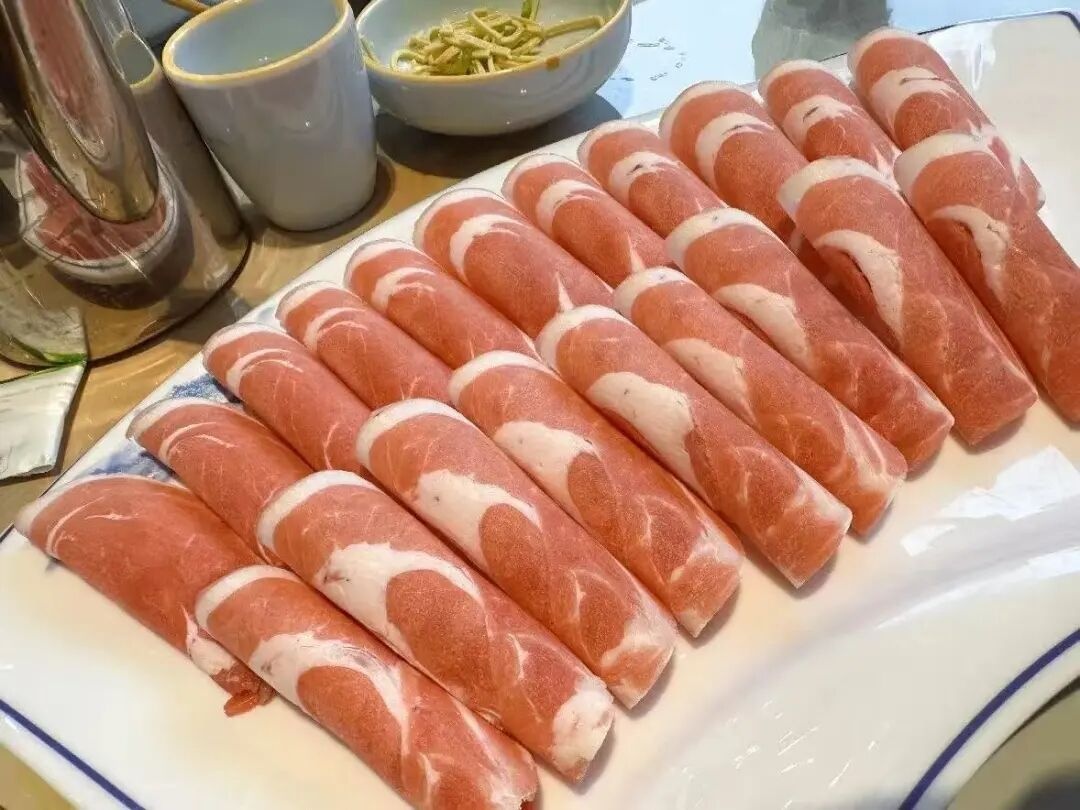
The premium lamb slices are huge and delicious, with virtually no gamey taste—eating them is a real treat.
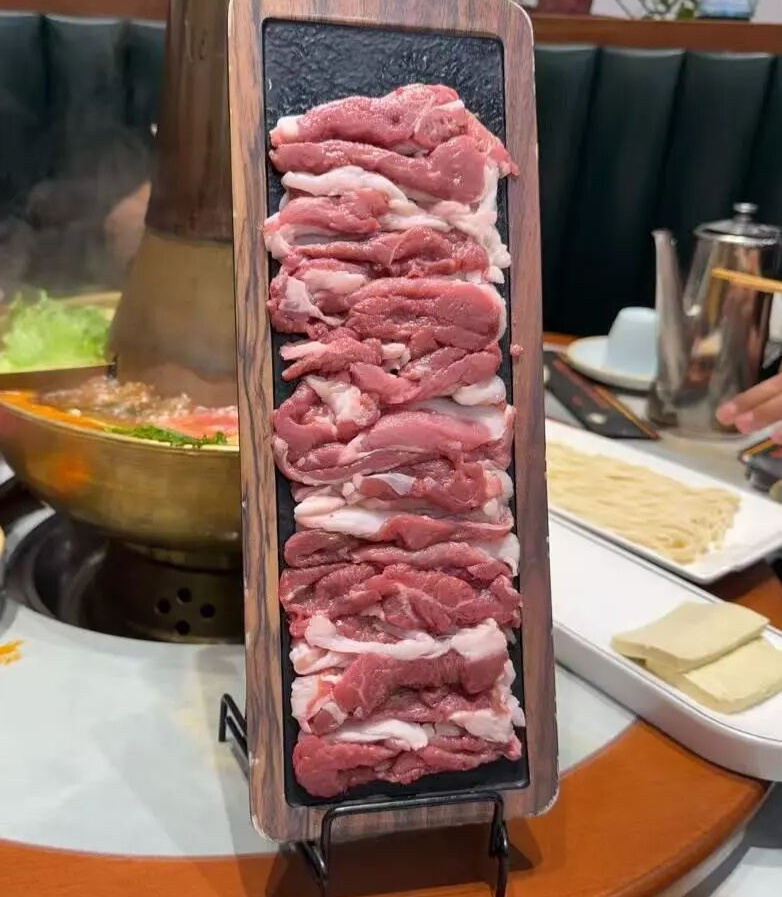
The hand-sliced fresh lamb might be a bit thicker because it’s cut by hand, but the flavor is spot-on and the texture isn't tough at all.
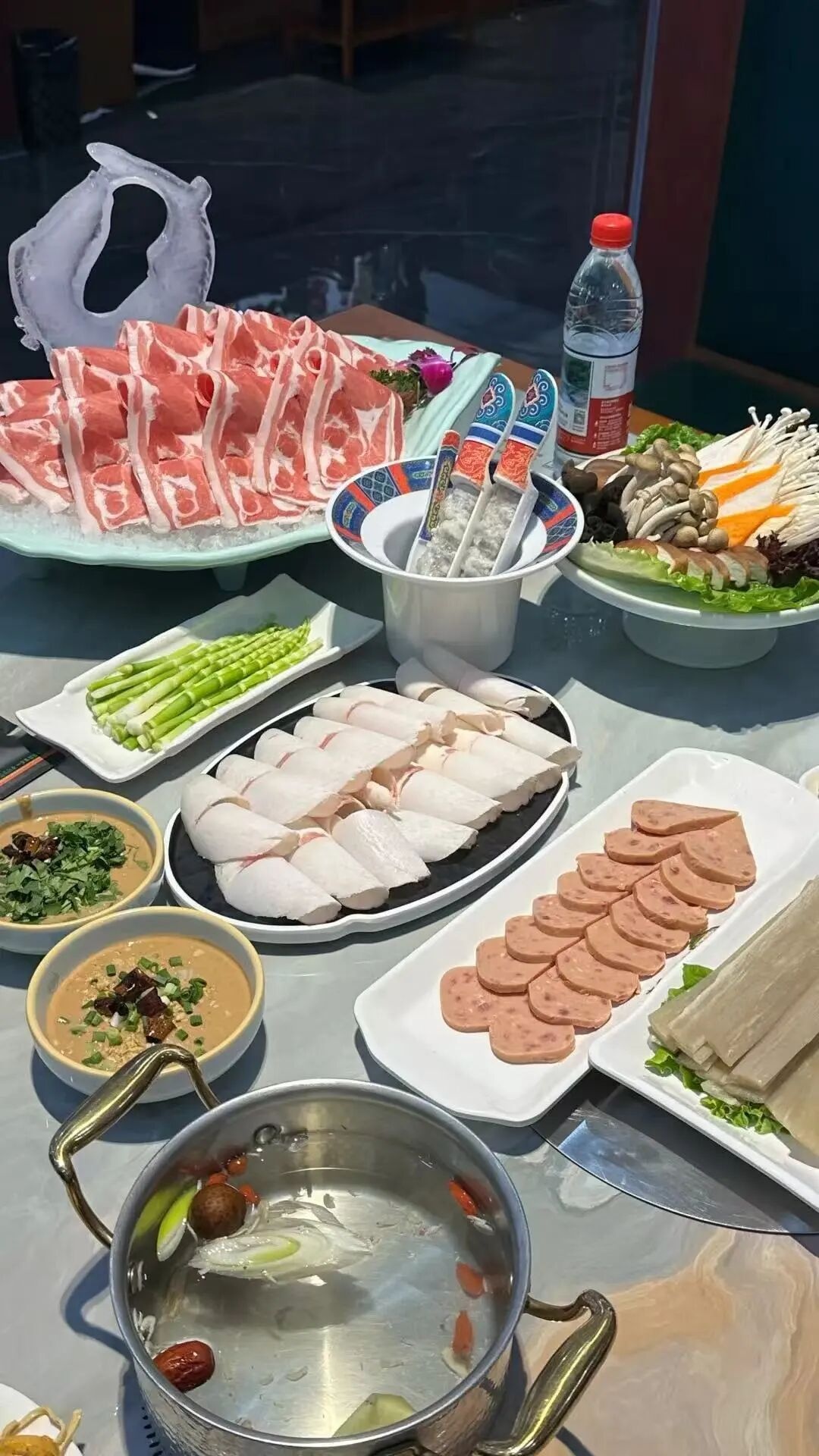
A clear water broth really puts the quality of the meat to the test, and their lamb passes with flying colors.
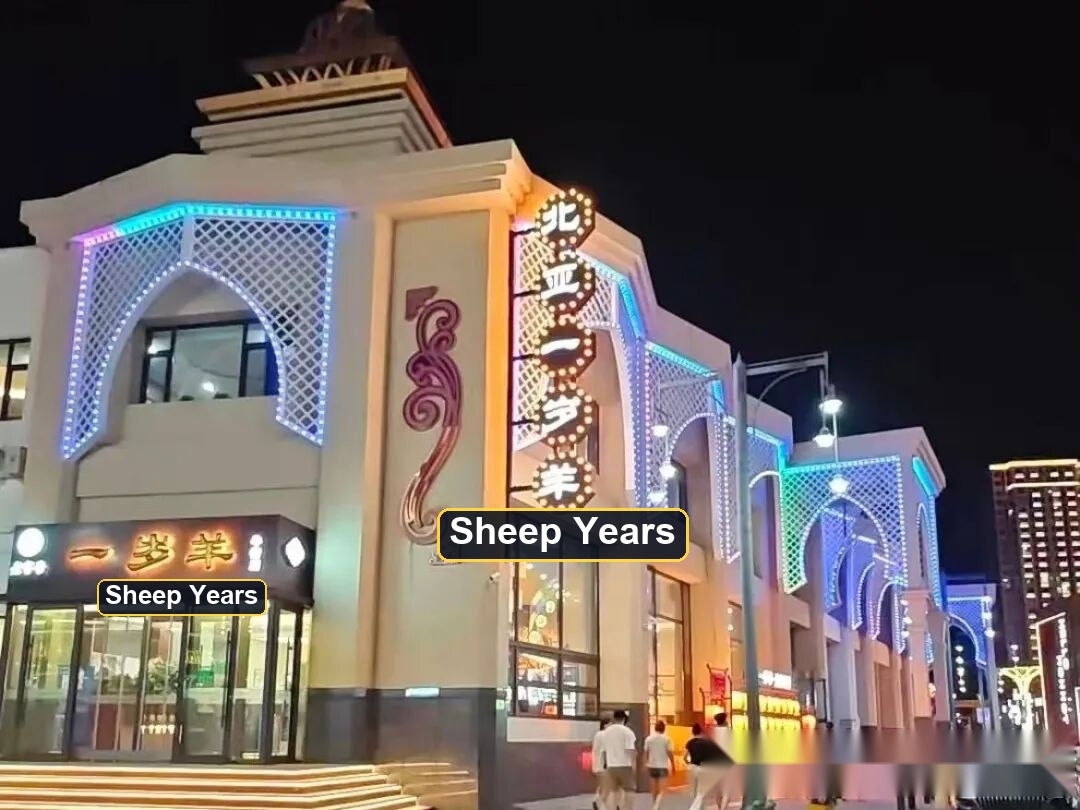
The most iconic 20-year-old Mongolian-style restaurant.
Gerile Ama (founded in 2000) is a great spot if you’re new to Inner Mongolian dairy products. This location is a Halal-certified restaurant.
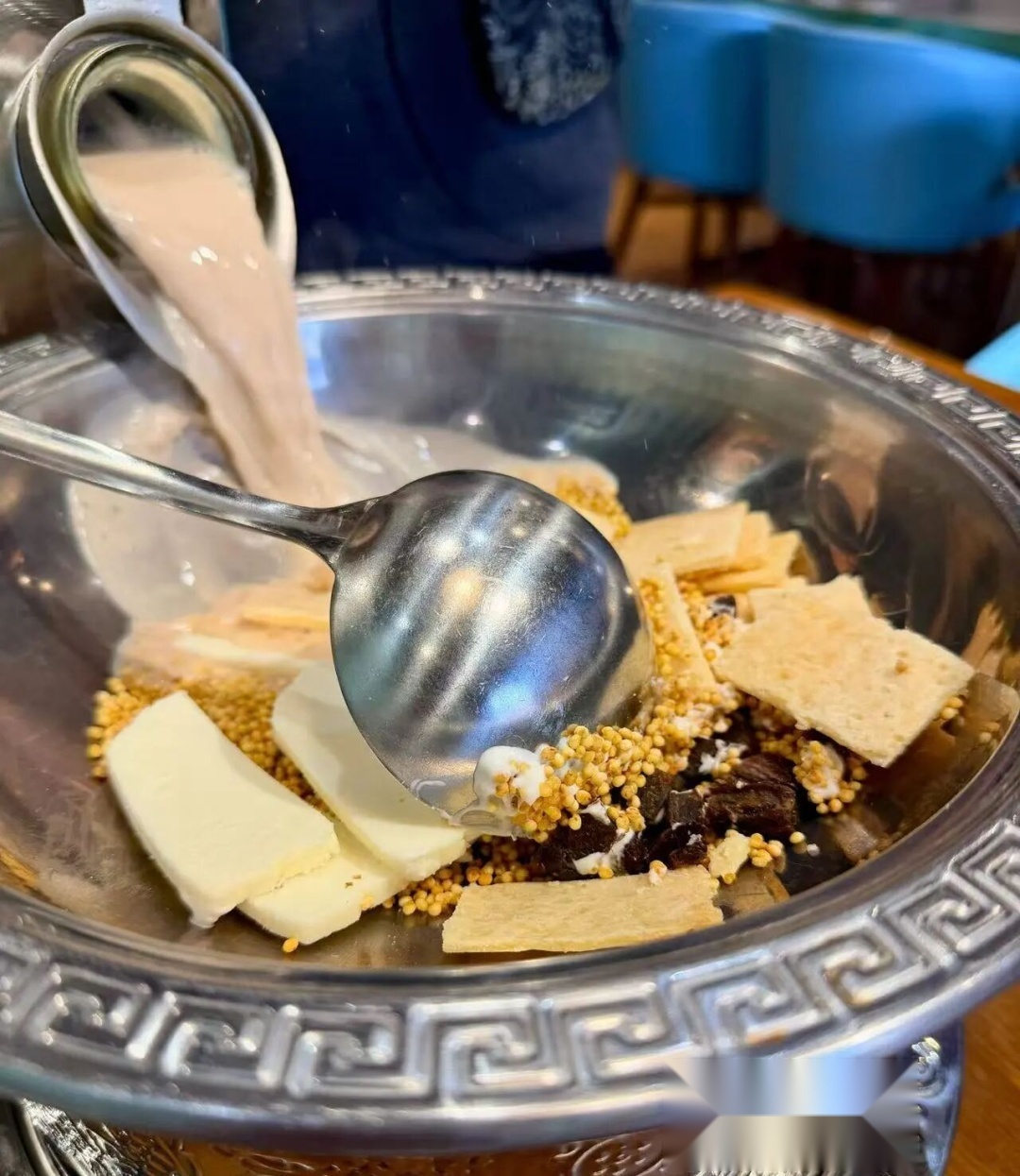
What I was looking forward to most was their guocha (pot tea). Salty milk tea is boiled in a pot with milk skin, roasted millet, and dried beef—the moment that aroma hits you, you’re hooked.
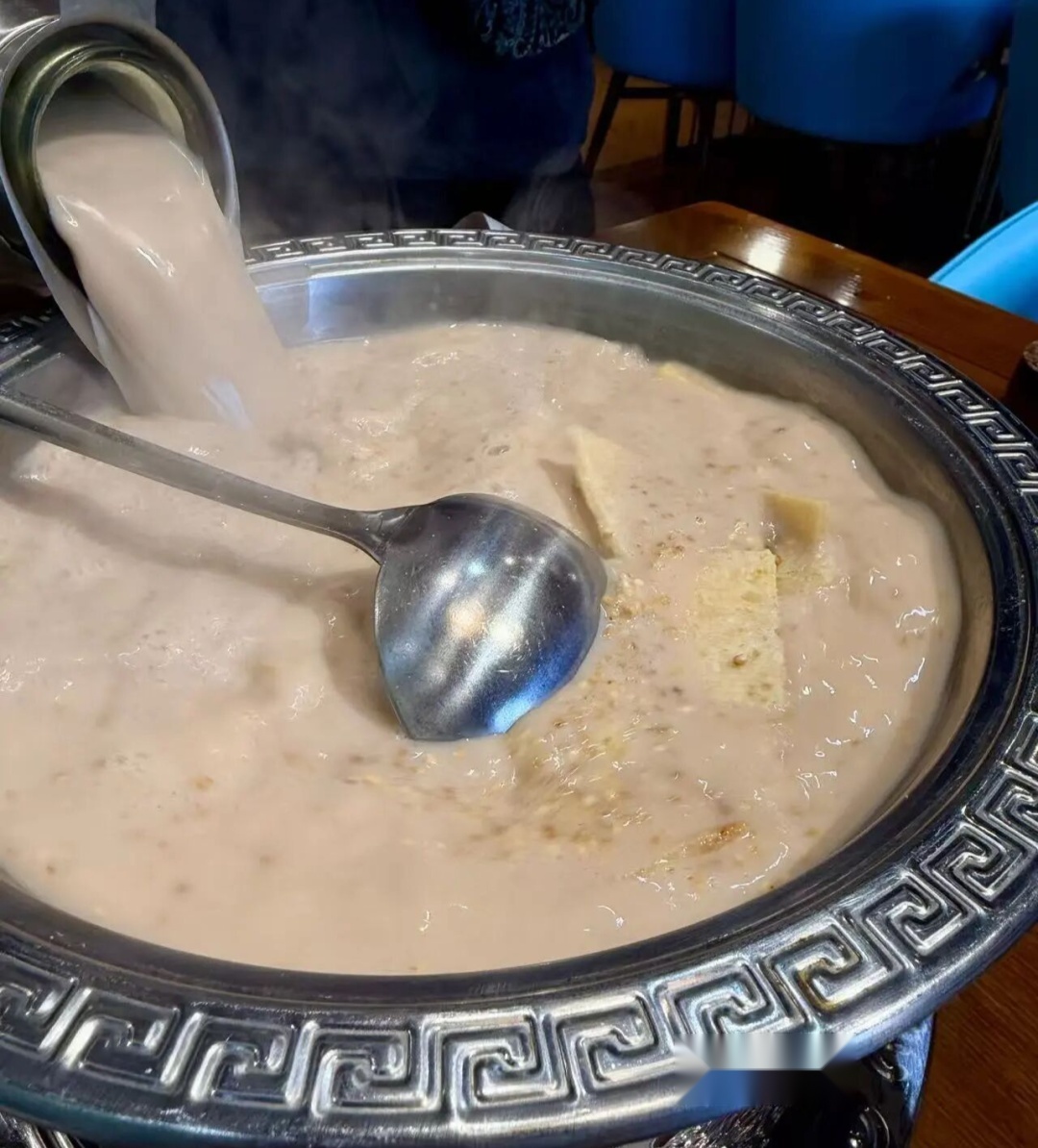
If it’s your first time trying salty milk tea, it’s easy to fall in love with its rich, creamy flavor.
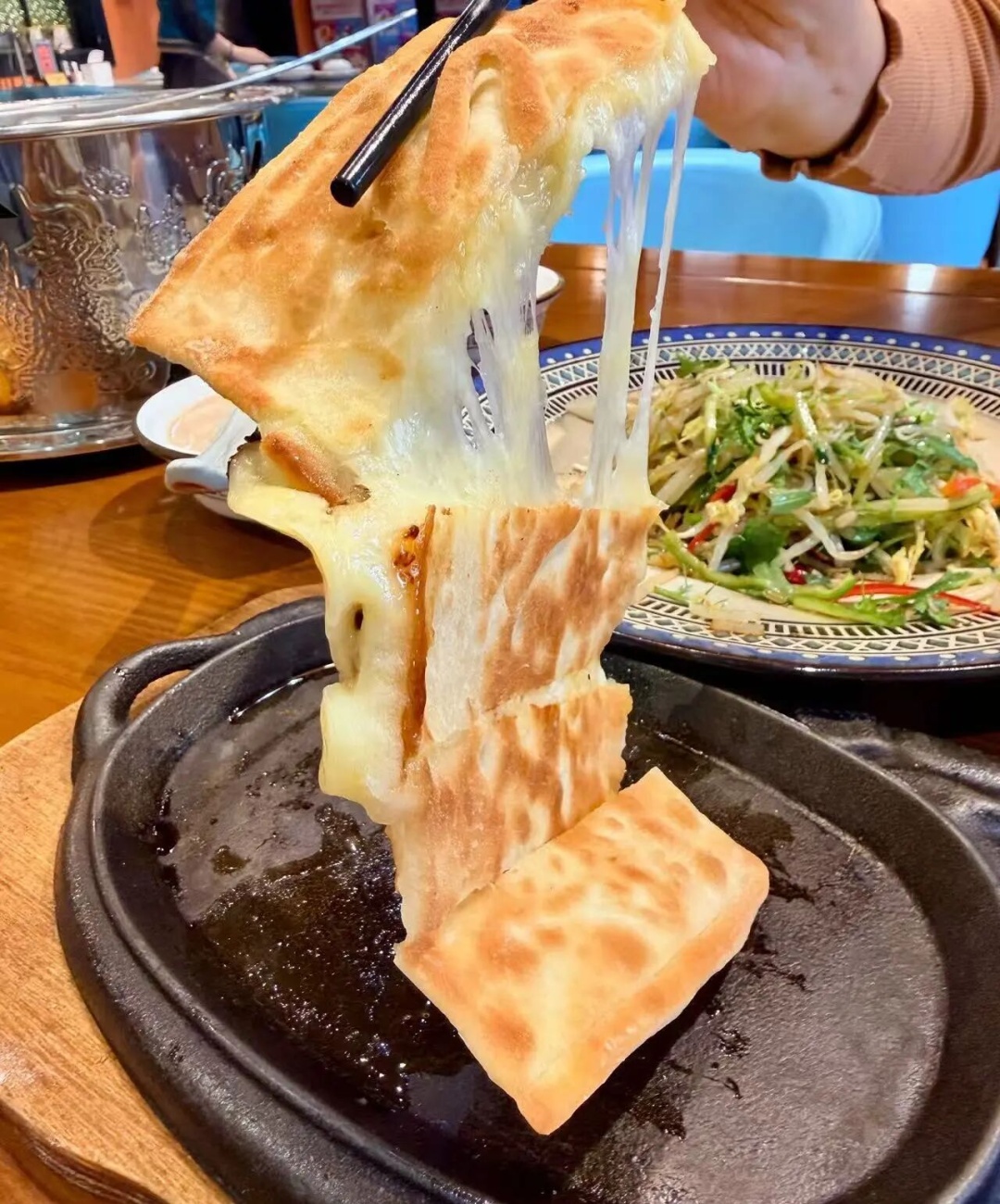
The sweet cheese pies have a fragrant crust, and the cheese inside is super stretchy. Just a heads-up: items with too much cheese can get a bit heavy, so don't order too much at once.
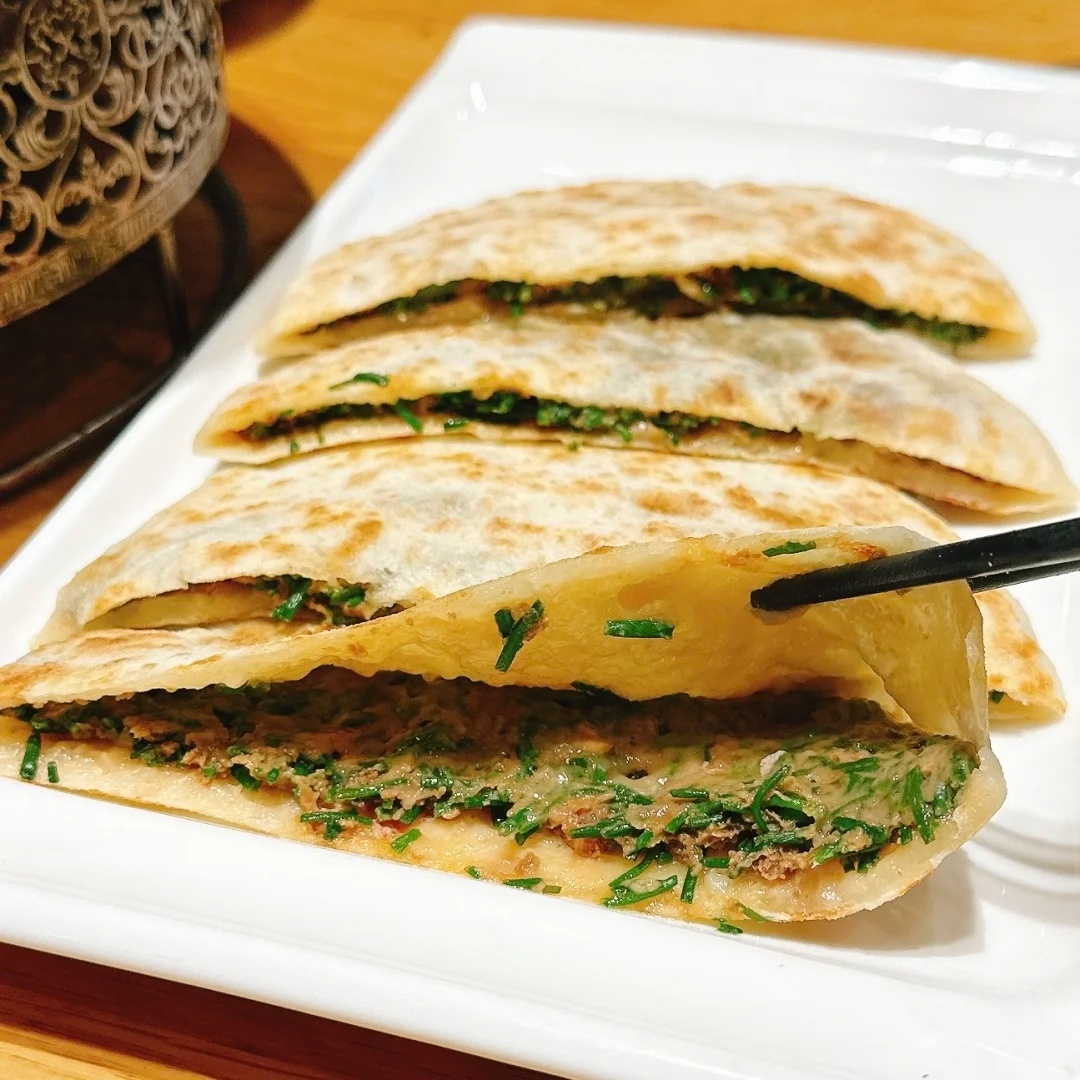
The lamb and shancong (wild onion) pie has an incredibly thin crust—every bite is just pure filling.
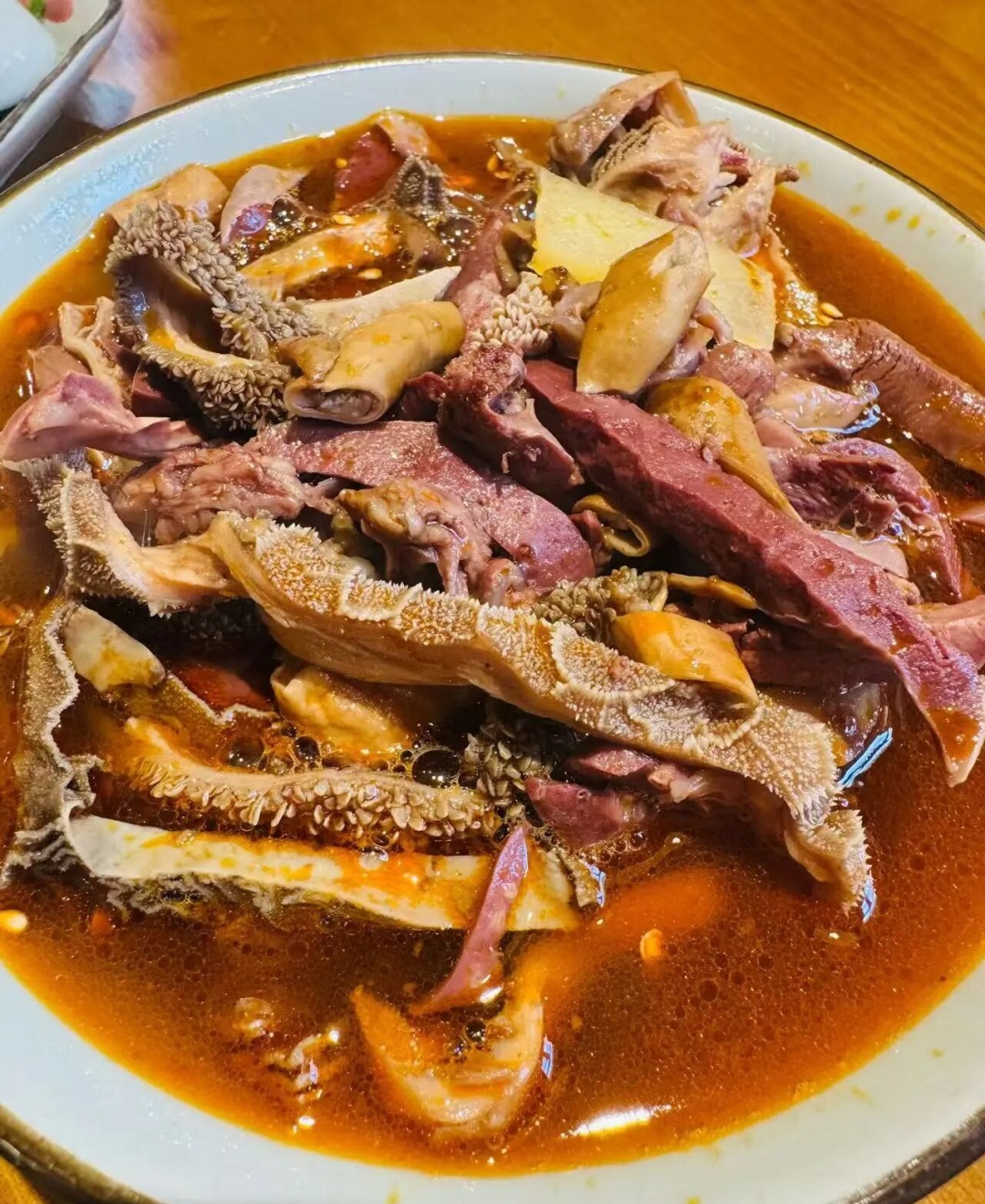
The red-broth lamb offal soup is bright, savory, and spicy. The offal is cleaned perfectly with no weird smells.
One of the two titans of Hohhot-style stir-fry: Guoyourou with potato slices.
Guoyourou (oil-blanched meat) actually originated as a Shanxi dish and made its way to Hohhot through the migration history known as "Zouxikou."
Here in Hohhot, they put their own spin on it: the potato slices are deep-fried until crispy, then stir-fried with tender beef and a bit of wood ear mushroom in a thickened sauce. It’s a mix of sweet, sour, and savory, creating a unique version you won't find anywhere else.
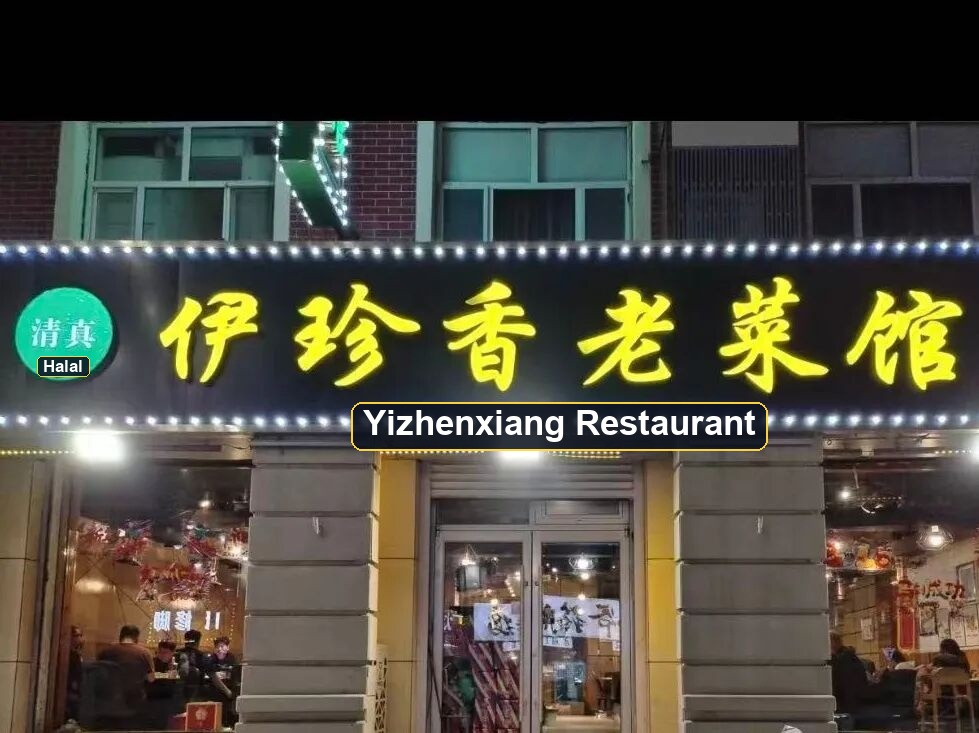
You have to try Yizhenxiang (a 6-year-old Halal restaurant) when in Hohhot. While it hasn't reached the 10-year mark yet, I’m confident they’ll easily maintain this level of quality.
Once I started eating, I couldn't help but say, "No wonder this place is so popular." Calling their cumin lamb and guoyourou with potato slices "god-tier" is no exaggeration.
The potato slices in the guoyourou are crispy on the outside, and the beef slices are silky smooth. You wouldn't even know it was beef unless someone told you, and the sauce coats everything just right.
The stir-fried saudan (beef tripe/stomach) is also a specialty. The tripe is cleaned immaculately with absolutely no off-putting smell. It’s stir-fried over high heat, making it super flavorful and even better the more you chew.
Authentic Halal Food in Hohhot: A Guide to Best-Loved Hui Muslim Classics, Hand-Grabbed Lamb, and Shaomai.
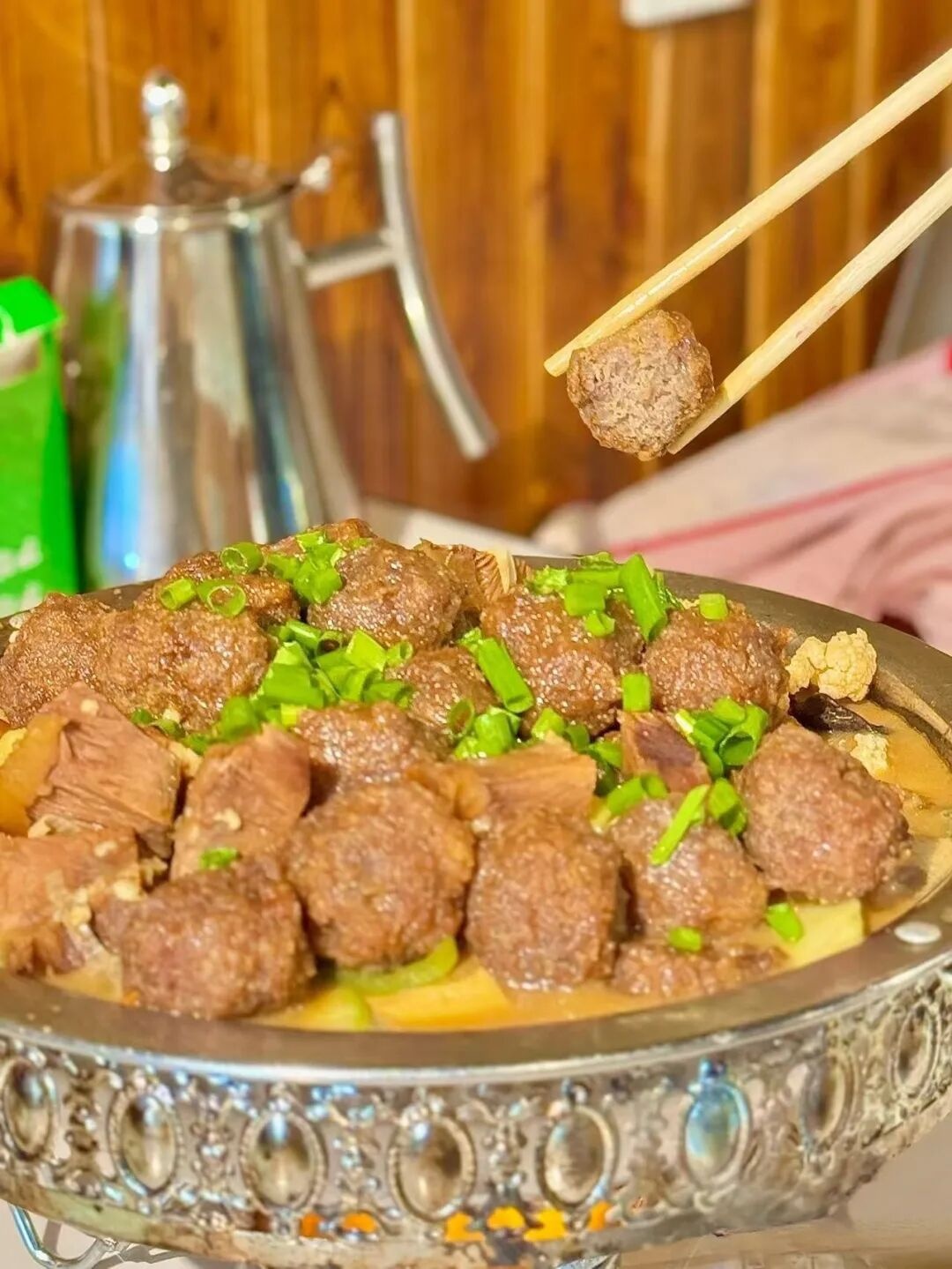
When it’s cold out, you’ve got to order a shijin guo (assorted hot pot). It truly lives up to its name, packed with a ton of vegetables, soy products, meatballs, and glass noodles, all bubbling away and steaming in the pot.
Having a pot like this in Hohhot during winter will warm you up from your stomach all the way to your toes.
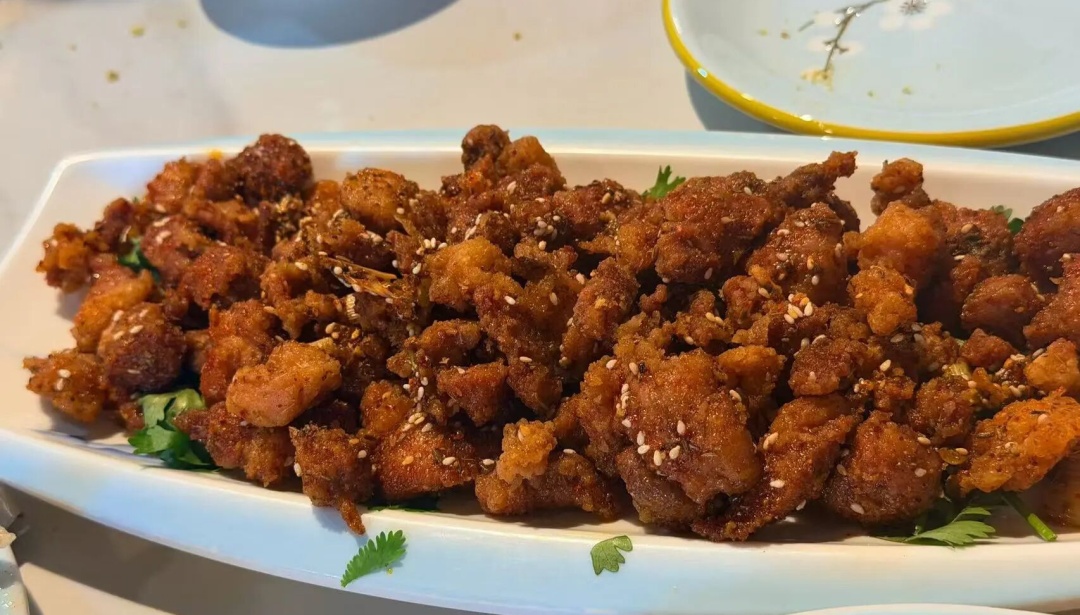
The cumin lamb is stir-fried quickly over high heat, giving it a savory, aromatic punch of cumin with just a hint of chili—not the aggressive, burning kind.

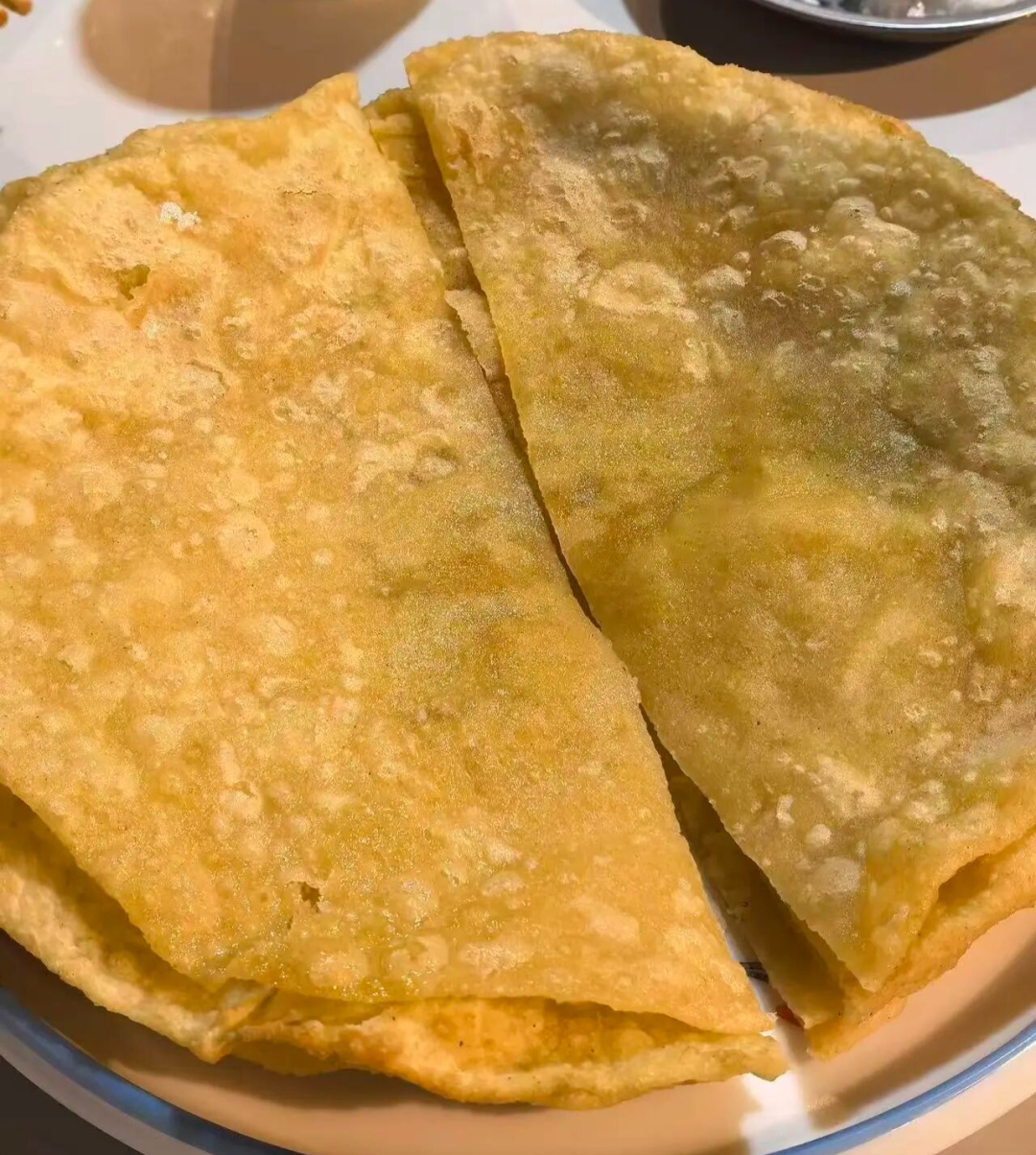
For your staple, go with the tangmian youpo (deep-fried dough cakes); it’s a unique way to eat them—you dip the fried dough into white sugar.
Old-school restaurants stand the test of time for a reason, but the new spots cropping up have their own special flavor, too.
Hohhot’s super-hyped la beizi (spicy stuffed baked flatbread).
Known as one of the nine must-try local delicacies in Hohhot, this is a spot locals shared with me in confidence. I was so curious to find out what exactly a beizi tastes like.
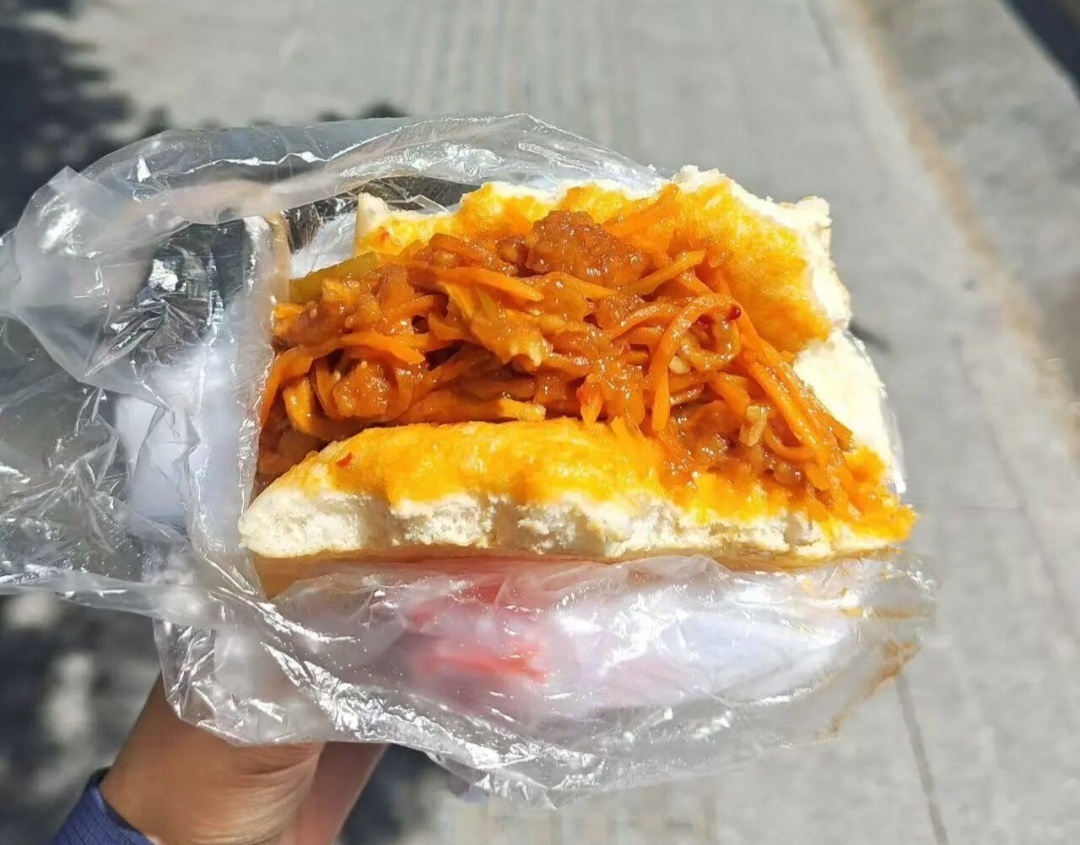
Their beizi are long and rectangular, toasted until fragrant, and they are super generous with the fillings—they practically spill out because the portions are so massive.
The yuxiang rousi (shredded pork in garlic sauce) beizi is so huge I couldn't even hold it with one hand!
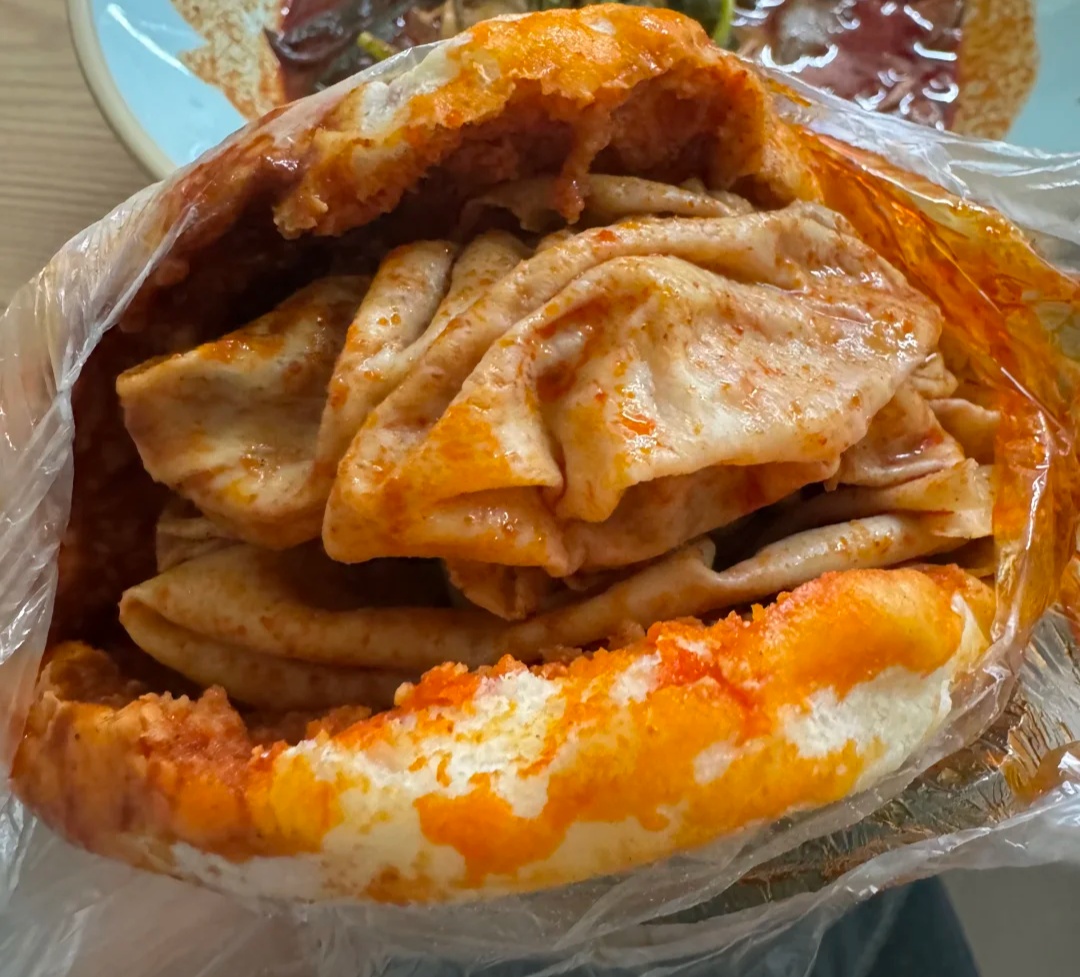
The shredded pork filling is piled so high it’s overflowing; the amount of filling is honestly ridiculous—it feels like you're eating a rice bowl, just with bread instead.
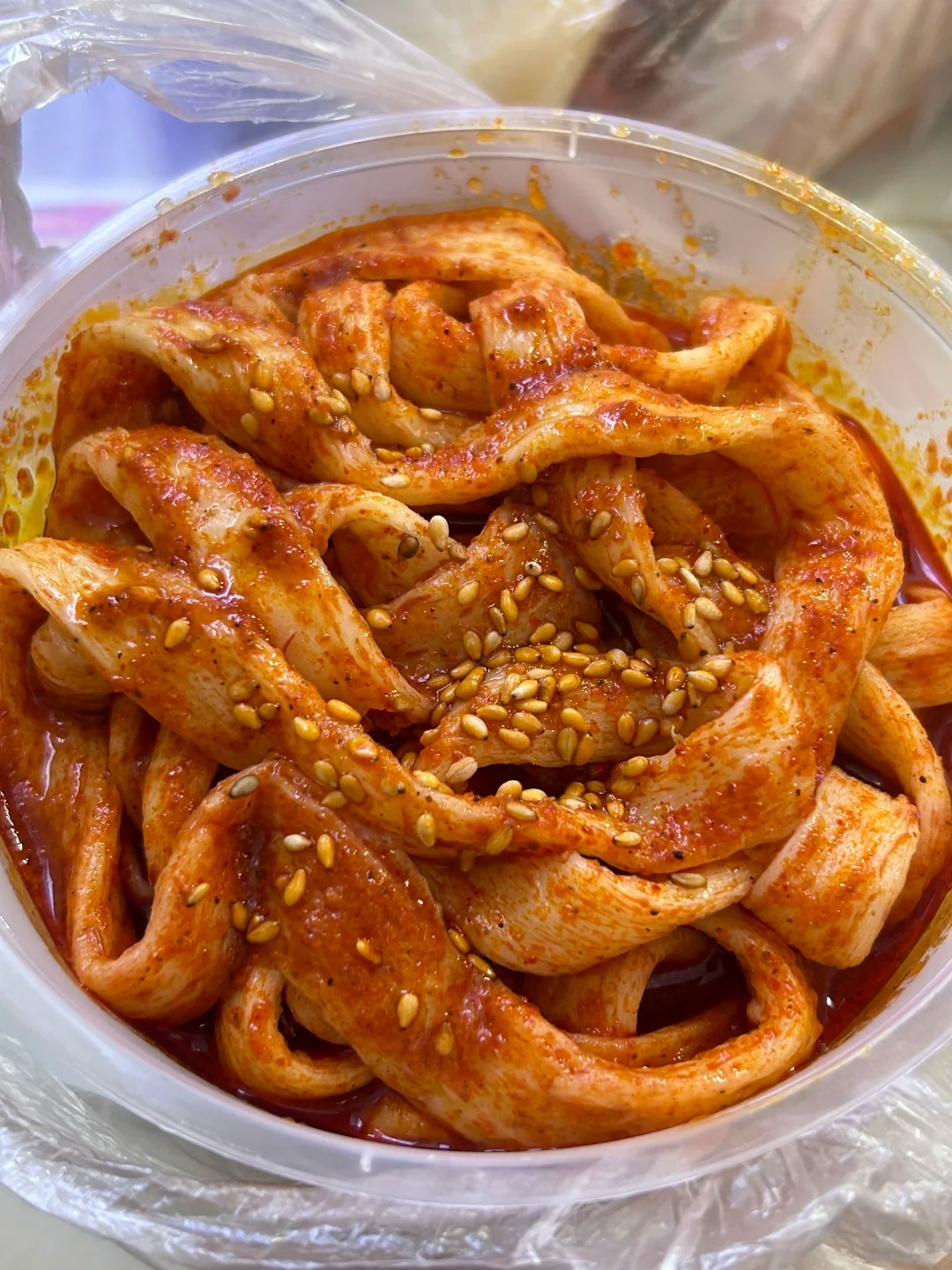
The classic spicy la pian (chili strips) beizi gets tastier the more you chew. The chili oil is very fragrant, and the tofu skin inside is nice and soft.
The mala niujin mian (spicy beef tendon noodles) packs a serious punch. It’s wonderfully spicy, the texture is nice and chewy, and the seasoning is bold and savory—perfect if you love intense flavors.
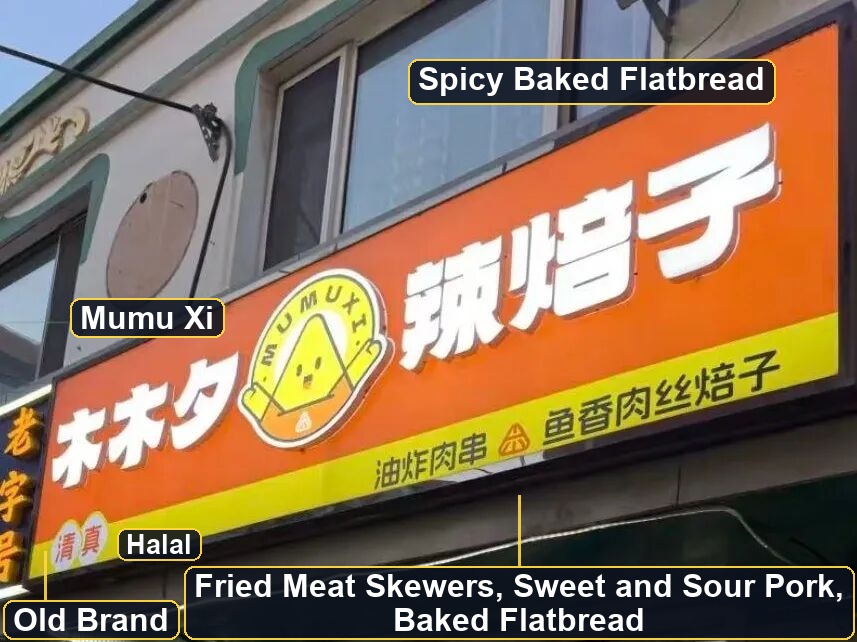
They offer delivery too, so you should definitely give them a try.
The deep-fried skewers worth waiting an hour for.
Almost every person from Hohhot has a go-to deep-fried skewer spot they’re loyal to.
I happened to be passing by and decided to try Xiaoyan Fried Skewers, which consistently ranks in the top three for local reputation.
I was worried the batter-fried skewers would be too greasy, but I was totally wrong. The batter is applied in a very thin layer, making them crispy on the outside and tender on the inside, locking in all the vegetable juices so they don't get dry.
I highly recommend four must-order items: mushrooms, green beans, hawthorn, and naipizi (fried milk skin).
The mushrooms and green beans are fried to perfection and stay crisp; the hawthorn is sweet and tart, which is quite unique; the naipizi has a prominent milky aroma once fried, with a really interesting texture.
Just a quick tip: don't order too much at once, because there are so many other great things to eat nearby—just grab enough to get a taste.
Top-tier bean sprout fried noodles in Hohhot.
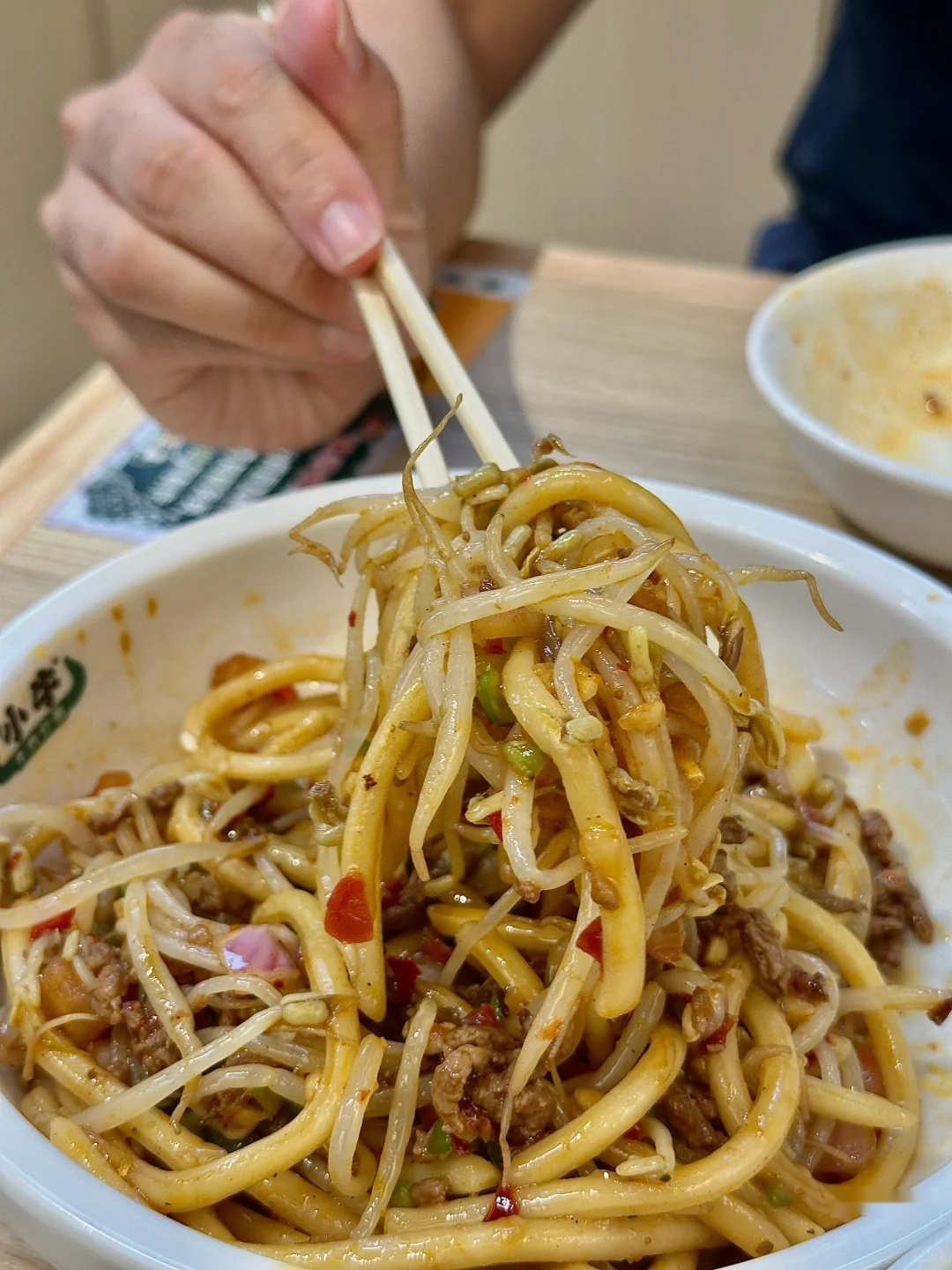
I found this spot serving local-style fried noodles near Hohhot’s Niu Jie (Beef Street), and a quick search revealed it’s considered one of the top-tier noodle spots on social media!
The beef and bean sprout fried noodles look simple enough, but you won't realize why it’s the signature dish until you take a bite.
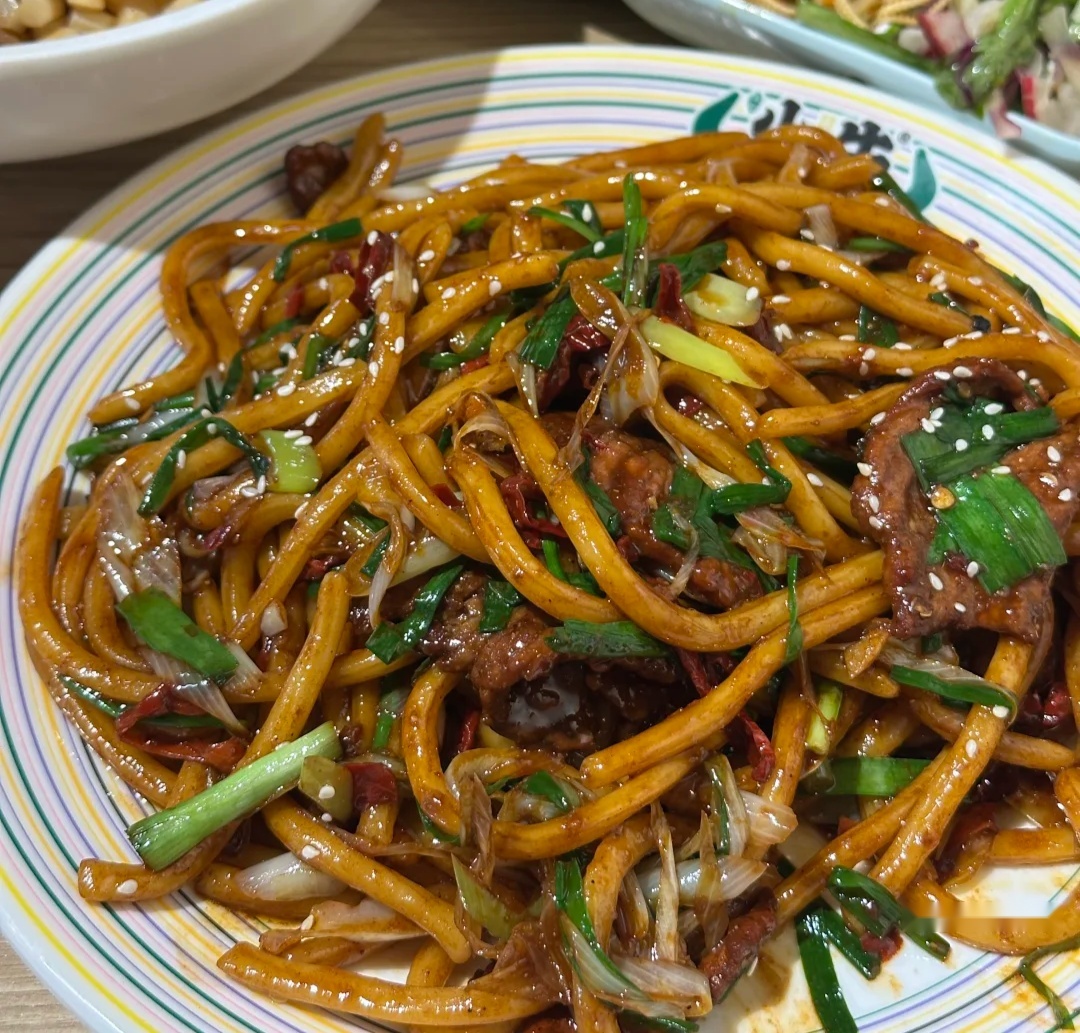
It’s a massive plate made with thick, chewy noodles. It’s savory and seasoned just right with a tiny kick of heat, and the bean sprouts add a nice crunch to the mix.
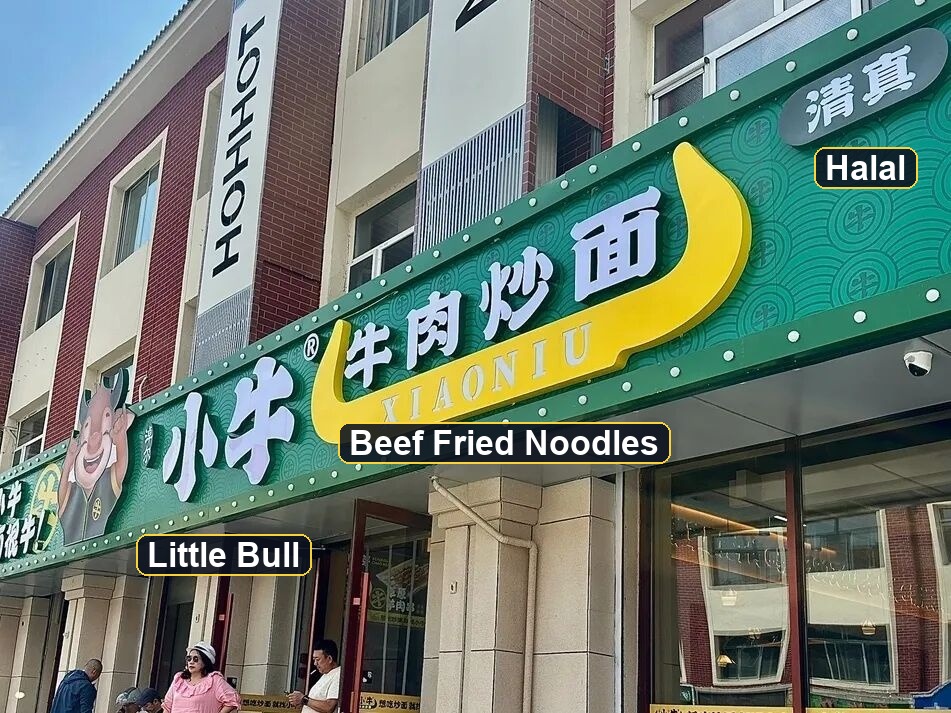
The ganbian (dry-fried) noodles are just as good. The best part is that you can get free refills on the noodles, so if you have a big appetite, don’t worry—you won't leave hungry.
Hohhot’s signature Lâhūhū (thick spicy sauce) malatang.
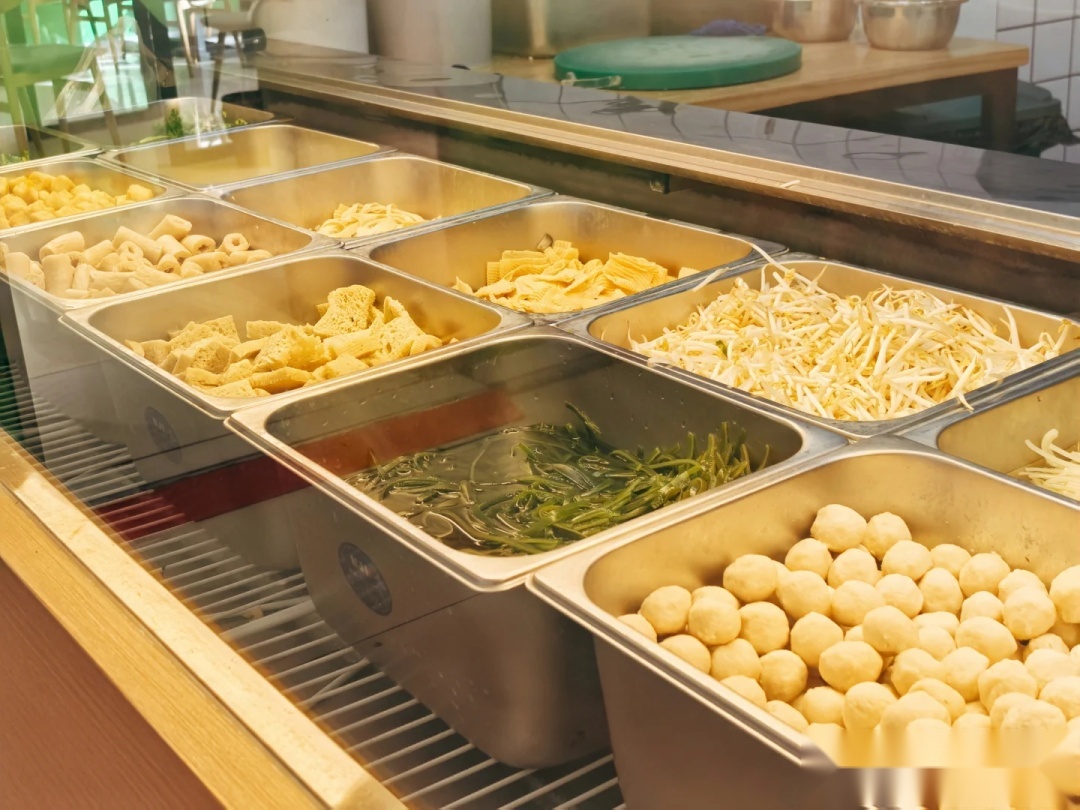
I discovered this malatang (spicy hot pot) shop while strolling through Kuanxiangzi, and they actually have the ingredients pre-selected for you.
The flavor profile is a bit like old-school Northeastern style malatang, but it definitely has its own distinct local twist.
There’s tons of sesame sauce, making the whole bowl thick and creamy, coating every single ingredient.
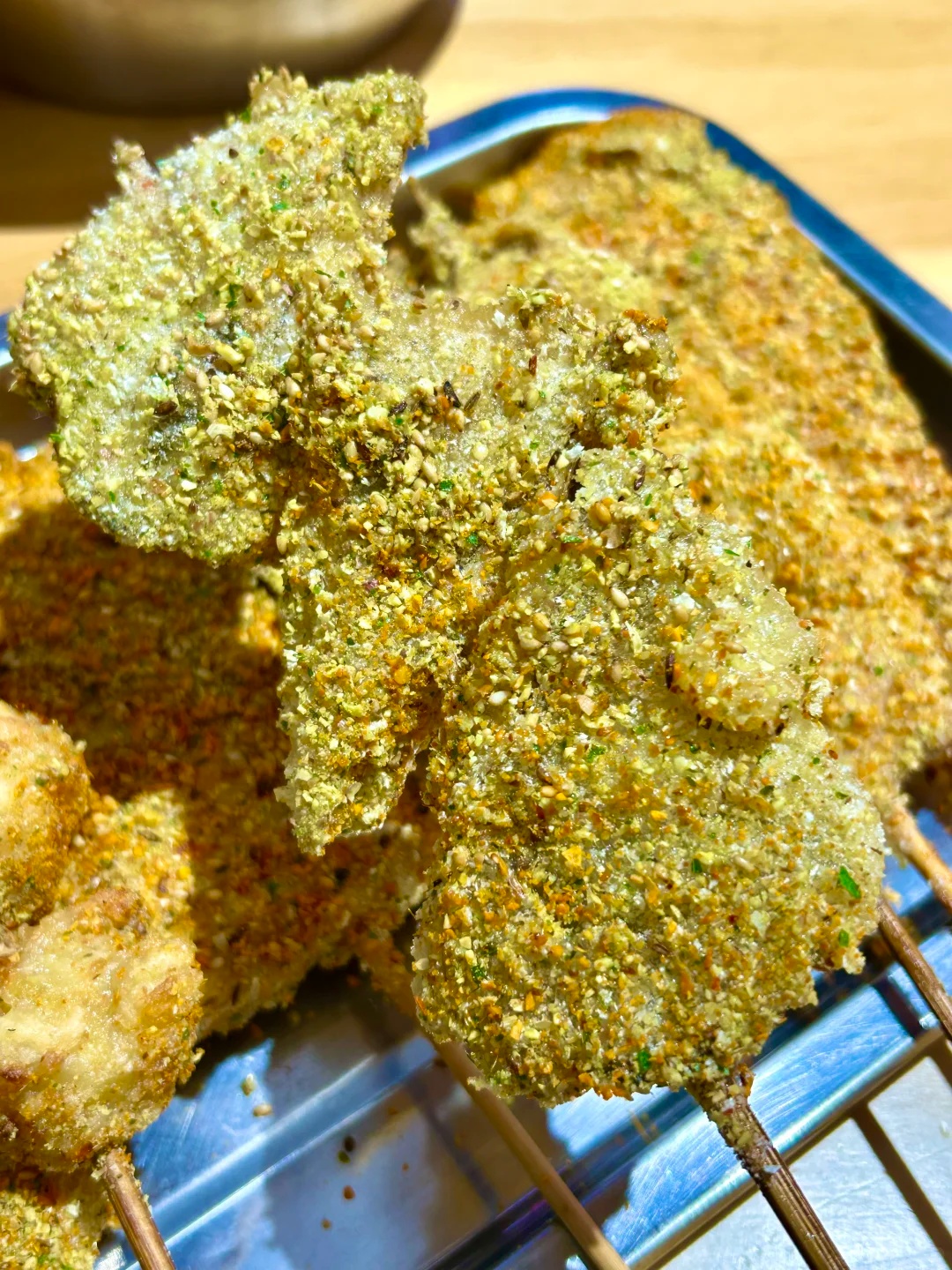
The variety of ingredients is impressive, and you have three noodle options to choose from: yellow noodles, cold noodles, or wide beef tendon noodles. Their fried skewers are also excellent, and they even top them with crushed peanuts—the seasoning is so generous it falls off with every bite.
Chongqing's Old Copper Pot Hot Pot: Authentic Hui Muslim Hand-Cut Lamb & Sesame Paste in Shangxinjie
Articles • Hasan09 posted the article • 0 comments • 23 views • 1 days ago
Last week I was at my sister's place, and this week I finally had some free time to visit my dad.
The weather's getting colder by the day, and my dad and I both had the same thought: let's get some hot pot.
We were actually on our way to Longge, but we passed by a hot pot place we used to frequent when I was a kid. My dad said, "Let's get two pounds of lamb, isn't this perfect for the weather?" I immediately agreed.
On the outskirts of Shangxinjie, an old copper pot restaurant run by Hui Muslims
This place is on the edge of Shangxinjie and is owned by Hui Muslims.
The saying goes that Hui Muslims are experts at preparing beef and lamb, and they use really fresh ingredients, so you don't have to worry about them mixing in anything fake. That's super important for hot pot. When I was a kid living in Shangxinjie, this was our go-to family tradition.
There's a small change: they used to include a little plate of tofu and vermicelli with the broth, but that's gone now. Little details in old restaurants tend to change quietly over the years.
The classic pairings for the old copper pot are exactly the same
We ordered a pound of fresh-cut lamb, half a pound of fatty beef rolls, plus a plate of cabbage, a plate of frozen tofu, and a plate of vermicelli.
This is the classic setup for this kind of old copper pot hot pot: meat is the star, veggies are supporting actors, and vermicelli and tofu finish things off. It's simple, but nobody can fault it.
Sesame paste needs to be stirred by hand to be fragrant
The sesame paste here is as delicious as always.
When it's first served, it looks pretty thin, so you gotta do it yourself – scoop in some chive flowers, some chili, and then use your chopsticks to stir it in circles. The more you stir, the thicker it gets, and the aroma starts to waft out. Writing this is making my mouth water again.
This bowl of sesame paste is the soul of the old copper pot; you can't get this flavor from a machine.
The lamb is fresh-cut early in the morning, zero gamey smell
Here's the main point: the lamb is fresh-cut early in the morning, and I didn't see any blood on the plate, so it looked super fresh.
The meat isn't cut too thick, so it cooks super fast. Dip it in your own stirred sesame paste, and this bite is just pure happiness.
What I want to praise the most is that this lamb has absolutely no gamey smell.
I don't usually eat lamb, especially that gamey kind of smell, I pretty much avoid it altogether. But this lamb here, I ate quite a bit of it. The fact that it's not gamey is what gives them the confidence to win over people who don't like lamb.
Even better than the meat is the plate of cabbage
With this kind of hot pot, the star is often a plate of cabbage, even more than the meat.
After the lamb has been cooking in the broth, it gets infused with that lamb aroma. Then you put the cabbage in. The natural sweetness of the cabbage, combined with the lamb's fragrance, soaking up the broth and then going into your mouth – sometimes I seriously think it's even tastier than the meat.
The fatty beef, frozen tofu, and vermicelli are all just there to complement the broth.
The owner has been doing this for many years, the building is their own, and the lamb is 80 yuan while the beef is 60 yuan, with prices clearly marked.
The ambiance isn't anything fancy, but the quality of the meat is guaranteed, and you can see how fresh it is. When the weather gets cold, the appeal of these old copper pot places just goes up. If you live in the Shangxinjie area, or are passing by, you should definitely come try this out. view all
Last week I was at my sister's place, and this week I finally had some free time to visit my dad.
The weather's getting colder by the day, and my dad and I both had the same thought: let's get some hot pot.
We were actually on our way to Longge, but we passed by a hot pot place we used to frequent when I was a kid. My dad said, "Let's get two pounds of lamb, isn't this perfect for the weather?" I immediately agreed.
On the outskirts of Shangxinjie, an old copper pot restaurant run by Hui Muslims
This place is on the edge of Shangxinjie and is owned by Hui Muslims.
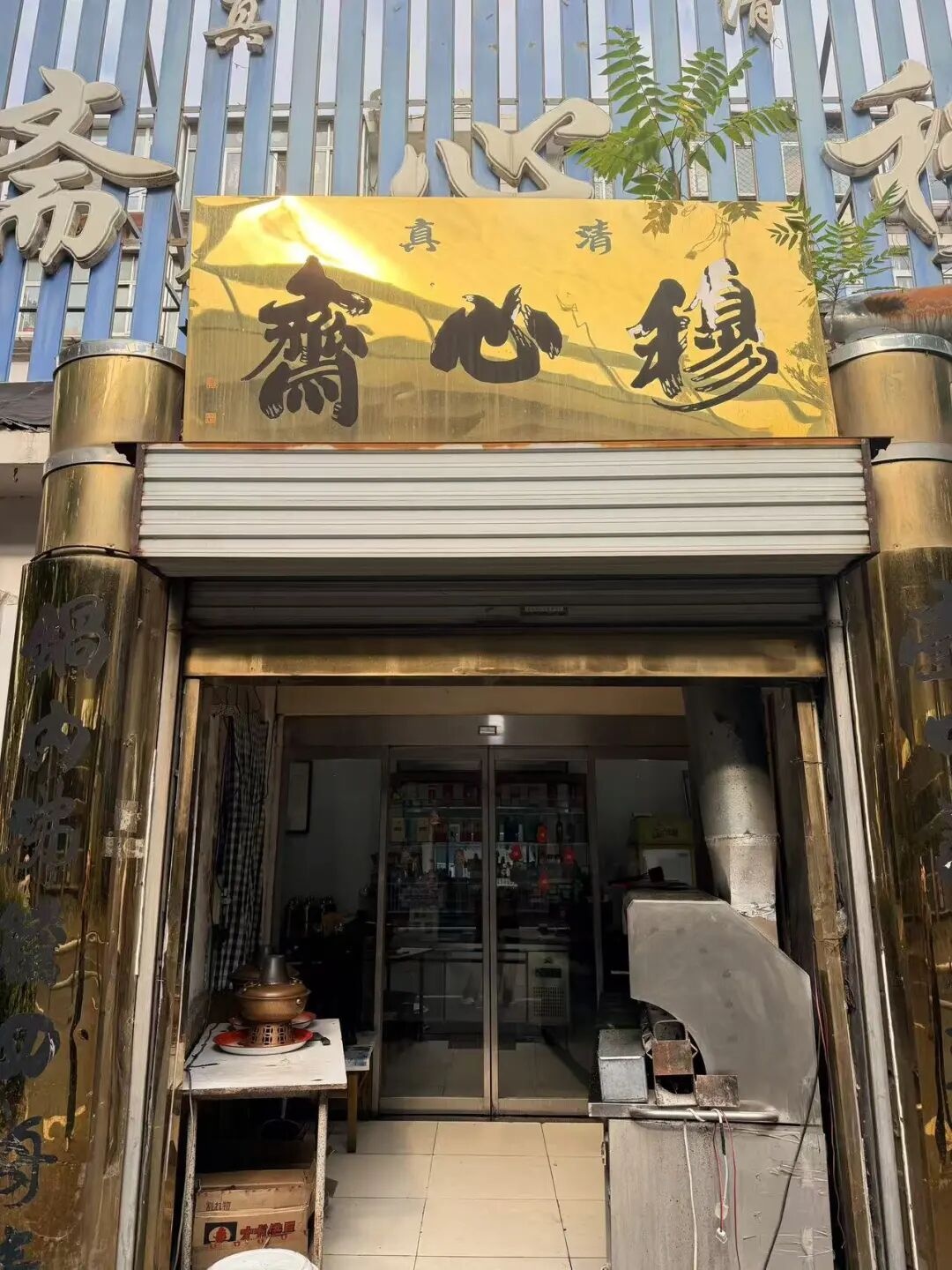
The saying goes that Hui Muslims are experts at preparing beef and lamb, and they use really fresh ingredients, so you don't have to worry about them mixing in anything fake. That's super important for hot pot. When I was a kid living in Shangxinjie, this was our go-to family tradition.
There's a small change: they used to include a little plate of tofu and vermicelli with the broth, but that's gone now. Little details in old restaurants tend to change quietly over the years.
The classic pairings for the old copper pot are exactly the same
We ordered a pound of fresh-cut lamb, half a pound of fatty beef rolls, plus a plate of cabbage, a plate of frozen tofu, and a plate of vermicelli.
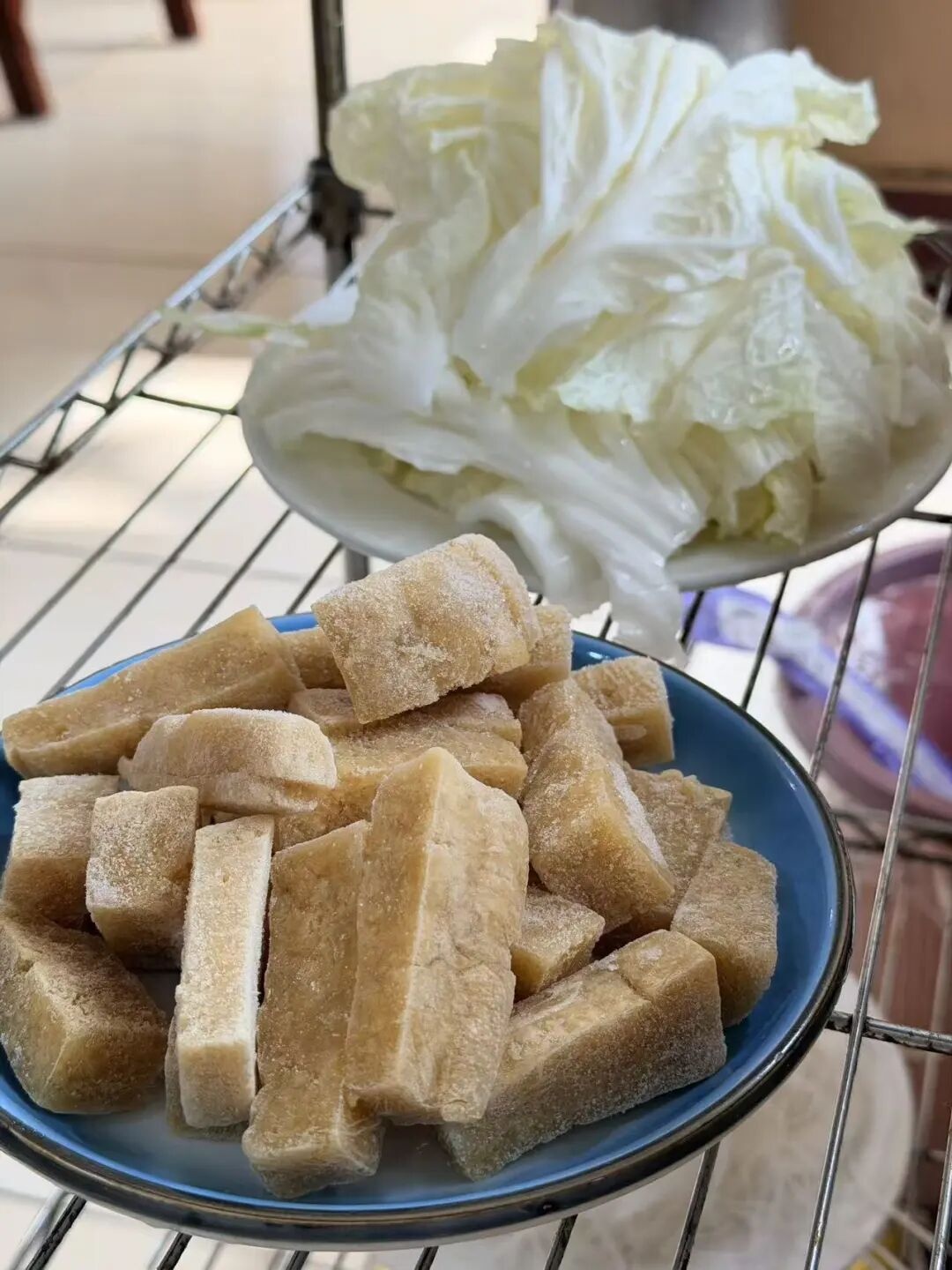
This is the classic setup for this kind of old copper pot hot pot: meat is the star, veggies are supporting actors, and vermicelli and tofu finish things off. It's simple, but nobody can fault it.
Sesame paste needs to be stirred by hand to be fragrant
The sesame paste here is as delicious as always.
When it's first served, it looks pretty thin, so you gotta do it yourself – scoop in some chive flowers, some chili, and then use your chopsticks to stir it in circles. The more you stir, the thicker it gets, and the aroma starts to waft out. Writing this is making my mouth water again.
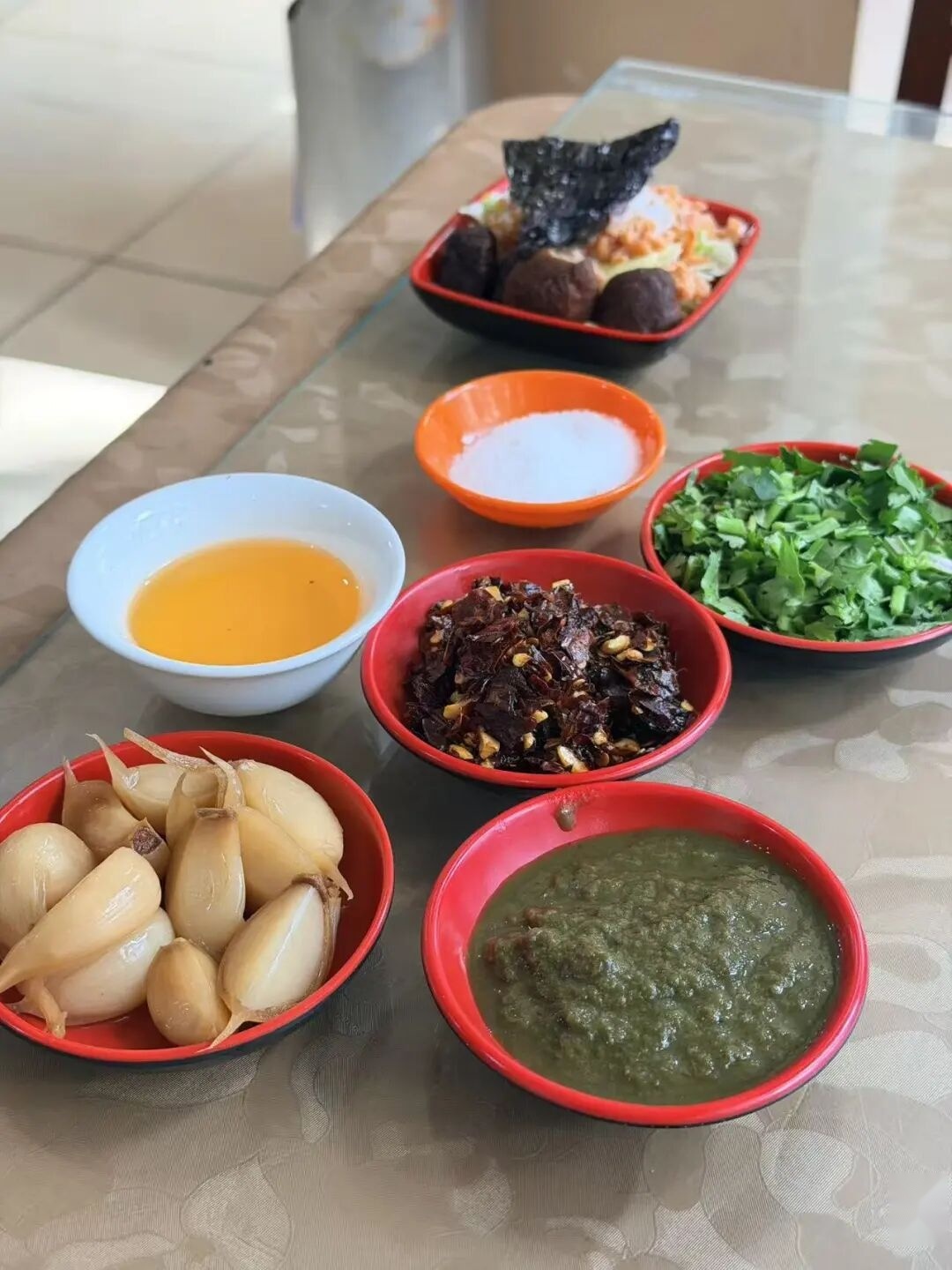
This bowl of sesame paste is the soul of the old copper pot; you can't get this flavor from a machine.
The lamb is fresh-cut early in the morning, zero gamey smell
Here's the main point: the lamb is fresh-cut early in the morning, and I didn't see any blood on the plate, so it looked super fresh.
The meat isn't cut too thick, so it cooks super fast. Dip it in your own stirred sesame paste, and this bite is just pure happiness.
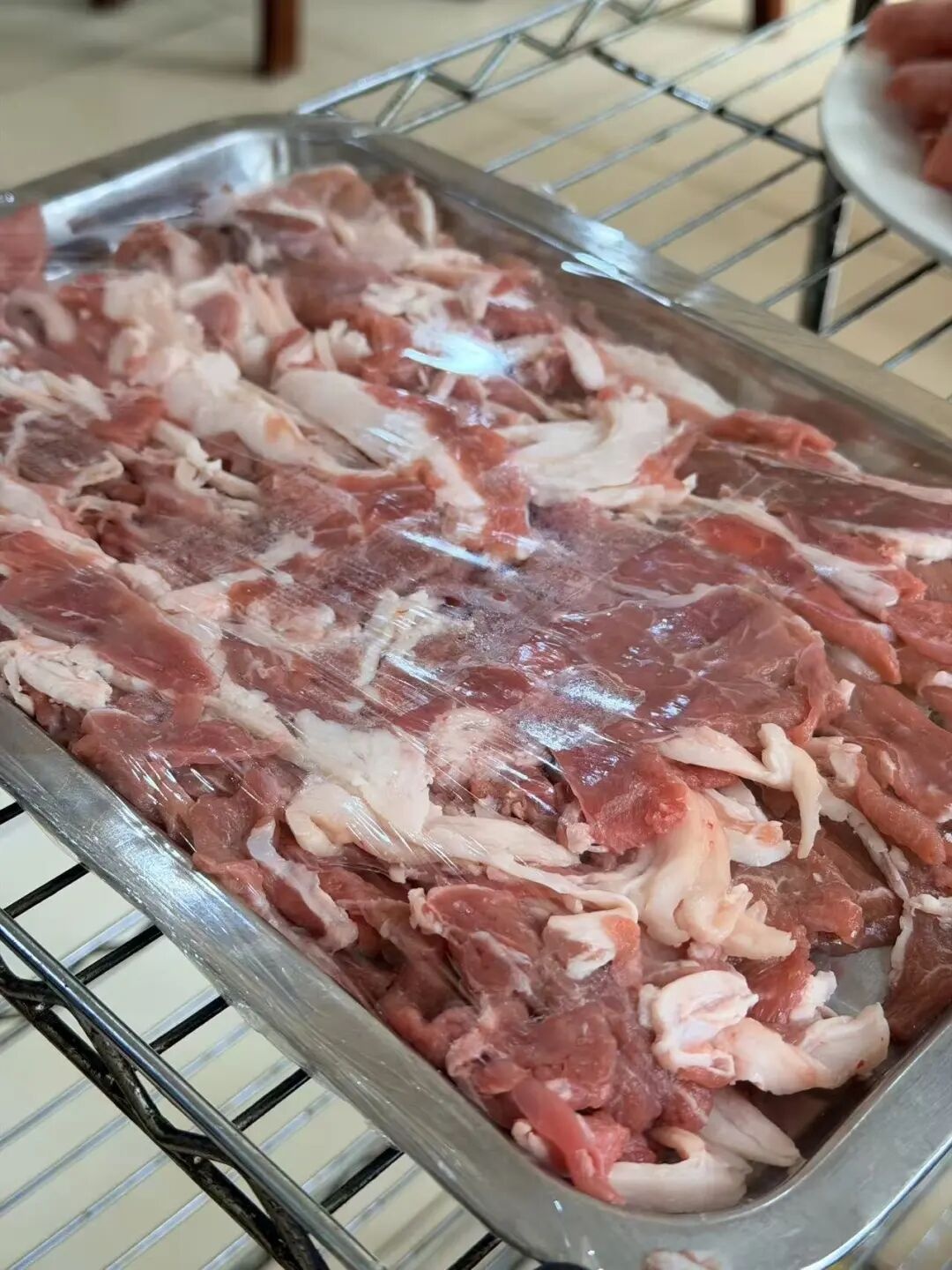
What I want to praise the most is that this lamb has absolutely no gamey smell.
I don't usually eat lamb, especially that gamey kind of smell, I pretty much avoid it altogether. But this lamb here, I ate quite a bit of it. The fact that it's not gamey is what gives them the confidence to win over people who don't like lamb.
Even better than the meat is the plate of cabbage
With this kind of hot pot, the star is often a plate of cabbage, even more than the meat.
After the lamb has been cooking in the broth, it gets infused with that lamb aroma. Then you put the cabbage in. The natural sweetness of the cabbage, combined with the lamb's fragrance, soaking up the broth and then going into your mouth – sometimes I seriously think it's even tastier than the meat.
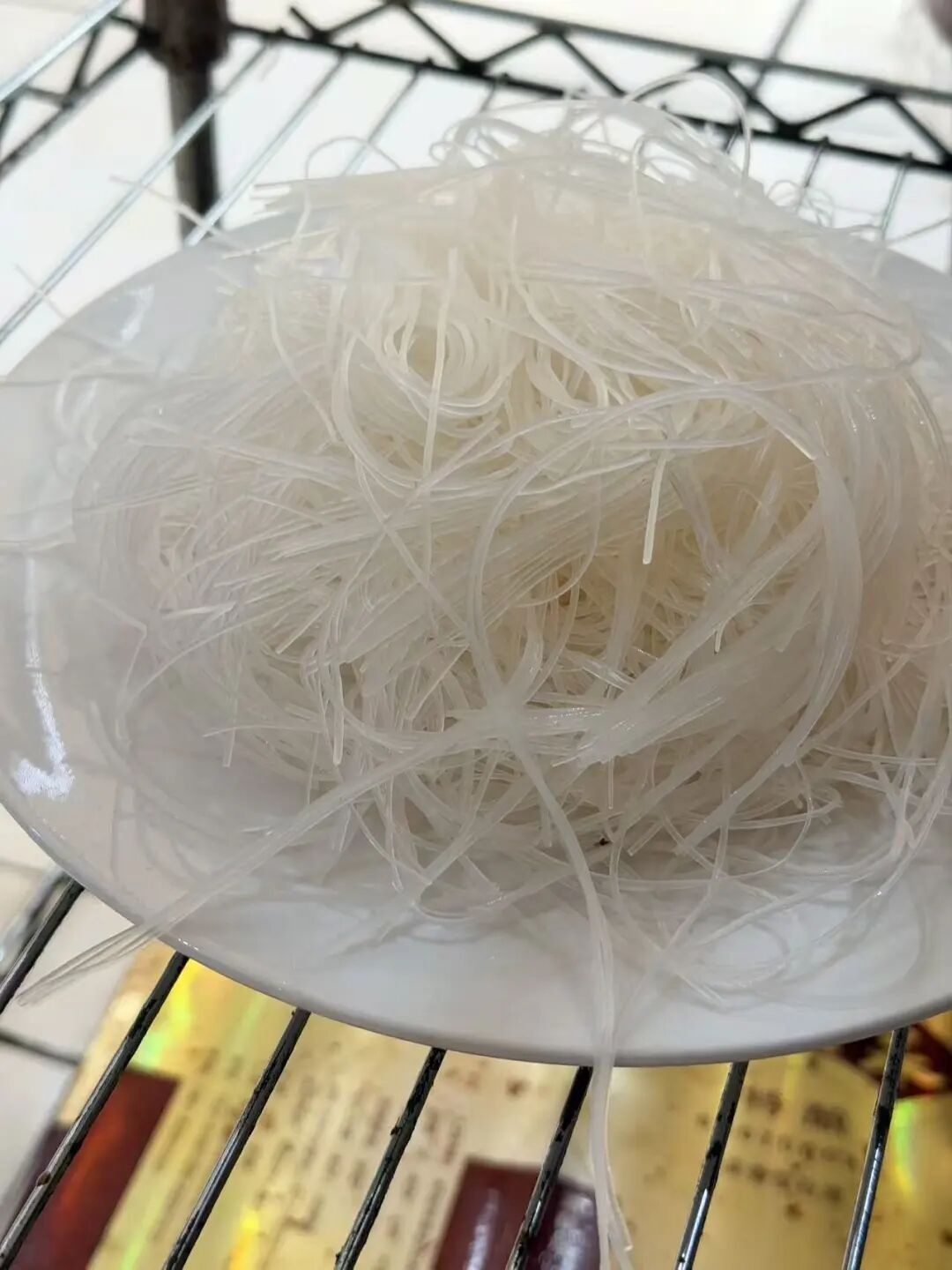
The fatty beef, frozen tofu, and vermicelli are all just there to complement the broth.
The owner has been doing this for many years, the building is their own, and the lamb is 80 yuan while the beef is 60 yuan, with prices clearly marked.
The ambiance isn't anything fancy, but the quality of the meat is guaranteed, and you can see how fresh it is. When the weather gets cold, the appeal of these old copper pot places just goes up. If you live in the Shangxinjie area, or are passing by, you should definitely come try this out.
Xi'an Hui Muslim Quarter: Secret Sour Soup Dumplings Next to Children's Hospital
Articles • Hasan09 posted the article • 0 comments • 23 views • 1 days ago
Street Food Vibes · Chang'an Boiled in Vinegar and Chili Soup
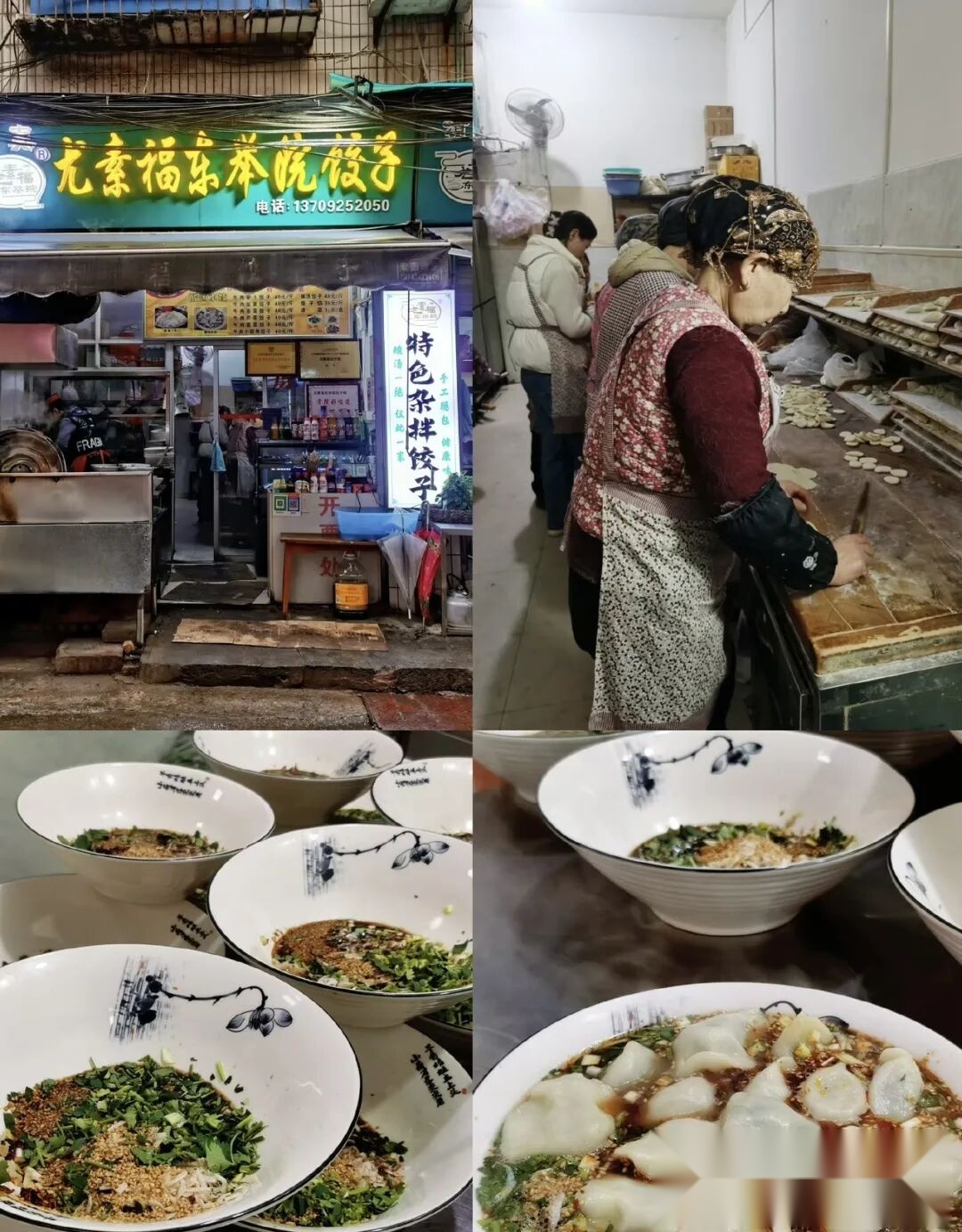
Finding this place took about half the journey. Head east from the South Gate of the Children's Hospital on North Madao Lane, go all the way to the end, turn left, and walk about 100 meters. It's on the right side of the road. There's no flashy sign, and the entrance isn't big. If you weren't brought here by a regular, you'd probably walk right past it. But this dumpling joint, hidden deep in the Hui Quarter, has been super popular for over a decade. With six different fillings, eating the mixed ones is a total surprise – you never know what flavor you're gonna get next.
Must-Read Before You Eat
· Average Cost: About 19 yuan
· Hours: All day (expect lines during meal times)
· Signature Dish: Mixed Filling Sour Soup Dumplings (6 random fillings)
· Location: No. 39 Dongjuyuan Lane, Lianhu District (Deep in the Hui Quarter)
Finding this place is half the adventure
No. 39 Dongjuyuan Lane – a lot of people's eyes glaze over when they hear this address. The first time I came, I wandered around for ages, and relying on GPS actually made me go in circles.
Here's the route: Come from North Madao Lane near the West Gate, find the South Gate of the Children's Hospital, keep going east until the end, then turn left and walk about 100 meters. It's on the east side of the road.
The sign isn't obvious, and the storefront is tiny. If you're not specifically looking for it, you might not even spot it as you walk by. Regulars, though, know the way like the back of their hand and get here in a few turns.
This spot is way off the main Hui Muslim Street, deep in the residential alleys. Locals who know the backstreets can find it, but tourists usually wouldn't stumble upon it.
The thrill of eating mixed fillings with 6 types of stuffing
The coolest thing about this place is the 'mixed filling' option. During peak hours, they don't sell single fillings; they cook all six types together, and what you get is a mix.
All six fillings are beef-based: chives and yellow leek, radish, fennel, celery, lotus root, and regular chives. Just hearing the names tells you there's a lot of variety in their beef dumplings.
When you pick up a dumpling, you have no clue what's inside before you bite. You might get the savory beef with yellow leek, the pungent fennel, or the crunchy lotus root – it's all random.
Eating dumplings turns into opening a mystery box; every bite is a surprise. This way of eating is pretty rare elsewhere.
The art of Hui sour soup
The sour soup is where this place really shines. It's made the traditional way, with lard for richness, dried shrimp for extra flavor, black vinegar to whet your appetite, and yellow leeks for taste – all combined.
The sourness isn't overpowering; it's just right. Most old-school Hui sour soups follow this style, making sure not to clash with the dumpling flavors.
It's different from Ma Er Dumplings. Ma Er's soup doesn't have dried shrimp or lard; it's a different vibe. Both have their own way of doing things, and you can't really say one is better than the other.
A small shop with regulars who've been coming for over a decade
This is an old, well-known spot in the Hui Quarter, and most of the customers are regulars. Many have been eating here for over ten years, and even a slightly out-of-the-way location can't stop them.
It's a typical small Hui Muslim eatery, with that distinct flavor characteristic of their snacks. They're freshly made and cooked to order, so they're super fresh.
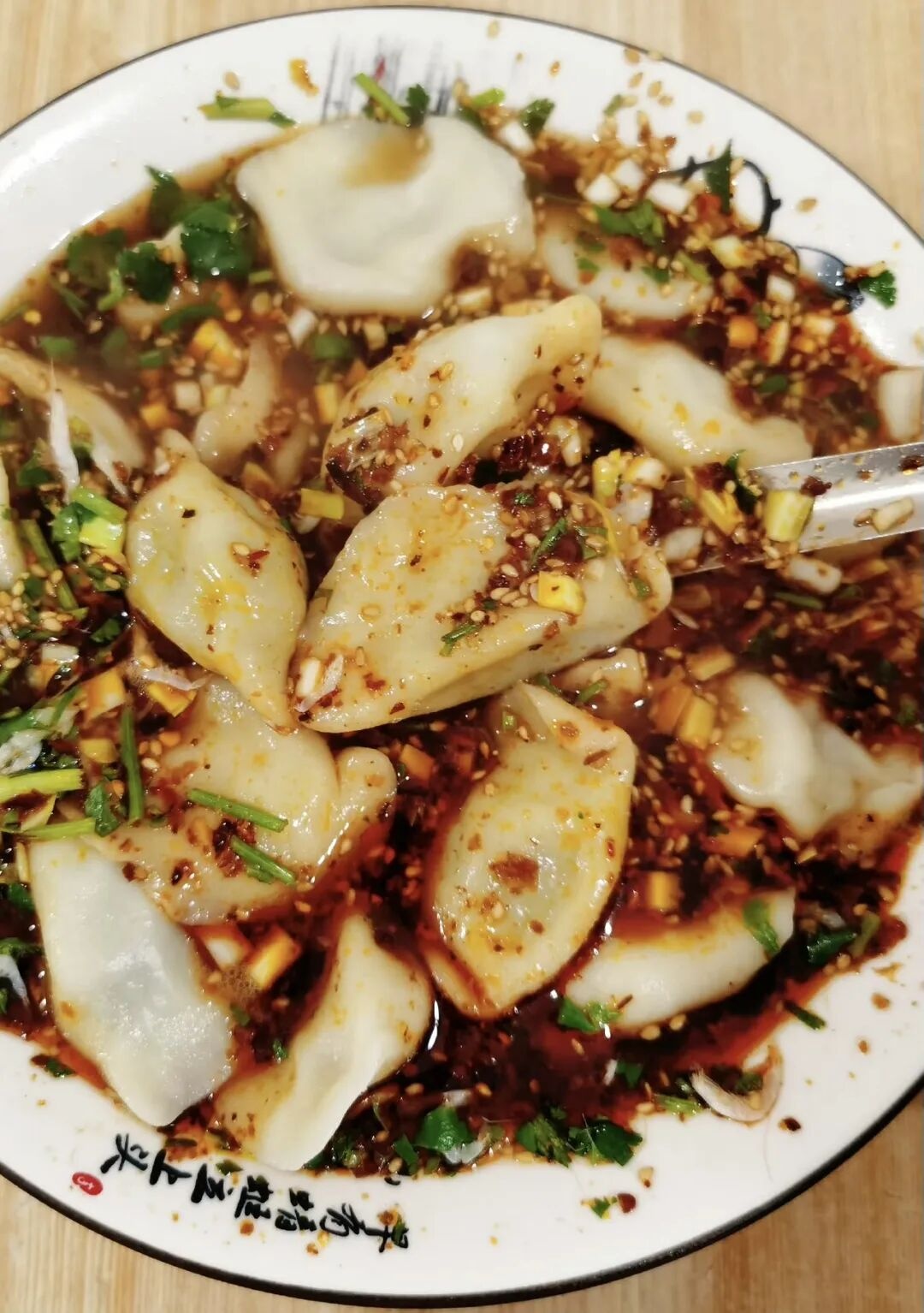
The dumplings are shaped flat, with a bit more moisture inside, so they're juicy when you bite. It's totally different from the round dumplings and meatball texture you get at Ma Er.
Ma Er only sells one filling, while Yusufu offers six for the mixed option. Each place has its own fans; if you like lots of variety, Yusufu is the spot for you.
Things to know before you go
Don't rely on navigation; follow the route described in the article: go east from the South Gate of the Children's Hospital until the end, then turn left.
Expect to queue during peak meal times; go earlier to avoid the crowds.
Definitely get the mixed filling sour soup; that's their signature way of serving it.
They're made fresh to order, so don't rush them. The wait is worth it for the deliciousness.
It's an old place deep in the Hui Quarter, and the location is so remote it might make you want to give up, but once you find it, you'll realize that over a decade of reputation isn't built for nothing.
Would you venture deep into the Hui Quarter for a bowl of sour soup dumplings?
The place is so out-of-the-way that even locals get lost, but loyal customers who've been coming for over ten years still swear by it. Tell us about a hidden spot you'd brave alleyways to eat at. view all
Street Food Vibes · Chang'an Boiled in Vinegar and Chili Soup
Finding this place took about half the journey. Head east from the South Gate of the Children's Hospital on North Madao Lane, go all the way to the end, turn left, and walk about 100 meters. It's on the right side of the road. There's no flashy sign, and the entrance isn't big. If you weren't brought here by a regular, you'd probably walk right past it. But this dumpling joint, hidden deep in the Hui Quarter, has been super popular for over a decade. With six different fillings, eating the mixed ones is a total surprise – you never know what flavor you're gonna get next.
Must-Read Before You Eat
· Average Cost: About 19 yuan
· Hours: All day (expect lines during meal times)
· Signature Dish: Mixed Filling Sour Soup Dumplings (6 random fillings)
· Location: No. 39 Dongjuyuan Lane, Lianhu District (Deep in the Hui Quarter)
Finding this place is half the adventure
No. 39 Dongjuyuan Lane – a lot of people's eyes glaze over when they hear this address. The first time I came, I wandered around for ages, and relying on GPS actually made me go in circles.
Here's the route: Come from North Madao Lane near the West Gate, find the South Gate of the Children's Hospital, keep going east until the end, then turn left and walk about 100 meters. It's on the east side of the road.
The sign isn't obvious, and the storefront is tiny. If you're not specifically looking for it, you might not even spot it as you walk by. Regulars, though, know the way like the back of their hand and get here in a few turns.
This spot is way off the main Hui Muslim Street, deep in the residential alleys. Locals who know the backstreets can find it, but tourists usually wouldn't stumble upon it.
The thrill of eating mixed fillings with 6 types of stuffing
The coolest thing about this place is the 'mixed filling' option. During peak hours, they don't sell single fillings; they cook all six types together, and what you get is a mix.
All six fillings are beef-based: chives and yellow leek, radish, fennel, celery, lotus root, and regular chives. Just hearing the names tells you there's a lot of variety in their beef dumplings.
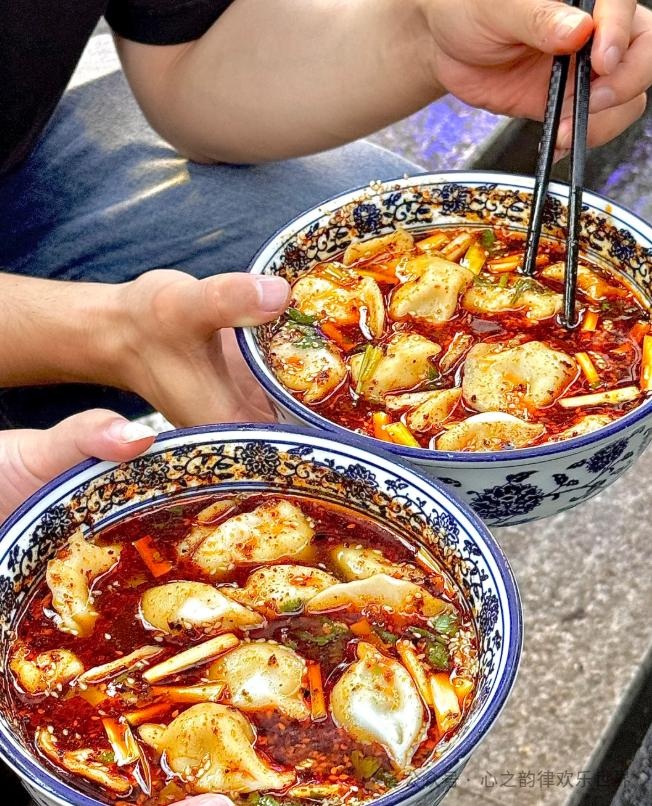
When you pick up a dumpling, you have no clue what's inside before you bite. You might get the savory beef with yellow leek, the pungent fennel, or the crunchy lotus root – it's all random.
Eating dumplings turns into opening a mystery box; every bite is a surprise. This way of eating is pretty rare elsewhere.
The art of Hui sour soup
The sour soup is where this place really shines. It's made the traditional way, with lard for richness, dried shrimp for extra flavor, black vinegar to whet your appetite, and yellow leeks for taste – all combined.
The sourness isn't overpowering; it's just right. Most old-school Hui sour soups follow this style, making sure not to clash with the dumpling flavors.
It's different from Ma Er Dumplings. Ma Er's soup doesn't have dried shrimp or lard; it's a different vibe. Both have their own way of doing things, and you can't really say one is better than the other.
A small shop with regulars who've been coming for over a decade
This is an old, well-known spot in the Hui Quarter, and most of the customers are regulars. Many have been eating here for over ten years, and even a slightly out-of-the-way location can't stop them.
It's a typical small Hui Muslim eatery, with that distinct flavor characteristic of their snacks. They're freshly made and cooked to order, so they're super fresh.
The dumplings are shaped flat, with a bit more moisture inside, so they're juicy when you bite. It's totally different from the round dumplings and meatball texture you get at Ma Er.
Ma Er only sells one filling, while Yusufu offers six for the mixed option. Each place has its own fans; if you like lots of variety, Yusufu is the spot for you.
Things to know before you go
Don't rely on navigation; follow the route described in the article: go east from the South Gate of the Children's Hospital until the end, then turn left.
Expect to queue during peak meal times; go earlier to avoid the crowds.
Definitely get the mixed filling sour soup; that's their signature way of serving it.
They're made fresh to order, so don't rush them. The wait is worth it for the deliciousness.
It's an old place deep in the Hui Quarter, and the location is so remote it might make you want to give up, but once you find it, you'll realize that over a decade of reputation isn't built for nothing.
Would you venture deep into the Hui Quarter for a bowl of sour soup dumplings?
The place is so out-of-the-way that even locals get lost, but loyal customers who've been coming for over ten years still swear by it. Tell us about a hidden spot you'd brave alleyways to eat at.
Hohhot's Kuan Alley: Authentic Hui Muslim Food, Shaomai, Beizi & Yangzashui
Articles • Hasan09 posted the article • 0 comments • 24 views • 1 days ago
Ditch the filters, discover the real Hohhot.
Last time we explored the areas around Xiaozhao Front Street and Xinglong Alley, getting a feel for the historical 'temple city' vibes imprinted on the place names. Heading north from the temple streets south of the city, past the old North Gate, you'll find a whole different world buzzing with life. The air is filled with the aroma of beizi, the savory scent of lamb offal, and the rich smell of braised beef. This alley, a little over 400 meters long, packs in Hohhot's most authentic halal flavors and holds a century of memories for the Hui community that settled in the northern part of the city. This is Kuan Alley, located in Hohhot's Huimin District, stretching from Qianxincheng Road in the east to Tongdaonan Road in the west.
Many people know it as a trendy food street, a must-visit foodie paradise when in Hohhot, but few realize this alley took shape back in the Qing Dynasty. It used to be a key stop along the tea-and-camel caravan route, a place where Hui Muslims who traveled west put down roots. From the marketplace by Hehe Bridge to today's food street scene, over three hundred years have passed, the alley has gotten wider, but its vibrant atmosphere has never faded.
I. From Hehe Bridge to Kuan Alley: A Hui Muslim Neighborhood Born by the Camel Trail
The story of Kuan Alley begins at Hehe Bridge, near the old North Gate.
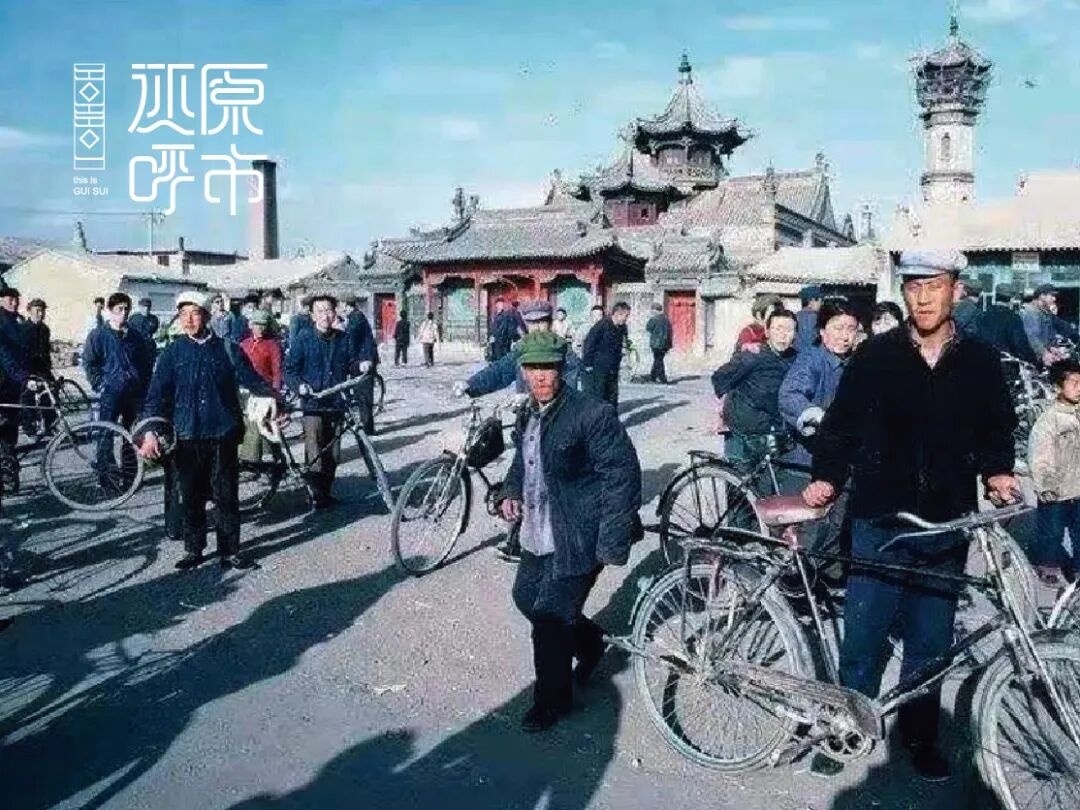
During the reign of Emperor Kangxi in the Qing Dynasty, a stone bridge was built over the Zhada River outside the North Gate of Guihua City. Coincidentally, Emperor Kangxi passed by this spot on his triumphant return from conquering Galdan. The locals named it Hehe Bridge, meaning 'ethnic harmony and smooth trade.' North of the bridge was the camel trail leading to the grasslands, and south of the bridge connected to the old North Gate. Camel caravans, merchants, and people migrating west would rest here, and a marketplace gradually formed by the bridge – this was the early form of Kuan Alley.
As trade with Mongolia flourished, a large number of Hui merchants from Shanxi and Hebei traveled north along the trade routes. They saw the convenience of settling here, close to the city gate and controlling the camel trail. They opened butcher shops, noodle stalls, and inns, building a cluster of residences and shops around the marketplace, thus forming a street. Because it was the widest carriage and horse thoroughfare outside the North Gate, allowing two camel trains to pass side-by-side, people casually called it 'Kuan Alley' (Wide Alley).
(Cool Fact Alert) In the past, Guihua City had two Kuan Alleys, one north and one south. When officially named in the 20th year of the Republic of China (1931), both were called Kuan Alley. In the 1956 place name survey, to avoid duplication, the one in the south was renamed Nanchafang Kuan Alley, while the northern one retained its original name and is the only 'official' Kuan Alley today.
Back then, Kuan Alley was much more than just a food street. A folk rhyme, 'bridge tenders, fur dealers, beizi makers, and meat cutters,' summarized the four major trades in the alley: livestock brokers, fur merchants, noodle shops, and beef and lamb shops, all closely related to caravan life. It was a supply station by the camel trail and the heart of the Hui community north of the city.
II. A 400-Meter Alley: Home to Half of Hohhot's Halal Old Brands
Today, Kuan Alley is only about 420 meters long, but it boasts the highest concentration of old, established brands in Hohhot. The entire street has one autonomous region-level time-honored brand and 17 district-level time-honored brands. Among the hundreds of shops, over half are old eateries that have been around for twenty or thirty years, with many skills passed down through two or three generations.
The food in this alley is a taste etched into the DNA of locals. Mornings belong to beizi and lamb offal; the freshly baked beef tongue beizi is crispy outside and soft inside. Paired with a bowl of hot lamb offal soup, sprinkled with cilantro and chili, it's the most satisfying breakfast for old Hohhot residents. Midday is for shaomai restaurants; thin-skinned, generously filled lamb shaomai with brick tea is the standard way locals entertain guests. In the evening, braised beef, fried cakes, and yuanxiao (glutinous rice balls) start appearing, grabbing a couple of pounds to take home makes for a solid main dish on the dinner table.
The old brands here each have their signature items: Wanshengyong Braised Beef, established in the Tongzhi period of the Qing Dynasty, slow-cooked in an old broth with a rich, savory aroma, a must-have Lunar New Year item for generations. Yangdada Beizi offers many varieties, with beef tongue, brown sugar, and sesame paste each having their fans, and long queues form every morning. There's also Wangji's zongzi (rice dumplings) and yuanxiao, and Majianguang beef jerky. These seemingly unremarkable small shops often stay popular for decades.
(Cool Fact Alert) Many of these time-honored brands only exist here and never open branches. Unlike many chain restaurants, the old brands in Kuan Alley are mostly family-run. They stick to one shop for decades, no franchising, no branches. The owner is the chef, and the staff are often younger family members, so the taste remains unchanged for decades. For locals, it's not just about the taste, but the familiar comfort of food they've eaten since they were kids.
III. Morning Market and New Year's Goods: One Alley is a Whole World
For the people of the old Huimin District, Kuan Alley has never been a tourist spot; it's life itself.
Every day before dawn, the alley comes alive. The ovens in the beizi shops fire up, fresh beef and lamb hang in the butcher shops, and morning market vendors set out vegetables, dried fruits, and daily necessities. Local residents stroll by to buy groceries, grabbing breakfast along the way. The lively atmosphere lasts from dawn till noon.
It's even more bustling during festivals. In the twelfth lunar month, Kuan Alley is a must-visit for New Year's shopping: braised beef, fried cakes, candies, dried goods – all your festive food needs are met in one stop. The entire street is packed, with shouts of vendors and bargaining voices mixing, the spirit of the New Year flowing out from this alley.
(Cool Fact Alert) 'Crowded Kuan Alley in the 12th Month' is a New Year's custom that has lasted nearly a hundred years. Back in the Republic of China era, Kuan Alley was already the distribution center for New Year's goods north of the city. After the 20th of the twelfth lunar month, people from surrounding counties and banners would also come specifically to buy New Year's goods. This custom continues to this day. Even with supermarkets everywhere, many old Hohhot residents still prefer to buy their New Year's goods at Kuan Alley, feeling that only what they buy here has that authentic, old-school taste.
IV. Old Street, New Life: Growing Anew Amidst Vibrant Energy
In recent years, Kuan Alley has undergone renovations. The pavement is smoother, the signs are tidier, and the walls now feature creative graffiti and cultural murals, giving the old alley a more modern feel. But if you walk in, you'll find the core elements haven't changed: the old brands are still here, the old flavors haven't changed, and the majority of people lining up are still locals. It hasn't turned into a 'pseudo-ancient food street' just for tourists; it remains the go-to spot for daily life and food for the people of the Huimin District.
From a marketplace by the camel trail, to a Hui Muslim residential street, and now to a century-old food street, Kuan Alley's identity has evolved, but its essence of being rooted in daily life and serving the community has never changed. This not-so-long alley preserves the craft traditions of Hui Muslims and also embodies the daily life and vibrant spirit of people from all ethnic groups. Han, Mongolian, and Hui people all shop, eat, and chat together on this one street, naturally, without any division – this is the most vivid picture of ethnic unity in a border town.
One Kuan Alley is half of Hohhot's culinary history. With its simple, everyday charm, it has embraced the daily lives of generations and become the city's most heartwarming food landmark.
What's your favorite old brand that you always eat at in Kuan Alley, Huimin District? Share in the comments below! view all
Ditch the filters, discover the real Hohhot.
Last time we explored the areas around Xiaozhao Front Street and Xinglong Alley, getting a feel for the historical 'temple city' vibes imprinted on the place names. Heading north from the temple streets south of the city, past the old North Gate, you'll find a whole different world buzzing with life. The air is filled with the aroma of beizi, the savory scent of lamb offal, and the rich smell of braised beef. This alley, a little over 400 meters long, packs in Hohhot's most authentic halal flavors and holds a century of memories for the Hui community that settled in the northern part of the city. This is Kuan Alley, located in Hohhot's Huimin District, stretching from Qianxincheng Road in the east to Tongdaonan Road in the west.
Many people know it as a trendy food street, a must-visit foodie paradise when in Hohhot, but few realize this alley took shape back in the Qing Dynasty. It used to be a key stop along the tea-and-camel caravan route, a place where Hui Muslims who traveled west put down roots. From the marketplace by Hehe Bridge to today's food street scene, over three hundred years have passed, the alley has gotten wider, but its vibrant atmosphere has never faded.
I. From Hehe Bridge to Kuan Alley: A Hui Muslim Neighborhood Born by the Camel Trail
The story of Kuan Alley begins at Hehe Bridge, near the old North Gate.
During the reign of Emperor Kangxi in the Qing Dynasty, a stone bridge was built over the Zhada River outside the North Gate of Guihua City. Coincidentally, Emperor Kangxi passed by this spot on his triumphant return from conquering Galdan. The locals named it Hehe Bridge, meaning 'ethnic harmony and smooth trade.' North of the bridge was the camel trail leading to the grasslands, and south of the bridge connected to the old North Gate. Camel caravans, merchants, and people migrating west would rest here, and a marketplace gradually formed by the bridge – this was the early form of Kuan Alley.
As trade with Mongolia flourished, a large number of Hui merchants from Shanxi and Hebei traveled north along the trade routes. They saw the convenience of settling here, close to the city gate and controlling the camel trail. They opened butcher shops, noodle stalls, and inns, building a cluster of residences and shops around the marketplace, thus forming a street. Because it was the widest carriage and horse thoroughfare outside the North Gate, allowing two camel trains to pass side-by-side, people casually called it 'Kuan Alley' (Wide Alley).
(Cool Fact Alert) In the past, Guihua City had two Kuan Alleys, one north and one south. When officially named in the 20th year of the Republic of China (1931), both were called Kuan Alley. In the 1956 place name survey, to avoid duplication, the one in the south was renamed Nanchafang Kuan Alley, while the northern one retained its original name and is the only 'official' Kuan Alley today.
Back then, Kuan Alley was much more than just a food street. A folk rhyme, 'bridge tenders, fur dealers, beizi makers, and meat cutters,' summarized the four major trades in the alley: livestock brokers, fur merchants, noodle shops, and beef and lamb shops, all closely related to caravan life. It was a supply station by the camel trail and the heart of the Hui community north of the city.
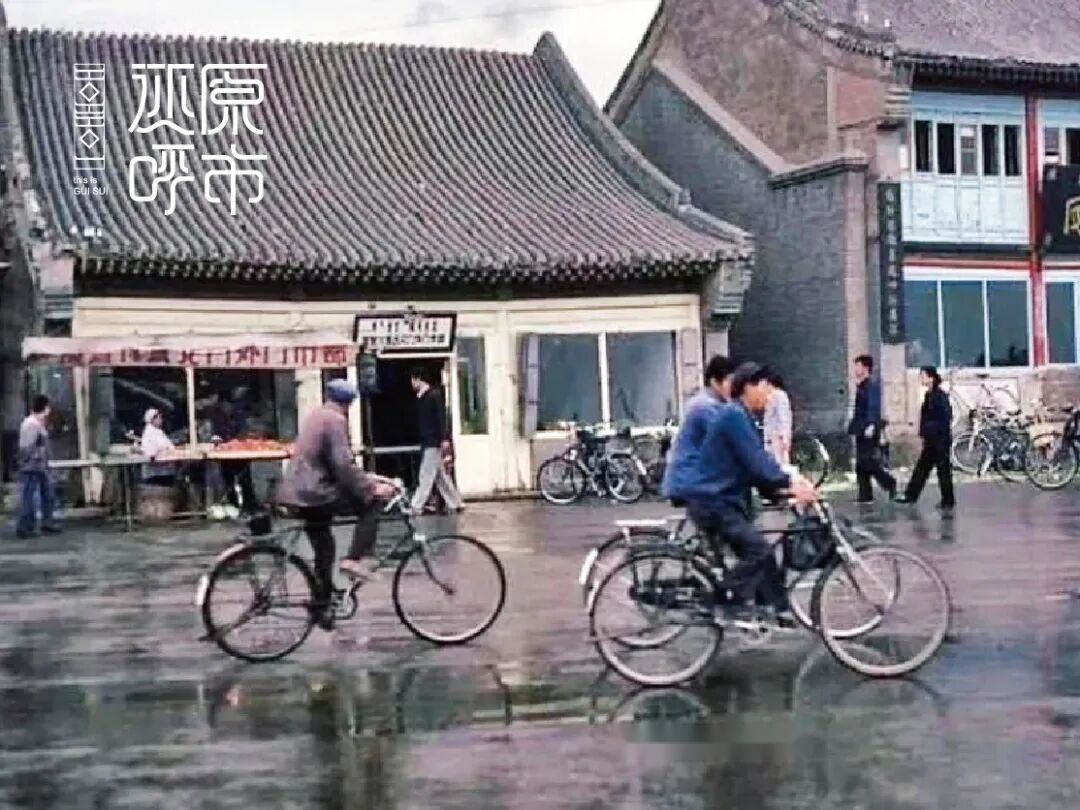
II. A 400-Meter Alley: Home to Half of Hohhot's Halal Old Brands
Today, Kuan Alley is only about 420 meters long, but it boasts the highest concentration of old, established brands in Hohhot. The entire street has one autonomous region-level time-honored brand and 17 district-level time-honored brands. Among the hundreds of shops, over half are old eateries that have been around for twenty or thirty years, with many skills passed down through two or three generations.
The food in this alley is a taste etched into the DNA of locals. Mornings belong to beizi and lamb offal; the freshly baked beef tongue beizi is crispy outside and soft inside. Paired with a bowl of hot lamb offal soup, sprinkled with cilantro and chili, it's the most satisfying breakfast for old Hohhot residents. Midday is for shaomai restaurants; thin-skinned, generously filled lamb shaomai with brick tea is the standard way locals entertain guests. In the evening, braised beef, fried cakes, and yuanxiao (glutinous rice balls) start appearing, grabbing a couple of pounds to take home makes for a solid main dish on the dinner table.
The old brands here each have their signature items: Wanshengyong Braised Beef, established in the Tongzhi period of the Qing Dynasty, slow-cooked in an old broth with a rich, savory aroma, a must-have Lunar New Year item for generations. Yangdada Beizi offers many varieties, with beef tongue, brown sugar, and sesame paste each having their fans, and long queues form every morning. There's also Wangji's zongzi (rice dumplings) and yuanxiao, and Majianguang beef jerky. These seemingly unremarkable small shops often stay popular for decades.
(Cool Fact Alert) Many of these time-honored brands only exist here and never open branches. Unlike many chain restaurants, the old brands in Kuan Alley are mostly family-run. They stick to one shop for decades, no franchising, no branches. The owner is the chef, and the staff are often younger family members, so the taste remains unchanged for decades. For locals, it's not just about the taste, but the familiar comfort of food they've eaten since they were kids.
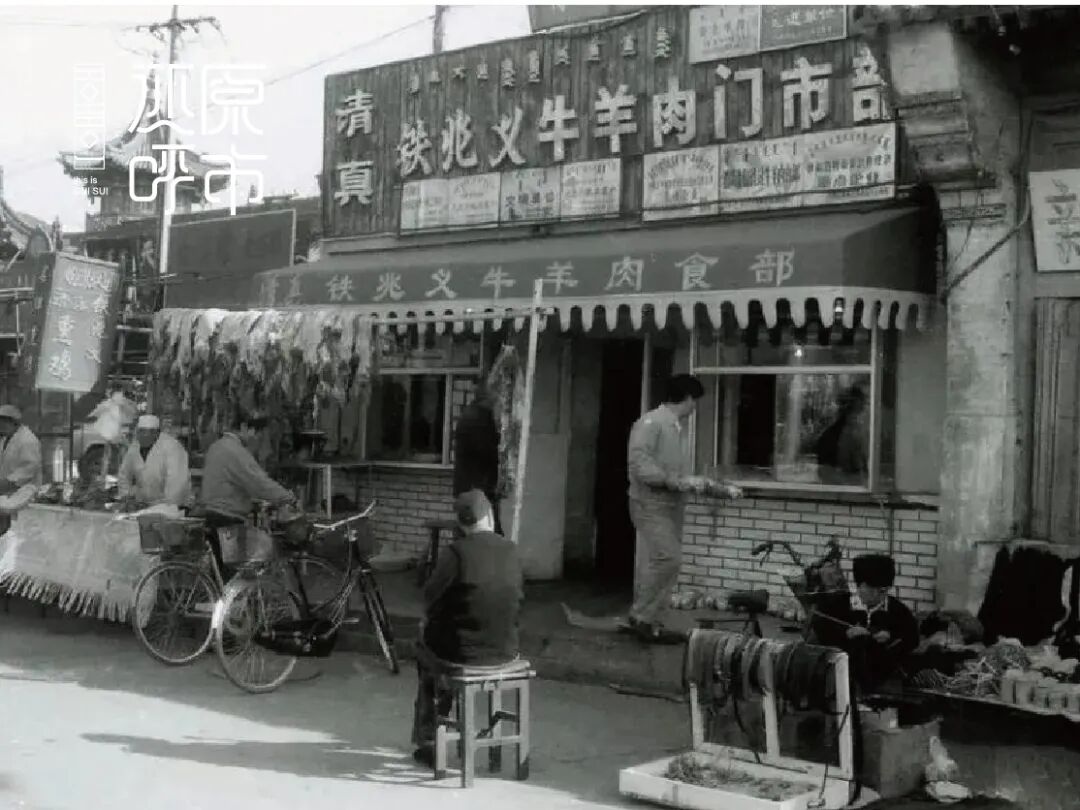
III. Morning Market and New Year's Goods: One Alley is a Whole World
For the people of the old Huimin District, Kuan Alley has never been a tourist spot; it's life itself.
Every day before dawn, the alley comes alive. The ovens in the beizi shops fire up, fresh beef and lamb hang in the butcher shops, and morning market vendors set out vegetables, dried fruits, and daily necessities. Local residents stroll by to buy groceries, grabbing breakfast along the way. The lively atmosphere lasts from dawn till noon.
It's even more bustling during festivals. In the twelfth lunar month, Kuan Alley is a must-visit for New Year's shopping: braised beef, fried cakes, candies, dried goods – all your festive food needs are met in one stop. The entire street is packed, with shouts of vendors and bargaining voices mixing, the spirit of the New Year flowing out from this alley.
(Cool Fact Alert) 'Crowded Kuan Alley in the 12th Month' is a New Year's custom that has lasted nearly a hundred years. Back in the Republic of China era, Kuan Alley was already the distribution center for New Year's goods north of the city. After the 20th of the twelfth lunar month, people from surrounding counties and banners would also come specifically to buy New Year's goods. This custom continues to this day. Even with supermarkets everywhere, many old Hohhot residents still prefer to buy their New Year's goods at Kuan Alley, feeling that only what they buy here has that authentic, old-school taste.
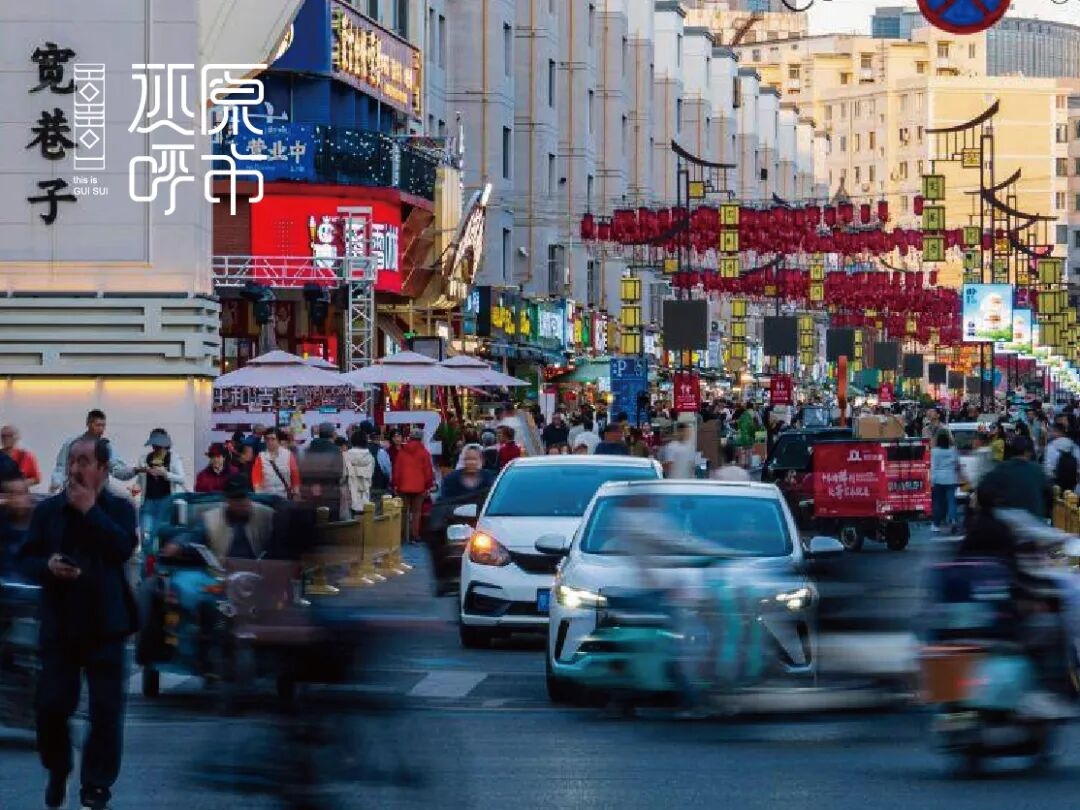
IV. Old Street, New Life: Growing Anew Amidst Vibrant Energy
In recent years, Kuan Alley has undergone renovations. The pavement is smoother, the signs are tidier, and the walls now feature creative graffiti and cultural murals, giving the old alley a more modern feel. But if you walk in, you'll find the core elements haven't changed: the old brands are still here, the old flavors haven't changed, and the majority of people lining up are still locals. It hasn't turned into a 'pseudo-ancient food street' just for tourists; it remains the go-to spot for daily life and food for the people of the Huimin District.
From a marketplace by the camel trail, to a Hui Muslim residential street, and now to a century-old food street, Kuan Alley's identity has evolved, but its essence of being rooted in daily life and serving the community has never changed. This not-so-long alley preserves the craft traditions of Hui Muslims and also embodies the daily life and vibrant spirit of people from all ethnic groups. Han, Mongolian, and Hui people all shop, eat, and chat together on this one street, naturally, without any division – this is the most vivid picture of ethnic unity in a border town.
One Kuan Alley is half of Hohhot's culinary history. With its simple, everyday charm, it has embraced the daily lives of generations and become the city's most heartwarming food landmark.
What's your favorite old brand that you always eat at in Kuan Alley, Huimin District? Share in the comments below!
Linxia Hui Muslim Food: Authentic Hand-Grabbed Lamb and Local Delicacies in Gansu's 'Little Mecca'
Articles • Hasan09 posted the article • 0 comments • 20 views • 1 days ago
In China's 'Little Mecca,' the morning isn't woken by alarm clocks, but by the steam from a row of steamers and a bowl of beef offal soup—Linxia folks live by the saying: 'Eating meat without garlic cuts the nutrition in half.'
The brick carvings in the Ba Fang Thirteen Alleys hold centuries of craftsmanship, and in the old shops outside the alleys, another set of skills passed down for generations is preserved. Hand-grabbed lamb, steamed buns, fa zi mian chang (stuffed intestine), he yan mian pian (flat pasta), and fermented rice wine (laozao)—these five old establishments string together Hezhou's day from dawn till deep into the night.
01 Recommendation One
Li Ga Song Baozi
Hezhou steamed buns are a household name in Linxia, known for their thin skins, generous fillings, beautiful shape, and fresh taste. The filling changes with the seasons: leek sprouts in winter, chives in spring, leek stalks in summer, and diced Chinese cabbage in fall.
Li Ga Song Baozi has been serving customers in the Tea Horse Ancient Market for thirty years. A basket costs fifteen yuan, sold in sets of three. The steamed buns have soft dough, and the beef and scallion filling bursts with juice when you bite into it. Dipped in vinegar and chili oil, each bite is filled with the taste of old-school craftsmanship. They open at six in the morning, and locals line up; if you go late, you'll just have to wait for the next batch.
Linxia City, Tea Horse Ancient Market Pedestrian Street (near the intersection of Guanghua East Road and Hexie Road)
About 16 yuan per person
✿ Must-Order: Beef and Scallion Buns, Chive Buns, Eight-Treasure Tea
Thirty years of steaming buns, and every pleat is filled with the homey flavors Linxia people recognize.
◆ ◆ ◆
02 Recommendation Two
Xiao Xiguan Fa Zi Mian Chang
Fa zi mian chang is a unique flavor of Linxia and a favorite of the older generation. This shop in Xiao Xiguan, across from Chen Jiao Si mosque, has been open for thirty years and has even won the 'Linxia Famous Halal Snack' award.
The owner pulls a section of noodle casing from a large wooden barrel, lays it down as a base, then adds fa zi (a type of offal) and whole pieces of sheep head meat, before drizzling on a spoonful of special chili-garlic sauce. The fa zi has a rich texture, with granules popping between your teeth; the casing is soft and chewy, and the sheep head meat has a satisfying chew. The flavor is bold but not greasy, paired with the garlicky chili sauce, and a bowl of meat broth, it's truly comforting.
Linxia City, inside the alley opposite Chen Jiao Si mosque
About 15 yuan per person
✿ Must-Order: Fa Zi Mian Chang, Sheep Head Meat, Meat Broth
Outsiders might hear this and think it's adventurous food, but for Linxia locals, it's a symphony of offal they've been eating since childhood.
◆ ◆ ◆
03 Recommendation Three
Er Sa Shouzhua
Linxia is called the 'ceiling of hand-grabbed lamb,' and Er Sa is the top choice for locals when hosting guests. Dongxiang lamb is cooked in clear water, with only salt and Sichuan peppercorns added, stewed until the meat easily separates from the bone with chopsticks—it's so tender it bursts with juice.
Grab the meat with your hands, pair it with garlic cloves, and dip it in salt and pepper. The fatty and lean ribs get more flavorful the more you chew; then, have a bowl of San Pao Tai covered-bowl tea, brewed with tea leaves, dried longan, goji berries, red dates, and rock sugar. A bite of meat followed by a sip of tea is refreshing and satisfying. With an average cost of around sixty yuan per person, their Dongxiang potato slices and sand chives scrambled eggs are also outstanding.
Linxia City, No. 18 Beibinhe Middle Road (Chengjiao Town)
63 yuan per person
✿ Must-Order: Hand-Grabbed Ribs, Dongxiang Potato Slices, San Pao Tai Covered-Bowl Tea
The best fate for a sheep is clear water, a pinch of salt, and a pair of hands that know how to tear it apart.
◆ ◆ ◆
04 Recommendation Four
Yu Bao He Yan Mian
Yu Bao He Yan Mian, located under the Zhaohui Building on Huancheng West Road, has a small storefront. For over twenty years, neighbors have recognized this flavor. He Yan Mian Pian (pasta) is all about three things: the pasta pieces should be pinched to the size of a fingernail, the meat should be lean-and-fatty Hu Yang lamb, and the soup must be lamb broth. Each bowl has equal parts meat, scallions, noodles, soup, and pasta.
The pasta is smooth and chewy, the soup is oily but not greasy, and even the last sip is still rich and fresh. Having a bowl after some hand-grabbed lamb is a standard way for Linxia locals to finish their dinner.
Linxia City, downstairs from Zhaohui Hotel, Huancheng West Road
About 15 yuan per person
✿ Must-Order: He Yan Mian Pian, Lamb Broth
Hand-grabbed lamb is for show, while mian pian is for everyday life—the life of Linxia people is hidden in that last bowl of soup.
◆ ◆ ◆
05 Recommendation Five
Heimai Traditional Liqueur Rice
The milky, eggy liqueur rice is the heart and soul of Linxia's night market. Heimai Traditional Liqueur Rice is located next to Hongyuan Square. In a copper pot, milk and fermented rice slowly bubble away. Crack an egg in, gently swirl it around with the back of a spoon – not a drop of water is added. Then, sprinkle in raisins, goji berries, peanuts, sesame seeds, and sugar.
The finished product is a beautiful mix of yellow and white, with a milky aroma blending with a subtle hint of fermented rice. The egg is silky, the milk is rich, and one bowl warms you up from your throat all the way to your stomach. It's the gentlest way to end a night in Hezhou after a long day exploring the night market until your legs feel like jelly.
Next to Hongyuan Square in Linxia City (Hongyuan New Village)
Around 8 yuan per person
✿ Must-orders: Milk Egg Liqueur Rice, Tian Peizi view all
In China's 'Little Mecca,' the morning isn't woken by alarm clocks, but by the steam from a row of steamers and a bowl of beef offal soup—Linxia folks live by the saying: 'Eating meat without garlic cuts the nutrition in half.'
The brick carvings in the Ba Fang Thirteen Alleys hold centuries of craftsmanship, and in the old shops outside the alleys, another set of skills passed down for generations is preserved. Hand-grabbed lamb, steamed buns, fa zi mian chang (stuffed intestine), he yan mian pian (flat pasta), and fermented rice wine (laozao)—these five old establishments string together Hezhou's day from dawn till deep into the night.
01 Recommendation One
Li Ga Song Baozi
Hezhou steamed buns are a household name in Linxia, known for their thin skins, generous fillings, beautiful shape, and fresh taste. The filling changes with the seasons: leek sprouts in winter, chives in spring, leek stalks in summer, and diced Chinese cabbage in fall.
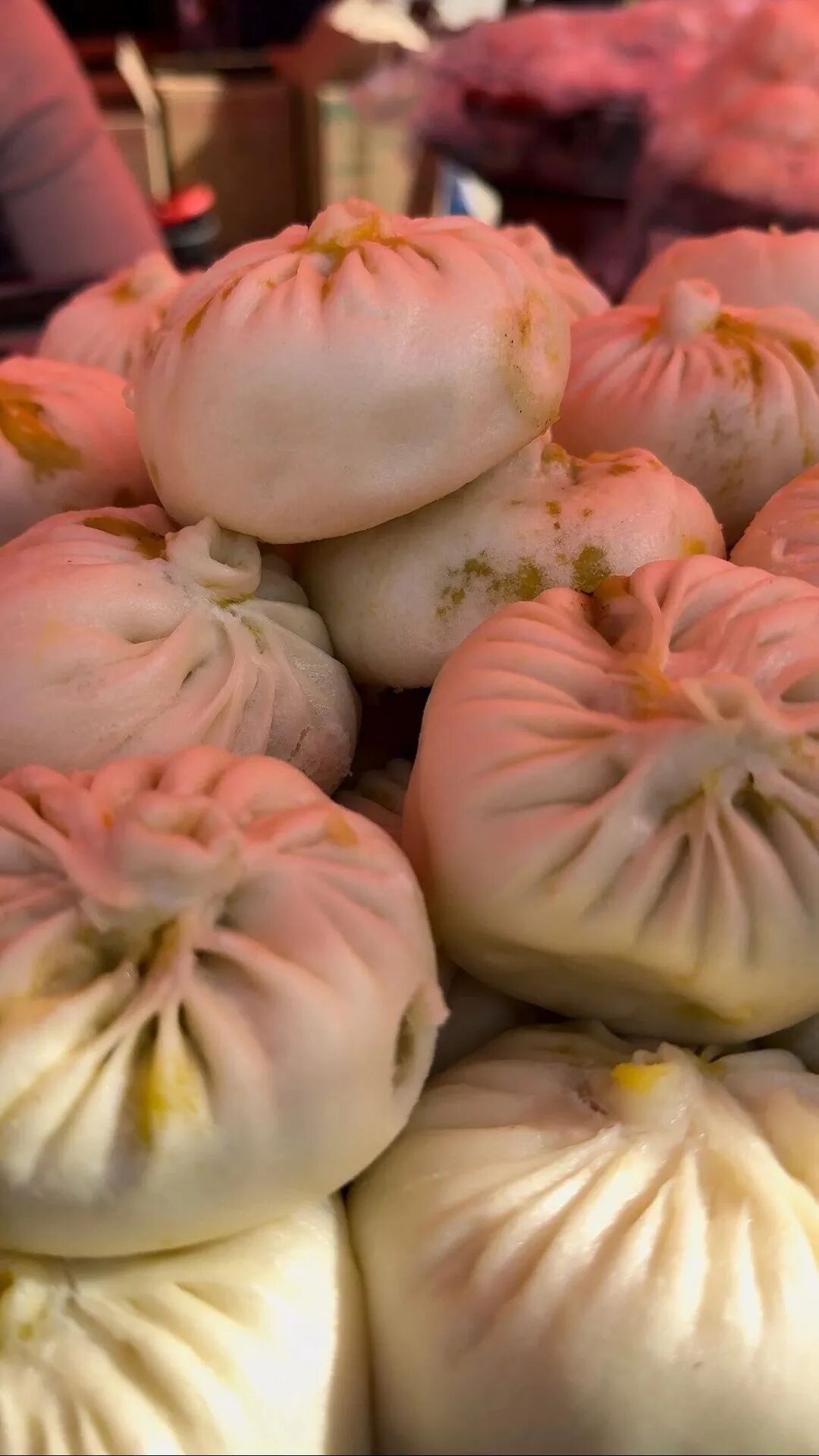
Li Ga Song Baozi has been serving customers in the Tea Horse Ancient Market for thirty years. A basket costs fifteen yuan, sold in sets of three. The steamed buns have soft dough, and the beef and scallion filling bursts with juice when you bite into it. Dipped in vinegar and chili oil, each bite is filled with the taste of old-school craftsmanship. They open at six in the morning, and locals line up; if you go late, you'll just have to wait for the next batch.
Linxia City, Tea Horse Ancient Market Pedestrian Street (near the intersection of Guanghua East Road and Hexie Road)
About 16 yuan per person
✿ Must-Order: Beef and Scallion Buns, Chive Buns, Eight-Treasure Tea
Thirty years of steaming buns, and every pleat is filled with the homey flavors Linxia people recognize.
◆ ◆ ◆
02 Recommendation Two
Xiao Xiguan Fa Zi Mian Chang
Fa zi mian chang is a unique flavor of Linxia and a favorite of the older generation. This shop in Xiao Xiguan, across from Chen Jiao Si mosque, has been open for thirty years and has even won the 'Linxia Famous Halal Snack' award.
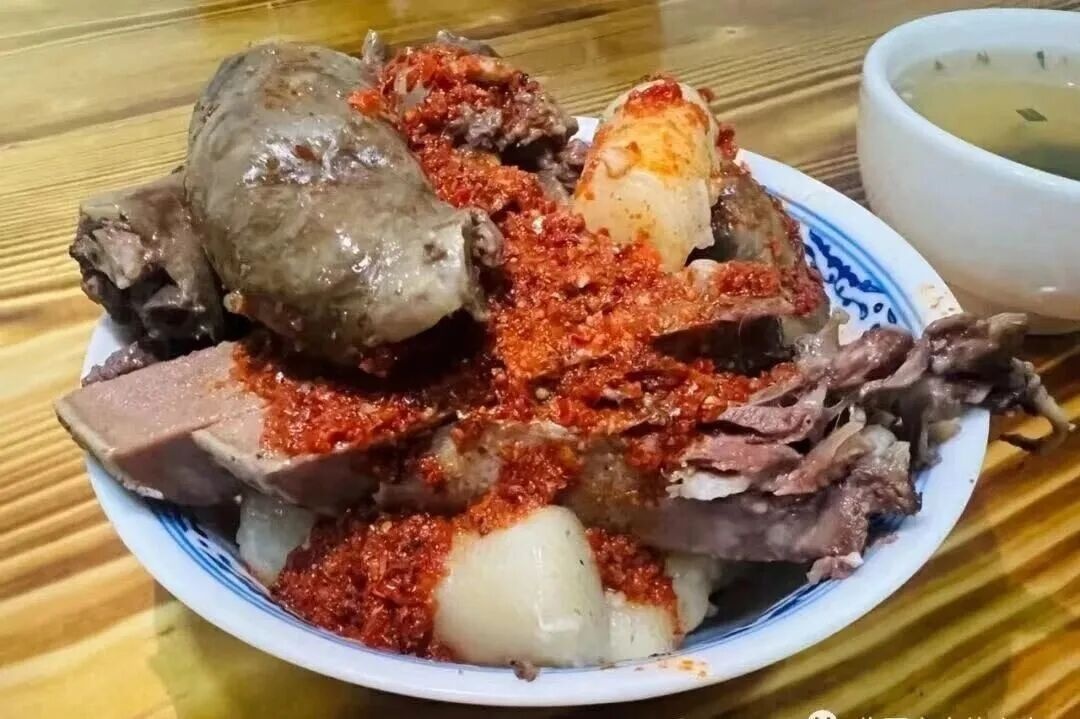
The owner pulls a section of noodle casing from a large wooden barrel, lays it down as a base, then adds fa zi (a type of offal) and whole pieces of sheep head meat, before drizzling on a spoonful of special chili-garlic sauce. The fa zi has a rich texture, with granules popping between your teeth; the casing is soft and chewy, and the sheep head meat has a satisfying chew. The flavor is bold but not greasy, paired with the garlicky chili sauce, and a bowl of meat broth, it's truly comforting.
Linxia City, inside the alley opposite Chen Jiao Si mosque
About 15 yuan per person
✿ Must-Order: Fa Zi Mian Chang, Sheep Head Meat, Meat Broth
Outsiders might hear this and think it's adventurous food, but for Linxia locals, it's a symphony of offal they've been eating since childhood.
◆ ◆ ◆
03 Recommendation Three
Er Sa Shouzhua
Linxia is called the 'ceiling of hand-grabbed lamb,' and Er Sa is the top choice for locals when hosting guests. Dongxiang lamb is cooked in clear water, with only salt and Sichuan peppercorns added, stewed until the meat easily separates from the bone with chopsticks—it's so tender it bursts with juice.
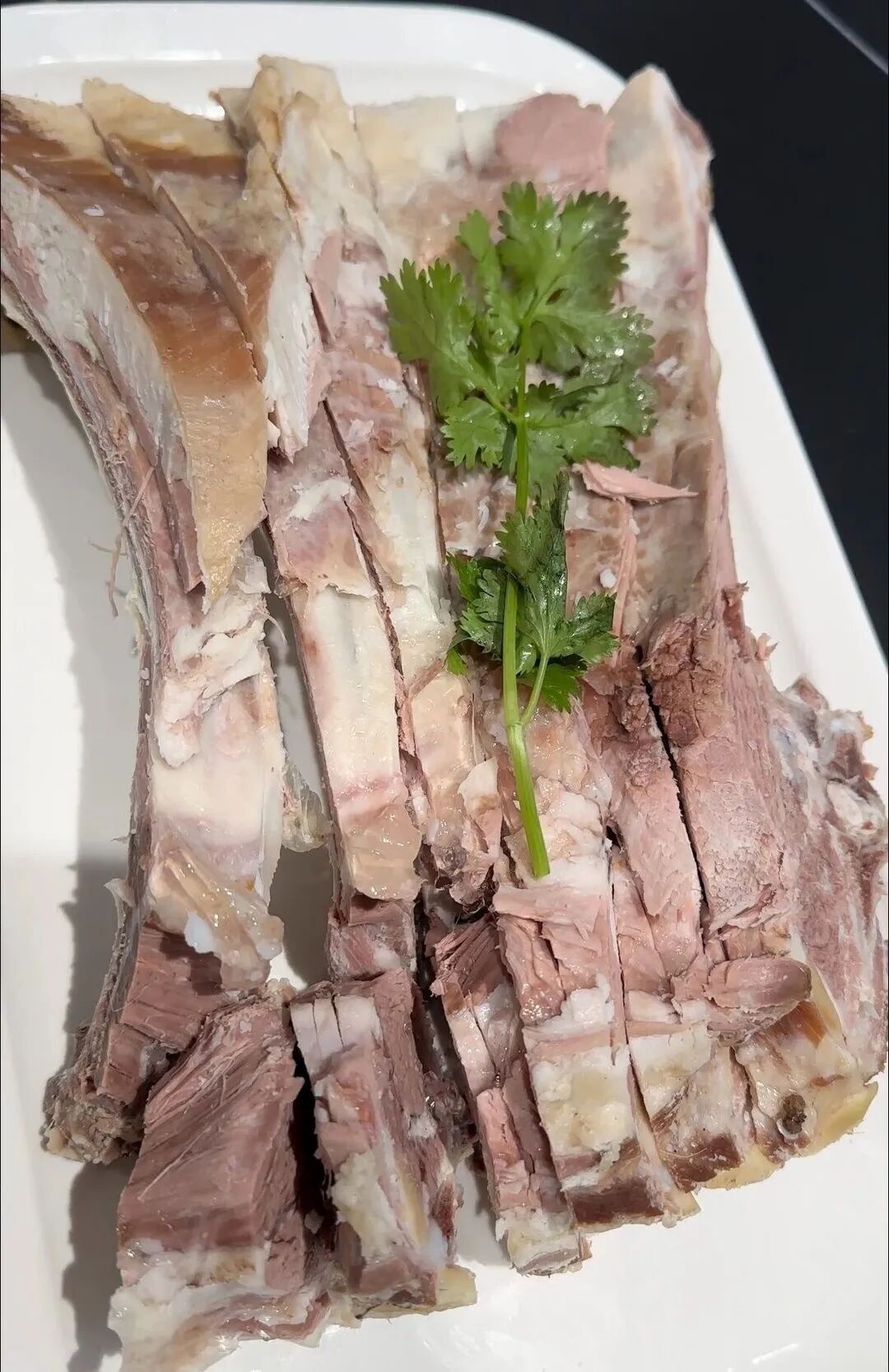
Grab the meat with your hands, pair it with garlic cloves, and dip it in salt and pepper. The fatty and lean ribs get more flavorful the more you chew; then, have a bowl of San Pao Tai covered-bowl tea, brewed with tea leaves, dried longan, goji berries, red dates, and rock sugar. A bite of meat followed by a sip of tea is refreshing and satisfying. With an average cost of around sixty yuan per person, their Dongxiang potato slices and sand chives scrambled eggs are also outstanding.
Linxia City, No. 18 Beibinhe Middle Road (Chengjiao Town)
63 yuan per person
✿ Must-Order: Hand-Grabbed Ribs, Dongxiang Potato Slices, San Pao Tai Covered-Bowl Tea
The best fate for a sheep is clear water, a pinch of salt, and a pair of hands that know how to tear it apart.
◆ ◆ ◆
04 Recommendation Four
Yu Bao He Yan Mian
Yu Bao He Yan Mian, located under the Zhaohui Building on Huancheng West Road, has a small storefront. For over twenty years, neighbors have recognized this flavor. He Yan Mian Pian (pasta) is all about three things: the pasta pieces should be pinched to the size of a fingernail, the meat should be lean-and-fatty Hu Yang lamb, and the soup must be lamb broth. Each bowl has equal parts meat, scallions, noodles, soup, and pasta.
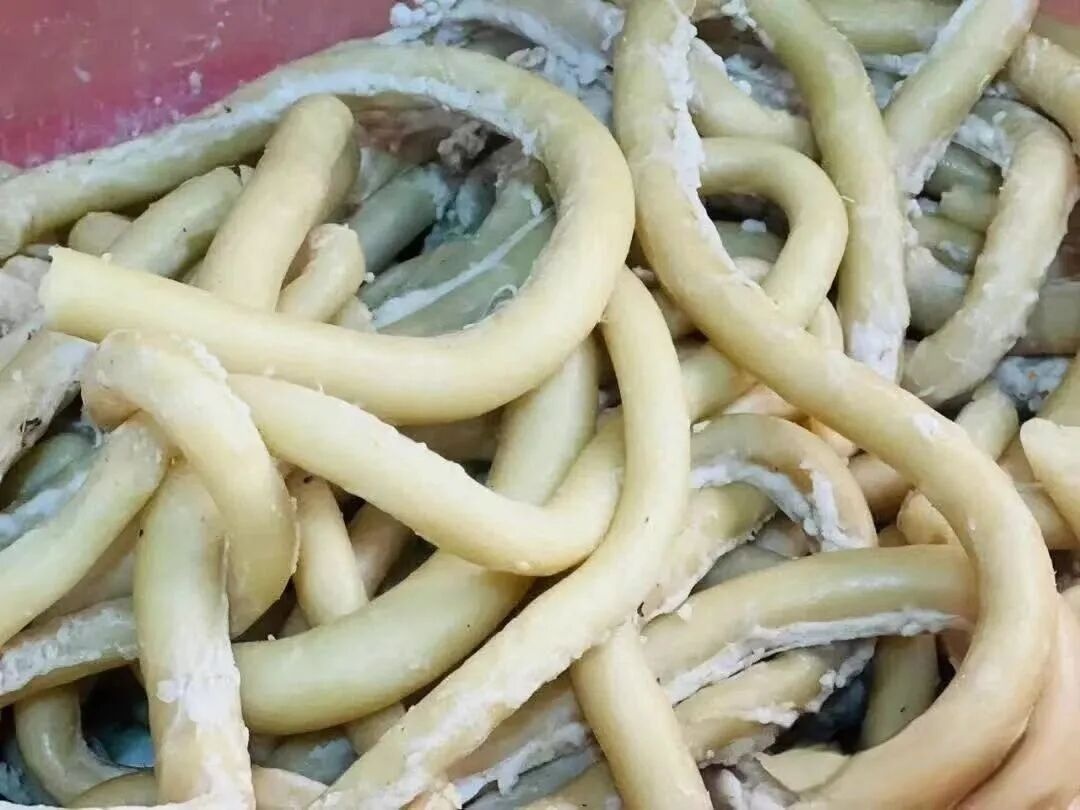
The pasta is smooth and chewy, the soup is oily but not greasy, and even the last sip is still rich and fresh. Having a bowl after some hand-grabbed lamb is a standard way for Linxia locals to finish their dinner.
Linxia City, downstairs from Zhaohui Hotel, Huancheng West Road
About 15 yuan per person
✿ Must-Order: He Yan Mian Pian, Lamb Broth
Hand-grabbed lamb is for show, while mian pian is for everyday life—the life of Linxia people is hidden in that last bowl of soup.
◆ ◆ ◆
05 Recommendation Five
Heimai Traditional Liqueur Rice
The milky, eggy liqueur rice is the heart and soul of Linxia's night market. Heimai Traditional Liqueur Rice is located next to Hongyuan Square. In a copper pot, milk and fermented rice slowly bubble away. Crack an egg in, gently swirl it around with the back of a spoon – not a drop of water is added. Then, sprinkle in raisins, goji berries, peanuts, sesame seeds, and sugar.
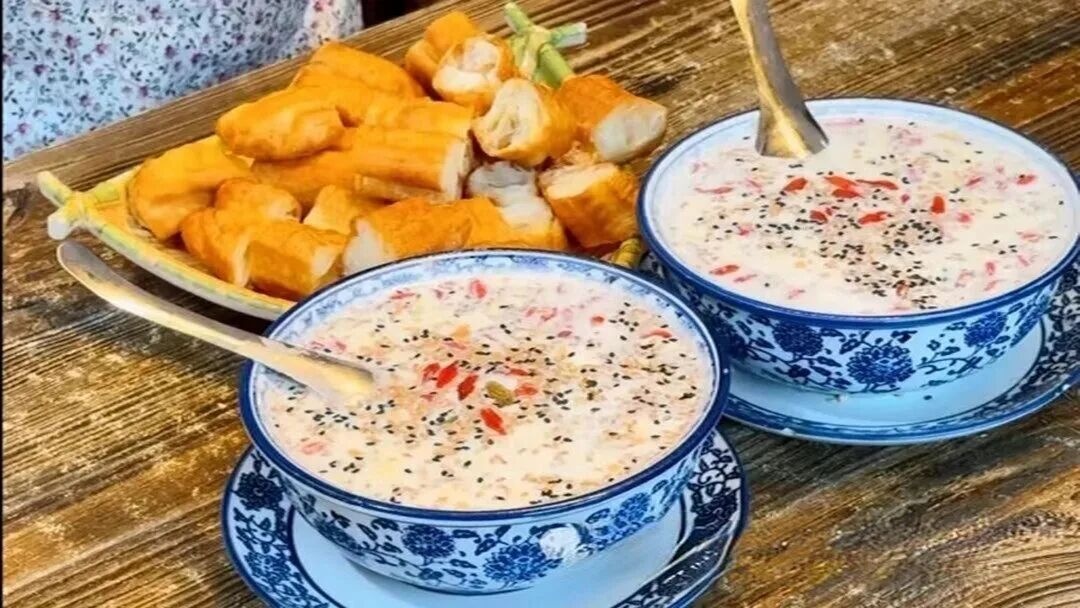
The finished product is a beautiful mix of yellow and white, with a milky aroma blending with a subtle hint of fermented rice. The egg is silky, the milk is rich, and one bowl warms you up from your throat all the way to your stomach. It's the gentlest way to end a night in Hezhou after a long day exploring the night market until your legs feel like jelly.
Next to Hongyuan Square in Linxia City (Hongyuan New Village)
Around 8 yuan per person
✿ Must-orders: Milk Egg Liqueur Rice, Tian Peizi
Lanzhou's Hu Family Steamed Buns: Authentic Hui Muslim Street Food & Hand-Grabbed Lamb Delights
Articles • Hasan09 posted the article • 0 comments • 17 views • 1 days ago
Lanzhou isn't just about amazing beef noodles,
there are also Hu Family Steamed Buns.
And the spicy soup (Hulatang) is super good too. view all
Lanzhou isn't just about amazing beef noodles,

there are also Hu Family Steamed Buns.

And the spicy soup (Hulatang) is super good too.
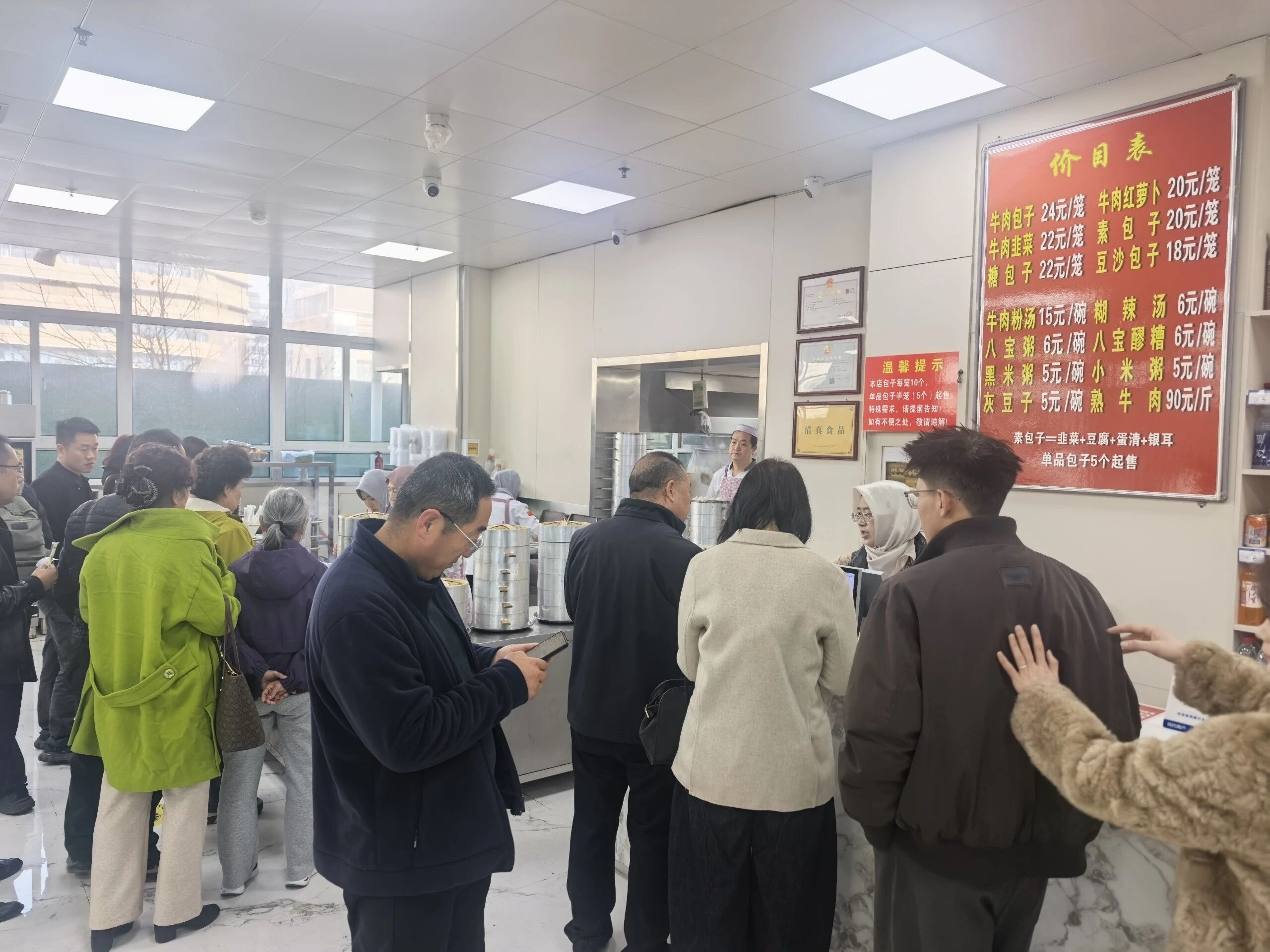


Qinghai Hainan Gonghe Xunhua Lamb King: Authentic Kangguo Lamb and Salar Hand-Grabbed Lamb
Articles • Hasan09 posted the article • 0 comments • 17 views • 1 days ago
On the way from Nangqian to Xining, I made a quick stop at the Mani piles in Juegu, Yushu, a miracle built from 2.5 billion Mani stones.
When driving, I just focus on the general direction, stopping when it gets dark – no night driving. About 10+ hours a day is pretty much it. We were almost at the Xining border but called it a day. Camped out as it got dark and stayed at a three-star hotel in Gonghe County. The standard room was 88 yuan, making it the best value stay on the entire trip.
Gonghe County – the name itself suggests a story, and it's true. It was established during the Republic of China era and is currently the capital of Hainan Prefecture. Its location is pretty unique, sandwiched between Qinghai Lake and Longyang Gorge, so people pass through all the time. It's packed with tourist attractions, but it wasn't in our plan.
Eating was definitely part of the plan. Near Xining, there's a dish called kangguo lamb that sounded super intriguing, and I'd never experienced anything like it before.
As the capital of Hainan Prefecture, Gonghe is way more bustling than your average county town. The place I found online, Xunhua Lamb King, really grabbed my attention just from the name. Years ago, I had a plate of stir-fried noodle slices in Xunhua that still holds a top spot in my memory.
Lamb is also a big deal in Qinghai. Compared to places like Xinjiang, Inner Mongolia, or even Ningxia, it's not as well-known to people from other parts of China. It's not because it's not delicious, but because it hasn't become a widely circulated commodity. All the local specialties get eaten up right there; there's no extra production shipped to big cities. Great stuff is never in surplus!
Plus, it hasn't been promoted much, unlike the Tan sheep. It's definitely something most people haven't heard of, and might not even have a place for it on the map.
There are four place names in the title: Qinghai, Hainan, Gonghe, and Xunhua. The first three mark our current location, and the last one tells you the identity. The owner's family is from Xunhua, and Xunhua's full name is Xunhua Salar Autonomous County, so yep, the restaurant is run by Salar people. The Hualong County and Xunhua County in Qinghai are actually the originators of Lanzhou beef noodles that you find all over the country. Nowadays, it's less about whether it's Lanzhou people making Lanzhou beef noodles; Lanzhou folks aren't opening noodle shops worldwide, and not many people even know about Hualong and Xunhua. If you're passing through, seriously, don't miss out. If you love carbs, you can't skip these two places.
Kangguo Lamb, 98 yuan per jin (approx. 0.5 kg).
The kangguo lamb is similar to a hot plate style. Lamb, potatoes, corn, and potato noodles all cook together in one pot. It uses various cooking methods like pan-frying, simmering, and stir-frying. It's a big communal pot dish locals eat and chat over, kind of like the popular 'dry pot' dishes you see elsewhere.
The main selling point is the mix of crispy, browned flavors. The lamb is pre-cooked, likely the restaurant version to save time and speed up service. The ingredients are cooked separately before being mixed and stir-fried. The seasoning is similar to dry pot flavors, a pretty popular approach in recent years. The lamb chunks are large and thick, mostly leg meat, not as melt-in-your-mouth tender as hand-grabbed lamb.
The fried sweet potato noodles inside are delicious, pan-fried until golden and easy to eat. This kangguo style can also be made with yak meat and fish.
I felt like we needed more, so we ordered half a jin of hand-grabbed lamb. It's 88 yuan per jin, which is okay. It's not as cheap as the Dongxiang hand-grabbed lamb in Lanzhou, but you can't really compare them.
The lamb here is Tibetan sheep, a breed unique to the plateau. You find the most in western Sichuan and Qinghai. You won't really find them in Tibet itself because the altitude is too high, unlike yaks.
Tibetan sheep are a type of domestic sheep. They're quite large, and their meat is a bit firmer but packed with rich lamb flavor, making it super satisfying to eat.
I was also hoping to try the stir-fried noodle slices, but a kangguo lamb set for two plus half a jin of hand-grabbed lamb already filled us up. The three of us spent 120 yuan in total. Even though the stir-fried noodle slices were the cheapest I saw on the whole trip, I just couldn't manage another bite.
Gonghe is a pretty cool little town. There was also a lamb offal shop next to the hotel that I didn't get to try, which is a bummer. Coming down from Tibet, this felt like the most down-to-earth place to stop. It's a shame we just passed through; we should have stayed an extra half-day. view all
On the way from Nangqian to Xining, I made a quick stop at the Mani piles in Juegu, Yushu, a miracle built from 2.5 billion Mani stones.
When driving, I just focus on the general direction, stopping when it gets dark – no night driving. About 10+ hours a day is pretty much it. We were almost at the Xining border but called it a day. Camped out as it got dark and stayed at a three-star hotel in Gonghe County. The standard room was 88 yuan, making it the best value stay on the entire trip.
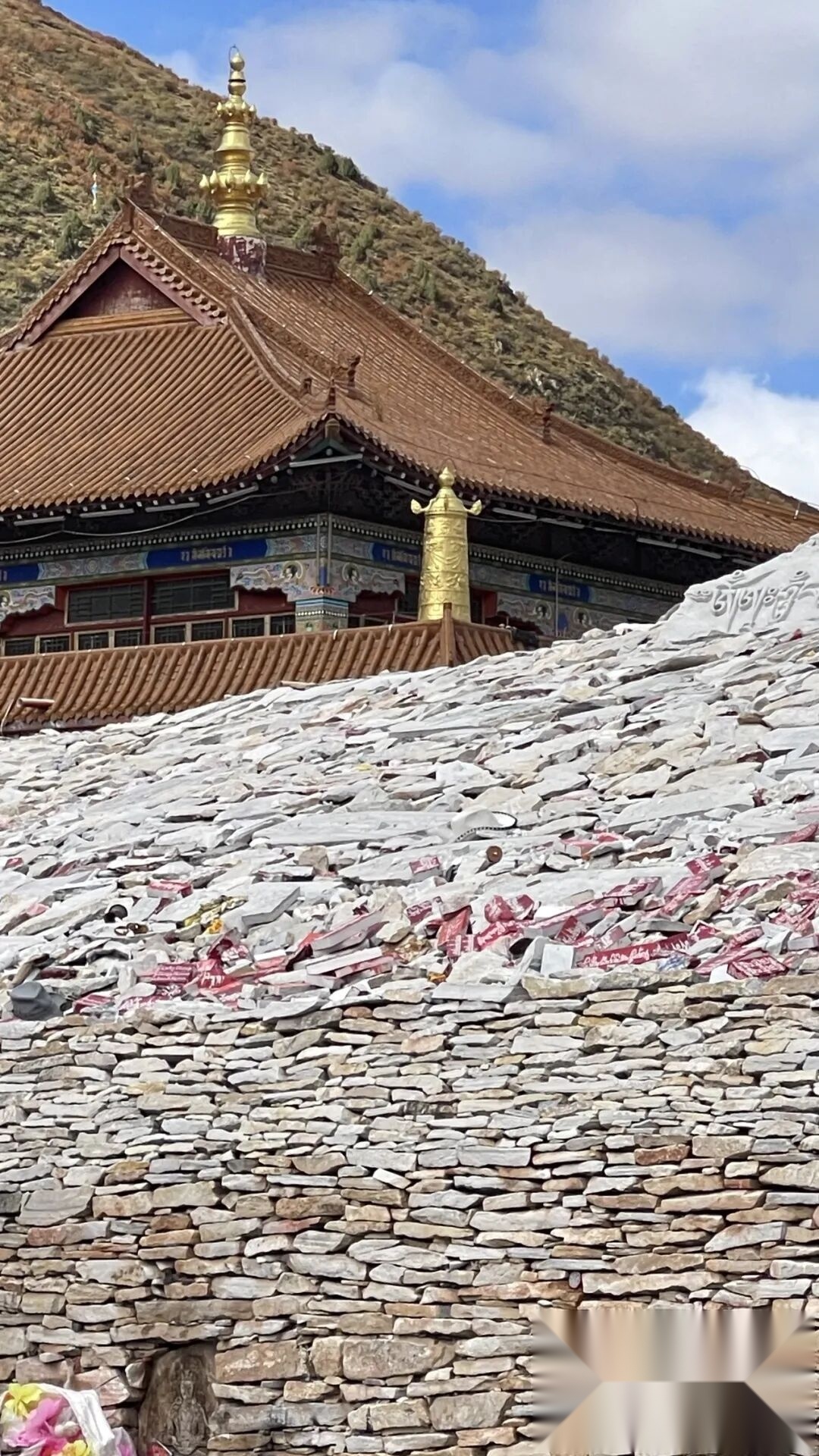
Gonghe County – the name itself suggests a story, and it's true. It was established during the Republic of China era and is currently the capital of Hainan Prefecture. Its location is pretty unique, sandwiched between Qinghai Lake and Longyang Gorge, so people pass through all the time. It's packed with tourist attractions, but it wasn't in our plan.
Eating was definitely part of the plan. Near Xining, there's a dish called kangguo lamb that sounded super intriguing, and I'd never experienced anything like it before.
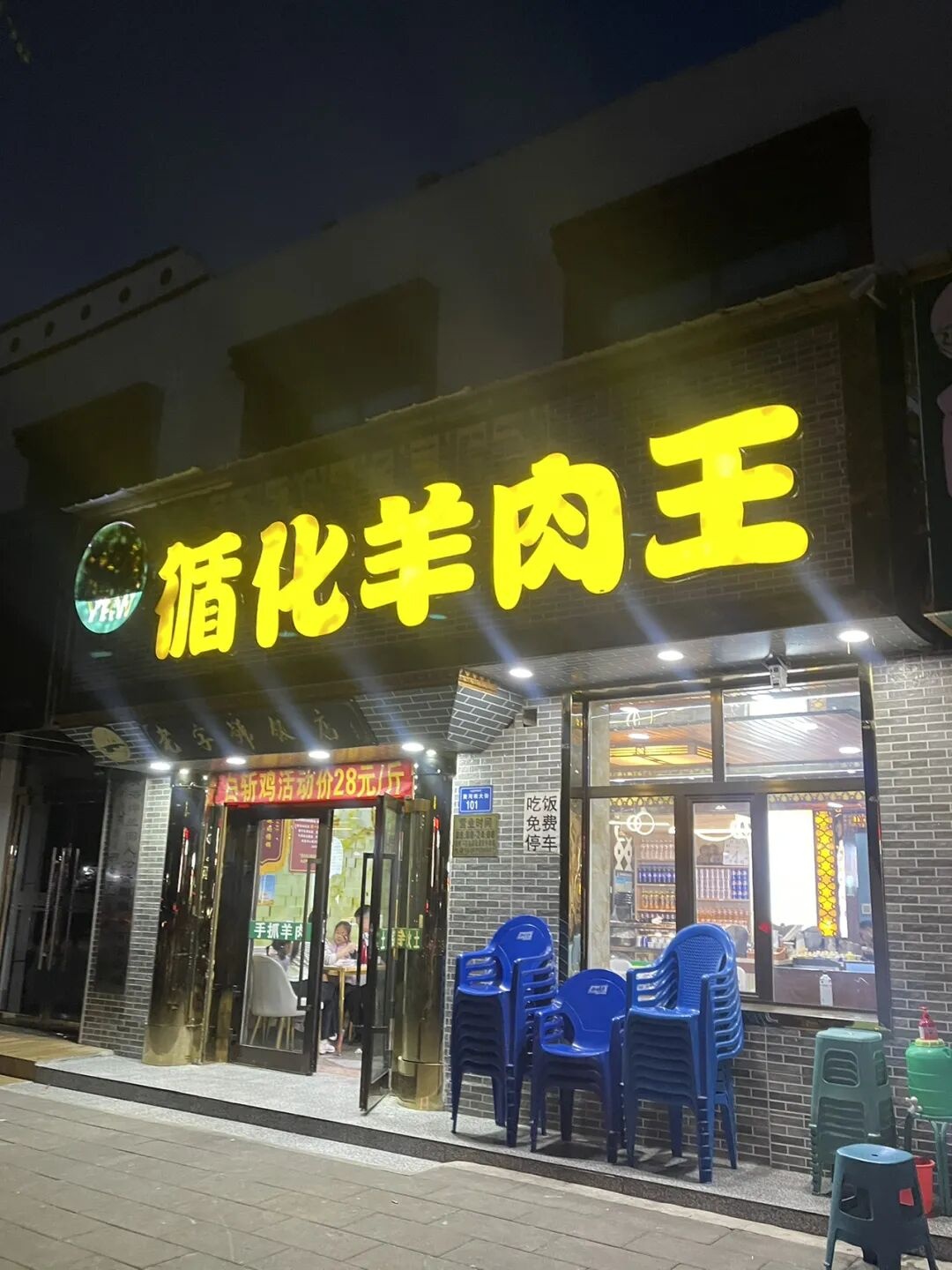
As the capital of Hainan Prefecture, Gonghe is way more bustling than your average county town. The place I found online, Xunhua Lamb King, really grabbed my attention just from the name. Years ago, I had a plate of stir-fried noodle slices in Xunhua that still holds a top spot in my memory.
Lamb is also a big deal in Qinghai. Compared to places like Xinjiang, Inner Mongolia, or even Ningxia, it's not as well-known to people from other parts of China. It's not because it's not delicious, but because it hasn't become a widely circulated commodity. All the local specialties get eaten up right there; there's no extra production shipped to big cities. Great stuff is never in surplus!
Plus, it hasn't been promoted much, unlike the Tan sheep. It's definitely something most people haven't heard of, and might not even have a place for it on the map.
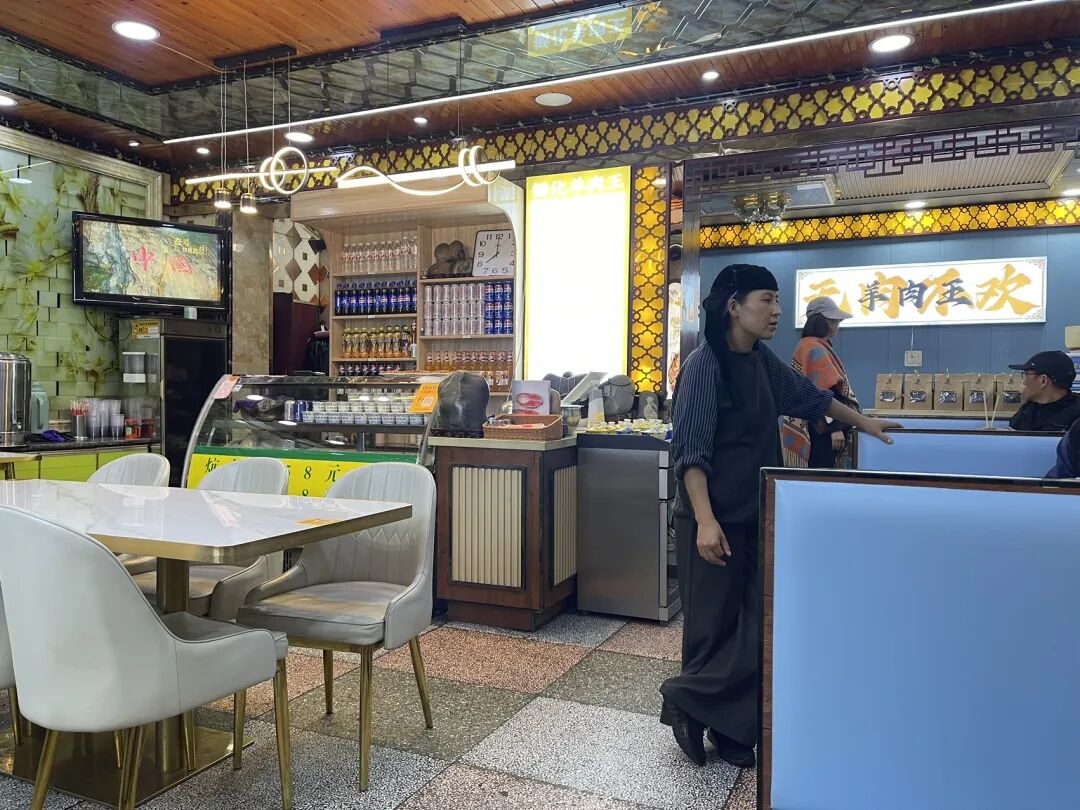
There are four place names in the title: Qinghai, Hainan, Gonghe, and Xunhua. The first three mark our current location, and the last one tells you the identity. The owner's family is from Xunhua, and Xunhua's full name is Xunhua Salar Autonomous County, so yep, the restaurant is run by Salar people. The Hualong County and Xunhua County in Qinghai are actually the originators of Lanzhou beef noodles that you find all over the country. Nowadays, it's less about whether it's Lanzhou people making Lanzhou beef noodles; Lanzhou folks aren't opening noodle shops worldwide, and not many people even know about Hualong and Xunhua. If you're passing through, seriously, don't miss out. If you love carbs, you can't skip these two places.
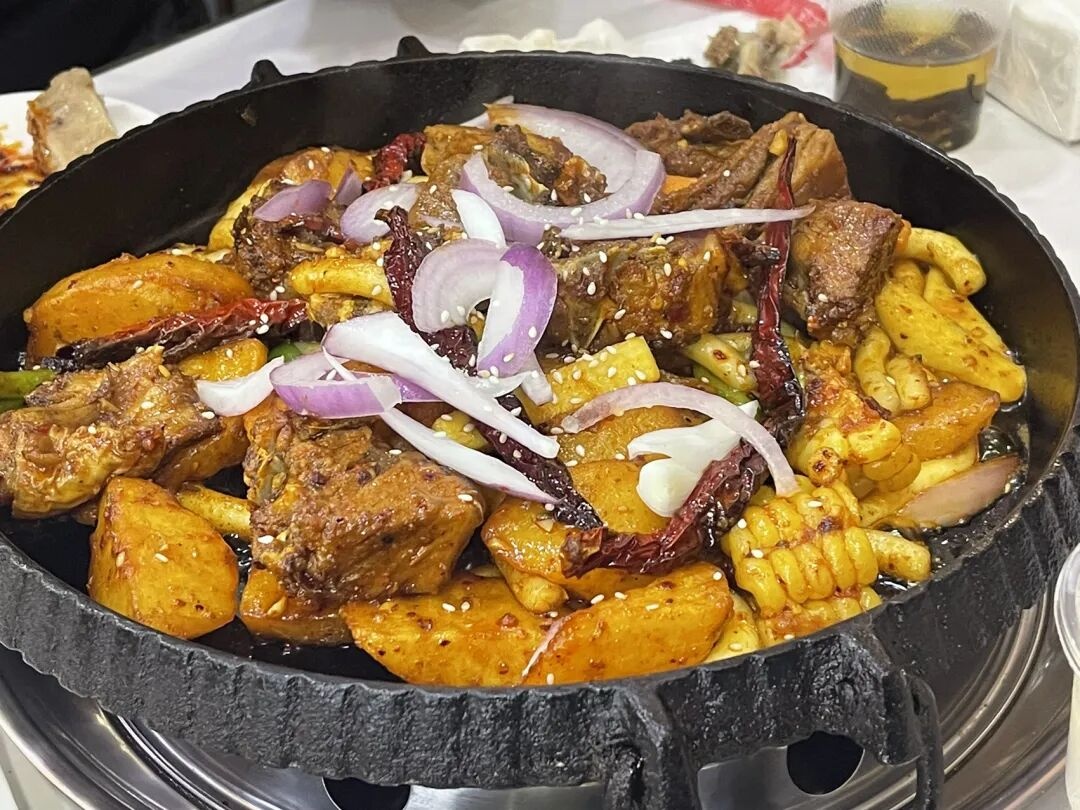
Kangguo Lamb, 98 yuan per jin (approx. 0.5 kg).
The kangguo lamb is similar to a hot plate style. Lamb, potatoes, corn, and potato noodles all cook together in one pot. It uses various cooking methods like pan-frying, simmering, and stir-frying. It's a big communal pot dish locals eat and chat over, kind of like the popular 'dry pot' dishes you see elsewhere.
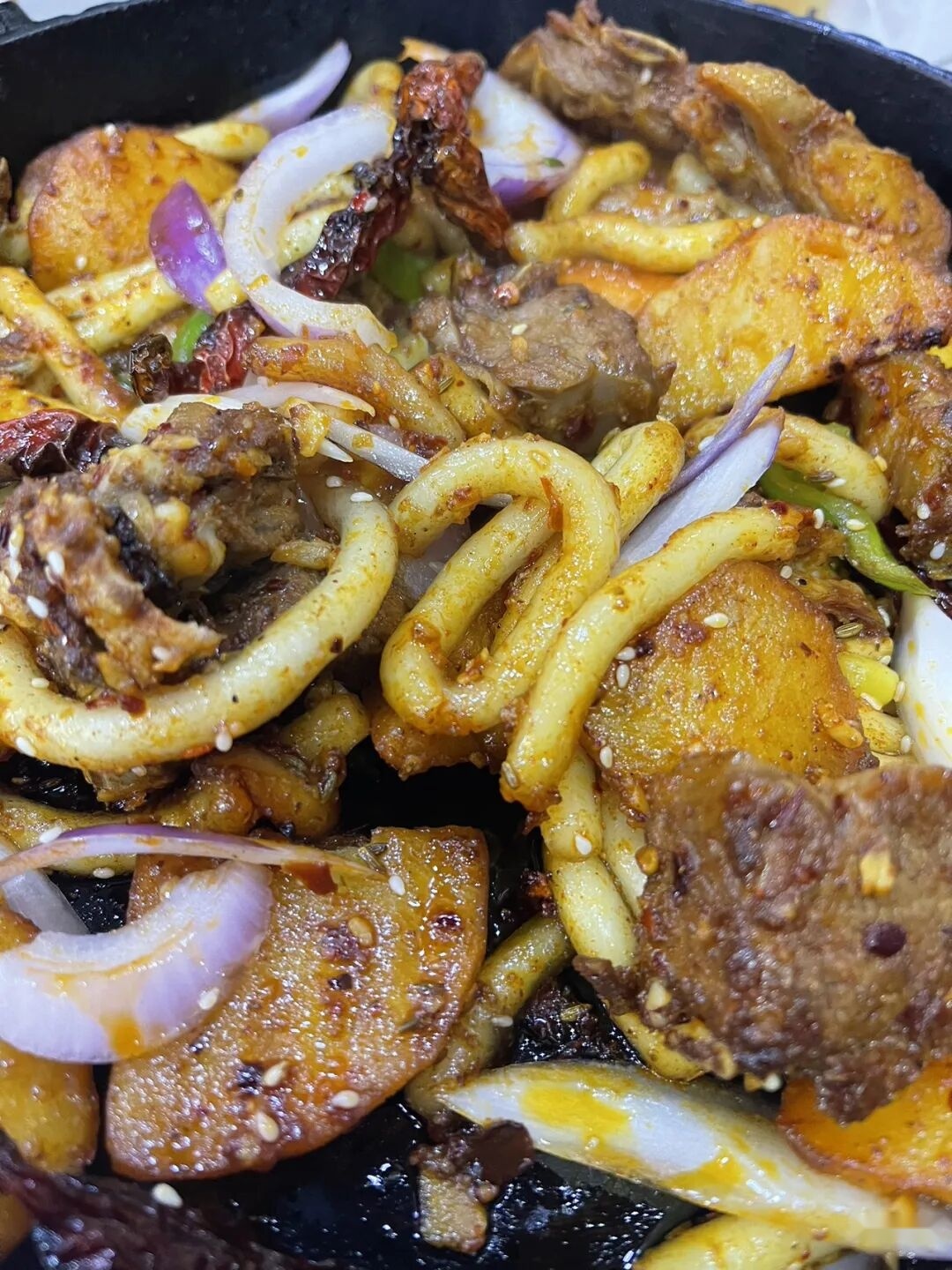
The main selling point is the mix of crispy, browned flavors. The lamb is pre-cooked, likely the restaurant version to save time and speed up service. The ingredients are cooked separately before being mixed and stir-fried. The seasoning is similar to dry pot flavors, a pretty popular approach in recent years. The lamb chunks are large and thick, mostly leg meat, not as melt-in-your-mouth tender as hand-grabbed lamb.
The fried sweet potato noodles inside are delicious, pan-fried until golden and easy to eat. This kangguo style can also be made with yak meat and fish.
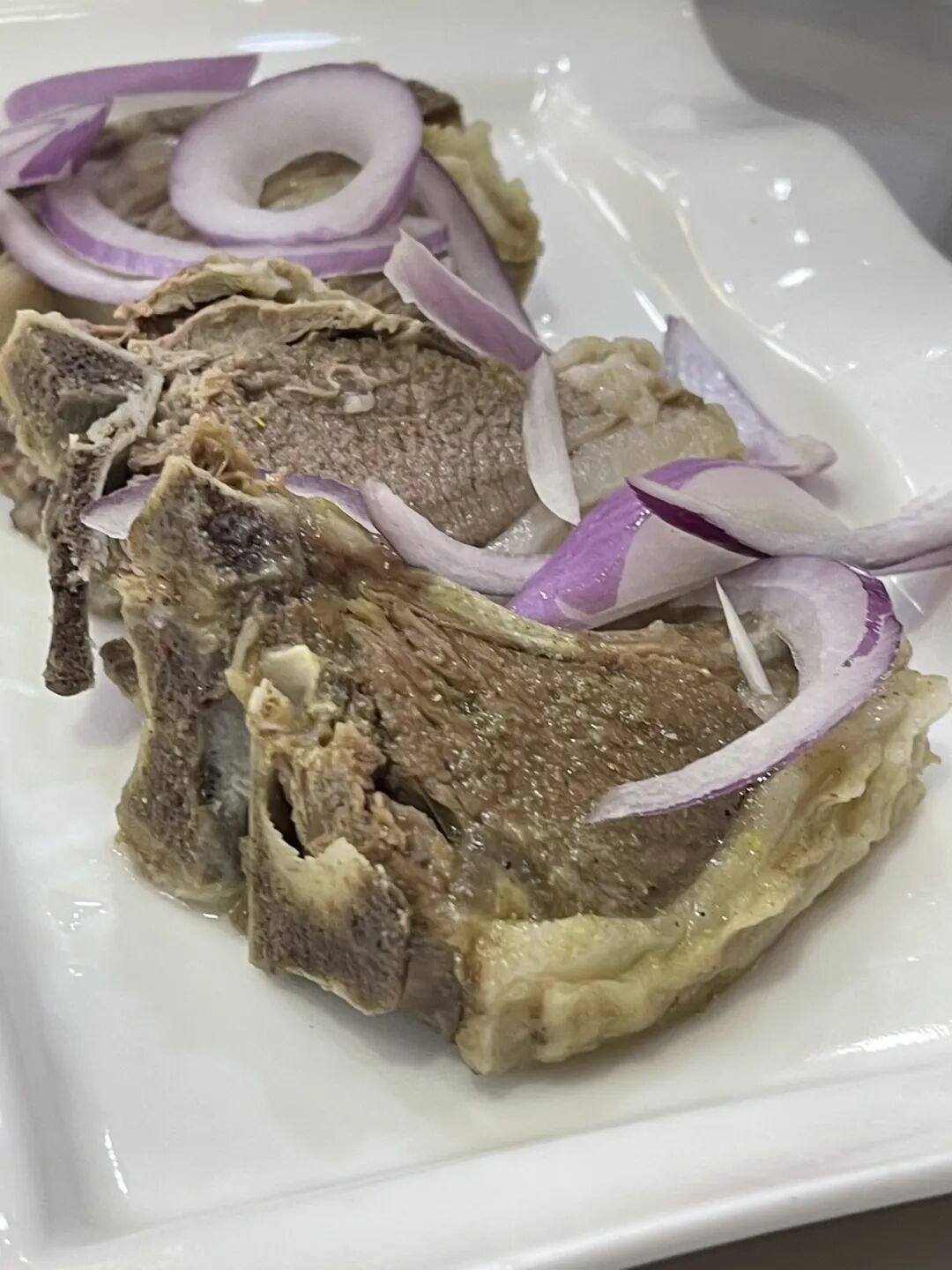
I felt like we needed more, so we ordered half a jin of hand-grabbed lamb. It's 88 yuan per jin, which is okay. It's not as cheap as the Dongxiang hand-grabbed lamb in Lanzhou, but you can't really compare them.
The lamb here is Tibetan sheep, a breed unique to the plateau. You find the most in western Sichuan and Qinghai. You won't really find them in Tibet itself because the altitude is too high, unlike yaks.
Tibetan sheep are a type of domestic sheep. They're quite large, and their meat is a bit firmer but packed with rich lamb flavor, making it super satisfying to eat.
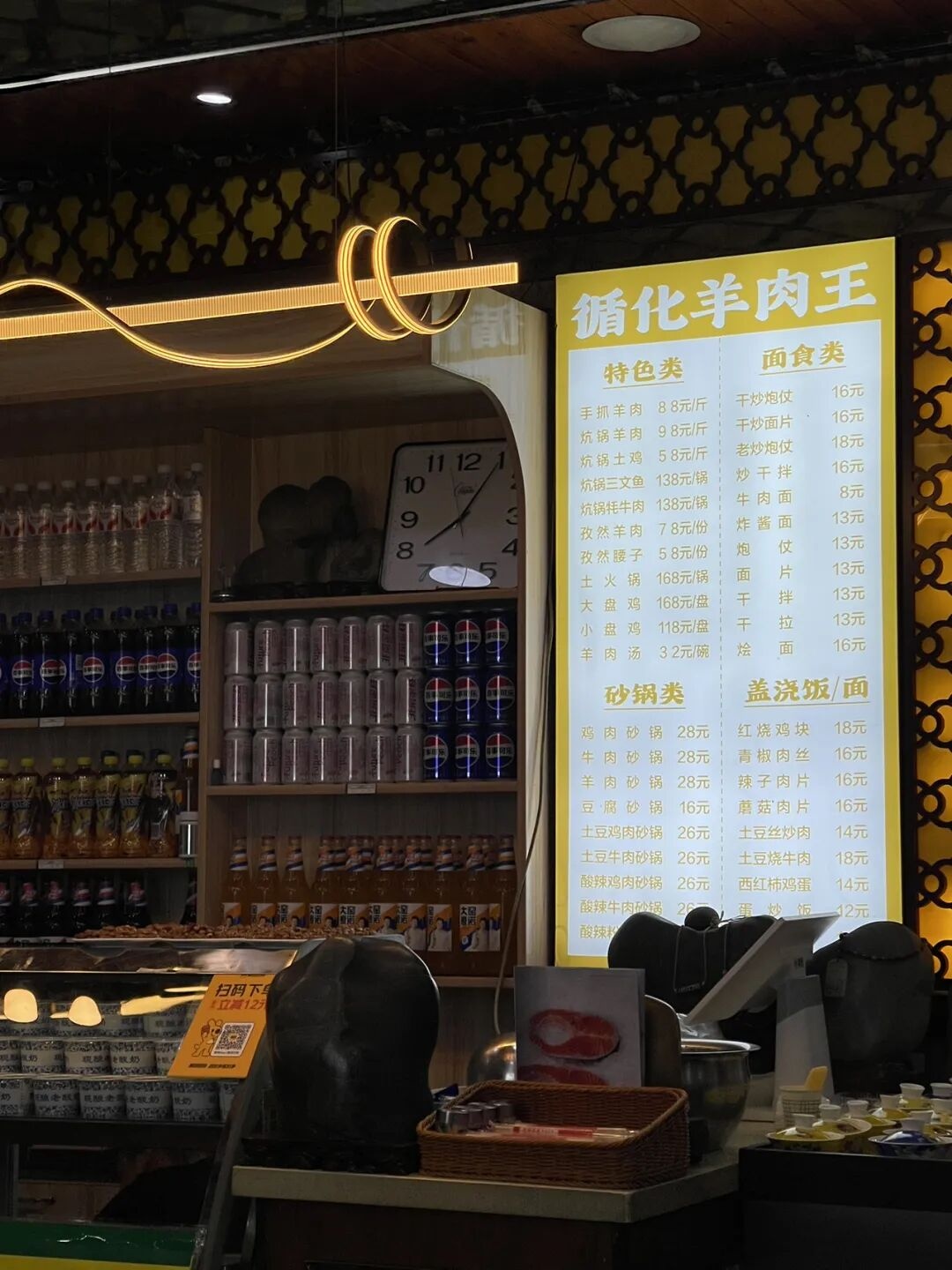
I was also hoping to try the stir-fried noodle slices, but a kangguo lamb set for two plus half a jin of hand-grabbed lamb already filled us up. The three of us spent 120 yuan in total. Even though the stir-fried noodle slices were the cheapest I saw on the whole trip, I just couldn't manage another bite.
Gonghe is a pretty cool little town. There was also a lamb offal shop next to the hotel that I didn't get to try, which is a bummer. Coming down from Tibet, this felt like the most down-to-earth place to stop. It's a shame we just passed through; we should have stayed an extra half-day.
Lanzhou's Famous Hu Jia Baozi: Authentic Hui Muslim Hand-Grabbed Pork Dumplings & Offal Soup
Articles • Hasan09 posted the article • 0 comments • 17 views • 1 days ago
Recommended by Douyin creators: Hu Jia Baozi.
Check out these crowds!
This is where Lanzhou locals go to eat.
The most down-to-earth eatery around. view all
Recommended by Douyin creators: Hu Jia Baozi.
Check out these crowds!
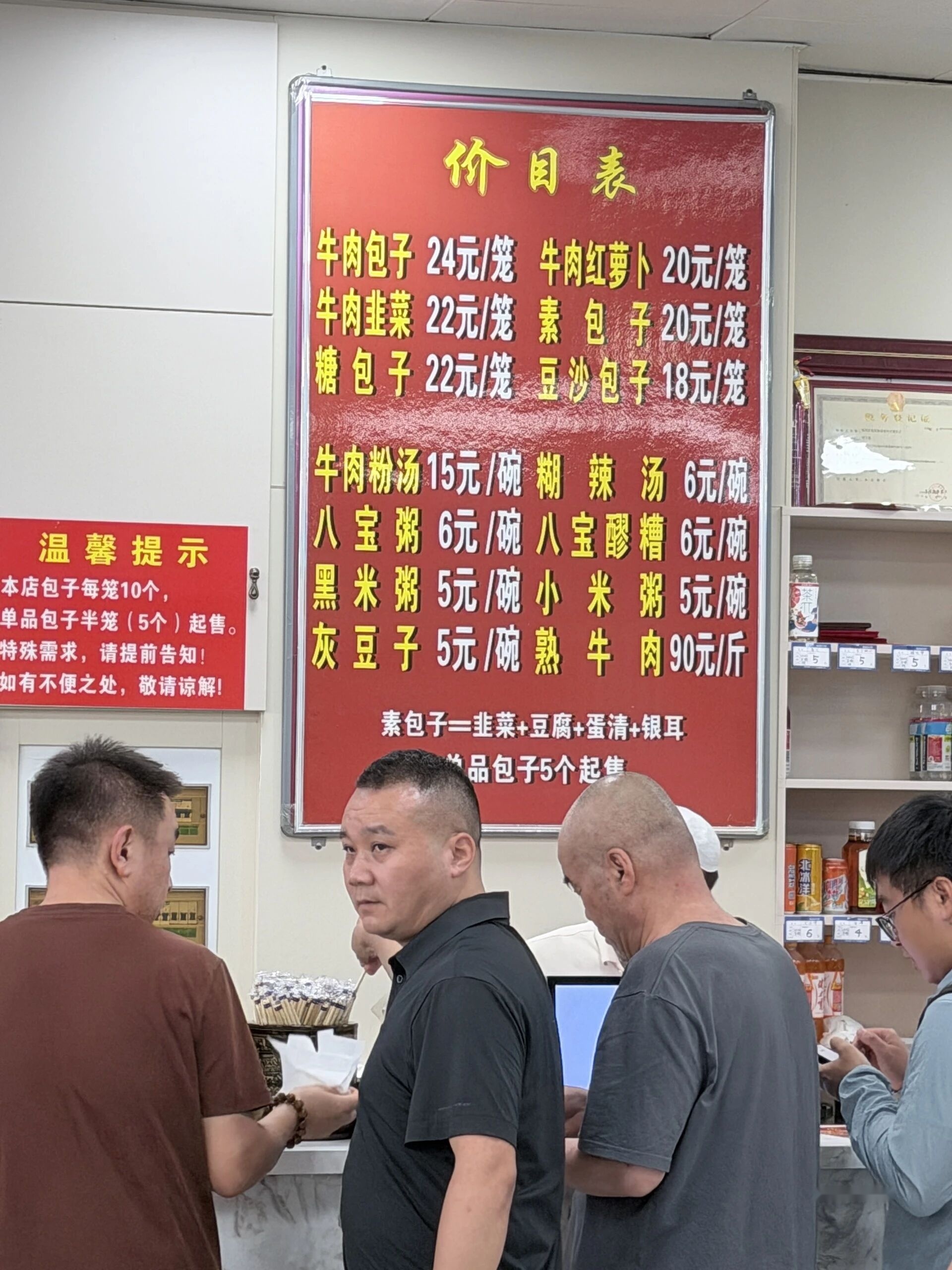
This is where Lanzhou locals go to eat.
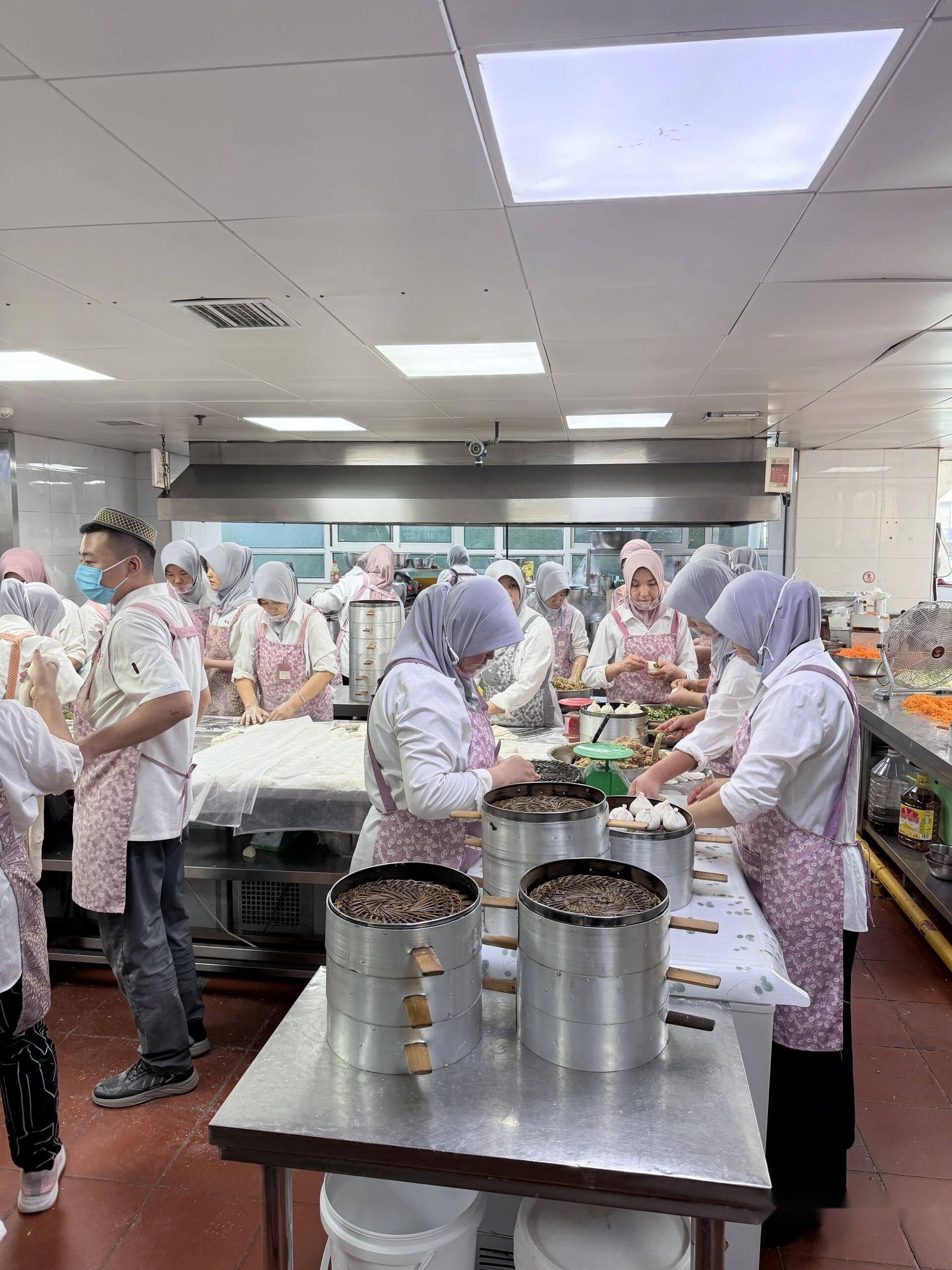
The most down-to-earth eatery around.
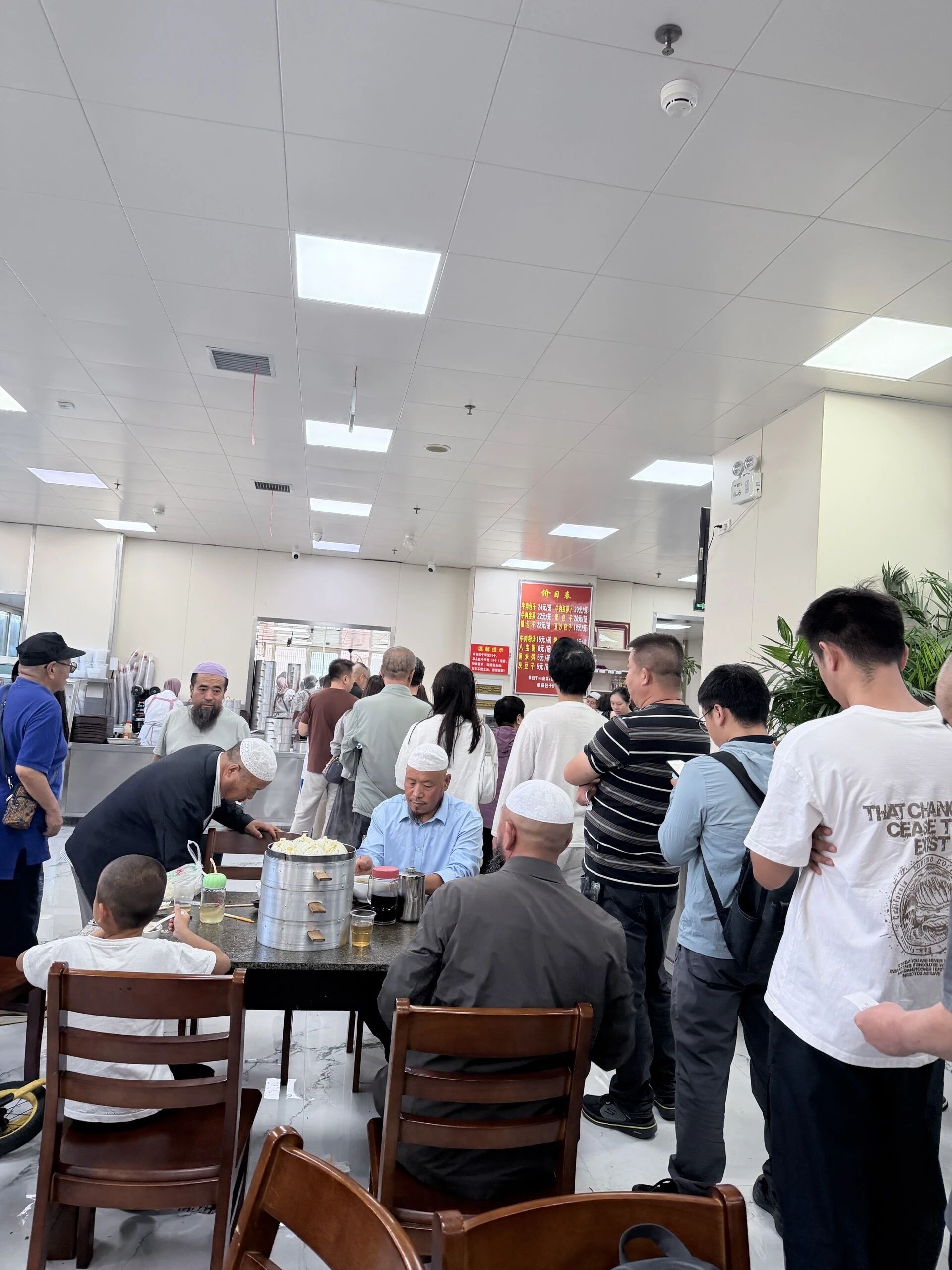
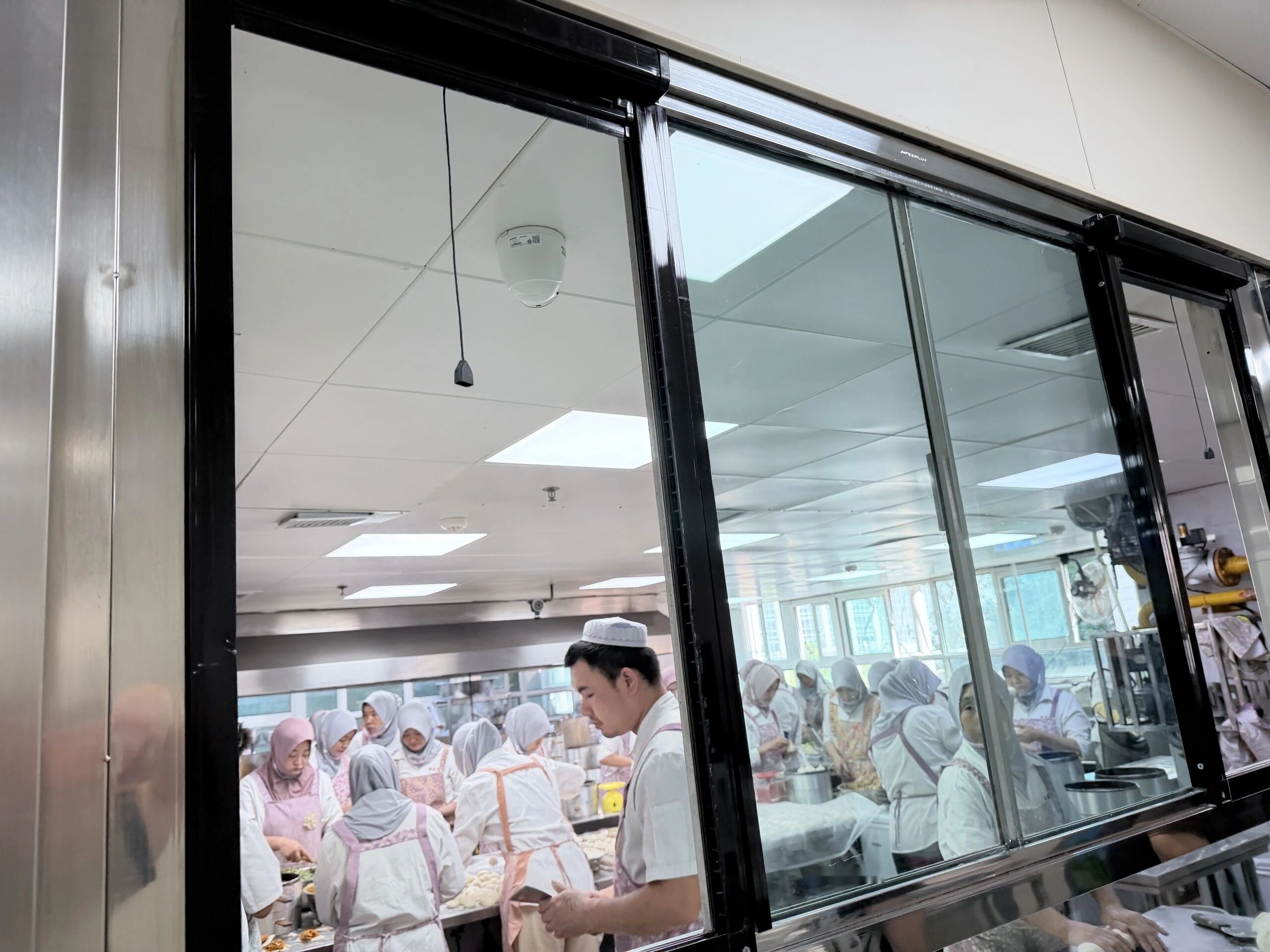
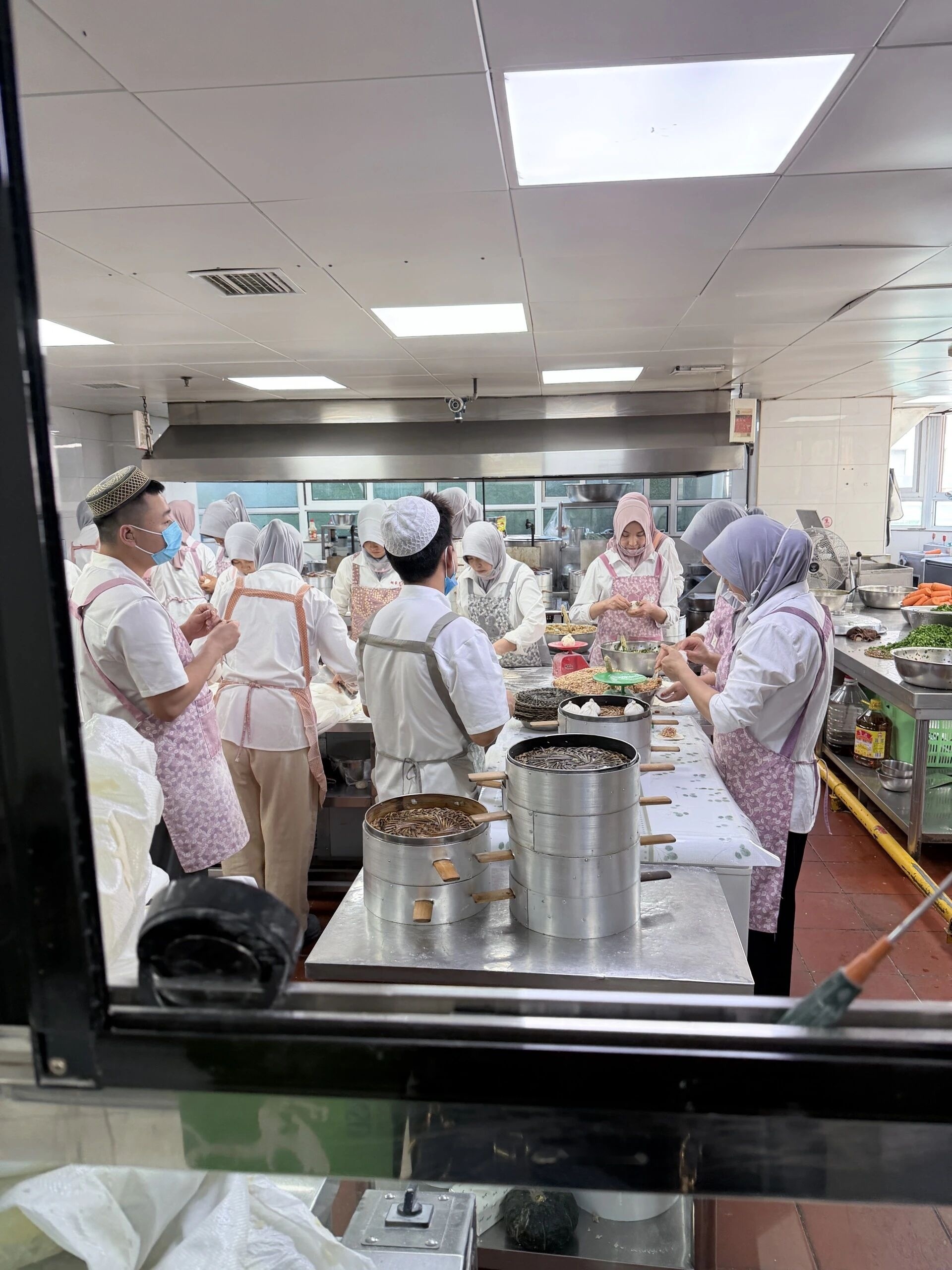
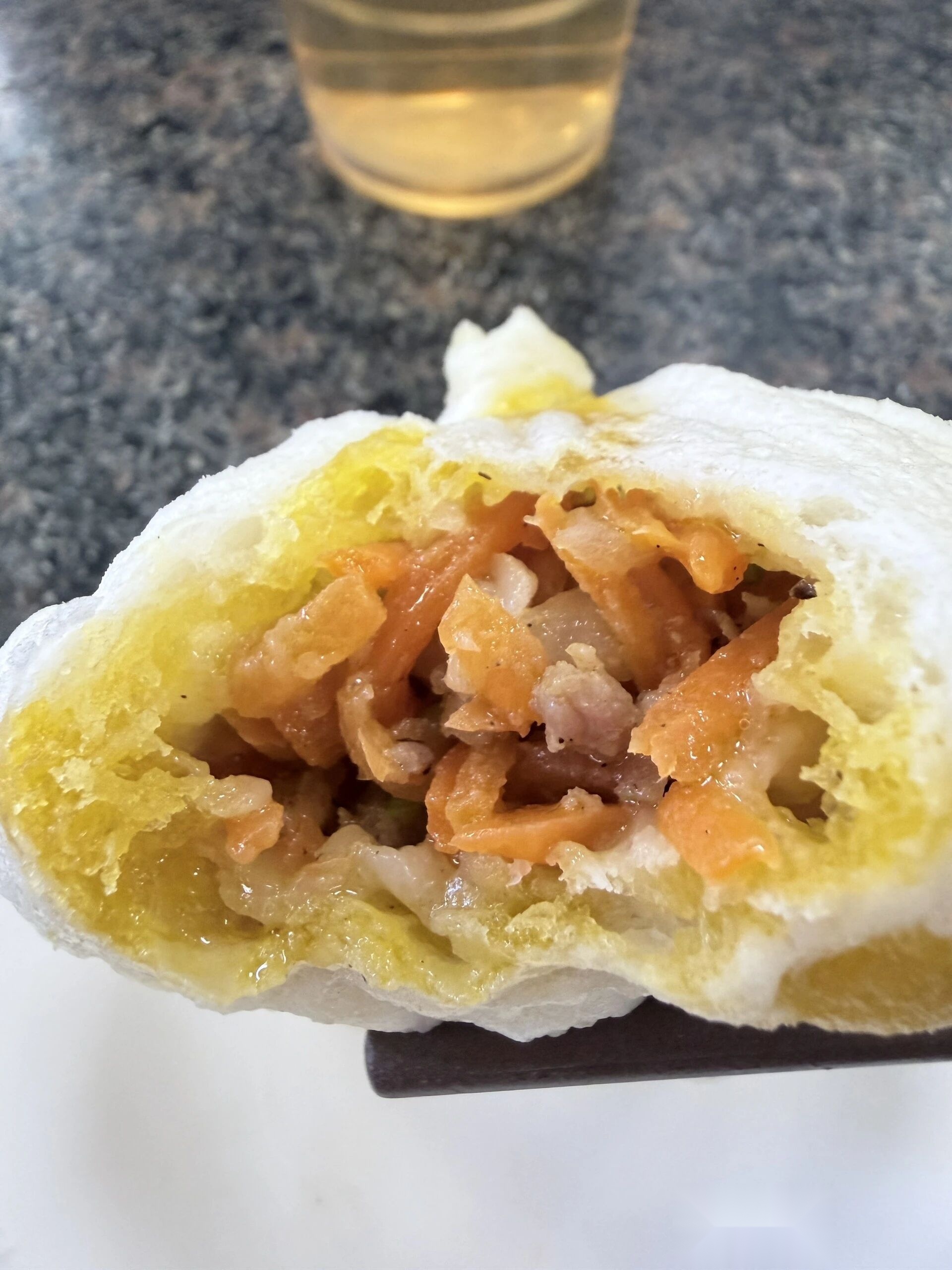
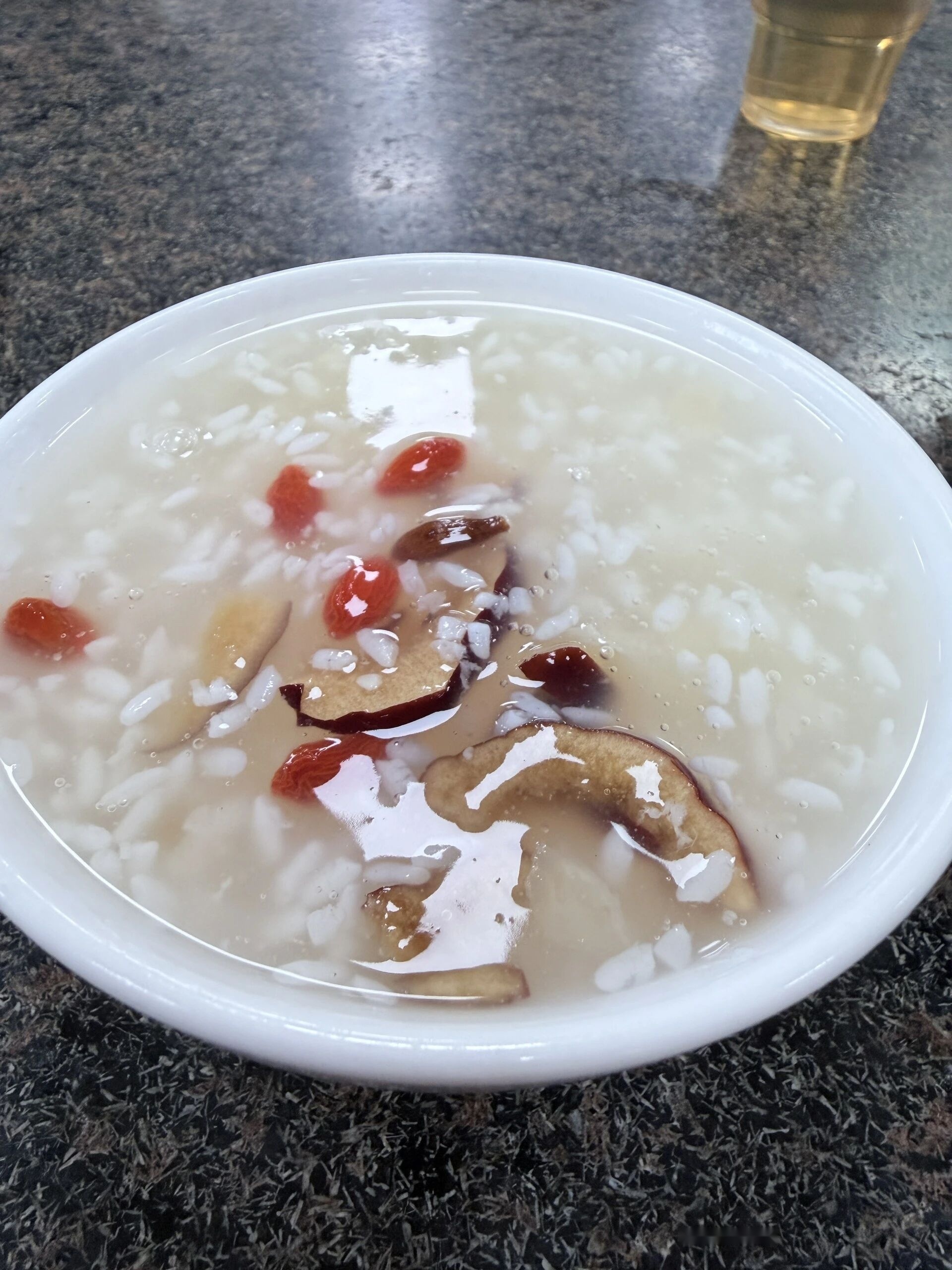
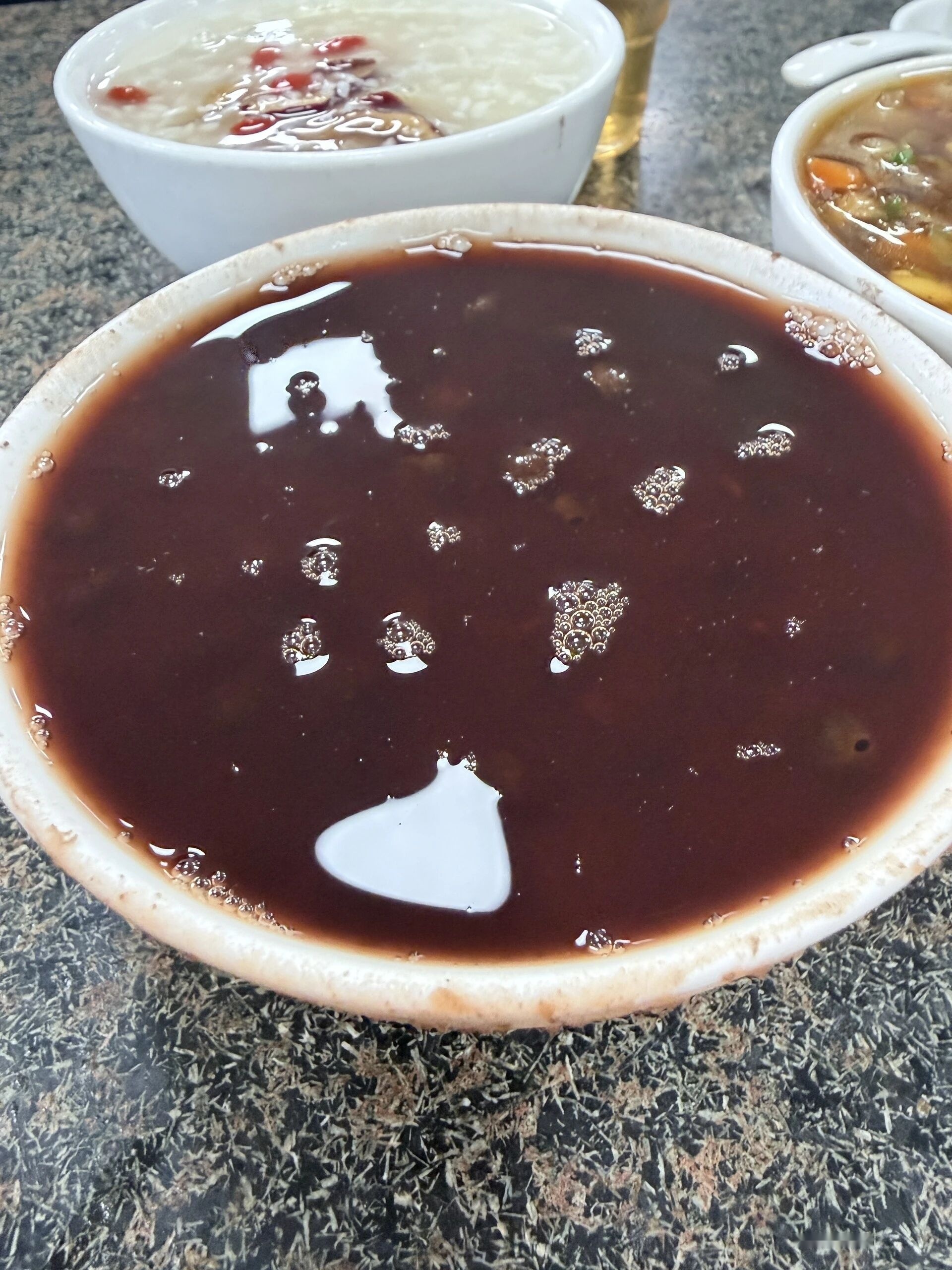
Beijing's Top 10 Halal Restaurants: Authentic Hui Muslim Restaurants & Old-School Eats
Articles • Hasan09 posted the article • 0 comments • 28 views • 1 days ago
Shuanggiao Karamay Gan Mian Pi, Changping Dingfuhuangzhuang Community Canteen, Changping Xinzhuang Shaanxi Cuisine, Changping Xinzhuang Beef Youmian, Sanlitun Shawarma Rotating Grill, Chaoyangmennei Senji Lamb Spine Hot Pot, Sanlitun Yaser Iraqi Coffee Bar, Xuanwumenwai Haoshu Iron Pot Stew, Weigongcun Shunhexiang Northeast Cuisine, Changying Quan Niujiang Sichuan Cuisine
Shuanggiao Karamay Gan Mian Pi
It's rare to come to the east side, so I checked out this new Karamay Gan Mian Pi place near Shuanggiao. The owner is a Kazakh family from Karamay, and she said she opened it because she loved eating 'gan mian pi' growing up.
They offer a mixed option of 'gan mian pi' and 'niujin mian' (beef tendon noodles), which is super authentic and many Xinjiang folks specifically come to buy it. The only downside is that they don't have delivery yet, and the only drink option is bottled water.
Changping Dingfuhuangzhuang Community Canteen
There's a community canteen in the relocated housing area of Dingfuhuangzhuang, Changping, that sells set meals at fixed times. A meal with one meat and one veggie, or half meat, costs 18 yuan and comes with egg drop soup. The shrimp wasn't that great, but the curry chicken was good, and the wood ear mushroom with meat and bean sprouts were decent. Plus, it's pretty close to Super IKEA, only a 10-minute drive away.
Changping Xinzhuang Shaanxi Cuisine
Right next to the Xinzhuang market in Changping, I stumbled upon a Hui Muslim snack spot. The owner is from Langfang, and his wife is from Xi'an, so they serve both Northern Chinese snacks and Northwestern noodles. Their specialties are 'roujiamo' (meat sandwich), 'biangbiang mian' (hand-pulled noodles), 'suan tang jiaozi' (sour soup dumplings), and 'guanguan mian' (pot noodles). It's a small place, but they have a lot of plants inside. It was packed when we went for lunch, so we'll have to come back early since the owner said they open at 8 AM.
We ordered the 'suan tang jiaozi' and 'guanguan mian'. The dumplings had a beef and chive filling, which was seasoned really well, not greasy, and the chive flavor wasn't overpowering, just right. The sour soup was also delicious, with sesame oil added, giving it a slight nutty taste. I'd never tried 'guanguan mian' before; it came served in a clay pot, like a small casserole noodle dish, with wide noodles similar to 'daoxiao mian' (knife-cut noodles) that were super chewy. The broth was bone broth with braised beef and various other veggies, perfect for a cold day.
Changping Xinzhuang Beef Youmian
The Xinzhuang market in Changping is super lively on weekends. Inside, there's a small shop run by a friendly and chatty Hui Muslim couple from Haidian. Their main dishes are 'xi guo geng' (fruit gruel) and 'niurou youmian' (beef and oat noodles). Unfortunately, by the time we got there for lunch, someone had bought all the 'xi guo geng', so we just got the 'youmian', 'Masala milk tea', and 'jiangguo tea' (berry tea).
The 'youmian' broth was fantastic, made with sand-grown tomatoes, diced potatoes, and bok choy, very similar to Xinjiang 'tang fan' (soup noodles) and super appetizing. They use Wuchuan oat noodles from Inner Mongolia, which were also really good. It's all about healthy eating, and they can even split it into two bowls for you. The beef shreds were quite large, maybe too tough for little kids. The 'Masala' had Indian cardamom and ginger, super comforting in winter. The 'jiangguo tea' had cashews, walnuts, sesame seeds, and ginger, with a strong ginger flavor.
The prices here are like tourist spot prices, so it's a good place to stop and rest while exploring the market. It's especially convenient since it can be a bit tricky to find good Hui Muslim food around Changping, so having 'youmian' here is a great option.
Sanlitun Shawarma Rotating Grill
Beijing's best shawarma rotating grill is finally back! It's at the sunken plaza of Sanlitun SOHO's Shawarma City. It used to be further north, but now it's moved a bit south. There are a few seats inside, but it's mostly for takeout. It's still the same owner, who's a mix of Turkish and Arab heritage.
They still focus on their shawarma rotating grill, with chicken and beef/lamb options, which you can eat rolled up or cut. They also have pizza, sandwiches, and burgers. The roasted chicken looked amazing. They also have various small bites like Kibbeh (beef balls), Falafel (chickpea balls), and different salads.
I honestly think their shawarma is the best in Beijing. The flavor is spot on, with just the right amount of toppings. And the best part? They toast the flatbread on the grill at the end, which I think is even better than the bread I had in Turkey and Syria.
Their Toshka is probably one-of-a-kind in Beijing. Toshka is a classic Levantine street food, popular in Syria, Lebanon, and Gulf countries. It's similar to shawarma, where they fill a pita bread with seasoned minced beef/lamb, melted cheese, and other toppings, then grill it under a press until the bread is crispy and the cheese is gooey and stretchy. You eat it with pickles and garlic sauce or yogurt sauce.
Kibbeh is made from lean ground meat and bulgur wheat. Bulgur wheat is wheat that's been parboiled, de-shelled, and dried, giving it a mild, nutty flavor.
Chaoyangmennei Senji Lamb Spine Hot Pot
The seafood and barbecue place that used to be in Cangnan Hutong near Chaoyangmen has switched to lamb spine hot pot for the fall, still run by the same owner. The owner is smart; knowing that fewer people eat seafood when it gets cold, they quickly pivoted to the super popular lamb spine hot pot. It was totally packed when we went.
We ordered a small pot of lamb spine with lamb tail and added an extra lamb tail for 21 yuan. The lamb spine was stewed to perfection, super flavorful and delicious. We also added frozen tofu and sweet potato; the frozen tofu soaked up the broth and was incredibly tasty. Their 'mianpian' (noodle slices) were also great, really chewy.
They have some pretty sweet deals going on right now with discounts on coupons and special offers.
One thing they do well here is serving cold dishes in two small plates, making it easy for everyone at the table to grab. If you check in, you get a free pickled radish salad, which isn't spicy and is nice and crisp.
Sanlitun Yaser Iraqi Coffee Bar
On a weekend afternoon at Yaser Coffee Bar in Sanlitun SOHO, the owner is Iraqi. It's more popular for shisha at night, but it's a good spot for coffee and burgers during the day.
I ordered their apple cinnamon coffee and hot chocolate, and had the toast beef burger. Their coffee is good, and the hot chocolate is fine for kids. The burger was surprisingly delicious; using toast instead of a bun made it even better, in my opinion. The meat patty was also really good.
Xuanwumenwai Haoshu Iron Pot Stew
I had some business to take care of outside Xuanwumen, so I grabbed lunch at Haoshu Iron Pot Stew. I chose the iron pot stewed chicken with green beans, tofu skin, cabbage, and wood ear mushrooms, along with three 'tiebingzi' (baked flatbreads), shrimp, and abalone. We also ordered a roasted pigeon.
It wasn't super crowded at noon, but the food took a while to come out. The stew itself tasted good, not too salty. The chicken was tender meat, not tough. The roasted pigeon was tasty and not dry.
Weigongcun Shunhexiang Northeast Cuisine
Took my son to the zoo on the weekend and then hit up the new Shunhexiang Huayuan Restaurant across from the National Library. This place is from Harbin, and I'd eaten at their Tongzhou branch before and loved it. This time, I tried the Weigongcun branch, and it wasn't as good as the Tongzhou one.
We ordered 'shaomai' (steamed dumplings), radish pie, pickled chili with tofu skin, and beef jelly. The 'shaomai' were just okay, not nearly as good as the Tongzhou branch. The radish pie was decent. The pickled chili with tofu skin was also okay, but it was spicy, so the kids couldn't eat it. The beef jelly was also a miss; the meat inside was mushy and had a bad texture.
It feels like the Weigongcun branch is trying to move away from being just a 'Harbin restaurant' and incorporating more Gansu, Xinjiang, and Beijing dishes. But trying to do too much might backfire, not really mastering any cuisine. It might be better if they just focused on doing Northeast Chinese food well, which would probably be more popular.
Changying Quan Niujiang Sichuan Cuisine
Had dinner at the new Quan Niujiang Sichuan Cuisine in Changying Everbright City on the weekend. It's on the B1 level, and the same family that runs 'Suo Ha Ha' downstairs owns it. It's a quiet place with no alcohol.
They hired a professional Sichuan chef, so the cooking style is different from traditional Sichuan Hui cuisine, offering a different flavor profile. It gets really crowded on Friday nights, so expect to wait. Also, the tables are a bit cramped, better for smaller groups.
We ordered 'mifen zheng gege niurou' (steamed beef with rice flour), 'shouzuo yumibaba' (handmade corn cake), 'Chengdu tianshui mian' (sweet water noodles), 'yikou dandan mian' (wonton noodles), 'heisonglu chao xiongsun si' (black truffle stir-fried panda bamboo shoots), 'baihe wandoujian' (lily and pea shoots), 'fanqie lasi huadan' (tomato shredded egg), 'qingjiao hui xingbaogu si' (green pepper stir-fried king oyster mushrooms), 'Pu'er Daíwei xia' (Pu'er Dai flavor shrimp), 'jungu niurou mapo doufu' (mushroom beef mapo tofu), 'cuipi lazi ji' (crispy chili chicken), 'jintang suancai luyu' (golden soup pickled fish), 'huangcuijiao xiangjian qiaozui yu' (yellow chili pan-fried barbel carp), 'youpo lazi shuizhu luyu' (oil chili boiled fish), 'tudouni youmen ji' (potato mash braised chicken), 'Guizhou suantang diaolong' (Guizhou sour soup beef brisket), and 'Leshan qiaojiao niurou' (Leshan style beef stew).
Their signature 'Leshan qiaojiao niurou' was a bit thin, but the broth was very fragrant. The 'mifen zhengrou' was finely powdered and focused on a numbing flavor. The 'yumibaba' was like a steamed cake, very subtly sweet. For the 'dandan mian' and 'tianshui mian', if you're from the Northwest or North China, maybe skip these; the noodles weren't chewy enough. The 'dandan mian' was like instant noodles, and the 'tianshui mian' broke easily when bitten.
The 'heisonglu chao xiongsun si' is highly recommended; the bamboo shoots were crisp, tender, fresh, and light. The pea shoots were a great palate cleanser.
The 'mapo doufu' and 'tudouni youmen ji' are great rice-pairing dishes, and the 'mapo doufu' was made very authentically.
The 'cuipi lazi ji' was also delicious; the chicken skin was dry, fragrant, and crispy, with a satisfying chew.
For the fish, we ordered the pickled fish, pan-fried barbel carp, and boiled fish. The fish was tender and silky, absolutely delicious. view all
Shuanggiao Karamay Gan Mian Pi, Changping Dingfuhuangzhuang Community Canteen, Changping Xinzhuang Shaanxi Cuisine, Changping Xinzhuang Beef Youmian, Sanlitun Shawarma Rotating Grill, Chaoyangmennei Senji Lamb Spine Hot Pot, Sanlitun Yaser Iraqi Coffee Bar, Xuanwumenwai Haoshu Iron Pot Stew, Weigongcun Shunhexiang Northeast Cuisine, Changying Quan Niujiang Sichuan Cuisine
Shuanggiao Karamay Gan Mian Pi
It's rare to come to the east side, so I checked out this new Karamay Gan Mian Pi place near Shuanggiao. The owner is a Kazakh family from Karamay, and she said she opened it because she loved eating 'gan mian pi' growing up.
They offer a mixed option of 'gan mian pi' and 'niujin mian' (beef tendon noodles), which is super authentic and many Xinjiang folks specifically come to buy it. The only downside is that they don't have delivery yet, and the only drink option is bottled water.
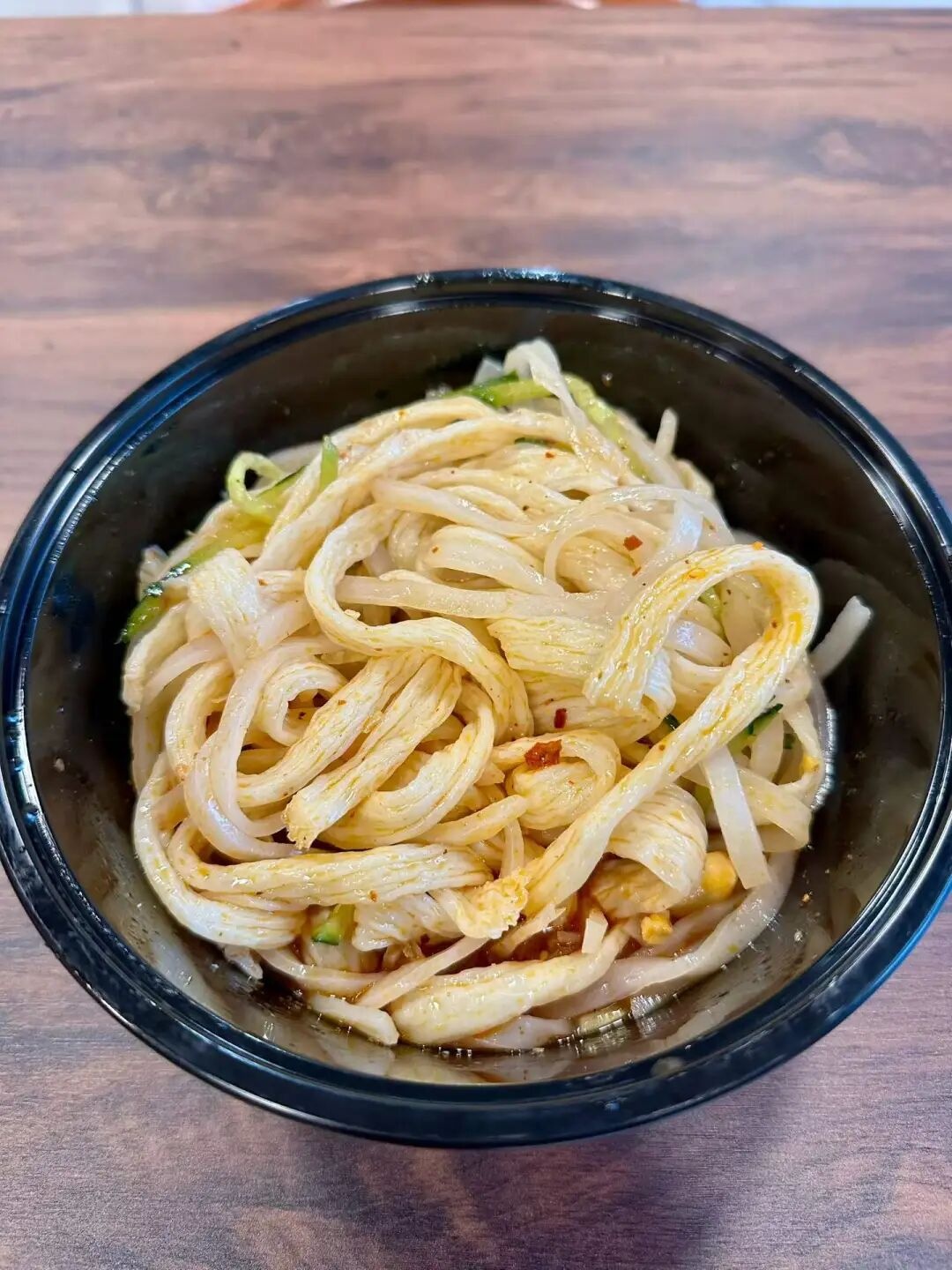
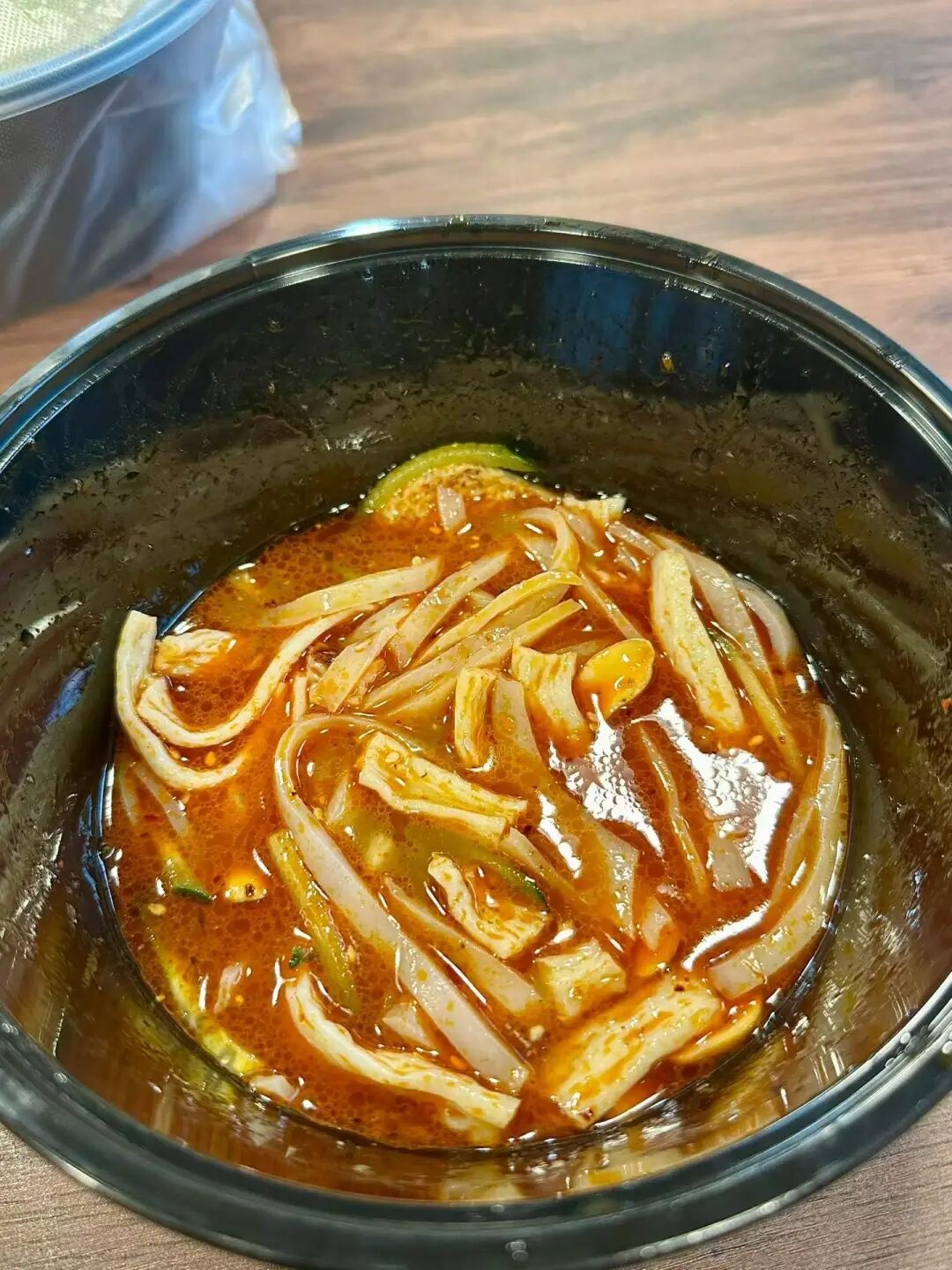
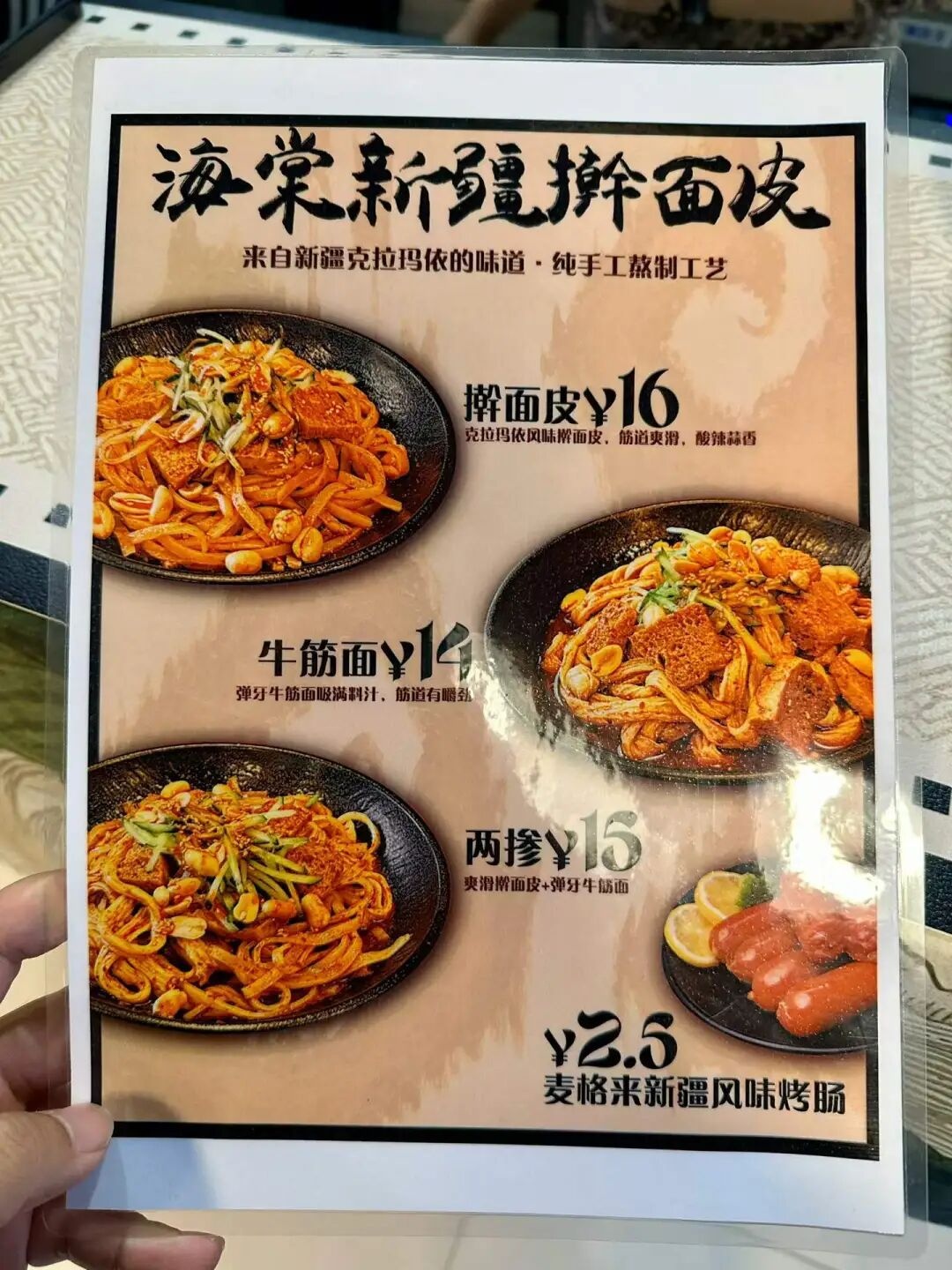
Changping Dingfuhuangzhuang Community Canteen
There's a community canteen in the relocated housing area of Dingfuhuangzhuang, Changping, that sells set meals at fixed times. A meal with one meat and one veggie, or half meat, costs 18 yuan and comes with egg drop soup. The shrimp wasn't that great, but the curry chicken was good, and the wood ear mushroom with meat and bean sprouts were decent. Plus, it's pretty close to Super IKEA, only a 10-minute drive away.
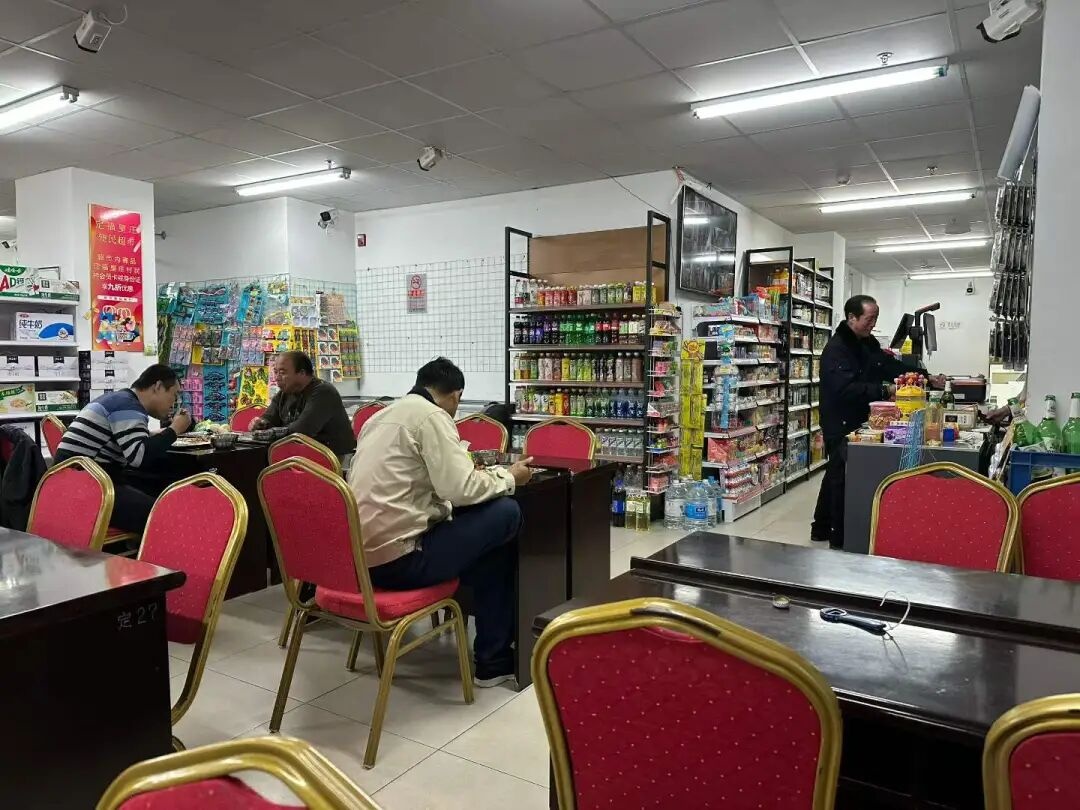
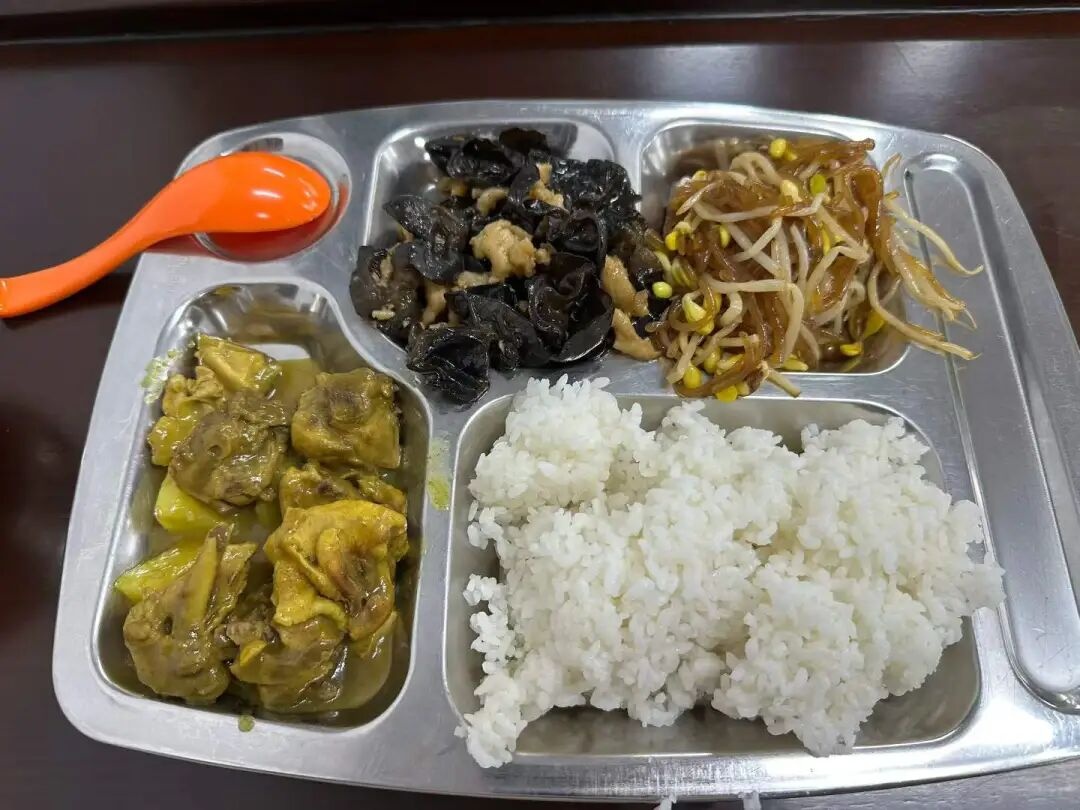
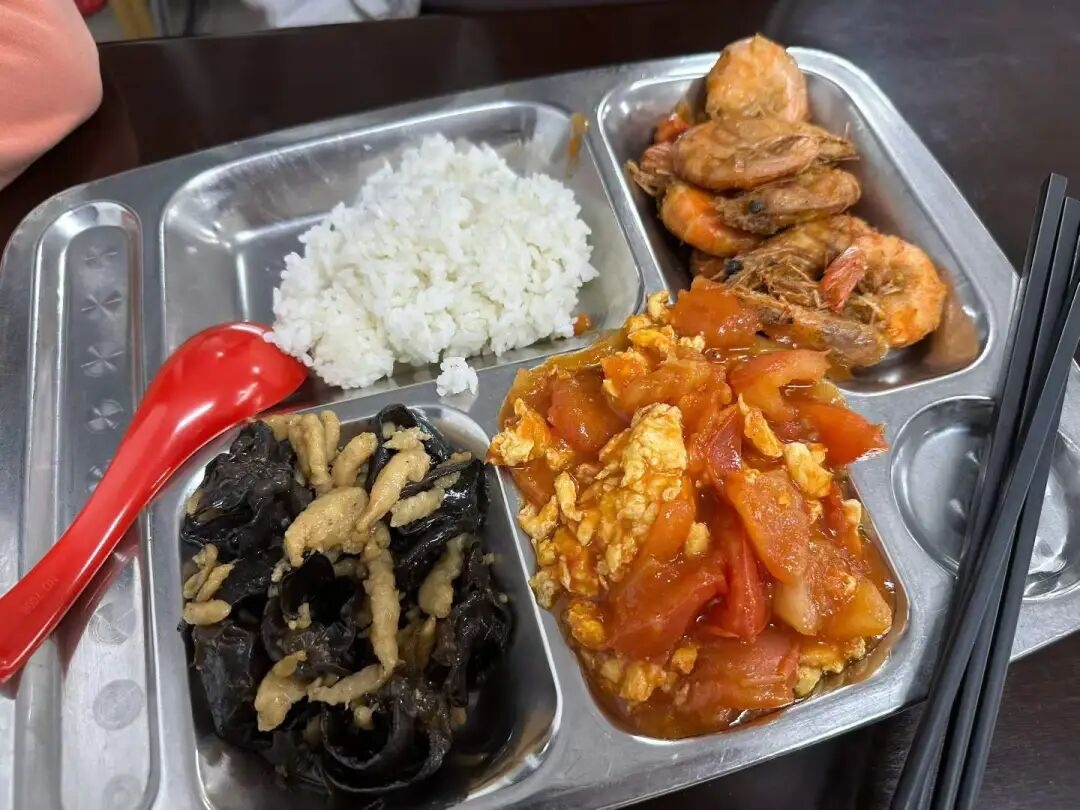
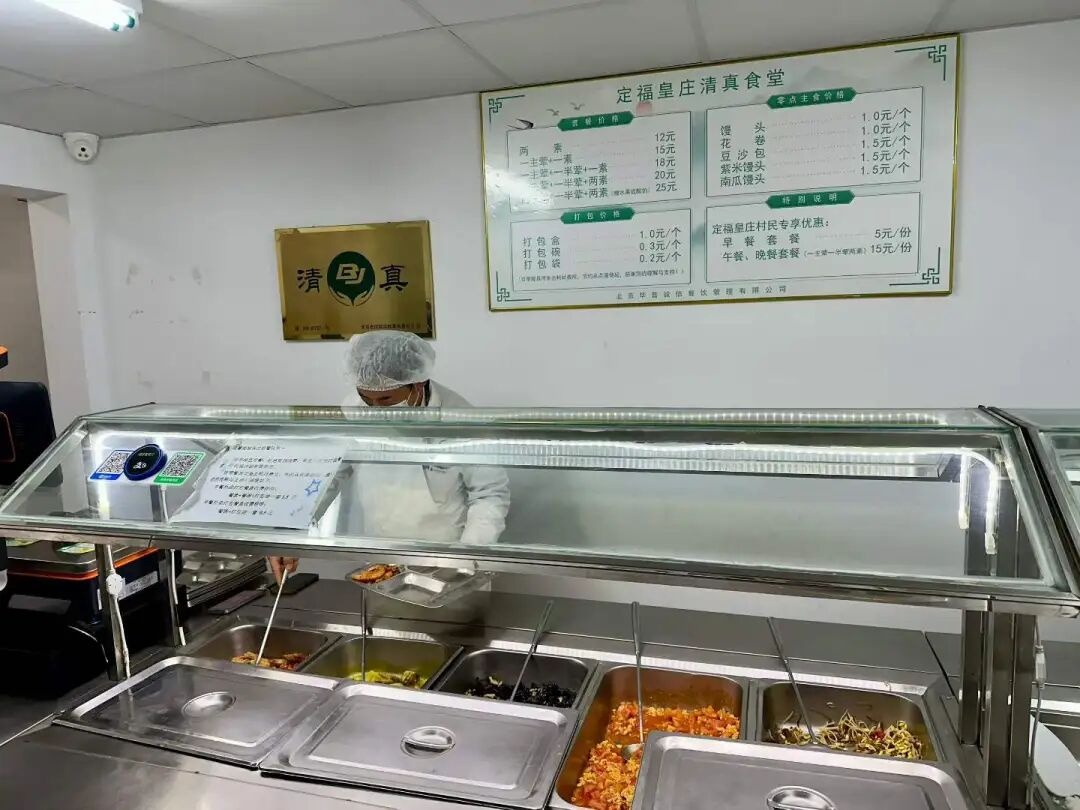
Changping Xinzhuang Shaanxi Cuisine
Right next to the Xinzhuang market in Changping, I stumbled upon a Hui Muslim snack spot. The owner is from Langfang, and his wife is from Xi'an, so they serve both Northern Chinese snacks and Northwestern noodles. Their specialties are 'roujiamo' (meat sandwich), 'biangbiang mian' (hand-pulled noodles), 'suan tang jiaozi' (sour soup dumplings), and 'guanguan mian' (pot noodles). It's a small place, but they have a lot of plants inside. It was packed when we went for lunch, so we'll have to come back early since the owner said they open at 8 AM.
We ordered the 'suan tang jiaozi' and 'guanguan mian'. The dumplings had a beef and chive filling, which was seasoned really well, not greasy, and the chive flavor wasn't overpowering, just right. The sour soup was also delicious, with sesame oil added, giving it a slight nutty taste. I'd never tried 'guanguan mian' before; it came served in a clay pot, like a small casserole noodle dish, with wide noodles similar to 'daoxiao mian' (knife-cut noodles) that were super chewy. The broth was bone broth with braised beef and various other veggies, perfect for a cold day.
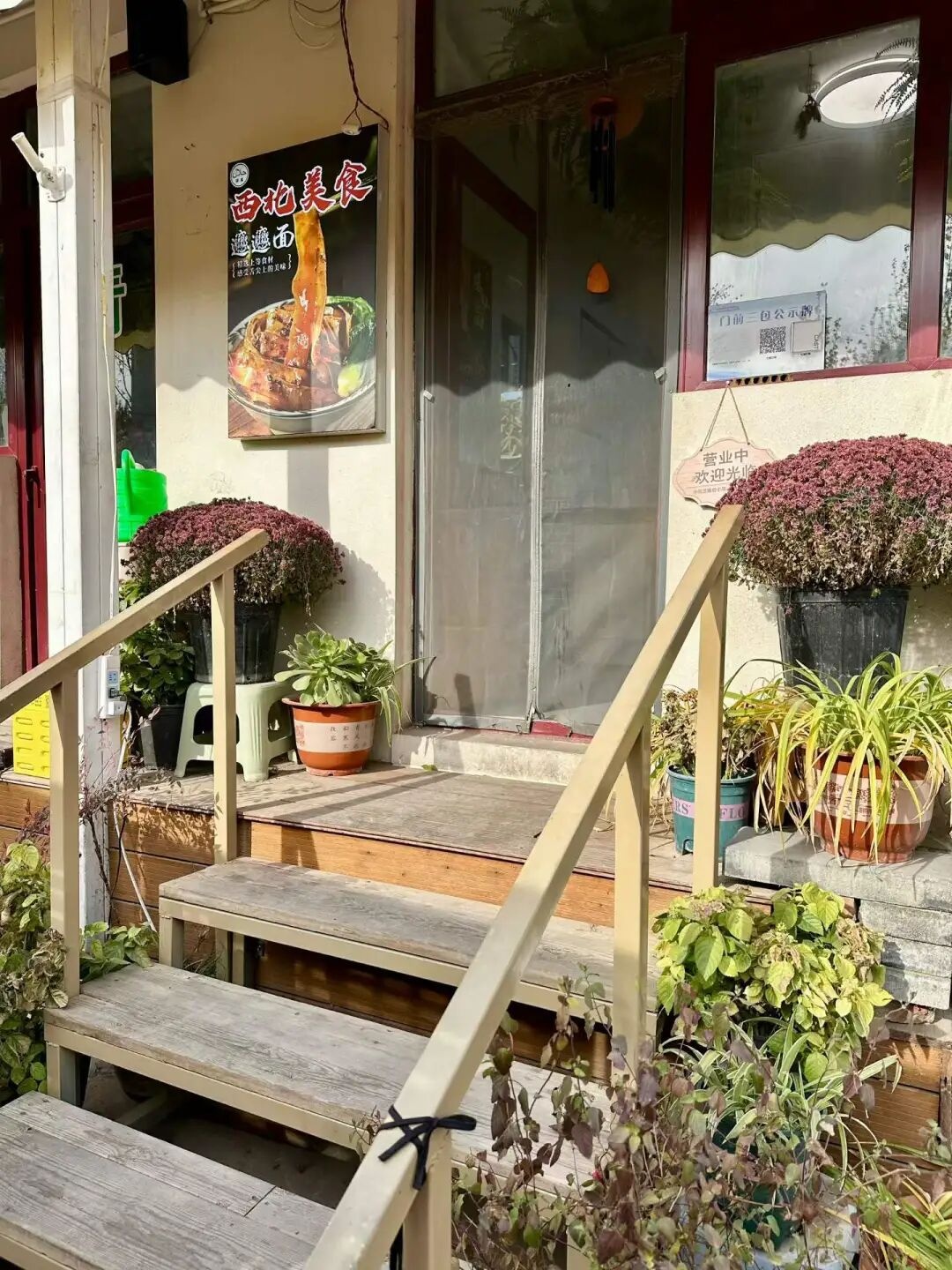
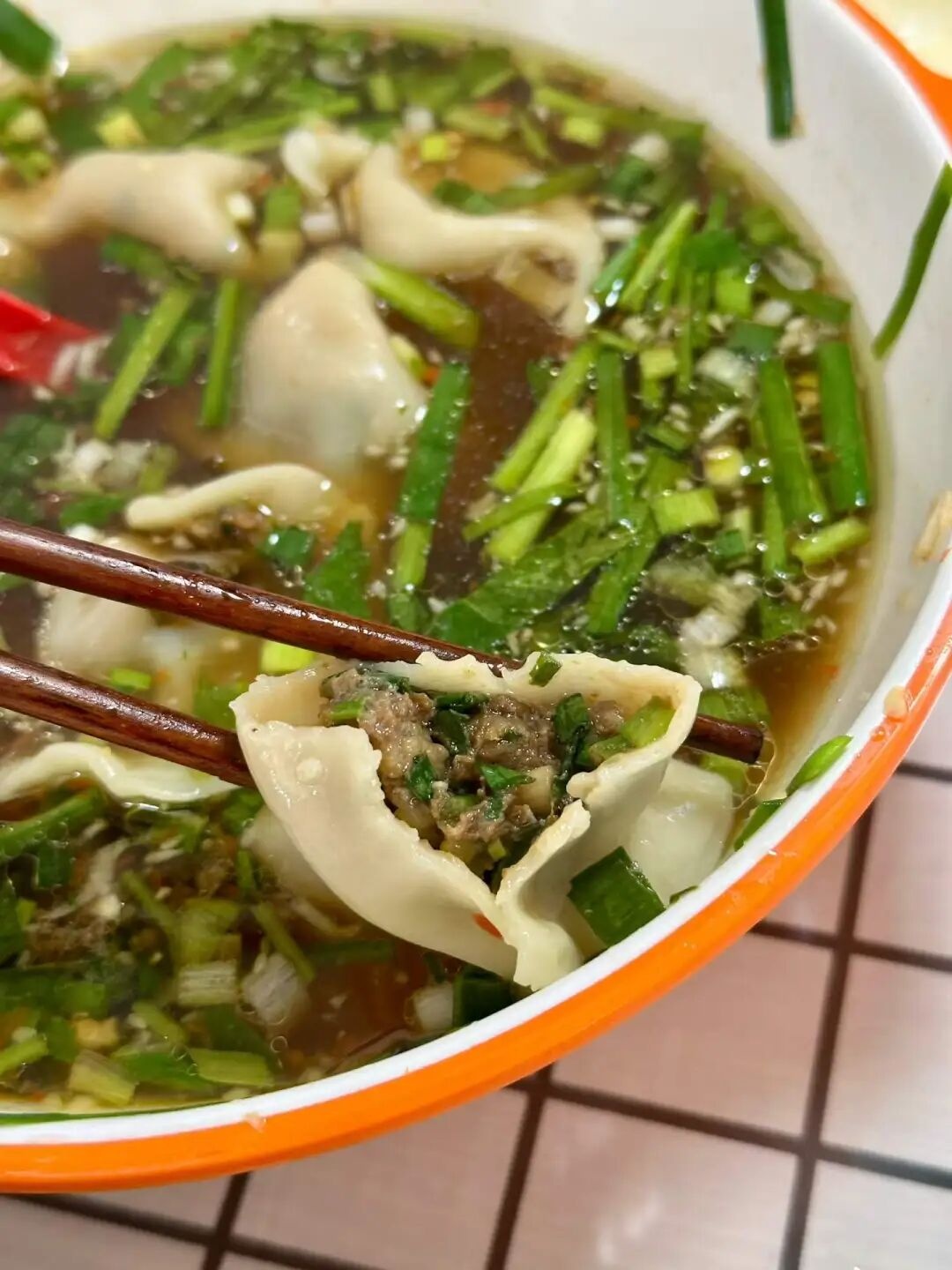
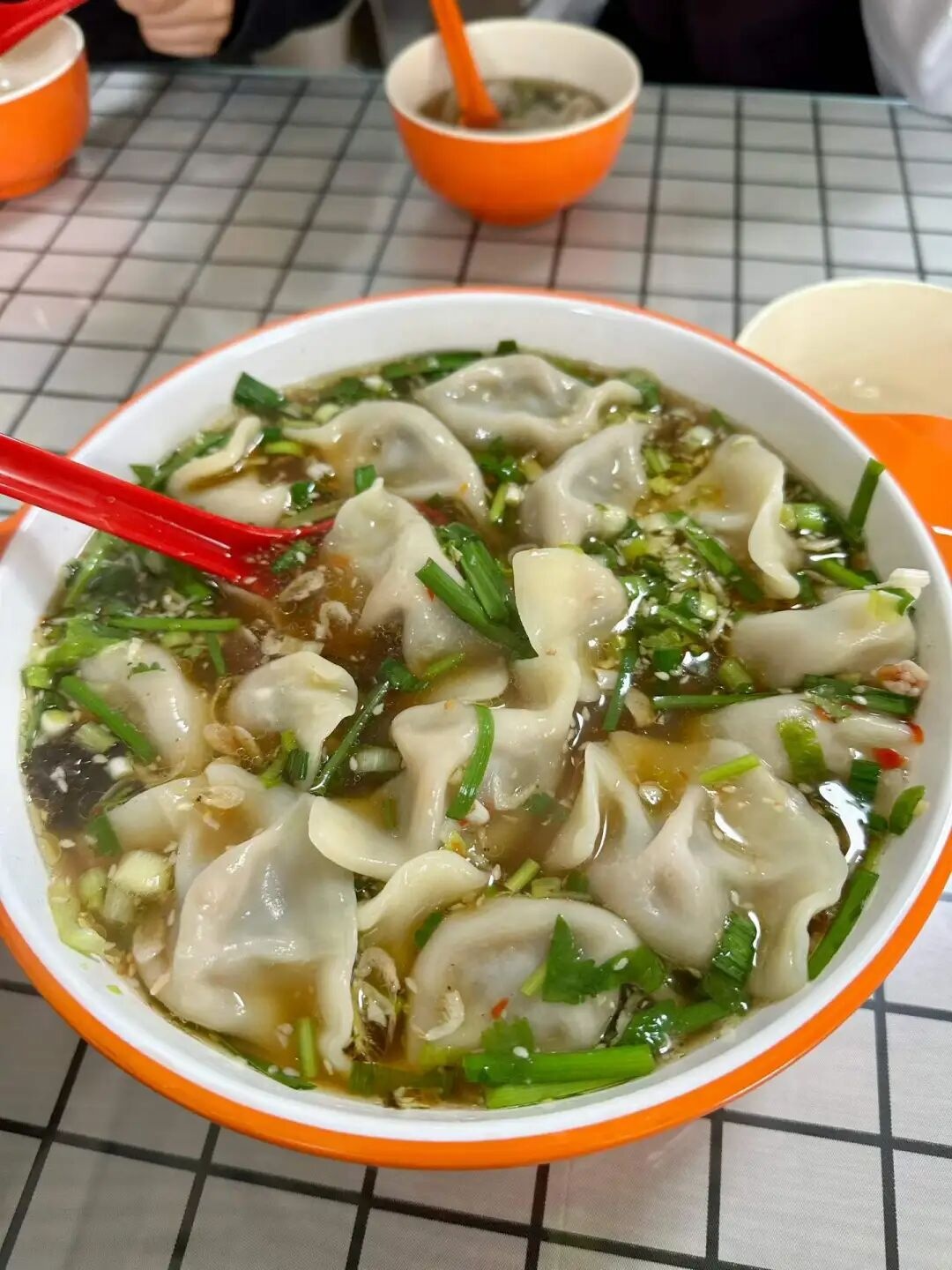
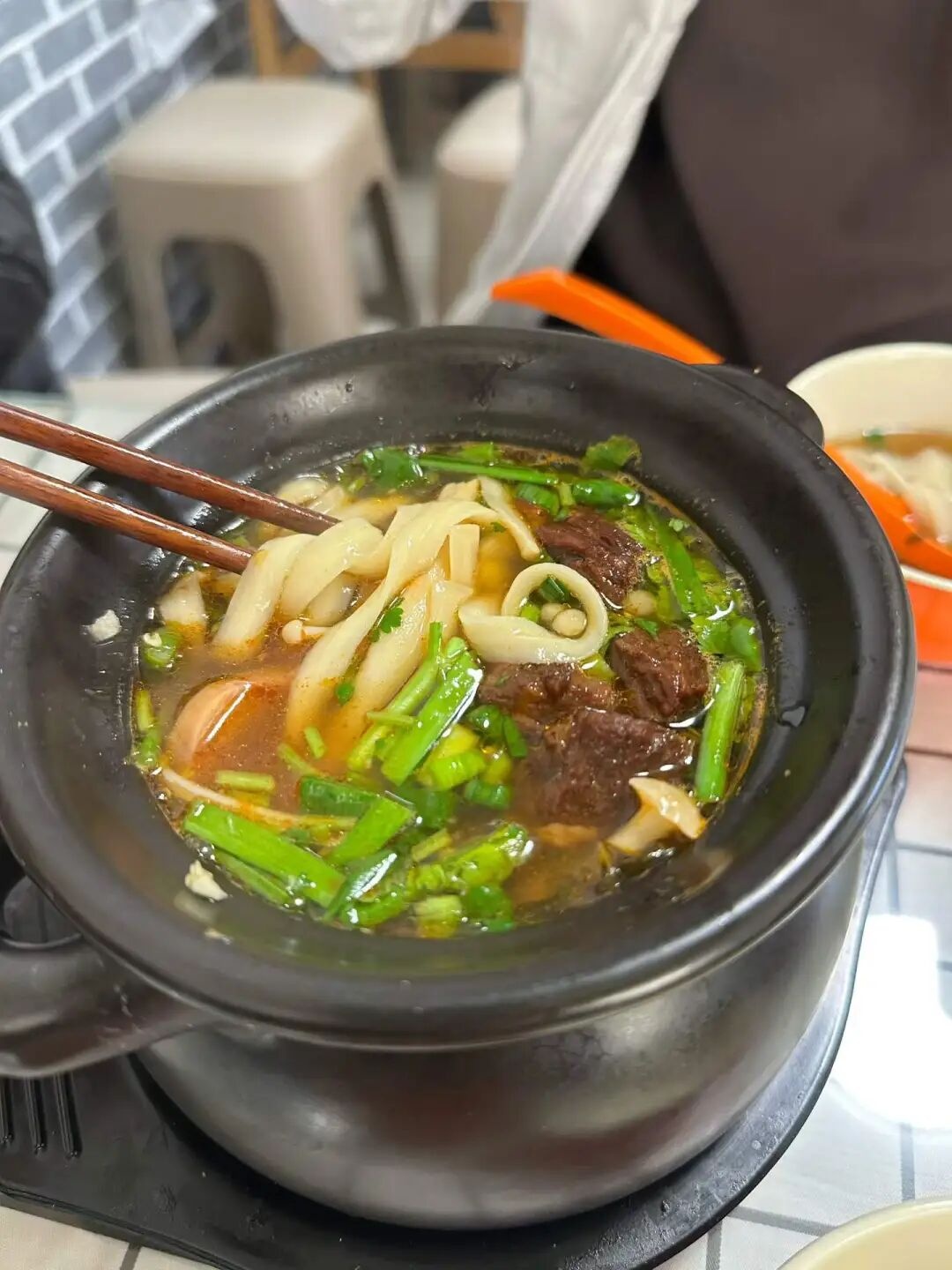
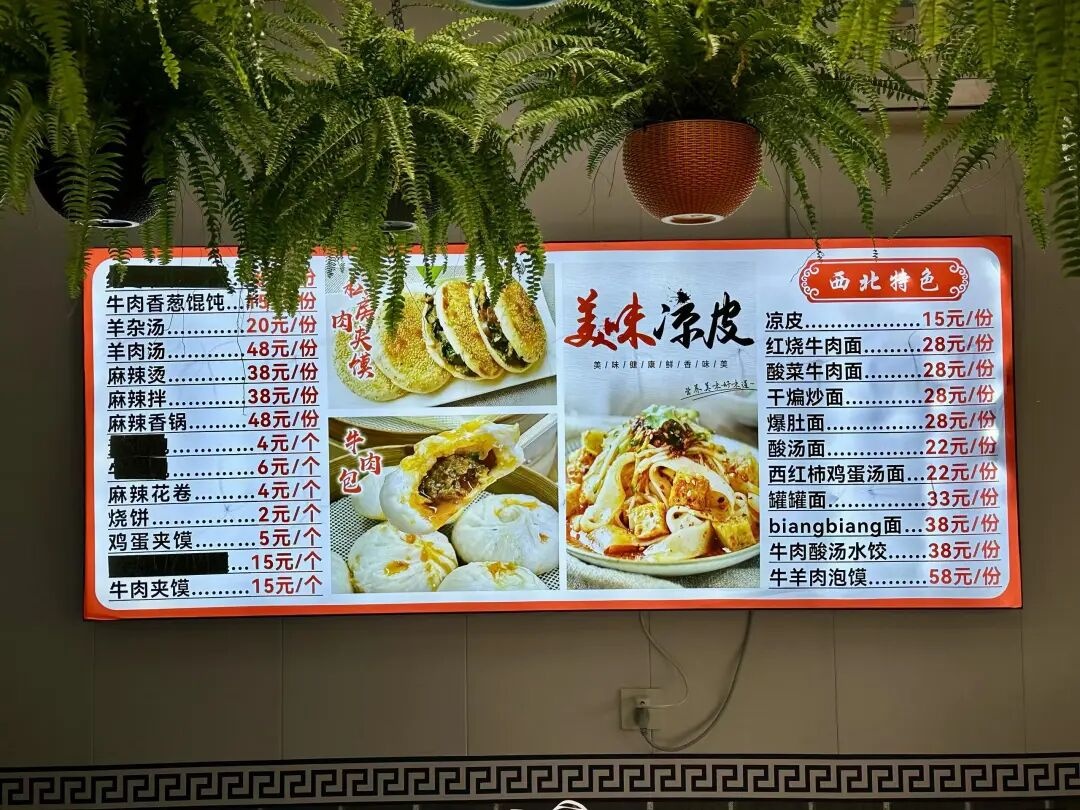
Changping Xinzhuang Beef Youmian
The Xinzhuang market in Changping is super lively on weekends. Inside, there's a small shop run by a friendly and chatty Hui Muslim couple from Haidian. Their main dishes are 'xi guo geng' (fruit gruel) and 'niurou youmian' (beef and oat noodles). Unfortunately, by the time we got there for lunch, someone had bought all the 'xi guo geng', so we just got the 'youmian', 'Masala milk tea', and 'jiangguo tea' (berry tea).
The 'youmian' broth was fantastic, made with sand-grown tomatoes, diced potatoes, and bok choy, very similar to Xinjiang 'tang fan' (soup noodles) and super appetizing. They use Wuchuan oat noodles from Inner Mongolia, which were also really good. It's all about healthy eating, and they can even split it into two bowls for you. The beef shreds were quite large, maybe too tough for little kids. The 'Masala' had Indian cardamom and ginger, super comforting in winter. The 'jiangguo tea' had cashews, walnuts, sesame seeds, and ginger, with a strong ginger flavor.
The prices here are like tourist spot prices, so it's a good place to stop and rest while exploring the market. It's especially convenient since it can be a bit tricky to find good Hui Muslim food around Changping, so having 'youmian' here is a great option.
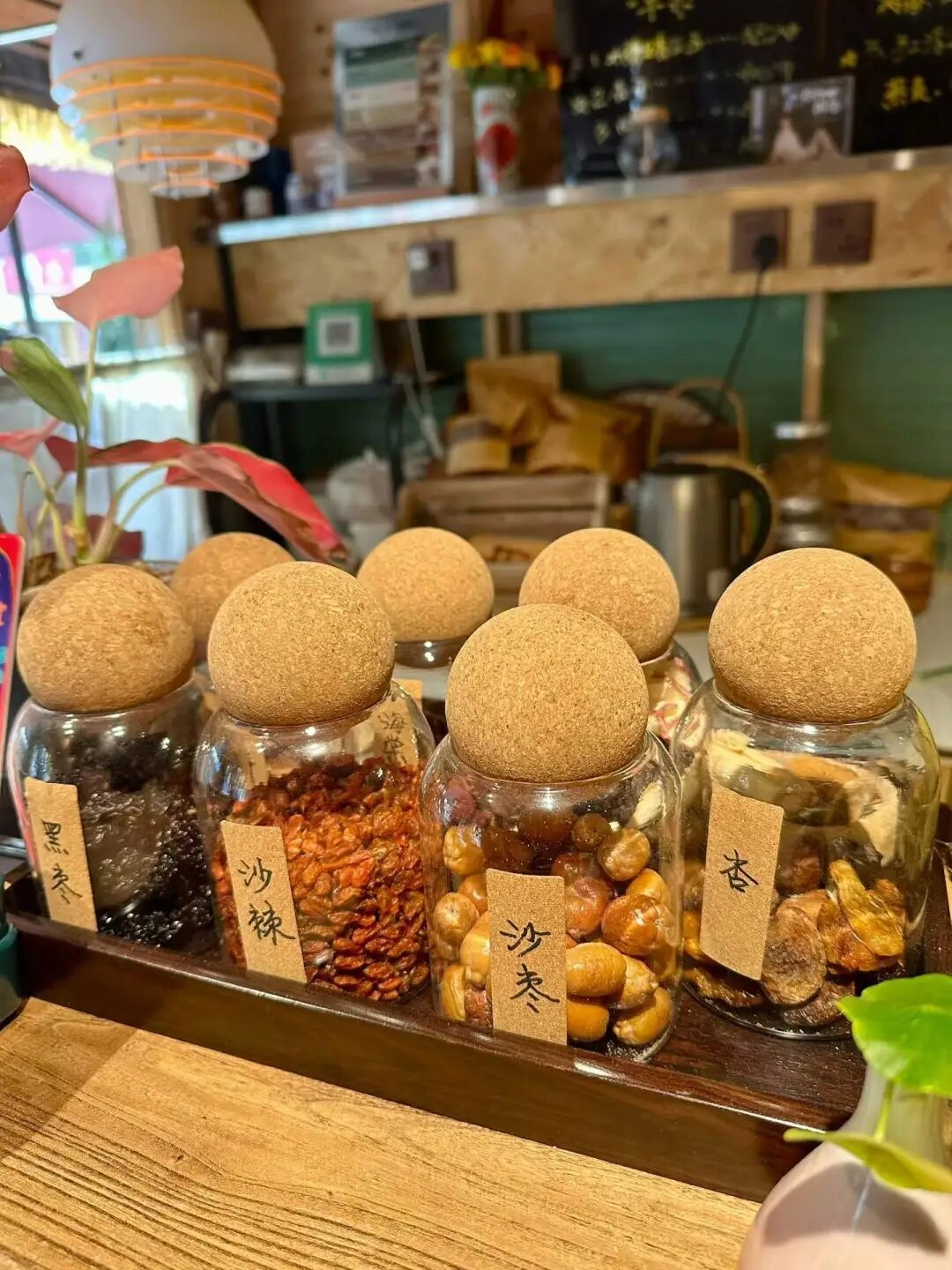
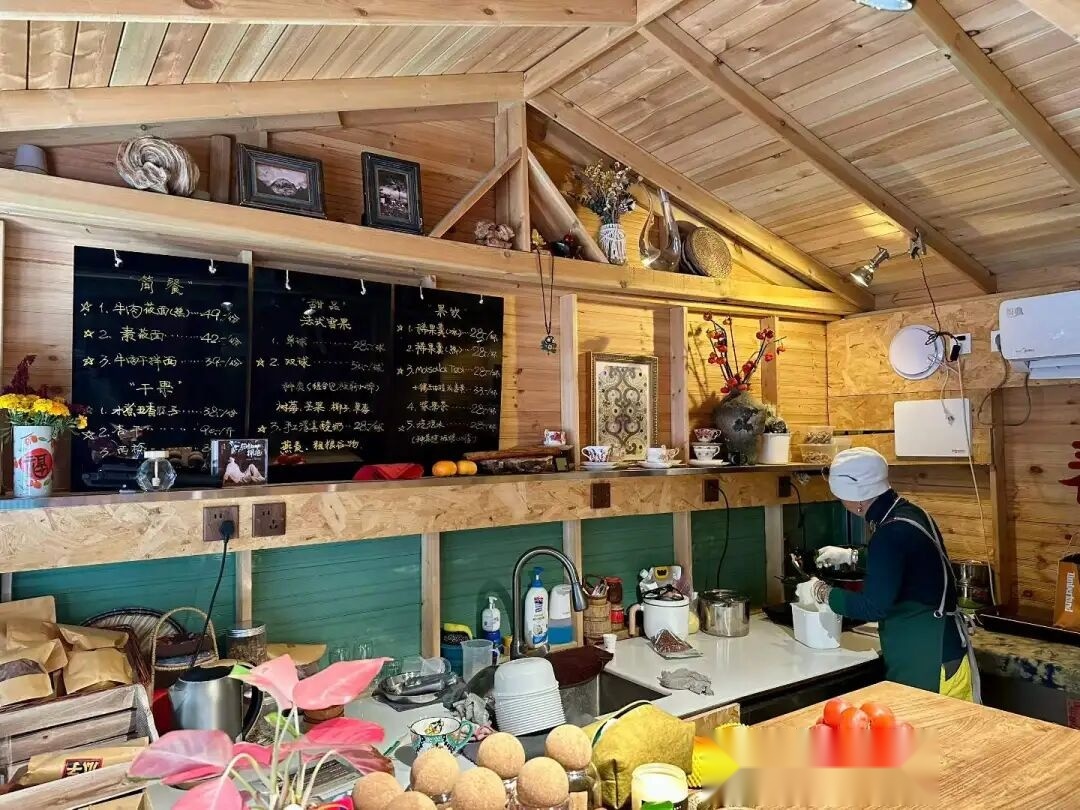
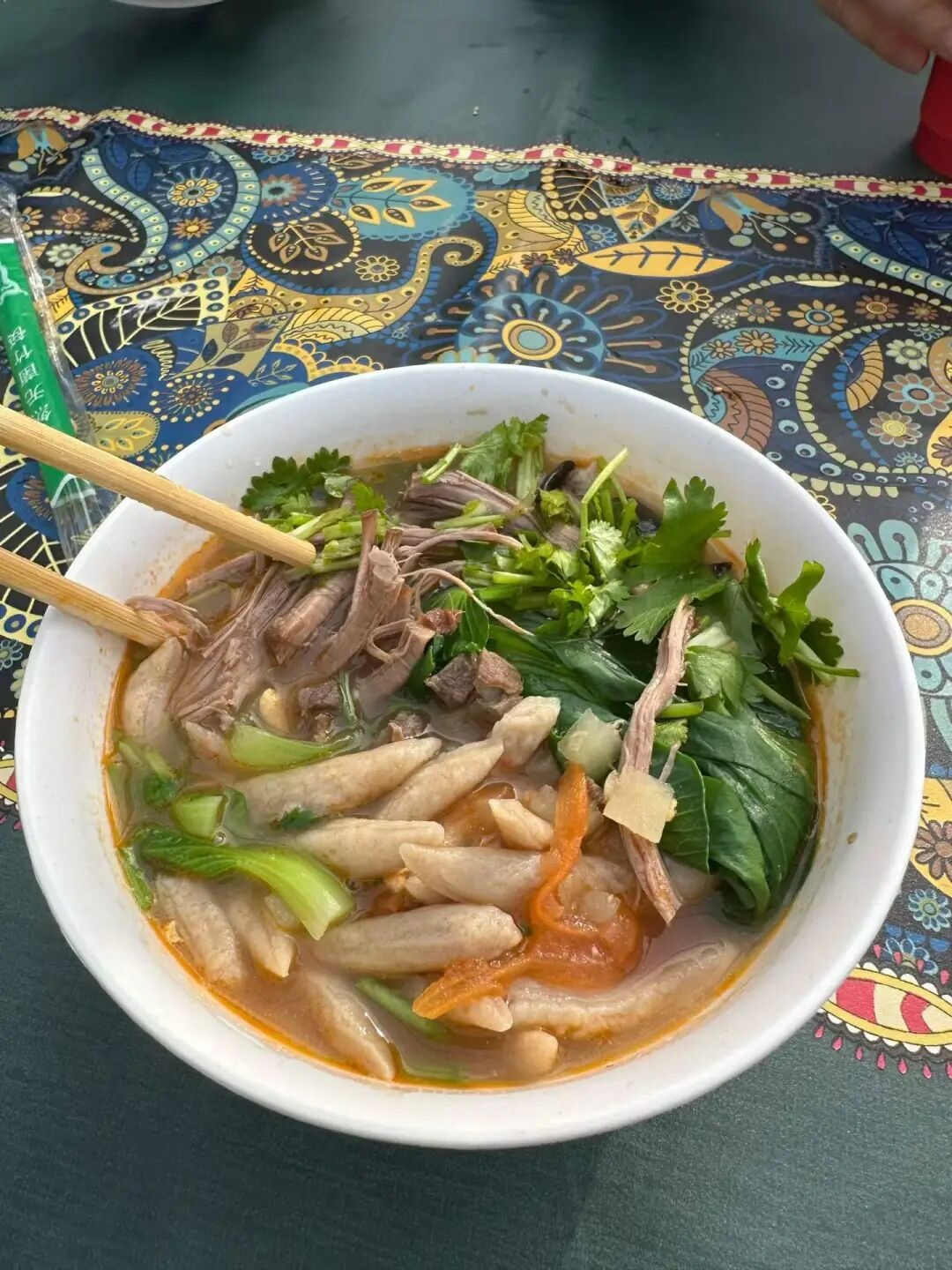
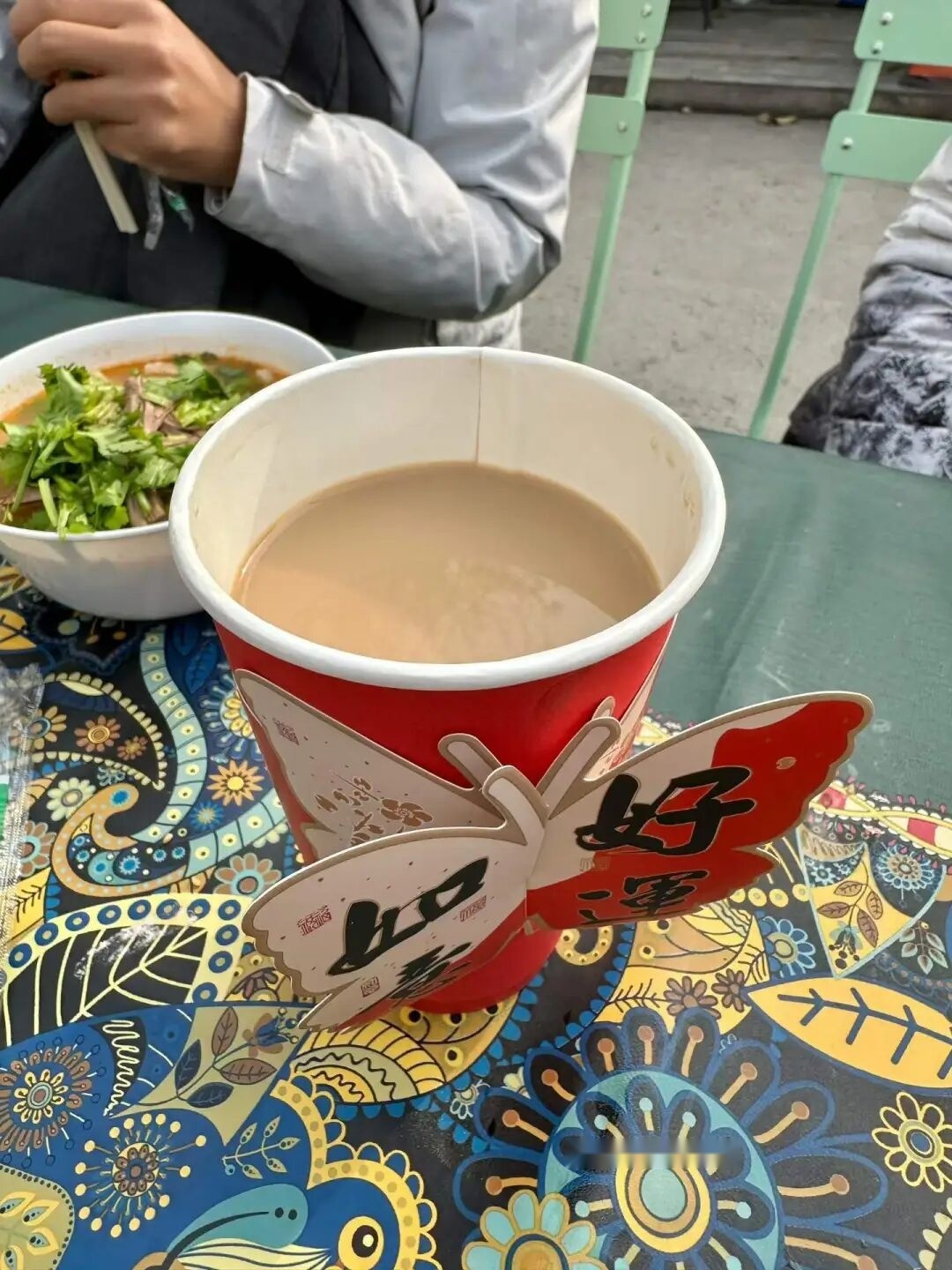
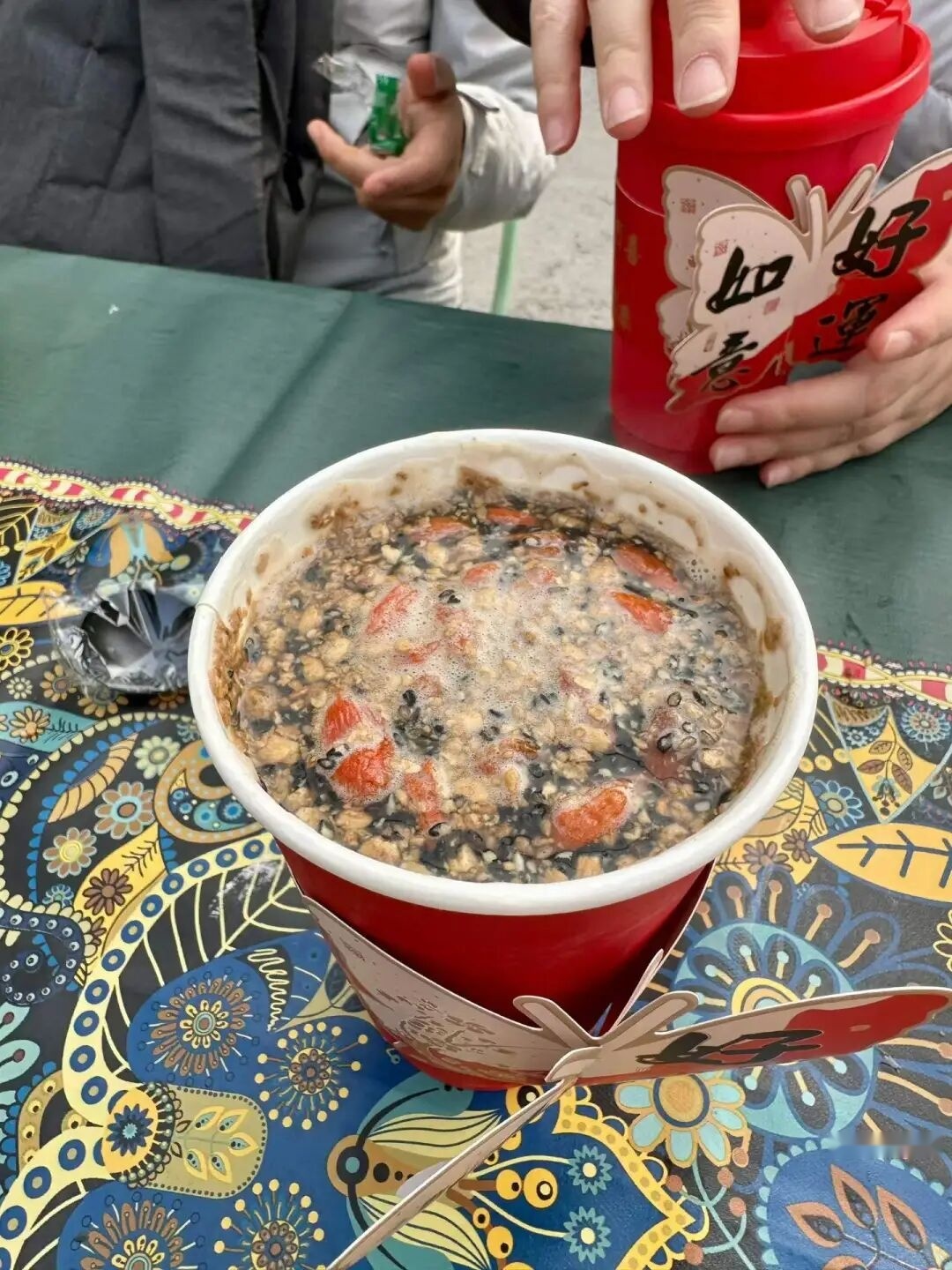
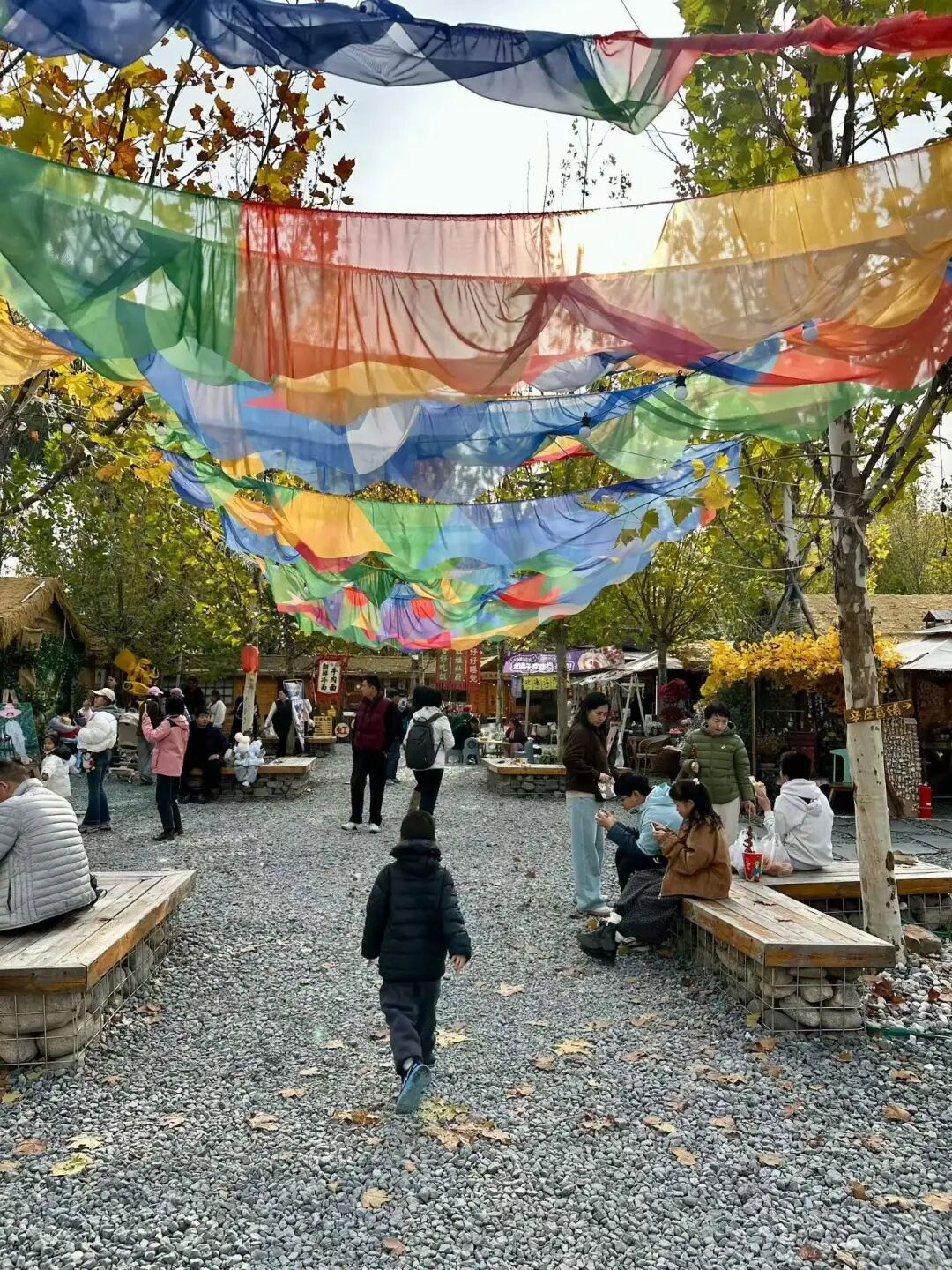
Sanlitun Shawarma Rotating Grill
Beijing's best shawarma rotating grill is finally back! It's at the sunken plaza of Sanlitun SOHO's Shawarma City. It used to be further north, but now it's moved a bit south. There are a few seats inside, but it's mostly for takeout. It's still the same owner, who's a mix of Turkish and Arab heritage.
They still focus on their shawarma rotating grill, with chicken and beef/lamb options, which you can eat rolled up or cut. They also have pizza, sandwiches, and burgers. The roasted chicken looked amazing. They also have various small bites like Kibbeh (beef balls), Falafel (chickpea balls), and different salads.
I honestly think their shawarma is the best in Beijing. The flavor is spot on, with just the right amount of toppings. And the best part? They toast the flatbread on the grill at the end, which I think is even better than the bread I had in Turkey and Syria.
Their Toshka is probably one-of-a-kind in Beijing. Toshka is a classic Levantine street food, popular in Syria, Lebanon, and Gulf countries. It's similar to shawarma, where they fill a pita bread with seasoned minced beef/lamb, melted cheese, and other toppings, then grill it under a press until the bread is crispy and the cheese is gooey and stretchy. You eat it with pickles and garlic sauce or yogurt sauce.
Kibbeh is made from lean ground meat and bulgur wheat. Bulgur wheat is wheat that's been parboiled, de-shelled, and dried, giving it a mild, nutty flavor.
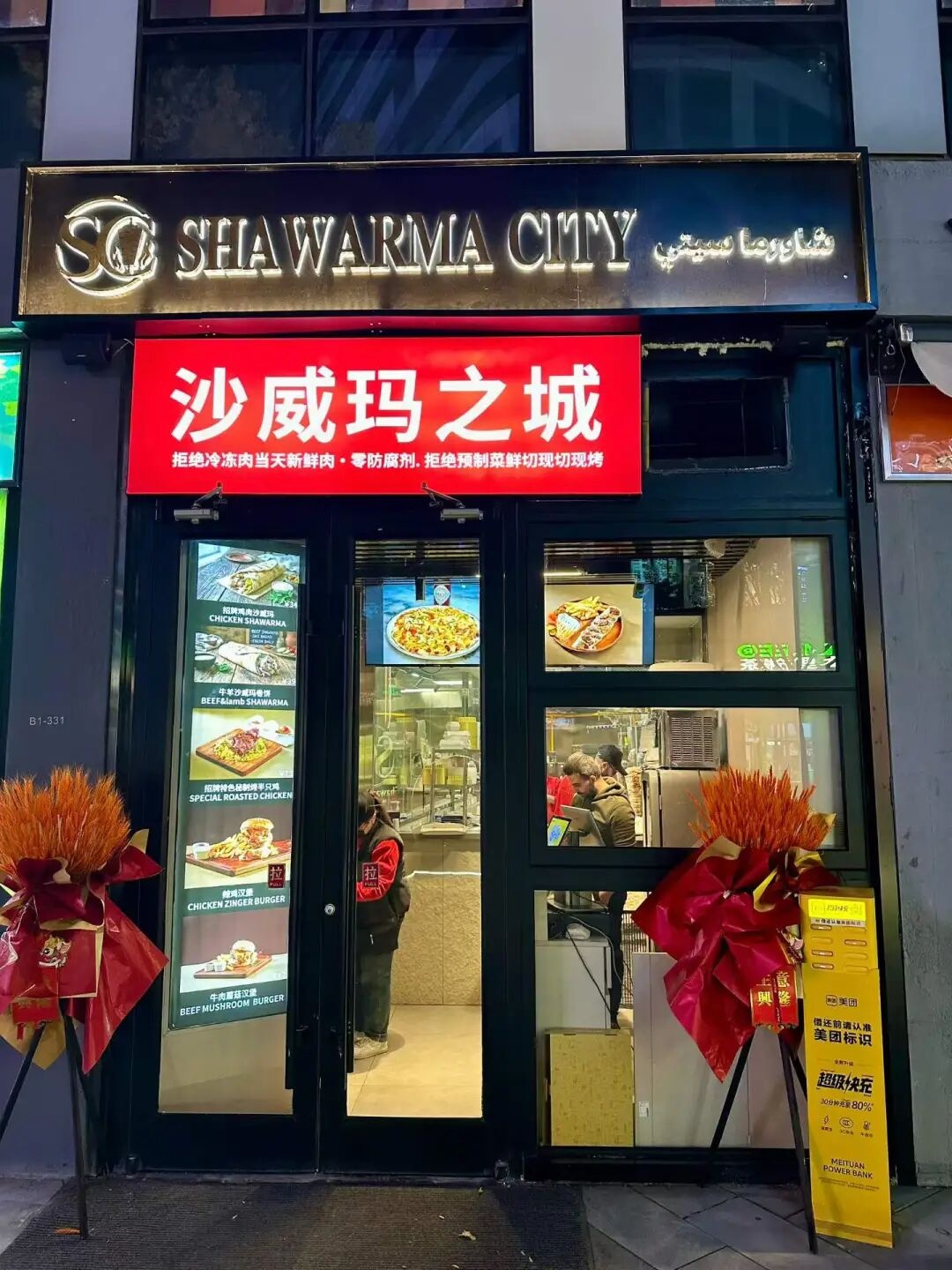
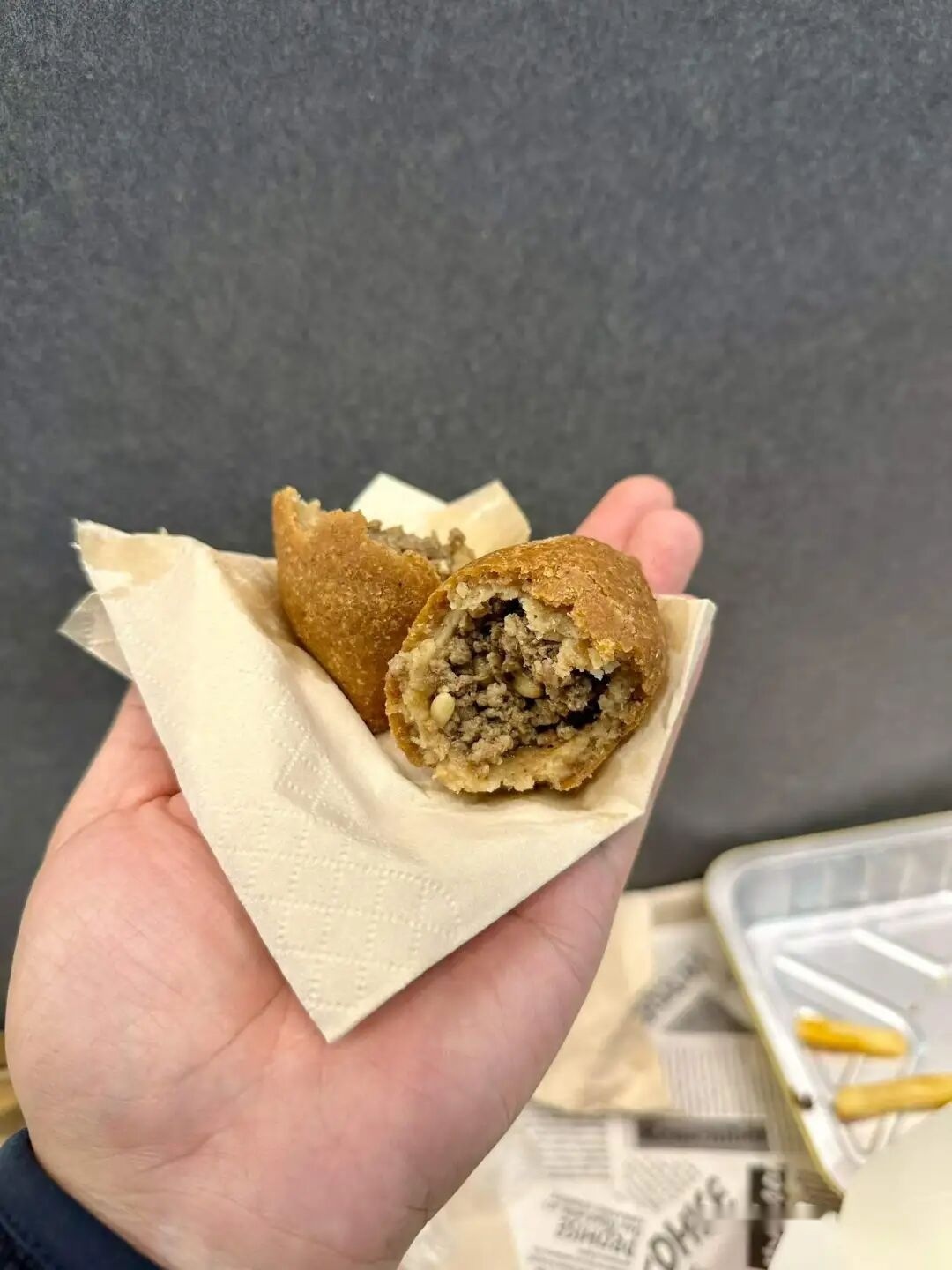
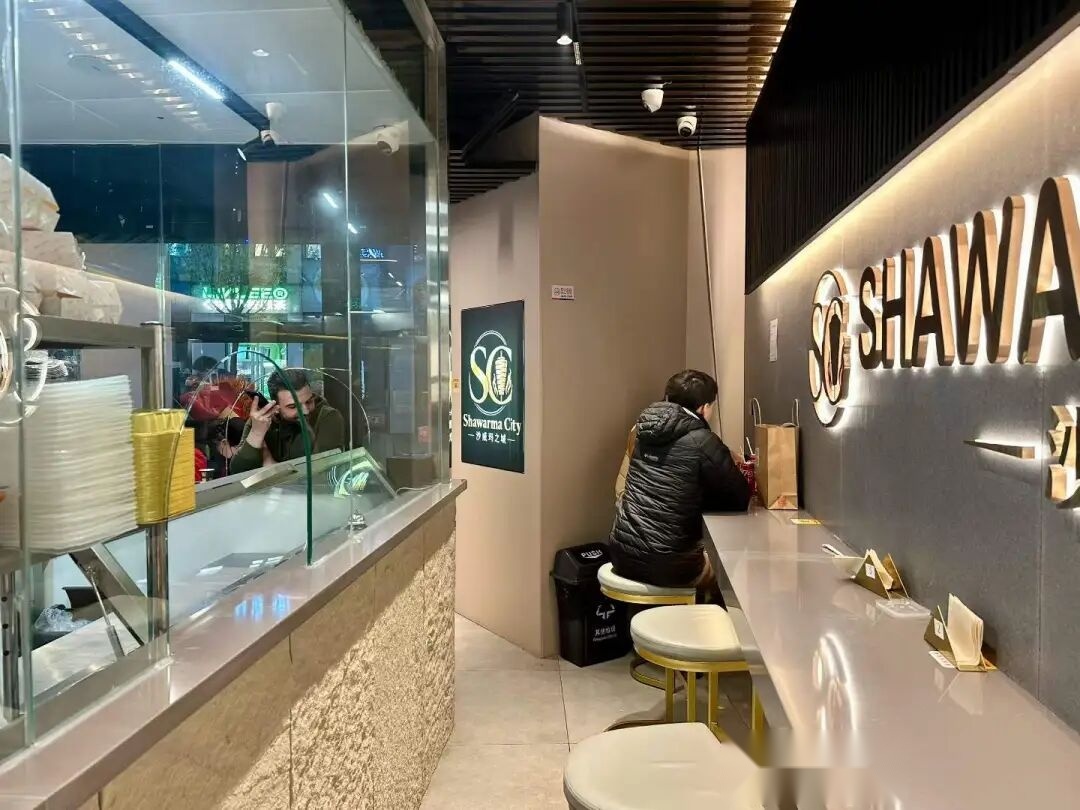
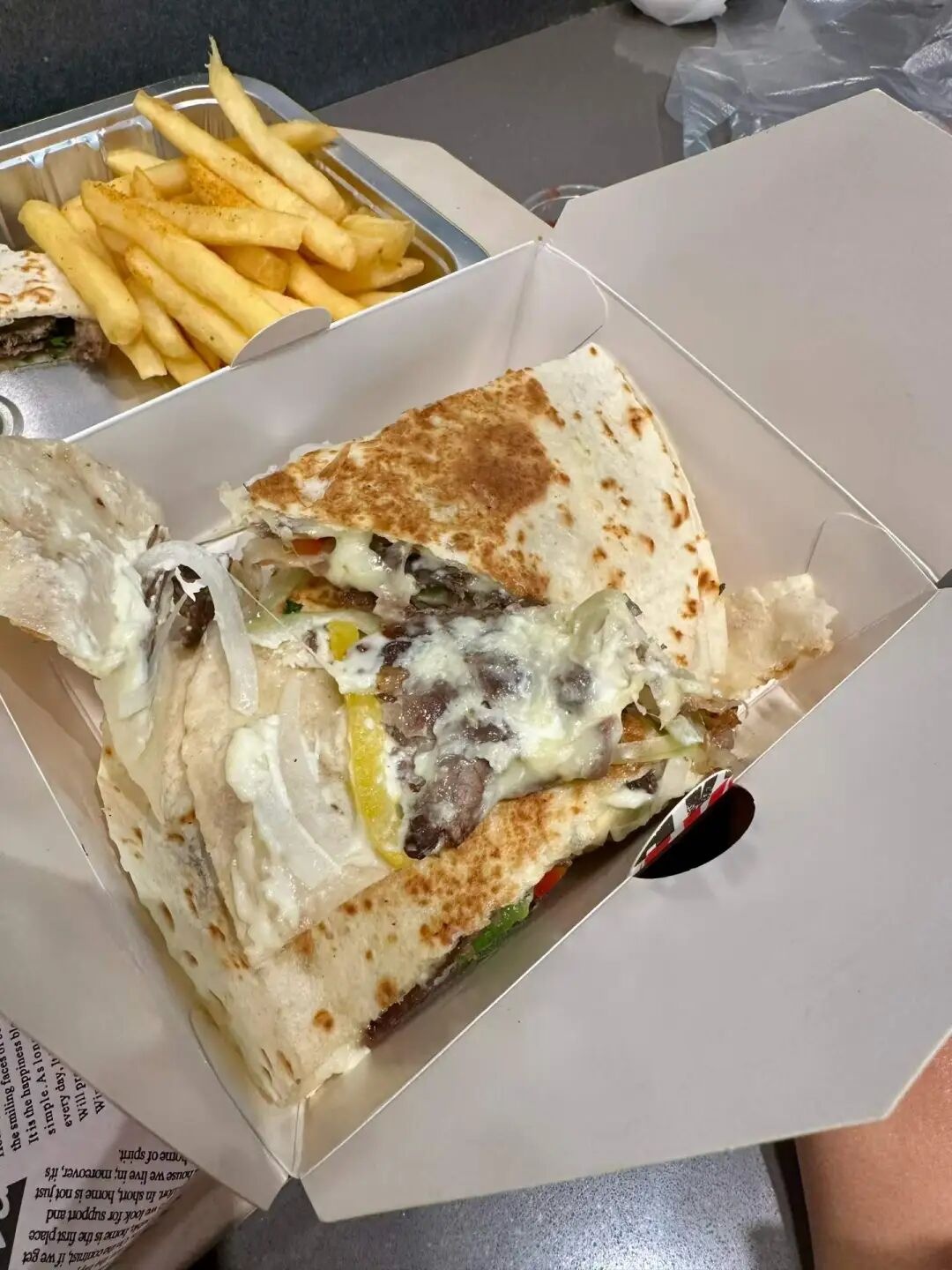
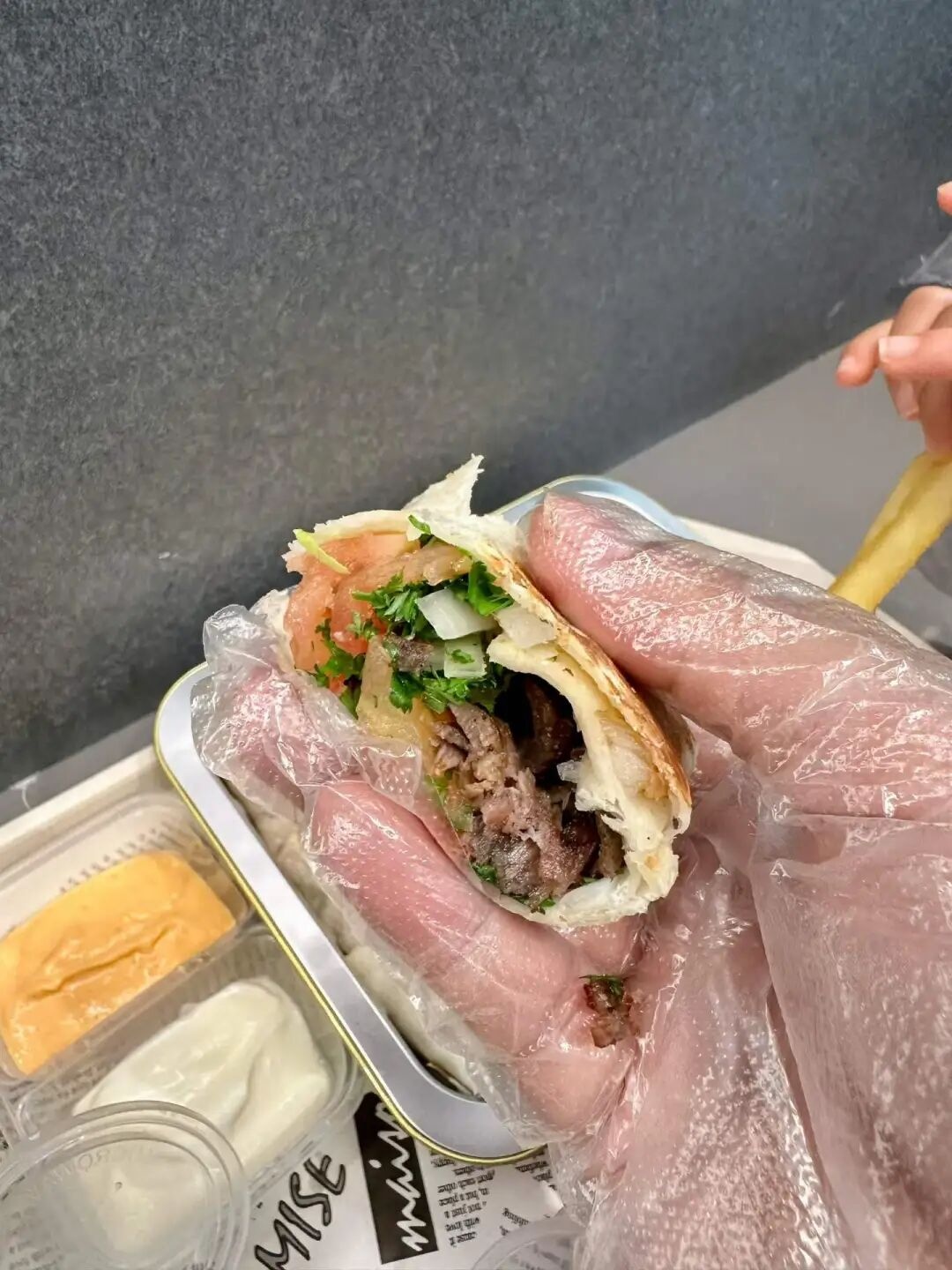
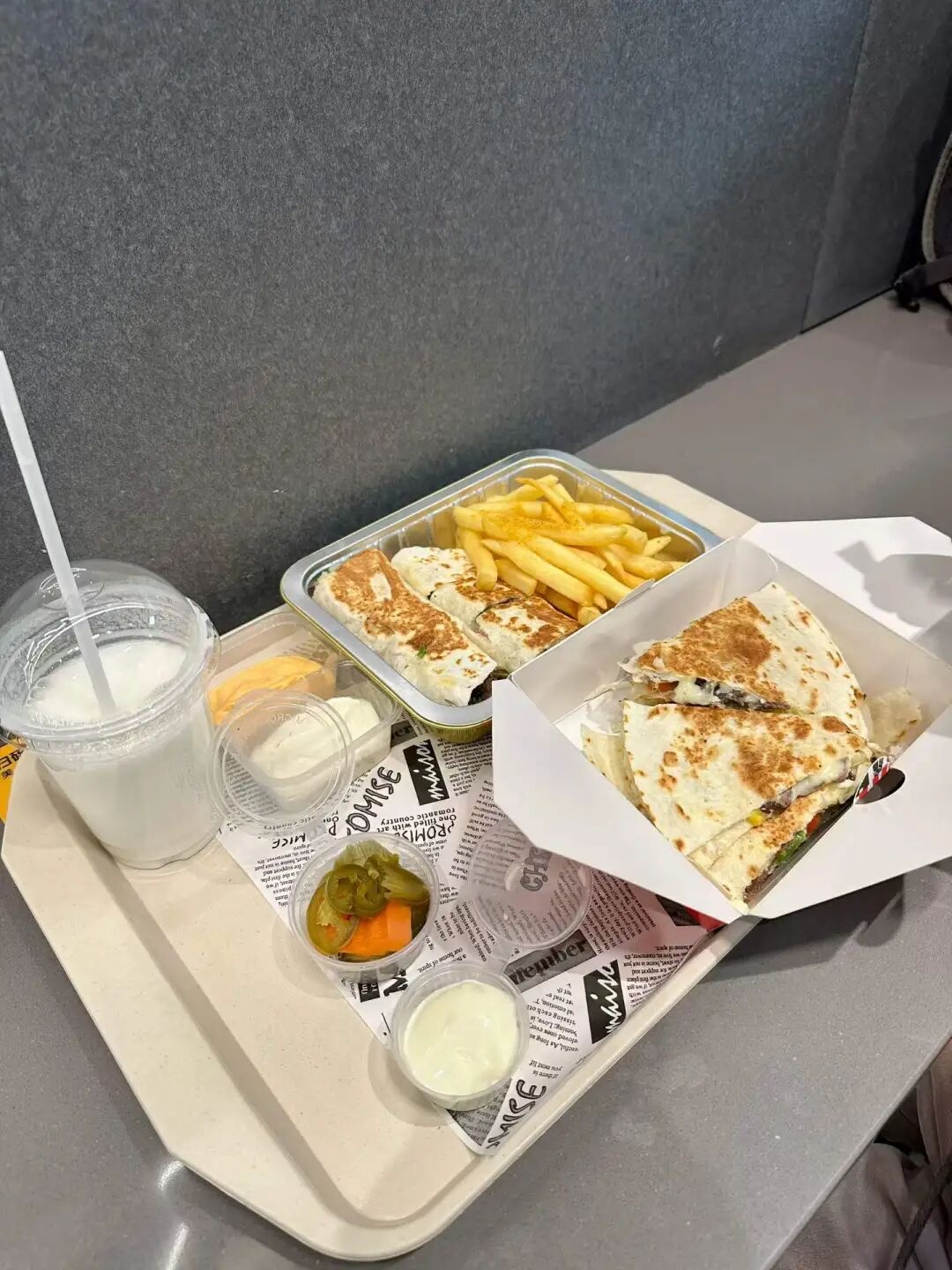
Chaoyangmennei Senji Lamb Spine Hot Pot
The seafood and barbecue place that used to be in Cangnan Hutong near Chaoyangmen has switched to lamb spine hot pot for the fall, still run by the same owner. The owner is smart; knowing that fewer people eat seafood when it gets cold, they quickly pivoted to the super popular lamb spine hot pot. It was totally packed when we went.
We ordered a small pot of lamb spine with lamb tail and added an extra lamb tail for 21 yuan. The lamb spine was stewed to perfection, super flavorful and delicious. We also added frozen tofu and sweet potato; the frozen tofu soaked up the broth and was incredibly tasty. Their 'mianpian' (noodle slices) were also great, really chewy.
They have some pretty sweet deals going on right now with discounts on coupons and special offers.
One thing they do well here is serving cold dishes in two small plates, making it easy for everyone at the table to grab. If you check in, you get a free pickled radish salad, which isn't spicy and is nice and crisp.
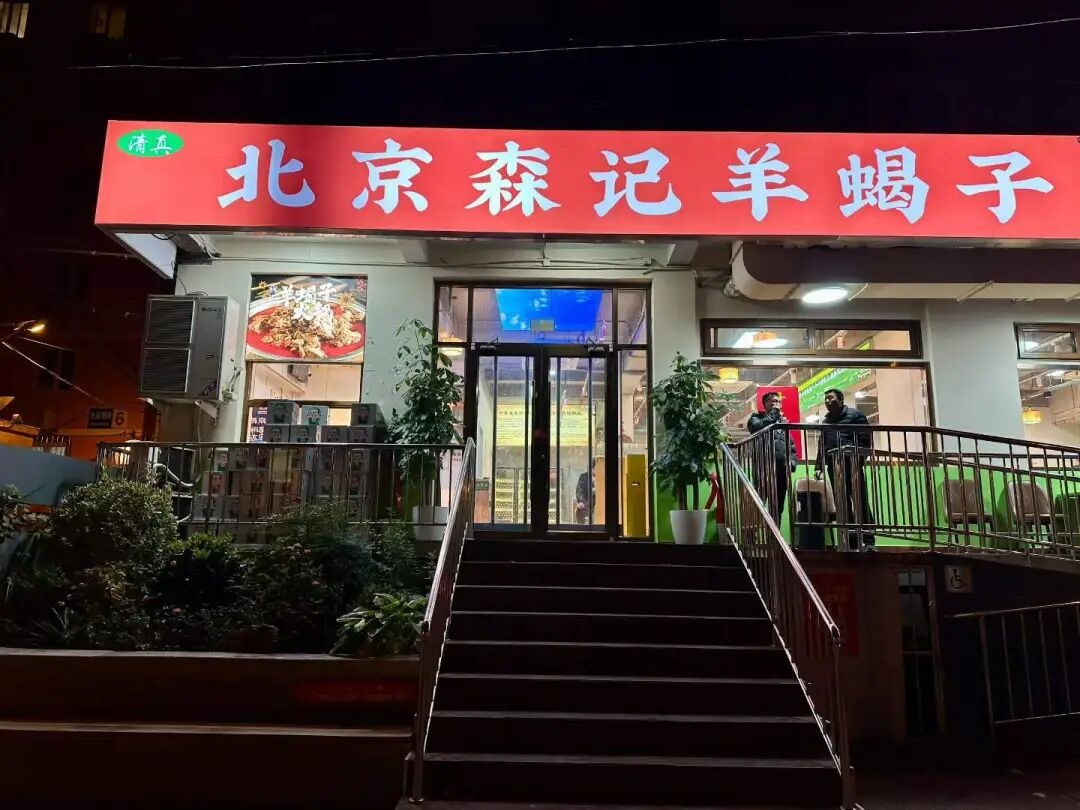
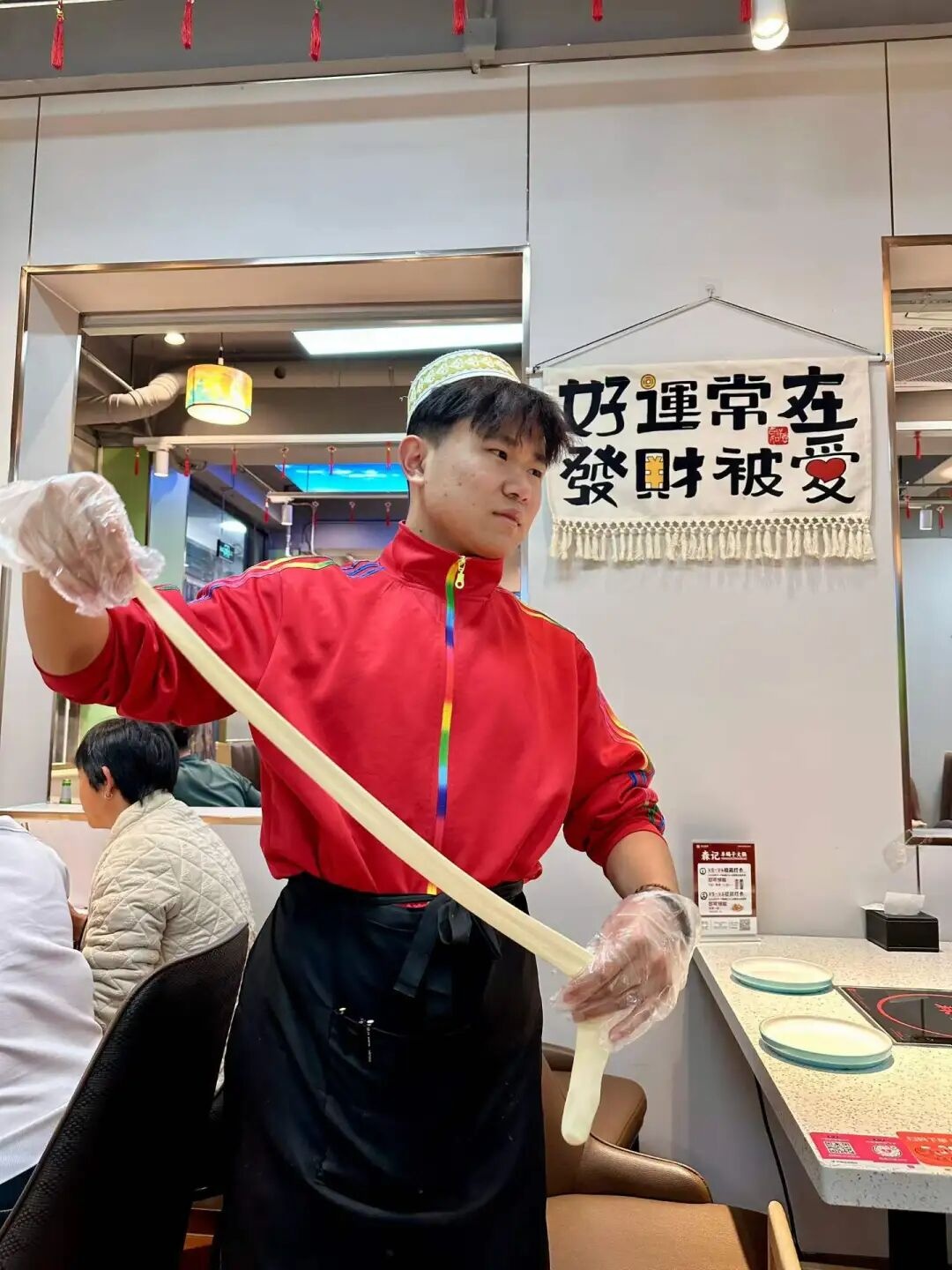
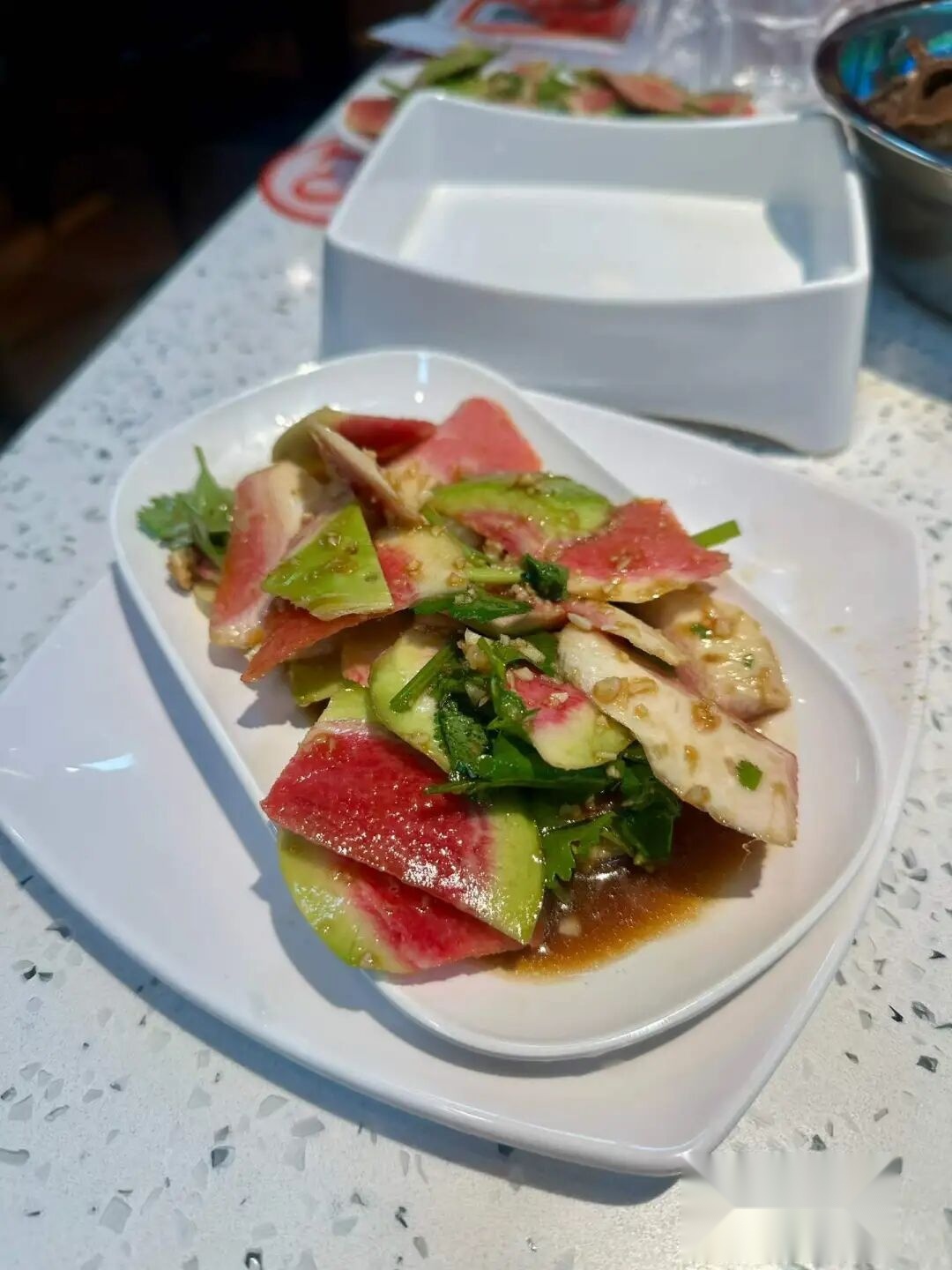
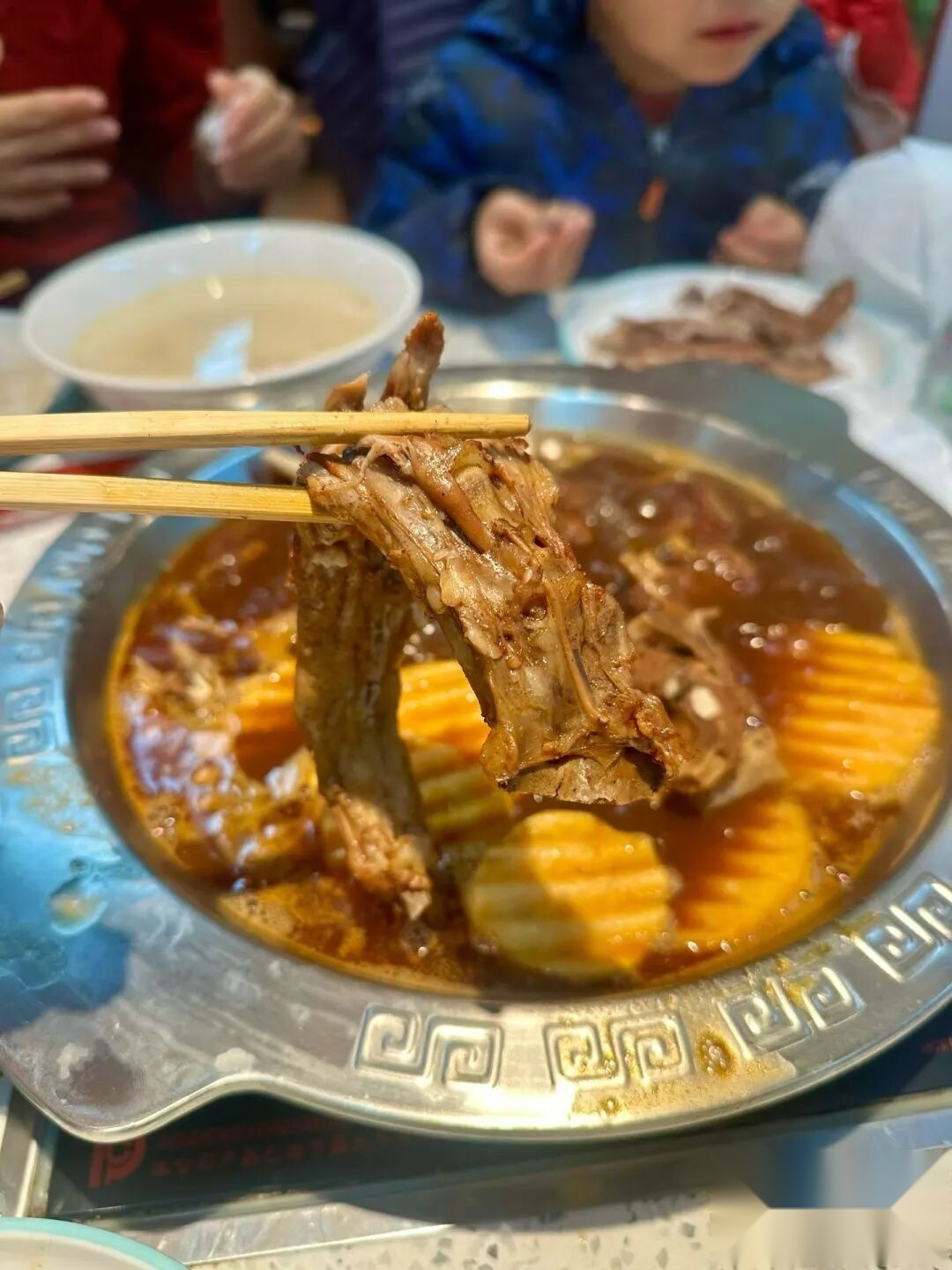
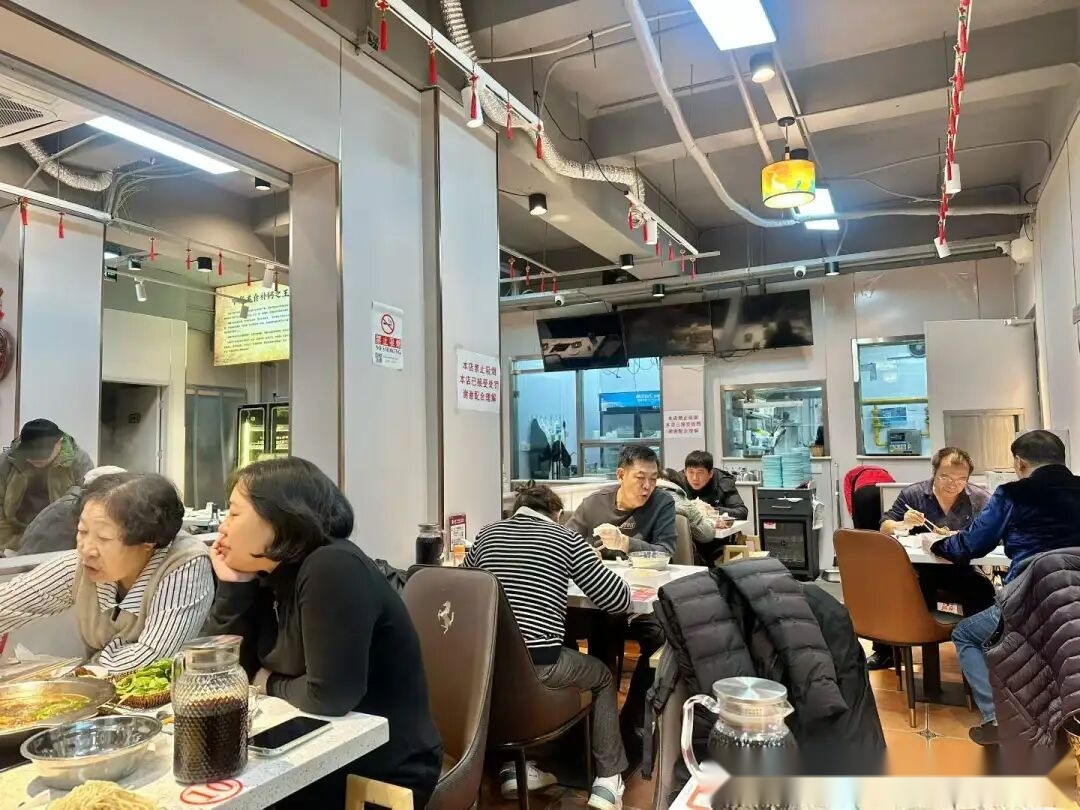
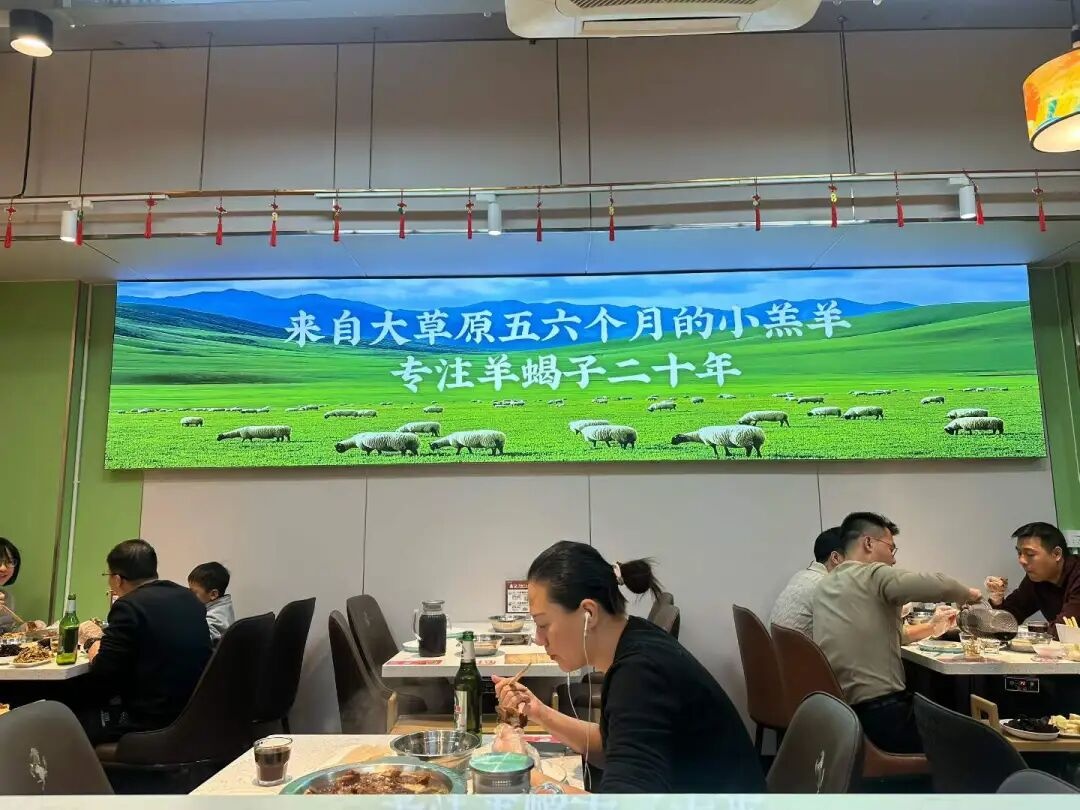
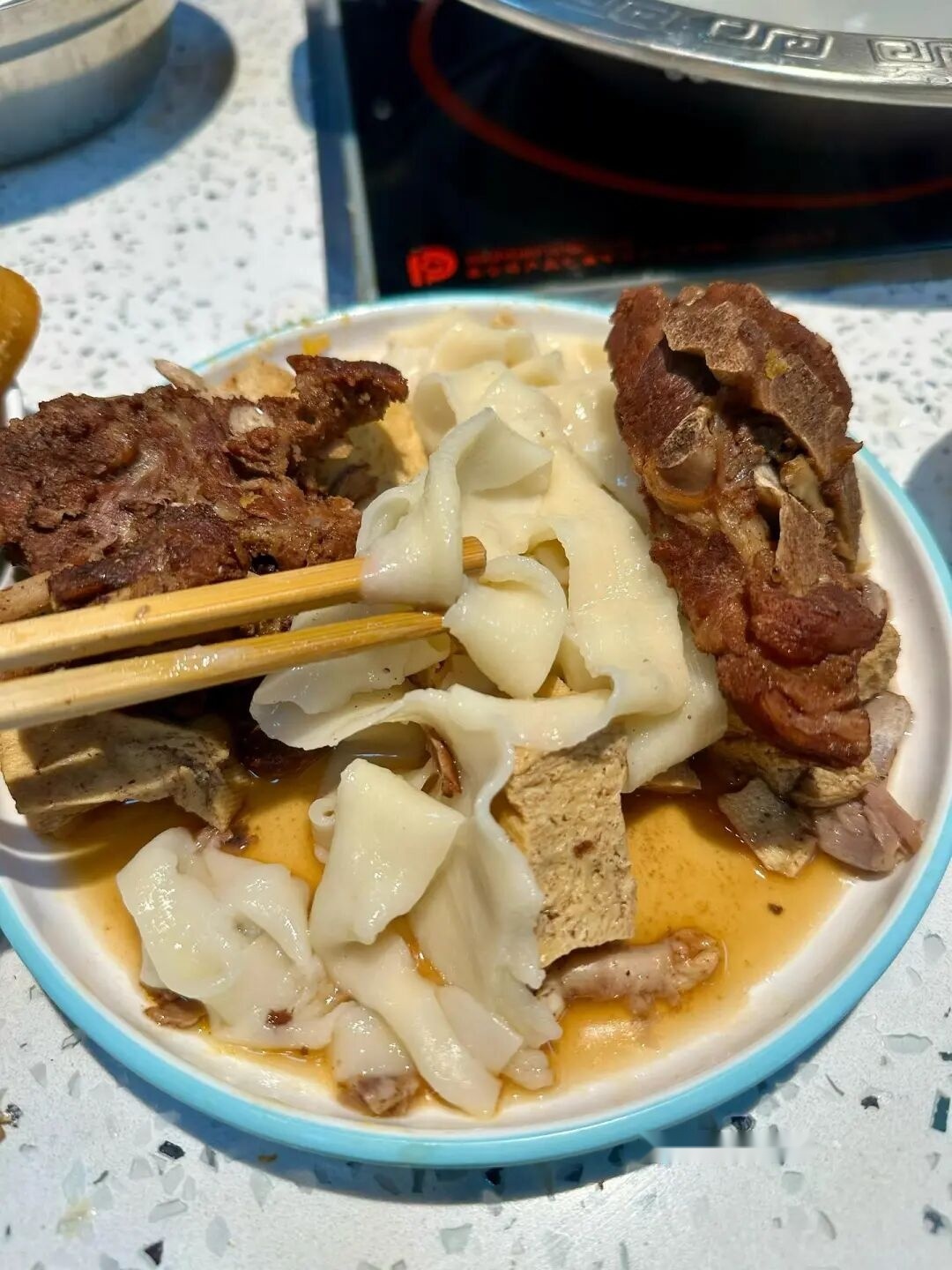
Sanlitun Yaser Iraqi Coffee Bar
On a weekend afternoon at Yaser Coffee Bar in Sanlitun SOHO, the owner is Iraqi. It's more popular for shisha at night, but it's a good spot for coffee and burgers during the day.
I ordered their apple cinnamon coffee and hot chocolate, and had the toast beef burger. Their coffee is good, and the hot chocolate is fine for kids. The burger was surprisingly delicious; using toast instead of a bun made it even better, in my opinion. The meat patty was also really good.
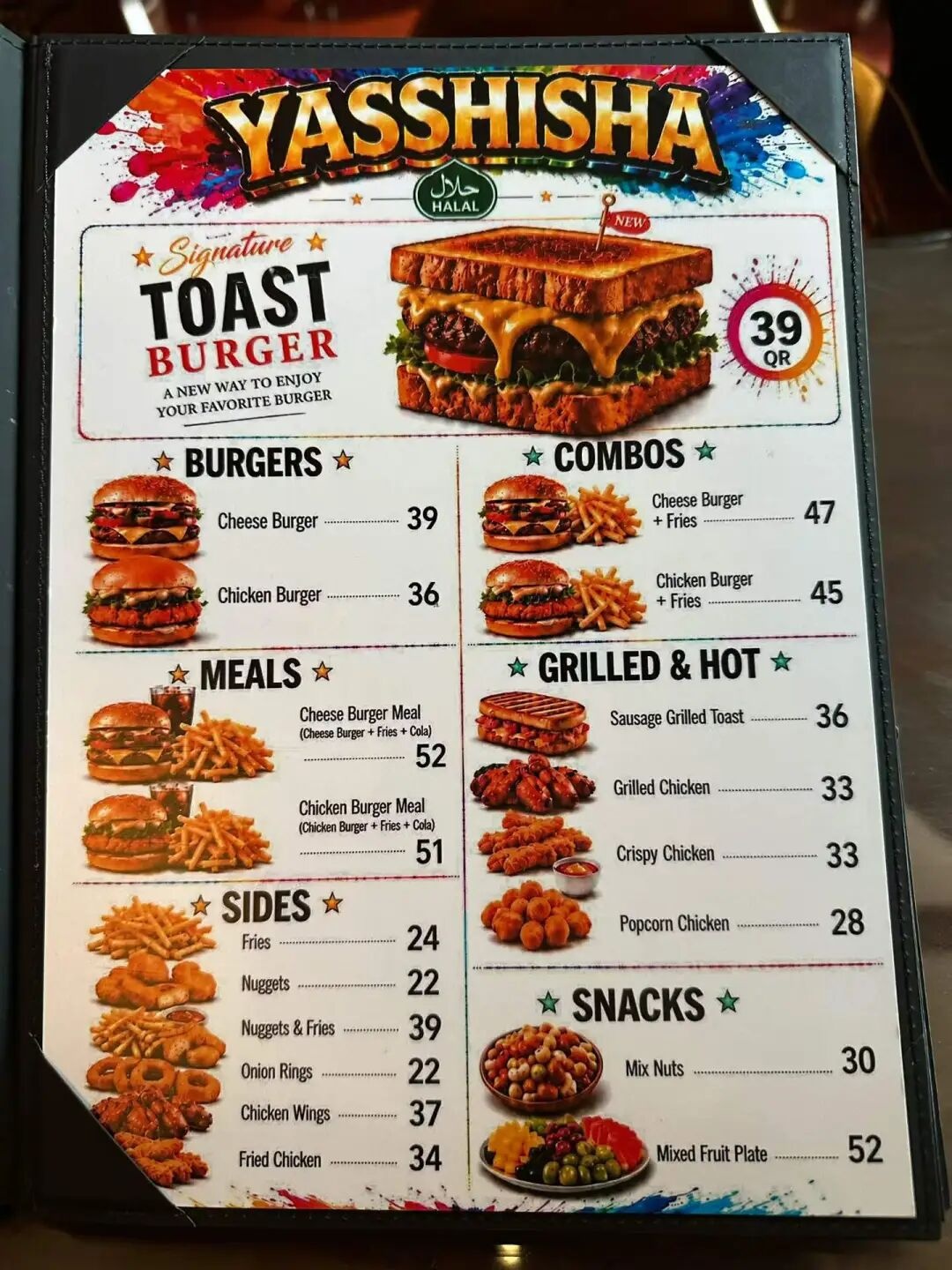
Xuanwumenwai Haoshu Iron Pot Stew
I had some business to take care of outside Xuanwumen, so I grabbed lunch at Haoshu Iron Pot Stew. I chose the iron pot stewed chicken with green beans, tofu skin, cabbage, and wood ear mushrooms, along with three 'tiebingzi' (baked flatbreads), shrimp, and abalone. We also ordered a roasted pigeon.
It wasn't super crowded at noon, but the food took a while to come out. The stew itself tasted good, not too salty. The chicken was tender meat, not tough. The roasted pigeon was tasty and not dry.
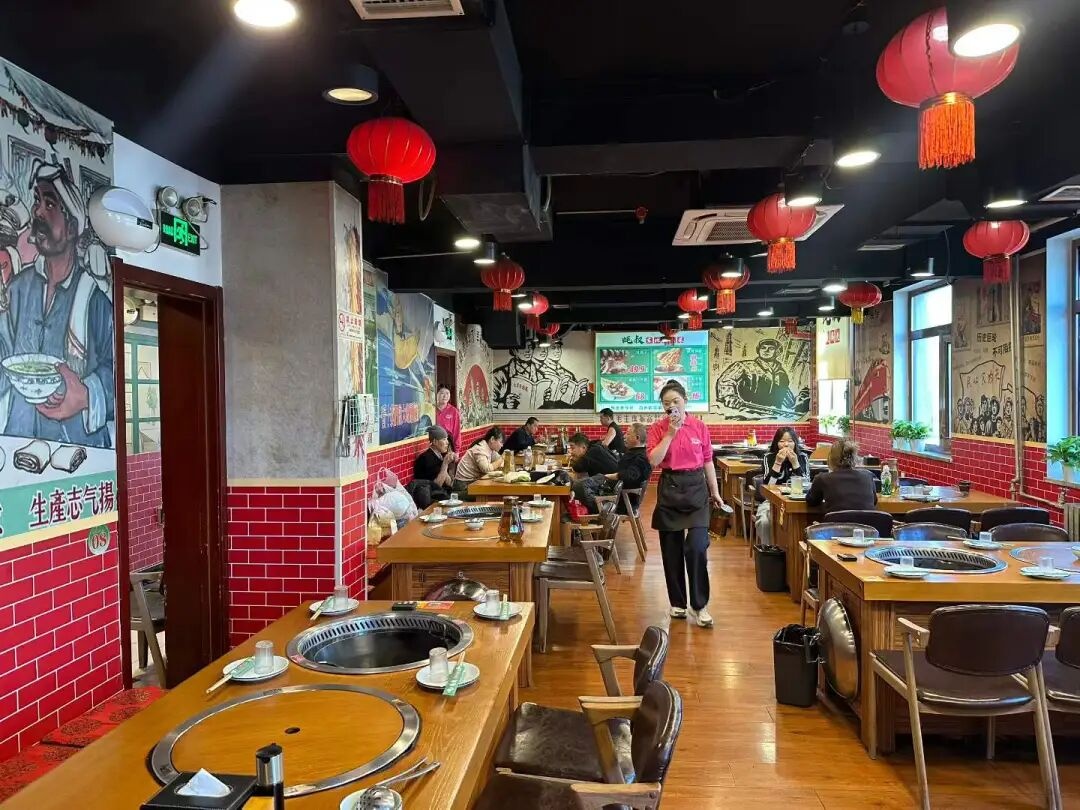
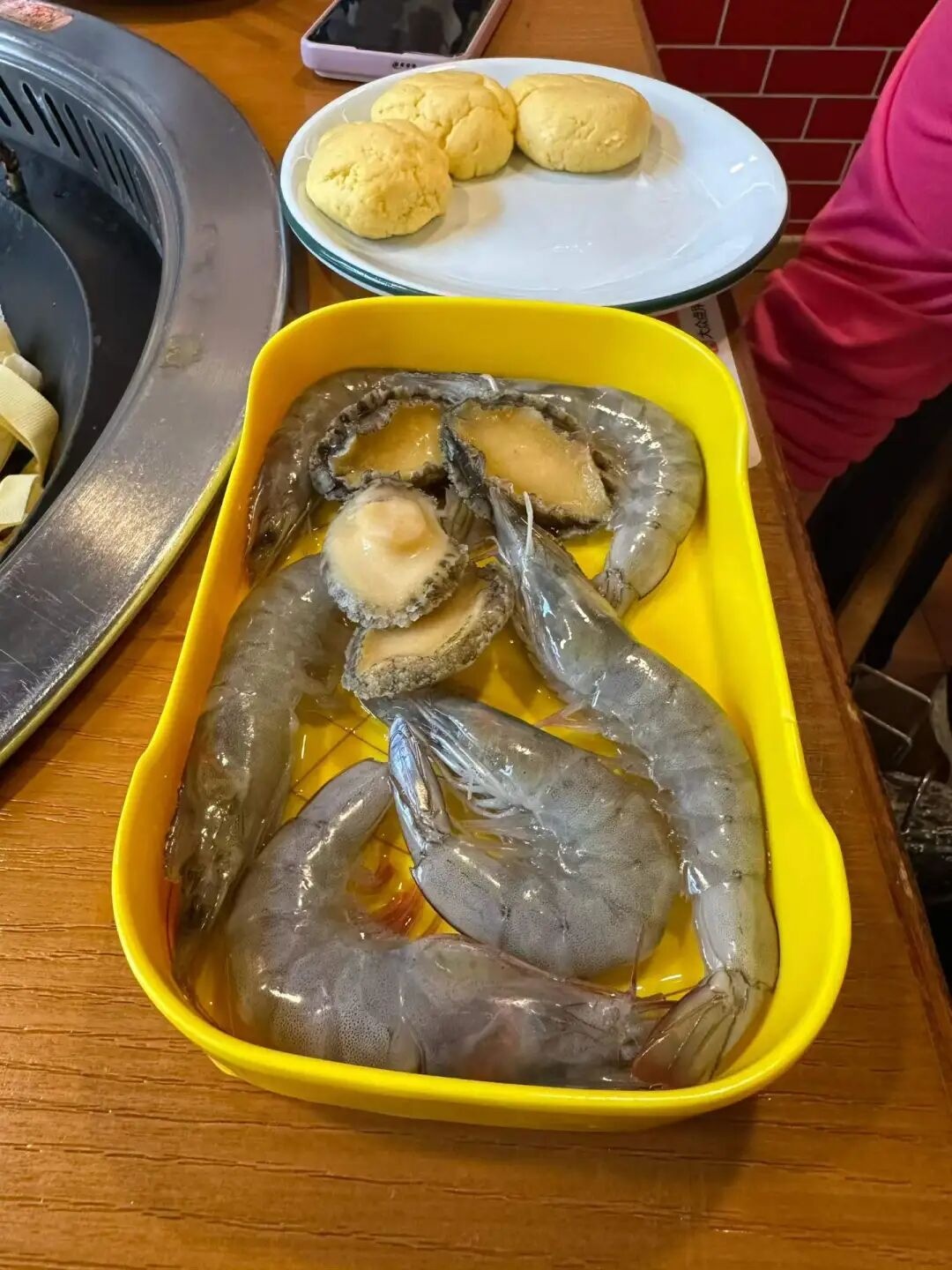
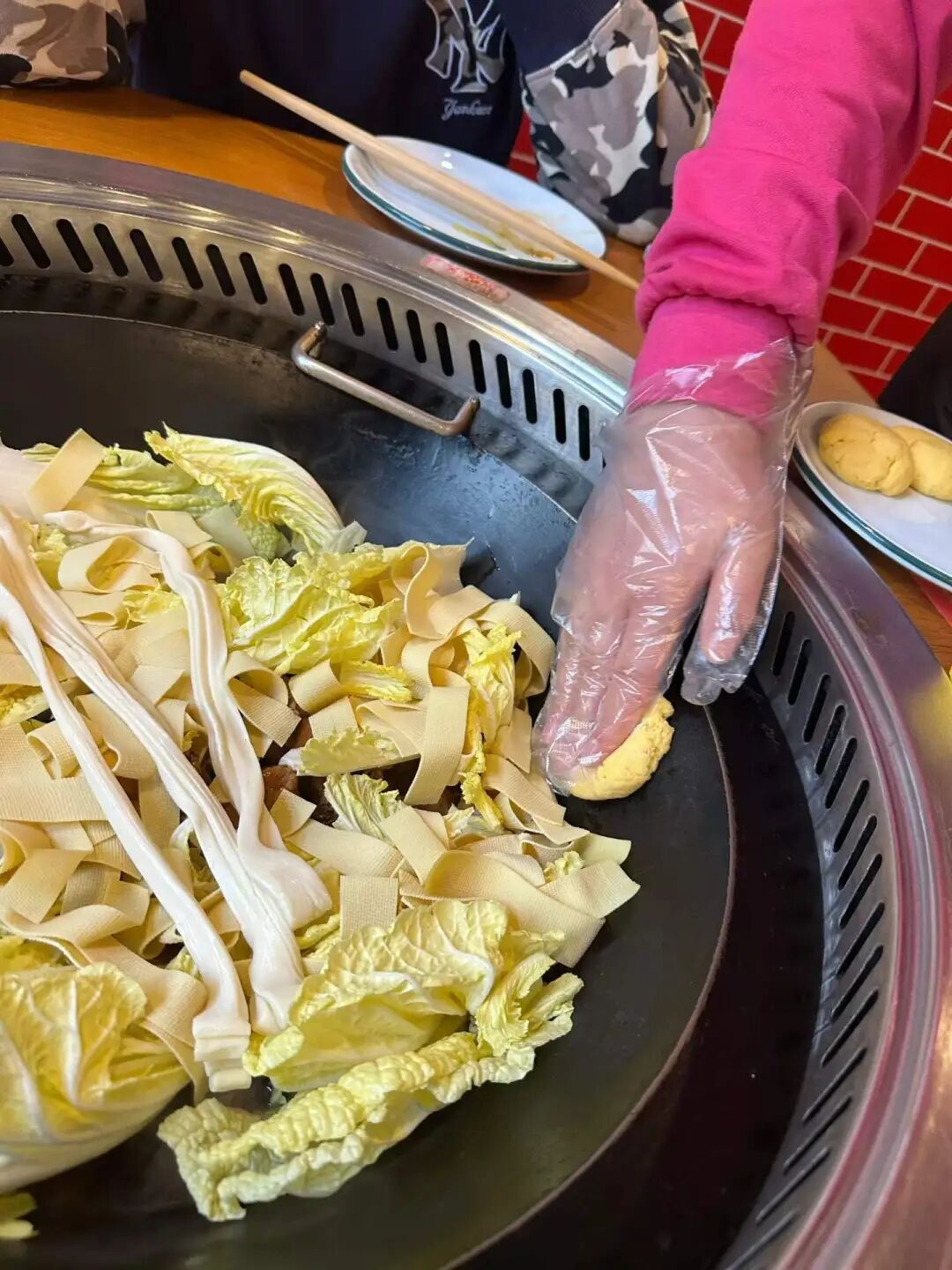
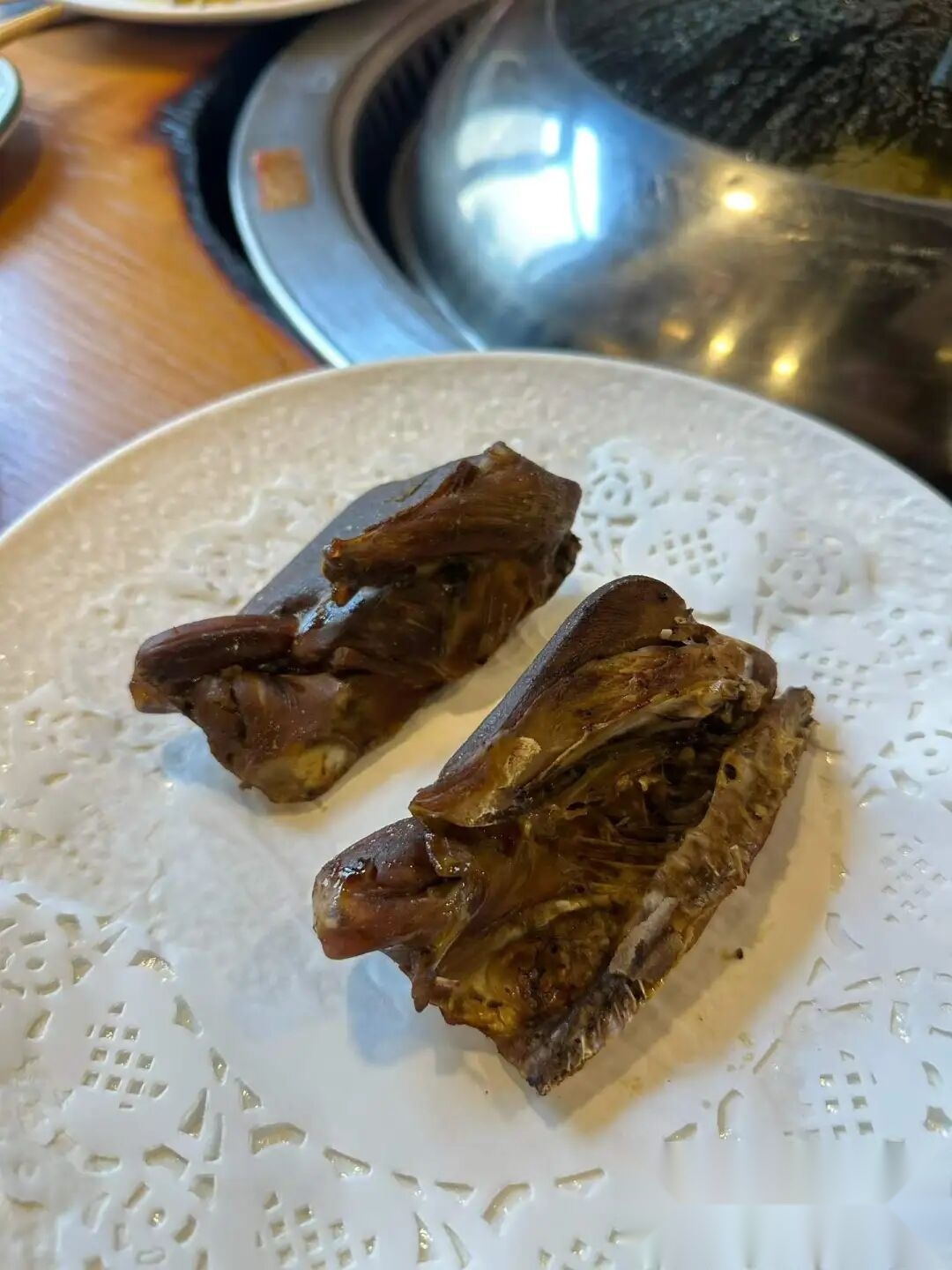
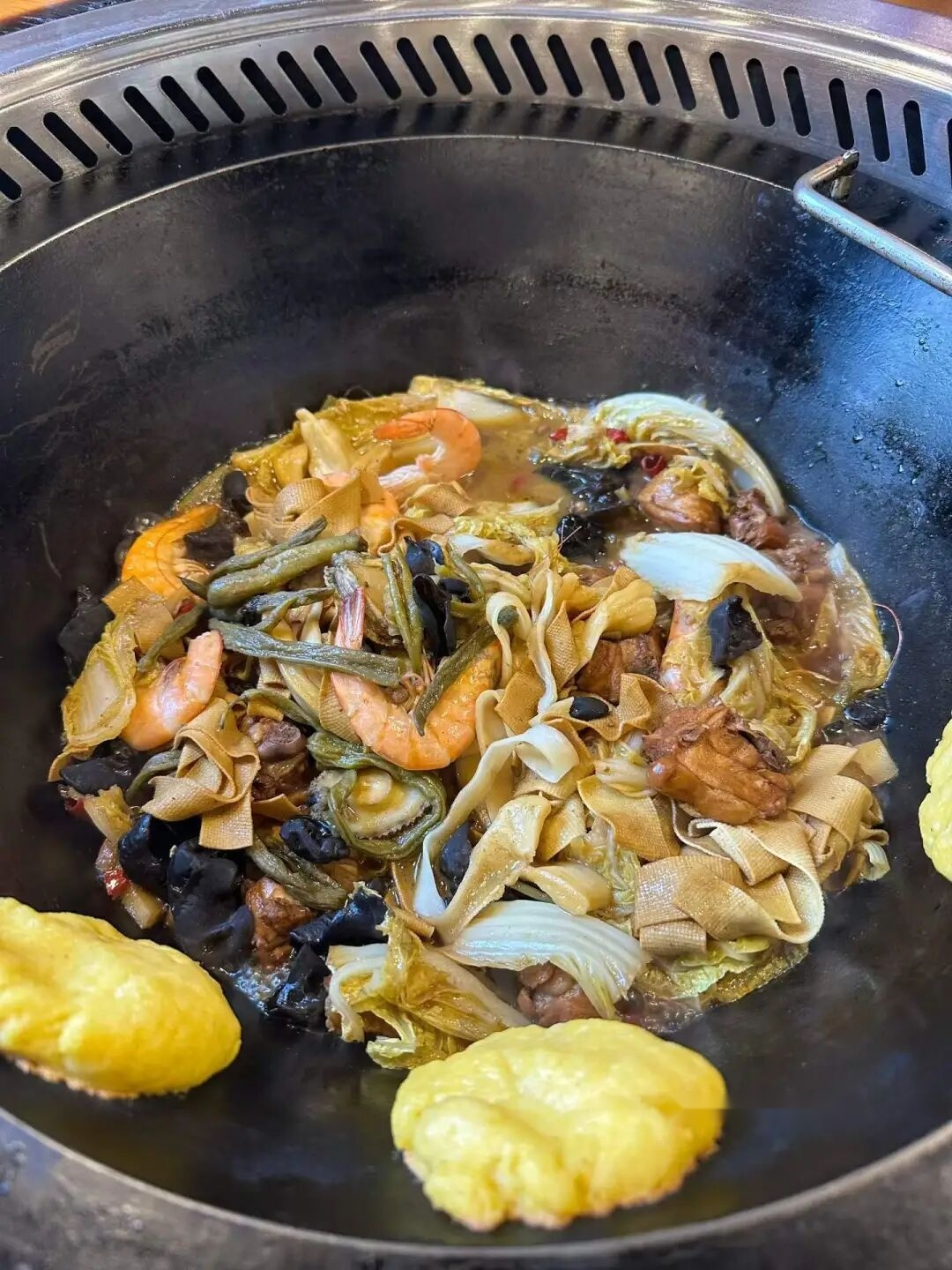
Weigongcun Shunhexiang Northeast Cuisine
Took my son to the zoo on the weekend and then hit up the new Shunhexiang Huayuan Restaurant across from the National Library. This place is from Harbin, and I'd eaten at their Tongzhou branch before and loved it. This time, I tried the Weigongcun branch, and it wasn't as good as the Tongzhou one.
We ordered 'shaomai' (steamed dumplings), radish pie, pickled chili with tofu skin, and beef jelly. The 'shaomai' were just okay, not nearly as good as the Tongzhou branch. The radish pie was decent. The pickled chili with tofu skin was also okay, but it was spicy, so the kids couldn't eat it. The beef jelly was also a miss; the meat inside was mushy and had a bad texture.
It feels like the Weigongcun branch is trying to move away from being just a 'Harbin restaurant' and incorporating more Gansu, Xinjiang, and Beijing dishes. But trying to do too much might backfire, not really mastering any cuisine. It might be better if they just focused on doing Northeast Chinese food well, which would probably be more popular.
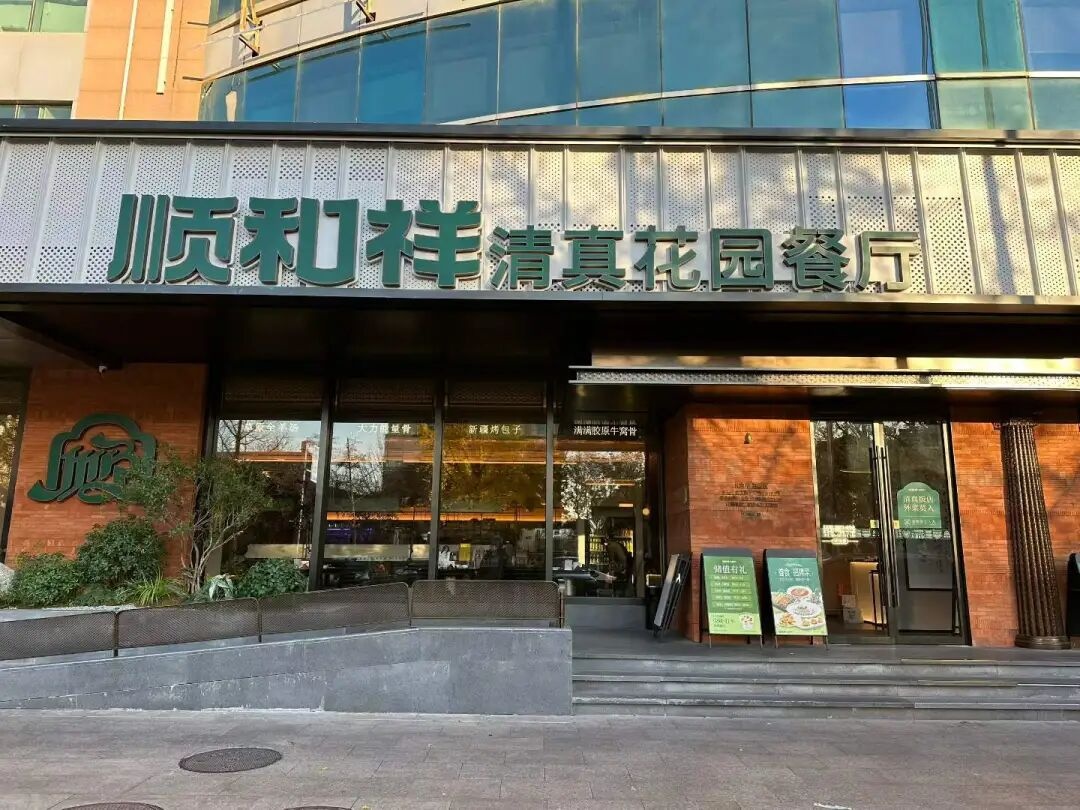
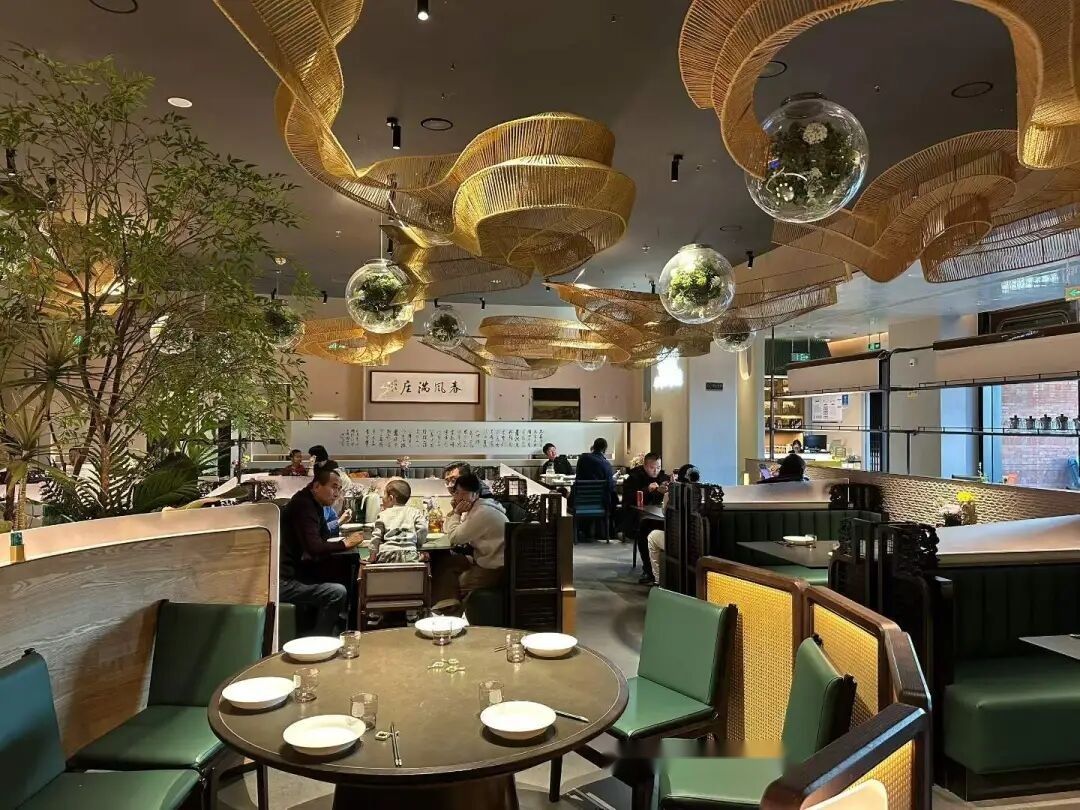
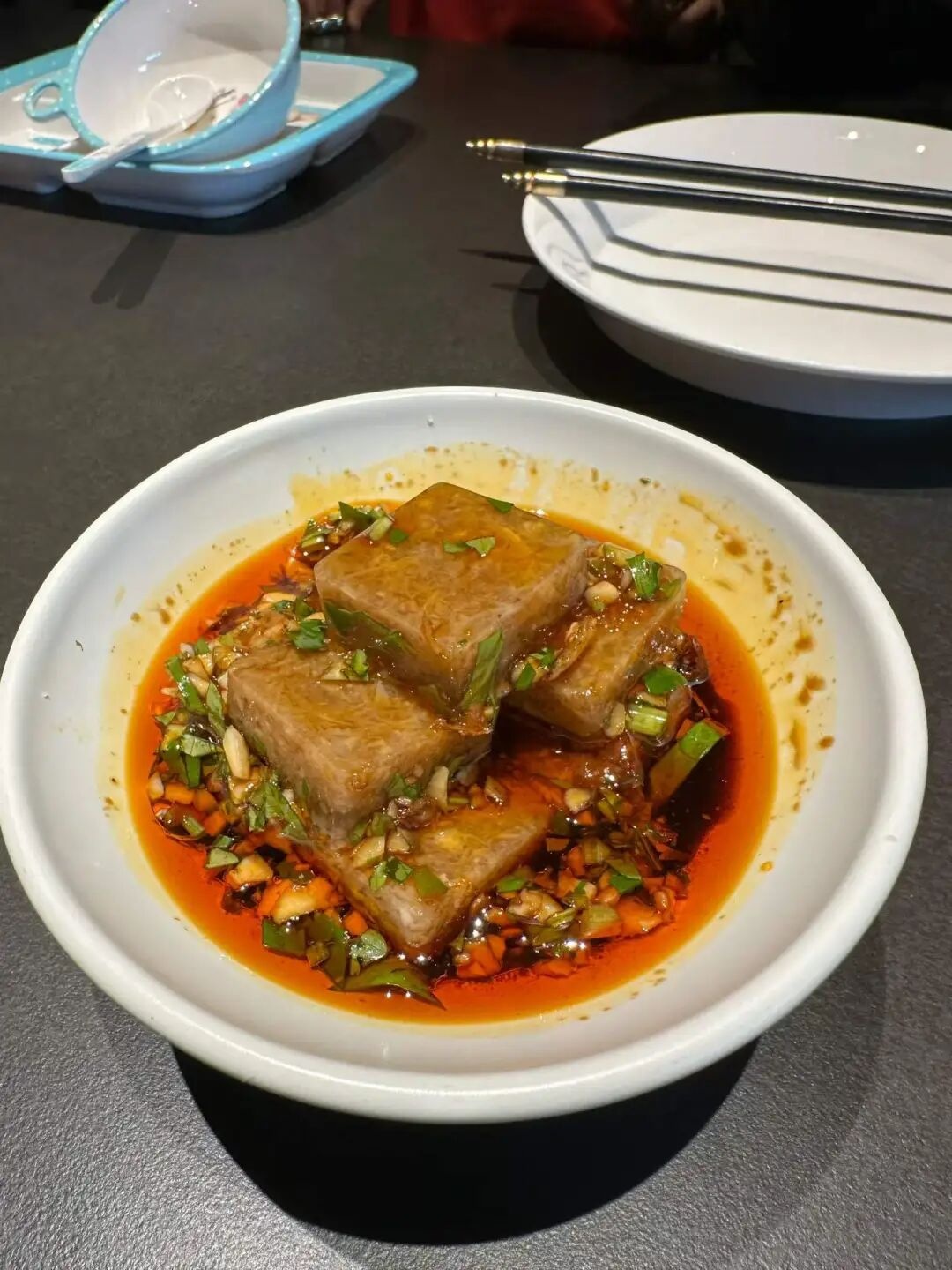
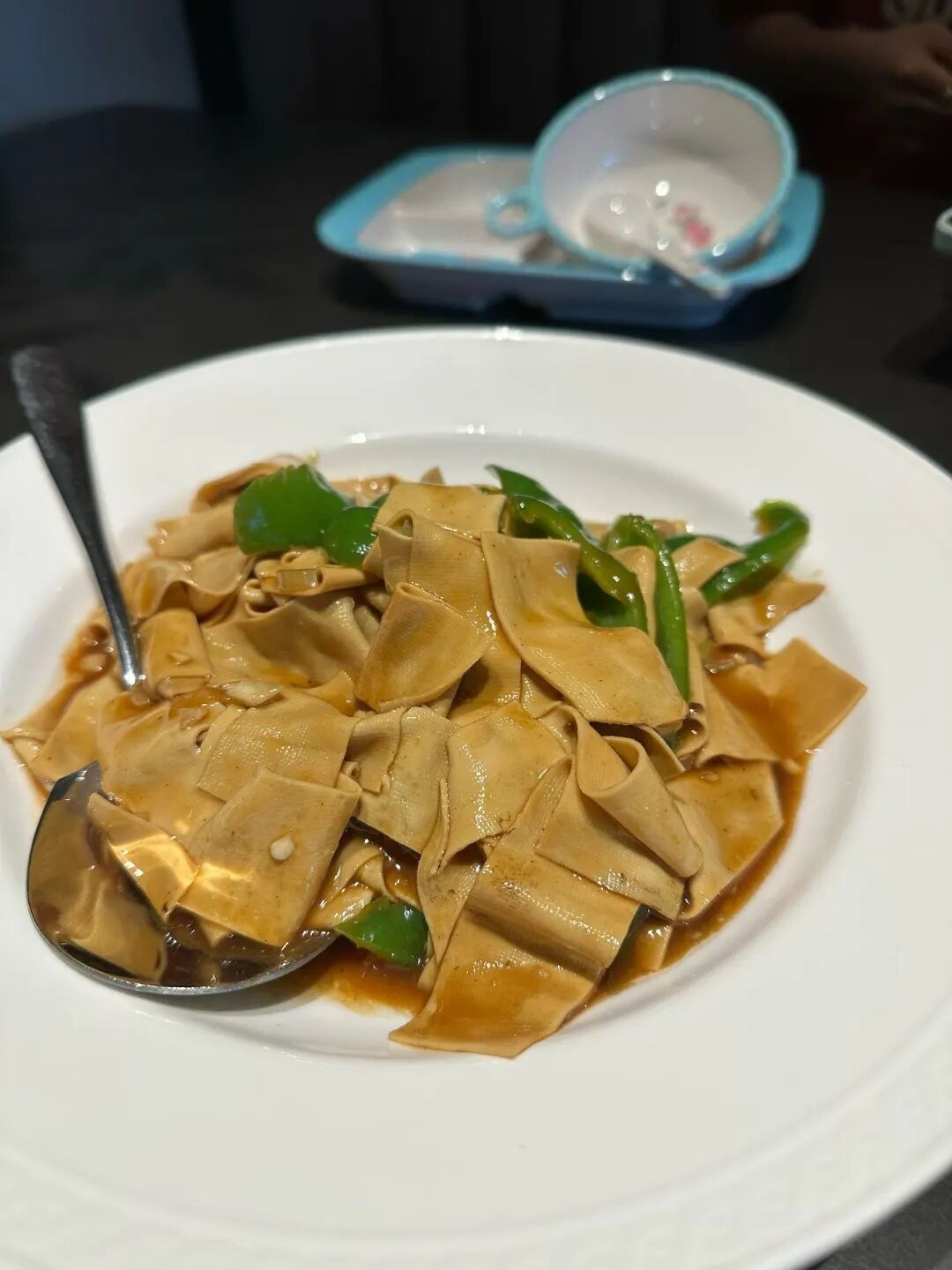
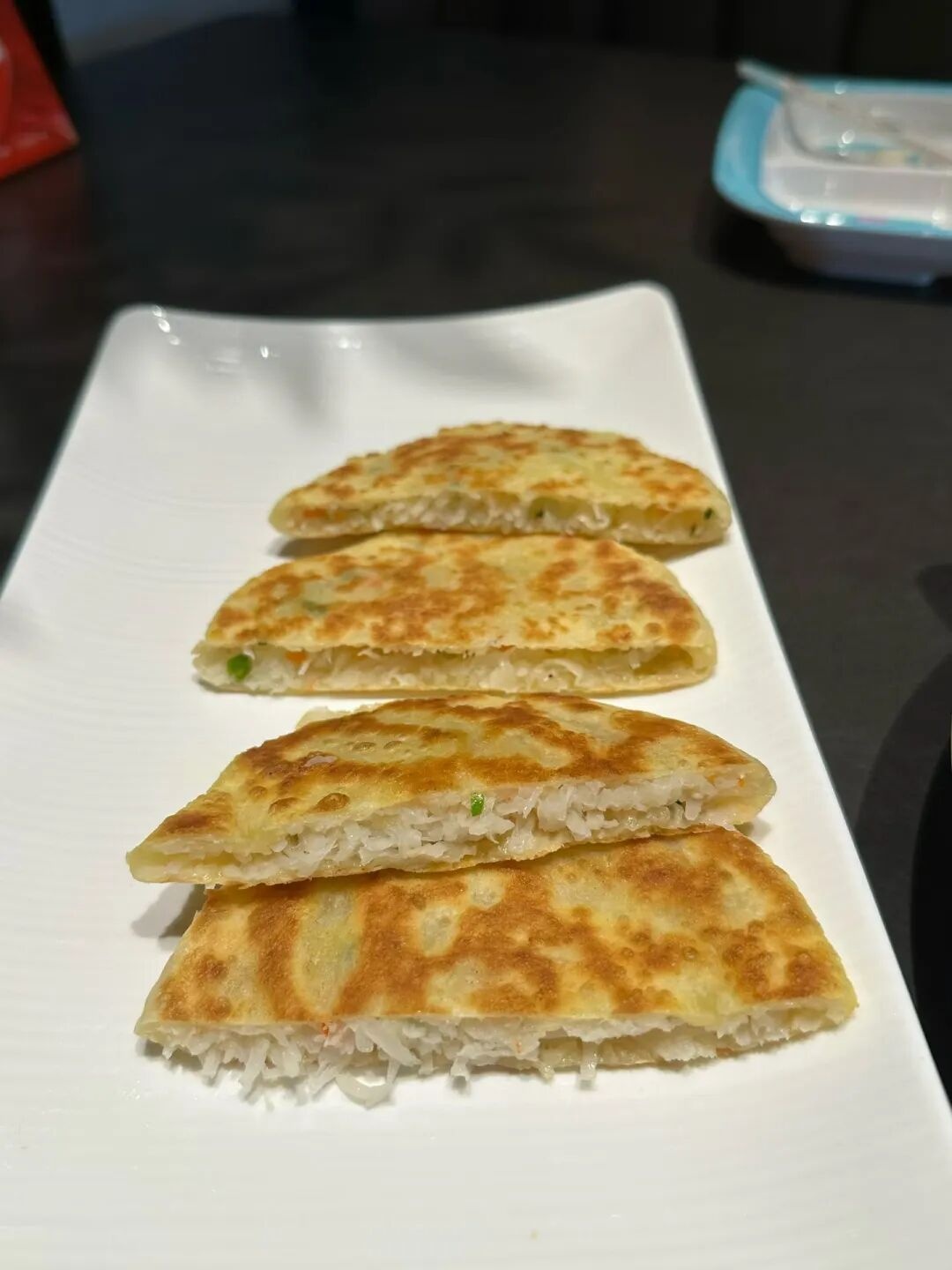
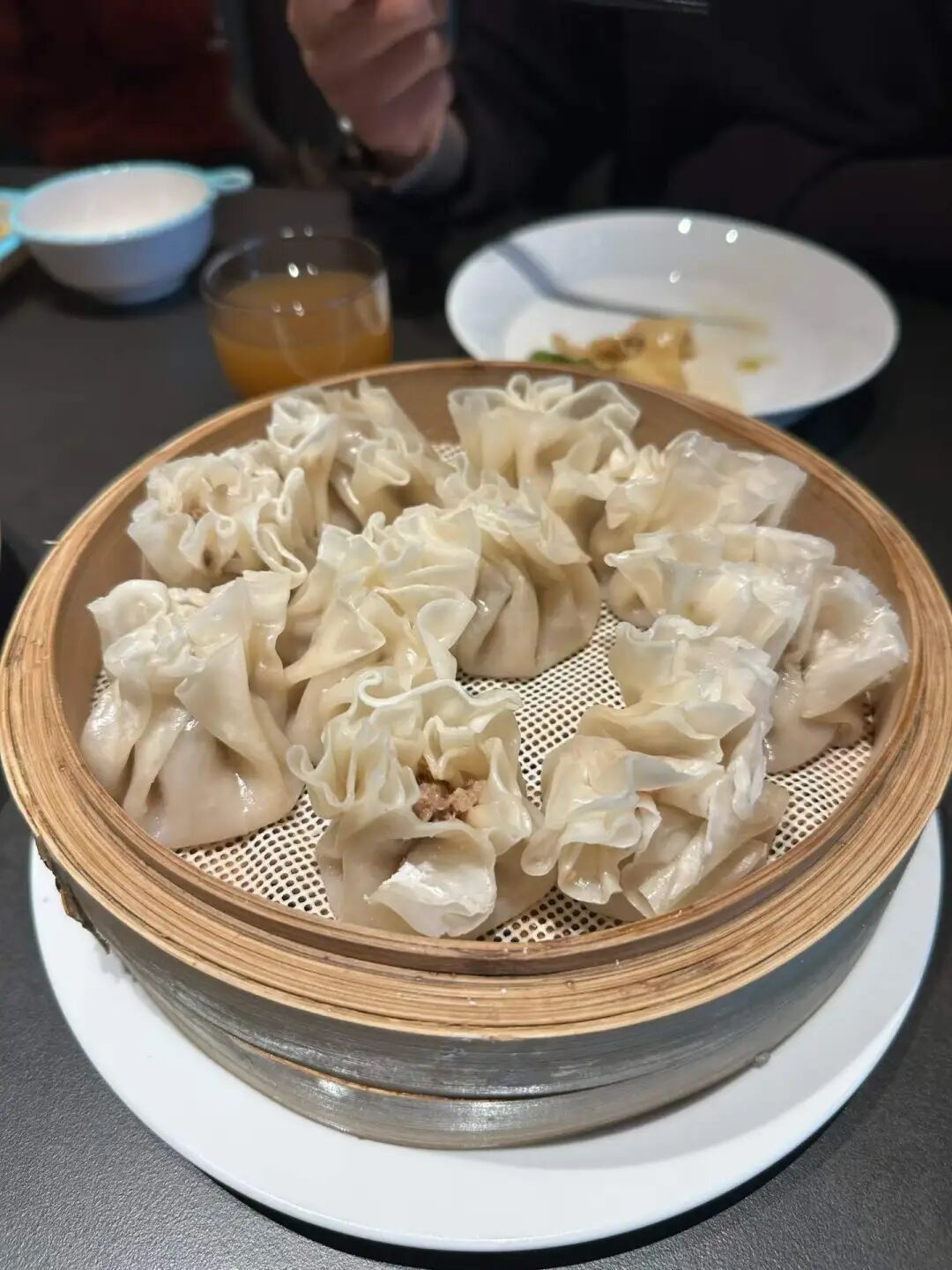
Changying Quan Niujiang Sichuan Cuisine
Had dinner at the new Quan Niujiang Sichuan Cuisine in Changying Everbright City on the weekend. It's on the B1 level, and the same family that runs 'Suo Ha Ha' downstairs owns it. It's a quiet place with no alcohol.
They hired a professional Sichuan chef, so the cooking style is different from traditional Sichuan Hui cuisine, offering a different flavor profile. It gets really crowded on Friday nights, so expect to wait. Also, the tables are a bit cramped, better for smaller groups.
We ordered 'mifen zheng gege niurou' (steamed beef with rice flour), 'shouzuo yumibaba' (handmade corn cake), 'Chengdu tianshui mian' (sweet water noodles), 'yikou dandan mian' (wonton noodles), 'heisonglu chao xiongsun si' (black truffle stir-fried panda bamboo shoots), 'baihe wandoujian' (lily and pea shoots), 'fanqie lasi huadan' (tomato shredded egg), 'qingjiao hui xingbaogu si' (green pepper stir-fried king oyster mushrooms), 'Pu'er Daíwei xia' (Pu'er Dai flavor shrimp), 'jungu niurou mapo doufu' (mushroom beef mapo tofu), 'cuipi lazi ji' (crispy chili chicken), 'jintang suancai luyu' (golden soup pickled fish), 'huangcuijiao xiangjian qiaozui yu' (yellow chili pan-fried barbel carp), 'youpo lazi shuizhu luyu' (oil chili boiled fish), 'tudouni youmen ji' (potato mash braised chicken), 'Guizhou suantang diaolong' (Guizhou sour soup beef brisket), and 'Leshan qiaojiao niurou' (Leshan style beef stew).
Their signature 'Leshan qiaojiao niurou' was a bit thin, but the broth was very fragrant. The 'mifen zhengrou' was finely powdered and focused on a numbing flavor. The 'yumibaba' was like a steamed cake, very subtly sweet. For the 'dandan mian' and 'tianshui mian', if you're from the Northwest or North China, maybe skip these; the noodles weren't chewy enough. The 'dandan mian' was like instant noodles, and the 'tianshui mian' broke easily when bitten.
The 'heisonglu chao xiongsun si' is highly recommended; the bamboo shoots were crisp, tender, fresh, and light. The pea shoots were a great palate cleanser.
The 'mapo doufu' and 'tudouni youmen ji' are great rice-pairing dishes, and the 'mapo doufu' was made very authentically.
The 'cuipi lazi ji' was also delicious; the chicken skin was dry, fragrant, and crispy, with a satisfying chew.
For the fish, we ordered the pickled fish, pan-fried barbel carp, and boiled fish. The fish was tender and silky, absolutely delicious.
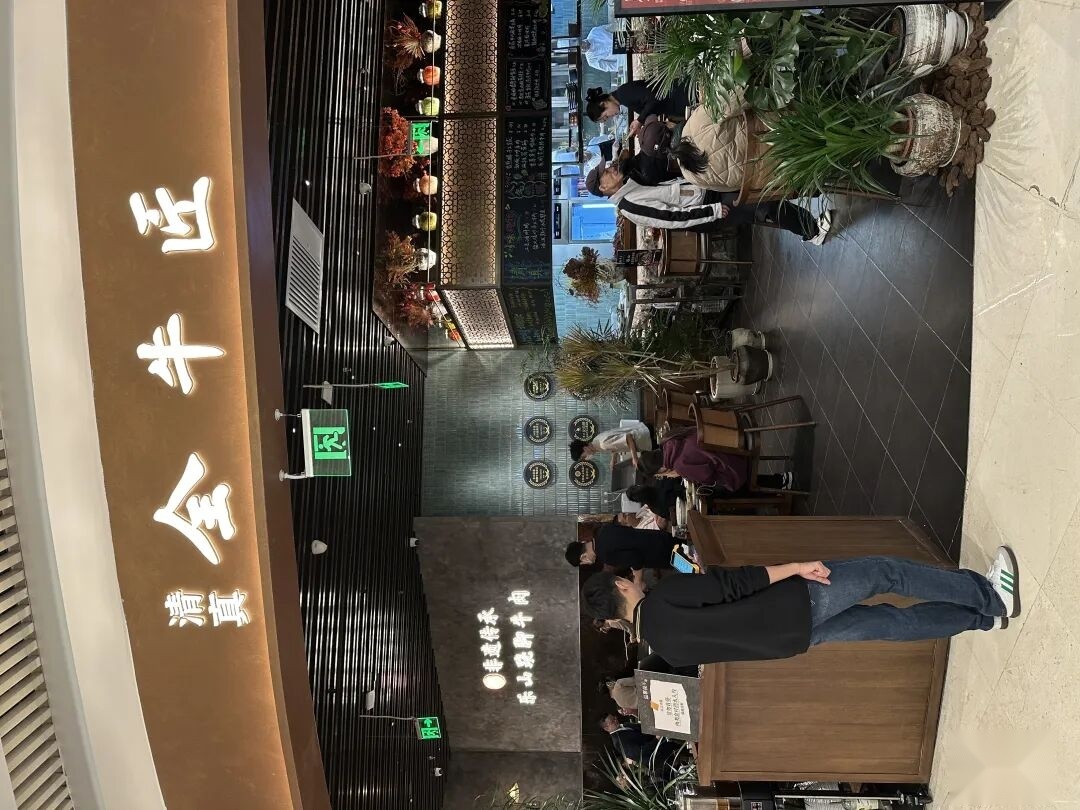
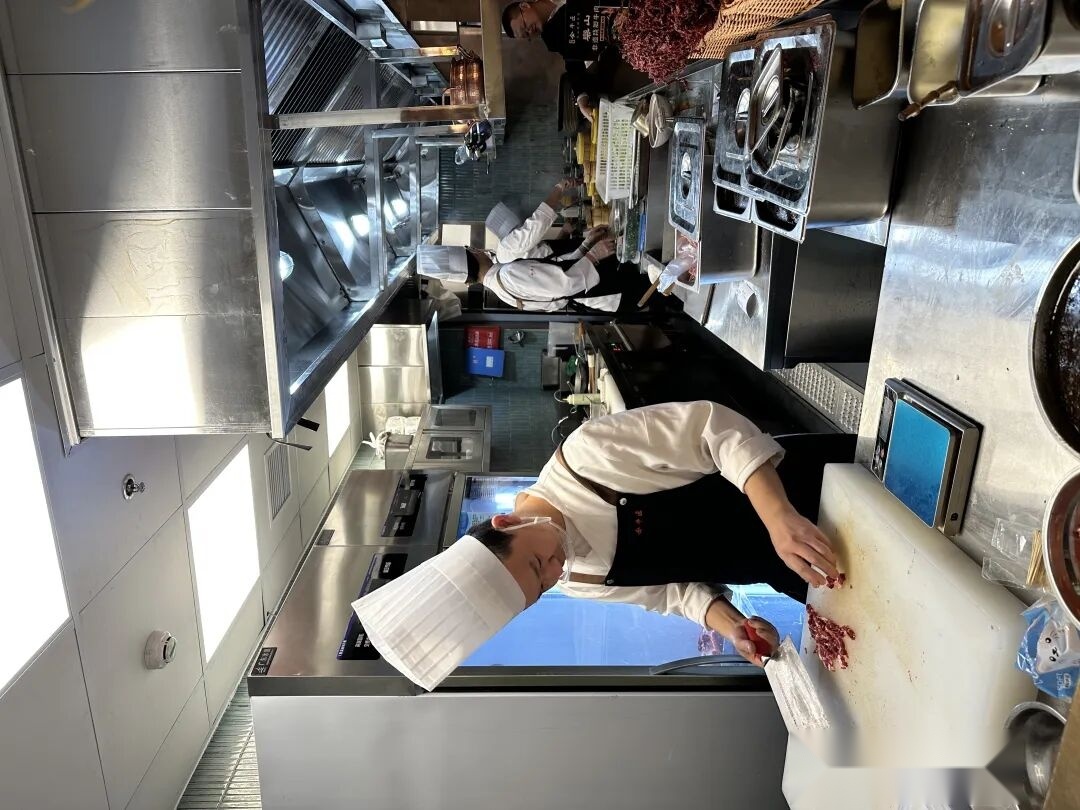
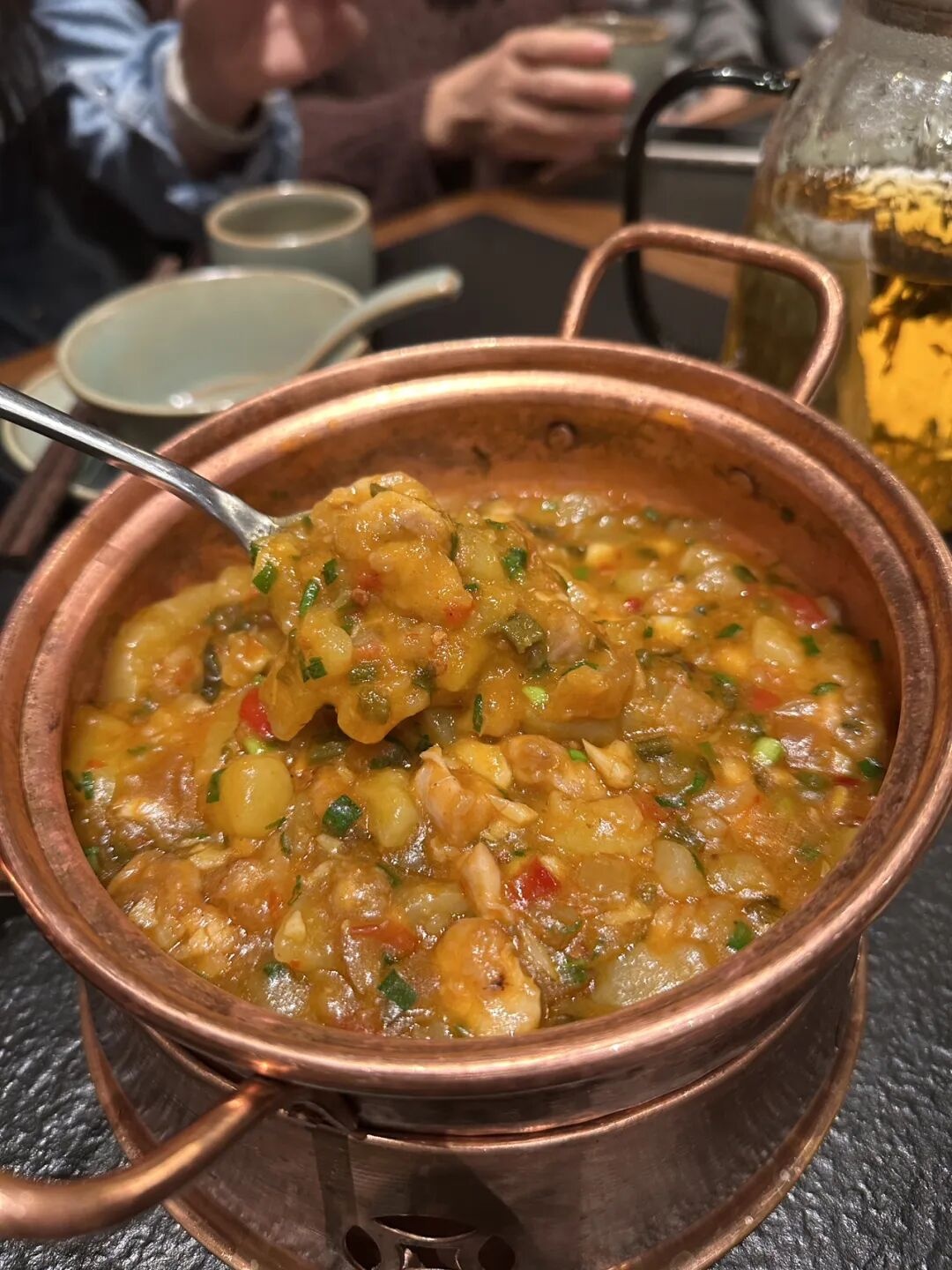
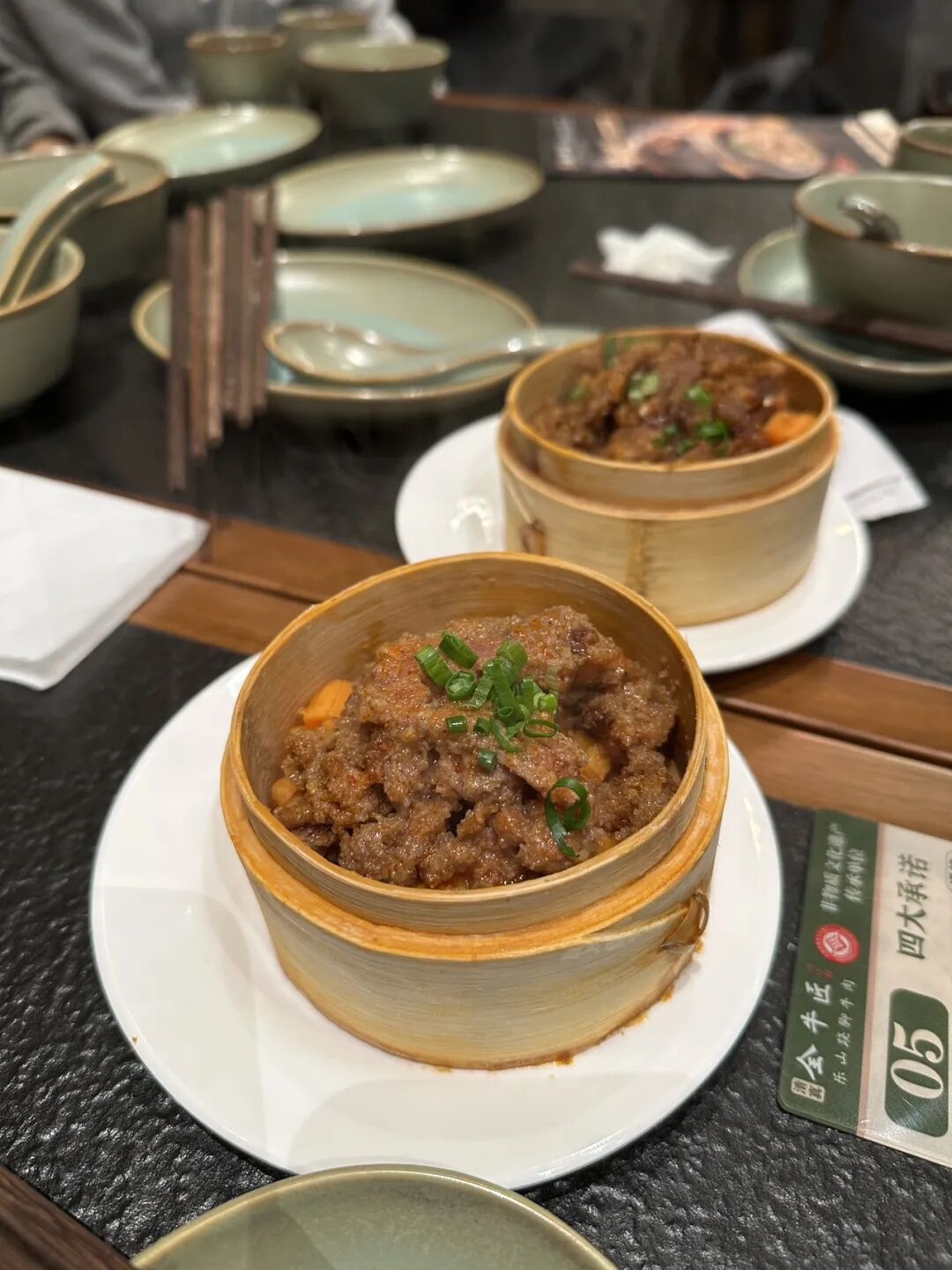
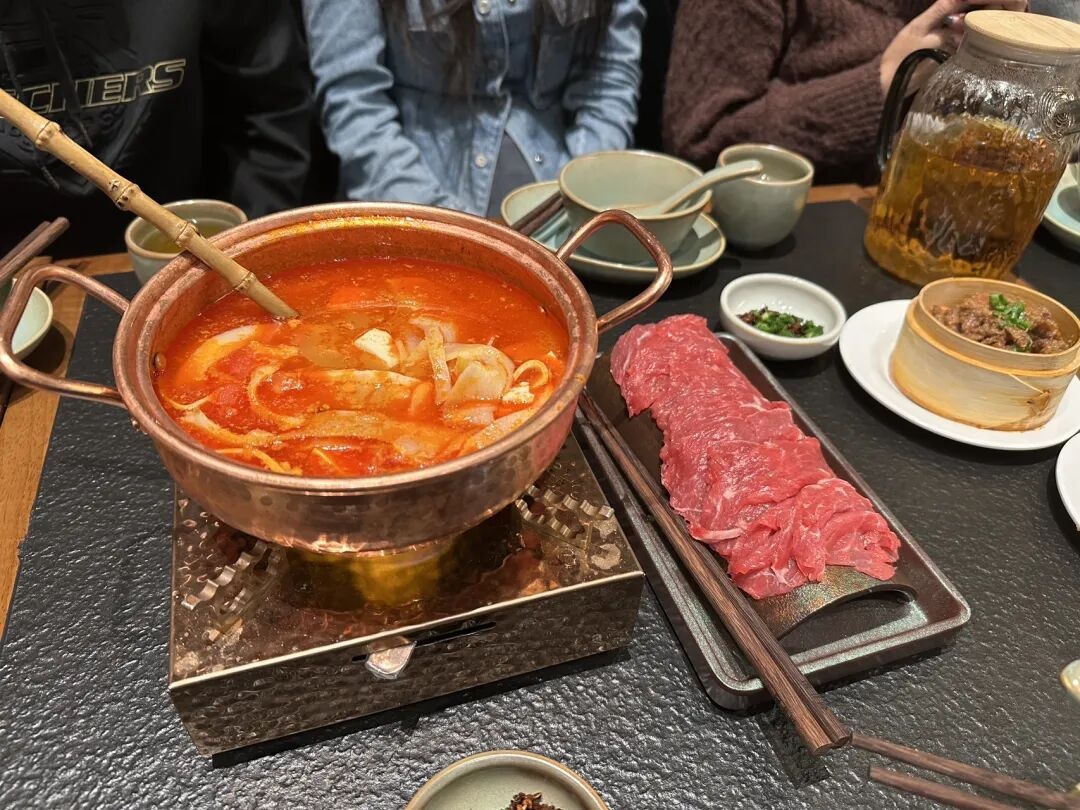
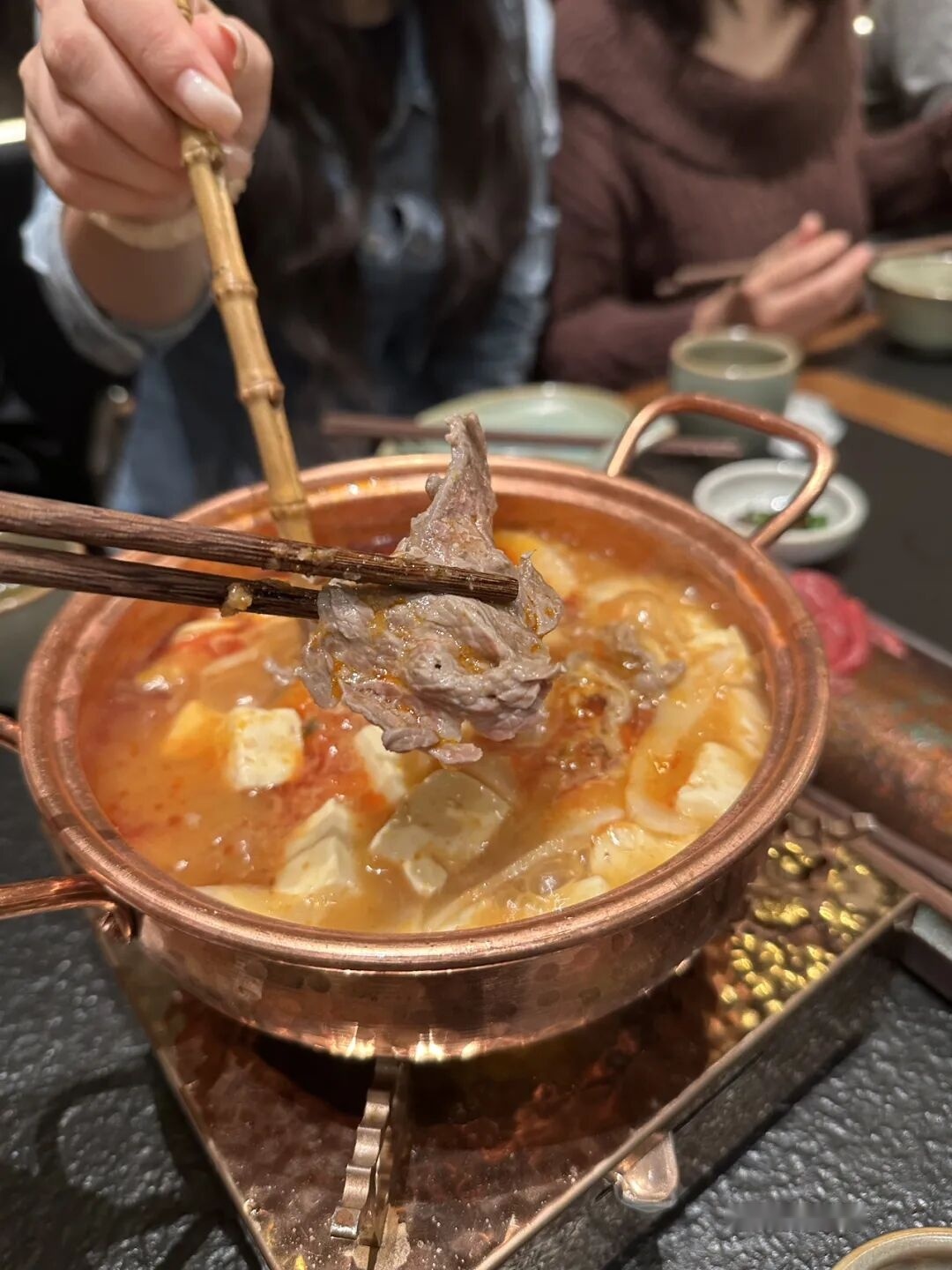
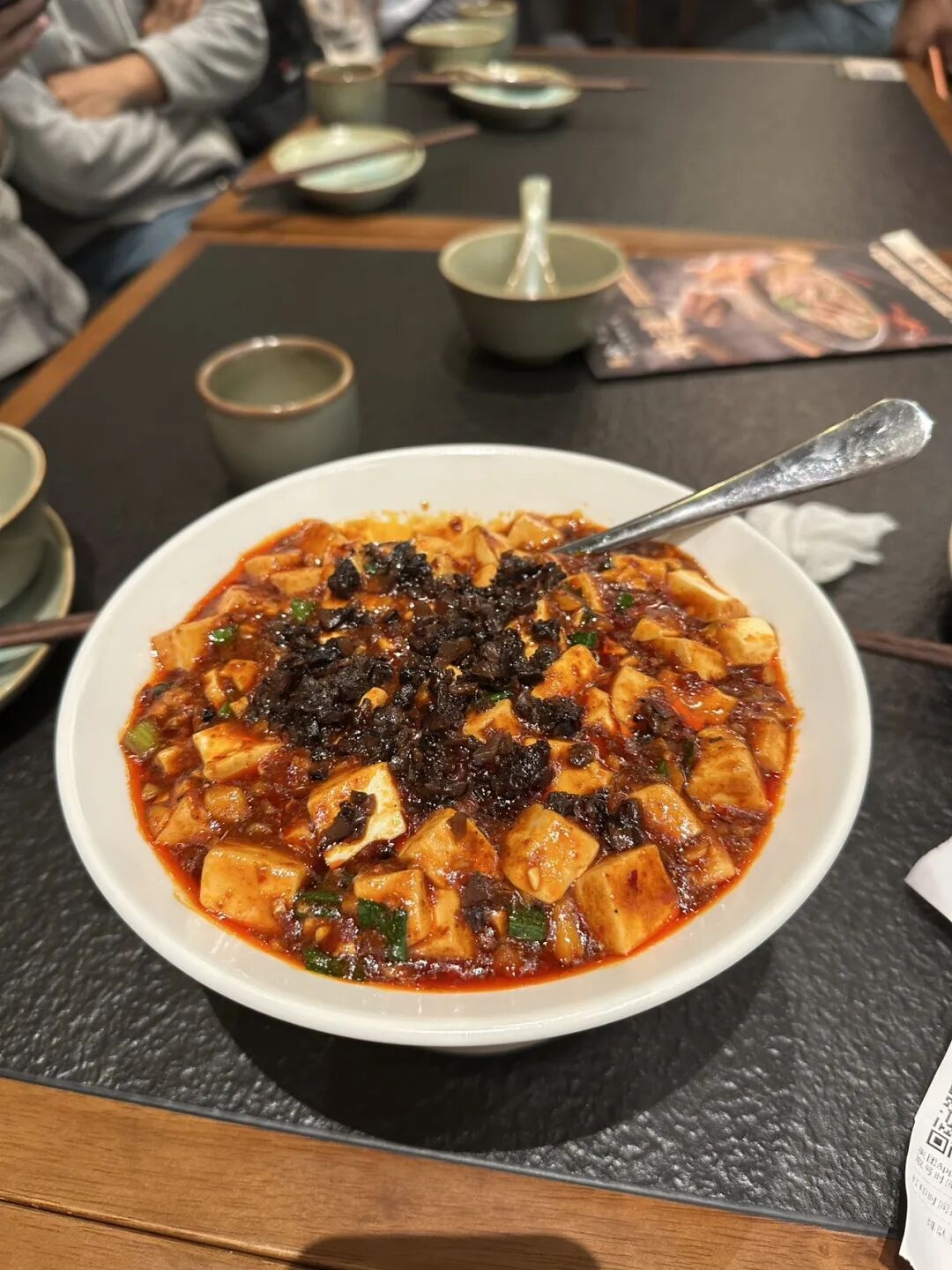
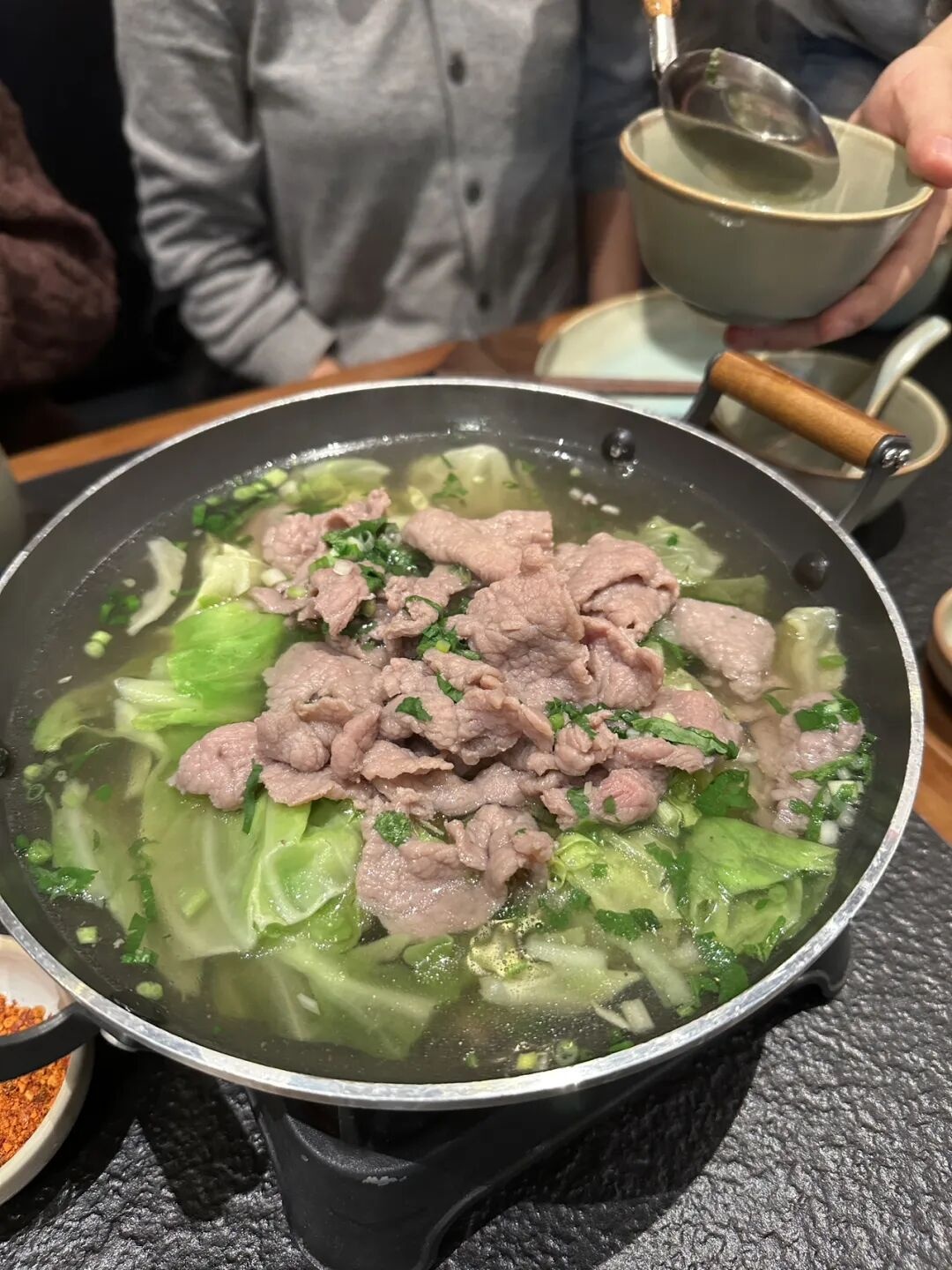
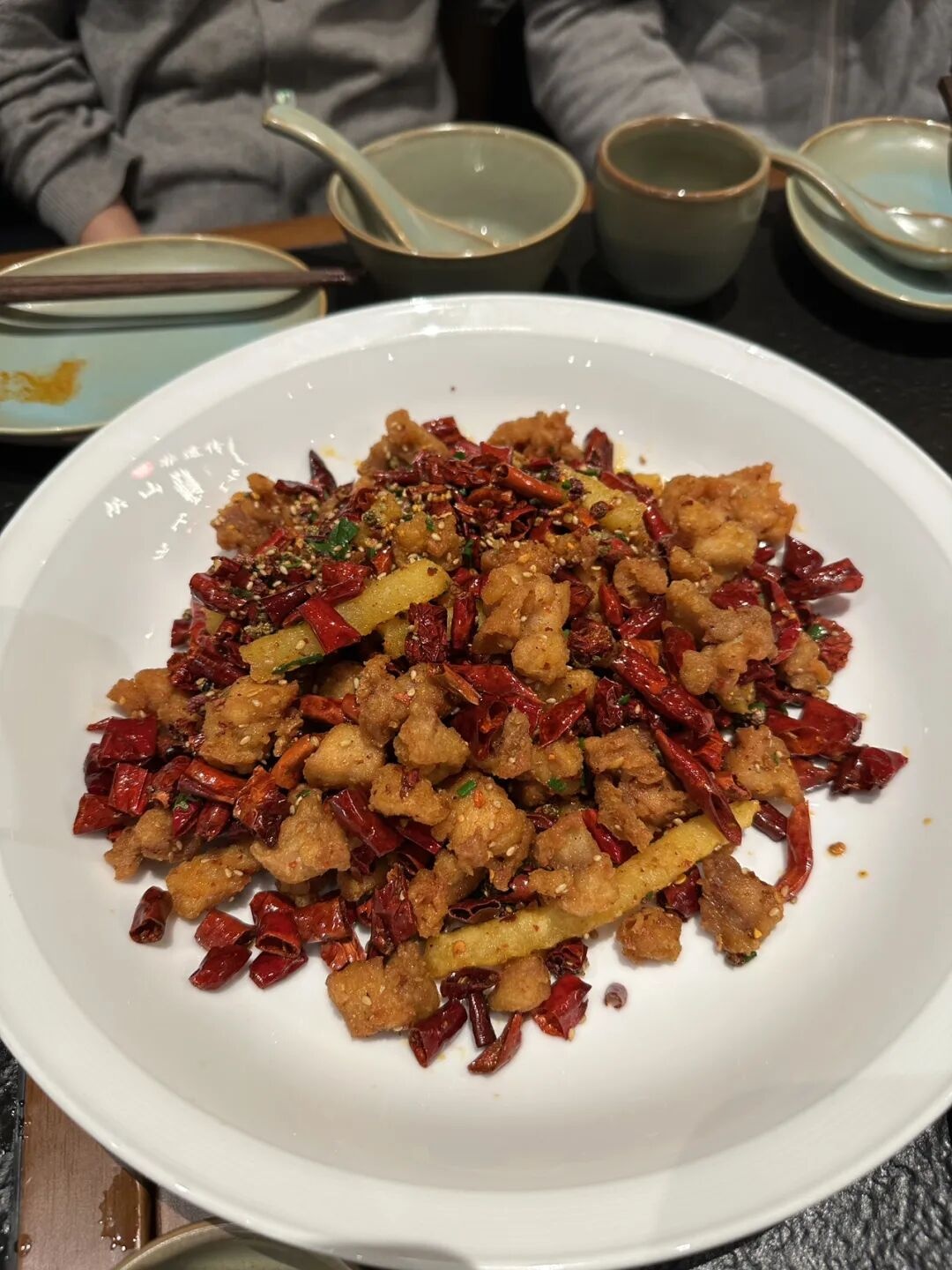
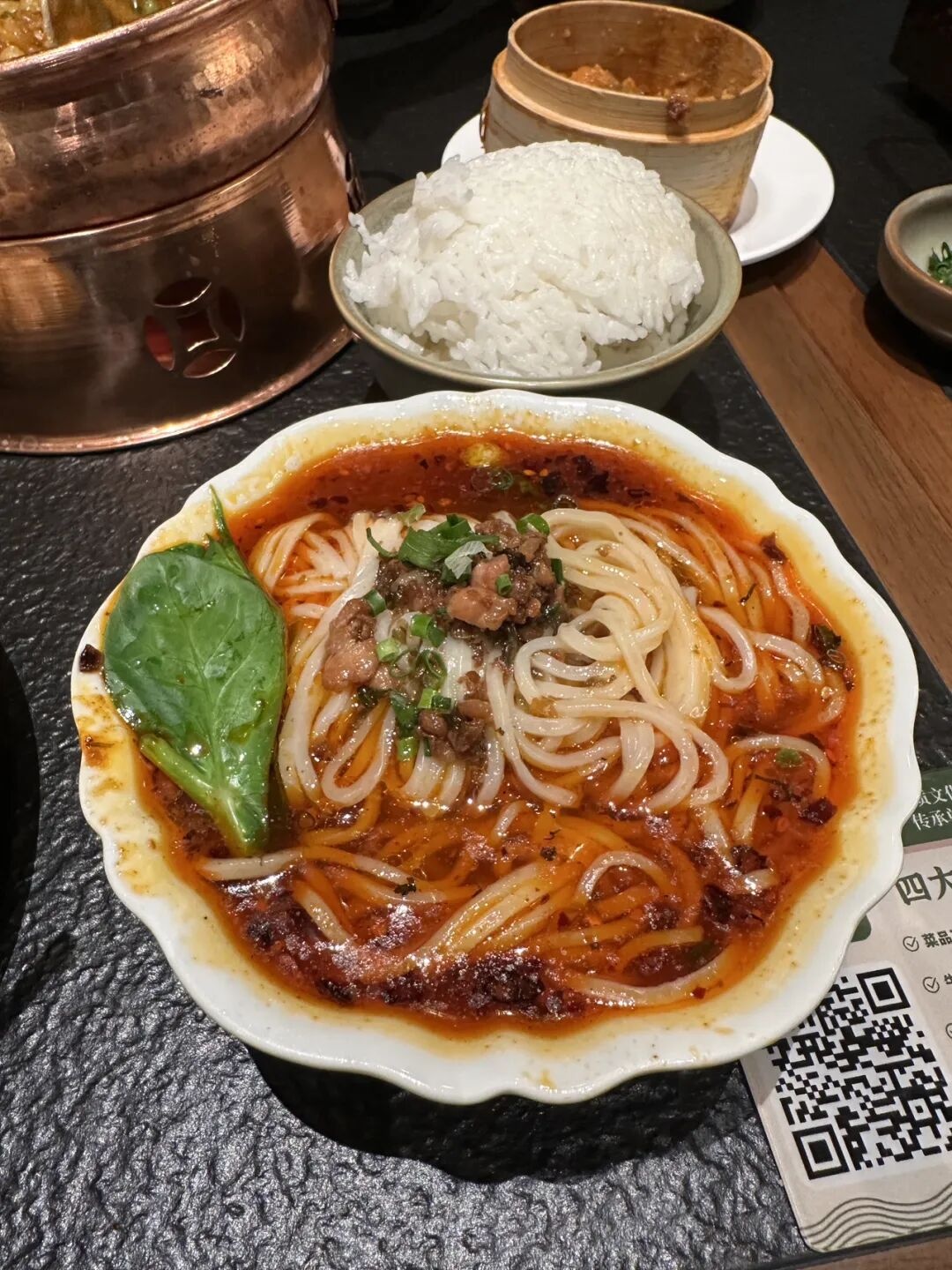
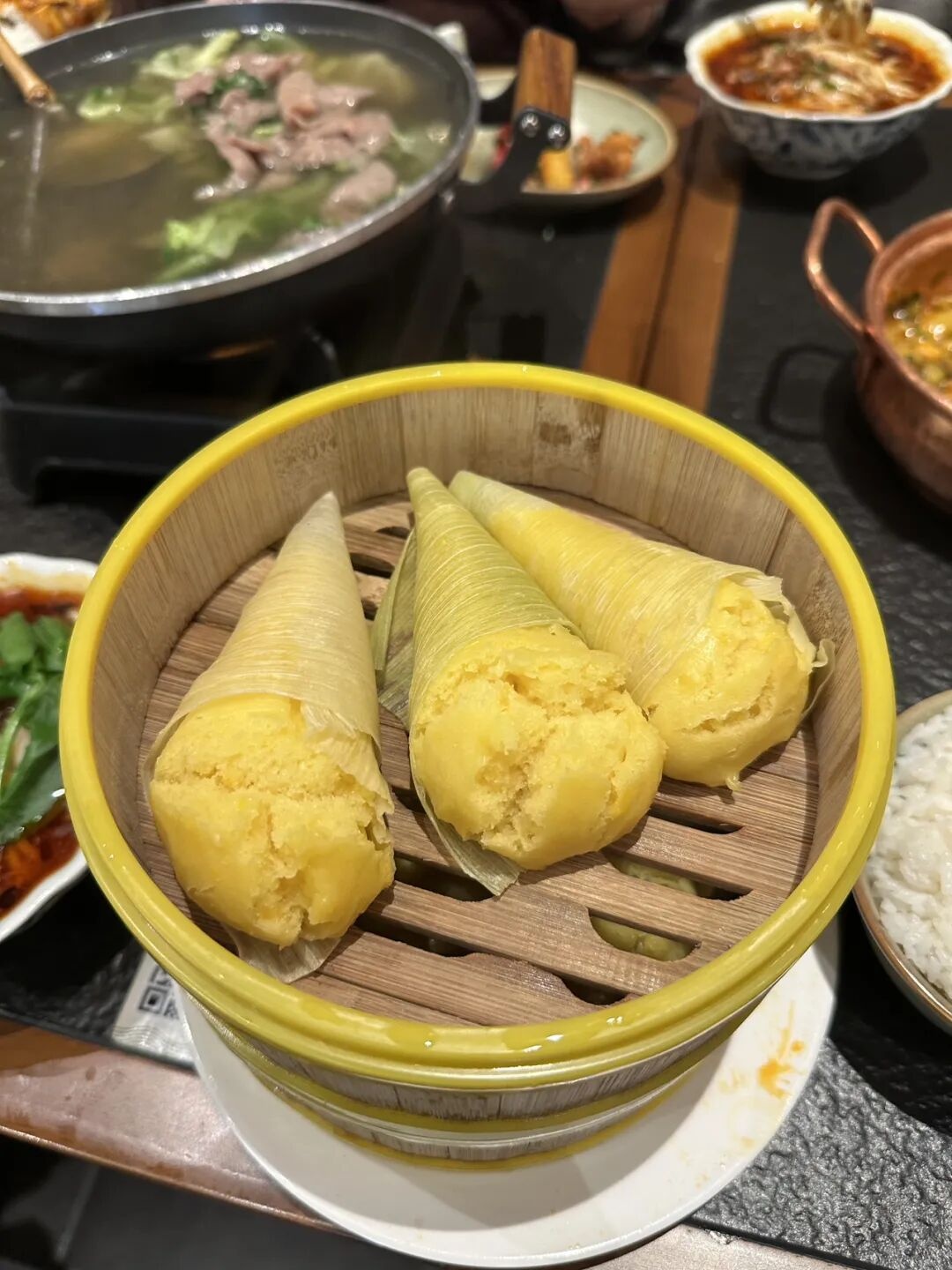
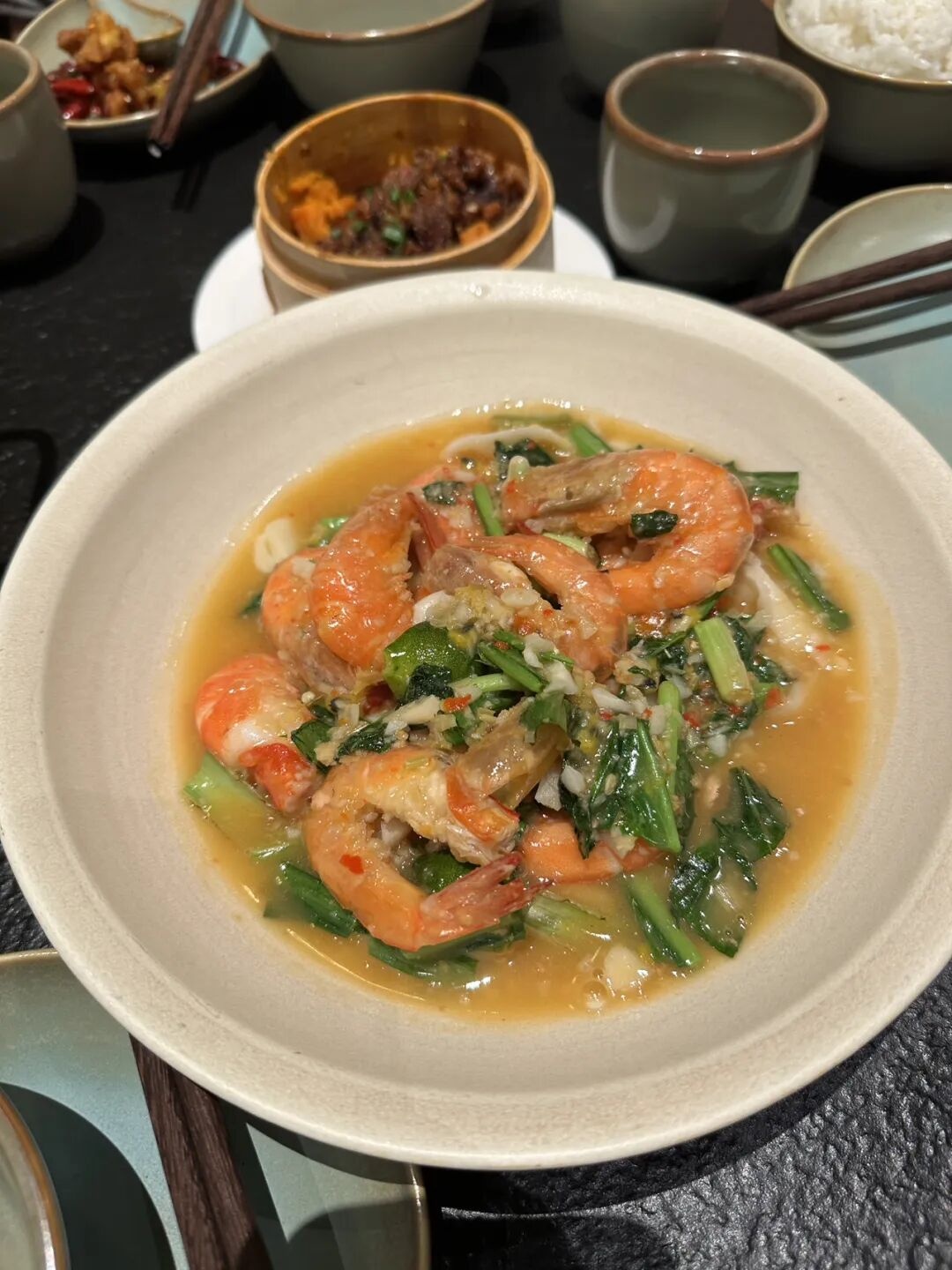
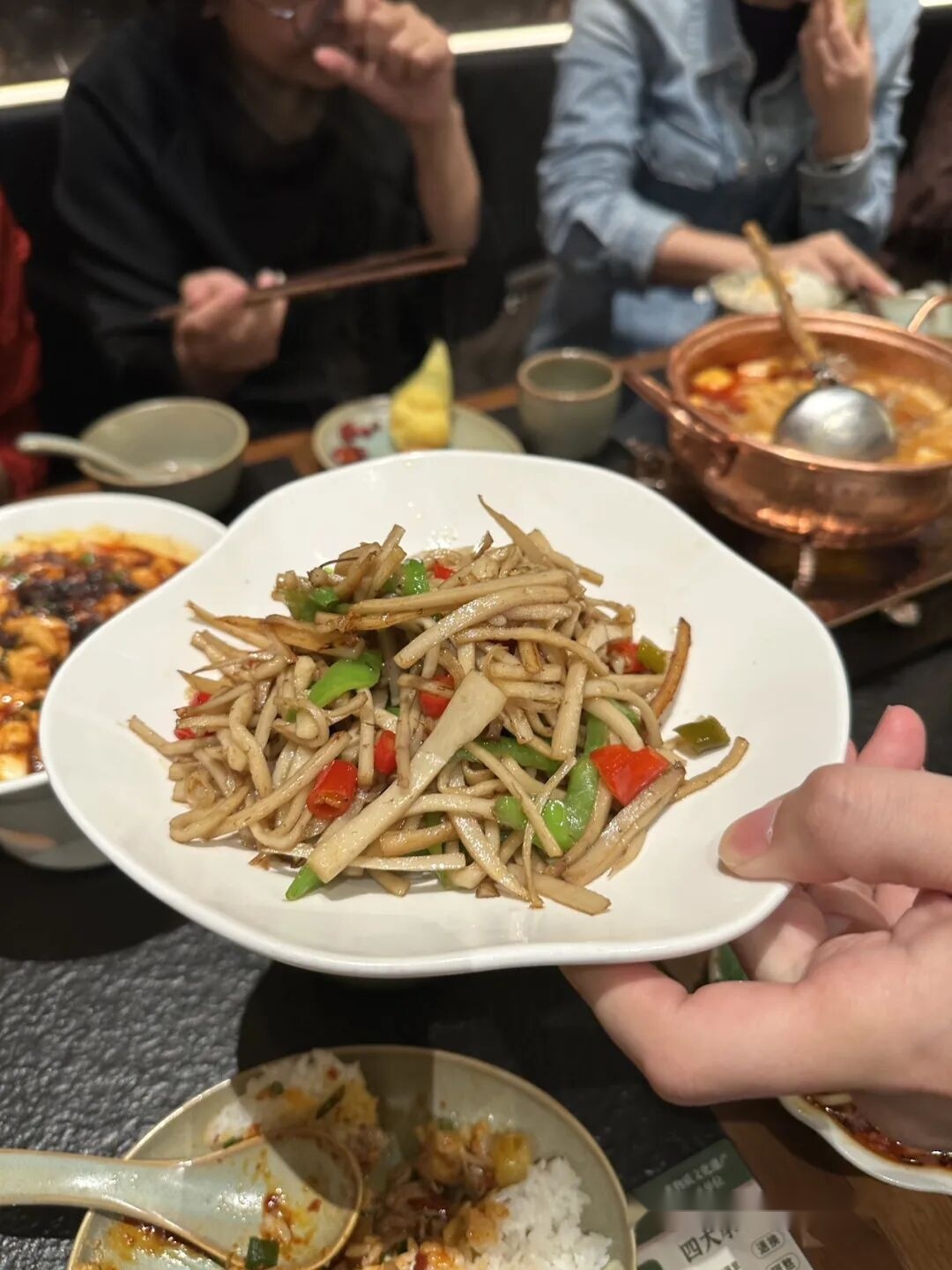
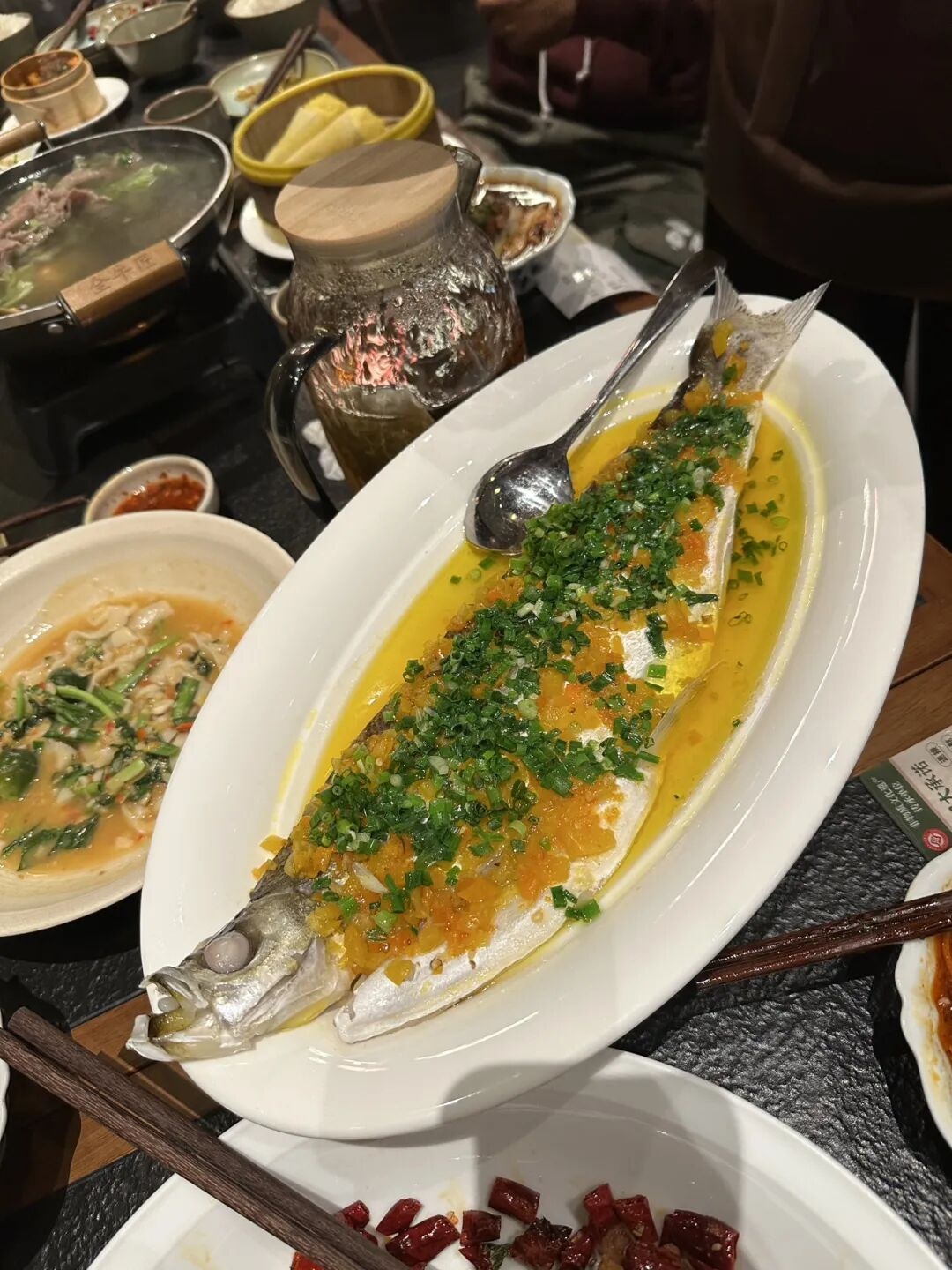
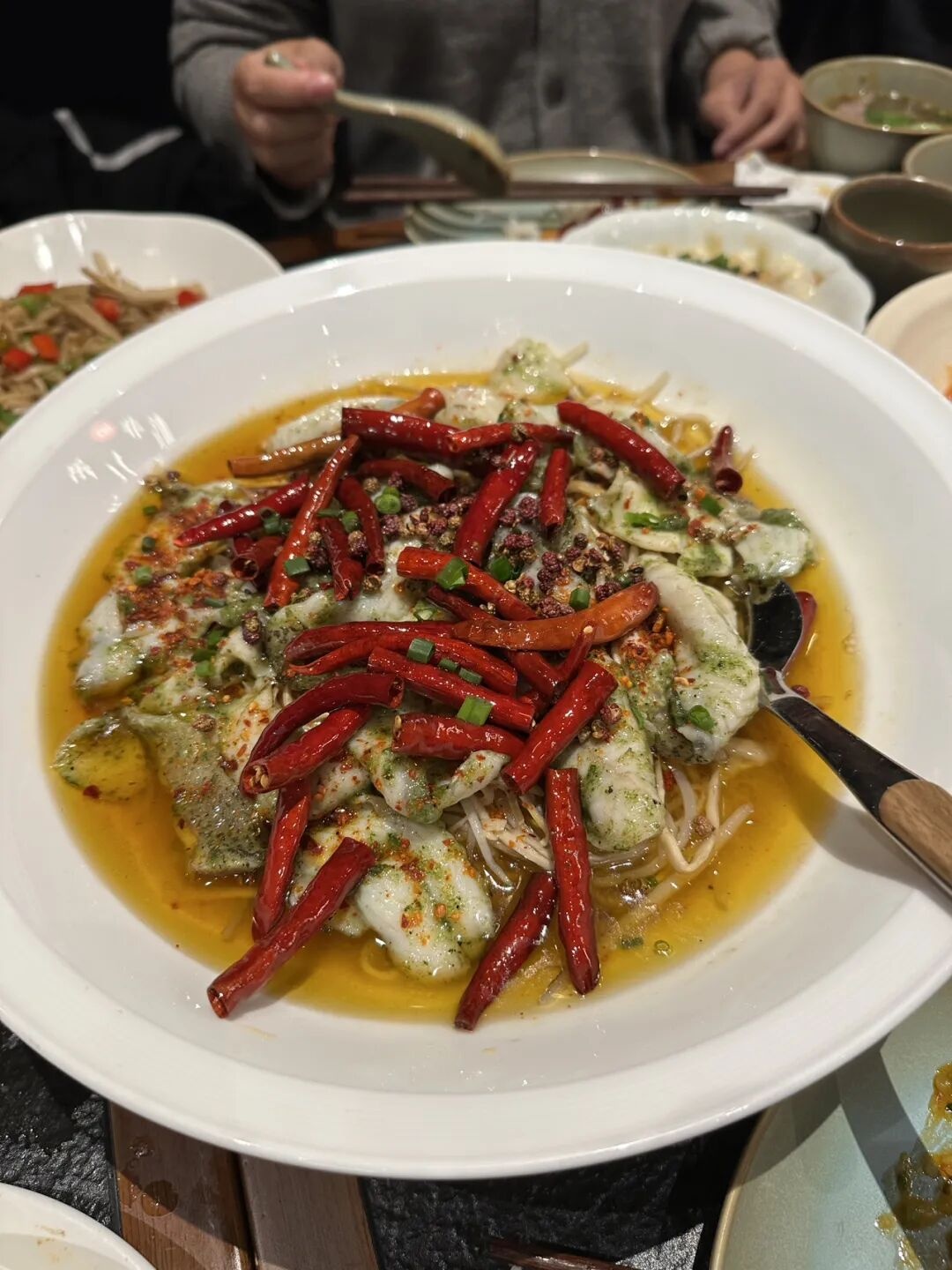


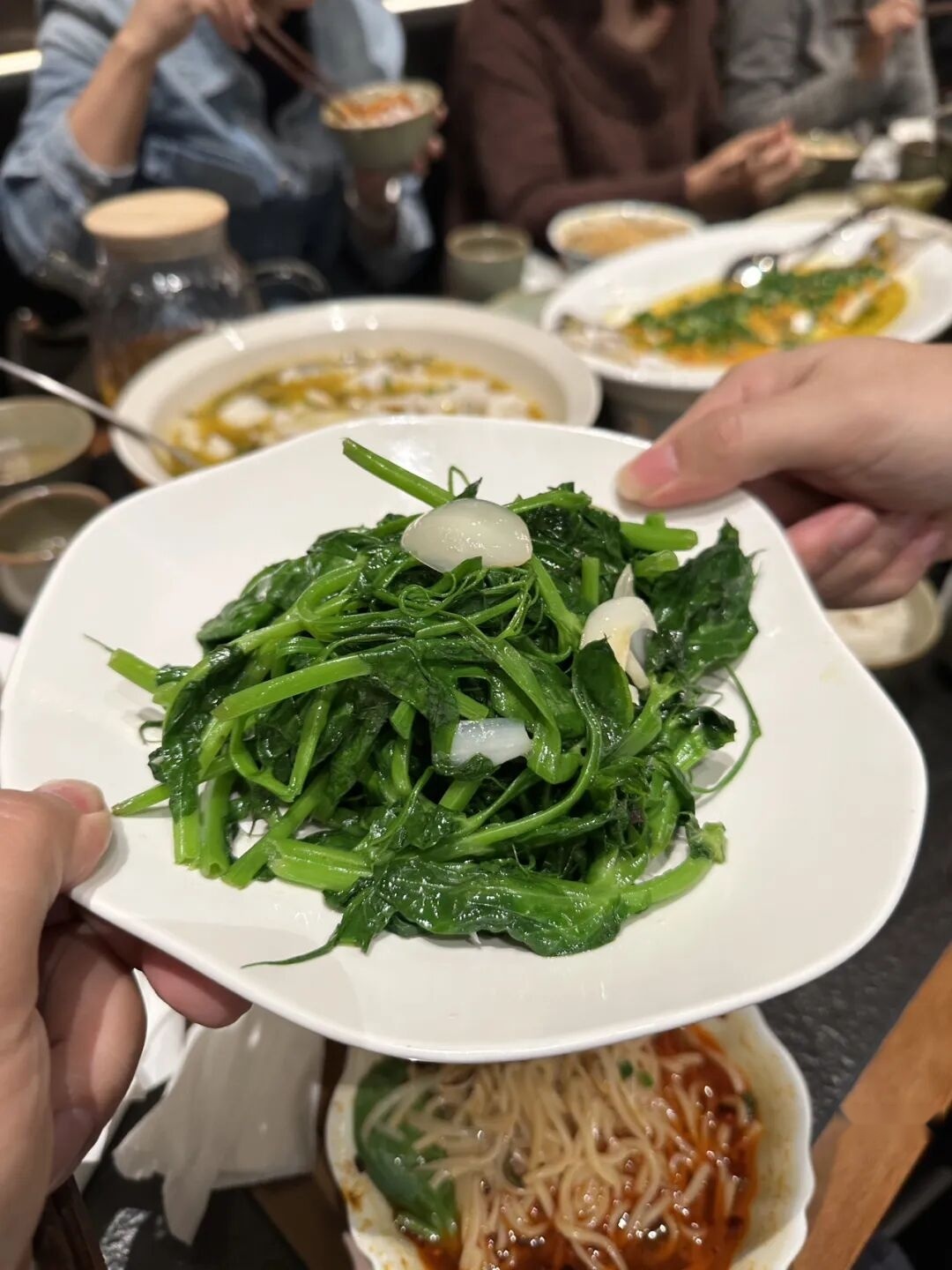


Harbin's Tongyi Halal Restaurant: Authentic Jiao Shao Rou Tiao and Hui Muslim Cuisine Review
Articles • Hasan09 posted the article • 0 comments • 55 views • 3 days ago
My old friend came back to Harbin with her kids who were on fall break, and I was thinking about what to feed them. They'd already done BBQ, iron pot stews, and Korean BBQ, so I figured, let's take them here for some halal food.
It's this small place with a blue sign on Nan Da Liu Dao Street in Daowai. There's no fancy decor, and most of the customers have been coming here for years. Anyone who knows good Hui Muslim food recognizes this spot.
The Jiao Shao Rou Tiao (braised meat strips) were cooked perfectly. The outside was super crispy, coated in a sweet and sour sauce that just got more flavorful the more you chewed.
The Ba Yang Rou Tiao (braised lamb strips) really showed off their cooking skills. The meat slices were arranged neatly, soaking in a rich, savory broth. The lamb was so tender, and the gamey flavor was perfectly balanced – not overpowering at all.
If there's one thing the kids absolutely loved, it was the Su Huang Cai (crispy fried vegetables). The little ones took one bite and were hooked; it was really tasty and had a great crunch.
Jian Jiao Gan Dou Fu (green pepper and dried tofu) is a basic test of any halal restaurant's skill. The dried tofu was super soft, coated in all the sauce, and had a savory flavor that was perfect with rice.
My friend mentioned they had dumplings the day before, so we skipped them this time. But the filling is made the old-fashioned way, with a clean, pure meat flavor that doesn't overpower anything. Super delicious.
Harbin definitely has its share of halal restaurants, but there aren't many that get the flavors of Hui Muslim cuisine this spot-on. They don't rely on fancy marketing; they stand out solely based on their cooking skills. When it's mealtime, there are almost no empty seats, and everyone's enjoying their food.
I'm not really a food blogger or anything. I just recommend places based on my own feelings. When I find an old spot that really hits the spot, I can't help but want to share it with everyone. It's all about good vibes, and I hope you eat well, sleep soundly, stay happy, and stay healthy! view all
My old friend came back to Harbin with her kids who were on fall break, and I was thinking about what to feed them. They'd already done BBQ, iron pot stews, and Korean BBQ, so I figured, let's take them here for some halal food.
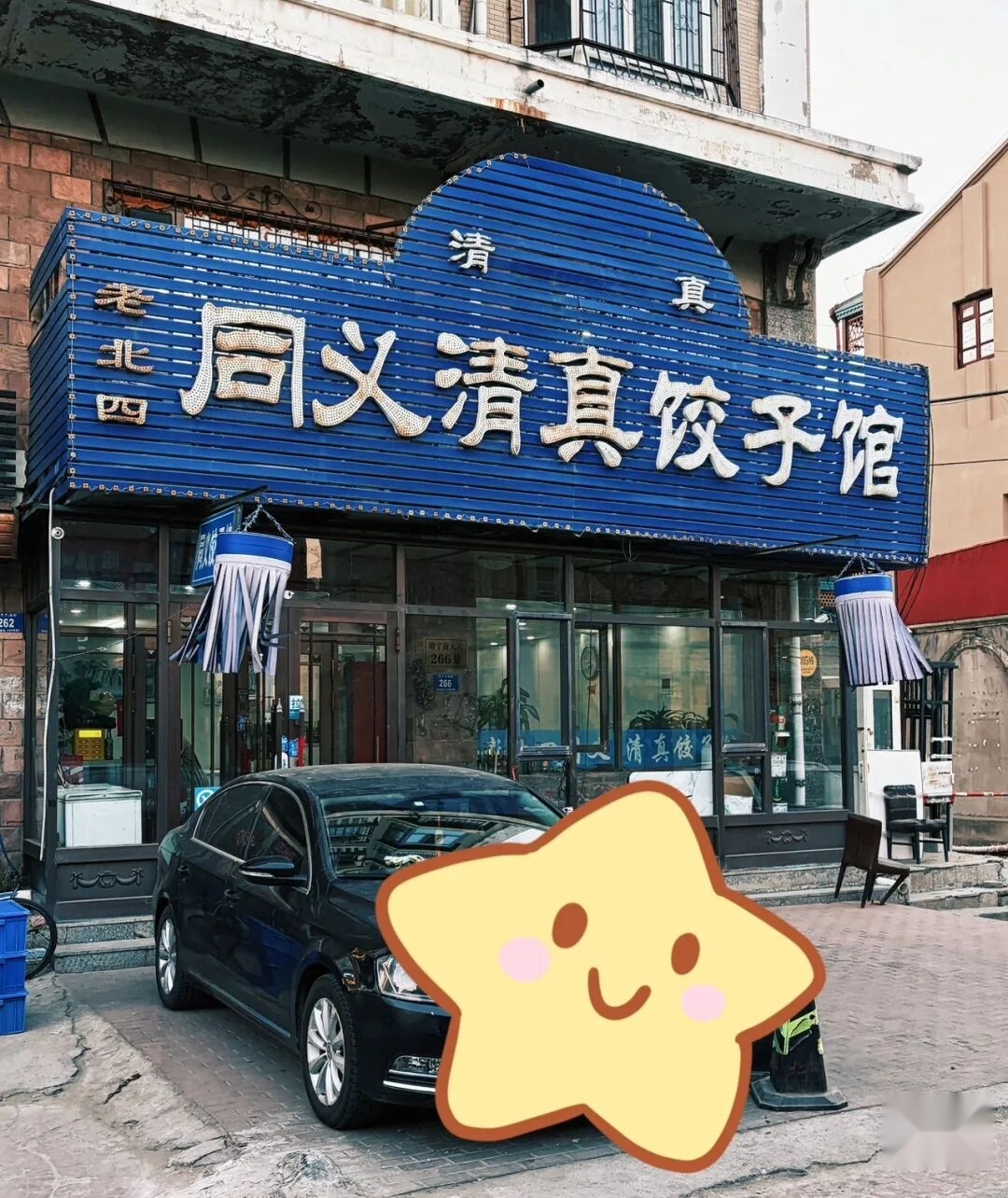
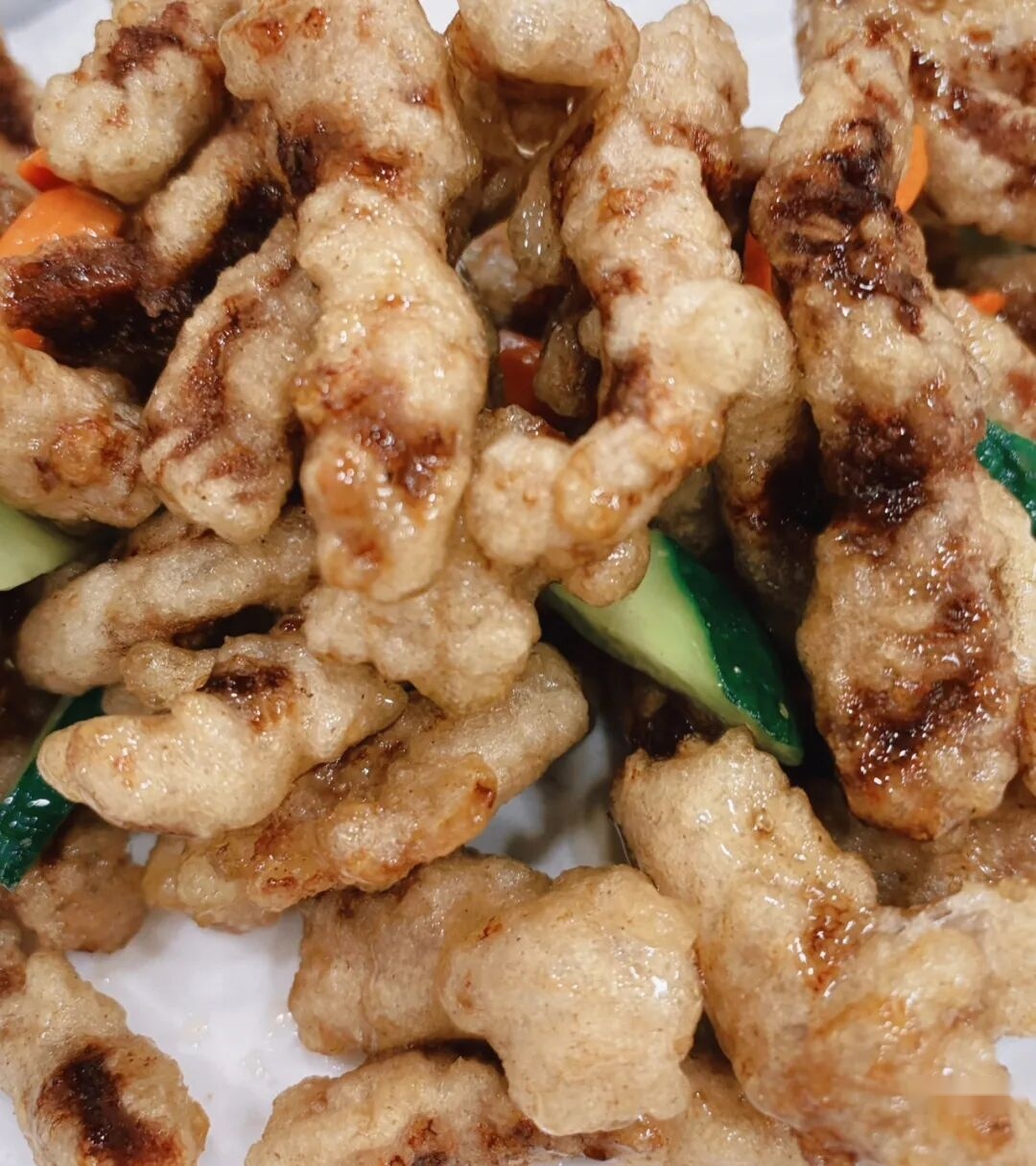
It's this small place with a blue sign on Nan Da Liu Dao Street in Daowai. There's no fancy decor, and most of the customers have been coming here for years. Anyone who knows good Hui Muslim food recognizes this spot.
The Jiao Shao Rou Tiao (braised meat strips) were cooked perfectly. The outside was super crispy, coated in a sweet and sour sauce that just got more flavorful the more you chewed.
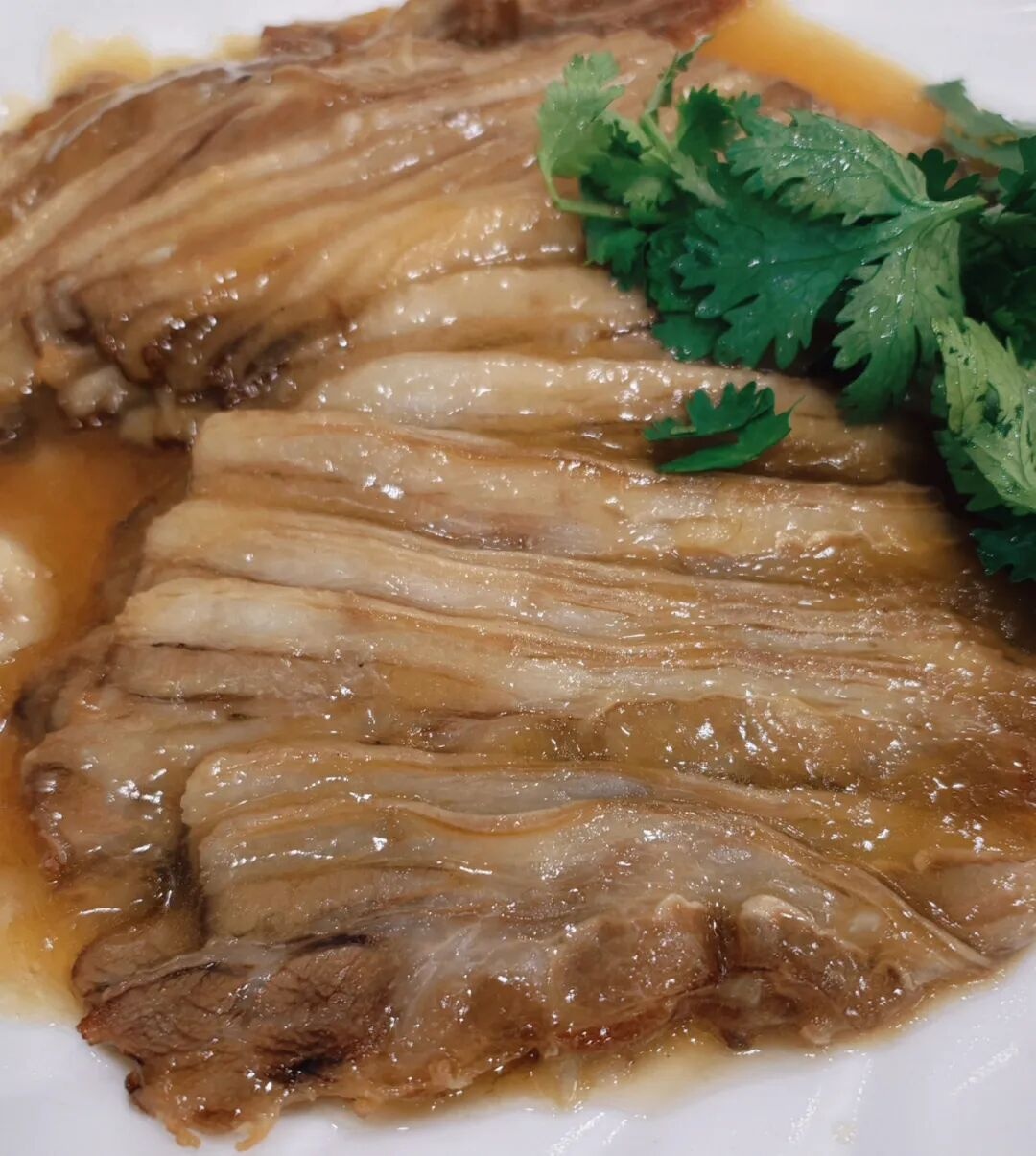
The Ba Yang Rou Tiao (braised lamb strips) really showed off their cooking skills. The meat slices were arranged neatly, soaking in a rich, savory broth. The lamb was so tender, and the gamey flavor was perfectly balanced – not overpowering at all.
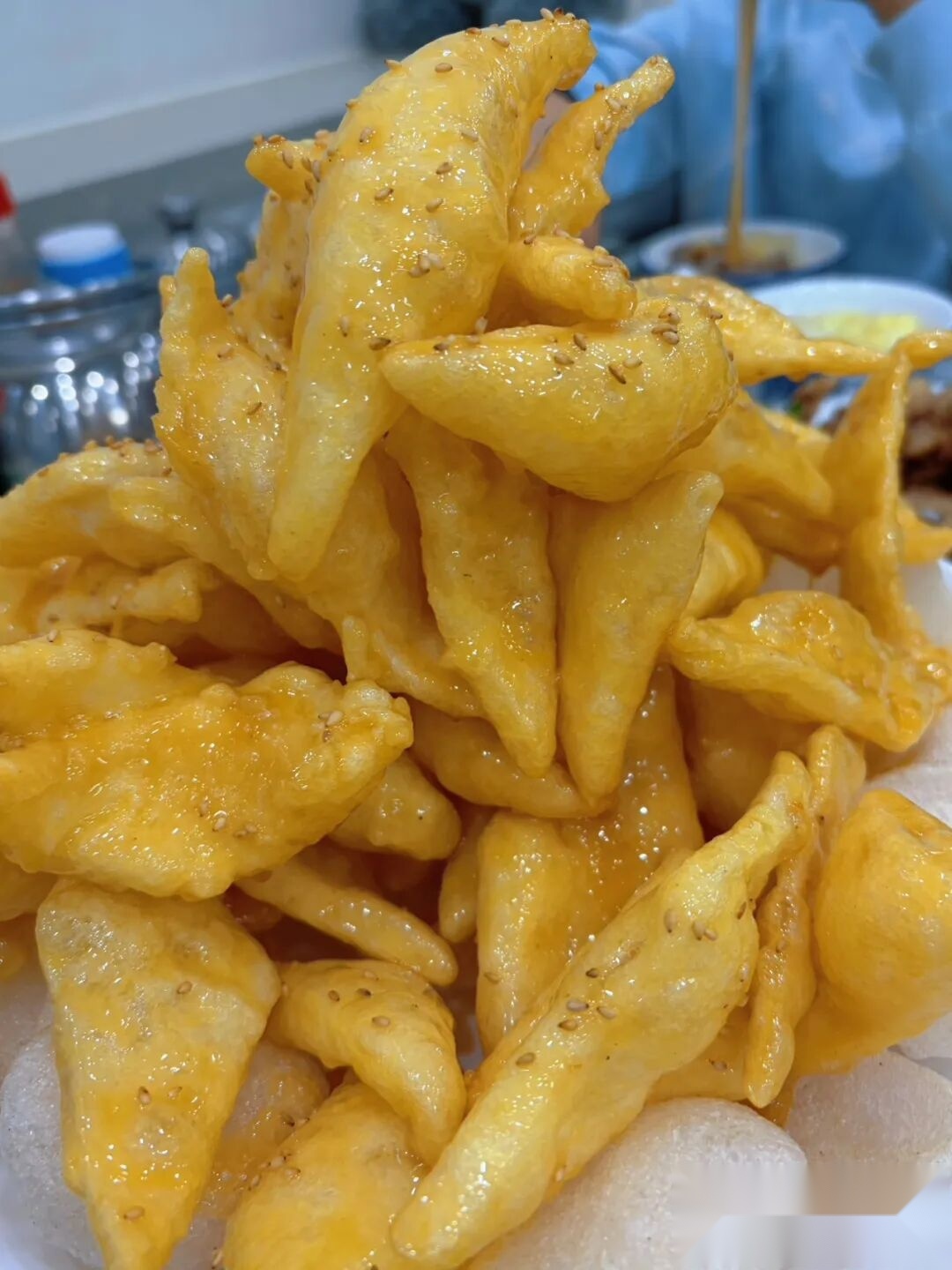
If there's one thing the kids absolutely loved, it was the Su Huang Cai (crispy fried vegetables). The little ones took one bite and were hooked; it was really tasty and had a great crunch.
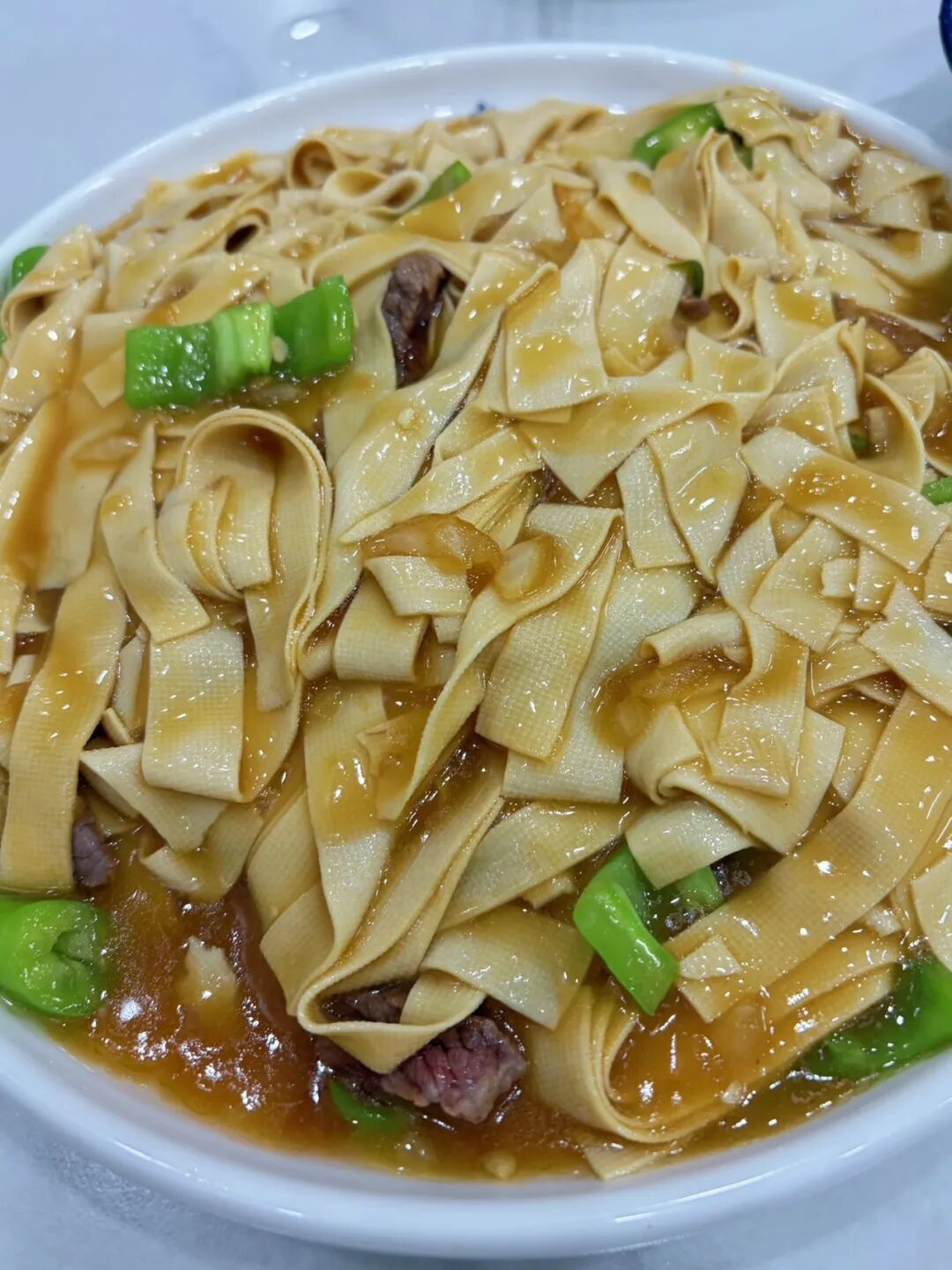
Jian Jiao Gan Dou Fu (green pepper and dried tofu) is a basic test of any halal restaurant's skill. The dried tofu was super soft, coated in all the sauce, and had a savory flavor that was perfect with rice.
My friend mentioned they had dumplings the day before, so we skipped them this time. But the filling is made the old-fashioned way, with a clean, pure meat flavor that doesn't overpower anything. Super delicious.
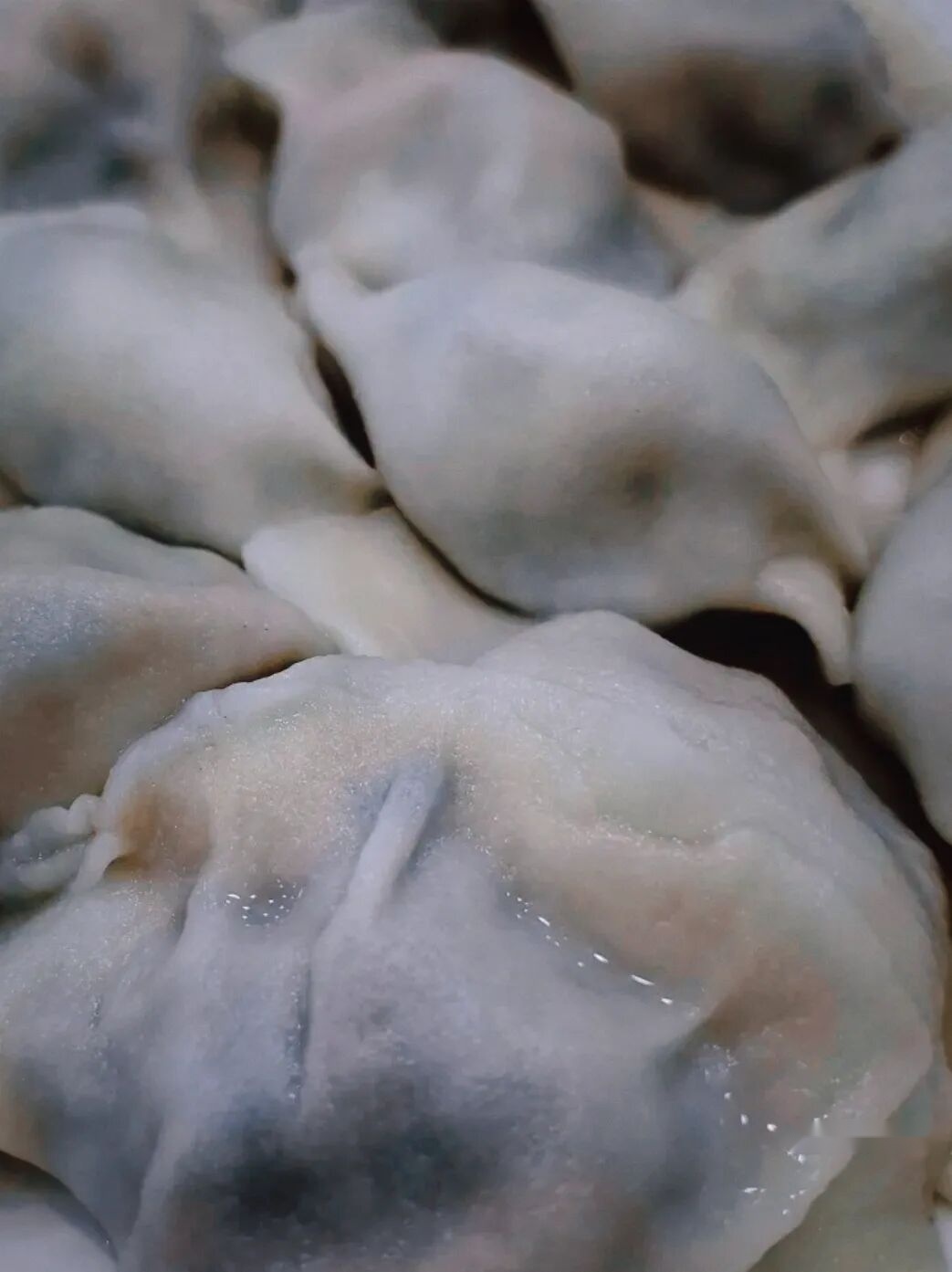
Harbin definitely has its share of halal restaurants, but there aren't many that get the flavors of Hui Muslim cuisine this spot-on. They don't rely on fancy marketing; they stand out solely based on their cooking skills. When it's mealtime, there are almost no empty seats, and everyone's enjoying their food.
I'm not really a food blogger or anything. I just recommend places based on my own feelings. When I find an old spot that really hits the spot, I can't help but want to share it with everyone. It's all about good vibes, and I hope you eat well, sleep soundly, stay happy, and stay healthy!
Shanghai Halal Food Guide: Qingjing Zhai's Authentic Hui Muslim Noodles & Curry Beef Soup
Articles • Hasan09 posted the article • 0 comments • 53 views • 3 days ago
Hongkou used to have these three famous 'Zhai' eateries: Qingxiang Zhai, Qingjing Zhai, and Wanshou Zhai. Qingxiang Zhai is long gone, and Wanshou Zhai always has super long lines, especially during meal times, buzzing like a market. But Qingjing Zhai, one of Hongkou District's three OG Hui Muslim noodle shops and a designated Halal food spot, has been holding down the fort at the intersection of Guangling First Road and Guangzhong Road for over forty years straight.
The 'amazing' I'm talking about isn't about the food being totally flawless, but more about how, after all these years, coming back here still brings back high school memories that I left behind. The night before, I saw someone mention it on WeChat Moments, and it immediately took me back to my time at No. 52 Middle School. Back then, right before senior year evening study, I'd often rush over for a hot bowl of noodles, which always warmed me up from the inside out. After thinking about it all night, I decided to just head out first thing in the morning.
This morning at 8:30 AM, it was pretty chilly outside. I took the bus there like usual and then planned to walk back. I got off at Guangzhong Road and Shuidian Road, then walked along Guangzhong Road. The plane tree leaves along the street were turning yellow, and the sunlight was streaming down at an angle, making me feel like I'd drifted back to slower, olden days. The shop is on a corner, with a small green space in front. Its facade is a distinct Halal green, so you could easily miss it if you're not paying attention. When I pushed the door open and went inside, the place was super quiet, with just a few scattered customers. It was totally different from the bustling noodle spot I remembered from back in the day.
The menu on the wall was super clear. I ordered a bowl of Lajiao Gandiaomian (spicy sauce dry noodles) and added a serving of curry beef soup. I made sure to tell the owner to cook the noodles al dente. After waiting about five or six minutes, I went to the counter to pick up my noodles myself. The red bowl was piled high with spicy sauce, and the diced tofu skin and diced wild rice stems looked glossy, giving off that familiar savory aroma. It was slightly spicy on the first bite, pretty salty, and the noodles were a bit sticky – not quite the texture I remembered. Plus, there was only a tiny piece of diced meat at the bottom of the bowl. The small side of pickled veggies that came with it was fresh, sweet, and crisp – a nice surprise, actually.
The curry beef soup had a clear broth, still retaining the richness from being simmered with beef bones. But there was a bit too much curry, making it super salty, and the beef slices were thin, so the fresh flavor was a lot weaker. Still, I slowly finished the whole bowl. After more than forty years, the owner might have changed and the taste might be different, but that authentic, down-to-earth vibe of old Hongkou definitely still hangs around the place.
When I walked out, the sun was higher, warming me up. I felt nostalgic, but also a little melancholic. Being able to find this old Halal shop, which holds so many memories from my youth, amidst all the city changes – *that's* what I mean by 'amazing'. It's like an old friend that's been through a lot, still standing strong, holding onto a piece of my past. view all
Hongkou used to have these three famous 'Zhai' eateries: Qingxiang Zhai, Qingjing Zhai, and Wanshou Zhai. Qingxiang Zhai is long gone, and Wanshou Zhai always has super long lines, especially during meal times, buzzing like a market. But Qingjing Zhai, one of Hongkou District's three OG Hui Muslim noodle shops and a designated Halal food spot, has been holding down the fort at the intersection of Guangling First Road and Guangzhong Road for over forty years straight.
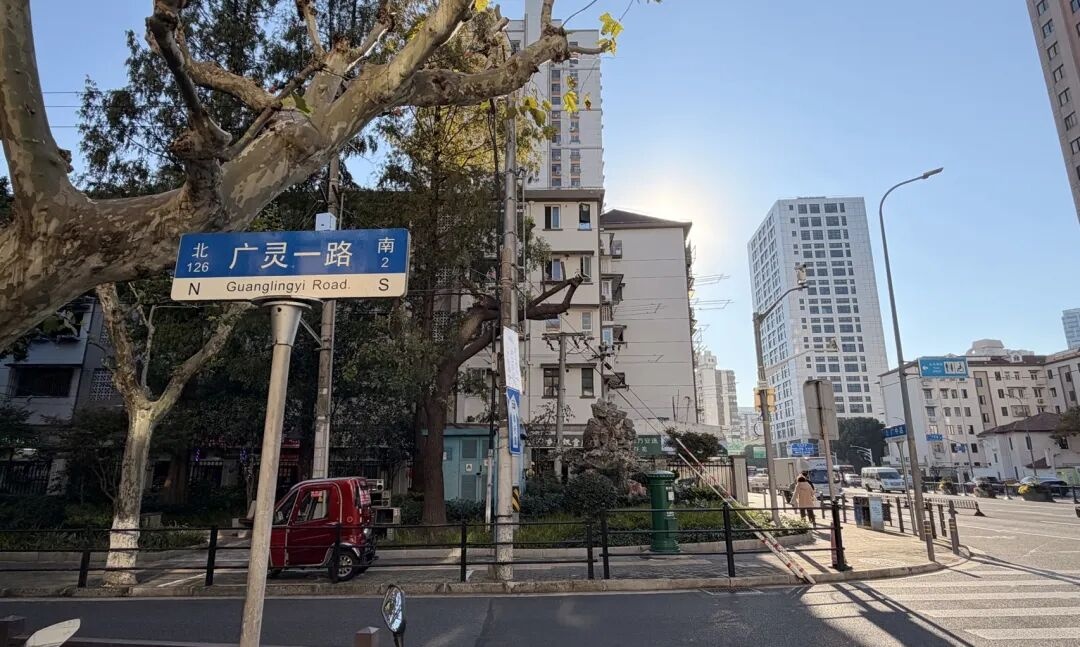
The 'amazing' I'm talking about isn't about the food being totally flawless, but more about how, after all these years, coming back here still brings back high school memories that I left behind. The night before, I saw someone mention it on WeChat Moments, and it immediately took me back to my time at No. 52 Middle School. Back then, right before senior year evening study, I'd often rush over for a hot bowl of noodles, which always warmed me up from the inside out. After thinking about it all night, I decided to just head out first thing in the morning.
This morning at 8:30 AM, it was pretty chilly outside. I took the bus there like usual and then planned to walk back. I got off at Guangzhong Road and Shuidian Road, then walked along Guangzhong Road. The plane tree leaves along the street were turning yellow, and the sunlight was streaming down at an angle, making me feel like I'd drifted back to slower, olden days. The shop is on a corner, with a small green space in front. Its facade is a distinct Halal green, so you could easily miss it if you're not paying attention. When I pushed the door open and went inside, the place was super quiet, with just a few scattered customers. It was totally different from the bustling noodle spot I remembered from back in the day.
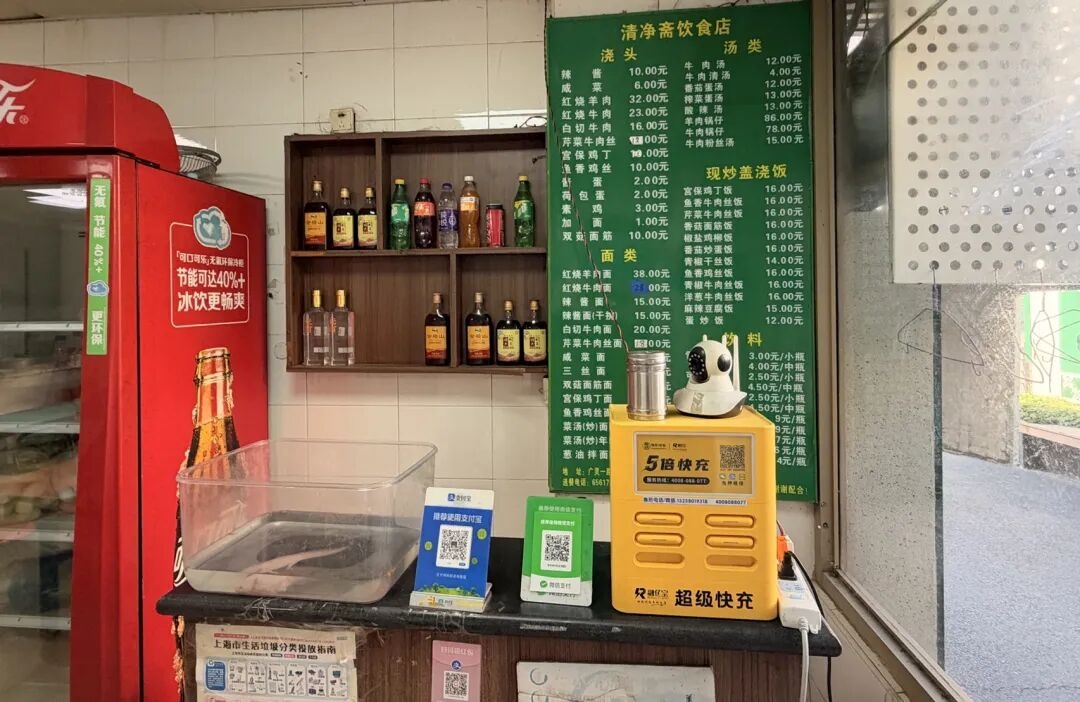
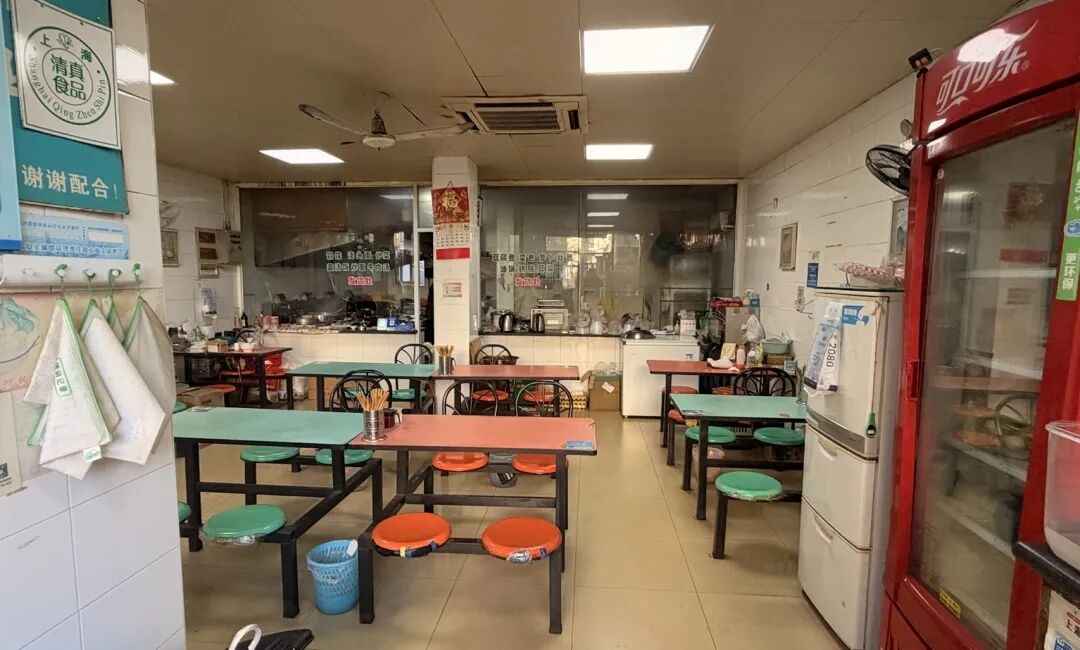
The menu on the wall was super clear. I ordered a bowl of Lajiao Gandiaomian (spicy sauce dry noodles) and added a serving of curry beef soup. I made sure to tell the owner to cook the noodles al dente. After waiting about five or six minutes, I went to the counter to pick up my noodles myself. The red bowl was piled high with spicy sauce, and the diced tofu skin and diced wild rice stems looked glossy, giving off that familiar savory aroma. It was slightly spicy on the first bite, pretty salty, and the noodles were a bit sticky – not quite the texture I remembered. Plus, there was only a tiny piece of diced meat at the bottom of the bowl. The small side of pickled veggies that came with it was fresh, sweet, and crisp – a nice surprise, actually.
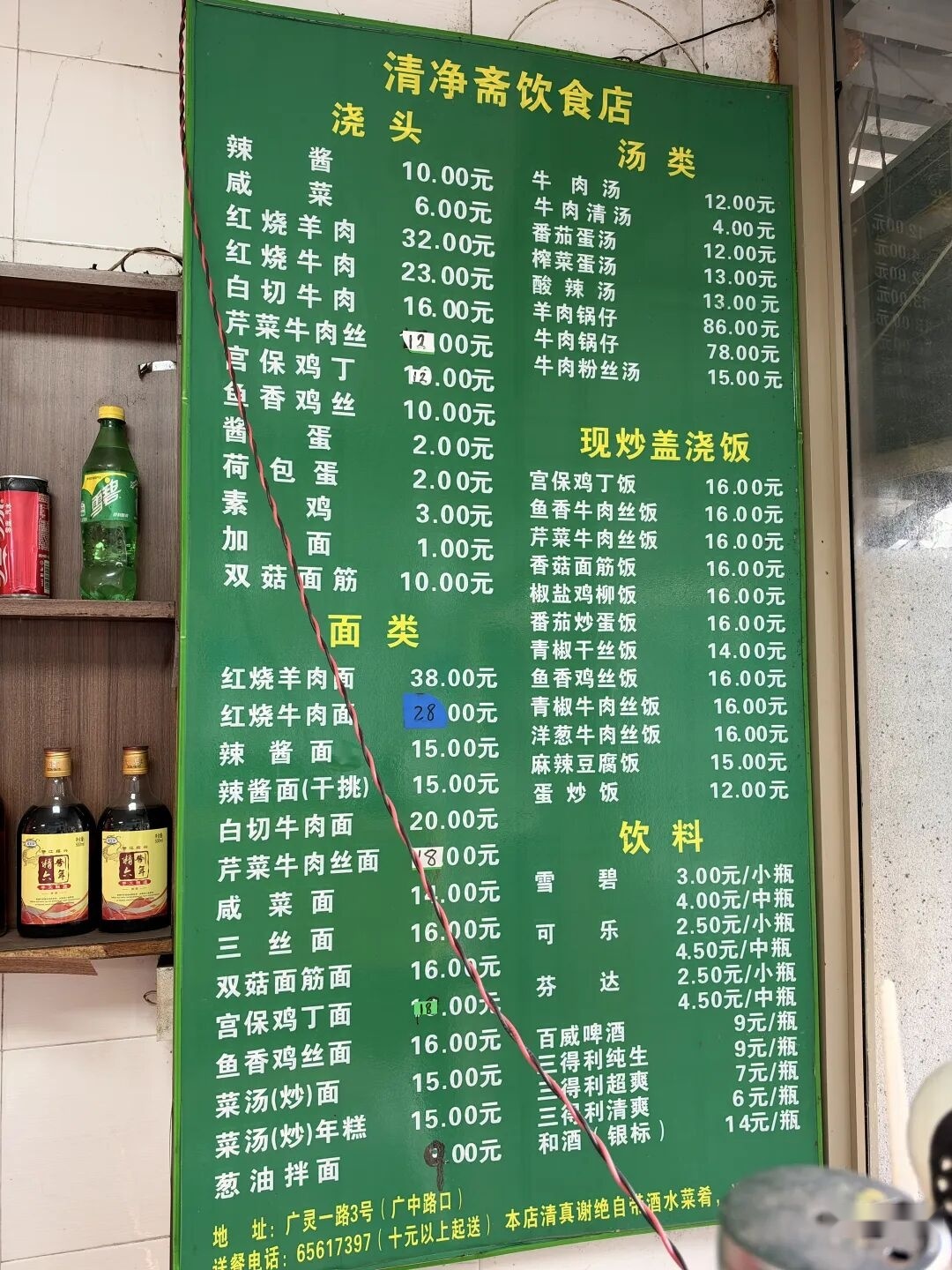
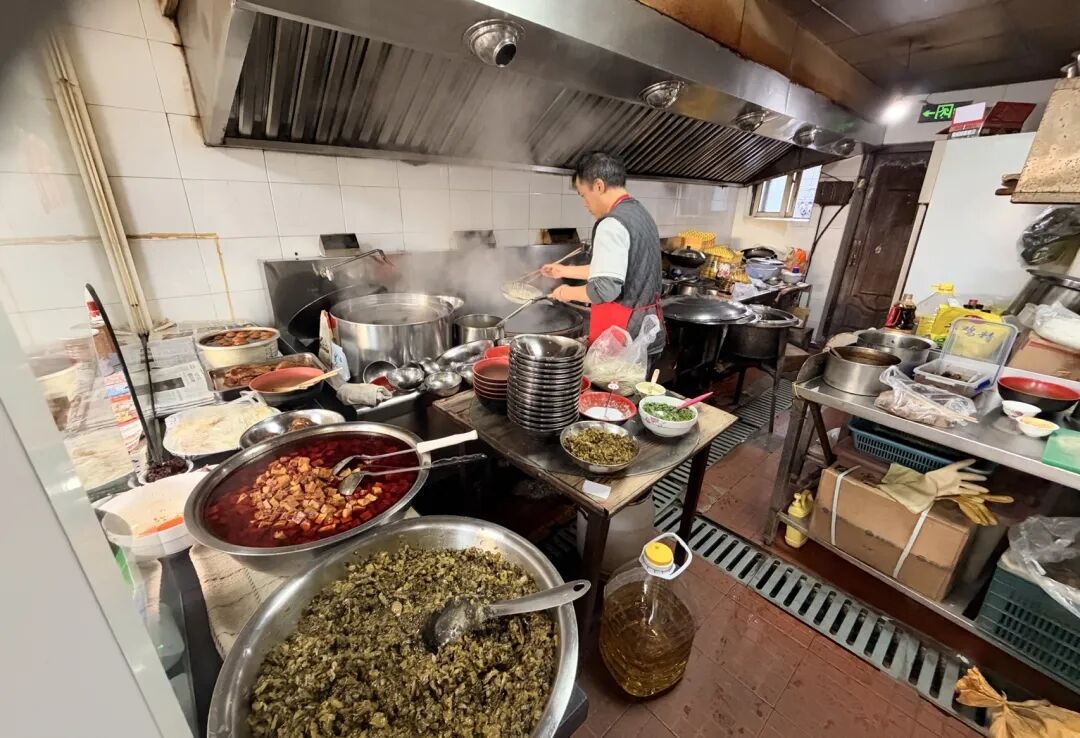
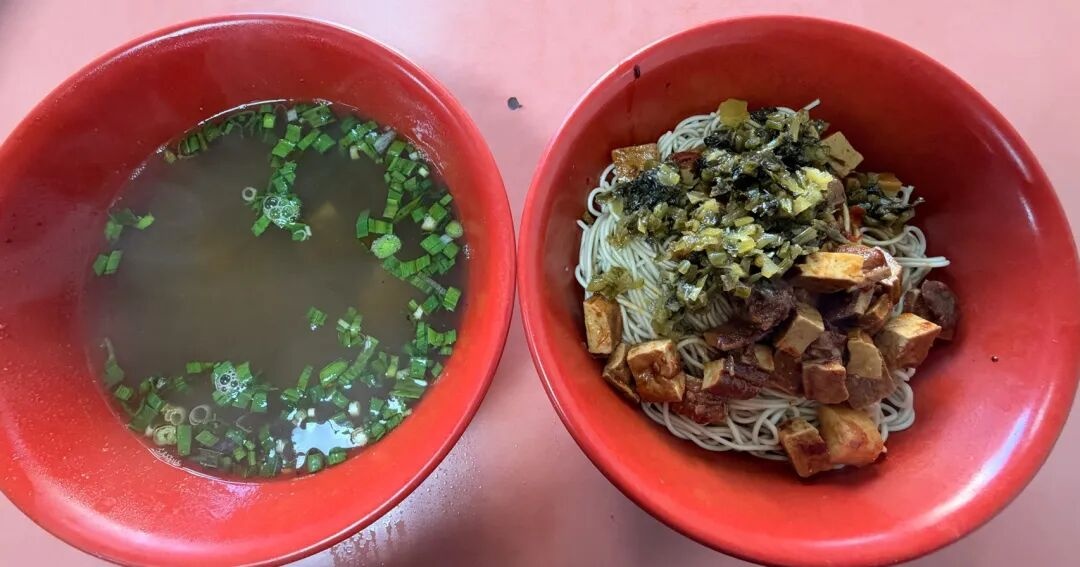
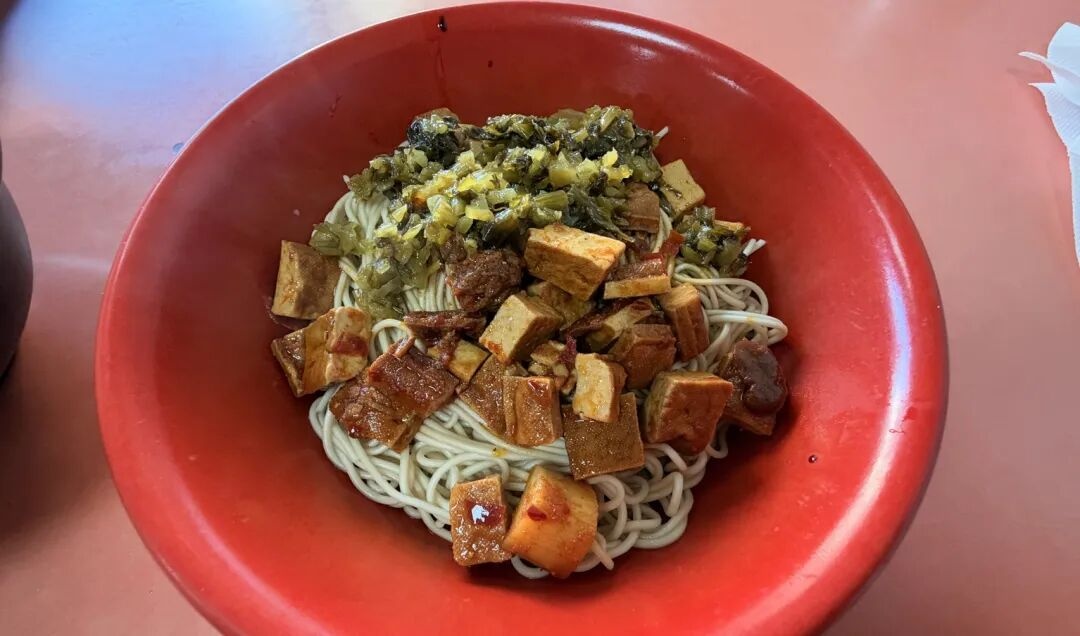
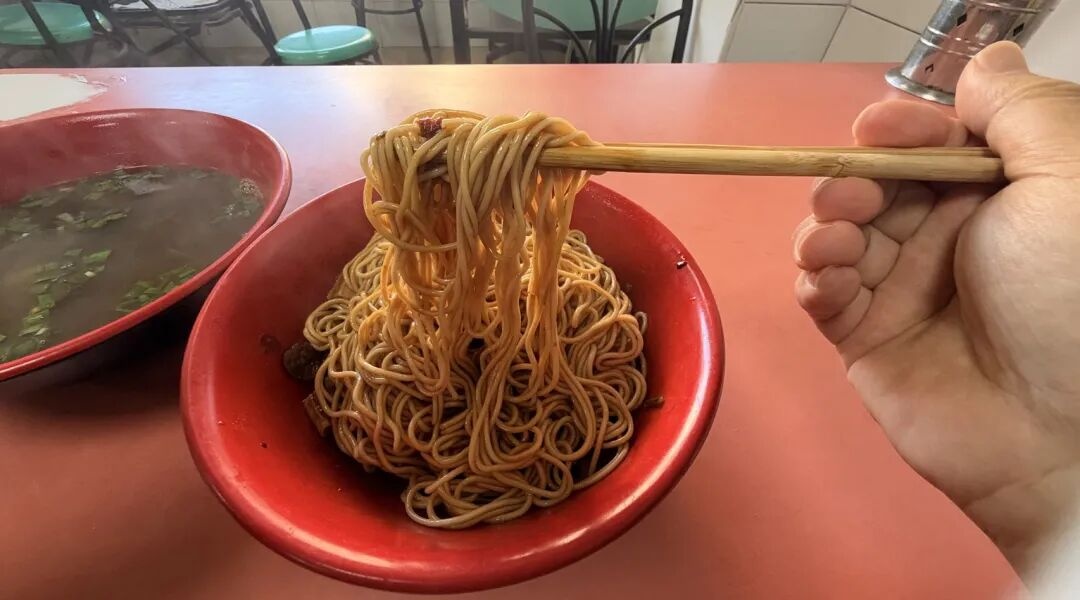
The curry beef soup had a clear broth, still retaining the richness from being simmered with beef bones. But there was a bit too much curry, making it super salty, and the beef slices were thin, so the fresh flavor was a lot weaker. Still, I slowly finished the whole bowl. After more than forty years, the owner might have changed and the taste might be different, but that authentic, down-to-earth vibe of old Hongkou definitely still hangs around the place.
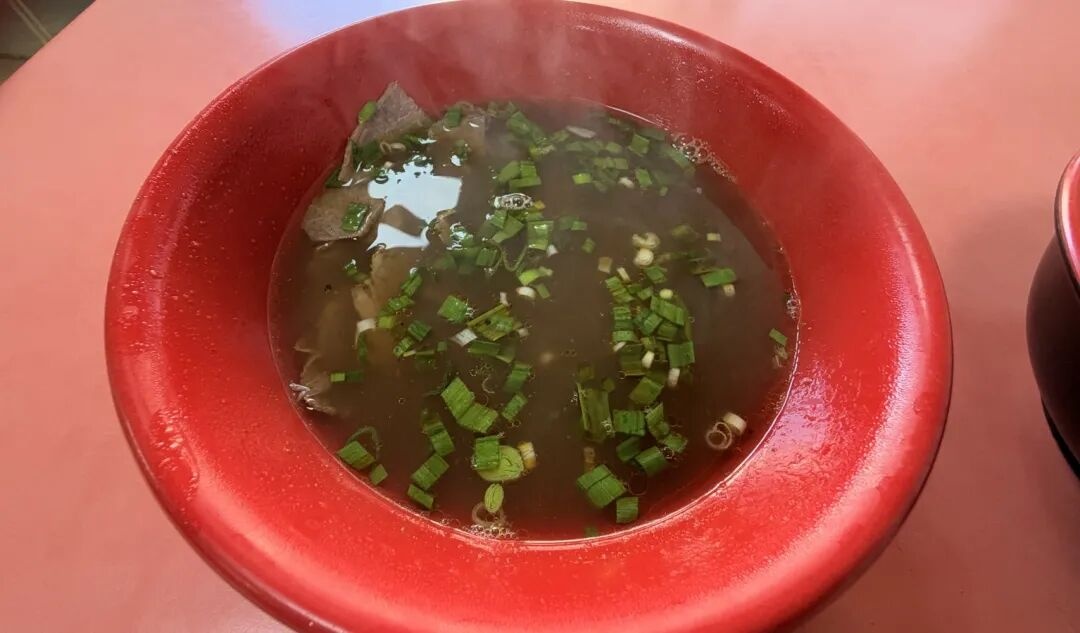
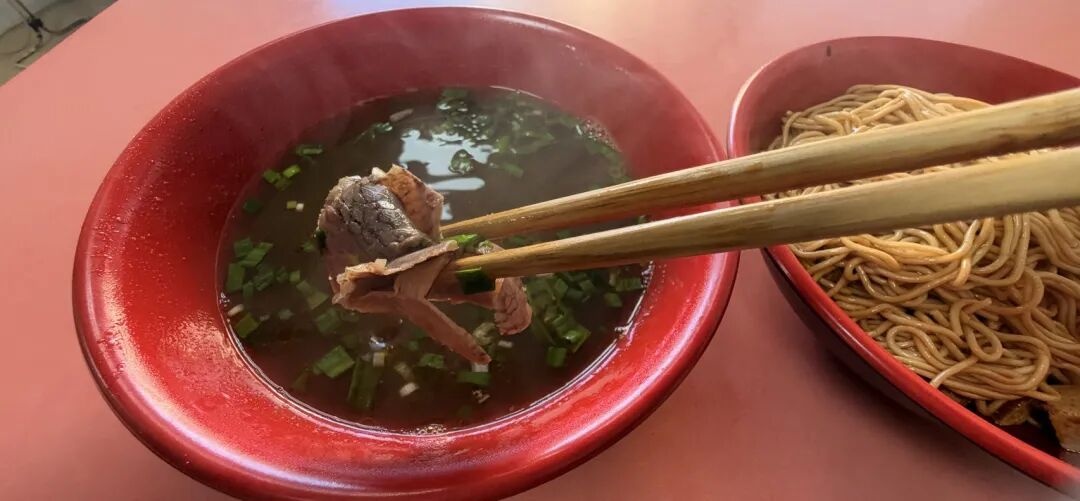
When I walked out, the sun was higher, warming me up. I felt nostalgic, but also a little melancholic. Being able to find this old Halal shop, which holds so many memories from my youth, amidst all the city changes – *that's* what I mean by 'amazing'. It's like an old friend that's been through a lot, still standing strong, holding onto a piece of my past.
Kunming Halal Food Guide: Chenggong Hui Muslim Street Food & Top Eateries for Authentic Flavors
Articles • Hasan09 posted the article • 0 comments • 65 views • 3 days ago
Hui Hui Ying: A neighborhood where it's *always* mealtime.
The food-to-area ratio is insane – you literally bump into an eatery every 5 meters.
Snacks, full-course meals, hotpot, barbecue... seriously, there's something for everyone, all ages will love it, and it won't upset your stomach!
So, definitely save this must-eat list! After you've grabbed some flowers at Dounan Flower Market or finished your bike ride on the Dianchi Lake Greenway, go treat yourself to some delicious eats.
Brother Ma's Spicy Beef
This place is practically a food legend; one pot of their spicy beef literally put the whole neighborhood on the map.
If you're a spicy food lover, you HAVE to try it. The only downside is you'll eat a ton of rice with it!
Lian Tiao Chang Restaurant (Chain Factory Restaurant)
This old-school beef joint has been a staple in the community forever. It's in a metal shed, which gives it a totally old-school vibe, but countless foodies dream about this place.
Their braised dishes, cold cuts, and cold chicken are super flavorful, and their home-style stir-fries have that classic, old-school taste.
Miss out, and you'll seriously regret it!
Yi Tang Niu Jian Mian (Beef Shank Noodle Soup)
When I was a kid, I used to drool watching TV shows with beef noodles piled high with meat. Well, guess what? You can find the 'plus' version right here in real life!
They use generous, thick cuts of beef shank, so you know the flavor is going to be amazing.
Auntie Ma's Hotpot Skewers (Ma Niang Niang Shuan Cai)
If there's one place that can get even a hardcore 'meat-eater' to enjoy a bowl of veggies, it's gotta be the famous Auntie Ma's.
You get two whole tables of side dishes to pick from, and you can choose flavors like sour and spicy, mala (numb and spicy), or clear broth.
Once you try this place, you'll either go zero times or countless times – there's no in-between!
Auntie Yan's Milk Tea Shop (Yan Niang Nai Cha Pu)
Seriously, the 'aunties' in this community are just on another level! Besides Auntie Ma's, Auntie Yan is another absolute master in Hui Hui Ying's food scene that you can't ignore.
Their glutinous rice porridge milk tea will make you realize that those 'pearls' made from starch are totally no match for some serious carbs.
Niu Yi Jue Suancai Niurou (Super Beef with Pickled Vegetables)
This is the community's newest food king! The owner became super popular online for helping with the 'Baby Come Home' initiative, and now everyone's saying we can't let him have too much free time!
But what really keeps diners coming back is their freshly stir-fried pickled vegetable hotpot base and daily fresh-cut beef slices.
Cang Ku Shaokao (Warehouse Barbecue)
As night falls, it's barbecue time!
This barbecue joint is loaded with beef! You can try all sorts of cuts here, from marbled wagyu-style to ribs and beef shank.
They have a full range of skewer seasonings too, like mustard, garlic, and even New Orleans-style.
✨ Bonus Tip for Your Meal:
Once Winter Begins (Lidong) passes, Chenggong turns into a golden wonderland.
The ginkgo forest here is one of Chenggong's best spots for viewing, and it's totally Instagram-worthy.
This year, they've even planted a field of sorghum next to the ginkgo forest, giving you even more photo ops! view all
Hui Hui Ying: A neighborhood where it's *always* mealtime.
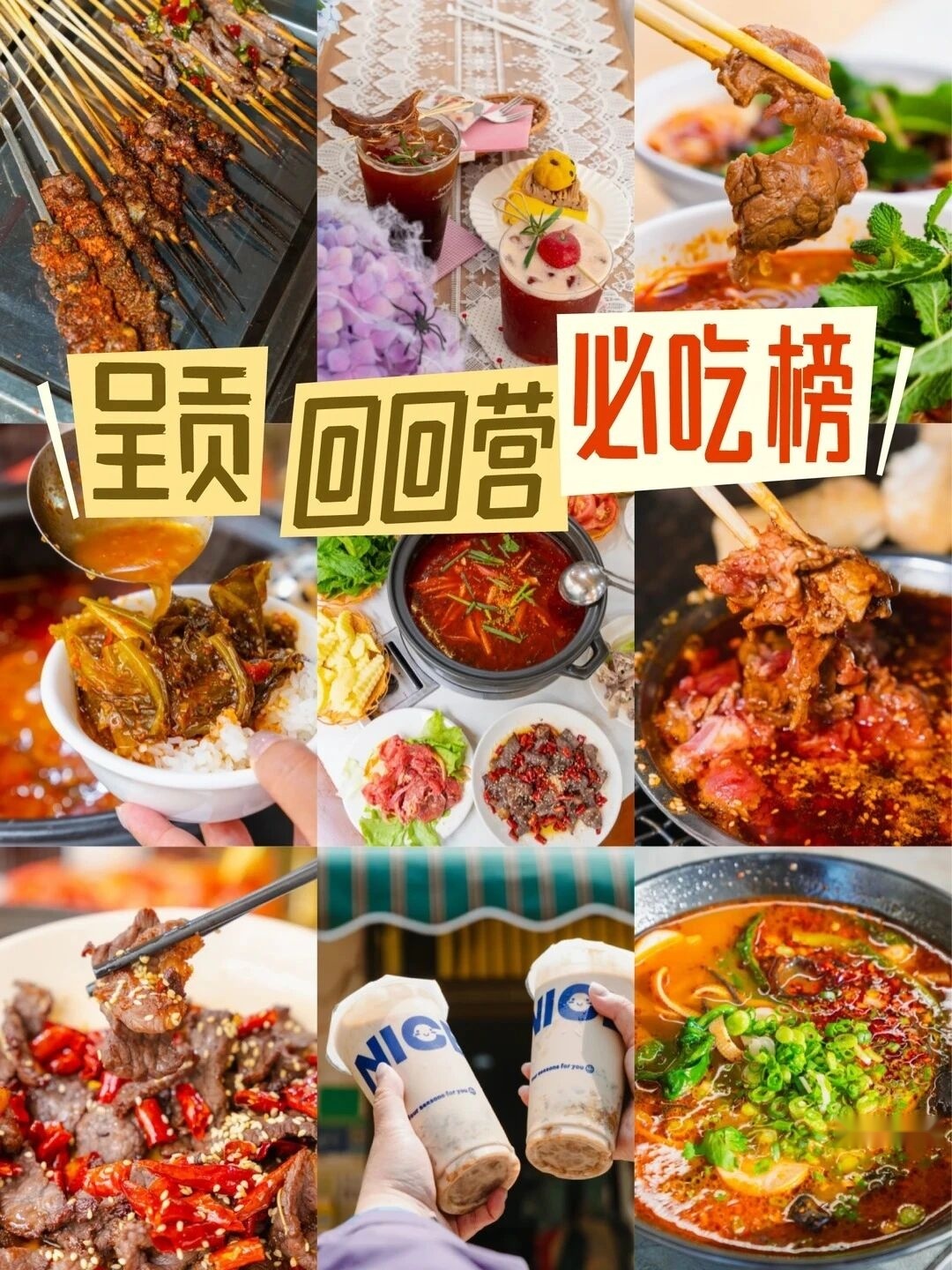
The food-to-area ratio is insane – you literally bump into an eatery every 5 meters.
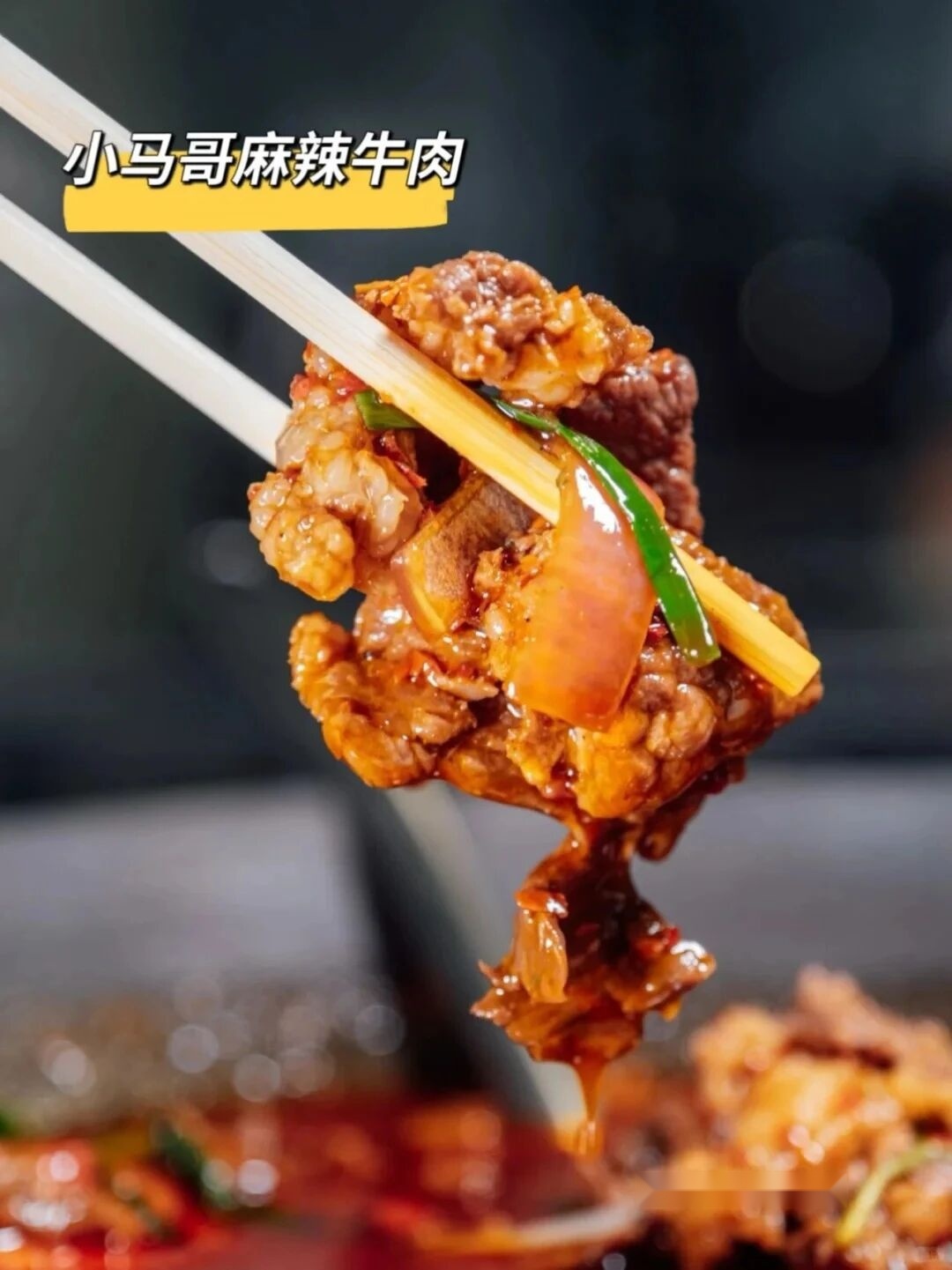
Snacks, full-course meals, hotpot, barbecue... seriously, there's something for everyone, all ages will love it, and it won't upset your stomach!
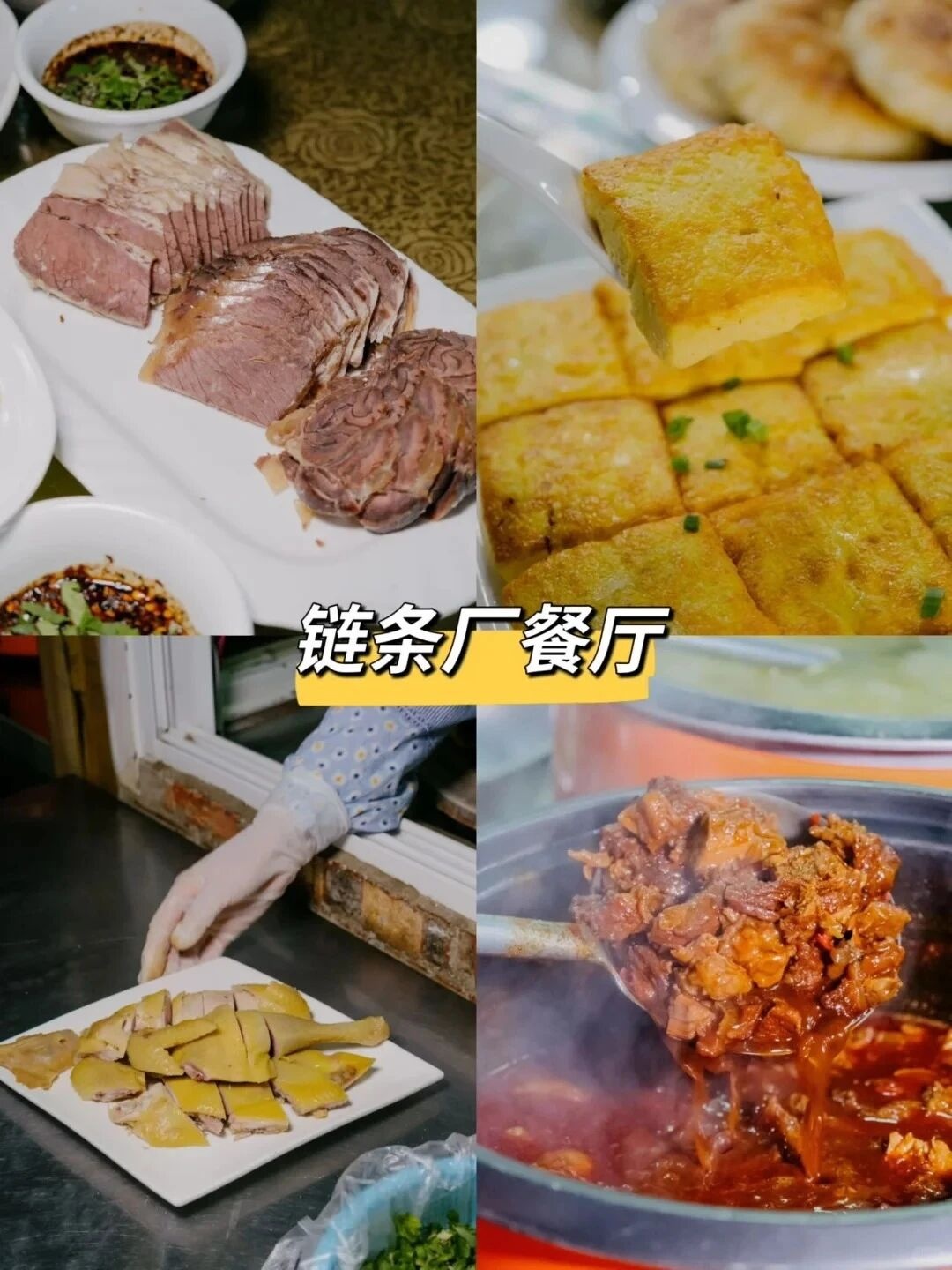
So, definitely save this must-eat list! After you've grabbed some flowers at Dounan Flower Market or finished your bike ride on the Dianchi Lake Greenway, go treat yourself to some delicious eats.
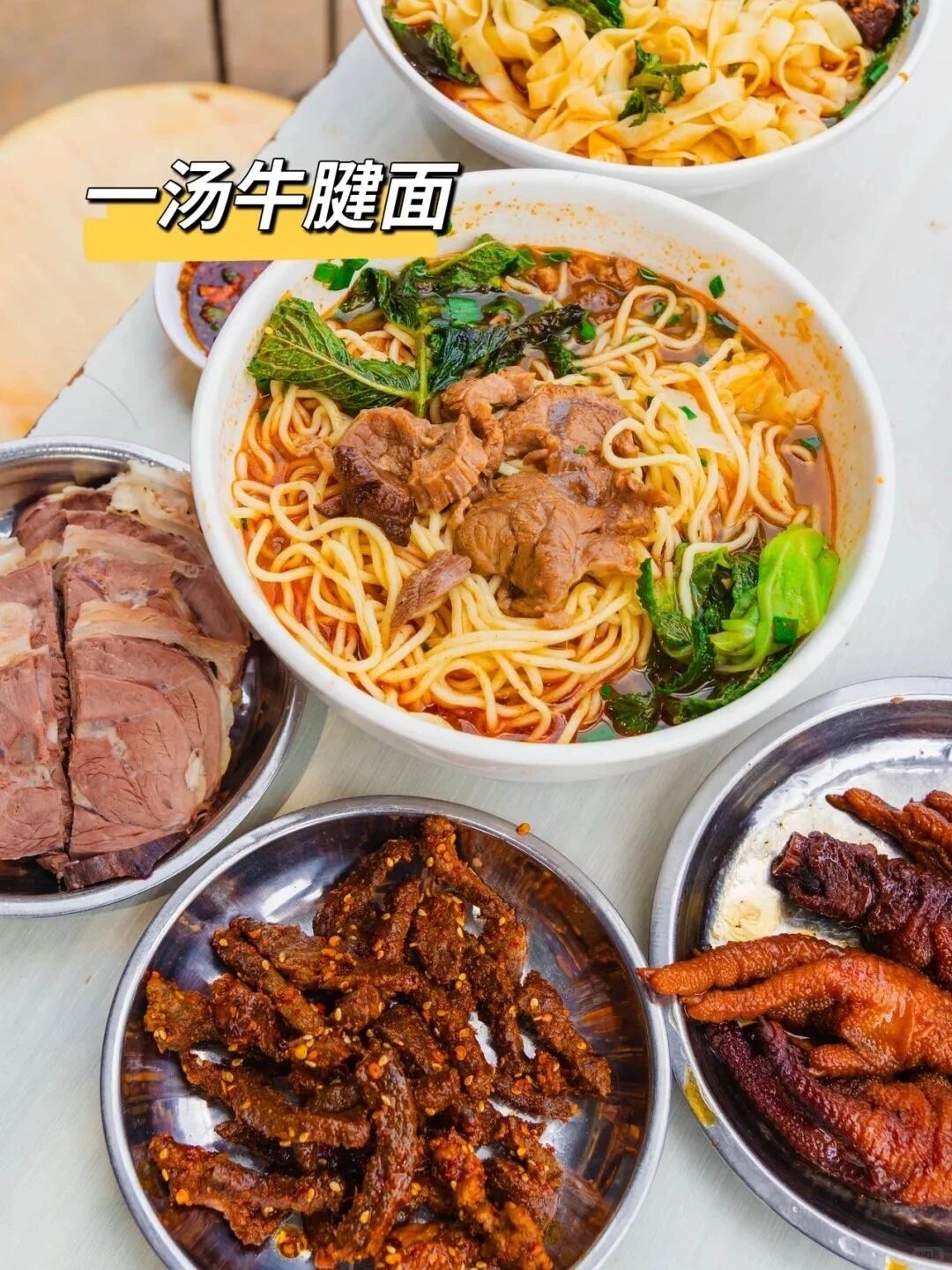
Brother Ma's Spicy Beef
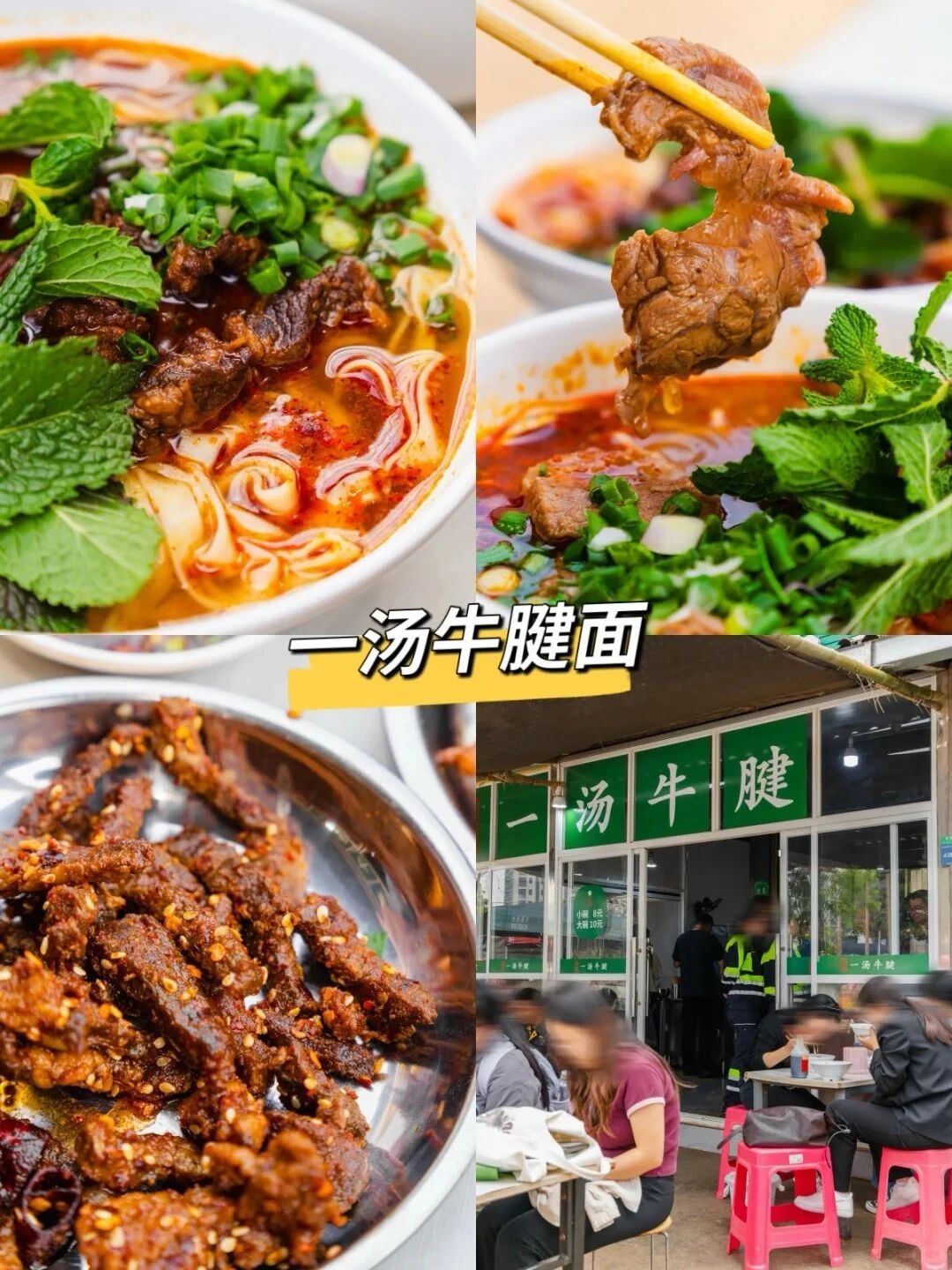
This place is practically a food legend; one pot of their spicy beef literally put the whole neighborhood on the map.
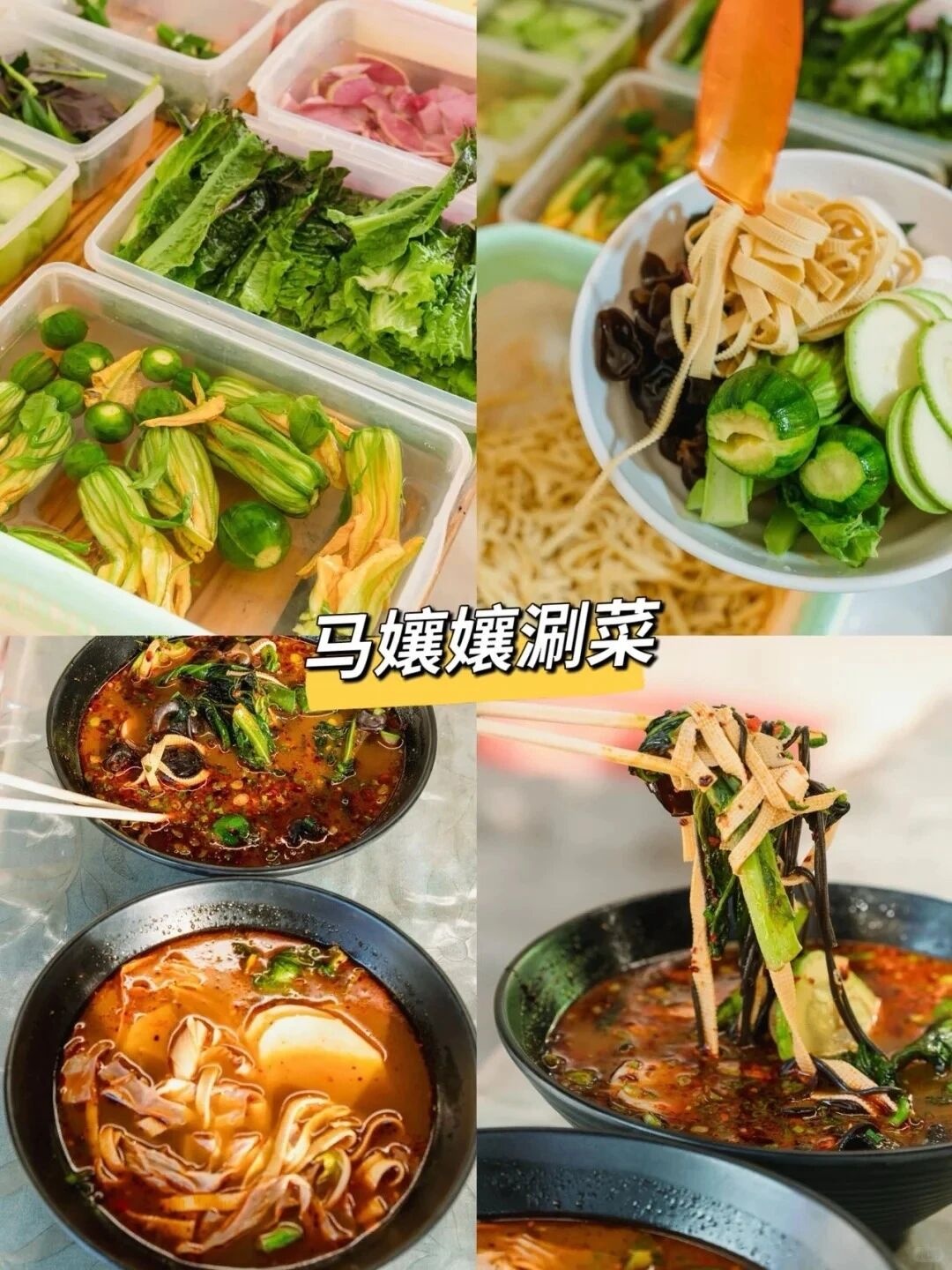
If you're a spicy food lover, you HAVE to try it. The only downside is you'll eat a ton of rice with it!
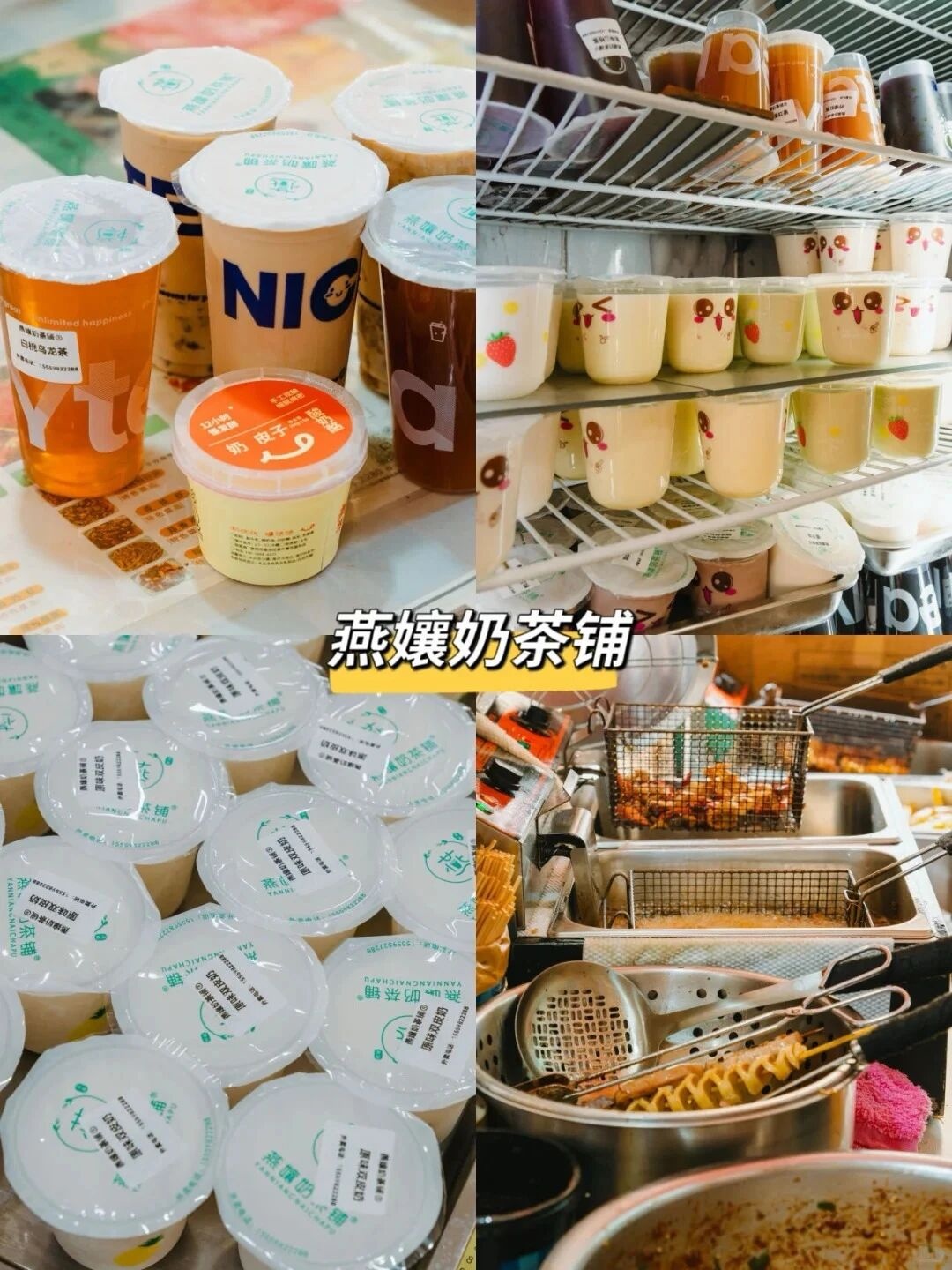
Lian Tiao Chang Restaurant (Chain Factory Restaurant)
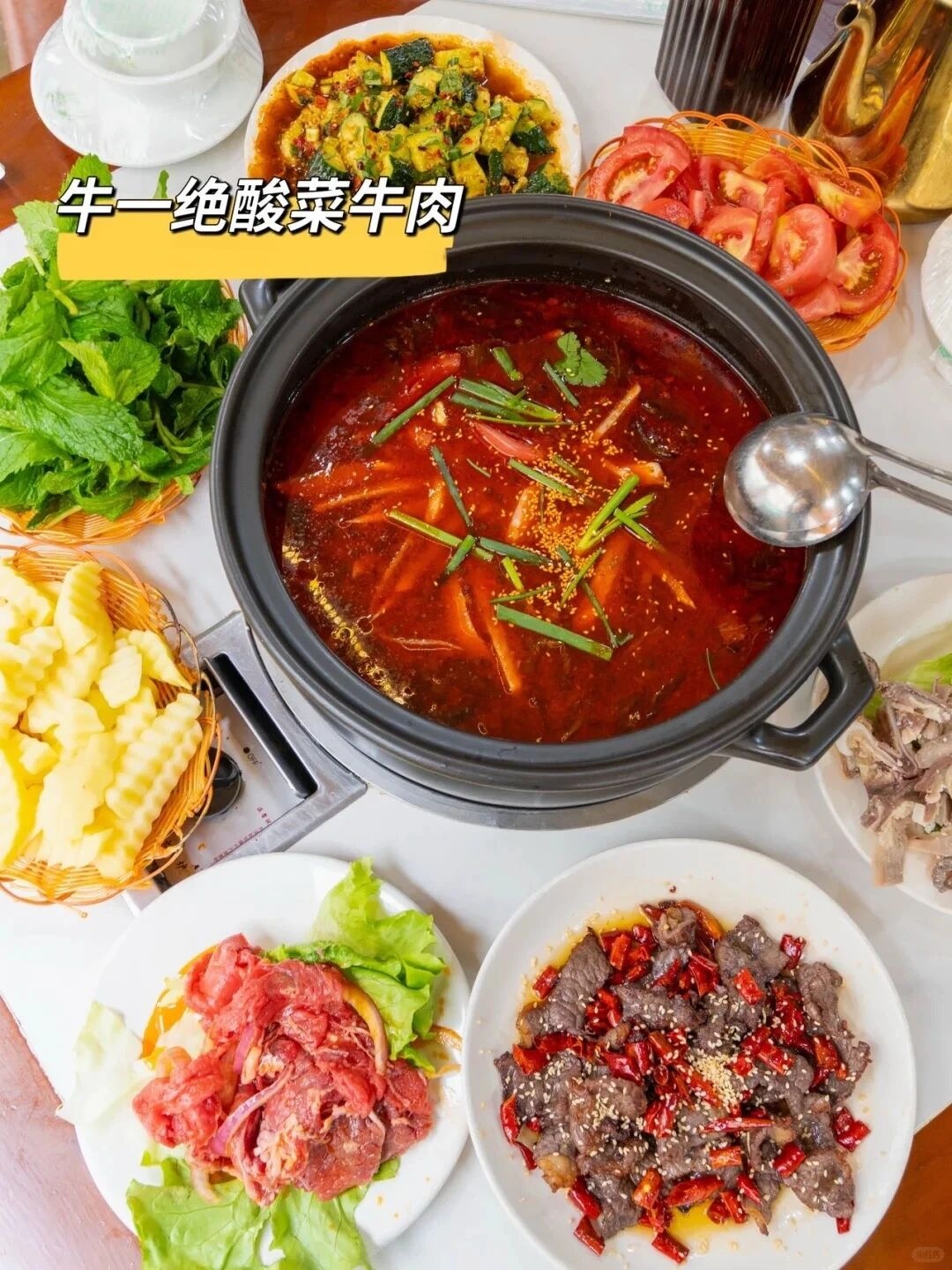
This old-school beef joint has been a staple in the community forever. It's in a metal shed, which gives it a totally old-school vibe, but countless foodies dream about this place.
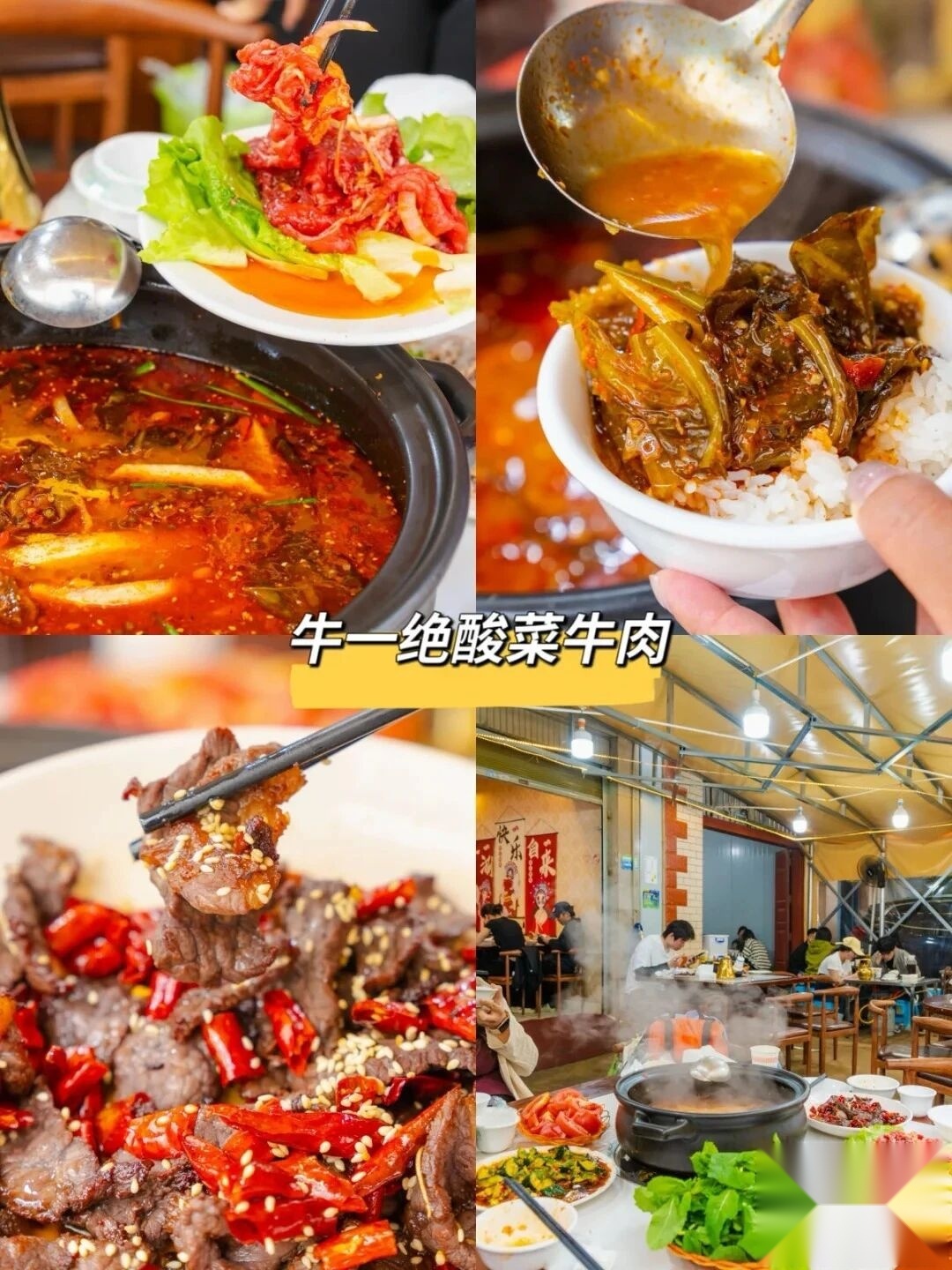
Their braised dishes, cold cuts, and cold chicken are super flavorful, and their home-style stir-fries have that classic, old-school taste.
Miss out, and you'll seriously regret it!
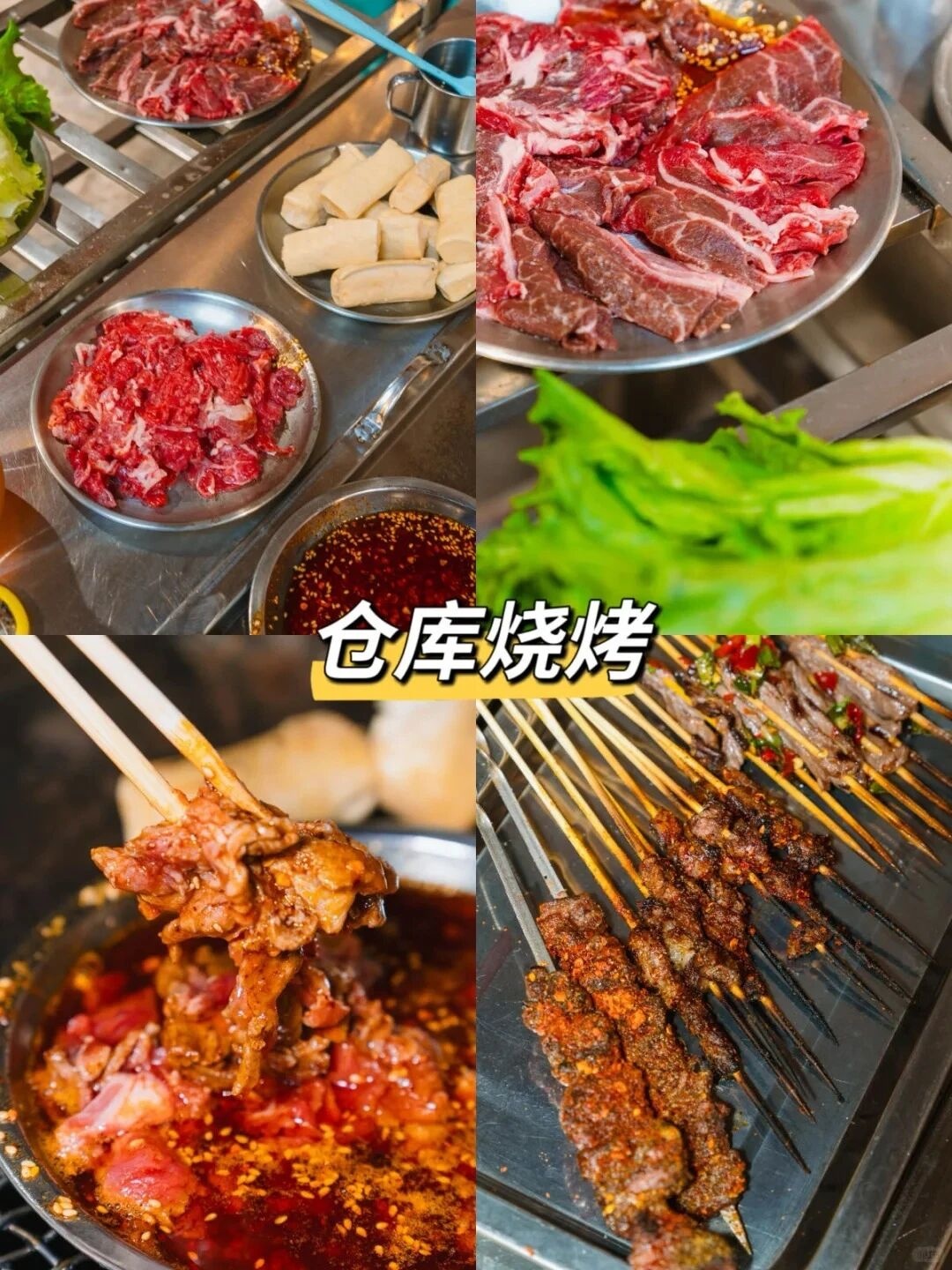
Yi Tang Niu Jian Mian (Beef Shank Noodle Soup)
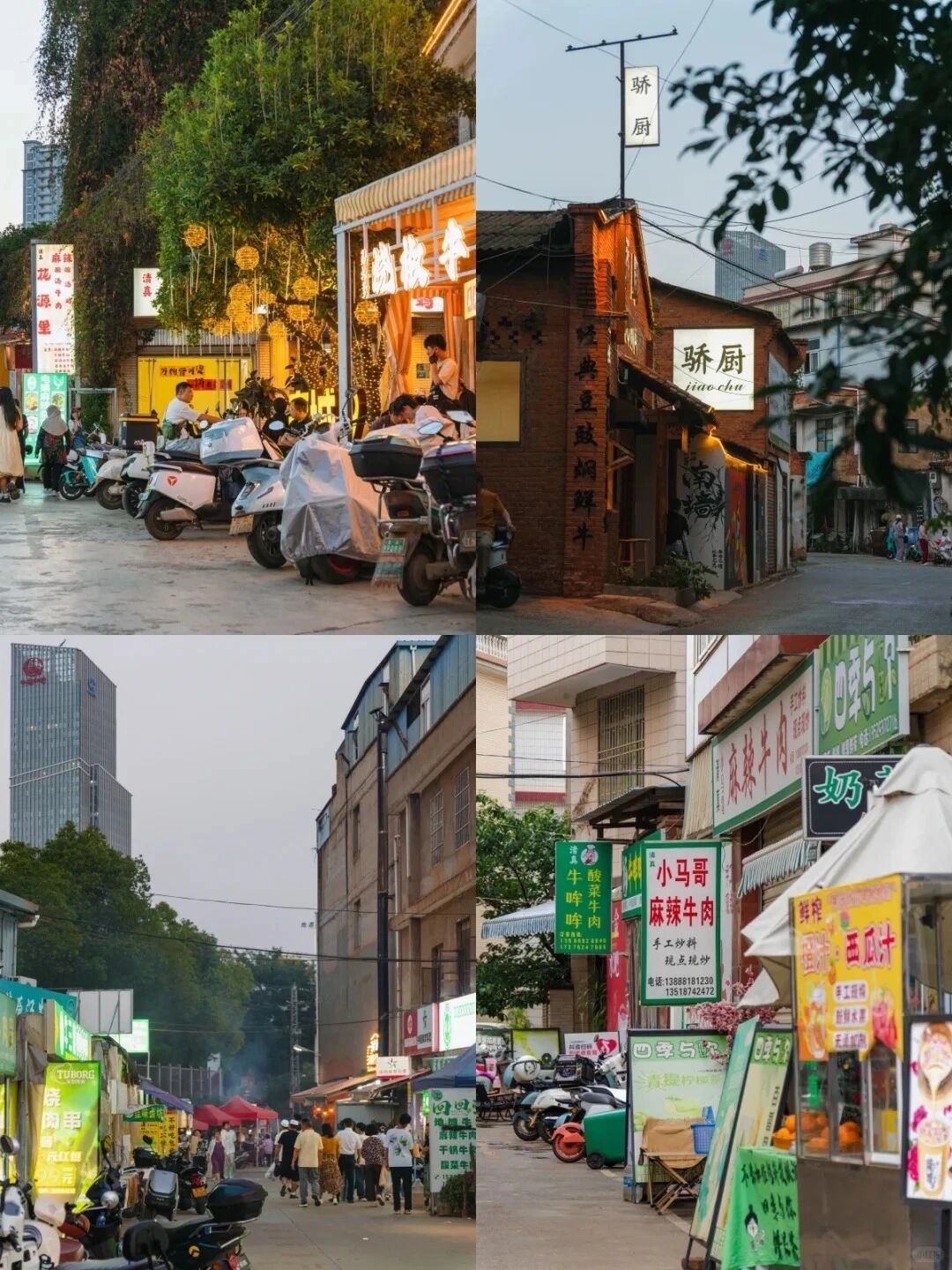
When I was a kid, I used to drool watching TV shows with beef noodles piled high with meat. Well, guess what? You can find the 'plus' version right here in real life!
They use generous, thick cuts of beef shank, so you know the flavor is going to be amazing.
Auntie Ma's Hotpot Skewers (Ma Niang Niang Shuan Cai)
If there's one place that can get even a hardcore 'meat-eater' to enjoy a bowl of veggies, it's gotta be the famous Auntie Ma's.
You get two whole tables of side dishes to pick from, and you can choose flavors like sour and spicy, mala (numb and spicy), or clear broth.
Once you try this place, you'll either go zero times or countless times – there's no in-between!
Auntie Yan's Milk Tea Shop (Yan Niang Nai Cha Pu)
Seriously, the 'aunties' in this community are just on another level! Besides Auntie Ma's, Auntie Yan is another absolute master in Hui Hui Ying's food scene that you can't ignore.
Their glutinous rice porridge milk tea will make you realize that those 'pearls' made from starch are totally no match for some serious carbs.
Niu Yi Jue Suancai Niurou (Super Beef with Pickled Vegetables)
This is the community's newest food king! The owner became super popular online for helping with the 'Baby Come Home' initiative, and now everyone's saying we can't let him have too much free time!
But what really keeps diners coming back is their freshly stir-fried pickled vegetable hotpot base and daily fresh-cut beef slices.
Cang Ku Shaokao (Warehouse Barbecue)
As night falls, it's barbecue time!
This barbecue joint is loaded with beef! You can try all sorts of cuts here, from marbled wagyu-style to ribs and beef shank.
They have a full range of skewer seasonings too, like mustard, garlic, and even New Orleans-style.
✨ Bonus Tip for Your Meal:
Once Winter Begins (Lidong) passes, Chenggong turns into a golden wonderland.
The ginkgo forest here is one of Chenggong's best spots for viewing, and it's totally Instagram-worthy.
This year, they've even planted a field of sorghum next to the ginkgo forest, giving you even more photo ops!
Best Halal Lamb Soup in Kaifeng: 5 Authentic Hui Muslim Eateries Locals Line Up For
Articles • Hasan09 posted the article • 0 comments • 55 views • 3 days ago
Hey guys, if you're ever in Kaifeng, these five lamb soup joints are tucked away in the old city's narrow alleys. Their storefronts might not look like much – seriously, you could walk right past them if you're not paying attention. But trust me, locals are already lining up with their bowls before the sun even thinks about rising. After you've checked out Qingming Riverside Landscape Garden and crushed some soup dumplings, don't rush off the next morning. Grab a steaming bowl of soup first – that's how you really experience a Kaifeng morning.
Spot #1
Zhang Laowu Lamb Fresh Soup (Dingjiao Street)
Must-Try: Lamb Soup, Guokui (flatbread), Pickled Veggies
Find it: About 50 meters southwest of the intersection of Dingjiao Street and Youfang Street, Gulou District (it's inside the Xisi Night Market, with a super discreet entrance).
Average Spend: Around 34 RMB
The hardest part about this place is actually finding it. The sign is tiny, practically hanging out in the alley, so you could easily walk right past it. But if you see a crowd three deep around the soup pot, you know you've hit the jackpot. It's set up in a converted old house, with a courtyard in the back holding almost twenty tables. In no time, it's packed, and the line for bowls stretches from the stove all the way to the door.
Spot #2
Yang Guoqiang Lamb Soup (Dongda Temple Gate Food Street Branch)
Must-Try: Surou (crispy fried meat), Maruzi (meatballs), Lamb Soup
Find it: Next to the East Gate of Dongda mosque in Shunhe Hui Muslim District (inside Dongda Temple Gate Food Street).
Average Spend: Around 24 RMB
Their soup is the real deal, a rich bone broth that's been simmering since before dawn – the fire's been going on the stove since it was still dark out. It's a milky white, so thick it coats your spoon. The first sip is pure richness, followed by a fresh aftertaste that's totally smooth, no strong smell at all. Regulars just walk in, no need for a menu, a simple 'one bowl of soup' is all it takes.
There's only one catch: they only do breakfast and lunch. They close up shop by 1 PM, so if you show up late, all you'll get is a sigh looking at the rolled-down shutter. Wanna eat here? You gotta wake up early. Locals usually grab a bowl before work, finish up, wipe their mouths, and head out.
Spot #3
Dongzhan Laobai Soup House (East Station Old White Soup)
Must-Try: Dunrou (stewed meat), Maruzi Tang (meatball soup), Huimian (braised noodles)
Find it: About 50 meters east of the intersection of Gongnong Road and Bianjing Road, Shunhe Hui Muslim District (on the east side of the old city).
Average Spend: Around 18 RMB
This is the earliest opener of the five, serving soup as early as 5 AM. It's located on the east side of Kaifeng, not super close to the tourist spots. Most customers are folks working or living nearby. After 11 AM, it gets packed, and the line can spill out the door.
The vibe is pure street food stall – concrete floors, small square tables, tiny stools. You can sit inside or outside, and it's reasonably clean. The owner's been running this spot for decades, keeping prices super low. So, when people working nearby want a decent lunch and don't want to settle for just anything, they usually head here.
Spot #4
Laozhongyi Lamb Soup (Wanshan Street Branch)
Must-Try: Kaifeng Traditional Huimo (braised flatbread), Huimian (braised noodles), Su Liangcai (vegetarian cold dishes)
Find it: About 70 meters northeast of the Southwest Gate of Wanshan Street, Gulou District.
Average Spend: Around 31 RMB
This is your classic old-school spot, super popular. If it's full inside, you'll be waiting for a table by the door. Most customers are older locals, and you'll often see families with their grandparents. They'll tell you it 'tastes just like childhood.' Cold dishes and pre-sliced meats are displayed in a glass counter – just point to what you want to order.
The cold dishes are self-serve; you grab a plate and mix and match whatever you like, your 'skill' determines how much you get. One downside: the surou (crispy fried meat) hot pot can be a bit salty, so if you prefer milder flavors, maybe skip that. On the bright side, there's parking nearby, so no endless circling for a spot if you're driving.
Spot #5
Lamb Soup Siweicai (Four Delicacies) (Xiaonanmen Branch)
Must-Try: Siweicai (Four Delicacies), Lamb Soup, Maruzi (meatballs)
Find it: Unit 101, Commercial Area, Building 1, Jinxiu Huangcheng, Gulou District (near Xiaonanmen, tucked away in an alley).
Average Spend: Around 16 RMB
What makes this place special is their 'Siweicai (Four Delicacies)' – it's a bowl packed with lamb, maruzi (meatballs), mianjin (fried gluten puffs), and huanghuacai (daylily flowers). You get a small bowl with a guokui (flatbread) on the side, and it's the perfect amount for one person. The shop is hidden away in an alley, pretty hard to find without a local guiding you. But every morning, all the residents nearby head straight here.
About the Siweicai: The soup base is on the lighter side, not the super rich kind. You're tasting the original flavors, and if it's not salty enough for you, just add some salt. Heads up, they don't have vinegar here, so if you're used to adding it to your soup, be prepared. The meatballs are freshly fried, so they still have a slight crispiness even after soaking in the soup. And the huanghuacai (daylily flowers) and mianjin (fried gluten puffs) soak up all that broth, making them just as delicious as the meat.
The owner is super generous with the soup – his ladle never shakes. The downsides: the flatbread served with it is cold and not crispy enough, so it tastes better once it's softened in the soup. Also, the tables are pretty close together, and there's no parking, so riding an e-bike is definitely the easiest way to get there.
Do you know any other
amazing hidden gems?
Let us know in the comments below! view all
Hey guys, if you're ever in Kaifeng, these five lamb soup joints are tucked away in the old city's narrow alleys. Their storefronts might not look like much – seriously, you could walk right past them if you're not paying attention. But trust me, locals are already lining up with their bowls before the sun even thinks about rising. After you've checked out Qingming Riverside Landscape Garden and crushed some soup dumplings, don't rush off the next morning. Grab a steaming bowl of soup first – that's how you really experience a Kaifeng morning.
Spot #1
Zhang Laowu Lamb Fresh Soup (Dingjiao Street)
Must-Try: Lamb Soup, Guokui (flatbread), Pickled Veggies
Find it: About 50 meters southwest of the intersection of Dingjiao Street and Youfang Street, Gulou District (it's inside the Xisi Night Market, with a super discreet entrance).
Average Spend: Around 34 RMB
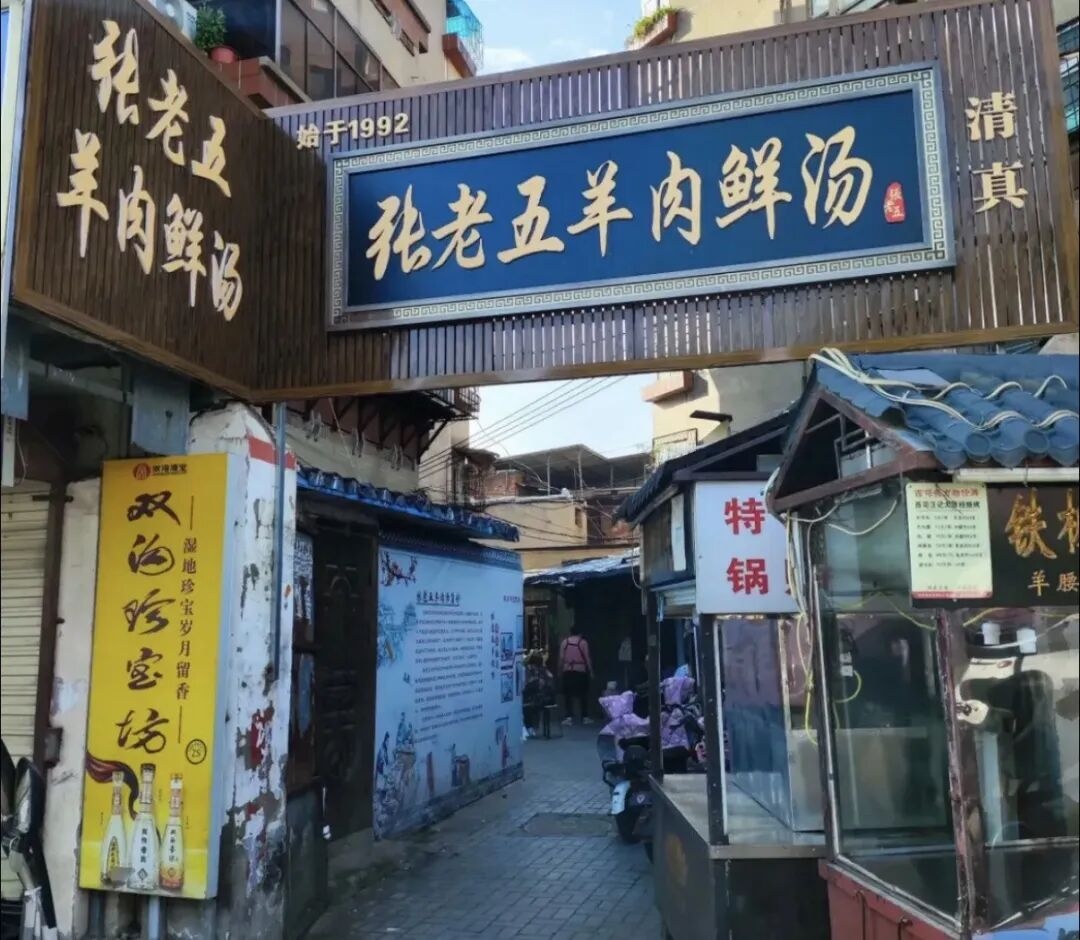
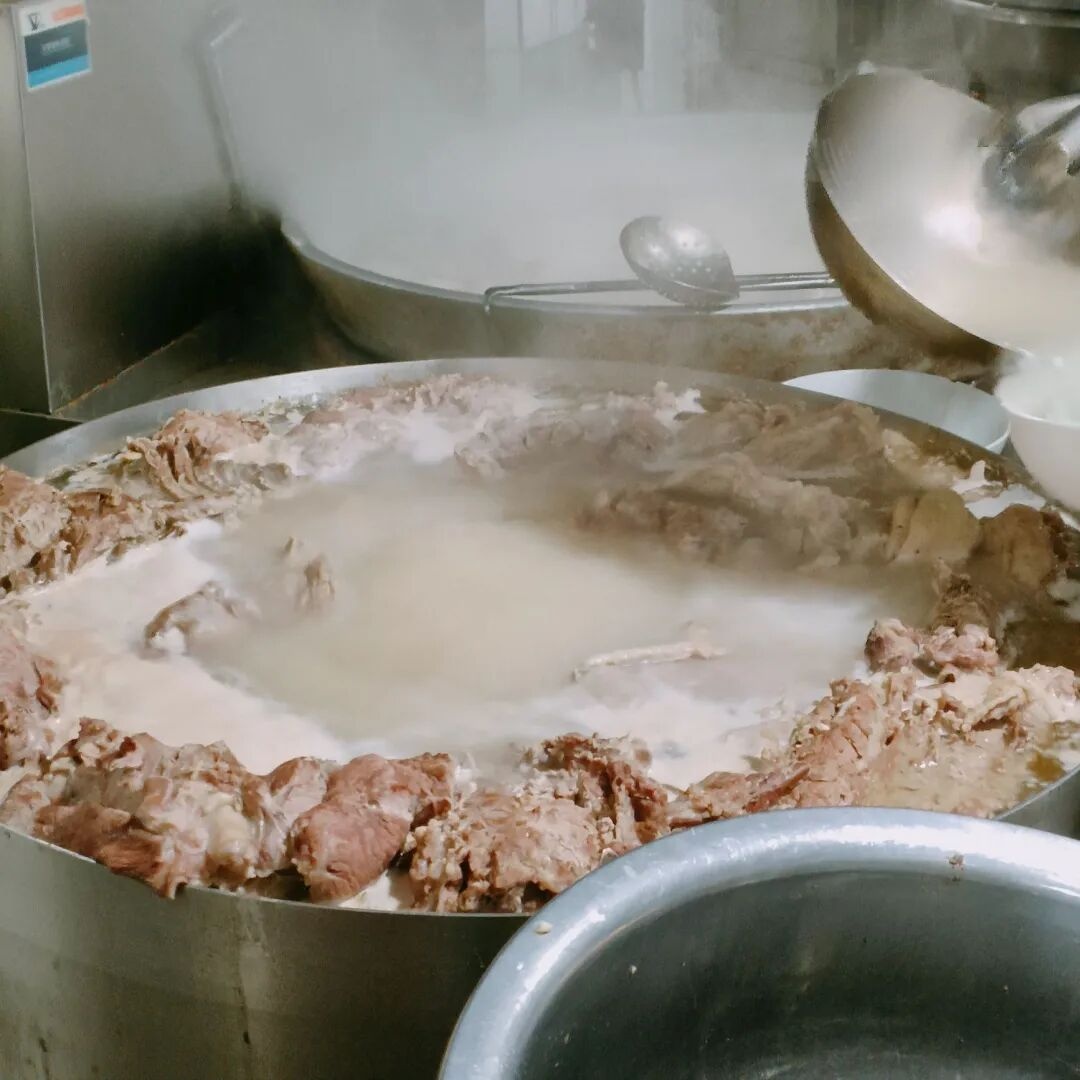
The hardest part about this place is actually finding it. The sign is tiny, practically hanging out in the alley, so you could easily walk right past it. But if you see a crowd three deep around the soup pot, you know you've hit the jackpot. It's set up in a converted old house, with a courtyard in the back holding almost twenty tables. In no time, it's packed, and the line for bowls stretches from the stove all the way to the door.
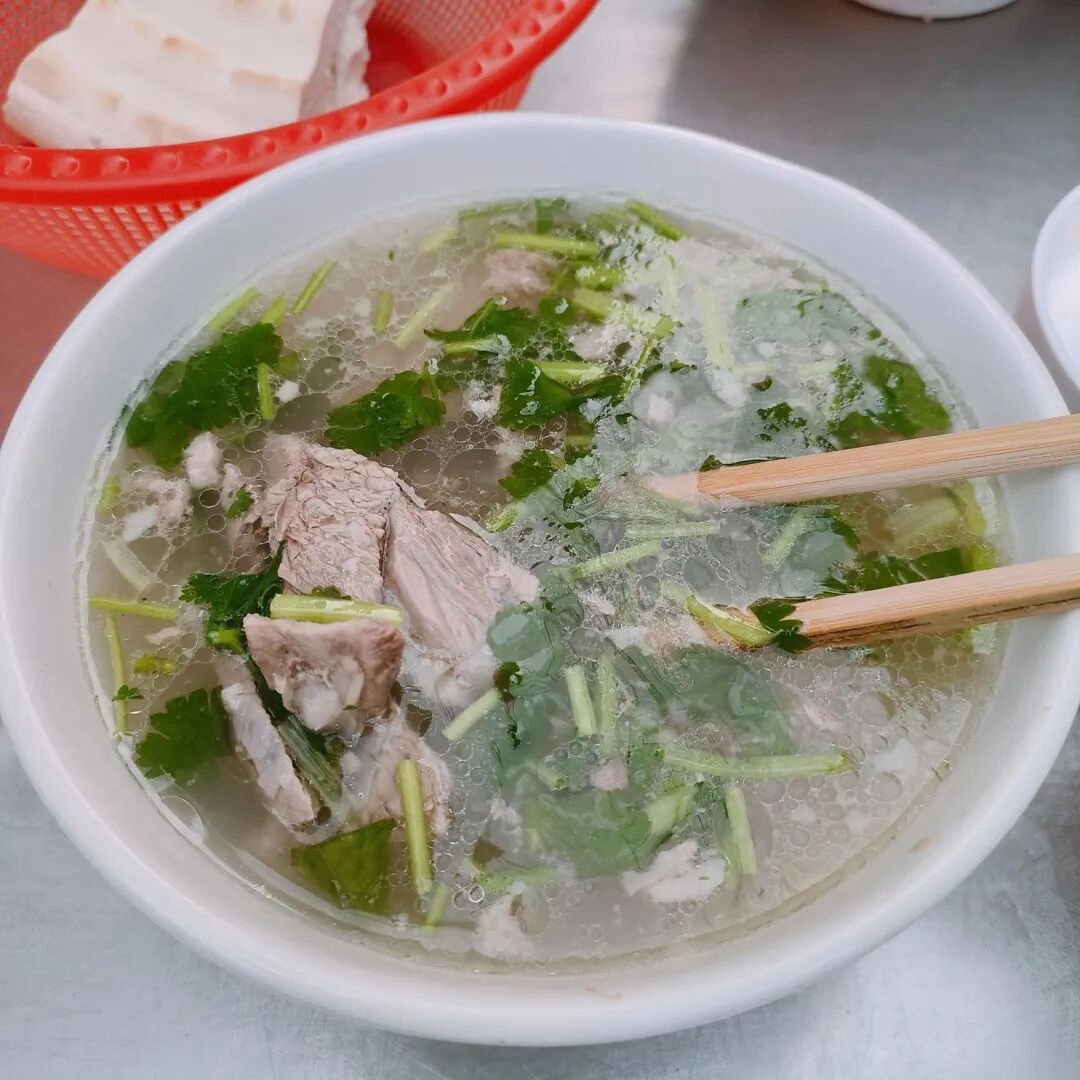
Spot #2
Yang Guoqiang Lamb Soup (Dongda Temple Gate Food Street Branch)
Must-Try: Surou (crispy fried meat), Maruzi (meatballs), Lamb Soup
Find it: Next to the East Gate of Dongda mosque in Shunhe Hui Muslim District (inside Dongda Temple Gate Food Street).
Average Spend: Around 24 RMB
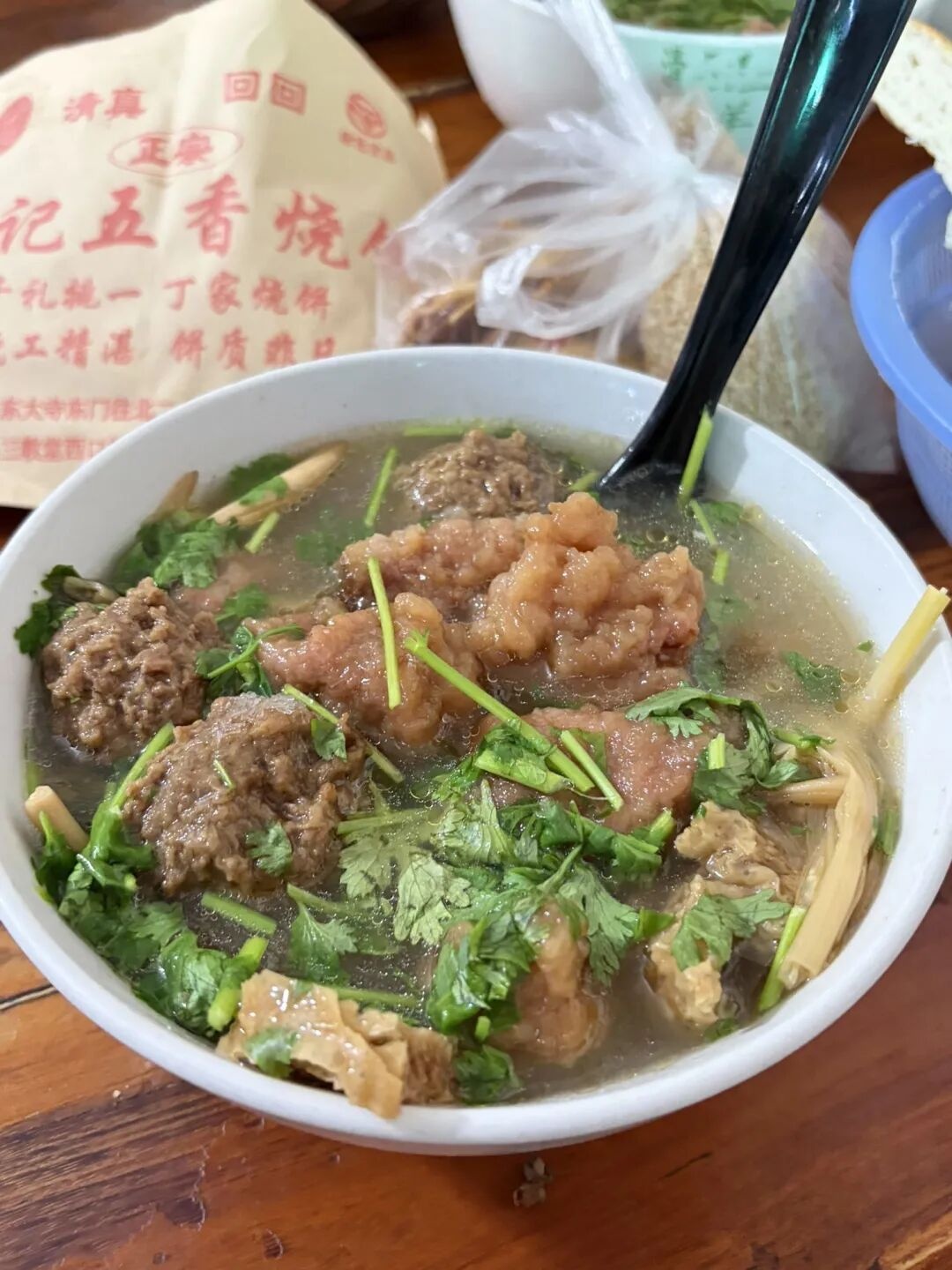
Their soup is the real deal, a rich bone broth that's been simmering since before dawn – the fire's been going on the stove since it was still dark out. It's a milky white, so thick it coats your spoon. The first sip is pure richness, followed by a fresh aftertaste that's totally smooth, no strong smell at all. Regulars just walk in, no need for a menu, a simple 'one bowl of soup' is all it takes.
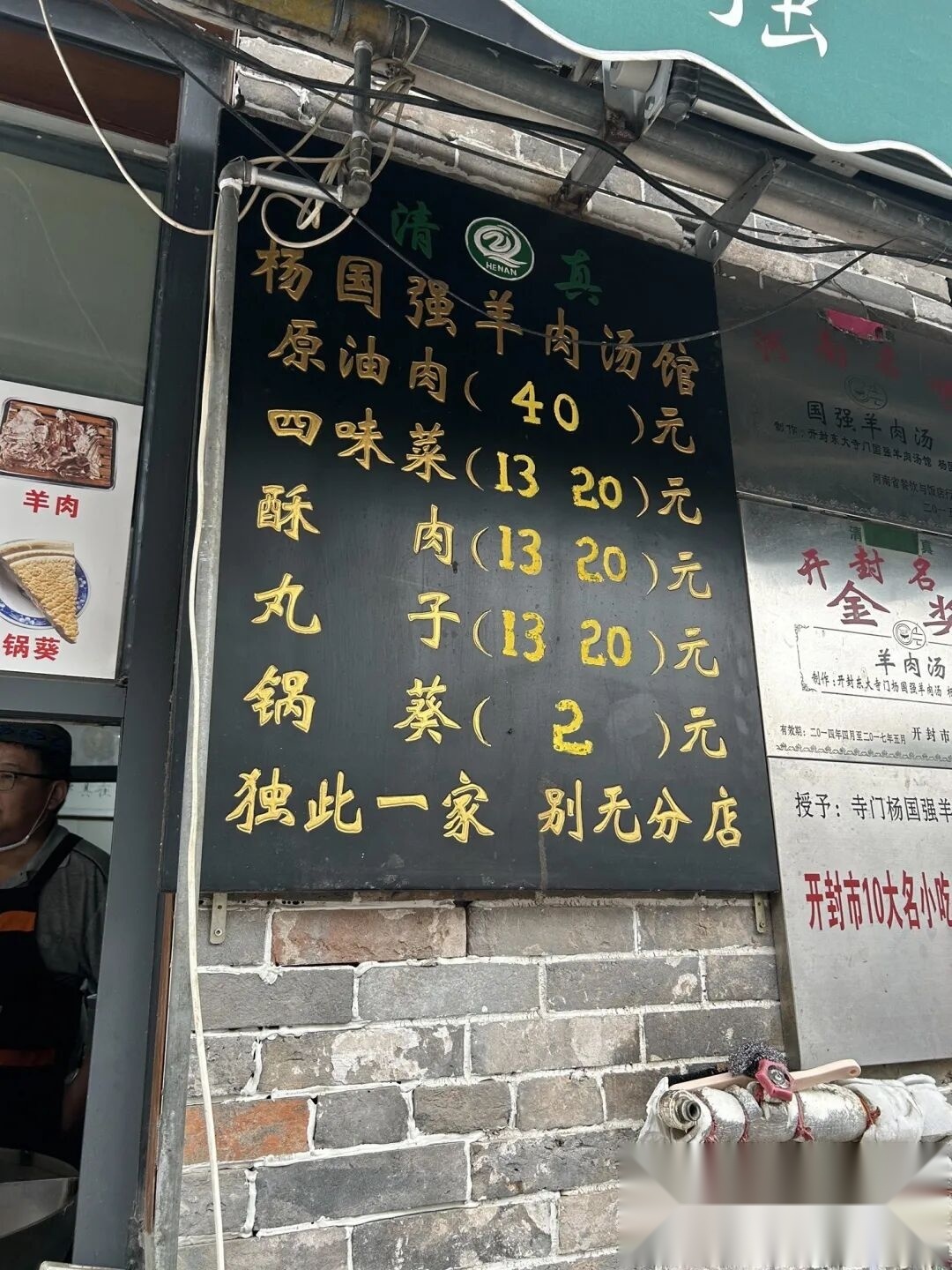
There's only one catch: they only do breakfast and lunch. They close up shop by 1 PM, so if you show up late, all you'll get is a sigh looking at the rolled-down shutter. Wanna eat here? You gotta wake up early. Locals usually grab a bowl before work, finish up, wipe their mouths, and head out.
Spot #3
Dongzhan Laobai Soup House (East Station Old White Soup)
Must-Try: Dunrou (stewed meat), Maruzi Tang (meatball soup), Huimian (braised noodles)
Find it: About 50 meters east of the intersection of Gongnong Road and Bianjing Road, Shunhe Hui Muslim District (on the east side of the old city).
Average Spend: Around 18 RMB
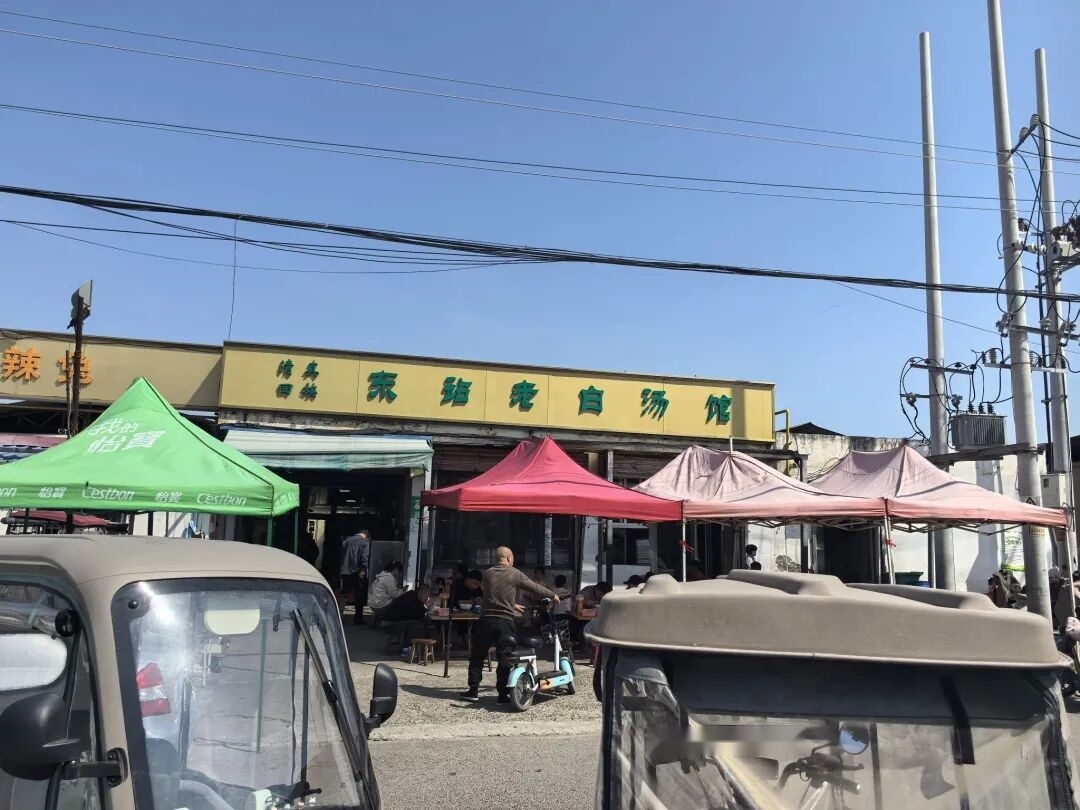
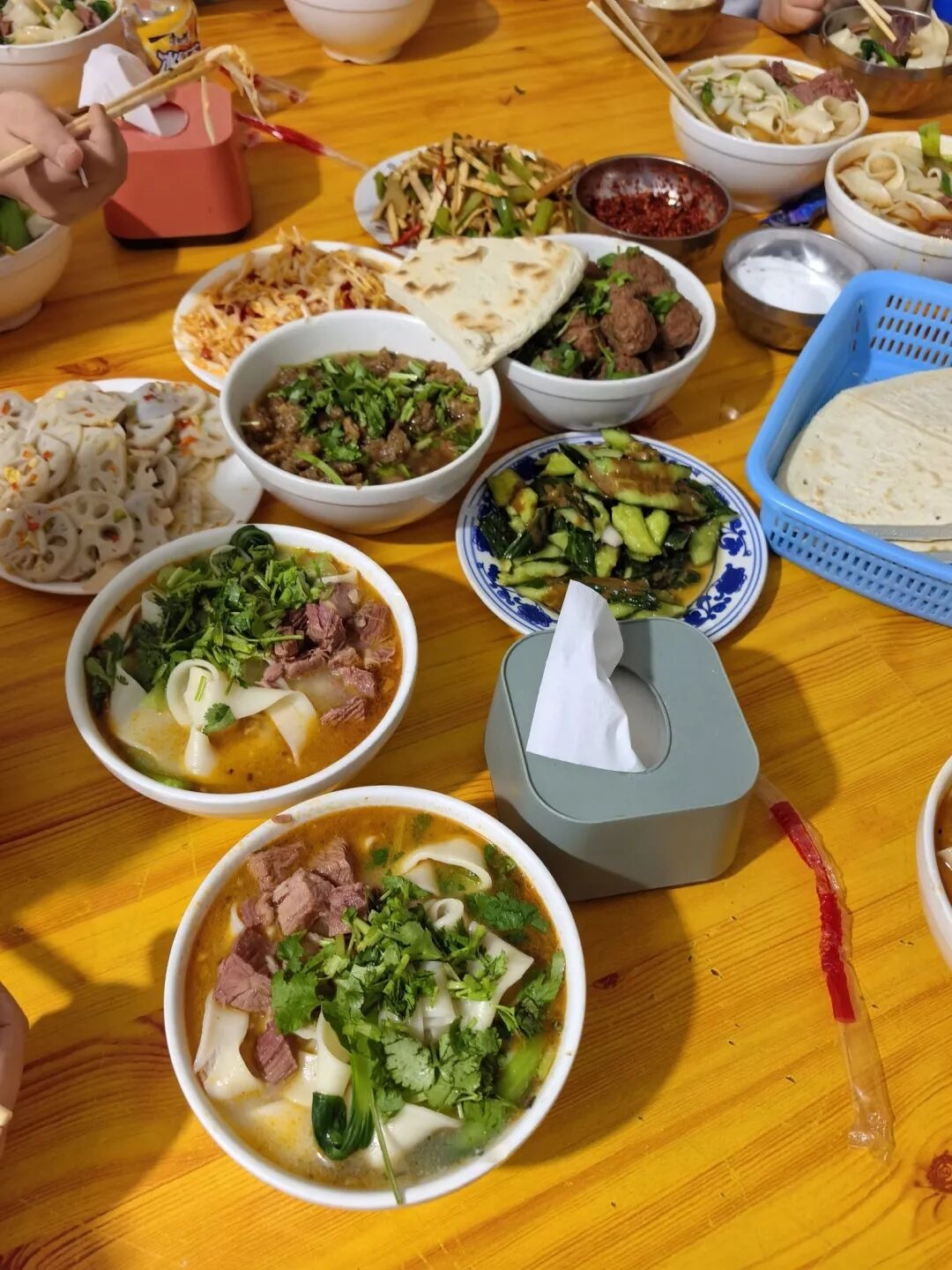
This is the earliest opener of the five, serving soup as early as 5 AM. It's located on the east side of Kaifeng, not super close to the tourist spots. Most customers are folks working or living nearby. After 11 AM, it gets packed, and the line can spill out the door.
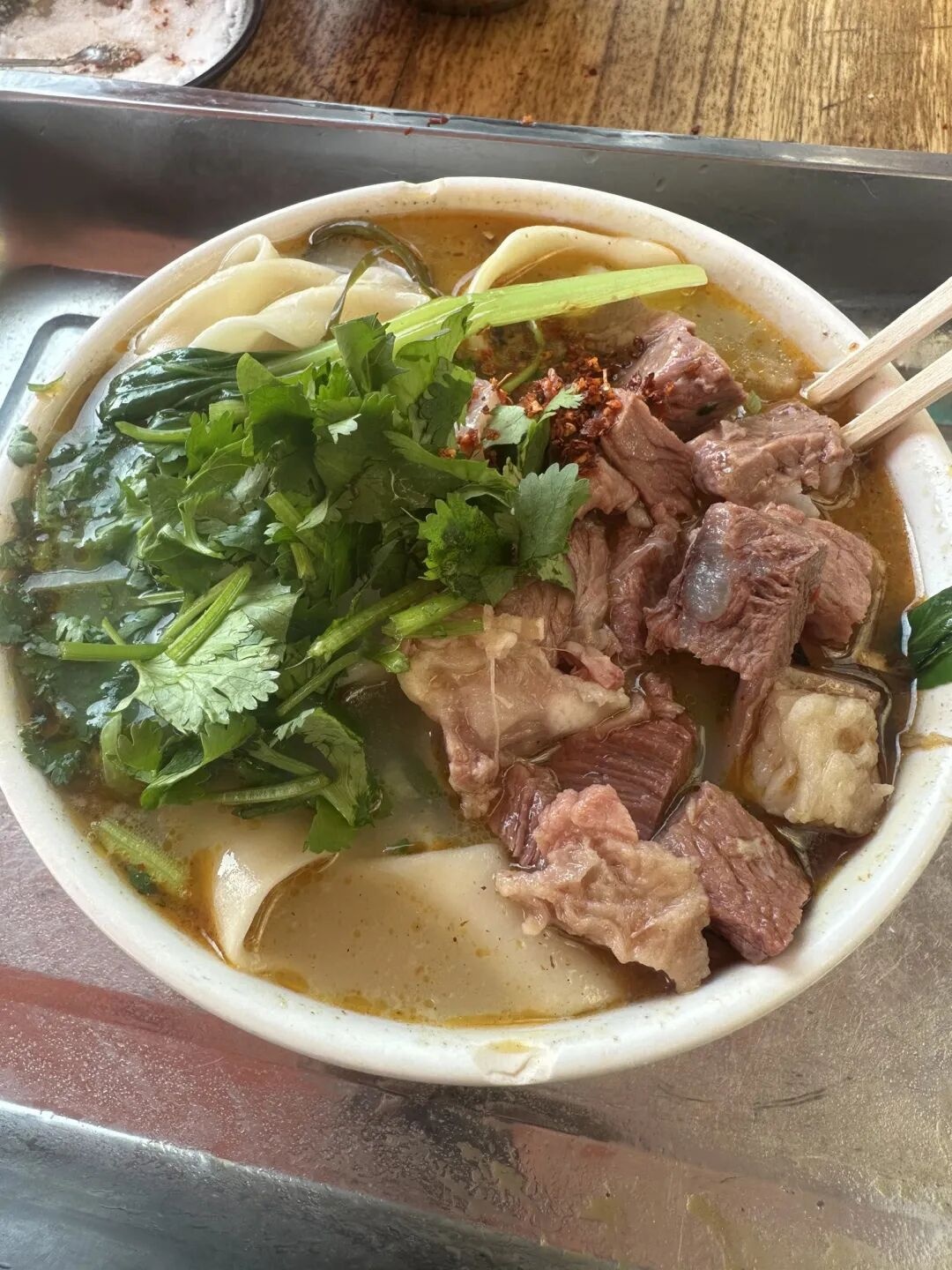
The vibe is pure street food stall – concrete floors, small square tables, tiny stools. You can sit inside or outside, and it's reasonably clean. The owner's been running this spot for decades, keeping prices super low. So, when people working nearby want a decent lunch and don't want to settle for just anything, they usually head here.
Spot #4
Laozhongyi Lamb Soup (Wanshan Street Branch)
Must-Try: Kaifeng Traditional Huimo (braised flatbread), Huimian (braised noodles), Su Liangcai (vegetarian cold dishes)
Find it: About 70 meters northeast of the Southwest Gate of Wanshan Street, Gulou District.
Average Spend: Around 31 RMB
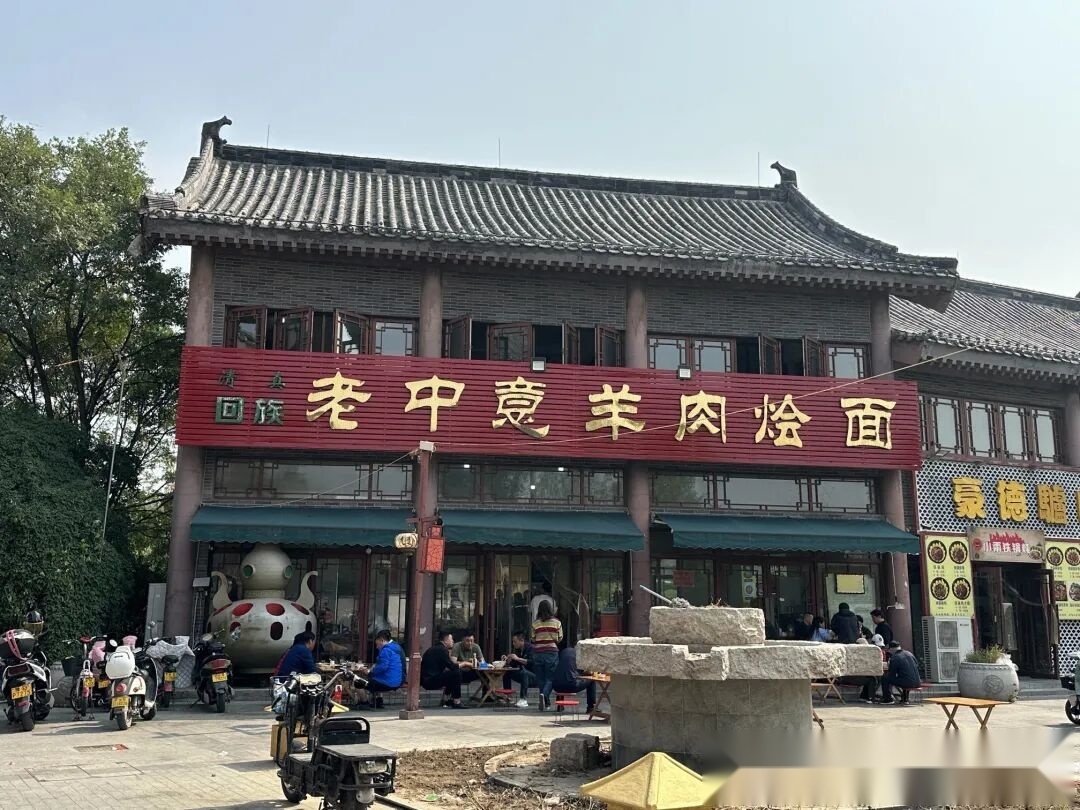
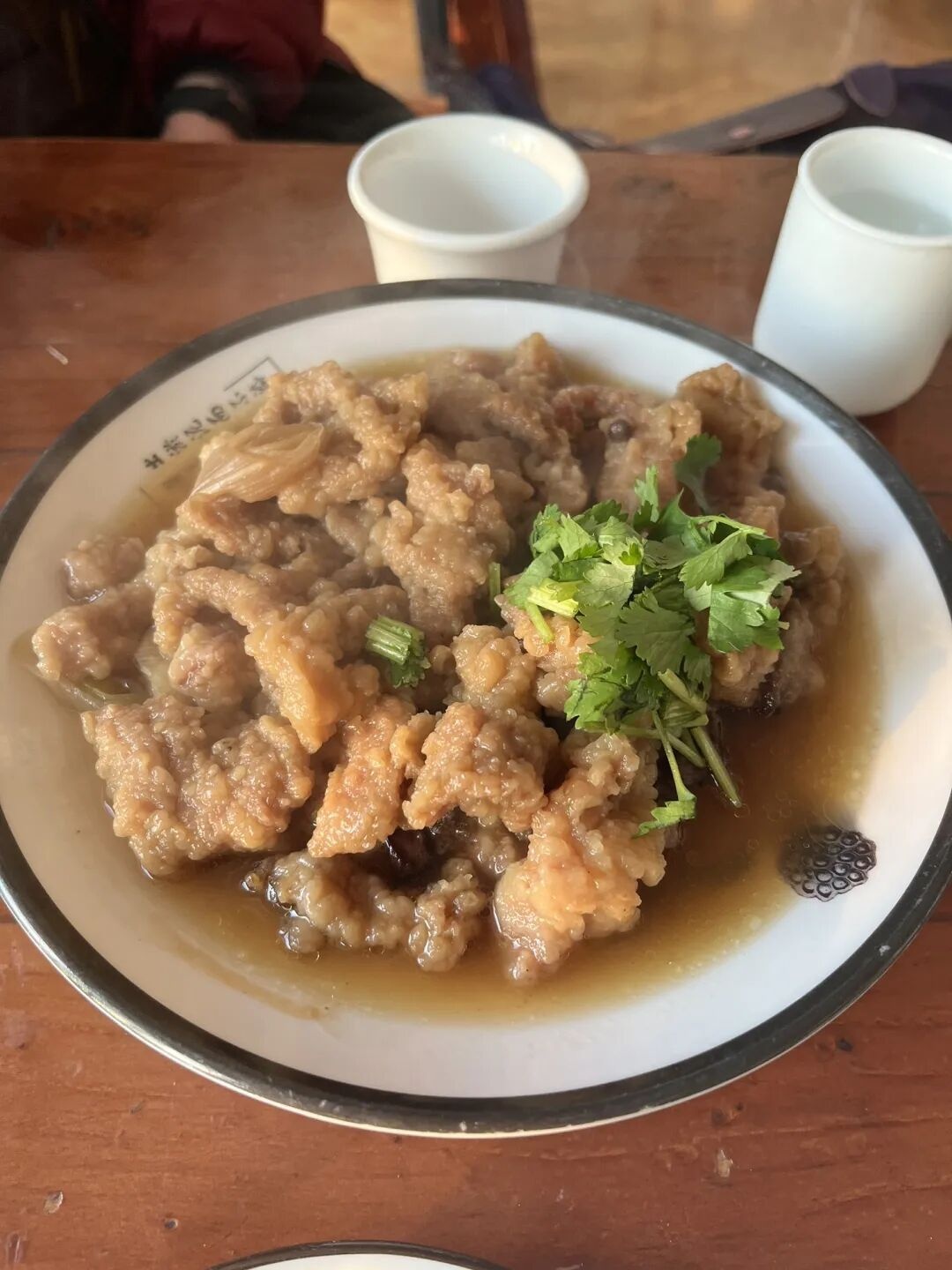
This is your classic old-school spot, super popular. If it's full inside, you'll be waiting for a table by the door. Most customers are older locals, and you'll often see families with their grandparents. They'll tell you it 'tastes just like childhood.' Cold dishes and pre-sliced meats are displayed in a glass counter – just point to what you want to order.
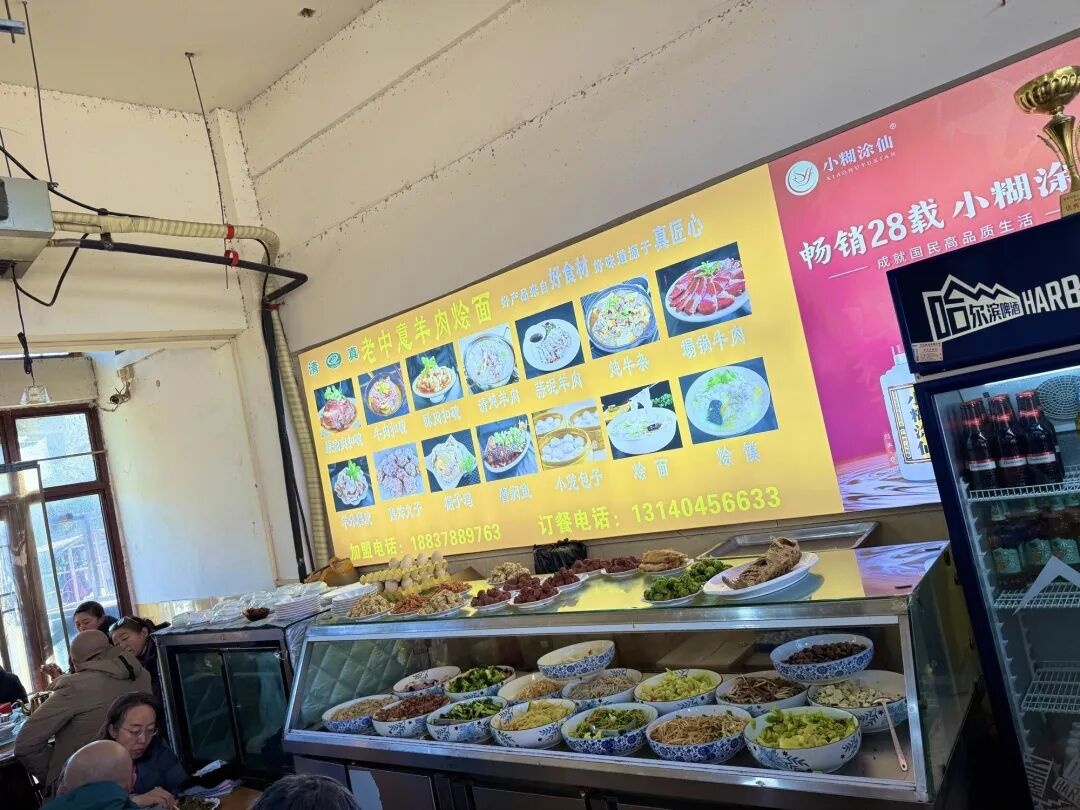
The cold dishes are self-serve; you grab a plate and mix and match whatever you like, your 'skill' determines how much you get. One downside: the surou (crispy fried meat) hot pot can be a bit salty, so if you prefer milder flavors, maybe skip that. On the bright side, there's parking nearby, so no endless circling for a spot if you're driving.
Spot #5
Lamb Soup Siweicai (Four Delicacies) (Xiaonanmen Branch)
Must-Try: Siweicai (Four Delicacies), Lamb Soup, Maruzi (meatballs)
Find it: Unit 101, Commercial Area, Building 1, Jinxiu Huangcheng, Gulou District (near Xiaonanmen, tucked away in an alley).
Average Spend: Around 16 RMB
What makes this place special is their 'Siweicai (Four Delicacies)' – it's a bowl packed with lamb, maruzi (meatballs), mianjin (fried gluten puffs), and huanghuacai (daylily flowers). You get a small bowl with a guokui (flatbread) on the side, and it's the perfect amount for one person. The shop is hidden away in an alley, pretty hard to find without a local guiding you. But every morning, all the residents nearby head straight here.
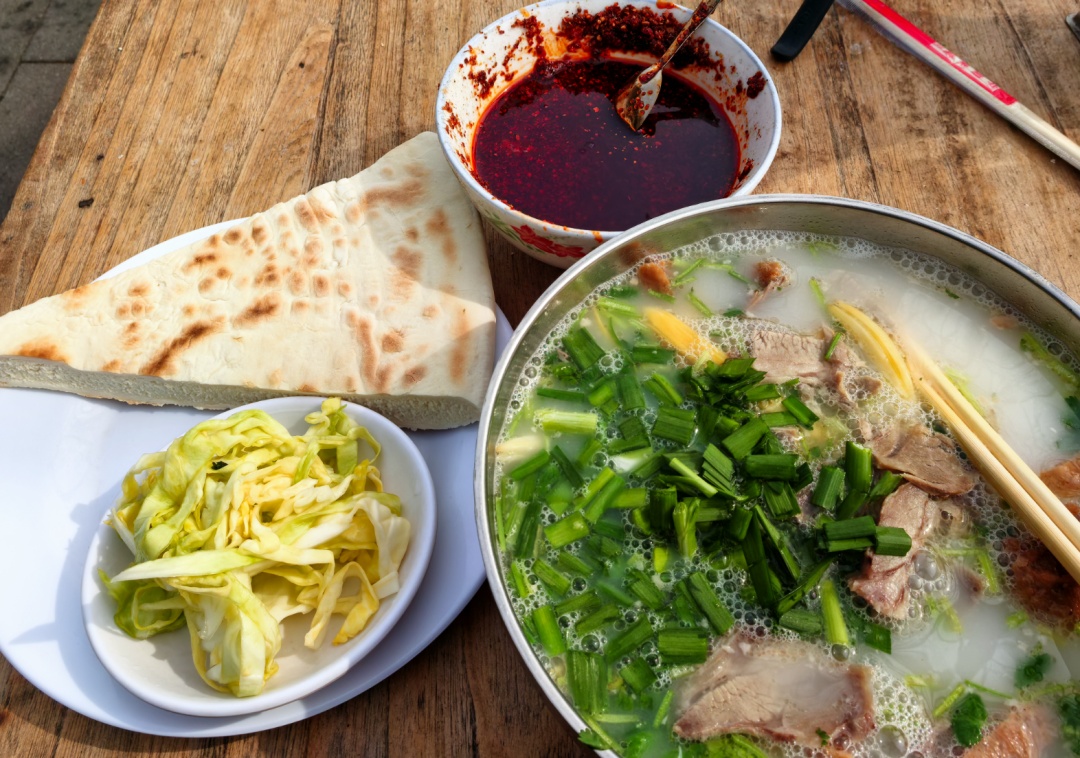
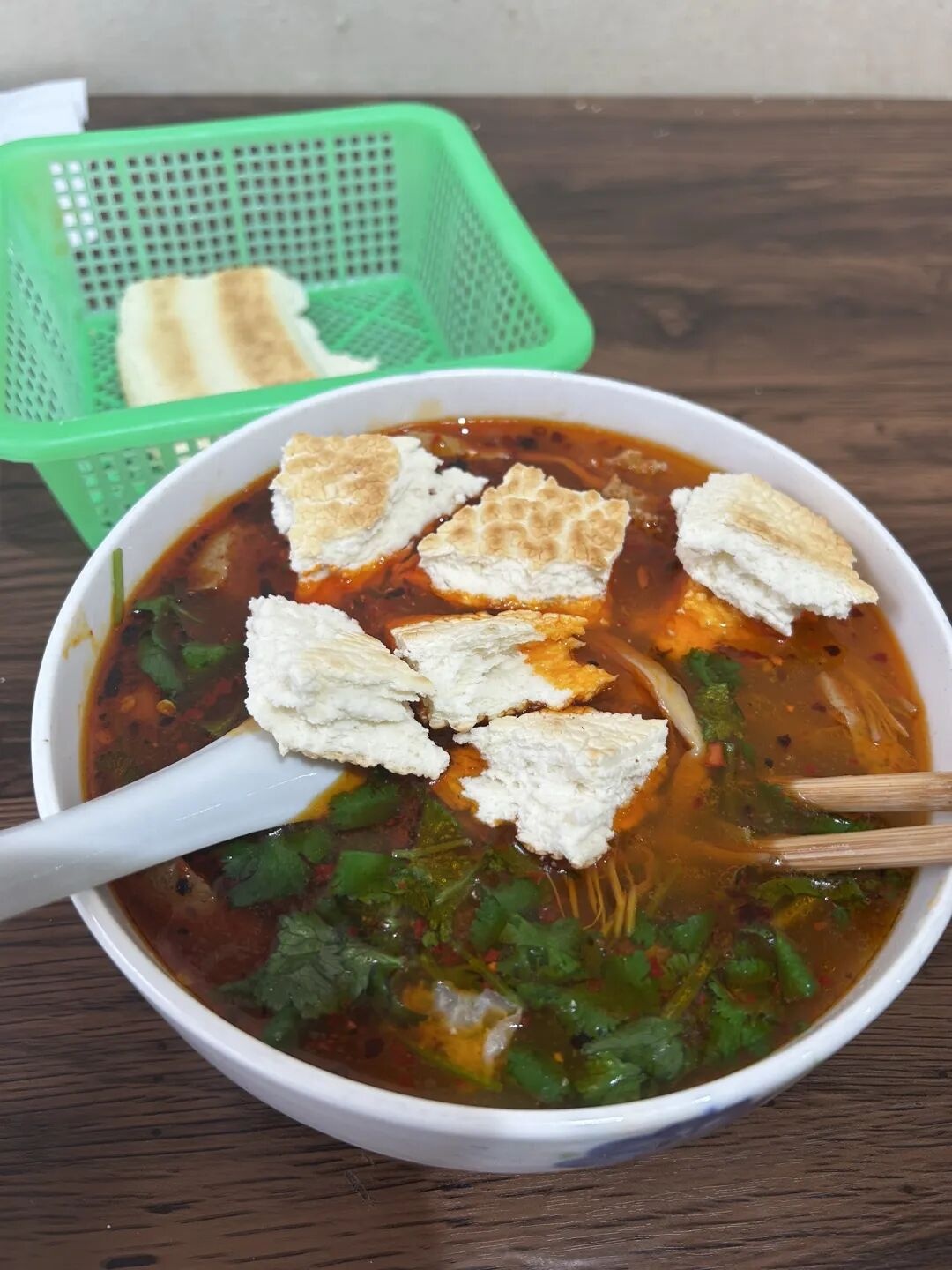
About the Siweicai: The soup base is on the lighter side, not the super rich kind. You're tasting the original flavors, and if it's not salty enough for you, just add some salt. Heads up, they don't have vinegar here, so if you're used to adding it to your soup, be prepared. The meatballs are freshly fried, so they still have a slight crispiness even after soaking in the soup. And the huanghuacai (daylily flowers) and mianjin (fried gluten puffs) soak up all that broth, making them just as delicious as the meat.
The owner is super generous with the soup – his ladle never shakes. The downsides: the flatbread served with it is cold and not crispy enough, so it tastes better once it's softened in the soup. Also, the tables are pretty close together, and there's no parking, so riding an e-bike is definitely the easiest way to get there.

Do you know any other
amazing hidden gems?
Let us know in the comments below!


Kaifeng's Shengde Fu Clear Beef Noodle Soup: Authentic Yellow Soup Ramen & Hui Muslim Food
Articles • Hasan09 posted the article • 0 comments • 57 views • 3 days ago
Introducing the Shengde Fu Clear Beef Noodle Soup – part of Kaifeng's Yellow Soup Ramen series!
Let's talk about the broth first: one word, fragrant. It's got a super rich meat broth flavor.
Next, the noodles: the ramen-making skills are on point. They're pretty uniform, nicely chewy, and super clean when they're made, so they don't feel like they're coated in a ton of dry flour.
Finally, the meat: they use diced meat, kind of reminds me of Zhengzhou's Yang Ji style, though the meat quantity is a bit small. If you're a big meat fan, you can ask for the extra meat version.
My hometown is Henan, and Kaifeng is famous for its cuisine! The noodles are tender, the meat is soft, and the soup is fresh and pure! view all
Introducing the Shengde Fu Clear Beef Noodle Soup – part of Kaifeng's Yellow Soup Ramen series!
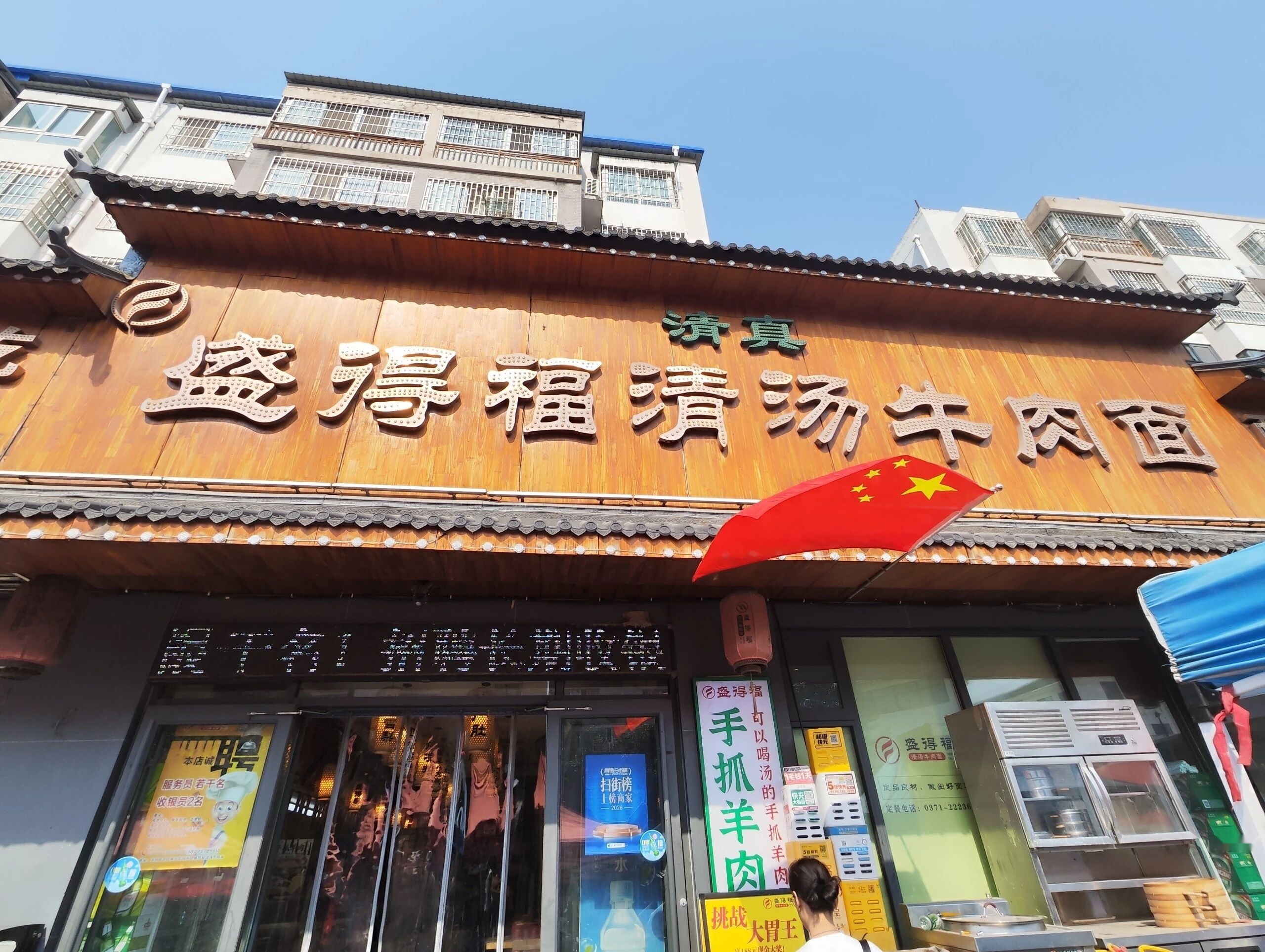
Let's talk about the broth first: one word, fragrant. It's got a super rich meat broth flavor.
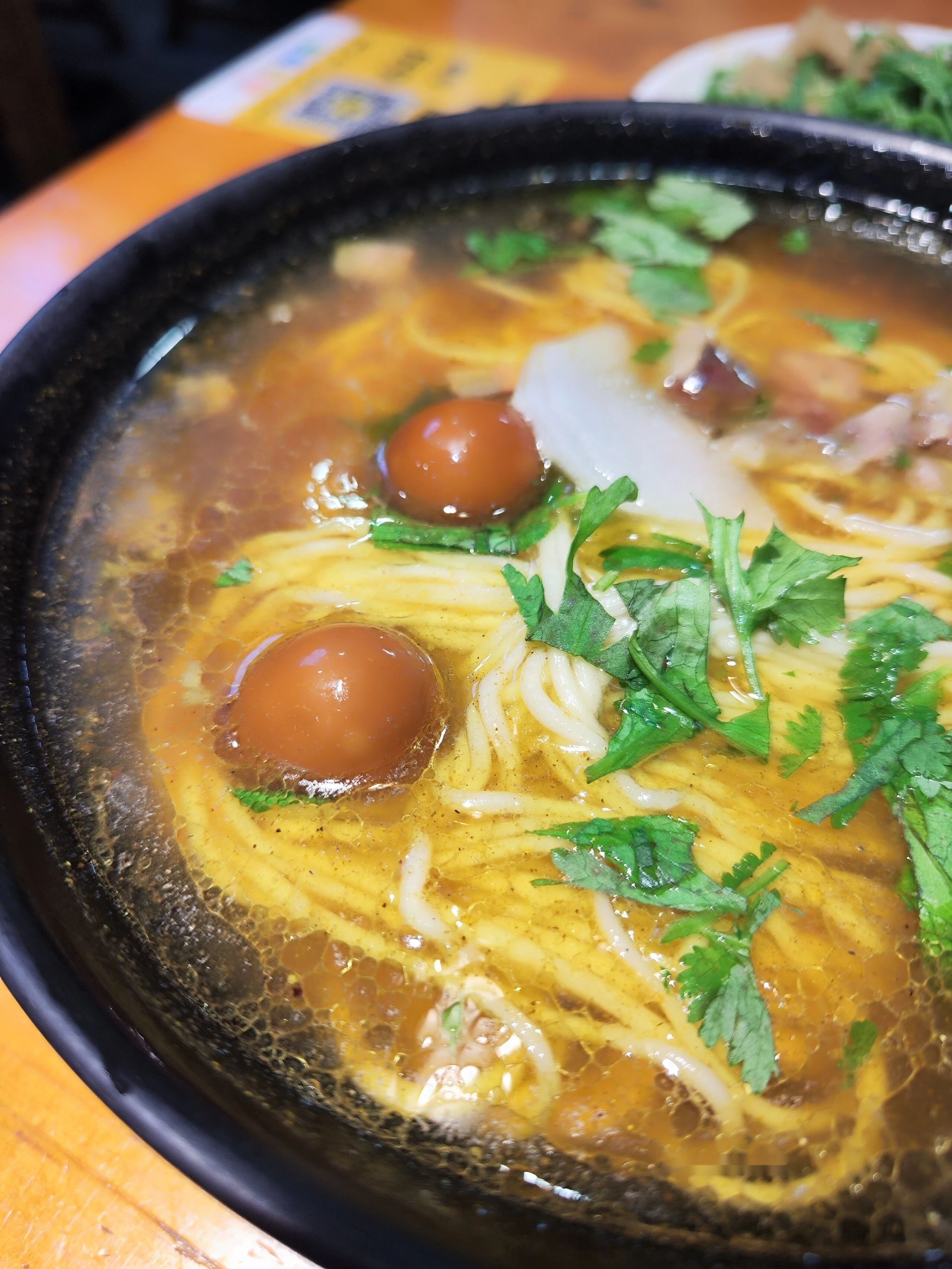
Next, the noodles: the ramen-making skills are on point. They're pretty uniform, nicely chewy, and super clean when they're made, so they don't feel like they're coated in a ton of dry flour.
Finally, the meat: they use diced meat, kind of reminds me of Zhengzhou's Yang Ji style, though the meat quantity is a bit small. If you're a big meat fan, you can ask for the extra meat version.
My hometown is Henan, and Kaifeng is famous for its cuisine! The noodles are tender, the meat is soft, and the soup is fresh and pure!
Best Halal Food in Luoyang: Authentic Majieshan Beef Soup & Huimian Noodles in Henan
Articles • Hasan09 posted the article • 0 comments • 54 views • 3 days ago
This Majieshan Beef Soup Restaurant in Luoyang, Henan, is hands down the most authentic spot and a true local favorite.
We ordered their signature Huimian, Guoyourou Niuroutang, and Huimo to try, and seriously, they totally live up to the hype! view all
This Majieshan Beef Soup Restaurant in Luoyang, Henan, is hands down the most authentic spot and a true local favorite.
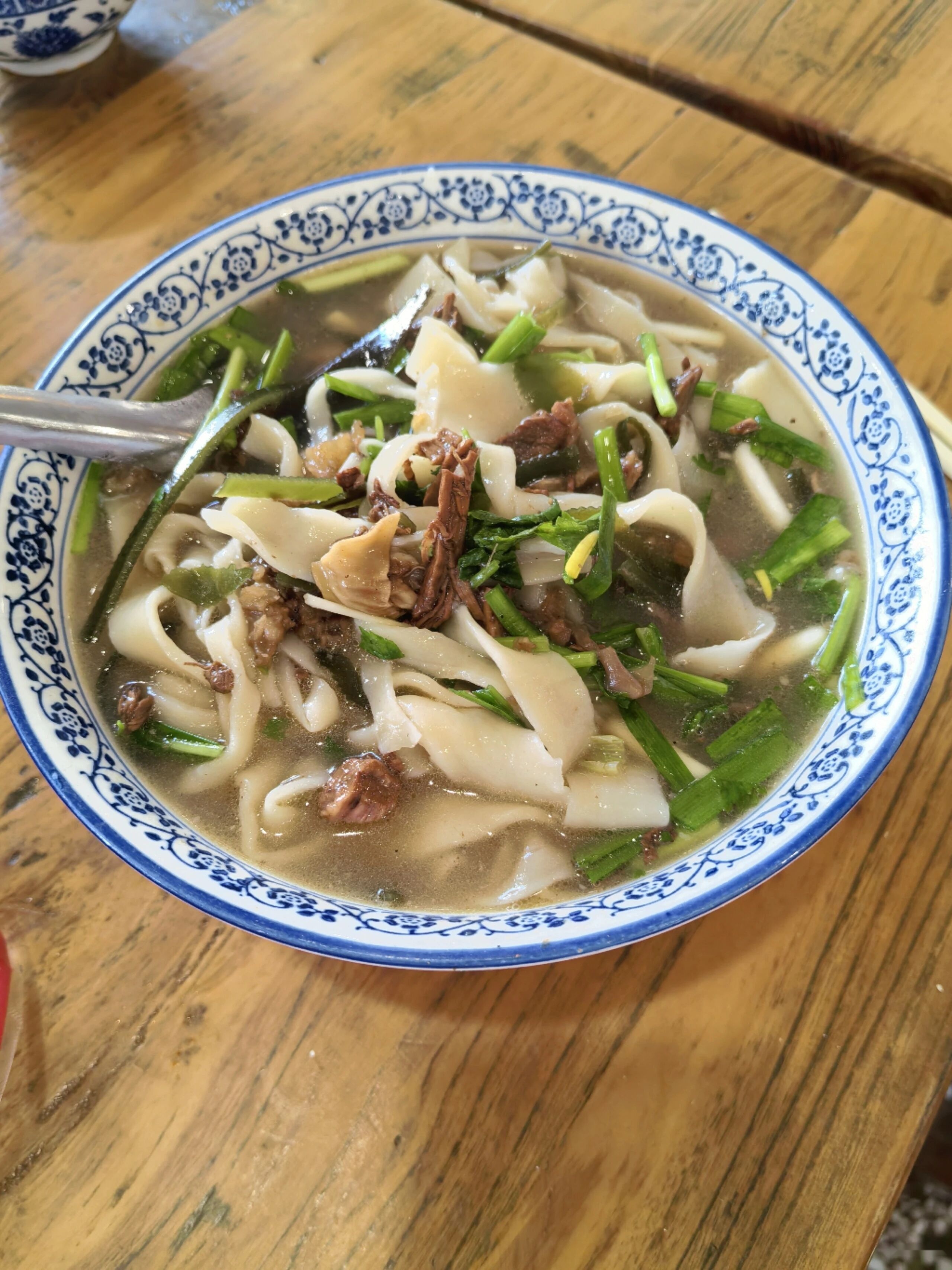
We ordered their signature Huimian, Guoyourou Niuroutang, and Huimo to try, and seriously, they totally live up to the hype!
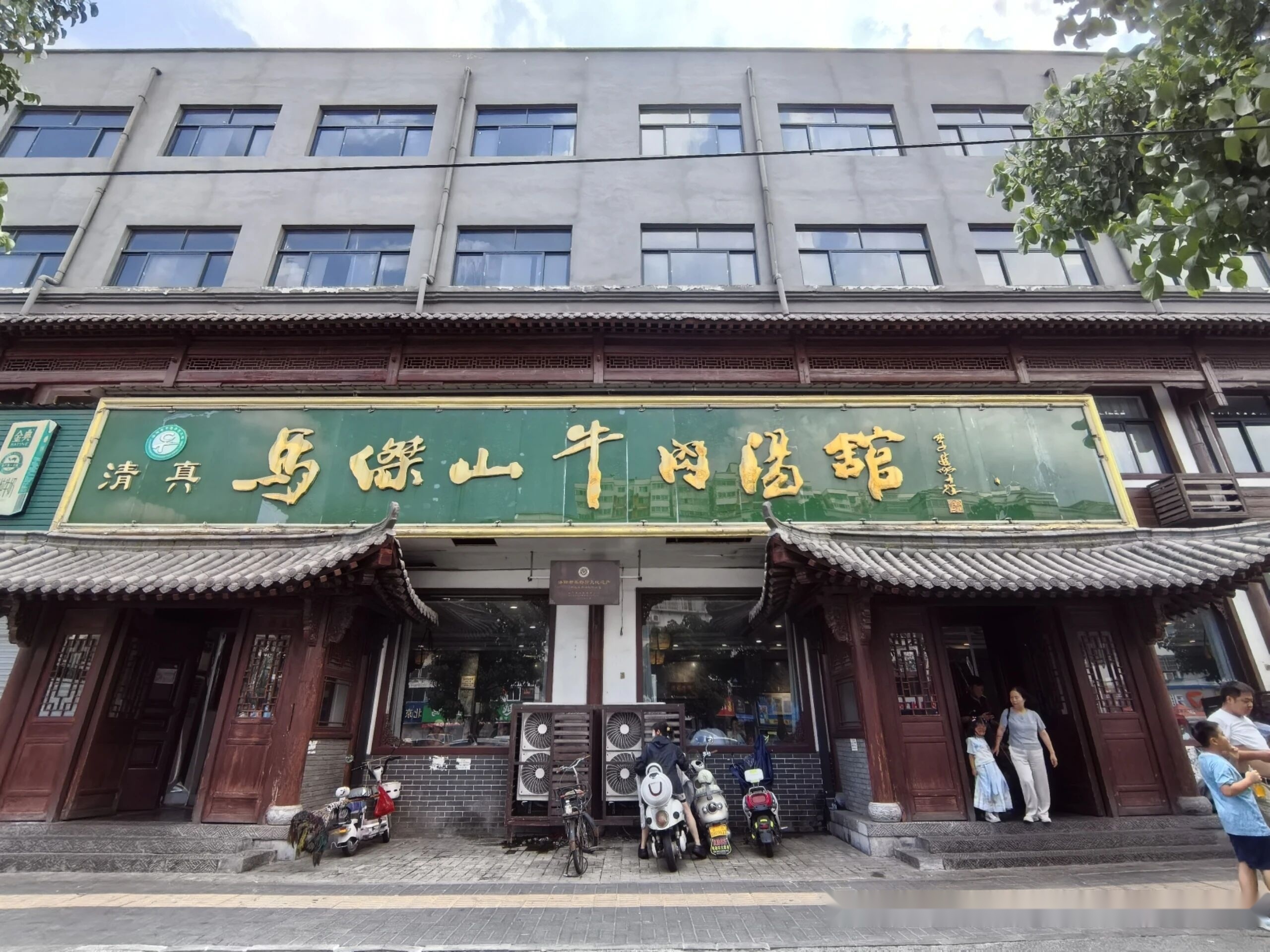
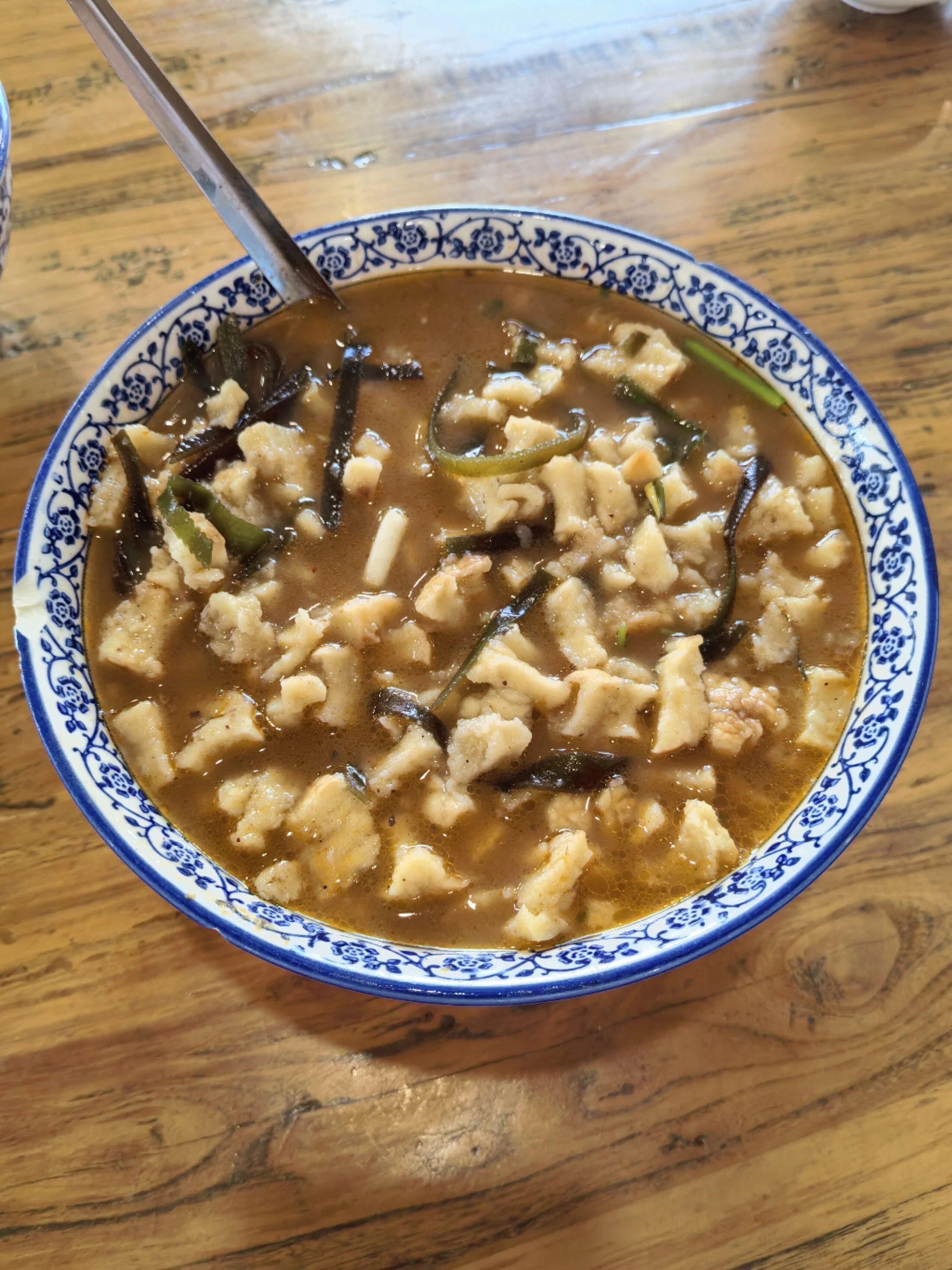
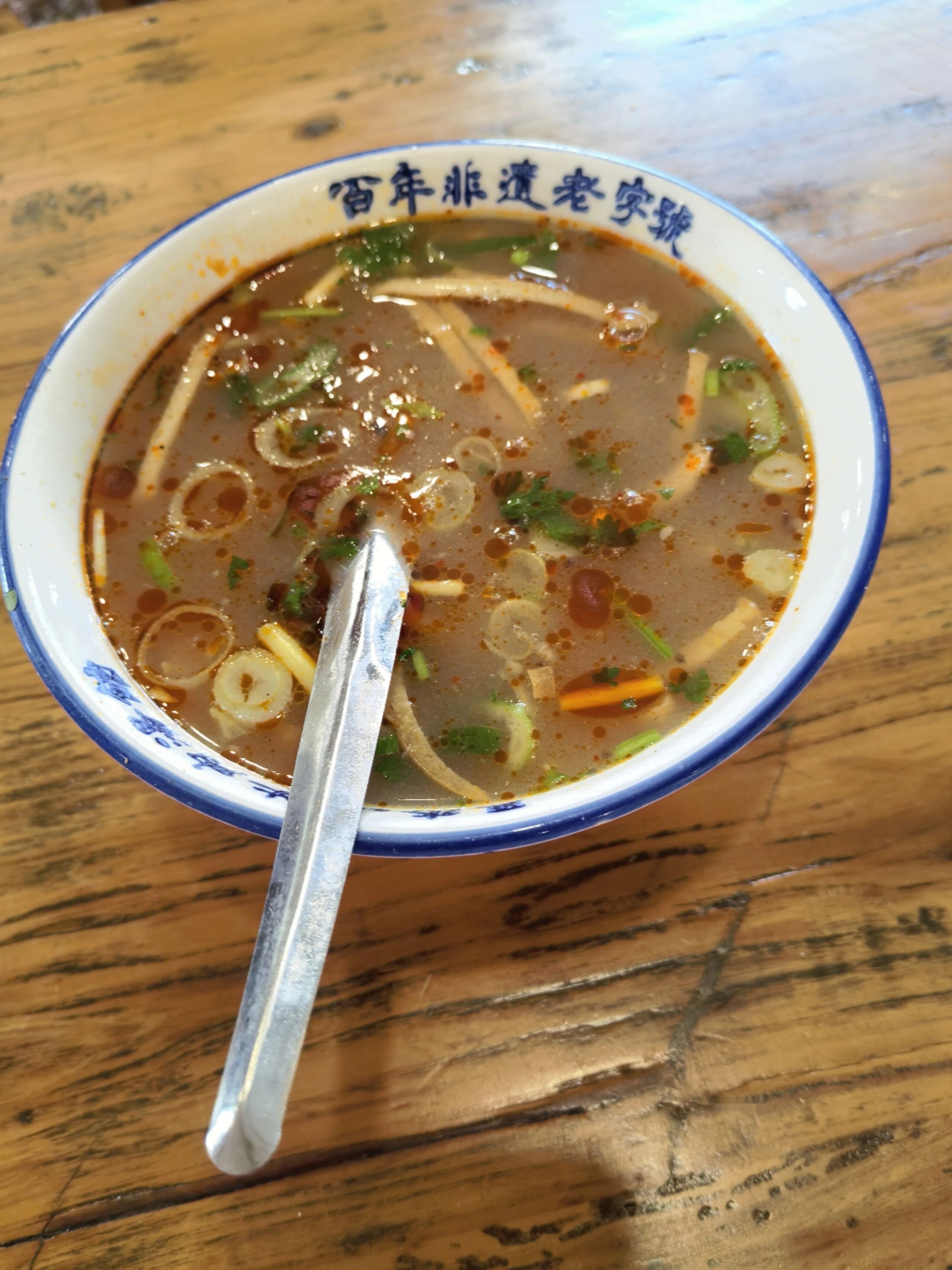
Kunming Hui Muslim Noodle Guide: 5 Authentic Halal Spots for Beef Noodles and More
Articles • Hasan09 posted the article • 0 comments • 64 views • 3 days ago
Hit up these 5 halal noodle spots this weekend, and you're guaranteed to be satisfied. These 5 halal noodle joints in Kunming are super affordable, costing only 14 to 24 yuan per person, and they're open from morning till night.
At Ma Ji Lu Wei Mian Guan in Taoyuan Square, you'll see 'Halal' written big on the sign. Their standout dish is the veggie noodles with a spinach green tint. And over at Xiaoximen, Bao Laoguan's Da Su Beef Noodles are only 11 yuan, with beef so tender it practically melts, and one serving can be paired with five different kinds of noodles.
Da Guanjie Da Su Beef Noodles in Fengning Community is open all day, so you can grab a bite even if you miss the usual meal times. Hong Niuyuan in He Xie Jia Yuan has been around for 26 years. Besides their braised beef noodles, their beef skewers for 5 yuan a pop are also a hidden gem.
Niu San Xian in Dongjiawan is ranked number 1 in the city for noodle flavor. Their braised beef noodle set meal is just 12 yuan. Just a heads-up though, they take a break from 2 PM to 5:30 PM, so make sure to check the time before you go. view all
Hit up these 5 halal noodle spots this weekend, and you're guaranteed to be satisfied. These 5 halal noodle joints in Kunming are super affordable, costing only 14 to 24 yuan per person, and they're open from morning till night.
At Ma Ji Lu Wei Mian Guan in Taoyuan Square, you'll see 'Halal' written big on the sign. Their standout dish is the veggie noodles with a spinach green tint. And over at Xiaoximen, Bao Laoguan's Da Su Beef Noodles are only 11 yuan, with beef so tender it practically melts, and one serving can be paired with five different kinds of noodles.
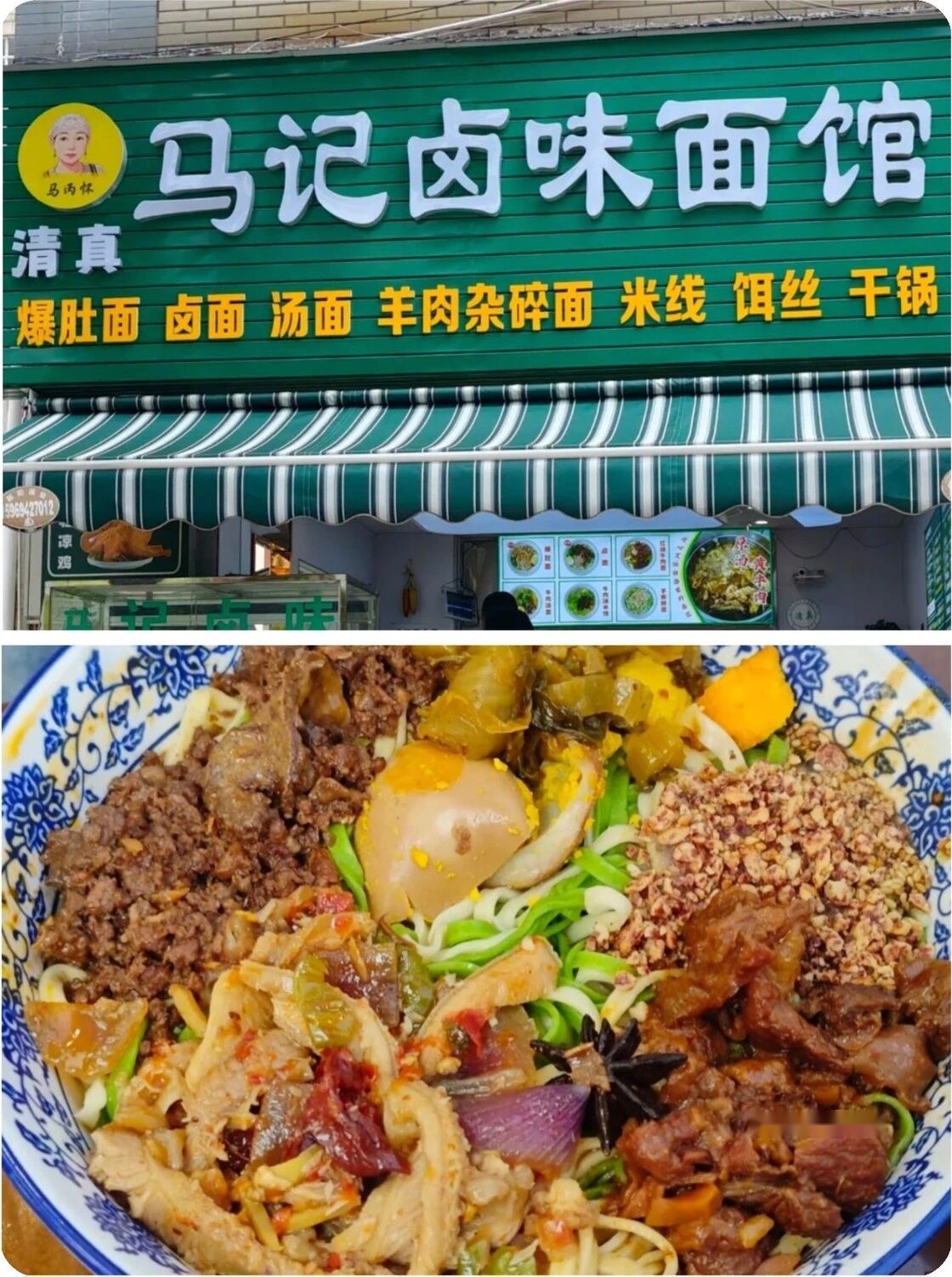
Da Guanjie Da Su Beef Noodles in Fengning Community is open all day, so you can grab a bite even if you miss the usual meal times. Hong Niuyuan in He Xie Jia Yuan has been around for 26 years. Besides their braised beef noodles, their beef skewers for 5 yuan a pop are also a hidden gem.
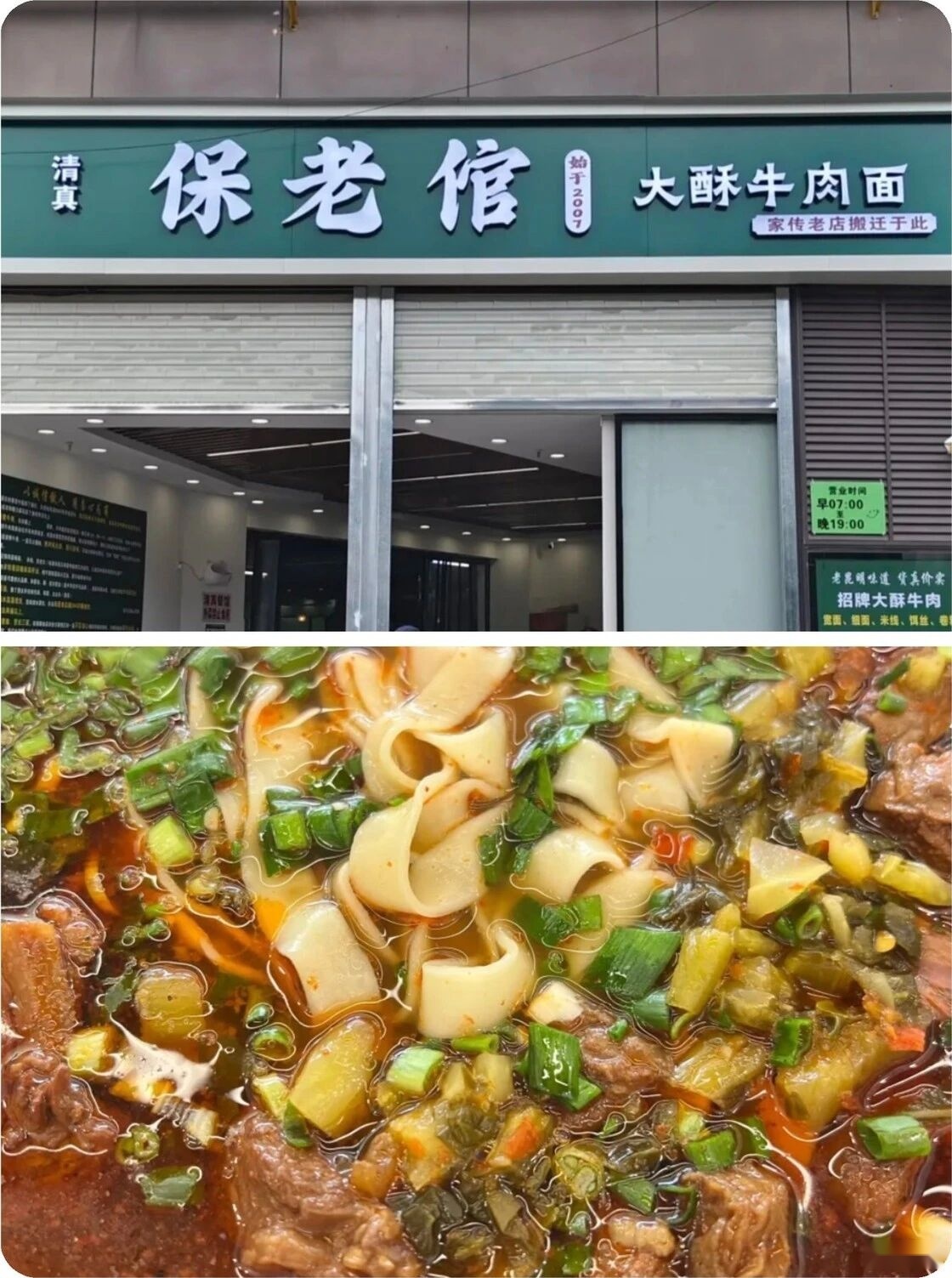
Niu San Xian in Dongjiawan is ranked number 1 in the city for noodle flavor. Their braised beef noodle set meal is just 12 yuan. Just a heads-up though, they take a break from 2 PM to 5:30 PM, so make sure to check the time before you go.
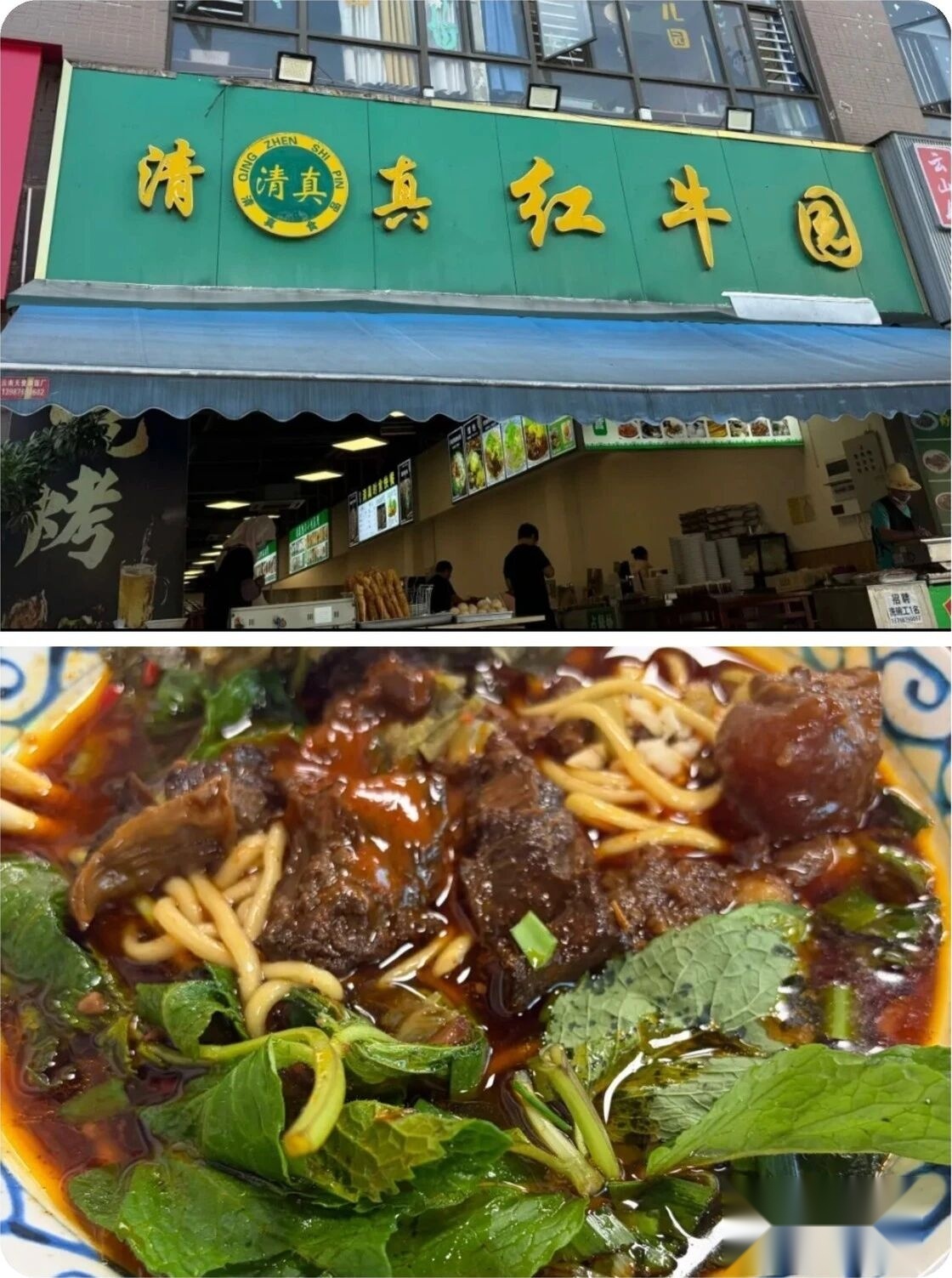
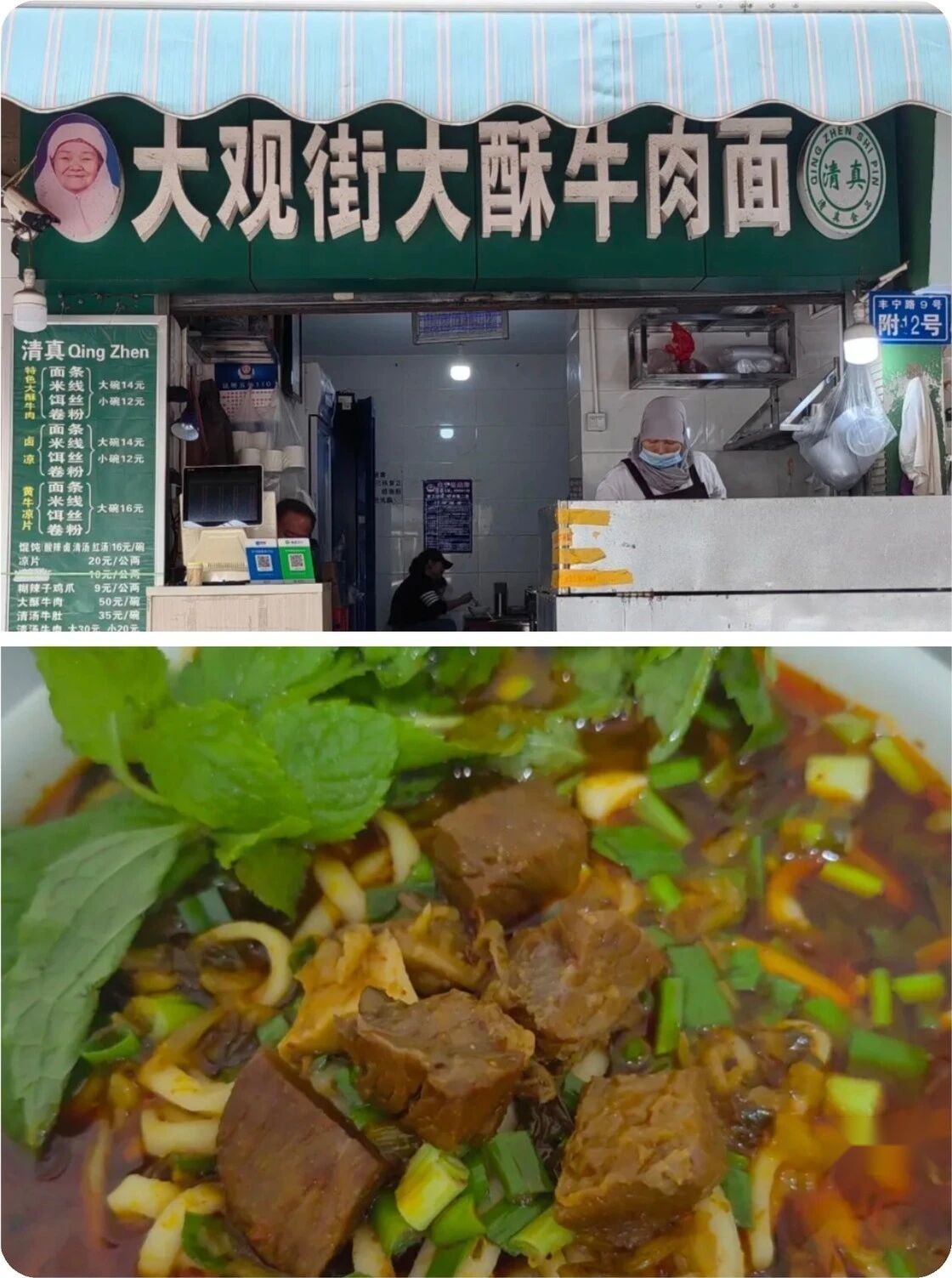
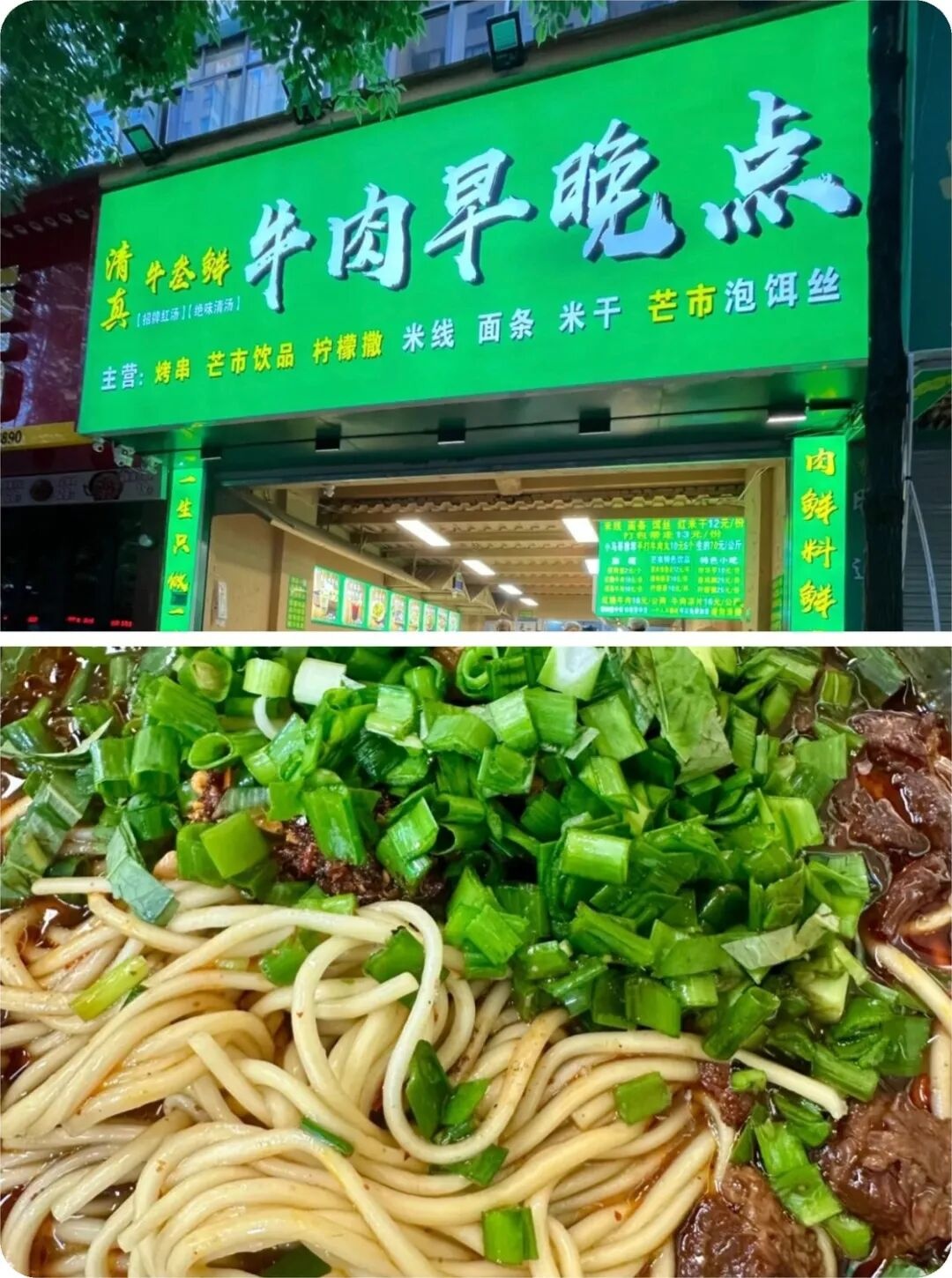
Best Halal Food in Beijing: 10 Authentic Hui Muslim Eateries and Traditional Beef Specialties Guide
Articles • Hasan09 posted the article • 0 comments • 71 views • 4 days ago
The lineup includes: Guxiangzhai (Tianjin Shaved Ice, Dongsi Branch), Yangji Qiqihar BBQ (Wudaokou), Baoding Niurou Zhaobing (Changying), Huimin Cafe (Art Museum Back Street), Anji Kitchen (Shunyi Japanese Cuisine), Bachu Cuisine (Erligou), Jinfang Snacks (Bird's Nest Branch), Shaanxi Baoji Mianpi (cold flour noodles) and Liangfen (bean starch jelly) (Madian), Dezhou Meat Pies (Liuxue Road, Tianqiao), and Xiaoxiao Rotating Hot Pot (Haidian Mosque).
Guxiangzhai (Tianjin-style Shaved Ice, Dongsi Branch)
A new branch of Guxiangzhai recently opened on Dongsi North Street, tucked inside a Chongqing-style hot pot restaurant. They’ve got all the classic shaved ice flavors. I went for their premium 'Dinosaur Egg Three-Apricot' bowl. 'Three-Apricot' refers to the Kashgar Hami apricot, the Yingjisha Saimaiti red apricot, and the Aksu Situan dried apricot. 'Dinosaur eggs' is actually a nickname for pluots—a hybrid of apricots and plums produced in Aksu and Hotan.
The biggest issue with this spot is that the smell of the hot pot restaurant is way too intense! You end up smelling like hot pot after just grabbing a dessert.
Yangji Qiqihar-style Barbecue (Wudaokou)
After a Saturday at the Botanical Garden, we headed to Wudaokou for some Yangji Qiqihar-style BBQ. There are four Hui Muslim-run Qiqihar BBQ spots in Beijing now: Bu Hui in Changying, Qijia in Guanzhuang, Yangji in Wudaokou, and He Cheng Xiao Er in Majiapu. They aren't exactly near Dongsi, so they're best visited when you're already out and about in those areas.
We grabbed a coupon for the eel combo for two, which included half an eel, fatty beef, regular beef, Korean-style grilled sausages, zucchini, and a 'sticky' mala tang (spicy numbing soup). It’s a pretty well-rounded meal, though it lacks a main starch. We ordered bibimbap, cold noodles, and a 'rice wrap' (fanbao) on the side, plus frozen pears for dessert. They also offer free side dishes; the mashed potatoes are the crowd favorite and totally delicious.
The service is solid—the staff grills the meat for you. The meat quality is great; I’ve found other places to be a bit tough, but this place finally got the texture right. The highlight is definitely the grilled eel, which you dip in wasabi sauce and wrap in seaweed. It’s super fresh, tender, and flavorful.
The Korean-style sausages were also tasty and packed with flavor. The grills aren't bolted down, so they can be moved around, which is a nice touch to keep oil splatters away from the kids. The bibimbap is meatless, meant as a side for the BBQ. The cold noodles have an authentic flavor, and the noodles are nice and chewy. It was my first time trying a fanbao—a mix of potatoes, eggplant, peanuts, and rice mashed together by hand, topped with egg sauce, and wrapped in lettuce. It’s super filling and honestly tastes great. The mala tang was mostly just vermicelli and bok choy, which felt a bit redundant.
If you drive, you can park at the Wudaokou Shopping Center across the street and walk over. It’s pretty hard to find; don't try the stairs in front of Block B. You need to find the small alley between Blocks A and B and walk to the end to find an elevator that takes you right up.
Yihexian Dumpling House (Changying)
We spent a half-day in Changying on Sunday and stopped by a new dumpling spot, Yihexian, for lunch. It’s a very small, alcohol-free shop—perfect for bringing kids since no one is smoking or drinking. Besides the standard celery, fennel, and carrot fillings, they have unique options like corn and mackerel. The meat dumplings have a high meat-to-veggie ratio and are on the smaller side. You can see the aunties making them fresh by the window. The only downside is their cold dishes are limited to century eggs, smashed cucumbers, and wood ear mushrooms; they don't have prepared deli meats like braised beef.
Baoding Niurou Zhaobing (Changying)
For dinner, we had Baoding niurou zhaobing (beef covered pancakes) in Changying. This place used to be a yakiniku spot that was the only place in Beijing serving halal Japanese set meals, which I visited often. It then turned into Changying San Xiongdi, and now it’s this Baoding-style spot. It’s a bit tucked away, so not much foot traffic. The parking in front is usually full, but you can park in the compound behind the building and enter from there.
Besides the zhaobing, they have stir-fried dishes. We ordered the four-person set, which included Baoding-style shredded pork in garlic sauce, stir-fried beef brisket, stir-fried luffa, and vinegar-braised hairtail fish. The hairtail was the winner—deep-fried until crispy. The luffa was good, and the brisket had a nice mix of fat and lean, giving it a good chew. The shredded pork with garlic sauce was a bit too sugary for my taste, and it included bean sprouts, which I usually prefer without.
The zhaobing itself is solid—the thin layered pancake served with beef shank slices is satisfying, and the broth is well-seasoned. We swapped the set menu drinks for a 'Baoding Persimmon Ice,' which is just a peeled frozen persimmon. Depending on how long it thaws, you get everything from a sorbet texture to a honey-like consistency. It’s delicious.
Huimin Cafe (Art Museum Back Street)
Meihou Sishi on Art Museum Back Street is a community hub, and recently, a local Hui Muslim opened a cafe called Yuehui. They offer coffee, toast, bagels, and lye pretzels. If you're exploring the old Beijing hutongs, it's a great spot to take a break and grab a coffee.
We ordered two lattes, matcha raw chocolate toast, Basque burnt cheesecake toast, black pepper chicken and sausage lye stick, and a double-berry cream cheese lye ball.
The matcha toast wasn't too sweet, and the matcha flavor was intense. The Basque cake, originally from the Basque region of Spain, is a burnt cheesecake that works surprisingly well on top of the toast square. The black pepper chicken lye stick and the double-berry cream cheese ball were also solid pairings for coffee.
Anji Kitchen (Shunyi Japanese Cuisine)
Since the Chidao BBQ in Changying closed, I finally found authentic halal Japanese food in Beijing again! It’s called Anji Kitchen, located at Shouchuang Heyuan in Zhangxizhuang, Shunyi. The owner is a Beijing Hui Muslim. In addition to Japanese dishes, they serve beef rice porridge and beef noodles.
The space is small, focusing on eel rice, beef rice, and udon noodles. They also have salmon sashimi and hand-pressed sushi. You can choose from arctic surf clam, eel, sweet shrimp, and salmon. The eel rice with the egg strips is tasty, though the rice was a bit too wet for my preference—I like mine on the drier side. The udon noodles were flat, which is different from the round ones I'm used to. The tuna salad is healthy and, thankfully, uses a light oil-and-vinegar dressing instead of mayo. The beef rice set comes with pickled radishes, seaweed, and a drink. I hope they introduce more set meal options and maybe add miso soup to the mix.
Bachu Cuisine (Erligou)
We took the kids to the zoo over the weekend and hit up a new Southern Xinjiang spot called Bachu Cuisine afterward. It’s inside the Shouchuang Yindu building across from the Xinjiang Plaza. The environment is fancy, but the prices reflect that. We tried a few harder-to-find dishes, including the Hami-style huang-a-xi, Kashgar-style grilled pigeon, Artux-style menbing (braised pancakes), and a 'mini bowl' of laghman (hand-pulled noodles).
Huang-a-xi is a version of 'soup rice' from the Hami King’s Palace; it features tiny bits of dough boiled in a rich meat broth. Their broth is really fragrant. The grilled pigeon and skewers were fine, though pigeon is always a bit bony. The Artux menbing is filled with cilantro and eaten dipped in yogurt. A plate of these pancakes cost 88 yuan—it tasted good, but it was honestly very expensive. We tried it once, but probably won't order it again.
Overall, sticking to the pilaf or the laghman here is a better value, as some of the specialty dishes are definitely overpriced.
Jinfang Snacks (Bird's Nest Branch)
We spent the weekend at the Aoson Music Festival and ate at the Jinfang Snacks Bird's Nest branch both days—it’s just a 5-minute electric scooter ride from the Aoson South Gate.
The place is super popular, but it has the widest selection—the steamed items and stir-frys are almost always fully stocked. We went around 2 PM on the first day, and a lot of stuff was already sold out. They have big cold noodle bowls at lunch, and regular zhajiangmian (soybean paste noodles) at other times. I’m a fan of their crispy chicken and scallion oil chicken. The cheaper stir-frys are mostly chicken, while the pricier ones are beef and lamb. The best thing about this place is the variety and the fact that you don't have to wait for your food to be cooked to order. Even when it's packed, you can usually find a seat.
Shaanxi Baoji Mianpi and Liangfen (Madian)
This is authentic mianpi (wheat-flour cold noodles) and liangfen (bean starch jelly) made by a Baoji Hui Muslim local. You can get a mix of both. The chili oil is fragrant but not overly spicy. Sadly, the oat-flour noodles were sold out, so I'll have to try those next time. It’s located inside the first floor of the Fulite building, which is a bit tricky to find. There’s only one table, but there was no one else there when I visited, so I got to enjoy it freshly mixed.
Dezhou Meat Pies (Liuxue Road, Tianqiao)
I highly recommend this snack shop on Liuxue Road in Tianqiao. It’s run by Hui Muslims from Dezhou, Shandong, and they start making the meat pies fresh around 5 PM. We had the chive-and-egg and fennel-and-egg pies; they were huge and only 3 yuan each—a total bargain. The flavor is light, not too salty or greasy. For liquids, they serve lamb offal soup and millet porridge.
Xiaoxiao Rotating Hot Pot (Haidian Mosque)
The Yaofengcheng restaurant in front of the Haidian Mosque has a rotating hot pot spot on the second floor. It’s rarely crowded on weekends, making for a super chill meal. Yaofengcheng is also run by Hui Muslims from Dezhou, Shandong, so it’s a quiet, alcohol-free environment.
The 'Three-Fresh' and tomato soup bases are only 10 yuan each, and the freshly sliced beef and lamb are 10 yuan for four slices. They also have their own handmade dumplings. On the conveyor belt, I’d recommend the rose-shaped cod fish, baby squid, crunchy fish balls, cuttlefish balls, and lobster balls—the kids loved them. It’s a shame they don’t have fresh shrimp, only shrimp paste. view all
The lineup includes: Guxiangzhai (Tianjin Shaved Ice, Dongsi Branch), Yangji Qiqihar BBQ (Wudaokou), Baoding Niurou Zhaobing (Changying), Huimin Cafe (Art Museum Back Street), Anji Kitchen (Shunyi Japanese Cuisine), Bachu Cuisine (Erligou), Jinfang Snacks (Bird's Nest Branch), Shaanxi Baoji Mianpi (cold flour noodles) and Liangfen (bean starch jelly) (Madian), Dezhou Meat Pies (Liuxue Road, Tianqiao), and Xiaoxiao Rotating Hot Pot (Haidian Mosque).
Guxiangzhai (Tianjin-style Shaved Ice, Dongsi Branch)
A new branch of Guxiangzhai recently opened on Dongsi North Street, tucked inside a Chongqing-style hot pot restaurant. They’ve got all the classic shaved ice flavors. I went for their premium 'Dinosaur Egg Three-Apricot' bowl. 'Three-Apricot' refers to the Kashgar Hami apricot, the Yingjisha Saimaiti red apricot, and the Aksu Situan dried apricot. 'Dinosaur eggs' is actually a nickname for pluots—a hybrid of apricots and plums produced in Aksu and Hotan.
The biggest issue with this spot is that the smell of the hot pot restaurant is way too intense! You end up smelling like hot pot after just grabbing a dessert.
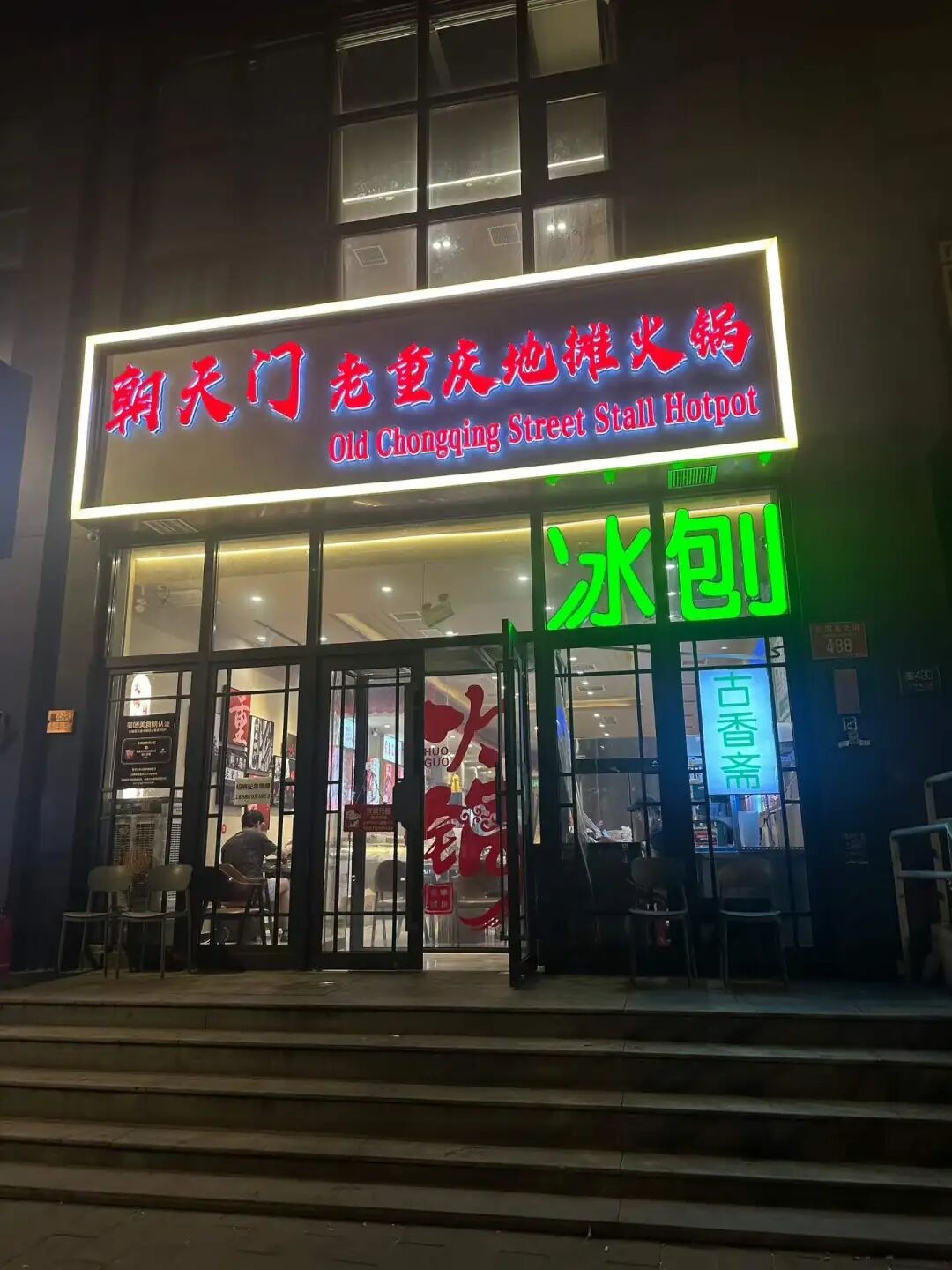
Yangji Qiqihar-style Barbecue (Wudaokou)
After a Saturday at the Botanical Garden, we headed to Wudaokou for some Yangji Qiqihar-style BBQ. There are four Hui Muslim-run Qiqihar BBQ spots in Beijing now: Bu Hui in Changying, Qijia in Guanzhuang, Yangji in Wudaokou, and He Cheng Xiao Er in Majiapu. They aren't exactly near Dongsi, so they're best visited when you're already out and about in those areas.
We grabbed a coupon for the eel combo for two, which included half an eel, fatty beef, regular beef, Korean-style grilled sausages, zucchini, and a 'sticky' mala tang (spicy numbing soup). It’s a pretty well-rounded meal, though it lacks a main starch. We ordered bibimbap, cold noodles, and a 'rice wrap' (fanbao) on the side, plus frozen pears for dessert. They also offer free side dishes; the mashed potatoes are the crowd favorite and totally delicious.
The service is solid—the staff grills the meat for you. The meat quality is great; I’ve found other places to be a bit tough, but this place finally got the texture right. The highlight is definitely the grilled eel, which you dip in wasabi sauce and wrap in seaweed. It’s super fresh, tender, and flavorful.
The Korean-style sausages were also tasty and packed with flavor. The grills aren't bolted down, so they can be moved around, which is a nice touch to keep oil splatters away from the kids. The bibimbap is meatless, meant as a side for the BBQ. The cold noodles have an authentic flavor, and the noodles are nice and chewy. It was my first time trying a fanbao—a mix of potatoes, eggplant, peanuts, and rice mashed together by hand, topped with egg sauce, and wrapped in lettuce. It’s super filling and honestly tastes great. The mala tang was mostly just vermicelli and bok choy, which felt a bit redundant.
If you drive, you can park at the Wudaokou Shopping Center across the street and walk over. It’s pretty hard to find; don't try the stairs in front of Block B. You need to find the small alley between Blocks A and B and walk to the end to find an elevator that takes you right up.
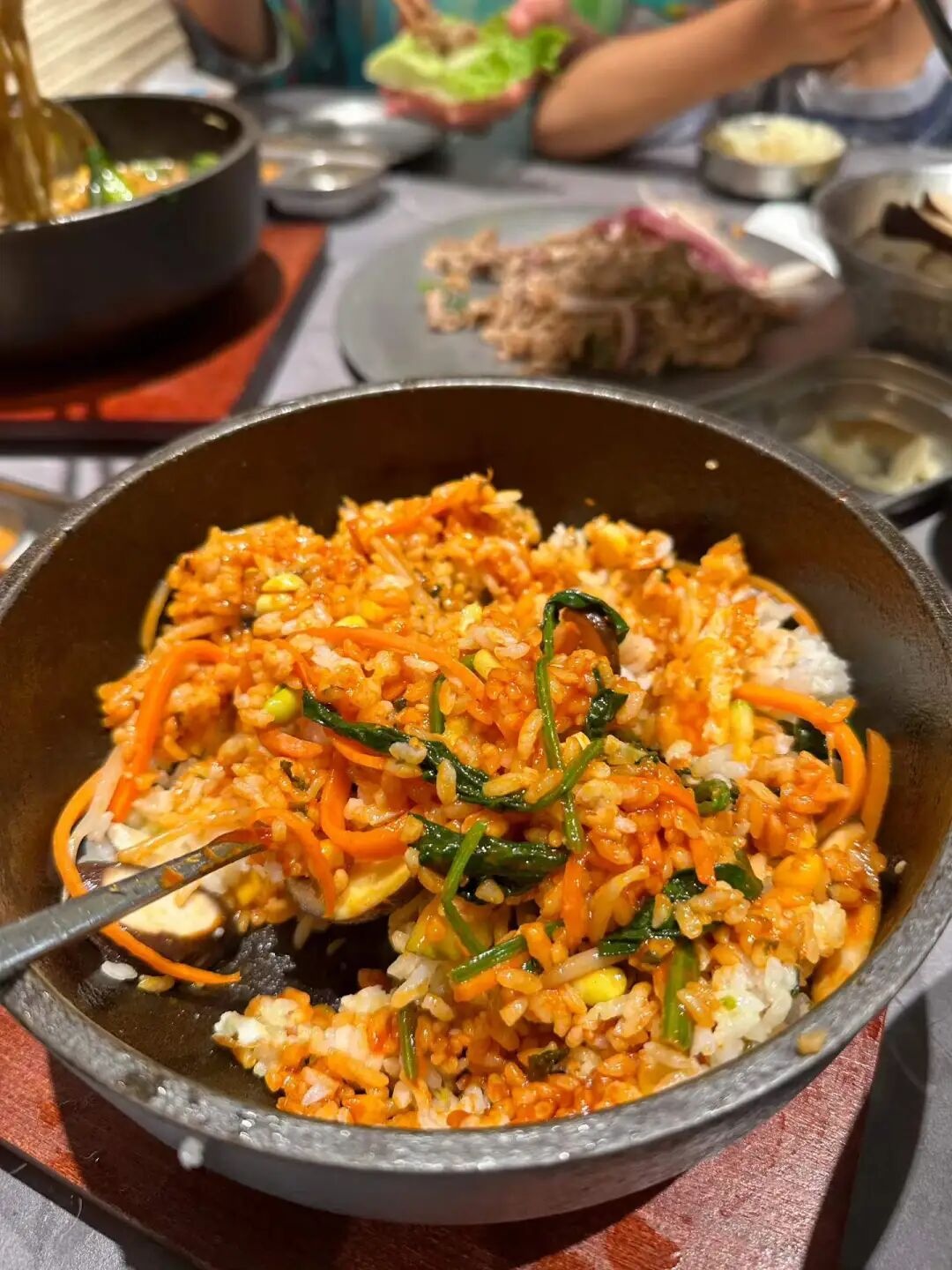
Yihexian Dumpling House (Changying)
We spent a half-day in Changying on Sunday and stopped by a new dumpling spot, Yihexian, for lunch. It’s a very small, alcohol-free shop—perfect for bringing kids since no one is smoking or drinking. Besides the standard celery, fennel, and carrot fillings, they have unique options like corn and mackerel. The meat dumplings have a high meat-to-veggie ratio and are on the smaller side. You can see the aunties making them fresh by the window. The only downside is their cold dishes are limited to century eggs, smashed cucumbers, and wood ear mushrooms; they don't have prepared deli meats like braised beef.
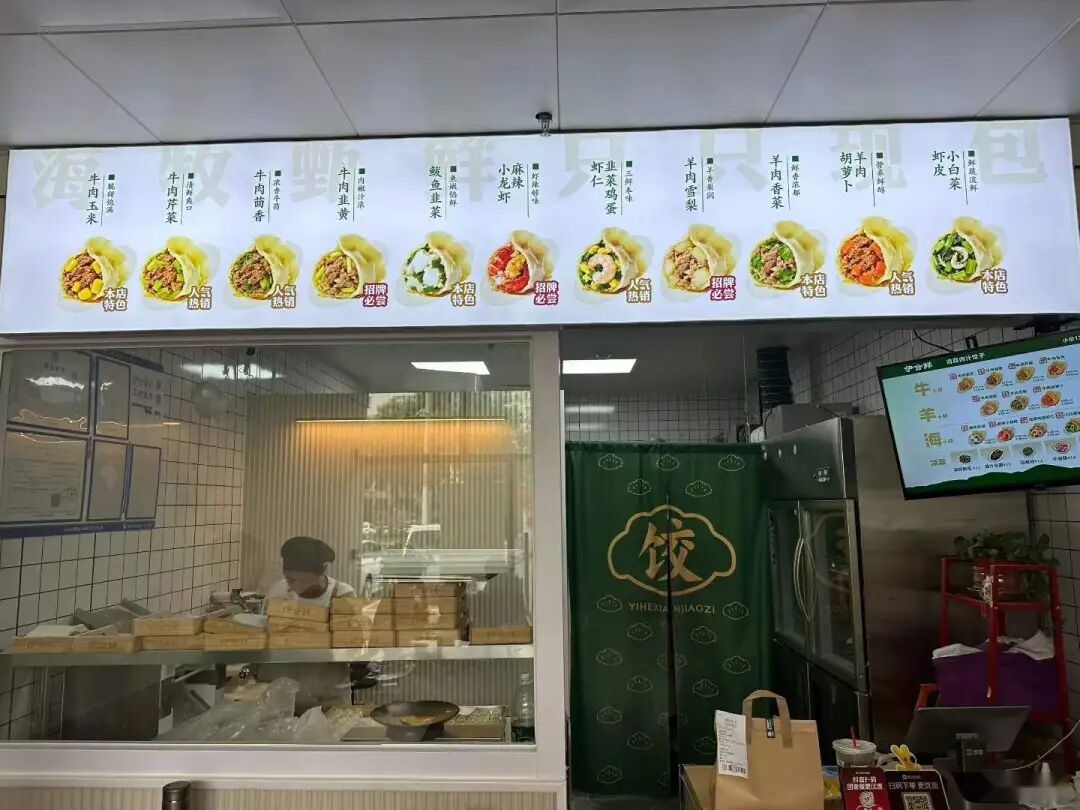
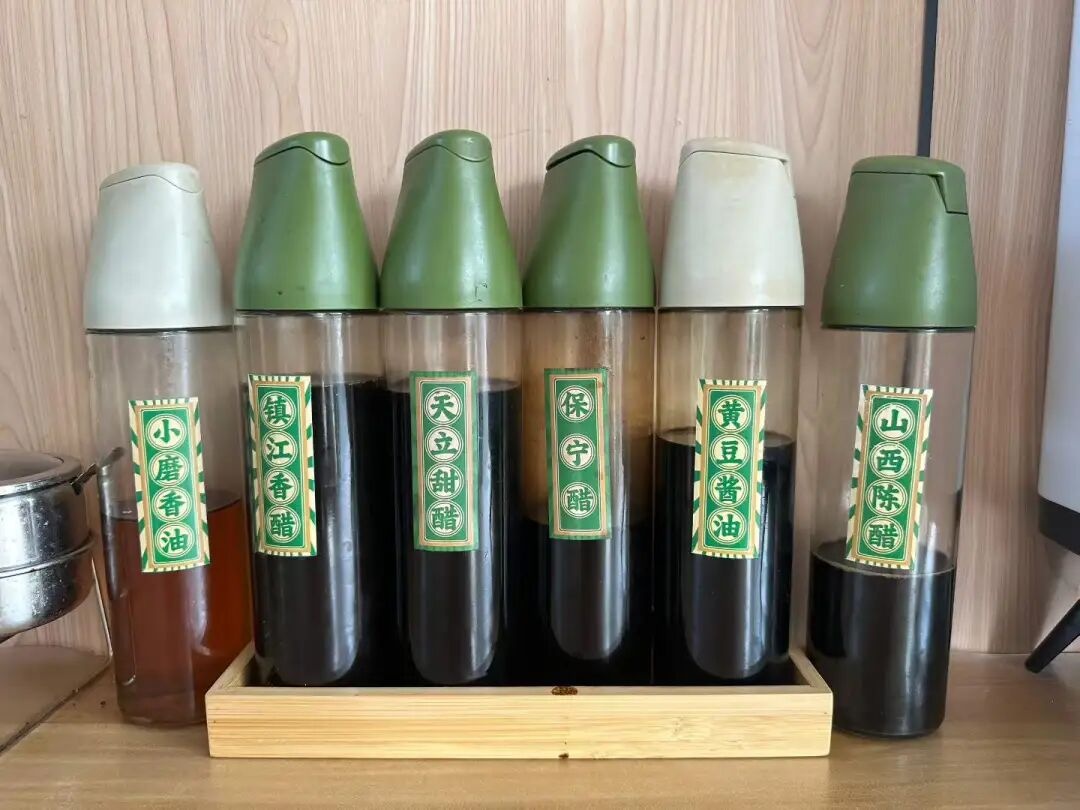
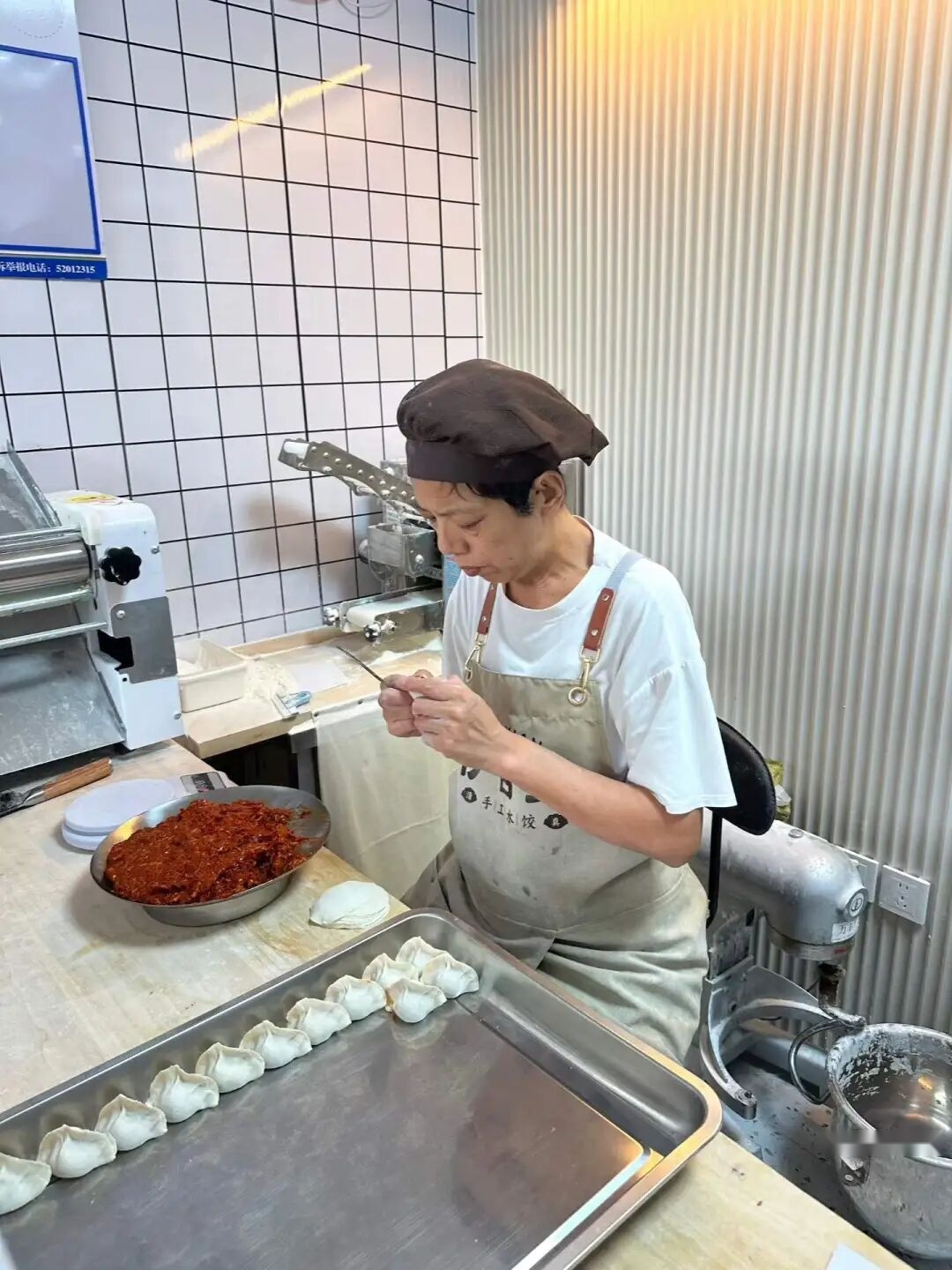
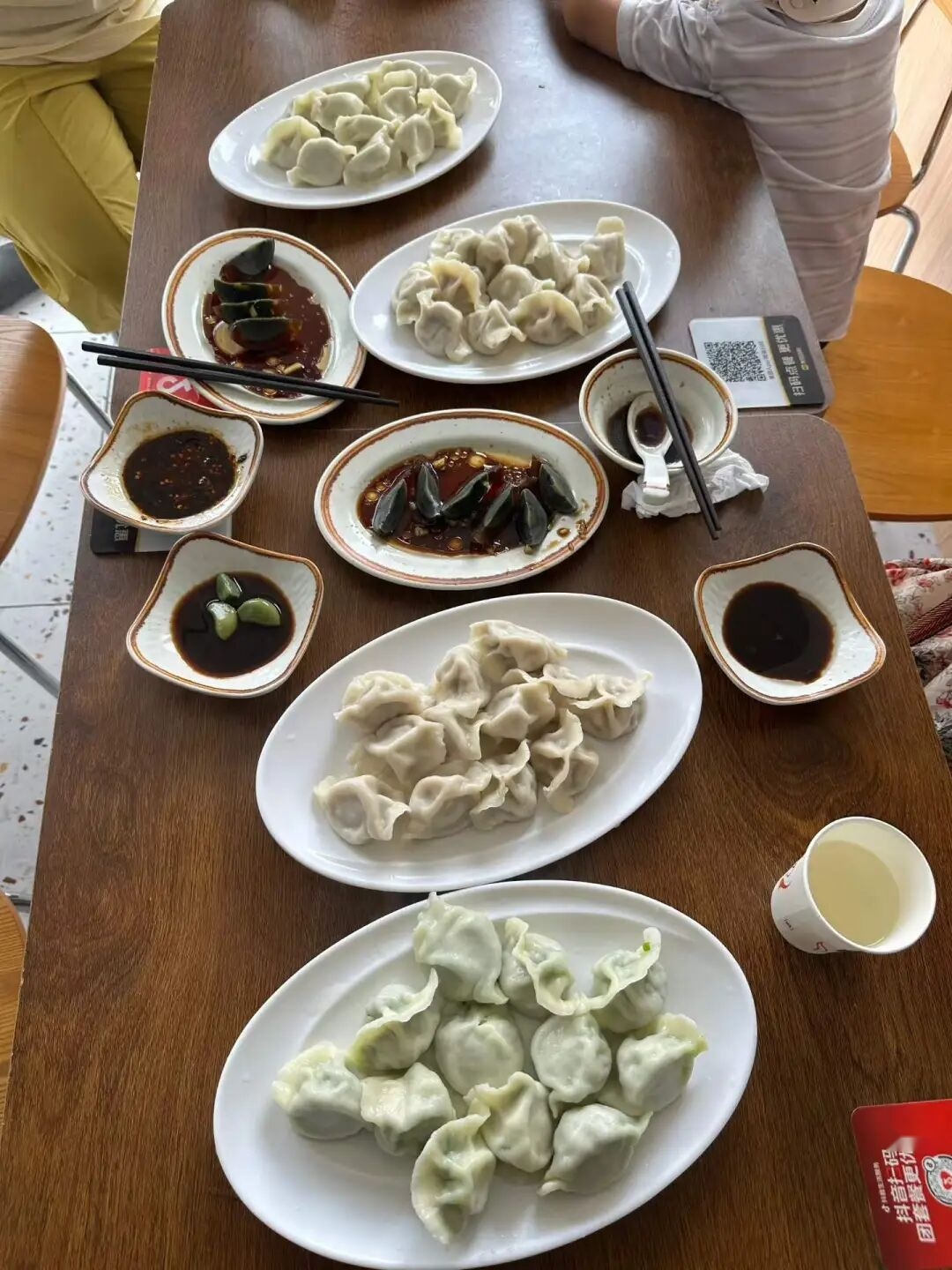
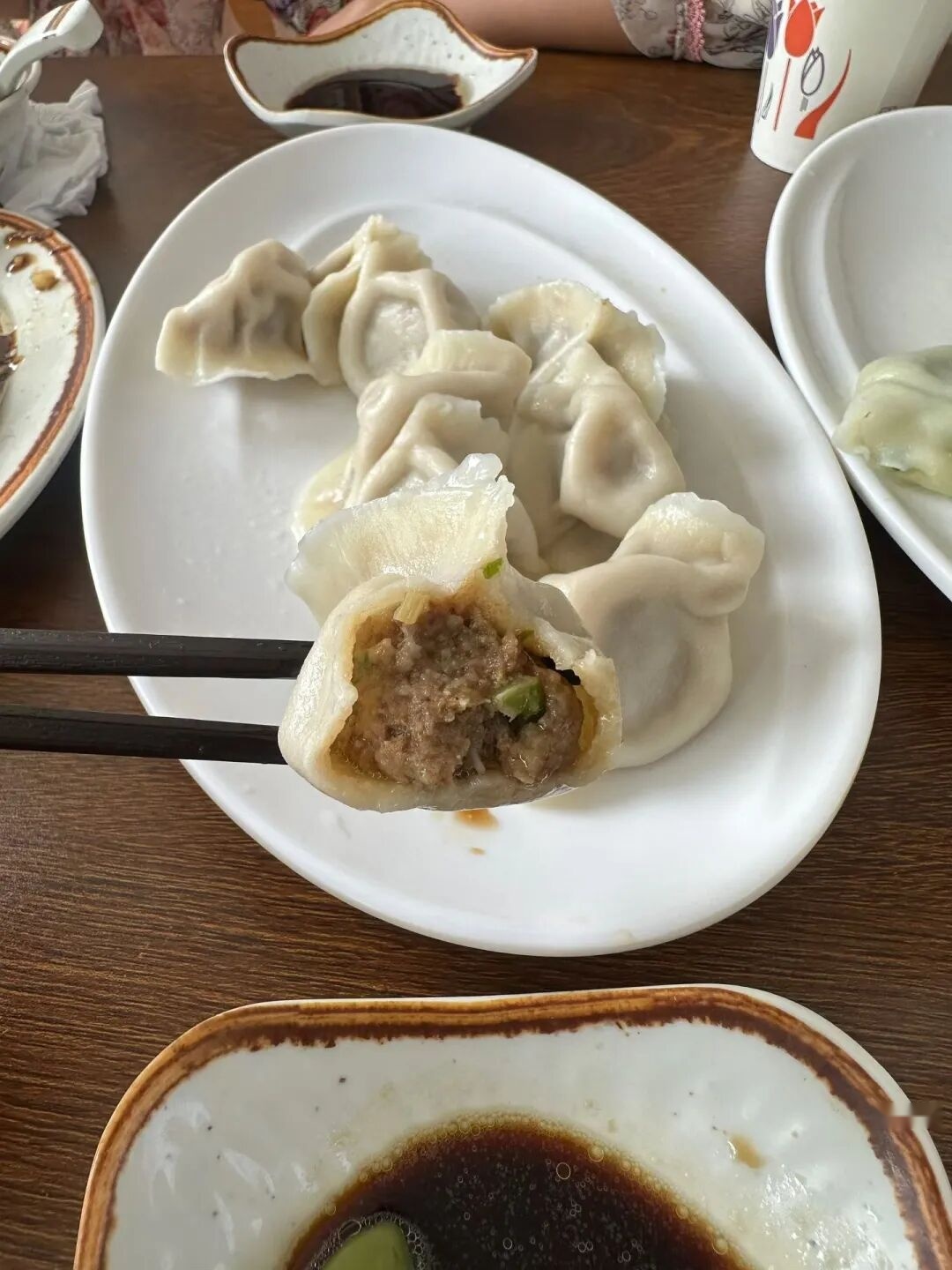
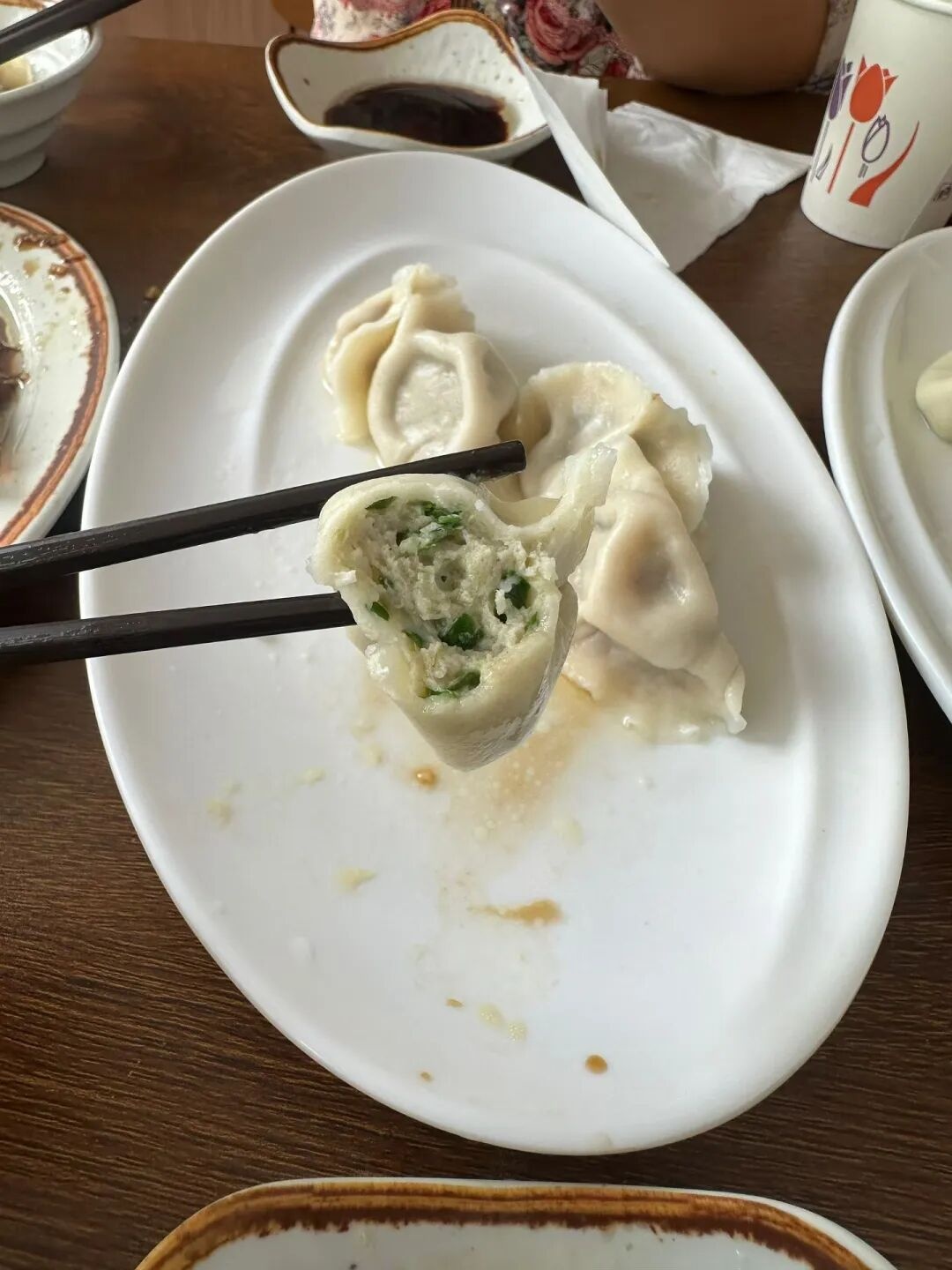
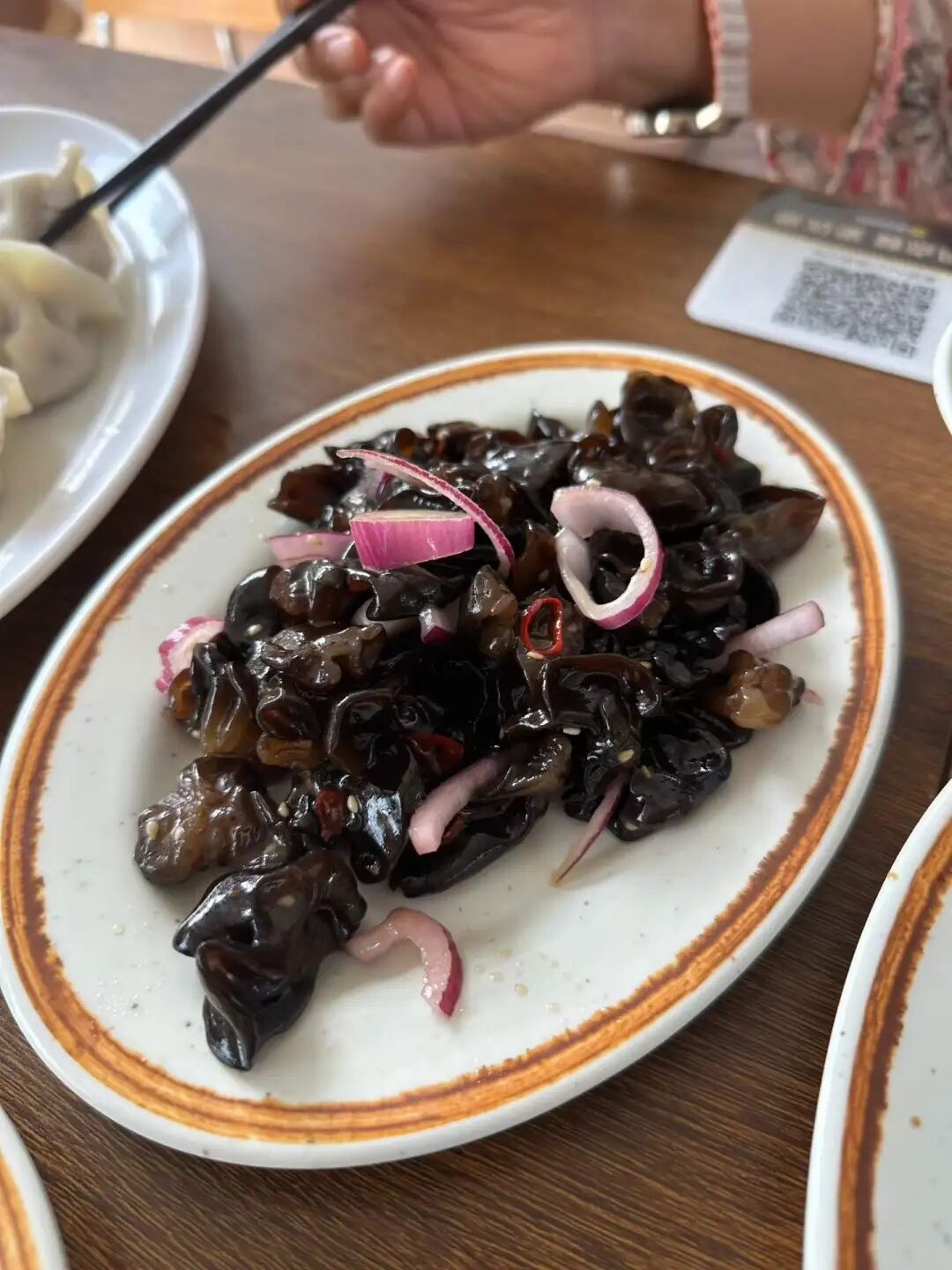
Baoding Niurou Zhaobing (Changying)
For dinner, we had Baoding niurou zhaobing (beef covered pancakes) in Changying. This place used to be a yakiniku spot that was the only place in Beijing serving halal Japanese set meals, which I visited often. It then turned into Changying San Xiongdi, and now it’s this Baoding-style spot. It’s a bit tucked away, so not much foot traffic. The parking in front is usually full, but you can park in the compound behind the building and enter from there.
Besides the zhaobing, they have stir-fried dishes. We ordered the four-person set, which included Baoding-style shredded pork in garlic sauce, stir-fried beef brisket, stir-fried luffa, and vinegar-braised hairtail fish. The hairtail was the winner—deep-fried until crispy. The luffa was good, and the brisket had a nice mix of fat and lean, giving it a good chew. The shredded pork with garlic sauce was a bit too sugary for my taste, and it included bean sprouts, which I usually prefer without.
The zhaobing itself is solid—the thin layered pancake served with beef shank slices is satisfying, and the broth is well-seasoned. We swapped the set menu drinks for a 'Baoding Persimmon Ice,' which is just a peeled frozen persimmon. Depending on how long it thaws, you get everything from a sorbet texture to a honey-like consistency. It’s delicious.
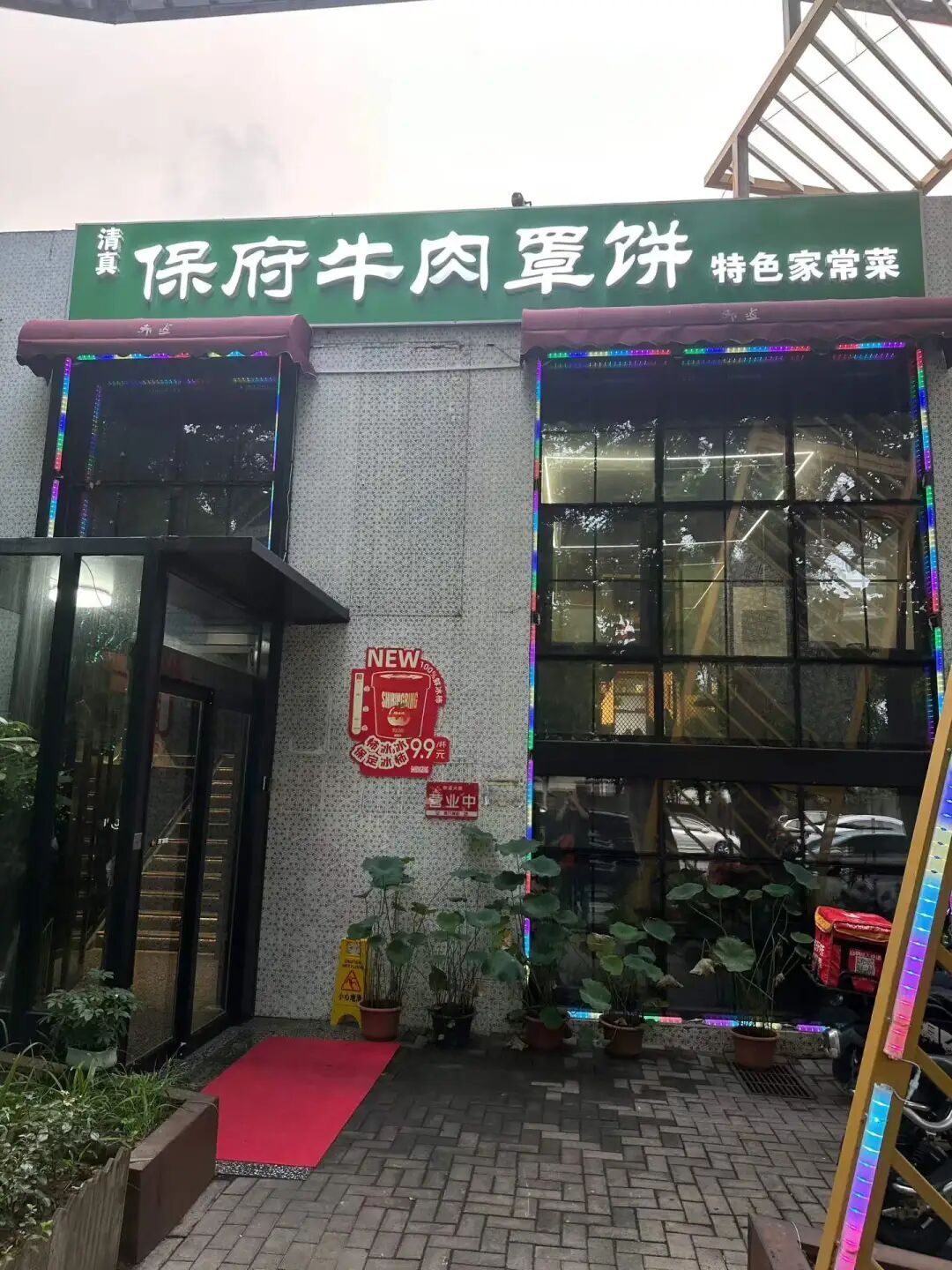
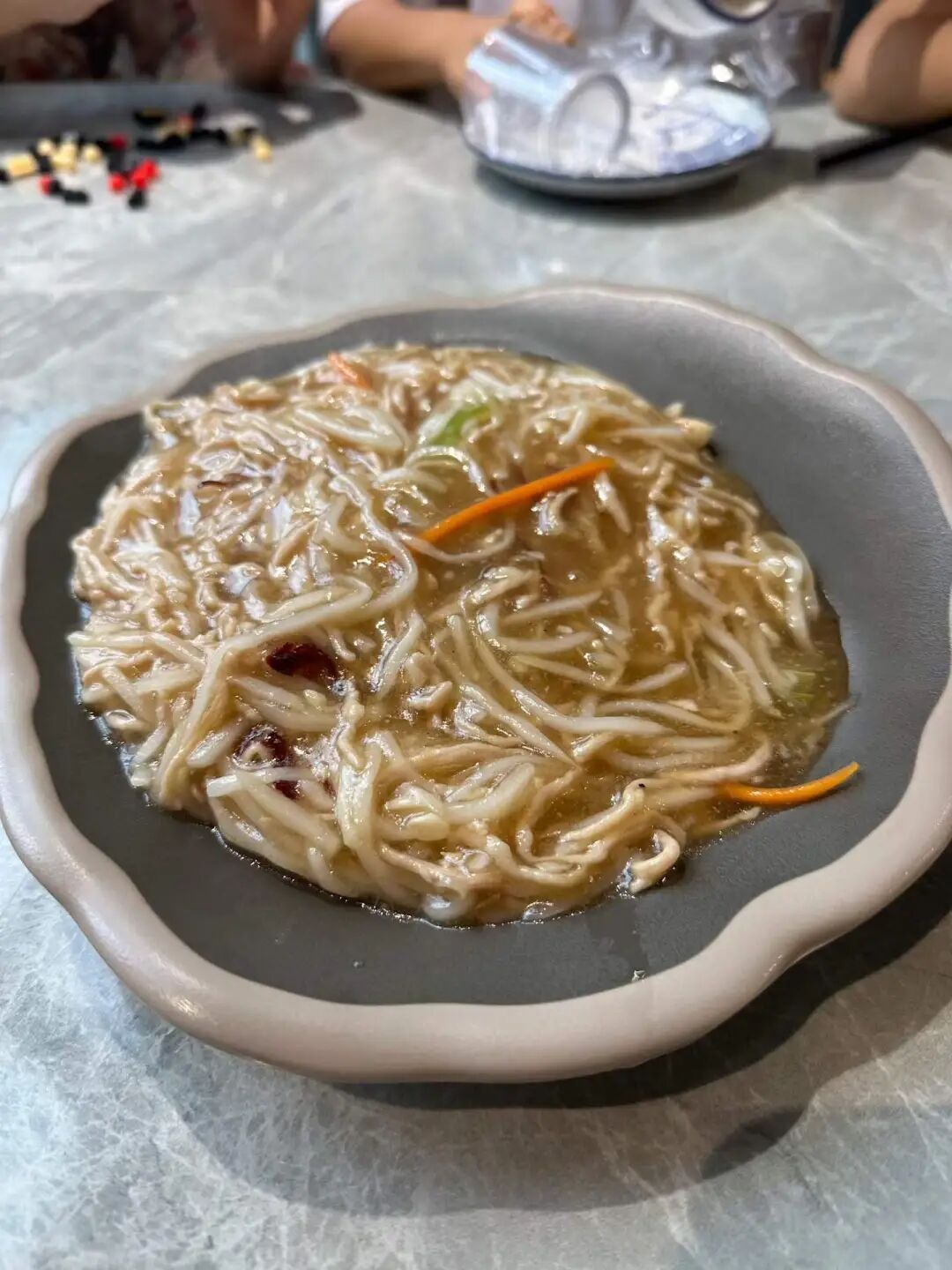
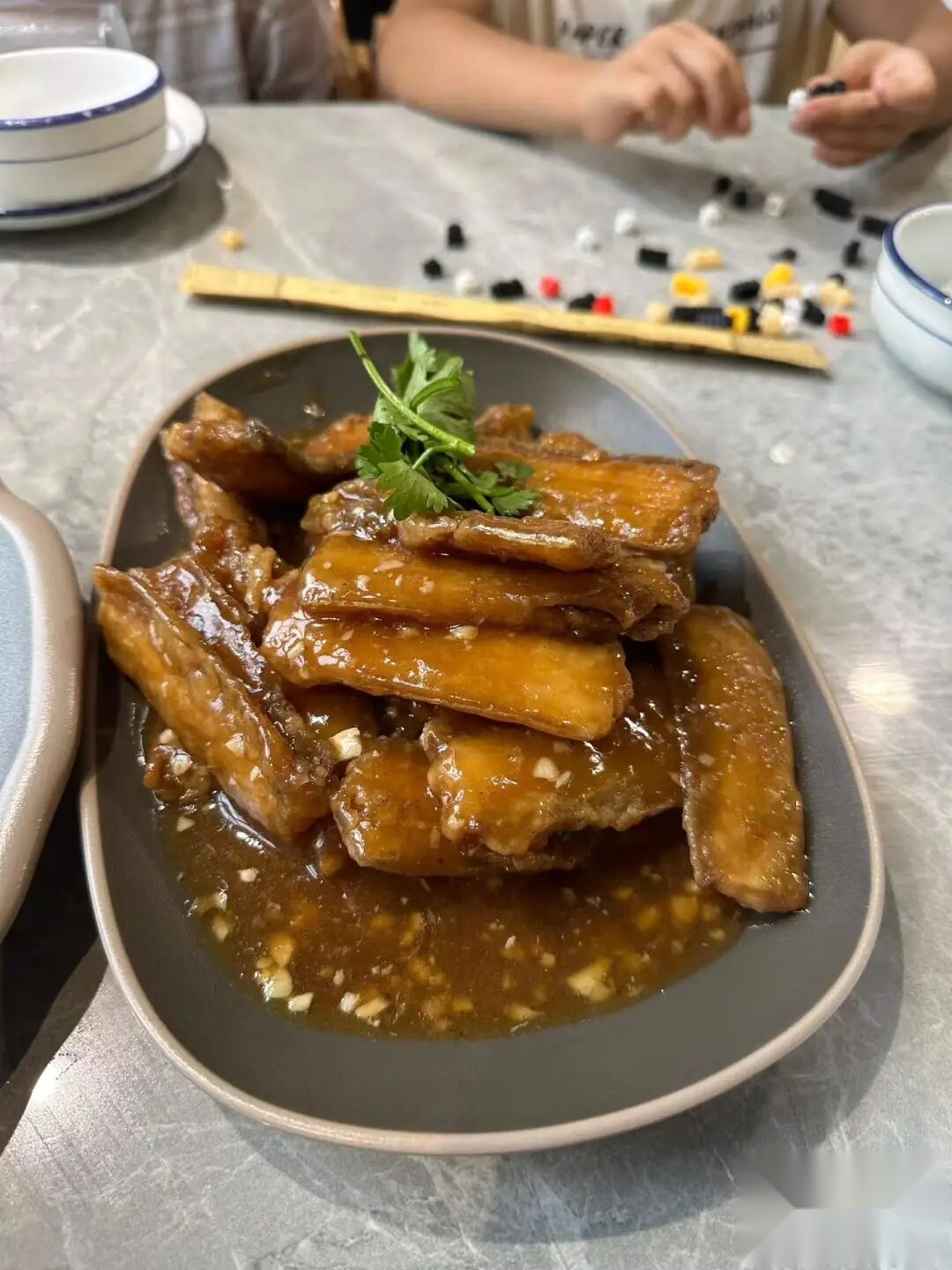
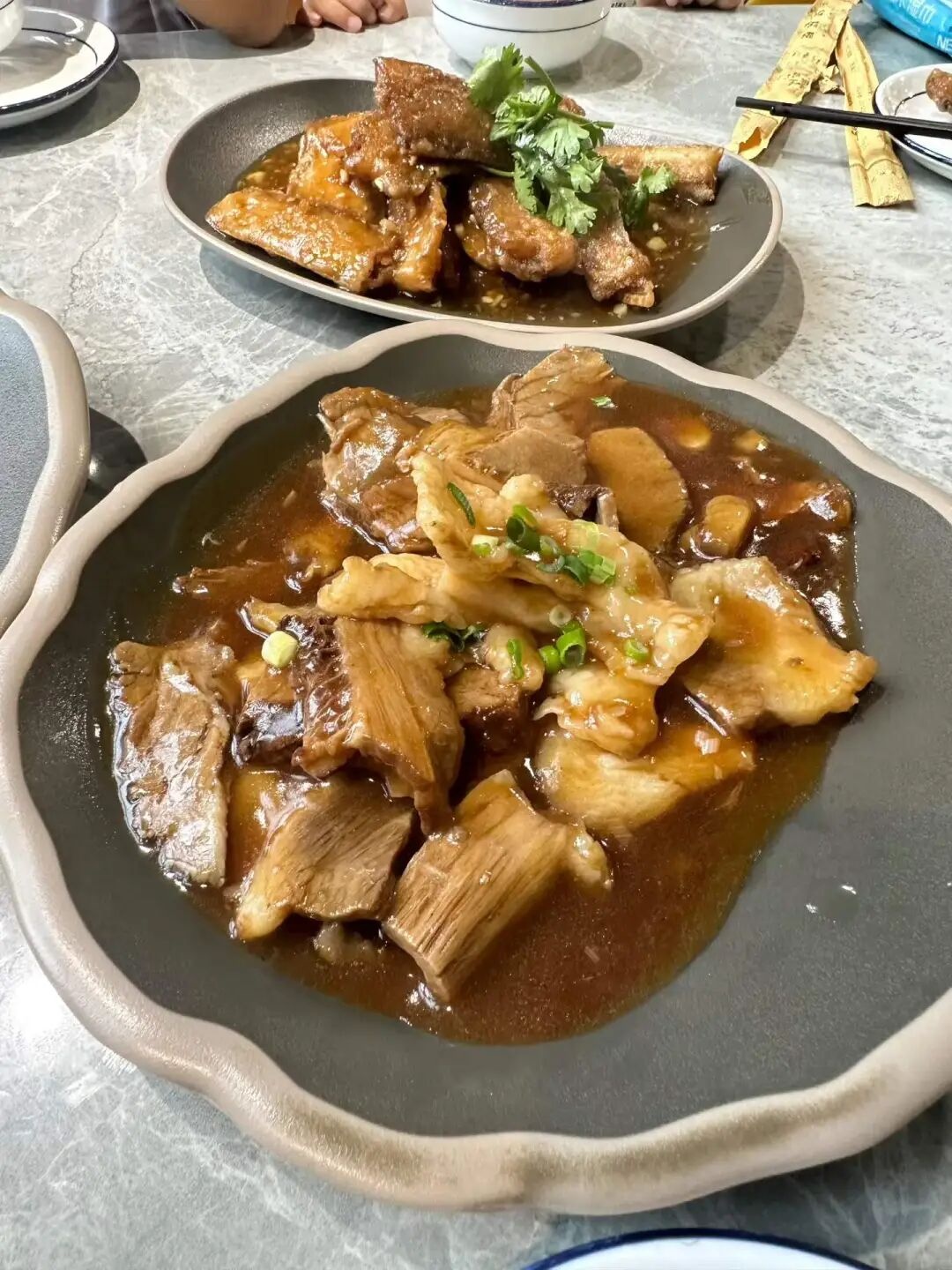
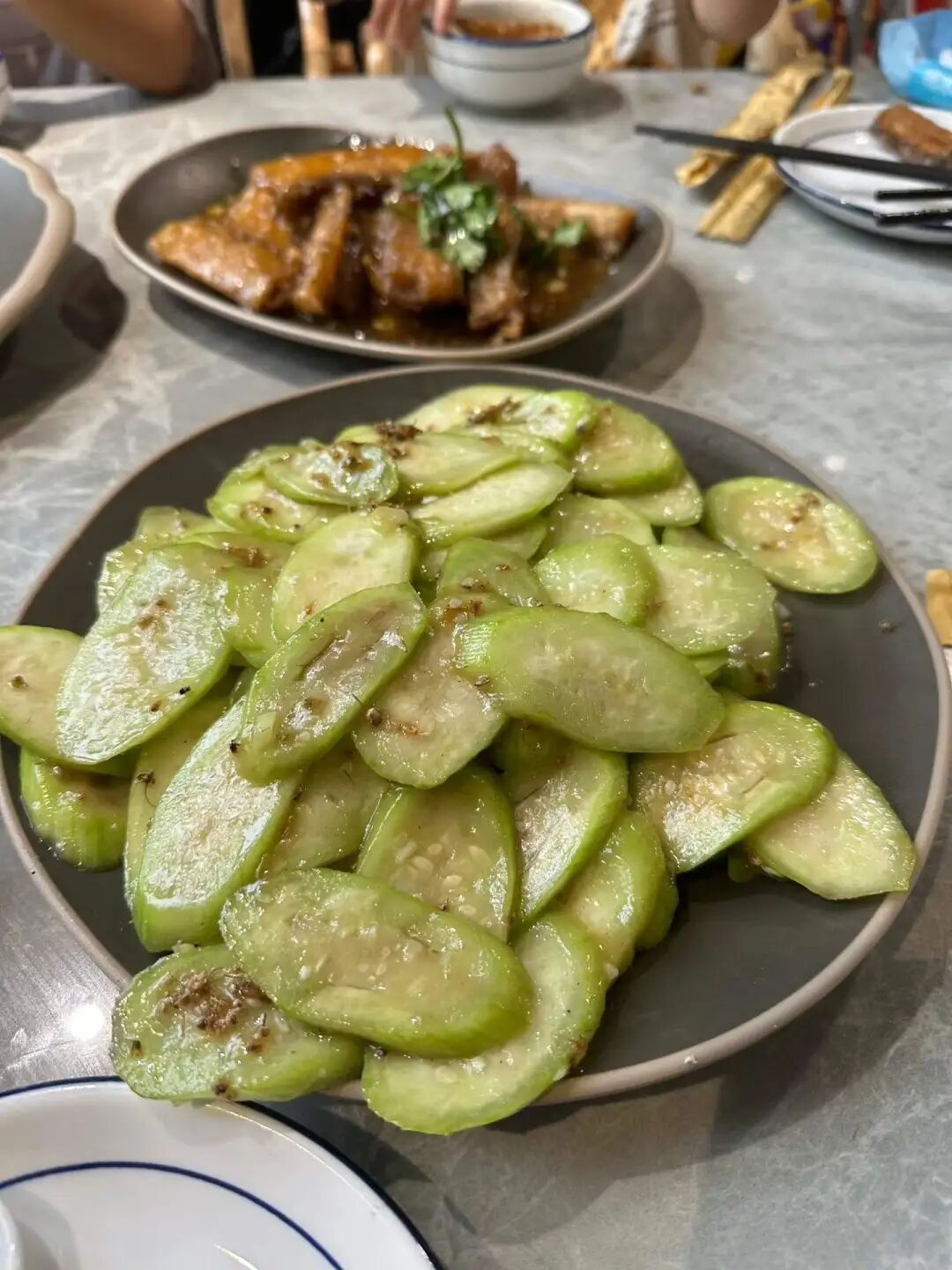
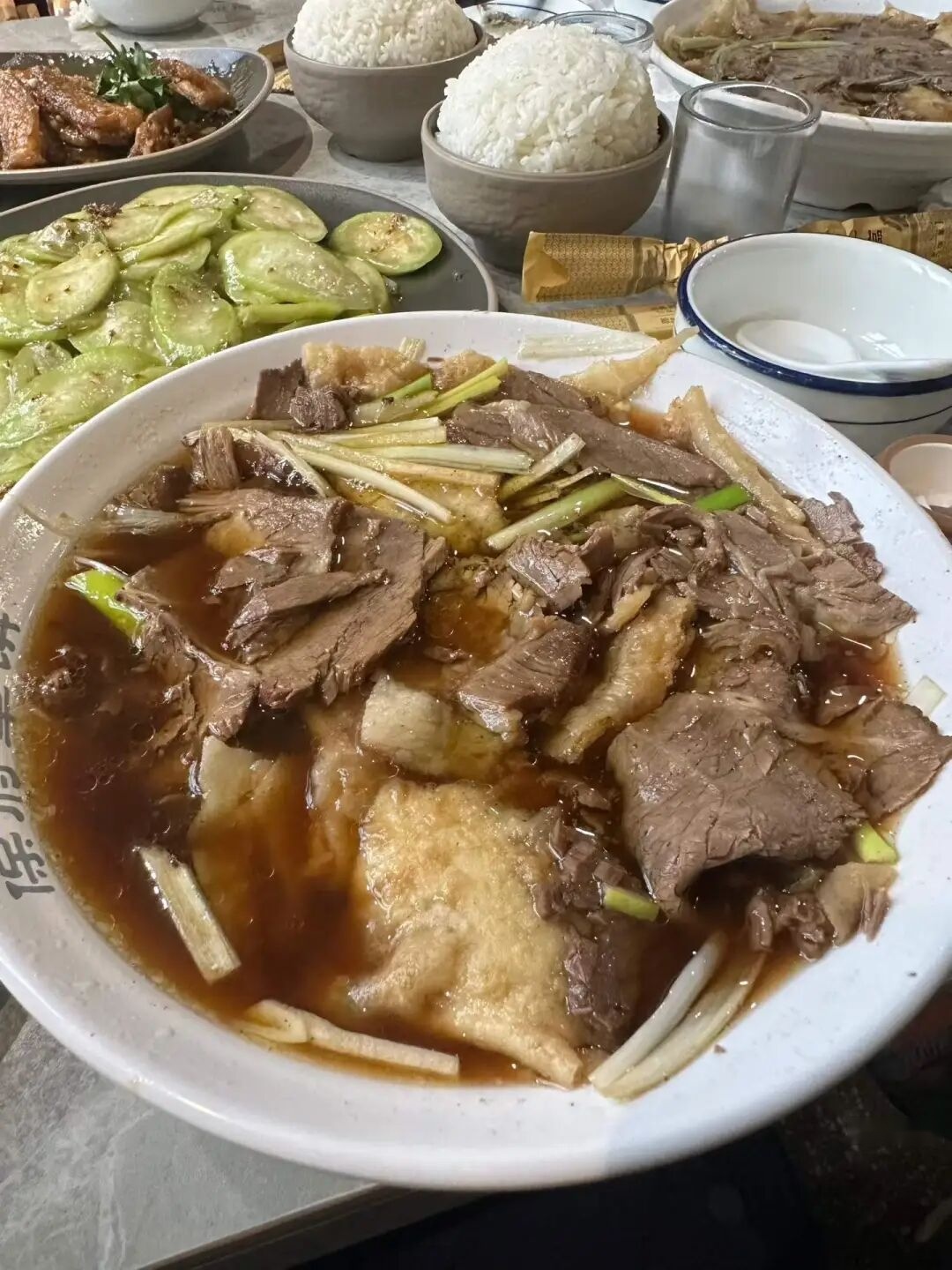
Huimin Cafe (Art Museum Back Street)
Meihou Sishi on Art Museum Back Street is a community hub, and recently, a local Hui Muslim opened a cafe called Yuehui. They offer coffee, toast, bagels, and lye pretzels. If you're exploring the old Beijing hutongs, it's a great spot to take a break and grab a coffee.
We ordered two lattes, matcha raw chocolate toast, Basque burnt cheesecake toast, black pepper chicken and sausage lye stick, and a double-berry cream cheese lye ball.
The matcha toast wasn't too sweet, and the matcha flavor was intense. The Basque cake, originally from the Basque region of Spain, is a burnt cheesecake that works surprisingly well on top of the toast square. The black pepper chicken lye stick and the double-berry cream cheese ball were also solid pairings for coffee.
Anji Kitchen (Shunyi Japanese Cuisine)
Since the Chidao BBQ in Changying closed, I finally found authentic halal Japanese food in Beijing again! It’s called Anji Kitchen, located at Shouchuang Heyuan in Zhangxizhuang, Shunyi. The owner is a Beijing Hui Muslim. In addition to Japanese dishes, they serve beef rice porridge and beef noodles.
The space is small, focusing on eel rice, beef rice, and udon noodles. They also have salmon sashimi and hand-pressed sushi. You can choose from arctic surf clam, eel, sweet shrimp, and salmon. The eel rice with the egg strips is tasty, though the rice was a bit too wet for my preference—I like mine on the drier side. The udon noodles were flat, which is different from the round ones I'm used to. The tuna salad is healthy and, thankfully, uses a light oil-and-vinegar dressing instead of mayo. The beef rice set comes with pickled radishes, seaweed, and a drink. I hope they introduce more set meal options and maybe add miso soup to the mix.
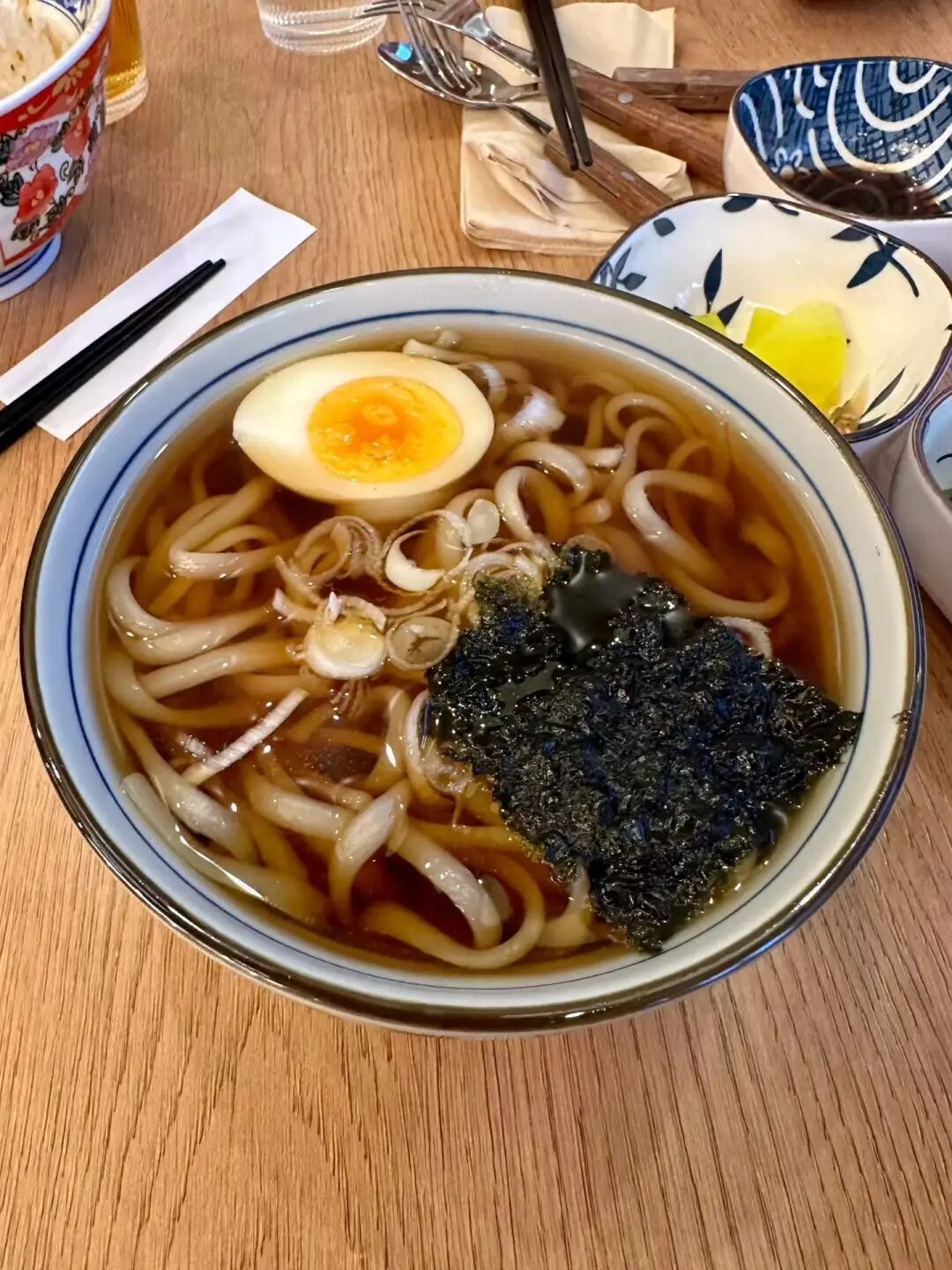
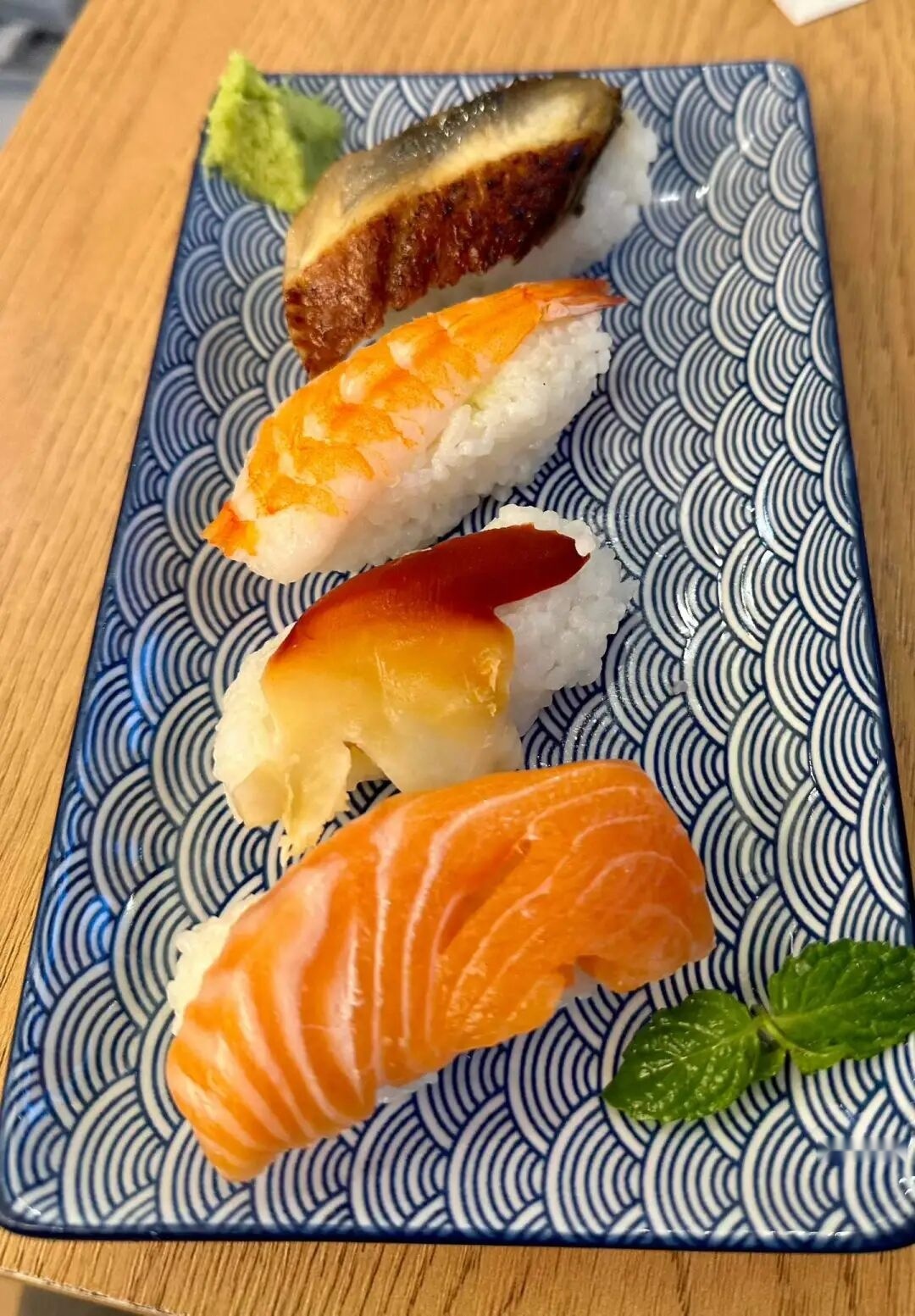
Bachu Cuisine (Erligou)
We took the kids to the zoo over the weekend and hit up a new Southern Xinjiang spot called Bachu Cuisine afterward. It’s inside the Shouchuang Yindu building across from the Xinjiang Plaza. The environment is fancy, but the prices reflect that. We tried a few harder-to-find dishes, including the Hami-style huang-a-xi, Kashgar-style grilled pigeon, Artux-style menbing (braised pancakes), and a 'mini bowl' of laghman (hand-pulled noodles).
Huang-a-xi is a version of 'soup rice' from the Hami King’s Palace; it features tiny bits of dough boiled in a rich meat broth. Their broth is really fragrant. The grilled pigeon and skewers were fine, though pigeon is always a bit bony. The Artux menbing is filled with cilantro and eaten dipped in yogurt. A plate of these pancakes cost 88 yuan—it tasted good, but it was honestly very expensive. We tried it once, but probably won't order it again.
Overall, sticking to the pilaf or the laghman here is a better value, as some of the specialty dishes are definitely overpriced.
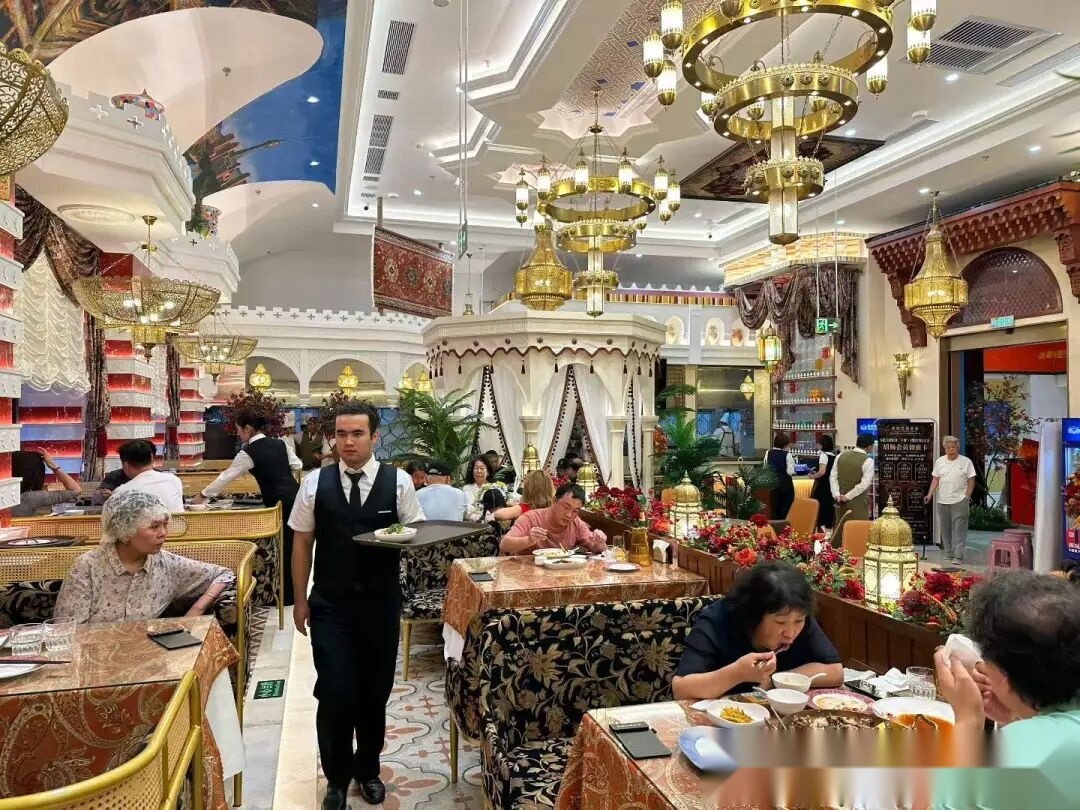
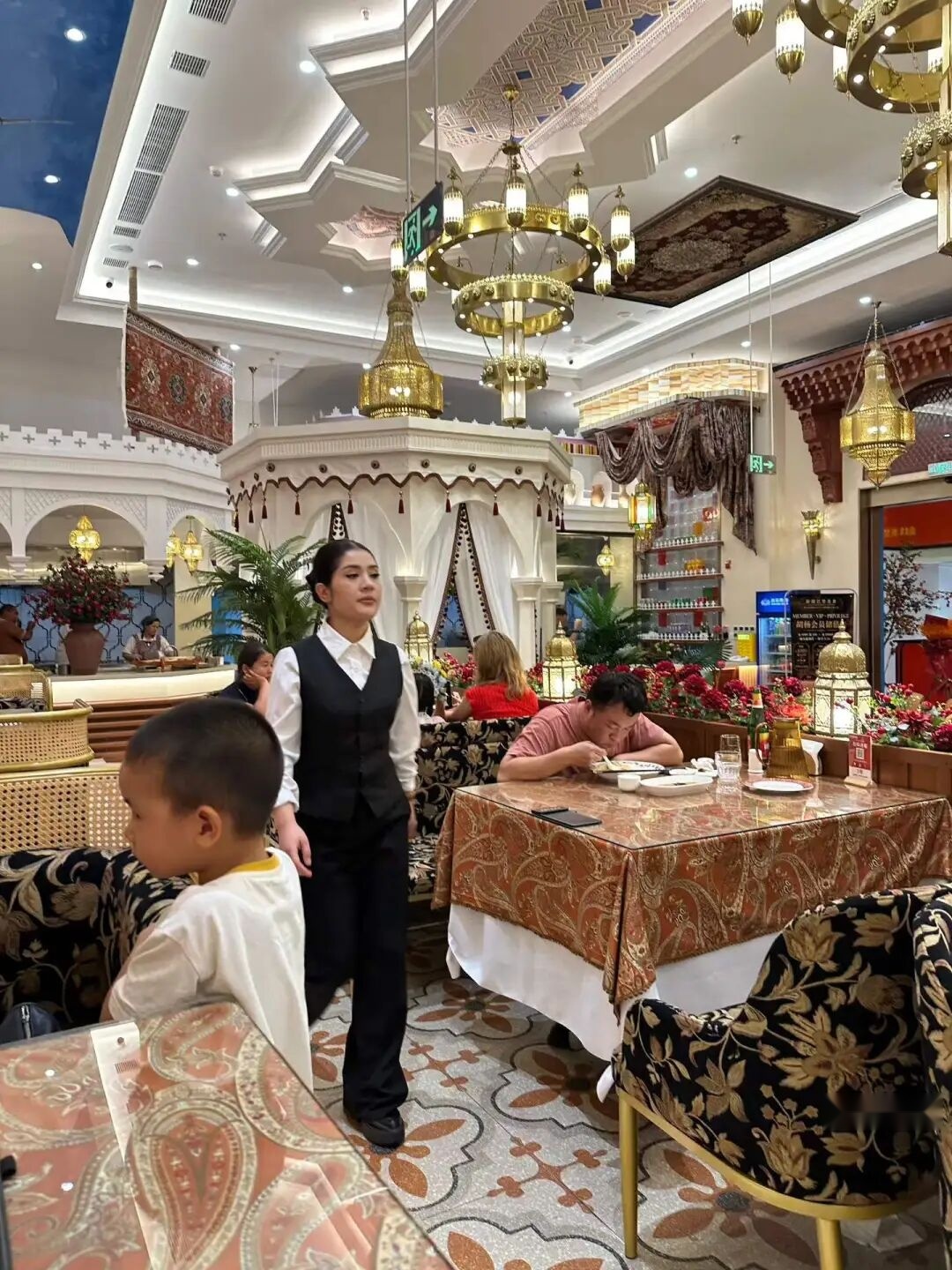
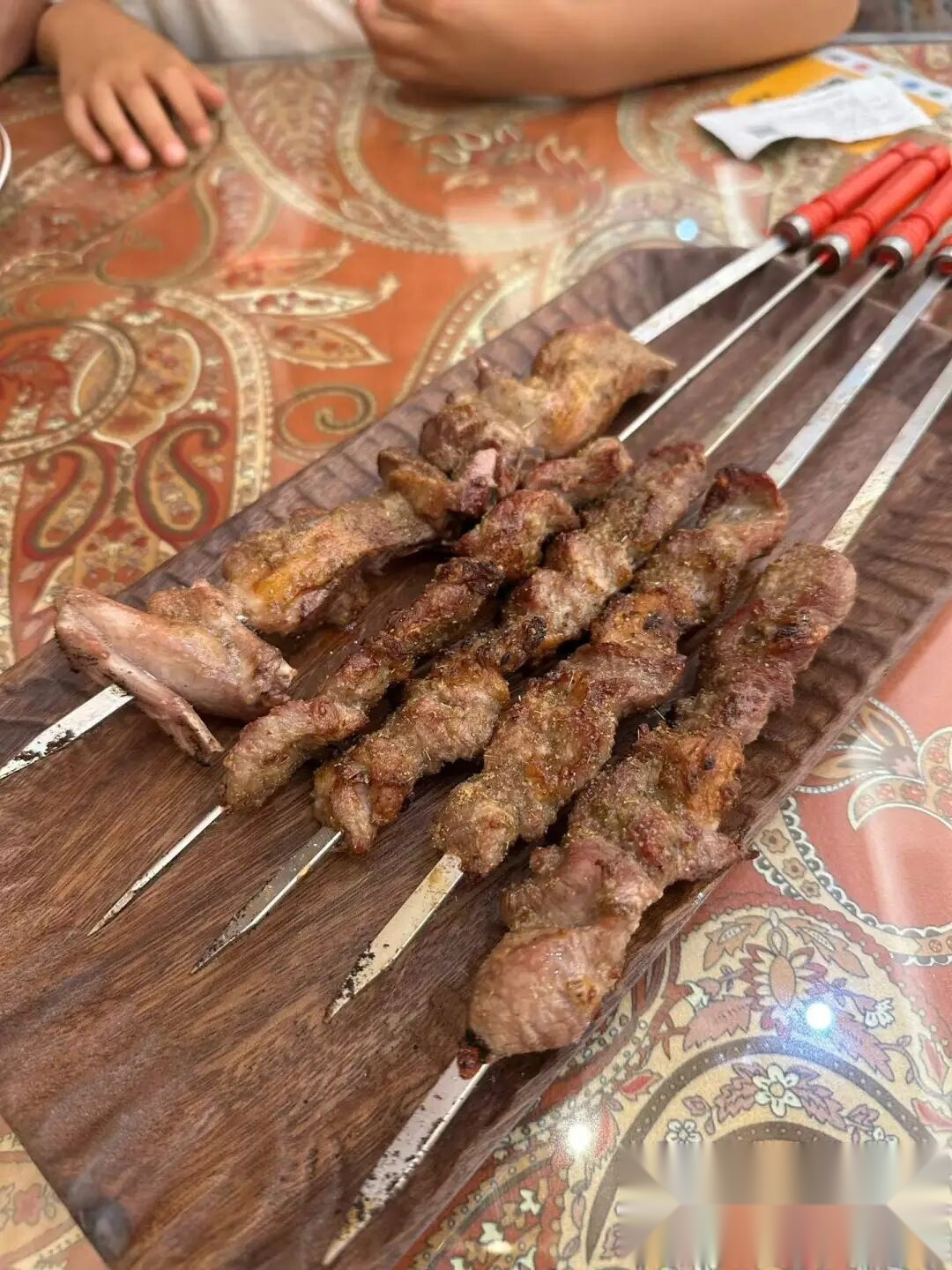
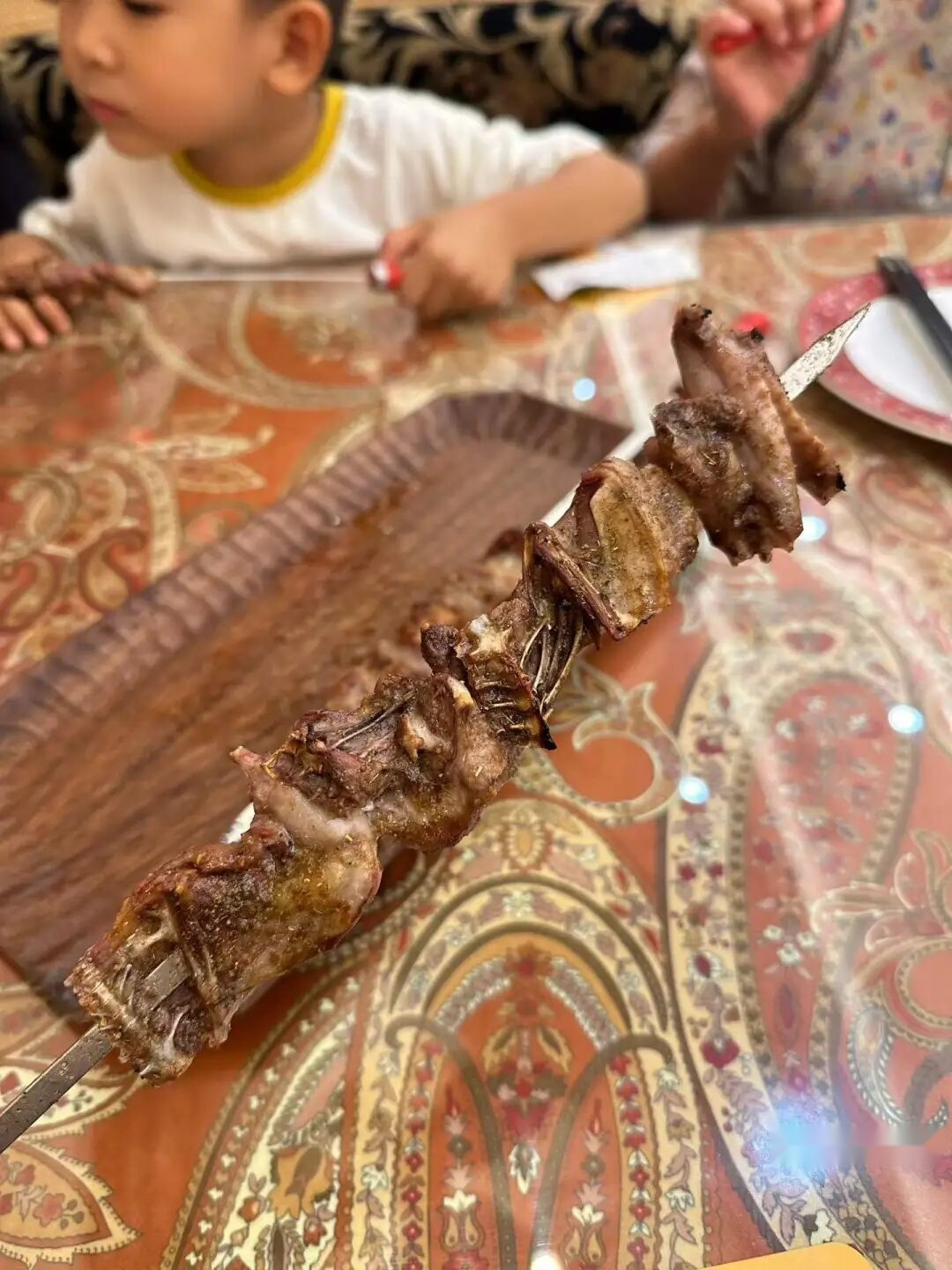
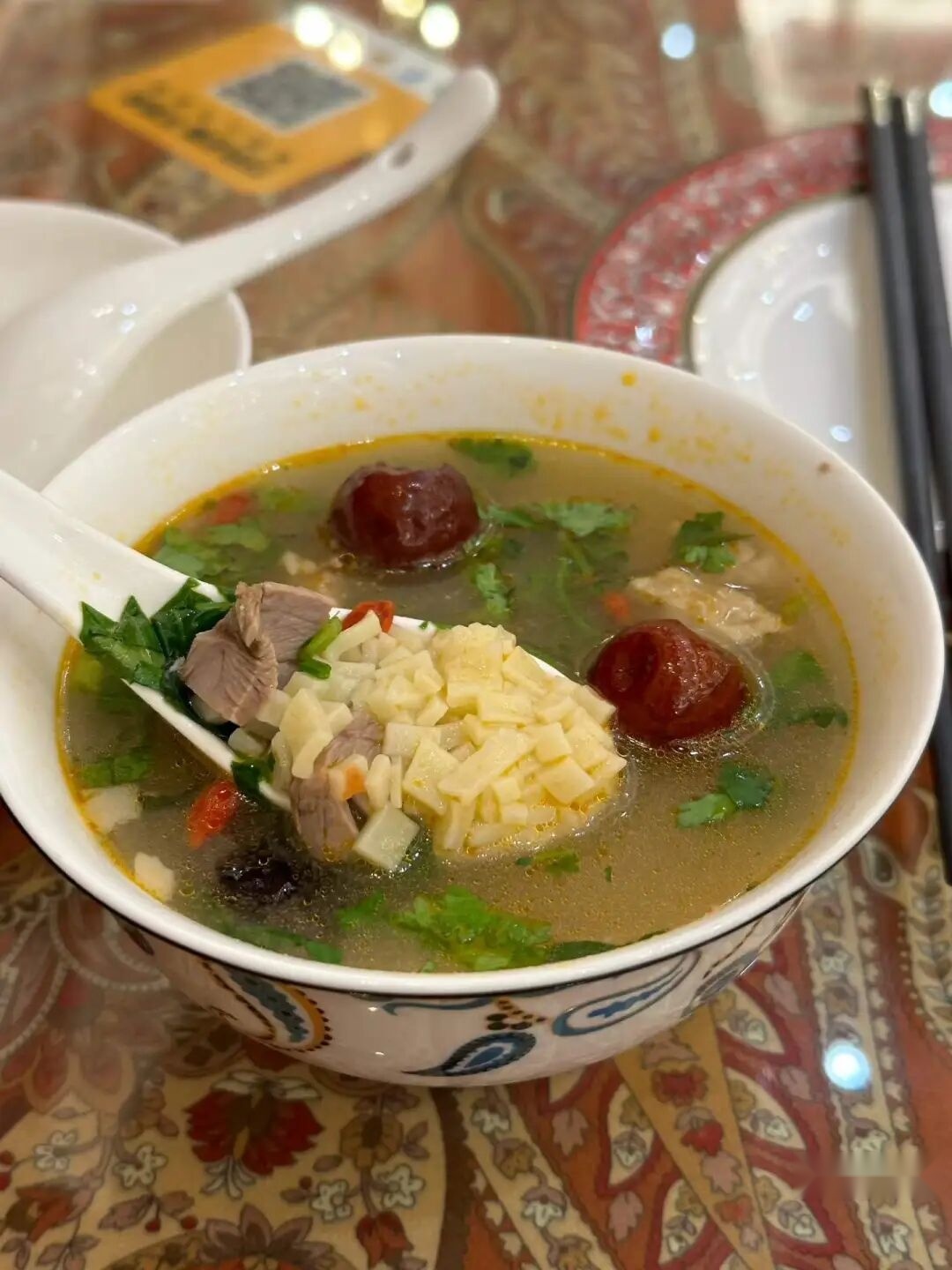
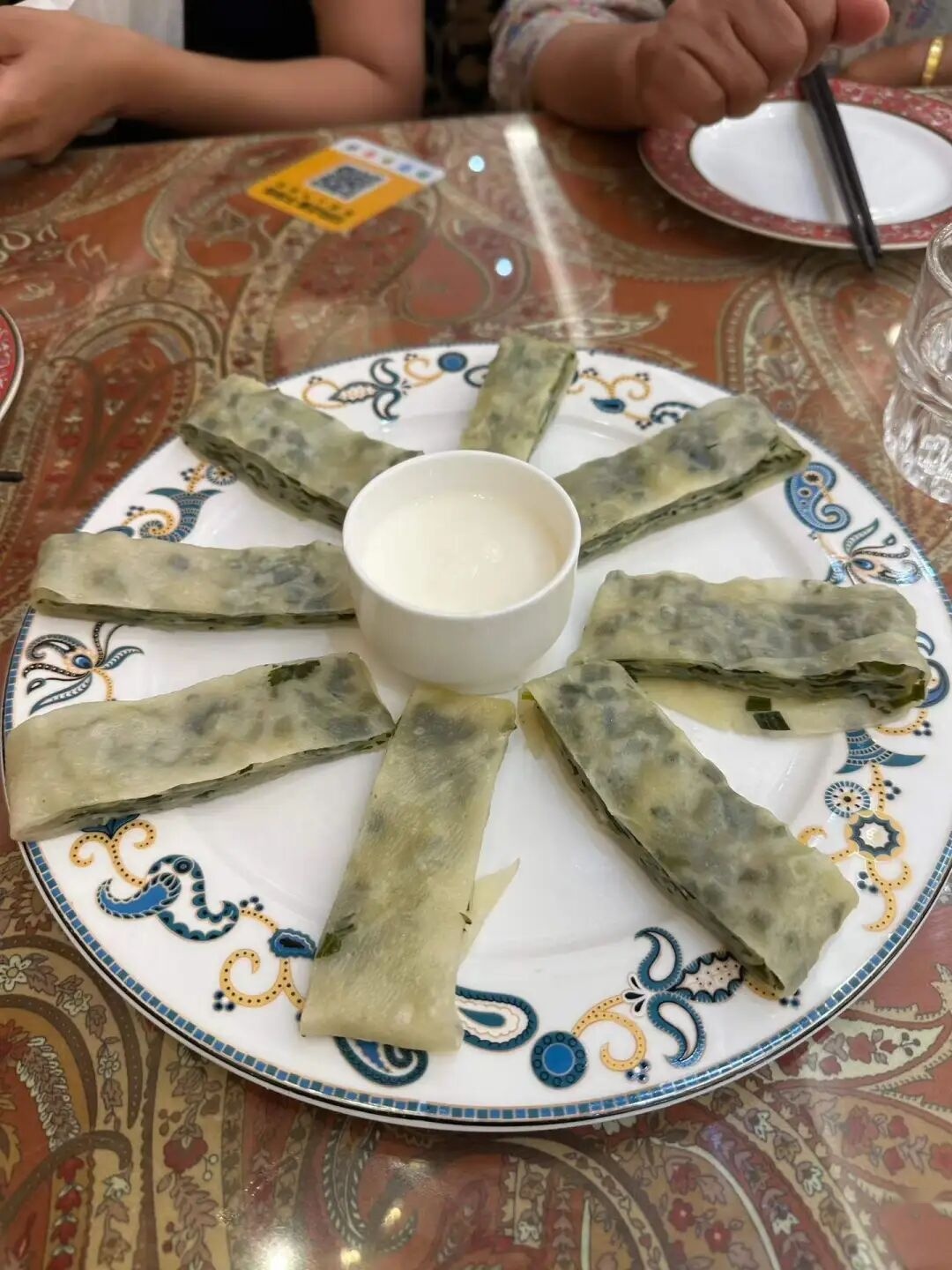
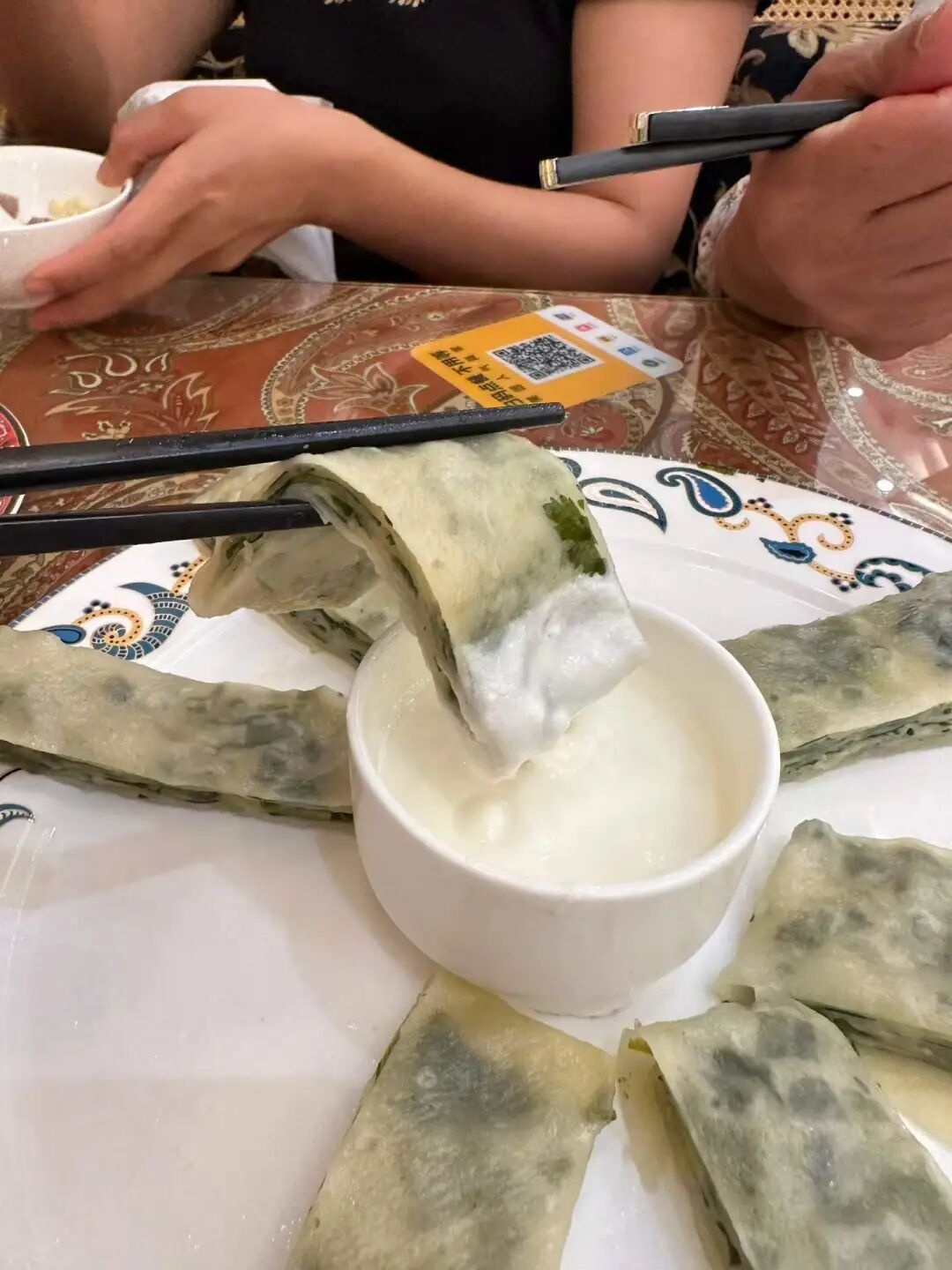
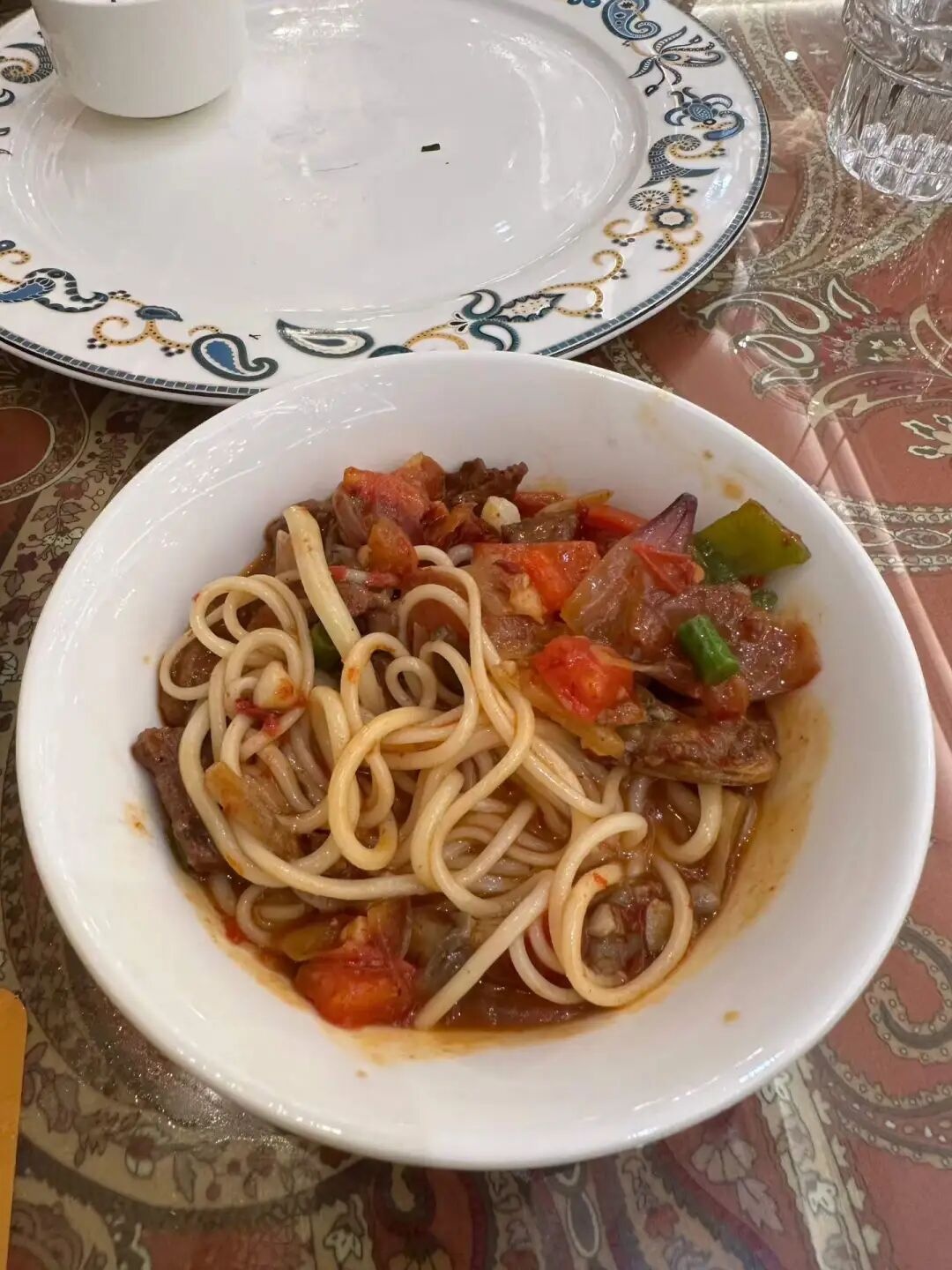
Jinfang Snacks (Bird's Nest Branch)
We spent the weekend at the Aoson Music Festival and ate at the Jinfang Snacks Bird's Nest branch both days—it’s just a 5-minute electric scooter ride from the Aoson South Gate.
The place is super popular, but it has the widest selection—the steamed items and stir-frys are almost always fully stocked. We went around 2 PM on the first day, and a lot of stuff was already sold out. They have big cold noodle bowls at lunch, and regular zhajiangmian (soybean paste noodles) at other times. I’m a fan of their crispy chicken and scallion oil chicken. The cheaper stir-frys are mostly chicken, while the pricier ones are beef and lamb. The best thing about this place is the variety and the fact that you don't have to wait for your food to be cooked to order. Even when it's packed, you can usually find a seat.
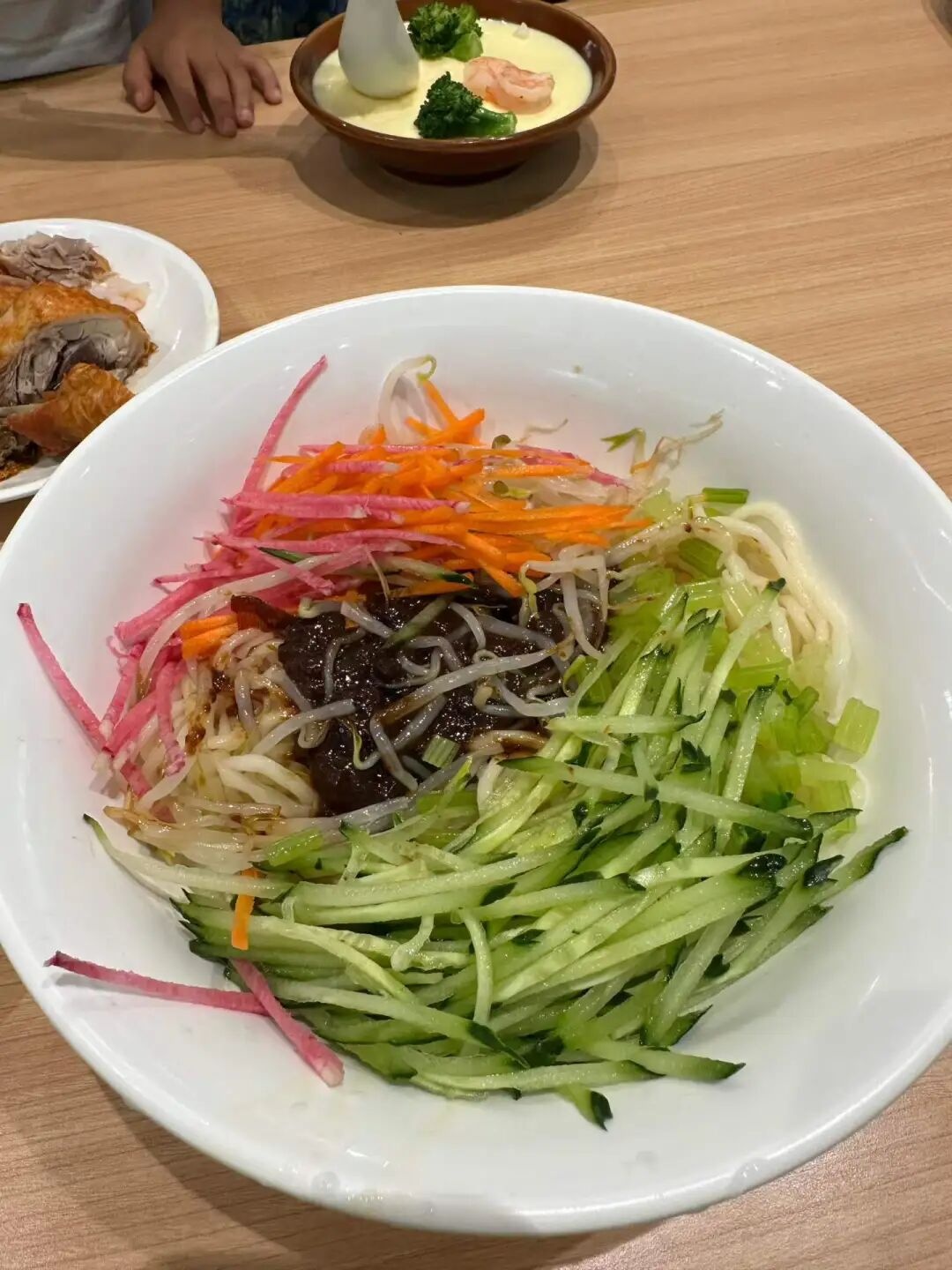
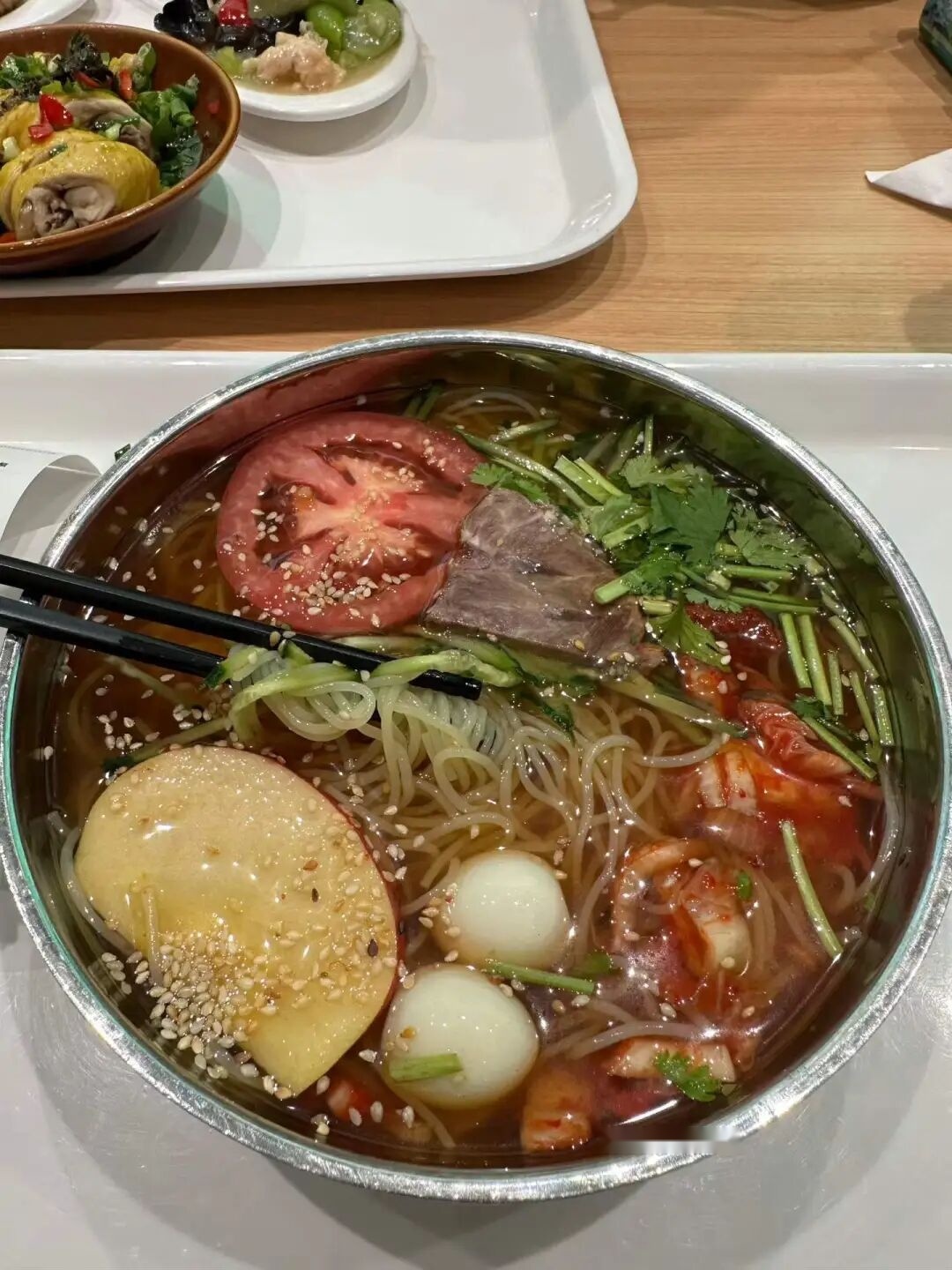
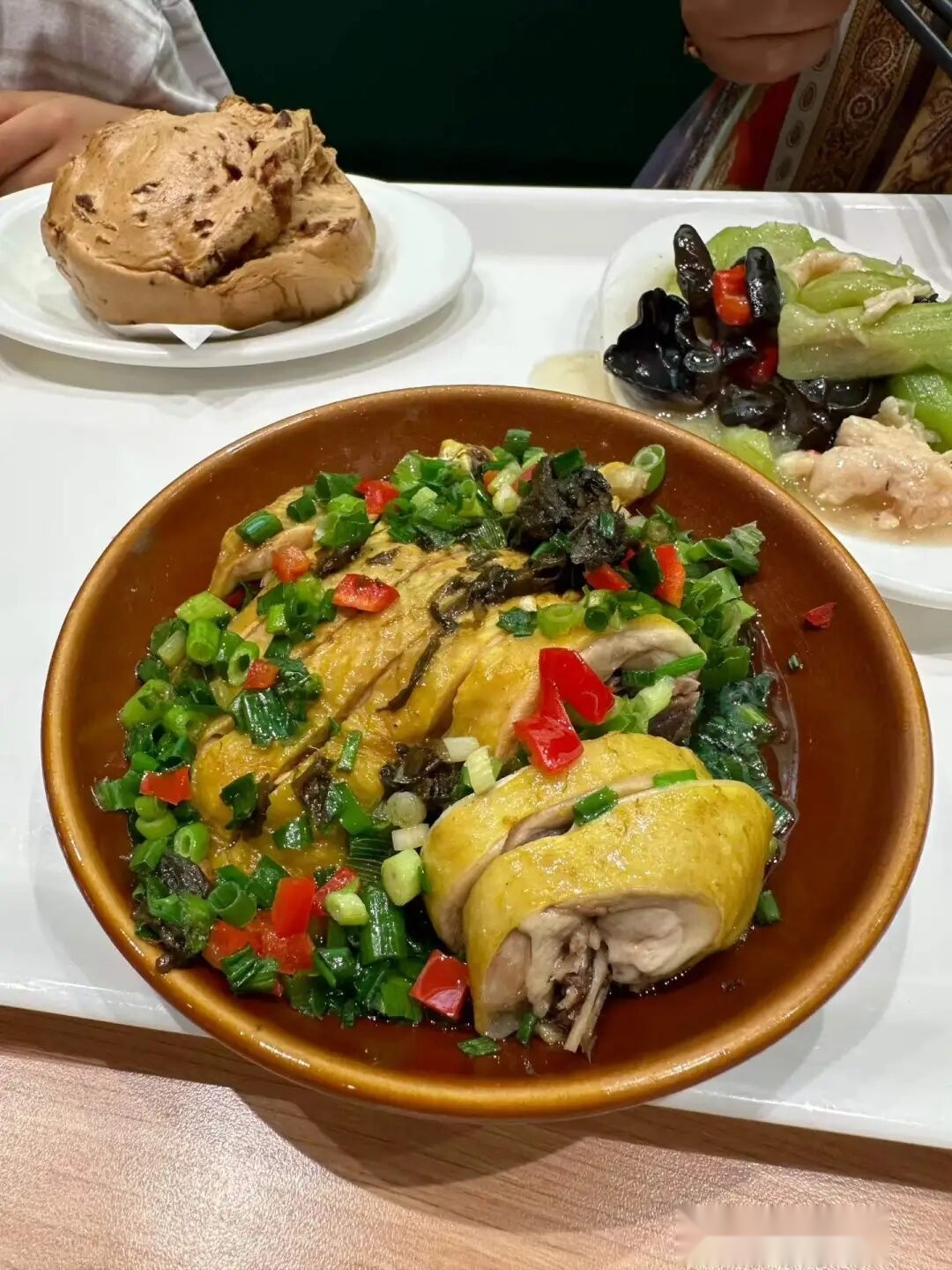
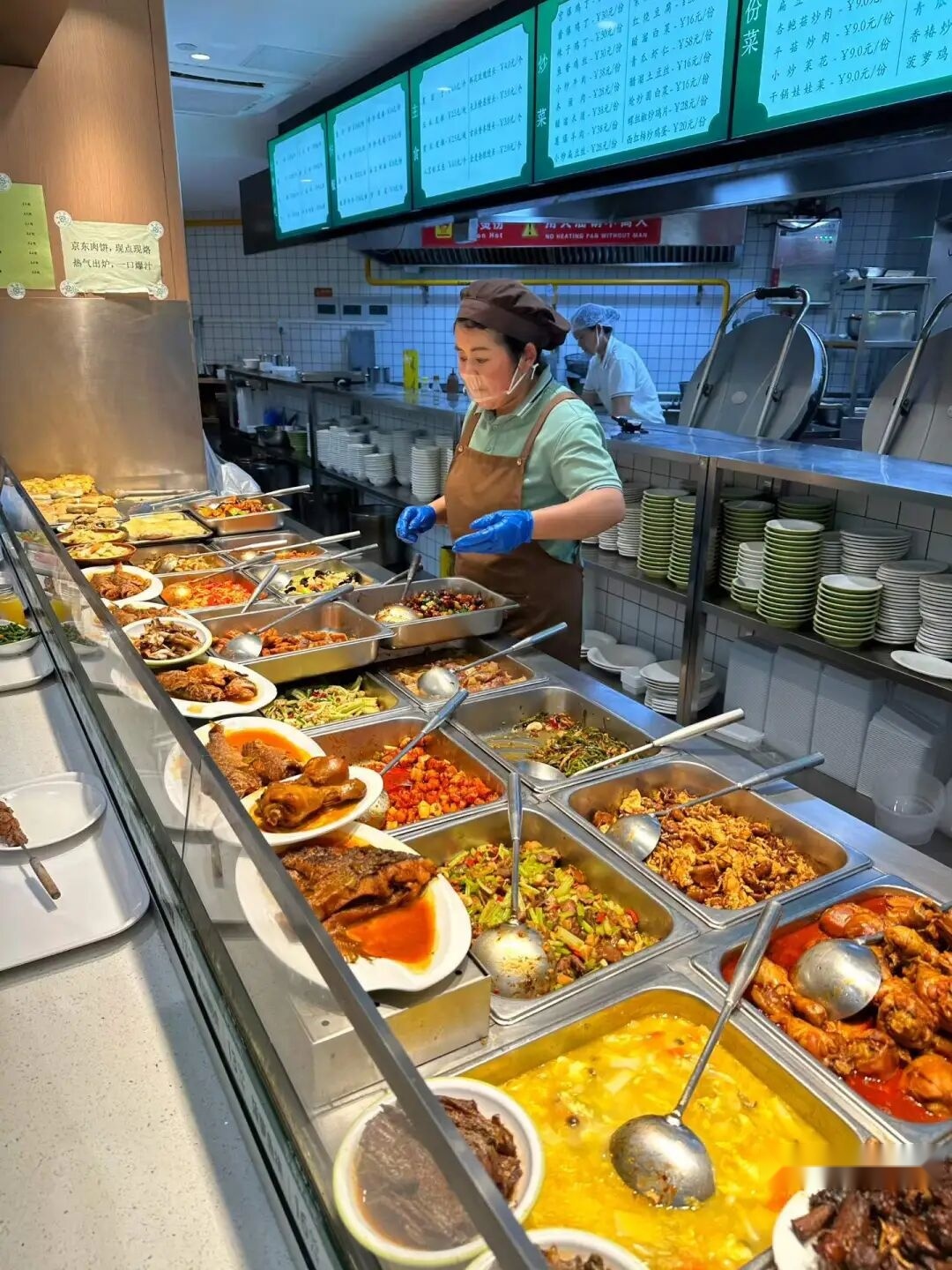
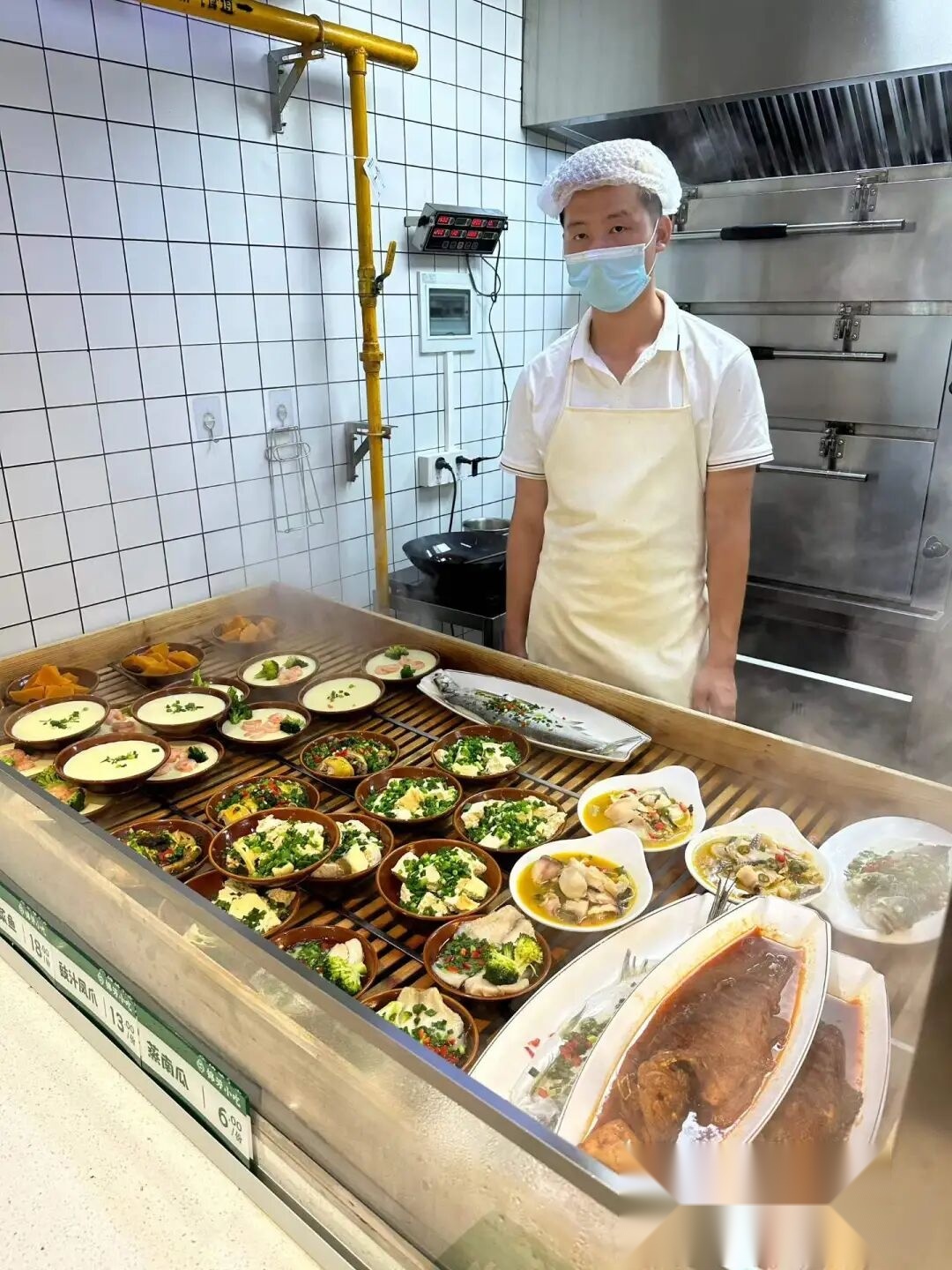
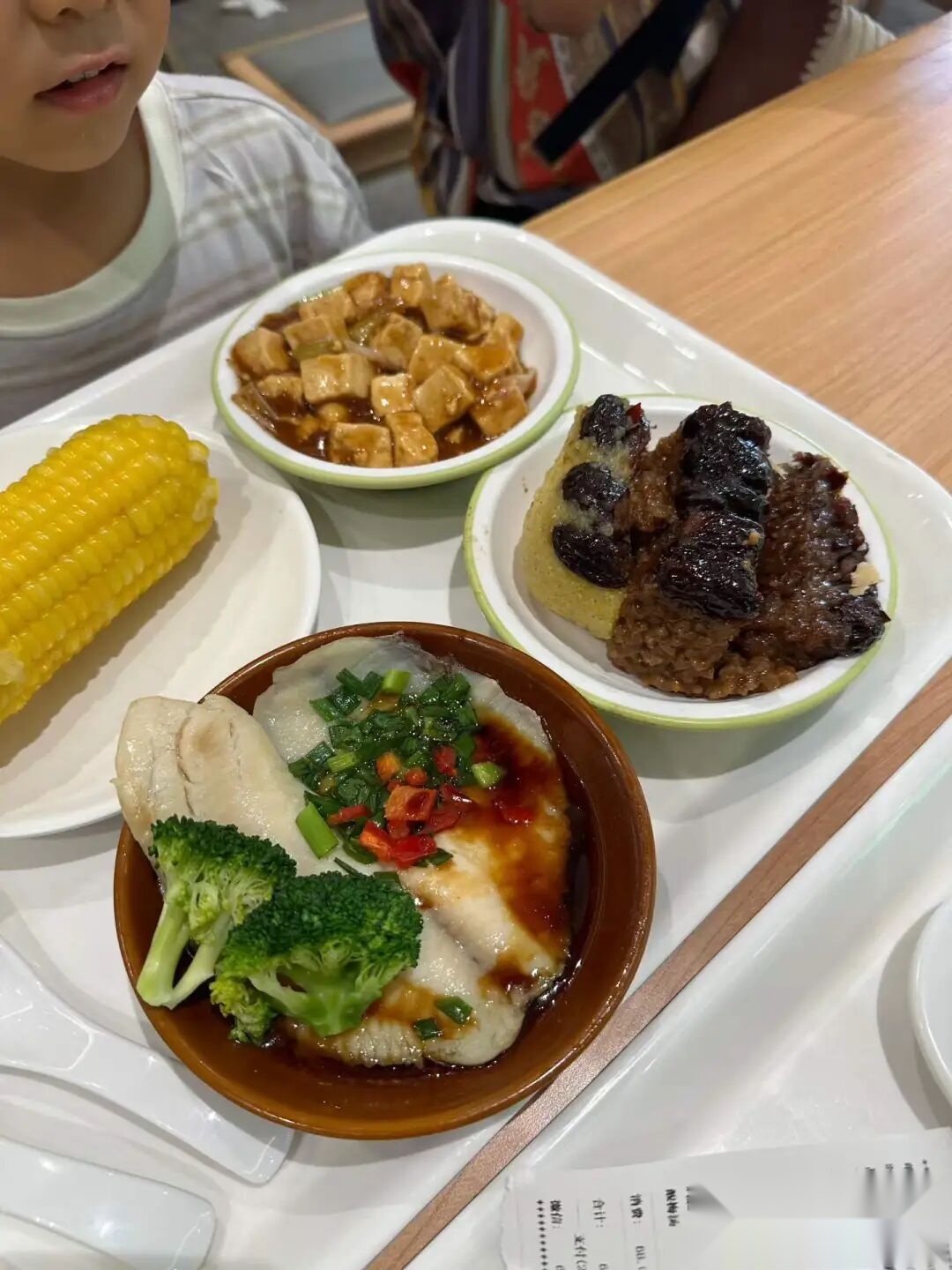
Shaanxi Baoji Mianpi and Liangfen (Madian)
This is authentic mianpi (wheat-flour cold noodles) and liangfen (bean starch jelly) made by a Baoji Hui Muslim local. You can get a mix of both. The chili oil is fragrant but not overly spicy. Sadly, the oat-flour noodles were sold out, so I'll have to try those next time. It’s located inside the first floor of the Fulite building, which is a bit tricky to find. There’s only one table, but there was no one else there when I visited, so I got to enjoy it freshly mixed.
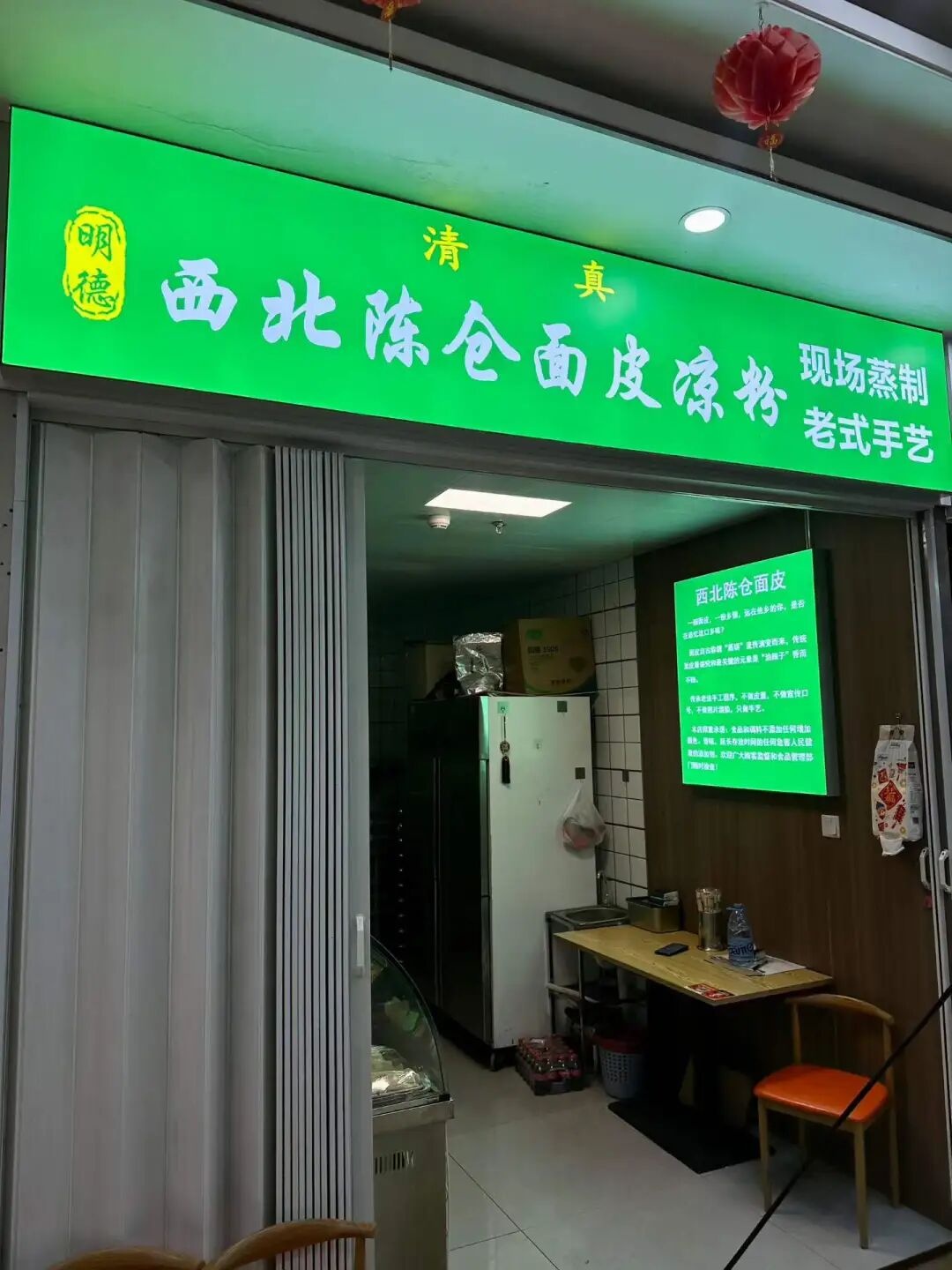
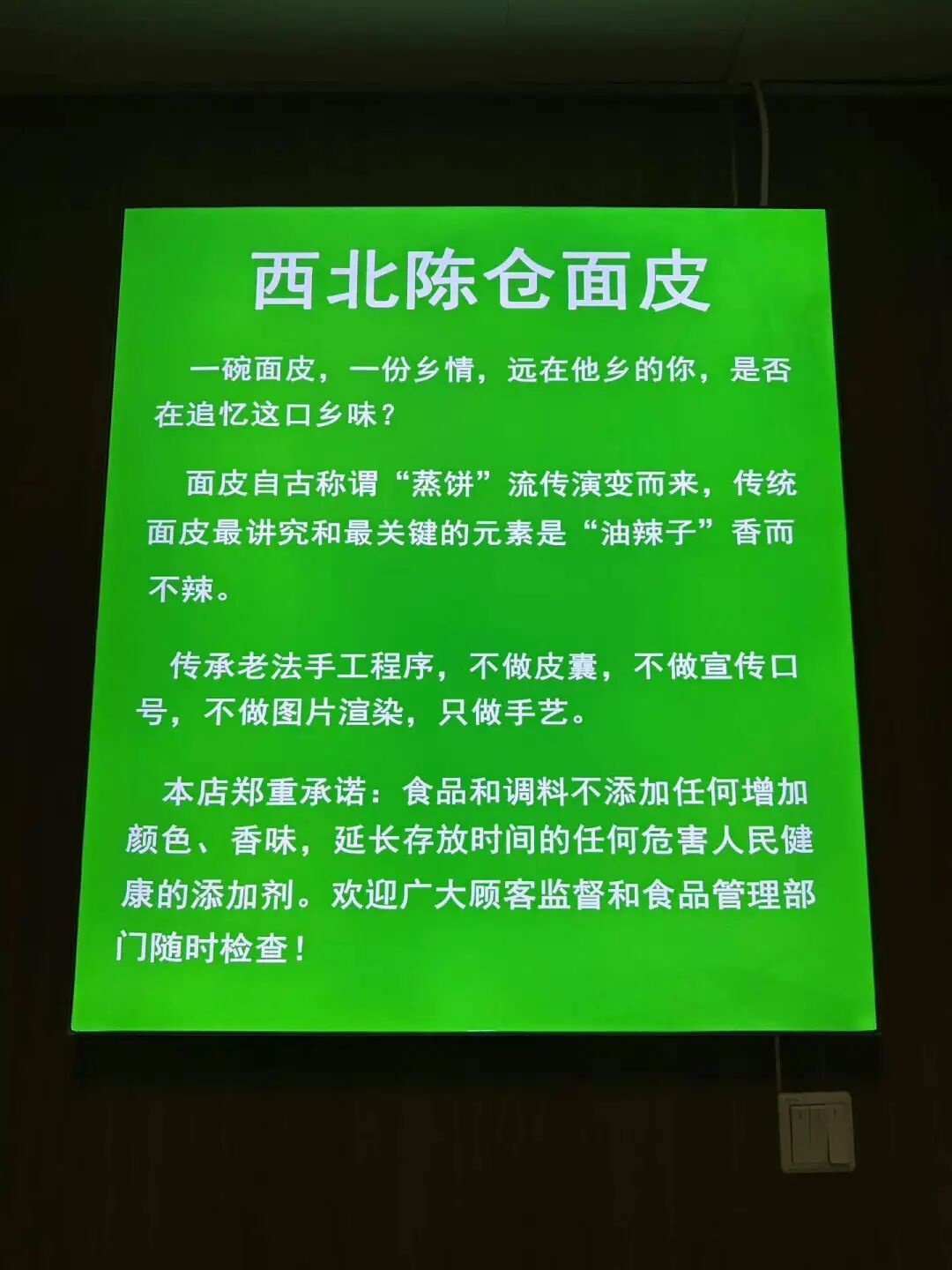
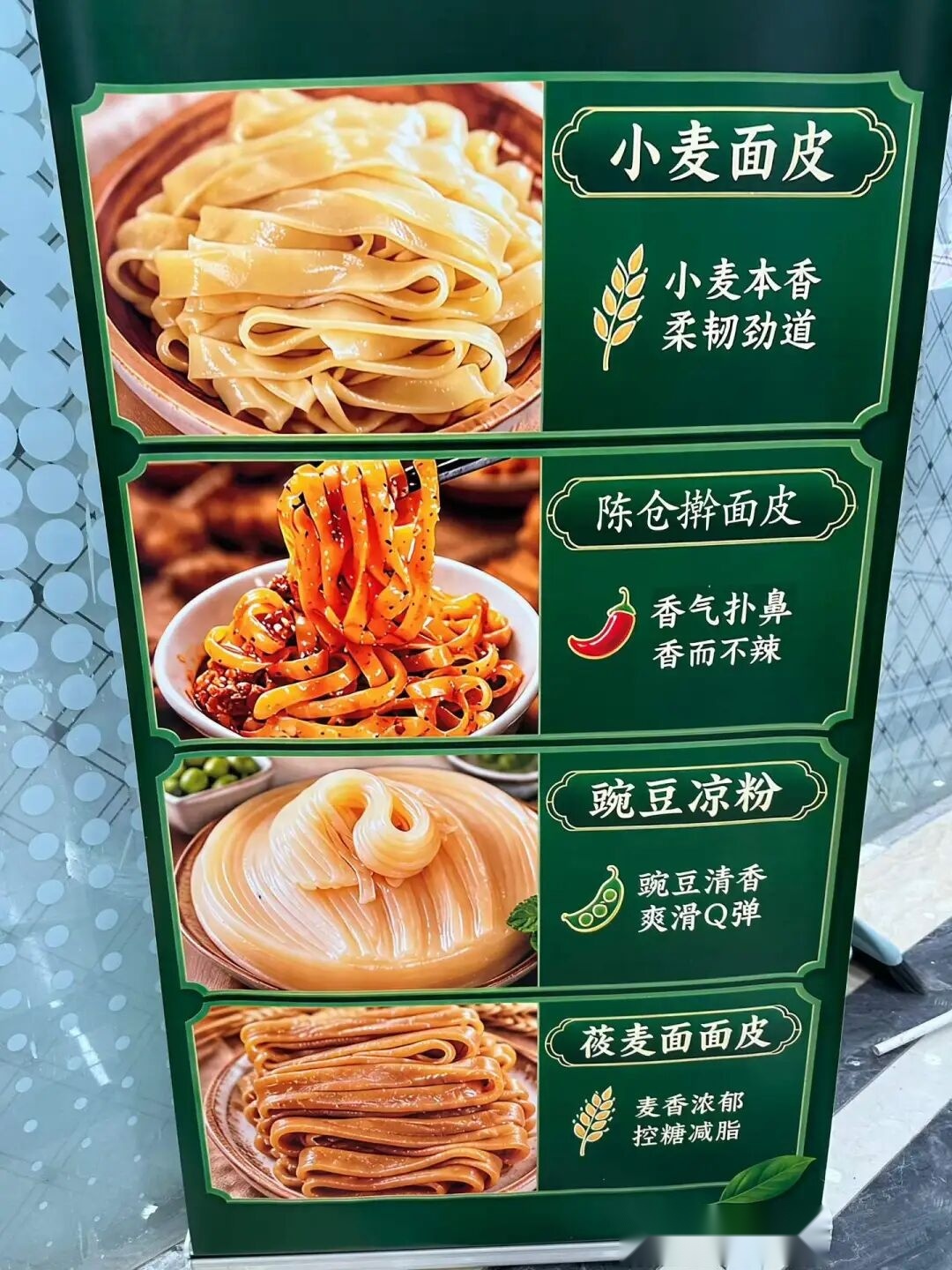
Dezhou Meat Pies (Liuxue Road, Tianqiao)
I highly recommend this snack shop on Liuxue Road in Tianqiao. It’s run by Hui Muslims from Dezhou, Shandong, and they start making the meat pies fresh around 5 PM. We had the chive-and-egg and fennel-and-egg pies; they were huge and only 3 yuan each—a total bargain. The flavor is light, not too salty or greasy. For liquids, they serve lamb offal soup and millet porridge.
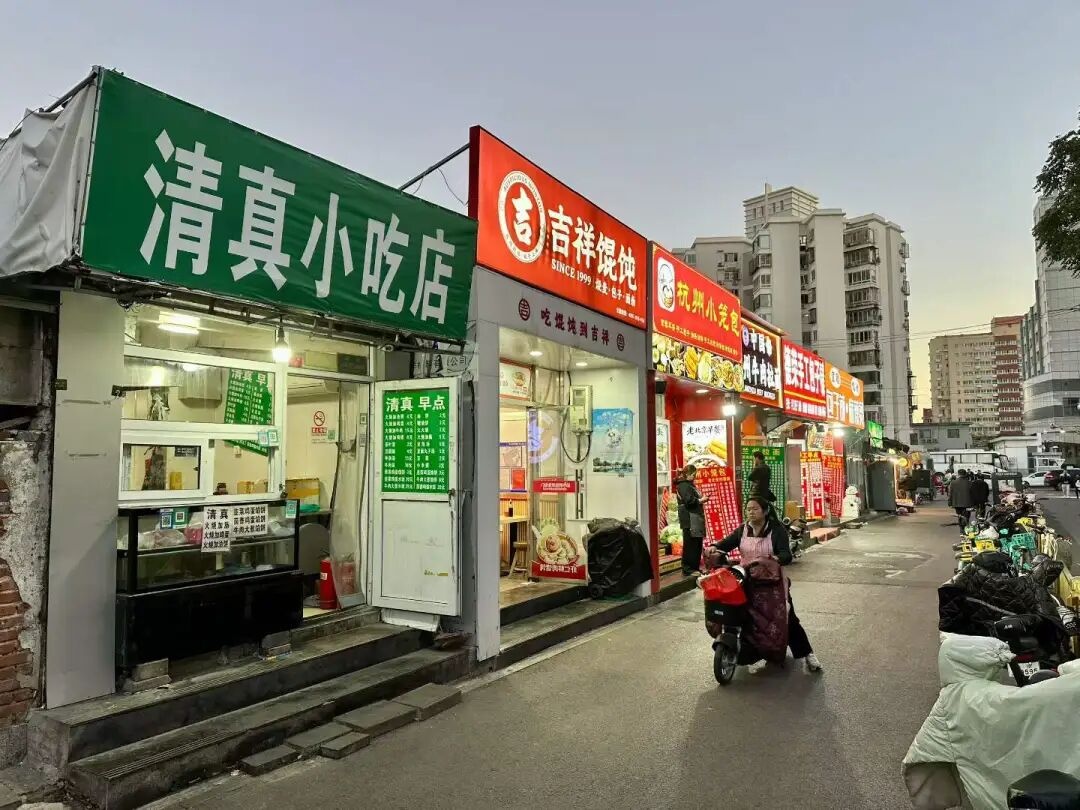
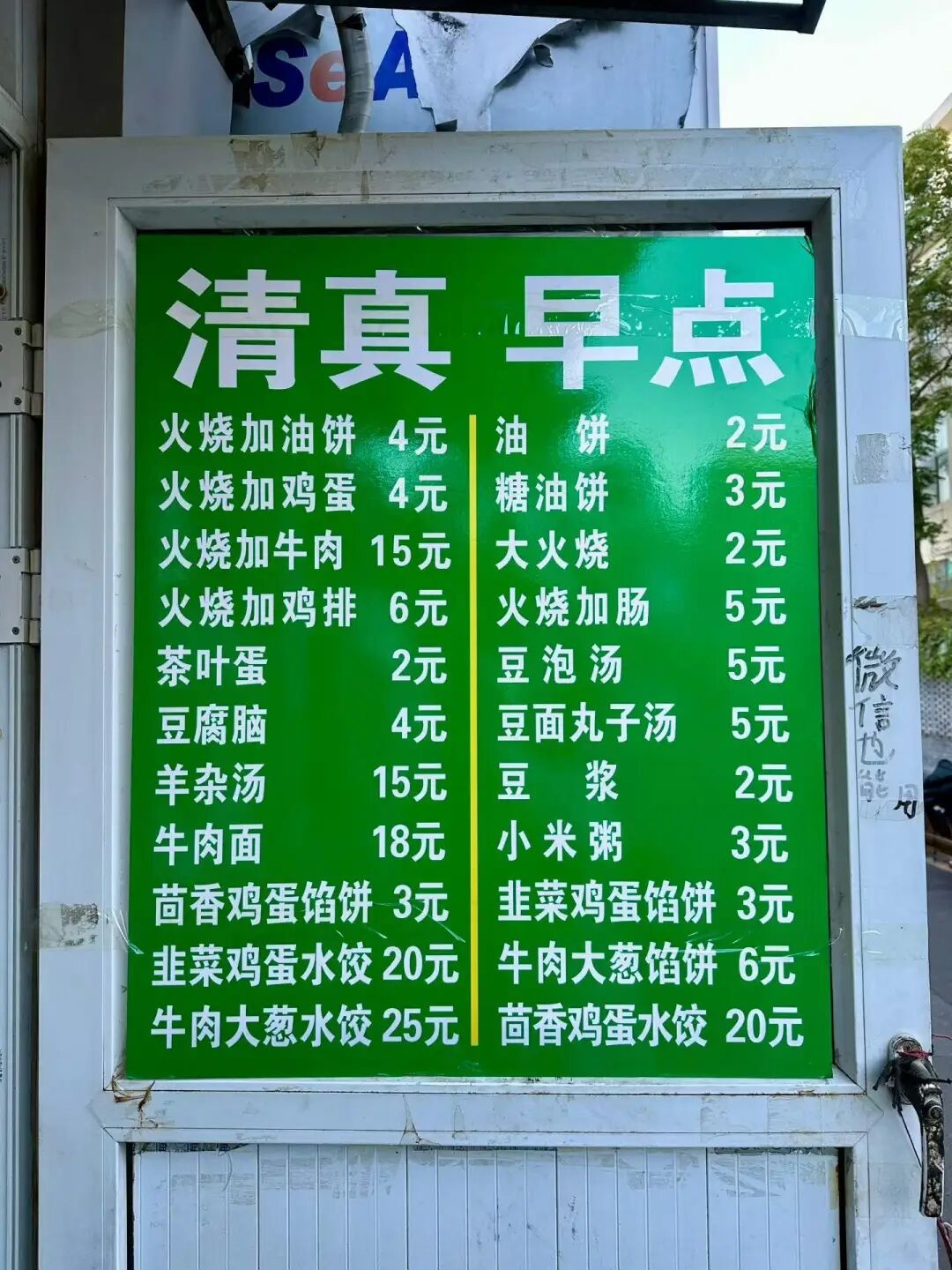
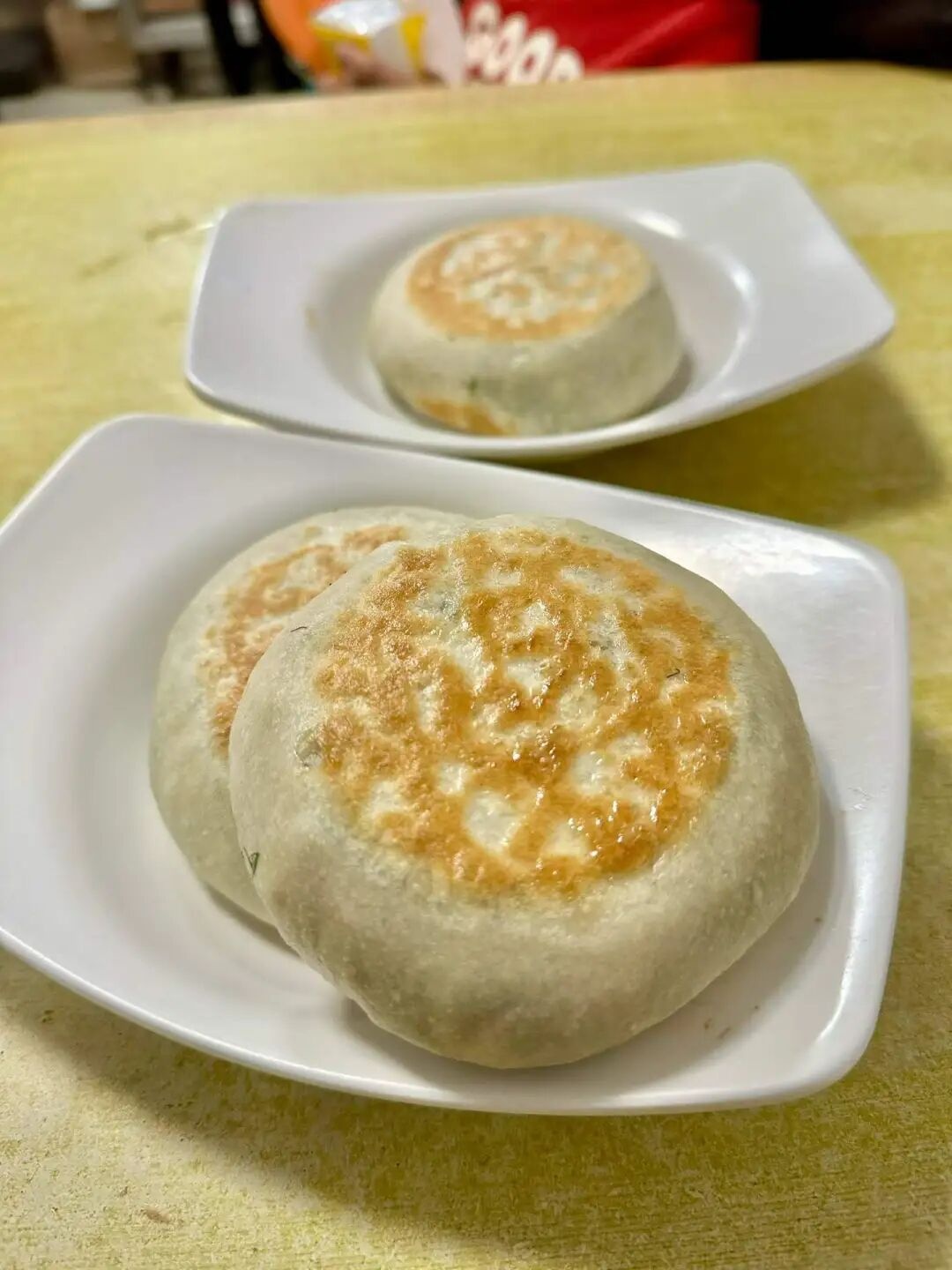
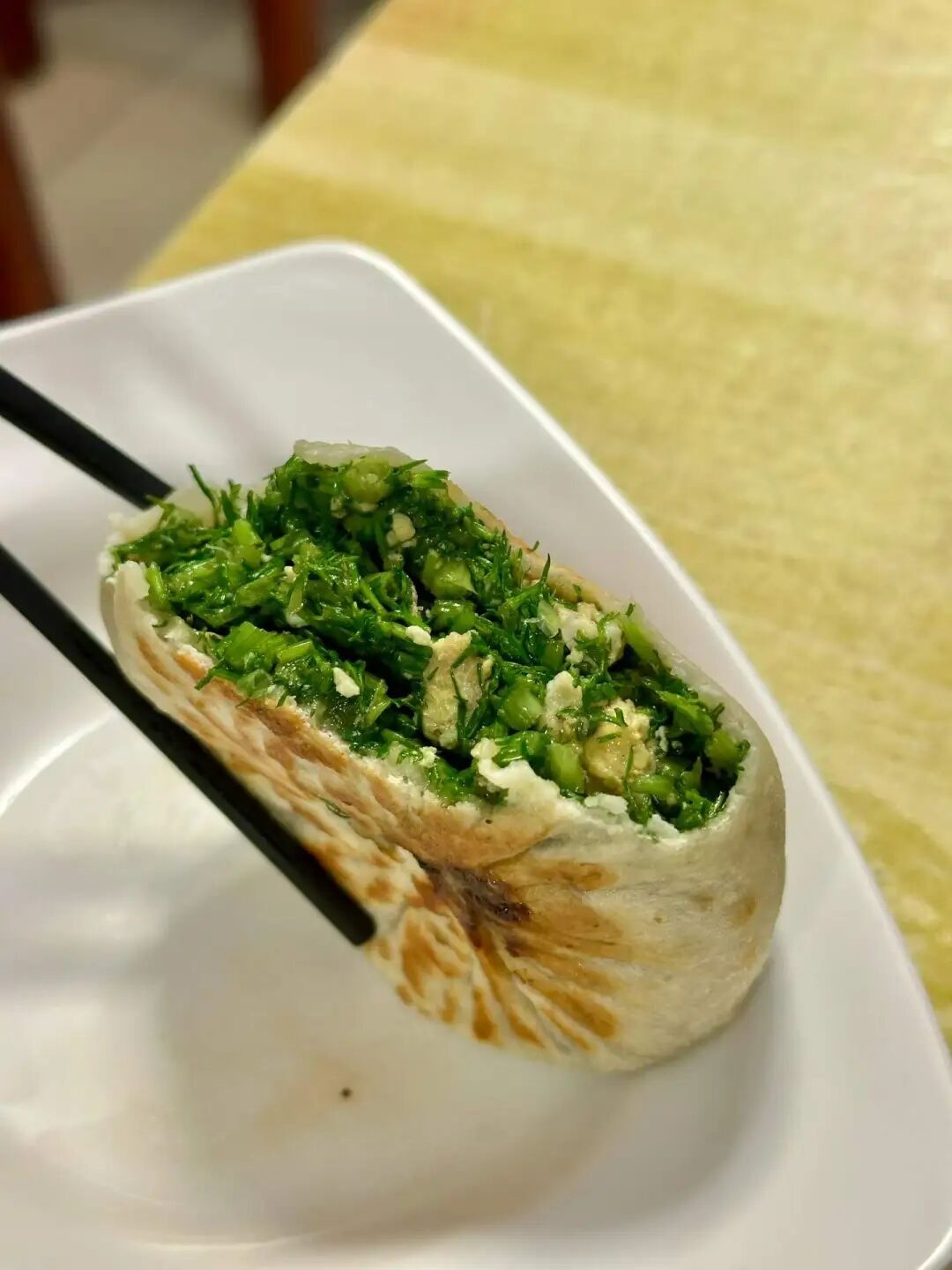
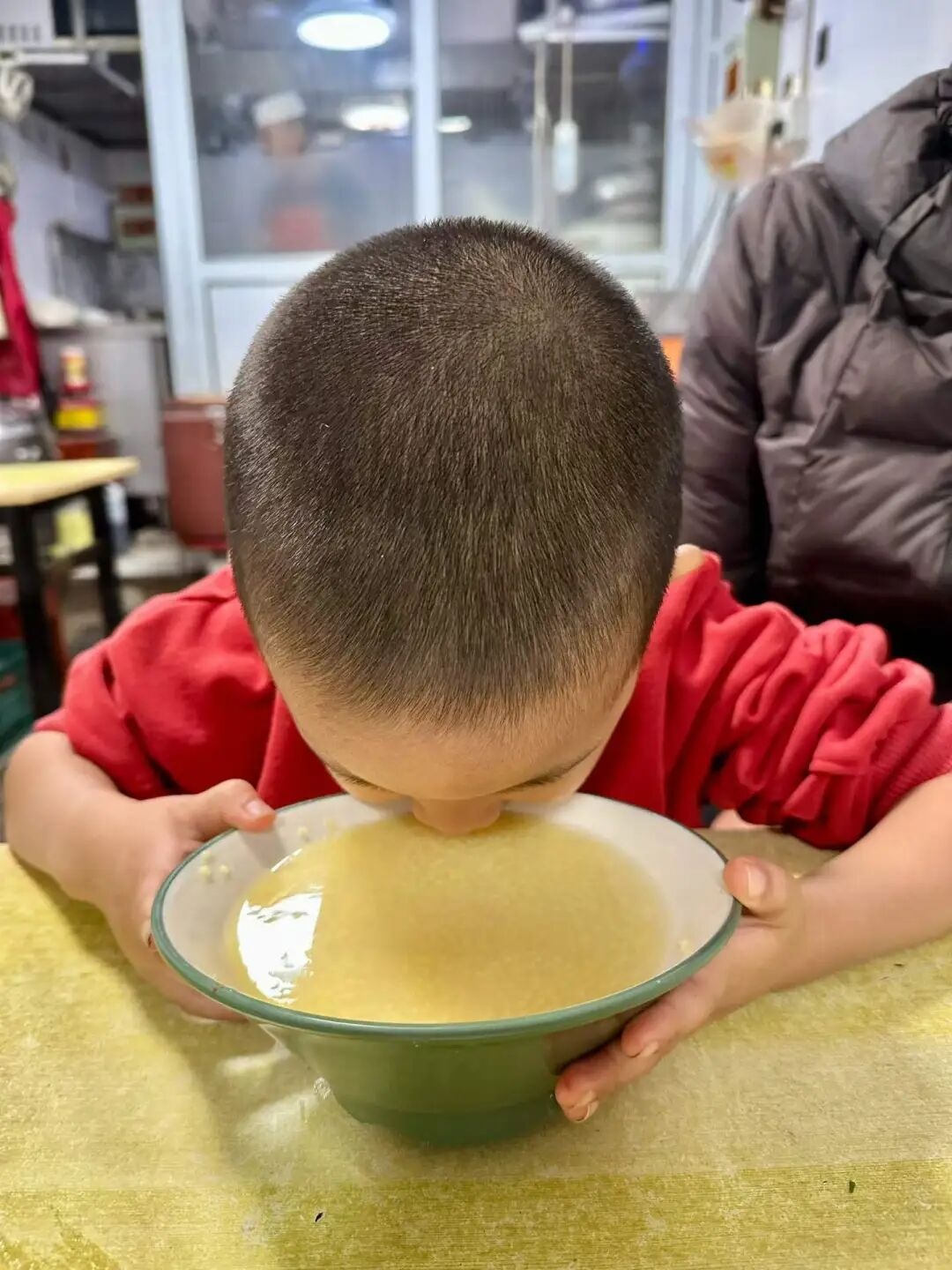
Xiaoxiao Rotating Hot Pot (Haidian Mosque)
The Yaofengcheng restaurant in front of the Haidian Mosque has a rotating hot pot spot on the second floor. It’s rarely crowded on weekends, making for a super chill meal. Yaofengcheng is also run by Hui Muslims from Dezhou, Shandong, so it’s a quiet, alcohol-free environment.
The 'Three-Fresh' and tomato soup bases are only 10 yuan each, and the freshly sliced beef and lamb are 10 yuan for four slices. They also have their own handmade dumplings. On the conveyor belt, I’d recommend the rose-shaped cod fish, baby squid, crunchy fish balls, cuttlefish balls, and lobster balls—the kids loved them. It’s a shame they don’t have fresh shrimp, only shrimp paste.
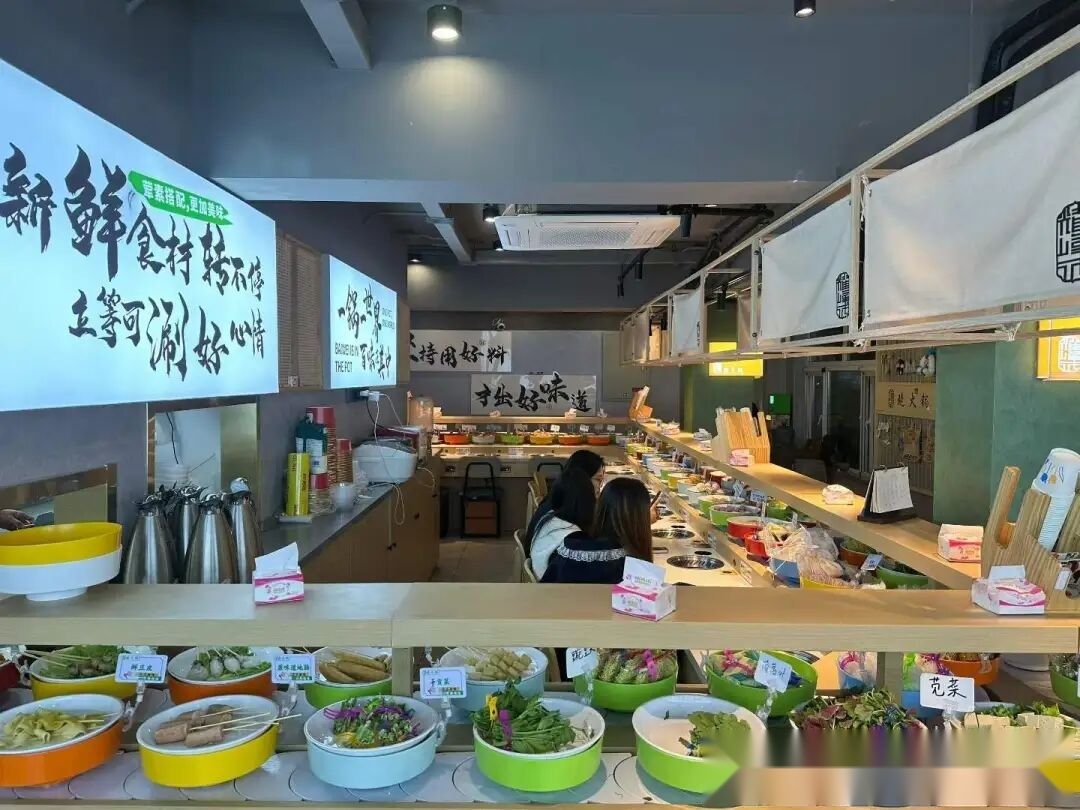
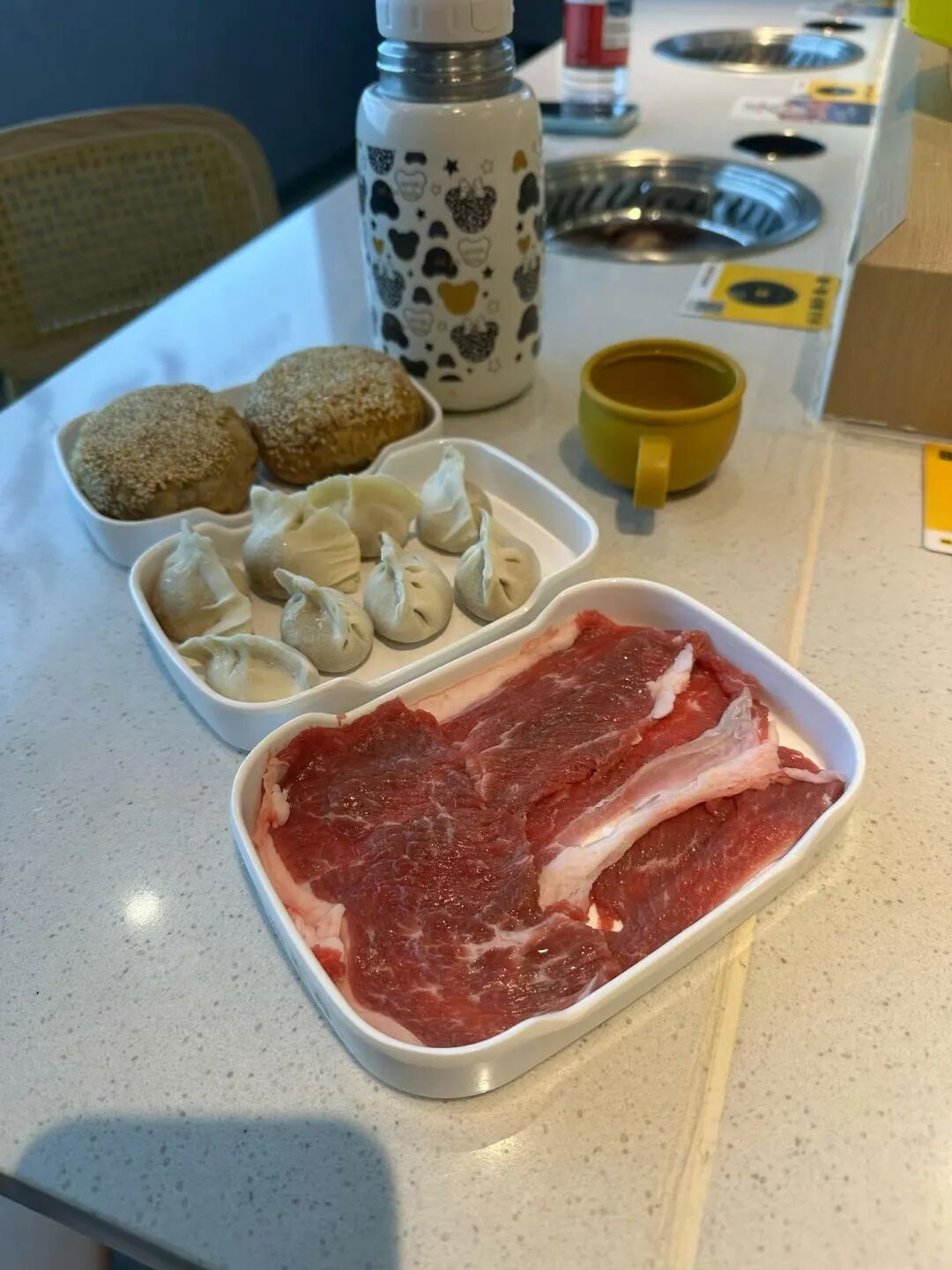
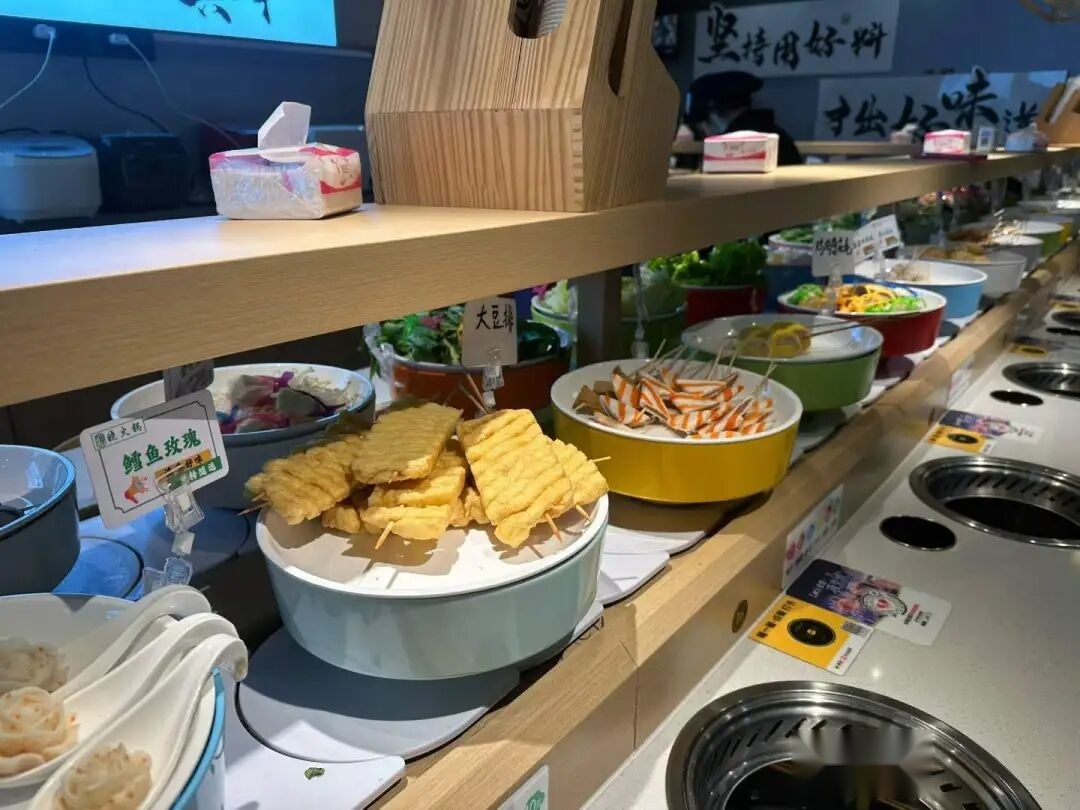
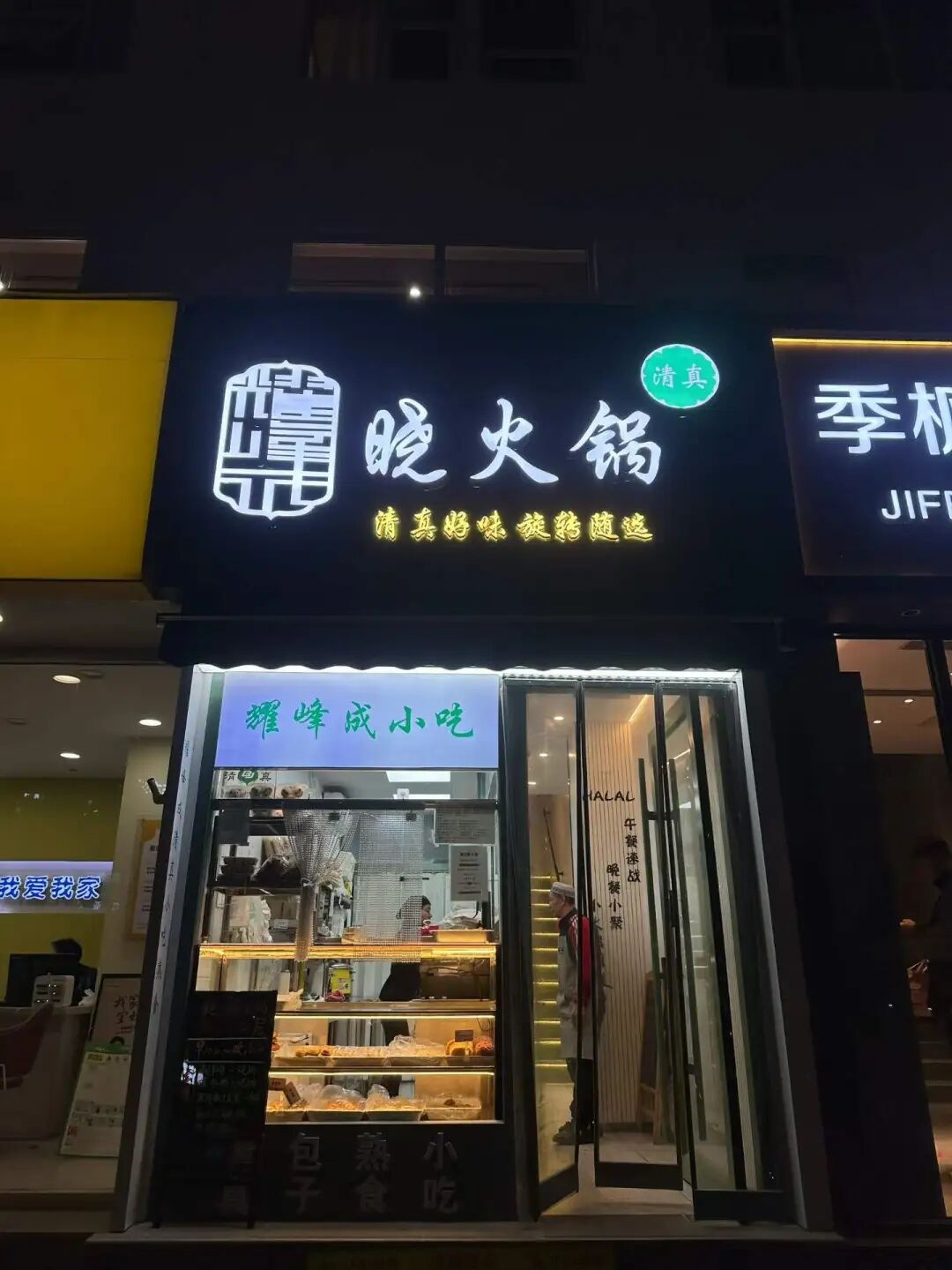
Best Halal Food in Lijiang: Authentic Hui Muslim Beef Dishes and Wild Mushroom Hot Pot Guide
Articles • Hasan09 posted the article • 0 comments • 78 views • 4 days ago
Near the Lijiang airport, there’s a place called Yunhuan Beef Restaurant run by Hui Muslims from Eryuan, Dali—it’s just a few minutes' drive from the terminal. The owner is a Hui Muslim from Sanmei Village in Eryuan, and she’s very dedicated to her faith and dua.
The restaurant specializes in home-style stir-fries, while the morning crowd mostly goes for the rice noodles and ersi. The noodles have a great smooth texture, and the ersi feels a bit like rice cake. They use a fresh beef bone marrow broth as a base, which is incredible, and the meat topping is a flavorful braised beef. If you're flying in or out of Lijiang, I highly recommend swinging by for a casual meal.
Next to the Lijiang airport is Axiong Yiweiyuan, less than five minutes away by car. It’s owned by Hui Muslims from Xizhou, Dali, and they cut the beef fresh to order, so it’s always super fresh. We ordered five dishes: tomato and scrambled eggs, 'two acres of land' (a local veggie dish), celery stir-fried beef, sautéed melon tips, and stir-fried chicken. The whole spread only cost 140 yuan—it was a perfect mix of meat and veggies, cooked over high heat, and went perfectly with rice. It’s super convenient to grab a great meal there before catching your flight.
We headed to Cangfeng Wild Mushroom Hot Pot at the North Gate Slope in Lijiang Old Town to try some fun (wild mushrooms). The shop is right below the Lijiang Mosque, and there’s a parking lot right next door. The owner is a Hui Muslim from Weishan, Dali, so you know the quality is legit.
We ordered the four-person set, which came with six kinds of wild mushrooms: gushu (valley-ripened mushroom), porcini, red lactarius, 'old man's head' mushroom, jianshouqing (a local blue-staining mushroom), and small shiitake, plus cordyceps flowers. We simmered them with pieces of free-range chicken, big prawns, thinly sliced beef, rice noodles, and veggies. Because it included jianshouqing, we had to time it for 27 minutes before we could eat. The mushroom broth was so fresh that my son said every bite was 'exploding with flavor'—he ended up finishing a huge bowl of rice soaked in the mushroom soup.
If you're in Yunnan, you have to try the wild mushrooms; we definitely got our fill this time.
During the Ming and Qing dynasties, many Hui Muslims settled in the Lijiang region, and the city once had three mosques located in Niuja Lane on Xinyi Street, Wenzhi Lane on Wuyijie Street, and Chi-tu River in Jiuhe. Sadly, in 1856, Zhang Zhengtai led a massacre of Hui Muslims in Heqing, Lijiang, and Jianchuan, leaving Lijiang Old Town in ruins and destroying all three mosques. For a long time after, the Hui Muslims in Lijiang struggled to get by through small-scale handicrafts and trade, and they were unable to rebuild a mosque. Finally, in 1985, the Lijiang Mosque was rebuilt on Shuiyun Lane, North Gate Street, and it was expanded in 2008 into the structure you see today.
While you’re wandering around Lijiang Old Town, make sure to grab a yak meat pie to keep your energy up. view all
Near the Lijiang airport, there’s a place called Yunhuan Beef Restaurant run by Hui Muslims from Eryuan, Dali—it’s just a few minutes' drive from the terminal. The owner is a Hui Muslim from Sanmei Village in Eryuan, and she’s very dedicated to her faith and dua.
The restaurant specializes in home-style stir-fries, while the morning crowd mostly goes for the rice noodles and ersi. The noodles have a great smooth texture, and the ersi feels a bit like rice cake. They use a fresh beef bone marrow broth as a base, which is incredible, and the meat topping is a flavorful braised beef. If you're flying in or out of Lijiang, I highly recommend swinging by for a casual meal.
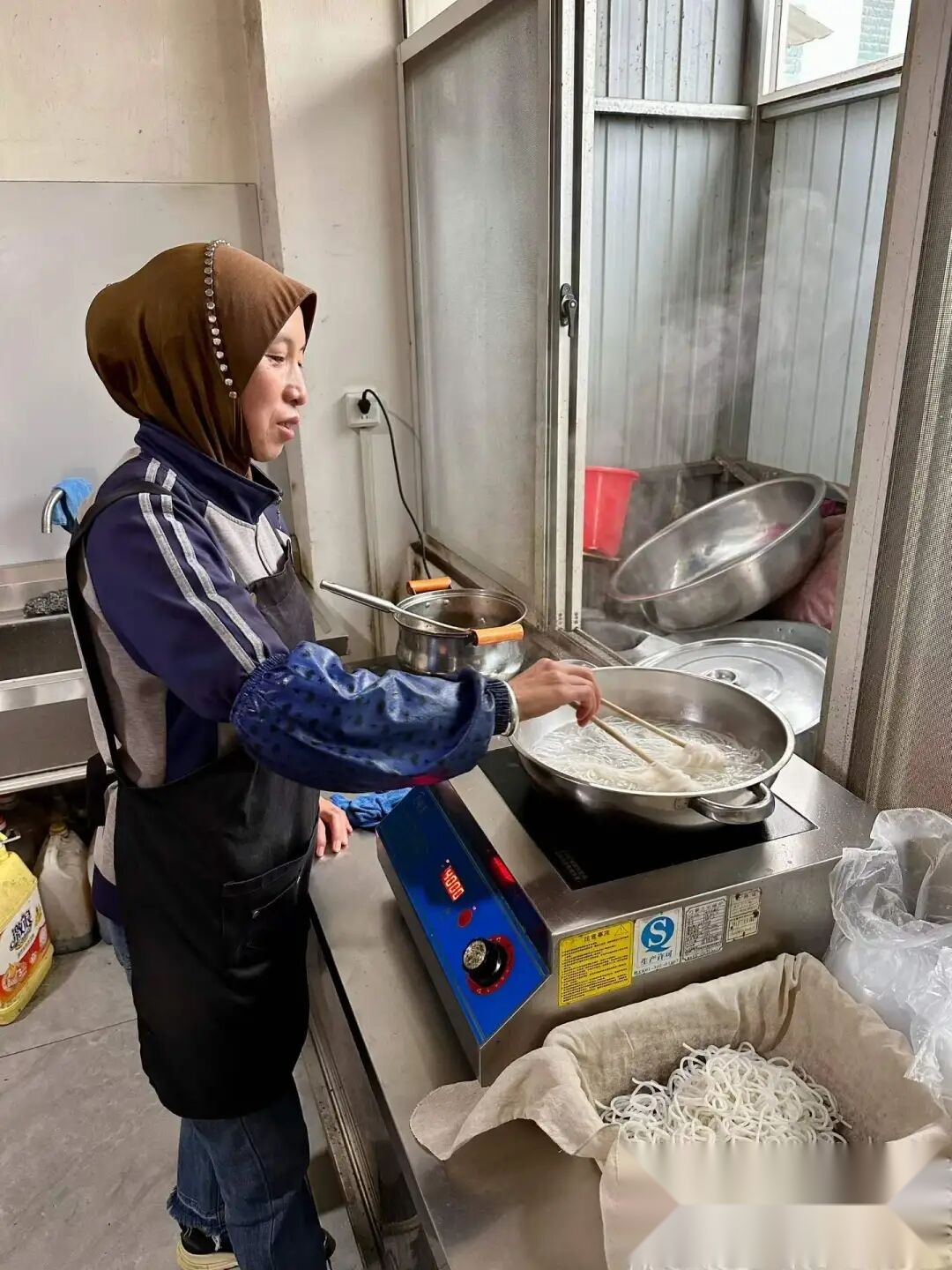
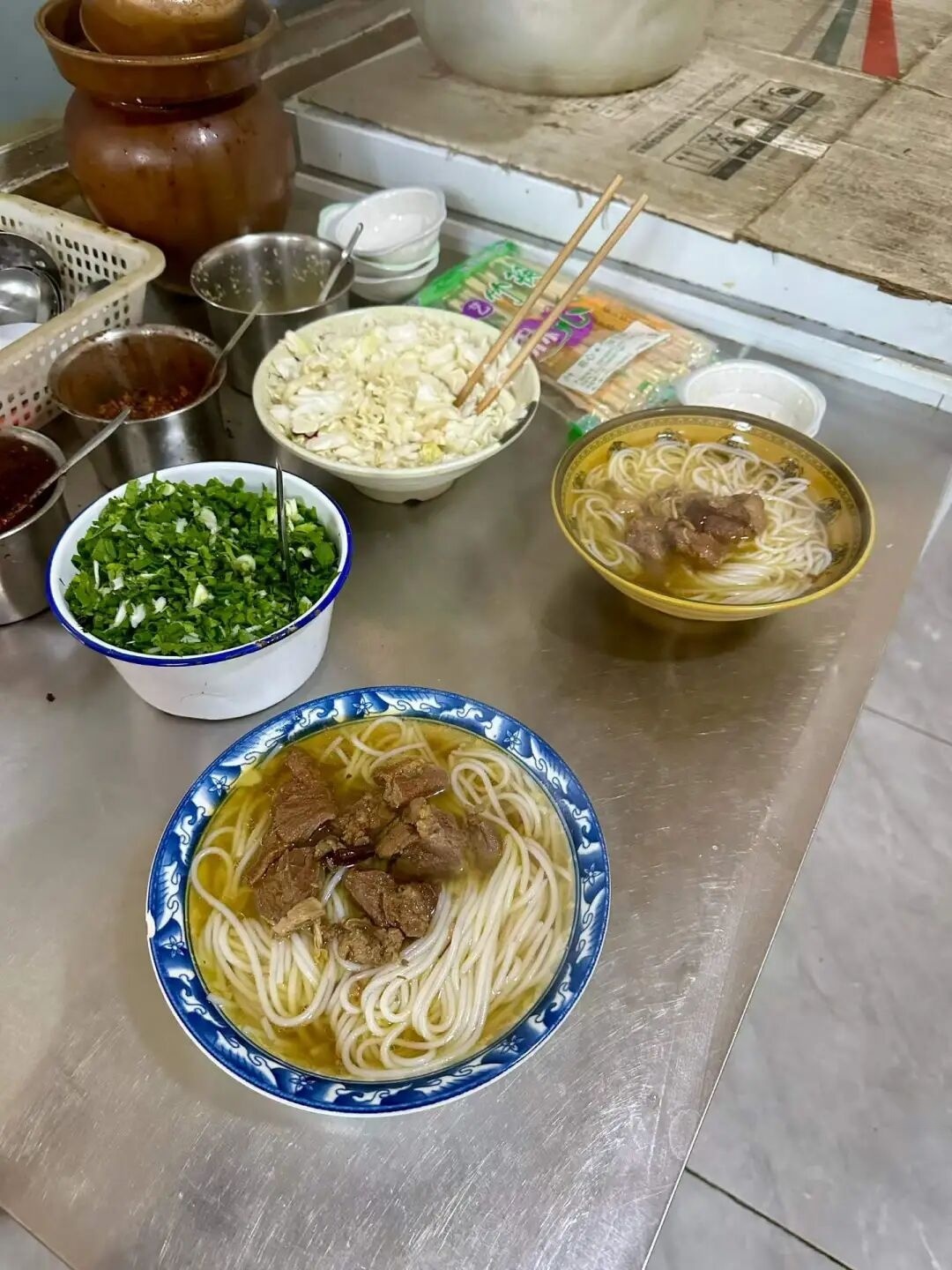
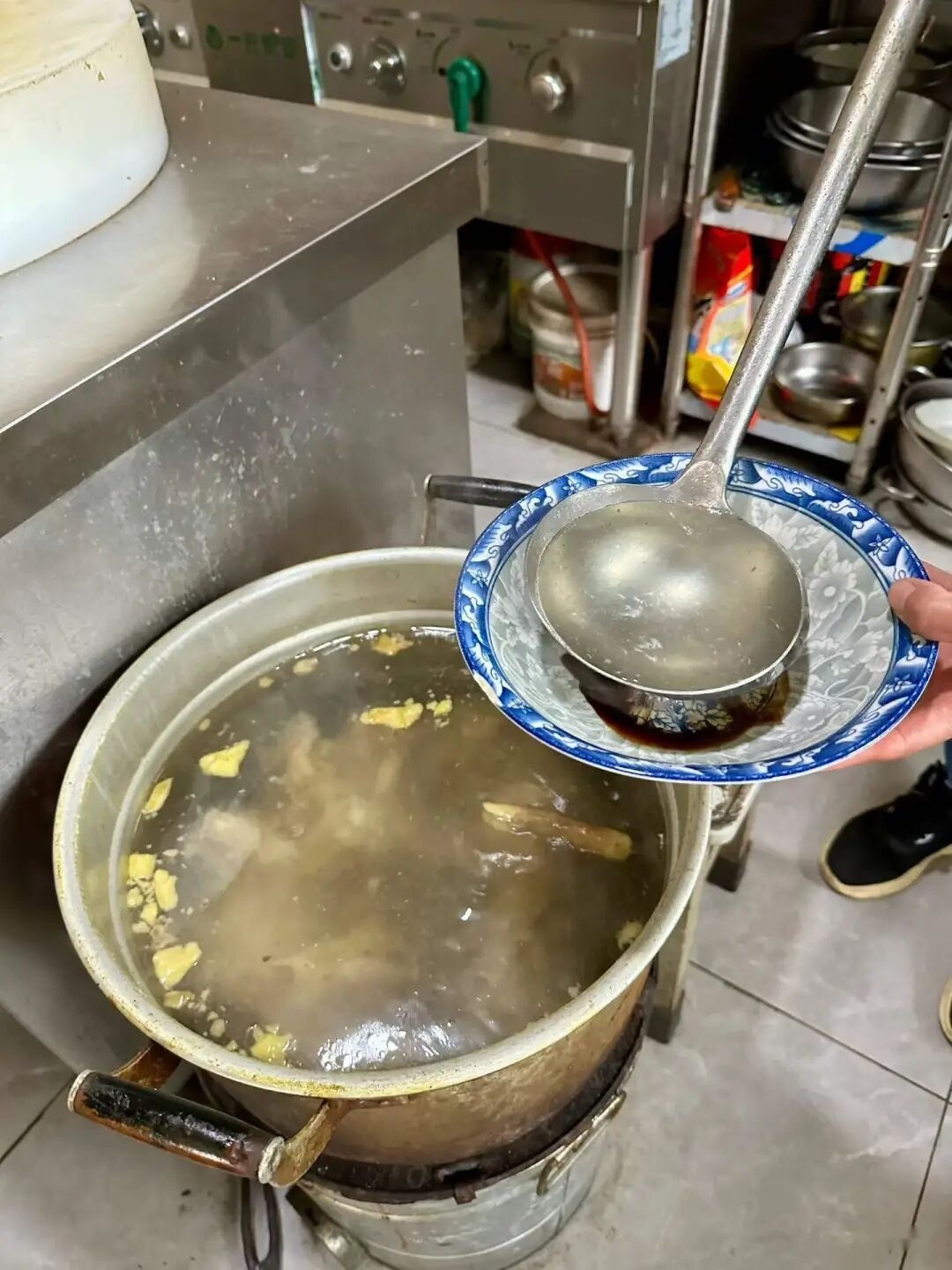
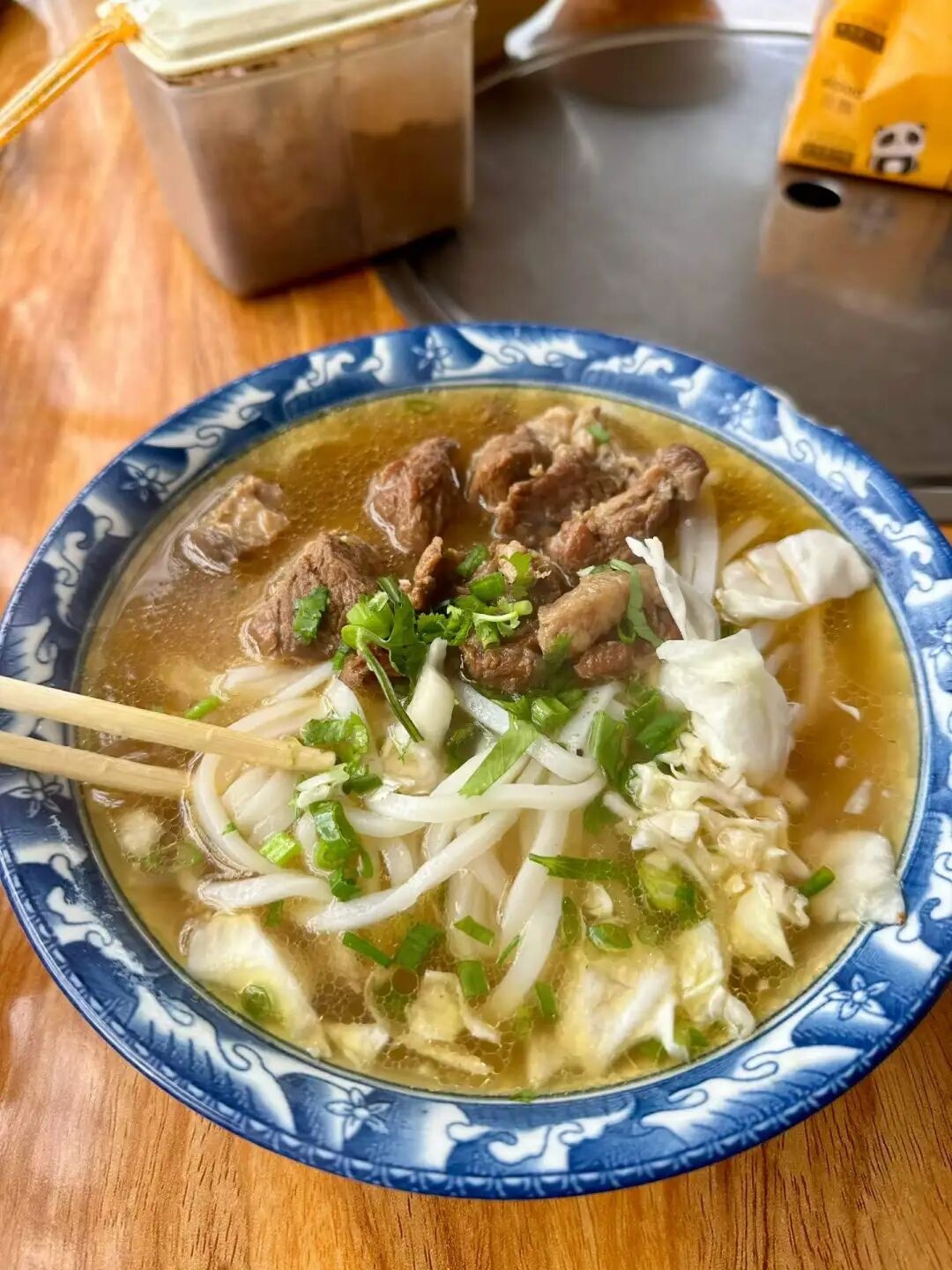
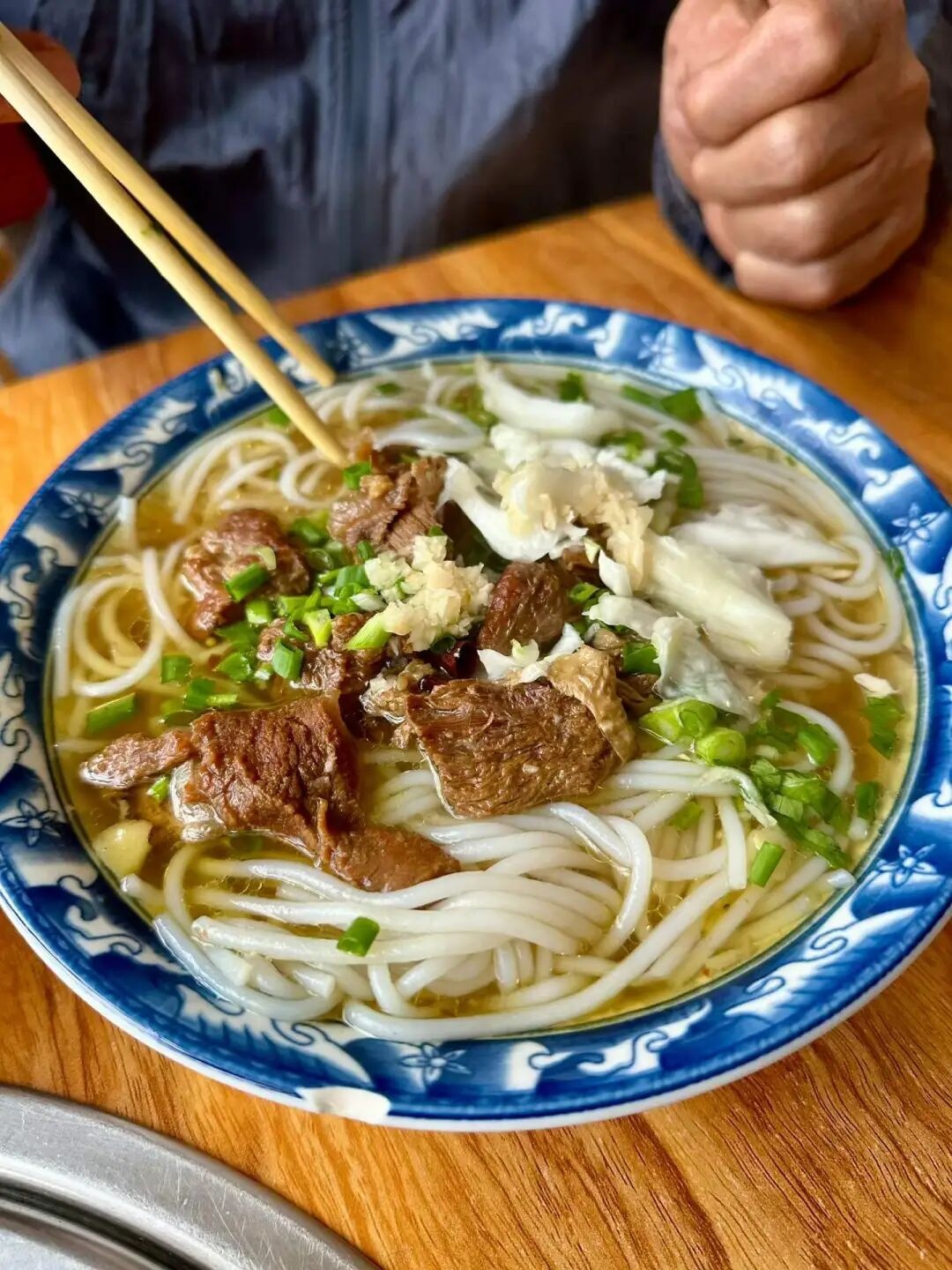
Next to the Lijiang airport is Axiong Yiweiyuan, less than five minutes away by car. It’s owned by Hui Muslims from Xizhou, Dali, and they cut the beef fresh to order, so it’s always super fresh. We ordered five dishes: tomato and scrambled eggs, 'two acres of land' (a local veggie dish), celery stir-fried beef, sautéed melon tips, and stir-fried chicken. The whole spread only cost 140 yuan—it was a perfect mix of meat and veggies, cooked over high heat, and went perfectly with rice. It’s super convenient to grab a great meal there before catching your flight.
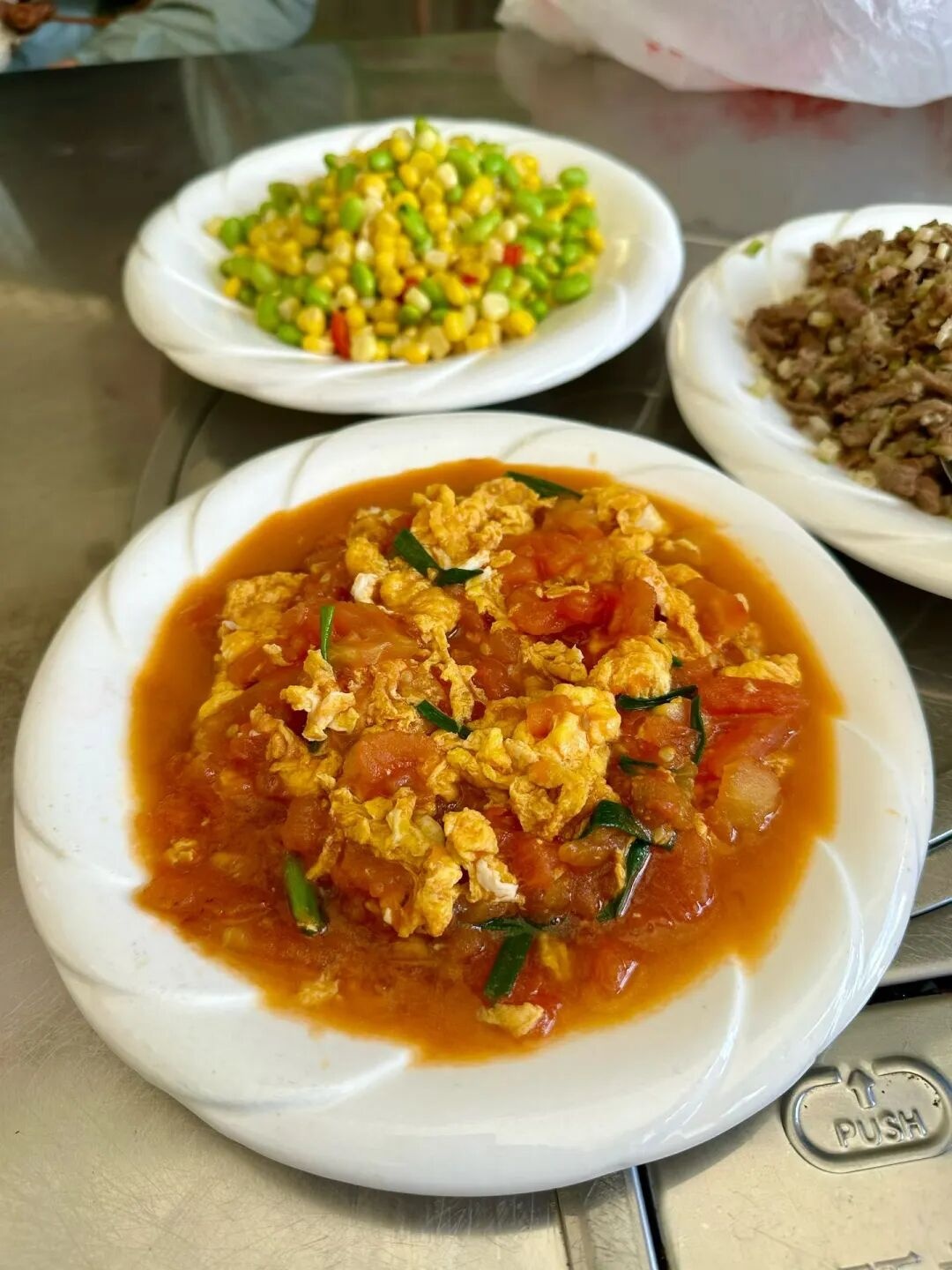
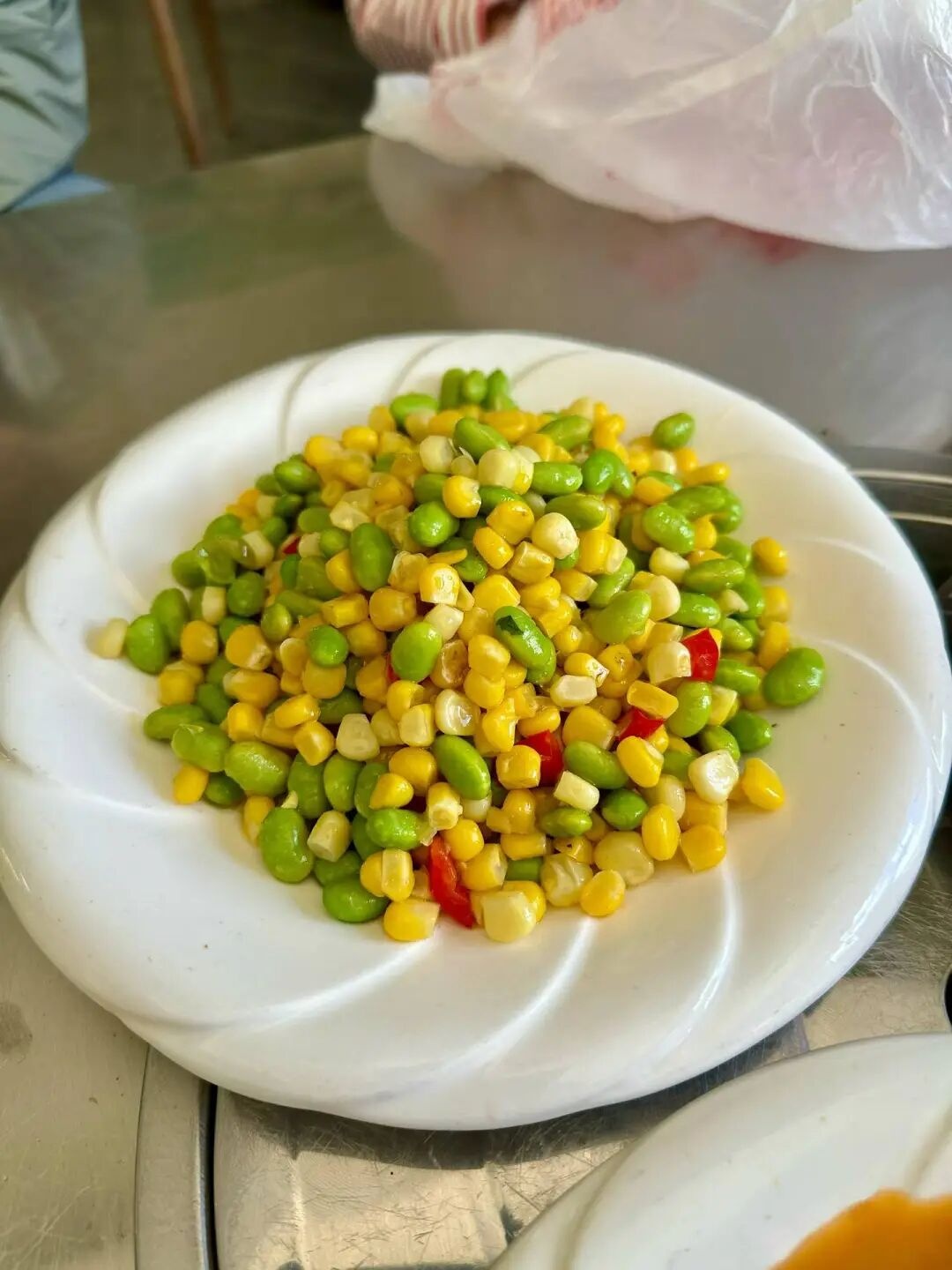
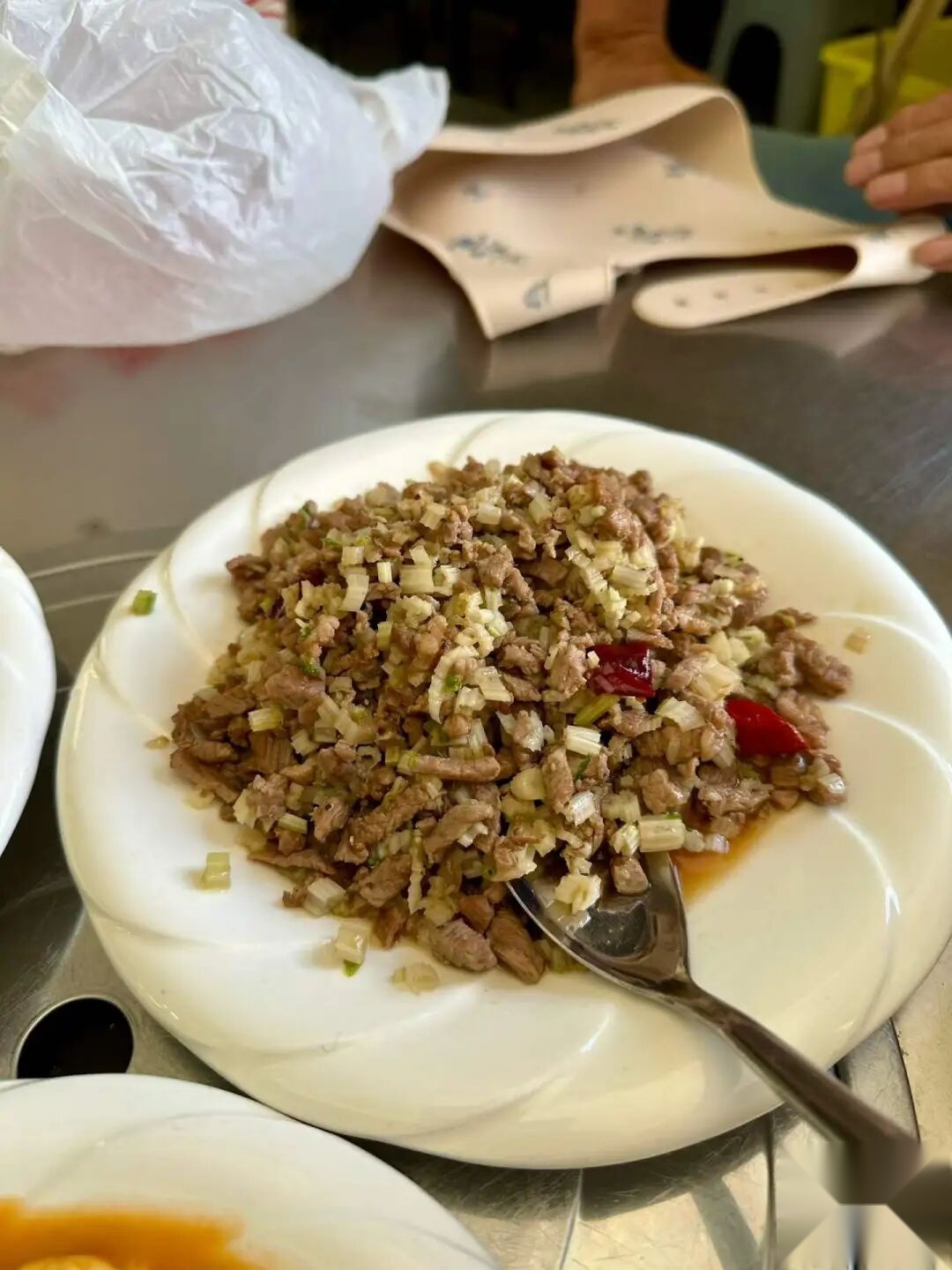
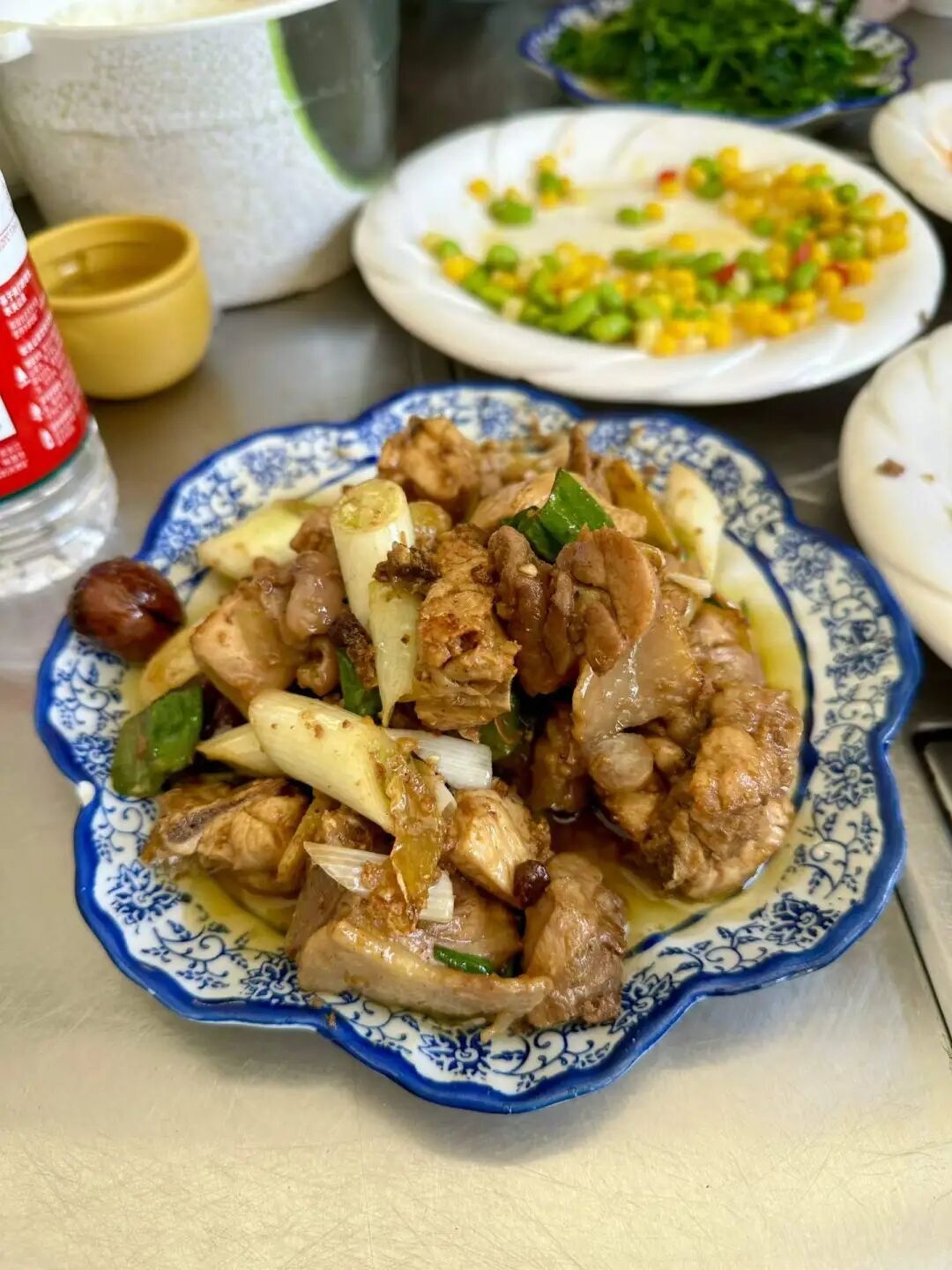
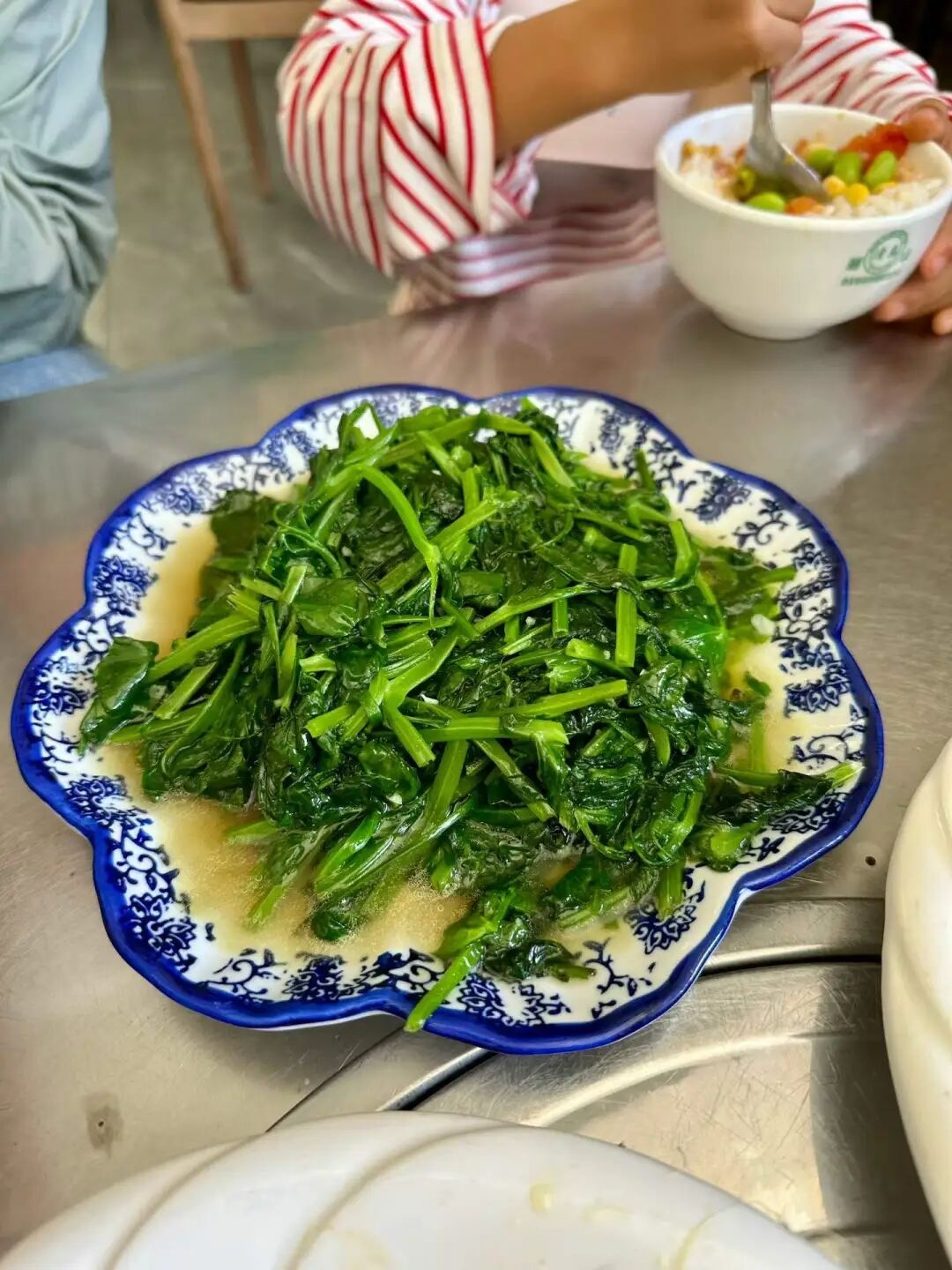
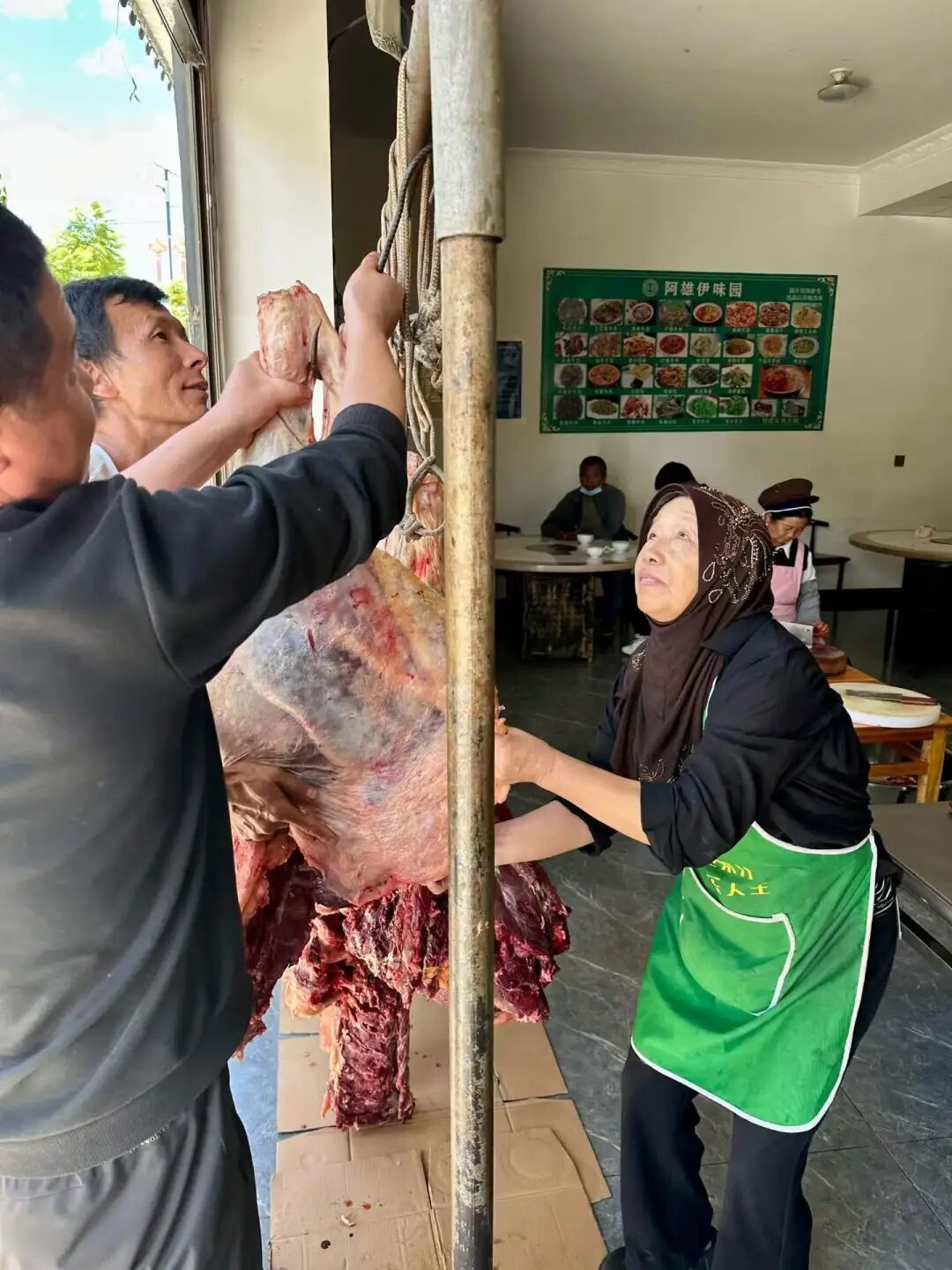
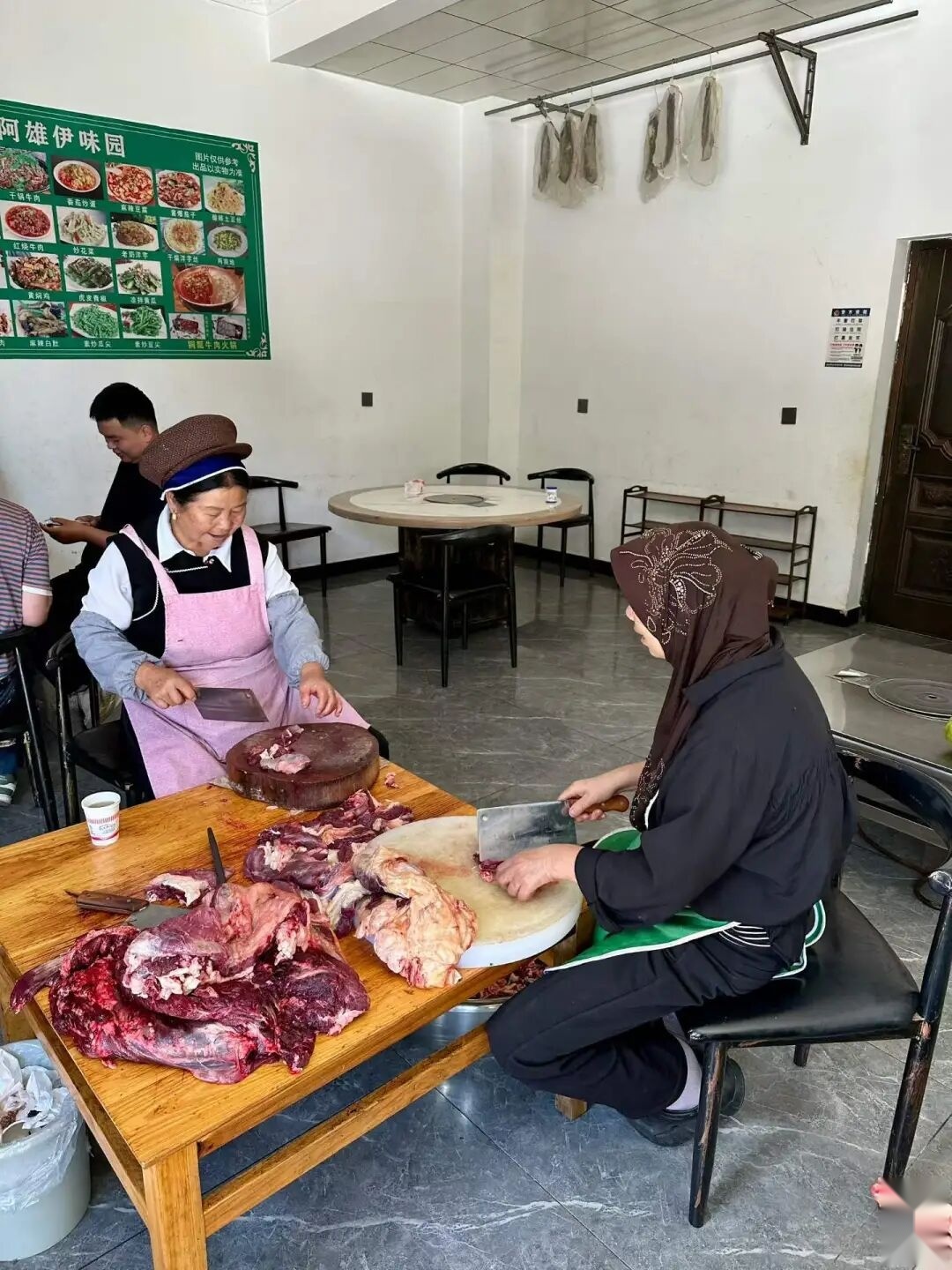
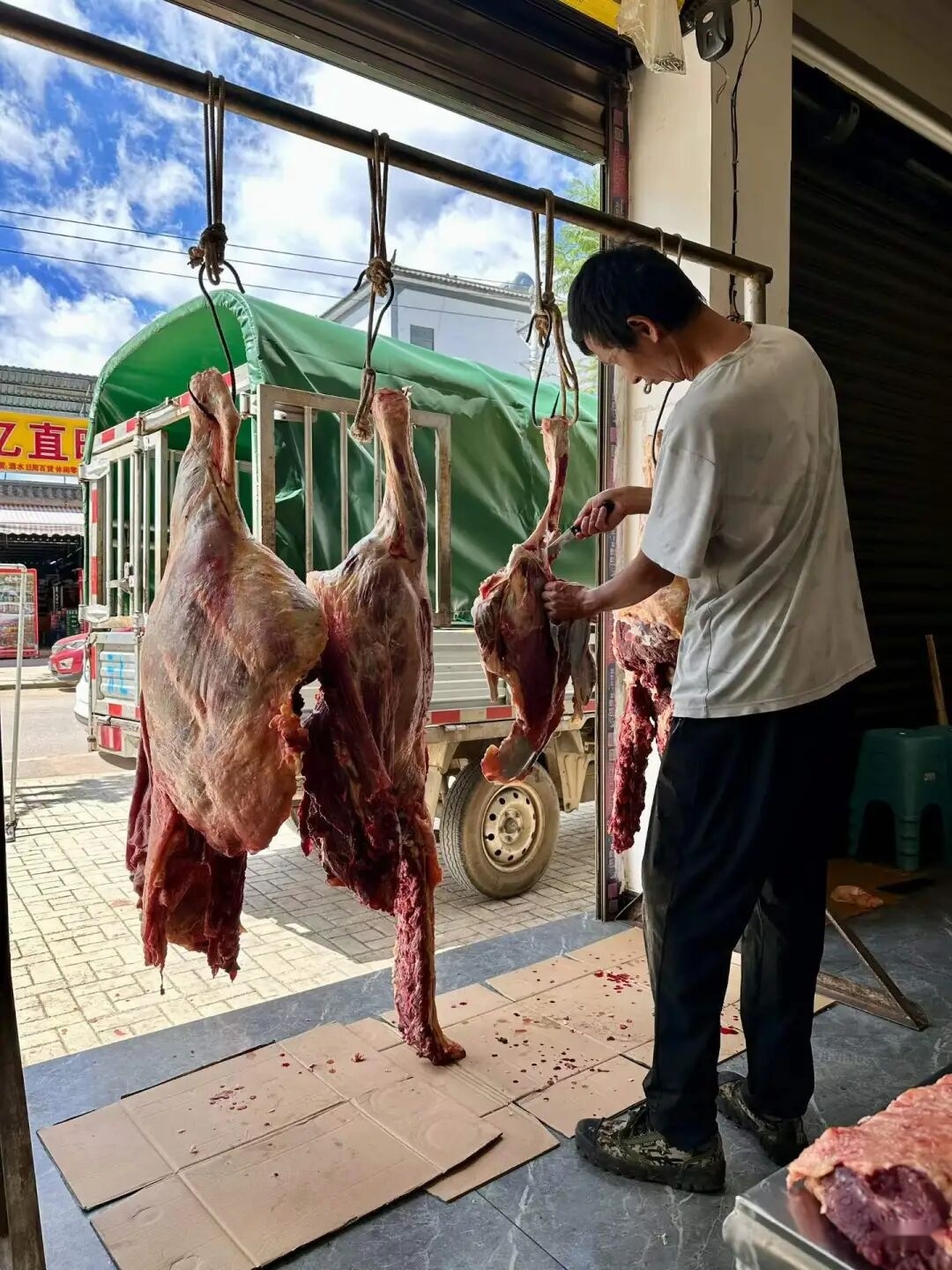
We headed to Cangfeng Wild Mushroom Hot Pot at the North Gate Slope in Lijiang Old Town to try some fun (wild mushrooms). The shop is right below the Lijiang Mosque, and there’s a parking lot right next door. The owner is a Hui Muslim from Weishan, Dali, so you know the quality is legit.
We ordered the four-person set, which came with six kinds of wild mushrooms: gushu (valley-ripened mushroom), porcini, red lactarius, 'old man's head' mushroom, jianshouqing (a local blue-staining mushroom), and small shiitake, plus cordyceps flowers. We simmered them with pieces of free-range chicken, big prawns, thinly sliced beef, rice noodles, and veggies. Because it included jianshouqing, we had to time it for 27 minutes before we could eat. The mushroom broth was so fresh that my son said every bite was 'exploding with flavor'—he ended up finishing a huge bowl of rice soaked in the mushroom soup.
If you're in Yunnan, you have to try the wild mushrooms; we definitely got our fill this time.
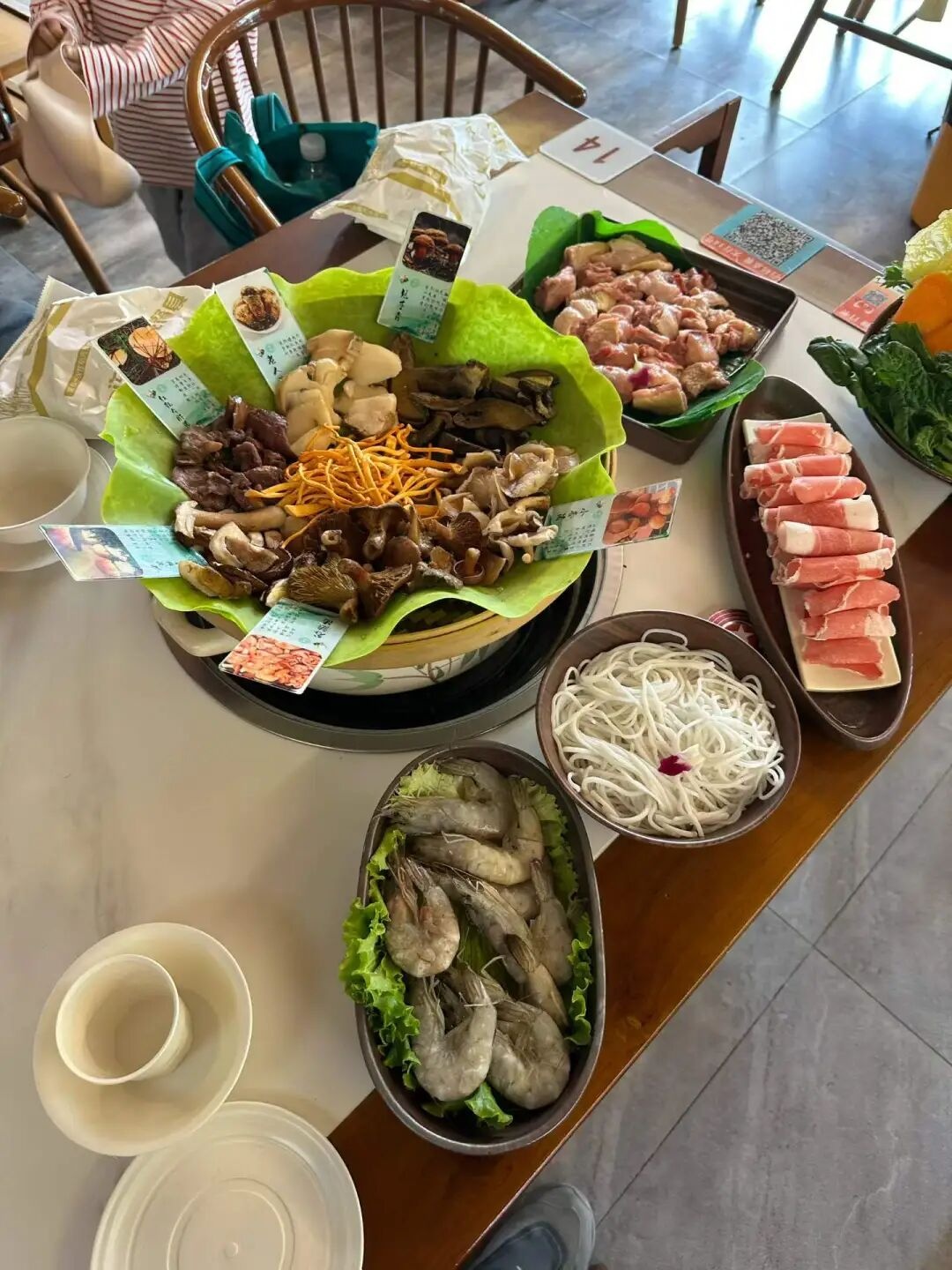
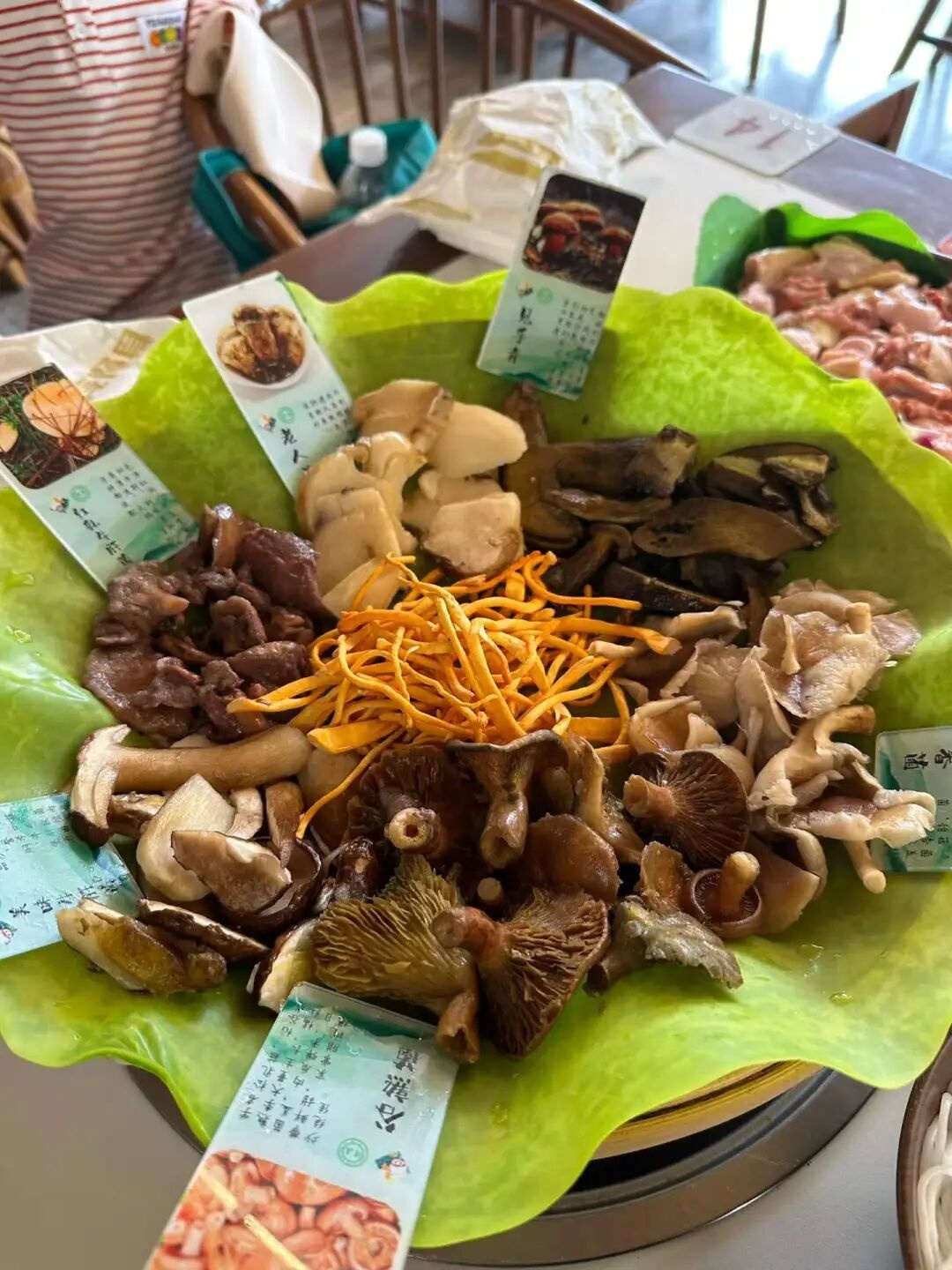
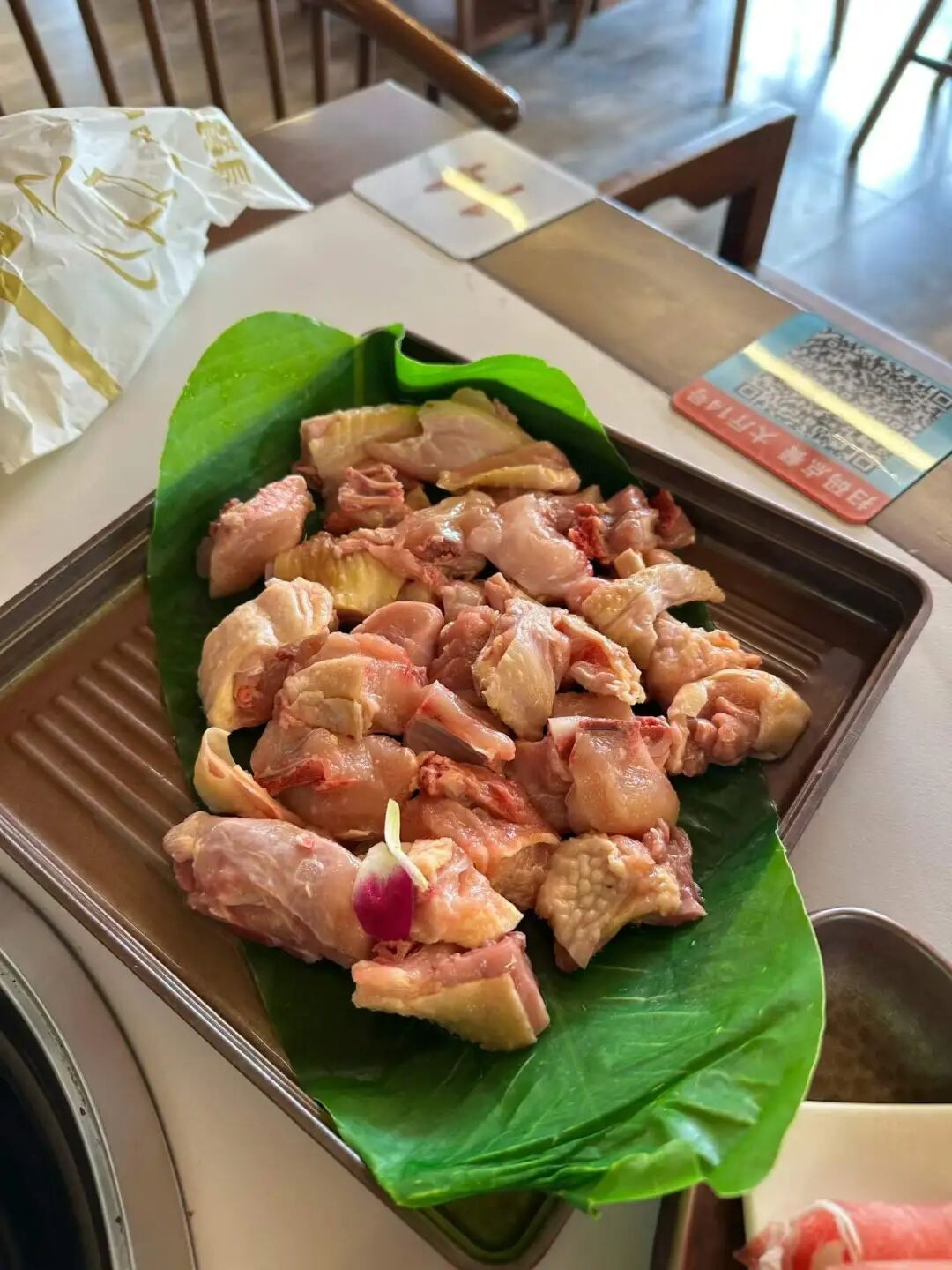
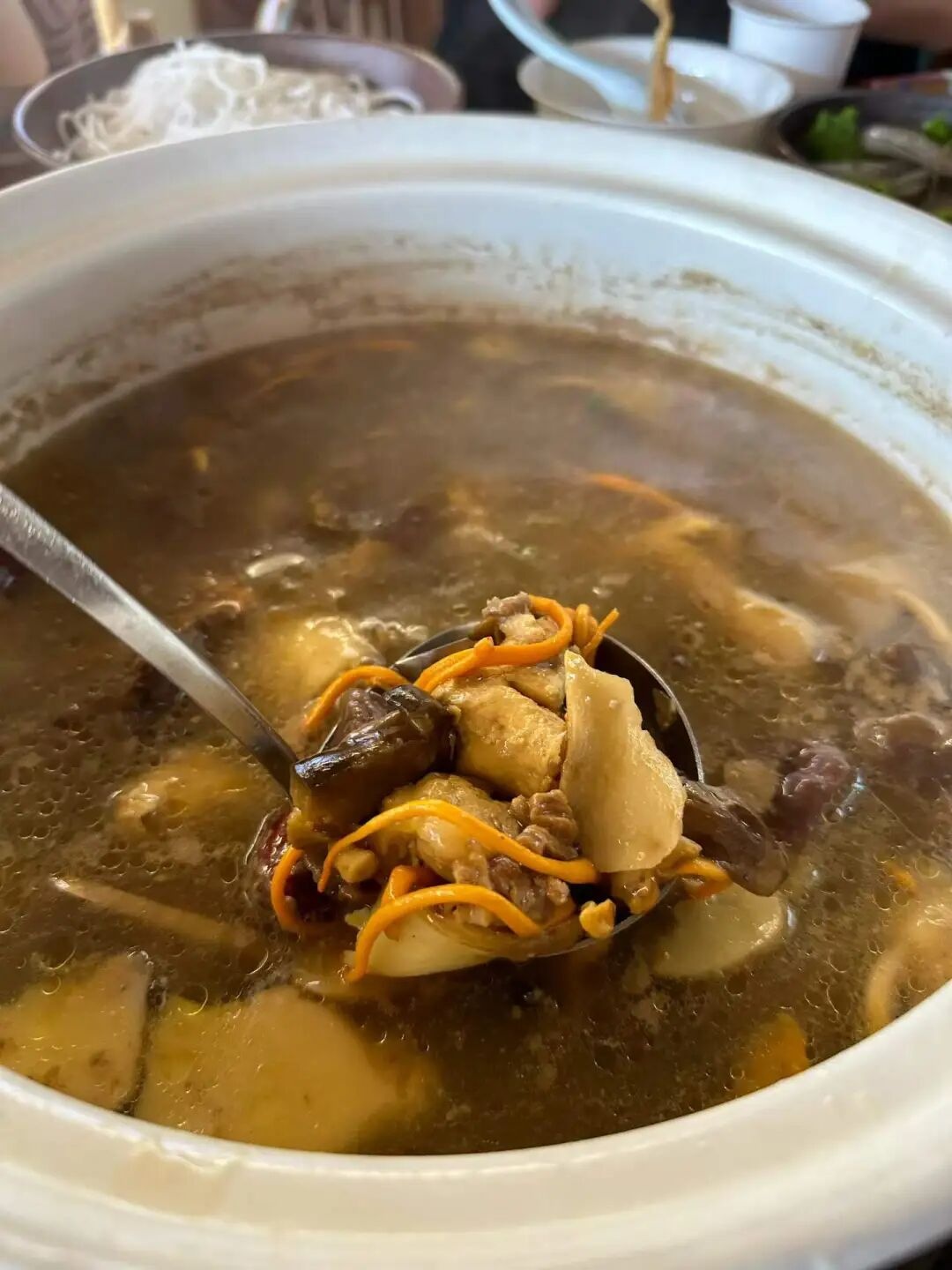
During the Ming and Qing dynasties, many Hui Muslims settled in the Lijiang region, and the city once had three mosques located in Niuja Lane on Xinyi Street, Wenzhi Lane on Wuyijie Street, and Chi-tu River in Jiuhe. Sadly, in 1856, Zhang Zhengtai led a massacre of Hui Muslims in Heqing, Lijiang, and Jianchuan, leaving Lijiang Old Town in ruins and destroying all three mosques. For a long time after, the Hui Muslims in Lijiang struggled to get by through small-scale handicrafts and trade, and they were unable to rebuild a mosque. Finally, in 1985, the Lijiang Mosque was rebuilt on Shuiyun Lane, North Gate Street, and it was expanded in 2008 into the structure you see today.
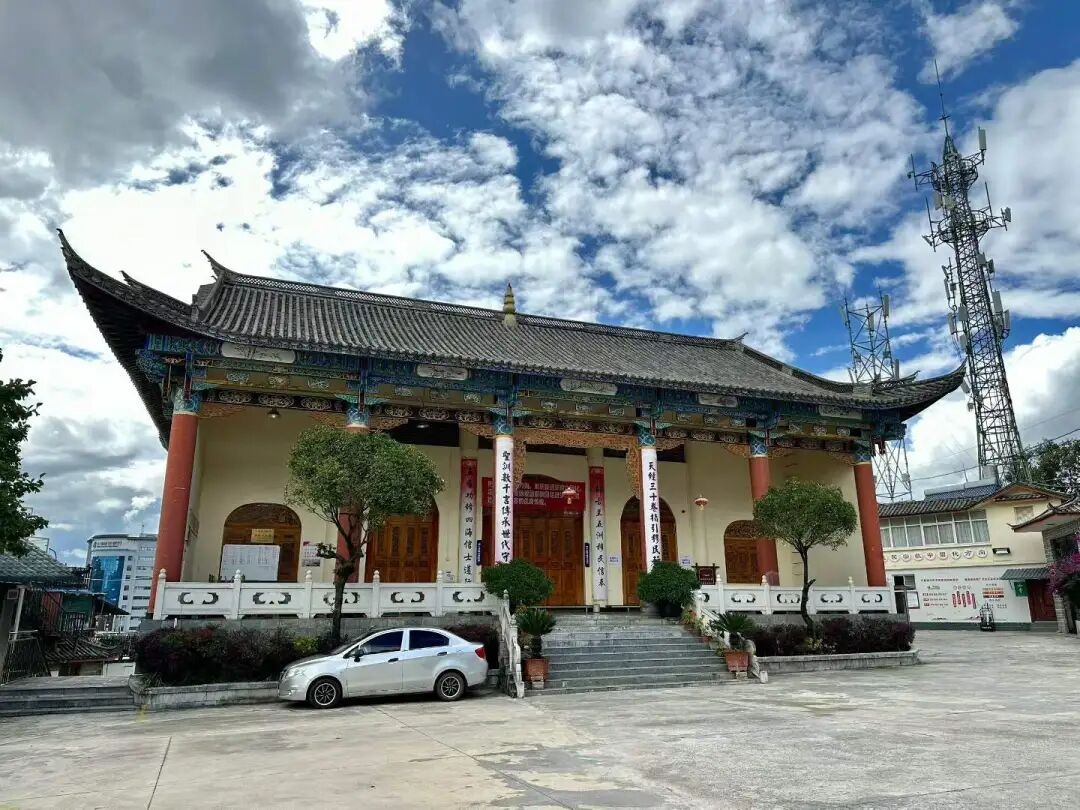
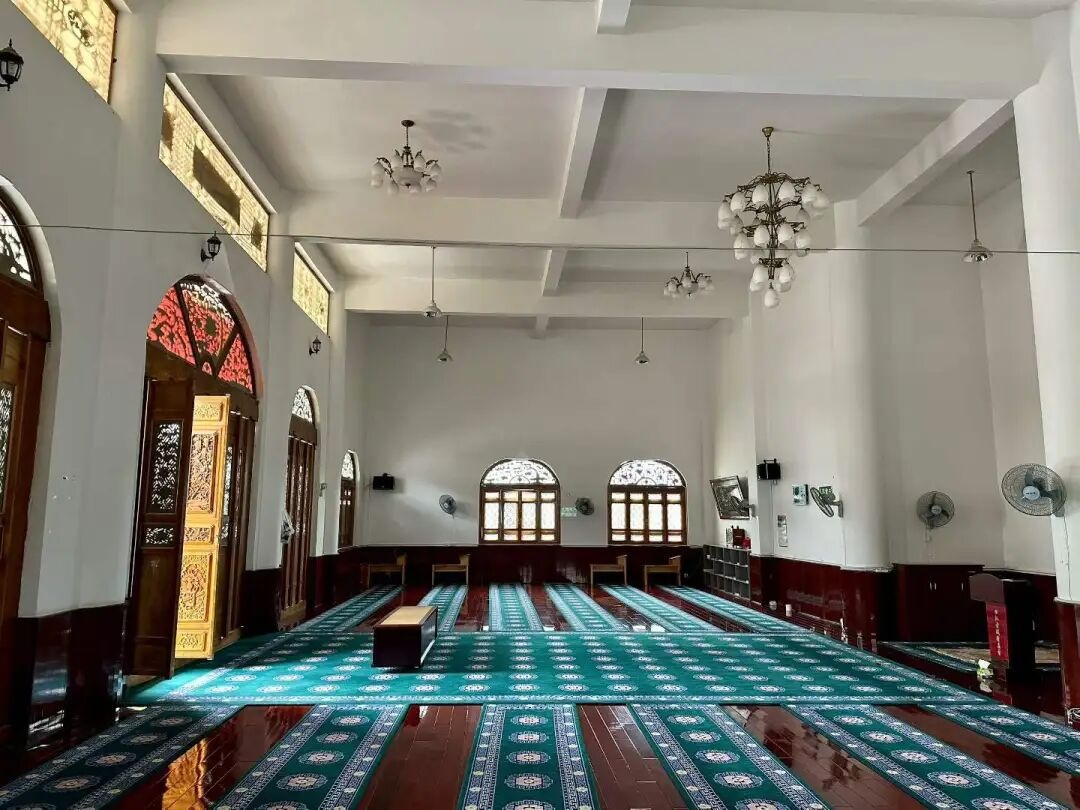
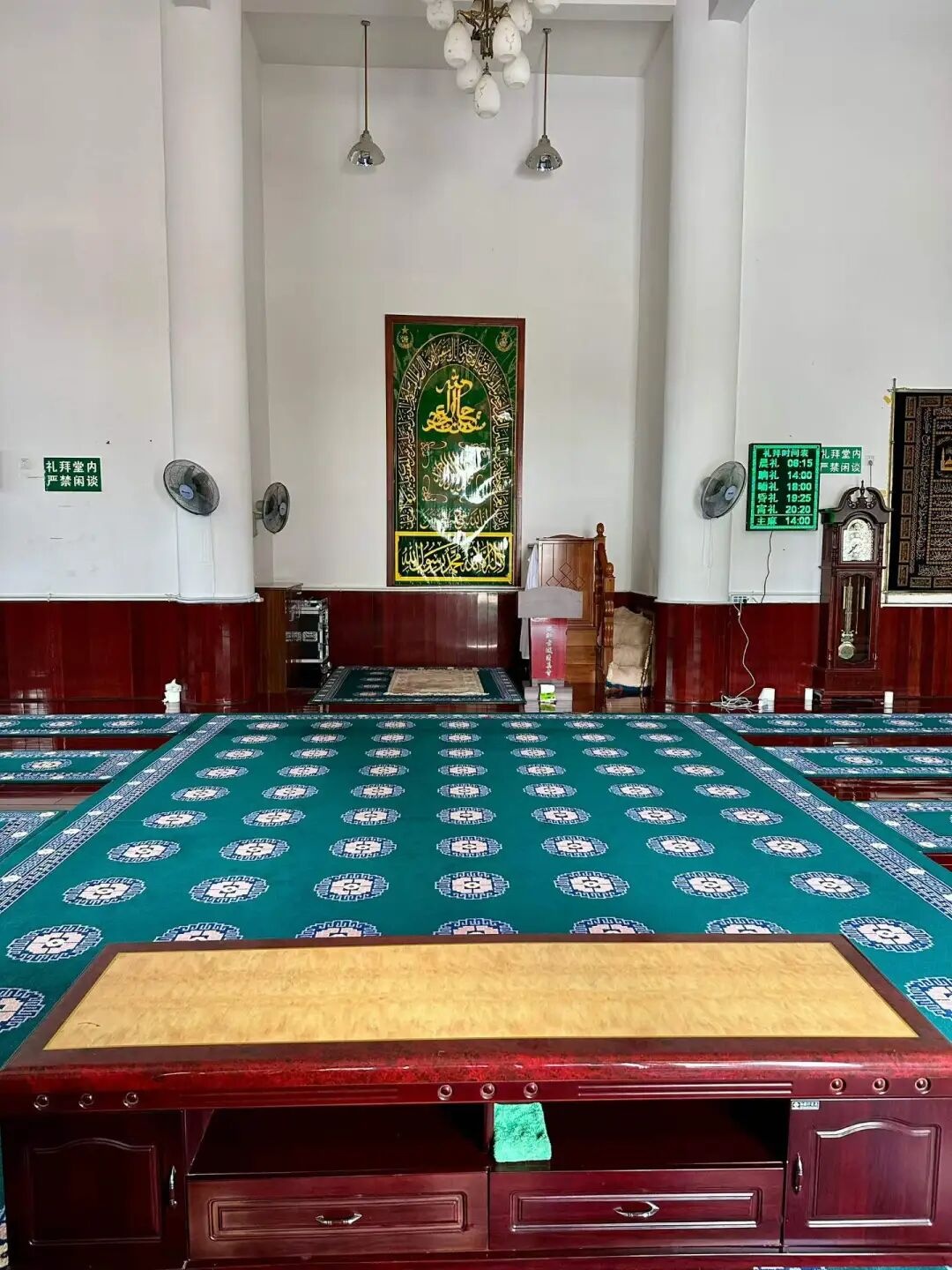
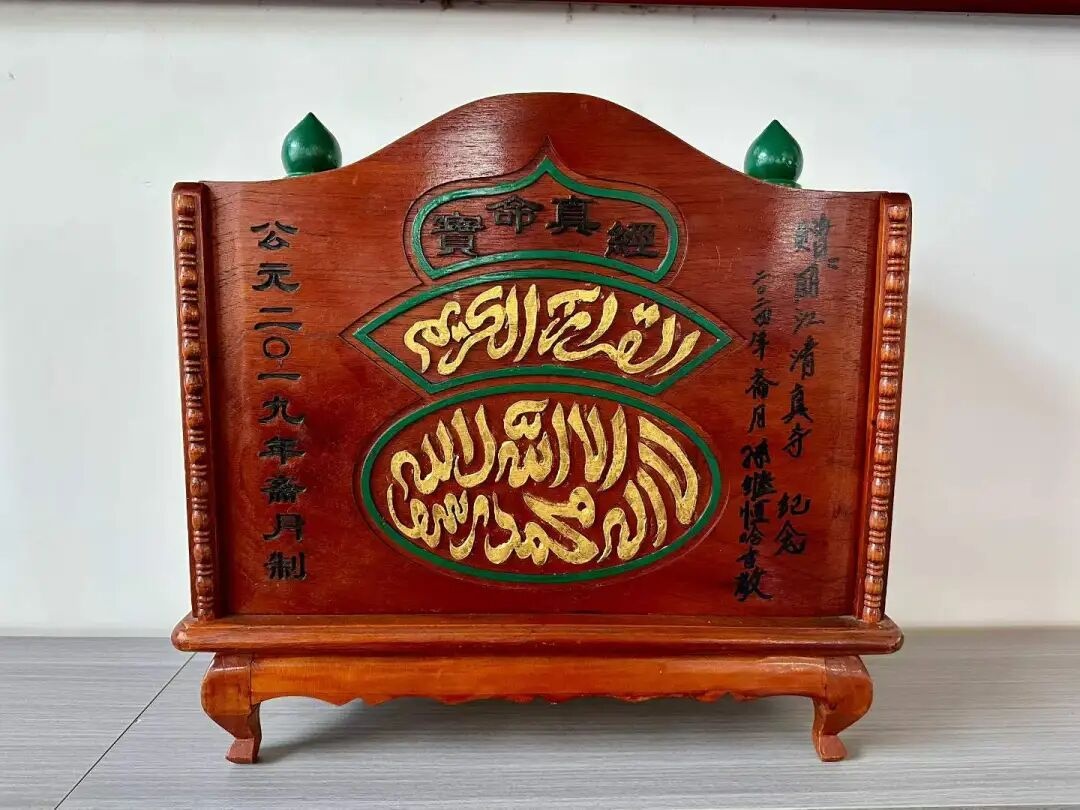
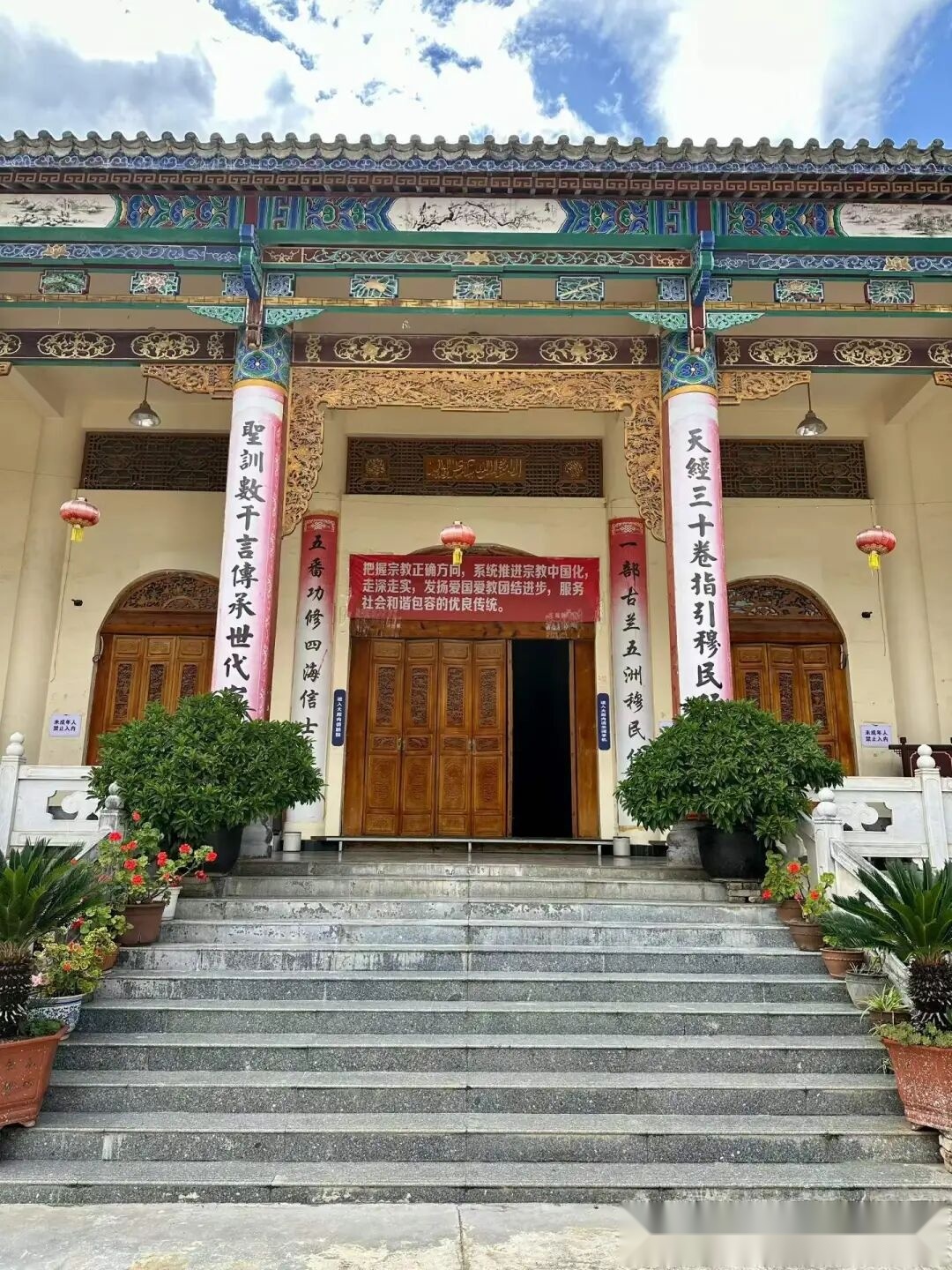
While you’re wandering around Lijiang Old Town, make sure to grab a yak meat pie to keep your energy up.
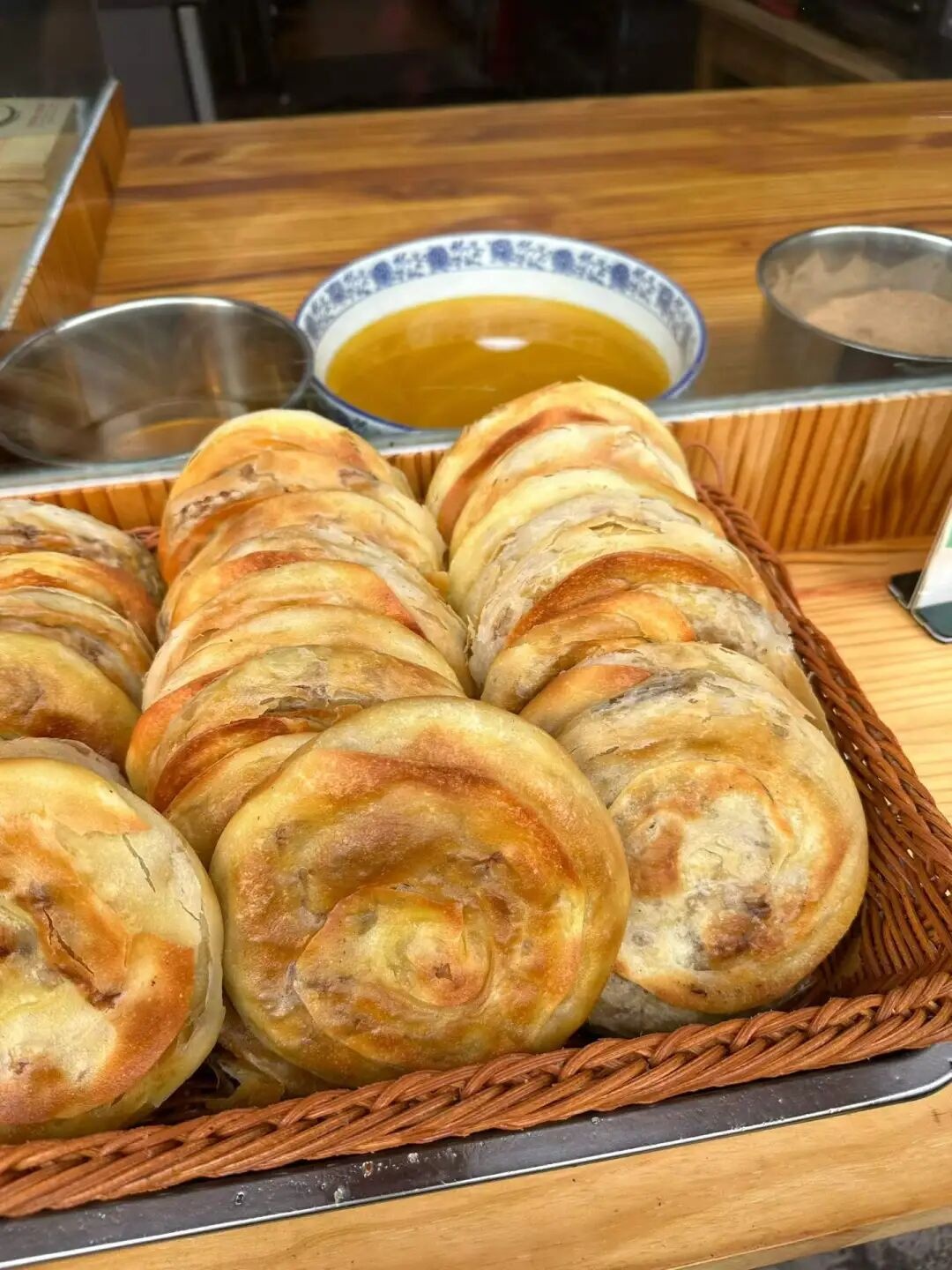
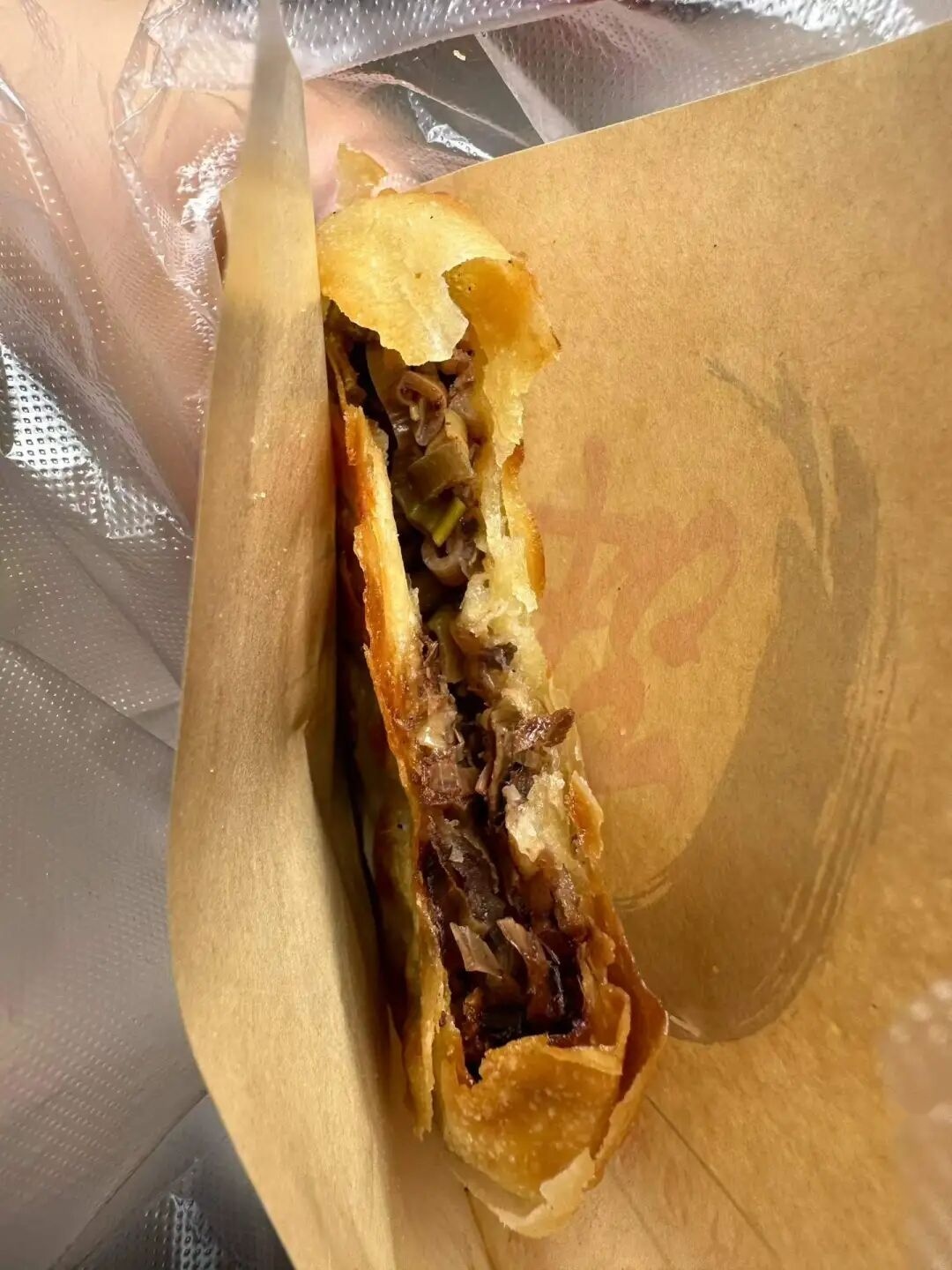
Best Halal Food in Beijing: 8 Authentic Neighborhood Muslim Eateries for Traditional Cuisine
Articles • Hasan09 posted the article • 0 comments • 87 views • 2026-11-09 10:56
Check out these 8 high-value, local-favorite Halal spots frequently visited by the Hui Muslim community in Beijing, including Changying Xiaomao Restaurant, Dongbei Halal Tieguodun, Jinglaishun Huaxia Restaurant, and Baizuan Meishi. You can enjoy massive, hearty, traditional Halal home-cooked meals for under 100 RMB per person.
Beijing Halal Restaurant Guide
Changying Xiaomao Restaurant
Xinyuezhai
Hushu Dongbei Halal Tieguodun (Iron Pot Stew)
Halal Jinglaishun Beijing Huaxia Restaurant
Wanwan Moon
Xiaolou Restaurant
Fenglaishun Restaurant
Halal Baizuan Meishi (White Diamond Food)
Note: Every spot has specific must-try dishes, please see the article for details.
Beijing has a large Hui Muslim population and tons of Halal spots. Some are right on the main roads with fancy decor, while others are tucked deep into the hutongs (traditional narrow alleyways), only found if a local shows you the way. The eight spots we’re talking about today are all the latter—they don’t care about fancy vibes or service; they’re all about that home-cooked flavor, great value, and filling you up. Some of these places have been open for decades; their menus are so worn you can barely read them, and the regulars are mostly neighbors who've been coming for years. Not every single dish might be a masterpiece, but they’re solid, reliable comfort food. (And yes, we’ve got some spots in Tongzhou this time!)
01
SUMMER
Changying Xiaomao Restaurant (Changying Middle Road Branch)
Address: 401 Ground Floor Shop, Wanxiang Xintian, Changying Middle Road, Chaoyang District
Hours: 10:00 AM – 2:00 PM
4:30 PM – 11:00 PM
Average cost: 65 RMB
The street right by the Changying mosque is packed with restaurants one after another. Xiaomao Restaurant is tucked away next to the northwest gate of the Wanxiang Xintian Phase 4 complex. The storefront is small, the interior has just a few tables, the walls look a bit hectic, and they use disposable tableware. Their signature beef and lamb skewers are grilled until they’re sizzling, and the chaobing (stir-fried pancake strips) comes out piping hot with plenty of that essential wok hei (charred, smoky flavor from high-heat cooking). The spicy pork tenderloin is also a win. It’s a great deal at around 60 to 70 RMB per person, but definitely don't come if you're looking for a fancy atmosphere.
02
SUMMER
Xinyuezhai (Douban Hutong Branch)
Address: Next to the mosque, 4 Douban Hutong, Mennei, Dongcheng District
Hours: 5:30 AM – 9:30 PM
Average cost: 30 RMB
Xinyuezhai is in Douban Hutong inside Chaoyangmen, right next to the mosque. In the mornings, their tangyoubing (deep-fried sugar-coated pancakes) are perfectly crispy, and the steamed buns are packed with filling—it's a go-to spot for local office workers. At lunch, they serve jingdong roubing (Beijing-style meat pies), and their lamb stew with noodles is super authentic. The tietuo yangrou (iron-seared lamb) is made in the style of Shandong cuisine; the lamb is tender, the fried egg is savory, and the flavor leans a bit salty. The sweet and sour tenderloin is made with beef, though it can be a little tough, and they go heavy on the vinegar, giving it a sharp, acidic punch. It’s cheap, tastes like home, and has that classic old-school vibe.
03
SUMMER
Hushu Dongbei Halal Tieguodun (Xuanwumen Branch)
Address: 25 Xuanwumen Outer Street, Xicheng District
Hours: 11:00 AM – 11:30 PM
Average cost: 65 RMB
Halal-style Northeastern Chinese food is pretty rare in Beijing. This spot is right on Xuanwumen Outer Street, and their beef guobaorou (sweet and sour crispy beef) is the star—the crust is crispy, the beef inside isn't too thin, and the sweet-and-sour sauce is spot on. The tieguodun (iron pot stew) bubbles away at the table, the dalapi (wide, slippery starch noodles) are refreshing, and the Beile roast meat smells amazing the moment it hits the table. I hear the owner is also from an ethnic minority group; the portions are generous, and it usually costs around 60 RMB per person. On my first visit, they even gave us complimentary frozen pears—icy and refreshing, perfect for cutting through the richness of the meal. It gets busy during meal times, so expect a wait if you show up late.
04
SUMMER
Jinglaishun (Beijing Huaxia Restaurant)
Address: 93 Chezhan Road, Zhongcang Subdistrict, Tongzhou District
Hours: 6:00 AM – 2:00 PM
5:00 PM – 9:30 PM
Average cost: 66 RMB
Jinglaishun on Chezhan Road in Tongzhou has been open for about thirty years. They are open from 5:30 AM to 9:30 PM, serving breakfast items like doufunao (savory tofu pudding) and baozi (steamed buns). The beef stew is melt-in-your-mouth tender, and their egg and chive guotie (pan-fried dumplings) are seasonal and fresh. They also serve classics like scallion-fried lamb and zhajiangmian (noodles with soybean paste). It looks like you can order the meat for the shao-bing jiarou (baked flatbread with meat) by weight, so you can add as much as you want. It costs about 50 to 60 RMB per person. It’s a classic, old-school spot, so don't expect fancy decor.
05
SUMMER
Wanwan Yueliang (Crescent Moon)
Address: 16 Dongsi Liutiao, Dongcheng District
Business Hours: 11:00 AM – 11:00 PM
Average cost: 74 RMB
Wanwan Yueliang is tucked away in the Dongsi Liutiao hutong. It’s not a huge place, but you'll spot it by the green sign with a crescent moon logo. They’ve been around for over twenty years, and the owners and staff are all Uyghur. They serve staples like dapanji (big plate chicken) and shouzhua fan (hand-grabbed rice/pilaf). The Xinjiang-style liangpi (cold skin noodles) are served without sesame paste, making them light and refreshing. Their huangmian kaorou (yellow noodles with grilled meat), ganbian chaomian (dry-fried noodles), and stir-fried rice noodles taste like authentic home cooking—not too salty or greasy. It costs about 80 RMB per person. Just a heads-up: the service can be slow, so don't come if you're in a hurry.
06
SUMMER
Xiaolou Restaurant (Halal)
Address: Hualian Shopping Mall, 12 Nandajie, Tongzhou District
Business Hours: 9:00 AM – 2:00 PM
17:00 PM – 9:00 PM
Average cost: 90 RMB
The sixth spot is Xiaolou Restaurant on Nandajie in Tongzhou. Their signature dish is the braised catfish, which is crispy on the outside and soft on the inside. The culiu muxu (vinegar-glazed stir-fried eggs with wood ear mushrooms and meat) has a delicate tangy flavor and the sauce consistency is perfect for over rice. They also serve beef pies and braised meat strips. The Xiaolou juanguo (a traditional snack made of yams and jujubes) has a great mix of yam and date flavors; you can even buy it to-go and fry it at home. It’s a well-known local institution in Tongzhou, but don't expect much in terms of service or environment.
07
SUMMER
Fenglaishun Restaurant
Address: 31 Nandajie, Tongzhou District
Business Hours: 10:00 AM – 2:30 PM
17:00 PM – 9:30 PM
Average cost: 71 RMB
The seventh place, Fenglaishun, is also on Nandajie in Tongzhou, not far from Xiaolou. Their fried gezhi (crispy mung bean batter sheets) are crunchy, the braised eggplant is soft and flavorful, the ding-ding roubing (meat-filled pastry pouches) are juicy, and the jiaoliu wanzi (crispy-fried meatballs in glaze) are crunchy on the outside and tender on the inside. They don't have as many varieties as Xiaolou, but every dish they make is solid. It costs about 50 RMB per person, which is a great deal. It’s just a standard neighborhood eatery, but it's a great choice if you're looking for affordable, good food.
08
SUMMER
Baizuan Meishi (White Diamond Food)
Address: Luying Street, Chaoyang District
Business Hours: 9:00 AM – 10:30 PM
Average cost: 67 RMB
This place is super famous among our Xinjiang friends in the community; I’ve been going there for years and often bring friends along. The pilaf is legit—the rice grains are shiny and oily, the carrots are soft and sweet, and the lamb is stewed perfectly tender. The lamb shank pilaf is especially great; they put a whole shank on top of the rice. It's a huge portion and incredibly satisfying. That said, it often sells out early, so get there fast if you want some. The stir-fried noodles and mixed noodles are also authentic Xinjiang-style, with chewy noodles and generous portions of sides. It’s a simple, no-frills shop; in the summer, they put tables outside. The staff gets really busy, so you have to be a bit proactive. It costs about 70 RMB per person and the portions are huge. It gets crowded at peak hours, so expect a wait if you come at a busy time.
Summary
These eight restaurants don't rely on flashy marketing—they run on their reputation among the locals. Most of the settings are basic and the service isn't fancy, but the food comes out hot, fresh, and fairly priced. Don't come here if you're looking for fine dining or a quiet atmosphere. But if you’re hungry and just want a good meal, definitely give these a try. You might just find a taste of the past in one of these bites.
Of course, everyone has different taste preferences, so my opinions are just for reference. Please choose your spots wisely! view all
Check out these 8 high-value, local-favorite Halal spots frequently visited by the Hui Muslim community in Beijing, including Changying Xiaomao Restaurant, Dongbei Halal Tieguodun, Jinglaishun Huaxia Restaurant, and Baizuan Meishi. You can enjoy massive, hearty, traditional Halal home-cooked meals for under 100 RMB per person.
Beijing Halal Restaurant Guide
Changying Xiaomao Restaurant
Xinyuezhai
Hushu Dongbei Halal Tieguodun (Iron Pot Stew)
Halal Jinglaishun Beijing Huaxia Restaurant
Wanwan Moon
Xiaolou Restaurant
Fenglaishun Restaurant
Halal Baizuan Meishi (White Diamond Food)
Note: Every spot has specific must-try dishes, please see the article for details.
Beijing has a large Hui Muslim population and tons of Halal spots. Some are right on the main roads with fancy decor, while others are tucked deep into the hutongs (traditional narrow alleyways), only found if a local shows you the way. The eight spots we’re talking about today are all the latter—they don’t care about fancy vibes or service; they’re all about that home-cooked flavor, great value, and filling you up. Some of these places have been open for decades; their menus are so worn you can barely read them, and the regulars are mostly neighbors who've been coming for years. Not every single dish might be a masterpiece, but they’re solid, reliable comfort food. (And yes, we’ve got some spots in Tongzhou this time!)
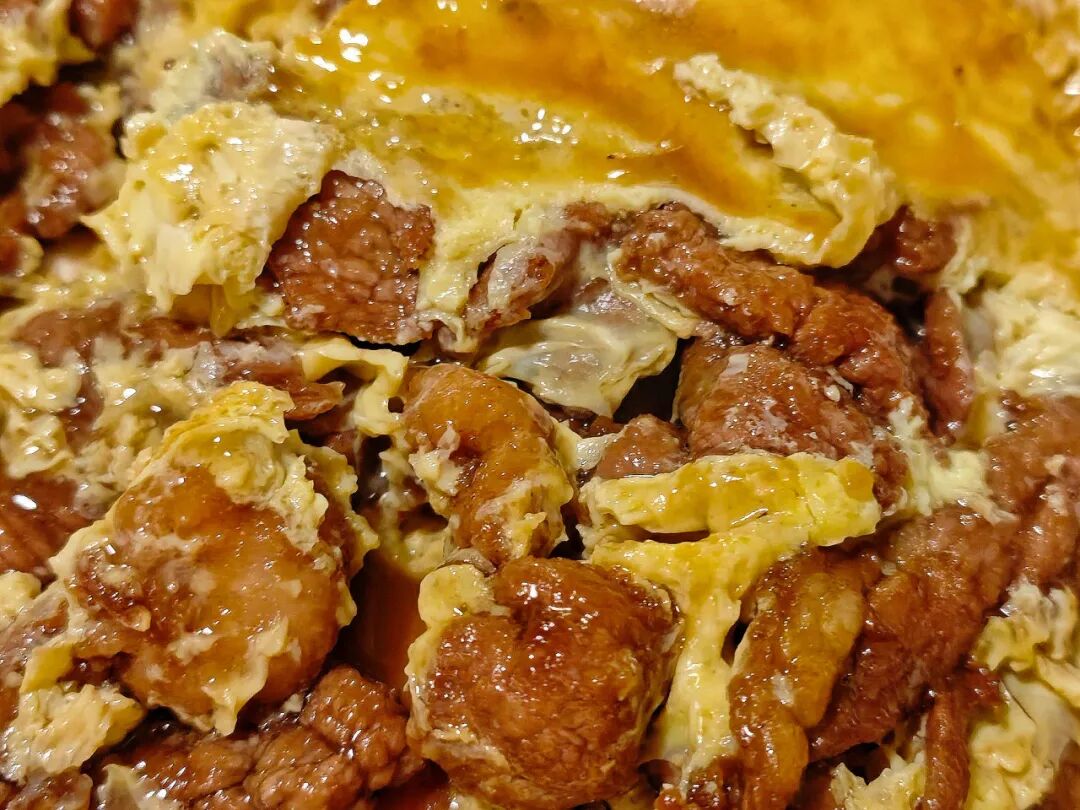
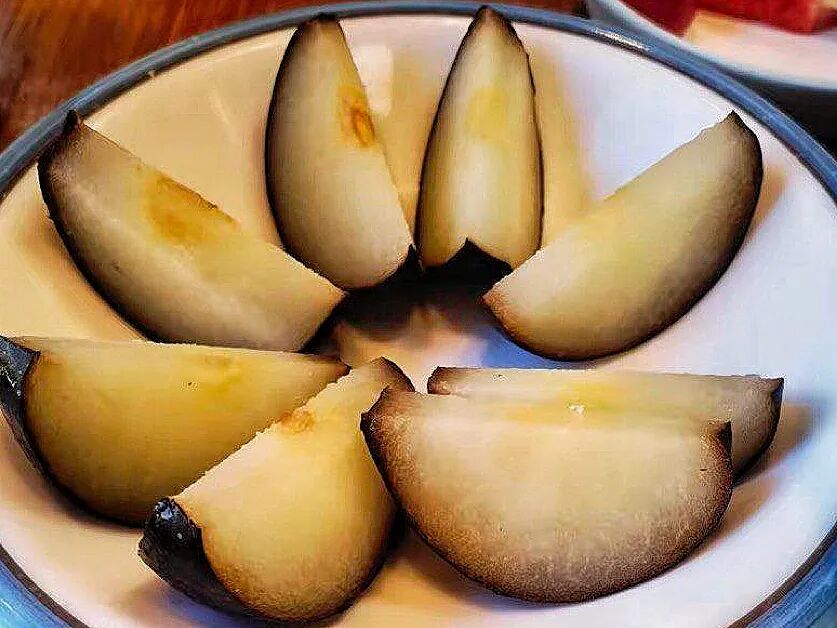
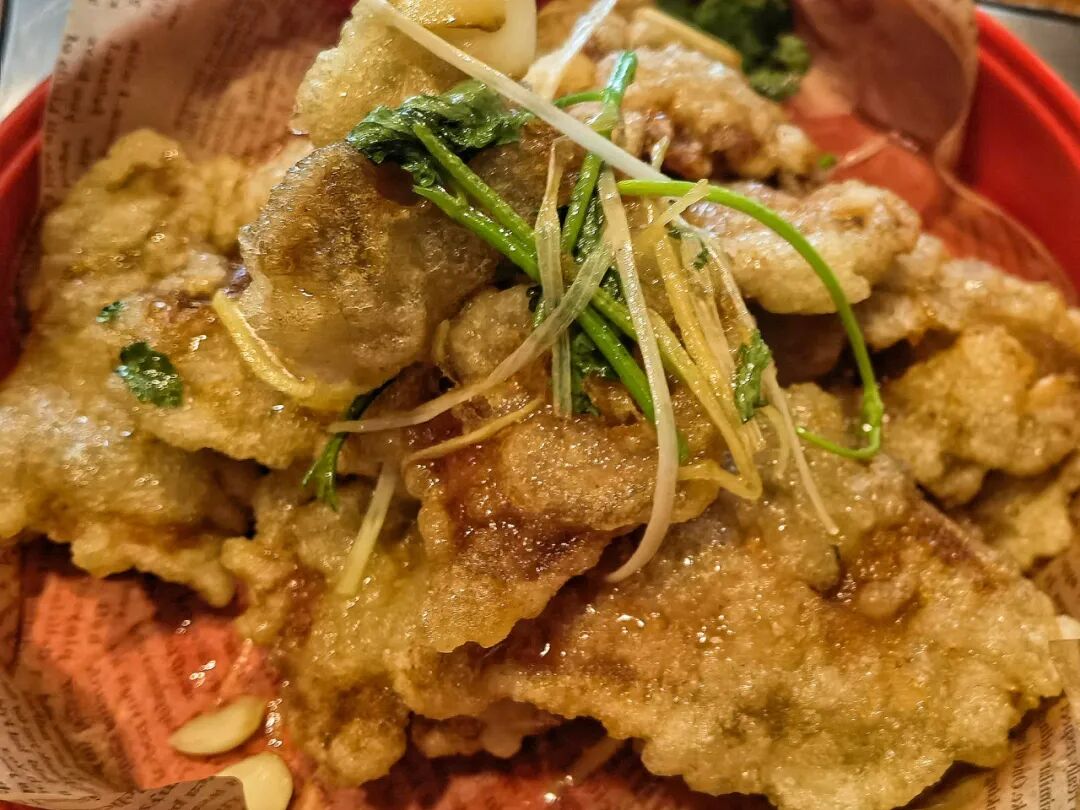
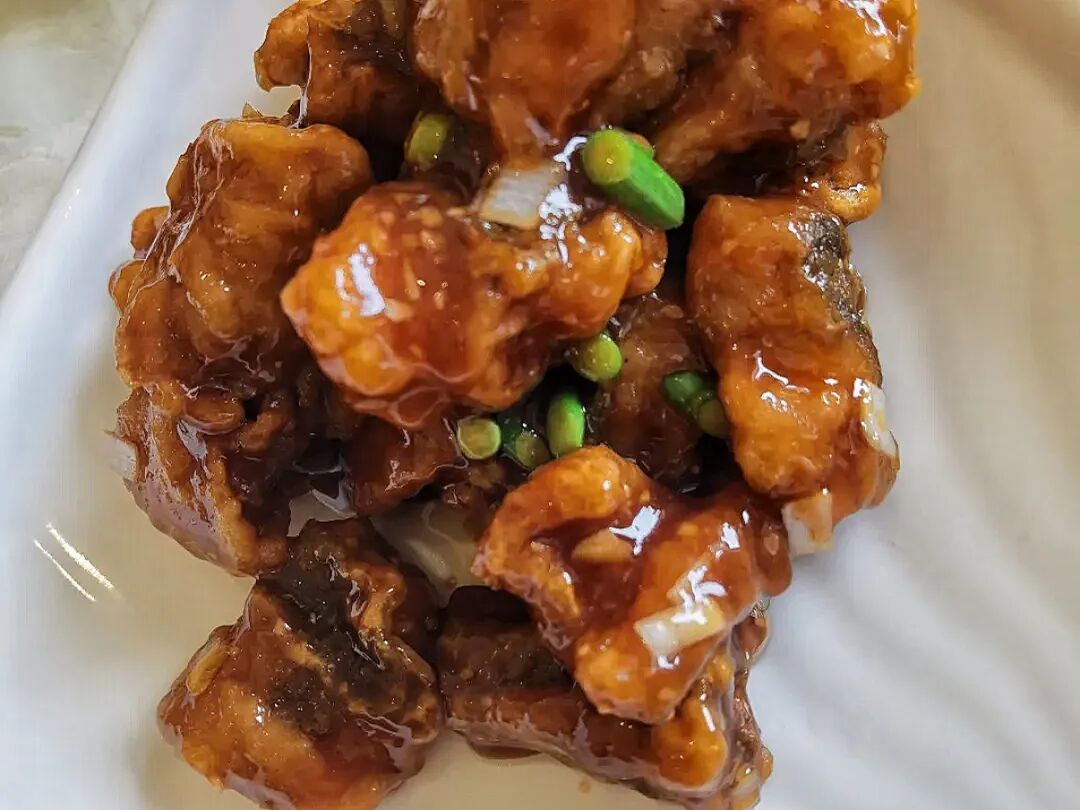
01

SUMMER
Changying Xiaomao Restaurant (Changying Middle Road Branch)
Address: 401 Ground Floor Shop, Wanxiang Xintian, Changying Middle Road, Chaoyang District
Hours: 10:00 AM – 2:00 PM
4:30 PM – 11:00 PM
Average cost: 65 RMB
The street right by the Changying mosque is packed with restaurants one after another. Xiaomao Restaurant is tucked away next to the northwest gate of the Wanxiang Xintian Phase 4 complex. The storefront is small, the interior has just a few tables, the walls look a bit hectic, and they use disposable tableware. Their signature beef and lamb skewers are grilled until they’re sizzling, and the chaobing (stir-fried pancake strips) comes out piping hot with plenty of that essential wok hei (charred, smoky flavor from high-heat cooking). The spicy pork tenderloin is also a win. It’s a great deal at around 60 to 70 RMB per person, but definitely don't come if you're looking for a fancy atmosphere.
02
SUMMER
Xinyuezhai (Douban Hutong Branch)
Address: Next to the mosque, 4 Douban Hutong, Mennei, Dongcheng District
Hours: 5:30 AM – 9:30 PM
Average cost: 30 RMB
Xinyuezhai is in Douban Hutong inside Chaoyangmen, right next to the mosque. In the mornings, their tangyoubing (deep-fried sugar-coated pancakes) are perfectly crispy, and the steamed buns are packed with filling—it's a go-to spot for local office workers. At lunch, they serve jingdong roubing (Beijing-style meat pies), and their lamb stew with noodles is super authentic. The tietuo yangrou (iron-seared lamb) is made in the style of Shandong cuisine; the lamb is tender, the fried egg is savory, and the flavor leans a bit salty. The sweet and sour tenderloin is made with beef, though it can be a little tough, and they go heavy on the vinegar, giving it a sharp, acidic punch. It’s cheap, tastes like home, and has that classic old-school vibe.
03
SUMMER
Hushu Dongbei Halal Tieguodun (Xuanwumen Branch)
Address: 25 Xuanwumen Outer Street, Xicheng District
Hours: 11:00 AM – 11:30 PM
Average cost: 65 RMB
Halal-style Northeastern Chinese food is pretty rare in Beijing. This spot is right on Xuanwumen Outer Street, and their beef guobaorou (sweet and sour crispy beef) is the star—the crust is crispy, the beef inside isn't too thin, and the sweet-and-sour sauce is spot on. The tieguodun (iron pot stew) bubbles away at the table, the dalapi (wide, slippery starch noodles) are refreshing, and the Beile roast meat smells amazing the moment it hits the table. I hear the owner is also from an ethnic minority group; the portions are generous, and it usually costs around 60 RMB per person. On my first visit, they even gave us complimentary frozen pears—icy and refreshing, perfect for cutting through the richness of the meal. It gets busy during meal times, so expect a wait if you show up late.
04
SUMMER
Jinglaishun (Beijing Huaxia Restaurant)
Address: 93 Chezhan Road, Zhongcang Subdistrict, Tongzhou District
Hours: 6:00 AM – 2:00 PM
5:00 PM – 9:30 PM
Average cost: 66 RMB
Jinglaishun on Chezhan Road in Tongzhou has been open for about thirty years. They are open from 5:30 AM to 9:30 PM, serving breakfast items like doufunao (savory tofu pudding) and baozi (steamed buns). The beef stew is melt-in-your-mouth tender, and their egg and chive guotie (pan-fried dumplings) are seasonal and fresh. They also serve classics like scallion-fried lamb and zhajiangmian (noodles with soybean paste). It looks like you can order the meat for the shao-bing jiarou (baked flatbread with meat) by weight, so you can add as much as you want. It costs about 50 to 60 RMB per person. It’s a classic, old-school spot, so don't expect fancy decor.
05
SUMMER
Wanwan Yueliang (Crescent Moon)
Address: 16 Dongsi Liutiao, Dongcheng District
Business Hours: 11:00 AM – 11:00 PM
Average cost: 74 RMB
Wanwan Yueliang is tucked away in the Dongsi Liutiao hutong. It’s not a huge place, but you'll spot it by the green sign with a crescent moon logo. They’ve been around for over twenty years, and the owners and staff are all Uyghur. They serve staples like dapanji (big plate chicken) and shouzhua fan (hand-grabbed rice/pilaf). The Xinjiang-style liangpi (cold skin noodles) are served without sesame paste, making them light and refreshing. Their huangmian kaorou (yellow noodles with grilled meat), ganbian chaomian (dry-fried noodles), and stir-fried rice noodles taste like authentic home cooking—not too salty or greasy. It costs about 80 RMB per person. Just a heads-up: the service can be slow, so don't come if you're in a hurry.
06
SUMMER
Xiaolou Restaurant (Halal)
Address: Hualian Shopping Mall, 12 Nandajie, Tongzhou District
Business Hours: 9:00 AM – 2:00 PM
17:00 PM – 9:00 PM
Average cost: 90 RMB
The sixth spot is Xiaolou Restaurant on Nandajie in Tongzhou. Their signature dish is the braised catfish, which is crispy on the outside and soft on the inside. The culiu muxu (vinegar-glazed stir-fried eggs with wood ear mushrooms and meat) has a delicate tangy flavor and the sauce consistency is perfect for over rice. They also serve beef pies and braised meat strips. The Xiaolou juanguo (a traditional snack made of yams and jujubes) has a great mix of yam and date flavors; you can even buy it to-go and fry it at home. It’s a well-known local institution in Tongzhou, but don't expect much in terms of service or environment.
07
SUMMER
Fenglaishun Restaurant
Address: 31 Nandajie, Tongzhou District
Business Hours: 10:00 AM – 2:30 PM
17:00 PM – 9:30 PM
Average cost: 71 RMB
The seventh place, Fenglaishun, is also on Nandajie in Tongzhou, not far from Xiaolou. Their fried gezhi (crispy mung bean batter sheets) are crunchy, the braised eggplant is soft and flavorful, the ding-ding roubing (meat-filled pastry pouches) are juicy, and the jiaoliu wanzi (crispy-fried meatballs in glaze) are crunchy on the outside and tender on the inside. They don't have as many varieties as Xiaolou, but every dish they make is solid. It costs about 50 RMB per person, which is a great deal. It’s just a standard neighborhood eatery, but it's a great choice if you're looking for affordable, good food.
08
SUMMER
Baizuan Meishi (White Diamond Food)
Address: Luying Street, Chaoyang District
Business Hours: 9:00 AM – 10:30 PM
Average cost: 67 RMB
This place is super famous among our Xinjiang friends in the community; I’ve been going there for years and often bring friends along. The pilaf is legit—the rice grains are shiny and oily, the carrots are soft and sweet, and the lamb is stewed perfectly tender. The lamb shank pilaf is especially great; they put a whole shank on top of the rice. It's a huge portion and incredibly satisfying. That said, it often sells out early, so get there fast if you want some. The stir-fried noodles and mixed noodles are also authentic Xinjiang-style, with chewy noodles and generous portions of sides. It’s a simple, no-frills shop; in the summer, they put tables outside. The staff gets really busy, so you have to be a bit proactive. It costs about 70 RMB per person and the portions are huge. It gets crowded at peak hours, so expect a wait if you come at a busy time.
Summary
These eight restaurants don't rely on flashy marketing—they run on their reputation among the locals. Most of the settings are basic and the service isn't fancy, but the food comes out hot, fresh, and fairly priced. Don't come here if you're looking for fine dining or a quiet atmosphere. But if you’re hungry and just want a good meal, definitely give these a try. You might just find a taste of the past in one of these bites.
Of course, everyone has different taste preferences, so my opinions are just for reference. Please choose your spots wisely!
Halal Food in Harbin: Authentic Beef Shaomai and Hui Muslim Cuisine at Beiqi Halal Dumpling House
Articles • Hasan09 posted the article • 0 comments • 46 views • 2026-11-09 10:44
The cumin heart pipes were actually pretty good—they look super spicy, but they’re not hot at all. The veggie steamed dumplings are just $10 and the beef shaomai are $12, which is an absolute steal. The cold appetizers were well-seasoned and loaded with sesame paste, though they leaned a bit salty. The jiao shao rou tiao (crispy sweet and sour pork strips) wasn't as good as it used to be; the beef was tough and it was chopped into small cubes instead of strips.
Real-life photos view all
The cumin heart pipes were actually pretty good—they look super spicy, but they’re not hot at all. The veggie steamed dumplings are just $10 and the beef shaomai are $12, which is an absolute steal. The cold appetizers were well-seasoned and loaded with sesame paste, though they leaned a bit salty. The jiao shao rou tiao (crispy sweet and sour pork strips) wasn't as good as it used to be; the beef was tough and it was chopped into small cubes instead of strips.
Real-life photos
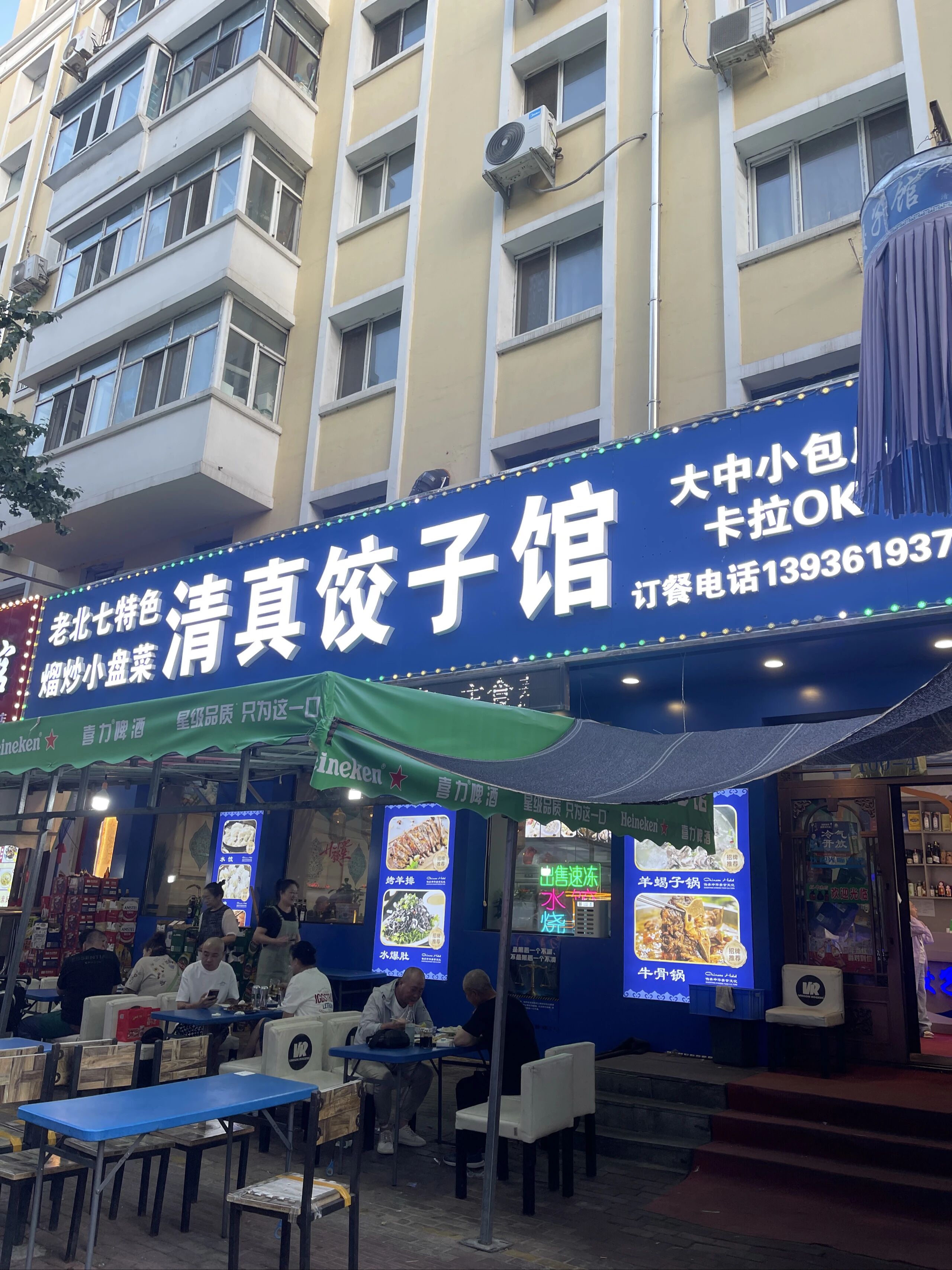
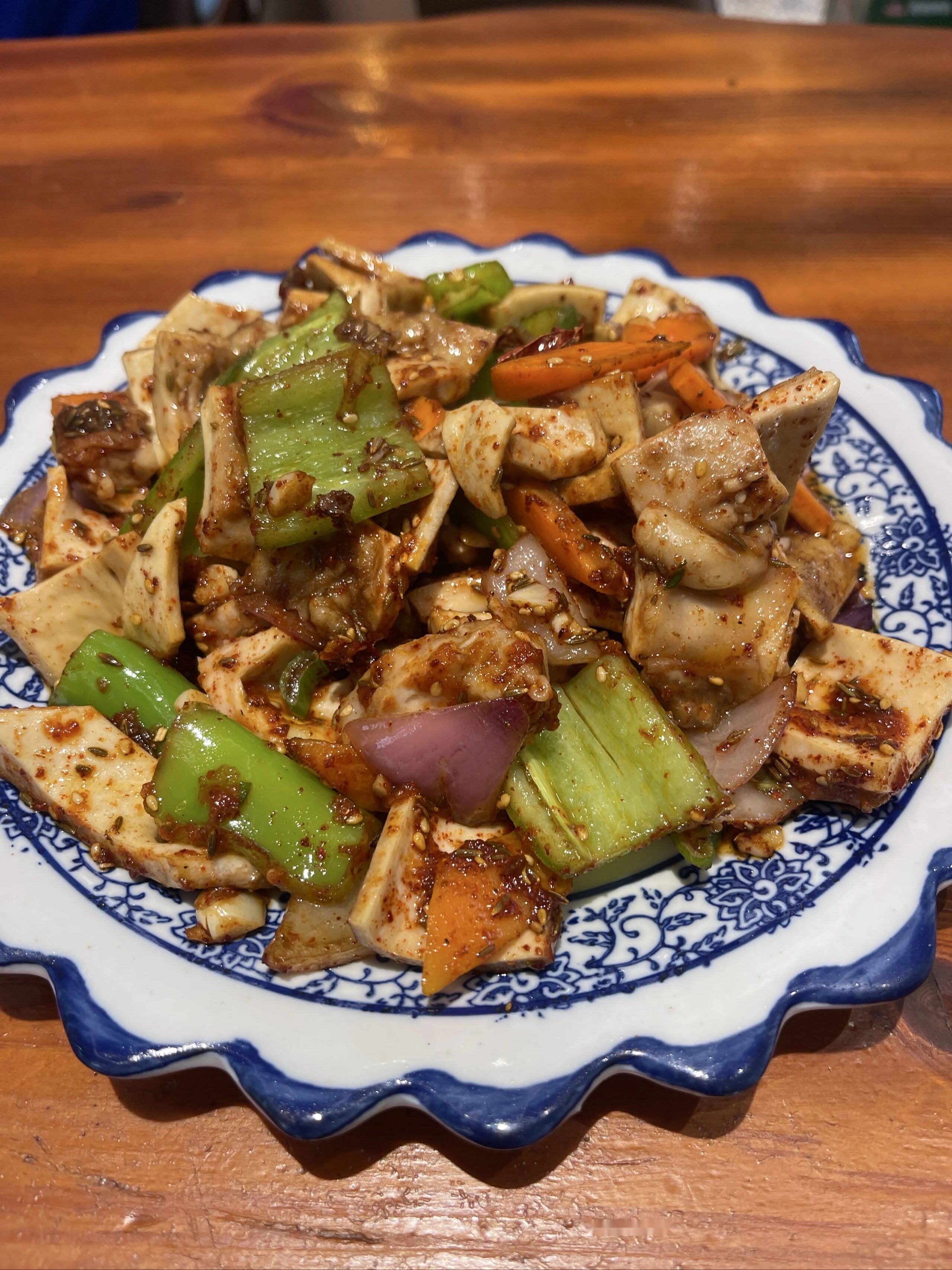

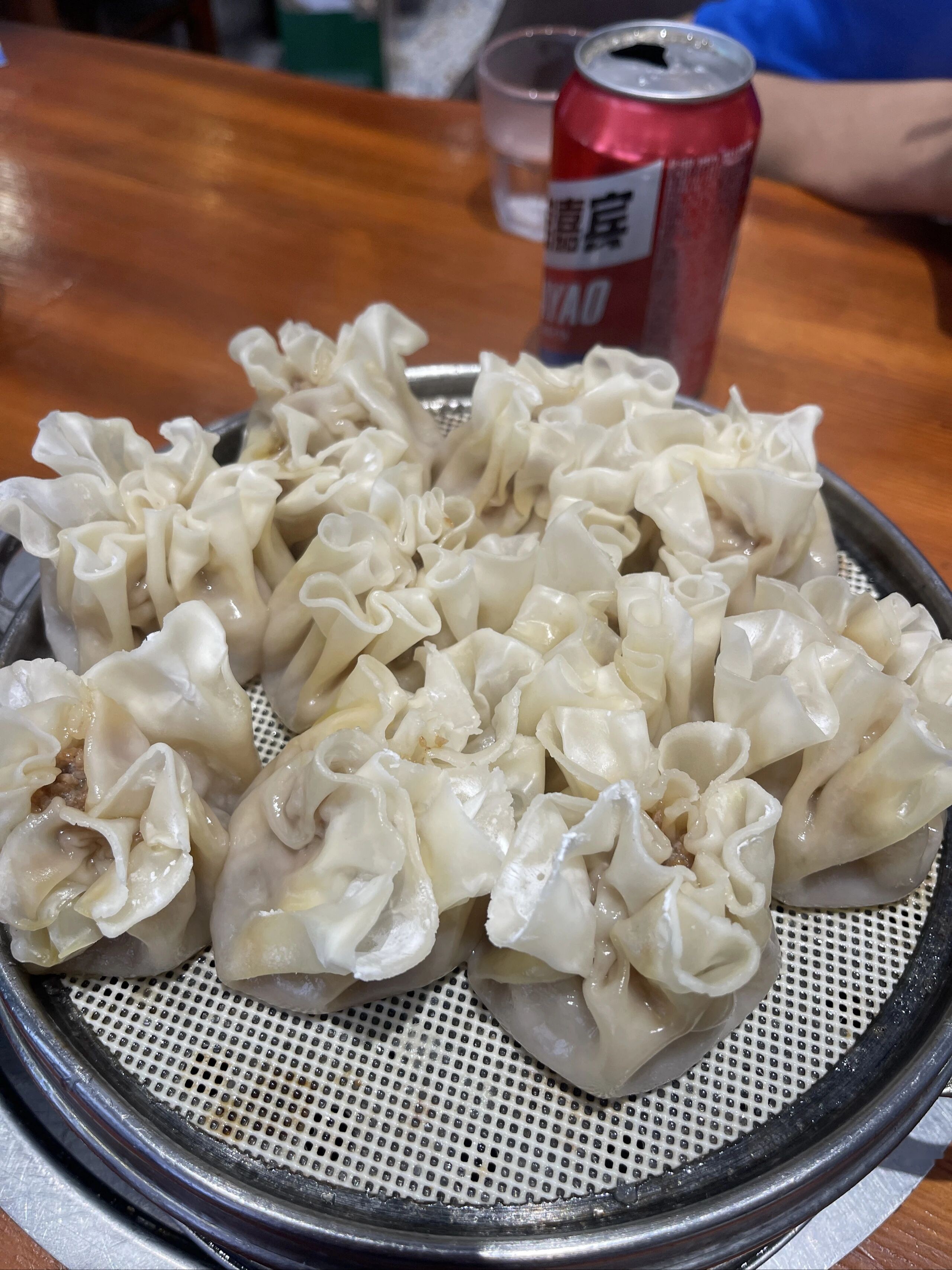
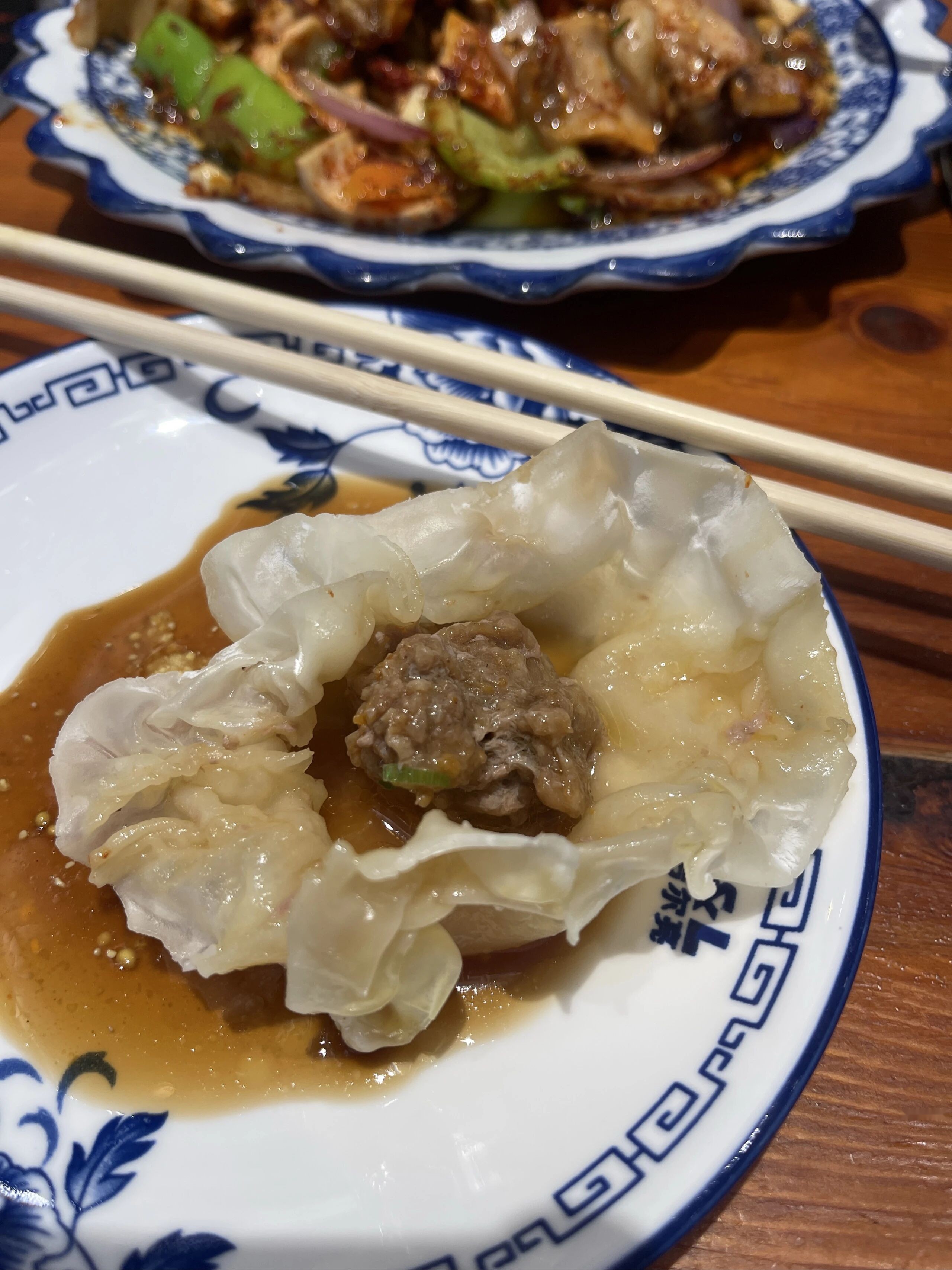
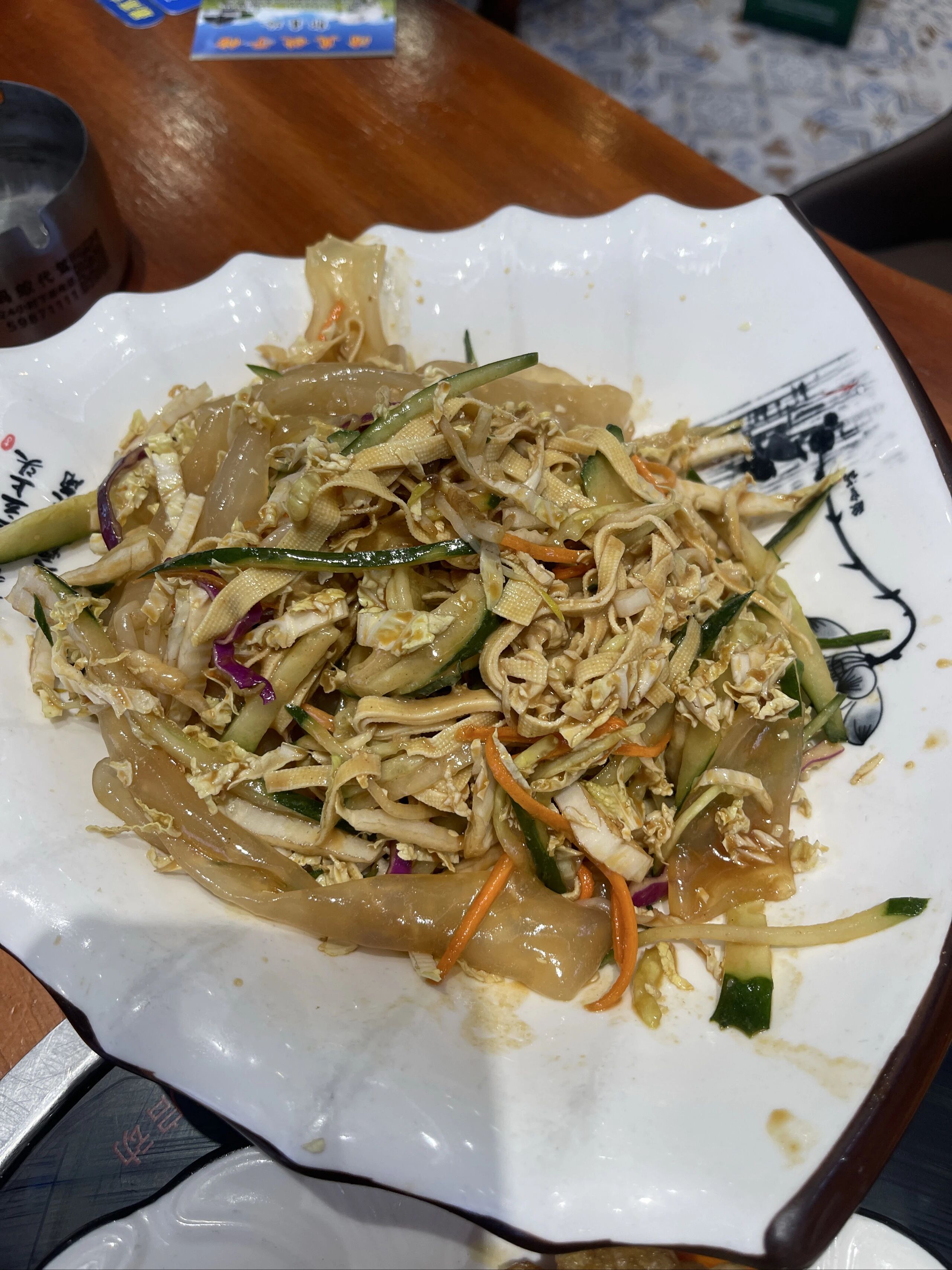

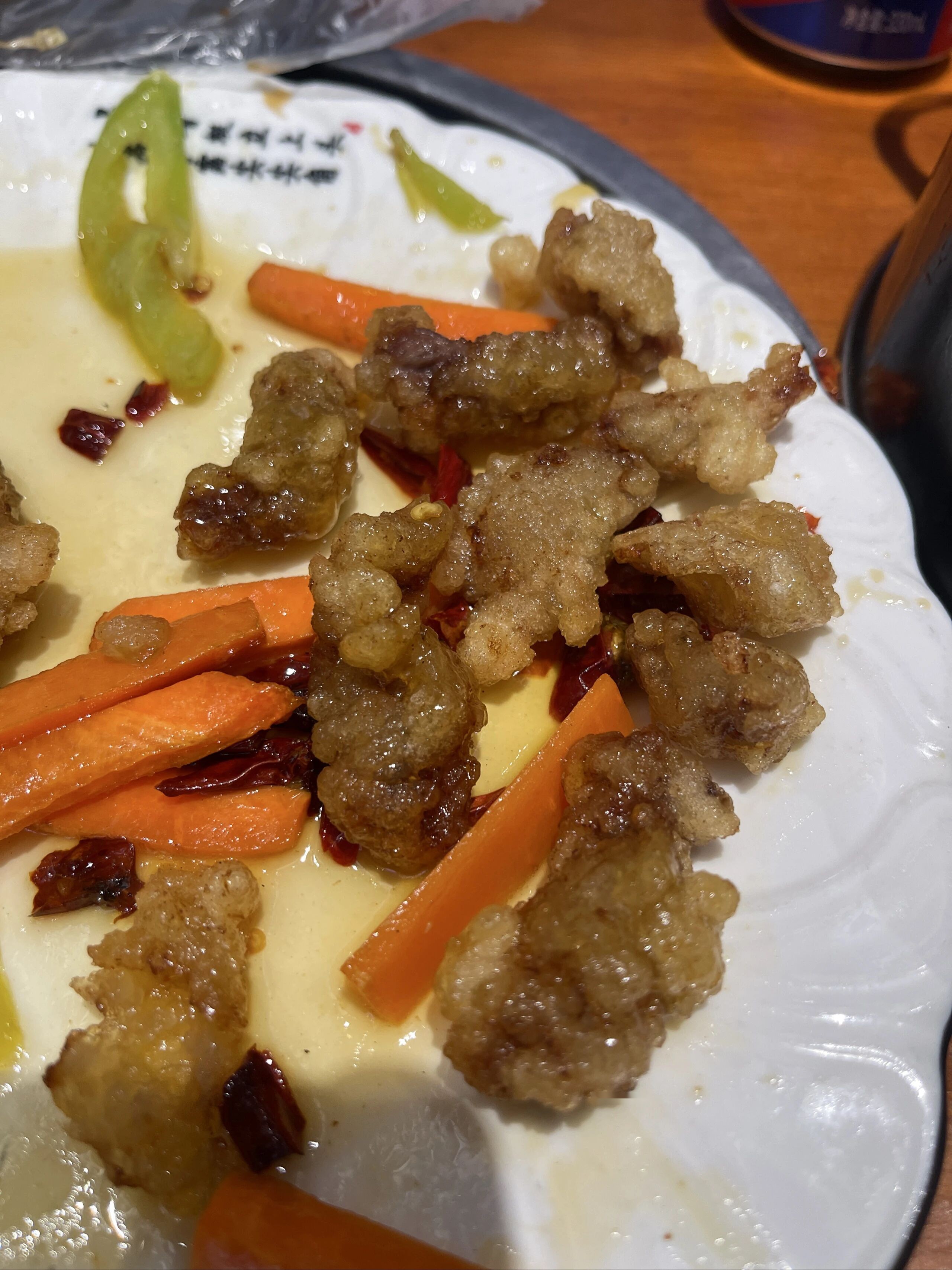
Best Halal Breakfast in Kaifeng: Authentic Siweicai Stew and Traditional Hui Muslim Cuisine
Articles • Hasan09 posted the article • 0 comments • 51 views • 2026-11-09 10:41
It’s been two weeks since I’ve been to Kaifeng, and I haven't been able to stop thinking about that savory, comforting flavor. Taking advantage of a quiet morning, Doudou’s dad and I headed out early to Kaifeng to finally satisfy our craving for that legendary, authentic Siweicai.
When you talk about Kaifeng Siweicai, also called 'four-flavor braised dish,' it’s a one-of-a-kind traditional Halal breakfast found only in Kaifeng. Rooted deep in the Hui Muslim old street near the East Mosque, it’s a morning tradition that’s burned into the souls of locals and is officially recognized as a classic local specialty. A lot of people mistakenly think the 'four flavors' refers to four distinct tastes, but that’s not it—it actually refers to four core ingredients: two meat, two veggie, all combined in a pot of rich, savory lamb broth to create that iconic flavor profile.
I. A century-old neighborhood classic
Siweicai has a long history, tracing back to the 'Eight Great Bowls' tradition from the end of the Qing Dynasty. Back in the day, when the Hui Muslims hosted a banquet, it was standard to have four exquisite bowl dishes: braised beef brisket, beef meatballs, braised gluten, and daylily. Later, street vendors cleverly combined these four ingredients into a single bowl for the local breakfast crowd, using piping hot lamb broth to bring it all together—turning a high-end banquet dish into a staple street-side breakfast.
After a century of evolution, it really settled into its current form near the mosque district during the Republican era. Unlike hot and sour soup, which relies heavily on spices, Siweicai stands out because it doesn't need all that—it relies entirely on the pure, savory depth of the lamb broth. The soup is mellow, flavorful without being 'gamey' or overly pungent, and light enough that both kids and seniors can enjoy it.
II. The four core ingredients, each a classic in its own right
1. Beef Suxiaorou (Meat)
While the old-school method used braised beef brisket, most shops today use handmade beef suxiaorou. They cut fresh beef into strips, coat them in an egg and starch batter, fry them until golden and crispy, and then simmer them in the lamb broth. Once they soak up all that liquid, the meat becomes soft, tender, and fully infused with flavor—it’s super satisfying.
2. Handmade Beef Meatballs (Meat)
These are authentic, 100% Halal beef meatballs. They use the perfect fat-to-lean ratio, chopped and formed entirely by hand with zero pork additives. With just a touch of ginger to remove any gaminess and enhance the flavor, they’re simmered until tender. The texture is firm yet juicy, and you can really taste the pure essence of the beef.
3. Braised Gluten (Vegetarian)
This is arguably the soul of the dish! The gluten is fried until it’s light and airy, and then it’s simmered in lamb broth for a long time—it’s a total flavor sponge. It’s got a great chewy texture, and when you bite into it, it just explodes with that rich, savory broth. It’s the favorite part for many foodies.
4. Dried Daylily (Vegetarian)
High-quality dried daylilies are soaked and blanched to remove any bitterness before being simmered in the broth. They stay tender and firm, providing a natural, mild sweetness that perfectly balances the richness of the meat. It cuts through the fat and adds a refreshing layer to the overall flavor of the soup.
III. The lamb broth: the soul of the entire bowl
Anyone who knows their stuff knows that the secret to Siweicai is all in that pot of lamb broth.
They use goat bones and fresh lamb from eastern Henan, boiling them on high heat to skim off any impurities, then simmering them low and slow for three to four hours until the broth is milky white, rich, and glistening. They only use a bit of scallion and ginger for seasoning, avoiding heavy spices to keep the natural, sweet flavor of the lamb. It’s not gamey or heavy—it’s just warm, comforting, and great for your stomach.
The serving process is a whole ritual: they line up the four ingredients in a bowl, pour over the boiling hot broth, top it with a handful of cilantro, and add salt or chili oil to your liking. It’s simple, but absolutely packed with flavor.
The official 'pro' way to eat Siweicai is definitely with a freshly baked, thick guokui. With its charred, crispy crust and dense center, you tear it into pieces and soak it in the savory broth. The crust absorbs all that lamb goodness while the inside stays chewy—it's widely considered by locals to be the ultimate pairing.
I’ve been to Kaifeng a few times, but I’d never actually tried Siweicai. Maybe it’s because I usually prefer lighter meals and haven’t been super into beef-heavy dishes. But the more I dive into the local vibe of Kaifeng, the more I realize this local secret—which every visitor raves about—is worth making a special trip for.
After checking out tons of user reviews and guides, Doudou’s dad and I settled on the Geji Lamb Soup House on Huaxia Avenue.
We arrived bright and early, and just as we found a spot to park, Doudou’s dad stopped me: 'Don't get out, the place is closed.'
I was totally confused and couldn't believe we’d struck out so early, so I asked, 'How? The guide said they were open!'
Looking in the direction he pointed, the doors were shuttered. Not wanting to give up, I walked across the street to check. There was a note on the door: 'Closed on the 7th and 8th due to family matters.'
This shop has a decent reputation among locals, though the only drawback is that the hygiene could be better. Being thwarted like that was a bit of a letdown, but food trips are never without their surprises.
After some quick thinking, we decided to head straight to the birthplace of Kaifeng Siweicai—the Old Temple Street. There are tons of old-school shops here that are guaranteed to be authentic. We eventually hit up a super popular spot: the Yang Guoqiang Lamb Soup House.
Since we arrived early, there wasn't a line yet, so it was nice and peaceful. I immediately ran to the little stall across the street and grabbed a fresh guokui—they had both five-spice and plain. The 'plain' here isn't sugary; it’s just the pure, earthy, salt-free flavor of the wheat.
This is a style of guokui we don’t get back home in our small town. The dough was steaming hot right out of the oven, with a crispy golden crust and a thick, fluffy, layered inside. One bite, and the pure wheat aroma mixed with a faint char—it just gets better the more you chew. As someone who loves flour-based foods, I was hooked immediately; I couldn't stop eating it.
Doudou’s dad skillfully tore the guokui into chunks and dunked them into the piping hot lamb broth. The crispy bread soaked up all the rich lamb flavor, blending the wheat and meat perfectly. It tasted heavenly!
Seeing me stuffing my face with the bread, Doudou’s dad laughed and reminded me: 'Drink more soup, eat less bread! Don't get full on one piece of guokui, or you won't have room to try the other local delicacies later!'
A steaming bowl of Siweicai, with tender beef meatballs, flavorful suxiaorou, juice-filled braised gluten, and refreshing daylily—all four ingredients working together, soaking in that milky lamb broth. It’s rich and savory without being greasy, with layers of flavor in every spoonful. Every bite is authentic Kaifeng life, and it’s truly one of the best things you can eat.
It was another weekend morning where we left stuffed, but there's more to come—what other Kaifeng specialties did we track down? Stay tuned, I'll be updating tomorrow! view all
It’s been two weeks since I’ve been to Kaifeng, and I haven't been able to stop thinking about that savory, comforting flavor. Taking advantage of a quiet morning, Doudou’s dad and I headed out early to Kaifeng to finally satisfy our craving for that legendary, authentic Siweicai.

When you talk about Kaifeng Siweicai, also called 'four-flavor braised dish,' it’s a one-of-a-kind traditional Halal breakfast found only in Kaifeng. Rooted deep in the Hui Muslim old street near the East Mosque, it’s a morning tradition that’s burned into the souls of locals and is officially recognized as a classic local specialty. A lot of people mistakenly think the 'four flavors' refers to four distinct tastes, but that’s not it—it actually refers to four core ingredients: two meat, two veggie, all combined in a pot of rich, savory lamb broth to create that iconic flavor profile.
I. A century-old neighborhood classic
Siweicai has a long history, tracing back to the 'Eight Great Bowls' tradition from the end of the Qing Dynasty. Back in the day, when the Hui Muslims hosted a banquet, it was standard to have four exquisite bowl dishes: braised beef brisket, beef meatballs, braised gluten, and daylily. Later, street vendors cleverly combined these four ingredients into a single bowl for the local breakfast crowd, using piping hot lamb broth to bring it all together—turning a high-end banquet dish into a staple street-side breakfast.
After a century of evolution, it really settled into its current form near the mosque district during the Republican era. Unlike hot and sour soup, which relies heavily on spices, Siweicai stands out because it doesn't need all that—it relies entirely on the pure, savory depth of the lamb broth. The soup is mellow, flavorful without being 'gamey' or overly pungent, and light enough that both kids and seniors can enjoy it.
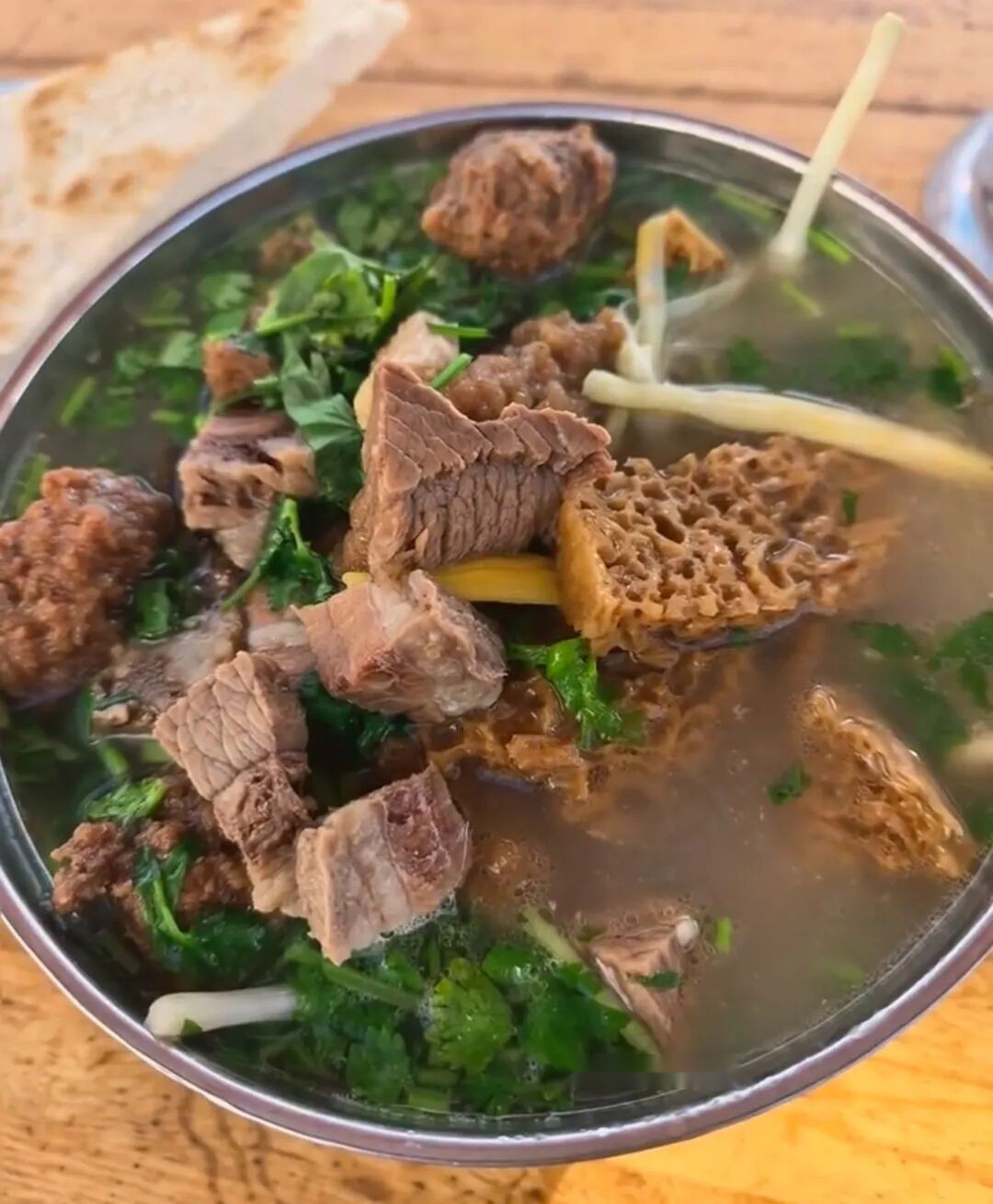
II. The four core ingredients, each a classic in its own right
1. Beef Suxiaorou (Meat)
While the old-school method used braised beef brisket, most shops today use handmade beef suxiaorou. They cut fresh beef into strips, coat them in an egg and starch batter, fry them until golden and crispy, and then simmer them in the lamb broth. Once they soak up all that liquid, the meat becomes soft, tender, and fully infused with flavor—it’s super satisfying.
2. Handmade Beef Meatballs (Meat)
These are authentic, 100% Halal beef meatballs. They use the perfect fat-to-lean ratio, chopped and formed entirely by hand with zero pork additives. With just a touch of ginger to remove any gaminess and enhance the flavor, they’re simmered until tender. The texture is firm yet juicy, and you can really taste the pure essence of the beef.
3. Braised Gluten (Vegetarian)
This is arguably the soul of the dish! The gluten is fried until it’s light and airy, and then it’s simmered in lamb broth for a long time—it’s a total flavor sponge. It’s got a great chewy texture, and when you bite into it, it just explodes with that rich, savory broth. It’s the favorite part for many foodies.
4. Dried Daylily (Vegetarian)
High-quality dried daylilies are soaked and blanched to remove any bitterness before being simmered in the broth. They stay tender and firm, providing a natural, mild sweetness that perfectly balances the richness of the meat. It cuts through the fat and adds a refreshing layer to the overall flavor of the soup.

III. The lamb broth: the soul of the entire bowl
Anyone who knows their stuff knows that the secret to Siweicai is all in that pot of lamb broth.
They use goat bones and fresh lamb from eastern Henan, boiling them on high heat to skim off any impurities, then simmering them low and slow for three to four hours until the broth is milky white, rich, and glistening. They only use a bit of scallion and ginger for seasoning, avoiding heavy spices to keep the natural, sweet flavor of the lamb. It’s not gamey or heavy—it’s just warm, comforting, and great for your stomach.
The serving process is a whole ritual: they line up the four ingredients in a bowl, pour over the boiling hot broth, top it with a handful of cilantro, and add salt or chili oil to your liking. It’s simple, but absolutely packed with flavor.
The official 'pro' way to eat Siweicai is definitely with a freshly baked, thick guokui. With its charred, crispy crust and dense center, you tear it into pieces and soak it in the savory broth. The crust absorbs all that lamb goodness while the inside stays chewy—it's widely considered by locals to be the ultimate pairing.

I’ve been to Kaifeng a few times, but I’d never actually tried Siweicai. Maybe it’s because I usually prefer lighter meals and haven’t been super into beef-heavy dishes. But the more I dive into the local vibe of Kaifeng, the more I realize this local secret—which every visitor raves about—is worth making a special trip for.
After checking out tons of user reviews and guides, Doudou’s dad and I settled on the Geji Lamb Soup House on Huaxia Avenue.
We arrived bright and early, and just as we found a spot to park, Doudou’s dad stopped me: 'Don't get out, the place is closed.'
I was totally confused and couldn't believe we’d struck out so early, so I asked, 'How? The guide said they were open!'
Looking in the direction he pointed, the doors were shuttered. Not wanting to give up, I walked across the street to check. There was a note on the door: 'Closed on the 7th and 8th due to family matters.'
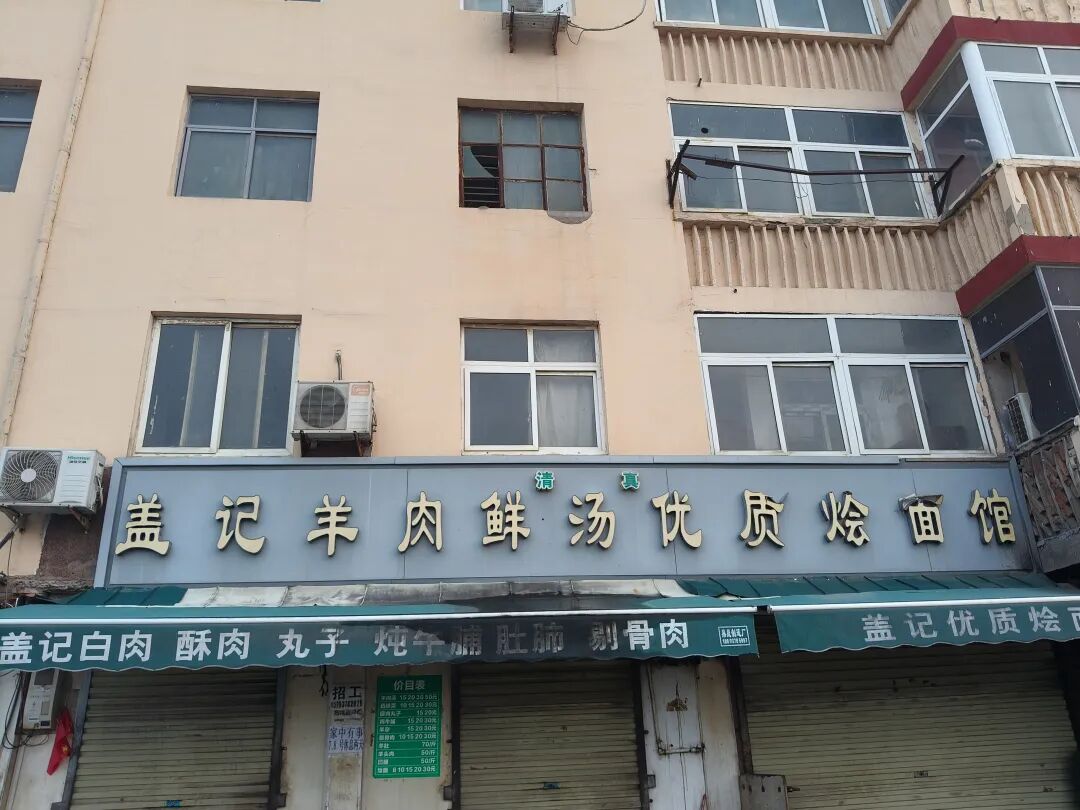
This shop has a decent reputation among locals, though the only drawback is that the hygiene could be better. Being thwarted like that was a bit of a letdown, but food trips are never without their surprises.
After some quick thinking, we decided to head straight to the birthplace of Kaifeng Siweicai—the Old Temple Street. There are tons of old-school shops here that are guaranteed to be authentic. We eventually hit up a super popular spot: the Yang Guoqiang Lamb Soup House.
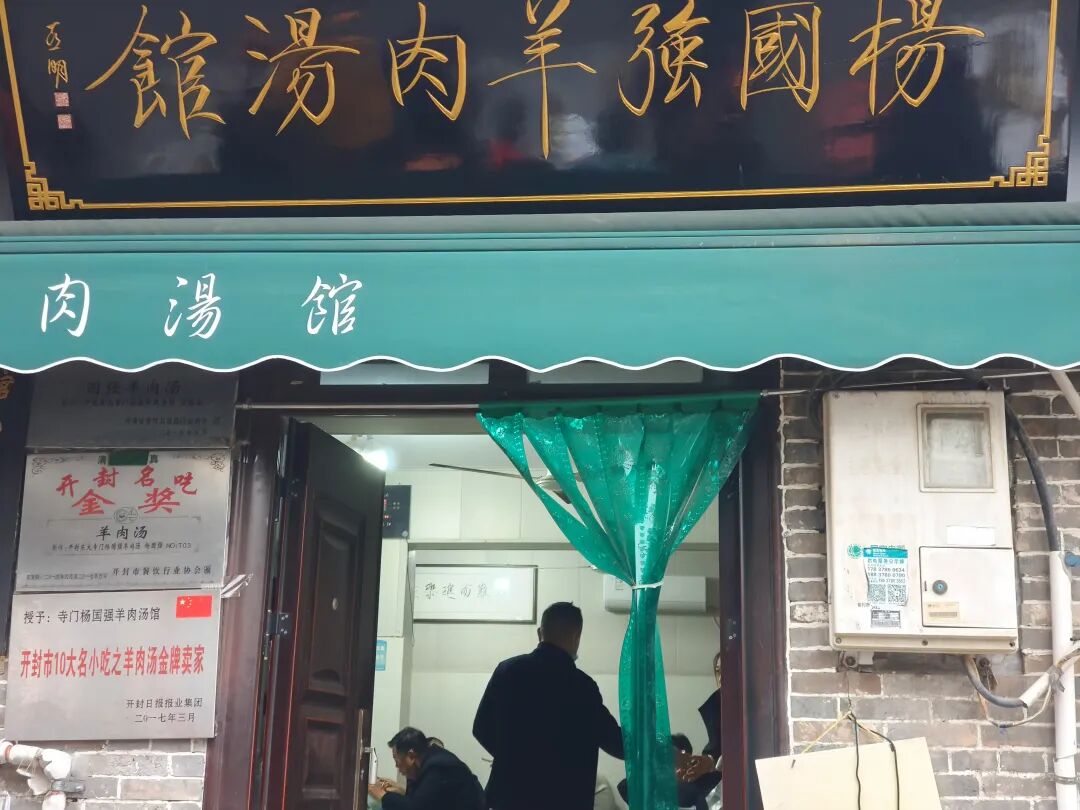
Since we arrived early, there wasn't a line yet, so it was nice and peaceful. I immediately ran to the little stall across the street and grabbed a fresh guokui—they had both five-spice and plain. The 'plain' here isn't sugary; it’s just the pure, earthy, salt-free flavor of the wheat.
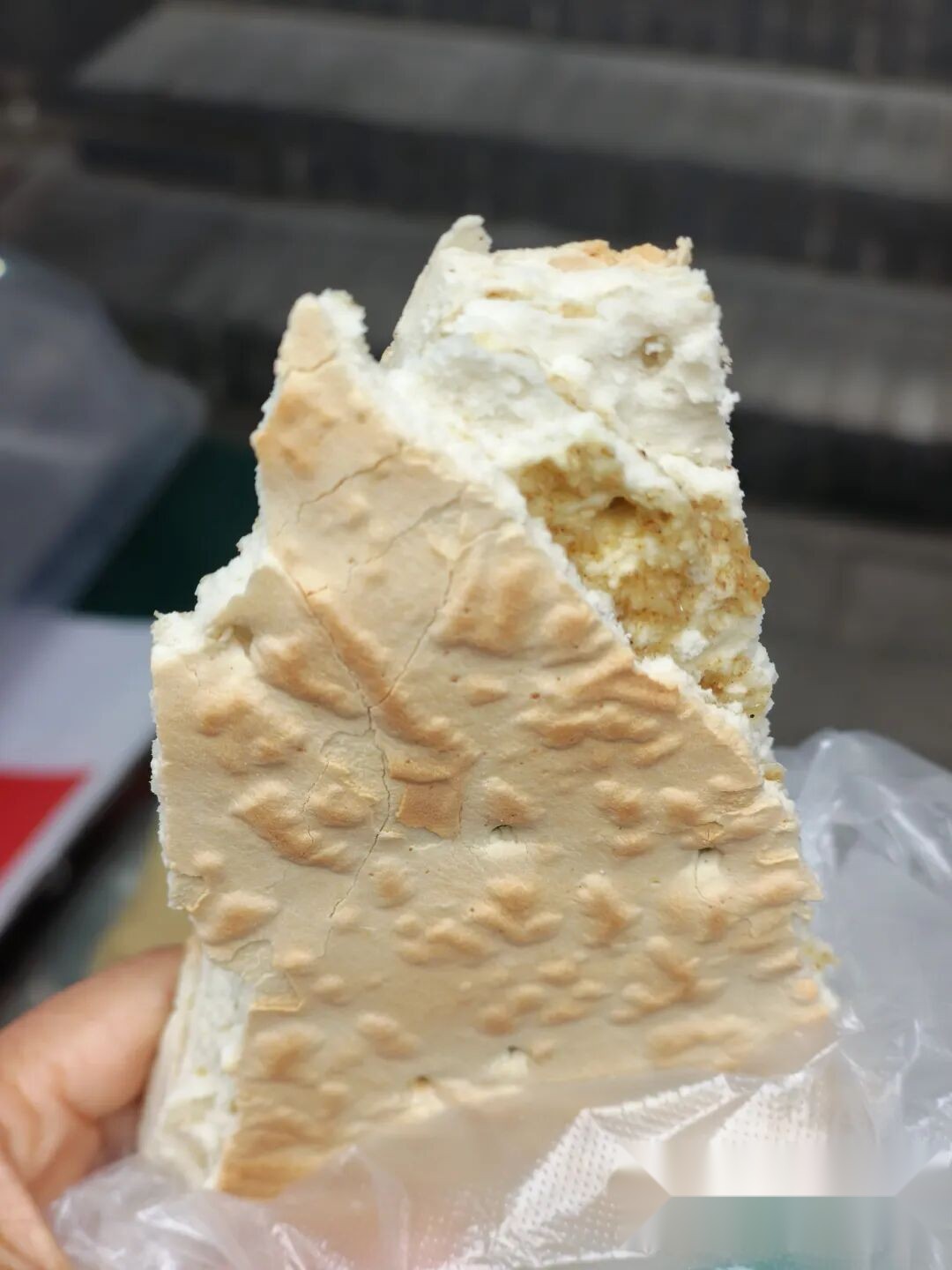

This is a style of guokui we don’t get back home in our small town. The dough was steaming hot right out of the oven, with a crispy golden crust and a thick, fluffy, layered inside. One bite, and the pure wheat aroma mixed with a faint char—it just gets better the more you chew. As someone who loves flour-based foods, I was hooked immediately; I couldn't stop eating it.

Doudou’s dad skillfully tore the guokui into chunks and dunked them into the piping hot lamb broth. The crispy bread soaked up all the rich lamb flavor, blending the wheat and meat perfectly. It tasted heavenly!
Seeing me stuffing my face with the bread, Doudou’s dad laughed and reminded me: 'Drink more soup, eat less bread! Don't get full on one piece of guokui, or you won't have room to try the other local delicacies later!'
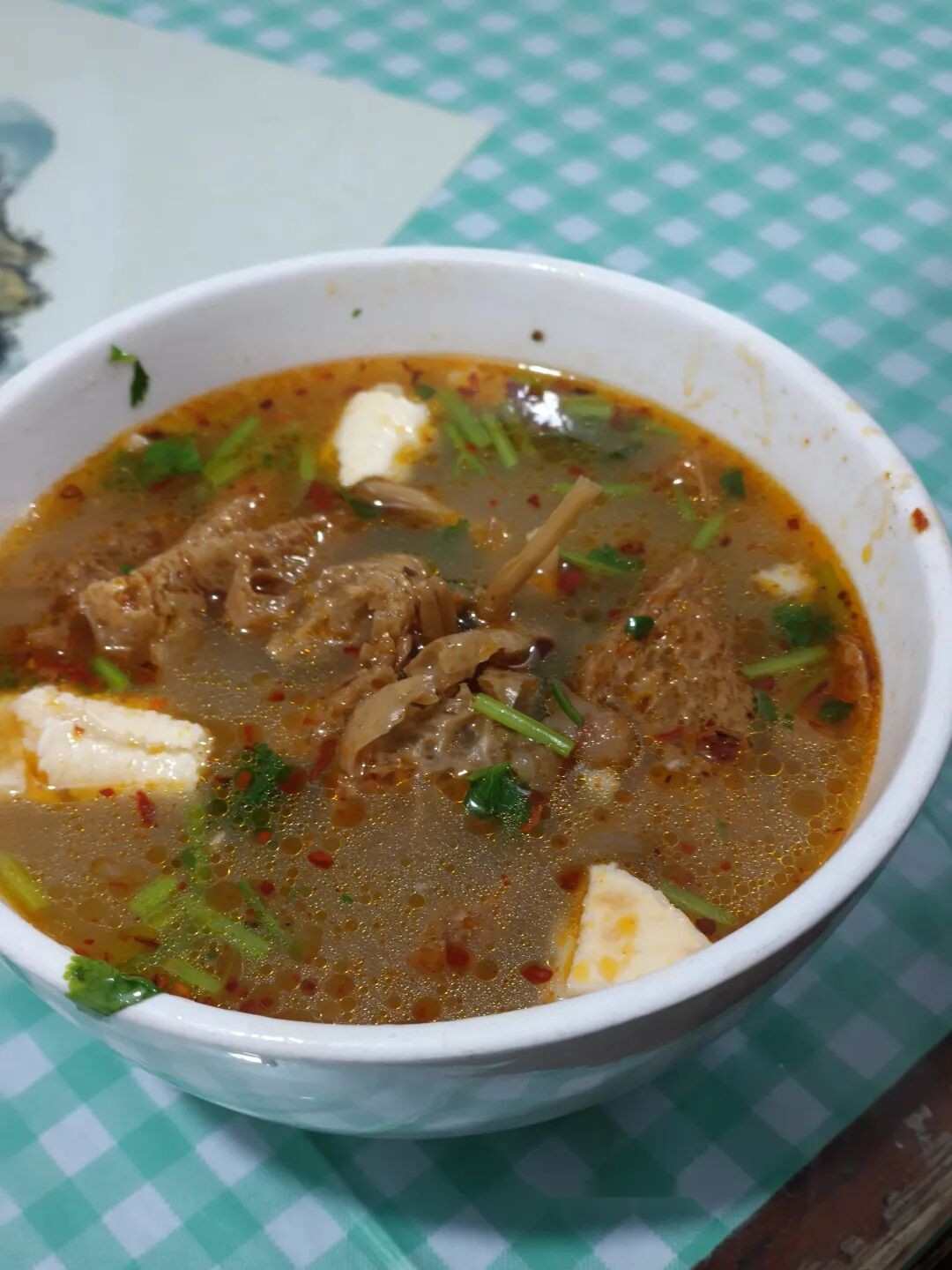
A steaming bowl of Siweicai, with tender beef meatballs, flavorful suxiaorou, juice-filled braised gluten, and refreshing daylily—all four ingredients working together, soaking in that milky lamb broth. It’s rich and savory without being greasy, with layers of flavor in every spoonful. Every bite is authentic Kaifeng life, and it’s truly one of the best things you can eat.
It was another weekend morning where we left stuffed, but there's more to come—what other Kaifeng specialties did we track down? Stay tuned, I'll be updating tomorrow!
Best Halal Food in Shanghai: Affordable Hui Muslim Meals and Free Beef Broth at the State-Owned Canteen
Articles • Hasan09 posted the article • 0 comments • 94 views • 2026-10-30 01:21
A deep dive into the budget-friendly Halal dining scene run by a Shanghai state-owned enterprise: here is the lowdown on the Shanghai Halal Food Company’s public canteen and their signature free beef broth.
I’ve put together 17 on-site photos documenting the Halal dining outlets and snack shops managed by the Shanghai Halal Food Company. This includes a look at their affordable Halal beef and lamb dishes, freshly made dim sum, and that rich, savory beef broth they serve up for free.
The beef broth is totally free, by the way!
............
Check out the snack shop! view all
A deep dive into the budget-friendly Halal dining scene run by a Shanghai state-owned enterprise: here is the lowdown on the Shanghai Halal Food Company’s public canteen and their signature free beef broth.
I’ve put together 17 on-site photos documenting the Halal dining outlets and snack shops managed by the Shanghai Halal Food Company. This includes a look at their affordable Halal beef and lamb dishes, freshly made dim sum, and that rich, savory beef broth they serve up for free.
The beef broth is totally free, by the way!
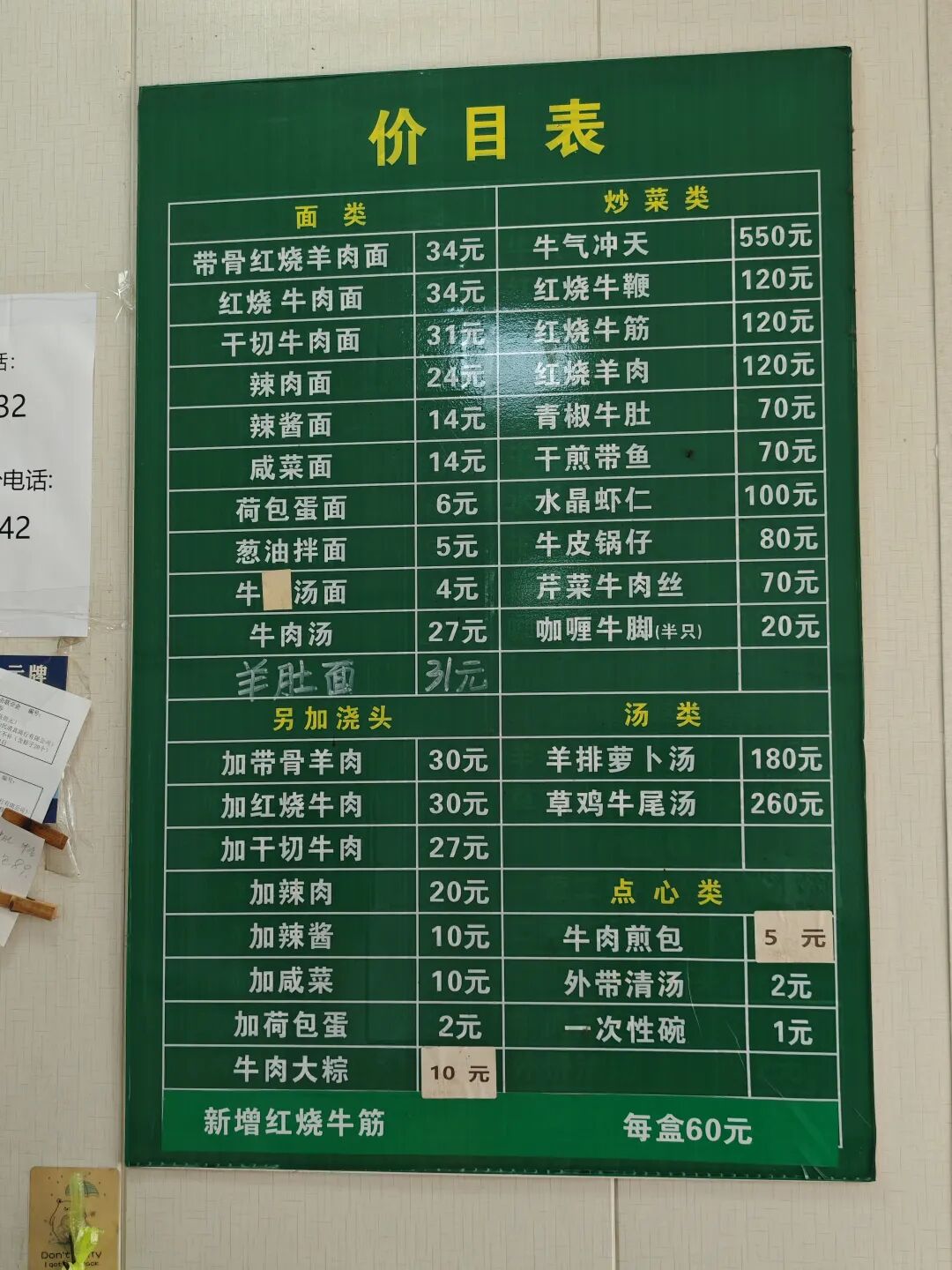
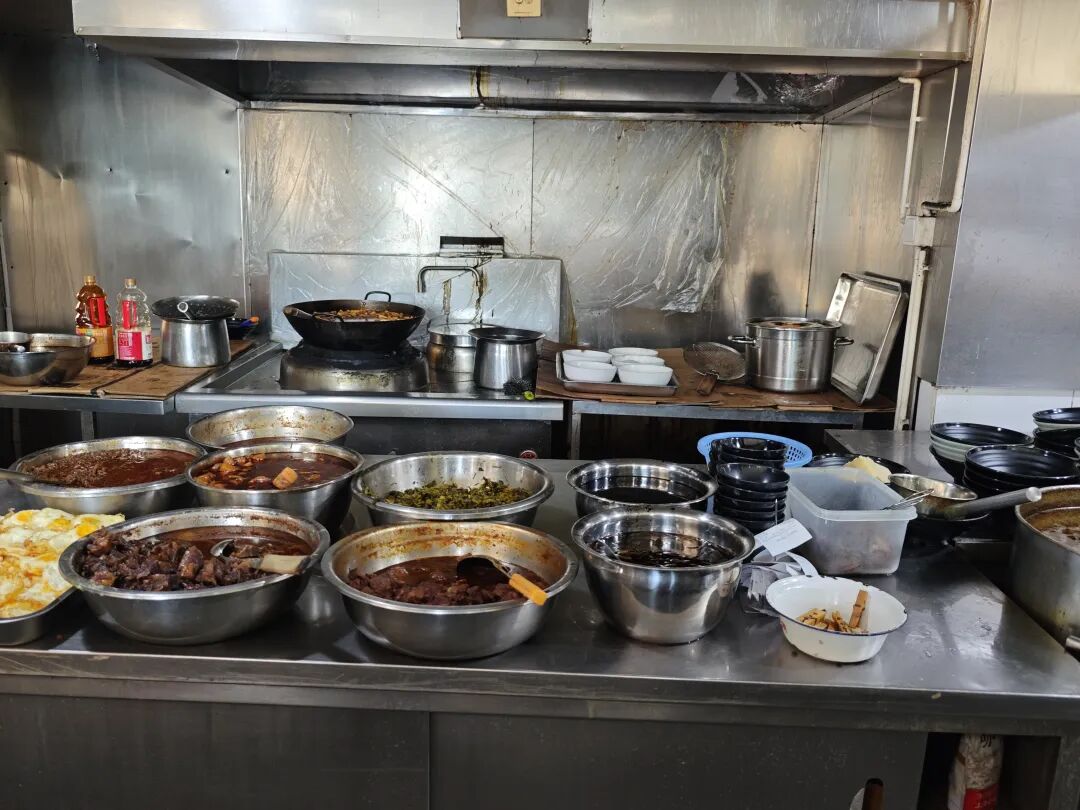
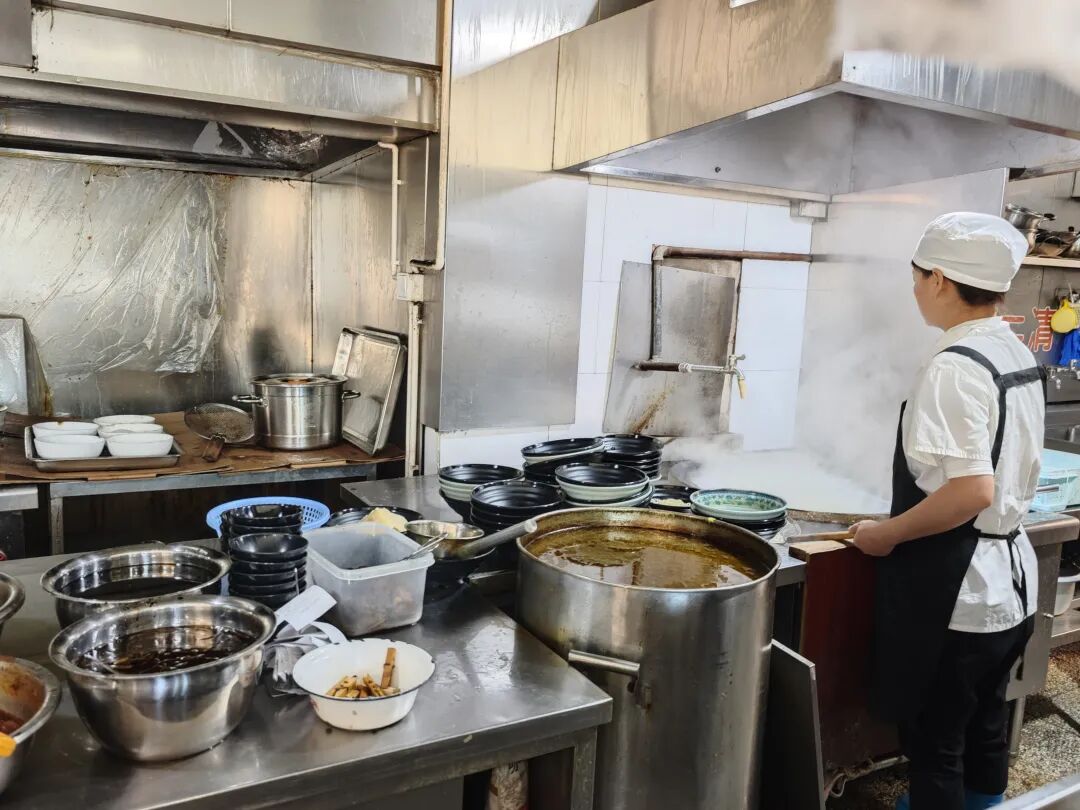
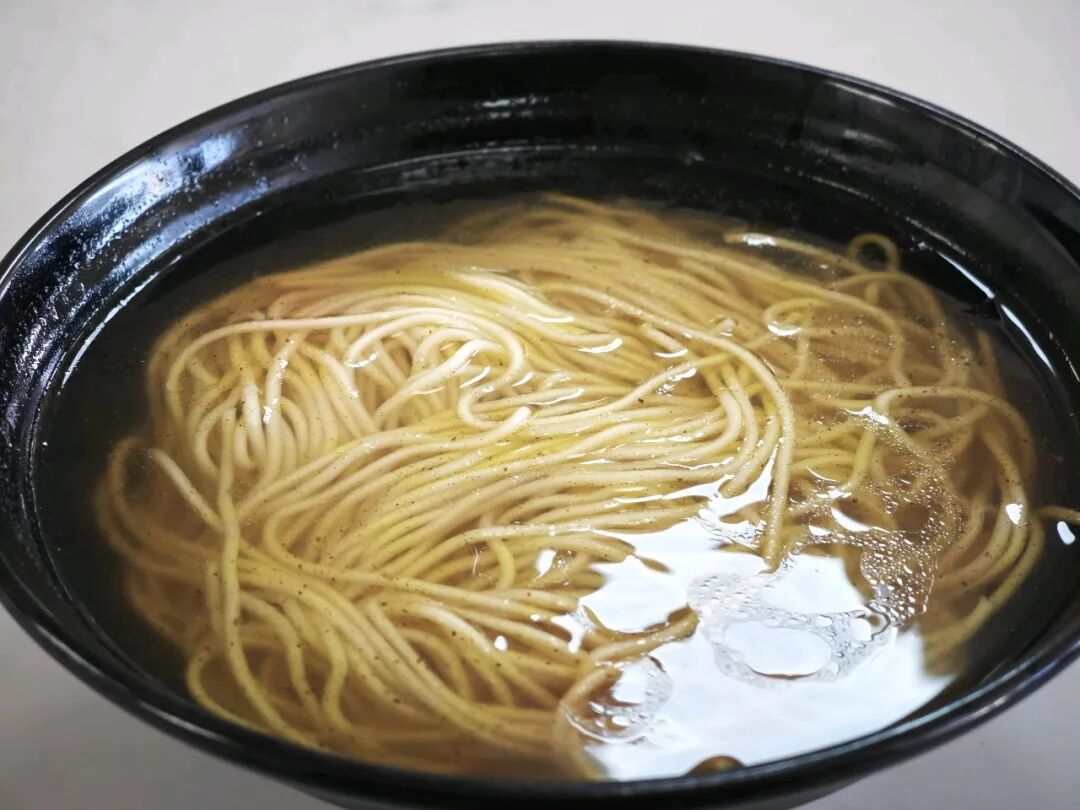
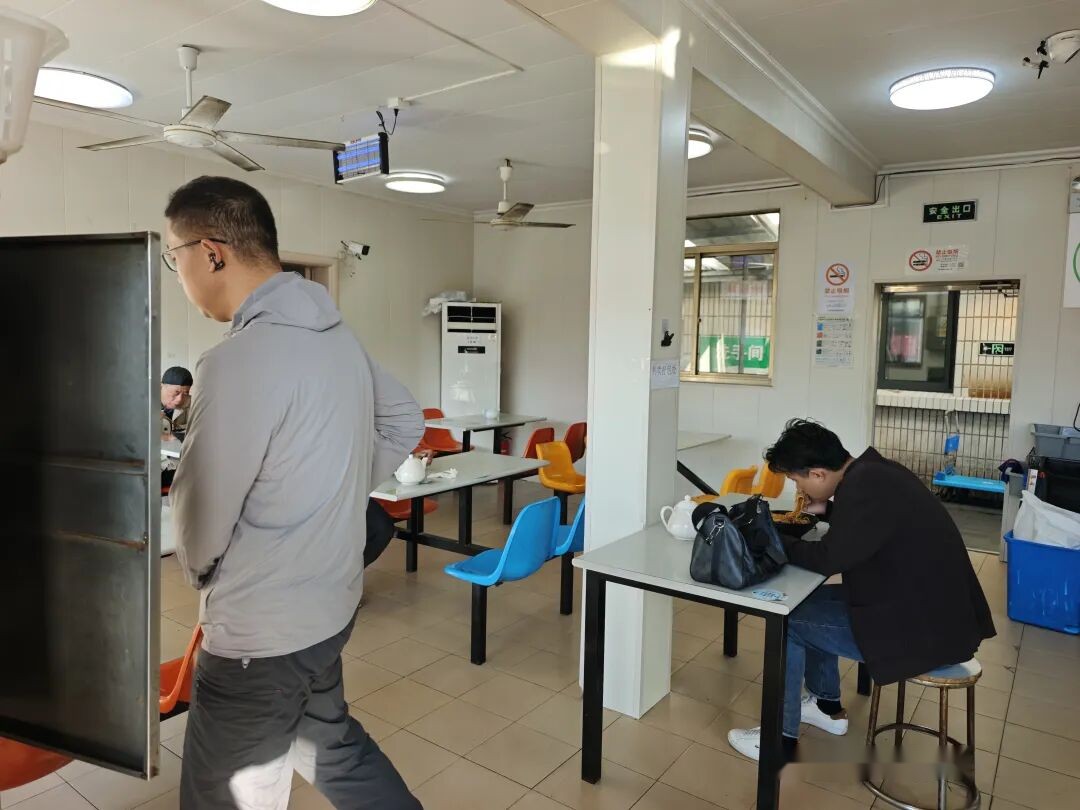
............
Check out the snack shop!
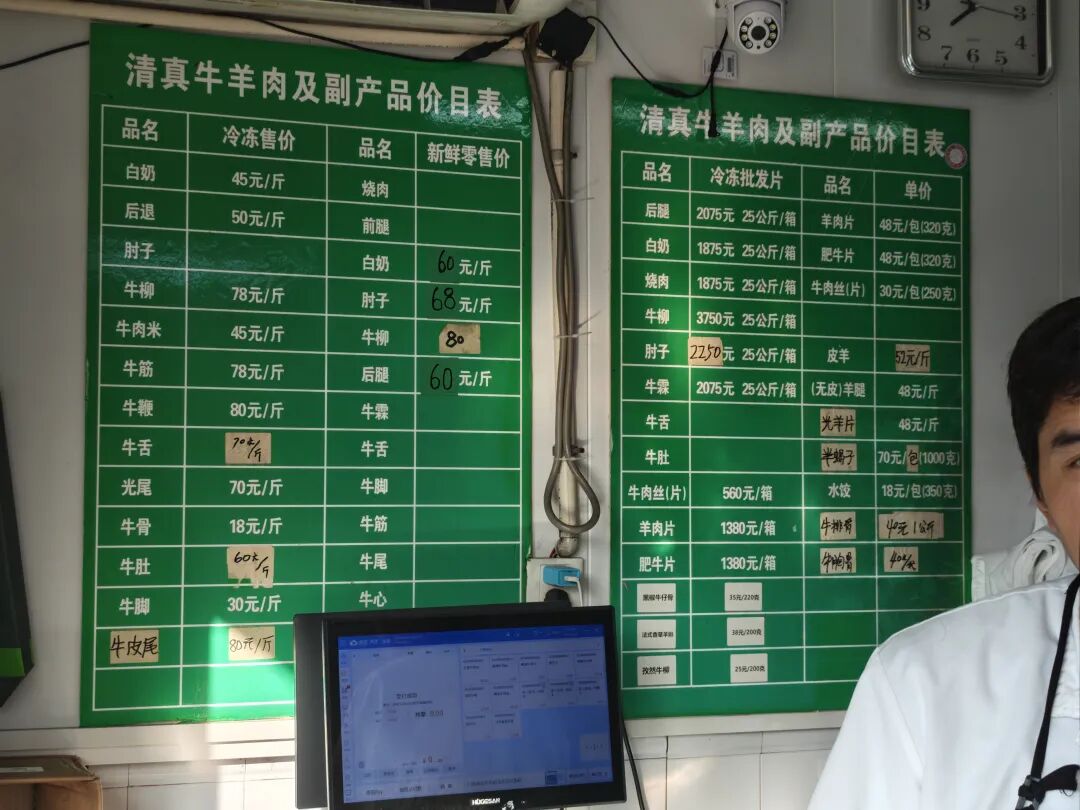
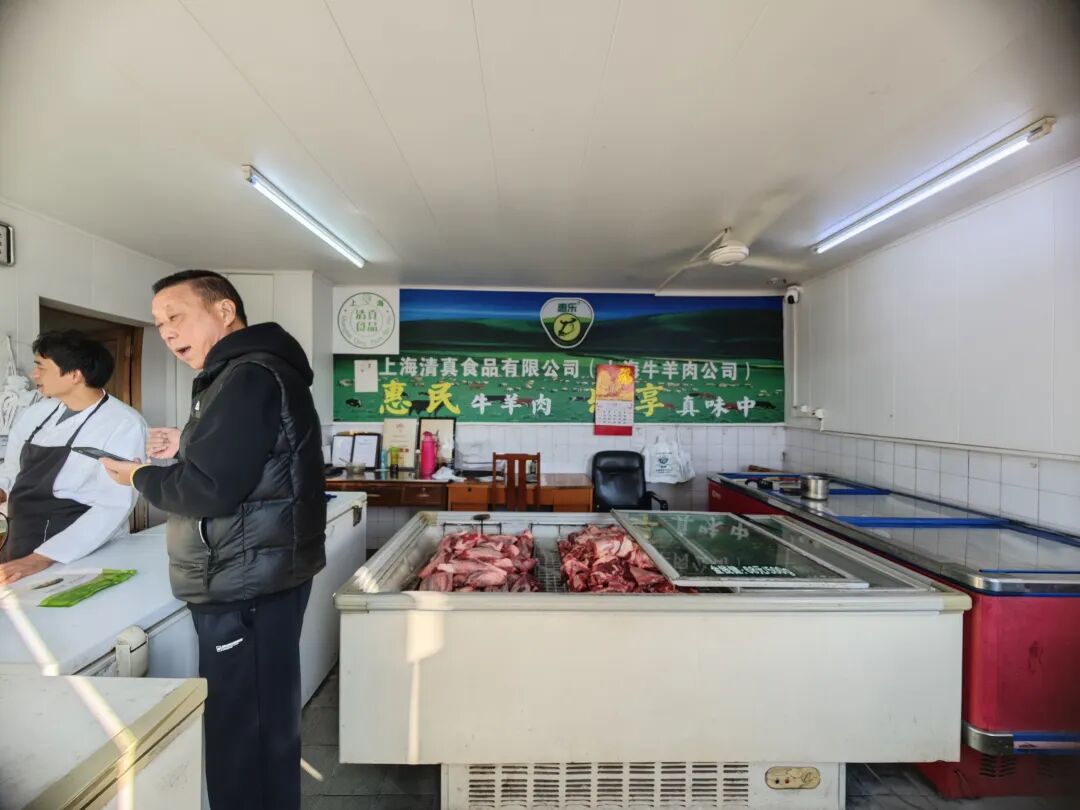
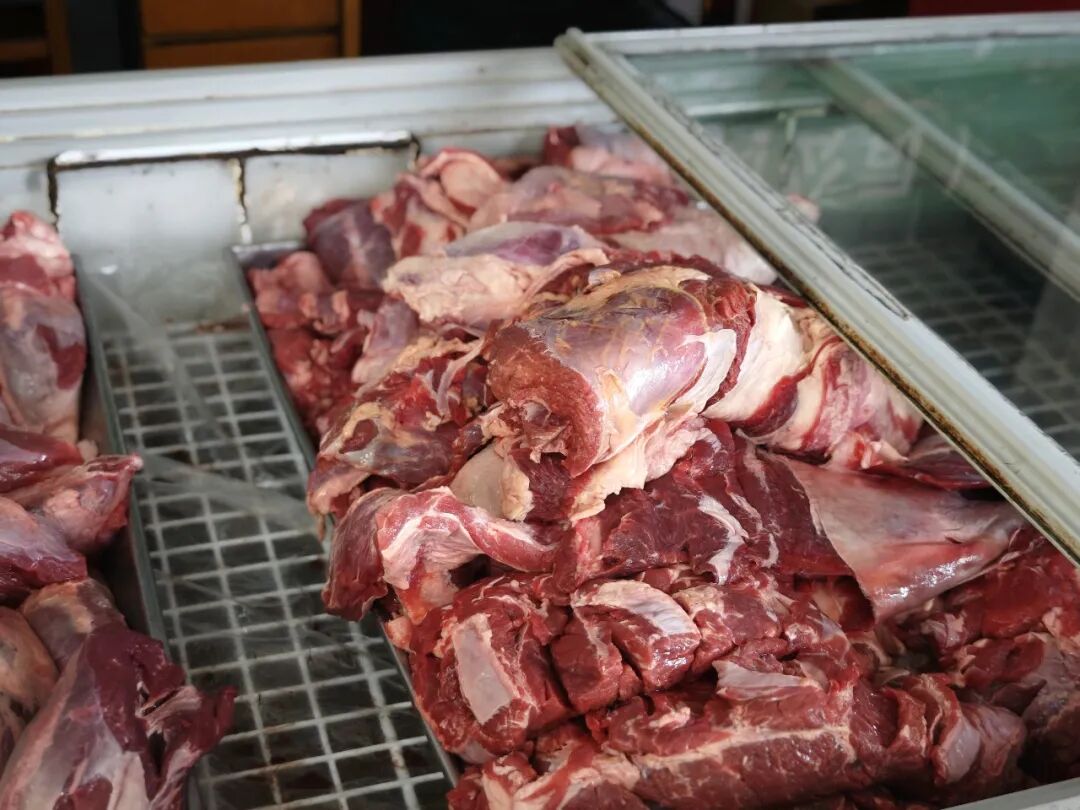
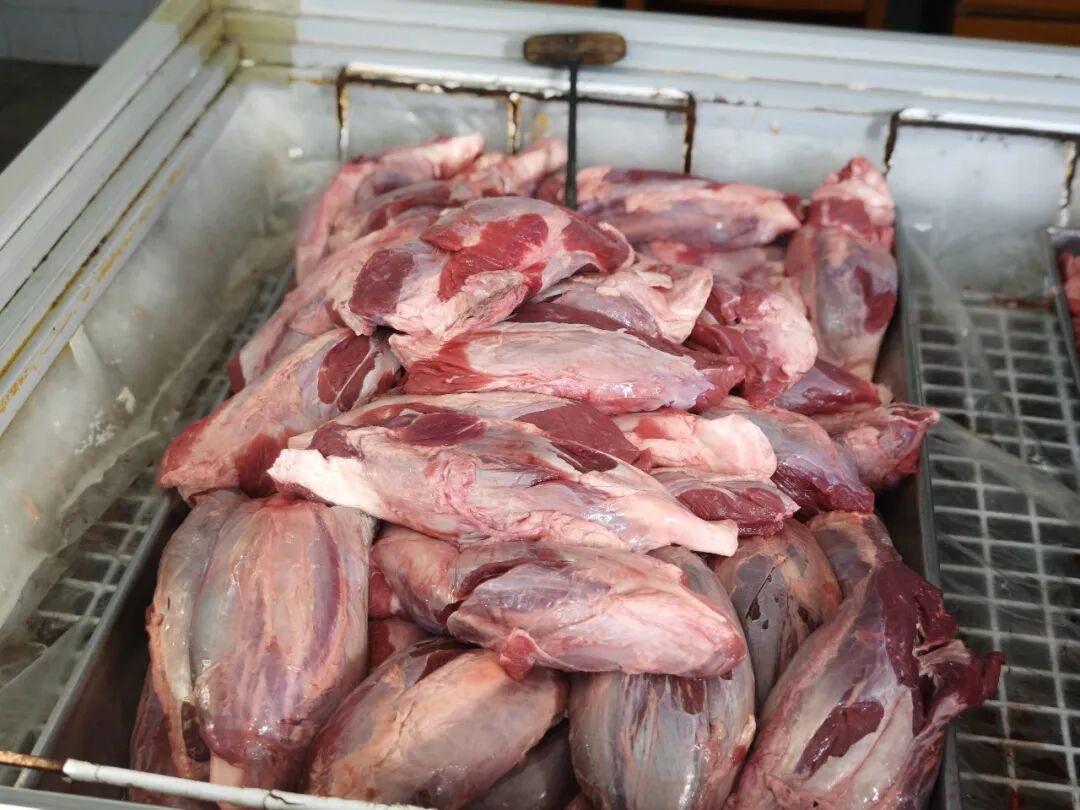
Best Halal Food in Beijing: Iconic Hot Pot, Xinjiang Cuisine, and Muslim-Owned Restaurants You Must Try
Articles • Hasan09 posted the article • 0 comments • 227 views • 2026-10-30 01:20
We’ve put together a list of the must-eat Halal restaurants in Beijing across districts like Dongcheng, Xicheng, Chaoyang, and Haidian, covering classic legends and trendy spots like Nanmen Shuanrou near the Temple of Heaven, Zhungeer Xinjiang Cuisine, Jubaoyuan’s hand-sliced copper pot hot pot on Niujie, and the old-school Lao Xi'an Restaurant in Xinjiekou.
Dongcheng District
Nanmen Shuanrou (Temple of Heaven Branch): A 32-year-old staple. This is the original hot pot spot with plenty of branches, though it's always packed with a line.
Zhungeer Xinjiang Cuisine (Longtan Branch): This is the official office restaurant for the Shihezi government in Beijing. Their signature dish is the bread-wrapped lamb leg, and it's located near Longtan Park—expect a wait.
Xicheng District
Jubaoyuan (Niujie Flagship): They’ve been perfecting their copper pot hot pot for over 30 years, and their hand-sliced lamb is always consistently thin and tender.
Lao Xi'an Restaurant (Xinjiekou South Street Branch): Open since 1954, this is a spot locals swear by. Beyond their famous paomo (pita bread soaked in lamb soup), their stir-fried dishes are also solid.
Niujie Da Lübao Roast Lamb Leg (Niujie Main Store): They use a traditional fruit-wood charcoal oven to roast the meat, making the skin crispy while the inside stays super juicy.
Niujie Qingzhen Manhengji (Ping'anli West Street Branch): This place is legendary for the lines. They source lamb directly from Sunite, Inner Mongolia, and their sesame paste sugar pancakes are famous for that oozing, molten filling.
Chaoyang District
Ma Aisa Niula (Jiangtai Road): A beef noodle spot recommended by celebrities. The hand-pulled noodles have a perfect chew, and their chili oil is super fragrant without being overly spicy.
Musefeilin Xinjiang Restaurant (Pileyuan Branch): They serve zhafan (lamb pilaf) that’s literally glistening with flavor. It’s not too far from the Joy City mall in Chaoyang.
Ritan Shuanrou (Ritan Park Branch): Located near the embassy area by Ritan Park, this spot features personal individual pots—it's a great vibe eating copper-pot hot pot in a traditional siheyuan (courtyard house).
Xiting Xiuse Turkish Feast (Xinyuanli Branch): This is the Turkish government office restaurant in Beijing, and the interior design gives off a really cool, authentic exotic vibe.
Manfulou Halal Hot Pot (Qiaofu Branch): Experience the classic Beijing food culture in a copper pot; they’ve maintained the same great flavor for over 30 years.
Fengtai District
Wanping Liji Snacks (Dongguan Street Branch): Located right next to Wanping City, this spot has been serving affordable and delicious Halal snacks for nearly 30 years.
Haidian District
Xinjiang Bazhou Jinseite Restaurant (Dazhongsi Branch): The official Bazhou government restaurant. They use traditional oven-roasting techniques, and the meat is incredibly tender and firm.
Chaisi Fengweizhai (Ganjiakou Branch): This place uses a secret braising broth passed down through three generations; the noodles are firm and the beef is melt-in-your-mouth tender.
Changping District
Lao Yangjia Halal Cuisine (Yangfang Branch): A hidden gem for Halal food in Changping. If you’re heading out to the suburbs, definitely stop by and try their signature garlic-braised lamb kidneys.
Mentougou District
Tanyang Puzi Northern & Southern Xinjiang Specialties (Mentougou Branch): They use tender, juicy Tan sheep from Ningxia and use traditional oven-roasting methods to keep that authentic Xinjiang flavor alive.
How many of these must-try Halal spots have you guys been to?
I’ve only ticked off 8 of them so far, so I'll be posting more notes as I continue my food tour.
Are there any other Halal restaurants you think are absolute musts? Feel free to add them in the comments! view all
We’ve put together a list of the must-eat Halal restaurants in Beijing across districts like Dongcheng, Xicheng, Chaoyang, and Haidian, covering classic legends and trendy spots like Nanmen Shuanrou near the Temple of Heaven, Zhungeer Xinjiang Cuisine, Jubaoyuan’s hand-sliced copper pot hot pot on Niujie, and the old-school Lao Xi'an Restaurant in Xinjiekou.
Dongcheng District
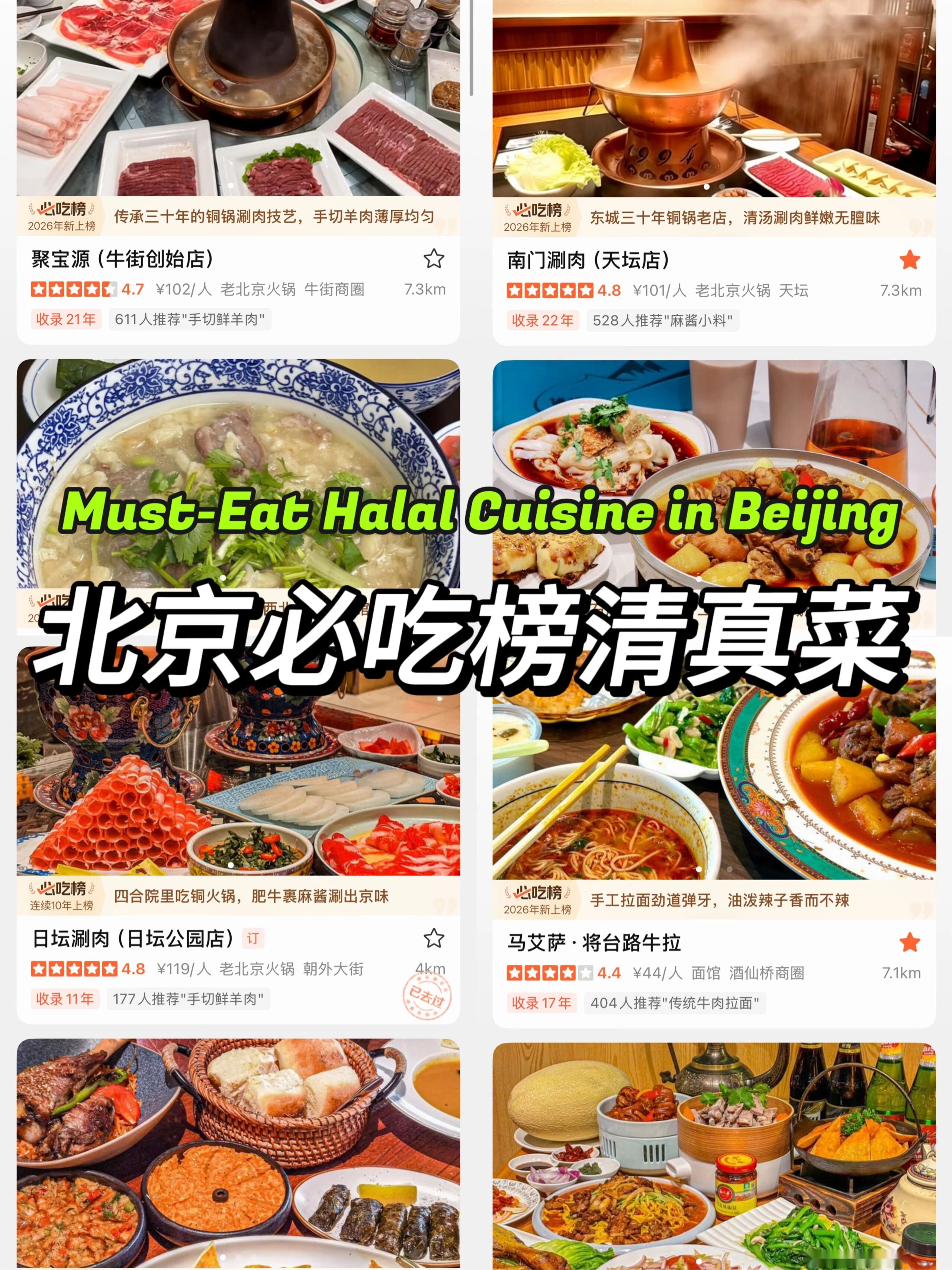
Nanmen Shuanrou (Temple of Heaven Branch): A 32-year-old staple. This is the original hot pot spot with plenty of branches, though it's always packed with a line.
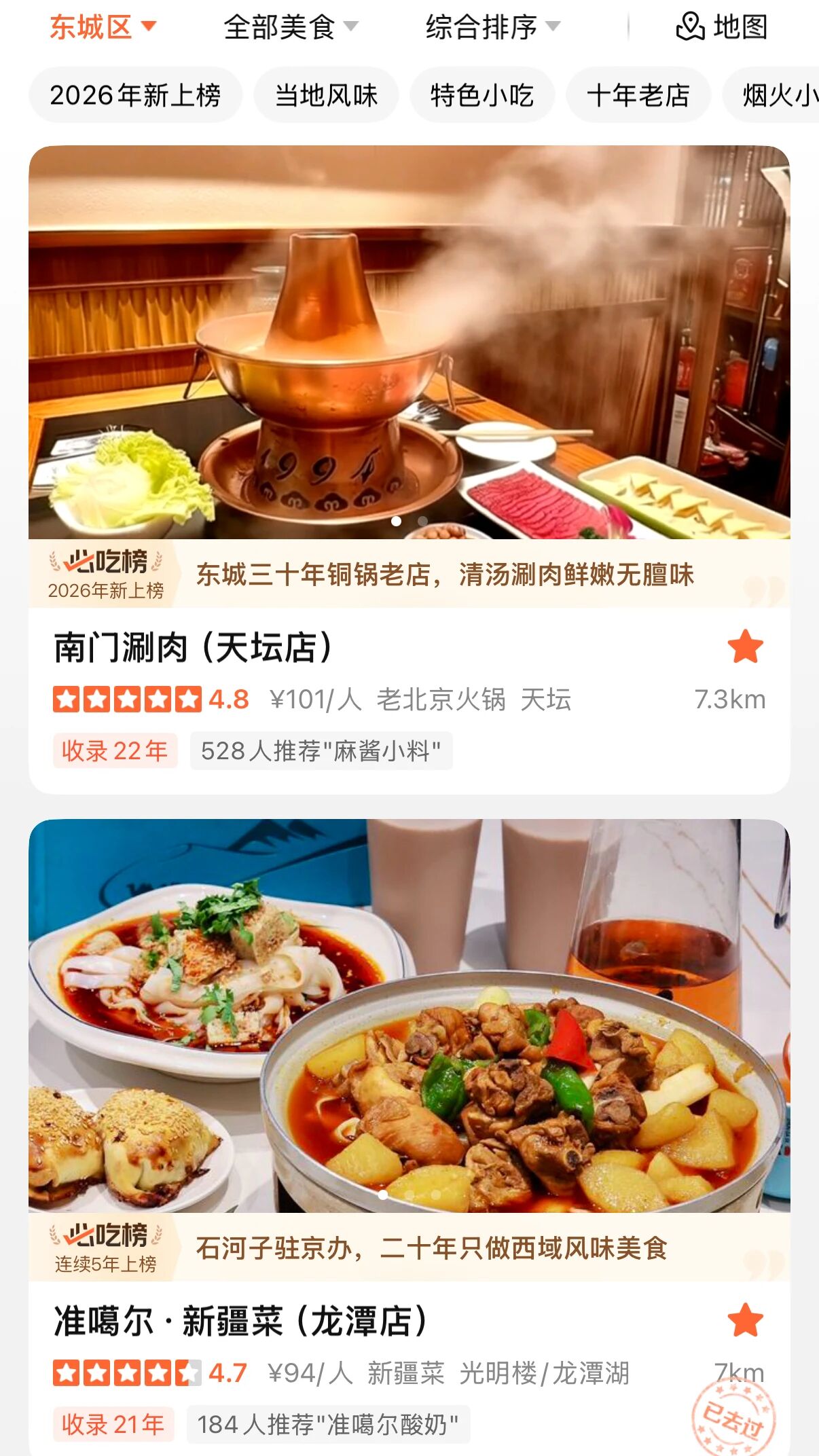
Zhungeer Xinjiang Cuisine (Longtan Branch): This is the official office restaurant for the Shihezi government in Beijing. Their signature dish is the bread-wrapped lamb leg, and it's located near Longtan Park—expect a wait.
Xicheng District
Jubaoyuan (Niujie Flagship): They’ve been perfecting their copper pot hot pot for over 30 years, and their hand-sliced lamb is always consistently thin and tender.
Lao Xi'an Restaurant (Xinjiekou South Street Branch): Open since 1954, this is a spot locals swear by. Beyond their famous paomo (pita bread soaked in lamb soup), their stir-fried dishes are also solid.
Niujie Da Lübao Roast Lamb Leg (Niujie Main Store): They use a traditional fruit-wood charcoal oven to roast the meat, making the skin crispy while the inside stays super juicy.
Niujie Qingzhen Manhengji (Ping'anli West Street Branch): This place is legendary for the lines. They source lamb directly from Sunite, Inner Mongolia, and their sesame paste sugar pancakes are famous for that oozing, molten filling.
Chaoyang District
Ma Aisa Niula (Jiangtai Road): A beef noodle spot recommended by celebrities. The hand-pulled noodles have a perfect chew, and their chili oil is super fragrant without being overly spicy.
Musefeilin Xinjiang Restaurant (Pileyuan Branch): They serve zhafan (lamb pilaf) that’s literally glistening with flavor. It’s not too far from the Joy City mall in Chaoyang.
Ritan Shuanrou (Ritan Park Branch): Located near the embassy area by Ritan Park, this spot features personal individual pots—it's a great vibe eating copper-pot hot pot in a traditional siheyuan (courtyard house).
Xiting Xiuse Turkish Feast (Xinyuanli Branch): This is the Turkish government office restaurant in Beijing, and the interior design gives off a really cool, authentic exotic vibe.
Manfulou Halal Hot Pot (Qiaofu Branch): Experience the classic Beijing food culture in a copper pot; they’ve maintained the same great flavor for over 30 years.
Fengtai District
Wanping Liji Snacks (Dongguan Street Branch): Located right next to Wanping City, this spot has been serving affordable and delicious Halal snacks for nearly 30 years.
Haidian District
Xinjiang Bazhou Jinseite Restaurant (Dazhongsi Branch): The official Bazhou government restaurant. They use traditional oven-roasting techniques, and the meat is incredibly tender and firm.
Chaisi Fengweizhai (Ganjiakou Branch): This place uses a secret braising broth passed down through three generations; the noodles are firm and the beef is melt-in-your-mouth tender.
Changping District
Lao Yangjia Halal Cuisine (Yangfang Branch): A hidden gem for Halal food in Changping. If you’re heading out to the suburbs, definitely stop by and try their signature garlic-braised lamb kidneys.
Mentougou District
Tanyang Puzi Northern & Southern Xinjiang Specialties (Mentougou Branch): They use tender, juicy Tan sheep from Ningxia and use traditional oven-roasting methods to keep that authentic Xinjiang flavor alive.
How many of these must-try Halal spots have you guys been to?
I’ve only ticked off 8 of them so far, so I'll be posting more notes as I continue my food tour.
Are there any other Halal restaurants you think are absolute musts? Feel free to add them in the comments!
Best Halal Food in Beijing: Xixinglong Street Cafe, Lao Huihui Dumplings, and Shanxian Lamb Soup Guide
Articles • Hasan09 posted the article • 0 comments • 140 views • 2026-10-26 09:36
Check out this collection featuring 67 real-life photos from the 64th edition of our Beijing Halal food map. We’ve scouted out specialty Halal cafes on Xixinglong Street, handmade dumplings at Lao Huihui, Xiaoxianyang Shanxian lamb soup, and the Halal buffet at the Comfort Hotel to give Beijing foodies the ultimate guide for your next visit.
1. JM Cafe, Xixinglong Street Flagship Store
2. Lao Huihui Dumpling House
3. Xiaoxianyang Shanxian Lamb Soup
4. Comfort Hotel Halal Buffet
5. Xizhuanfang Shabu-Shabu Museum
6. Zanka Pakistani Restaurant
7. Ma’s Palace Cheese
8. Sultan Turkish Restaurant
9. Bani Restaurant
10. Northwest Chencang Mianpi (steamed cold noodles) & Liangfen (starch jelly)
11. Liu’s Watch Repair & Barbecue
12. JM Cafe, Xixinglong Street Flagship Store
Xixinglong Street is located in the Qianmen area. After a major urban planning update during the Mid-Autumn Festival, the street is now home to a bunch of super aesthetic boutique shops—and this JM Cafe is one of them.
Every JM location has its own vibe. For this flagship store, they hired the famous Japanese designer Aoyama Shuhei, who’s a bit of an internet celebrity known for his high-end work, especially in renovating traditional hutong courtyards.
The first floor is all about espresso and baked goods, while the second floor serves up pour-over coffee using award-winning beans.
The view from the second floor is actually nicer. Word is that Aoyama Shuhei’s whole concept was to encourage people to interact with strangers. So, the first floor is laid out like a theater, and the second floor is centered around a long table—like a conference room—where strangers face each other. The designer really wanted to help people make a connection.
When you’re ordering at the counter, you’re standing right in front of the casual seating area, so it’s pretty much guaranteed that everyone will be watching whoever walks by.
All the baked goods are made fresh daily. The Hui Muslim owner keeps a tight handle on the quality, and all the branches follow a standardized supply chain.
2. Lao Huihui Dumpling House
Ever since the Junlian Dumpling House in Niujie closed down, finding really solid dumplings meant traveling a bit further. But now, there’s finally a solid alternative: Lao Huihui Dumpling House. It’s a chain that already opened a spot near Jiao Da (Beijing Jiaotong University), and they specialize in all kinds of dumpling fillings.
They’ve got an open kitchen, so you can see four or five people busy hand-wrapping and boiling the dumplings right in front of you. Dumplings are best served fresh, batch by batch, so you can always count on them being piping hot.
They have a signature tomato and beef dumpling that I tried. It’s definitely unique—I wouldn’t call it amazing, but it’s not bad either. It’s just that I’m not used to that kind of creative flavor profile. Their traditional beef with celery and lamb with scallion dumplings are honestly delicious. Plus, they serve classic Beijing-style stir-fried dishes that are really affordable and come in huge portions.
3. Xiaoxianyang Shanxian Lamb Soup
Xiaoxianyang Shanxian Lamb Soup is a chain, but this location in You'anmen is the only one I found that is fully Halal. They specialize in all sorts of lamb soups and lamb dishes, and they even serve Jinzhou-style barbecue.
They open up at 7:00 AM and keep the kitchen running until 4:00 AM.
You have to pair their lamb soup with a diaolu shaobing (a flatbread baked in a hanging oven). The soup itself is solid—the meat doesn't have that gamey smell and the broth is rich—but the flatbread was a letdown because it wasn't crispy enough.
They also serve lamb rice noodles, which I tried. The flavor is basically identical to the lamb soup.
Honestly, diaolu shaobing really needs to be served fresh out of the oven to be any good, and theirs was pretty bland.
4. Comfort Hotel Halal Buffet
The Comfort Hotel in Niujie is now offering a halal breakfast to the public for 28 yuan a head, with both Western and Chinese options available.
When I posted about this on Xiaohongshu, a lot of people complained that 28 yuan was too expensive and that you're better off ordering a la carte at a restaurant. I really don't get that logic; 28 yuan at a local spot barely gets you a bowl of lamian (hand-pulled noodles), and you’re definitely not getting the variety you get at a hotel breakfast buffet.
I love hotel breakfasts because the variety lets me eat a balanced and healthy meal. I rarely eat traditional Beijing-style breakfasts anymore—they’re just too greasy and packed with carbs, which I don't think is great for you.
For those 28 yuan, you get everything: veggies, fruit, desserts, milk, eggs, and staples. Plus, it's all-you-can-eat. Seriously, 28 yuan only buys you maybe 5 buns down at Hongji.
Looking at the headscarves the ladies in the back kitchen are wearing, you can tell right away they're from the Northwest.
5. Xizhuanfang Hot Pot Museum
Xizhuanfang is a new hot pot museum in Niujie. It’s spread across three courtyards tucked away in the hutongs (traditional narrow alleyways). The vibe is top-tier—it’s got that classic cultural aesthetic but feels upscale enough for a business meeting.
The courtyards are filled with flowers, birds, and fish, and they’ve got a bunch of antiques related to the history of hot pot on display.
If you follow your GPS, it’ll take you to Courtyard No. 1, which has most of the antiques. Courtyards No. 2 and No. 3 are in a different alleyway and are a bit more quiet and secluded.
The only downside is that they use alcohol stoves. They give off a bit of an odor, and the heat control isn't great. It would be much better if they switched to charcoal.
The ingredients are all high quality; they even serve top-tier grapes as a pre-meal fruit plate. Another highlight is their shaobing—you can choose from four types and get a sampler platter. I highly recommend the caramel shaobing; it’s similar to a tang huoshao (brown sugar pastry). Expect to spend at least 150 yuan per person.
6. Zanka Pakistani Restaurant
Zanka is a new Pakistani spot in the Chaoyang district that hosts a buffet on Fridays and Saturdays. The space is small, but it’s decorated pretty nicely.
When we went for lunch, there was only one other table occupied, probably because the location is a bit tucked away.
There’s no buffet on weekdays, so you have to order a la carte. The staff are all 'Pak-Tie' (a colloquial term for Pakistani friends) and don't speak Chinese.
I brought my son along because he’s a huge fan of pani puri (crispy hollow balls filled with spiced water), and I saw it was on the menu.
They definitely make the pani puri look pretty, but they weren't crispy and the texture was off, which was a huge disappointment for Fahim.
The chicken kebab was actually pretty good—the meat was tender with a nice little spicy kick.
The Peshawar chicken curry was just okay, and the plain naan wasn't really my style. I prefer a thinner, buttery naan. Overall, the food here was a bit lacking, even though the prices are cheap.
7. Maji Palace Cheese
Ma's Dairy has been around for over a decade. Compared to Naolao Wei (a famous dairy shop), it's cheaper and the portions are bigger, but honestly, it doesn't taste as good.
Their guozigan (preserved fruit drink) and dairy treats have a bit of a budget vibe, and the guozigan is super sweet. I still prefer Naolao Wei in Niujie. Ma’s used to have two locations, but the one in Guangqumen shut down, so now there’s only the Nongguangli branch left.
8. Sultan Turkish Restaurant
A new Sultan Turkish Restaurant just opened in the C-Joy City mall—that makes two spots in Beijing now. They’ve already got a huge following with multiple locations across Shanghai, Yiwu, and Guangzhou.
The vibe is pretty decent, though I’d say it’s a notch below Xiting Xiuse, which feels a bit more upscale and elegant.
The assorted mixed grill is delicious. I used to grab this kind of Middle Eastern food with my son back when we were in Malaysia because it’s not spicy, making it perfect for kids.
The Turkish balloon bread is another hit with my son; he can easily polish off half of it on his own.
Sultan teamed up with MADO ice cream, so you can get authentic Turkish goat milk ice cream at every location. My son doesn't really appreciate it though—he's not a fan of dairy products—but I personally love the MADO stuff.
9. Bani Restaurant
This newly opened Bani Pakistani restaurant is less than three kilometers away from the Zanka place I mentioned earlier, and they offer an affordable weekday buffet.
The interior is definitely prettier, and the service is more attentive. Plus, the lunch buffet is only 78 yuan.
That said, they only have eight dishes for the lunch buffet, and the taste is pretty average. Compared to all the other Pakistani spots in the city, I still prefer the China-Pakistan Friendship Restaurant.
The buffet drinks and the crunchy pani puri (hollow, crispy dough balls filled with spiced water and chickpeas) are a huge hit with my son; he can fill up on those alone.
10. Northwest Chencang Mianpi and Liangfen
I stumbled upon this Baoji-style liangfen (starch jelly) and mianpi (cold steamed noodles) shop near Madian. 'Chencang' is actually a district in Baoji.
There’s just one uncle running the place, but he’s super friendly. We asked for a two-way combo of mianpi, and he actually made us a three-way combo instead. It was delicious and perfectly seasoned, but it’s definitely more of a snack—you won't be full if you treat it as a main meal.
There’s only one table in the whole shop, which is tucked away inside the first floor of the Fulite Business Building. It's not the easiest place to find.
11. Liu's Watch Repair and BBQ
This place looks like a watch repair shop from the outside, but once you step inside, it’s a full-on barbecue joint.
It’s a classic Beijing-style BBQ spot with plenty of space, including both a courtyard and indoor seating. If you sit inside, you're surrounded by all these clocks. Since they’re all set to different times, you’ll hear them chiming and going off every now and then.
The guy grilling the skewers looks like he's from Xinjiang. Their prices are on the higher side, and since they grill order by order, the service is pretty slow. The beef skewers were a bit tough, the lamb tendon was chewy, and the lamb cartilage lacked flavor. I’d only recommend their lamb rib meat, which is tender—though it’ll run you 10 bucks a skewer. view all
Check out this collection featuring 67 real-life photos from the 64th edition of our Beijing Halal food map. We’ve scouted out specialty Halal cafes on Xixinglong Street, handmade dumplings at Lao Huihui, Xiaoxianyang Shanxian lamb soup, and the Halal buffet at the Comfort Hotel to give Beijing foodies the ultimate guide for your next visit.
1. JM Cafe, Xixinglong Street Flagship Store
2. Lao Huihui Dumpling House
3. Xiaoxianyang Shanxian Lamb Soup
4. Comfort Hotel Halal Buffet
5. Xizhuanfang Shabu-Shabu Museum
6. Zanka Pakistani Restaurant
7. Ma’s Palace Cheese
8. Sultan Turkish Restaurant
9. Bani Restaurant
10. Northwest Chencang Mianpi (steamed cold noodles) & Liangfen (starch jelly)
11. Liu’s Watch Repair & Barbecue
12. JM Cafe, Xixinglong Street Flagship Store
Xixinglong Street is located in the Qianmen area. After a major urban planning update during the Mid-Autumn Festival, the street is now home to a bunch of super aesthetic boutique shops—and this JM Cafe is one of them.
Every JM location has its own vibe. For this flagship store, they hired the famous Japanese designer Aoyama Shuhei, who’s a bit of an internet celebrity known for his high-end work, especially in renovating traditional hutong courtyards.
The first floor is all about espresso and baked goods, while the second floor serves up pour-over coffee using award-winning beans.
The view from the second floor is actually nicer. Word is that Aoyama Shuhei’s whole concept was to encourage people to interact with strangers. So, the first floor is laid out like a theater, and the second floor is centered around a long table—like a conference room—where strangers face each other. The designer really wanted to help people make a connection.
When you’re ordering at the counter, you’re standing right in front of the casual seating area, so it’s pretty much guaranteed that everyone will be watching whoever walks by.
All the baked goods are made fresh daily. The Hui Muslim owner keeps a tight handle on the quality, and all the branches follow a standardized supply chain.
2. Lao Huihui Dumpling House
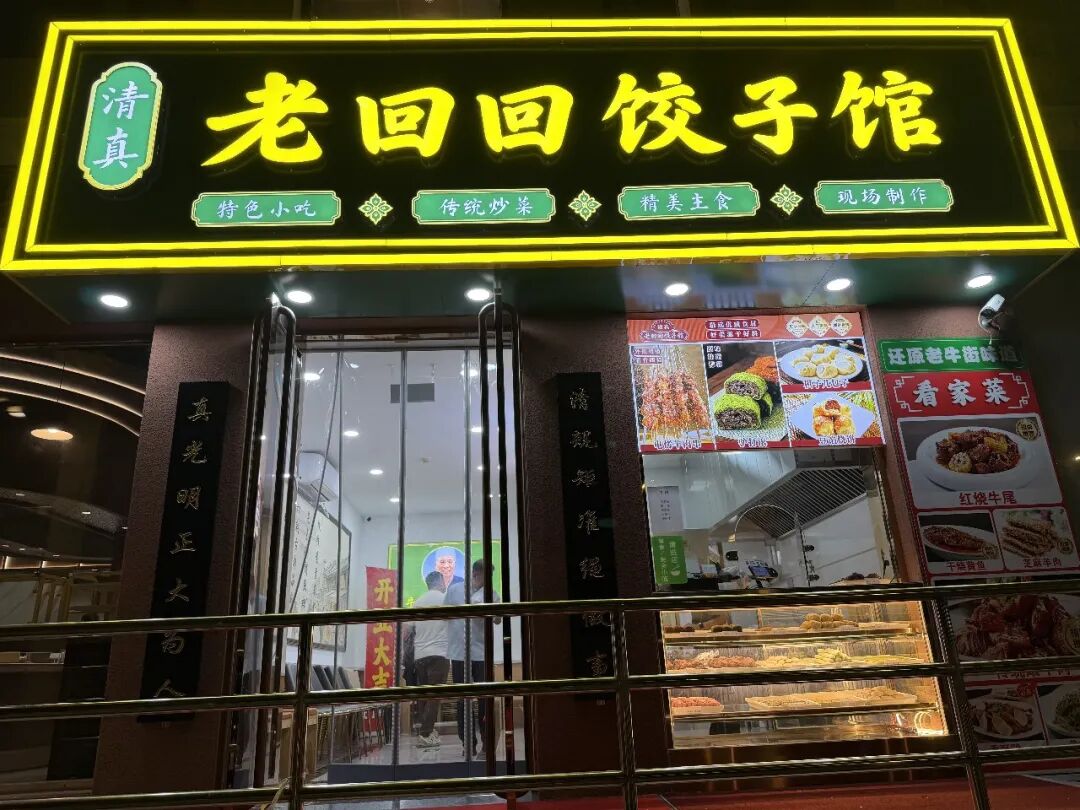
Ever since the Junlian Dumpling House in Niujie closed down, finding really solid dumplings meant traveling a bit further. But now, there’s finally a solid alternative: Lao Huihui Dumpling House. It’s a chain that already opened a spot near Jiao Da (Beijing Jiaotong University), and they specialize in all kinds of dumpling fillings.
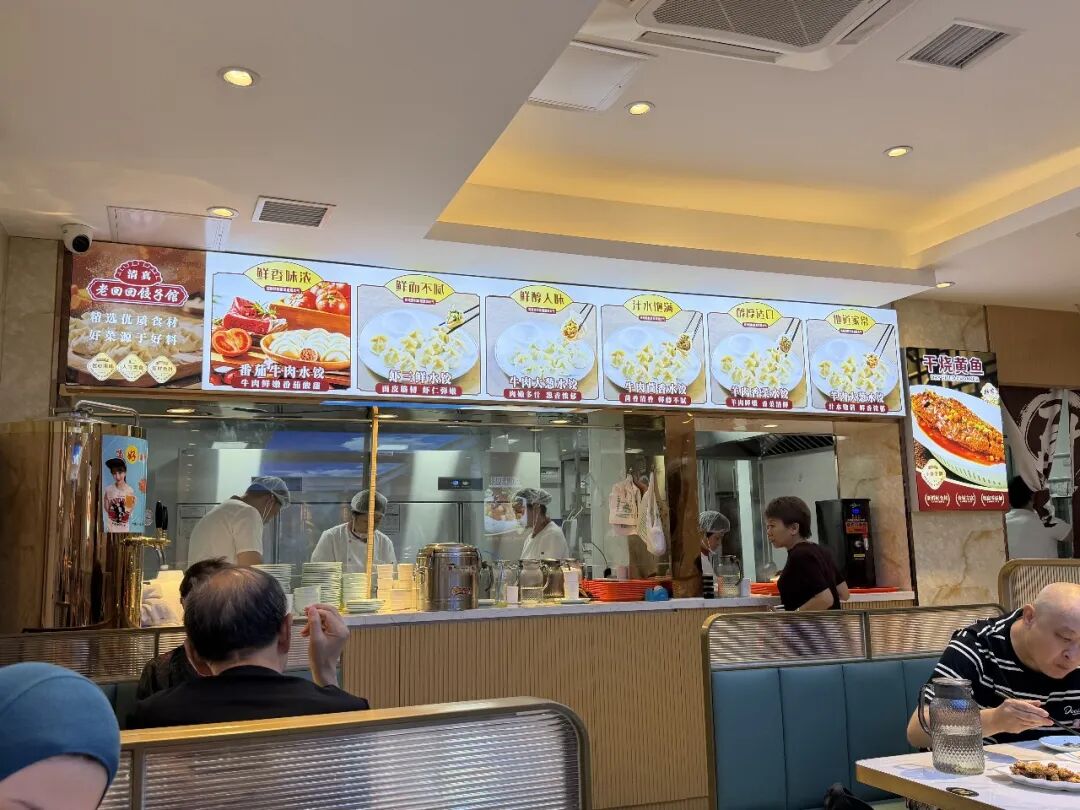
They’ve got an open kitchen, so you can see four or five people busy hand-wrapping and boiling the dumplings right in front of you. Dumplings are best served fresh, batch by batch, so you can always count on them being piping hot.
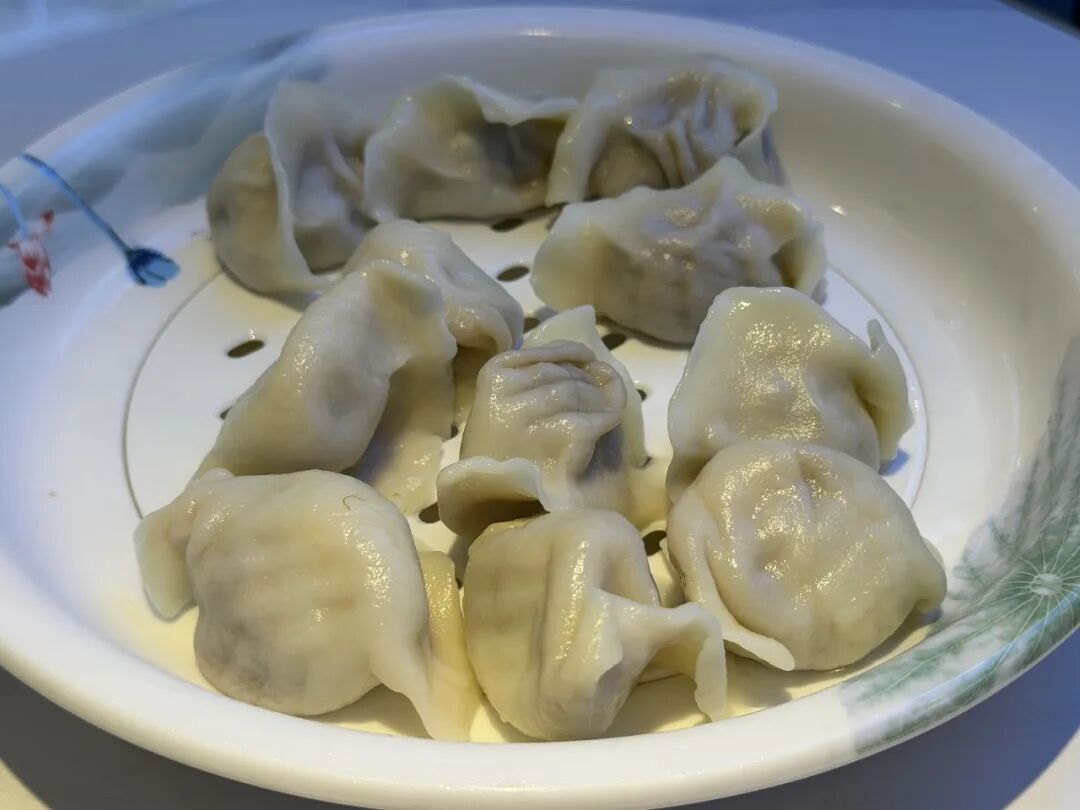
They have a signature tomato and beef dumpling that I tried. It’s definitely unique—I wouldn’t call it amazing, but it’s not bad either. It’s just that I’m not used to that kind of creative flavor profile. Their traditional beef with celery and lamb with scallion dumplings are honestly delicious. Plus, they serve classic Beijing-style stir-fried dishes that are really affordable and come in huge portions.
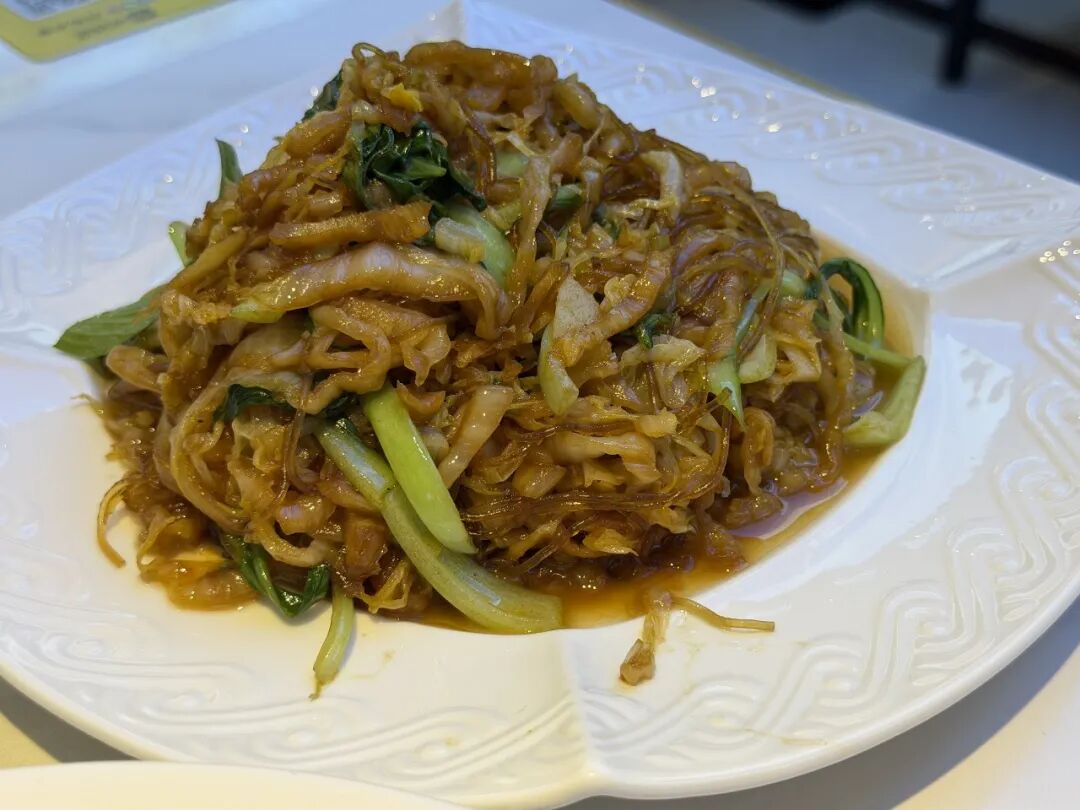
3. Xiaoxianyang Shanxian Lamb Soup
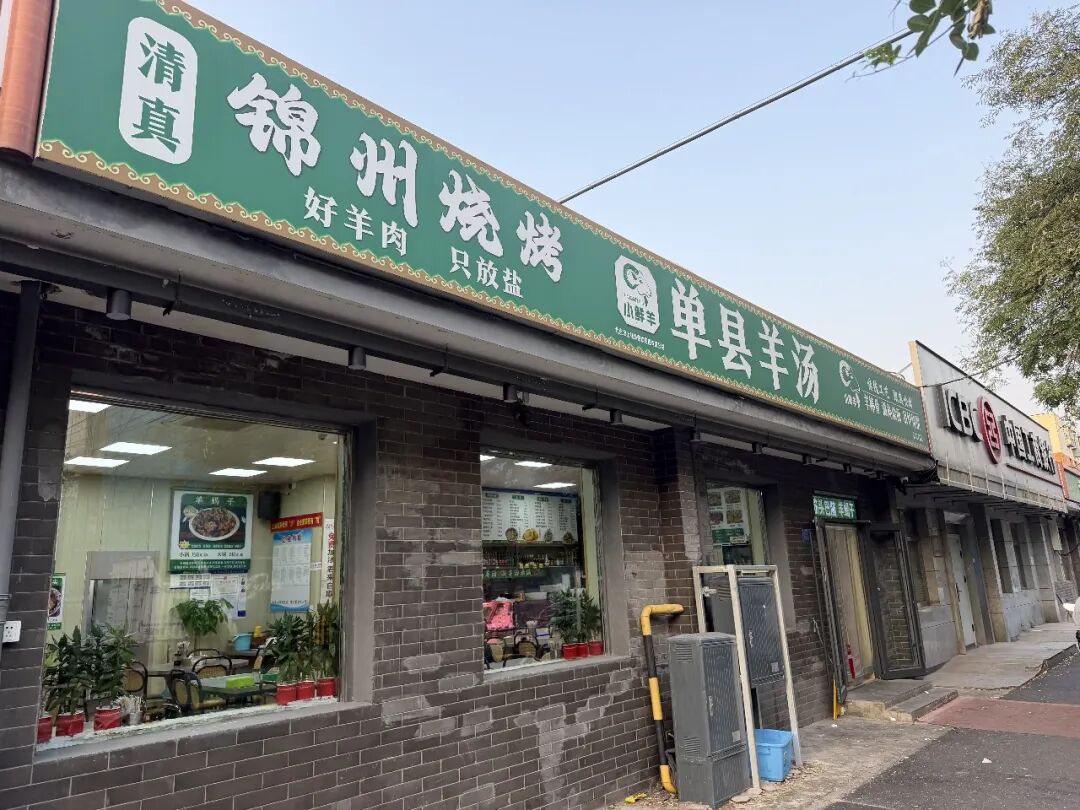
Xiaoxianyang Shanxian Lamb Soup is a chain, but this location in You'anmen is the only one I found that is fully Halal. They specialize in all sorts of lamb soups and lamb dishes, and they even serve Jinzhou-style barbecue.
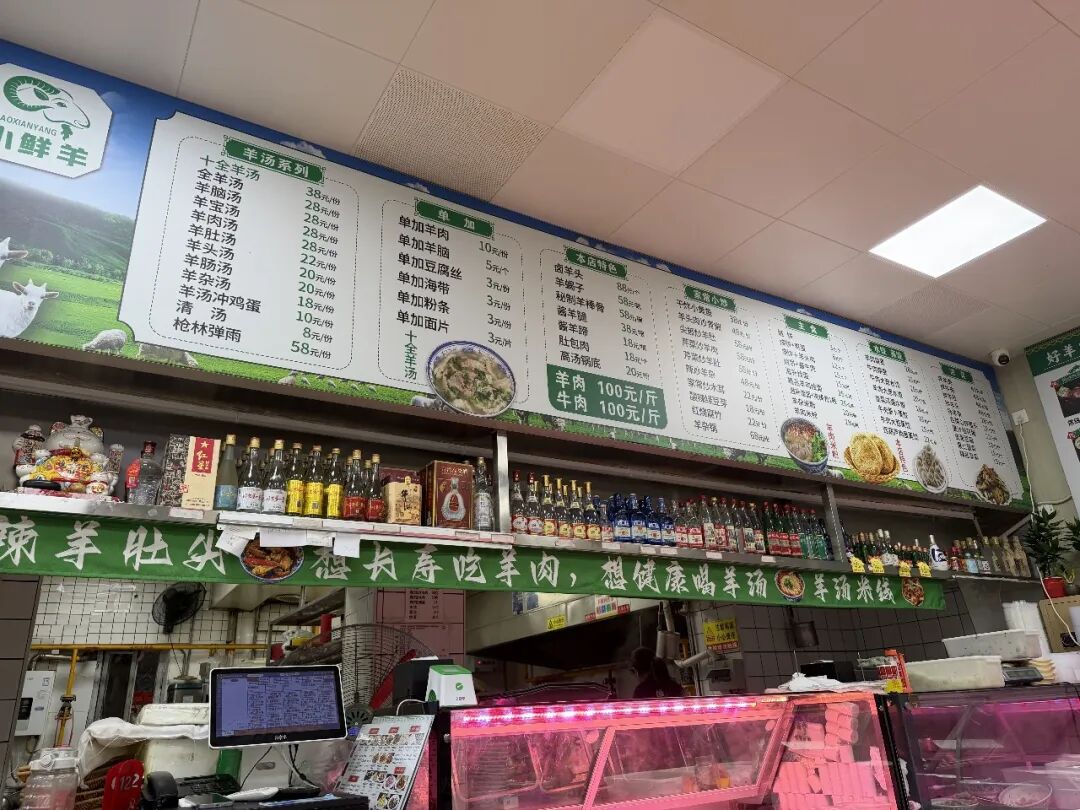
They open up at 7:00 AM and keep the kitchen running until 4:00 AM.
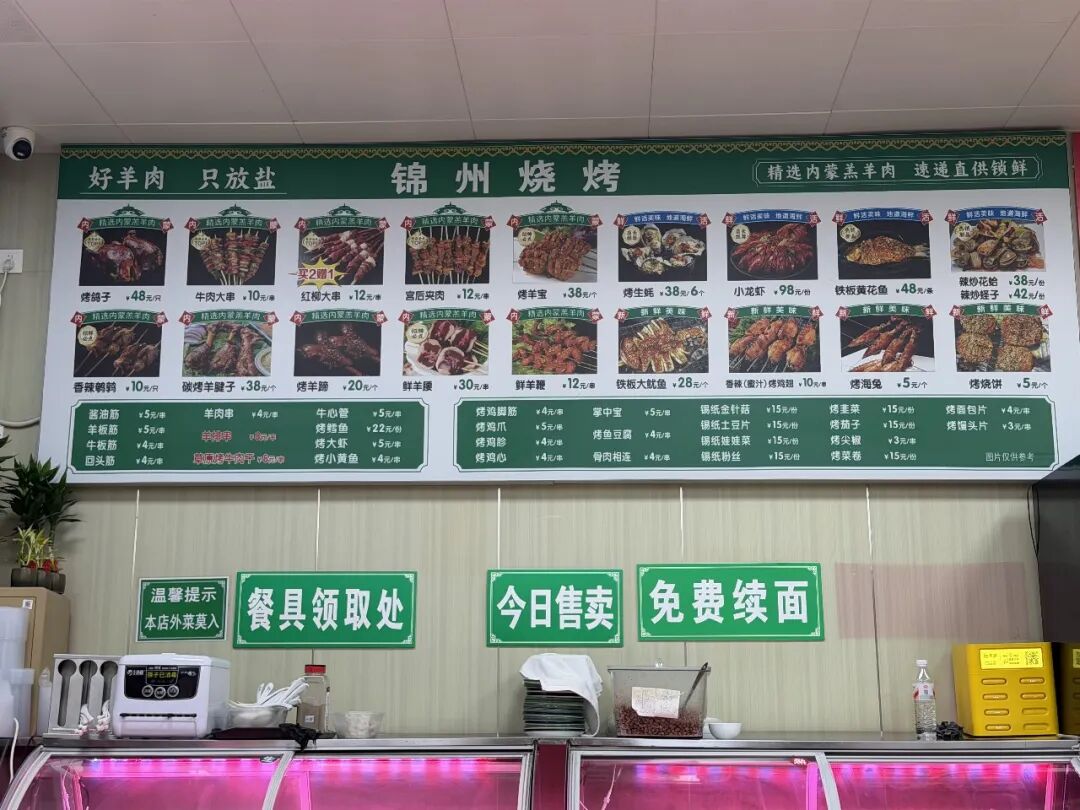
You have to pair their lamb soup with a diaolu shaobing (a flatbread baked in a hanging oven). The soup itself is solid—the meat doesn't have that gamey smell and the broth is rich—but the flatbread was a letdown because it wasn't crispy enough.
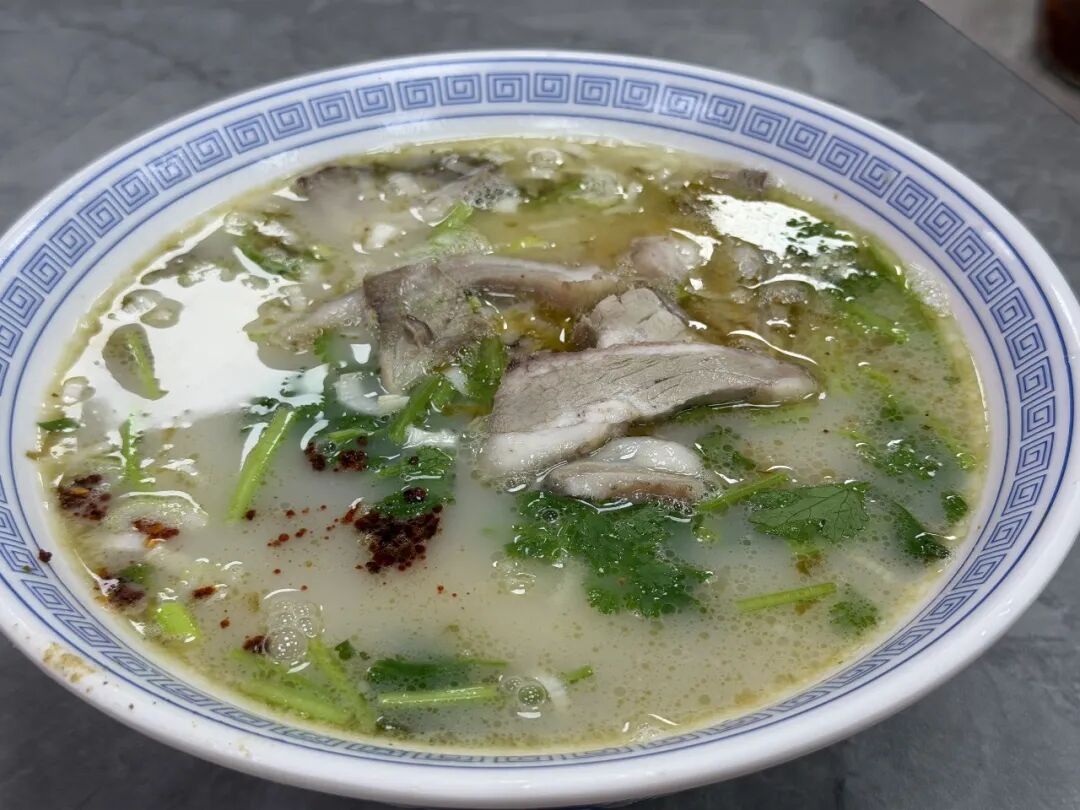
They also serve lamb rice noodles, which I tried. The flavor is basically identical to the lamb soup.
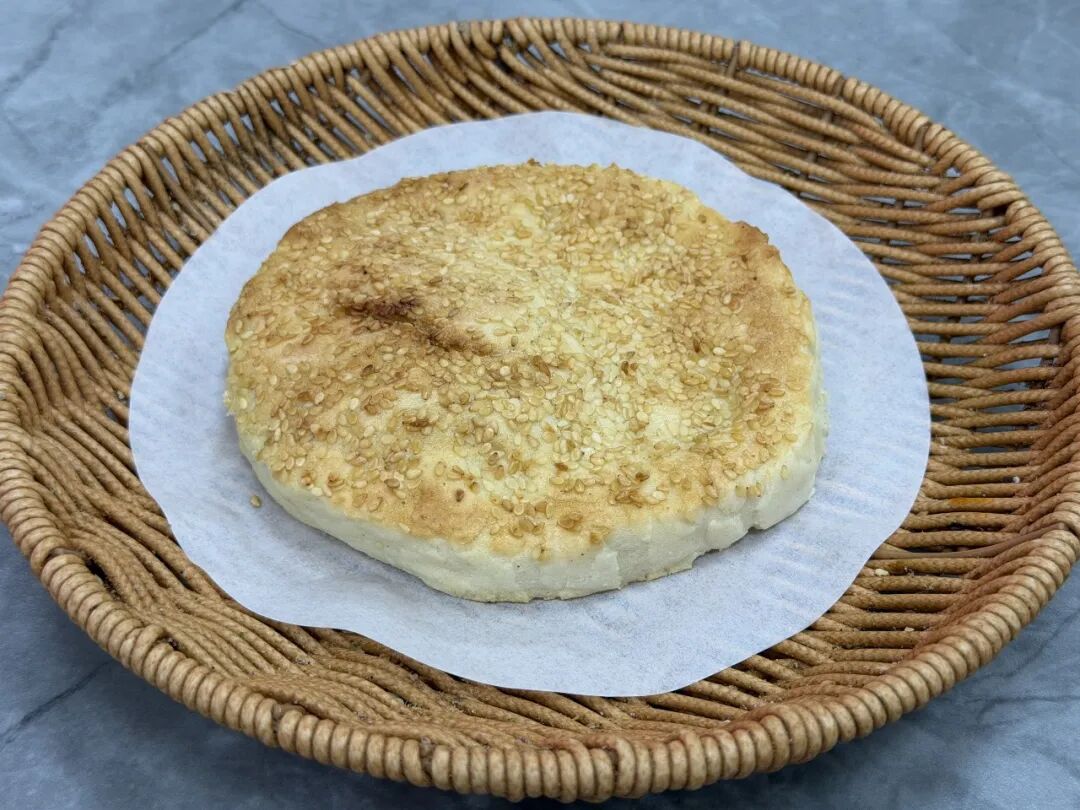
Honestly, diaolu shaobing really needs to be served fresh out of the oven to be any good, and theirs was pretty bland.
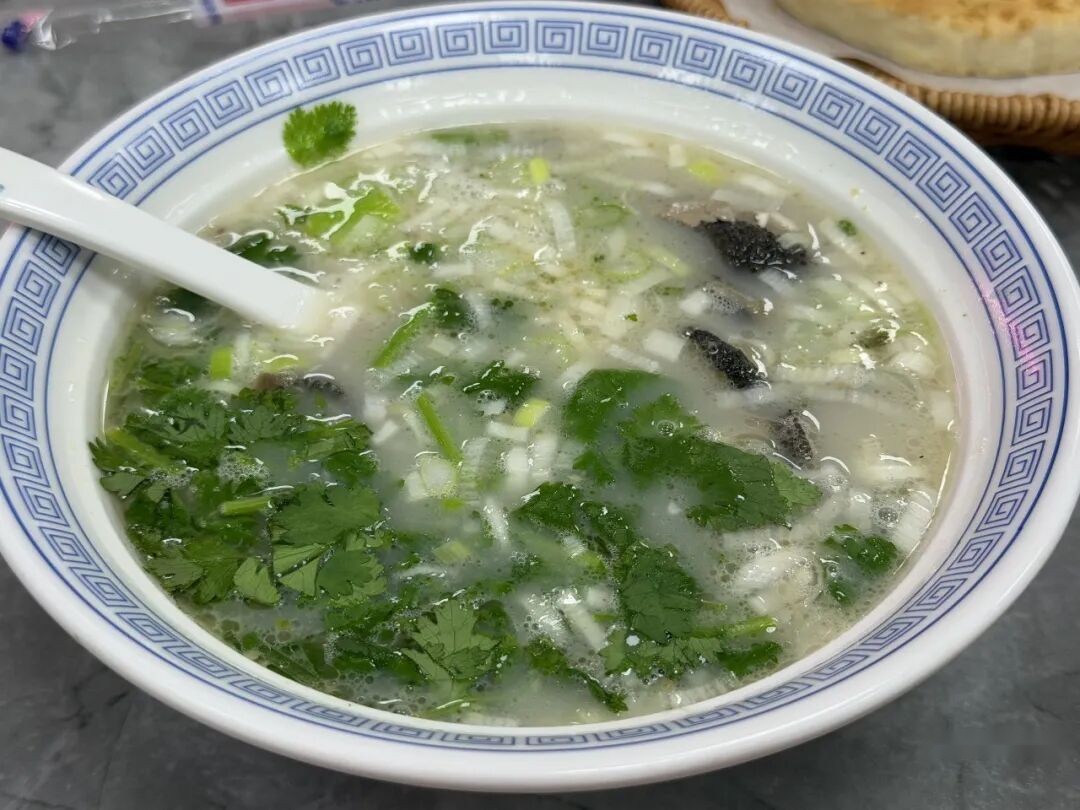
4. Comfort Hotel Halal Buffet
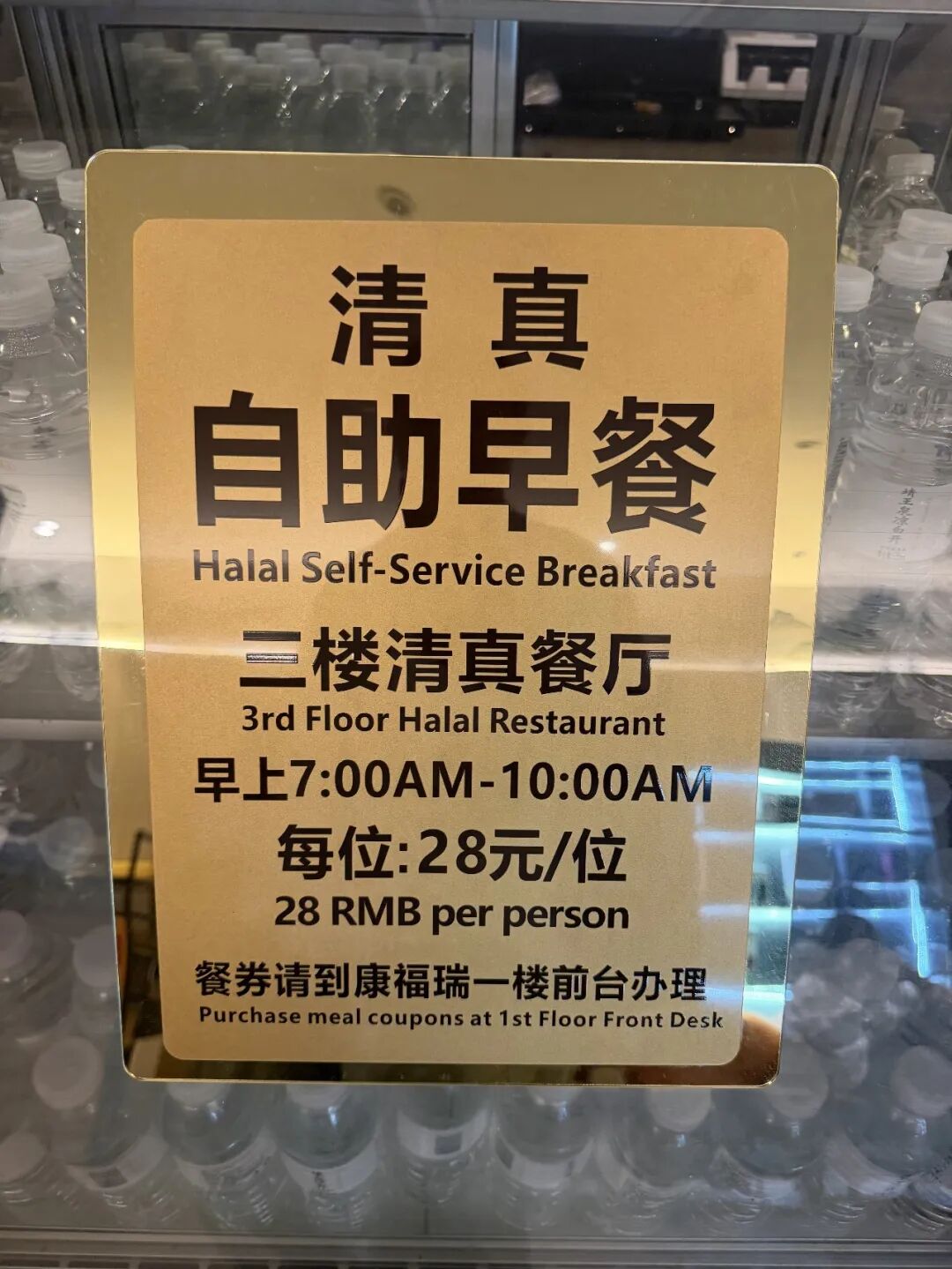
The Comfort Hotel in Niujie is now offering a halal breakfast to the public for 28 yuan a head, with both Western and Chinese options available.
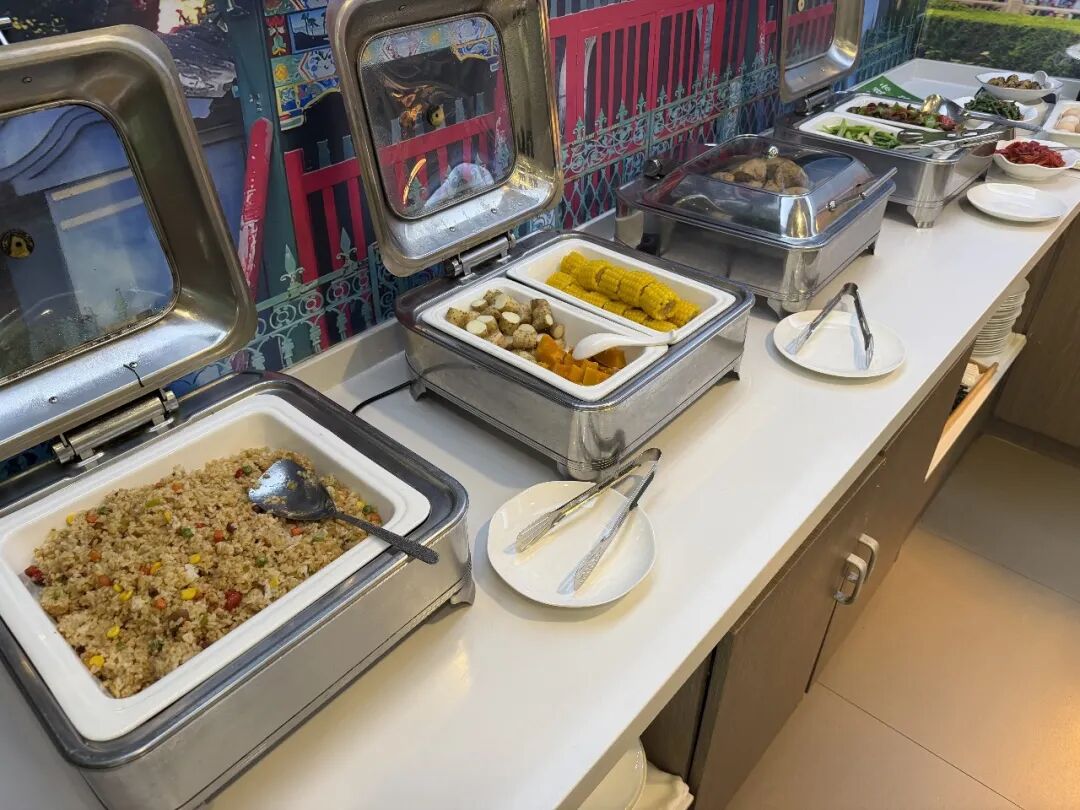
When I posted about this on Xiaohongshu, a lot of people complained that 28 yuan was too expensive and that you're better off ordering a la carte at a restaurant. I really don't get that logic; 28 yuan at a local spot barely gets you a bowl of lamian (hand-pulled noodles), and you’re definitely not getting the variety you get at a hotel breakfast buffet.
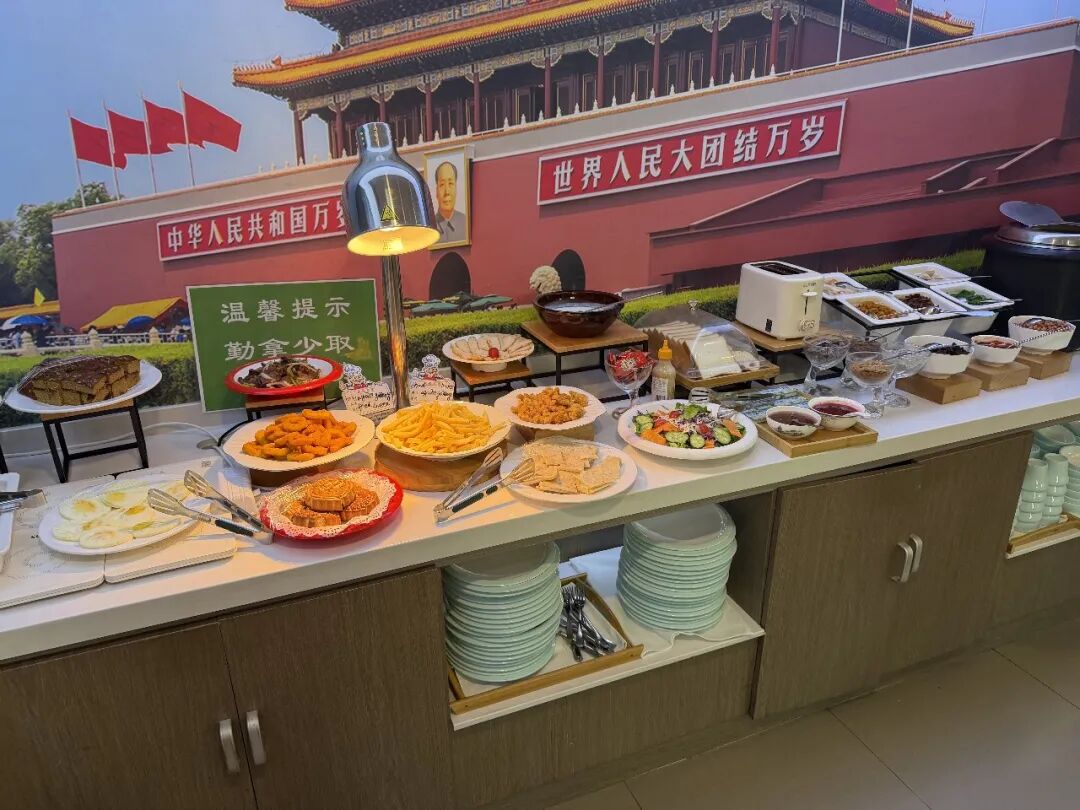
I love hotel breakfasts because the variety lets me eat a balanced and healthy meal. I rarely eat traditional Beijing-style breakfasts anymore—they’re just too greasy and packed with carbs, which I don't think is great for you.
For those 28 yuan, you get everything: veggies, fruit, desserts, milk, eggs, and staples. Plus, it's all-you-can-eat. Seriously, 28 yuan only buys you maybe 5 buns down at Hongji.
Looking at the headscarves the ladies in the back kitchen are wearing, you can tell right away they're from the Northwest.
5. Xizhuanfang Hot Pot Museum
Xizhuanfang is a new hot pot museum in Niujie. It’s spread across three courtyards tucked away in the hutongs (traditional narrow alleyways). The vibe is top-tier—it’s got that classic cultural aesthetic but feels upscale enough for a business meeting.
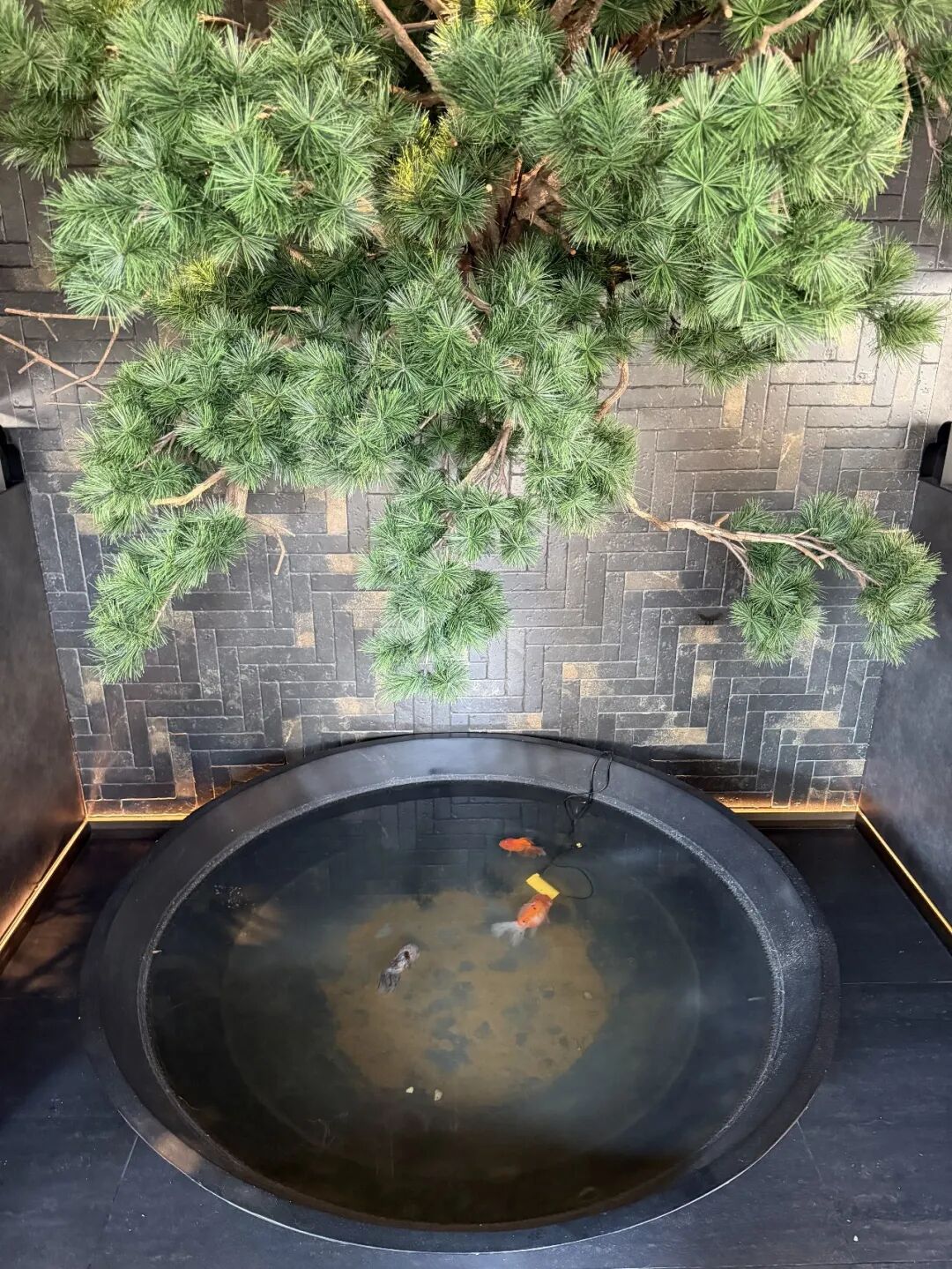
The courtyards are filled with flowers, birds, and fish, and they’ve got a bunch of antiques related to the history of hot pot on display.
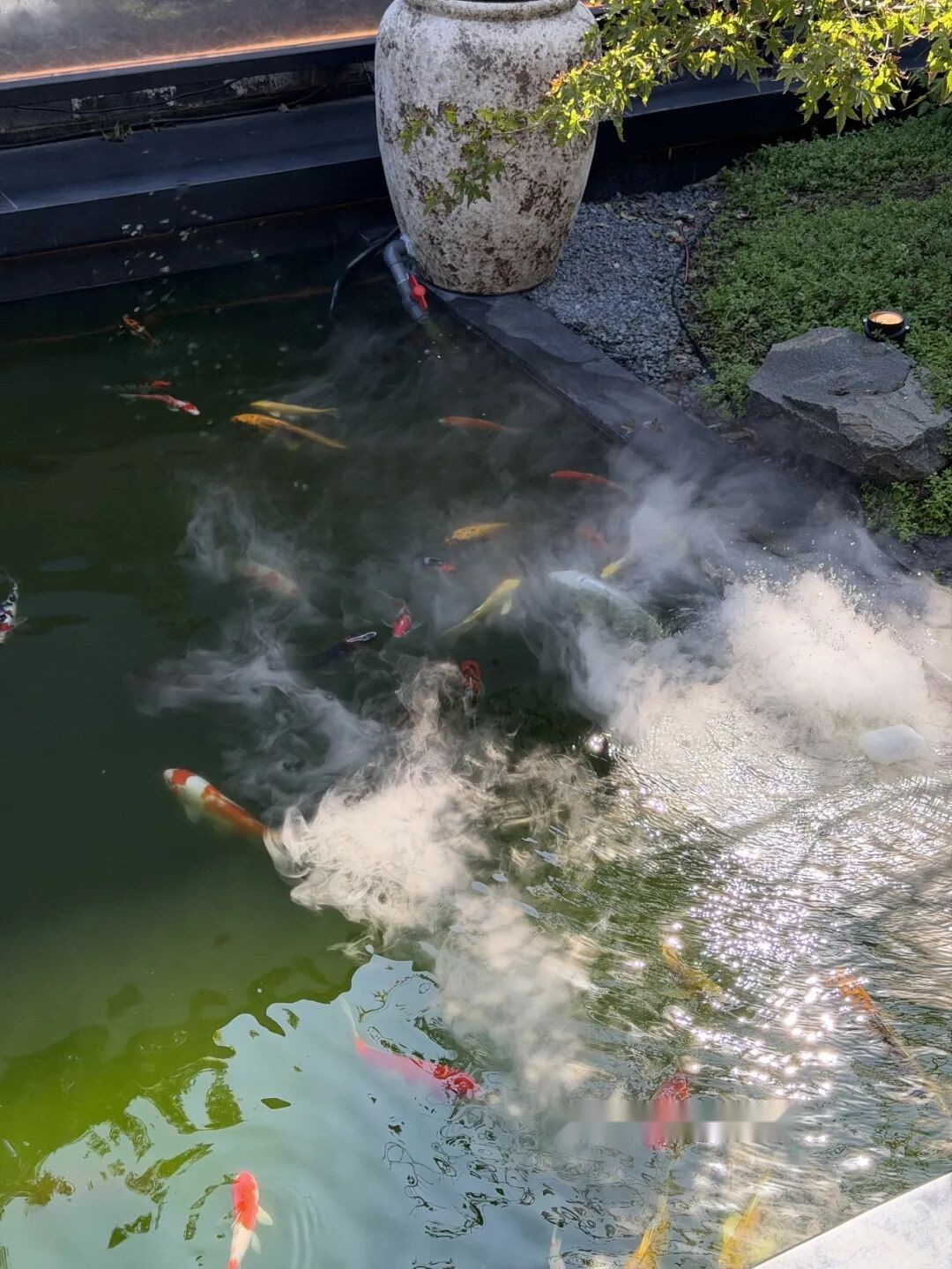
If you follow your GPS, it’ll take you to Courtyard No. 1, which has most of the antiques. Courtyards No. 2 and No. 3 are in a different alleyway and are a bit more quiet and secluded.
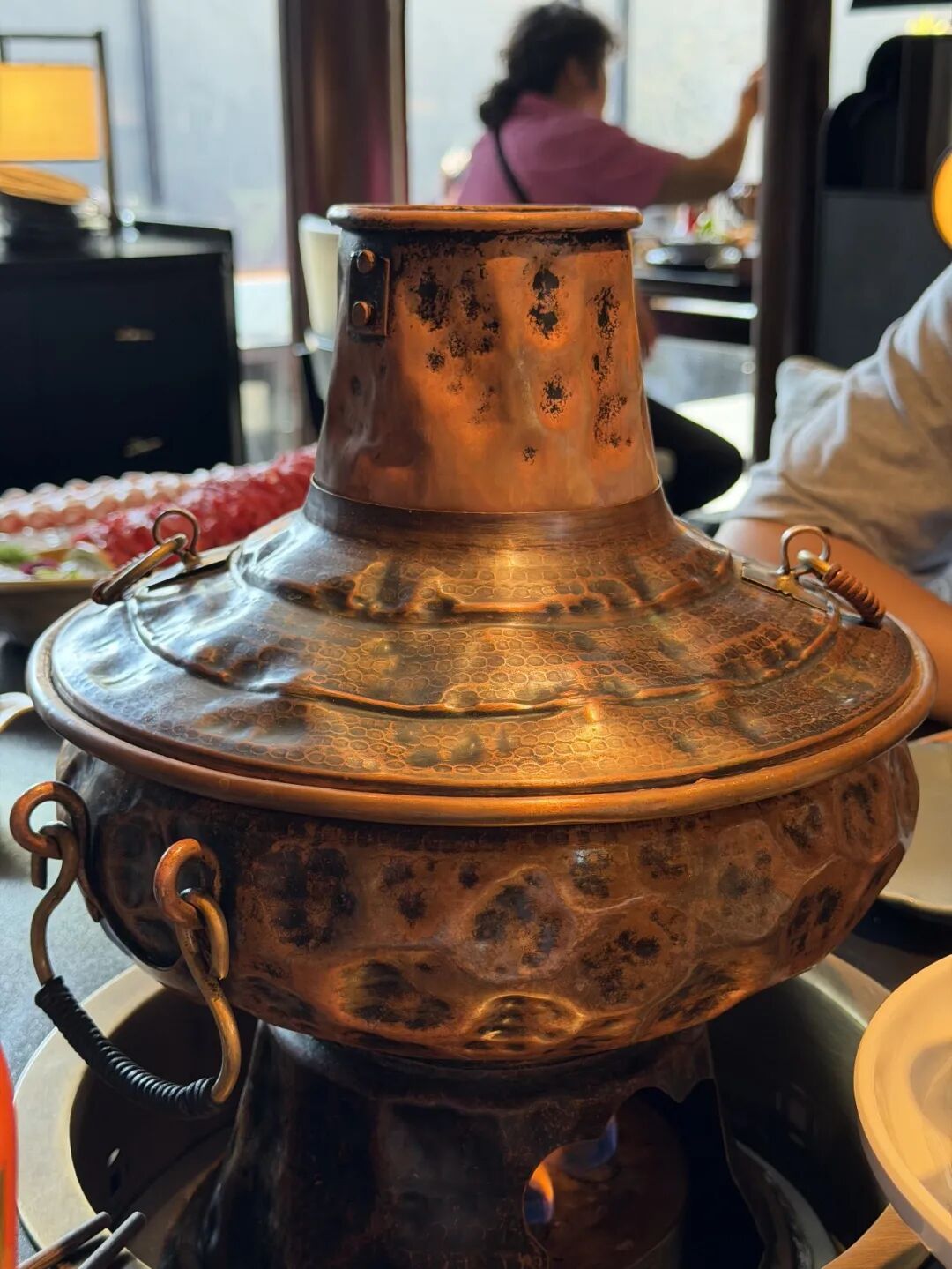
The only downside is that they use alcohol stoves. They give off a bit of an odor, and the heat control isn't great. It would be much better if they switched to charcoal.
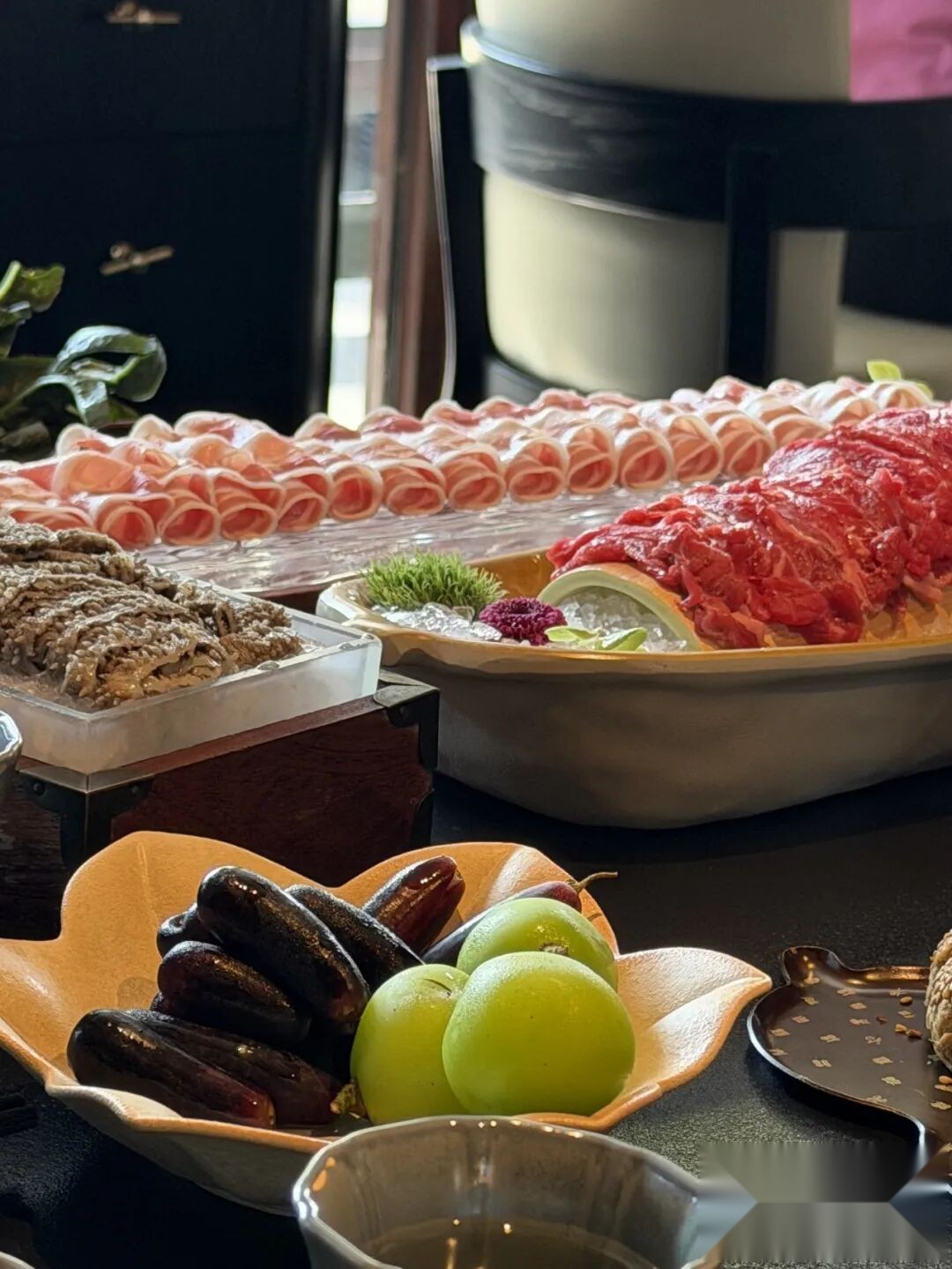
The ingredients are all high quality; they even serve top-tier grapes as a pre-meal fruit plate. Another highlight is their shaobing—you can choose from four types and get a sampler platter. I highly recommend the caramel shaobing; it’s similar to a tang huoshao (brown sugar pastry). Expect to spend at least 150 yuan per person.
6. Zanka Pakistani Restaurant
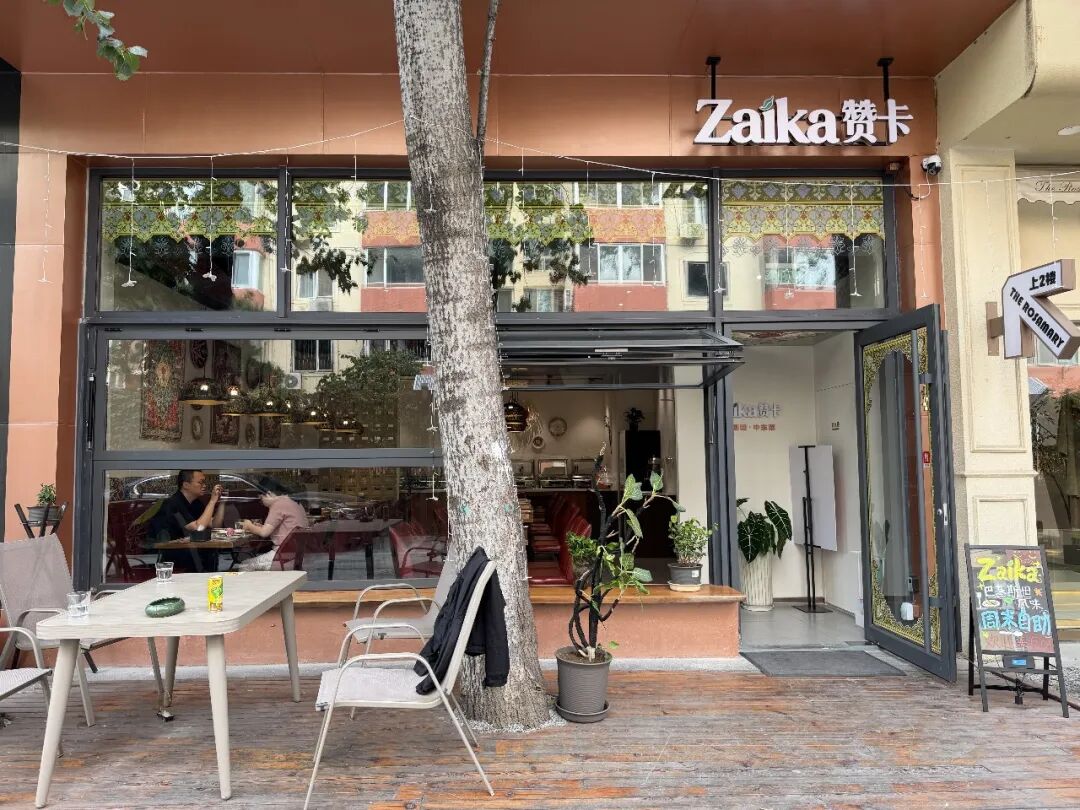
Zanka is a new Pakistani spot in the Chaoyang district that hosts a buffet on Fridays and Saturdays. The space is small, but it’s decorated pretty nicely.
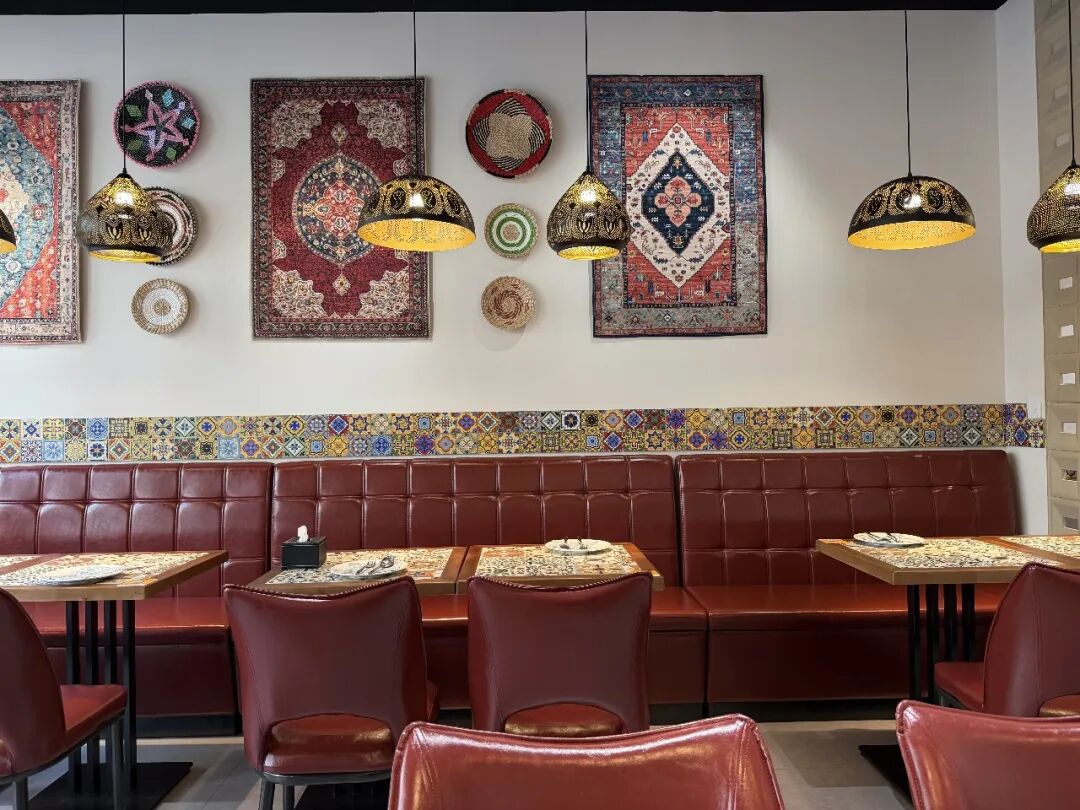
When we went for lunch, there was only one other table occupied, probably because the location is a bit tucked away.
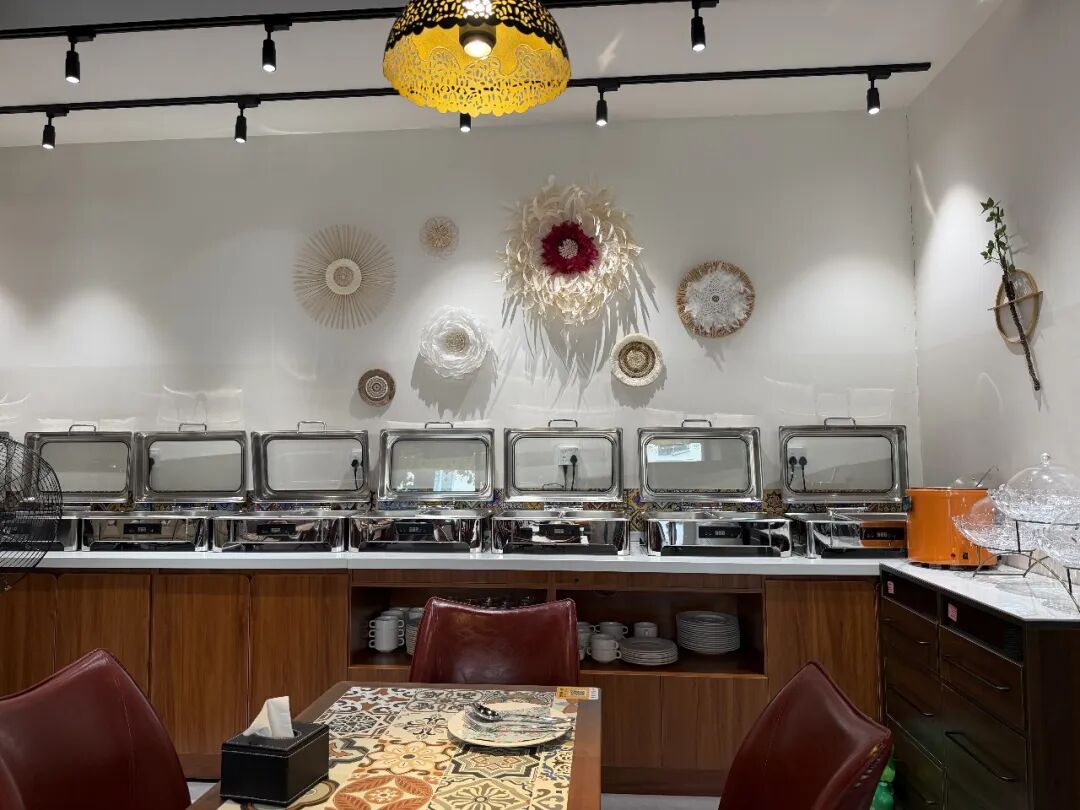
There’s no buffet on weekdays, so you have to order a la carte. The staff are all 'Pak-Tie' (a colloquial term for Pakistani friends) and don't speak Chinese.
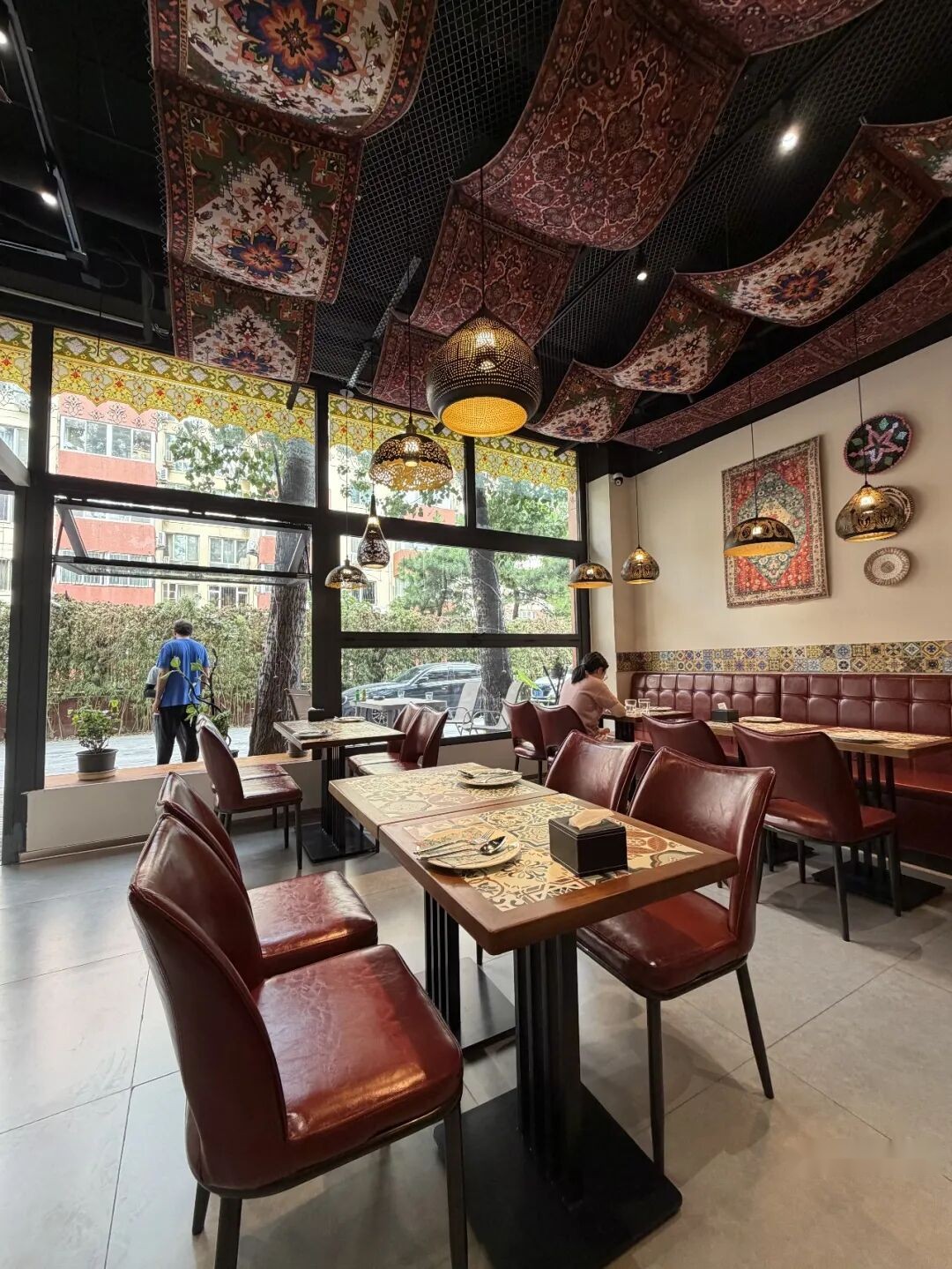
I brought my son along because he’s a huge fan of pani puri (crispy hollow balls filled with spiced water), and I saw it was on the menu.
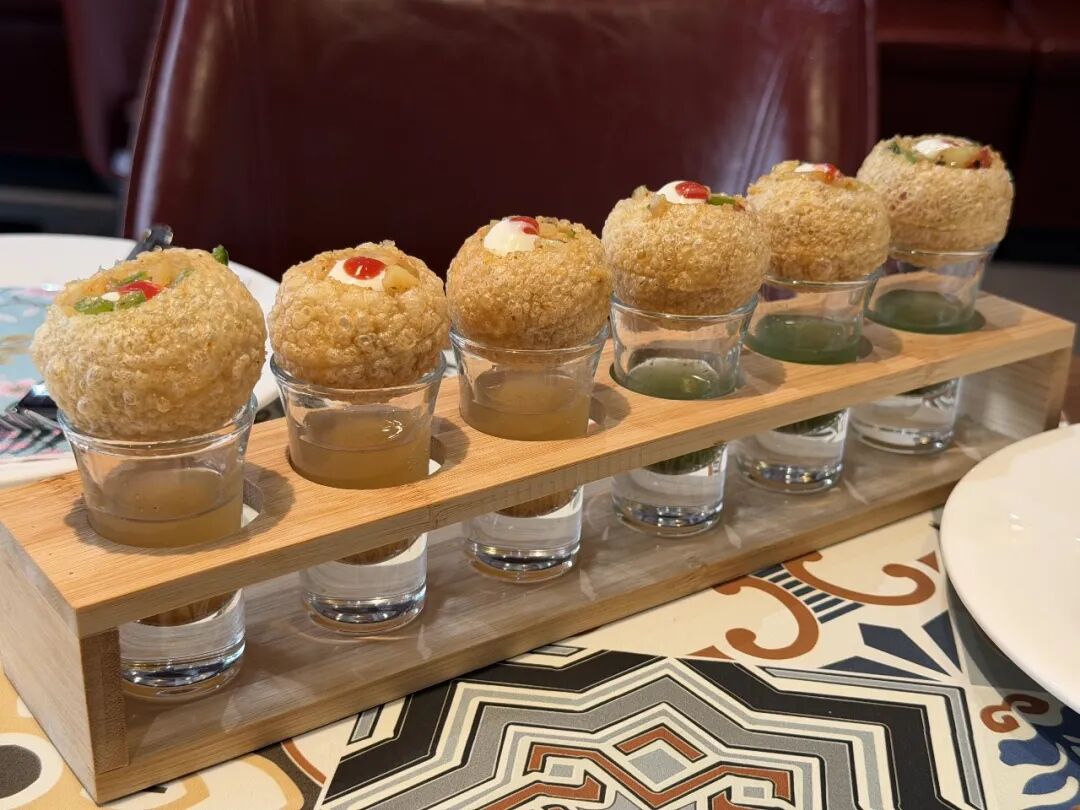
They definitely make the pani puri look pretty, but they weren't crispy and the texture was off, which was a huge disappointment for Fahim.
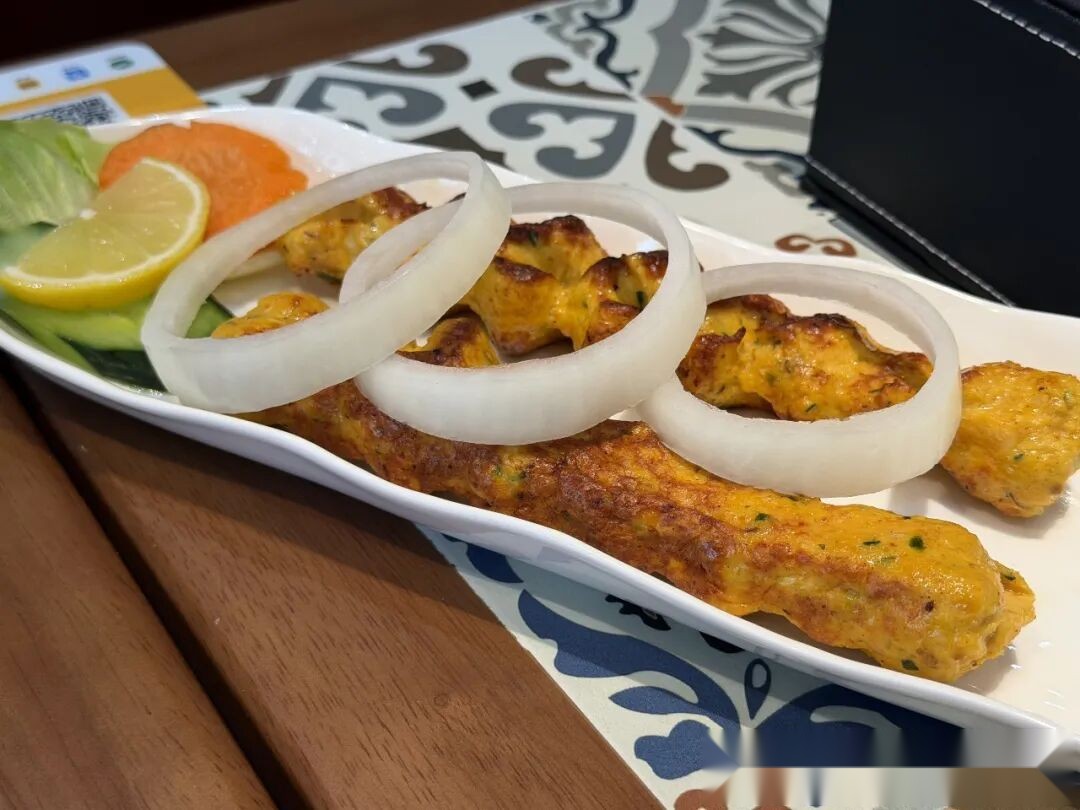
The chicken kebab was actually pretty good—the meat was tender with a nice little spicy kick.
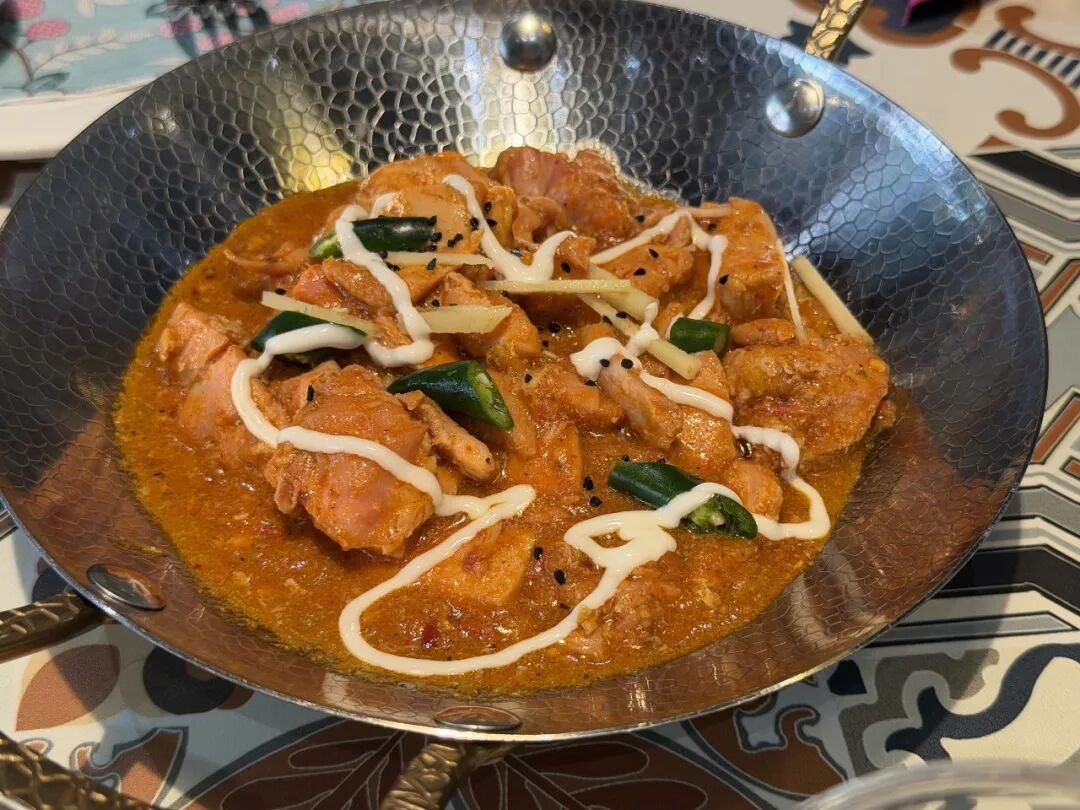
The Peshawar chicken curry was just okay, and the plain naan wasn't really my style. I prefer a thinner, buttery naan. Overall, the food here was a bit lacking, even though the prices are cheap.
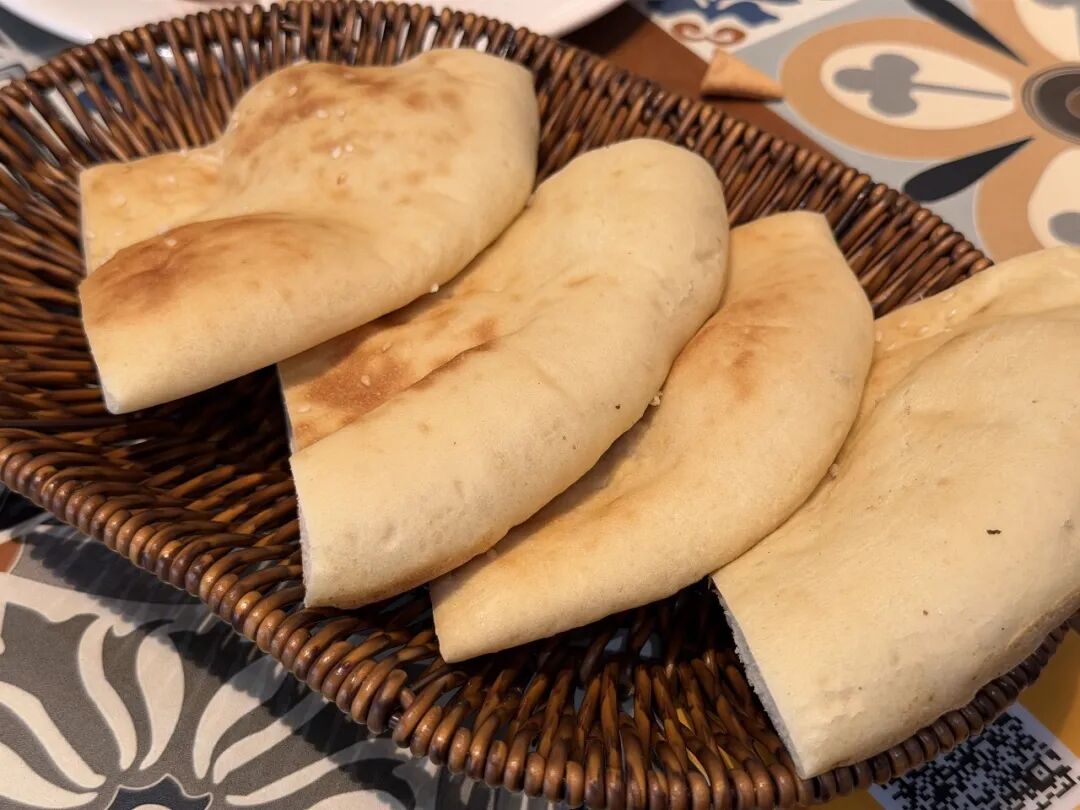
7. Maji Palace Cheese
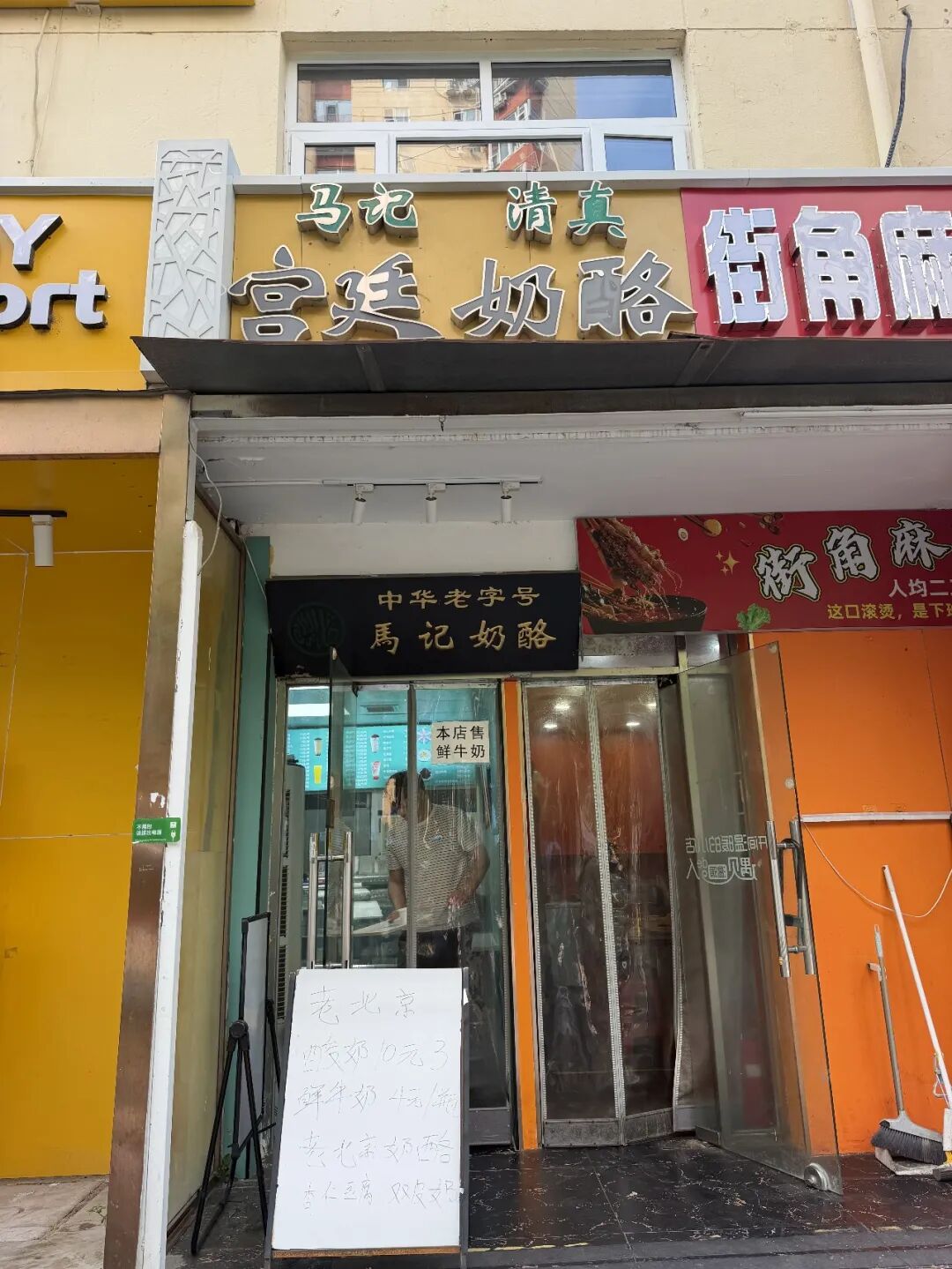
Ma's Dairy has been around for over a decade. Compared to Naolao Wei (a famous dairy shop), it's cheaper and the portions are bigger, but honestly, it doesn't taste as good.
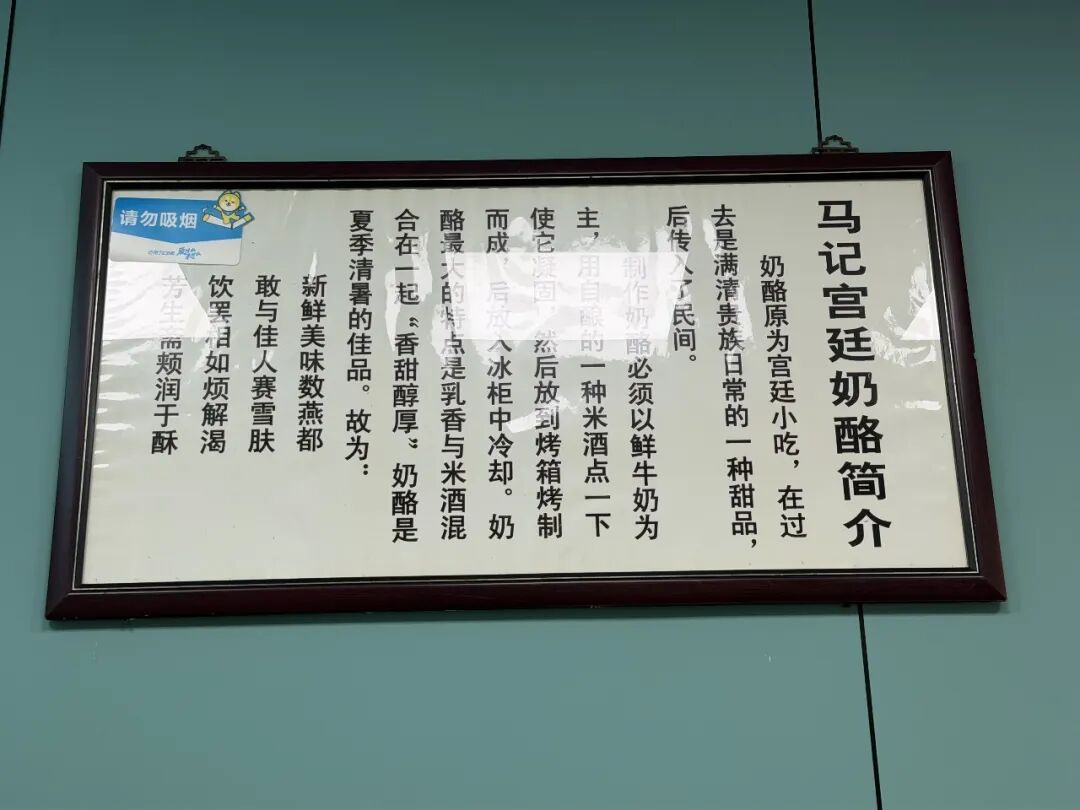
Their guozigan (preserved fruit drink) and dairy treats have a bit of a budget vibe, and the guozigan is super sweet. I still prefer Naolao Wei in Niujie. Ma’s used to have two locations, but the one in Guangqumen shut down, so now there’s only the Nongguangli branch left.
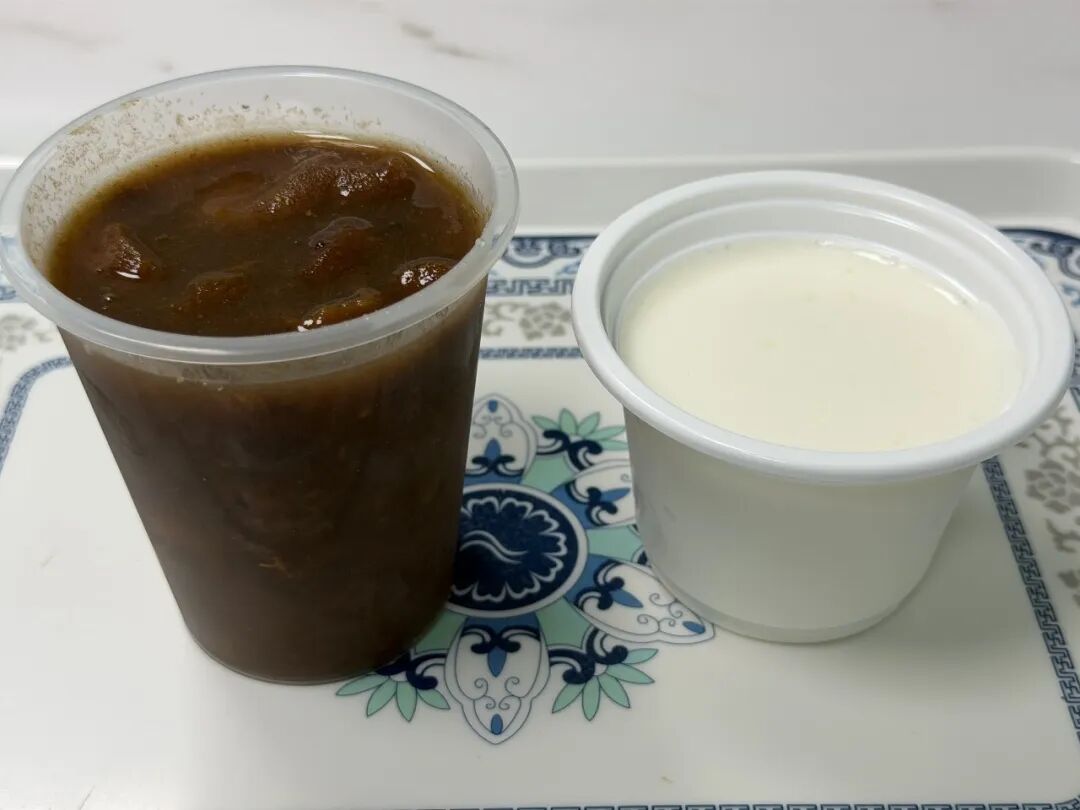
8. Sultan Turkish Restaurant
A new Sultan Turkish Restaurant just opened in the C-Joy City mall—that makes two spots in Beijing now. They’ve already got a huge following with multiple locations across Shanghai, Yiwu, and Guangzhou.
The vibe is pretty decent, though I’d say it’s a notch below Xiting Xiuse, which feels a bit more upscale and elegant.
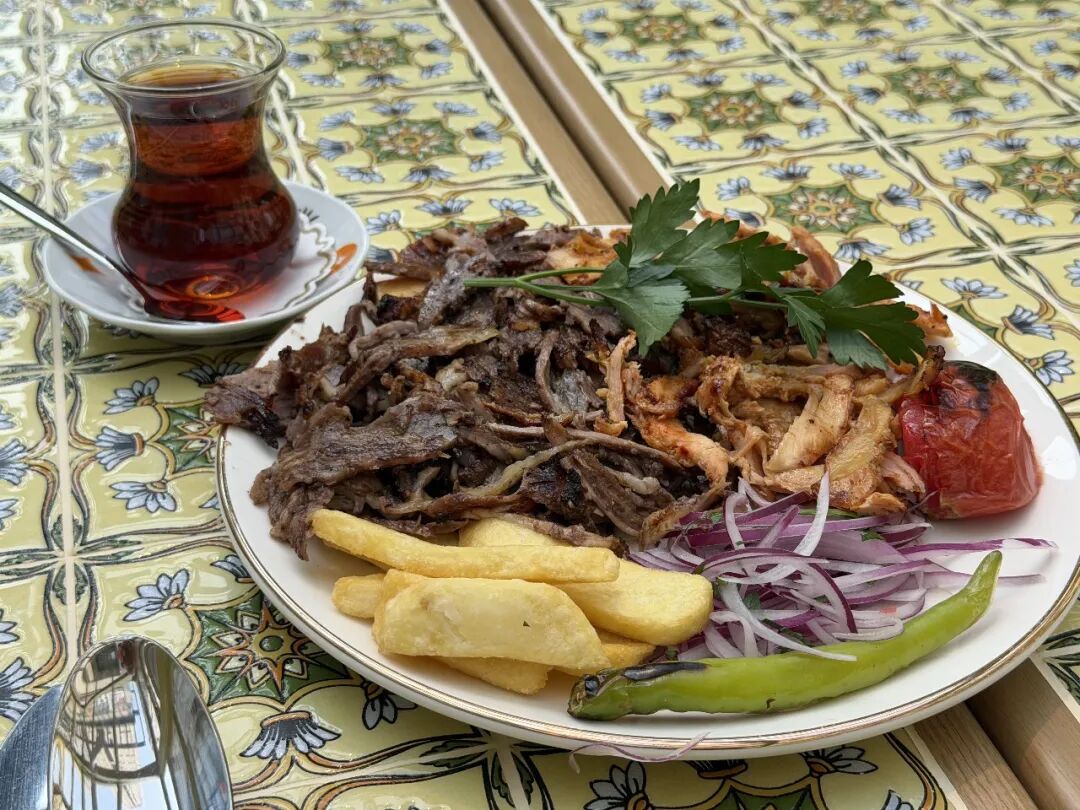
The assorted mixed grill is delicious. I used to grab this kind of Middle Eastern food with my son back when we were in Malaysia because it’s not spicy, making it perfect for kids.
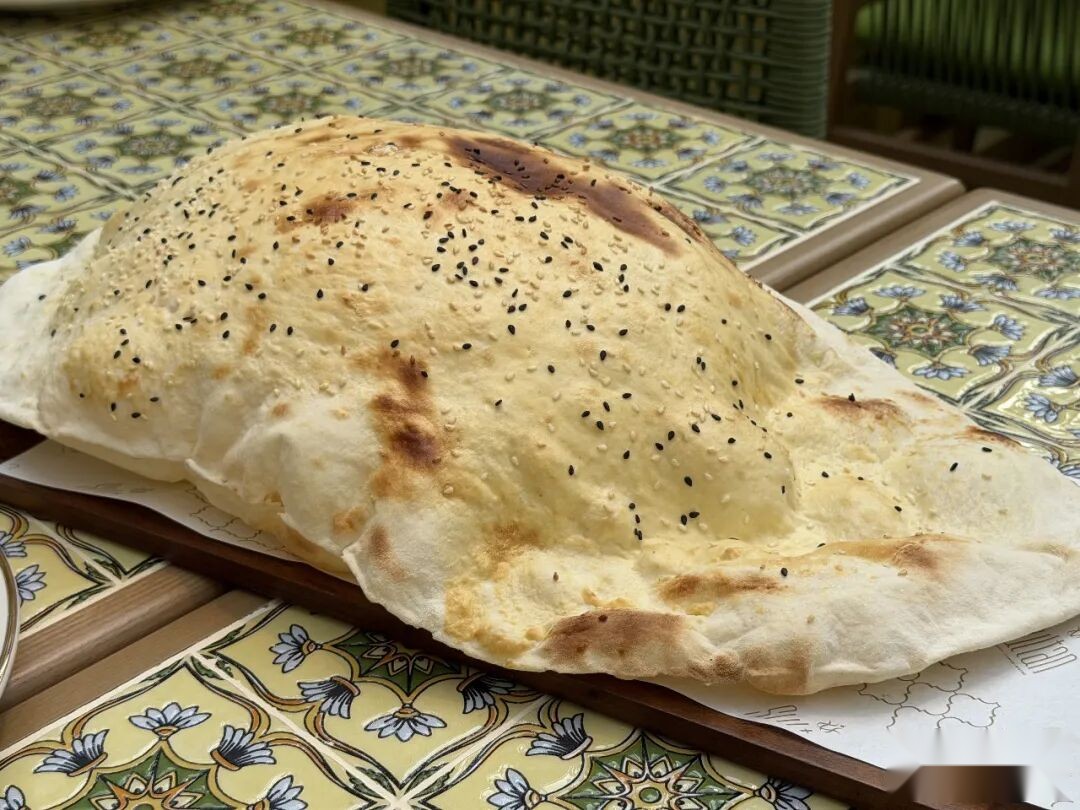
The Turkish balloon bread is another hit with my son; he can easily polish off half of it on his own.
Sultan teamed up with MADO ice cream, so you can get authentic Turkish goat milk ice cream at every location. My son doesn't really appreciate it though—he's not a fan of dairy products—but I personally love the MADO stuff.
9. Bani Restaurant
This newly opened Bani Pakistani restaurant is less than three kilometers away from the Zanka place I mentioned earlier, and they offer an affordable weekday buffet.
The interior is definitely prettier, and the service is more attentive. Plus, the lunch buffet is only 78 yuan.
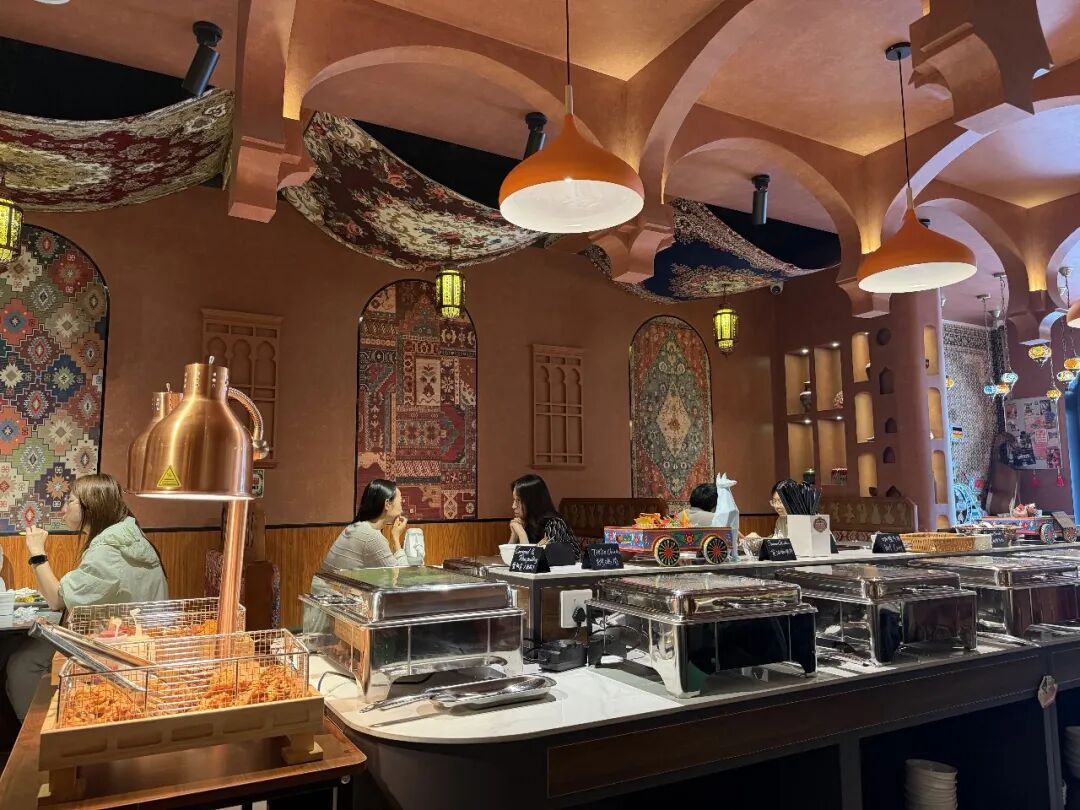
That said, they only have eight dishes for the lunch buffet, and the taste is pretty average. Compared to all the other Pakistani spots in the city, I still prefer the China-Pakistan Friendship Restaurant.
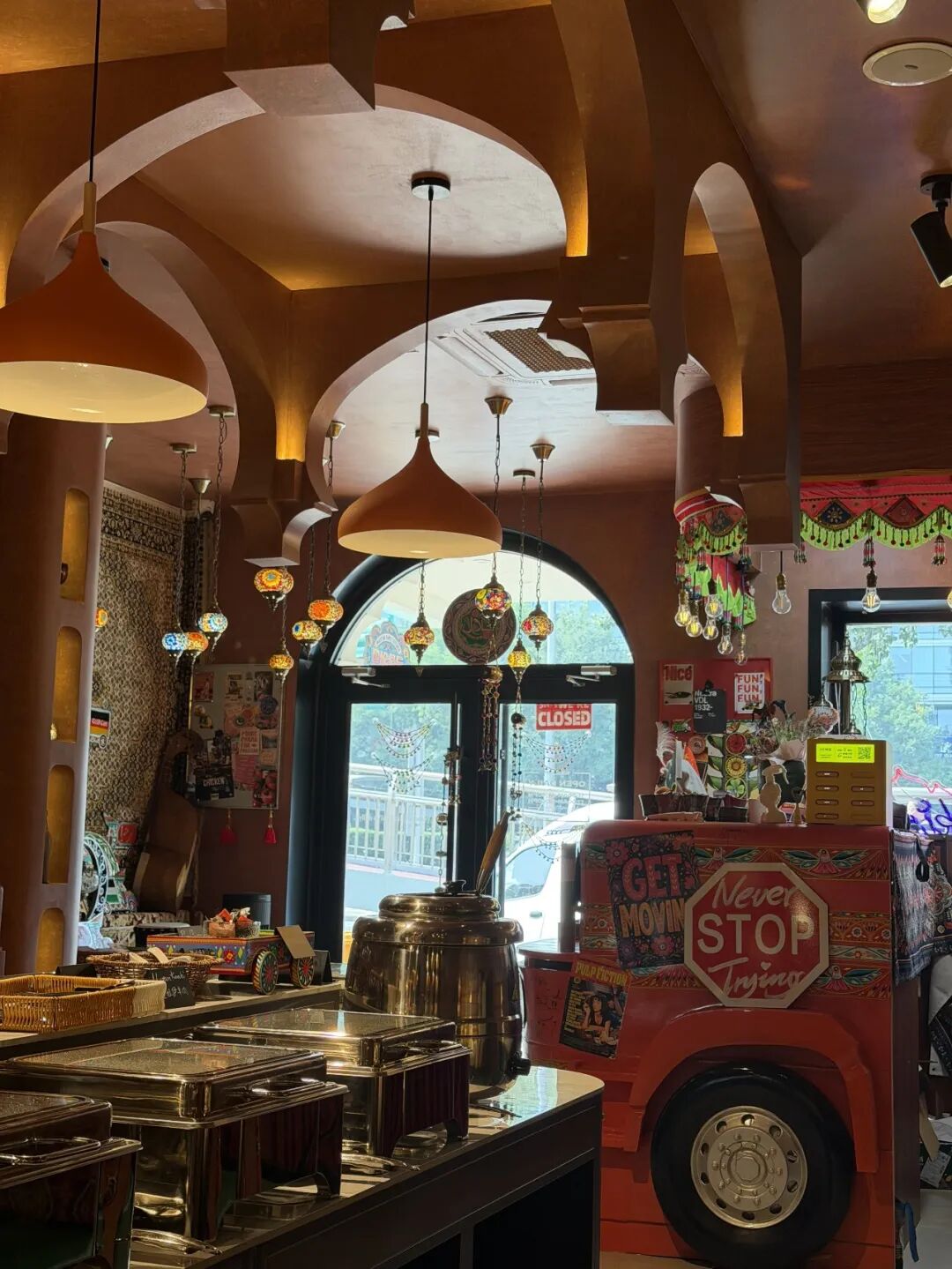
The buffet drinks and the crunchy pani puri (hollow, crispy dough balls filled with spiced water and chickpeas) are a huge hit with my son; he can fill up on those alone.
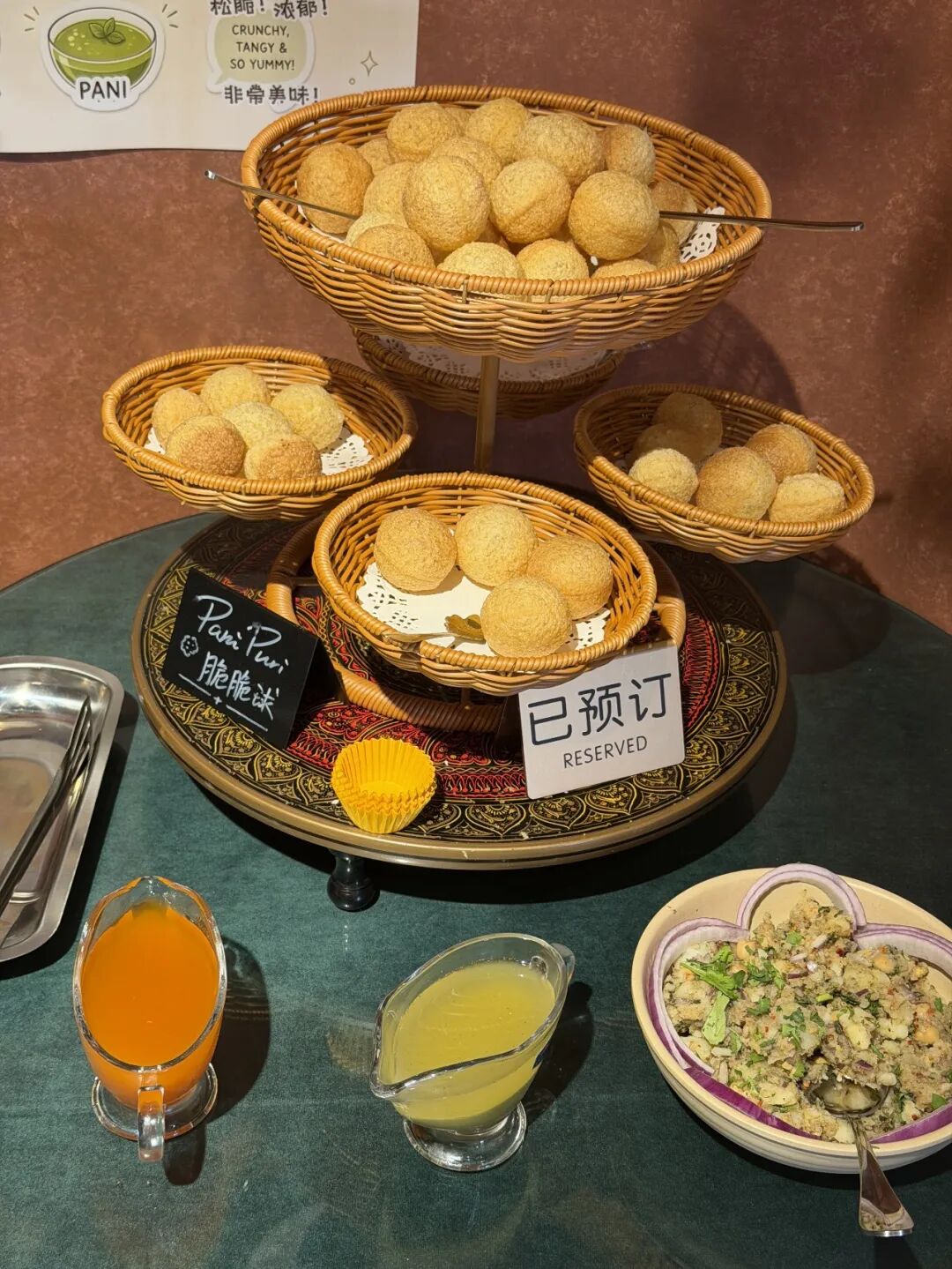
10. Northwest Chencang Mianpi and Liangfen
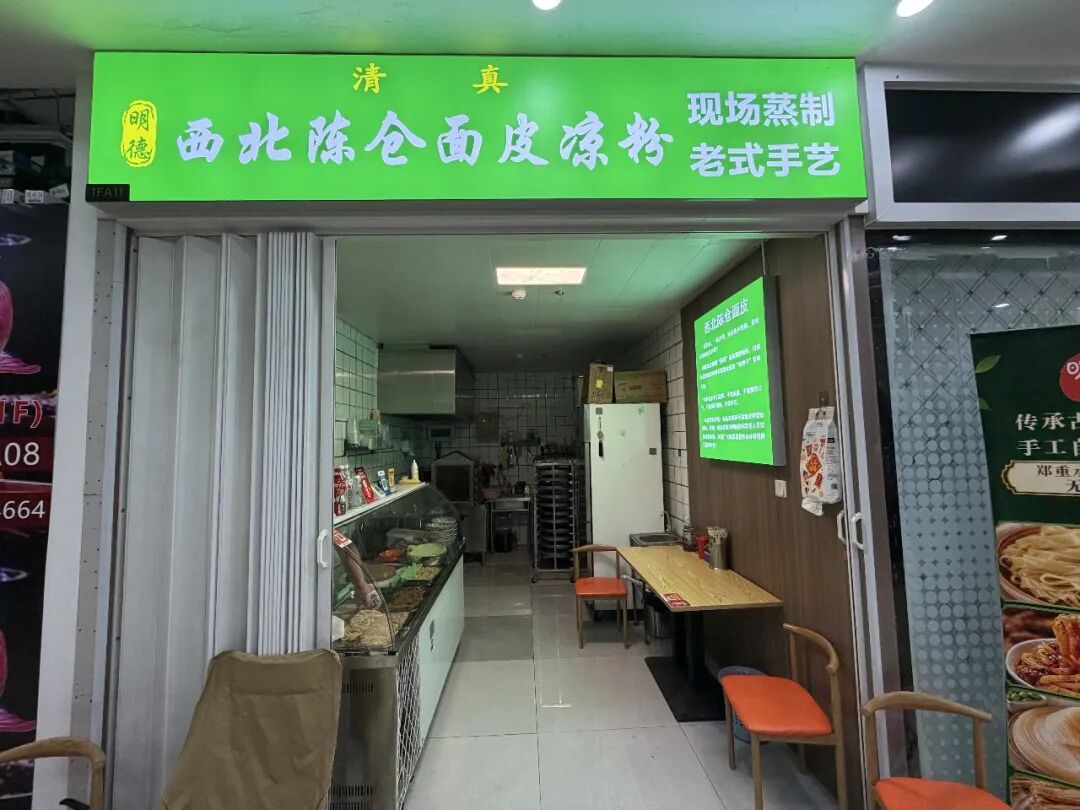
I stumbled upon this Baoji-style liangfen (starch jelly) and mianpi (cold steamed noodles) shop near Madian. 'Chencang' is actually a district in Baoji.
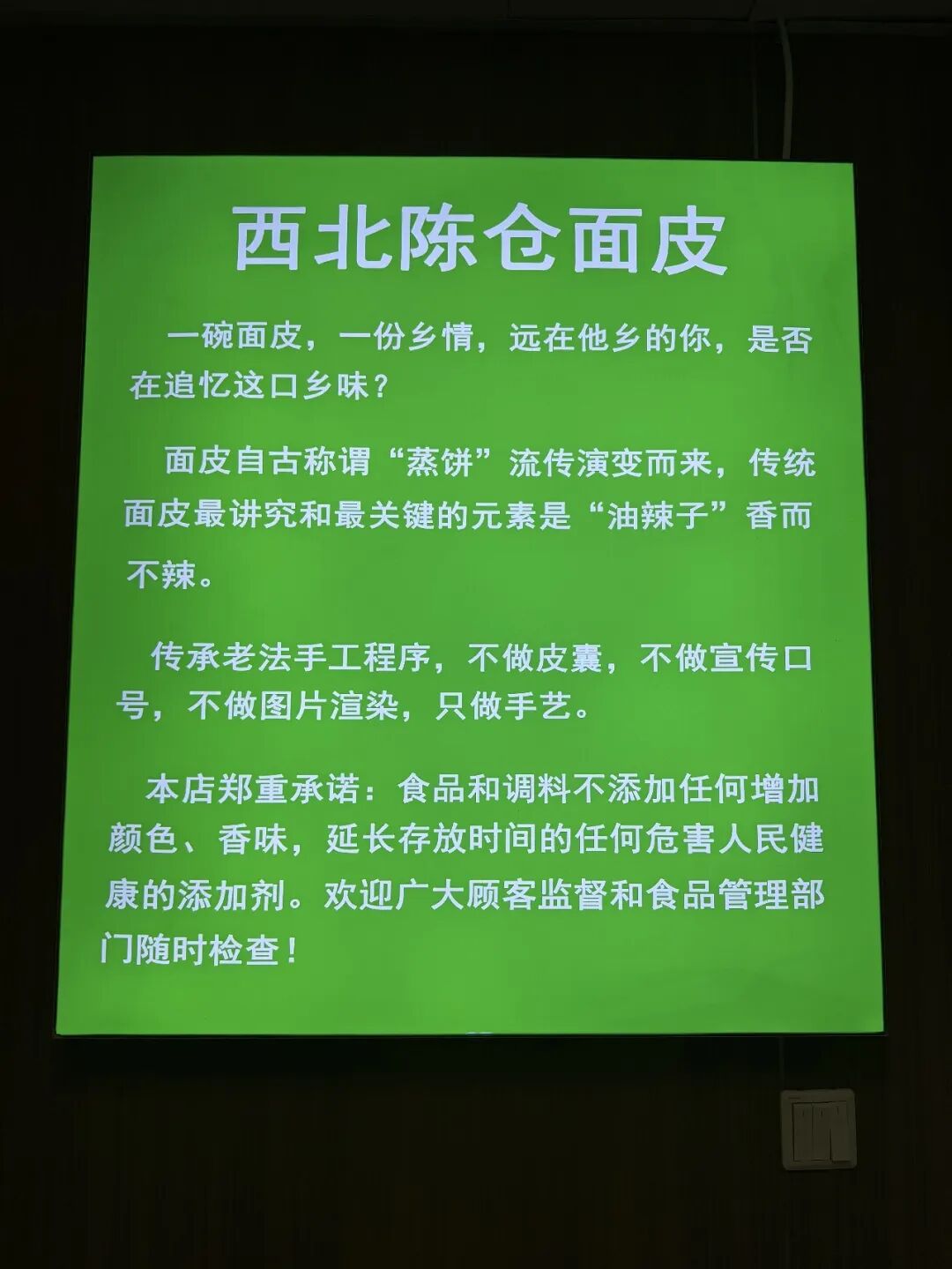
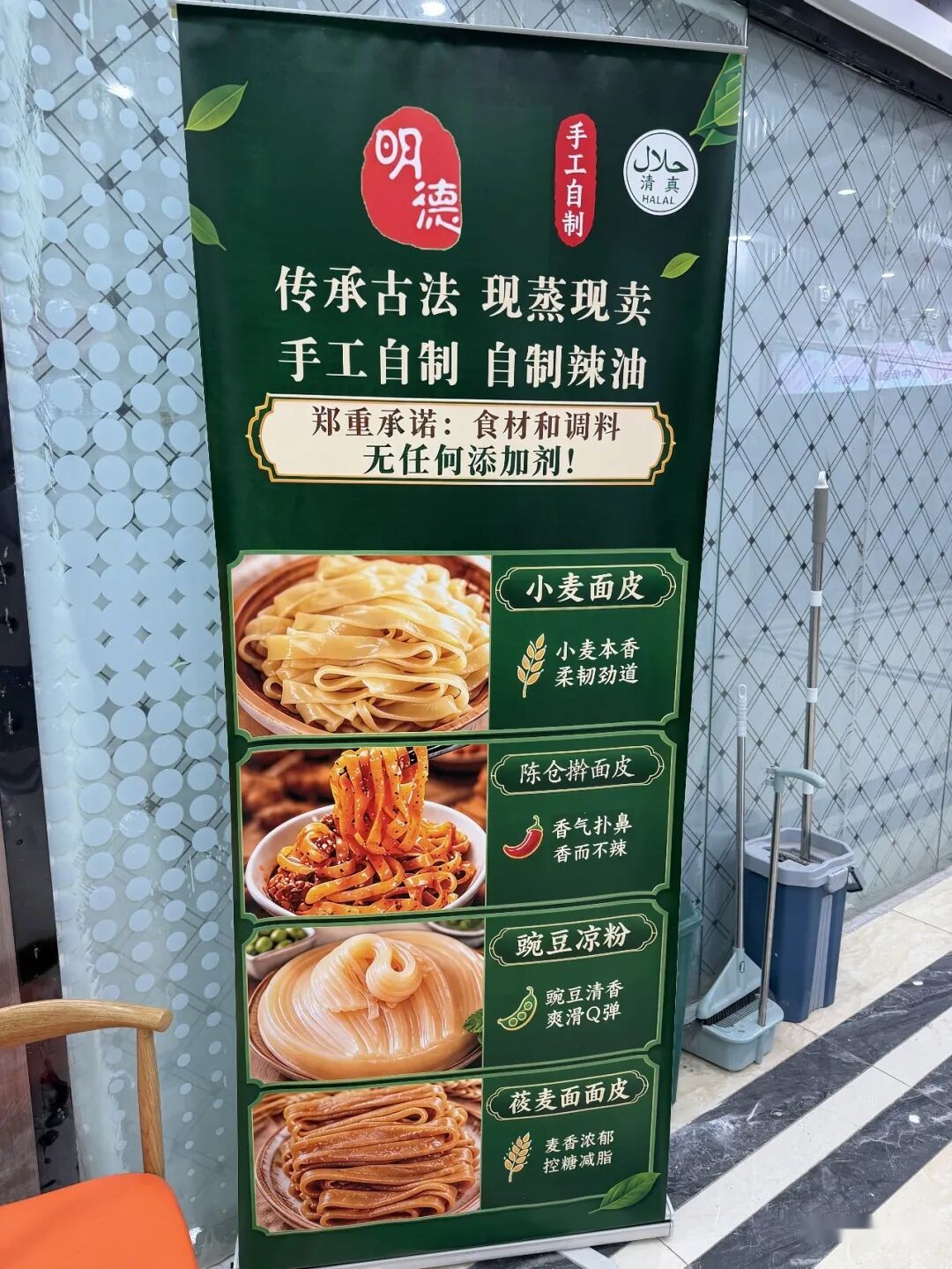
There’s just one uncle running the place, but he’s super friendly. We asked for a two-way combo of mianpi, and he actually made us a three-way combo instead. It was delicious and perfectly seasoned, but it’s definitely more of a snack—you won't be full if you treat it as a main meal.
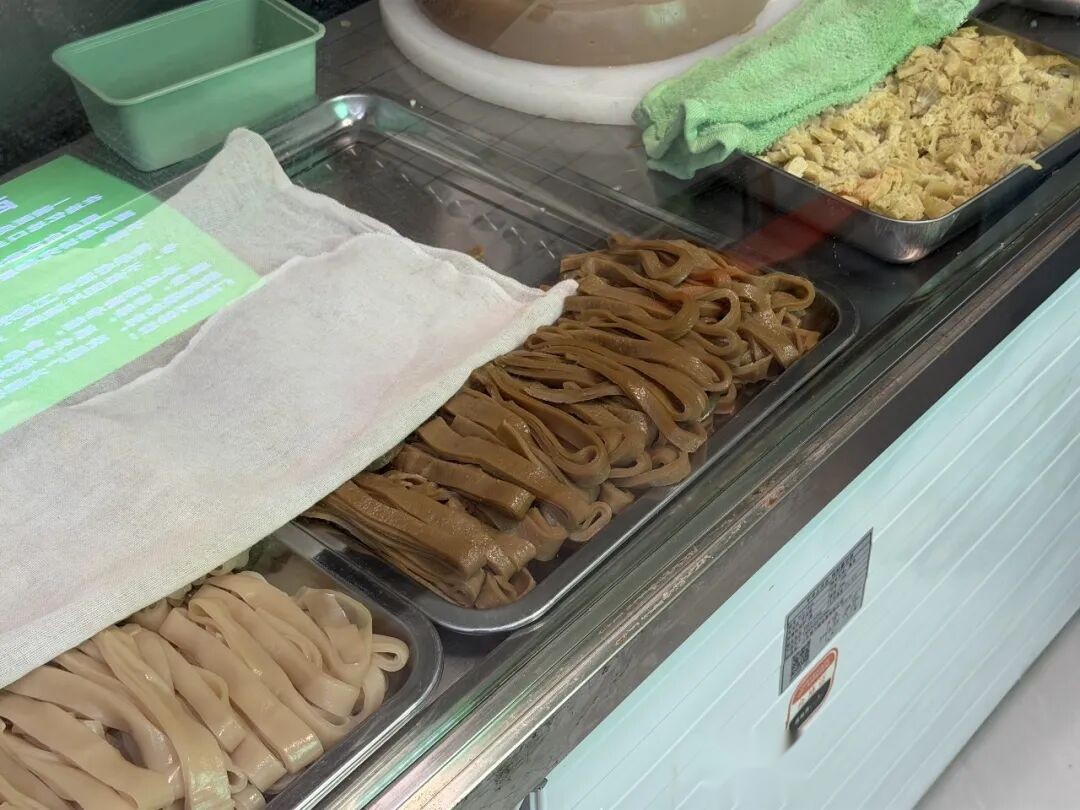
There’s only one table in the whole shop, which is tucked away inside the first floor of the Fulite Business Building. It's not the easiest place to find.
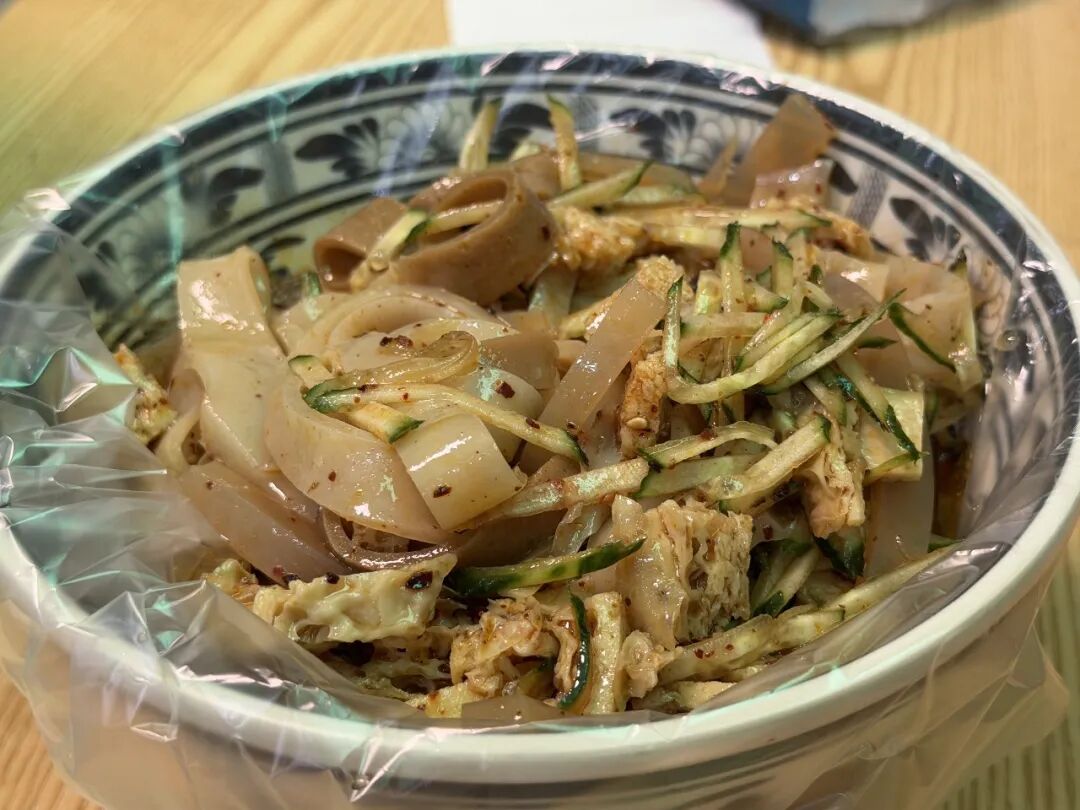
11. Liu's Watch Repair and BBQ
This place looks like a watch repair shop from the outside, but once you step inside, it’s a full-on barbecue joint.
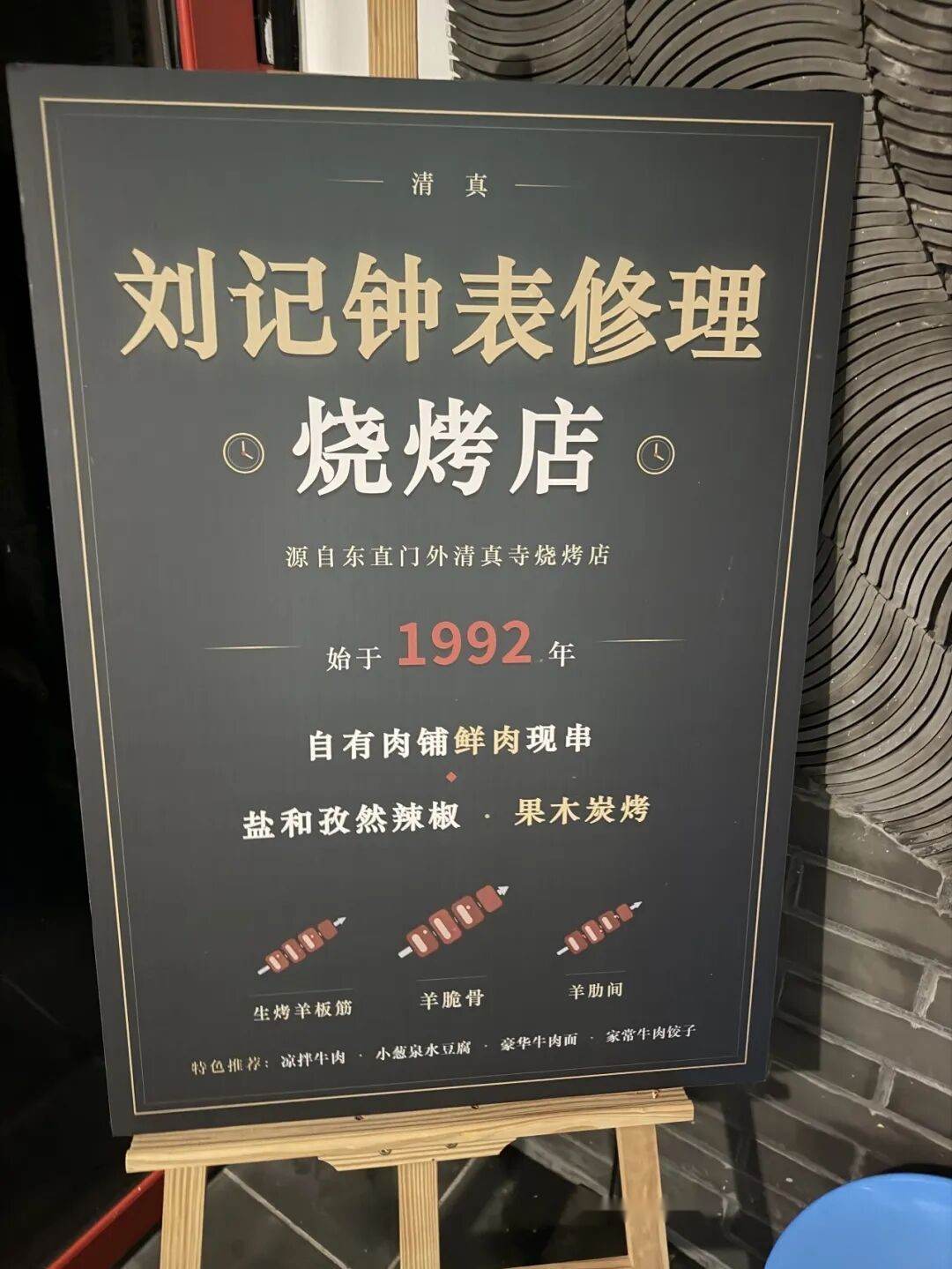
It’s a classic Beijing-style BBQ spot with plenty of space, including both a courtyard and indoor seating. If you sit inside, you're surrounded by all these clocks. Since they’re all set to different times, you’ll hear them chiming and going off every now and then.
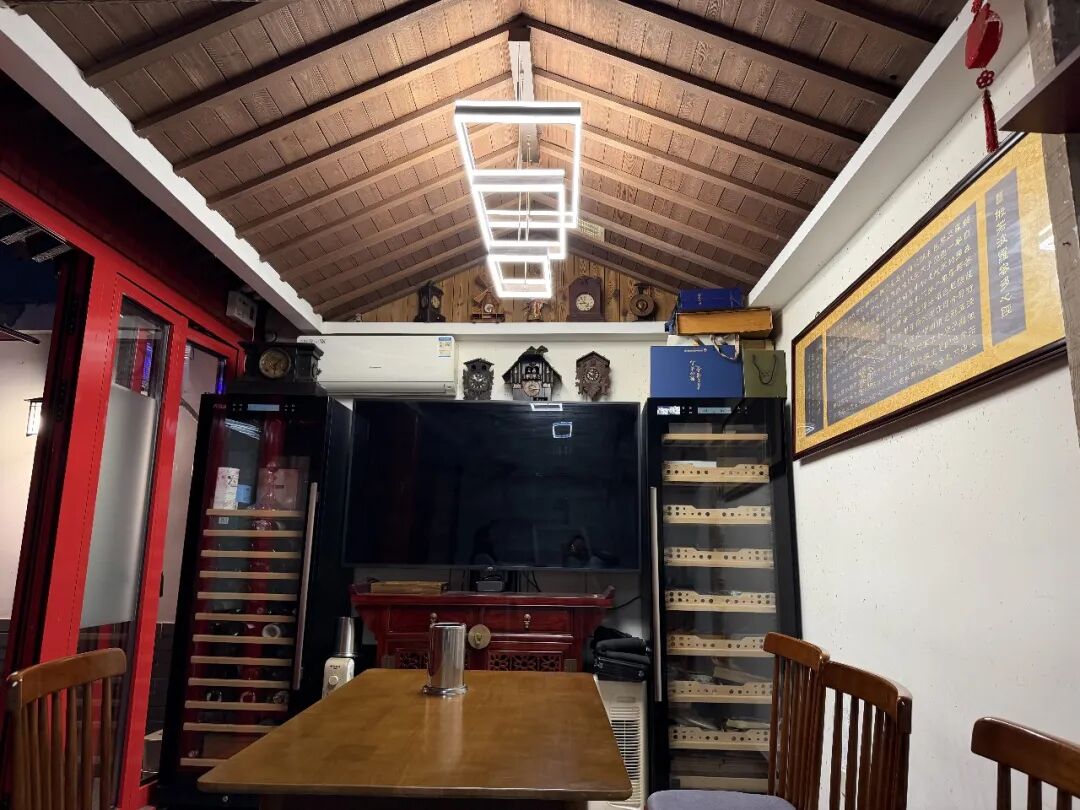
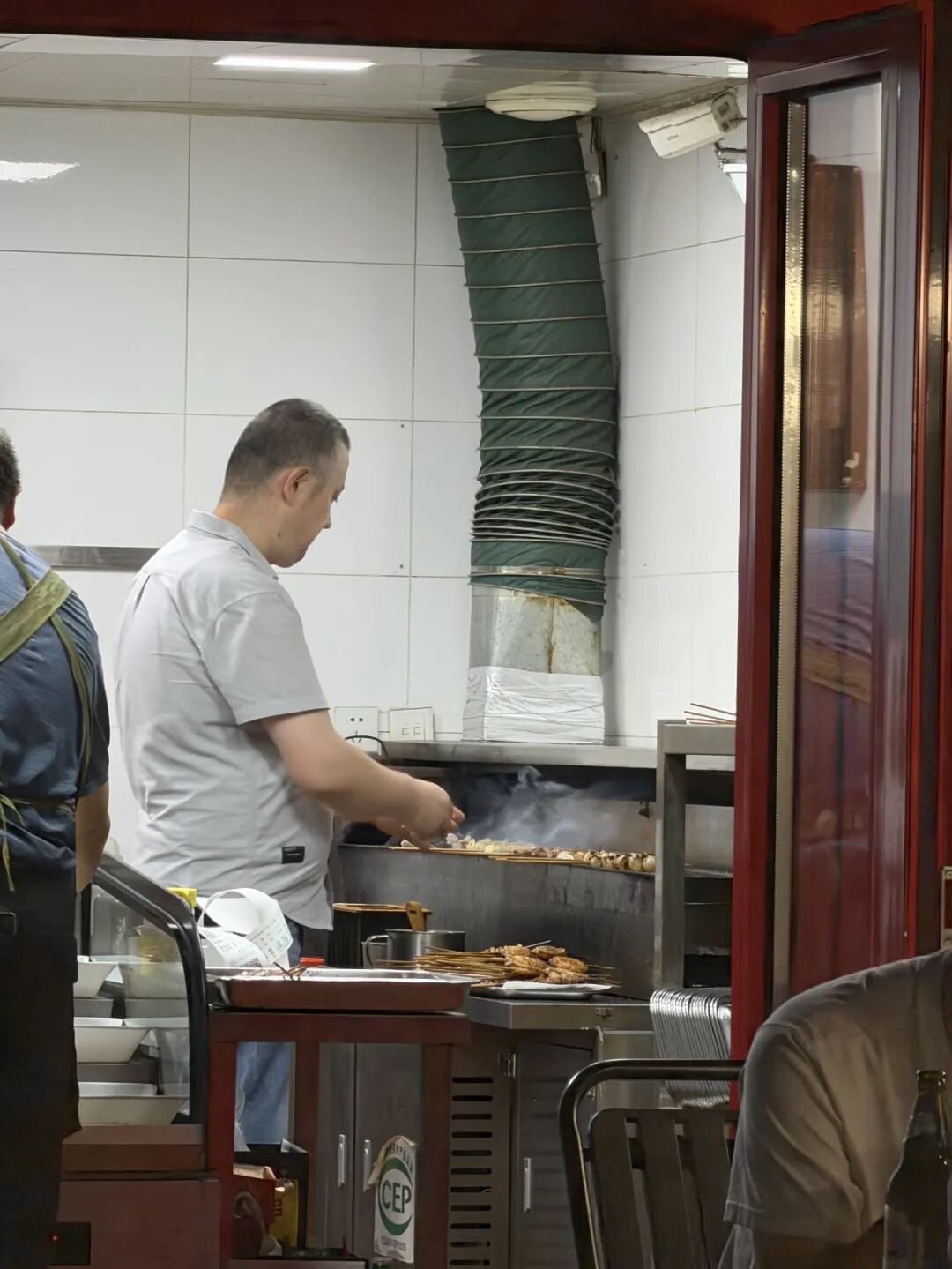
The guy grilling the skewers looks like he's from Xinjiang. Their prices are on the higher side, and since they grill order by order, the service is pretty slow. The beef skewers were a bit tough, the lamb tendon was chewy, and the lamb cartilage lacked flavor. I’d only recommend their lamb rib meat, which is tender—though it’ll run you 10 bucks a skewer.
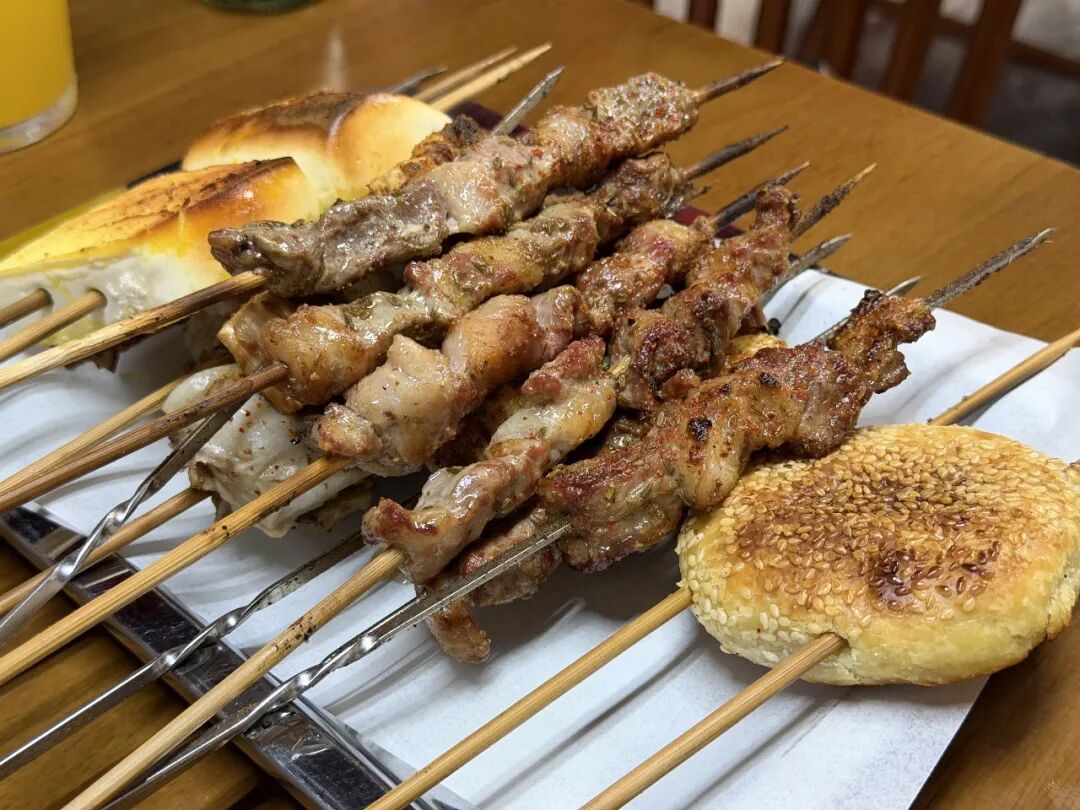
Best Halal Food in Beijing: Authentic Hui Muslim Street Eats and Traditional Beef Noodles Guide
Articles • Hasan09 posted the article • 0 comments • 102 views • 2026-10-26 09:31
I’ve rounded up 65 high-res photos for the 65th installment of my Beijing Halal food guide. We’re deep-diving into local spots like Linfen Beef Meatball Noodles, the Xuanwu Culture-themed restaurant, and Gansu-style barbecue sandwiches to give you the lowdown on the best eats and dining vibes in the city.
Here is the list of Halal restaurants featured in this episode:
1. Linfen Beef Meatball Noodles
2. Zai Xuanwu Cultural Theme Restaurant
3. Gansu Barbecue Sandwich
4. Beijing-style Hot Pot Buffet
5. Ules Kazakh Grassland Flavor Restaurant
6. Yilan Liyuan Angus Beef Noodles
7. RABIUL'S KITCHEN Indian Restaurant
8. Khyber Restaurant
9. Culture Indian & Pakistani Restaurant
10. Cao's Beef Zhaobing (Crushed Pancake)
1. Linfen Beef Meatball Noodles
I finally found authentic Halal Linfen beef meatball noodles in Beijing, and it’s actually run by the famous Bai brand from Linfen. It’s a stall located at the night market right by the Xingong subway station entrance, open from noon until night.
Linfen-style beef meatball noodles use a beef tallow spicy broth. It’s super spicy, kind of like a Sichuan hot pot base.
The noodles are yellow, quickly blanched in the broth, and served—similar to how banmian (flat noodles) are prepared. You can add extra beef, meatballs, mahua (fried dough twists), and veggies. I personally love adding the mahua, meatballs, and beef.
The weather has been pretty cold lately and the night market is empty. I’m not sure how long this stall can hang on, but I really hope they can open a permanent brick-and-mortar shop in Beijing.
2. Zai Xuanwu Cultural Theme Restaurant
Ever since the old Xuanwu District was merged into Xicheng, a lot of locals have been really nostalgic about the past, which is how this restaurant themed around old Xuanwu culture came to be.
Xuanwu Yongcun (Xuanwu Forever) is the title of a popular underground hip-hop track from 2011. I used to have that song on repeat back in the day; the lyrics are great and always bring back a ton of childhood memories.
The message on the chopstick packaging is actually a snippet of those lyrics. 110104 is the old prefix for residents' ID cards in Xuanwu. I’m an 110104, but by my son’s generation, the ID prefix has changed to 110102, with 102 standing for the Xicheng District.
The wall mural in the restaurant depicts the Islamic Scripture Institute of Niujie.
They’ve got old-school Nintendo consoles and black Sega consoles on display, totally capturing the vibe of 80s kids' childhoods.
The restaurant specializes in shuanrou (instant-boiled mutton/hot pot) and yangxiezi (lamb spine hot pot), plus skewers and zhizi kaorou (iron-plate grilled meat). The grill is done in the kitchen and brought to your table. The meat quality is solid, though old-school Xuanwu locals definitely prefer things on the saltier side.
The grilled potato slices and enoki mushrooms in the two-person grill combo are great. The set only costs 92 yuan and comes with two plates of meat—one beef and one lamb—which is a total bargain.
3. Gansu-Style Meat Skewer Sandwiches
There’s a little takeout window at the Jingyaju Hotpot spot in Guangwai where a lady from Gansu sells grilled meat skewers tucked into flatbread. It’s strictly takeout, but I’m a huge fan of these Gansu-style sandwiches where you can pick whatever fillings you want.
She also makes spicy latiao (spicy gluten sticks) and potato-filled steamed buns, and the youxuan bing (layered scallion oil pancakes) at the bottom are super tasty too.
4. Beijing All-You-Can-Eat Halal Hotpot and BBQ
A new halal AYCE (all-you-can-eat) hotpot and BBQ place just opened by the South Gate of Olympic Forest Park. It’s perfect for grabbing a meal after hanging out at the park with the kids all day, plus kids under a meter tall eat for free.
The dinner buffet is 113 per person and it’s loaded with options, with the real highlights being the seafood, crab, and grilled durian.
Here you’ve got two types of slushies where you can add your own toppings, and there’s an ice cream machine right next to them.
The crabs are served live, and since it’s in season, they’re packed with roe.
The grilled durian pieces might be on the smaller side, but you can eat as much as you want, which makes it a win.
You grab your own hotpot ingredients and beef or lamb, while the raw skewers for the grill are set out for you to pick, then you hand them to the kitchen to get them cooked up.
The ingredients are pretty fresh, the variety is solid, and the drinks are all-you-can-drink too.
5. Ules Kazakh Grassland Flavors
A restaurant serving authentic Kazakh cuisine recently opened near the Beijing Institute of Technology’s Liangxiang campus, run by three sisters from the Kazakh community.
Their specialty dishes include naryn (horse meat noodles), baursak (fried dough balls), potato slices, and kuirdak (a traditional meat stew). Since the space is tiny, they don't prep huge batches, so it’s best to call ahead and order what you want, otherwise you might miss out.
The shop only has three and a half tables, so their capacity is limited—by 7 PM, most of the food is usually sold out.
You can tell just by looking at them that these ladies are definitely Kazakh, and the food they put out is genuinely delicious.
I got the veggie pilaf because all the meat versions were already gone.
Baursak is a classic Kazakh snack people usually have with milk tea for breakfast; the texture is a lot like youxiang (savory deep-fried dough).
Their homemade noodles with diced meat are incredible—the noodles have a great chew, and you get one free refill, with any extra refills only costing three yuan.
The Kazakh-style potato slices are pretty spicy, and they’re cooked down until they’re super tender.
They also serve Kazakh-style salty milk tea, which usually comes with naipizi (milk skin), though they were all out that day.
The dish I had to wait the longest for was the horse meat naryn. The horse meat is firmer than beef with a coarser texture, and the 'naryn' refers to the way it’s tossed with the noodles.
6. Yilan Liyuan Beef Noodles
Yilan Liyuan just opened a new beef noodle shop in Baizhifang, featuring their signature Angus bone broth beef noodles.
Yilan Liyuan is originally a famous beef and mutton shop on Niujie Street that’s turned into a major viral hit, and now they’re even serving electric-grilled skewers and American-style burgers.
Their electric-grilled skewers and burgers are pretty good, but the beef noodles and rice bowls with grilled meat are just so-so.
7. RABIUL'S KITCHEN Indian Restaurant
Run by Indians, this Kolkata-style Indian restaurant features an owner who used to work as a head chef in many hotel restaurants.
Kolkata Indian cuisine blends Hakka Chinese elements, and their curry has a really rich and mellow flavor.
8. Khyber Restaurant
Khyber is a Pakistani restaurant located in Liangxiang. There's another Pakistani brother restaurant nearby, but I feel this one has a more authentic taste.
Beijing has recently seen quite a few new Pakistani restaurants open up close together. Each spot has its own vibe, and once you try enough of them, you can really tell the difference.
The grilled meat here is also solid. Pakistani folks are basically like the northwestern Chinese of the international scene, opening restaurants all over the world.
Remember that Pakistani biryani rice is always spicy—that's how you tell it apart from Arab rice dishes.
The taste of the naan bread can also totally show off the chef's skill level.
9. Culture Pakistani and Indian Restaurant
This spot is in Sanlitun right next to Han Baba Pakistani Restaurant. I've never really understood why they love clustering their shops together, but it doesn't seem to hurt their business. Honestly, very few Pakistani and Indian restaurants in Beijing go out of business these days.
The interior setup feels more like a lounge bar and even has a stage for live music.
The dish prices are super cheap, and you can usually eat here for under 100 RMB per person.
These kebab skewers have a bit of a kick to them, whereas Turkish kebabs are non-spicy.
Comparatively speaking, this place offers a wider variety of dishes and has a much more spacious setup. Plenty of people show up for lunch.
Their naan bread is extra fragrant, but the pani puri (crispy hollow spheres filled with spiced water and potatoes) shown in the picture below wasn't great. My son doesn't like the fillings inside them and only wanted to eat the empty shells, but even the empty shells here weren't crispy.
10. Cao Family Beef Zhaobing
Cao Yunjin has opened a bunch of new restaurants lately—some Halal and some not—mostly clustered over in Wangsiying. I thought it was too far and didn't want to wait in long lines, so I skipped those. However, this Cao Family Beef Zhaobing (pan-cured flatbread shredded and stir-fried with beef) opened a new branch in You'anmen, and since it's close by, I came to check it out.
The new location is pretty big, and with it being the opening period, it's super busy. Even if you come for dinner, you still have to wait for a table.
However, the staff's service is prompt and keeps up with the crowd, and the zhaobing tastes pretty authentic. Having tried beef zhaobing in Baoding before, I'd say the flavor here is pretty standard—the ingredients are clean and fresh, and it tastes much like any other good spot.
Their beef steamed dumplings and Governor tofu are both delicious too. The steamed dumplings are genuinely awesome, and they're only 18 RMB a portion.
After the meal, I randomly ordered two little desserts: one was peach gum soup, and the other was mung bean paste soup. They were super generous with the ingredients, and the total bill for this whole spread came out to under 100 RMB. The value for money is seriously high. view all
I’ve rounded up 65 high-res photos for the 65th installment of my Beijing Halal food guide. We’re deep-diving into local spots like Linfen Beef Meatball Noodles, the Xuanwu Culture-themed restaurant, and Gansu-style barbecue sandwiches to give you the lowdown on the best eats and dining vibes in the city.
Here is the list of Halal restaurants featured in this episode:
1. Linfen Beef Meatball Noodles
2. Zai Xuanwu Cultural Theme Restaurant
3. Gansu Barbecue Sandwich
4. Beijing-style Hot Pot Buffet
5. Ules Kazakh Grassland Flavor Restaurant
6. Yilan Liyuan Angus Beef Noodles
7. RABIUL'S KITCHEN Indian Restaurant
8. Khyber Restaurant
9. Culture Indian & Pakistani Restaurant
10. Cao's Beef Zhaobing (Crushed Pancake)
1. Linfen Beef Meatball Noodles
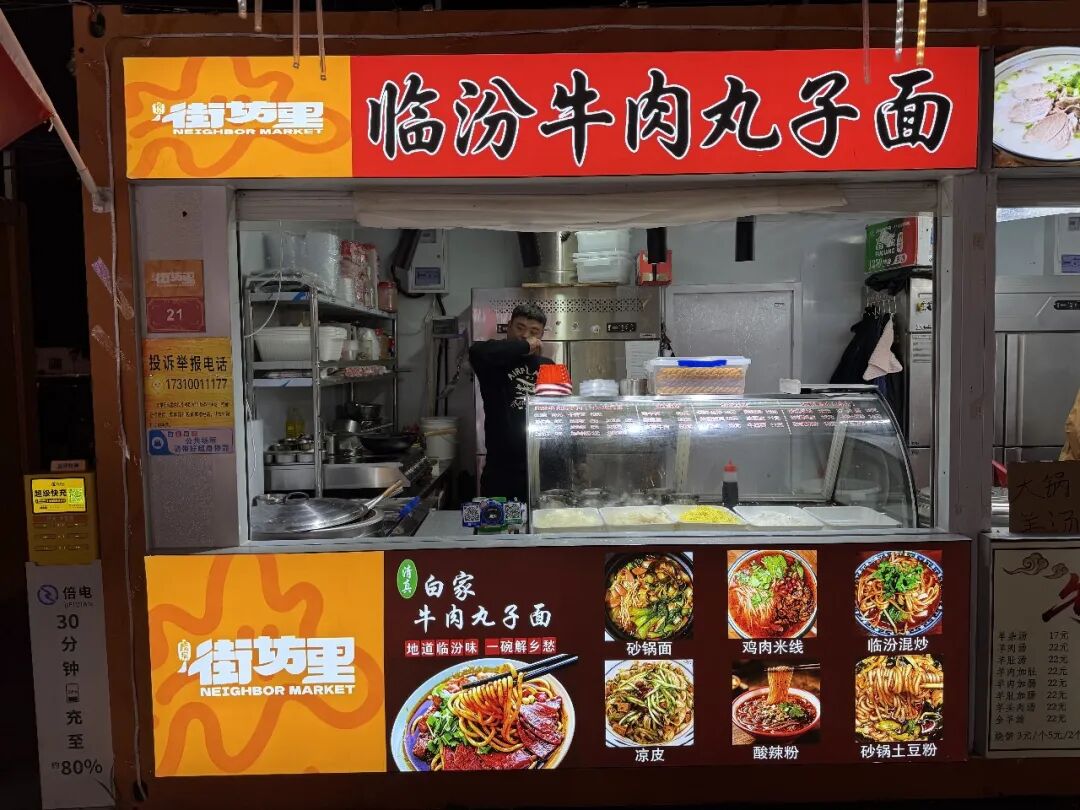
I finally found authentic Halal Linfen beef meatball noodles in Beijing, and it’s actually run by the famous Bai brand from Linfen. It’s a stall located at the night market right by the Xingong subway station entrance, open from noon until night.
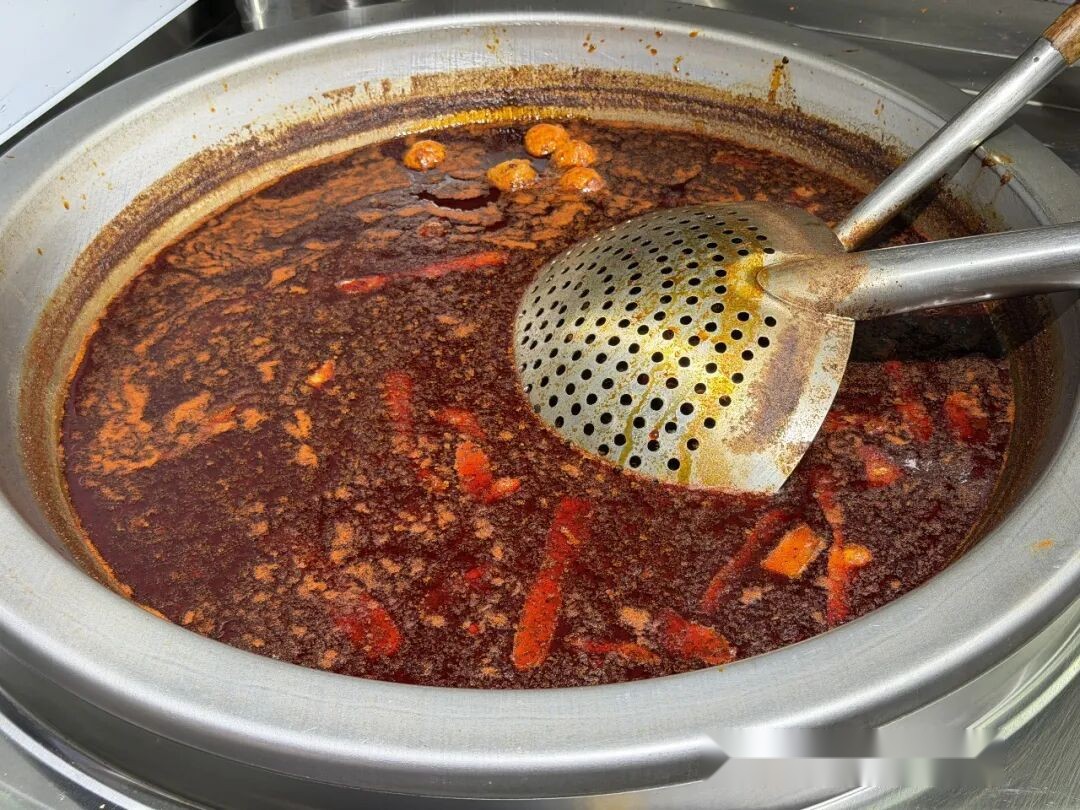
Linfen-style beef meatball noodles use a beef tallow spicy broth. It’s super spicy, kind of like a Sichuan hot pot base.
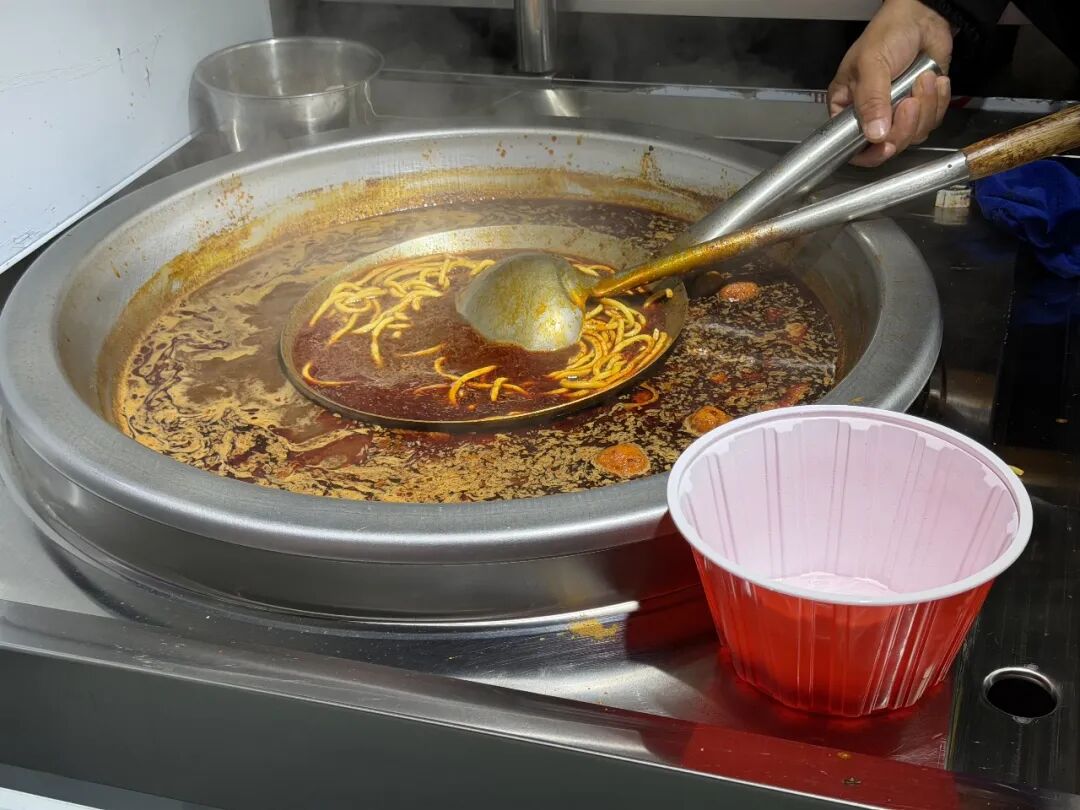
The noodles are yellow, quickly blanched in the broth, and served—similar to how banmian (flat noodles) are prepared. You can add extra beef, meatballs, mahua (fried dough twists), and veggies. I personally love adding the mahua, meatballs, and beef.
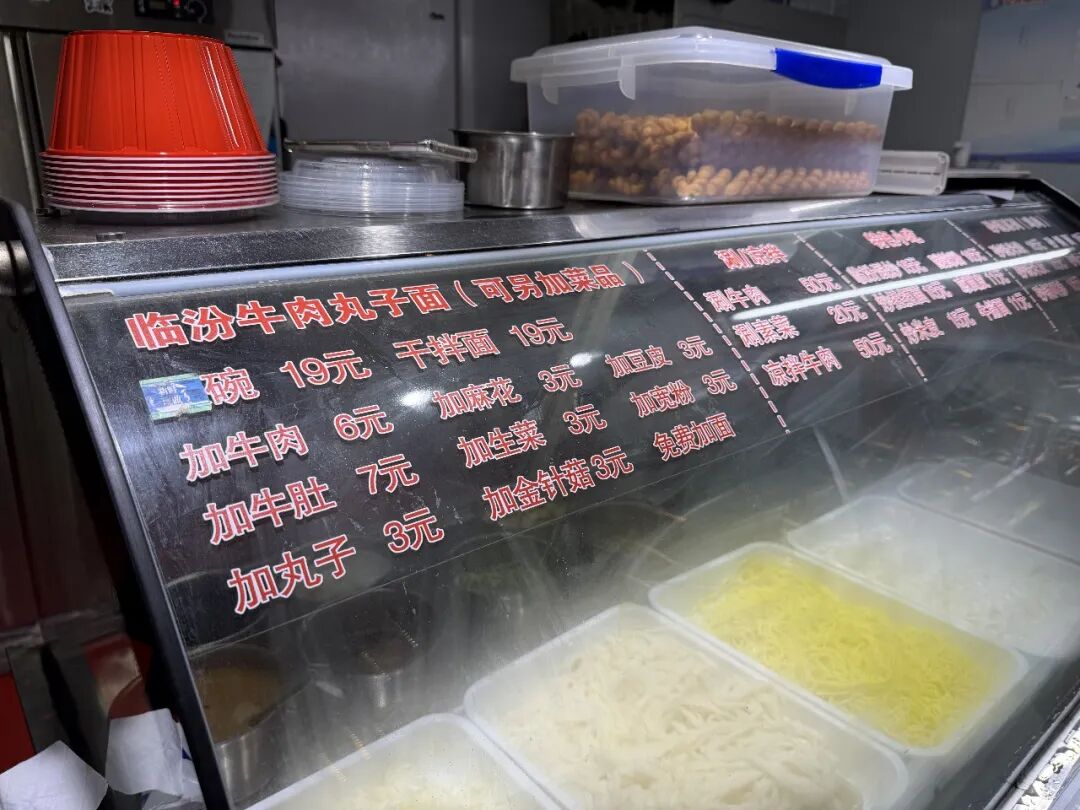
The weather has been pretty cold lately and the night market is empty. I’m not sure how long this stall can hang on, but I really hope they can open a permanent brick-and-mortar shop in Beijing.
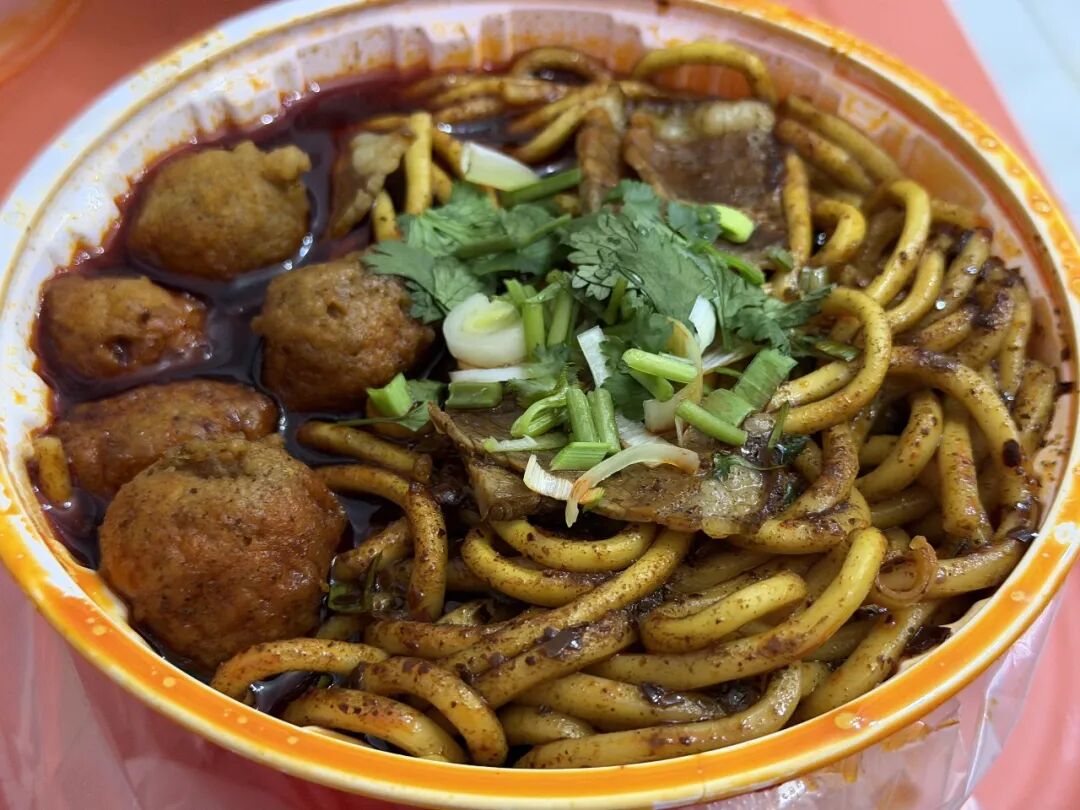
2. Zai Xuanwu Cultural Theme Restaurant
Ever since the old Xuanwu District was merged into Xicheng, a lot of locals have been really nostalgic about the past, which is how this restaurant themed around old Xuanwu culture came to be.
Xuanwu Yongcun (Xuanwu Forever) is the title of a popular underground hip-hop track from 2011. I used to have that song on repeat back in the day; the lyrics are great and always bring back a ton of childhood memories.
The message on the chopstick packaging is actually a snippet of those lyrics. 110104 is the old prefix for residents' ID cards in Xuanwu. I’m an 110104, but by my son’s generation, the ID prefix has changed to 110102, with 102 standing for the Xicheng District.
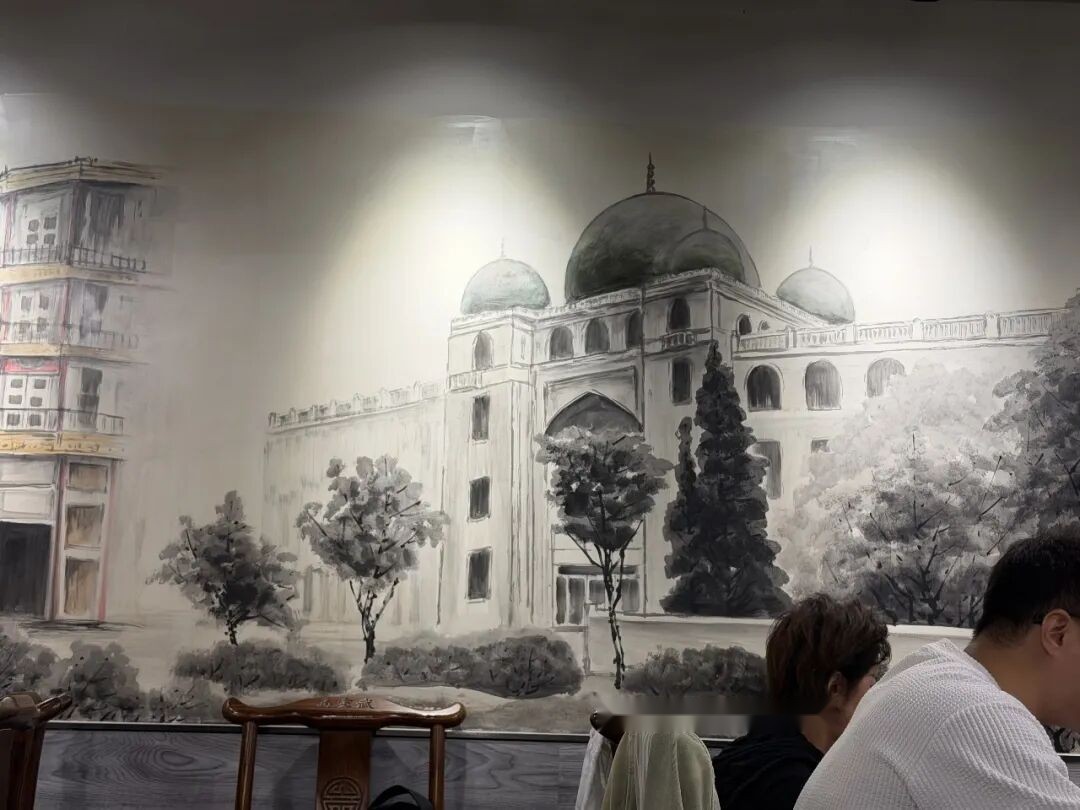
The wall mural in the restaurant depicts the Islamic Scripture Institute of Niujie.
They’ve got old-school Nintendo consoles and black Sega consoles on display, totally capturing the vibe of 80s kids' childhoods.
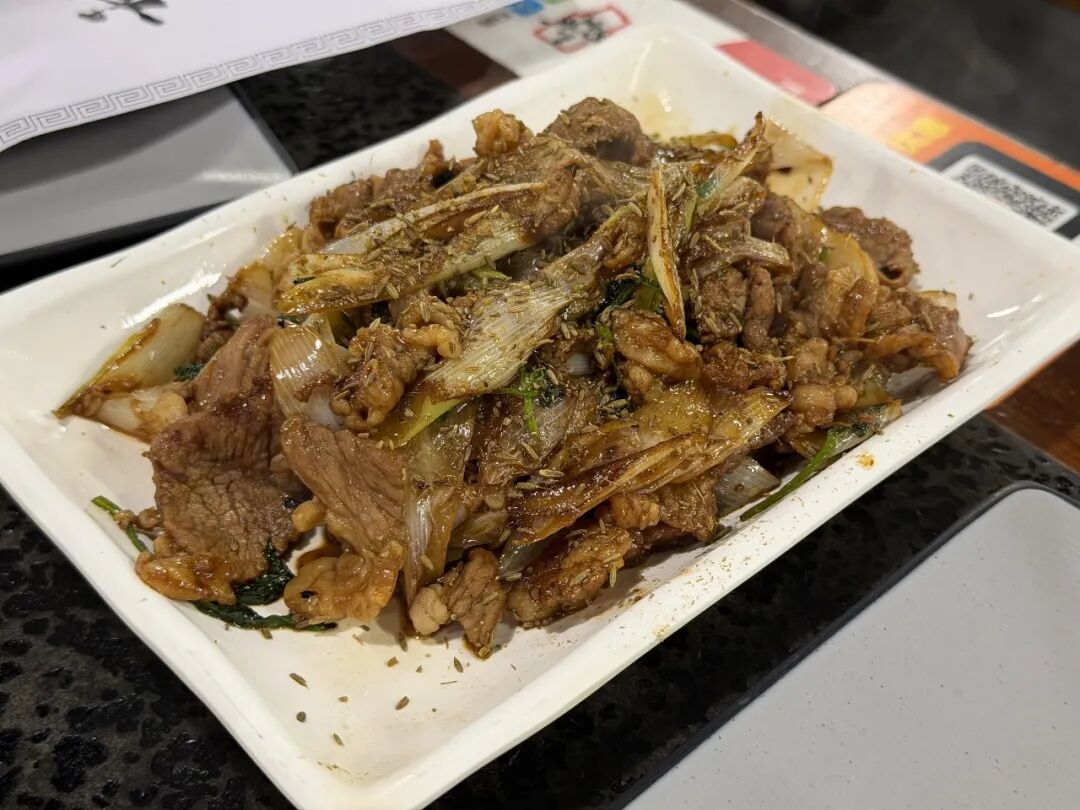
The restaurant specializes in shuanrou (instant-boiled mutton/hot pot) and yangxiezi (lamb spine hot pot), plus skewers and zhizi kaorou (iron-plate grilled meat). The grill is done in the kitchen and brought to your table. The meat quality is solid, though old-school Xuanwu locals definitely prefer things on the saltier side.
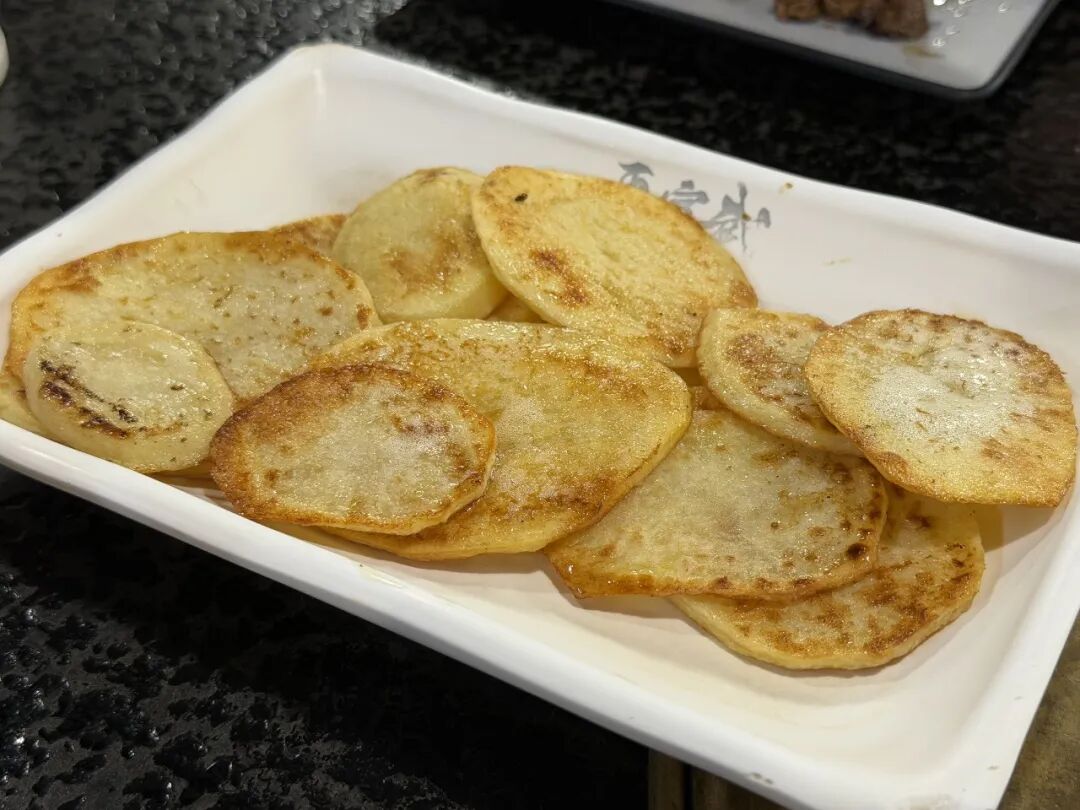
The grilled potato slices and enoki mushrooms in the two-person grill combo are great. The set only costs 92 yuan and comes with two plates of meat—one beef and one lamb—which is a total bargain.
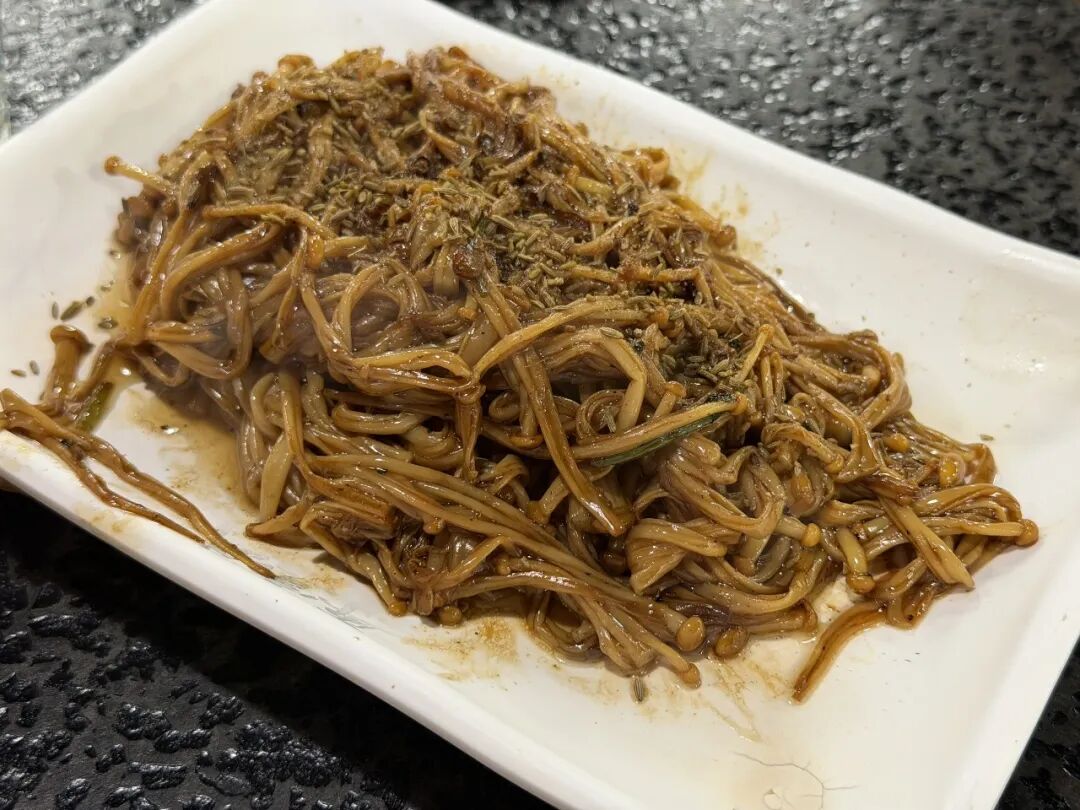
3. Gansu-Style Meat Skewer Sandwiches
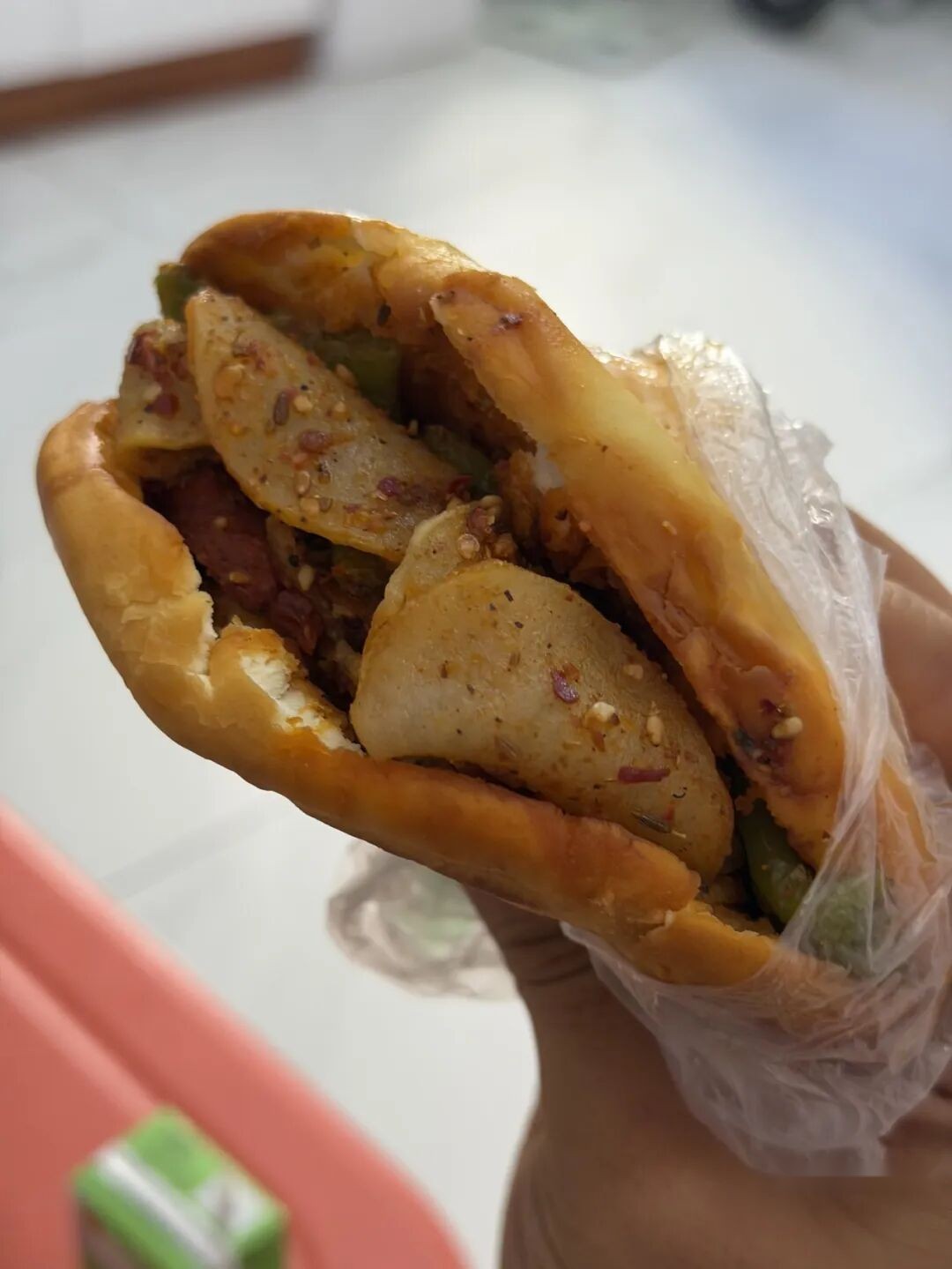
There’s a little takeout window at the Jingyaju Hotpot spot in Guangwai where a lady from Gansu sells grilled meat skewers tucked into flatbread. It’s strictly takeout, but I’m a huge fan of these Gansu-style sandwiches where you can pick whatever fillings you want.
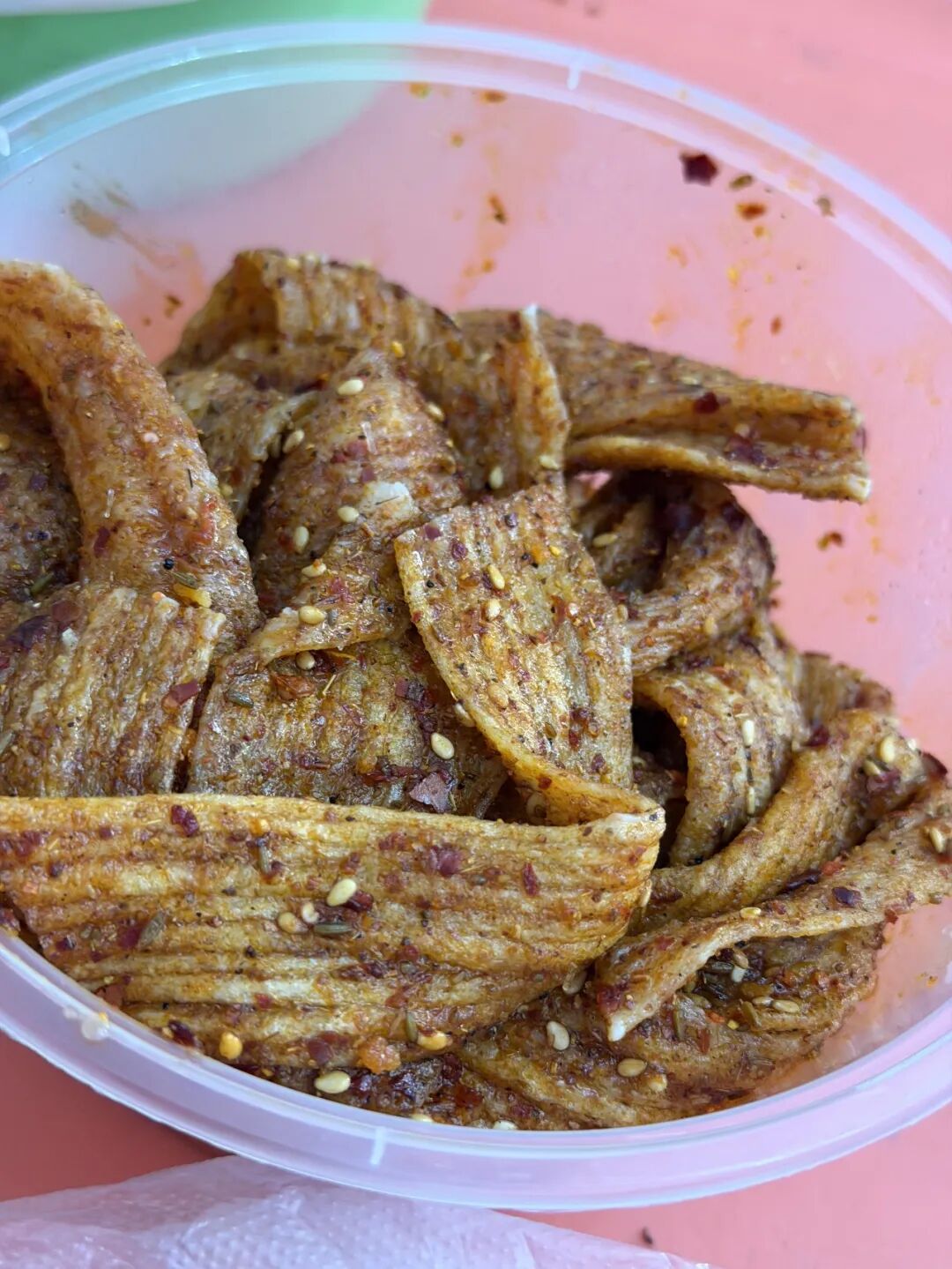
She also makes spicy latiao (spicy gluten sticks) and potato-filled steamed buns, and the youxuan bing (layered scallion oil pancakes) at the bottom are super tasty too.
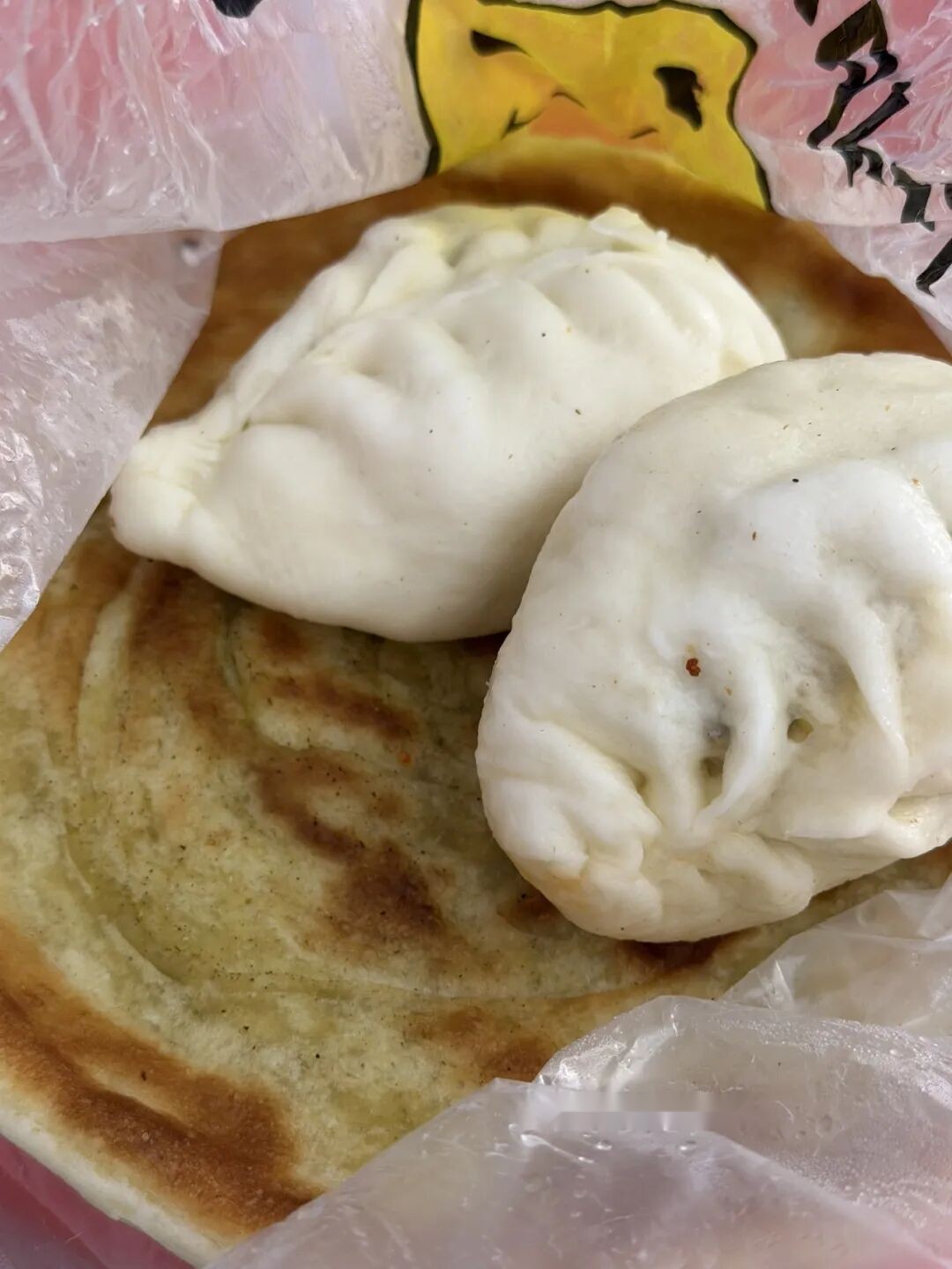
4. Beijing All-You-Can-Eat Halal Hotpot and BBQ
A new halal AYCE (all-you-can-eat) hotpot and BBQ place just opened by the South Gate of Olympic Forest Park. It’s perfect for grabbing a meal after hanging out at the park with the kids all day, plus kids under a meter tall eat for free.
The dinner buffet is 113 per person and it’s loaded with options, with the real highlights being the seafood, crab, and grilled durian.
Here you’ve got two types of slushies where you can add your own toppings, and there’s an ice cream machine right next to them.
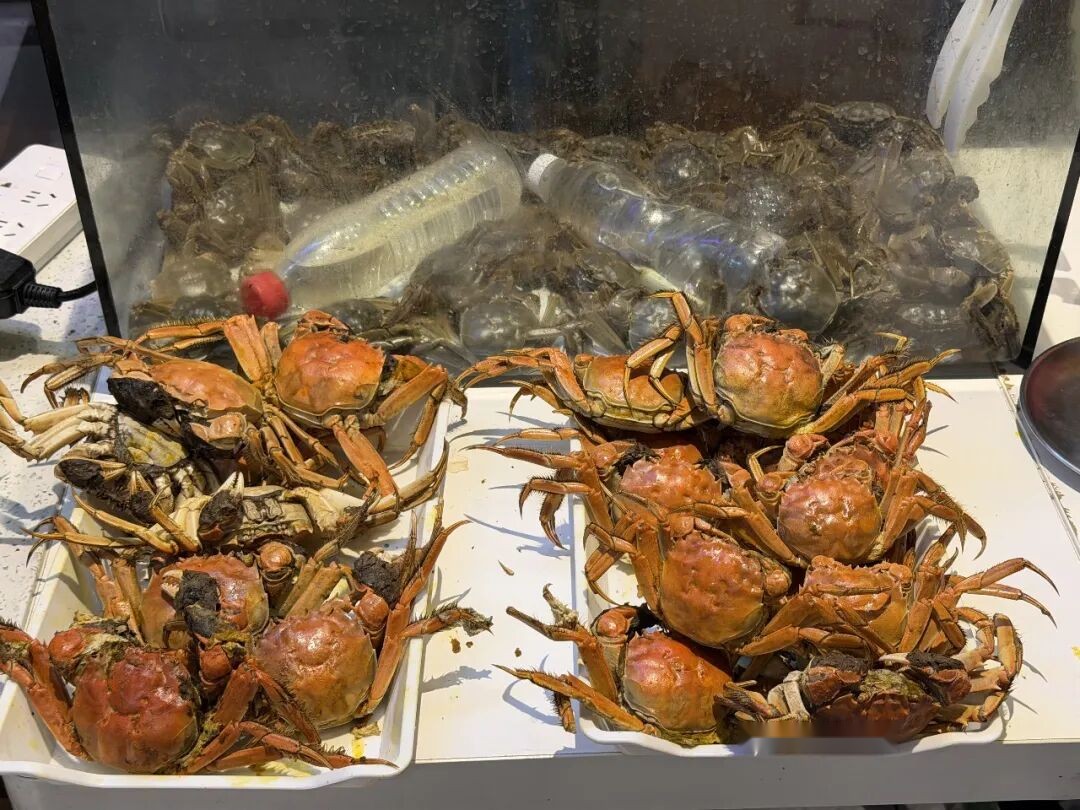
The crabs are served live, and since it’s in season, they’re packed with roe.
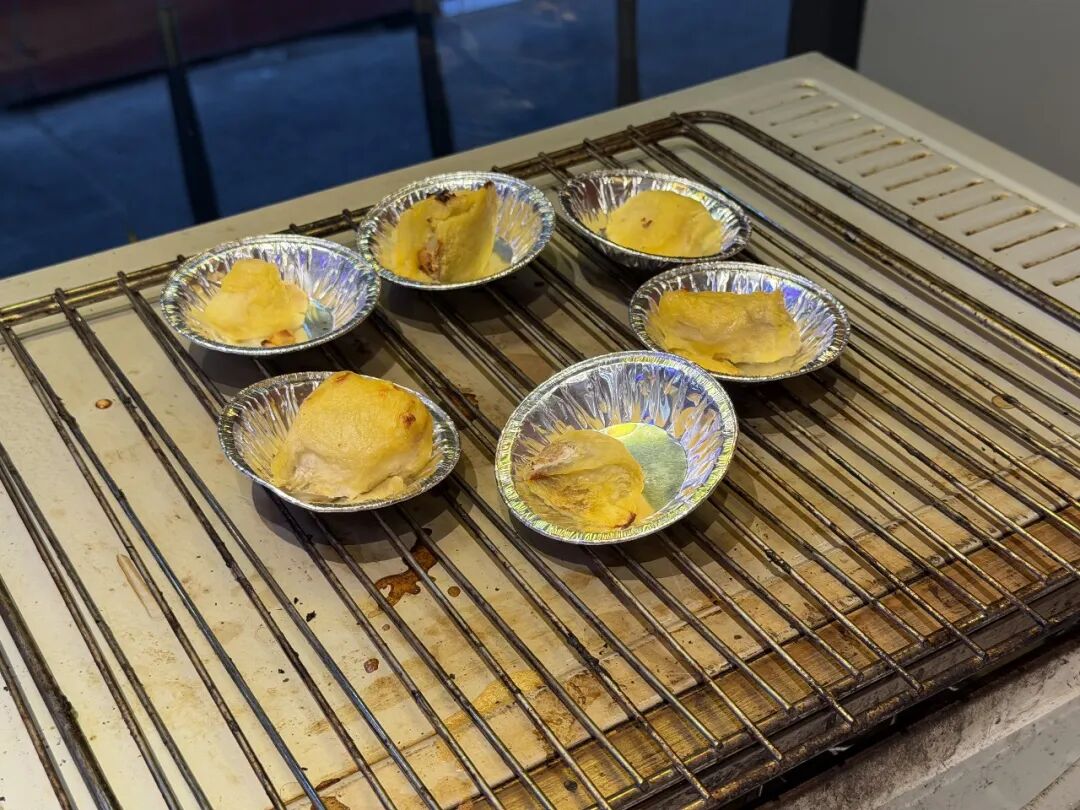
The grilled durian pieces might be on the smaller side, but you can eat as much as you want, which makes it a win.
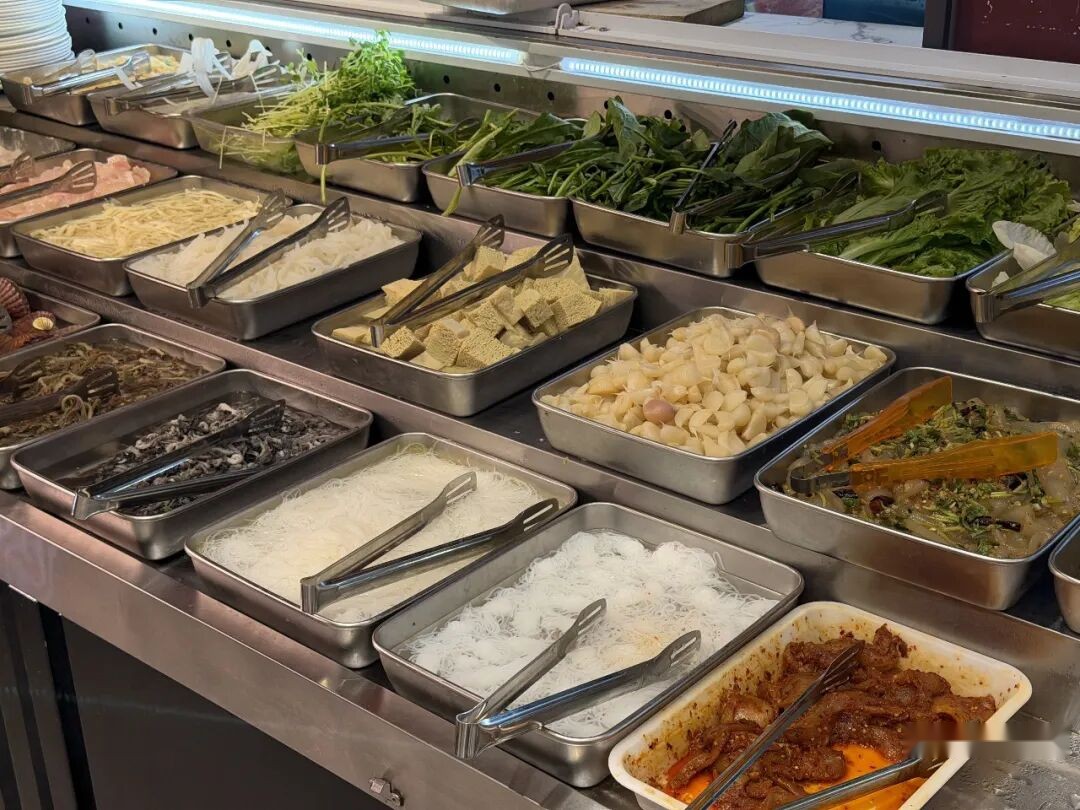
You grab your own hotpot ingredients and beef or lamb, while the raw skewers for the grill are set out for you to pick, then you hand them to the kitchen to get them cooked up.
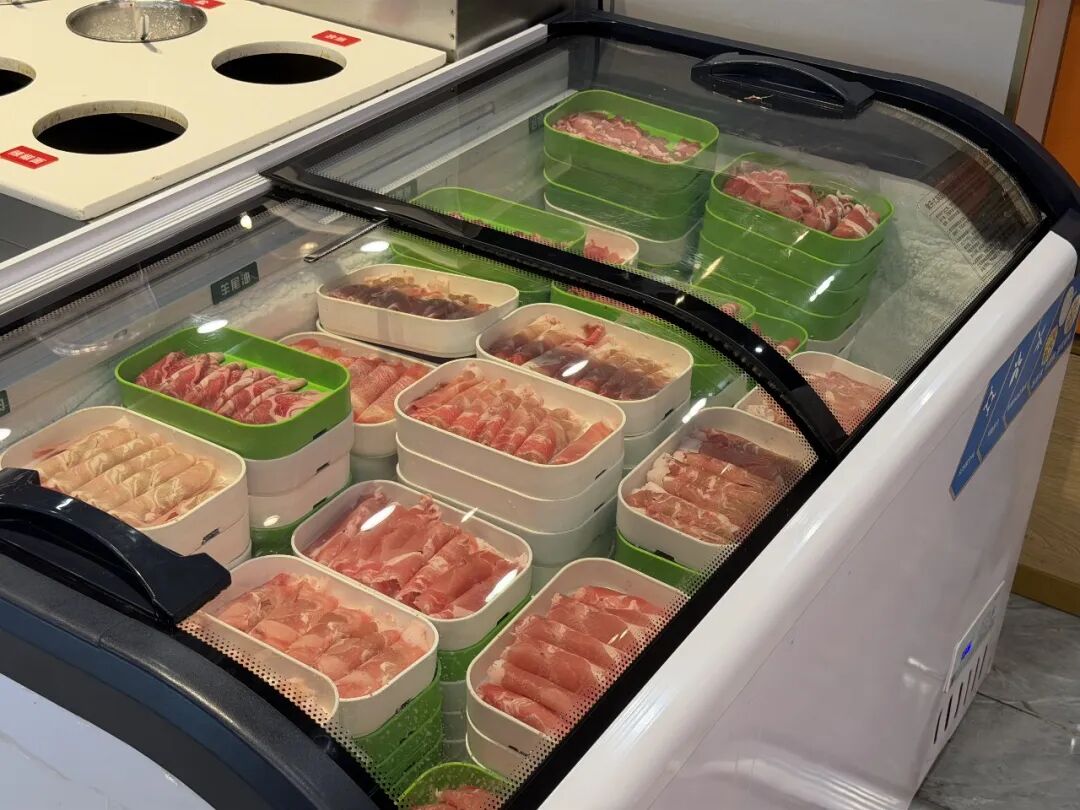
The ingredients are pretty fresh, the variety is solid, and the drinks are all-you-can-drink too.
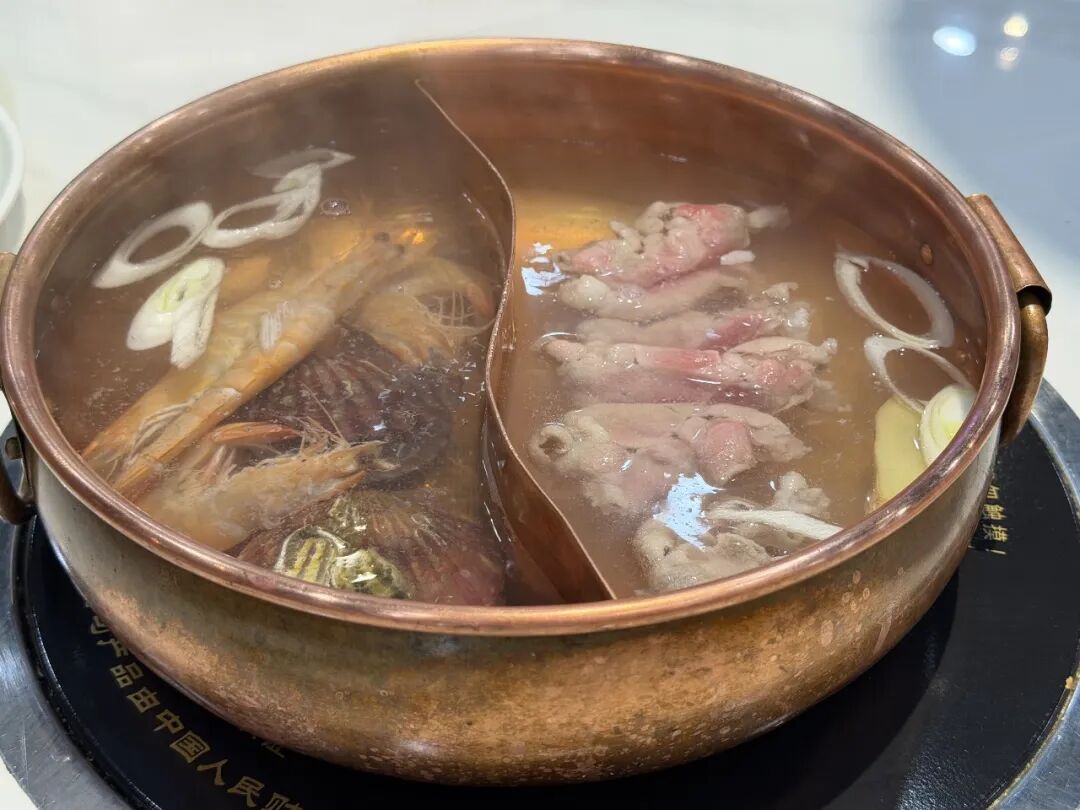
5. Ules Kazakh Grassland Flavors
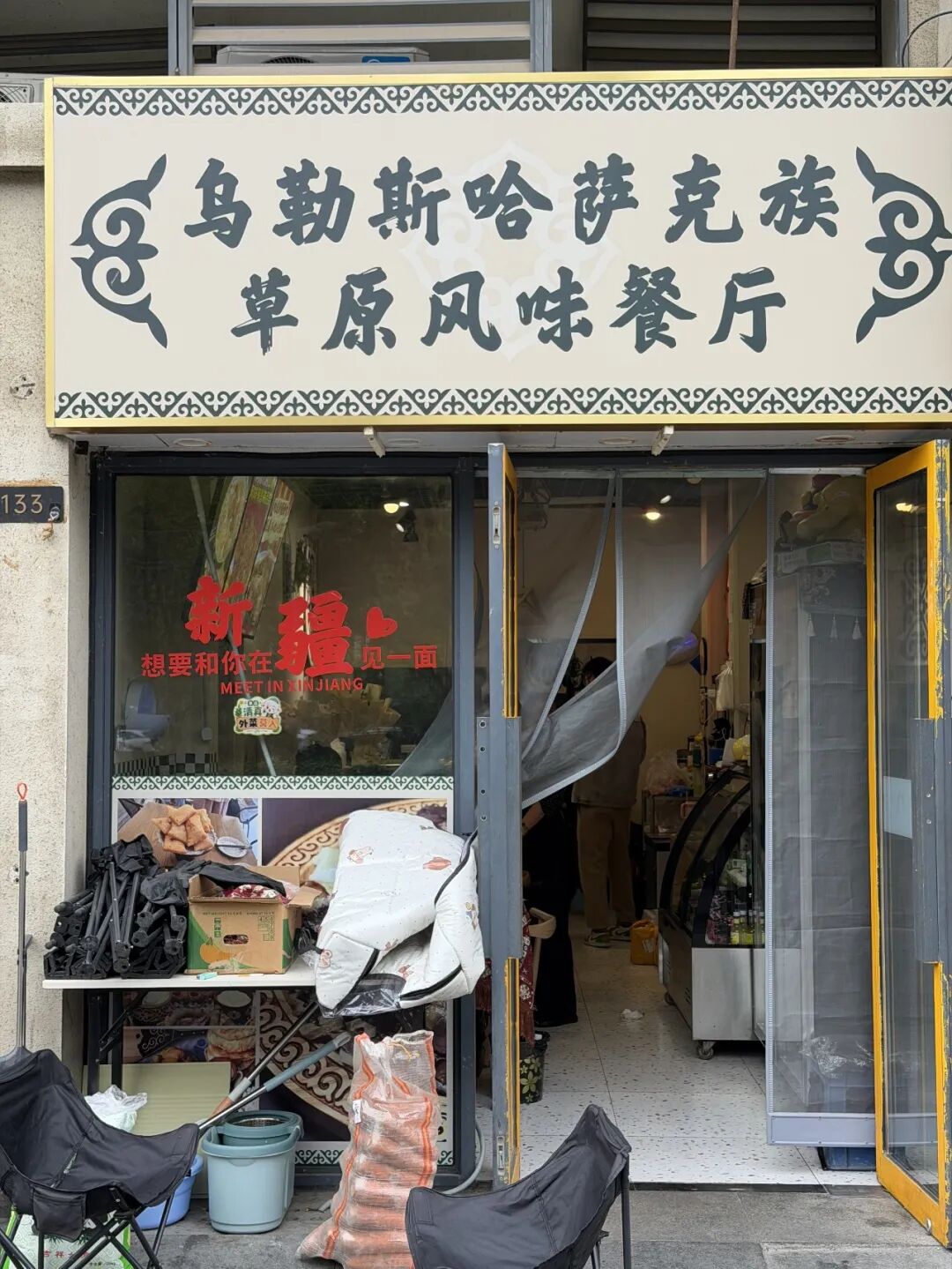
A restaurant serving authentic Kazakh cuisine recently opened near the Beijing Institute of Technology’s Liangxiang campus, run by three sisters from the Kazakh community.
Their specialty dishes include naryn (horse meat noodles), baursak (fried dough balls), potato slices, and kuirdak (a traditional meat stew). Since the space is tiny, they don't prep huge batches, so it’s best to call ahead and order what you want, otherwise you might miss out.
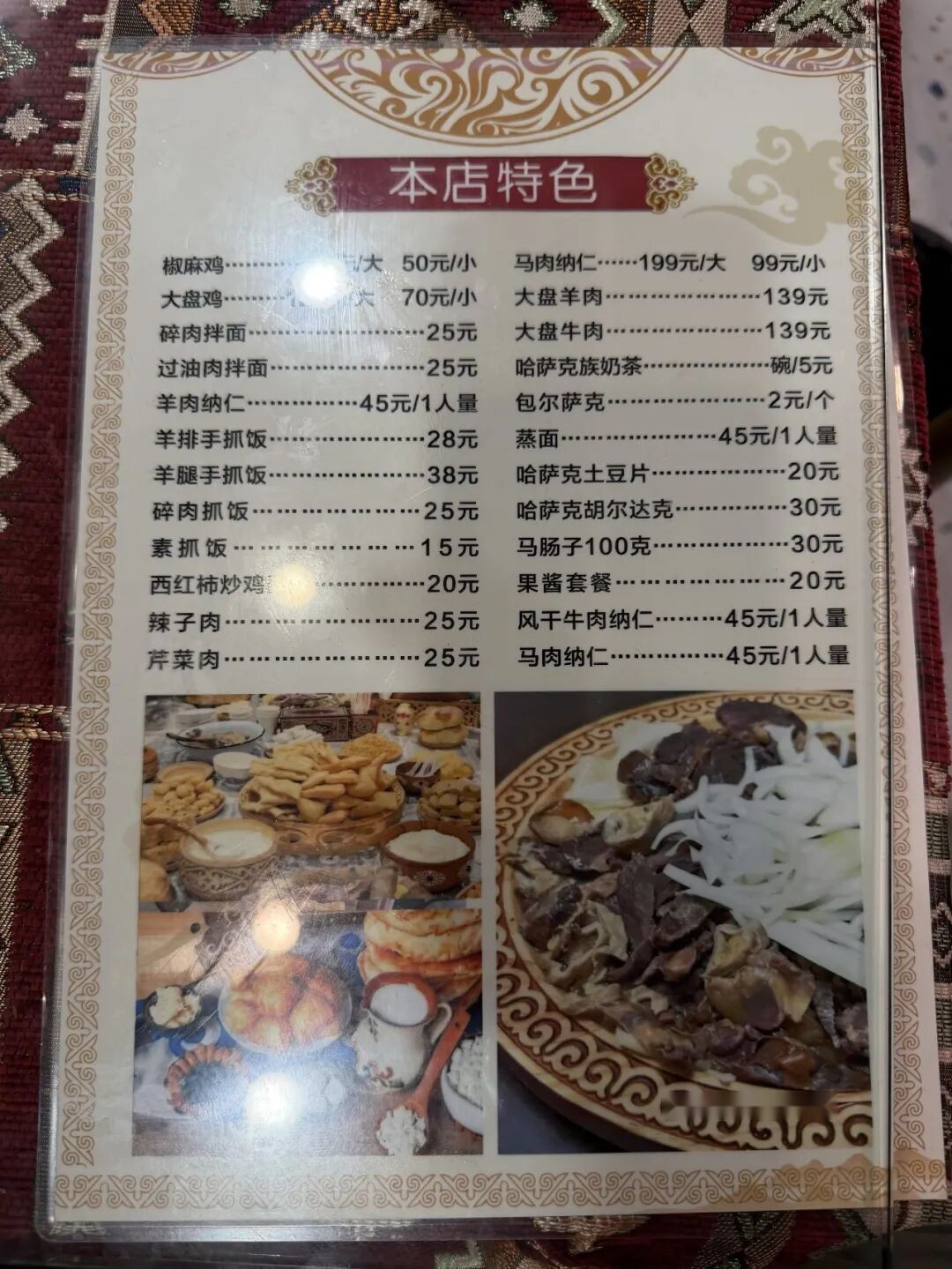
The shop only has three and a half tables, so their capacity is limited—by 7 PM, most of the food is usually sold out.
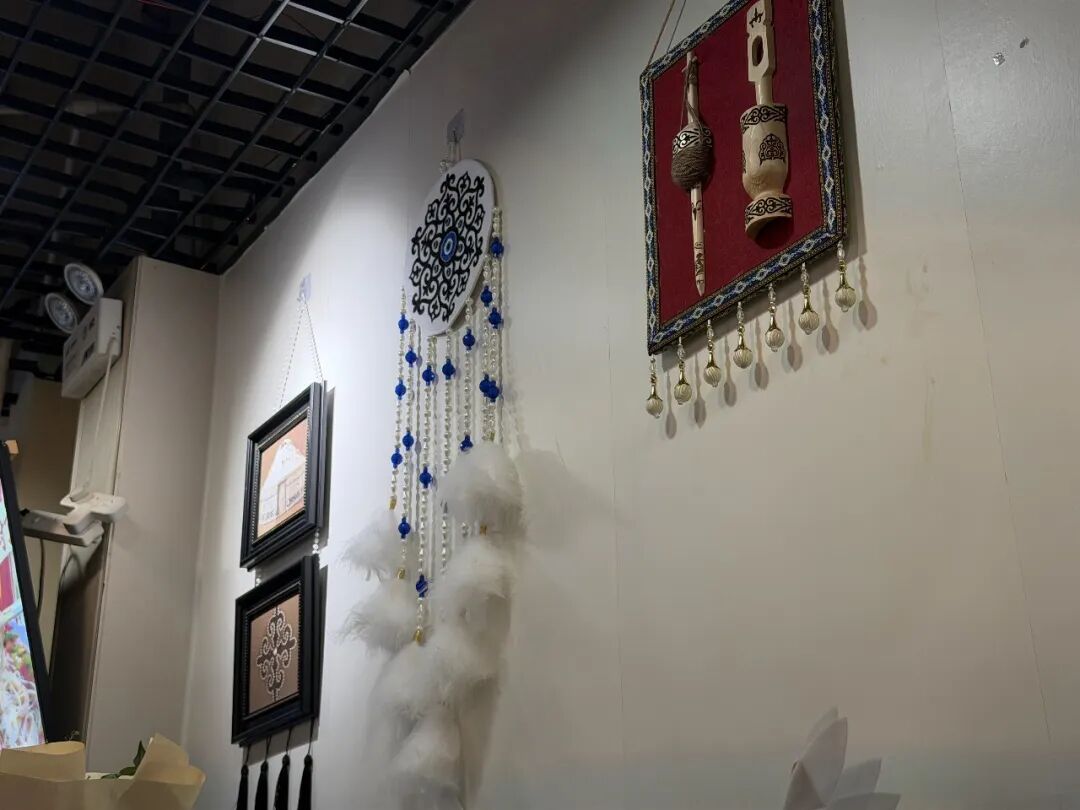
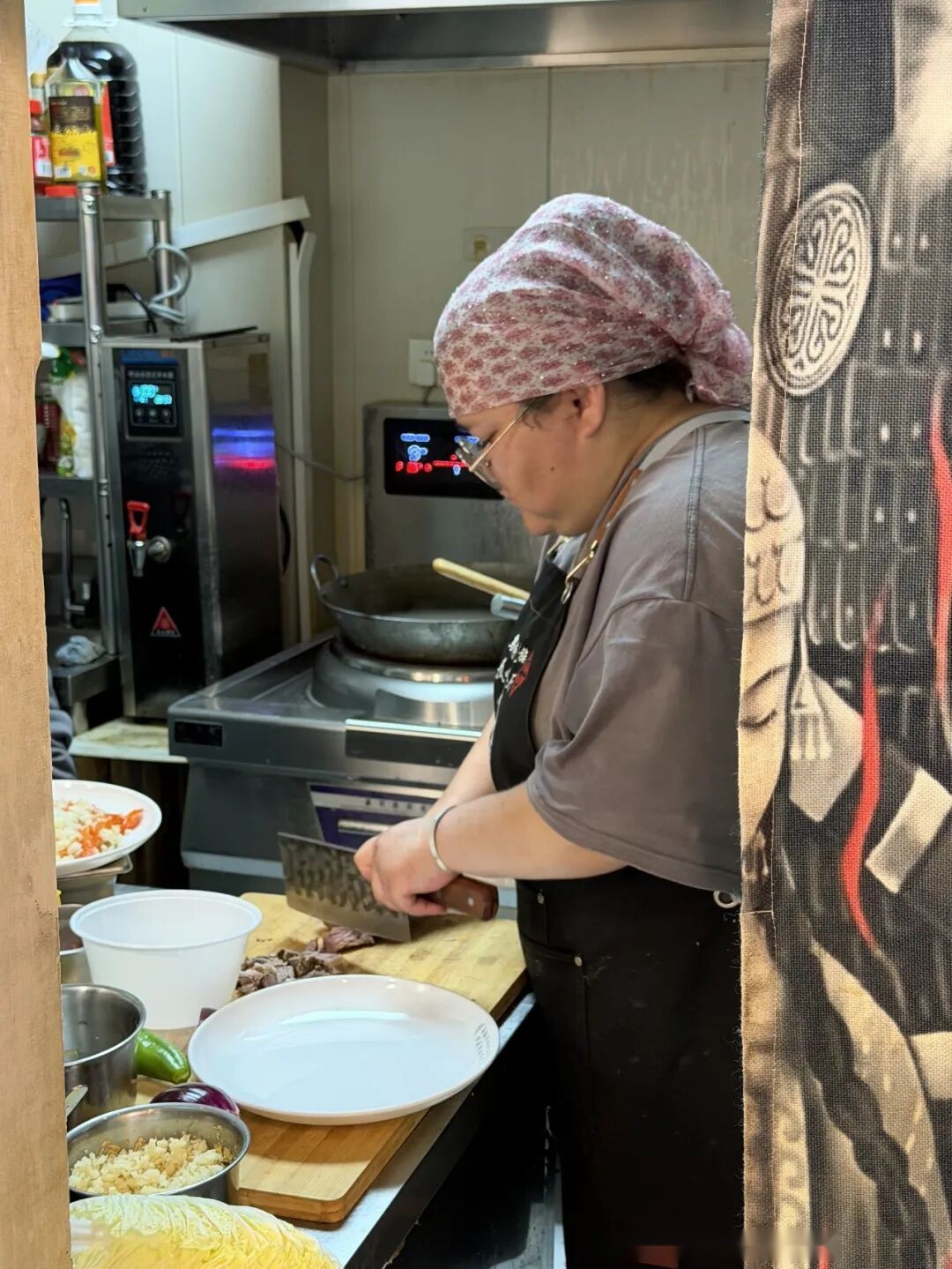
You can tell just by looking at them that these ladies are definitely Kazakh, and the food they put out is genuinely delicious.
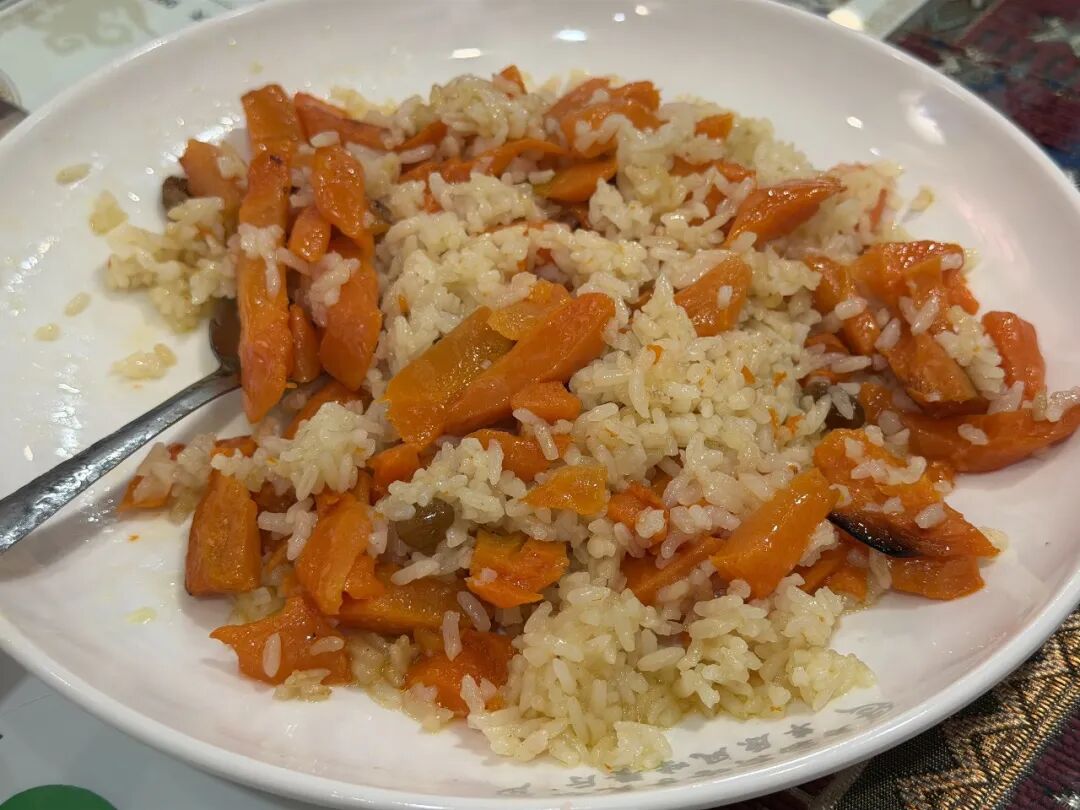
I got the veggie pilaf because all the meat versions were already gone.
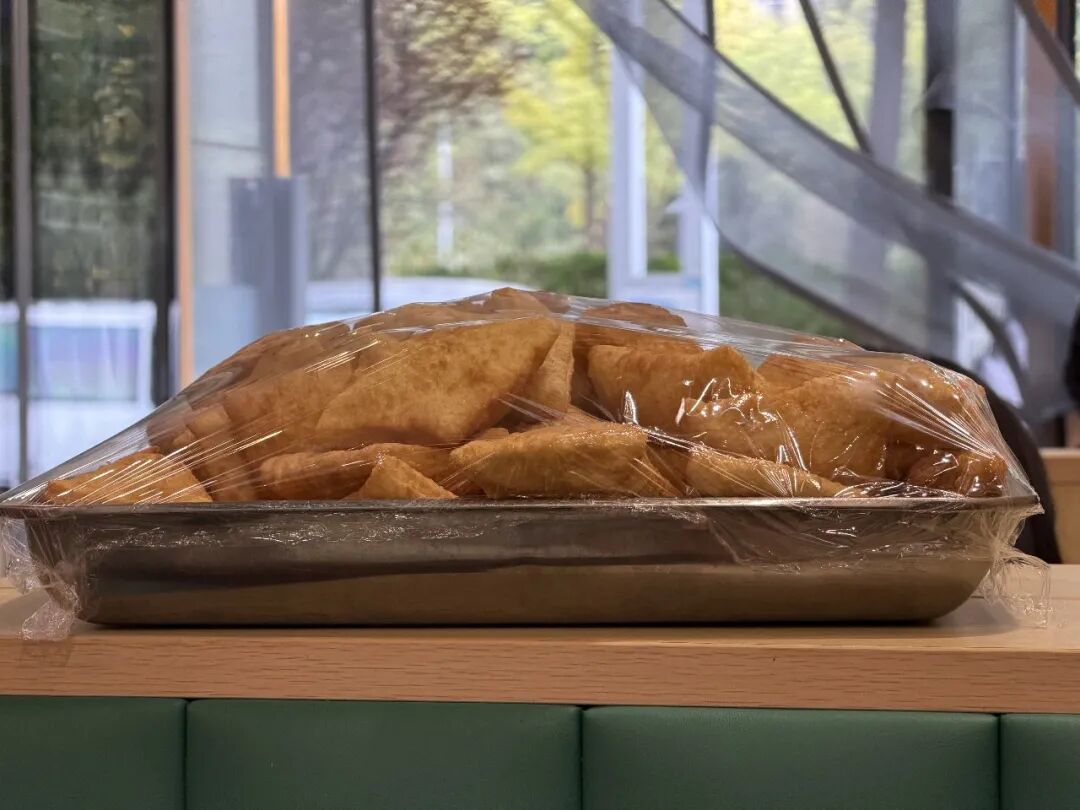
Baursak is a classic Kazakh snack people usually have with milk tea for breakfast; the texture is a lot like youxiang (savory deep-fried dough).
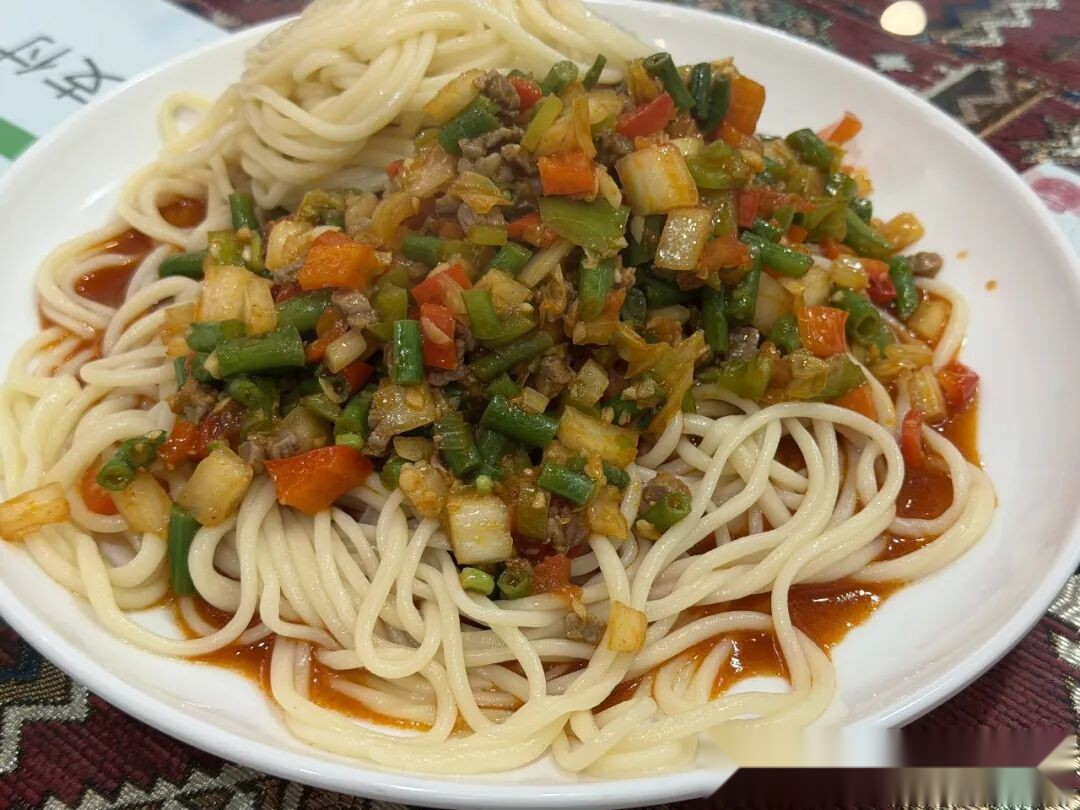
Their homemade noodles with diced meat are incredible—the noodles have a great chew, and you get one free refill, with any extra refills only costing three yuan.
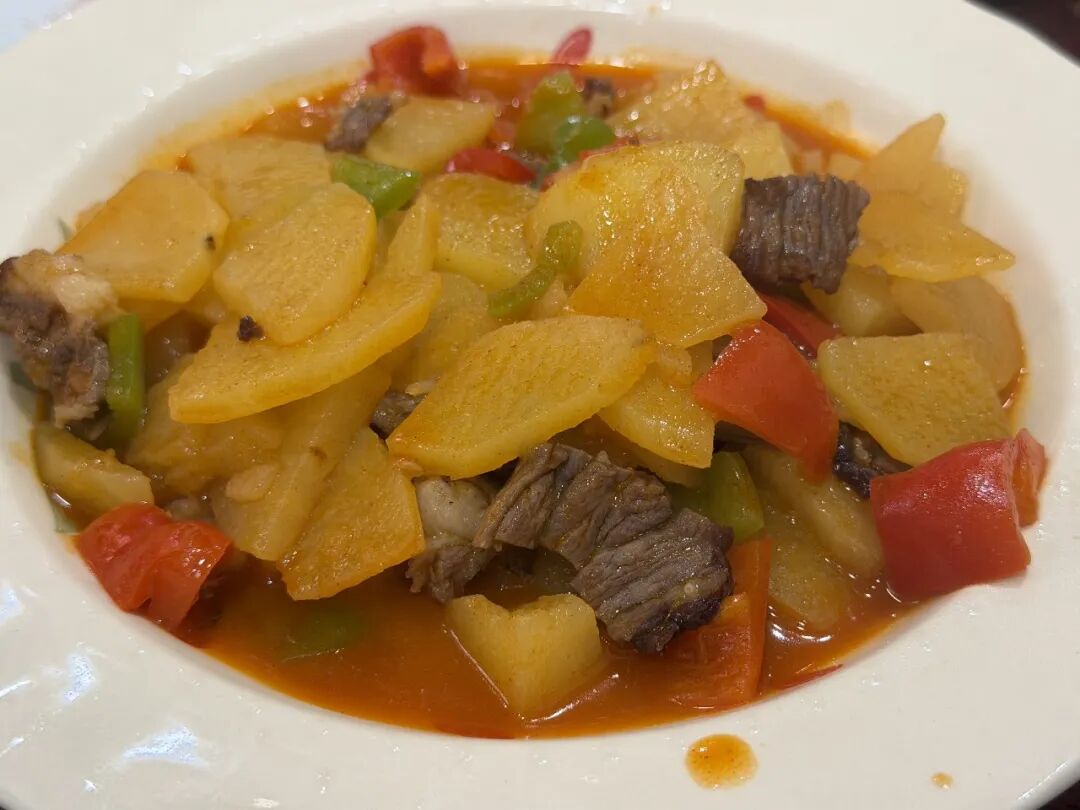
The Kazakh-style potato slices are pretty spicy, and they’re cooked down until they’re super tender.
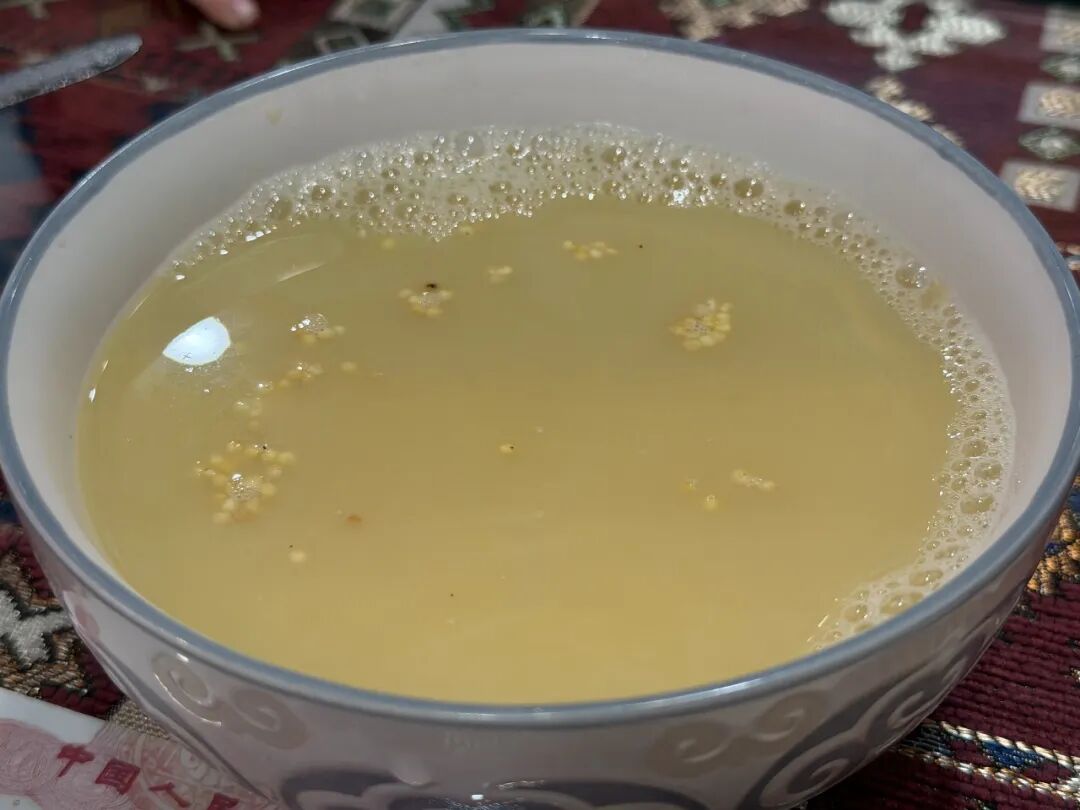
They also serve Kazakh-style salty milk tea, which usually comes with naipizi (milk skin), though they were all out that day.
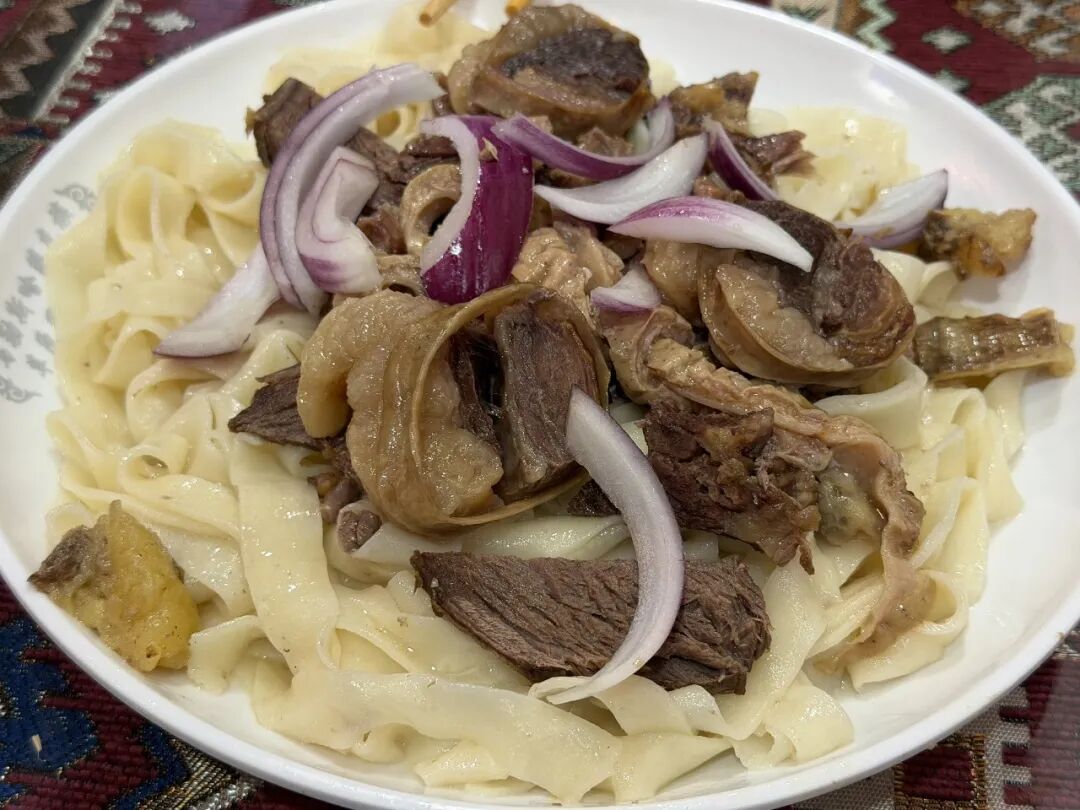
The dish I had to wait the longest for was the horse meat naryn. The horse meat is firmer than beef with a coarser texture, and the 'naryn' refers to the way it’s tossed with the noodles.
6. Yilan Liyuan Beef Noodles
Yilan Liyuan just opened a new beef noodle shop in Baizhifang, featuring their signature Angus bone broth beef noodles.
Yilan Liyuan is originally a famous beef and mutton shop on Niujie Street that’s turned into a major viral hit, and now they’re even serving electric-grilled skewers and American-style burgers.
Their electric-grilled skewers and burgers are pretty good, but the beef noodles and rice bowls with grilled meat are just so-so.
7. RABIUL'S KITCHEN Indian Restaurant
Run by Indians, this Kolkata-style Indian restaurant features an owner who used to work as a head chef in many hotel restaurants.
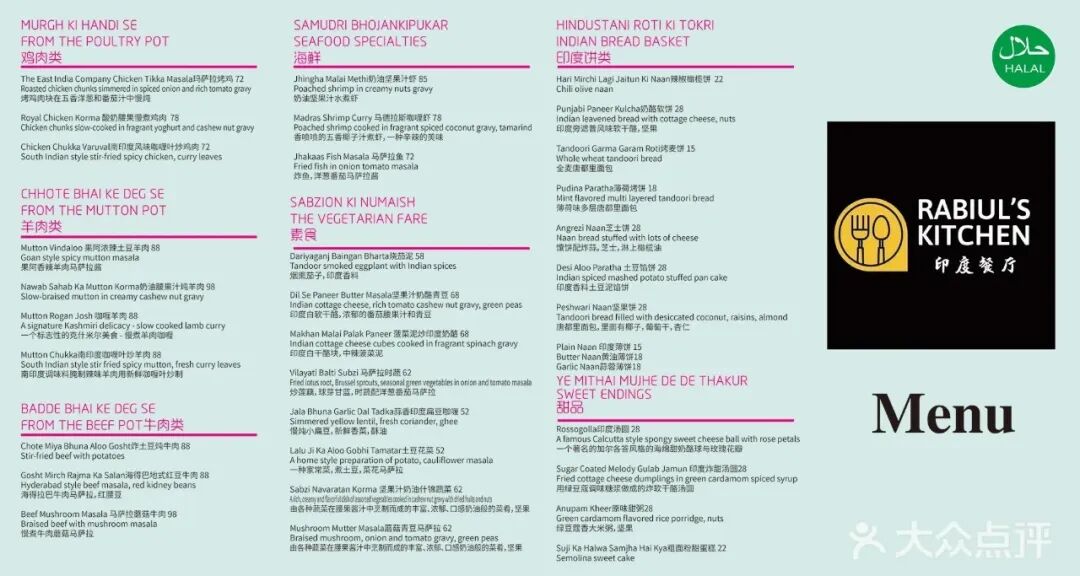
Kolkata Indian cuisine blends Hakka Chinese elements, and their curry has a really rich and mellow flavor.
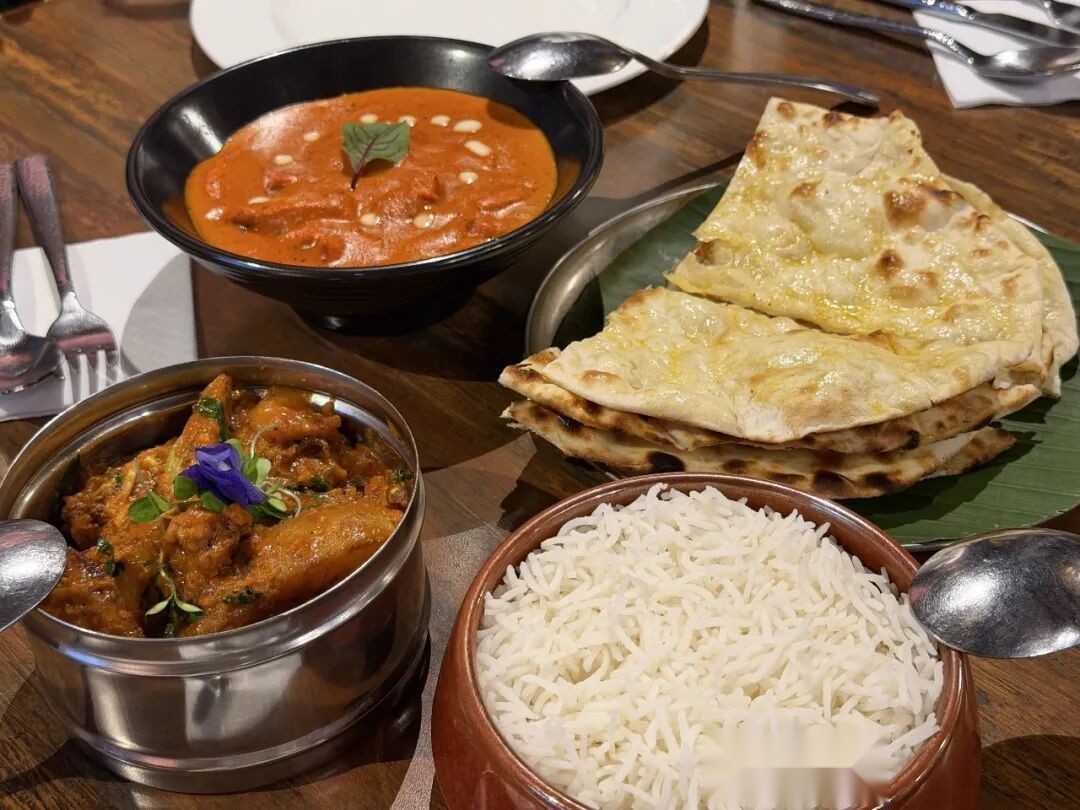
8. Khyber Restaurant
Khyber is a Pakistani restaurant located in Liangxiang. There's another Pakistani brother restaurant nearby, but I feel this one has a more authentic taste.
Beijing has recently seen quite a few new Pakistani restaurants open up close together. Each spot has its own vibe, and once you try enough of them, you can really tell the difference.
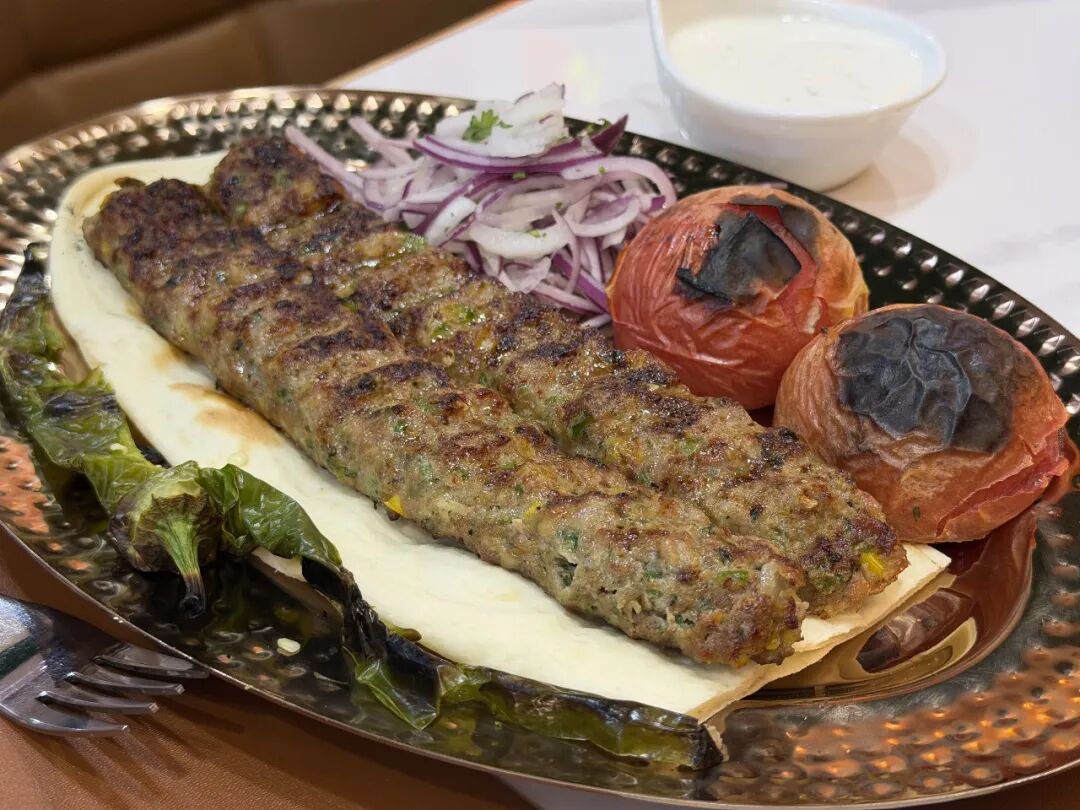
The grilled meat here is also solid. Pakistani folks are basically like the northwestern Chinese of the international scene, opening restaurants all over the world.
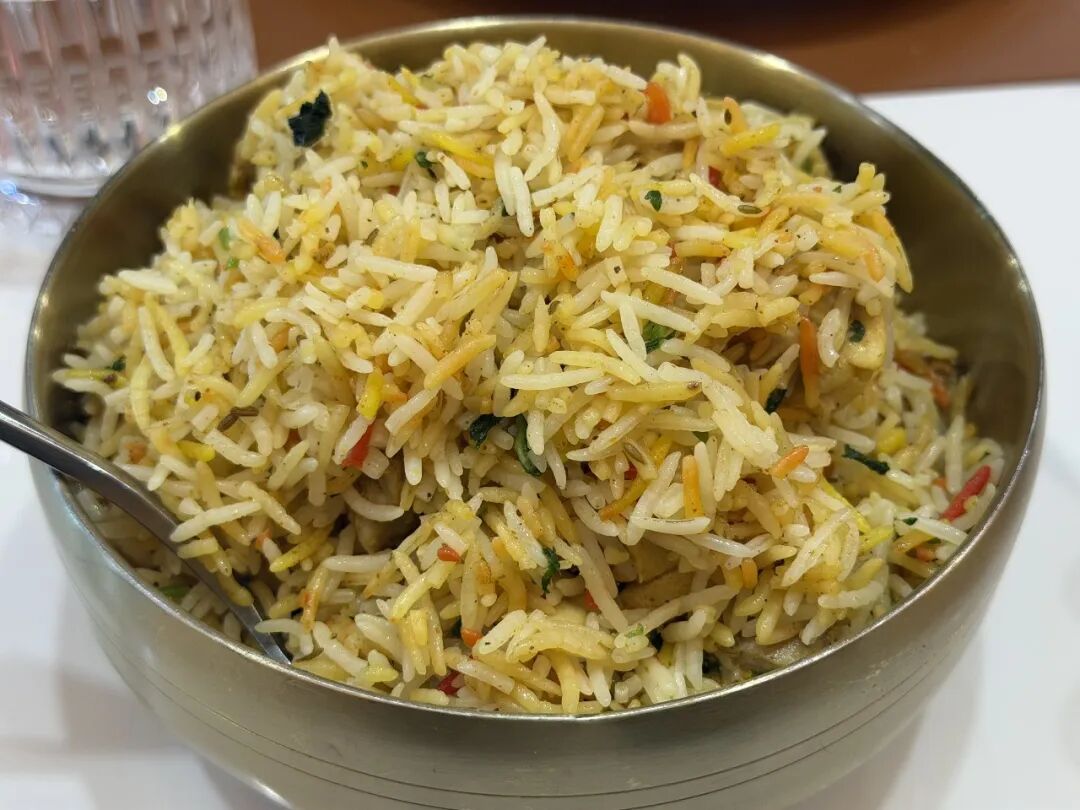
Remember that Pakistani biryani rice is always spicy—that's how you tell it apart from Arab rice dishes.
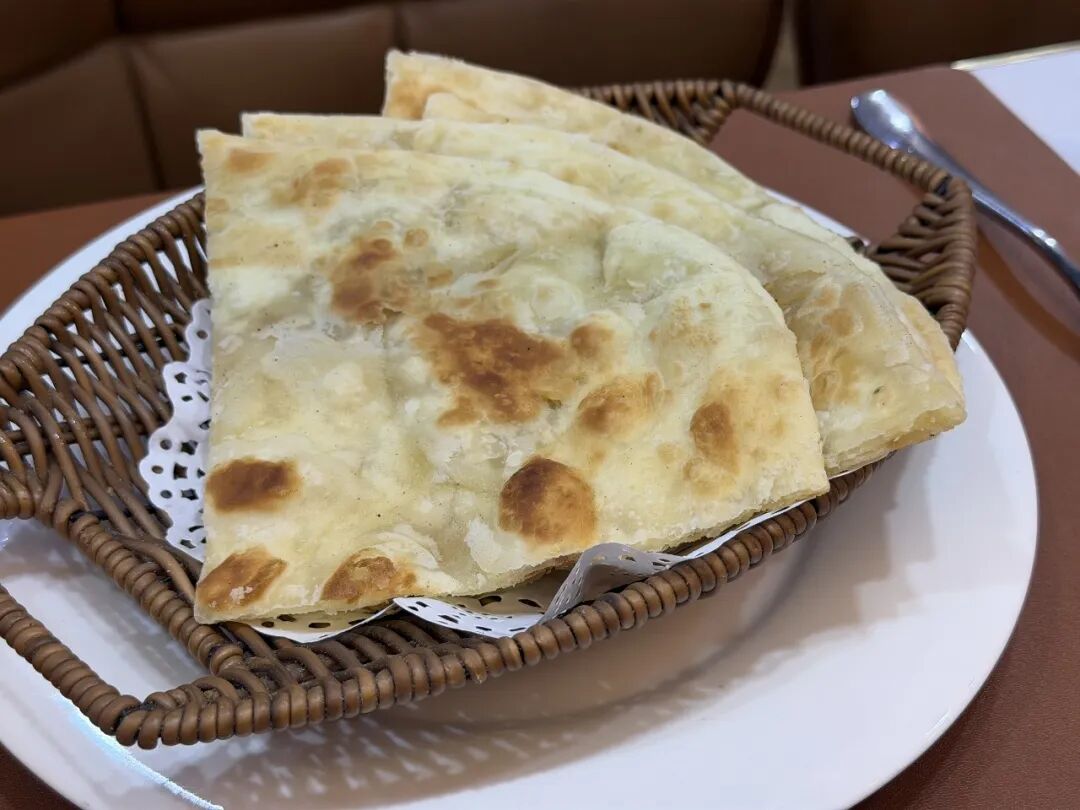
The taste of the naan bread can also totally show off the chef's skill level.
9. Culture Pakistani and Indian Restaurant
This spot is in Sanlitun right next to Han Baba Pakistani Restaurant. I've never really understood why they love clustering their shops together, but it doesn't seem to hurt their business. Honestly, very few Pakistani and Indian restaurants in Beijing go out of business these days.
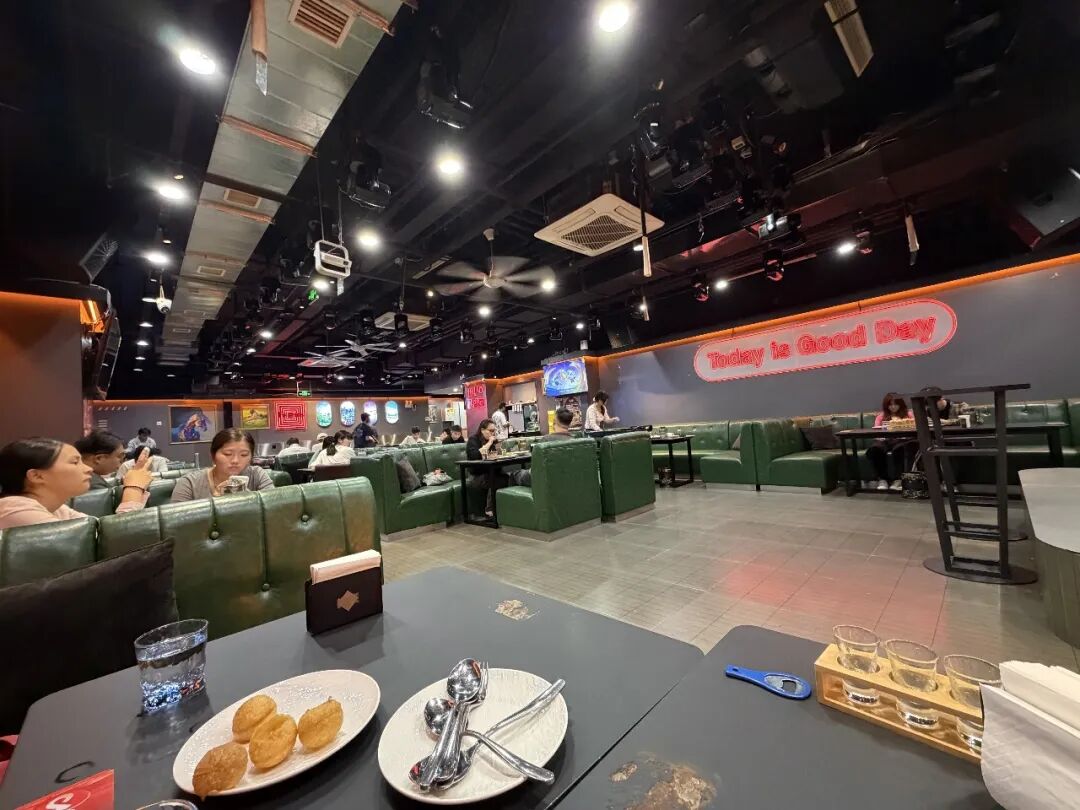
The interior setup feels more like a lounge bar and even has a stage for live music.
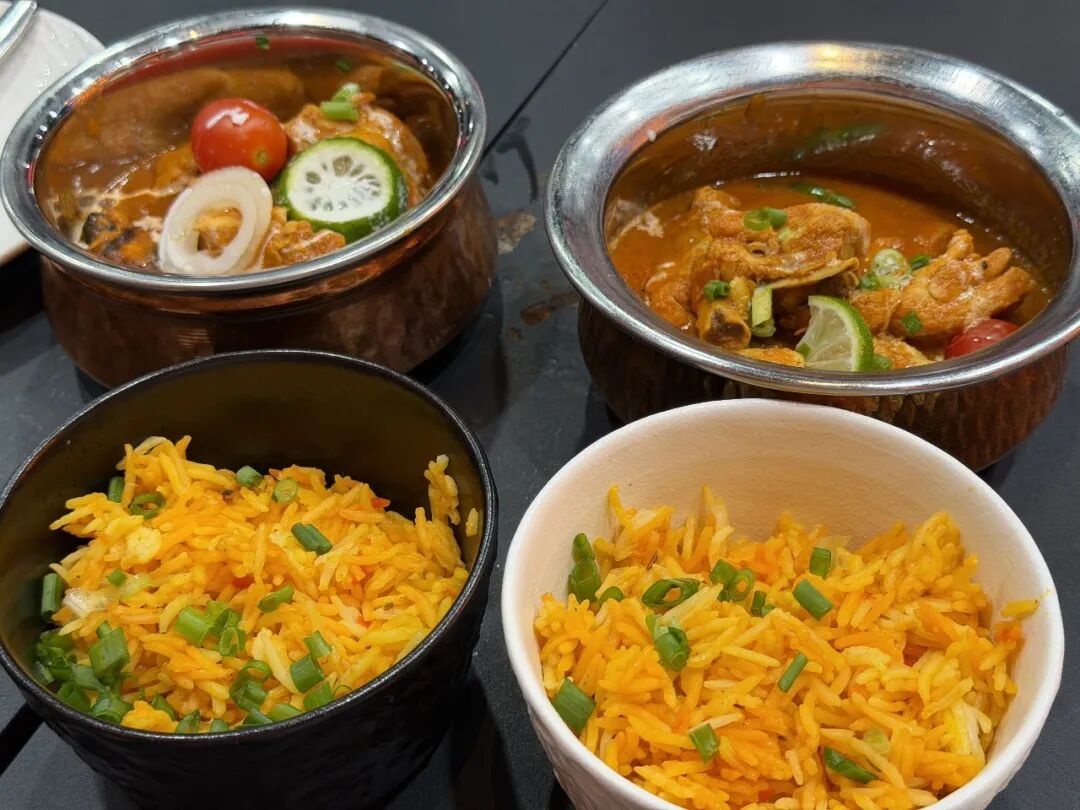
The dish prices are super cheap, and you can usually eat here for under 100 RMB per person.
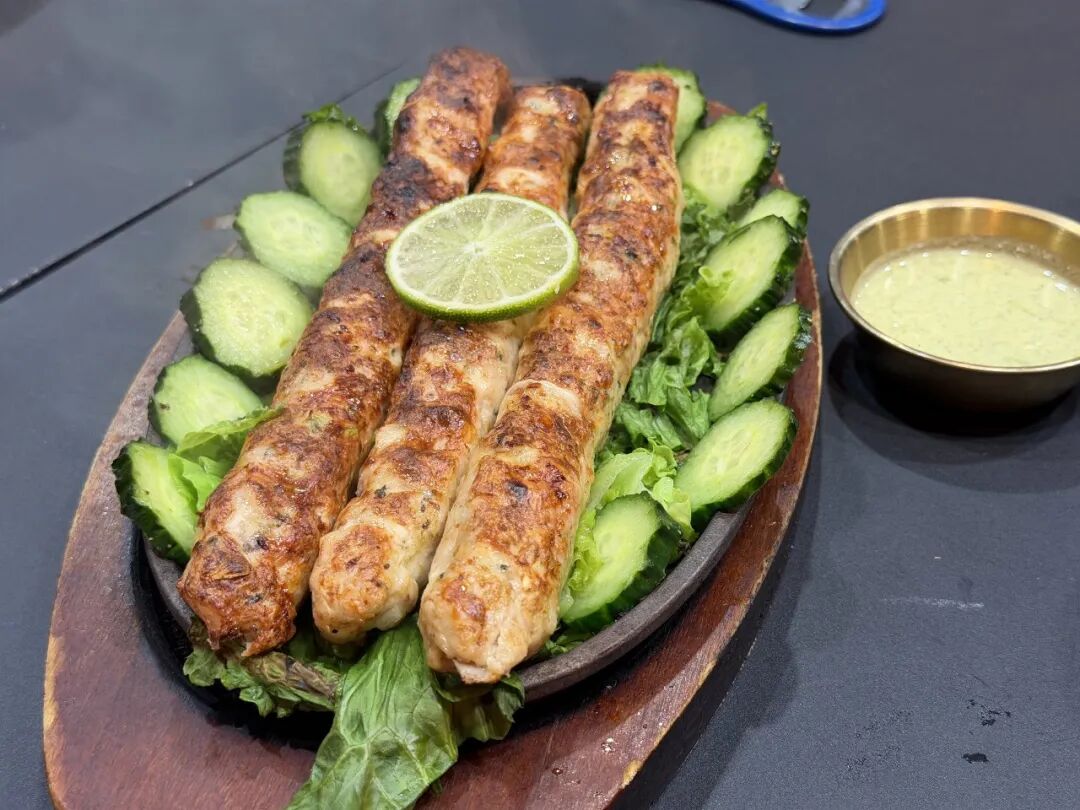
These kebab skewers have a bit of a kick to them, whereas Turkish kebabs are non-spicy.
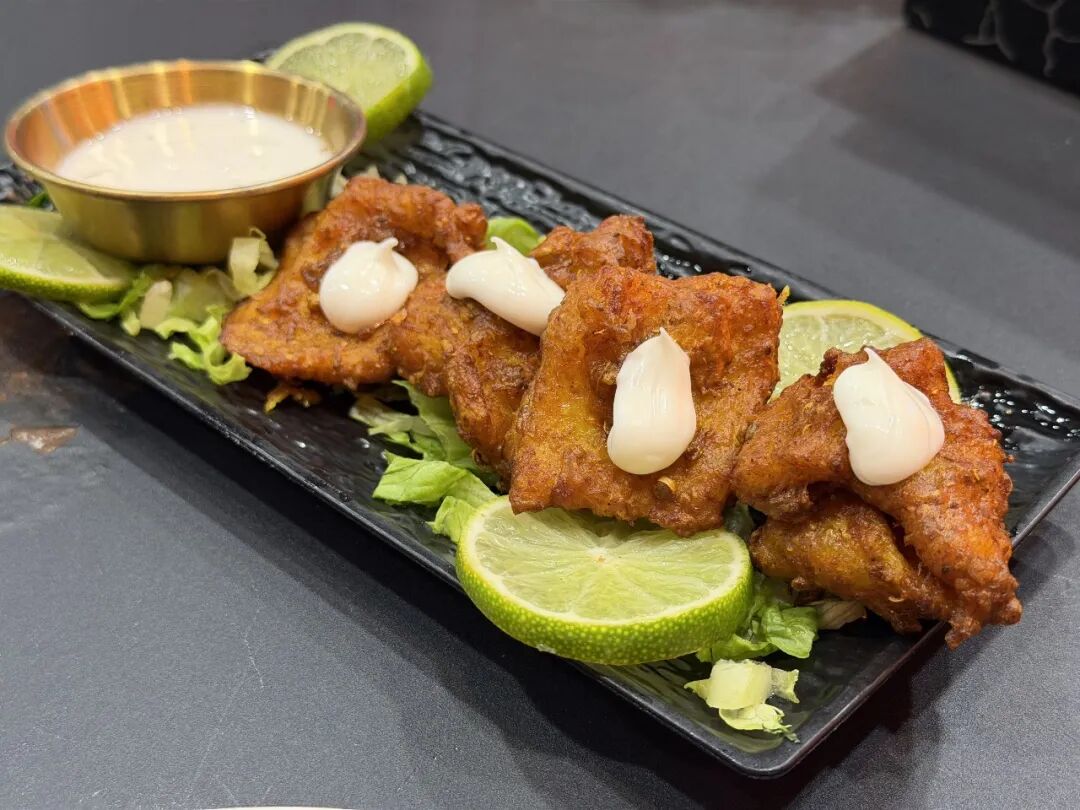
Comparatively speaking, this place offers a wider variety of dishes and has a much more spacious setup. Plenty of people show up for lunch.
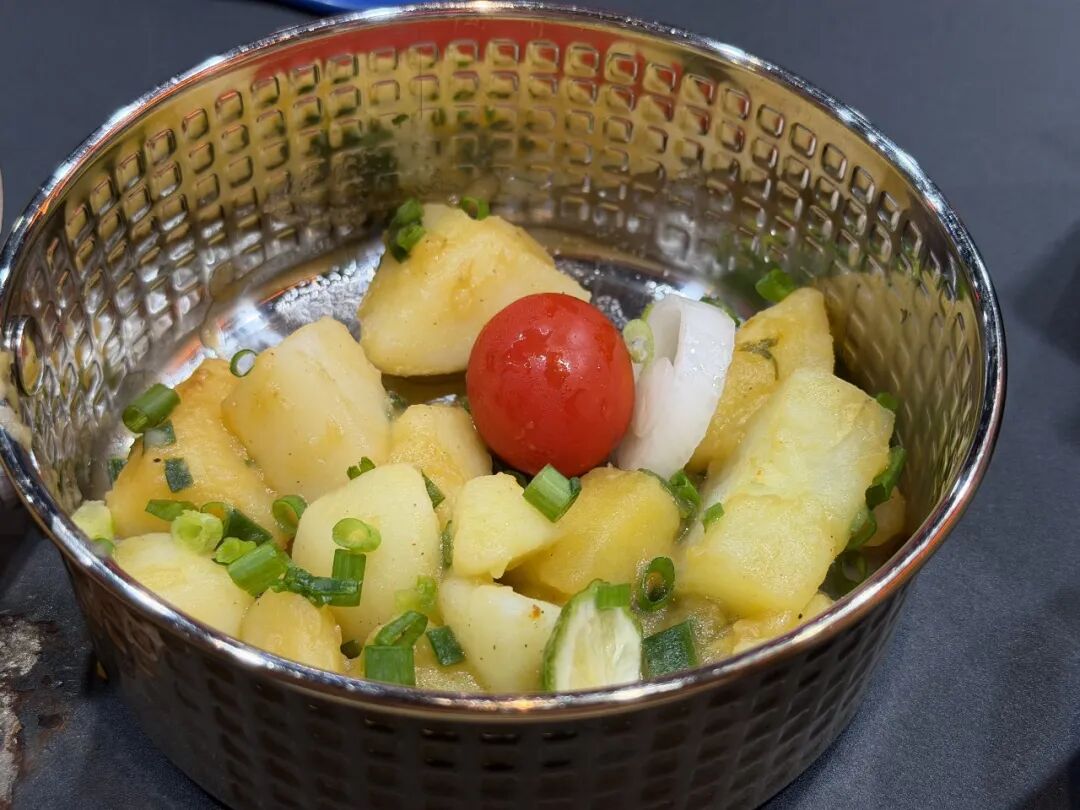
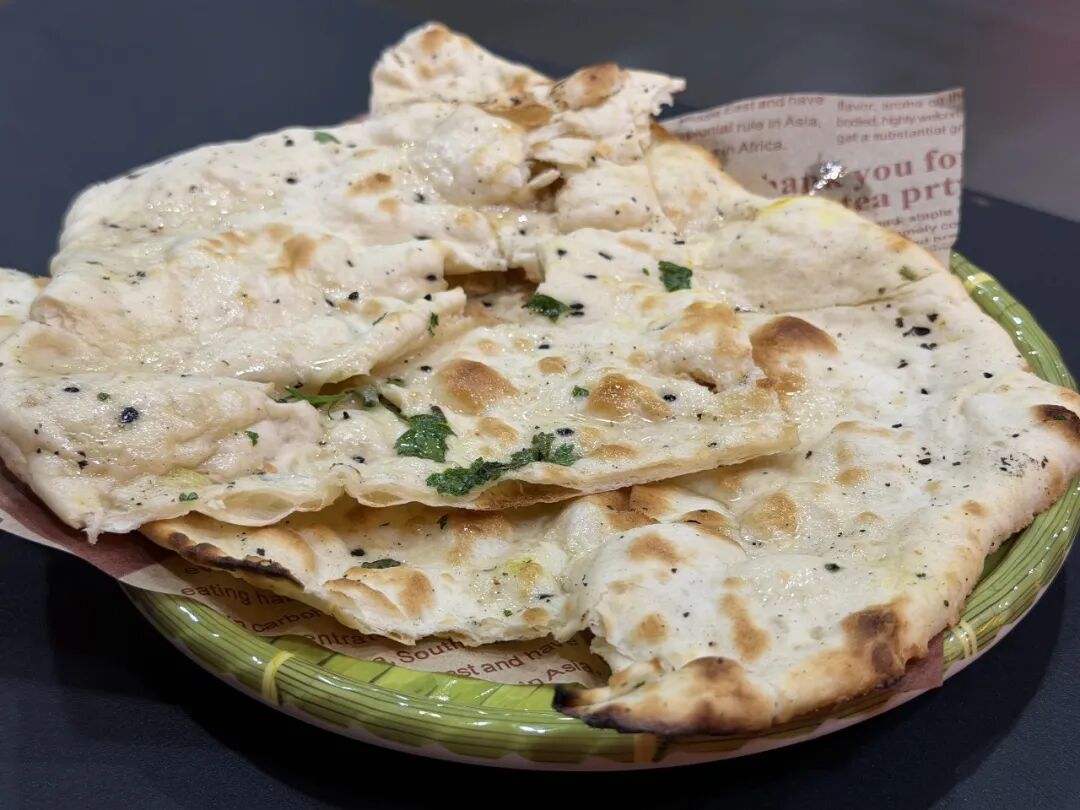
Their naan bread is extra fragrant, but the pani puri (crispy hollow spheres filled with spiced water and potatoes) shown in the picture below wasn't great. My son doesn't like the fillings inside them and only wanted to eat the empty shells, but even the empty shells here weren't crispy.
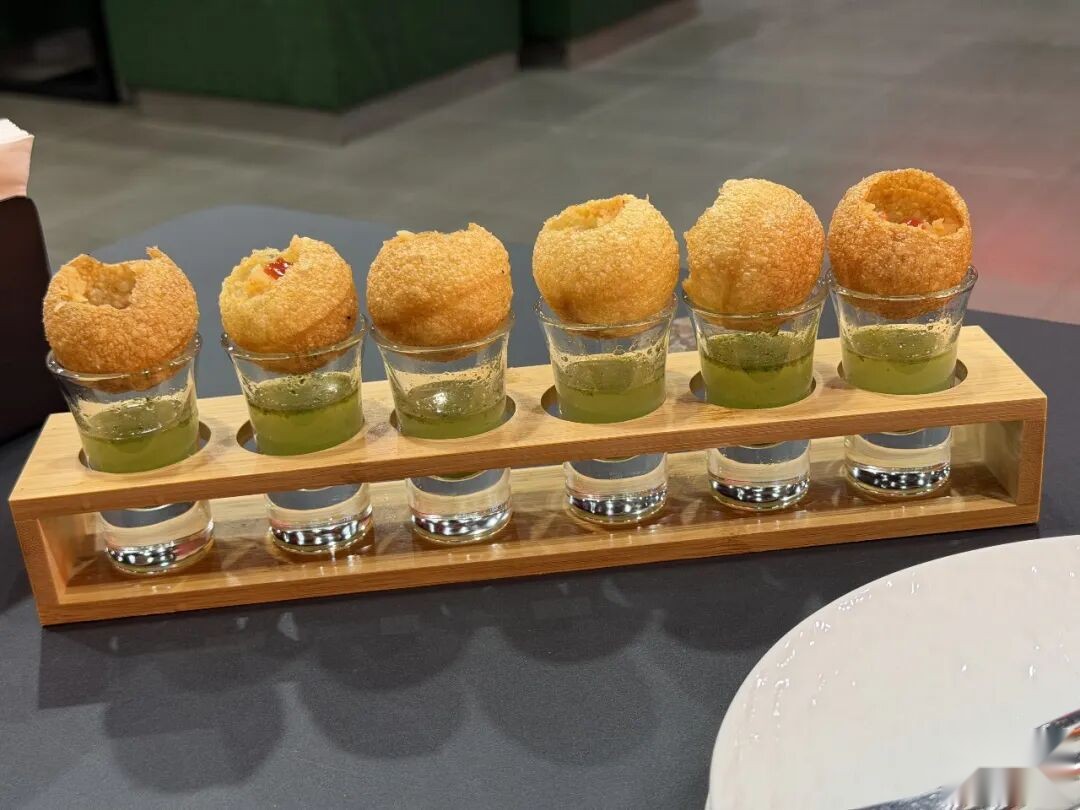
10. Cao Family Beef Zhaobing
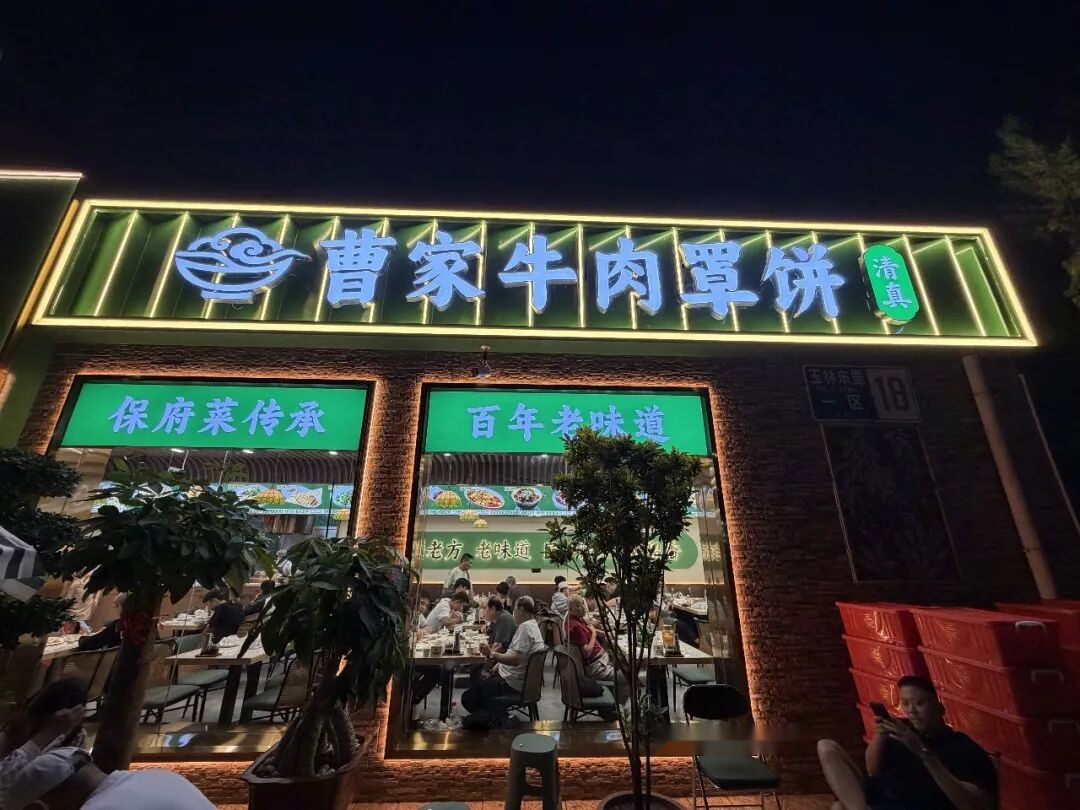
Cao Yunjin has opened a bunch of new restaurants lately—some Halal and some not—mostly clustered over in Wangsiying. I thought it was too far and didn't want to wait in long lines, so I skipped those. However, this Cao Family Beef Zhaobing (pan-cured flatbread shredded and stir-fried with beef) opened a new branch in You'anmen, and since it's close by, I came to check it out.
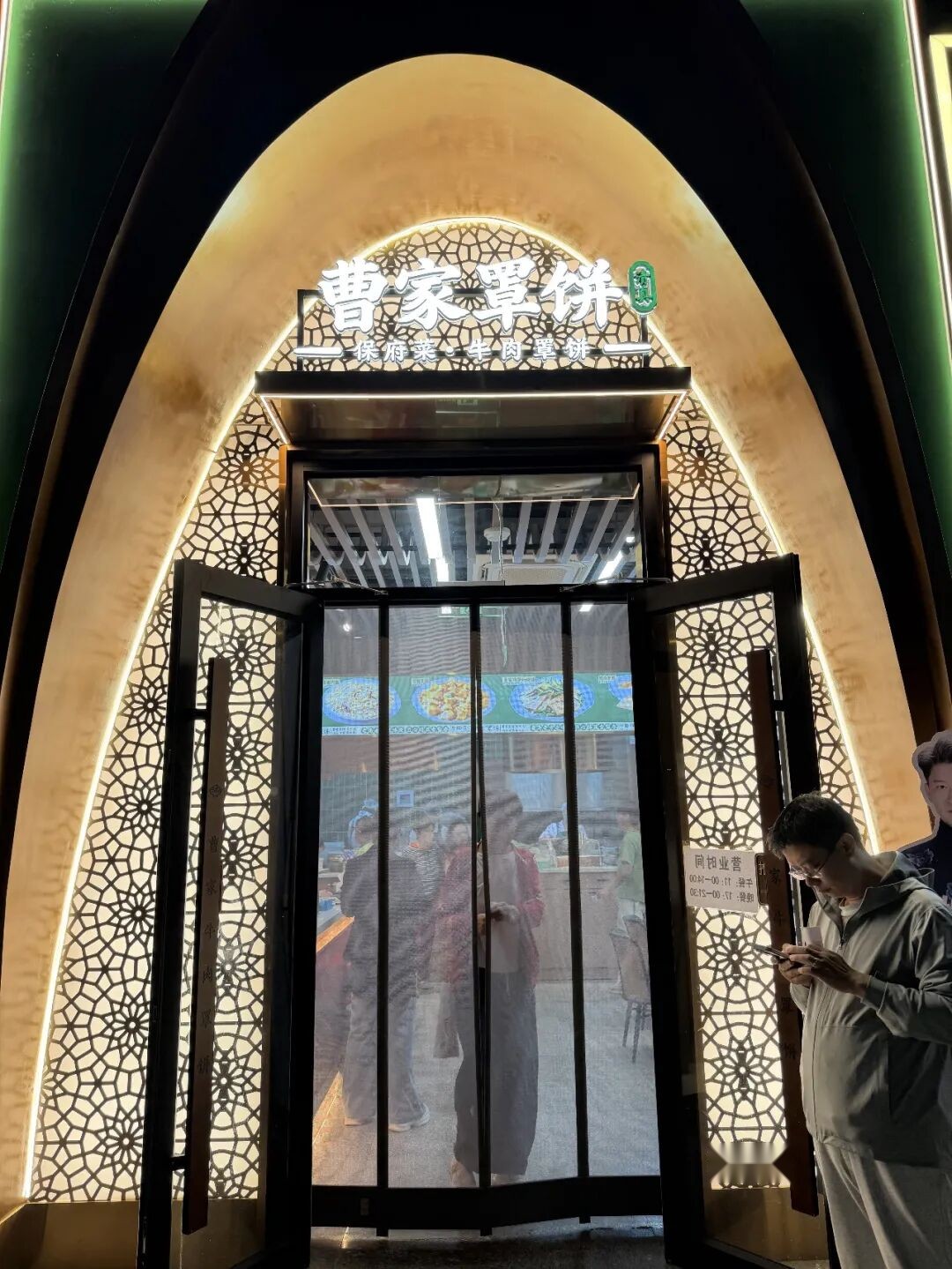
The new location is pretty big, and with it being the opening period, it's super busy. Even if you come for dinner, you still have to wait for a table.
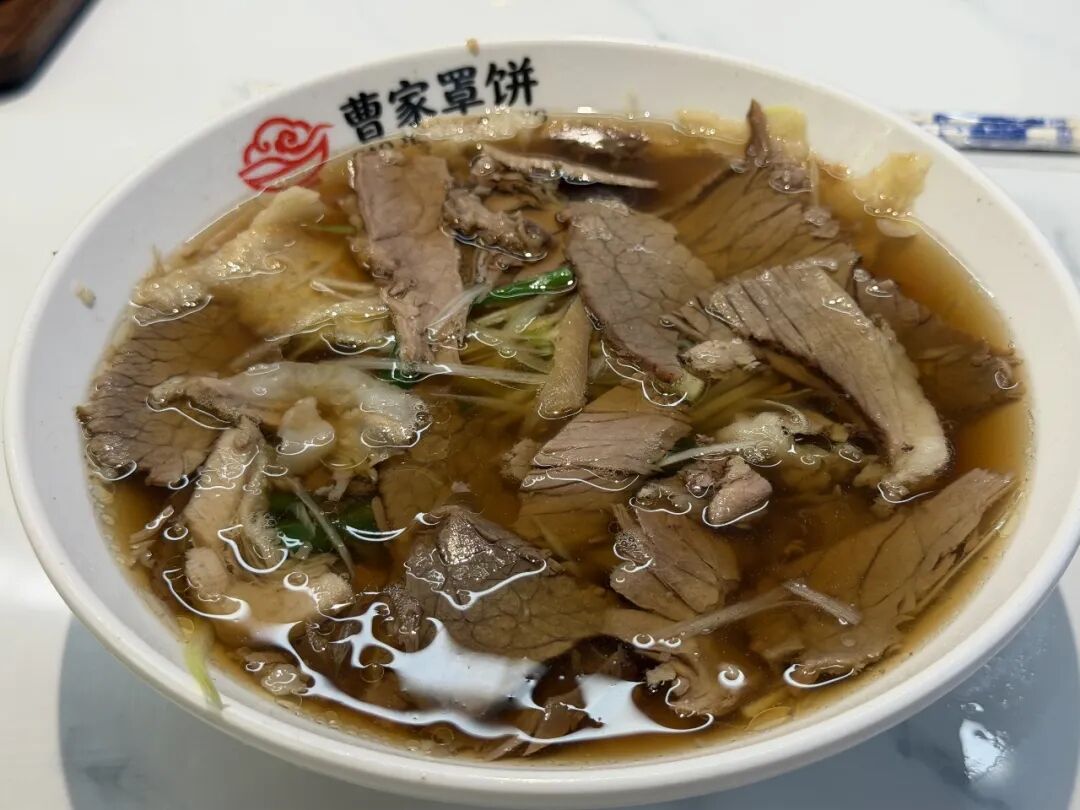
However, the staff's service is prompt and keeps up with the crowd, and the zhaobing tastes pretty authentic. Having tried beef zhaobing in Baoding before, I'd say the flavor here is pretty standard—the ingredients are clean and fresh, and it tastes much like any other good spot.
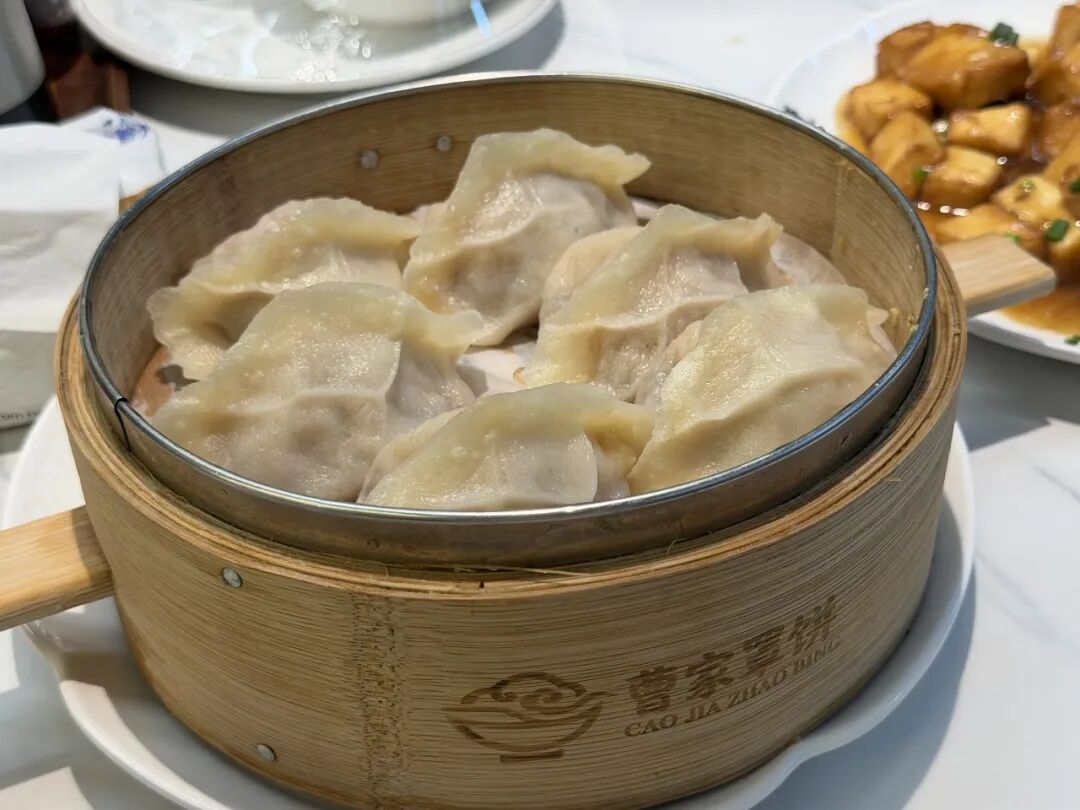
Their beef steamed dumplings and Governor tofu are both delicious too. The steamed dumplings are genuinely awesome, and they're only 18 RMB a portion.
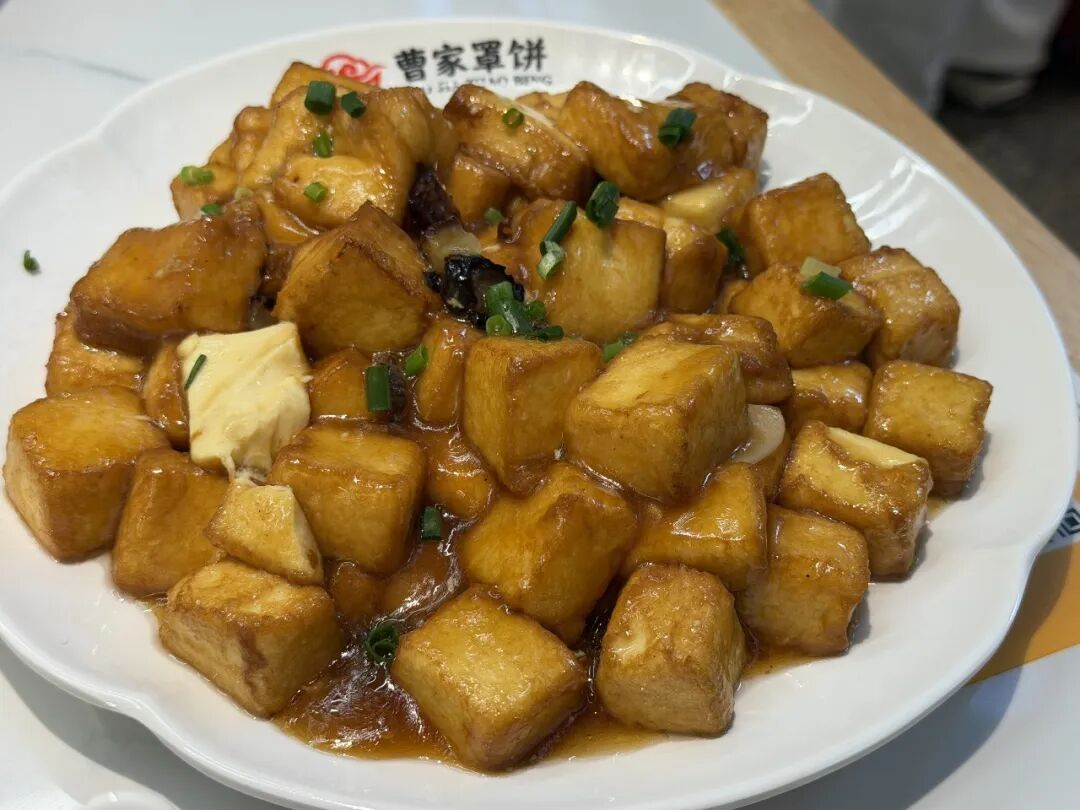
After the meal, I randomly ordered two little desserts: one was peach gum soup, and the other was mung bean paste soup. They were super generous with the ingredients, and the total bill for this whole spread came out to under 100 RMB. The value for money is seriously high.
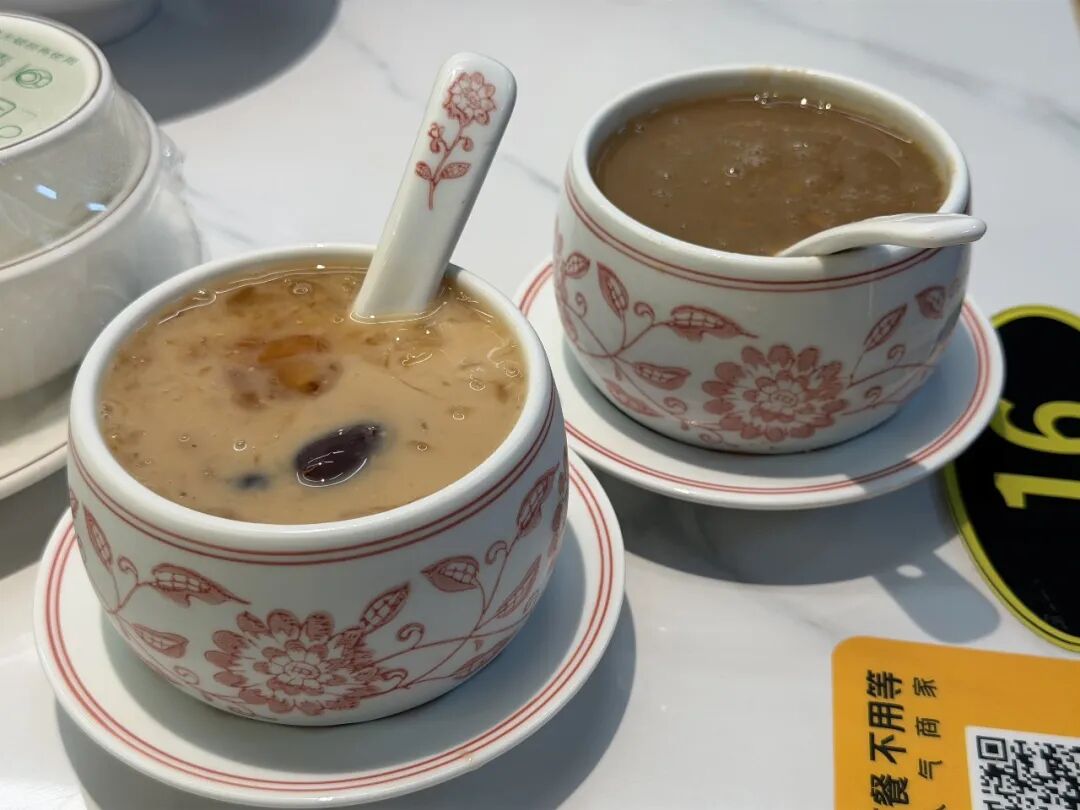
Best Halal Food in Nanjing: Iconic Beef Potstickers and Hui Muslim Eateries at Liji Halal Restaurant
Articles • Hasan09 posted the article • 0 comments • 63 views • 2026-10-26 09:15
Check out Liji Halal Restaurant, a legendary spot in Nanjing that made it onto the Michelin Bib Gourmand list. Through 12 documentary-style photos and stories, we're breaking down how this famous Hui Muslim eatery tucked away in the old Qinhuai alleys completely wins over food lovers from everywhere with their crispy-on-the-outside, juicy handmade beef guotie (pan-fried potstickers) and niuzatang (beef offal soup).
What's really worth looking into isn't just the post-award hype, but how a traditional halal joint turns everyday street food into an unforgettable part of the city's flavor.
Real-life showcase view all
Check out Liji Halal Restaurant, a legendary spot in Nanjing that made it onto the Michelin Bib Gourmand list. Through 12 documentary-style photos and stories, we're breaking down how this famous Hui Muslim eatery tucked away in the old Qinhuai alleys completely wins over food lovers from everywhere with their crispy-on-the-outside, juicy handmade beef guotie (pan-fried potstickers) and niuzatang (beef offal soup).
What's really worth looking into isn't just the post-award hype, but how a traditional halal joint turns everyday street food into an unforgettable part of the city's flavor.
Real-life showcase


Best Charcoal BBQ in Xining: Authentic Hui Muslim Lamb Skewers and Secret Recipe Ribs
Articles • Hasan09 posted the article • 0 comments • 65 views • 2026-10-26 09:13
Check out these three long-standing local favorites for charcoal BBQ in Xining, Qinghai. From the 27-year-old Gasala Lamb Skewers to other hidden gems, we’re diving into fresh-cut highland lamb, crispy secret-recipe lamb ribs, and savory braised oxtail to experience the real, smoky flavors of Northwest China’s late-night food scene.
Traditional charcoal BBQ in Xining hits differently than anywhere else—it’s all about fresh meat skewered on the spot, grilled over intense charcoal heat, and packed with dry, savory flavor. Forget the heavy, messy seasonings; here, the natural, juicy aroma of the lamb takes center stage. It’s charred on the outside, tender on the inside, and so good you’ll want to savor every chew.
1. Gasala Lamb Skewers (Beixiaojie Branch)
This place is a true heavyweight in the Xining BBQ scene. Rooted in the old streets of the East District for 27 years, this family-run spot is where generations of locals have come to eat. They’ve never relied on social media hype or fancy decor—it’s just a humble, down-to-earth street shop that’s been thriving for nearly three decades. As soon as they open in the late afternoon, it’s packed with neighbors. Even if you have to squeeze into a tight spot, the wait is worth it; it’s a legendary must-visit for the locals.
They stick to the traditional Northwest charcoal method, hand-cutting and skewering the lamb daily. No frozen meat or pre-made stuff here. The intense charcoal heat renders the fat perfectly, sending that mouth-watering aroma drifting down the street. They keep the seasoning simple—just salt, cumin, and chili—but that’s all you need for that authentic punch.
✅ Must-Order Favorites
Signature Charcoal Lamb Skewers: The absolute star of the show. The ratio of fat to lean meat is spot on. They’re grilled until they sizzle and the smoky flavor soaks deep into the meat. Pure, addictive lamb goodness in every bite.
Special Dry-Fried Paozhang: The perfect partner for your skewers. These chewy, noodle-like pieces are coated in a savory, aromatic sauce with that signature 'wok hei' (breath of the wok) flavor. A total local favorite.
Grilled Lamb Intestine: A hidden gem for the adventurous. It’s incredibly rich and buttery, grilled until slightly crispy on the outside, and impossible to put down.
Address: Old Street, Beixiaojie, Chengdong District, Xining
⏰ Business Hours: 5:00 PM – 11:00 PM
2. Ma Yidao BBQ (Flagship Store)
A legendary name in Xining’s BBQ world, this shop has been a local icon for over 20 years. They essentially put 'spicy sauce BBQ' on the map in Xining, becoming a city-wide landmark that consistently tops the 'must-eat' lists. While other places rely on dry spice rubs, this spot is famous for its secret-recipe spicy sauce that keeps regulars coming back.
What’s great about this place is they don’t play games—they sell their meat by the pound, so you can really dig in. Fresh lamb is grilled to order and brushed with their signature sauce. The charcoal heat locks in the juices, leaving the meat firm and bouncy. That secret sauce is savory, slightly spicy, and has a rich, lingering sweetness that coats every piece perfectly. The combination of sauce and meat is a serious flavor explosion.
✅ Must-Order Favorites
Secret Recipe Grilled Lamb Ribs: The #1 bestseller. The raw-to-grill technique is meticulous, resulting in a crispy exterior and tender, juicy meat inside. Smothered in that secret spicy sauce, they are incredibly satisfying to eat.
Signature Lamb Skewers: Rich, sauce-heavy goodness. Each skewer is evenly coated for a savory kick that’s not too spicy—perfect for everyone.
Special Grilled Veggie Platter: The ultimate palate cleanser. Potatoes, tofu skin, and enoki mushrooms are grilled until they soak up all that delicious sauce. Honestly, they’re even better than the meat!
Address: Old-Fashioned Food Street, Chengxi District, Xining
⏰ Business Hours: 4:30 PM – 11:30 PM
3. Ma Xiangqing Special BBQ (Xihuani Branch)
A foundational BBQ spot that’s been killing it in Xining for 30 years. It’s accompanied three generations of locals and is a true 'midnight canteen' for those in the know. They open in the afternoon and keep the grill going until late at night. Every night owl and late-night food lover in Xining knows this place. They don’t rely on trends—just 30 years of mastered craft that has kept their reputation flawless.
As soon as you walk in, you’re hit with that intoxicating aroma of charcoal-grilled meat. Their skill with heat control is top-tier. Whether it’s lamb ribs, oxtail, or skewers, everything is grilled fresh. The meat turns out charred and glistening, tender without that gamey taste. It’s that raw, authentic Northwest flavor that feels like a trip back to old-school Xining.
✅ Must-Order Favorites
Savory Braised Oxtail: The shop’s hidden secret weapon. It’s slow-cooked and then grilled, making the meat so tender it falls right off the bone. The sauce is deep and rich—a must for food connoisseurs.
Secret Recipe Grilled Lamb Ribs: Grilled slow over charcoal to lock in the moisture, they’re crispy on the outside and juicy on the inside. The pure lamb flavor just gets better with every chew.
Braised Lamb Head: A hardcore local delicacy. It’s cleaned meticulously, braised until soft, and packed with flavor. It’s the perfect companion for a drink and tastes like authentic Northwest tradition.
Address: Xihuani Commercial Street, Chengxi District, Xining
⏰ Business Hours: 3:30 PM – 12:00 AM view all
Check out these three long-standing local favorites for charcoal BBQ in Xining, Qinghai. From the 27-year-old Gasala Lamb Skewers to other hidden gems, we’re diving into fresh-cut highland lamb, crispy secret-recipe lamb ribs, and savory braised oxtail to experience the real, smoky flavors of Northwest China’s late-night food scene.
Traditional charcoal BBQ in Xining hits differently than anywhere else—it’s all about fresh meat skewered on the spot, grilled over intense charcoal heat, and packed with dry, savory flavor. Forget the heavy, messy seasonings; here, the natural, juicy aroma of the lamb takes center stage. It’s charred on the outside, tender on the inside, and so good you’ll want to savor every chew.
1. Gasala Lamb Skewers (Beixiaojie Branch)
This place is a true heavyweight in the Xining BBQ scene. Rooted in the old streets of the East District for 27 years, this family-run spot is where generations of locals have come to eat. They’ve never relied on social media hype or fancy decor—it’s just a humble, down-to-earth street shop that’s been thriving for nearly three decades. As soon as they open in the late afternoon, it’s packed with neighbors. Even if you have to squeeze into a tight spot, the wait is worth it; it’s a legendary must-visit for the locals.

They stick to the traditional Northwest charcoal method, hand-cutting and skewering the lamb daily. No frozen meat or pre-made stuff here. The intense charcoal heat renders the fat perfectly, sending that mouth-watering aroma drifting down the street. They keep the seasoning simple—just salt, cumin, and chili—but that’s all you need for that authentic punch.
✅ Must-Order Favorites
Signature Charcoal Lamb Skewers: The absolute star of the show. The ratio of fat to lean meat is spot on. They’re grilled until they sizzle and the smoky flavor soaks deep into the meat. Pure, addictive lamb goodness in every bite.

Special Dry-Fried Paozhang: The perfect partner for your skewers. These chewy, noodle-like pieces are coated in a savory, aromatic sauce with that signature 'wok hei' (breath of the wok) flavor. A total local favorite.
Grilled Lamb Intestine: A hidden gem for the adventurous. It’s incredibly rich and buttery, grilled until slightly crispy on the outside, and impossible to put down.

Address: Old Street, Beixiaojie, Chengdong District, Xining
⏰ Business Hours: 5:00 PM – 11:00 PM
2. Ma Yidao BBQ (Flagship Store)
A legendary name in Xining’s BBQ world, this shop has been a local icon for over 20 years. They essentially put 'spicy sauce BBQ' on the map in Xining, becoming a city-wide landmark that consistently tops the 'must-eat' lists. While other places rely on dry spice rubs, this spot is famous for its secret-recipe spicy sauce that keeps regulars coming back.

What’s great about this place is they don’t play games—they sell their meat by the pound, so you can really dig in. Fresh lamb is grilled to order and brushed with their signature sauce. The charcoal heat locks in the juices, leaving the meat firm and bouncy. That secret sauce is savory, slightly spicy, and has a rich, lingering sweetness that coats every piece perfectly. The combination of sauce and meat is a serious flavor explosion.
✅ Must-Order Favorites
Secret Recipe Grilled Lamb Ribs: The #1 bestseller. The raw-to-grill technique is meticulous, resulting in a crispy exterior and tender, juicy meat inside. Smothered in that secret spicy sauce, they are incredibly satisfying to eat.

Signature Lamb Skewers: Rich, sauce-heavy goodness. Each skewer is evenly coated for a savory kick that’s not too spicy—perfect for everyone.
Special Grilled Veggie Platter: The ultimate palate cleanser. Potatoes, tofu skin, and enoki mushrooms are grilled until they soak up all that delicious sauce. Honestly, they’re even better than the meat!

Address: Old-Fashioned Food Street, Chengxi District, Xining
⏰ Business Hours: 4:30 PM – 11:30 PM
3. Ma Xiangqing Special BBQ (Xihuani Branch)
A foundational BBQ spot that’s been killing it in Xining for 30 years. It’s accompanied three generations of locals and is a true 'midnight canteen' for those in the know. They open in the afternoon and keep the grill going until late at night. Every night owl and late-night food lover in Xining knows this place. They don’t rely on trends—just 30 years of mastered craft that has kept their reputation flawless.

As soon as you walk in, you’re hit with that intoxicating aroma of charcoal-grilled meat. Their skill with heat control is top-tier. Whether it’s lamb ribs, oxtail, or skewers, everything is grilled fresh. The meat turns out charred and glistening, tender without that gamey taste. It’s that raw, authentic Northwest flavor that feels like a trip back to old-school Xining.
✅ Must-Order Favorites
Savory Braised Oxtail: The shop’s hidden secret weapon. It’s slow-cooked and then grilled, making the meat so tender it falls right off the bone. The sauce is deep and rich—a must for food connoisseurs.

Secret Recipe Grilled Lamb Ribs: Grilled slow over charcoal to lock in the moisture, they’re crispy on the outside and juicy on the inside. The pure lamb flavor just gets better with every chew.
Braised Lamb Head: A hardcore local delicacy. It’s cleaned meticulously, braised until soft, and packed with flavor. It’s the perfect companion for a drink and tastes like authentic Northwest tradition.

Address: Xihuani Commercial Street, Chengxi District, Xining
⏰ Business Hours: 3:30 PM – 12:00 AM
Best Halal Food in Nanjing: Famous Ma Xiangxing Restaurant's Four Classic Dishes and Authentic Hui Muslim Heritage
Articles • Hasan09 posted the article • 0 comments • 30 views • 1 days ago
Good food is the foundation of a good life.
When you travel to certain cities, you’ll find shops with histories that stop you in your tracks. Nanjing’s Ma Xiangxing is exactly that kind of place.
This restaurant is a century-old Halal landmark with nearly 200 years of history, often called a 'living fossil' of the Nanjing food scene. In 1845, the founder, Ma Sifa, fled a famine in his hometown and moved to Nanjing. He initially made a living running a small food stall near the Huashen Temple. Later, his son, Ma Shengxiang, took over the family business, moved the stall to the 'Huihui Ying' (Hui Muslim Barracks) area near Yuhuatai, and built a proper shop, officially naming it 'Ma Xiangxing.' 180 years later, that humble stall has grown into a full-blown building. They even created the 'Four Classic Dishes' that made them famous across Nanjing: Meiren Gan, Squirrel Fish, Phoenix Tail Shrimp, and Egg Shaomai. These dishes perfectly blend northern Halal techniques with local Jiangnan ingredients, becoming the restaurant's signatures. Nowadays, many old-school Nanjing locals consider this place their go-to family cafeteria.
Menu Recommendations
Meiren Gan (Beauty’s Liver)
This dish is the gold standard for 'turning the ordinary into something extraordinary.' The main ingredient is duck pancreas—specifically the white fatty tissue found under the duck’s neck—stir-fried in duck oil. It’s crispy, tender, and smooth, with a beautiful milky color, and pairs perfectly with asparagus and mushrooms. Rumor has it that a chef came up with it on the fly, turning an unwanted ingredient into a signature dish.
Squirrel Mandarin Fish
This is an upgrade on the classic Suzhou squirrel-style mandarin fish. They use live mandarin fish, slice it with precise knife work, and fry it until it looks like a squirrel. The secret is shaping the fish’s jaw into the head of a squirrel. It’s crispy on the outside, tender on the inside, and the sweet and sour sauce is just right. Truly delicious!
Egg Shaomai (Steamed Dumplings with Egg Wrappers)
There’s a fun story behind this one: it was created to satisfy the cravings of General Bai Chongxi, a leader from the Guangxi clique who loved shrimp. The chef replaced the traditional flour dough with an egg-based wrapper and filled it with shrimp. Once steamed and drizzled with a savory sauce, the texture is fresh, bouncy, and tender—especially when served hot.
Fengwei Xia (Phoenix Tail Shrimp)
This is another must-order. They use large shrimp, keep the tail intact, and stir-fry them with ginkgo nuts, peas, and carrots. It’s light, refreshing, and not greasy at all. The flavor is fantastic.
Beef Guotie (Pan-fried Dumplings)
Their pan-fried dumplings have a golden, crispy bottom and a juicy, tender filling. Dipping them in vinegar and chili sauce is incredibly satisfying. It’s a classic snack that locals in Nanjing love.
Beef Tangbao (Soup Dumplings)
These are another must-order. The skins are thin, the fillings are generous, and the beef is flavorful without any gamey taste. The soup inside is rich and savory; definitely get an order to try.
Red Bean Yuanxiao (Sweet Rice Ball Soup)
This is the perfect way to cut through the richness of a meal. The small glutinous rice balls are soft and chewy, the red bean paste is rich, and the thickened lotus root starch gives it a great, hearty texture. It’s not overly sweet, and the portion is huge. Go for it!
Mr. Hu’s Tofu
Legend has it that this tofu dish was specially made for a Professor Hu at Southeast University. It’s packed with chicken liver, shrimp, and other ingredients, making it incredibly savory and healthy enough for both kids and seniors to enjoy.
Ma Xiangxing Halal Restaurant
Address: No. 32 Yunnan Road, Gulou District, Nanjing
Business Hours: 07:00 - 20:30 view all
Good food is the foundation of a good life.
When you travel to certain cities, you’ll find shops with histories that stop you in your tracks. Nanjing’s Ma Xiangxing is exactly that kind of place.
This restaurant is a century-old Halal landmark with nearly 200 years of history, often called a 'living fossil' of the Nanjing food scene. In 1845, the founder, Ma Sifa, fled a famine in his hometown and moved to Nanjing. He initially made a living running a small food stall near the Huashen Temple. Later, his son, Ma Shengxiang, took over the family business, moved the stall to the 'Huihui Ying' (Hui Muslim Barracks) area near Yuhuatai, and built a proper shop, officially naming it 'Ma Xiangxing.' 180 years later, that humble stall has grown into a full-blown building. They even created the 'Four Classic Dishes' that made them famous across Nanjing: Meiren Gan, Squirrel Fish, Phoenix Tail Shrimp, and Egg Shaomai. These dishes perfectly blend northern Halal techniques with local Jiangnan ingredients, becoming the restaurant's signatures. Nowadays, many old-school Nanjing locals consider this place their go-to family cafeteria.
Menu Recommendations
Meiren Gan (Beauty’s Liver)
This dish is the gold standard for 'turning the ordinary into something extraordinary.' The main ingredient is duck pancreas—specifically the white fatty tissue found under the duck’s neck—stir-fried in duck oil. It’s crispy, tender, and smooth, with a beautiful milky color, and pairs perfectly with asparagus and mushrooms. Rumor has it that a chef came up with it on the fly, turning an unwanted ingredient into a signature dish.
Squirrel Mandarin Fish
This is an upgrade on the classic Suzhou squirrel-style mandarin fish. They use live mandarin fish, slice it with precise knife work, and fry it until it looks like a squirrel. The secret is shaping the fish’s jaw into the head of a squirrel. It’s crispy on the outside, tender on the inside, and the sweet and sour sauce is just right. Truly delicious!
Egg Shaomai (Steamed Dumplings with Egg Wrappers)
There’s a fun story behind this one: it was created to satisfy the cravings of General Bai Chongxi, a leader from the Guangxi clique who loved shrimp. The chef replaced the traditional flour dough with an egg-based wrapper and filled it with shrimp. Once steamed and drizzled with a savory sauce, the texture is fresh, bouncy, and tender—especially when served hot.
Fengwei Xia (Phoenix Tail Shrimp)
This is another must-order. They use large shrimp, keep the tail intact, and stir-fry them with ginkgo nuts, peas, and carrots. It’s light, refreshing, and not greasy at all. The flavor is fantastic.
Beef Guotie (Pan-fried Dumplings)
Their pan-fried dumplings have a golden, crispy bottom and a juicy, tender filling. Dipping them in vinegar and chili sauce is incredibly satisfying. It’s a classic snack that locals in Nanjing love.
Beef Tangbao (Soup Dumplings)
These are another must-order. The skins are thin, the fillings are generous, and the beef is flavorful without any gamey taste. The soup inside is rich and savory; definitely get an order to try.
Red Bean Yuanxiao (Sweet Rice Ball Soup)
This is the perfect way to cut through the richness of a meal. The small glutinous rice balls are soft and chewy, the red bean paste is rich, and the thickened lotus root starch gives it a great, hearty texture. It’s not overly sweet, and the portion is huge. Go for it!
Mr. Hu’s Tofu
Legend has it that this tofu dish was specially made for a Professor Hu at Southeast University. It’s packed with chicken liver, shrimp, and other ingredients, making it incredibly savory and healthy enough for both kids and seniors to enjoy.
Ma Xiangxing Halal Restaurant
Address: No. 32 Yunnan Road, Gulou District, Nanjing
Business Hours: 07:00 - 20:30
Traditional Hui Muslim Food: Deep Dive into the Cultural Significance and History of Youxiang (Fried Dough Cakes)
Articles • Hasan09 posted the article • 0 comments • 25 views • 1 days ago
Youxiang is a traditional delicacy among Hui Muslims, typically prepared only for special family occasions, celebrations like weddings and funerals, or major holidays such as Eid al-Fitr and Eid al-Adha.
In my childhood memories, my mother would fry youxiang every Eid al-Fitr. From kneading and proofing the dough to shaping and frying, she did it all by herself. My sister and I never learned the craft; my father used to say Mom was just too independent and insisted on doing everything on her own.
Whenever Mom finished frying them, it was my job to deliver the youxiang to our neighbors. It was a lovely back-and-forth tradition, and they would often send other treats back home with me.
After I grew up, my mother stopped frying youxiang at home as often. When she occasionally went to help others prepare them, she’d bring back a couple, and sometimes she’d even bring home a piece of mietie (blessed meat gifted for religious remembrance).
I always thought we had plenty of time left, but Mom’s sudden passing early this year caught us completely off guard. After we brought her home that night, it was our neighbors who stepped in to help fry the youxiang.
According to Hui Muslim traditions, families are expected to fry youxiang as an act of sadaqah (charity/giving) during memorial days after a loved one passes; it is a duty and a responsibility for the children.
On the seventh day, we were still deep in grief, and since neither my sister nor I knew how to fry them, we felt a void. I ordered 35 youxiang from the Tiankelai Restaurant, heated them up, cut them into pieces, and placed a plate on every table.
Forty days after my mother passed, which happened to be during Ramadan, my sister fried the youxiang. They weren't perfect, but Mom surely felt the love behind the gesture.
I personally bought 10 catties (approx. 5kg) of beef and 15 catties (approx. 7.5kg) of eggs, donating them to the Madian Mosque to be used as ingredients for their community iftar (the meal to break the fast).
Time flew, and by the end of March, Eid al-Fitr was approaching. On a Saturday morning, we visited Mom’s grave, and that afternoon, I wanted to fulfill a wish: to fry youxiang myself, also known as 'xiangxiang guo' (the fragrant pot), to honor her memory.
After getting home at noon, the 'Niu' family (my husband) and I started prepping the ingredients.
After performing ghusl (major ritual washing) and wudu (minor ritual washing), I lit a stick of incense in the burner, then dove into kneading, proofing, portioning, and frying the dough.
Even though the youxiang didn't come out perfectly round, I was relieved that the dough rose well, and my husband even gave me a thumbs-up.
The sunset that day was beautiful, and we drove over to deliver a few to my father.
May 5th marked the 100th day since Mom passed. My father, my sister, and I agreed to fry youxiang and invite an Ahong (Imam) to our home for a prayer reading.
In the morning, after my husband and I arrived, my sister brought over the dough she had already proofed. We portioned it out, flattened it into circles, and waited for the oil to heat up before frying.
While frying, you have to keep spooning hot oil over the dough so the youxiang puffs up properly.
We fried less than 20 that day, but the dough turned out great, which brought my sister a lot of peace of mind.
When the Ahong left after the prayers, he took a few packages of mietie and two youxiang with him.
Youxiang comes in three main varieties: plain, sweet (sugar), and savory (meat). You can also find them in salty, bland, or sweet flavors, as well as the 'tangmian' (scalded dough) version.
As for their shape, youxiang in most Hui Muslim communities are round. However, there is one strict rule: you must never call them 'youbing' (fried pancakes). Even if they look exactly like youbing in some areas, it is considered taboo to use that name.
There is also a proper etiquette for eating youxiang: you should use your hands to tear it along the knife marks or split it in half, as it is considered improper to bite directly into the whole piece.
Youxiang is more than just food; it is a profound cultural symbol. Every holiday or family gathering brings families together to fry them, not just for themselves but to share with neighbors and friends. It preserves the dietary customs of the Hui Muslims and carries deep emotional meaning and cherished memories. view all
Youxiang is a traditional delicacy among Hui Muslims, typically prepared only for special family occasions, celebrations like weddings and funerals, or major holidays such as Eid al-Fitr and Eid al-Adha.
In my childhood memories, my mother would fry youxiang every Eid al-Fitr. From kneading and proofing the dough to shaping and frying, she did it all by herself. My sister and I never learned the craft; my father used to say Mom was just too independent and insisted on doing everything on her own.
Whenever Mom finished frying them, it was my job to deliver the youxiang to our neighbors. It was a lovely back-and-forth tradition, and they would often send other treats back home with me.
After I grew up, my mother stopped frying youxiang at home as often. When she occasionally went to help others prepare them, she’d bring back a couple, and sometimes she’d even bring home a piece of mietie (blessed meat gifted for religious remembrance).
I always thought we had plenty of time left, but Mom’s sudden passing early this year caught us completely off guard. After we brought her home that night, it was our neighbors who stepped in to help fry the youxiang.
According to Hui Muslim traditions, families are expected to fry youxiang as an act of sadaqah (charity/giving) during memorial days after a loved one passes; it is a duty and a responsibility for the children.
On the seventh day, we were still deep in grief, and since neither my sister nor I knew how to fry them, we felt a void. I ordered 35 youxiang from the Tiankelai Restaurant, heated them up, cut them into pieces, and placed a plate on every table.
Forty days after my mother passed, which happened to be during Ramadan, my sister fried the youxiang. They weren't perfect, but Mom surely felt the love behind the gesture.
I personally bought 10 catties (approx. 5kg) of beef and 15 catties (approx. 7.5kg) of eggs, donating them to the Madian Mosque to be used as ingredients for their community iftar (the meal to break the fast).
Time flew, and by the end of March, Eid al-Fitr was approaching. On a Saturday morning, we visited Mom’s grave, and that afternoon, I wanted to fulfill a wish: to fry youxiang myself, also known as 'xiangxiang guo' (the fragrant pot), to honor her memory.
After getting home at noon, the 'Niu' family (my husband) and I started prepping the ingredients.
After performing ghusl (major ritual washing) and wudu (minor ritual washing), I lit a stick of incense in the burner, then dove into kneading, proofing, portioning, and frying the dough.
Even though the youxiang didn't come out perfectly round, I was relieved that the dough rose well, and my husband even gave me a thumbs-up.
The sunset that day was beautiful, and we drove over to deliver a few to my father.
May 5th marked the 100th day since Mom passed. My father, my sister, and I agreed to fry youxiang and invite an Ahong (Imam) to our home for a prayer reading.
In the morning, after my husband and I arrived, my sister brought over the dough she had already proofed. We portioned it out, flattened it into circles, and waited for the oil to heat up before frying.
While frying, you have to keep spooning hot oil over the dough so the youxiang puffs up properly.
We fried less than 20 that day, but the dough turned out great, which brought my sister a lot of peace of mind.
When the Ahong left after the prayers, he took a few packages of mietie and two youxiang with him.
Youxiang comes in three main varieties: plain, sweet (sugar), and savory (meat). You can also find them in salty, bland, or sweet flavors, as well as the 'tangmian' (scalded dough) version.
As for their shape, youxiang in most Hui Muslim communities are round. However, there is one strict rule: you must never call them 'youbing' (fried pancakes). Even if they look exactly like youbing in some areas, it is considered taboo to use that name.
There is also a proper etiquette for eating youxiang: you should use your hands to tear it along the knife marks or split it in half, as it is considered improper to bite directly into the whole piece.
Youxiang is more than just food; it is a profound cultural symbol. Every holiday or family gathering brings families together to fry them, not just for themselves but to share with neighbors and friends. It preserves the dietary customs of the Hui Muslims and carries deep emotional meaning and cherished memories.
Traditional Hui Muslim Wedding Food: Exploring the Symbolism and Authentic Recipe of Fried Youxiang
Articles • Hasan09 posted the article • 0 comments • 23 views • 1 days ago
Golden, glistening, and incredibly fragrant—youxiang is a flavor that simply cannot be missing from a Hui Muslim wedding.
The kitchen is filled with steam as several ladies gather around the workbench, kneading and shaping the dough with practiced, nimble movements. The dough is folded back and forth in their hands until perfect round discs are prepped and ready to be dropped into a sizzling hot wok of oil.
The oil sizzles as the dough puffs up, slowly transforming from a pale white to an appetizing golden brown. Once lifted from the oil, the youxiang are slightly fluffy on the outside, smelling faintly of rich, fried dough, with a texture that is soft, chewy, and lightly sweet.
It is more than just a snack; it is a gesture of love. Serving youxiang at a wedding represents unity, happiness, and peace—it is the simplest yet most profound blessing from elders to the newlyweds, a tradition that has been passed down for generations.
There are no fancy decorations here, just the deep, genuine warmth of community and shared life. With the very first bite, you aren't just tasting a classic flavor, but also the comforting sense of ritual preserved through time.
Have you ever tried these youxiang that carry such beautiful meaning? view all
Golden, glistening, and incredibly fragrant—youxiang is a flavor that simply cannot be missing from a Hui Muslim wedding.
The kitchen is filled with steam as several ladies gather around the workbench, kneading and shaping the dough with practiced, nimble movements. The dough is folded back and forth in their hands until perfect round discs are prepped and ready to be dropped into a sizzling hot wok of oil.
The oil sizzles as the dough puffs up, slowly transforming from a pale white to an appetizing golden brown. Once lifted from the oil, the youxiang are slightly fluffy on the outside, smelling faintly of rich, fried dough, with a texture that is soft, chewy, and lightly sweet.
It is more than just a snack; it is a gesture of love. Serving youxiang at a wedding represents unity, happiness, and peace—it is the simplest yet most profound blessing from elders to the newlyweds, a tradition that has been passed down for generations.
There are no fancy decorations here, just the deep, genuine warmth of community and shared life. With the very first bite, you aren't just tasting a classic flavor, but also the comforting sense of ritual preserved through time.
Have you ever tried these youxiang that carry such beautiful meaning?
Best Halal Food in Hohhot: Authentic Hui Muslim Shaomai, Hand-Grabbed Lamb, and Traditional Mosque Cuisine Guide
Articles • Hasan09 posted the article • 0 comments • 24 views • 1 days ago
Hello everyone,
It’s been five days since I returned from Hohhot, and I’m already missing it.
When people mention Hohhot, their first reaction is usually the grasslands.
But during my brief three-day stay, I discovered a different kind of northern charm.
It is a place where grassland scenery and a modern city intertwine, and where the history of the old city coexists with the vibrant, everyday life of the streets.
The city itself possesses so much charm that it’s worth slowing down to truly experience.
As someone who loves food and specifically hunts for Halal cuisine, I started doing crazy amounts of research before leaving. Halal restaurants are everywhere in Hohhot, but my standards have always been high: it has to be authentic, delicious, and have a strong local character.
After eating there for several days straight, I’ve put together a Halal food list: it includes both long-standing establishments rooted in Hohhot for over a decade and some newer culinary finds.
Save this guide; I hope it serves as a helpful reference for those of you planning your trip.
If you haven't eaten shaomai, you haven't really been to Hohhot.
In Hohhot, shaomai is the city’s undisputed culinary business card.
Life here begins with a steaming basket of shaomai and a pot of savory brick tea.
It’s not just a must-have breakfast for locals, but it’s also been listed as an intangible cultural heritage at the autonomous region level.
There are nearly 3,000 shaomai shops in the city, which is proof enough of its importance in the daily lives of the locals.
Hohhot residents definitely have their own personal favorites when it comes to shaomai. I skipped the hyped-up spots online, listened to some local friends, and just took a taxi straight to Jufulin (a 12-year-old Halal institution).
They serve both steamed and pan-fried shaomai; I tried both, and I personally prefer the crispy pan-fried version, though both are excellent.
The mutton and green onion shaomai uses lamb leg meat cut by hand, so you can really taste distinct chunks of meat, not the finely minced kind.
The dough wrapper is the best I’ve ever had—thin but with a nice, oily richness.
For those who don't like fatty meat, you must order a basket of the lamb tenderloin and green onion shaomai. Even though it's tenderloin, it's not dry or greasy, and it's full of juice.
I barely tasted any mutton gamey flavor in either basket, and the dough wrapper had a faint sweetness when chewed. Dip it in vinegar and a little bit of chili oil.
One of the two giants of Hohhot stir-fry: Yu-Xiang Rou-Si (fish-flavored shredded pork).
In any old-school Hohhot restaurant, you’ll find Yu-Xiang Rou-Si on the menu.
Unlike the original Sichuan version, it’s a localized adaptation: it emphasizes the "wok hei" (breath of the wok), a balance of sweet and sour, and a prominent vinegar aroma. It’s not the heavy pickled pepper flavor, but rather the classic, familiar northern style.
This is a 'hole-in-the-wall' joint (a 10-year-old Halal spot) that a friend tipped me off about. They specialize in stir-fries, assorted hot pots, and copper-pot shabu-shabu. If you want to find authentic old-school Hohhot flavors, this is the place.
A quick heads-up: don’t set your expectations for the environment too high. Most long-standing shops are pretty much like this—simple and humble, because the focus is entirely on the flavor.
I came here specifically for their Yu-Xiang Rou-Si, and my friend kept insisting: 'You can order whatever else you want, but you have to eat this.'
It’s not cloyingly sweet, and the vinegar taste isn't overpowering. The shredded beef is tender, rich in savory sauce, and has that authentic old-fashioned taste—it’s amazing with noodles.
The hand-pulled noodles with 'Guoyou' (oil-blanched) meat are chewy; it’s worth visiting just for a bowl of these noodles, with every strand coated in savory sauce.
Eating copper-pot shabu-shabu in Inner Mongolia is hard to get wrong, and this place is no exception. The beef and mutton are thick-sliced to order, fresh enough to see, and have a great bite.
Bing Zhu Yang (ice-boiled lamb)—Hohhot’s most iconic signature dish.
Ice-boiled lamb isn't just some made-up viral trend.
The concept originated from nomadic herders on the grasslands: in the winter, when there was no running water, they would chisel ice to melt into water for boiling meat. It eventually evolved into the iconic specialty hot pot we see in Hohhot today.
I looked it up, and this spot is ranked number one for charcoal hot pot in the Huimin District! (A 10-year-old Halal shop).
When the pot was brought out, the visual impact was quite something. The bottom was layered with onions and carrots, topped with a thick layer of ice cubes, and then piled high with large chunks of raw mutton. You could tell at a glance that the meat was incredibly fresh.
Honestly, my expectations were sky-high before I started eating, and while it didn't quite hit that "mind-blowing" level I anticipated, the quality of the lamb itself was spot-on.
After waiting for the pot to boil and the meat to cook through, the texture was super tender and firm, with a natural, savory sweetness. The best way to enjoy it is to sip the broth first, then eat the meat—it really makes for a great experience.
I personally loved the sesame paste dipping sauce; it was rich and flavorful, complementing the lamb perfectly.
The peak of Hohhot lamb: 40 years of mastering lamb dishes.
Xingyuezhai has been a Halal staple in Hohhot for 40 years. It’s not some trendy, mass-produced joint; they’ve been sticking to their traditional, time-honored techniques for decades.
Their signature lamb bones are slow-simmered in a traditional broth, and they are completely free of any gamey smell.
They’re stewed until so tender they fall right off the bone, and the marrow bones are absolutely packed with rich, creamy goodness.
You can choose between lamb spine or lamb shank, or go for a mix of both. I personally prefer the lamb spine—it’s meatier and really satisfying to gnaw on.
Pair it with a side of youmian yuyu (steamed oat noodles shaped like little fish). The broth is super thick and flavorful; the noodles have a great chewy texture, and they soak up all that meaty goodness, making every bite delicious.
The youmian wowo (rolled steamed oat noodles) are stacked up neatly, and they have such a rich, nutty grain aroma when steamed.
The side dishes are classic home-style comfort foods: scallion tofu, spicy and sour radishes, and pickled veggies. They’re refreshing and help cut through the richness—just order whatever suits your taste.
Copper Hot Pot: The most authentic way to enjoy prairie lamb.
Why is it a must-eat when you visit Hohhot?
If you really want to experience the true flavor of prairie lamb, a clear-broth hot pot is the most direct way to do it! You’ll know if it’s good from the very first bite.
This place specializes in about-one-year-old prairie lambs (an 11-year-old Halal shop). The owner says they run their own ranch, handling everything from the pasture to the table to ensure the meat stays fresh.
This kind of lamb is incredibly tender with very little gamey taste; it even has a subtle, milky sweetness, which is a profile I really love.
It uses a traditional clear-broth copper pot. The base looks simple, but it includes a bit of suancai (pickled cabbage) to add a slight tang that enhances the flavor without overpowering the lamb—it perfectly highlights the meat's natural taste.
The signature thinly sliced lamb is cut to the perfect thickness. Once you swish it in the pot, it turns out super tender and juicy, with a rich, milky flavor and almost no gamey scent.
The premium lamb slices are huge and delicious, with virtually no gamey taste—eating them is a real treat.
The hand-sliced fresh lamb might be a bit thicker because it’s cut by hand, but the flavor is spot-on and the texture isn't tough at all.
A clear water broth really puts the quality of the meat to the test, and their lamb passes with flying colors.
The most iconic 20-year-old Mongolian-style restaurant.
Gerile Ama (founded in 2000) is a great spot if you’re new to Inner Mongolian dairy products. This location is a Halal-certified restaurant.
What I was looking forward to most was their guocha (pot tea). Salty milk tea is boiled in a pot with milk skin, roasted millet, and dried beef—the moment that aroma hits you, you’re hooked.
If it’s your first time trying salty milk tea, it’s easy to fall in love with its rich, creamy flavor.
The sweet cheese pies have a fragrant crust, and the cheese inside is super stretchy. Just a heads-up: items with too much cheese can get a bit heavy, so don't order too much at once.
The lamb and shancong (wild onion) pie has an incredibly thin crust—every bite is just pure filling.
The red-broth lamb offal soup is bright, savory, and spicy. The offal is cleaned perfectly with no weird smells.
One of the two titans of Hohhot-style stir-fry: Guoyourou with potato slices.
Guoyourou (oil-blanched meat) actually originated as a Shanxi dish and made its way to Hohhot through the migration history known as "Zouxikou."
Here in Hohhot, they put their own spin on it: the potato slices are deep-fried until crispy, then stir-fried with tender beef and a bit of wood ear mushroom in a thickened sauce. It’s a mix of sweet, sour, and savory, creating a unique version you won't find anywhere else.
You have to try Yizhenxiang (a 6-year-old Halal restaurant) when in Hohhot. While it hasn't reached the 10-year mark yet, I’m confident they’ll easily maintain this level of quality.
Once I started eating, I couldn't help but say, "No wonder this place is so popular." Calling their cumin lamb and guoyourou with potato slices "god-tier" is no exaggeration.
The potato slices in the guoyourou are crispy on the outside, and the beef slices are silky smooth. You wouldn't even know it was beef unless someone told you, and the sauce coats everything just right.
The stir-fried saudan (beef tripe/stomach) is also a specialty. The tripe is cleaned immaculately with absolutely no off-putting smell. It’s stir-fried over high heat, making it super flavorful and even better the more you chew.
Authentic Halal Food in Hohhot: A Guide to Best-Loved Hui Muslim Classics, Hand-Grabbed Lamb, and Shaomai.
When it’s cold out, you’ve got to order a shijin guo (assorted hot pot). It truly lives up to its name, packed with a ton of vegetables, soy products, meatballs, and glass noodles, all bubbling away and steaming in the pot.
Having a pot like this in Hohhot during winter will warm you up from your stomach all the way to your toes.
The cumin lamb is stir-fried quickly over high heat, giving it a savory, aromatic punch of cumin with just a hint of chili—not the aggressive, burning kind.
For your staple, go with the tangmian youpo (deep-fried dough cakes); it’s a unique way to eat them—you dip the fried dough into white sugar.
Old-school restaurants stand the test of time for a reason, but the new spots cropping up have their own special flavor, too.
Hohhot’s super-hyped la beizi (spicy stuffed baked flatbread).
Known as one of the nine must-try local delicacies in Hohhot, this is a spot locals shared with me in confidence. I was so curious to find out what exactly a beizi tastes like.
Their beizi are long and rectangular, toasted until fragrant, and they are super generous with the fillings—they practically spill out because the portions are so massive.
The yuxiang rousi (shredded pork in garlic sauce) beizi is so huge I couldn't even hold it with one hand!
The shredded pork filling is piled so high it’s overflowing; the amount of filling is honestly ridiculous—it feels like you're eating a rice bowl, just with bread instead.
The classic spicy la pian (chili strips) beizi gets tastier the more you chew. The chili oil is very fragrant, and the tofu skin inside is nice and soft.
The mala niujin mian (spicy beef tendon noodles) packs a serious punch. It’s wonderfully spicy, the texture is nice and chewy, and the seasoning is bold and savory—perfect if you love intense flavors.
They offer delivery too, so you should definitely give them a try.
The deep-fried skewers worth waiting an hour for.
Almost every person from Hohhot has a go-to deep-fried skewer spot they’re loyal to.
I happened to be passing by and decided to try Xiaoyan Fried Skewers, which consistently ranks in the top three for local reputation.
I was worried the batter-fried skewers would be too greasy, but I was totally wrong. The batter is applied in a very thin layer, making them crispy on the outside and tender on the inside, locking in all the vegetable juices so they don't get dry.
I highly recommend four must-order items: mushrooms, green beans, hawthorn, and naipizi (fried milk skin).
The mushrooms and green beans are fried to perfection and stay crisp; the hawthorn is sweet and tart, which is quite unique; the naipizi has a prominent milky aroma once fried, with a really interesting texture.
Just a quick tip: don't order too much at once, because there are so many other great things to eat nearby—just grab enough to get a taste.
Top-tier bean sprout fried noodles in Hohhot.
I found this spot serving local-style fried noodles near Hohhot’s Niu Jie (Beef Street), and a quick search revealed it’s considered one of the top-tier noodle spots on social media!
The beef and bean sprout fried noodles look simple enough, but you won't realize why it’s the signature dish until you take a bite.
It’s a massive plate made with thick, chewy noodles. It’s savory and seasoned just right with a tiny kick of heat, and the bean sprouts add a nice crunch to the mix.
The ganbian (dry-fried) noodles are just as good. The best part is that you can get free refills on the noodles, so if you have a big appetite, don’t worry—you won't leave hungry.
Hohhot’s signature Lâhūhū (thick spicy sauce) malatang.
I discovered this malatang (spicy hot pot) shop while strolling through Kuanxiangzi, and they actually have the ingredients pre-selected for you.
The flavor profile is a bit like old-school Northeastern style malatang, but it definitely has its own distinct local twist.
There’s tons of sesame sauce, making the whole bowl thick and creamy, coating every single ingredient.
The variety of ingredients is impressive, and you have three noodle options to choose from: yellow noodles, cold noodles, or wide beef tendon noodles. Their fried skewers are also excellent, and they even top them with crushed peanuts—the seasoning is so generous it falls off with every bite. view all
Hello everyone,
It’s been five days since I returned from Hohhot, and I’m already missing it.
When people mention Hohhot, their first reaction is usually the grasslands.
But during my brief three-day stay, I discovered a different kind of northern charm.
It is a place where grassland scenery and a modern city intertwine, and where the history of the old city coexists with the vibrant, everyday life of the streets.
The city itself possesses so much charm that it’s worth slowing down to truly experience.
As someone who loves food and specifically hunts for Halal cuisine, I started doing crazy amounts of research before leaving. Halal restaurants are everywhere in Hohhot, but my standards have always been high: it has to be authentic, delicious, and have a strong local character.
After eating there for several days straight, I’ve put together a Halal food list: it includes both long-standing establishments rooted in Hohhot for over a decade and some newer culinary finds.
Save this guide; I hope it serves as a helpful reference for those of you planning your trip.
If you haven't eaten shaomai, you haven't really been to Hohhot.
In Hohhot, shaomai is the city’s undisputed culinary business card.
Life here begins with a steaming basket of shaomai and a pot of savory brick tea.
It’s not just a must-have breakfast for locals, but it’s also been listed as an intangible cultural heritage at the autonomous region level.
There are nearly 3,000 shaomai shops in the city, which is proof enough of its importance in the daily lives of the locals.
Hohhot residents definitely have their own personal favorites when it comes to shaomai. I skipped the hyped-up spots online, listened to some local friends, and just took a taxi straight to Jufulin (a 12-year-old Halal institution).
They serve both steamed and pan-fried shaomai; I tried both, and I personally prefer the crispy pan-fried version, though both are excellent.
The mutton and green onion shaomai uses lamb leg meat cut by hand, so you can really taste distinct chunks of meat, not the finely minced kind.
The dough wrapper is the best I’ve ever had—thin but with a nice, oily richness.
For those who don't like fatty meat, you must order a basket of the lamb tenderloin and green onion shaomai. Even though it's tenderloin, it's not dry or greasy, and it's full of juice.
I barely tasted any mutton gamey flavor in either basket, and the dough wrapper had a faint sweetness when chewed. Dip it in vinegar and a little bit of chili oil.
One of the two giants of Hohhot stir-fry: Yu-Xiang Rou-Si (fish-flavored shredded pork).
In any old-school Hohhot restaurant, you’ll find Yu-Xiang Rou-Si on the menu.
Unlike the original Sichuan version, it’s a localized adaptation: it emphasizes the "wok hei" (breath of the wok), a balance of sweet and sour, and a prominent vinegar aroma. It’s not the heavy pickled pepper flavor, but rather the classic, familiar northern style.
This is a 'hole-in-the-wall' joint (a 10-year-old Halal spot) that a friend tipped me off about. They specialize in stir-fries, assorted hot pots, and copper-pot shabu-shabu. If you want to find authentic old-school Hohhot flavors, this is the place.
A quick heads-up: don’t set your expectations for the environment too high. Most long-standing shops are pretty much like this—simple and humble, because the focus is entirely on the flavor.
I came here specifically for their Yu-Xiang Rou-Si, and my friend kept insisting: 'You can order whatever else you want, but you have to eat this.'
It’s not cloyingly sweet, and the vinegar taste isn't overpowering. The shredded beef is tender, rich in savory sauce, and has that authentic old-fashioned taste—it’s amazing with noodles.
The hand-pulled noodles with 'Guoyou' (oil-blanched) meat are chewy; it’s worth visiting just for a bowl of these noodles, with every strand coated in savory sauce.
Eating copper-pot shabu-shabu in Inner Mongolia is hard to get wrong, and this place is no exception. The beef and mutton are thick-sliced to order, fresh enough to see, and have a great bite.
Bing Zhu Yang (ice-boiled lamb)—Hohhot’s most iconic signature dish.
Ice-boiled lamb isn't just some made-up viral trend.
The concept originated from nomadic herders on the grasslands: in the winter, when there was no running water, they would chisel ice to melt into water for boiling meat. It eventually evolved into the iconic specialty hot pot we see in Hohhot today.
I looked it up, and this spot is ranked number one for charcoal hot pot in the Huimin District! (A 10-year-old Halal shop).
When the pot was brought out, the visual impact was quite something. The bottom was layered with onions and carrots, topped with a thick layer of ice cubes, and then piled high with large chunks of raw mutton. You could tell at a glance that the meat was incredibly fresh.
Honestly, my expectations were sky-high before I started eating, and while it didn't quite hit that "mind-blowing" level I anticipated, the quality of the lamb itself was spot-on.
After waiting for the pot to boil and the meat to cook through, the texture was super tender and firm, with a natural, savory sweetness. The best way to enjoy it is to sip the broth first, then eat the meat—it really makes for a great experience.
I personally loved the sesame paste dipping sauce; it was rich and flavorful, complementing the lamb perfectly.
The peak of Hohhot lamb: 40 years of mastering lamb dishes.
Xingyuezhai has been a Halal staple in Hohhot for 40 years. It’s not some trendy, mass-produced joint; they’ve been sticking to their traditional, time-honored techniques for decades.
Their signature lamb bones are slow-simmered in a traditional broth, and they are completely free of any gamey smell.
They’re stewed until so tender they fall right off the bone, and the marrow bones are absolutely packed with rich, creamy goodness.
You can choose between lamb spine or lamb shank, or go for a mix of both. I personally prefer the lamb spine—it’s meatier and really satisfying to gnaw on.
Pair it with a side of youmian yuyu (steamed oat noodles shaped like little fish). The broth is super thick and flavorful; the noodles have a great chewy texture, and they soak up all that meaty goodness, making every bite delicious.
The youmian wowo (rolled steamed oat noodles) are stacked up neatly, and they have such a rich, nutty grain aroma when steamed.
The side dishes are classic home-style comfort foods: scallion tofu, spicy and sour radishes, and pickled veggies. They’re refreshing and help cut through the richness—just order whatever suits your taste.
Copper Hot Pot: The most authentic way to enjoy prairie lamb.
Why is it a must-eat when you visit Hohhot?
If you really want to experience the true flavor of prairie lamb, a clear-broth hot pot is the most direct way to do it! You’ll know if it’s good from the very first bite.
This place specializes in about-one-year-old prairie lambs (an 11-year-old Halal shop). The owner says they run their own ranch, handling everything from the pasture to the table to ensure the meat stays fresh.
This kind of lamb is incredibly tender with very little gamey taste; it even has a subtle, milky sweetness, which is a profile I really love.
It uses a traditional clear-broth copper pot. The base looks simple, but it includes a bit of suancai (pickled cabbage) to add a slight tang that enhances the flavor without overpowering the lamb—it perfectly highlights the meat's natural taste.
The signature thinly sliced lamb is cut to the perfect thickness. Once you swish it in the pot, it turns out super tender and juicy, with a rich, milky flavor and almost no gamey scent.
The premium lamb slices are huge and delicious, with virtually no gamey taste—eating them is a real treat.
The hand-sliced fresh lamb might be a bit thicker because it’s cut by hand, but the flavor is spot-on and the texture isn't tough at all.
A clear water broth really puts the quality of the meat to the test, and their lamb passes with flying colors.
The most iconic 20-year-old Mongolian-style restaurant.
Gerile Ama (founded in 2000) is a great spot if you’re new to Inner Mongolian dairy products. This location is a Halal-certified restaurant.
What I was looking forward to most was their guocha (pot tea). Salty milk tea is boiled in a pot with milk skin, roasted millet, and dried beef—the moment that aroma hits you, you’re hooked.
If it’s your first time trying salty milk tea, it’s easy to fall in love with its rich, creamy flavor.
The sweet cheese pies have a fragrant crust, and the cheese inside is super stretchy. Just a heads-up: items with too much cheese can get a bit heavy, so don't order too much at once.
The lamb and shancong (wild onion) pie has an incredibly thin crust—every bite is just pure filling.
The red-broth lamb offal soup is bright, savory, and spicy. The offal is cleaned perfectly with no weird smells.
One of the two titans of Hohhot-style stir-fry: Guoyourou with potato slices.
Guoyourou (oil-blanched meat) actually originated as a Shanxi dish and made its way to Hohhot through the migration history known as "Zouxikou."
Here in Hohhot, they put their own spin on it: the potato slices are deep-fried until crispy, then stir-fried with tender beef and a bit of wood ear mushroom in a thickened sauce. It’s a mix of sweet, sour, and savory, creating a unique version you won't find anywhere else.
You have to try Yizhenxiang (a 6-year-old Halal restaurant) when in Hohhot. While it hasn't reached the 10-year mark yet, I’m confident they’ll easily maintain this level of quality.
Once I started eating, I couldn't help but say, "No wonder this place is so popular." Calling their cumin lamb and guoyourou with potato slices "god-tier" is no exaggeration.
The potato slices in the guoyourou are crispy on the outside, and the beef slices are silky smooth. You wouldn't even know it was beef unless someone told you, and the sauce coats everything just right.
The stir-fried saudan (beef tripe/stomach) is also a specialty. The tripe is cleaned immaculately with absolutely no off-putting smell. It’s stir-fried over high heat, making it super flavorful and even better the more you chew.
Authentic Halal Food in Hohhot: A Guide to Best-Loved Hui Muslim Classics, Hand-Grabbed Lamb, and Shaomai.
When it’s cold out, you’ve got to order a shijin guo (assorted hot pot). It truly lives up to its name, packed with a ton of vegetables, soy products, meatballs, and glass noodles, all bubbling away and steaming in the pot.
Having a pot like this in Hohhot during winter will warm you up from your stomach all the way to your toes.
The cumin lamb is stir-fried quickly over high heat, giving it a savory, aromatic punch of cumin with just a hint of chili—not the aggressive, burning kind.
For your staple, go with the tangmian youpo (deep-fried dough cakes); it’s a unique way to eat them—you dip the fried dough into white sugar.
Old-school restaurants stand the test of time for a reason, but the new spots cropping up have their own special flavor, too.
Hohhot’s super-hyped la beizi (spicy stuffed baked flatbread).
Known as one of the nine must-try local delicacies in Hohhot, this is a spot locals shared with me in confidence. I was so curious to find out what exactly a beizi tastes like.
Their beizi are long and rectangular, toasted until fragrant, and they are super generous with the fillings—they practically spill out because the portions are so massive.
The yuxiang rousi (shredded pork in garlic sauce) beizi is so huge I couldn't even hold it with one hand!
The shredded pork filling is piled so high it’s overflowing; the amount of filling is honestly ridiculous—it feels like you're eating a rice bowl, just with bread instead.
The classic spicy la pian (chili strips) beizi gets tastier the more you chew. The chili oil is very fragrant, and the tofu skin inside is nice and soft.
The mala niujin mian (spicy beef tendon noodles) packs a serious punch. It’s wonderfully spicy, the texture is nice and chewy, and the seasoning is bold and savory—perfect if you love intense flavors.
They offer delivery too, so you should definitely give them a try.
The deep-fried skewers worth waiting an hour for.
Almost every person from Hohhot has a go-to deep-fried skewer spot they’re loyal to.
I happened to be passing by and decided to try Xiaoyan Fried Skewers, which consistently ranks in the top three for local reputation.
I was worried the batter-fried skewers would be too greasy, but I was totally wrong. The batter is applied in a very thin layer, making them crispy on the outside and tender on the inside, locking in all the vegetable juices so they don't get dry.
I highly recommend four must-order items: mushrooms, green beans, hawthorn, and naipizi (fried milk skin).
The mushrooms and green beans are fried to perfection and stay crisp; the hawthorn is sweet and tart, which is quite unique; the naipizi has a prominent milky aroma once fried, with a really interesting texture.
Just a quick tip: don't order too much at once, because there are so many other great things to eat nearby—just grab enough to get a taste.
Top-tier bean sprout fried noodles in Hohhot.
I found this spot serving local-style fried noodles near Hohhot’s Niu Jie (Beef Street), and a quick search revealed it’s considered one of the top-tier noodle spots on social media!
The beef and bean sprout fried noodles look simple enough, but you won't realize why it’s the signature dish until you take a bite.
It’s a massive plate made with thick, chewy noodles. It’s savory and seasoned just right with a tiny kick of heat, and the bean sprouts add a nice crunch to the mix.
The ganbian (dry-fried) noodles are just as good. The best part is that you can get free refills on the noodles, so if you have a big appetite, don’t worry—you won't leave hungry.
Hohhot’s signature Lâhūhū (thick spicy sauce) malatang.
I discovered this malatang (spicy hot pot) shop while strolling through Kuanxiangzi, and they actually have the ingredients pre-selected for you.
The flavor profile is a bit like old-school Northeastern style malatang, but it definitely has its own distinct local twist.
There’s tons of sesame sauce, making the whole bowl thick and creamy, coating every single ingredient.
The variety of ingredients is impressive, and you have three noodle options to choose from: yellow noodles, cold noodles, or wide beef tendon noodles. Their fried skewers are also excellent, and they even top them with crushed peanuts—the seasoning is so generous it falls off with every bite.
Chongqing's Old Copper Pot Hot Pot: Authentic Hui Muslim Hand-Cut Lamb & Sesame Paste in Shangxinjie
Articles • Hasan09 posted the article • 0 comments • 23 views • 1 days ago
Last week I was at my sister's place, and this week I finally had some free time to visit my dad.
The weather's getting colder by the day, and my dad and I both had the same thought: let's get some hot pot.
We were actually on our way to Longge, but we passed by a hot pot place we used to frequent when I was a kid. My dad said, "Let's get two pounds of lamb, isn't this perfect for the weather?" I immediately agreed.
On the outskirts of Shangxinjie, an old copper pot restaurant run by Hui Muslims
This place is on the edge of Shangxinjie and is owned by Hui Muslims.
The saying goes that Hui Muslims are experts at preparing beef and lamb, and they use really fresh ingredients, so you don't have to worry about them mixing in anything fake. That's super important for hot pot. When I was a kid living in Shangxinjie, this was our go-to family tradition.
There's a small change: they used to include a little plate of tofu and vermicelli with the broth, but that's gone now. Little details in old restaurants tend to change quietly over the years.
The classic pairings for the old copper pot are exactly the same
We ordered a pound of fresh-cut lamb, half a pound of fatty beef rolls, plus a plate of cabbage, a plate of frozen tofu, and a plate of vermicelli.
This is the classic setup for this kind of old copper pot hot pot: meat is the star, veggies are supporting actors, and vermicelli and tofu finish things off. It's simple, but nobody can fault it.
Sesame paste needs to be stirred by hand to be fragrant
The sesame paste here is as delicious as always.
When it's first served, it looks pretty thin, so you gotta do it yourself – scoop in some chive flowers, some chili, and then use your chopsticks to stir it in circles. The more you stir, the thicker it gets, and the aroma starts to waft out. Writing this is making my mouth water again.
This bowl of sesame paste is the soul of the old copper pot; you can't get this flavor from a machine.
The lamb is fresh-cut early in the morning, zero gamey smell
Here's the main point: the lamb is fresh-cut early in the morning, and I didn't see any blood on the plate, so it looked super fresh.
The meat isn't cut too thick, so it cooks super fast. Dip it in your own stirred sesame paste, and this bite is just pure happiness.
What I want to praise the most is that this lamb has absolutely no gamey smell.
I don't usually eat lamb, especially that gamey kind of smell, I pretty much avoid it altogether. But this lamb here, I ate quite a bit of it. The fact that it's not gamey is what gives them the confidence to win over people who don't like lamb.
Even better than the meat is the plate of cabbage
With this kind of hot pot, the star is often a plate of cabbage, even more than the meat.
After the lamb has been cooking in the broth, it gets infused with that lamb aroma. Then you put the cabbage in. The natural sweetness of the cabbage, combined with the lamb's fragrance, soaking up the broth and then going into your mouth – sometimes I seriously think it's even tastier than the meat.
The fatty beef, frozen tofu, and vermicelli are all just there to complement the broth.
The owner has been doing this for many years, the building is their own, and the lamb is 80 yuan while the beef is 60 yuan, with prices clearly marked.
The ambiance isn't anything fancy, but the quality of the meat is guaranteed, and you can see how fresh it is. When the weather gets cold, the appeal of these old copper pot places just goes up. If you live in the Shangxinjie area, or are passing by, you should definitely come try this out. view all
Last week I was at my sister's place, and this week I finally had some free time to visit my dad.
The weather's getting colder by the day, and my dad and I both had the same thought: let's get some hot pot.
We were actually on our way to Longge, but we passed by a hot pot place we used to frequent when I was a kid. My dad said, "Let's get two pounds of lamb, isn't this perfect for the weather?" I immediately agreed.
On the outskirts of Shangxinjie, an old copper pot restaurant run by Hui Muslims
This place is on the edge of Shangxinjie and is owned by Hui Muslims.
The saying goes that Hui Muslims are experts at preparing beef and lamb, and they use really fresh ingredients, so you don't have to worry about them mixing in anything fake. That's super important for hot pot. When I was a kid living in Shangxinjie, this was our go-to family tradition.
There's a small change: they used to include a little plate of tofu and vermicelli with the broth, but that's gone now. Little details in old restaurants tend to change quietly over the years.
The classic pairings for the old copper pot are exactly the same
We ordered a pound of fresh-cut lamb, half a pound of fatty beef rolls, plus a plate of cabbage, a plate of frozen tofu, and a plate of vermicelli.
This is the classic setup for this kind of old copper pot hot pot: meat is the star, veggies are supporting actors, and vermicelli and tofu finish things off. It's simple, but nobody can fault it.
Sesame paste needs to be stirred by hand to be fragrant
The sesame paste here is as delicious as always.
When it's first served, it looks pretty thin, so you gotta do it yourself – scoop in some chive flowers, some chili, and then use your chopsticks to stir it in circles. The more you stir, the thicker it gets, and the aroma starts to waft out. Writing this is making my mouth water again.
This bowl of sesame paste is the soul of the old copper pot; you can't get this flavor from a machine.
The lamb is fresh-cut early in the morning, zero gamey smell
Here's the main point: the lamb is fresh-cut early in the morning, and I didn't see any blood on the plate, so it looked super fresh.
The meat isn't cut too thick, so it cooks super fast. Dip it in your own stirred sesame paste, and this bite is just pure happiness.
What I want to praise the most is that this lamb has absolutely no gamey smell.
I don't usually eat lamb, especially that gamey kind of smell, I pretty much avoid it altogether. But this lamb here, I ate quite a bit of it. The fact that it's not gamey is what gives them the confidence to win over people who don't like lamb.
Even better than the meat is the plate of cabbage
With this kind of hot pot, the star is often a plate of cabbage, even more than the meat.
After the lamb has been cooking in the broth, it gets infused with that lamb aroma. Then you put the cabbage in. The natural sweetness of the cabbage, combined with the lamb's fragrance, soaking up the broth and then going into your mouth – sometimes I seriously think it's even tastier than the meat.
The fatty beef, frozen tofu, and vermicelli are all just there to complement the broth.
The owner has been doing this for many years, the building is their own, and the lamb is 80 yuan while the beef is 60 yuan, with prices clearly marked.
The ambiance isn't anything fancy, but the quality of the meat is guaranteed, and you can see how fresh it is. When the weather gets cold, the appeal of these old copper pot places just goes up. If you live in the Shangxinjie area, or are passing by, you should definitely come try this out.
Xi'an Hui Muslim Quarter: Secret Sour Soup Dumplings Next to Children's Hospital
Articles • Hasan09 posted the article • 0 comments • 23 views • 1 days ago
Street Food Vibes · Chang'an Boiled in Vinegar and Chili Soup
Finding this place took about half the journey. Head east from the South Gate of the Children's Hospital on North Madao Lane, go all the way to the end, turn left, and walk about 100 meters. It's on the right side of the road. There's no flashy sign, and the entrance isn't big. If you weren't brought here by a regular, you'd probably walk right past it. But this dumpling joint, hidden deep in the Hui Quarter, has been super popular for over a decade. With six different fillings, eating the mixed ones is a total surprise – you never know what flavor you're gonna get next.
Must-Read Before You Eat
· Average Cost: About 19 yuan
· Hours: All day (expect lines during meal times)
· Signature Dish: Mixed Filling Sour Soup Dumplings (6 random fillings)
· Location: No. 39 Dongjuyuan Lane, Lianhu District (Deep in the Hui Quarter)
Finding this place is half the adventure
No. 39 Dongjuyuan Lane – a lot of people's eyes glaze over when they hear this address. The first time I came, I wandered around for ages, and relying on GPS actually made me go in circles.
Here's the route: Come from North Madao Lane near the West Gate, find the South Gate of the Children's Hospital, keep going east until the end, then turn left and walk about 100 meters. It's on the east side of the road.
The sign isn't obvious, and the storefront is tiny. If you're not specifically looking for it, you might not even spot it as you walk by. Regulars, though, know the way like the back of their hand and get here in a few turns.
This spot is way off the main Hui Muslim Street, deep in the residential alleys. Locals who know the backstreets can find it, but tourists usually wouldn't stumble upon it.
The thrill of eating mixed fillings with 6 types of stuffing
The coolest thing about this place is the 'mixed filling' option. During peak hours, they don't sell single fillings; they cook all six types together, and what you get is a mix.
All six fillings are beef-based: chives and yellow leek, radish, fennel, celery, lotus root, and regular chives. Just hearing the names tells you there's a lot of variety in their beef dumplings.
When you pick up a dumpling, you have no clue what's inside before you bite. You might get the savory beef with yellow leek, the pungent fennel, or the crunchy lotus root – it's all random.
Eating dumplings turns into opening a mystery box; every bite is a surprise. This way of eating is pretty rare elsewhere.
The art of Hui sour soup
The sour soup is where this place really shines. It's made the traditional way, with lard for richness, dried shrimp for extra flavor, black vinegar to whet your appetite, and yellow leeks for taste – all combined.
The sourness isn't overpowering; it's just right. Most old-school Hui sour soups follow this style, making sure not to clash with the dumpling flavors.
It's different from Ma Er Dumplings. Ma Er's soup doesn't have dried shrimp or lard; it's a different vibe. Both have their own way of doing things, and you can't really say one is better than the other.
A small shop with regulars who've been coming for over a decade
This is an old, well-known spot in the Hui Quarter, and most of the customers are regulars. Many have been eating here for over ten years, and even a slightly out-of-the-way location can't stop them.
It's a typical small Hui Muslim eatery, with that distinct flavor characteristic of their snacks. They're freshly made and cooked to order, so they're super fresh.
The dumplings are shaped flat, with a bit more moisture inside, so they're juicy when you bite. It's totally different from the round dumplings and meatball texture you get at Ma Er.
Ma Er only sells one filling, while Yusufu offers six for the mixed option. Each place has its own fans; if you like lots of variety, Yusufu is the spot for you.
Things to know before you go
Don't rely on navigation; follow the route described in the article: go east from the South Gate of the Children's Hospital until the end, then turn left.
Expect to queue during peak meal times; go earlier to avoid the crowds.
Definitely get the mixed filling sour soup; that's their signature way of serving it.
They're made fresh to order, so don't rush them. The wait is worth it for the deliciousness.
It's an old place deep in the Hui Quarter, and the location is so remote it might make you want to give up, but once you find it, you'll realize that over a decade of reputation isn't built for nothing.
Would you venture deep into the Hui Quarter for a bowl of sour soup dumplings?
The place is so out-of-the-way that even locals get lost, but loyal customers who've been coming for over ten years still swear by it. Tell us about a hidden spot you'd brave alleyways to eat at. view all
Street Food Vibes · Chang'an Boiled in Vinegar and Chili Soup
Finding this place took about half the journey. Head east from the South Gate of the Children's Hospital on North Madao Lane, go all the way to the end, turn left, and walk about 100 meters. It's on the right side of the road. There's no flashy sign, and the entrance isn't big. If you weren't brought here by a regular, you'd probably walk right past it. But this dumpling joint, hidden deep in the Hui Quarter, has been super popular for over a decade. With six different fillings, eating the mixed ones is a total surprise – you never know what flavor you're gonna get next.
Must-Read Before You Eat
· Average Cost: About 19 yuan
· Hours: All day (expect lines during meal times)
· Signature Dish: Mixed Filling Sour Soup Dumplings (6 random fillings)
· Location: No. 39 Dongjuyuan Lane, Lianhu District (Deep in the Hui Quarter)
Finding this place is half the adventure
No. 39 Dongjuyuan Lane – a lot of people's eyes glaze over when they hear this address. The first time I came, I wandered around for ages, and relying on GPS actually made me go in circles.
Here's the route: Come from North Madao Lane near the West Gate, find the South Gate of the Children's Hospital, keep going east until the end, then turn left and walk about 100 meters. It's on the east side of the road.
The sign isn't obvious, and the storefront is tiny. If you're not specifically looking for it, you might not even spot it as you walk by. Regulars, though, know the way like the back of their hand and get here in a few turns.
This spot is way off the main Hui Muslim Street, deep in the residential alleys. Locals who know the backstreets can find it, but tourists usually wouldn't stumble upon it.
The thrill of eating mixed fillings with 6 types of stuffing
The coolest thing about this place is the 'mixed filling' option. During peak hours, they don't sell single fillings; they cook all six types together, and what you get is a mix.
All six fillings are beef-based: chives and yellow leek, radish, fennel, celery, lotus root, and regular chives. Just hearing the names tells you there's a lot of variety in their beef dumplings.
When you pick up a dumpling, you have no clue what's inside before you bite. You might get the savory beef with yellow leek, the pungent fennel, or the crunchy lotus root – it's all random.
Eating dumplings turns into opening a mystery box; every bite is a surprise. This way of eating is pretty rare elsewhere.
The art of Hui sour soup
The sour soup is where this place really shines. It's made the traditional way, with lard for richness, dried shrimp for extra flavor, black vinegar to whet your appetite, and yellow leeks for taste – all combined.
The sourness isn't overpowering; it's just right. Most old-school Hui sour soups follow this style, making sure not to clash with the dumpling flavors.
It's different from Ma Er Dumplings. Ma Er's soup doesn't have dried shrimp or lard; it's a different vibe. Both have their own way of doing things, and you can't really say one is better than the other.
A small shop with regulars who've been coming for over a decade
This is an old, well-known spot in the Hui Quarter, and most of the customers are regulars. Many have been eating here for over ten years, and even a slightly out-of-the-way location can't stop them.
It's a typical small Hui Muslim eatery, with that distinct flavor characteristic of their snacks. They're freshly made and cooked to order, so they're super fresh.
The dumplings are shaped flat, with a bit more moisture inside, so they're juicy when you bite. It's totally different from the round dumplings and meatball texture you get at Ma Er.
Ma Er only sells one filling, while Yusufu offers six for the mixed option. Each place has its own fans; if you like lots of variety, Yusufu is the spot for you.
Things to know before you go
Don't rely on navigation; follow the route described in the article: go east from the South Gate of the Children's Hospital until the end, then turn left.
Expect to queue during peak meal times; go earlier to avoid the crowds.
Definitely get the mixed filling sour soup; that's their signature way of serving it.
They're made fresh to order, so don't rush them. The wait is worth it for the deliciousness.
It's an old place deep in the Hui Quarter, and the location is so remote it might make you want to give up, but once you find it, you'll realize that over a decade of reputation isn't built for nothing.
Would you venture deep into the Hui Quarter for a bowl of sour soup dumplings?
The place is so out-of-the-way that even locals get lost, but loyal customers who've been coming for over ten years still swear by it. Tell us about a hidden spot you'd brave alleyways to eat at.
Hohhot's Kuan Alley: Authentic Hui Muslim Food, Shaomai, Beizi & Yangzashui
Articles • Hasan09 posted the article • 0 comments • 24 views • 1 days ago
Ditch the filters, discover the real Hohhot.
Last time we explored the areas around Xiaozhao Front Street and Xinglong Alley, getting a feel for the historical 'temple city' vibes imprinted on the place names. Heading north from the temple streets south of the city, past the old North Gate, you'll find a whole different world buzzing with life. The air is filled with the aroma of beizi, the savory scent of lamb offal, and the rich smell of braised beef. This alley, a little over 400 meters long, packs in Hohhot's most authentic halal flavors and holds a century of memories for the Hui community that settled in the northern part of the city. This is Kuan Alley, located in Hohhot's Huimin District, stretching from Qianxincheng Road in the east to Tongdaonan Road in the west.
Many people know it as a trendy food street, a must-visit foodie paradise when in Hohhot, but few realize this alley took shape back in the Qing Dynasty. It used to be a key stop along the tea-and-camel caravan route, a place where Hui Muslims who traveled west put down roots. From the marketplace by Hehe Bridge to today's food street scene, over three hundred years have passed, the alley has gotten wider, but its vibrant atmosphere has never faded.
I. From Hehe Bridge to Kuan Alley: A Hui Muslim Neighborhood Born by the Camel Trail
The story of Kuan Alley begins at Hehe Bridge, near the old North Gate.
During the reign of Emperor Kangxi in the Qing Dynasty, a stone bridge was built over the Zhada River outside the North Gate of Guihua City. Coincidentally, Emperor Kangxi passed by this spot on his triumphant return from conquering Galdan. The locals named it Hehe Bridge, meaning 'ethnic harmony and smooth trade.' North of the bridge was the camel trail leading to the grasslands, and south of the bridge connected to the old North Gate. Camel caravans, merchants, and people migrating west would rest here, and a marketplace gradually formed by the bridge – this was the early form of Kuan Alley.
As trade with Mongolia flourished, a large number of Hui merchants from Shanxi and Hebei traveled north along the trade routes. They saw the convenience of settling here, close to the city gate and controlling the camel trail. They opened butcher shops, noodle stalls, and inns, building a cluster of residences and shops around the marketplace, thus forming a street. Because it was the widest carriage and horse thoroughfare outside the North Gate, allowing two camel trains to pass side-by-side, people casually called it 'Kuan Alley' (Wide Alley).
(Cool Fact Alert) In the past, Guihua City had two Kuan Alleys, one north and one south. When officially named in the 20th year of the Republic of China (1931), both were called Kuan Alley. In the 1956 place name survey, to avoid duplication, the one in the south was renamed Nanchafang Kuan Alley, while the northern one retained its original name and is the only 'official' Kuan Alley today.
Back then, Kuan Alley was much more than just a food street. A folk rhyme, 'bridge tenders, fur dealers, beizi makers, and meat cutters,' summarized the four major trades in the alley: livestock brokers, fur merchants, noodle shops, and beef and lamb shops, all closely related to caravan life. It was a supply station by the camel trail and the heart of the Hui community north of the city.
II. A 400-Meter Alley: Home to Half of Hohhot's Halal Old Brands
Today, Kuan Alley is only about 420 meters long, but it boasts the highest concentration of old, established brands in Hohhot. The entire street has one autonomous region-level time-honored brand and 17 district-level time-honored brands. Among the hundreds of shops, over half are old eateries that have been around for twenty or thirty years, with many skills passed down through two or three generations.
The food in this alley is a taste etched into the DNA of locals. Mornings belong to beizi and lamb offal; the freshly baked beef tongue beizi is crispy outside and soft inside. Paired with a bowl of hot lamb offal soup, sprinkled with cilantro and chili, it's the most satisfying breakfast for old Hohhot residents. Midday is for shaomai restaurants; thin-skinned, generously filled lamb shaomai with brick tea is the standard way locals entertain guests. In the evening, braised beef, fried cakes, and yuanxiao (glutinous rice balls) start appearing, grabbing a couple of pounds to take home makes for a solid main dish on the dinner table.
The old brands here each have their signature items: Wanshengyong Braised Beef, established in the Tongzhi period of the Qing Dynasty, slow-cooked in an old broth with a rich, savory aroma, a must-have Lunar New Year item for generations. Yangdada Beizi offers many varieties, with beef tongue, brown sugar, and sesame paste each having their fans, and long queues form every morning. There's also Wangji's zongzi (rice dumplings) and yuanxiao, and Majianguang beef jerky. These seemingly unremarkable small shops often stay popular for decades.
(Cool Fact Alert) Many of these time-honored brands only exist here and never open branches. Unlike many chain restaurants, the old brands in Kuan Alley are mostly family-run. They stick to one shop for decades, no franchising, no branches. The owner is the chef, and the staff are often younger family members, so the taste remains unchanged for decades. For locals, it's not just about the taste, but the familiar comfort of food they've eaten since they were kids.
III. Morning Market and New Year's Goods: One Alley is a Whole World
For the people of the old Huimin District, Kuan Alley has never been a tourist spot; it's life itself.
Every day before dawn, the alley comes alive. The ovens in the beizi shops fire up, fresh beef and lamb hang in the butcher shops, and morning market vendors set out vegetables, dried fruits, and daily necessities. Local residents stroll by to buy groceries, grabbing breakfast along the way. The lively atmosphere lasts from dawn till noon.
It's even more bustling during festivals. In the twelfth lunar month, Kuan Alley is a must-visit for New Year's shopping: braised beef, fried cakes, candies, dried goods – all your festive food needs are met in one stop. The entire street is packed, with shouts of vendors and bargaining voices mixing, the spirit of the New Year flowing out from this alley.
(Cool Fact Alert) 'Crowded Kuan Alley in the 12th Month' is a New Year's custom that has lasted nearly a hundred years. Back in the Republic of China era, Kuan Alley was already the distribution center for New Year's goods north of the city. After the 20th of the twelfth lunar month, people from surrounding counties and banners would also come specifically to buy New Year's goods. This custom continues to this day. Even with supermarkets everywhere, many old Hohhot residents still prefer to buy their New Year's goods at Kuan Alley, feeling that only what they buy here has that authentic, old-school taste.
IV. Old Street, New Life: Growing Anew Amidst Vibrant Energy
In recent years, Kuan Alley has undergone renovations. The pavement is smoother, the signs are tidier, and the walls now feature creative graffiti and cultural murals, giving the old alley a more modern feel. But if you walk in, you'll find the core elements haven't changed: the old brands are still here, the old flavors haven't changed, and the majority of people lining up are still locals. It hasn't turned into a 'pseudo-ancient food street' just for tourists; it remains the go-to spot for daily life and food for the people of the Huimin District.
From a marketplace by the camel trail, to a Hui Muslim residential street, and now to a century-old food street, Kuan Alley's identity has evolved, but its essence of being rooted in daily life and serving the community has never changed. This not-so-long alley preserves the craft traditions of Hui Muslims and also embodies the daily life and vibrant spirit of people from all ethnic groups. Han, Mongolian, and Hui people all shop, eat, and chat together on this one street, naturally, without any division – this is the most vivid picture of ethnic unity in a border town.
One Kuan Alley is half of Hohhot's culinary history. With its simple, everyday charm, it has embraced the daily lives of generations and become the city's most heartwarming food landmark.
What's your favorite old brand that you always eat at in Kuan Alley, Huimin District? Share in the comments below! view all
Ditch the filters, discover the real Hohhot.
Last time we explored the areas around Xiaozhao Front Street and Xinglong Alley, getting a feel for the historical 'temple city' vibes imprinted on the place names. Heading north from the temple streets south of the city, past the old North Gate, you'll find a whole different world buzzing with life. The air is filled with the aroma of beizi, the savory scent of lamb offal, and the rich smell of braised beef. This alley, a little over 400 meters long, packs in Hohhot's most authentic halal flavors and holds a century of memories for the Hui community that settled in the northern part of the city. This is Kuan Alley, located in Hohhot's Huimin District, stretching from Qianxincheng Road in the east to Tongdaonan Road in the west.
Many people know it as a trendy food street, a must-visit foodie paradise when in Hohhot, but few realize this alley took shape back in the Qing Dynasty. It used to be a key stop along the tea-and-camel caravan route, a place where Hui Muslims who traveled west put down roots. From the marketplace by Hehe Bridge to today's food street scene, over three hundred years have passed, the alley has gotten wider, but its vibrant atmosphere has never faded.
I. From Hehe Bridge to Kuan Alley: A Hui Muslim Neighborhood Born by the Camel Trail
The story of Kuan Alley begins at Hehe Bridge, near the old North Gate.
During the reign of Emperor Kangxi in the Qing Dynasty, a stone bridge was built over the Zhada River outside the North Gate of Guihua City. Coincidentally, Emperor Kangxi passed by this spot on his triumphant return from conquering Galdan. The locals named it Hehe Bridge, meaning 'ethnic harmony and smooth trade.' North of the bridge was the camel trail leading to the grasslands, and south of the bridge connected to the old North Gate. Camel caravans, merchants, and people migrating west would rest here, and a marketplace gradually formed by the bridge – this was the early form of Kuan Alley.
As trade with Mongolia flourished, a large number of Hui merchants from Shanxi and Hebei traveled north along the trade routes. They saw the convenience of settling here, close to the city gate and controlling the camel trail. They opened butcher shops, noodle stalls, and inns, building a cluster of residences and shops around the marketplace, thus forming a street. Because it was the widest carriage and horse thoroughfare outside the North Gate, allowing two camel trains to pass side-by-side, people casually called it 'Kuan Alley' (Wide Alley).
(Cool Fact Alert) In the past, Guihua City had two Kuan Alleys, one north and one south. When officially named in the 20th year of the Republic of China (1931), both were called Kuan Alley. In the 1956 place name survey, to avoid duplication, the one in the south was renamed Nanchafang Kuan Alley, while the northern one retained its original name and is the only 'official' Kuan Alley today.
Back then, Kuan Alley was much more than just a food street. A folk rhyme, 'bridge tenders, fur dealers, beizi makers, and meat cutters,' summarized the four major trades in the alley: livestock brokers, fur merchants, noodle shops, and beef and lamb shops, all closely related to caravan life. It was a supply station by the camel trail and the heart of the Hui community north of the city.
II. A 400-Meter Alley: Home to Half of Hohhot's Halal Old Brands
Today, Kuan Alley is only about 420 meters long, but it boasts the highest concentration of old, established brands in Hohhot. The entire street has one autonomous region-level time-honored brand and 17 district-level time-honored brands. Among the hundreds of shops, over half are old eateries that have been around for twenty or thirty years, with many skills passed down through two or three generations.
The food in this alley is a taste etched into the DNA of locals. Mornings belong to beizi and lamb offal; the freshly baked beef tongue beizi is crispy outside and soft inside. Paired with a bowl of hot lamb offal soup, sprinkled with cilantro and chili, it's the most satisfying breakfast for old Hohhot residents. Midday is for shaomai restaurants; thin-skinned, generously filled lamb shaomai with brick tea is the standard way locals entertain guests. In the evening, braised beef, fried cakes, and yuanxiao (glutinous rice balls) start appearing, grabbing a couple of pounds to take home makes for a solid main dish on the dinner table.
The old brands here each have their signature items: Wanshengyong Braised Beef, established in the Tongzhi period of the Qing Dynasty, slow-cooked in an old broth with a rich, savory aroma, a must-have Lunar New Year item for generations. Yangdada Beizi offers many varieties, with beef tongue, brown sugar, and sesame paste each having their fans, and long queues form every morning. There's also Wangji's zongzi (rice dumplings) and yuanxiao, and Majianguang beef jerky. These seemingly unremarkable small shops often stay popular for decades.
(Cool Fact Alert) Many of these time-honored brands only exist here and never open branches. Unlike many chain restaurants, the old brands in Kuan Alley are mostly family-run. They stick to one shop for decades, no franchising, no branches. The owner is the chef, and the staff are often younger family members, so the taste remains unchanged for decades. For locals, it's not just about the taste, but the familiar comfort of food they've eaten since they were kids.
III. Morning Market and New Year's Goods: One Alley is a Whole World
For the people of the old Huimin District, Kuan Alley has never been a tourist spot; it's life itself.
Every day before dawn, the alley comes alive. The ovens in the beizi shops fire up, fresh beef and lamb hang in the butcher shops, and morning market vendors set out vegetables, dried fruits, and daily necessities. Local residents stroll by to buy groceries, grabbing breakfast along the way. The lively atmosphere lasts from dawn till noon.
It's even more bustling during festivals. In the twelfth lunar month, Kuan Alley is a must-visit for New Year's shopping: braised beef, fried cakes, candies, dried goods – all your festive food needs are met in one stop. The entire street is packed, with shouts of vendors and bargaining voices mixing, the spirit of the New Year flowing out from this alley.
(Cool Fact Alert) 'Crowded Kuan Alley in the 12th Month' is a New Year's custom that has lasted nearly a hundred years. Back in the Republic of China era, Kuan Alley was already the distribution center for New Year's goods north of the city. After the 20th of the twelfth lunar month, people from surrounding counties and banners would also come specifically to buy New Year's goods. This custom continues to this day. Even with supermarkets everywhere, many old Hohhot residents still prefer to buy their New Year's goods at Kuan Alley, feeling that only what they buy here has that authentic, old-school taste.
IV. Old Street, New Life: Growing Anew Amidst Vibrant Energy
In recent years, Kuan Alley has undergone renovations. The pavement is smoother, the signs are tidier, and the walls now feature creative graffiti and cultural murals, giving the old alley a more modern feel. But if you walk in, you'll find the core elements haven't changed: the old brands are still here, the old flavors haven't changed, and the majority of people lining up are still locals. It hasn't turned into a 'pseudo-ancient food street' just for tourists; it remains the go-to spot for daily life and food for the people of the Huimin District.
From a marketplace by the camel trail, to a Hui Muslim residential street, and now to a century-old food street, Kuan Alley's identity has evolved, but its essence of being rooted in daily life and serving the community has never changed. This not-so-long alley preserves the craft traditions of Hui Muslims and also embodies the daily life and vibrant spirit of people from all ethnic groups. Han, Mongolian, and Hui people all shop, eat, and chat together on this one street, naturally, without any division – this is the most vivid picture of ethnic unity in a border town.
One Kuan Alley is half of Hohhot's culinary history. With its simple, everyday charm, it has embraced the daily lives of generations and become the city's most heartwarming food landmark.
What's your favorite old brand that you always eat at in Kuan Alley, Huimin District? Share in the comments below!
Linxia Hui Muslim Food: Authentic Hand-Grabbed Lamb and Local Delicacies in Gansu's 'Little Mecca'
Articles • Hasan09 posted the article • 0 comments • 20 views • 1 days ago
In China's 'Little Mecca,' the morning isn't woken by alarm clocks, but by the steam from a row of steamers and a bowl of beef offal soup—Linxia folks live by the saying: 'Eating meat without garlic cuts the nutrition in half.'
The brick carvings in the Ba Fang Thirteen Alleys hold centuries of craftsmanship, and in the old shops outside the alleys, another set of skills passed down for generations is preserved. Hand-grabbed lamb, steamed buns, fa zi mian chang (stuffed intestine), he yan mian pian (flat pasta), and fermented rice wine (laozao)—these five old establishments string together Hezhou's day from dawn till deep into the night.
01 Recommendation One
Li Ga Song Baozi
Hezhou steamed buns are a household name in Linxia, known for their thin skins, generous fillings, beautiful shape, and fresh taste. The filling changes with the seasons: leek sprouts in winter, chives in spring, leek stalks in summer, and diced Chinese cabbage in fall.
Li Ga Song Baozi has been serving customers in the Tea Horse Ancient Market for thirty years. A basket costs fifteen yuan, sold in sets of three. The steamed buns have soft dough, and the beef and scallion filling bursts with juice when you bite into it. Dipped in vinegar and chili oil, each bite is filled with the taste of old-school craftsmanship. They open at six in the morning, and locals line up; if you go late, you'll just have to wait for the next batch.
Linxia City, Tea Horse Ancient Market Pedestrian Street (near the intersection of Guanghua East Road and Hexie Road)
About 16 yuan per person
✿ Must-Order: Beef and Scallion Buns, Chive Buns, Eight-Treasure Tea
Thirty years of steaming buns, and every pleat is filled with the homey flavors Linxia people recognize.
◆ ◆ ◆
02 Recommendation Two
Xiao Xiguan Fa Zi Mian Chang
Fa zi mian chang is a unique flavor of Linxia and a favorite of the older generation. This shop in Xiao Xiguan, across from Chen Jiao Si mosque, has been open for thirty years and has even won the 'Linxia Famous Halal Snack' award.
The owner pulls a section of noodle casing from a large wooden barrel, lays it down as a base, then adds fa zi (a type of offal) and whole pieces of sheep head meat, before drizzling on a spoonful of special chili-garlic sauce. The fa zi has a rich texture, with granules popping between your teeth; the casing is soft and chewy, and the sheep head meat has a satisfying chew. The flavor is bold but not greasy, paired with the garlicky chili sauce, and a bowl of meat broth, it's truly comforting.
Linxia City, inside the alley opposite Chen Jiao Si mosque
About 15 yuan per person
✿ Must-Order: Fa Zi Mian Chang, Sheep Head Meat, Meat Broth
Outsiders might hear this and think it's adventurous food, but for Linxia locals, it's a symphony of offal they've been eating since childhood.
◆ ◆ ◆
03 Recommendation Three
Er Sa Shouzhua
Linxia is called the 'ceiling of hand-grabbed lamb,' and Er Sa is the top choice for locals when hosting guests. Dongxiang lamb is cooked in clear water, with only salt and Sichuan peppercorns added, stewed until the meat easily separates from the bone with chopsticks—it's so tender it bursts with juice.
Grab the meat with your hands, pair it with garlic cloves, and dip it in salt and pepper. The fatty and lean ribs get more flavorful the more you chew; then, have a bowl of San Pao Tai covered-bowl tea, brewed with tea leaves, dried longan, goji berries, red dates, and rock sugar. A bite of meat followed by a sip of tea is refreshing and satisfying. With an average cost of around sixty yuan per person, their Dongxiang potato slices and sand chives scrambled eggs are also outstanding.
Linxia City, No. 18 Beibinhe Middle Road (Chengjiao Town)
63 yuan per person
✿ Must-Order: Hand-Grabbed Ribs, Dongxiang Potato Slices, San Pao Tai Covered-Bowl Tea
The best fate for a sheep is clear water, a pinch of salt, and a pair of hands that know how to tear it apart.
◆ ◆ ◆
04 Recommendation Four
Yu Bao He Yan Mian
Yu Bao He Yan Mian, located under the Zhaohui Building on Huancheng West Road, has a small storefront. For over twenty years, neighbors have recognized this flavor. He Yan Mian Pian (pasta) is all about three things: the pasta pieces should be pinched to the size of a fingernail, the meat should be lean-and-fatty Hu Yang lamb, and the soup must be lamb broth. Each bowl has equal parts meat, scallions, noodles, soup, and pasta.
The pasta is smooth and chewy, the soup is oily but not greasy, and even the last sip is still rich and fresh. Having a bowl after some hand-grabbed lamb is a standard way for Linxia locals to finish their dinner.
Linxia City, downstairs from Zhaohui Hotel, Huancheng West Road
About 15 yuan per person
✿ Must-Order: He Yan Mian Pian, Lamb Broth
Hand-grabbed lamb is for show, while mian pian is for everyday life—the life of Linxia people is hidden in that last bowl of soup.
◆ ◆ ◆
05 Recommendation Five
Heimai Traditional Liqueur Rice
The milky, eggy liqueur rice is the heart and soul of Linxia's night market. Heimai Traditional Liqueur Rice is located next to Hongyuan Square. In a copper pot, milk and fermented rice slowly bubble away. Crack an egg in, gently swirl it around with the back of a spoon – not a drop of water is added. Then, sprinkle in raisins, goji berries, peanuts, sesame seeds, and sugar.
The finished product is a beautiful mix of yellow and white, with a milky aroma blending with a subtle hint of fermented rice. The egg is silky, the milk is rich, and one bowl warms you up from your throat all the way to your stomach. It's the gentlest way to end a night in Hezhou after a long day exploring the night market until your legs feel like jelly.
Next to Hongyuan Square in Linxia City (Hongyuan New Village)
Around 8 yuan per person
✿ Must-orders: Milk Egg Liqueur Rice, Tian Peizi view all
In China's 'Little Mecca,' the morning isn't woken by alarm clocks, but by the steam from a row of steamers and a bowl of beef offal soup—Linxia folks live by the saying: 'Eating meat without garlic cuts the nutrition in half.'
The brick carvings in the Ba Fang Thirteen Alleys hold centuries of craftsmanship, and in the old shops outside the alleys, another set of skills passed down for generations is preserved. Hand-grabbed lamb, steamed buns, fa zi mian chang (stuffed intestine), he yan mian pian (flat pasta), and fermented rice wine (laozao)—these five old establishments string together Hezhou's day from dawn till deep into the night.
01 Recommendation One
Li Ga Song Baozi
Hezhou steamed buns are a household name in Linxia, known for their thin skins, generous fillings, beautiful shape, and fresh taste. The filling changes with the seasons: leek sprouts in winter, chives in spring, leek stalks in summer, and diced Chinese cabbage in fall.
Li Ga Song Baozi has been serving customers in the Tea Horse Ancient Market for thirty years. A basket costs fifteen yuan, sold in sets of three. The steamed buns have soft dough, and the beef and scallion filling bursts with juice when you bite into it. Dipped in vinegar and chili oil, each bite is filled with the taste of old-school craftsmanship. They open at six in the morning, and locals line up; if you go late, you'll just have to wait for the next batch.
Linxia City, Tea Horse Ancient Market Pedestrian Street (near the intersection of Guanghua East Road and Hexie Road)
About 16 yuan per person
✿ Must-Order: Beef and Scallion Buns, Chive Buns, Eight-Treasure Tea
Thirty years of steaming buns, and every pleat is filled with the homey flavors Linxia people recognize.
◆ ◆ ◆
02 Recommendation Two
Xiao Xiguan Fa Zi Mian Chang
Fa zi mian chang is a unique flavor of Linxia and a favorite of the older generation. This shop in Xiao Xiguan, across from Chen Jiao Si mosque, has been open for thirty years and has even won the 'Linxia Famous Halal Snack' award.
The owner pulls a section of noodle casing from a large wooden barrel, lays it down as a base, then adds fa zi (a type of offal) and whole pieces of sheep head meat, before drizzling on a spoonful of special chili-garlic sauce. The fa zi has a rich texture, with granules popping between your teeth; the casing is soft and chewy, and the sheep head meat has a satisfying chew. The flavor is bold but not greasy, paired with the garlicky chili sauce, and a bowl of meat broth, it's truly comforting.
Linxia City, inside the alley opposite Chen Jiao Si mosque
About 15 yuan per person
✿ Must-Order: Fa Zi Mian Chang, Sheep Head Meat, Meat Broth
Outsiders might hear this and think it's adventurous food, but for Linxia locals, it's a symphony of offal they've been eating since childhood.
◆ ◆ ◆
03 Recommendation Three
Er Sa Shouzhua
Linxia is called the 'ceiling of hand-grabbed lamb,' and Er Sa is the top choice for locals when hosting guests. Dongxiang lamb is cooked in clear water, with only salt and Sichuan peppercorns added, stewed until the meat easily separates from the bone with chopsticks—it's so tender it bursts with juice.
Grab the meat with your hands, pair it with garlic cloves, and dip it in salt and pepper. The fatty and lean ribs get more flavorful the more you chew; then, have a bowl of San Pao Tai covered-bowl tea, brewed with tea leaves, dried longan, goji berries, red dates, and rock sugar. A bite of meat followed by a sip of tea is refreshing and satisfying. With an average cost of around sixty yuan per person, their Dongxiang potato slices and sand chives scrambled eggs are also outstanding.
Linxia City, No. 18 Beibinhe Middle Road (Chengjiao Town)
63 yuan per person
✿ Must-Order: Hand-Grabbed Ribs, Dongxiang Potato Slices, San Pao Tai Covered-Bowl Tea
The best fate for a sheep is clear water, a pinch of salt, and a pair of hands that know how to tear it apart.
◆ ◆ ◆
04 Recommendation Four
Yu Bao He Yan Mian
Yu Bao He Yan Mian, located under the Zhaohui Building on Huancheng West Road, has a small storefront. For over twenty years, neighbors have recognized this flavor. He Yan Mian Pian (pasta) is all about three things: the pasta pieces should be pinched to the size of a fingernail, the meat should be lean-and-fatty Hu Yang lamb, and the soup must be lamb broth. Each bowl has equal parts meat, scallions, noodles, soup, and pasta.
The pasta is smooth and chewy, the soup is oily but not greasy, and even the last sip is still rich and fresh. Having a bowl after some hand-grabbed lamb is a standard way for Linxia locals to finish their dinner.
Linxia City, downstairs from Zhaohui Hotel, Huancheng West Road
About 15 yuan per person
✿ Must-Order: He Yan Mian Pian, Lamb Broth
Hand-grabbed lamb is for show, while mian pian is for everyday life—the life of Linxia people is hidden in that last bowl of soup.
◆ ◆ ◆
05 Recommendation Five
Heimai Traditional Liqueur Rice
The milky, eggy liqueur rice is the heart and soul of Linxia's night market. Heimai Traditional Liqueur Rice is located next to Hongyuan Square. In a copper pot, milk and fermented rice slowly bubble away. Crack an egg in, gently swirl it around with the back of a spoon – not a drop of water is added. Then, sprinkle in raisins, goji berries, peanuts, sesame seeds, and sugar.
The finished product is a beautiful mix of yellow and white, with a milky aroma blending with a subtle hint of fermented rice. The egg is silky, the milk is rich, and one bowl warms you up from your throat all the way to your stomach. It's the gentlest way to end a night in Hezhou after a long day exploring the night market until your legs feel like jelly.
Next to Hongyuan Square in Linxia City (Hongyuan New Village)
Around 8 yuan per person
✿ Must-orders: Milk Egg Liqueur Rice, Tian Peizi
Lanzhou's Hu Family Steamed Buns: Authentic Hui Muslim Street Food & Hand-Grabbed Lamb Delights
Articles • Hasan09 posted the article • 0 comments • 17 views • 1 days ago
Lanzhou isn't just about amazing beef noodles,
there are also Hu Family Steamed Buns.
And the spicy soup (Hulatang) is super good too. view all
Lanzhou isn't just about amazing beef noodles,
there are also Hu Family Steamed Buns.
And the spicy soup (Hulatang) is super good too.
Qinghai Hainan Gonghe Xunhua Lamb King: Authentic Kangguo Lamb and Salar Hand-Grabbed Lamb
Articles • Hasan09 posted the article • 0 comments • 17 views • 1 days ago
On the way from Nangqian to Xining, I made a quick stop at the Mani piles in Juegu, Yushu, a miracle built from 2.5 billion Mani stones.
When driving, I just focus on the general direction, stopping when it gets dark – no night driving. About 10+ hours a day is pretty much it. We were almost at the Xining border but called it a day. Camped out as it got dark and stayed at a three-star hotel in Gonghe County. The standard room was 88 yuan, making it the best value stay on the entire trip.
Gonghe County – the name itself suggests a story, and it's true. It was established during the Republic of China era and is currently the capital of Hainan Prefecture. Its location is pretty unique, sandwiched between Qinghai Lake and Longyang Gorge, so people pass through all the time. It's packed with tourist attractions, but it wasn't in our plan.
Eating was definitely part of the plan. Near Xining, there's a dish called kangguo lamb that sounded super intriguing, and I'd never experienced anything like it before.
As the capital of Hainan Prefecture, Gonghe is way more bustling than your average county town. The place I found online, Xunhua Lamb King, really grabbed my attention just from the name. Years ago, I had a plate of stir-fried noodle slices in Xunhua that still holds a top spot in my memory.
Lamb is also a big deal in Qinghai. Compared to places like Xinjiang, Inner Mongolia, or even Ningxia, it's not as well-known to people from other parts of China. It's not because it's not delicious, but because it hasn't become a widely circulated commodity. All the local specialties get eaten up right there; there's no extra production shipped to big cities. Great stuff is never in surplus!
Plus, it hasn't been promoted much, unlike the Tan sheep. It's definitely something most people haven't heard of, and might not even have a place for it on the map.
There are four place names in the title: Qinghai, Hainan, Gonghe, and Xunhua. The first three mark our current location, and the last one tells you the identity. The owner's family is from Xunhua, and Xunhua's full name is Xunhua Salar Autonomous County, so yep, the restaurant is run by Salar people. The Hualong County and Xunhua County in Qinghai are actually the originators of Lanzhou beef noodles that you find all over the country. Nowadays, it's less about whether it's Lanzhou people making Lanzhou beef noodles; Lanzhou folks aren't opening noodle shops worldwide, and not many people even know about Hualong and Xunhua. If you're passing through, seriously, don't miss out. If you love carbs, you can't skip these two places.
Kangguo Lamb, 98 yuan per jin (approx. 0.5 kg).
The kangguo lamb is similar to a hot plate style. Lamb, potatoes, corn, and potato noodles all cook together in one pot. It uses various cooking methods like pan-frying, simmering, and stir-frying. It's a big communal pot dish locals eat and chat over, kind of like the popular 'dry pot' dishes you see elsewhere.
The main selling point is the mix of crispy, browned flavors. The lamb is pre-cooked, likely the restaurant version to save time and speed up service. The ingredients are cooked separately before being mixed and stir-fried. The seasoning is similar to dry pot flavors, a pretty popular approach in recent years. The lamb chunks are large and thick, mostly leg meat, not as melt-in-your-mouth tender as hand-grabbed lamb.
The fried sweet potato noodles inside are delicious, pan-fried until golden and easy to eat. This kangguo style can also be made with yak meat and fish.
I felt like we needed more, so we ordered half a jin of hand-grabbed lamb. It's 88 yuan per jin, which is okay. It's not as cheap as the Dongxiang hand-grabbed lamb in Lanzhou, but you can't really compare them.
The lamb here is Tibetan sheep, a breed unique to the plateau. You find the most in western Sichuan and Qinghai. You won't really find them in Tibet itself because the altitude is too high, unlike yaks.
Tibetan sheep are a type of domestic sheep. They're quite large, and their meat is a bit firmer but packed with rich lamb flavor, making it super satisfying to eat.
I was also hoping to try the stir-fried noodle slices, but a kangguo lamb set for two plus half a jin of hand-grabbed lamb already filled us up. The three of us spent 120 yuan in total. Even though the stir-fried noodle slices were the cheapest I saw on the whole trip, I just couldn't manage another bite.
Gonghe is a pretty cool little town. There was also a lamb offal shop next to the hotel that I didn't get to try, which is a bummer. Coming down from Tibet, this felt like the most down-to-earth place to stop. It's a shame we just passed through; we should have stayed an extra half-day. view all
On the way from Nangqian to Xining, I made a quick stop at the Mani piles in Juegu, Yushu, a miracle built from 2.5 billion Mani stones.
When driving, I just focus on the general direction, stopping when it gets dark – no night driving. About 10+ hours a day is pretty much it. We were almost at the Xining border but called it a day. Camped out as it got dark and stayed at a three-star hotel in Gonghe County. The standard room was 88 yuan, making it the best value stay on the entire trip.
Gonghe County – the name itself suggests a story, and it's true. It was established during the Republic of China era and is currently the capital of Hainan Prefecture. Its location is pretty unique, sandwiched between Qinghai Lake and Longyang Gorge, so people pass through all the time. It's packed with tourist attractions, but it wasn't in our plan.
Eating was definitely part of the plan. Near Xining, there's a dish called kangguo lamb that sounded super intriguing, and I'd never experienced anything like it before.
As the capital of Hainan Prefecture, Gonghe is way more bustling than your average county town. The place I found online, Xunhua Lamb King, really grabbed my attention just from the name. Years ago, I had a plate of stir-fried noodle slices in Xunhua that still holds a top spot in my memory.
Lamb is also a big deal in Qinghai. Compared to places like Xinjiang, Inner Mongolia, or even Ningxia, it's not as well-known to people from other parts of China. It's not because it's not delicious, but because it hasn't become a widely circulated commodity. All the local specialties get eaten up right there; there's no extra production shipped to big cities. Great stuff is never in surplus!
Plus, it hasn't been promoted much, unlike the Tan sheep. It's definitely something most people haven't heard of, and might not even have a place for it on the map.
There are four place names in the title: Qinghai, Hainan, Gonghe, and Xunhua. The first three mark our current location, and the last one tells you the identity. The owner's family is from Xunhua, and Xunhua's full name is Xunhua Salar Autonomous County, so yep, the restaurant is run by Salar people. The Hualong County and Xunhua County in Qinghai are actually the originators of Lanzhou beef noodles that you find all over the country. Nowadays, it's less about whether it's Lanzhou people making Lanzhou beef noodles; Lanzhou folks aren't opening noodle shops worldwide, and not many people even know about Hualong and Xunhua. If you're passing through, seriously, don't miss out. If you love carbs, you can't skip these two places.
Kangguo Lamb, 98 yuan per jin (approx. 0.5 kg).
The kangguo lamb is similar to a hot plate style. Lamb, potatoes, corn, and potato noodles all cook together in one pot. It uses various cooking methods like pan-frying, simmering, and stir-frying. It's a big communal pot dish locals eat and chat over, kind of like the popular 'dry pot' dishes you see elsewhere.
The main selling point is the mix of crispy, browned flavors. The lamb is pre-cooked, likely the restaurant version to save time and speed up service. The ingredients are cooked separately before being mixed and stir-fried. The seasoning is similar to dry pot flavors, a pretty popular approach in recent years. The lamb chunks are large and thick, mostly leg meat, not as melt-in-your-mouth tender as hand-grabbed lamb.
The fried sweet potato noodles inside are delicious, pan-fried until golden and easy to eat. This kangguo style can also be made with yak meat and fish.
I felt like we needed more, so we ordered half a jin of hand-grabbed lamb. It's 88 yuan per jin, which is okay. It's not as cheap as the Dongxiang hand-grabbed lamb in Lanzhou, but you can't really compare them.
The lamb here is Tibetan sheep, a breed unique to the plateau. You find the most in western Sichuan and Qinghai. You won't really find them in Tibet itself because the altitude is too high, unlike yaks.
Tibetan sheep are a type of domestic sheep. They're quite large, and their meat is a bit firmer but packed with rich lamb flavor, making it super satisfying to eat.
I was also hoping to try the stir-fried noodle slices, but a kangguo lamb set for two plus half a jin of hand-grabbed lamb already filled us up. The three of us spent 120 yuan in total. Even though the stir-fried noodle slices were the cheapest I saw on the whole trip, I just couldn't manage another bite.
Gonghe is a pretty cool little town. There was also a lamb offal shop next to the hotel that I didn't get to try, which is a bummer. Coming down from Tibet, this felt like the most down-to-earth place to stop. It's a shame we just passed through; we should have stayed an extra half-day.
Lanzhou's Famous Hu Jia Baozi: Authentic Hui Muslim Hand-Grabbed Pork Dumplings & Offal Soup
Articles • Hasan09 posted the article • 0 comments • 17 views • 1 days ago
Recommended by Douyin creators: Hu Jia Baozi.
Check out these crowds!
This is where Lanzhou locals go to eat.
The most down-to-earth eatery around. view all
Recommended by Douyin creators: Hu Jia Baozi.
Check out these crowds!
This is where Lanzhou locals go to eat.
The most down-to-earth eatery around.
Beijing's Top 10 Halal Restaurants: Authentic Hui Muslim Restaurants & Old-School Eats
Articles • Hasan09 posted the article • 0 comments • 28 views • 1 days ago
Shuanggiao Karamay Gan Mian Pi, Changping Dingfuhuangzhuang Community Canteen, Changping Xinzhuang Shaanxi Cuisine, Changping Xinzhuang Beef Youmian, Sanlitun Shawarma Rotating Grill, Chaoyangmennei Senji Lamb Spine Hot Pot, Sanlitun Yaser Iraqi Coffee Bar, Xuanwumenwai Haoshu Iron Pot Stew, Weigongcun Shunhexiang Northeast Cuisine, Changying Quan Niujiang Sichuan Cuisine
Shuanggiao Karamay Gan Mian Pi
It's rare to come to the east side, so I checked out this new Karamay Gan Mian Pi place near Shuanggiao. The owner is a Kazakh family from Karamay, and she said she opened it because she loved eating 'gan mian pi' growing up.
They offer a mixed option of 'gan mian pi' and 'niujin mian' (beef tendon noodles), which is super authentic and many Xinjiang folks specifically come to buy it. The only downside is that they don't have delivery yet, and the only drink option is bottled water.
Changping Dingfuhuangzhuang Community Canteen
There's a community canteen in the relocated housing area of Dingfuhuangzhuang, Changping, that sells set meals at fixed times. A meal with one meat and one veggie, or half meat, costs 18 yuan and comes with egg drop soup. The shrimp wasn't that great, but the curry chicken was good, and the wood ear mushroom with meat and bean sprouts were decent. Plus, it's pretty close to Super IKEA, only a 10-minute drive away.
Changping Xinzhuang Shaanxi Cuisine
Right next to the Xinzhuang market in Changping, I stumbled upon a Hui Muslim snack spot. The owner is from Langfang, and his wife is from Xi'an, so they serve both Northern Chinese snacks and Northwestern noodles. Their specialties are 'roujiamo' (meat sandwich), 'biangbiang mian' (hand-pulled noodles), 'suan tang jiaozi' (sour soup dumplings), and 'guanguan mian' (pot noodles). It's a small place, but they have a lot of plants inside. It was packed when we went for lunch, so we'll have to come back early since the owner said they open at 8 AM.
We ordered the 'suan tang jiaozi' and 'guanguan mian'. The dumplings had a beef and chive filling, which was seasoned really well, not greasy, and the chive flavor wasn't overpowering, just right. The sour soup was also delicious, with sesame oil added, giving it a slight nutty taste. I'd never tried 'guanguan mian' before; it came served in a clay pot, like a small casserole noodle dish, with wide noodles similar to 'daoxiao mian' (knife-cut noodles) that were super chewy. The broth was bone broth with braised beef and various other veggies, perfect for a cold day.
Changping Xinzhuang Beef Youmian
The Xinzhuang market in Changping is super lively on weekends. Inside, there's a small shop run by a friendly and chatty Hui Muslim couple from Haidian. Their main dishes are 'xi guo geng' (fruit gruel) and 'niurou youmian' (beef and oat noodles). Unfortunately, by the time we got there for lunch, someone had bought all the 'xi guo geng', so we just got the 'youmian', 'Masala milk tea', and 'jiangguo tea' (berry tea).
The 'youmian' broth was fantastic, made with sand-grown tomatoes, diced potatoes, and bok choy, very similar to Xinjiang 'tang fan' (soup noodles) and super appetizing. They use Wuchuan oat noodles from Inner Mongolia, which were also really good. It's all about healthy eating, and they can even split it into two bowls for you. The beef shreds were quite large, maybe too tough for little kids. The 'Masala' had Indian cardamom and ginger, super comforting in winter. The 'jiangguo tea' had cashews, walnuts, sesame seeds, and ginger, with a strong ginger flavor.
The prices here are like tourist spot prices, so it's a good place to stop and rest while exploring the market. It's especially convenient since it can be a bit tricky to find good Hui Muslim food around Changping, so having 'youmian' here is a great option.
Sanlitun Shawarma Rotating Grill
Beijing's best shawarma rotating grill is finally back! It's at the sunken plaza of Sanlitun SOHO's Shawarma City. It used to be further north, but now it's moved a bit south. There are a few seats inside, but it's mostly for takeout. It's still the same owner, who's a mix of Turkish and Arab heritage.
They still focus on their shawarma rotating grill, with chicken and beef/lamb options, which you can eat rolled up or cut. They also have pizza, sandwiches, and burgers. The roasted chicken looked amazing. They also have various small bites like Kibbeh (beef balls), Falafel (chickpea balls), and different salads.
I honestly think their shawarma is the best in Beijing. The flavor is spot on, with just the right amount of toppings. And the best part? They toast the flatbread on the grill at the end, which I think is even better than the bread I had in Turkey and Syria.
Their Toshka is probably one-of-a-kind in Beijing. Toshka is a classic Levantine street food, popular in Syria, Lebanon, and Gulf countries. It's similar to shawarma, where they fill a pita bread with seasoned minced beef/lamb, melted cheese, and other toppings, then grill it under a press until the bread is crispy and the cheese is gooey and stretchy. You eat it with pickles and garlic sauce or yogurt sauce.
Kibbeh is made from lean ground meat and bulgur wheat. Bulgur wheat is wheat that's been parboiled, de-shelled, and dried, giving it a mild, nutty flavor.
Chaoyangmennei Senji Lamb Spine Hot Pot
The seafood and barbecue place that used to be in Cangnan Hutong near Chaoyangmen has switched to lamb spine hot pot for the fall, still run by the same owner. The owner is smart; knowing that fewer people eat seafood when it gets cold, they quickly pivoted to the super popular lamb spine hot pot. It was totally packed when we went.
We ordered a small pot of lamb spine with lamb tail and added an extra lamb tail for 21 yuan. The lamb spine was stewed to perfection, super flavorful and delicious. We also added frozen tofu and sweet potato; the frozen tofu soaked up the broth and was incredibly tasty. Their 'mianpian' (noodle slices) were also great, really chewy.
They have some pretty sweet deals going on right now with discounts on coupons and special offers.
One thing they do well here is serving cold dishes in two small plates, making it easy for everyone at the table to grab. If you check in, you get a free pickled radish salad, which isn't spicy and is nice and crisp.
Sanlitun Yaser Iraqi Coffee Bar
On a weekend afternoon at Yaser Coffee Bar in Sanlitun SOHO, the owner is Iraqi. It's more popular for shisha at night, but it's a good spot for coffee and burgers during the day.
I ordered their apple cinnamon coffee and hot chocolate, and had the toast beef burger. Their coffee is good, and the hot chocolate is fine for kids. The burger was surprisingly delicious; using toast instead of a bun made it even better, in my opinion. The meat patty was also really good.
Xuanwumenwai Haoshu Iron Pot Stew
I had some business to take care of outside Xuanwumen, so I grabbed lunch at Haoshu Iron Pot Stew. I chose the iron pot stewed chicken with green beans, tofu skin, cabbage, and wood ear mushrooms, along with three 'tiebingzi' (baked flatbreads), shrimp, and abalone. We also ordered a roasted pigeon.
It wasn't super crowded at noon, but the food took a while to come out. The stew itself tasted good, not too salty. The chicken was tender meat, not tough. The roasted pigeon was tasty and not dry.
Weigongcun Shunhexiang Northeast Cuisine
Took my son to the zoo on the weekend and then hit up the new Shunhexiang Huayuan Restaurant across from the National Library. This place is from Harbin, and I'd eaten at their Tongzhou branch before and loved it. This time, I tried the Weigongcun branch, and it wasn't as good as the Tongzhou one.
We ordered 'shaomai' (steamed dumplings), radish pie, pickled chili with tofu skin, and beef jelly. The 'shaomai' were just okay, not nearly as good as the Tongzhou branch. The radish pie was decent. The pickled chili with tofu skin was also okay, but it was spicy, so the kids couldn't eat it. The beef jelly was also a miss; the meat inside was mushy and had a bad texture.
It feels like the Weigongcun branch is trying to move away from being just a 'Harbin restaurant' and incorporating more Gansu, Xinjiang, and Beijing dishes. But trying to do too much might backfire, not really mastering any cuisine. It might be better if they just focused on doing Northeast Chinese food well, which would probably be more popular.
Changying Quan Niujiang Sichuan Cuisine
Had dinner at the new Quan Niujiang Sichuan Cuisine in Changying Everbright City on the weekend. It's on the B1 level, and the same family that runs 'Suo Ha Ha' downstairs owns it. It's a quiet place with no alcohol.
They hired a professional Sichuan chef, so the cooking style is different from traditional Sichuan Hui cuisine, offering a different flavor profile. It gets really crowded on Friday nights, so expect to wait. Also, the tables are a bit cramped, better for smaller groups.
We ordered 'mifen zheng gege niurou' (steamed beef with rice flour), 'shouzuo yumibaba' (handmade corn cake), 'Chengdu tianshui mian' (sweet water noodles), 'yikou dandan mian' (wonton noodles), 'heisonglu chao xiongsun si' (black truffle stir-fried panda bamboo shoots), 'baihe wandoujian' (lily and pea shoots), 'fanqie lasi huadan' (tomato shredded egg), 'qingjiao hui xingbaogu si' (green pepper stir-fried king oyster mushrooms), 'Pu'er Daíwei xia' (Pu'er Dai flavor shrimp), 'jungu niurou mapo doufu' (mushroom beef mapo tofu), 'cuipi lazi ji' (crispy chili chicken), 'jintang suancai luyu' (golden soup pickled fish), 'huangcuijiao xiangjian qiaozui yu' (yellow chili pan-fried barbel carp), 'youpo lazi shuizhu luyu' (oil chili boiled fish), 'tudouni youmen ji' (potato mash braised chicken), 'Guizhou suantang diaolong' (Guizhou sour soup beef brisket), and 'Leshan qiaojiao niurou' (Leshan style beef stew).
Their signature 'Leshan qiaojiao niurou' was a bit thin, but the broth was very fragrant. The 'mifen zhengrou' was finely powdered and focused on a numbing flavor. The 'yumibaba' was like a steamed cake, very subtly sweet. For the 'dandan mian' and 'tianshui mian', if you're from the Northwest or North China, maybe skip these; the noodles weren't chewy enough. The 'dandan mian' was like instant noodles, and the 'tianshui mian' broke easily when bitten.
The 'heisonglu chao xiongsun si' is highly recommended; the bamboo shoots were crisp, tender, fresh, and light. The pea shoots were a great palate cleanser.
The 'mapo doufu' and 'tudouni youmen ji' are great rice-pairing dishes, and the 'mapo doufu' was made very authentically.
The 'cuipi lazi ji' was also delicious; the chicken skin was dry, fragrant, and crispy, with a satisfying chew.
For the fish, we ordered the pickled fish, pan-fried barbel carp, and boiled fish. The fish was tender and silky, absolutely delicious. view all
Shuanggiao Karamay Gan Mian Pi, Changping Dingfuhuangzhuang Community Canteen, Changping Xinzhuang Shaanxi Cuisine, Changping Xinzhuang Beef Youmian, Sanlitun Shawarma Rotating Grill, Chaoyangmennei Senji Lamb Spine Hot Pot, Sanlitun Yaser Iraqi Coffee Bar, Xuanwumenwai Haoshu Iron Pot Stew, Weigongcun Shunhexiang Northeast Cuisine, Changying Quan Niujiang Sichuan Cuisine
Shuanggiao Karamay Gan Mian Pi
It's rare to come to the east side, so I checked out this new Karamay Gan Mian Pi place near Shuanggiao. The owner is a Kazakh family from Karamay, and she said she opened it because she loved eating 'gan mian pi' growing up.
They offer a mixed option of 'gan mian pi' and 'niujin mian' (beef tendon noodles), which is super authentic and many Xinjiang folks specifically come to buy it. The only downside is that they don't have delivery yet, and the only drink option is bottled water.
Changping Dingfuhuangzhuang Community Canteen
There's a community canteen in the relocated housing area of Dingfuhuangzhuang, Changping, that sells set meals at fixed times. A meal with one meat and one veggie, or half meat, costs 18 yuan and comes with egg drop soup. The shrimp wasn't that great, but the curry chicken was good, and the wood ear mushroom with meat and bean sprouts were decent. Plus, it's pretty close to Super IKEA, only a 10-minute drive away.
Changping Xinzhuang Shaanxi Cuisine
Right next to the Xinzhuang market in Changping, I stumbled upon a Hui Muslim snack spot. The owner is from Langfang, and his wife is from Xi'an, so they serve both Northern Chinese snacks and Northwestern noodles. Their specialties are 'roujiamo' (meat sandwich), 'biangbiang mian' (hand-pulled noodles), 'suan tang jiaozi' (sour soup dumplings), and 'guanguan mian' (pot noodles). It's a small place, but they have a lot of plants inside. It was packed when we went for lunch, so we'll have to come back early since the owner said they open at 8 AM.
We ordered the 'suan tang jiaozi' and 'guanguan mian'. The dumplings had a beef and chive filling, which was seasoned really well, not greasy, and the chive flavor wasn't overpowering, just right. The sour soup was also delicious, with sesame oil added, giving it a slight nutty taste. I'd never tried 'guanguan mian' before; it came served in a clay pot, like a small casserole noodle dish, with wide noodles similar to 'daoxiao mian' (knife-cut noodles) that were super chewy. The broth was bone broth with braised beef and various other veggies, perfect for a cold day.
Changping Xinzhuang Beef Youmian
The Xinzhuang market in Changping is super lively on weekends. Inside, there's a small shop run by a friendly and chatty Hui Muslim couple from Haidian. Their main dishes are 'xi guo geng' (fruit gruel) and 'niurou youmian' (beef and oat noodles). Unfortunately, by the time we got there for lunch, someone had bought all the 'xi guo geng', so we just got the 'youmian', 'Masala milk tea', and 'jiangguo tea' (berry tea).
The 'youmian' broth was fantastic, made with sand-grown tomatoes, diced potatoes, and bok choy, very similar to Xinjiang 'tang fan' (soup noodles) and super appetizing. They use Wuchuan oat noodles from Inner Mongolia, which were also really good. It's all about healthy eating, and they can even split it into two bowls for you. The beef shreds were quite large, maybe too tough for little kids. The 'Masala' had Indian cardamom and ginger, super comforting in winter. The 'jiangguo tea' had cashews, walnuts, sesame seeds, and ginger, with a strong ginger flavor.
The prices here are like tourist spot prices, so it's a good place to stop and rest while exploring the market. It's especially convenient since it can be a bit tricky to find good Hui Muslim food around Changping, so having 'youmian' here is a great option.
Sanlitun Shawarma Rotating Grill
Beijing's best shawarma rotating grill is finally back! It's at the sunken plaza of Sanlitun SOHO's Shawarma City. It used to be further north, but now it's moved a bit south. There are a few seats inside, but it's mostly for takeout. It's still the same owner, who's a mix of Turkish and Arab heritage.
They still focus on their shawarma rotating grill, with chicken and beef/lamb options, which you can eat rolled up or cut. They also have pizza, sandwiches, and burgers. The roasted chicken looked amazing. They also have various small bites like Kibbeh (beef balls), Falafel (chickpea balls), and different salads.
I honestly think their shawarma is the best in Beijing. The flavor is spot on, with just the right amount of toppings. And the best part? They toast the flatbread on the grill at the end, which I think is even better than the bread I had in Turkey and Syria.
Their Toshka is probably one-of-a-kind in Beijing. Toshka is a classic Levantine street food, popular in Syria, Lebanon, and Gulf countries. It's similar to shawarma, where they fill a pita bread with seasoned minced beef/lamb, melted cheese, and other toppings, then grill it under a press until the bread is crispy and the cheese is gooey and stretchy. You eat it with pickles and garlic sauce or yogurt sauce.
Kibbeh is made from lean ground meat and bulgur wheat. Bulgur wheat is wheat that's been parboiled, de-shelled, and dried, giving it a mild, nutty flavor.
Chaoyangmennei Senji Lamb Spine Hot Pot
The seafood and barbecue place that used to be in Cangnan Hutong near Chaoyangmen has switched to lamb spine hot pot for the fall, still run by the same owner. The owner is smart; knowing that fewer people eat seafood when it gets cold, they quickly pivoted to the super popular lamb spine hot pot. It was totally packed when we went.
We ordered a small pot of lamb spine with lamb tail and added an extra lamb tail for 21 yuan. The lamb spine was stewed to perfection, super flavorful and delicious. We also added frozen tofu and sweet potato; the frozen tofu soaked up the broth and was incredibly tasty. Their 'mianpian' (noodle slices) were also great, really chewy.
They have some pretty sweet deals going on right now with discounts on coupons and special offers.
One thing they do well here is serving cold dishes in two small plates, making it easy for everyone at the table to grab. If you check in, you get a free pickled radish salad, which isn't spicy and is nice and crisp.
Sanlitun Yaser Iraqi Coffee Bar
On a weekend afternoon at Yaser Coffee Bar in Sanlitun SOHO, the owner is Iraqi. It's more popular for shisha at night, but it's a good spot for coffee and burgers during the day.
I ordered their apple cinnamon coffee and hot chocolate, and had the toast beef burger. Their coffee is good, and the hot chocolate is fine for kids. The burger was surprisingly delicious; using toast instead of a bun made it even better, in my opinion. The meat patty was also really good.
Xuanwumenwai Haoshu Iron Pot Stew
I had some business to take care of outside Xuanwumen, so I grabbed lunch at Haoshu Iron Pot Stew. I chose the iron pot stewed chicken with green beans, tofu skin, cabbage, and wood ear mushrooms, along with three 'tiebingzi' (baked flatbreads), shrimp, and abalone. We also ordered a roasted pigeon.
It wasn't super crowded at noon, but the food took a while to come out. The stew itself tasted good, not too salty. The chicken was tender meat, not tough. The roasted pigeon was tasty and not dry.
Weigongcun Shunhexiang Northeast Cuisine
Took my son to the zoo on the weekend and then hit up the new Shunhexiang Huayuan Restaurant across from the National Library. This place is from Harbin, and I'd eaten at their Tongzhou branch before and loved it. This time, I tried the Weigongcun branch, and it wasn't as good as the Tongzhou one.
We ordered 'shaomai' (steamed dumplings), radish pie, pickled chili with tofu skin, and beef jelly. The 'shaomai' were just okay, not nearly as good as the Tongzhou branch. The radish pie was decent. The pickled chili with tofu skin was also okay, but it was spicy, so the kids couldn't eat it. The beef jelly was also a miss; the meat inside was mushy and had a bad texture.
It feels like the Weigongcun branch is trying to move away from being just a 'Harbin restaurant' and incorporating more Gansu, Xinjiang, and Beijing dishes. But trying to do too much might backfire, not really mastering any cuisine. It might be better if they just focused on doing Northeast Chinese food well, which would probably be more popular.
Changying Quan Niujiang Sichuan Cuisine
Had dinner at the new Quan Niujiang Sichuan Cuisine in Changying Everbright City on the weekend. It's on the B1 level, and the same family that runs 'Suo Ha Ha' downstairs owns it. It's a quiet place with no alcohol.
They hired a professional Sichuan chef, so the cooking style is different from traditional Sichuan Hui cuisine, offering a different flavor profile. It gets really crowded on Friday nights, so expect to wait. Also, the tables are a bit cramped, better for smaller groups.
We ordered 'mifen zheng gege niurou' (steamed beef with rice flour), 'shouzuo yumibaba' (handmade corn cake), 'Chengdu tianshui mian' (sweet water noodles), 'yikou dandan mian' (wonton noodles), 'heisonglu chao xiongsun si' (black truffle stir-fried panda bamboo shoots), 'baihe wandoujian' (lily and pea shoots), 'fanqie lasi huadan' (tomato shredded egg), 'qingjiao hui xingbaogu si' (green pepper stir-fried king oyster mushrooms), 'Pu'er Daíwei xia' (Pu'er Dai flavor shrimp), 'jungu niurou mapo doufu' (mushroom beef mapo tofu), 'cuipi lazi ji' (crispy chili chicken), 'jintang suancai luyu' (golden soup pickled fish), 'huangcuijiao xiangjian qiaozui yu' (yellow chili pan-fried barbel carp), 'youpo lazi shuizhu luyu' (oil chili boiled fish), 'tudouni youmen ji' (potato mash braised chicken), 'Guizhou suantang diaolong' (Guizhou sour soup beef brisket), and 'Leshan qiaojiao niurou' (Leshan style beef stew).
Their signature 'Leshan qiaojiao niurou' was a bit thin, but the broth was very fragrant. The 'mifen zhengrou' was finely powdered and focused on a numbing flavor. The 'yumibaba' was like a steamed cake, very subtly sweet. For the 'dandan mian' and 'tianshui mian', if you're from the Northwest or North China, maybe skip these; the noodles weren't chewy enough. The 'dandan mian' was like instant noodles, and the 'tianshui mian' broke easily when bitten.
The 'heisonglu chao xiongsun si' is highly recommended; the bamboo shoots were crisp, tender, fresh, and light. The pea shoots were a great palate cleanser.
The 'mapo doufu' and 'tudouni youmen ji' are great rice-pairing dishes, and the 'mapo doufu' was made very authentically.
The 'cuipi lazi ji' was also delicious; the chicken skin was dry, fragrant, and crispy, with a satisfying chew.
For the fish, we ordered the pickled fish, pan-fried barbel carp, and boiled fish. The fish was tender and silky, absolutely delicious.
Harbin's Tongyi Halal Restaurant: Authentic Jiao Shao Rou Tiao and Hui Muslim Cuisine Review
Articles • Hasan09 posted the article • 0 comments • 55 views • 3 days ago
My old friend came back to Harbin with her kids who were on fall break, and I was thinking about what to feed them. They'd already done BBQ, iron pot stews, and Korean BBQ, so I figured, let's take them here for some halal food.
It's this small place with a blue sign on Nan Da Liu Dao Street in Daowai. There's no fancy decor, and most of the customers have been coming here for years. Anyone who knows good Hui Muslim food recognizes this spot.
The Jiao Shao Rou Tiao (braised meat strips) were cooked perfectly. The outside was super crispy, coated in a sweet and sour sauce that just got more flavorful the more you chewed.
The Ba Yang Rou Tiao (braised lamb strips) really showed off their cooking skills. The meat slices were arranged neatly, soaking in a rich, savory broth. The lamb was so tender, and the gamey flavor was perfectly balanced – not overpowering at all.
If there's one thing the kids absolutely loved, it was the Su Huang Cai (crispy fried vegetables). The little ones took one bite and were hooked; it was really tasty and had a great crunch.
Jian Jiao Gan Dou Fu (green pepper and dried tofu) is a basic test of any halal restaurant's skill. The dried tofu was super soft, coated in all the sauce, and had a savory flavor that was perfect with rice.
My friend mentioned they had dumplings the day before, so we skipped them this time. But the filling is made the old-fashioned way, with a clean, pure meat flavor that doesn't overpower anything. Super delicious.
Harbin definitely has its share of halal restaurants, but there aren't many that get the flavors of Hui Muslim cuisine this spot-on. They don't rely on fancy marketing; they stand out solely based on their cooking skills. When it's mealtime, there are almost no empty seats, and everyone's enjoying their food.
I'm not really a food blogger or anything. I just recommend places based on my own feelings. When I find an old spot that really hits the spot, I can't help but want to share it with everyone. It's all about good vibes, and I hope you eat well, sleep soundly, stay happy, and stay healthy! view all
My old friend came back to Harbin with her kids who were on fall break, and I was thinking about what to feed them. They'd already done BBQ, iron pot stews, and Korean BBQ, so I figured, let's take them here for some halal food.
It's this small place with a blue sign on Nan Da Liu Dao Street in Daowai. There's no fancy decor, and most of the customers have been coming here for years. Anyone who knows good Hui Muslim food recognizes this spot.
The Jiao Shao Rou Tiao (braised meat strips) were cooked perfectly. The outside was super crispy, coated in a sweet and sour sauce that just got more flavorful the more you chewed.
The Ba Yang Rou Tiao (braised lamb strips) really showed off their cooking skills. The meat slices were arranged neatly, soaking in a rich, savory broth. The lamb was so tender, and the gamey flavor was perfectly balanced – not overpowering at all.
If there's one thing the kids absolutely loved, it was the Su Huang Cai (crispy fried vegetables). The little ones took one bite and were hooked; it was really tasty and had a great crunch.
Jian Jiao Gan Dou Fu (green pepper and dried tofu) is a basic test of any halal restaurant's skill. The dried tofu was super soft, coated in all the sauce, and had a savory flavor that was perfect with rice.
My friend mentioned they had dumplings the day before, so we skipped them this time. But the filling is made the old-fashioned way, with a clean, pure meat flavor that doesn't overpower anything. Super delicious.
Harbin definitely has its share of halal restaurants, but there aren't many that get the flavors of Hui Muslim cuisine this spot-on. They don't rely on fancy marketing; they stand out solely based on their cooking skills. When it's mealtime, there are almost no empty seats, and everyone's enjoying their food.
I'm not really a food blogger or anything. I just recommend places based on my own feelings. When I find an old spot that really hits the spot, I can't help but want to share it with everyone. It's all about good vibes, and I hope you eat well, sleep soundly, stay happy, and stay healthy!
Shanghai Halal Food Guide: Qingjing Zhai's Authentic Hui Muslim Noodles & Curry Beef Soup
Articles • Hasan09 posted the article • 0 comments • 53 views • 3 days ago
Hongkou used to have these three famous 'Zhai' eateries: Qingxiang Zhai, Qingjing Zhai, and Wanshou Zhai. Qingxiang Zhai is long gone, and Wanshou Zhai always has super long lines, especially during meal times, buzzing like a market. But Qingjing Zhai, one of Hongkou District's three OG Hui Muslim noodle shops and a designated Halal food spot, has been holding down the fort at the intersection of Guangling First Road and Guangzhong Road for over forty years straight.
The 'amazing' I'm talking about isn't about the food being totally flawless, but more about how, after all these years, coming back here still brings back high school memories that I left behind. The night before, I saw someone mention it on WeChat Moments, and it immediately took me back to my time at No. 52 Middle School. Back then, right before senior year evening study, I'd often rush over for a hot bowl of noodles, which always warmed me up from the inside out. After thinking about it all night, I decided to just head out first thing in the morning.
This morning at 8:30 AM, it was pretty chilly outside. I took the bus there like usual and then planned to walk back. I got off at Guangzhong Road and Shuidian Road, then walked along Guangzhong Road. The plane tree leaves along the street were turning yellow, and the sunlight was streaming down at an angle, making me feel like I'd drifted back to slower, olden days. The shop is on a corner, with a small green space in front. Its facade is a distinct Halal green, so you could easily miss it if you're not paying attention. When I pushed the door open and went inside, the place was super quiet, with just a few scattered customers. It was totally different from the bustling noodle spot I remembered from back in the day.
The menu on the wall was super clear. I ordered a bowl of Lajiao Gandiaomian (spicy sauce dry noodles) and added a serving of curry beef soup. I made sure to tell the owner to cook the noodles al dente. After waiting about five or six minutes, I went to the counter to pick up my noodles myself. The red bowl was piled high with spicy sauce, and the diced tofu skin and diced wild rice stems looked glossy, giving off that familiar savory aroma. It was slightly spicy on the first bite, pretty salty, and the noodles were a bit sticky – not quite the texture I remembered. Plus, there was only a tiny piece of diced meat at the bottom of the bowl. The small side of pickled veggies that came with it was fresh, sweet, and crisp – a nice surprise, actually.
The curry beef soup had a clear broth, still retaining the richness from being simmered with beef bones. But there was a bit too much curry, making it super salty, and the beef slices were thin, so the fresh flavor was a lot weaker. Still, I slowly finished the whole bowl. After more than forty years, the owner might have changed and the taste might be different, but that authentic, down-to-earth vibe of old Hongkou definitely still hangs around the place.
When I walked out, the sun was higher, warming me up. I felt nostalgic, but also a little melancholic. Being able to find this old Halal shop, which holds so many memories from my youth, amidst all the city changes – *that's* what I mean by 'amazing'. It's like an old friend that's been through a lot, still standing strong, holding onto a piece of my past. view all
Hongkou used to have these three famous 'Zhai' eateries: Qingxiang Zhai, Qingjing Zhai, and Wanshou Zhai. Qingxiang Zhai is long gone, and Wanshou Zhai always has super long lines, especially during meal times, buzzing like a market. But Qingjing Zhai, one of Hongkou District's three OG Hui Muslim noodle shops and a designated Halal food spot, has been holding down the fort at the intersection of Guangling First Road and Guangzhong Road for over forty years straight.
The 'amazing' I'm talking about isn't about the food being totally flawless, but more about how, after all these years, coming back here still brings back high school memories that I left behind. The night before, I saw someone mention it on WeChat Moments, and it immediately took me back to my time at No. 52 Middle School. Back then, right before senior year evening study, I'd often rush over for a hot bowl of noodles, which always warmed me up from the inside out. After thinking about it all night, I decided to just head out first thing in the morning.
This morning at 8:30 AM, it was pretty chilly outside. I took the bus there like usual and then planned to walk back. I got off at Guangzhong Road and Shuidian Road, then walked along Guangzhong Road. The plane tree leaves along the street were turning yellow, and the sunlight was streaming down at an angle, making me feel like I'd drifted back to slower, olden days. The shop is on a corner, with a small green space in front. Its facade is a distinct Halal green, so you could easily miss it if you're not paying attention. When I pushed the door open and went inside, the place was super quiet, with just a few scattered customers. It was totally different from the bustling noodle spot I remembered from back in the day.
The menu on the wall was super clear. I ordered a bowl of Lajiao Gandiaomian (spicy sauce dry noodles) and added a serving of curry beef soup. I made sure to tell the owner to cook the noodles al dente. After waiting about five or six minutes, I went to the counter to pick up my noodles myself. The red bowl was piled high with spicy sauce, and the diced tofu skin and diced wild rice stems looked glossy, giving off that familiar savory aroma. It was slightly spicy on the first bite, pretty salty, and the noodles were a bit sticky – not quite the texture I remembered. Plus, there was only a tiny piece of diced meat at the bottom of the bowl. The small side of pickled veggies that came with it was fresh, sweet, and crisp – a nice surprise, actually.
The curry beef soup had a clear broth, still retaining the richness from being simmered with beef bones. But there was a bit too much curry, making it super salty, and the beef slices were thin, so the fresh flavor was a lot weaker. Still, I slowly finished the whole bowl. After more than forty years, the owner might have changed and the taste might be different, but that authentic, down-to-earth vibe of old Hongkou definitely still hangs around the place.
When I walked out, the sun was higher, warming me up. I felt nostalgic, but also a little melancholic. Being able to find this old Halal shop, which holds so many memories from my youth, amidst all the city changes – *that's* what I mean by 'amazing'. It's like an old friend that's been through a lot, still standing strong, holding onto a piece of my past.
Kunming Halal Food Guide: Chenggong Hui Muslim Street Food & Top Eateries for Authentic Flavors
Articles • Hasan09 posted the article • 0 comments • 65 views • 3 days ago
Hui Hui Ying: A neighborhood where it's *always* mealtime.
The food-to-area ratio is insane – you literally bump into an eatery every 5 meters.
Snacks, full-course meals, hotpot, barbecue... seriously, there's something for everyone, all ages will love it, and it won't upset your stomach!
So, definitely save this must-eat list! After you've grabbed some flowers at Dounan Flower Market or finished your bike ride on the Dianchi Lake Greenway, go treat yourself to some delicious eats.
Brother Ma's Spicy Beef
This place is practically a food legend; one pot of their spicy beef literally put the whole neighborhood on the map.
If you're a spicy food lover, you HAVE to try it. The only downside is you'll eat a ton of rice with it!
Lian Tiao Chang Restaurant (Chain Factory Restaurant)
This old-school beef joint has been a staple in the community forever. It's in a metal shed, which gives it a totally old-school vibe, but countless foodies dream about this place.
Their braised dishes, cold cuts, and cold chicken are super flavorful, and their home-style stir-fries have that classic, old-school taste.
Miss out, and you'll seriously regret it!
Yi Tang Niu Jian Mian (Beef Shank Noodle Soup)
When I was a kid, I used to drool watching TV shows with beef noodles piled high with meat. Well, guess what? You can find the 'plus' version right here in real life!
They use generous, thick cuts of beef shank, so you know the flavor is going to be amazing.
Auntie Ma's Hotpot Skewers (Ma Niang Niang Shuan Cai)
If there's one place that can get even a hardcore 'meat-eater' to enjoy a bowl of veggies, it's gotta be the famous Auntie Ma's.
You get two whole tables of side dishes to pick from, and you can choose flavors like sour and spicy, mala (numb and spicy), or clear broth.
Once you try this place, you'll either go zero times or countless times – there's no in-between!
Auntie Yan's Milk Tea Shop (Yan Niang Nai Cha Pu)
Seriously, the 'aunties' in this community are just on another level! Besides Auntie Ma's, Auntie Yan is another absolute master in Hui Hui Ying's food scene that you can't ignore.
Their glutinous rice porridge milk tea will make you realize that those 'pearls' made from starch are totally no match for some serious carbs.
Niu Yi Jue Suancai Niurou (Super Beef with Pickled Vegetables)
This is the community's newest food king! The owner became super popular online for helping with the 'Baby Come Home' initiative, and now everyone's saying we can't let him have too much free time!
But what really keeps diners coming back is their freshly stir-fried pickled vegetable hotpot base and daily fresh-cut beef slices.
Cang Ku Shaokao (Warehouse Barbecue)
As night falls, it's barbecue time!
This barbecue joint is loaded with beef! You can try all sorts of cuts here, from marbled wagyu-style to ribs and beef shank.
They have a full range of skewer seasonings too, like mustard, garlic, and even New Orleans-style.
✨ Bonus Tip for Your Meal:
Once Winter Begins (Lidong) passes, Chenggong turns into a golden wonderland.
The ginkgo forest here is one of Chenggong's best spots for viewing, and it's totally Instagram-worthy.
This year, they've even planted a field of sorghum next to the ginkgo forest, giving you even more photo ops! view all
Hui Hui Ying: A neighborhood where it's *always* mealtime.
The food-to-area ratio is insane – you literally bump into an eatery every 5 meters.
Snacks, full-course meals, hotpot, barbecue... seriously, there's something for everyone, all ages will love it, and it won't upset your stomach!
So, definitely save this must-eat list! After you've grabbed some flowers at Dounan Flower Market or finished your bike ride on the Dianchi Lake Greenway, go treat yourself to some delicious eats.
Brother Ma's Spicy Beef
This place is practically a food legend; one pot of their spicy beef literally put the whole neighborhood on the map.
If you're a spicy food lover, you HAVE to try it. The only downside is you'll eat a ton of rice with it!
Lian Tiao Chang Restaurant (Chain Factory Restaurant)
This old-school beef joint has been a staple in the community forever. It's in a metal shed, which gives it a totally old-school vibe, but countless foodies dream about this place.
Their braised dishes, cold cuts, and cold chicken are super flavorful, and their home-style stir-fries have that classic, old-school taste.
Miss out, and you'll seriously regret it!
Yi Tang Niu Jian Mian (Beef Shank Noodle Soup)
When I was a kid, I used to drool watching TV shows with beef noodles piled high with meat. Well, guess what? You can find the 'plus' version right here in real life!
They use generous, thick cuts of beef shank, so you know the flavor is going to be amazing.
Auntie Ma's Hotpot Skewers (Ma Niang Niang Shuan Cai)
If there's one place that can get even a hardcore 'meat-eater' to enjoy a bowl of veggies, it's gotta be the famous Auntie Ma's.
You get two whole tables of side dishes to pick from, and you can choose flavors like sour and spicy, mala (numb and spicy), or clear broth.
Once you try this place, you'll either go zero times or countless times – there's no in-between!
Auntie Yan's Milk Tea Shop (Yan Niang Nai Cha Pu)
Seriously, the 'aunties' in this community are just on another level! Besides Auntie Ma's, Auntie Yan is another absolute master in Hui Hui Ying's food scene that you can't ignore.
Their glutinous rice porridge milk tea will make you realize that those 'pearls' made from starch are totally no match for some serious carbs.
Niu Yi Jue Suancai Niurou (Super Beef with Pickled Vegetables)
This is the community's newest food king! The owner became super popular online for helping with the 'Baby Come Home' initiative, and now everyone's saying we can't let him have too much free time!
But what really keeps diners coming back is their freshly stir-fried pickled vegetable hotpot base and daily fresh-cut beef slices.
Cang Ku Shaokao (Warehouse Barbecue)
As night falls, it's barbecue time!
This barbecue joint is loaded with beef! You can try all sorts of cuts here, from marbled wagyu-style to ribs and beef shank.
They have a full range of skewer seasonings too, like mustard, garlic, and even New Orleans-style.
✨ Bonus Tip for Your Meal:
Once Winter Begins (Lidong) passes, Chenggong turns into a golden wonderland.
The ginkgo forest here is one of Chenggong's best spots for viewing, and it's totally Instagram-worthy.
This year, they've even planted a field of sorghum next to the ginkgo forest, giving you even more photo ops!
Best Halal Lamb Soup in Kaifeng: 5 Authentic Hui Muslim Eateries Locals Line Up For
Articles • Hasan09 posted the article • 0 comments • 55 views • 3 days ago
Hey guys, if you're ever in Kaifeng, these five lamb soup joints are tucked away in the old city's narrow alleys. Their storefronts might not look like much – seriously, you could walk right past them if you're not paying attention. But trust me, locals are already lining up with their bowls before the sun even thinks about rising. After you've checked out Qingming Riverside Landscape Garden and crushed some soup dumplings, don't rush off the next morning. Grab a steaming bowl of soup first – that's how you really experience a Kaifeng morning.
Spot #1
Zhang Laowu Lamb Fresh Soup (Dingjiao Street)
Must-Try: Lamb Soup, Guokui (flatbread), Pickled Veggies
Find it: About 50 meters southwest of the intersection of Dingjiao Street and Youfang Street, Gulou District (it's inside the Xisi Night Market, with a super discreet entrance).
Average Spend: Around 34 RMB
The hardest part about this place is actually finding it. The sign is tiny, practically hanging out in the alley, so you could easily walk right past it. But if you see a crowd three deep around the soup pot, you know you've hit the jackpot. It's set up in a converted old house, with a courtyard in the back holding almost twenty tables. In no time, it's packed, and the line for bowls stretches from the stove all the way to the door.
Spot #2
Yang Guoqiang Lamb Soup (Dongda Temple Gate Food Street Branch)
Must-Try: Surou (crispy fried meat), Maruzi (meatballs), Lamb Soup
Find it: Next to the East Gate of Dongda mosque in Shunhe Hui Muslim District (inside Dongda Temple Gate Food Street).
Average Spend: Around 24 RMB
Their soup is the real deal, a rich bone broth that's been simmering since before dawn – the fire's been going on the stove since it was still dark out. It's a milky white, so thick it coats your spoon. The first sip is pure richness, followed by a fresh aftertaste that's totally smooth, no strong smell at all. Regulars just walk in, no need for a menu, a simple 'one bowl of soup' is all it takes.
There's only one catch: they only do breakfast and lunch. They close up shop by 1 PM, so if you show up late, all you'll get is a sigh looking at the rolled-down shutter. Wanna eat here? You gotta wake up early. Locals usually grab a bowl before work, finish up, wipe their mouths, and head out.
Spot #3
Dongzhan Laobai Soup House (East Station Old White Soup)
Must-Try: Dunrou (stewed meat), Maruzi Tang (meatball soup), Huimian (braised noodles)
Find it: About 50 meters east of the intersection of Gongnong Road and Bianjing Road, Shunhe Hui Muslim District (on the east side of the old city).
Average Spend: Around 18 RMB
This is the earliest opener of the five, serving soup as early as 5 AM. It's located on the east side of Kaifeng, not super close to the tourist spots. Most customers are folks working or living nearby. After 11 AM, it gets packed, and the line can spill out the door.
The vibe is pure street food stall – concrete floors, small square tables, tiny stools. You can sit inside or outside, and it's reasonably clean. The owner's been running this spot for decades, keeping prices super low. So, when people working nearby want a decent lunch and don't want to settle for just anything, they usually head here.
Spot #4
Laozhongyi Lamb Soup (Wanshan Street Branch)
Must-Try: Kaifeng Traditional Huimo (braised flatbread), Huimian (braised noodles), Su Liangcai (vegetarian cold dishes)
Find it: About 70 meters northeast of the Southwest Gate of Wanshan Street, Gulou District.
Average Spend: Around 31 RMB
This is your classic old-school spot, super popular. If it's full inside, you'll be waiting for a table by the door. Most customers are older locals, and you'll often see families with their grandparents. They'll tell you it 'tastes just like childhood.' Cold dishes and pre-sliced meats are displayed in a glass counter – just point to what you want to order.
The cold dishes are self-serve; you grab a plate and mix and match whatever you like, your 'skill' determines how much you get. One downside: the surou (crispy fried meat) hot pot can be a bit salty, so if you prefer milder flavors, maybe skip that. On the bright side, there's parking nearby, so no endless circling for a spot if you're driving.
Spot #5
Lamb Soup Siweicai (Four Delicacies) (Xiaonanmen Branch)
Must-Try: Siweicai (Four Delicacies), Lamb Soup, Maruzi (meatballs)
Find it: Unit 101, Commercial Area, Building 1, Jinxiu Huangcheng, Gulou District (near Xiaonanmen, tucked away in an alley).
Average Spend: Around 16 RMB
What makes this place special is their 'Siweicai (Four Delicacies)' – it's a bowl packed with lamb, maruzi (meatballs), mianjin (fried gluten puffs), and huanghuacai (daylily flowers). You get a small bowl with a guokui (flatbread) on the side, and it's the perfect amount for one person. The shop is hidden away in an alley, pretty hard to find without a local guiding you. But every morning, all the residents nearby head straight here.
About the Siweicai: The soup base is on the lighter side, not the super rich kind. You're tasting the original flavors, and if it's not salty enough for you, just add some salt. Heads up, they don't have vinegar here, so if you're used to adding it to your soup, be prepared. The meatballs are freshly fried, so they still have a slight crispiness even after soaking in the soup. And the huanghuacai (daylily flowers) and mianjin (fried gluten puffs) soak up all that broth, making them just as delicious as the meat.
The owner is super generous with the soup – his ladle never shakes. The downsides: the flatbread served with it is cold and not crispy enough, so it tastes better once it's softened in the soup. Also, the tables are pretty close together, and there's no parking, so riding an e-bike is definitely the easiest way to get there.
Do you know any other
amazing hidden gems?
Let us know in the comments below! view all
Hey guys, if you're ever in Kaifeng, these five lamb soup joints are tucked away in the old city's narrow alleys. Their storefronts might not look like much – seriously, you could walk right past them if you're not paying attention. But trust me, locals are already lining up with their bowls before the sun even thinks about rising. After you've checked out Qingming Riverside Landscape Garden and crushed some soup dumplings, don't rush off the next morning. Grab a steaming bowl of soup first – that's how you really experience a Kaifeng morning.
Spot #1
Zhang Laowu Lamb Fresh Soup (Dingjiao Street)
Must-Try: Lamb Soup, Guokui (flatbread), Pickled Veggies
Find it: About 50 meters southwest of the intersection of Dingjiao Street and Youfang Street, Gulou District (it's inside the Xisi Night Market, with a super discreet entrance).
Average Spend: Around 34 RMB
The hardest part about this place is actually finding it. The sign is tiny, practically hanging out in the alley, so you could easily walk right past it. But if you see a crowd three deep around the soup pot, you know you've hit the jackpot. It's set up in a converted old house, with a courtyard in the back holding almost twenty tables. In no time, it's packed, and the line for bowls stretches from the stove all the way to the door.
Spot #2
Yang Guoqiang Lamb Soup (Dongda Temple Gate Food Street Branch)
Must-Try: Surou (crispy fried meat), Maruzi (meatballs), Lamb Soup
Find it: Next to the East Gate of Dongda mosque in Shunhe Hui Muslim District (inside Dongda Temple Gate Food Street).
Average Spend: Around 24 RMB
Their soup is the real deal, a rich bone broth that's been simmering since before dawn – the fire's been going on the stove since it was still dark out. It's a milky white, so thick it coats your spoon. The first sip is pure richness, followed by a fresh aftertaste that's totally smooth, no strong smell at all. Regulars just walk in, no need for a menu, a simple 'one bowl of soup' is all it takes.
There's only one catch: they only do breakfast and lunch. They close up shop by 1 PM, so if you show up late, all you'll get is a sigh looking at the rolled-down shutter. Wanna eat here? You gotta wake up early. Locals usually grab a bowl before work, finish up, wipe their mouths, and head out.
Spot #3
Dongzhan Laobai Soup House (East Station Old White Soup)
Must-Try: Dunrou (stewed meat), Maruzi Tang (meatball soup), Huimian (braised noodles)
Find it: About 50 meters east of the intersection of Gongnong Road and Bianjing Road, Shunhe Hui Muslim District (on the east side of the old city).
Average Spend: Around 18 RMB
This is the earliest opener of the five, serving soup as early as 5 AM. It's located on the east side of Kaifeng, not super close to the tourist spots. Most customers are folks working or living nearby. After 11 AM, it gets packed, and the line can spill out the door.
The vibe is pure street food stall – concrete floors, small square tables, tiny stools. You can sit inside or outside, and it's reasonably clean. The owner's been running this spot for decades, keeping prices super low. So, when people working nearby want a decent lunch and don't want to settle for just anything, they usually head here.
Spot #4
Laozhongyi Lamb Soup (Wanshan Street Branch)
Must-Try: Kaifeng Traditional Huimo (braised flatbread), Huimian (braised noodles), Su Liangcai (vegetarian cold dishes)
Find it: About 70 meters northeast of the Southwest Gate of Wanshan Street, Gulou District.
Average Spend: Around 31 RMB
This is your classic old-school spot, super popular. If it's full inside, you'll be waiting for a table by the door. Most customers are older locals, and you'll often see families with their grandparents. They'll tell you it 'tastes just like childhood.' Cold dishes and pre-sliced meats are displayed in a glass counter – just point to what you want to order.
The cold dishes are self-serve; you grab a plate and mix and match whatever you like, your 'skill' determines how much you get. One downside: the surou (crispy fried meat) hot pot can be a bit salty, so if you prefer milder flavors, maybe skip that. On the bright side, there's parking nearby, so no endless circling for a spot if you're driving.
Spot #5
Lamb Soup Siweicai (Four Delicacies) (Xiaonanmen Branch)
Must-Try: Siweicai (Four Delicacies), Lamb Soup, Maruzi (meatballs)
Find it: Unit 101, Commercial Area, Building 1, Jinxiu Huangcheng, Gulou District (near Xiaonanmen, tucked away in an alley).
Average Spend: Around 16 RMB
What makes this place special is their 'Siweicai (Four Delicacies)' – it's a bowl packed with lamb, maruzi (meatballs), mianjin (fried gluten puffs), and huanghuacai (daylily flowers). You get a small bowl with a guokui (flatbread) on the side, and it's the perfect amount for one person. The shop is hidden away in an alley, pretty hard to find without a local guiding you. But every morning, all the residents nearby head straight here.
About the Siweicai: The soup base is on the lighter side, not the super rich kind. You're tasting the original flavors, and if it's not salty enough for you, just add some salt. Heads up, they don't have vinegar here, so if you're used to adding it to your soup, be prepared. The meatballs are freshly fried, so they still have a slight crispiness even after soaking in the soup. And the huanghuacai (daylily flowers) and mianjin (fried gluten puffs) soak up all that broth, making them just as delicious as the meat.
The owner is super generous with the soup – his ladle never shakes. The downsides: the flatbread served with it is cold and not crispy enough, so it tastes better once it's softened in the soup. Also, the tables are pretty close together, and there's no parking, so riding an e-bike is definitely the easiest way to get there.
Do you know any other
amazing hidden gems?
Let us know in the comments below!
Kaifeng's Shengde Fu Clear Beef Noodle Soup: Authentic Yellow Soup Ramen & Hui Muslim Food
Articles • Hasan09 posted the article • 0 comments • 57 views • 3 days ago
Introducing the Shengde Fu Clear Beef Noodle Soup – part of Kaifeng's Yellow Soup Ramen series!
Let's talk about the broth first: one word, fragrant. It's got a super rich meat broth flavor.
Next, the noodles: the ramen-making skills are on point. They're pretty uniform, nicely chewy, and super clean when they're made, so they don't feel like they're coated in a ton of dry flour.
Finally, the meat: they use diced meat, kind of reminds me of Zhengzhou's Yang Ji style, though the meat quantity is a bit small. If you're a big meat fan, you can ask for the extra meat version.
My hometown is Henan, and Kaifeng is famous for its cuisine! The noodles are tender, the meat is soft, and the soup is fresh and pure! view all
Introducing the Shengde Fu Clear Beef Noodle Soup – part of Kaifeng's Yellow Soup Ramen series!
Let's talk about the broth first: one word, fragrant. It's got a super rich meat broth flavor.
Next, the noodles: the ramen-making skills are on point. They're pretty uniform, nicely chewy, and super clean when they're made, so they don't feel like they're coated in a ton of dry flour.
Finally, the meat: they use diced meat, kind of reminds me of Zhengzhou's Yang Ji style, though the meat quantity is a bit small. If you're a big meat fan, you can ask for the extra meat version.
My hometown is Henan, and Kaifeng is famous for its cuisine! The noodles are tender, the meat is soft, and the soup is fresh and pure!
Best Halal Food in Luoyang: Authentic Majieshan Beef Soup & Huimian Noodles in Henan
Articles • Hasan09 posted the article • 0 comments • 54 views • 3 days ago
This Majieshan Beef Soup Restaurant in Luoyang, Henan, is hands down the most authentic spot and a true local favorite.
We ordered their signature Huimian, Guoyourou Niuroutang, and Huimo to try, and seriously, they totally live up to the hype! view all
This Majieshan Beef Soup Restaurant in Luoyang, Henan, is hands down the most authentic spot and a true local favorite.
We ordered their signature Huimian, Guoyourou Niuroutang, and Huimo to try, and seriously, they totally live up to the hype!
Kunming Hui Muslim Noodle Guide: 5 Authentic Halal Spots for Beef Noodles and More
Articles • Hasan09 posted the article • 0 comments • 64 views • 3 days ago
Hit up these 5 halal noodle spots this weekend, and you're guaranteed to be satisfied. These 5 halal noodle joints in Kunming are super affordable, costing only 14 to 24 yuan per person, and they're open from morning till night.
At Ma Ji Lu Wei Mian Guan in Taoyuan Square, you'll see 'Halal' written big on the sign. Their standout dish is the veggie noodles with a spinach green tint. And over at Xiaoximen, Bao Laoguan's Da Su Beef Noodles are only 11 yuan, with beef so tender it practically melts, and one serving can be paired with five different kinds of noodles.
Da Guanjie Da Su Beef Noodles in Fengning Community is open all day, so you can grab a bite even if you miss the usual meal times. Hong Niuyuan in He Xie Jia Yuan has been around for 26 years. Besides their braised beef noodles, their beef skewers for 5 yuan a pop are also a hidden gem.
Niu San Xian in Dongjiawan is ranked number 1 in the city for noodle flavor. Their braised beef noodle set meal is just 12 yuan. Just a heads-up though, they take a break from 2 PM to 5:30 PM, so make sure to check the time before you go. view all
Hit up these 5 halal noodle spots this weekend, and you're guaranteed to be satisfied. These 5 halal noodle joints in Kunming are super affordable, costing only 14 to 24 yuan per person, and they're open from morning till night.
At Ma Ji Lu Wei Mian Guan in Taoyuan Square, you'll see 'Halal' written big on the sign. Their standout dish is the veggie noodles with a spinach green tint. And over at Xiaoximen, Bao Laoguan's Da Su Beef Noodles are only 11 yuan, with beef so tender it practically melts, and one serving can be paired with five different kinds of noodles.
Da Guanjie Da Su Beef Noodles in Fengning Community is open all day, so you can grab a bite even if you miss the usual meal times. Hong Niuyuan in He Xie Jia Yuan has been around for 26 years. Besides their braised beef noodles, their beef skewers for 5 yuan a pop are also a hidden gem.
Niu San Xian in Dongjiawan is ranked number 1 in the city for noodle flavor. Their braised beef noodle set meal is just 12 yuan. Just a heads-up though, they take a break from 2 PM to 5:30 PM, so make sure to check the time before you go.
Best Halal Food in Beijing: 10 Authentic Hui Muslim Eateries and Traditional Beef Specialties Guide
Articles • Hasan09 posted the article • 0 comments • 71 views • 4 days ago
The lineup includes: Guxiangzhai (Tianjin Shaved Ice, Dongsi Branch), Yangji Qiqihar BBQ (Wudaokou), Baoding Niurou Zhaobing (Changying), Huimin Cafe (Art Museum Back Street), Anji Kitchen (Shunyi Japanese Cuisine), Bachu Cuisine (Erligou), Jinfang Snacks (Bird's Nest Branch), Shaanxi Baoji Mianpi (cold flour noodles) and Liangfen (bean starch jelly) (Madian), Dezhou Meat Pies (Liuxue Road, Tianqiao), and Xiaoxiao Rotating Hot Pot (Haidian Mosque).
Guxiangzhai (Tianjin-style Shaved Ice, Dongsi Branch)
A new branch of Guxiangzhai recently opened on Dongsi North Street, tucked inside a Chongqing-style hot pot restaurant. They’ve got all the classic shaved ice flavors. I went for their premium 'Dinosaur Egg Three-Apricot' bowl. 'Three-Apricot' refers to the Kashgar Hami apricot, the Yingjisha Saimaiti red apricot, and the Aksu Situan dried apricot. 'Dinosaur eggs' is actually a nickname for pluots—a hybrid of apricots and plums produced in Aksu and Hotan.
The biggest issue with this spot is that the smell of the hot pot restaurant is way too intense! You end up smelling like hot pot after just grabbing a dessert.
Yangji Qiqihar-style Barbecue (Wudaokou)
After a Saturday at the Botanical Garden, we headed to Wudaokou for some Yangji Qiqihar-style BBQ. There are four Hui Muslim-run Qiqihar BBQ spots in Beijing now: Bu Hui in Changying, Qijia in Guanzhuang, Yangji in Wudaokou, and He Cheng Xiao Er in Majiapu. They aren't exactly near Dongsi, so they're best visited when you're already out and about in those areas.
We grabbed a coupon for the eel combo for two, which included half an eel, fatty beef, regular beef, Korean-style grilled sausages, zucchini, and a 'sticky' mala tang (spicy numbing soup). It’s a pretty well-rounded meal, though it lacks a main starch. We ordered bibimbap, cold noodles, and a 'rice wrap' (fanbao) on the side, plus frozen pears for dessert. They also offer free side dishes; the mashed potatoes are the crowd favorite and totally delicious.
The service is solid—the staff grills the meat for you. The meat quality is great; I’ve found other places to be a bit tough, but this place finally got the texture right. The highlight is definitely the grilled eel, which you dip in wasabi sauce and wrap in seaweed. It’s super fresh, tender, and flavorful.
The Korean-style sausages were also tasty and packed with flavor. The grills aren't bolted down, so they can be moved around, which is a nice touch to keep oil splatters away from the kids. The bibimbap is meatless, meant as a side for the BBQ. The cold noodles have an authentic flavor, and the noodles are nice and chewy. It was my first time trying a fanbao—a mix of potatoes, eggplant, peanuts, and rice mashed together by hand, topped with egg sauce, and wrapped in lettuce. It’s super filling and honestly tastes great. The mala tang was mostly just vermicelli and bok choy, which felt a bit redundant.
If you drive, you can park at the Wudaokou Shopping Center across the street and walk over. It’s pretty hard to find; don't try the stairs in front of Block B. You need to find the small alley between Blocks A and B and walk to the end to find an elevator that takes you right up.
Yihexian Dumpling House (Changying)
We spent a half-day in Changying on Sunday and stopped by a new dumpling spot, Yihexian, for lunch. It’s a very small, alcohol-free shop—perfect for bringing kids since no one is smoking or drinking. Besides the standard celery, fennel, and carrot fillings, they have unique options like corn and mackerel. The meat dumplings have a high meat-to-veggie ratio and are on the smaller side. You can see the aunties making them fresh by the window. The only downside is their cold dishes are limited to century eggs, smashed cucumbers, and wood ear mushrooms; they don't have prepared deli meats like braised beef.
Baoding Niurou Zhaobing (Changying)
For dinner, we had Baoding niurou zhaobing (beef covered pancakes) in Changying. This place used to be a yakiniku spot that was the only place in Beijing serving halal Japanese set meals, which I visited often. It then turned into Changying San Xiongdi, and now it’s this Baoding-style spot. It’s a bit tucked away, so not much foot traffic. The parking in front is usually full, but you can park in the compound behind the building and enter from there.
Besides the zhaobing, they have stir-fried dishes. We ordered the four-person set, which included Baoding-style shredded pork in garlic sauce, stir-fried beef brisket, stir-fried luffa, and vinegar-braised hairtail fish. The hairtail was the winner—deep-fried until crispy. The luffa was good, and the brisket had a nice mix of fat and lean, giving it a good chew. The shredded pork with garlic sauce was a bit too sugary for my taste, and it included bean sprouts, which I usually prefer without.
The zhaobing itself is solid—the thin layered pancake served with beef shank slices is satisfying, and the broth is well-seasoned. We swapped the set menu drinks for a 'Baoding Persimmon Ice,' which is just a peeled frozen persimmon. Depending on how long it thaws, you get everything from a sorbet texture to a honey-like consistency. It’s delicious.
Huimin Cafe (Art Museum Back Street)
Meihou Sishi on Art Museum Back Street is a community hub, and recently, a local Hui Muslim opened a cafe called Yuehui. They offer coffee, toast, bagels, and lye pretzels. If you're exploring the old Beijing hutongs, it's a great spot to take a break and grab a coffee.
We ordered two lattes, matcha raw chocolate toast, Basque burnt cheesecake toast, black pepper chicken and sausage lye stick, and a double-berry cream cheese lye ball.
The matcha toast wasn't too sweet, and the matcha flavor was intense. The Basque cake, originally from the Basque region of Spain, is a burnt cheesecake that works surprisingly well on top of the toast square. The black pepper chicken lye stick and the double-berry cream cheese ball were also solid pairings for coffee.
Anji Kitchen (Shunyi Japanese Cuisine)
Since the Chidao BBQ in Changying closed, I finally found authentic halal Japanese food in Beijing again! It’s called Anji Kitchen, located at Shouchuang Heyuan in Zhangxizhuang, Shunyi. The owner is a Beijing Hui Muslim. In addition to Japanese dishes, they serve beef rice porridge and beef noodles.
The space is small, focusing on eel rice, beef rice, and udon noodles. They also have salmon sashimi and hand-pressed sushi. You can choose from arctic surf clam, eel, sweet shrimp, and salmon. The eel rice with the egg strips is tasty, though the rice was a bit too wet for my preference—I like mine on the drier side. The udon noodles were flat, which is different from the round ones I'm used to. The tuna salad is healthy and, thankfully, uses a light oil-and-vinegar dressing instead of mayo. The beef rice set comes with pickled radishes, seaweed, and a drink. I hope they introduce more set meal options and maybe add miso soup to the mix.
Bachu Cuisine (Erligou)
We took the kids to the zoo over the weekend and hit up a new Southern Xinjiang spot called Bachu Cuisine afterward. It’s inside the Shouchuang Yindu building across from the Xinjiang Plaza. The environment is fancy, but the prices reflect that. We tried a few harder-to-find dishes, including the Hami-style huang-a-xi, Kashgar-style grilled pigeon, Artux-style menbing (braised pancakes), and a 'mini bowl' of laghman (hand-pulled noodles).
Huang-a-xi is a version of 'soup rice' from the Hami King’s Palace; it features tiny bits of dough boiled in a rich meat broth. Their broth is really fragrant. The grilled pigeon and skewers were fine, though pigeon is always a bit bony. The Artux menbing is filled with cilantro and eaten dipped in yogurt. A plate of these pancakes cost 88 yuan—it tasted good, but it was honestly very expensive. We tried it once, but probably won't order it again.
Overall, sticking to the pilaf or the laghman here is a better value, as some of the specialty dishes are definitely overpriced.
Jinfang Snacks (Bird's Nest Branch)
We spent the weekend at the Aoson Music Festival and ate at the Jinfang Snacks Bird's Nest branch both days—it’s just a 5-minute electric scooter ride from the Aoson South Gate.
The place is super popular, but it has the widest selection—the steamed items and stir-frys are almost always fully stocked. We went around 2 PM on the first day, and a lot of stuff was already sold out. They have big cold noodle bowls at lunch, and regular zhajiangmian (soybean paste noodles) at other times. I’m a fan of their crispy chicken and scallion oil chicken. The cheaper stir-frys are mostly chicken, while the pricier ones are beef and lamb. The best thing about this place is the variety and the fact that you don't have to wait for your food to be cooked to order. Even when it's packed, you can usually find a seat.
Shaanxi Baoji Mianpi and Liangfen (Madian)
This is authentic mianpi (wheat-flour cold noodles) and liangfen (bean starch jelly) made by a Baoji Hui Muslim local. You can get a mix of both. The chili oil is fragrant but not overly spicy. Sadly, the oat-flour noodles were sold out, so I'll have to try those next time. It’s located inside the first floor of the Fulite building, which is a bit tricky to find. There’s only one table, but there was no one else there when I visited, so I got to enjoy it freshly mixed.
Dezhou Meat Pies (Liuxue Road, Tianqiao)
I highly recommend this snack shop on Liuxue Road in Tianqiao. It’s run by Hui Muslims from Dezhou, Shandong, and they start making the meat pies fresh around 5 PM. We had the chive-and-egg and fennel-and-egg pies; they were huge and only 3 yuan each—a total bargain. The flavor is light, not too salty or greasy. For liquids, they serve lamb offal soup and millet porridge.
Xiaoxiao Rotating Hot Pot (Haidian Mosque)
The Yaofengcheng restaurant in front of the Haidian Mosque has a rotating hot pot spot on the second floor. It’s rarely crowded on weekends, making for a super chill meal. Yaofengcheng is also run by Hui Muslims from Dezhou, Shandong, so it’s a quiet, alcohol-free environment.
The 'Three-Fresh' and tomato soup bases are only 10 yuan each, and the freshly sliced beef and lamb are 10 yuan for four slices. They also have their own handmade dumplings. On the conveyor belt, I’d recommend the rose-shaped cod fish, baby squid, crunchy fish balls, cuttlefish balls, and lobster balls—the kids loved them. It’s a shame they don’t have fresh shrimp, only shrimp paste. view all
The lineup includes: Guxiangzhai (Tianjin Shaved Ice, Dongsi Branch), Yangji Qiqihar BBQ (Wudaokou), Baoding Niurou Zhaobing (Changying), Huimin Cafe (Art Museum Back Street), Anji Kitchen (Shunyi Japanese Cuisine), Bachu Cuisine (Erligou), Jinfang Snacks (Bird's Nest Branch), Shaanxi Baoji Mianpi (cold flour noodles) and Liangfen (bean starch jelly) (Madian), Dezhou Meat Pies (Liuxue Road, Tianqiao), and Xiaoxiao Rotating Hot Pot (Haidian Mosque).
Guxiangzhai (Tianjin-style Shaved Ice, Dongsi Branch)
A new branch of Guxiangzhai recently opened on Dongsi North Street, tucked inside a Chongqing-style hot pot restaurant. They’ve got all the classic shaved ice flavors. I went for their premium 'Dinosaur Egg Three-Apricot' bowl. 'Three-Apricot' refers to the Kashgar Hami apricot, the Yingjisha Saimaiti red apricot, and the Aksu Situan dried apricot. 'Dinosaur eggs' is actually a nickname for pluots—a hybrid of apricots and plums produced in Aksu and Hotan.
The biggest issue with this spot is that the smell of the hot pot restaurant is way too intense! You end up smelling like hot pot after just grabbing a dessert.
Yangji Qiqihar-style Barbecue (Wudaokou)
After a Saturday at the Botanical Garden, we headed to Wudaokou for some Yangji Qiqihar-style BBQ. There are four Hui Muslim-run Qiqihar BBQ spots in Beijing now: Bu Hui in Changying, Qijia in Guanzhuang, Yangji in Wudaokou, and He Cheng Xiao Er in Majiapu. They aren't exactly near Dongsi, so they're best visited when you're already out and about in those areas.
We grabbed a coupon for the eel combo for two, which included half an eel, fatty beef, regular beef, Korean-style grilled sausages, zucchini, and a 'sticky' mala tang (spicy numbing soup). It’s a pretty well-rounded meal, though it lacks a main starch. We ordered bibimbap, cold noodles, and a 'rice wrap' (fanbao) on the side, plus frozen pears for dessert. They also offer free side dishes; the mashed potatoes are the crowd favorite and totally delicious.
The service is solid—the staff grills the meat for you. The meat quality is great; I’ve found other places to be a bit tough, but this place finally got the texture right. The highlight is definitely the grilled eel, which you dip in wasabi sauce and wrap in seaweed. It’s super fresh, tender, and flavorful.
The Korean-style sausages were also tasty and packed with flavor. The grills aren't bolted down, so they can be moved around, which is a nice touch to keep oil splatters away from the kids. The bibimbap is meatless, meant as a side for the BBQ. The cold noodles have an authentic flavor, and the noodles are nice and chewy. It was my first time trying a fanbao—a mix of potatoes, eggplant, peanuts, and rice mashed together by hand, topped with egg sauce, and wrapped in lettuce. It’s super filling and honestly tastes great. The mala tang was mostly just vermicelli and bok choy, which felt a bit redundant.
If you drive, you can park at the Wudaokou Shopping Center across the street and walk over. It’s pretty hard to find; don't try the stairs in front of Block B. You need to find the small alley between Blocks A and B and walk to the end to find an elevator that takes you right up.
Yihexian Dumpling House (Changying)
We spent a half-day in Changying on Sunday and stopped by a new dumpling spot, Yihexian, for lunch. It’s a very small, alcohol-free shop—perfect for bringing kids since no one is smoking or drinking. Besides the standard celery, fennel, and carrot fillings, they have unique options like corn and mackerel. The meat dumplings have a high meat-to-veggie ratio and are on the smaller side. You can see the aunties making them fresh by the window. The only downside is their cold dishes are limited to century eggs, smashed cucumbers, and wood ear mushrooms; they don't have prepared deli meats like braised beef.
Baoding Niurou Zhaobing (Changying)
For dinner, we had Baoding niurou zhaobing (beef covered pancakes) in Changying. This place used to be a yakiniku spot that was the only place in Beijing serving halal Japanese set meals, which I visited often. It then turned into Changying San Xiongdi, and now it’s this Baoding-style spot. It’s a bit tucked away, so not much foot traffic. The parking in front is usually full, but you can park in the compound behind the building and enter from there.
Besides the zhaobing, they have stir-fried dishes. We ordered the four-person set, which included Baoding-style shredded pork in garlic sauce, stir-fried beef brisket, stir-fried luffa, and vinegar-braised hairtail fish. The hairtail was the winner—deep-fried until crispy. The luffa was good, and the brisket had a nice mix of fat and lean, giving it a good chew. The shredded pork with garlic sauce was a bit too sugary for my taste, and it included bean sprouts, which I usually prefer without.
The zhaobing itself is solid—the thin layered pancake served with beef shank slices is satisfying, and the broth is well-seasoned. We swapped the set menu drinks for a 'Baoding Persimmon Ice,' which is just a peeled frozen persimmon. Depending on how long it thaws, you get everything from a sorbet texture to a honey-like consistency. It’s delicious.
Huimin Cafe (Art Museum Back Street)
Meihou Sishi on Art Museum Back Street is a community hub, and recently, a local Hui Muslim opened a cafe called Yuehui. They offer coffee, toast, bagels, and lye pretzels. If you're exploring the old Beijing hutongs, it's a great spot to take a break and grab a coffee.
We ordered two lattes, matcha raw chocolate toast, Basque burnt cheesecake toast, black pepper chicken and sausage lye stick, and a double-berry cream cheese lye ball.
The matcha toast wasn't too sweet, and the matcha flavor was intense. The Basque cake, originally from the Basque region of Spain, is a burnt cheesecake that works surprisingly well on top of the toast square. The black pepper chicken lye stick and the double-berry cream cheese ball were also solid pairings for coffee.
Anji Kitchen (Shunyi Japanese Cuisine)
Since the Chidao BBQ in Changying closed, I finally found authentic halal Japanese food in Beijing again! It’s called Anji Kitchen, located at Shouchuang Heyuan in Zhangxizhuang, Shunyi. The owner is a Beijing Hui Muslim. In addition to Japanese dishes, they serve beef rice porridge and beef noodles.
The space is small, focusing on eel rice, beef rice, and udon noodles. They also have salmon sashimi and hand-pressed sushi. You can choose from arctic surf clam, eel, sweet shrimp, and salmon. The eel rice with the egg strips is tasty, though the rice was a bit too wet for my preference—I like mine on the drier side. The udon noodles were flat, which is different from the round ones I'm used to. The tuna salad is healthy and, thankfully, uses a light oil-and-vinegar dressing instead of mayo. The beef rice set comes with pickled radishes, seaweed, and a drink. I hope they introduce more set meal options and maybe add miso soup to the mix.
Bachu Cuisine (Erligou)
We took the kids to the zoo over the weekend and hit up a new Southern Xinjiang spot called Bachu Cuisine afterward. It’s inside the Shouchuang Yindu building across from the Xinjiang Plaza. The environment is fancy, but the prices reflect that. We tried a few harder-to-find dishes, including the Hami-style huang-a-xi, Kashgar-style grilled pigeon, Artux-style menbing (braised pancakes), and a 'mini bowl' of laghman (hand-pulled noodles).
Huang-a-xi is a version of 'soup rice' from the Hami King’s Palace; it features tiny bits of dough boiled in a rich meat broth. Their broth is really fragrant. The grilled pigeon and skewers were fine, though pigeon is always a bit bony. The Artux menbing is filled with cilantro and eaten dipped in yogurt. A plate of these pancakes cost 88 yuan—it tasted good, but it was honestly very expensive. We tried it once, but probably won't order it again.
Overall, sticking to the pilaf or the laghman here is a better value, as some of the specialty dishes are definitely overpriced.
Jinfang Snacks (Bird's Nest Branch)
We spent the weekend at the Aoson Music Festival and ate at the Jinfang Snacks Bird's Nest branch both days—it’s just a 5-minute electric scooter ride from the Aoson South Gate.
The place is super popular, but it has the widest selection—the steamed items and stir-frys are almost always fully stocked. We went around 2 PM on the first day, and a lot of stuff was already sold out. They have big cold noodle bowls at lunch, and regular zhajiangmian (soybean paste noodles) at other times. I’m a fan of their crispy chicken and scallion oil chicken. The cheaper stir-frys are mostly chicken, while the pricier ones are beef and lamb. The best thing about this place is the variety and the fact that you don't have to wait for your food to be cooked to order. Even when it's packed, you can usually find a seat.
Shaanxi Baoji Mianpi and Liangfen (Madian)
This is authentic mianpi (wheat-flour cold noodles) and liangfen (bean starch jelly) made by a Baoji Hui Muslim local. You can get a mix of both. The chili oil is fragrant but not overly spicy. Sadly, the oat-flour noodles were sold out, so I'll have to try those next time. It’s located inside the first floor of the Fulite building, which is a bit tricky to find. There’s only one table, but there was no one else there when I visited, so I got to enjoy it freshly mixed.
Dezhou Meat Pies (Liuxue Road, Tianqiao)
I highly recommend this snack shop on Liuxue Road in Tianqiao. It’s run by Hui Muslims from Dezhou, Shandong, and they start making the meat pies fresh around 5 PM. We had the chive-and-egg and fennel-and-egg pies; they were huge and only 3 yuan each—a total bargain. The flavor is light, not too salty or greasy. For liquids, they serve lamb offal soup and millet porridge.
Xiaoxiao Rotating Hot Pot (Haidian Mosque)
The Yaofengcheng restaurant in front of the Haidian Mosque has a rotating hot pot spot on the second floor. It’s rarely crowded on weekends, making for a super chill meal. Yaofengcheng is also run by Hui Muslims from Dezhou, Shandong, so it’s a quiet, alcohol-free environment.
The 'Three-Fresh' and tomato soup bases are only 10 yuan each, and the freshly sliced beef and lamb are 10 yuan for four slices. They also have their own handmade dumplings. On the conveyor belt, I’d recommend the rose-shaped cod fish, baby squid, crunchy fish balls, cuttlefish balls, and lobster balls—the kids loved them. It’s a shame they don’t have fresh shrimp, only shrimp paste.
Best Halal Food in Lijiang: Authentic Hui Muslim Beef Dishes and Wild Mushroom Hot Pot Guide
Articles • Hasan09 posted the article • 0 comments • 78 views • 4 days ago
Near the Lijiang airport, there’s a place called Yunhuan Beef Restaurant run by Hui Muslims from Eryuan, Dali—it’s just a few minutes' drive from the terminal. The owner is a Hui Muslim from Sanmei Village in Eryuan, and she’s very dedicated to her faith and dua.
The restaurant specializes in home-style stir-fries, while the morning crowd mostly goes for the rice noodles and ersi. The noodles have a great smooth texture, and the ersi feels a bit like rice cake. They use a fresh beef bone marrow broth as a base, which is incredible, and the meat topping is a flavorful braised beef. If you're flying in or out of Lijiang, I highly recommend swinging by for a casual meal.
Next to the Lijiang airport is Axiong Yiweiyuan, less than five minutes away by car. It’s owned by Hui Muslims from Xizhou, Dali, and they cut the beef fresh to order, so it’s always super fresh. We ordered five dishes: tomato and scrambled eggs, 'two acres of land' (a local veggie dish), celery stir-fried beef, sautéed melon tips, and stir-fried chicken. The whole spread only cost 140 yuan—it was a perfect mix of meat and veggies, cooked over high heat, and went perfectly with rice. It’s super convenient to grab a great meal there before catching your flight.
We headed to Cangfeng Wild Mushroom Hot Pot at the North Gate Slope in Lijiang Old Town to try some fun (wild mushrooms). The shop is right below the Lijiang Mosque, and there’s a parking lot right next door. The owner is a Hui Muslim from Weishan, Dali, so you know the quality is legit.
We ordered the four-person set, which came with six kinds of wild mushrooms: gushu (valley-ripened mushroom), porcini, red lactarius, 'old man's head' mushroom, jianshouqing (a local blue-staining mushroom), and small shiitake, plus cordyceps flowers. We simmered them with pieces of free-range chicken, big prawns, thinly sliced beef, rice noodles, and veggies. Because it included jianshouqing, we had to time it for 27 minutes before we could eat. The mushroom broth was so fresh that my son said every bite was 'exploding with flavor'—he ended up finishing a huge bowl of rice soaked in the mushroom soup.
If you're in Yunnan, you have to try the wild mushrooms; we definitely got our fill this time.
During the Ming and Qing dynasties, many Hui Muslims settled in the Lijiang region, and the city once had three mosques located in Niuja Lane on Xinyi Street, Wenzhi Lane on Wuyijie Street, and Chi-tu River in Jiuhe. Sadly, in 1856, Zhang Zhengtai led a massacre of Hui Muslims in Heqing, Lijiang, and Jianchuan, leaving Lijiang Old Town in ruins and destroying all three mosques. For a long time after, the Hui Muslims in Lijiang struggled to get by through small-scale handicrafts and trade, and they were unable to rebuild a mosque. Finally, in 1985, the Lijiang Mosque was rebuilt on Shuiyun Lane, North Gate Street, and it was expanded in 2008 into the structure you see today.
While you’re wandering around Lijiang Old Town, make sure to grab a yak meat pie to keep your energy up. view all
Near the Lijiang airport, there’s a place called Yunhuan Beef Restaurant run by Hui Muslims from Eryuan, Dali—it’s just a few minutes' drive from the terminal. The owner is a Hui Muslim from Sanmei Village in Eryuan, and she’s very dedicated to her faith and dua.
The restaurant specializes in home-style stir-fries, while the morning crowd mostly goes for the rice noodles and ersi. The noodles have a great smooth texture, and the ersi feels a bit like rice cake. They use a fresh beef bone marrow broth as a base, which is incredible, and the meat topping is a flavorful braised beef. If you're flying in or out of Lijiang, I highly recommend swinging by for a casual meal.
Next to the Lijiang airport is Axiong Yiweiyuan, less than five minutes away by car. It’s owned by Hui Muslims from Xizhou, Dali, and they cut the beef fresh to order, so it’s always super fresh. We ordered five dishes: tomato and scrambled eggs, 'two acres of land' (a local veggie dish), celery stir-fried beef, sautéed melon tips, and stir-fried chicken. The whole spread only cost 140 yuan—it was a perfect mix of meat and veggies, cooked over high heat, and went perfectly with rice. It’s super convenient to grab a great meal there before catching your flight.
We headed to Cangfeng Wild Mushroom Hot Pot at the North Gate Slope in Lijiang Old Town to try some fun (wild mushrooms). The shop is right below the Lijiang Mosque, and there’s a parking lot right next door. The owner is a Hui Muslim from Weishan, Dali, so you know the quality is legit.
We ordered the four-person set, which came with six kinds of wild mushrooms: gushu (valley-ripened mushroom), porcini, red lactarius, 'old man's head' mushroom, jianshouqing (a local blue-staining mushroom), and small shiitake, plus cordyceps flowers. We simmered them with pieces of free-range chicken, big prawns, thinly sliced beef, rice noodles, and veggies. Because it included jianshouqing, we had to time it for 27 minutes before we could eat. The mushroom broth was so fresh that my son said every bite was 'exploding with flavor'—he ended up finishing a huge bowl of rice soaked in the mushroom soup.
If you're in Yunnan, you have to try the wild mushrooms; we definitely got our fill this time.
During the Ming and Qing dynasties, many Hui Muslims settled in the Lijiang region, and the city once had three mosques located in Niuja Lane on Xinyi Street, Wenzhi Lane on Wuyijie Street, and Chi-tu River in Jiuhe. Sadly, in 1856, Zhang Zhengtai led a massacre of Hui Muslims in Heqing, Lijiang, and Jianchuan, leaving Lijiang Old Town in ruins and destroying all three mosques. For a long time after, the Hui Muslims in Lijiang struggled to get by through small-scale handicrafts and trade, and they were unable to rebuild a mosque. Finally, in 1985, the Lijiang Mosque was rebuilt on Shuiyun Lane, North Gate Street, and it was expanded in 2008 into the structure you see today.
While you’re wandering around Lijiang Old Town, make sure to grab a yak meat pie to keep your energy up.
Best Halal Food in Beijing: 8 Authentic Neighborhood Muslim Eateries for Traditional Cuisine
Articles • Hasan09 posted the article • 0 comments • 87 views • 2026-11-09 10:56
Check out these 8 high-value, local-favorite Halal spots frequently visited by the Hui Muslim community in Beijing, including Changying Xiaomao Restaurant, Dongbei Halal Tieguodun, Jinglaishun Huaxia Restaurant, and Baizuan Meishi. You can enjoy massive, hearty, traditional Halal home-cooked meals for under 100 RMB per person.
Beijing Halal Restaurant Guide
Changying Xiaomao Restaurant
Xinyuezhai
Hushu Dongbei Halal Tieguodun (Iron Pot Stew)
Halal Jinglaishun Beijing Huaxia Restaurant
Wanwan Moon
Xiaolou Restaurant
Fenglaishun Restaurant
Halal Baizuan Meishi (White Diamond Food)
Note: Every spot has specific must-try dishes, please see the article for details.
Beijing has a large Hui Muslim population and tons of Halal spots. Some are right on the main roads with fancy decor, while others are tucked deep into the hutongs (traditional narrow alleyways), only found if a local shows you the way. The eight spots we’re talking about today are all the latter—they don’t care about fancy vibes or service; they’re all about that home-cooked flavor, great value, and filling you up. Some of these places have been open for decades; their menus are so worn you can barely read them, and the regulars are mostly neighbors who've been coming for years. Not every single dish might be a masterpiece, but they’re solid, reliable comfort food. (And yes, we’ve got some spots in Tongzhou this time!)
01
SUMMER
Changying Xiaomao Restaurant (Changying Middle Road Branch)
Address: 401 Ground Floor Shop, Wanxiang Xintian, Changying Middle Road, Chaoyang District
Hours: 10:00 AM – 2:00 PM
4:30 PM – 11:00 PM
Average cost: 65 RMB
The street right by the Changying mosque is packed with restaurants one after another. Xiaomao Restaurant is tucked away next to the northwest gate of the Wanxiang Xintian Phase 4 complex. The storefront is small, the interior has just a few tables, the walls look a bit hectic, and they use disposable tableware. Their signature beef and lamb skewers are grilled until they’re sizzling, and the chaobing (stir-fried pancake strips) comes out piping hot with plenty of that essential wok hei (charred, smoky flavor from high-heat cooking). The spicy pork tenderloin is also a win. It’s a great deal at around 60 to 70 RMB per person, but definitely don't come if you're looking for a fancy atmosphere.
02
SUMMER
Xinyuezhai (Douban Hutong Branch)
Address: Next to the mosque, 4 Douban Hutong, Mennei, Dongcheng District
Hours: 5:30 AM – 9:30 PM
Average cost: 30 RMB
Xinyuezhai is in Douban Hutong inside Chaoyangmen, right next to the mosque. In the mornings, their tangyoubing (deep-fried sugar-coated pancakes) are perfectly crispy, and the steamed buns are packed with filling—it's a go-to spot for local office workers. At lunch, they serve jingdong roubing (Beijing-style meat pies), and their lamb stew with noodles is super authentic. The tietuo yangrou (iron-seared lamb) is made in the style of Shandong cuisine; the lamb is tender, the fried egg is savory, and the flavor leans a bit salty. The sweet and sour tenderloin is made with beef, though it can be a little tough, and they go heavy on the vinegar, giving it a sharp, acidic punch. It’s cheap, tastes like home, and has that classic old-school vibe.
03
SUMMER
Hushu Dongbei Halal Tieguodun (Xuanwumen Branch)
Address: 25 Xuanwumen Outer Street, Xicheng District
Hours: 11:00 AM – 11:30 PM
Average cost: 65 RMB
Halal-style Northeastern Chinese food is pretty rare in Beijing. This spot is right on Xuanwumen Outer Street, and their beef guobaorou (sweet and sour crispy beef) is the star—the crust is crispy, the beef inside isn't too thin, and the sweet-and-sour sauce is spot on. The tieguodun (iron pot stew) bubbles away at the table, the dalapi (wide, slippery starch noodles) are refreshing, and the Beile roast meat smells amazing the moment it hits the table. I hear the owner is also from an ethnic minority group; the portions are generous, and it usually costs around 60 RMB per person. On my first visit, they even gave us complimentary frozen pears—icy and refreshing, perfect for cutting through the richness of the meal. It gets busy during meal times, so expect a wait if you show up late.
04
SUMMER
Jinglaishun (Beijing Huaxia Restaurant)
Address: 93 Chezhan Road, Zhongcang Subdistrict, Tongzhou District
Hours: 6:00 AM – 2:00 PM
5:00 PM – 9:30 PM
Average cost: 66 RMB
Jinglaishun on Chezhan Road in Tongzhou has been open for about thirty years. They are open from 5:30 AM to 9:30 PM, serving breakfast items like doufunao (savory tofu pudding) and baozi (steamed buns). The beef stew is melt-in-your-mouth tender, and their egg and chive guotie (pan-fried dumplings) are seasonal and fresh. They also serve classics like scallion-fried lamb and zhajiangmian (noodles with soybean paste). It looks like you can order the meat for the shao-bing jiarou (baked flatbread with meat) by weight, so you can add as much as you want. It costs about 50 to 60 RMB per person. It’s a classic, old-school spot, so don't expect fancy decor.
05
SUMMER
Wanwan Yueliang (Crescent Moon)
Address: 16 Dongsi Liutiao, Dongcheng District
Business Hours: 11:00 AM – 11:00 PM
Average cost: 74 RMB
Wanwan Yueliang is tucked away in the Dongsi Liutiao hutong. It’s not a huge place, but you'll spot it by the green sign with a crescent moon logo. They’ve been around for over twenty years, and the owners and staff are all Uyghur. They serve staples like dapanji (big plate chicken) and shouzhua fan (hand-grabbed rice/pilaf). The Xinjiang-style liangpi (cold skin noodles) are served without sesame paste, making them light and refreshing. Their huangmian kaorou (yellow noodles with grilled meat), ganbian chaomian (dry-fried noodles), and stir-fried rice noodles taste like authentic home cooking—not too salty or greasy. It costs about 80 RMB per person. Just a heads-up: the service can be slow, so don't come if you're in a hurry.
06
SUMMER
Xiaolou Restaurant (Halal)
Address: Hualian Shopping Mall, 12 Nandajie, Tongzhou District
Business Hours: 9:00 AM – 2:00 PM
17:00 PM – 9:00 PM
Average cost: 90 RMB
The sixth spot is Xiaolou Restaurant on Nandajie in Tongzhou. Their signature dish is the braised catfish, which is crispy on the outside and soft on the inside. The culiu muxu (vinegar-glazed stir-fried eggs with wood ear mushrooms and meat) has a delicate tangy flavor and the sauce consistency is perfect for over rice. They also serve beef pies and braised meat strips. The Xiaolou juanguo (a traditional snack made of yams and jujubes) has a great mix of yam and date flavors; you can even buy it to-go and fry it at home. It’s a well-known local institution in Tongzhou, but don't expect much in terms of service or environment.
07
SUMMER
Fenglaishun Restaurant
Address: 31 Nandajie, Tongzhou District
Business Hours: 10:00 AM – 2:30 PM
17:00 PM – 9:30 PM
Average cost: 71 RMB
The seventh place, Fenglaishun, is also on Nandajie in Tongzhou, not far from Xiaolou. Their fried gezhi (crispy mung bean batter sheets) are crunchy, the braised eggplant is soft and flavorful, the ding-ding roubing (meat-filled pastry pouches) are juicy, and the jiaoliu wanzi (crispy-fried meatballs in glaze) are crunchy on the outside and tender on the inside. They don't have as many varieties as Xiaolou, but every dish they make is solid. It costs about 50 RMB per person, which is a great deal. It’s just a standard neighborhood eatery, but it's a great choice if you're looking for affordable, good food.
08
SUMMER
Baizuan Meishi (White Diamond Food)
Address: Luying Street, Chaoyang District
Business Hours: 9:00 AM – 10:30 PM
Average cost: 67 RMB
This place is super famous among our Xinjiang friends in the community; I’ve been going there for years and often bring friends along. The pilaf is legit—the rice grains are shiny and oily, the carrots are soft and sweet, and the lamb is stewed perfectly tender. The lamb shank pilaf is especially great; they put a whole shank on top of the rice. It's a huge portion and incredibly satisfying. That said, it often sells out early, so get there fast if you want some. The stir-fried noodles and mixed noodles are also authentic Xinjiang-style, with chewy noodles and generous portions of sides. It’s a simple, no-frills shop; in the summer, they put tables outside. The staff gets really busy, so you have to be a bit proactive. It costs about 70 RMB per person and the portions are huge. It gets crowded at peak hours, so expect a wait if you come at a busy time.
Summary
These eight restaurants don't rely on flashy marketing—they run on their reputation among the locals. Most of the settings are basic and the service isn't fancy, but the food comes out hot, fresh, and fairly priced. Don't come here if you're looking for fine dining or a quiet atmosphere. But if you’re hungry and just want a good meal, definitely give these a try. You might just find a taste of the past in one of these bites.
Of course, everyone has different taste preferences, so my opinions are just for reference. Please choose your spots wisely! view all
Check out these 8 high-value, local-favorite Halal spots frequently visited by the Hui Muslim community in Beijing, including Changying Xiaomao Restaurant, Dongbei Halal Tieguodun, Jinglaishun Huaxia Restaurant, and Baizuan Meishi. You can enjoy massive, hearty, traditional Halal home-cooked meals for under 100 RMB per person.
Beijing Halal Restaurant Guide
Changying Xiaomao Restaurant
Xinyuezhai
Hushu Dongbei Halal Tieguodun (Iron Pot Stew)
Halal Jinglaishun Beijing Huaxia Restaurant
Wanwan Moon
Xiaolou Restaurant
Fenglaishun Restaurant
Halal Baizuan Meishi (White Diamond Food)
Note: Every spot has specific must-try dishes, please see the article for details.
Beijing has a large Hui Muslim population and tons of Halal spots. Some are right on the main roads with fancy decor, while others are tucked deep into the hutongs (traditional narrow alleyways), only found if a local shows you the way. The eight spots we’re talking about today are all the latter—they don’t care about fancy vibes or service; they’re all about that home-cooked flavor, great value, and filling you up. Some of these places have been open for decades; their menus are so worn you can barely read them, and the regulars are mostly neighbors who've been coming for years. Not every single dish might be a masterpiece, but they’re solid, reliable comfort food. (And yes, we’ve got some spots in Tongzhou this time!)
01
SUMMER
Changying Xiaomao Restaurant (Changying Middle Road Branch)
Address: 401 Ground Floor Shop, Wanxiang Xintian, Changying Middle Road, Chaoyang District
Hours: 10:00 AM – 2:00 PM
4:30 PM – 11:00 PM
Average cost: 65 RMB
The street right by the Changying mosque is packed with restaurants one after another. Xiaomao Restaurant is tucked away next to the northwest gate of the Wanxiang Xintian Phase 4 complex. The storefront is small, the interior has just a few tables, the walls look a bit hectic, and they use disposable tableware. Their signature beef and lamb skewers are grilled until they’re sizzling, and the chaobing (stir-fried pancake strips) comes out piping hot with plenty of that essential wok hei (charred, smoky flavor from high-heat cooking). The spicy pork tenderloin is also a win. It’s a great deal at around 60 to 70 RMB per person, but definitely don't come if you're looking for a fancy atmosphere.
02
SUMMER
Xinyuezhai (Douban Hutong Branch)
Address: Next to the mosque, 4 Douban Hutong, Mennei, Dongcheng District
Hours: 5:30 AM – 9:30 PM
Average cost: 30 RMB
Xinyuezhai is in Douban Hutong inside Chaoyangmen, right next to the mosque. In the mornings, their tangyoubing (deep-fried sugar-coated pancakes) are perfectly crispy, and the steamed buns are packed with filling—it's a go-to spot for local office workers. At lunch, they serve jingdong roubing (Beijing-style meat pies), and their lamb stew with noodles is super authentic. The tietuo yangrou (iron-seared lamb) is made in the style of Shandong cuisine; the lamb is tender, the fried egg is savory, and the flavor leans a bit salty. The sweet and sour tenderloin is made with beef, though it can be a little tough, and they go heavy on the vinegar, giving it a sharp, acidic punch. It’s cheap, tastes like home, and has that classic old-school vibe.
03
SUMMER
Hushu Dongbei Halal Tieguodun (Xuanwumen Branch)
Address: 25 Xuanwumen Outer Street, Xicheng District
Hours: 11:00 AM – 11:30 PM
Average cost: 65 RMB
Halal-style Northeastern Chinese food is pretty rare in Beijing. This spot is right on Xuanwumen Outer Street, and their beef guobaorou (sweet and sour crispy beef) is the star—the crust is crispy, the beef inside isn't too thin, and the sweet-and-sour sauce is spot on. The tieguodun (iron pot stew) bubbles away at the table, the dalapi (wide, slippery starch noodles) are refreshing, and the Beile roast meat smells amazing the moment it hits the table. I hear the owner is also from an ethnic minority group; the portions are generous, and it usually costs around 60 RMB per person. On my first visit, they even gave us complimentary frozen pears—icy and refreshing, perfect for cutting through the richness of the meal. It gets busy during meal times, so expect a wait if you show up late.
04
SUMMER
Jinglaishun (Beijing Huaxia Restaurant)
Address: 93 Chezhan Road, Zhongcang Subdistrict, Tongzhou District
Hours: 6:00 AM – 2:00 PM
5:00 PM – 9:30 PM
Average cost: 66 RMB
Jinglaishun on Chezhan Road in Tongzhou has been open for about thirty years. They are open from 5:30 AM to 9:30 PM, serving breakfast items like doufunao (savory tofu pudding) and baozi (steamed buns). The beef stew is melt-in-your-mouth tender, and their egg and chive guotie (pan-fried dumplings) are seasonal and fresh. They also serve classics like scallion-fried lamb and zhajiangmian (noodles with soybean paste). It looks like you can order the meat for the shao-bing jiarou (baked flatbread with meat) by weight, so you can add as much as you want. It costs about 50 to 60 RMB per person. It’s a classic, old-school spot, so don't expect fancy decor.
05
SUMMER
Wanwan Yueliang (Crescent Moon)
Address: 16 Dongsi Liutiao, Dongcheng District
Business Hours: 11:00 AM – 11:00 PM
Average cost: 74 RMB
Wanwan Yueliang is tucked away in the Dongsi Liutiao hutong. It’s not a huge place, but you'll spot it by the green sign with a crescent moon logo. They’ve been around for over twenty years, and the owners and staff are all Uyghur. They serve staples like dapanji (big plate chicken) and shouzhua fan (hand-grabbed rice/pilaf). The Xinjiang-style liangpi (cold skin noodles) are served without sesame paste, making them light and refreshing. Their huangmian kaorou (yellow noodles with grilled meat), ganbian chaomian (dry-fried noodles), and stir-fried rice noodles taste like authentic home cooking—not too salty or greasy. It costs about 80 RMB per person. Just a heads-up: the service can be slow, so don't come if you're in a hurry.
06
SUMMER
Xiaolou Restaurant (Halal)
Address: Hualian Shopping Mall, 12 Nandajie, Tongzhou District
Business Hours: 9:00 AM – 2:00 PM
17:00 PM – 9:00 PM
Average cost: 90 RMB
The sixth spot is Xiaolou Restaurant on Nandajie in Tongzhou. Their signature dish is the braised catfish, which is crispy on the outside and soft on the inside. The culiu muxu (vinegar-glazed stir-fried eggs with wood ear mushrooms and meat) has a delicate tangy flavor and the sauce consistency is perfect for over rice. They also serve beef pies and braised meat strips. The Xiaolou juanguo (a traditional snack made of yams and jujubes) has a great mix of yam and date flavors; you can even buy it to-go and fry it at home. It’s a well-known local institution in Tongzhou, but don't expect much in terms of service or environment.
07
SUMMER
Fenglaishun Restaurant
Address: 31 Nandajie, Tongzhou District
Business Hours: 10:00 AM – 2:30 PM
17:00 PM – 9:30 PM
Average cost: 71 RMB
The seventh place, Fenglaishun, is also on Nandajie in Tongzhou, not far from Xiaolou. Their fried gezhi (crispy mung bean batter sheets) are crunchy, the braised eggplant is soft and flavorful, the ding-ding roubing (meat-filled pastry pouches) are juicy, and the jiaoliu wanzi (crispy-fried meatballs in glaze) are crunchy on the outside and tender on the inside. They don't have as many varieties as Xiaolou, but every dish they make is solid. It costs about 50 RMB per person, which is a great deal. It’s just a standard neighborhood eatery, but it's a great choice if you're looking for affordable, good food.
08
SUMMER
Baizuan Meishi (White Diamond Food)
Address: Luying Street, Chaoyang District
Business Hours: 9:00 AM – 10:30 PM
Average cost: 67 RMB
This place is super famous among our Xinjiang friends in the community; I’ve been going there for years and often bring friends along. The pilaf is legit—the rice grains are shiny and oily, the carrots are soft and sweet, and the lamb is stewed perfectly tender. The lamb shank pilaf is especially great; they put a whole shank on top of the rice. It's a huge portion and incredibly satisfying. That said, it often sells out early, so get there fast if you want some. The stir-fried noodles and mixed noodles are also authentic Xinjiang-style, with chewy noodles and generous portions of sides. It’s a simple, no-frills shop; in the summer, they put tables outside. The staff gets really busy, so you have to be a bit proactive. It costs about 70 RMB per person and the portions are huge. It gets crowded at peak hours, so expect a wait if you come at a busy time.
Summary
These eight restaurants don't rely on flashy marketing—they run on their reputation among the locals. Most of the settings are basic and the service isn't fancy, but the food comes out hot, fresh, and fairly priced. Don't come here if you're looking for fine dining or a quiet atmosphere. But if you’re hungry and just want a good meal, definitely give these a try. You might just find a taste of the past in one of these bites.
Of course, everyone has different taste preferences, so my opinions are just for reference. Please choose your spots wisely!
Halal Food in Harbin: Authentic Beef Shaomai and Hui Muslim Cuisine at Beiqi Halal Dumpling House
Articles • Hasan09 posted the article • 0 comments • 46 views • 2026-11-09 10:44
The cumin heart pipes were actually pretty good—they look super spicy, but they’re not hot at all. The veggie steamed dumplings are just $10 and the beef shaomai are $12, which is an absolute steal. The cold appetizers were well-seasoned and loaded with sesame paste, though they leaned a bit salty. The jiao shao rou tiao (crispy sweet and sour pork strips) wasn't as good as it used to be; the beef was tough and it was chopped into small cubes instead of strips.
Real-life photos view all
The cumin heart pipes were actually pretty good—they look super spicy, but they’re not hot at all. The veggie steamed dumplings are just $10 and the beef shaomai are $12, which is an absolute steal. The cold appetizers were well-seasoned and loaded with sesame paste, though they leaned a bit salty. The jiao shao rou tiao (crispy sweet and sour pork strips) wasn't as good as it used to be; the beef was tough and it was chopped into small cubes instead of strips.
Real-life photos
Best Halal Breakfast in Kaifeng: Authentic Siweicai Stew and Traditional Hui Muslim Cuisine
Articles • Hasan09 posted the article • 0 comments • 51 views • 2026-11-09 10:41
It’s been two weeks since I’ve been to Kaifeng, and I haven't been able to stop thinking about that savory, comforting flavor. Taking advantage of a quiet morning, Doudou’s dad and I headed out early to Kaifeng to finally satisfy our craving for that legendary, authentic Siweicai.
When you talk about Kaifeng Siweicai, also called 'four-flavor braised dish,' it’s a one-of-a-kind traditional Halal breakfast found only in Kaifeng. Rooted deep in the Hui Muslim old street near the East Mosque, it’s a morning tradition that’s burned into the souls of locals and is officially recognized as a classic local specialty. A lot of people mistakenly think the 'four flavors' refers to four distinct tastes, but that’s not it—it actually refers to four core ingredients: two meat, two veggie, all combined in a pot of rich, savory lamb broth to create that iconic flavor profile.
I. A century-old neighborhood classic
Siweicai has a long history, tracing back to the 'Eight Great Bowls' tradition from the end of the Qing Dynasty. Back in the day, when the Hui Muslims hosted a banquet, it was standard to have four exquisite bowl dishes: braised beef brisket, beef meatballs, braised gluten, and daylily. Later, street vendors cleverly combined these four ingredients into a single bowl for the local breakfast crowd, using piping hot lamb broth to bring it all together—turning a high-end banquet dish into a staple street-side breakfast.
After a century of evolution, it really settled into its current form near the mosque district during the Republican era. Unlike hot and sour soup, which relies heavily on spices, Siweicai stands out because it doesn't need all that—it relies entirely on the pure, savory depth of the lamb broth. The soup is mellow, flavorful without being 'gamey' or overly pungent, and light enough that both kids and seniors can enjoy it.
II. The four core ingredients, each a classic in its own right
1. Beef Suxiaorou (Meat)
While the old-school method used braised beef brisket, most shops today use handmade beef suxiaorou. They cut fresh beef into strips, coat them in an egg and starch batter, fry them until golden and crispy, and then simmer them in the lamb broth. Once they soak up all that liquid, the meat becomes soft, tender, and fully infused with flavor—it’s super satisfying.
2. Handmade Beef Meatballs (Meat)
These are authentic, 100% Halal beef meatballs. They use the perfect fat-to-lean ratio, chopped and formed entirely by hand with zero pork additives. With just a touch of ginger to remove any gaminess and enhance the flavor, they’re simmered until tender. The texture is firm yet juicy, and you can really taste the pure essence of the beef.
3. Braised Gluten (Vegetarian)
This is arguably the soul of the dish! The gluten is fried until it’s light and airy, and then it’s simmered in lamb broth for a long time—it’s a total flavor sponge. It’s got a great chewy texture, and when you bite into it, it just explodes with that rich, savory broth. It’s the favorite part for many foodies.
4. Dried Daylily (Vegetarian)
High-quality dried daylilies are soaked and blanched to remove any bitterness before being simmered in the broth. They stay tender and firm, providing a natural, mild sweetness that perfectly balances the richness of the meat. It cuts through the fat and adds a refreshing layer to the overall flavor of the soup.
III. The lamb broth: the soul of the entire bowl
Anyone who knows their stuff knows that the secret to Siweicai is all in that pot of lamb broth.
They use goat bones and fresh lamb from eastern Henan, boiling them on high heat to skim off any impurities, then simmering them low and slow for three to four hours until the broth is milky white, rich, and glistening. They only use a bit of scallion and ginger for seasoning, avoiding heavy spices to keep the natural, sweet flavor of the lamb. It’s not gamey or heavy—it’s just warm, comforting, and great for your stomach.
The serving process is a whole ritual: they line up the four ingredients in a bowl, pour over the boiling hot broth, top it with a handful of cilantro, and add salt or chili oil to your liking. It’s simple, but absolutely packed with flavor.
The official 'pro' way to eat Siweicai is definitely with a freshly baked, thick guokui. With its charred, crispy crust and dense center, you tear it into pieces and soak it in the savory broth. The crust absorbs all that lamb goodness while the inside stays chewy—it's widely considered by locals to be the ultimate pairing.
I’ve been to Kaifeng a few times, but I’d never actually tried Siweicai. Maybe it’s because I usually prefer lighter meals and haven’t been super into beef-heavy dishes. But the more I dive into the local vibe of Kaifeng, the more I realize this local secret—which every visitor raves about—is worth making a special trip for.
After checking out tons of user reviews and guides, Doudou’s dad and I settled on the Geji Lamb Soup House on Huaxia Avenue.
We arrived bright and early, and just as we found a spot to park, Doudou’s dad stopped me: 'Don't get out, the place is closed.'
I was totally confused and couldn't believe we’d struck out so early, so I asked, 'How? The guide said they were open!'
Looking in the direction he pointed, the doors were shuttered. Not wanting to give up, I walked across the street to check. There was a note on the door: 'Closed on the 7th and 8th due to family matters.'
This shop has a decent reputation among locals, though the only drawback is that the hygiene could be better. Being thwarted like that was a bit of a letdown, but food trips are never without their surprises.
After some quick thinking, we decided to head straight to the birthplace of Kaifeng Siweicai—the Old Temple Street. There are tons of old-school shops here that are guaranteed to be authentic. We eventually hit up a super popular spot: the Yang Guoqiang Lamb Soup House.
Since we arrived early, there wasn't a line yet, so it was nice and peaceful. I immediately ran to the little stall across the street and grabbed a fresh guokui—they had both five-spice and plain. The 'plain' here isn't sugary; it’s just the pure, earthy, salt-free flavor of the wheat.
This is a style of guokui we don’t get back home in our small town. The dough was steaming hot right out of the oven, with a crispy golden crust and a thick, fluffy, layered inside. One bite, and the pure wheat aroma mixed with a faint char—it just gets better the more you chew. As someone who loves flour-based foods, I was hooked immediately; I couldn't stop eating it.
Doudou’s dad skillfully tore the guokui into chunks and dunked them into the piping hot lamb broth. The crispy bread soaked up all the rich lamb flavor, blending the wheat and meat perfectly. It tasted heavenly!
Seeing me stuffing my face with the bread, Doudou’s dad laughed and reminded me: 'Drink more soup, eat less bread! Don't get full on one piece of guokui, or you won't have room to try the other local delicacies later!'
A steaming bowl of Siweicai, with tender beef meatballs, flavorful suxiaorou, juice-filled braised gluten, and refreshing daylily—all four ingredients working together, soaking in that milky lamb broth. It’s rich and savory without being greasy, with layers of flavor in every spoonful. Every bite is authentic Kaifeng life, and it’s truly one of the best things you can eat.
It was another weekend morning where we left stuffed, but there's more to come—what other Kaifeng specialties did we track down? Stay tuned, I'll be updating tomorrow! view all
It’s been two weeks since I’ve been to Kaifeng, and I haven't been able to stop thinking about that savory, comforting flavor. Taking advantage of a quiet morning, Doudou’s dad and I headed out early to Kaifeng to finally satisfy our craving for that legendary, authentic Siweicai.
When you talk about Kaifeng Siweicai, also called 'four-flavor braised dish,' it’s a one-of-a-kind traditional Halal breakfast found only in Kaifeng. Rooted deep in the Hui Muslim old street near the East Mosque, it’s a morning tradition that’s burned into the souls of locals and is officially recognized as a classic local specialty. A lot of people mistakenly think the 'four flavors' refers to four distinct tastes, but that’s not it—it actually refers to four core ingredients: two meat, two veggie, all combined in a pot of rich, savory lamb broth to create that iconic flavor profile.
I. A century-old neighborhood classic
Siweicai has a long history, tracing back to the 'Eight Great Bowls' tradition from the end of the Qing Dynasty. Back in the day, when the Hui Muslims hosted a banquet, it was standard to have four exquisite bowl dishes: braised beef brisket, beef meatballs, braised gluten, and daylily. Later, street vendors cleverly combined these four ingredients into a single bowl for the local breakfast crowd, using piping hot lamb broth to bring it all together—turning a high-end banquet dish into a staple street-side breakfast.
After a century of evolution, it really settled into its current form near the mosque district during the Republican era. Unlike hot and sour soup, which relies heavily on spices, Siweicai stands out because it doesn't need all that—it relies entirely on the pure, savory depth of the lamb broth. The soup is mellow, flavorful without being 'gamey' or overly pungent, and light enough that both kids and seniors can enjoy it.
II. The four core ingredients, each a classic in its own right
1. Beef Suxiaorou (Meat)
While the old-school method used braised beef brisket, most shops today use handmade beef suxiaorou. They cut fresh beef into strips, coat them in an egg and starch batter, fry them until golden and crispy, and then simmer them in the lamb broth. Once they soak up all that liquid, the meat becomes soft, tender, and fully infused with flavor—it’s super satisfying.
2. Handmade Beef Meatballs (Meat)
These are authentic, 100% Halal beef meatballs. They use the perfect fat-to-lean ratio, chopped and formed entirely by hand with zero pork additives. With just a touch of ginger to remove any gaminess and enhance the flavor, they’re simmered until tender. The texture is firm yet juicy, and you can really taste the pure essence of the beef.
3. Braised Gluten (Vegetarian)
This is arguably the soul of the dish! The gluten is fried until it’s light and airy, and then it’s simmered in lamb broth for a long time—it’s a total flavor sponge. It’s got a great chewy texture, and when you bite into it, it just explodes with that rich, savory broth. It’s the favorite part for many foodies.
4. Dried Daylily (Vegetarian)
High-quality dried daylilies are soaked and blanched to remove any bitterness before being simmered in the broth. They stay tender and firm, providing a natural, mild sweetness that perfectly balances the richness of the meat. It cuts through the fat and adds a refreshing layer to the overall flavor of the soup.
III. The lamb broth: the soul of the entire bowl
Anyone who knows their stuff knows that the secret to Siweicai is all in that pot of lamb broth.
They use goat bones and fresh lamb from eastern Henan, boiling them on high heat to skim off any impurities, then simmering them low and slow for three to four hours until the broth is milky white, rich, and glistening. They only use a bit of scallion and ginger for seasoning, avoiding heavy spices to keep the natural, sweet flavor of the lamb. It’s not gamey or heavy—it’s just warm, comforting, and great for your stomach.
The serving process is a whole ritual: they line up the four ingredients in a bowl, pour over the boiling hot broth, top it with a handful of cilantro, and add salt or chili oil to your liking. It’s simple, but absolutely packed with flavor.
The official 'pro' way to eat Siweicai is definitely with a freshly baked, thick guokui. With its charred, crispy crust and dense center, you tear it into pieces and soak it in the savory broth. The crust absorbs all that lamb goodness while the inside stays chewy—it's widely considered by locals to be the ultimate pairing.
I’ve been to Kaifeng a few times, but I’d never actually tried Siweicai. Maybe it’s because I usually prefer lighter meals and haven’t been super into beef-heavy dishes. But the more I dive into the local vibe of Kaifeng, the more I realize this local secret—which every visitor raves about—is worth making a special trip for.
After checking out tons of user reviews and guides, Doudou’s dad and I settled on the Geji Lamb Soup House on Huaxia Avenue.
We arrived bright and early, and just as we found a spot to park, Doudou’s dad stopped me: 'Don't get out, the place is closed.'
I was totally confused and couldn't believe we’d struck out so early, so I asked, 'How? The guide said they were open!'
Looking in the direction he pointed, the doors were shuttered. Not wanting to give up, I walked across the street to check. There was a note on the door: 'Closed on the 7th and 8th due to family matters.'
This shop has a decent reputation among locals, though the only drawback is that the hygiene could be better. Being thwarted like that was a bit of a letdown, but food trips are never without their surprises.
After some quick thinking, we decided to head straight to the birthplace of Kaifeng Siweicai—the Old Temple Street. There are tons of old-school shops here that are guaranteed to be authentic. We eventually hit up a super popular spot: the Yang Guoqiang Lamb Soup House.
Since we arrived early, there wasn't a line yet, so it was nice and peaceful. I immediately ran to the little stall across the street and grabbed a fresh guokui—they had both five-spice and plain. The 'plain' here isn't sugary; it’s just the pure, earthy, salt-free flavor of the wheat.
This is a style of guokui we don’t get back home in our small town. The dough was steaming hot right out of the oven, with a crispy golden crust and a thick, fluffy, layered inside. One bite, and the pure wheat aroma mixed with a faint char—it just gets better the more you chew. As someone who loves flour-based foods, I was hooked immediately; I couldn't stop eating it.
Doudou’s dad skillfully tore the guokui into chunks and dunked them into the piping hot lamb broth. The crispy bread soaked up all the rich lamb flavor, blending the wheat and meat perfectly. It tasted heavenly!
Seeing me stuffing my face with the bread, Doudou’s dad laughed and reminded me: 'Drink more soup, eat less bread! Don't get full on one piece of guokui, or you won't have room to try the other local delicacies later!'
A steaming bowl of Siweicai, with tender beef meatballs, flavorful suxiaorou, juice-filled braised gluten, and refreshing daylily—all four ingredients working together, soaking in that milky lamb broth. It’s rich and savory without being greasy, with layers of flavor in every spoonful. Every bite is authentic Kaifeng life, and it’s truly one of the best things you can eat.
It was another weekend morning where we left stuffed, but there's more to come—what other Kaifeng specialties did we track down? Stay tuned, I'll be updating tomorrow!
Best Halal Food in Shanghai: Affordable Hui Muslim Meals and Free Beef Broth at the State-Owned Canteen
Articles • Hasan09 posted the article • 0 comments • 94 views • 2026-10-30 01:21
A deep dive into the budget-friendly Halal dining scene run by a Shanghai state-owned enterprise: here is the lowdown on the Shanghai Halal Food Company’s public canteen and their signature free beef broth.
I’ve put together 17 on-site photos documenting the Halal dining outlets and snack shops managed by the Shanghai Halal Food Company. This includes a look at their affordable Halal beef and lamb dishes, freshly made dim sum, and that rich, savory beef broth they serve up for free.
The beef broth is totally free, by the way!
............
Check out the snack shop! view all
A deep dive into the budget-friendly Halal dining scene run by a Shanghai state-owned enterprise: here is the lowdown on the Shanghai Halal Food Company’s public canteen and their signature free beef broth.
I’ve put together 17 on-site photos documenting the Halal dining outlets and snack shops managed by the Shanghai Halal Food Company. This includes a look at their affordable Halal beef and lamb dishes, freshly made dim sum, and that rich, savory beef broth they serve up for free.
The beef broth is totally free, by the way!
............
Check out the snack shop!
Best Halal Food in Beijing: Iconic Hot Pot, Xinjiang Cuisine, and Muslim-Owned Restaurants You Must Try
Articles • Hasan09 posted the article • 0 comments • 227 views • 2026-10-30 01:20
We’ve put together a list of the must-eat Halal restaurants in Beijing across districts like Dongcheng, Xicheng, Chaoyang, and Haidian, covering classic legends and trendy spots like Nanmen Shuanrou near the Temple of Heaven, Zhungeer Xinjiang Cuisine, Jubaoyuan’s hand-sliced copper pot hot pot on Niujie, and the old-school Lao Xi'an Restaurant in Xinjiekou.
Dongcheng District
Nanmen Shuanrou (Temple of Heaven Branch): A 32-year-old staple. This is the original hot pot spot with plenty of branches, though it's always packed with a line.
Zhungeer Xinjiang Cuisine (Longtan Branch): This is the official office restaurant for the Shihezi government in Beijing. Their signature dish is the bread-wrapped lamb leg, and it's located near Longtan Park—expect a wait.
Xicheng District
Jubaoyuan (Niujie Flagship): They’ve been perfecting their copper pot hot pot for over 30 years, and their hand-sliced lamb is always consistently thin and tender.
Lao Xi'an Restaurant (Xinjiekou South Street Branch): Open since 1954, this is a spot locals swear by. Beyond their famous paomo (pita bread soaked in lamb soup), their stir-fried dishes are also solid.
Niujie Da Lübao Roast Lamb Leg (Niujie Main Store): They use a traditional fruit-wood charcoal oven to roast the meat, making the skin crispy while the inside stays super juicy.
Niujie Qingzhen Manhengji (Ping'anli West Street Branch): This place is legendary for the lines. They source lamb directly from Sunite, Inner Mongolia, and their sesame paste sugar pancakes are famous for that oozing, molten filling.
Chaoyang District
Ma Aisa Niula (Jiangtai Road): A beef noodle spot recommended by celebrities. The hand-pulled noodles have a perfect chew, and their chili oil is super fragrant without being overly spicy.
Musefeilin Xinjiang Restaurant (Pileyuan Branch): They serve zhafan (lamb pilaf) that’s literally glistening with flavor. It’s not too far from the Joy City mall in Chaoyang.
Ritan Shuanrou (Ritan Park Branch): Located near the embassy area by Ritan Park, this spot features personal individual pots—it's a great vibe eating copper-pot hot pot in a traditional siheyuan (courtyard house).
Xiting Xiuse Turkish Feast (Xinyuanli Branch): This is the Turkish government office restaurant in Beijing, and the interior design gives off a really cool, authentic exotic vibe.
Manfulou Halal Hot Pot (Qiaofu Branch): Experience the classic Beijing food culture in a copper pot; they’ve maintained the same great flavor for over 30 years.
Fengtai District
Wanping Liji Snacks (Dongguan Street Branch): Located right next to Wanping City, this spot has been serving affordable and delicious Halal snacks for nearly 30 years.
Haidian District
Xinjiang Bazhou Jinseite Restaurant (Dazhongsi Branch): The official Bazhou government restaurant. They use traditional oven-roasting techniques, and the meat is incredibly tender and firm.
Chaisi Fengweizhai (Ganjiakou Branch): This place uses a secret braising broth passed down through three generations; the noodles are firm and the beef is melt-in-your-mouth tender.
Changping District
Lao Yangjia Halal Cuisine (Yangfang Branch): A hidden gem for Halal food in Changping. If you’re heading out to the suburbs, definitely stop by and try their signature garlic-braised lamb kidneys.
Mentougou District
Tanyang Puzi Northern & Southern Xinjiang Specialties (Mentougou Branch): They use tender, juicy Tan sheep from Ningxia and use traditional oven-roasting methods to keep that authentic Xinjiang flavor alive.
How many of these must-try Halal spots have you guys been to?
I’ve only ticked off 8 of them so far, so I'll be posting more notes as I continue my food tour.
Are there any other Halal restaurants you think are absolute musts? Feel free to add them in the comments! view all
We’ve put together a list of the must-eat Halal restaurants in Beijing across districts like Dongcheng, Xicheng, Chaoyang, and Haidian, covering classic legends and trendy spots like Nanmen Shuanrou near the Temple of Heaven, Zhungeer Xinjiang Cuisine, Jubaoyuan’s hand-sliced copper pot hot pot on Niujie, and the old-school Lao Xi'an Restaurant in Xinjiekou.
Dongcheng District
Nanmen Shuanrou (Temple of Heaven Branch): A 32-year-old staple. This is the original hot pot spot with plenty of branches, though it's always packed with a line.
Zhungeer Xinjiang Cuisine (Longtan Branch): This is the official office restaurant for the Shihezi government in Beijing. Their signature dish is the bread-wrapped lamb leg, and it's located near Longtan Park—expect a wait.
Xicheng District
Jubaoyuan (Niujie Flagship): They’ve been perfecting their copper pot hot pot for over 30 years, and their hand-sliced lamb is always consistently thin and tender.
Lao Xi'an Restaurant (Xinjiekou South Street Branch): Open since 1954, this is a spot locals swear by. Beyond their famous paomo (pita bread soaked in lamb soup), their stir-fried dishes are also solid.
Niujie Da Lübao Roast Lamb Leg (Niujie Main Store): They use a traditional fruit-wood charcoal oven to roast the meat, making the skin crispy while the inside stays super juicy.
Niujie Qingzhen Manhengji (Ping'anli West Street Branch): This place is legendary for the lines. They source lamb directly from Sunite, Inner Mongolia, and their sesame paste sugar pancakes are famous for that oozing, molten filling.
Chaoyang District
Ma Aisa Niula (Jiangtai Road): A beef noodle spot recommended by celebrities. The hand-pulled noodles have a perfect chew, and their chili oil is super fragrant without being overly spicy.
Musefeilin Xinjiang Restaurant (Pileyuan Branch): They serve zhafan (lamb pilaf) that’s literally glistening with flavor. It’s not too far from the Joy City mall in Chaoyang.
Ritan Shuanrou (Ritan Park Branch): Located near the embassy area by Ritan Park, this spot features personal individual pots—it's a great vibe eating copper-pot hot pot in a traditional siheyuan (courtyard house).
Xiting Xiuse Turkish Feast (Xinyuanli Branch): This is the Turkish government office restaurant in Beijing, and the interior design gives off a really cool, authentic exotic vibe.
Manfulou Halal Hot Pot (Qiaofu Branch): Experience the classic Beijing food culture in a copper pot; they’ve maintained the same great flavor for over 30 years.
Fengtai District
Wanping Liji Snacks (Dongguan Street Branch): Located right next to Wanping City, this spot has been serving affordable and delicious Halal snacks for nearly 30 years.
Haidian District
Xinjiang Bazhou Jinseite Restaurant (Dazhongsi Branch): The official Bazhou government restaurant. They use traditional oven-roasting techniques, and the meat is incredibly tender and firm.
Chaisi Fengweizhai (Ganjiakou Branch): This place uses a secret braising broth passed down through three generations; the noodles are firm and the beef is melt-in-your-mouth tender.
Changping District
Lao Yangjia Halal Cuisine (Yangfang Branch): A hidden gem for Halal food in Changping. If you’re heading out to the suburbs, definitely stop by and try their signature garlic-braised lamb kidneys.
Mentougou District
Tanyang Puzi Northern & Southern Xinjiang Specialties (Mentougou Branch): They use tender, juicy Tan sheep from Ningxia and use traditional oven-roasting methods to keep that authentic Xinjiang flavor alive.
How many of these must-try Halal spots have you guys been to?
I’ve only ticked off 8 of them so far, so I'll be posting more notes as I continue my food tour.
Are there any other Halal restaurants you think are absolute musts? Feel free to add them in the comments!
Best Halal Food in Beijing: Xixinglong Street Cafe, Lao Huihui Dumplings, and Shanxian Lamb Soup Guide
Articles • Hasan09 posted the article • 0 comments • 140 views • 2026-10-26 09:36
Check out this collection featuring 67 real-life photos from the 64th edition of our Beijing Halal food map. We’ve scouted out specialty Halal cafes on Xixinglong Street, handmade dumplings at Lao Huihui, Xiaoxianyang Shanxian lamb soup, and the Halal buffet at the Comfort Hotel to give Beijing foodies the ultimate guide for your next visit.
1. JM Cafe, Xixinglong Street Flagship Store
2. Lao Huihui Dumpling House
3. Xiaoxianyang Shanxian Lamb Soup
4. Comfort Hotel Halal Buffet
5. Xizhuanfang Shabu-Shabu Museum
6. Zanka Pakistani Restaurant
7. Ma’s Palace Cheese
8. Sultan Turkish Restaurant
9. Bani Restaurant
10. Northwest Chencang Mianpi (steamed cold noodles) & Liangfen (starch jelly)
11. Liu’s Watch Repair & Barbecue
12. JM Cafe, Xixinglong Street Flagship Store
Xixinglong Street is located in the Qianmen area. After a major urban planning update during the Mid-Autumn Festival, the street is now home to a bunch of super aesthetic boutique shops—and this JM Cafe is one of them.
Every JM location has its own vibe. For this flagship store, they hired the famous Japanese designer Aoyama Shuhei, who’s a bit of an internet celebrity known for his high-end work, especially in renovating traditional hutong courtyards.
The first floor is all about espresso and baked goods, while the second floor serves up pour-over coffee using award-winning beans.
The view from the second floor is actually nicer. Word is that Aoyama Shuhei’s whole concept was to encourage people to interact with strangers. So, the first floor is laid out like a theater, and the second floor is centered around a long table—like a conference room—where strangers face each other. The designer really wanted to help people make a connection.
When you’re ordering at the counter, you’re standing right in front of the casual seating area, so it’s pretty much guaranteed that everyone will be watching whoever walks by.
All the baked goods are made fresh daily. The Hui Muslim owner keeps a tight handle on the quality, and all the branches follow a standardized supply chain.
2. Lao Huihui Dumpling House
Ever since the Junlian Dumpling House in Niujie closed down, finding really solid dumplings meant traveling a bit further. But now, there’s finally a solid alternative: Lao Huihui Dumpling House. It’s a chain that already opened a spot near Jiao Da (Beijing Jiaotong University), and they specialize in all kinds of dumpling fillings.
They’ve got an open kitchen, so you can see four or five people busy hand-wrapping and boiling the dumplings right in front of you. Dumplings are best served fresh, batch by batch, so you can always count on them being piping hot.
They have a signature tomato and beef dumpling that I tried. It’s definitely unique—I wouldn’t call it amazing, but it’s not bad either. It’s just that I’m not used to that kind of creative flavor profile. Their traditional beef with celery and lamb with scallion dumplings are honestly delicious. Plus, they serve classic Beijing-style stir-fried dishes that are really affordable and come in huge portions.
3. Xiaoxianyang Shanxian Lamb Soup
Xiaoxianyang Shanxian Lamb Soup is a chain, but this location in You'anmen is the only one I found that is fully Halal. They specialize in all sorts of lamb soups and lamb dishes, and they even serve Jinzhou-style barbecue.
They open up at 7:00 AM and keep the kitchen running until 4:00 AM.
You have to pair their lamb soup with a diaolu shaobing (a flatbread baked in a hanging oven). The soup itself is solid—the meat doesn't have that gamey smell and the broth is rich—but the flatbread was a letdown because it wasn't crispy enough.
They also serve lamb rice noodles, which I tried. The flavor is basically identical to the lamb soup.
Honestly, diaolu shaobing really needs to be served fresh out of the oven to be any good, and theirs was pretty bland.
4. Comfort Hotel Halal Buffet
The Comfort Hotel in Niujie is now offering a halal breakfast to the public for 28 yuan a head, with both Western and Chinese options available.
When I posted about this on Xiaohongshu, a lot of people complained that 28 yuan was too expensive and that you're better off ordering a la carte at a restaurant. I really don't get that logic; 28 yuan at a local spot barely gets you a bowl of lamian (hand-pulled noodles), and you’re definitely not getting the variety you get at a hotel breakfast buffet.
I love hotel breakfasts because the variety lets me eat a balanced and healthy meal. I rarely eat traditional Beijing-style breakfasts anymore—they’re just too greasy and packed with carbs, which I don't think is great for you.
For those 28 yuan, you get everything: veggies, fruit, desserts, milk, eggs, and staples. Plus, it's all-you-can-eat. Seriously, 28 yuan only buys you maybe 5 buns down at Hongji.
Looking at the headscarves the ladies in the back kitchen are wearing, you can tell right away they're from the Northwest.
5. Xizhuanfang Hot Pot Museum
Xizhuanfang is a new hot pot museum in Niujie. It’s spread across three courtyards tucked away in the hutongs (traditional narrow alleyways). The vibe is top-tier—it’s got that classic cultural aesthetic but feels upscale enough for a business meeting.
The courtyards are filled with flowers, birds, and fish, and they’ve got a bunch of antiques related to the history of hot pot on display.
If you follow your GPS, it’ll take you to Courtyard No. 1, which has most of the antiques. Courtyards No. 2 and No. 3 are in a different alleyway and are a bit more quiet and secluded.
The only downside is that they use alcohol stoves. They give off a bit of an odor, and the heat control isn't great. It would be much better if they switched to charcoal.
The ingredients are all high quality; they even serve top-tier grapes as a pre-meal fruit plate. Another highlight is their shaobing—you can choose from four types and get a sampler platter. I highly recommend the caramel shaobing; it’s similar to a tang huoshao (brown sugar pastry). Expect to spend at least 150 yuan per person.
6. Zanka Pakistani Restaurant
Zanka is a new Pakistani spot in the Chaoyang district that hosts a buffet on Fridays and Saturdays. The space is small, but it’s decorated pretty nicely.
When we went for lunch, there was only one other table occupied, probably because the location is a bit tucked away.
There’s no buffet on weekdays, so you have to order a la carte. The staff are all 'Pak-Tie' (a colloquial term for Pakistani friends) and don't speak Chinese.
I brought my son along because he’s a huge fan of pani puri (crispy hollow balls filled with spiced water), and I saw it was on the menu.
They definitely make the pani puri look pretty, but they weren't crispy and the texture was off, which was a huge disappointment for Fahim.
The chicken kebab was actually pretty good—the meat was tender with a nice little spicy kick.
The Peshawar chicken curry was just okay, and the plain naan wasn't really my style. I prefer a thinner, buttery naan. Overall, the food here was a bit lacking, even though the prices are cheap.
7. Maji Palace Cheese
Ma's Dairy has been around for over a decade. Compared to Naolao Wei (a famous dairy shop), it's cheaper and the portions are bigger, but honestly, it doesn't taste as good.
Their guozigan (preserved fruit drink) and dairy treats have a bit of a budget vibe, and the guozigan is super sweet. I still prefer Naolao Wei in Niujie. Ma’s used to have two locations, but the one in Guangqumen shut down, so now there’s only the Nongguangli branch left.
8. Sultan Turkish Restaurant
A new Sultan Turkish Restaurant just opened in the C-Joy City mall—that makes two spots in Beijing now. They’ve already got a huge following with multiple locations across Shanghai, Yiwu, and Guangzhou.
The vibe is pretty decent, though I’d say it’s a notch below Xiting Xiuse, which feels a bit more upscale and elegant.
The assorted mixed grill is delicious. I used to grab this kind of Middle Eastern food with my son back when we were in Malaysia because it’s not spicy, making it perfect for kids.
The Turkish balloon bread is another hit with my son; he can easily polish off half of it on his own.
Sultan teamed up with MADO ice cream, so you can get authentic Turkish goat milk ice cream at every location. My son doesn't really appreciate it though—he's not a fan of dairy products—but I personally love the MADO stuff.
9. Bani Restaurant
This newly opened Bani Pakistani restaurant is less than three kilometers away from the Zanka place I mentioned earlier, and they offer an affordable weekday buffet.
The interior is definitely prettier, and the service is more attentive. Plus, the lunch buffet is only 78 yuan.
That said, they only have eight dishes for the lunch buffet, and the taste is pretty average. Compared to all the other Pakistani spots in the city, I still prefer the China-Pakistan Friendship Restaurant.
The buffet drinks and the crunchy pani puri (hollow, crispy dough balls filled with spiced water and chickpeas) are a huge hit with my son; he can fill up on those alone.
10. Northwest Chencang Mianpi and Liangfen
I stumbled upon this Baoji-style liangfen (starch jelly) and mianpi (cold steamed noodles) shop near Madian. 'Chencang' is actually a district in Baoji.
There’s just one uncle running the place, but he’s super friendly. We asked for a two-way combo of mianpi, and he actually made us a three-way combo instead. It was delicious and perfectly seasoned, but it’s definitely more of a snack—you won't be full if you treat it as a main meal.
There’s only one table in the whole shop, which is tucked away inside the first floor of the Fulite Business Building. It's not the easiest place to find.
11. Liu's Watch Repair and BBQ
This place looks like a watch repair shop from the outside, but once you step inside, it’s a full-on barbecue joint.
It’s a classic Beijing-style BBQ spot with plenty of space, including both a courtyard and indoor seating. If you sit inside, you're surrounded by all these clocks. Since they’re all set to different times, you’ll hear them chiming and going off every now and then.
The guy grilling the skewers looks like he's from Xinjiang. Their prices are on the higher side, and since they grill order by order, the service is pretty slow. The beef skewers were a bit tough, the lamb tendon was chewy, and the lamb cartilage lacked flavor. I’d only recommend their lamb rib meat, which is tender—though it’ll run you 10 bucks a skewer. view all
Check out this collection featuring 67 real-life photos from the 64th edition of our Beijing Halal food map. We’ve scouted out specialty Halal cafes on Xixinglong Street, handmade dumplings at Lao Huihui, Xiaoxianyang Shanxian lamb soup, and the Halal buffet at the Comfort Hotel to give Beijing foodies the ultimate guide for your next visit.
1. JM Cafe, Xixinglong Street Flagship Store
2. Lao Huihui Dumpling House
3. Xiaoxianyang Shanxian Lamb Soup
4. Comfort Hotel Halal Buffet
5. Xizhuanfang Shabu-Shabu Museum
6. Zanka Pakistani Restaurant
7. Ma’s Palace Cheese
8. Sultan Turkish Restaurant
9. Bani Restaurant
10. Northwest Chencang Mianpi (steamed cold noodles) & Liangfen (starch jelly)
11. Liu’s Watch Repair & Barbecue
12. JM Cafe, Xixinglong Street Flagship Store
Xixinglong Street is located in the Qianmen area. After a major urban planning update during the Mid-Autumn Festival, the street is now home to a bunch of super aesthetic boutique shops—and this JM Cafe is one of them.
Every JM location has its own vibe. For this flagship store, they hired the famous Japanese designer Aoyama Shuhei, who’s a bit of an internet celebrity known for his high-end work, especially in renovating traditional hutong courtyards.
The first floor is all about espresso and baked goods, while the second floor serves up pour-over coffee using award-winning beans.
The view from the second floor is actually nicer. Word is that Aoyama Shuhei’s whole concept was to encourage people to interact with strangers. So, the first floor is laid out like a theater, and the second floor is centered around a long table—like a conference room—where strangers face each other. The designer really wanted to help people make a connection.
When you’re ordering at the counter, you’re standing right in front of the casual seating area, so it’s pretty much guaranteed that everyone will be watching whoever walks by.
All the baked goods are made fresh daily. The Hui Muslim owner keeps a tight handle on the quality, and all the branches follow a standardized supply chain.
2. Lao Huihui Dumpling House
Ever since the Junlian Dumpling House in Niujie closed down, finding really solid dumplings meant traveling a bit further. But now, there’s finally a solid alternative: Lao Huihui Dumpling House. It’s a chain that already opened a spot near Jiao Da (Beijing Jiaotong University), and they specialize in all kinds of dumpling fillings.
They’ve got an open kitchen, so you can see four or five people busy hand-wrapping and boiling the dumplings right in front of you. Dumplings are best served fresh, batch by batch, so you can always count on them being piping hot.
They have a signature tomato and beef dumpling that I tried. It’s definitely unique—I wouldn’t call it amazing, but it’s not bad either. It’s just that I’m not used to that kind of creative flavor profile. Their traditional beef with celery and lamb with scallion dumplings are honestly delicious. Plus, they serve classic Beijing-style stir-fried dishes that are really affordable and come in huge portions.
3. Xiaoxianyang Shanxian Lamb Soup
Xiaoxianyang Shanxian Lamb Soup is a chain, but this location in You'anmen is the only one I found that is fully Halal. They specialize in all sorts of lamb soups and lamb dishes, and they even serve Jinzhou-style barbecue.
They open up at 7:00 AM and keep the kitchen running until 4:00 AM.
You have to pair their lamb soup with a diaolu shaobing (a flatbread baked in a hanging oven). The soup itself is solid—the meat doesn't have that gamey smell and the broth is rich—but the flatbread was a letdown because it wasn't crispy enough.
They also serve lamb rice noodles, which I tried. The flavor is basically identical to the lamb soup.
Honestly, diaolu shaobing really needs to be served fresh out of the oven to be any good, and theirs was pretty bland.
4. Comfort Hotel Halal Buffet
The Comfort Hotel in Niujie is now offering a halal breakfast to the public for 28 yuan a head, with both Western and Chinese options available.
When I posted about this on Xiaohongshu, a lot of people complained that 28 yuan was too expensive and that you're better off ordering a la carte at a restaurant. I really don't get that logic; 28 yuan at a local spot barely gets you a bowl of lamian (hand-pulled noodles), and you’re definitely not getting the variety you get at a hotel breakfast buffet.
I love hotel breakfasts because the variety lets me eat a balanced and healthy meal. I rarely eat traditional Beijing-style breakfasts anymore—they’re just too greasy and packed with carbs, which I don't think is great for you.
For those 28 yuan, you get everything: veggies, fruit, desserts, milk, eggs, and staples. Plus, it's all-you-can-eat. Seriously, 28 yuan only buys you maybe 5 buns down at Hongji.
Looking at the headscarves the ladies in the back kitchen are wearing, you can tell right away they're from the Northwest.
5. Xizhuanfang Hot Pot Museum
Xizhuanfang is a new hot pot museum in Niujie. It’s spread across three courtyards tucked away in the hutongs (traditional narrow alleyways). The vibe is top-tier—it’s got that classic cultural aesthetic but feels upscale enough for a business meeting.
The courtyards are filled with flowers, birds, and fish, and they’ve got a bunch of antiques related to the history of hot pot on display.
If you follow your GPS, it’ll take you to Courtyard No. 1, which has most of the antiques. Courtyards No. 2 and No. 3 are in a different alleyway and are a bit more quiet and secluded.
The only downside is that they use alcohol stoves. They give off a bit of an odor, and the heat control isn't great. It would be much better if they switched to charcoal.
The ingredients are all high quality; they even serve top-tier grapes as a pre-meal fruit plate. Another highlight is their shaobing—you can choose from four types and get a sampler platter. I highly recommend the caramel shaobing; it’s similar to a tang huoshao (brown sugar pastry). Expect to spend at least 150 yuan per person.
6. Zanka Pakistani Restaurant
Zanka is a new Pakistani spot in the Chaoyang district that hosts a buffet on Fridays and Saturdays. The space is small, but it’s decorated pretty nicely.
When we went for lunch, there was only one other table occupied, probably because the location is a bit tucked away.
There’s no buffet on weekdays, so you have to order a la carte. The staff are all 'Pak-Tie' (a colloquial term for Pakistani friends) and don't speak Chinese.
I brought my son along because he’s a huge fan of pani puri (crispy hollow balls filled with spiced water), and I saw it was on the menu.
They definitely make the pani puri look pretty, but they weren't crispy and the texture was off, which was a huge disappointment for Fahim.
The chicken kebab was actually pretty good—the meat was tender with a nice little spicy kick.
The Peshawar chicken curry was just okay, and the plain naan wasn't really my style. I prefer a thinner, buttery naan. Overall, the food here was a bit lacking, even though the prices are cheap.
7. Maji Palace Cheese
Ma's Dairy has been around for over a decade. Compared to Naolao Wei (a famous dairy shop), it's cheaper and the portions are bigger, but honestly, it doesn't taste as good.
Their guozigan (preserved fruit drink) and dairy treats have a bit of a budget vibe, and the guozigan is super sweet. I still prefer Naolao Wei in Niujie. Ma’s used to have two locations, but the one in Guangqumen shut down, so now there’s only the Nongguangli branch left.
8. Sultan Turkish Restaurant
A new Sultan Turkish Restaurant just opened in the C-Joy City mall—that makes two spots in Beijing now. They’ve already got a huge following with multiple locations across Shanghai, Yiwu, and Guangzhou.
The vibe is pretty decent, though I’d say it’s a notch below Xiting Xiuse, which feels a bit more upscale and elegant.
The assorted mixed grill is delicious. I used to grab this kind of Middle Eastern food with my son back when we were in Malaysia because it’s not spicy, making it perfect for kids.
The Turkish balloon bread is another hit with my son; he can easily polish off half of it on his own.
Sultan teamed up with MADO ice cream, so you can get authentic Turkish goat milk ice cream at every location. My son doesn't really appreciate it though—he's not a fan of dairy products—but I personally love the MADO stuff.
9. Bani Restaurant
This newly opened Bani Pakistani restaurant is less than three kilometers away from the Zanka place I mentioned earlier, and they offer an affordable weekday buffet.
The interior is definitely prettier, and the service is more attentive. Plus, the lunch buffet is only 78 yuan.
That said, they only have eight dishes for the lunch buffet, and the taste is pretty average. Compared to all the other Pakistani spots in the city, I still prefer the China-Pakistan Friendship Restaurant.
The buffet drinks and the crunchy pani puri (hollow, crispy dough balls filled with spiced water and chickpeas) are a huge hit with my son; he can fill up on those alone.
10. Northwest Chencang Mianpi and Liangfen
I stumbled upon this Baoji-style liangfen (starch jelly) and mianpi (cold steamed noodles) shop near Madian. 'Chencang' is actually a district in Baoji.
There’s just one uncle running the place, but he’s super friendly. We asked for a two-way combo of mianpi, and he actually made us a three-way combo instead. It was delicious and perfectly seasoned, but it’s definitely more of a snack—you won't be full if you treat it as a main meal.
There’s only one table in the whole shop, which is tucked away inside the first floor of the Fulite Business Building. It's not the easiest place to find.
11. Liu's Watch Repair and BBQ
This place looks like a watch repair shop from the outside, but once you step inside, it’s a full-on barbecue joint.
It’s a classic Beijing-style BBQ spot with plenty of space, including both a courtyard and indoor seating. If you sit inside, you're surrounded by all these clocks. Since they’re all set to different times, you’ll hear them chiming and going off every now and then.
The guy grilling the skewers looks like he's from Xinjiang. Their prices are on the higher side, and since they grill order by order, the service is pretty slow. The beef skewers were a bit tough, the lamb tendon was chewy, and the lamb cartilage lacked flavor. I’d only recommend their lamb rib meat, which is tender—though it’ll run you 10 bucks a skewer.
Best Halal Food in Beijing: Authentic Hui Muslim Street Eats and Traditional Beef Noodles Guide
Articles • Hasan09 posted the article • 0 comments • 102 views • 2026-10-26 09:31
I’ve rounded up 65 high-res photos for the 65th installment of my Beijing Halal food guide. We’re deep-diving into local spots like Linfen Beef Meatball Noodles, the Xuanwu Culture-themed restaurant, and Gansu-style barbecue sandwiches to give you the lowdown on the best eats and dining vibes in the city.
Here is the list of Halal restaurants featured in this episode:
1. Linfen Beef Meatball Noodles
2. Zai Xuanwu Cultural Theme Restaurant
3. Gansu Barbecue Sandwich
4. Beijing-style Hot Pot Buffet
5. Ules Kazakh Grassland Flavor Restaurant
6. Yilan Liyuan Angus Beef Noodles
7. RABIUL'S KITCHEN Indian Restaurant
8. Khyber Restaurant
9. Culture Indian & Pakistani Restaurant
10. Cao's Beef Zhaobing (Crushed Pancake)
1. Linfen Beef Meatball Noodles
I finally found authentic Halal Linfen beef meatball noodles in Beijing, and it’s actually run by the famous Bai brand from Linfen. It’s a stall located at the night market right by the Xingong subway station entrance, open from noon until night.
Linfen-style beef meatball noodles use a beef tallow spicy broth. It’s super spicy, kind of like a Sichuan hot pot base.
The noodles are yellow, quickly blanched in the broth, and served—similar to how banmian (flat noodles) are prepared. You can add extra beef, meatballs, mahua (fried dough twists), and veggies. I personally love adding the mahua, meatballs, and beef.
The weather has been pretty cold lately and the night market is empty. I’m not sure how long this stall can hang on, but I really hope they can open a permanent brick-and-mortar shop in Beijing.
2. Zai Xuanwu Cultural Theme Restaurant
Ever since the old Xuanwu District was merged into Xicheng, a lot of locals have been really nostalgic about the past, which is how this restaurant themed around old Xuanwu culture came to be.
Xuanwu Yongcun (Xuanwu Forever) is the title of a popular underground hip-hop track from 2011. I used to have that song on repeat back in the day; the lyrics are great and always bring back a ton of childhood memories.
The message on the chopstick packaging is actually a snippet of those lyrics. 110104 is the old prefix for residents' ID cards in Xuanwu. I’m an 110104, but by my son’s generation, the ID prefix has changed to 110102, with 102 standing for the Xicheng District.
The wall mural in the restaurant depicts the Islamic Scripture Institute of Niujie.
They’ve got old-school Nintendo consoles and black Sega consoles on display, totally capturing the vibe of 80s kids' childhoods.
The restaurant specializes in shuanrou (instant-boiled mutton/hot pot) and yangxiezi (lamb spine hot pot), plus skewers and zhizi kaorou (iron-plate grilled meat). The grill is done in the kitchen and brought to your table. The meat quality is solid, though old-school Xuanwu locals definitely prefer things on the saltier side.
The grilled potato slices and enoki mushrooms in the two-person grill combo are great. The set only costs 92 yuan and comes with two plates of meat—one beef and one lamb—which is a total bargain.
3. Gansu-Style Meat Skewer Sandwiches
There’s a little takeout window at the Jingyaju Hotpot spot in Guangwai where a lady from Gansu sells grilled meat skewers tucked into flatbread. It’s strictly takeout, but I’m a huge fan of these Gansu-style sandwiches where you can pick whatever fillings you want.
She also makes spicy latiao (spicy gluten sticks) and potato-filled steamed buns, and the youxuan bing (layered scallion oil pancakes) at the bottom are super tasty too.
4. Beijing All-You-Can-Eat Halal Hotpot and BBQ
A new halal AYCE (all-you-can-eat) hotpot and BBQ place just opened by the South Gate of Olympic Forest Park. It’s perfect for grabbing a meal after hanging out at the park with the kids all day, plus kids under a meter tall eat for free.
The dinner buffet is 113 per person and it’s loaded with options, with the real highlights being the seafood, crab, and grilled durian.
Here you’ve got two types of slushies where you can add your own toppings, and there’s an ice cream machine right next to them.
The crabs are served live, and since it’s in season, they’re packed with roe.
The grilled durian pieces might be on the smaller side, but you can eat as much as you want, which makes it a win.
You grab your own hotpot ingredients and beef or lamb, while the raw skewers for the grill are set out for you to pick, then you hand them to the kitchen to get them cooked up.
The ingredients are pretty fresh, the variety is solid, and the drinks are all-you-can-drink too.
5. Ules Kazakh Grassland Flavors
A restaurant serving authentic Kazakh cuisine recently opened near the Beijing Institute of Technology’s Liangxiang campus, run by three sisters from the Kazakh community.
Their specialty dishes include naryn (horse meat noodles), baursak (fried dough balls), potato slices, and kuirdak (a traditional meat stew). Since the space is tiny, they don't prep huge batches, so it’s best to call ahead and order what you want, otherwise you might miss out.
The shop only has three and a half tables, so their capacity is limited—by 7 PM, most of the food is usually sold out.
You can tell just by looking at them that these ladies are definitely Kazakh, and the food they put out is genuinely delicious.
I got the veggie pilaf because all the meat versions were already gone.
Baursak is a classic Kazakh snack people usually have with milk tea for breakfast; the texture is a lot like youxiang (savory deep-fried dough).
Their homemade noodles with diced meat are incredible—the noodles have a great chew, and you get one free refill, with any extra refills only costing three yuan.
The Kazakh-style potato slices are pretty spicy, and they’re cooked down until they’re super tender.
They also serve Kazakh-style salty milk tea, which usually comes with naipizi (milk skin), though they were all out that day.
The dish I had to wait the longest for was the horse meat naryn. The horse meat is firmer than beef with a coarser texture, and the 'naryn' refers to the way it’s tossed with the noodles.
6. Yilan Liyuan Beef Noodles
Yilan Liyuan just opened a new beef noodle shop in Baizhifang, featuring their signature Angus bone broth beef noodles.
Yilan Liyuan is originally a famous beef and mutton shop on Niujie Street that’s turned into a major viral hit, and now they’re even serving electric-grilled skewers and American-style burgers.
Their electric-grilled skewers and burgers are pretty good, but the beef noodles and rice bowls with grilled meat are just so-so.
7. RABIUL'S KITCHEN Indian Restaurant
Run by Indians, this Kolkata-style Indian restaurant features an owner who used to work as a head chef in many hotel restaurants.
Kolkata Indian cuisine blends Hakka Chinese elements, and their curry has a really rich and mellow flavor.
8. Khyber Restaurant
Khyber is a Pakistani restaurant located in Liangxiang. There's another Pakistani brother restaurant nearby, but I feel this one has a more authentic taste.
Beijing has recently seen quite a few new Pakistani restaurants open up close together. Each spot has its own vibe, and once you try enough of them, you can really tell the difference.
The grilled meat here is also solid. Pakistani folks are basically like the northwestern Chinese of the international scene, opening restaurants all over the world.
Remember that Pakistani biryani rice is always spicy—that's how you tell it apart from Arab rice dishes.
The taste of the naan bread can also totally show off the chef's skill level.
9. Culture Pakistani and Indian Restaurant
This spot is in Sanlitun right next to Han Baba Pakistani Restaurant. I've never really understood why they love clustering their shops together, but it doesn't seem to hurt their business. Honestly, very few Pakistani and Indian restaurants in Beijing go out of business these days.
The interior setup feels more like a lounge bar and even has a stage for live music.
The dish prices are super cheap, and you can usually eat here for under 100 RMB per person.
These kebab skewers have a bit of a kick to them, whereas Turkish kebabs are non-spicy.
Comparatively speaking, this place offers a wider variety of dishes and has a much more spacious setup. Plenty of people show up for lunch.
Their naan bread is extra fragrant, but the pani puri (crispy hollow spheres filled with spiced water and potatoes) shown in the picture below wasn't great. My son doesn't like the fillings inside them and only wanted to eat the empty shells, but even the empty shells here weren't crispy.
10. Cao Family Beef Zhaobing
Cao Yunjin has opened a bunch of new restaurants lately—some Halal and some not—mostly clustered over in Wangsiying. I thought it was too far and didn't want to wait in long lines, so I skipped those. However, this Cao Family Beef Zhaobing (pan-cured flatbread shredded and stir-fried with beef) opened a new branch in You'anmen, and since it's close by, I came to check it out.
The new location is pretty big, and with it being the opening period, it's super busy. Even if you come for dinner, you still have to wait for a table.
However, the staff's service is prompt and keeps up with the crowd, and the zhaobing tastes pretty authentic. Having tried beef zhaobing in Baoding before, I'd say the flavor here is pretty standard—the ingredients are clean and fresh, and it tastes much like any other good spot.
Their beef steamed dumplings and Governor tofu are both delicious too. The steamed dumplings are genuinely awesome, and they're only 18 RMB a portion.
After the meal, I randomly ordered two little desserts: one was peach gum soup, and the other was mung bean paste soup. They were super generous with the ingredients, and the total bill for this whole spread came out to under 100 RMB. The value for money is seriously high. view all
I’ve rounded up 65 high-res photos for the 65th installment of my Beijing Halal food guide. We’re deep-diving into local spots like Linfen Beef Meatball Noodles, the Xuanwu Culture-themed restaurant, and Gansu-style barbecue sandwiches to give you the lowdown on the best eats and dining vibes in the city.
Here is the list of Halal restaurants featured in this episode:
1. Linfen Beef Meatball Noodles
2. Zai Xuanwu Cultural Theme Restaurant
3. Gansu Barbecue Sandwich
4. Beijing-style Hot Pot Buffet
5. Ules Kazakh Grassland Flavor Restaurant
6. Yilan Liyuan Angus Beef Noodles
7. RABIUL'S KITCHEN Indian Restaurant
8. Khyber Restaurant
9. Culture Indian & Pakistani Restaurant
10. Cao's Beef Zhaobing (Crushed Pancake)
1. Linfen Beef Meatball Noodles
I finally found authentic Halal Linfen beef meatball noodles in Beijing, and it’s actually run by the famous Bai brand from Linfen. It’s a stall located at the night market right by the Xingong subway station entrance, open from noon until night.
Linfen-style beef meatball noodles use a beef tallow spicy broth. It’s super spicy, kind of like a Sichuan hot pot base.
The noodles are yellow, quickly blanched in the broth, and served—similar to how banmian (flat noodles) are prepared. You can add extra beef, meatballs, mahua (fried dough twists), and veggies. I personally love adding the mahua, meatballs, and beef.
The weather has been pretty cold lately and the night market is empty. I’m not sure how long this stall can hang on, but I really hope they can open a permanent brick-and-mortar shop in Beijing.
2. Zai Xuanwu Cultural Theme Restaurant
Ever since the old Xuanwu District was merged into Xicheng, a lot of locals have been really nostalgic about the past, which is how this restaurant themed around old Xuanwu culture came to be.
Xuanwu Yongcun (Xuanwu Forever) is the title of a popular underground hip-hop track from 2011. I used to have that song on repeat back in the day; the lyrics are great and always bring back a ton of childhood memories.
The message on the chopstick packaging is actually a snippet of those lyrics. 110104 is the old prefix for residents' ID cards in Xuanwu. I’m an 110104, but by my son’s generation, the ID prefix has changed to 110102, with 102 standing for the Xicheng District.
The wall mural in the restaurant depicts the Islamic Scripture Institute of Niujie.
They’ve got old-school Nintendo consoles and black Sega consoles on display, totally capturing the vibe of 80s kids' childhoods.
The restaurant specializes in shuanrou (instant-boiled mutton/hot pot) and yangxiezi (lamb spine hot pot), plus skewers and zhizi kaorou (iron-plate grilled meat). The grill is done in the kitchen and brought to your table. The meat quality is solid, though old-school Xuanwu locals definitely prefer things on the saltier side.
The grilled potato slices and enoki mushrooms in the two-person grill combo are great. The set only costs 92 yuan and comes with two plates of meat—one beef and one lamb—which is a total bargain.
3. Gansu-Style Meat Skewer Sandwiches
There’s a little takeout window at the Jingyaju Hotpot spot in Guangwai where a lady from Gansu sells grilled meat skewers tucked into flatbread. It’s strictly takeout, but I’m a huge fan of these Gansu-style sandwiches where you can pick whatever fillings you want.
She also makes spicy latiao (spicy gluten sticks) and potato-filled steamed buns, and the youxuan bing (layered scallion oil pancakes) at the bottom are super tasty too.
4. Beijing All-You-Can-Eat Halal Hotpot and BBQ
A new halal AYCE (all-you-can-eat) hotpot and BBQ place just opened by the South Gate of Olympic Forest Park. It’s perfect for grabbing a meal after hanging out at the park with the kids all day, plus kids under a meter tall eat for free.
The dinner buffet is 113 per person and it’s loaded with options, with the real highlights being the seafood, crab, and grilled durian.
Here you’ve got two types of slushies where you can add your own toppings, and there’s an ice cream machine right next to them.
The crabs are served live, and since it’s in season, they’re packed with roe.
The grilled durian pieces might be on the smaller side, but you can eat as much as you want, which makes it a win.
You grab your own hotpot ingredients and beef or lamb, while the raw skewers for the grill are set out for you to pick, then you hand them to the kitchen to get them cooked up.
The ingredients are pretty fresh, the variety is solid, and the drinks are all-you-can-drink too.
5. Ules Kazakh Grassland Flavors
A restaurant serving authentic Kazakh cuisine recently opened near the Beijing Institute of Technology’s Liangxiang campus, run by three sisters from the Kazakh community.
Their specialty dishes include naryn (horse meat noodles), baursak (fried dough balls), potato slices, and kuirdak (a traditional meat stew). Since the space is tiny, they don't prep huge batches, so it’s best to call ahead and order what you want, otherwise you might miss out.
The shop only has three and a half tables, so their capacity is limited—by 7 PM, most of the food is usually sold out.
You can tell just by looking at them that these ladies are definitely Kazakh, and the food they put out is genuinely delicious.
I got the veggie pilaf because all the meat versions were already gone.
Baursak is a classic Kazakh snack people usually have with milk tea for breakfast; the texture is a lot like youxiang (savory deep-fried dough).
Their homemade noodles with diced meat are incredible—the noodles have a great chew, and you get one free refill, with any extra refills only costing three yuan.
The Kazakh-style potato slices are pretty spicy, and they’re cooked down until they’re super tender.
They also serve Kazakh-style salty milk tea, which usually comes with naipizi (milk skin), though they were all out that day.
The dish I had to wait the longest for was the horse meat naryn. The horse meat is firmer than beef with a coarser texture, and the 'naryn' refers to the way it’s tossed with the noodles.
6. Yilan Liyuan Beef Noodles
Yilan Liyuan just opened a new beef noodle shop in Baizhifang, featuring their signature Angus bone broth beef noodles.
Yilan Liyuan is originally a famous beef and mutton shop on Niujie Street that’s turned into a major viral hit, and now they’re even serving electric-grilled skewers and American-style burgers.
Their electric-grilled skewers and burgers are pretty good, but the beef noodles and rice bowls with grilled meat are just so-so.
7. RABIUL'S KITCHEN Indian Restaurant
Run by Indians, this Kolkata-style Indian restaurant features an owner who used to work as a head chef in many hotel restaurants.
Kolkata Indian cuisine blends Hakka Chinese elements, and their curry has a really rich and mellow flavor.
8. Khyber Restaurant
Khyber is a Pakistani restaurant located in Liangxiang. There's another Pakistani brother restaurant nearby, but I feel this one has a more authentic taste.
Beijing has recently seen quite a few new Pakistani restaurants open up close together. Each spot has its own vibe, and once you try enough of them, you can really tell the difference.
The grilled meat here is also solid. Pakistani folks are basically like the northwestern Chinese of the international scene, opening restaurants all over the world.
Remember that Pakistani biryani rice is always spicy—that's how you tell it apart from Arab rice dishes.
The taste of the naan bread can also totally show off the chef's skill level.
9. Culture Pakistani and Indian Restaurant
This spot is in Sanlitun right next to Han Baba Pakistani Restaurant. I've never really understood why they love clustering their shops together, but it doesn't seem to hurt their business. Honestly, very few Pakistani and Indian restaurants in Beijing go out of business these days.
The interior setup feels more like a lounge bar and even has a stage for live music.
The dish prices are super cheap, and you can usually eat here for under 100 RMB per person.
These kebab skewers have a bit of a kick to them, whereas Turkish kebabs are non-spicy.
Comparatively speaking, this place offers a wider variety of dishes and has a much more spacious setup. Plenty of people show up for lunch.
Their naan bread is extra fragrant, but the pani puri (crispy hollow spheres filled with spiced water and potatoes) shown in the picture below wasn't great. My son doesn't like the fillings inside them and only wanted to eat the empty shells, but even the empty shells here weren't crispy.
10. Cao Family Beef Zhaobing
Cao Yunjin has opened a bunch of new restaurants lately—some Halal and some not—mostly clustered over in Wangsiying. I thought it was too far and didn't want to wait in long lines, so I skipped those. However, this Cao Family Beef Zhaobing (pan-cured flatbread shredded and stir-fried with beef) opened a new branch in You'anmen, and since it's close by, I came to check it out.
The new location is pretty big, and with it being the opening period, it's super busy. Even if you come for dinner, you still have to wait for a table.
However, the staff's service is prompt and keeps up with the crowd, and the zhaobing tastes pretty authentic. Having tried beef zhaobing in Baoding before, I'd say the flavor here is pretty standard—the ingredients are clean and fresh, and it tastes much like any other good spot.
Their beef steamed dumplings and Governor tofu are both delicious too. The steamed dumplings are genuinely awesome, and they're only 18 RMB a portion.
After the meal, I randomly ordered two little desserts: one was peach gum soup, and the other was mung bean paste soup. They were super generous with the ingredients, and the total bill for this whole spread came out to under 100 RMB. The value for money is seriously high.
Best Halal Food in Nanjing: Iconic Beef Potstickers and Hui Muslim Eateries at Liji Halal Restaurant
Articles • Hasan09 posted the article • 0 comments • 63 views • 2026-10-26 09:15
Check out Liji Halal Restaurant, a legendary spot in Nanjing that made it onto the Michelin Bib Gourmand list. Through 12 documentary-style photos and stories, we're breaking down how this famous Hui Muslim eatery tucked away in the old Qinhuai alleys completely wins over food lovers from everywhere with their crispy-on-the-outside, juicy handmade beef guotie (pan-fried potstickers) and niuzatang (beef offal soup).
What's really worth looking into isn't just the post-award hype, but how a traditional halal joint turns everyday street food into an unforgettable part of the city's flavor.
Real-life showcase view all
Check out Liji Halal Restaurant, a legendary spot in Nanjing that made it onto the Michelin Bib Gourmand list. Through 12 documentary-style photos and stories, we're breaking down how this famous Hui Muslim eatery tucked away in the old Qinhuai alleys completely wins over food lovers from everywhere with their crispy-on-the-outside, juicy handmade beef guotie (pan-fried potstickers) and niuzatang (beef offal soup).
What's really worth looking into isn't just the post-award hype, but how a traditional halal joint turns everyday street food into an unforgettable part of the city's flavor.
Real-life showcase
Best Charcoal BBQ in Xining: Authentic Hui Muslim Lamb Skewers and Secret Recipe Ribs
Articles • Hasan09 posted the article • 0 comments • 65 views • 2026-10-26 09:13
Check out these three long-standing local favorites for charcoal BBQ in Xining, Qinghai. From the 27-year-old Gasala Lamb Skewers to other hidden gems, we’re diving into fresh-cut highland lamb, crispy secret-recipe lamb ribs, and savory braised oxtail to experience the real, smoky flavors of Northwest China’s late-night food scene.
Traditional charcoal BBQ in Xining hits differently than anywhere else—it’s all about fresh meat skewered on the spot, grilled over intense charcoal heat, and packed with dry, savory flavor. Forget the heavy, messy seasonings; here, the natural, juicy aroma of the lamb takes center stage. It’s charred on the outside, tender on the inside, and so good you’ll want to savor every chew.
1. Gasala Lamb Skewers (Beixiaojie Branch)
This place is a true heavyweight in the Xining BBQ scene. Rooted in the old streets of the East District for 27 years, this family-run spot is where generations of locals have come to eat. They’ve never relied on social media hype or fancy decor—it’s just a humble, down-to-earth street shop that’s been thriving for nearly three decades. As soon as they open in the late afternoon, it’s packed with neighbors. Even if you have to squeeze into a tight spot, the wait is worth it; it’s a legendary must-visit for the locals.
They stick to the traditional Northwest charcoal method, hand-cutting and skewering the lamb daily. No frozen meat or pre-made stuff here. The intense charcoal heat renders the fat perfectly, sending that mouth-watering aroma drifting down the street. They keep the seasoning simple—just salt, cumin, and chili—but that’s all you need for that authentic punch.
✅ Must-Order Favorites
Signature Charcoal Lamb Skewers: The absolute star of the show. The ratio of fat to lean meat is spot on. They’re grilled until they sizzle and the smoky flavor soaks deep into the meat. Pure, addictive lamb goodness in every bite.
Special Dry-Fried Paozhang: The perfect partner for your skewers. These chewy, noodle-like pieces are coated in a savory, aromatic sauce with that signature 'wok hei' (breath of the wok) flavor. A total local favorite.
Grilled Lamb Intestine: A hidden gem for the adventurous. It’s incredibly rich and buttery, grilled until slightly crispy on the outside, and impossible to put down.
Address: Old Street, Beixiaojie, Chengdong District, Xining
⏰ Business Hours: 5:00 PM – 11:00 PM
2. Ma Yidao BBQ (Flagship Store)
A legendary name in Xining’s BBQ world, this shop has been a local icon for over 20 years. They essentially put 'spicy sauce BBQ' on the map in Xining, becoming a city-wide landmark that consistently tops the 'must-eat' lists. While other places rely on dry spice rubs, this spot is famous for its secret-recipe spicy sauce that keeps regulars coming back.
What’s great about this place is they don’t play games—they sell their meat by the pound, so you can really dig in. Fresh lamb is grilled to order and brushed with their signature sauce. The charcoal heat locks in the juices, leaving the meat firm and bouncy. That secret sauce is savory, slightly spicy, and has a rich, lingering sweetness that coats every piece perfectly. The combination of sauce and meat is a serious flavor explosion.
✅ Must-Order Favorites
Secret Recipe Grilled Lamb Ribs: The #1 bestseller. The raw-to-grill technique is meticulous, resulting in a crispy exterior and tender, juicy meat inside. Smothered in that secret spicy sauce, they are incredibly satisfying to eat.
Signature Lamb Skewers: Rich, sauce-heavy goodness. Each skewer is evenly coated for a savory kick that’s not too spicy—perfect for everyone.
Special Grilled Veggie Platter: The ultimate palate cleanser. Potatoes, tofu skin, and enoki mushrooms are grilled until they soak up all that delicious sauce. Honestly, they’re even better than the meat!
Address: Old-Fashioned Food Street, Chengxi District, Xining
⏰ Business Hours: 4:30 PM – 11:30 PM
3. Ma Xiangqing Special BBQ (Xihuani Branch)
A foundational BBQ spot that’s been killing it in Xining for 30 years. It’s accompanied three generations of locals and is a true 'midnight canteen' for those in the know. They open in the afternoon and keep the grill going until late at night. Every night owl and late-night food lover in Xining knows this place. They don’t rely on trends—just 30 years of mastered craft that has kept their reputation flawless.
As soon as you walk in, you’re hit with that intoxicating aroma of charcoal-grilled meat. Their skill with heat control is top-tier. Whether it’s lamb ribs, oxtail, or skewers, everything is grilled fresh. The meat turns out charred and glistening, tender without that gamey taste. It’s that raw, authentic Northwest flavor that feels like a trip back to old-school Xining.
✅ Must-Order Favorites
Savory Braised Oxtail: The shop’s hidden secret weapon. It’s slow-cooked and then grilled, making the meat so tender it falls right off the bone. The sauce is deep and rich—a must for food connoisseurs.
Secret Recipe Grilled Lamb Ribs: Grilled slow over charcoal to lock in the moisture, they’re crispy on the outside and juicy on the inside. The pure lamb flavor just gets better with every chew.
Braised Lamb Head: A hardcore local delicacy. It’s cleaned meticulously, braised until soft, and packed with flavor. It’s the perfect companion for a drink and tastes like authentic Northwest tradition.
Address: Xihuani Commercial Street, Chengxi District, Xining
⏰ Business Hours: 3:30 PM – 12:00 AM view all
Check out these three long-standing local favorites for charcoal BBQ in Xining, Qinghai. From the 27-year-old Gasala Lamb Skewers to other hidden gems, we’re diving into fresh-cut highland lamb, crispy secret-recipe lamb ribs, and savory braised oxtail to experience the real, smoky flavors of Northwest China’s late-night food scene.
Traditional charcoal BBQ in Xining hits differently than anywhere else—it’s all about fresh meat skewered on the spot, grilled over intense charcoal heat, and packed with dry, savory flavor. Forget the heavy, messy seasonings; here, the natural, juicy aroma of the lamb takes center stage. It’s charred on the outside, tender on the inside, and so good you’ll want to savor every chew.
1. Gasala Lamb Skewers (Beixiaojie Branch)
This place is a true heavyweight in the Xining BBQ scene. Rooted in the old streets of the East District for 27 years, this family-run spot is where generations of locals have come to eat. They’ve never relied on social media hype or fancy decor—it’s just a humble, down-to-earth street shop that’s been thriving for nearly three decades. As soon as they open in the late afternoon, it’s packed with neighbors. Even if you have to squeeze into a tight spot, the wait is worth it; it’s a legendary must-visit for the locals.
They stick to the traditional Northwest charcoal method, hand-cutting and skewering the lamb daily. No frozen meat or pre-made stuff here. The intense charcoal heat renders the fat perfectly, sending that mouth-watering aroma drifting down the street. They keep the seasoning simple—just salt, cumin, and chili—but that’s all you need for that authentic punch.
✅ Must-Order Favorites
Signature Charcoal Lamb Skewers: The absolute star of the show. The ratio of fat to lean meat is spot on. They’re grilled until they sizzle and the smoky flavor soaks deep into the meat. Pure, addictive lamb goodness in every bite.
Special Dry-Fried Paozhang: The perfect partner for your skewers. These chewy, noodle-like pieces are coated in a savory, aromatic sauce with that signature 'wok hei' (breath of the wok) flavor. A total local favorite.
Grilled Lamb Intestine: A hidden gem for the adventurous. It’s incredibly rich and buttery, grilled until slightly crispy on the outside, and impossible to put down.
Address: Old Street, Beixiaojie, Chengdong District, Xining
⏰ Business Hours: 5:00 PM – 11:00 PM
2. Ma Yidao BBQ (Flagship Store)
A legendary name in Xining’s BBQ world, this shop has been a local icon for over 20 years. They essentially put 'spicy sauce BBQ' on the map in Xining, becoming a city-wide landmark that consistently tops the 'must-eat' lists. While other places rely on dry spice rubs, this spot is famous for its secret-recipe spicy sauce that keeps regulars coming back.
What’s great about this place is they don’t play games—they sell their meat by the pound, so you can really dig in. Fresh lamb is grilled to order and brushed with their signature sauce. The charcoal heat locks in the juices, leaving the meat firm and bouncy. That secret sauce is savory, slightly spicy, and has a rich, lingering sweetness that coats every piece perfectly. The combination of sauce and meat is a serious flavor explosion.
✅ Must-Order Favorites
Secret Recipe Grilled Lamb Ribs: The #1 bestseller. The raw-to-grill technique is meticulous, resulting in a crispy exterior and tender, juicy meat inside. Smothered in that secret spicy sauce, they are incredibly satisfying to eat.
Signature Lamb Skewers: Rich, sauce-heavy goodness. Each skewer is evenly coated for a savory kick that’s not too spicy—perfect for everyone.
Special Grilled Veggie Platter: The ultimate palate cleanser. Potatoes, tofu skin, and enoki mushrooms are grilled until they soak up all that delicious sauce. Honestly, they’re even better than the meat!
Address: Old-Fashioned Food Street, Chengxi District, Xining
⏰ Business Hours: 4:30 PM – 11:30 PM
3. Ma Xiangqing Special BBQ (Xihuani Branch)
A foundational BBQ spot that’s been killing it in Xining for 30 years. It’s accompanied three generations of locals and is a true 'midnight canteen' for those in the know. They open in the afternoon and keep the grill going until late at night. Every night owl and late-night food lover in Xining knows this place. They don’t rely on trends—just 30 years of mastered craft that has kept their reputation flawless.
As soon as you walk in, you’re hit with that intoxicating aroma of charcoal-grilled meat. Their skill with heat control is top-tier. Whether it’s lamb ribs, oxtail, or skewers, everything is grilled fresh. The meat turns out charred and glistening, tender without that gamey taste. It’s that raw, authentic Northwest flavor that feels like a trip back to old-school Xining.
✅ Must-Order Favorites
Savory Braised Oxtail: The shop’s hidden secret weapon. It’s slow-cooked and then grilled, making the meat so tender it falls right off the bone. The sauce is deep and rich—a must for food connoisseurs.
Secret Recipe Grilled Lamb Ribs: Grilled slow over charcoal to lock in the moisture, they’re crispy on the outside and juicy on the inside. The pure lamb flavor just gets better with every chew.
Braised Lamb Head: A hardcore local delicacy. It’s cleaned meticulously, braised until soft, and packed with flavor. It’s the perfect companion for a drink and tastes like authentic Northwest tradition.
Address: Xihuani Commercial Street, Chengxi District, Xining
⏰ Business Hours: 3:30 PM – 12:00 AM