

Persian Culture
Muslim History Guide to Damascus: Caliph Muawiyah I Tomb and Early Islamic Heritage
Articles • yusuf908 posted the article • 0 comments • 535 views • 2026-06-22 06:27
Summary: This Muslim history guide to Damascus covers Caliph Muawiyah I's tomb, the Prophet's Companion, early Islamic history, and Muslim heritage.
This article organizes key points from the original text about visiting the tomb of the scripture scribe and companion of the Prophet, Caliph Muawiyah I. It keeps the original paragraph and image order. It is for readers interested in Muslim life, Islamic culture, and Chinese Islamic writing. It also helps with searching for topics like Shia, Sunni, and Ramadan.
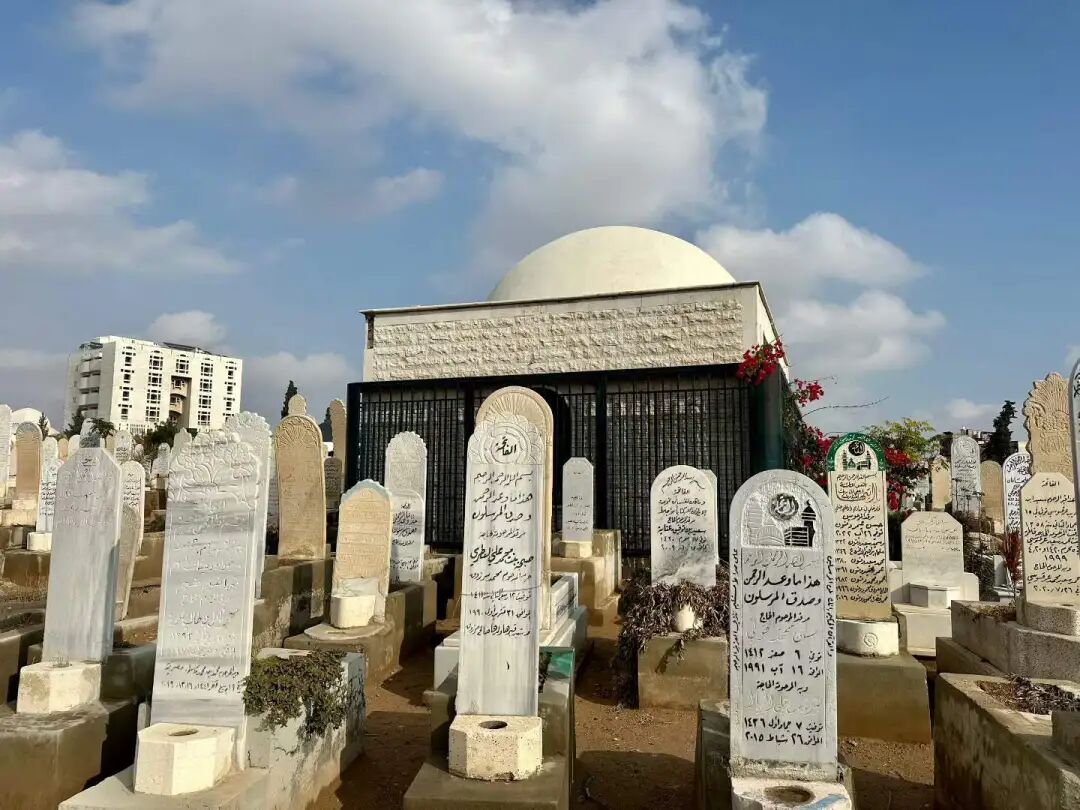
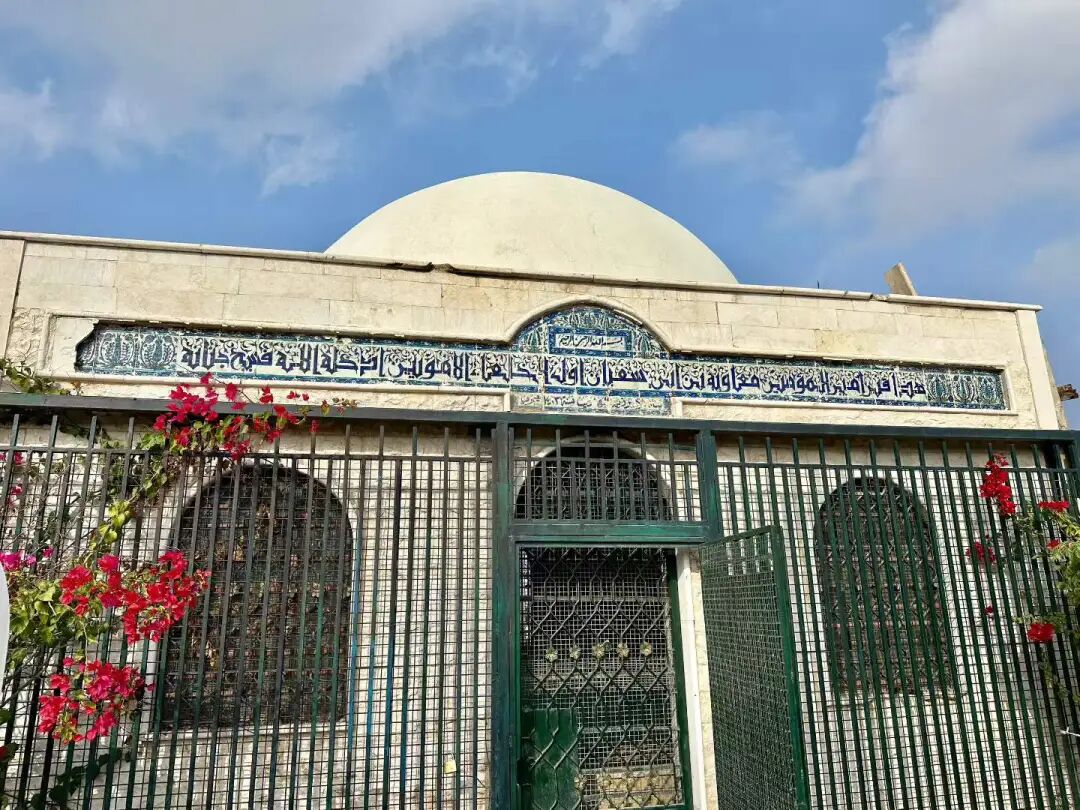
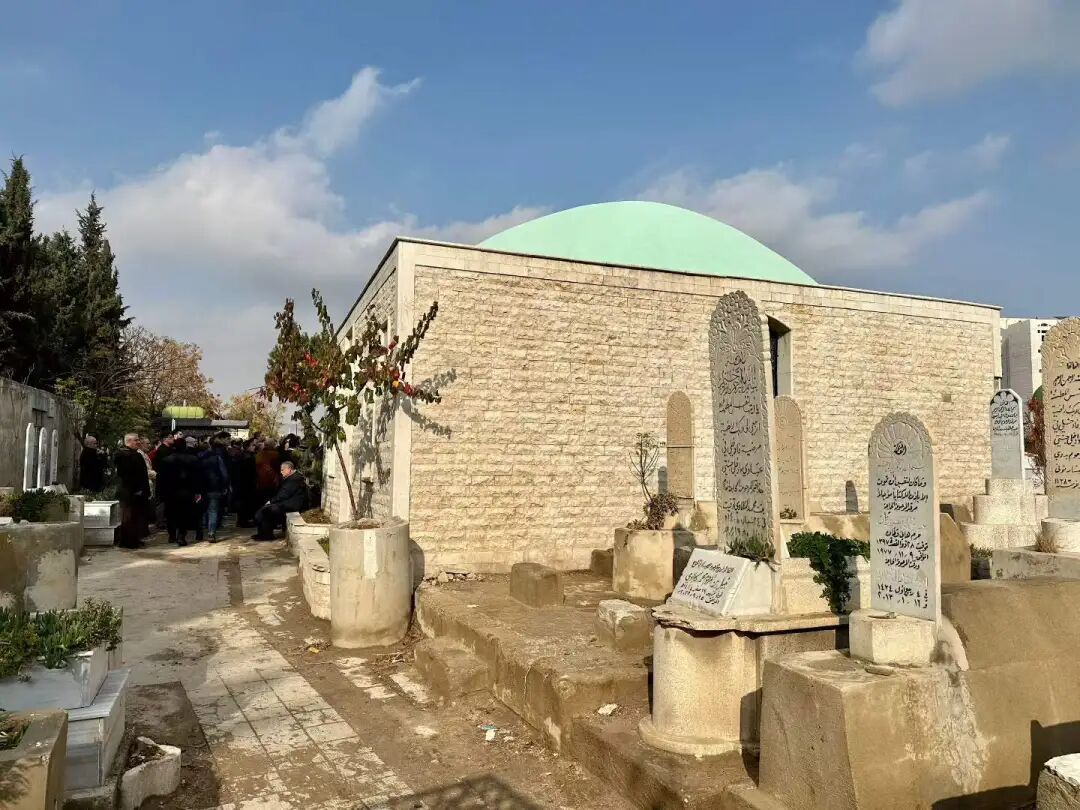
Bab al-Saghir Cemetery in the south of the old city of Damascus is a very ancient graveyard. It holds the graves of many companions of the Prophet, such as Bilal, as well as several children of Imam Ali and Imam Hussein. Near these graves is a tomb tightly enclosed by layers of iron railings. It is inscribed with the name Muawiyah ibn Abi Sufyan, the first caliph of the Umayyad Dynasty. This is the burial place of a highly controversial caliph in religious history. He is both respected and hated, but he was a key figure who shaped early religious history: Muawiyah I.
During Ramadan in 2025, the Saudi MBC studio aired a series called Muawiyah. With a production cost of 100 million US dollars, it is the most expensive television series in Arab history. The show caused huge controversy and sparked massive discussion as soon as it aired. Iraq and Iran directly banned the series, and Al-Azhar University in Egypt issued a fatwa calling on people not to watch it.
In the Sunni narrative, Muawiyah's sister Ramla married the noble Prophet in 628. Muawiyah converted to the faith in 630. Because he was literate, the noble Prophet appointed him as a scribe, making him a scripture scribe. After Abu Bakr was elected caliph in 632, Muawiyah became a commander in the conquest of Syria. He followed Caliph Umar into Jerusalem in 637 and was later appointed governor of Damascus. He served as governor of Syria during the time of Caliph Uthman and organized the first naval battle in religious history. Sunnis believe he made a great contribution to the unity of the Caliphate and recognize his status as a companion of the Prophet and a scripture scribe.
In the Shia narrative, Muawiyah opposed the election of Ali as caliph, which triggered the first civil war in the faith. After Ali was assassinated, he forced Hasan to abdicate. Shia Muslims deny Muawiyah's status as a companion of the Prophet and a scripture scribe, and even consider him a disbeliever.
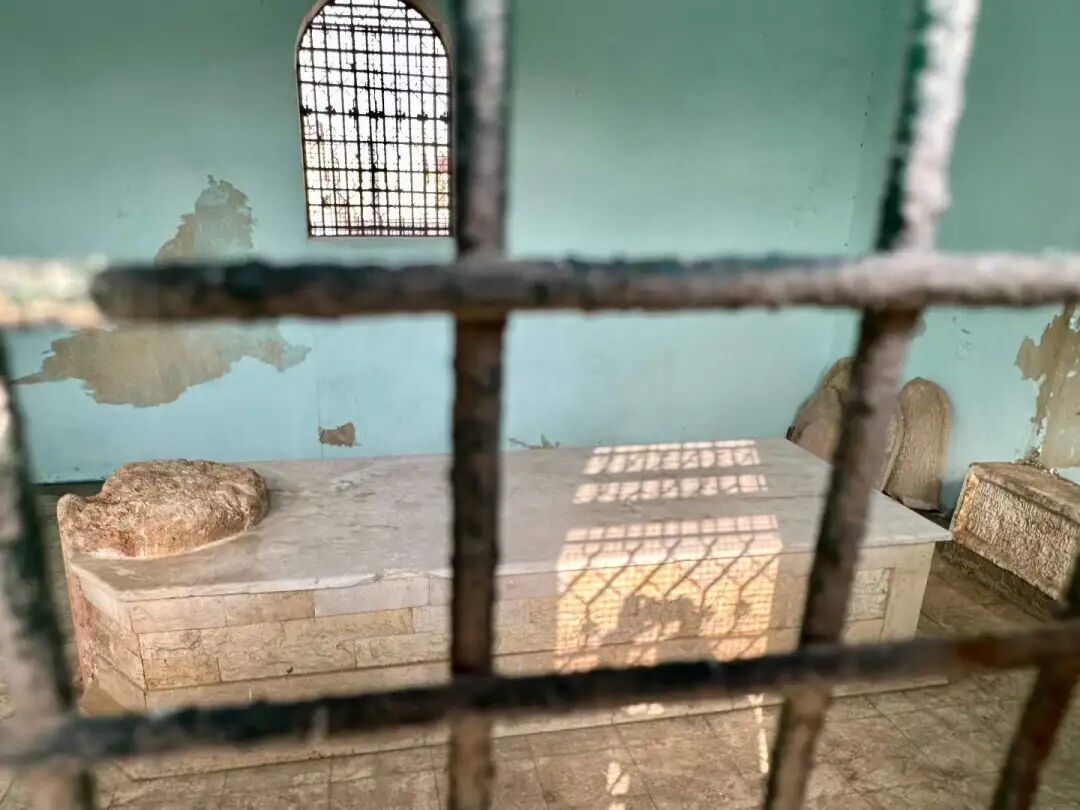
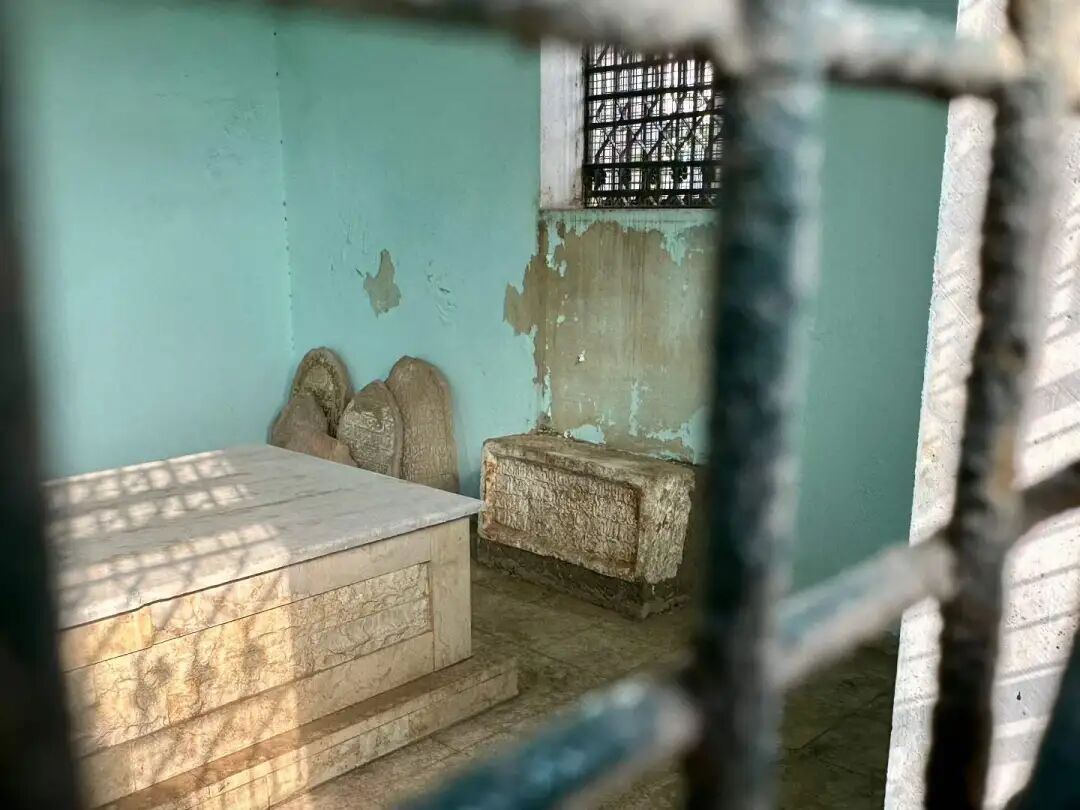
Muawiyah I died of illness in Damascus in 680 and was buried in the Bab al-Saghir cemetery. Several documents from the 9th and 10th centuries mention the tomb of Muawiyah I, including records that Ibn Tulun, a ruler of Egypt and Syria, built four porticos for the tomb in the 9th century. The current tomb of Muawiyah I was renovated in modern times. For a long time, this site was attacked by Shia visitors from places like Iran and Iraq, who damaged the fences and threw stones and shoes.
Next to the tomb of Muawiyah I is another tomb enclosed by iron railings, where the fifth Umayyad Caliph Abd al-Malik (reigned 685-705) and the sixth Caliph al-Walid I (reigned 705-715) are buried.
In his early years, Abd al-Malik lived a pious life in Medina and was a Tabi'un, meaning a follower of the Prophet's companions and one of the first generation born into the faith. In 683, the people of Medina opposed the rule of Muawiyah I's son, Yazid I, and expelled all Umayyads from the city, forcing Abd al-Malik to flee to Damascus. After the direct descendants of Muawiyah I passed away, Abd al-Malik, his distant cousin, was elected Caliph in 685. During his 20-year reign, Abd al-Malik constantly quelled internal divisions within the Umayyad Caliphate while resisting attacks from the Byzantine Empire. In the final years of his rule, the country was peaceful and his power was secure. His main achievements include introducing a unified currency to replace Byzantine and Sassanid coins, and replacing Greek and Persian with Arabic as the official language. He ordered the construction of the Dome of the Rock in Jerusalem, which is the oldest surviving Islamic building.
During the reign of Al-Walid I, the Arab Empire conquered Morocco, the Iberian Peninsula, the Sindh region of South Asia, and Transoxiana in Central Asia, reaching its largest territorial extent in history. He used the massive wealth from these conquests to build and expand many mosques, most the Umayyad Mosque in Damascus, the Al-Aqsa Mosque in Jerusalem, and the Prophet's Mosque in Medina. He also built the famous ancient city of Anjar in Lebanon and the Umayyad Mosque in Baalbek. He was the first caliph to implement a social welfare system, which earned him great respect among the poor and the disabled. Under his rule, the Umayyad Dynasty was prosperous and reached its peak.
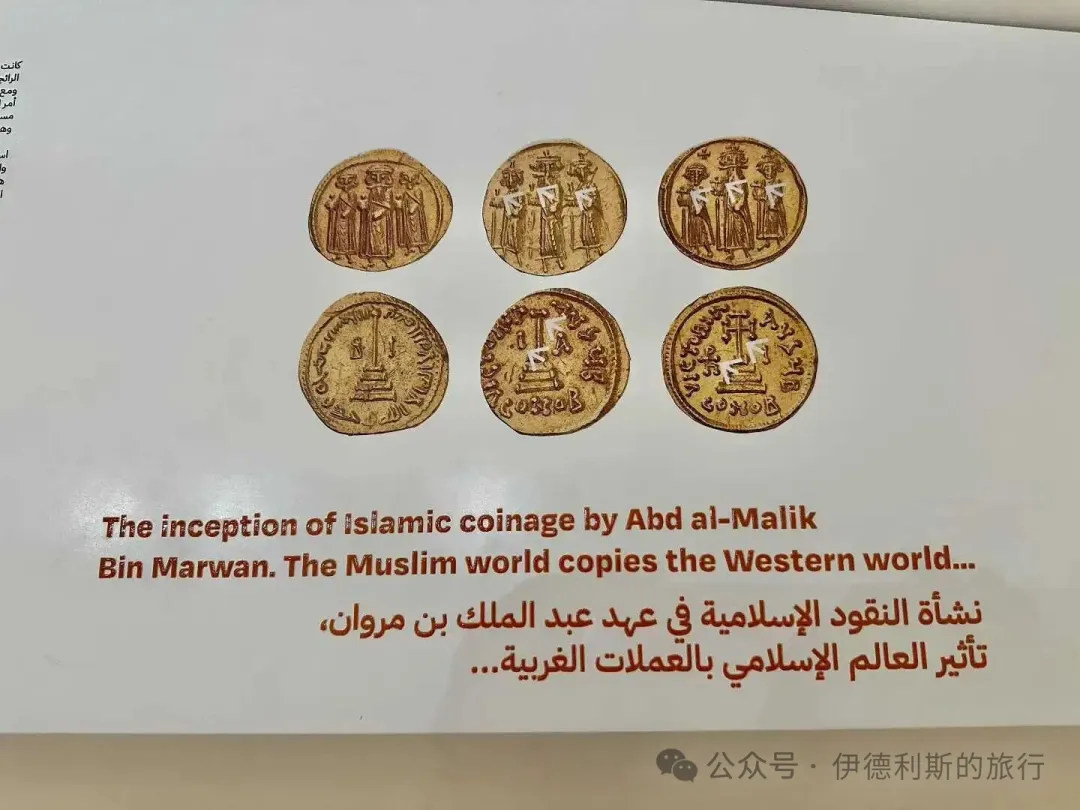
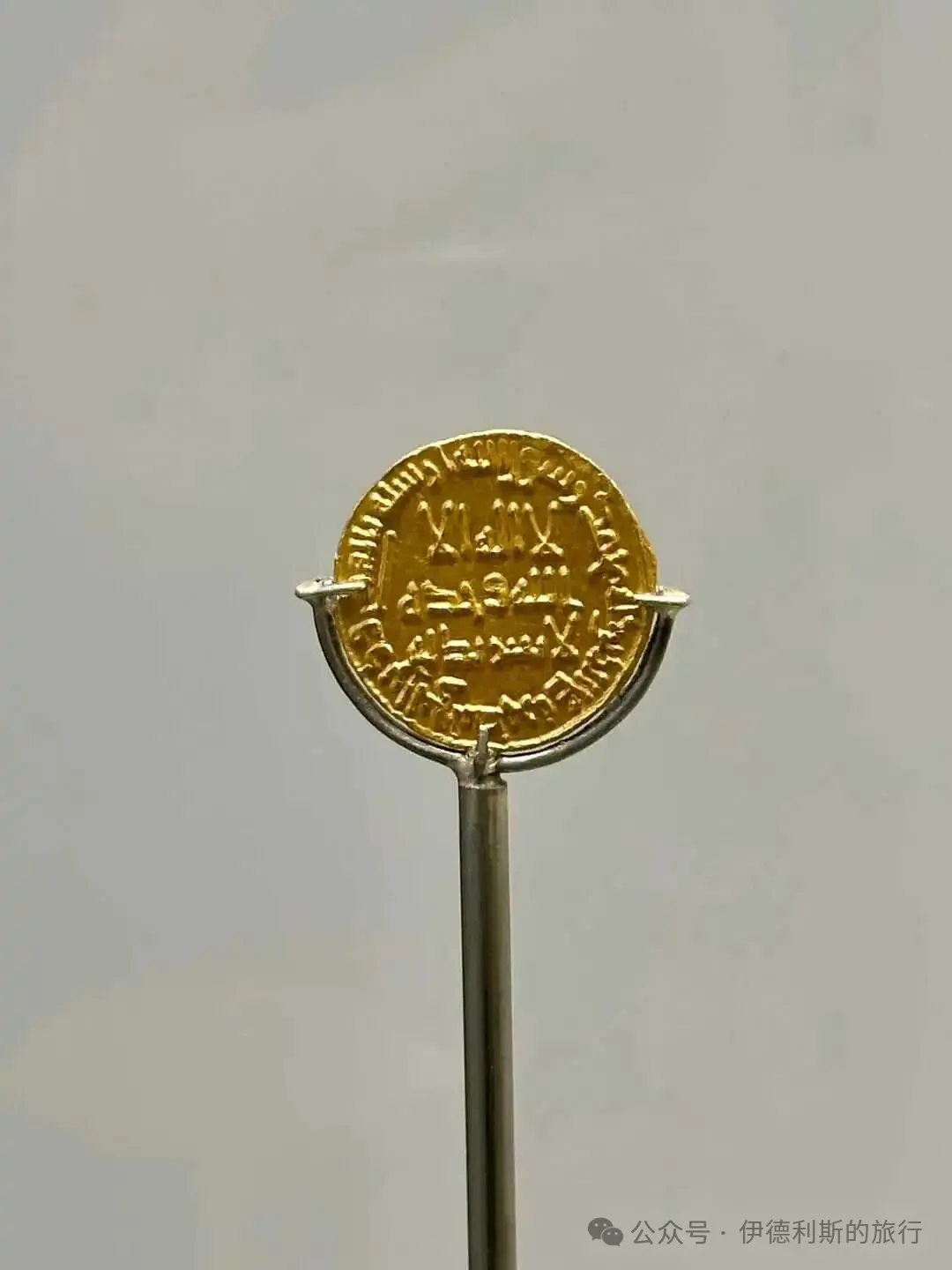
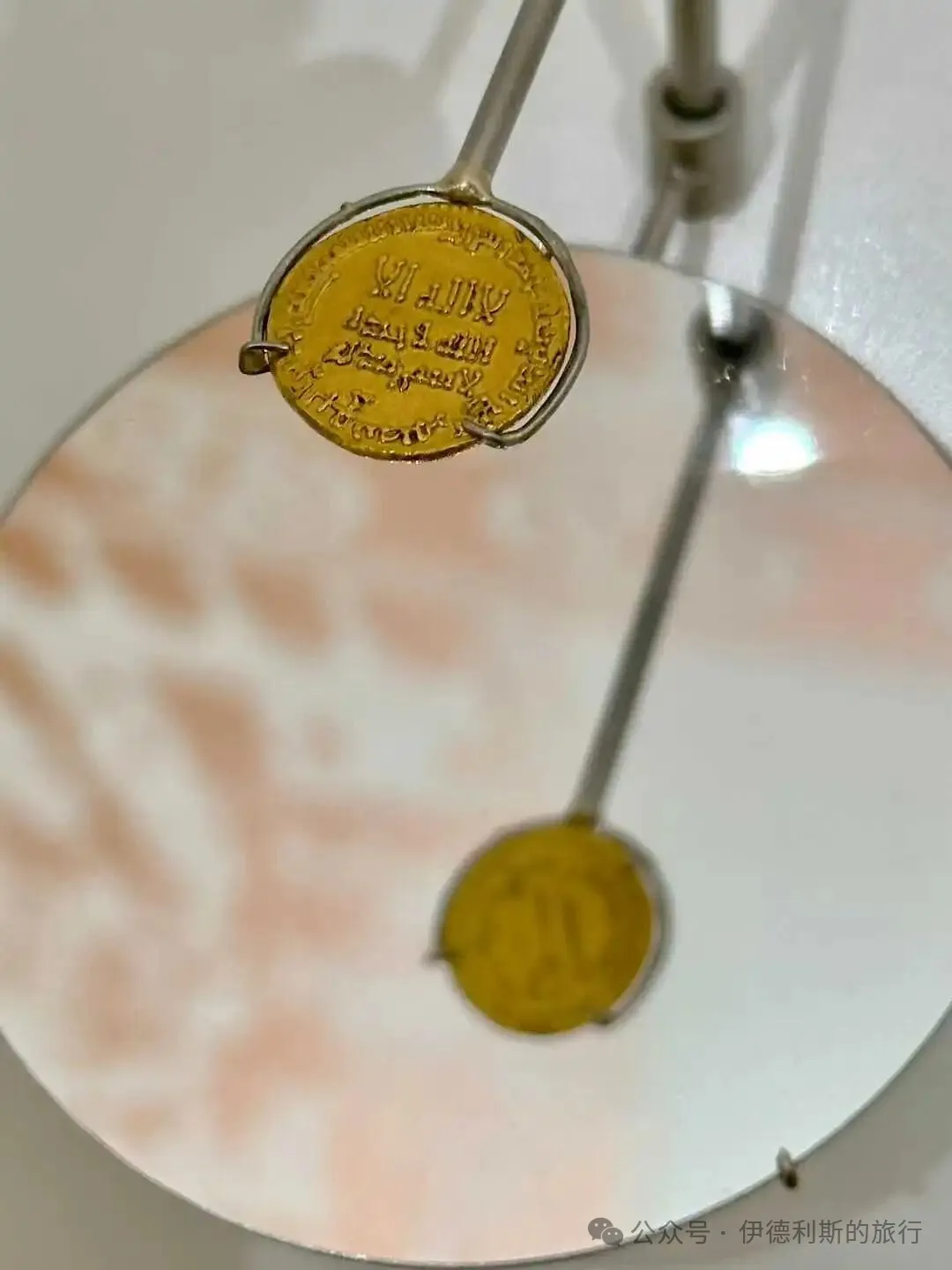
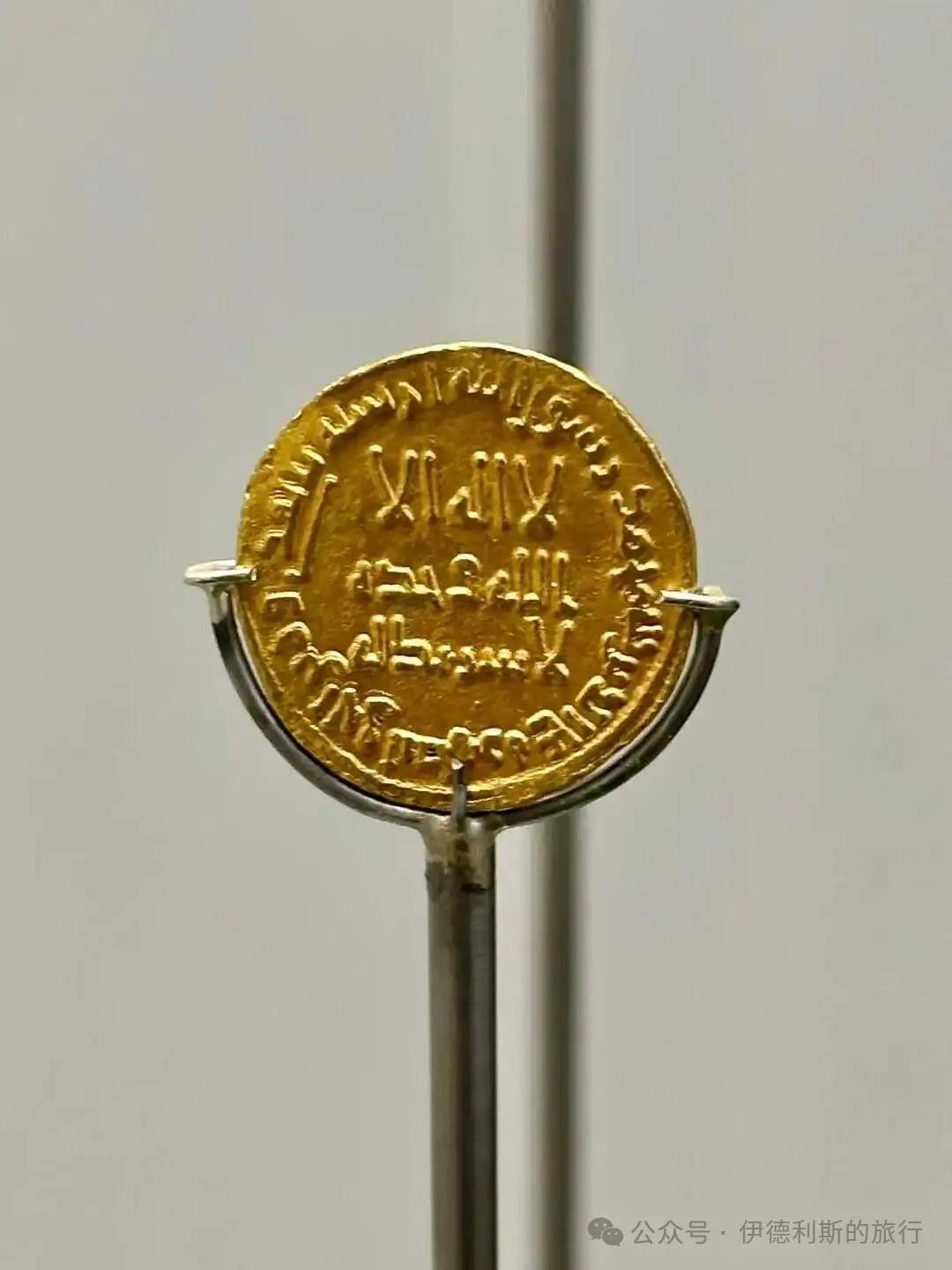
Umayyad coins on display at the 'Forging Narratives: The Coinage Heritage of Saudi Arabia' special exhibition at the National Museum of Saudi Arabia.
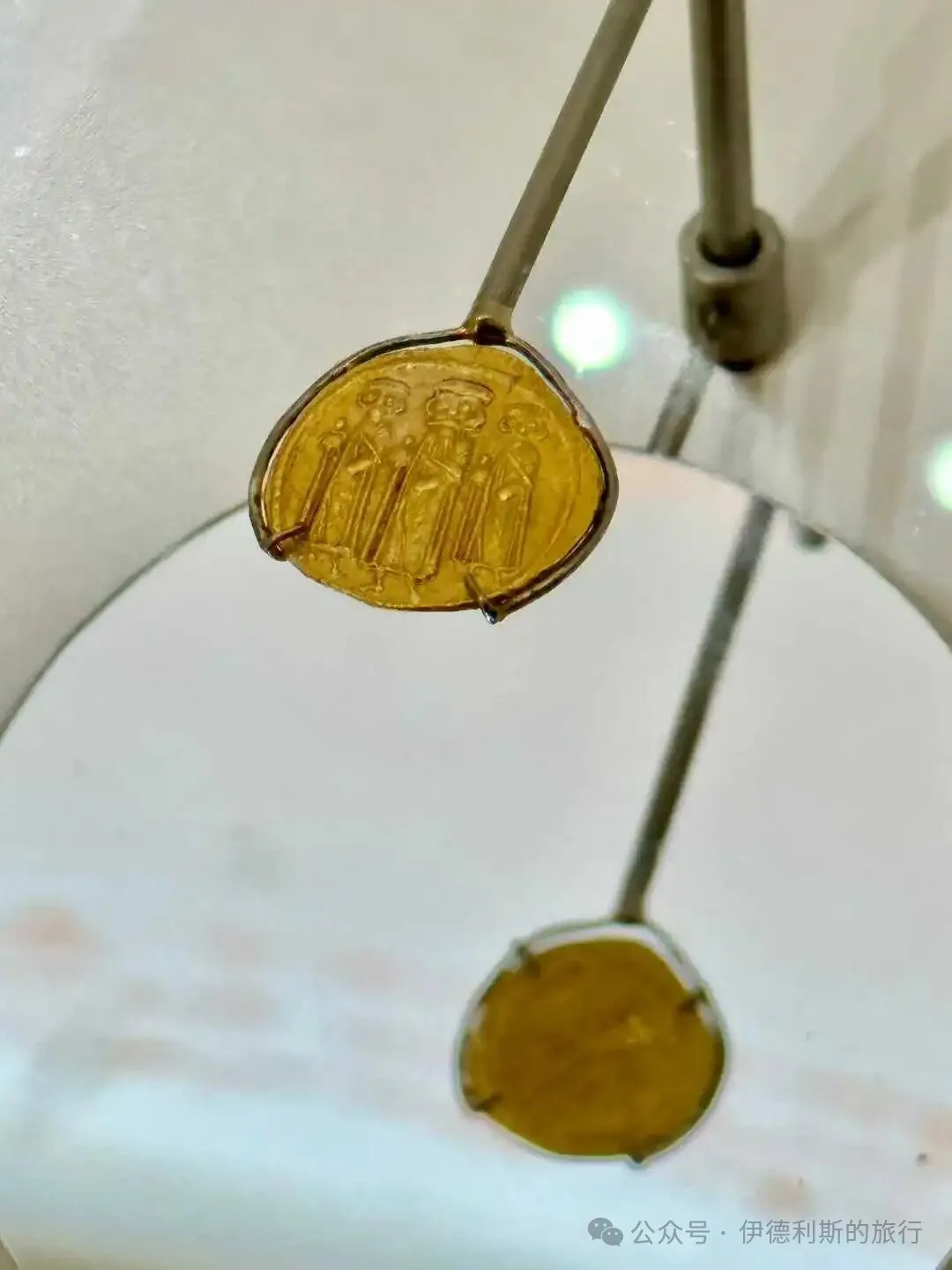
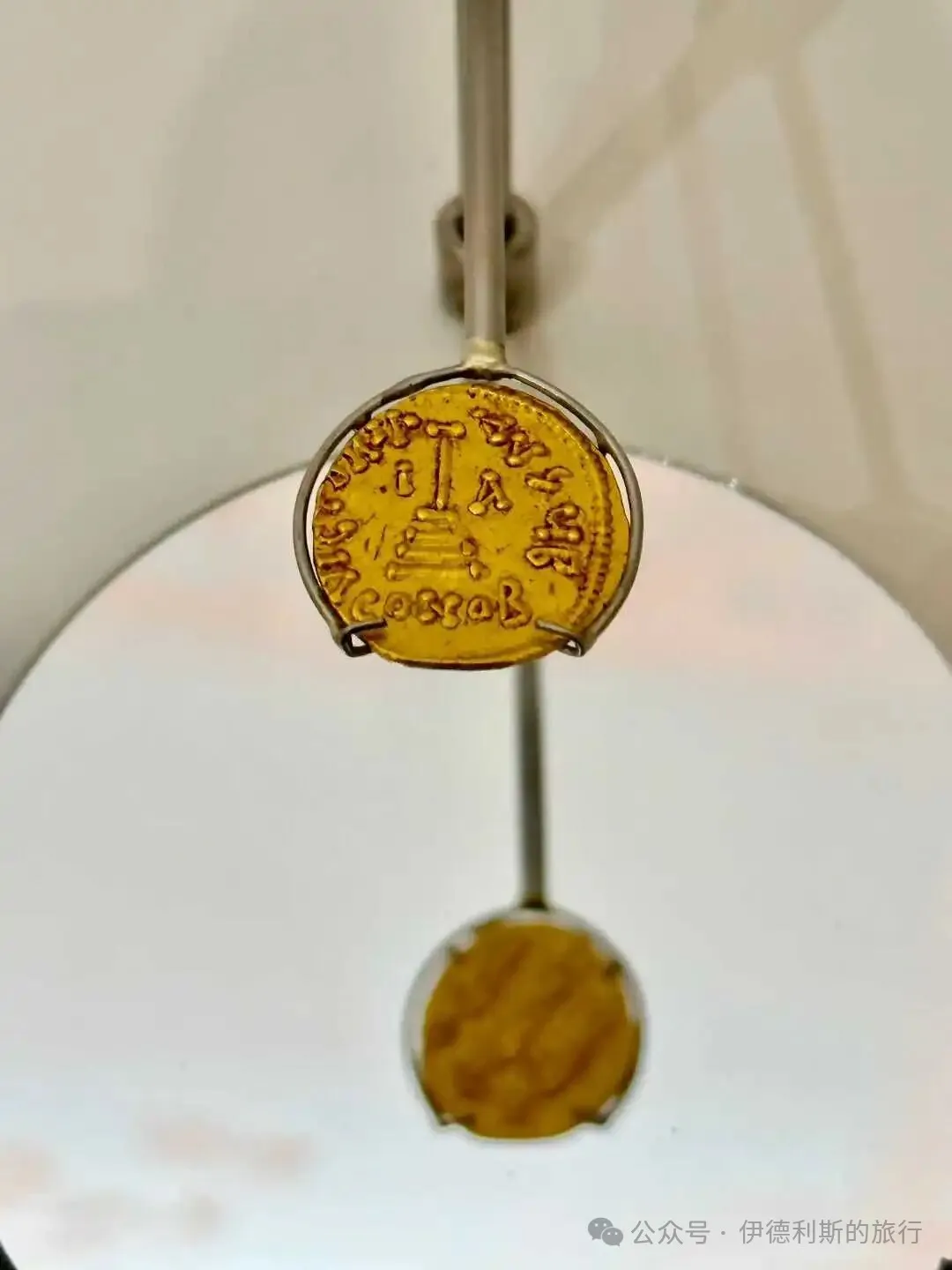
First are the gold coins from the time of Caliph Muawiyah I. The front shows the Byzantine Emperor Heraclius (reigned 610-641) and his two sons, Constantine III and Heraclonas, while the back features Latin text. Unlike Byzantine gold coins, the Umayyad gold coins lack crosses on the emperor's crown and scepter, and the cross on the steps on the back has only a vertical bar without a horizontal one.
Umayyad gold coins from this period reflect the early culture of the Umayyad Dynasty, which continued to inherit Byzantine culture. When Bedouin nomads from the Arabian Peninsula poured into the magnificent city of Damascus, they saw a rich and colorful Byzantine culture everywhere. Because of this, they continued to use Byzantine culture in areas outside of religion, such as music, art, and architecture, becoming the heirs to Byzantine culture.
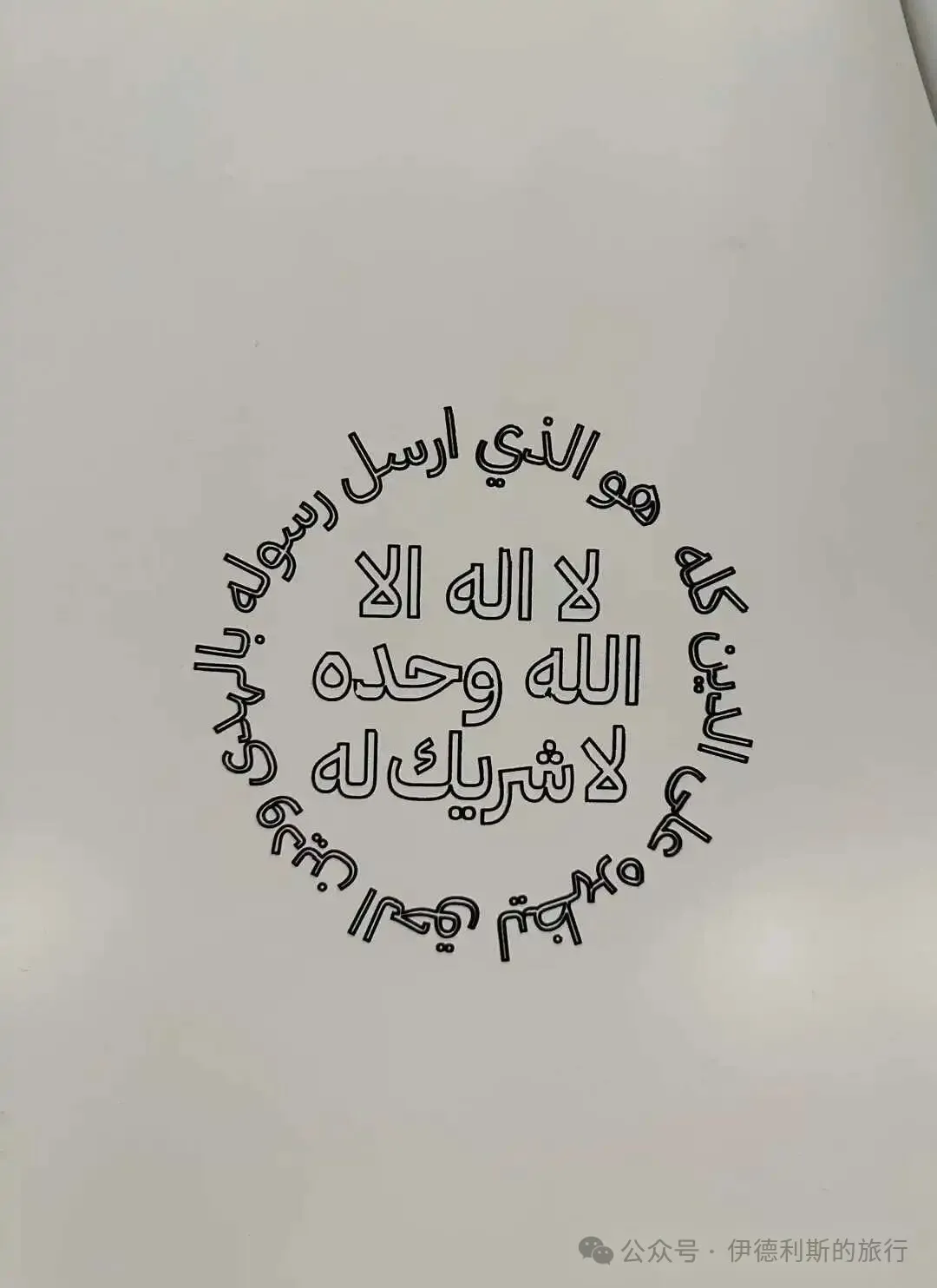
In 693, Caliph Abd al-Malik minted gold dinars in Damascus, and in 696, he removed human figures, keeping only Arabic text. During the same period, Abd al-Malik also promoted the replacement of Greek with Arabic in Syria, eventually making Arabic the sole official language of the Umayyad Dynasty. From this point on, the Umayyad Caliphate stopped being just an inheritor of Byzantine and Sassanid cultures and turned into a true Arab civilization.
I visited Qasr Kharana in Jordan, which was built in 710 during the reign of Caliph al-Walid I.
The most special thing about Qasr Kharana is how it blends Byzantine and Sassanid architectural styles. The palace is built with plaster and rubble, and the second floor features barrel vaults supported by transverse arches, which is a typical Sassanid style, though it still differs from Sassanid buildings in Iran. The arches at Qasr Kharana do not connect to the load-bearing walls but rest on corbels, and they use new types of wooden lintels to make the building more flexible and earthquake-resistant.
Hammam al-Sarah in Jordan was built in the early 8th century during the reign of Caliph Abd al-Malik or al-Walid I.
The bathhouse was built using neatly cut, medium-sized stones and decorated with intricately carved fluted moldings. Inside the main hall, there is a beautifully designed fountain supplied with water from an elevated water tower on the east side. There is also a walled garden site nearby, which is known as the oldest Islamic garden site.
The Umayyad Mosque in Damascus was built under the direction of Caliph al-Walid I in 706. He kept the outer walls of the Roman mosque's inner sanctuary and moved the Corinthian columns and arcades from inside the mosque to the main hall, finishing the new mosque in 715 and making it a 'wonder of the world' in the writings of medieval Muslim scholars.
Before the Great Mosque of Damascus was built, traditional mosques were all flat-roofed halls. The Great Mosque of Damascus uses a basilica-style layout, featuring three wide, long halls and a central nave topped by a tall dome.
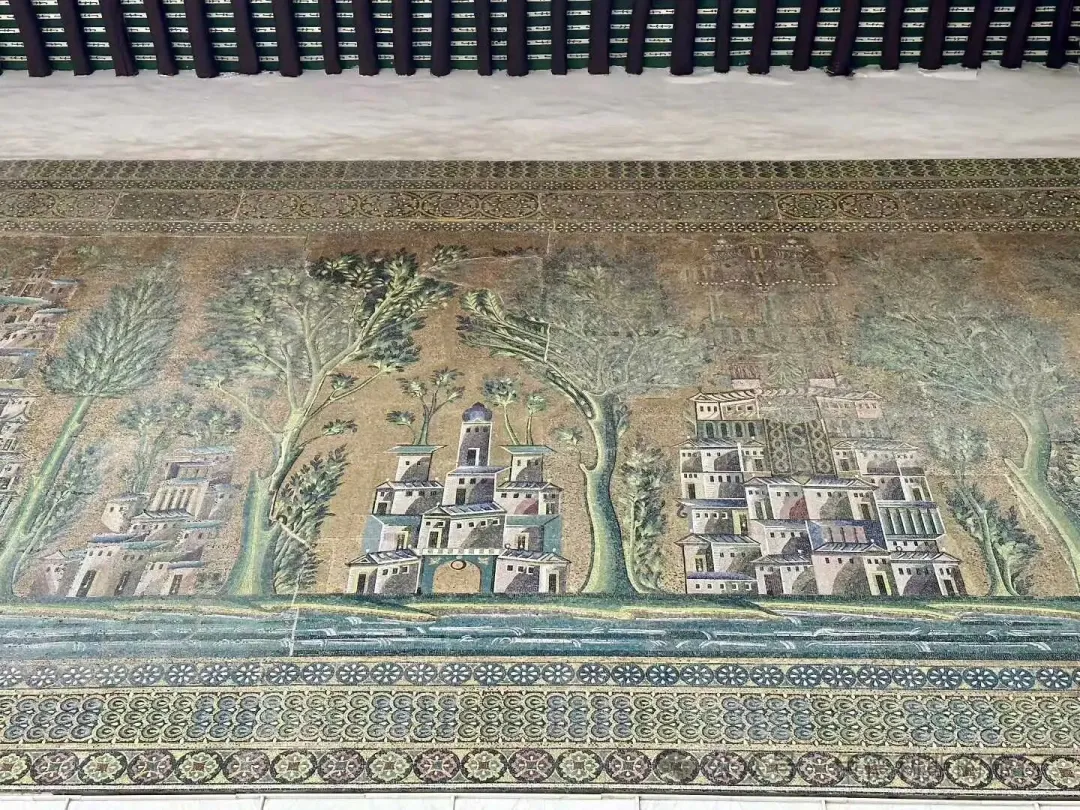
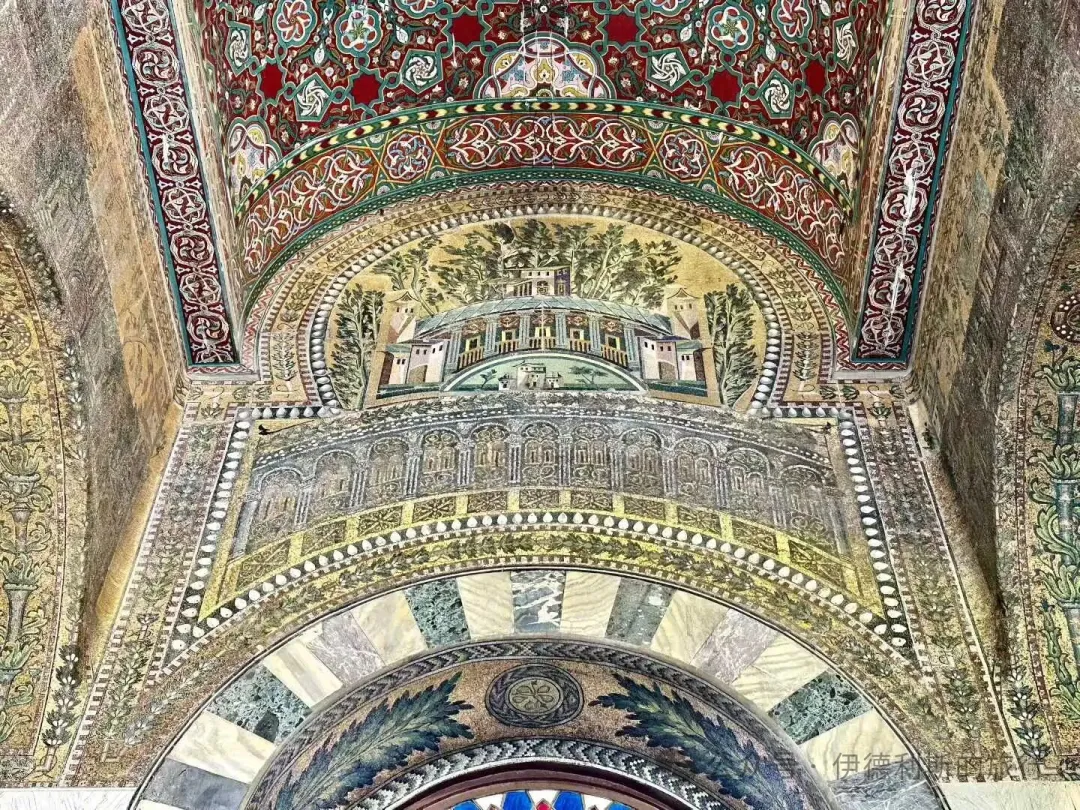
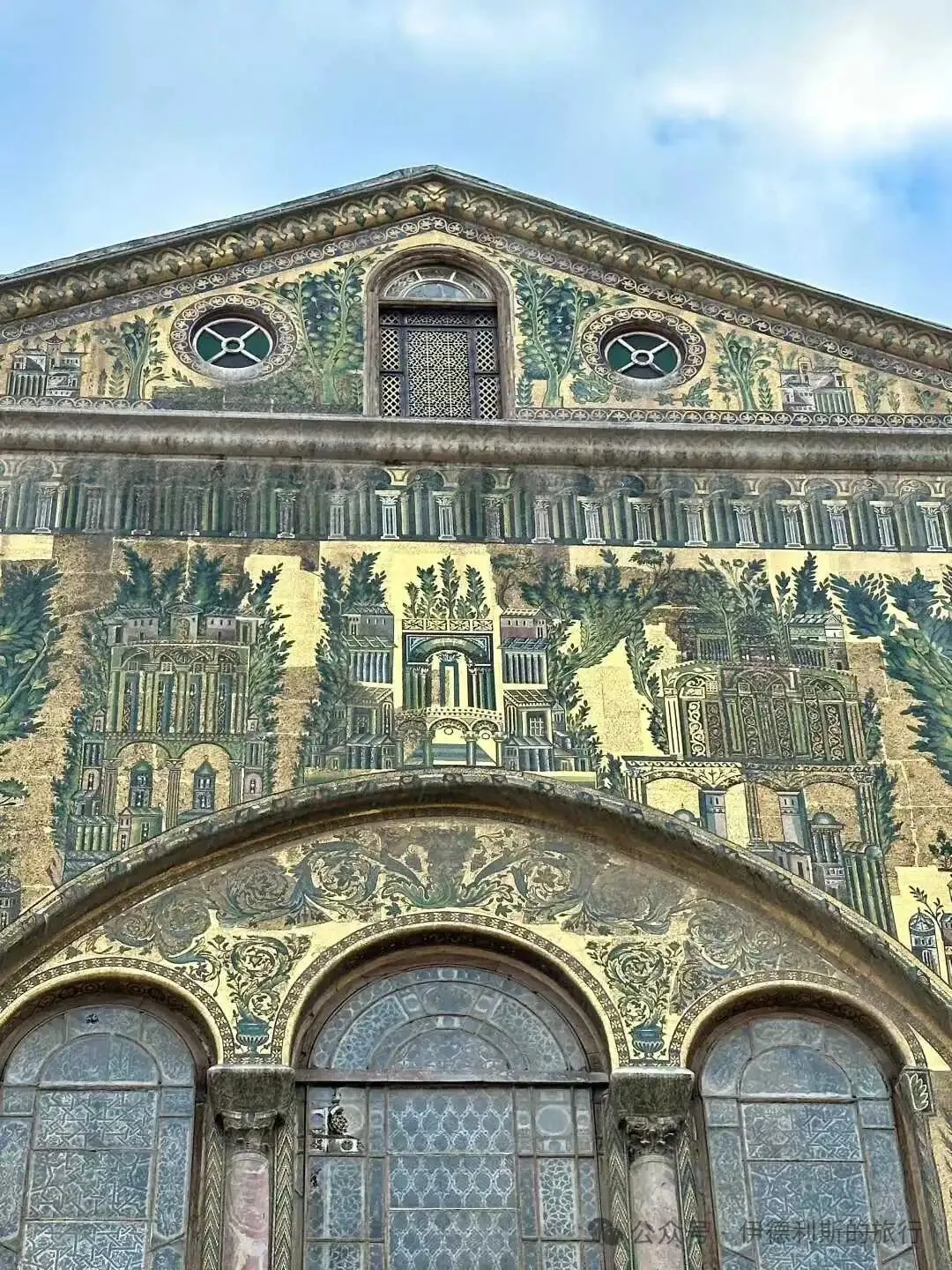
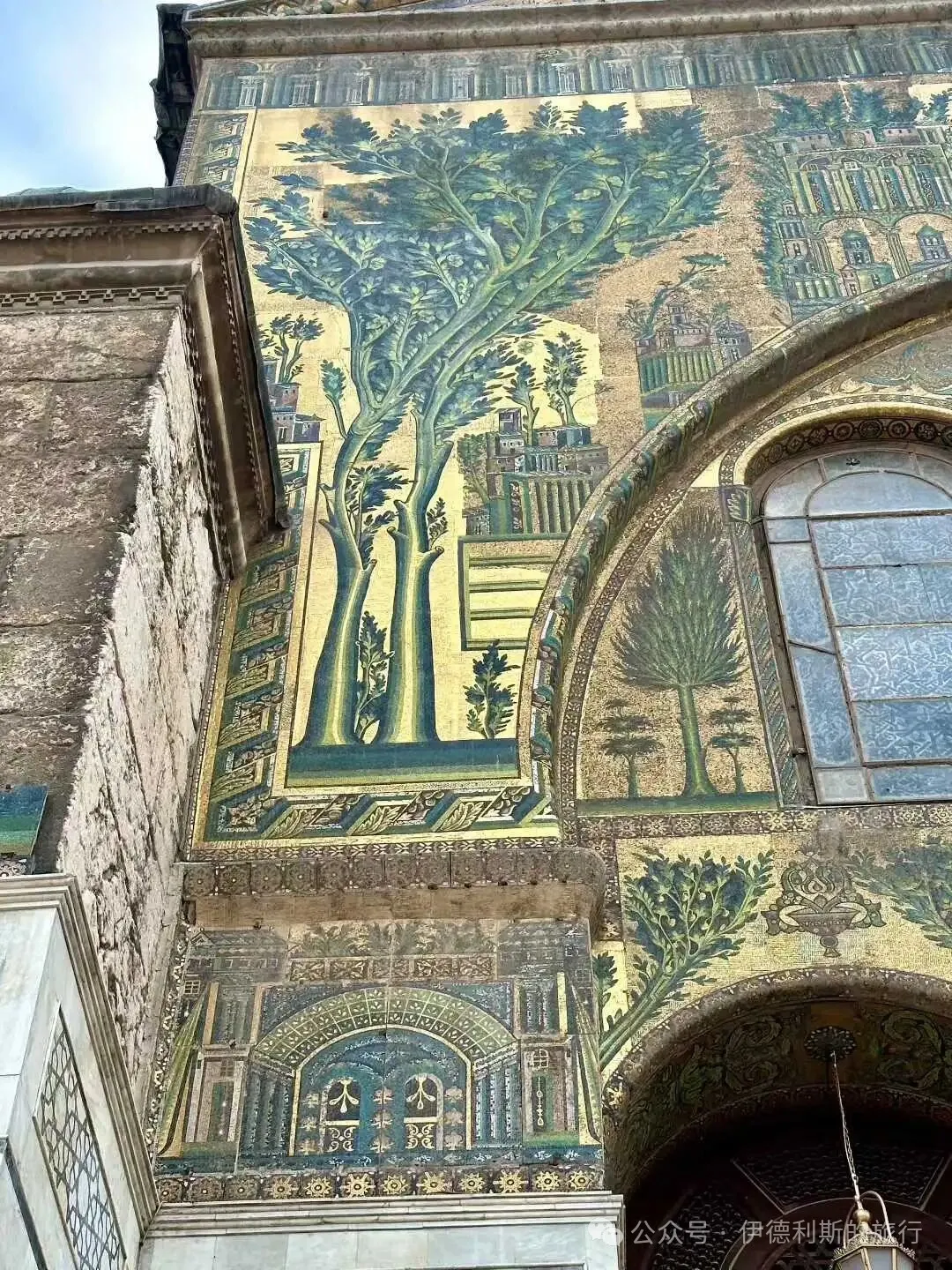
The Great Mosque of Damascus is world-famous for its rich Umayyad-era mosaic decorations. These mosaics show various natural landscapes and buildings in a late Roman style, following a classic naturalistic approach.
Some Arabic historical records suggest the craftsmen and materials for the mosaics came from the Byzantine capital of Constantinople, but a 2022 chemical analysis study showed that most of the mosaics were actually made in Egypt. Although these mosaic images show traces of Byzantine style, some scholars believe their craftsmanship is more consistent with mosaic techniques from Syria, Palestine, and Egypt.
The meaning of the mosaic images has been a subject of long-standing debate. Some believe they represent the known world at that time, others think they depict Damascus and the Barada River, and some argue they show scenes of Paradise. Currently, there is more evidence for the Paradise theory, as the landscapes without human figures fit the idea of an empty Paradise waiting for people to arrive after the Day of Resurrection.
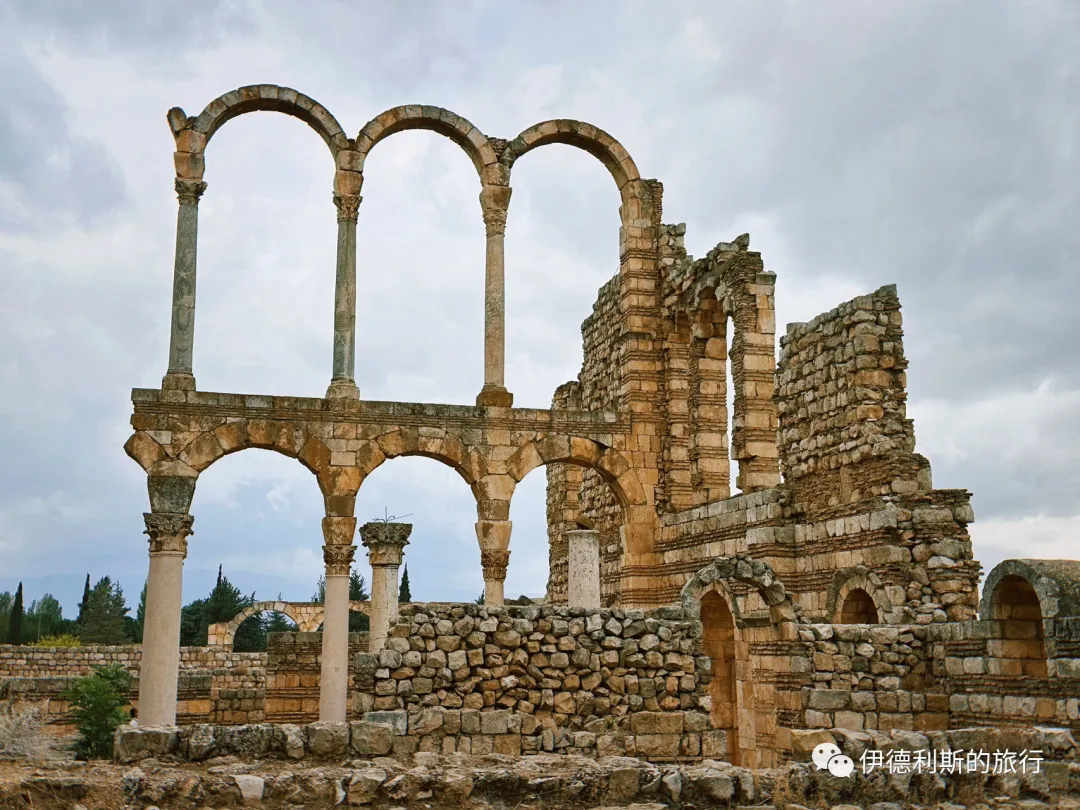
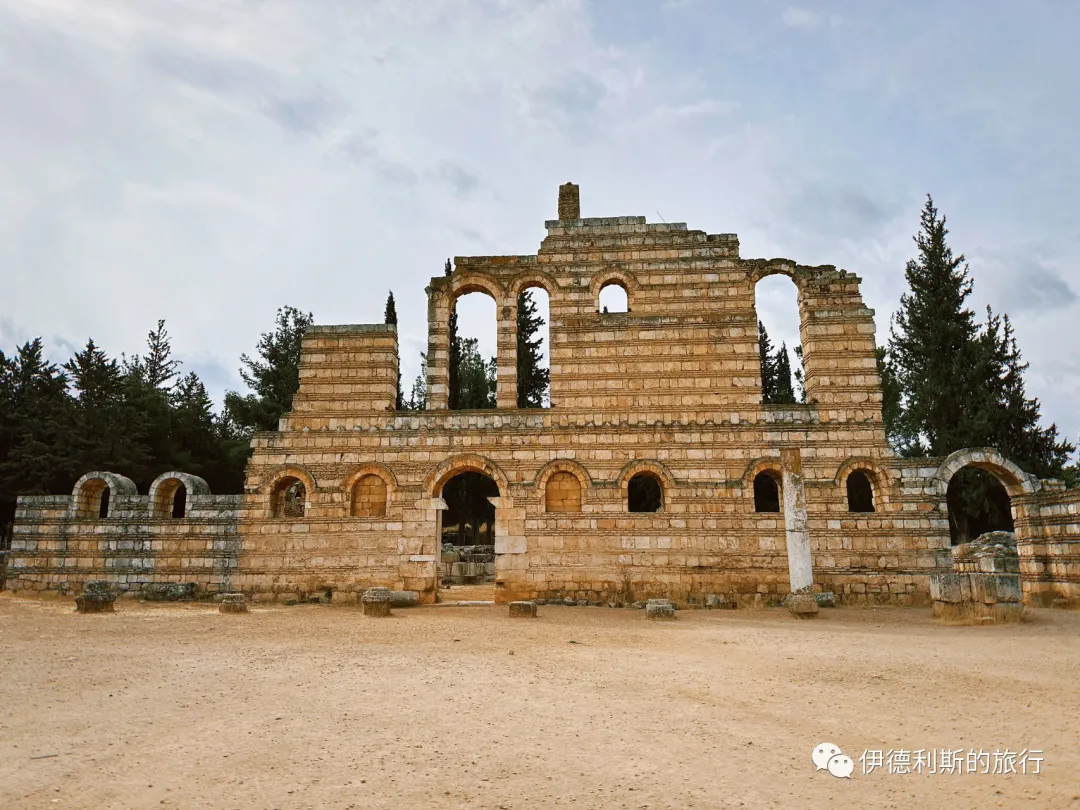
The ancient city of Anjar in Lebanon was built by al-Abbas, the son of Caliph al-Walid I, between 714 and 715. This place has been an important route connecting Beirut and Damascus since ancient times, and it was listed as a UNESCO World Heritage site in 1984.
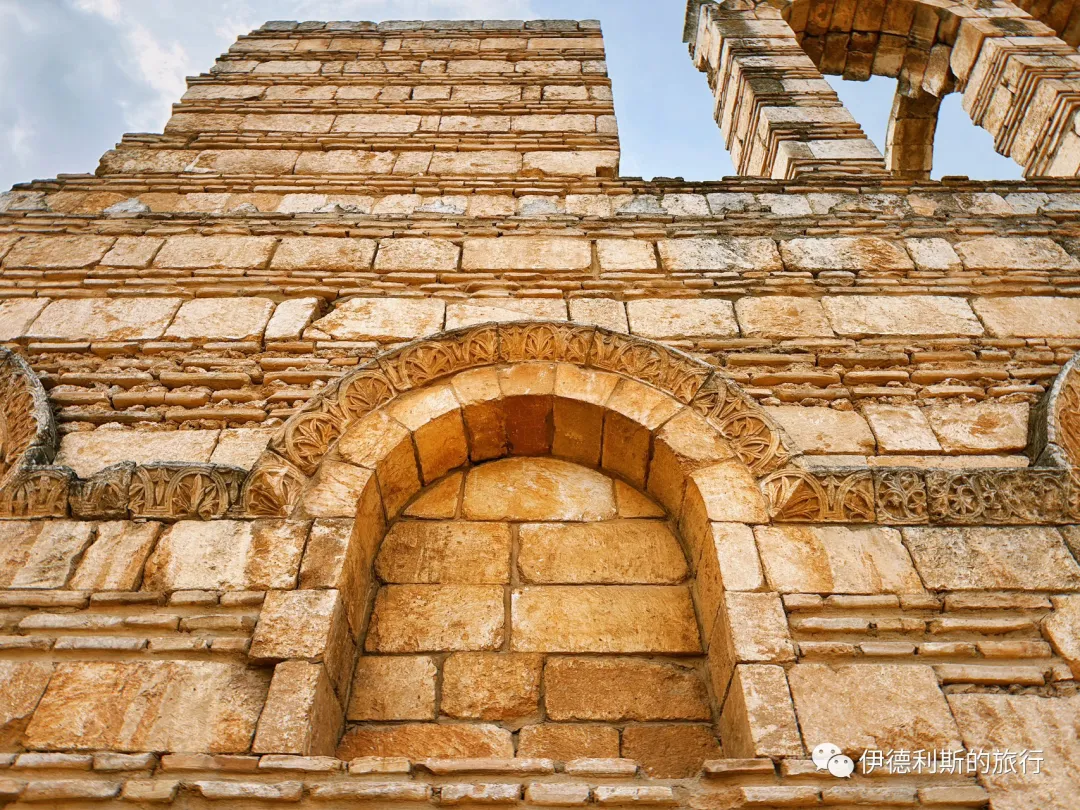
It is believed that the ancient city of Anjar likely used many captives brought back by Prince al-Abbas from his campaigns against the Byzantine Empire as laborers, which is why the stone carvings have a strong Byzantine style. The entire ancient city is based on a Roman city plan, with a rectangular layout surrounded by thick walls, where two main roads intersect at four gates to divide the city into four sections. The main road is lined with columns and rows of shops that look like Roman tabernae, while a classic four-sided Roman gate known as a tetrapylon stands at the intersection. The city is divided into four functional areas: the southeast holds the grand palace and mosque, the northeast contains the small palace (harem) and bathhouse, and the northwest and southwest are residential zones.
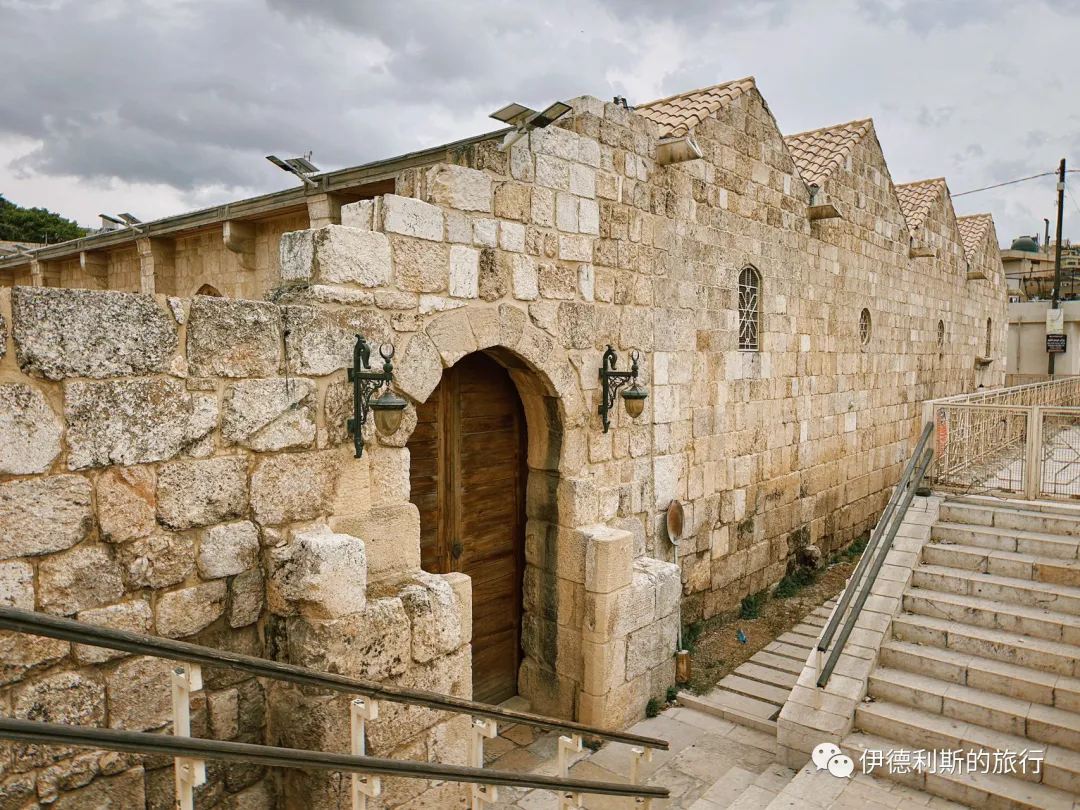
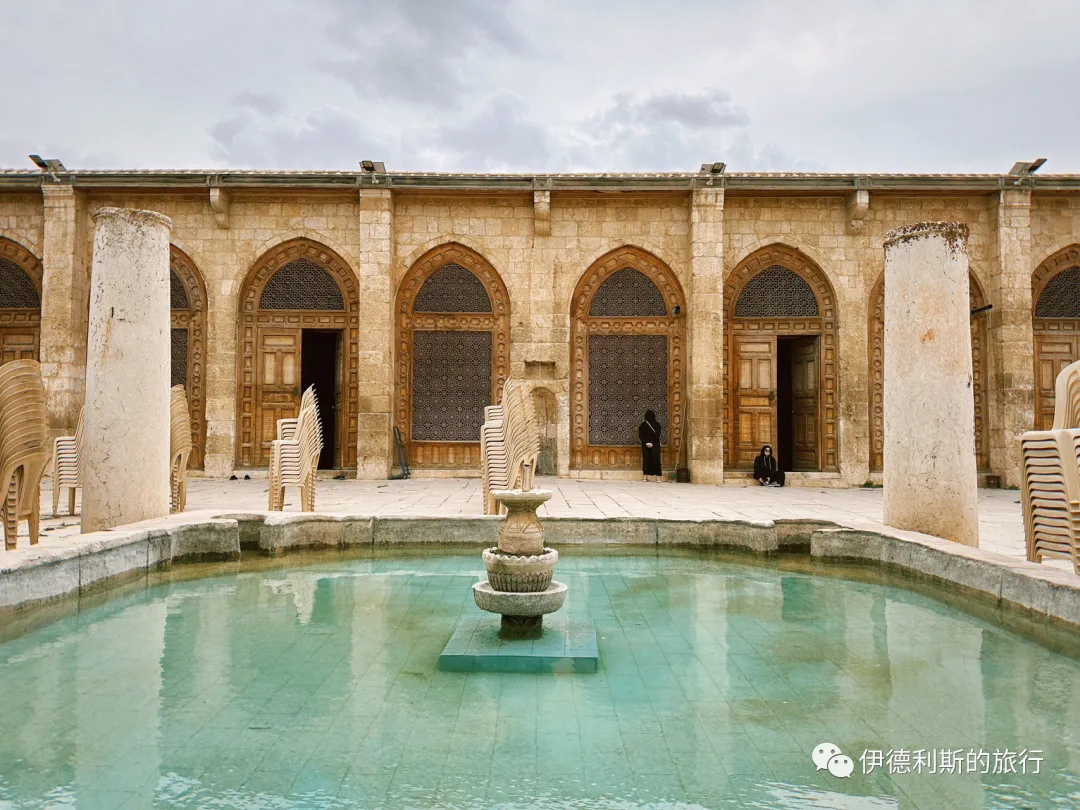
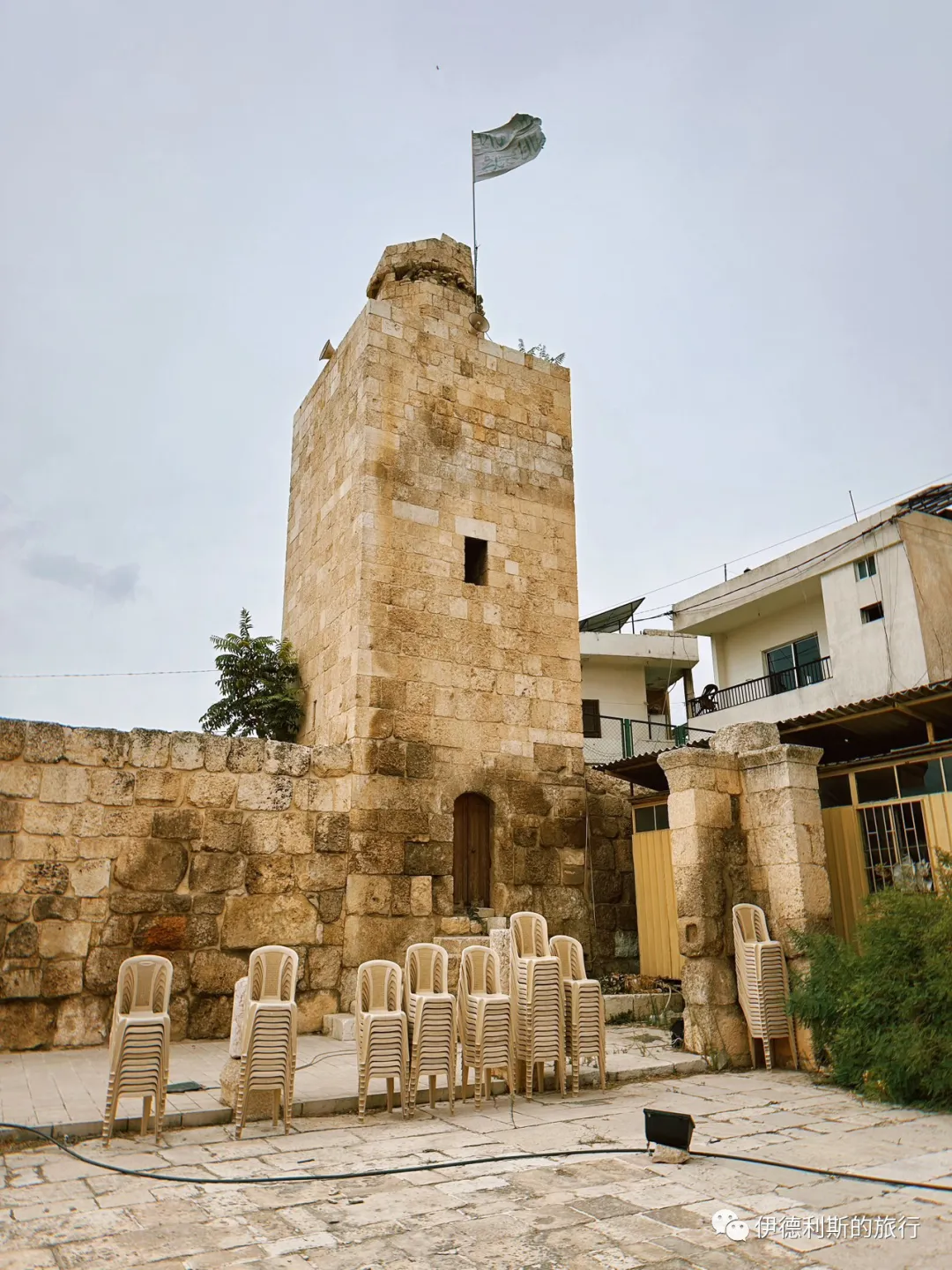
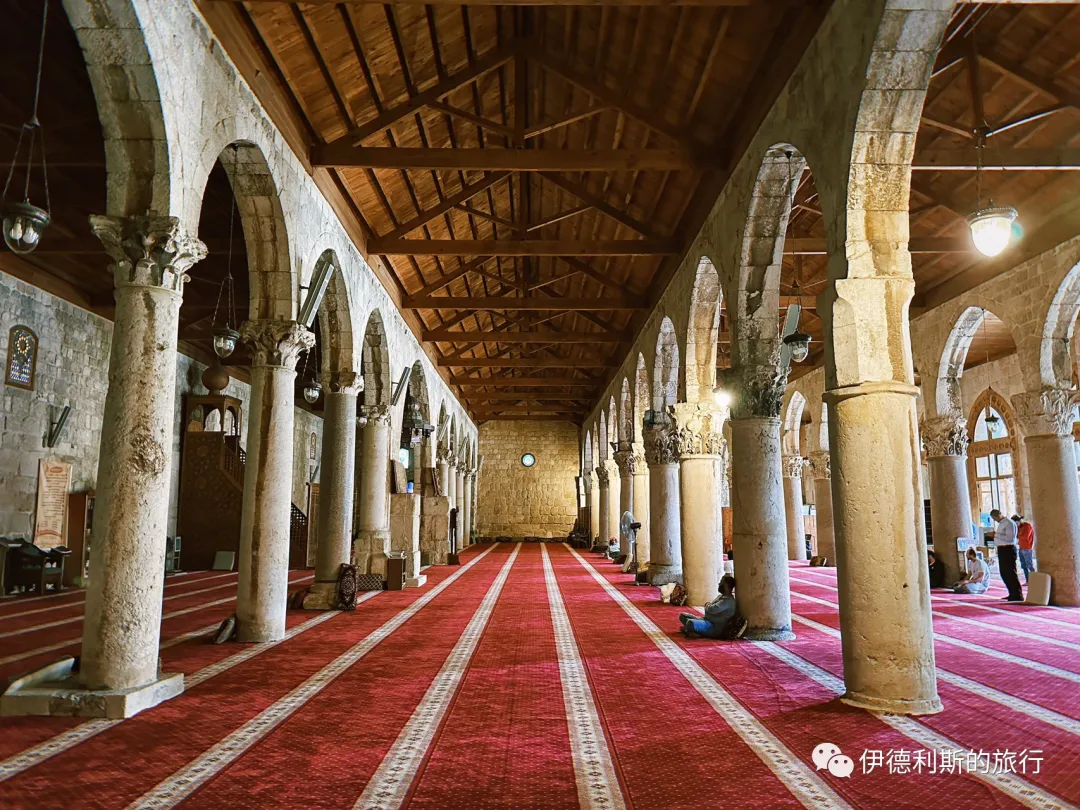
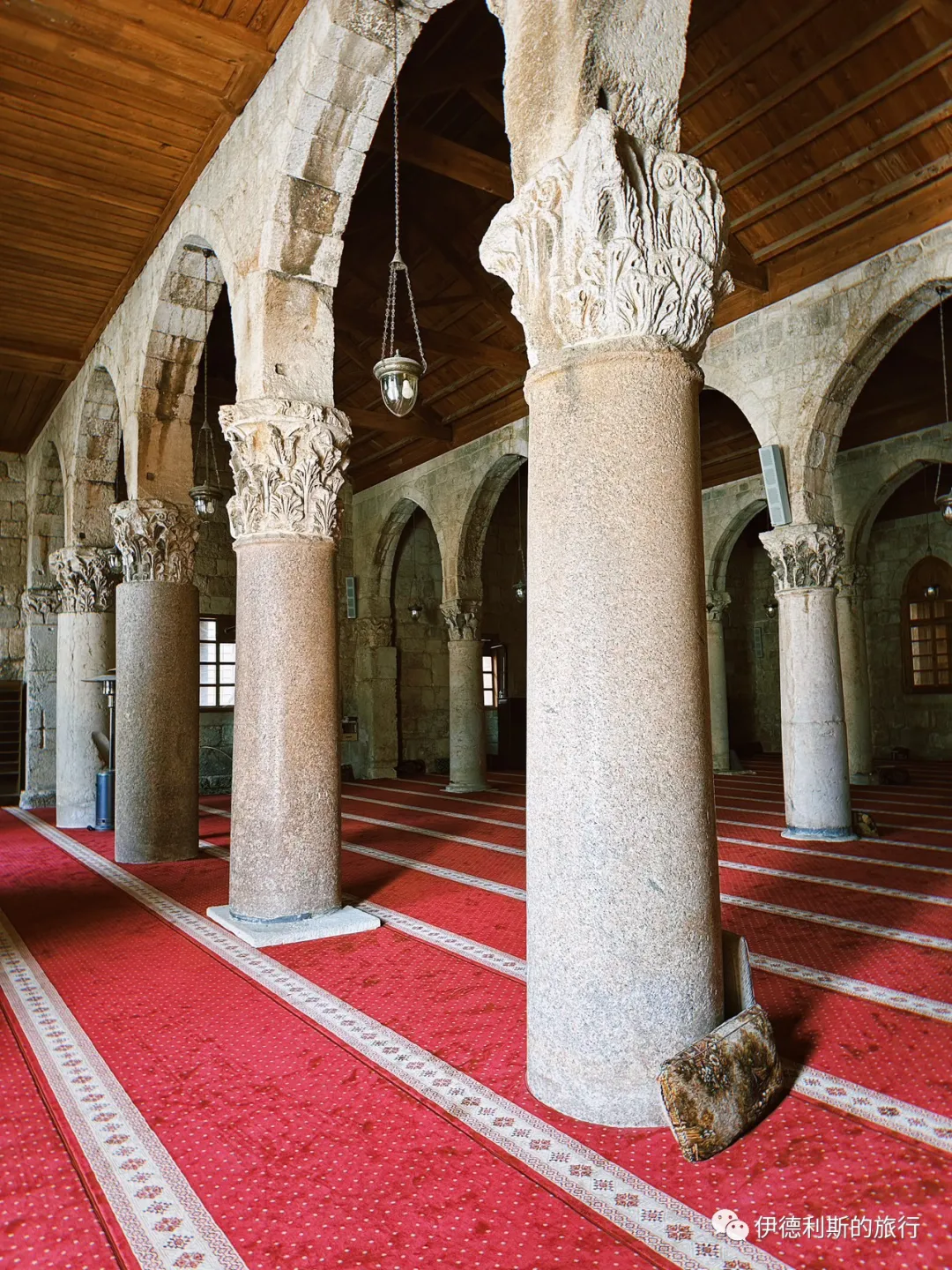
The Umayyad Mosque in Baalbek, Lebanon, was also built by the Umayyad Caliph al-Walid I in 715, the same year as the Umayyad Mosque in Damascus. These two mosques stand together as the oldest surviving masjid buildings in the world.
Compared to the Umayyad Mosque in Damascus, the Baalbek Umayyad Mosque is simpler, but its overall style is very similar. Some stone parts inside the main hall may have been taken from the nearby Roman-era Baalbek Citadel, and the column capitals show a strong Roman-Byzantine style. view all
Summary: This Muslim history guide to Damascus covers Caliph Muawiyah I's tomb, the Prophet's Companion, early Islamic history, and Muslim heritage.
This article organizes key points from the original text about visiting the tomb of the scripture scribe and companion of the Prophet, Caliph Muawiyah I. It keeps the original paragraph and image order. It is for readers interested in Muslim life, Islamic culture, and Chinese Islamic writing. It also helps with searching for topics like Shia, Sunni, and Ramadan.
Bab al-Saghir Cemetery in the south of the old city of Damascus is a very ancient graveyard. It holds the graves of many companions of the Prophet, such as Bilal, as well as several children of Imam Ali and Imam Hussein. Near these graves is a tomb tightly enclosed by layers of iron railings. It is inscribed with the name Muawiyah ibn Abi Sufyan, the first caliph of the Umayyad Dynasty. This is the burial place of a highly controversial caliph in religious history. He is both respected and hated, but he was a key figure who shaped early religious history: Muawiyah I.
During Ramadan in 2025, the Saudi MBC studio aired a series called Muawiyah. With a production cost of 100 million US dollars, it is the most expensive television series in Arab history. The show caused huge controversy and sparked massive discussion as soon as it aired. Iraq and Iran directly banned the series, and Al-Azhar University in Egypt issued a fatwa calling on people not to watch it.
In the Sunni narrative, Muawiyah's sister Ramla married the noble Prophet in 628. Muawiyah converted to the faith in 630. Because he was literate, the noble Prophet appointed him as a scribe, making him a scripture scribe. After Abu Bakr was elected caliph in 632, Muawiyah became a commander in the conquest of Syria. He followed Caliph Umar into Jerusalem in 637 and was later appointed governor of Damascus. He served as governor of Syria during the time of Caliph Uthman and organized the first naval battle in religious history. Sunnis believe he made a great contribution to the unity of the Caliphate and recognize his status as a companion of the Prophet and a scripture scribe.
In the Shia narrative, Muawiyah opposed the election of Ali as caliph, which triggered the first civil war in the faith. After Ali was assassinated, he forced Hasan to abdicate. Shia Muslims deny Muawiyah's status as a companion of the Prophet and a scripture scribe, and even consider him a disbeliever.
Muawiyah I died of illness in Damascus in 680 and was buried in the Bab al-Saghir cemetery. Several documents from the 9th and 10th centuries mention the tomb of Muawiyah I, including records that Ibn Tulun, a ruler of Egypt and Syria, built four porticos for the tomb in the 9th century. The current tomb of Muawiyah I was renovated in modern times. For a long time, this site was attacked by Shia visitors from places like Iran and Iraq, who damaged the fences and threw stones and shoes.
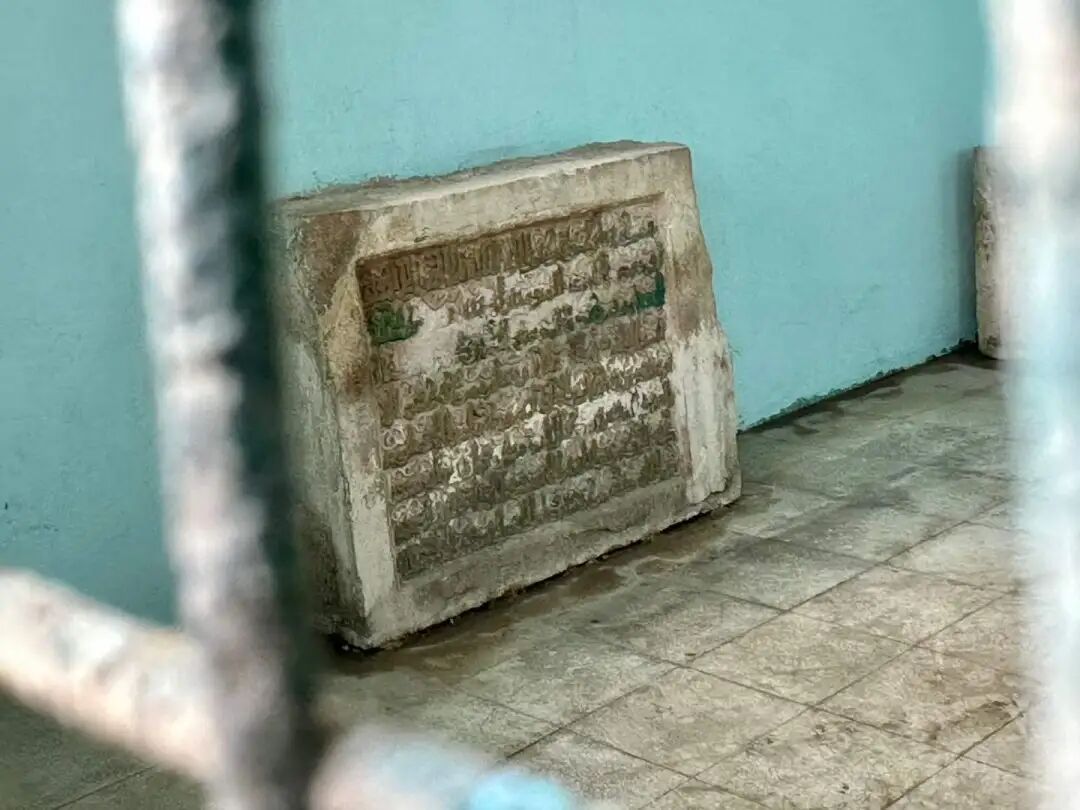
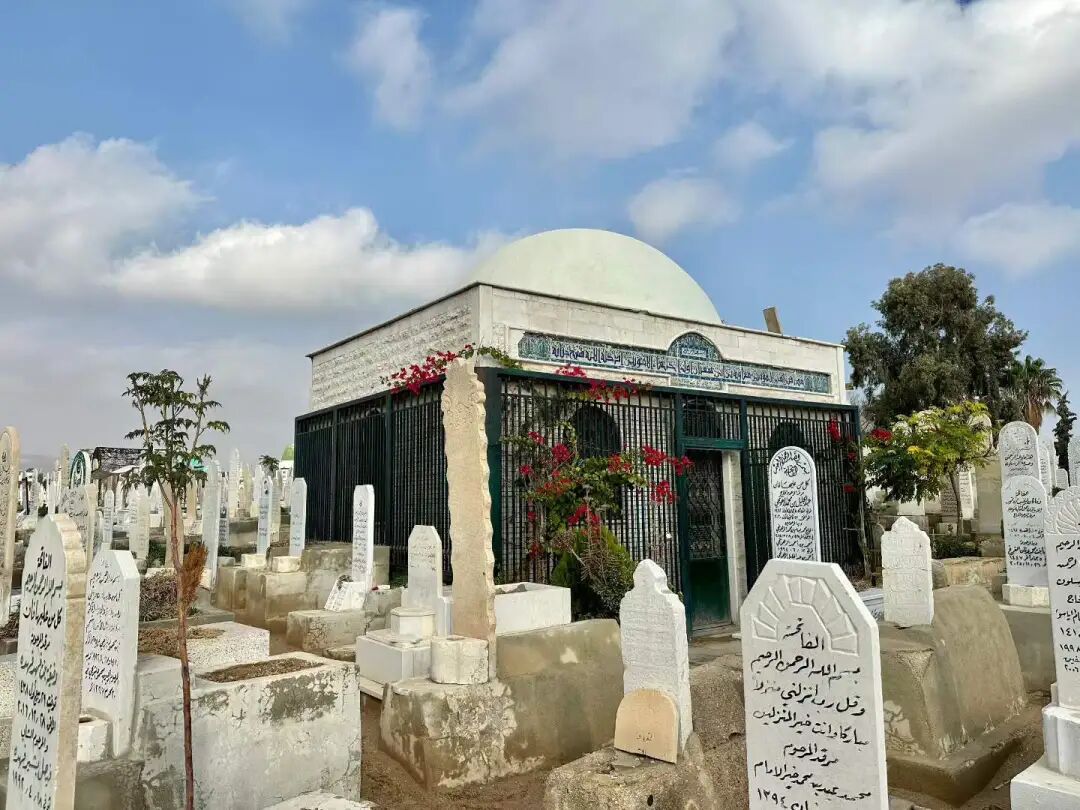
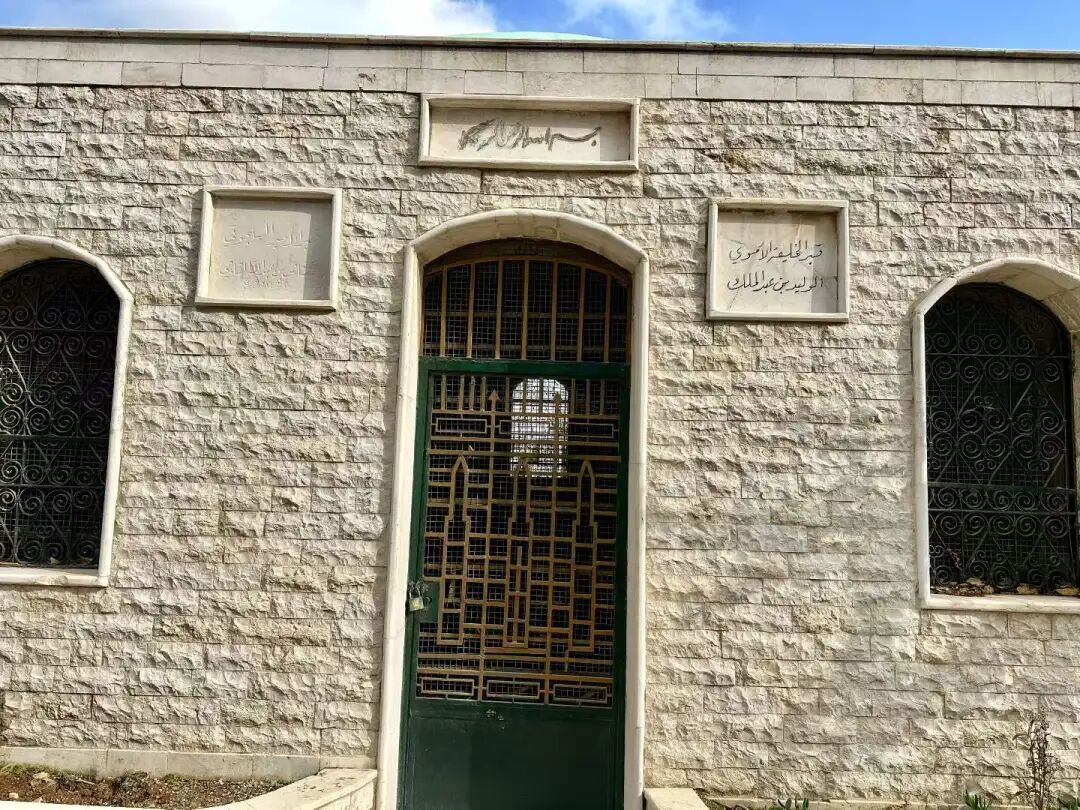
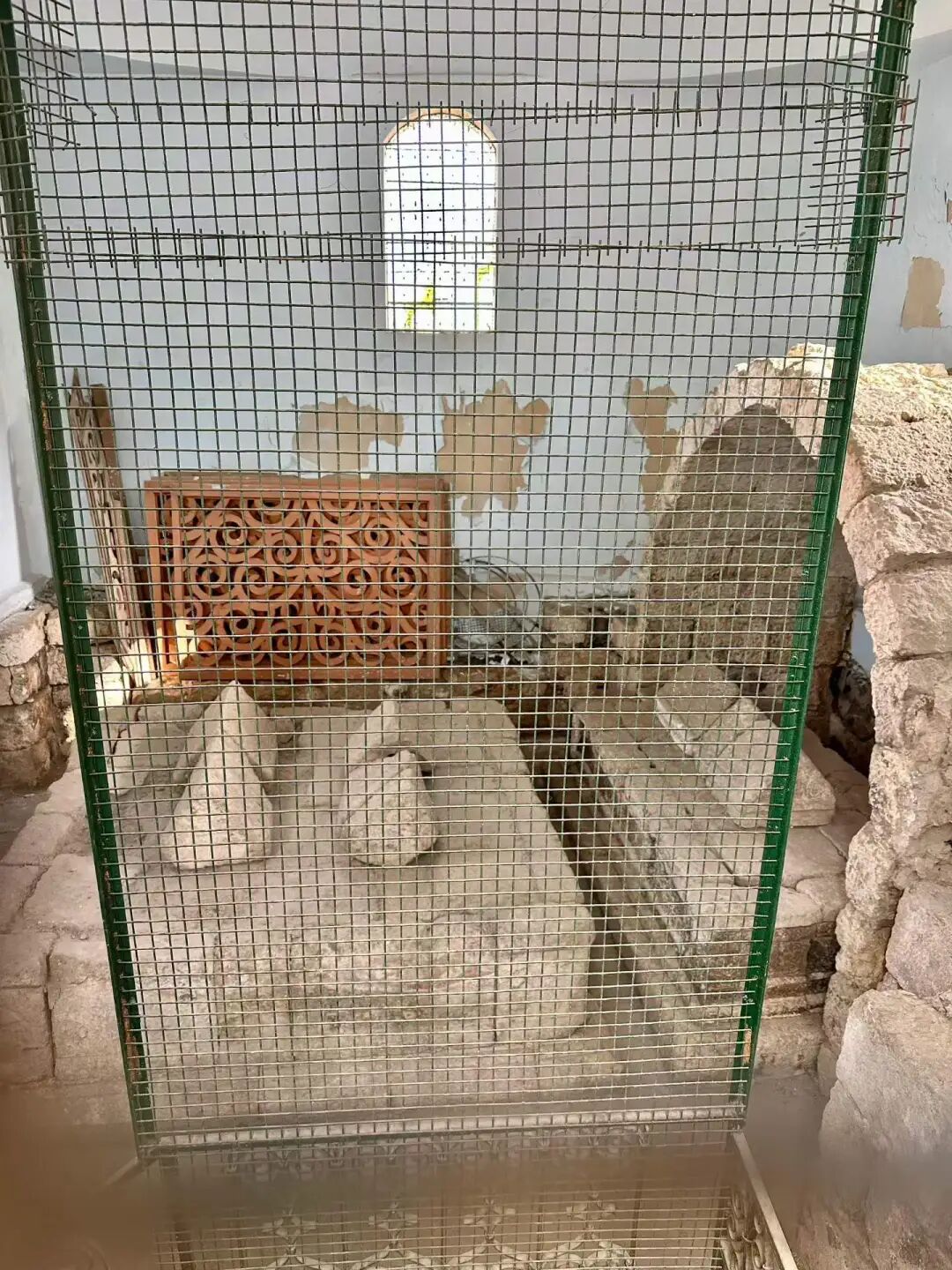
Next to the tomb of Muawiyah I is another tomb enclosed by iron railings, where the fifth Umayyad Caliph Abd al-Malik (reigned 685-705) and the sixth Caliph al-Walid I (reigned 705-715) are buried.
In his early years, Abd al-Malik lived a pious life in Medina and was a Tabi'un, meaning a follower of the Prophet's companions and one of the first generation born into the faith. In 683, the people of Medina opposed the rule of Muawiyah I's son, Yazid I, and expelled all Umayyads from the city, forcing Abd al-Malik to flee to Damascus. After the direct descendants of Muawiyah I passed away, Abd al-Malik, his distant cousin, was elected Caliph in 685. During his 20-year reign, Abd al-Malik constantly quelled internal divisions within the Umayyad Caliphate while resisting attacks from the Byzantine Empire. In the final years of his rule, the country was peaceful and his power was secure. His main achievements include introducing a unified currency to replace Byzantine and Sassanid coins, and replacing Greek and Persian with Arabic as the official language. He ordered the construction of the Dome of the Rock in Jerusalem, which is the oldest surviving Islamic building.
During the reign of Al-Walid I, the Arab Empire conquered Morocco, the Iberian Peninsula, the Sindh region of South Asia, and Transoxiana in Central Asia, reaching its largest territorial extent in history. He used the massive wealth from these conquests to build and expand many mosques, most the Umayyad Mosque in Damascus, the Al-Aqsa Mosque in Jerusalem, and the Prophet's Mosque in Medina. He also built the famous ancient city of Anjar in Lebanon and the Umayyad Mosque in Baalbek. He was the first caliph to implement a social welfare system, which earned him great respect among the poor and the disabled. Under his rule, the Umayyad Dynasty was prosperous and reached its peak.
Umayyad coins on display at the 'Forging Narratives: The Coinage Heritage of Saudi Arabia' special exhibition at the National Museum of Saudi Arabia.
First are the gold coins from the time of Caliph Muawiyah I. The front shows the Byzantine Emperor Heraclius (reigned 610-641) and his two sons, Constantine III and Heraclonas, while the back features Latin text. Unlike Byzantine gold coins, the Umayyad gold coins lack crosses on the emperor's crown and scepter, and the cross on the steps on the back has only a vertical bar without a horizontal one.
Umayyad gold coins from this period reflect the early culture of the Umayyad Dynasty, which continued to inherit Byzantine culture. When Bedouin nomads from the Arabian Peninsula poured into the magnificent city of Damascus, they saw a rich and colorful Byzantine culture everywhere. Because of this, they continued to use Byzantine culture in areas outside of religion, such as music, art, and architecture, becoming the heirs to Byzantine culture.
In 693, Caliph Abd al-Malik minted gold dinars in Damascus, and in 696, he removed human figures, keeping only Arabic text. During the same period, Abd al-Malik also promoted the replacement of Greek with Arabic in Syria, eventually making Arabic the sole official language of the Umayyad Dynasty. From this point on, the Umayyad Caliphate stopped being just an inheritor of Byzantine and Sassanid cultures and turned into a true Arab civilization.
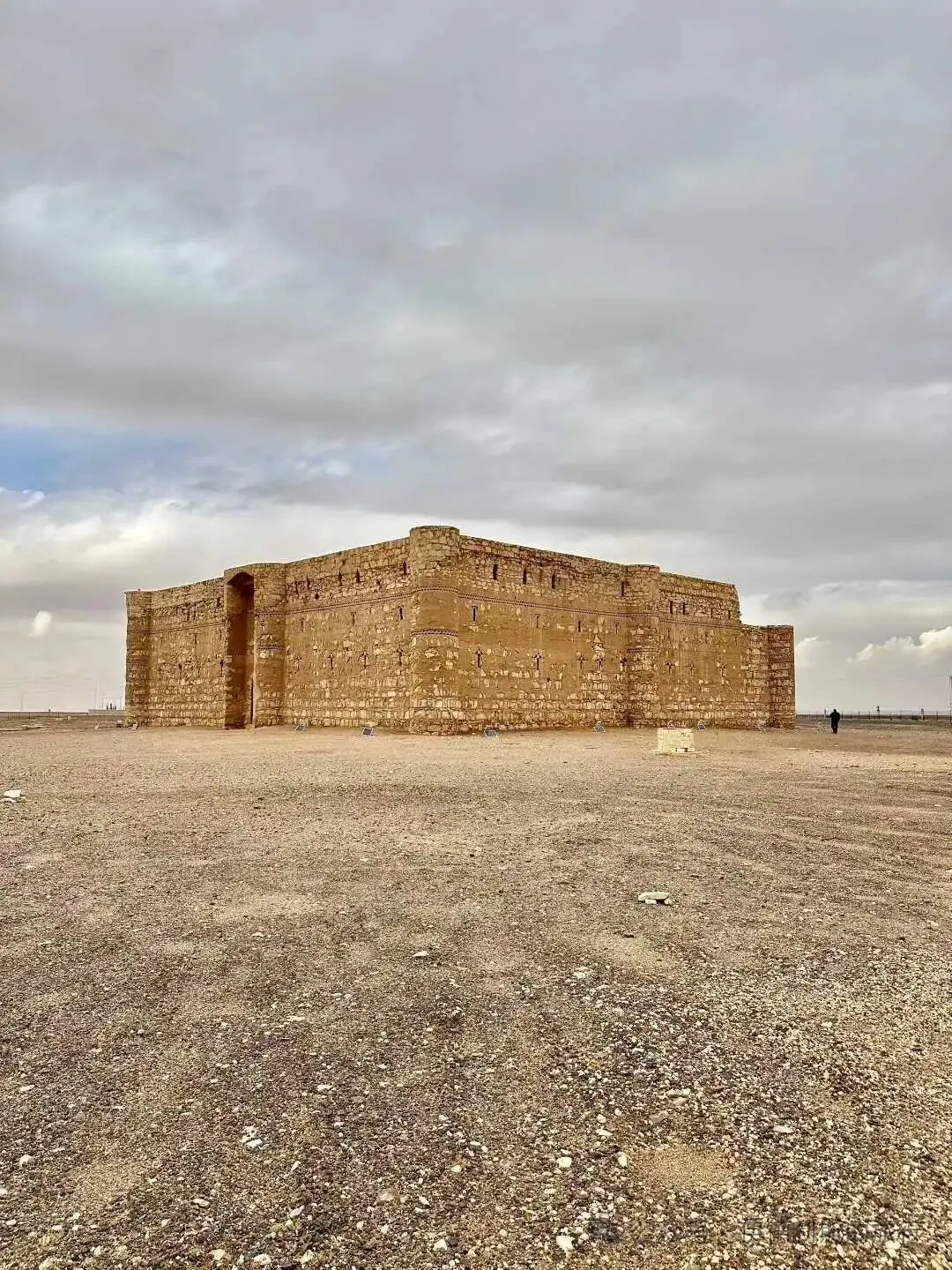
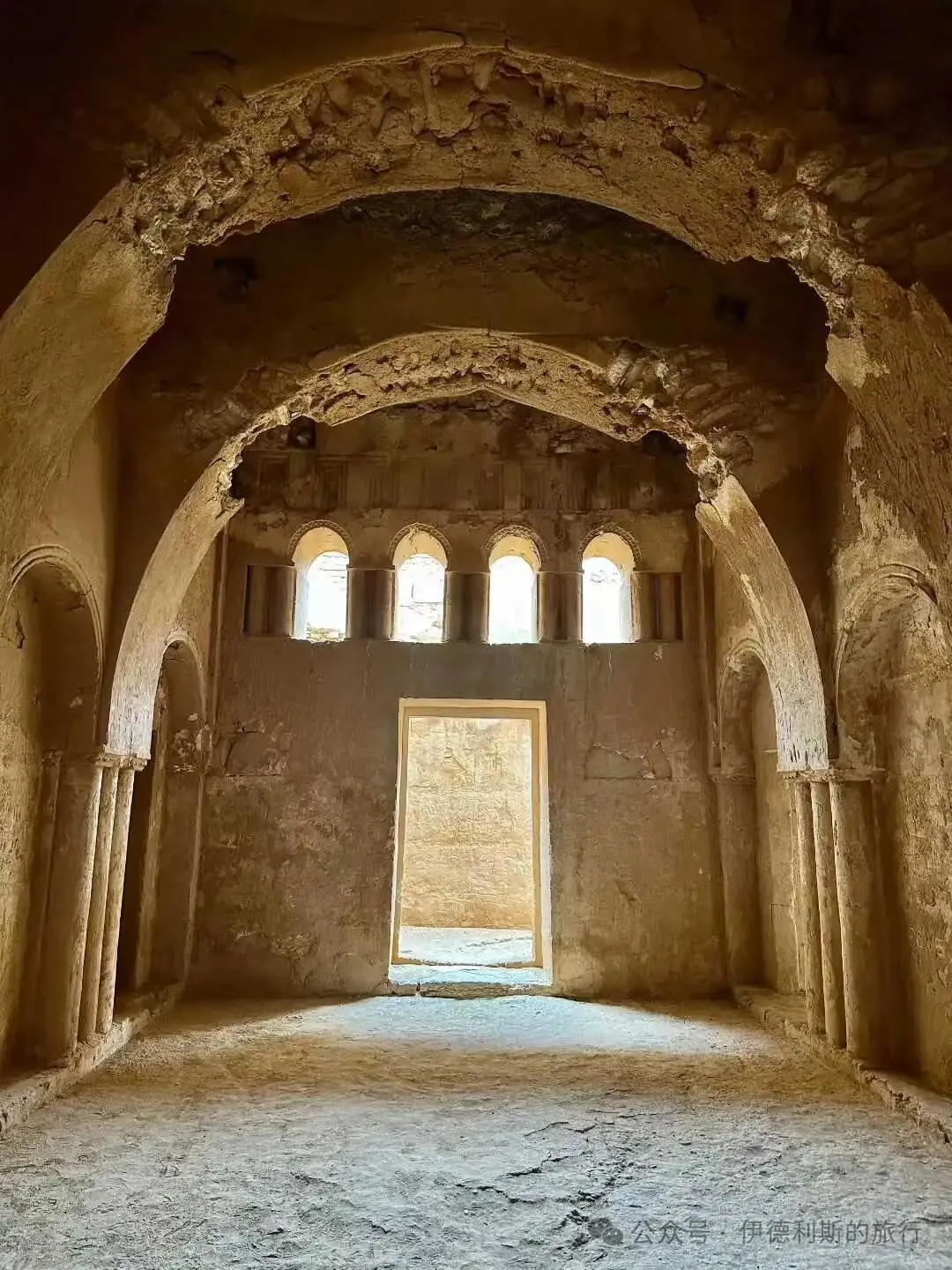
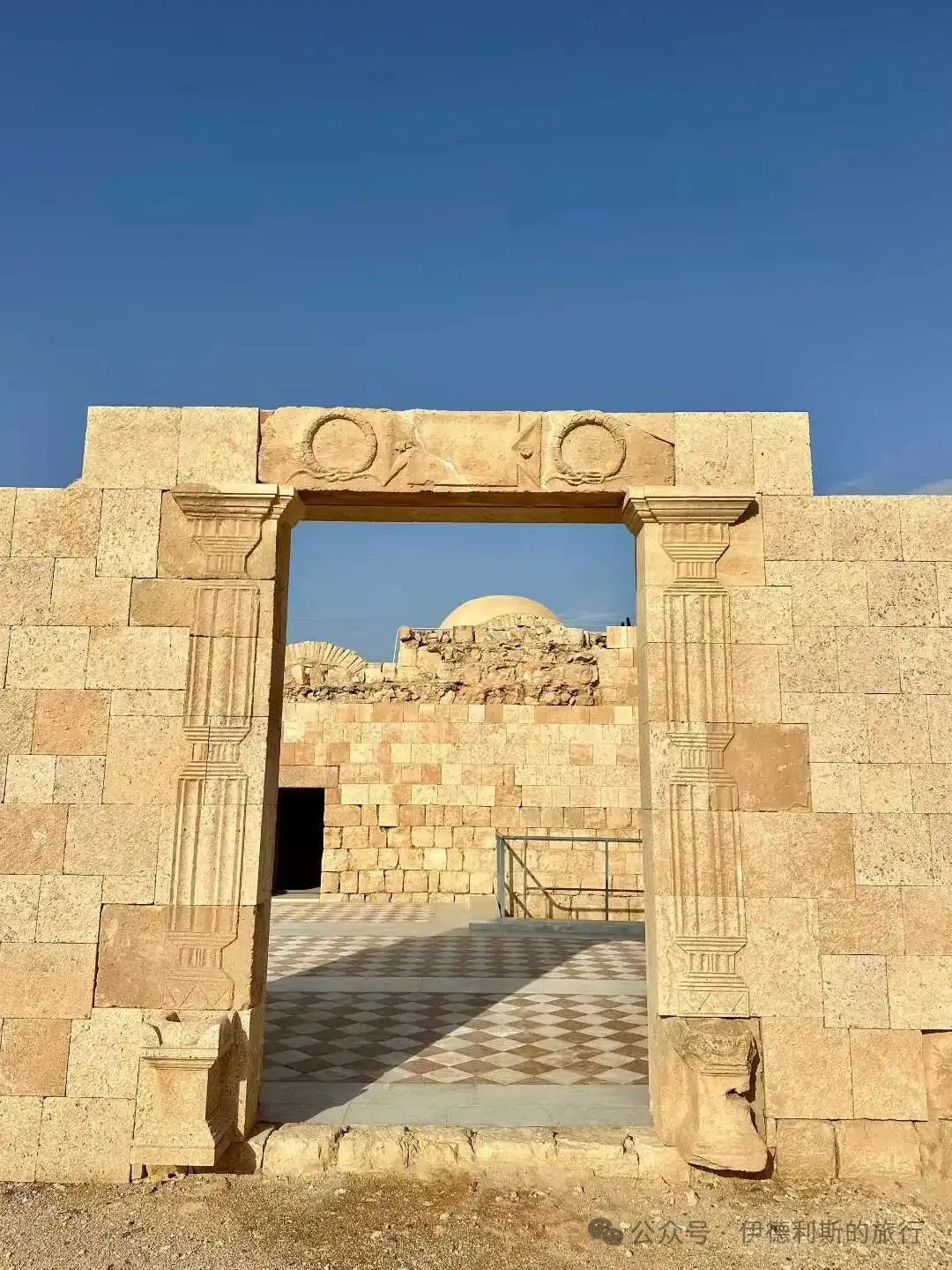
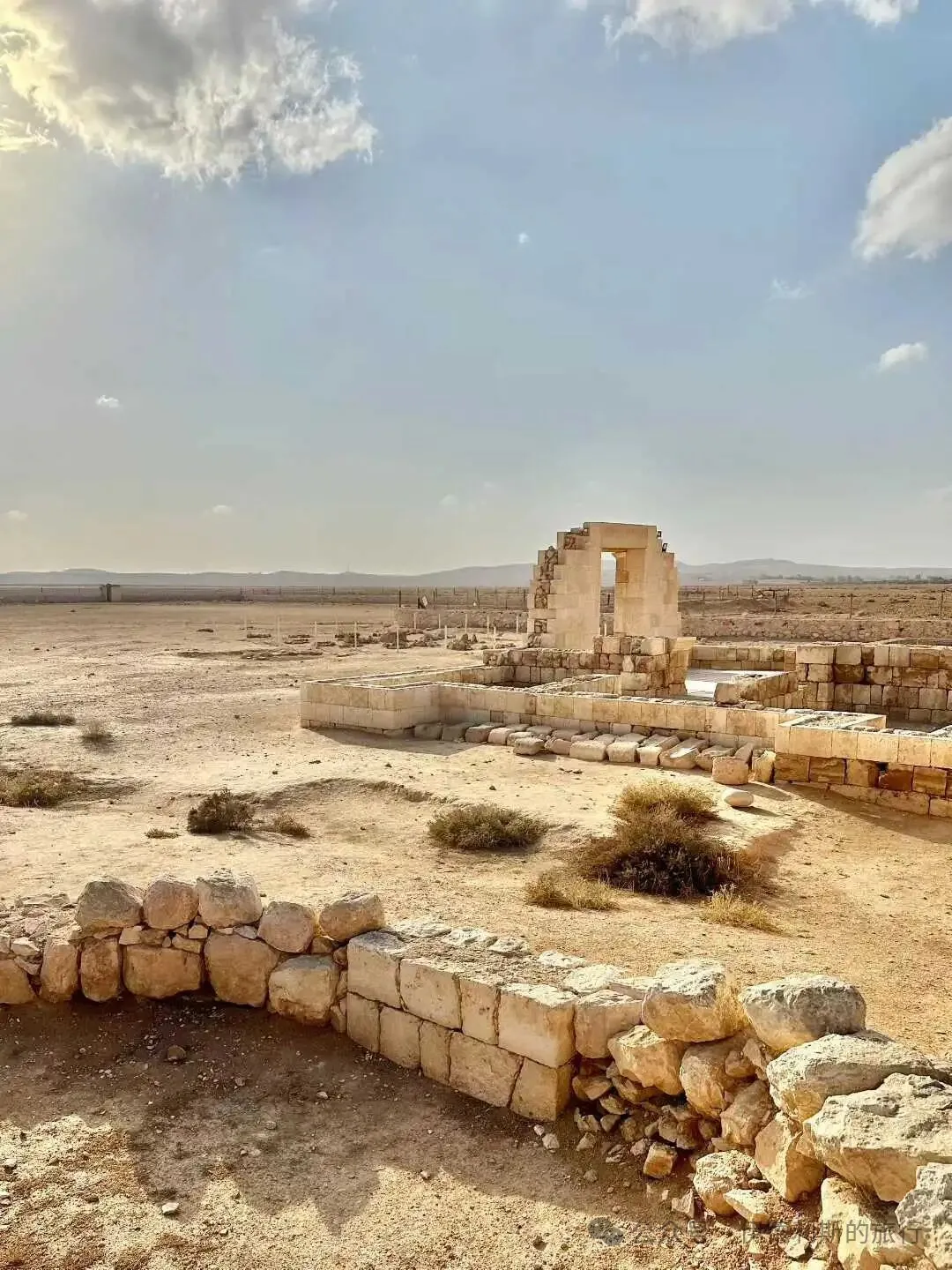
I visited Qasr Kharana in Jordan, which was built in 710 during the reign of Caliph al-Walid I.
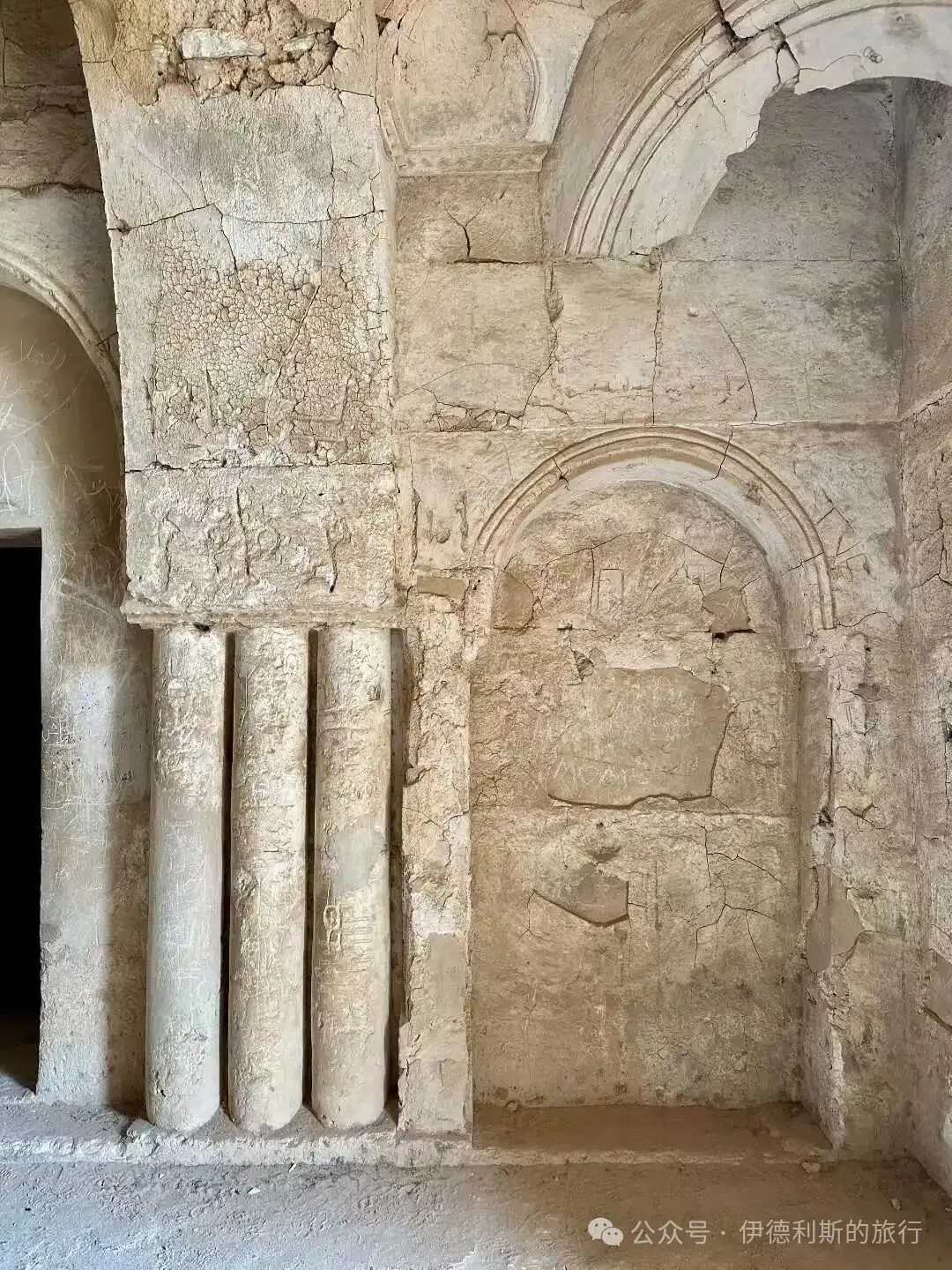
The most special thing about Qasr Kharana is how it blends Byzantine and Sassanid architectural styles. The palace is built with plaster and rubble, and the second floor features barrel vaults supported by transverse arches, which is a typical Sassanid style, though it still differs from Sassanid buildings in Iran. The arches at Qasr Kharana do not connect to the load-bearing walls but rest on corbels, and they use new types of wooden lintels to make the building more flexible and earthquake-resistant.
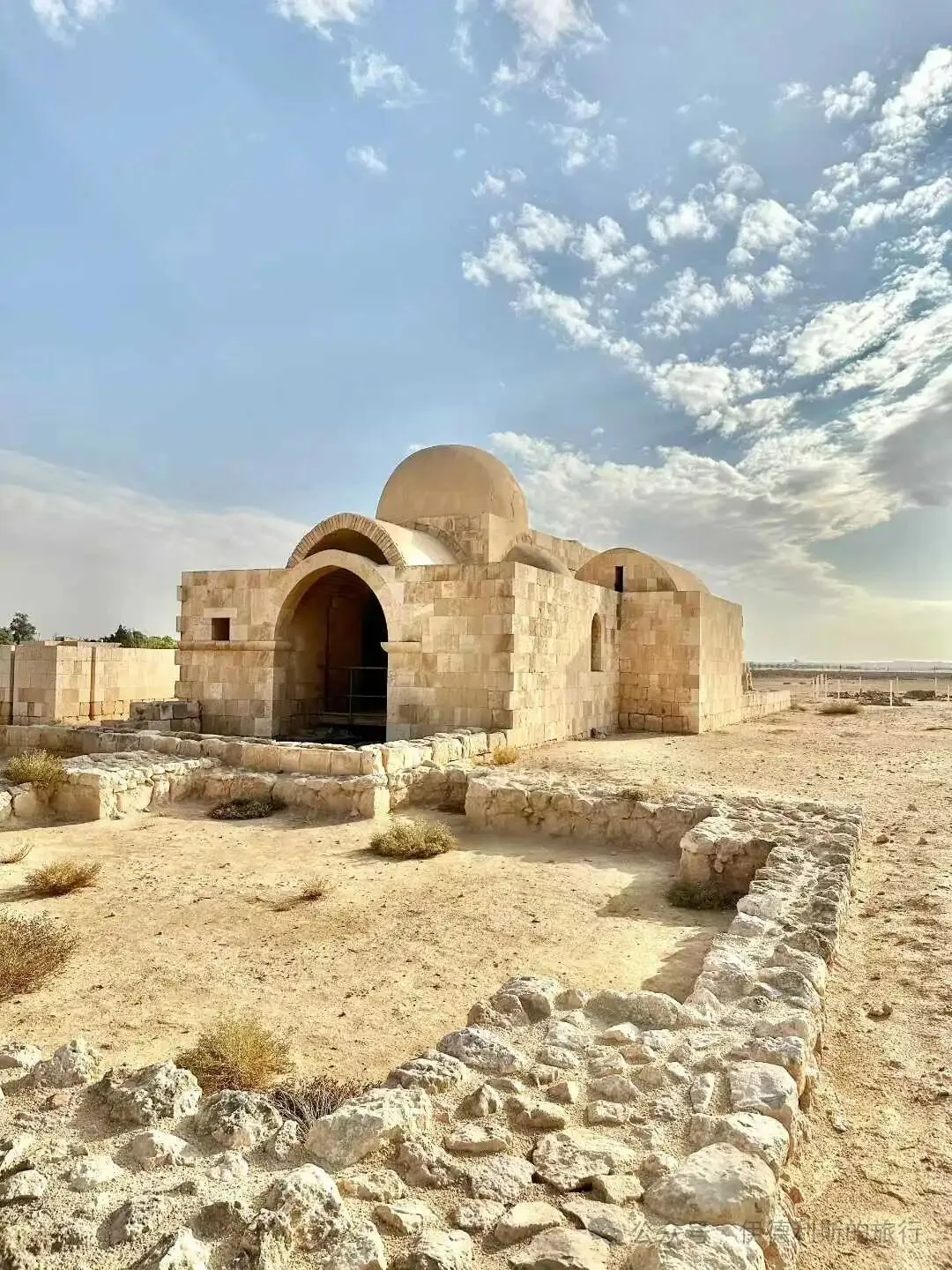
Hammam al-Sarah in Jordan was built in the early 8th century during the reign of Caliph Abd al-Malik or al-Walid I.
The bathhouse was built using neatly cut, medium-sized stones and decorated with intricately carved fluted moldings. Inside the main hall, there is a beautifully designed fountain supplied with water from an elevated water tower on the east side. There is also a walled garden site nearby, which is known as the oldest Islamic garden site.
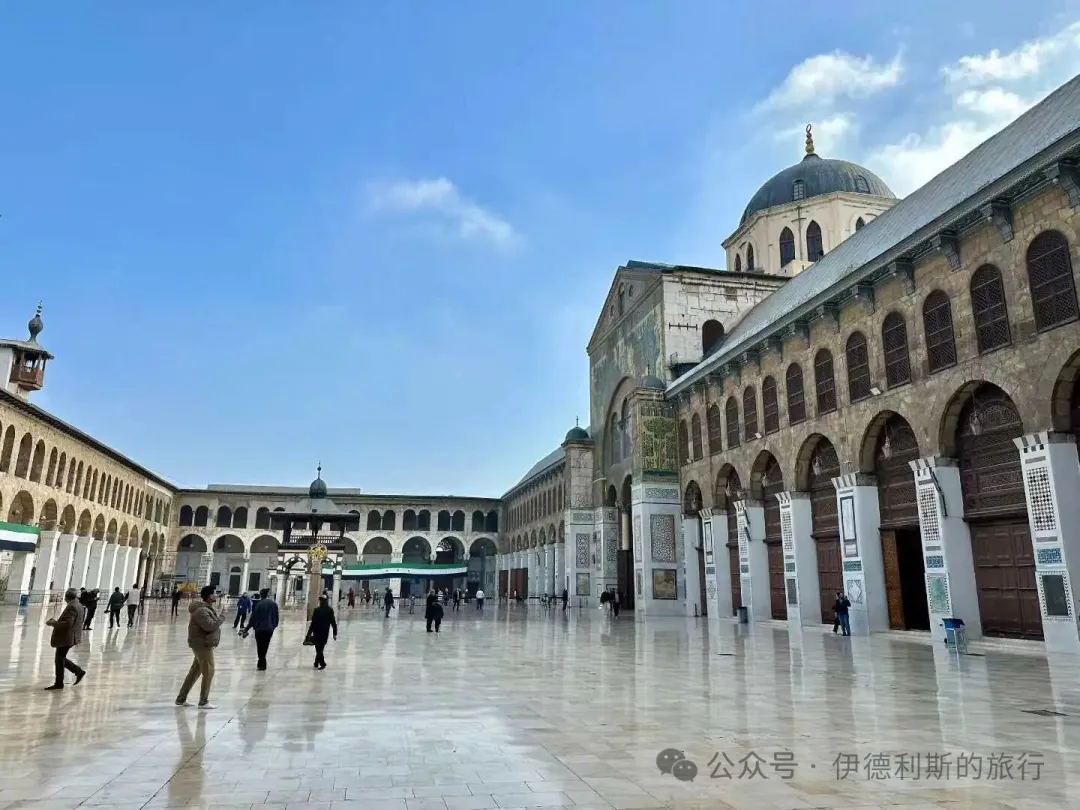
The Umayyad Mosque in Damascus was built under the direction of Caliph al-Walid I in 706. He kept the outer walls of the Roman mosque's inner sanctuary and moved the Corinthian columns and arcades from inside the mosque to the main hall, finishing the new mosque in 715 and making it a 'wonder of the world' in the writings of medieval Muslim scholars.
Before the Great Mosque of Damascus was built, traditional mosques were all flat-roofed halls. The Great Mosque of Damascus uses a basilica-style layout, featuring three wide, long halls and a central nave topped by a tall dome.
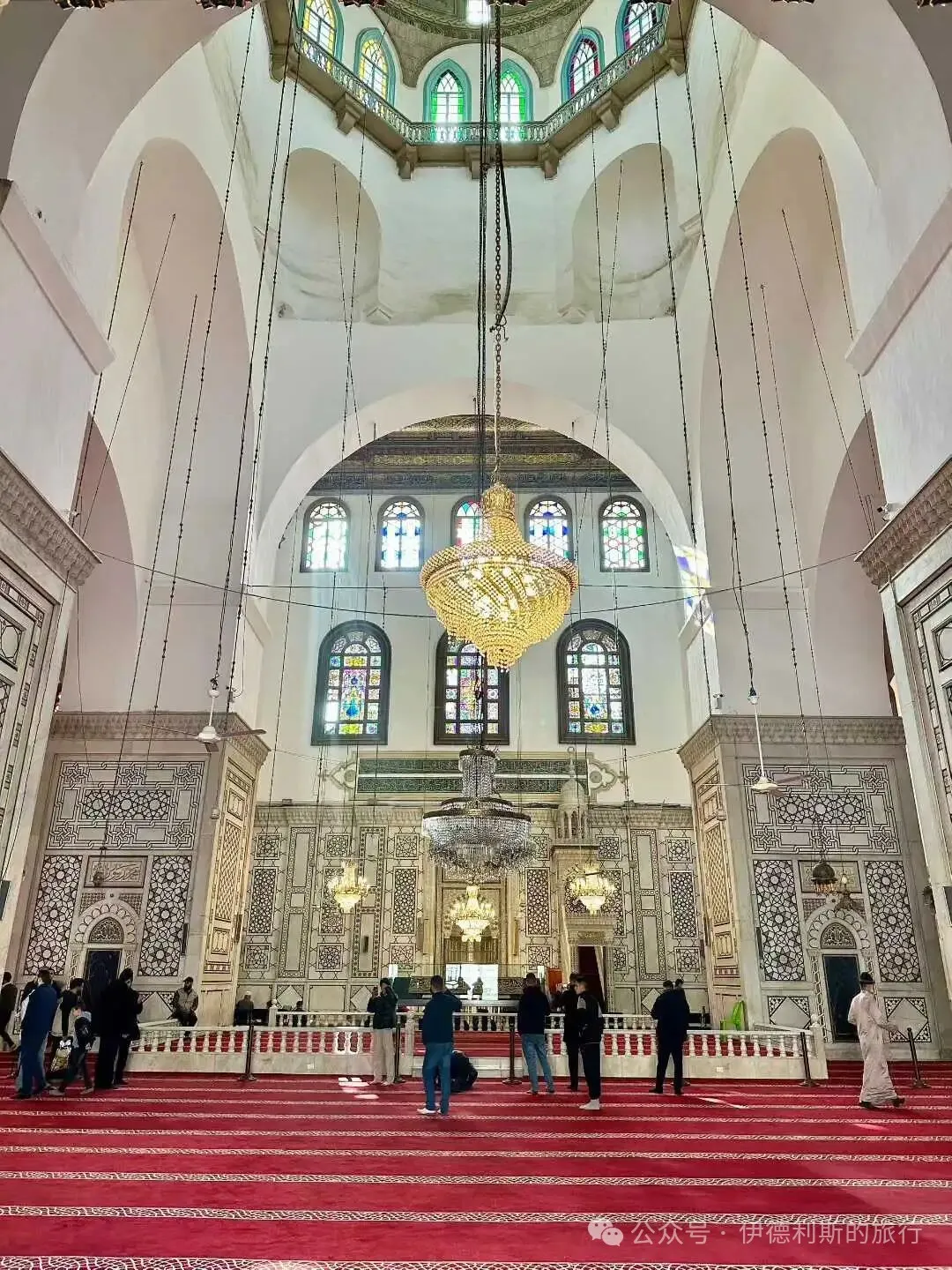
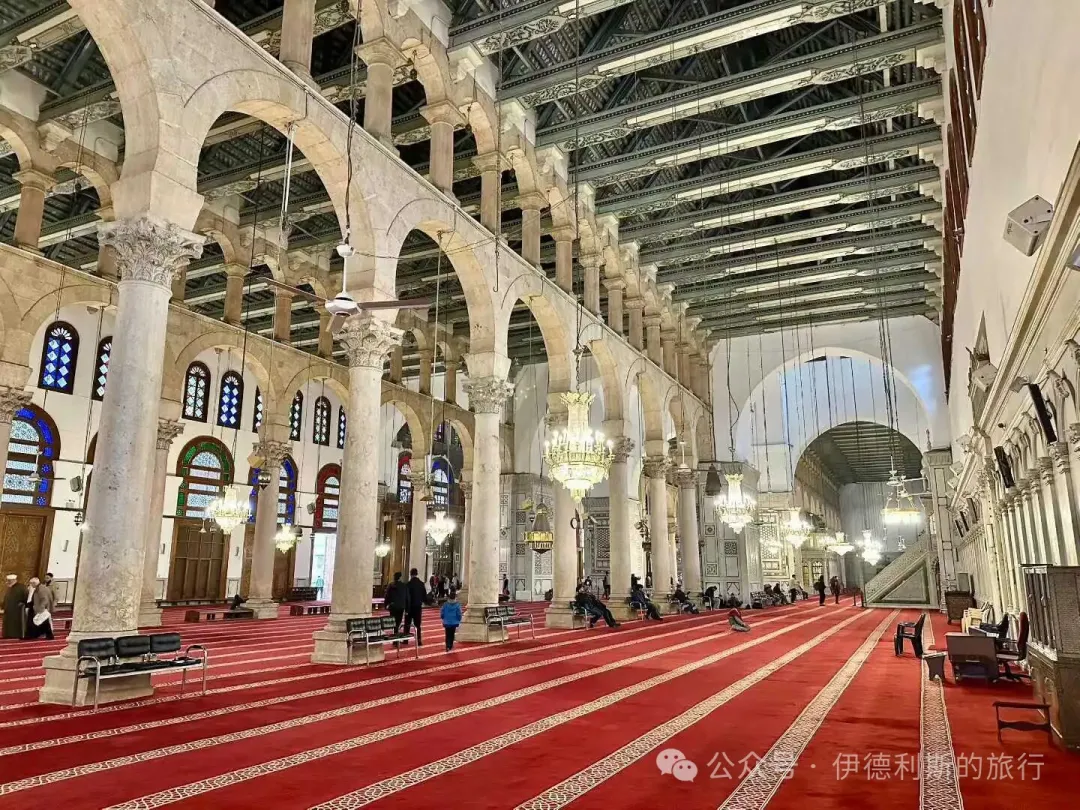
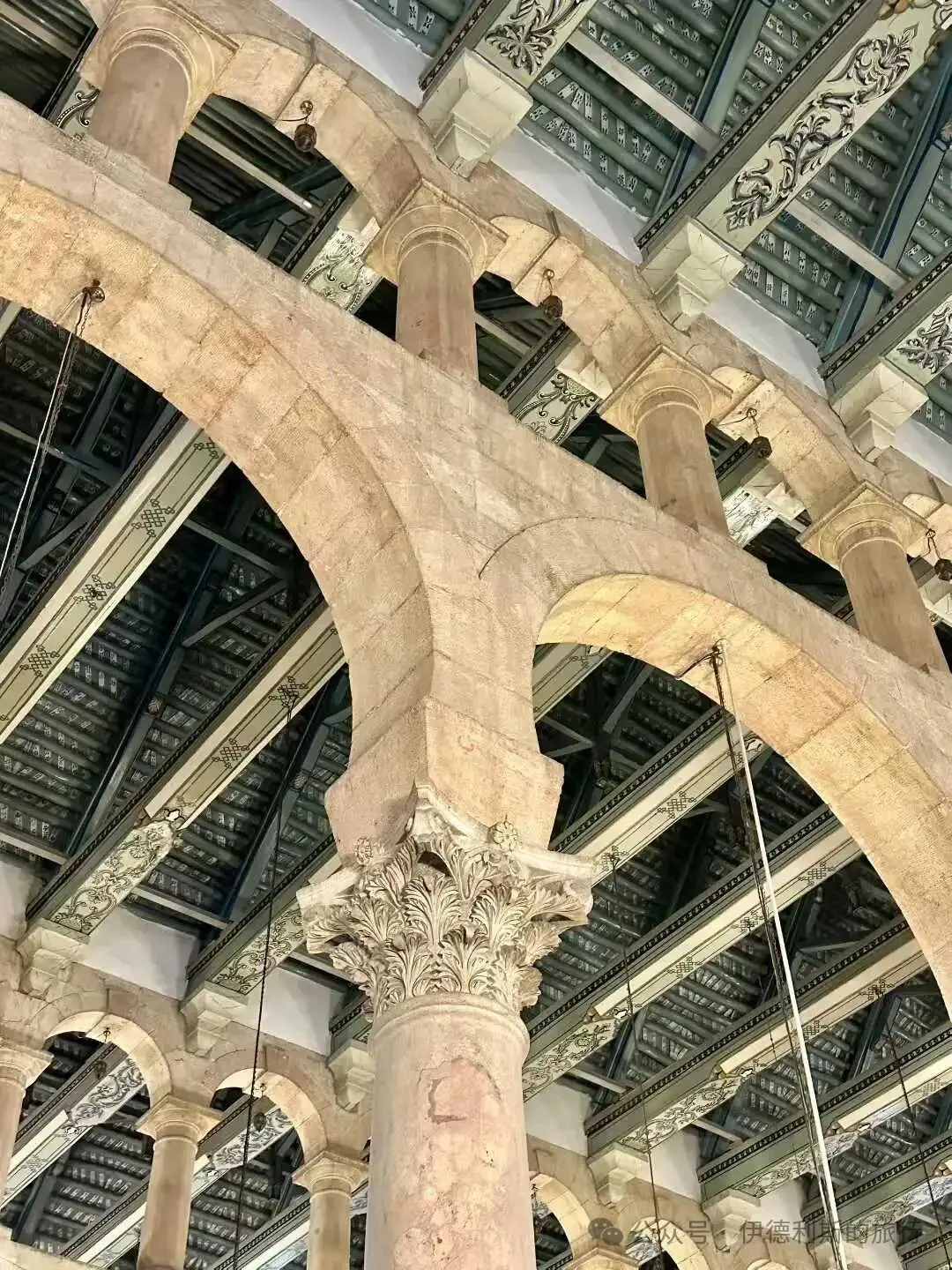
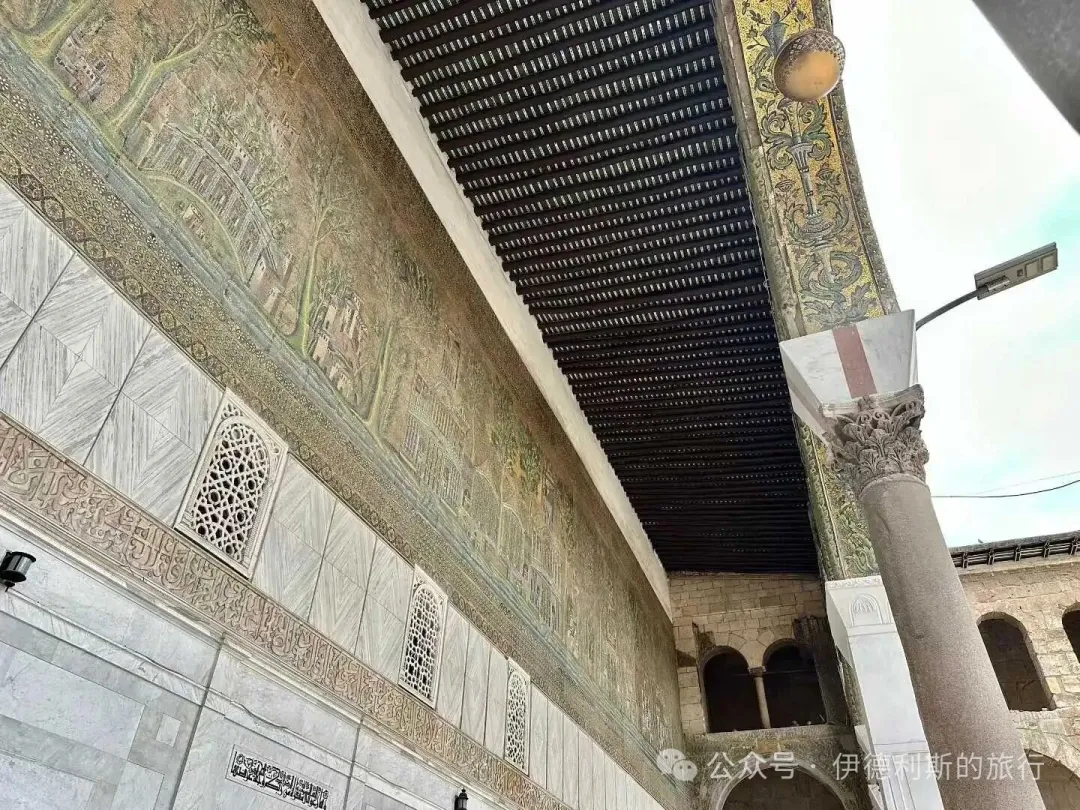
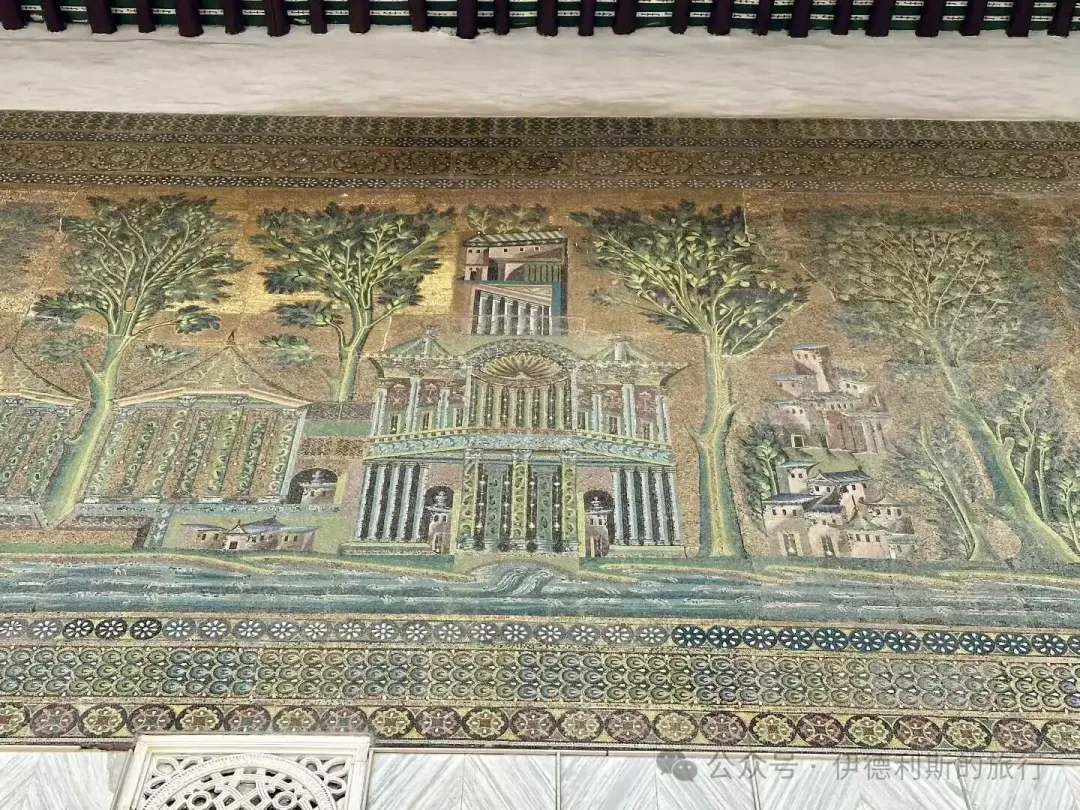
The Great Mosque of Damascus is world-famous for its rich Umayyad-era mosaic decorations. These mosaics show various natural landscapes and buildings in a late Roman style, following a classic naturalistic approach.
Some Arabic historical records suggest the craftsmen and materials for the mosaics came from the Byzantine capital of Constantinople, but a 2022 chemical analysis study showed that most of the mosaics were actually made in Egypt. Although these mosaic images show traces of Byzantine style, some scholars believe their craftsmanship is more consistent with mosaic techniques from Syria, Palestine, and Egypt.
The meaning of the mosaic images has been a subject of long-standing debate. Some believe they represent the known world at that time, others think they depict Damascus and the Barada River, and some argue they show scenes of Paradise. Currently, there is more evidence for the Paradise theory, as the landscapes without human figures fit the idea of an empty Paradise waiting for people to arrive after the Day of Resurrection.
The ancient city of Anjar in Lebanon was built by al-Abbas, the son of Caliph al-Walid I, between 714 and 715. This place has been an important route connecting Beirut and Damascus since ancient times, and it was listed as a UNESCO World Heritage site in 1984.
It is believed that the ancient city of Anjar likely used many captives brought back by Prince al-Abbas from his campaigns against the Byzantine Empire as laborers, which is why the stone carvings have a strong Byzantine style. The entire ancient city is based on a Roman city plan, with a rectangular layout surrounded by thick walls, where two main roads intersect at four gates to divide the city into four sections. The main road is lined with columns and rows of shops that look like Roman tabernae, while a classic four-sided Roman gate known as a tetrapylon stands at the intersection. The city is divided into four functional areas: the southeast holds the grand palace and mosque, the northeast contains the small palace (harem) and bathhouse, and the northwest and southwest are residential zones.
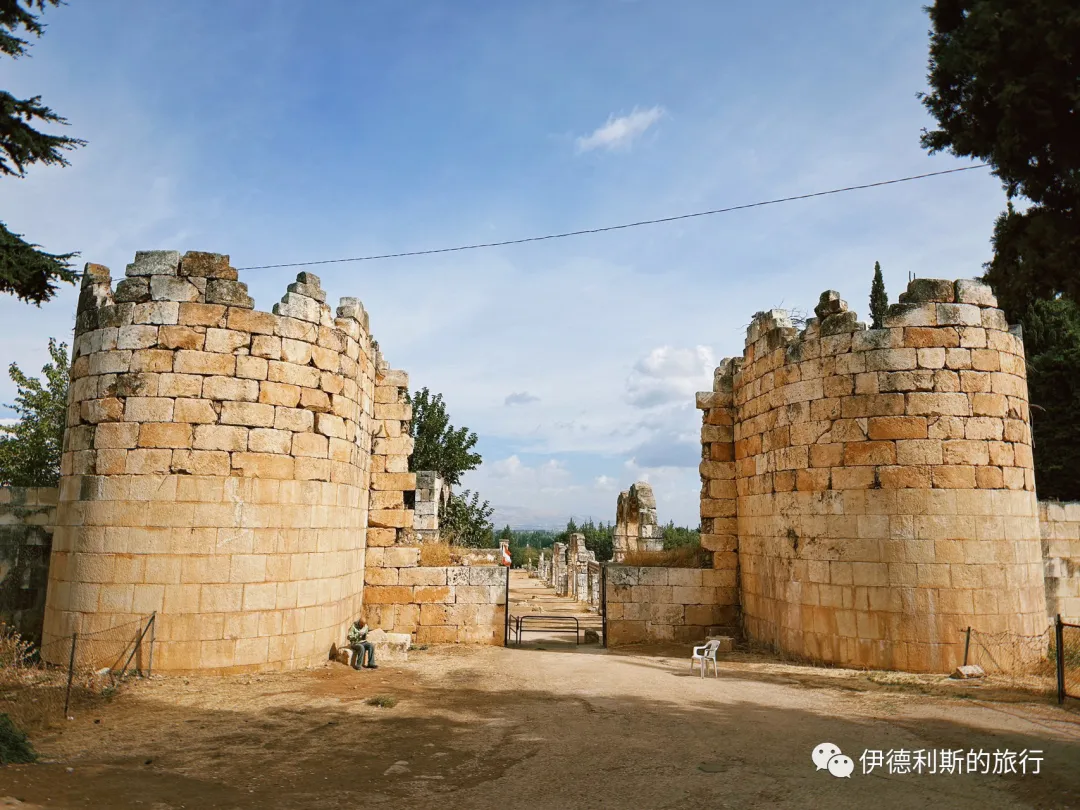
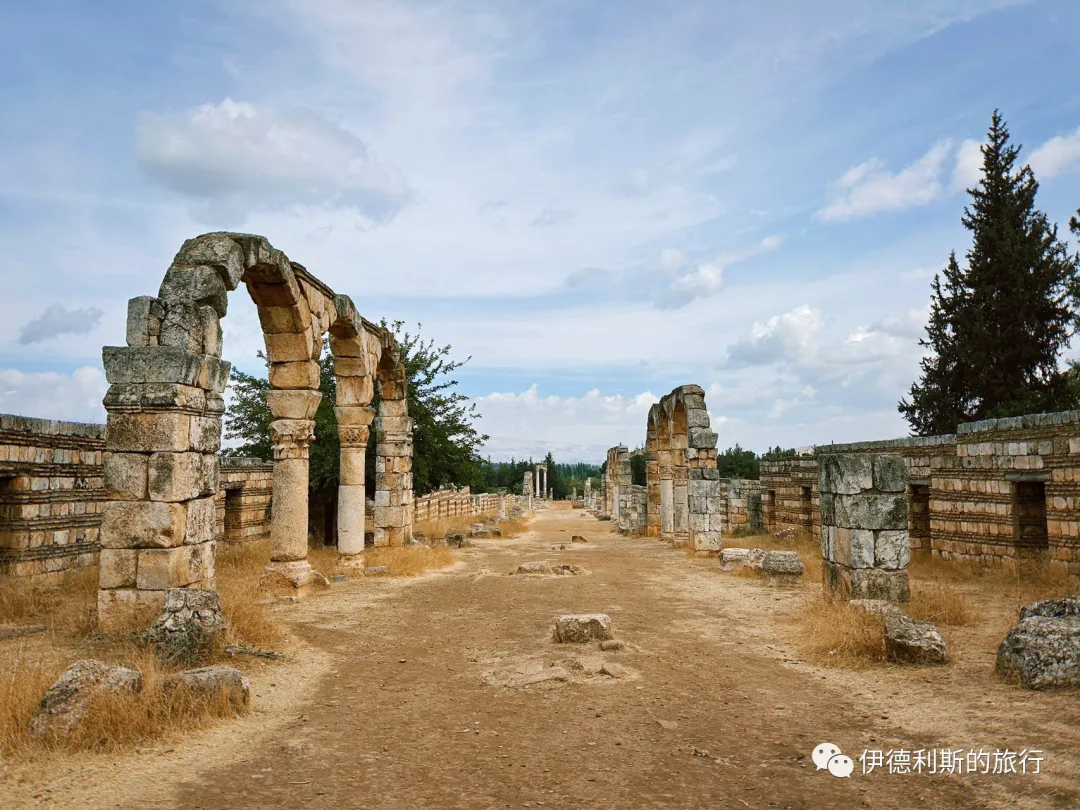
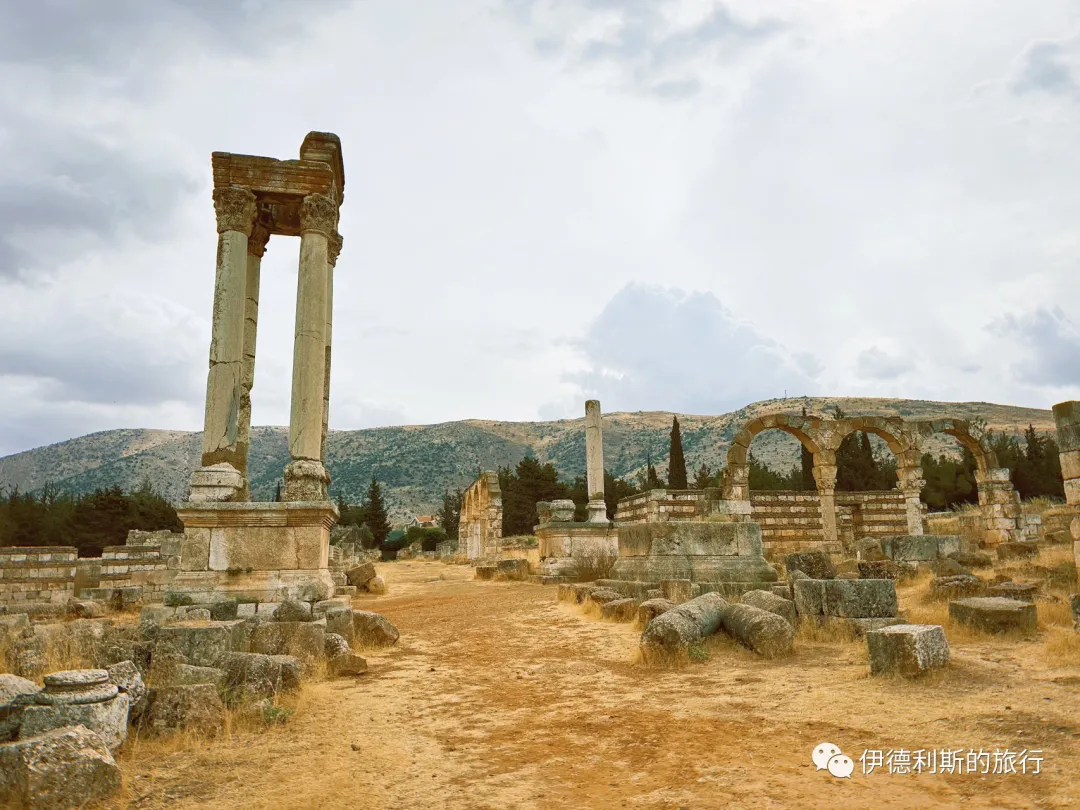
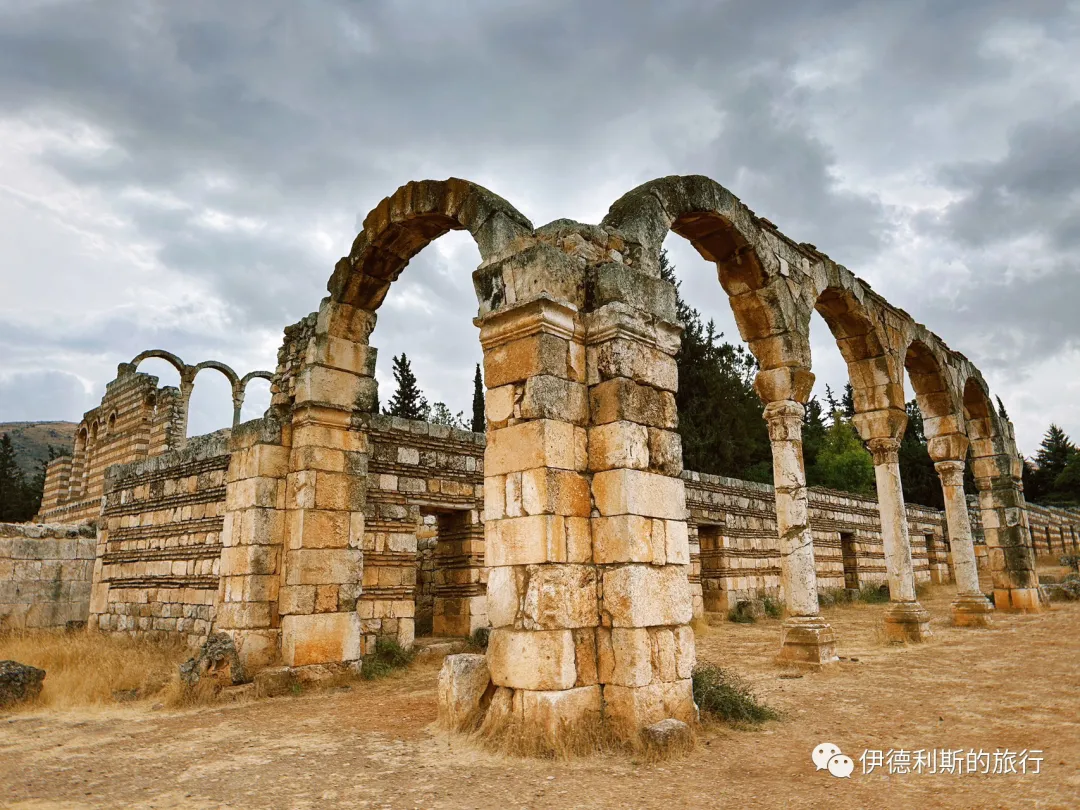
The Umayyad Mosque in Baalbek, Lebanon, was also built by the Umayyad Caliph al-Walid I in 715, the same year as the Umayyad Mosque in Damascus. These two mosques stand together as the oldest surviving masjid buildings in the world.
Compared to the Umayyad Mosque in Damascus, the Baalbek Umayyad Mosque is simpler, but its overall style is very similar. Some stone parts inside the main hall may have been taken from the nearby Roman-era Baalbek Citadel, and the column capitals show a strong Roman-Byzantine style.
Muslim History Guide to Damascus: Sufi Sage Ibn Arabi, Mosque Area and Shrine Visit
Articles • yusuf908 posted the article • 0 comments • 435 views • 2026-06-22 06:27
Summary: This Muslim history guide to Damascus follows Sufi sage Ibn Arabi, mosque-area travel, shrine history, and Islamic heritage from the original article.
This article summarizes the key points of visiting the Sufi sage Ibn Arabi in Damascus. It keeps the original paragraph and image order. It is for readers interested in Muslim life, Islamic culture, and Chinese Islamic writing. It also helps with searching for content on namaz, Hajj, and Ramadan.
Salihiyah, located at the foot of Mount Qasioun, is the most important historic district in Damascus outside the old city. Historic buildings from the Ayyubid, Mamluk, and Ottoman dynasties stand along both sides of the Friday market (Jumu'ah market). Some look plain from the outside but are hundreds of years old.
After the Crusaders captured Jerusalem in 1099, many scholars, jurists, and civilians fled to Damascus for refuge. In 1156, the famous Hanbali scholar Ibn Qudamah moved from the West Bank to Damascus to escape the Crusaders and later settled in Salihiyah. He once admired this land and said, 'This is a place of barakah (blessing).'
Saladin, the founder of the Ayyubid dynasty, wanted to provide a safe and stable environment for the scholars and immigrants who fled from Jerusalem to Damascus. Because Ibn Qudamah's home at the foot of Mount Qasioun in the north of the city had become an academic center for the Hanbali school, Saladin decided to build the Salihiyah community at the foot of Mount Qasioun.
The most famous landmark in Salihiyah is the Shaikh Mohiddin Mosque (Masjid Shaikh Mohiddin), which houses the tomb of the famous Sufi sage Ibn Arabi.
Ibn Arabi was born in 1165 in what is now southern Spain, which was then called Al-Andalus. Starting at age 28, he traveled throughout the Middle East for many years, performed Hajj multiple times, and lived in Tunisia, Morocco, and Mecca. At age 58, he finally chose to settle in Damascus to focus on teaching and writing. He passed away in Damascus in 1240 at the age of 75. After Ibn Arabi passed away, his works were translated into Persian, Turkish, and Urdu. They had a great influence on the entire Muslim world, and he is known as a founder of the development of Sufism.
The shrine (gongbei) of Ibn Arabi was originally quite small. In 1518, Ottoman Sultan Selim I ordered its reconstruction during his visit to Damascus, which showed how much the Ottoman Empire valued Sufis at the time. After it was built, the shrine was first named the Selimiye Mosque after the Sultan. Because Ibn Arabi’s title, Muhyiddin, means 'reviver of the faith,' the mosque is also known as the Sheikh Muhyiddin Mosque. On the first Friday (Jumu'ah) of Ramadan after the mosque was finished, the Sultan personally visited to attend prayers and gifted the mosque a pair of silver socks.
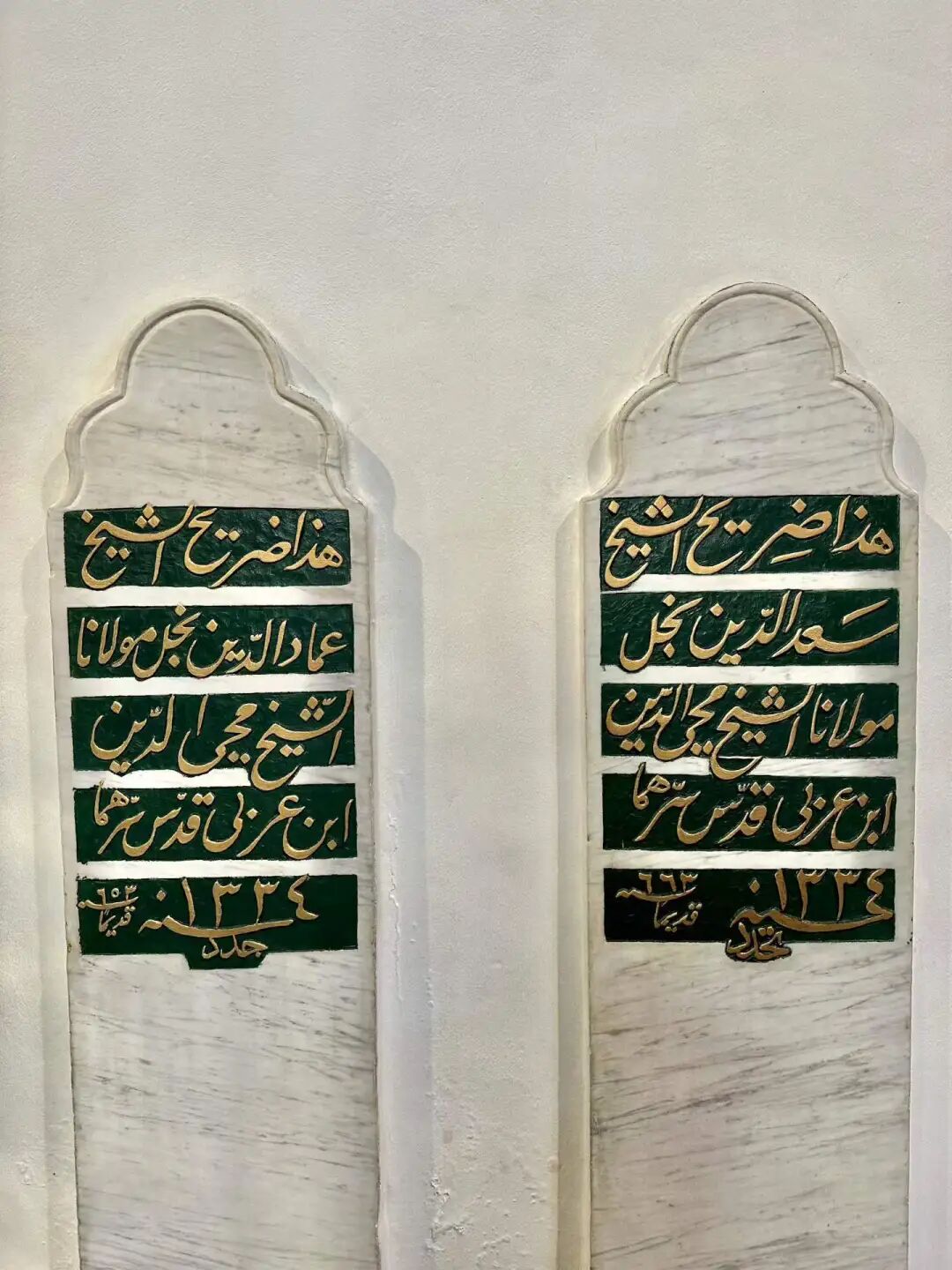
The mosque blends architectural styles from the late Mamluk and early Ottoman periods. The shrine is located below the mosque, and you enter it by taking the stairs on the east side of the courtyard. Inside the shrine, besides Ibn Arabi himself, lie his two sons and his followers.
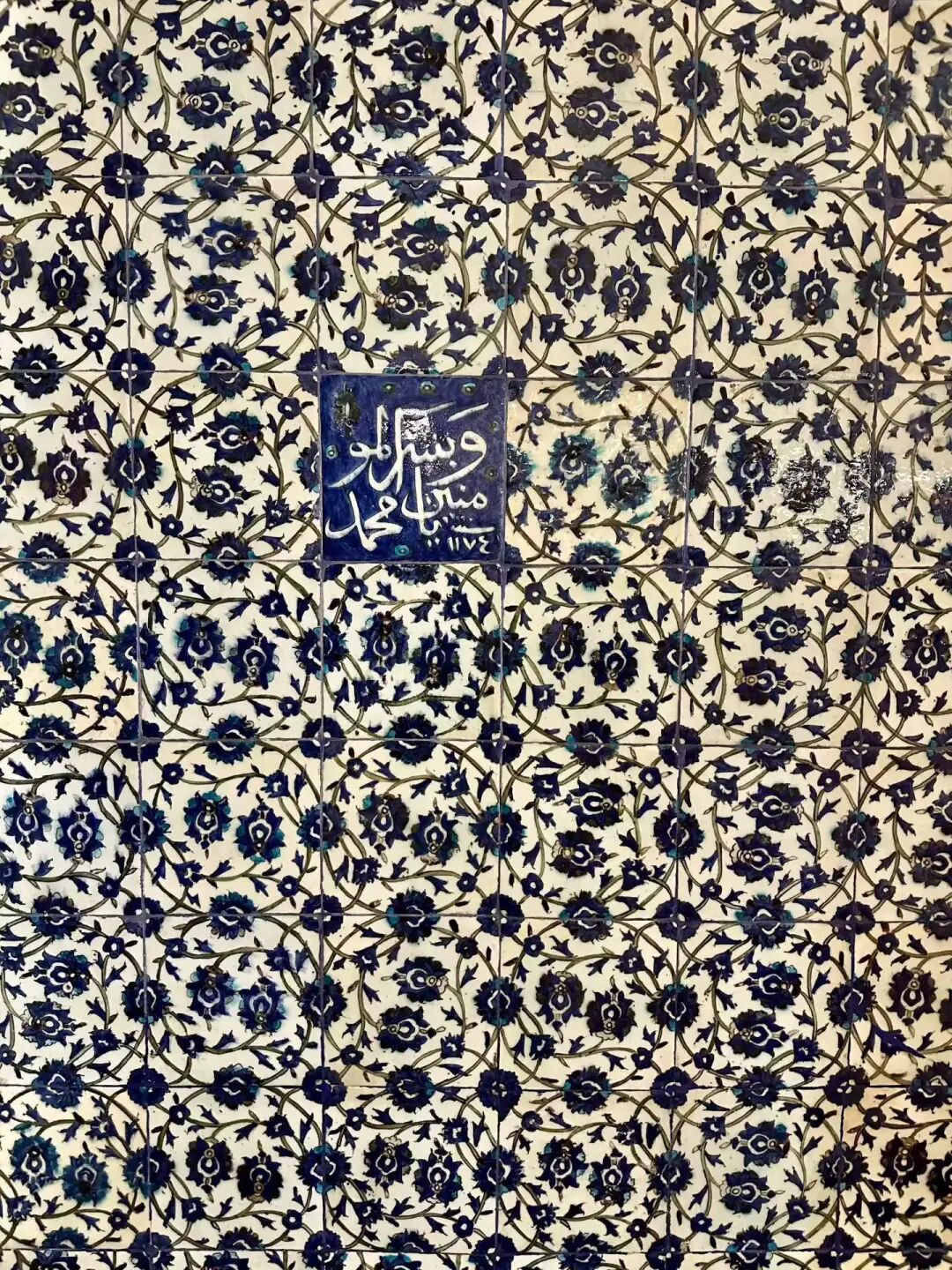
The tiles on the walls of the shrine were laid in 1760.
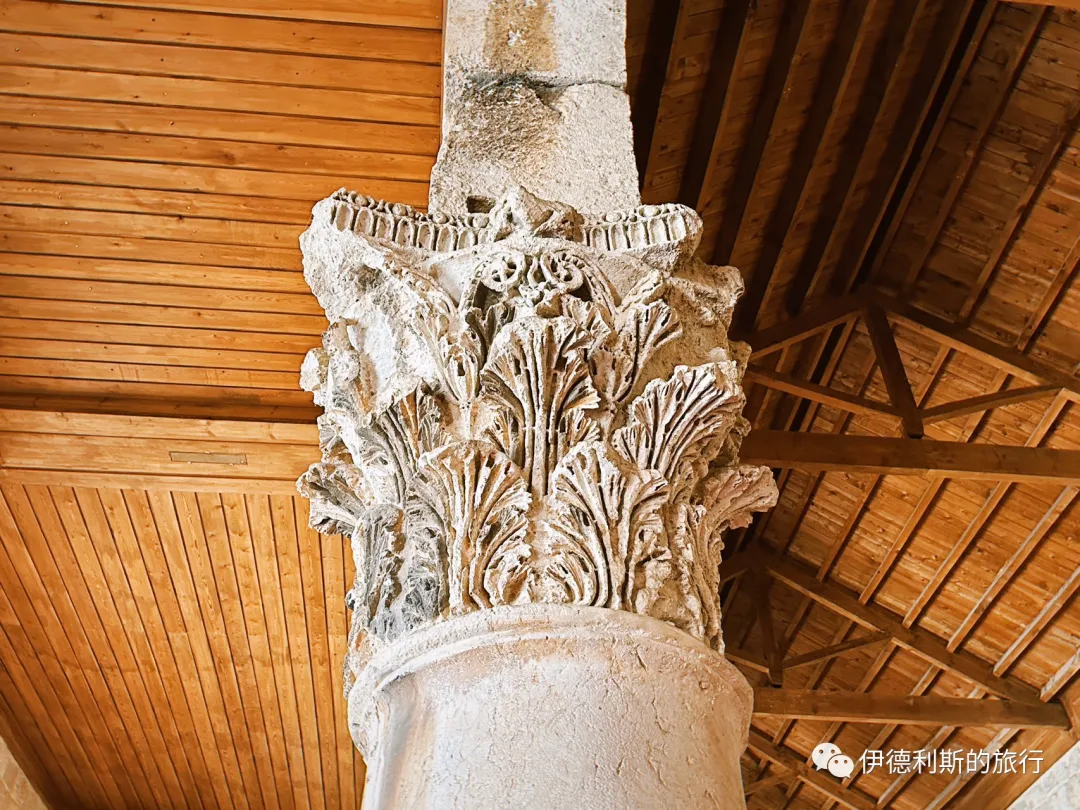
The Sheikh Muhyiddin Mosque follows a traditional Damascus layout, with a courtyard surrounding the front of the main prayer hall and an Ottoman-style minaret built above the main gate. The walls are covered in yellow and white marble, and there is a Damascus-style pool in the middle of the courtyard. The wall decorations mix Ottoman and Mamluk styles, and the Corinthian capitals on the stone pillars of the main hall feature beautiful carvings. The two large candlesticks in front of the mihrab are also very characteristic of the Ottoman style.
When I first arrived at the Sheikh Muhyiddin Mosque, I happened to catch a funeral prayer (janazah) for a sheikh, and I could really feel the strong religious atmosphere here.
Not far to the east of the Sheikh Muhyiddin Mosque is the Hanabila, another famous mosque in the Salihiya district. Hanabila Mosque is a famous early Ayyubid dynasty mosque in Syria. It was founded between 1208 and 1210 by the famous Hanbali scholar Ibn Qudama. He was born in Jerusalem and settled in Damascus in 1197, which became his main center for scholarship.
The mosque follows the Ayyubid architectural style. It centers on a courtyard, and the main prayer hall follows the layout of the Umayyad Mosque in Damascus, though its structure is more compact. The mosque still has a beautiful pulpit (minbar) and window carvings that are over 800 years old.
Rukniyah Madrasa is located on the far east side of the Salihiyah district in Damascus. It was built in 1224 by the Ayyubid governor of Damascus, Rukn al-Din Mankurs al-Falaki, who is also buried there. Rukniyah Madrasa is the first Ayyubid building with a courtyard covered by a dome. The building consists of two square sections: the larger part is the madrasa, and the smaller part is the tomb. The minaret was added later.
Because the Ayyubid dynasty was busy fighting the Crusades, the architectural style of this period is known for being simple, sturdy, and durable. Rukniyah Madrasa belongs to the Hanafi school of law. It has now been converted into a mosque, and the main hall is not open except during the five daily namaz prayers.
Abd al-Ghani al-Nabulsi Mosque was built in 1764 by Sheikh Mustafa al-Nabulsi, the grandson of the famous Syrian Sufi sheikh and poet Abd al-Ghani al-Nabulsi. Both Sheikh Abd al-Ghani al-Nabulsi and Sheikh Mustafa al-Nabulsi are buried there. Unfortunately, since most mosques in Damascus do not open their doors except for the five daily namaz prayers, I could not go inside.
Sheikh Abd al-Ghani's family came from the Banu Jama'a. For generations, they served as chief judges and great Sufi sheikhs during the Mamluk dynasty. One branch of his family settled in Damascus after the Ottoman Empire conquered the Mamluk dynasty in 1516. They continued to hold positions such as the Shafi'i Grand Mufti of Damascus and teachers at the Umayyad Mosque.
Sheikh Abd al-Ghani was born in Damascus in 1641. His father switched from the Shafi'i school to the Hanafi school after a debate with Hanafi students. This was the mainstream school of the Ottoman Empire at the time. Abdul-Ghani began studying Islamic law as a child. He joined the Qadiriyya and Naqshbandiyya Sufi orders and spent seven years in quiet retreat at home. He traveled widely across the Middle East and wrote over 200 books. He was especially known for his deep research into the Sufi sage Ibn Arabi.
Before Sheikh Abdul-Ghani, the Salhiyya district of Damascus followed the Hanbali school of law. He was the first to bring Hanafi and Shafi'i ideas to the area and hosted many Hanafi students in his home.
The Jharkasiya Madrasa is on the market street in the Salhiyya district of Damascus. It was built in 1237 by the Ayyubid general Salim al-Din al-Hattra for his teacher, the Ayyubid general Jharkas ibn Abdullah. Both Jharkas ibn Abdullah and Salim al-Din al-Hattra are buried inside.
Jharkas was a commander in Saladin's personal guard and witnessed all of Saladin's military campaigns. The Jharkasiya Madrasa has a very rare double-domed tomb. Historically, the school taught both Hanafi and Shafi'i law, but today it serves as a mosque.
The Mershadiyeh Madrasa is on the west side of the Salhiyya district in Damascus. It was built in 1252 with funding from Khadija Khatun, the daughter of the Ayyubid Emir of Damascus, Al-Mu'azzam Isa. She is buried in the courtyard after her passing.
The square minaret of the madrasa is the only surviving example of 13th-century Ayyubid architecture in Damascus. The madrasa is currently closed. You must contact the Syrian Directorate-General of Antiquities and Museums to enter.
The Takrityya Madrasa is on the far west side of the Salhiyya district in Damascus. It was built in 1298 by the Emir Taqi al-Din al-Takriti, who is buried inside. This building dates back to the Mamluk period, but it keeps the strict and simple architectural style of the Ayyubid dynasty. The Mongol army destroyed this place in 1300, but it was rebuilt later.
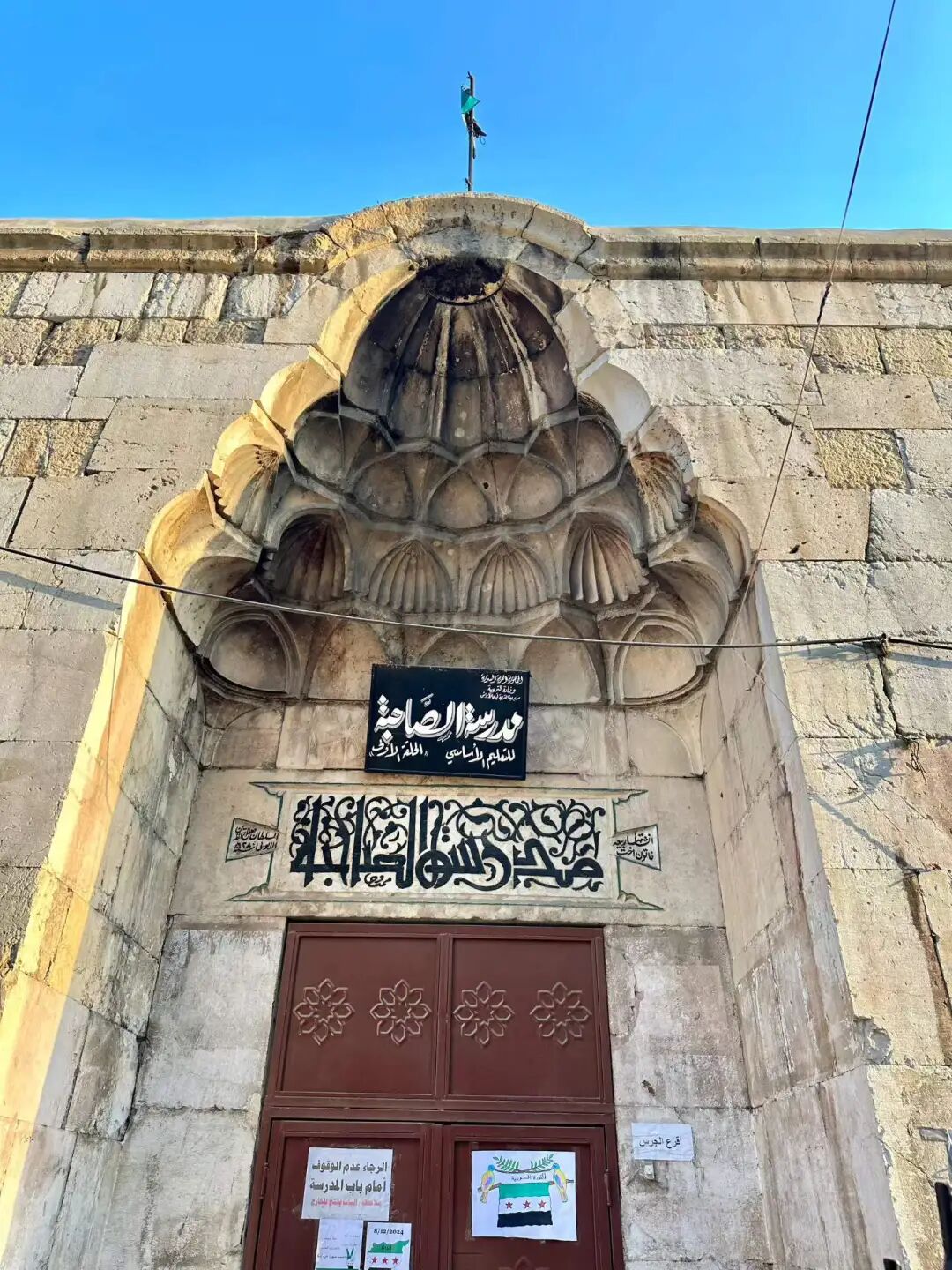
Rabia Khatun, the sister of Ayyubid founder Saladin, built the Sahiba Madrasa in 1233, and her tomb is inside. People call this madrasa a model of Ayyubid architecture because of its thick walls and beautiful carvings that only use simple geometric shapes.
This madrasa once taught the Hanbali school of thought, which was the mainstream school at the time. Today, it is a primary school for girls, and generations of local residents have studied here.
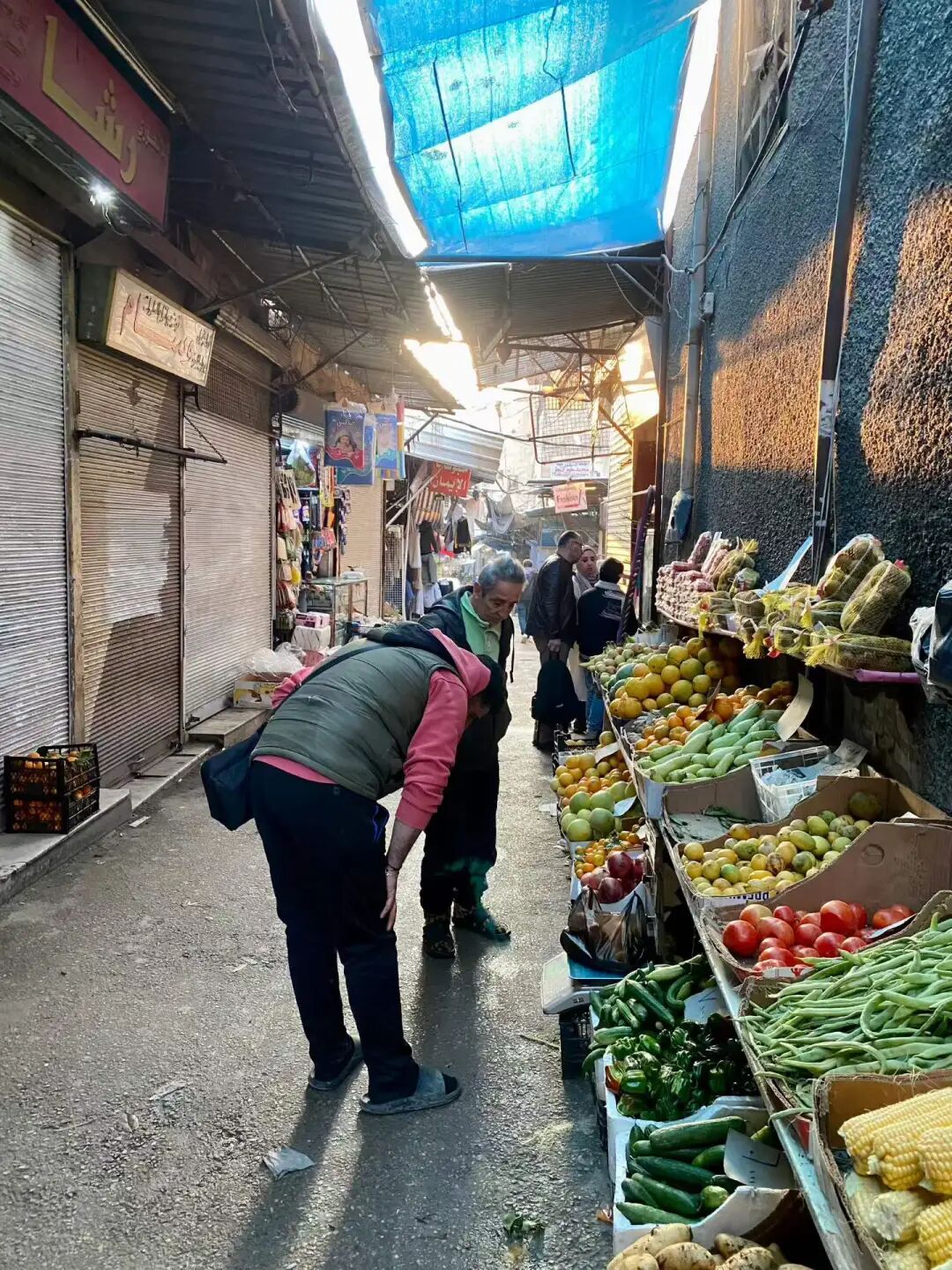
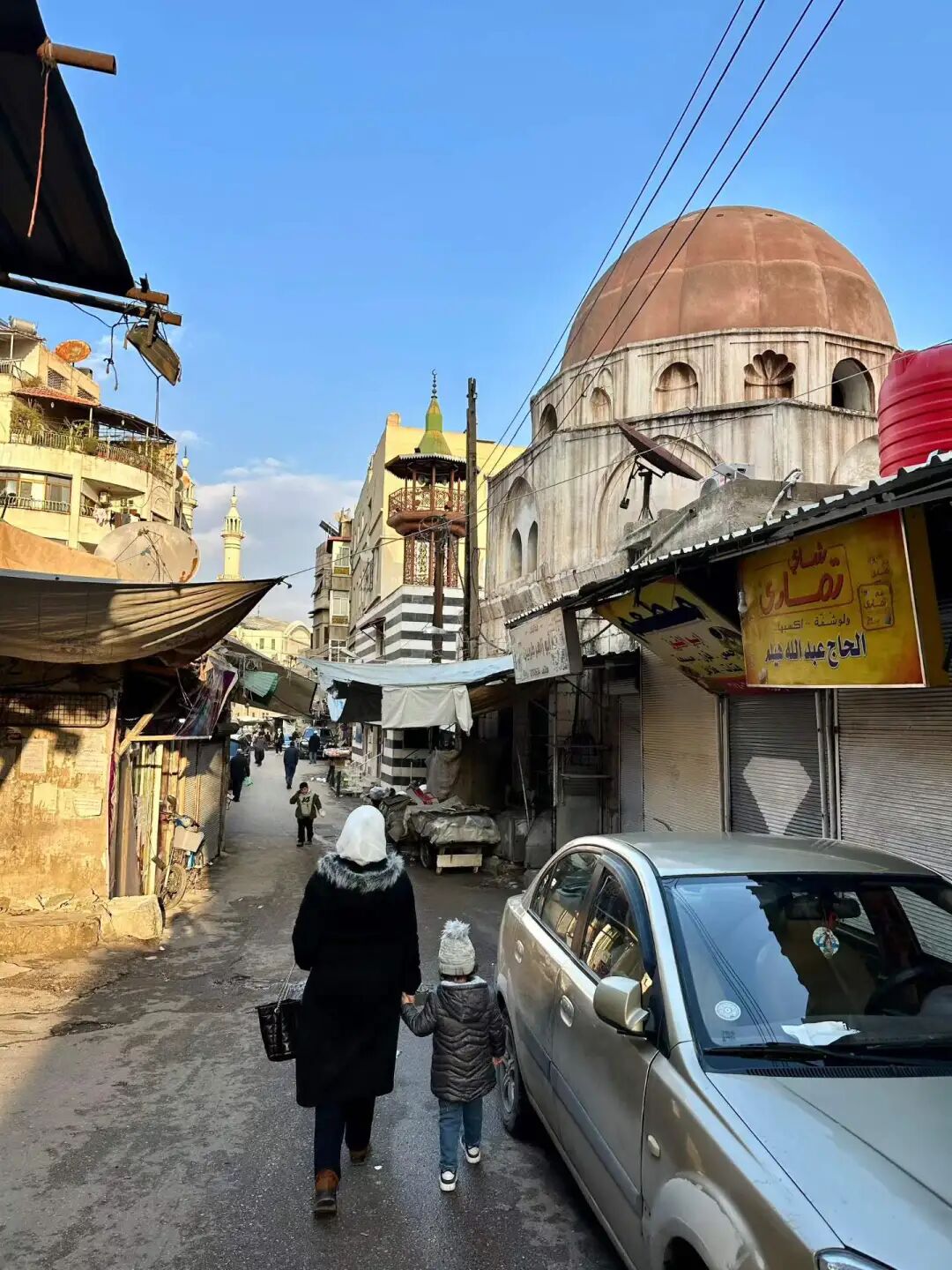
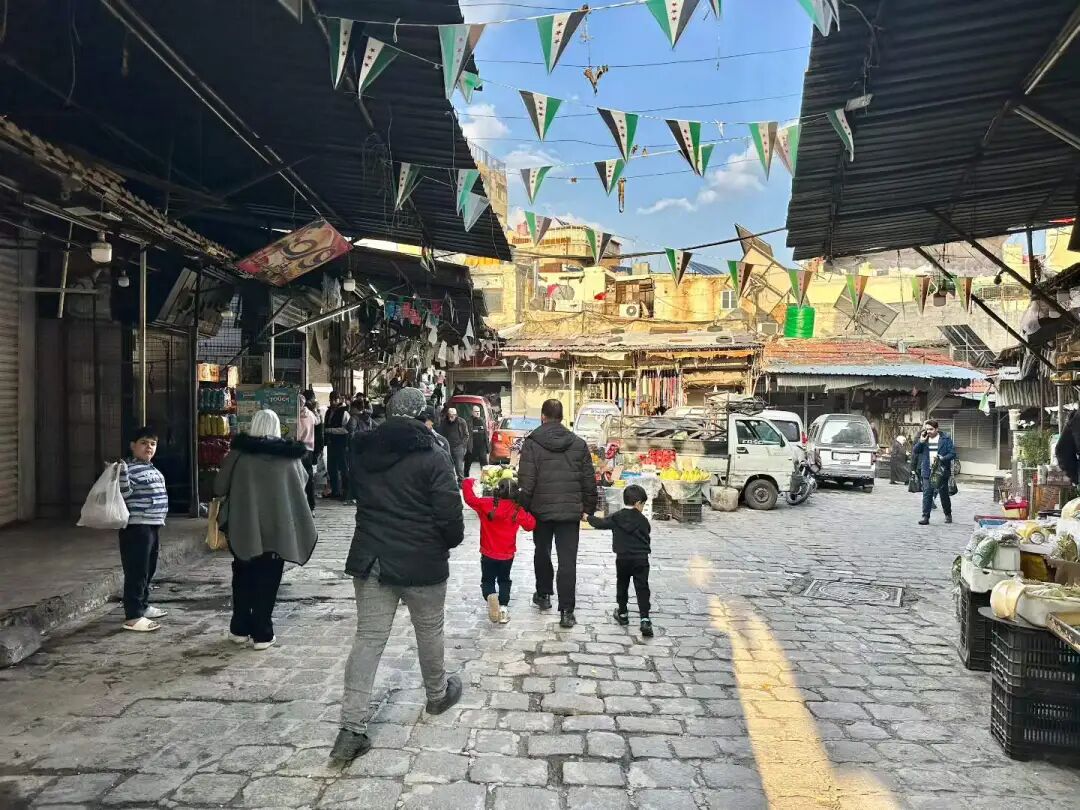
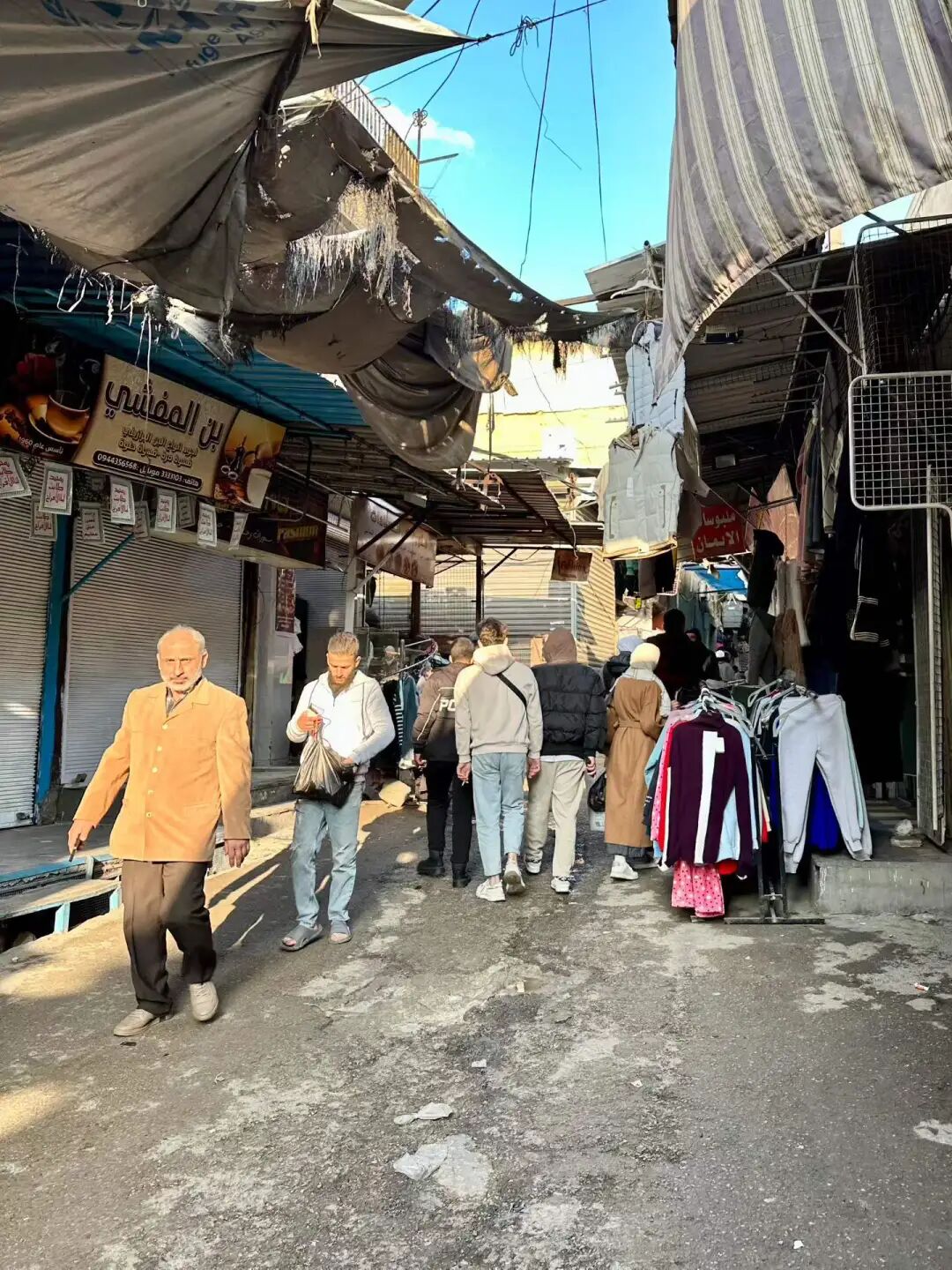
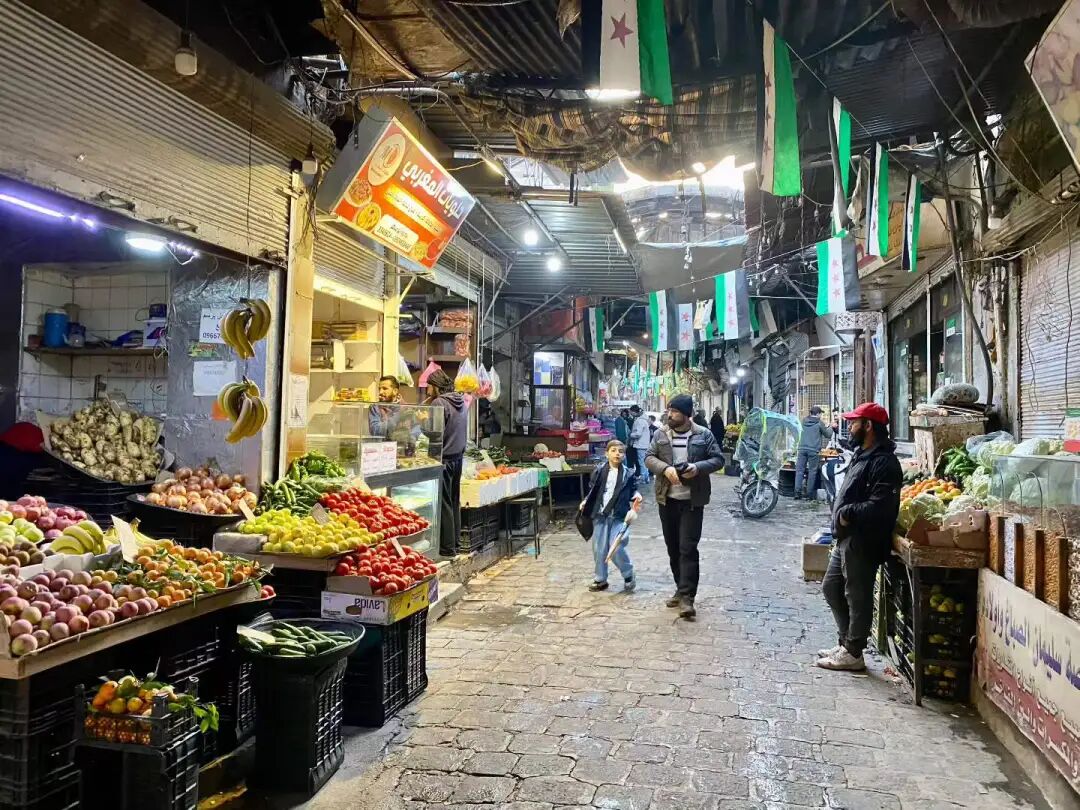
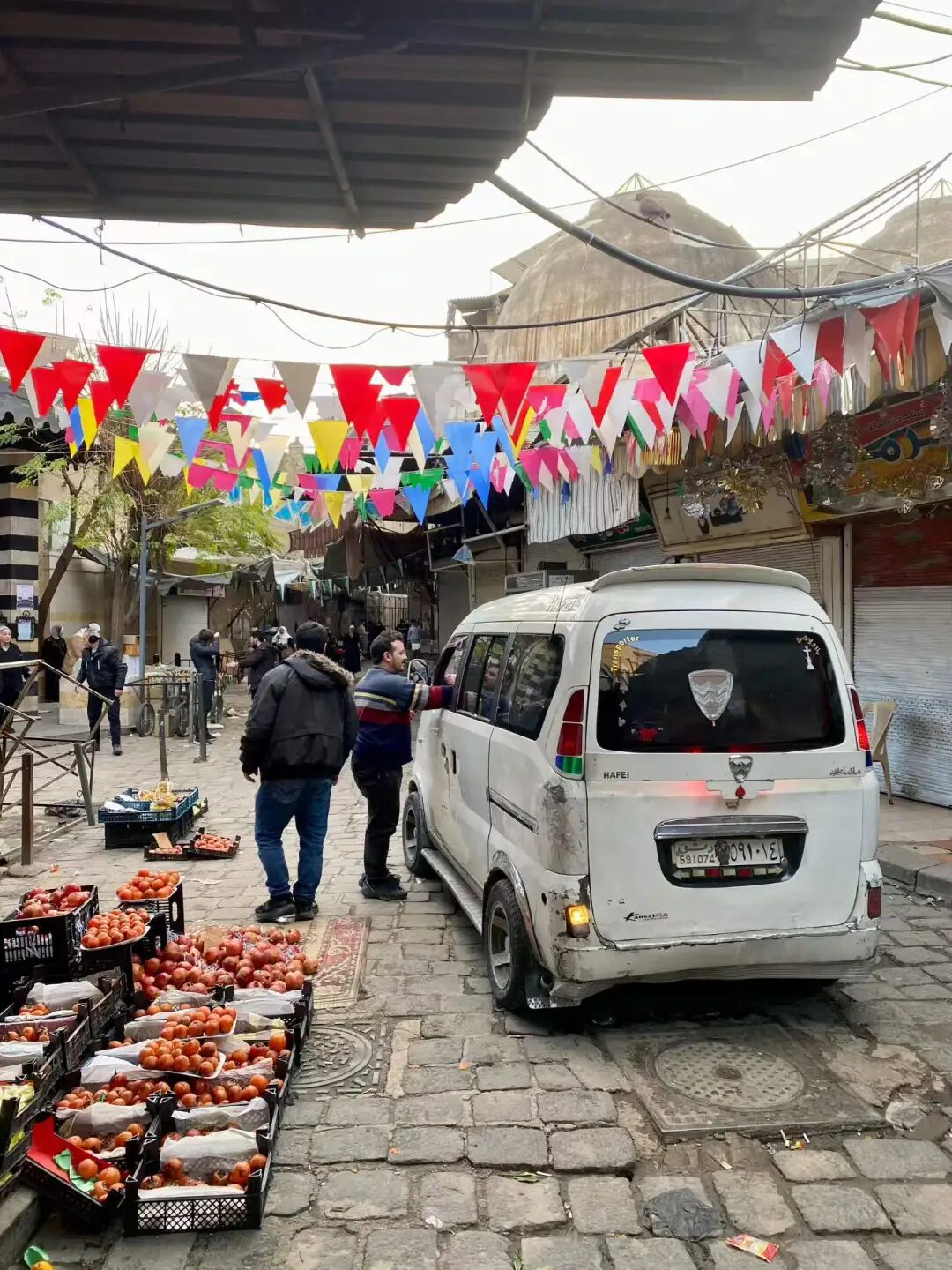
Juma Market, the main road of the Salihiya historic neighborhood in Damascus.
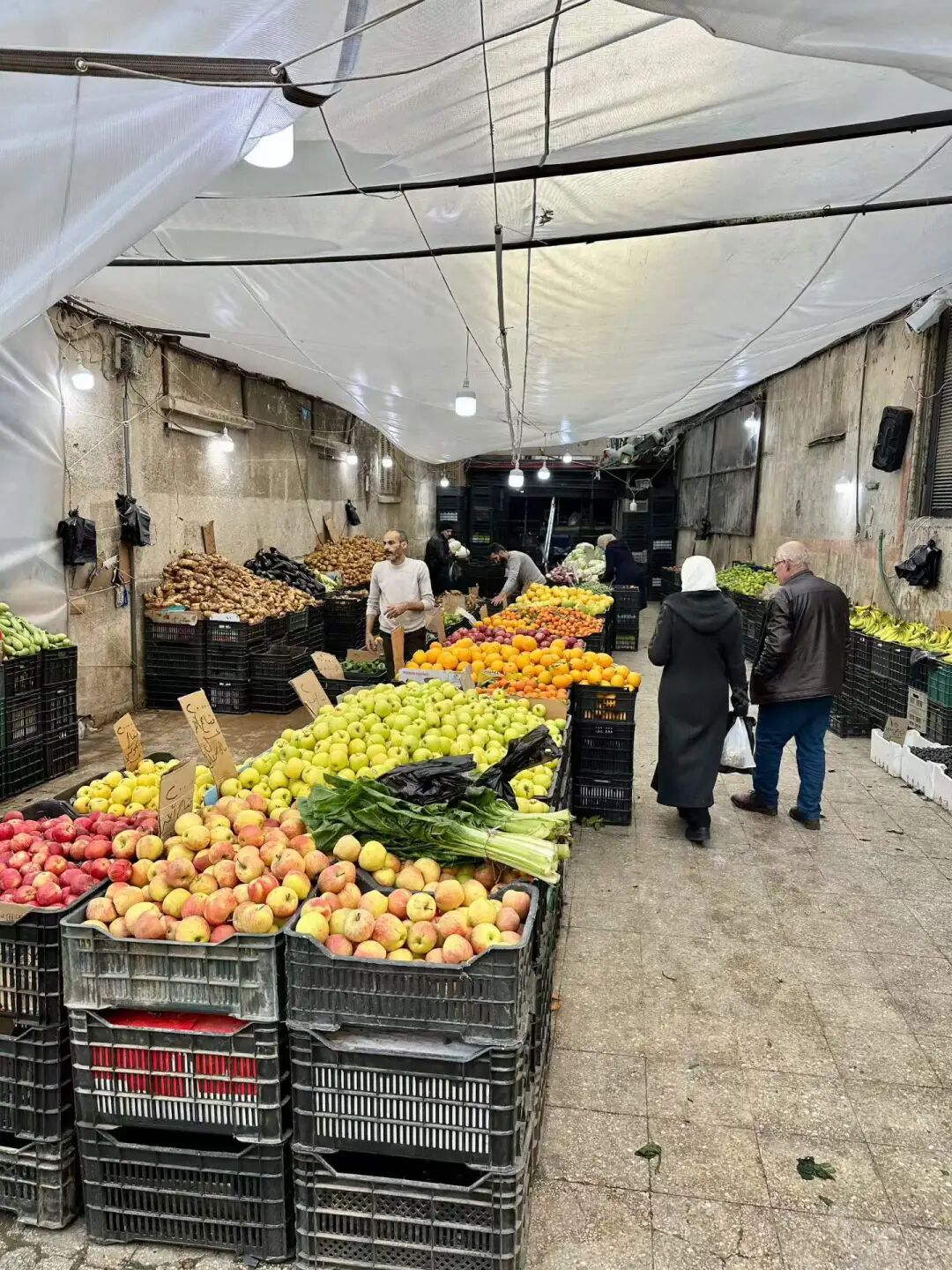
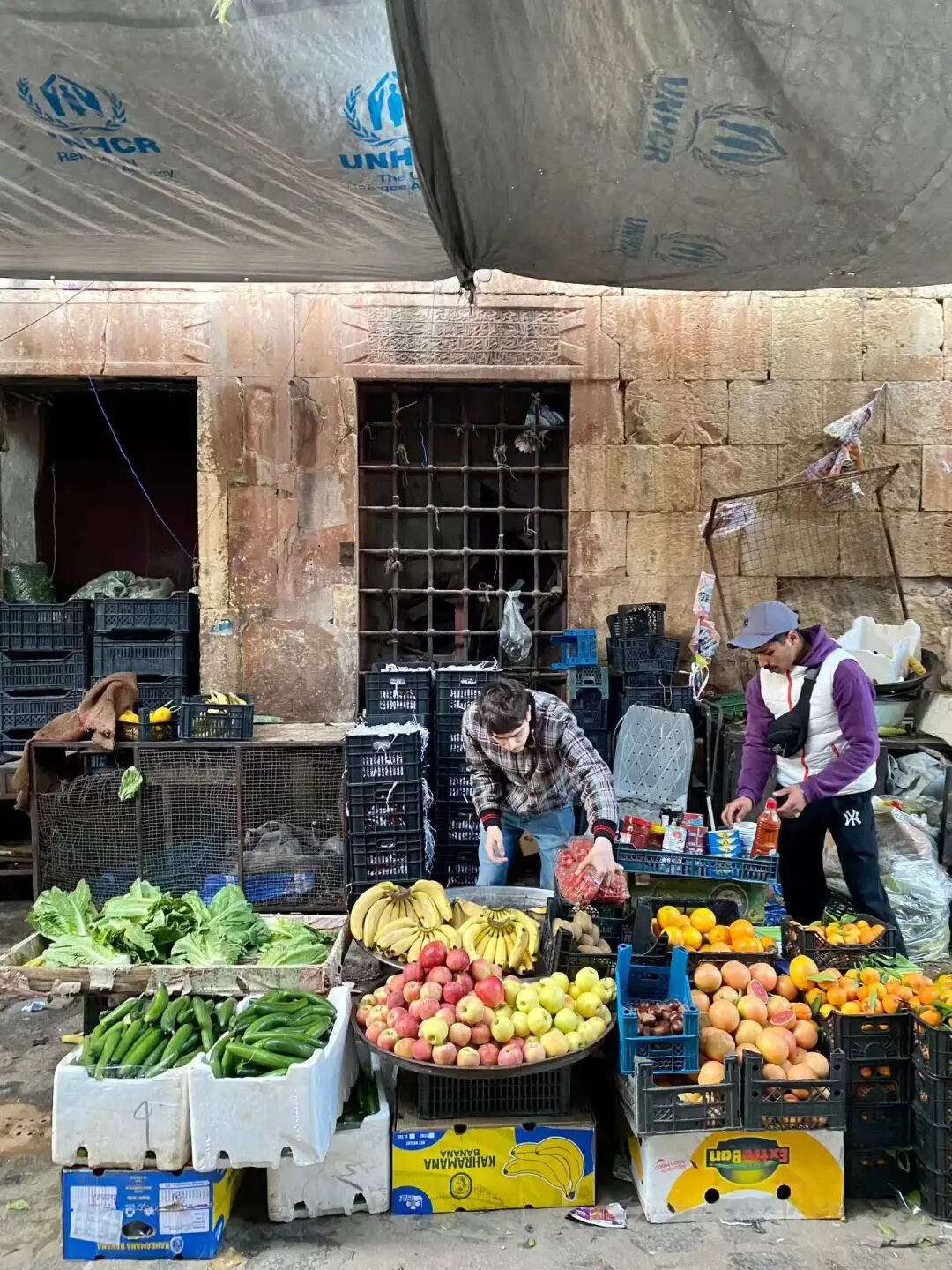
The market in Salihiya grew quickly during the Ayyubid dynasty as more people moved here from Jerusalem. The Juma Market in front of the gongbei of the Sufi sage Ibn Arabi only sold goods after Friday namaz at first, but it eventually became a permanent market while keeping the name Juma Market. It is still a great place for nearby residents to shop today.
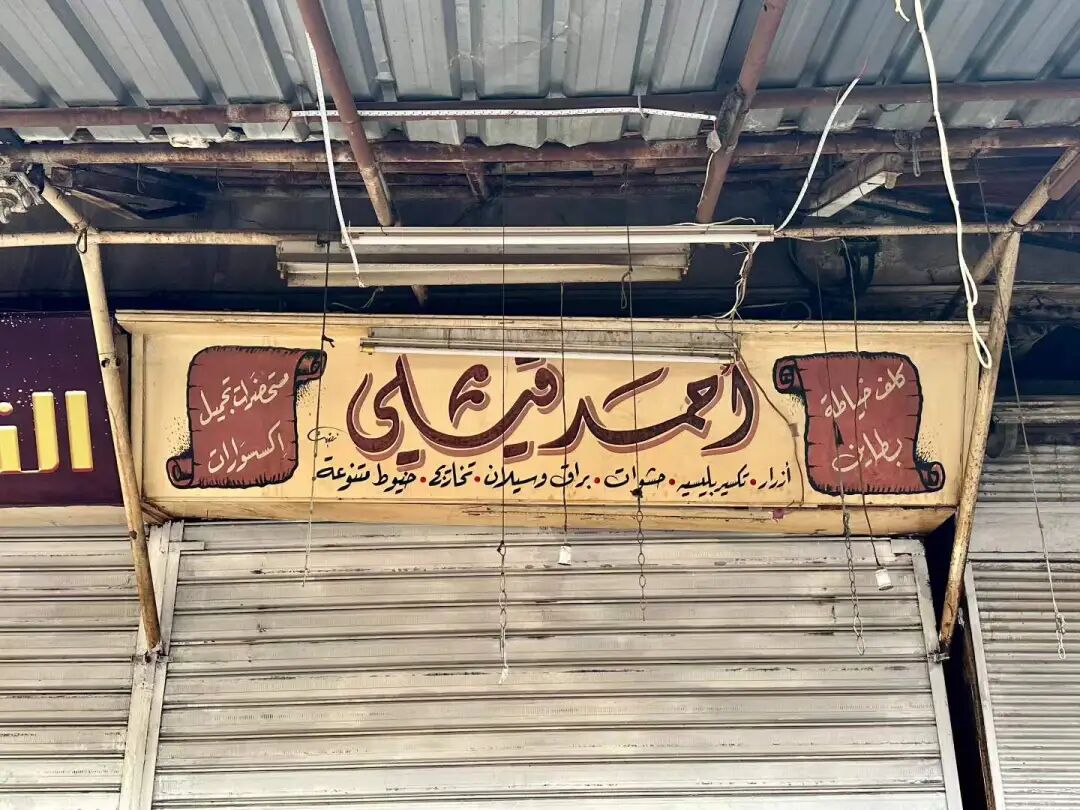
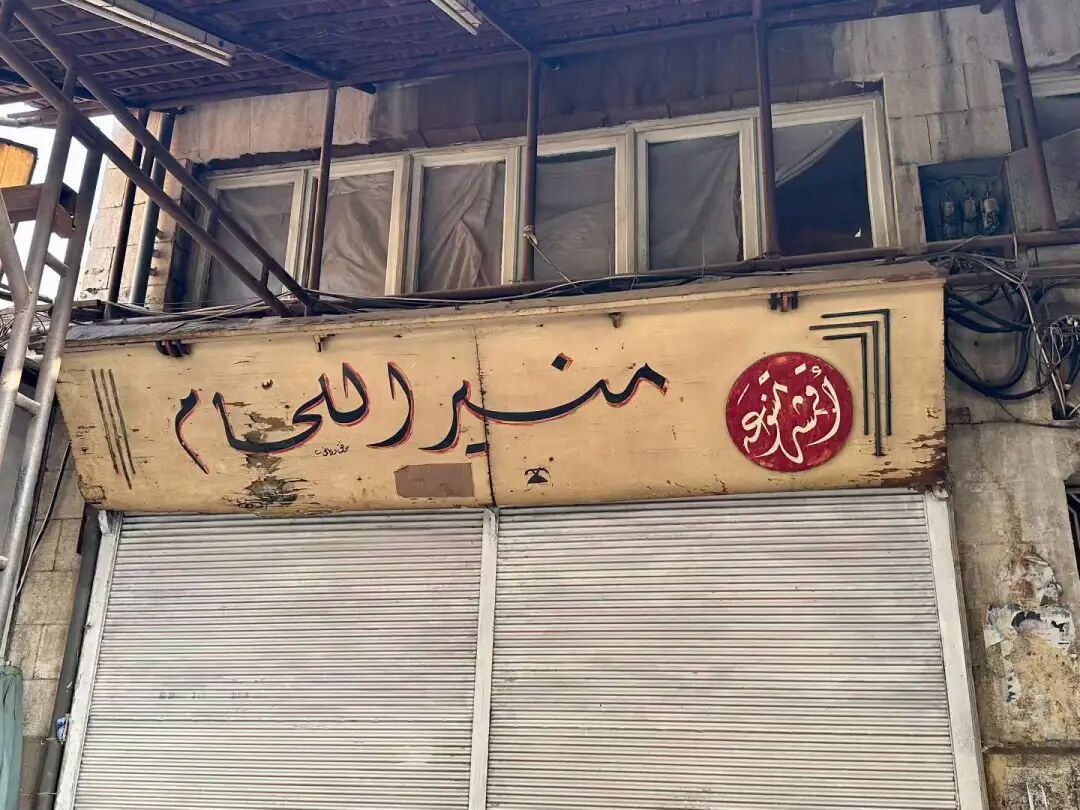
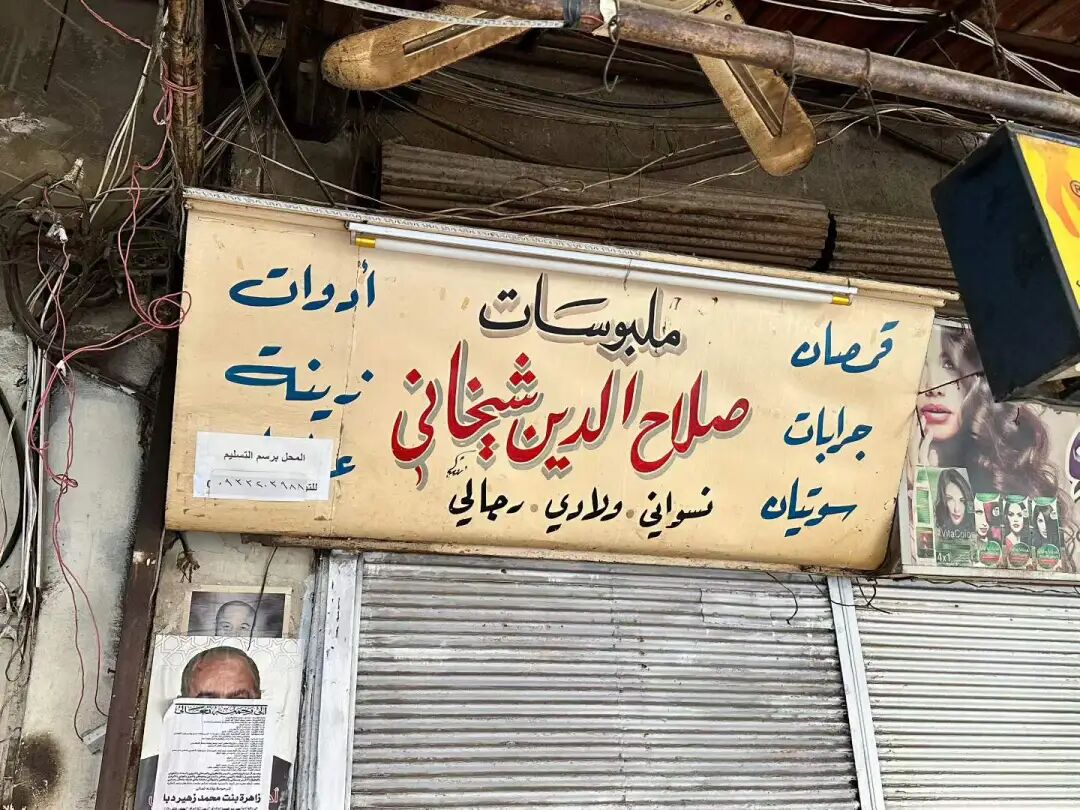
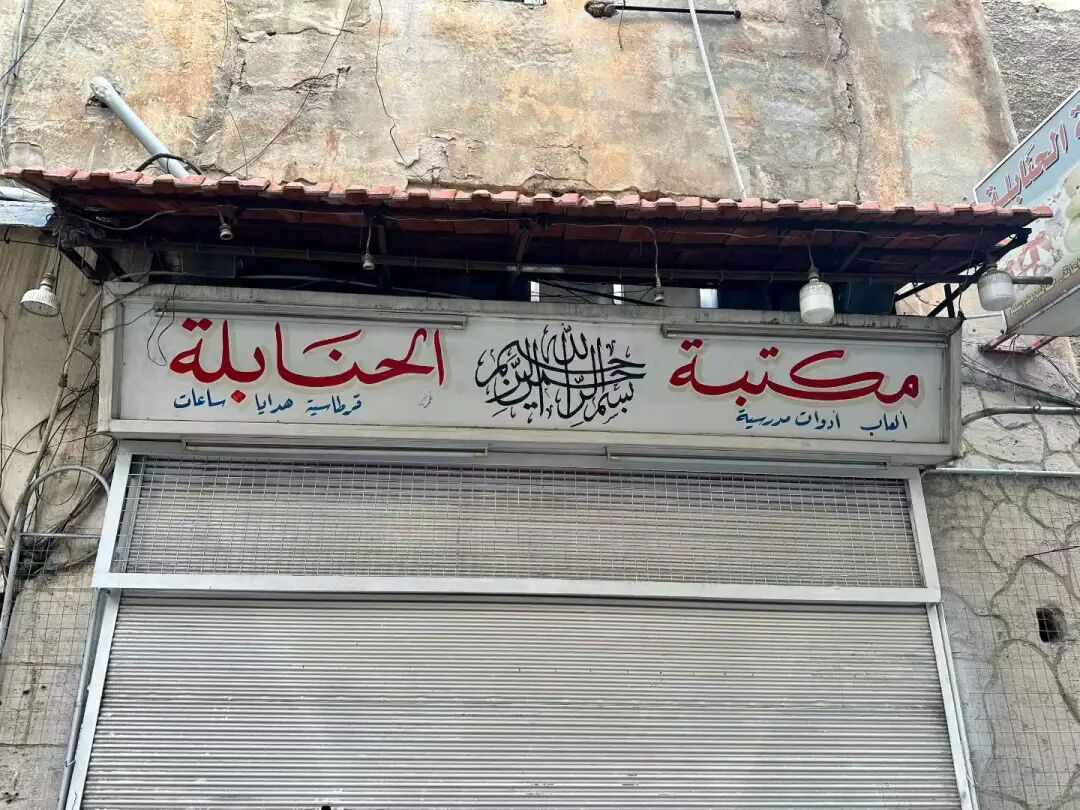
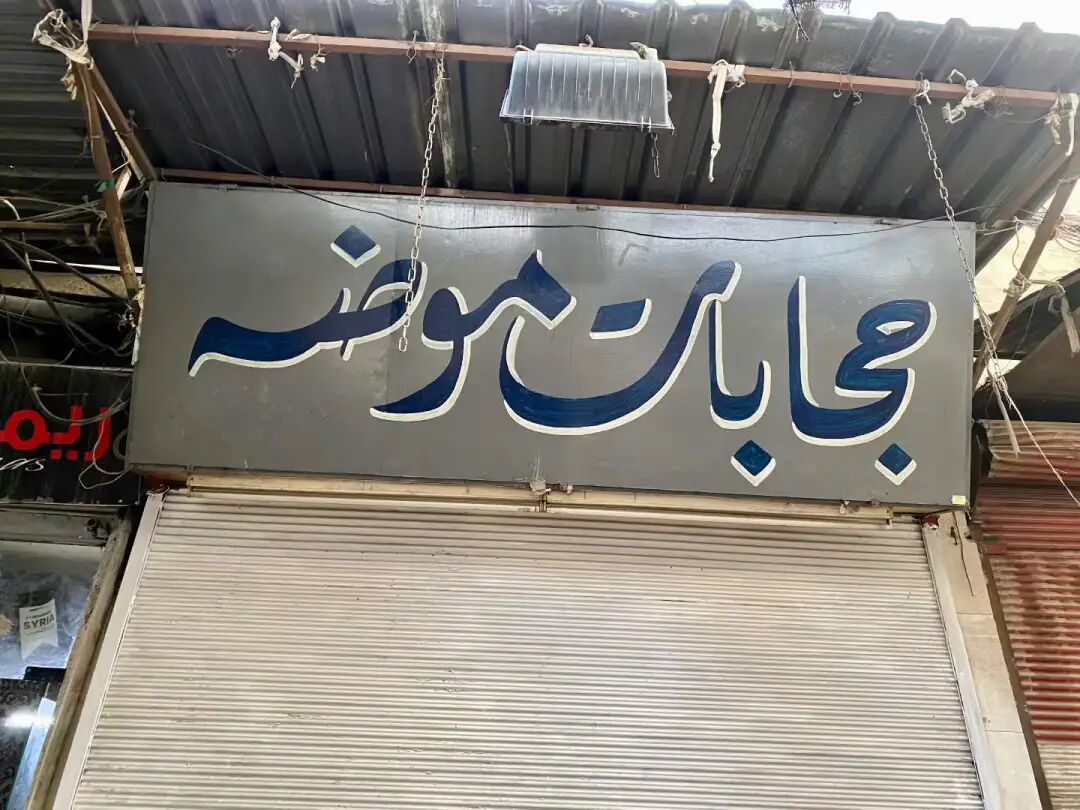
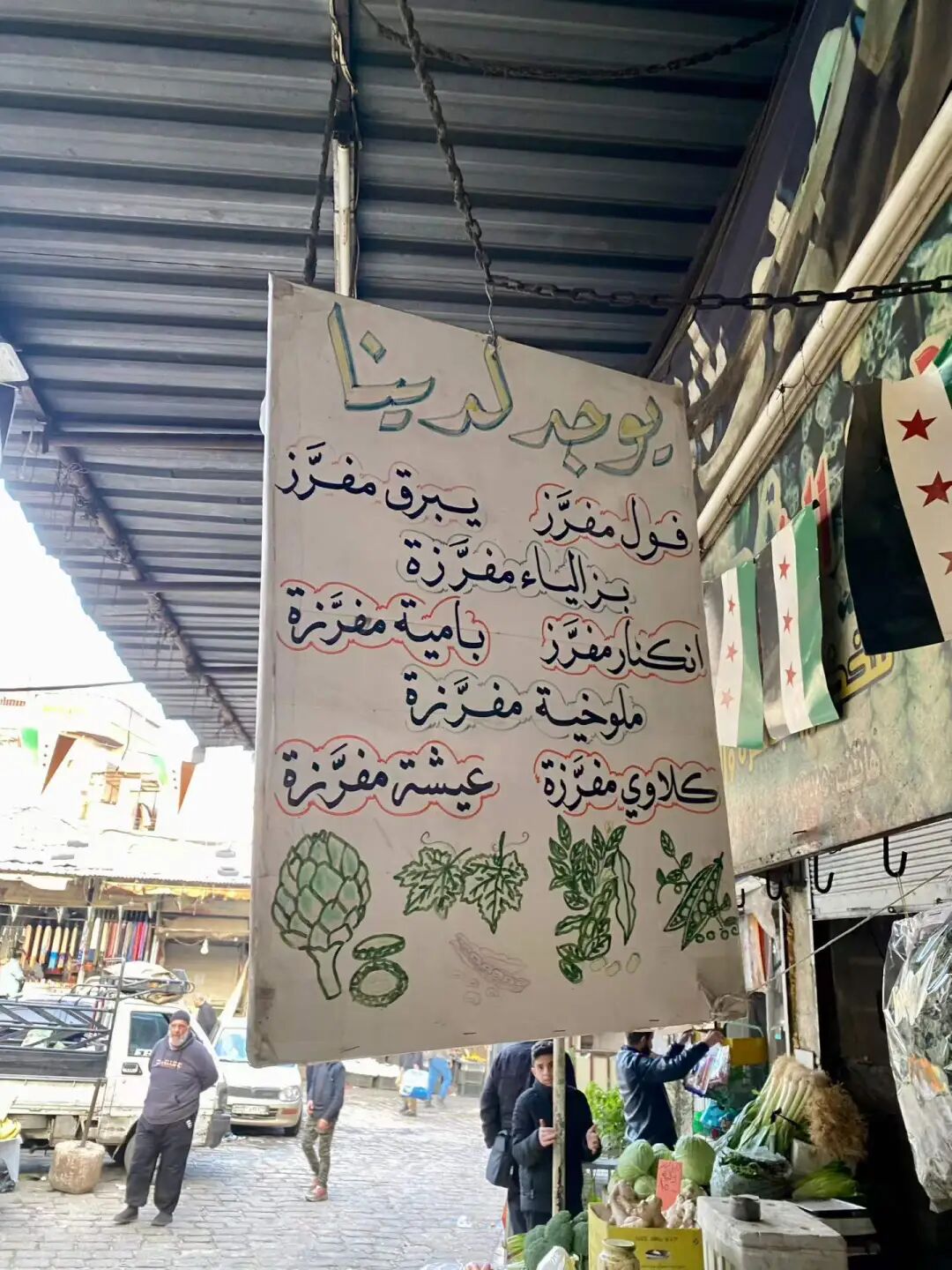
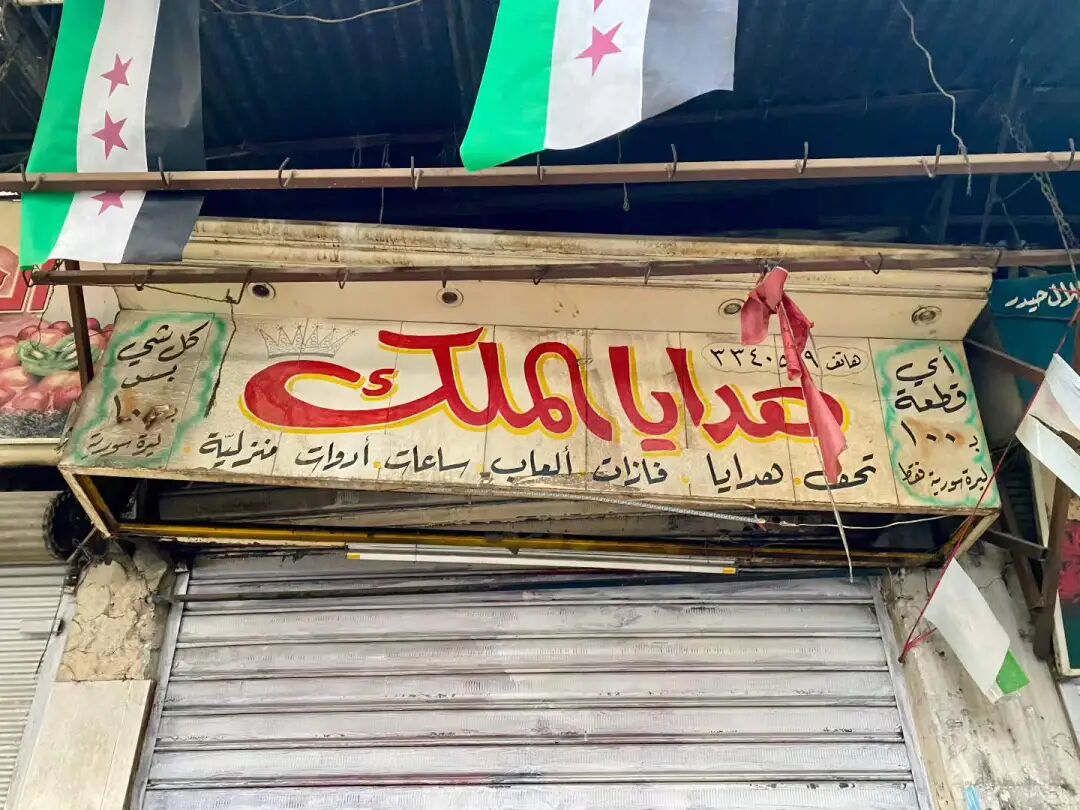
Handwritten signs at the market. view all
Summary: This Muslim history guide to Damascus follows Sufi sage Ibn Arabi, mosque-area travel, shrine history, and Islamic heritage from the original article.
This article summarizes the key points of visiting the Sufi sage Ibn Arabi in Damascus. It keeps the original paragraph and image order. It is for readers interested in Muslim life, Islamic culture, and Chinese Islamic writing. It also helps with searching for content on namaz, Hajj, and Ramadan.
Salihiyah, located at the foot of Mount Qasioun, is the most important historic district in Damascus outside the old city. Historic buildings from the Ayyubid, Mamluk, and Ottoman dynasties stand along both sides of the Friday market (Jumu'ah market). Some look plain from the outside but are hundreds of years old.
After the Crusaders captured Jerusalem in 1099, many scholars, jurists, and civilians fled to Damascus for refuge. In 1156, the famous Hanbali scholar Ibn Qudamah moved from the West Bank to Damascus to escape the Crusaders and later settled in Salihiyah. He once admired this land and said, 'This is a place of barakah (blessing).'
Saladin, the founder of the Ayyubid dynasty, wanted to provide a safe and stable environment for the scholars and immigrants who fled from Jerusalem to Damascus. Because Ibn Qudamah's home at the foot of Mount Qasioun in the north of the city had become an academic center for the Hanbali school, Saladin decided to build the Salihiyah community at the foot of Mount Qasioun.
The most famous landmark in Salihiyah is the Shaikh Mohiddin Mosque (Masjid Shaikh Mohiddin), which houses the tomb of the famous Sufi sage Ibn Arabi.
Ibn Arabi was born in 1165 in what is now southern Spain, which was then called Al-Andalus. Starting at age 28, he traveled throughout the Middle East for many years, performed Hajj multiple times, and lived in Tunisia, Morocco, and Mecca. At age 58, he finally chose to settle in Damascus to focus on teaching and writing. He passed away in Damascus in 1240 at the age of 75. After Ibn Arabi passed away, his works were translated into Persian, Turkish, and Urdu. They had a great influence on the entire Muslim world, and he is known as a founder of the development of Sufism.
The shrine (gongbei) of Ibn Arabi was originally quite small. In 1518, Ottoman Sultan Selim I ordered its reconstruction during his visit to Damascus, which showed how much the Ottoman Empire valued Sufis at the time. After it was built, the shrine was first named the Selimiye Mosque after the Sultan. Because Ibn Arabi’s title, Muhyiddin, means 'reviver of the faith,' the mosque is also known as the Sheikh Muhyiddin Mosque. On the first Friday (Jumu'ah) of Ramadan after the mosque was finished, the Sultan personally visited to attend prayers and gifted the mosque a pair of silver socks.
The mosque blends architectural styles from the late Mamluk and early Ottoman periods. The shrine is located below the mosque, and you enter it by taking the stairs on the east side of the courtyard. Inside the shrine, besides Ibn Arabi himself, lie his two sons and his followers.
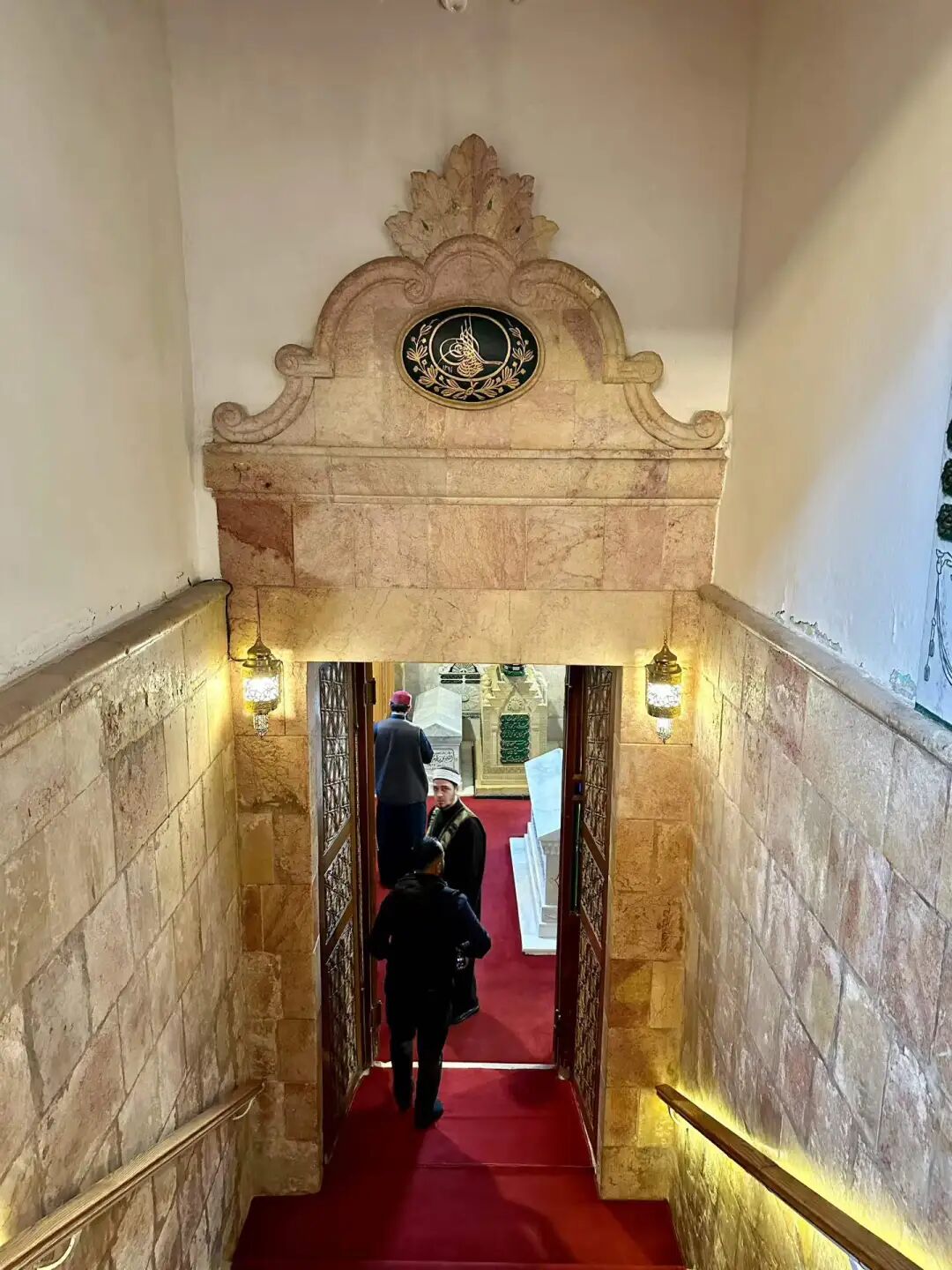
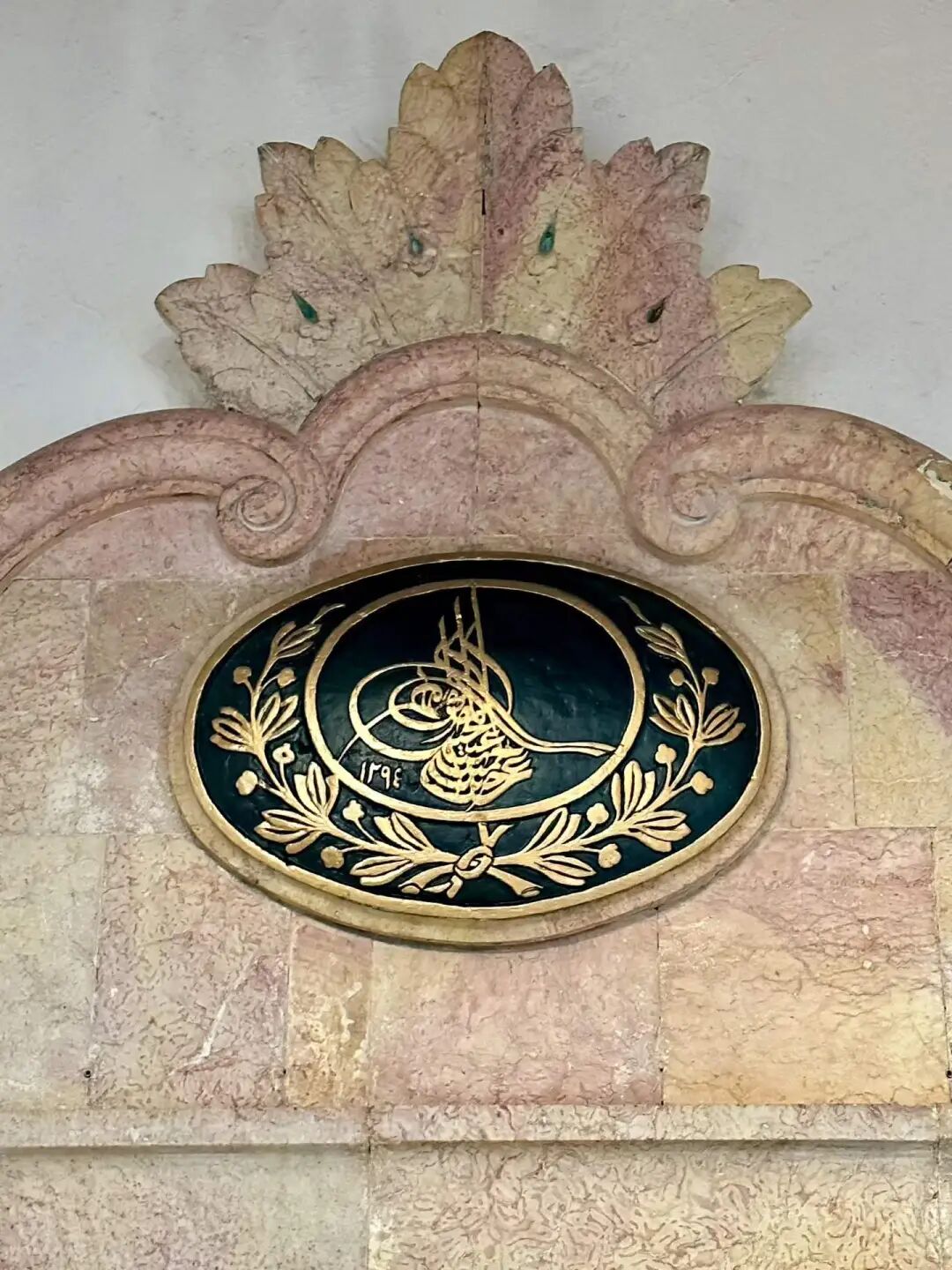
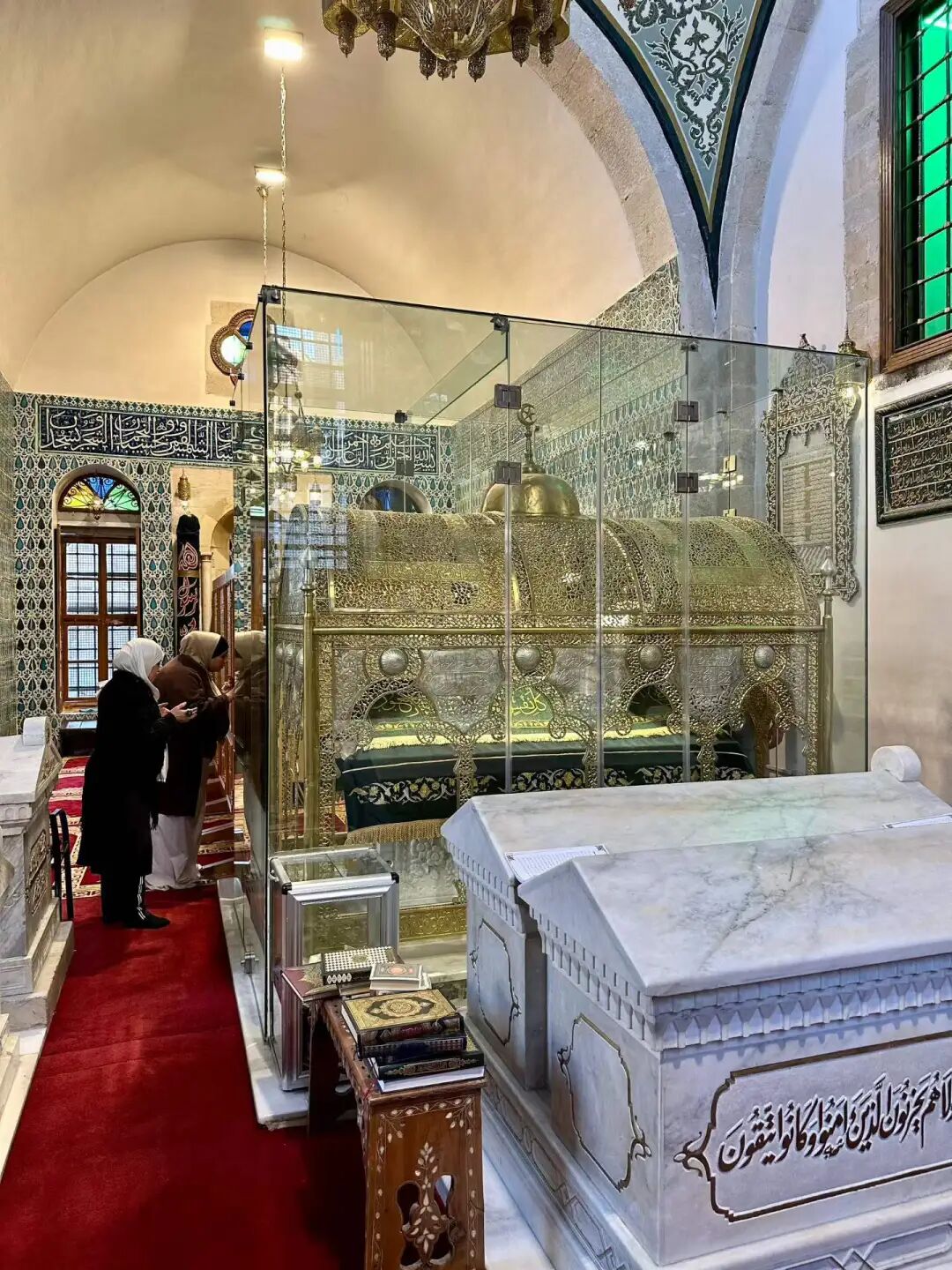
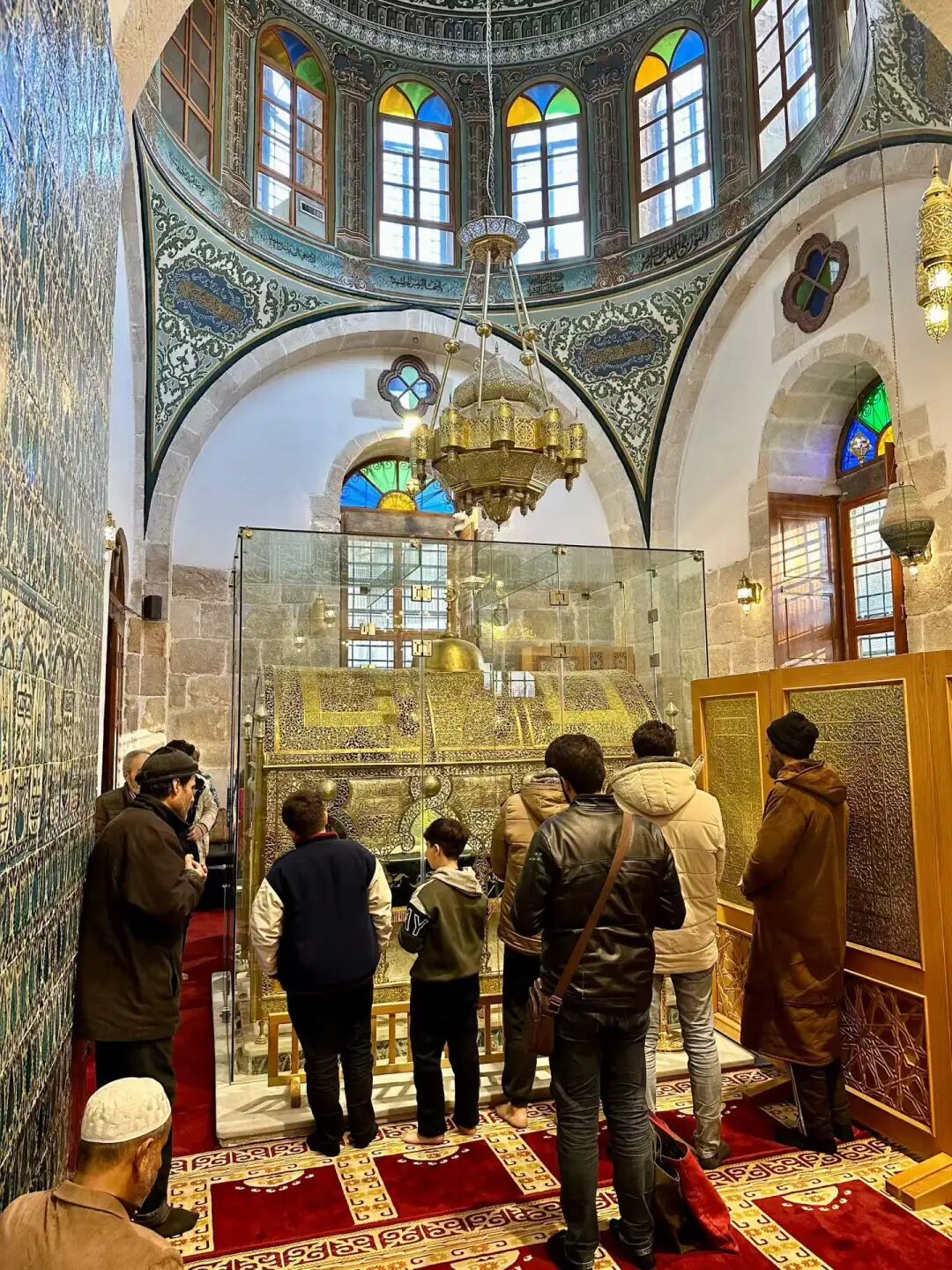
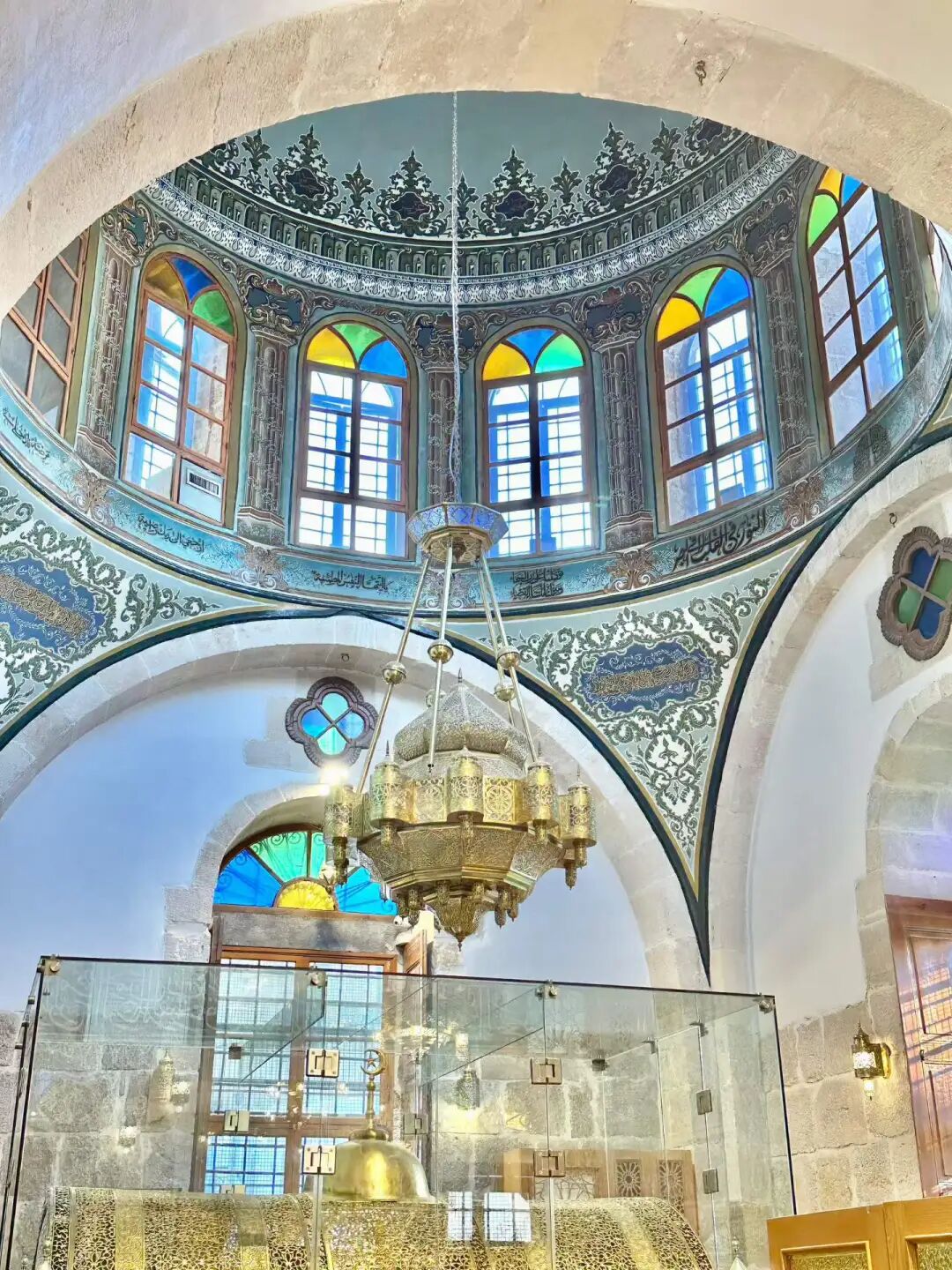
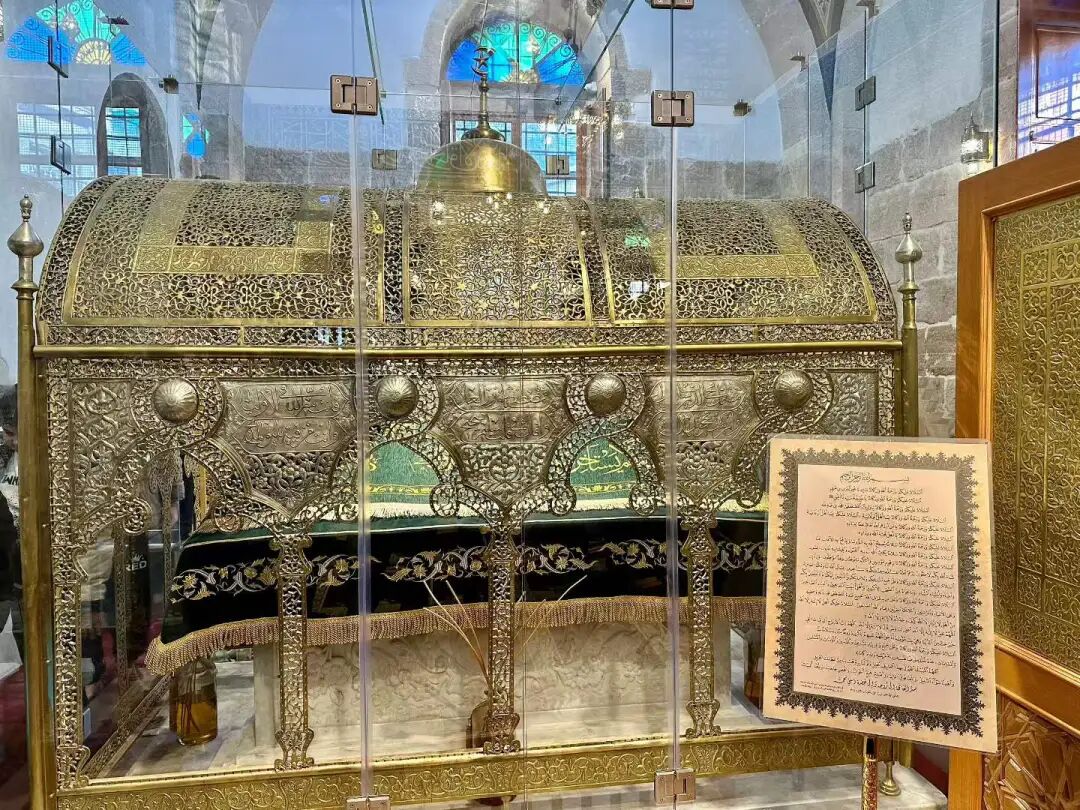
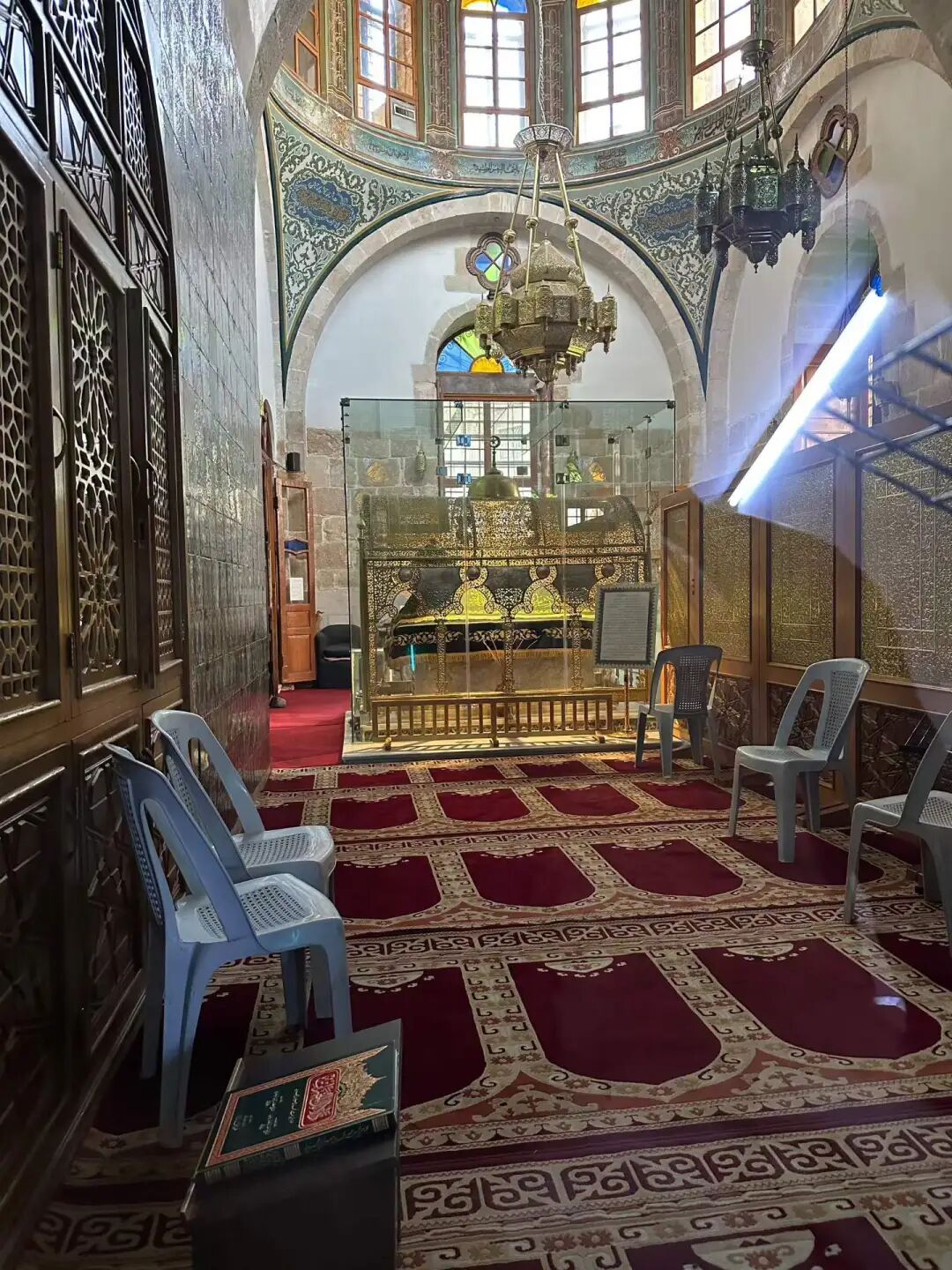
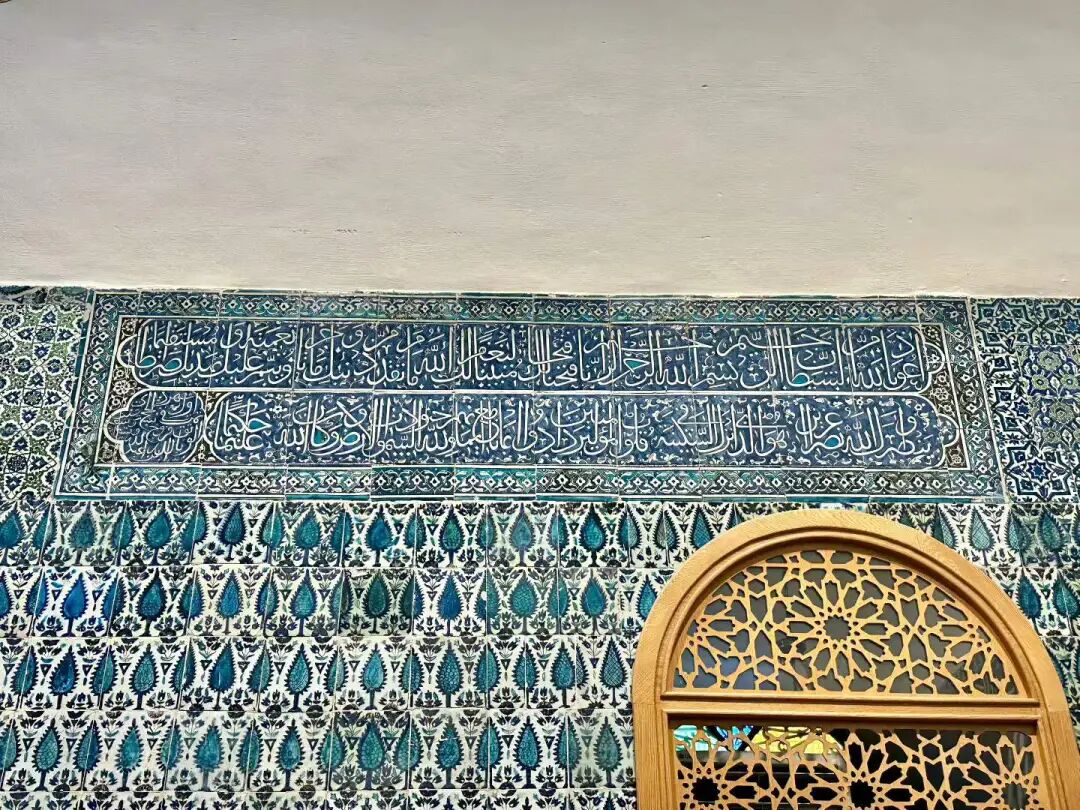
The tiles on the walls of the shrine were laid in 1760.
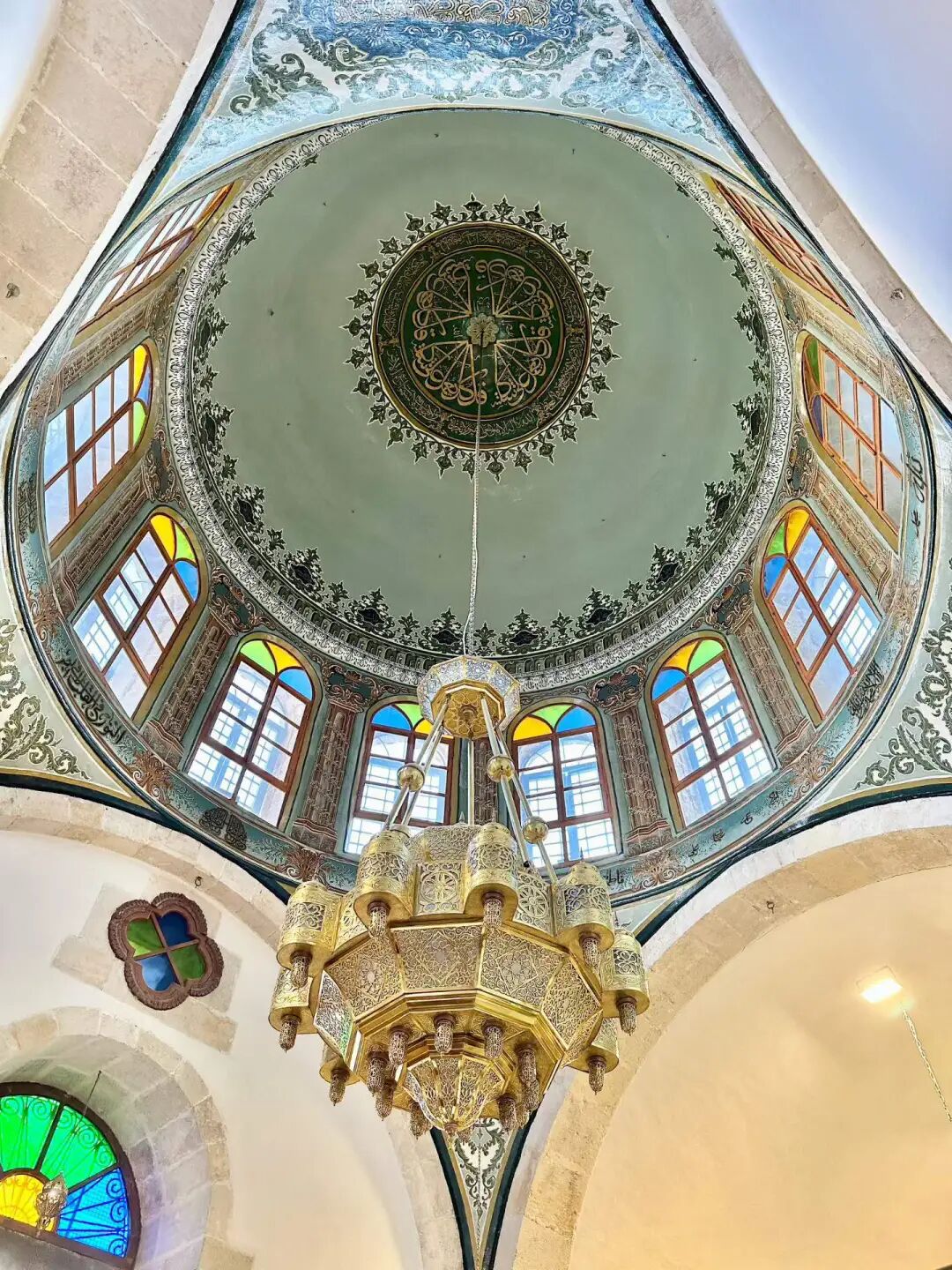
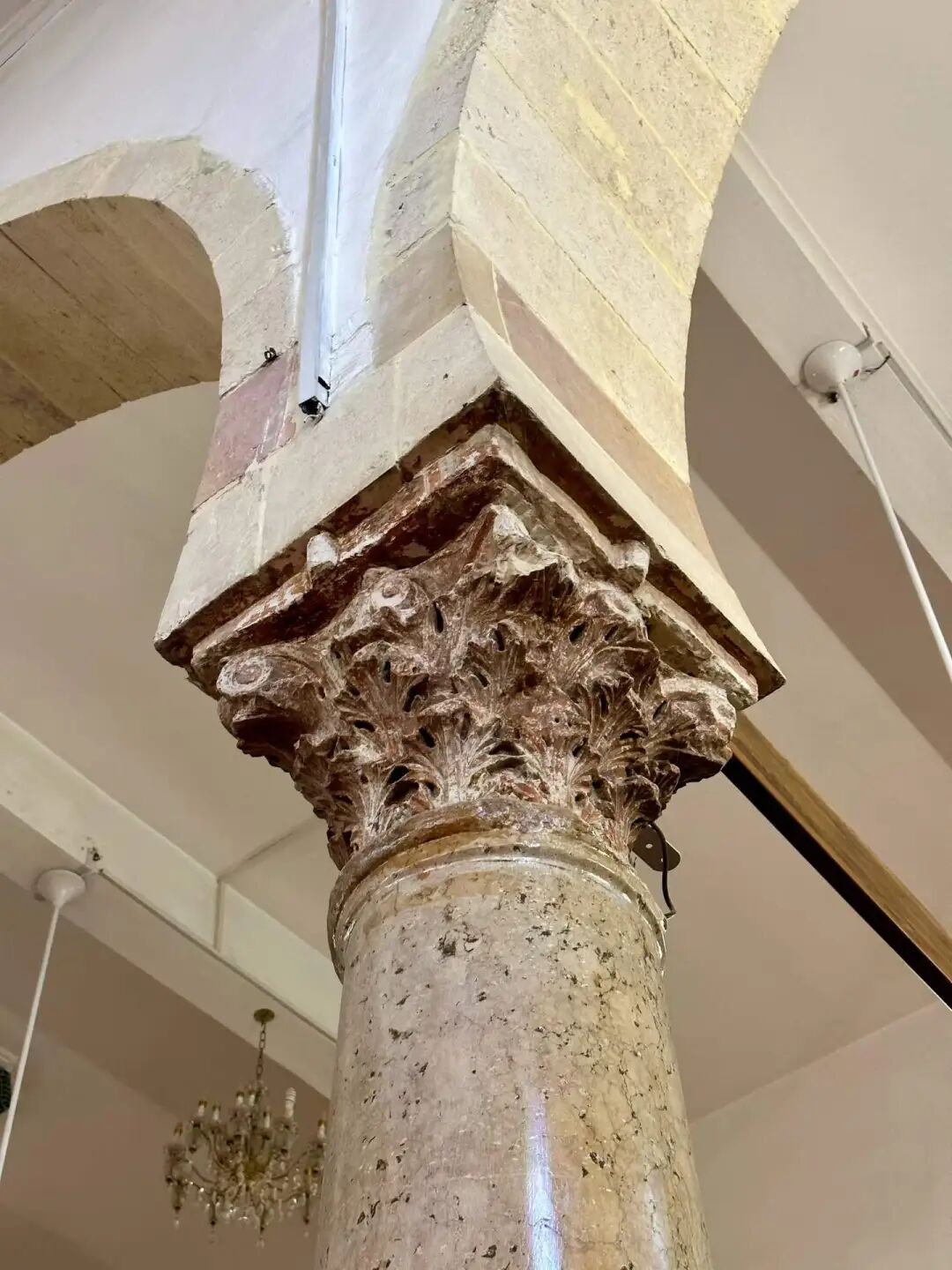
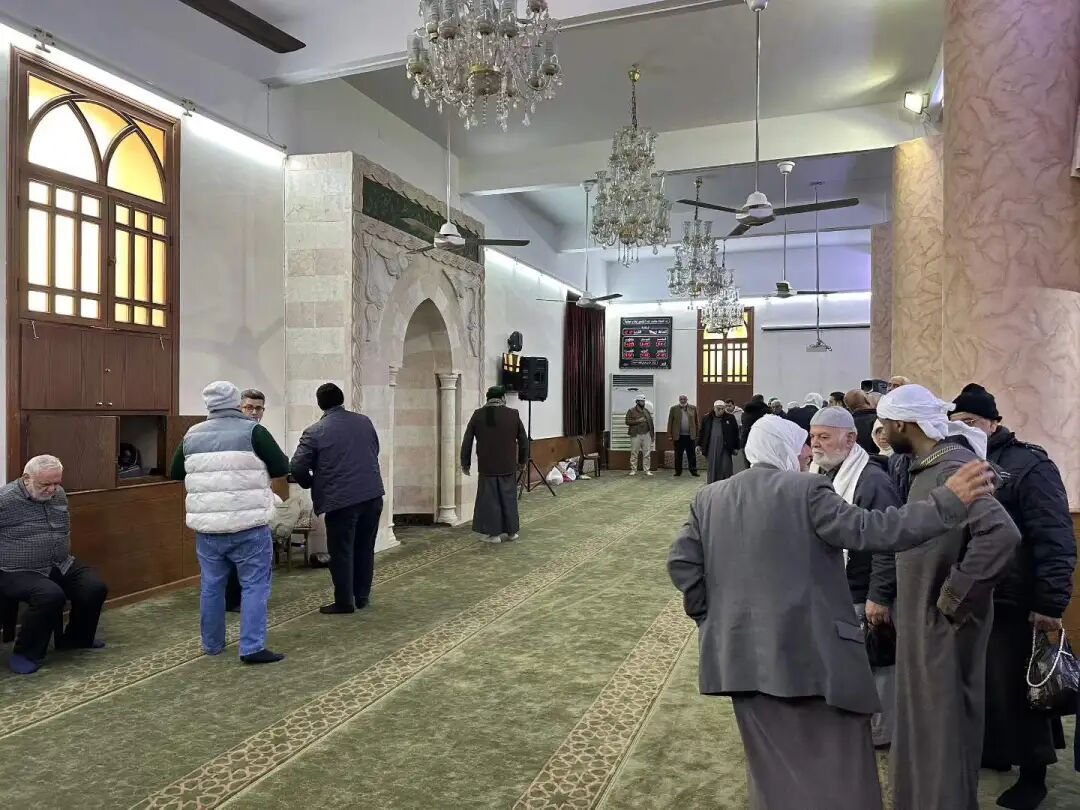
The Sheikh Muhyiddin Mosque follows a traditional Damascus layout, with a courtyard surrounding the front of the main prayer hall and an Ottoman-style minaret built above the main gate. The walls are covered in yellow and white marble, and there is a Damascus-style pool in the middle of the courtyard. The wall decorations mix Ottoman and Mamluk styles, and the Corinthian capitals on the stone pillars of the main hall feature beautiful carvings. The two large candlesticks in front of the mihrab are also very characteristic of the Ottoman style.
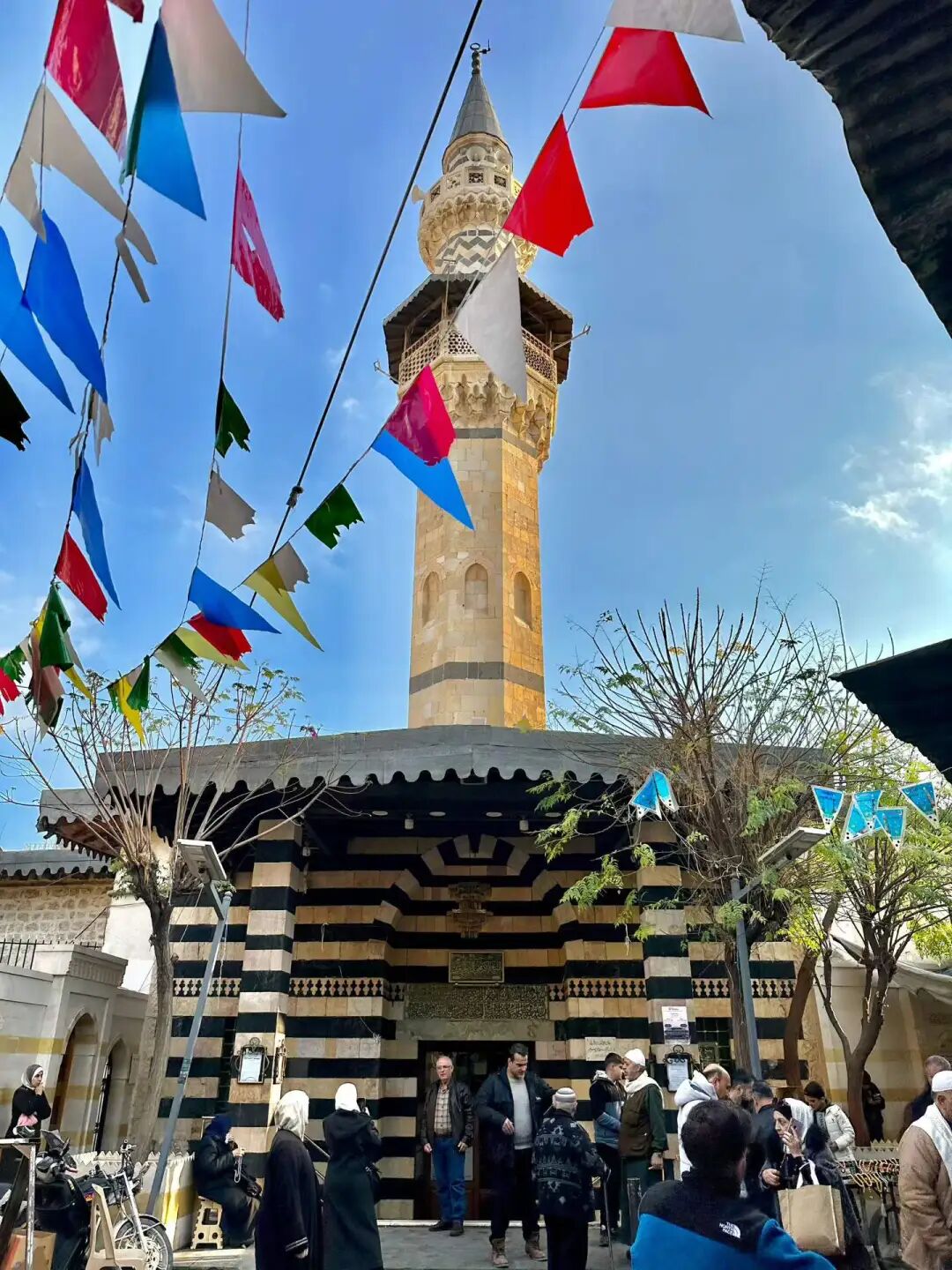
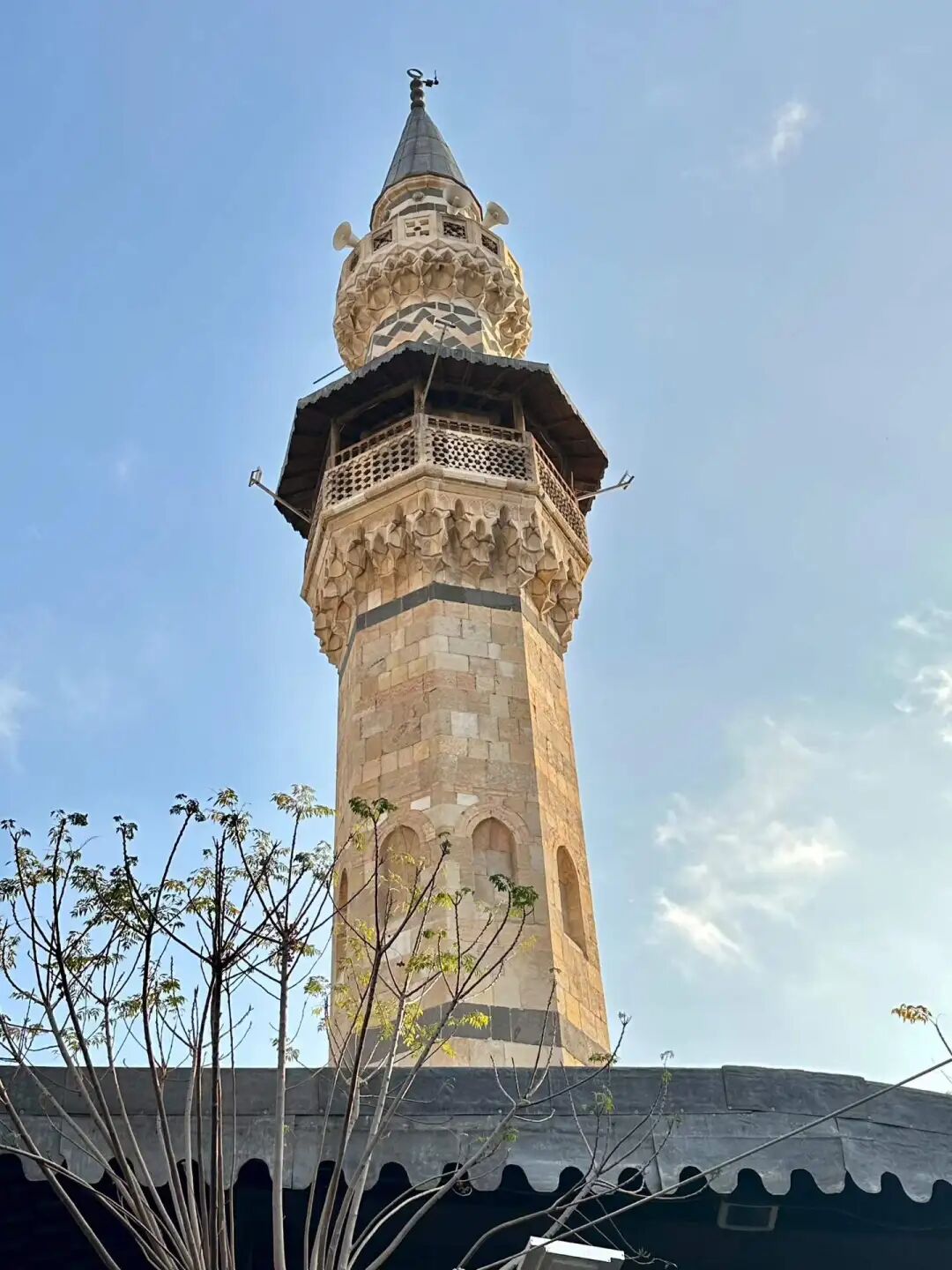
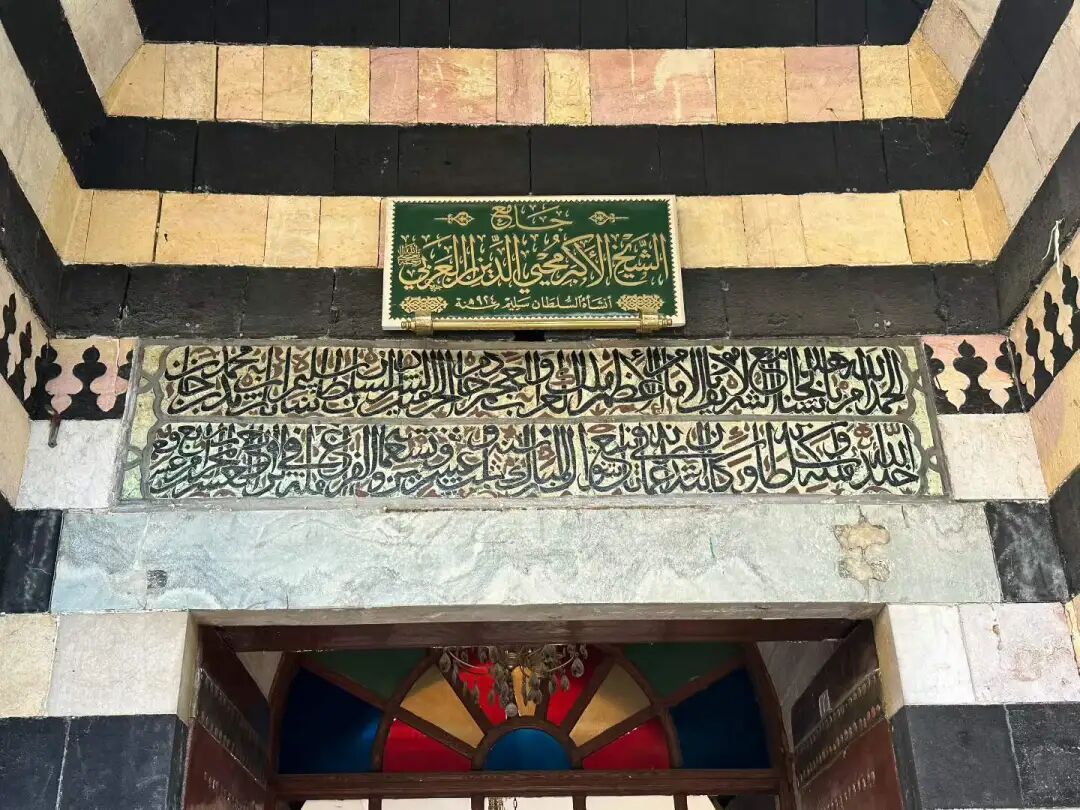
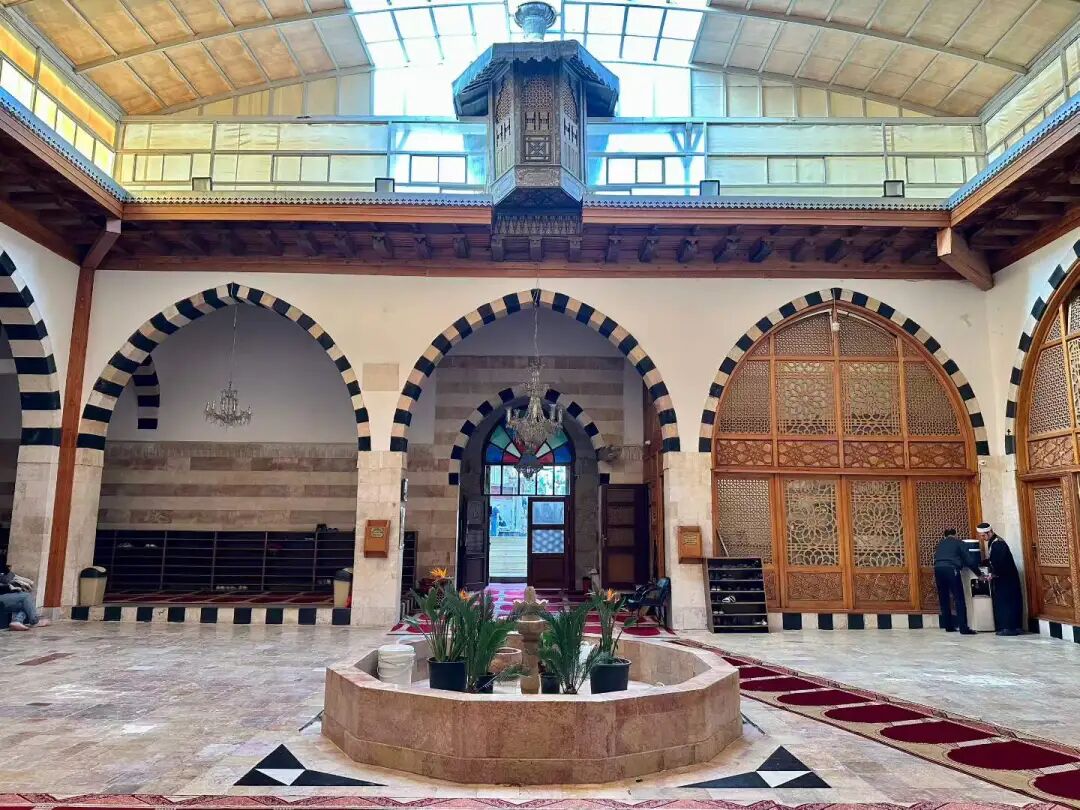
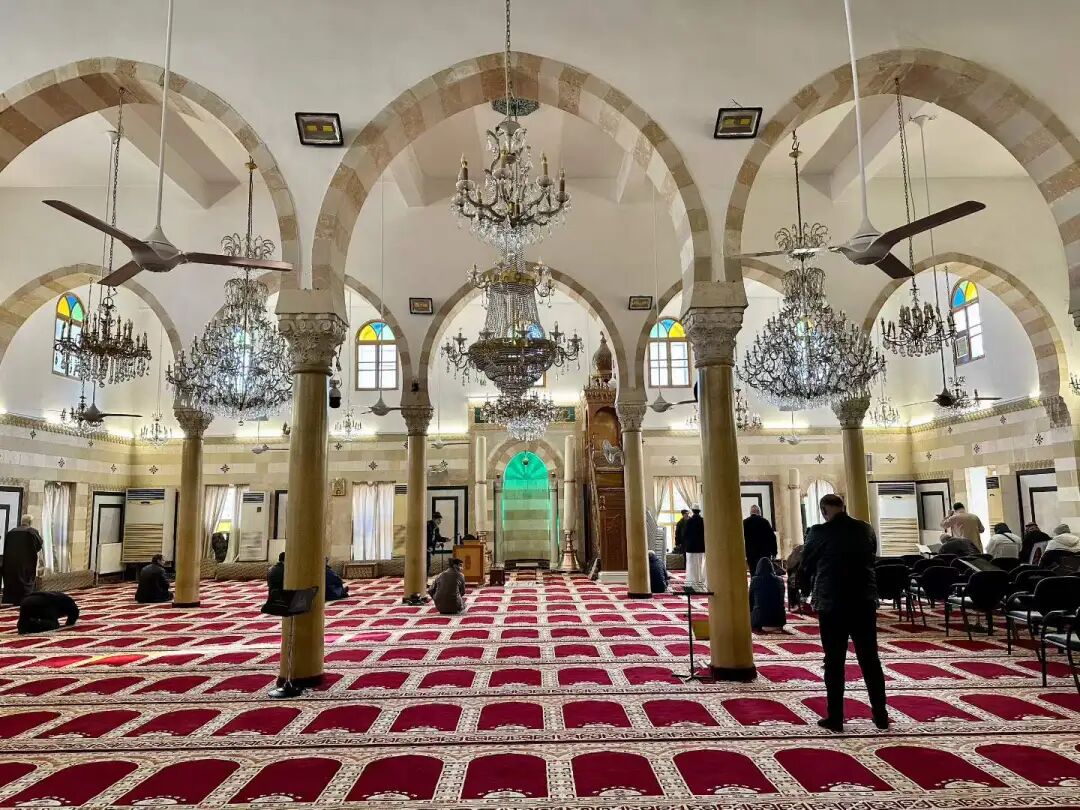
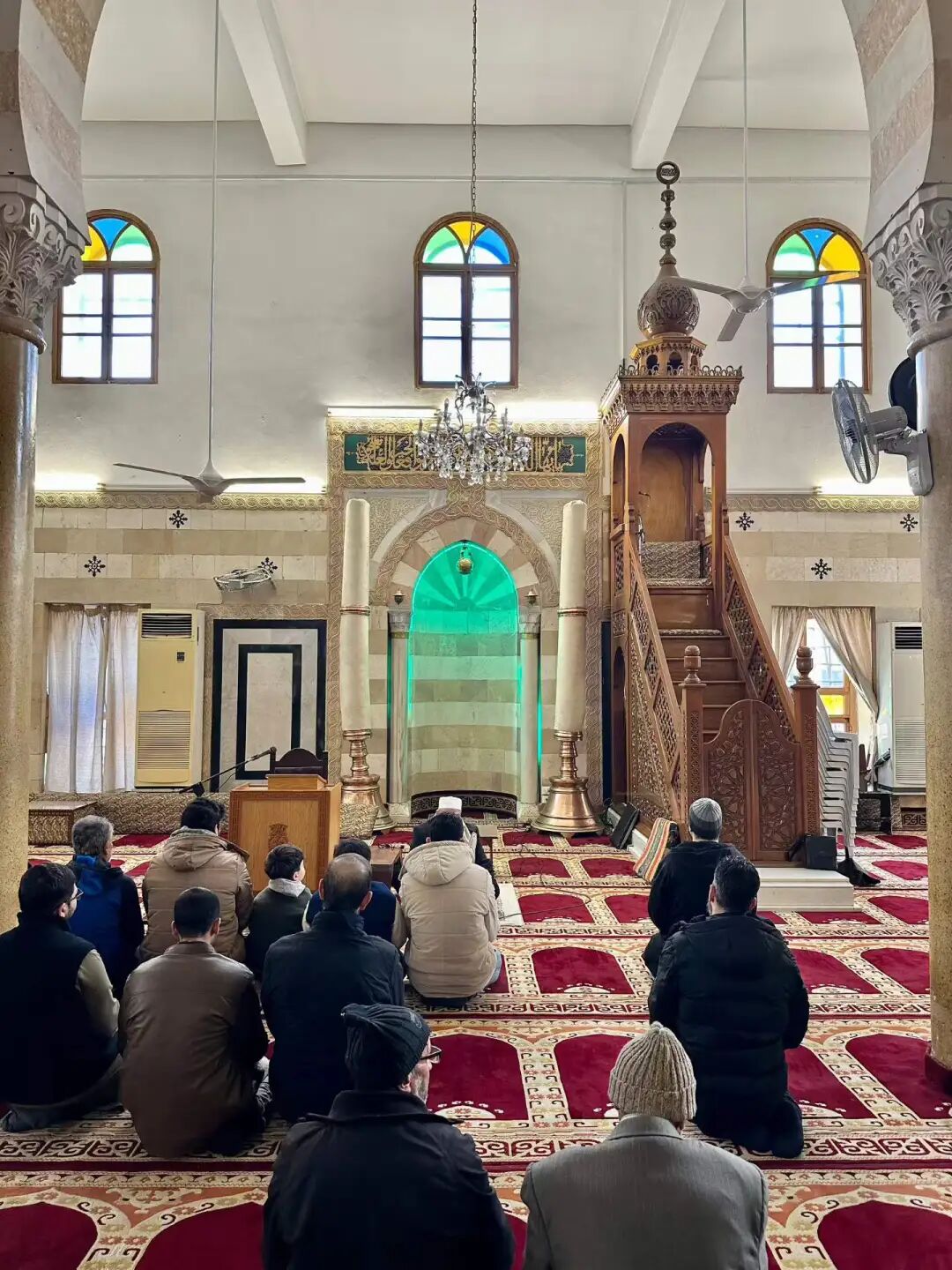
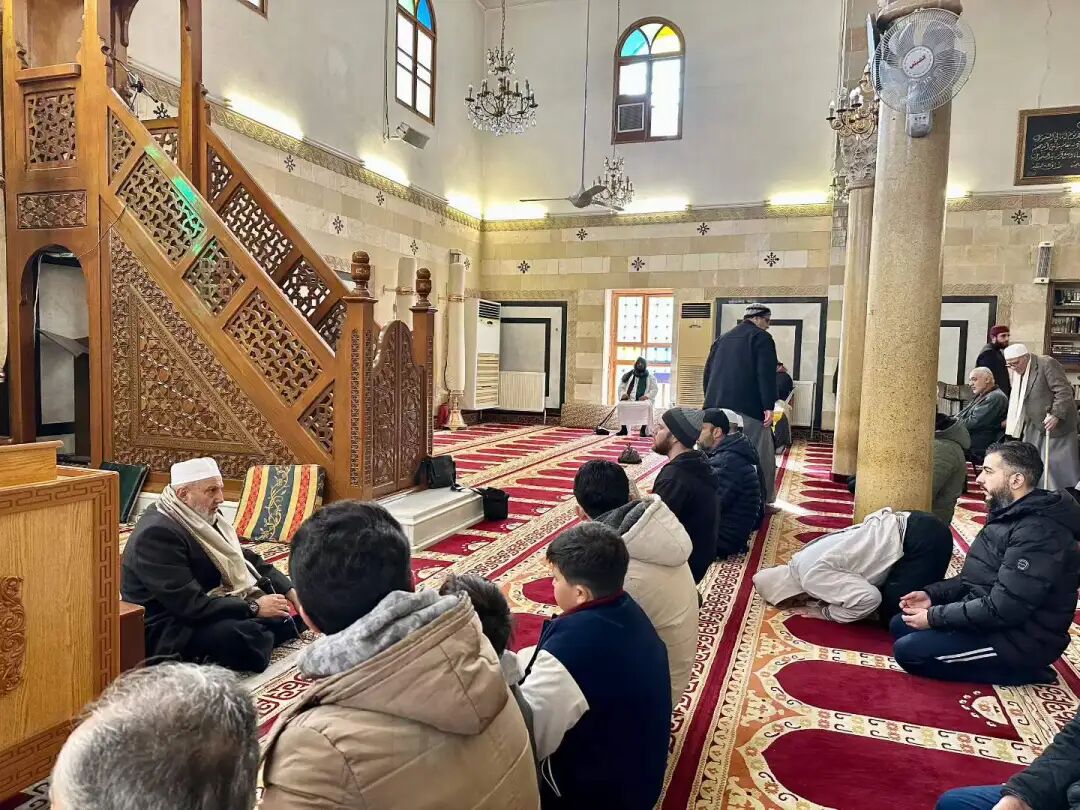
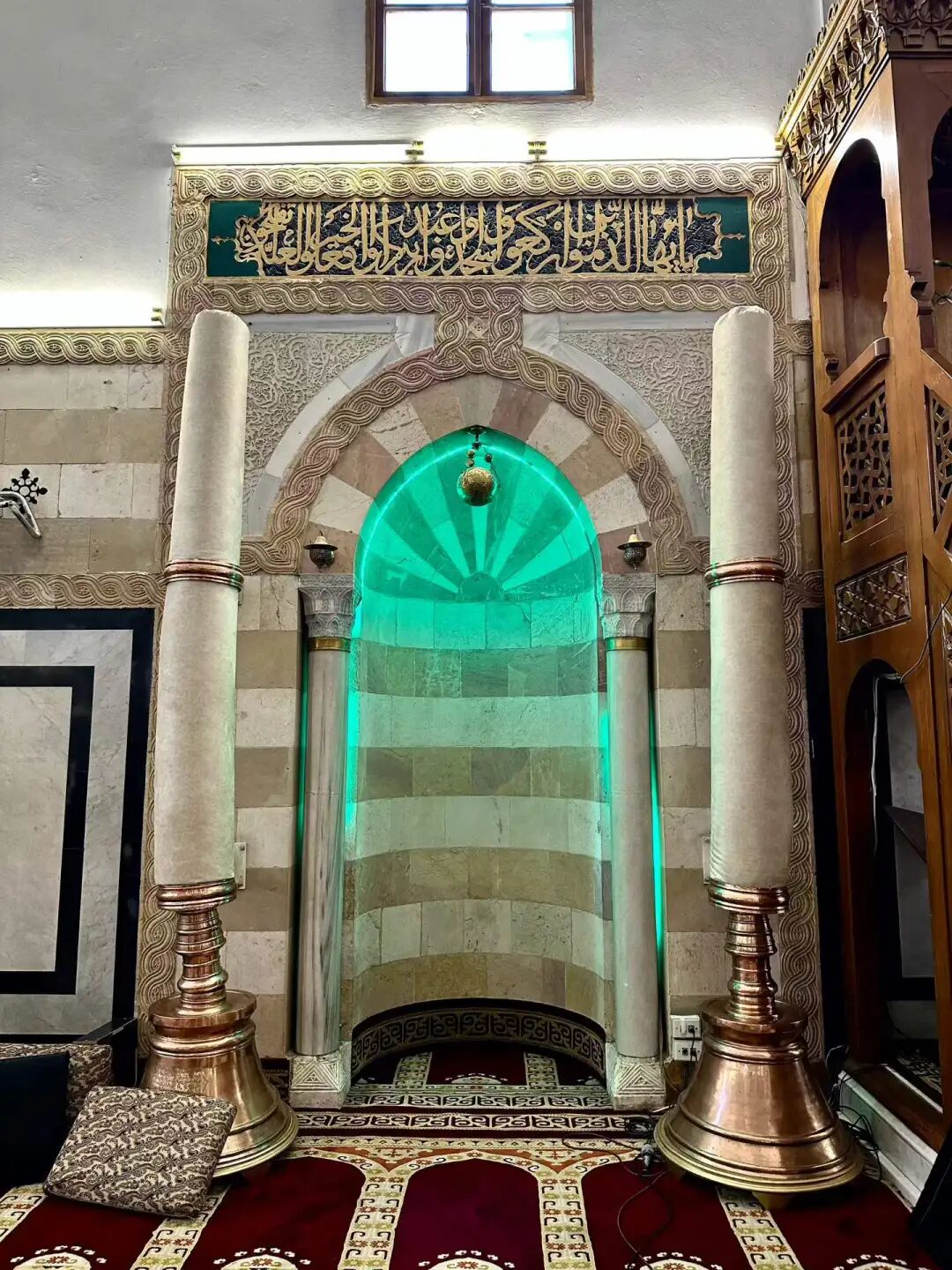
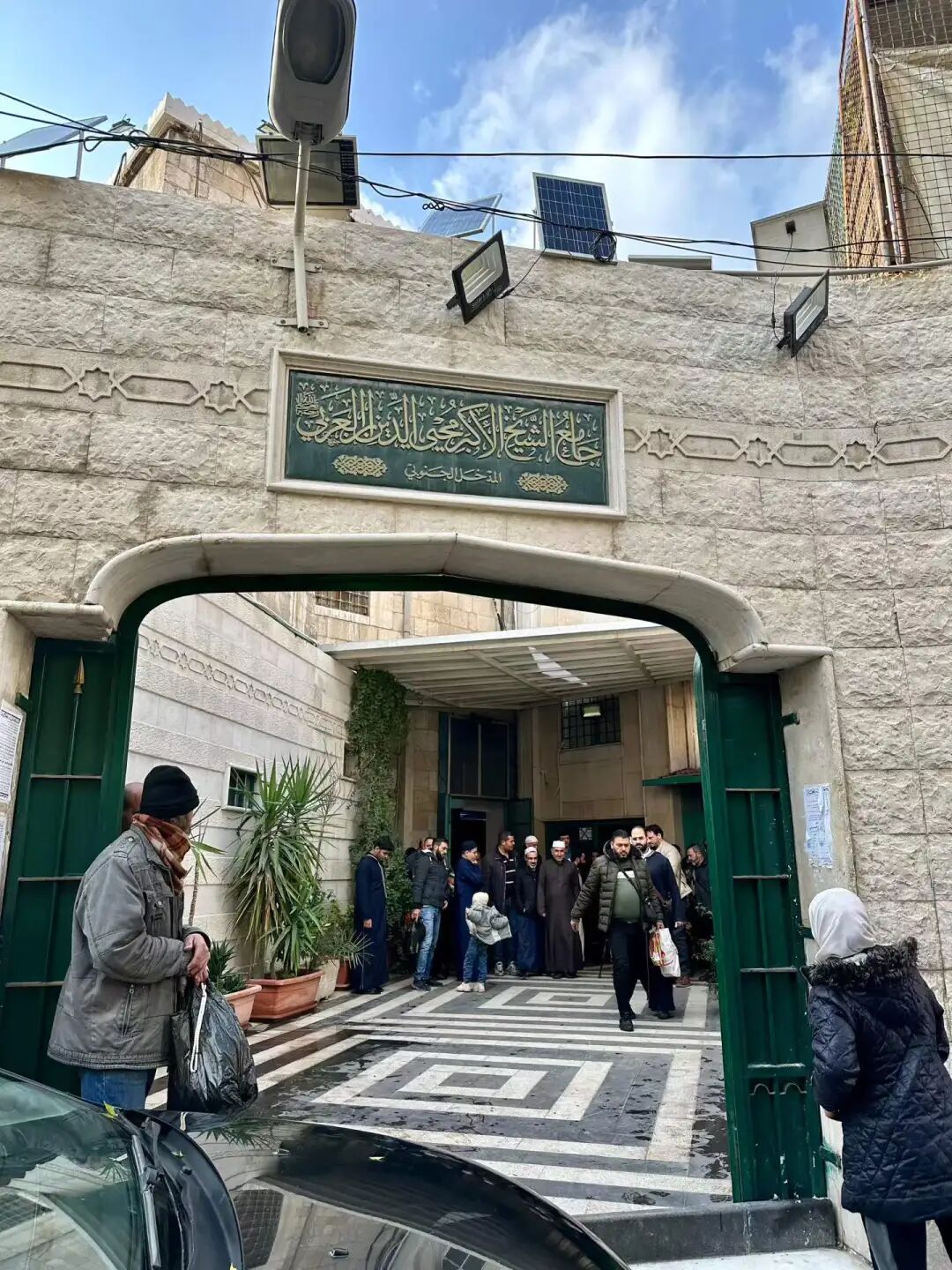
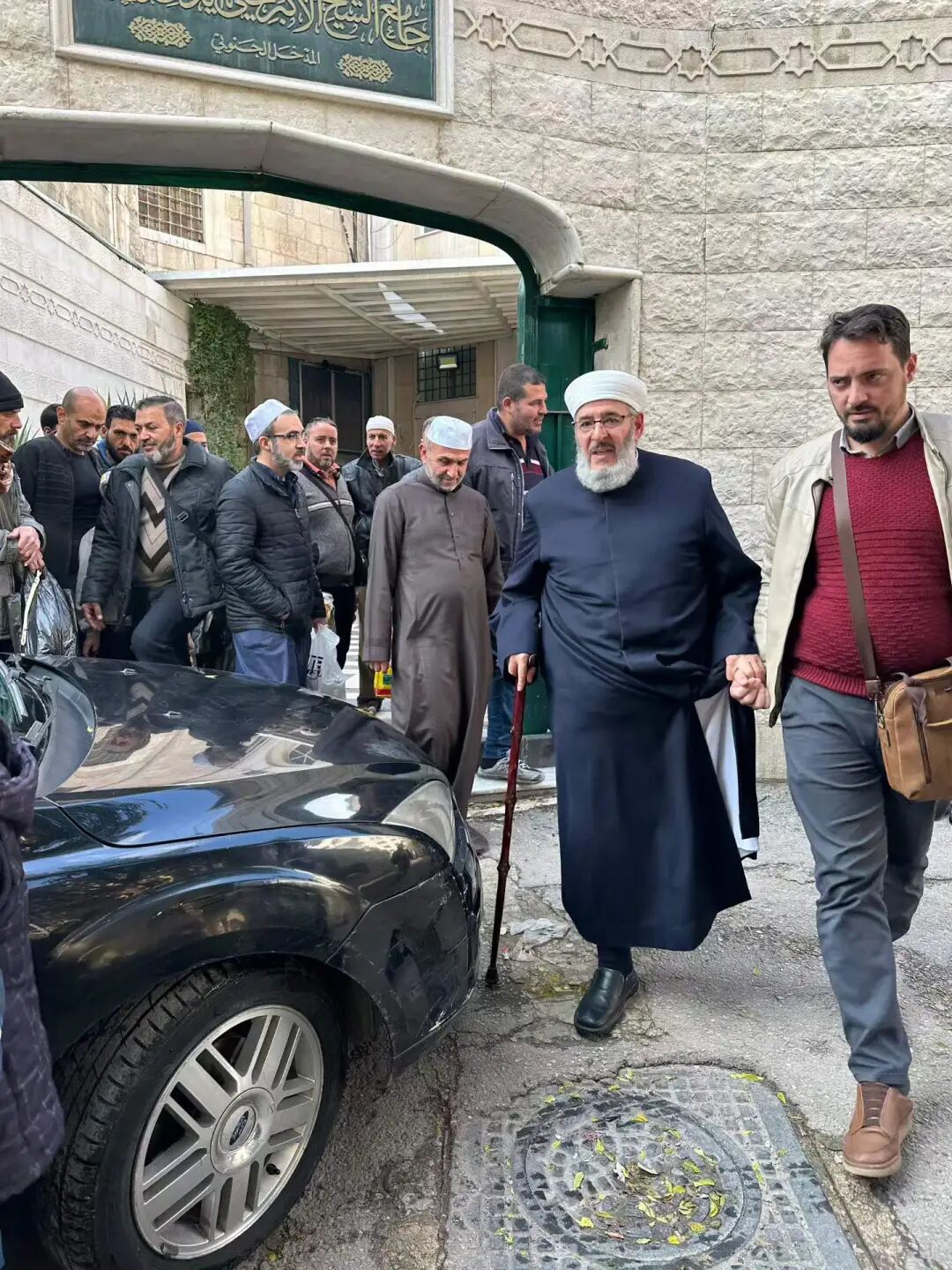
When I first arrived at the Sheikh Muhyiddin Mosque, I happened to catch a funeral prayer (janazah) for a sheikh, and I could really feel the strong religious atmosphere here.
Not far to the east of the Sheikh Muhyiddin Mosque is the Hanabila, another famous mosque in the Salihiya district. Hanabila Mosque is a famous early Ayyubid dynasty mosque in Syria. It was founded between 1208 and 1210 by the famous Hanbali scholar Ibn Qudama. He was born in Jerusalem and settled in Damascus in 1197, which became his main center for scholarship.
The mosque follows the Ayyubid architectural style. It centers on a courtyard, and the main prayer hall follows the layout of the Umayyad Mosque in Damascus, though its structure is more compact. The mosque still has a beautiful pulpit (minbar) and window carvings that are over 800 years old.
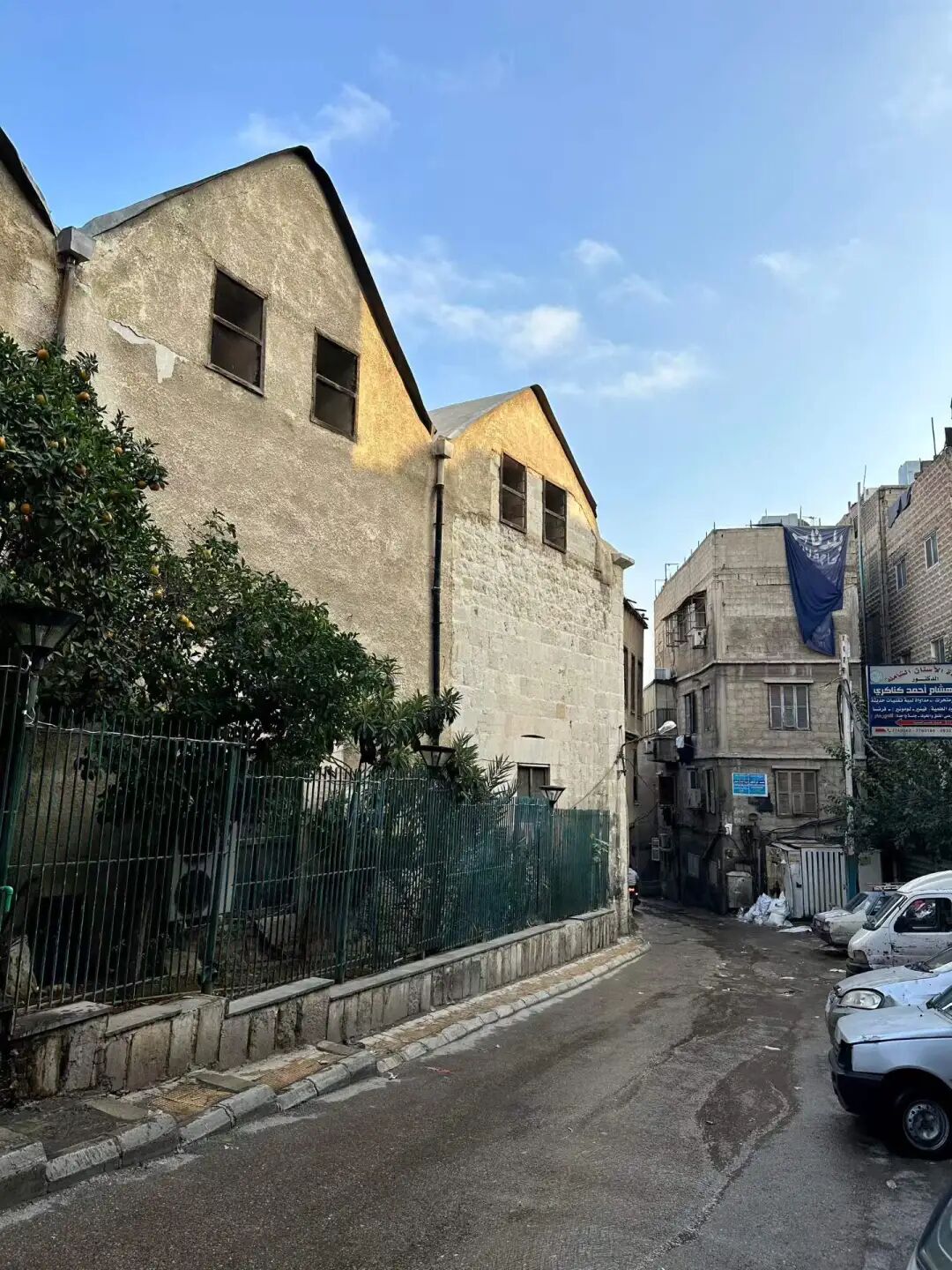
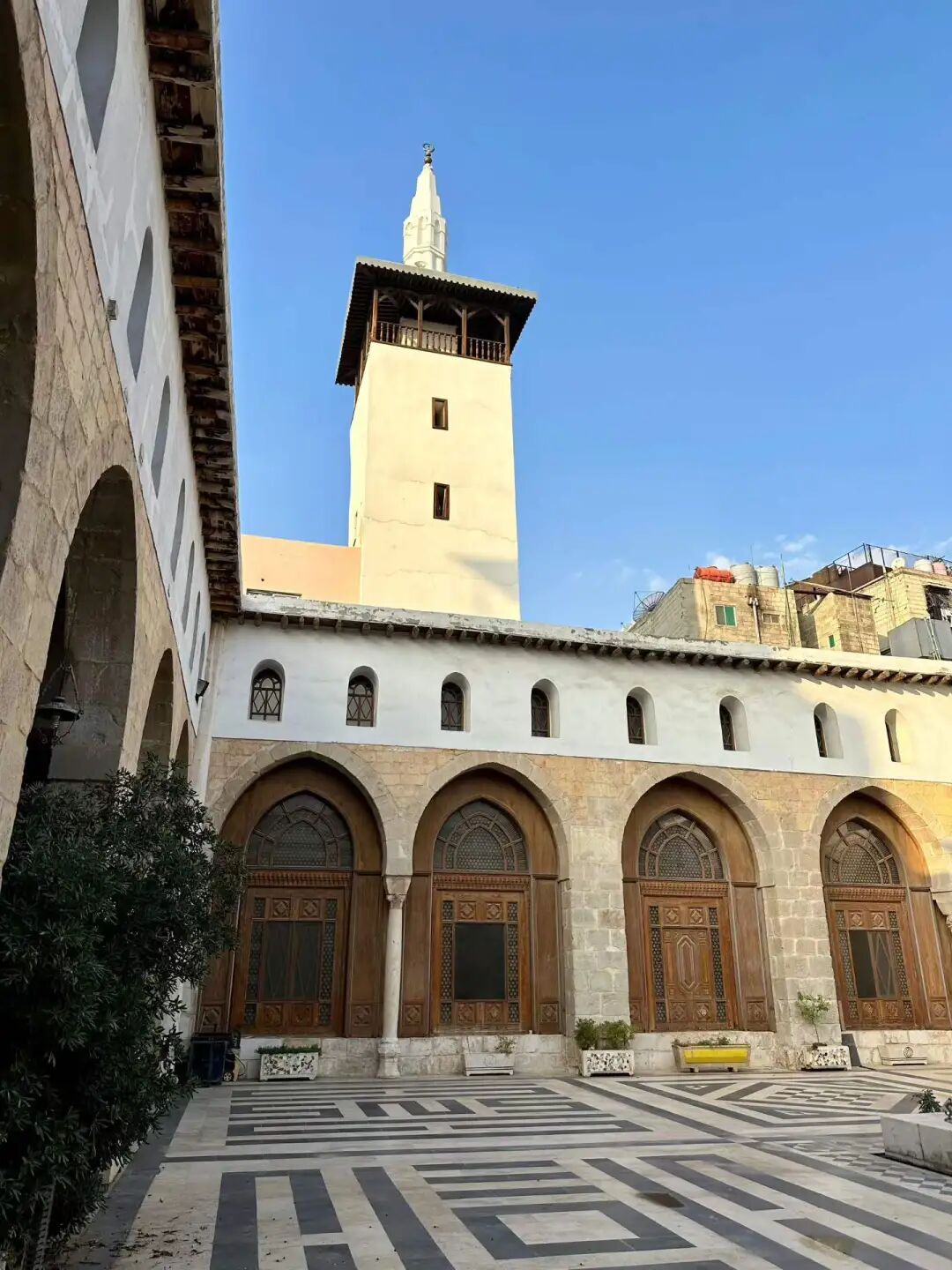
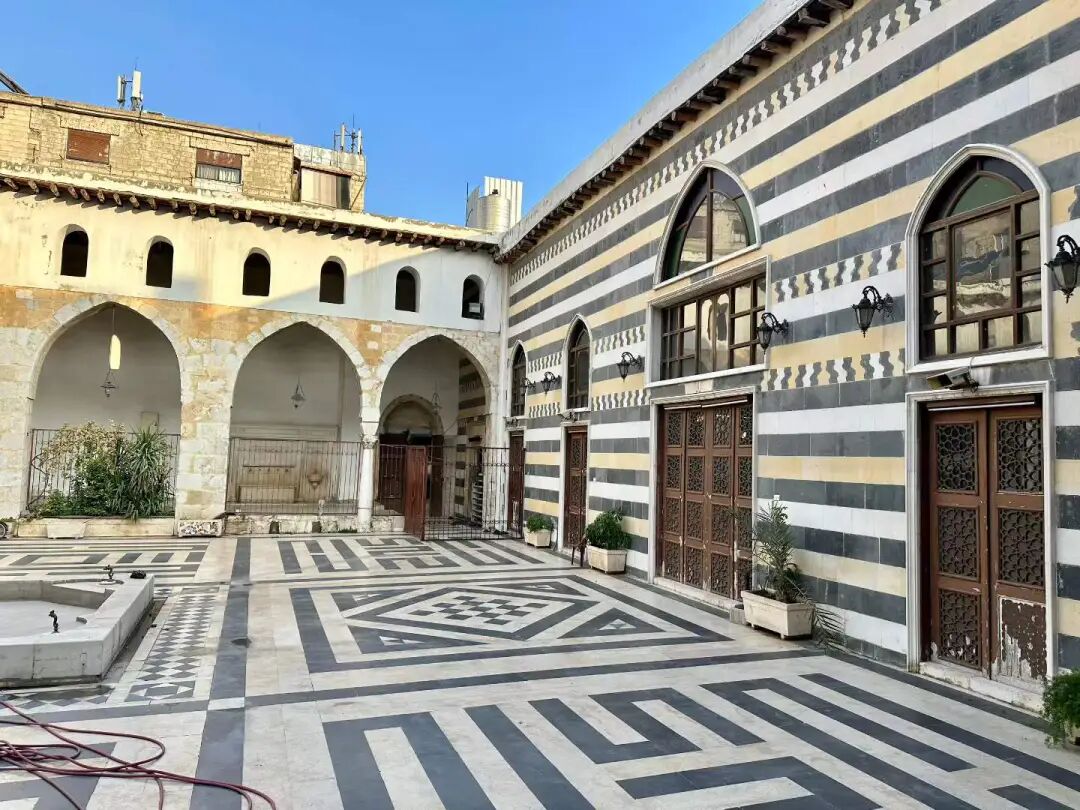
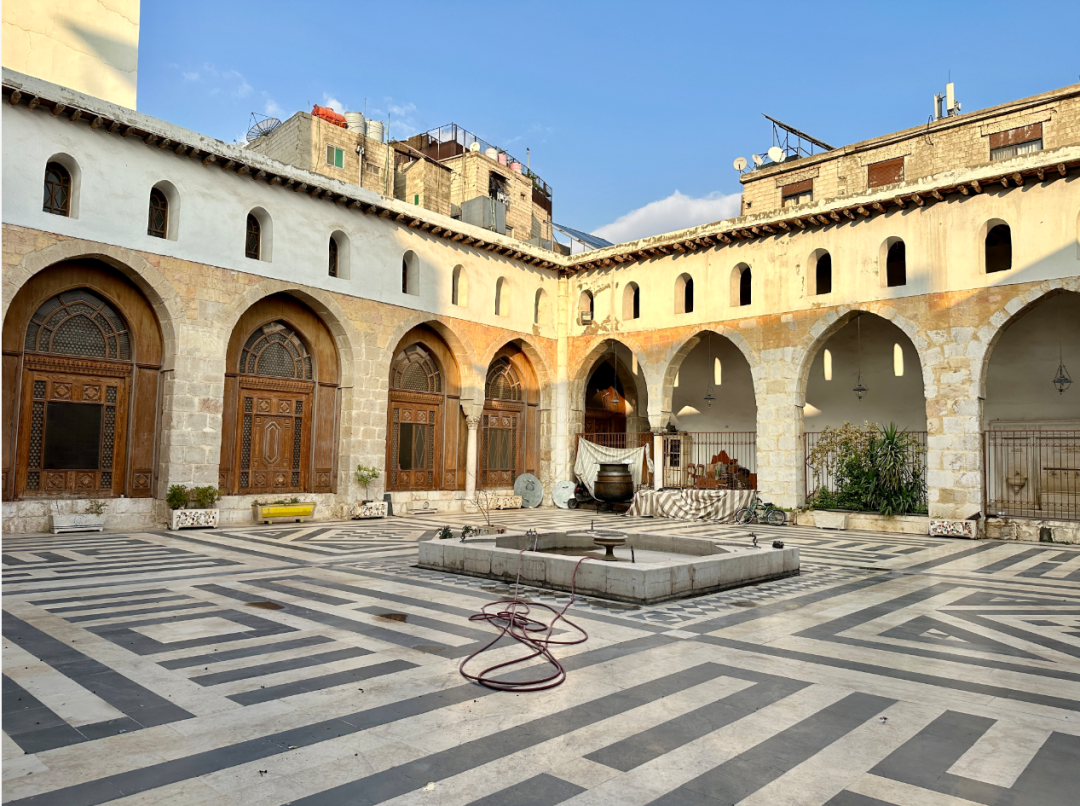
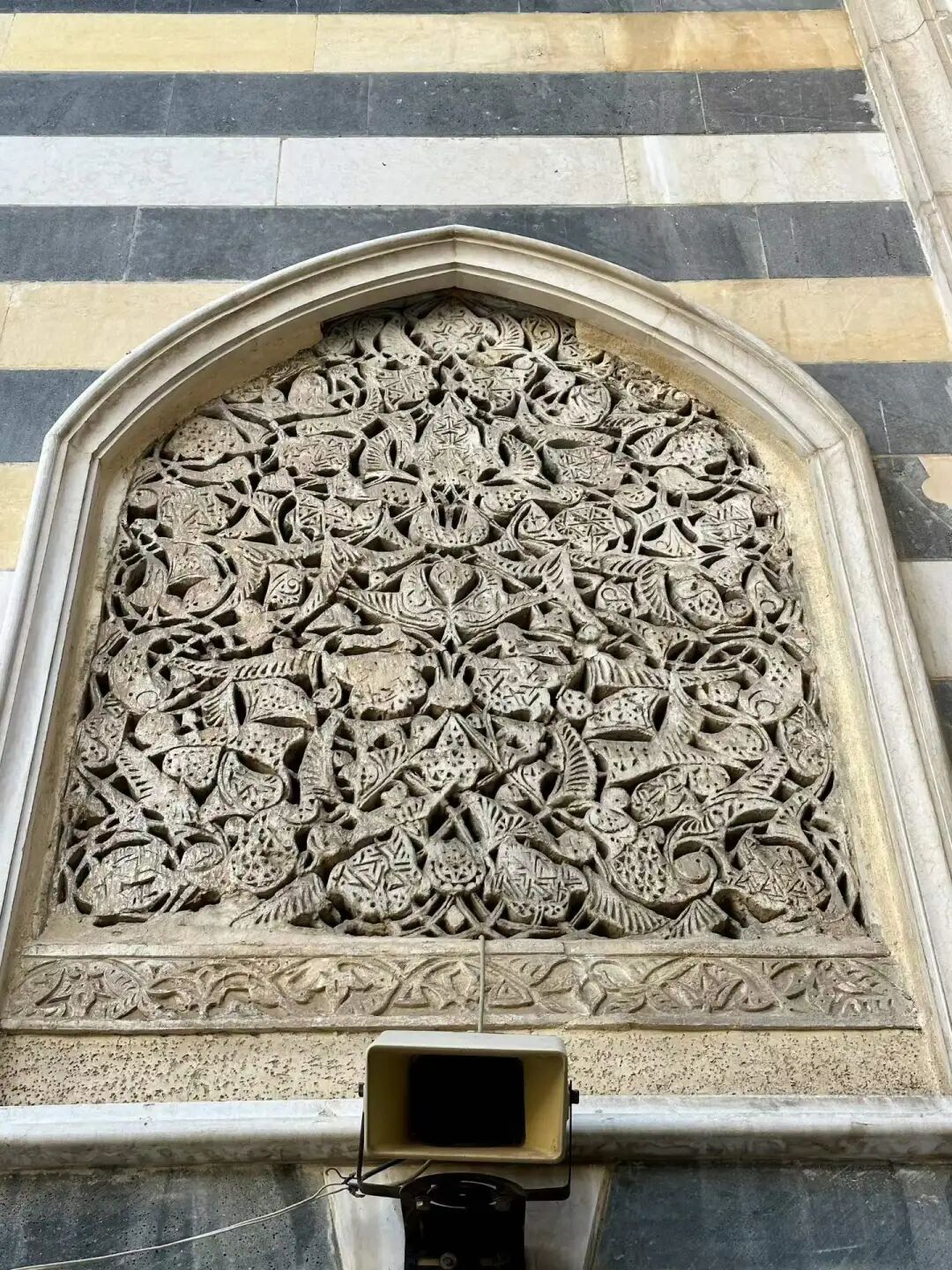
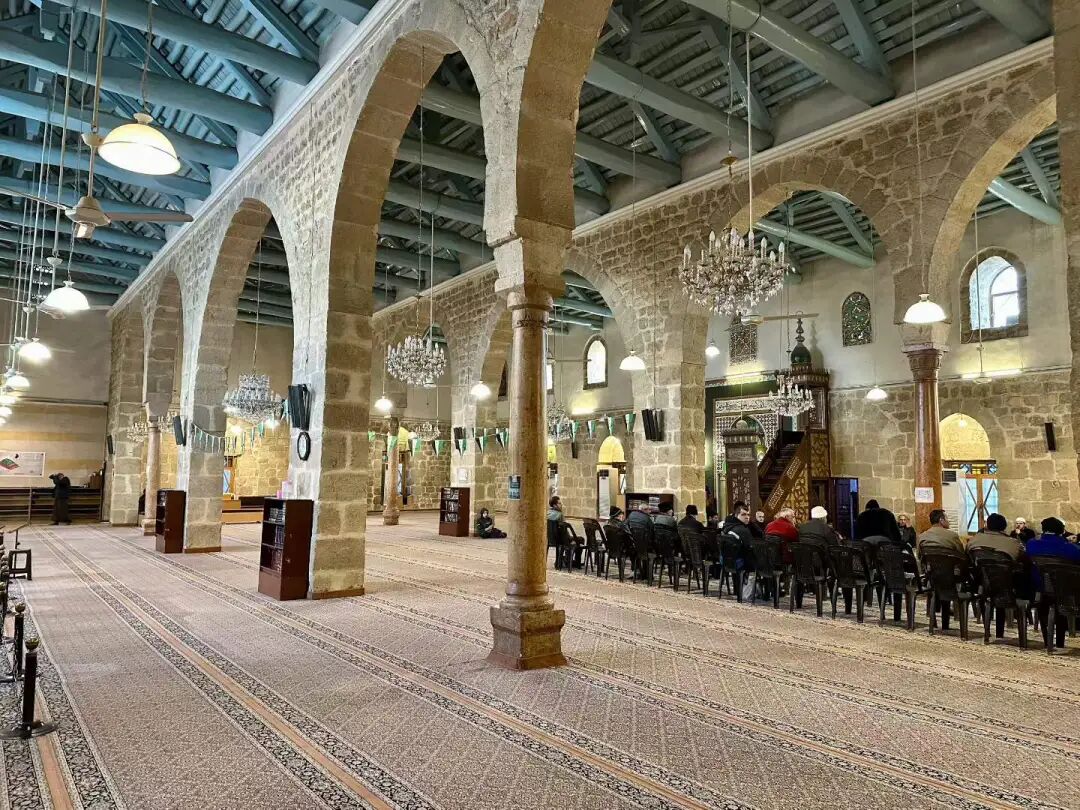
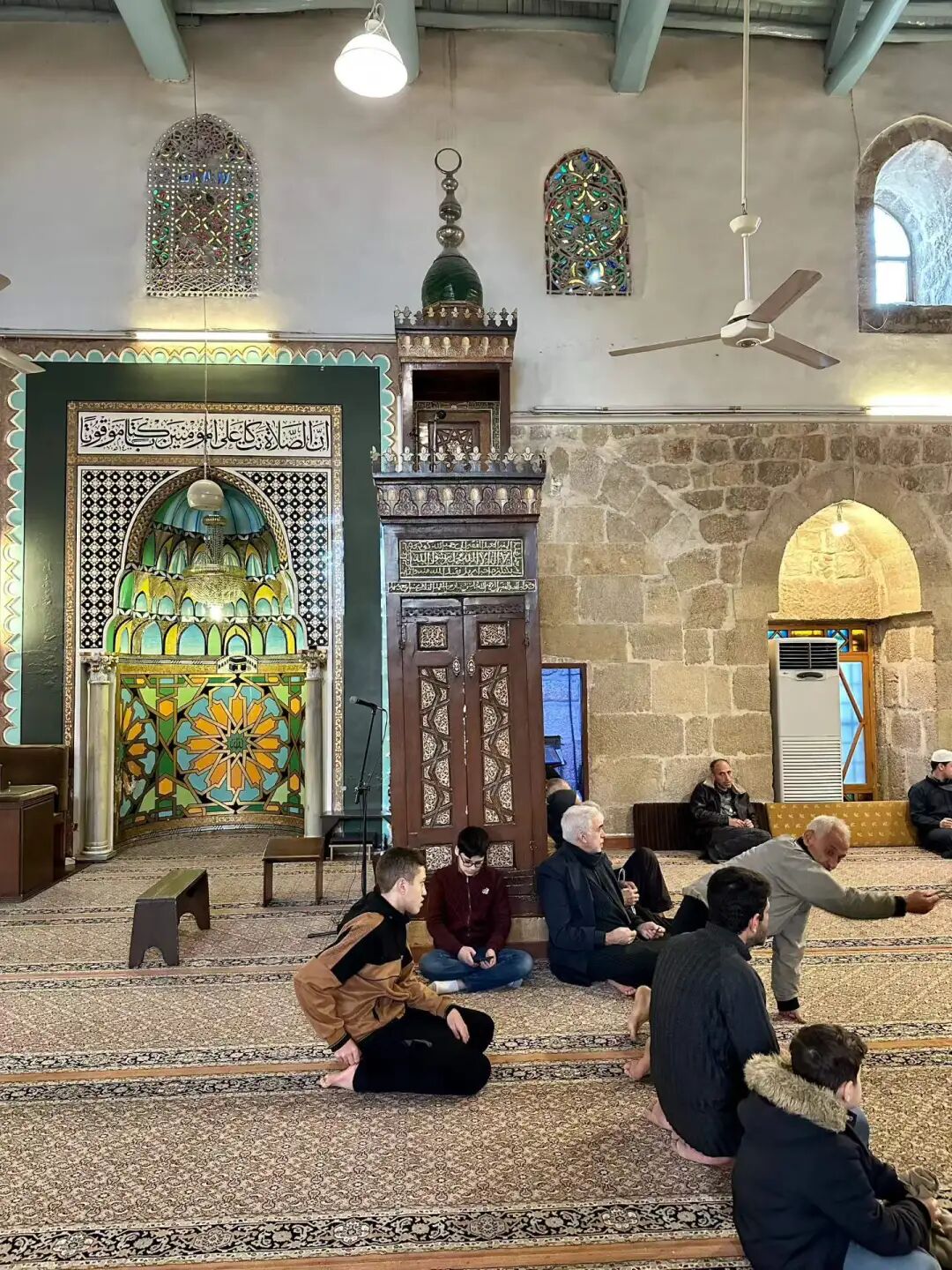
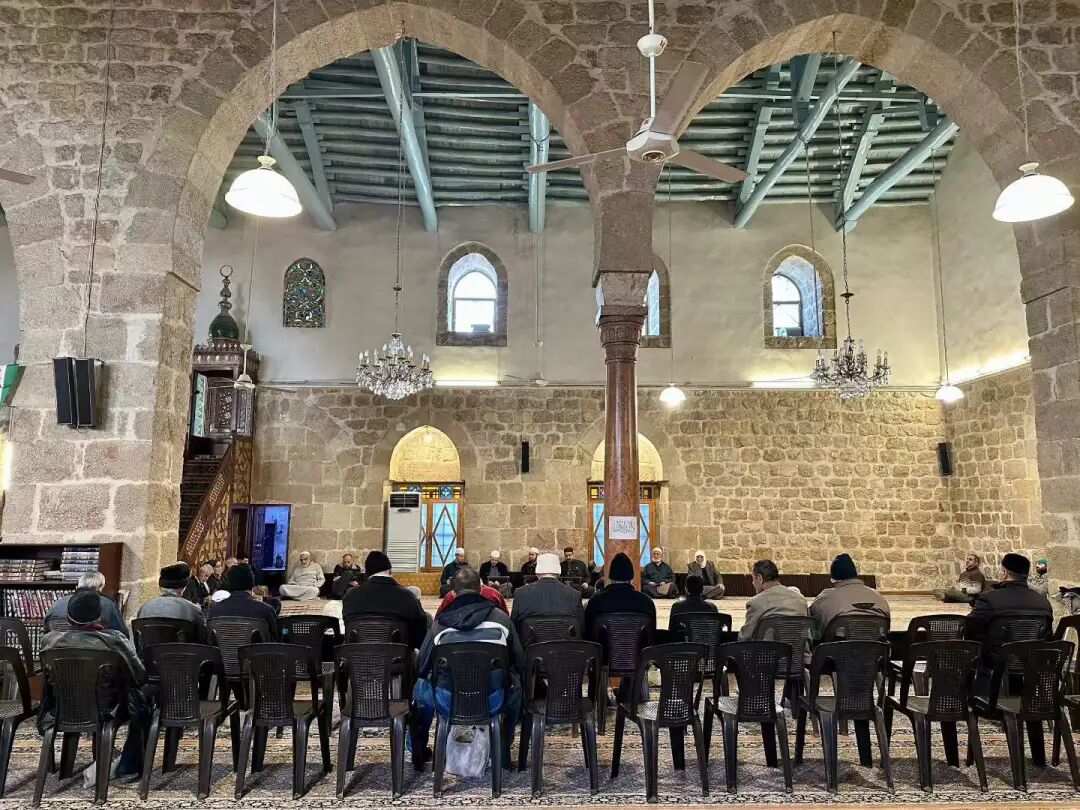
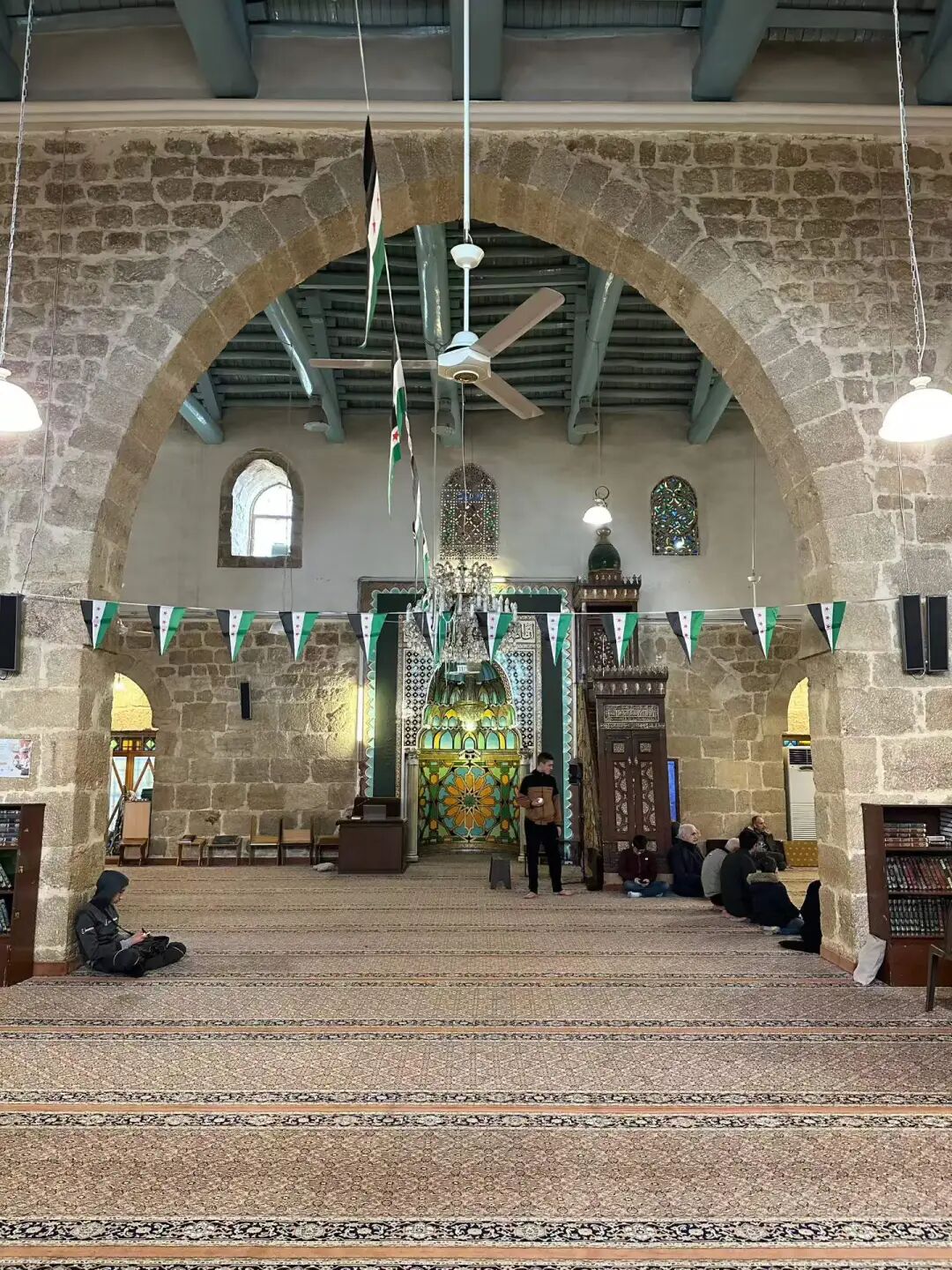
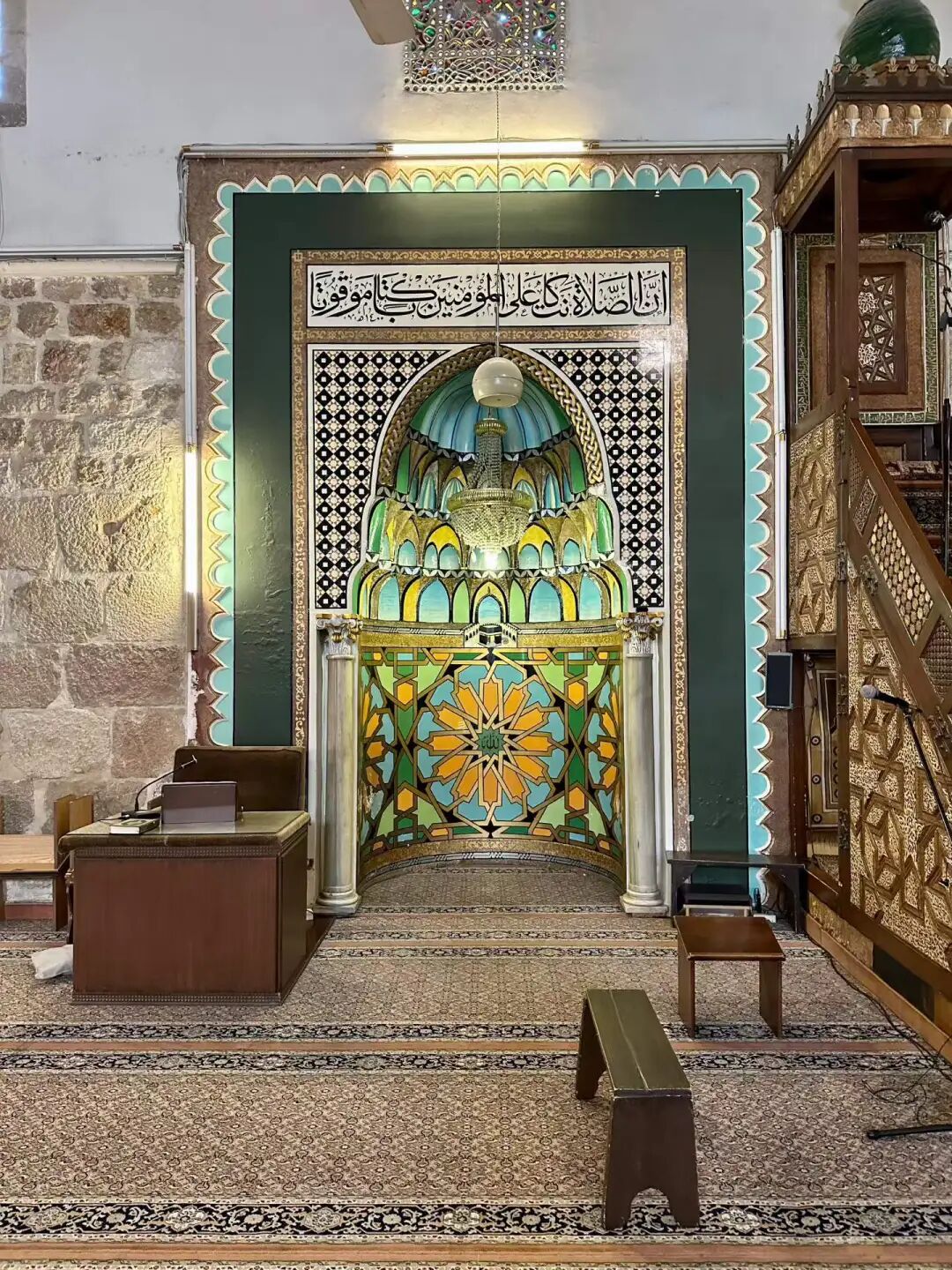
Rukniyah Madrasa is located on the far east side of the Salihiyah district in Damascus. It was built in 1224 by the Ayyubid governor of Damascus, Rukn al-Din Mankurs al-Falaki, who is also buried there. Rukniyah Madrasa is the first Ayyubid building with a courtyard covered by a dome. The building consists of two square sections: the larger part is the madrasa, and the smaller part is the tomb. The minaret was added later.
Because the Ayyubid dynasty was busy fighting the Crusades, the architectural style of this period is known for being simple, sturdy, and durable. Rukniyah Madrasa belongs to the Hanafi school of law. It has now been converted into a mosque, and the main hall is not open except during the five daily namaz prayers.
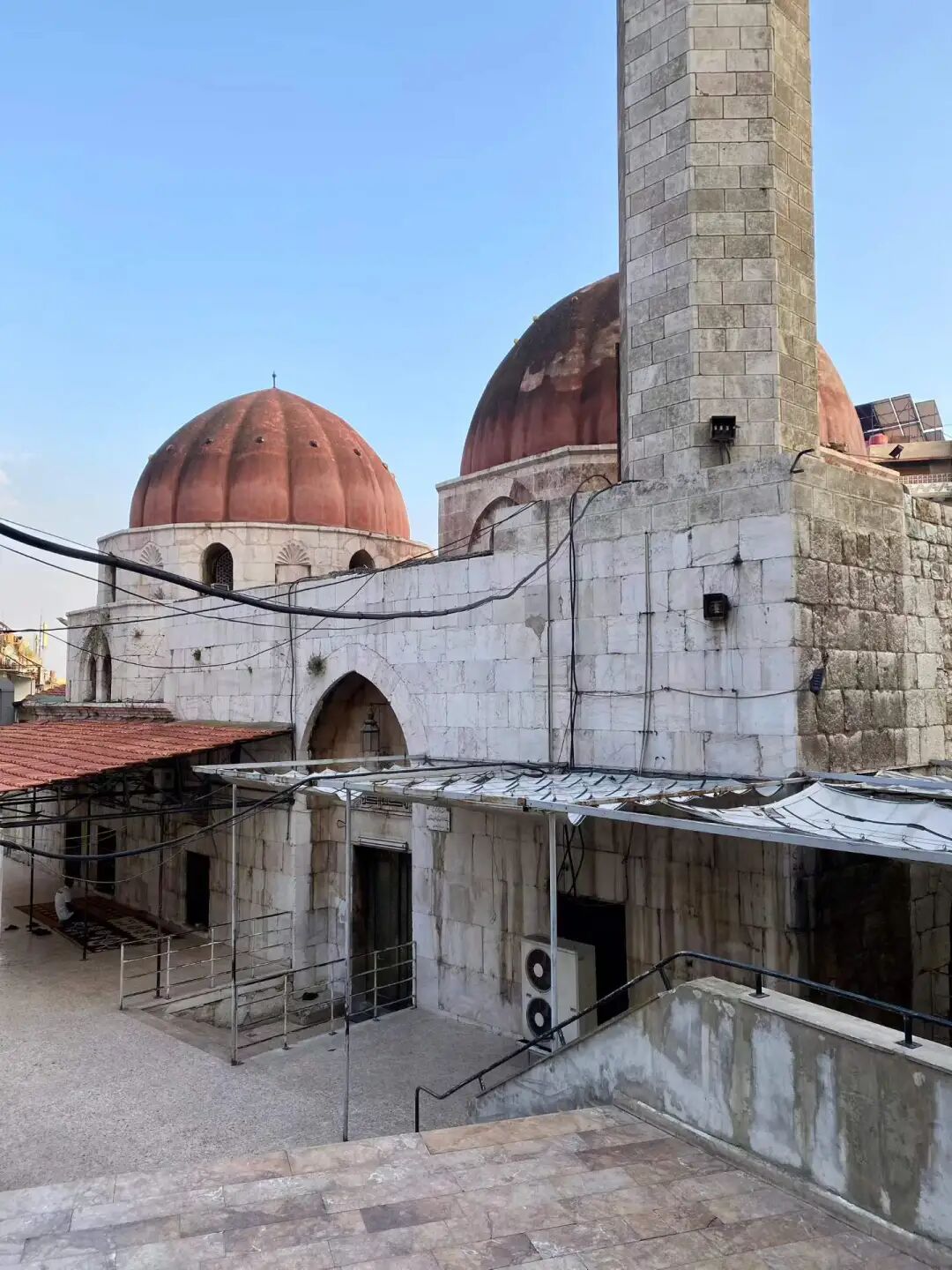
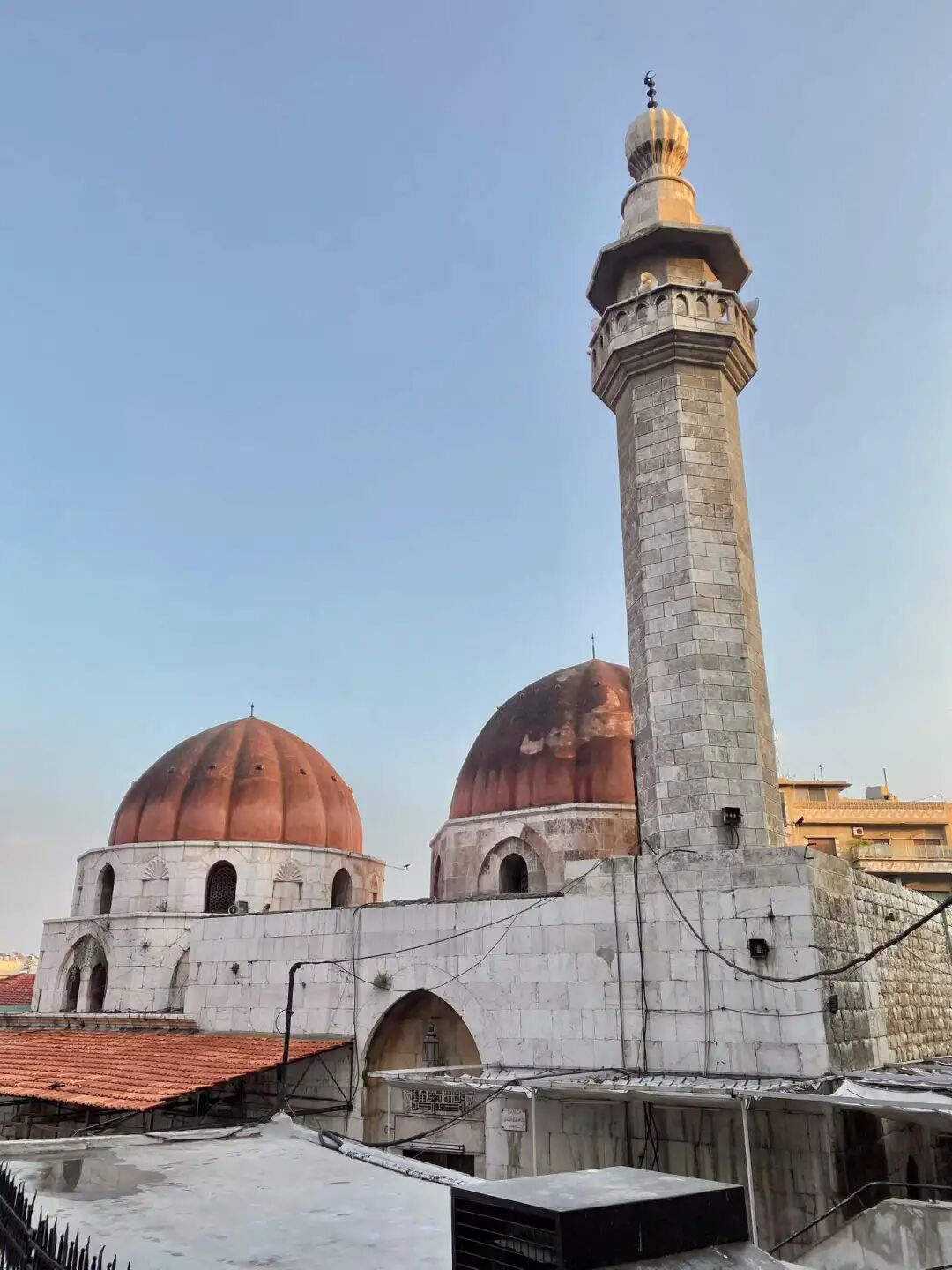
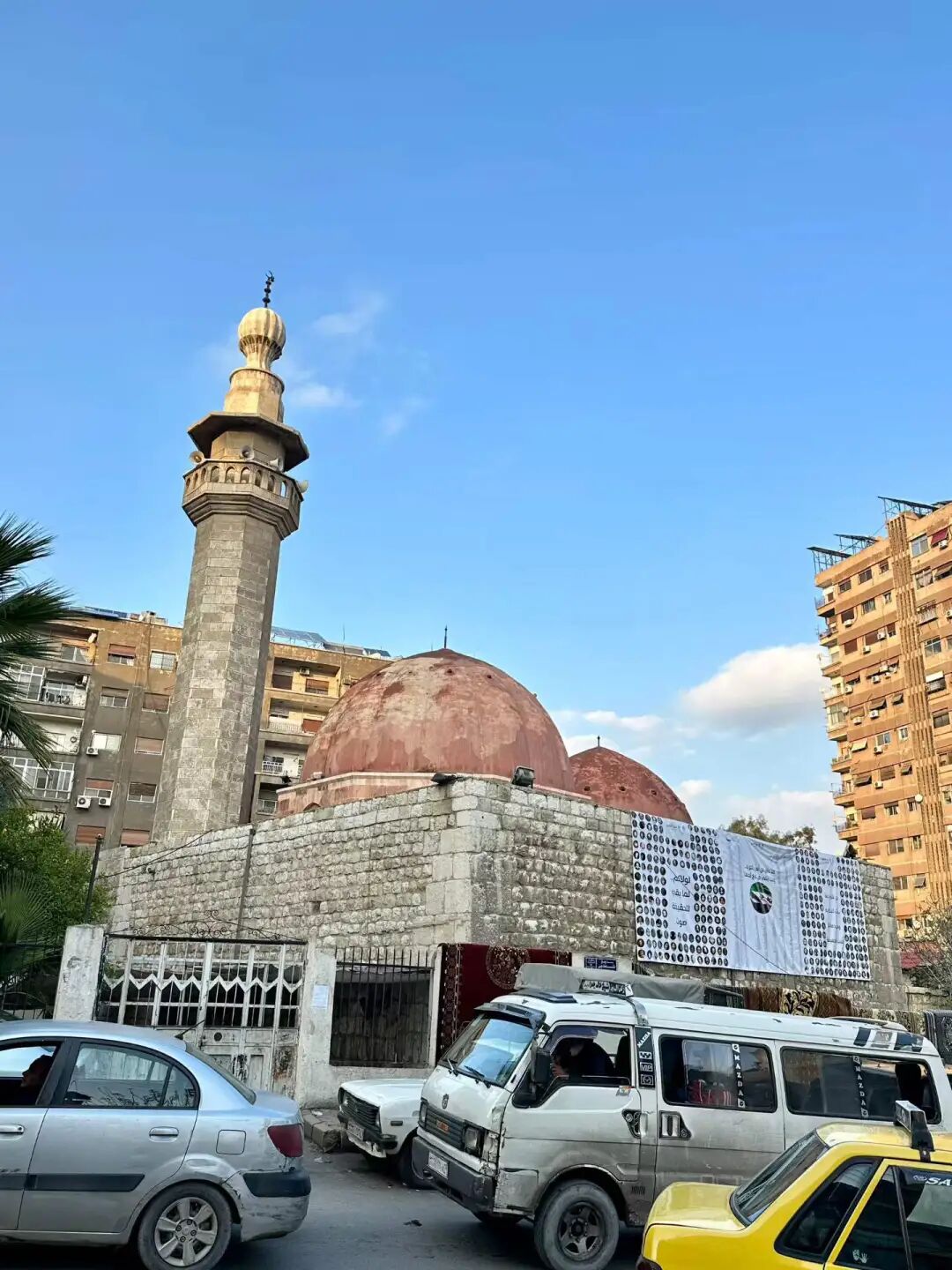
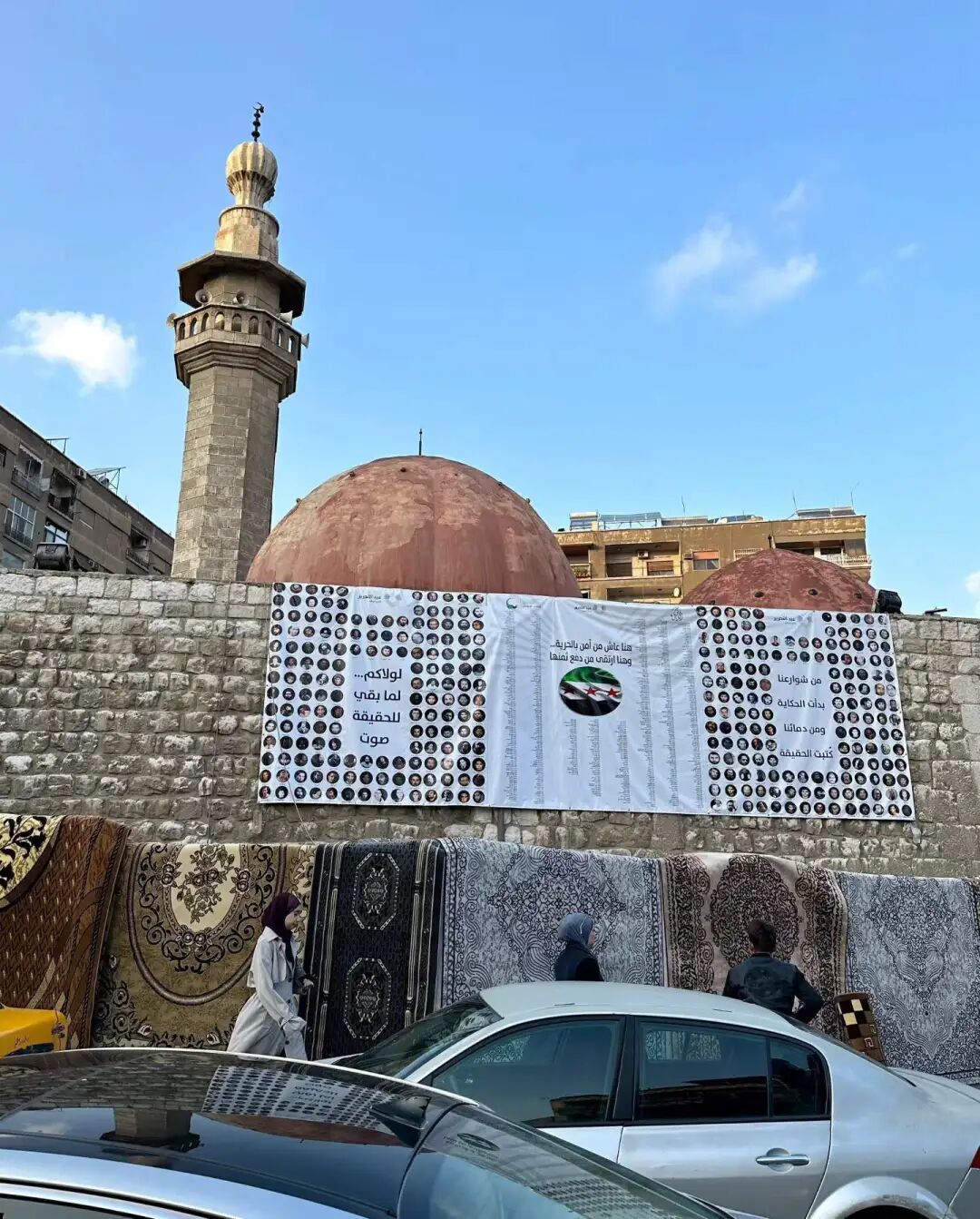
Abd al-Ghani al-Nabulsi Mosque was built in 1764 by Sheikh Mustafa al-Nabulsi, the grandson of the famous Syrian Sufi sheikh and poet Abd al-Ghani al-Nabulsi. Both Sheikh Abd al-Ghani al-Nabulsi and Sheikh Mustafa al-Nabulsi are buried there. Unfortunately, since most mosques in Damascus do not open their doors except for the five daily namaz prayers, I could not go inside.
Sheikh Abd al-Ghani's family came from the Banu Jama'a. For generations, they served as chief judges and great Sufi sheikhs during the Mamluk dynasty. One branch of his family settled in Damascus after the Ottoman Empire conquered the Mamluk dynasty in 1516. They continued to hold positions such as the Shafi'i Grand Mufti of Damascus and teachers at the Umayyad Mosque.
Sheikh Abd al-Ghani was born in Damascus in 1641. His father switched from the Shafi'i school to the Hanafi school after a debate with Hanafi students. This was the mainstream school of the Ottoman Empire at the time. Abdul-Ghani began studying Islamic law as a child. He joined the Qadiriyya and Naqshbandiyya Sufi orders and spent seven years in quiet retreat at home. He traveled widely across the Middle East and wrote over 200 books. He was especially known for his deep research into the Sufi sage Ibn Arabi.
Before Sheikh Abdul-Ghani, the Salhiyya district of Damascus followed the Hanbali school of law. He was the first to bring Hanafi and Shafi'i ideas to the area and hosted many Hanafi students in his home.
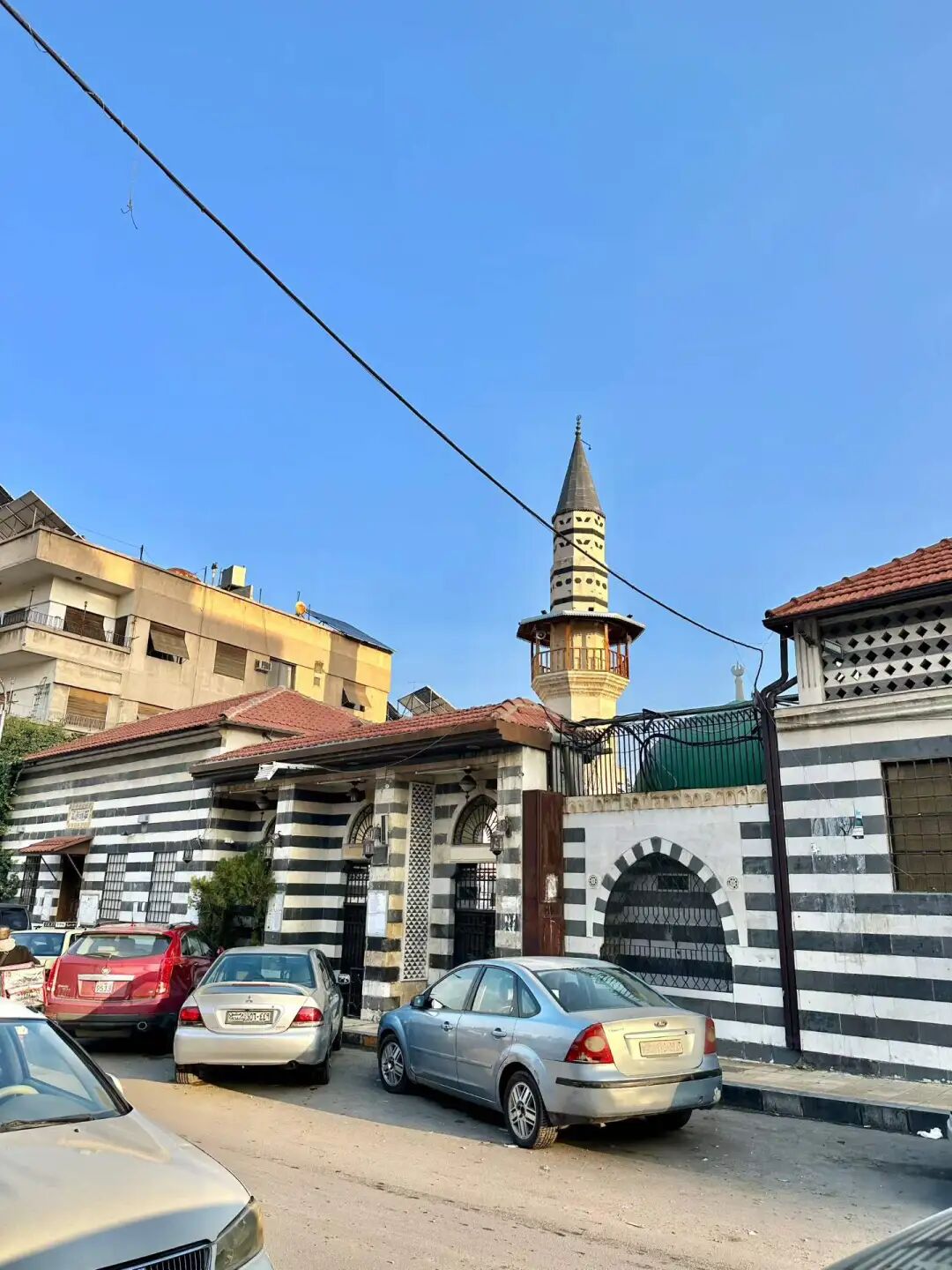
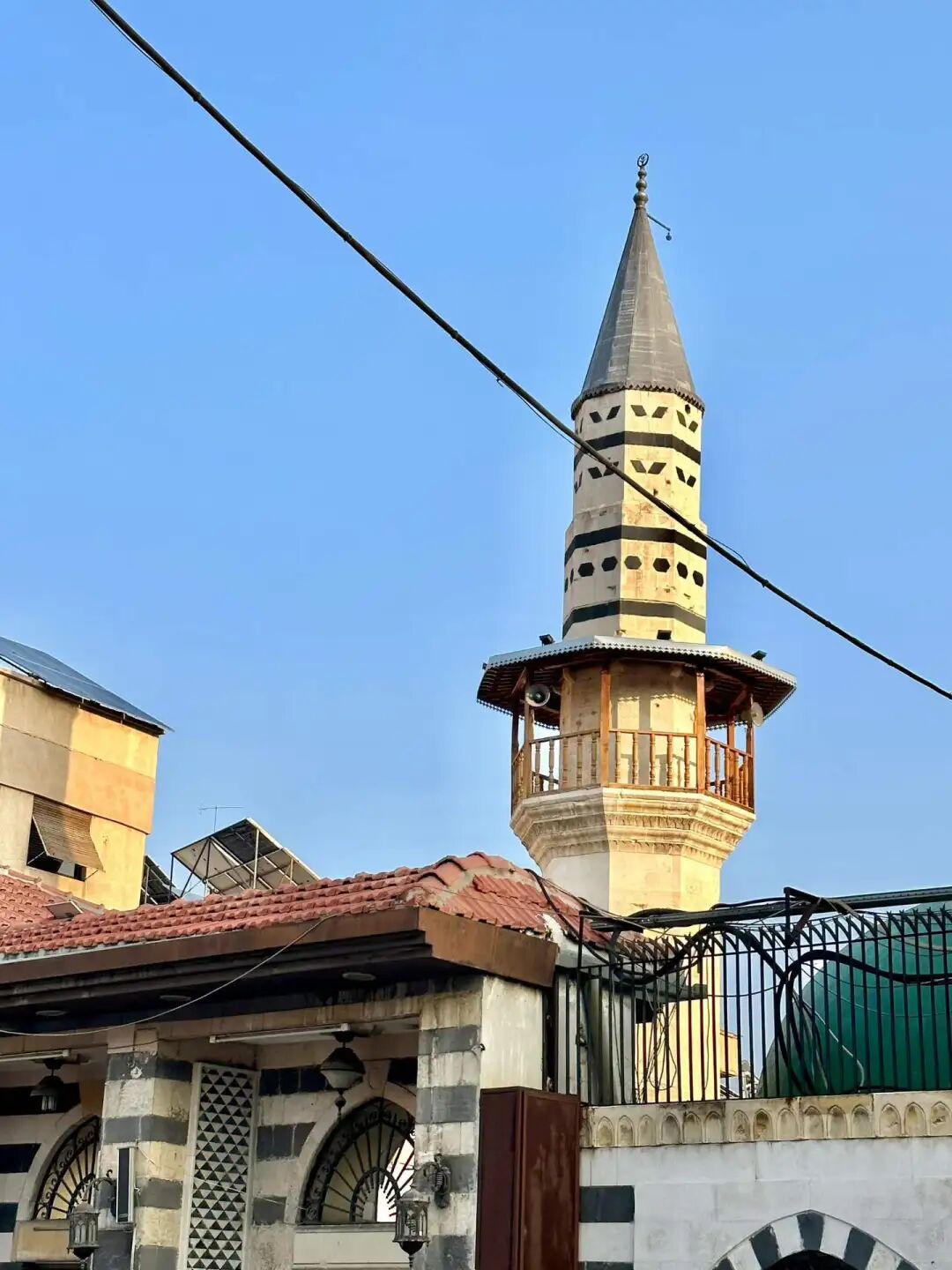
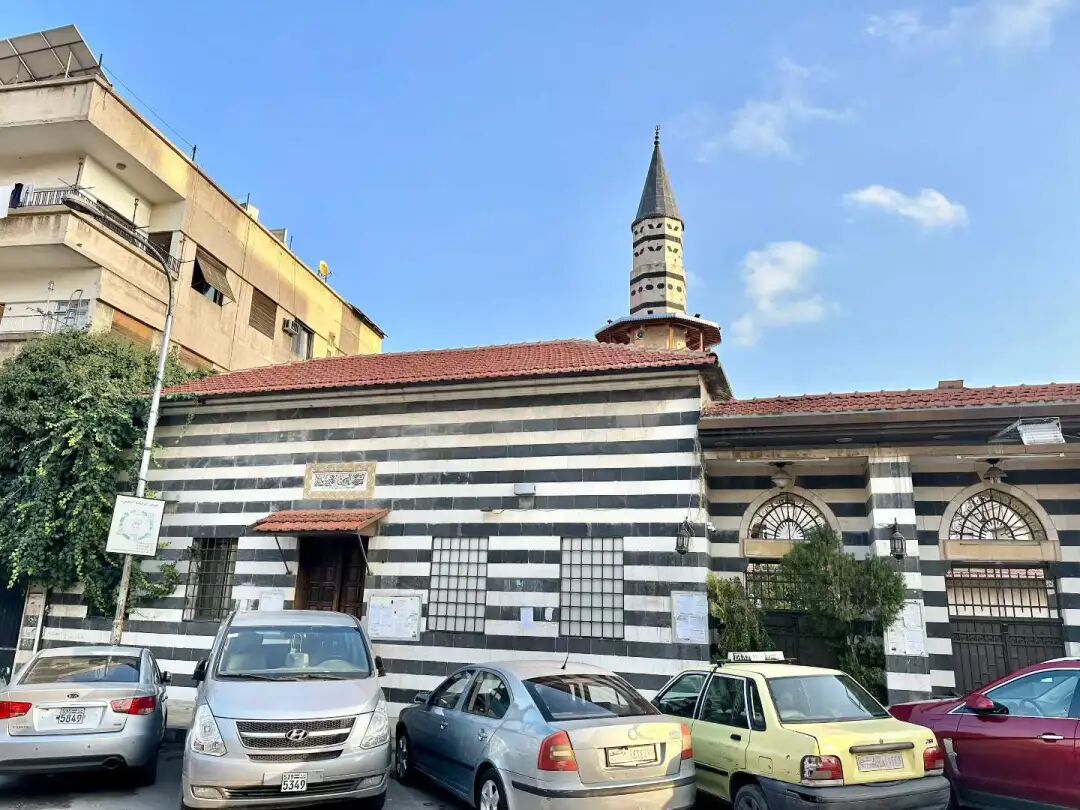
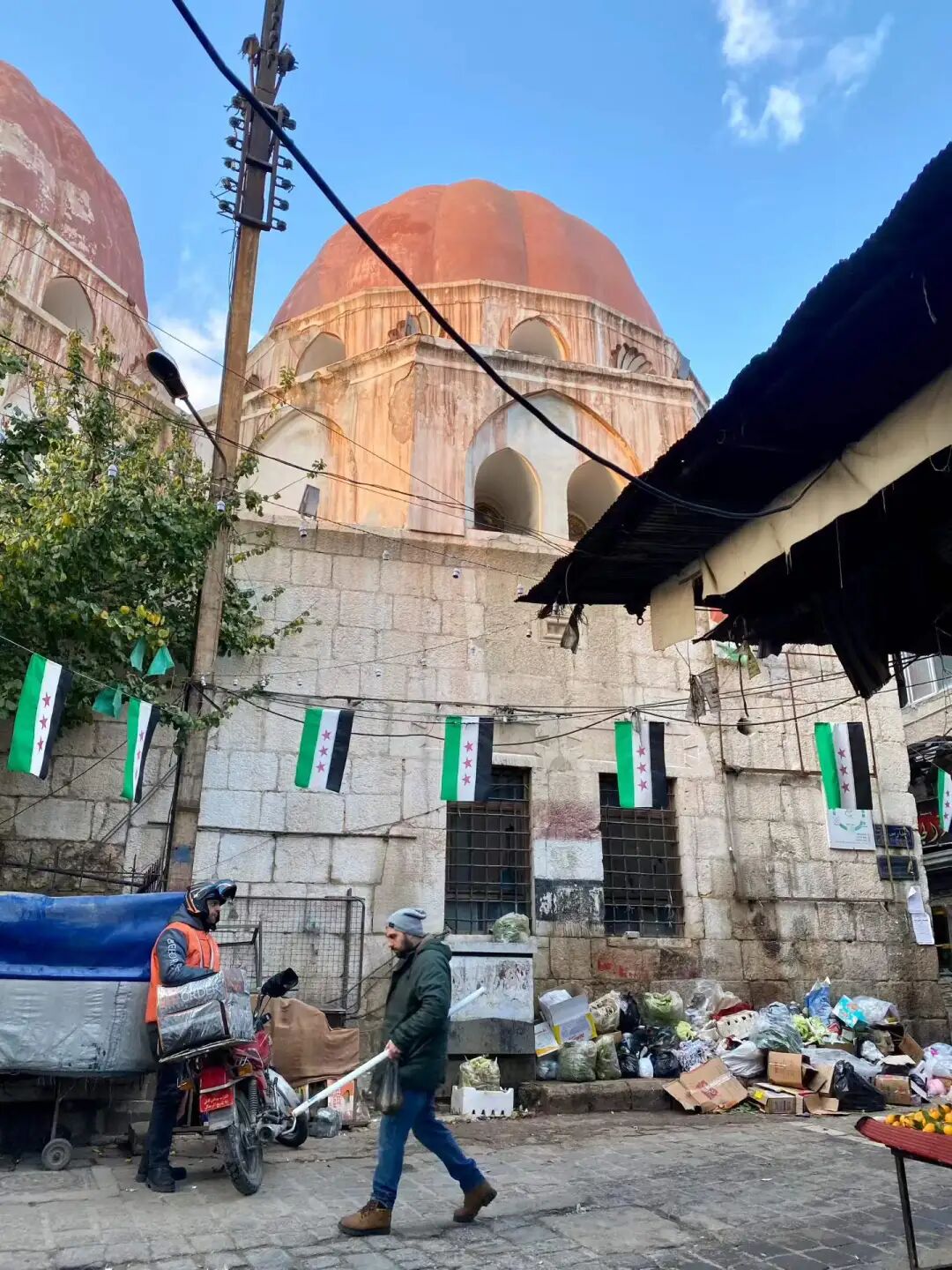
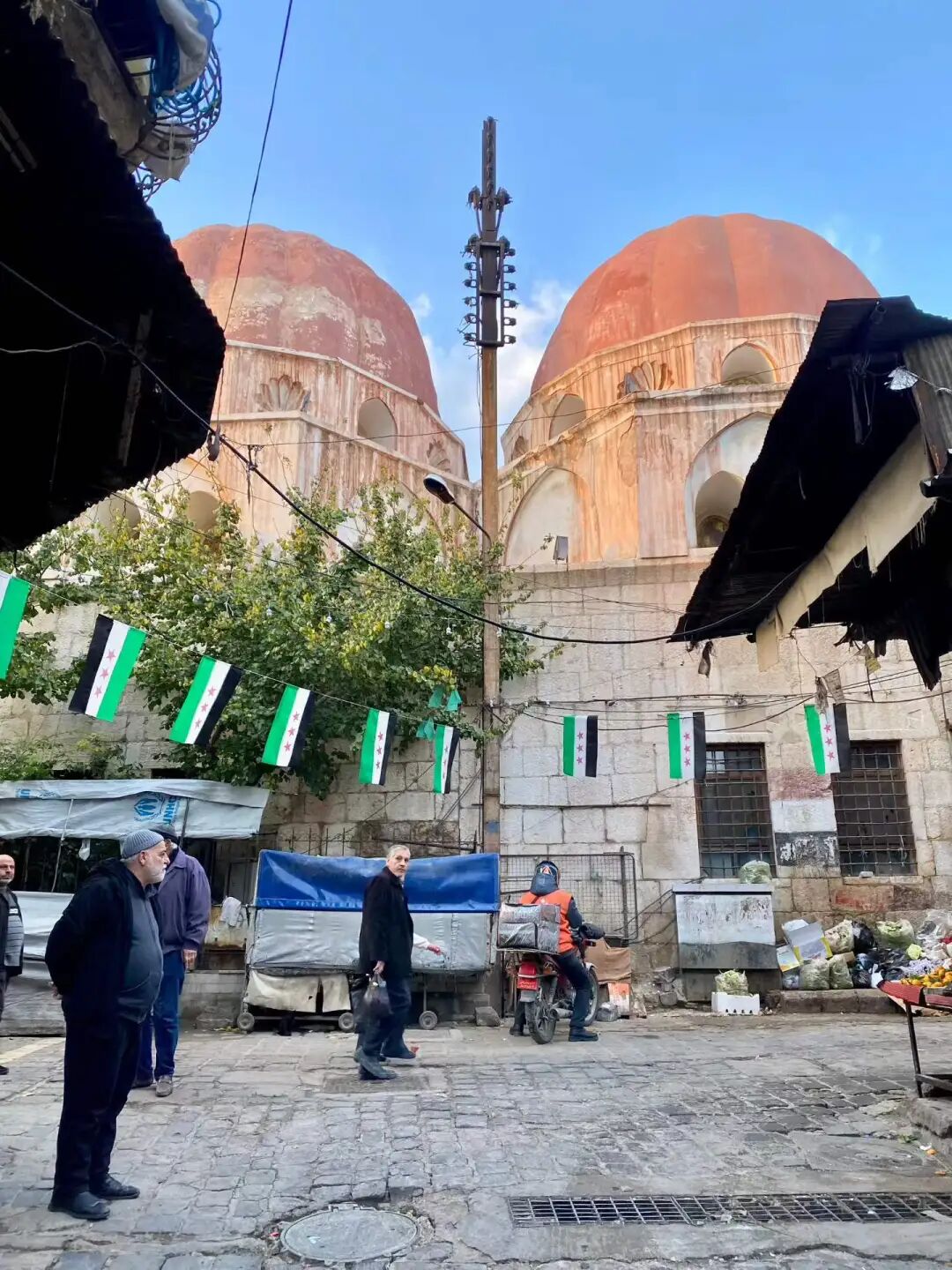
The Jharkasiya Madrasa is on the market street in the Salhiyya district of Damascus. It was built in 1237 by the Ayyubid general Salim al-Din al-Hattra for his teacher, the Ayyubid general Jharkas ibn Abdullah. Both Jharkas ibn Abdullah and Salim al-Din al-Hattra are buried inside.
Jharkas was a commander in Saladin's personal guard and witnessed all of Saladin's military campaigns. The Jharkasiya Madrasa has a very rare double-domed tomb. Historically, the school taught both Hanafi and Shafi'i law, but today it serves as a mosque.
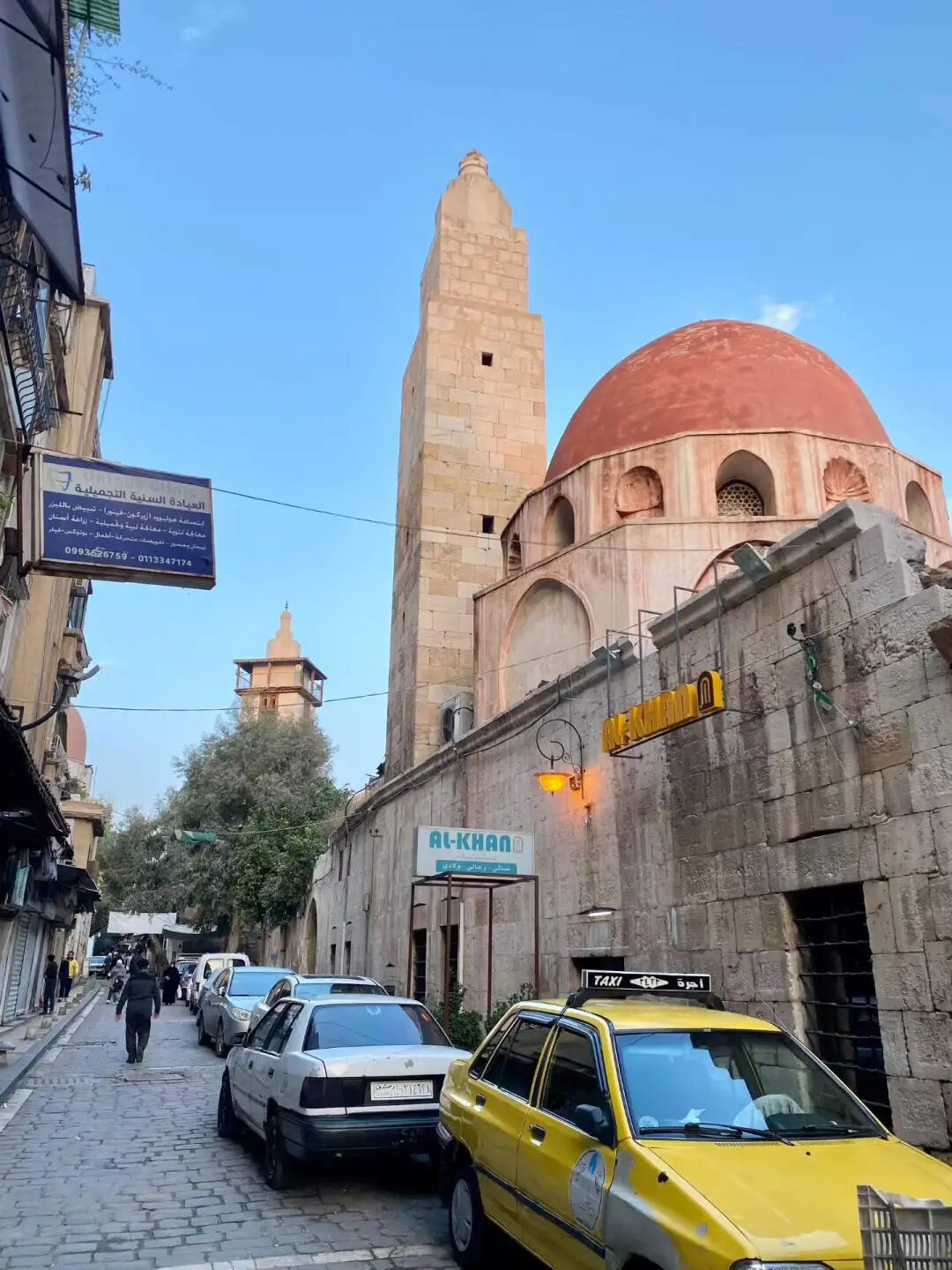
The Mershadiyeh Madrasa is on the west side of the Salhiyya district in Damascus. It was built in 1252 with funding from Khadija Khatun, the daughter of the Ayyubid Emir of Damascus, Al-Mu'azzam Isa. She is buried in the courtyard after her passing.
The square minaret of the madrasa is the only surviving example of 13th-century Ayyubid architecture in Damascus. The madrasa is currently closed. You must contact the Syrian Directorate-General of Antiquities and Museums to enter.
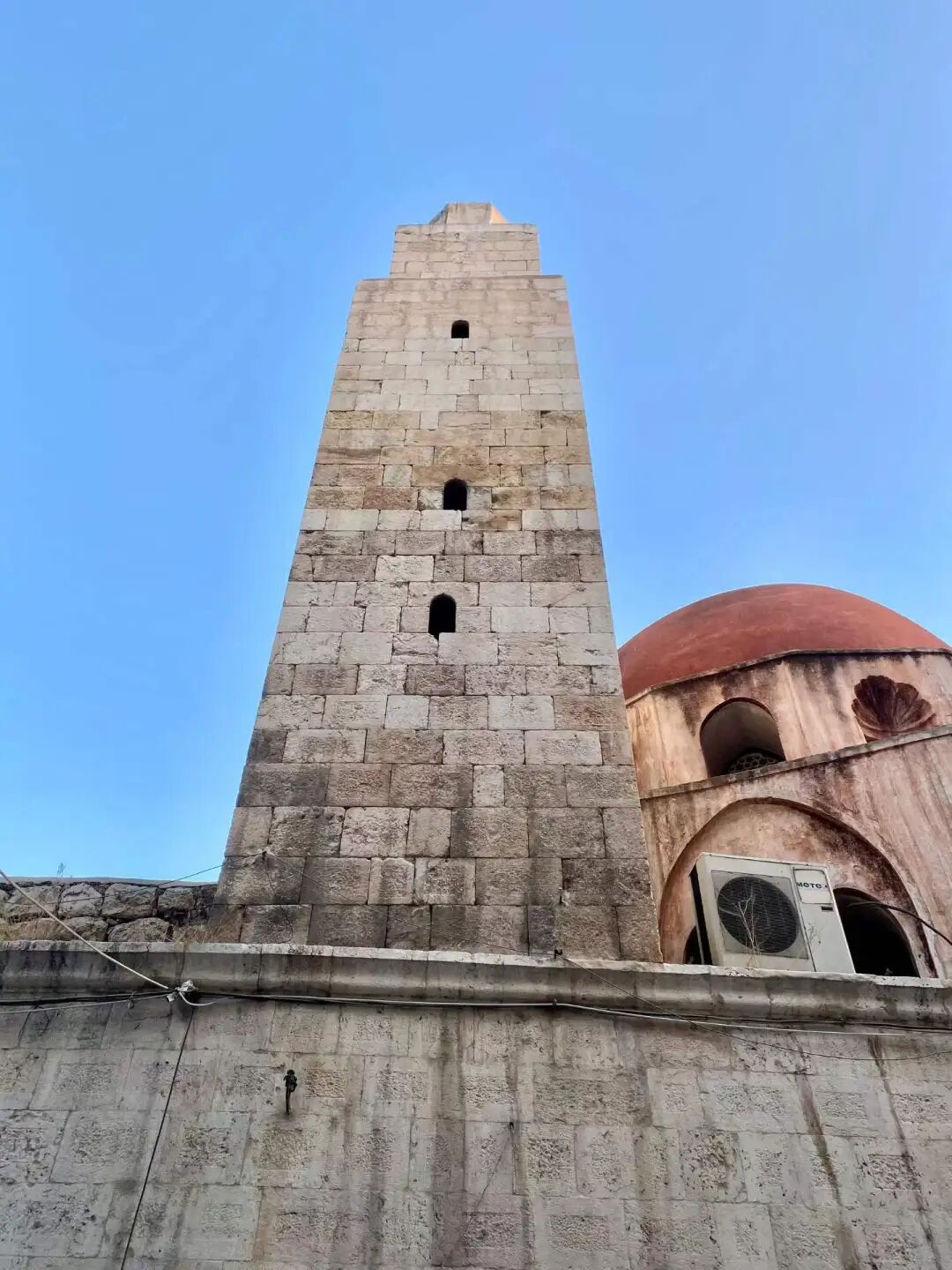
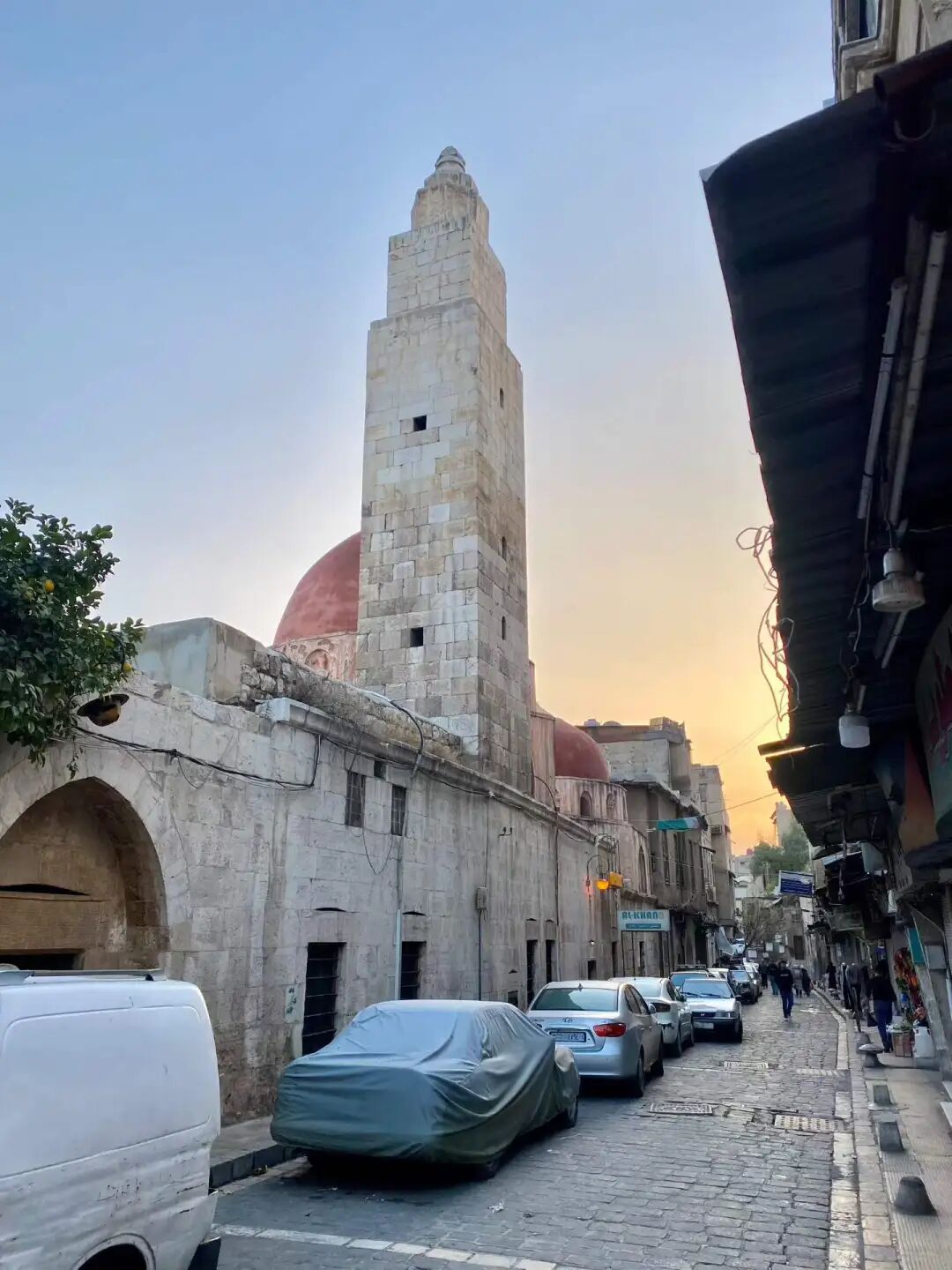
The Takrityya Madrasa is on the far west side of the Salhiyya district in Damascus. It was built in 1298 by the Emir Taqi al-Din al-Takriti, who is buried inside. This building dates back to the Mamluk period, but it keeps the strict and simple architectural style of the Ayyubid dynasty. The Mongol army destroyed this place in 1300, but it was rebuilt later.
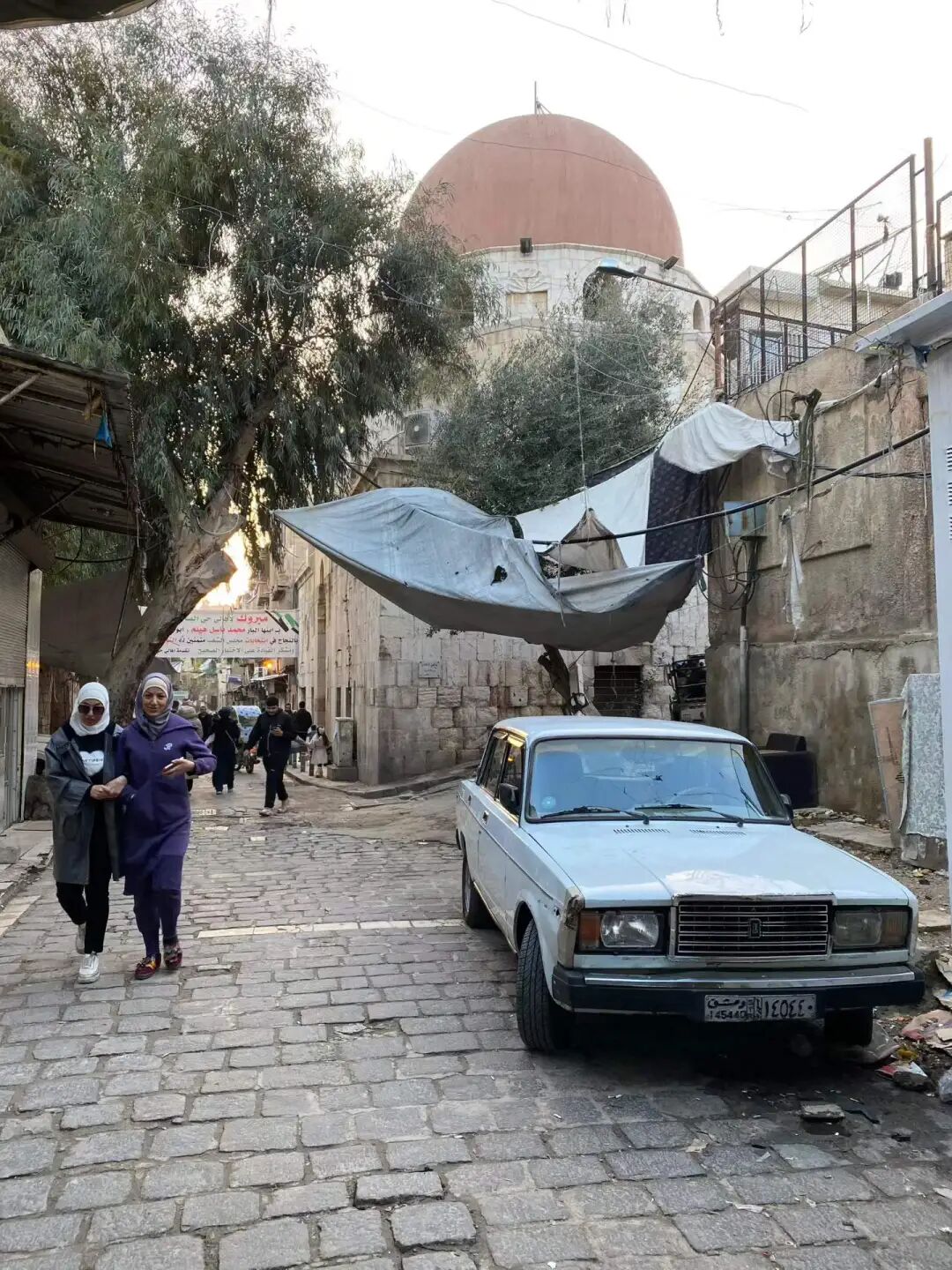
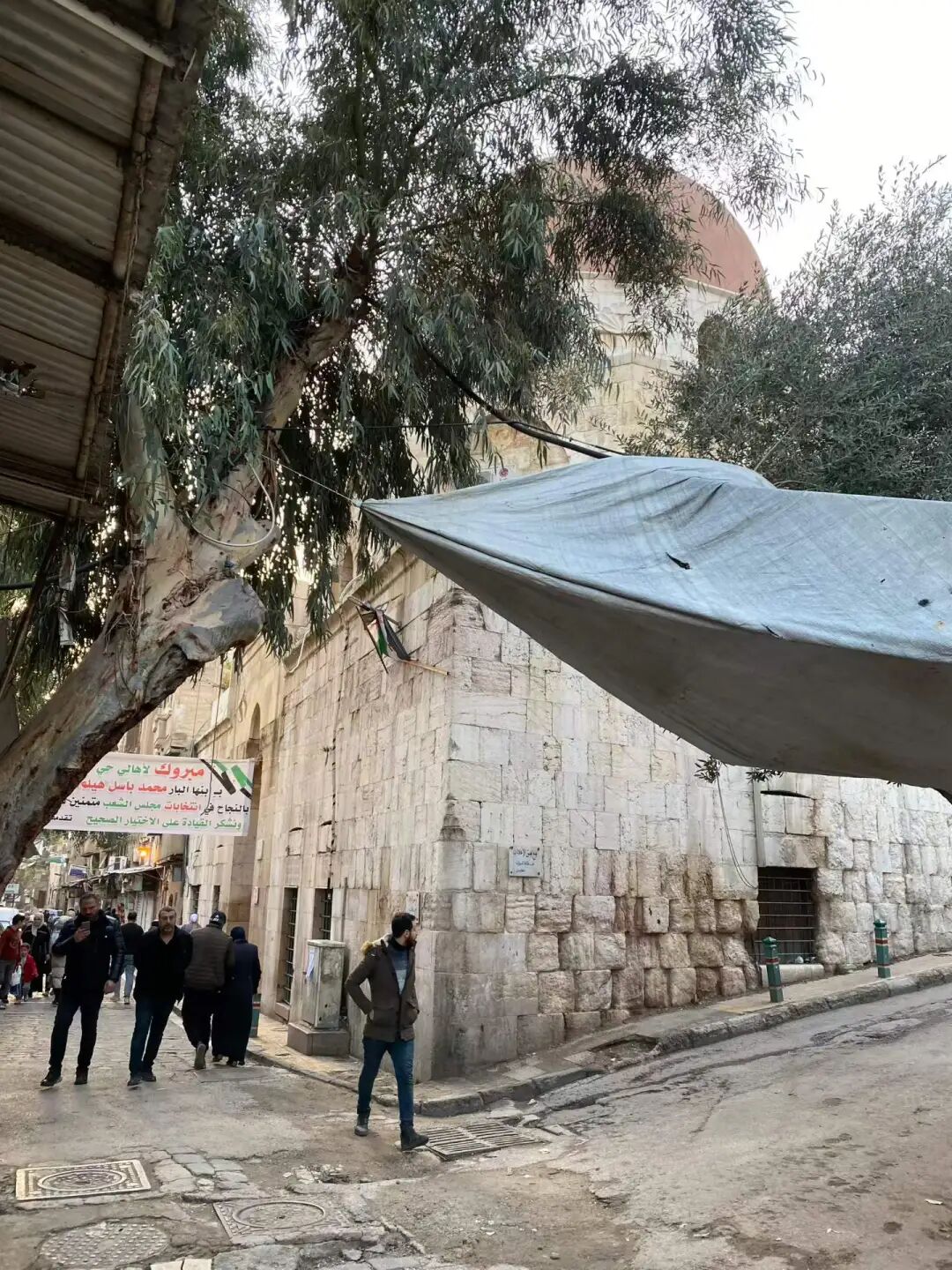
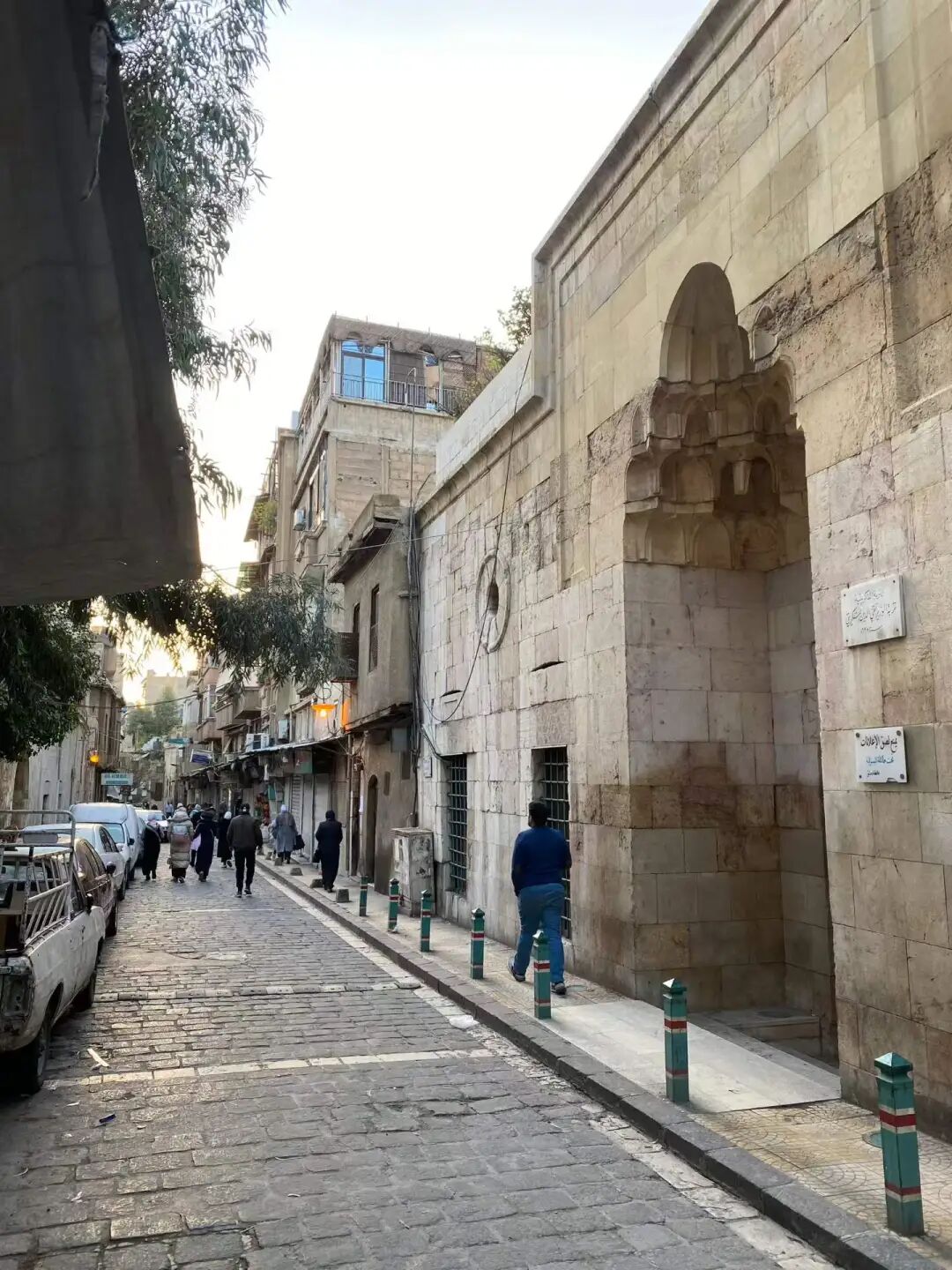
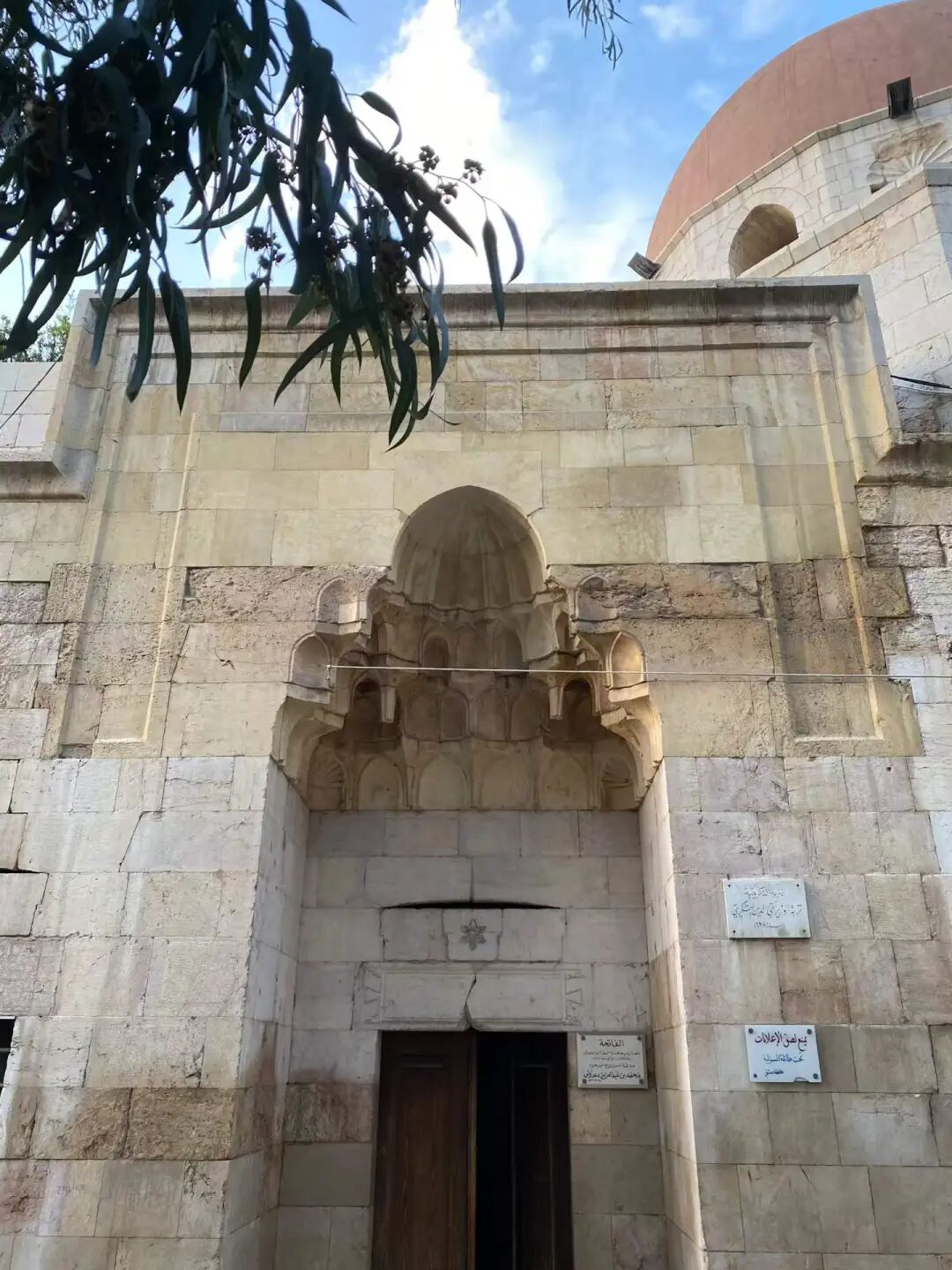
Rabia Khatun, the sister of Ayyubid founder Saladin, built the Sahiba Madrasa in 1233, and her tomb is inside. People call this madrasa a model of Ayyubid architecture because of its thick walls and beautiful carvings that only use simple geometric shapes.
This madrasa once taught the Hanbali school of thought, which was the mainstream school at the time. Today, it is a primary school for girls, and generations of local residents have studied here.
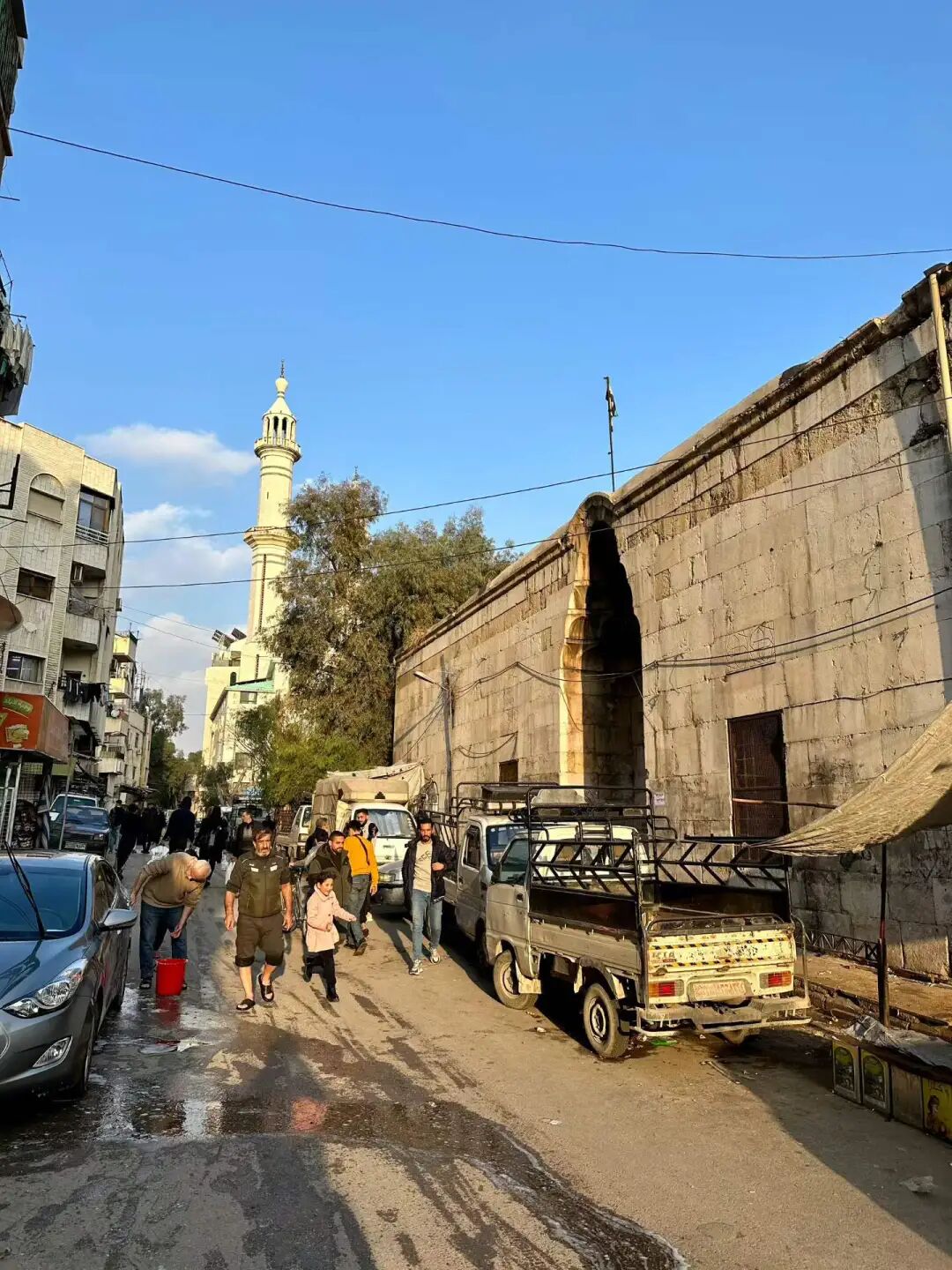
Juma Market, the main road of the Salihiya historic neighborhood in Damascus.
The market in Salihiya grew quickly during the Ayyubid dynasty as more people moved here from Jerusalem. The Juma Market in front of the gongbei of the Sufi sage Ibn Arabi only sold goods after Friday namaz at first, but it eventually became a permanent market while keeping the name Juma Market. It is still a great place for nearby residents to shop today.
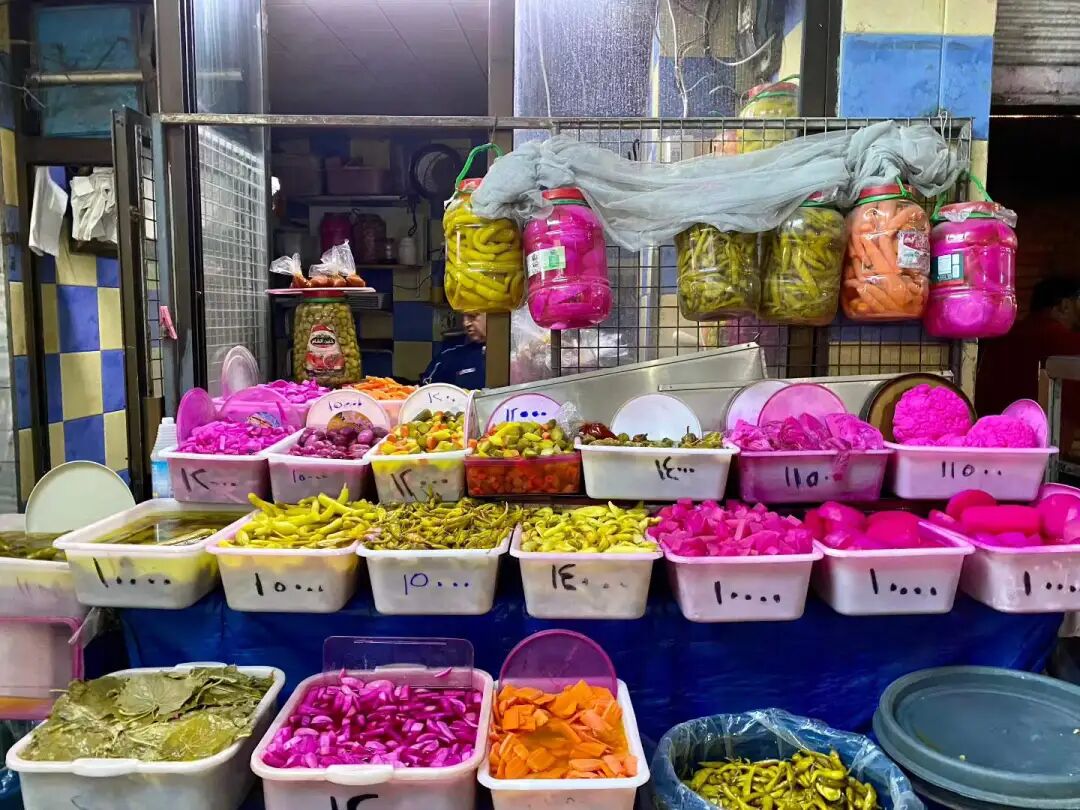
Handwritten signs at the market.
Nowruz in Beijing: Persian New Year Food, Music and Muslim Community Celebration
Articles • ali2007fr posted the article • 0 comments • 199 views • 2026-05-21 06:45
Summary: This Beijing Nowruz account records a Persian New Year gathering with food, music, guests from many countries, and the cultural details of the celebration as described in the source.
March 21st this year is the Persian New Year. Many countries influenced by Persian culture celebrate the Nowruz festival during this time, including Afghanistan, Albania, Azerbaijan, India, Iran, Iraq (Kurdish region), Syria (Kurdish region), Kazakhstan, Kyrgyzstan, Pakistan, Tajikistan, Turkey (Kurdish region), Turkmenistan, and Uzbekistan.
After the Afghan Taliban came to power in 2022, they stated that Nowruz would not be a public holiday, but they still allowed celebrations to take place. In Albania, Sunni Muslims, Catholics, and Orthodox Christians celebrate Nowruz together to welcome the arrival of spring. Shia Muslims believe that Nowruz is the day Imam Ali became Caliph, so they place special importance on it, performing special acts of worship and offering blessings.
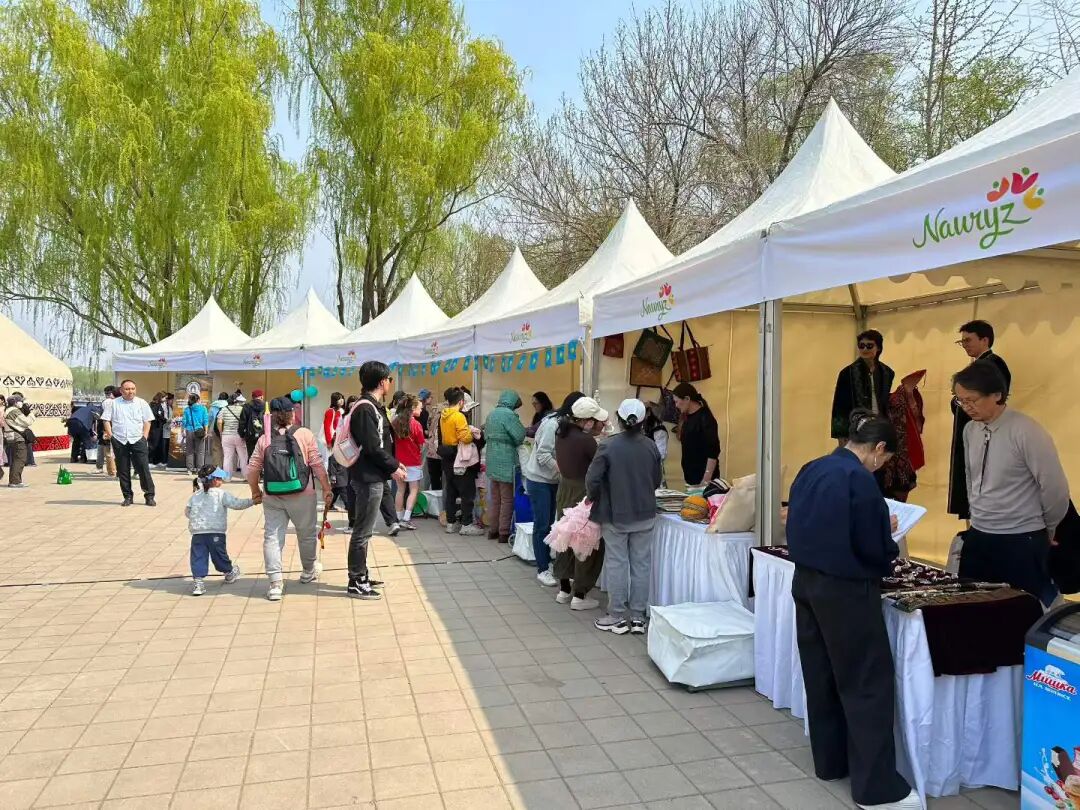
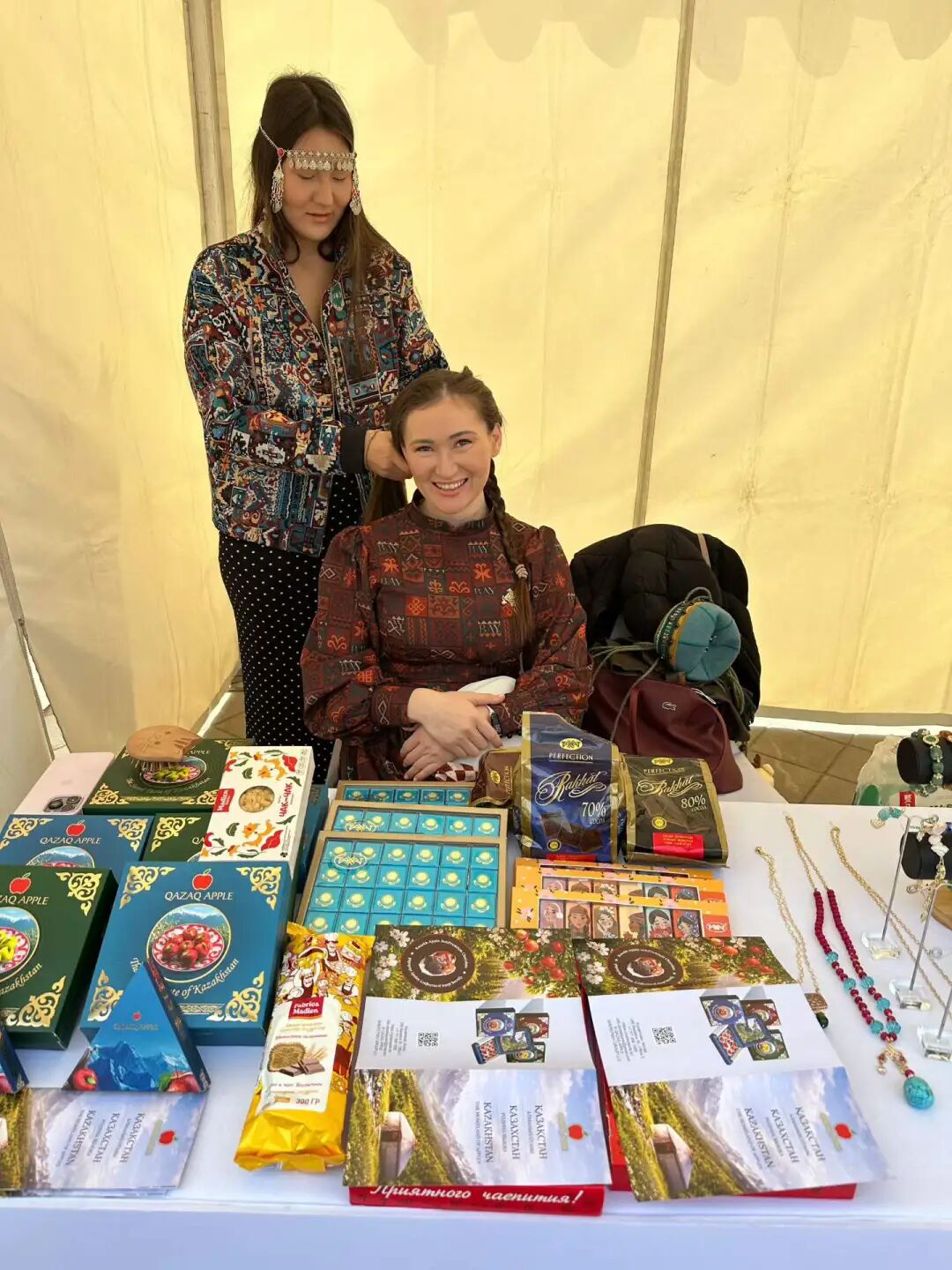
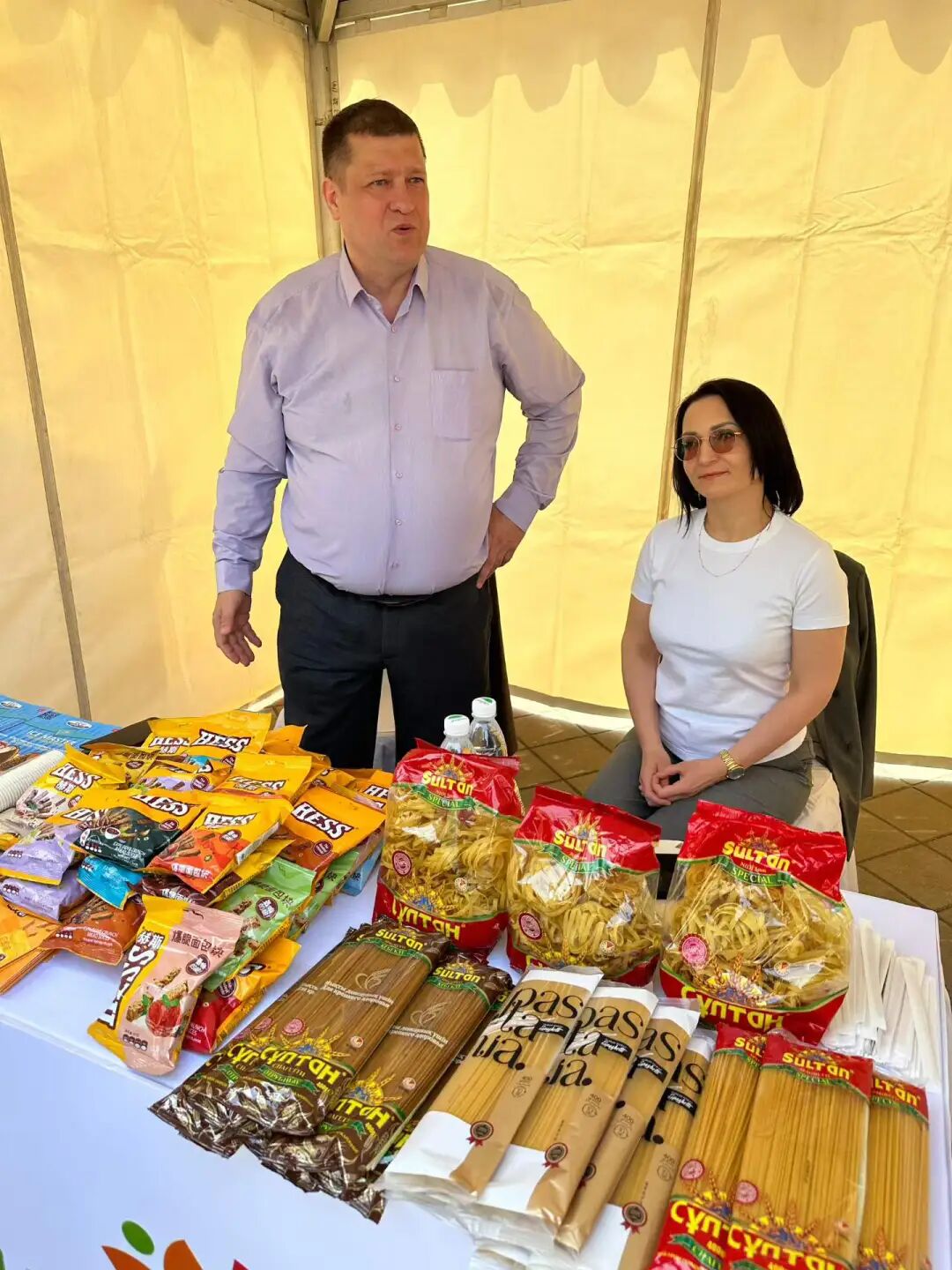
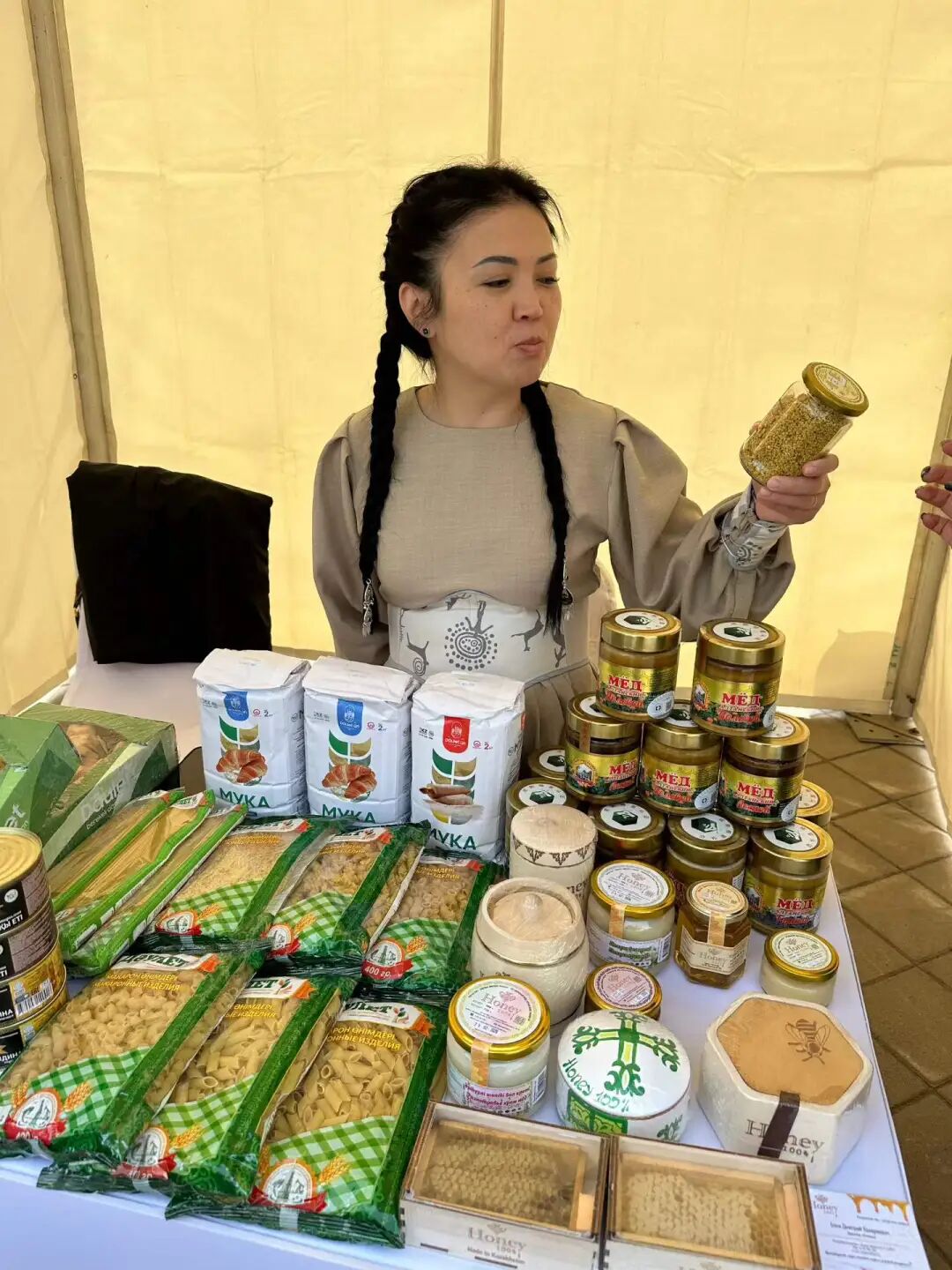
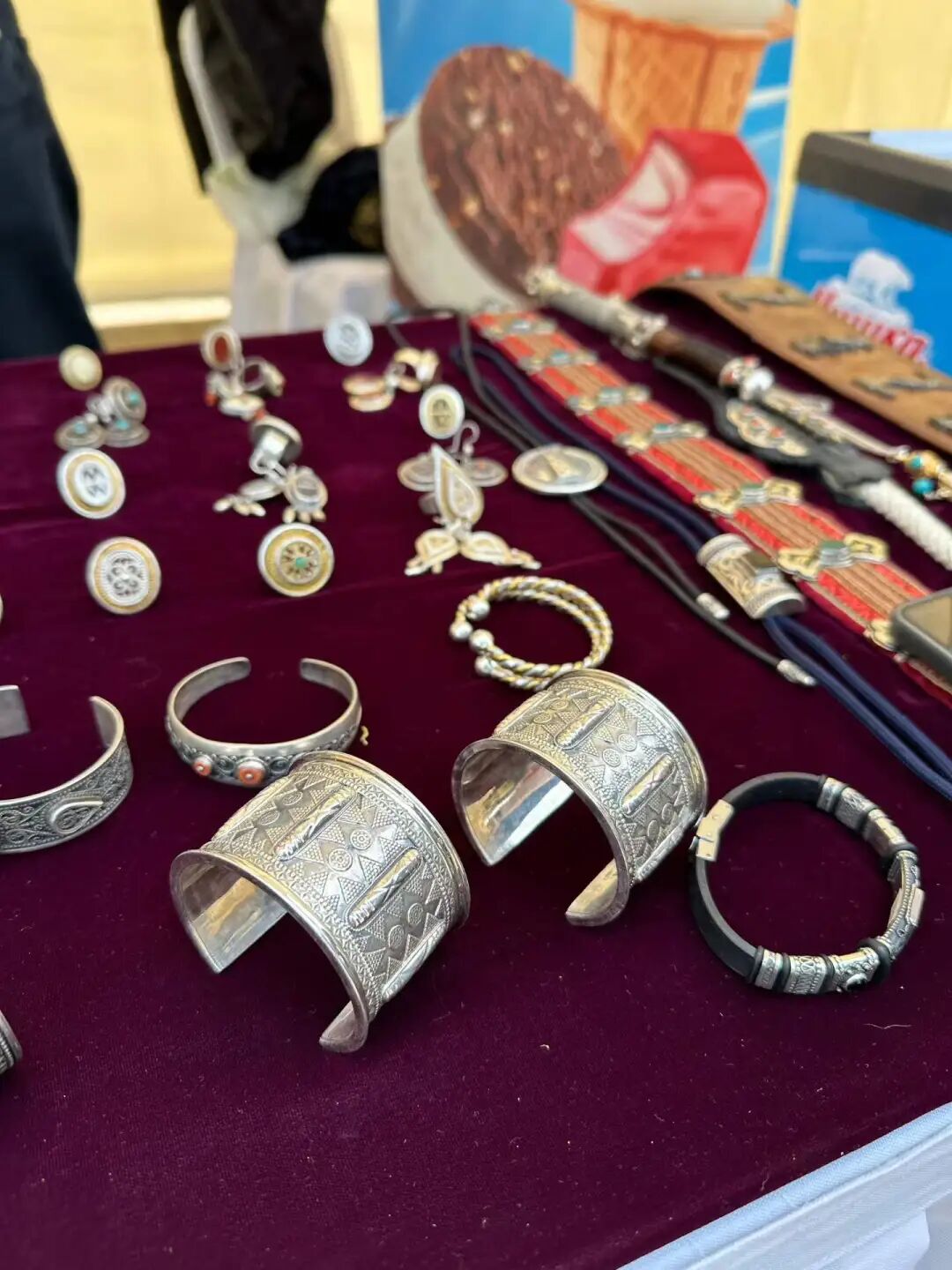
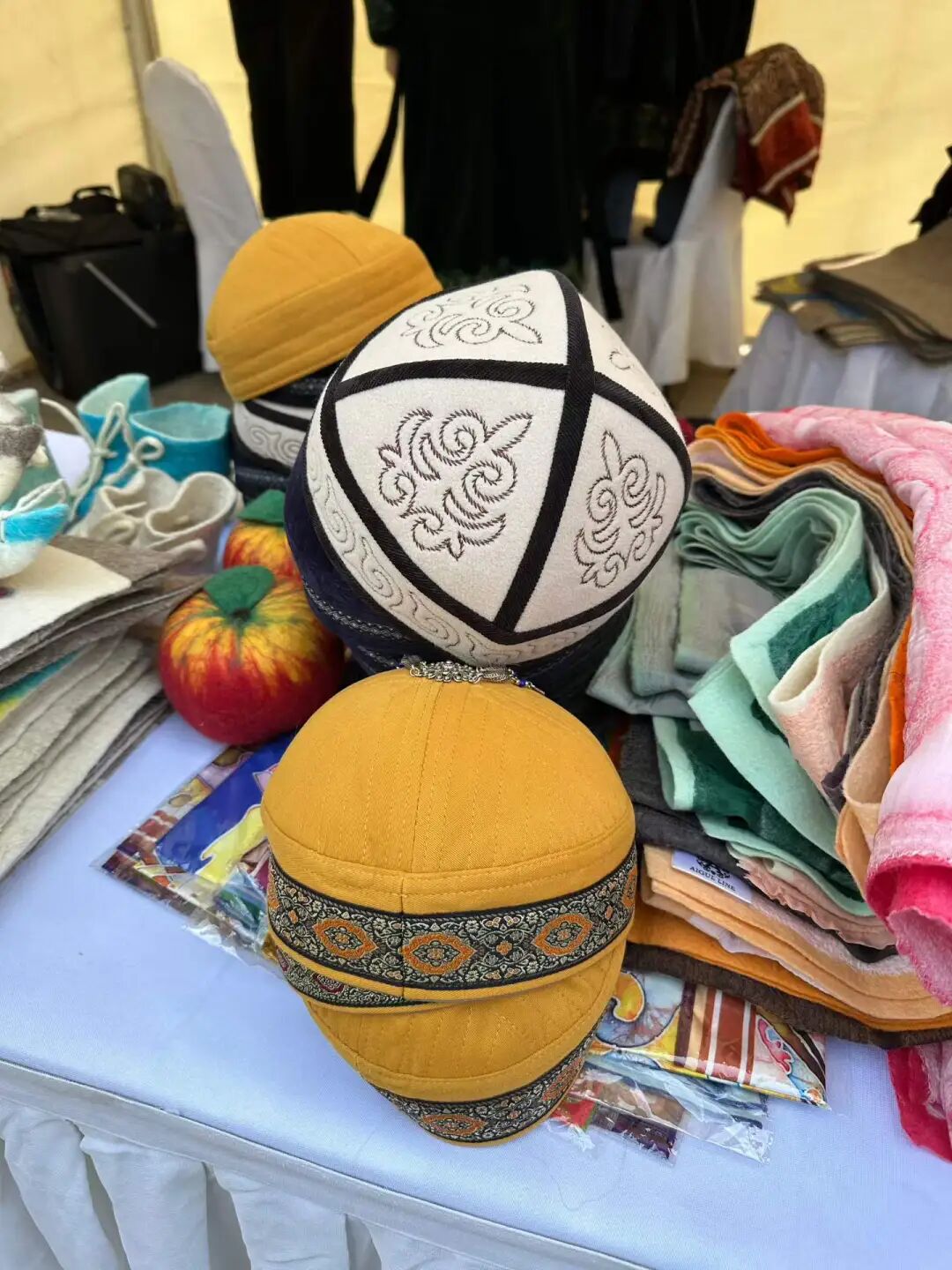
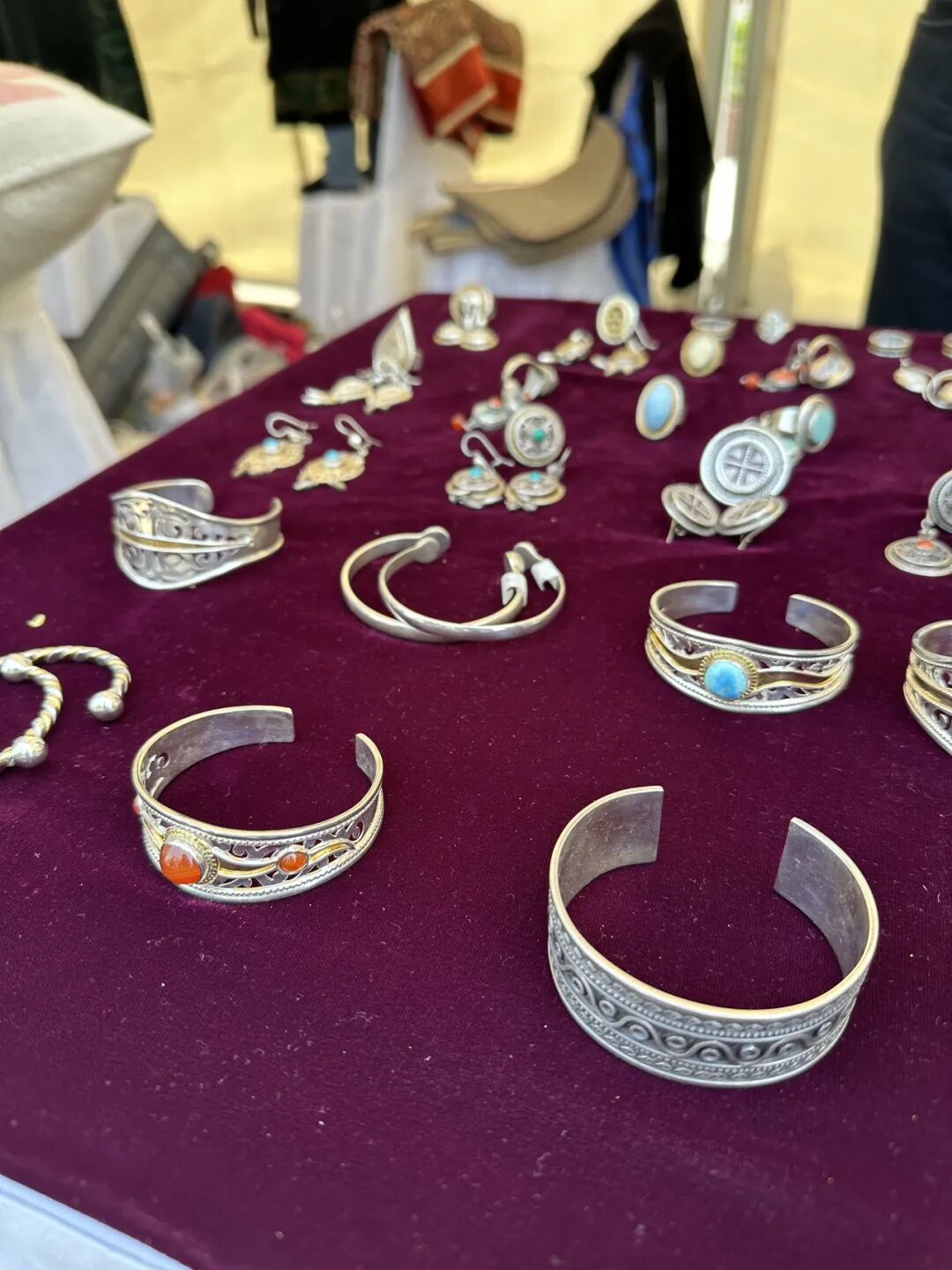
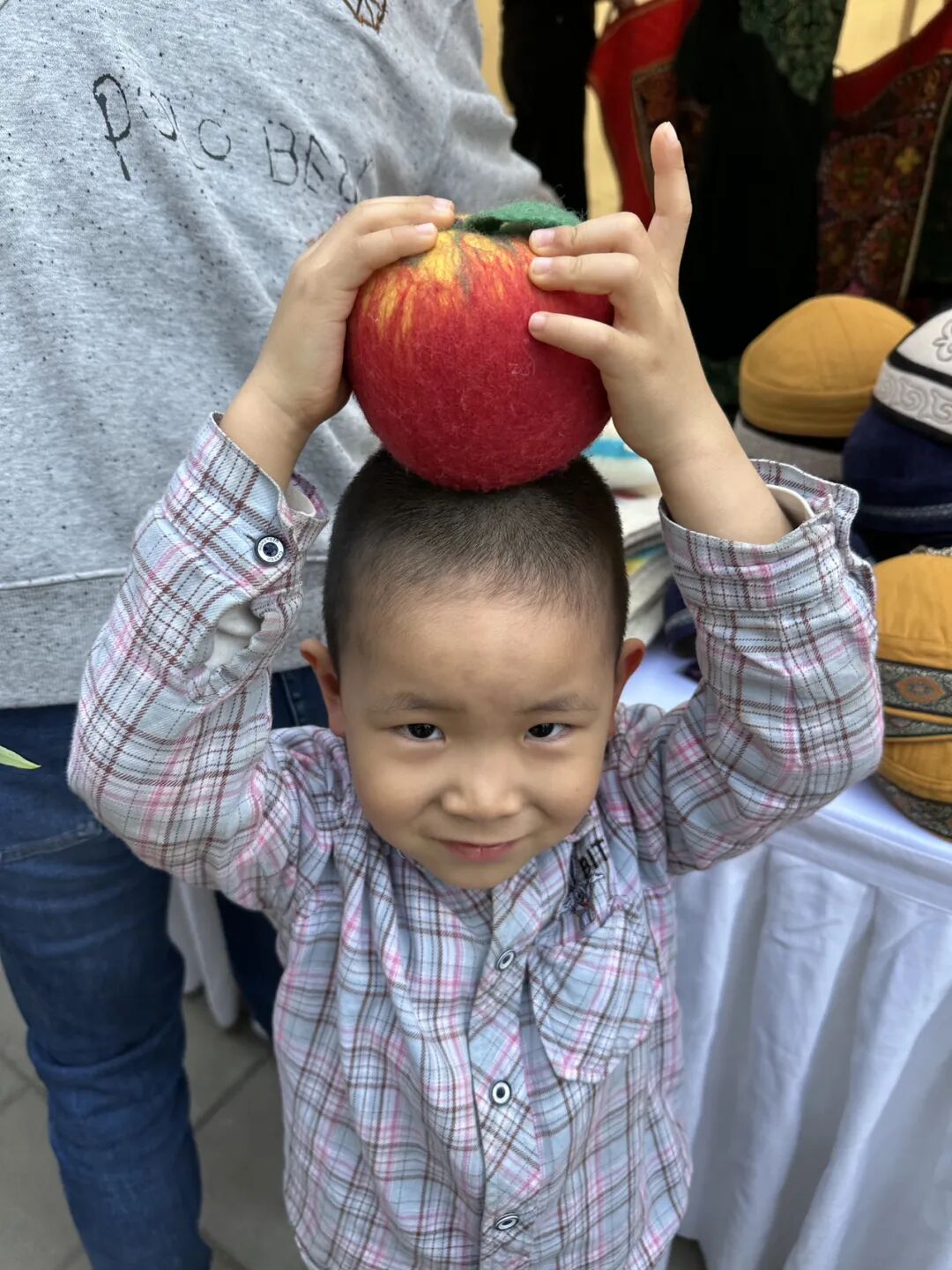
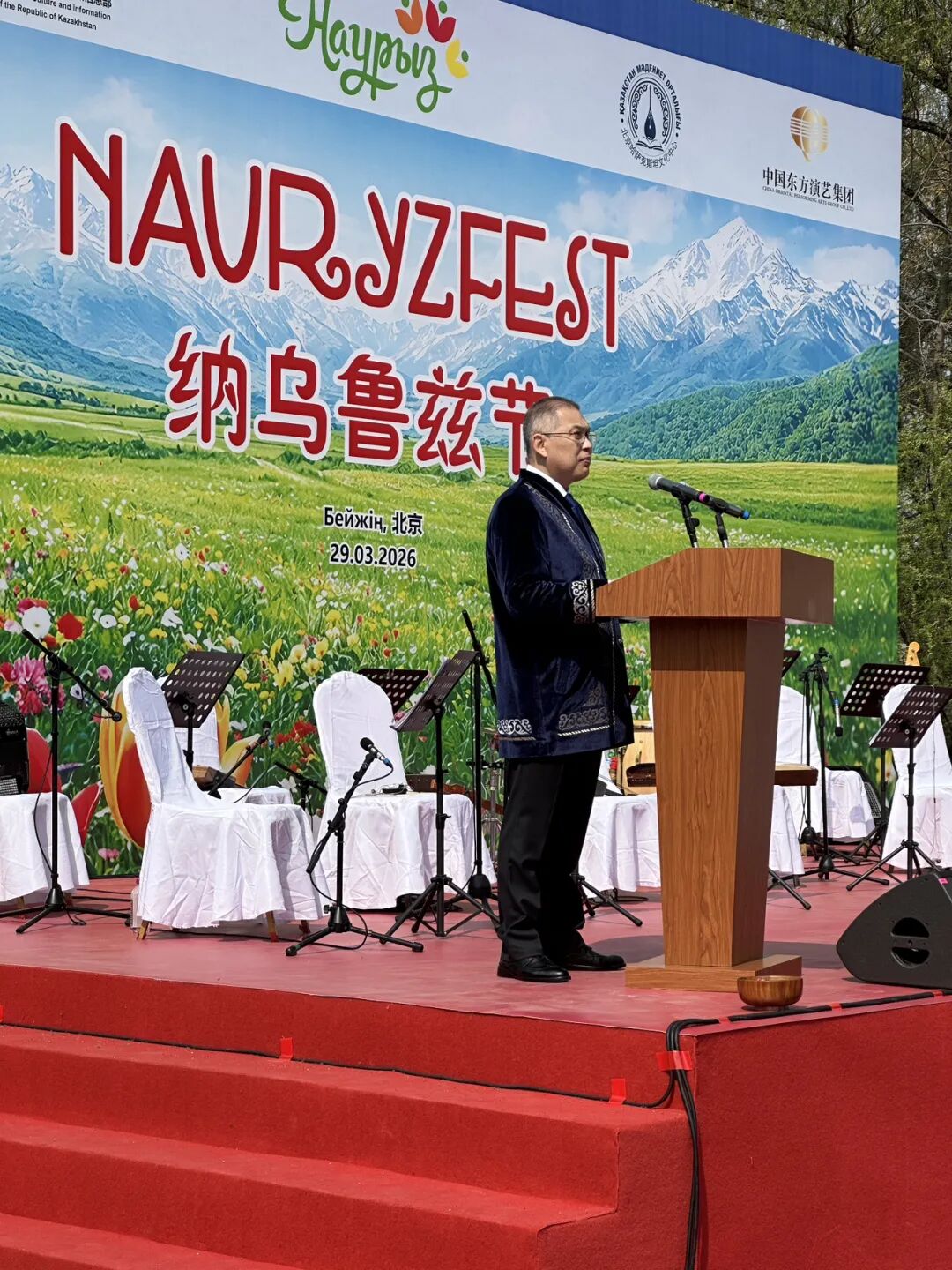
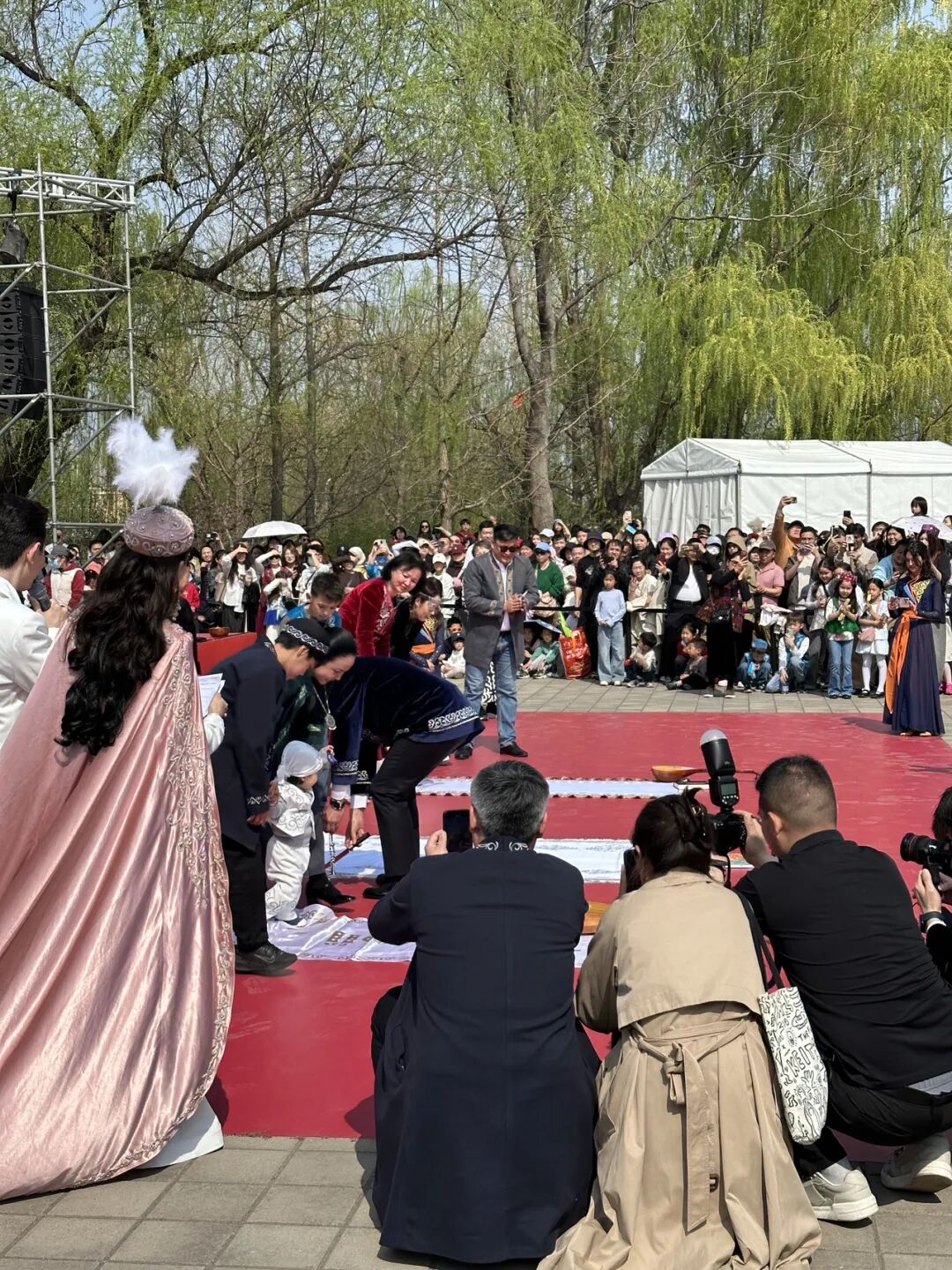
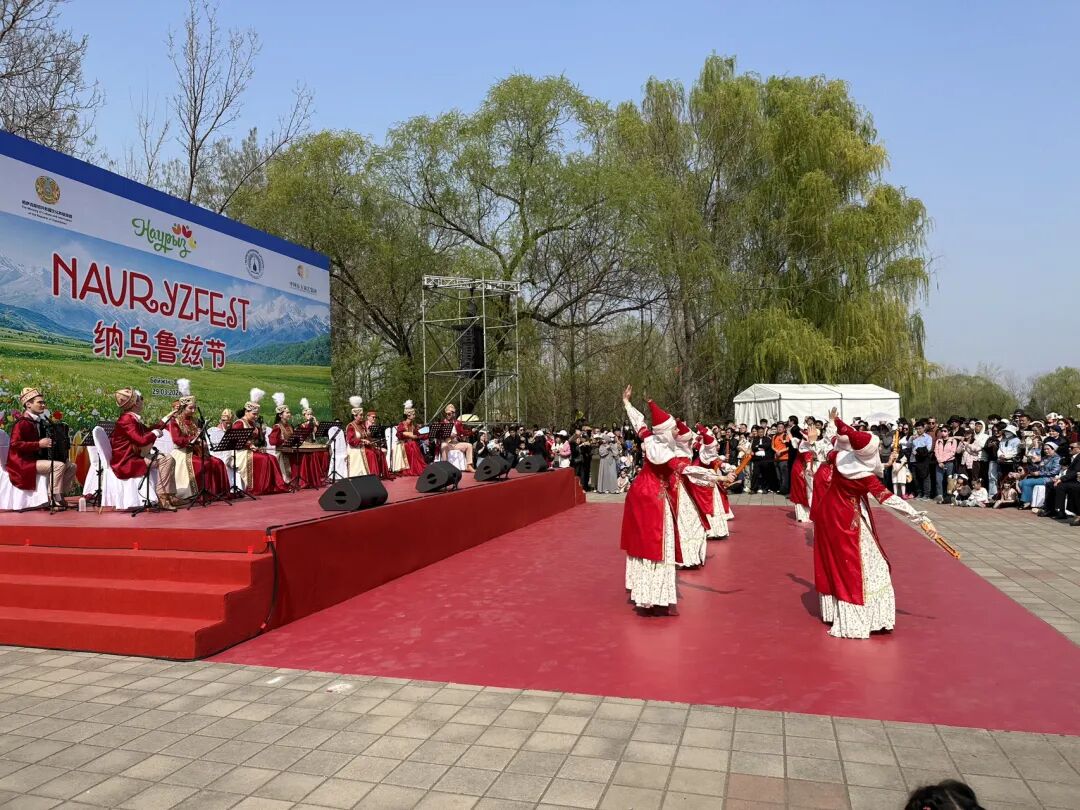
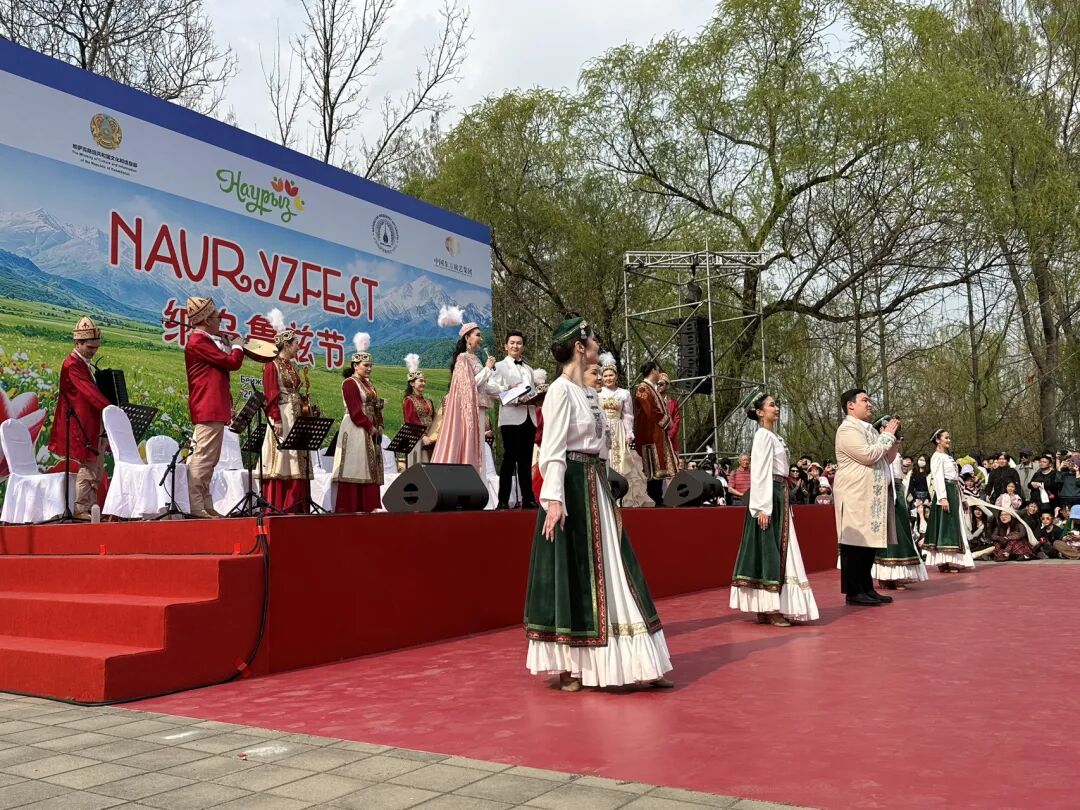
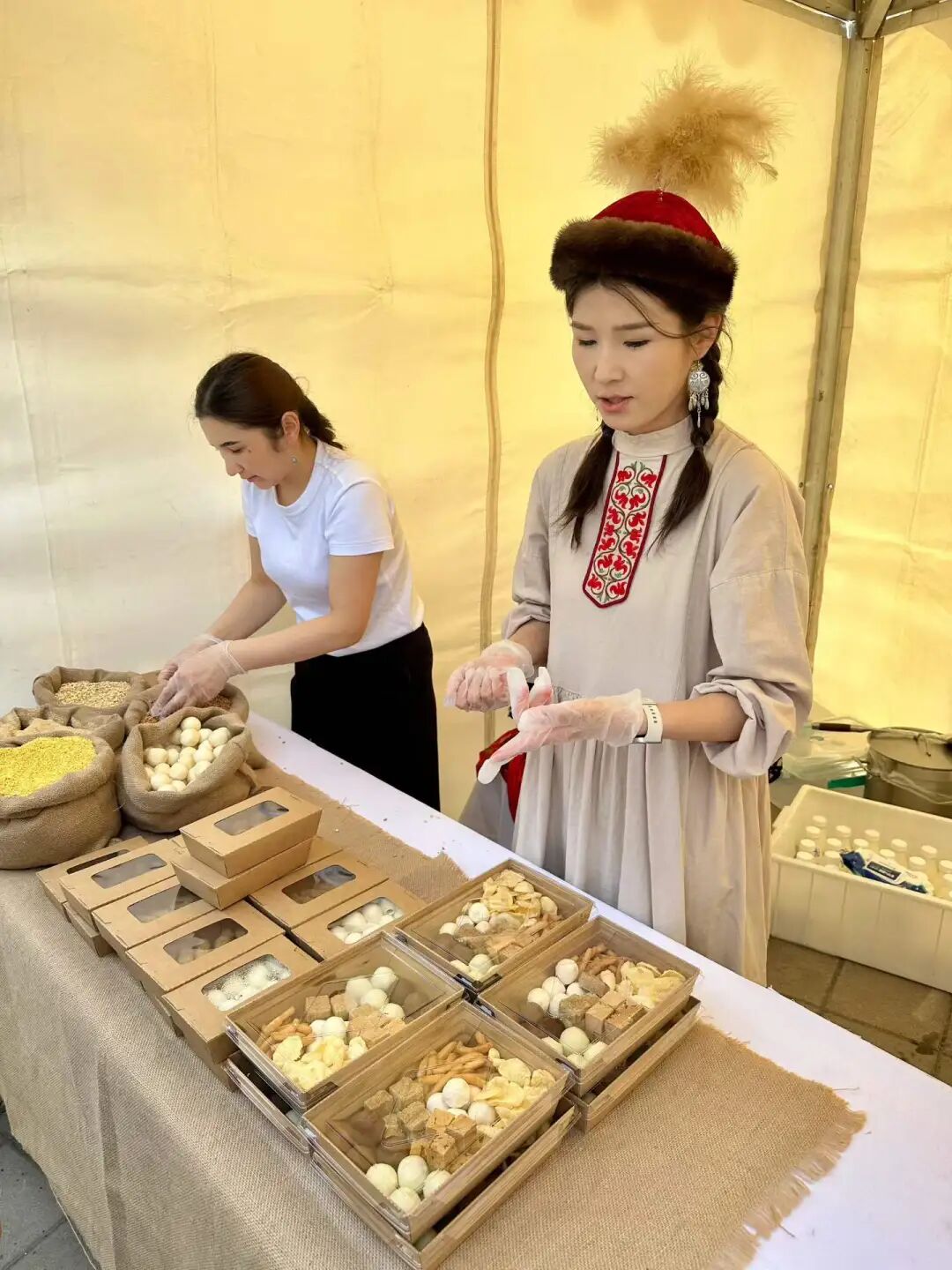
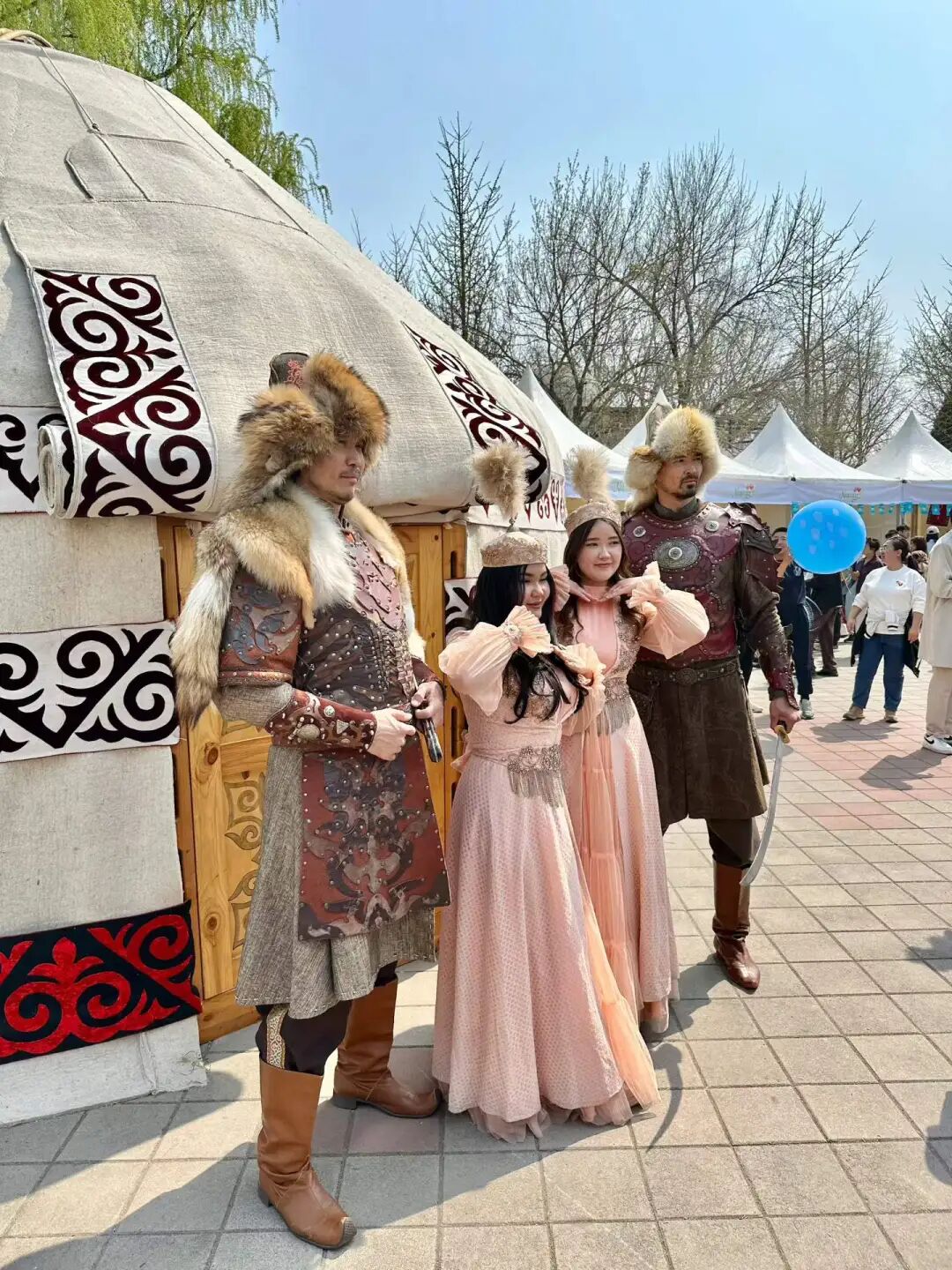
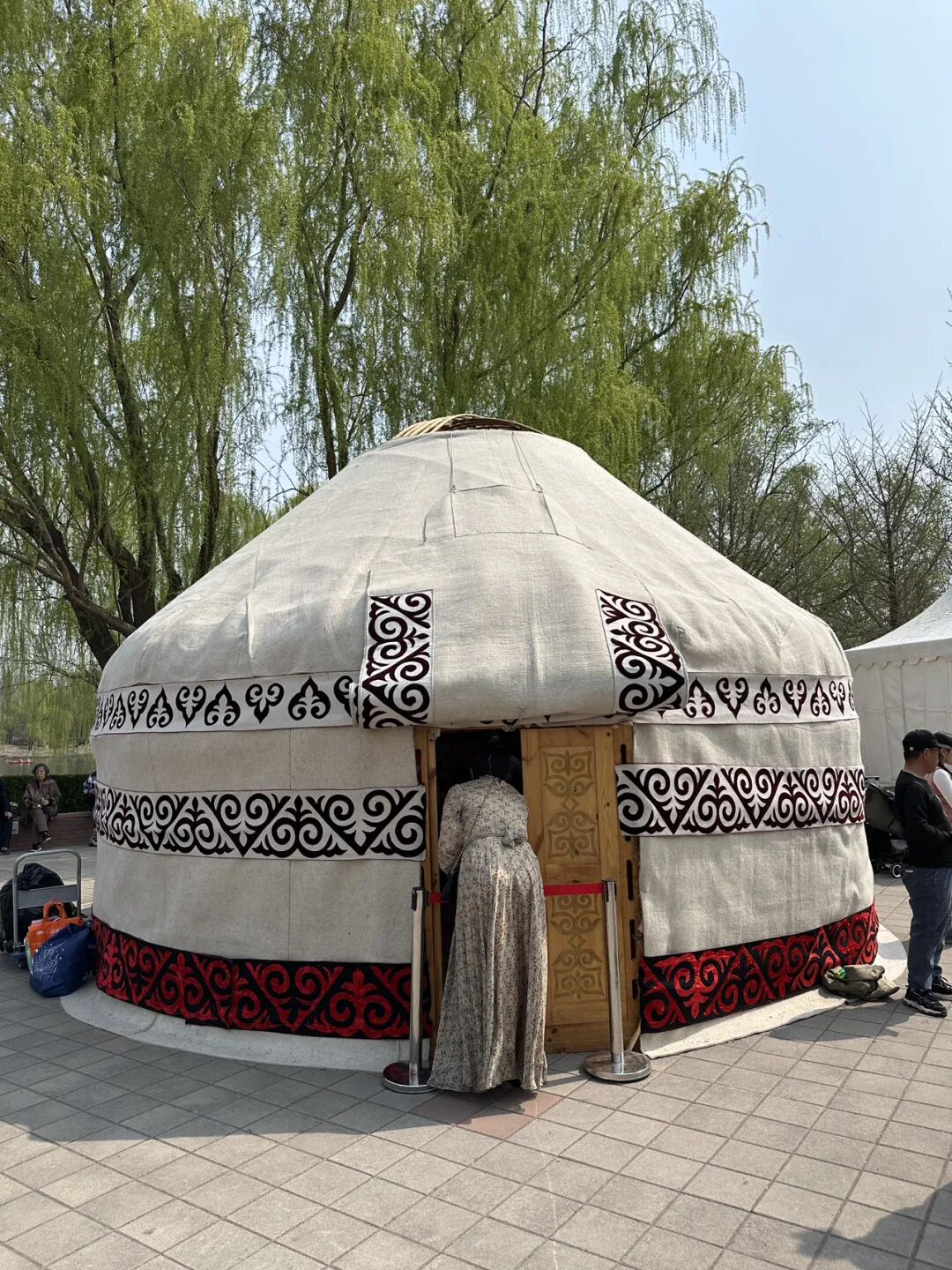
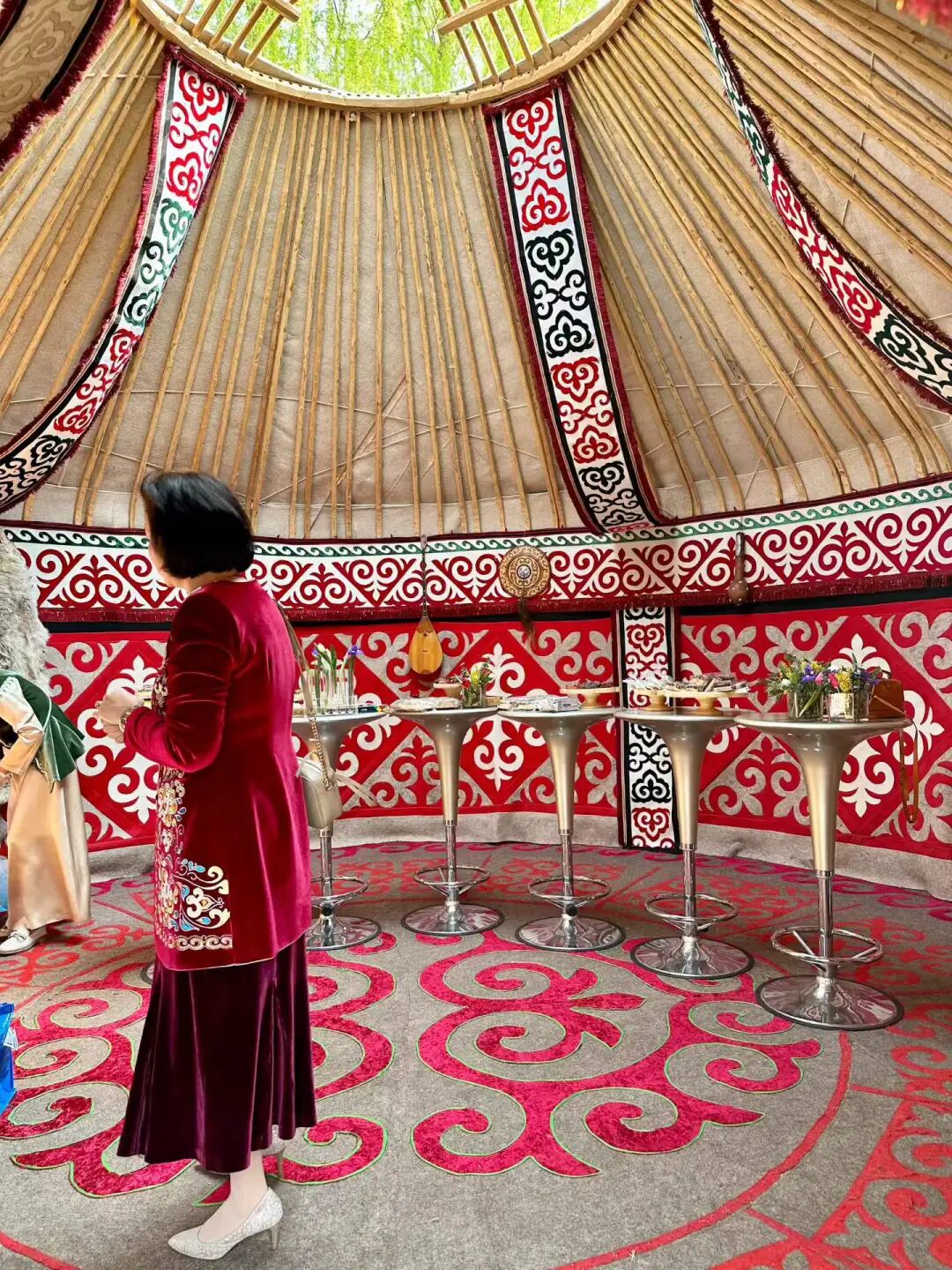
On Sunday, March 29th, the Embassy of Kazakhstan in China, the Ministry of Culture and Information of Kazakhstan, and the Kazakhstan Cultural Center in Beijing held a Nowruz festival event at Chaoyang Park in Beijing. They invited national-level orchestras and dance troupes from Kazakhstan, along with many Kazakh cultural products, festive foods, and traditional clothing. It was a great opportunity to learn about Nowruz and Kazakh culture.
Speech by the Ambassador of Kazakhstan to China.
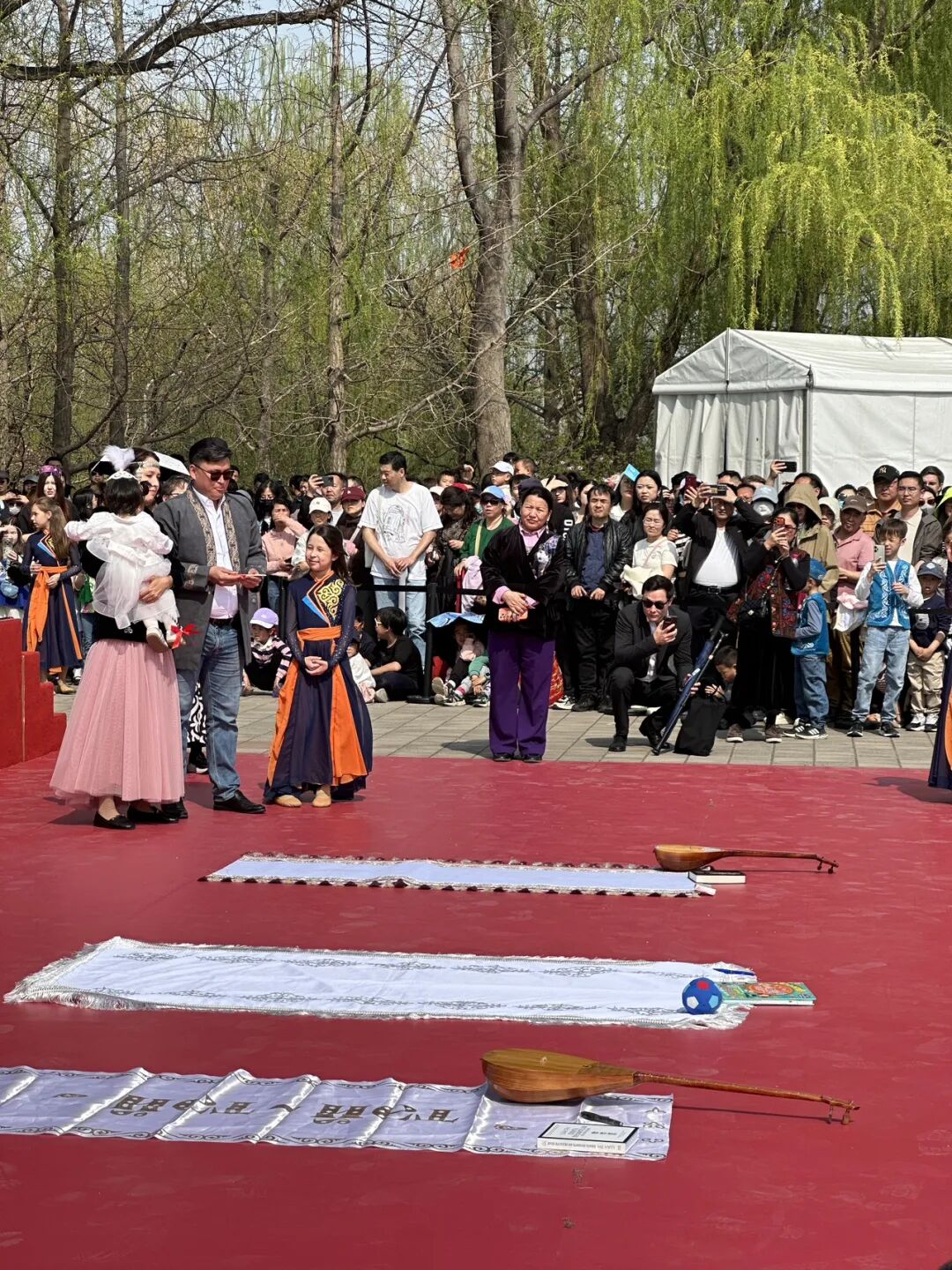
This shows the Kazakh first-steps ceremony (Tusau Keser). It is a life-initiation ritual held when a Kazakh baby turns one year old. The core of the ceremony is cutting the rope tied to the child's legs, which symbolizes breaking free from constraints and starting a path toward an independent life. After the rope is cut, an elder leads the child forward. Items like books, pens, a two-stringed lute (dombra), coins, and knives are placed on the ground for the child to grab, similar to the traditional 'grabbing the first birthday gift' custom. Finally, everyone offers blessings to the child and tosses candies, dried yogurt balls (kurt), and coins into the air.
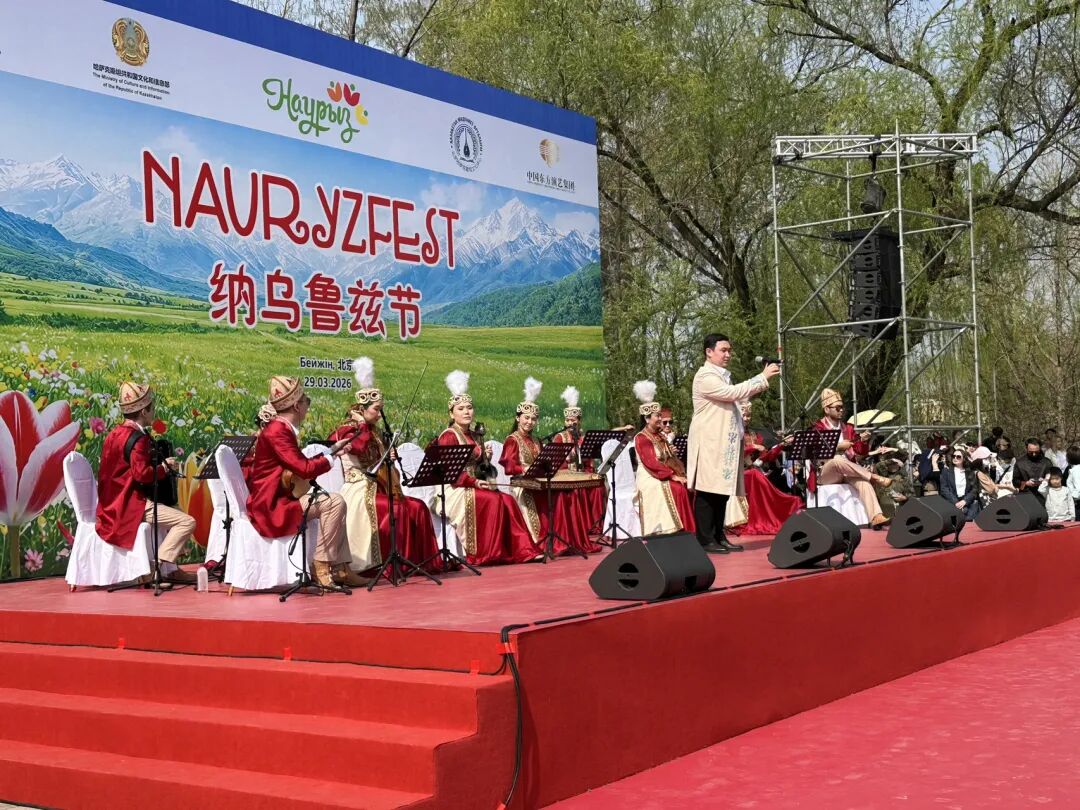
The event featured Kazakhstan's top orchestra, Astana Sazy (Rhythm of Astana). Here are a few clips of them accompanying excellent Kazakh singers.
Astana Sazy is the national folk orchestra of Kazakhstan, affiliated with the state performance organization 'Kazakh Concert.' It is the core group for promoting traditional music and cultural diplomacy in Kazakhstan. The orchestra uses traditional Kazakh instruments like the zither (jetigen), the two-stringed lute (dombra), and the bowed string instrument (kobyz). Rooted in Kazakh nomadic culture, they are famous for playing folk music.
A wonderful performance by two Kazakh musicians playing and singing with the two-stringed lute (dombra).
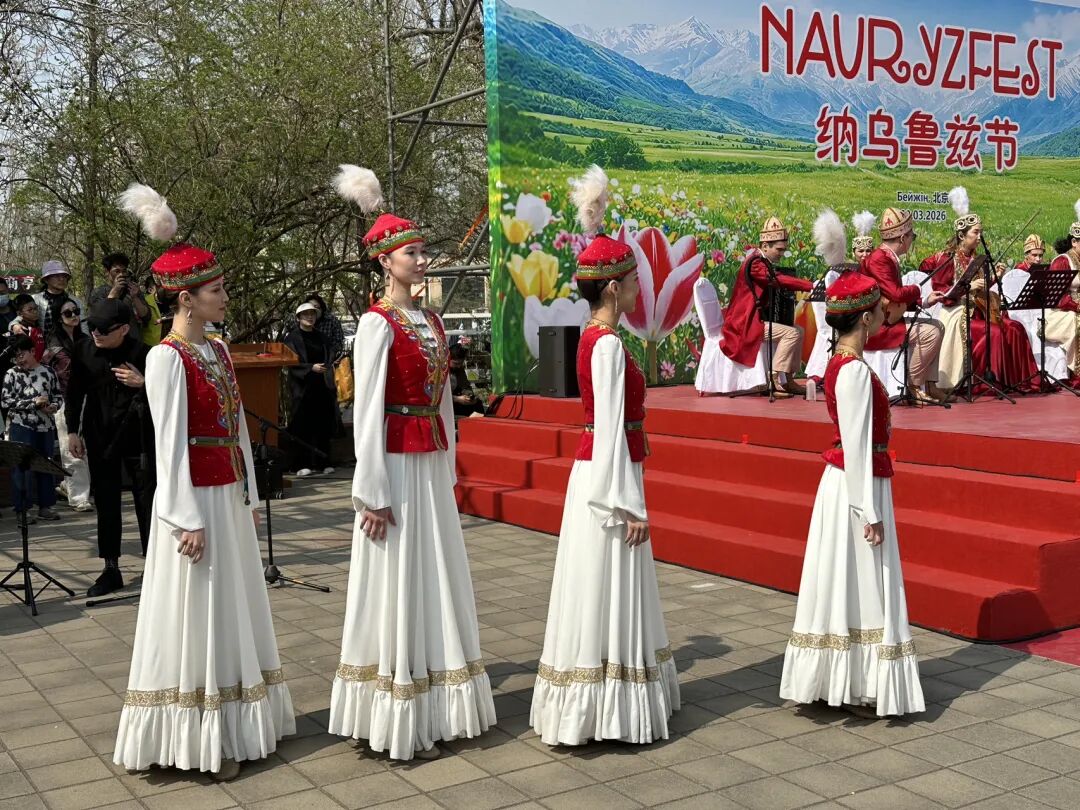
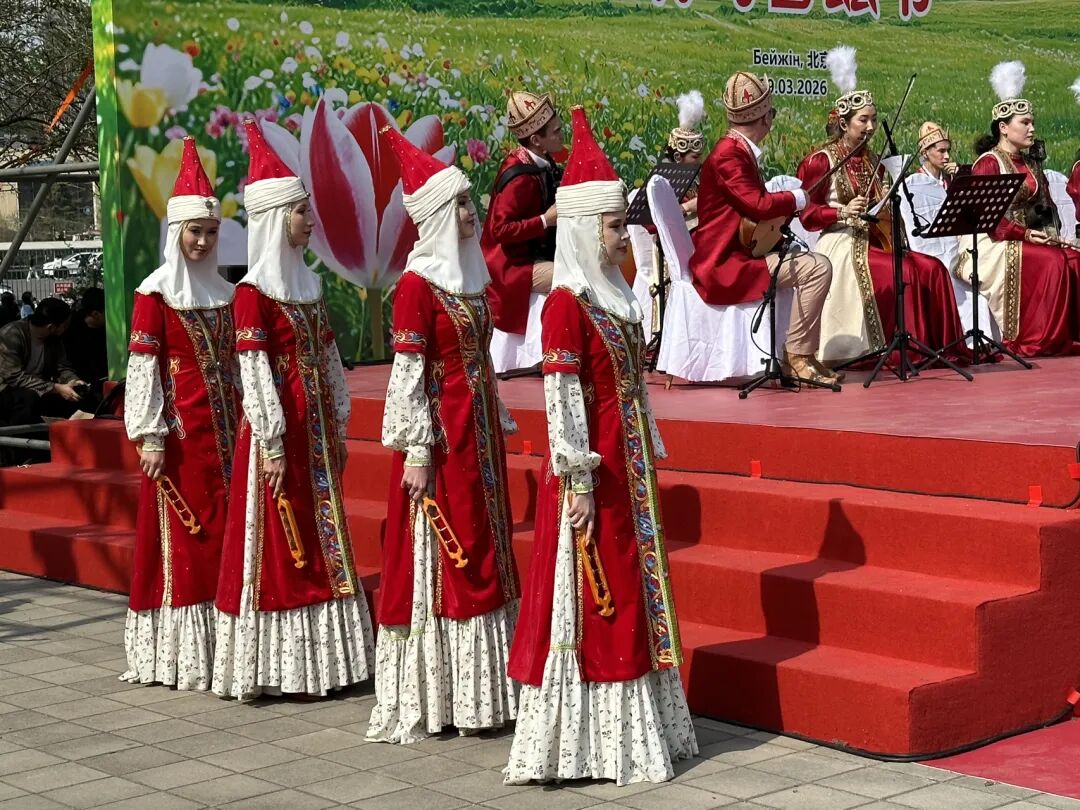
The event featured the national-level Kazakh folk song and dance troupe, Gulder Ensemble. The troupe was formed in 1969. It started as an all-female group and debuted with the dance drama 'Steppe Movement,' which was praised as 'a bouquet picked from the snowy peaks of Alatau scattered across the stage.' In the 1970s, the troupe traveled throughout the Soviet Union and later went abroad, touring in Belgium, Germany, Malaysia, and Cuba, training a group of legendary Kazakh dancers. The troupe was quiet for a time until it was relaunched in 2023 with a new lineup at the Kazakhstan Central Concert Hall, allowing a new generation of audiences to experience the charm of traditional Kazakh folk dance.
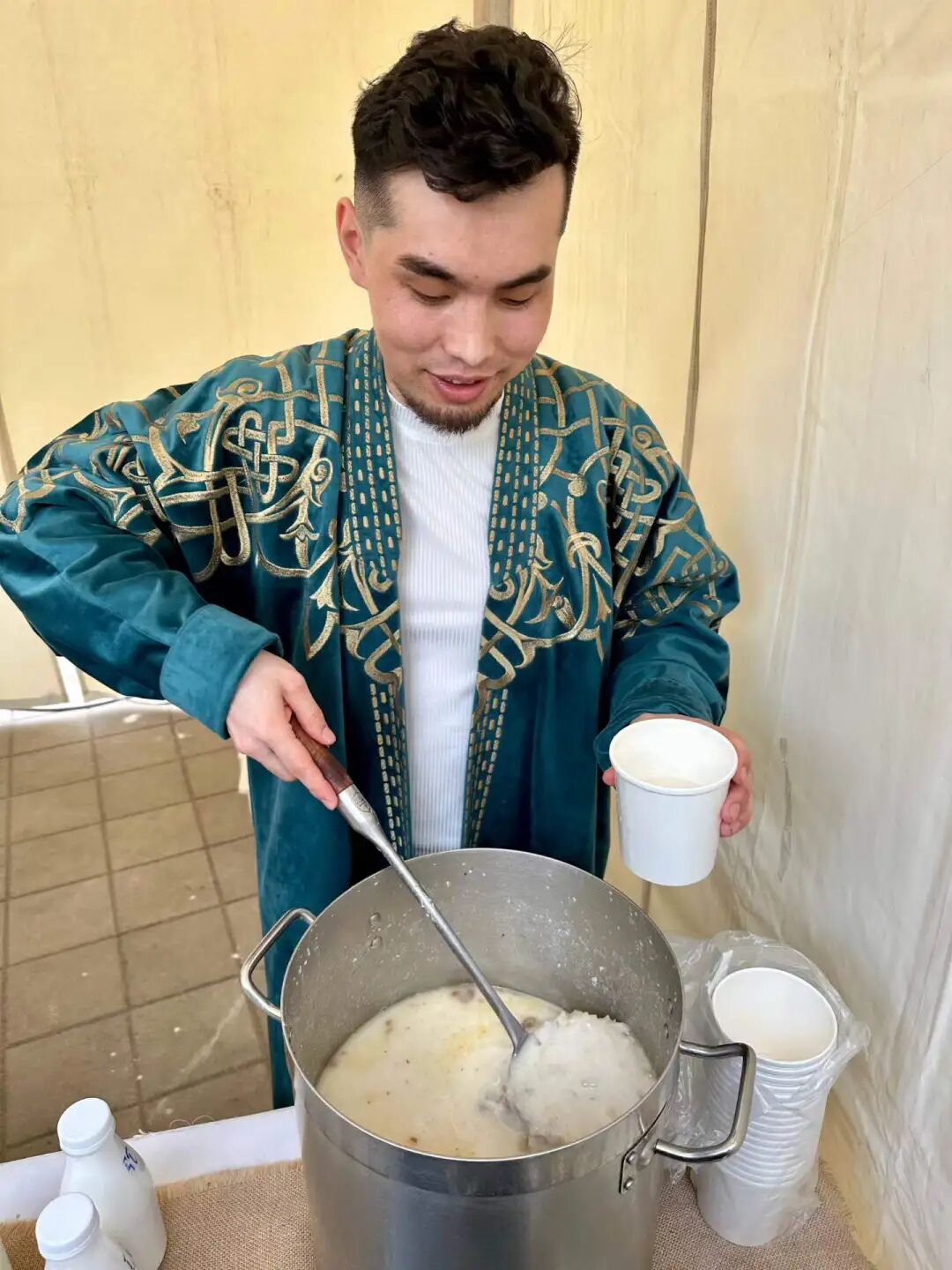
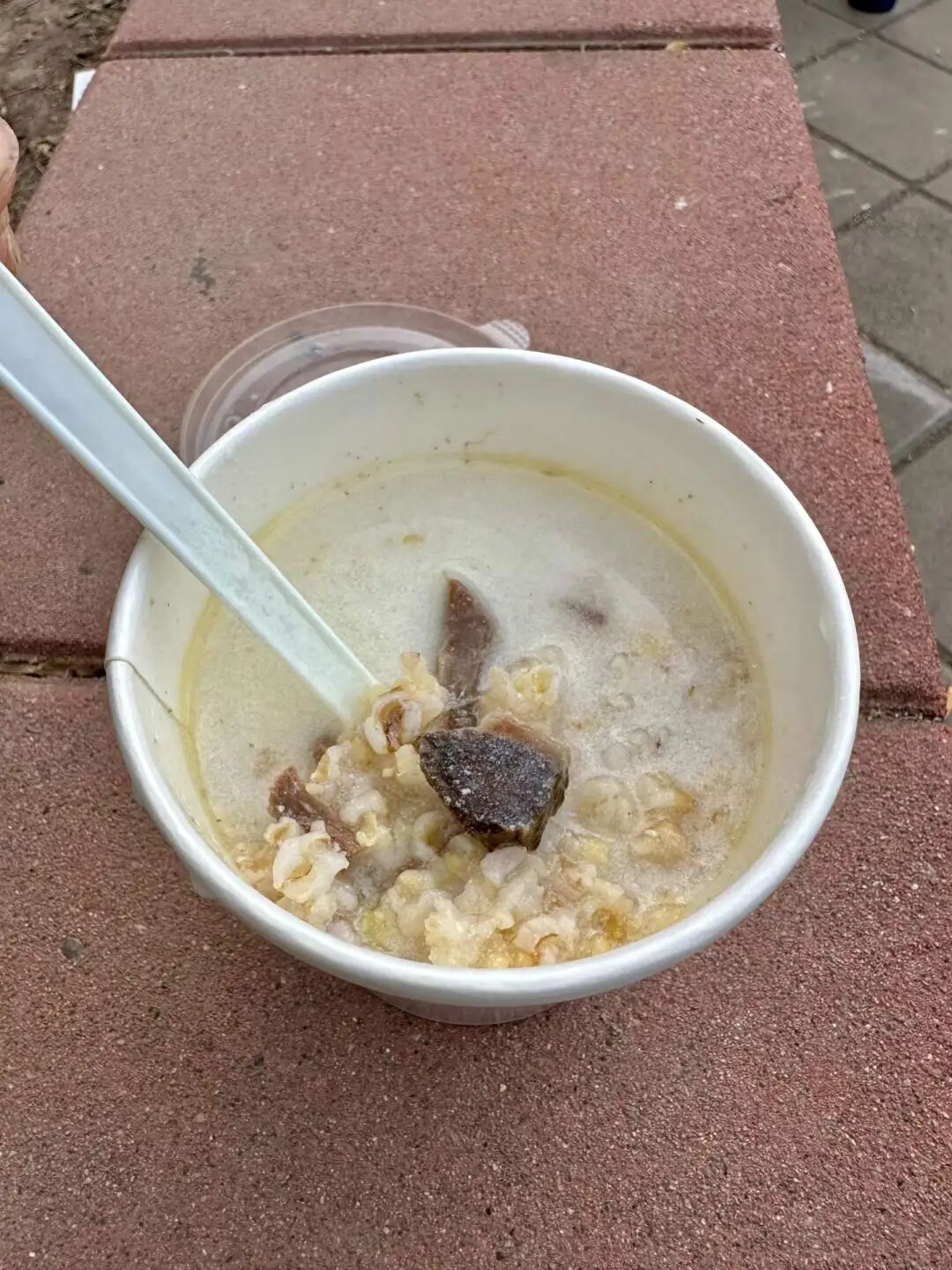
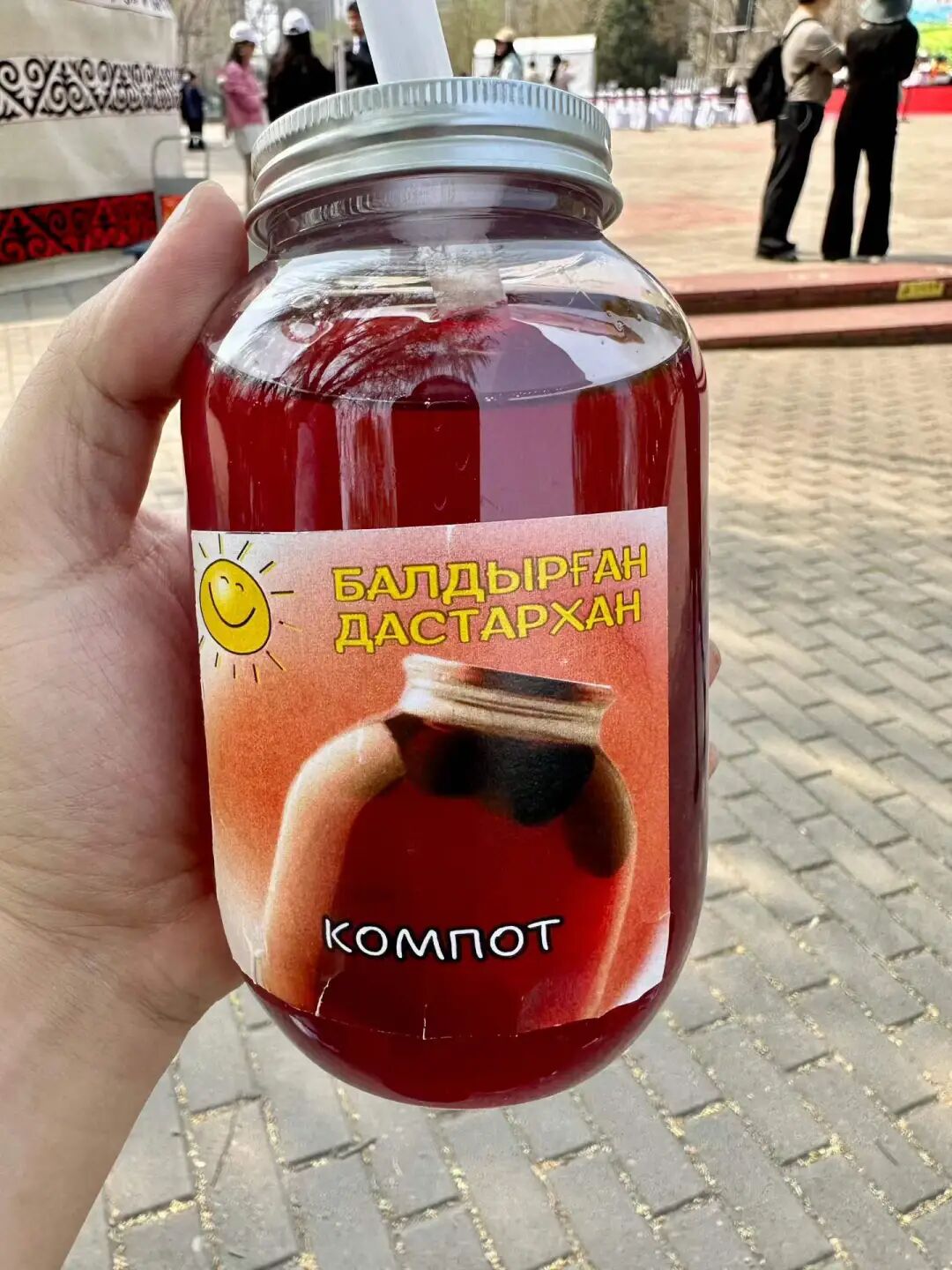
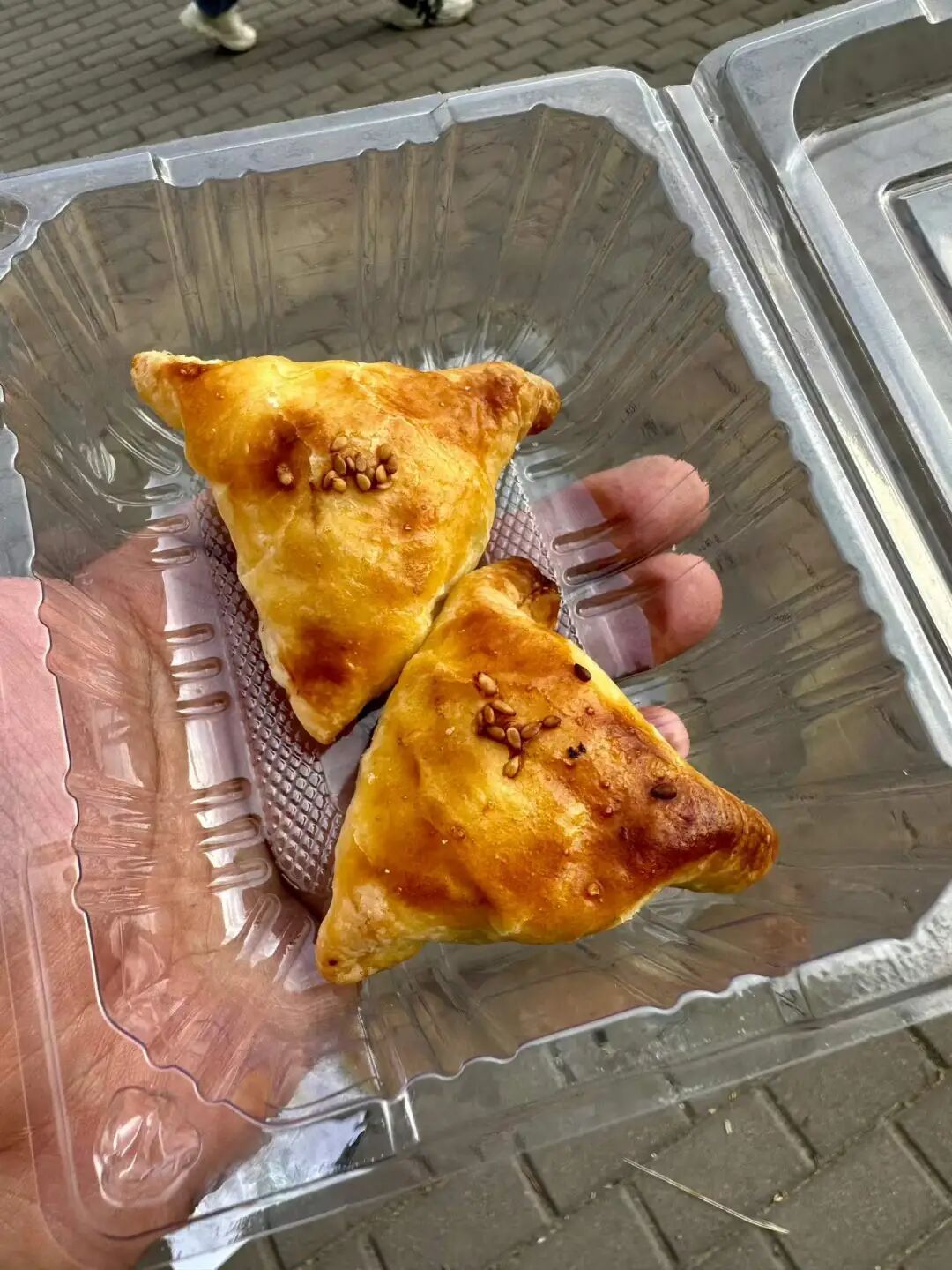
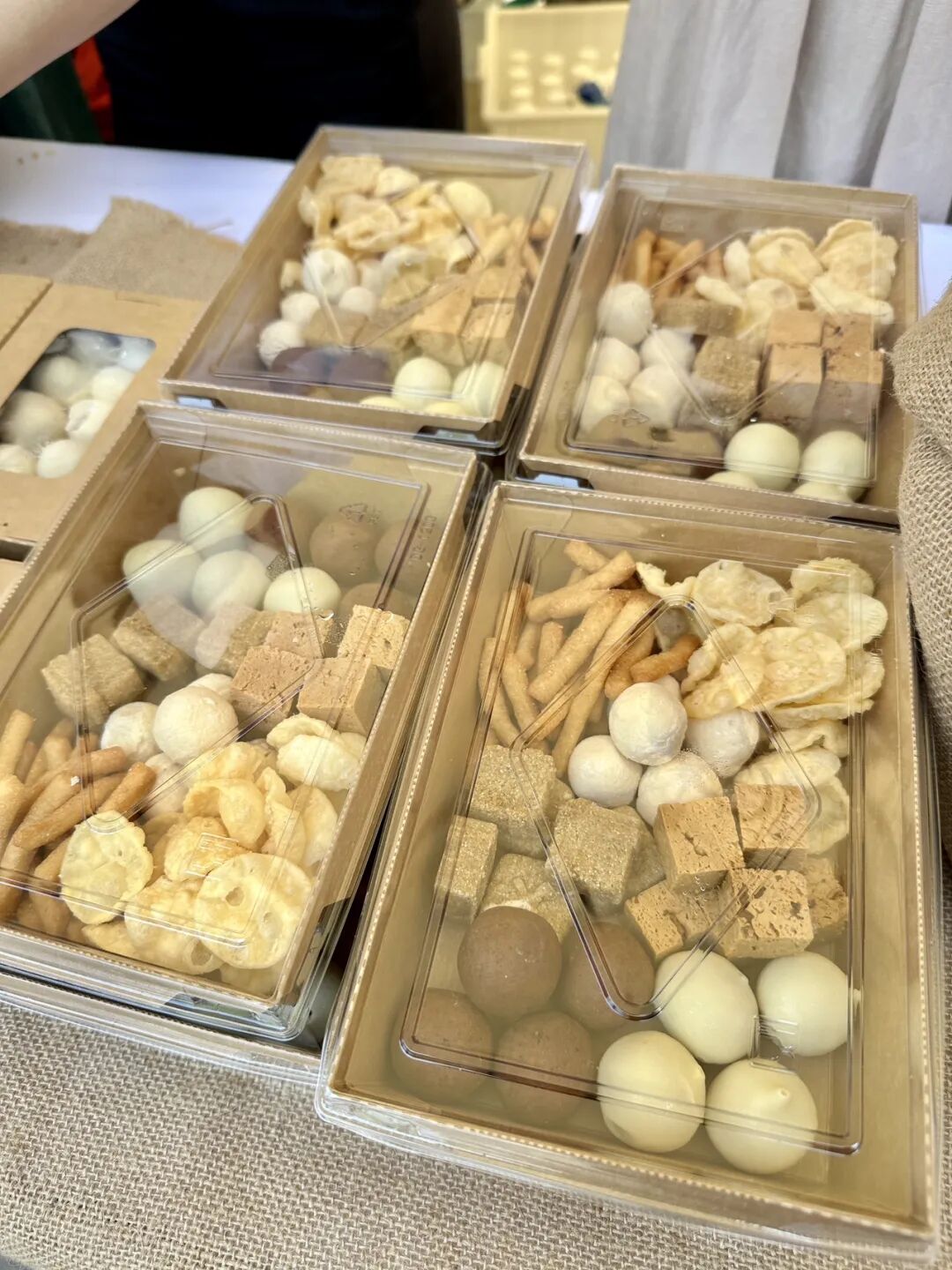
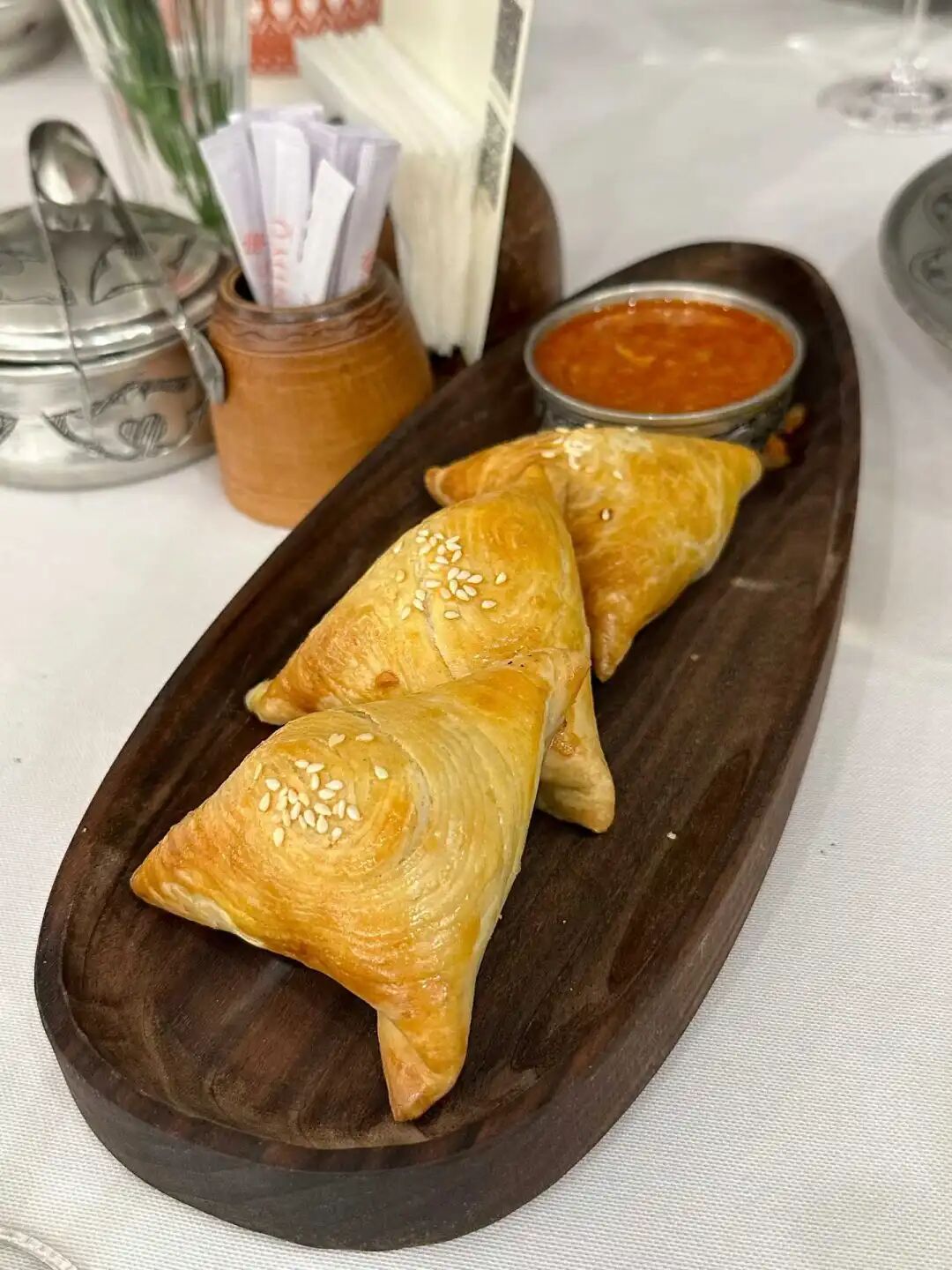
We drank Nowruz porridge (Nauryz Kozhe) and boiled fruit drink (Compote), and ate Kazakh fried dough pastry (Shek-Shek) and chicken baked buns (Samsa).
Nowruz porridge can only be eaten once a year during the Nowruz festival. Kazakh Nowruz porridge must contain at least seven ingredients, including barley, rice, wheat, smoked horse meat, dried yogurt balls (kurt), salt, and water. These foods are made with winter-slaughtered meat and stored grain, expressing the wish for abundance year after year.
Compote is made by boiling water with sugar and fruits like plums, cherries, or apples. In summer, fresh fruit is used, and in winter, dried fruit is used. I drank water boiled with dried apples, which is a drink frequently served at Kazakh banquets and in daily life.
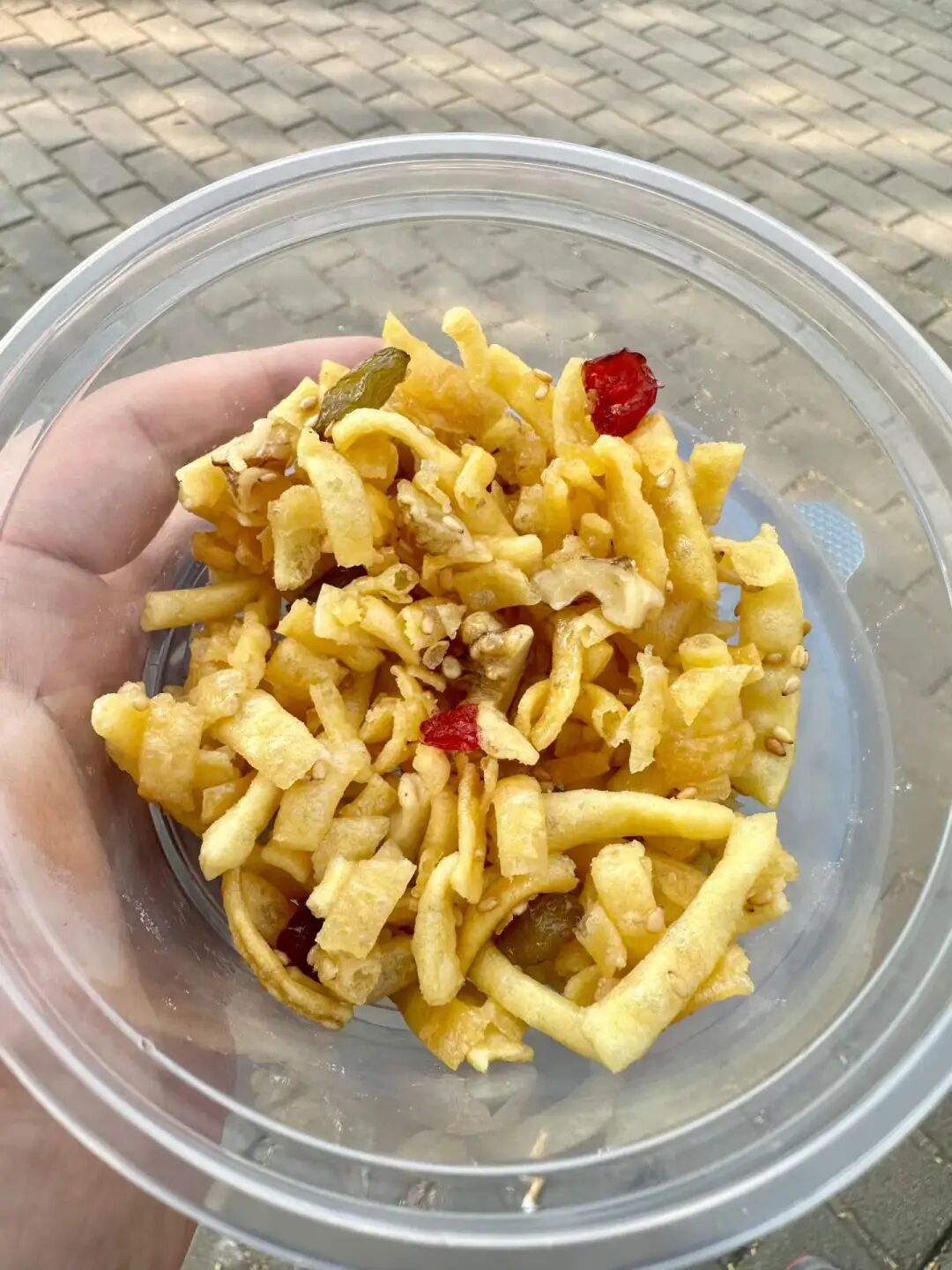
Fried dough pastry (Shek-Shek) is a must-have snack for Kazakh weddings, Nowruz, and other festivals, symbolizing sweetness, reunion, and a good harvest. To make it, flour is mixed with eggs, rolled into strips, cut into pieces, and fried until golden and crispy. Then, honey syrup is drizzled over it, and it is sprinkled with nuts and dried fruit after cooling. Honey cake (chak-chak) is very common in Tatarstan and among other Central Asian peoples. The Tatars call it chak-chak, and I even visited a chak-chak museum in Kazan.
Everyone took turns taking photos with the Kazakh warriors, who were at least two meters tall.
Kazakh shredded meat pilaf (plov) is full of carrots.
Fried dough puffs (baursak).
During the Nowruz festival, the Kazakh restaurant Sandyq in Beijing hosts traditional Kazakh music performances every night at 7:30, and they give away free fried dough puffs (baursak) and Nowruz porridge.
We also ate sheep tail and liver (kuyryk bauyr), meat-filled pies (baramysh), horse meat noodle soup (tomyrtqa), and millet milk tea (talqan), which are all classic Kazakh dishes.
Kuyryk bauyr literally means sheep tail and liver. It is stir-fried with only salt and served with yogurt. This is a classic dish for Kazakh engagement ceremonies. After the bride's family slaughters a sheep, the elders serve the sheep tail and liver to the groom's guests while singing blessings. If you don't eat it, they might jokingly pretend to sew your clothes to the felt mat or smear oil on your face, symbolizing that the two families are officially joined and cannot back out. There is a Kazakh proverb that says, 'Only after eating the sheep tail and liver is the marriage officially set.'
Meat-filled pie (baramysh) is a leavened dough pastry that originated with the Tatars and Bashkirs. It spread to the Kazakhs in the 19th century and became a classic street food during the Soviet era. Like baked buns (samsa), baramysh is filled with lamb and onions, but it uses leavened dough. The top is left open, the edges are pinched shut, and it is deep-fried until golden. It is best eaten dipped in tomato sauce and paired with milk tea.
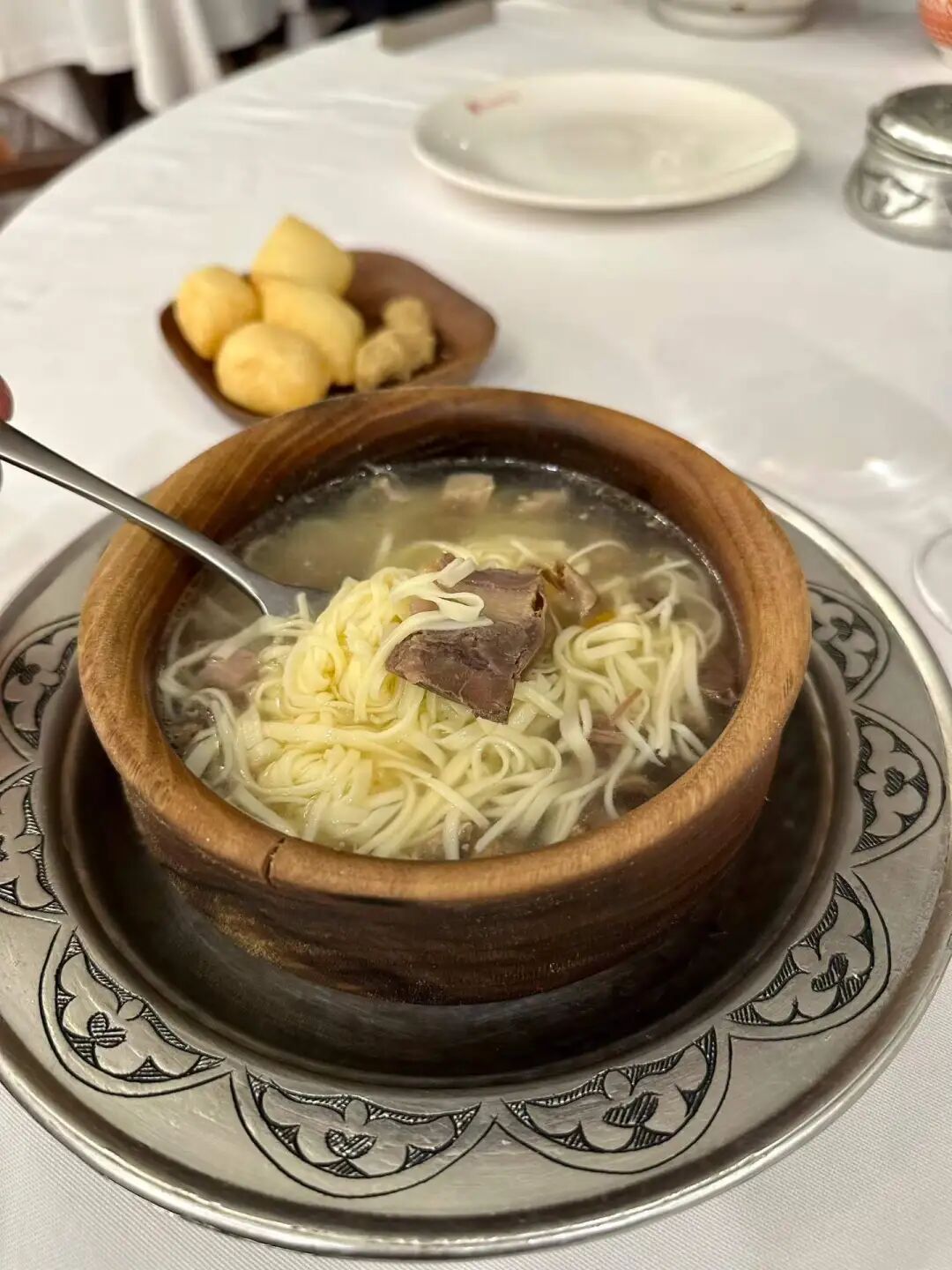
Horse meat noodle soup (tomyrtqa sorpasy) is the noodle soup version of meat and noodles (naryn), making it perfect for winter. This one-pot dish of boiled meat and noodles is perfect for festivals, hosting guests, and moving between nomadic pastures. To make it, boil the horse meat first, then cook the noodles in the broth. It is rich, salty, and savory, with the unique smoky flavor of smoked horse meat.
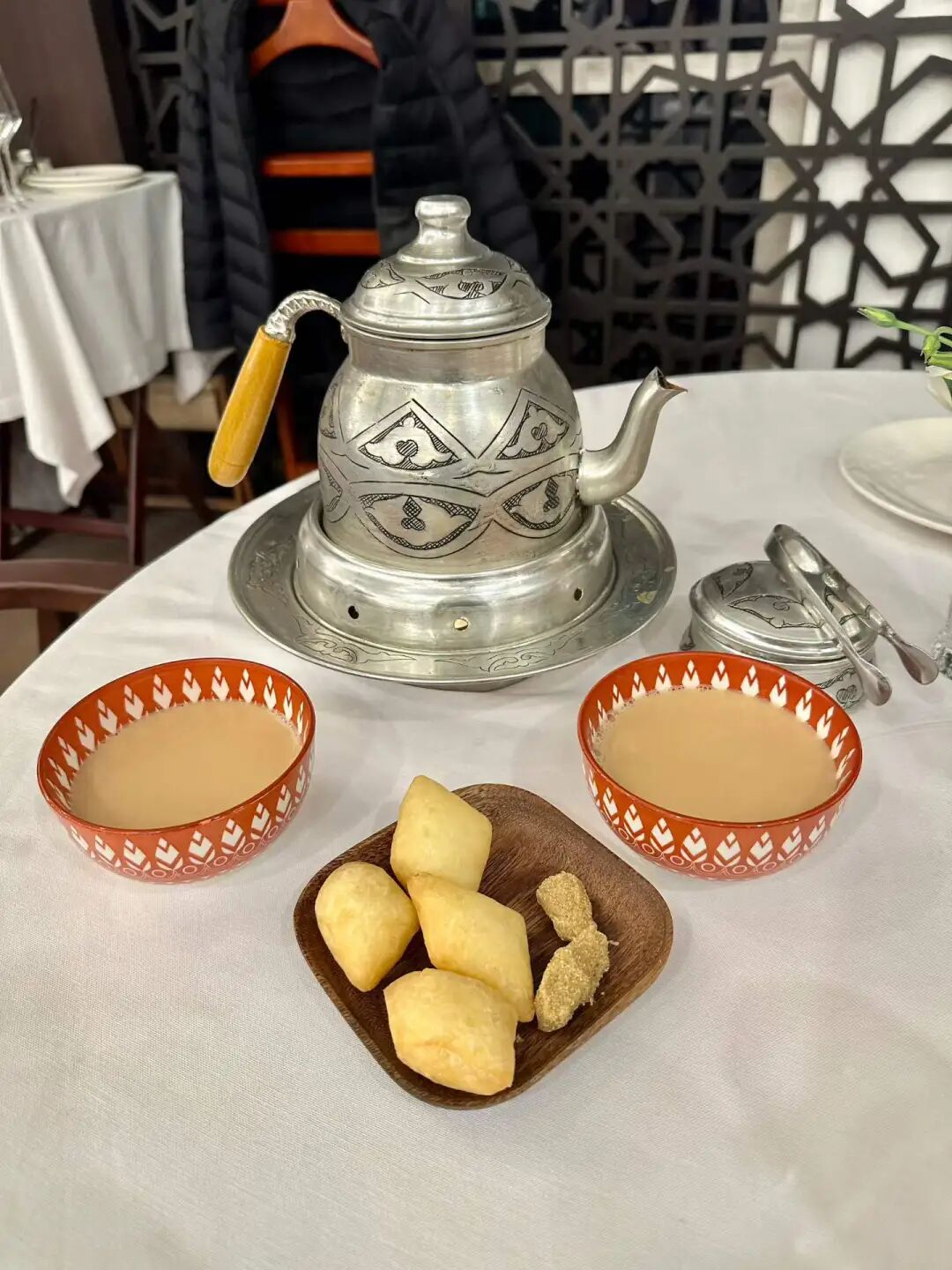
Kazakh millet milk tea (talqan) is made by boiling broomcorn millet, brick tea, milk, and salt. The golden millet grains are washed, roasted, and hulled to become crispy, adding a toasted grain aroma to the milk tea. view all
Summary: This Beijing Nowruz account records a Persian New Year gathering with food, music, guests from many countries, and the cultural details of the celebration as described in the source.
March 21st this year is the Persian New Year. Many countries influenced by Persian culture celebrate the Nowruz festival during this time, including Afghanistan, Albania, Azerbaijan, India, Iran, Iraq (Kurdish region), Syria (Kurdish region), Kazakhstan, Kyrgyzstan, Pakistan, Tajikistan, Turkey (Kurdish region), Turkmenistan, and Uzbekistan.
After the Afghan Taliban came to power in 2022, they stated that Nowruz would not be a public holiday, but they still allowed celebrations to take place. In Albania, Sunni Muslims, Catholics, and Orthodox Christians celebrate Nowruz together to welcome the arrival of spring. Shia Muslims believe that Nowruz is the day Imam Ali became Caliph, so they place special importance on it, performing special acts of worship and offering blessings.
On Sunday, March 29th, the Embassy of Kazakhstan in China, the Ministry of Culture and Information of Kazakhstan, and the Kazakhstan Cultural Center in Beijing held a Nowruz festival event at Chaoyang Park in Beijing. They invited national-level orchestras and dance troupes from Kazakhstan, along with many Kazakh cultural products, festive foods, and traditional clothing. It was a great opportunity to learn about Nowruz and Kazakh culture.

Speech by the Ambassador of Kazakhstan to China.
This shows the Kazakh first-steps ceremony (Tusau Keser). It is a life-initiation ritual held when a Kazakh baby turns one year old. The core of the ceremony is cutting the rope tied to the child's legs, which symbolizes breaking free from constraints and starting a path toward an independent life. After the rope is cut, an elder leads the child forward. Items like books, pens, a two-stringed lute (dombra), coins, and knives are placed on the ground for the child to grab, similar to the traditional 'grabbing the first birthday gift' custom. Finally, everyone offers blessings to the child and tosses candies, dried yogurt balls (kurt), and coins into the air.
The event featured Kazakhstan's top orchestra, Astana Sazy (Rhythm of Astana). Here are a few clips of them accompanying excellent Kazakh singers.
Astana Sazy is the national folk orchestra of Kazakhstan, affiliated with the state performance organization 'Kazakh Concert.' It is the core group for promoting traditional music and cultural diplomacy in Kazakhstan. The orchestra uses traditional Kazakh instruments like the zither (jetigen), the two-stringed lute (dombra), and the bowed string instrument (kobyz). Rooted in Kazakh nomadic culture, they are famous for playing folk music.
A wonderful performance by two Kazakh musicians playing and singing with the two-stringed lute (dombra).
The event featured the national-level Kazakh folk song and dance troupe, Gulder Ensemble. The troupe was formed in 1969. It started as an all-female group and debuted with the dance drama 'Steppe Movement,' which was praised as 'a bouquet picked from the snowy peaks of Alatau scattered across the stage.' In the 1970s, the troupe traveled throughout the Soviet Union and later went abroad, touring in Belgium, Germany, Malaysia, and Cuba, training a group of legendary Kazakh dancers. The troupe was quiet for a time until it was relaunched in 2023 with a new lineup at the Kazakhstan Central Concert Hall, allowing a new generation of audiences to experience the charm of traditional Kazakh folk dance.
We drank Nowruz porridge (Nauryz Kozhe) and boiled fruit drink (Compote), and ate Kazakh fried dough pastry (Shek-Shek) and chicken baked buns (Samsa).
Nowruz porridge can only be eaten once a year during the Nowruz festival. Kazakh Nowruz porridge must contain at least seven ingredients, including barley, rice, wheat, smoked horse meat, dried yogurt balls (kurt), salt, and water. These foods are made with winter-slaughtered meat and stored grain, expressing the wish for abundance year after year.
Compote is made by boiling water with sugar and fruits like plums, cherries, or apples. In summer, fresh fruit is used, and in winter, dried fruit is used. I drank water boiled with dried apples, which is a drink frequently served at Kazakh banquets and in daily life.
Fried dough pastry (Shek-Shek) is a must-have snack for Kazakh weddings, Nowruz, and other festivals, symbolizing sweetness, reunion, and a good harvest. To make it, flour is mixed with eggs, rolled into strips, cut into pieces, and fried until golden and crispy. Then, honey syrup is drizzled over it, and it is sprinkled with nuts and dried fruit after cooling. Honey cake (chak-chak) is very common in Tatarstan and among other Central Asian peoples. The Tatars call it chak-chak, and I even visited a chak-chak museum in Kazan.
Everyone took turns taking photos with the Kazakh warriors, who were at least two meters tall.
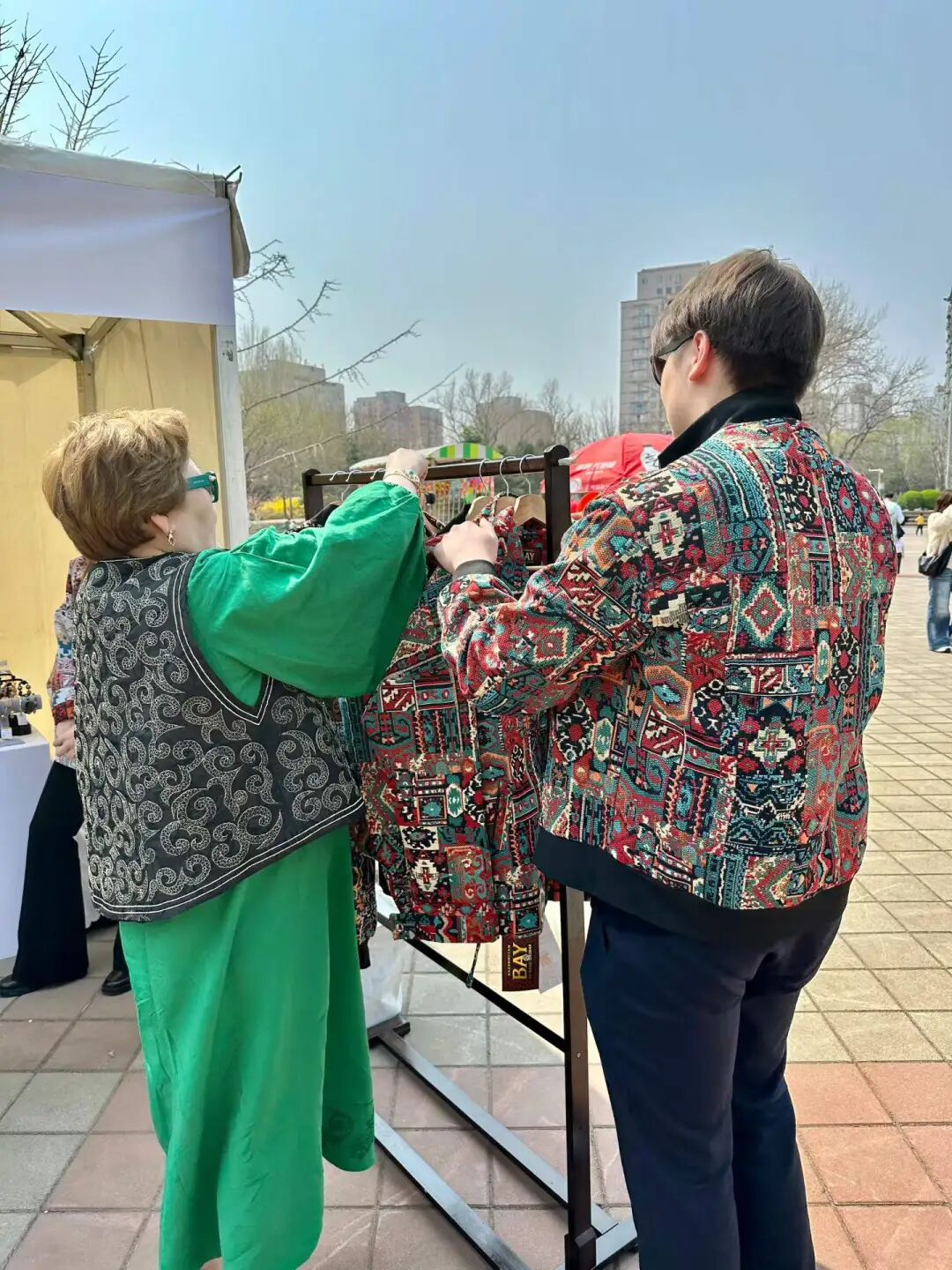
Kazakh shredded meat pilaf (plov) is full of carrots.
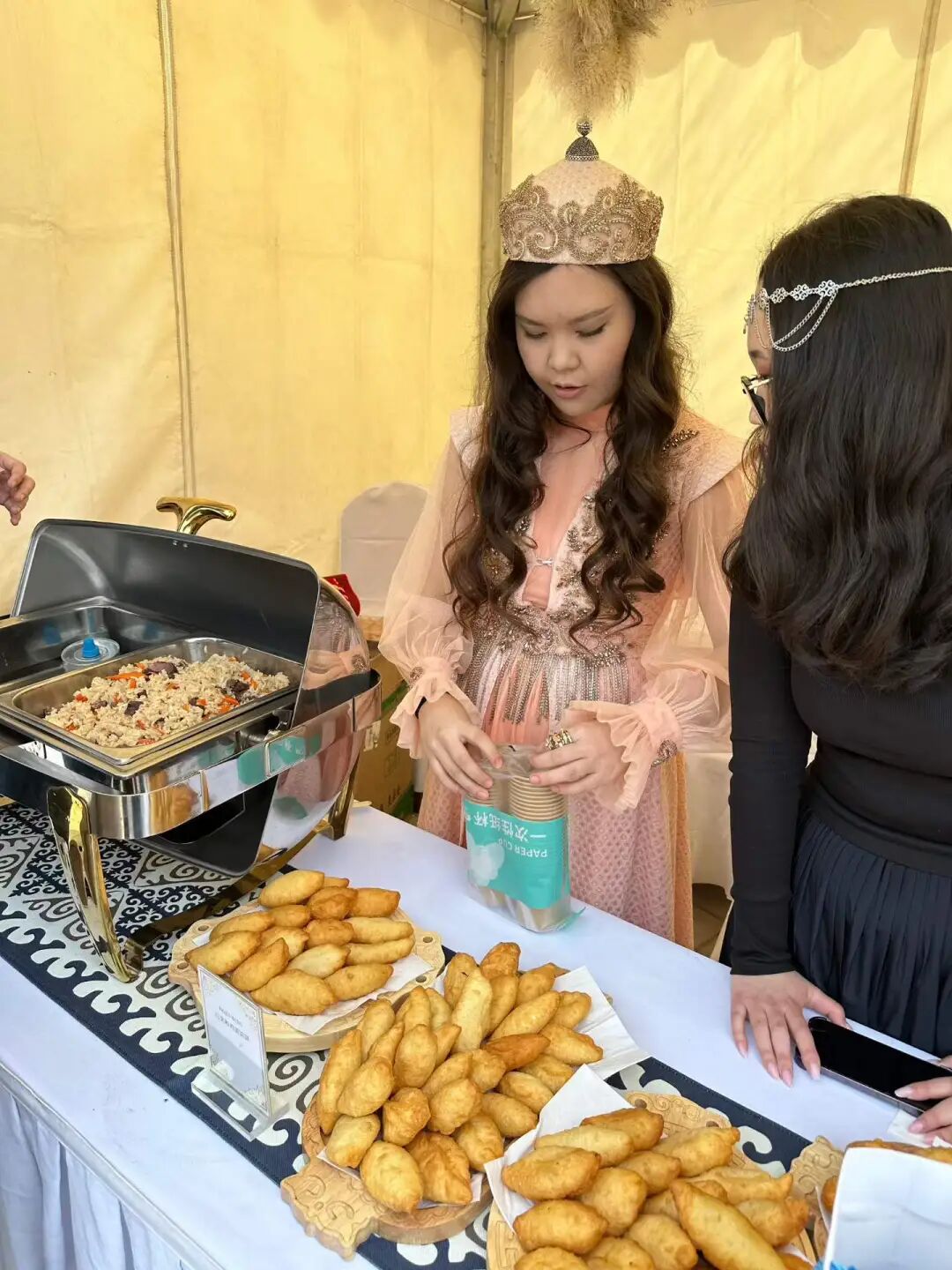

Fried dough puffs (baursak).
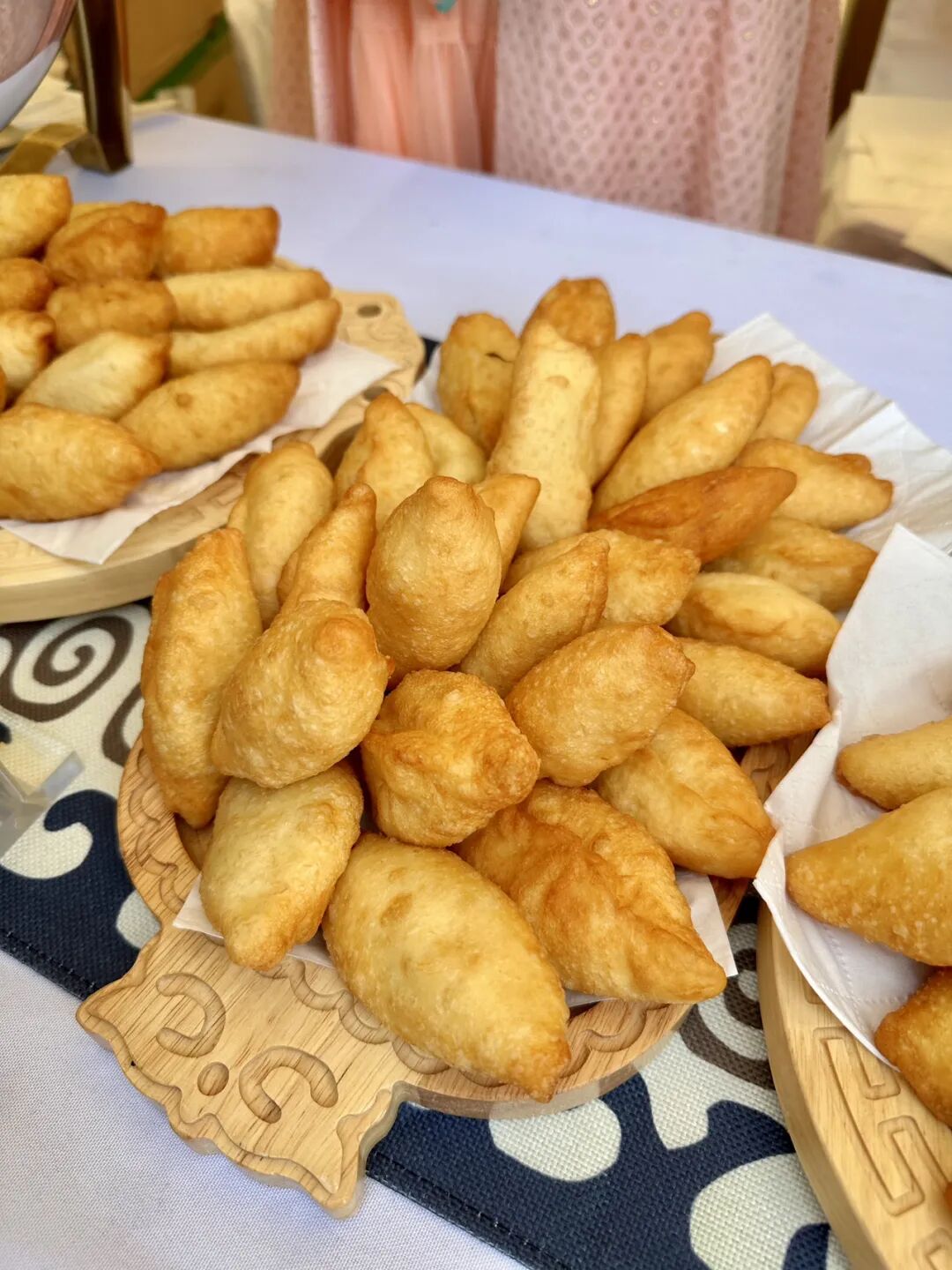
During the Nowruz festival, the Kazakh restaurant Sandyq in Beijing hosts traditional Kazakh music performances every night at 7:30, and they give away free fried dough puffs (baursak) and Nowruz porridge.
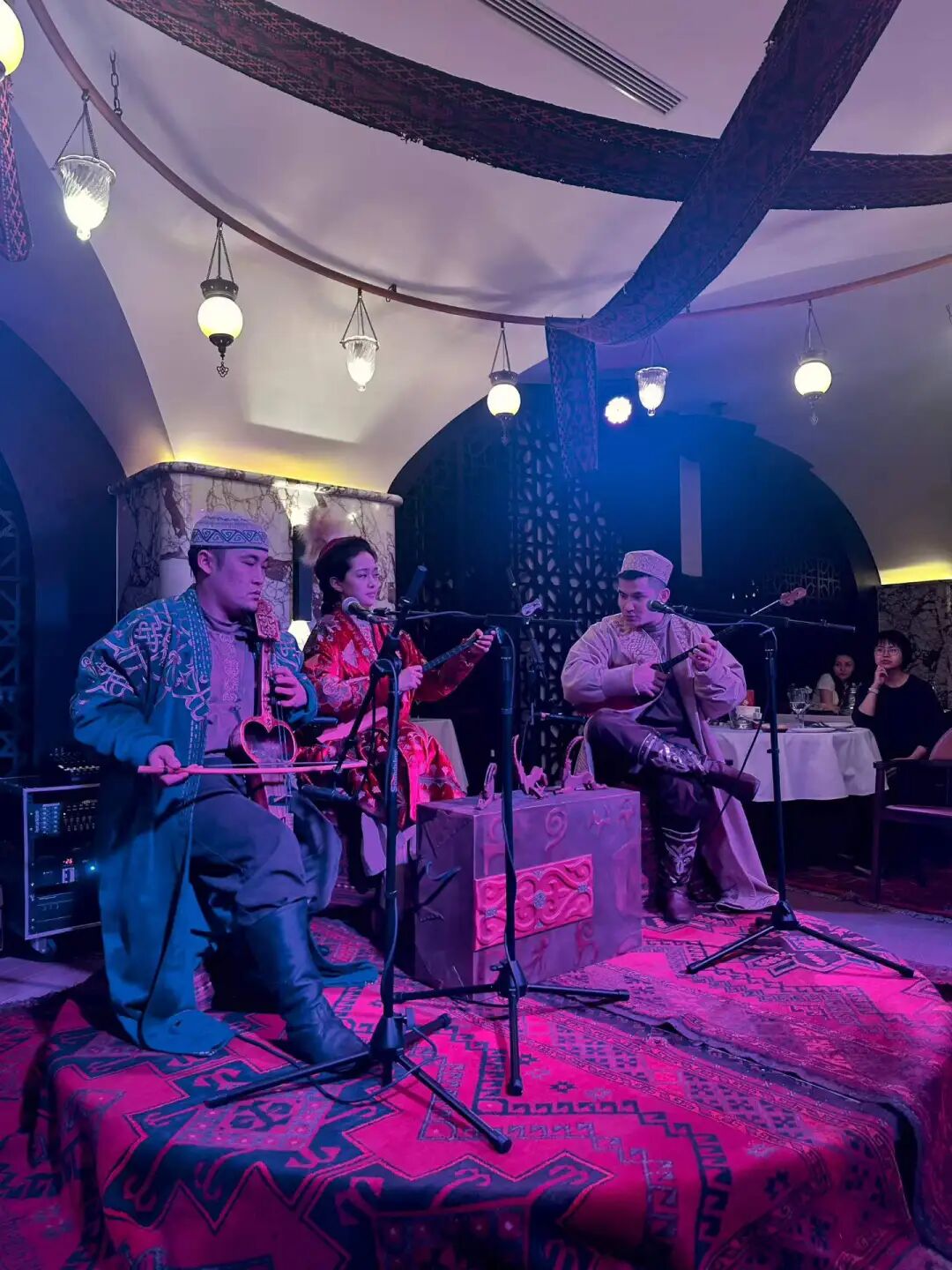
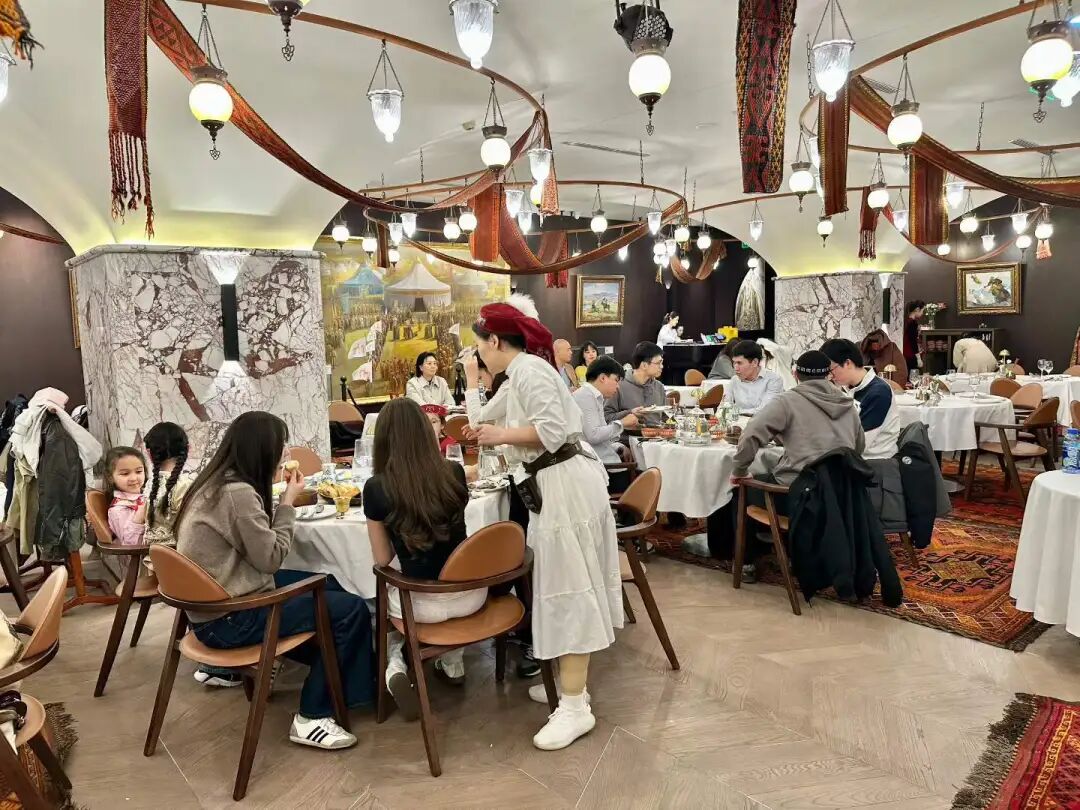
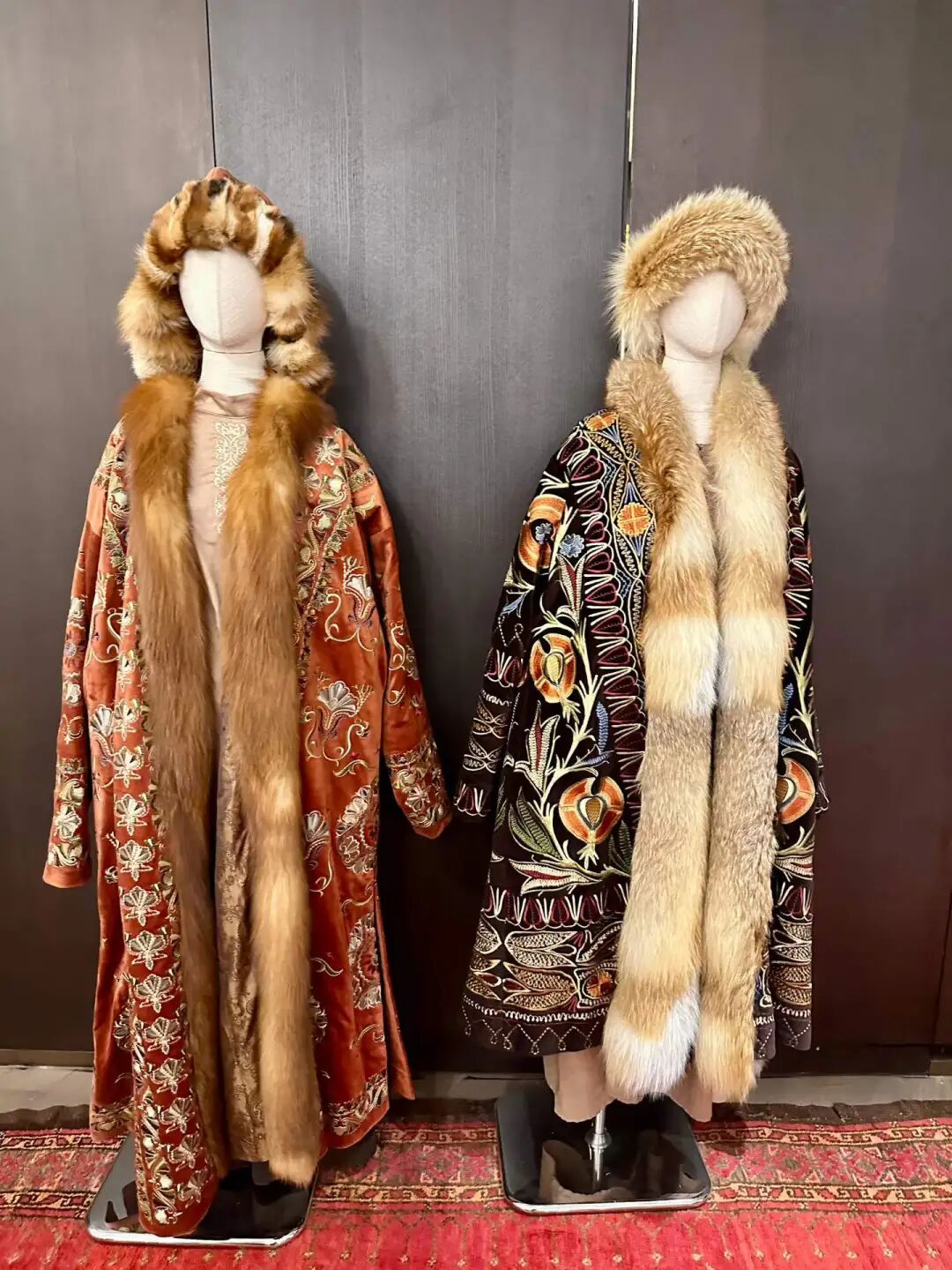
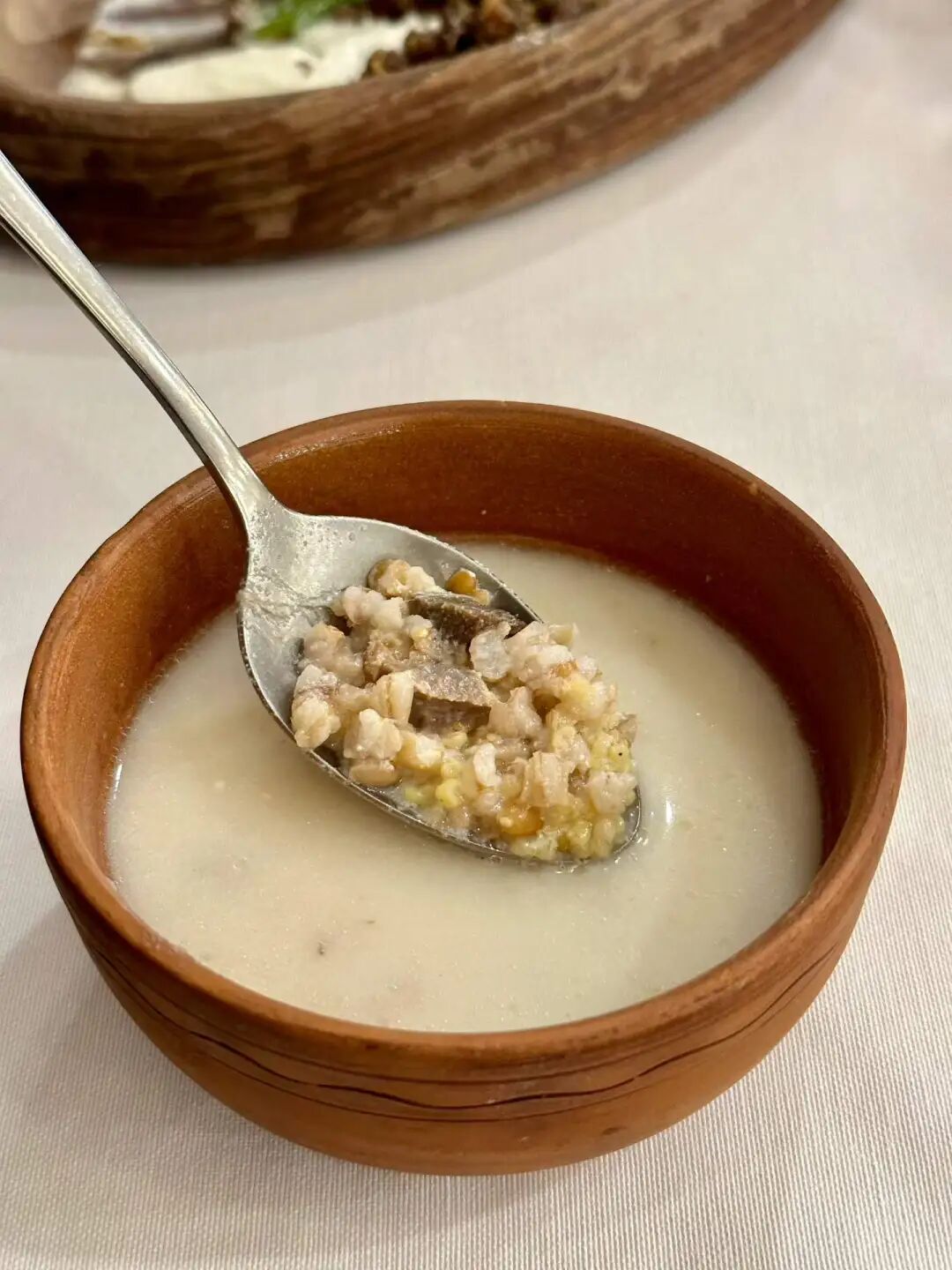
We also ate sheep tail and liver (kuyryk bauyr), meat-filled pies (baramysh), horse meat noodle soup (tomyrtqa), and millet milk tea (talqan), which are all classic Kazakh dishes.
Kuyryk bauyr literally means sheep tail and liver. It is stir-fried with only salt and served with yogurt. This is a classic dish for Kazakh engagement ceremonies. After the bride's family slaughters a sheep, the elders serve the sheep tail and liver to the groom's guests while singing blessings. If you don't eat it, they might jokingly pretend to sew your clothes to the felt mat or smear oil on your face, symbolizing that the two families are officially joined and cannot back out. There is a Kazakh proverb that says, 'Only after eating the sheep tail and liver is the marriage officially set.'
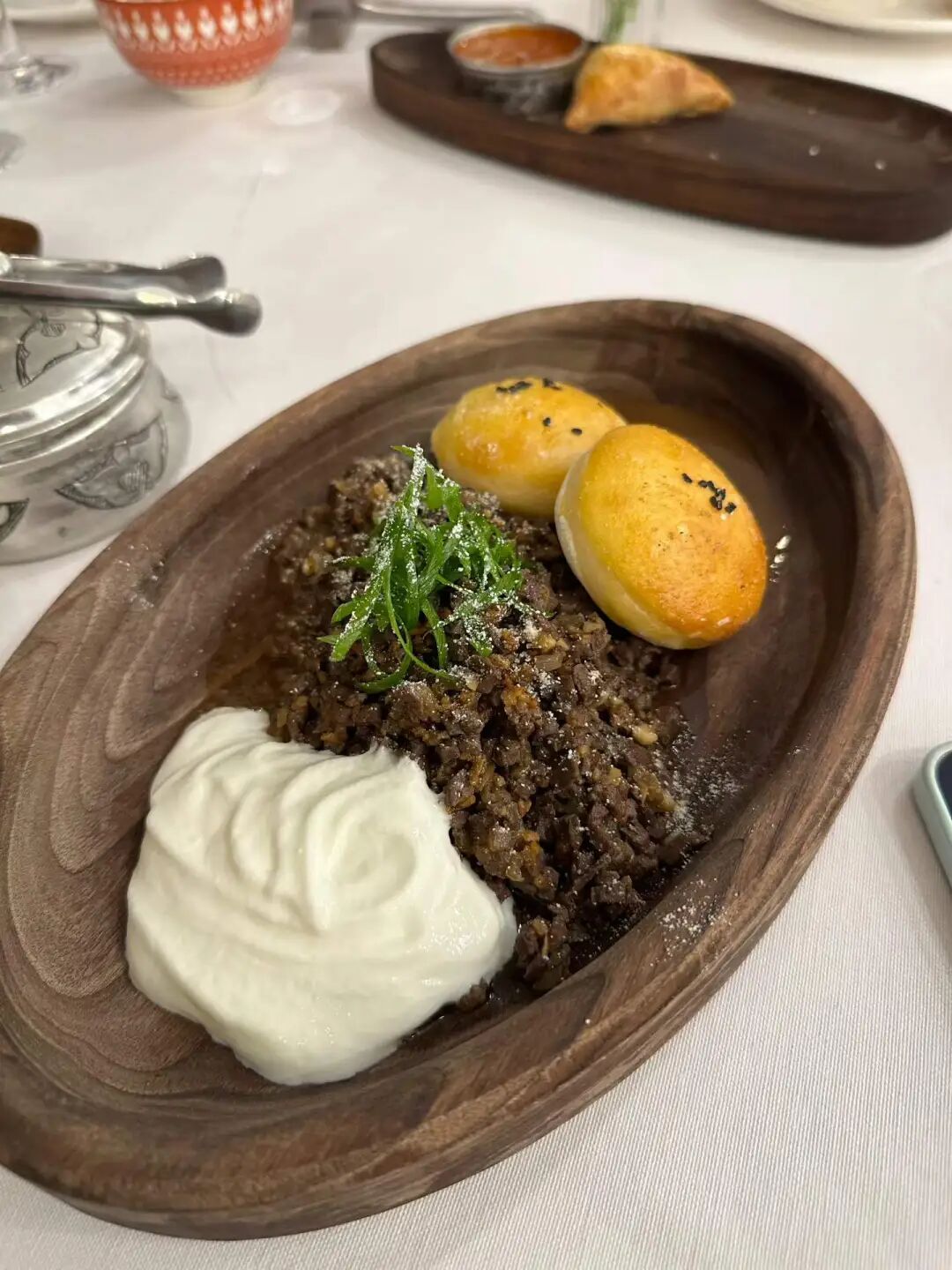
Meat-filled pie (baramysh) is a leavened dough pastry that originated with the Tatars and Bashkirs. It spread to the Kazakhs in the 19th century and became a classic street food during the Soviet era. Like baked buns (samsa), baramysh is filled with lamb and onions, but it uses leavened dough. The top is left open, the edges are pinched shut, and it is deep-fried until golden. It is best eaten dipped in tomato sauce and paired with milk tea.
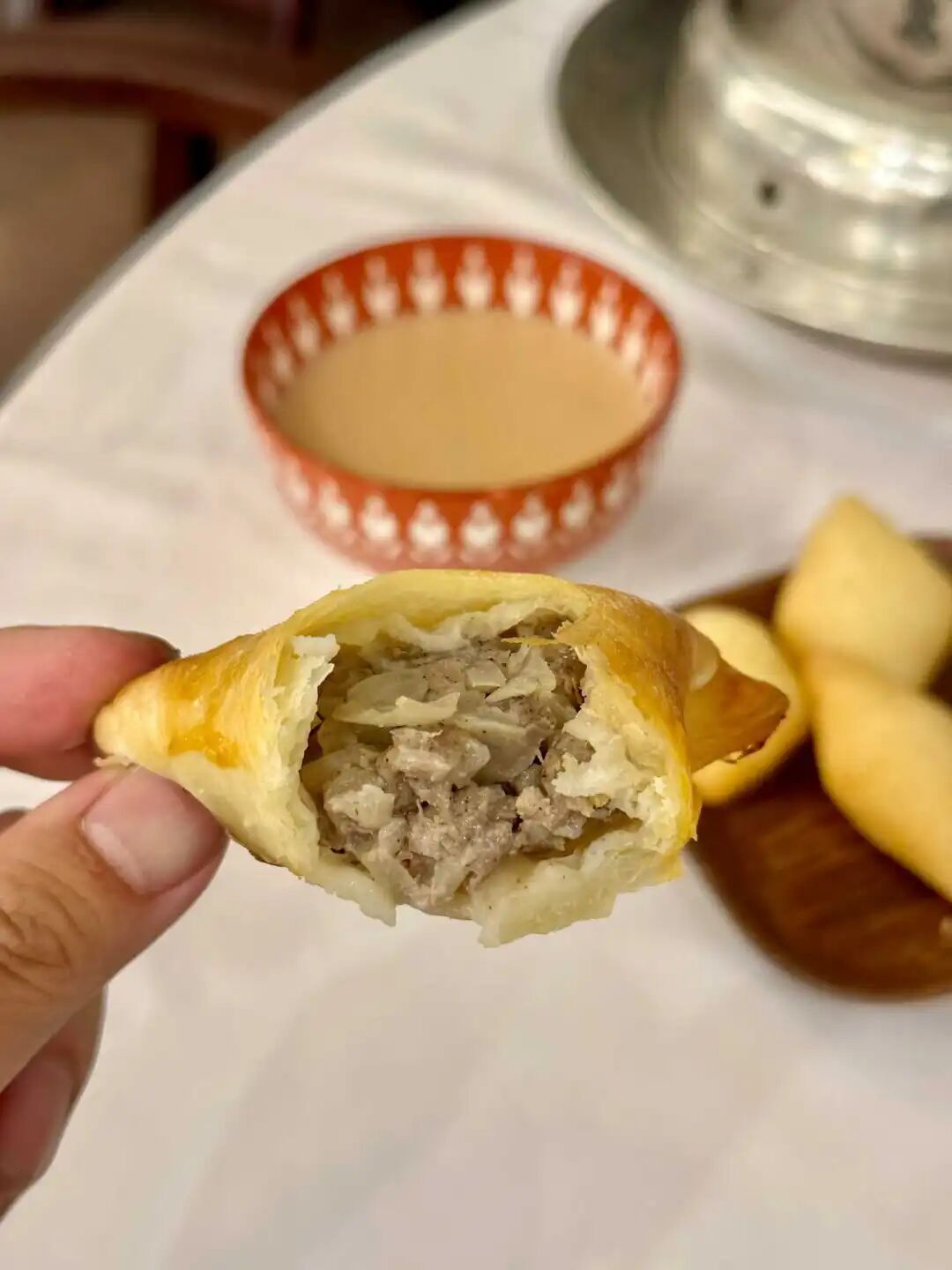
Horse meat noodle soup (tomyrtqa sorpasy) is the noodle soup version of meat and noodles (naryn), making it perfect for winter. This one-pot dish of boiled meat and noodles is perfect for festivals, hosting guests, and moving between nomadic pastures. To make it, boil the horse meat first, then cook the noodles in the broth. It is rich, salty, and savory, with the unique smoky flavor of smoked horse meat.
Kazakh millet milk tea (talqan) is made by boiling broomcorn millet, brick tea, milk, and salt. The golden millet grains are washed, roasted, and hulled to become crispy, adding a toasted grain aroma to the milk tea.
Culture Guide: Beijing - Persian Yalda Night and Winter Solstice Food
Articles • ali2007fr posted the article • 0 comments • 244 views • 2026-05-21 02:25
Summary: This Beijing culture note records a Persian Yalda Night winter-solstice gathering at Parkview Green outside Chaoyangmen on December 21, 2025. It keeps the source's food, event, music, people, and cultural details while presenting the scene in natural English.
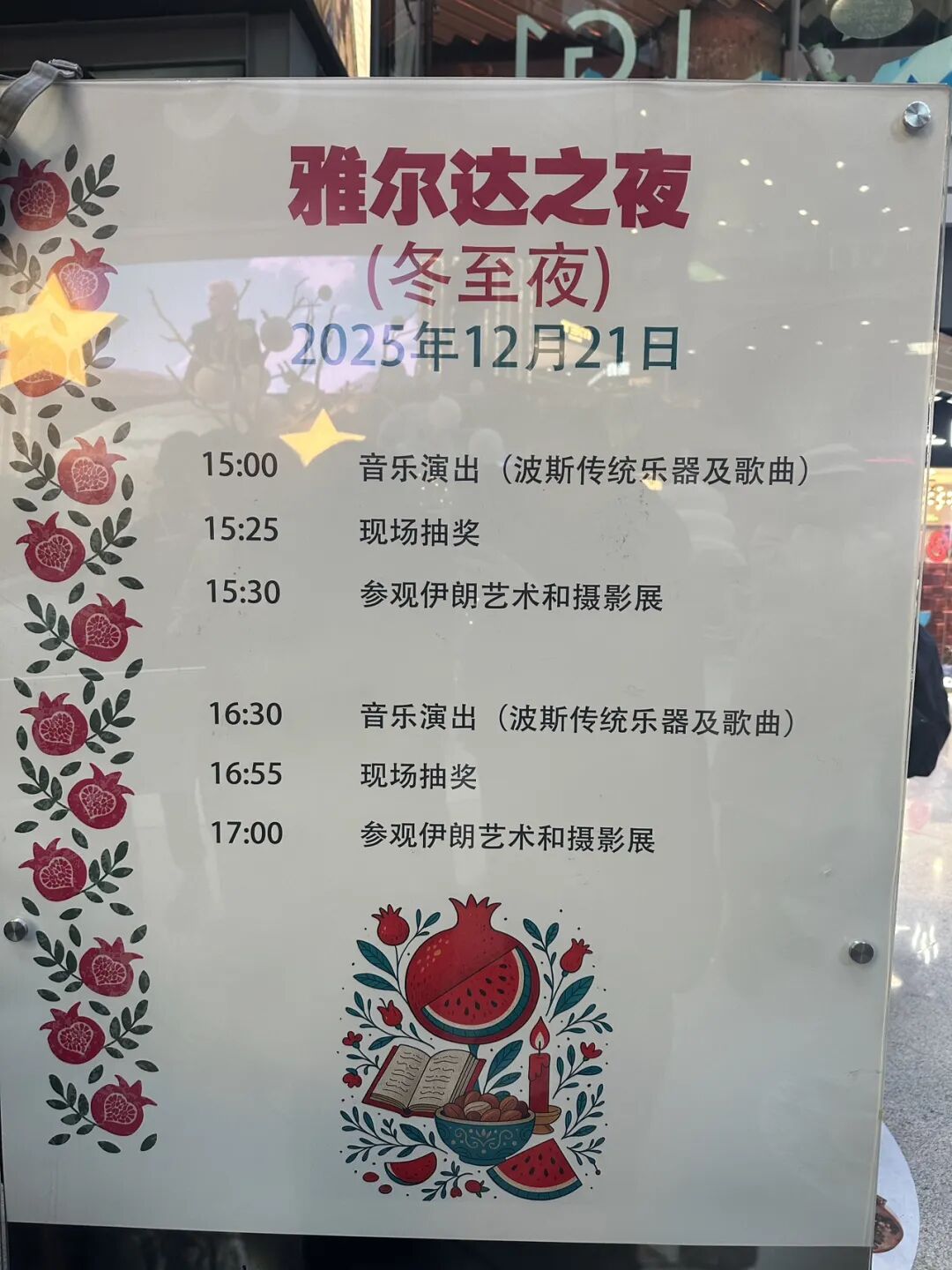
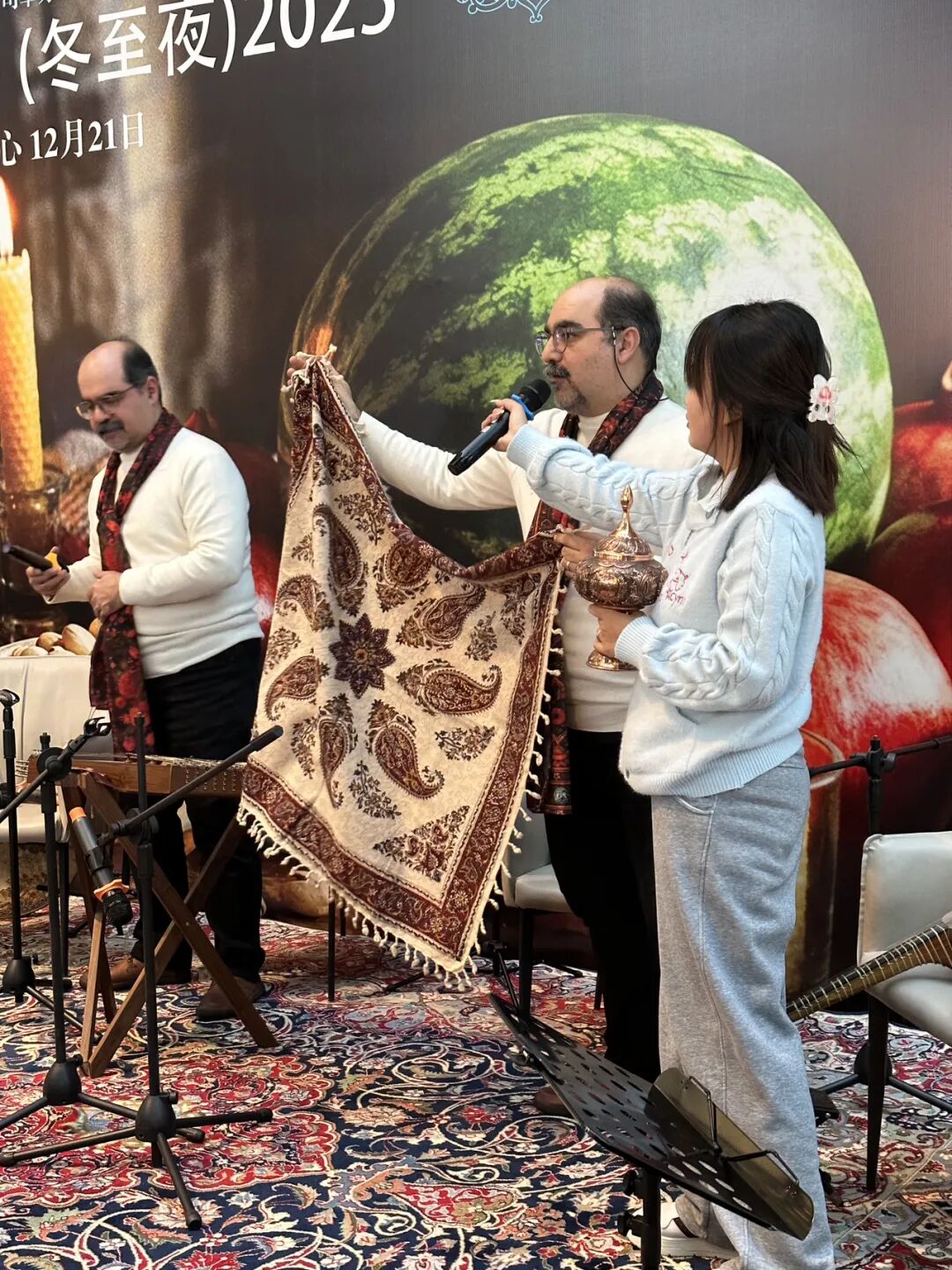
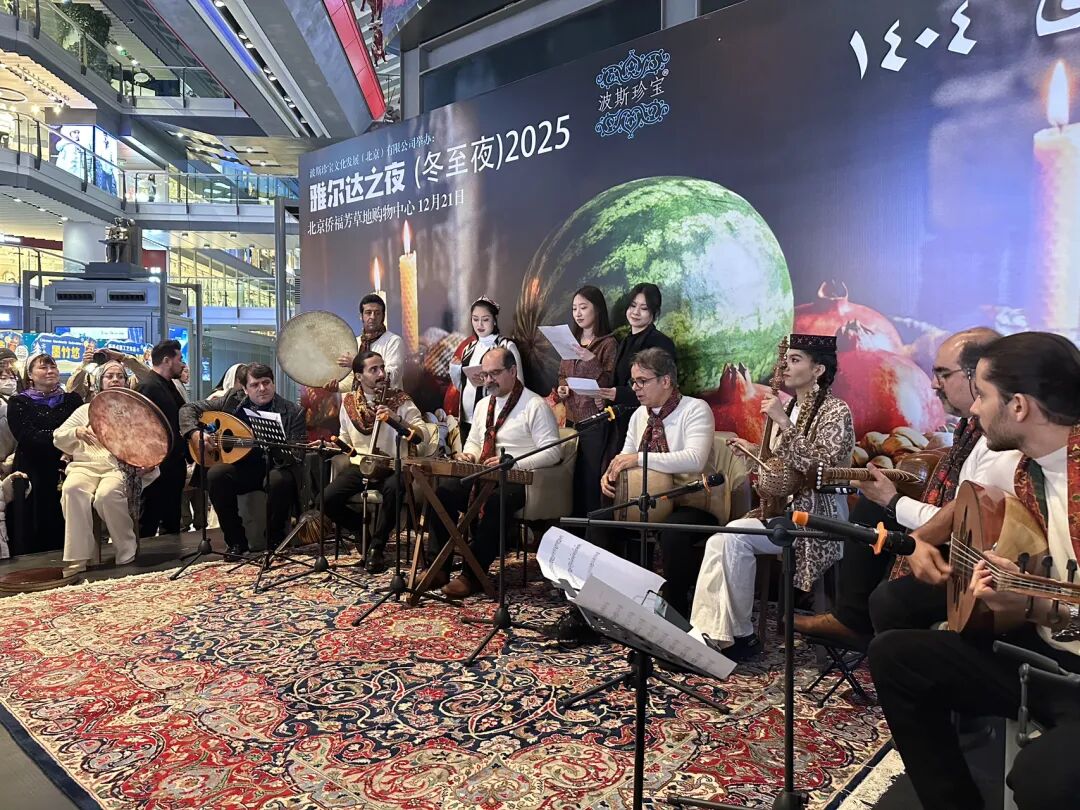
On December 21, 2025, we attended the Persian winter solstice festival, Yalda Night, at Parkview Green outside Chaoyangmen. Famous Iranian musicians performed traditional Persian songs: Arman on the oud, Armin on the kamancheh, Shahriyar on the tombak, Nabil on the daf, and two Beijing-based Iranian musicians, Majili and Maxingfu.
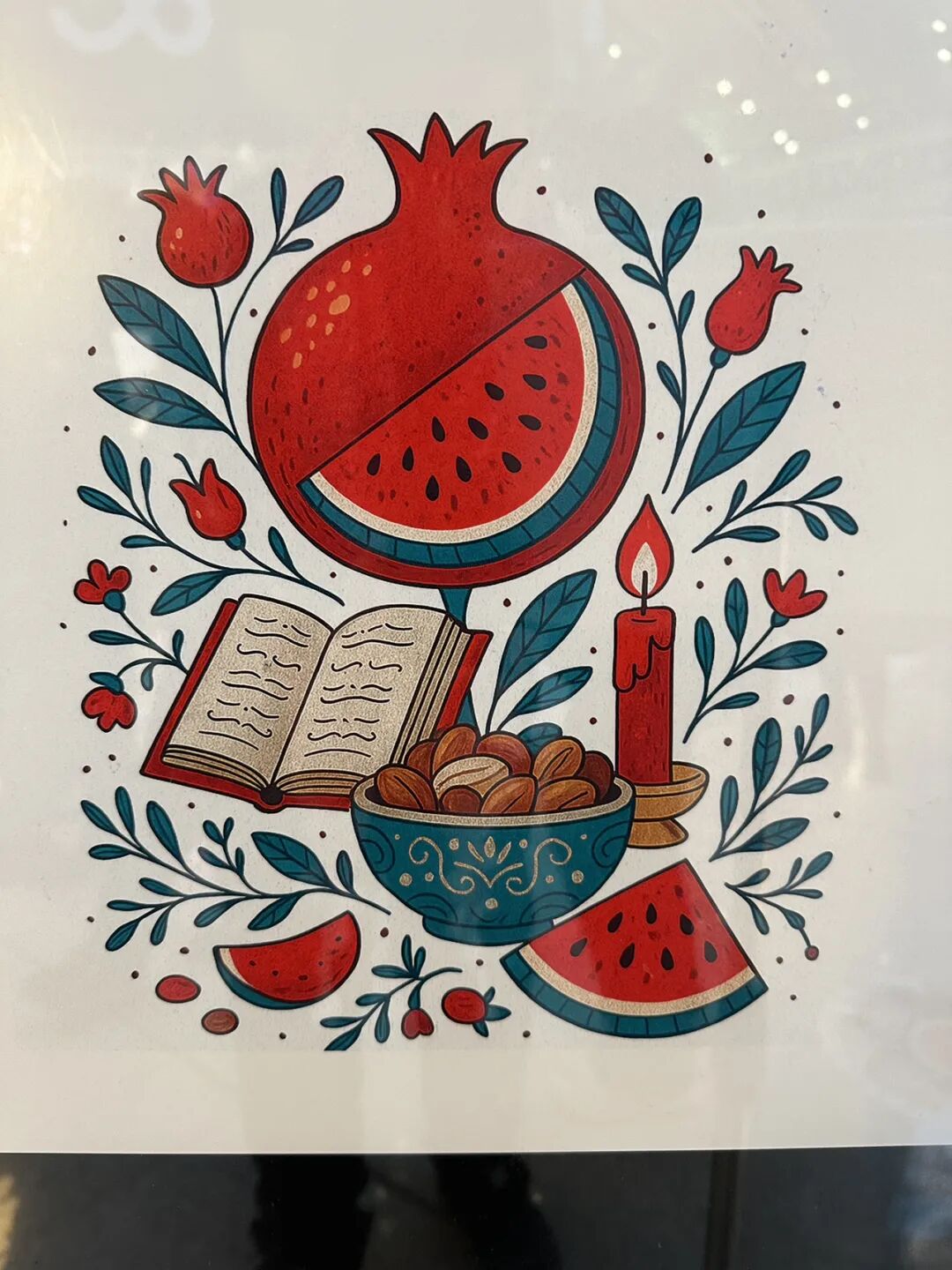
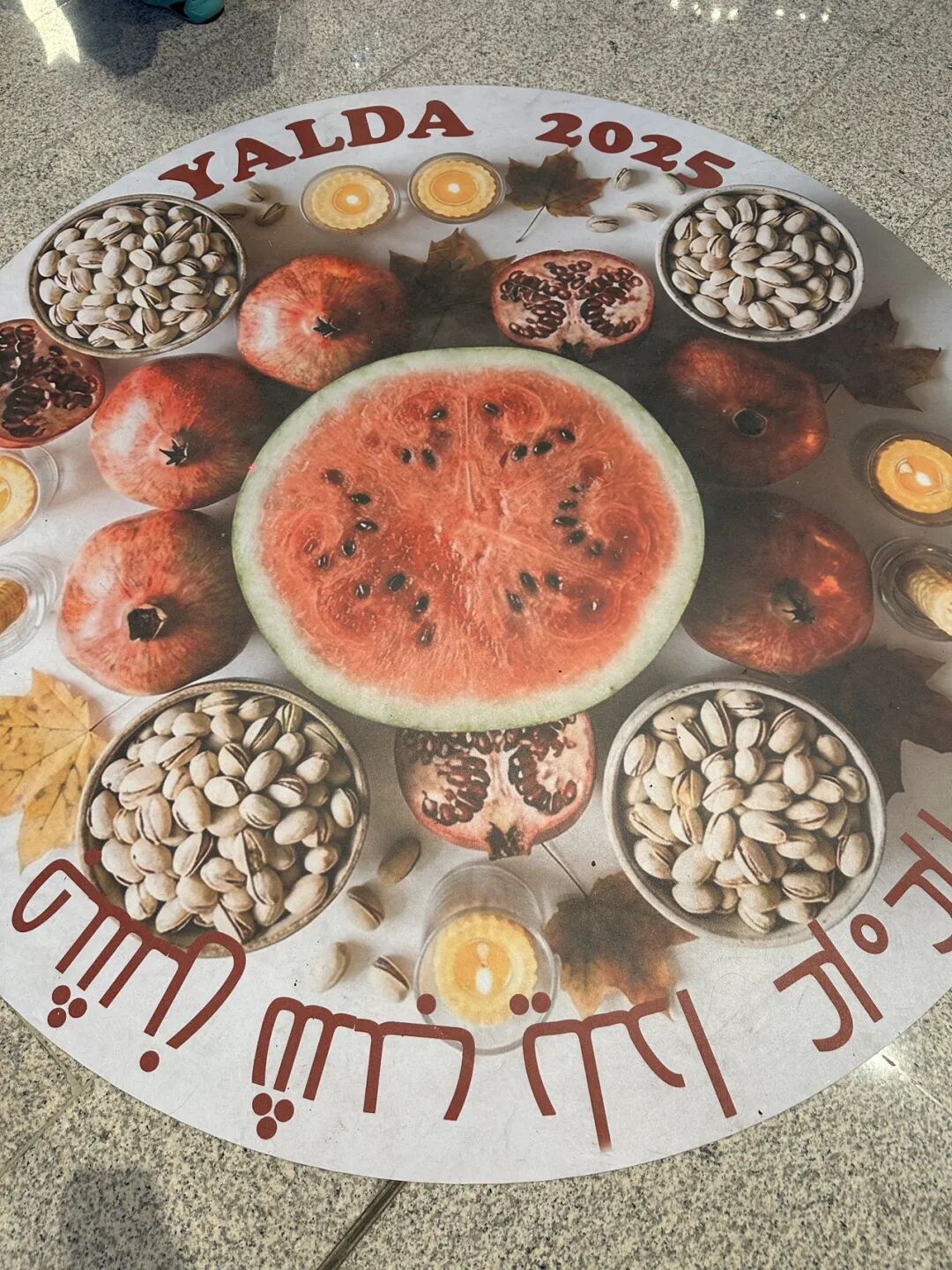
This night is the last night of the ninth month in the Persian calendar and the longest night of the year. According to Persian tradition, people gather on this night to recite poetry and eat pomegranates and watermelons, which symbolize the dawn. Yalda Night became an official Persian holiday in 500 BC during the reign of Darius I, and it remains a traditional festival for many groups, including Persians, Azerbaijanis, Kurds, Tajiks, and Pashtuns.
Everyone sang and danced. The music played featured traditional melodies from the Lurs, an ethnic minority in western Iran.
Tajik musicians collaborated with Persian musicians to perform Why Are the Flowers So Red.
Persian, Kurdish, Tajik, Uyghur, and Han people performed Persian songs together. I am truly grateful to have the chance to attend this kind of cultural event in Beijing.
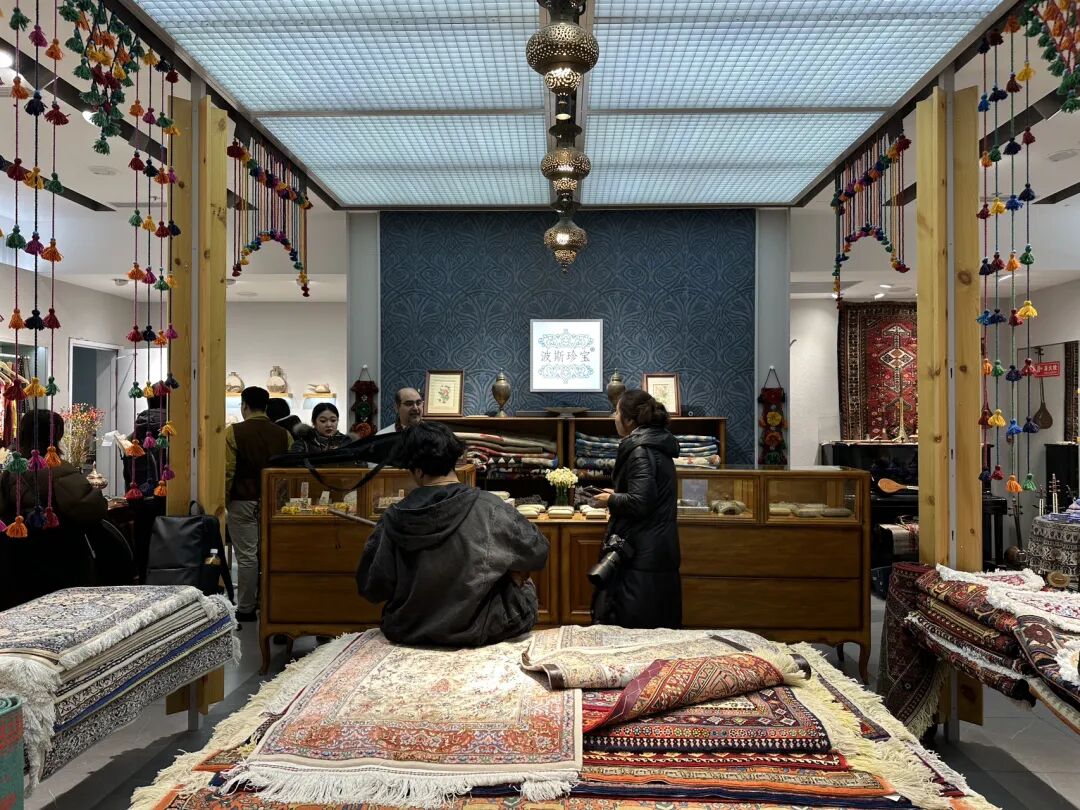
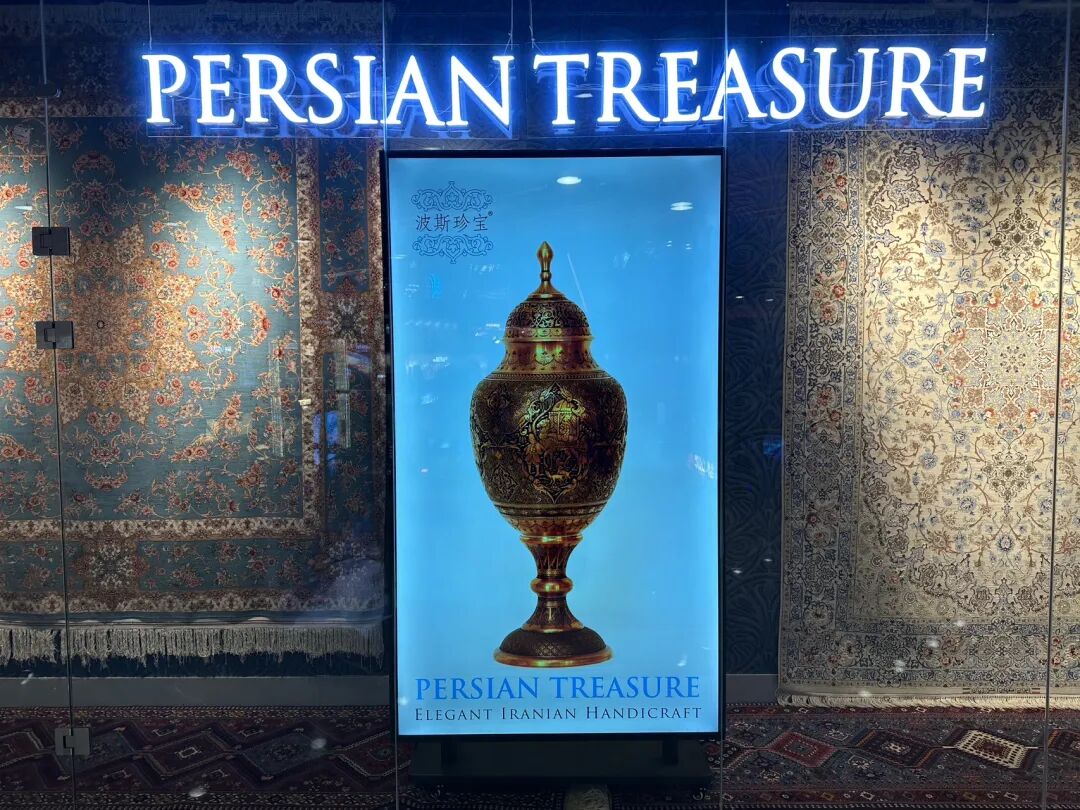
Brothers Majili and Maxingfu are at their Persian treasure shop in Parkview Green. view all
Summary: This Beijing culture note records a Persian Yalda Night winter-solstice gathering at Parkview Green outside Chaoyangmen on December 21, 2025. It keeps the source's food, event, music, people, and cultural details while presenting the scene in natural English.
On December 21, 2025, we attended the Persian winter solstice festival, Yalda Night, at Parkview Green outside Chaoyangmen. Famous Iranian musicians performed traditional Persian songs: Arman on the oud, Armin on the kamancheh, Shahriyar on the tombak, Nabil on the daf, and two Beijing-based Iranian musicians, Majili and Maxingfu.
This night is the last night of the ninth month in the Persian calendar and the longest night of the year. According to Persian tradition, people gather on this night to recite poetry and eat pomegranates and watermelons, which symbolize the dawn. Yalda Night became an official Persian holiday in 500 BC during the reign of Darius I, and it remains a traditional festival for many groups, including Persians, Azerbaijanis, Kurds, Tajiks, and Pashtuns.
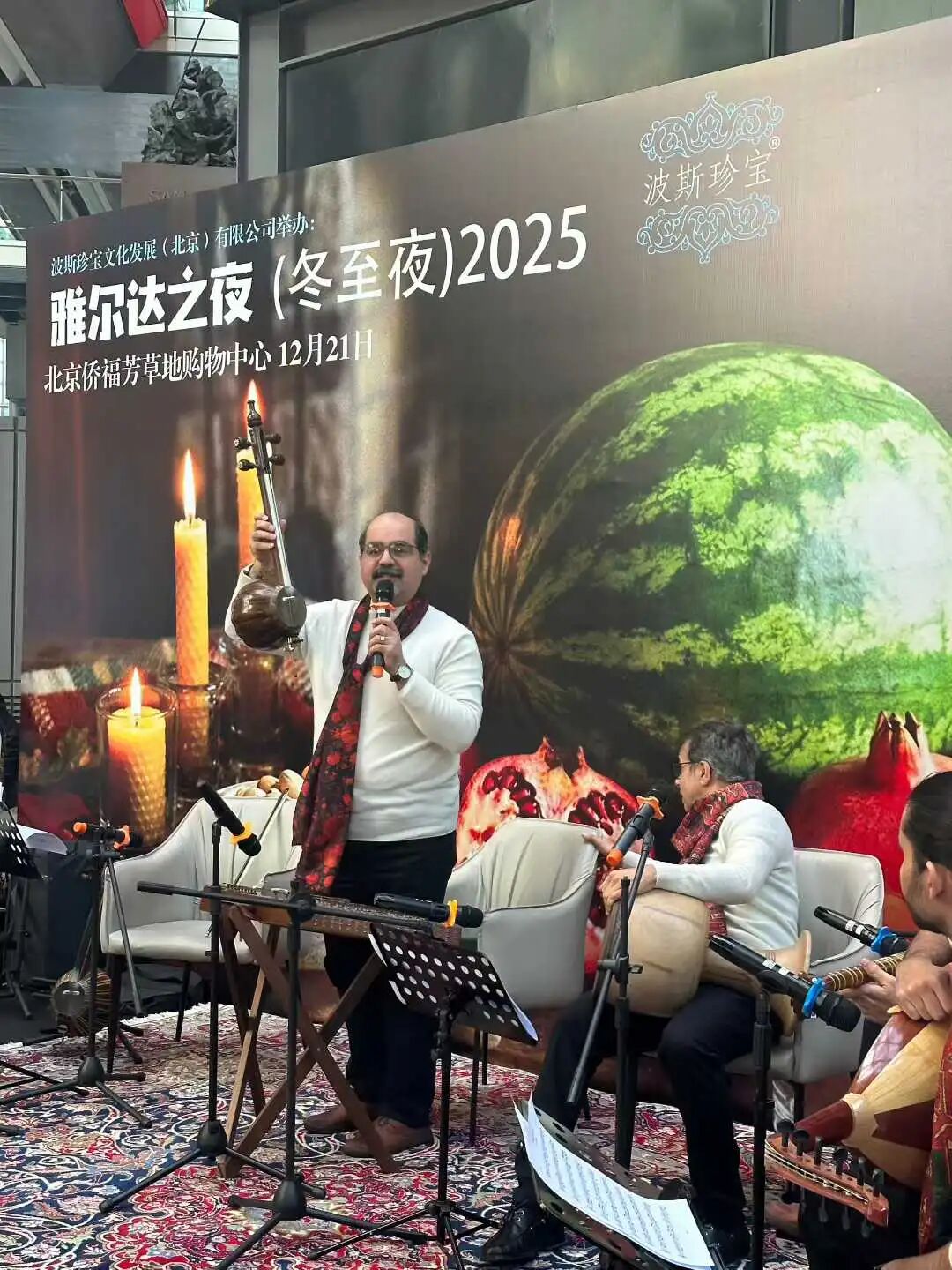
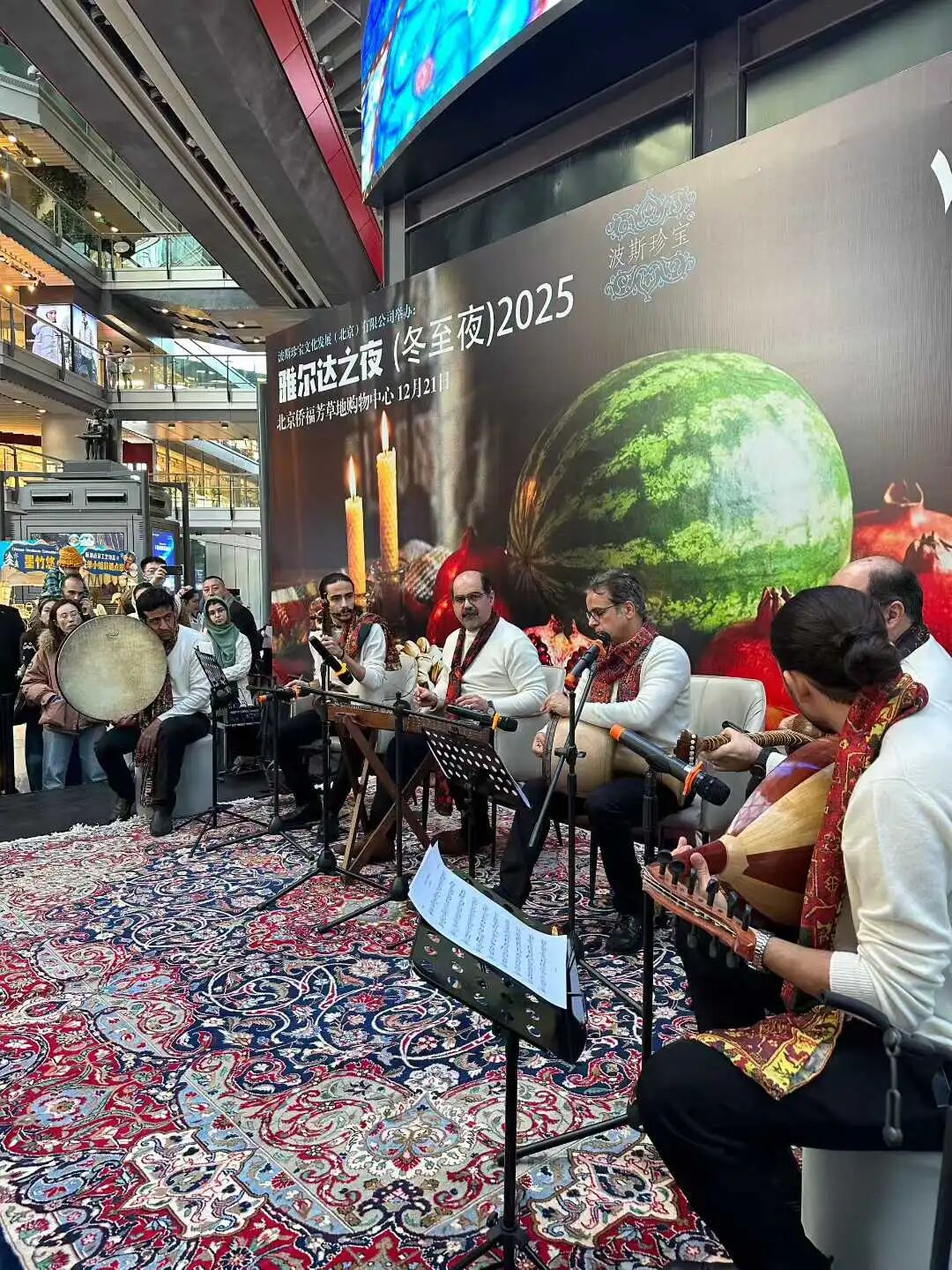
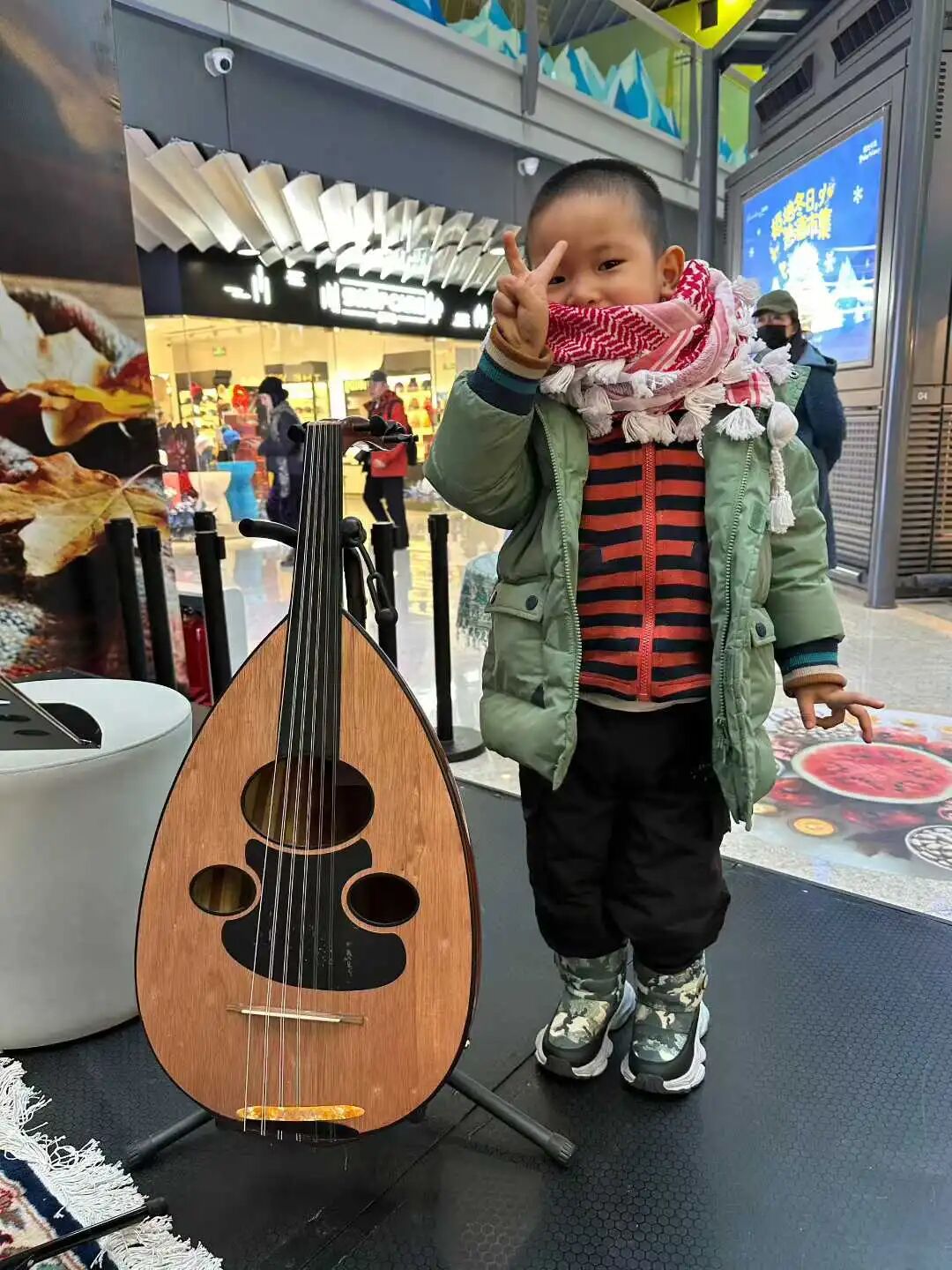
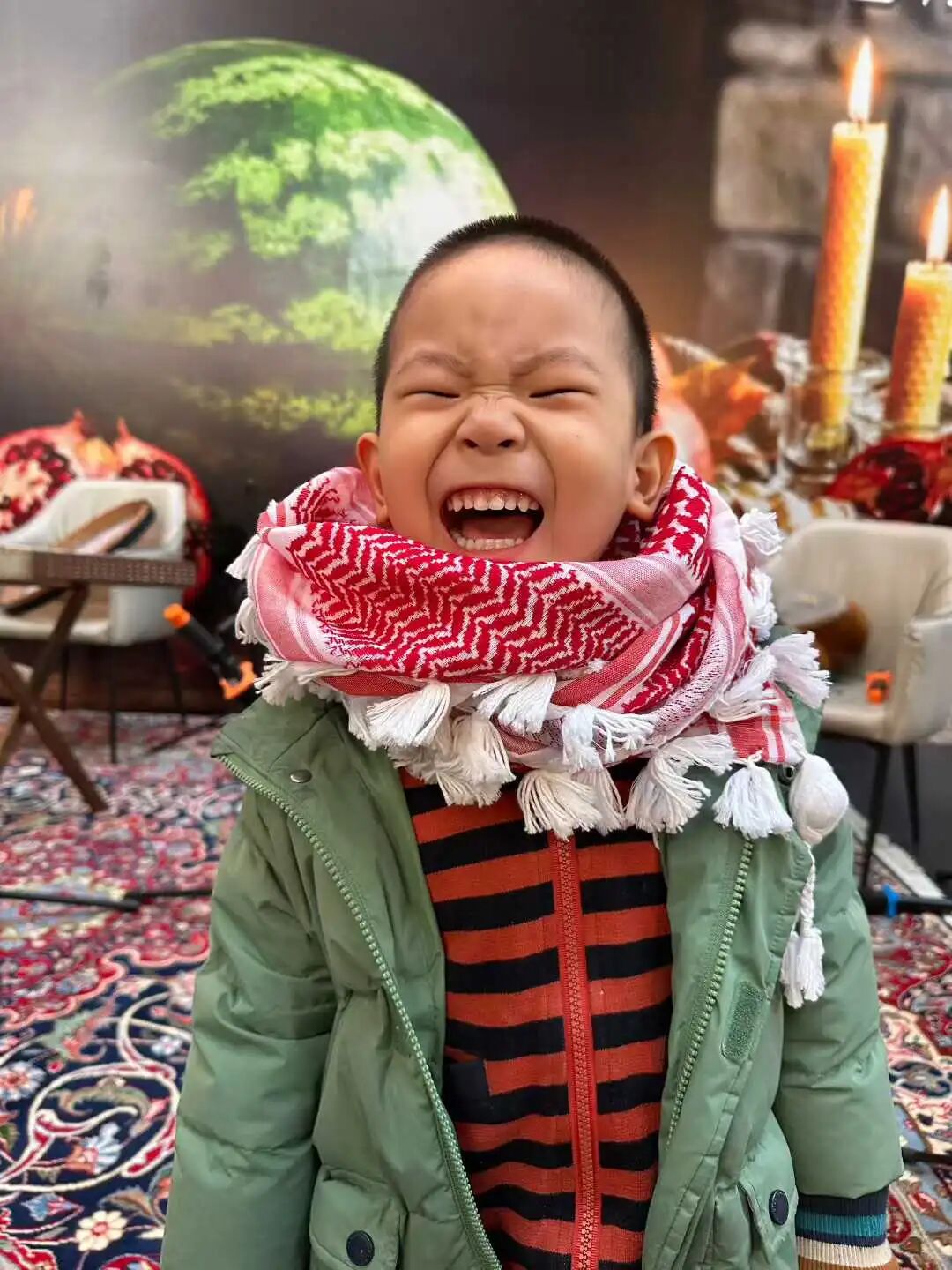
Everyone sang and danced. The music played featured traditional melodies from the Lurs, an ethnic minority in western Iran.
Tajik musicians collaborated with Persian musicians to perform Why Are the Flowers So Red.
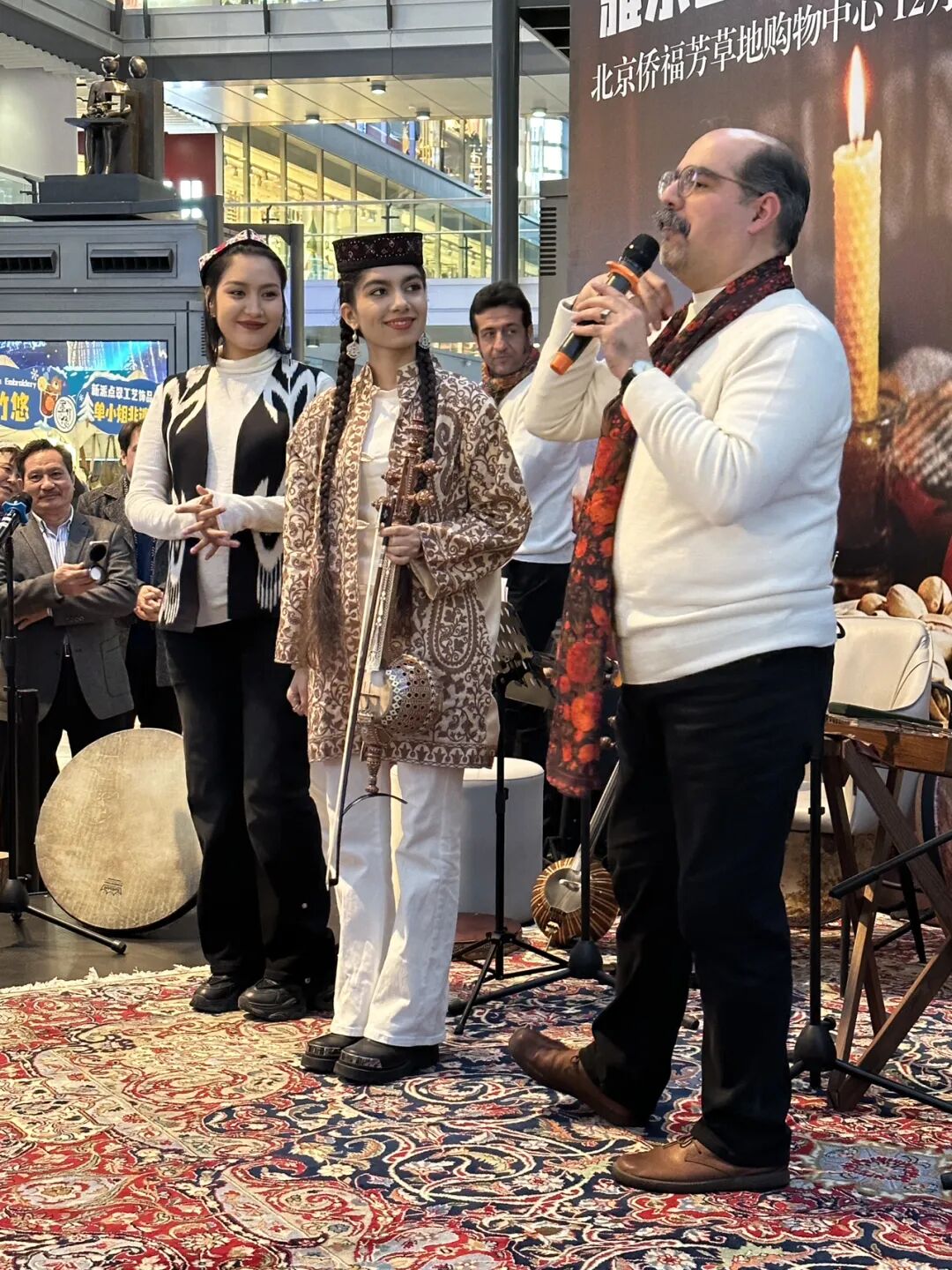
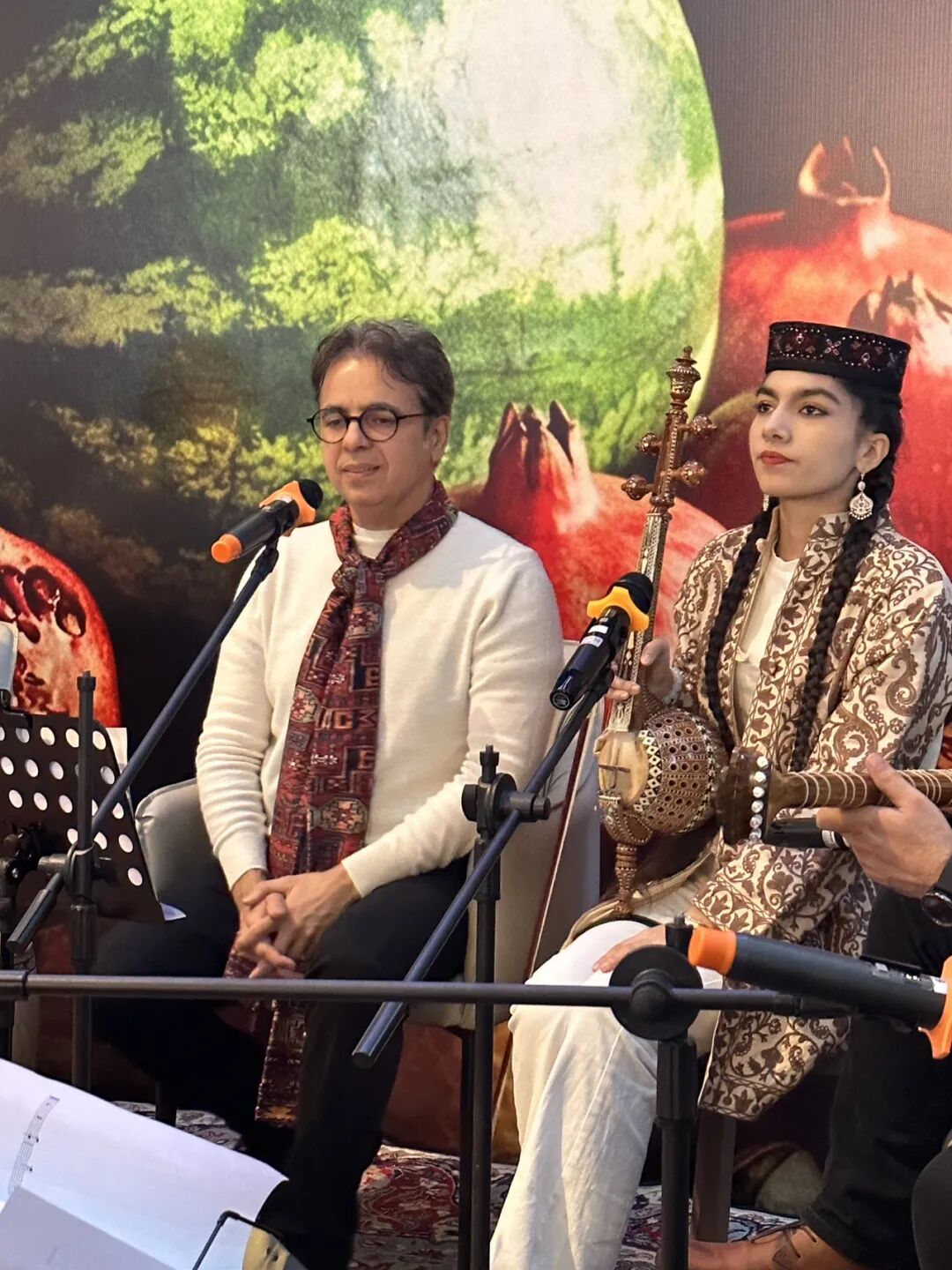
Persian, Kurdish, Tajik, Uyghur, and Han people performed Persian songs together. I am truly grateful to have the chance to attend this kind of cultural event in Beijing.
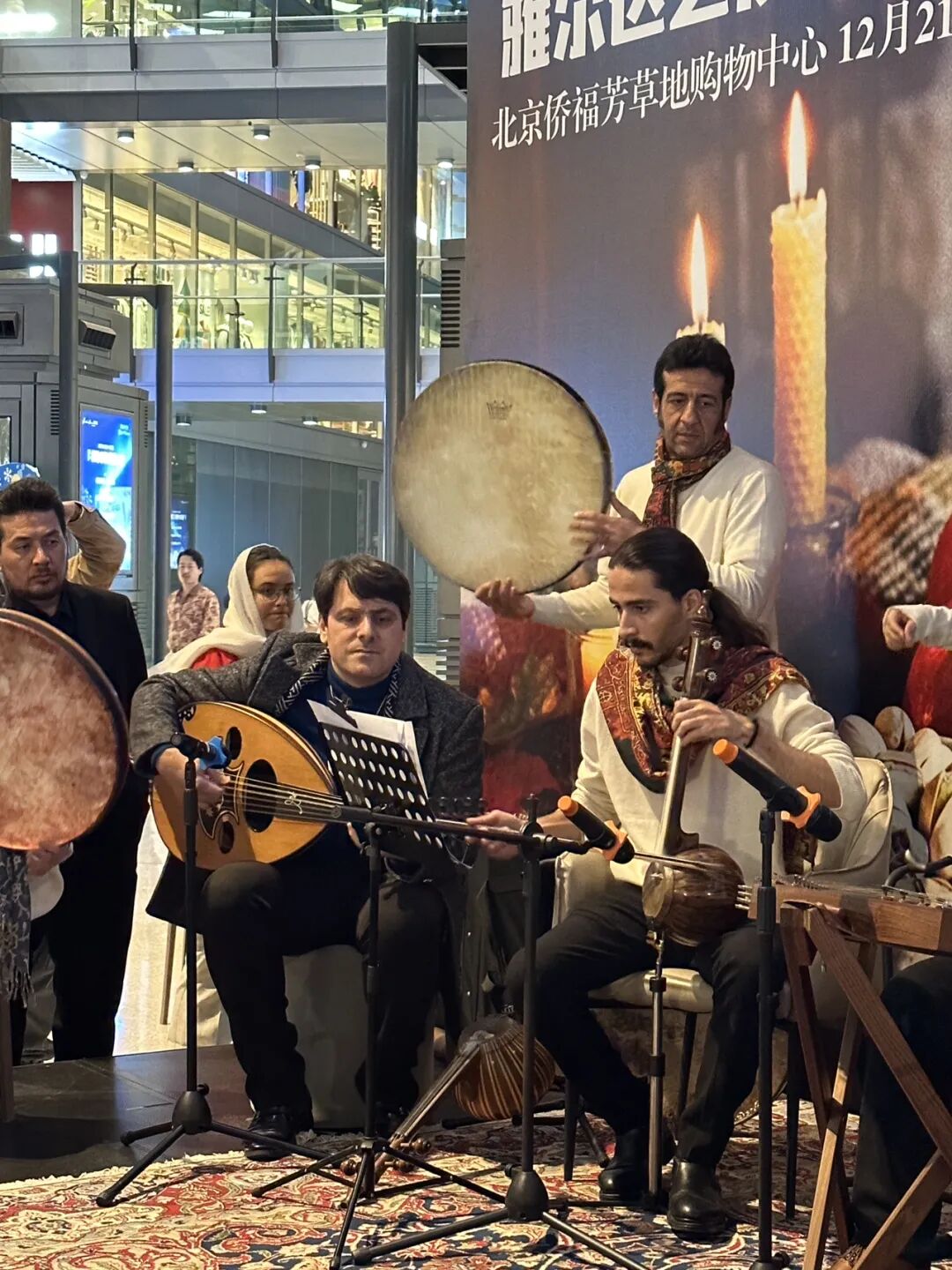
Brothers Majili and Maxingfu are at their Persian treasure shop in Parkview Green.
Encountering Persian Poetry in the Forbidden City—Exhibition Notes at the Wuyingdian Ceramics Museum
Articles • ali2007fr posted the article • 0 comments • 147 views • 2026-05-16 22:58
Summary: This travel note introduces Encountering Persian Poetry in the Forbidden City—Exhibition Notes at the Wuyingdian Ceramics Museum. The Ceramics Gallery in the Hall of Martial Valor (Wuyingdian) at the Forbidden City officially reopened on May 1st after renovations. It is useful for readers interested in Forbidden City, Islamic Art, Persian Culture.
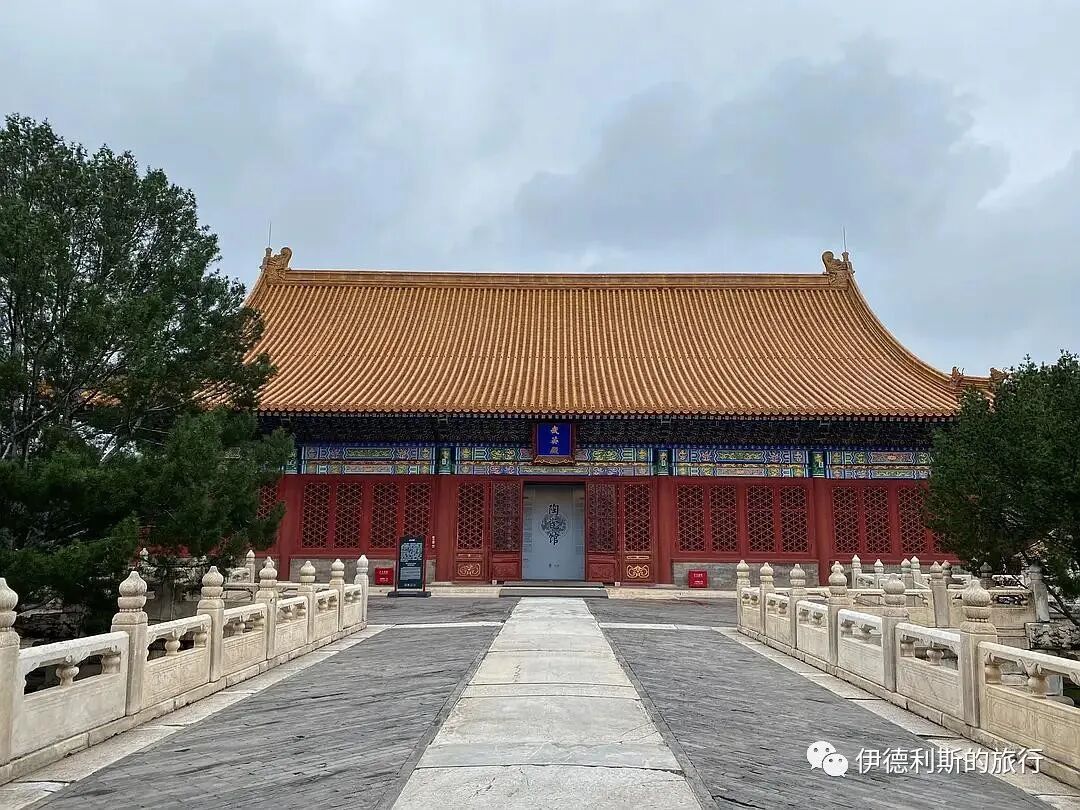
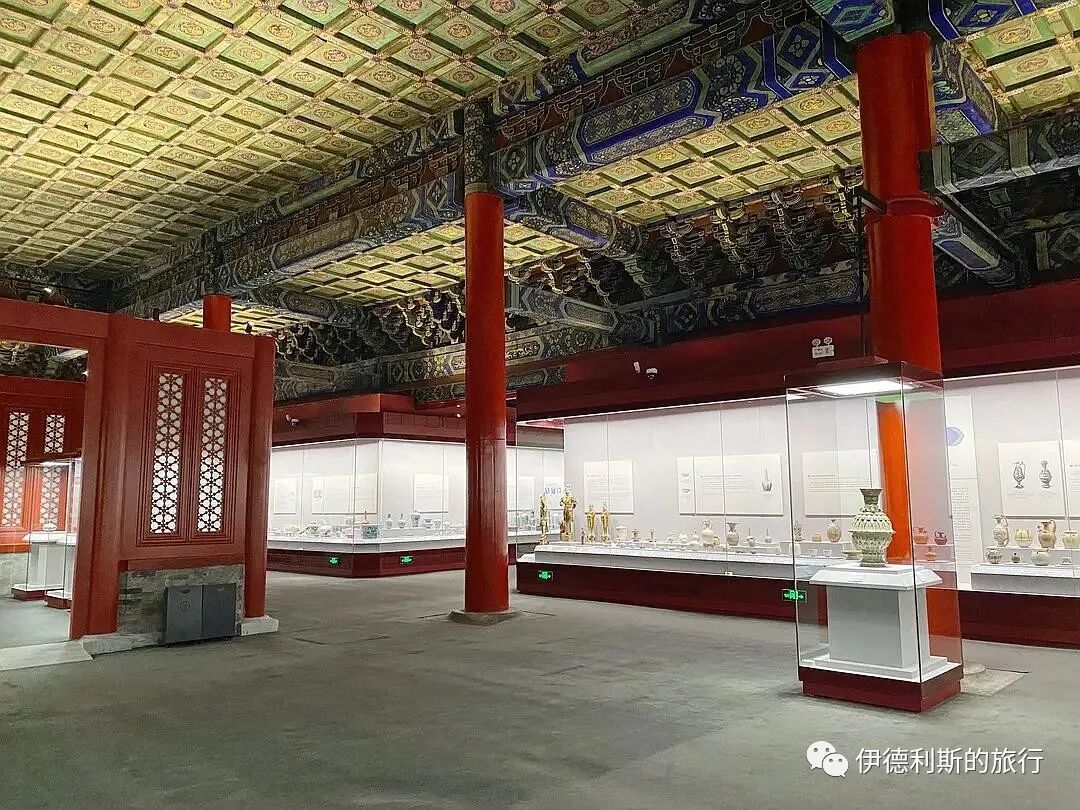
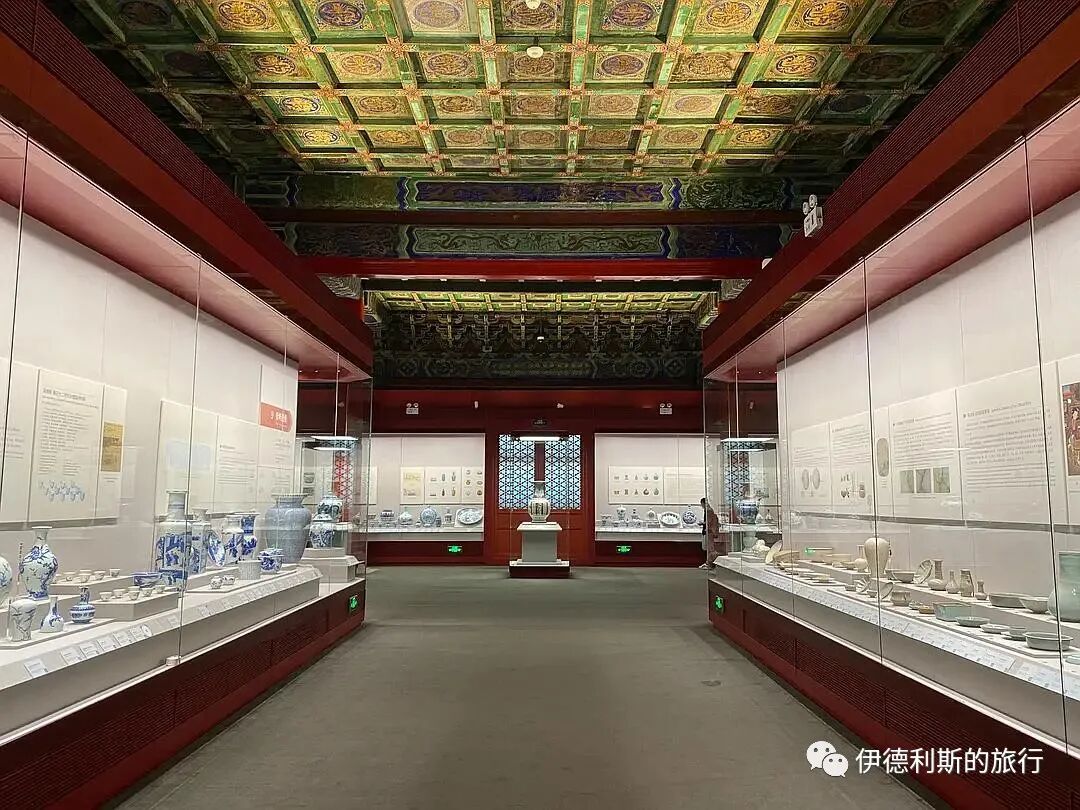
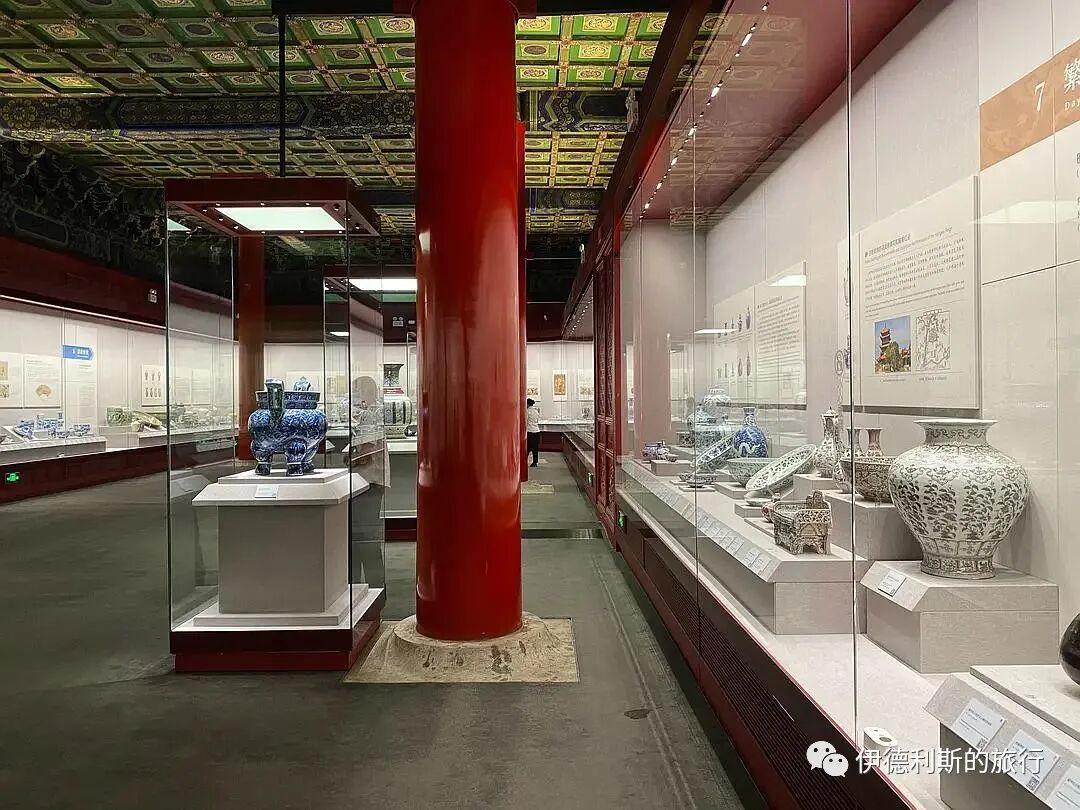
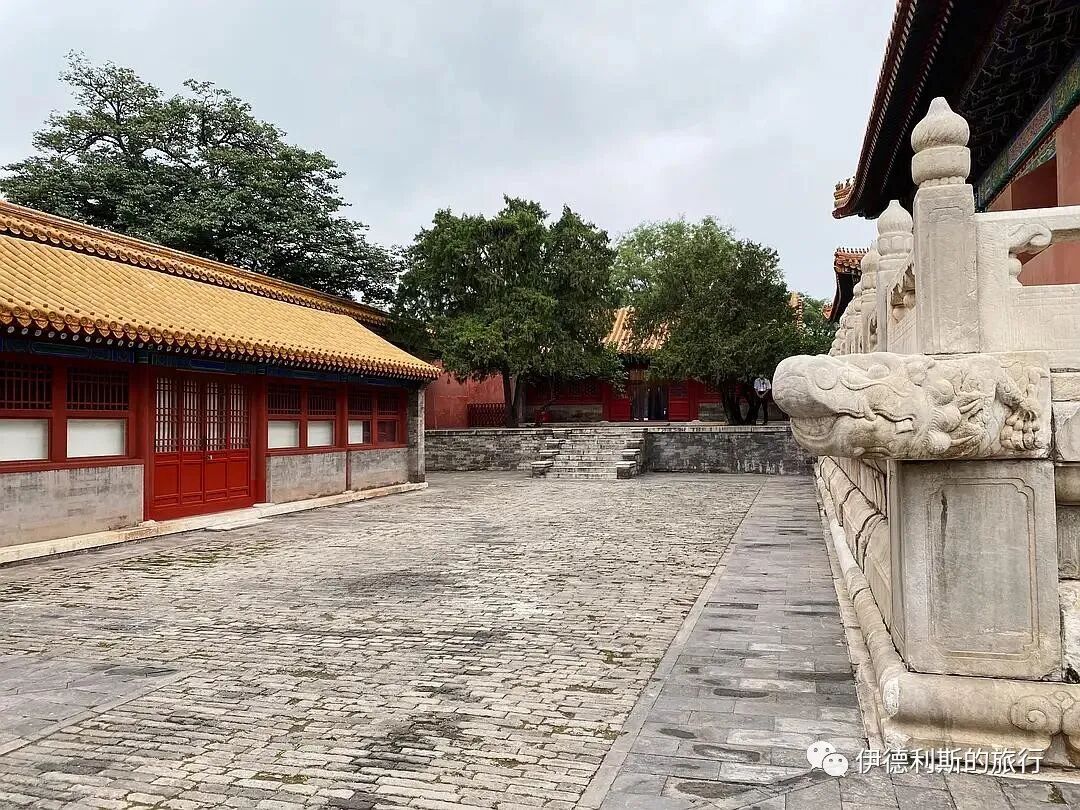
The Ceramics Gallery in the Hall of Martial Valor (Wuyingdian) at the Forbidden City officially reopened on May 1st after renovations. I visited over the weekend, and because I arrived early, I was able to experience the gallery without any crowds.
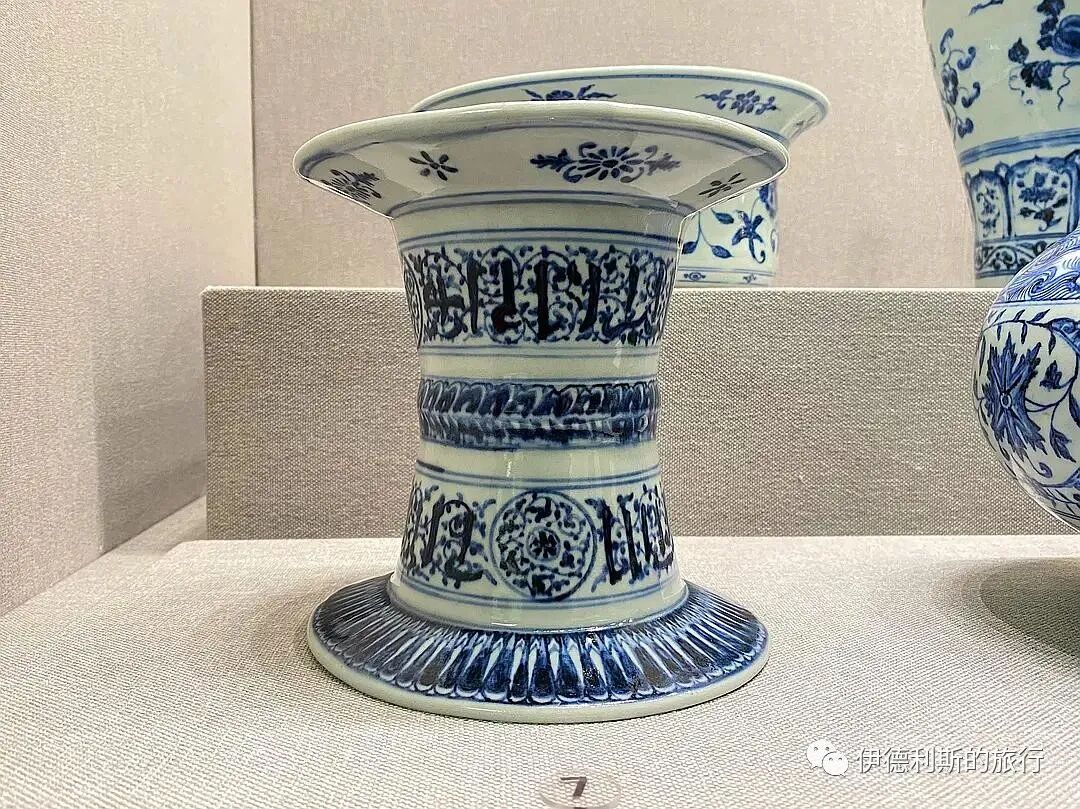
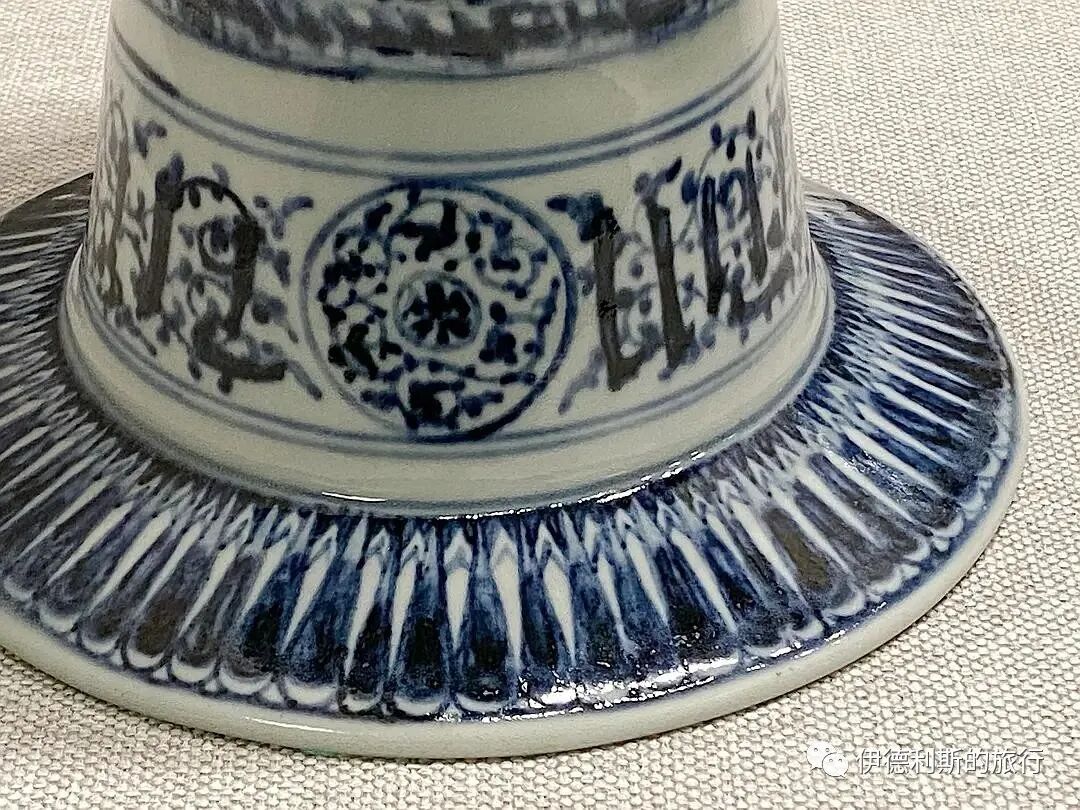
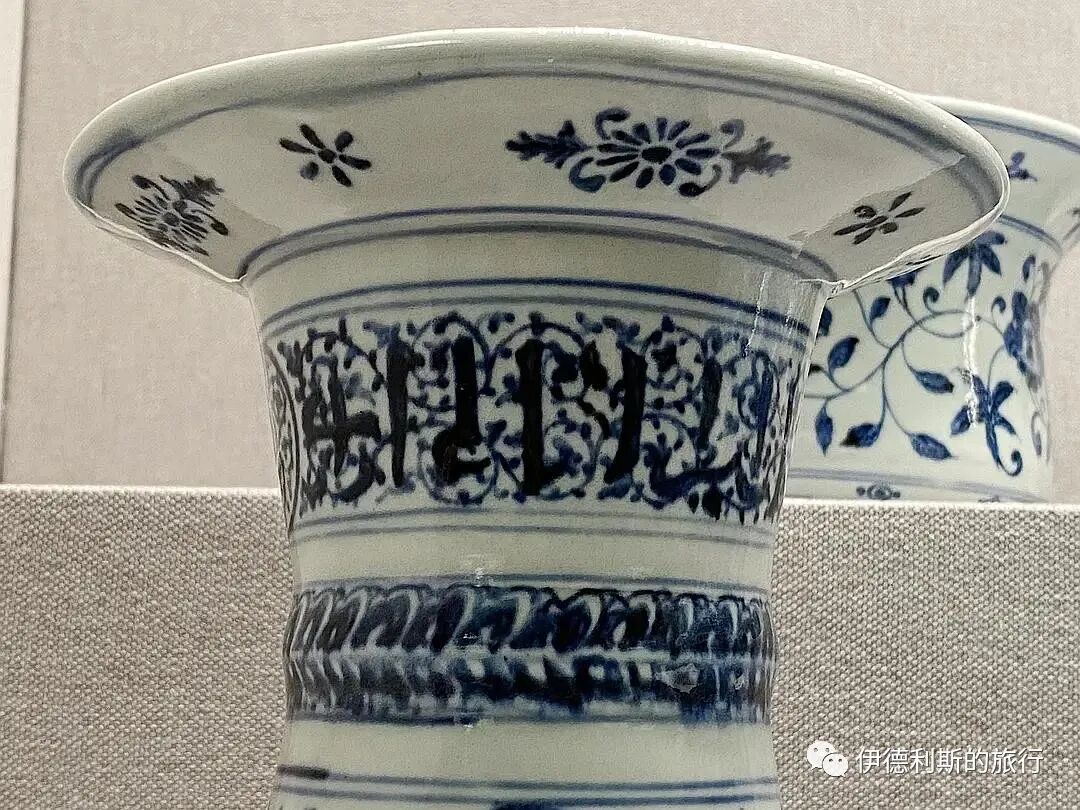
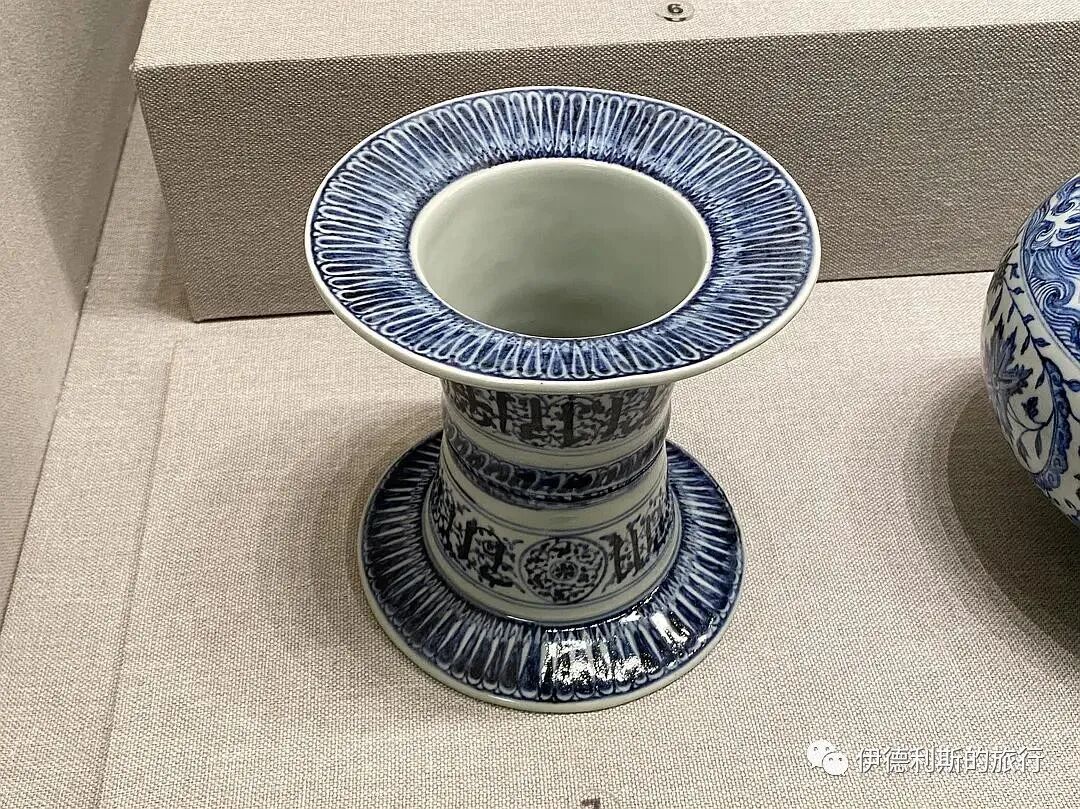
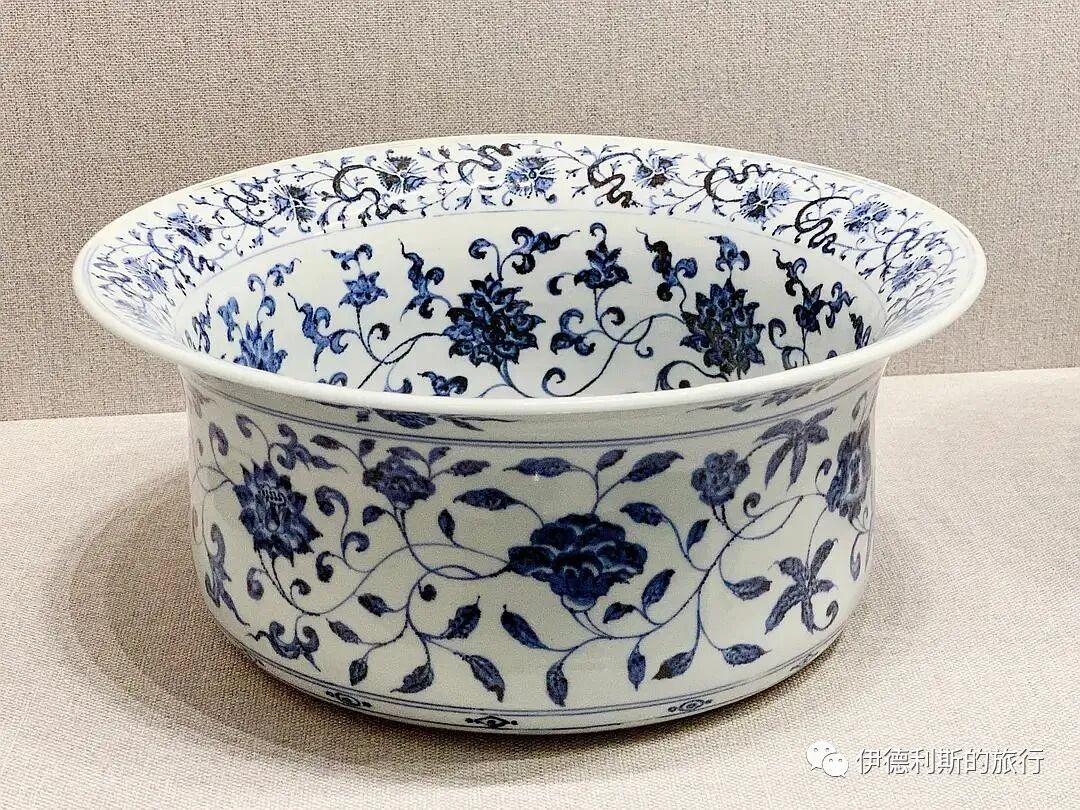
The first piece I want to share is the Ming Yongle period blue-and-white porcelain 'wudang' vase with scrolling floral patterns and Arabic script, produced at the Jingdezhen imperial kilns and held in the former Qing palace collection. Both its shape and decorative motifs imitate 14th-century brassware inlaid with silver from the Middle East. A white-glazed 'wudang' vase of the same shape was once unearthed at the Ming imperial kiln site in Zhushan, Jingdezhen. Originally, this piece of porcelain had no name, but because the Qianlong Emperor thought it looked like a vase without a base, he gave it this name.
This piece uses the imported 'Sumali blue' glaze characteristic of the Yongle and Xuande periods. Because it is a 'high-iron, low-manganese' cobalt pigment, the patterns often exhibit black-blue metallic crystalline spots of iron oxide. When viewed from the side, one can see an uneven texture, and the black-blue and cobalt-blue colors complement each other beautifully.
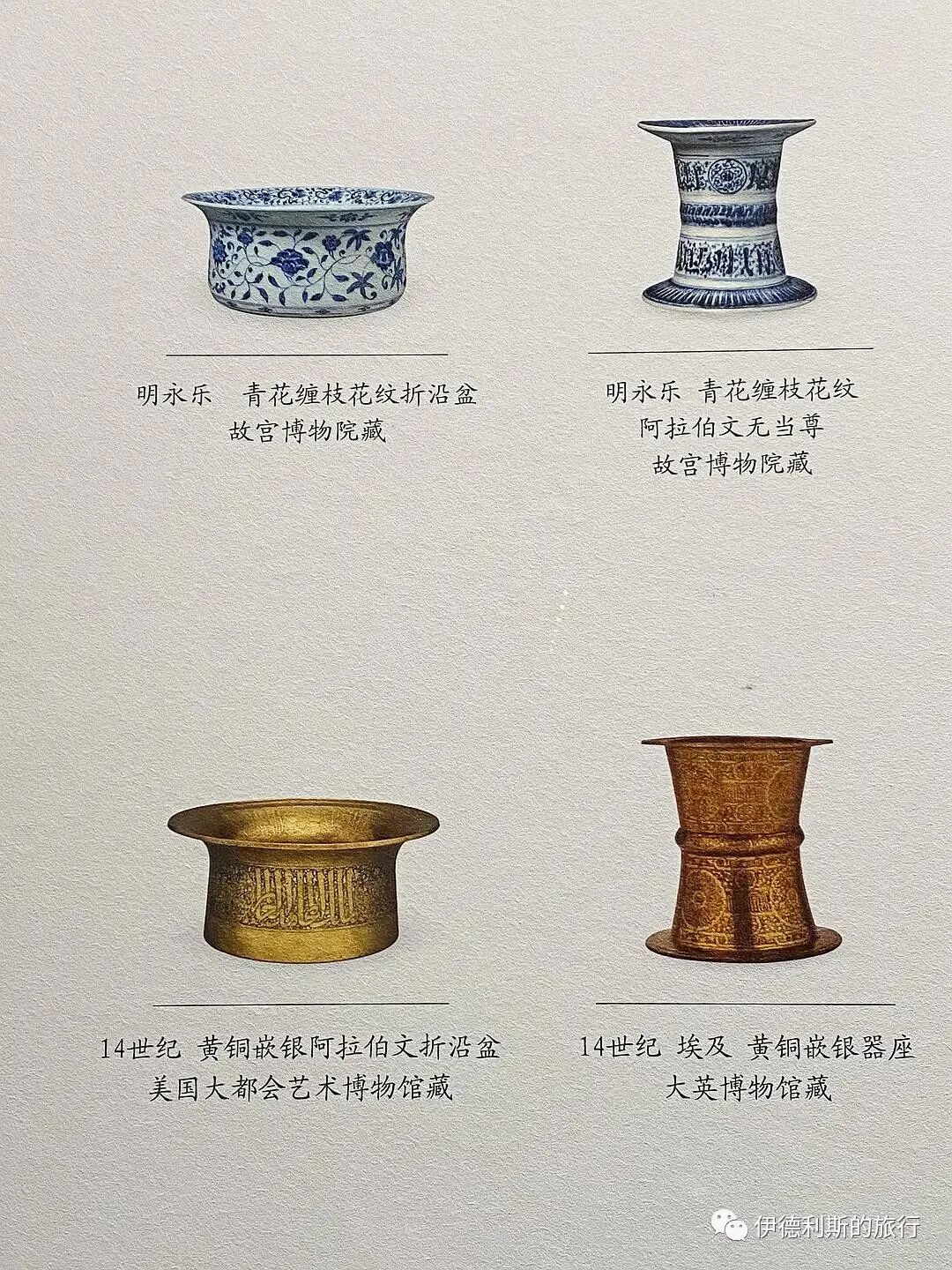
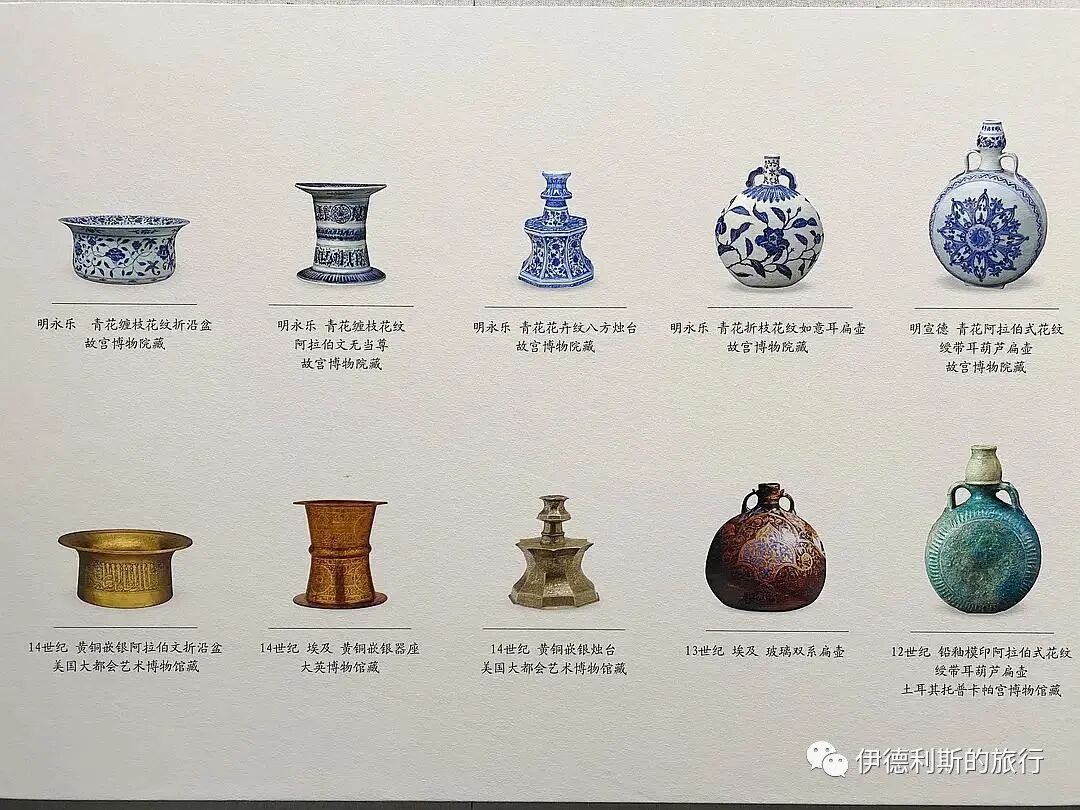
After the recent renovation of the Ceramics Gallery, they displayed a comparison photo of the 'wudang' vase alongside a 14th-century Egyptian Mamluk dynasty brass stand inlaid with silver from the British Museum; the shapes are indeed identical!
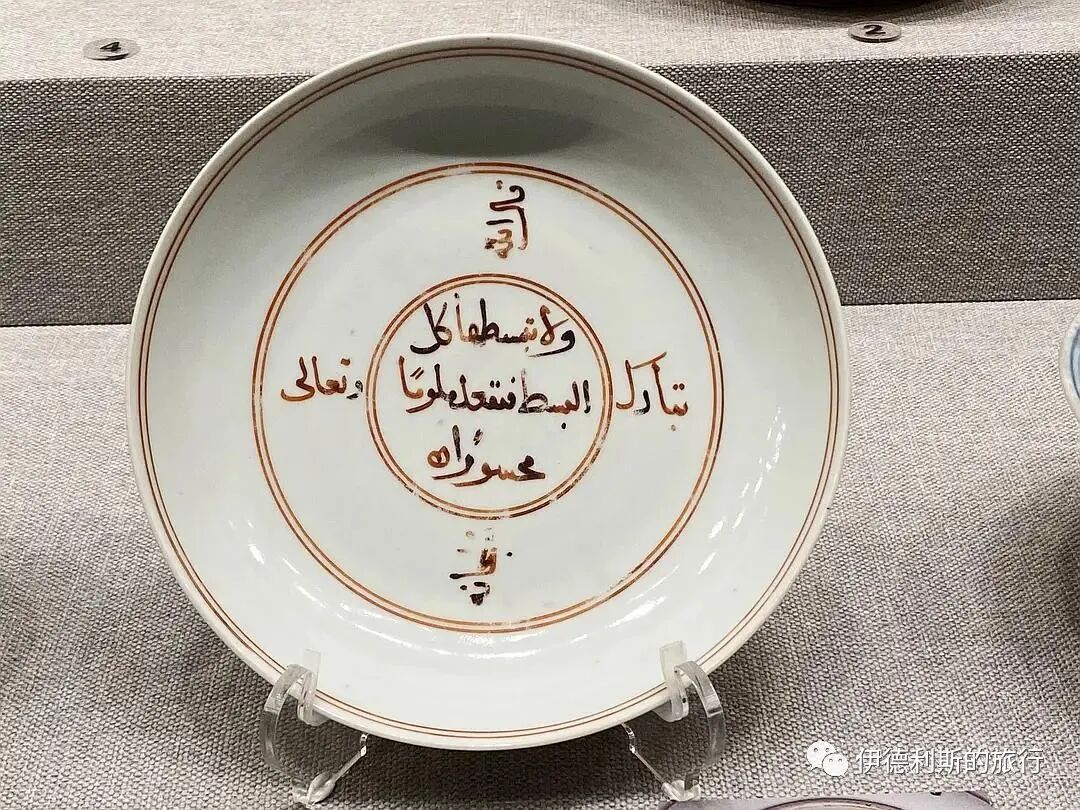
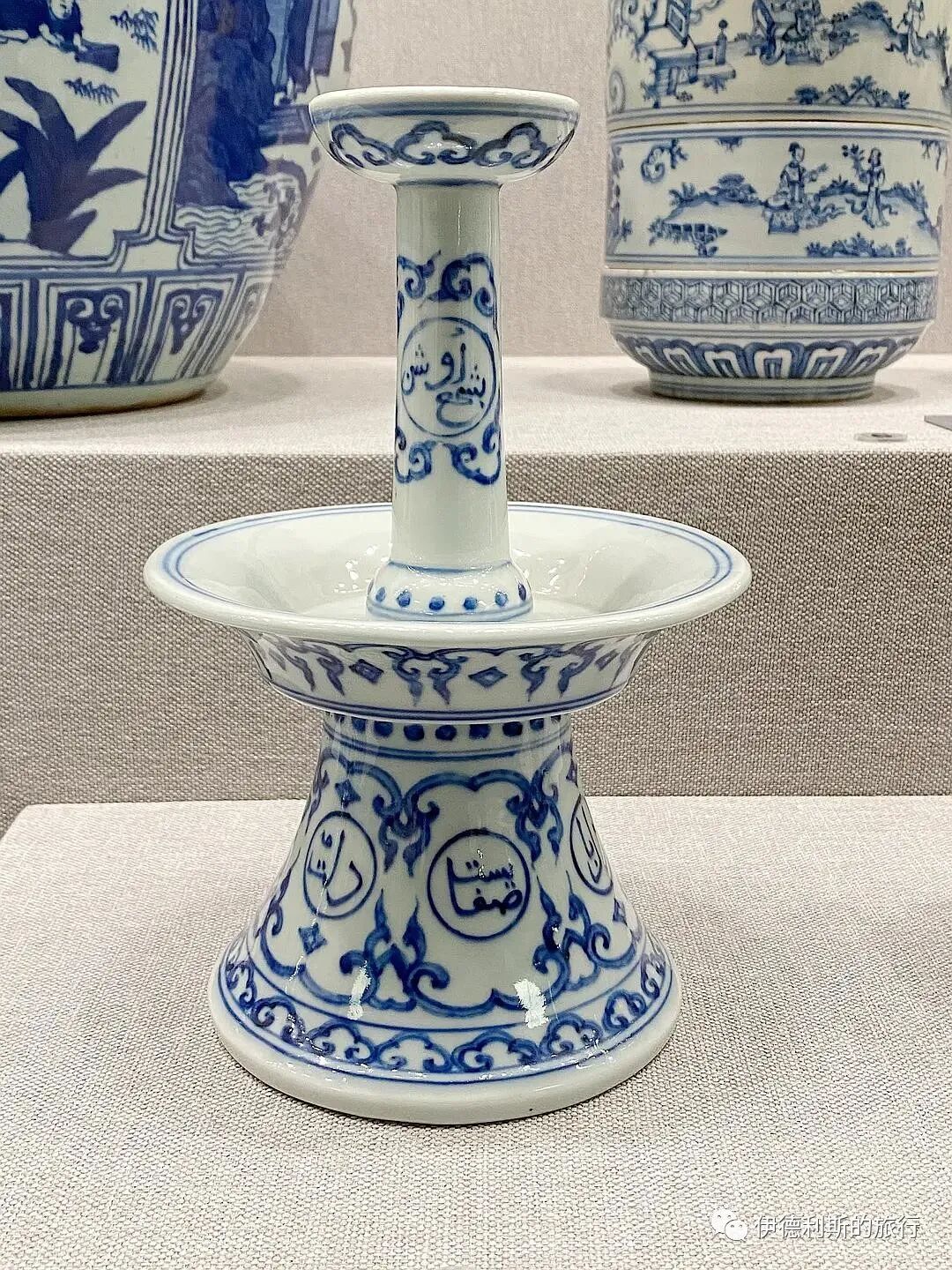
There are also blue-and-white porcelain candle holders with Arabic script and white-glazed porcelain plates with red-enamel Arabic and Persian script, all produced by the imperial kilns during the Ming Zhengde period (1506–1521). The imperial court during the Zhengde era was very fond of using porcelain with Arabic and Persian script. The third issue of the 'Journal of the Palace Museum' in 1984 published an article by Li Yihua titled 'Two Pieces of Zhengde-era Arabic and Persian Script Porcelain: Also Discussing the Influence of Islamic Culture.' It mentions that the Palace Museum holds over 20 pieces of Zhengde-period porcelain with Arabic and Persian script, but only one piece features red enamel. The four Arabic phrases in the center of the porcelain plate read, 'Allah, the Exalted and Majestic, says,' and the three lines of Arabic in the center of the plate are from the Quran, Surah Al-Isra (17:29), the latter half: 'And do not make your hand chained to your neck nor extend it completely and [thereby] become blamed and insolvent.' Additionally, there are four lines of Arabic Hadith on the wall of the plate, which mean: 'Allah, the Exalted and Majestic, says: Whoever does an atom's weight of good, or whoever does an atom's weight of evil, He (Allah) will see it; this is the reward for those who do good.' "
The most interesting part is the three lines of text on the bottom of the plate, which Li Yihua interpreted as 'Dimani Khan, namely Aman Suleiman Shah,' suggesting it may have been commissioned for a country in the Arab region. However, some scholars are more inclined to believe that 'Dimani' should be 'Da Mink,' meaning 'Great Ming.' According to this, the text reads 'The ruler of the Great Ming is King Suleiman,' which means the Zhengde Emperor's Arabic/Persian name was likely 'Suleiman (Solomon).' Therefore, some people jokingly refer to this piece of porcelain as 'King Solomon's Treasure.' Coincidentally, the ruler of the Ottoman Empire during almost the same period was the famous Suleiman the Magnificent (reigned 1520–1566).
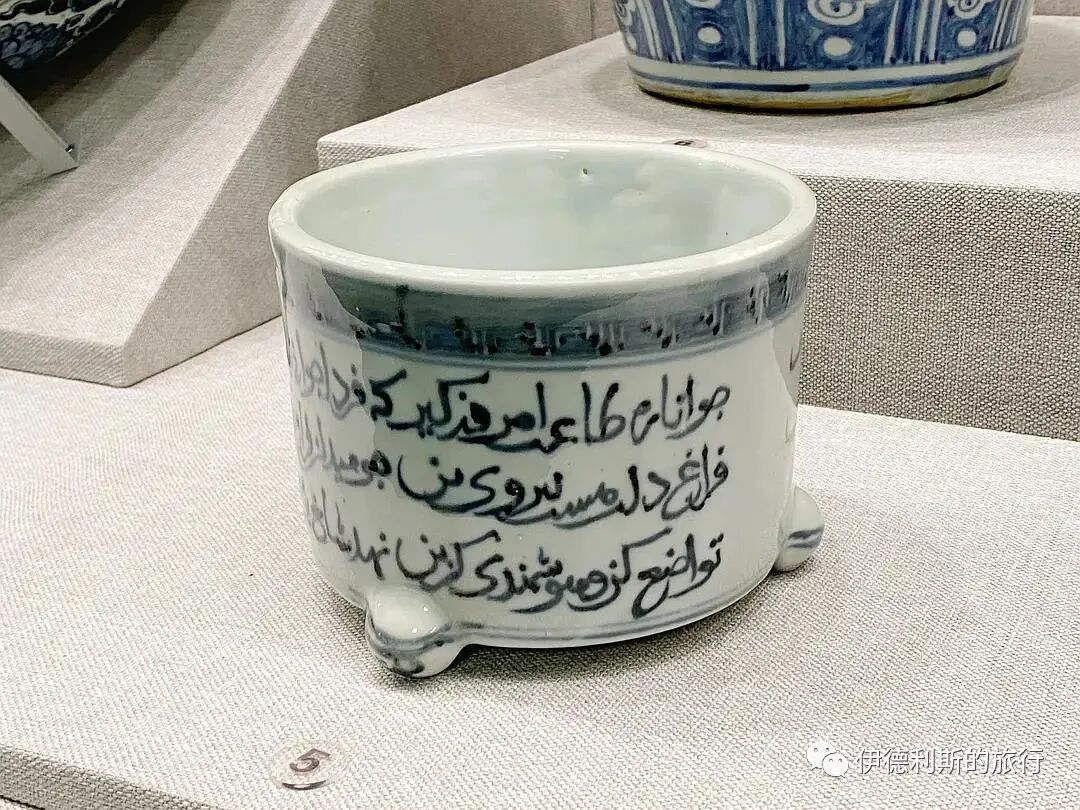
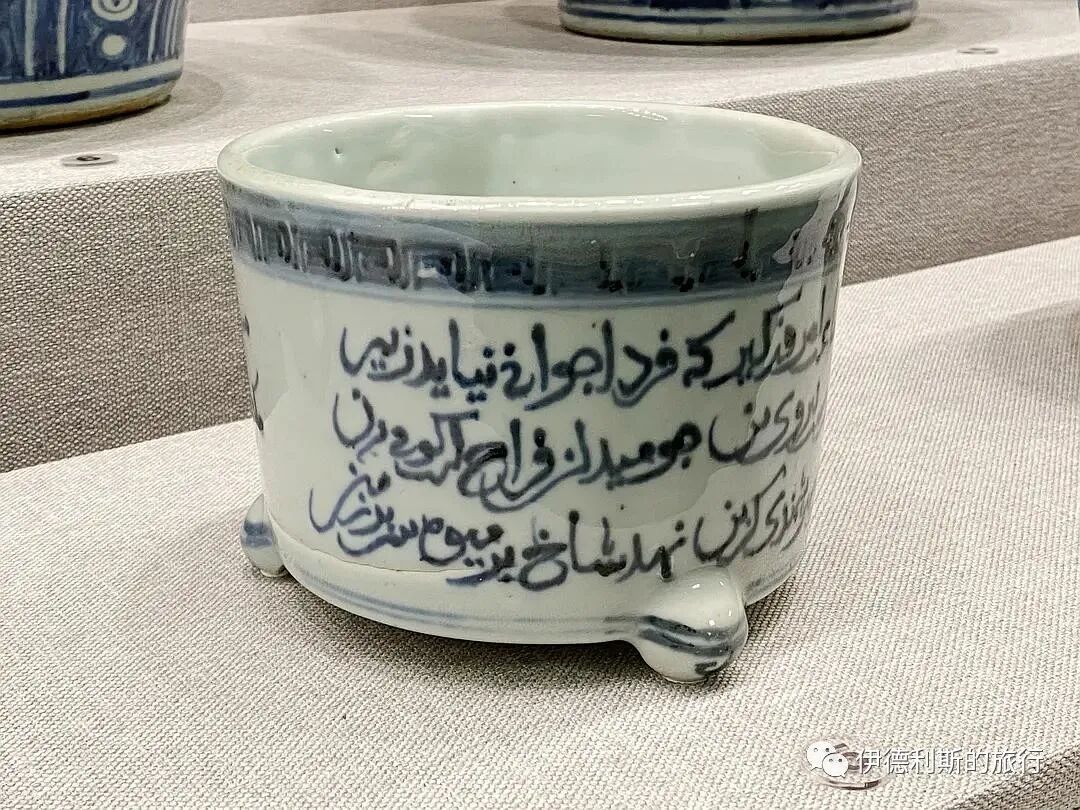
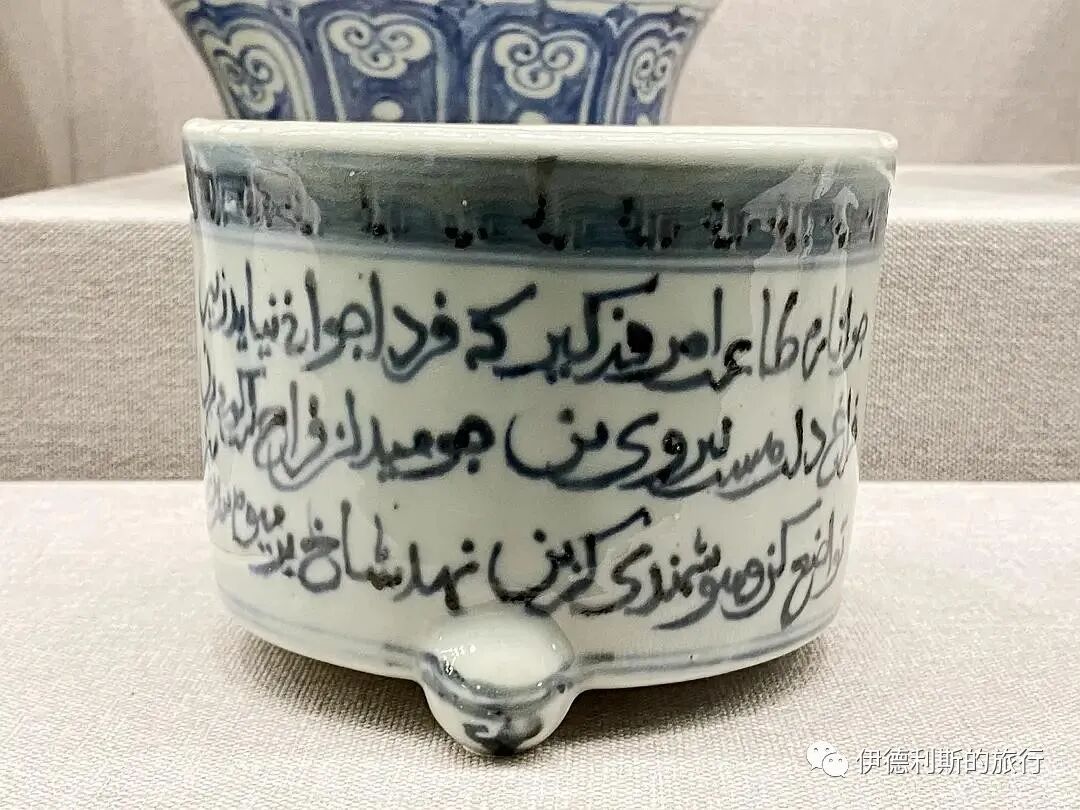
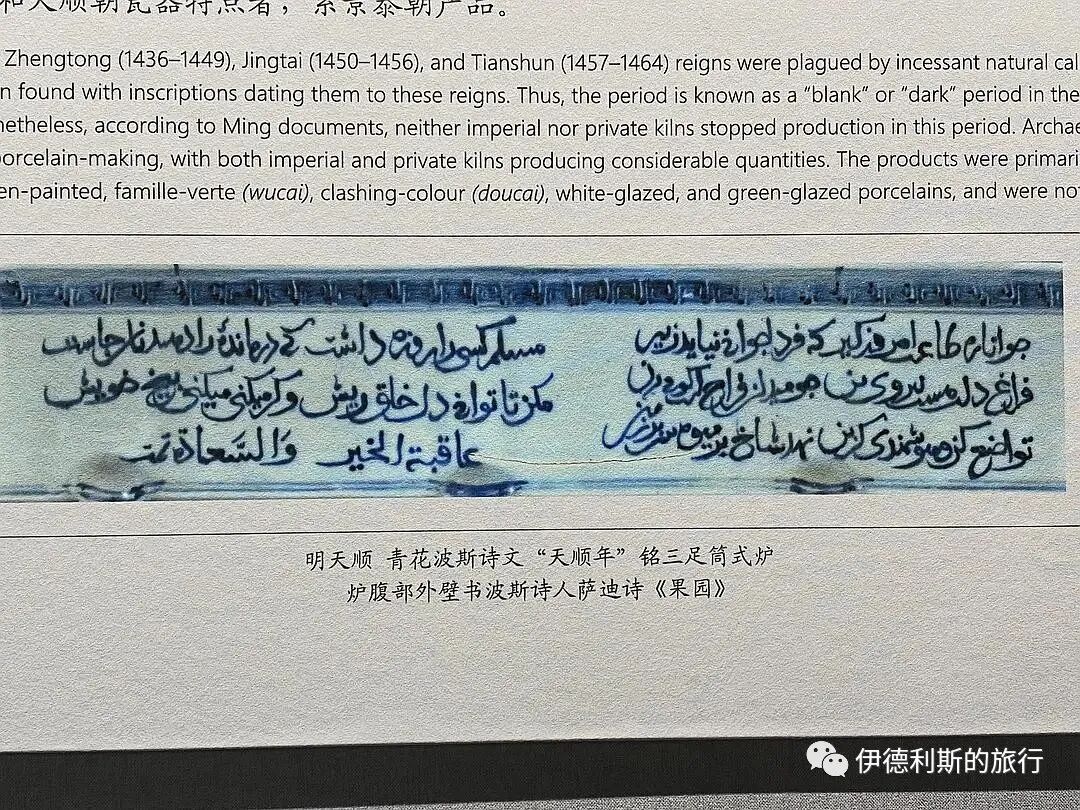
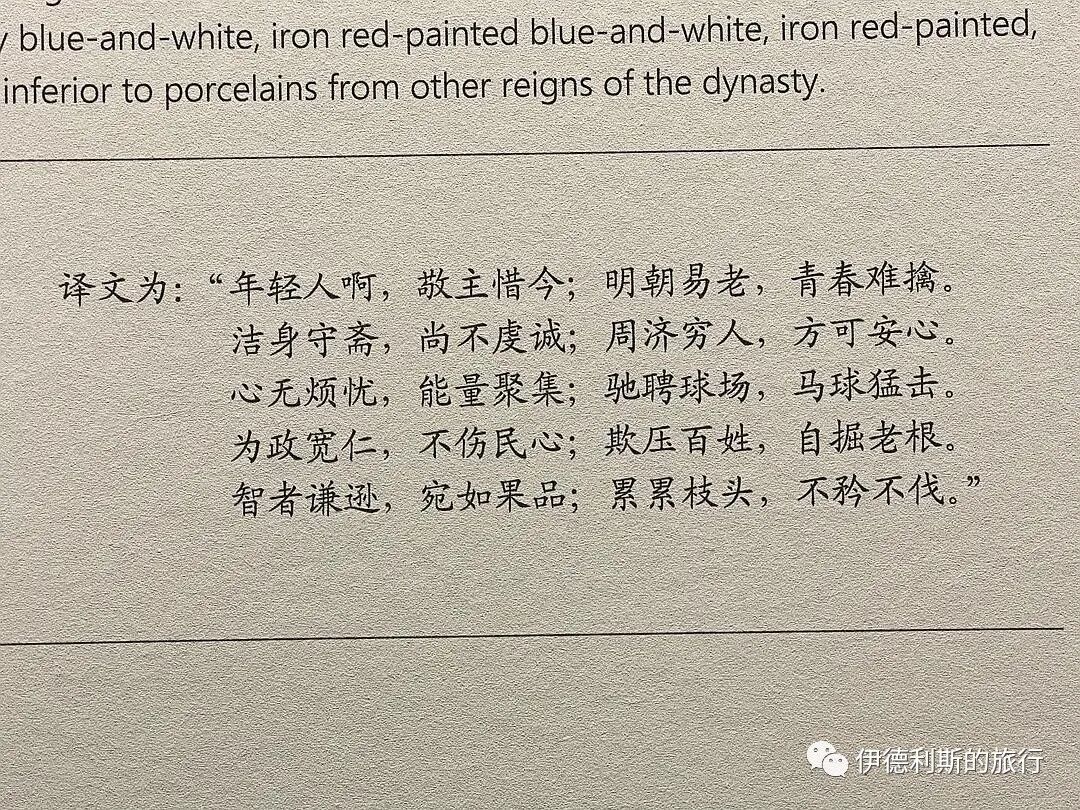
There is also a very classic Ming Tianshun (1457–1464) imperial kiln blue-and-white porcelain three-legged cylindrical incense burner with Persian poetry and a 'Tianshun Year' mark. The outer wall is inscribed with poetry from 'The Orchard' (Bustan) by the famous Persian poet Saadi. After this renovation, they thoughtfully included a translation of the poem. Appreciating Persian poetry fired over 500 years ago inside the Forbidden City—my Inner Asian appreciation level just went up by 10,086.
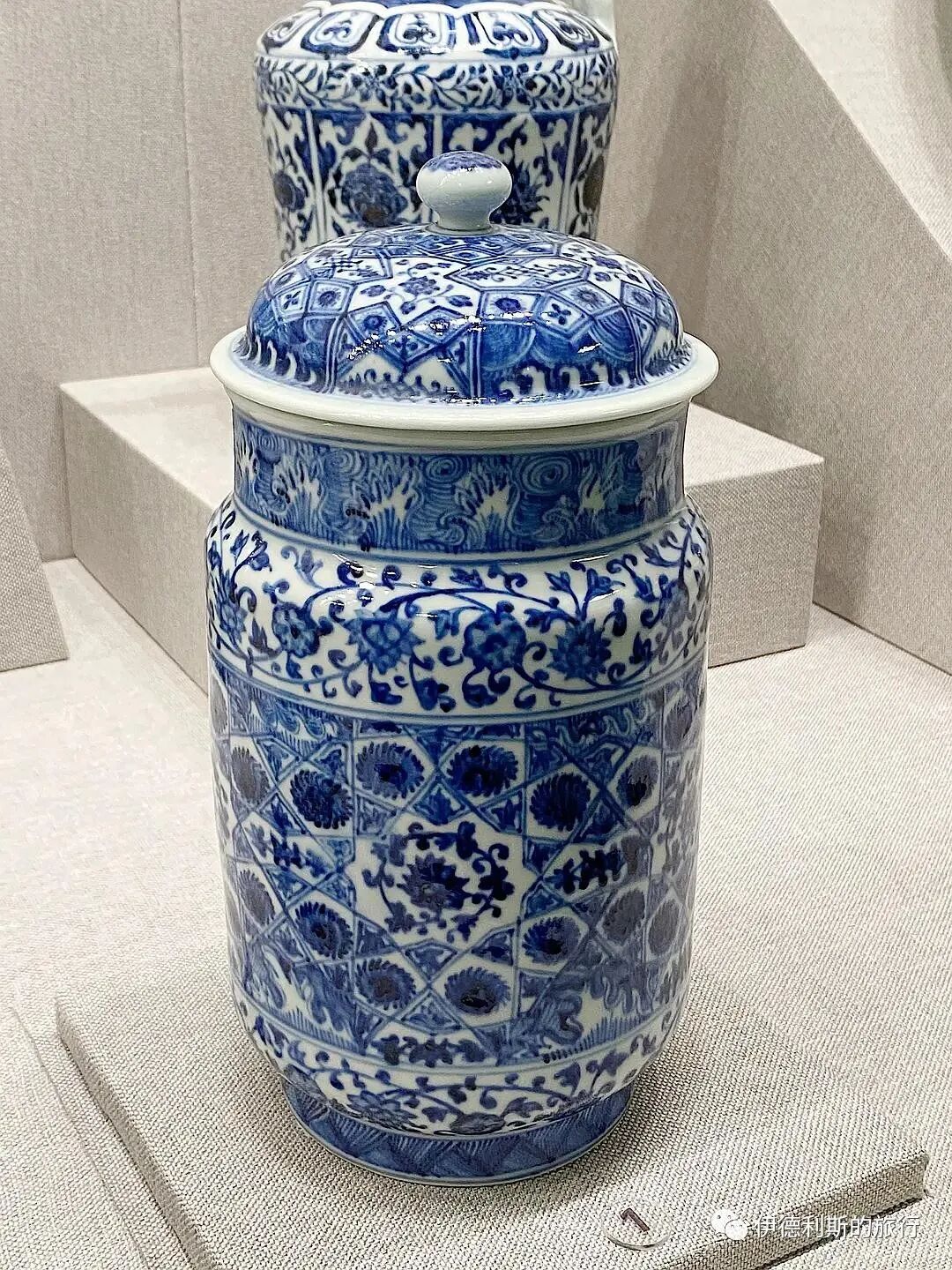
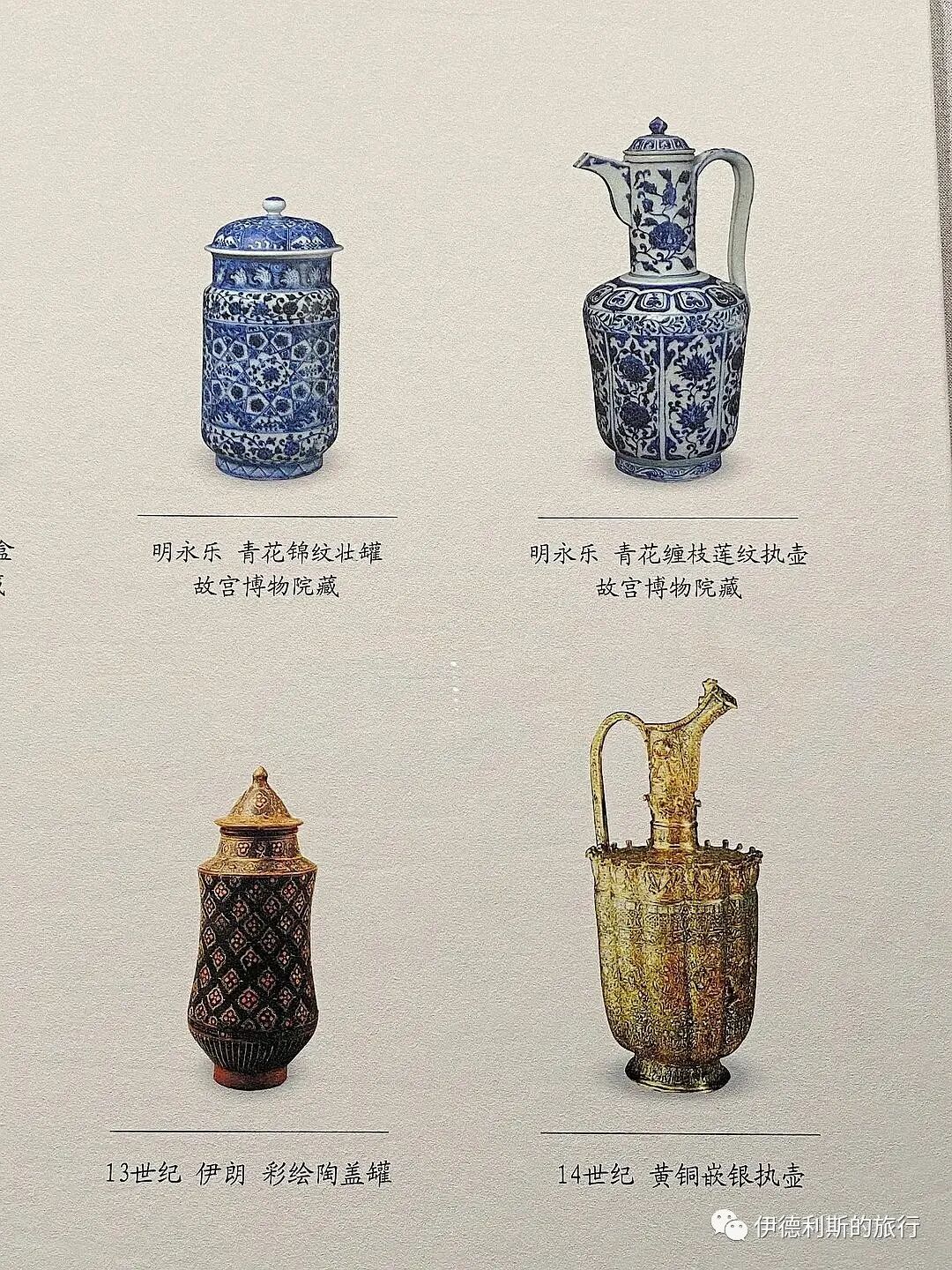
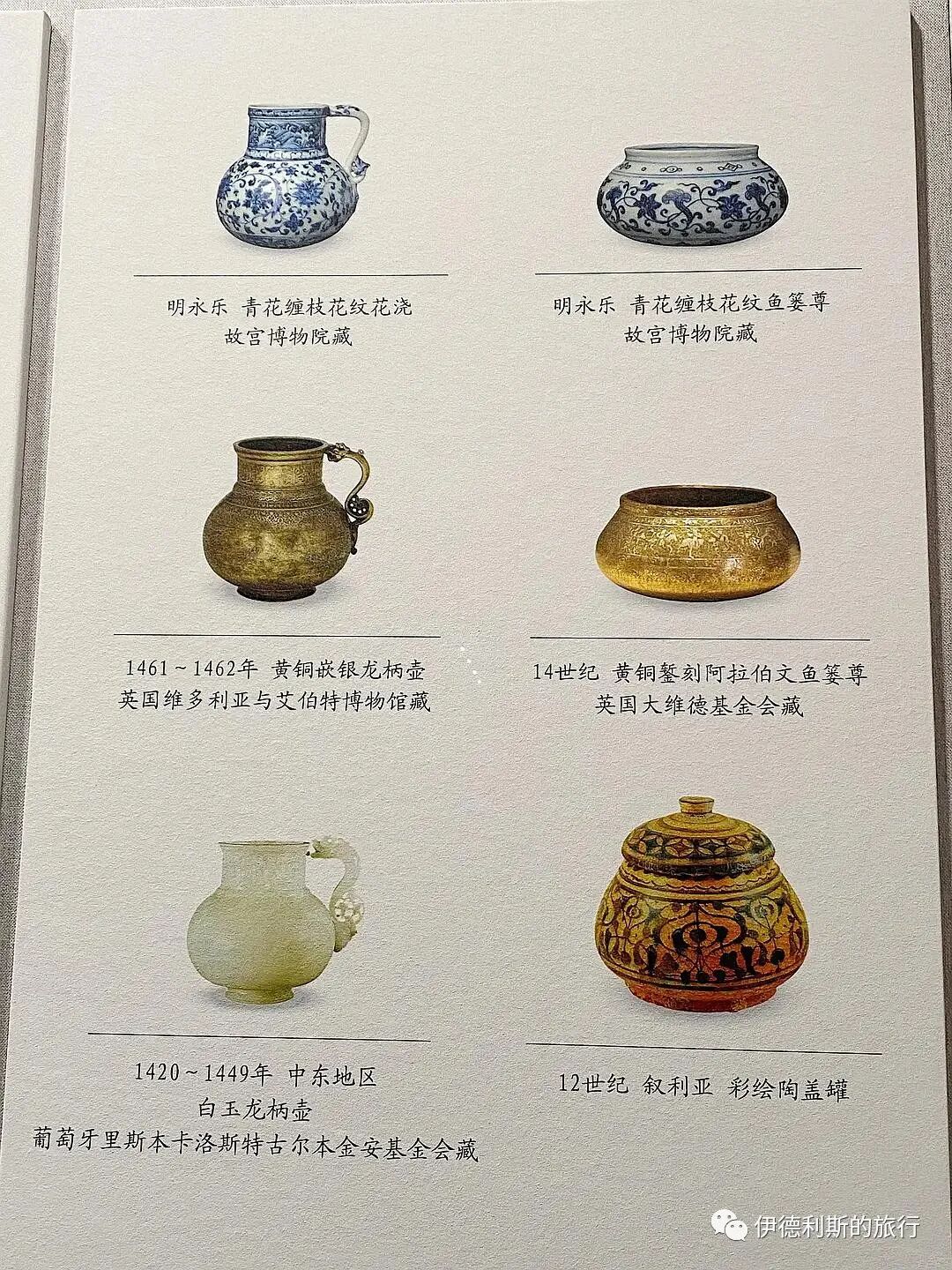
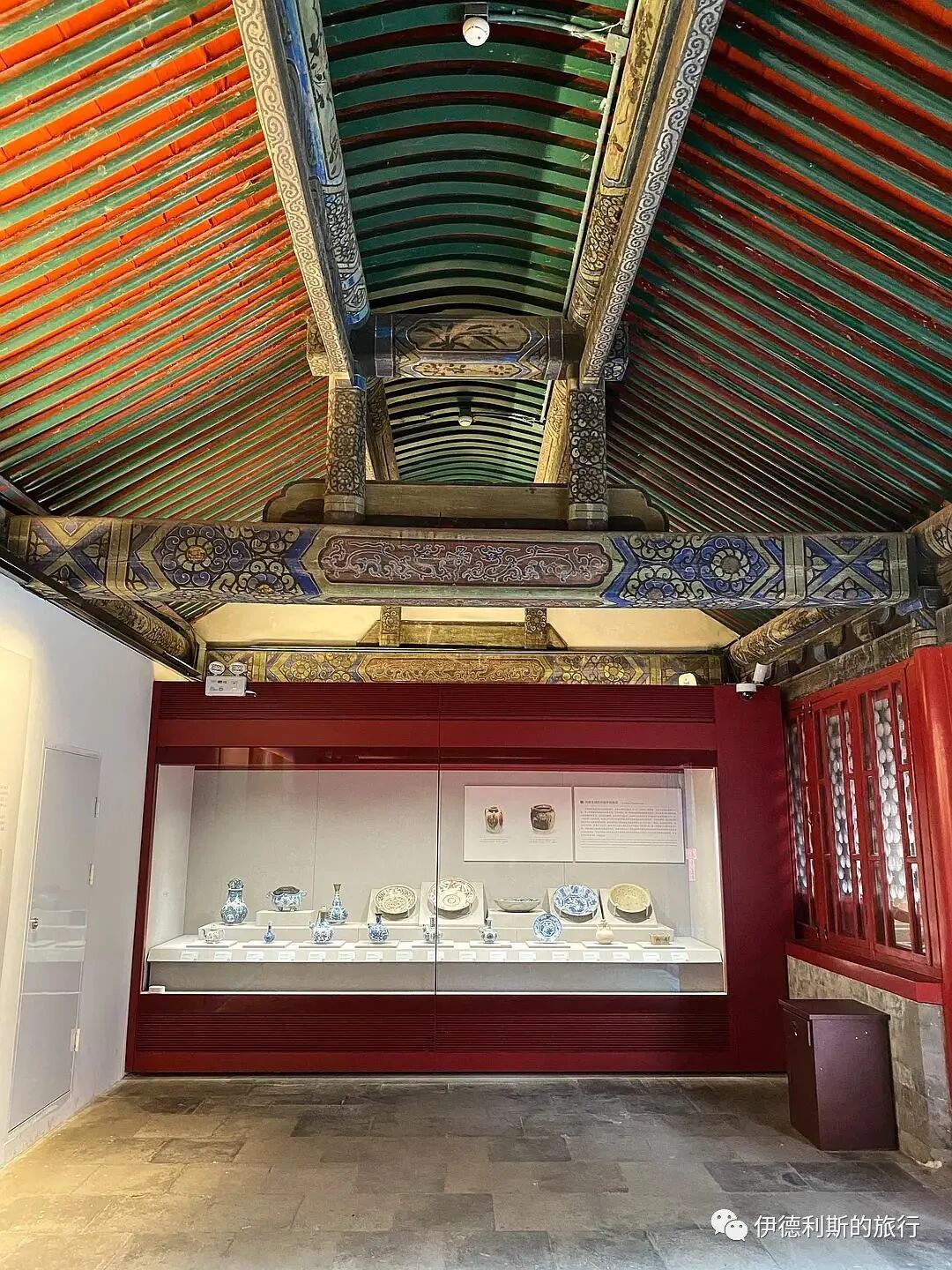
During the Ming Yongle and Xuande periods (1403–1435), the blue-and-white porcelain produced by the imperial kilns learned much from the vessel shapes of the Middle East from the 12th to 14th centuries, resulting in many shapes that had never appeared before. After this renovation, the Ceramics Gallery in the Hall of Martial Valor specifically placed display boards for comparison, making it look very clear. In particular, this Ming Yongle blue-and-white jar with brocade patterns features motifs that are very classic in the Arab and Persian cultural spheres and can be seen on many famous mosques.
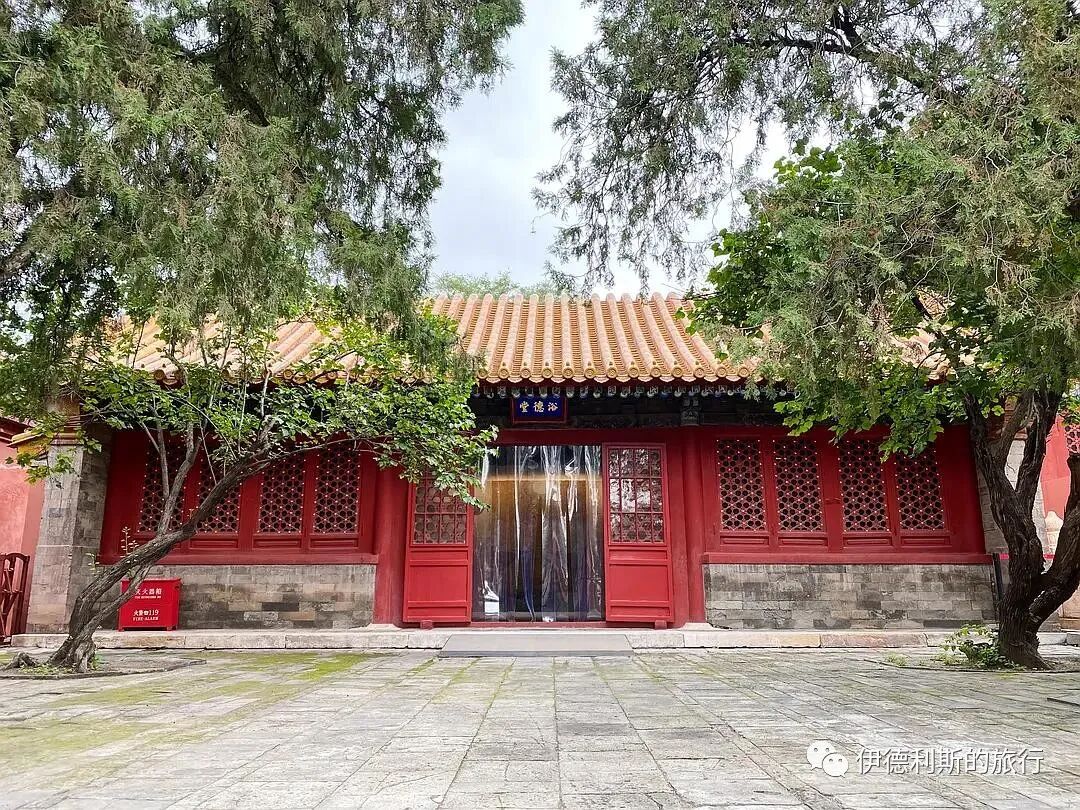
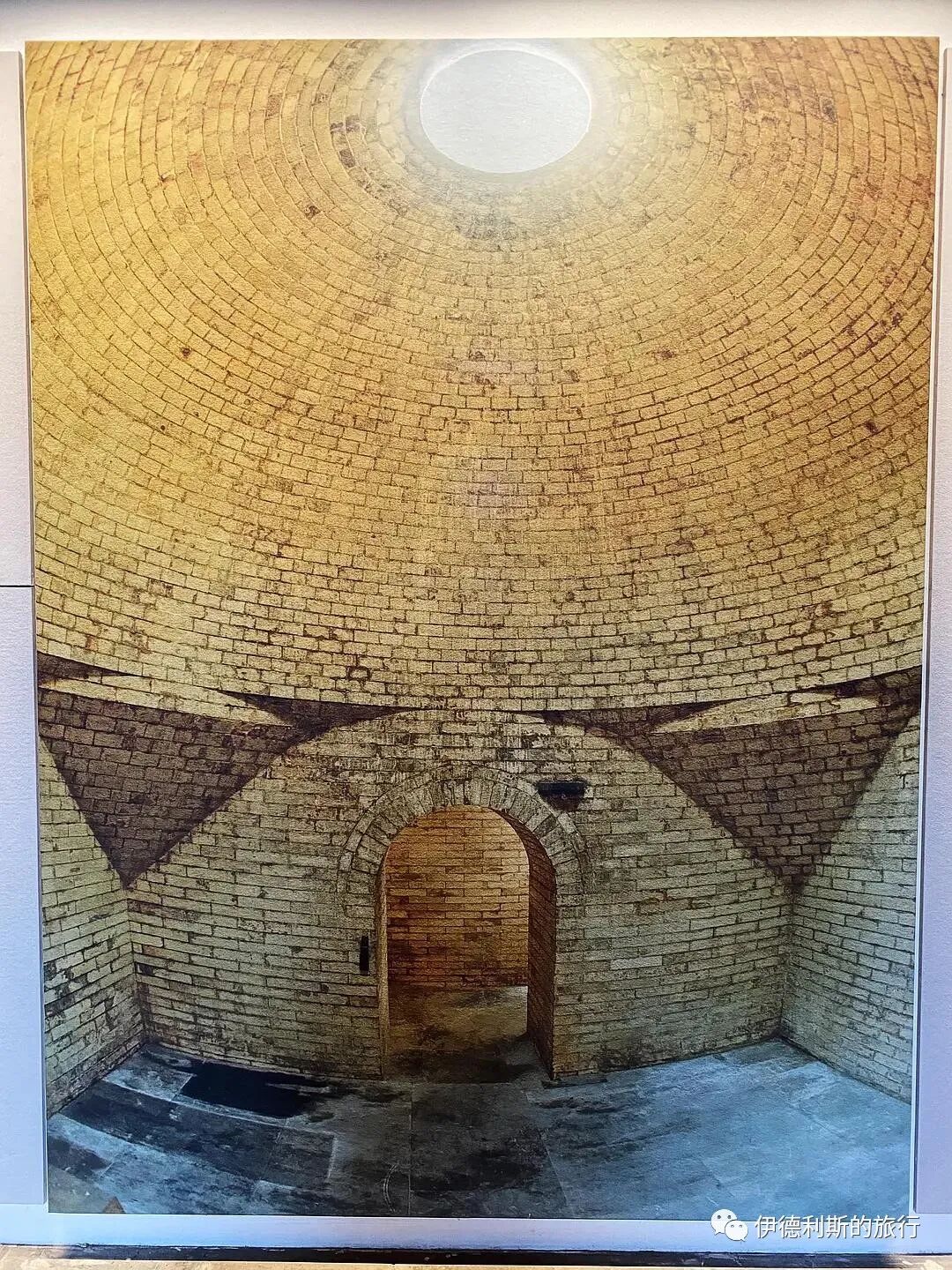
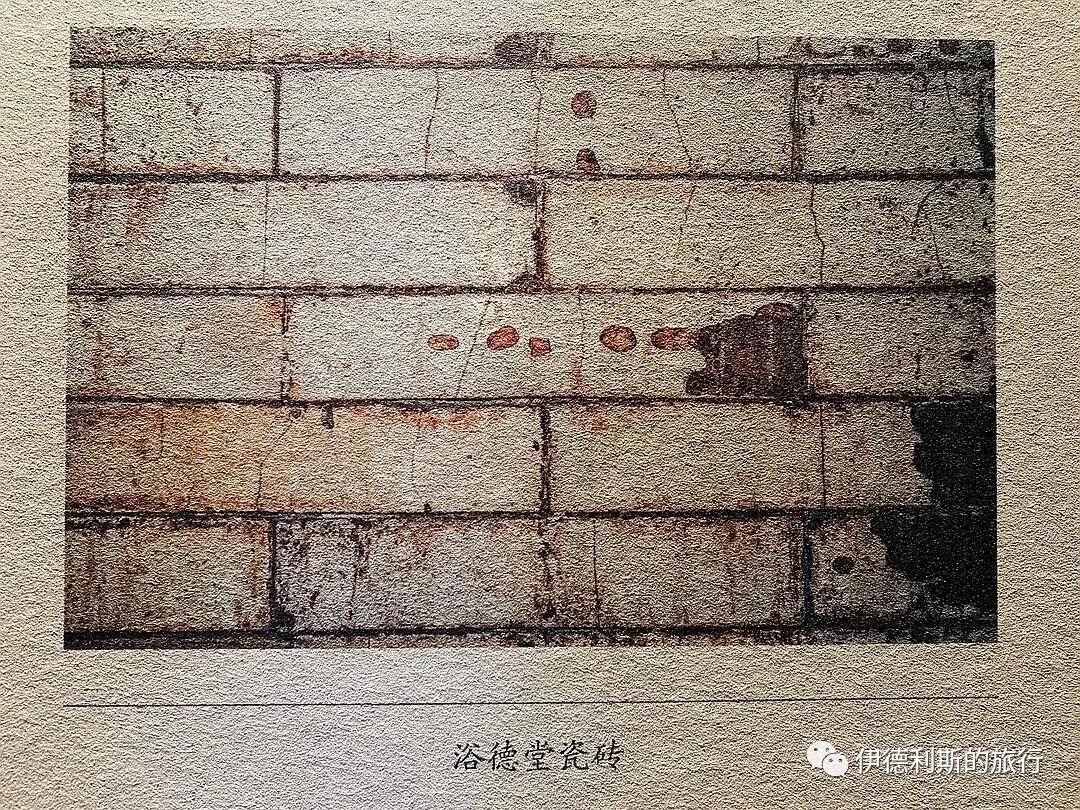
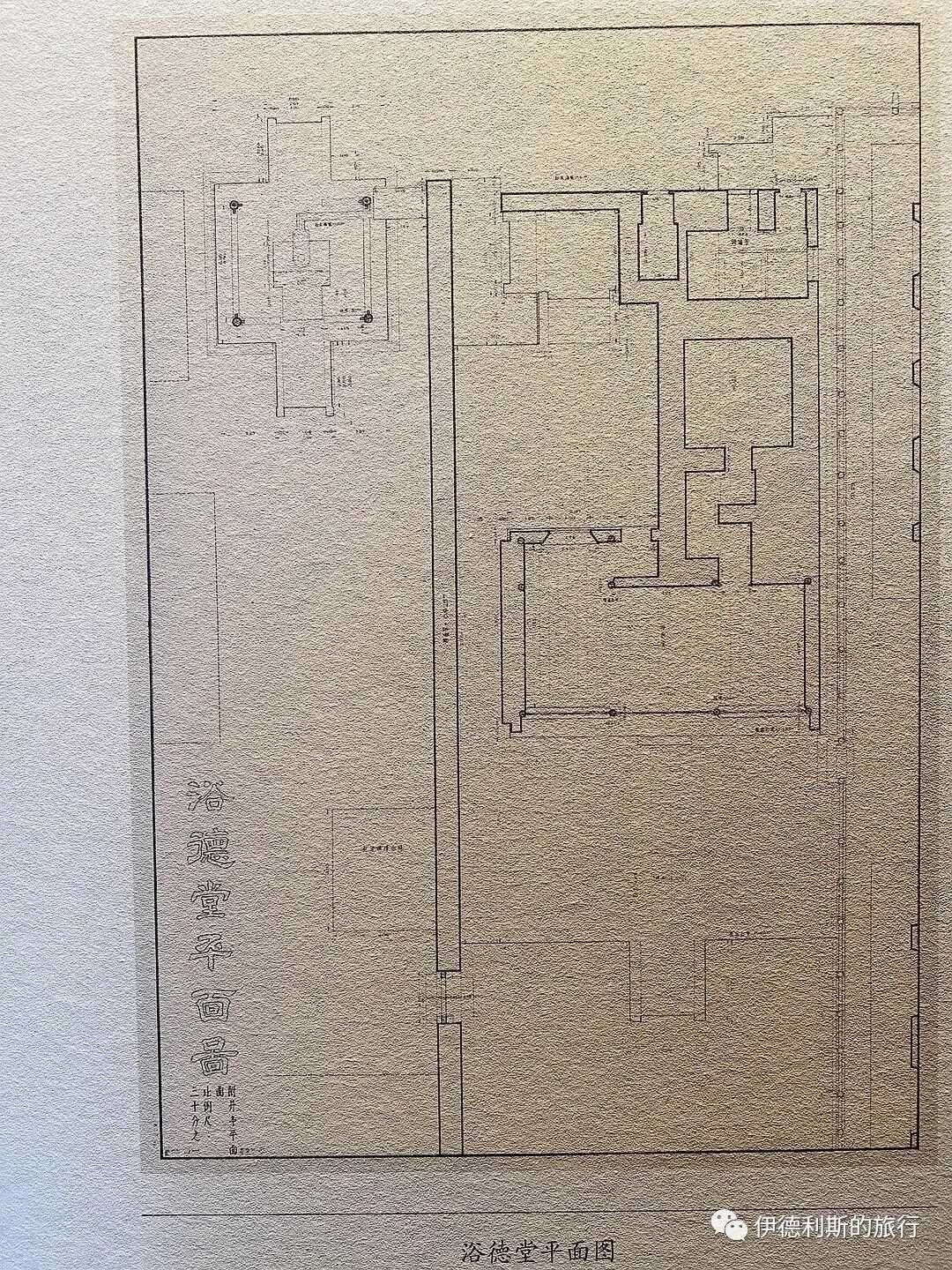
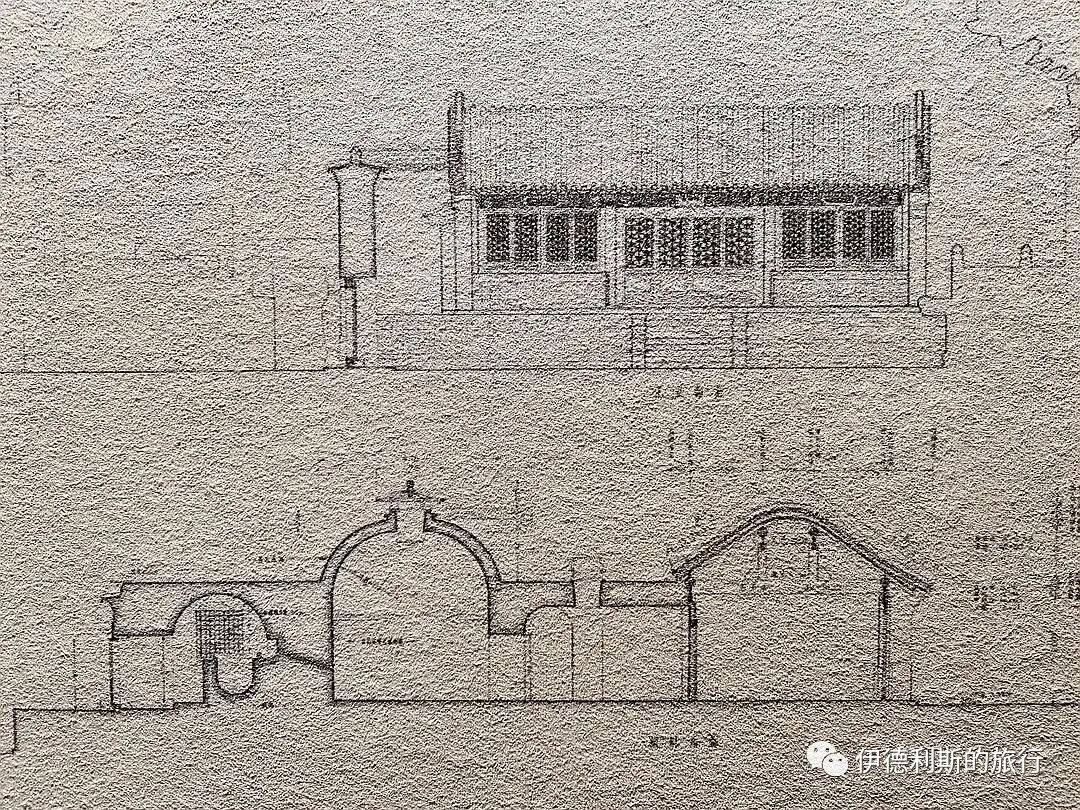
The newly renovated Ceramics Gallery has opened the Yudetang (Hall of Bathing in Virtue) on the west side of the Hall of Martial Valor as an exhibition hall for export porcelain. The most interesting thing about the Yudetang is that there is a beamless hall behind the outer hall that looks very much like a Turkish bath. The ceiling and walls are paved with white glazed bricks, flawless and pure. Behind it, there is an iron fireplace for heating water, which uses copper pipes to bring water into the room.
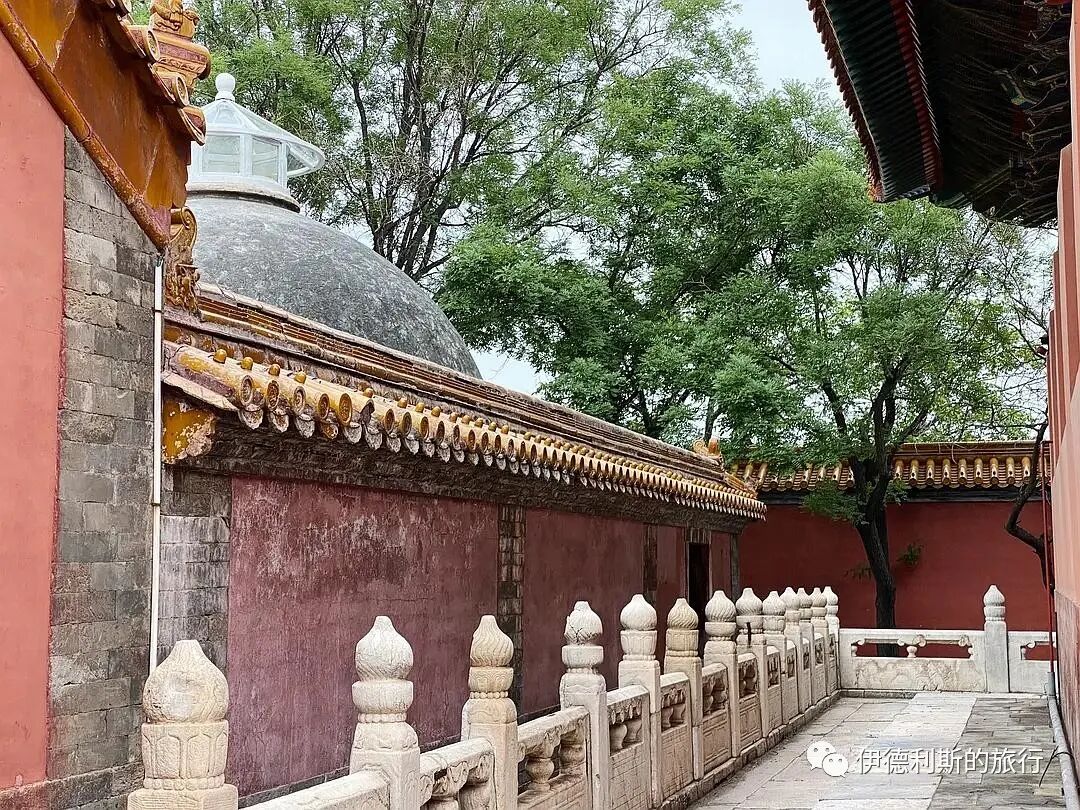
In his article 'A Study of the Yudetang in the Forbidden City's Hall of Martial Valor,' Shan Shiyuan argued that the Yudetang is a relic of the Yuan Dynasty imperial palace and was an Arabic-style bathhouse for the garrison commander outside the southwest corner tower of the Yuan Dadu palace city. Previously, during maintenance of the Forbidden City, white glazed tiles from the Yuan Dynasty were excavated near the Yudetang. They are very similar to the glazed bricks of the bathhouse and are very different from the yellow and green glazes commonly used in the Ming and Qing Forbidden City. Before the War of Resistance, the Society for Research in Chinese Architecture identified this bathhouse, noting that its dome is extremely similar to the Hagia Sophia in Constantinople... and it is likely a Yuan Dynasty structure.
Unfortunately, only the outer hall of the Ceramics Gallery is open this time. The Turkish bath in the back is not open to visitors because the passage is too narrow. From the outside, one can only see a part of the dome, which feels so much like the traditional bathhouse domes I have seen in Turkey. view all
Summary: This travel note introduces Encountering Persian Poetry in the Forbidden City—Exhibition Notes at the Wuyingdian Ceramics Museum. The Ceramics Gallery in the Hall of Martial Valor (Wuyingdian) at the Forbidden City officially reopened on May 1st after renovations. It is useful for readers interested in Forbidden City, Islamic Art, Persian Culture.
The Ceramics Gallery in the Hall of Martial Valor (Wuyingdian) at the Forbidden City officially reopened on May 1st after renovations. I visited over the weekend, and because I arrived early, I was able to experience the gallery without any crowds.
The first piece I want to share is the Ming Yongle period blue-and-white porcelain 'wudang' vase with scrolling floral patterns and Arabic script, produced at the Jingdezhen imperial kilns and held in the former Qing palace collection. Both its shape and decorative motifs imitate 14th-century brassware inlaid with silver from the Middle East. A white-glazed 'wudang' vase of the same shape was once unearthed at the Ming imperial kiln site in Zhushan, Jingdezhen. Originally, this piece of porcelain had no name, but because the Qianlong Emperor thought it looked like a vase without a base, he gave it this name.
This piece uses the imported 'Sumali blue' glaze characteristic of the Yongle and Xuande periods. Because it is a 'high-iron, low-manganese' cobalt pigment, the patterns often exhibit black-blue metallic crystalline spots of iron oxide. When viewed from the side, one can see an uneven texture, and the black-blue and cobalt-blue colors complement each other beautifully.
After the recent renovation of the Ceramics Gallery, they displayed a comparison photo of the 'wudang' vase alongside a 14th-century Egyptian Mamluk dynasty brass stand inlaid with silver from the British Museum; the shapes are indeed identical!
There are also blue-and-white porcelain candle holders with Arabic script and white-glazed porcelain plates with red-enamel Arabic and Persian script, all produced by the imperial kilns during the Ming Zhengde period (1506–1521). The imperial court during the Zhengde era was very fond of using porcelain with Arabic and Persian script. The third issue of the 'Journal of the Palace Museum' in 1984 published an article by Li Yihua titled 'Two Pieces of Zhengde-era Arabic and Persian Script Porcelain: Also Discussing the Influence of Islamic Culture.' It mentions that the Palace Museum holds over 20 pieces of Zhengde-period porcelain with Arabic and Persian script, but only one piece features red enamel. The four Arabic phrases in the center of the porcelain plate read, 'Allah, the Exalted and Majestic, says,' and the three lines of Arabic in the center of the plate are from the Quran, Surah Al-Isra (17:29), the latter half: 'And do not make your hand chained to your neck nor extend it completely and [thereby] become blamed and insolvent.' Additionally, there are four lines of Arabic Hadith on the wall of the plate, which mean: 'Allah, the Exalted and Majestic, says: Whoever does an atom's weight of good, or whoever does an atom's weight of evil, He (Allah) will see it; this is the reward for those who do good.' "
The most interesting part is the three lines of text on the bottom of the plate, which Li Yihua interpreted as 'Dimani Khan, namely Aman Suleiman Shah,' suggesting it may have been commissioned for a country in the Arab region. However, some scholars are more inclined to believe that 'Dimani' should be 'Da Mink,' meaning 'Great Ming.' According to this, the text reads 'The ruler of the Great Ming is King Suleiman,' which means the Zhengde Emperor's Arabic/Persian name was likely 'Suleiman (Solomon).' Therefore, some people jokingly refer to this piece of porcelain as 'King Solomon's Treasure.' Coincidentally, the ruler of the Ottoman Empire during almost the same period was the famous Suleiman the Magnificent (reigned 1520–1566).
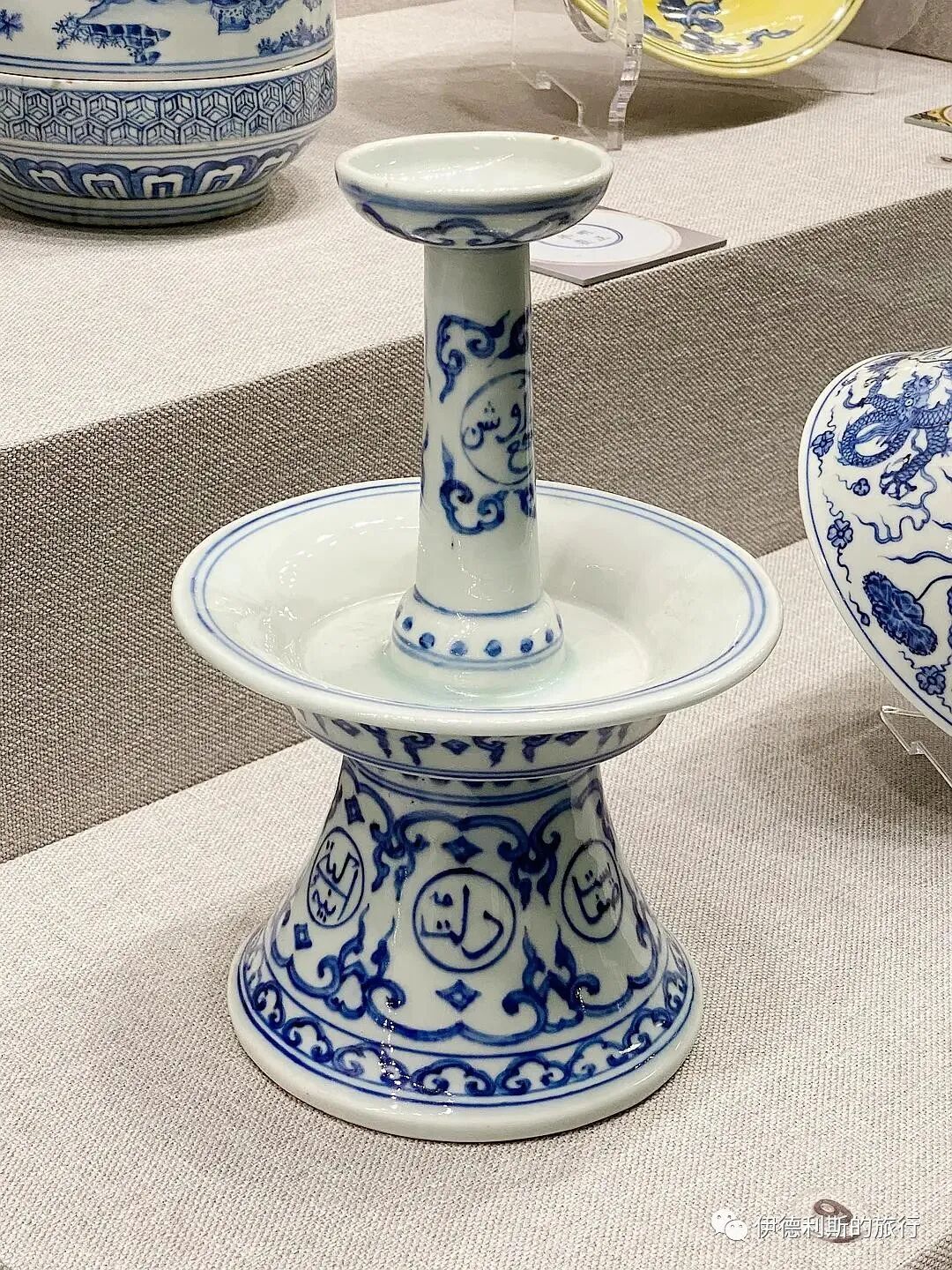
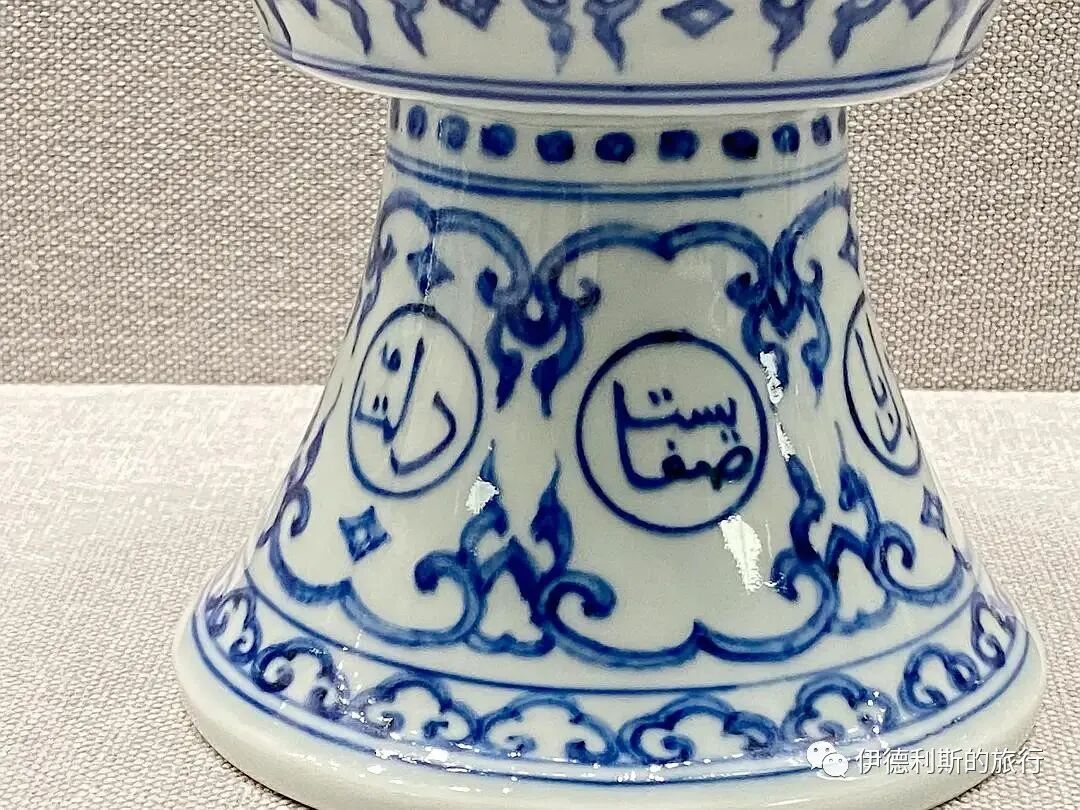
There is also a very classic Ming Tianshun (1457–1464) imperial kiln blue-and-white porcelain three-legged cylindrical incense burner with Persian poetry and a 'Tianshun Year' mark. The outer wall is inscribed with poetry from 'The Orchard' (Bustan) by the famous Persian poet Saadi. After this renovation, they thoughtfully included a translation of the poem. Appreciating Persian poetry fired over 500 years ago inside the Forbidden City—my Inner Asian appreciation level just went up by 10,086.
During the Ming Yongle and Xuande periods (1403–1435), the blue-and-white porcelain produced by the imperial kilns learned much from the vessel shapes of the Middle East from the 12th to 14th centuries, resulting in many shapes that had never appeared before. After this renovation, the Ceramics Gallery in the Hall of Martial Valor specifically placed display boards for comparison, making it look very clear. In particular, this Ming Yongle blue-and-white jar with brocade patterns features motifs that are very classic in the Arab and Persian cultural spheres and can be seen on many famous mosques.
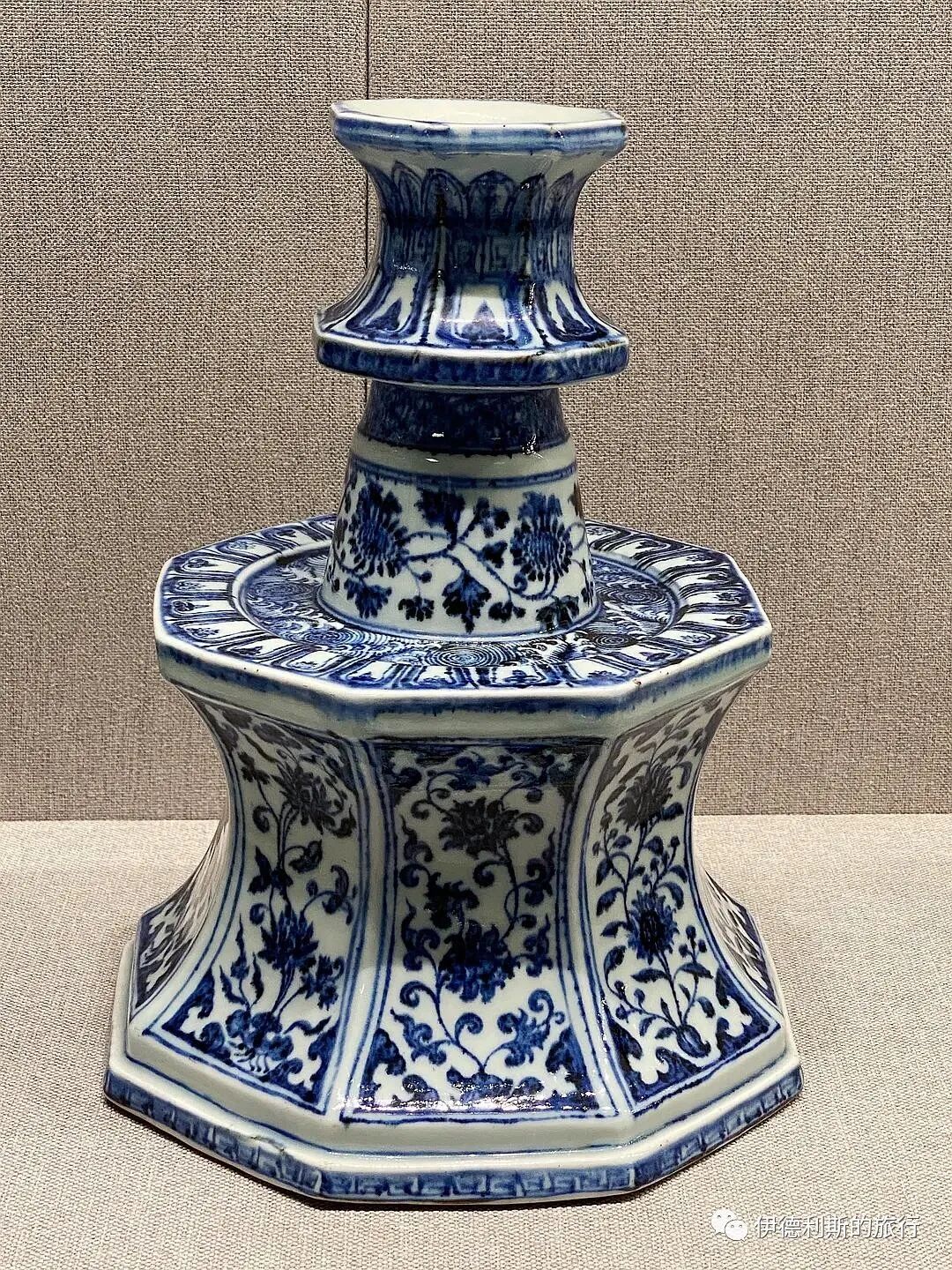
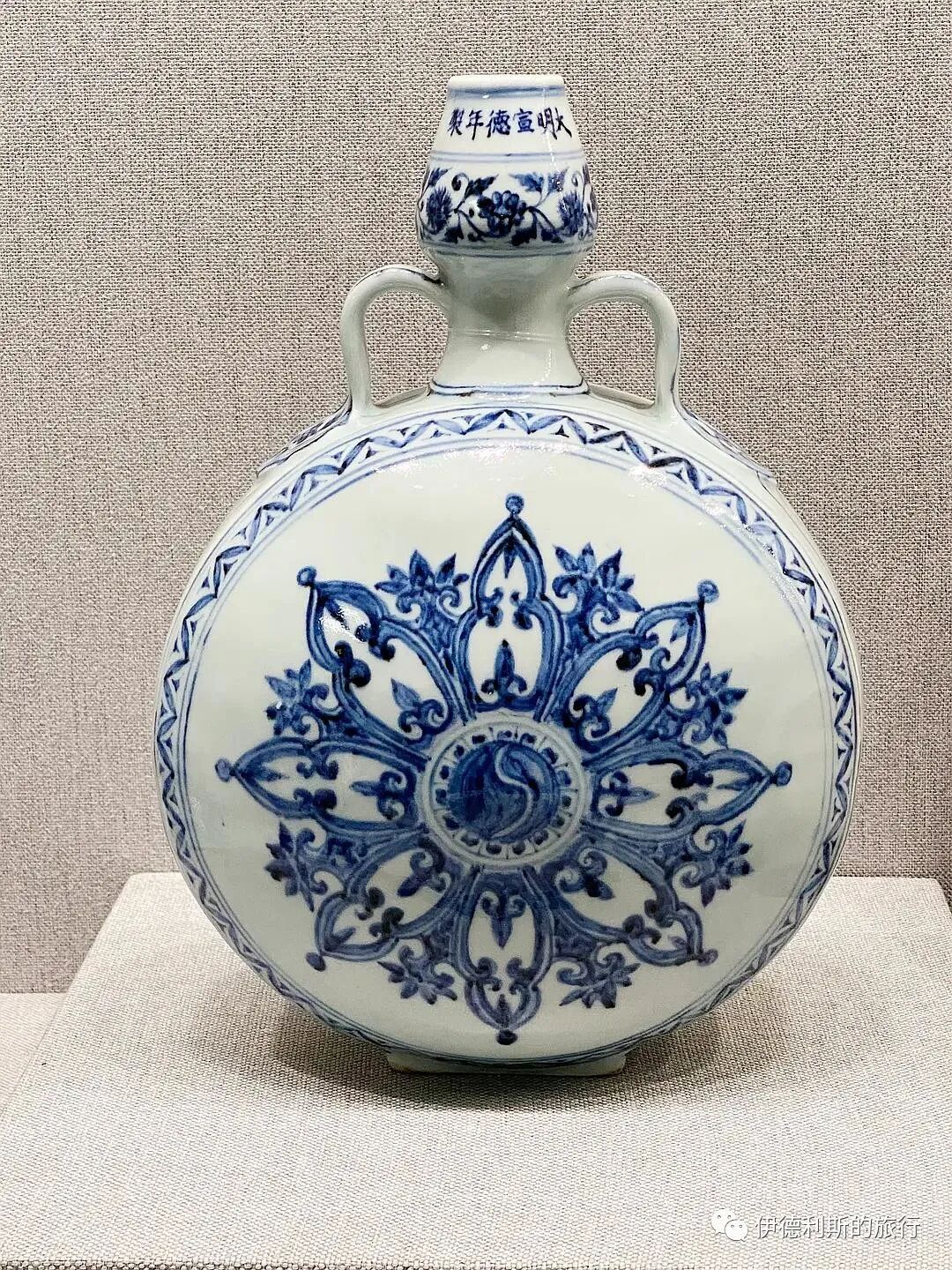
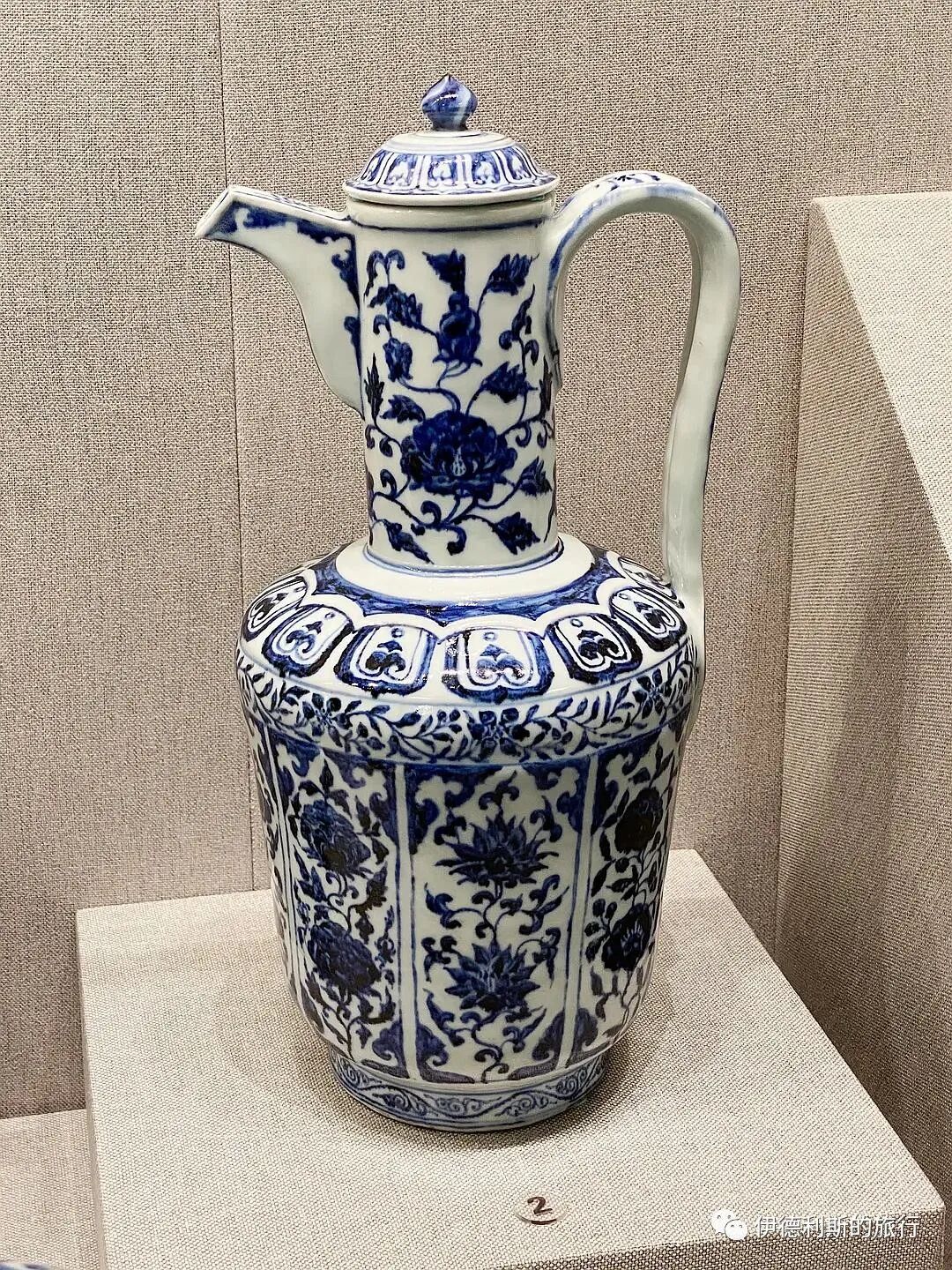
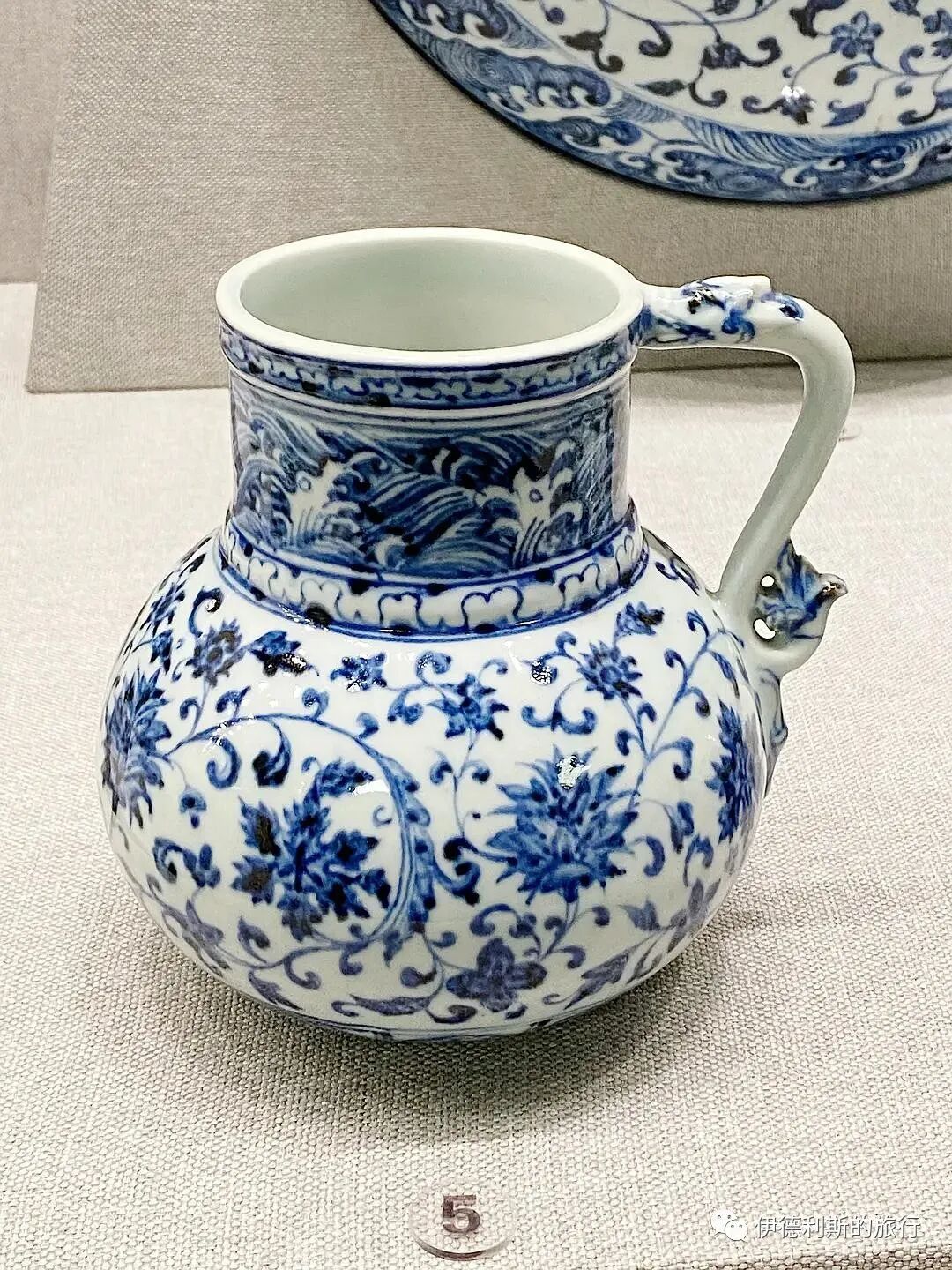
The newly renovated Ceramics Gallery has opened the Yudetang (Hall of Bathing in Virtue) on the west side of the Hall of Martial Valor as an exhibition hall for export porcelain. The most interesting thing about the Yudetang is that there is a beamless hall behind the outer hall that looks very much like a Turkish bath. The ceiling and walls are paved with white glazed bricks, flawless and pure. Behind it, there is an iron fireplace for heating water, which uses copper pipes to bring water into the room.
In his article 'A Study of the Yudetang in the Forbidden City's Hall of Martial Valor,' Shan Shiyuan argued that the Yudetang is a relic of the Yuan Dynasty imperial palace and was an Arabic-style bathhouse for the garrison commander outside the southwest corner tower of the Yuan Dadu palace city. Previously, during maintenance of the Forbidden City, white glazed tiles from the Yuan Dynasty were excavated near the Yudetang. They are very similar to the glazed bricks of the bathhouse and are very different from the yellow and green glazes commonly used in the Ming and Qing Forbidden City. Before the War of Resistance, the Society for Research in Chinese Architecture identified this bathhouse, noting that its dome is extremely similar to the Hagia Sophia in Constantinople... and it is likely a Yuan Dynasty structure.
Unfortunately, only the outer hall of the Ceramics Gallery is open this time. The Turkish bath in the back is not open to visitors because the passage is too narrow. From the outside, one can only see a part of the dome, which feels so much like the traditional bathhouse domes I have seen in Turkey.
Muslim History Guide to Damascus: Caliph Muawiyah I Tomb and Early Islamic Heritage
Articles • yusuf908 posted the article • 0 comments • 535 views • 2026-06-22 06:27
Summary: This Muslim history guide to Damascus covers Caliph Muawiyah I's tomb, the Prophet's Companion, early Islamic history, and Muslim heritage.
This article organizes key points from the original text about visiting the tomb of the scripture scribe and companion of the Prophet, Caliph Muawiyah I. It keeps the original paragraph and image order. It is for readers interested in Muslim life, Islamic culture, and Chinese Islamic writing. It also helps with searching for topics like Shia, Sunni, and Ramadan.
Bab al-Saghir Cemetery in the south of the old city of Damascus is a very ancient graveyard. It holds the graves of many companions of the Prophet, such as Bilal, as well as several children of Imam Ali and Imam Hussein. Near these graves is a tomb tightly enclosed by layers of iron railings. It is inscribed with the name Muawiyah ibn Abi Sufyan, the first caliph of the Umayyad Dynasty. This is the burial place of a highly controversial caliph in religious history. He is both respected and hated, but he was a key figure who shaped early religious history: Muawiyah I.
During Ramadan in 2025, the Saudi MBC studio aired a series called Muawiyah. With a production cost of 100 million US dollars, it is the most expensive television series in Arab history. The show caused huge controversy and sparked massive discussion as soon as it aired. Iraq and Iran directly banned the series, and Al-Azhar University in Egypt issued a fatwa calling on people not to watch it.
In the Sunni narrative, Muawiyah's sister Ramla married the noble Prophet in 628. Muawiyah converted to the faith in 630. Because he was literate, the noble Prophet appointed him as a scribe, making him a scripture scribe. After Abu Bakr was elected caliph in 632, Muawiyah became a commander in the conquest of Syria. He followed Caliph Umar into Jerusalem in 637 and was later appointed governor of Damascus. He served as governor of Syria during the time of Caliph Uthman and organized the first naval battle in religious history. Sunnis believe he made a great contribution to the unity of the Caliphate and recognize his status as a companion of the Prophet and a scripture scribe.
In the Shia narrative, Muawiyah opposed the election of Ali as caliph, which triggered the first civil war in the faith. After Ali was assassinated, he forced Hasan to abdicate. Shia Muslims deny Muawiyah's status as a companion of the Prophet and a scripture scribe, and even consider him a disbeliever.
Muawiyah I died of illness in Damascus in 680 and was buried in the Bab al-Saghir cemetery. Several documents from the 9th and 10th centuries mention the tomb of Muawiyah I, including records that Ibn Tulun, a ruler of Egypt and Syria, built four porticos for the tomb in the 9th century. The current tomb of Muawiyah I was renovated in modern times. For a long time, this site was attacked by Shia visitors from places like Iran and Iraq, who damaged the fences and threw stones and shoes.
Next to the tomb of Muawiyah I is another tomb enclosed by iron railings, where the fifth Umayyad Caliph Abd al-Malik (reigned 685-705) and the sixth Caliph al-Walid I (reigned 705-715) are buried.
In his early years, Abd al-Malik lived a pious life in Medina and was a Tabi'un, meaning a follower of the Prophet's companions and one of the first generation born into the faith. In 683, the people of Medina opposed the rule of Muawiyah I's son, Yazid I, and expelled all Umayyads from the city, forcing Abd al-Malik to flee to Damascus. After the direct descendants of Muawiyah I passed away, Abd al-Malik, his distant cousin, was elected Caliph in 685. During his 20-year reign, Abd al-Malik constantly quelled internal divisions within the Umayyad Caliphate while resisting attacks from the Byzantine Empire. In the final years of his rule, the country was peaceful and his power was secure. His main achievements include introducing a unified currency to replace Byzantine and Sassanid coins, and replacing Greek and Persian with Arabic as the official language. He ordered the construction of the Dome of the Rock in Jerusalem, which is the oldest surviving Islamic building.
During the reign of Al-Walid I, the Arab Empire conquered Morocco, the Iberian Peninsula, the Sindh region of South Asia, and Transoxiana in Central Asia, reaching its largest territorial extent in history. He used the massive wealth from these conquests to build and expand many mosques, most the Umayyad Mosque in Damascus, the Al-Aqsa Mosque in Jerusalem, and the Prophet's Mosque in Medina. He also built the famous ancient city of Anjar in Lebanon and the Umayyad Mosque in Baalbek. He was the first caliph to implement a social welfare system, which earned him great respect among the poor and the disabled. Under his rule, the Umayyad Dynasty was prosperous and reached its peak.
Umayyad coins on display at the 'Forging Narratives: The Coinage Heritage of Saudi Arabia' special exhibition at the National Museum of Saudi Arabia.
First are the gold coins from the time of Caliph Muawiyah I. The front shows the Byzantine Emperor Heraclius (reigned 610-641) and his two sons, Constantine III and Heraclonas, while the back features Latin text. Unlike Byzantine gold coins, the Umayyad gold coins lack crosses on the emperor's crown and scepter, and the cross on the steps on the back has only a vertical bar without a horizontal one.
Umayyad gold coins from this period reflect the early culture of the Umayyad Dynasty, which continued to inherit Byzantine culture. When Bedouin nomads from the Arabian Peninsula poured into the magnificent city of Damascus, they saw a rich and colorful Byzantine culture everywhere. Because of this, they continued to use Byzantine culture in areas outside of religion, such as music, art, and architecture, becoming the heirs to Byzantine culture.
In 693, Caliph Abd al-Malik minted gold dinars in Damascus, and in 696, he removed human figures, keeping only Arabic text. During the same period, Abd al-Malik also promoted the replacement of Greek with Arabic in Syria, eventually making Arabic the sole official language of the Umayyad Dynasty. From this point on, the Umayyad Caliphate stopped being just an inheritor of Byzantine and Sassanid cultures and turned into a true Arab civilization.
I visited Qasr Kharana in Jordan, which was built in 710 during the reign of Caliph al-Walid I.
The most special thing about Qasr Kharana is how it blends Byzantine and Sassanid architectural styles. The palace is built with plaster and rubble, and the second floor features barrel vaults supported by transverse arches, which is a typical Sassanid style, though it still differs from Sassanid buildings in Iran. The arches at Qasr Kharana do not connect to the load-bearing walls but rest on corbels, and they use new types of wooden lintels to make the building more flexible and earthquake-resistant.
Hammam al-Sarah in Jordan was built in the early 8th century during the reign of Caliph Abd al-Malik or al-Walid I.
The bathhouse was built using neatly cut, medium-sized stones and decorated with intricately carved fluted moldings. Inside the main hall, there is a beautifully designed fountain supplied with water from an elevated water tower on the east side. There is also a walled garden site nearby, which is known as the oldest Islamic garden site.
The Umayyad Mosque in Damascus was built under the direction of Caliph al-Walid I in 706. He kept the outer walls of the Roman mosque's inner sanctuary and moved the Corinthian columns and arcades from inside the mosque to the main hall, finishing the new mosque in 715 and making it a 'wonder of the world' in the writings of medieval Muslim scholars.
Before the Great Mosque of Damascus was built, traditional mosques were all flat-roofed halls. The Great Mosque of Damascus uses a basilica-style layout, featuring three wide, long halls and a central nave topped by a tall dome.
The Great Mosque of Damascus is world-famous for its rich Umayyad-era mosaic decorations. These mosaics show various natural landscapes and buildings in a late Roman style, following a classic naturalistic approach.
Some Arabic historical records suggest the craftsmen and materials for the mosaics came from the Byzantine capital of Constantinople, but a 2022 chemical analysis study showed that most of the mosaics were actually made in Egypt. Although these mosaic images show traces of Byzantine style, some scholars believe their craftsmanship is more consistent with mosaic techniques from Syria, Palestine, and Egypt.
The meaning of the mosaic images has been a subject of long-standing debate. Some believe they represent the known world at that time, others think they depict Damascus and the Barada River, and some argue they show scenes of Paradise. Currently, there is more evidence for the Paradise theory, as the landscapes without human figures fit the idea of an empty Paradise waiting for people to arrive after the Day of Resurrection.
The ancient city of Anjar in Lebanon was built by al-Abbas, the son of Caliph al-Walid I, between 714 and 715. This place has been an important route connecting Beirut and Damascus since ancient times, and it was listed as a UNESCO World Heritage site in 1984.
It is believed that the ancient city of Anjar likely used many captives brought back by Prince al-Abbas from his campaigns against the Byzantine Empire as laborers, which is why the stone carvings have a strong Byzantine style. The entire ancient city is based on a Roman city plan, with a rectangular layout surrounded by thick walls, where two main roads intersect at four gates to divide the city into four sections. The main road is lined with columns and rows of shops that look like Roman tabernae, while a classic four-sided Roman gate known as a tetrapylon stands at the intersection. The city is divided into four functional areas: the southeast holds the grand palace and mosque, the northeast contains the small palace (harem) and bathhouse, and the northwest and southwest are residential zones.
The Umayyad Mosque in Baalbek, Lebanon, was also built by the Umayyad Caliph al-Walid I in 715, the same year as the Umayyad Mosque in Damascus. These two mosques stand together as the oldest surviving masjid buildings in the world.
Compared to the Umayyad Mosque in Damascus, the Baalbek Umayyad Mosque is simpler, but its overall style is very similar. Some stone parts inside the main hall may have been taken from the nearby Roman-era Baalbek Citadel, and the column capitals show a strong Roman-Byzantine style. view all
Summary: This Muslim history guide to Damascus covers Caliph Muawiyah I's tomb, the Prophet's Companion, early Islamic history, and Muslim heritage.
This article organizes key points from the original text about visiting the tomb of the scripture scribe and companion of the Prophet, Caliph Muawiyah I. It keeps the original paragraph and image order. It is for readers interested in Muslim life, Islamic culture, and Chinese Islamic writing. It also helps with searching for topics like Shia, Sunni, and Ramadan.
Bab al-Saghir Cemetery in the south of the old city of Damascus is a very ancient graveyard. It holds the graves of many companions of the Prophet, such as Bilal, as well as several children of Imam Ali and Imam Hussein. Near these graves is a tomb tightly enclosed by layers of iron railings. It is inscribed with the name Muawiyah ibn Abi Sufyan, the first caliph of the Umayyad Dynasty. This is the burial place of a highly controversial caliph in religious history. He is both respected and hated, but he was a key figure who shaped early religious history: Muawiyah I.
During Ramadan in 2025, the Saudi MBC studio aired a series called Muawiyah. With a production cost of 100 million US dollars, it is the most expensive television series in Arab history. The show caused huge controversy and sparked massive discussion as soon as it aired. Iraq and Iran directly banned the series, and Al-Azhar University in Egypt issued a fatwa calling on people not to watch it.
In the Sunni narrative, Muawiyah's sister Ramla married the noble Prophet in 628. Muawiyah converted to the faith in 630. Because he was literate, the noble Prophet appointed him as a scribe, making him a scripture scribe. After Abu Bakr was elected caliph in 632, Muawiyah became a commander in the conquest of Syria. He followed Caliph Umar into Jerusalem in 637 and was later appointed governor of Damascus. He served as governor of Syria during the time of Caliph Uthman and organized the first naval battle in religious history. Sunnis believe he made a great contribution to the unity of the Caliphate and recognize his status as a companion of the Prophet and a scripture scribe.
In the Shia narrative, Muawiyah opposed the election of Ali as caliph, which triggered the first civil war in the faith. After Ali was assassinated, he forced Hasan to abdicate. Shia Muslims deny Muawiyah's status as a companion of the Prophet and a scripture scribe, and even consider him a disbeliever.
Muawiyah I died of illness in Damascus in 680 and was buried in the Bab al-Saghir cemetery. Several documents from the 9th and 10th centuries mention the tomb of Muawiyah I, including records that Ibn Tulun, a ruler of Egypt and Syria, built four porticos for the tomb in the 9th century. The current tomb of Muawiyah I was renovated in modern times. For a long time, this site was attacked by Shia visitors from places like Iran and Iraq, who damaged the fences and threw stones and shoes.
Next to the tomb of Muawiyah I is another tomb enclosed by iron railings, where the fifth Umayyad Caliph Abd al-Malik (reigned 685-705) and the sixth Caliph al-Walid I (reigned 705-715) are buried.
In his early years, Abd al-Malik lived a pious life in Medina and was a Tabi'un, meaning a follower of the Prophet's companions and one of the first generation born into the faith. In 683, the people of Medina opposed the rule of Muawiyah I's son, Yazid I, and expelled all Umayyads from the city, forcing Abd al-Malik to flee to Damascus. After the direct descendants of Muawiyah I passed away, Abd al-Malik, his distant cousin, was elected Caliph in 685. During his 20-year reign, Abd al-Malik constantly quelled internal divisions within the Umayyad Caliphate while resisting attacks from the Byzantine Empire. In the final years of his rule, the country was peaceful and his power was secure. His main achievements include introducing a unified currency to replace Byzantine and Sassanid coins, and replacing Greek and Persian with Arabic as the official language. He ordered the construction of the Dome of the Rock in Jerusalem, which is the oldest surviving Islamic building.
During the reign of Al-Walid I, the Arab Empire conquered Morocco, the Iberian Peninsula, the Sindh region of South Asia, and Transoxiana in Central Asia, reaching its largest territorial extent in history. He used the massive wealth from these conquests to build and expand many mosques, most the Umayyad Mosque in Damascus, the Al-Aqsa Mosque in Jerusalem, and the Prophet's Mosque in Medina. He also built the famous ancient city of Anjar in Lebanon and the Umayyad Mosque in Baalbek. He was the first caliph to implement a social welfare system, which earned him great respect among the poor and the disabled. Under his rule, the Umayyad Dynasty was prosperous and reached its peak.
Umayyad coins on display at the 'Forging Narratives: The Coinage Heritage of Saudi Arabia' special exhibition at the National Museum of Saudi Arabia.
First are the gold coins from the time of Caliph Muawiyah I. The front shows the Byzantine Emperor Heraclius (reigned 610-641) and his two sons, Constantine III and Heraclonas, while the back features Latin text. Unlike Byzantine gold coins, the Umayyad gold coins lack crosses on the emperor's crown and scepter, and the cross on the steps on the back has only a vertical bar without a horizontal one.
Umayyad gold coins from this period reflect the early culture of the Umayyad Dynasty, which continued to inherit Byzantine culture. When Bedouin nomads from the Arabian Peninsula poured into the magnificent city of Damascus, they saw a rich and colorful Byzantine culture everywhere. Because of this, they continued to use Byzantine culture in areas outside of religion, such as music, art, and architecture, becoming the heirs to Byzantine culture.
In 693, Caliph Abd al-Malik minted gold dinars in Damascus, and in 696, he removed human figures, keeping only Arabic text. During the same period, Abd al-Malik also promoted the replacement of Greek with Arabic in Syria, eventually making Arabic the sole official language of the Umayyad Dynasty. From this point on, the Umayyad Caliphate stopped being just an inheritor of Byzantine and Sassanid cultures and turned into a true Arab civilization.
I visited Qasr Kharana in Jordan, which was built in 710 during the reign of Caliph al-Walid I.
The most special thing about Qasr Kharana is how it blends Byzantine and Sassanid architectural styles. The palace is built with plaster and rubble, and the second floor features barrel vaults supported by transverse arches, which is a typical Sassanid style, though it still differs from Sassanid buildings in Iran. The arches at Qasr Kharana do not connect to the load-bearing walls but rest on corbels, and they use new types of wooden lintels to make the building more flexible and earthquake-resistant.
Hammam al-Sarah in Jordan was built in the early 8th century during the reign of Caliph Abd al-Malik or al-Walid I.
The bathhouse was built using neatly cut, medium-sized stones and decorated with intricately carved fluted moldings. Inside the main hall, there is a beautifully designed fountain supplied with water from an elevated water tower on the east side. There is also a walled garden site nearby, which is known as the oldest Islamic garden site.
The Umayyad Mosque in Damascus was built under the direction of Caliph al-Walid I in 706. He kept the outer walls of the Roman mosque's inner sanctuary and moved the Corinthian columns and arcades from inside the mosque to the main hall, finishing the new mosque in 715 and making it a 'wonder of the world' in the writings of medieval Muslim scholars.
Before the Great Mosque of Damascus was built, traditional mosques were all flat-roofed halls. The Great Mosque of Damascus uses a basilica-style layout, featuring three wide, long halls and a central nave topped by a tall dome.
The Great Mosque of Damascus is world-famous for its rich Umayyad-era mosaic decorations. These mosaics show various natural landscapes and buildings in a late Roman style, following a classic naturalistic approach.
Some Arabic historical records suggest the craftsmen and materials for the mosaics came from the Byzantine capital of Constantinople, but a 2022 chemical analysis study showed that most of the mosaics were actually made in Egypt. Although these mosaic images show traces of Byzantine style, some scholars believe their craftsmanship is more consistent with mosaic techniques from Syria, Palestine, and Egypt.
The meaning of the mosaic images has been a subject of long-standing debate. Some believe they represent the known world at that time, others think they depict Damascus and the Barada River, and some argue they show scenes of Paradise. Currently, there is more evidence for the Paradise theory, as the landscapes without human figures fit the idea of an empty Paradise waiting for people to arrive after the Day of Resurrection.
The ancient city of Anjar in Lebanon was built by al-Abbas, the son of Caliph al-Walid I, between 714 and 715. This place has been an important route connecting Beirut and Damascus since ancient times, and it was listed as a UNESCO World Heritage site in 1984.
It is believed that the ancient city of Anjar likely used many captives brought back by Prince al-Abbas from his campaigns against the Byzantine Empire as laborers, which is why the stone carvings have a strong Byzantine style. The entire ancient city is based on a Roman city plan, with a rectangular layout surrounded by thick walls, where two main roads intersect at four gates to divide the city into four sections. The main road is lined with columns and rows of shops that look like Roman tabernae, while a classic four-sided Roman gate known as a tetrapylon stands at the intersection. The city is divided into four functional areas: the southeast holds the grand palace and mosque, the northeast contains the small palace (harem) and bathhouse, and the northwest and southwest are residential zones.
The Umayyad Mosque in Baalbek, Lebanon, was also built by the Umayyad Caliph al-Walid I in 715, the same year as the Umayyad Mosque in Damascus. These two mosques stand together as the oldest surviving masjid buildings in the world.
Compared to the Umayyad Mosque in Damascus, the Baalbek Umayyad Mosque is simpler, but its overall style is very similar. Some stone parts inside the main hall may have been taken from the nearby Roman-era Baalbek Citadel, and the column capitals show a strong Roman-Byzantine style.
Muslim History Guide to Damascus: Sufi Sage Ibn Arabi, Mosque Area and Shrine Visit
Articles • yusuf908 posted the article • 0 comments • 435 views • 2026-06-22 06:27
Summary: This Muslim history guide to Damascus follows Sufi sage Ibn Arabi, mosque-area travel, shrine history, and Islamic heritage from the original article.
This article summarizes the key points of visiting the Sufi sage Ibn Arabi in Damascus. It keeps the original paragraph and image order. It is for readers interested in Muslim life, Islamic culture, and Chinese Islamic writing. It also helps with searching for content on namaz, Hajj, and Ramadan.
Salihiyah, located at the foot of Mount Qasioun, is the most important historic district in Damascus outside the old city. Historic buildings from the Ayyubid, Mamluk, and Ottoman dynasties stand along both sides of the Friday market (Jumu'ah market). Some look plain from the outside but are hundreds of years old.
After the Crusaders captured Jerusalem in 1099, many scholars, jurists, and civilians fled to Damascus for refuge. In 1156, the famous Hanbali scholar Ibn Qudamah moved from the West Bank to Damascus to escape the Crusaders and later settled in Salihiyah. He once admired this land and said, 'This is a place of barakah (blessing).'
Saladin, the founder of the Ayyubid dynasty, wanted to provide a safe and stable environment for the scholars and immigrants who fled from Jerusalem to Damascus. Because Ibn Qudamah's home at the foot of Mount Qasioun in the north of the city had become an academic center for the Hanbali school, Saladin decided to build the Salihiyah community at the foot of Mount Qasioun.
The most famous landmark in Salihiyah is the Shaikh Mohiddin Mosque (Masjid Shaikh Mohiddin), which houses the tomb of the famous Sufi sage Ibn Arabi.
Ibn Arabi was born in 1165 in what is now southern Spain, which was then called Al-Andalus. Starting at age 28, he traveled throughout the Middle East for many years, performed Hajj multiple times, and lived in Tunisia, Morocco, and Mecca. At age 58, he finally chose to settle in Damascus to focus on teaching and writing. He passed away in Damascus in 1240 at the age of 75. After Ibn Arabi passed away, his works were translated into Persian, Turkish, and Urdu. They had a great influence on the entire Muslim world, and he is known as a founder of the development of Sufism.
The shrine (gongbei) of Ibn Arabi was originally quite small. In 1518, Ottoman Sultan Selim I ordered its reconstruction during his visit to Damascus, which showed how much the Ottoman Empire valued Sufis at the time. After it was built, the shrine was first named the Selimiye Mosque after the Sultan. Because Ibn Arabi’s title, Muhyiddin, means 'reviver of the faith,' the mosque is also known as the Sheikh Muhyiddin Mosque. On the first Friday (Jumu'ah) of Ramadan after the mosque was finished, the Sultan personally visited to attend prayers and gifted the mosque a pair of silver socks.
The mosque blends architectural styles from the late Mamluk and early Ottoman periods. The shrine is located below the mosque, and you enter it by taking the stairs on the east side of the courtyard. Inside the shrine, besides Ibn Arabi himself, lie his two sons and his followers.
The tiles on the walls of the shrine were laid in 1760.
The Sheikh Muhyiddin Mosque follows a traditional Damascus layout, with a courtyard surrounding the front of the main prayer hall and an Ottoman-style minaret built above the main gate. The walls are covered in yellow and white marble, and there is a Damascus-style pool in the middle of the courtyard. The wall decorations mix Ottoman and Mamluk styles, and the Corinthian capitals on the stone pillars of the main hall feature beautiful carvings. The two large candlesticks in front of the mihrab are also very characteristic of the Ottoman style.
When I first arrived at the Sheikh Muhyiddin Mosque, I happened to catch a funeral prayer (janazah) for a sheikh, and I could really feel the strong religious atmosphere here.
Not far to the east of the Sheikh Muhyiddin Mosque is the Hanabila, another famous mosque in the Salihiya district. Hanabila Mosque is a famous early Ayyubid dynasty mosque in Syria. It was founded between 1208 and 1210 by the famous Hanbali scholar Ibn Qudama. He was born in Jerusalem and settled in Damascus in 1197, which became his main center for scholarship.
The mosque follows the Ayyubid architectural style. It centers on a courtyard, and the main prayer hall follows the layout of the Umayyad Mosque in Damascus, though its structure is more compact. The mosque still has a beautiful pulpit (minbar) and window carvings that are over 800 years old.
Rukniyah Madrasa is located on the far east side of the Salihiyah district in Damascus. It was built in 1224 by the Ayyubid governor of Damascus, Rukn al-Din Mankurs al-Falaki, who is also buried there. Rukniyah Madrasa is the first Ayyubid building with a courtyard covered by a dome. The building consists of two square sections: the larger part is the madrasa, and the smaller part is the tomb. The minaret was added later.
Because the Ayyubid dynasty was busy fighting the Crusades, the architectural style of this period is known for being simple, sturdy, and durable. Rukniyah Madrasa belongs to the Hanafi school of law. It has now been converted into a mosque, and the main hall is not open except during the five daily namaz prayers.
Abd al-Ghani al-Nabulsi Mosque was built in 1764 by Sheikh Mustafa al-Nabulsi, the grandson of the famous Syrian Sufi sheikh and poet Abd al-Ghani al-Nabulsi. Both Sheikh Abd al-Ghani al-Nabulsi and Sheikh Mustafa al-Nabulsi are buried there. Unfortunately, since most mosques in Damascus do not open their doors except for the five daily namaz prayers, I could not go inside.
Sheikh Abd al-Ghani's family came from the Banu Jama'a. For generations, they served as chief judges and great Sufi sheikhs during the Mamluk dynasty. One branch of his family settled in Damascus after the Ottoman Empire conquered the Mamluk dynasty in 1516. They continued to hold positions such as the Shafi'i Grand Mufti of Damascus and teachers at the Umayyad Mosque.
Sheikh Abd al-Ghani was born in Damascus in 1641. His father switched from the Shafi'i school to the Hanafi school after a debate with Hanafi students. This was the mainstream school of the Ottoman Empire at the time. Abdul-Ghani began studying Islamic law as a child. He joined the Qadiriyya and Naqshbandiyya Sufi orders and spent seven years in quiet retreat at home. He traveled widely across the Middle East and wrote over 200 books. He was especially known for his deep research into the Sufi sage Ibn Arabi.
Before Sheikh Abdul-Ghani, the Salhiyya district of Damascus followed the Hanbali school of law. He was the first to bring Hanafi and Shafi'i ideas to the area and hosted many Hanafi students in his home.
The Jharkasiya Madrasa is on the market street in the Salhiyya district of Damascus. It was built in 1237 by the Ayyubid general Salim al-Din al-Hattra for his teacher, the Ayyubid general Jharkas ibn Abdullah. Both Jharkas ibn Abdullah and Salim al-Din al-Hattra are buried inside.
Jharkas was a commander in Saladin's personal guard and witnessed all of Saladin's military campaigns. The Jharkasiya Madrasa has a very rare double-domed tomb. Historically, the school taught both Hanafi and Shafi'i law, but today it serves as a mosque.
The Mershadiyeh Madrasa is on the west side of the Salhiyya district in Damascus. It was built in 1252 with funding from Khadija Khatun, the daughter of the Ayyubid Emir of Damascus, Al-Mu'azzam Isa. She is buried in the courtyard after her passing.
The square minaret of the madrasa is the only surviving example of 13th-century Ayyubid architecture in Damascus. The madrasa is currently closed. You must contact the Syrian Directorate-General of Antiquities and Museums to enter.
The Takrityya Madrasa is on the far west side of the Salhiyya district in Damascus. It was built in 1298 by the Emir Taqi al-Din al-Takriti, who is buried inside. This building dates back to the Mamluk period, but it keeps the strict and simple architectural style of the Ayyubid dynasty. The Mongol army destroyed this place in 1300, but it was rebuilt later.
Rabia Khatun, the sister of Ayyubid founder Saladin, built the Sahiba Madrasa in 1233, and her tomb is inside. People call this madrasa a model of Ayyubid architecture because of its thick walls and beautiful carvings that only use simple geometric shapes.
This madrasa once taught the Hanbali school of thought, which was the mainstream school at the time. Today, it is a primary school for girls, and generations of local residents have studied here.
Juma Market, the main road of the Salihiya historic neighborhood in Damascus.
The market in Salihiya grew quickly during the Ayyubid dynasty as more people moved here from Jerusalem. The Juma Market in front of the gongbei of the Sufi sage Ibn Arabi only sold goods after Friday namaz at first, but it eventually became a permanent market while keeping the name Juma Market. It is still a great place for nearby residents to shop today.
Handwritten signs at the market. view all
Summary: This Muslim history guide to Damascus follows Sufi sage Ibn Arabi, mosque-area travel, shrine history, and Islamic heritage from the original article.
This article summarizes the key points of visiting the Sufi sage Ibn Arabi in Damascus. It keeps the original paragraph and image order. It is for readers interested in Muslim life, Islamic culture, and Chinese Islamic writing. It also helps with searching for content on namaz, Hajj, and Ramadan.
Salihiyah, located at the foot of Mount Qasioun, is the most important historic district in Damascus outside the old city. Historic buildings from the Ayyubid, Mamluk, and Ottoman dynasties stand along both sides of the Friday market (Jumu'ah market). Some look plain from the outside but are hundreds of years old.
After the Crusaders captured Jerusalem in 1099, many scholars, jurists, and civilians fled to Damascus for refuge. In 1156, the famous Hanbali scholar Ibn Qudamah moved from the West Bank to Damascus to escape the Crusaders and later settled in Salihiyah. He once admired this land and said, 'This is a place of barakah (blessing).'
Saladin, the founder of the Ayyubid dynasty, wanted to provide a safe and stable environment for the scholars and immigrants who fled from Jerusalem to Damascus. Because Ibn Qudamah's home at the foot of Mount Qasioun in the north of the city had become an academic center for the Hanbali school, Saladin decided to build the Salihiyah community at the foot of Mount Qasioun.
The most famous landmark in Salihiyah is the Shaikh Mohiddin Mosque (Masjid Shaikh Mohiddin), which houses the tomb of the famous Sufi sage Ibn Arabi.
Ibn Arabi was born in 1165 in what is now southern Spain, which was then called Al-Andalus. Starting at age 28, he traveled throughout the Middle East for many years, performed Hajj multiple times, and lived in Tunisia, Morocco, and Mecca. At age 58, he finally chose to settle in Damascus to focus on teaching and writing. He passed away in Damascus in 1240 at the age of 75. After Ibn Arabi passed away, his works were translated into Persian, Turkish, and Urdu. They had a great influence on the entire Muslim world, and he is known as a founder of the development of Sufism.
The shrine (gongbei) of Ibn Arabi was originally quite small. In 1518, Ottoman Sultan Selim I ordered its reconstruction during his visit to Damascus, which showed how much the Ottoman Empire valued Sufis at the time. After it was built, the shrine was first named the Selimiye Mosque after the Sultan. Because Ibn Arabi’s title, Muhyiddin, means 'reviver of the faith,' the mosque is also known as the Sheikh Muhyiddin Mosque. On the first Friday (Jumu'ah) of Ramadan after the mosque was finished, the Sultan personally visited to attend prayers and gifted the mosque a pair of silver socks.
The mosque blends architectural styles from the late Mamluk and early Ottoman periods. The shrine is located below the mosque, and you enter it by taking the stairs on the east side of the courtyard. Inside the shrine, besides Ibn Arabi himself, lie his two sons and his followers.
The tiles on the walls of the shrine were laid in 1760.
The Sheikh Muhyiddin Mosque follows a traditional Damascus layout, with a courtyard surrounding the front of the main prayer hall and an Ottoman-style minaret built above the main gate. The walls are covered in yellow and white marble, and there is a Damascus-style pool in the middle of the courtyard. The wall decorations mix Ottoman and Mamluk styles, and the Corinthian capitals on the stone pillars of the main hall feature beautiful carvings. The two large candlesticks in front of the mihrab are also very characteristic of the Ottoman style.
When I first arrived at the Sheikh Muhyiddin Mosque, I happened to catch a funeral prayer (janazah) for a sheikh, and I could really feel the strong religious atmosphere here.
Not far to the east of the Sheikh Muhyiddin Mosque is the Hanabila, another famous mosque in the Salihiya district. Hanabila Mosque is a famous early Ayyubid dynasty mosque in Syria. It was founded between 1208 and 1210 by the famous Hanbali scholar Ibn Qudama. He was born in Jerusalem and settled in Damascus in 1197, which became his main center for scholarship.
The mosque follows the Ayyubid architectural style. It centers on a courtyard, and the main prayer hall follows the layout of the Umayyad Mosque in Damascus, though its structure is more compact. The mosque still has a beautiful pulpit (minbar) and window carvings that are over 800 years old.
Rukniyah Madrasa is located on the far east side of the Salihiyah district in Damascus. It was built in 1224 by the Ayyubid governor of Damascus, Rukn al-Din Mankurs al-Falaki, who is also buried there. Rukniyah Madrasa is the first Ayyubid building with a courtyard covered by a dome. The building consists of two square sections: the larger part is the madrasa, and the smaller part is the tomb. The minaret was added later.
Because the Ayyubid dynasty was busy fighting the Crusades, the architectural style of this period is known for being simple, sturdy, and durable. Rukniyah Madrasa belongs to the Hanafi school of law. It has now been converted into a mosque, and the main hall is not open except during the five daily namaz prayers.
Abd al-Ghani al-Nabulsi Mosque was built in 1764 by Sheikh Mustafa al-Nabulsi, the grandson of the famous Syrian Sufi sheikh and poet Abd al-Ghani al-Nabulsi. Both Sheikh Abd al-Ghani al-Nabulsi and Sheikh Mustafa al-Nabulsi are buried there. Unfortunately, since most mosques in Damascus do not open their doors except for the five daily namaz prayers, I could not go inside.
Sheikh Abd al-Ghani's family came from the Banu Jama'a. For generations, they served as chief judges and great Sufi sheikhs during the Mamluk dynasty. One branch of his family settled in Damascus after the Ottoman Empire conquered the Mamluk dynasty in 1516. They continued to hold positions such as the Shafi'i Grand Mufti of Damascus and teachers at the Umayyad Mosque.
Sheikh Abd al-Ghani was born in Damascus in 1641. His father switched from the Shafi'i school to the Hanafi school after a debate with Hanafi students. This was the mainstream school of the Ottoman Empire at the time. Abdul-Ghani began studying Islamic law as a child. He joined the Qadiriyya and Naqshbandiyya Sufi orders and spent seven years in quiet retreat at home. He traveled widely across the Middle East and wrote over 200 books. He was especially known for his deep research into the Sufi sage Ibn Arabi.
Before Sheikh Abdul-Ghani, the Salhiyya district of Damascus followed the Hanbali school of law. He was the first to bring Hanafi and Shafi'i ideas to the area and hosted many Hanafi students in his home.
The Jharkasiya Madrasa is on the market street in the Salhiyya district of Damascus. It was built in 1237 by the Ayyubid general Salim al-Din al-Hattra for his teacher, the Ayyubid general Jharkas ibn Abdullah. Both Jharkas ibn Abdullah and Salim al-Din al-Hattra are buried inside.
Jharkas was a commander in Saladin's personal guard and witnessed all of Saladin's military campaigns. The Jharkasiya Madrasa has a very rare double-domed tomb. Historically, the school taught both Hanafi and Shafi'i law, but today it serves as a mosque.
The Mershadiyeh Madrasa is on the west side of the Salhiyya district in Damascus. It was built in 1252 with funding from Khadija Khatun, the daughter of the Ayyubid Emir of Damascus, Al-Mu'azzam Isa. She is buried in the courtyard after her passing.
The square minaret of the madrasa is the only surviving example of 13th-century Ayyubid architecture in Damascus. The madrasa is currently closed. You must contact the Syrian Directorate-General of Antiquities and Museums to enter.
The Takrityya Madrasa is on the far west side of the Salhiyya district in Damascus. It was built in 1298 by the Emir Taqi al-Din al-Takriti, who is buried inside. This building dates back to the Mamluk period, but it keeps the strict and simple architectural style of the Ayyubid dynasty. The Mongol army destroyed this place in 1300, but it was rebuilt later.
Rabia Khatun, the sister of Ayyubid founder Saladin, built the Sahiba Madrasa in 1233, and her tomb is inside. People call this madrasa a model of Ayyubid architecture because of its thick walls and beautiful carvings that only use simple geometric shapes.
This madrasa once taught the Hanbali school of thought, which was the mainstream school at the time. Today, it is a primary school for girls, and generations of local residents have studied here.
Juma Market, the main road of the Salihiya historic neighborhood in Damascus.
The market in Salihiya grew quickly during the Ayyubid dynasty as more people moved here from Jerusalem. The Juma Market in front of the gongbei of the Sufi sage Ibn Arabi only sold goods after Friday namaz at first, but it eventually became a permanent market while keeping the name Juma Market. It is still a great place for nearby residents to shop today.
Handwritten signs at the market.
Nowruz in Beijing: Persian New Year Food, Music and Muslim Community Celebration
Articles • ali2007fr posted the article • 0 comments • 199 views • 2026-05-21 06:45
Summary: This Beijing Nowruz account records a Persian New Year gathering with food, music, guests from many countries, and the cultural details of the celebration as described in the source.
March 21st this year is the Persian New Year. Many countries influenced by Persian culture celebrate the Nowruz festival during this time, including Afghanistan, Albania, Azerbaijan, India, Iran, Iraq (Kurdish region), Syria (Kurdish region), Kazakhstan, Kyrgyzstan, Pakistan, Tajikistan, Turkey (Kurdish region), Turkmenistan, and Uzbekistan.
After the Afghan Taliban came to power in 2022, they stated that Nowruz would not be a public holiday, but they still allowed celebrations to take place. In Albania, Sunni Muslims, Catholics, and Orthodox Christians celebrate Nowruz together to welcome the arrival of spring. Shia Muslims believe that Nowruz is the day Imam Ali became Caliph, so they place special importance on it, performing special acts of worship and offering blessings.
On Sunday, March 29th, the Embassy of Kazakhstan in China, the Ministry of Culture and Information of Kazakhstan, and the Kazakhstan Cultural Center in Beijing held a Nowruz festival event at Chaoyang Park in Beijing. They invited national-level orchestras and dance troupes from Kazakhstan, along with many Kazakh cultural products, festive foods, and traditional clothing. It was a great opportunity to learn about Nowruz and Kazakh culture.
Speech by the Ambassador of Kazakhstan to China.
This shows the Kazakh first-steps ceremony (Tusau Keser). It is a life-initiation ritual held when a Kazakh baby turns one year old. The core of the ceremony is cutting the rope tied to the child's legs, which symbolizes breaking free from constraints and starting a path toward an independent life. After the rope is cut, an elder leads the child forward. Items like books, pens, a two-stringed lute (dombra), coins, and knives are placed on the ground for the child to grab, similar to the traditional 'grabbing the first birthday gift' custom. Finally, everyone offers blessings to the child and tosses candies, dried yogurt balls (kurt), and coins into the air.
The event featured Kazakhstan's top orchestra, Astana Sazy (Rhythm of Astana). Here are a few clips of them accompanying excellent Kazakh singers.
Astana Sazy is the national folk orchestra of Kazakhstan, affiliated with the state performance organization 'Kazakh Concert.' It is the core group for promoting traditional music and cultural diplomacy in Kazakhstan. The orchestra uses traditional Kazakh instruments like the zither (jetigen), the two-stringed lute (dombra), and the bowed string instrument (kobyz). Rooted in Kazakh nomadic culture, they are famous for playing folk music.
A wonderful performance by two Kazakh musicians playing and singing with the two-stringed lute (dombra).
The event featured the national-level Kazakh folk song and dance troupe, Gulder Ensemble. The troupe was formed in 1969. It started as an all-female group and debuted with the dance drama 'Steppe Movement,' which was praised as 'a bouquet picked from the snowy peaks of Alatau scattered across the stage.' In the 1970s, the troupe traveled throughout the Soviet Union and later went abroad, touring in Belgium, Germany, Malaysia, and Cuba, training a group of legendary Kazakh dancers. The troupe was quiet for a time until it was relaunched in 2023 with a new lineup at the Kazakhstan Central Concert Hall, allowing a new generation of audiences to experience the charm of traditional Kazakh folk dance.
We drank Nowruz porridge (Nauryz Kozhe) and boiled fruit drink (Compote), and ate Kazakh fried dough pastry (Shek-Shek) and chicken baked buns (Samsa).
Nowruz porridge can only be eaten once a year during the Nowruz festival. Kazakh Nowruz porridge must contain at least seven ingredients, including barley, rice, wheat, smoked horse meat, dried yogurt balls (kurt), salt, and water. These foods are made with winter-slaughtered meat and stored grain, expressing the wish for abundance year after year.
Compote is made by boiling water with sugar and fruits like plums, cherries, or apples. In summer, fresh fruit is used, and in winter, dried fruit is used. I drank water boiled with dried apples, which is a drink frequently served at Kazakh banquets and in daily life.
Fried dough pastry (Shek-Shek) is a must-have snack for Kazakh weddings, Nowruz, and other festivals, symbolizing sweetness, reunion, and a good harvest. To make it, flour is mixed with eggs, rolled into strips, cut into pieces, and fried until golden and crispy. Then, honey syrup is drizzled over it, and it is sprinkled with nuts and dried fruit after cooling. Honey cake (chak-chak) is very common in Tatarstan and among other Central Asian peoples. The Tatars call it chak-chak, and I even visited a chak-chak museum in Kazan.
Everyone took turns taking photos with the Kazakh warriors, who were at least two meters tall.
Kazakh shredded meat pilaf (plov) is full of carrots.
Fried dough puffs (baursak).
During the Nowruz festival, the Kazakh restaurant Sandyq in Beijing hosts traditional Kazakh music performances every night at 7:30, and they give away free fried dough puffs (baursak) and Nowruz porridge.
We also ate sheep tail and liver (kuyryk bauyr), meat-filled pies (baramysh), horse meat noodle soup (tomyrtqa), and millet milk tea (talqan), which are all classic Kazakh dishes.
Kuyryk bauyr literally means sheep tail and liver. It is stir-fried with only salt and served with yogurt. This is a classic dish for Kazakh engagement ceremonies. After the bride's family slaughters a sheep, the elders serve the sheep tail and liver to the groom's guests while singing blessings. If you don't eat it, they might jokingly pretend to sew your clothes to the felt mat or smear oil on your face, symbolizing that the two families are officially joined and cannot back out. There is a Kazakh proverb that says, 'Only after eating the sheep tail and liver is the marriage officially set.'
Meat-filled pie (baramysh) is a leavened dough pastry that originated with the Tatars and Bashkirs. It spread to the Kazakhs in the 19th century and became a classic street food during the Soviet era. Like baked buns (samsa), baramysh is filled with lamb and onions, but it uses leavened dough. The top is left open, the edges are pinched shut, and it is deep-fried until golden. It is best eaten dipped in tomato sauce and paired with milk tea.
Horse meat noodle soup (tomyrtqa sorpasy) is the noodle soup version of meat and noodles (naryn), making it perfect for winter. This one-pot dish of boiled meat and noodles is perfect for festivals, hosting guests, and moving between nomadic pastures. To make it, boil the horse meat first, then cook the noodles in the broth. It is rich, salty, and savory, with the unique smoky flavor of smoked horse meat.
Kazakh millet milk tea (talqan) is made by boiling broomcorn millet, brick tea, milk, and salt. The golden millet grains are washed, roasted, and hulled to become crispy, adding a toasted grain aroma to the milk tea. view all
Summary: This Beijing Nowruz account records a Persian New Year gathering with food, music, guests from many countries, and the cultural details of the celebration as described in the source.
March 21st this year is the Persian New Year. Many countries influenced by Persian culture celebrate the Nowruz festival during this time, including Afghanistan, Albania, Azerbaijan, India, Iran, Iraq (Kurdish region), Syria (Kurdish region), Kazakhstan, Kyrgyzstan, Pakistan, Tajikistan, Turkey (Kurdish region), Turkmenistan, and Uzbekistan.
After the Afghan Taliban came to power in 2022, they stated that Nowruz would not be a public holiday, but they still allowed celebrations to take place. In Albania, Sunni Muslims, Catholics, and Orthodox Christians celebrate Nowruz together to welcome the arrival of spring. Shia Muslims believe that Nowruz is the day Imam Ali became Caliph, so they place special importance on it, performing special acts of worship and offering blessings.
On Sunday, March 29th, the Embassy of Kazakhstan in China, the Ministry of Culture and Information of Kazakhstan, and the Kazakhstan Cultural Center in Beijing held a Nowruz festival event at Chaoyang Park in Beijing. They invited national-level orchestras and dance troupes from Kazakhstan, along with many Kazakh cultural products, festive foods, and traditional clothing. It was a great opportunity to learn about Nowruz and Kazakh culture.
Speech by the Ambassador of Kazakhstan to China.
This shows the Kazakh first-steps ceremony (Tusau Keser). It is a life-initiation ritual held when a Kazakh baby turns one year old. The core of the ceremony is cutting the rope tied to the child's legs, which symbolizes breaking free from constraints and starting a path toward an independent life. After the rope is cut, an elder leads the child forward. Items like books, pens, a two-stringed lute (dombra), coins, and knives are placed on the ground for the child to grab, similar to the traditional 'grabbing the first birthday gift' custom. Finally, everyone offers blessings to the child and tosses candies, dried yogurt balls (kurt), and coins into the air.
The event featured Kazakhstan's top orchestra, Astana Sazy (Rhythm of Astana). Here are a few clips of them accompanying excellent Kazakh singers.
Astana Sazy is the national folk orchestra of Kazakhstan, affiliated with the state performance organization 'Kazakh Concert.' It is the core group for promoting traditional music and cultural diplomacy in Kazakhstan. The orchestra uses traditional Kazakh instruments like the zither (jetigen), the two-stringed lute (dombra), and the bowed string instrument (kobyz). Rooted in Kazakh nomadic culture, they are famous for playing folk music.
A wonderful performance by two Kazakh musicians playing and singing with the two-stringed lute (dombra).
The event featured the national-level Kazakh folk song and dance troupe, Gulder Ensemble. The troupe was formed in 1969. It started as an all-female group and debuted with the dance drama 'Steppe Movement,' which was praised as 'a bouquet picked from the snowy peaks of Alatau scattered across the stage.' In the 1970s, the troupe traveled throughout the Soviet Union and later went abroad, touring in Belgium, Germany, Malaysia, and Cuba, training a group of legendary Kazakh dancers. The troupe was quiet for a time until it was relaunched in 2023 with a new lineup at the Kazakhstan Central Concert Hall, allowing a new generation of audiences to experience the charm of traditional Kazakh folk dance.
We drank Nowruz porridge (Nauryz Kozhe) and boiled fruit drink (Compote), and ate Kazakh fried dough pastry (Shek-Shek) and chicken baked buns (Samsa).
Nowruz porridge can only be eaten once a year during the Nowruz festival. Kazakh Nowruz porridge must contain at least seven ingredients, including barley, rice, wheat, smoked horse meat, dried yogurt balls (kurt), salt, and water. These foods are made with winter-slaughtered meat and stored grain, expressing the wish for abundance year after year.
Compote is made by boiling water with sugar and fruits like plums, cherries, or apples. In summer, fresh fruit is used, and in winter, dried fruit is used. I drank water boiled with dried apples, which is a drink frequently served at Kazakh banquets and in daily life.
Fried dough pastry (Shek-Shek) is a must-have snack for Kazakh weddings, Nowruz, and other festivals, symbolizing sweetness, reunion, and a good harvest. To make it, flour is mixed with eggs, rolled into strips, cut into pieces, and fried until golden and crispy. Then, honey syrup is drizzled over it, and it is sprinkled with nuts and dried fruit after cooling. Honey cake (chak-chak) is very common in Tatarstan and among other Central Asian peoples. The Tatars call it chak-chak, and I even visited a chak-chak museum in Kazan.
Everyone took turns taking photos with the Kazakh warriors, who were at least two meters tall.
Kazakh shredded meat pilaf (plov) is full of carrots.
Fried dough puffs (baursak).
During the Nowruz festival, the Kazakh restaurant Sandyq in Beijing hosts traditional Kazakh music performances every night at 7:30, and they give away free fried dough puffs (baursak) and Nowruz porridge.
We also ate sheep tail and liver (kuyryk bauyr), meat-filled pies (baramysh), horse meat noodle soup (tomyrtqa), and millet milk tea (talqan), which are all classic Kazakh dishes.
Kuyryk bauyr literally means sheep tail and liver. It is stir-fried with only salt and served with yogurt. This is a classic dish for Kazakh engagement ceremonies. After the bride's family slaughters a sheep, the elders serve the sheep tail and liver to the groom's guests while singing blessings. If you don't eat it, they might jokingly pretend to sew your clothes to the felt mat or smear oil on your face, symbolizing that the two families are officially joined and cannot back out. There is a Kazakh proverb that says, 'Only after eating the sheep tail and liver is the marriage officially set.'
Meat-filled pie (baramysh) is a leavened dough pastry that originated with the Tatars and Bashkirs. It spread to the Kazakhs in the 19th century and became a classic street food during the Soviet era. Like baked buns (samsa), baramysh is filled with lamb and onions, but it uses leavened dough. The top is left open, the edges are pinched shut, and it is deep-fried until golden. It is best eaten dipped in tomato sauce and paired with milk tea.
Horse meat noodle soup (tomyrtqa sorpasy) is the noodle soup version of meat and noodles (naryn), making it perfect for winter. This one-pot dish of boiled meat and noodles is perfect for festivals, hosting guests, and moving between nomadic pastures. To make it, boil the horse meat first, then cook the noodles in the broth. It is rich, salty, and savory, with the unique smoky flavor of smoked horse meat.
Kazakh millet milk tea (talqan) is made by boiling broomcorn millet, brick tea, milk, and salt. The golden millet grains are washed, roasted, and hulled to become crispy, adding a toasted grain aroma to the milk tea.
Culture Guide: Beijing - Persian Yalda Night and Winter Solstice Food
Articles • ali2007fr posted the article • 0 comments • 244 views • 2026-05-21 02:25
Summary: This Beijing culture note records a Persian Yalda Night winter-solstice gathering at Parkview Green outside Chaoyangmen on December 21, 2025. It keeps the source's food, event, music, people, and cultural details while presenting the scene in natural English.
On December 21, 2025, we attended the Persian winter solstice festival, Yalda Night, at Parkview Green outside Chaoyangmen. Famous Iranian musicians performed traditional Persian songs: Arman on the oud, Armin on the kamancheh, Shahriyar on the tombak, Nabil on the daf, and two Beijing-based Iranian musicians, Majili and Maxingfu.
This night is the last night of the ninth month in the Persian calendar and the longest night of the year. According to Persian tradition, people gather on this night to recite poetry and eat pomegranates and watermelons, which symbolize the dawn. Yalda Night became an official Persian holiday in 500 BC during the reign of Darius I, and it remains a traditional festival for many groups, including Persians, Azerbaijanis, Kurds, Tajiks, and Pashtuns.
Everyone sang and danced. The music played featured traditional melodies from the Lurs, an ethnic minority in western Iran.
Tajik musicians collaborated with Persian musicians to perform Why Are the Flowers So Red.
Persian, Kurdish, Tajik, Uyghur, and Han people performed Persian songs together. I am truly grateful to have the chance to attend this kind of cultural event in Beijing.
Brothers Majili and Maxingfu are at their Persian treasure shop in Parkview Green. view all
Summary: This Beijing culture note records a Persian Yalda Night winter-solstice gathering at Parkview Green outside Chaoyangmen on December 21, 2025. It keeps the source's food, event, music, people, and cultural details while presenting the scene in natural English.
On December 21, 2025, we attended the Persian winter solstice festival, Yalda Night, at Parkview Green outside Chaoyangmen. Famous Iranian musicians performed traditional Persian songs: Arman on the oud, Armin on the kamancheh, Shahriyar on the tombak, Nabil on the daf, and two Beijing-based Iranian musicians, Majili and Maxingfu.
This night is the last night of the ninth month in the Persian calendar and the longest night of the year. According to Persian tradition, people gather on this night to recite poetry and eat pomegranates and watermelons, which symbolize the dawn. Yalda Night became an official Persian holiday in 500 BC during the reign of Darius I, and it remains a traditional festival for many groups, including Persians, Azerbaijanis, Kurds, Tajiks, and Pashtuns.
Everyone sang and danced. The music played featured traditional melodies from the Lurs, an ethnic minority in western Iran.
Tajik musicians collaborated with Persian musicians to perform Why Are the Flowers So Red.
Persian, Kurdish, Tajik, Uyghur, and Han people performed Persian songs together. I am truly grateful to have the chance to attend this kind of cultural event in Beijing.
Brothers Majili and Maxingfu are at their Persian treasure shop in Parkview Green.
Encountering Persian Poetry in the Forbidden City—Exhibition Notes at the Wuyingdian Ceramics Museum
Articles • ali2007fr posted the article • 0 comments • 147 views • 2026-05-16 22:58
Summary: This travel note introduces Encountering Persian Poetry in the Forbidden City—Exhibition Notes at the Wuyingdian Ceramics Museum. The Ceramics Gallery in the Hall of Martial Valor (Wuyingdian) at the Forbidden City officially reopened on May 1st after renovations. It is useful for readers interested in Forbidden City, Islamic Art, Persian Culture.
The Ceramics Gallery in the Hall of Martial Valor (Wuyingdian) at the Forbidden City officially reopened on May 1st after renovations. I visited over the weekend, and because I arrived early, I was able to experience the gallery without any crowds.
The first piece I want to share is the Ming Yongle period blue-and-white porcelain 'wudang' vase with scrolling floral patterns and Arabic script, produced at the Jingdezhen imperial kilns and held in the former Qing palace collection. Both its shape and decorative motifs imitate 14th-century brassware inlaid with silver from the Middle East. A white-glazed 'wudang' vase of the same shape was once unearthed at the Ming imperial kiln site in Zhushan, Jingdezhen. Originally, this piece of porcelain had no name, but because the Qianlong Emperor thought it looked like a vase without a base, he gave it this name.
This piece uses the imported 'Sumali blue' glaze characteristic of the Yongle and Xuande periods. Because it is a 'high-iron, low-manganese' cobalt pigment, the patterns often exhibit black-blue metallic crystalline spots of iron oxide. When viewed from the side, one can see an uneven texture, and the black-blue and cobalt-blue colors complement each other beautifully.
After the recent renovation of the Ceramics Gallery, they displayed a comparison photo of the 'wudang' vase alongside a 14th-century Egyptian Mamluk dynasty brass stand inlaid with silver from the British Museum; the shapes are indeed identical!
There are also blue-and-white porcelain candle holders with Arabic script and white-glazed porcelain plates with red-enamel Arabic and Persian script, all produced by the imperial kilns during the Ming Zhengde period (1506–1521). The imperial court during the Zhengde era was very fond of using porcelain with Arabic and Persian script. The third issue of the 'Journal of the Palace Museum' in 1984 published an article by Li Yihua titled 'Two Pieces of Zhengde-era Arabic and Persian Script Porcelain: Also Discussing the Influence of Islamic Culture.' It mentions that the Palace Museum holds over 20 pieces of Zhengde-period porcelain with Arabic and Persian script, but only one piece features red enamel. The four Arabic phrases in the center of the porcelain plate read, 'Allah, the Exalted and Majestic, says,' and the three lines of Arabic in the center of the plate are from the Quran, Surah Al-Isra (17:29), the latter half: 'And do not make your hand chained to your neck nor extend it completely and [thereby] become blamed and insolvent.' Additionally, there are four lines of Arabic Hadith on the wall of the plate, which mean: 'Allah, the Exalted and Majestic, says: Whoever does an atom's weight of good, or whoever does an atom's weight of evil, He (Allah) will see it; this is the reward for those who do good.' "
The most interesting part is the three lines of text on the bottom of the plate, which Li Yihua interpreted as 'Dimani Khan, namely Aman Suleiman Shah,' suggesting it may have been commissioned for a country in the Arab region. However, some scholars are more inclined to believe that 'Dimani' should be 'Da Mink,' meaning 'Great Ming.' According to this, the text reads 'The ruler of the Great Ming is King Suleiman,' which means the Zhengde Emperor's Arabic/Persian name was likely 'Suleiman (Solomon).' Therefore, some people jokingly refer to this piece of porcelain as 'King Solomon's Treasure.' Coincidentally, the ruler of the Ottoman Empire during almost the same period was the famous Suleiman the Magnificent (reigned 1520–1566).
There is also a very classic Ming Tianshun (1457–1464) imperial kiln blue-and-white porcelain three-legged cylindrical incense burner with Persian poetry and a 'Tianshun Year' mark. The outer wall is inscribed with poetry from 'The Orchard' (Bustan) by the famous Persian poet Saadi. After this renovation, they thoughtfully included a translation of the poem. Appreciating Persian poetry fired over 500 years ago inside the Forbidden City—my Inner Asian appreciation level just went up by 10,086.
During the Ming Yongle and Xuande periods (1403–1435), the blue-and-white porcelain produced by the imperial kilns learned much from the vessel shapes of the Middle East from the 12th to 14th centuries, resulting in many shapes that had never appeared before. After this renovation, the Ceramics Gallery in the Hall of Martial Valor specifically placed display boards for comparison, making it look very clear. In particular, this Ming Yongle blue-and-white jar with brocade patterns features motifs that are very classic in the Arab and Persian cultural spheres and can be seen on many famous mosques.
The newly renovated Ceramics Gallery has opened the Yudetang (Hall of Bathing in Virtue) on the west side of the Hall of Martial Valor as an exhibition hall for export porcelain. The most interesting thing about the Yudetang is that there is a beamless hall behind the outer hall that looks very much like a Turkish bath. The ceiling and walls are paved with white glazed bricks, flawless and pure. Behind it, there is an iron fireplace for heating water, which uses copper pipes to bring water into the room.
In his article 'A Study of the Yudetang in the Forbidden City's Hall of Martial Valor,' Shan Shiyuan argued that the Yudetang is a relic of the Yuan Dynasty imperial palace and was an Arabic-style bathhouse for the garrison commander outside the southwest corner tower of the Yuan Dadu palace city. Previously, during maintenance of the Forbidden City, white glazed tiles from the Yuan Dynasty were excavated near the Yudetang. They are very similar to the glazed bricks of the bathhouse and are very different from the yellow and green glazes commonly used in the Ming and Qing Forbidden City. Before the War of Resistance, the Society for Research in Chinese Architecture identified this bathhouse, noting that its dome is extremely similar to the Hagia Sophia in Constantinople... and it is likely a Yuan Dynasty structure.
Unfortunately, only the outer hall of the Ceramics Gallery is open this time. The Turkish bath in the back is not open to visitors because the passage is too narrow. From the outside, one can only see a part of the dome, which feels so much like the traditional bathhouse domes I have seen in Turkey. view all
Summary: This travel note introduces Encountering Persian Poetry in the Forbidden City—Exhibition Notes at the Wuyingdian Ceramics Museum. The Ceramics Gallery in the Hall of Martial Valor (Wuyingdian) at the Forbidden City officially reopened on May 1st after renovations. It is useful for readers interested in Forbidden City, Islamic Art, Persian Culture.
The Ceramics Gallery in the Hall of Martial Valor (Wuyingdian) at the Forbidden City officially reopened on May 1st after renovations. I visited over the weekend, and because I arrived early, I was able to experience the gallery without any crowds.
The first piece I want to share is the Ming Yongle period blue-and-white porcelain 'wudang' vase with scrolling floral patterns and Arabic script, produced at the Jingdezhen imperial kilns and held in the former Qing palace collection. Both its shape and decorative motifs imitate 14th-century brassware inlaid with silver from the Middle East. A white-glazed 'wudang' vase of the same shape was once unearthed at the Ming imperial kiln site in Zhushan, Jingdezhen. Originally, this piece of porcelain had no name, but because the Qianlong Emperor thought it looked like a vase without a base, he gave it this name.
This piece uses the imported 'Sumali blue' glaze characteristic of the Yongle and Xuande periods. Because it is a 'high-iron, low-manganese' cobalt pigment, the patterns often exhibit black-blue metallic crystalline spots of iron oxide. When viewed from the side, one can see an uneven texture, and the black-blue and cobalt-blue colors complement each other beautifully.
After the recent renovation of the Ceramics Gallery, they displayed a comparison photo of the 'wudang' vase alongside a 14th-century Egyptian Mamluk dynasty brass stand inlaid with silver from the British Museum; the shapes are indeed identical!
There are also blue-and-white porcelain candle holders with Arabic script and white-glazed porcelain plates with red-enamel Arabic and Persian script, all produced by the imperial kilns during the Ming Zhengde period (1506–1521). The imperial court during the Zhengde era was very fond of using porcelain with Arabic and Persian script. The third issue of the 'Journal of the Palace Museum' in 1984 published an article by Li Yihua titled 'Two Pieces of Zhengde-era Arabic and Persian Script Porcelain: Also Discussing the Influence of Islamic Culture.' It mentions that the Palace Museum holds over 20 pieces of Zhengde-period porcelain with Arabic and Persian script, but only one piece features red enamel. The four Arabic phrases in the center of the porcelain plate read, 'Allah, the Exalted and Majestic, says,' and the three lines of Arabic in the center of the plate are from the Quran, Surah Al-Isra (17:29), the latter half: 'And do not make your hand chained to your neck nor extend it completely and [thereby] become blamed and insolvent.' Additionally, there are four lines of Arabic Hadith on the wall of the plate, which mean: 'Allah, the Exalted and Majestic, says: Whoever does an atom's weight of good, or whoever does an atom's weight of evil, He (Allah) will see it; this is the reward for those who do good.' "
The most interesting part is the three lines of text on the bottom of the plate, which Li Yihua interpreted as 'Dimani Khan, namely Aman Suleiman Shah,' suggesting it may have been commissioned for a country in the Arab region. However, some scholars are more inclined to believe that 'Dimani' should be 'Da Mink,' meaning 'Great Ming.' According to this, the text reads 'The ruler of the Great Ming is King Suleiman,' which means the Zhengde Emperor's Arabic/Persian name was likely 'Suleiman (Solomon).' Therefore, some people jokingly refer to this piece of porcelain as 'King Solomon's Treasure.' Coincidentally, the ruler of the Ottoman Empire during almost the same period was the famous Suleiman the Magnificent (reigned 1520–1566).
There is also a very classic Ming Tianshun (1457–1464) imperial kiln blue-and-white porcelain three-legged cylindrical incense burner with Persian poetry and a 'Tianshun Year' mark. The outer wall is inscribed with poetry from 'The Orchard' (Bustan) by the famous Persian poet Saadi. After this renovation, they thoughtfully included a translation of the poem. Appreciating Persian poetry fired over 500 years ago inside the Forbidden City—my Inner Asian appreciation level just went up by 10,086.
During the Ming Yongle and Xuande periods (1403–1435), the blue-and-white porcelain produced by the imperial kilns learned much from the vessel shapes of the Middle East from the 12th to 14th centuries, resulting in many shapes that had never appeared before. After this renovation, the Ceramics Gallery in the Hall of Martial Valor specifically placed display boards for comparison, making it look very clear. In particular, this Ming Yongle blue-and-white jar with brocade patterns features motifs that are very classic in the Arab and Persian cultural spheres and can be seen on many famous mosques.
The newly renovated Ceramics Gallery has opened the Yudetang (Hall of Bathing in Virtue) on the west side of the Hall of Martial Valor as an exhibition hall for export porcelain. The most interesting thing about the Yudetang is that there is a beamless hall behind the outer hall that looks very much like a Turkish bath. The ceiling and walls are paved with white glazed bricks, flawless and pure. Behind it, there is an iron fireplace for heating water, which uses copper pipes to bring water into the room.
In his article 'A Study of the Yudetang in the Forbidden City's Hall of Martial Valor,' Shan Shiyuan argued that the Yudetang is a relic of the Yuan Dynasty imperial palace and was an Arabic-style bathhouse for the garrison commander outside the southwest corner tower of the Yuan Dadu palace city. Previously, during maintenance of the Forbidden City, white glazed tiles from the Yuan Dynasty were excavated near the Yudetang. They are very similar to the glazed bricks of the bathhouse and are very different from the yellow and green glazes commonly used in the Ming and Qing Forbidden City. Before the War of Resistance, the Society for Research in Chinese Architecture identified this bathhouse, noting that its dome is extremely similar to the Hagia Sophia in Constantinople... and it is likely a Yuan Dynasty structure.
Unfortunately, only the outer hall of the Ceramics Gallery is open this time. The Turkish bath in the back is not open to visitors because the passage is too narrow. From the outside, one can only see a part of the dome, which feels so much like the traditional bathhouse domes I have seen in Turkey.