

Qinghai Mosques
China Mosque Travel Guide: Haoxi Hui Muslim Township in Qingchuan, Guangyuan and Guanghui Gongbei
Articles • yusuf908 posted the article • 0 comments • 225 views • 2026-06-22 06:25
Summary: This China mosque travel guide follows Haoxi Hui Muslim Township in Qingchuan, Guangyuan, the Guanghui gongbei shrine, and Sichuan Muslim heritage without changing the original travel details.
This article summarizes the key points of a self-driving trip to ancient temples in Sichuan during the Spring Festival (Part 13), focusing on Haoxi Hui Muslim Township in Qingchuan County, Guangyuan, and the Guanghuiting gongbei. It keeps the original paragraph and image order, making it suitable for readers interested in Muslim life, Islamic culture, and Chinese Islamic articles. It also helps with searching for content related to Part 13 and Chinese halal food.
We left the ancient town of Qingxi in the morning and arrived at another Hui Muslim township in Guangyuan—Haoxi Hui Muslim Township. We first visited the Guanghuiting gongbei, which belongs to the Qadiriyya Sufi order (menhuan).
Guanghuiting is the burial place of Ma Chunyi, a disciple of the Qadiriyya leader Huazhe Abdullahi. Later generations call him the 'Fifth Great Ancestor'. The Fifth Great Ancestor began studying under Huazhe in 1674 (the 13th year of the Kangxi reign). The following year, he followed his teacher's orders to accompany his senior fellow student Qi Jingyi to Hanzhong, and later traveled to Qingyang Palace in Chengdu. Legend says that while returning to Hanzhong, the Fifth Great Ancestor followed his teacher's instructions to buy two bolts of white cloth in Zhongba, Jiangyou. After leaving Jiangyou, he fell ill with dysentery. He passed away (gui zhen) in 1684 (the 23rd year of the Kangxi reign) while passing through Haoxi Mosque. Later generations built a gongbei for him, naming it 'Guanghuiting'.
In 1833 (the 13th year of the Daoguang reign), Ma Longyun from Hezhou oversaw the construction of the brick pavilion at Guanghuiting and donated land to it. A front hall was added during the Xianfeng reign, and it has been renovated many times since. In 1935, Red Fourth Front Army leaders like Xu Xiangqian and Chen Changhao directed the Battle of Xuanmaguan from Guanghuiting. The imam (ahong) stationed at the mosque at the time, Su Shichang, provided them with great assistance. Before leaving, Xu Xiangqian gifted him items like white sugar. After 1966, Guanghuiting became a commune hospital. It was restored in 1980 and rebuilt into its current structure in 1984.
Historical plaques at the Guanghuiting gongbei:
The 'Huiji Qunli' (Benefiting the Masses) plaque from the 21st year of the Guangxu reign, presented by Chen, the magistrate of Pingwu County, Long'an Prefecture, who held a third-rank title as an imperial guard and was granted the title of Tongzhi. It was also signed by She Deshou, Ma Desheng, Hu Jun, She Ren, and Hu Congfeng.
The 'Wangu Zhanyi' (Venerated for All Time) plaque from the 28th year of the Guangxu reign, presented by Shan Diankui, who held a first-rank title and served as the Commander-in-Chief of the Sichuan Provincial Military, also holding the title of Commander of the Jianchang Garrison and the title of Sheng-Sheng Baturu.
Shan Diankui was a Qing dynasty military officer from Changping, Beijing. He was passionate about Islamic affairs. He wrote plaques for the Puhading Cemetery in Yangzhou, the Great Mosque in Tianjin, the Hexi Mosque in Xichang, and the Guanghui Pavilion (guanghuiting) gongbei. He funded the woodblock printing of the Shan family edition of the Precious Scripture of Life (baoming zhenjing) in Songjiang Prefecture, which is the 'Haitie' commonly used by Hui Muslims. He also established an elementary school at the Changping Mosque in his hometown.
The 'Zhimiao Qingzhen' plaque from the fifth year of the Republic of China mentions He Bingkuan, battalion commander of the first battalion of the front five units of the Western Route of the Han Army, who received a second-class medal and was credited with seven major merits. It also lists Feng Zhaosheng, Ma Junming, Ma Wanfa, and Li Ze, who were patrol officers of the right guard of the fifth battalion of the front five units of the Western Route of the Han Army and were credited with three major merits.
Inside the gongbei is the 1924 'Stele Record of the Reconstruction of Wulong Mountain and Xulong Mountain' written by La Yonggui. The text records that in 1833 (the 13th year of the Daoguang reign), Ma Nengyun from Hezhou brought silver to Haoxi to build a brick pavilion. He did not finish the work, so he went to Hezhou and Songpan to raise 270 taels of silver to complete it, and purchased a plot of land behind the pavilion and a section of mountain land. During the Xianfeng reign, Ma Daoxiang and local Muslims from Songpan and the surrounding area built a front hall (baoting) in front of the pavilion, which was rebuilt during the Tongzhi reign. In the early Guangxu reign, elders from Songpan invited Ma Dao'an, the abbot of Xulong Mountain (Haoxi gongbei), to renovate the pavilion and guest hall, and to repair one room at Wulong Mountain (Guanghui Pavilion). During the Guangxu reign, successive earthquakes tilted the Haoxi gongbei. When Mi Yongling was the abbot of Guanghui Pavilion, he went to Songpan and the local area to raise funds to rebuild the pavilions, front halls, guest halls, mountain gates, and courtyard walls of both mountains.
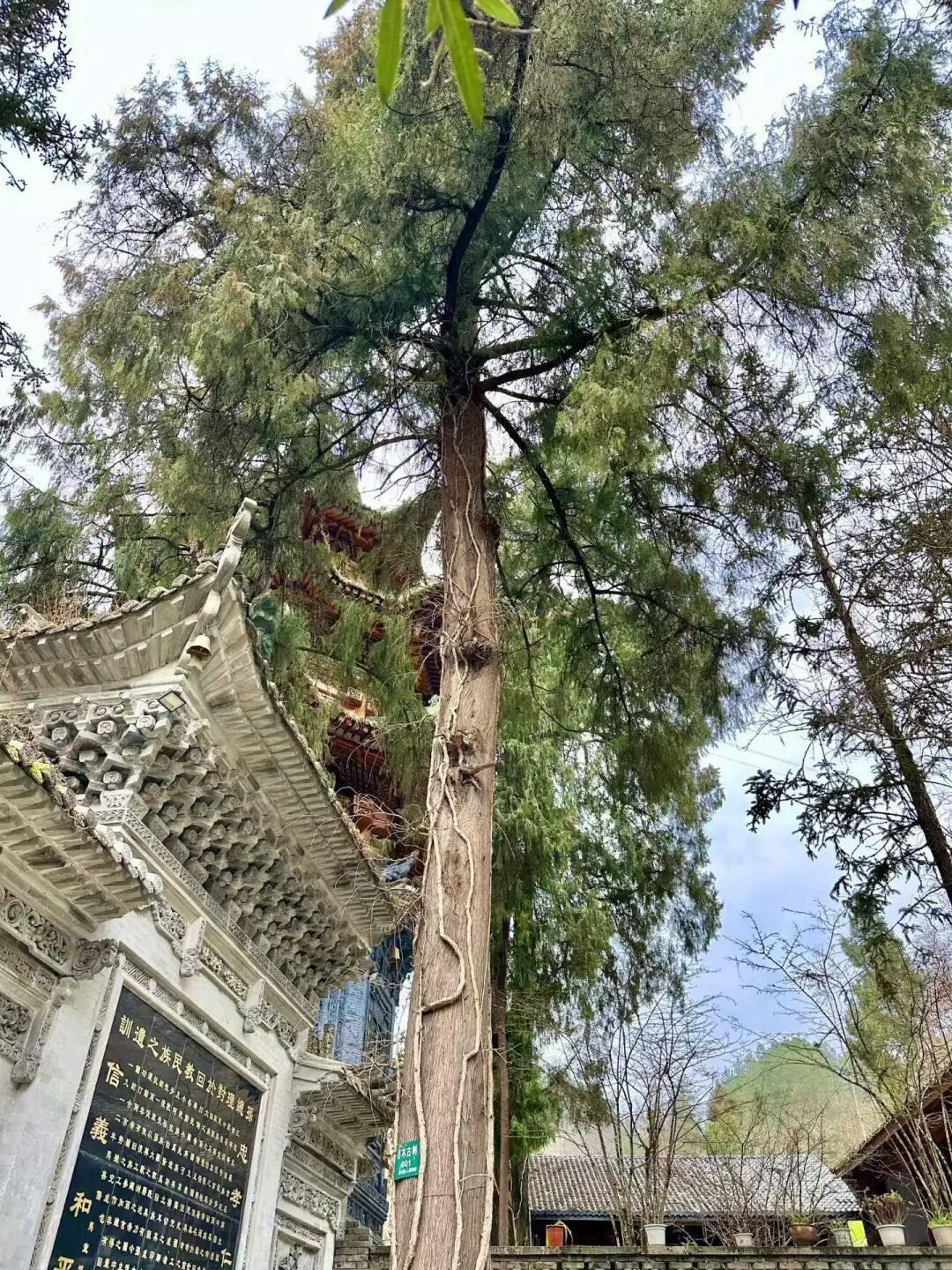
The two cypress trees inside the gongbei are 450 and 350 years old, respectively, and are listed as ancient and famous trees in Qingchuan County.
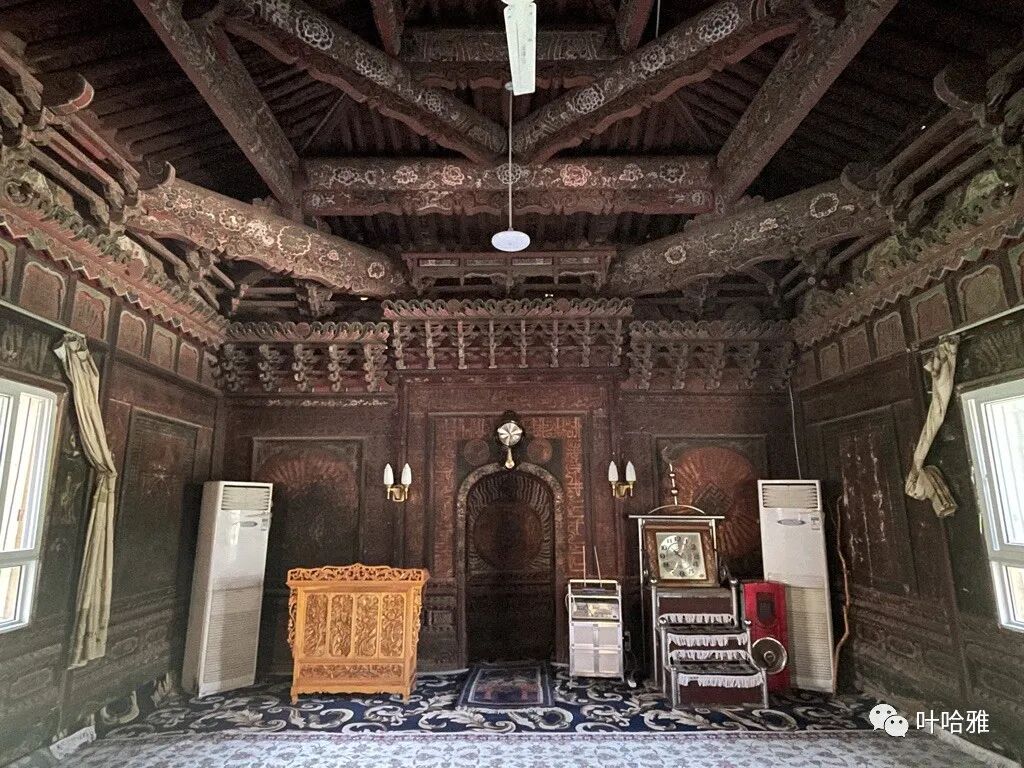
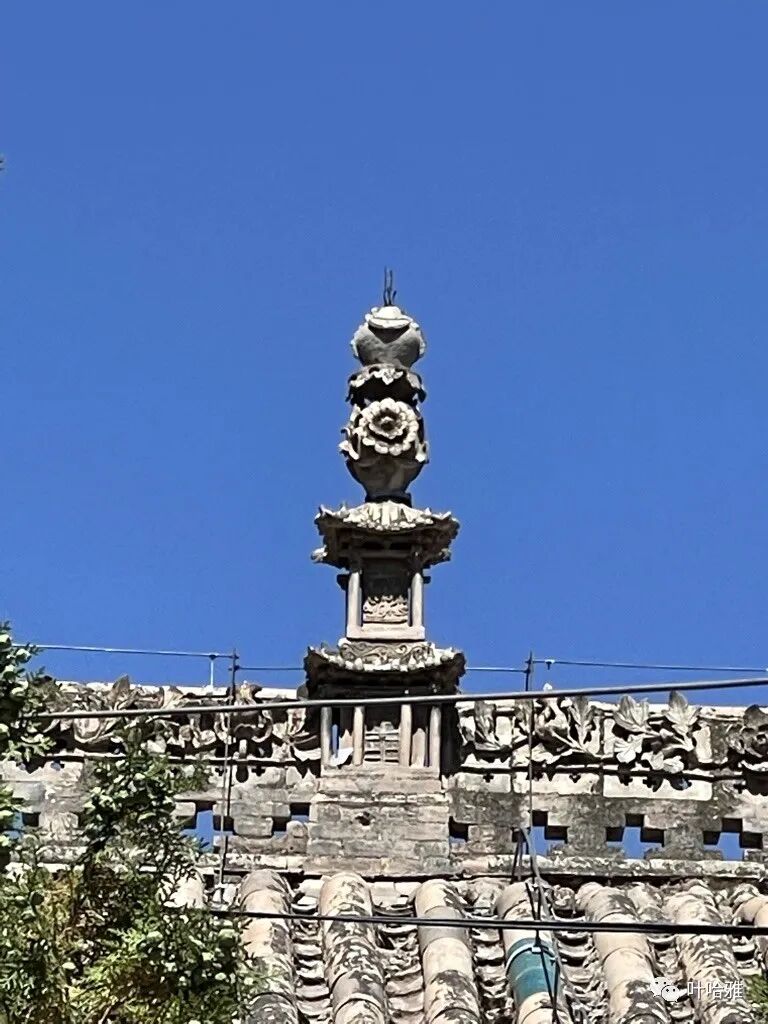
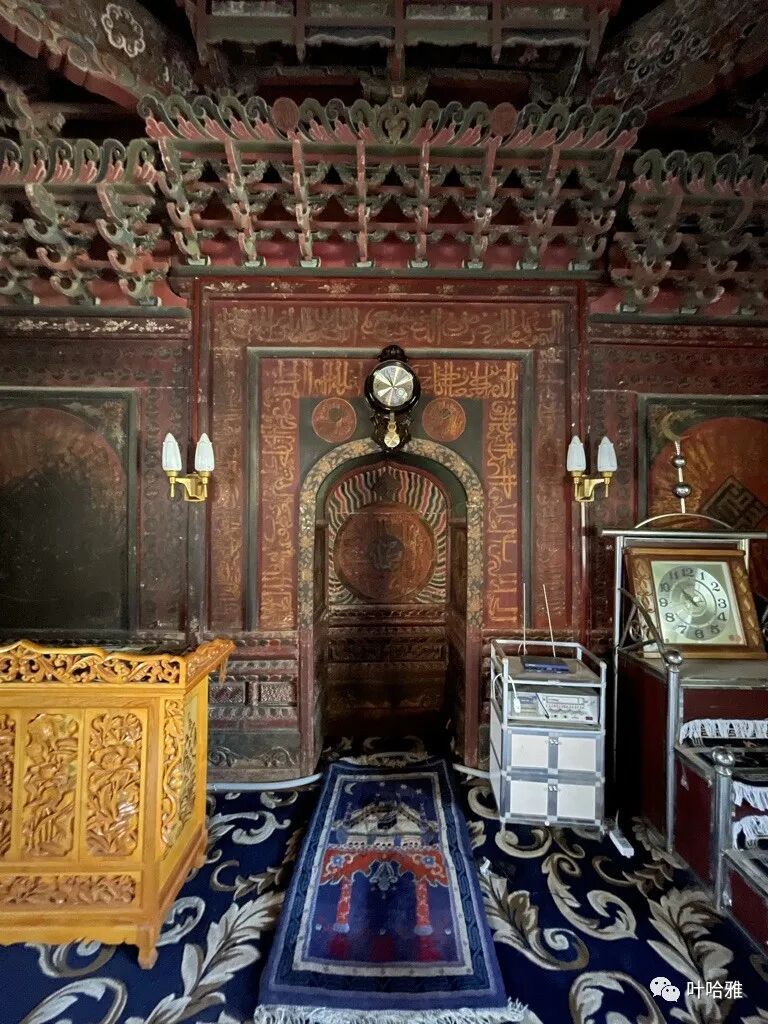
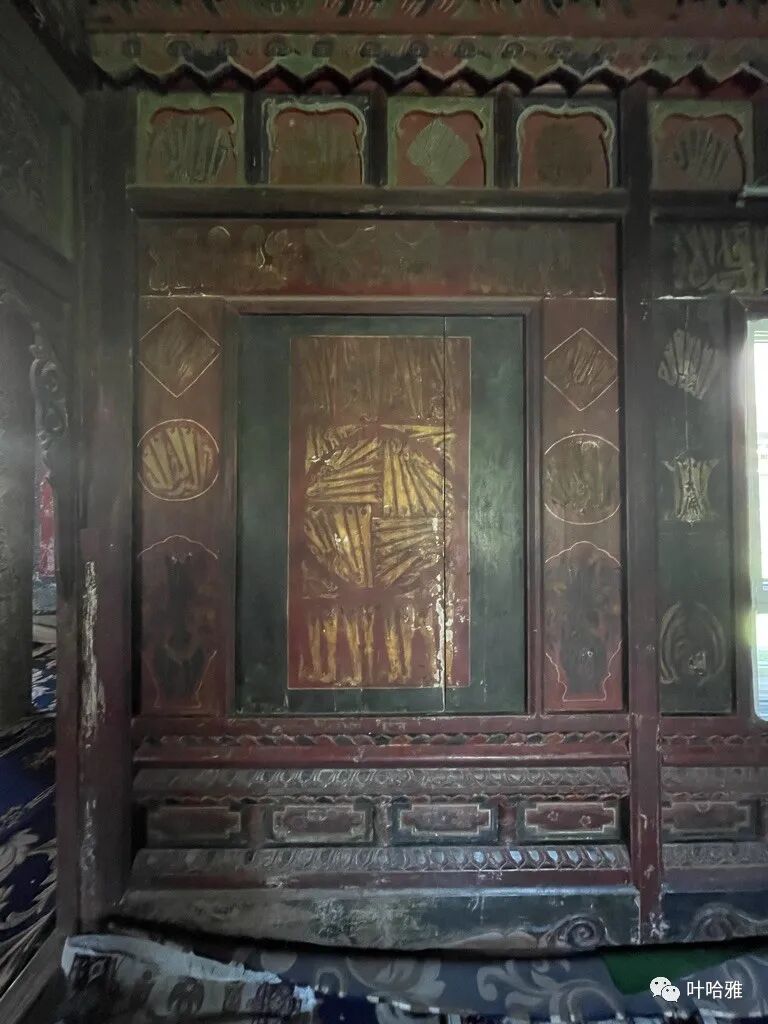
The prayer hall of the Guanghui Pavilion gongbei. The prayer hall (daotang) of a Qadiriyya grand gongbei usually contains both a gongbei and a prayer hall, so it is also called a gongbei mosque.
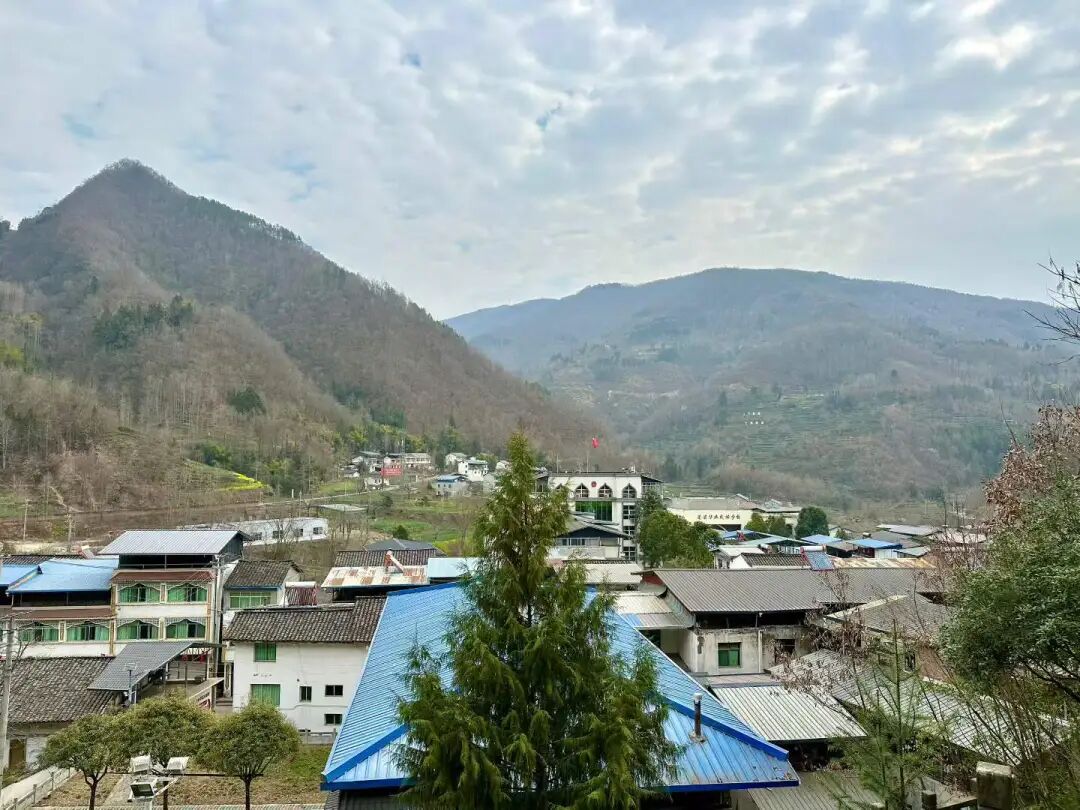
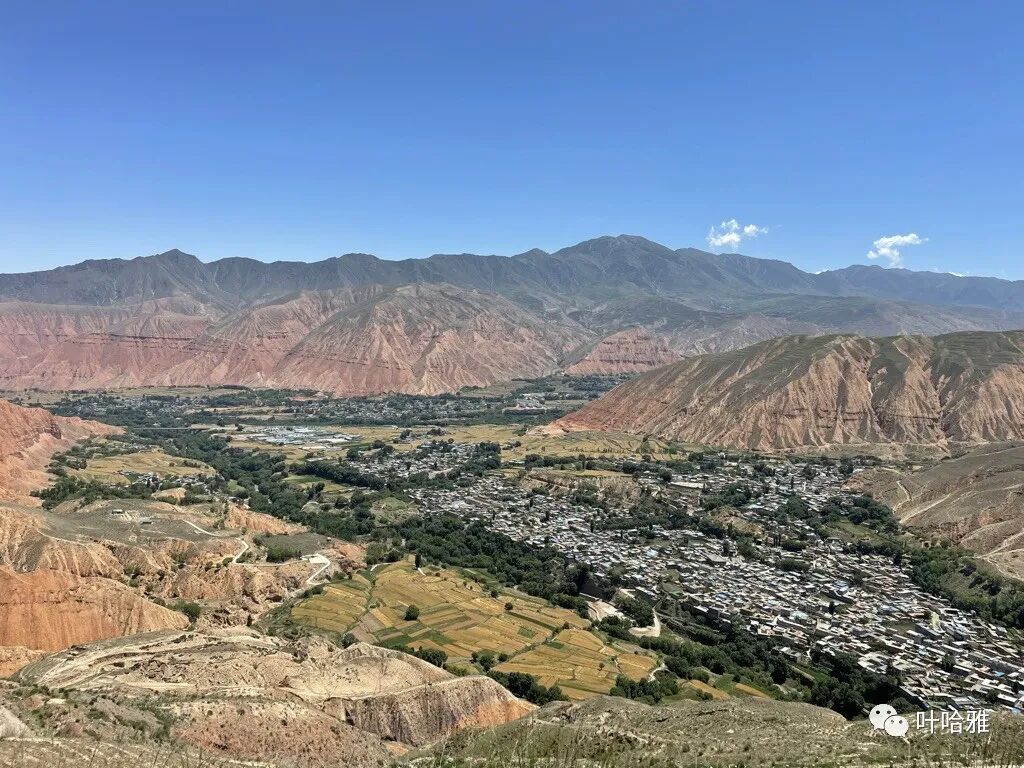
Haoxi Hui Ethnic Township is located at the border of Sichuan and Gansu. It is an important stop for people traveling from Qingchuan County to Wudu and Wenxian in Gansu to sell Sichuan tea. Most Hui Muslims in Haoxi moved here from the northwest. The Ma family is said to have come from Jingyang, Shaanxi, and the Zhe family is said to have come from Wudu and Wen County in Gansu. The Haoxi Mosque is said to have been built in the early Qing Dynasty. It was renovated many times and rebuilt into its current structure in 2017.
Haoxi Mosque is one of the most steeply situated mosques I have ever seen. The main prayer hall towers over the hillside, while the washroom and offices are at the bottom, connected by a set of steep stairs. However, a gentle asphalt road has been built now, which must be much more convenient than it was for those before us.
It is a pity that the main hall was locked when I visited, so I could not go inside.
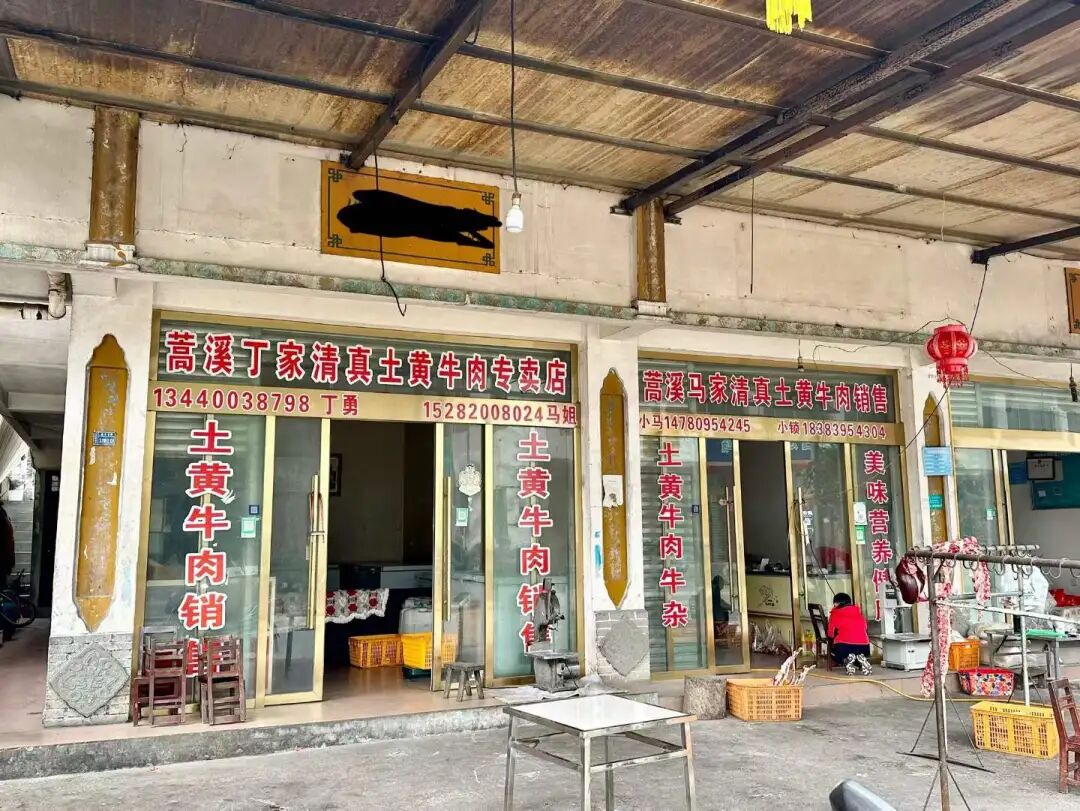
Looking at the street scene in Qingguang Village, Haoxi, there are Hui Muslim restaurants, snack shops, and beef shops. The local yellow beef (tuhuang niurou) here is very famous. Village life is leisurely and quiet, and every day moves very slowly.
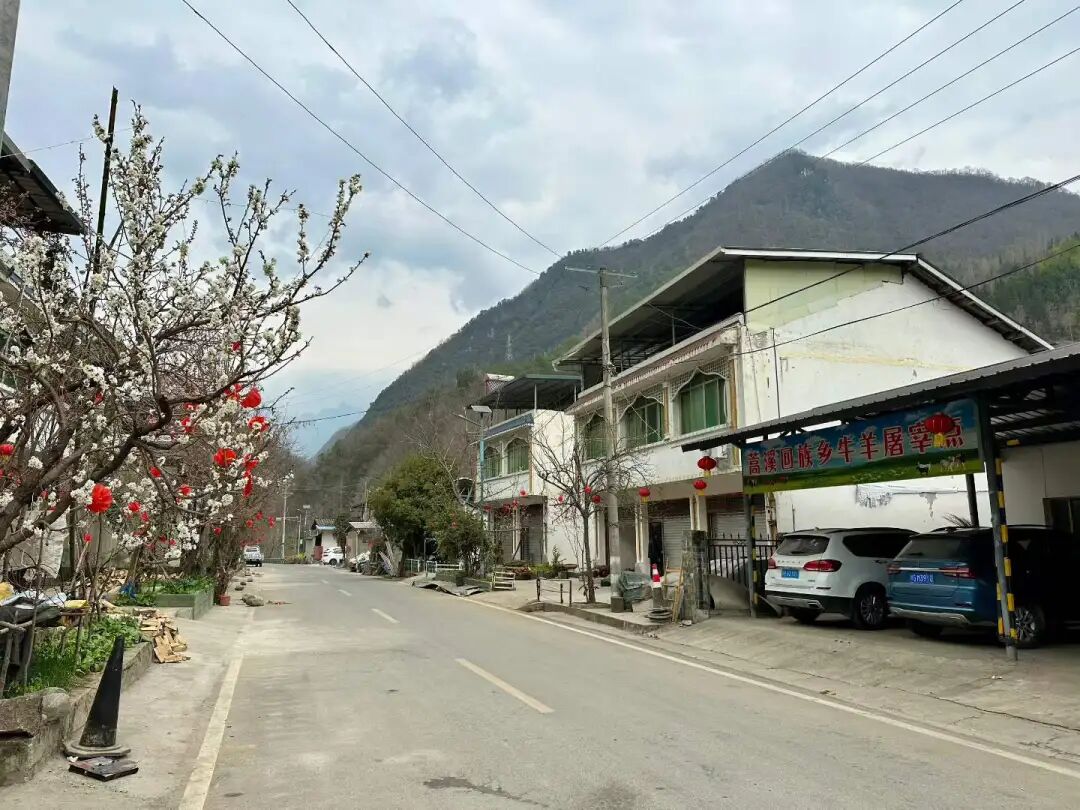
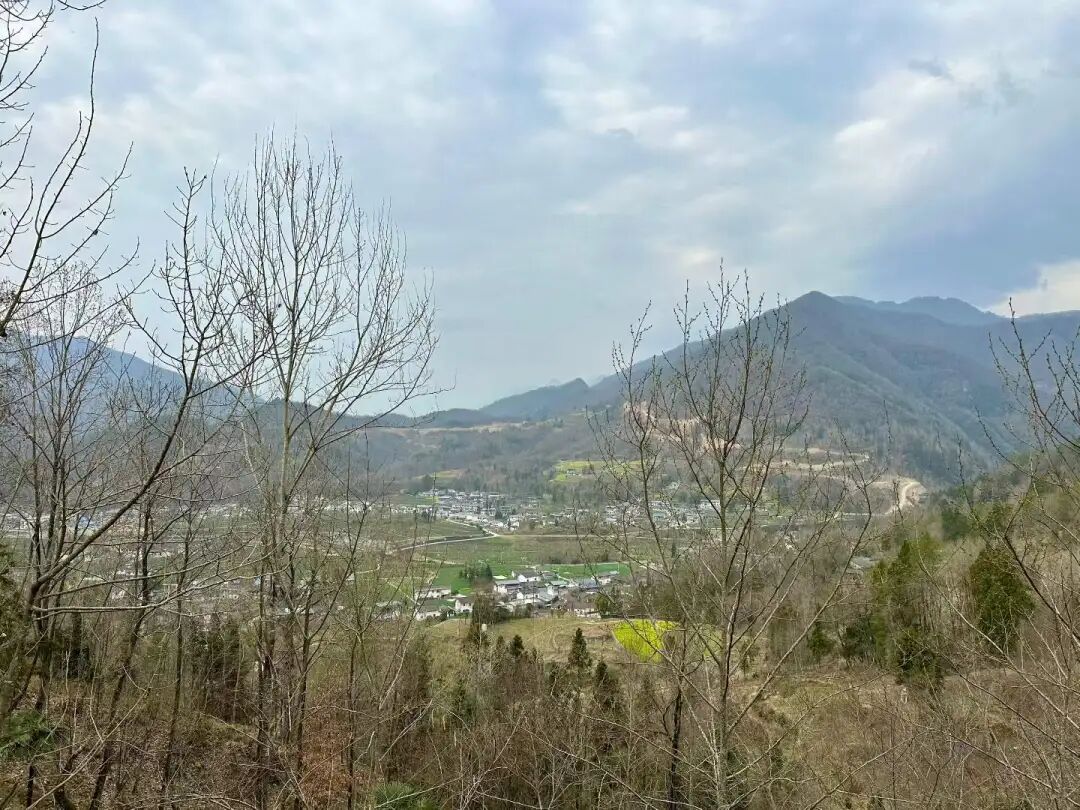
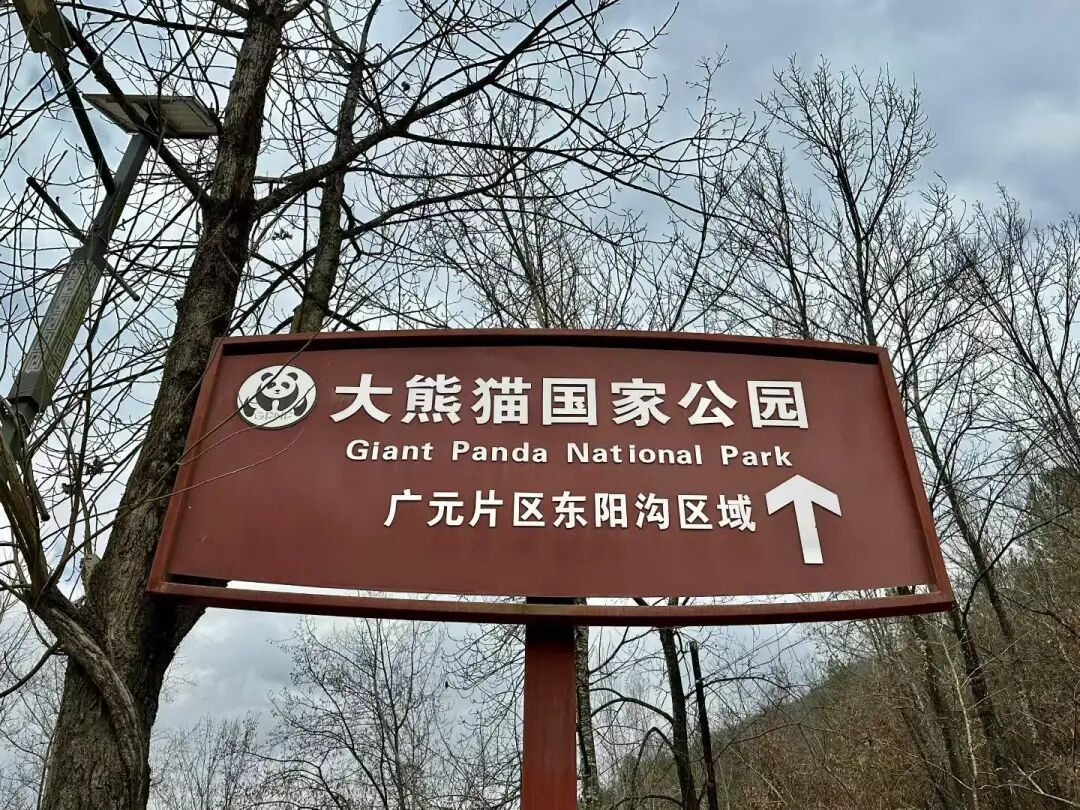
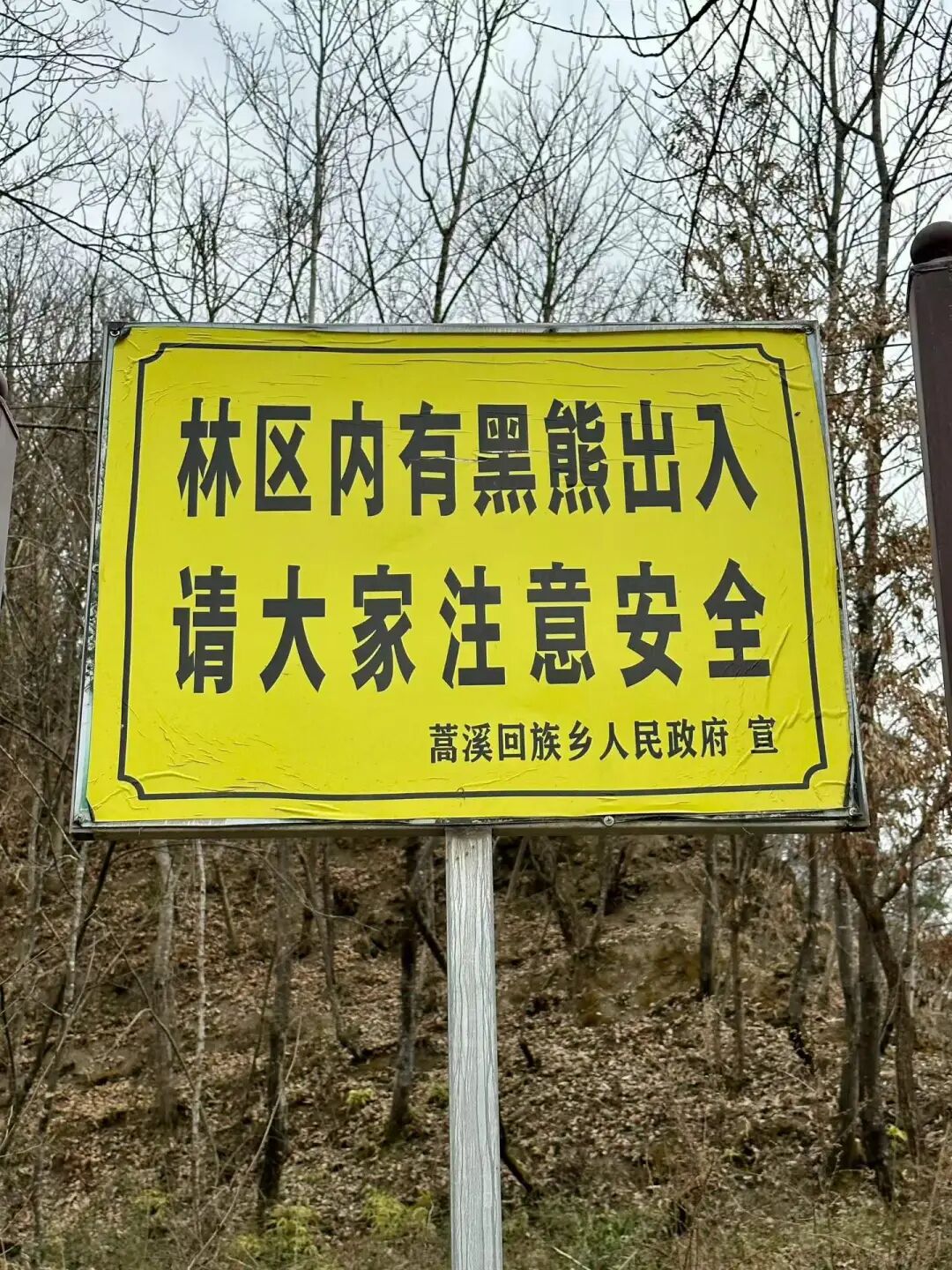
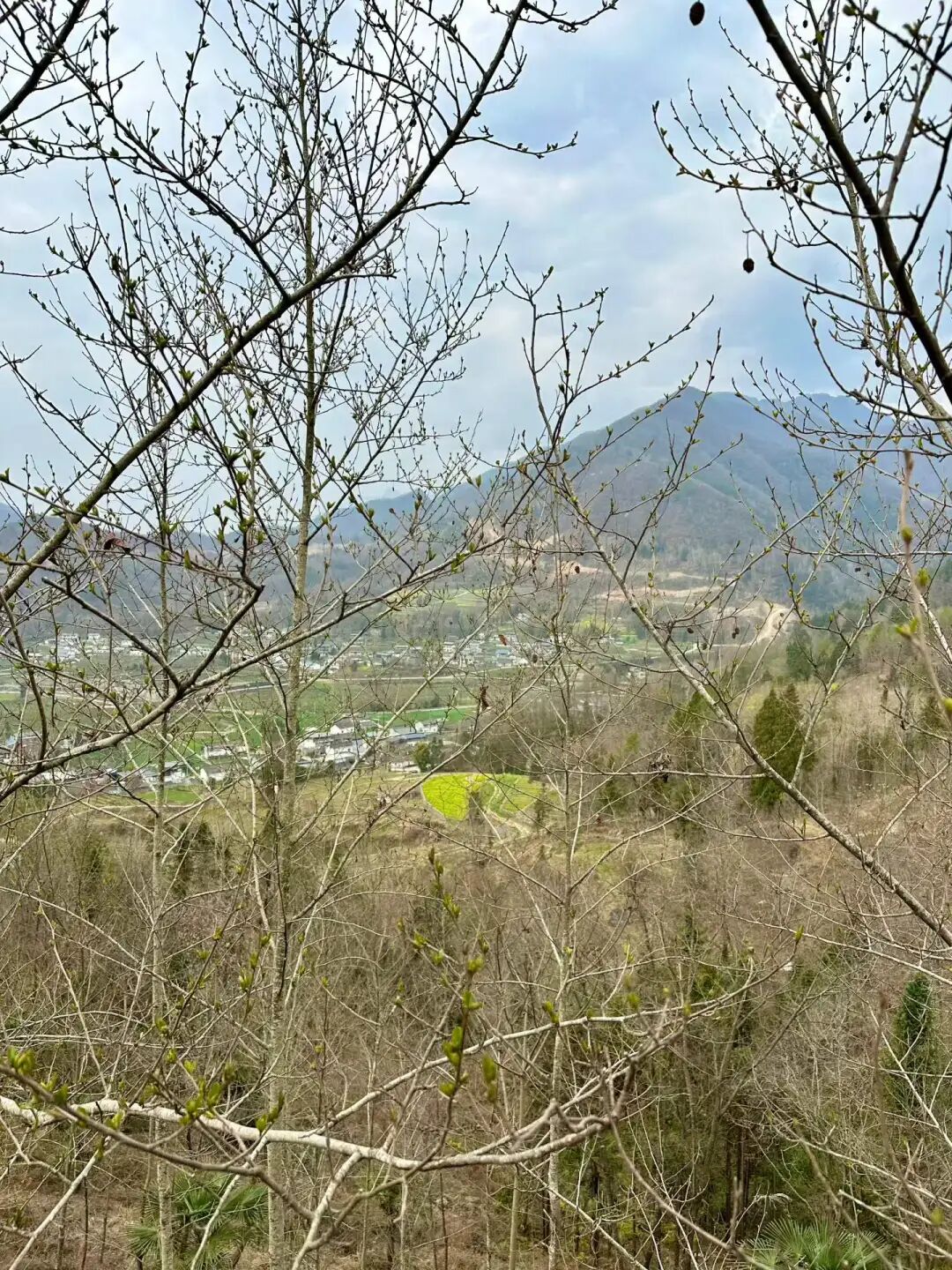
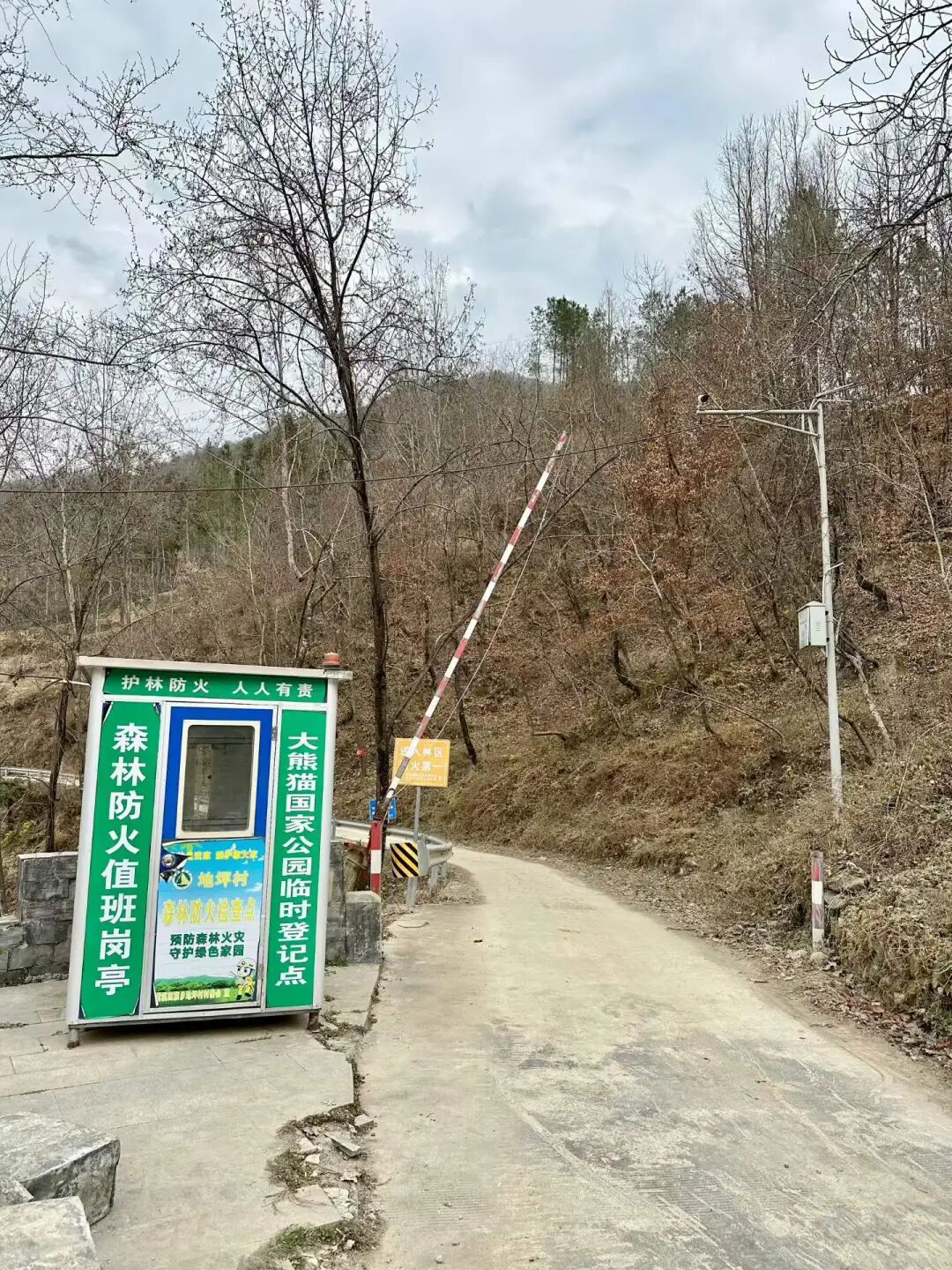
Next to Haoxi Hui Ethnic Township is the Giant Panda National Park. A sign by the road warns, 'Black bears are active in the forest area, please pay attention to your safety.' You can tell the ecology here is excellent and suitable for animals to live. view all
Summary: This China mosque travel guide follows Haoxi Hui Muslim Township in Qingchuan, Guangyuan, the Guanghui gongbei shrine, and Sichuan Muslim heritage without changing the original travel details.
This article summarizes the key points of a self-driving trip to ancient temples in Sichuan during the Spring Festival (Part 13), focusing on Haoxi Hui Muslim Township in Qingchuan County, Guangyuan, and the Guanghuiting gongbei. It keeps the original paragraph and image order, making it suitable for readers interested in Muslim life, Islamic culture, and Chinese Islamic articles. It also helps with searching for content related to Part 13 and Chinese halal food.
We left the ancient town of Qingxi in the morning and arrived at another Hui Muslim township in Guangyuan—Haoxi Hui Muslim Township. We first visited the Guanghuiting gongbei, which belongs to the Qadiriyya Sufi order (menhuan).
Guanghuiting is the burial place of Ma Chunyi, a disciple of the Qadiriyya leader Huazhe Abdullahi. Later generations call him the 'Fifth Great Ancestor'. The Fifth Great Ancestor began studying under Huazhe in 1674 (the 13th year of the Kangxi reign). The following year, he followed his teacher's orders to accompany his senior fellow student Qi Jingyi to Hanzhong, and later traveled to Qingyang Palace in Chengdu. Legend says that while returning to Hanzhong, the Fifth Great Ancestor followed his teacher's instructions to buy two bolts of white cloth in Zhongba, Jiangyou. After leaving Jiangyou, he fell ill with dysentery. He passed away (gui zhen) in 1684 (the 23rd year of the Kangxi reign) while passing through Haoxi Mosque. Later generations built a gongbei for him, naming it 'Guanghuiting'.
In 1833 (the 13th year of the Daoguang reign), Ma Longyun from Hezhou oversaw the construction of the brick pavilion at Guanghuiting and donated land to it. A front hall was added during the Xianfeng reign, and it has been renovated many times since. In 1935, Red Fourth Front Army leaders like Xu Xiangqian and Chen Changhao directed the Battle of Xuanmaguan from Guanghuiting. The imam (ahong) stationed at the mosque at the time, Su Shichang, provided them with great assistance. Before leaving, Xu Xiangqian gifted him items like white sugar. After 1966, Guanghuiting became a commune hospital. It was restored in 1980 and rebuilt into its current structure in 1984.
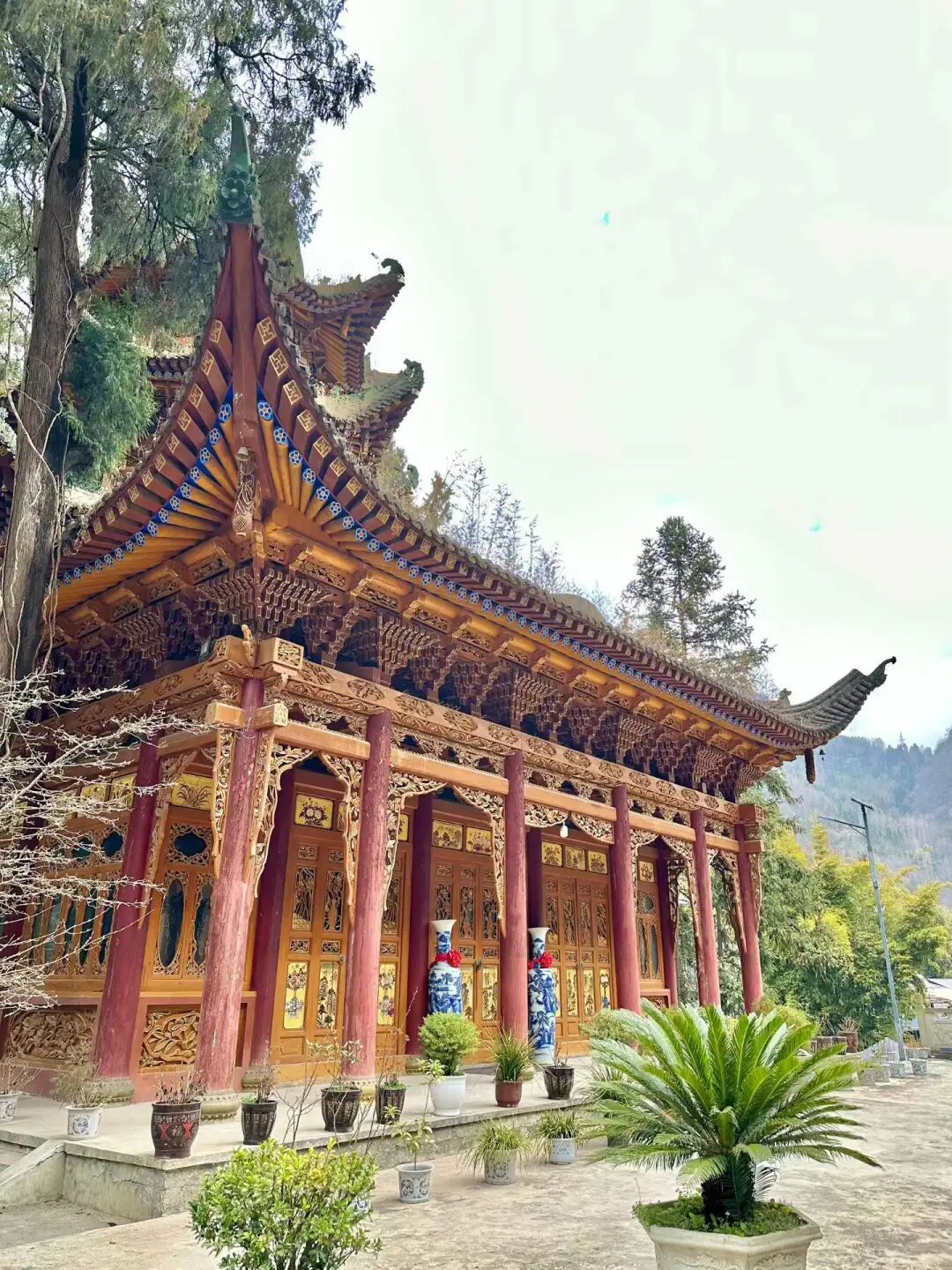
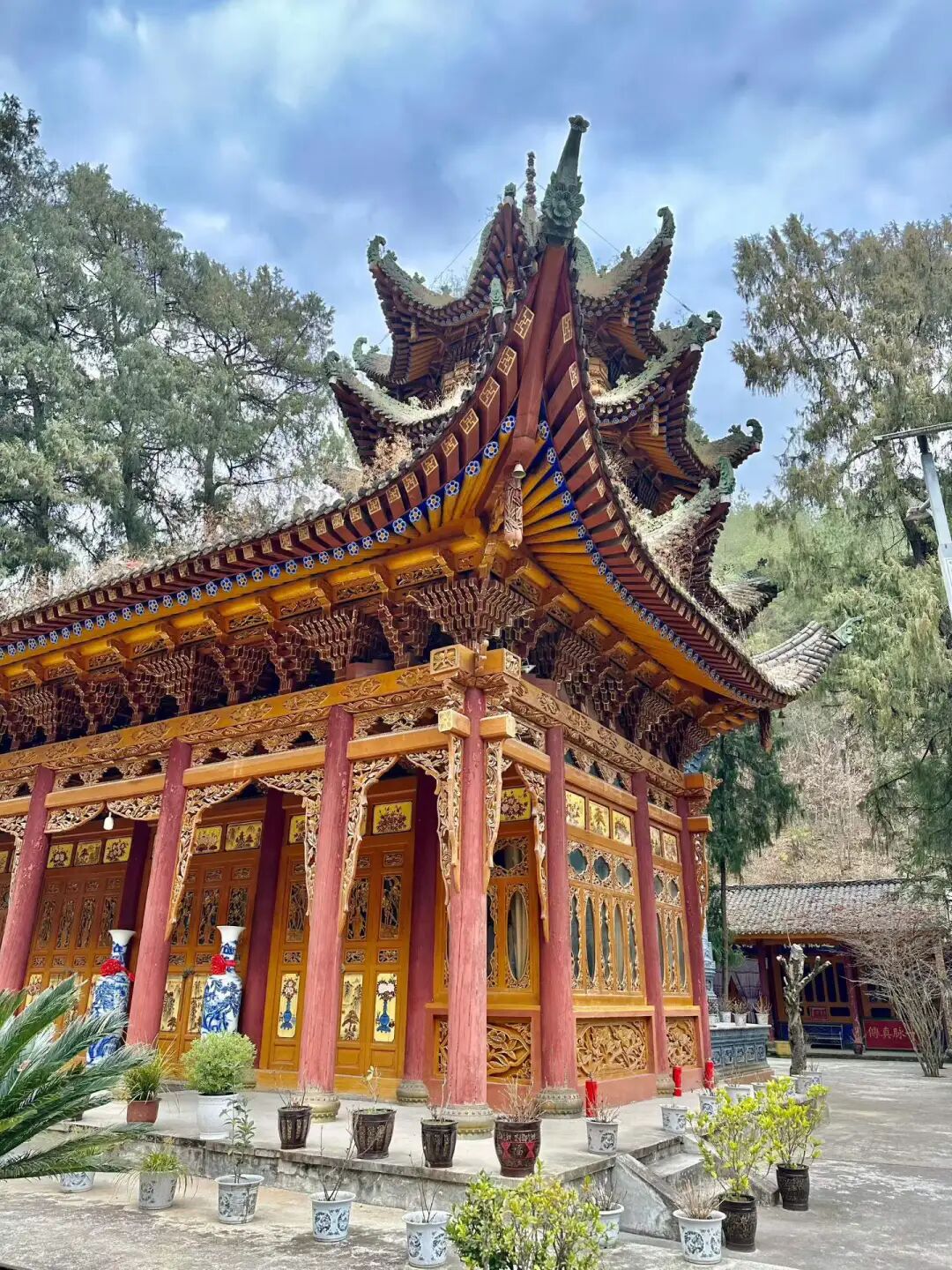
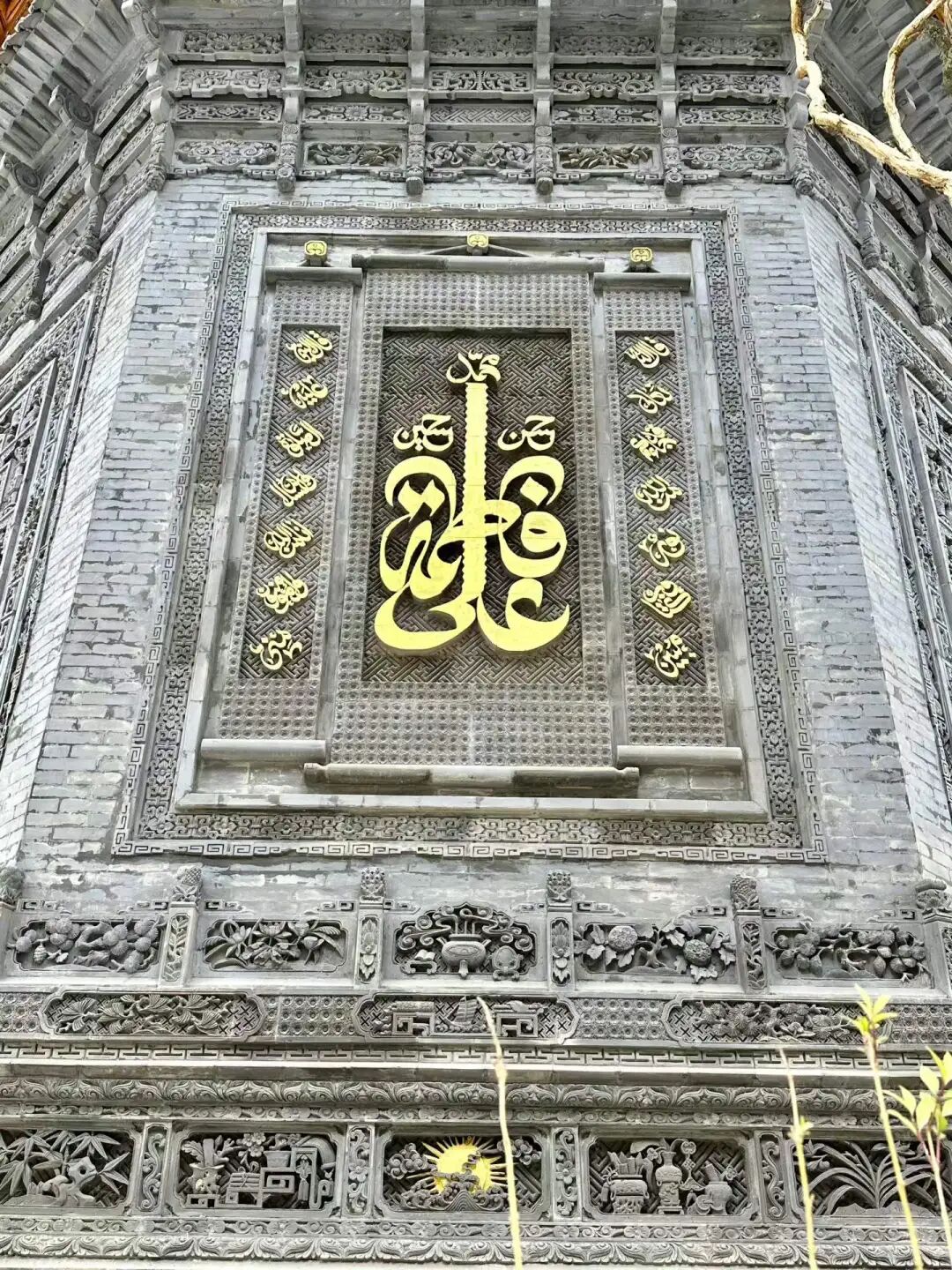
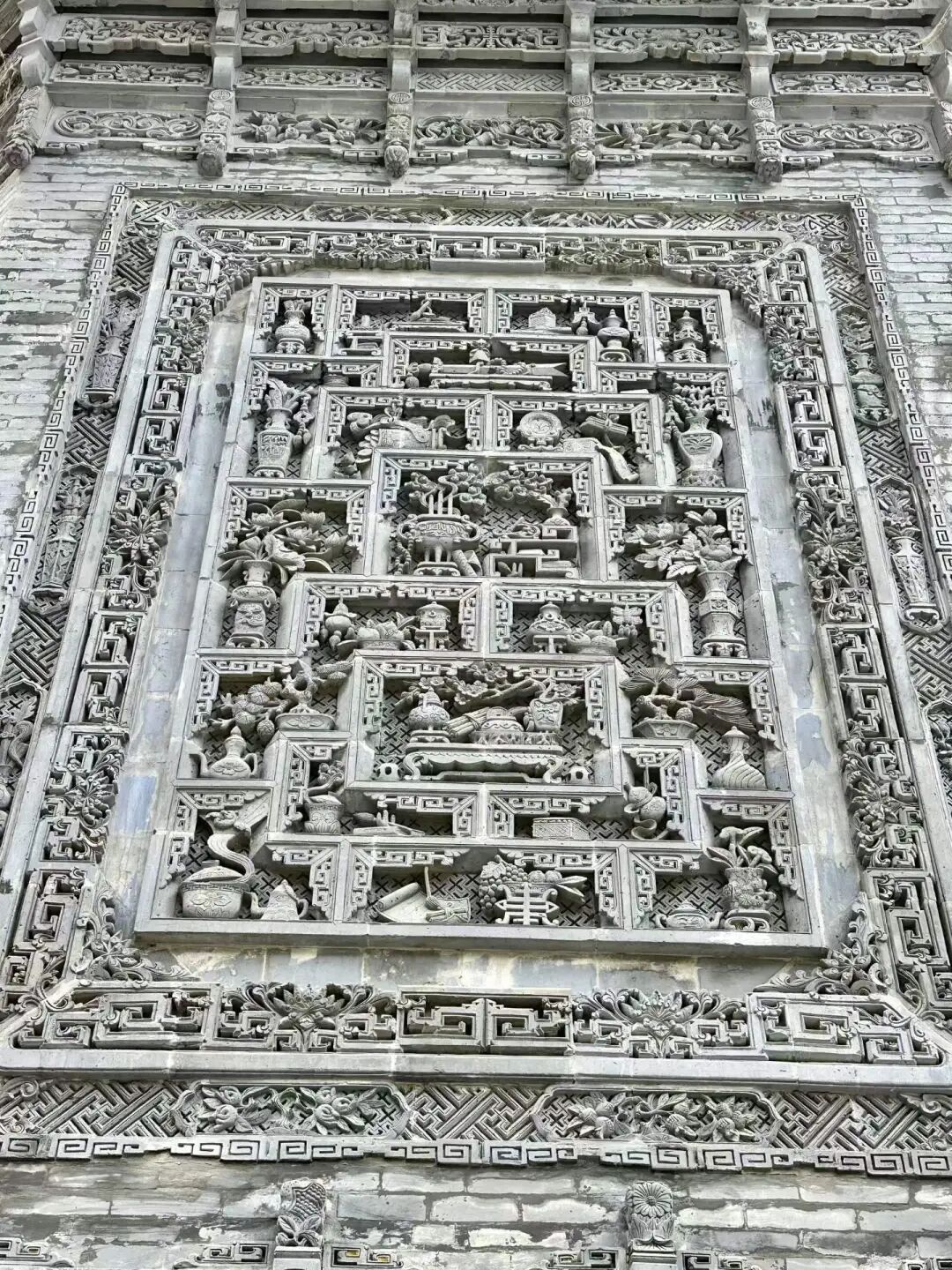
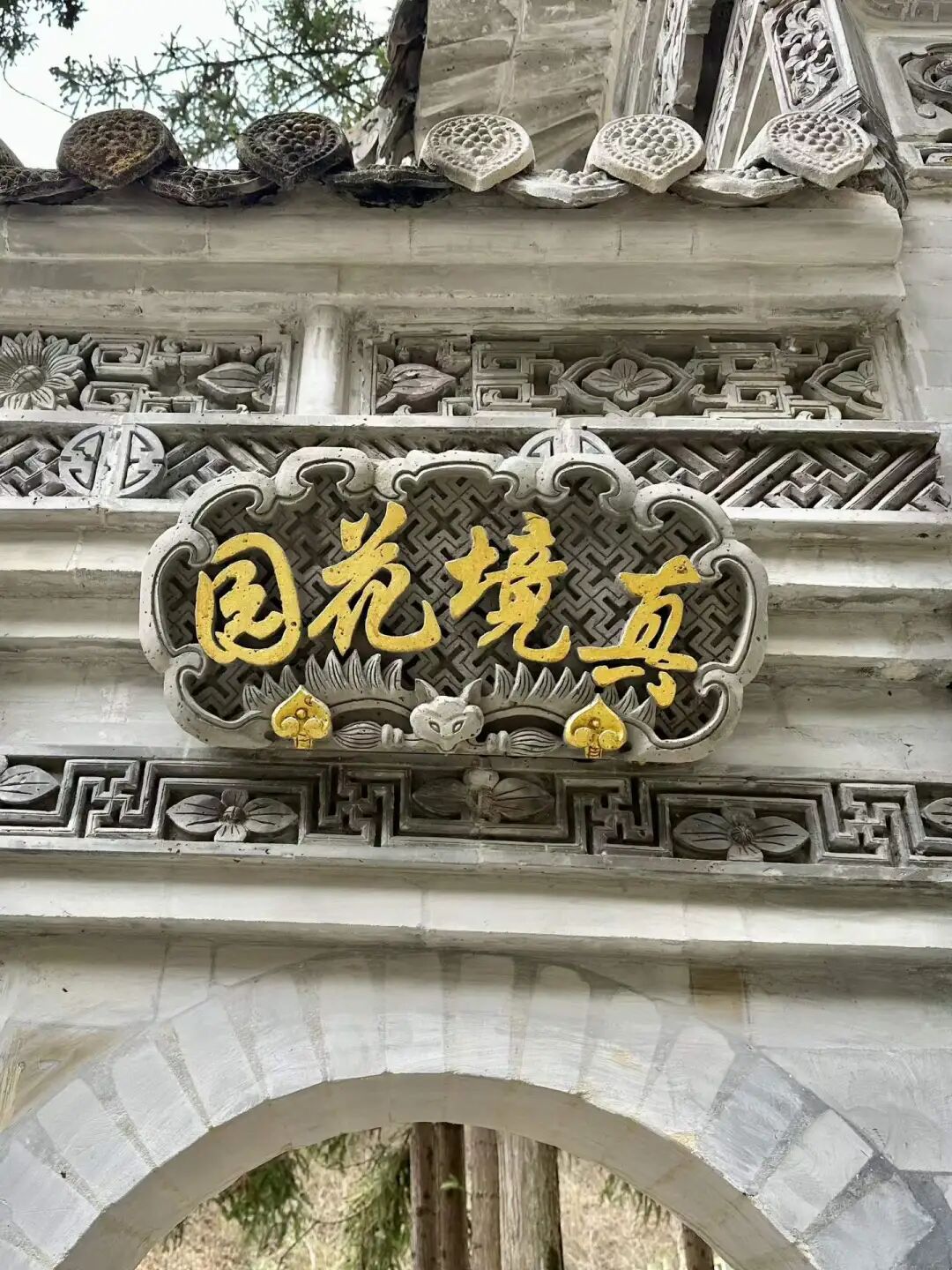
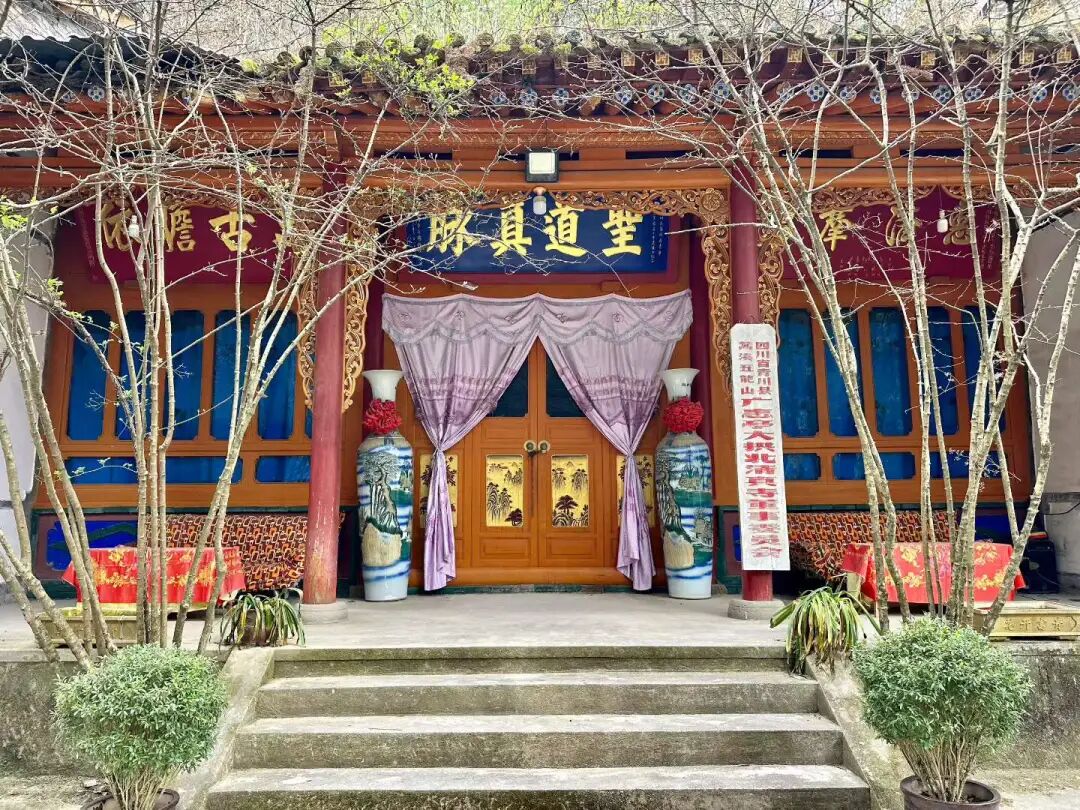
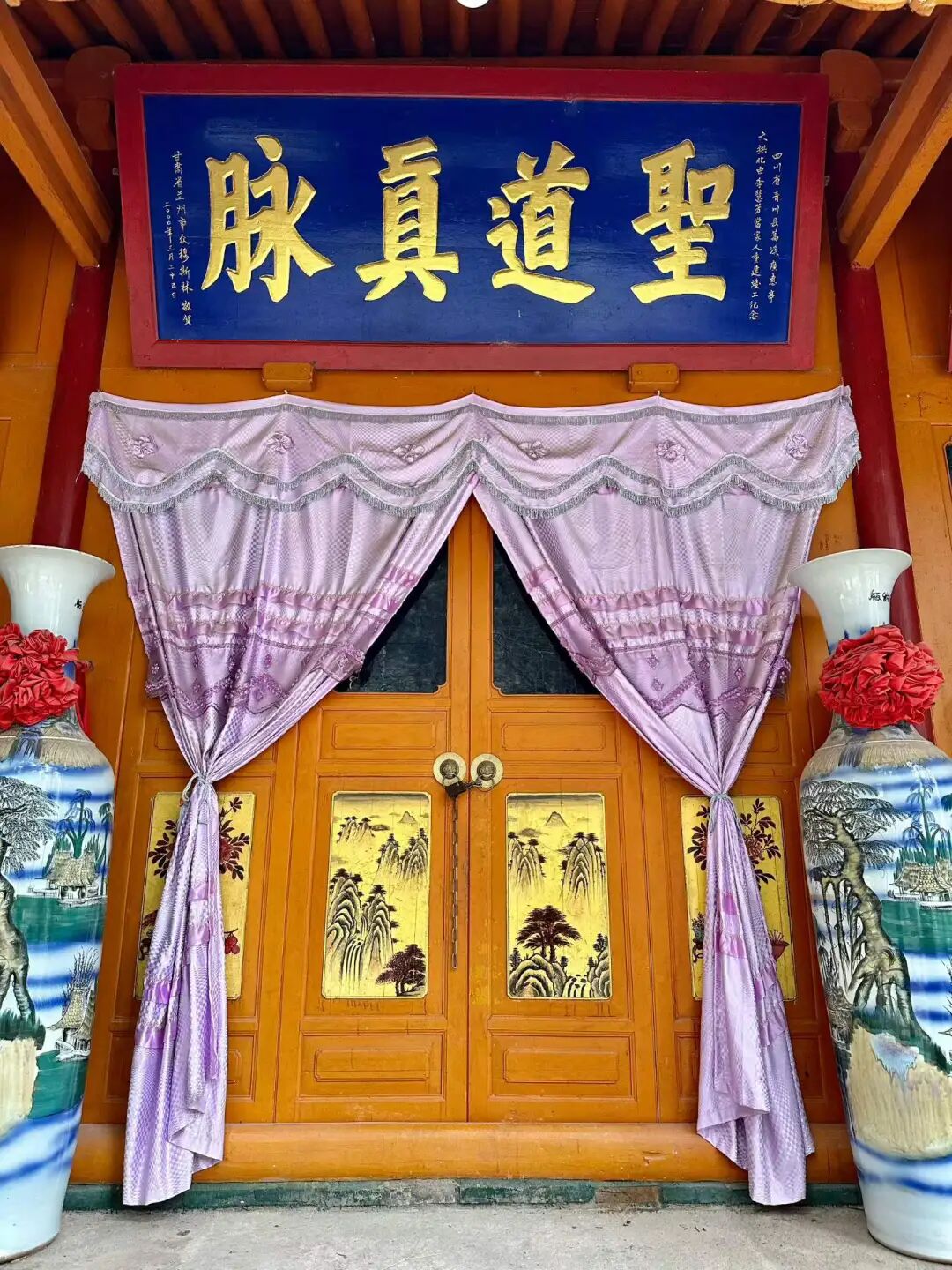
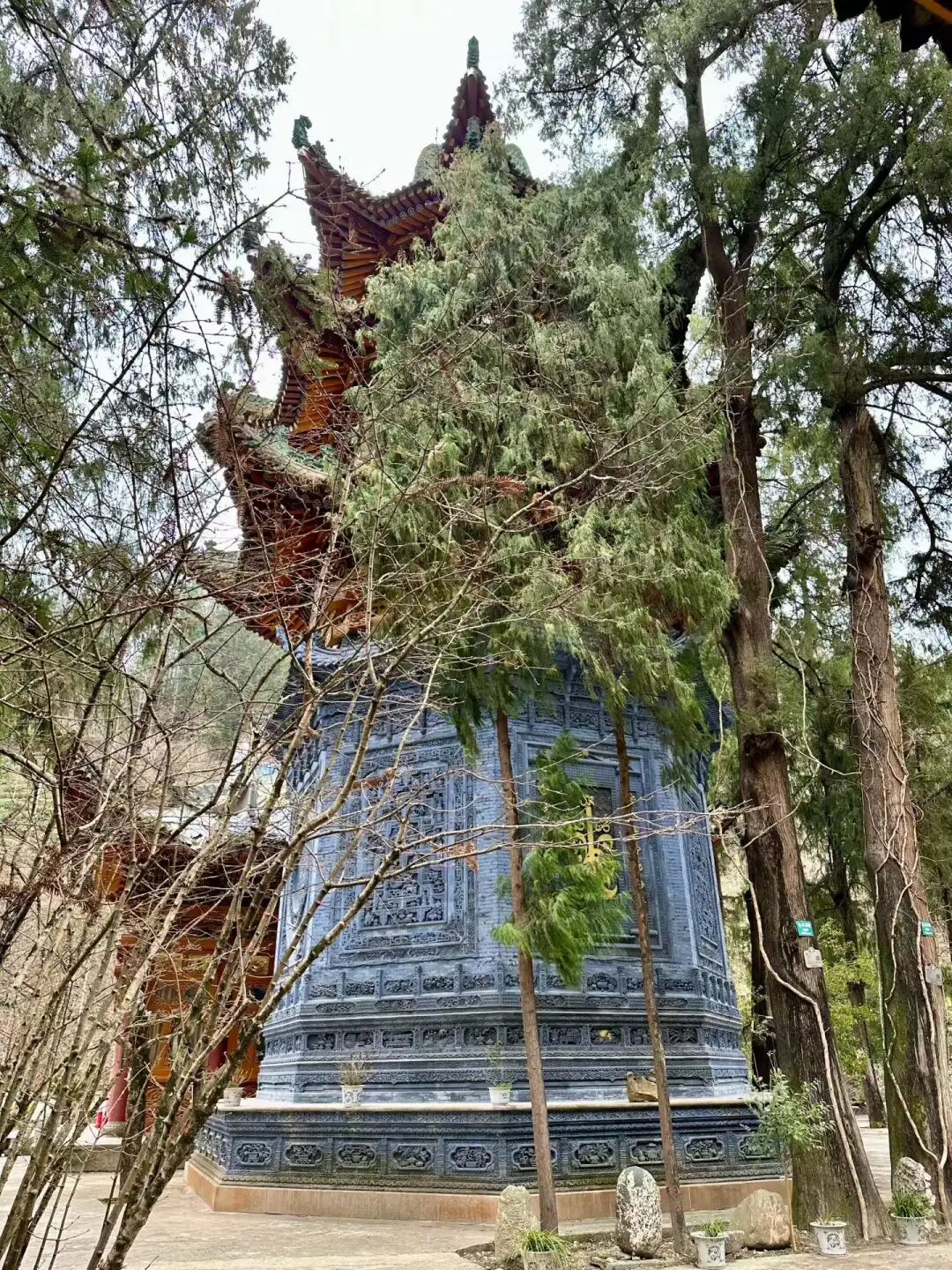
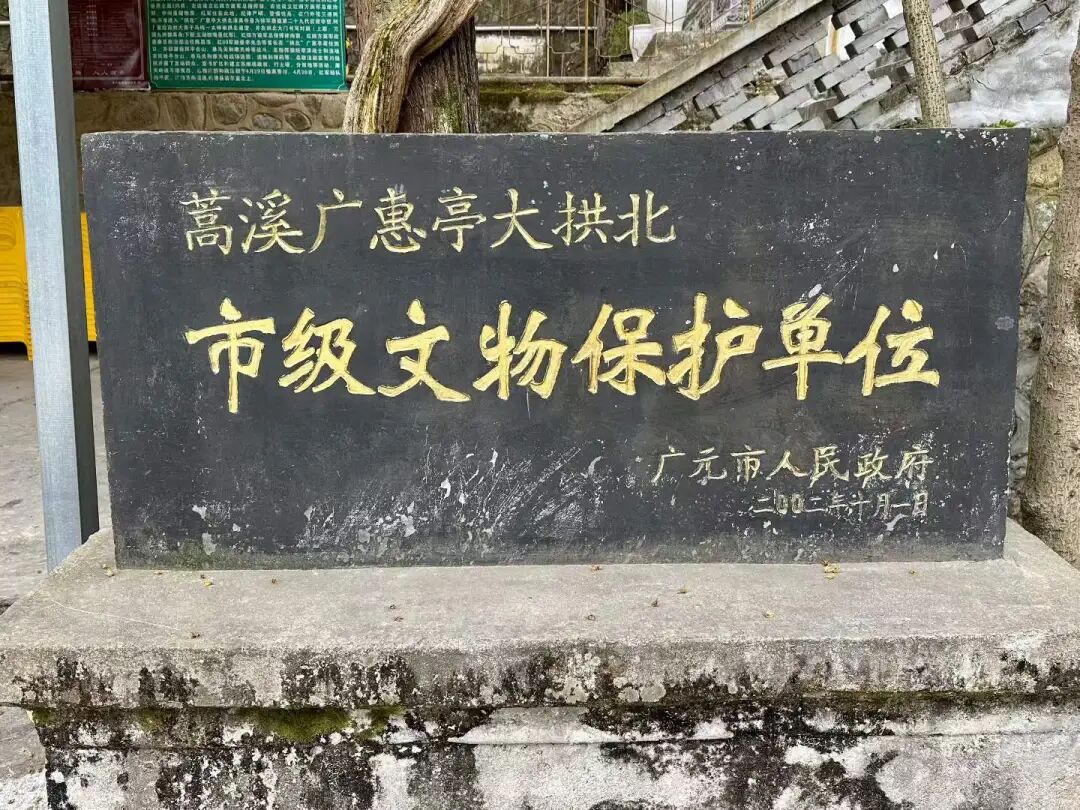
Historical plaques at the Guanghuiting gongbei:
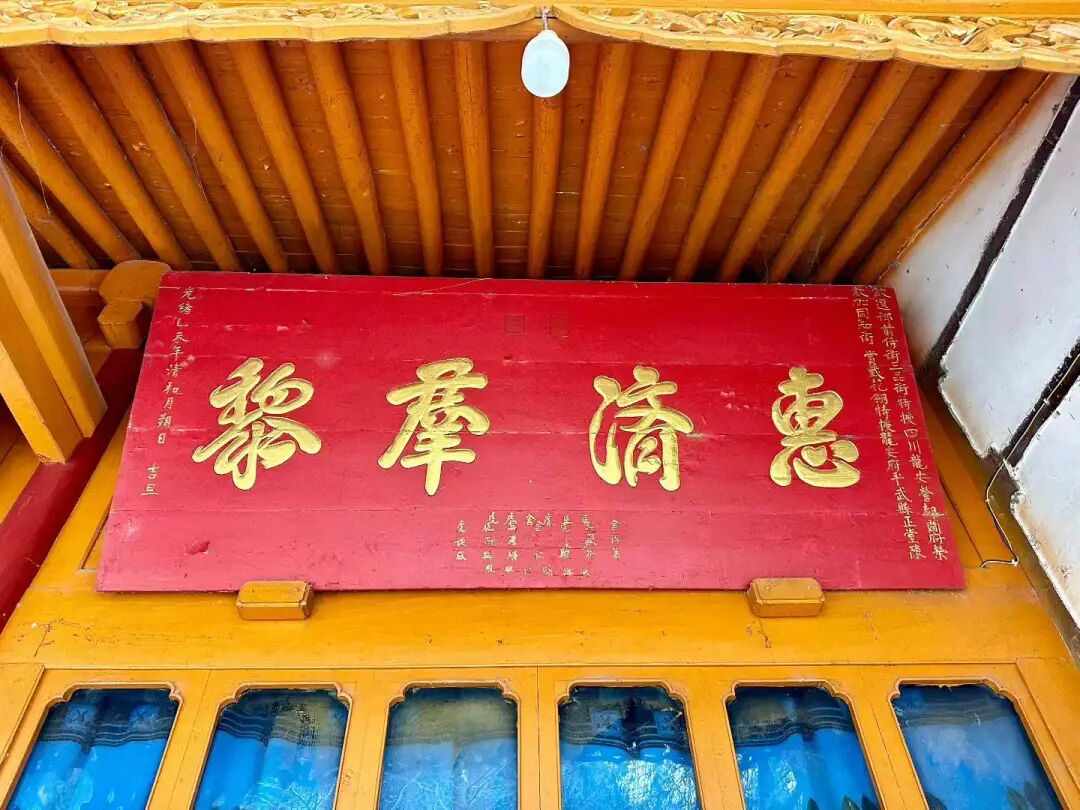
The 'Huiji Qunli' (Benefiting the Masses) plaque from the 21st year of the Guangxu reign, presented by Chen, the magistrate of Pingwu County, Long'an Prefecture, who held a third-rank title as an imperial guard and was granted the title of Tongzhi. It was also signed by She Deshou, Ma Desheng, Hu Jun, She Ren, and Hu Congfeng.
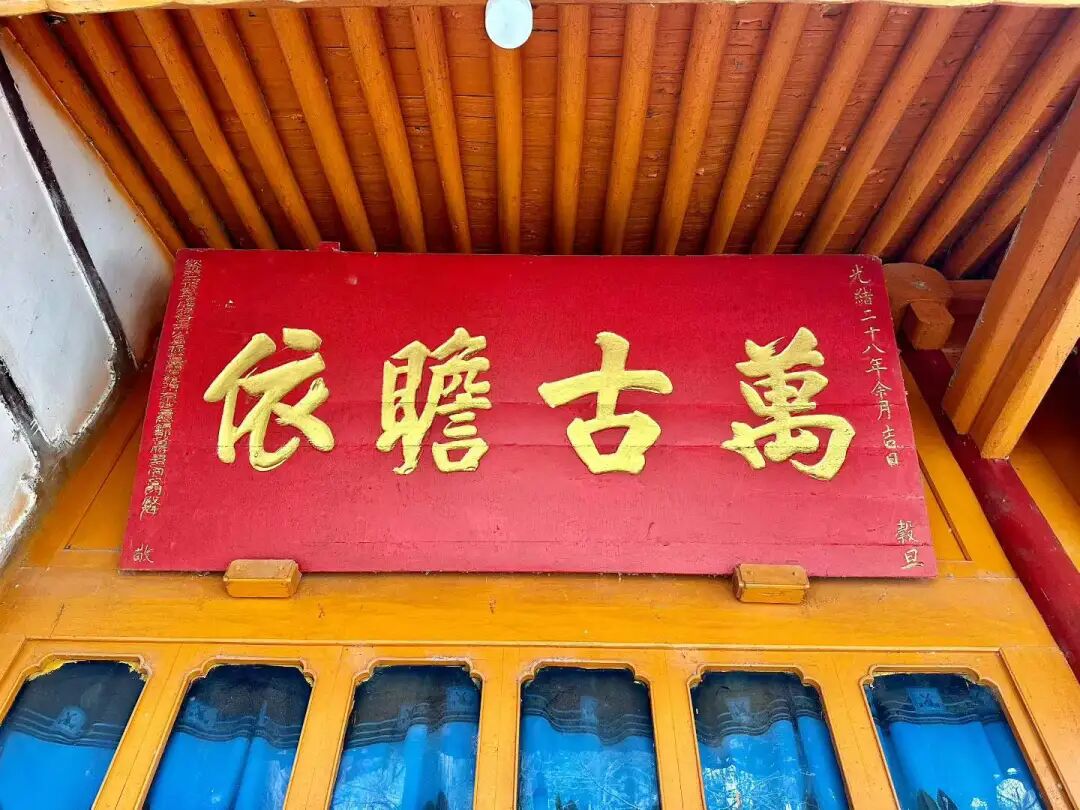
The 'Wangu Zhanyi' (Venerated for All Time) plaque from the 28th year of the Guangxu reign, presented by Shan Diankui, who held a first-rank title and served as the Commander-in-Chief of the Sichuan Provincial Military, also holding the title of Commander of the Jianchang Garrison and the title of Sheng-Sheng Baturu.
Shan Diankui was a Qing dynasty military officer from Changping, Beijing. He was passionate about Islamic affairs. He wrote plaques for the Puhading Cemetery in Yangzhou, the Great Mosque in Tianjin, the Hexi Mosque in Xichang, and the Guanghui Pavilion (guanghuiting) gongbei. He funded the woodblock printing of the Shan family edition of the Precious Scripture of Life (baoming zhenjing) in Songjiang Prefecture, which is the 'Haitie' commonly used by Hui Muslims. He also established an elementary school at the Changping Mosque in his hometown.
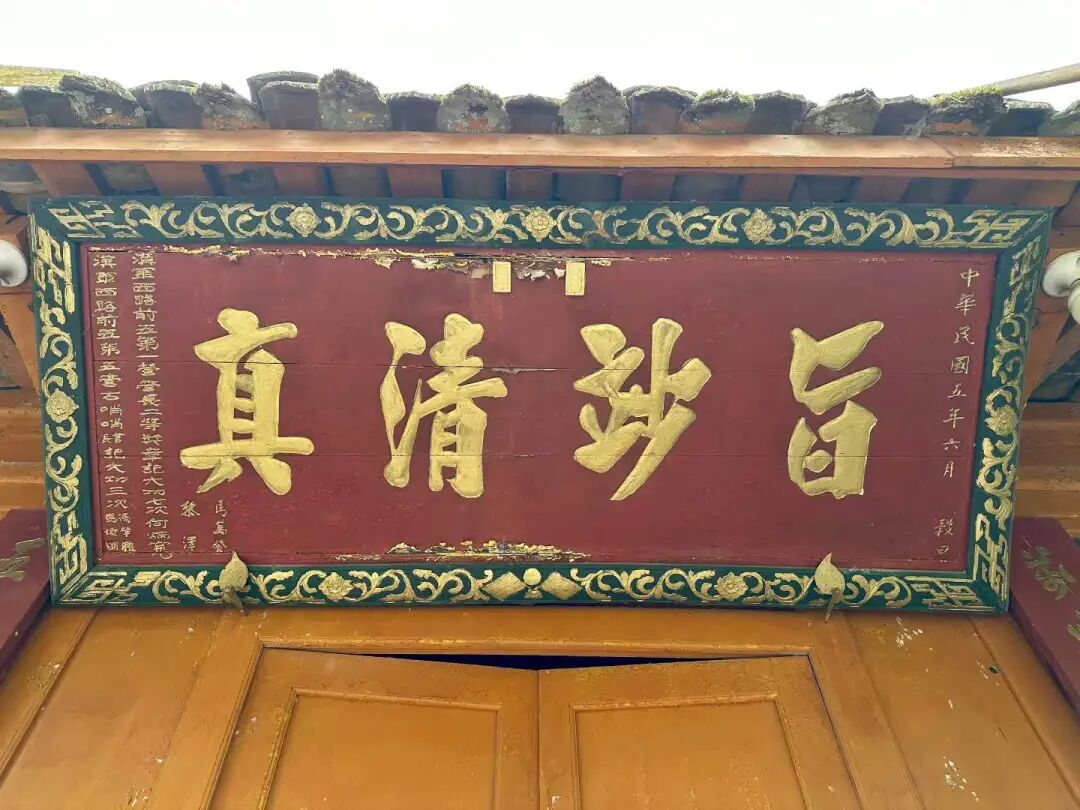
The 'Zhimiao Qingzhen' plaque from the fifth year of the Republic of China mentions He Bingkuan, battalion commander of the first battalion of the front five units of the Western Route of the Han Army, who received a second-class medal and was credited with seven major merits. It also lists Feng Zhaosheng, Ma Junming, Ma Wanfa, and Li Ze, who were patrol officers of the right guard of the fifth battalion of the front five units of the Western Route of the Han Army and were credited with three major merits.
Inside the gongbei is the 1924 'Stele Record of the Reconstruction of Wulong Mountain and Xulong Mountain' written by La Yonggui. The text records that in 1833 (the 13th year of the Daoguang reign), Ma Nengyun from Hezhou brought silver to Haoxi to build a brick pavilion. He did not finish the work, so he went to Hezhou and Songpan to raise 270 taels of silver to complete it, and purchased a plot of land behind the pavilion and a section of mountain land. During the Xianfeng reign, Ma Daoxiang and local Muslims from Songpan and the surrounding area built a front hall (baoting) in front of the pavilion, which was rebuilt during the Tongzhi reign. In the early Guangxu reign, elders from Songpan invited Ma Dao'an, the abbot of Xulong Mountain (Haoxi gongbei), to renovate the pavilion and guest hall, and to repair one room at Wulong Mountain (Guanghui Pavilion). During the Guangxu reign, successive earthquakes tilted the Haoxi gongbei. When Mi Yongling was the abbot of Guanghui Pavilion, he went to Songpan and the local area to raise funds to rebuild the pavilions, front halls, guest halls, mountain gates, and courtyard walls of both mountains.
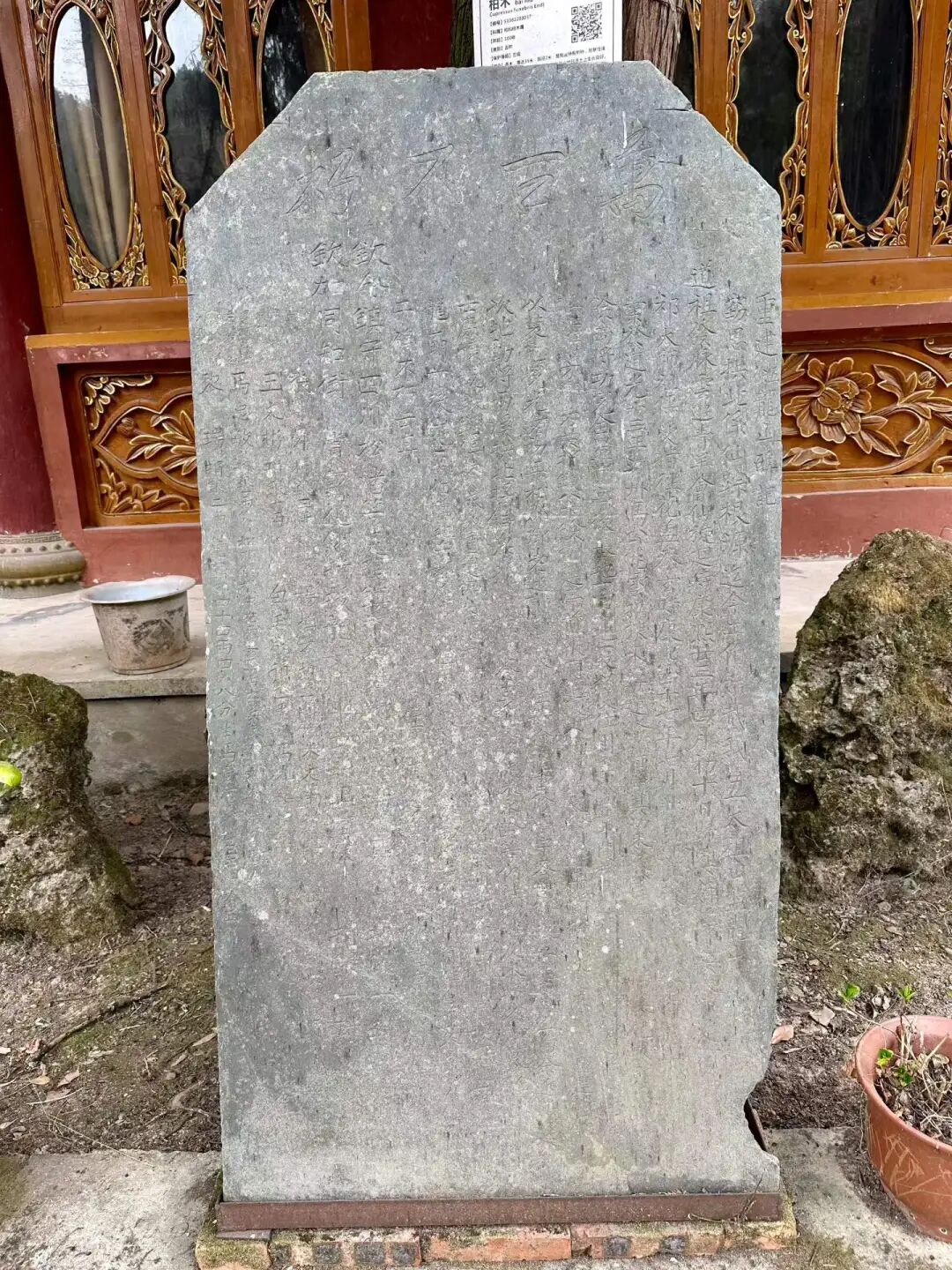
The two cypress trees inside the gongbei are 450 and 350 years old, respectively, and are listed as ancient and famous trees in Qingchuan County.
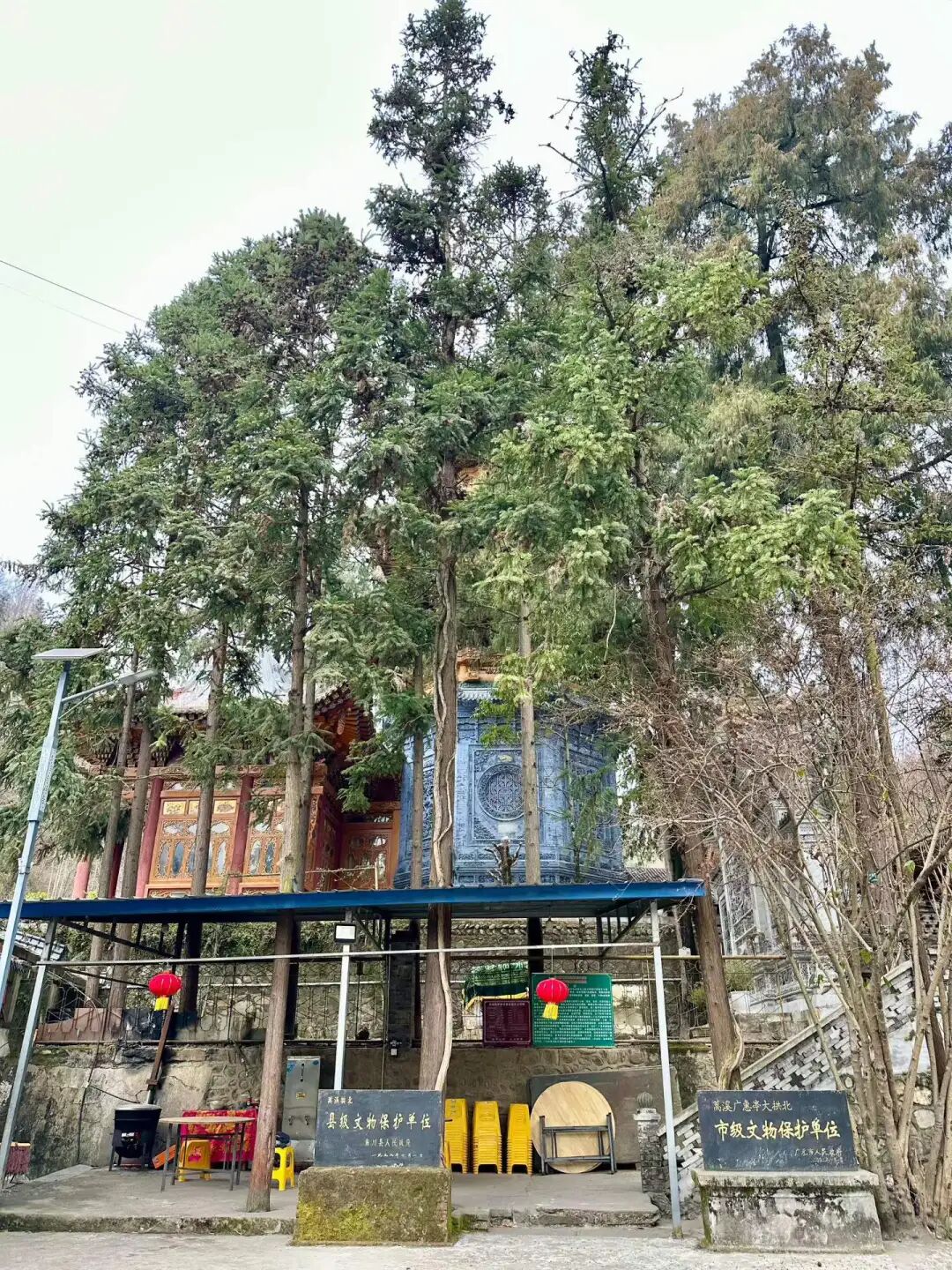
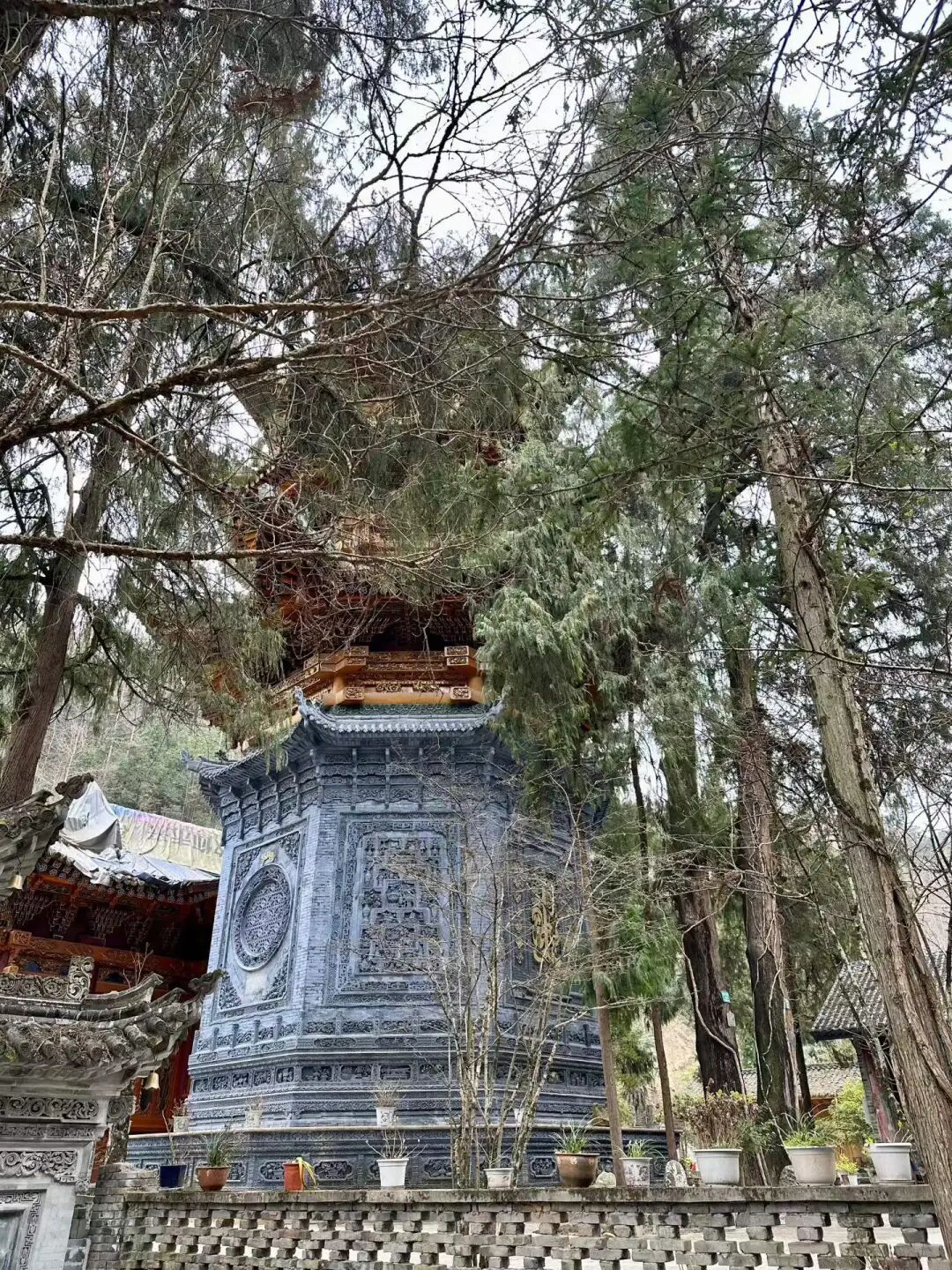
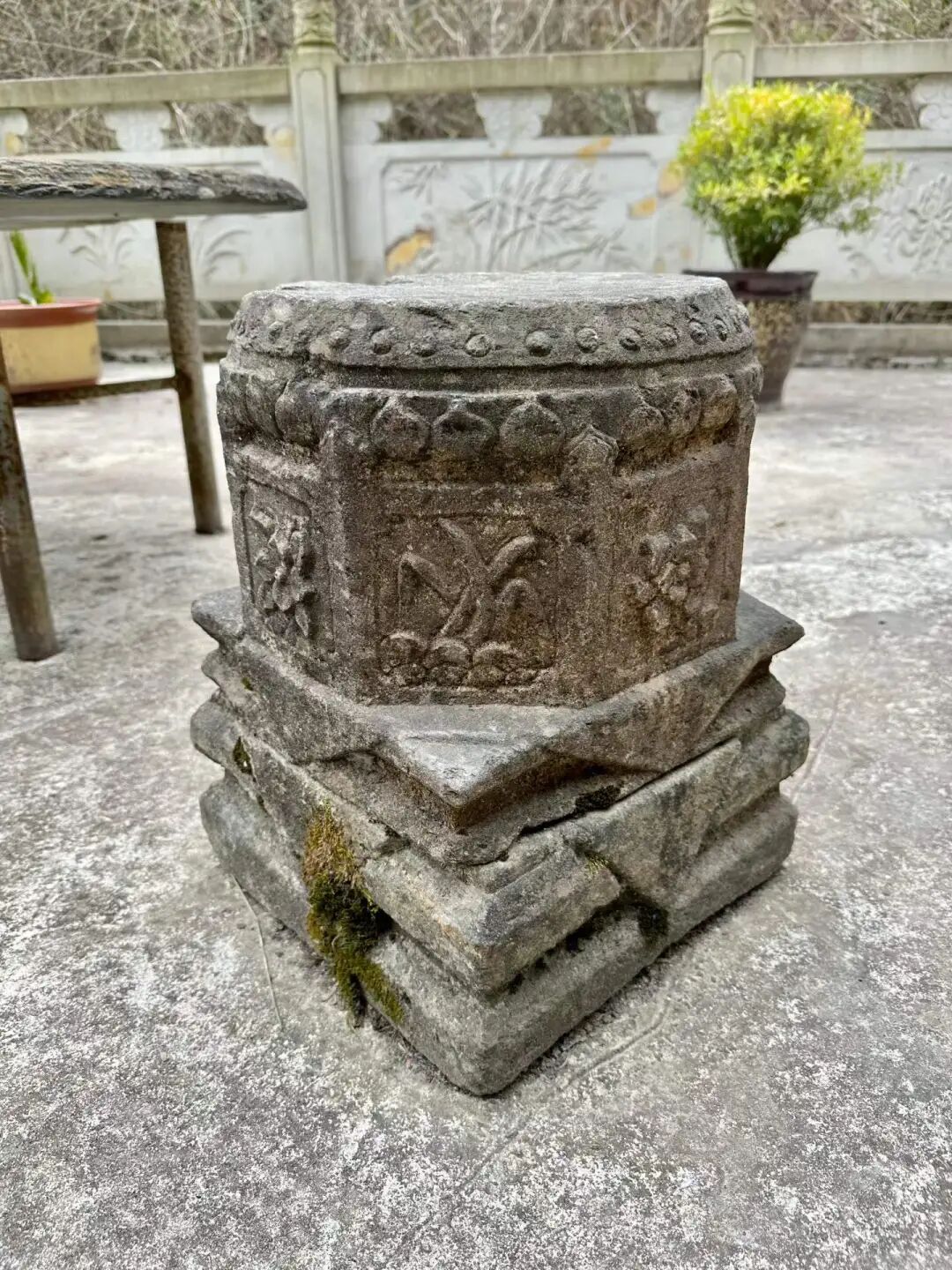
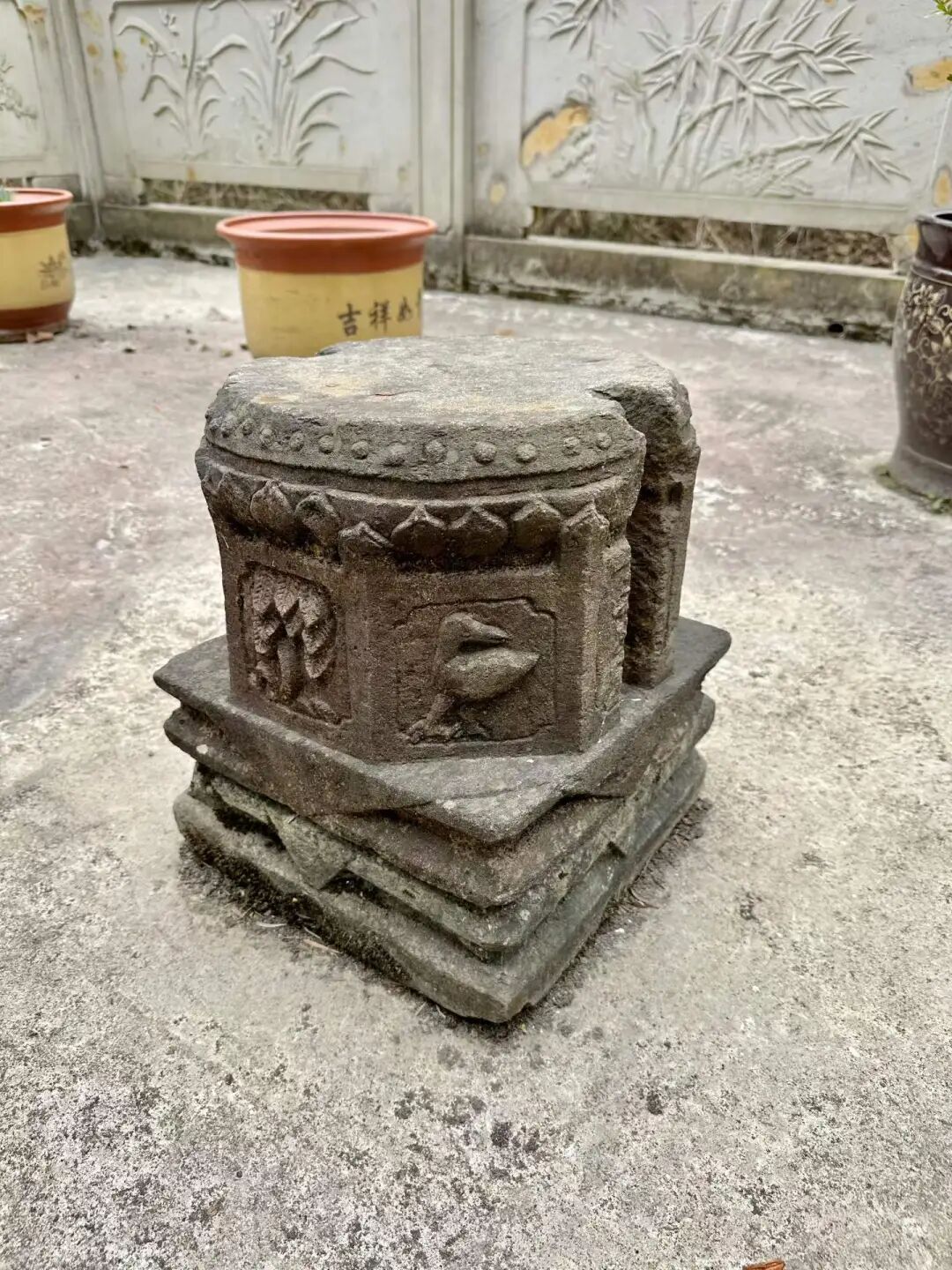
The prayer hall of the Guanghui Pavilion gongbei. The prayer hall (daotang) of a Qadiriyya grand gongbei usually contains both a gongbei and a prayer hall, so it is also called a gongbei mosque.
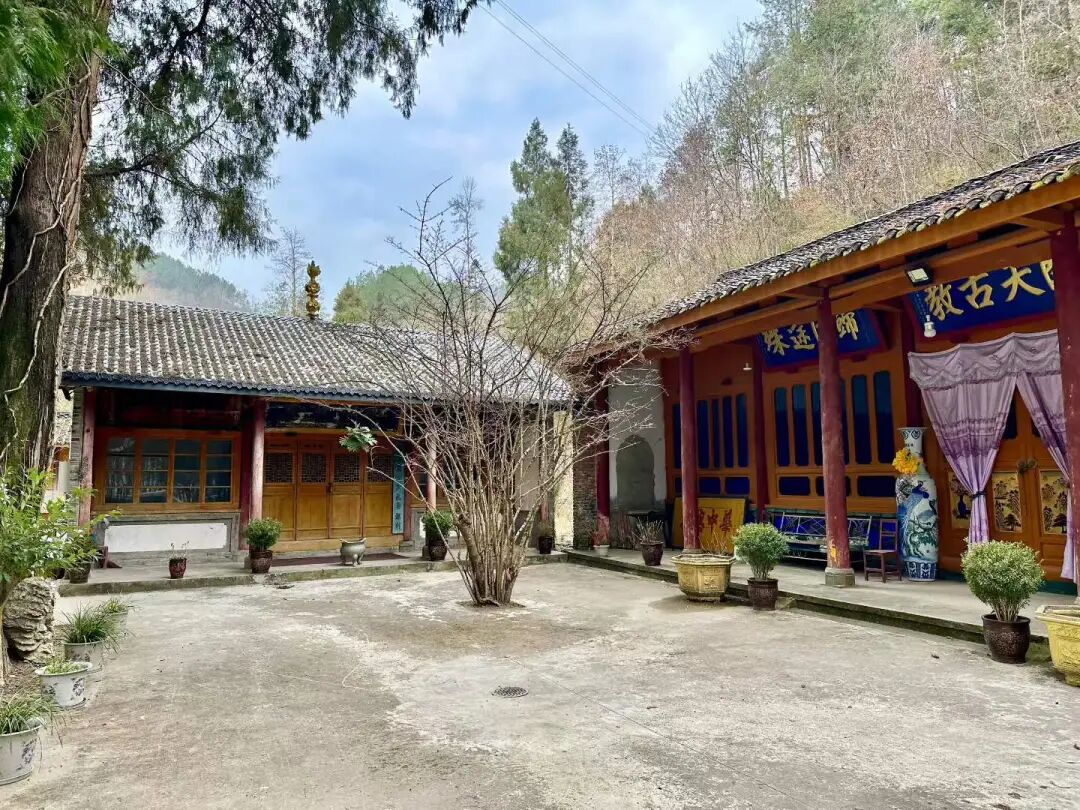
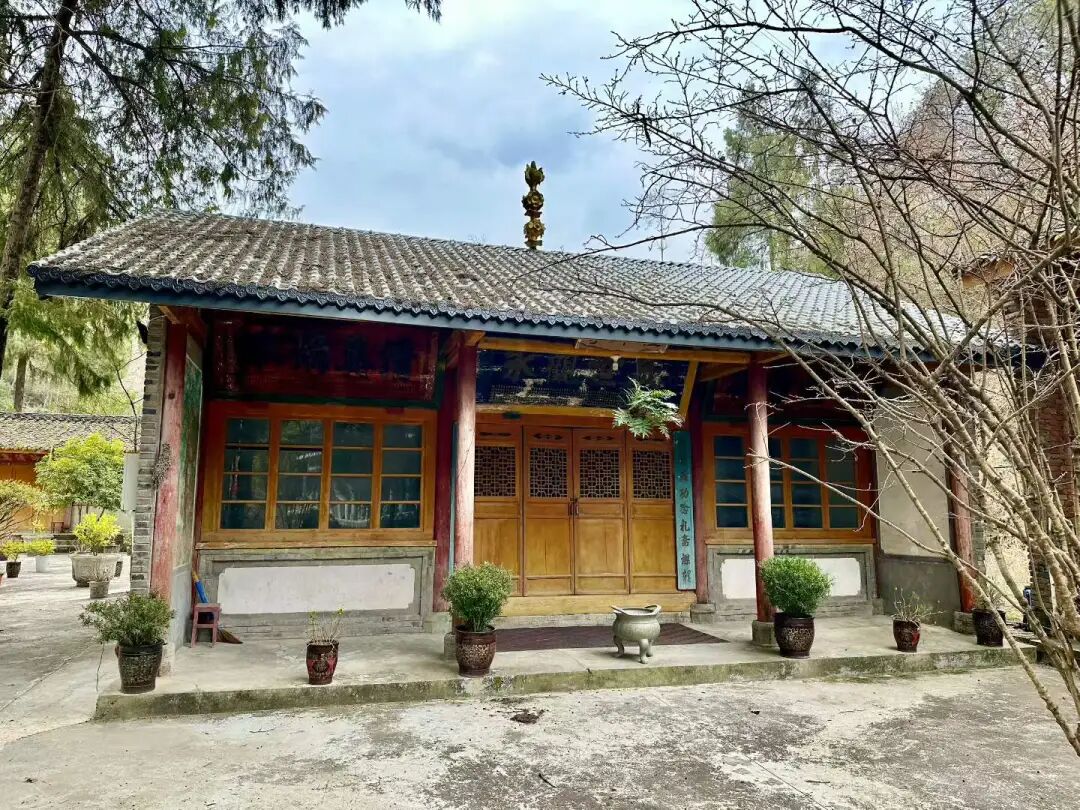
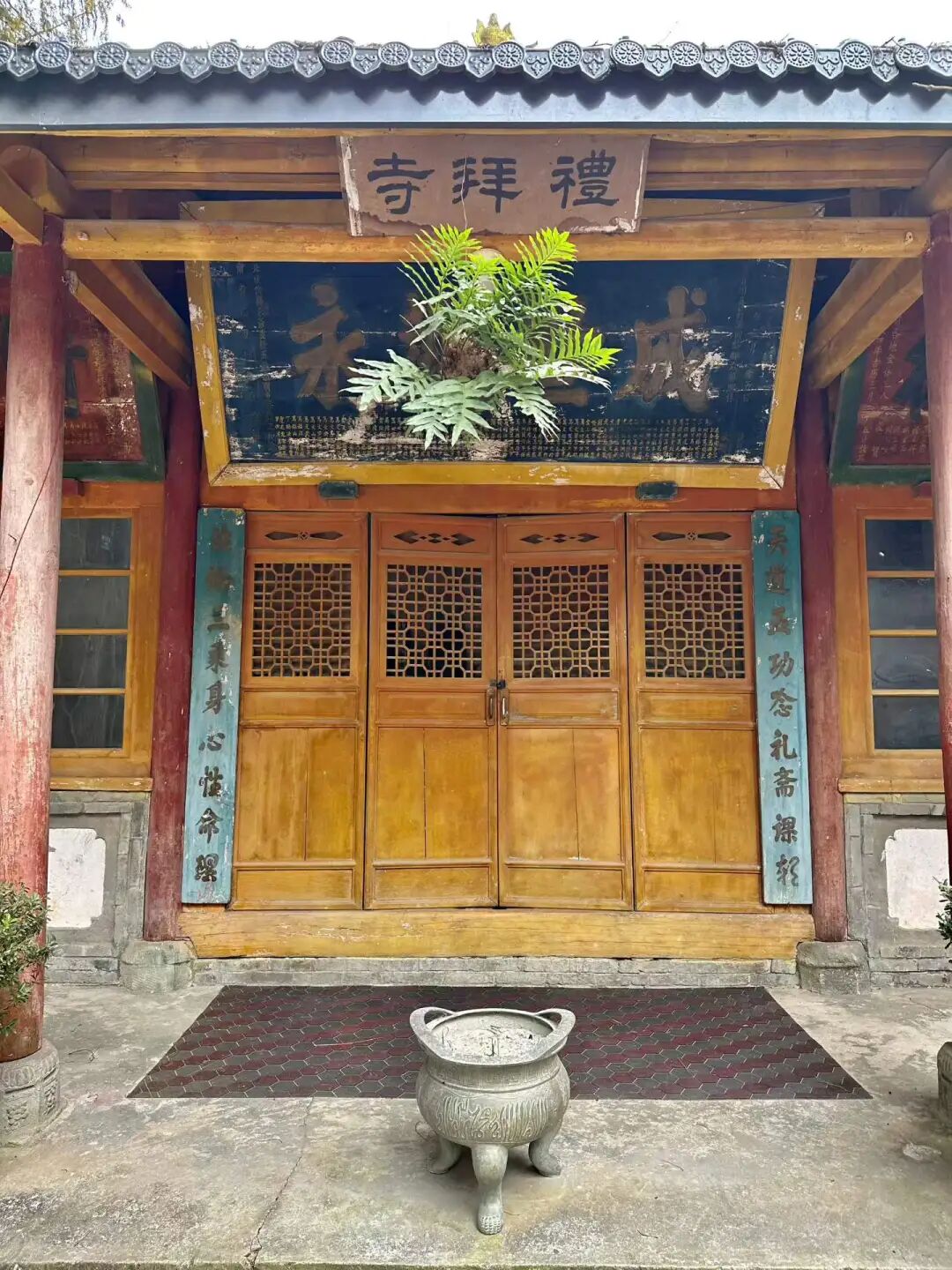
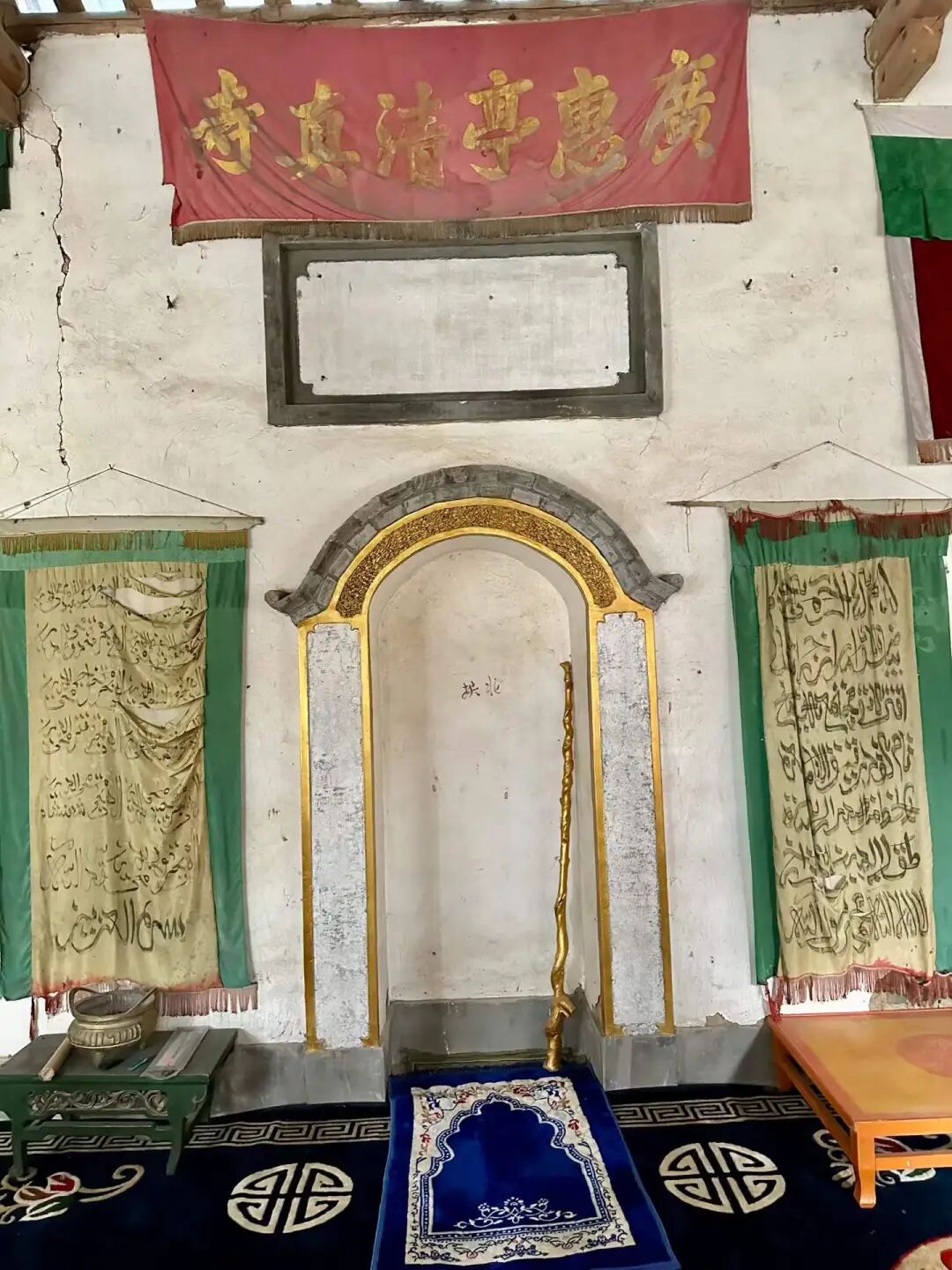
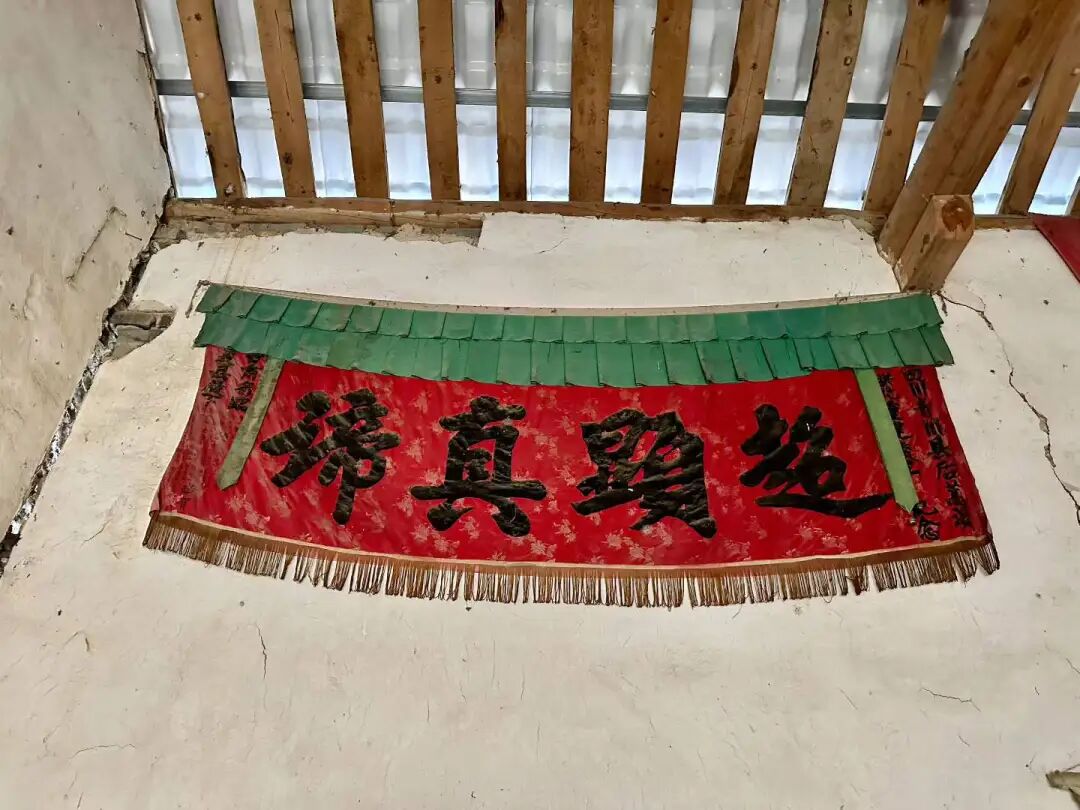
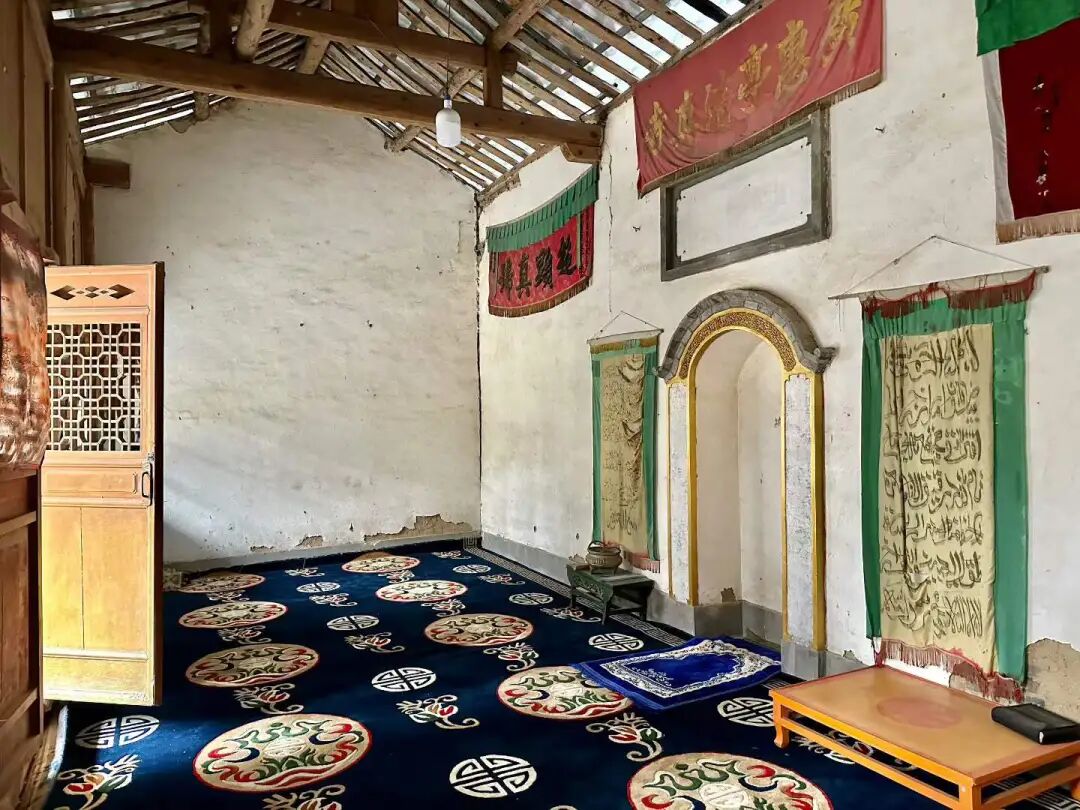
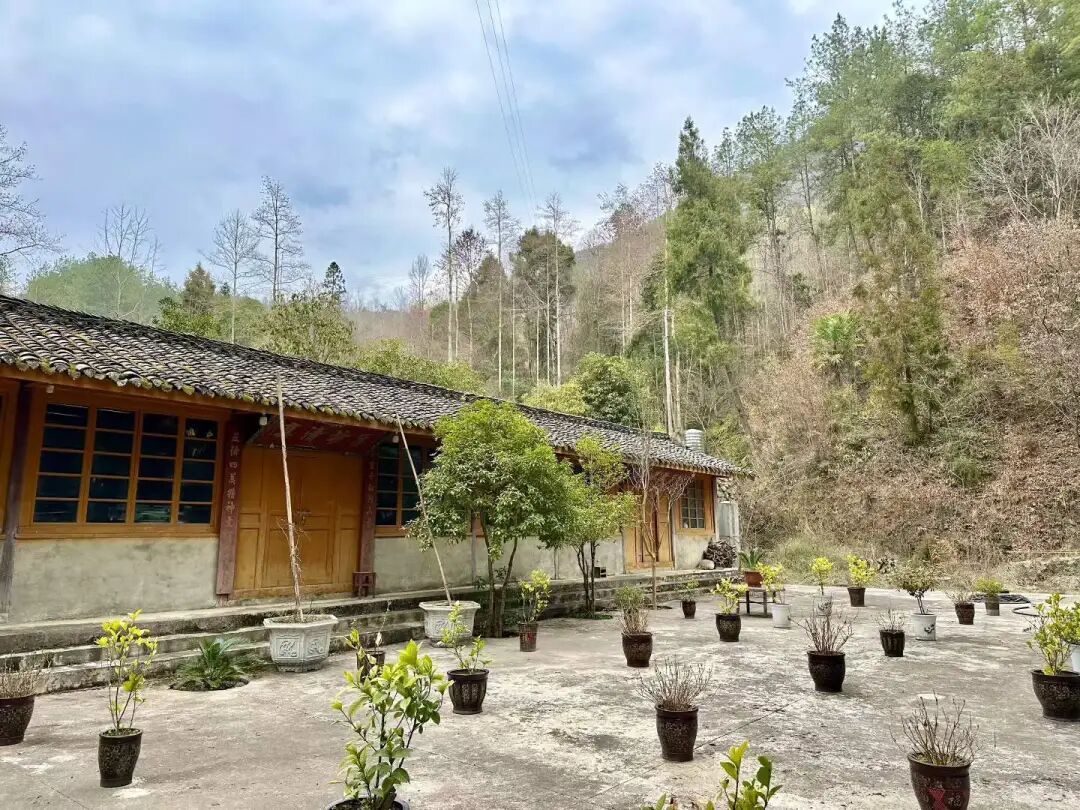
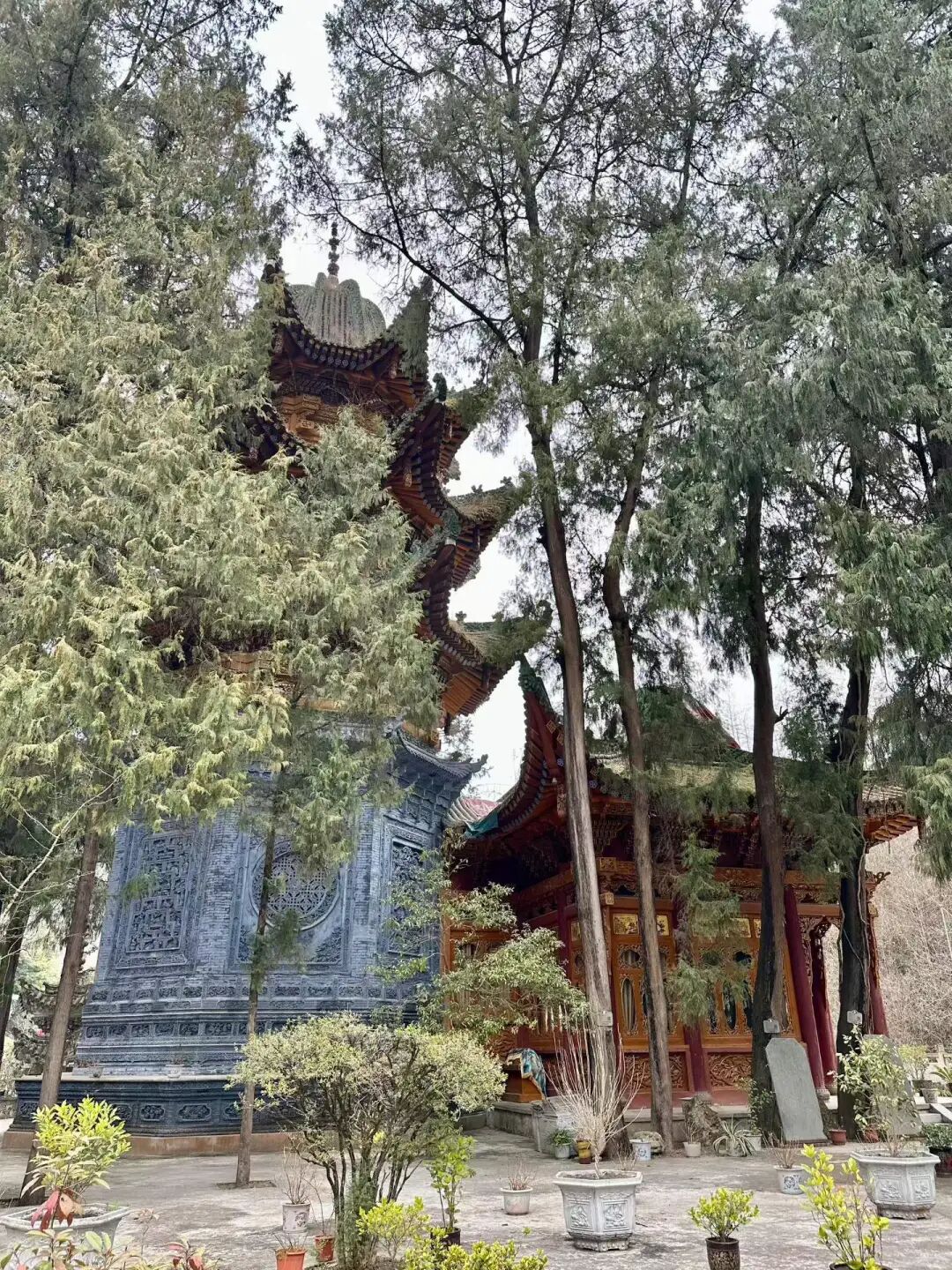
Haoxi Hui Ethnic Township is located at the border of Sichuan and Gansu. It is an important stop for people traveling from Qingchuan County to Wudu and Wenxian in Gansu to sell Sichuan tea. Most Hui Muslims in Haoxi moved here from the northwest. The Ma family is said to have come from Jingyang, Shaanxi, and the Zhe family is said to have come from Wudu and Wen County in Gansu. The Haoxi Mosque is said to have been built in the early Qing Dynasty. It was renovated many times and rebuilt into its current structure in 2017.
Haoxi Mosque is one of the most steeply situated mosques I have ever seen. The main prayer hall towers over the hillside, while the washroom and offices are at the bottom, connected by a set of steep stairs. However, a gentle asphalt road has been built now, which must be much more convenient than it was for those before us.
It is a pity that the main hall was locked when I visited, so I could not go inside.
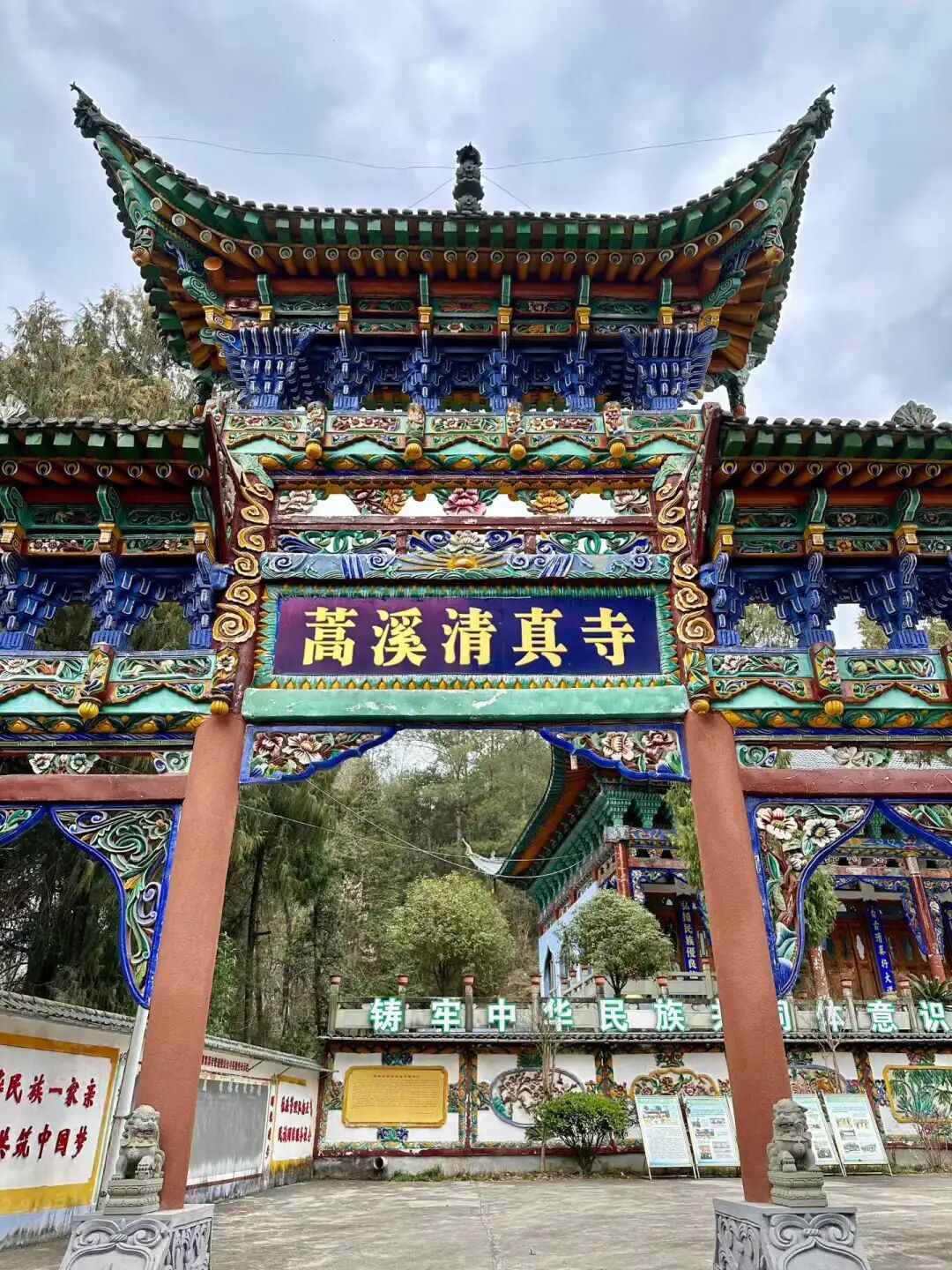
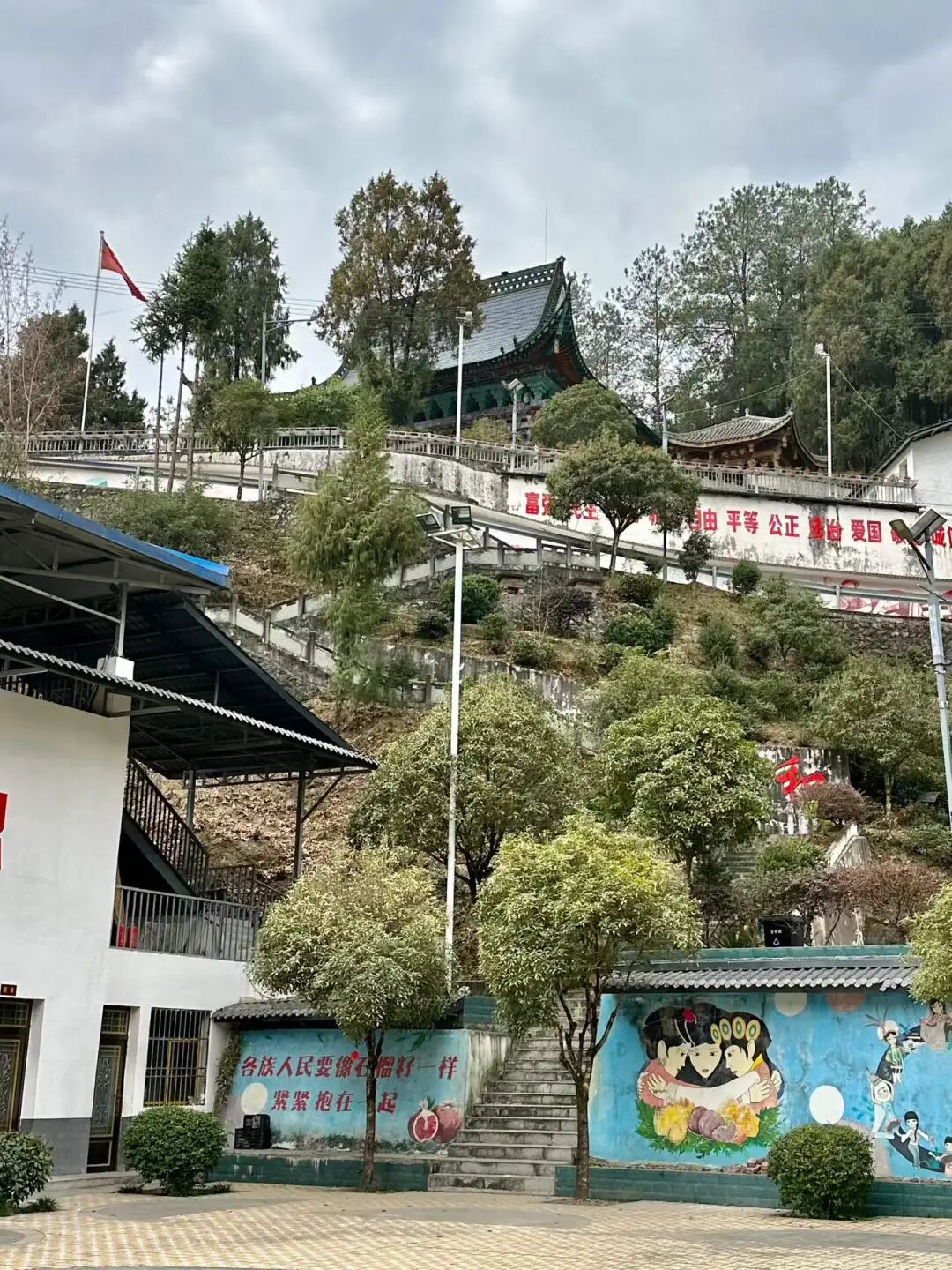
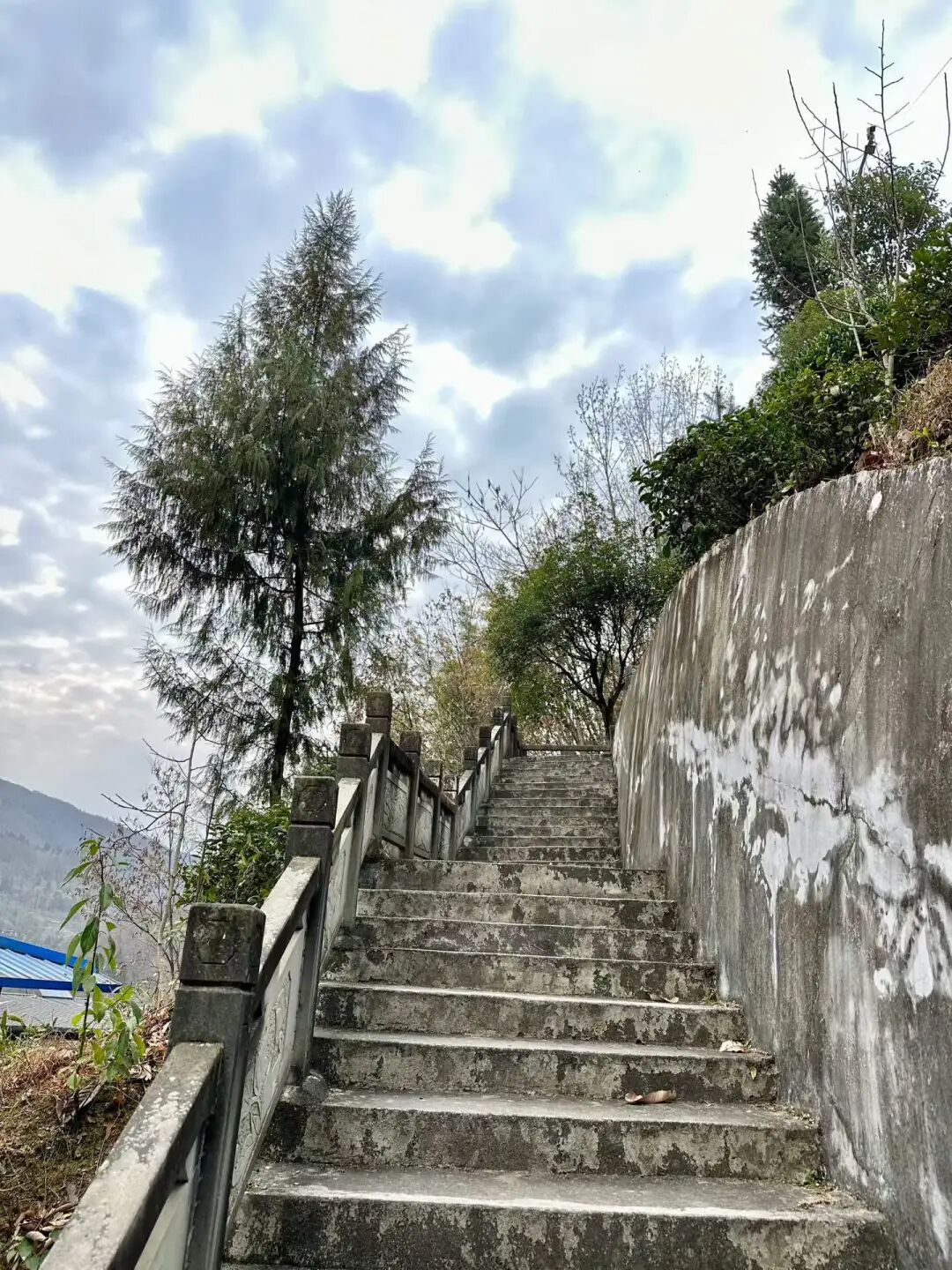
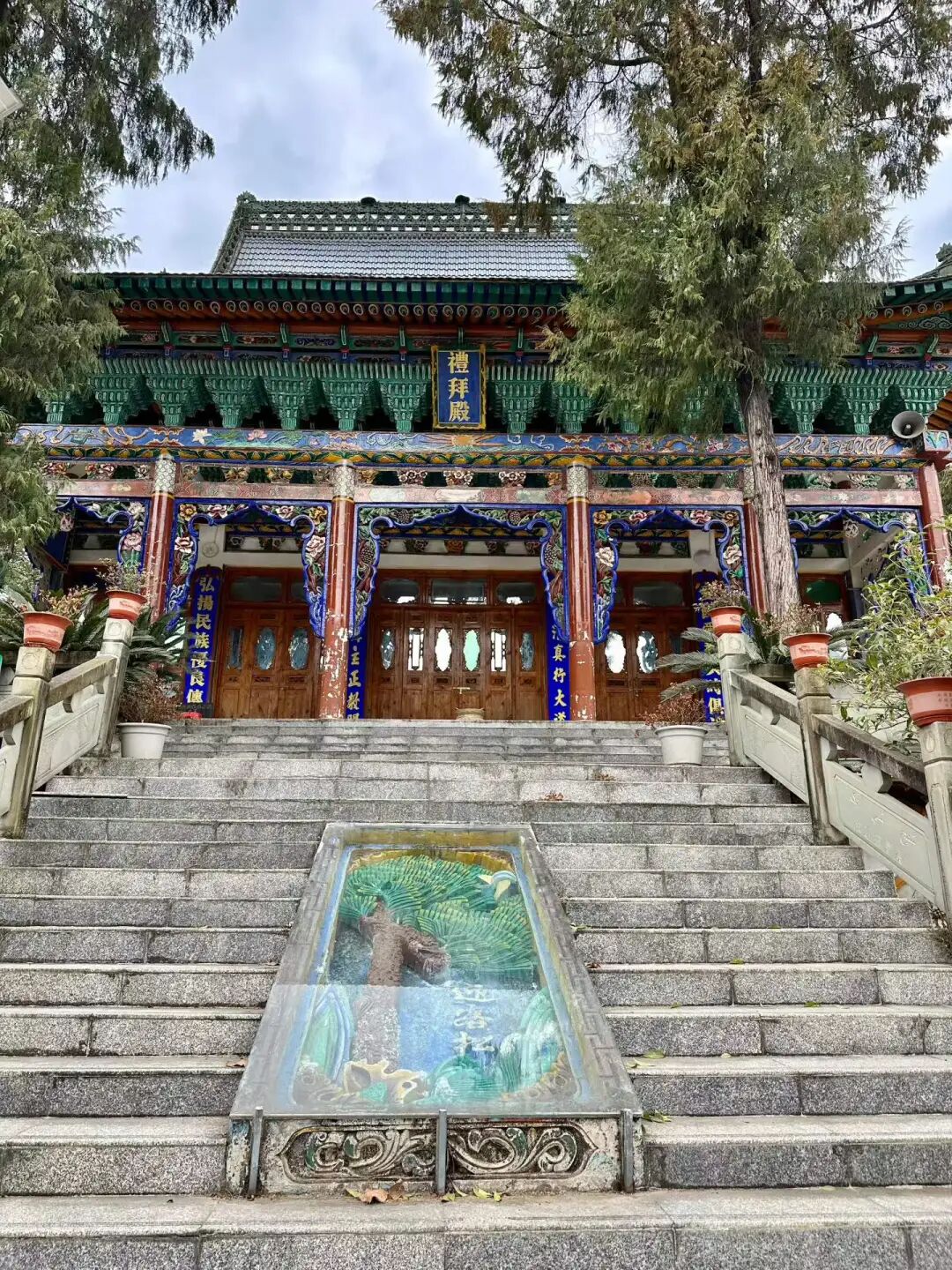
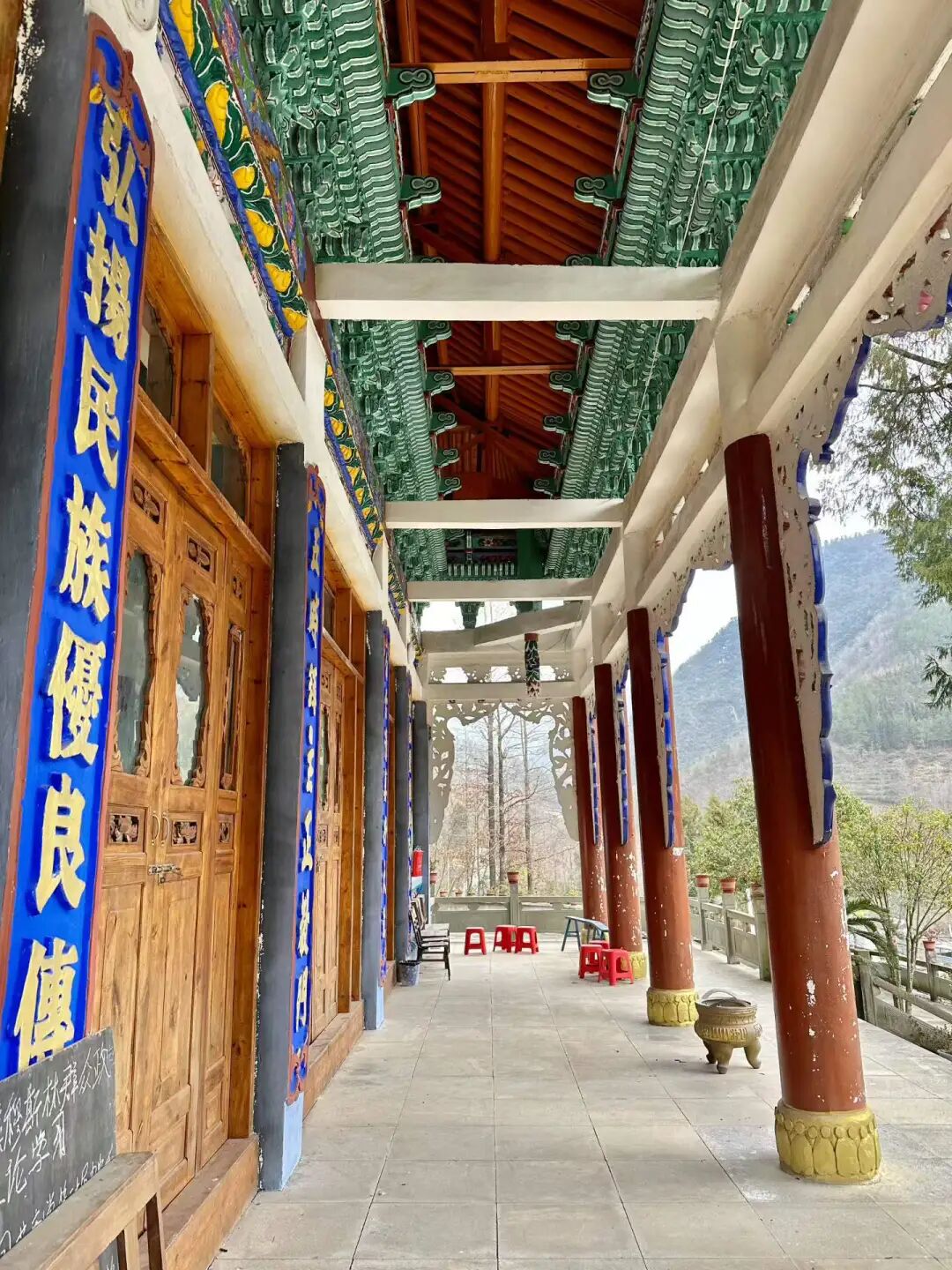
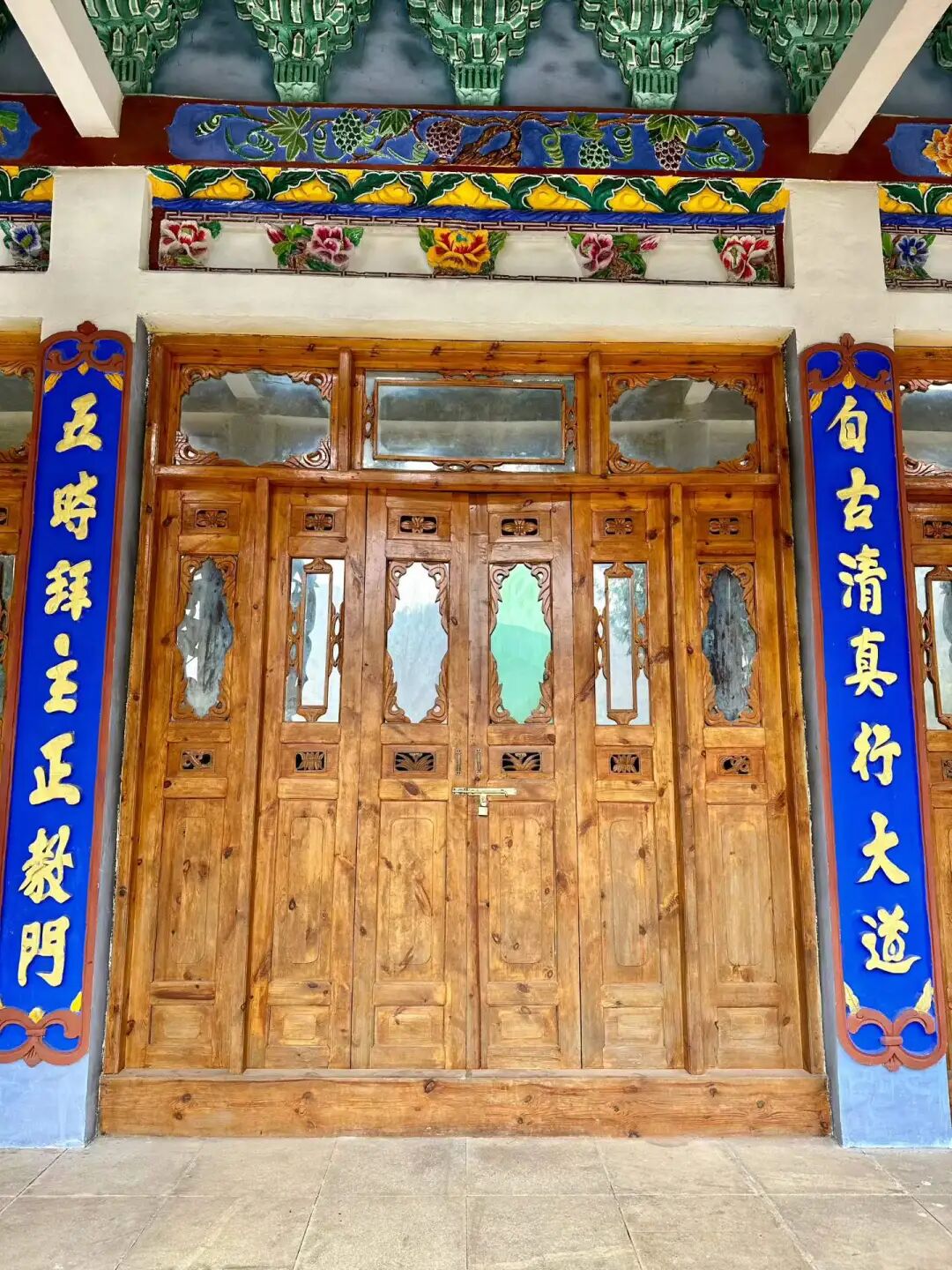
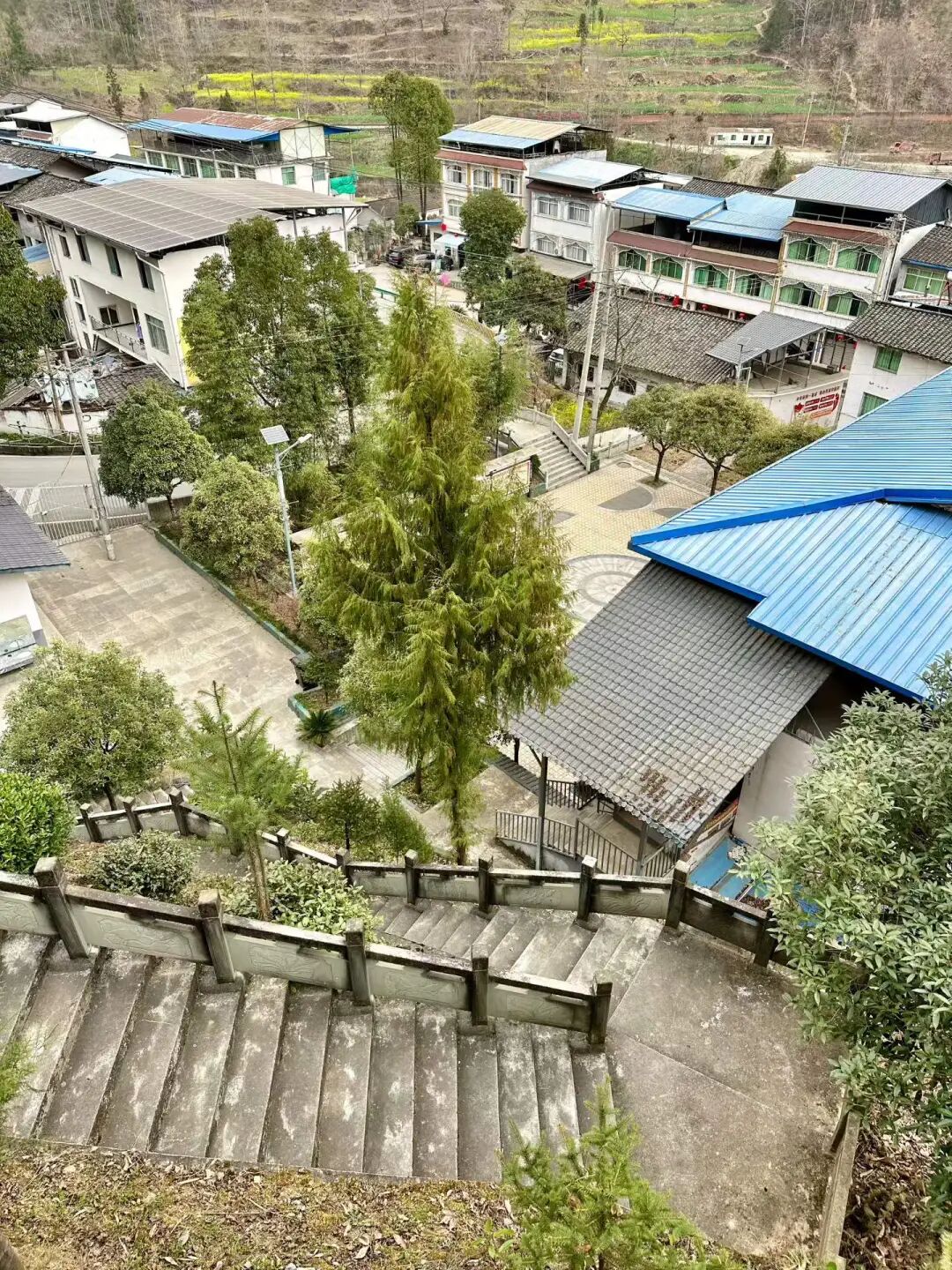
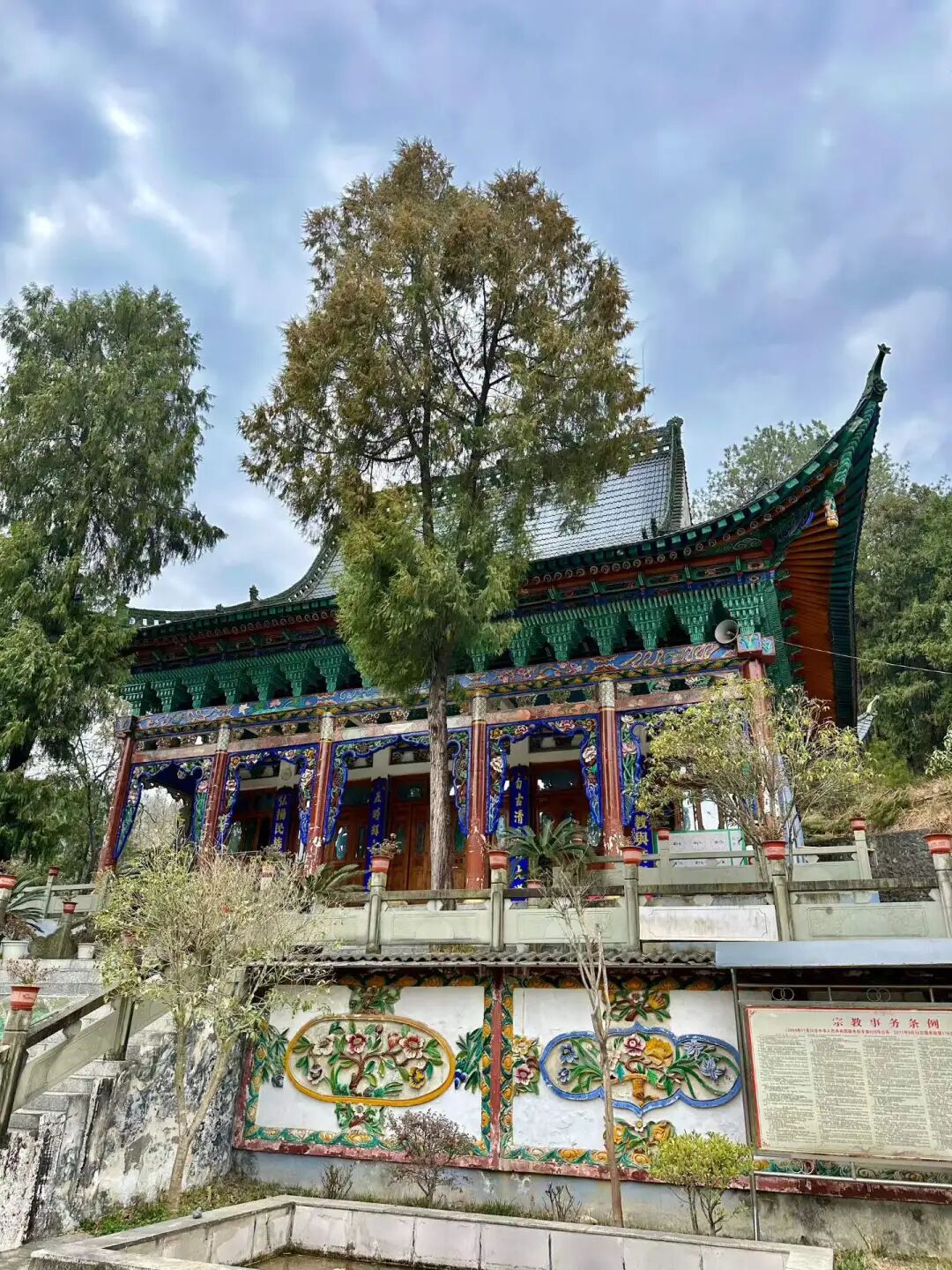
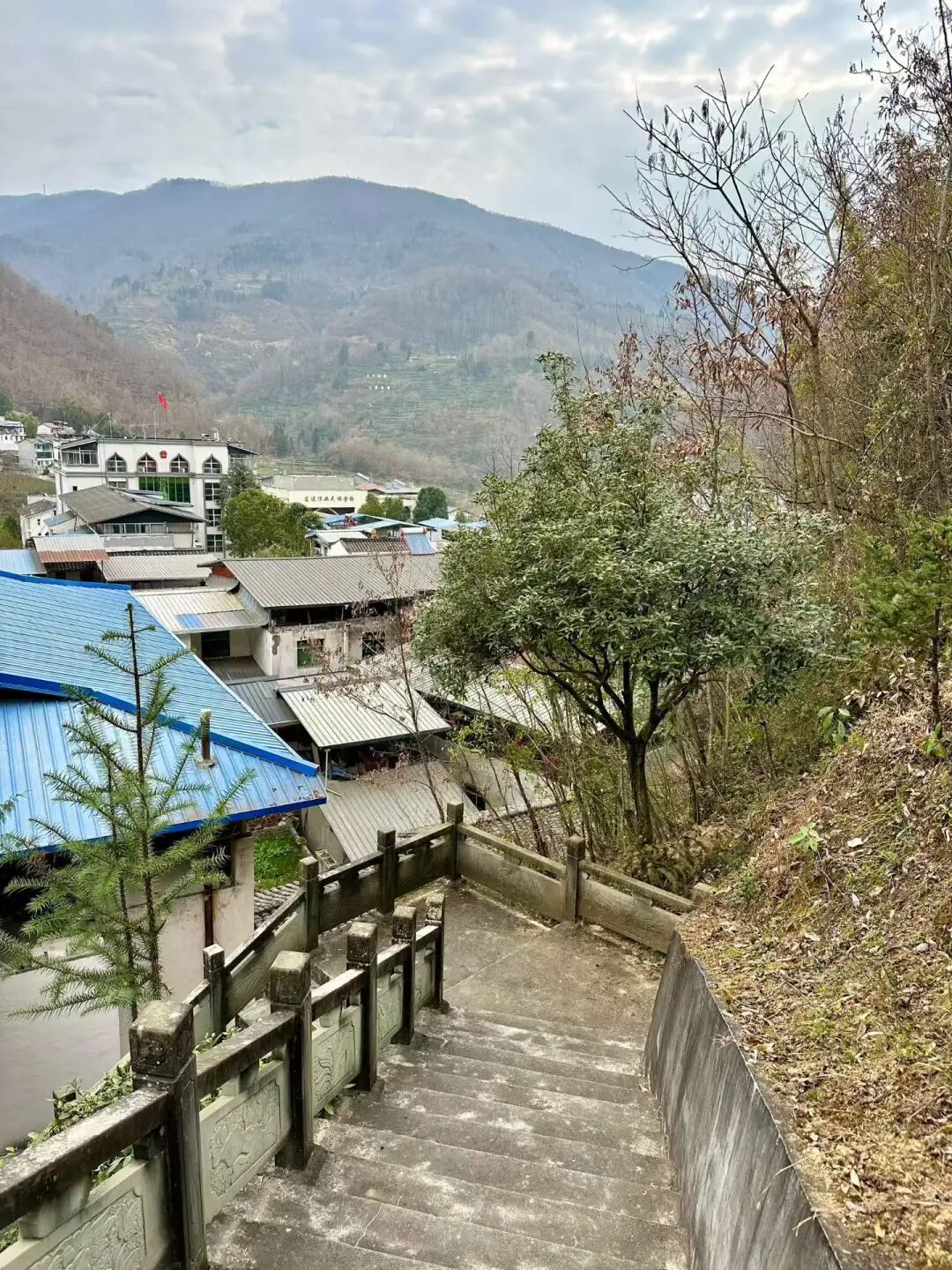
Looking at the street scene in Qingguang Village, Haoxi, there are Hui Muslim restaurants, snack shops, and beef shops. The local yellow beef (tuhuang niurou) here is very famous. Village life is leisurely and quiet, and every day moves very slowly.
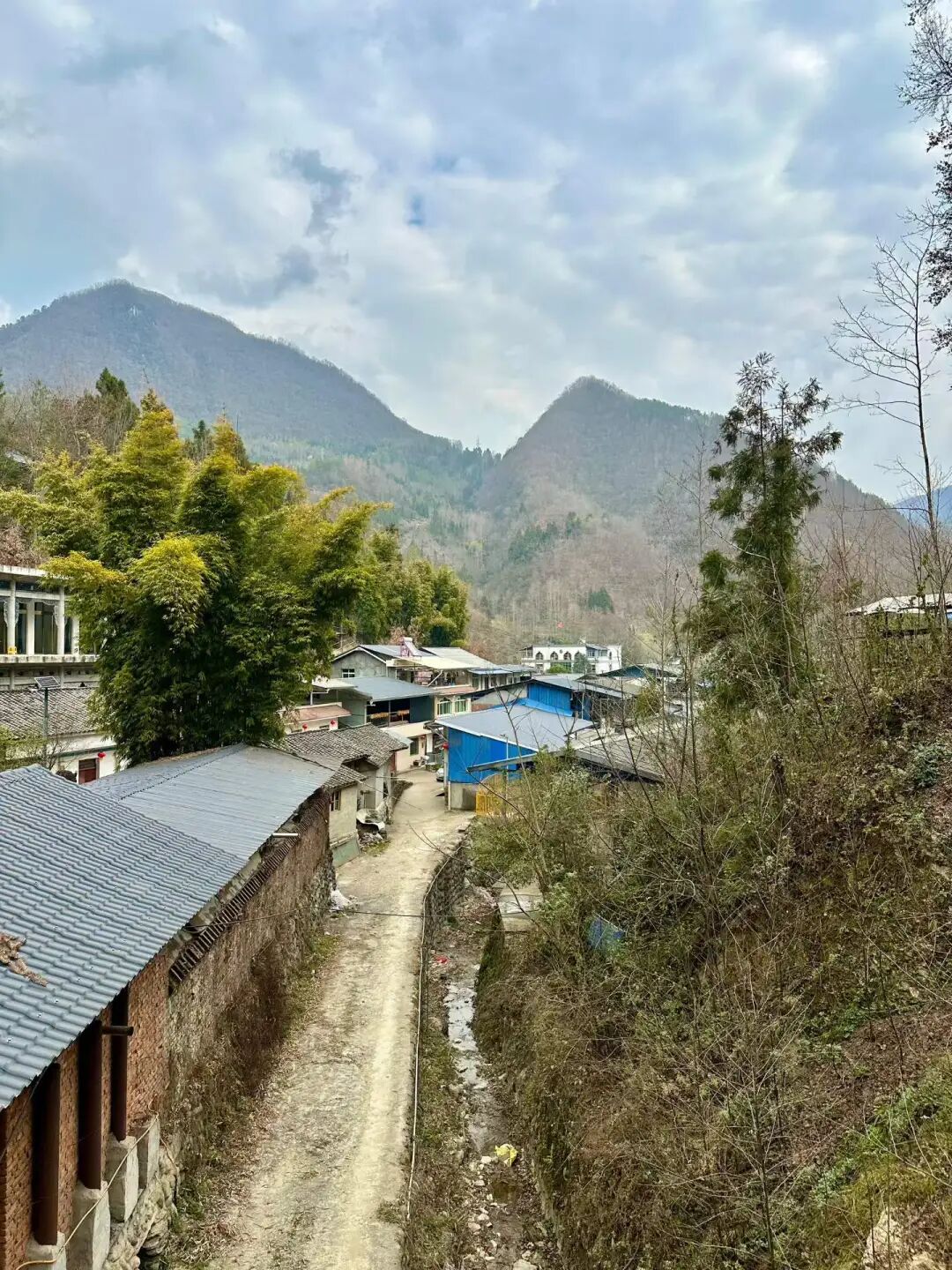
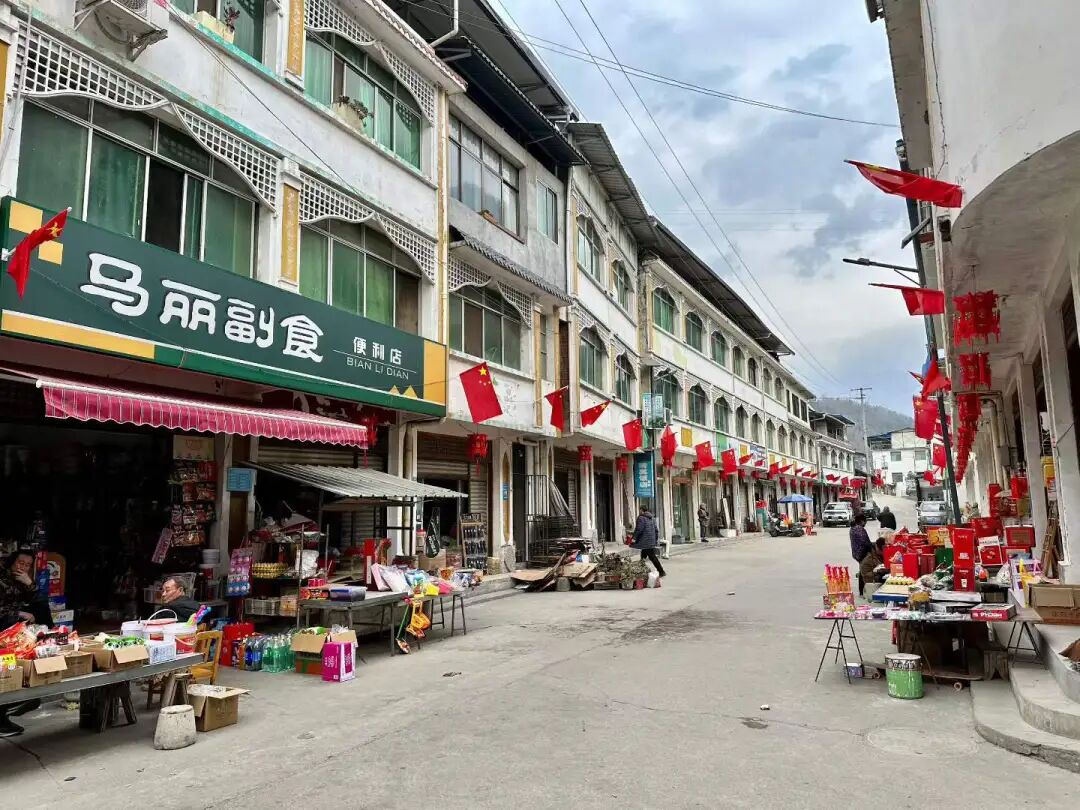
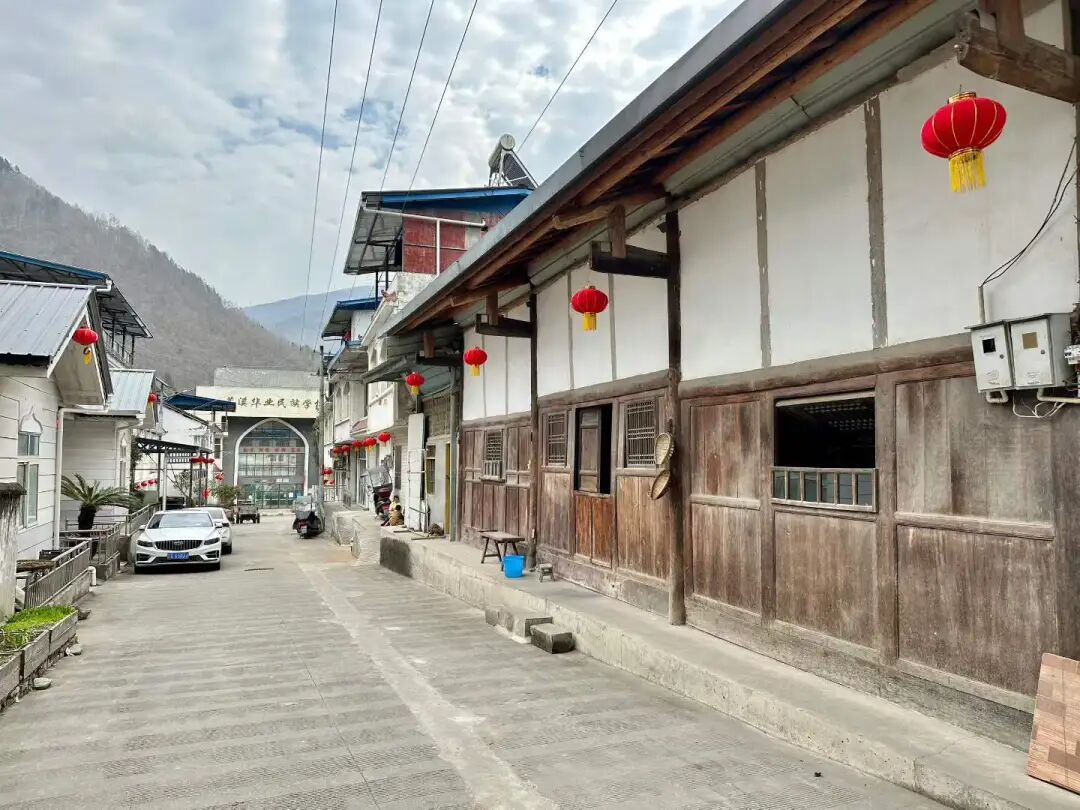
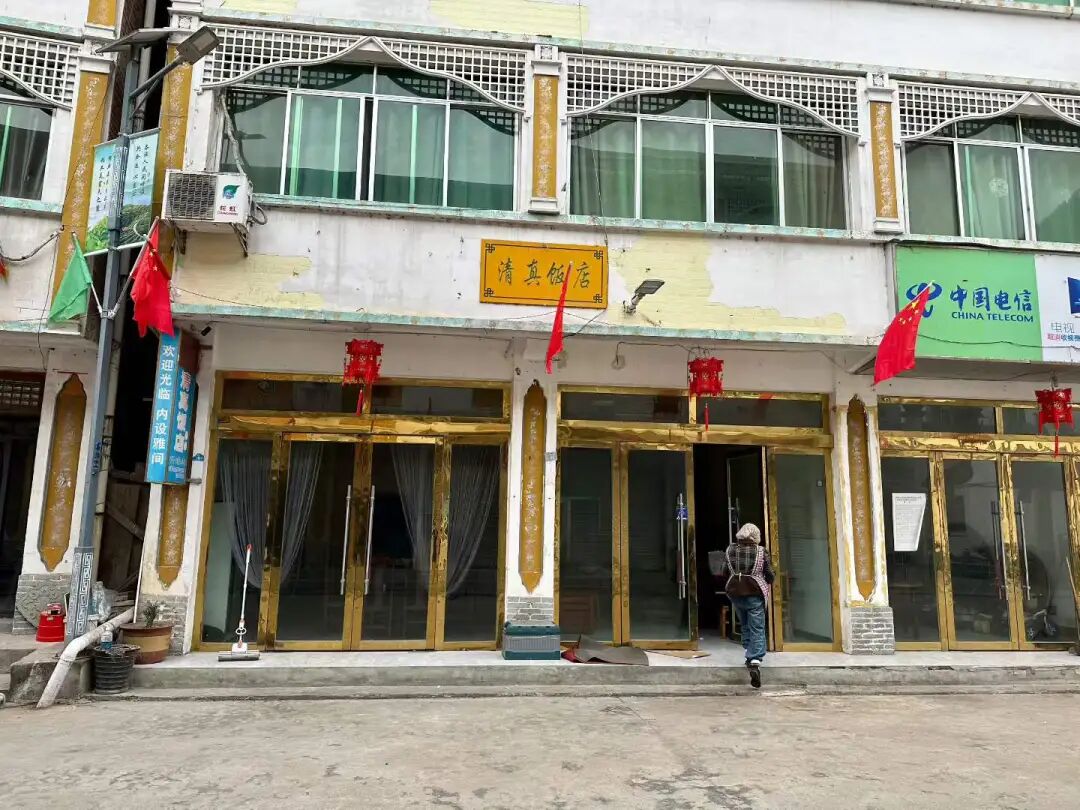
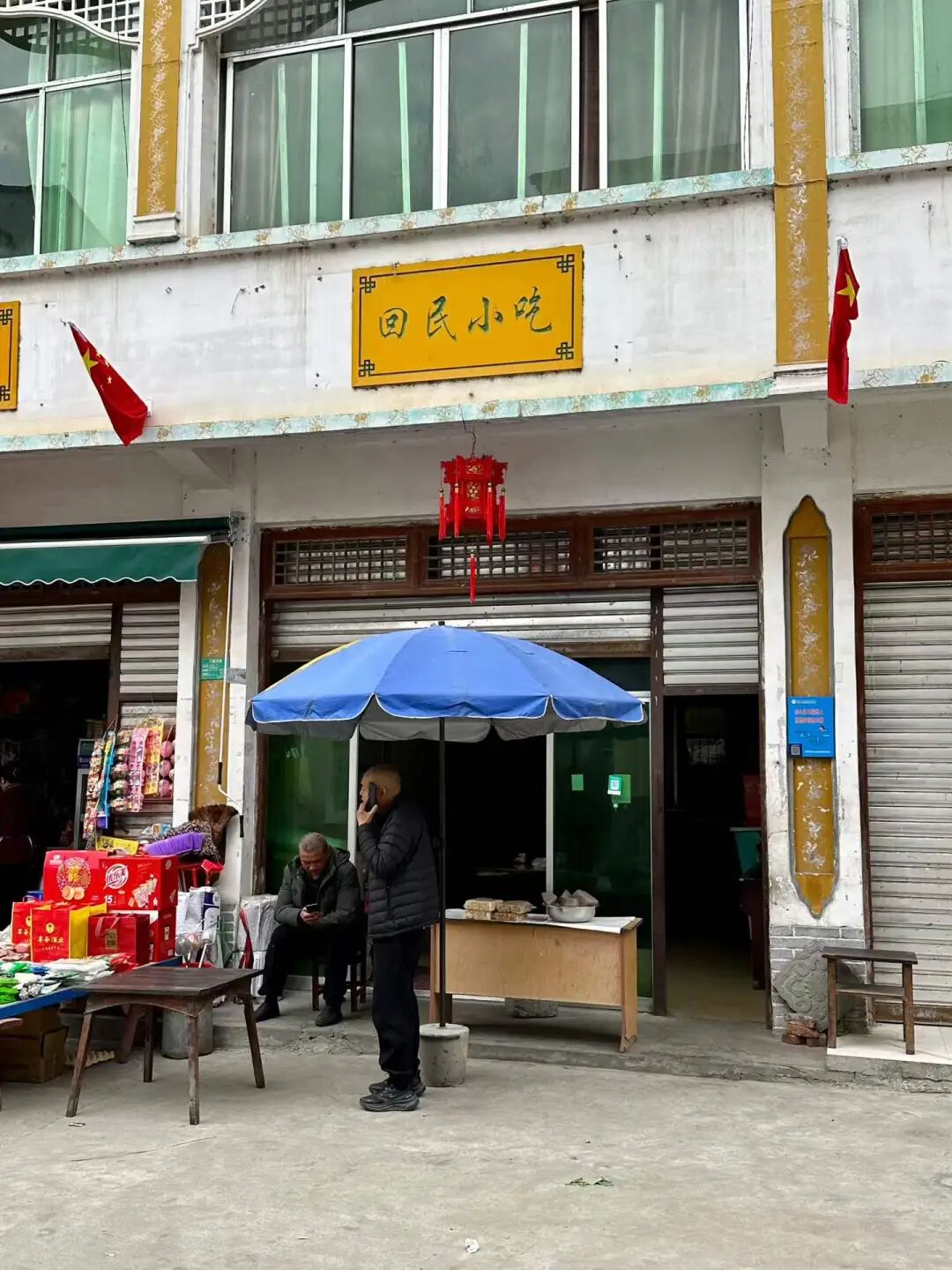
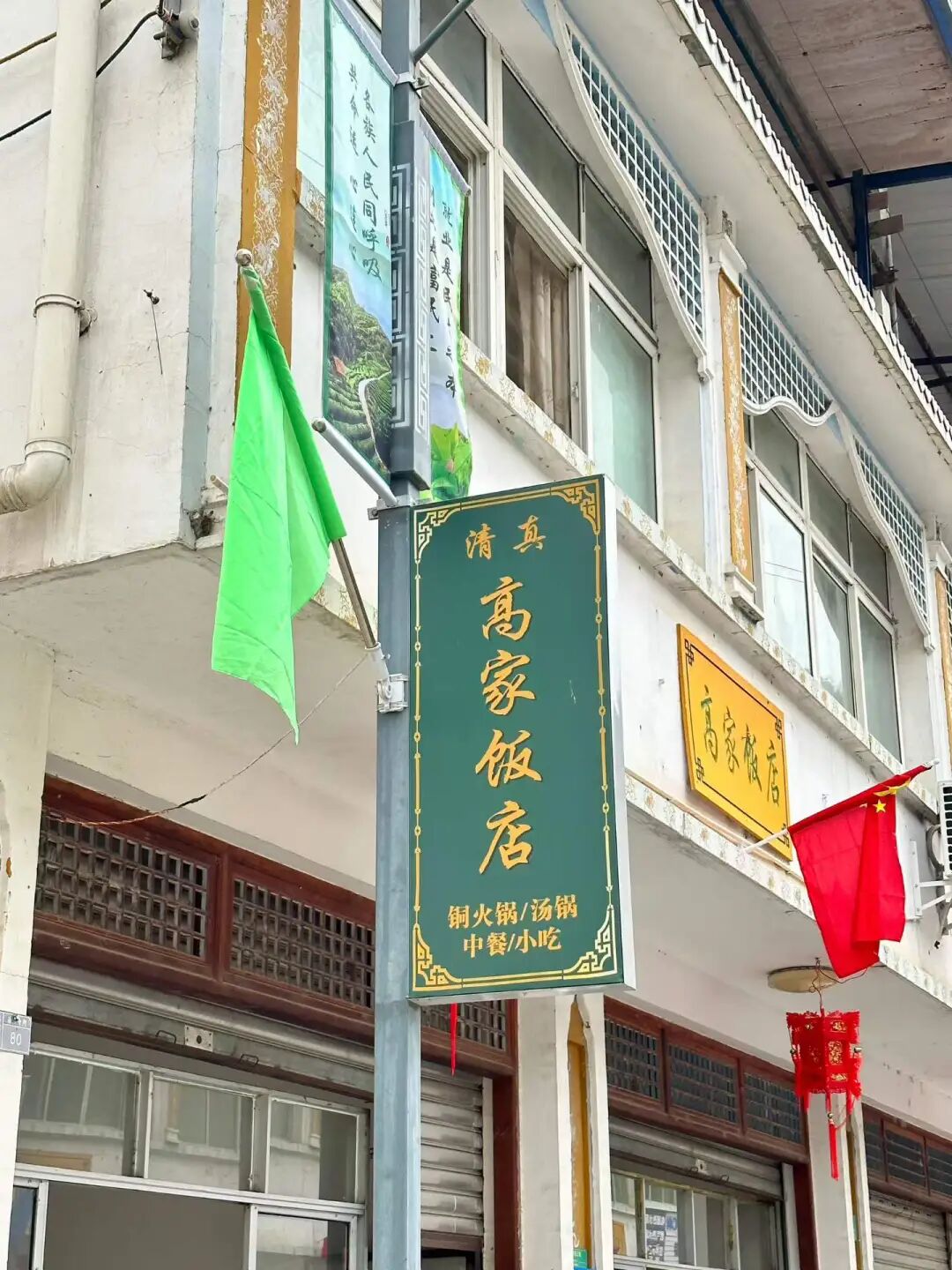
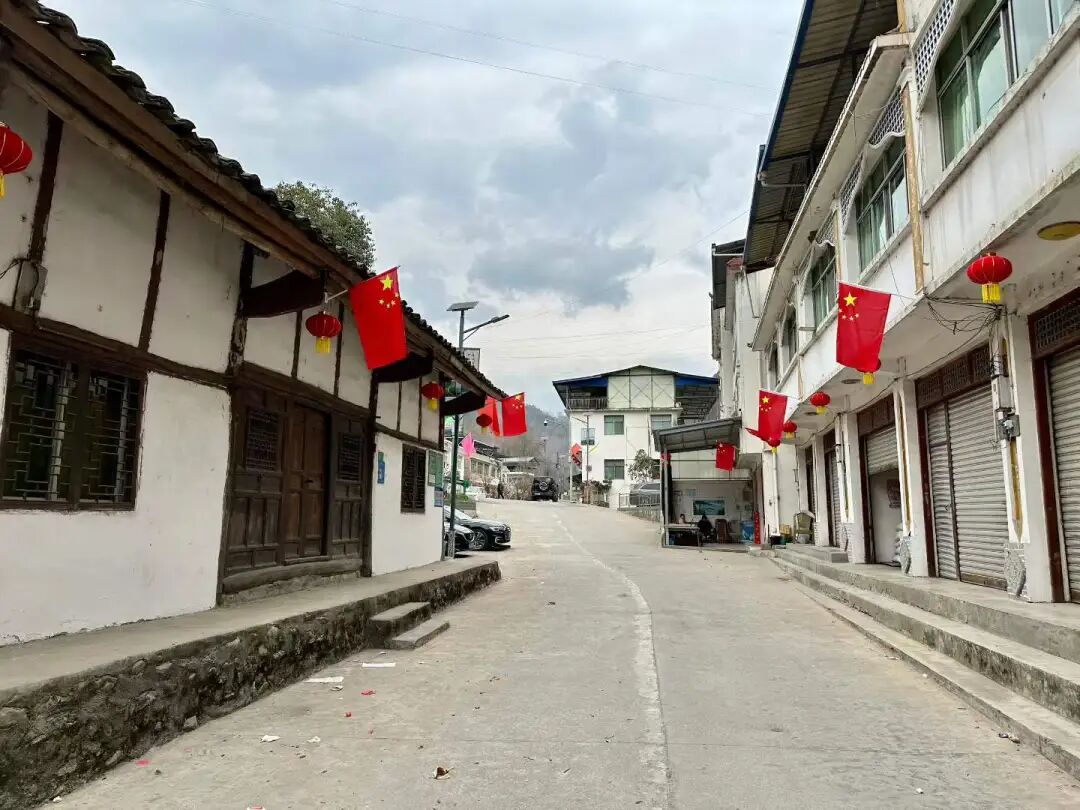
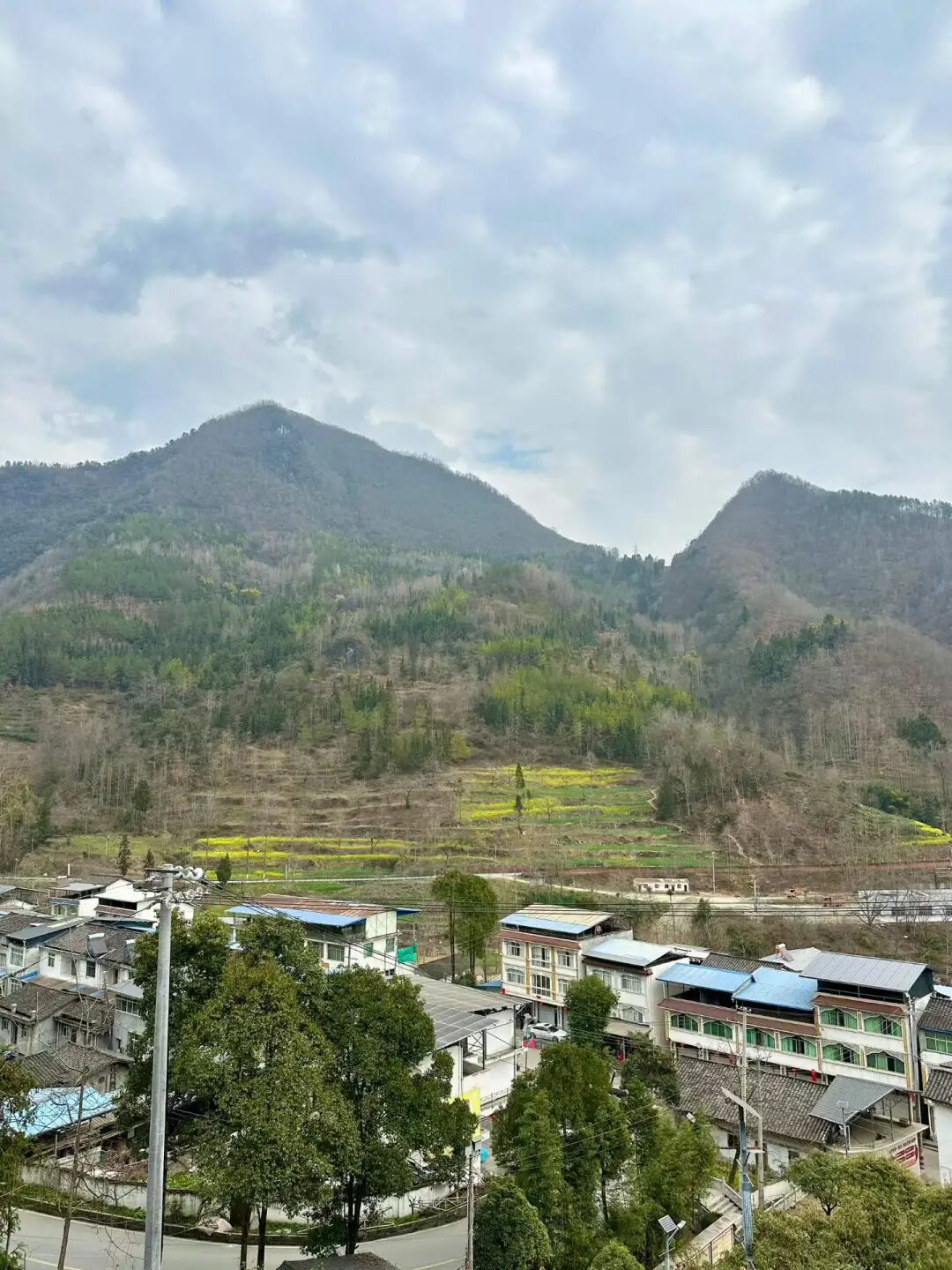
Next to Haoxi Hui Ethnic Township is the Giant Panda National Park. A sign by the road warns, 'Black bears are active in the forest area, please pay attention to your safety.' You can tell the ecology here is excellent and suitable for animals to live.
Muslim Travel Guide China 2026: Xunhua and Hualong Salar Mosques, Qinghai Halal Food and Heritage
Articles • yusuf908 posted the article • 0 comments • 239 views • 2026-05-22 10:33
Summary: Muslim Travel Guide China 2026: Xunhua and Hualong Salar Mosques, Qinghai Halal Food and Heritage is presented here as a clear English Muslim travel account, starting with this scene: By my own count, I have visited 454 mosques at home and abroad. I have visited the most in Beijing, where I have been to 67, because Beijing is my home. The place where I have visited the second most mosques is Qinghai, where I have been to 32. This is my. It keeps the original names, numbers, mosque details, food notes, photographs, and cultural context while focusing on Qinghai Mosques, Salar Muslims, Halal Travel.
By my own count, I have visited 454 mosques at home and abroad. I have visited the most in Beijing, where I have been to 67, because Beijing is my home. The place where I have visited the second most mosques is Qinghai, where I have been to 32. This is my wife's home, as I married a Salar woman from Xunhua.
Driving from Xining to Xunhua County takes about two hours on the highway. The Xunhua Salar Autonomous County is part of Haidong City. Most of Qinghai's important mosques are concentrated in Xunhua and Hualong counties, which are two neighboring ethnic autonomous counties.
This time I visited the Kewa Mosque, Zhangga Mosque, Tashapo Mosque, Qingshuihedong Mosque, Mengda Mosque, Zanbuhu Mosque, and Jiezi gongbei in Xunhua County, all of which are Major Historical and Cultural Sites Protected at the National Level. I previously visited the Hongshuiquan Mosque in Ping'an, which is also a national-level site. The Suzhi Mosque is a provincial-level protected site. In Hualong, the Ahetan Mosque is a national-level site, and the Yisha'er Mosque is a provincial-level protected site. I also visited the Yimamu Village Mosque, Guoshitan Mosque, and a few other mosques with unique traditional architectural styles. These old buildings are not too far apart, and if you have a car, you can visit them all in one or two days.
1. Qingshuihedong Grand Mosque
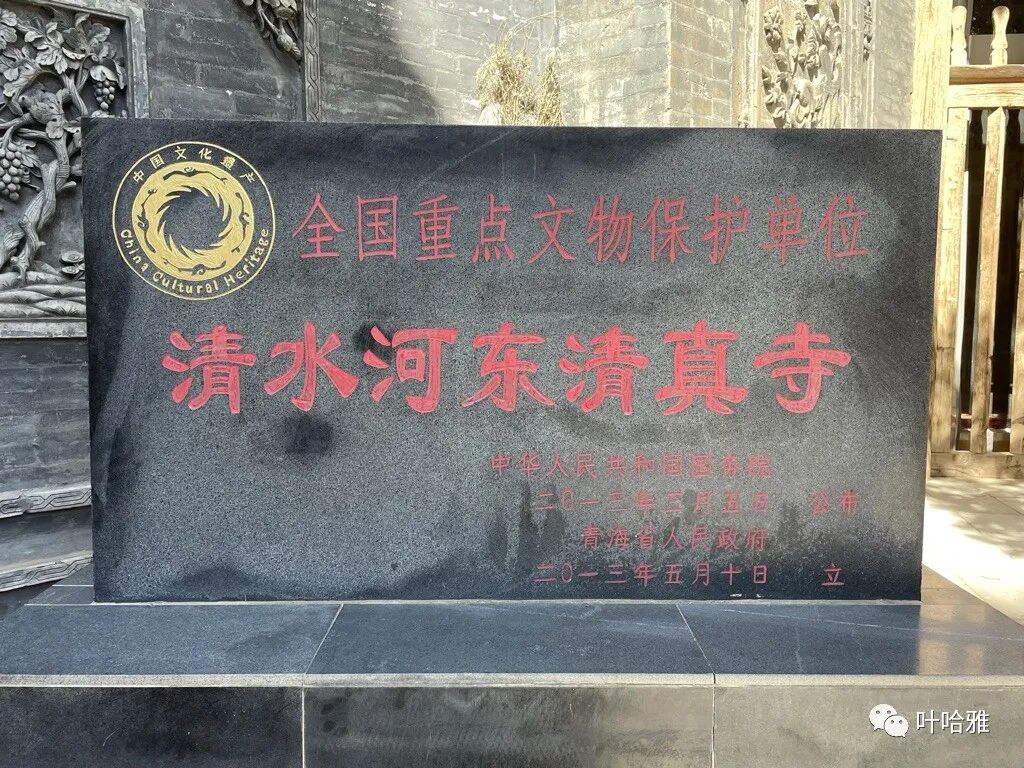
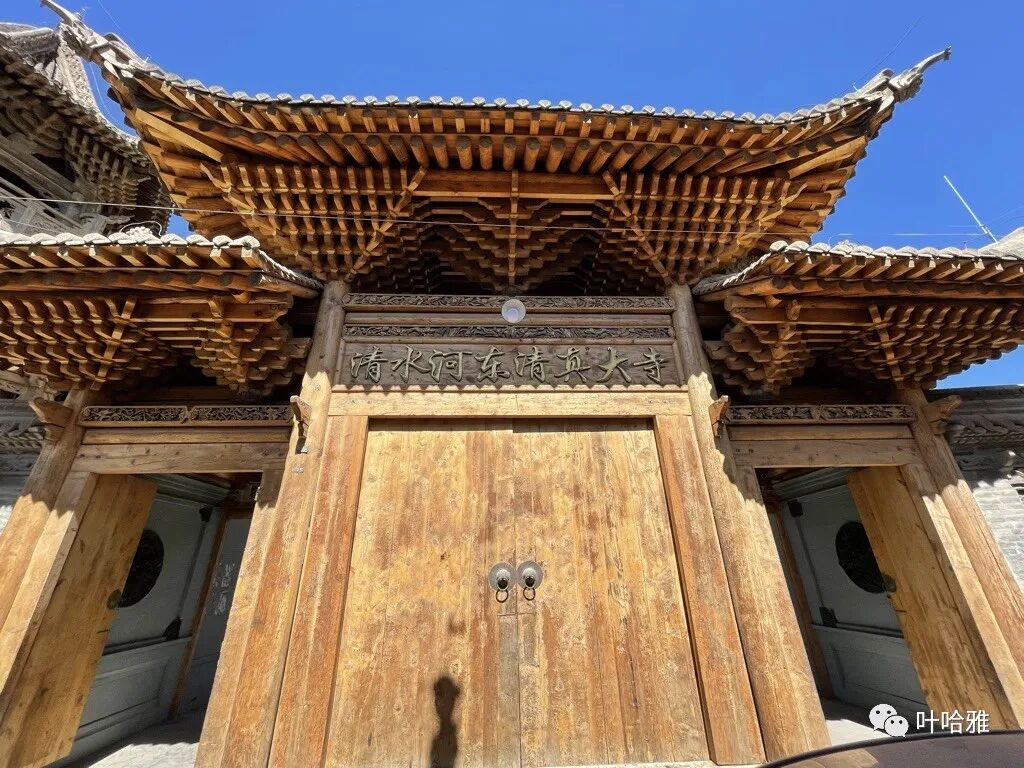
The Qingshuihedong Mosque is located in Qingshui Township, Xunhua Salar Autonomous County. It was first built in 1425 during the Ming Dynasty. It follows a traditional Chinese architectural layout with a central axis. However, the minaret is not on the axis; it sits about 9 meters south of the front of the main prayer hall. Along the central axis, there is a spirit wall (yingbi), a gate, and the main hall. To the north of the main hall is a side building. Unlike other mosques, the Qingshui Mosque does not have a south side building.
In 1996, a brick-carved screen wall was added to the Qingshuihedong Mosque. It features a hip roof (wudian ding) with a vase ornament on the main ridge and a pedestal base.
The gate tower has a hip roof with five-step bracket sets (dougong) under the eaves. The 17-meter-tall minaret has a brick base and a wooden attic-style upper structure with a double-eaved, hexagonal helmet-shaped roof.
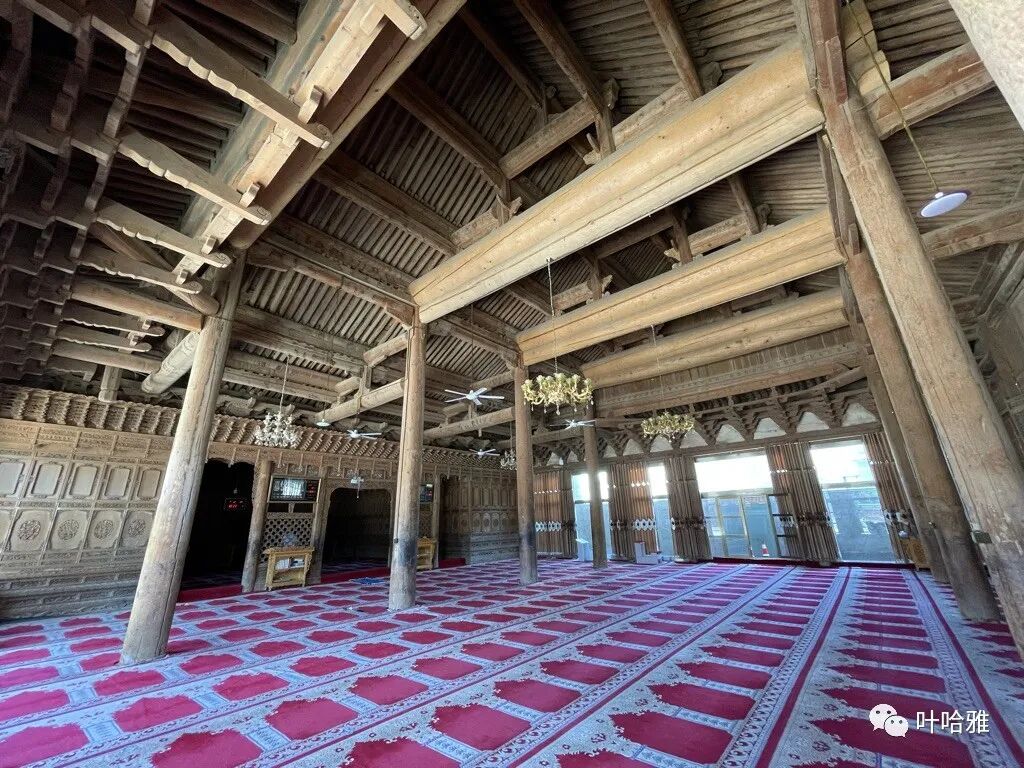
The prayer hall has a gabled and hipped roof (xieshan ding), five bays wide, with projecting bracket sets and carved wooden beams and brackets. There are wooden railings between the eave pillars and brick-carved walls on both sides. On the north side, there is an arched door leading to the side courtyard.
The corridor walls are made of polished bricks with tight joints and feature brick carvings. The main hall is five bays wide and five bays deep, supported by 42 pillars. The rear prayer niche (yao dian) has wooden partitions, intricate openwork carvings, wooden bracket sets, and hanging flower pillars, all with detailed patterns and fine craftsmanship.
Near the Qingshuihedong Mosque is the Qingshuihedong South Mosque. Inside the South Mosque, I saw a women's prayer hall, which is quite rare in the Northwest.
When visiting mosques in Qinghai, I rarely saw anyone guarding the doors. Even at national-level protected sites, you can just walk in. I have never been stopped or questioned, which is very similar to my experiences abroad.
2. Mengda Mosque
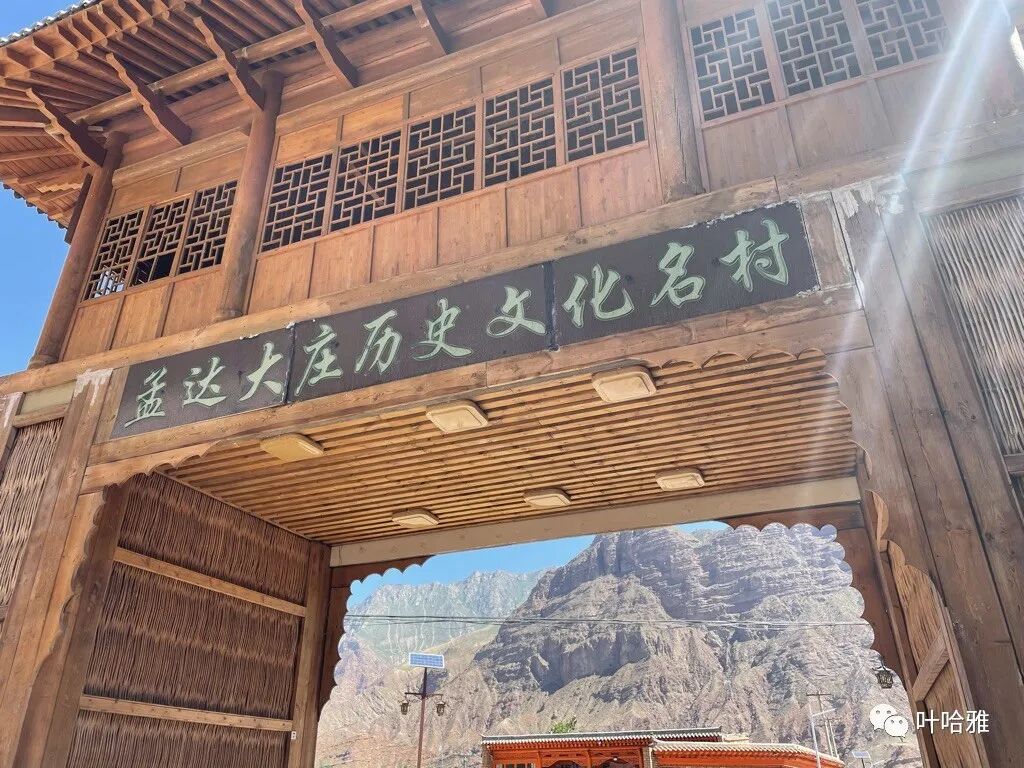
Xunhua has Mengda Mountain, and on the mountain is Mengda Mountain Village. This is my wife's hometown, but the Mengda Mosque and Mengda Heavenly Lake are not in Mengda Mountain Village. They are quite far away, so be careful not to go to the wrong place.
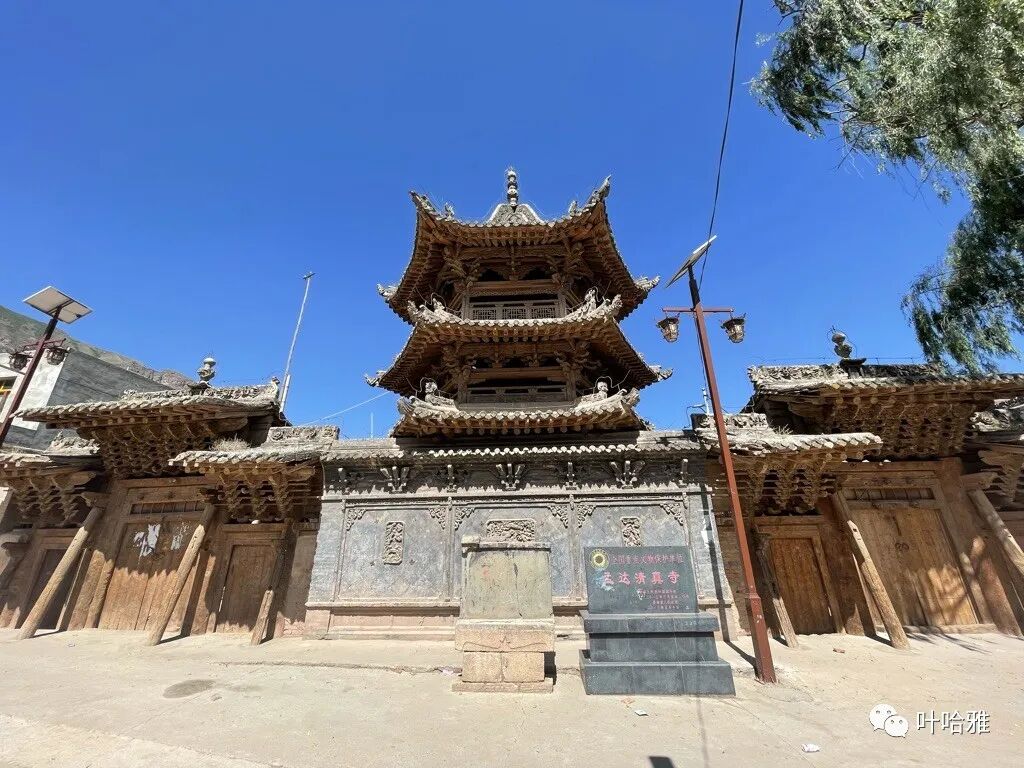
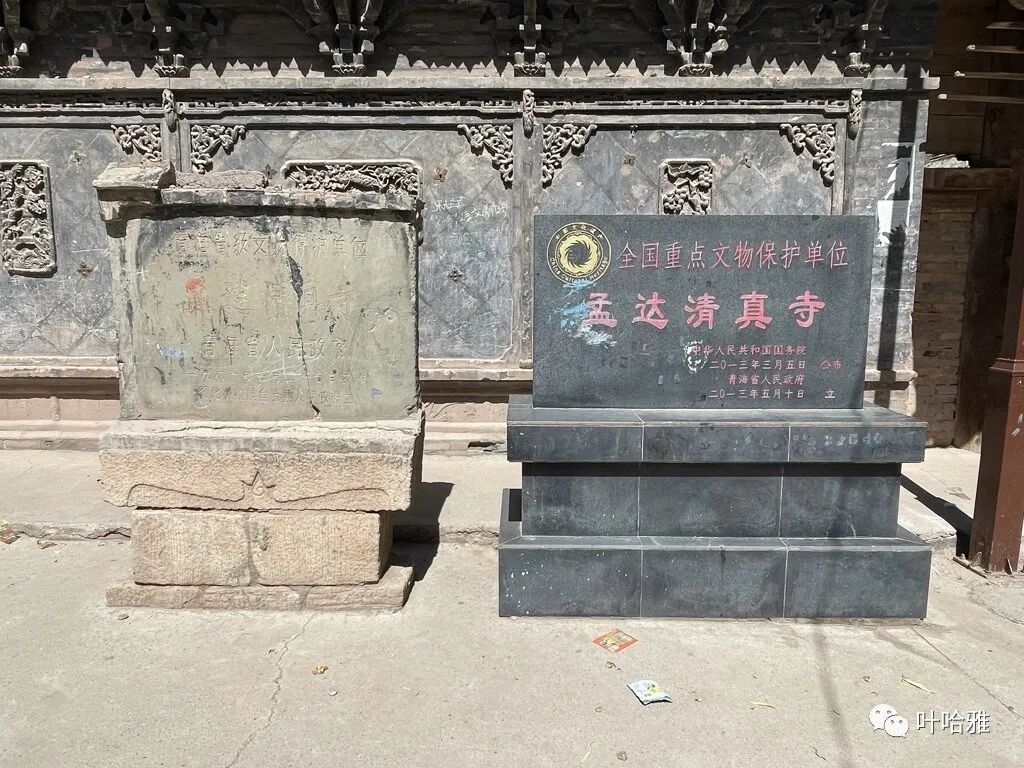
Mengda Mosque is in Mengda Dazhuang Village. It was first built in the Yuan Dynasty and follows traditional Chinese architectural style. Along a central axis from east to west, there is a spirit wall (yingbi), a call-to-prayer tower (huanxinglou), and the main prayer hall. On both sides of the spirit wall are the left and right mountain gates, and in front of the main hall are the south and north side rooms. It covers a total area of 1,344 square meters. During the Qianlong period of the Qing Dynasty, it served as the main mosque (zongsi) for the Mengda Gong, one of the eight Salar Gong districts.
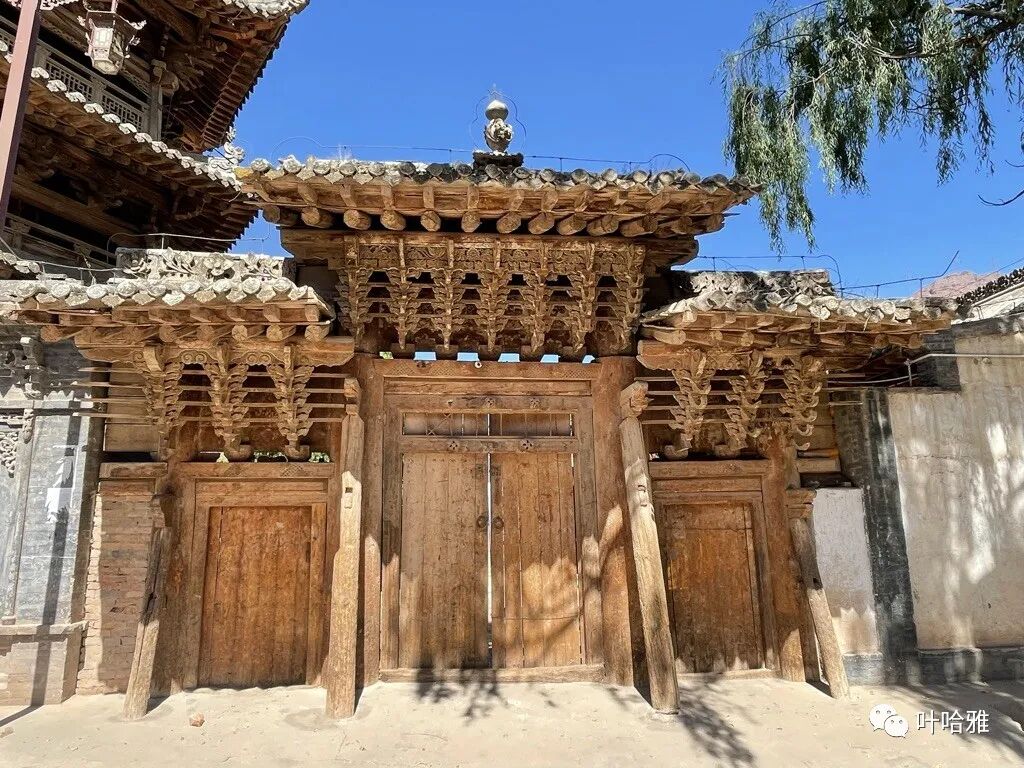
On both sides of the spirit wall at Mengda Mosque are wooden archways with three bays, four pillars, and three roofs, featuring a ridged roof design.
At Mengda Mosque, I met a retired official who used to be in charge of culture and publicity in Xunhua County. This Salar elder listed the historical sites of Xunhua for me and told me to visit them one by one when I have time. The elder's Mandarin was relatively easy to understand. The common language in Xunhua is the Salar language, so most of the time I had to ask my father-in-law to help me communicate with the locals.
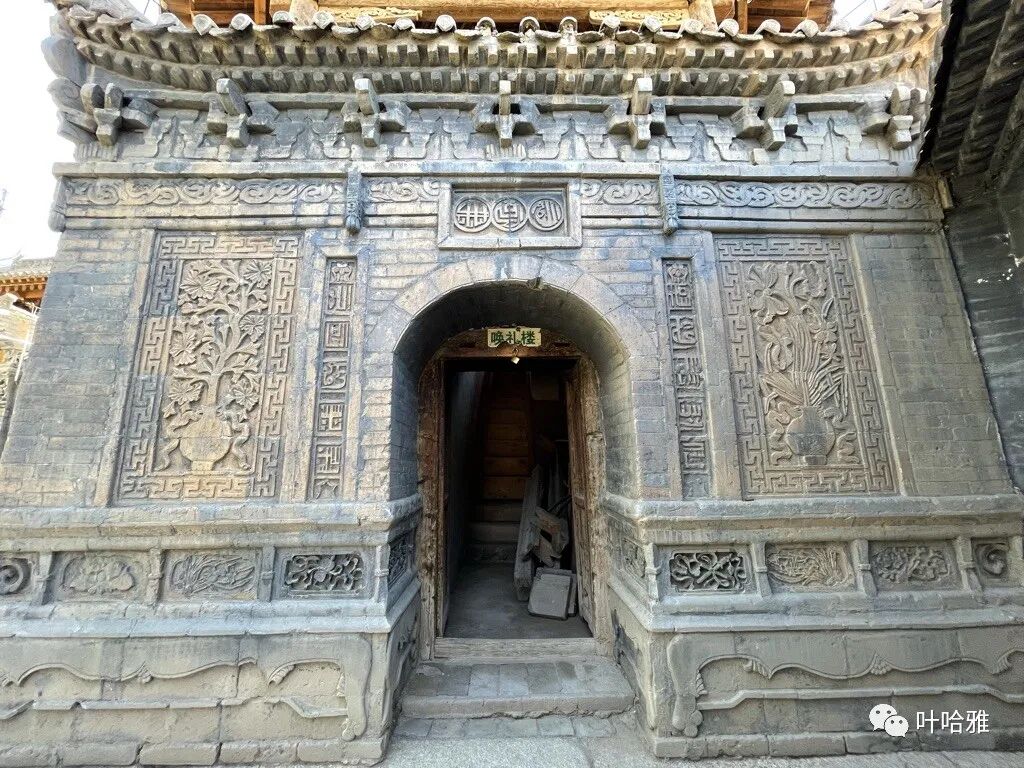
The bottom floor of the call-to-prayer tower is a brick-built hexagon with brick carvings on the walls. The upper level is a wooden pavilion-style structure with a triple-eave hexagonal helmet-shaped roof.
The prayer hall consists of a porch (juanpeng), a main hall with a ridged hip-and-gable roof, and a T-shaped kiln hall (yaodian). There is a treasure vase (baoping) in the middle of the main ridges of the hall and kiln hall, covering a building area of over 300 square meters.
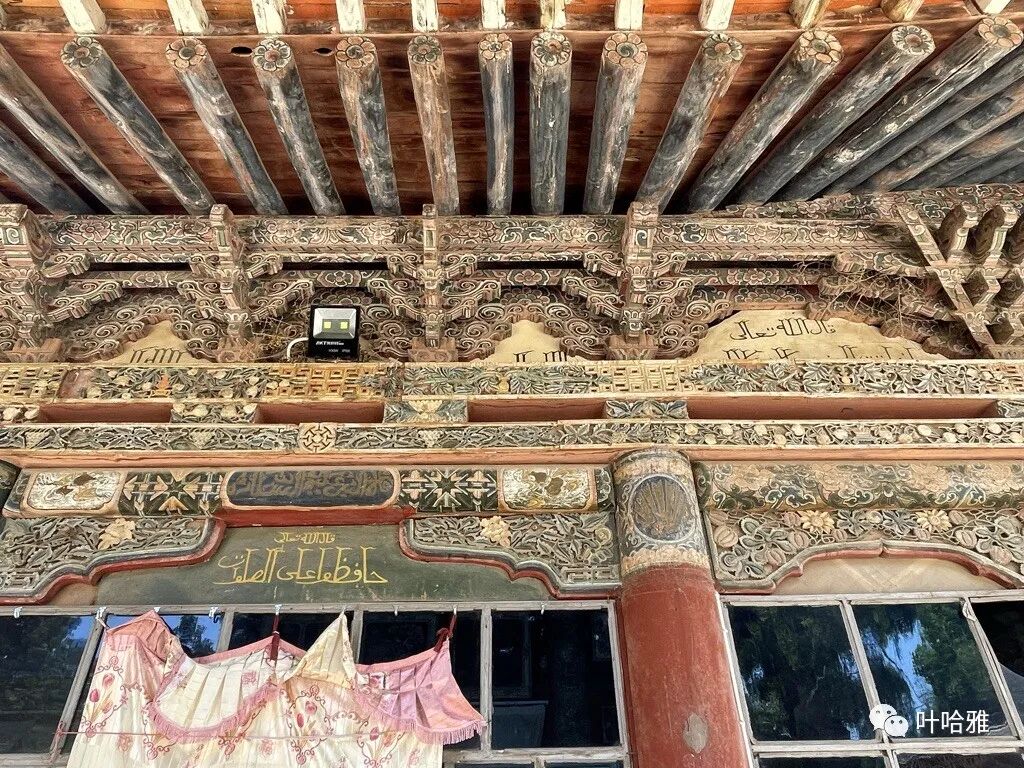
The prayer hall has a convex-shaped floor plan and a post-and-lintel wooden frame. The beams and pillars are decorated with gold-painted powder, and the walls are decorated with floral patterns and Arabic scripture murals.
3. Zhangga Mosque
Zhangga Mosque is located in Zhangga Village, Baizhuang Township, Xunhua Salar Autonomous County. It was first built in the Ming Dynasty and covers an area of 2,275 square meters. During the Qianlong period of the Qing Dynasty, it was the main mosque for the Zhangga Gong, one of the eight Salar Gong districts.
Zhangga Mosque has two gate towers facing east. They are in the style of a three-bay, four-pillar, three-roof archway, connected in the middle by a brick-carved spirit wall.
The prayer hall is a brick-and-wood structure with a building area of 700 square meters. It consists of a front hall, a middle hall, and a back hall. It is five bays wide and seven bays deep with a hip-and-gable roof. There are three treasure vases on the main ridge, and the eaves feature wooden carved brackets (dougong) and bird-shaped supports (quetie).
A new-style back hall was added to the west of the main hall. The original back hall became the middle hall, which is square-shaped. It features outward-extending brackets, and the beam frame is stacked into an inverted-bucket-shaped caisson ceiling with gorgeous wood carvings.
The prayer hall combines traditional hall style with Tibetan style. It is five bays wide and five bays deep, with large beams placed horizontally and carved with double-ring patterns.
4. Kewa Mosque
Kewa Mosque is located in Kewa Village, Baizhuang Town, Xunhua Salar Autonomous County, Qinghai Province. The mosque was first built in the first year of the Yongle reign of the Ming Dynasty (1403) and was renovated and expanded during the Qing Dynasty. Renovated and expanded in the 1980s. The mosque is laid out as a courtyard house, featuring a prayer hall, north and south lecture halls, a minaret, a bathing room, a screen wall, a gate tower, and a modern teaching building. It covers an area of 2,800 square meters, with a building area of 2,800 square meters. The prayer hall features carved beams and painted rafters, with wooden panels inlaid on the walls decorated with various patterns and scriptures, making it an Islamic building with Tibetan-style decorations. It was listed as a Major Historical and Cultural Site Protected at the National Level in 2013.
The new prayer hall of Kewa Mosque has been completed right next to the old one, and this mosque is the most prominent example of Tibetan-style architecture in Xunhua.
The main hall uses a post-and-lintel timber frame structure. The pillars are wrapped in finely carved wooden strips and are polygonal in shape, known as wrapped pillars (baoxiangzhu). The walls are inlaid with wooden panels painted with landscape and floral patterns. Between the main hall and the rear mihrab hall, there is a hollow-carved wooden partition featuring ruyi-shaped bracket sets (dougong) and hanging flower-shaped decorative canopies.
Kewa Mosque follows a courtyard layout. The prayer hall consists of a front hall and a rear mihrab hall. It is a brick-and-wood structure with five bays and a single-eave hip-and-gable roof.
The murals feature scriptures and are decorated with landscapes and flowers, showing a strong Tibetan painting style.
The walls of the rear mihrab hall are painted with Quranic verses in various scripts and the 99 names of Allah, while the beams are decorated with swirling patterns (xuanzi caihua), the center of the beams features gold scripture on a black background, and the pedestal (xumizuo) is carved and painted with patterns. The decorations feature a traditional Chinese Tibetan style.
On the east side of the courtyard stands a screen wall (yingbi) made of polished bricks with seamless joints, featuring a hip roof, brick bracket sets, and a pedestal base, with a brick carving of a dragon and phoenix symbolizing good fortune in the center.
The three-story minaret has a brick base with single-slope doors on the east and west sides. The second and third floors are wooden pavilions with double-eaved hexagonal pointed roofs.
5. Tashapo Mosque
Tashapo Mosque is in Tashapo Village, Qingshui Township, Xunhua Salar Autonomous County, Qinghai Province. The mosque was first built in 1480 during the Ming Dynasty and rebuilt in 1755 during the Qing Dynasty. The mosque faces east and follows an east-west axis, featuring a screen wall, a memorial archway, a minaret, and a prayer hall, with scripture halls and bathing rooms on the north and south sides. The mosque covers 1,840 square meters with a building area of 537 square meters. In 2013, it was listed as a Major Historical and Cultural Site Protected at the National Level as part of the ancient mosque building complex of the Salar people in Xunhua.
The gate tower of Tashapo Mosque has three bays, four pillars, and three stories, with a hip roof and blue brick ridges. There are brick-carved splayed walls on both sides of the archway. A straight screen wall stands in front of the gate.
The three-story minaret has a brick base with a solid adobe interior and brick carvings on the walls. The second and third floors are wooden pavilions with double-eaved hexagonal helmet-shaped roofs.
The prayer hall is a Ming Dynasty structure with a convex-shaped floor plan, with five bays, a single-eaved hip-and-gable roof, bracket sets, and a front porch. The mihrab hall has a T-shaped roof with upturned eaves.
The prayer hall covers 250 square meters and uses a raised-beam wooden frame with natural wood finishes, giving it a simple and elegant look. The north and south walls are decorated with ancient murals of scripture. The mihrab hall features a grid-pattern beam frame.
6. Suzhi Mosque
Suzhi Mosque is located in Suzhi Village, Chahandusi Township, Xunhua County, Qinghai Province. The mosque was first built in the fourth year of the Tianshun reign of the Ming Dynasty (1460) and was renovated and expanded during the Qing Dynasty. It has a square courtyard layout with a traditional four-sided courtyard design. The brick-and-wood buildings include a prayer hall, north and south scripture halls, a minaret, a gatehouse, a bathing room, and a screen wall. The prayer hall and scripture halls date back to the Qing Dynasty. In 1981, local elders donated funds for a large-scale renovation of the mosque. The mosque currently covers an area of 2,010 square meters, with a building area of 800 square meters.
The prayer hall of Suzhi Mosque has five bays and a single-eave hip-and-gable roof with upturned corners. Aluminum alloy glass doors and windows are installed between the front eave pillars. There are brick-carved splayed walls on both sides. The prayer hall consists of a front hall and a back hall. The roof ridge features three treasure vases, and the lower part of the walls is inlaid with ceramic tiles. The front hall has five bays and the back hall has three, forming a T-shape. The structure uses five-purlin beams and a traditional raised-beam timber frame. Under the eaves of the prayer hall are five-step bracket sets, and the wood carvings on the beams are exquisite. The scripture hall has five bays, with three bright rooms and two dark rooms. It has a front corridor, and the beams are carved with floral patterns. It features a single-slope roof with a ridge and a hard-mountain roof style.
7. Quran Museum
The Quran Museum is located in the building opposite Jiezi Mosque. The door is usually locked, but there is a phone number for the manager at the entrance. You can call to have someone open the door for a free visit. Two Salar leaders, Galemang and Ahemang, brought a handwritten Quran on a white camel from their original home in the Sarakhs region of Mary Province, Turkmenistan, in Central Asia. They traveled through Samarkand to China and settled in Xunhua, Qinghai, between the 10th and 14th centuries.
This Quran is divided into two parts, each with 15 volumes, totaling 30 volumes and 867 pages. The cover is made of rhinoceros hide, and the script is in the early Arabic Muhaqqaq style. The Muhaqqaq style formed during the Buyid era of the Abbasid Caliphate in the 11th century, and this book dates back to between 900 and 1200 AD.
The Quran Museum also houses various other editions of the Quran.
Pocket-sized Quran
8. Jiezi Gongbei in Xunhua
Jiezi Gongbei in Xunhua County is the tomb of Han Chengxiang (1822-1900), a spiritual leader of the Qadiriyya menhuan. Han Chengxiang traveled twice to the Shah Awliya shrine in Yarkant, Xinjiang, to seek guidance from his teachers. This gongbei was first built in 1950 and is now a major historical and cultural site protected at the national level.
I have visited important Qadiriyya gongbei sites, including those in Xixiang, Langzhong, Songpan, and Linxia. They left a great impression on me. When the elderly caretaker at the gongbei heard I was from Beijing, he not only unlocked the tomb chamber for me to visit but also warmly invited me into his room for tea.
My father-in-law is Ikhwan, so he has no interest in gongbei. Although our community in Beijing follows the Gedimu tradition, there are two tombs of saints (shaihai) inside the Niujie Mosque.
Elder Juma once provided a legal ruling (fatwa) on praying in mosques that contain graves: if the grave is next to the mosque and the prayer is performed inside the mosque, the prayer is valid. If the grave is inside the mosque, the Hanbali school of jurisprudence holds that the prayer is invalid. However, the other three major schools of jurisprudence consider the prayer valid, though praying with a grave in front of the worshiper is considered disliked (makruh).
Based on this ruling, none of the gongbei in China have the graves and the mosque built together; every gongbei has a separate prayer room.
9. West Route Army Memorial Hall
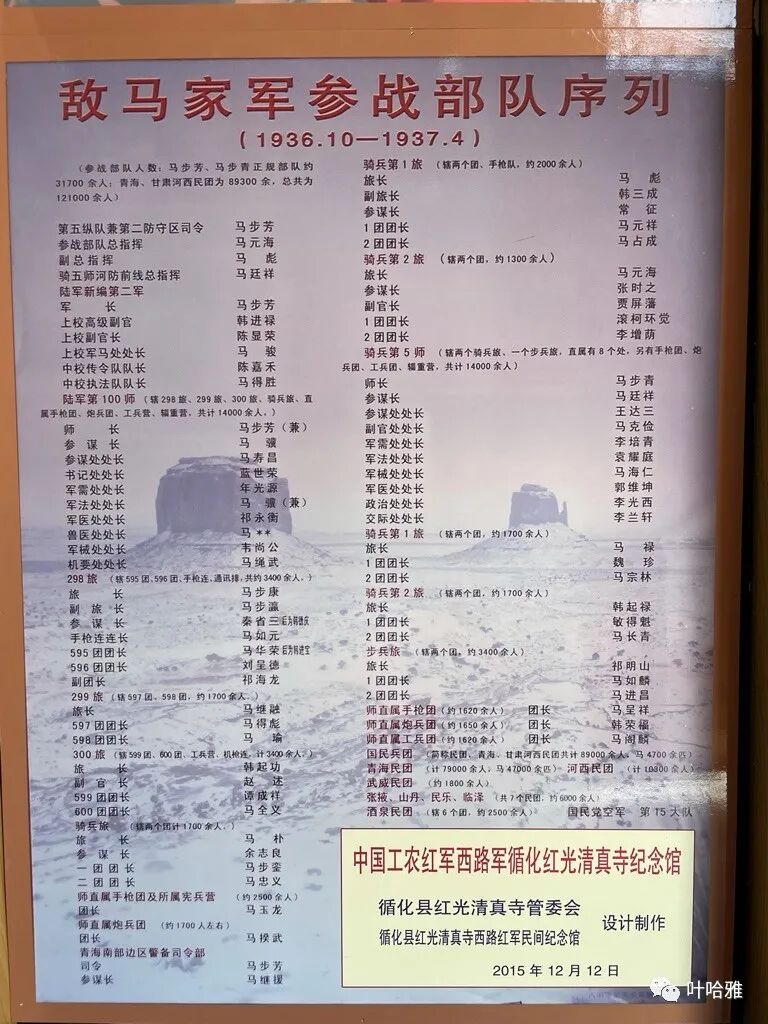
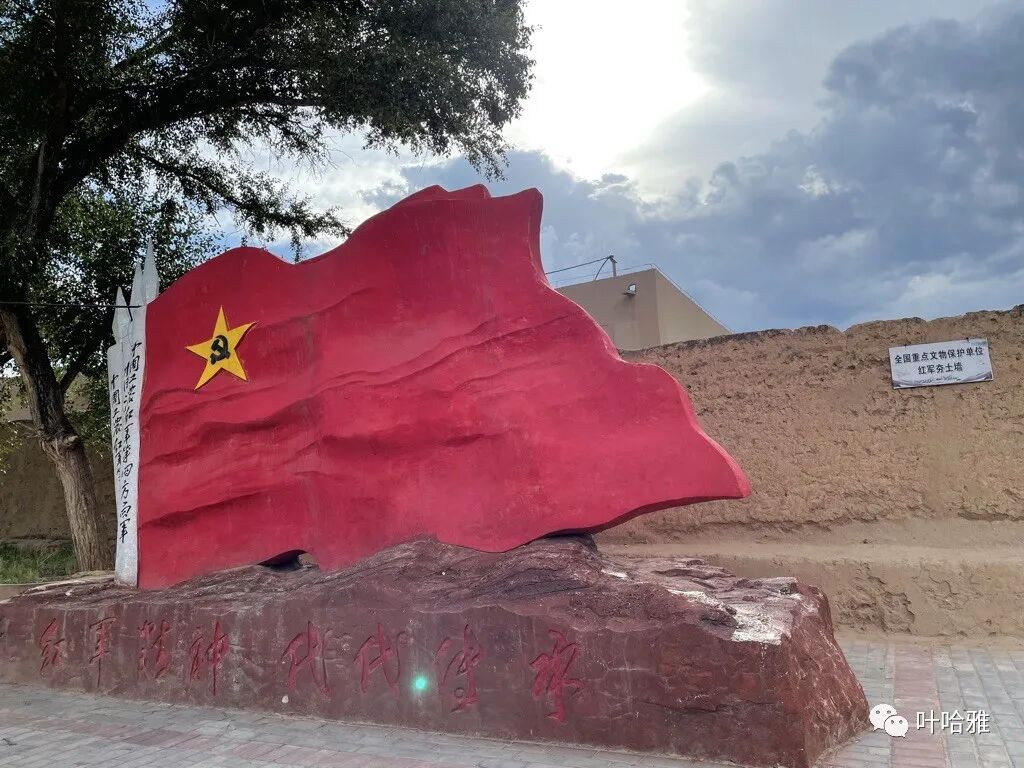
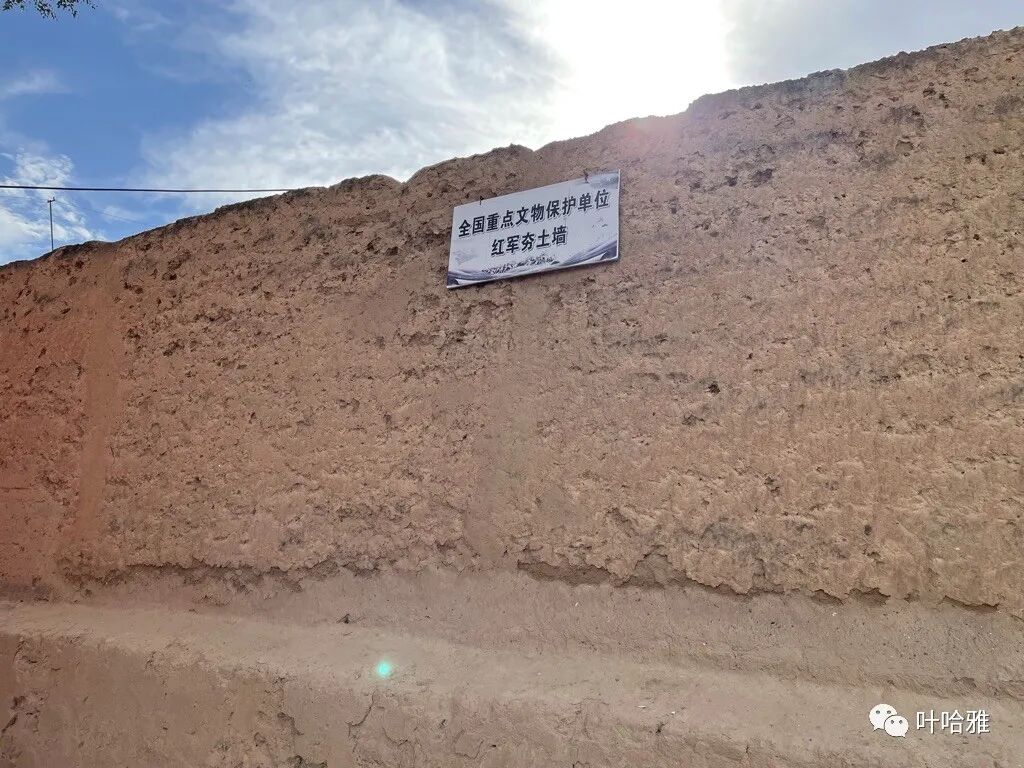
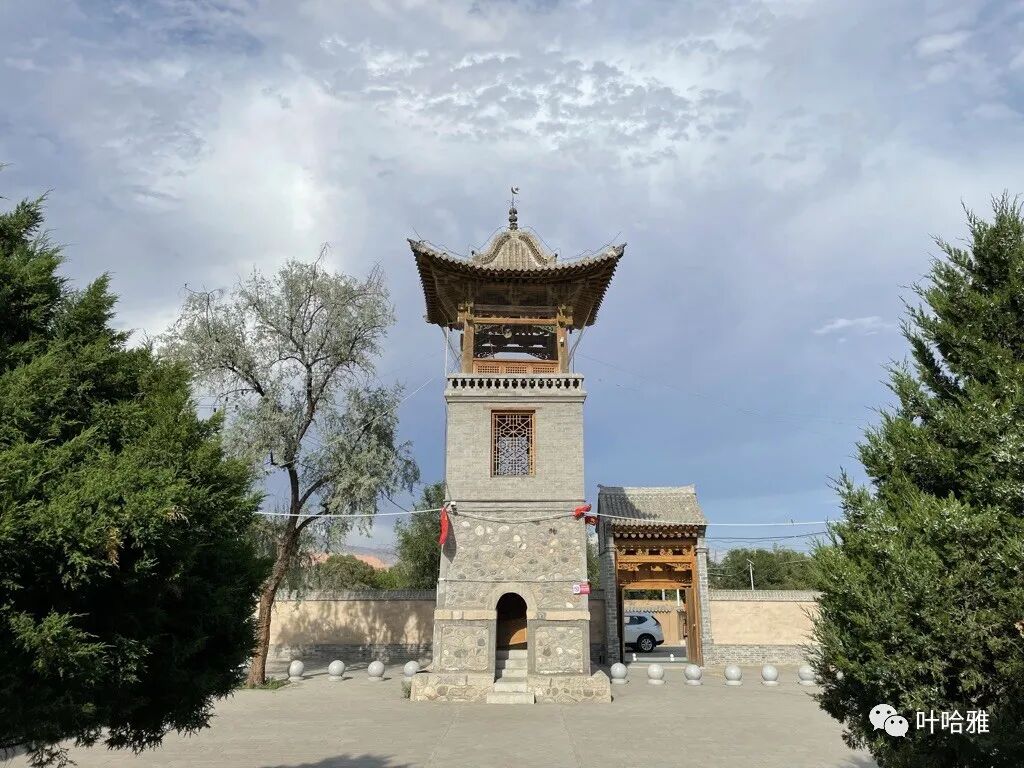
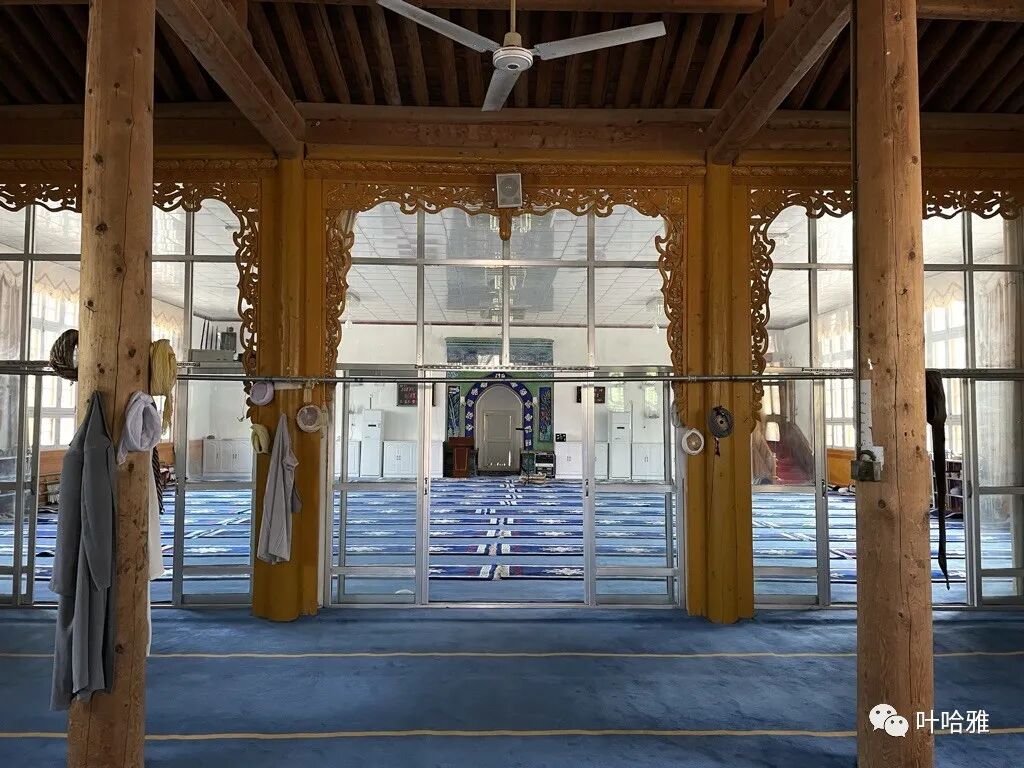
During this second visit to Hongguang Village, I saw that the West Route Army Memorial Hall had been completed. Hongguang Village has a mosque called Hongguang Mosque, also known as Zanbuhu Mosque. Because it is the only mosque in the country built by the Red Army, it is listed as a major historical and cultural site protected at the national level.
Descendants of the Red Army have visited Hongguang Village many times to honor the martyrs. Their fathers were captured by the Nationalist army under Ma Bufang and sent to Hongguang Village to build this mosque.
These captured Red Army soldiers were defiant, so they secretly carved revolutionary symbols like stars, sickles, and hammers into the bricks and tiles of the mosque.
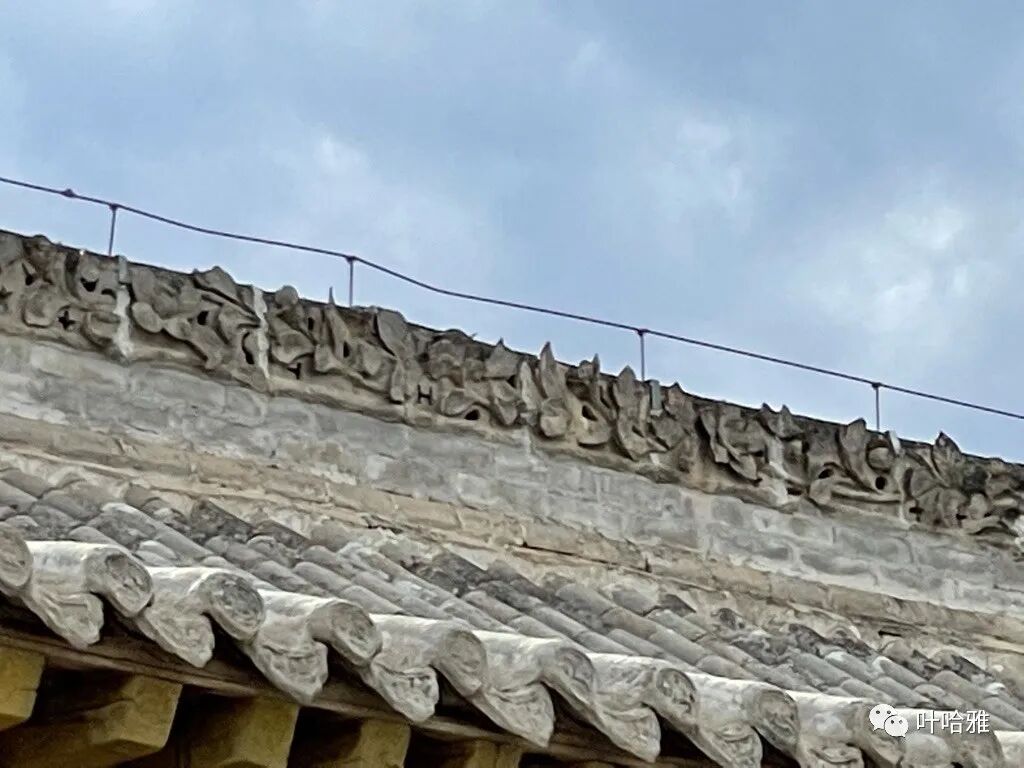
These revolutionary symbols are scattered among the tiles on the roof of the mosque, where most people would not notice them.
Although the mosque is not large, its significance is extraordinary. It is one of the most unique mosques I have visited.
10. Imam Village
While driving through Xunhua County, I saw a village with an interesting name: Imam Village. The name sounded very Islamic, so I parked the car and walked around the village.
I did not walk far before I saw a large mosque under construction in the village, which was very grand.
When I walked closer, I saw that the decorative patterns on the base and side halls of the mosque had architectural features typical of Central Asia and Xinjiang.
This mosaic pattern is often used in North African mosques, and it looks like it will be finished soon.
11. Guoshitan Mosque
My father-in-law saw how obsessed I was with mosques. After we finished the sunset prayer (maghrib) in Jiezi, he wanted to take me to Guoshitan Village. He said they had built a new wooden mosque there, which is considered the largest wooden mosque in Xunhua County. We drove for about twenty minutes and arrived at Guoshitan Village, but it was already dark.
Guoshitan Mosque is located in Guoshitan Village, Jiezi Town. It was first built in 1445, and the current structure was built in 2020. People say the wooden beams for the main hall were purchased from Russia, and the total cost of the mosque was over 20 million.
The large wooden mosque is very spectacular and has a simple, ancient feel, as if it could be designated as a protected cultural site as soon as it was finished.
Hualong Hui Autonomous County
12. Ahetan Mosque
Ahetan Mosque is located in Ahetan Village, Gandu Town, Hualong County, Qinghai Province. It was first built in the 22nd year of the Wanli reign of the Ming Dynasty (1594). It covers an area of 1,938 square meters and consists of a prayer hall, north and south scripture halls, a screen wall, a memorial archway, and a minaret, all arranged in a traditional courtyard layout. Inside the courtyard, there are 24 two-story brick and wood rooms used as scripture halls. It was listed as a Major Historical and Cultural Site Protected at the National Level in 2013.
Ahetan Mosque is located in Ahetan Village, Gandu Town, Hualong Hui Autonomous County. It was first built in 1323 and expanded during the Ming Dynasty's Wanli reign, retaining its Yuan and Ming architectural style to this day.
The wooden memorial archway of Ahetan Mosque is a three-bay, four-pillar, three-story structure with a hip roof. It is 9 meters high and 8 meters wide, with a tall roof supported by four diagonal pillars in the front and back.
The prayer hall has a floor area of 540 square meters. It is a three-section, six-bay structure with the main hall in the center and a ridged, hip-and-gable roof. There are north and south shed-style side halls, and the interior of the halls is connected as one.
The main hall and the niche hall (yaodian) are separated by carved wooden partitions. The mihrab in the center of the west wall of the niche hall and the Sumeru pedestals on the north and south walls are decorated with exquisite wood carvings.
13. Yisha'er Mosque
Yisha Mosque is in Yisha Village, Qunke Town, Hualong Hui Autonomous County. It is a protected cultural site of Qinghai Province. The mosque was first built in the first year of the Hongzhi reign of the Ming Dynasty (1488). It was rebuilt in the 14th year of the Qianlong reign of the Qing Dynasty (1749). The original minaret was a three-story wooden structure, wider at the top and narrower at the bottom, standing 28 meters high with a diameter of 6 meters.
The cultural heritage plaque at Yisha Mosque calls it Yisha'er Mosque, but you can only find its location on Baidu Maps by searching for Yisha Mosque.
My father-in-law thinks Hualong has a better religious atmosphere than Xunhua. Most Hui Muslims from Hualong run noodle shops in other parts of China, while the Salar people from Xunhua mostly run Xinjiang-style restaurants.
Tips: Food and accommodation guide.
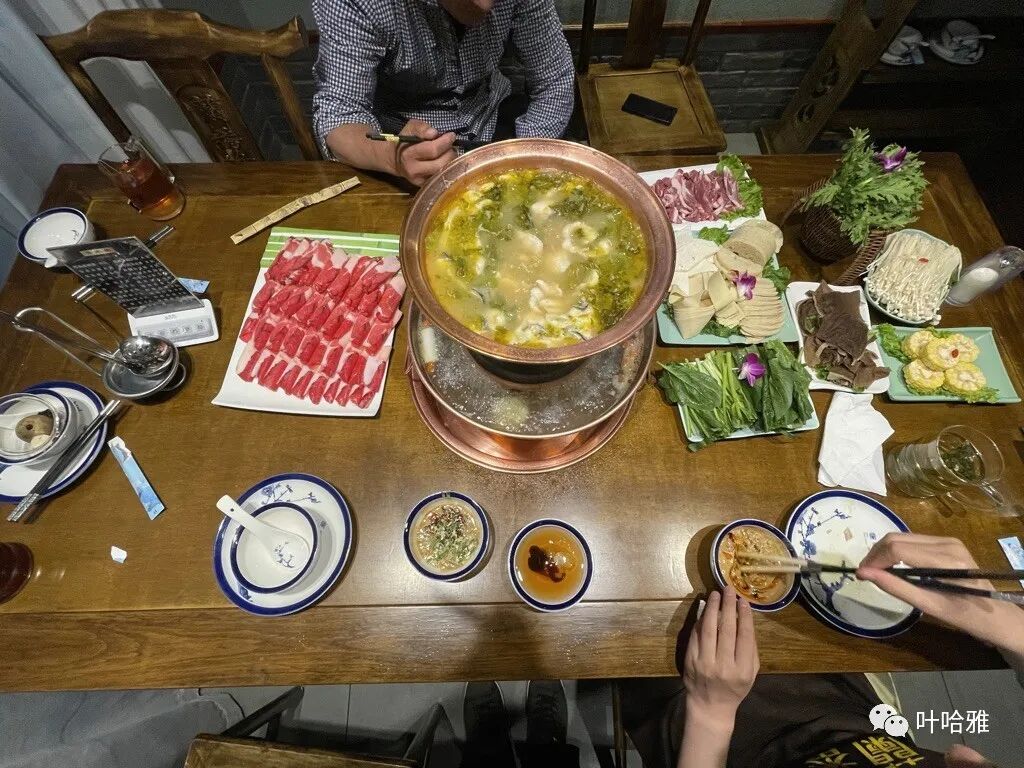
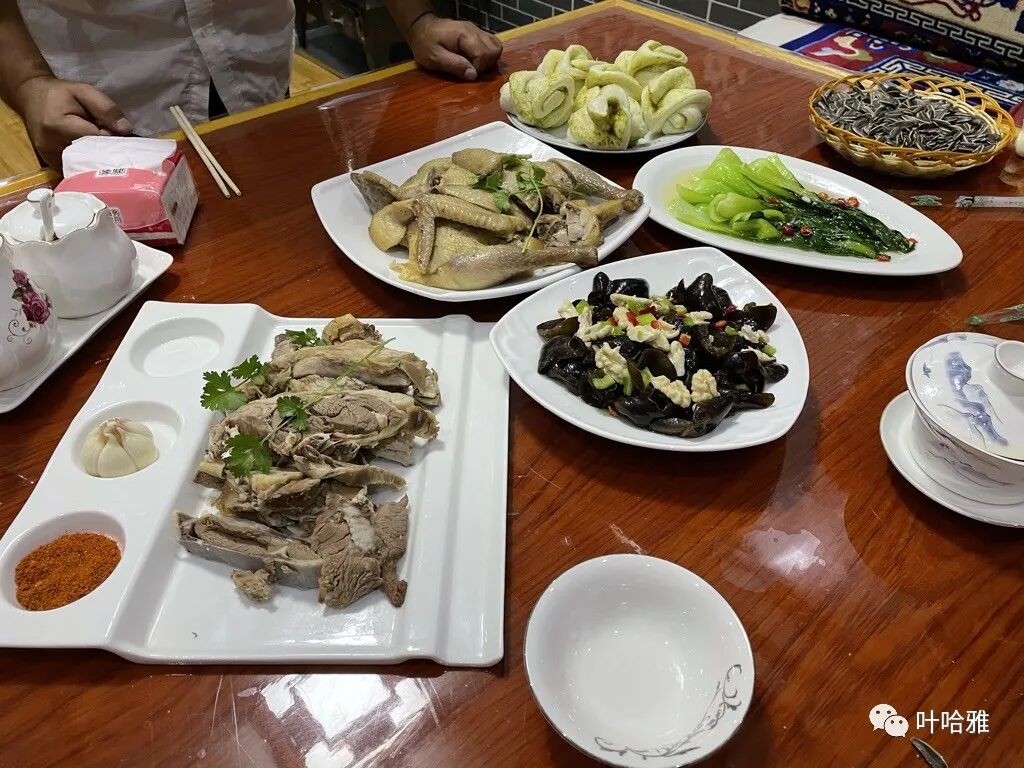
Almost all restaurants in Xunhua County are halal, and most serve noodles. If you want something special, try Lanfanfang Copper Pot Hot Pot. People in Qinghai love hot pot, and the local clay pot hot pot (tu huoguo) is a regional specialty.
The hot pot at Lanfanfang is unique because it is double-layered. The sauerkraut fish pot on top is especially delicious, mainly because the fish is so good.
Qingya Restaurant, another long-standing local spot just a few dozen meters from Lanfanfang, was recommended by a friend in Xunhua. You can eat representative local handmade noodle pieces (mianpian) there.
Keep in mind that portions in Northwest China are very large. Unless you have a huge appetite, order less food when traveling here.
I personally tested the dry mixed noodles (ganban mian) and firecracker noodles (paozhang mian) at Hanshouyi, and they are delicious. Both are Qinghai specialties that do not taste authentic once you leave the province.
Firecracker noodles (paozhang mian)
Dry mixed noodles (ganban mian)
If you want a nicer meal and have a large group, you must try a farmhouse restaurant in Xunhua. This Mingzhong Farmhouse looks very impressive and has a garden and private rooms inside.
It also has prayer rooms, separated for men and women. Prayer rooms are a standard feature in medium-sized or larger restaurants in Xunhua.
Hand-grabbed beef (shouzhu niurou)
Spiral oil bread (youxuan momo)
Searching for the taste of spicy hot pot (mala xiangguo).
Mala xiangguo is popular because they pick high-quality ingredients, even though it costs more. The shop fills up quickly at lunch. It has been open for three years and has two floors with a private, elegant feel. The owner cares a lot about service quality; I even caught him giving a pep talk to his staff when I arrived. The spicy pot paired with Xunhua’s most famous chili is a perfect match.
Guquan Villa.
Guquan Villa is another farmhouse-style inn in Baizhuang. Its specialty is using mountain spring water for drinking, which makes tea taste much better.
Traditional Salar families eat on a heated brick bed (kang), sitting cross-legged, which is similar to the customs in Central Asia.
Chicken Noodle Flake King (jirou mianpian wang).
Chicken noodle flakes (jirou mianpian) are hard to find elsewhere, as they are usually made with beef. This shop is one of the local specialty spots recommended by my friends in Xunhua.
Yimailong Hand-Pulled Noodle Flakes (shouzhuo shougong mianpian).
Yimailong has a good reputation among locals. I had the starch noodle soup (fentang) for breakfast here, which is another Qinghai local specialty.
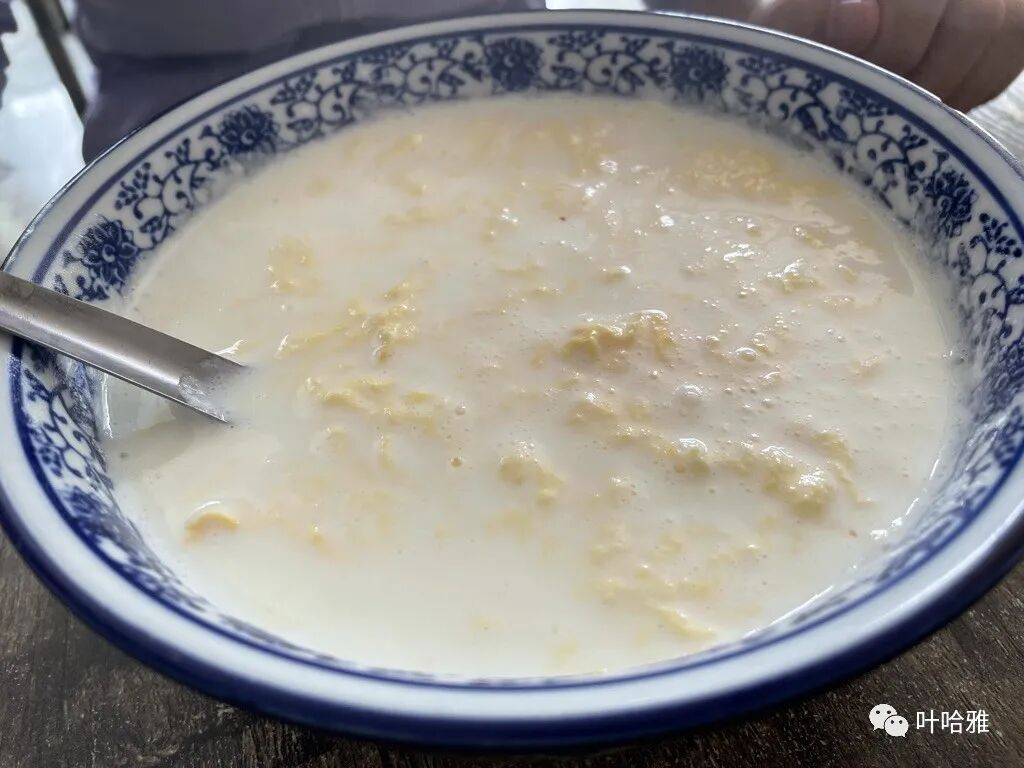
For dessert, you must try Qinghai yogurt. Just look at the golden milk skin on top to see how rich the flavor is.
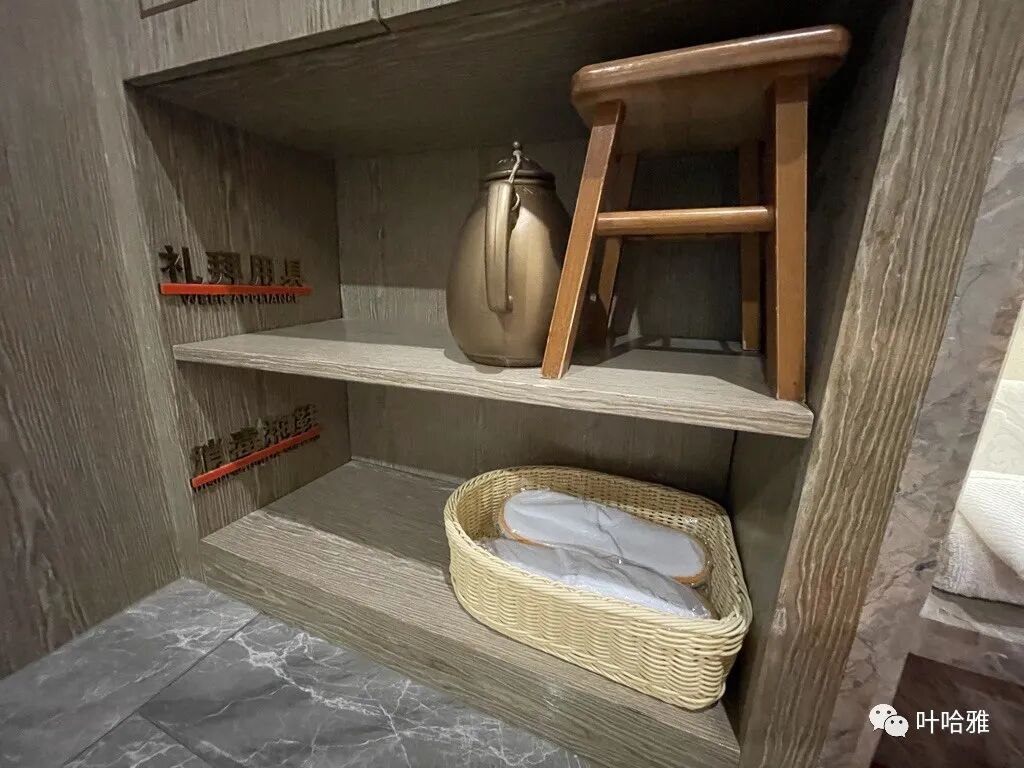
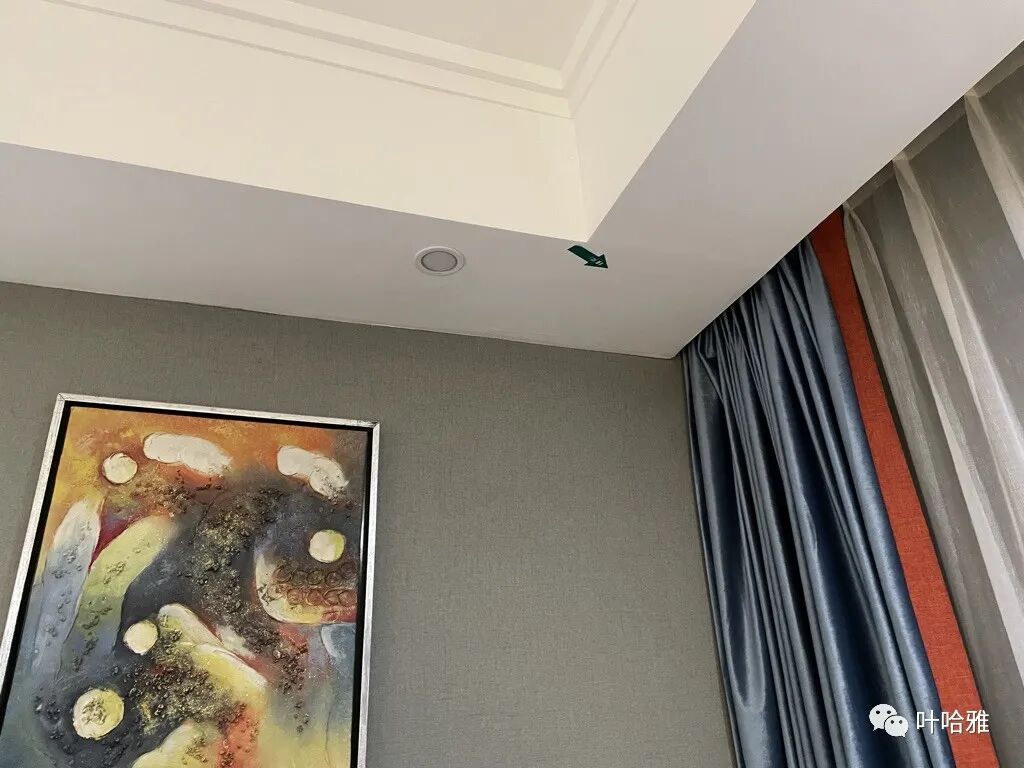
For lodging, we reviewed three hotels in Xunhua County: Xunhua International Hotel, Xunhua Jinheyuan Hotel, and Xunhua Borman Hotel. They are all close to each other. Jinheyuan Hotel offers the best overall value. The International Hotel is the most expensive, costing a few dozen yuan more than Jinheyuan. The International Hotel has river-view rooms, but Jinheyuan has all smart room controls, provides a ritual washing pitcher (tangping), and has indicators for the direction of prayer (qibla). Overall, it is more comfortable than the International Hotel. Borman is the cheapest, but the room facilities are old.
Jinheyuan Hotel room.
I noticed there are many restaurants in Xunhua County. All halal restaurants here are alcohol-free, so hotels are called 'restaurants' (fandian) and provide halal breakfast. People in Xunhua like to experience staying in hotels during their leisure time. My friends in Xunhua often fly to different places, not to visit tourist sites, but just to experience a night in a luxury hotel before heading back.
Return trip - Xining.
I have been to Xining many times; I even held my wedding there in 2018. This time, I specifically chose to stay one night at the Yilton International Hotel. A long time ago, when I first traveled alone, I visited Xining. While wandering near the Dongguan Mosque, I looked up and was shocked to see such a large international hotel that was actually halal—I had never seen that before. I decided then that if I ever came back to Xining, I had to experience it.
However, this time I felt the Yilton is quite old. Although the service is okay, it has been operating for over a decade. Compared to the many new luxury hotels in Xining today, the Yilton is no longer as dazzling, but it fulfilled a wish I had seven years ago.
The Yilton has a Western restaurant with affordable prices, though the taste is just average. The breakfast variety is quite rich, and you can see the full view of the Dongguan Mosque from the window.
The Dongguan Mosque (Dongguan Dasi) is currently undergoing renovations, but religious activities continue as usual and the mosque remains open to visitors.
When I return to Xining next time, I should see the renovated Dongguan Mosque, which will look like the image below.
A rendering of the Dongguan Mosque after renovations. view all
Summary: Muslim Travel Guide China 2026: Xunhua and Hualong Salar Mosques, Qinghai Halal Food and Heritage is presented here as a clear English Muslim travel account, starting with this scene: By my own count, I have visited 454 mosques at home and abroad. I have visited the most in Beijing, where I have been to 67, because Beijing is my home. The place where I have visited the second most mosques is Qinghai, where I have been to 32. This is my. It keeps the original names, numbers, mosque details, food notes, photographs, and cultural context while focusing on Qinghai Mosques, Salar Muslims, Halal Travel.
By my own count, I have visited 454 mosques at home and abroad. I have visited the most in Beijing, where I have been to 67, because Beijing is my home. The place where I have visited the second most mosques is Qinghai, where I have been to 32. This is my wife's home, as I married a Salar woman from Xunhua.
Driving from Xining to Xunhua County takes about two hours on the highway. The Xunhua Salar Autonomous County is part of Haidong City. Most of Qinghai's important mosques are concentrated in Xunhua and Hualong counties, which are two neighboring ethnic autonomous counties.
This time I visited the Kewa Mosque, Zhangga Mosque, Tashapo Mosque, Qingshuihedong Mosque, Mengda Mosque, Zanbuhu Mosque, and Jiezi gongbei in Xunhua County, all of which are Major Historical and Cultural Sites Protected at the National Level. I previously visited the Hongshuiquan Mosque in Ping'an, which is also a national-level site. The Suzhi Mosque is a provincial-level protected site. In Hualong, the Ahetan Mosque is a national-level site, and the Yisha'er Mosque is a provincial-level protected site. I also visited the Yimamu Village Mosque, Guoshitan Mosque, and a few other mosques with unique traditional architectural styles. These old buildings are not too far apart, and if you have a car, you can visit them all in one or two days.
1. Qingshuihedong Grand Mosque
The Qingshuihedong Mosque is located in Qingshui Township, Xunhua Salar Autonomous County. It was first built in 1425 during the Ming Dynasty. It follows a traditional Chinese architectural layout with a central axis. However, the minaret is not on the axis; it sits about 9 meters south of the front of the main prayer hall. Along the central axis, there is a spirit wall (yingbi), a gate, and the main hall. To the north of the main hall is a side building. Unlike other mosques, the Qingshui Mosque does not have a south side building.
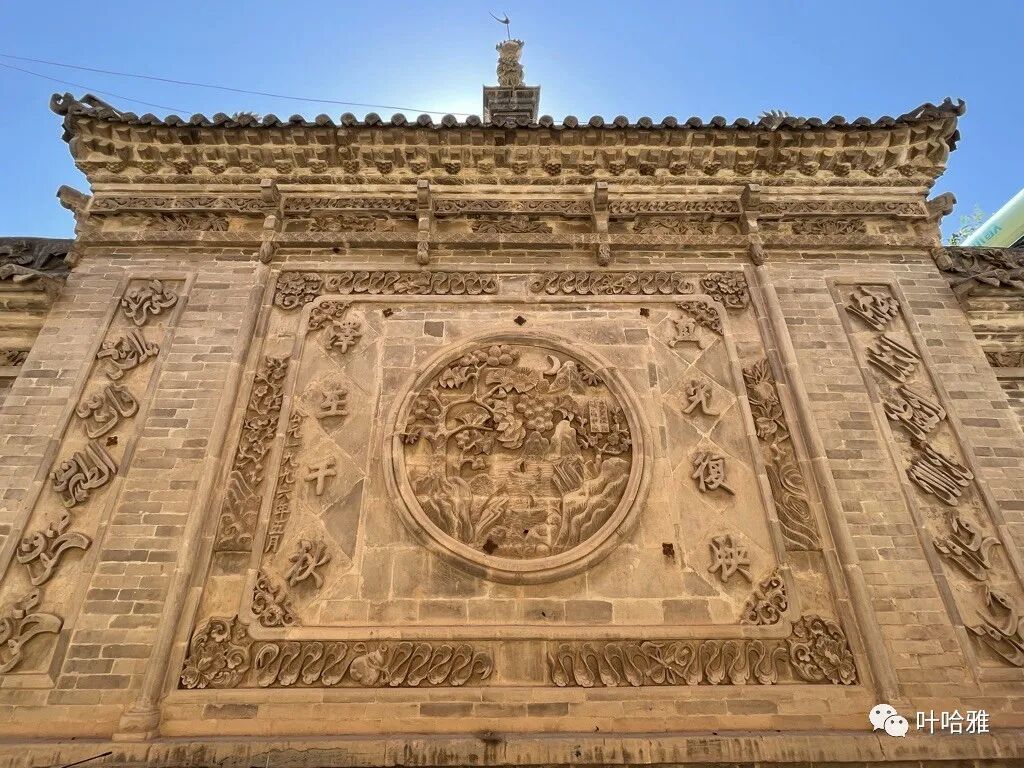
In 1996, a brick-carved screen wall was added to the Qingshuihedong Mosque. It features a hip roof (wudian ding) with a vase ornament on the main ridge and a pedestal base.
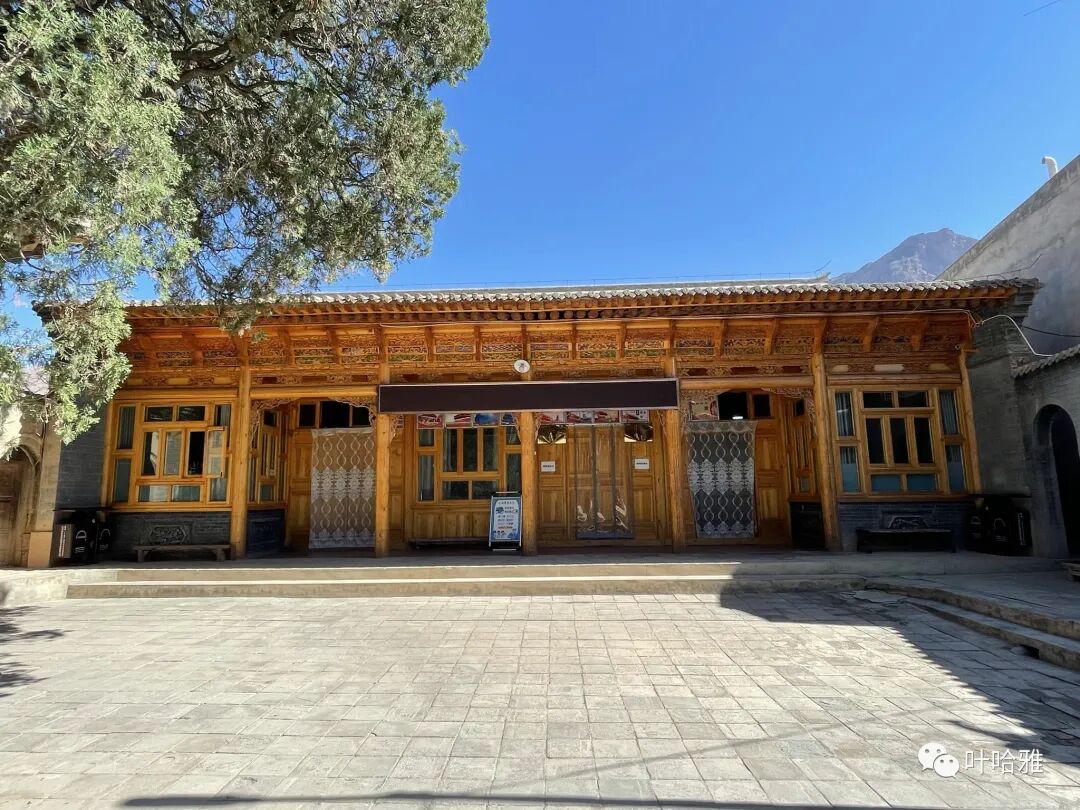
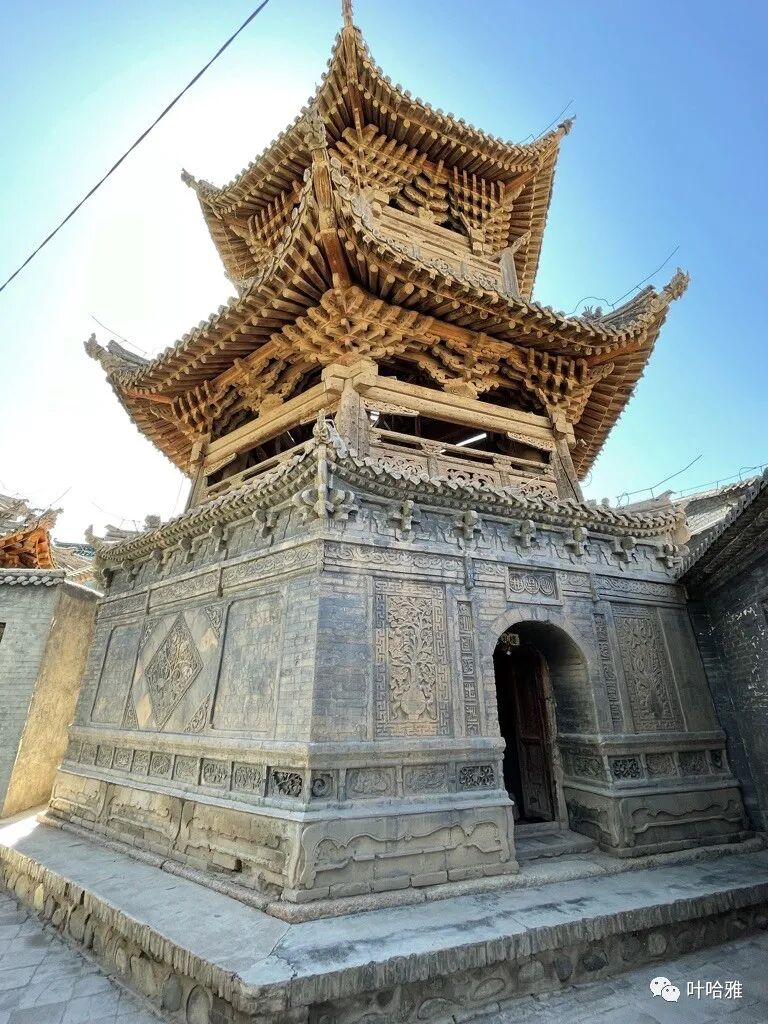
The gate tower has a hip roof with five-step bracket sets (dougong) under the eaves. The 17-meter-tall minaret has a brick base and a wooden attic-style upper structure with a double-eaved, hexagonal helmet-shaped roof.
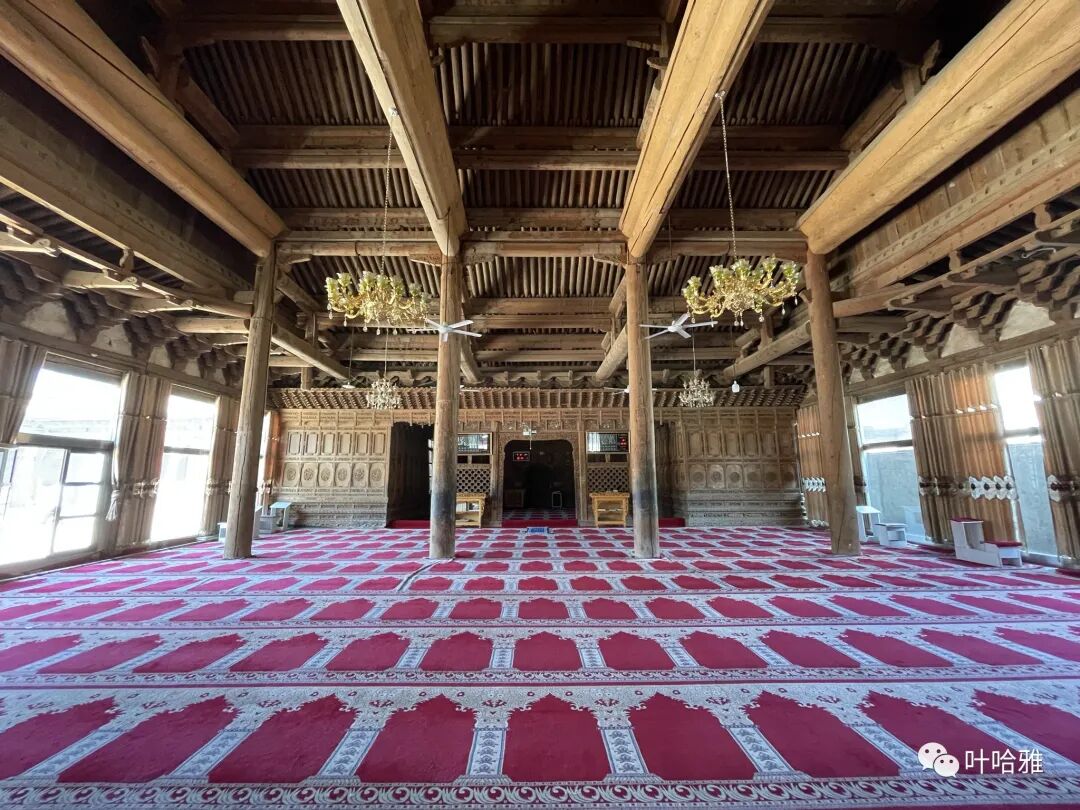
The prayer hall has a gabled and hipped roof (xieshan ding), five bays wide, with projecting bracket sets and carved wooden beams and brackets. There are wooden railings between the eave pillars and brick-carved walls on both sides. On the north side, there is an arched door leading to the side courtyard.
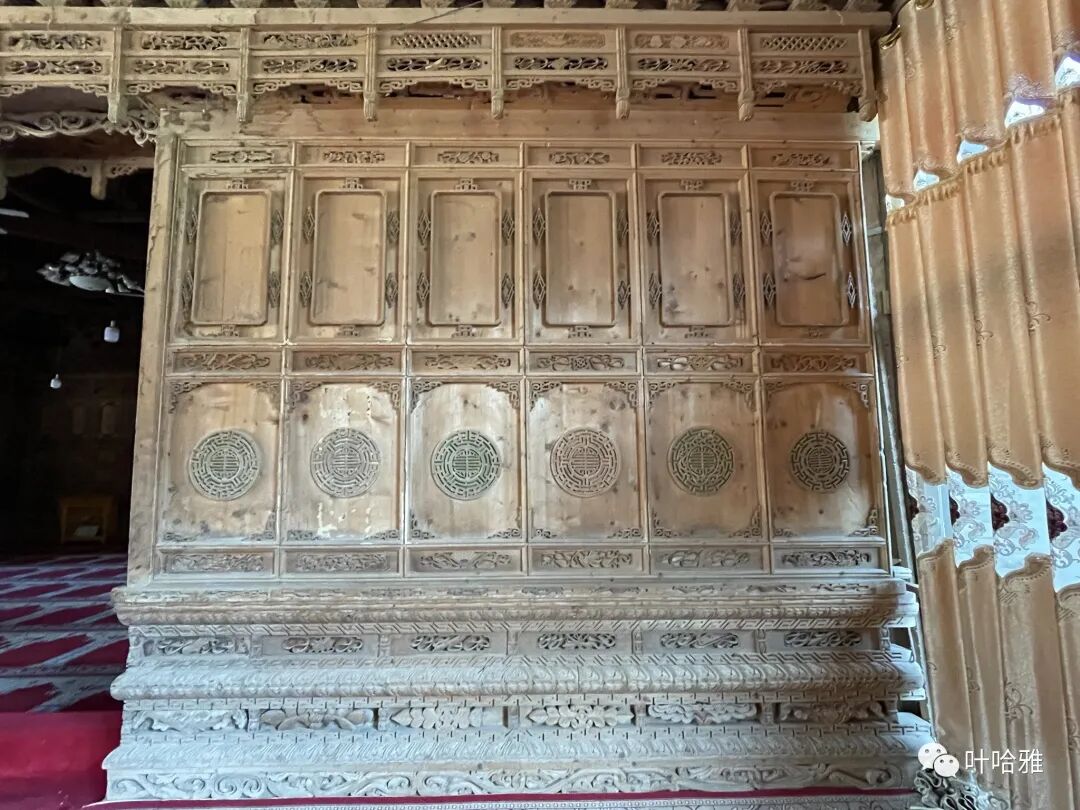
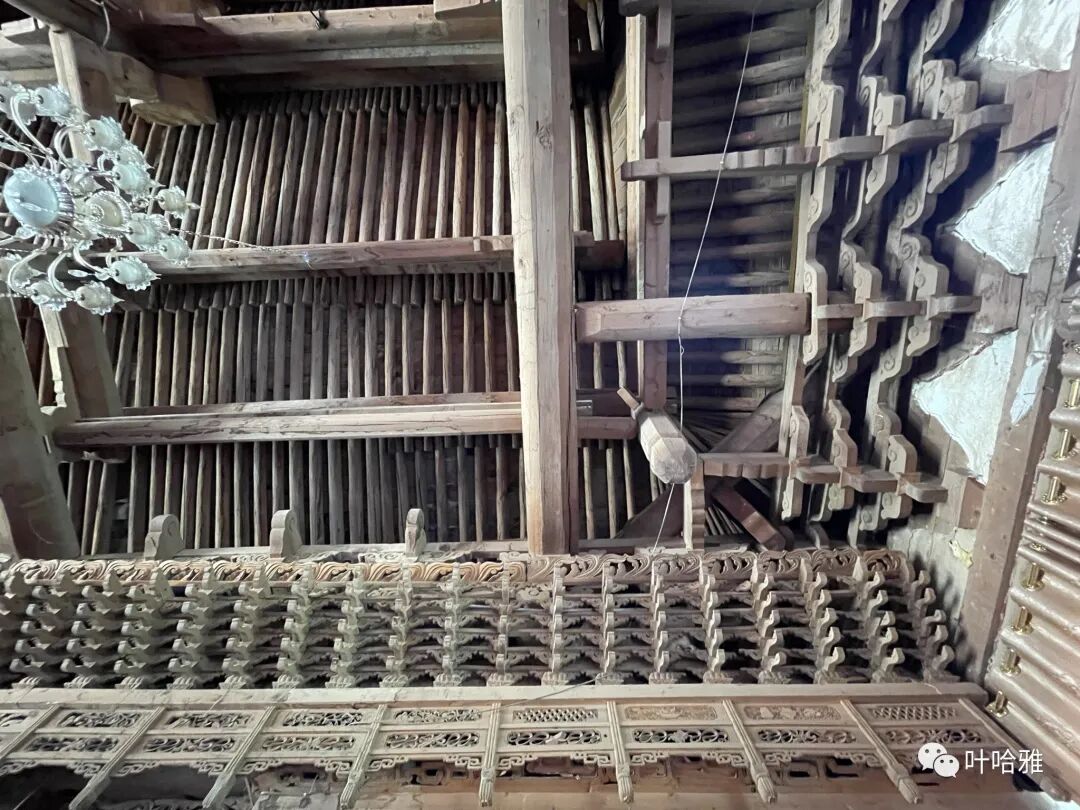
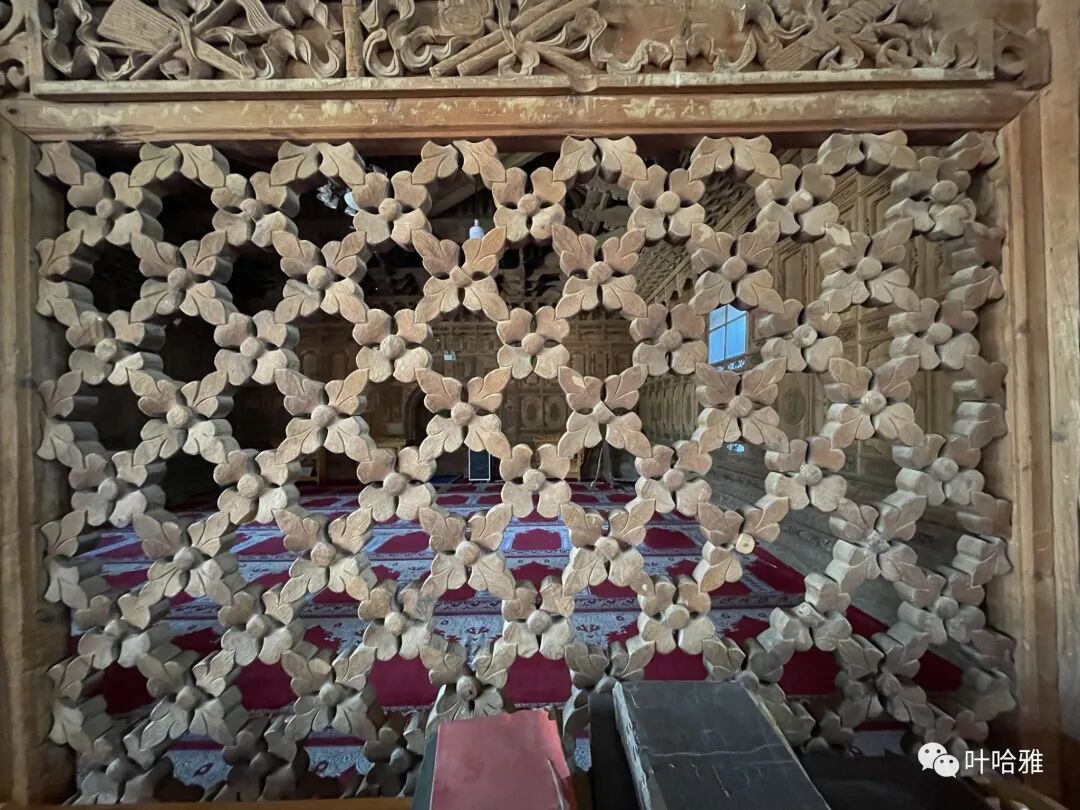
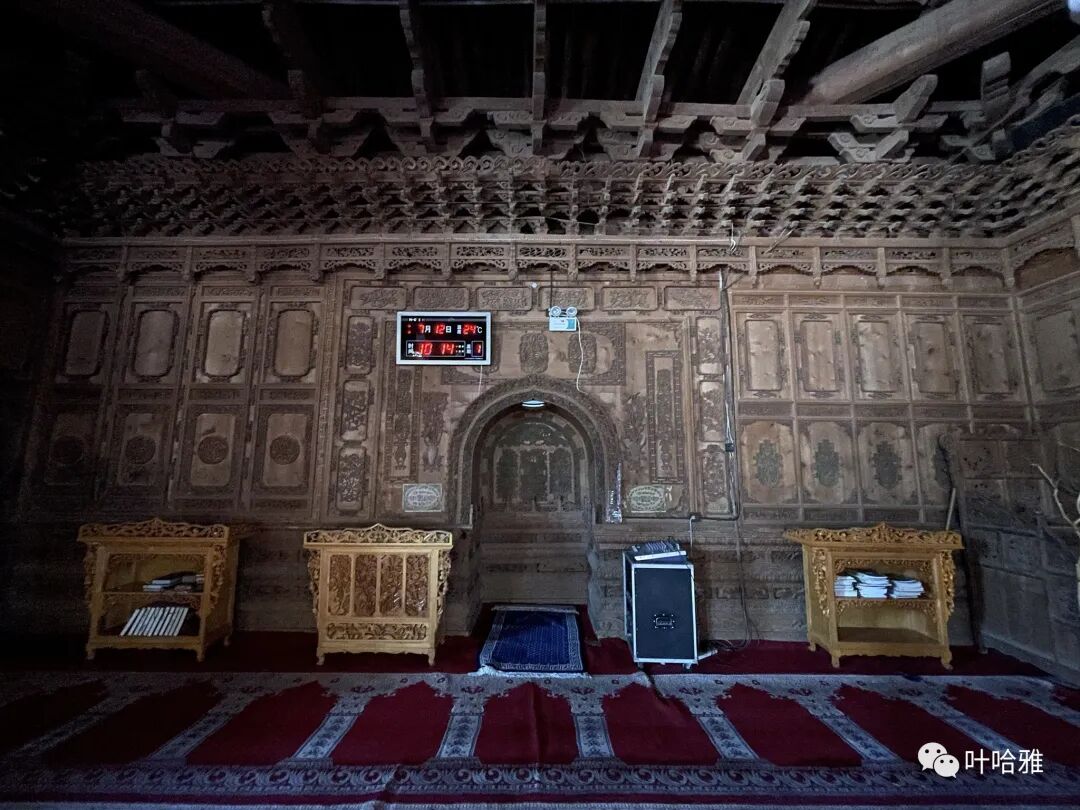
The corridor walls are made of polished bricks with tight joints and feature brick carvings. The main hall is five bays wide and five bays deep, supported by 42 pillars. The rear prayer niche (yao dian) has wooden partitions, intricate openwork carvings, wooden bracket sets, and hanging flower pillars, all with detailed patterns and fine craftsmanship.
Near the Qingshuihedong Mosque is the Qingshuihedong South Mosque. Inside the South Mosque, I saw a women's prayer hall, which is quite rare in the Northwest.
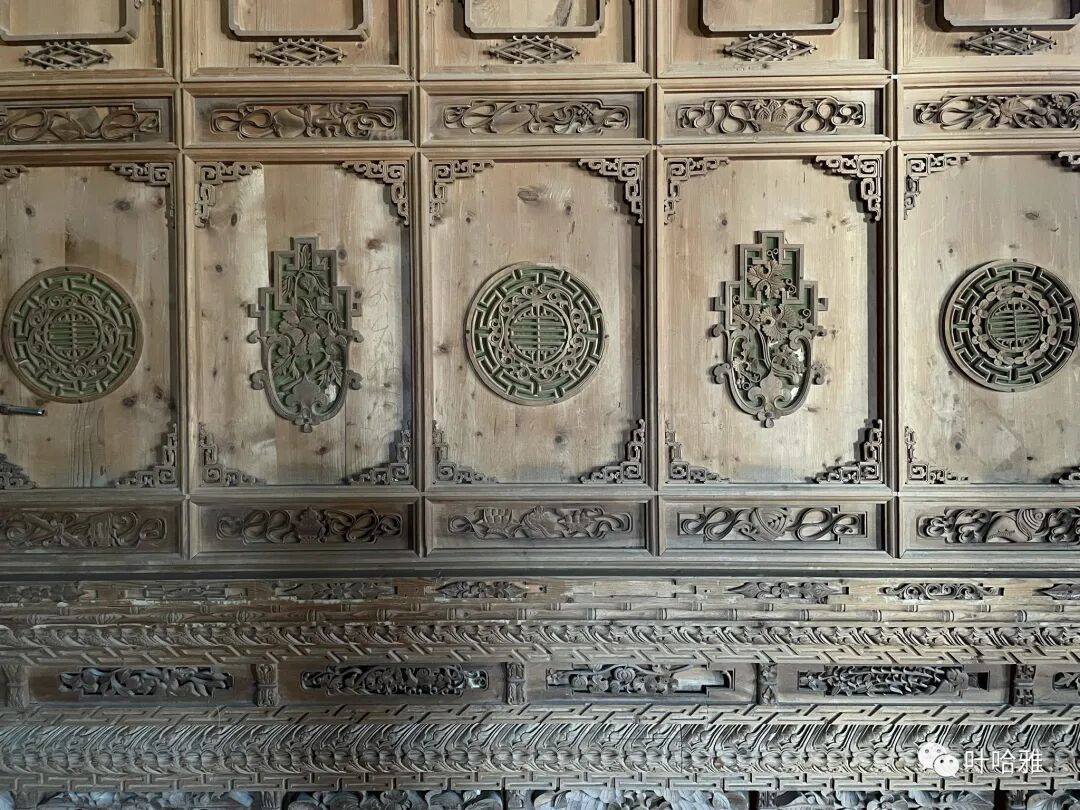
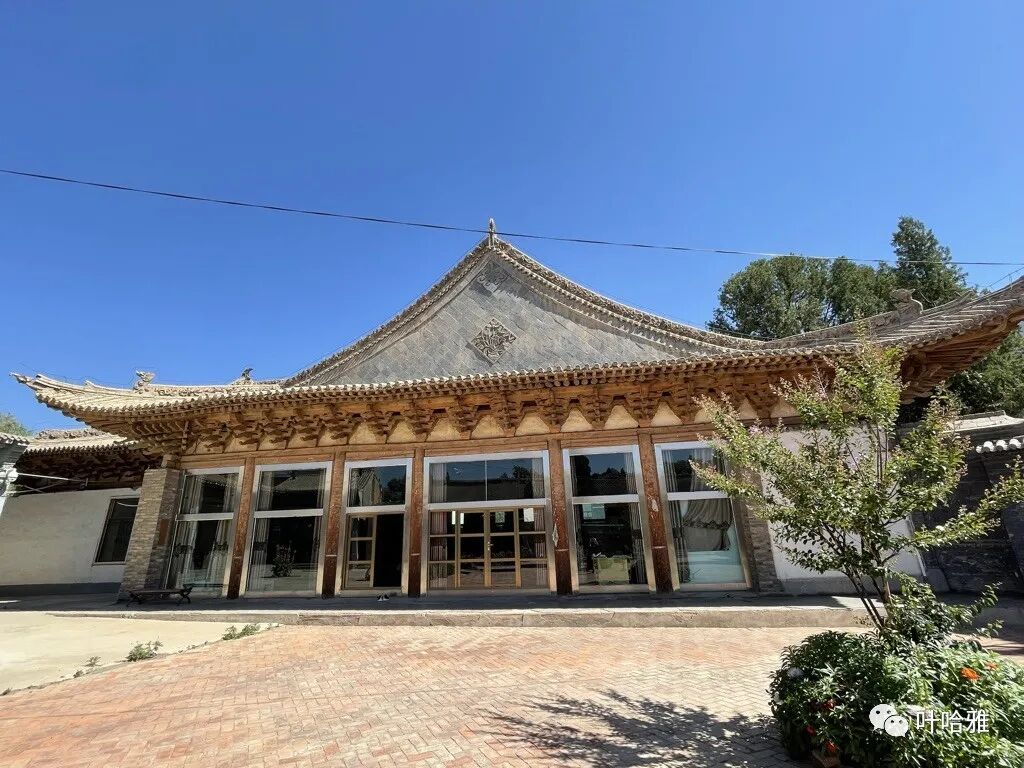
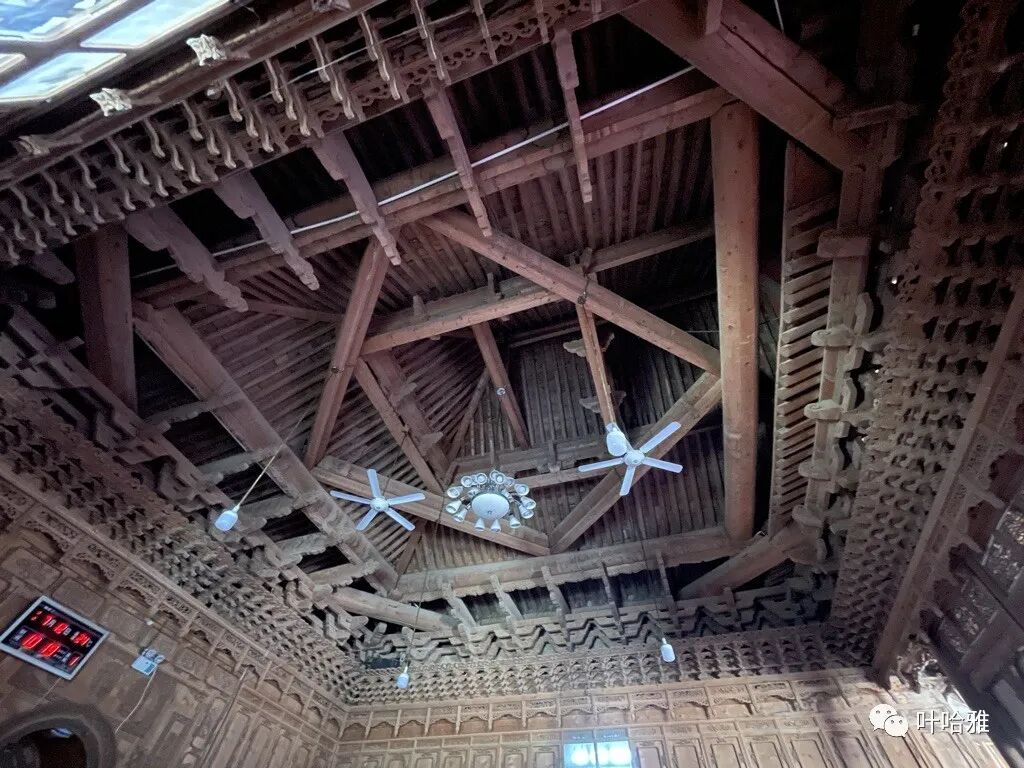
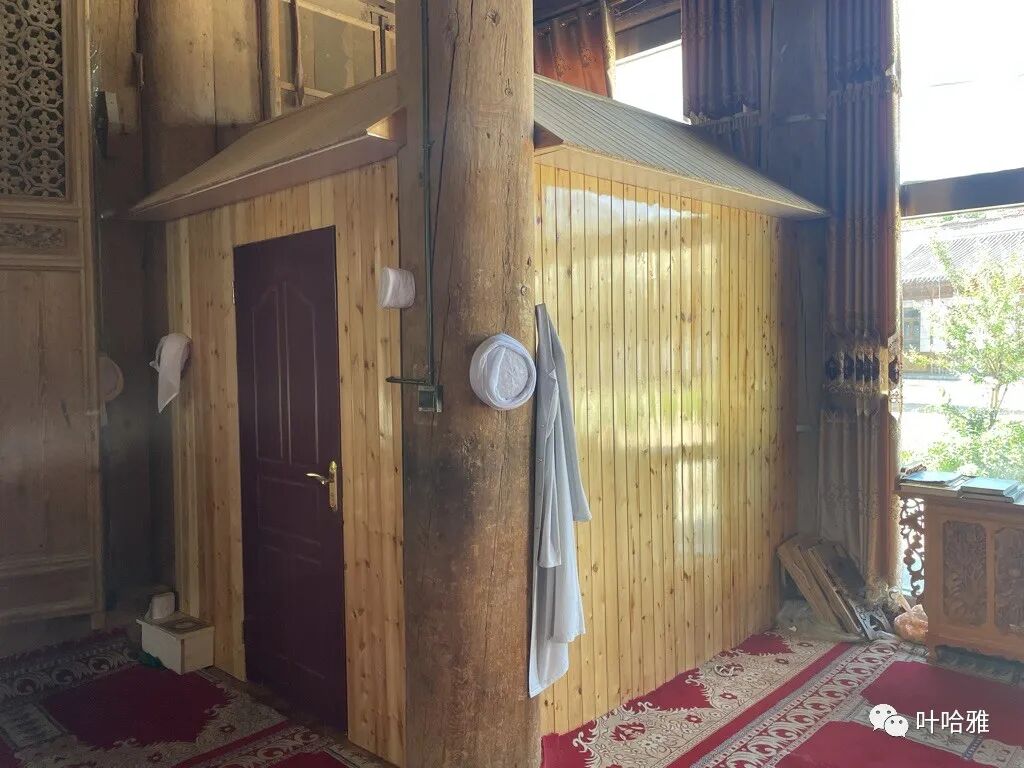
When visiting mosques in Qinghai, I rarely saw anyone guarding the doors. Even at national-level protected sites, you can just walk in. I have never been stopped or questioned, which is very similar to my experiences abroad.
2. Mengda Mosque
Xunhua has Mengda Mountain, and on the mountain is Mengda Mountain Village. This is my wife's hometown, but the Mengda Mosque and Mengda Heavenly Lake are not in Mengda Mountain Village. They are quite far away, so be careful not to go to the wrong place.
Mengda Mosque is in Mengda Dazhuang Village. It was first built in the Yuan Dynasty and follows traditional Chinese architectural style. Along a central axis from east to west, there is a spirit wall (yingbi), a call-to-prayer tower (huanxinglou), and the main prayer hall. On both sides of the spirit wall are the left and right mountain gates, and in front of the main hall are the south and north side rooms. It covers a total area of 1,344 square meters. During the Qianlong period of the Qing Dynasty, it served as the main mosque (zongsi) for the Mengda Gong, one of the eight Salar Gong districts.
On both sides of the spirit wall at Mengda Mosque are wooden archways with three bays, four pillars, and three roofs, featuring a ridged roof design.
At Mengda Mosque, I met a retired official who used to be in charge of culture and publicity in Xunhua County. This Salar elder listed the historical sites of Xunhua for me and told me to visit them one by one when I have time. The elder's Mandarin was relatively easy to understand. The common language in Xunhua is the Salar language, so most of the time I had to ask my father-in-law to help me communicate with the locals.
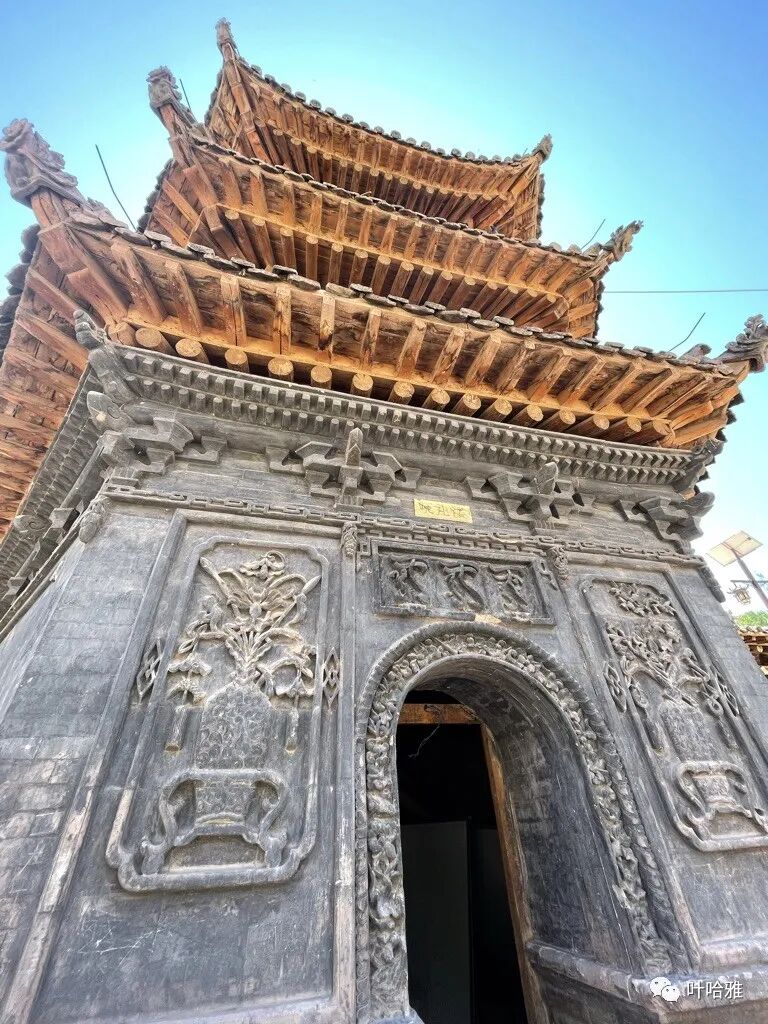
The bottom floor of the call-to-prayer tower is a brick-built hexagon with brick carvings on the walls. The upper level is a wooden pavilion-style structure with a triple-eave hexagonal helmet-shaped roof.
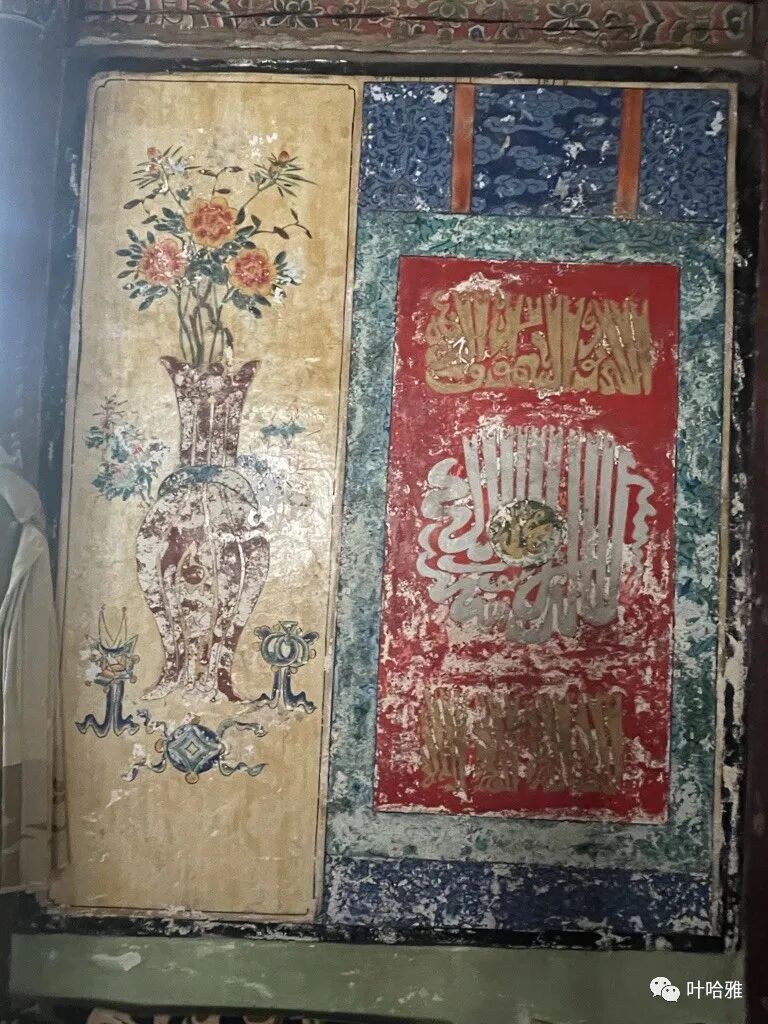
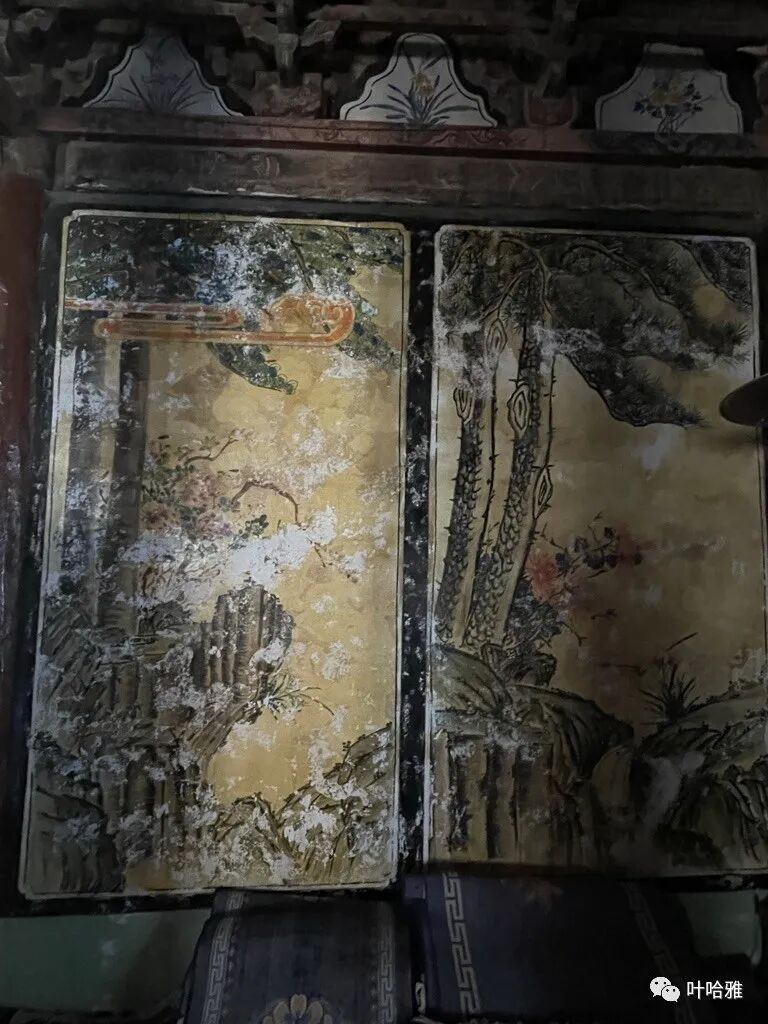
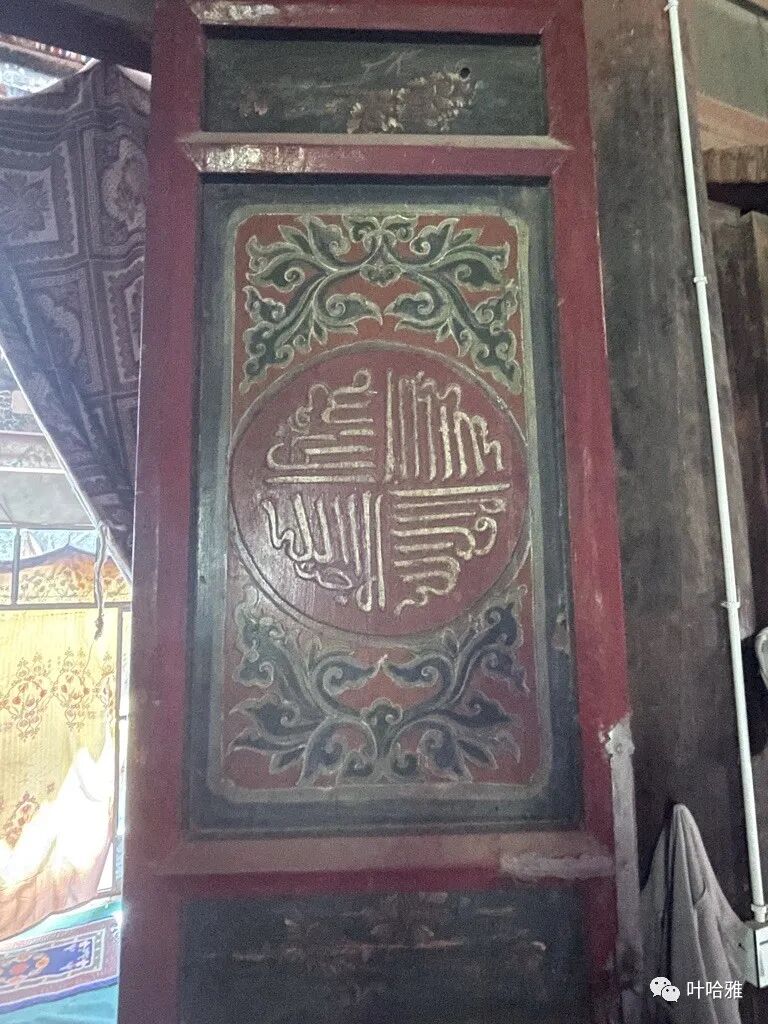
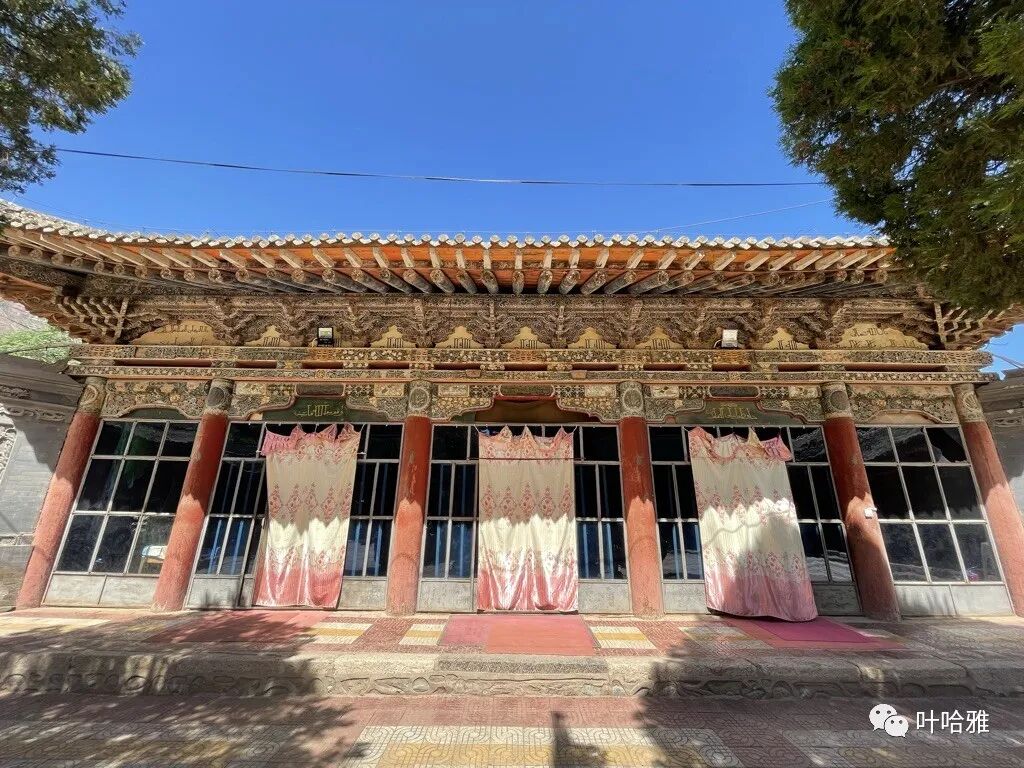
The prayer hall consists of a porch (juanpeng), a main hall with a ridged hip-and-gable roof, and a T-shaped kiln hall (yaodian). There is a treasure vase (baoping) in the middle of the main ridges of the hall and kiln hall, covering a building area of over 300 square meters.
The prayer hall has a convex-shaped floor plan and a post-and-lintel wooden frame. The beams and pillars are decorated with gold-painted powder, and the walls are decorated with floral patterns and Arabic scripture murals.
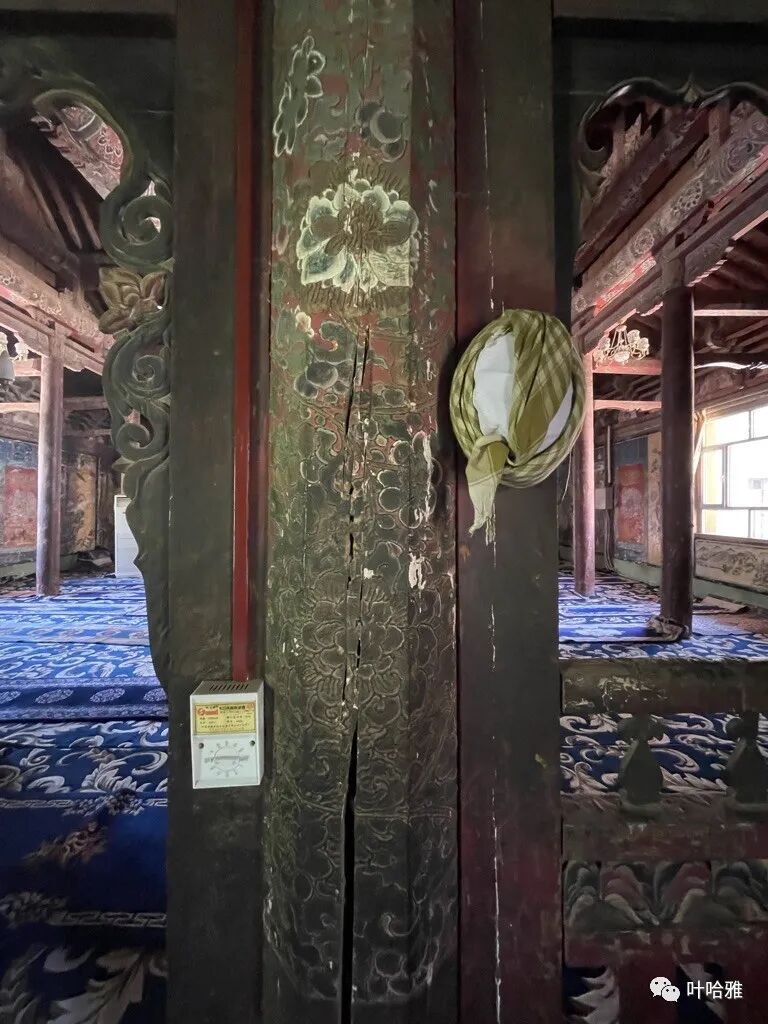
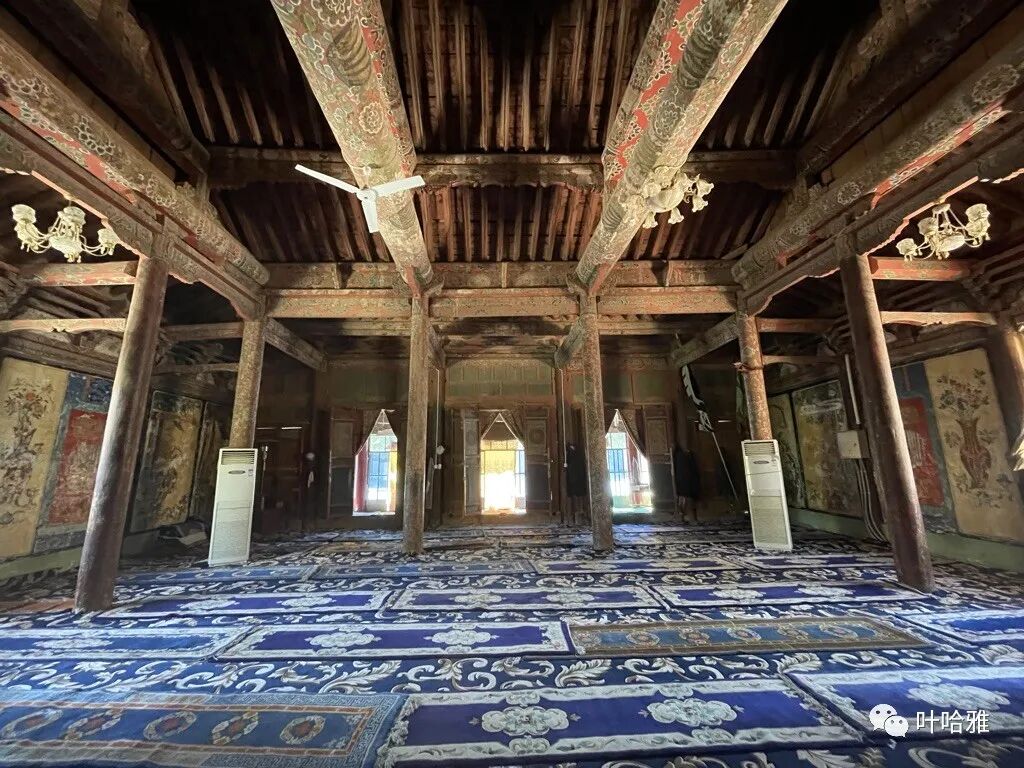
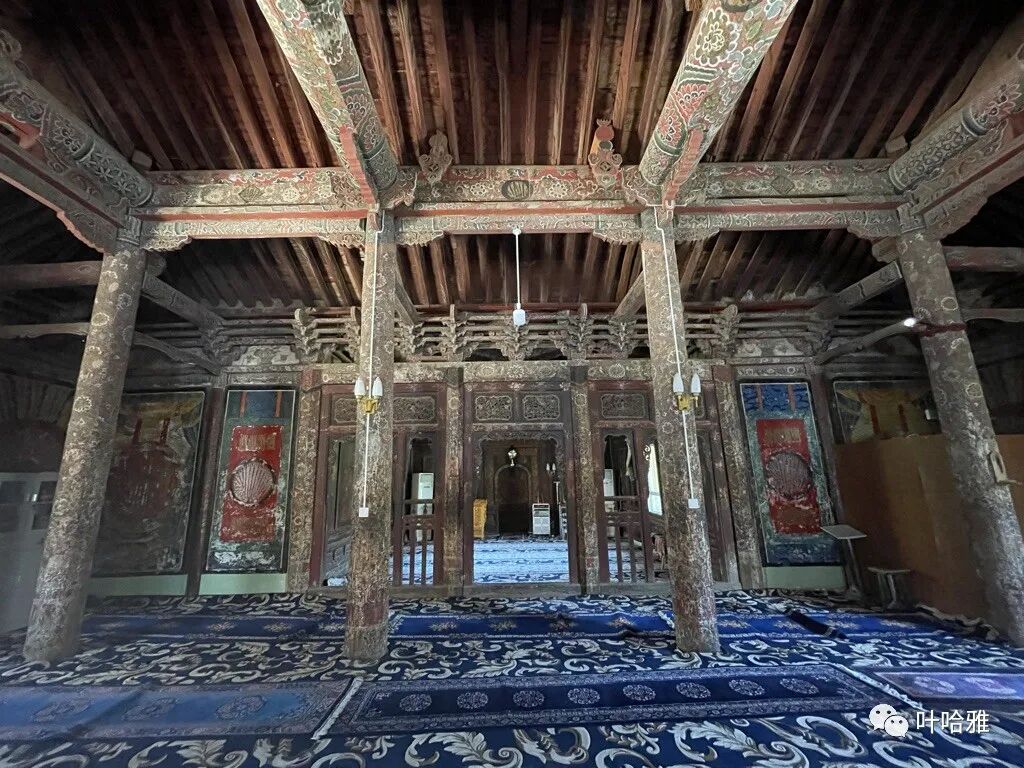
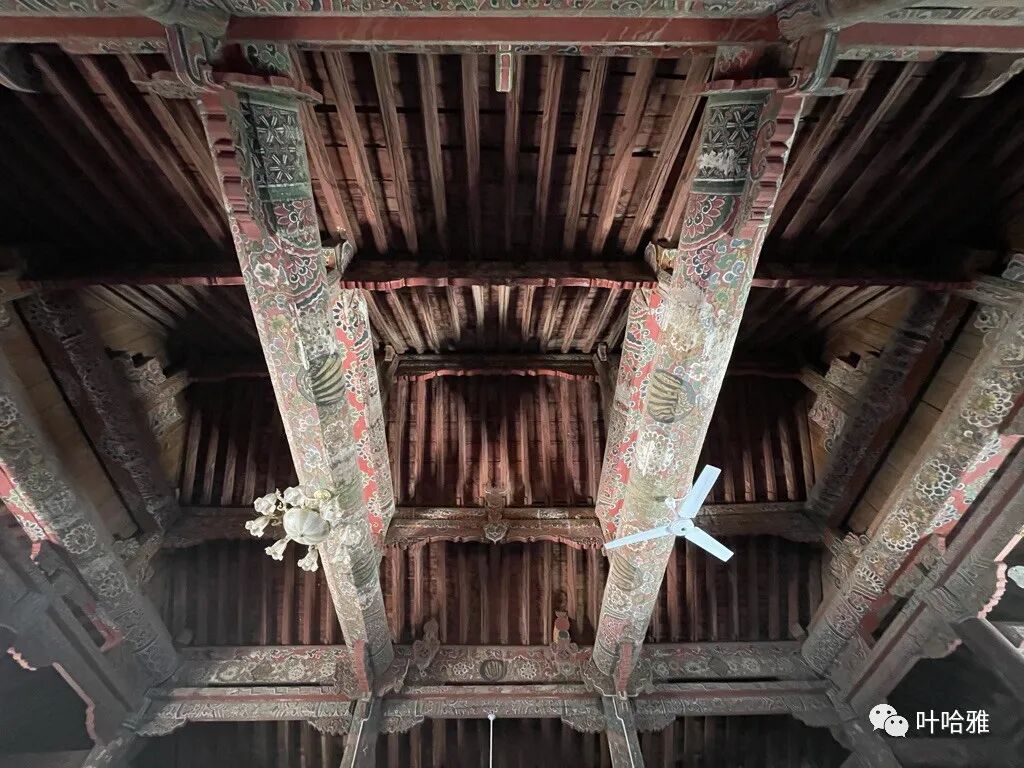
3. Zhangga Mosque
Zhangga Mosque is located in Zhangga Village, Baizhuang Township, Xunhua Salar Autonomous County. It was first built in the Ming Dynasty and covers an area of 2,275 square meters. During the Qianlong period of the Qing Dynasty, it was the main mosque for the Zhangga Gong, one of the eight Salar Gong districts.
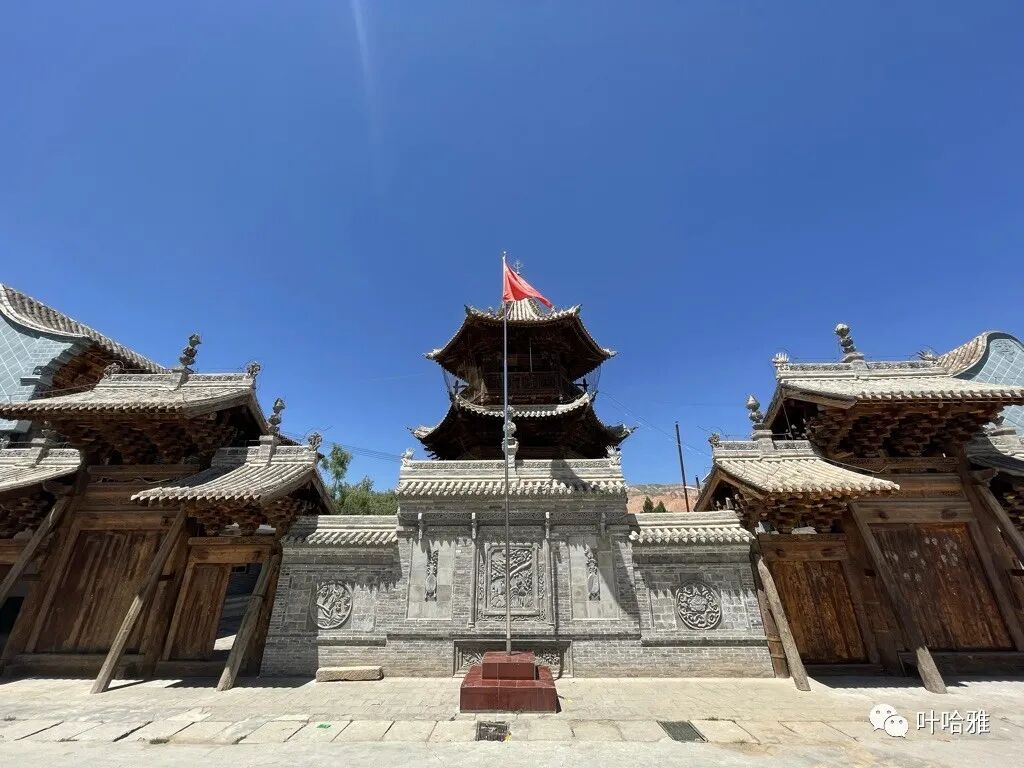
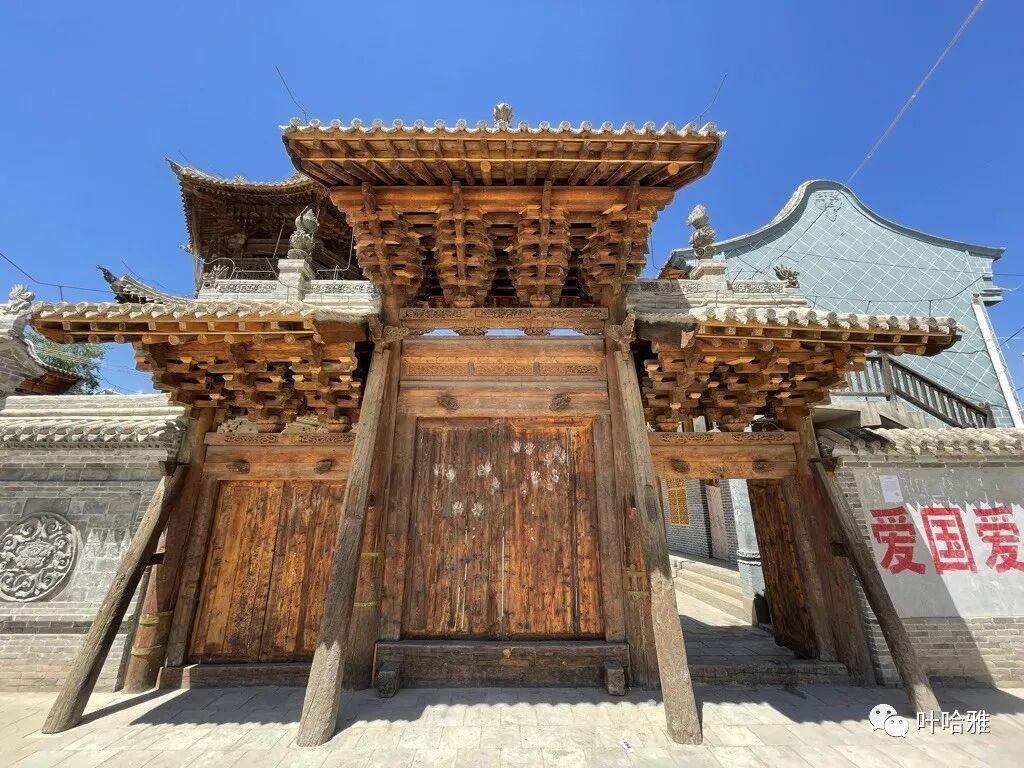
Zhangga Mosque has two gate towers facing east. They are in the style of a three-bay, four-pillar, three-roof archway, connected in the middle by a brick-carved spirit wall.
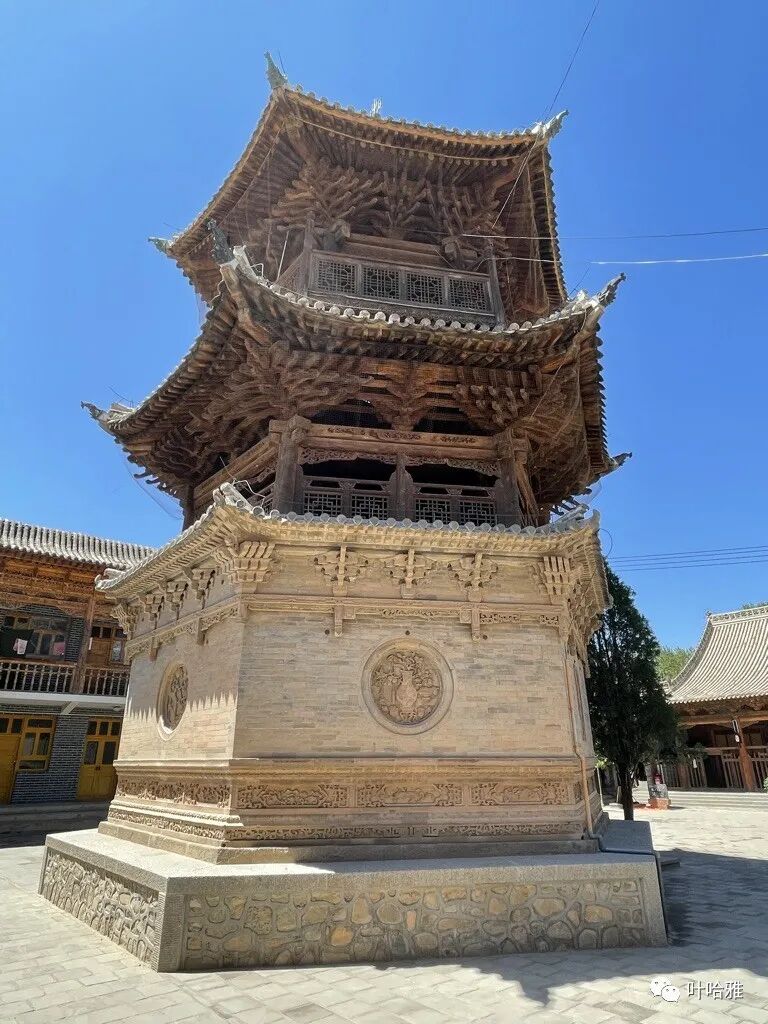
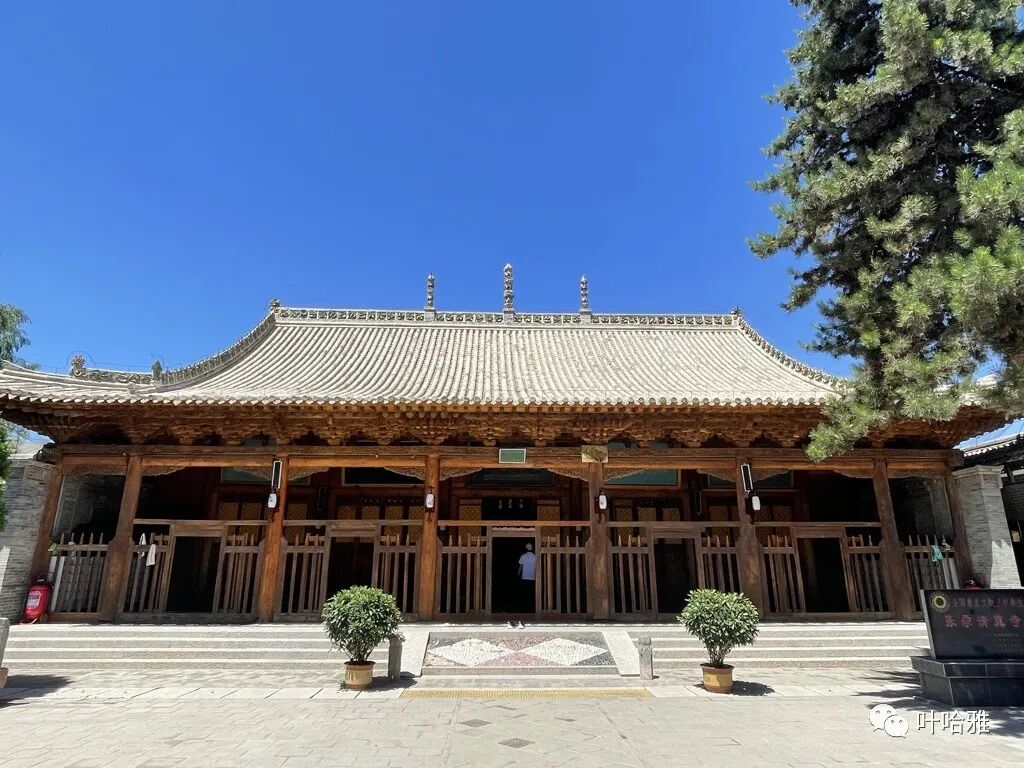
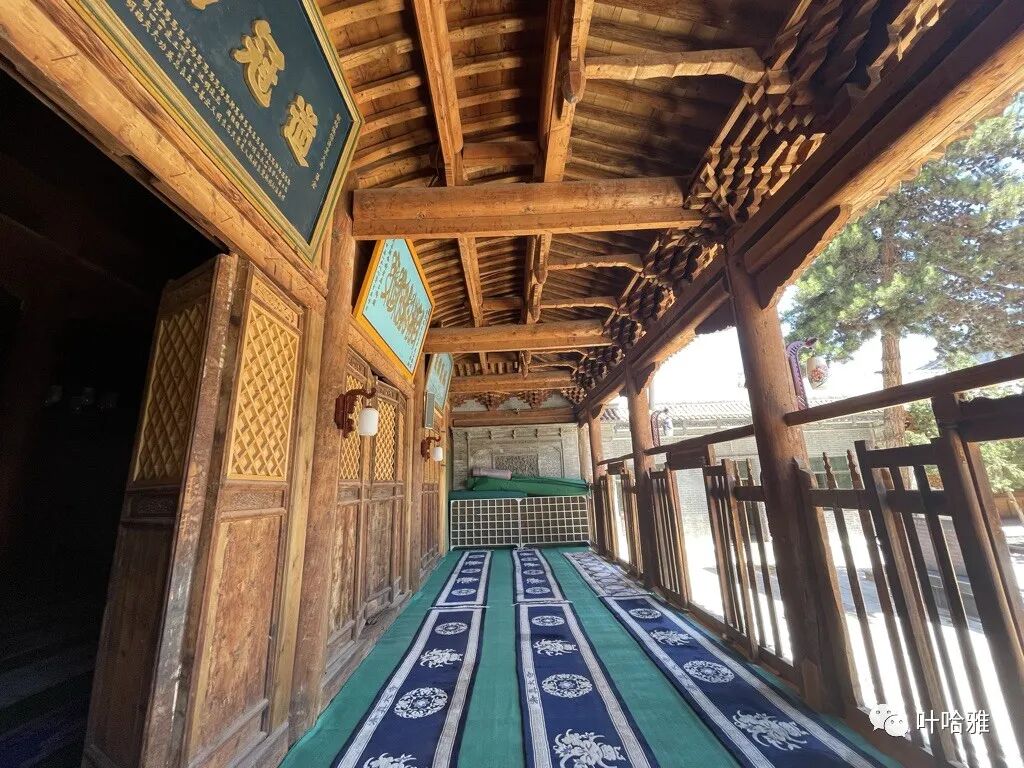
The prayer hall is a brick-and-wood structure with a building area of 700 square meters. It consists of a front hall, a middle hall, and a back hall. It is five bays wide and seven bays deep with a hip-and-gable roof. There are three treasure vases on the main ridge, and the eaves feature wooden carved brackets (dougong) and bird-shaped supports (quetie).
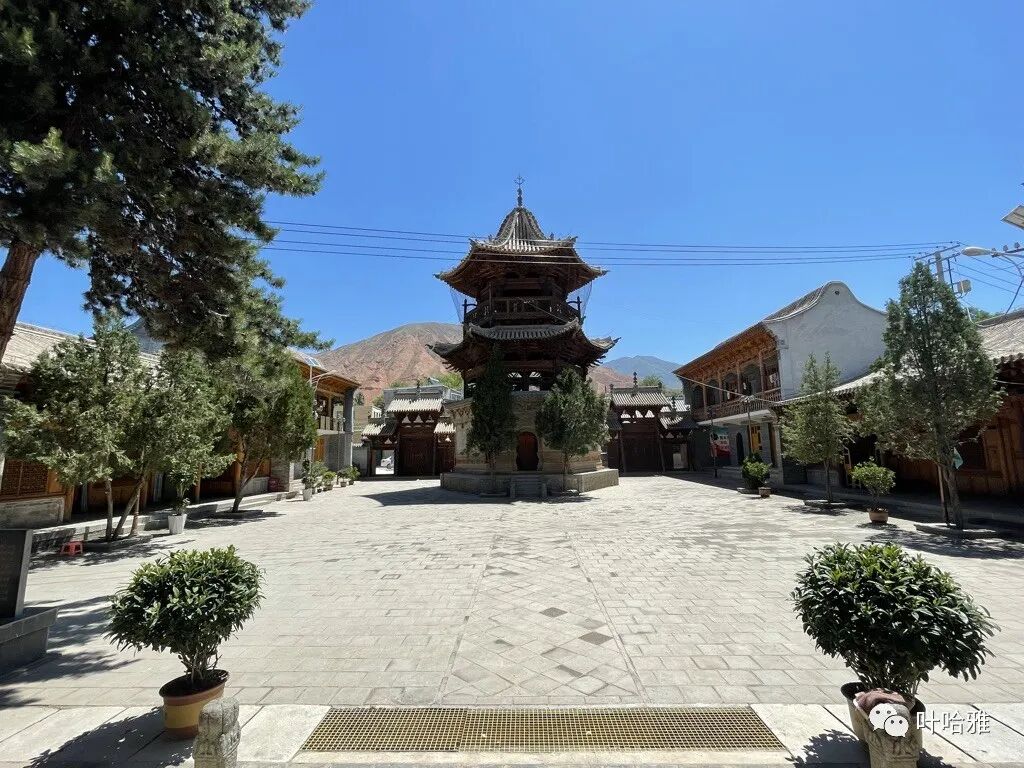
A new-style back hall was added to the west of the main hall. The original back hall became the middle hall, which is square-shaped. It features outward-extending brackets, and the beam frame is stacked into an inverted-bucket-shaped caisson ceiling with gorgeous wood carvings.
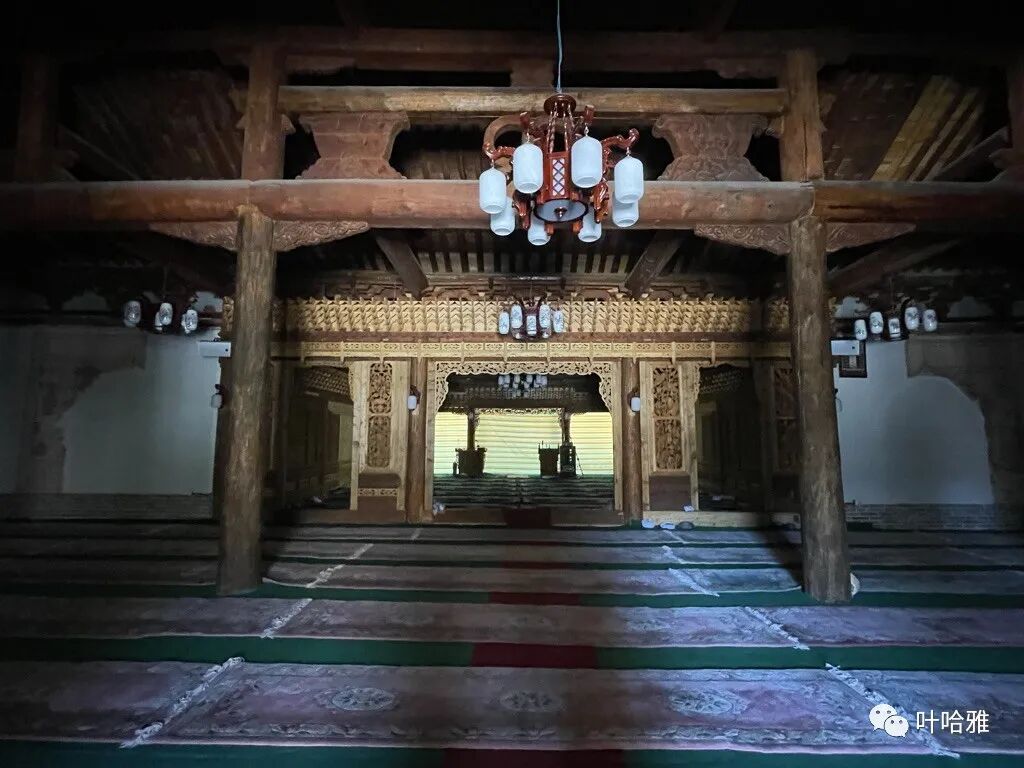
The prayer hall combines traditional hall style with Tibetan style. It is five bays wide and five bays deep, with large beams placed horizontally and carved with double-ring patterns.
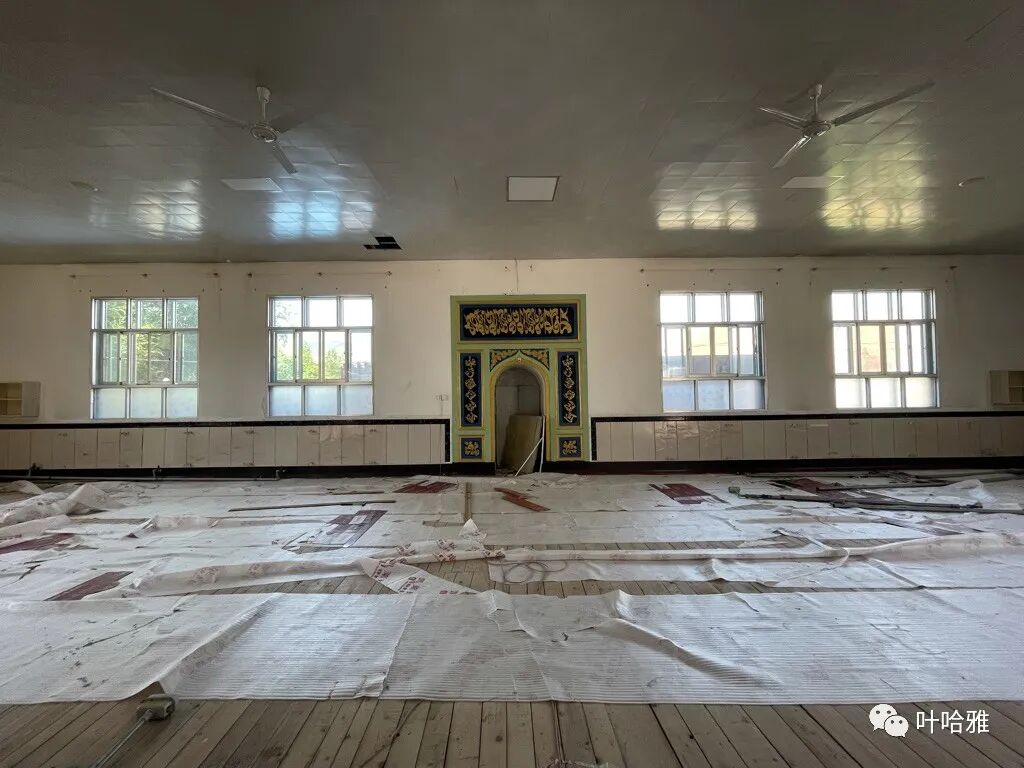
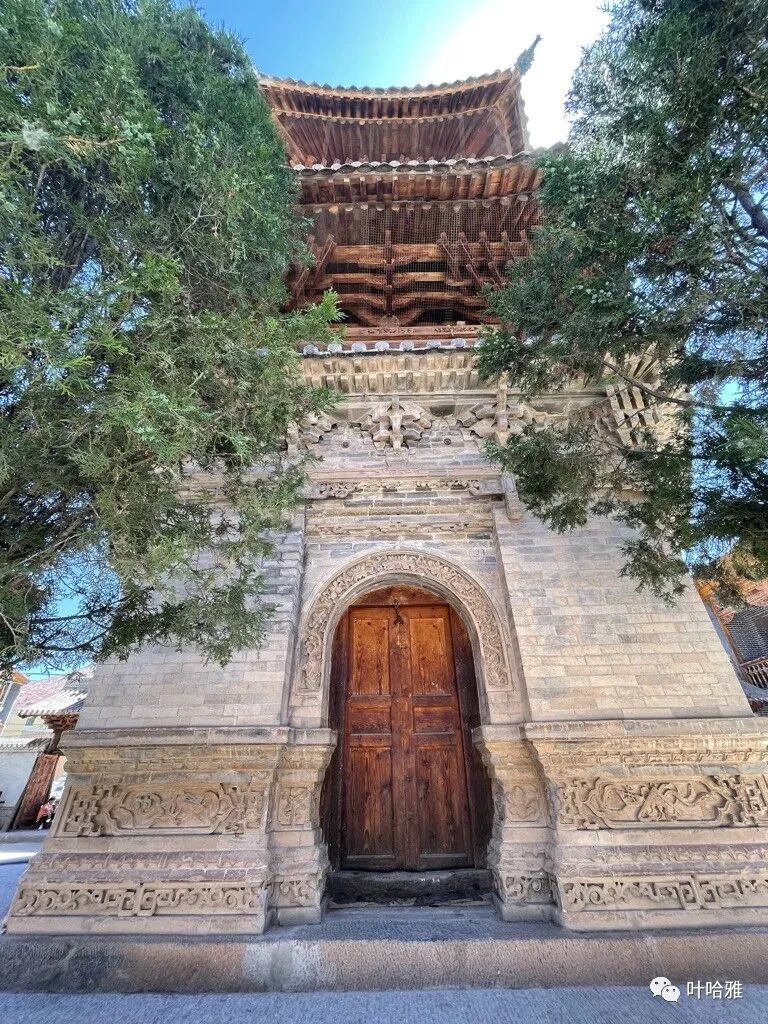
4. Kewa Mosque
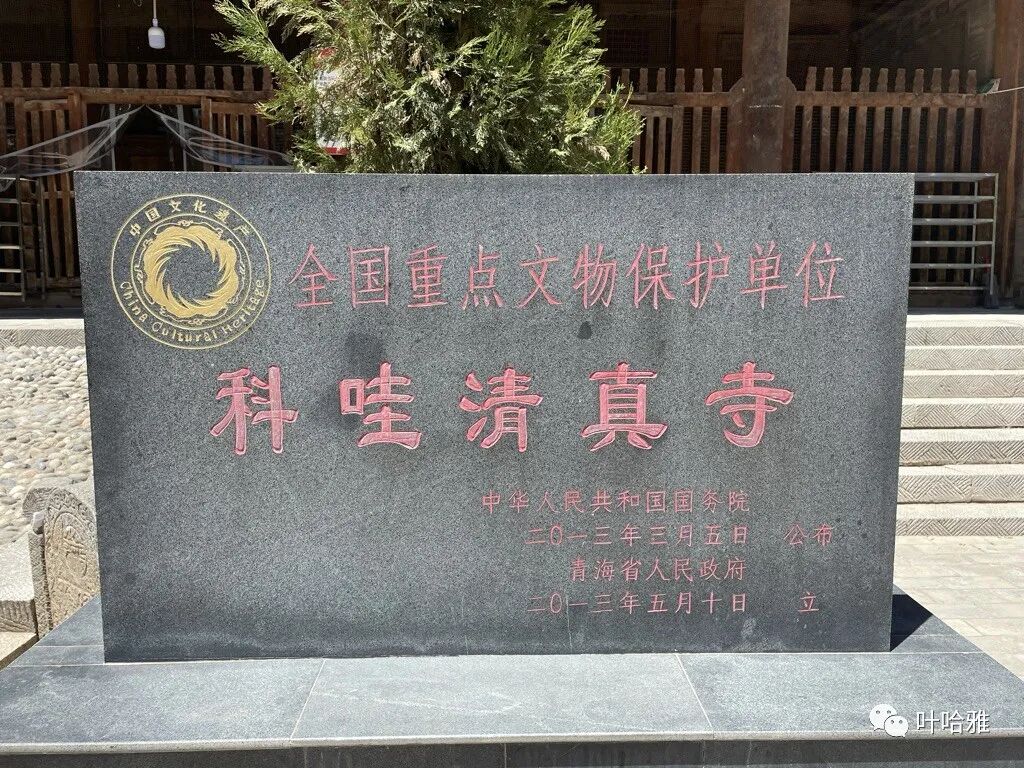
Kewa Mosque is located in Kewa Village, Baizhuang Town, Xunhua Salar Autonomous County, Qinghai Province. The mosque was first built in the first year of the Yongle reign of the Ming Dynasty (1403) and was renovated and expanded during the Qing Dynasty. Renovated and expanded in the 1980s. The mosque is laid out as a courtyard house, featuring a prayer hall, north and south lecture halls, a minaret, a bathing room, a screen wall, a gate tower, and a modern teaching building. It covers an area of 2,800 square meters, with a building area of 2,800 square meters. The prayer hall features carved beams and painted rafters, with wooden panels inlaid on the walls decorated with various patterns and scriptures, making it an Islamic building with Tibetan-style decorations. It was listed as a Major Historical and Cultural Site Protected at the National Level in 2013.
The new prayer hall of Kewa Mosque has been completed right next to the old one, and this mosque is the most prominent example of Tibetan-style architecture in Xunhua.
The main hall uses a post-and-lintel timber frame structure. The pillars are wrapped in finely carved wooden strips and are polygonal in shape, known as wrapped pillars (baoxiangzhu). The walls are inlaid with wooden panels painted with landscape and floral patterns. Between the main hall and the rear mihrab hall, there is a hollow-carved wooden partition featuring ruyi-shaped bracket sets (dougong) and hanging flower-shaped decorative canopies.
Kewa Mosque follows a courtyard layout. The prayer hall consists of a front hall and a rear mihrab hall. It is a brick-and-wood structure with five bays and a single-eave hip-and-gable roof.
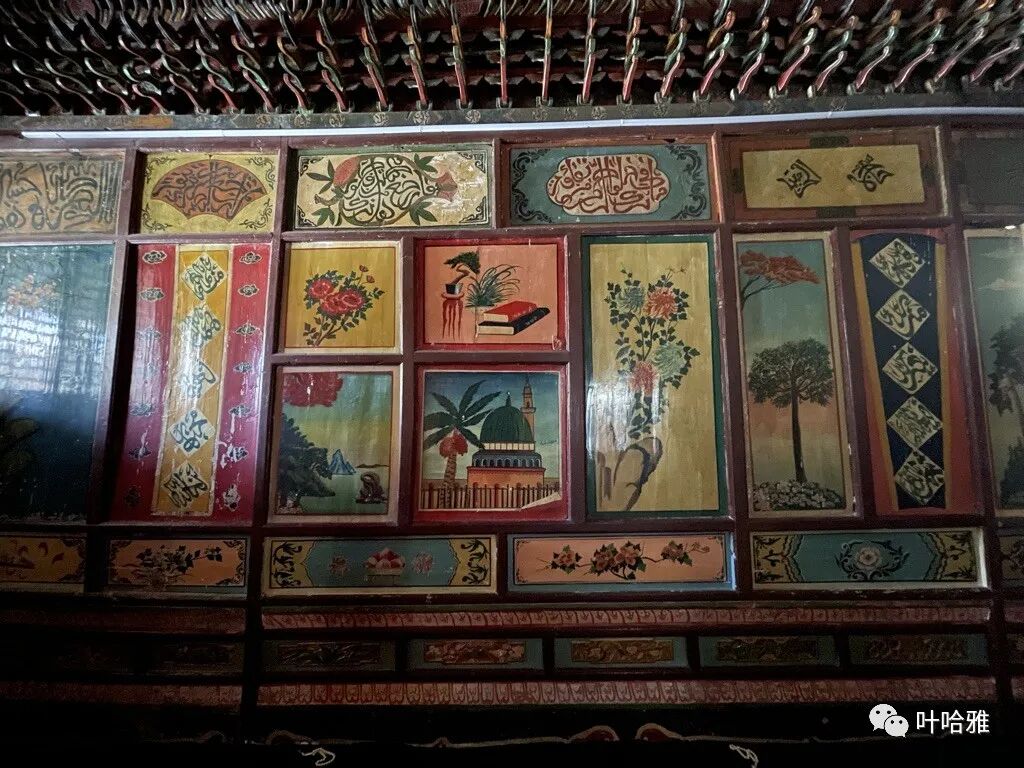
The murals feature scriptures and are decorated with landscapes and flowers, showing a strong Tibetan painting style.
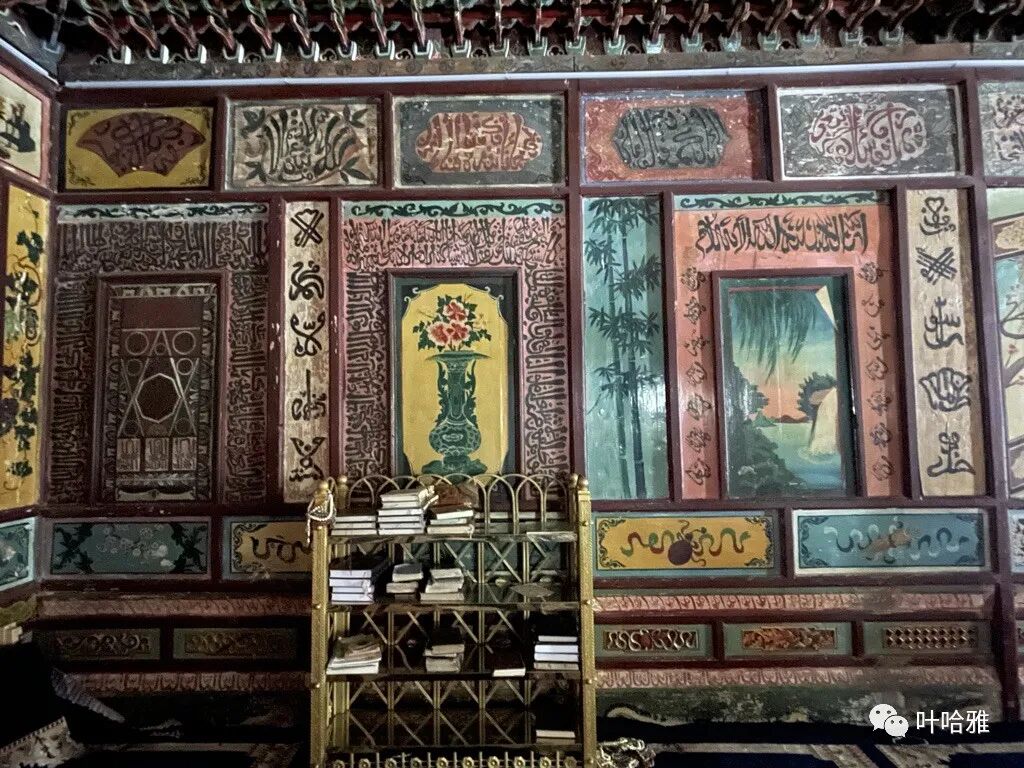
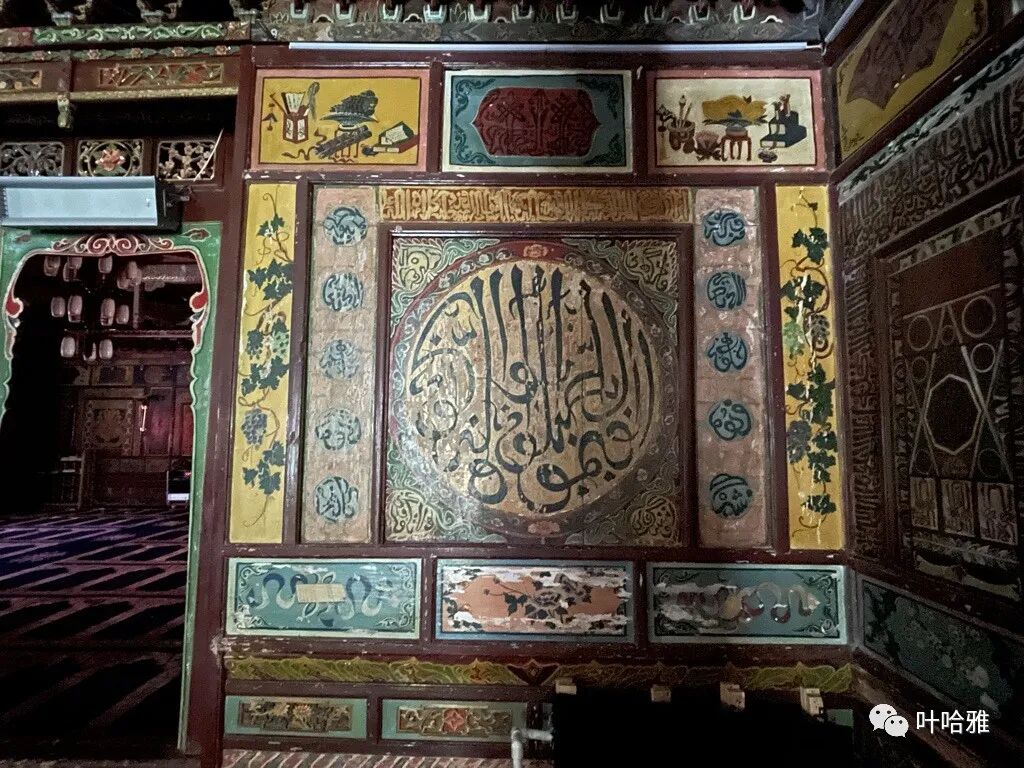
The walls of the rear mihrab hall are painted with Quranic verses in various scripts and the 99 names of Allah, while the beams are decorated with swirling patterns (xuanzi caihua), the center of the beams features gold scripture on a black background, and the pedestal (xumizuo) is carved and painted with patterns. The decorations feature a traditional Chinese Tibetan style.
On the east side of the courtyard stands a screen wall (yingbi) made of polished bricks with seamless joints, featuring a hip roof, brick bracket sets, and a pedestal base, with a brick carving of a dragon and phoenix symbolizing good fortune in the center.
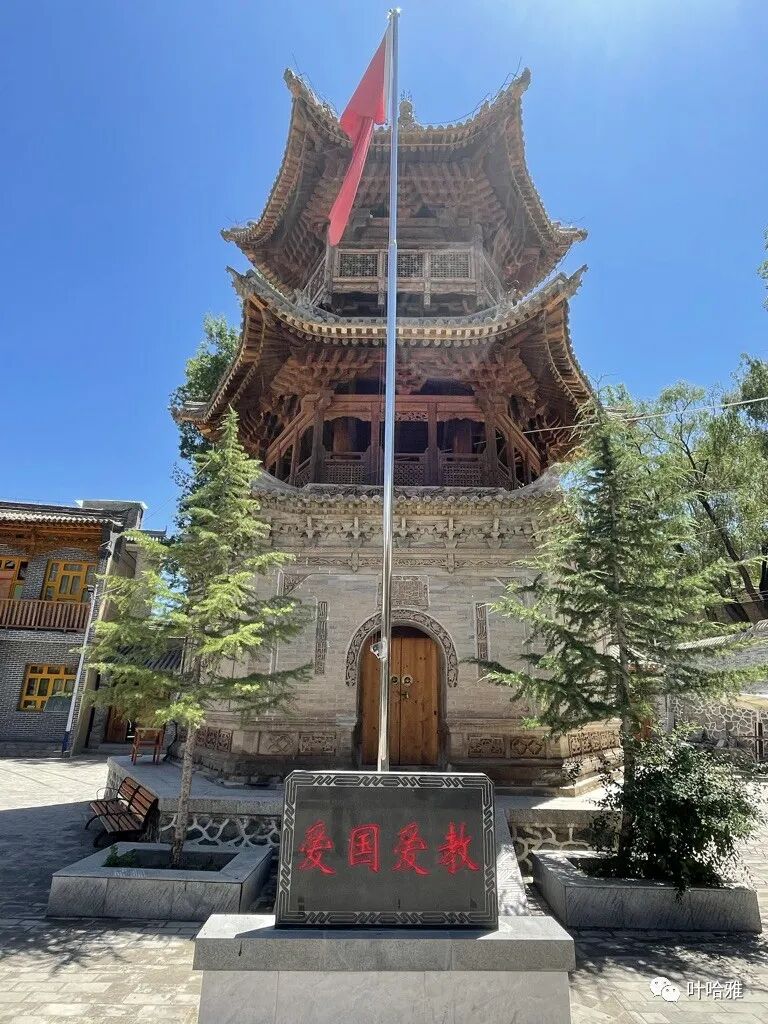
The three-story minaret has a brick base with single-slope doors on the east and west sides. The second and third floors are wooden pavilions with double-eaved hexagonal pointed roofs.
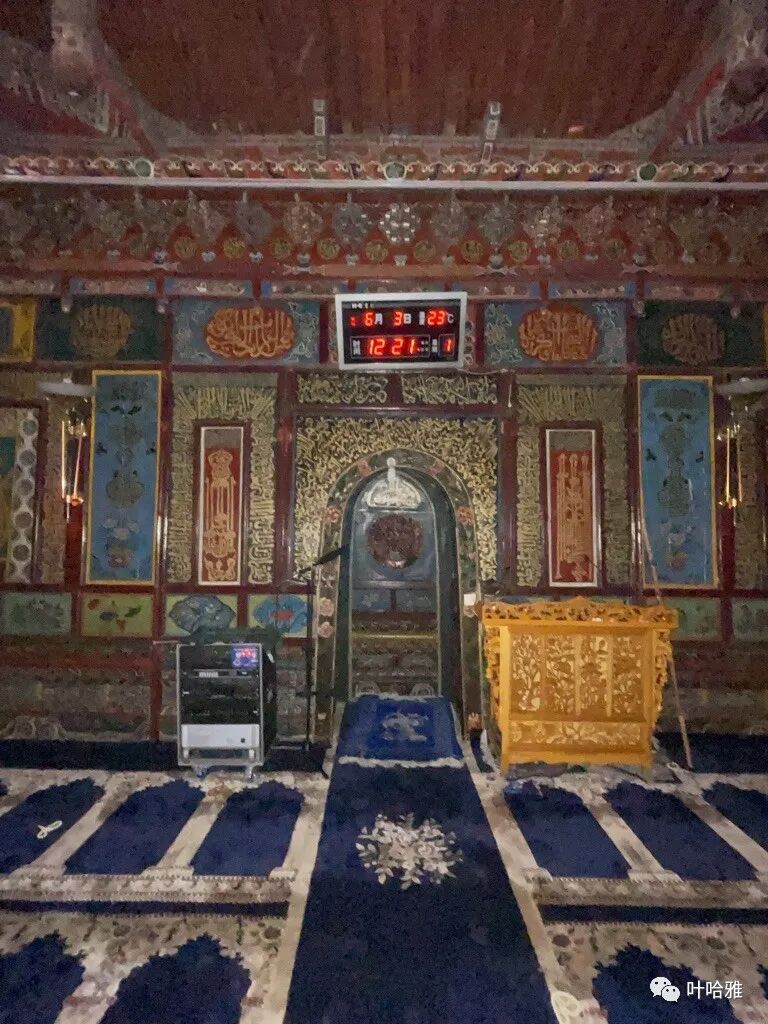
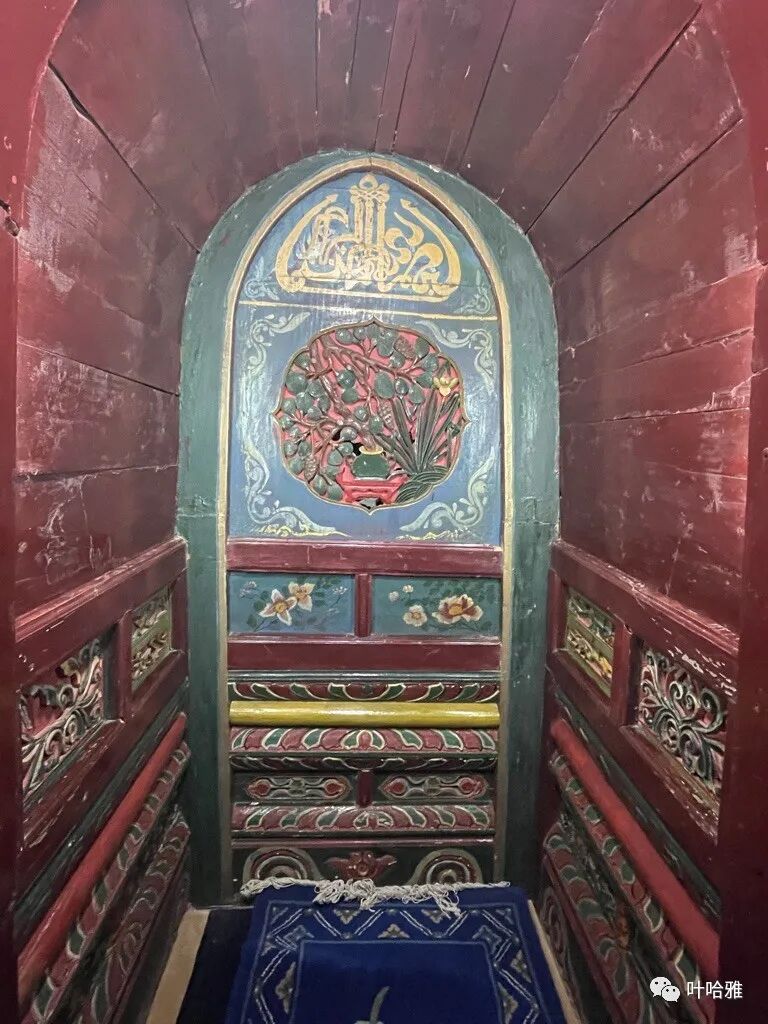
5. Tashapo Mosque
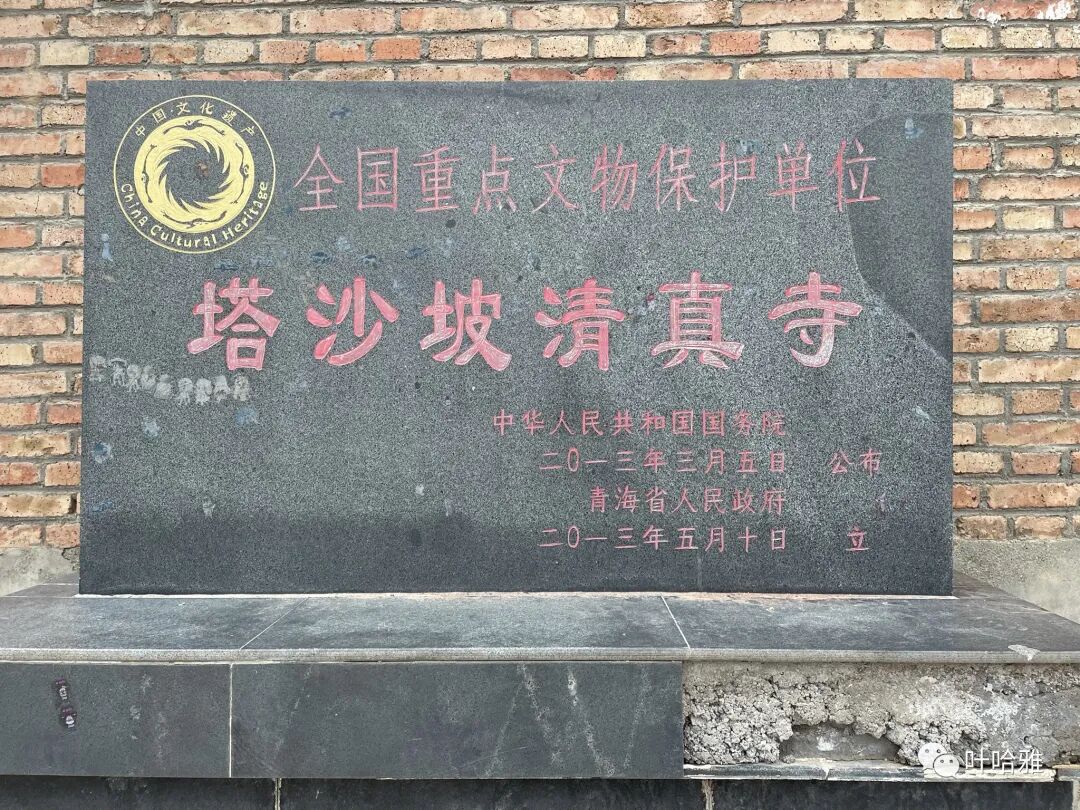
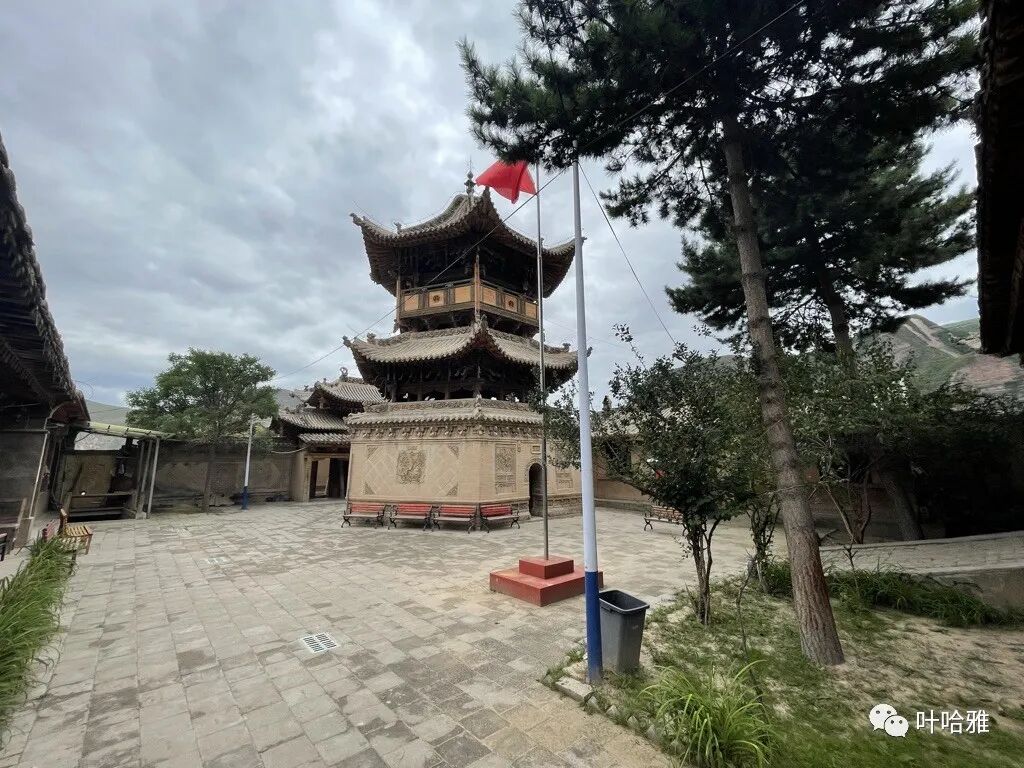
Tashapo Mosque is in Tashapo Village, Qingshui Township, Xunhua Salar Autonomous County, Qinghai Province. The mosque was first built in 1480 during the Ming Dynasty and rebuilt in 1755 during the Qing Dynasty. The mosque faces east and follows an east-west axis, featuring a screen wall, a memorial archway, a minaret, and a prayer hall, with scripture halls and bathing rooms on the north and south sides. The mosque covers 1,840 square meters with a building area of 537 square meters. In 2013, it was listed as a Major Historical and Cultural Site Protected at the National Level as part of the ancient mosque building complex of the Salar people in Xunhua.
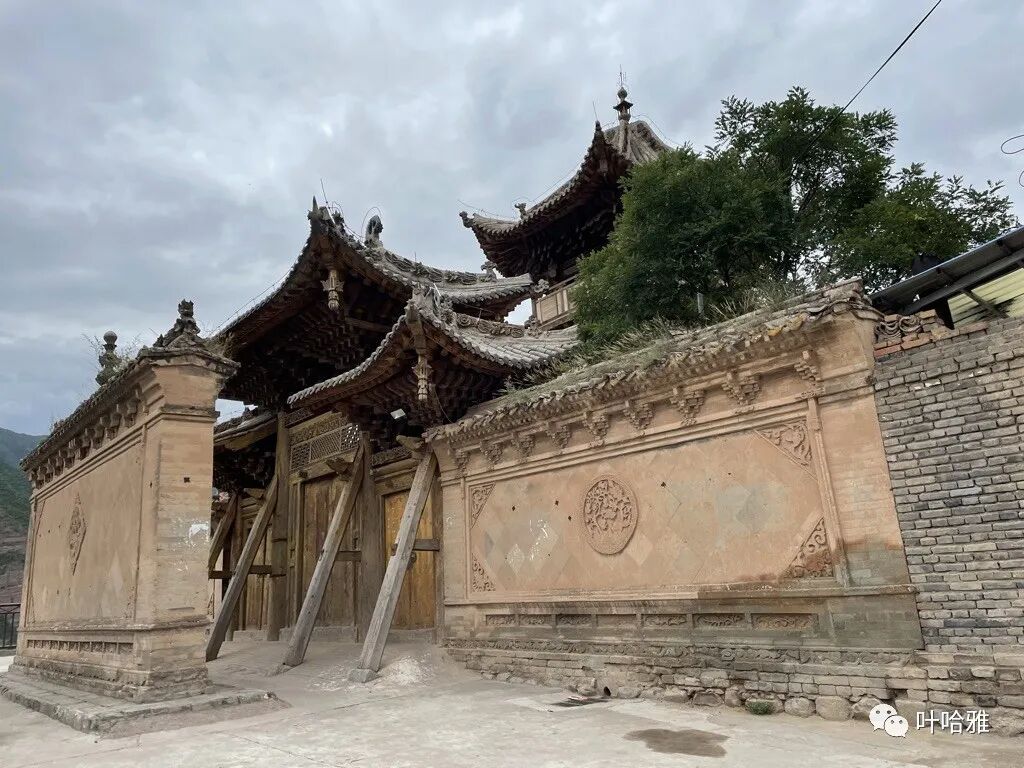
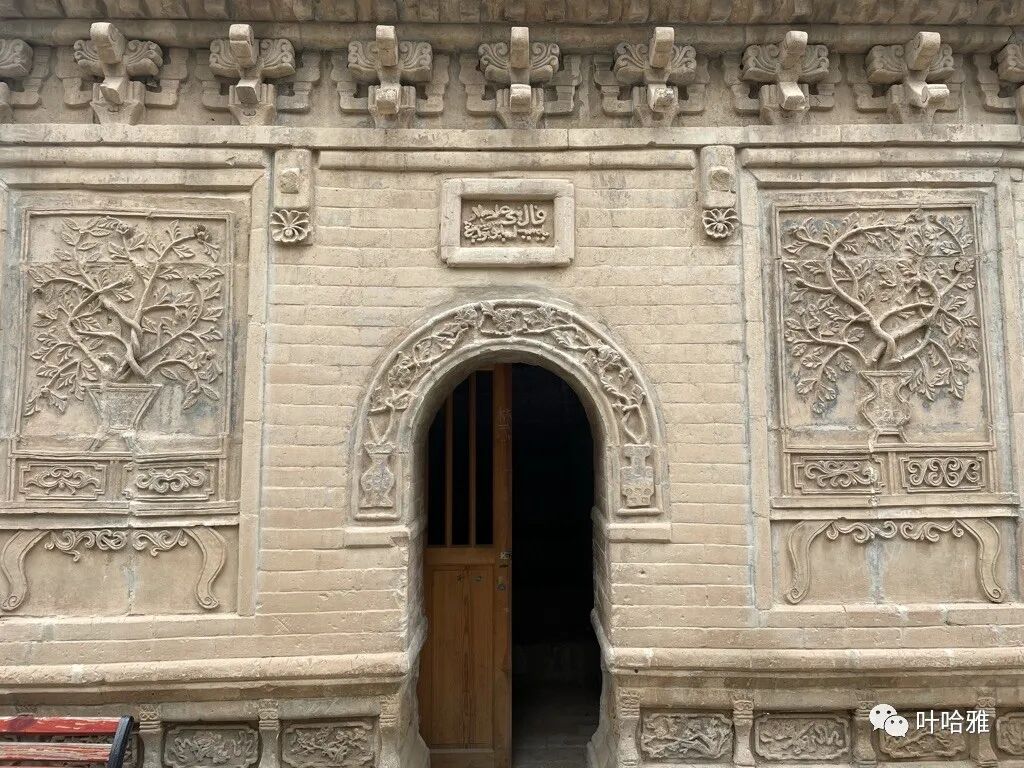
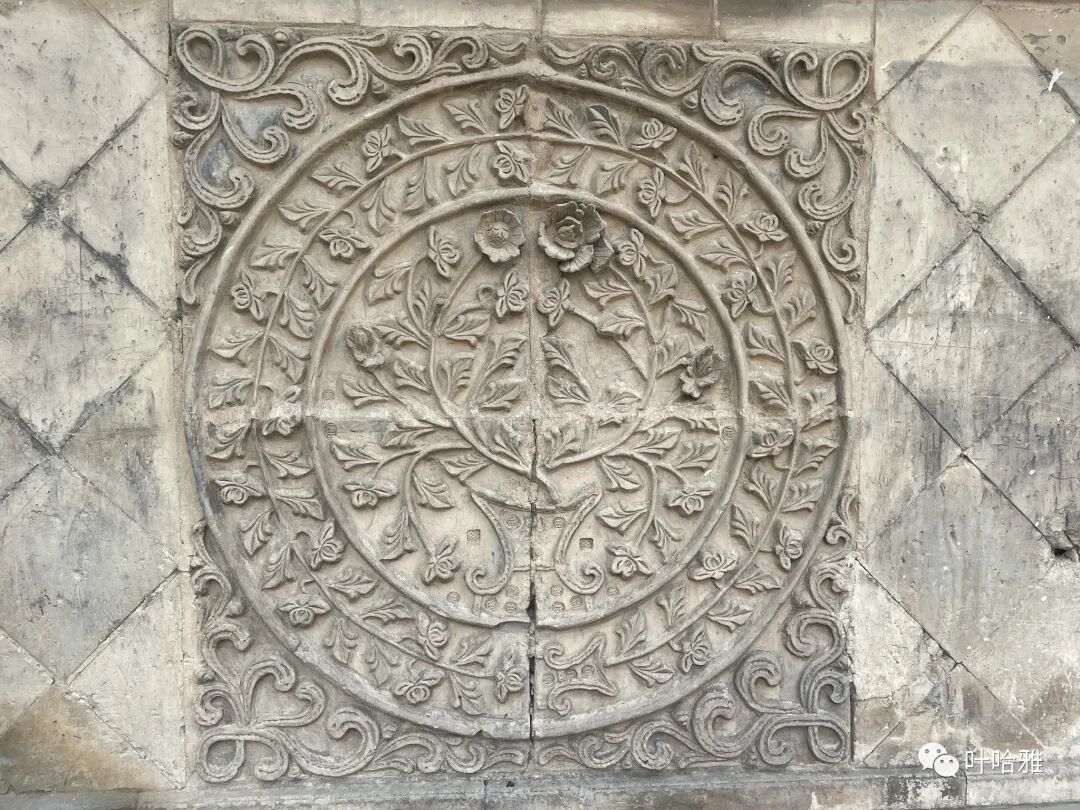
The gate tower of Tashapo Mosque has three bays, four pillars, and three stories, with a hip roof and blue brick ridges. There are brick-carved splayed walls on both sides of the archway. A straight screen wall stands in front of the gate.
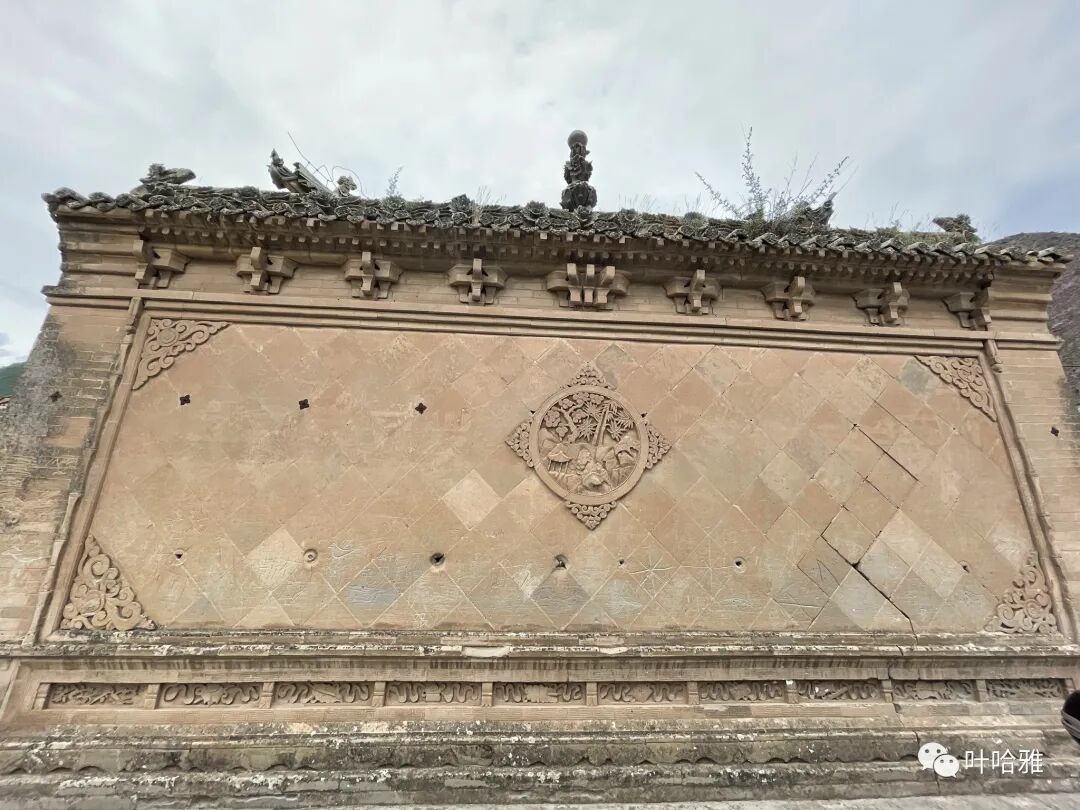
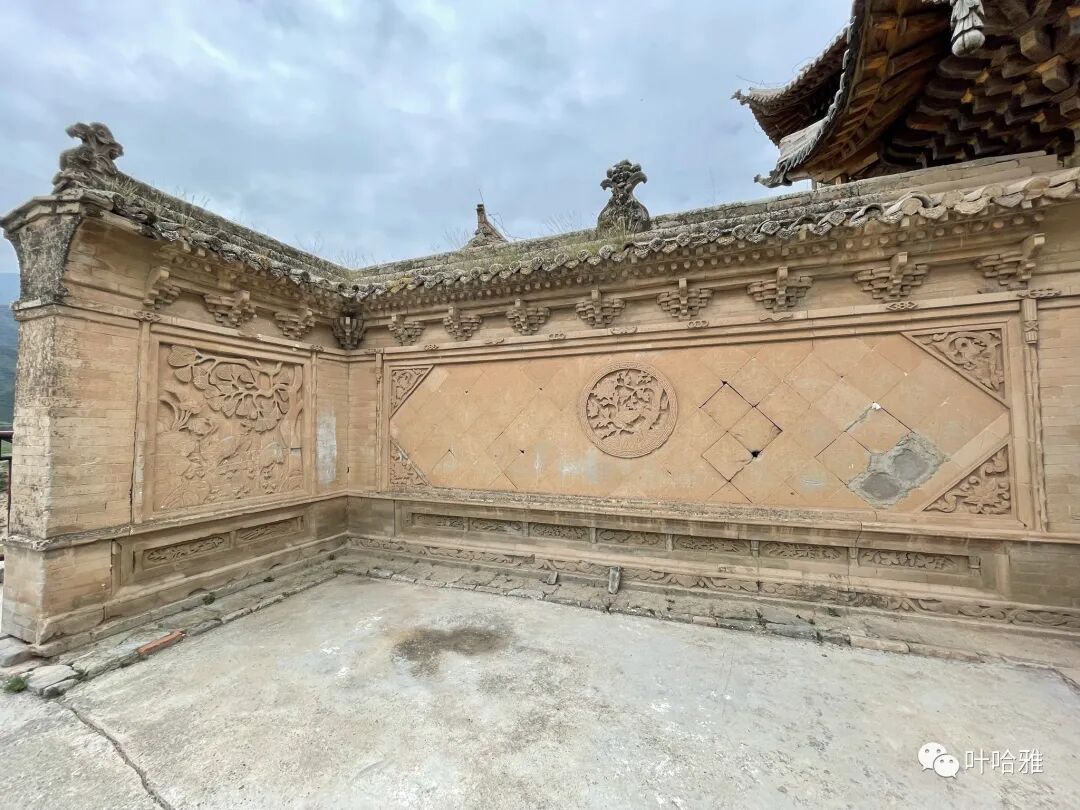
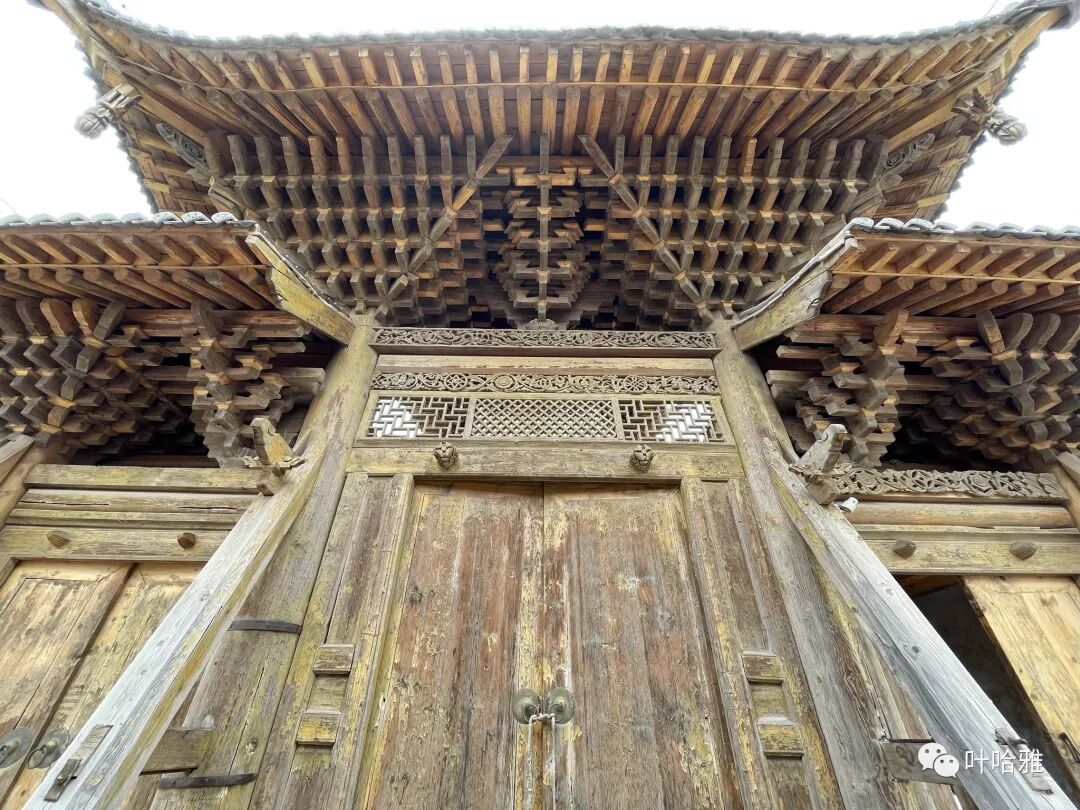
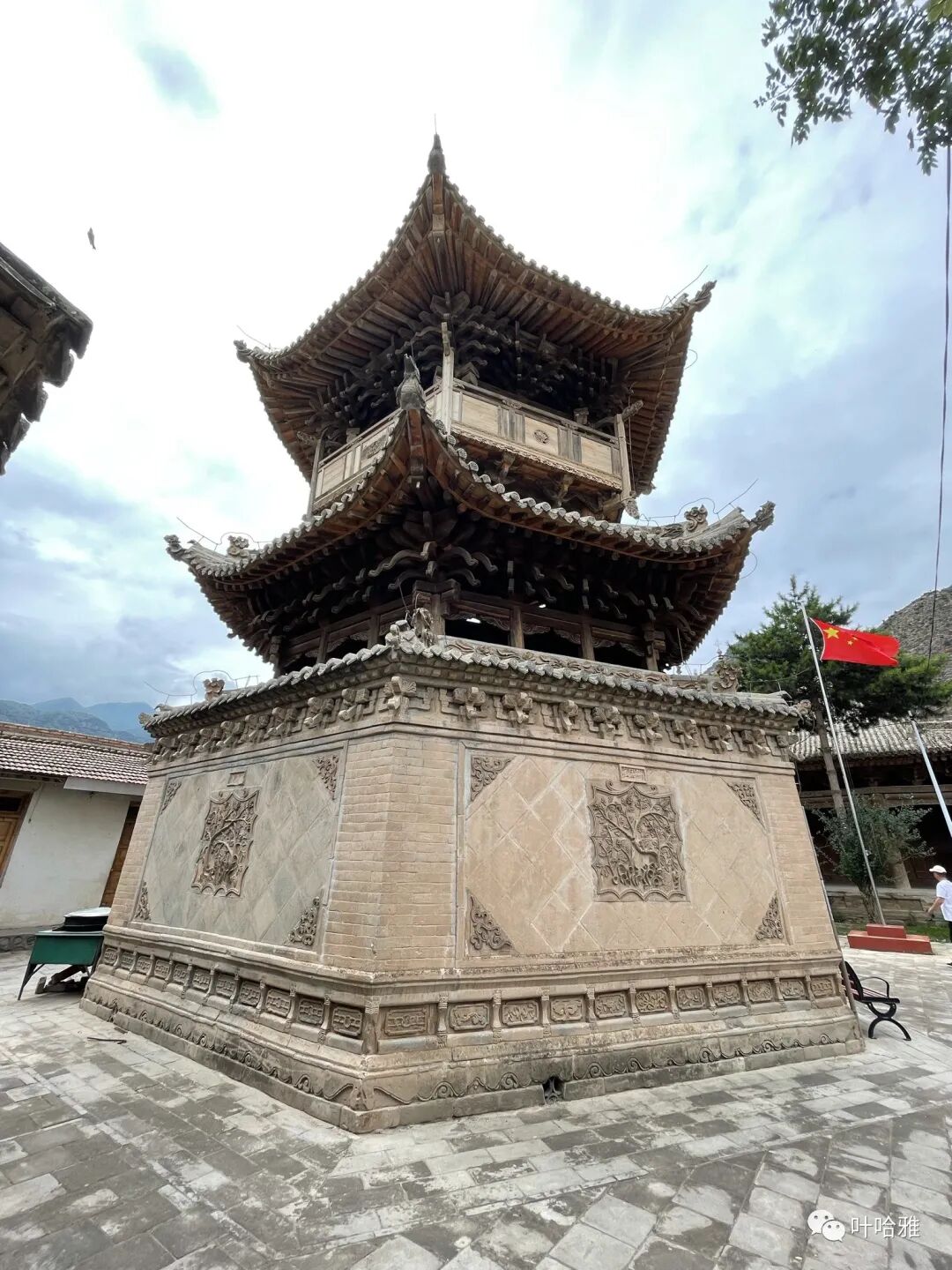
The three-story minaret has a brick base with a solid adobe interior and brick carvings on the walls. The second and third floors are wooden pavilions with double-eaved hexagonal helmet-shaped roofs.
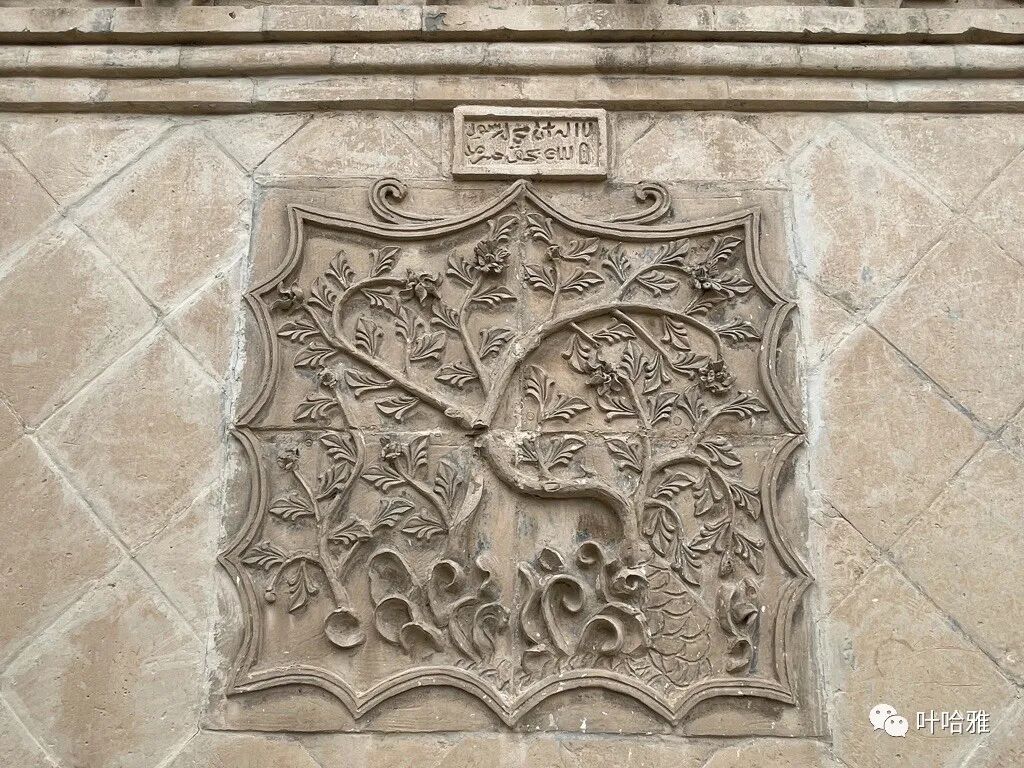
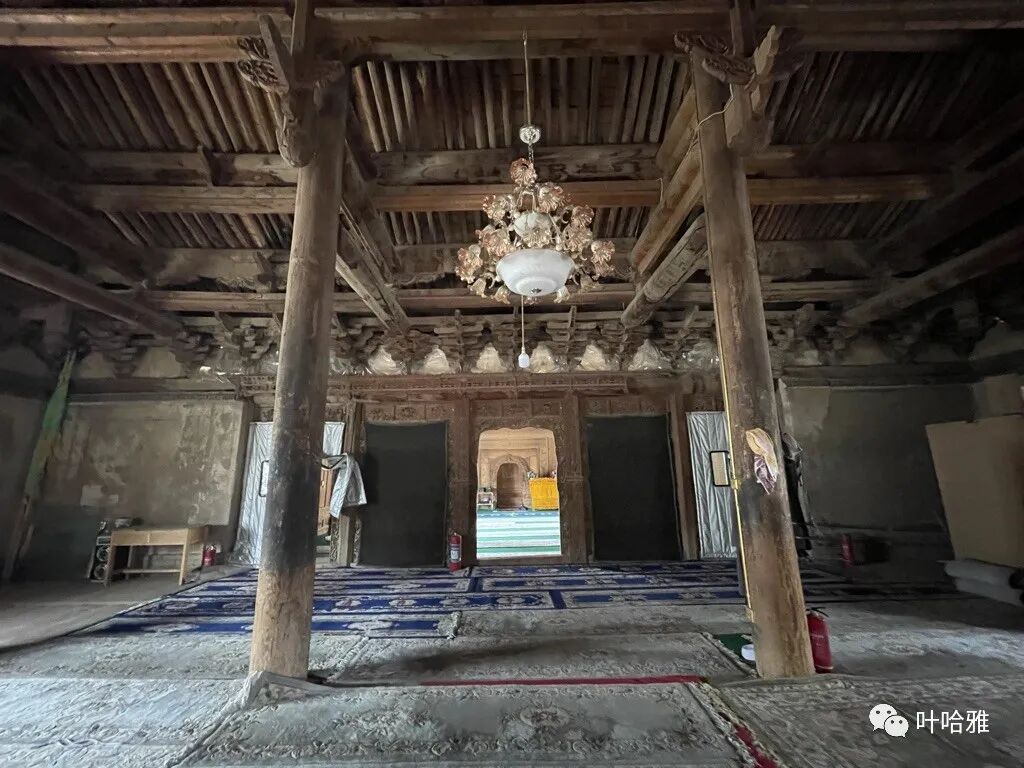
The prayer hall is a Ming Dynasty structure with a convex-shaped floor plan, with five bays, a single-eaved hip-and-gable roof, bracket sets, and a front porch. The mihrab hall has a T-shaped roof with upturned eaves.
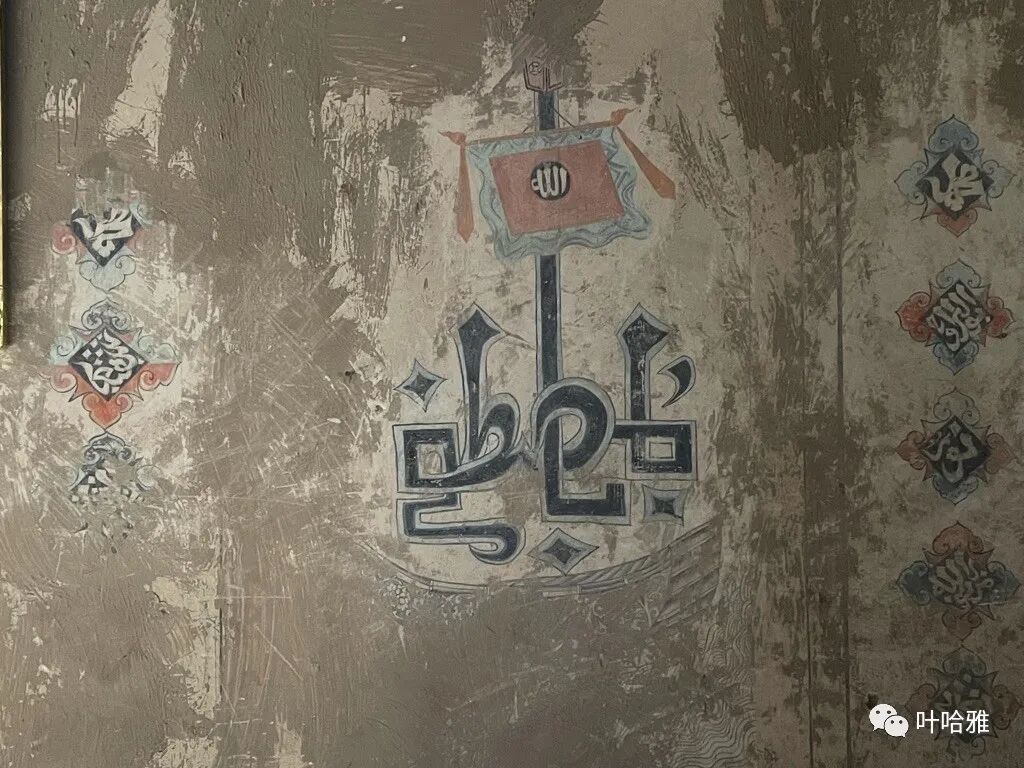
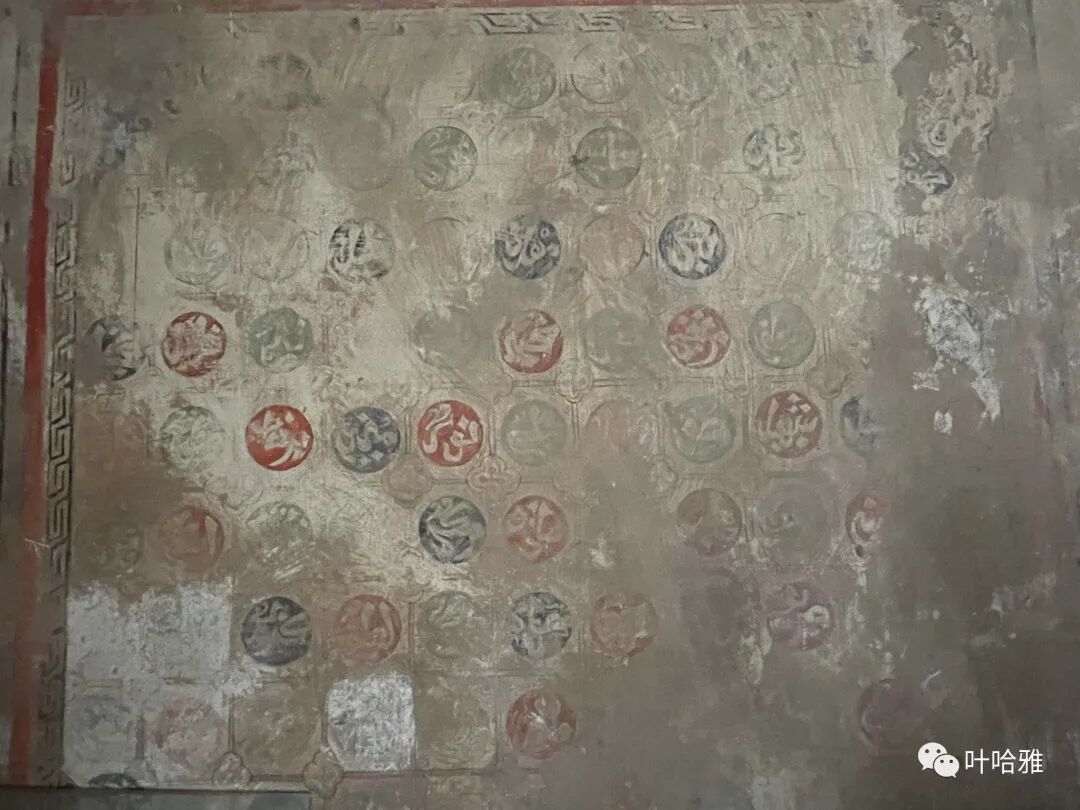
The prayer hall covers 250 square meters and uses a raised-beam wooden frame with natural wood finishes, giving it a simple and elegant look. The north and south walls are decorated with ancient murals of scripture. The mihrab hall features a grid-pattern beam frame.
6. Suzhi Mosque
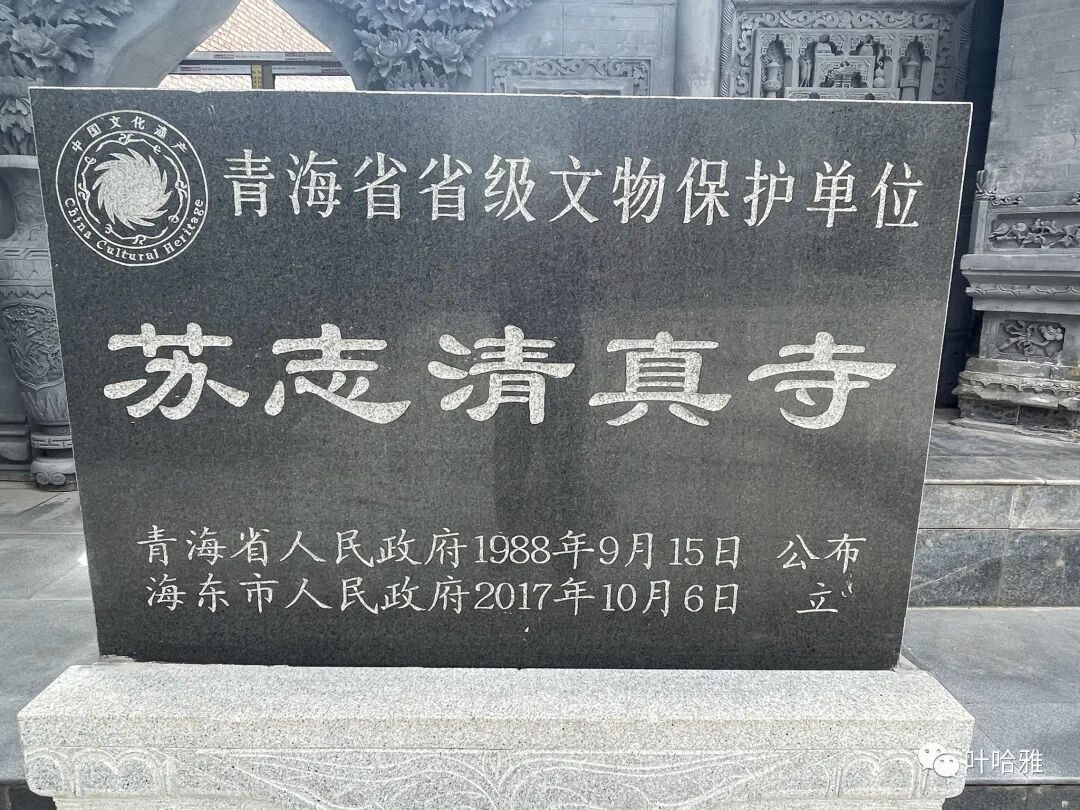
Suzhi Mosque is located in Suzhi Village, Chahandusi Township, Xunhua County, Qinghai Province. The mosque was first built in the fourth year of the Tianshun reign of the Ming Dynasty (1460) and was renovated and expanded during the Qing Dynasty. It has a square courtyard layout with a traditional four-sided courtyard design. The brick-and-wood buildings include a prayer hall, north and south scripture halls, a minaret, a gatehouse, a bathing room, and a screen wall. The prayer hall and scripture halls date back to the Qing Dynasty. In 1981, local elders donated funds for a large-scale renovation of the mosque. The mosque currently covers an area of 2,010 square meters, with a building area of 800 square meters.
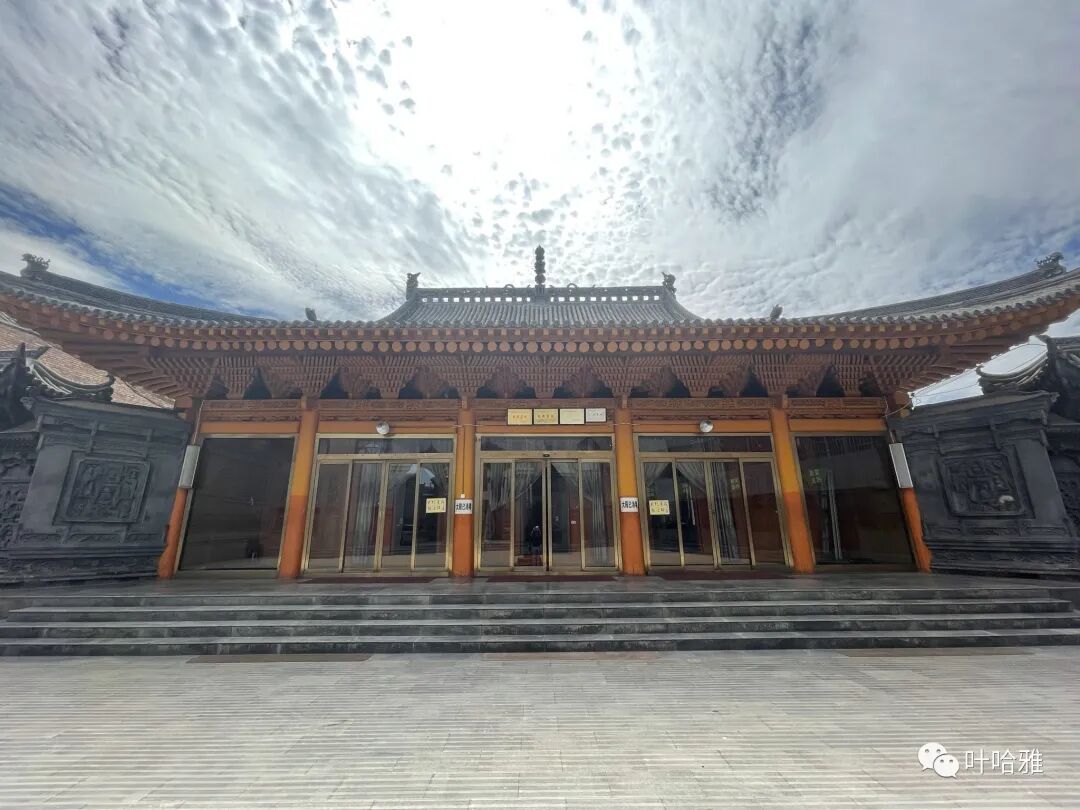
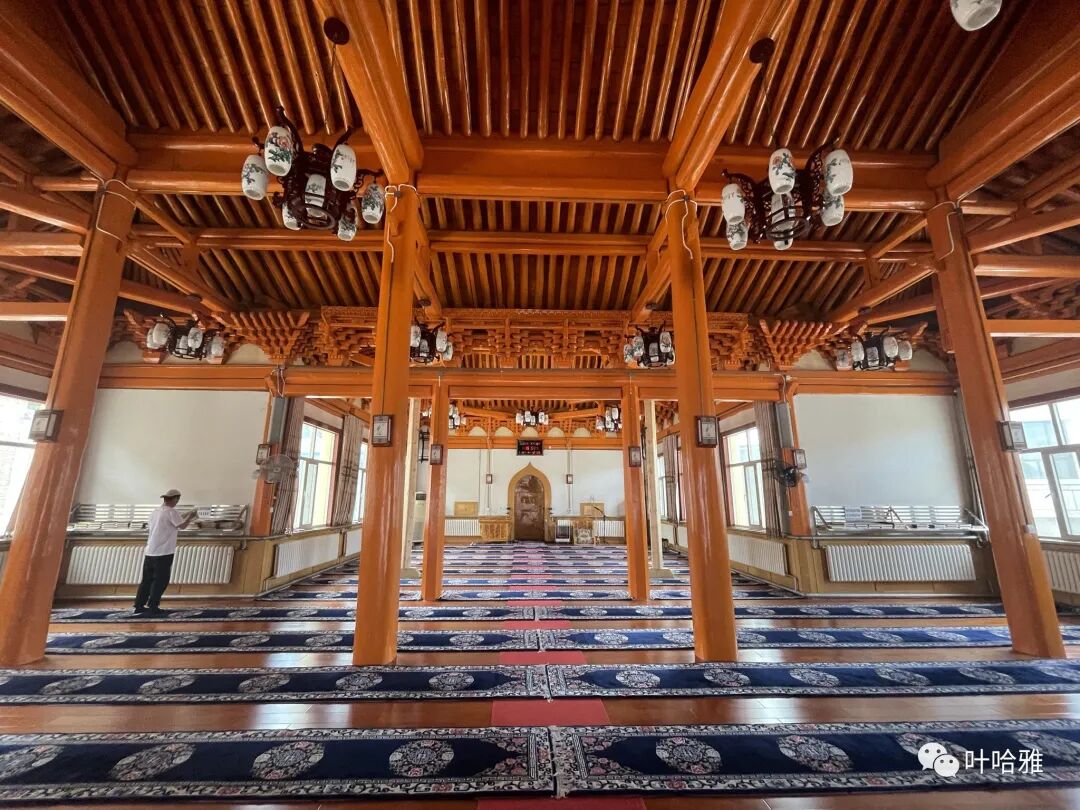
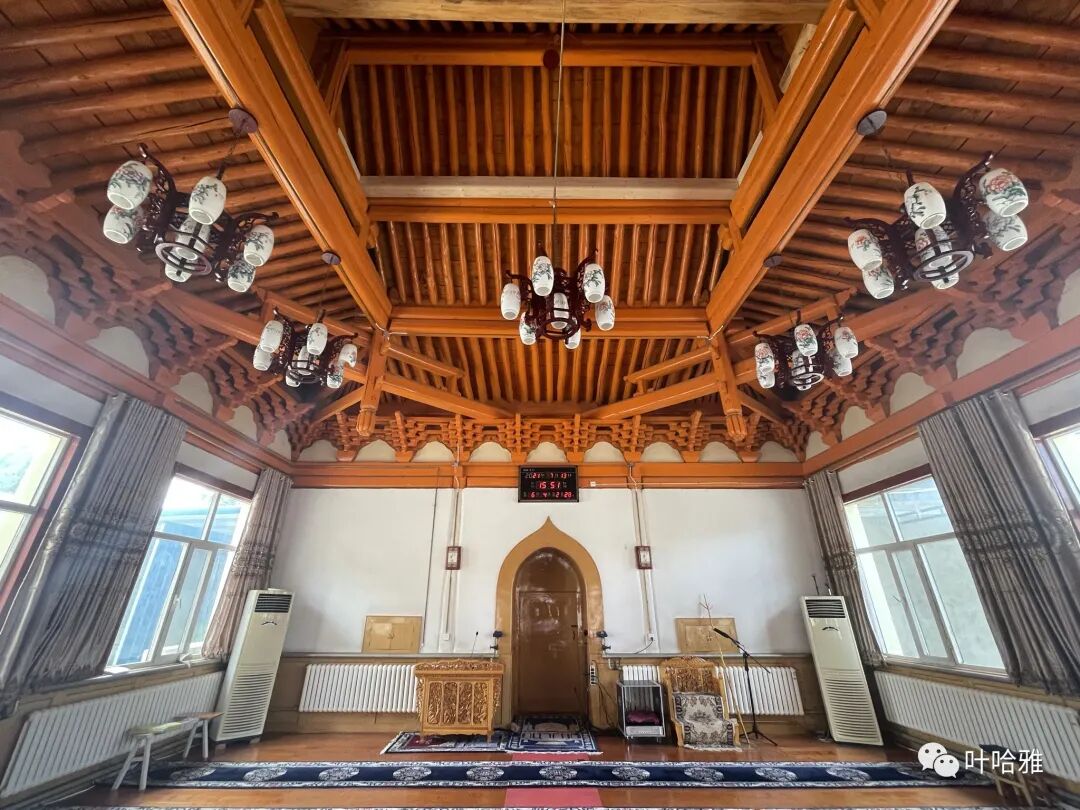
The prayer hall of Suzhi Mosque has five bays and a single-eave hip-and-gable roof with upturned corners. Aluminum alloy glass doors and windows are installed between the front eave pillars. There are brick-carved splayed walls on both sides. The prayer hall consists of a front hall and a back hall. The roof ridge features three treasure vases, and the lower part of the walls is inlaid with ceramic tiles. The front hall has five bays and the back hall has three, forming a T-shape. The structure uses five-purlin beams and a traditional raised-beam timber frame. Under the eaves of the prayer hall are five-step bracket sets, and the wood carvings on the beams are exquisite. The scripture hall has five bays, with three bright rooms and two dark rooms. It has a front corridor, and the beams are carved with floral patterns. It features a single-slope roof with a ridge and a hard-mountain roof style.
7. Quran Museum
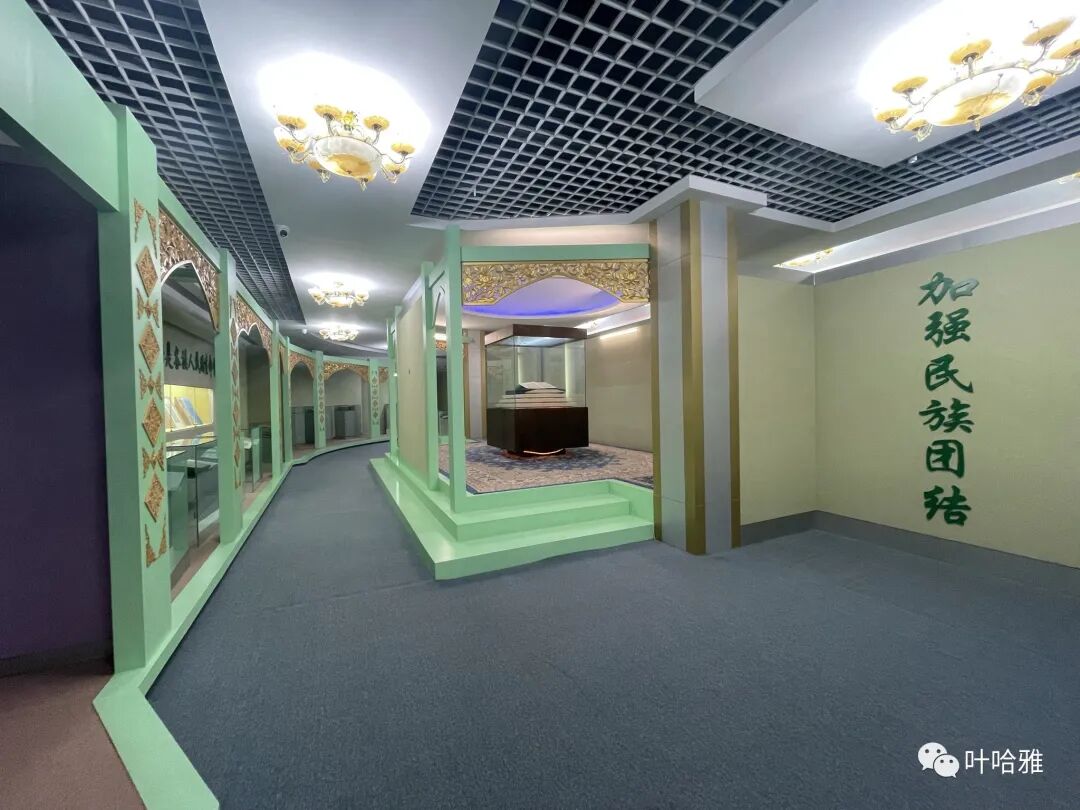
The Quran Museum is located in the building opposite Jiezi Mosque. The door is usually locked, but there is a phone number for the manager at the entrance. You can call to have someone open the door for a free visit. Two Salar leaders, Galemang and Ahemang, brought a handwritten Quran on a white camel from their original home in the Sarakhs region of Mary Province, Turkmenistan, in Central Asia. They traveled through Samarkand to China and settled in Xunhua, Qinghai, between the 10th and 14th centuries.
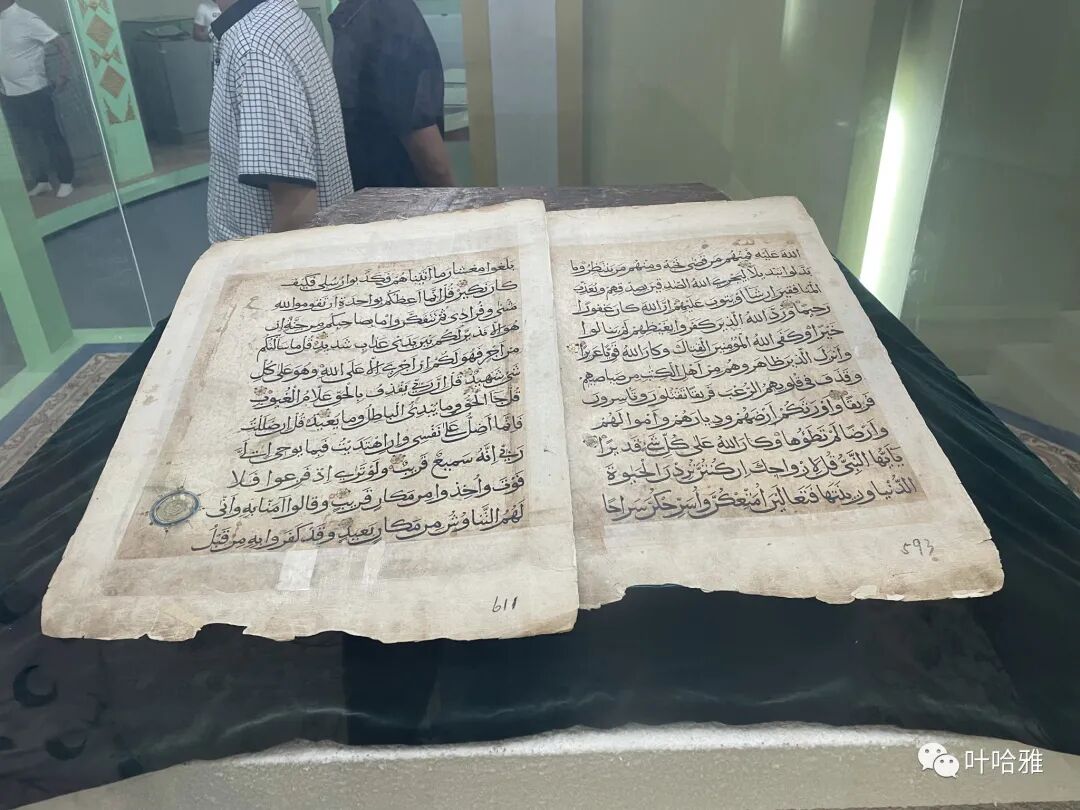
This Quran is divided into two parts, each with 15 volumes, totaling 30 volumes and 867 pages. The cover is made of rhinoceros hide, and the script is in the early Arabic Muhaqqaq style. The Muhaqqaq style formed during the Buyid era of the Abbasid Caliphate in the 11th century, and this book dates back to between 900 and 1200 AD.
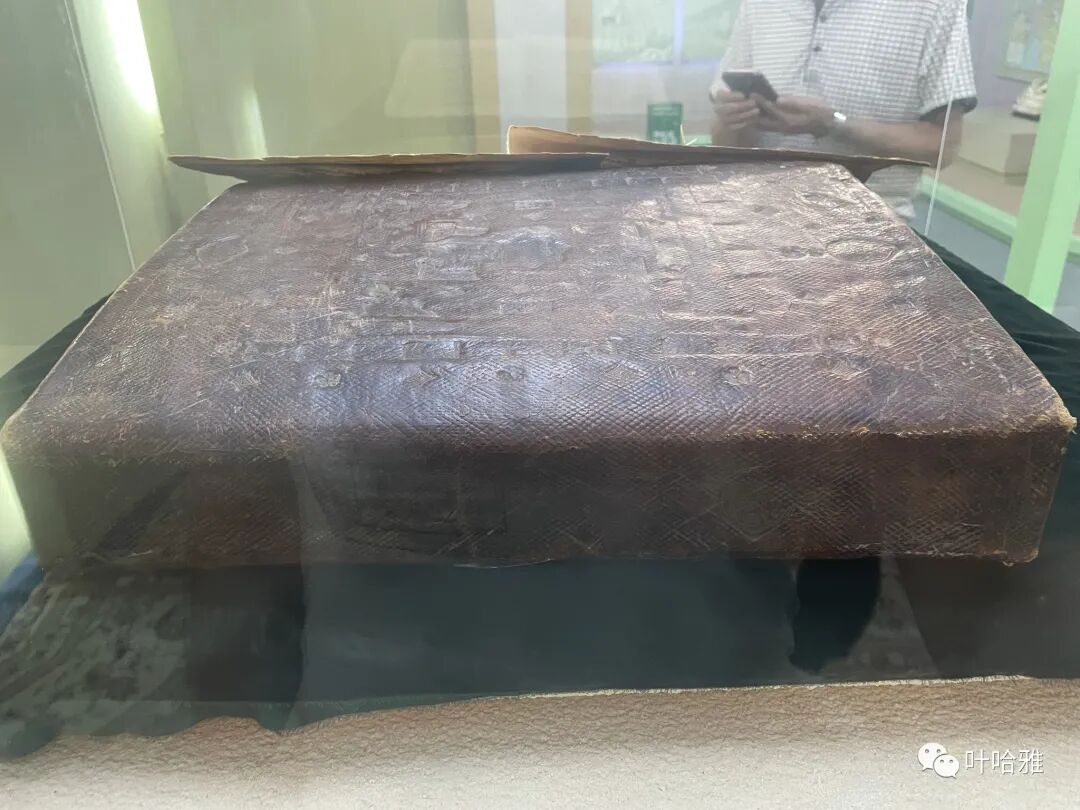
The Quran Museum also houses various other editions of the Quran.
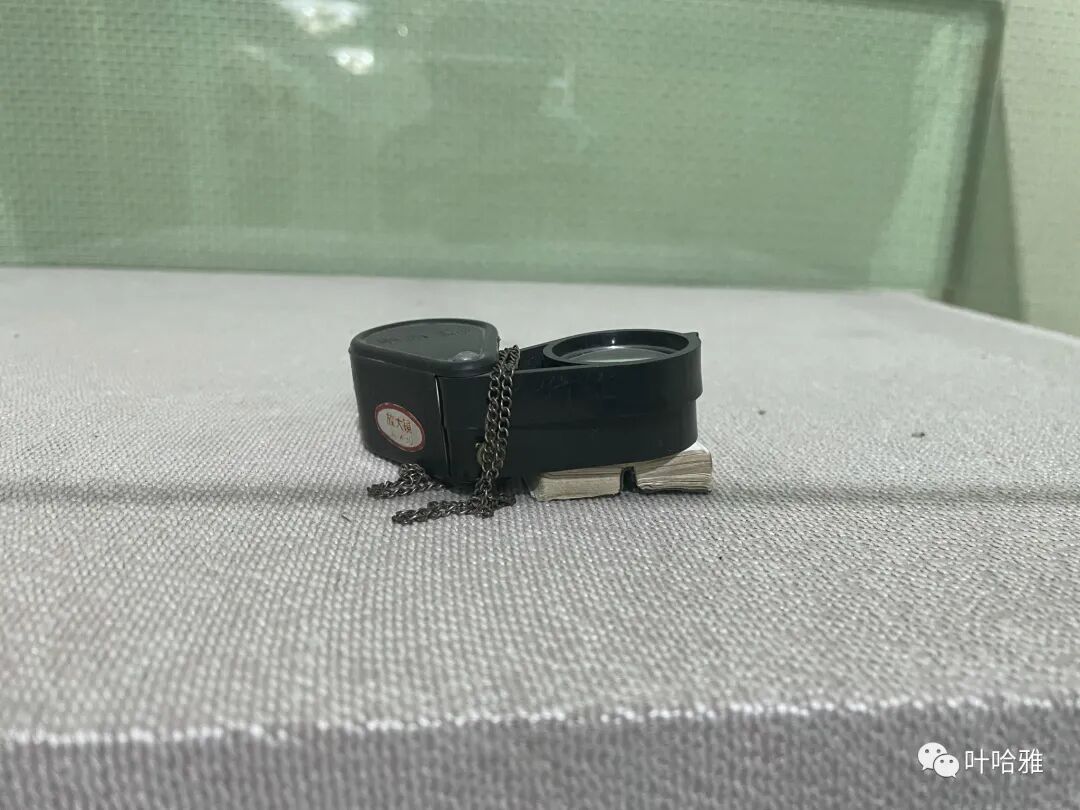
Pocket-sized Quran
8. Jiezi Gongbei in Xunhua
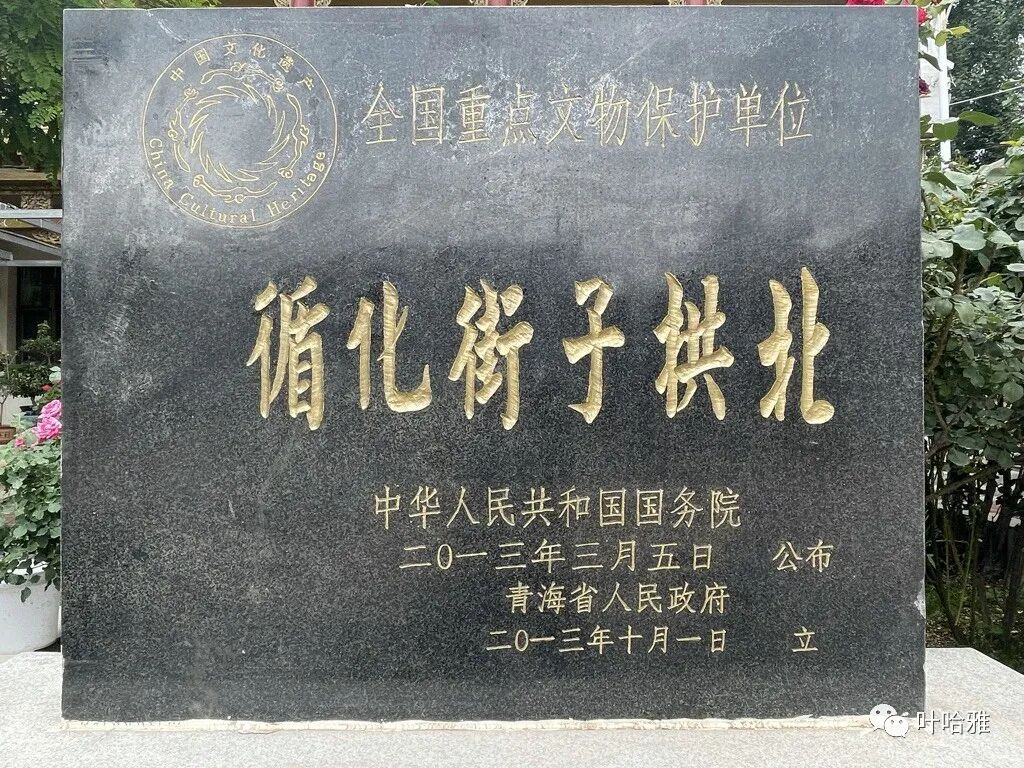
Jiezi Gongbei in Xunhua County is the tomb of Han Chengxiang (1822-1900), a spiritual leader of the Qadiriyya menhuan. Han Chengxiang traveled twice to the Shah Awliya shrine in Yarkant, Xinjiang, to seek guidance from his teachers. This gongbei was first built in 1950 and is now a major historical and cultural site protected at the national level.
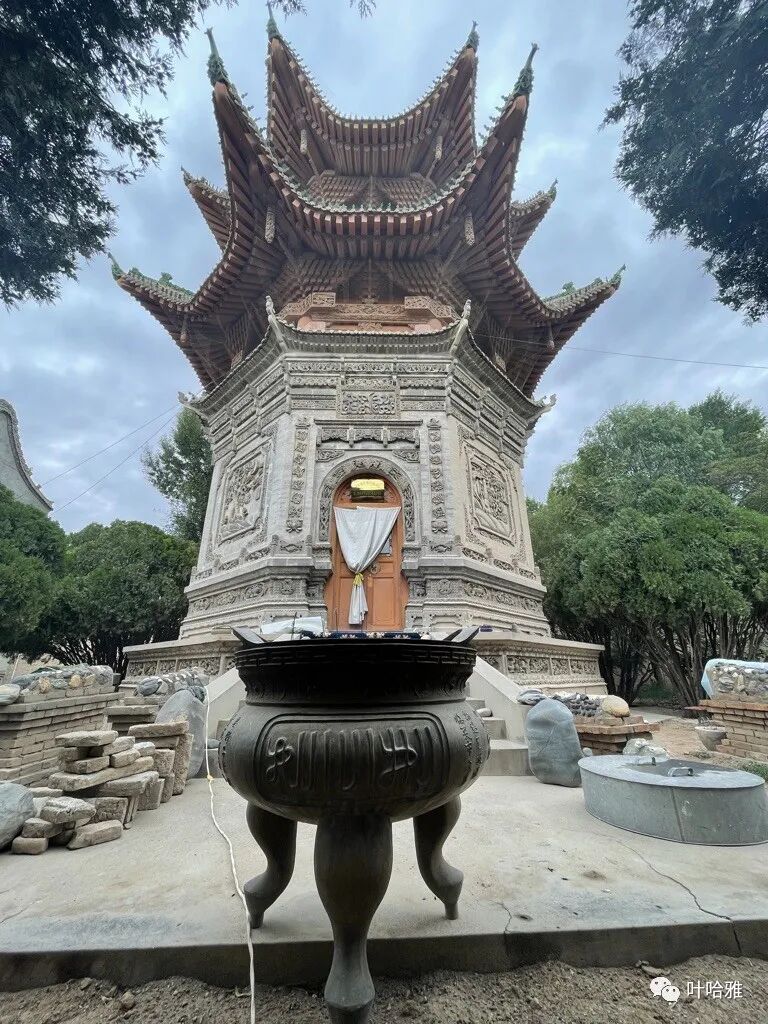
I have visited important Qadiriyya gongbei sites, including those in Xixiang, Langzhong, Songpan, and Linxia. They left a great impression on me. When the elderly caretaker at the gongbei heard I was from Beijing, he not only unlocked the tomb chamber for me to visit but also warmly invited me into his room for tea.
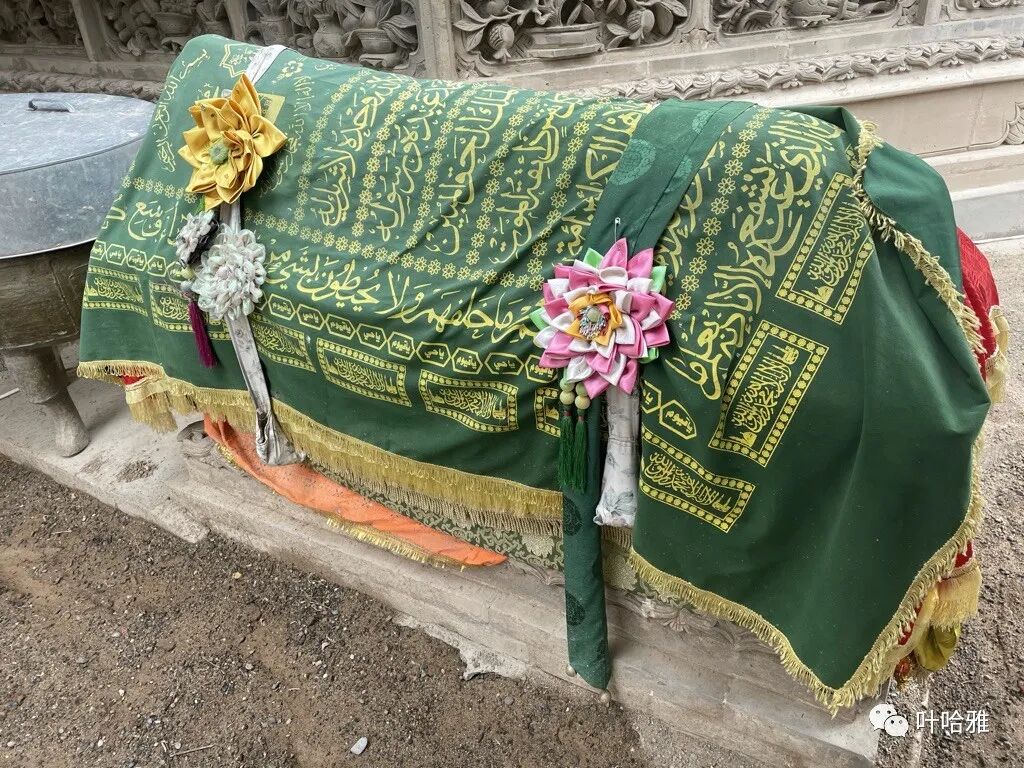
My father-in-law is Ikhwan, so he has no interest in gongbei. Although our community in Beijing follows the Gedimu tradition, there are two tombs of saints (shaihai) inside the Niujie Mosque.
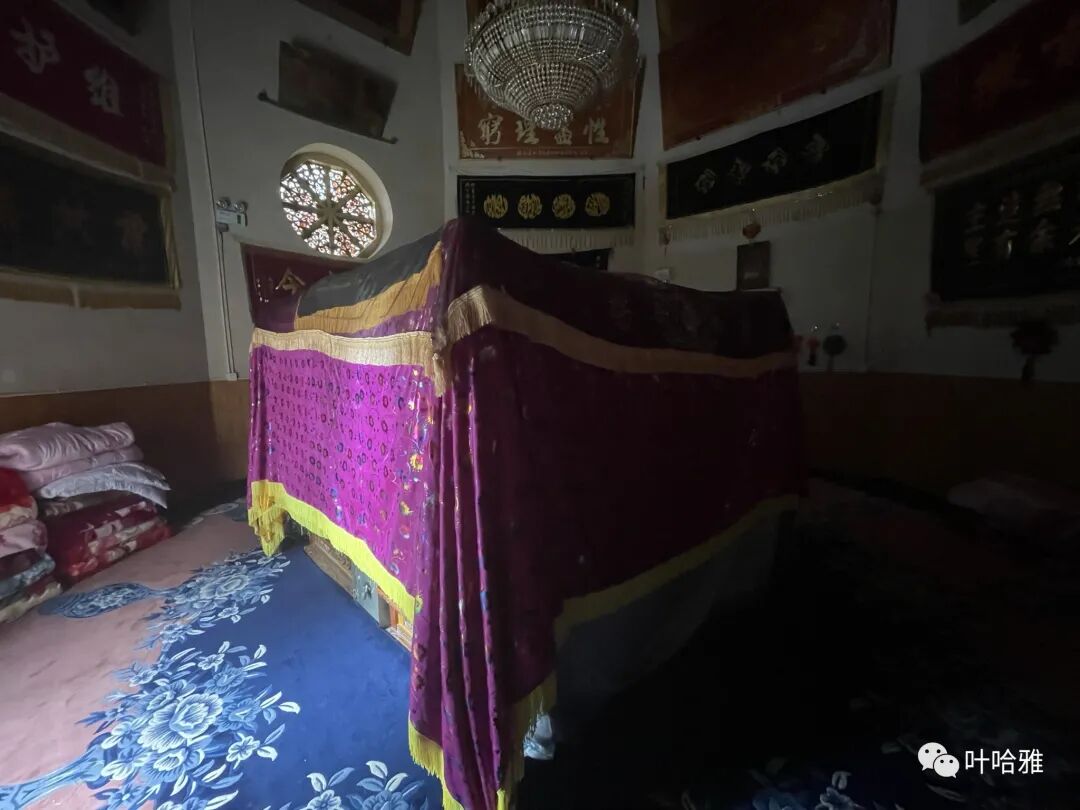
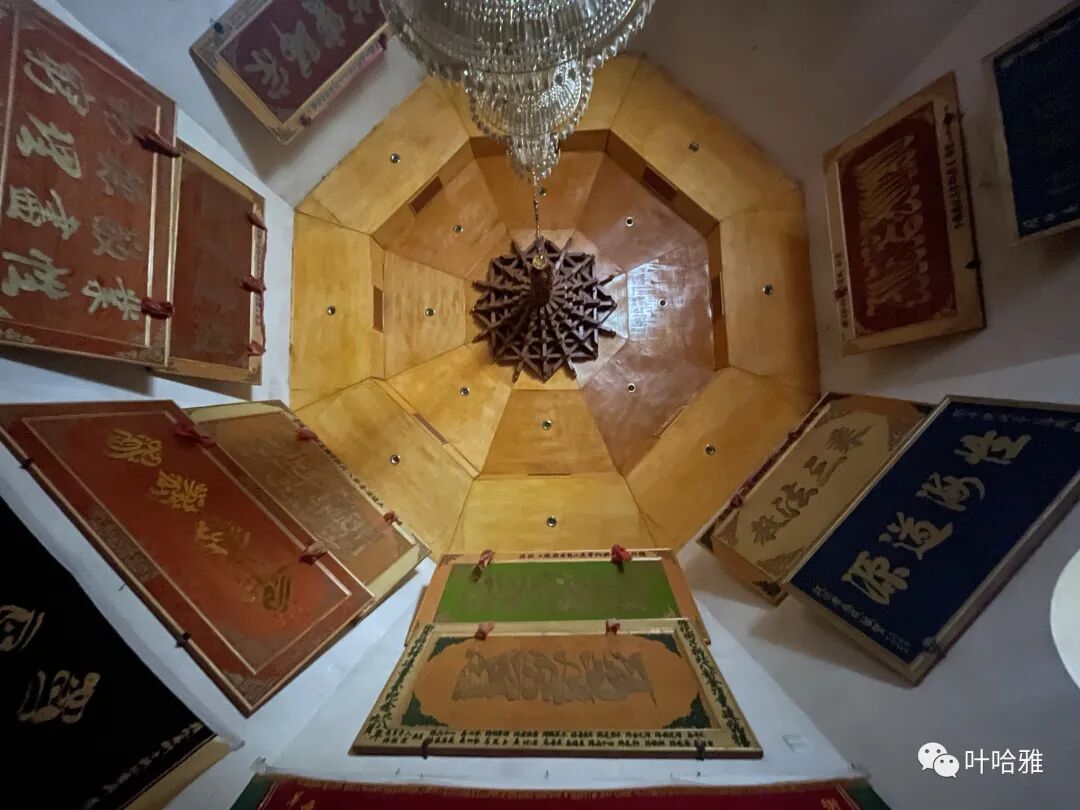
Elder Juma once provided a legal ruling (fatwa) on praying in mosques that contain graves: if the grave is next to the mosque and the prayer is performed inside the mosque, the prayer is valid. If the grave is inside the mosque, the Hanbali school of jurisprudence holds that the prayer is invalid. However, the other three major schools of jurisprudence consider the prayer valid, though praying with a grave in front of the worshiper is considered disliked (makruh).
Based on this ruling, none of the gongbei in China have the graves and the mosque built together; every gongbei has a separate prayer room.
9. West Route Army Memorial Hall
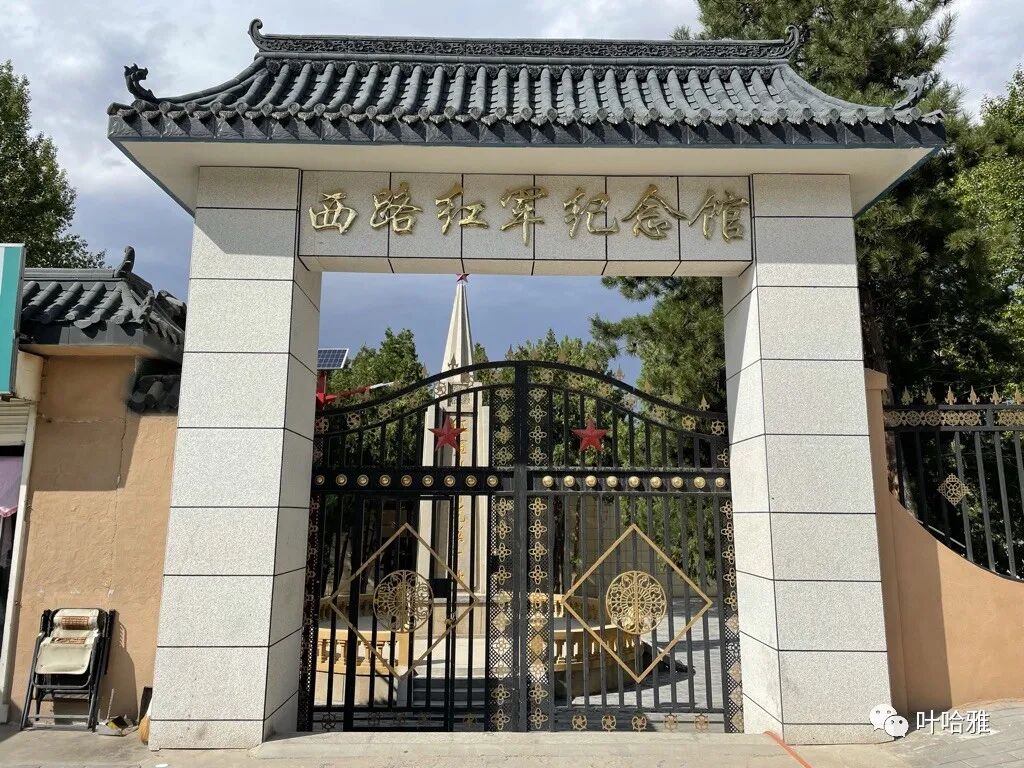
During this second visit to Hongguang Village, I saw that the West Route Army Memorial Hall had been completed. Hongguang Village has a mosque called Hongguang Mosque, also known as Zanbuhu Mosque. Because it is the only mosque in the country built by the Red Army, it is listed as a major historical and cultural site protected at the national level.
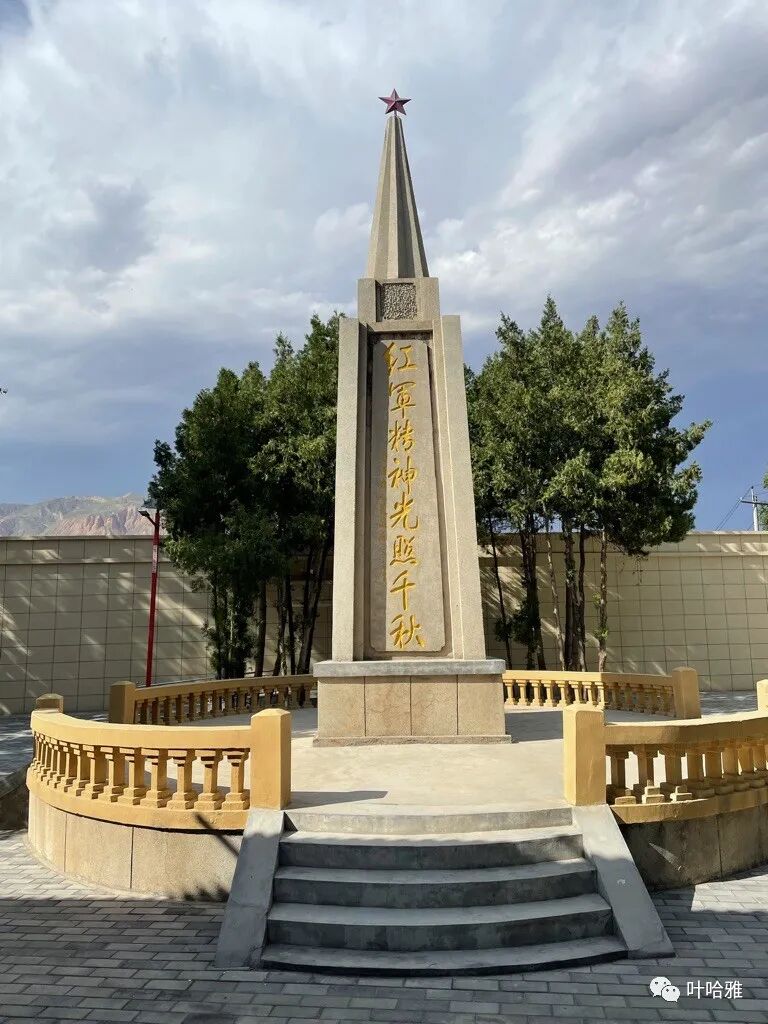
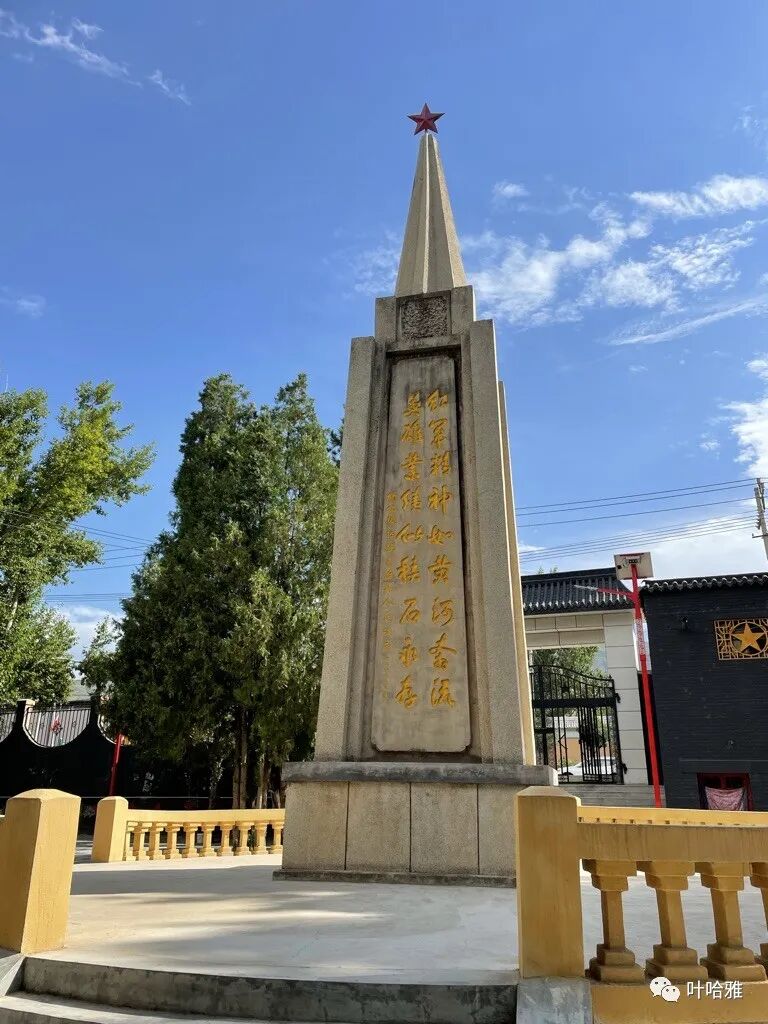
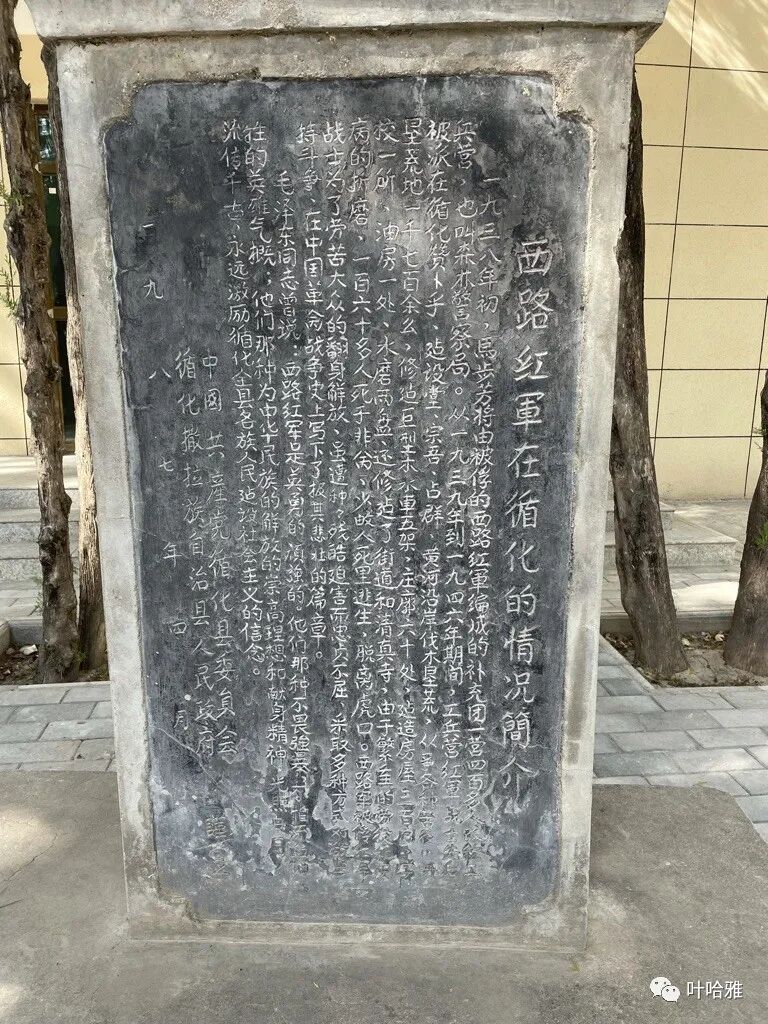
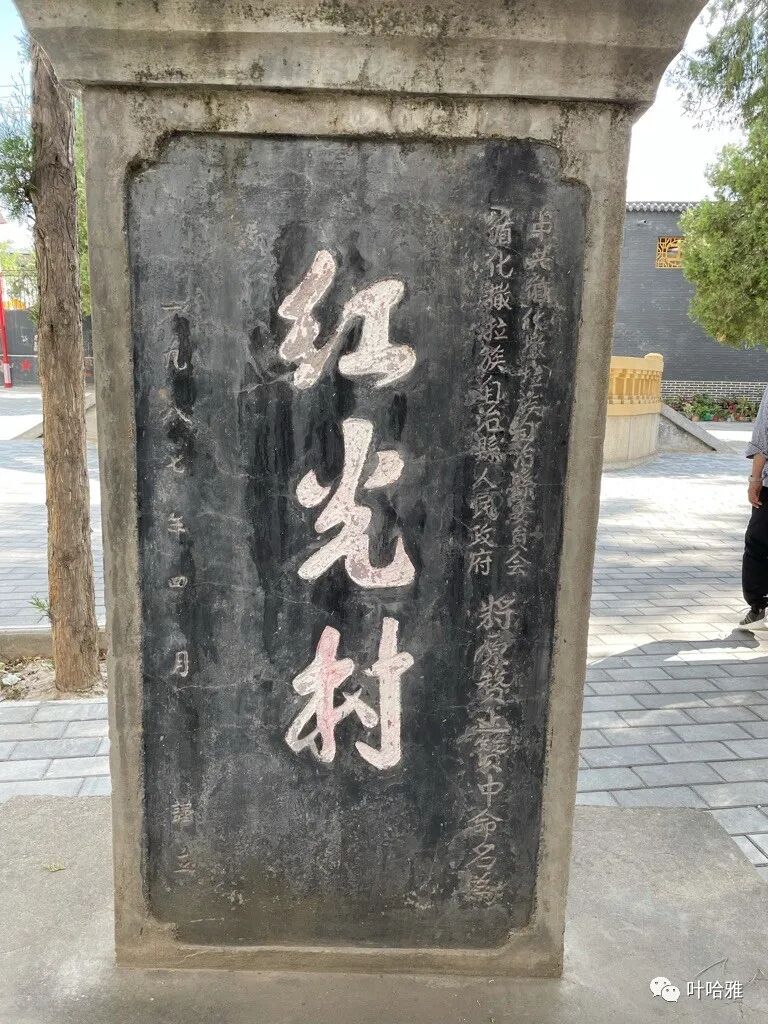
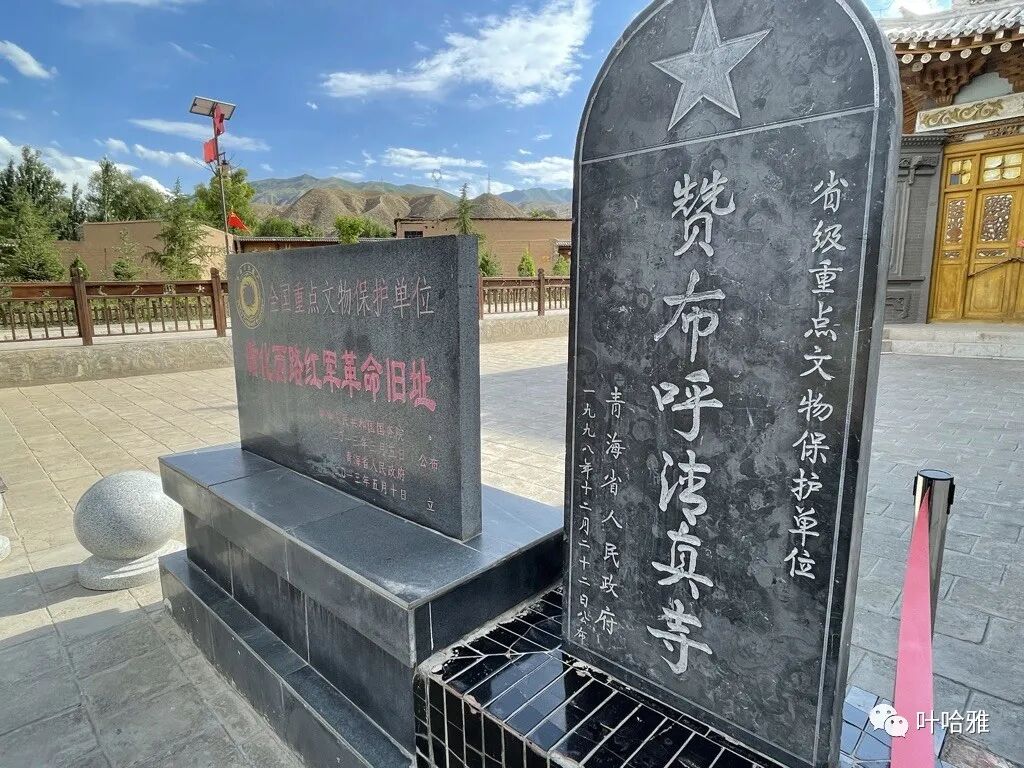
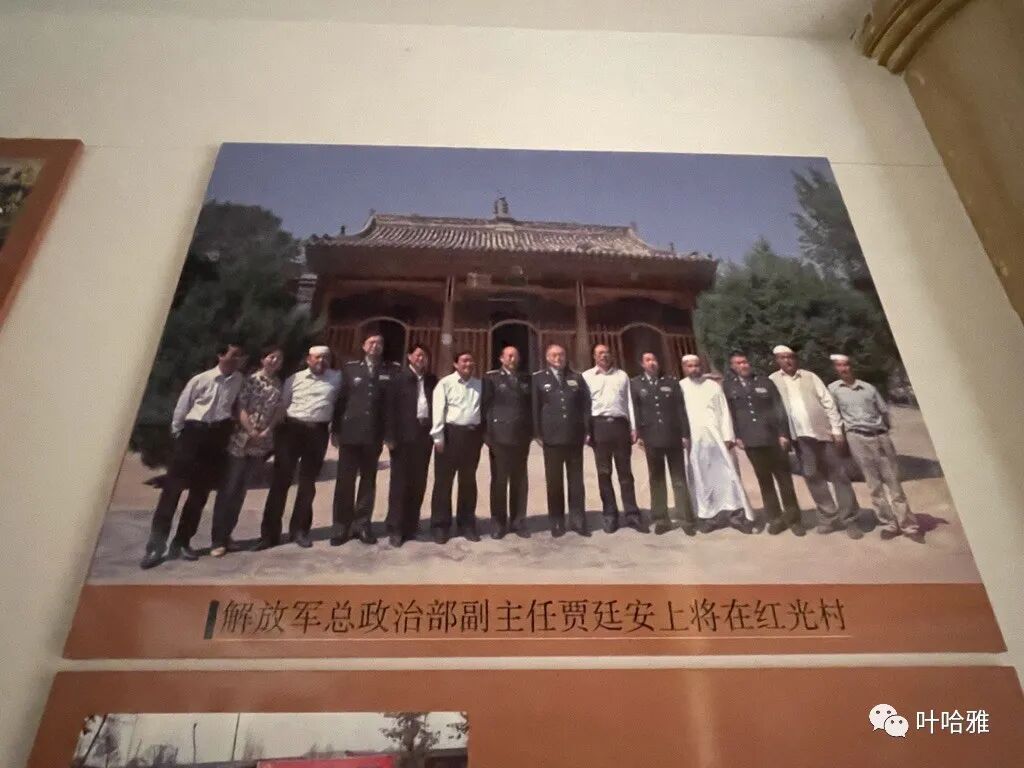
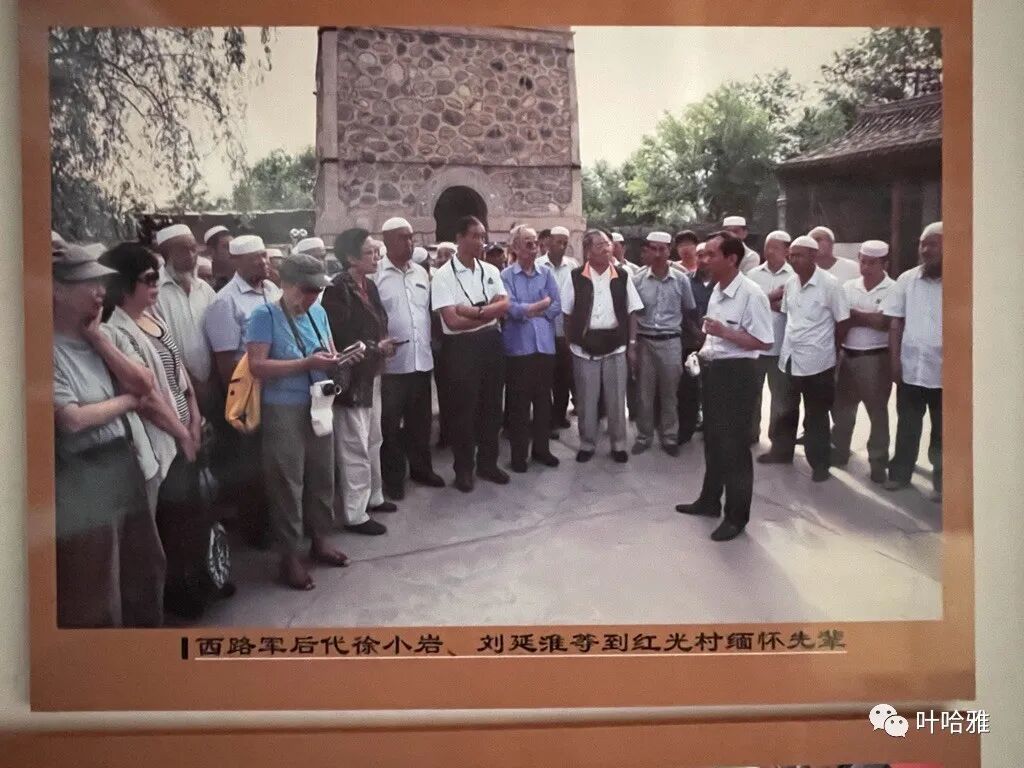
Descendants of the Red Army have visited Hongguang Village many times to honor the martyrs. Their fathers were captured by the Nationalist army under Ma Bufang and sent to Hongguang Village to build this mosque.
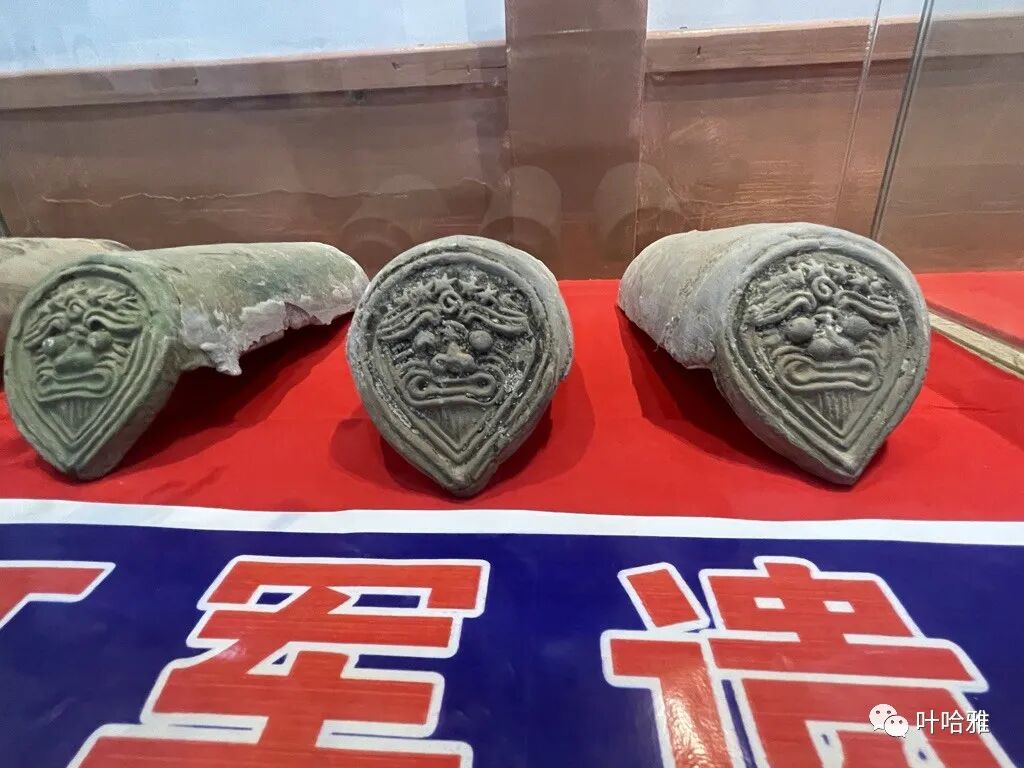
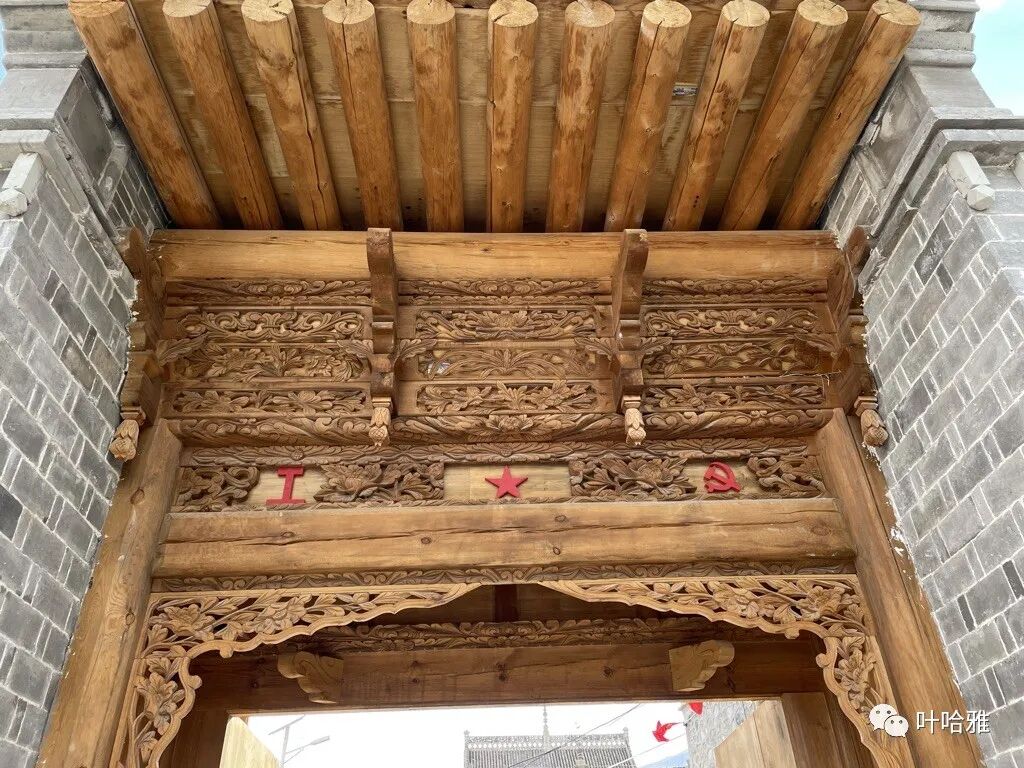
These captured Red Army soldiers were defiant, so they secretly carved revolutionary symbols like stars, sickles, and hammers into the bricks and tiles of the mosque.
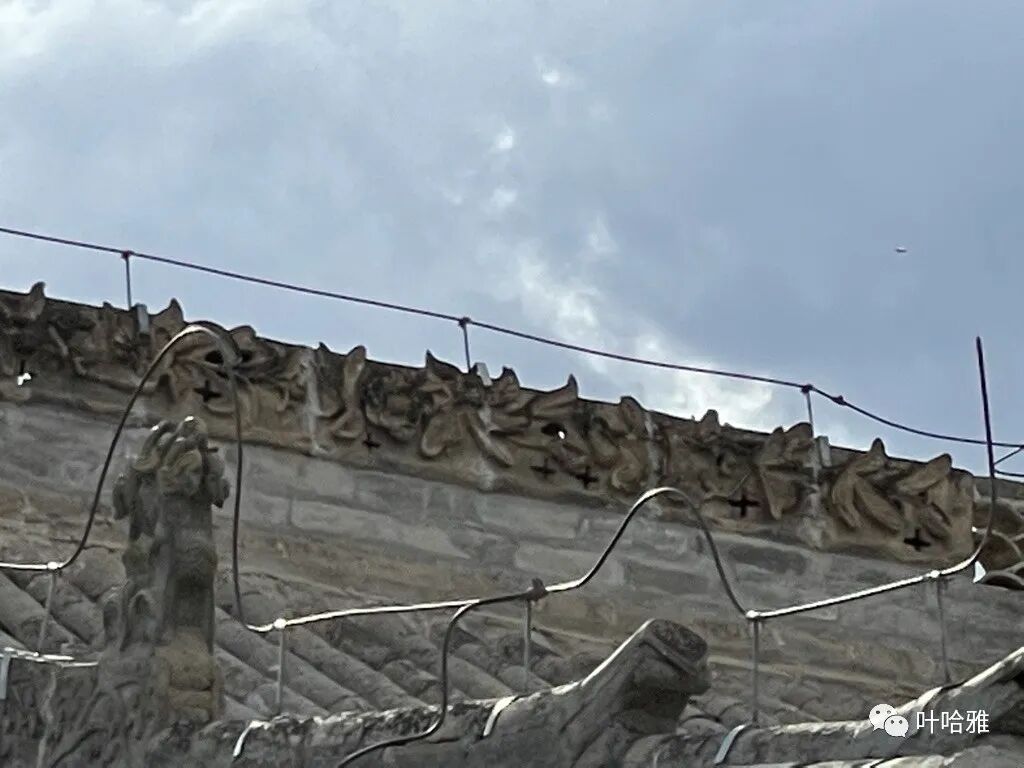
These revolutionary symbols are scattered among the tiles on the roof of the mosque, where most people would not notice them.
Although the mosque is not large, its significance is extraordinary. It is one of the most unique mosques I have visited.
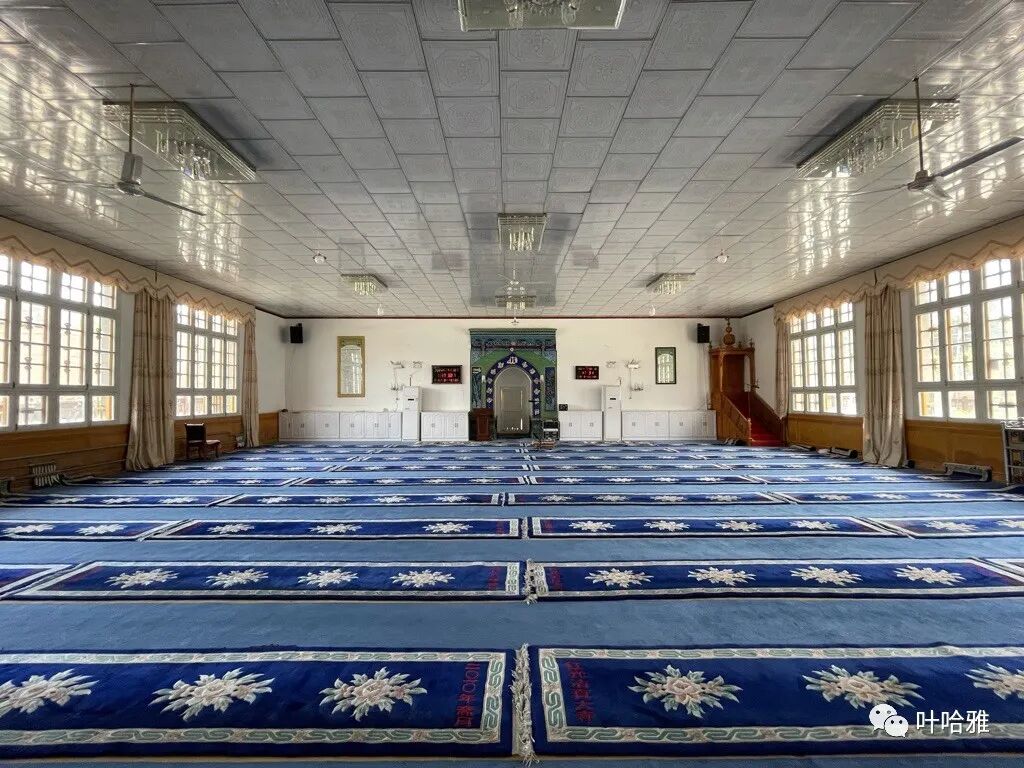
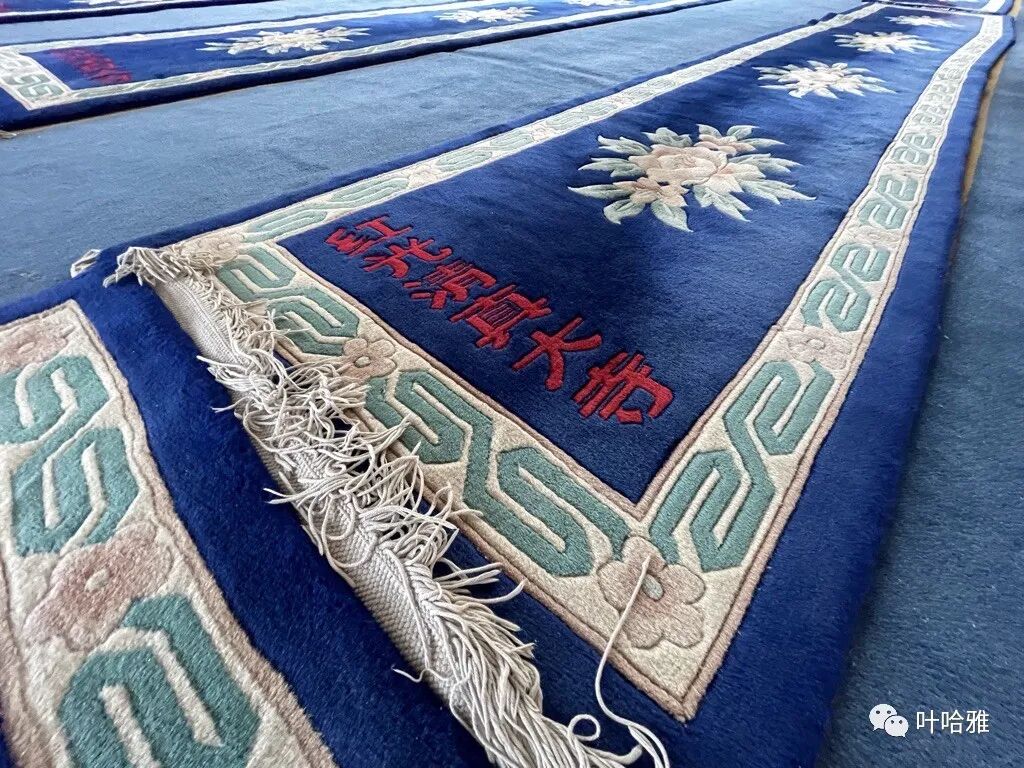
10. Imam Village
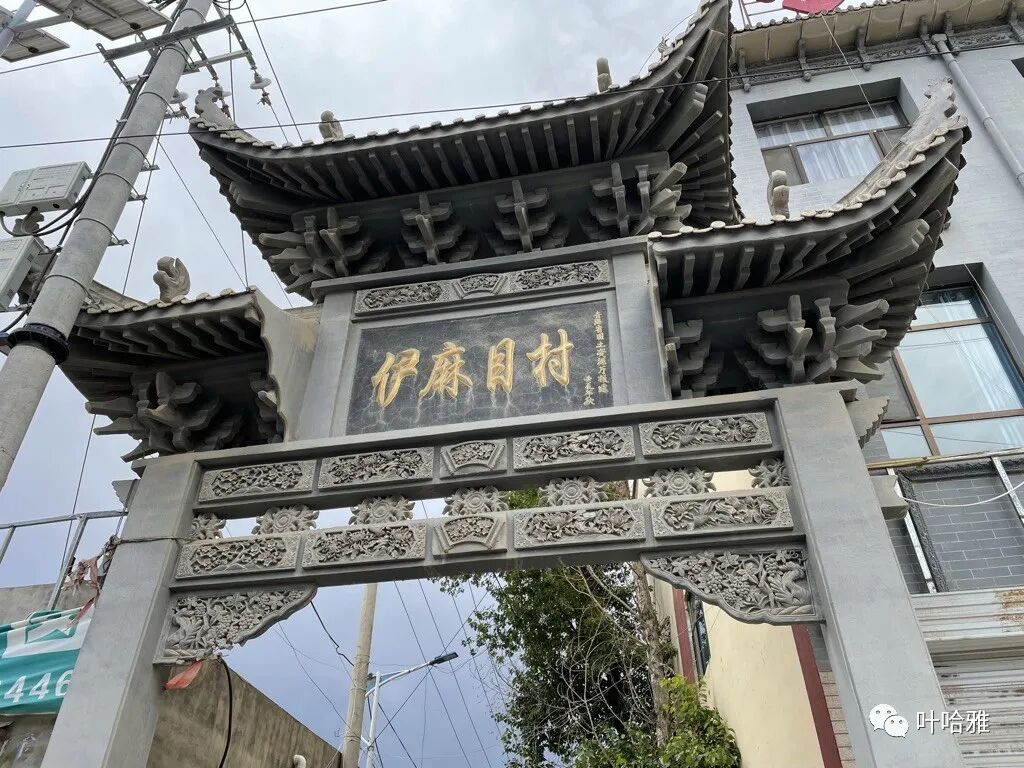
While driving through Xunhua County, I saw a village with an interesting name: Imam Village. The name sounded very Islamic, so I parked the car and walked around the village.
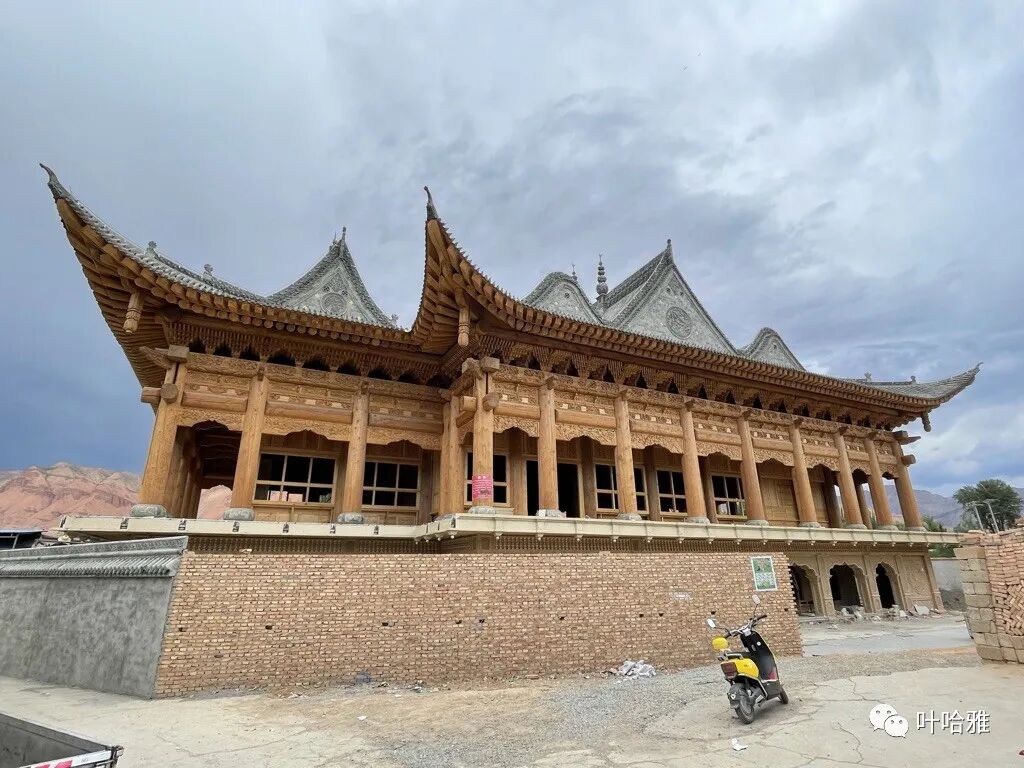
I did not walk far before I saw a large mosque under construction in the village, which was very grand.
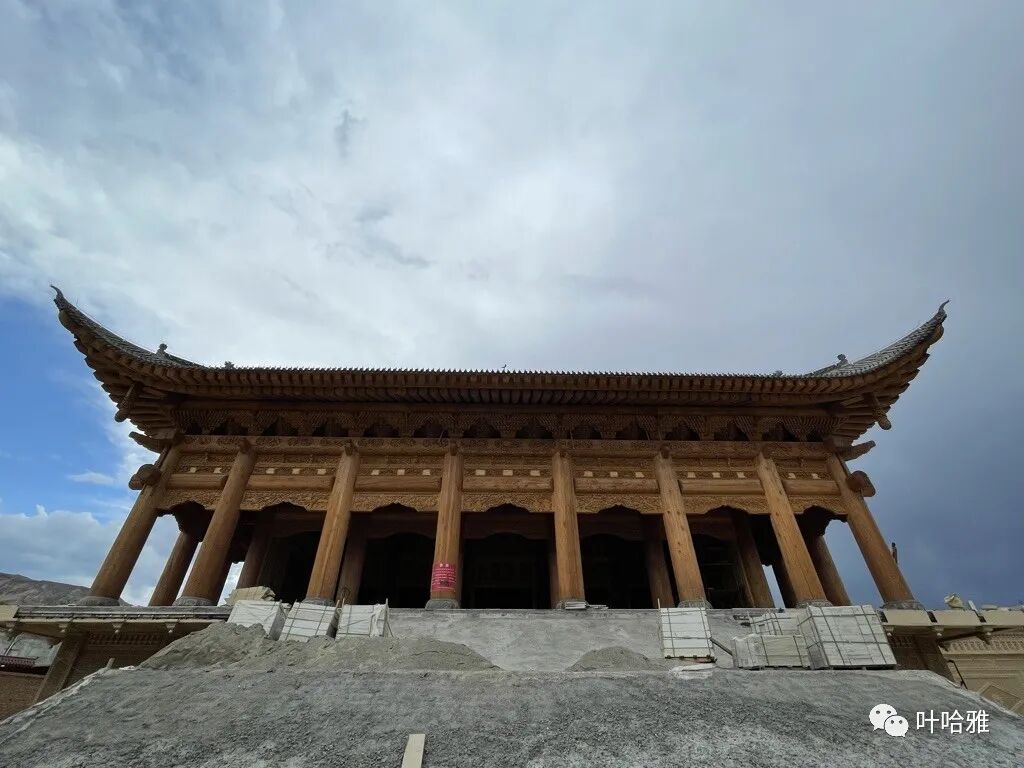
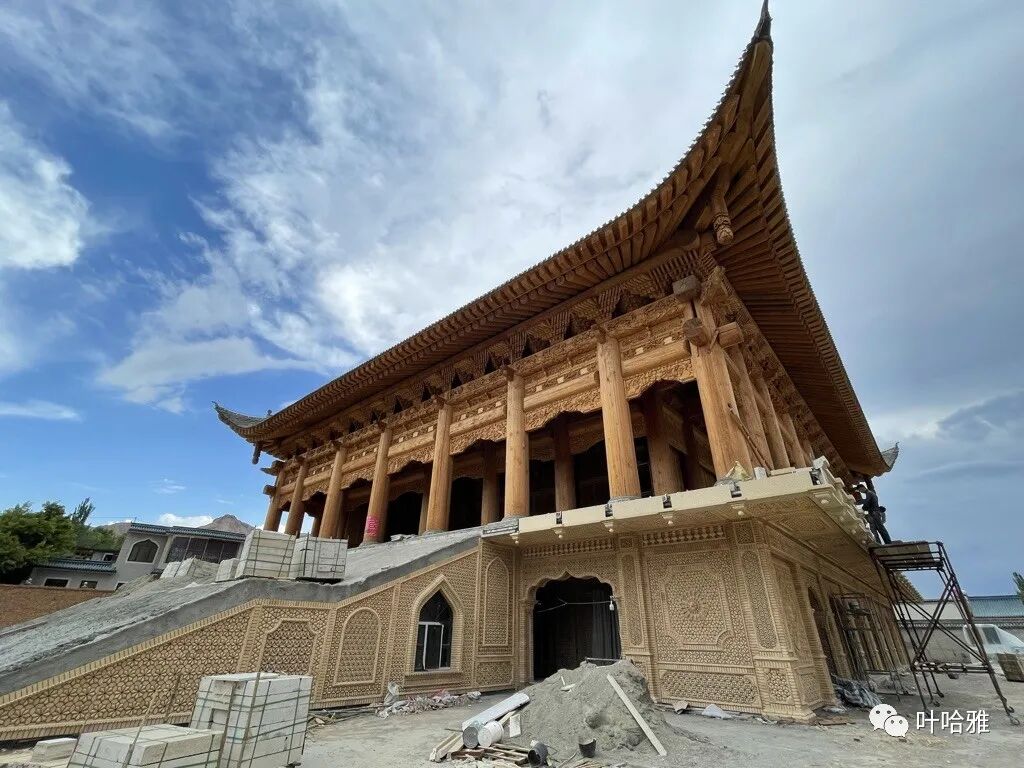
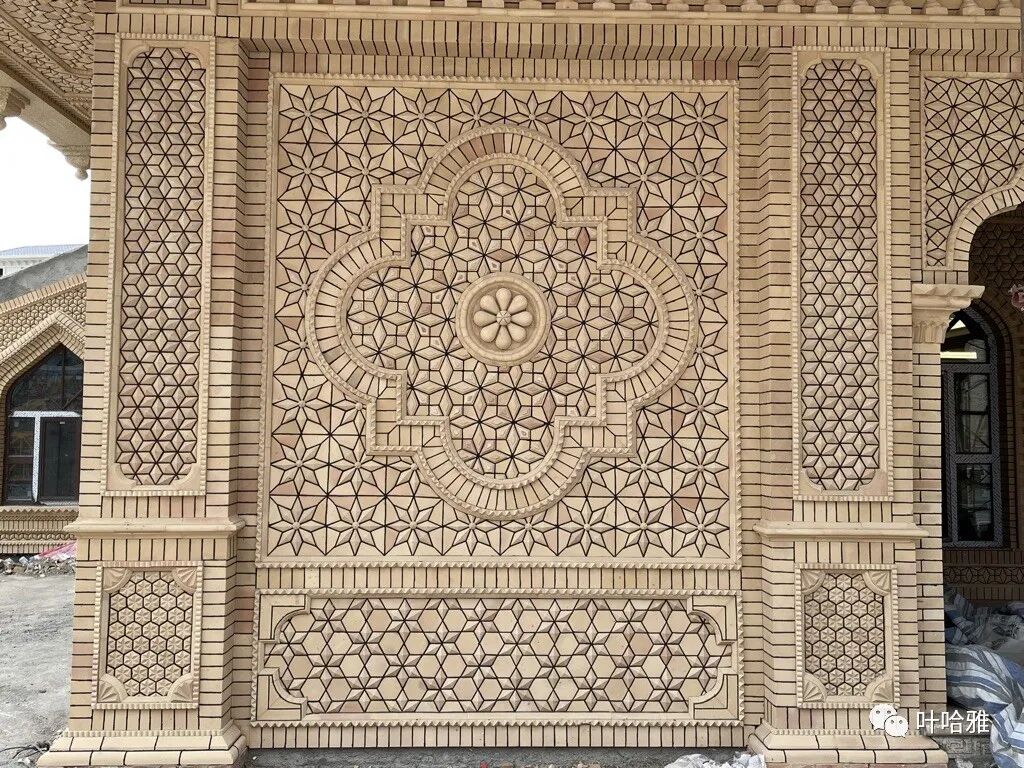
When I walked closer, I saw that the decorative patterns on the base and side halls of the mosque had architectural features typical of Central Asia and Xinjiang.
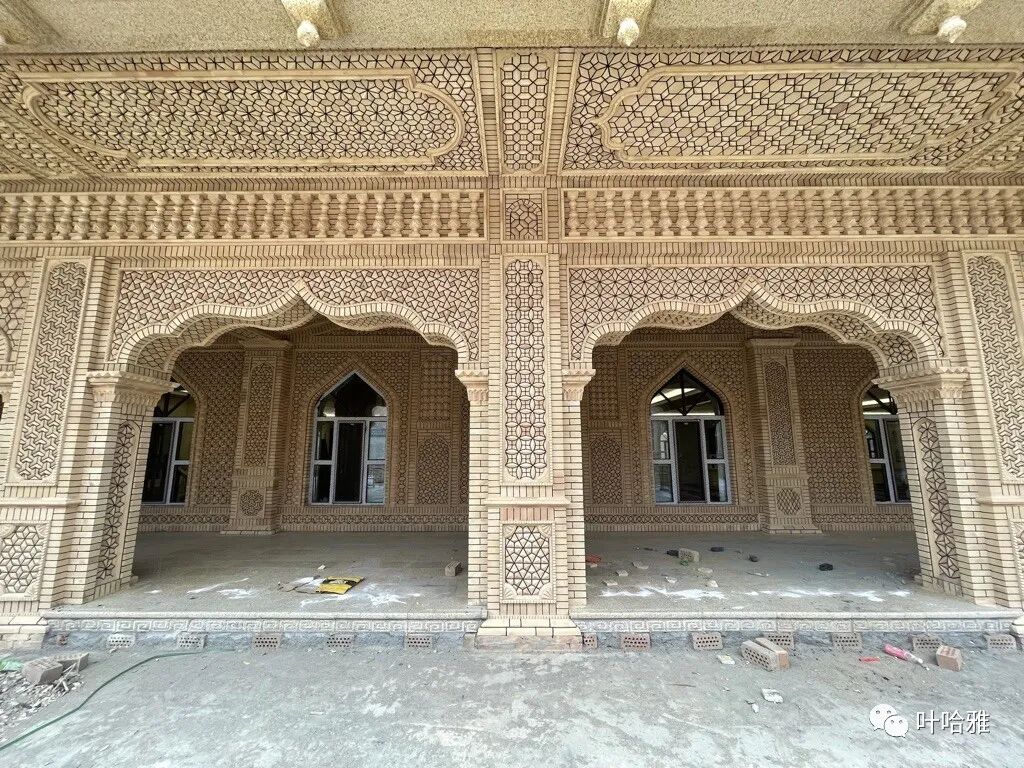
This mosaic pattern is often used in North African mosques, and it looks like it will be finished soon.
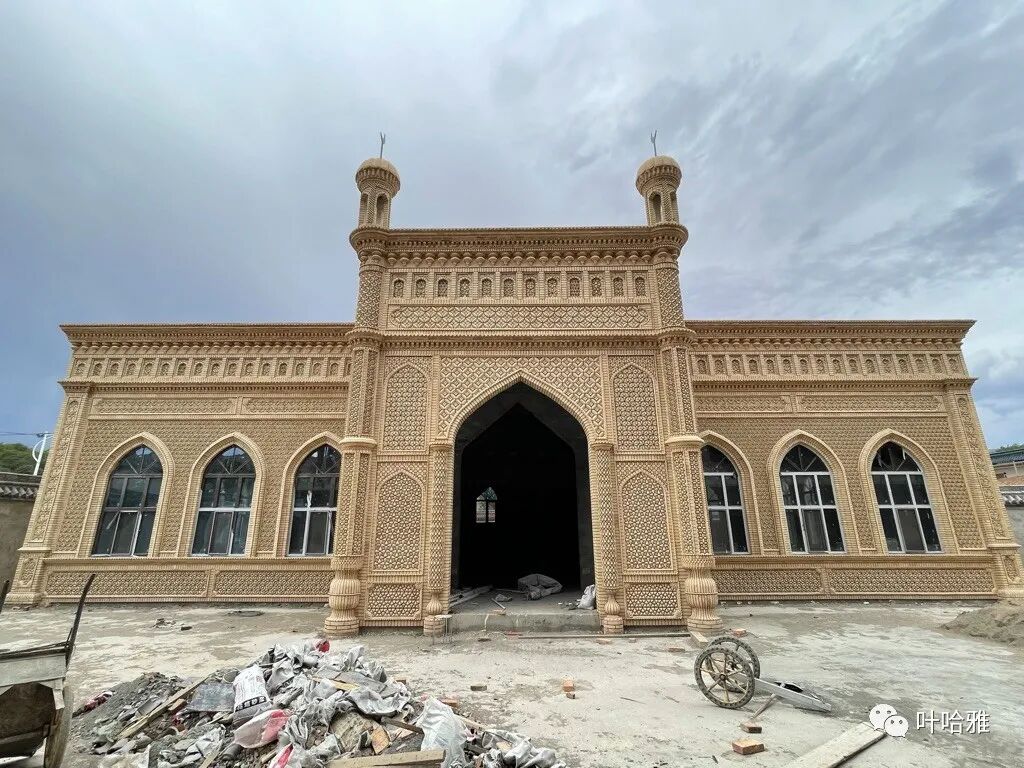
11. Guoshitan Mosque
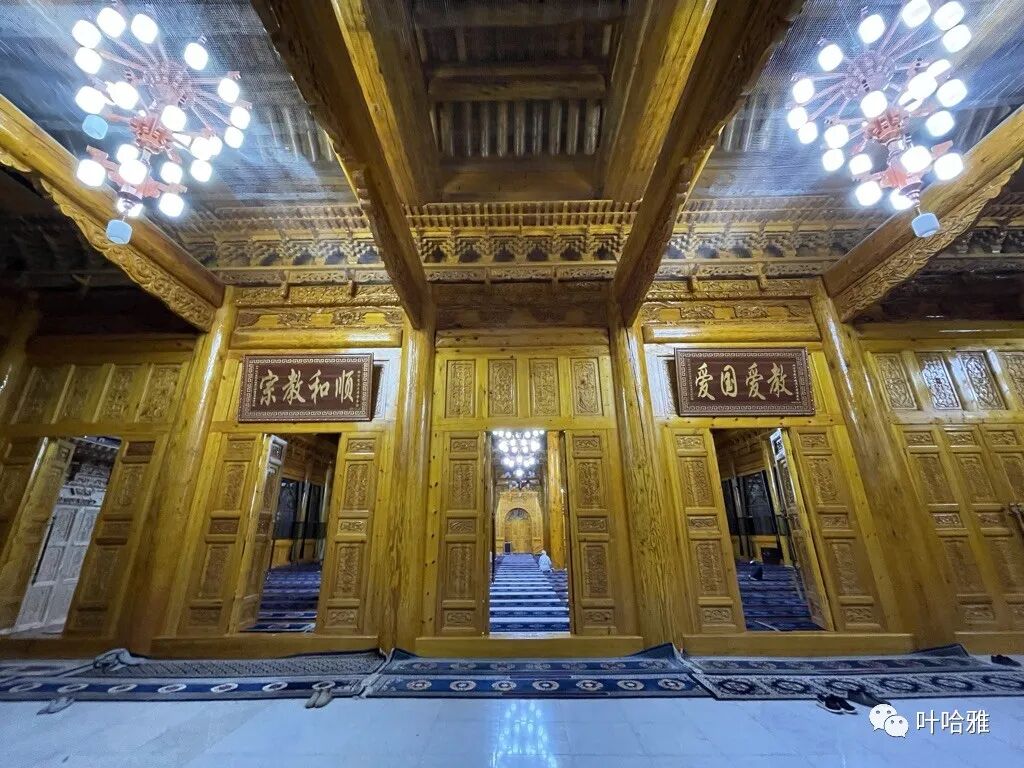
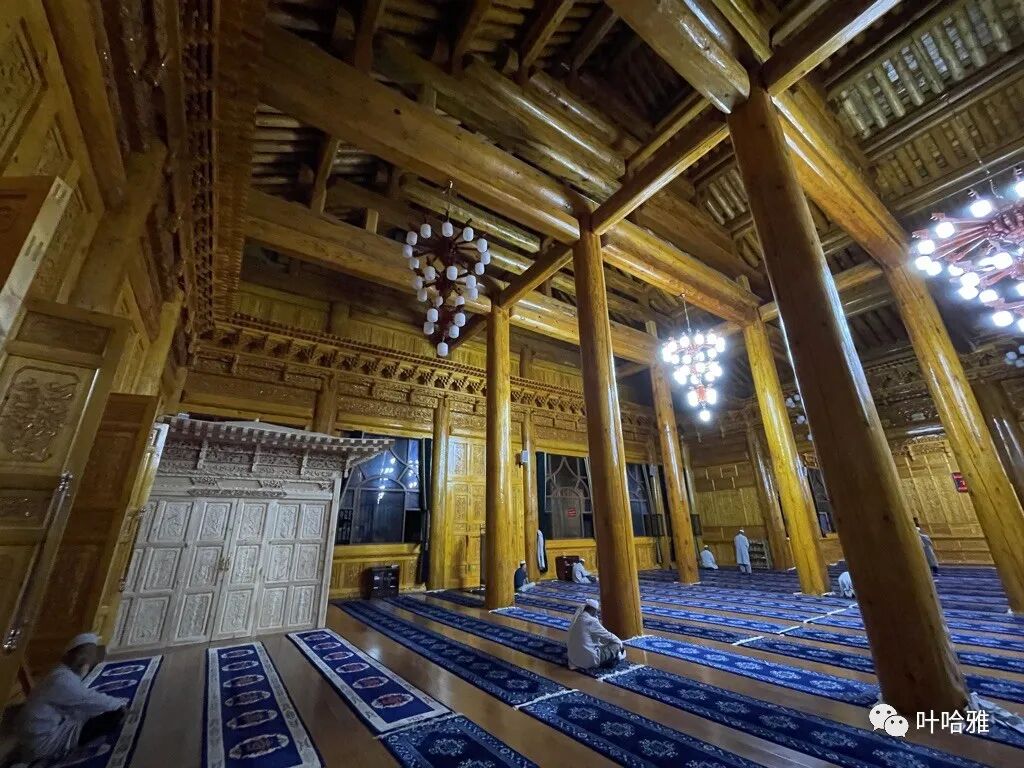
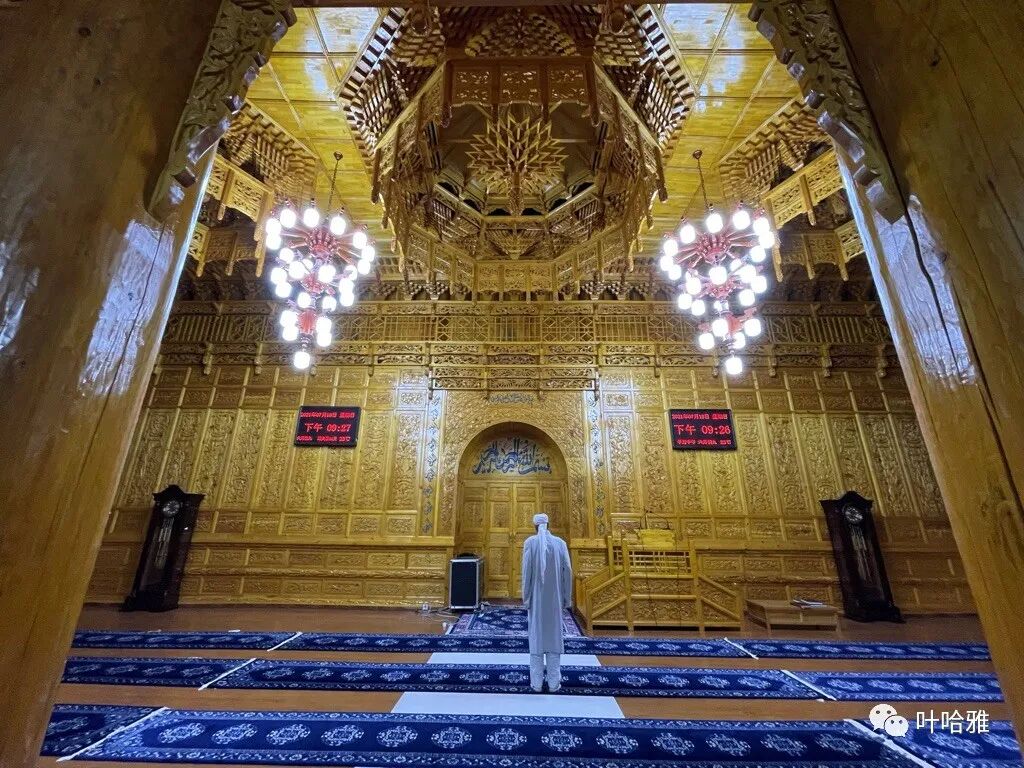
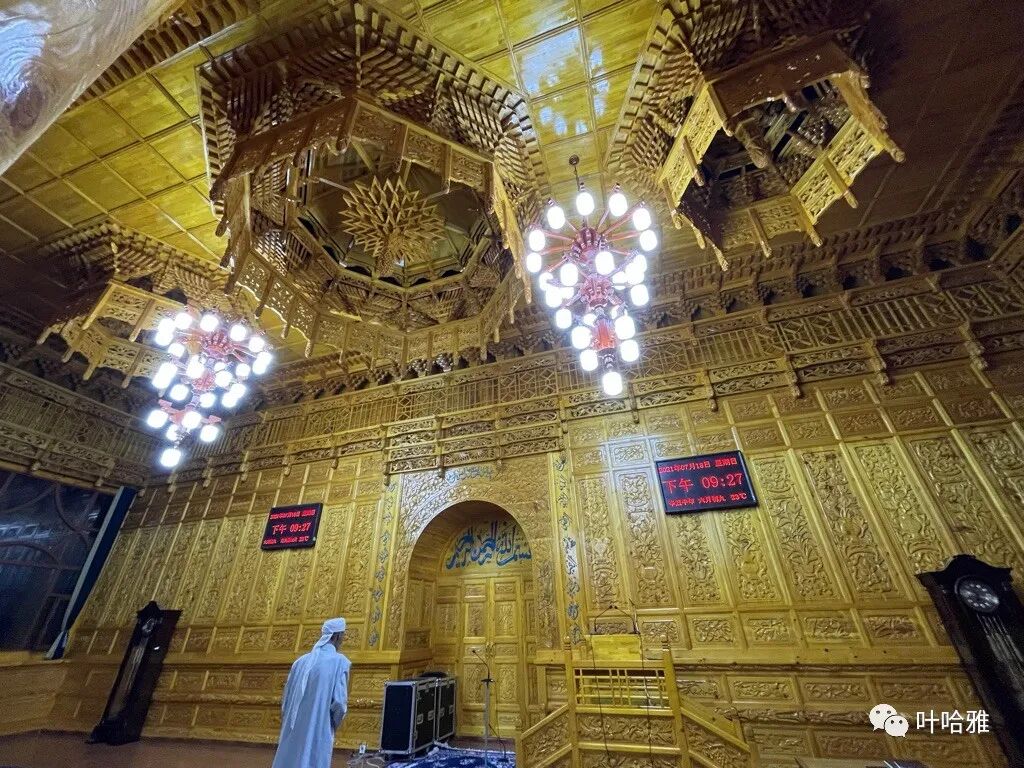
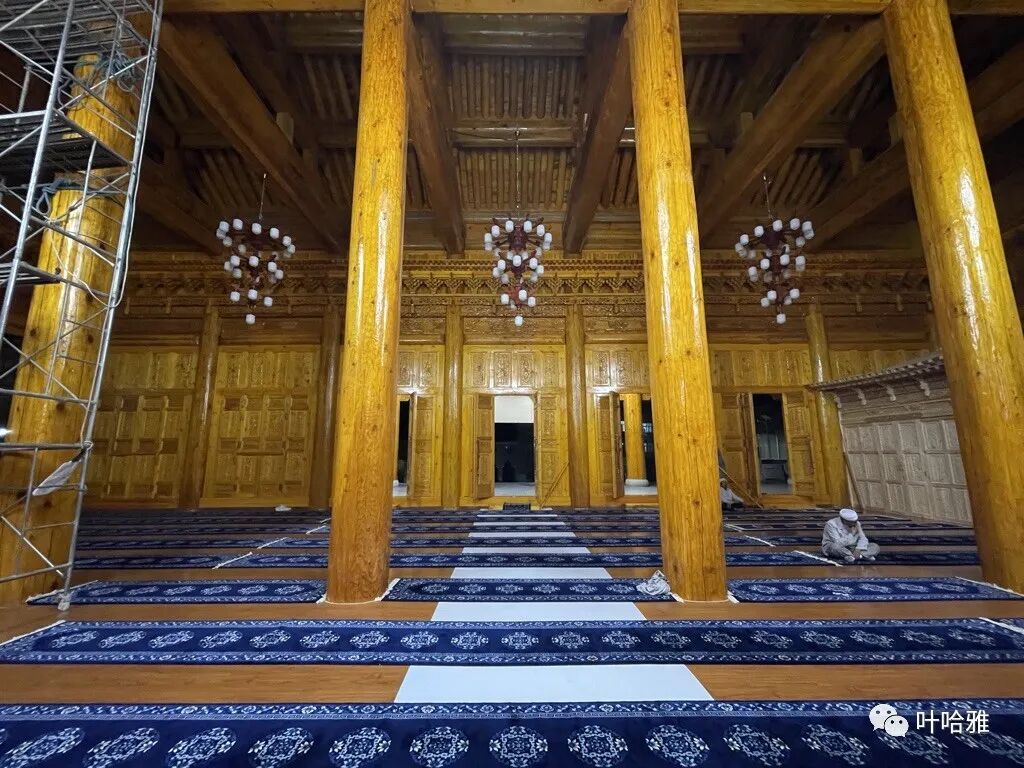
My father-in-law saw how obsessed I was with mosques. After we finished the sunset prayer (maghrib) in Jiezi, he wanted to take me to Guoshitan Village. He said they had built a new wooden mosque there, which is considered the largest wooden mosque in Xunhua County. We drove for about twenty minutes and arrived at Guoshitan Village, but it was already dark.
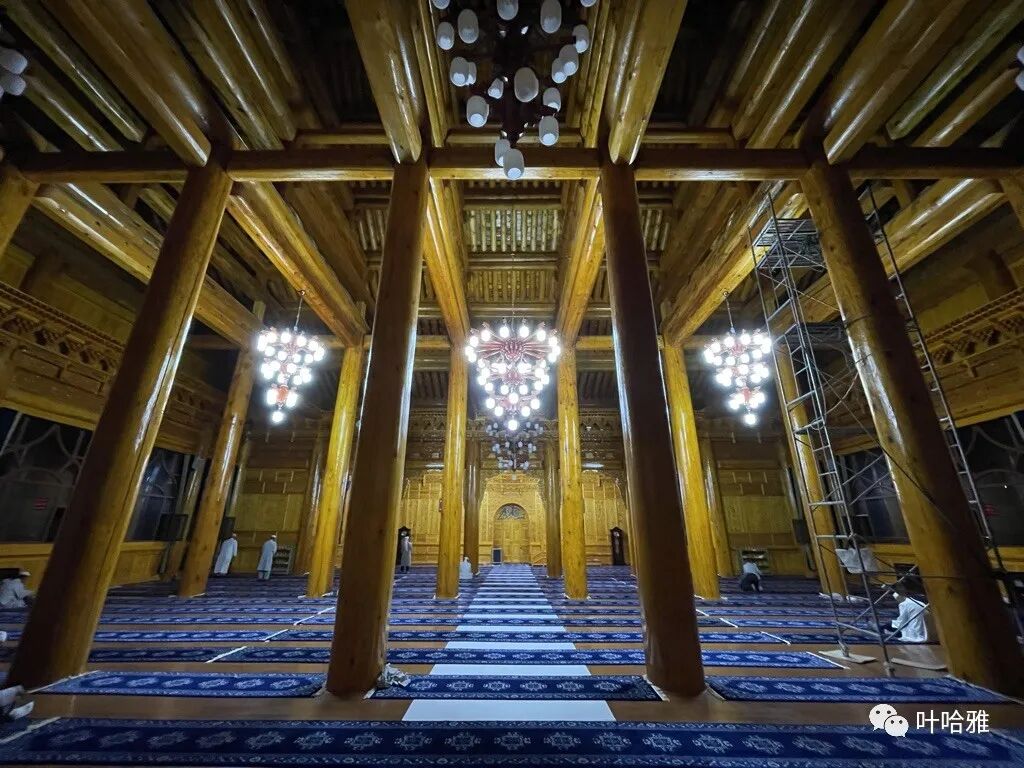
Guoshitan Mosque is located in Guoshitan Village, Jiezi Town. It was first built in 1445, and the current structure was built in 2020. People say the wooden beams for the main hall were purchased from Russia, and the total cost of the mosque was over 20 million.
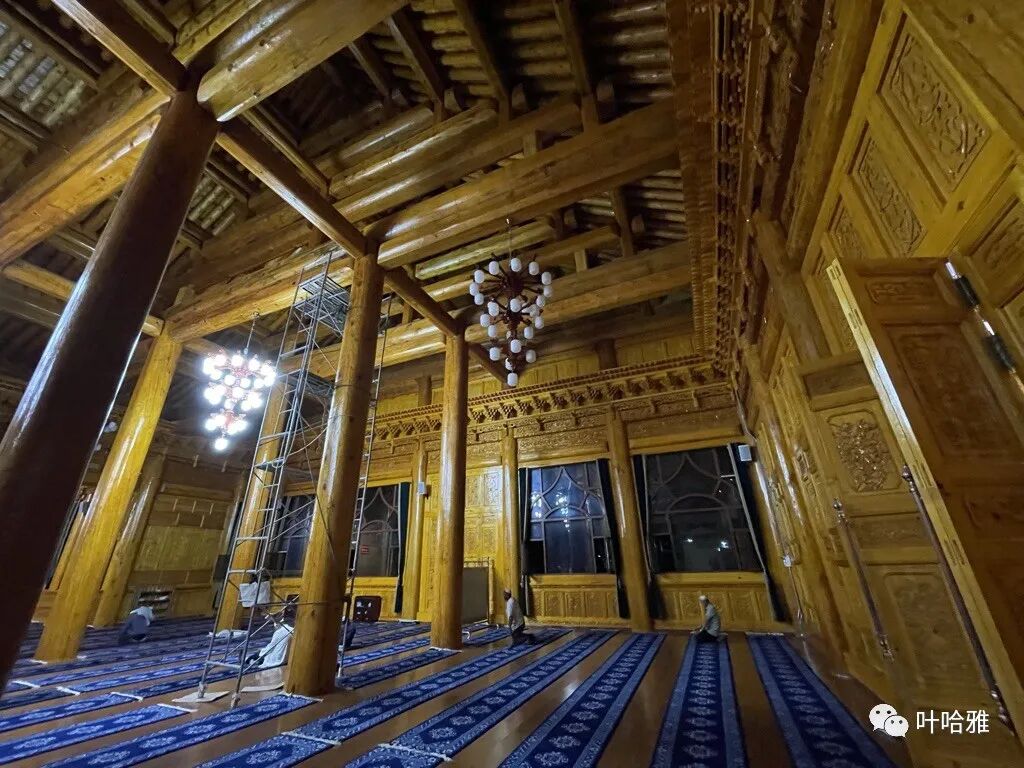
The large wooden mosque is very spectacular and has a simple, ancient feel, as if it could be designated as a protected cultural site as soon as it was finished.
Hualong Hui Autonomous County
12. Ahetan Mosque
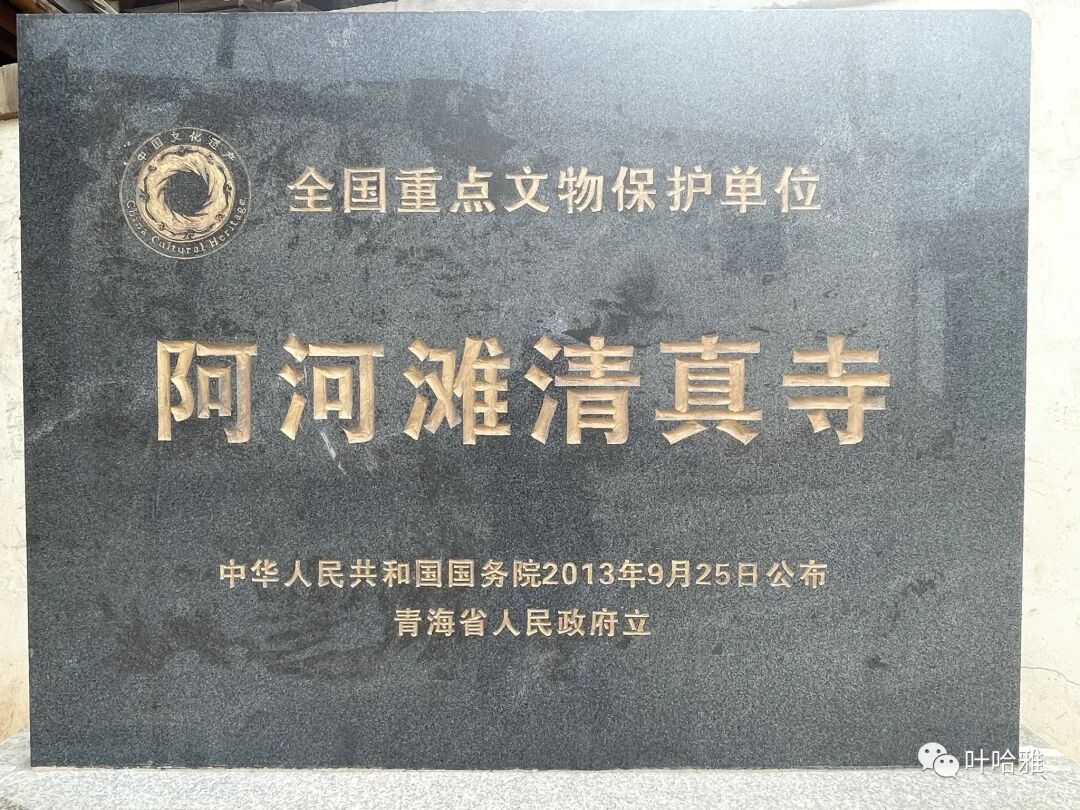
Ahetan Mosque is located in Ahetan Village, Gandu Town, Hualong County, Qinghai Province. It was first built in the 22nd year of the Wanli reign of the Ming Dynasty (1594). It covers an area of 1,938 square meters and consists of a prayer hall, north and south scripture halls, a screen wall, a memorial archway, and a minaret, all arranged in a traditional courtyard layout. Inside the courtyard, there are 24 two-story brick and wood rooms used as scripture halls. It was listed as a Major Historical and Cultural Site Protected at the National Level in 2013.
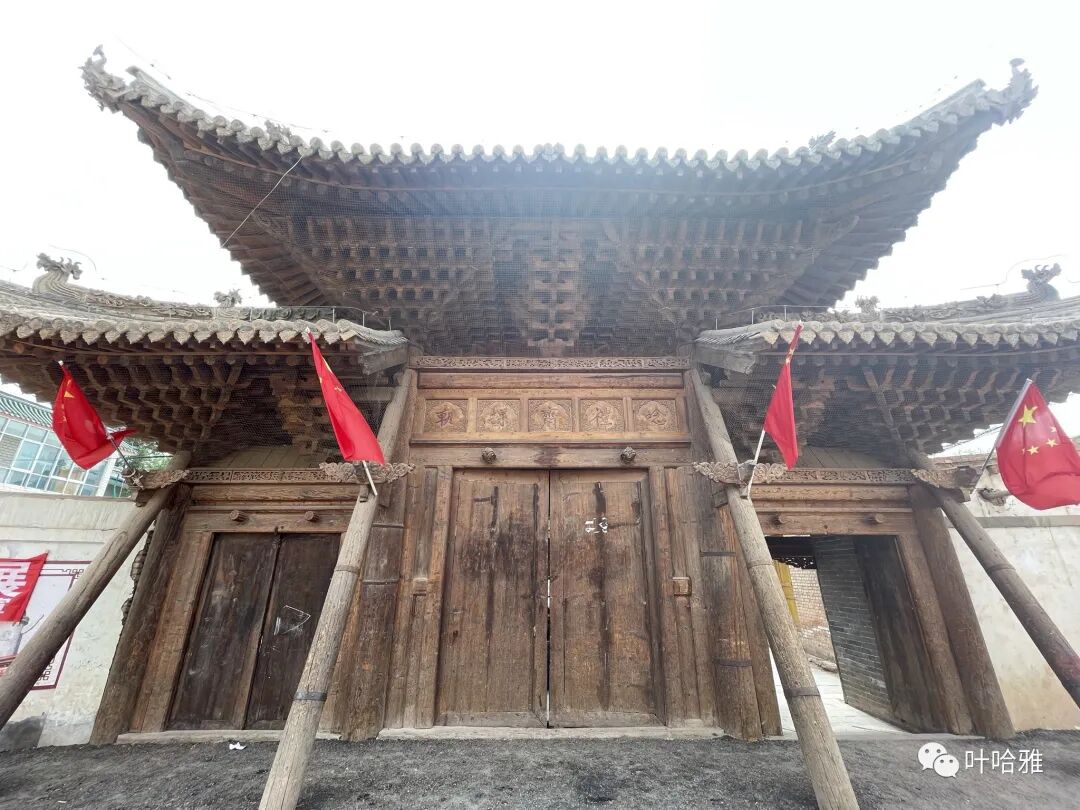
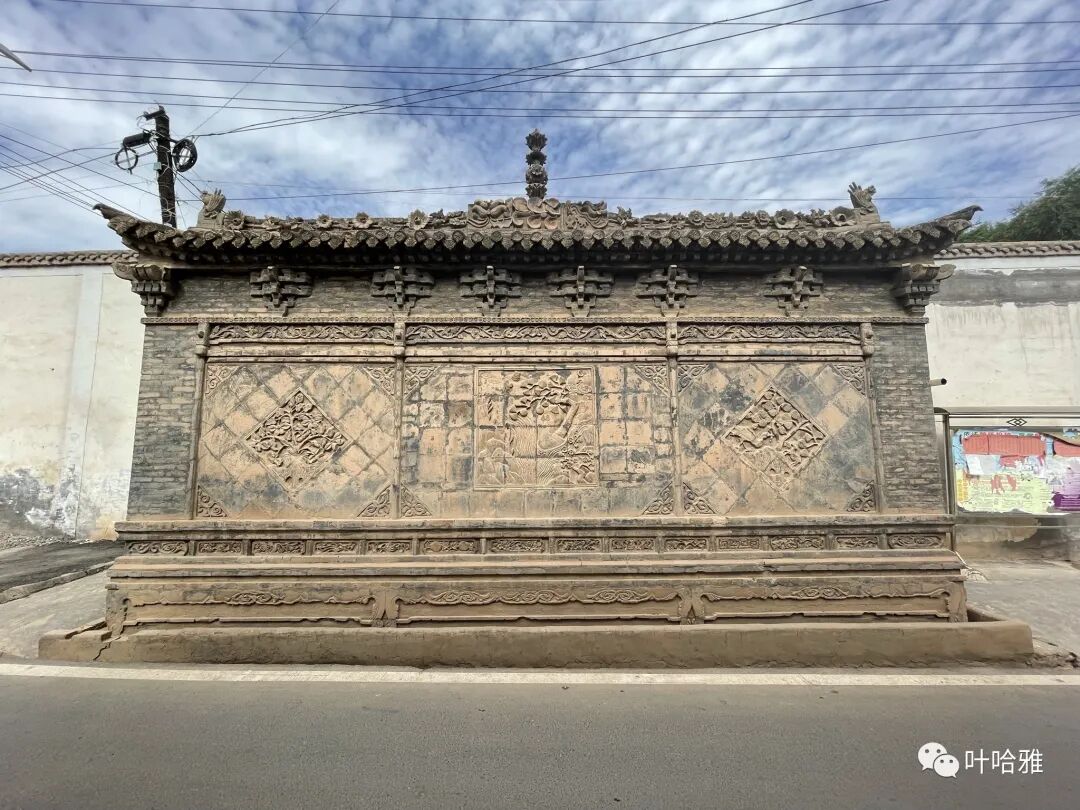
Ahetan Mosque is located in Ahetan Village, Gandu Town, Hualong Hui Autonomous County. It was first built in 1323 and expanded during the Ming Dynasty's Wanli reign, retaining its Yuan and Ming architectural style to this day.
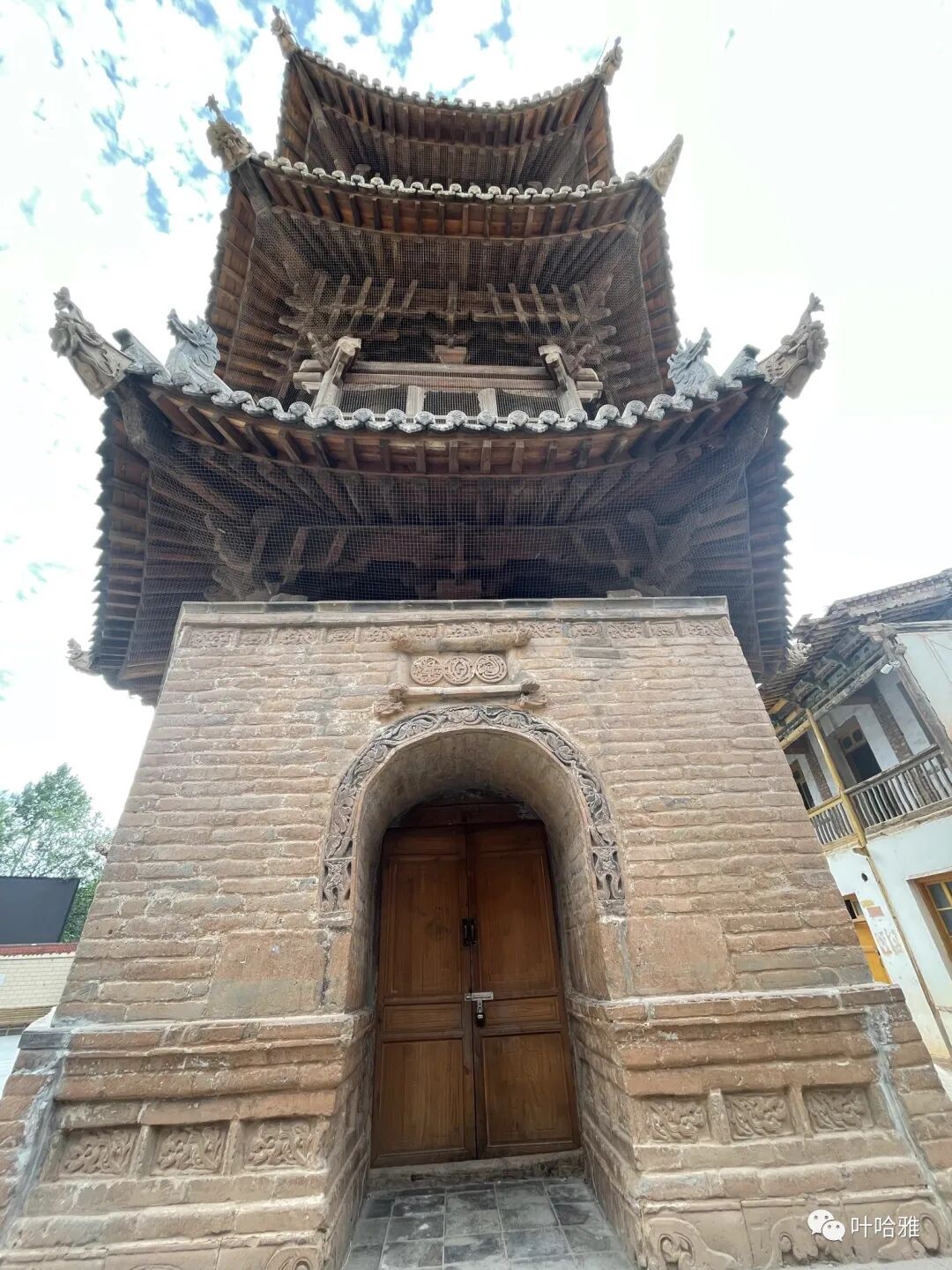
The wooden memorial archway of Ahetan Mosque is a three-bay, four-pillar, three-story structure with a hip roof. It is 9 meters high and 8 meters wide, with a tall roof supported by four diagonal pillars in the front and back.
The prayer hall has a floor area of 540 square meters. It is a three-section, six-bay structure with the main hall in the center and a ridged, hip-and-gable roof. There are north and south shed-style side halls, and the interior of the halls is connected as one.
The main hall and the niche hall (yaodian) are separated by carved wooden partitions. The mihrab in the center of the west wall of the niche hall and the Sumeru pedestals on the north and south walls are decorated with exquisite wood carvings.
13. Yisha'er Mosque
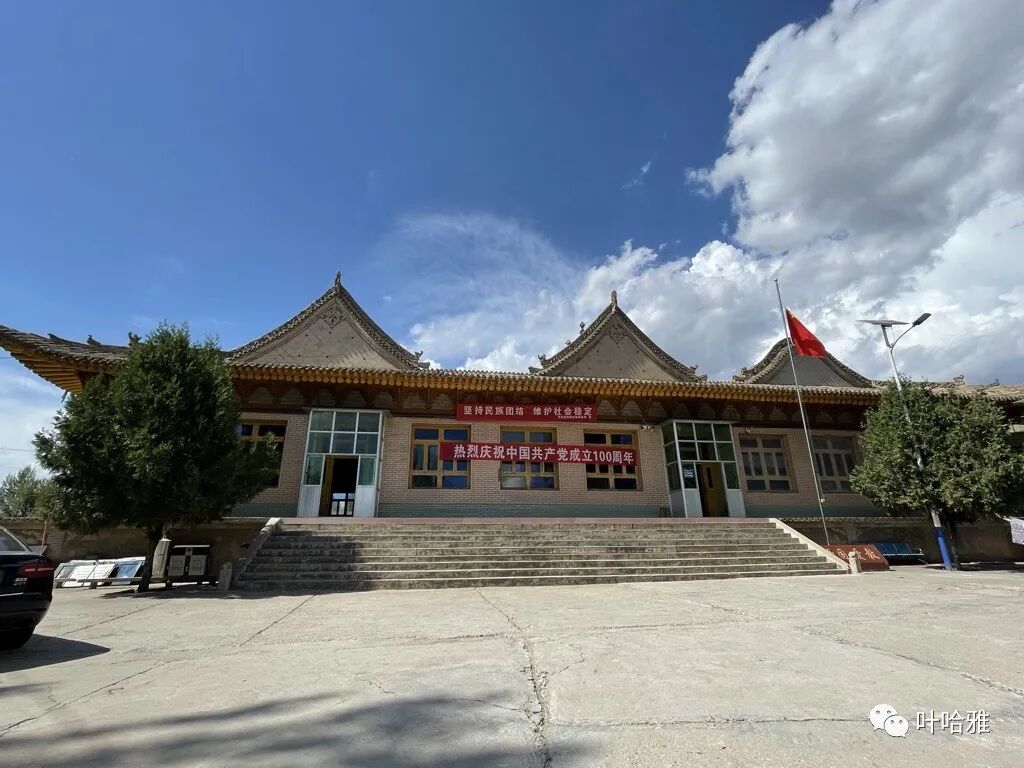
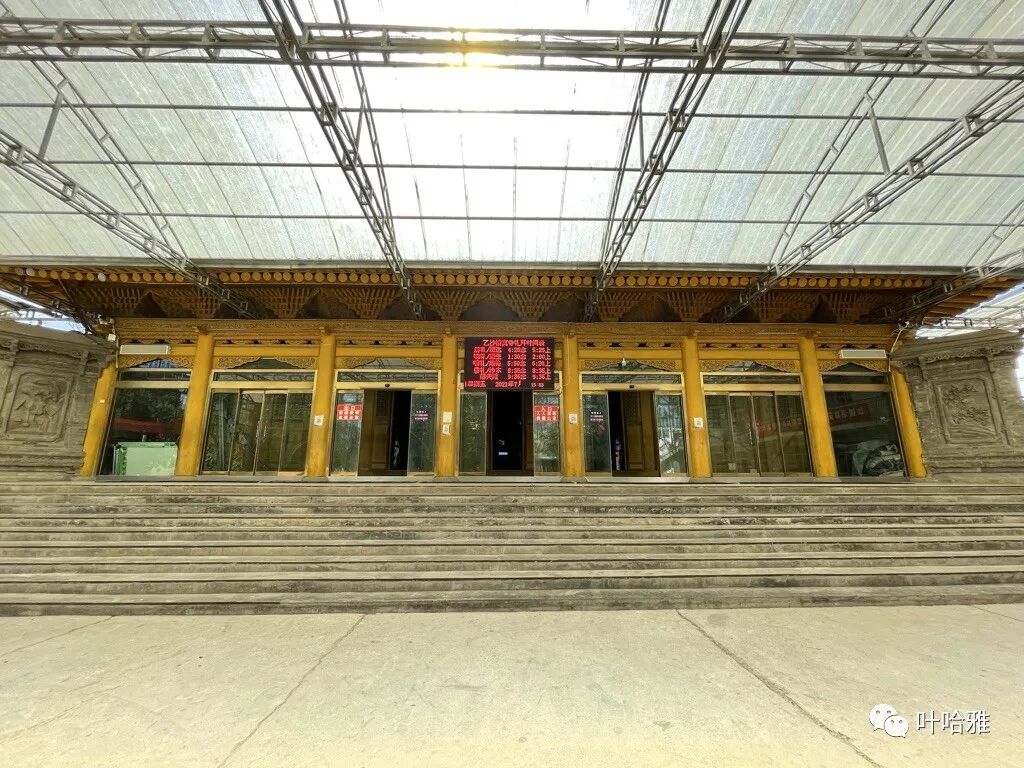
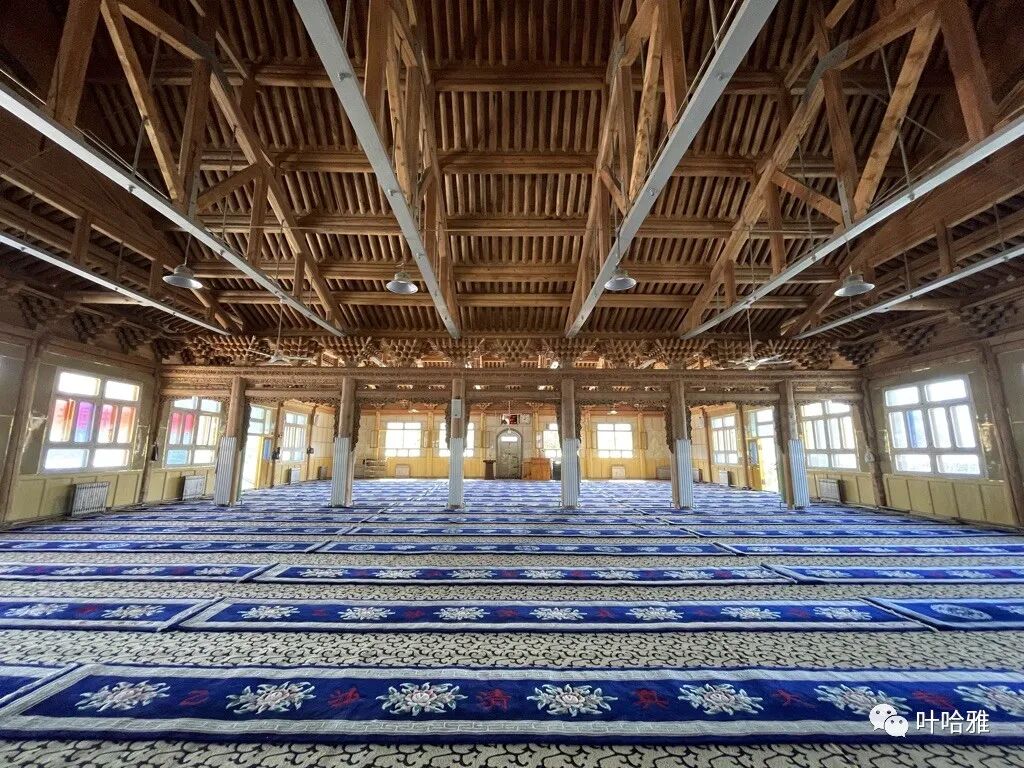
Yisha Mosque is in Yisha Village, Qunke Town, Hualong Hui Autonomous County. It is a protected cultural site of Qinghai Province. The mosque was first built in the first year of the Hongzhi reign of the Ming Dynasty (1488). It was rebuilt in the 14th year of the Qianlong reign of the Qing Dynasty (1749). The original minaret was a three-story wooden structure, wider at the top and narrower at the bottom, standing 28 meters high with a diameter of 6 meters.
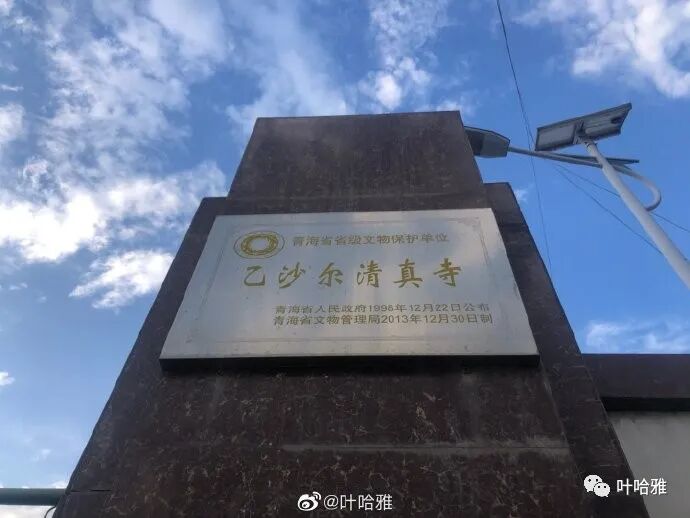
The cultural heritage plaque at Yisha Mosque calls it Yisha'er Mosque, but you can only find its location on Baidu Maps by searching for Yisha Mosque.
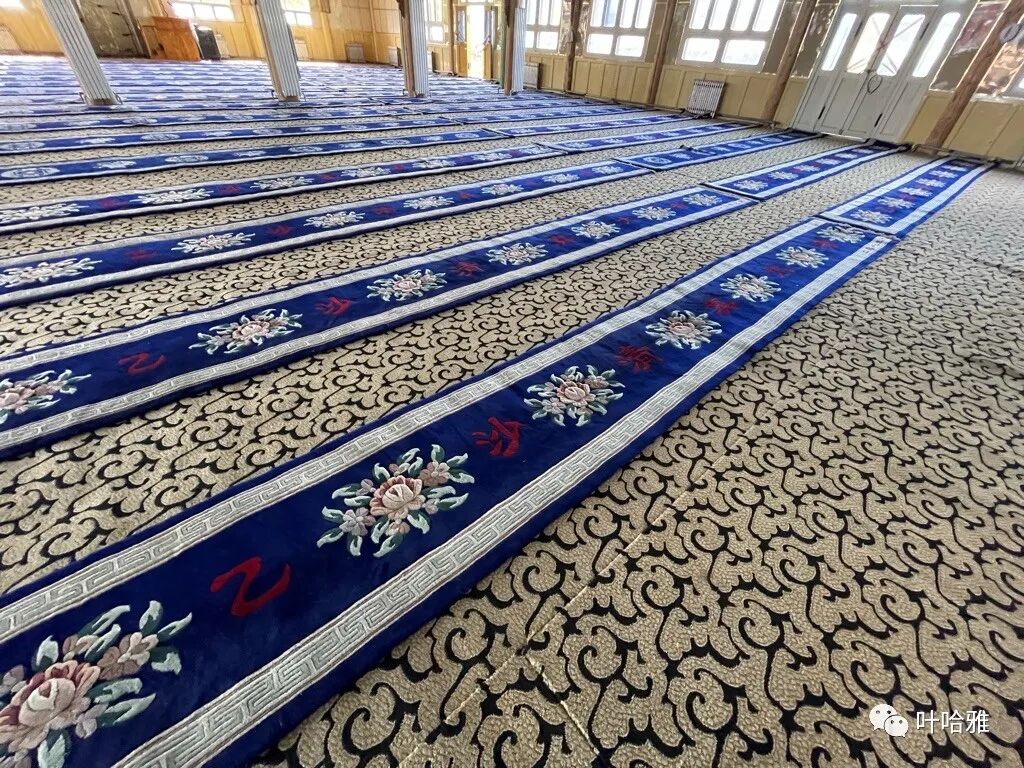
My father-in-law thinks Hualong has a better religious atmosphere than Xunhua. Most Hui Muslims from Hualong run noodle shops in other parts of China, while the Salar people from Xunhua mostly run Xinjiang-style restaurants.
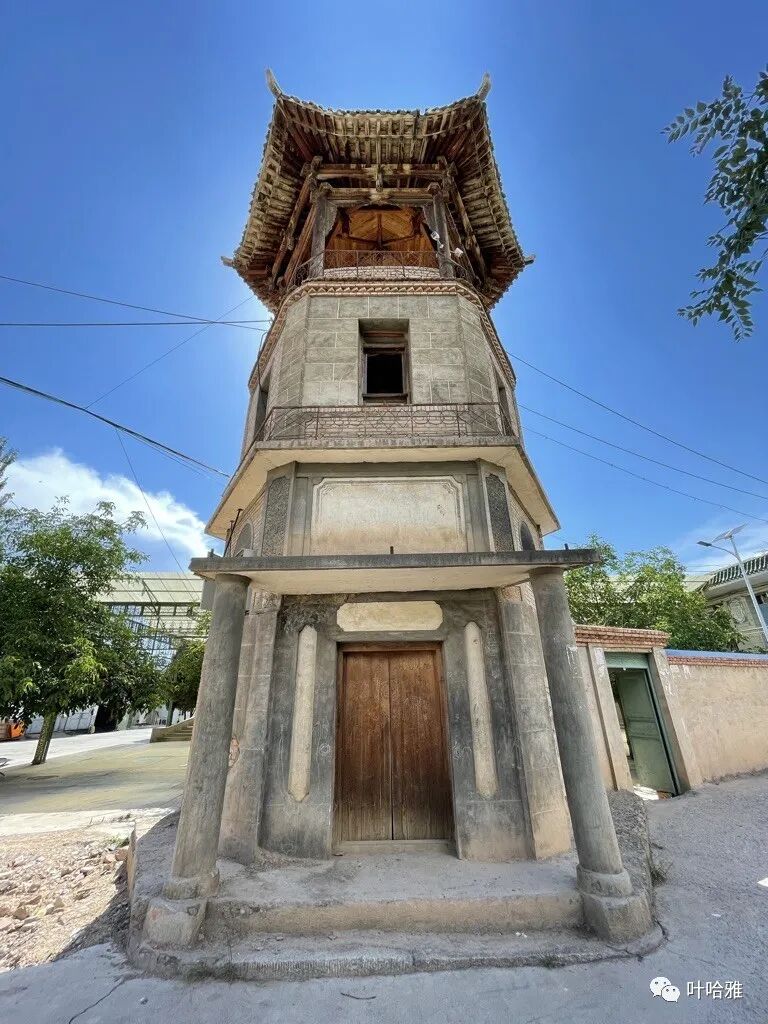
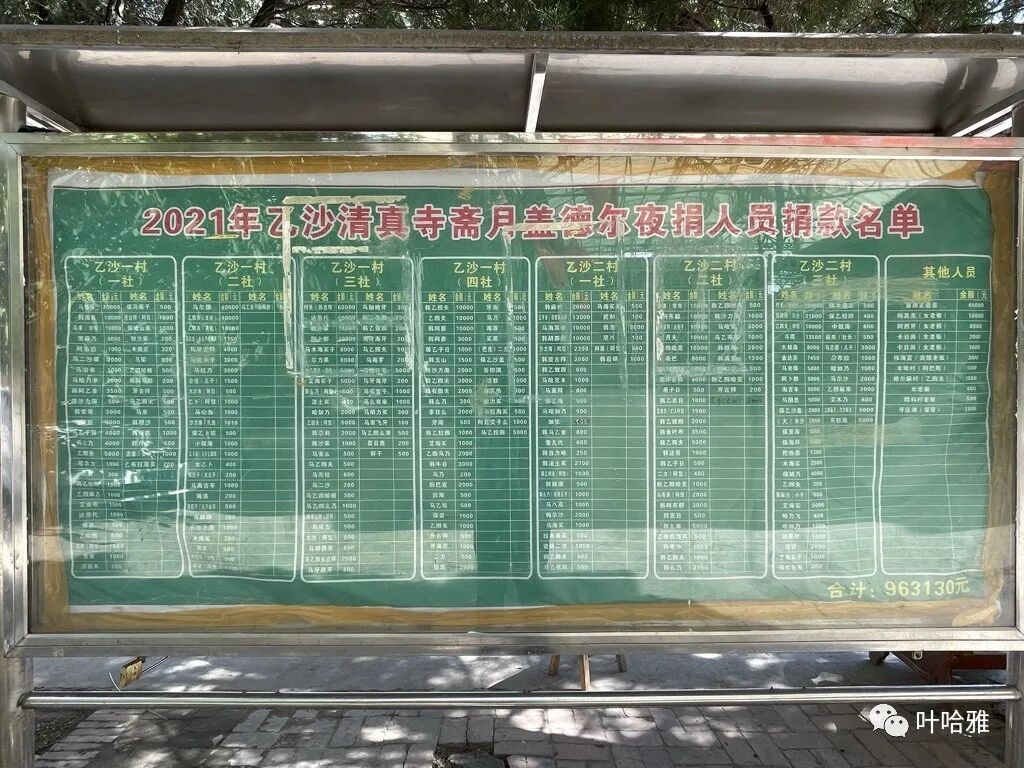
Tips: Food and accommodation guide.
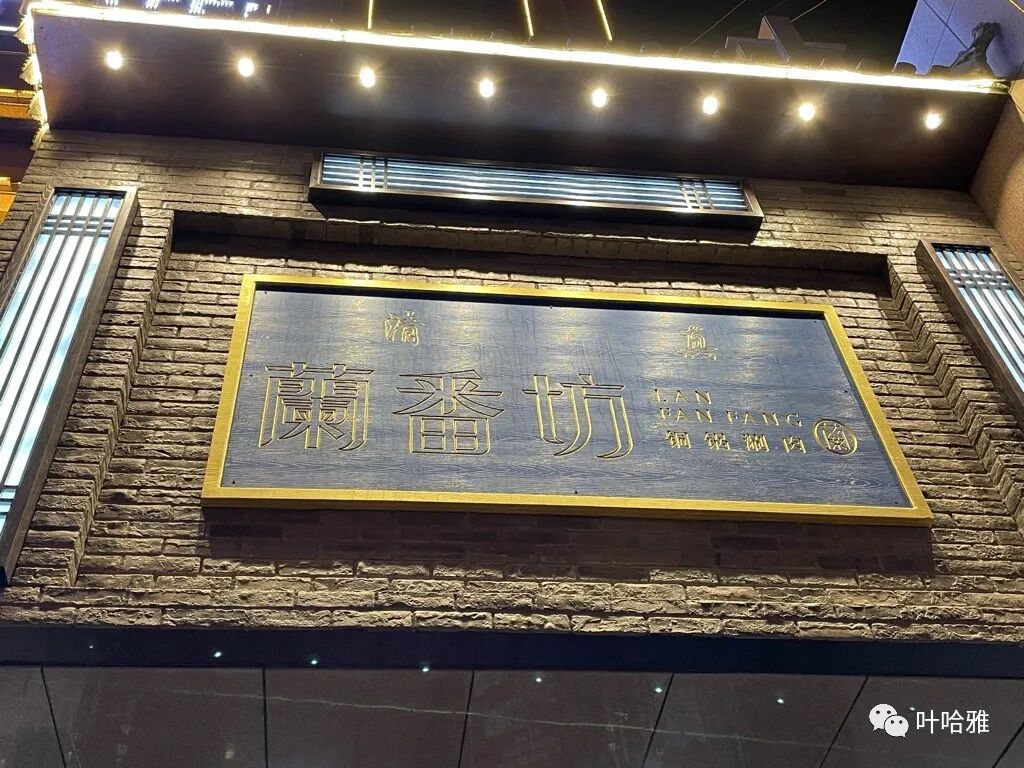
Almost all restaurants in Xunhua County are halal, and most serve noodles. If you want something special, try Lanfanfang Copper Pot Hot Pot. People in Qinghai love hot pot, and the local clay pot hot pot (tu huoguo) is a regional specialty.
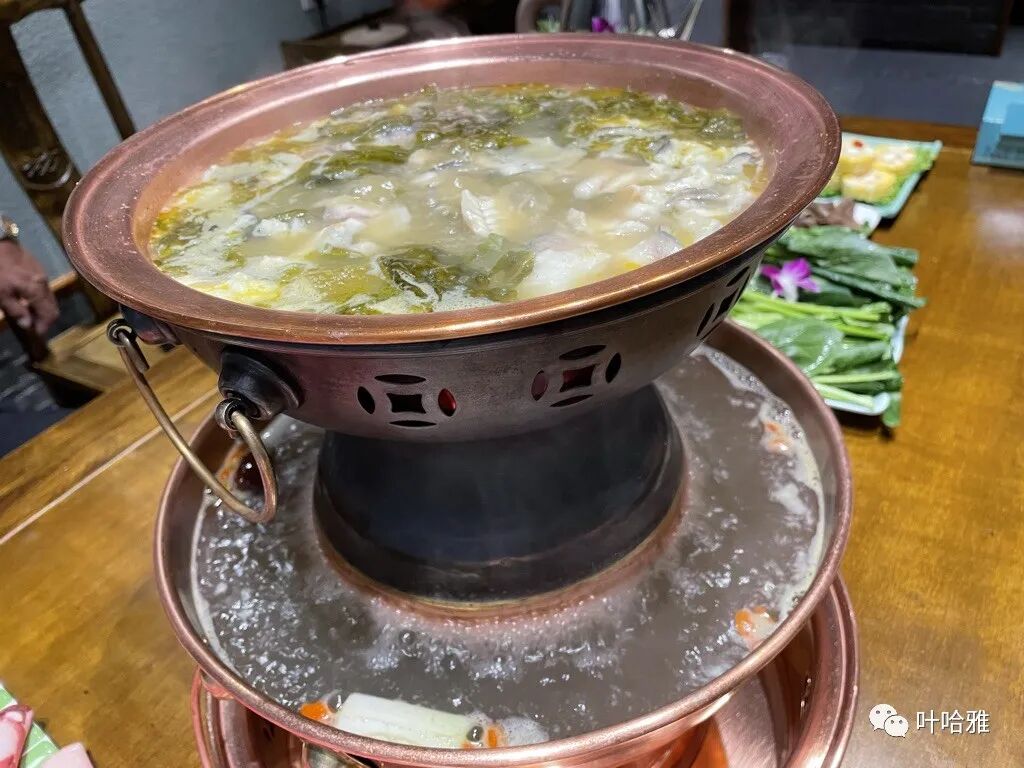
The hot pot at Lanfanfang is unique because it is double-layered. The sauerkraut fish pot on top is especially delicious, mainly because the fish is so good.
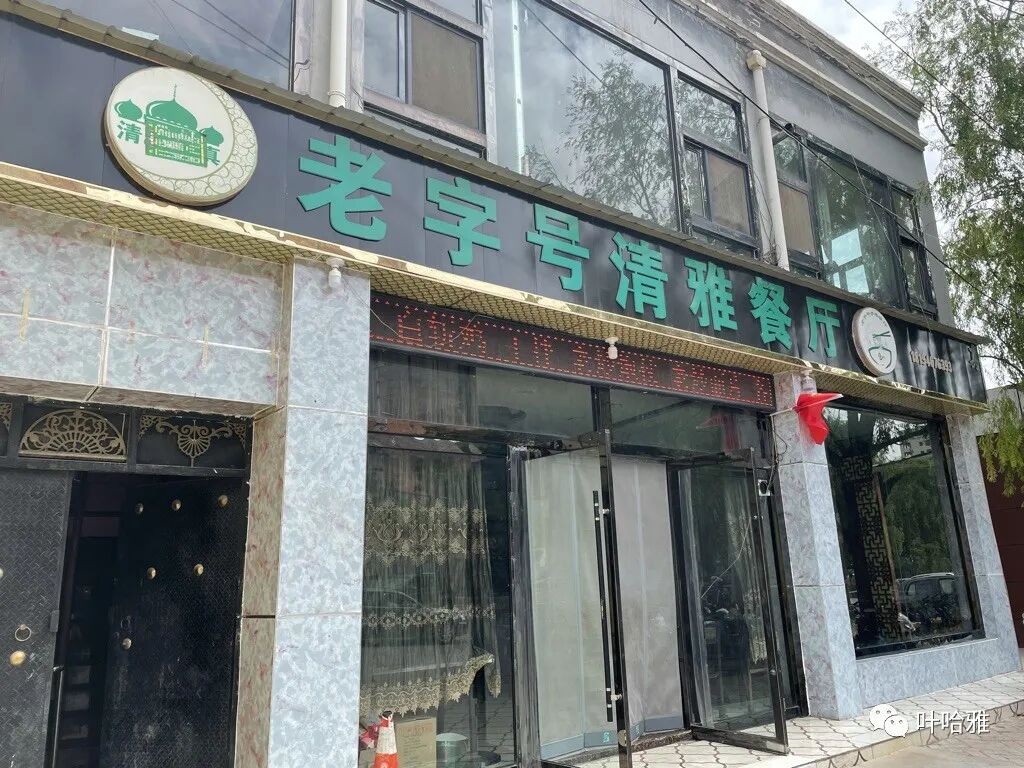
Qingya Restaurant, another long-standing local spot just a few dozen meters from Lanfanfang, was recommended by a friend in Xunhua. You can eat representative local handmade noodle pieces (mianpian) there.
Keep in mind that portions in Northwest China are very large. Unless you have a huge appetite, order less food when traveling here.
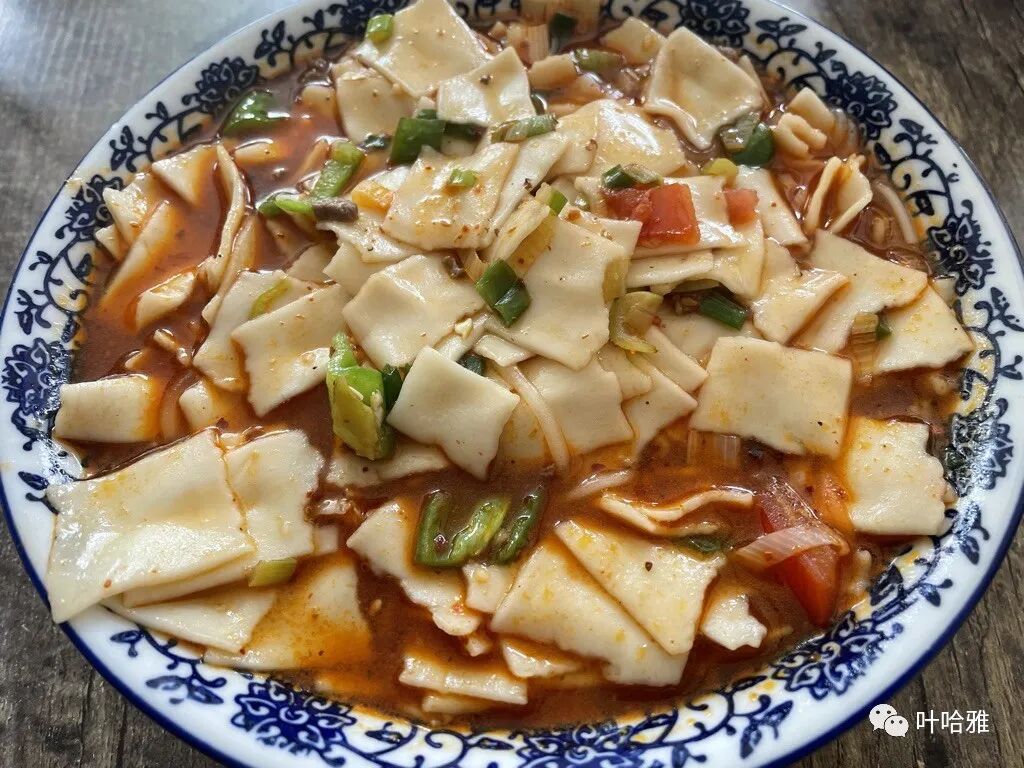
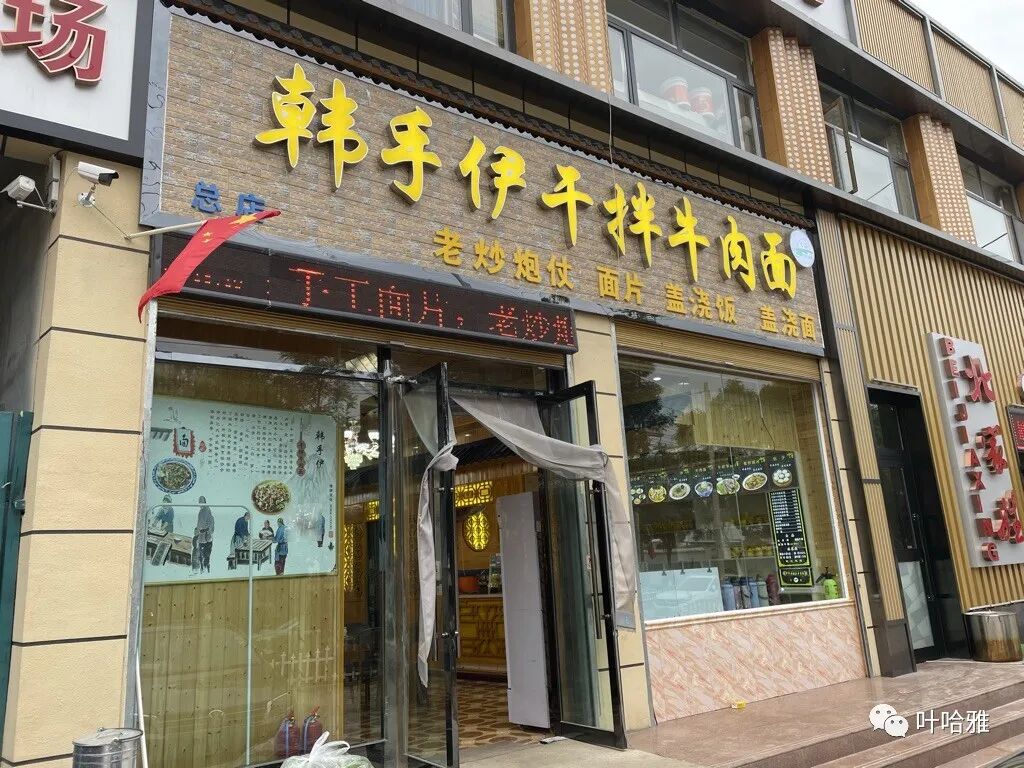
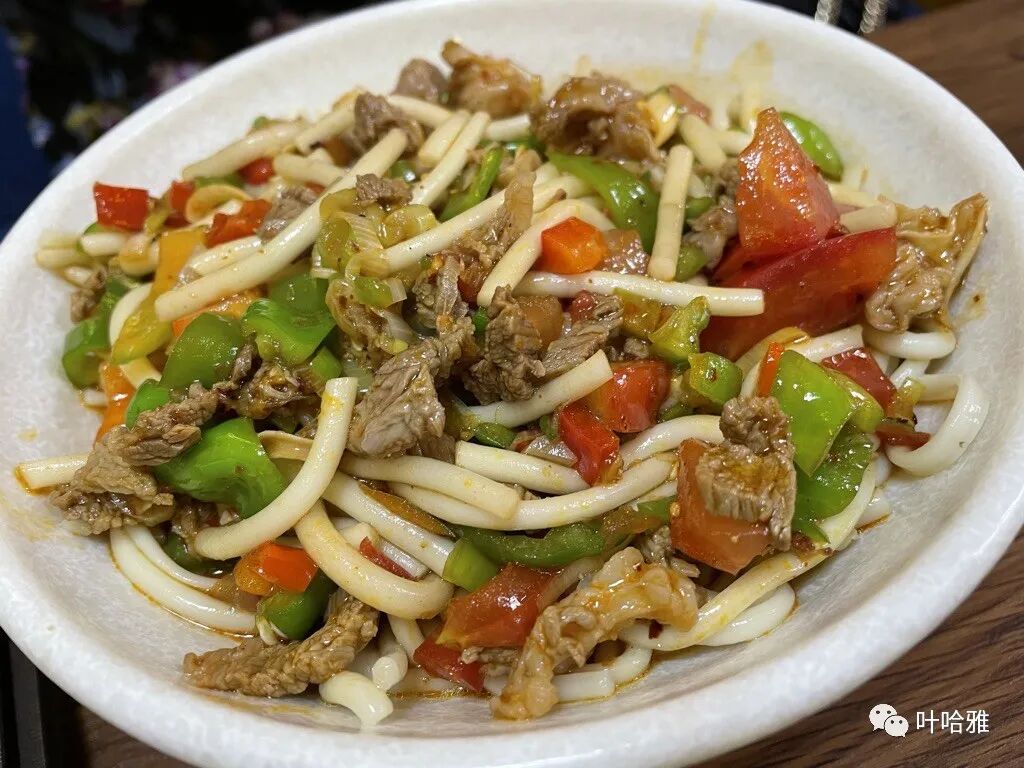
I personally tested the dry mixed noodles (ganban mian) and firecracker noodles (paozhang mian) at Hanshouyi, and they are delicious. Both are Qinghai specialties that do not taste authentic once you leave the province.
Firecracker noodles (paozhang mian)
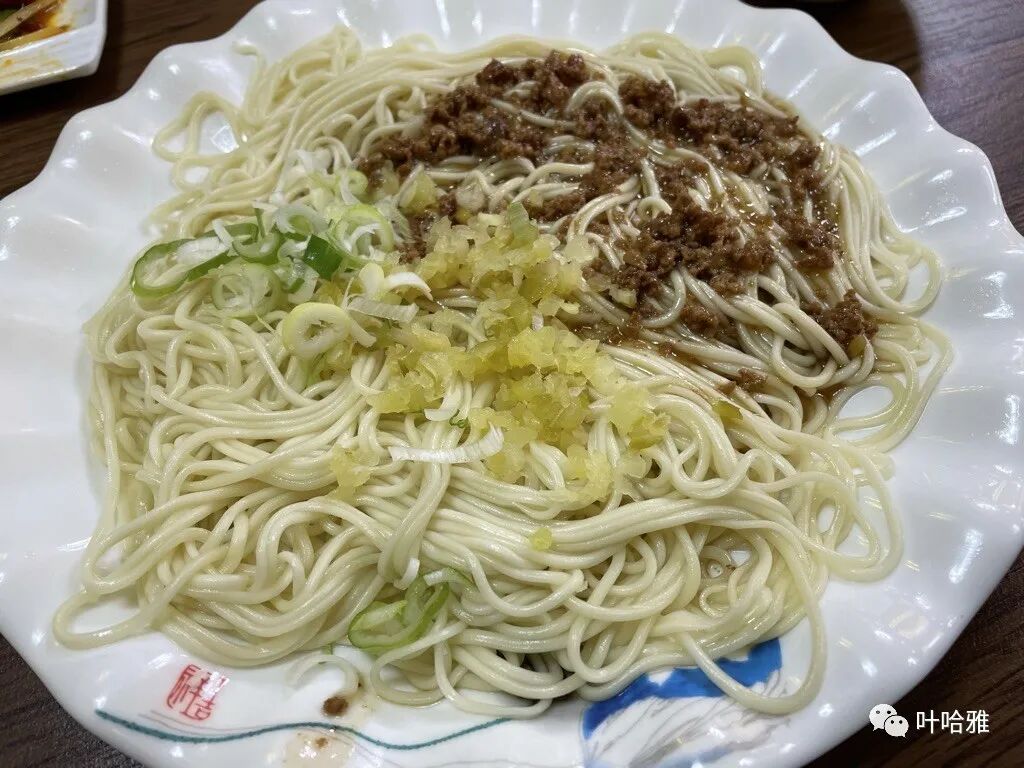
Dry mixed noodles (ganban mian)
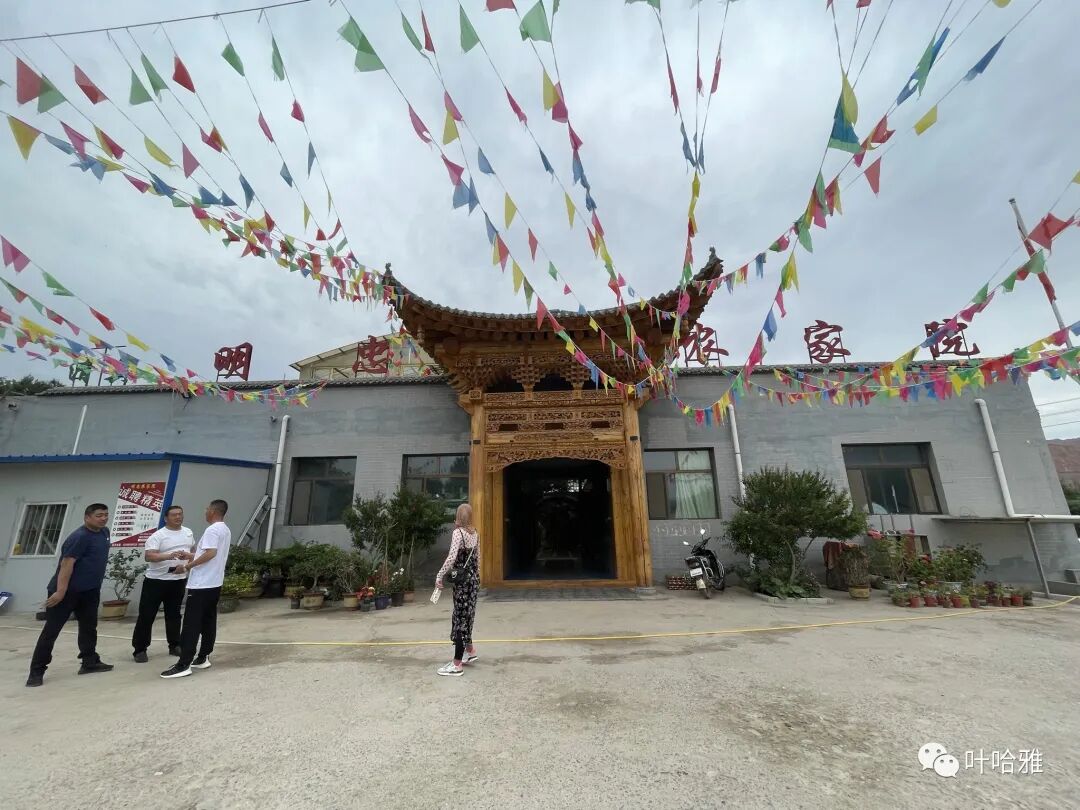
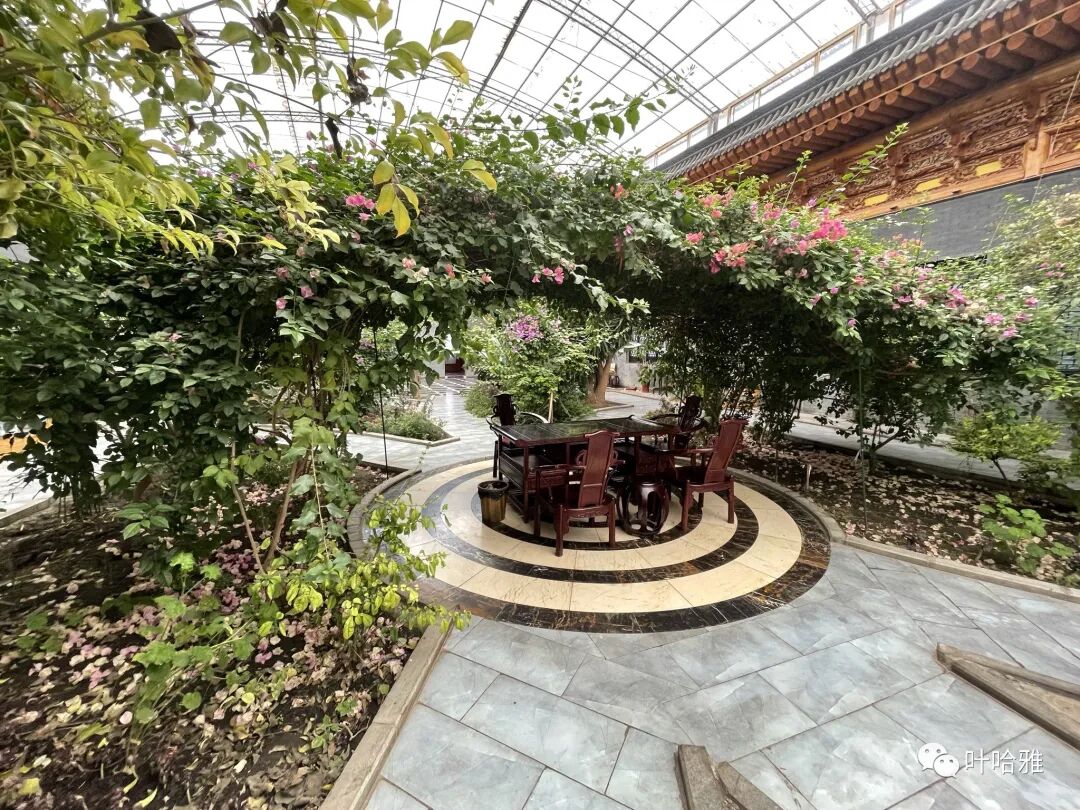
If you want a nicer meal and have a large group, you must try a farmhouse restaurant in Xunhua. This Mingzhong Farmhouse looks very impressive and has a garden and private rooms inside.
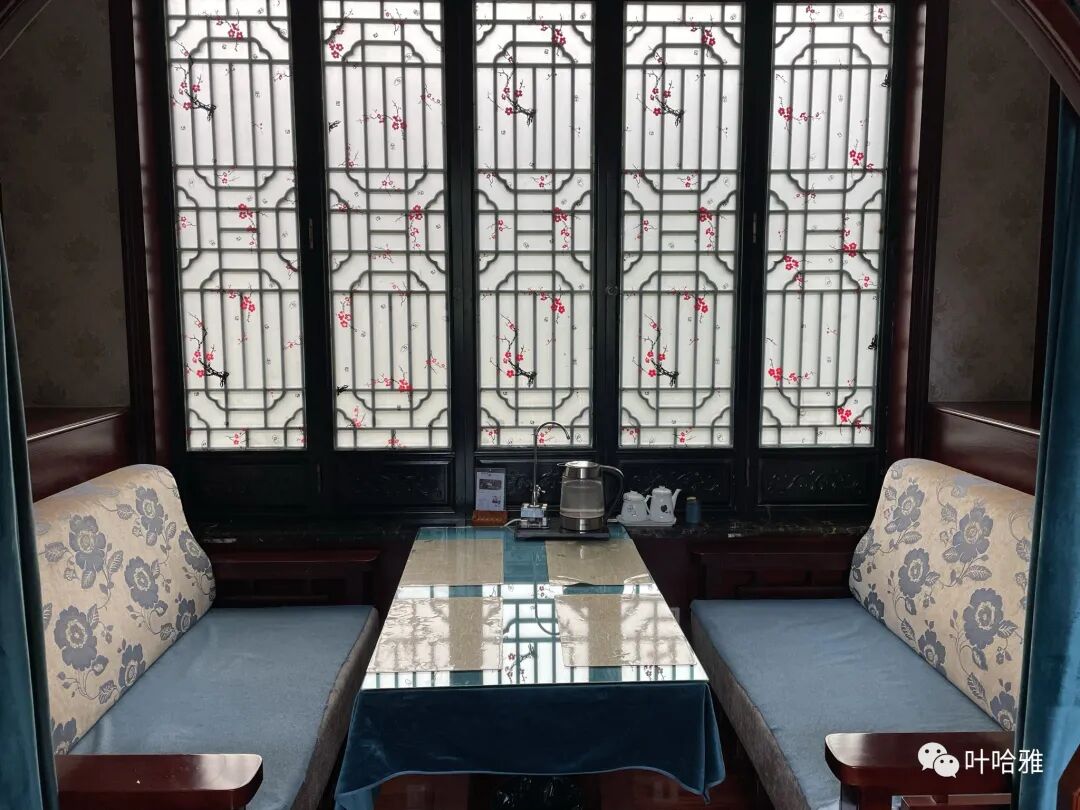
It also has prayer rooms, separated for men and women. Prayer rooms are a standard feature in medium-sized or larger restaurants in Xunhua.
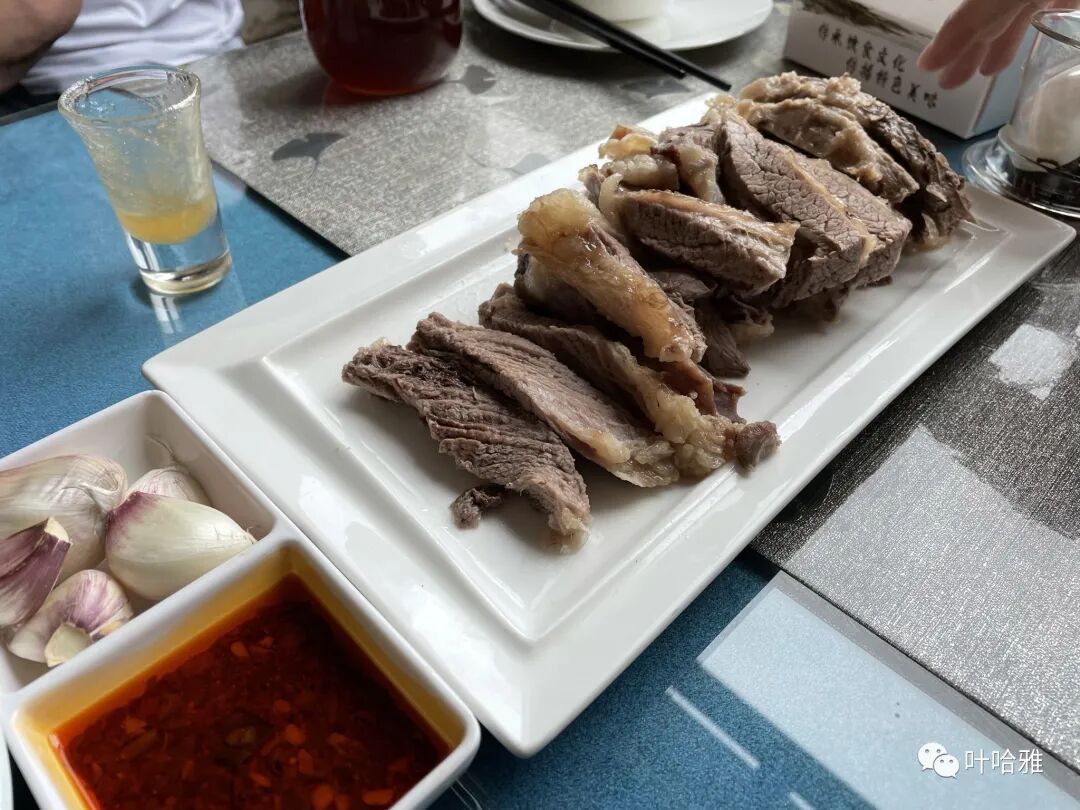
Hand-grabbed beef (shouzhu niurou)
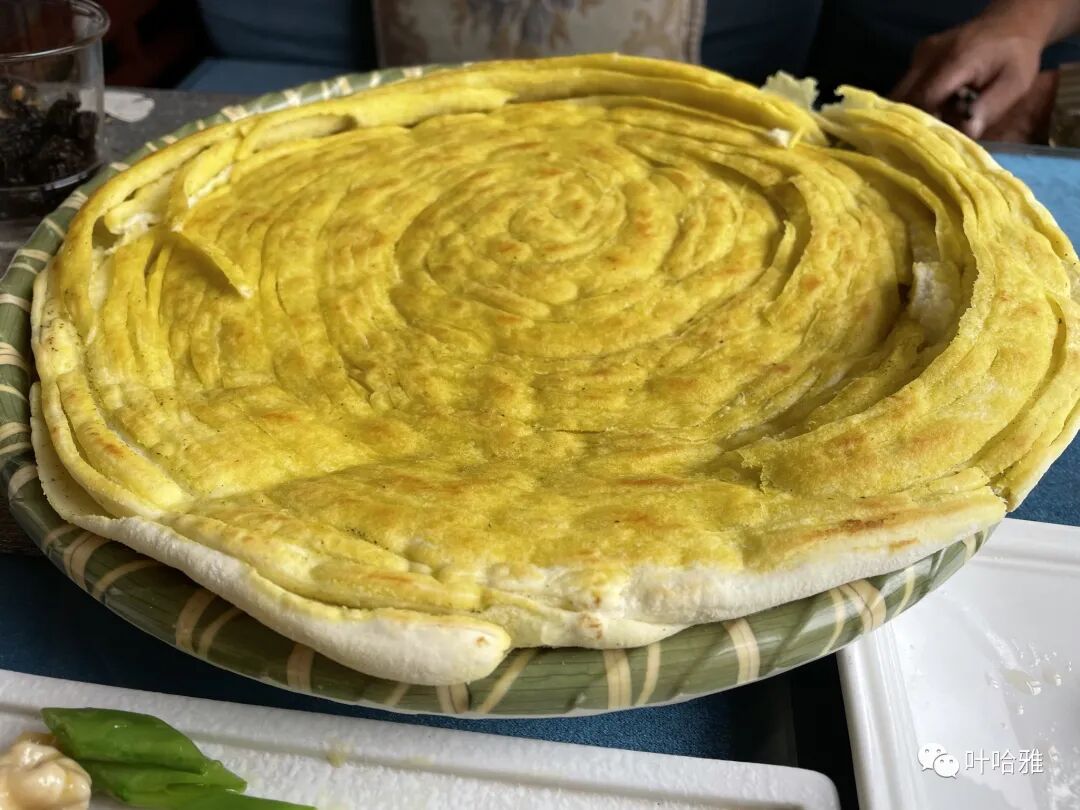
Spiral oil bread (youxuan momo)
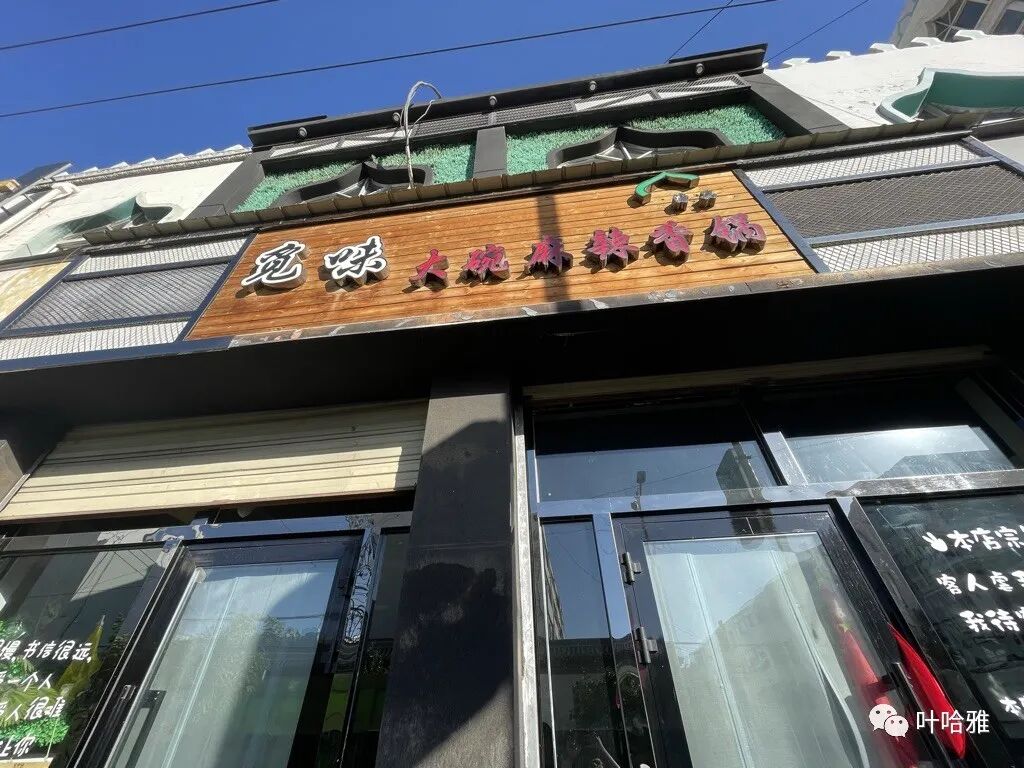
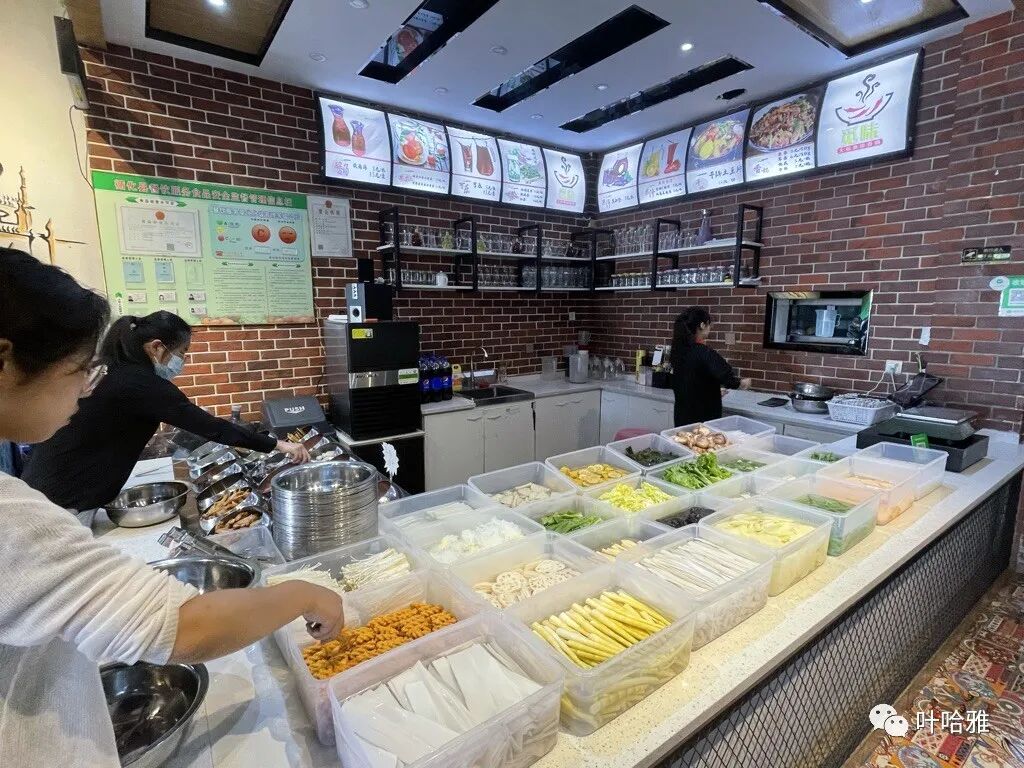
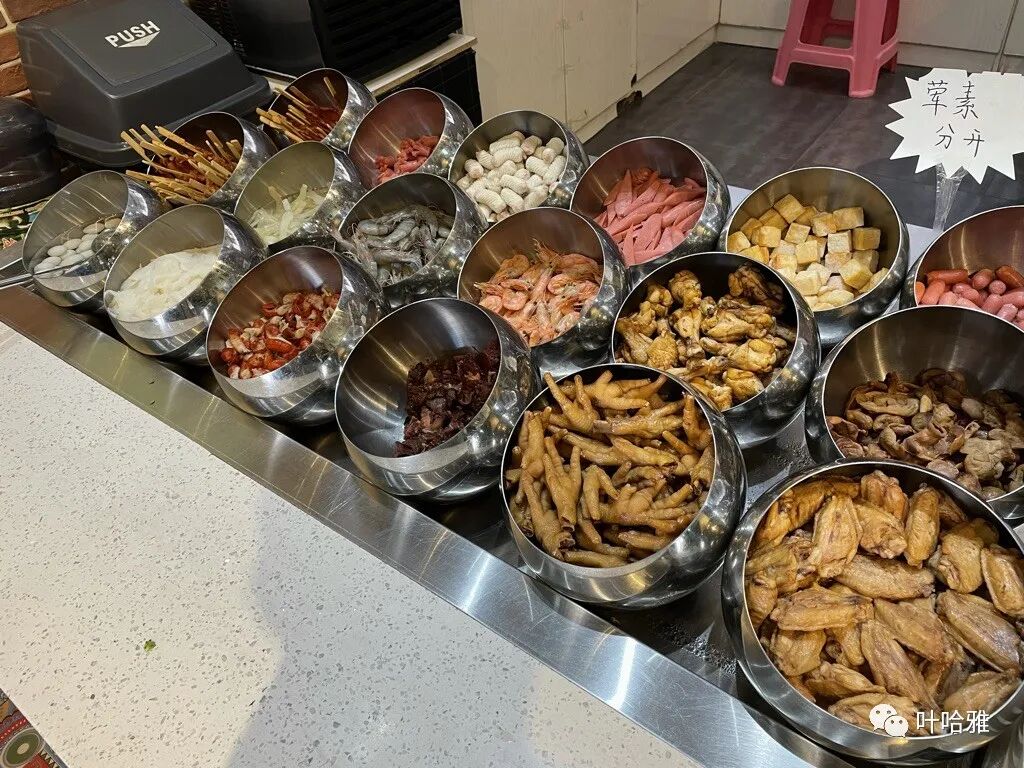
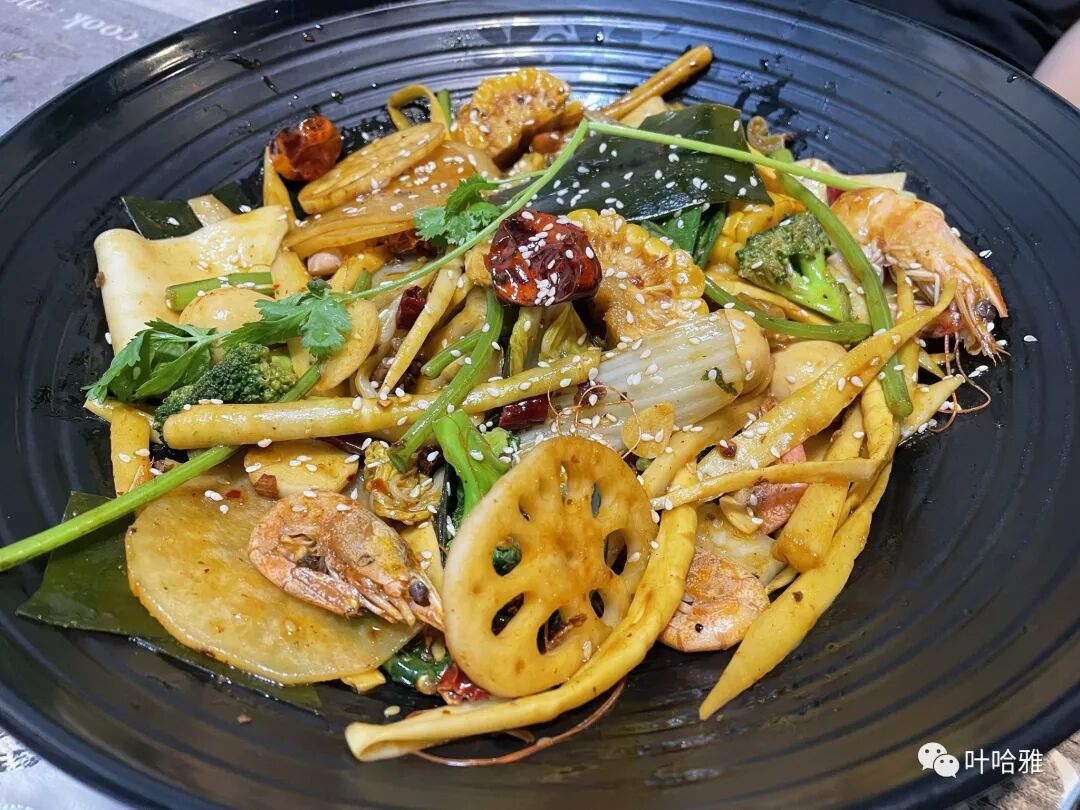
Searching for the taste of spicy hot pot (mala xiangguo).
Mala xiangguo is popular because they pick high-quality ingredients, even though it costs more. The shop fills up quickly at lunch. It has been open for three years and has two floors with a private, elegant feel. The owner cares a lot about service quality; I even caught him giving a pep talk to his staff when I arrived. The spicy pot paired with Xunhua’s most famous chili is a perfect match.
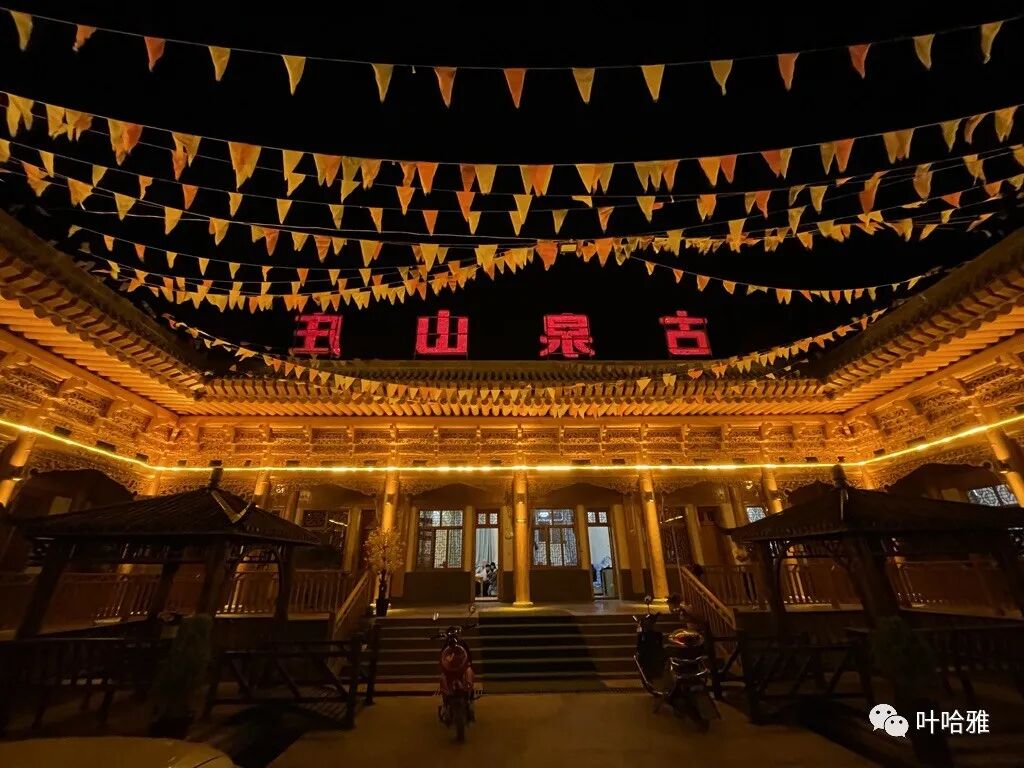
Guquan Villa.
Guquan Villa is another farmhouse-style inn in Baizhuang. Its specialty is using mountain spring water for drinking, which makes tea taste much better.
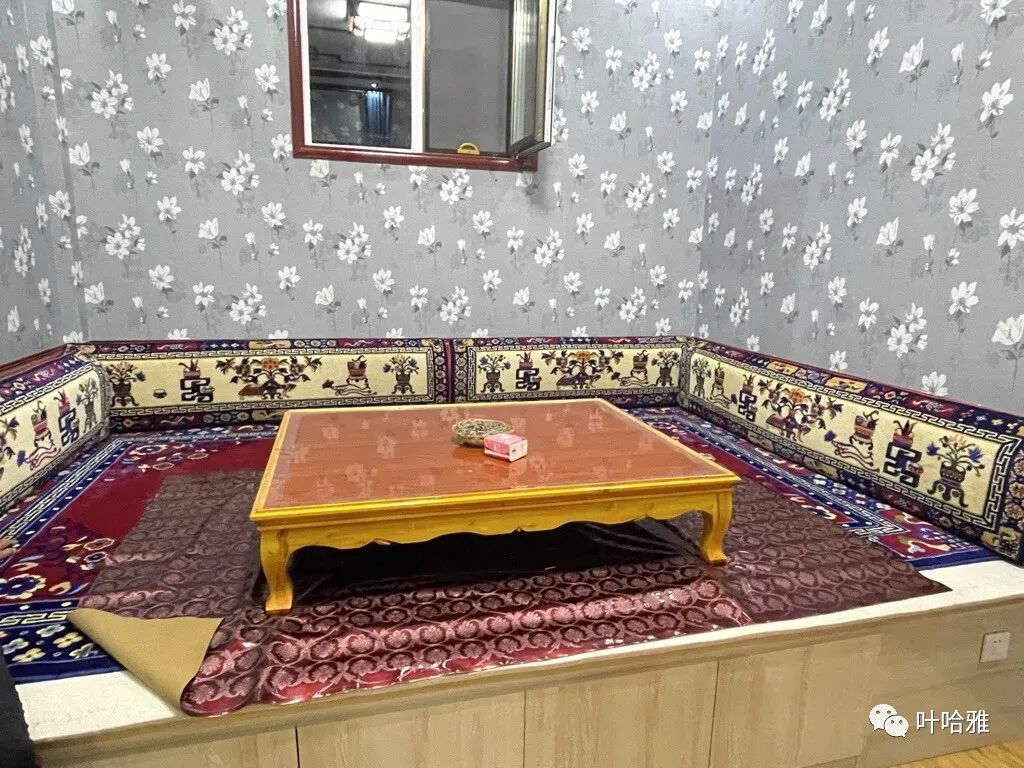
Traditional Salar families eat on a heated brick bed (kang), sitting cross-legged, which is similar to the customs in Central Asia.
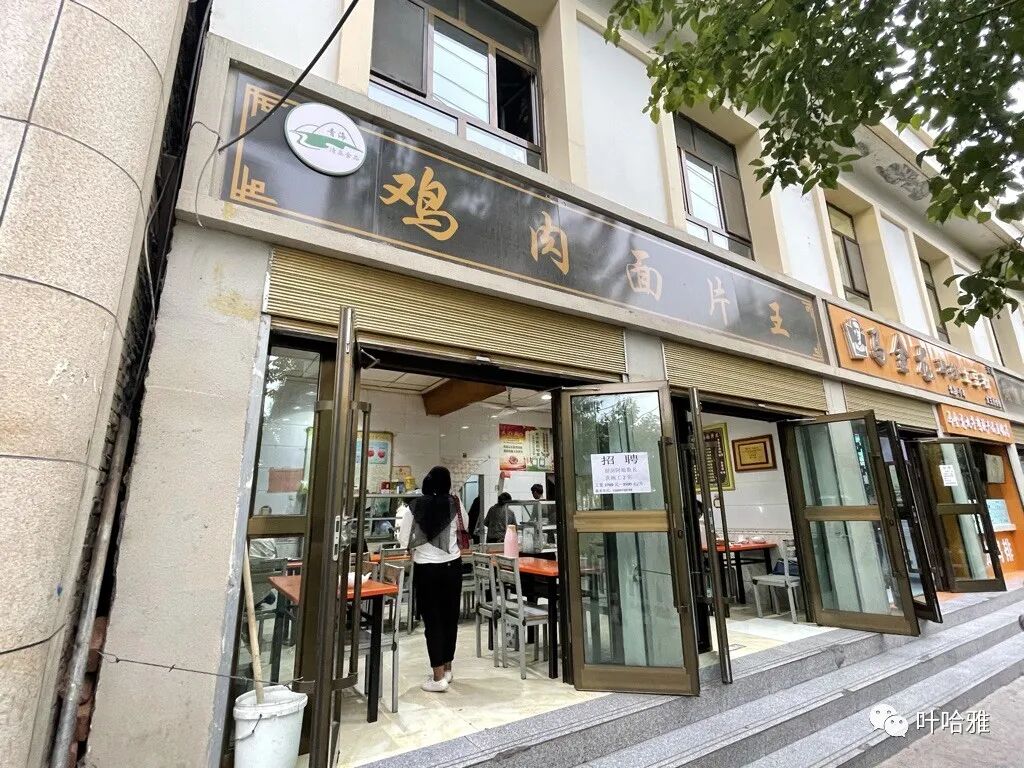
Chicken Noodle Flake King (jirou mianpian wang).
Chicken noodle flakes (jirou mianpian) are hard to find elsewhere, as they are usually made with beef. This shop is one of the local specialty spots recommended by my friends in Xunhua.
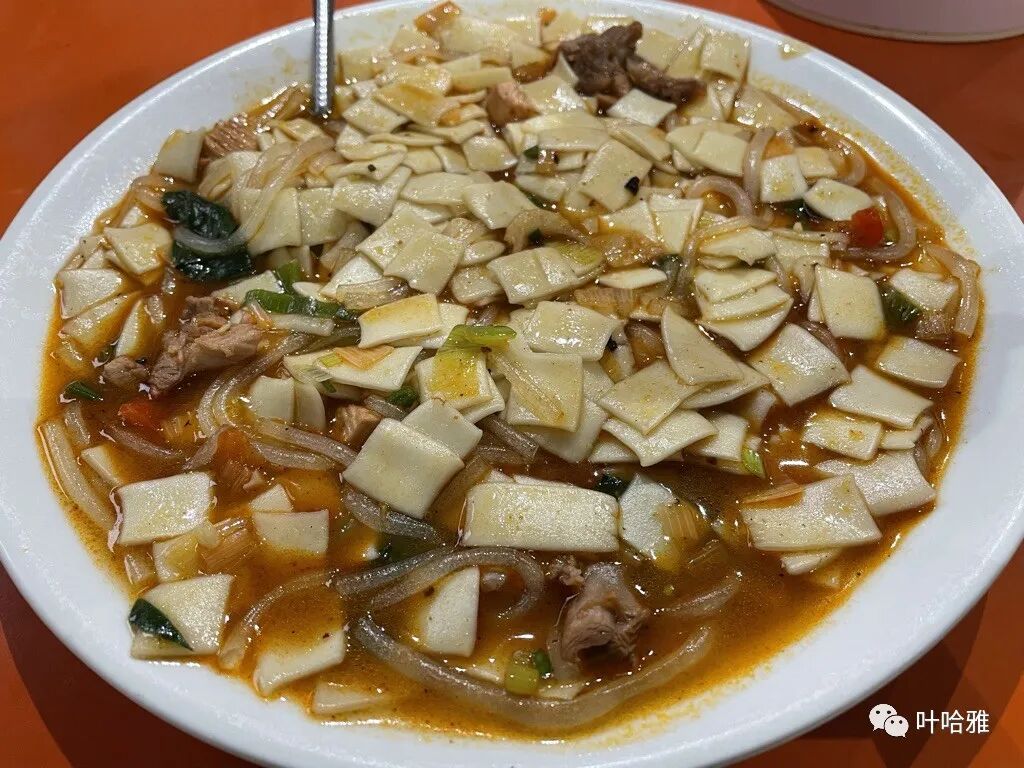
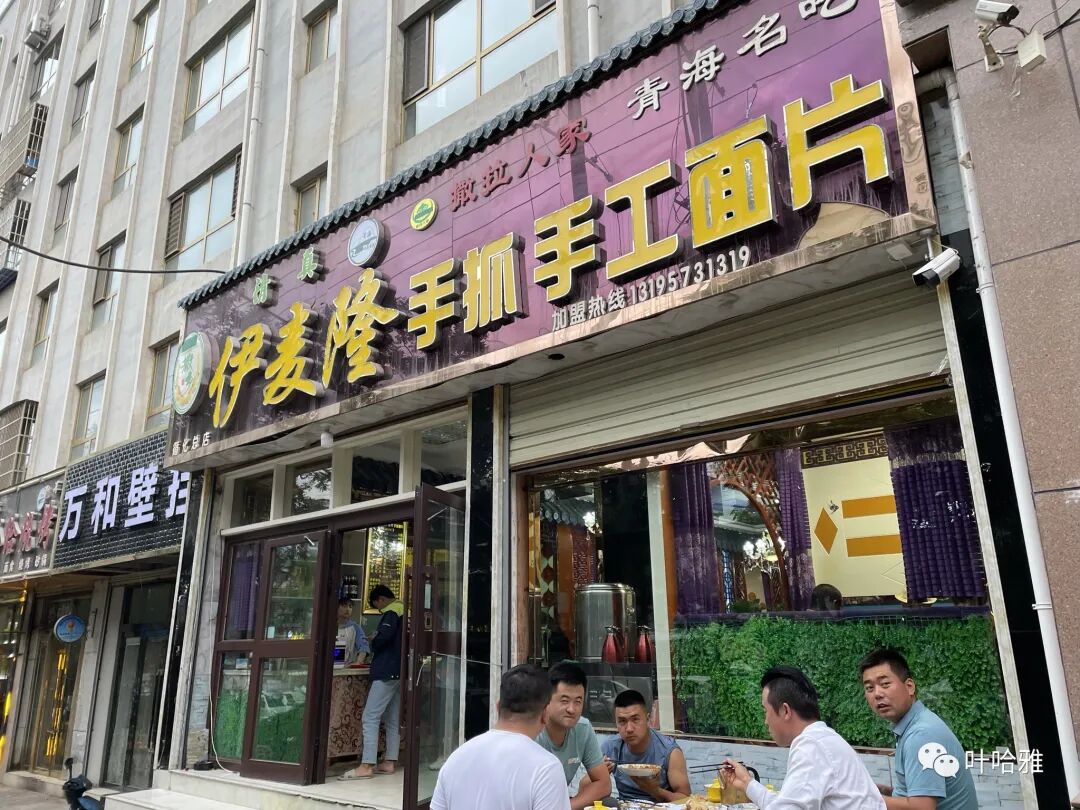
Yimailong Hand-Pulled Noodle Flakes (shouzhuo shougong mianpian).
Yimailong has a good reputation among locals. I had the starch noodle soup (fentang) for breakfast here, which is another Qinghai local specialty.
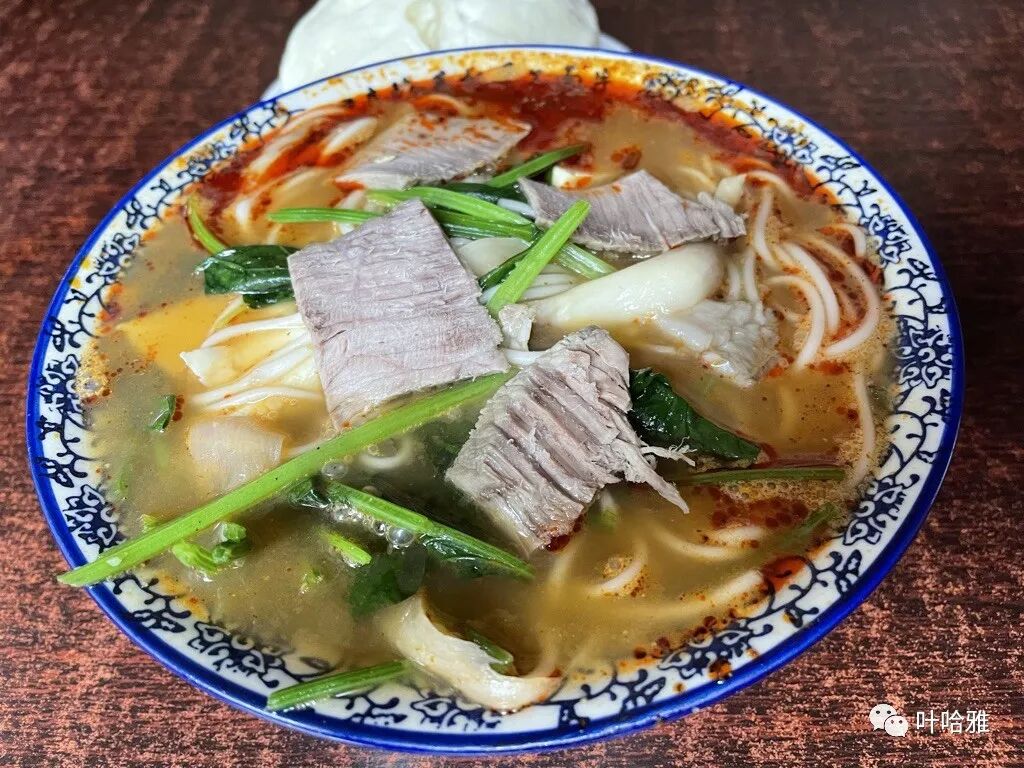
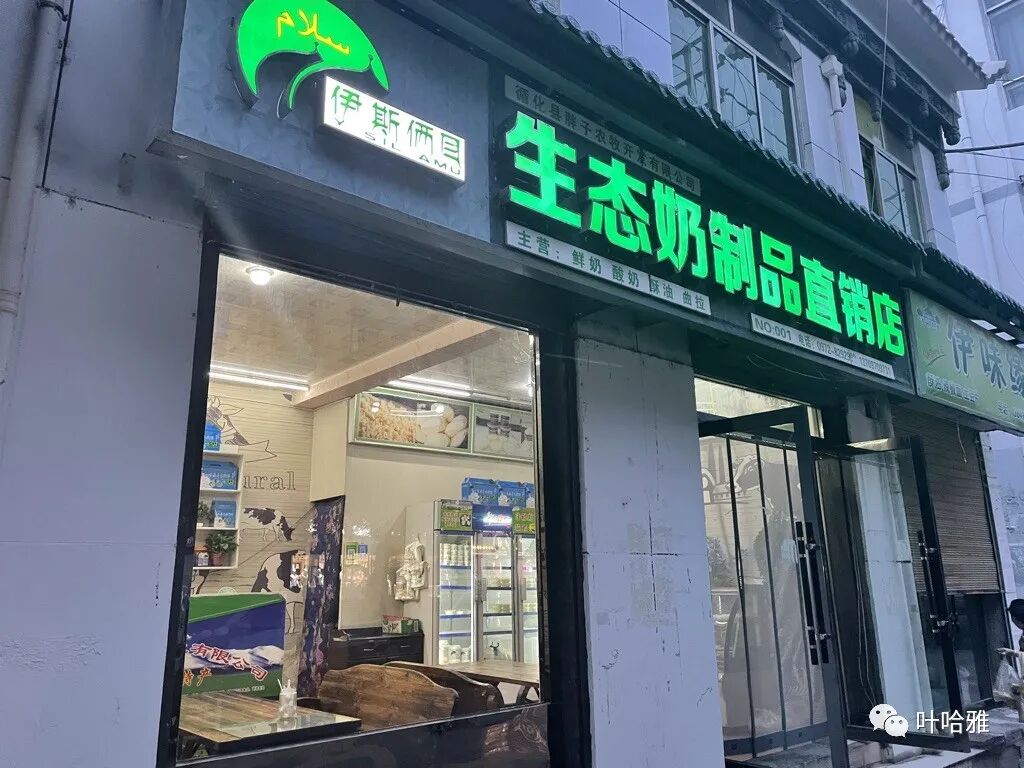
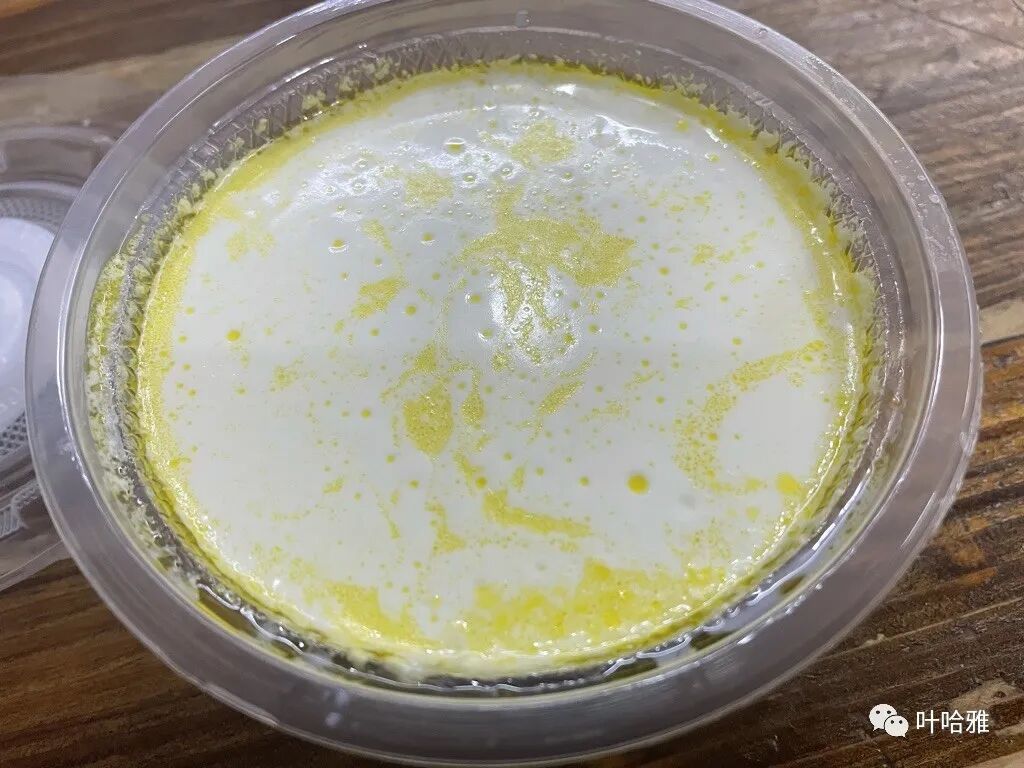
For dessert, you must try Qinghai yogurt. Just look at the golden milk skin on top to see how rich the flavor is.
For lodging, we reviewed three hotels in Xunhua County: Xunhua International Hotel, Xunhua Jinheyuan Hotel, and Xunhua Borman Hotel. They are all close to each other. Jinheyuan Hotel offers the best overall value. The International Hotel is the most expensive, costing a few dozen yuan more than Jinheyuan. The International Hotel has river-view rooms, but Jinheyuan has all smart room controls, provides a ritual washing pitcher (tangping), and has indicators for the direction of prayer (qibla). Overall, it is more comfortable than the International Hotel. Borman is the cheapest, but the room facilities are old.
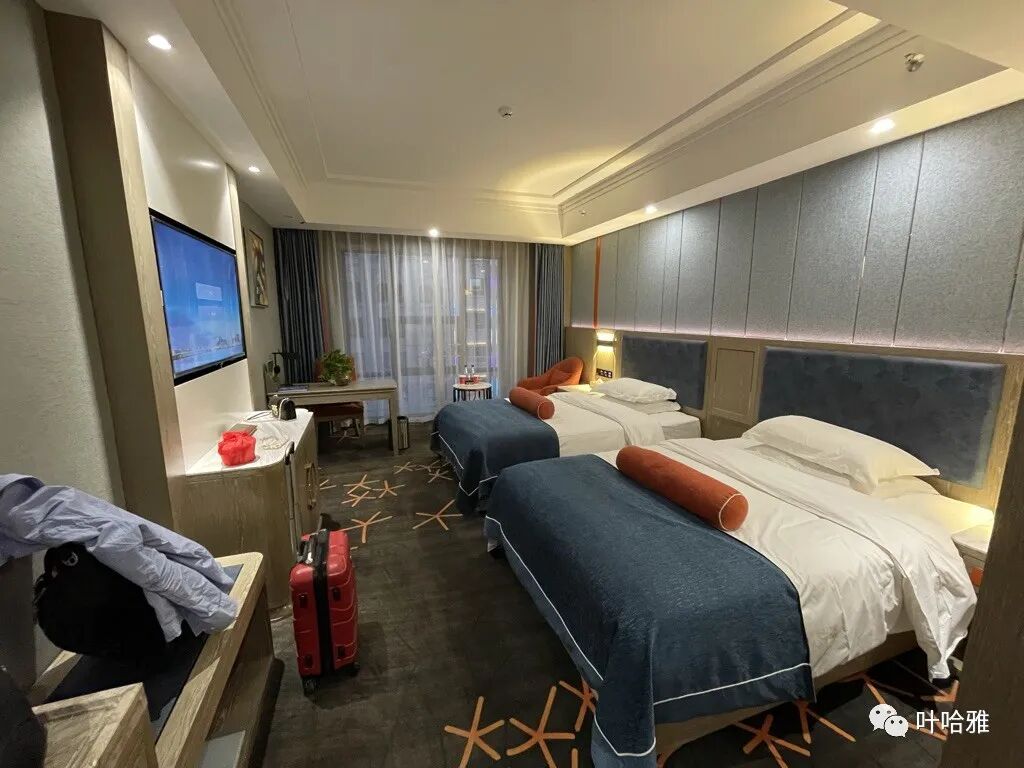
Jinheyuan Hotel room.
I noticed there are many restaurants in Xunhua County. All halal restaurants here are alcohol-free, so hotels are called 'restaurants' (fandian) and provide halal breakfast. People in Xunhua like to experience staying in hotels during their leisure time. My friends in Xunhua often fly to different places, not to visit tourist sites, but just to experience a night in a luxury hotel before heading back.
Return trip - Xining.
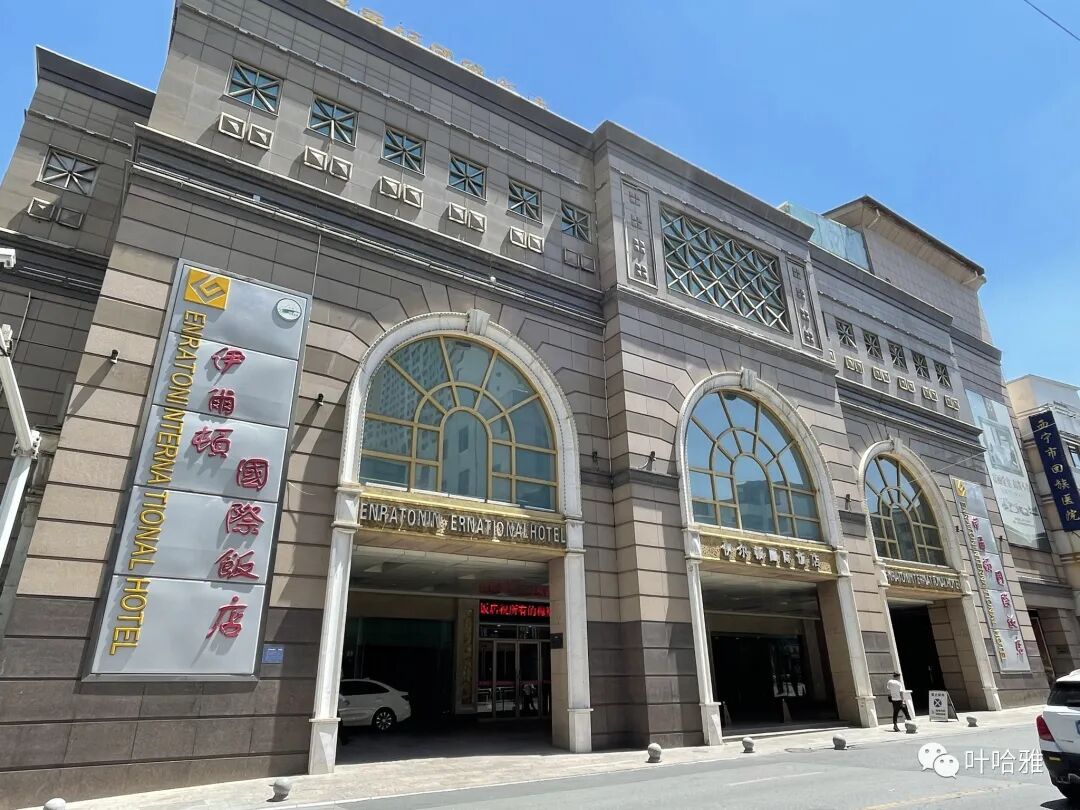
I have been to Xining many times; I even held my wedding there in 2018. This time, I specifically chose to stay one night at the Yilton International Hotel. A long time ago, when I first traveled alone, I visited Xining. While wandering near the Dongguan Mosque, I looked up and was shocked to see such a large international hotel that was actually halal—I had never seen that before. I decided then that if I ever came back to Xining, I had to experience it.
However, this time I felt the Yilton is quite old. Although the service is okay, it has been operating for over a decade. Compared to the many new luxury hotels in Xining today, the Yilton is no longer as dazzling, but it fulfilled a wish I had seven years ago.
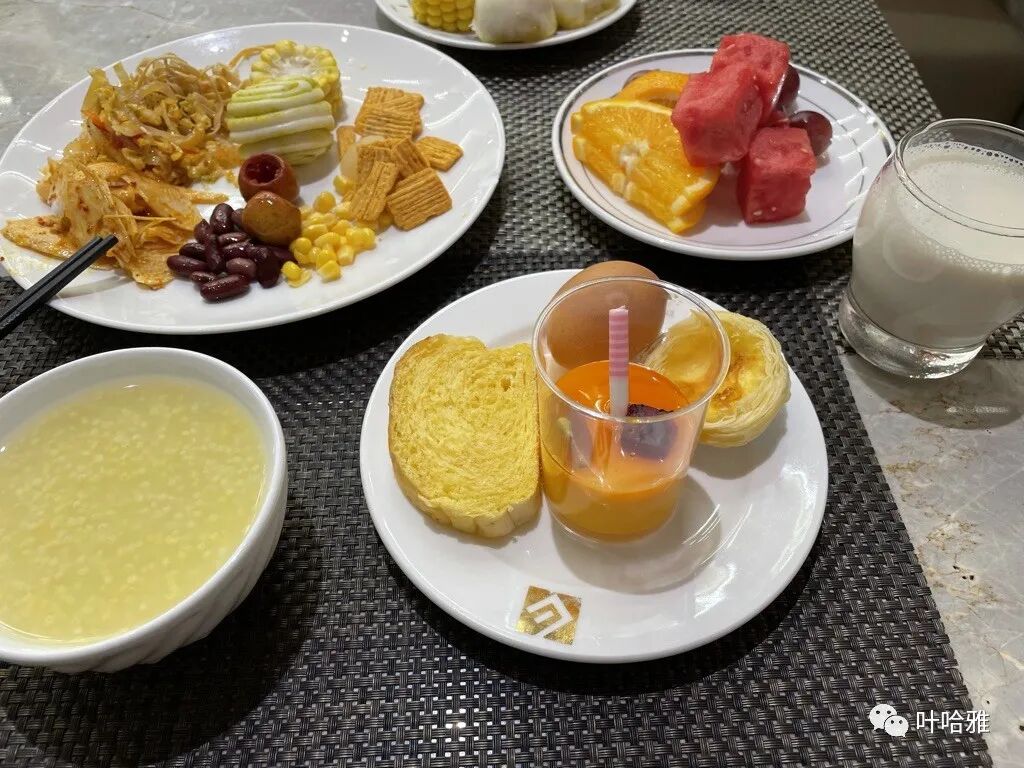
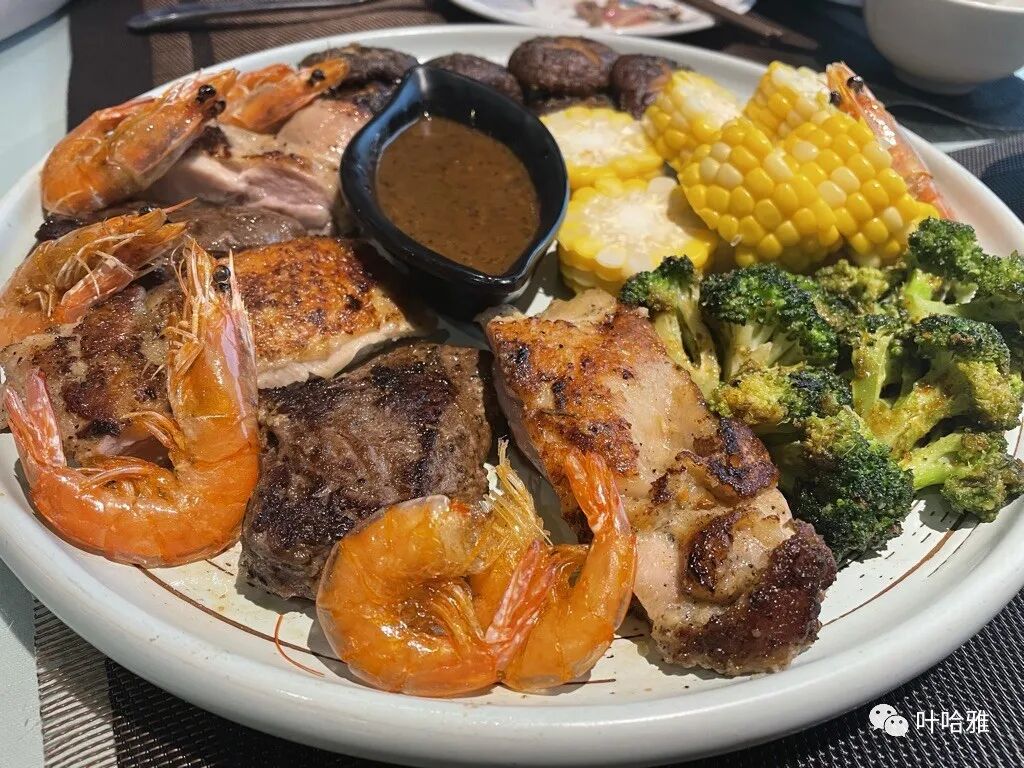
The Yilton has a Western restaurant with affordable prices, though the taste is just average. The breakfast variety is quite rich, and you can see the full view of the Dongguan Mosque from the window.
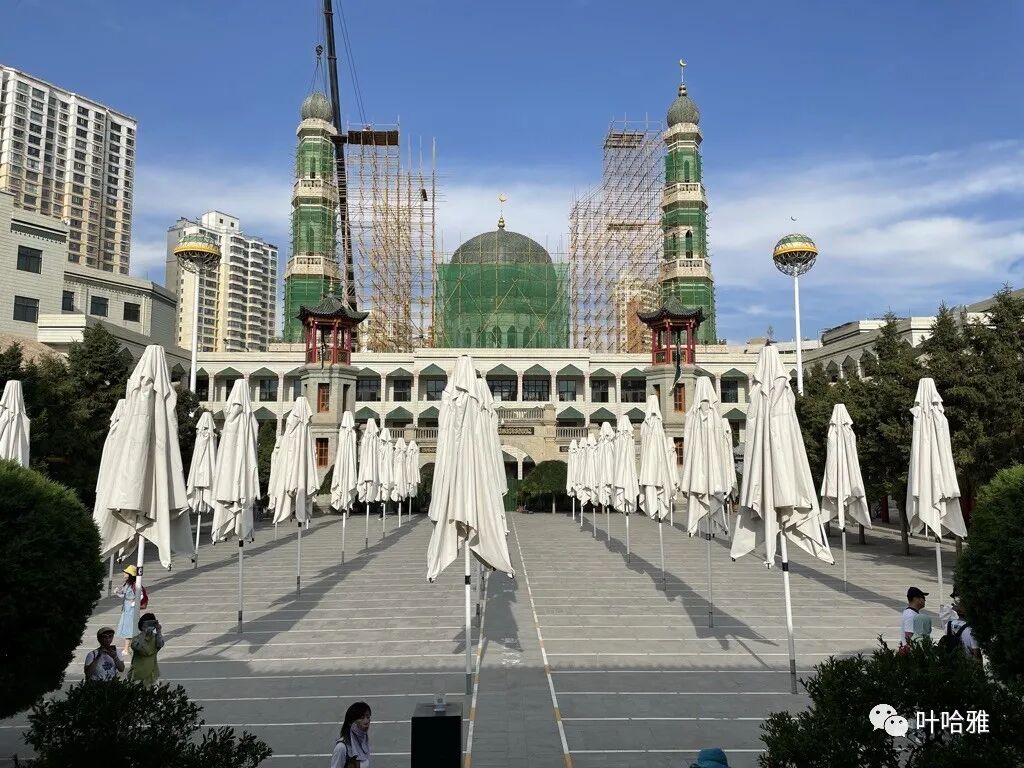
The Dongguan Mosque (Dongguan Dasi) is currently undergoing renovations, but religious activities continue as usual and the mosque remains open to visitors.
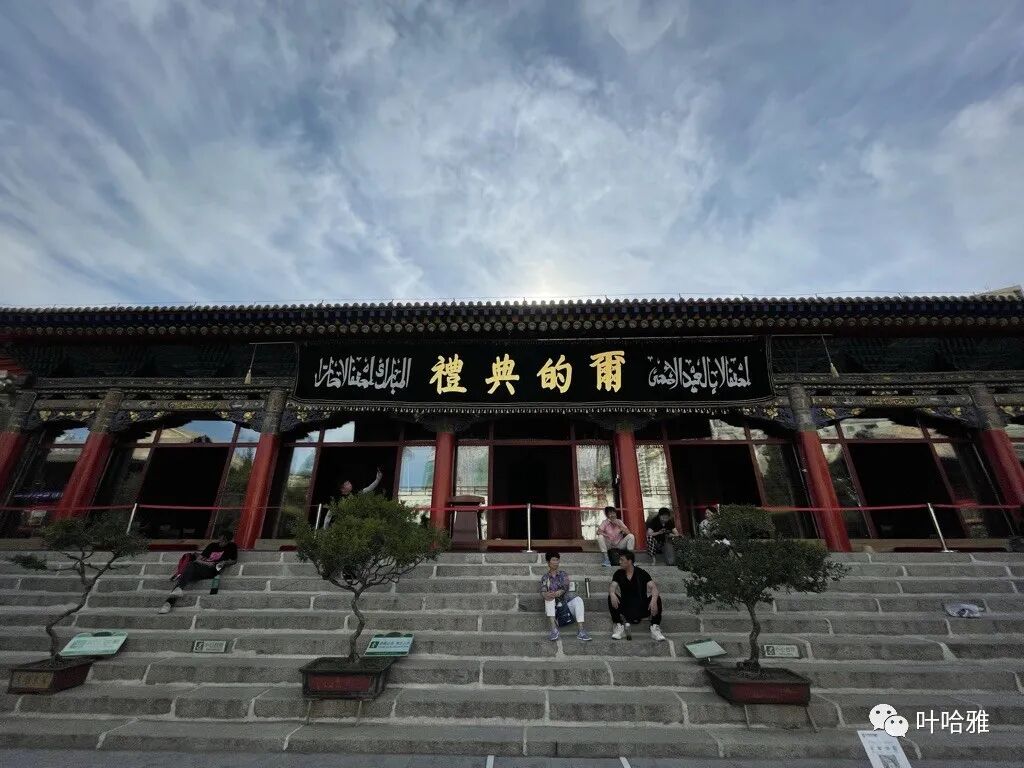
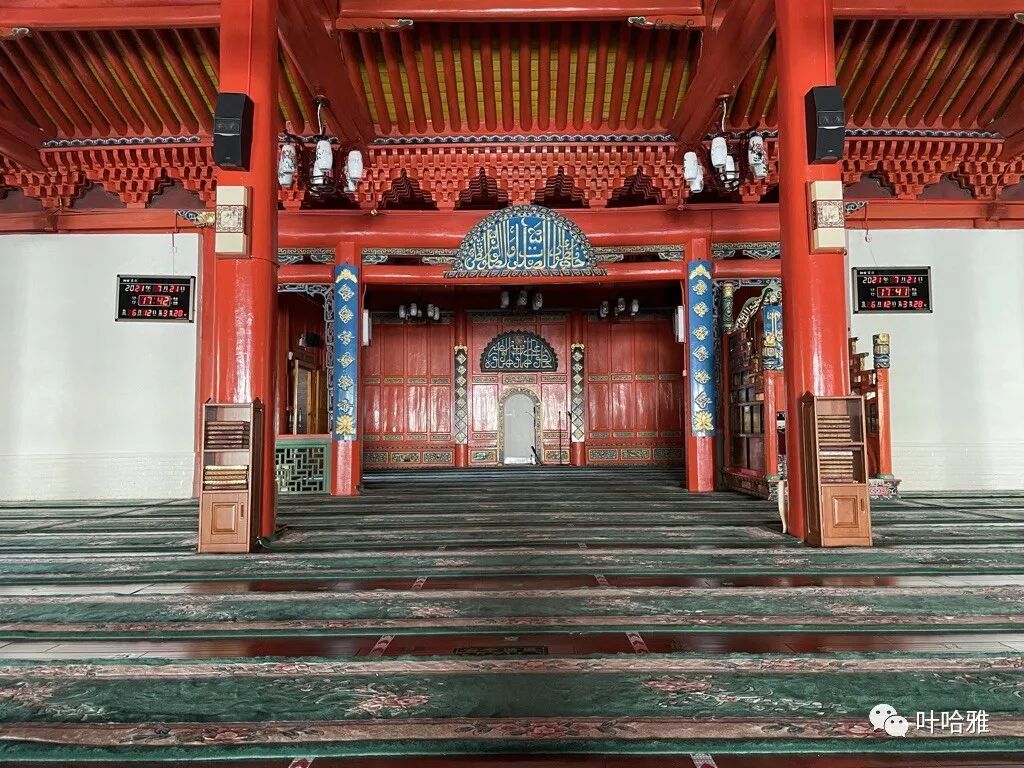
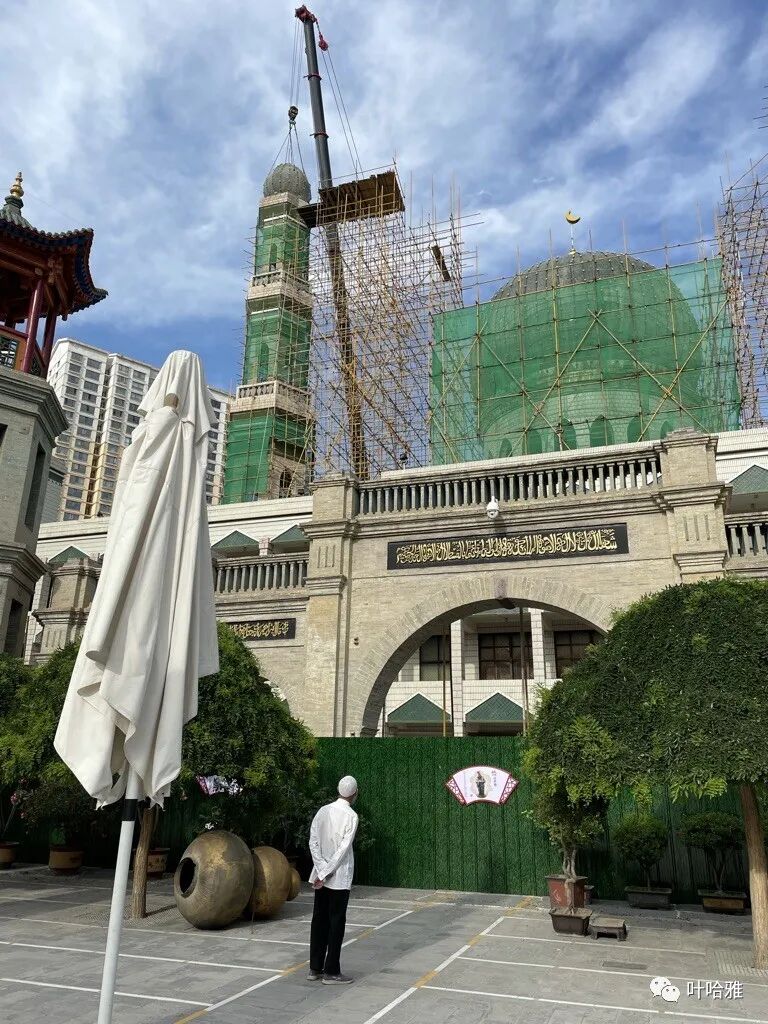
When I return to Xining next time, I should see the renovated Dongguan Mosque, which will look like the image below.
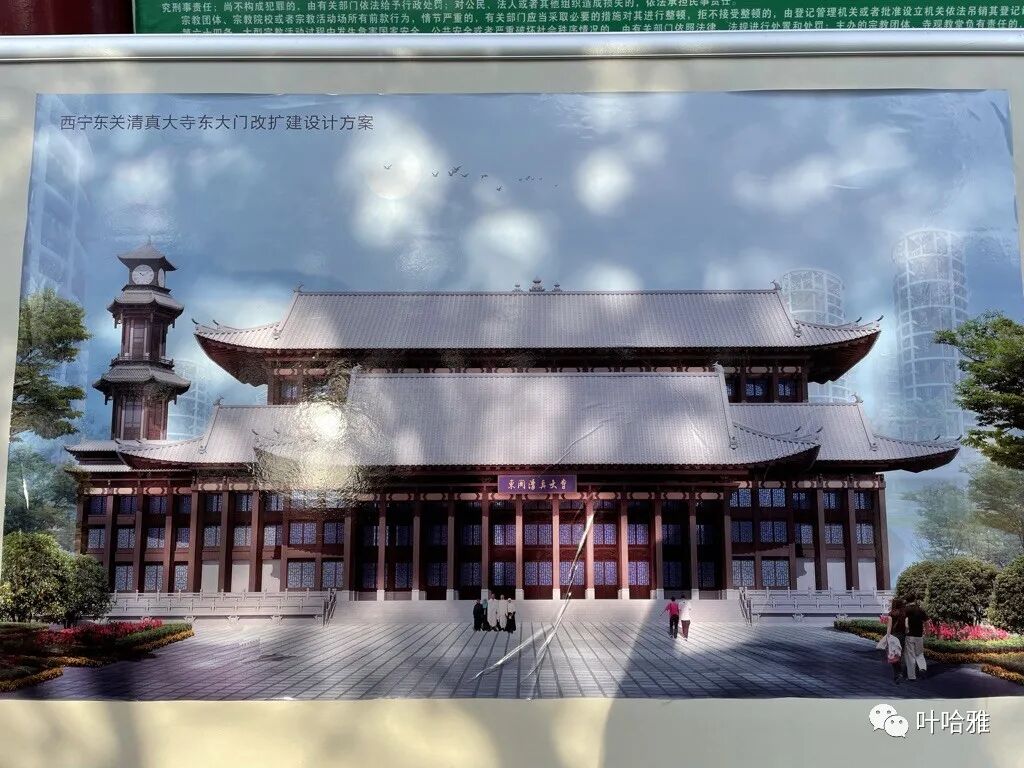
A rendering of the Dongguan Mosque after renovations.
Muslim Travel Guide China 2026: Qinghai Mosques, Gongbei Shrines and Plateau Halal Travel
Articles • ali2007fr posted the article • 0 comments • 264 views • 2026-05-21 12:47
Summary: Muslim Travel Guide China 2026: Qinghai Mosques, Gongbei Shrines and Plateau Halal Travel is presented here as a clear English travel account for Muslim readers, beginning with this scene: The most beautiful season to travel to Qinghai is July/August. After mid-August, the rapeseed flowers in Qinghai begin to wither, and the temperature gradually drops. In summer, the daytime temperature in. The article keeps the original place names, food details, photographs, and cultural context while focusing on Qinghai Mosques, Gongbei Shrines, Muslim Travel.
The most beautiful season to travel to Qinghai is July/August. After mid-August, the rapeseed flowers in Qinghai begin to wither, and the temperature gradually drops. In summer, the daytime temperature in Qinghai is around 23 degrees, and the night temperature is around 15 degrees. If you live in the mountains, the night temperature is around 10 degrees. Qinghai belongs to the plateau area, with an average altitude of more than 2,000 meters. Although altitude sickness is not obvious, the intensity of ultraviolet rays is high, so pay attention to sun protection and it is best to wear long-sleeved clothes.
My trip to Qinghai was to accompany my daughter-in-law back to her parents’ home to celebrate the Corban Festival. Anyone who knows me knows that I am married to a Salar from Xunhua Salar Autonomous County, Qinghai Province. We stayed in Qinghai for 20 days this time and visited Xining, Jianzha, Hongshuiquan Township, Xun Huaxian County, Mengda Mountain Village, Mengda Tianchi, Qinghai Lake, Chaka Salt Lake, Menyuan, Qilian Mountains, plus the Kumbum Monastery, Riyue Mountain, Dangar Ancient City and other places I have visited before in Qinghai, I will introduce them all in this issue for the convenience of friends who come to Qinghai.
tips Things to prepare before departure:
Umbrella:
July/August is the rainy season in Qinghai, with showers almost every day;
Sunglasses and sunscreen:
Sunglasses are not to look cool, sunscreen is more than 50 times needed, the sunshine in Qinghai is really strong;
Mosquito repellent water:
There are mosquitoes and flying insects in the mountains, although not as many as in the south;
power bank:
Large capacity, long-distance travel, especially when passing through areas with no signal, the mobile phone will consume power quickly;
Dental floss:
Eating meat every day will clog your teeth, so flossing has a good cleaning effect;
Long sleeve jacket:
Living in the mountains, you feel cold as soon as the sun sets;
Drone:
Only drones can capture the beautiful scenery of Qinghai. You can rent it online at a price of 15-35 yuan a day, and SF Express will return it. If the local SF Express says it cannot mail the drone, you can call the customer service hotline to complain on the spot. This is a personal behavior of some SF Express outlets because they are afraid of damage to valuables and claims for compensation. In fact, any outlet can mail it.
The first stop in Qinghai usually starts from Xining. As the capital of Qinghai Province, Xining is the most prosperous city in Qinghai, with many high-rise buildings and many delicacies. Xining can be said to have concentrated all the delicacies in Qinghai. For an introduction to Xining’s delicacies, please see:
Xining Halal Food Map
Xining Halal Food Map (2)
to food, Xining also has many cultural attractions, such as Ma Bufang Mansion, Dongguan Mosque, Tibetan Buddhism Kumbum Mosque, etc. Each scenic spot is not far away, so it is recommended to visit for 1-2 days.
Xining
Ma Bufang Mansion
Panoramic view of Ma Bufang Mansion
Ma Bufang's mansion was built in June 1942 (the 31st year of the Republic of China) at a cost of 30 million yuan. It is Ma Bufang's private residence and is named "Xinlu". In recent years, Ma Bufang Mansion has been closed due to some reasons, but it has recently been reopened. As the most influential figure in Qinghai's modern history, Ma Bufang has too many controversies.
During the Republic of China, Qinghai's military power, political power, and party power were all in the hands of Ma Bufang and his son. Although the official leaked information mainly criticizes the Ma family warlords, such as the corruption of Ma Bufang's private life, Ma Bufang's political achievements in Qinghai are still considerable, mainly including road construction, smoking ban, tree planting, literacy campaigns, etc.
Moreover, according to literature records, Ma Bufang was devout in his beliefs and keen on preaching. He vigorously promoted the teachings of the Yihewani sect in Xining and suppressed the officials, which attracted a lot of criticism. Today, there are still three gates in Gongbei in Xining, namely Xianmen Gongbei, Guangdemen Gongbei Mosque, and Fenghuangshan Gongbei. Gongbei was not repaired during Ma Bufang's time in power.
"The Biography of Ma Bufang" by Fan Qianfeng
"The Biography of Ma Bufang" written by Fan Qianfeng is a relatively objective material that I have read about Ma Bufang's biography. The book quotes a large number of historical materials about the Ma family and has mixed reviews of Ma Bufang. There were rumors that Ma Bufang had taken her niece as a concubine, but in fact she was marrying a distant relative from the fifth service. She was slandered because of family discord. Half of the Ma family's army returned to the Han Dynasty, and Ma opposed dividing the army based on ethnic groups. Ma contributed to Qinghai's infrastructure construction, environmental transformation and education, but he was determined to be anti-communist and fell on the wrong side of the civil war between the Kuomintang and the Communist Party, leading to a road of no return.
Tanger ancient city
The ancient city of Dangar is 40 kilometers away from Xining. Dangar is the Mongolian transliteration of the Tibetan word "Dongkel", which means "white conch". This city is named after the Dongkel Monastery of the Gelug Sect of Tibetan Buddhism.
There were folk performances in the ancient city and a Mongolian girl's catwalk, but overall it didn't leave much of an impression on me.
Riyueshan
Riyue Mountain and Dangar Ancient City are adjacent to each other, both belong to Xining City, and are the location of the geographical boundary monument of China, where nomadic civilization and farming civilization are divided. Princess Wencheng of the Tang Dynasty passed through this Tang-Tibet ancient road and married Songtsen Gampo.
Kumbum Mosque
Kumbum Mosque
Kumbum Monastery is located in Huangzhong District, Xining City. It is one of the six major monasteries of the Gelug sect of Tibetan Buddhism. It is the center of Tibetan Buddhist activities in the northwest region. It has a prominent position in Tibetan Buddhism and is a national cultural relic protection unit.
It takes half an hour to take a taxi from the city to Kumbum Monastery. If you don’t enter the building and only visit the outside, you don’t need to buy a ticket. You must wear a long gown to enter the mosque, and the ticket is 80 yuan.
Kumbum Monastery is the most profitable scenic spot in Xining. A large number of mainland tourists come to check in every year. I remember when I went there in 2014, I met a Hui driver in a taxi.
Xunhua Salar Autonomous County
Salar Hometown Folk Culture Park
Xunhua is the only Salar autonomous county in the country. There are about 200,000 Salar people living here. The Salar language is commonly spoken, and a few Salar people speak Tibetan. The cultural park is currently recruiting investment, and it is free to visit.
The park is all built in the traditional folk architectural style of the Salar people. It houses a ramen museum, a national musical instrument training class, a food street, etc., with a total investment of more than 200 million. We look forward to seeing the park prosper next year.
Mosque in the park
The park was originally the site of the Sesshu Group and there was no mosque. The mosque is an ancient mosque that was moved from another village.
Jiezi Mosque
Xunhua Jiezi Mosque is the second largest mosque in Qinghai. It was built in the Ming Dynasty and is a provincial cultural relics protection unit. It contains the handwritten Quran of the Salar ancestors. Two Salar ancestors are buried in the square, one is named Ahemang and the other is named Galemang. They moved to Samarkand from Central Asia to Qinghai in the late Yuan and early Ming dynasties.
Jiezi Mosque Reservoir
The Jiezi Mosque was rebuilt after the Kashgar Mosque in Xinjiang, and the original old building is no longer there.
Tomb of Ahemang
Ahemang and Galemang are a pair of brothers, and Ahemang is the younger brother. People say the two are the ancestors of the Salar people. They migrated from Central Asia to settle in Xunhua to avoid the persecution of the Seljuq Dynasty.
Galemang Tomb
Opposite the Jiezi Mosque is the museum, which contains manuscripts of the Quran brought by the ancestors of the Salar people.
Salar handwritten Quran
A national cultural relic, this scripture was once brought to Syria for display, causing shock in the local area. The scripture traveled to many places and was almost lost. With the protection of Allah, the scripture finally returned to the hands of the Salar people.
The manuscript "Quran" has a total of 30 volumes and 867 pages. It is divided into upper and lower volumes. Each volume is covered with rhinoceros leather. The cover is embossed with exquisite patterns. The font is similar to the "Muhaqaq" script in Arabic calligraphy. The copying date is about after the 11th century.
mengda mountain village
Mengdashan Village is located in Xunhua County, with a total of 580 households and 2,600 people. It has a grassy mountain area of 9,374 acres, a cultivated land area of 7,300 acres, and an altitude of more than 2,700 meters. It is the village with the highest altitude, the most cultivated land, and the widest village area in Jiezi Town.
The word "Mengda" comes from the Salar language, which means "stay here". The people living in the village are all Salar people. If it weren't for my father-in-law's family, it would be hard for me to know that there is such a large village in the mountains of Xunhua Street Town. The people in the village are mainly engaged in shepherding and farming, and most of the young people open restaurants in other places.
Mendashan Village Mosque
The Salar people in Mengda Mountain Village are very friendly. They will smile and say Selan when they meet strangers in the village. The children are all very cute and their appearance is obviously different from the people in the mainland. The mosque is the oldest building in Mengda Mountain Village and is said to be three to four hundred years old.
The elders in Mengda Mountain Village can all speak Salar and Tibetan. Most of the shepherds or workers employed by the family are Tibetan. The Salar people have close relations with the Tibetans. They affectionately call the Tibetans "aunts". As for why the Salar people in Mengda Mountain Village did not live in Jiezi Town, but came to the high mountain plain at an altitude of 2,700 meters, it is currently unknown. It may be to avoid the war.
Aerial photography of the back mountain of Mengda Mountain Village. The whole family is out of the country. In Salar dialect, this place is called "bazer", which means Zhuangkuoyuan.
I spent the Corban Festival in Menda Mountain Village. The Salar people here have integrated their faith into every aspect of their lives. Their children have to receive scripture education from an early age. Everyone is proud of their good religious background. They will not sell alcohol when opening restaurants outside. They feel uneasy about making illegal money.
Chaka Salt Lake
Chaka Salt Lake is a popular attraction on Douyin. It is about 300 kilometers away from Xining. You can make a day trip from Xining, but I recommend staying in Chaka for one night, because the most beautiful time in Chaka is at sunrise and sunset, as well as the starry sky at night. PS: Tickets are free for tourists from Qinghai, Hubei and Zhejiang.
Chaka is 3,000 meters above sea level. Some people may suffer from altitude sickness. It is cloudy all year round and sunny days are rare. Photos of the salt lake circulated on the Internet are often edited. To enter the scenic spot, you need to take a small train. The round-trip fare is 100 yuan per person. If you walk to the center of the lake, which is about 5 kilometers long, it is recommended to get off the train halfway. If you get off the train after reaching the center of the lake, you will find that there are many people.
Drone aerial photography of tea card
The drone I brought this time is the DJI Mavic 2, which is foldable and easy to carry. However, the battery can only last for 20 minutes, so it is equipped with three batteries. One of the batteries bulged during use. I consulted customer service and said that there may be problems in high-altitude areas. It is recommended that you consult customer service before bringing the drone to the plateau.
Zhuoer Mountain Scenic Area
Aerial photography of Zhuoer Mountain Scenic Area
Zhuoer Mountain belongs to the Qilian Mountains, with an altitude of about 3,000 meters. It departed from Xining at 8 o'clock in the morning and arrived at Zhuoer Mountain at around 1 p.m. Compared with Chaka, Zhuoer Mountain has a different scenery. It is a Danxia landform, the rocks are red, and the mountains and fields are full of flowers.
This is the back of my wife~
this is me
Mengda Tianchi
Mengda Tianchi is about 25 kilometers away from Xunhua County. It is a protected area. There are many rare wild animals and plants in the mountains. The average altitude is more than 2,000 meters. To enter the scenic area, you need to buy a ticket of 75 yuan per person, which includes the bus fee in the scenic area. It takes about an hour to climb to the top of the mountain. You can choose to go up the mountain on horseback.
Drone aerial photography of Mengda Tianchi. There is a local legend. People say Tianchi was originally in Jiezi Town. One day, a woman washed her dirty pants in the pool. That night, a rich man in the town dreamed of an old man in white clothes. The old man said to him: "Allah gave me clean and sweet things, but some people use them to wash dirty things. I want to move to a clean place. Can I borrow a horse?" "After the rich man woke up, he asked his son to prepare the horse. The next day, he found that the horse was dying from exhaustion. The rich man hurriedly prayed. The next day, he found that the horse was healthy again and was still carrying gold and silver. At night, the rich man dreamed of the old man in white again. The old man thanked him and told him that Tianchi had moved away.
Haidong
Shuishuiquan Hui Township
Shuishuiquan Mosque Main Hall
In Hongshuiquan Hui Township, Haidong City, more than ten kilometers away from Xining Caojiabao Airport, there is an ancient mosque from the Ming Dynasty. This mosque is currently the mosque with the highest cultural relic level in Qinghai and is a national cultural relic protection unit.
This mosque is a brick and wood structure, and its architectural style combines the characteristics of Tibetan Buddhist temples. There is a vase on the top of the main hall, the interior is decorated with eight Buddhist treasures, and there are many folk carvings with auspicious meanings.
It is best to go here from Ping'an and take a taxi, because the village is built in the mountains and there is no public transportation.
Mihrab in a wishful shape
the Tianluo umbrella structure on the top of the back kiln hall. This structure is unique to the mosques in Qinghai area. The Jianzha Kangjia Mosque and the Heyin Mosque in Guide also have this structure, which is of great academic research value.
menyuan
Xianmi National Forest Park
My wife and I appeared on camera holding hands
The last stop is Xianmi National Forest Park in Menyuan County. Everyone knows that Menyuan is a place where rapeseed flowers are in full bloom. In fact, rapeseed flowers can be seen everywhere in Qinghai, but few people know about Xianmi Forest Farm in Menyuan County. It is close to Xining and is the largest forest farm in Qinghai. The scenery is very similar to Canada, and there are no tickets and few tourists. It is highly recommended.
The scenic spots introduced in this issue are just the tip of the iceberg in Qinghai. There are many distinctive places that I have not been to, including Dongtai Jinai Salt Lake, Hoh Xil, Devil's Eye and other places. Because the tourist season in Qinghai is July/August, the time is short. Next year I will go to these places to see Silver Sand Allah. view all
Summary: Muslim Travel Guide China 2026: Qinghai Mosques, Gongbei Shrines and Plateau Halal Travel is presented here as a clear English travel account for Muslim readers, beginning with this scene: The most beautiful season to travel to Qinghai is July/August. After mid-August, the rapeseed flowers in Qinghai begin to wither, and the temperature gradually drops. In summer, the daytime temperature in. The article keeps the original place names, food details, photographs, and cultural context while focusing on Qinghai Mosques, Gongbei Shrines, Muslim Travel.
The most beautiful season to travel to Qinghai is July/August. After mid-August, the rapeseed flowers in Qinghai begin to wither, and the temperature gradually drops. In summer, the daytime temperature in Qinghai is around 23 degrees, and the night temperature is around 15 degrees. If you live in the mountains, the night temperature is around 10 degrees. Qinghai belongs to the plateau area, with an average altitude of more than 2,000 meters. Although altitude sickness is not obvious, the intensity of ultraviolet rays is high, so pay attention to sun protection and it is best to wear long-sleeved clothes.
My trip to Qinghai was to accompany my daughter-in-law back to her parents’ home to celebrate the Corban Festival. Anyone who knows me knows that I am married to a Salar from Xunhua Salar Autonomous County, Qinghai Province. We stayed in Qinghai for 20 days this time and visited Xining, Jianzha, Hongshuiquan Township, Xun Huaxian County, Mengda Mountain Village, Mengda Tianchi, Qinghai Lake, Chaka Salt Lake, Menyuan, Qilian Mountains, plus the Kumbum Monastery, Riyue Mountain, Dangar Ancient City and other places I have visited before in Qinghai, I will introduce them all in this issue for the convenience of friends who come to Qinghai.
tips Things to prepare before departure:
Umbrella:
July/August is the rainy season in Qinghai, with showers almost every day;
Sunglasses and sunscreen:
Sunglasses are not to look cool, sunscreen is more than 50 times needed, the sunshine in Qinghai is really strong;
Mosquito repellent water:
There are mosquitoes and flying insects in the mountains, although not as many as in the south;
power bank:
Large capacity, long-distance travel, especially when passing through areas with no signal, the mobile phone will consume power quickly;
Dental floss:
Eating meat every day will clog your teeth, so flossing has a good cleaning effect;
Long sleeve jacket:
Living in the mountains, you feel cold as soon as the sun sets;
Drone:
Only drones can capture the beautiful scenery of Qinghai. You can rent it online at a price of 15-35 yuan a day, and SF Express will return it. If the local SF Express says it cannot mail the drone, you can call the customer service hotline to complain on the spot. This is a personal behavior of some SF Express outlets because they are afraid of damage to valuables and claims for compensation. In fact, any outlet can mail it.
The first stop in Qinghai usually starts from Xining. As the capital of Qinghai Province, Xining is the most prosperous city in Qinghai, with many high-rise buildings and many delicacies. Xining can be said to have concentrated all the delicacies in Qinghai. For an introduction to Xining’s delicacies, please see:
Xining Halal Food Map
Xining Halal Food Map (2)
to food, Xining also has many cultural attractions, such as Ma Bufang Mansion, Dongguan Mosque, Tibetan Buddhism Kumbum Mosque, etc. Each scenic spot is not far away, so it is recommended to visit for 1-2 days.
Xining
Ma Bufang Mansion
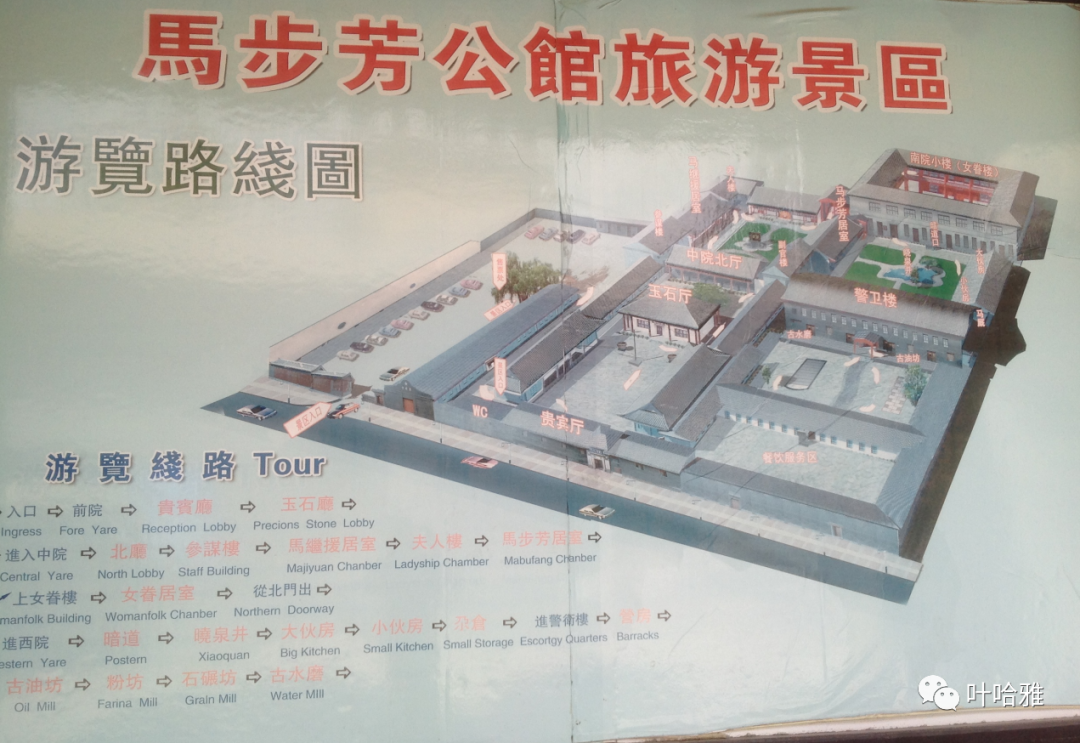
Panoramic view of Ma Bufang Mansion
Ma Bufang's mansion was built in June 1942 (the 31st year of the Republic of China) at a cost of 30 million yuan. It is Ma Bufang's private residence and is named "Xinlu". In recent years, Ma Bufang Mansion has been closed due to some reasons, but it has recently been reopened. As the most influential figure in Qinghai's modern history, Ma Bufang has too many controversies.
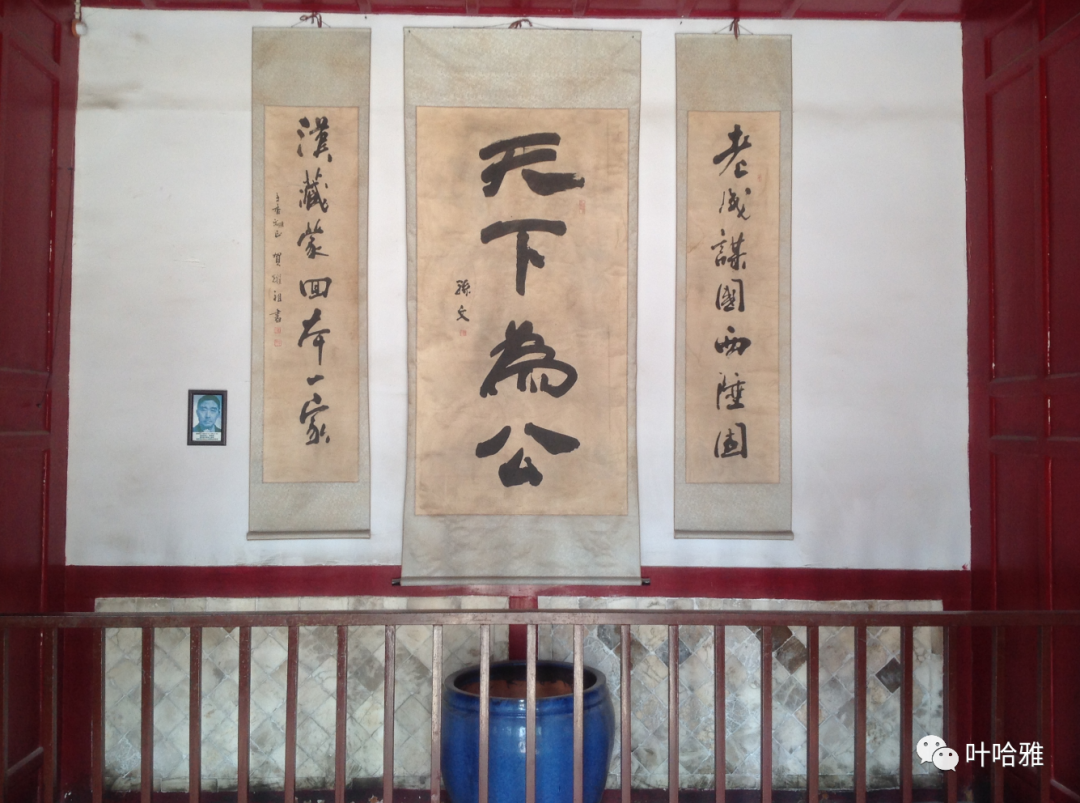
During the Republic of China, Qinghai's military power, political power, and party power were all in the hands of Ma Bufang and his son. Although the official leaked information mainly criticizes the Ma family warlords, such as the corruption of Ma Bufang's private life, Ma Bufang's political achievements in Qinghai are still considerable, mainly including road construction, smoking ban, tree planting, literacy campaigns, etc.
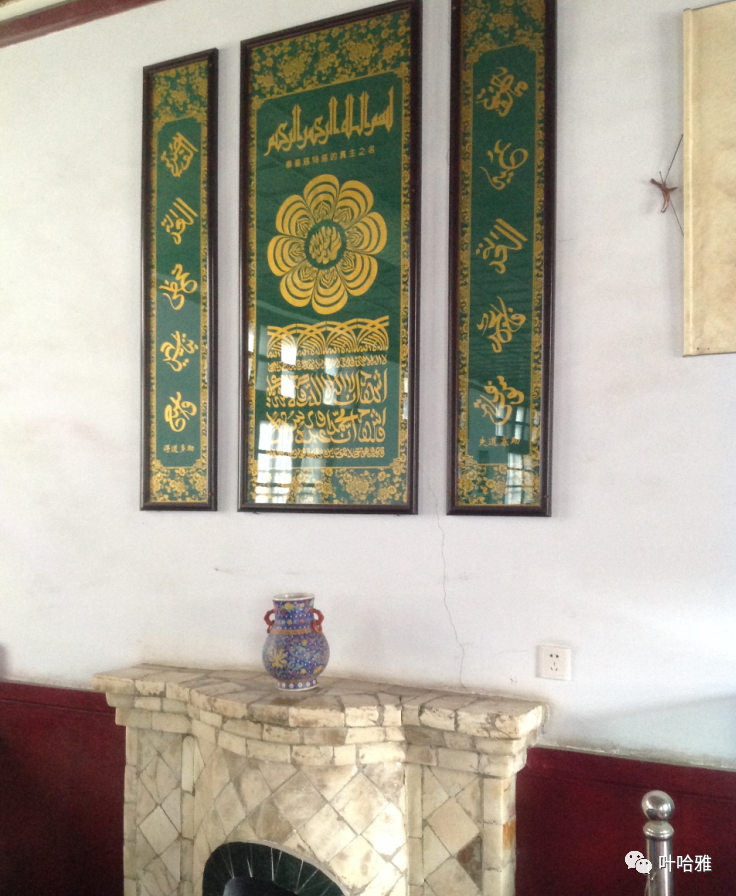
Moreover, according to literature records, Ma Bufang was devout in his beliefs and keen on preaching. He vigorously promoted the teachings of the Yihewani sect in Xining and suppressed the officials, which attracted a lot of criticism. Today, there are still three gates in Gongbei in Xining, namely Xianmen Gongbei, Guangdemen Gongbei Mosque, and Fenghuangshan Gongbei. Gongbei was not repaired during Ma Bufang's time in power.
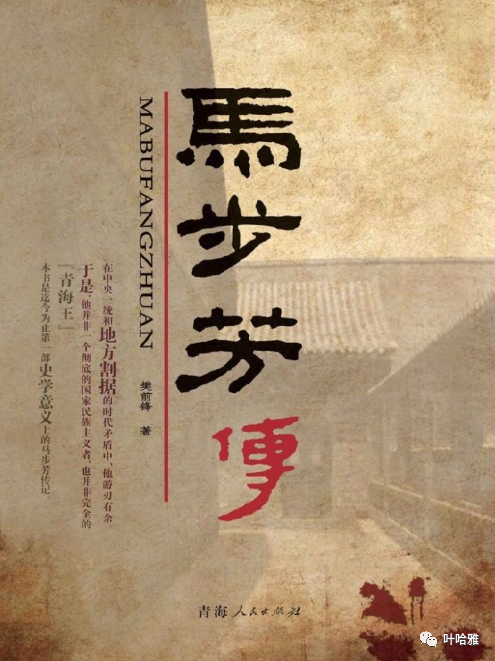
"The Biography of Ma Bufang" by Fan Qianfeng
"The Biography of Ma Bufang" written by Fan Qianfeng is a relatively objective material that I have read about Ma Bufang's biography. The book quotes a large number of historical materials about the Ma family and has mixed reviews of Ma Bufang. There were rumors that Ma Bufang had taken her niece as a concubine, but in fact she was marrying a distant relative from the fifth service. She was slandered because of family discord. Half of the Ma family's army returned to the Han Dynasty, and Ma opposed dividing the army based on ethnic groups. Ma contributed to Qinghai's infrastructure construction, environmental transformation and education, but he was determined to be anti-communist and fell on the wrong side of the civil war between the Kuomintang and the Communist Party, leading to a road of no return.
Tanger ancient city
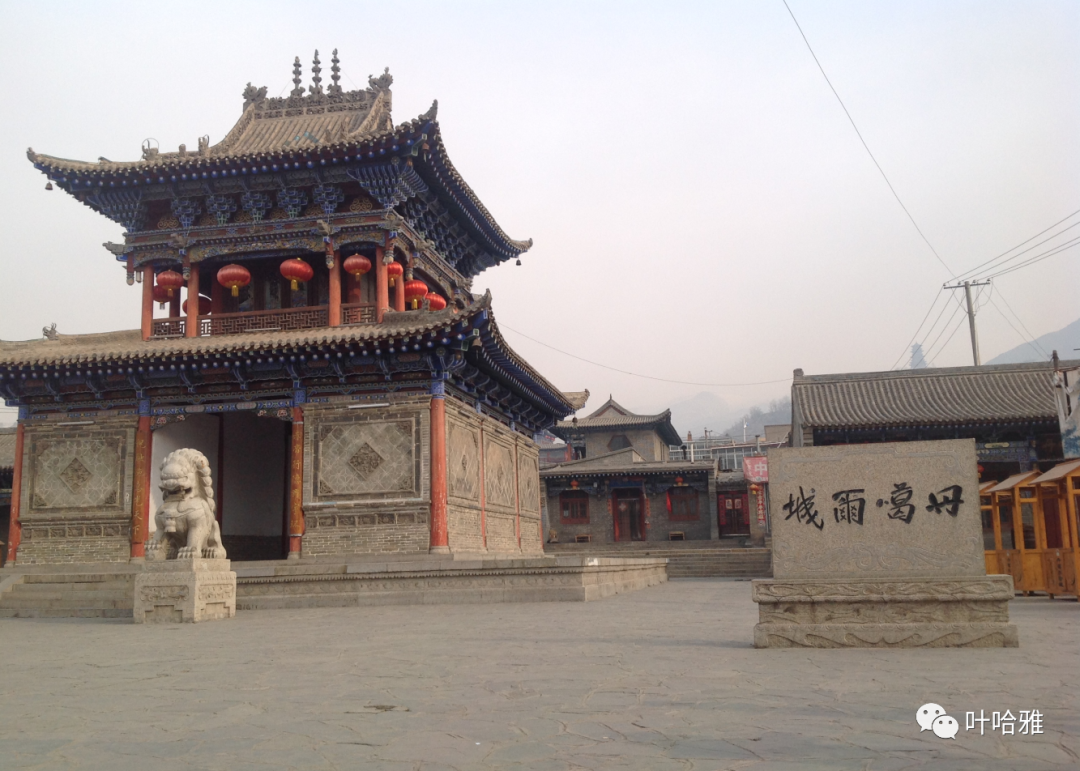
The ancient city of Dangar is 40 kilometers away from Xining. Dangar is the Mongolian transliteration of the Tibetan word "Dongkel", which means "white conch". This city is named after the Dongkel Monastery of the Gelug Sect of Tibetan Buddhism.
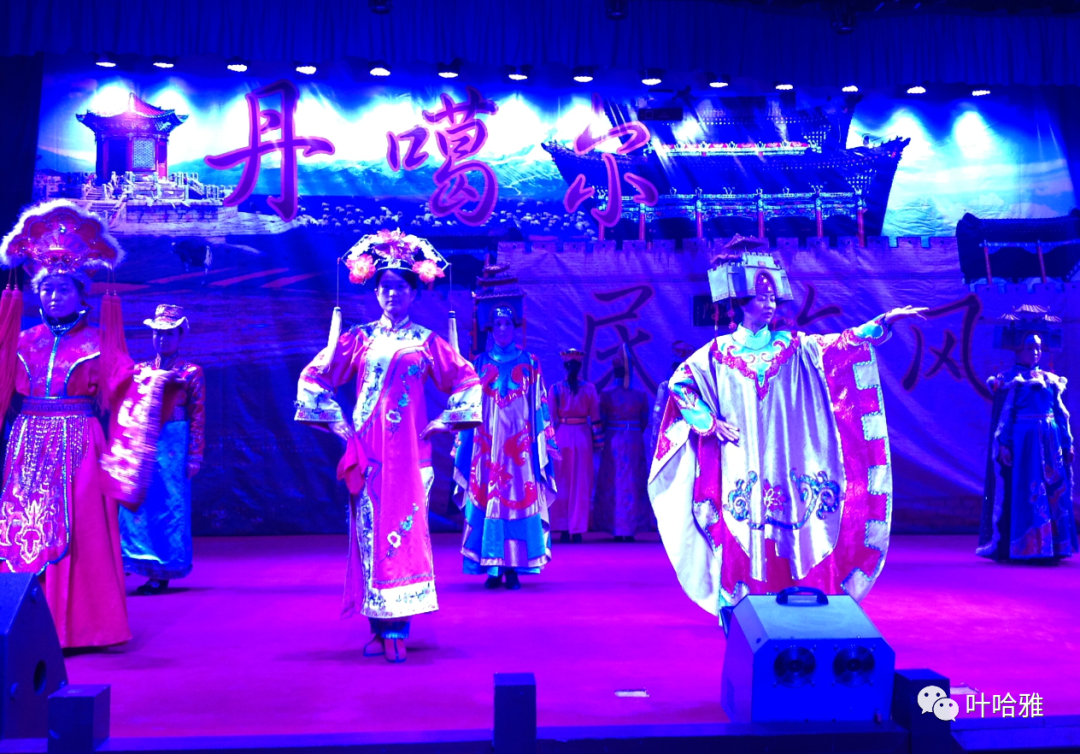
There were folk performances in the ancient city and a Mongolian girl's catwalk, but overall it didn't leave much of an impression on me.
Riyueshan
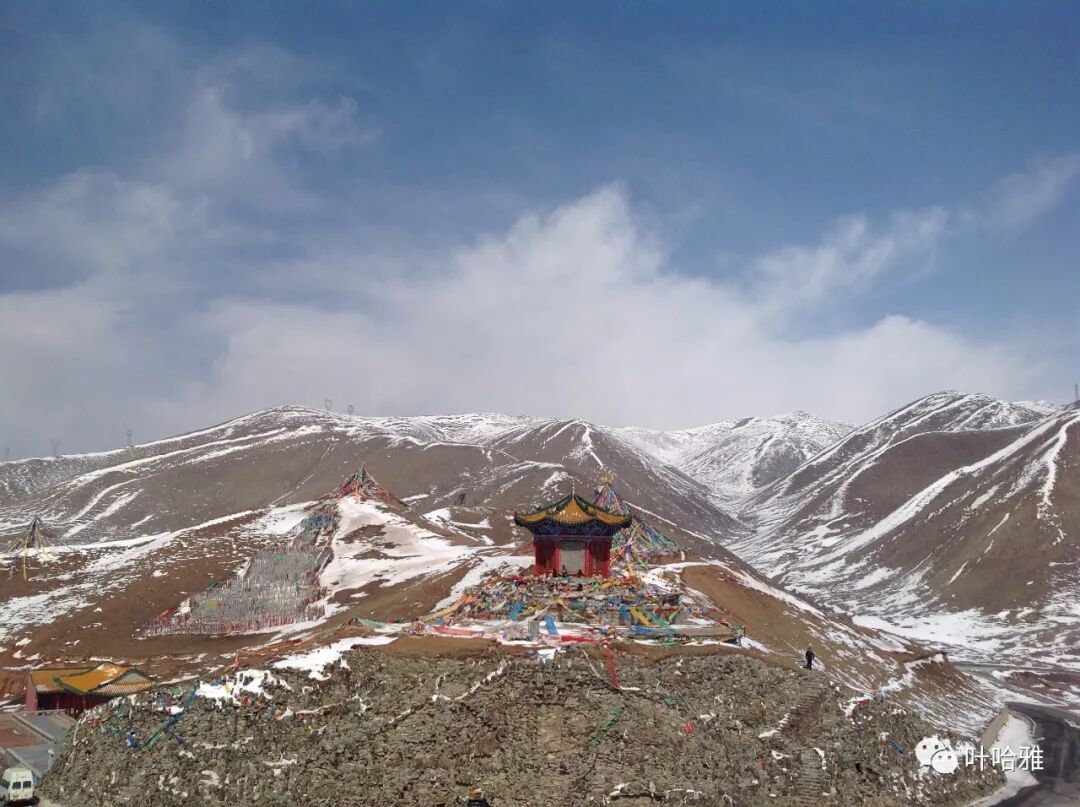
Riyue Mountain and Dangar Ancient City are adjacent to each other, both belong to Xining City, and are the location of the geographical boundary monument of China, where nomadic civilization and farming civilization are divided. Princess Wencheng of the Tang Dynasty passed through this Tang-Tibet ancient road and married Songtsen Gampo.
Kumbum Mosque
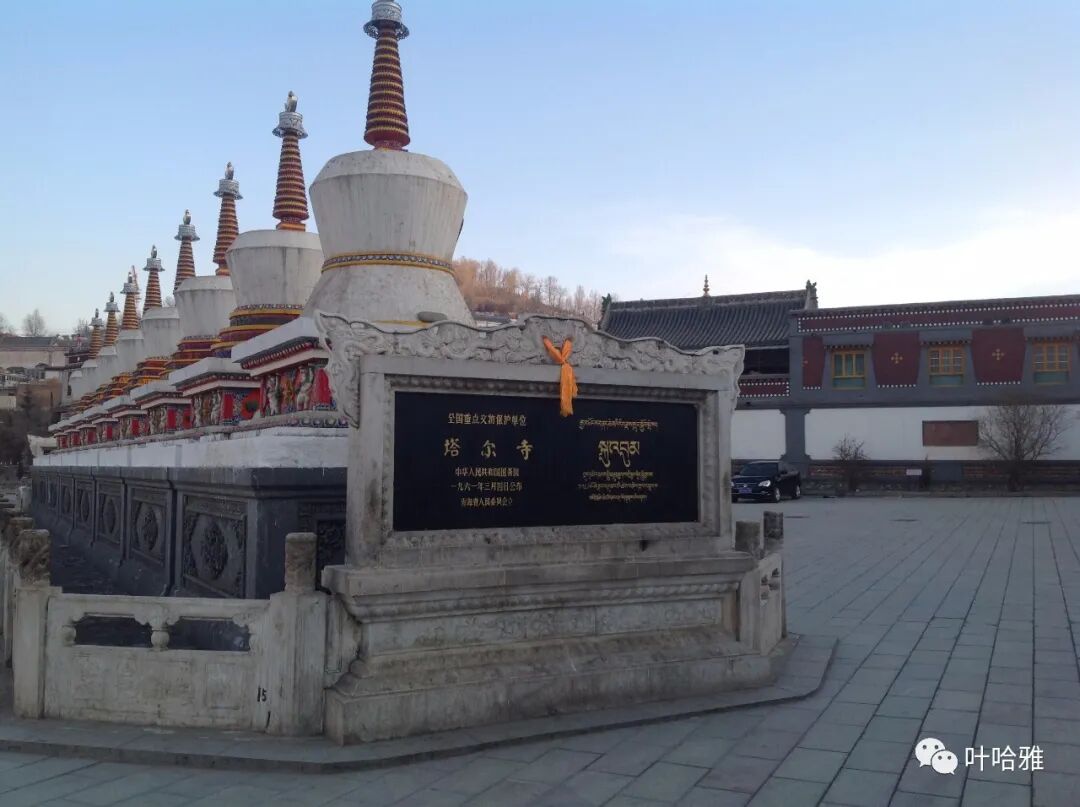
Kumbum Mosque
Kumbum Monastery is located in Huangzhong District, Xining City. It is one of the six major monasteries of the Gelug sect of Tibetan Buddhism. It is the center of Tibetan Buddhist activities in the northwest region. It has a prominent position in Tibetan Buddhism and is a national cultural relic protection unit.
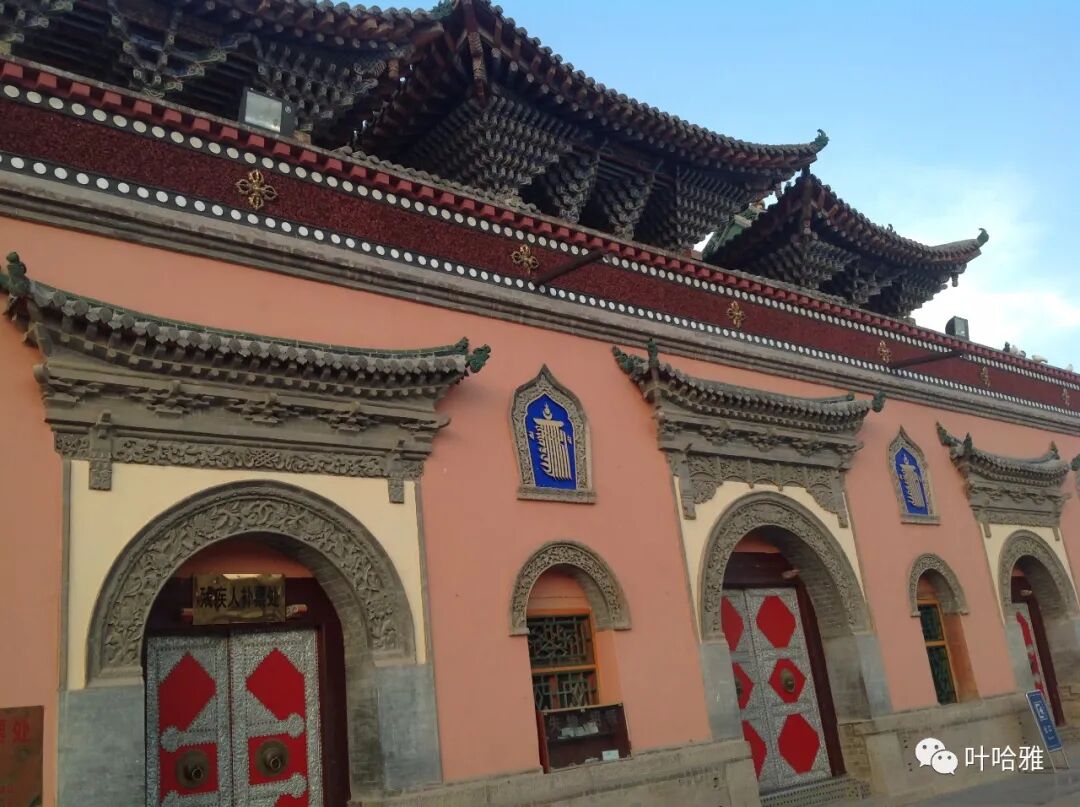
It takes half an hour to take a taxi from the city to Kumbum Monastery. If you don’t enter the building and only visit the outside, you don’t need to buy a ticket. You must wear a long gown to enter the mosque, and the ticket is 80 yuan.
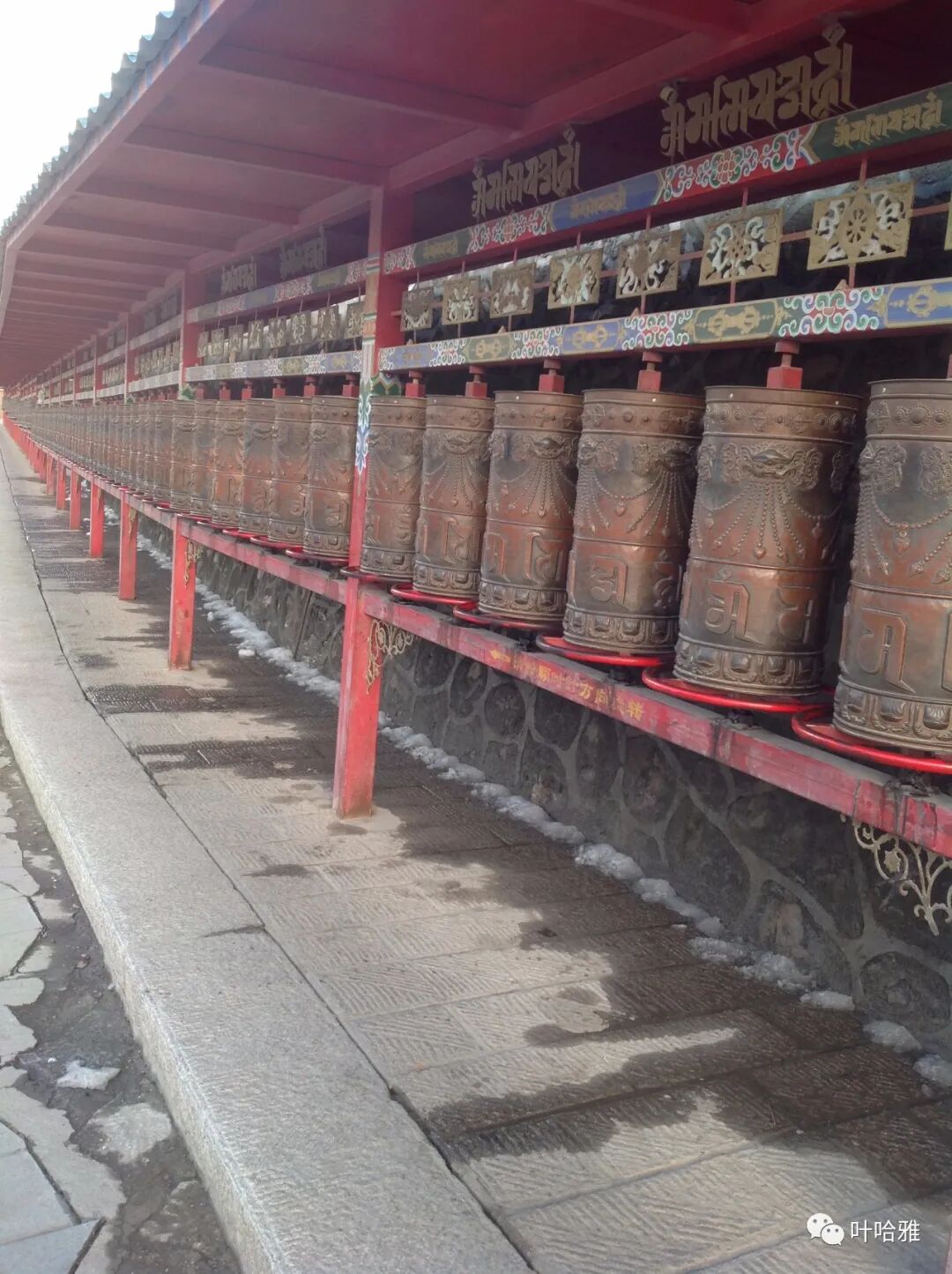
Kumbum Monastery is the most profitable scenic spot in Xining. A large number of mainland tourists come to check in every year. I remember when I went there in 2014, I met a Hui driver in a taxi.
Xunhua Salar Autonomous County
Salar Hometown Folk Culture Park
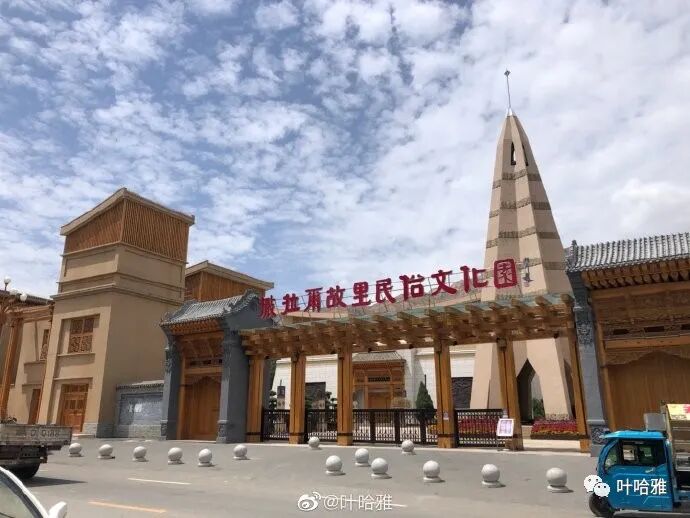
Xunhua is the only Salar autonomous county in the country. There are about 200,000 Salar people living here. The Salar language is commonly spoken, and a few Salar people speak Tibetan. The cultural park is currently recruiting investment, and it is free to visit.
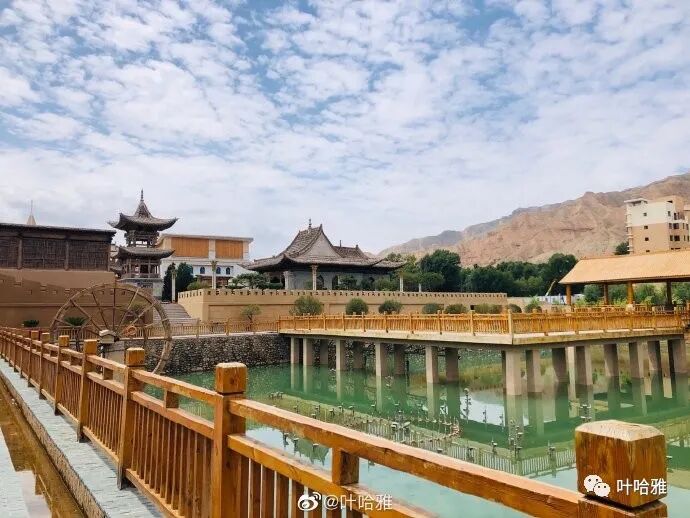
The park is all built in the traditional folk architectural style of the Salar people. It houses a ramen museum, a national musical instrument training class, a food street, etc., with a total investment of more than 200 million. We look forward to seeing the park prosper next year.
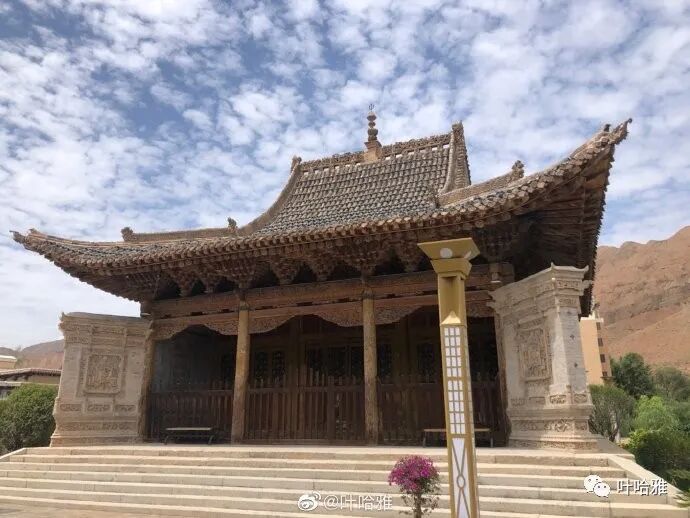
Mosque in the park
The park was originally the site of the Sesshu Group and there was no mosque. The mosque is an ancient mosque that was moved from another village.
Jiezi Mosque
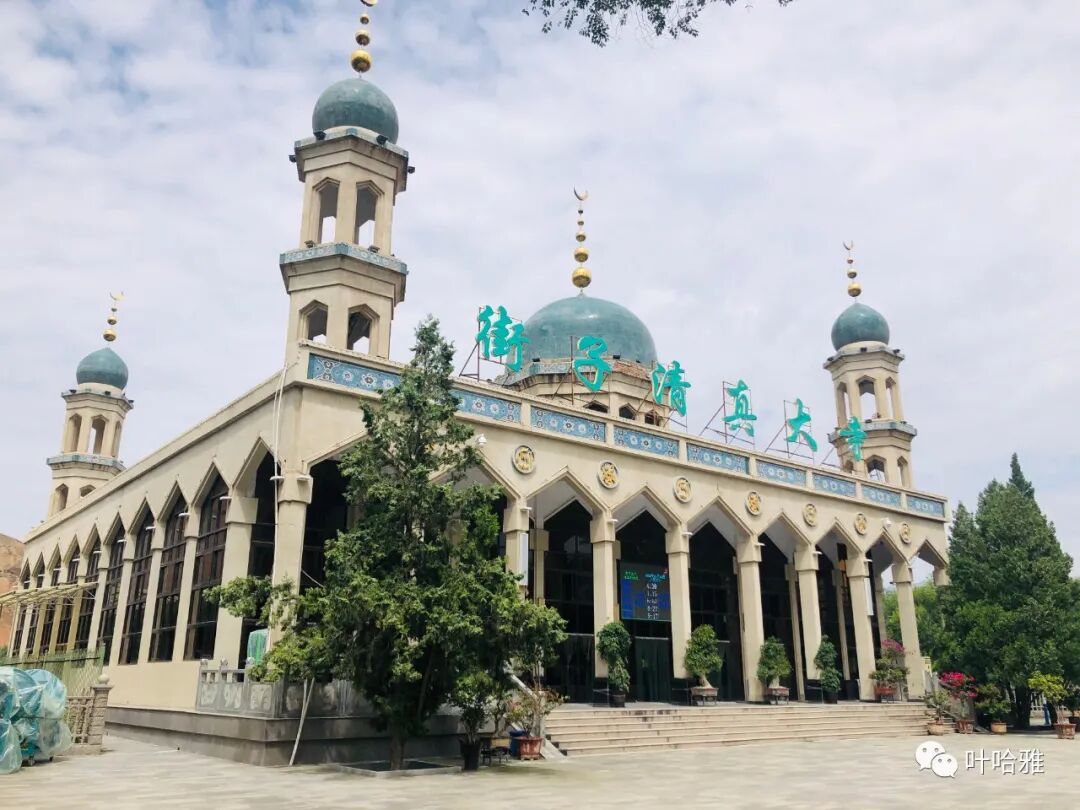
Xunhua Jiezi Mosque is the second largest mosque in Qinghai. It was built in the Ming Dynasty and is a provincial cultural relics protection unit. It contains the handwritten Quran of the Salar ancestors. Two Salar ancestors are buried in the square, one is named Ahemang and the other is named Galemang. They moved to Samarkand from Central Asia to Qinghai in the late Yuan and early Ming dynasties.
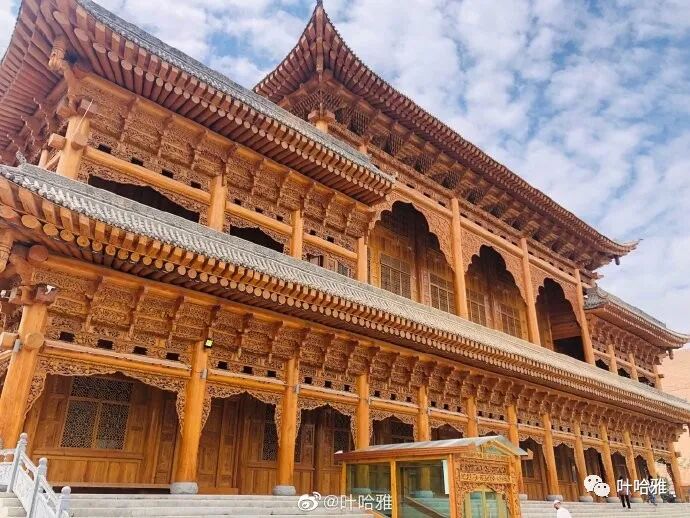
Jiezi Mosque Reservoir
The Jiezi Mosque was rebuilt after the Kashgar Mosque in Xinjiang, and the original old building is no longer there.
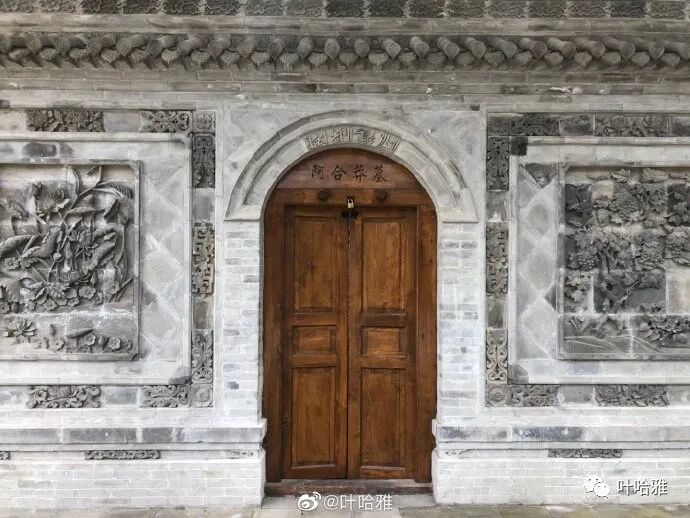
Tomb of Ahemang
Ahemang and Galemang are a pair of brothers, and Ahemang is the younger brother. People say the two are the ancestors of the Salar people. They migrated from Central Asia to settle in Xunhua to avoid the persecution of the Seljuq Dynasty.
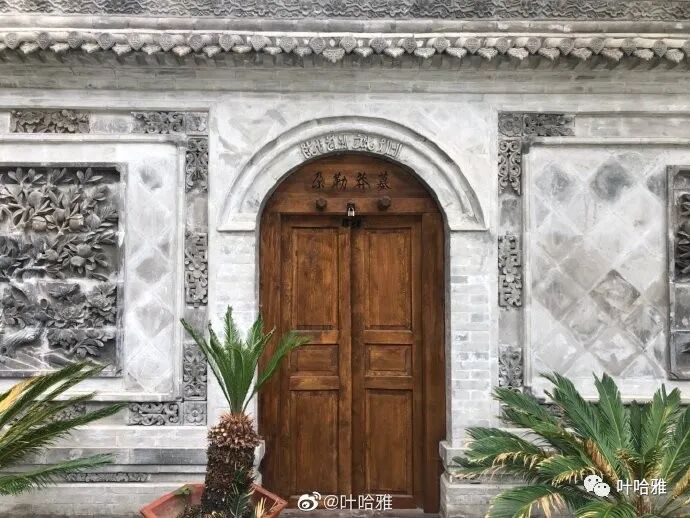
Galemang Tomb
Opposite the Jiezi Mosque is the museum, which contains manuscripts of the Quran brought by the ancestors of the Salar people.
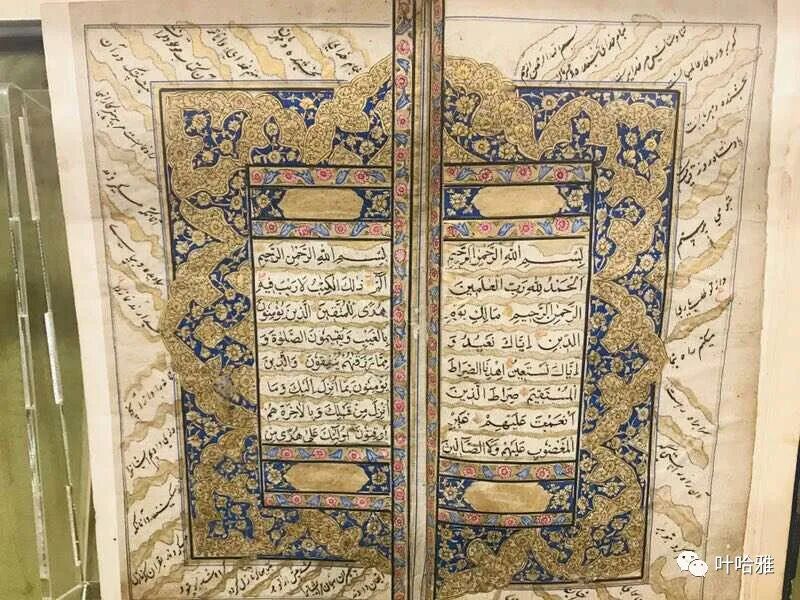
Salar handwritten Quran
A national cultural relic, this scripture was once brought to Syria for display, causing shock in the local area. The scripture traveled to many places and was almost lost. With the protection of Allah, the scripture finally returned to the hands of the Salar people.
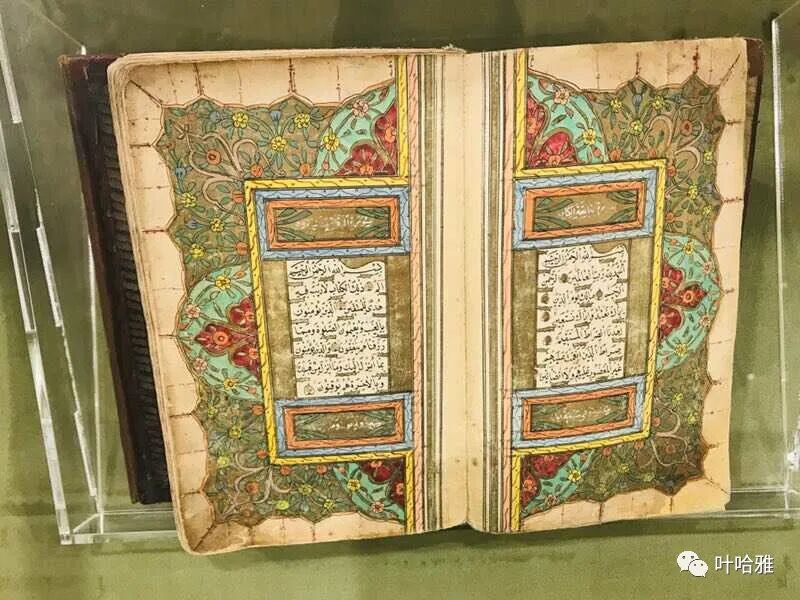
The manuscript "Quran" has a total of 30 volumes and 867 pages. It is divided into upper and lower volumes. Each volume is covered with rhinoceros leather. The cover is embossed with exquisite patterns. The font is similar to the "Muhaqaq" script in Arabic calligraphy. The copying date is about after the 11th century.
mengda mountain village
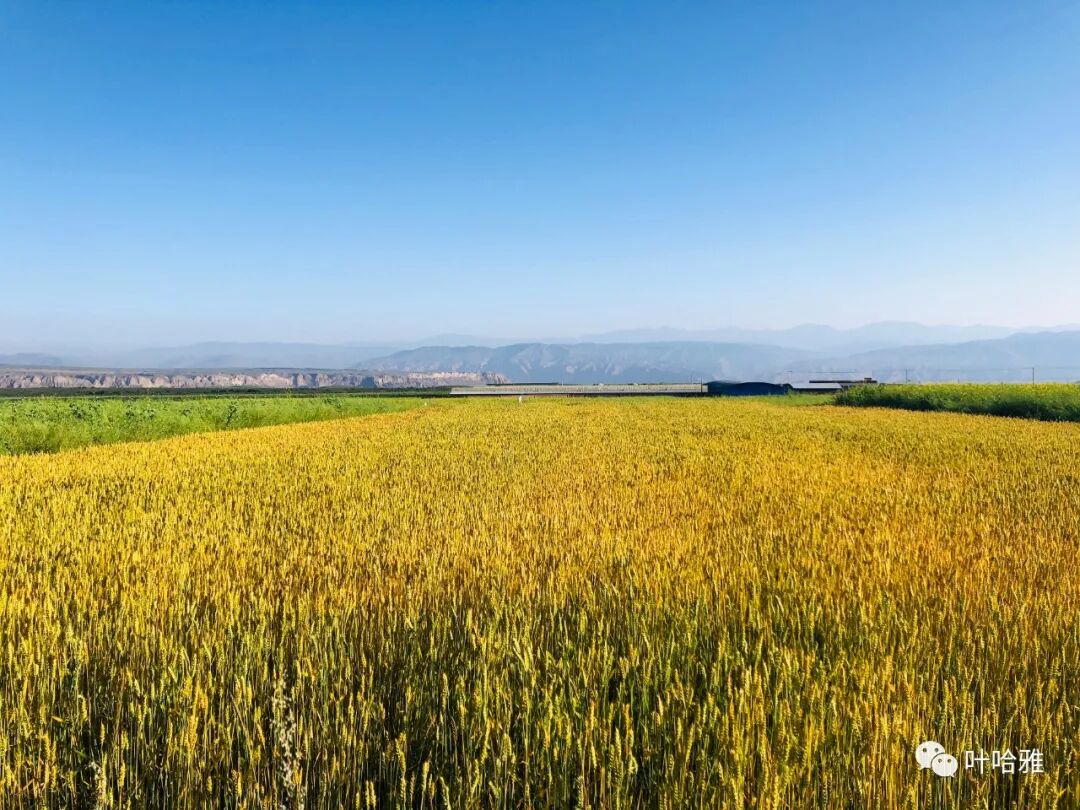
Mengdashan Village is located in Xunhua County, with a total of 580 households and 2,600 people. It has a grassy mountain area of 9,374 acres, a cultivated land area of 7,300 acres, and an altitude of more than 2,700 meters. It is the village with the highest altitude, the most cultivated land, and the widest village area in Jiezi Town.
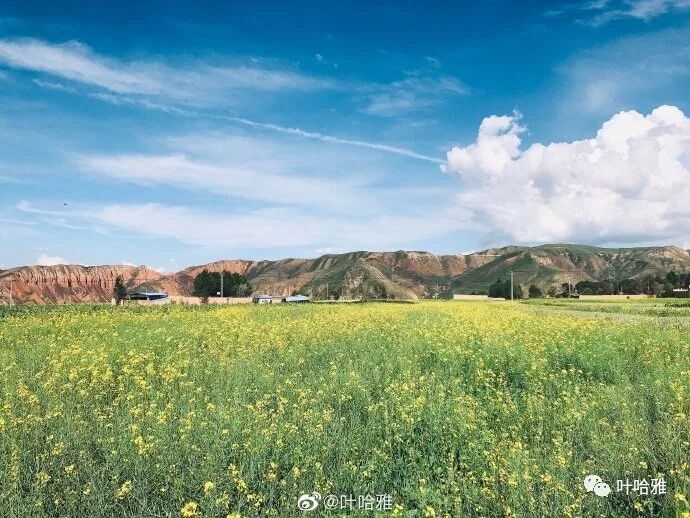
The word "Mengda" comes from the Salar language, which means "stay here". The people living in the village are all Salar people. If it weren't for my father-in-law's family, it would be hard for me to know that there is such a large village in the mountains of Xunhua Street Town. The people in the village are mainly engaged in shepherding and farming, and most of the young people open restaurants in other places.
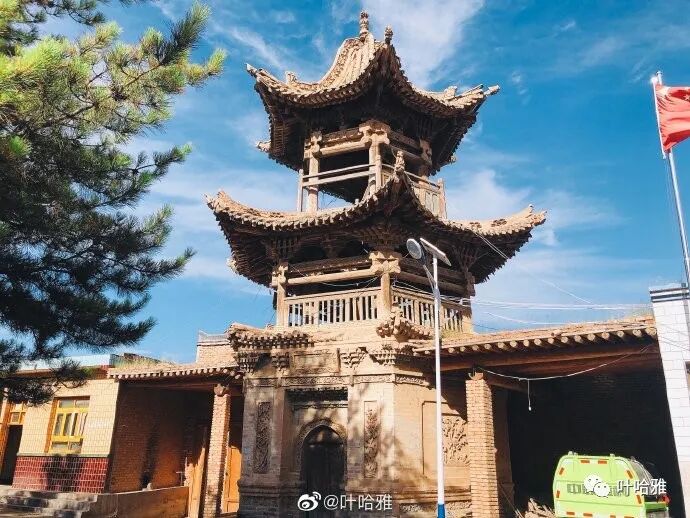
Mendashan Village Mosque
The Salar people in Mengda Mountain Village are very friendly. They will smile and say Selan when they meet strangers in the village. The children are all very cute and their appearance is obviously different from the people in the mainland. The mosque is the oldest building in Mengda Mountain Village and is said to be three to four hundred years old.
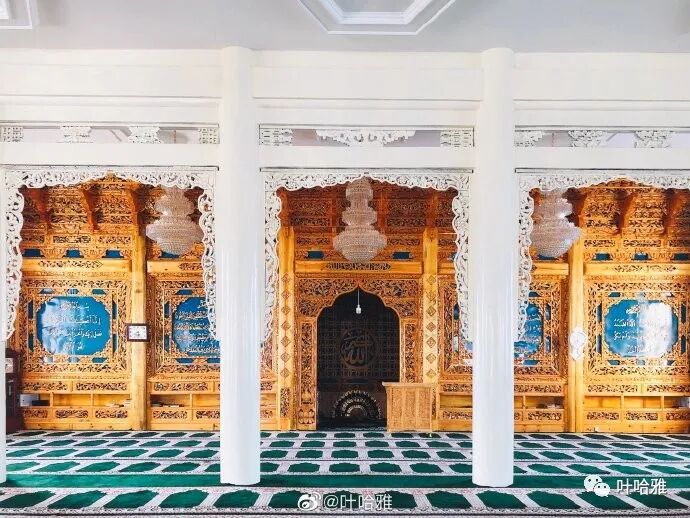
The elders in Mengda Mountain Village can all speak Salar and Tibetan. Most of the shepherds or workers employed by the family are Tibetan. The Salar people have close relations with the Tibetans. They affectionately call the Tibetans "aunts". As for why the Salar people in Mengda Mountain Village did not live in Jiezi Town, but came to the high mountain plain at an altitude of 2,700 meters, it is currently unknown. It may be to avoid the war.
Aerial photography of the back mountain of Mengda Mountain Village. The whole family is out of the country. In Salar dialect, this place is called "bazer", which means Zhuangkuoyuan.
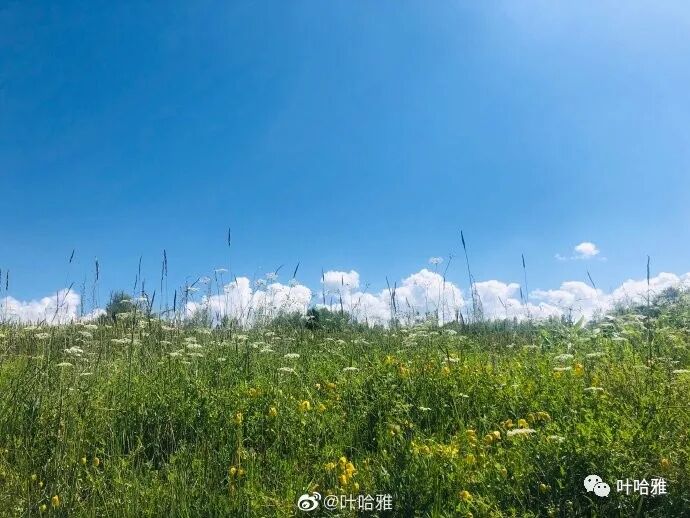
I spent the Corban Festival in Menda Mountain Village. The Salar people here have integrated their faith into every aspect of their lives. Their children have to receive scripture education from an early age. Everyone is proud of their good religious background. They will not sell alcohol when opening restaurants outside. They feel uneasy about making illegal money.
Chaka Salt Lake
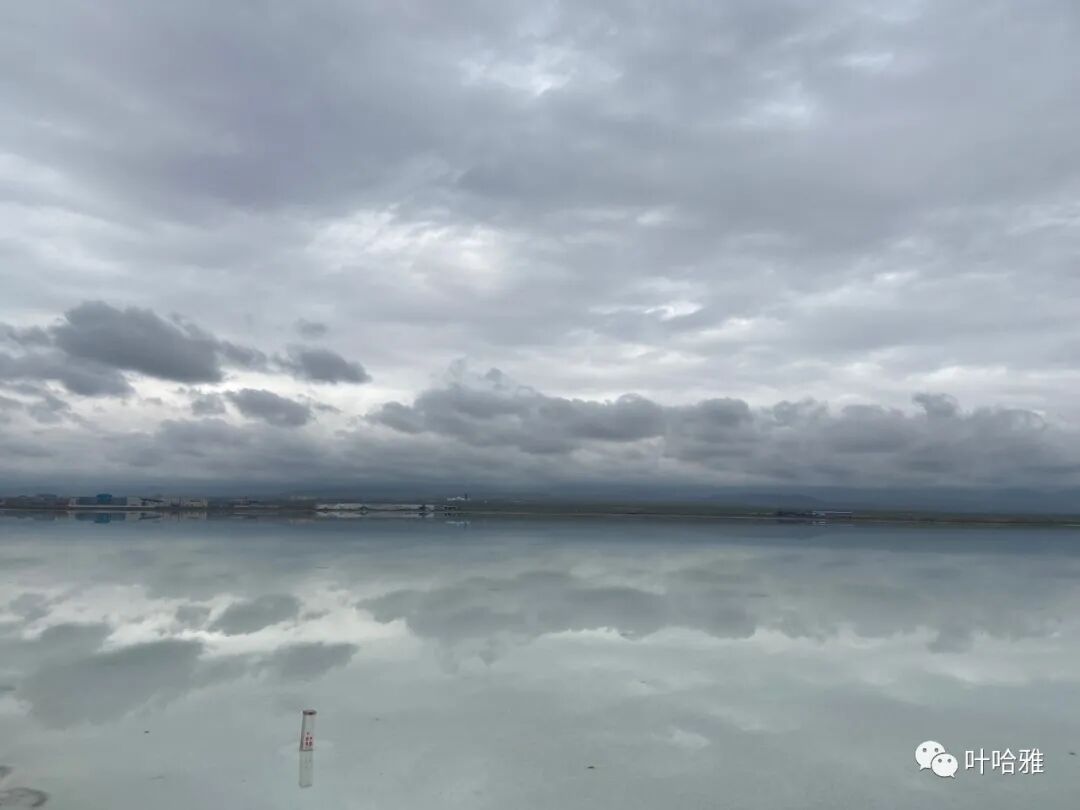
Chaka Salt Lake is a popular attraction on Douyin. It is about 300 kilometers away from Xining. You can make a day trip from Xining, but I recommend staying in Chaka for one night, because the most beautiful time in Chaka is at sunrise and sunset, as well as the starry sky at night. PS: Tickets are free for tourists from Qinghai, Hubei and Zhejiang.
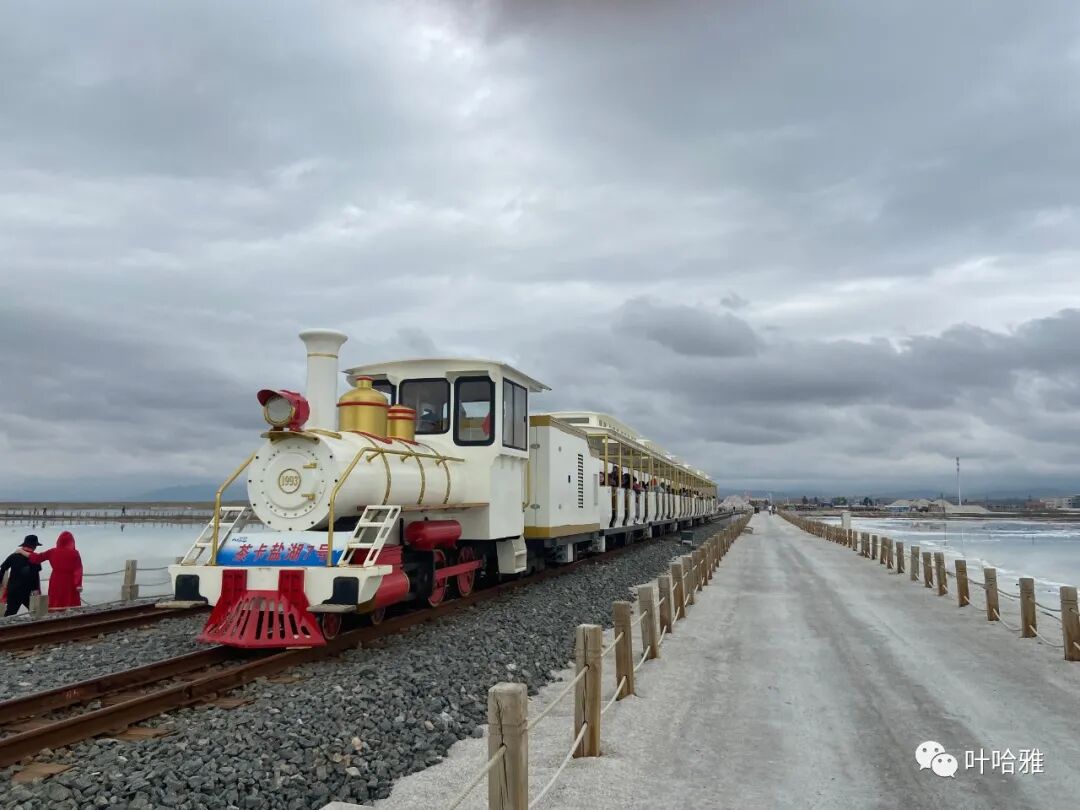
Chaka is 3,000 meters above sea level. Some people may suffer from altitude sickness. It is cloudy all year round and sunny days are rare. Photos of the salt lake circulated on the Internet are often edited. To enter the scenic spot, you need to take a small train. The round-trip fare is 100 yuan per person. If you walk to the center of the lake, which is about 5 kilometers long, it is recommended to get off the train halfway. If you get off the train after reaching the center of the lake, you will find that there are many people.
Drone aerial photography of tea card
The drone I brought this time is the DJI Mavic 2, which is foldable and easy to carry. However, the battery can only last for 20 minutes, so it is equipped with three batteries. One of the batteries bulged during use. I consulted customer service and said that there may be problems in high-altitude areas. It is recommended that you consult customer service before bringing the drone to the plateau.
Zhuoer Mountain Scenic Area
Aerial photography of Zhuoer Mountain Scenic Area
Zhuoer Mountain belongs to the Qilian Mountains, with an altitude of about 3,000 meters. It departed from Xining at 8 o'clock in the morning and arrived at Zhuoer Mountain at around 1 p.m. Compared with Chaka, Zhuoer Mountain has a different scenery. It is a Danxia landform, the rocks are red, and the mountains and fields are full of flowers.
This is the back of my wife~

this is me
Mengda Tianchi
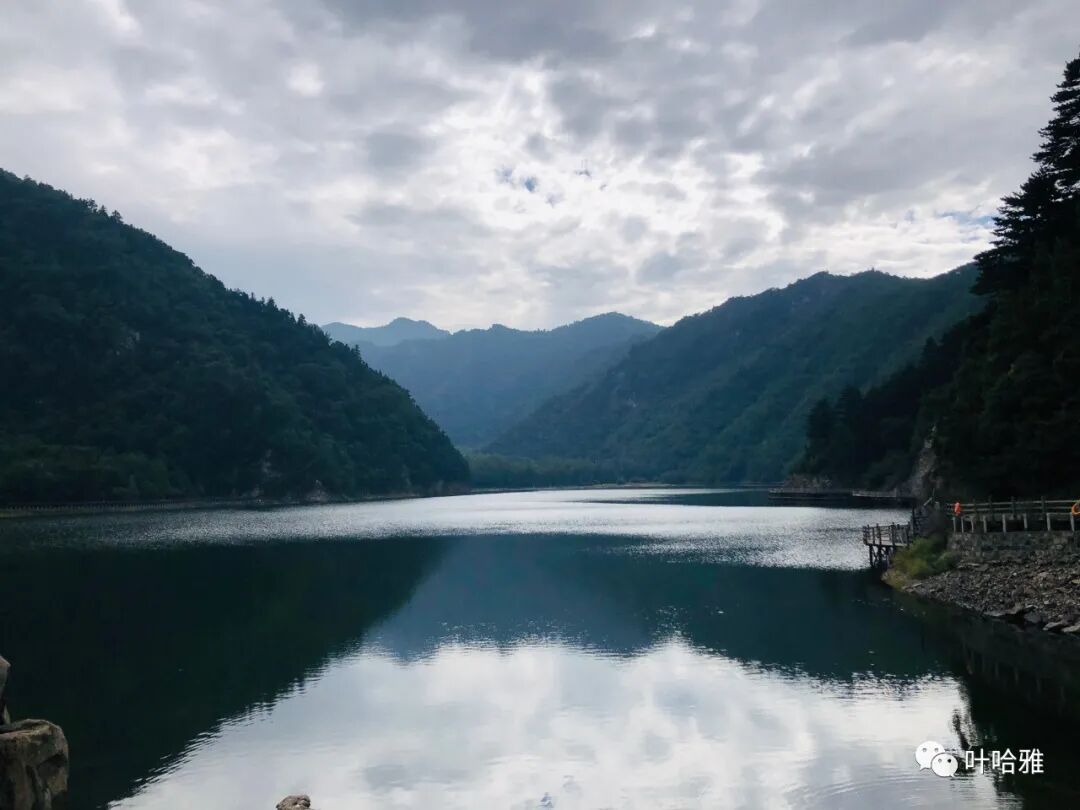
Mengda Tianchi is about 25 kilometers away from Xunhua County. It is a protected area. There are many rare wild animals and plants in the mountains. The average altitude is more than 2,000 meters. To enter the scenic area, you need to buy a ticket of 75 yuan per person, which includes the bus fee in the scenic area. It takes about an hour to climb to the top of the mountain. You can choose to go up the mountain on horseback.
Drone aerial photography of Mengda Tianchi. There is a local legend. People say Tianchi was originally in Jiezi Town. One day, a woman washed her dirty pants in the pool. That night, a rich man in the town dreamed of an old man in white clothes. The old man said to him: "Allah gave me clean and sweet things, but some people use them to wash dirty things. I want to move to a clean place. Can I borrow a horse?" "After the rich man woke up, he asked his son to prepare the horse. The next day, he found that the horse was dying from exhaustion. The rich man hurriedly prayed. The next day, he found that the horse was healthy again and was still carrying gold and silver. At night, the rich man dreamed of the old man in white again. The old man thanked him and told him that Tianchi had moved away.
Haidong
Shuishuiquan Hui Township
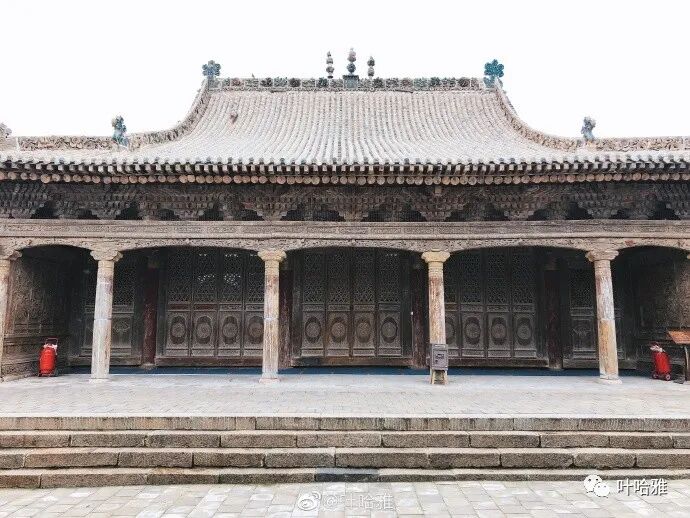
Shuishuiquan Mosque Main Hall
In Hongshuiquan Hui Township, Haidong City, more than ten kilometers away from Xining Caojiabao Airport, there is an ancient mosque from the Ming Dynasty. This mosque is currently the mosque with the highest cultural relic level in Qinghai and is a national cultural relic protection unit.
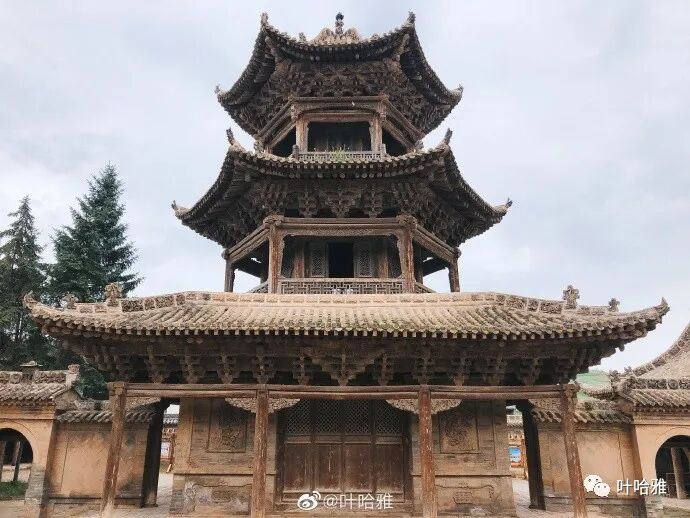
This mosque is a brick and wood structure, and its architectural style combines the characteristics of Tibetan Buddhist temples. There is a vase on the top of the main hall, the interior is decorated with eight Buddhist treasures, and there are many folk carvings with auspicious meanings.
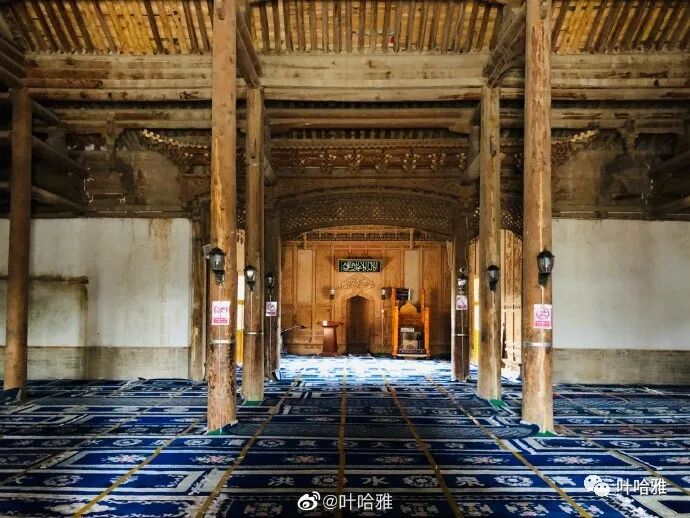
It is best to go here from Ping'an and take a taxi, because the village is built in the mountains and there is no public transportation.
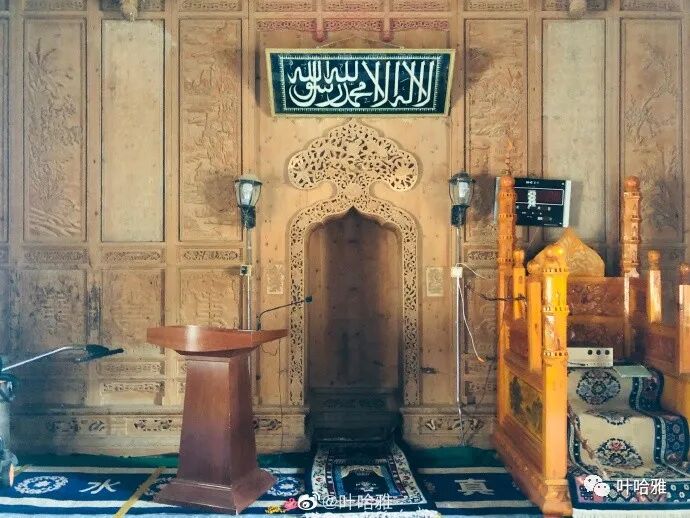
Mihrab in a wishful shape
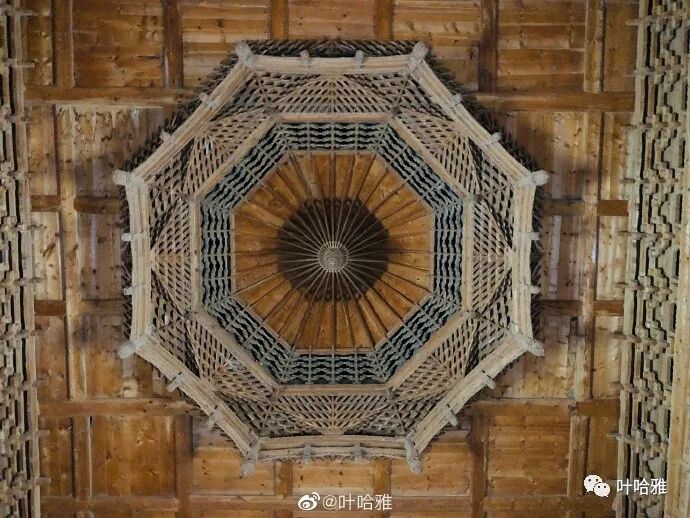
the Tianluo umbrella structure on the top of the back kiln hall. This structure is unique to the mosques in Qinghai area. The Jianzha Kangjia Mosque and the Heyin Mosque in Guide also have this structure, which is of great academic research value.
menyuan
Xianmi National Forest Park
My wife and I appeared on camera holding hands
The last stop is Xianmi National Forest Park in Menyuan County. Everyone knows that Menyuan is a place where rapeseed flowers are in full bloom. In fact, rapeseed flowers can be seen everywhere in Qinghai, but few people know about Xianmi Forest Farm in Menyuan County. It is close to Xining and is the largest forest farm in Qinghai. The scenery is very similar to Canada, and there are no tickets and few tourists. It is highly recommended.
The scenic spots introduced in this issue are just the tip of the iceberg in Qinghai. There are many distinctive places that I have not been to, including Dongtai Jinai Salt Lake, Hoh Xil, Devil's Eye and other places. Because the tourist season in Qinghai is July/August, the time is short. Next year I will go to these places to see Silver Sand Allah.

Nine Traditional Mosques and Three Gongbei Shrines in Qinghai (Part 1)
Articles • ali2007fr posted the article • 0 comments • 339 views • 2026-05-17 00:18
Summary: This travel note introduces Nine Traditional Mosques and Three Gongbei Shrines in Qinghai (Part 1). Hongshuiquan Mosque is located in Hongshuiquan Township, Ping'an District, Haidong City. It is useful for readers interested in Qinghai Mosques, Chinese Muslims, Muslim Heritage.
Above, mosque
1. Hongshuiquan Mosque
2. Qingshuihe East Mosque
3. Mengda Mosque
4. Tashapo Mosque
5. Labian Mosque
6. Zhangga Mosque
7. Kewa Mosque
8. Su Zhi Mosque
9. Ahetan Mosque
Xia, Gongbei
1. Shangmajia Gongbei in Bazang Valley
2. Bazanggou Shangmazhuang Gongbei
3. Jiezi Gongbei
Above, mosque
1. Hongshuiquan Mosque
Hongshuiquan Mosque is located in Hongshuiquan Township, Ping'an District, Haidong City. The buildings preserved today are basically in the style of the Qianlong era, and I personally think it is the most beautiful ancient mosque in Qinghai.
I took the early flight on Saturday from Beijing to Xining Airport, and called a Didi as soon as I got out. Although Hongshuiquan Mosque is less than 20 kilometers away from Xining Airport, the road is full of winding mountain paths, and with the rain, the drive felt a bit thrilling.
The mosque's screen wall is built from imitation wood blue bricks, and the side facing the main gate is carved with a 'Hundred Flowers Picture' made of 255 hydrangea petals, with each design being unique. The uncle who manages the mosque said that legend has it that when the mosque was being built, a lady steamed buns for the craftsmen every day, so the craftsmen carved the shapes of these buns onto it. The back of the screen wall features a large brick carving of 'Qilin and Phoenix Bringing Prosperity'.
The unicorn and the phoenix bring good fortune
The main gate has a beamless structure, and the ceiling is built entirely by stacking and interlocking short crossbeams instead of using roof beams.
On the splayed walls to the left and right of the main gate are two large green brick carvings of 'mice stealing grapes' and 'a qilin with a pine tree,' created using the traditional single-layer high-relief brick carving technique. The mouse represents 'zi,' symbolizing many children and grandchildren. The pine tree sounds like 'song' (to send), symbolizing 'the qilin bringing a child.'
The Bangke Tower is a three-eaved, hexagonal, spire-roofed pavilion supported by two massive central pillars, with 12 surrounding pillars, a structure known as 'two men carrying mountains with twelve oxen'. The ground floor of the Bangke Tower features brick carvings of 'cats leaping and butterflies dancing', 'rabbits guarding cabbage', and 'plum blossoms, orchids, bamboo, and chrysanthemums', with a style somewhat similar to Shanxi brick carvings from the late Ming to early Qing dynasties. The words for 'cat' and 'butterfly' sound like 'taotie', symbolizing longevity. The word for 'cabbage' sounds like 'hundreds of wealth', and rabbits are considered good at guarding wealth.
The mosque is divided into front and back courtyards by brick walls on both sides of the minaret.
The main hall has a vaulted gable-and-hip roof and consists of three parts: the front porch, the main hall, and the rear kiln-style hall. The roof ridge of the main hall features openwork glazed brick carvings and architectural models of dougong-style halls, with ornaments inspired by the 'treasure vases' placed on the roof ridges of Tibetan Buddhist temples.
On both sides of the main hall, the eight-character screen panels are carved with patterns of 'peacocks playing with peonies', 'four arts and ruyi', 'bamboo and plum blossoms for double happiness', 'peace throughout the four seasons', 'jade hall and peace', 'joyful news of early spring', 'mandarin ducks playing in water', 'lotus flowers on a single stalk', and 'pomegranate bursting with a hundred seeds', as well as large seals, fish, conch shells, and various floral designs.
The front porch capitals use corbels to support the beam frame, which is in the Tibetan architectural style. The wooden carvings on the circular arch spandrels feature patterns such as 'two dragons playing with a pearl' and 'a dragon playing with a phoenix'. The wooden carvings at the junction of the eaves columns and inner columns feature 'dragon and tiger' patterns.
The rear hall is entirely made of wood carvings, with the upper part in the style of a celestial pavilion, featuring carved railings, partition doors, and dougong brackets. The caisson ceiling at the top resembles a giant open umbrella, commonly known as the 'heavenly canopy umbrella'.
The lower part uses a partition screen design, carved with various landscapes, plants, and pavilions, but unfortunately, the Arabic wood carvings were destroyed during the Cultural Revolution. The door apron panels are entirely carved with the character 'Shou' (longevity) in different calligraphic styles.
The mihrab niche is shaped like a vase. The mouth of the vase is carved with flowers, the petals feature some patterns of the Buddhist 'Eight Treasures', and the outer edges are carved with floral patterns.
2. Qingshuihe East Mosque
Qingshuihe East Mosque is located in Shangzhuang Village, Qingshui Township, Xunhua County. It is the Haizi Mosque (the main mosque) of the Salar Bagong Qingshui Gong, originally built in 1425 and rebuilt many times throughout the generations.
First, let's admire the 17-meter-high minaret, with its double-eaved hexagonal spire featuring exquisite brick and wood carvings.
The main hall of the mosque features a ridge-top hip-and-gable roof with projecting dougong brackets, brick-carved splayed walls on both sides, and brick-carved corridor walls to the north and south of the veranda, with each window featuring a unique lattice design.
Inside the main prayer hall
The vaulted hall and the mihrab, with intricate wood carvings.
3. Mengda Mosque
Mengda Mosque is located in Dazhuang Village, Mengda Township, Xunhua County. It was first built in 1408 (the sixth year of the Yongle reign of the Ming Dynasty) and expanded three times during the Qing Dynasty. It is the Haiyi Mosque of the Mengda Gong, one of the eight Salar Gong.
The outermost part of the mosque consists of two wooden memorial archways with five-step dougong brackets, and in the middle is a three-eaved, hexagonal-roofed minaret. The minaret is 17 meters high, with the lower level made of hexagonal blue bricks, featuring brick-carved imitation wooden dougong brackets and brick-carved 'Tasmiyah' calligraphy.
Main prayer hall
Murals in the main prayer hall
The mihrab of the kiln-style hall view all
Summary: This travel note introduces Nine Traditional Mosques and Three Gongbei Shrines in Qinghai (Part 1). Hongshuiquan Mosque is located in Hongshuiquan Township, Ping'an District, Haidong City. It is useful for readers interested in Qinghai Mosques, Chinese Muslims, Muslim Heritage.
Above, mosque
1. Hongshuiquan Mosque
2. Qingshuihe East Mosque
3. Mengda Mosque
4. Tashapo Mosque
5. Labian Mosque
6. Zhangga Mosque
7. Kewa Mosque
8. Su Zhi Mosque
9. Ahetan Mosque
Xia, Gongbei
1. Shangmajia Gongbei in Bazang Valley
2. Bazanggou Shangmazhuang Gongbei
3. Jiezi Gongbei
Above, mosque
1. Hongshuiquan Mosque
Hongshuiquan Mosque is located in Hongshuiquan Township, Ping'an District, Haidong City. The buildings preserved today are basically in the style of the Qianlong era, and I personally think it is the most beautiful ancient mosque in Qinghai.
I took the early flight on Saturday from Beijing to Xining Airport, and called a Didi as soon as I got out. Although Hongshuiquan Mosque is less than 20 kilometers away from Xining Airport, the road is full of winding mountain paths, and with the rain, the drive felt a bit thrilling.
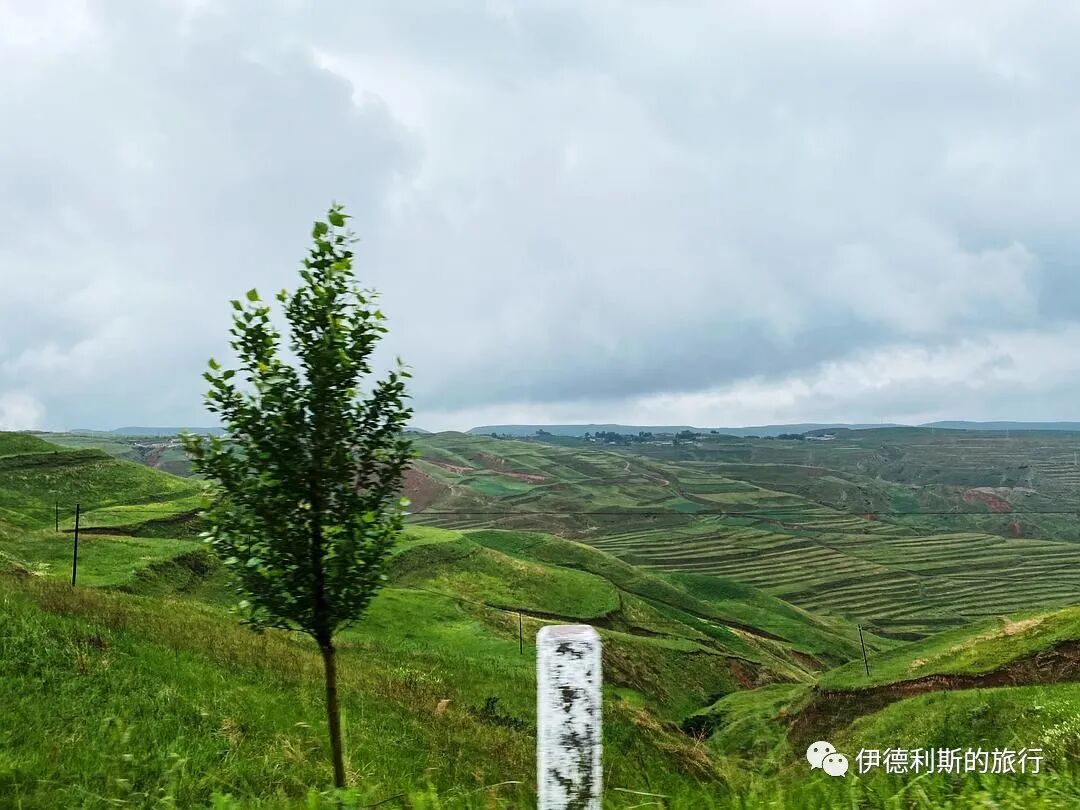
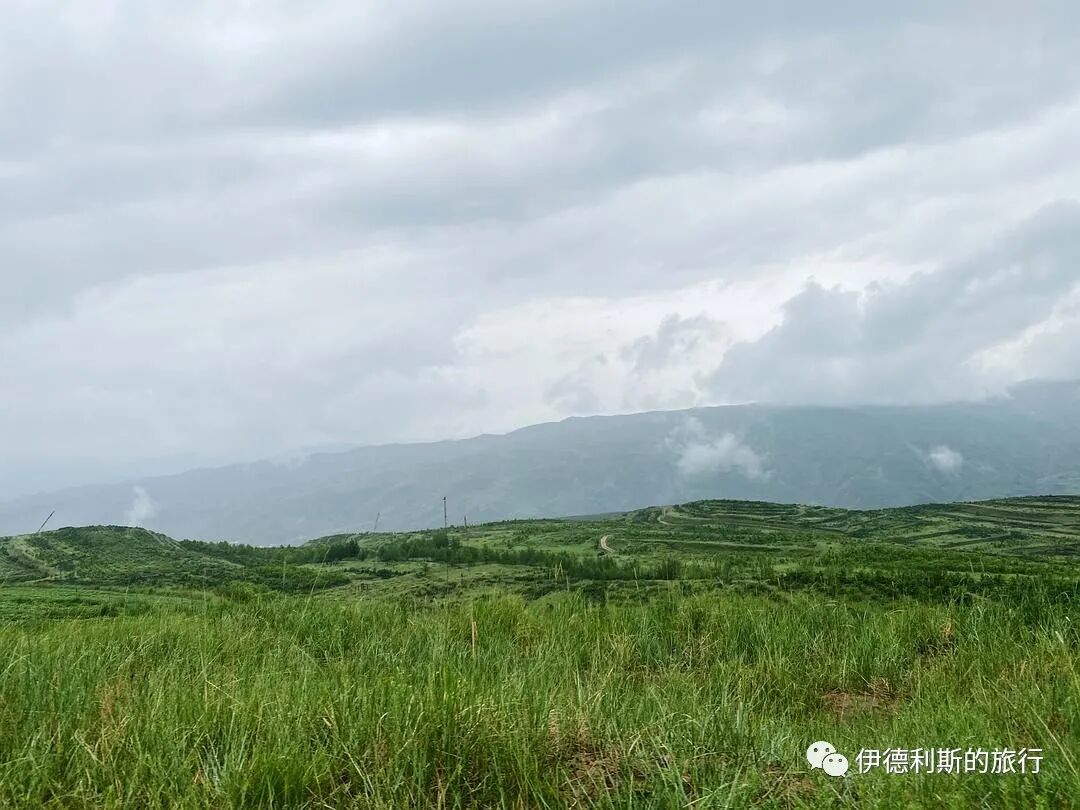
The mosque's screen wall is built from imitation wood blue bricks, and the side facing the main gate is carved with a 'Hundred Flowers Picture' made of 255 hydrangea petals, with each design being unique. The uncle who manages the mosque said that legend has it that when the mosque was being built, a lady steamed buns for the craftsmen every day, so the craftsmen carved the shapes of these buns onto it. The back of the screen wall features a large brick carving of 'Qilin and Phoenix Bringing Prosperity'.
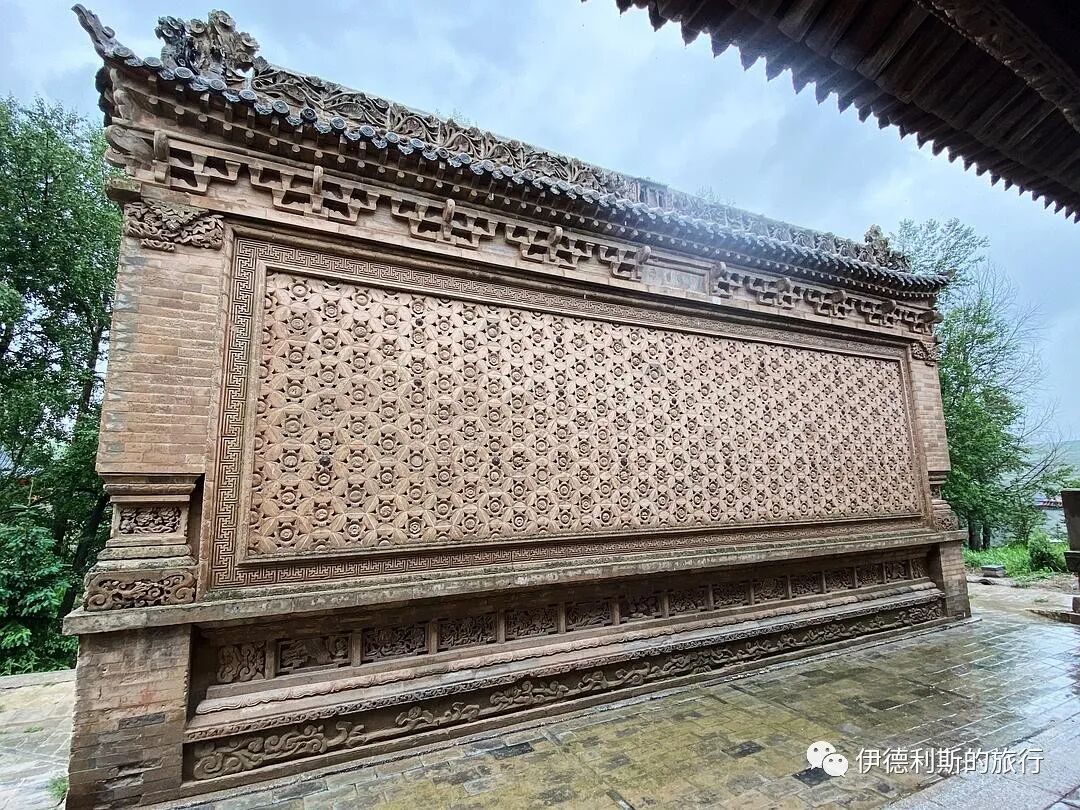
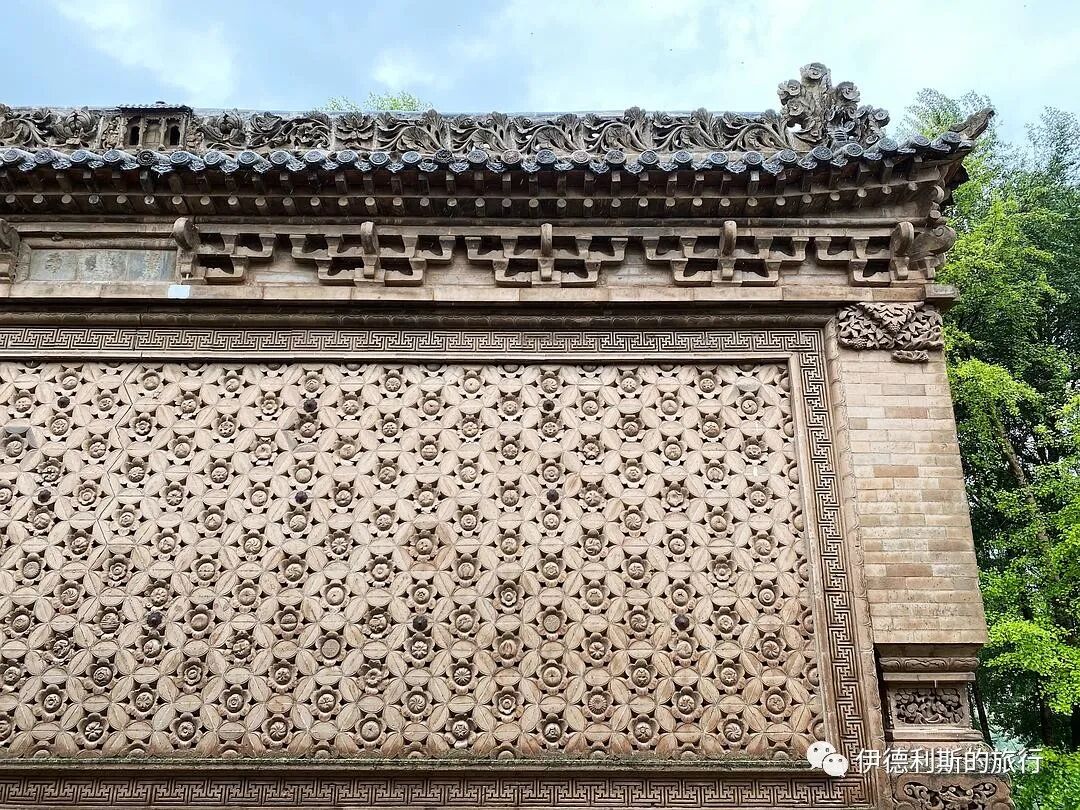
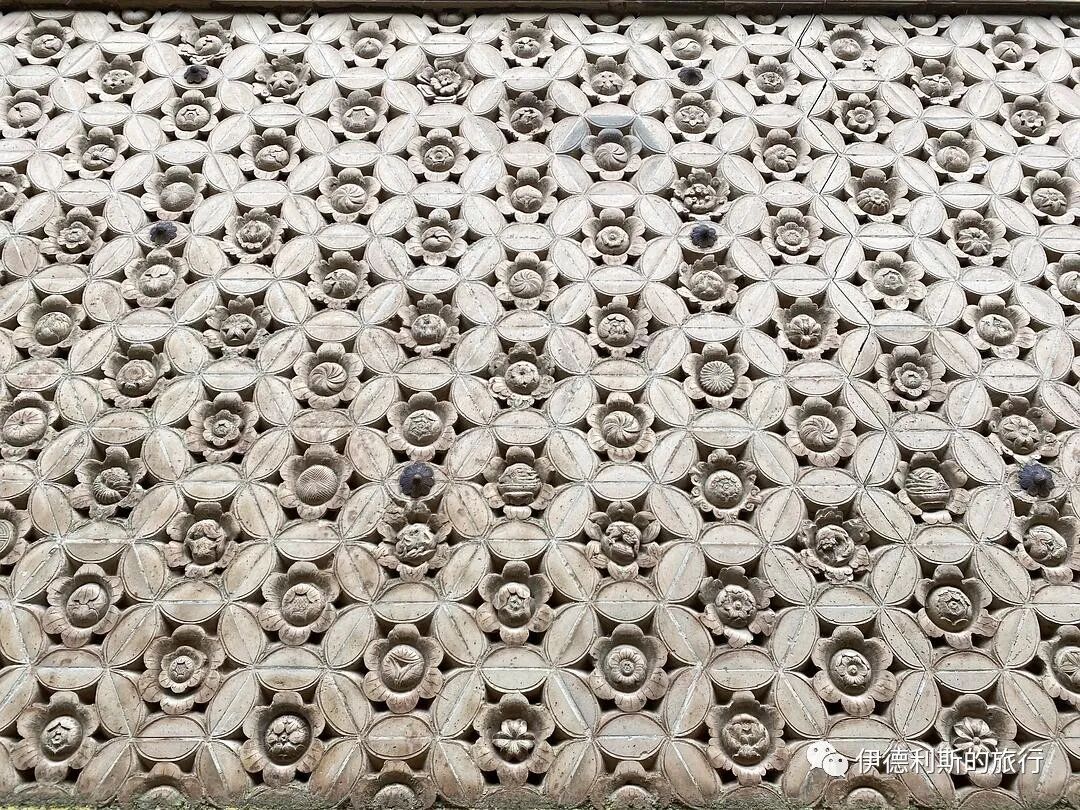
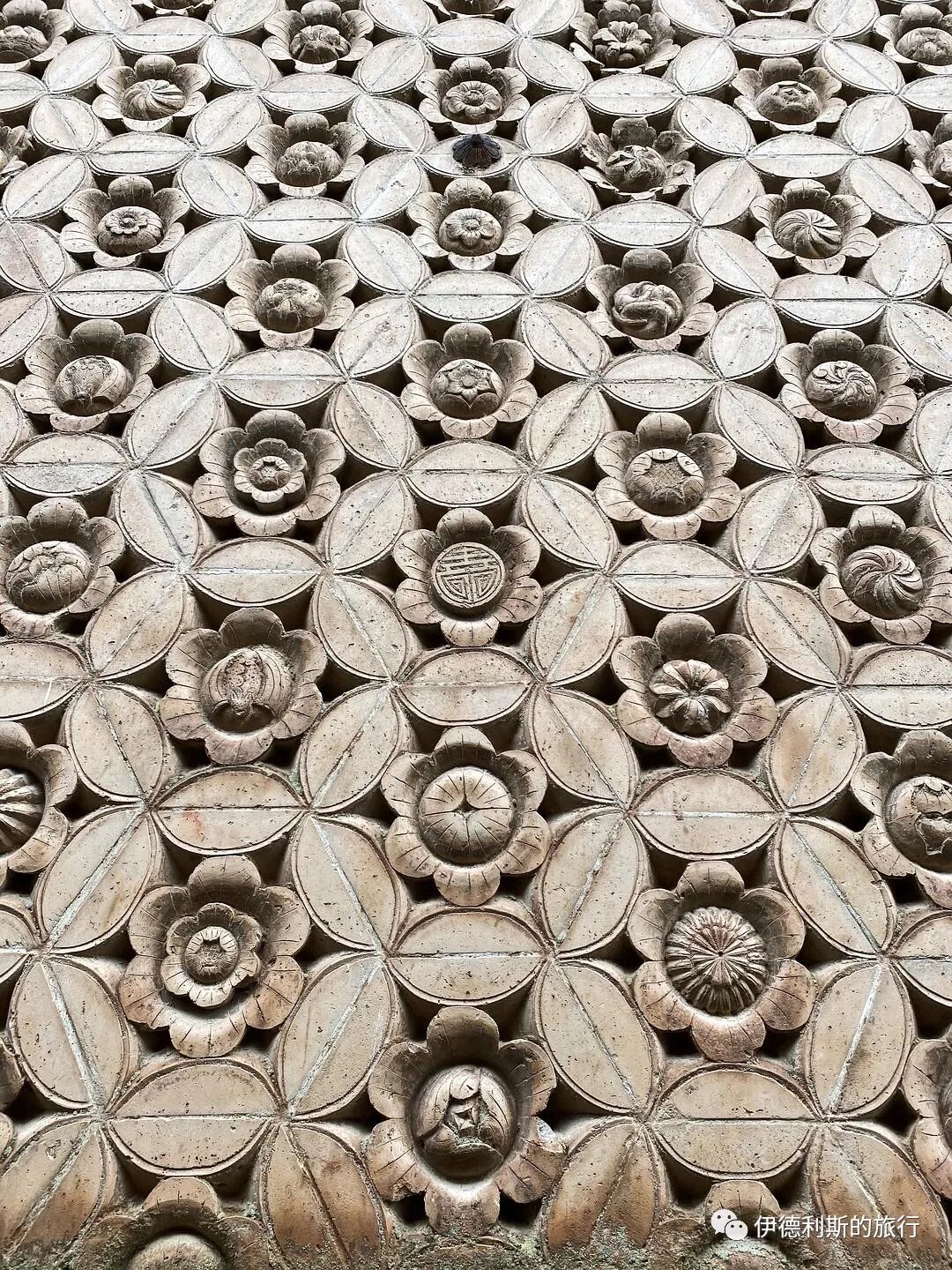
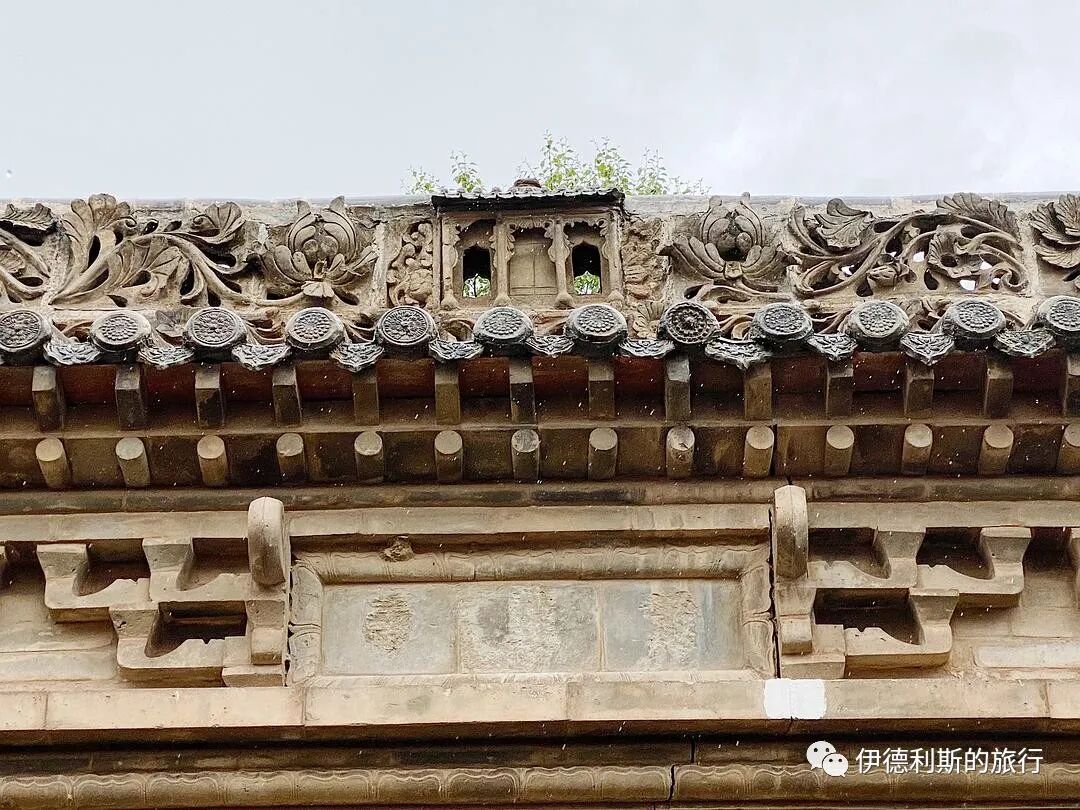
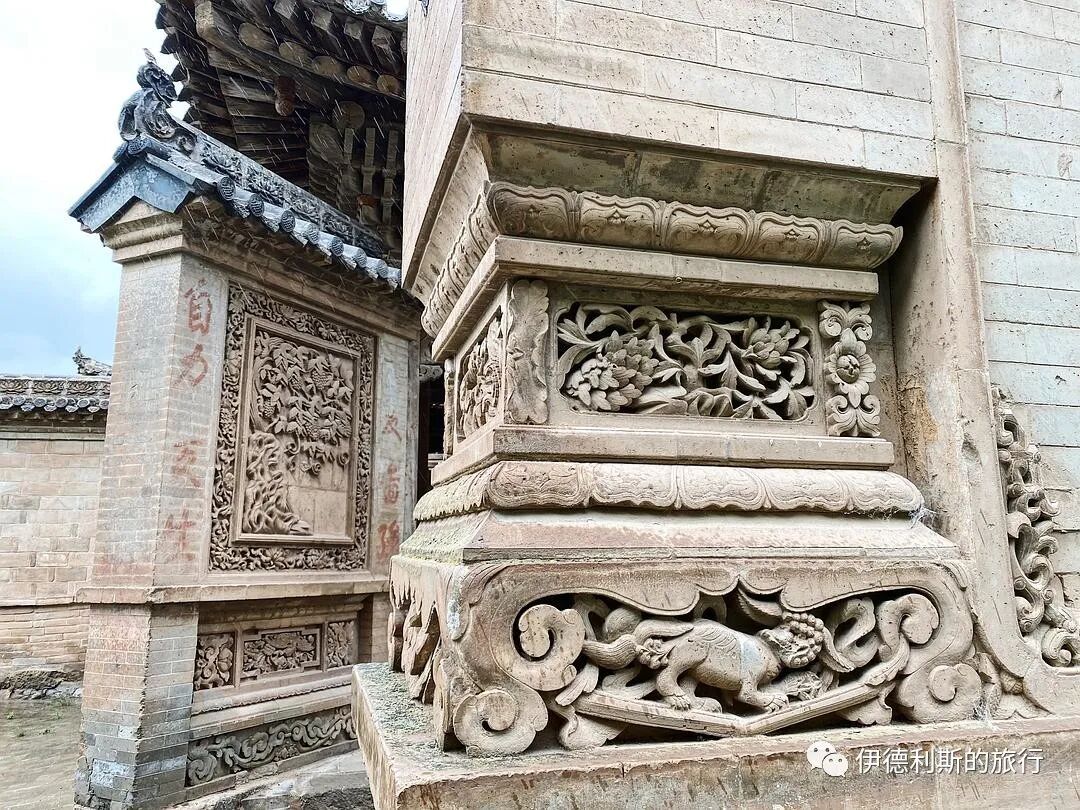
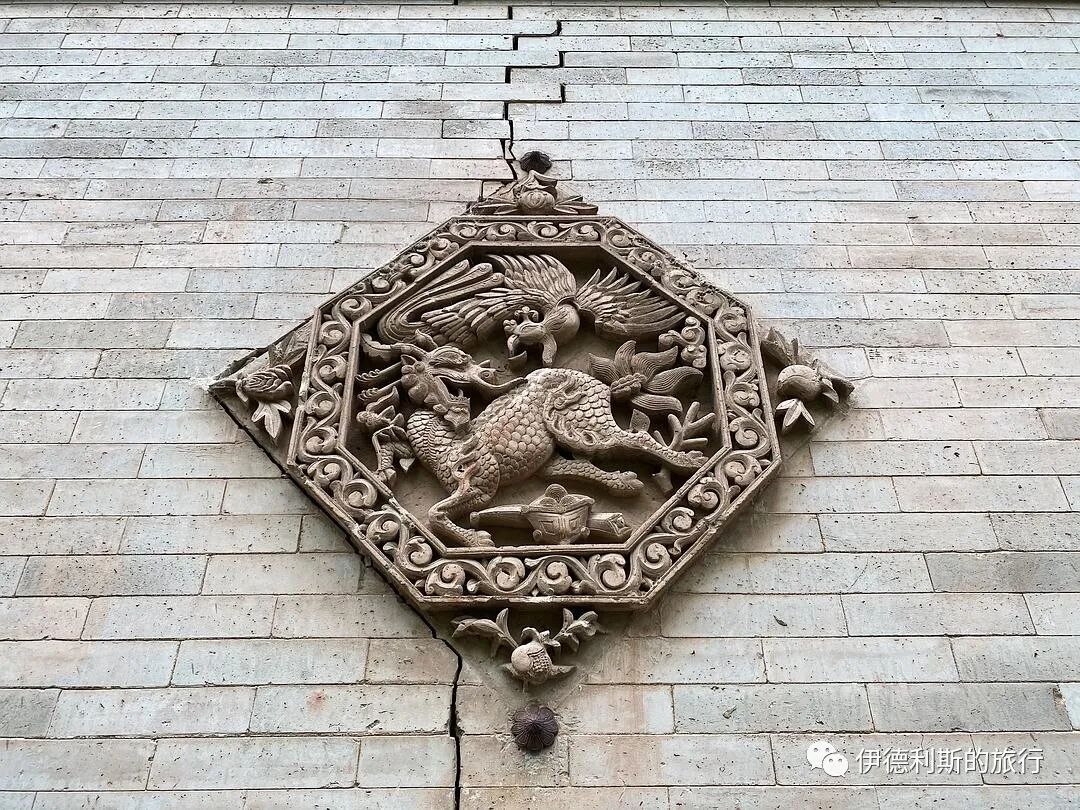
The unicorn and the phoenix bring good fortune
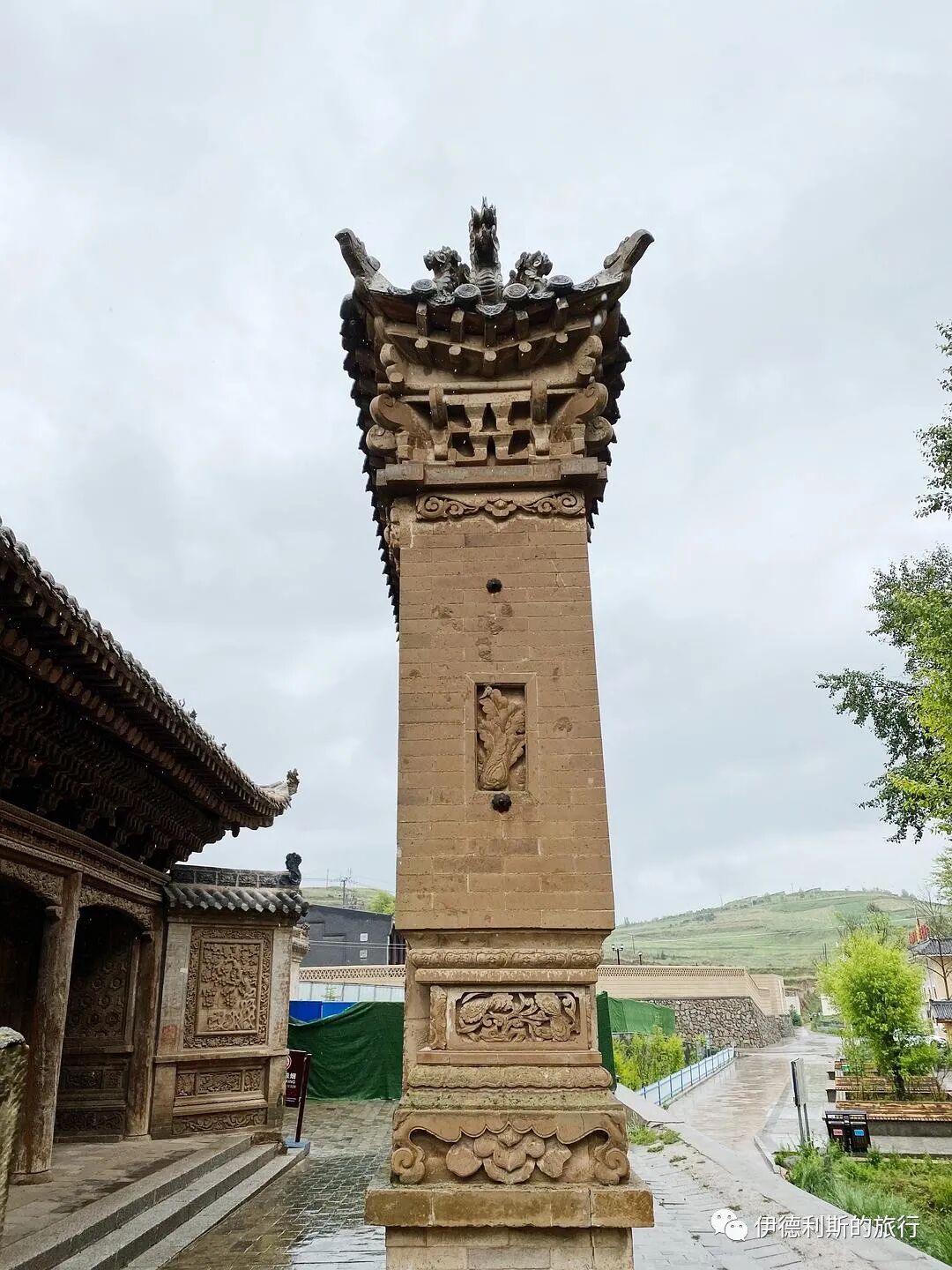
The main gate has a beamless structure, and the ceiling is built entirely by stacking and interlocking short crossbeams instead of using roof beams.
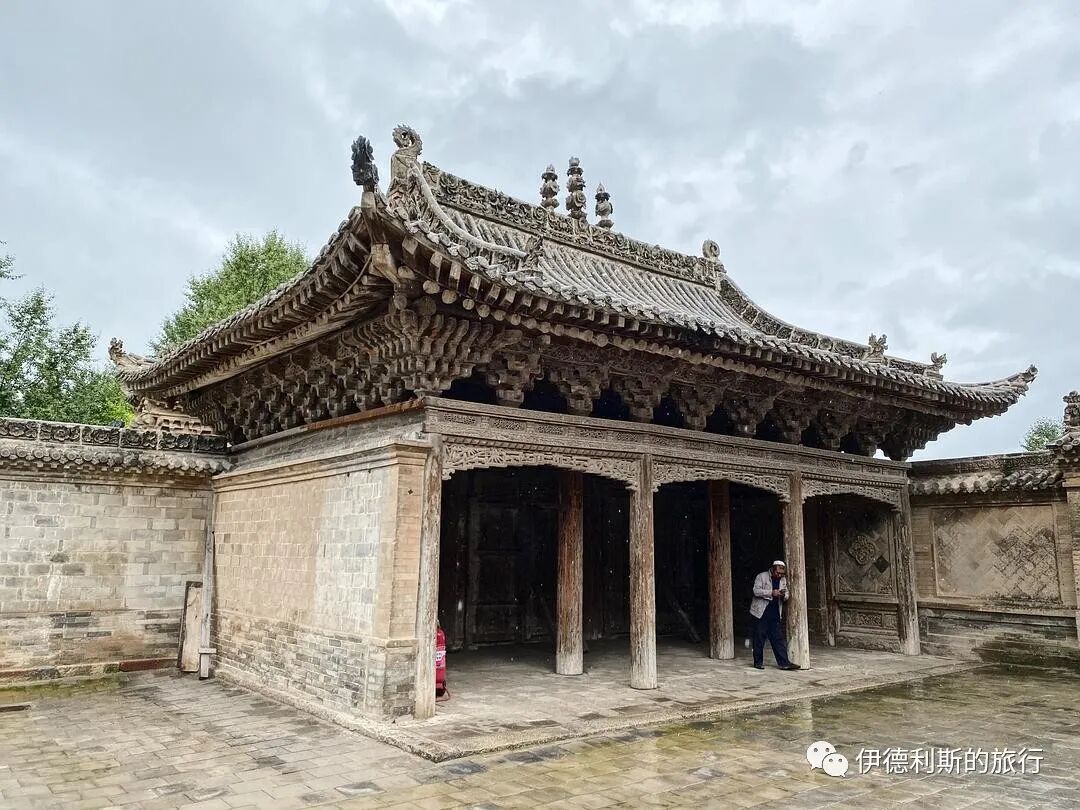
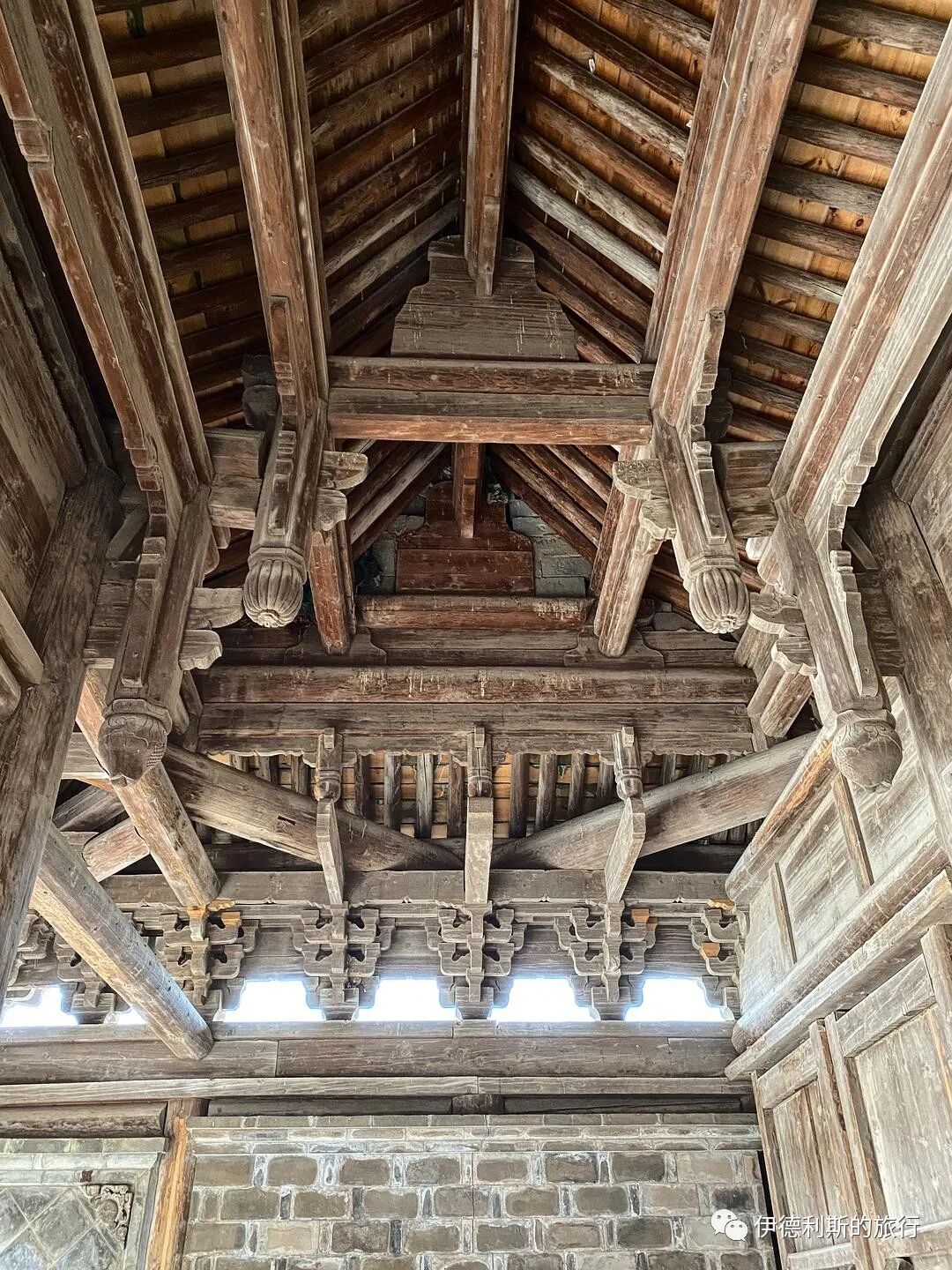
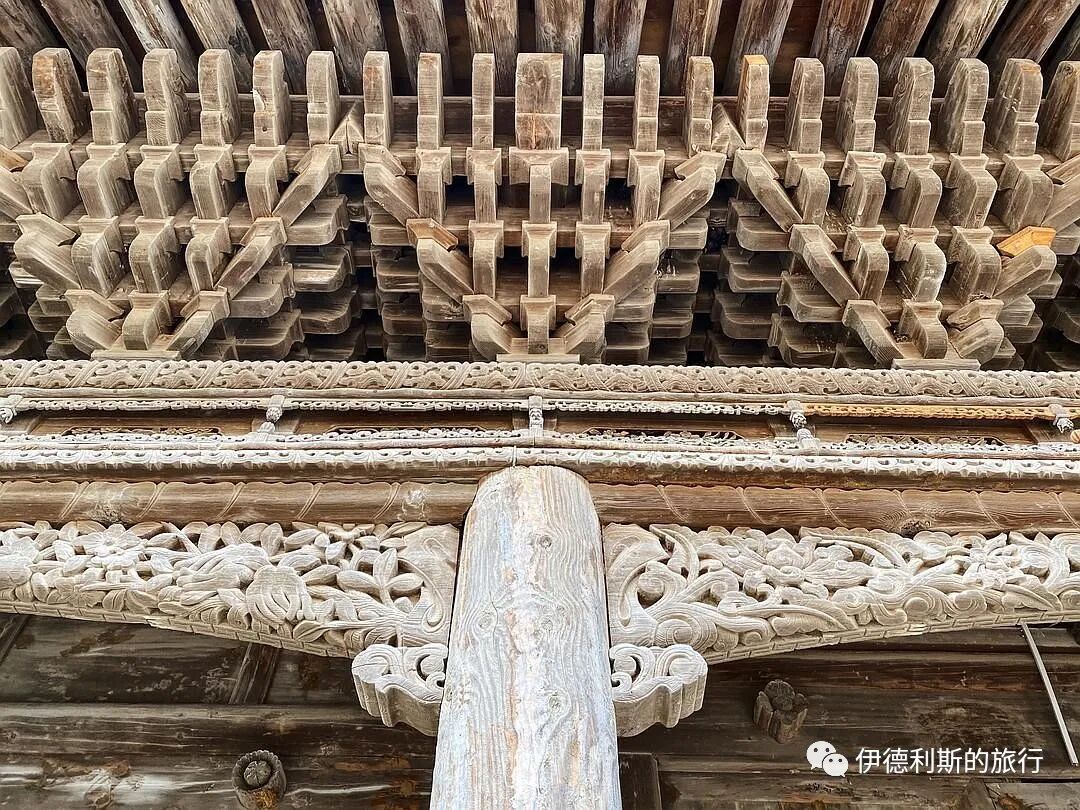
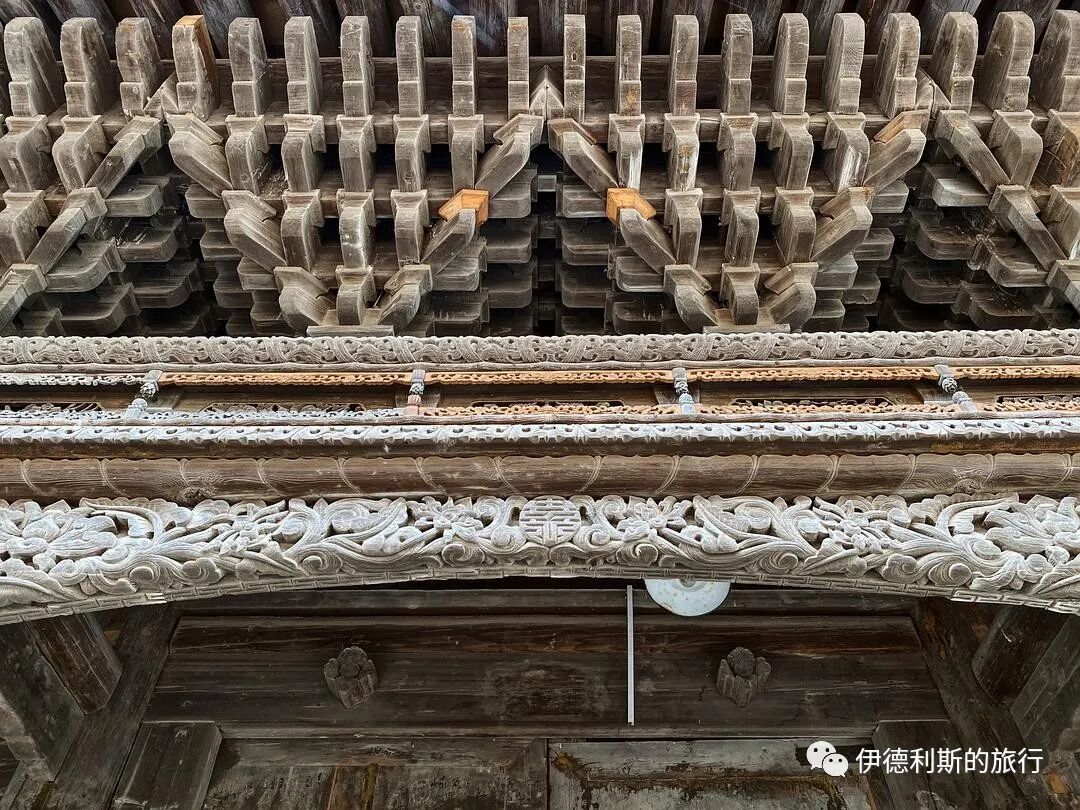
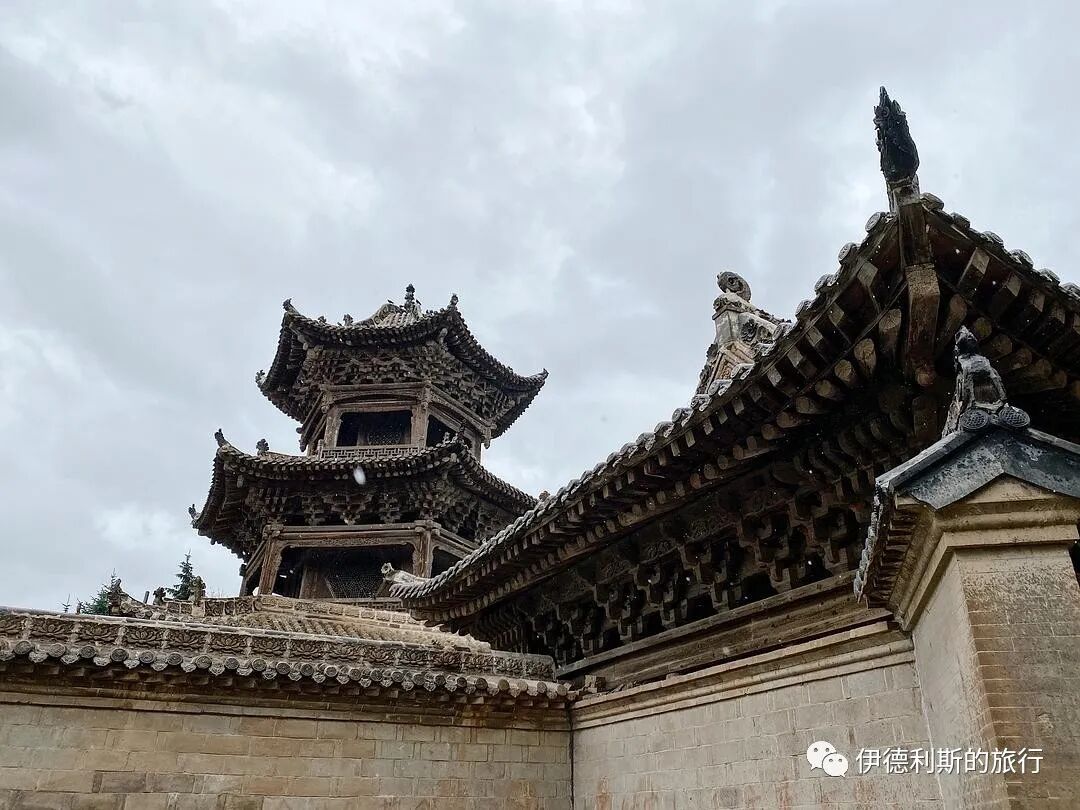
On the splayed walls to the left and right of the main gate are two large green brick carvings of 'mice stealing grapes' and 'a qilin with a pine tree,' created using the traditional single-layer high-relief brick carving technique. The mouse represents 'zi,' symbolizing many children and grandchildren. The pine tree sounds like 'song' (to send), symbolizing 'the qilin bringing a child.'
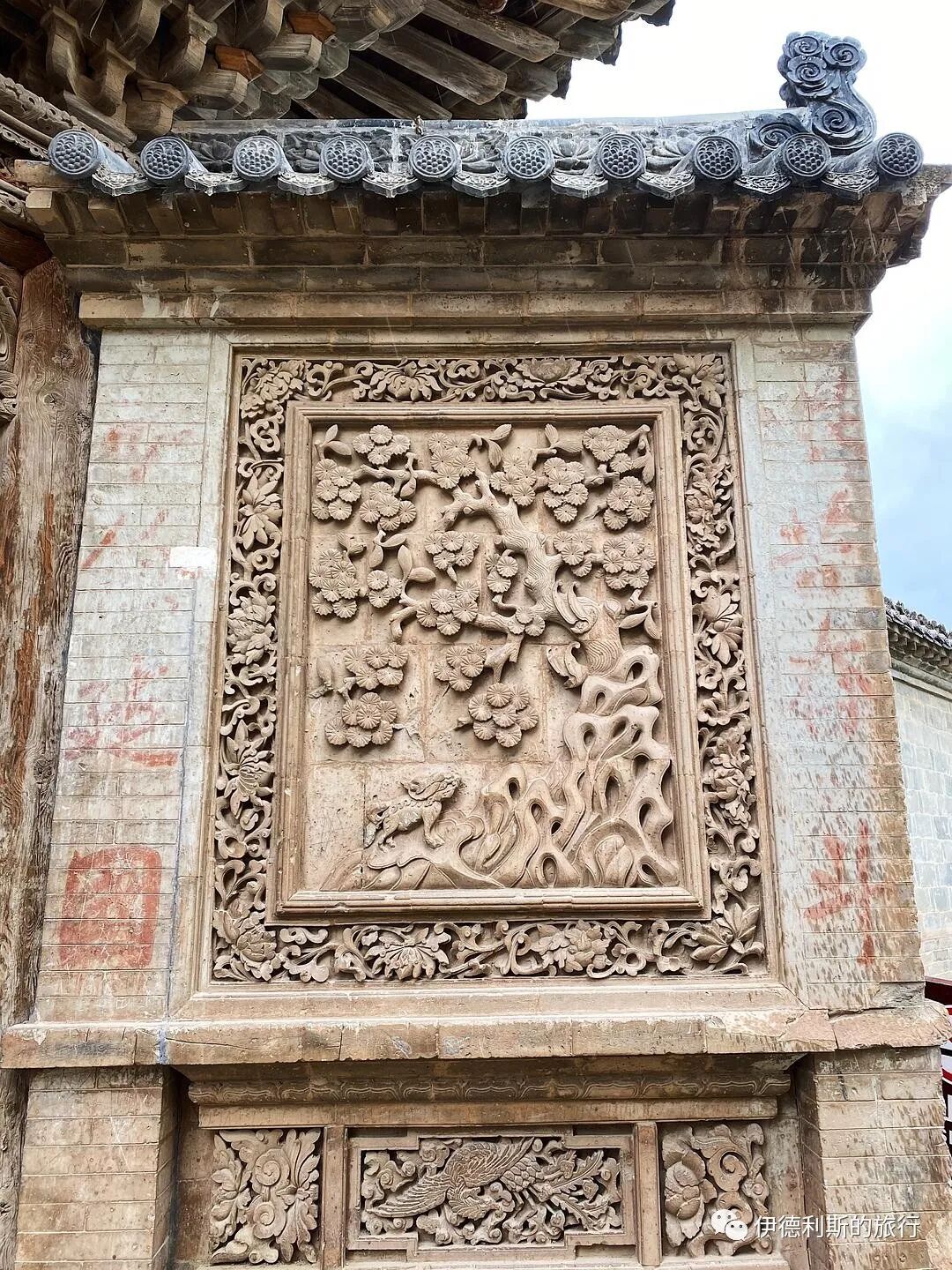
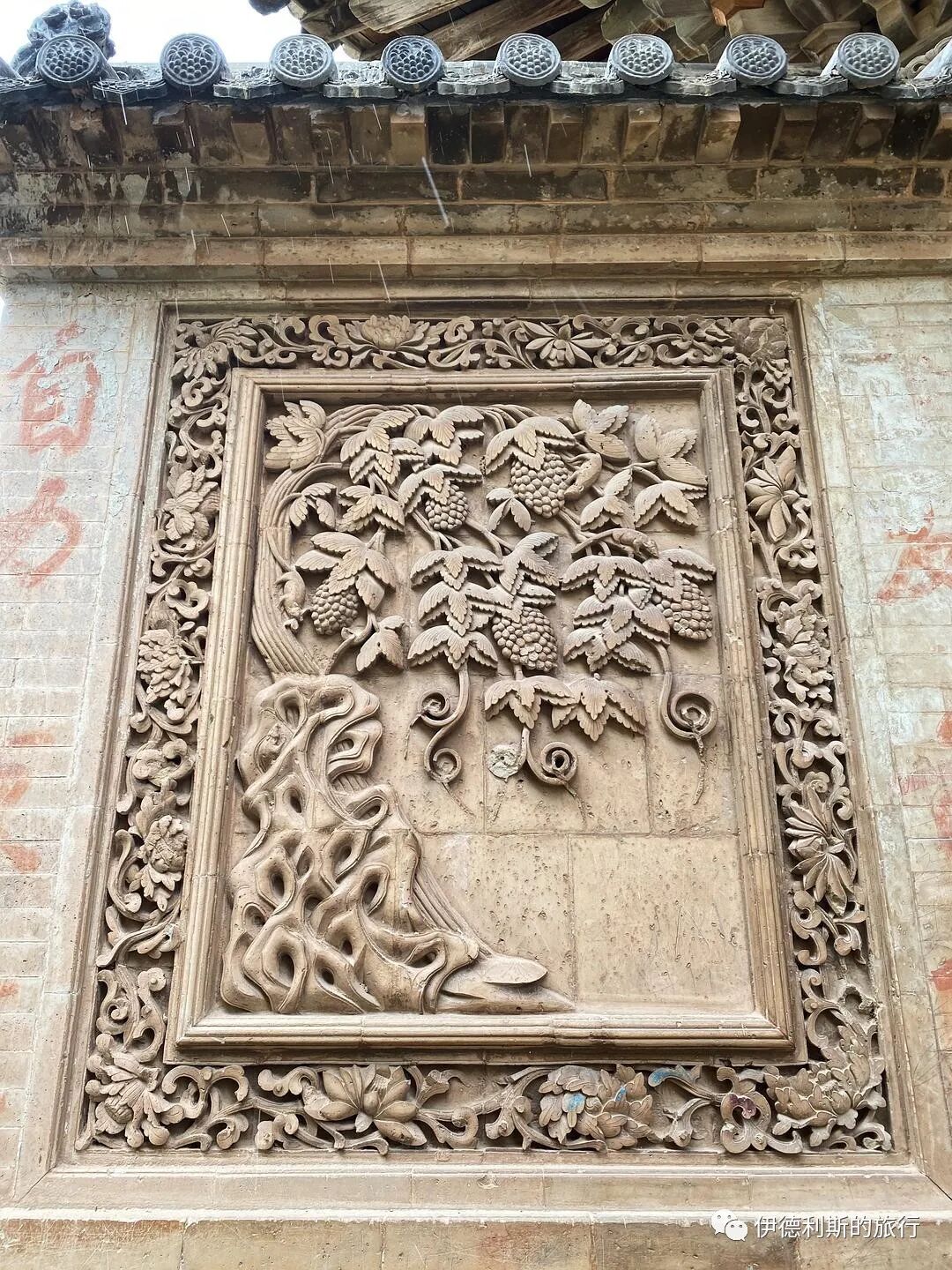
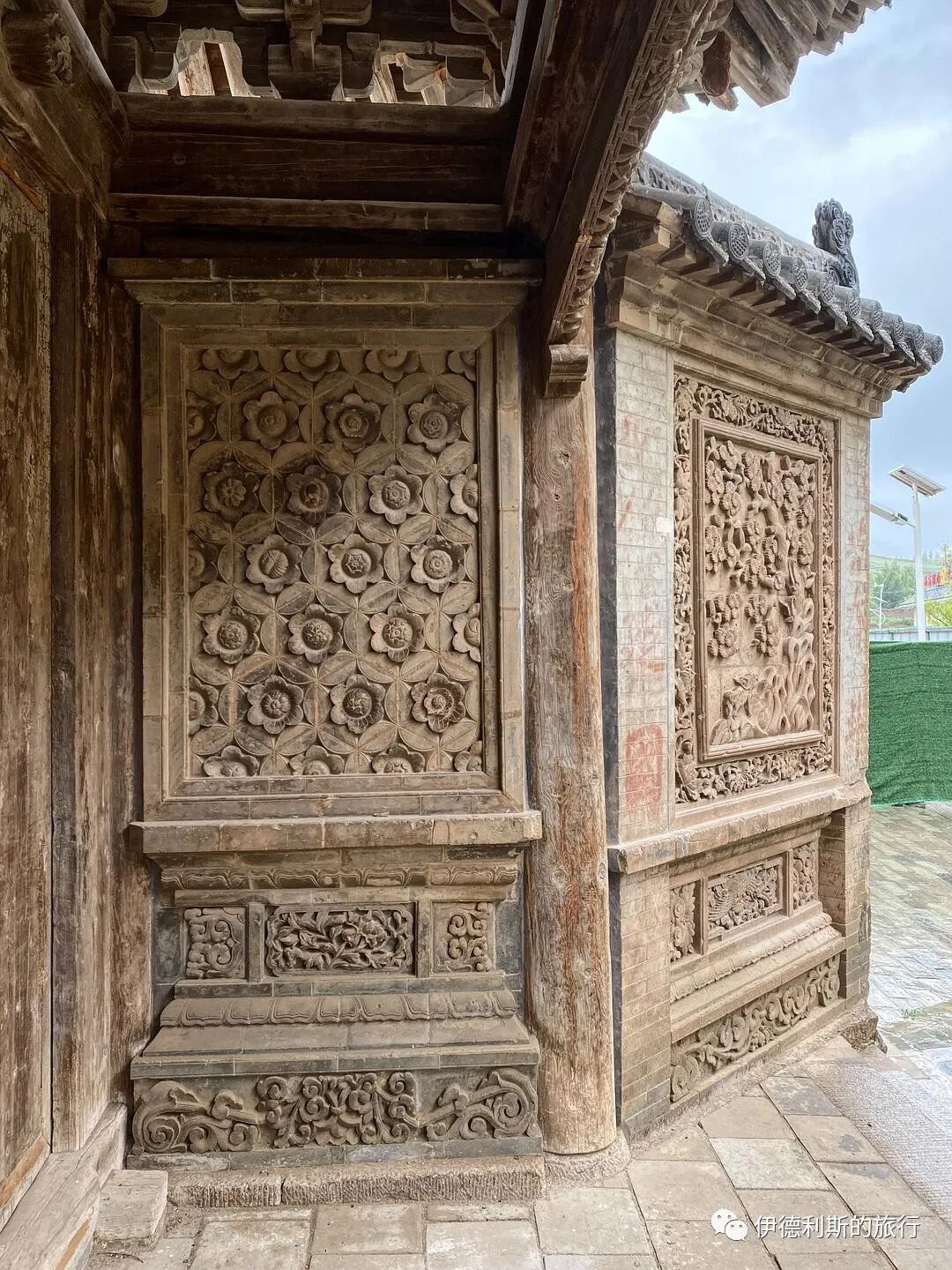
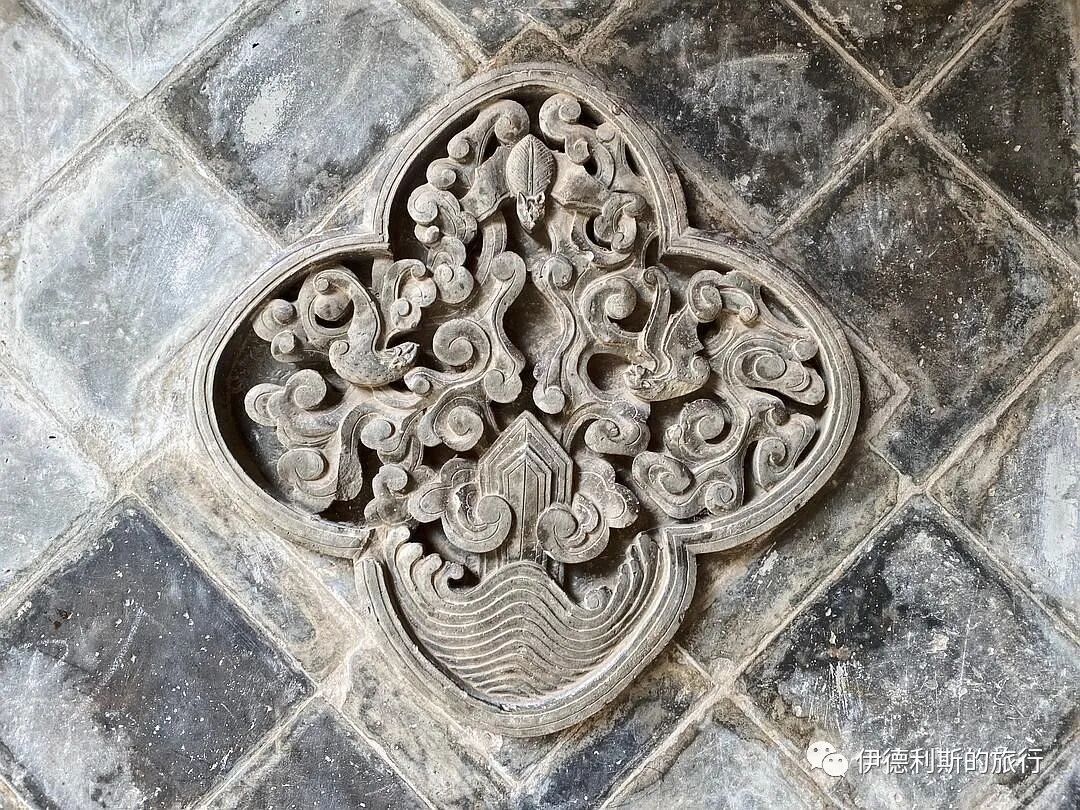
The Bangke Tower is a three-eaved, hexagonal, spire-roofed pavilion supported by two massive central pillars, with 12 surrounding pillars, a structure known as 'two men carrying mountains with twelve oxen'. The ground floor of the Bangke Tower features brick carvings of 'cats leaping and butterflies dancing', 'rabbits guarding cabbage', and 'plum blossoms, orchids, bamboo, and chrysanthemums', with a style somewhat similar to Shanxi brick carvings from the late Ming to early Qing dynasties. The words for 'cat' and 'butterfly' sound like 'taotie', symbolizing longevity. The word for 'cabbage' sounds like 'hundreds of wealth', and rabbits are considered good at guarding wealth.
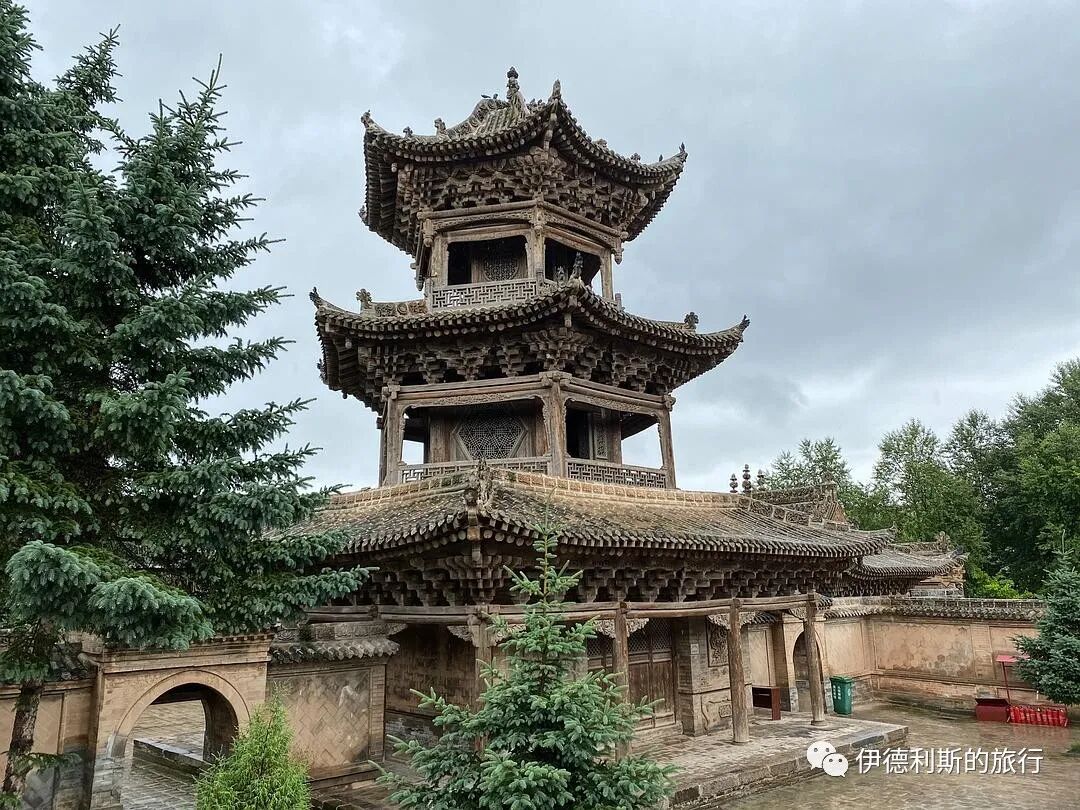
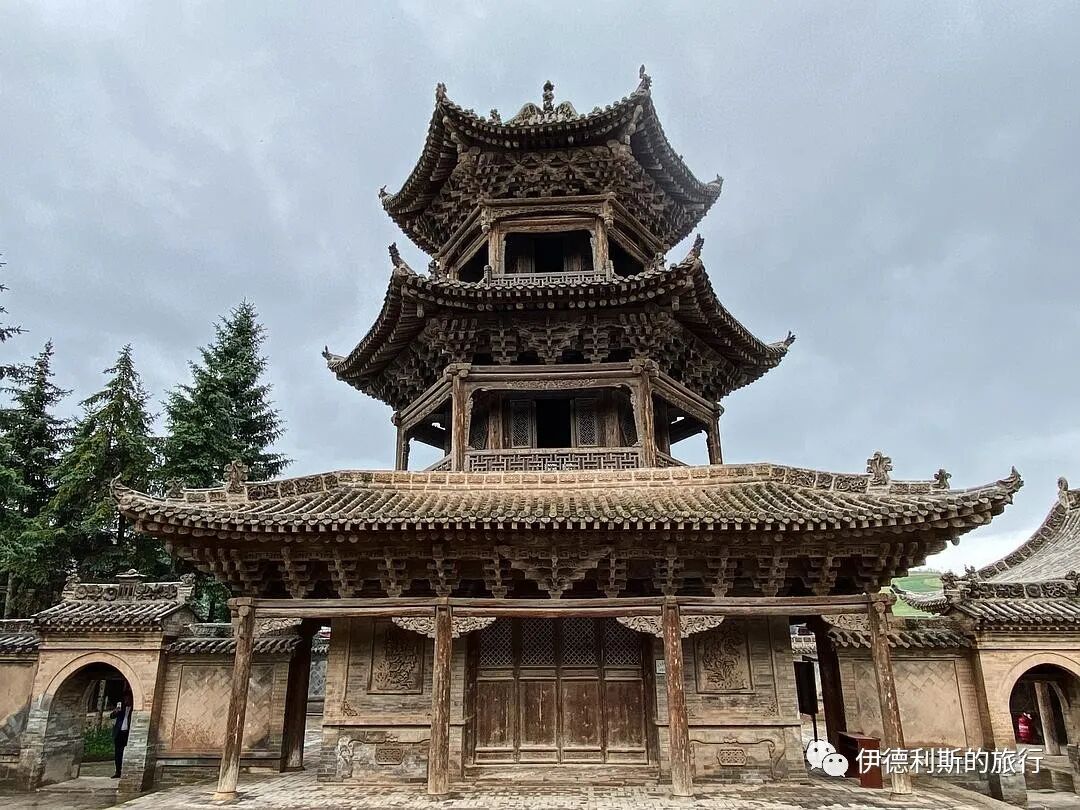
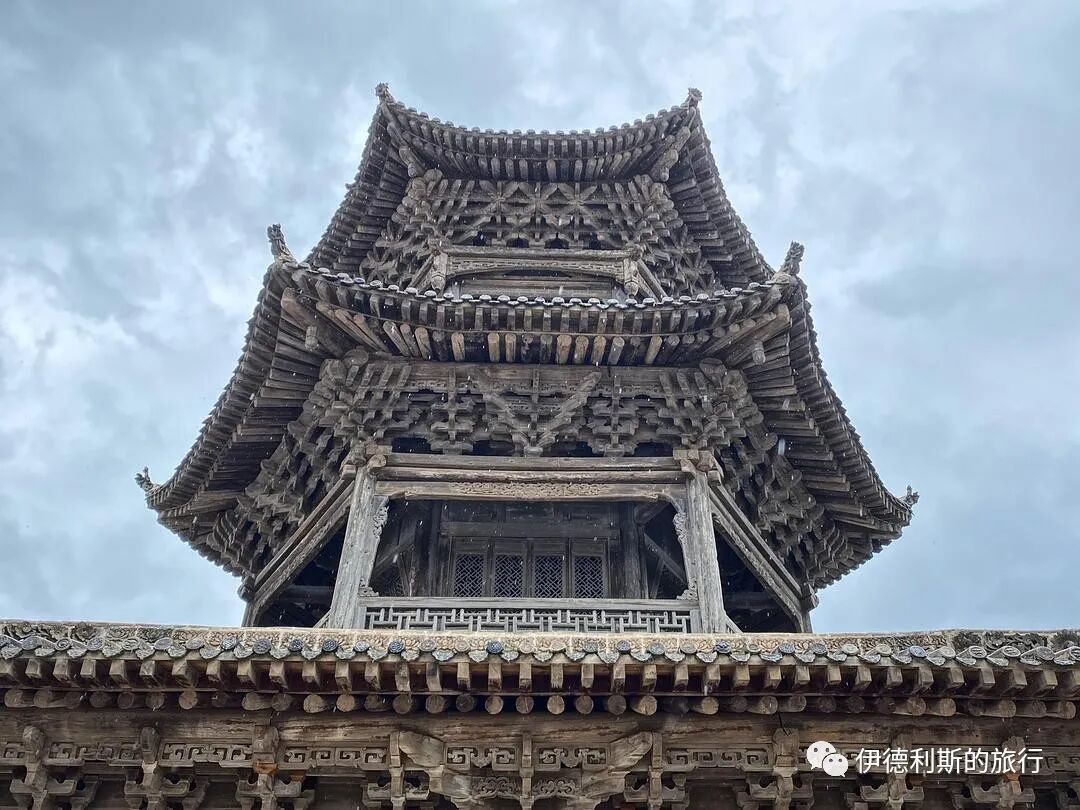
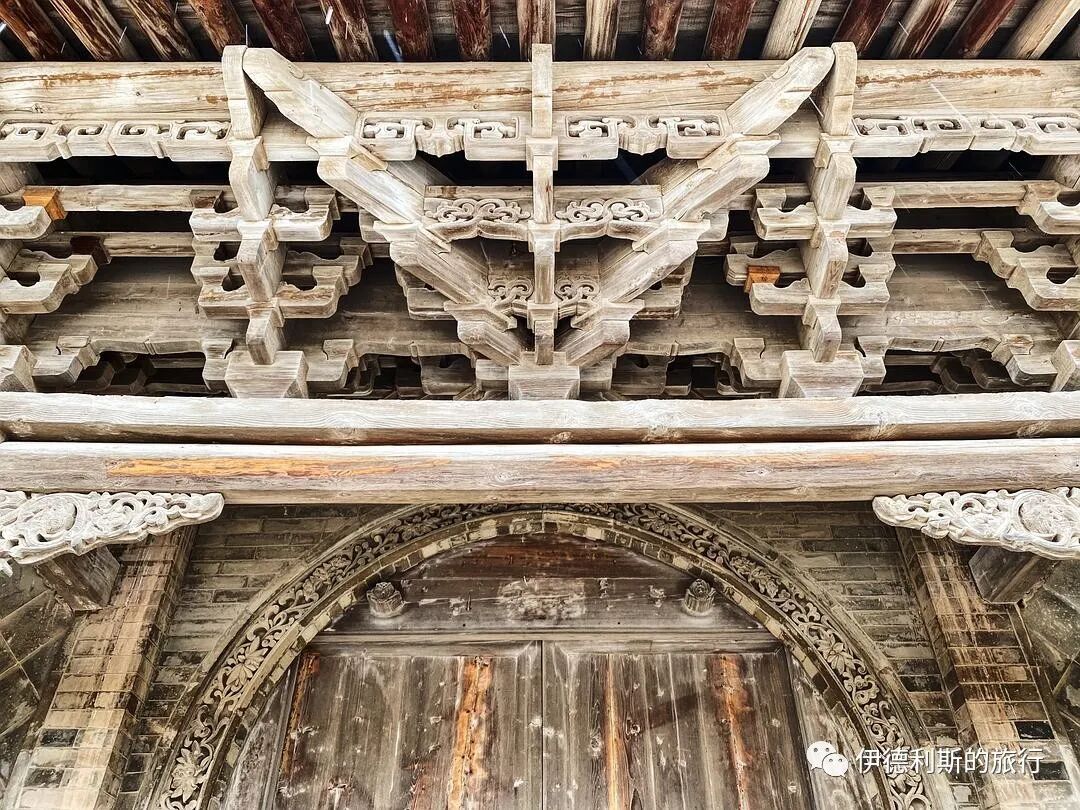
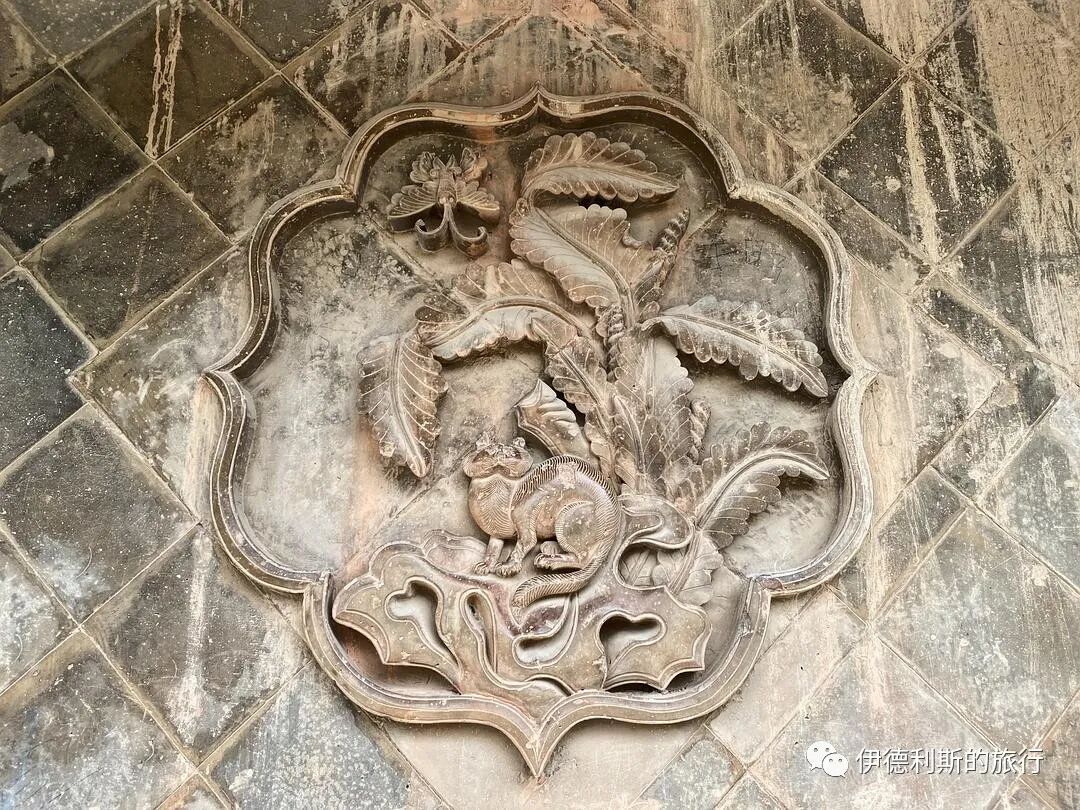
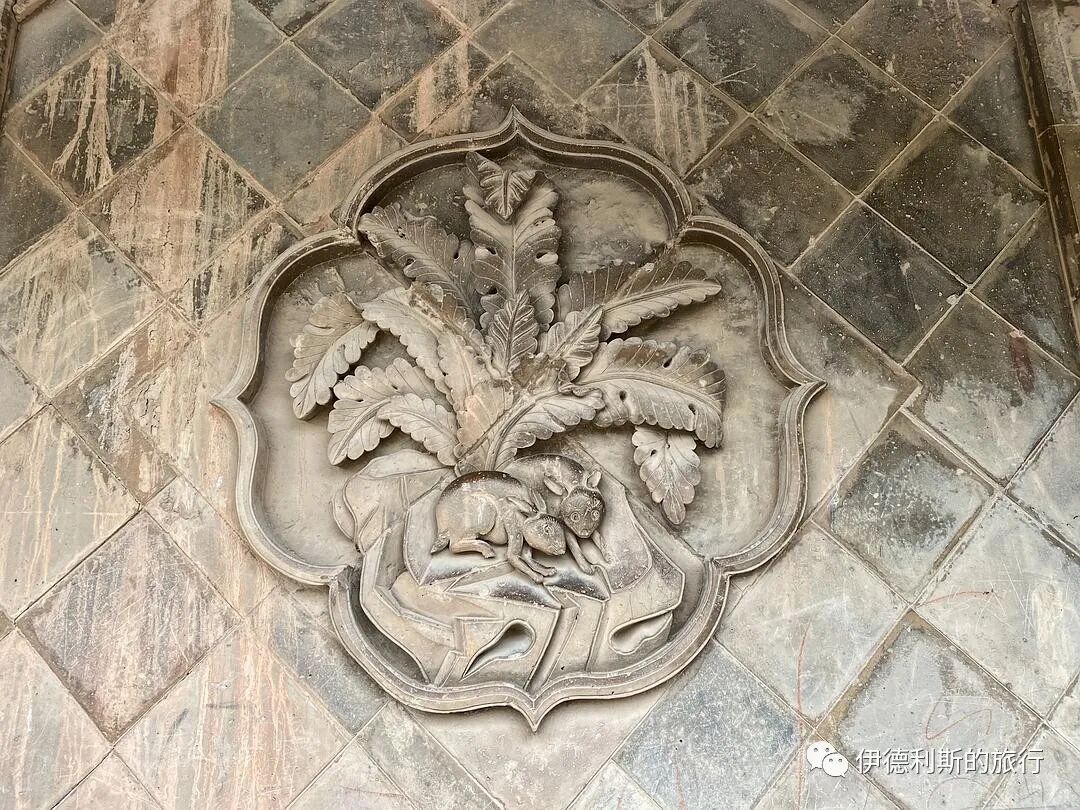
The mosque is divided into front and back courtyards by brick walls on both sides of the minaret.
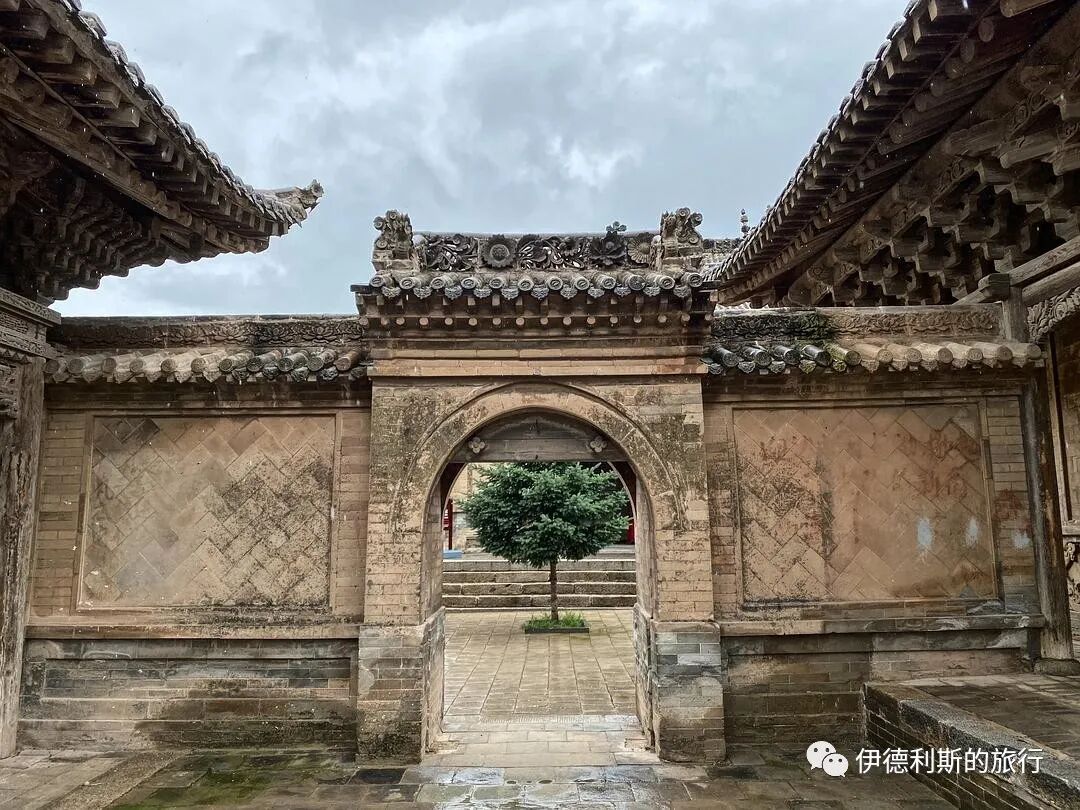
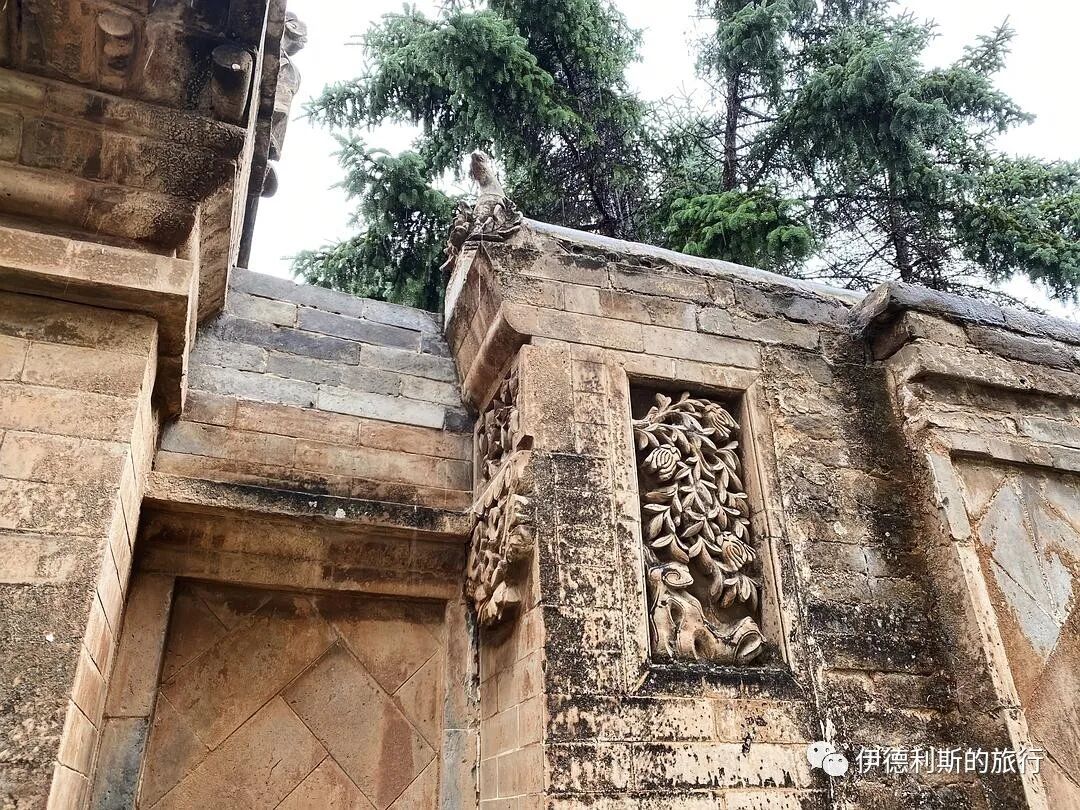
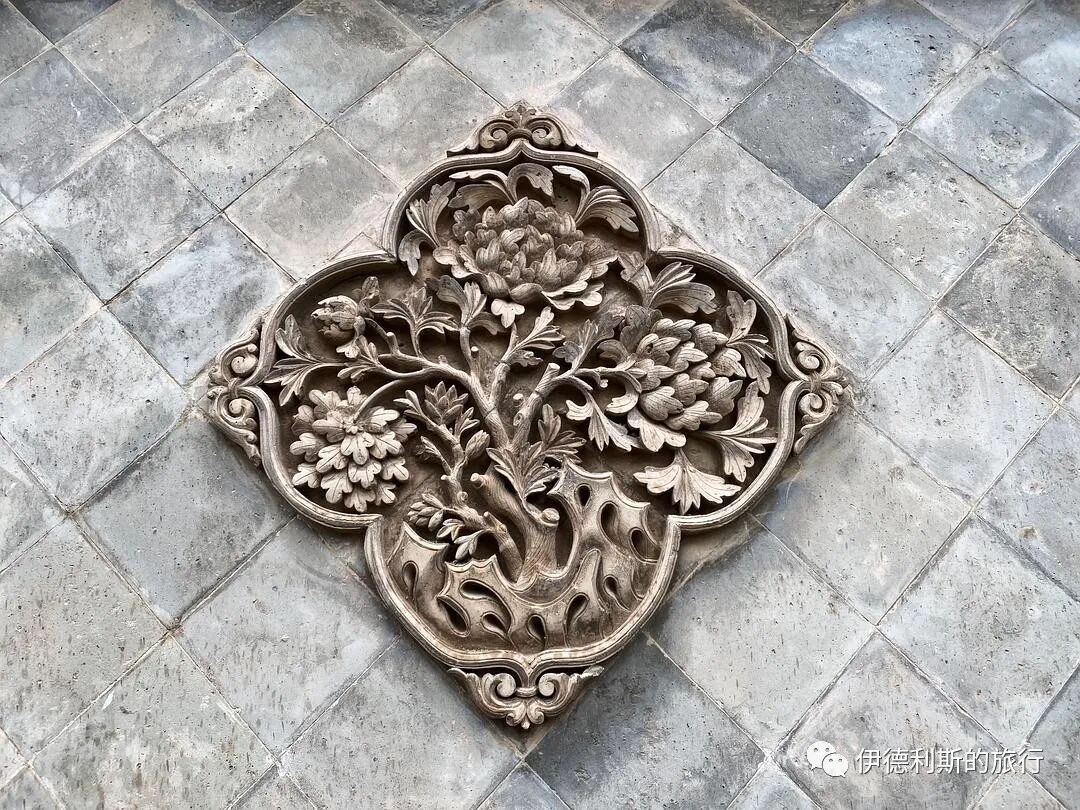
The main hall has a vaulted gable-and-hip roof and consists of three parts: the front porch, the main hall, and the rear kiln-style hall. The roof ridge of the main hall features openwork glazed brick carvings and architectural models of dougong-style halls, with ornaments inspired by the 'treasure vases' placed on the roof ridges of Tibetan Buddhist temples.
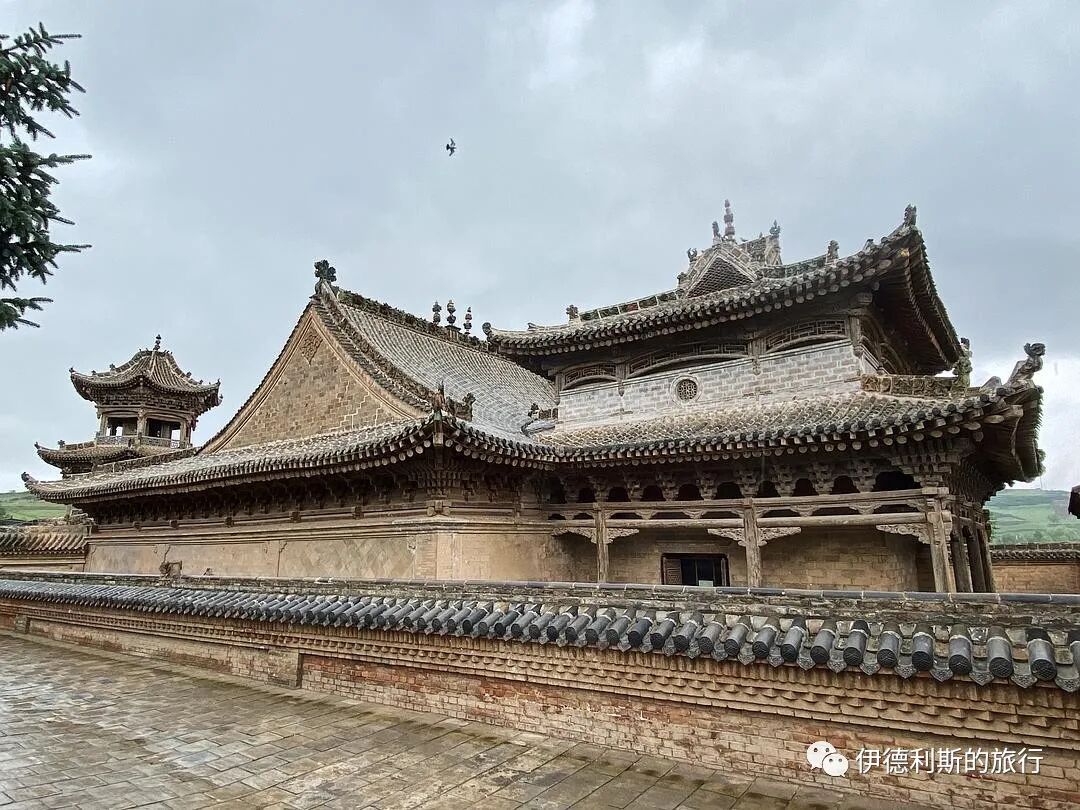
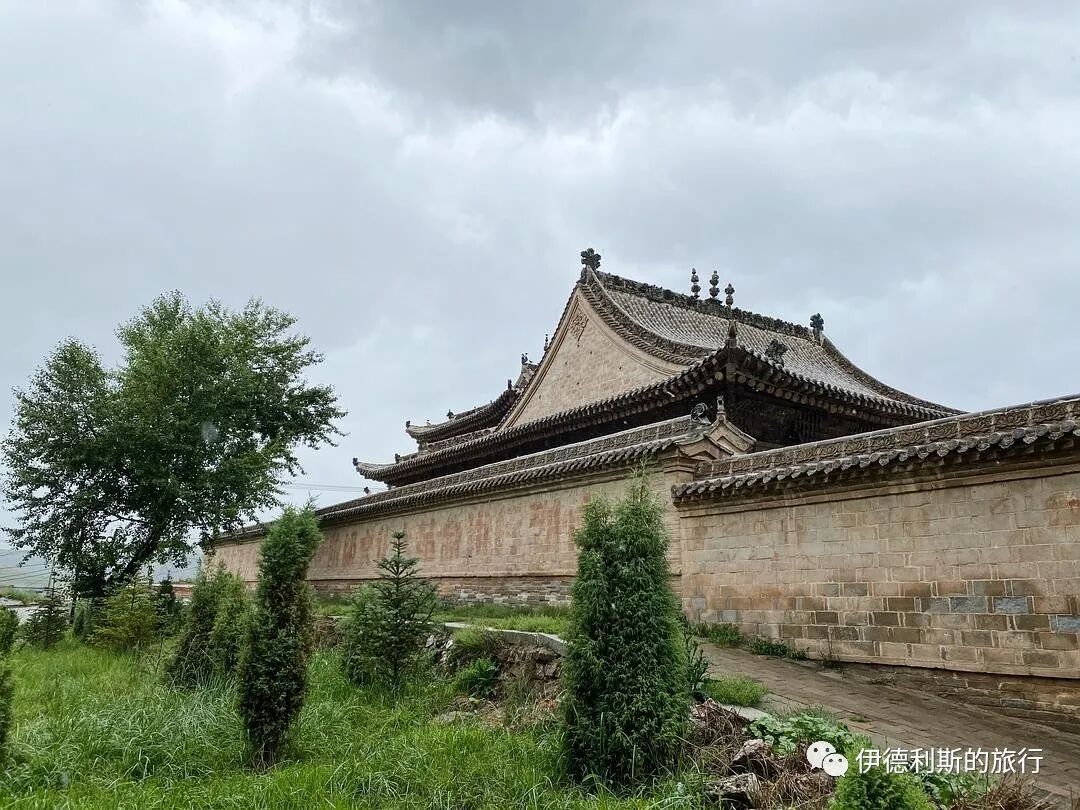
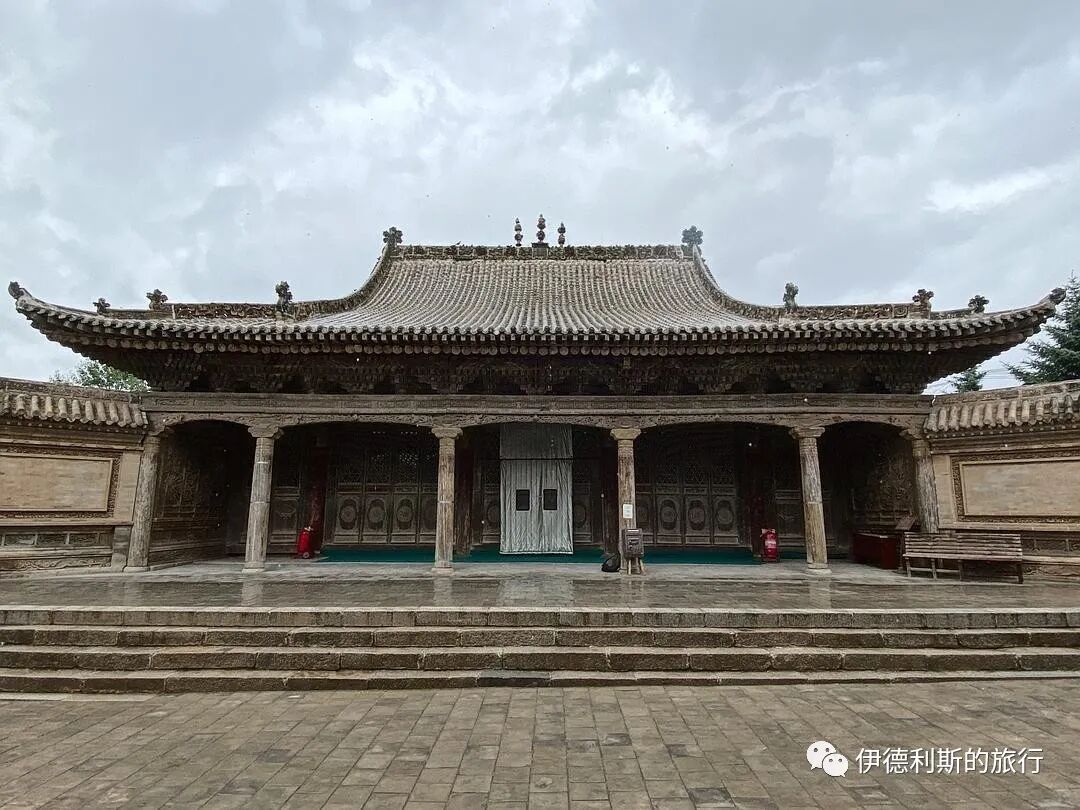
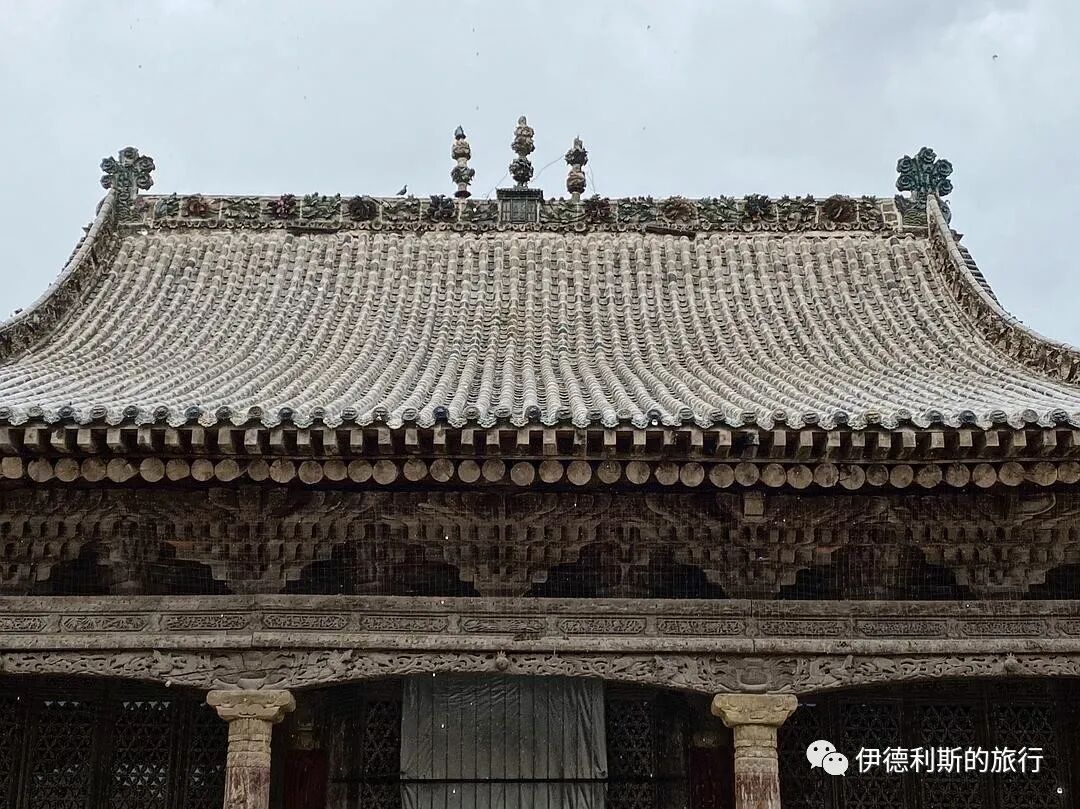
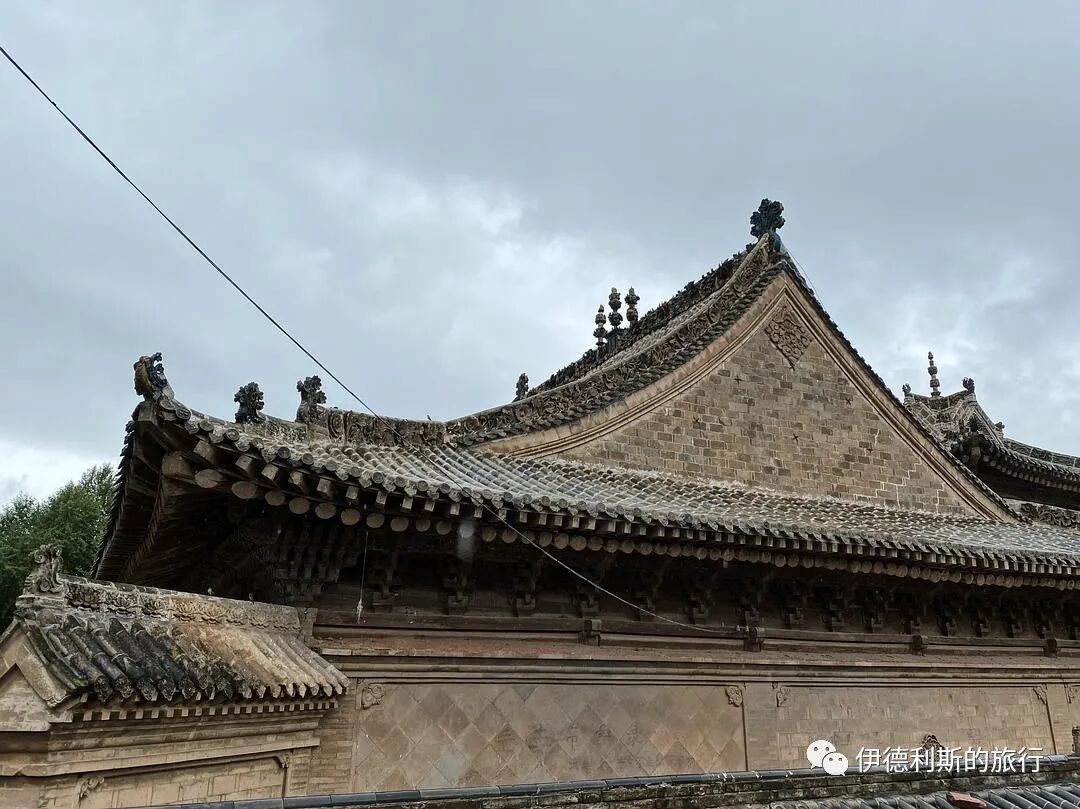
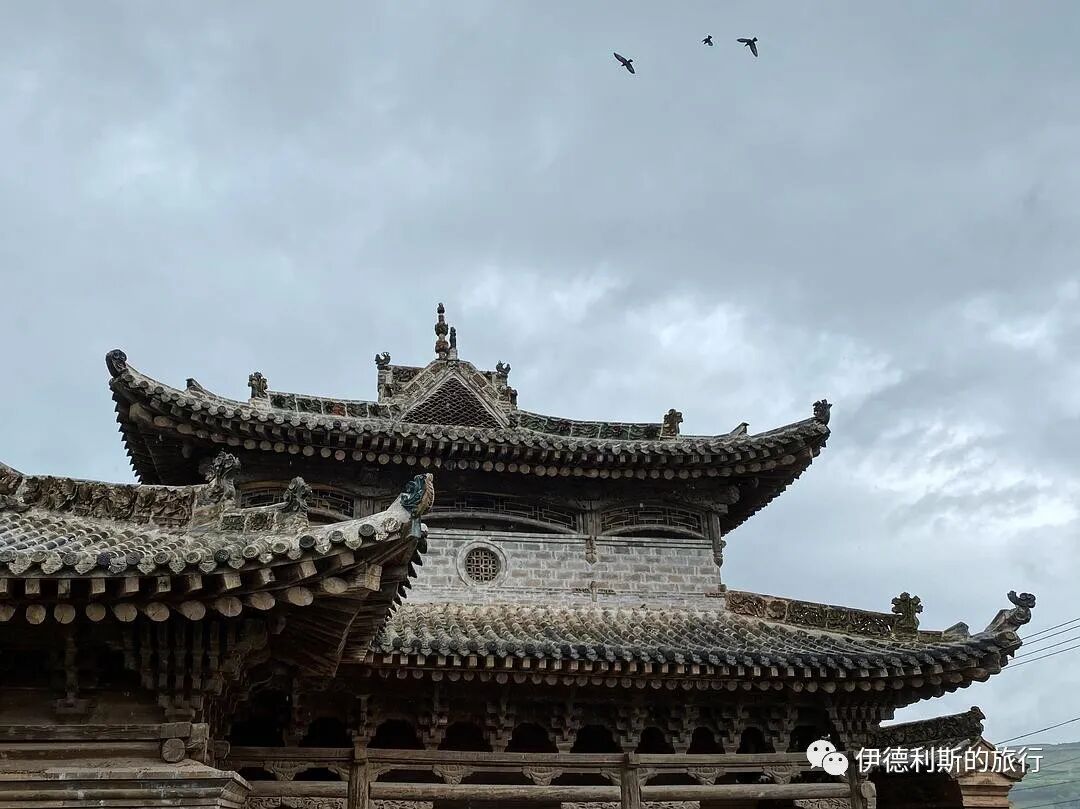
On both sides of the main hall, the eight-character screen panels are carved with patterns of 'peacocks playing with peonies', 'four arts and ruyi', 'bamboo and plum blossoms for double happiness', 'peace throughout the four seasons', 'jade hall and peace', 'joyful news of early spring', 'mandarin ducks playing in water', 'lotus flowers on a single stalk', and 'pomegranate bursting with a hundred seeds', as well as large seals, fish, conch shells, and various floral designs.
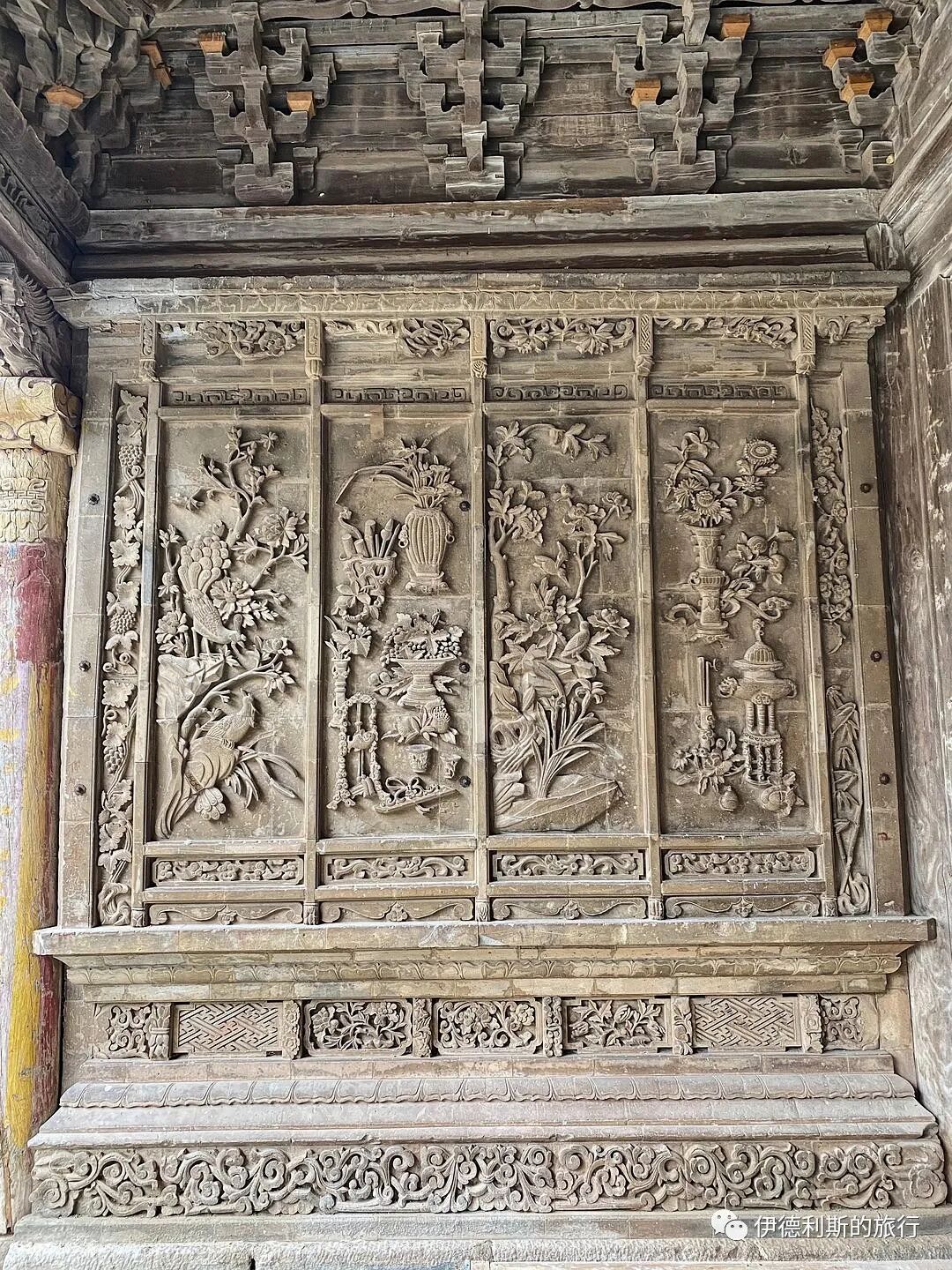
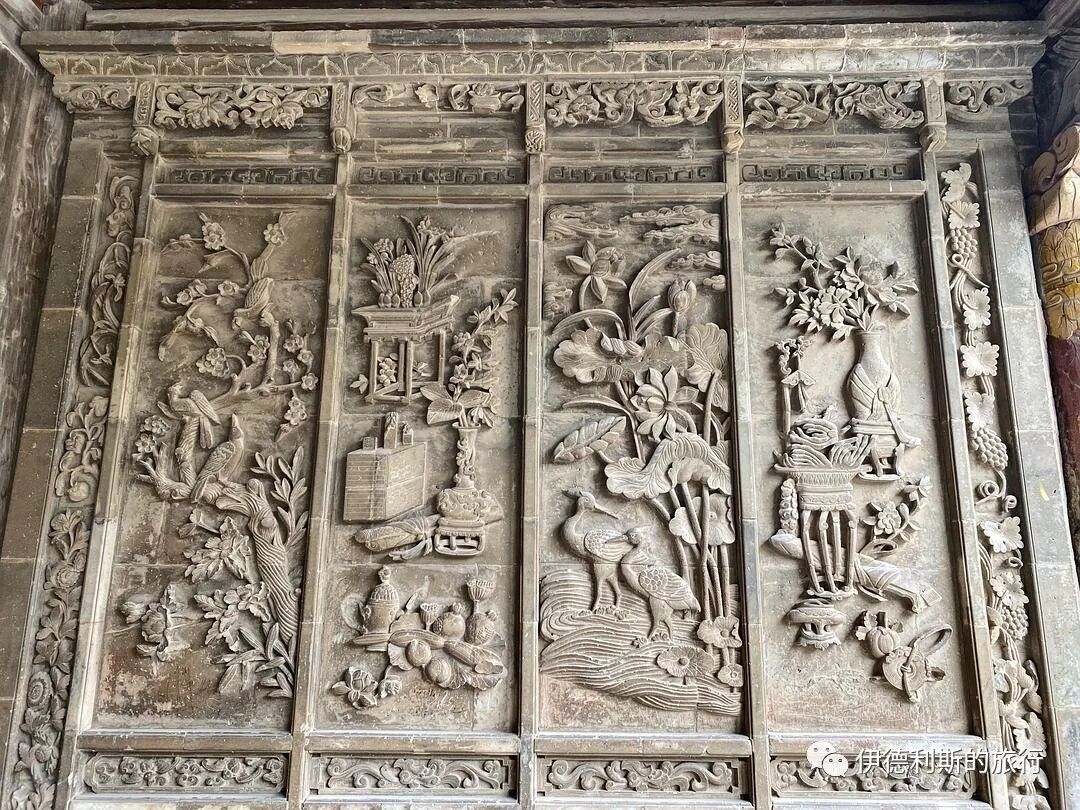
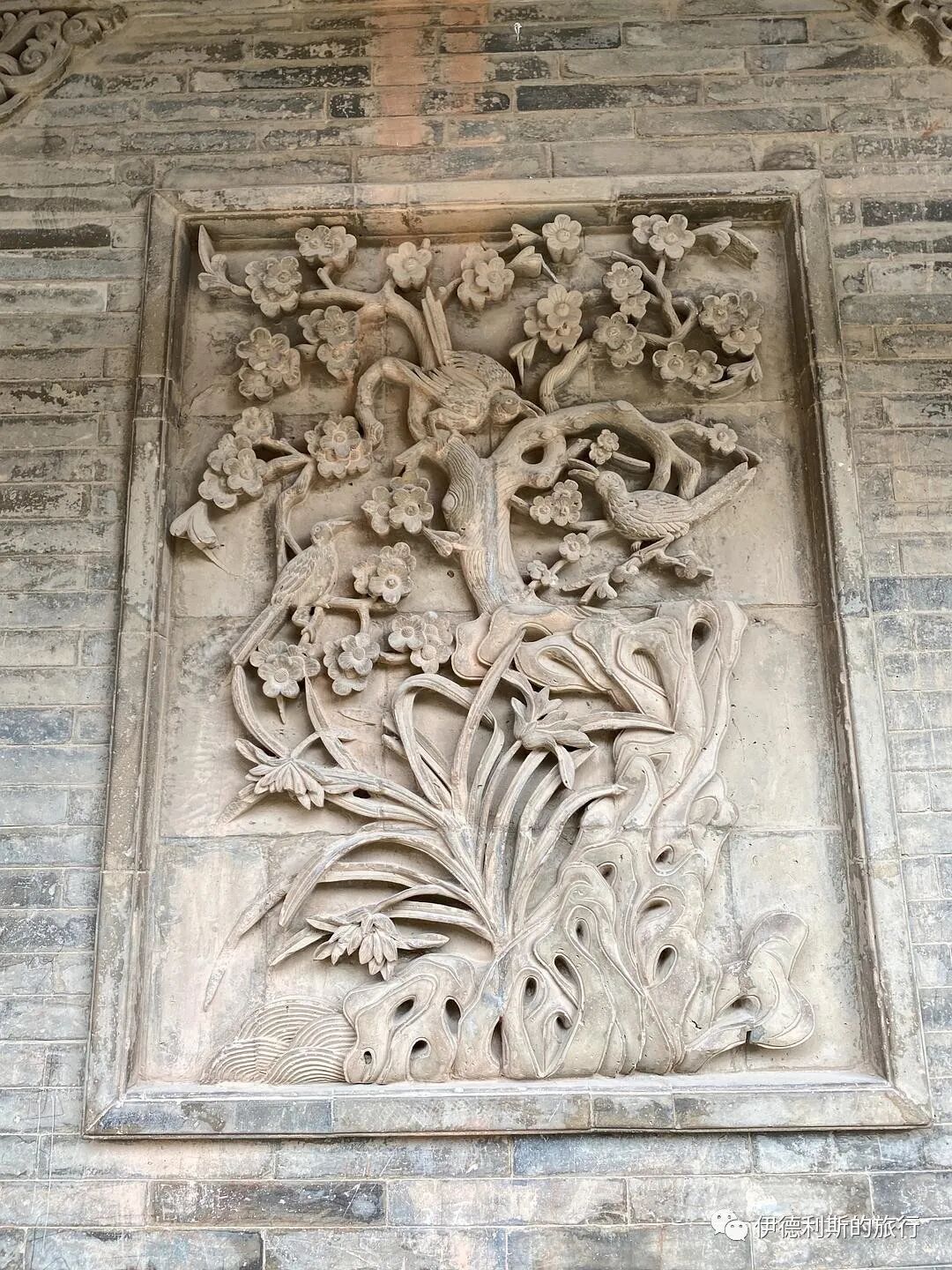
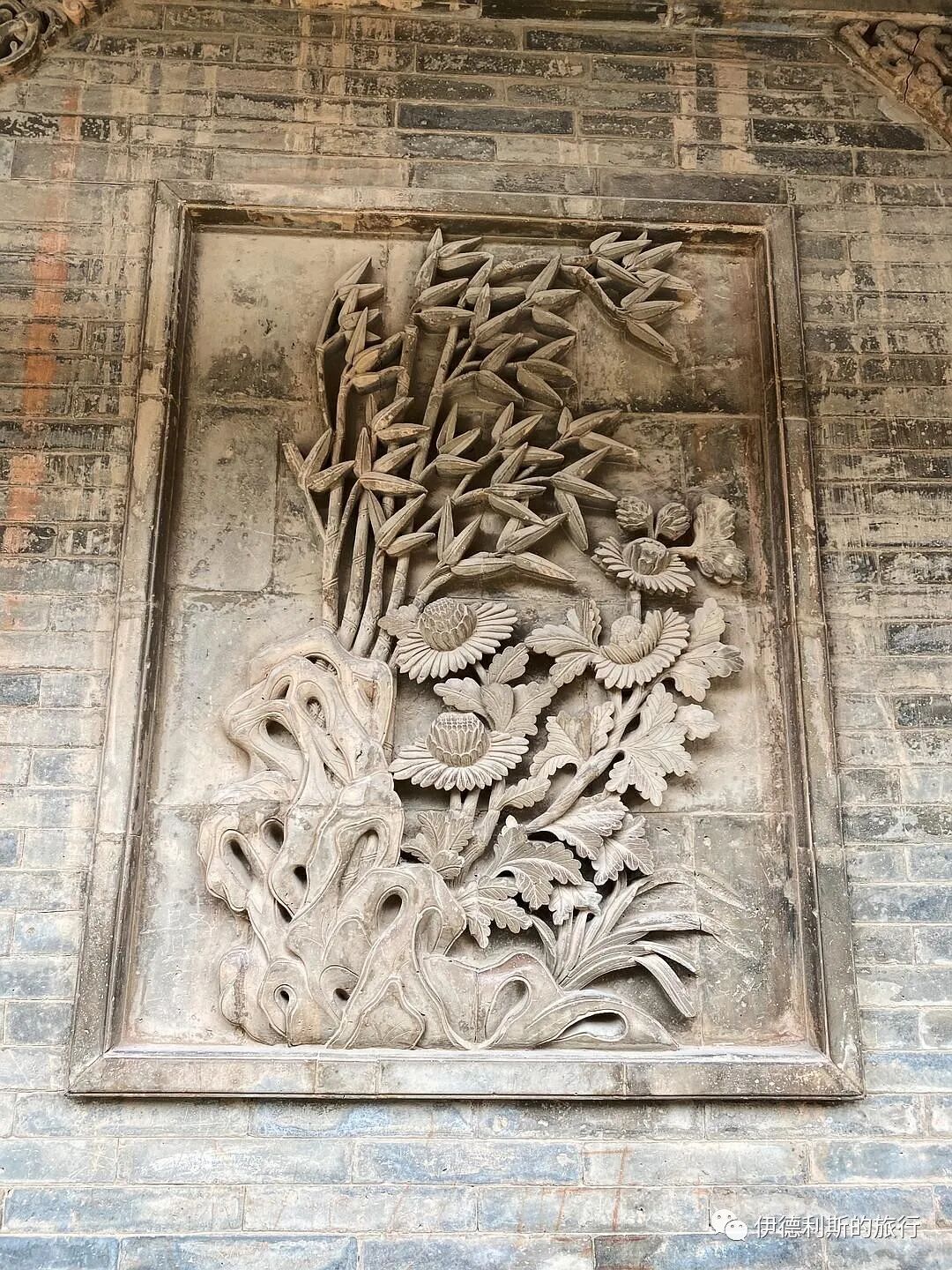
The front porch capitals use corbels to support the beam frame, which is in the Tibetan architectural style. The wooden carvings on the circular arch spandrels feature patterns such as 'two dragons playing with a pearl' and 'a dragon playing with a phoenix'. The wooden carvings at the junction of the eaves columns and inner columns feature 'dragon and tiger' patterns.
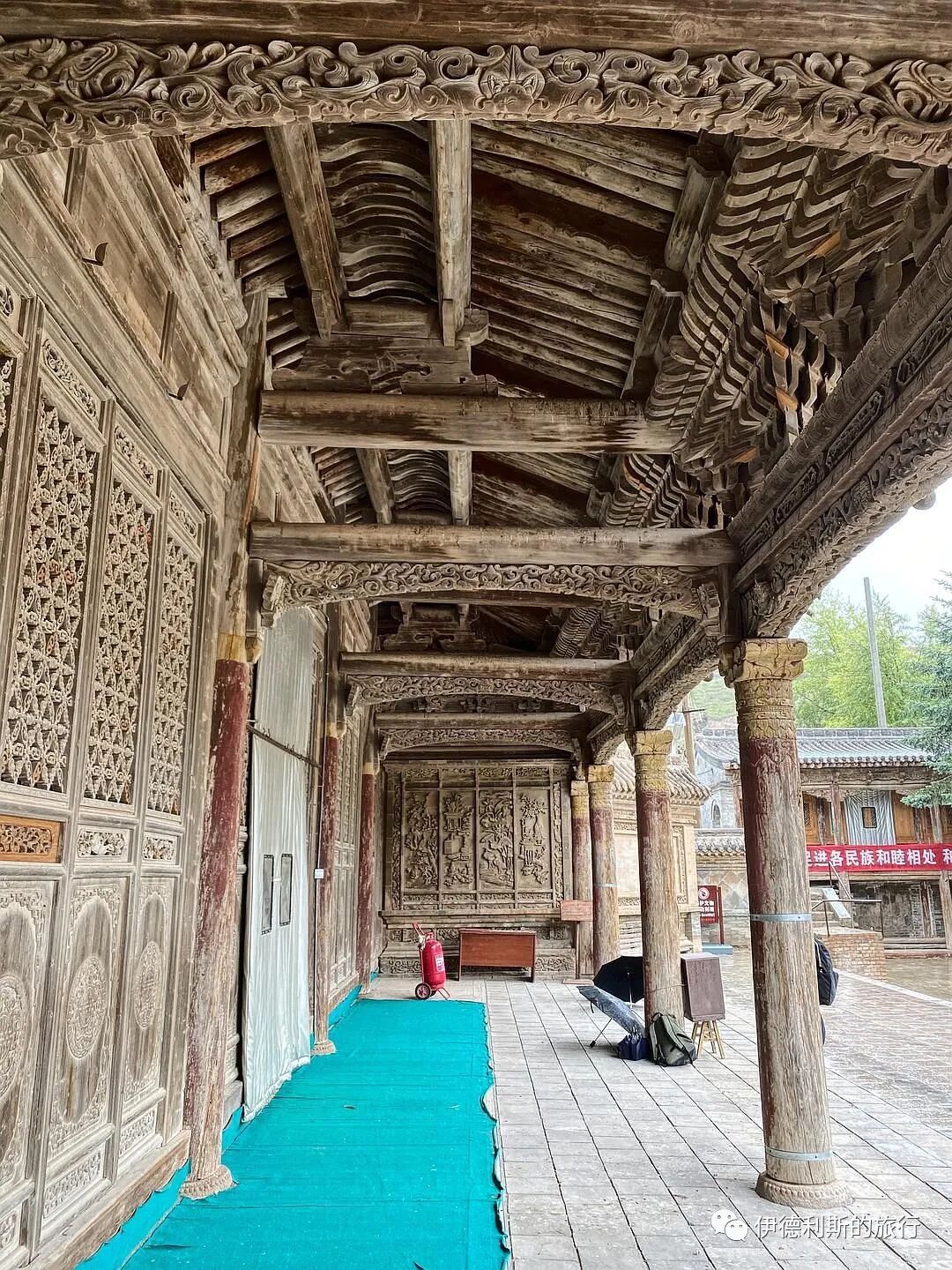
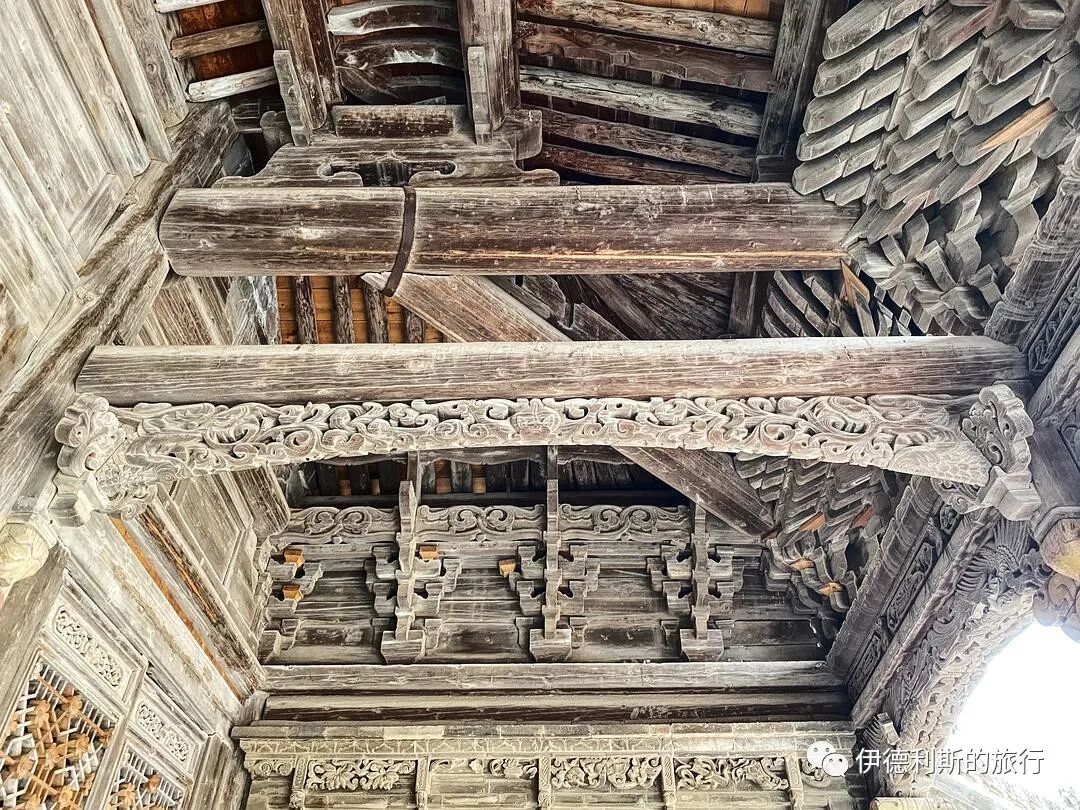
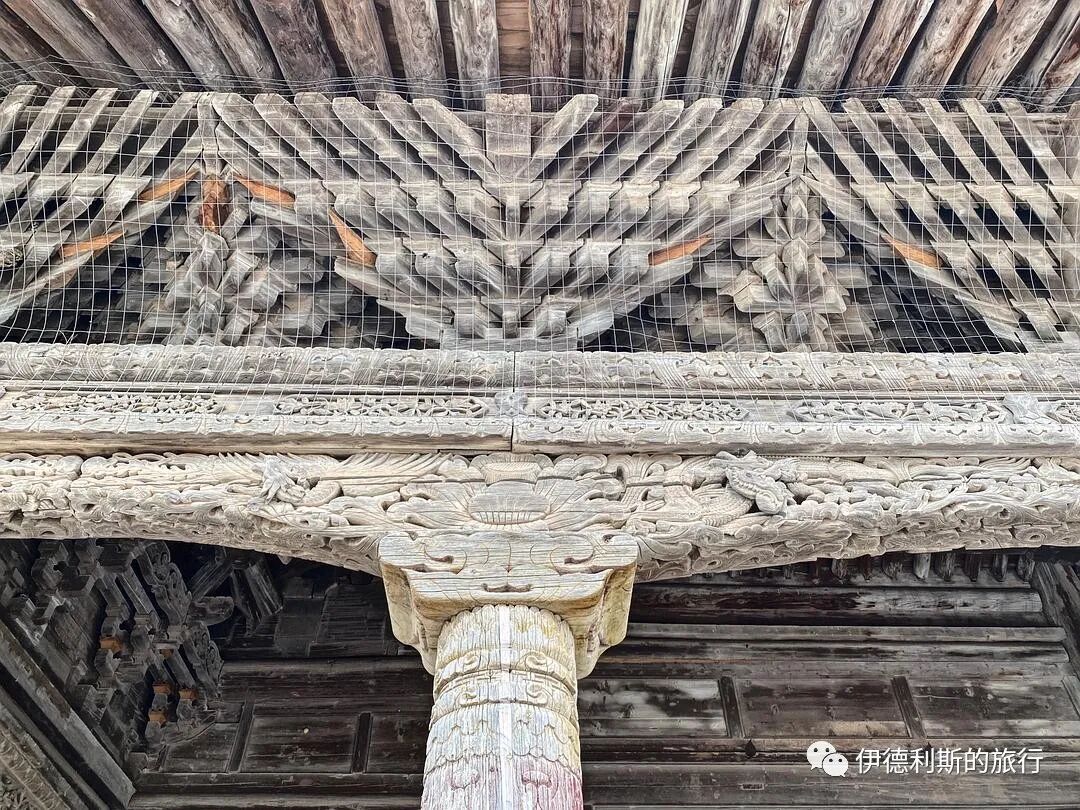
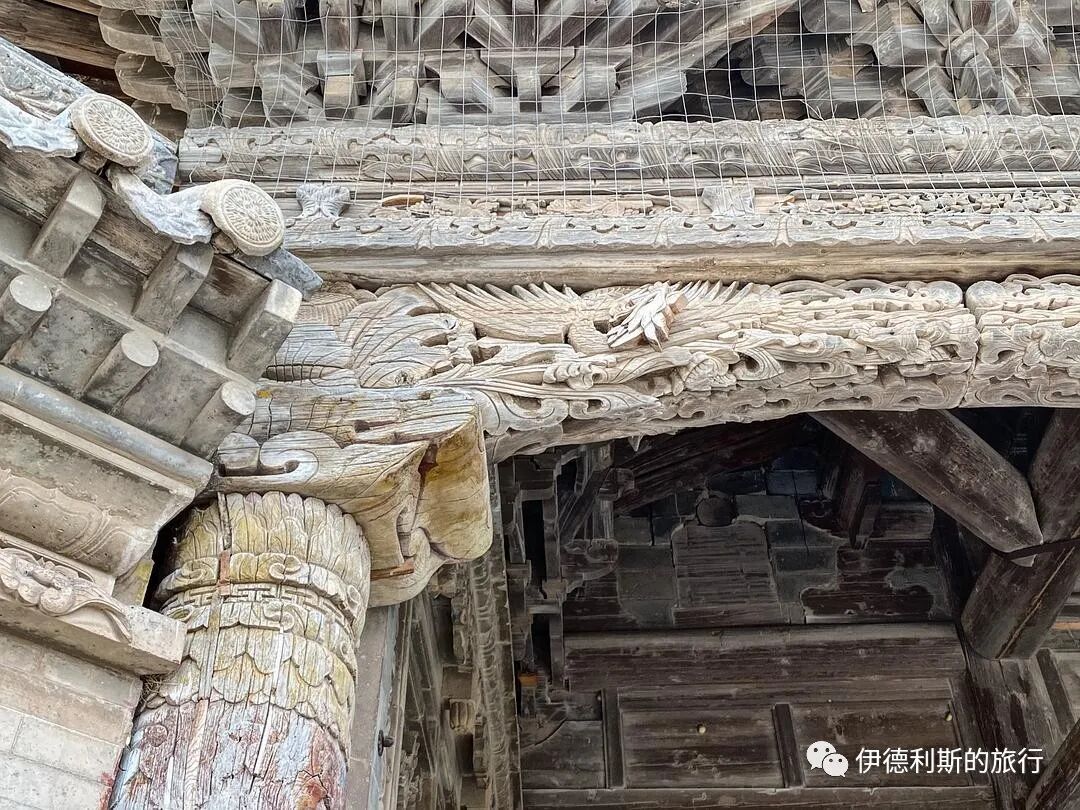
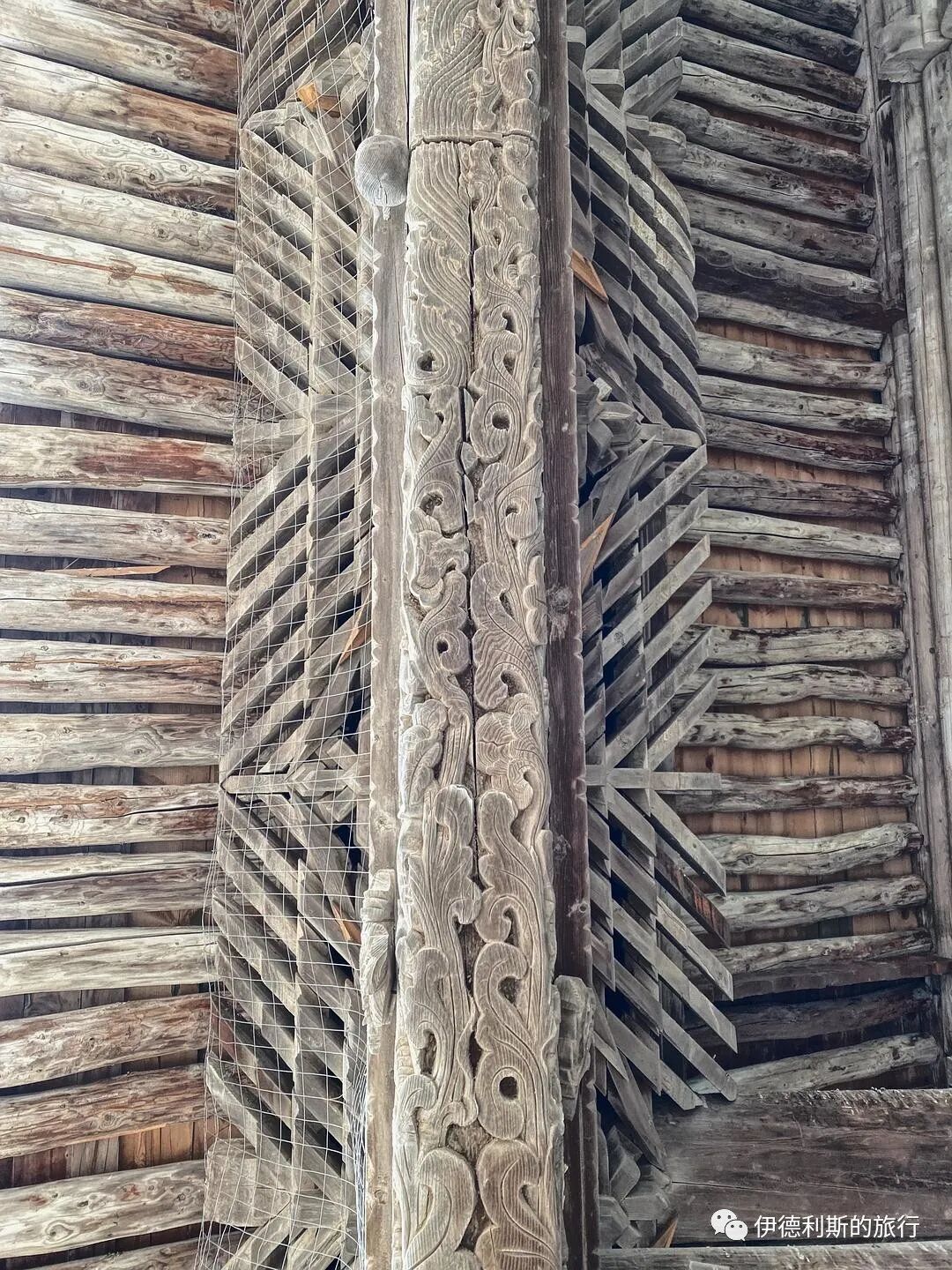
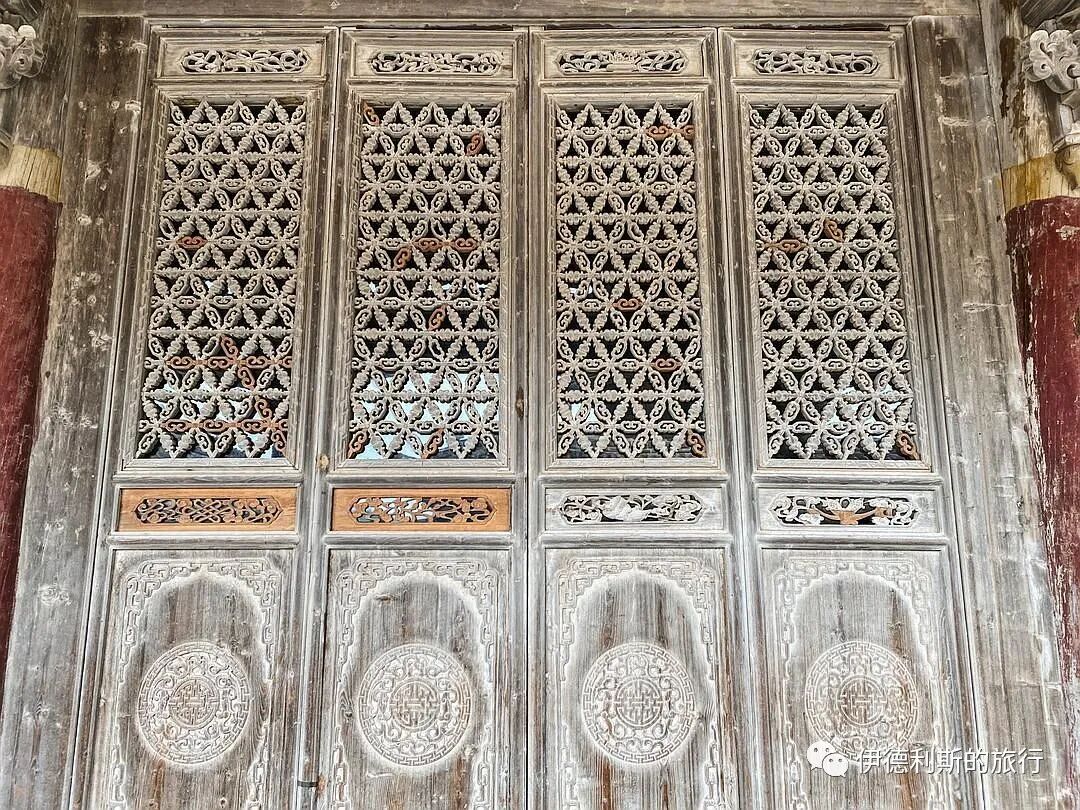
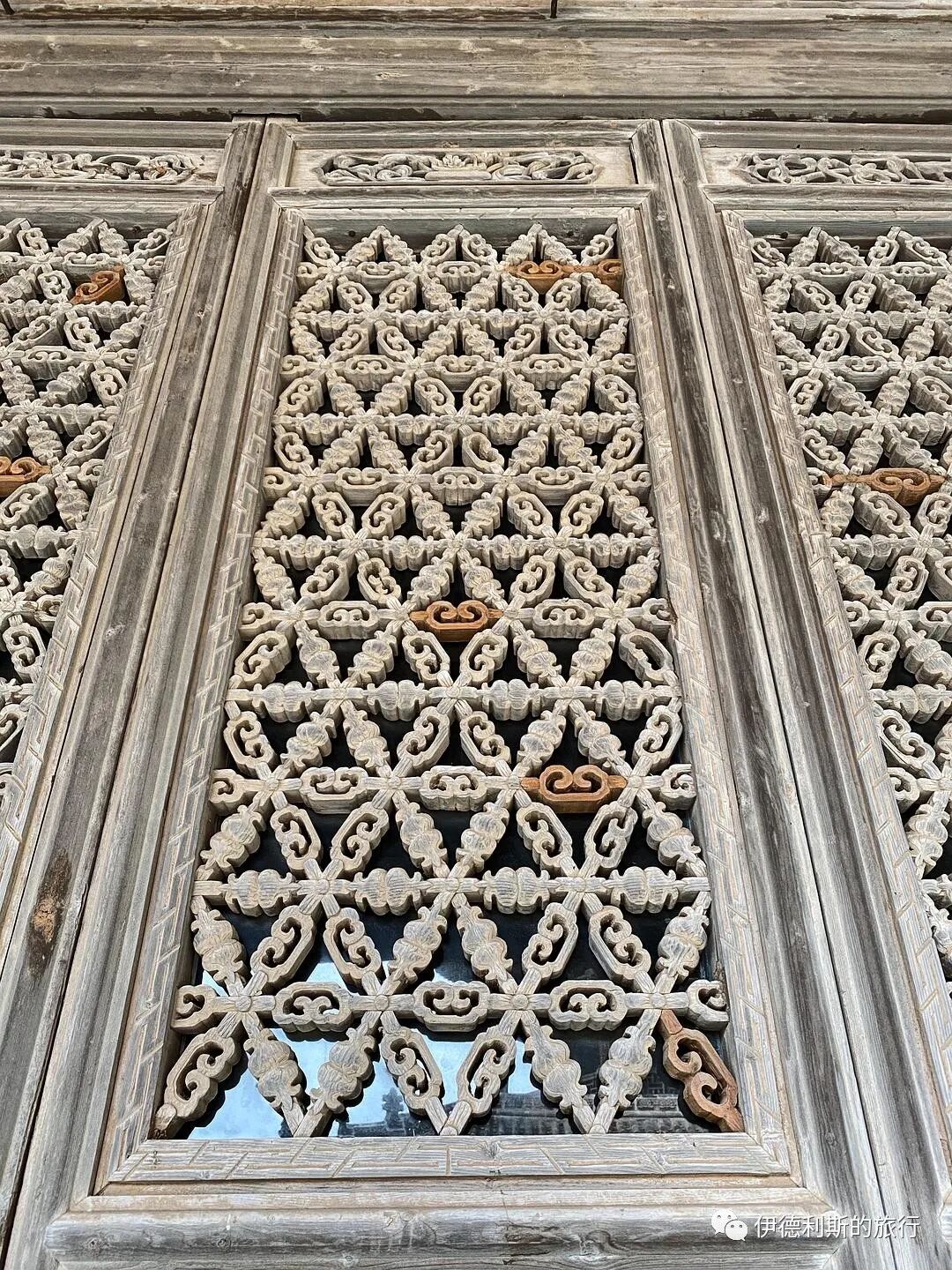
The rear hall is entirely made of wood carvings, with the upper part in the style of a celestial pavilion, featuring carved railings, partition doors, and dougong brackets. The caisson ceiling at the top resembles a giant open umbrella, commonly known as the 'heavenly canopy umbrella'.
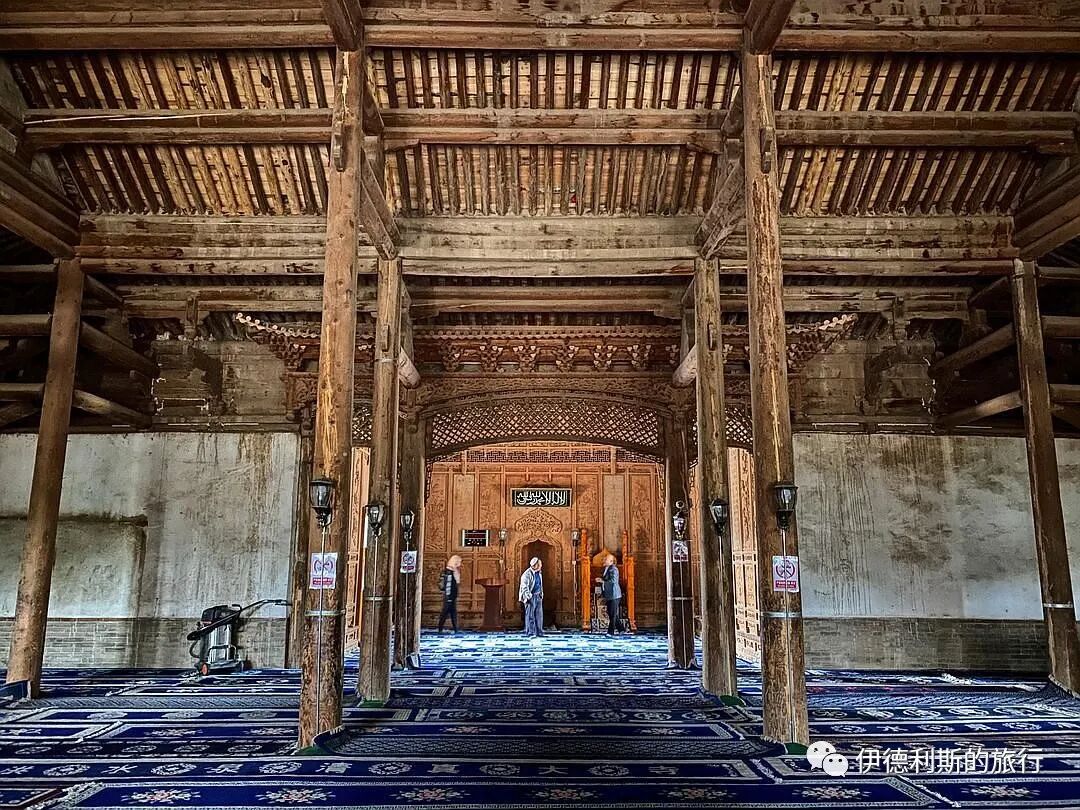
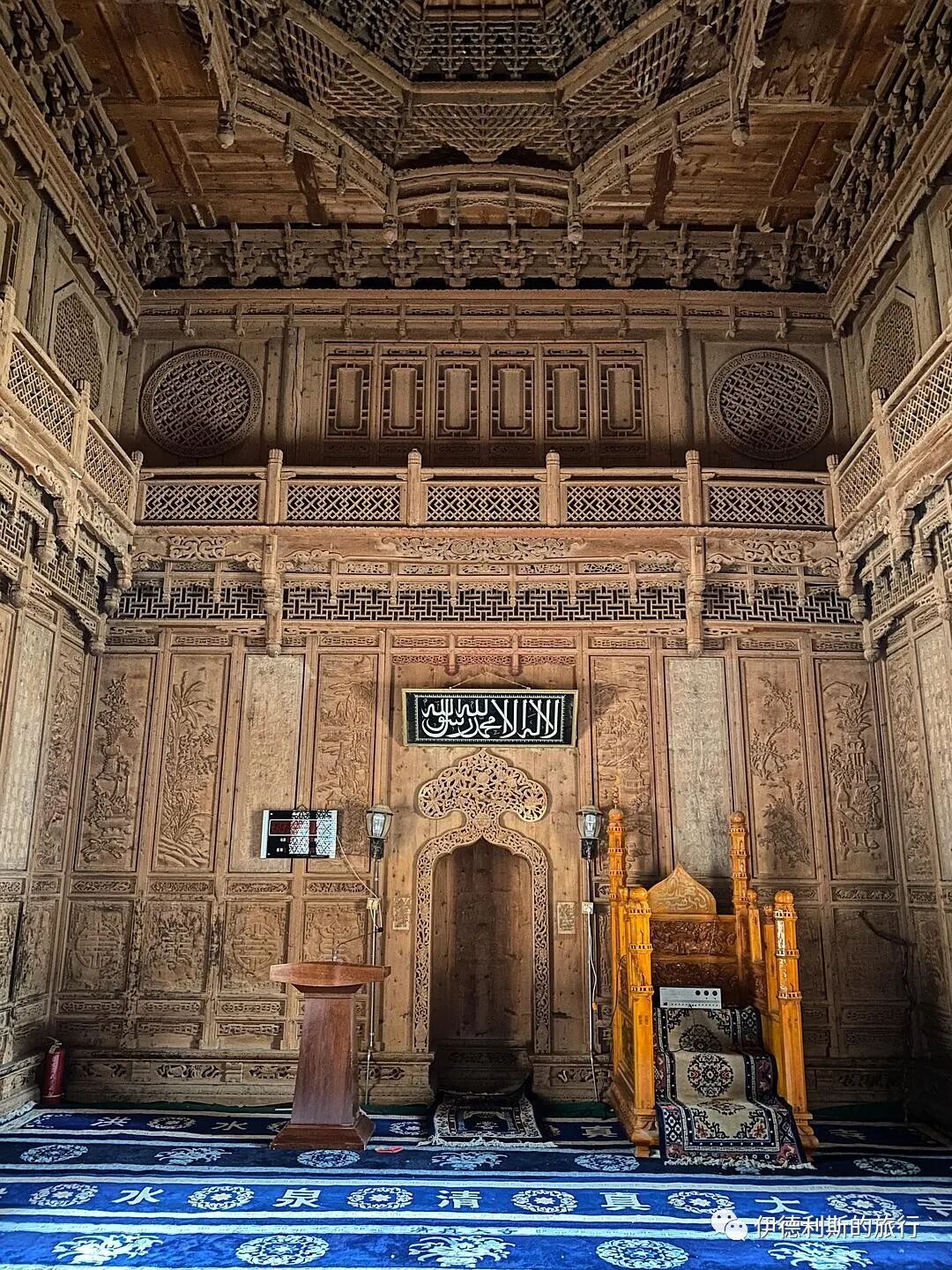
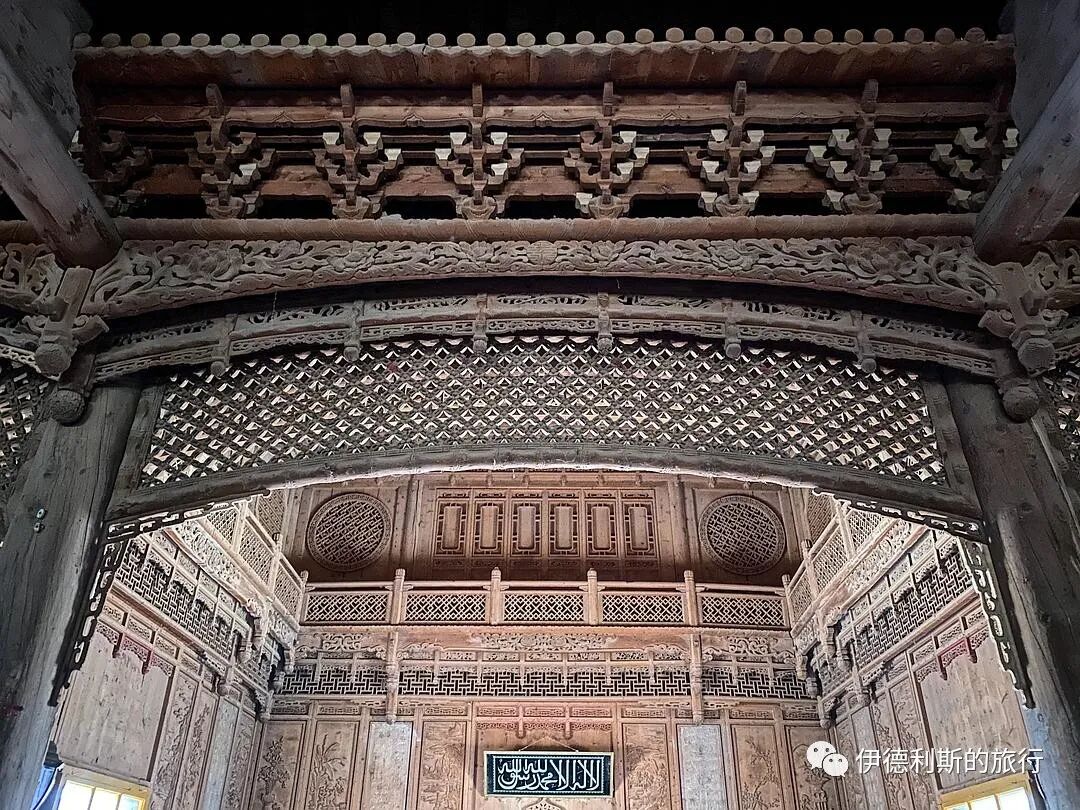
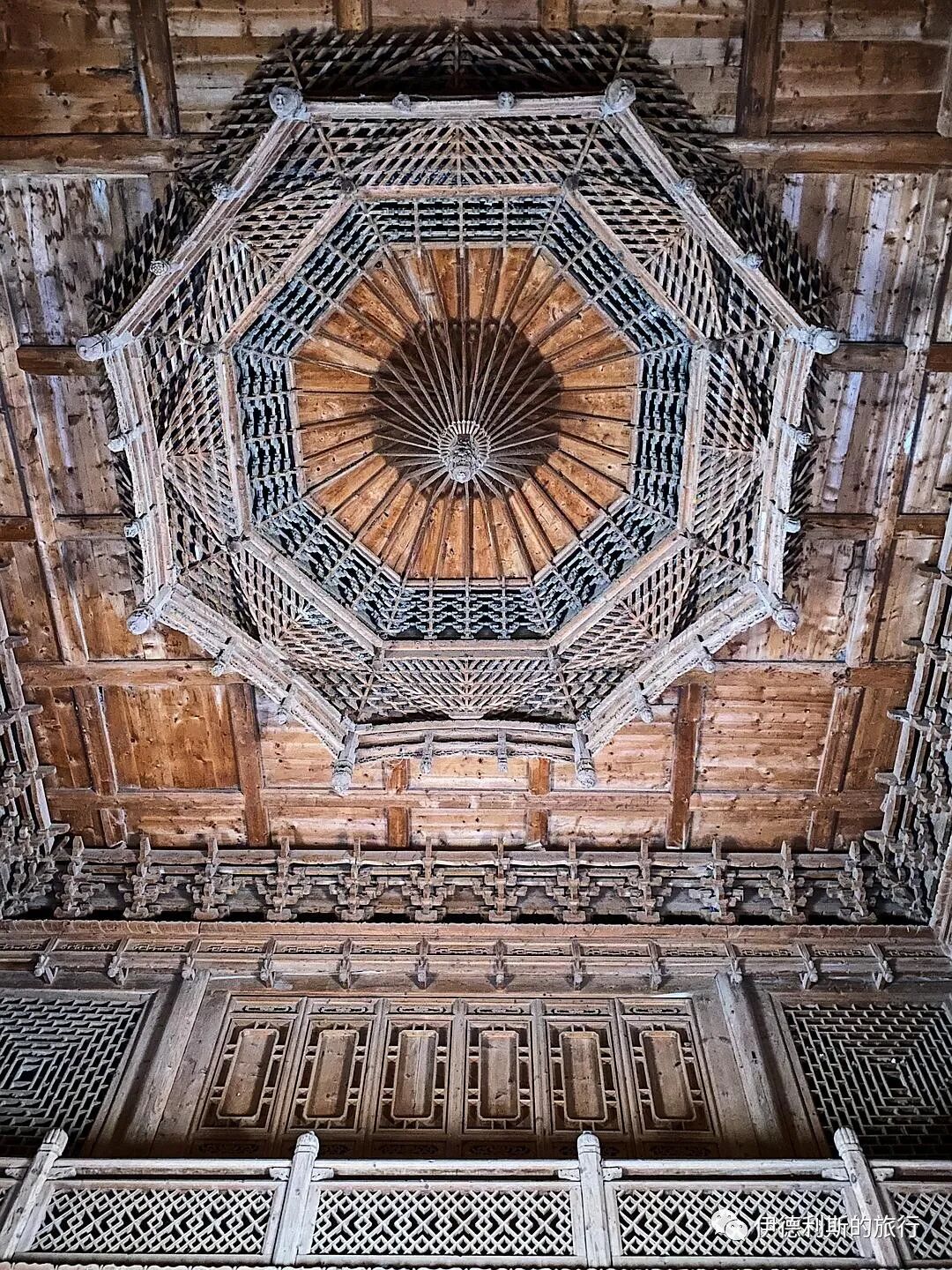
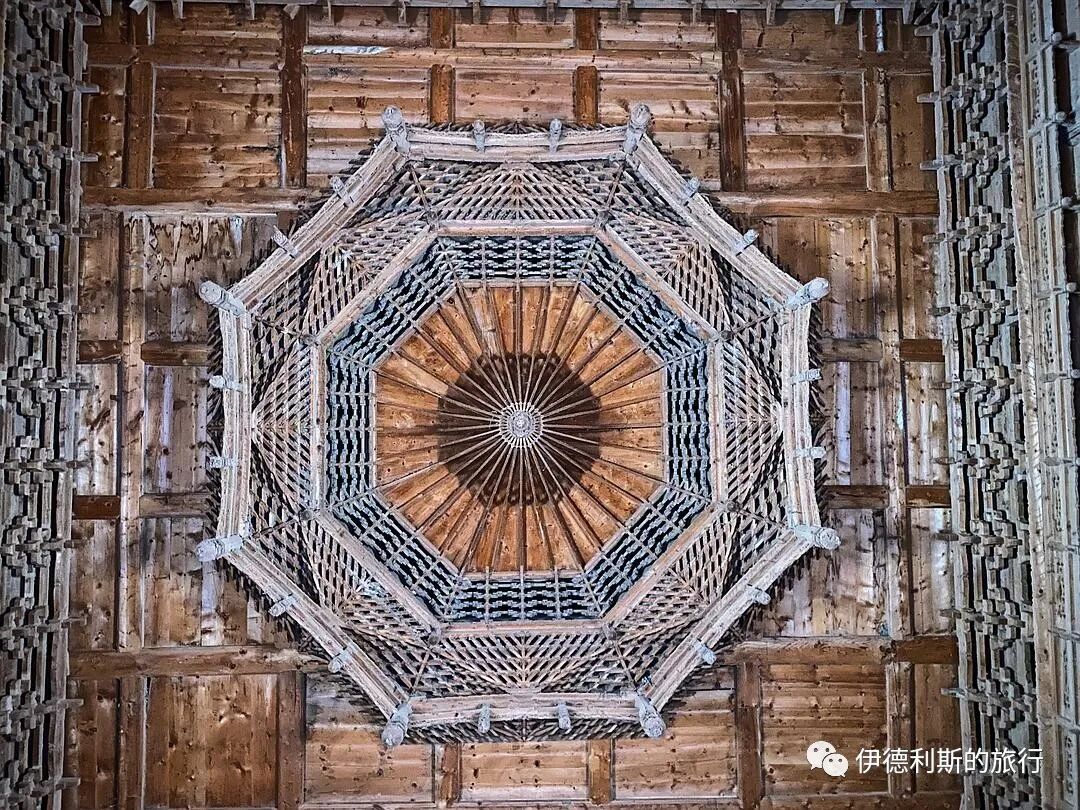
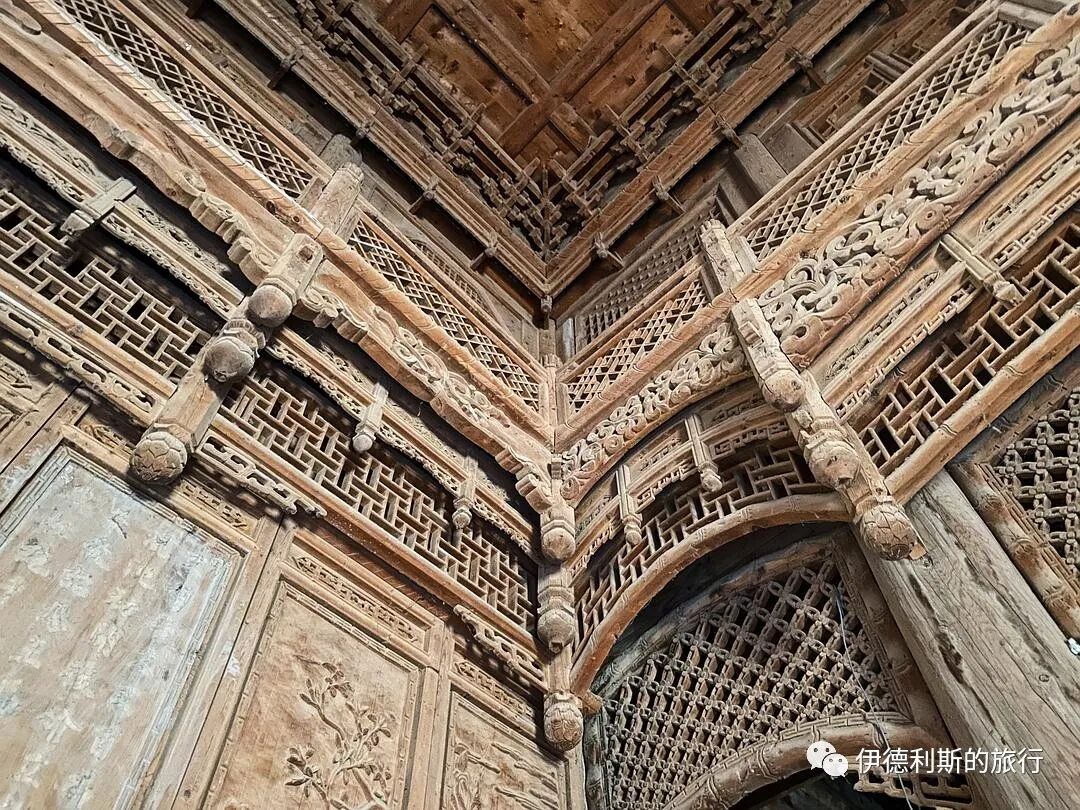
The lower part uses a partition screen design, carved with various landscapes, plants, and pavilions, but unfortunately, the Arabic wood carvings were destroyed during the Cultural Revolution. The door apron panels are entirely carved with the character 'Shou' (longevity) in different calligraphic styles.
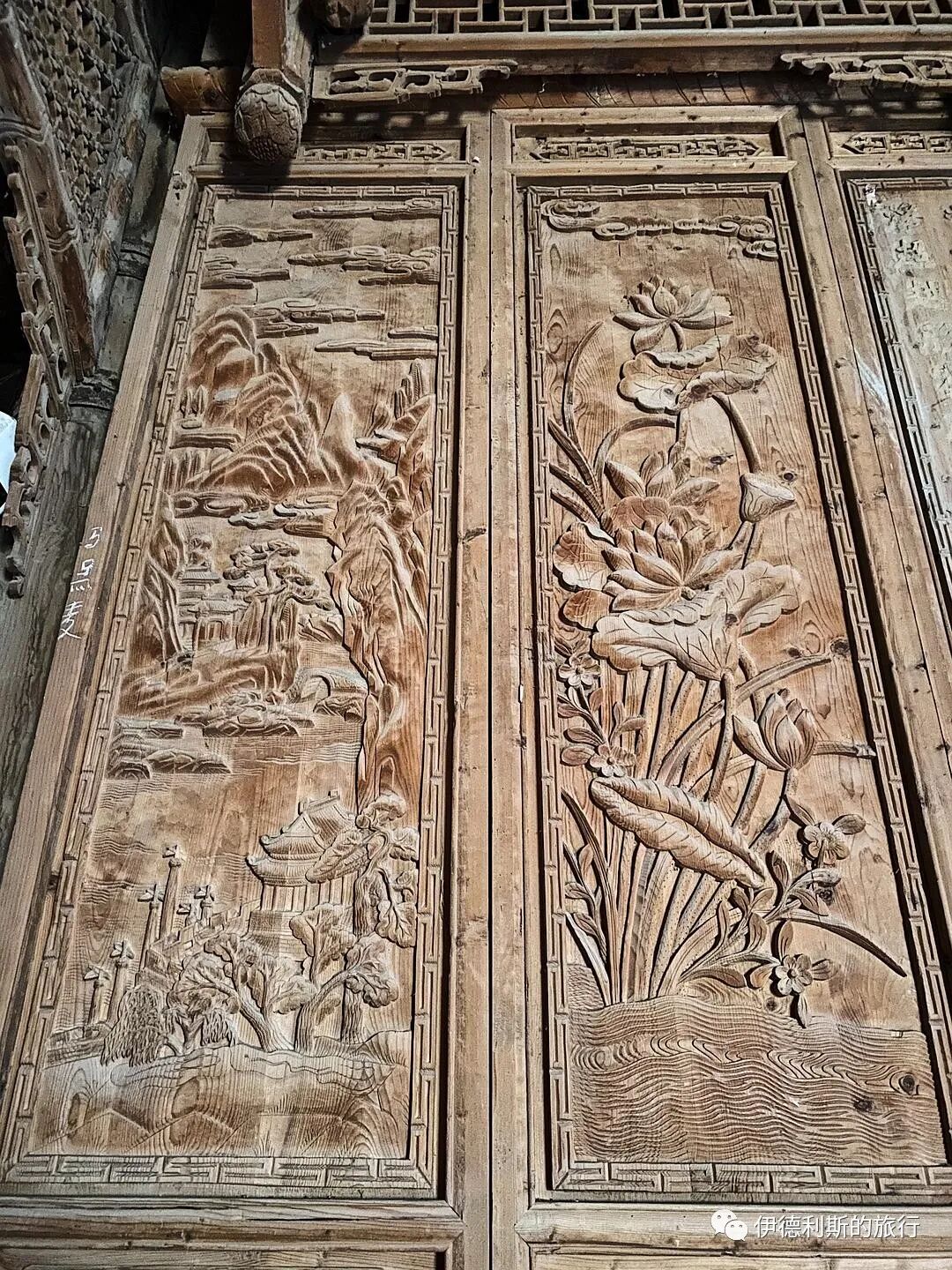
The mihrab niche is shaped like a vase. The mouth of the vase is carved with flowers, the petals feature some patterns of the Buddhist 'Eight Treasures', and the outer edges are carved with floral patterns.
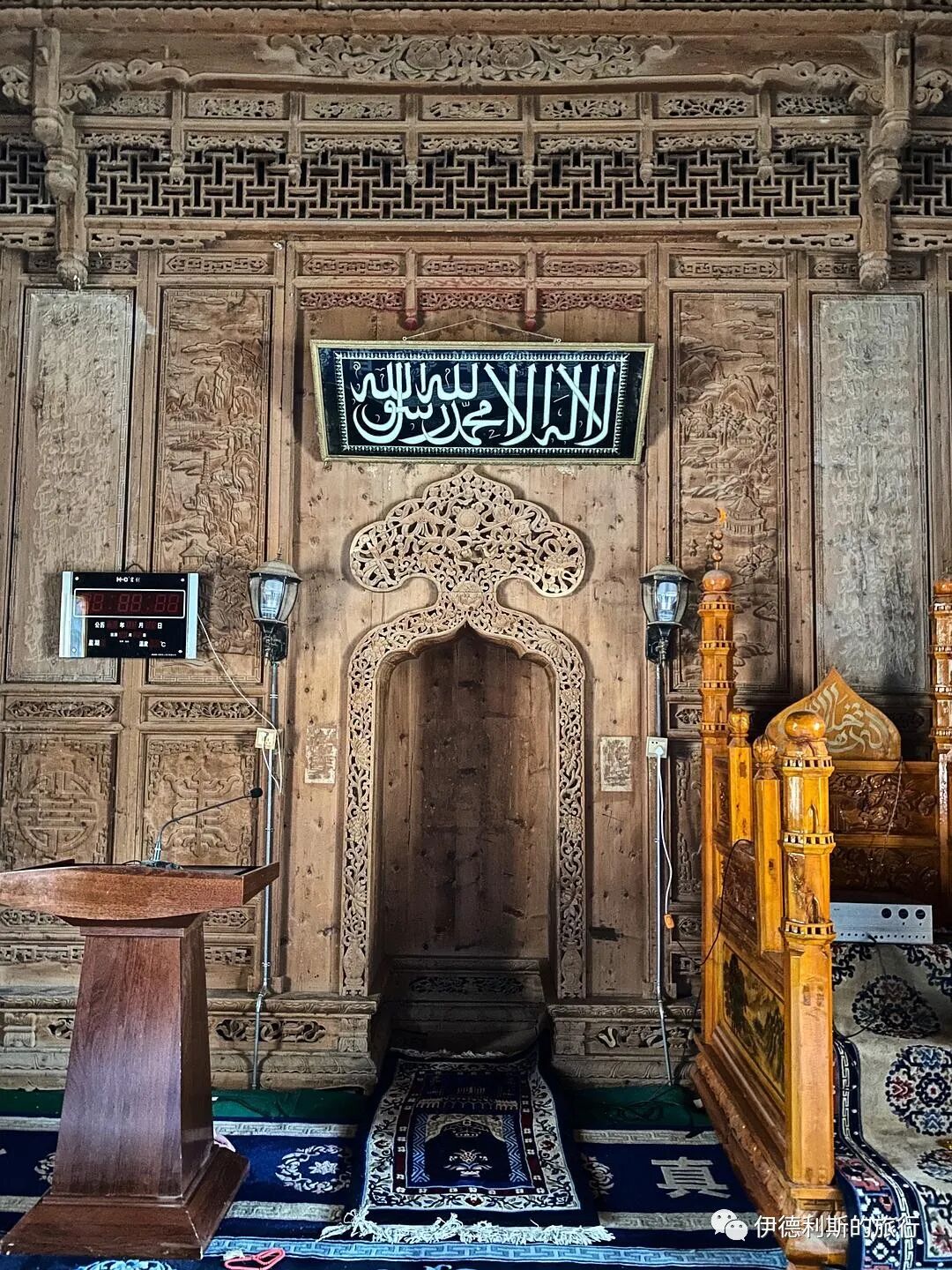
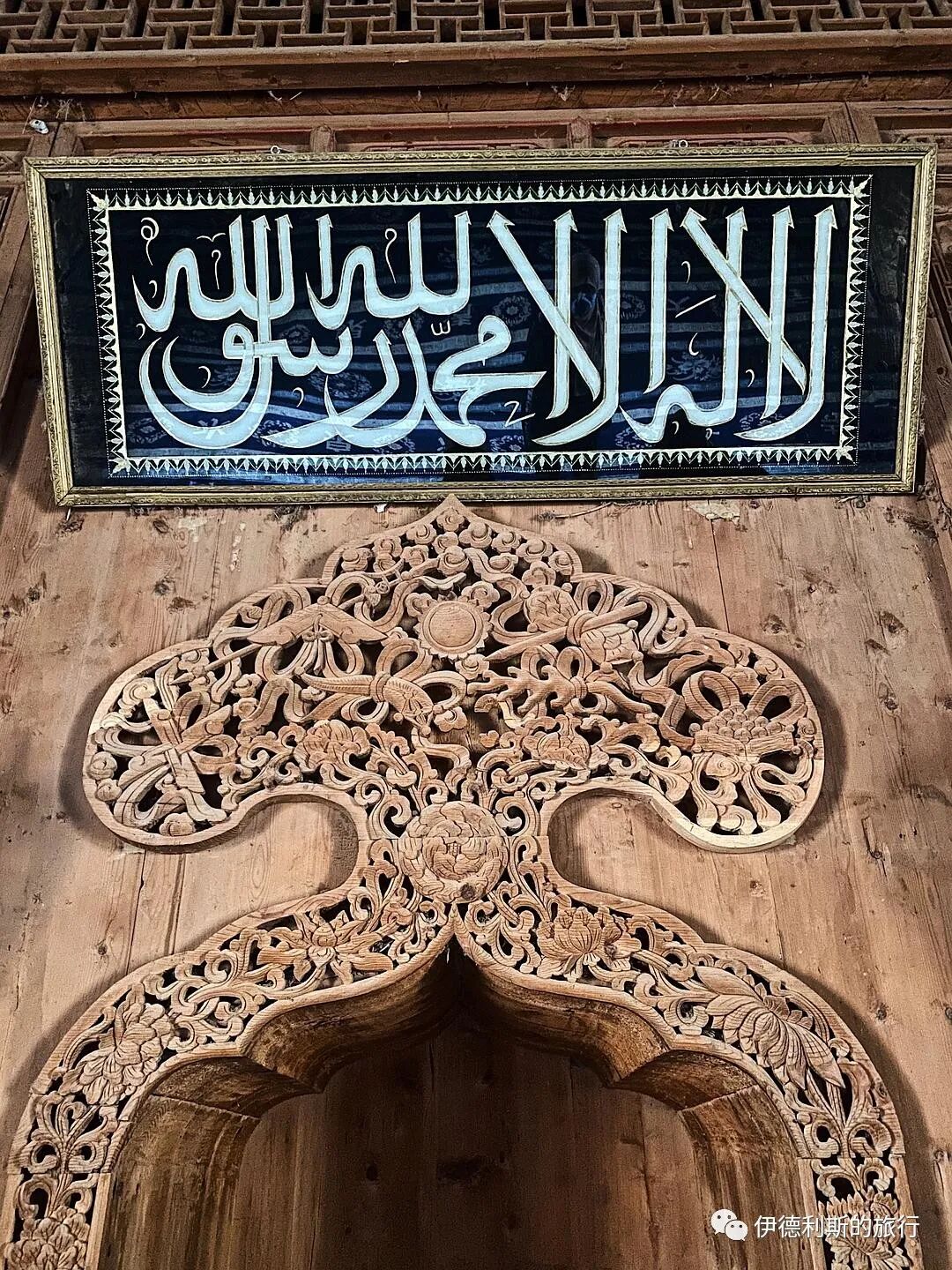
2. Qingshuihe East Mosque
Qingshuihe East Mosque is located in Shangzhuang Village, Qingshui Township, Xunhua County. It is the Haizi Mosque (the main mosque) of the Salar Bagong Qingshui Gong, originally built in 1425 and rebuilt many times throughout the generations.
First, let's admire the 17-meter-high minaret, with its double-eaved hexagonal spire featuring exquisite brick and wood carvings.
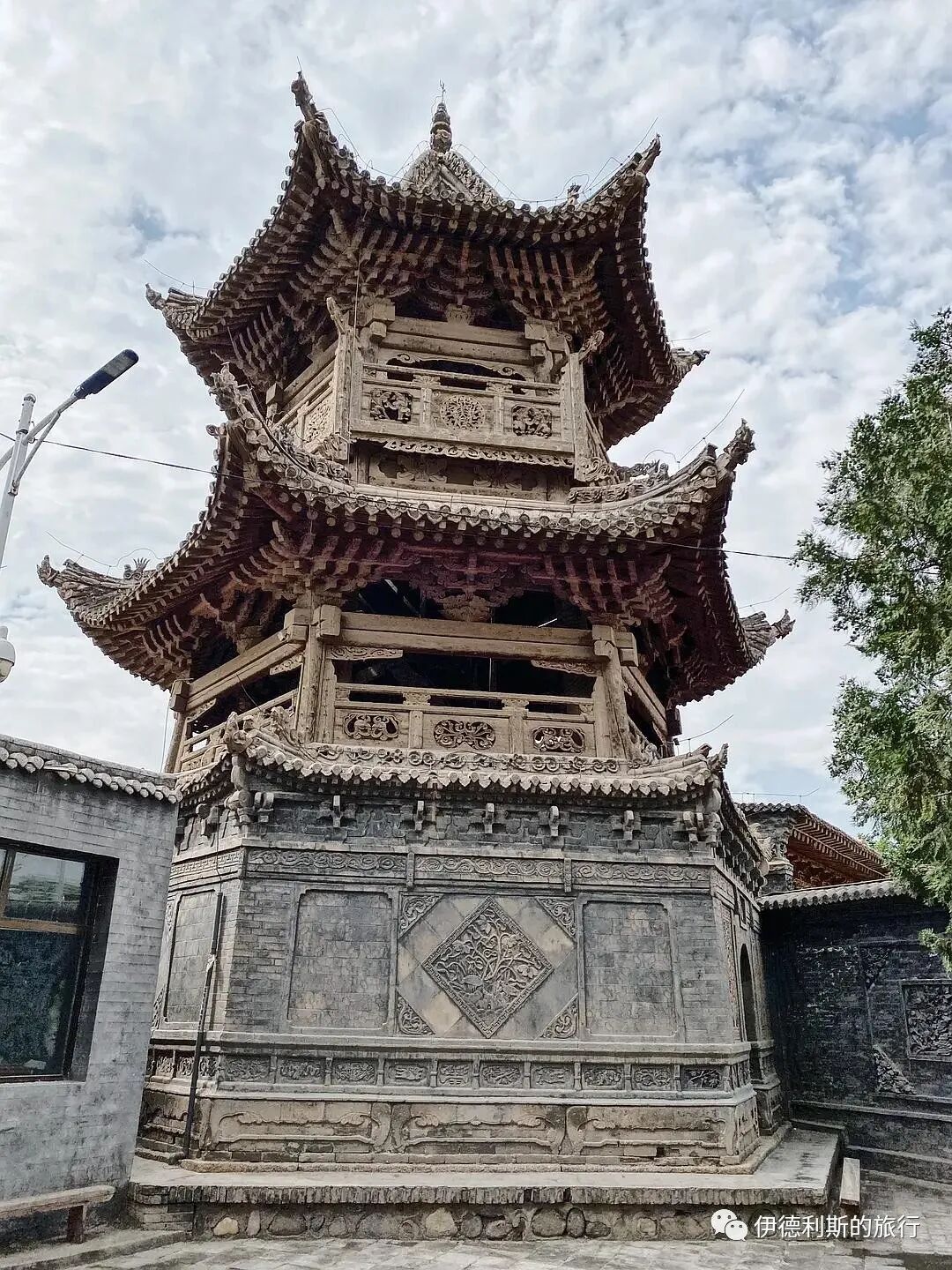
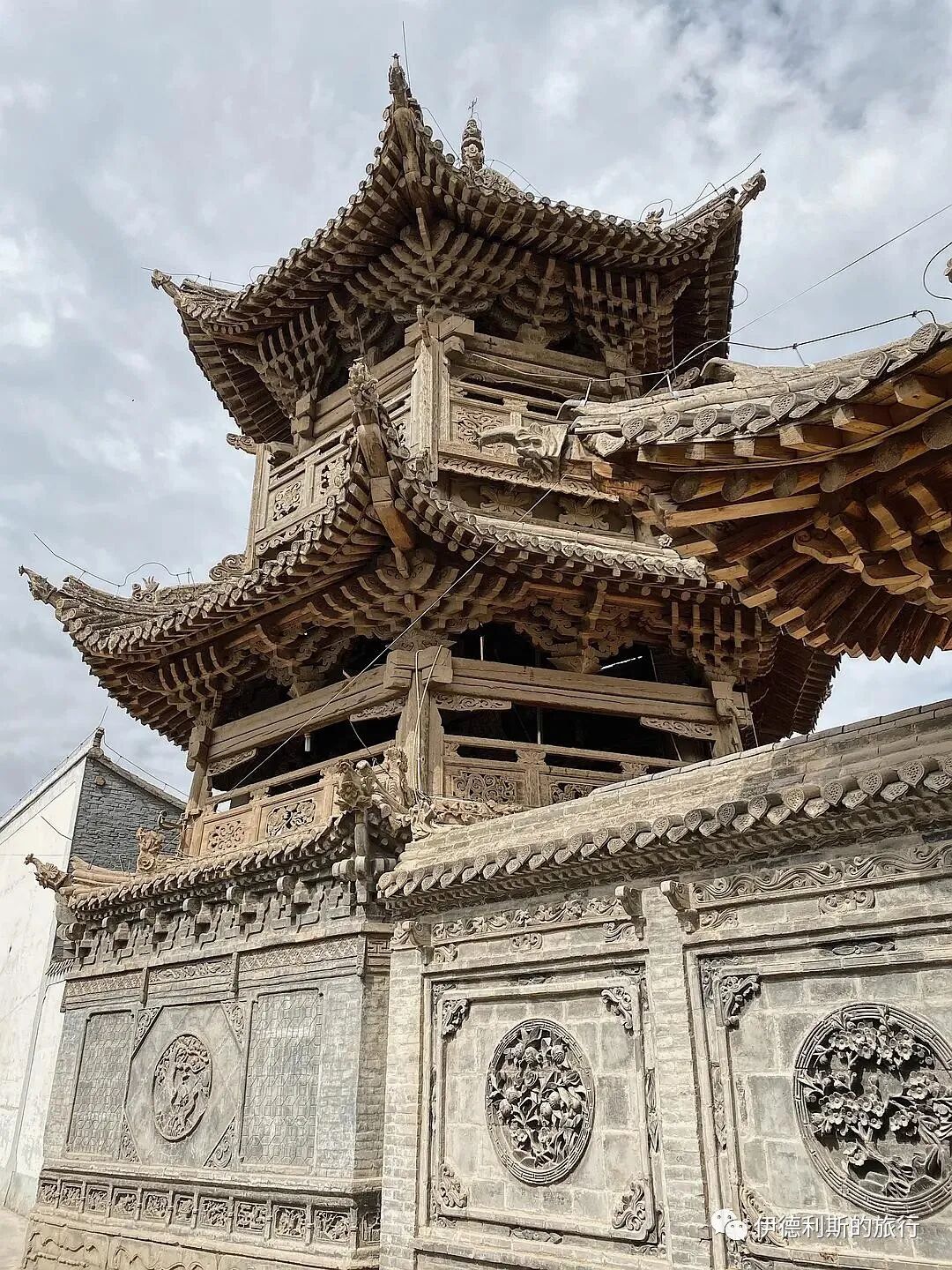
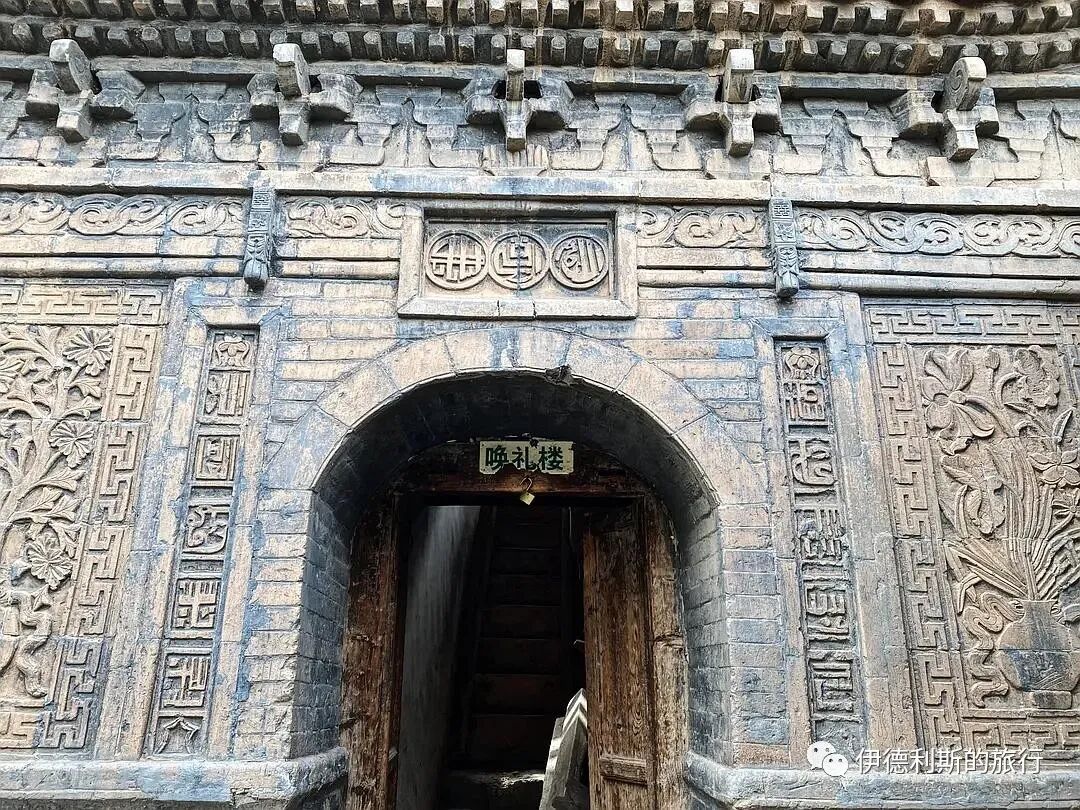
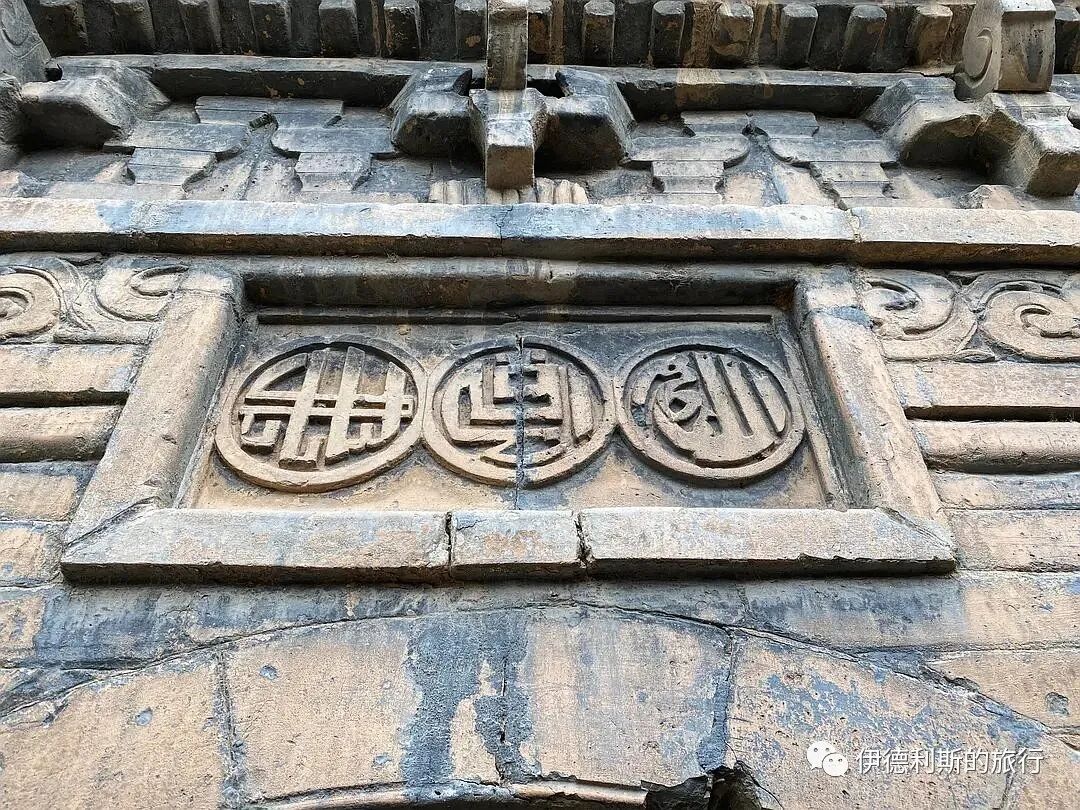
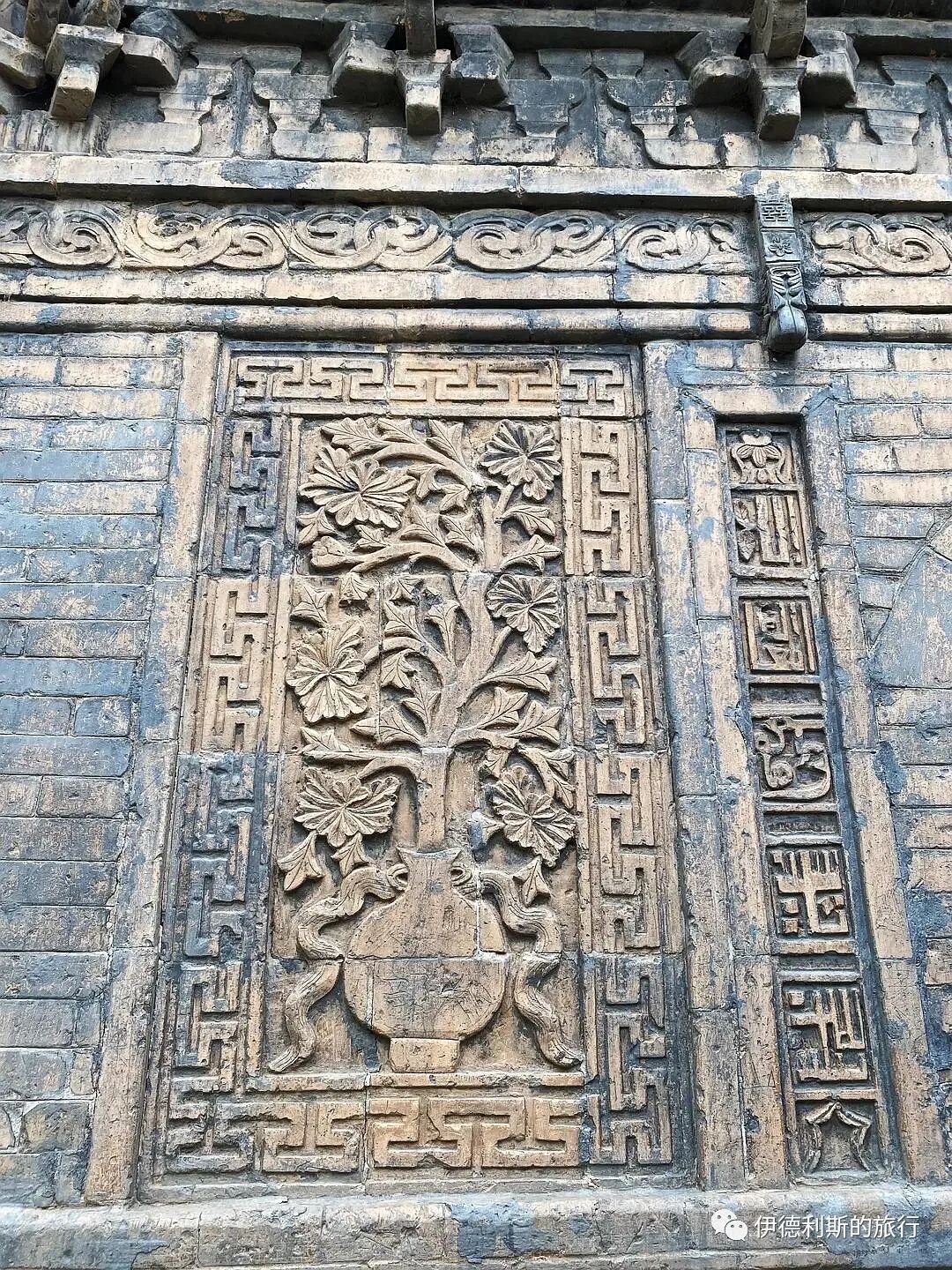
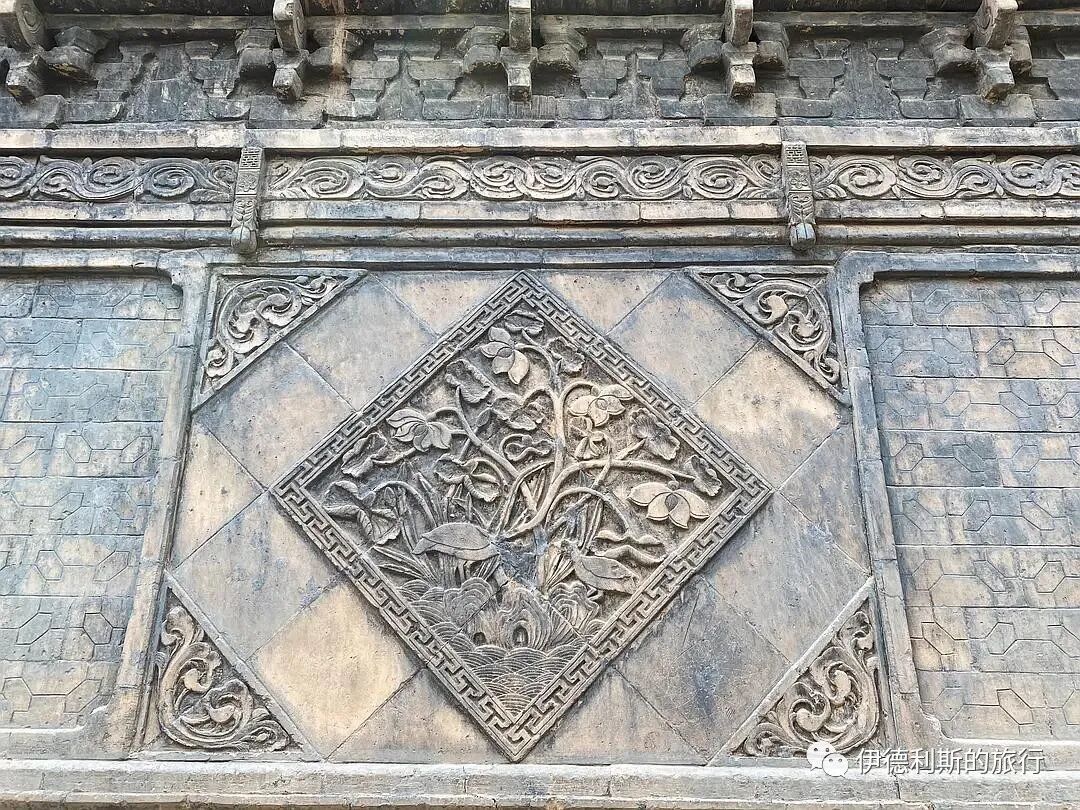
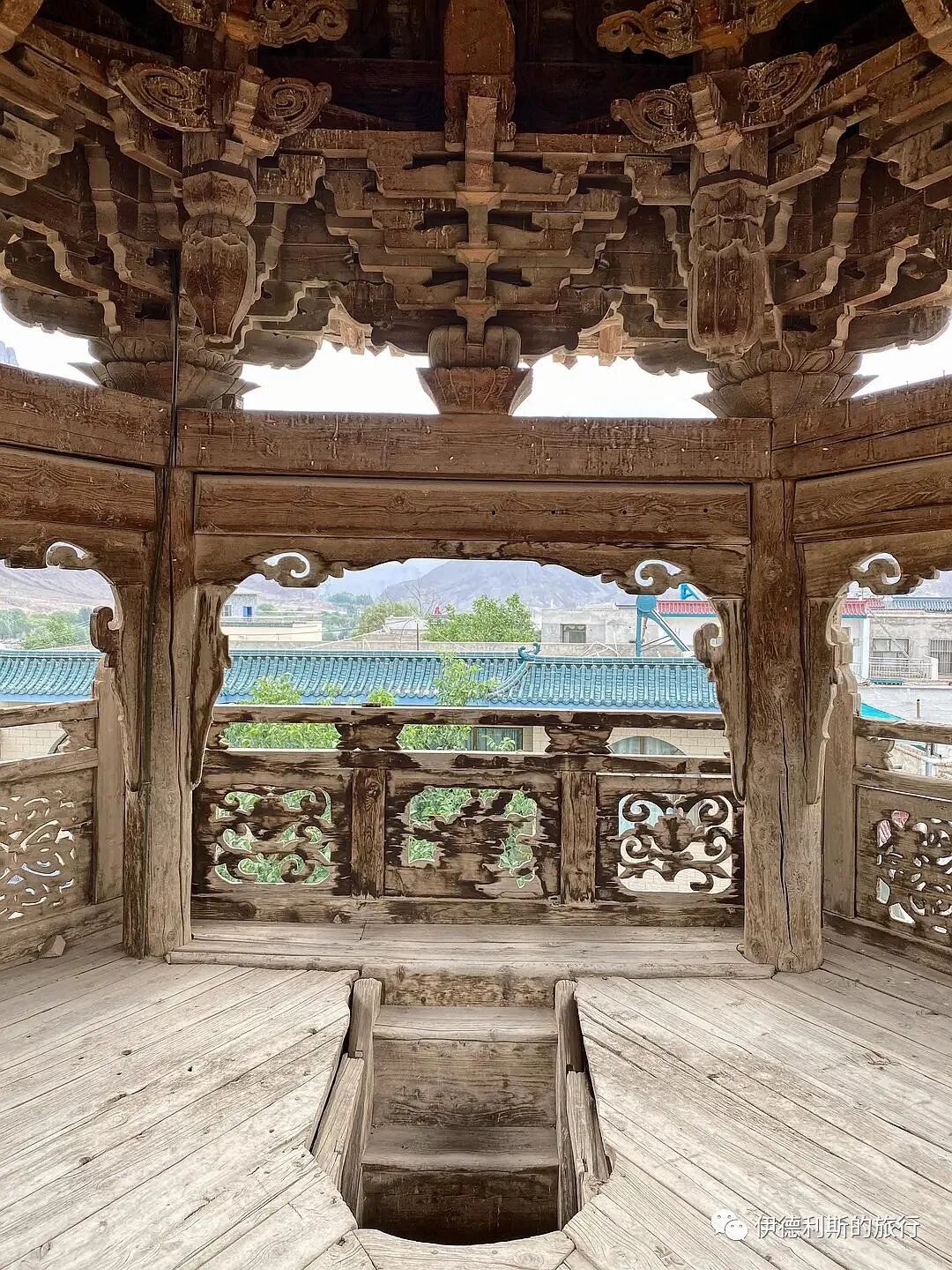
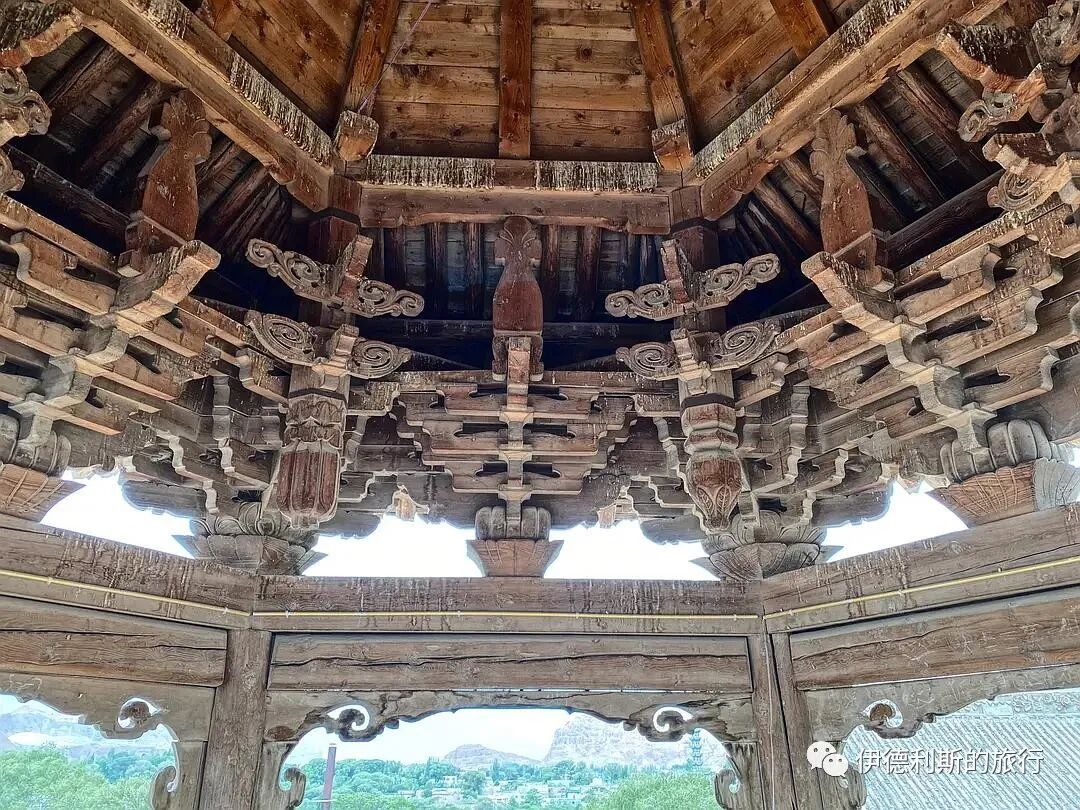
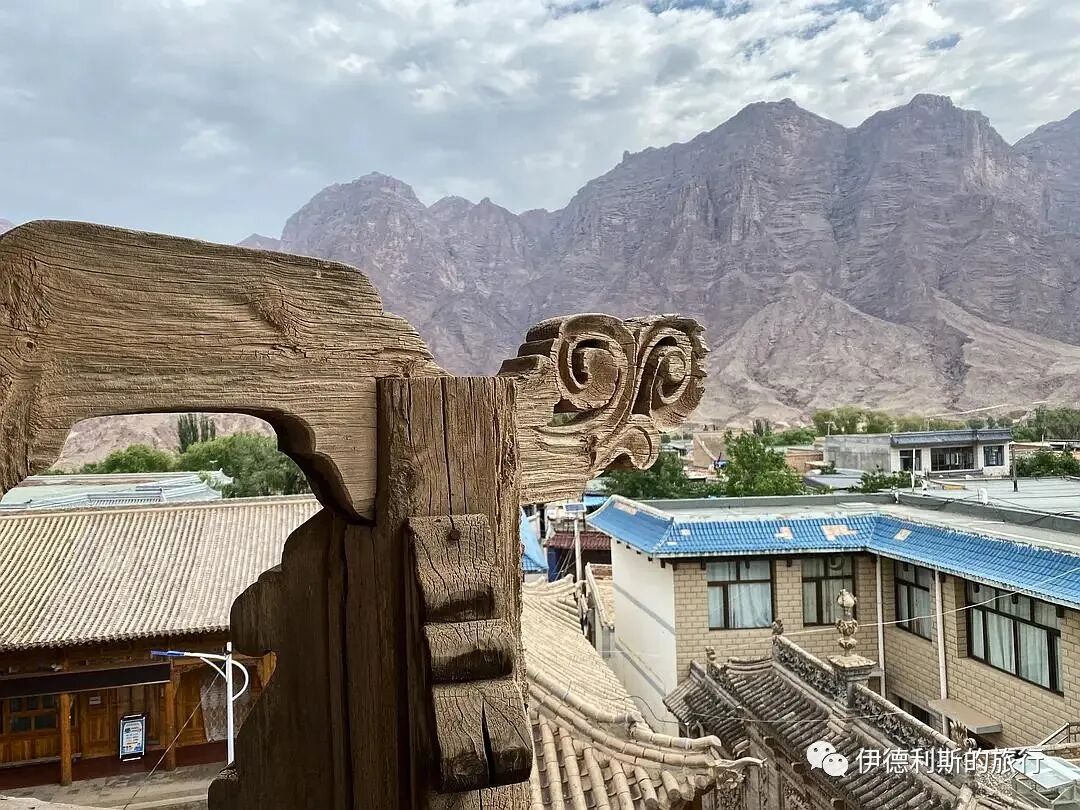
The main hall of the mosque features a ridge-top hip-and-gable roof with projecting dougong brackets, brick-carved splayed walls on both sides, and brick-carved corridor walls to the north and south of the veranda, with each window featuring a unique lattice design.
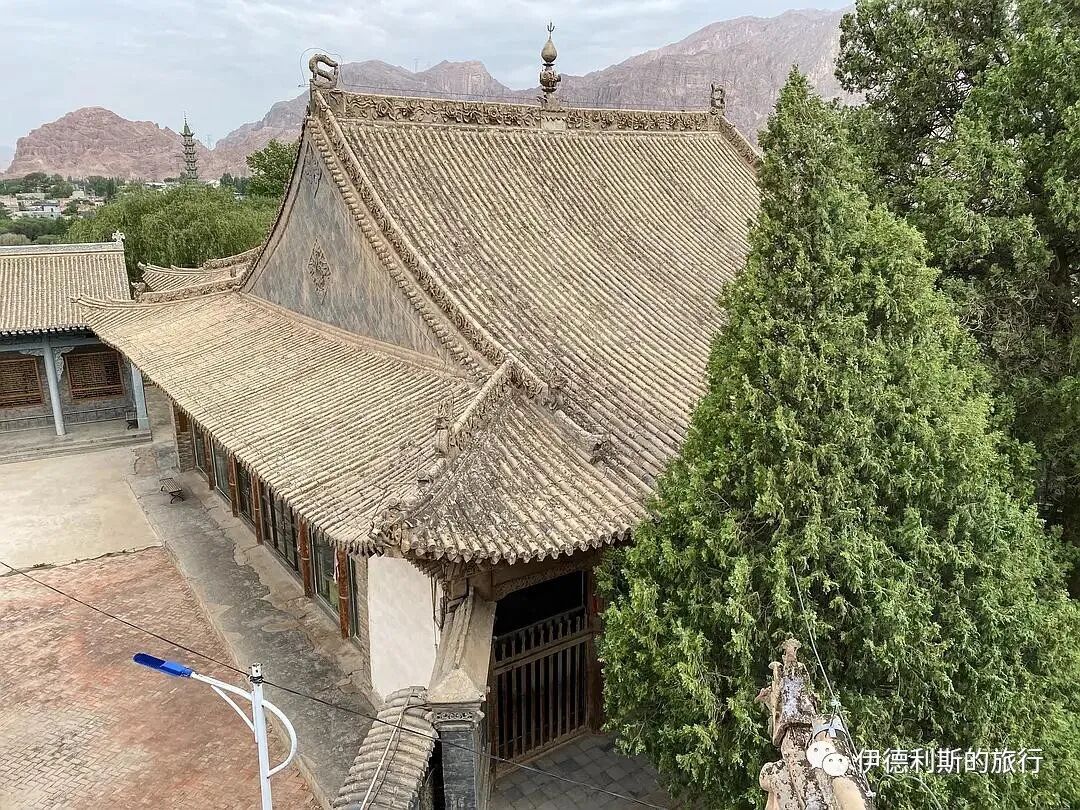
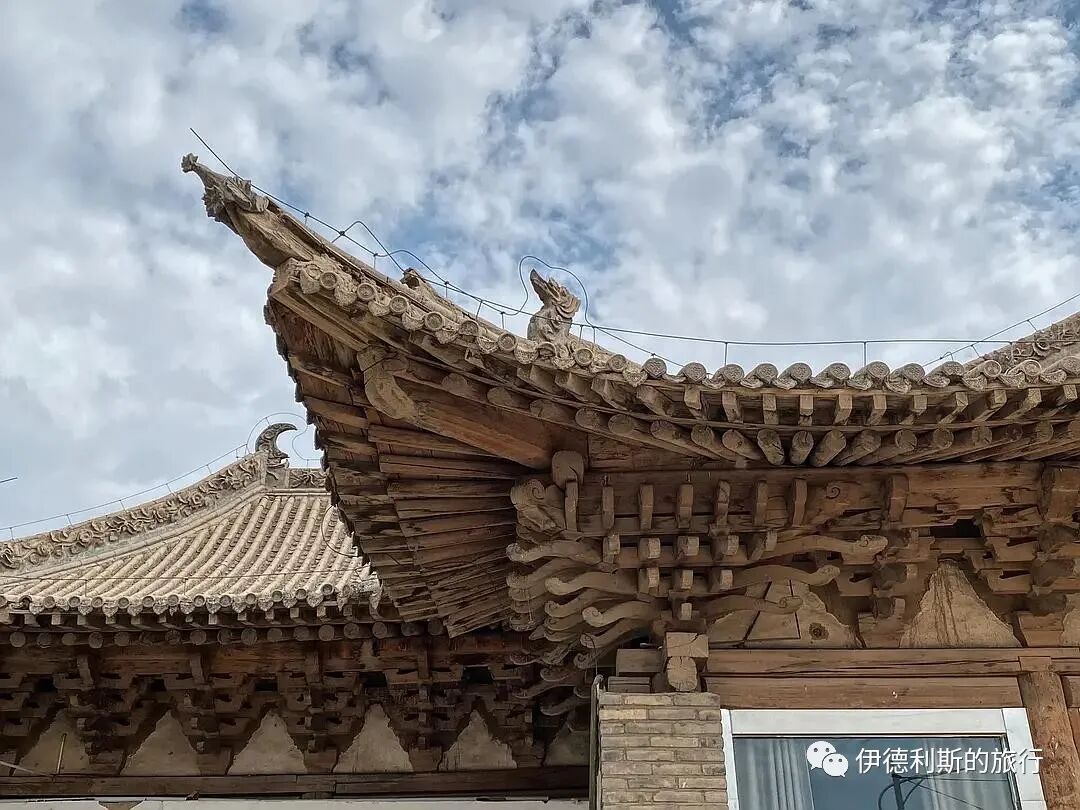
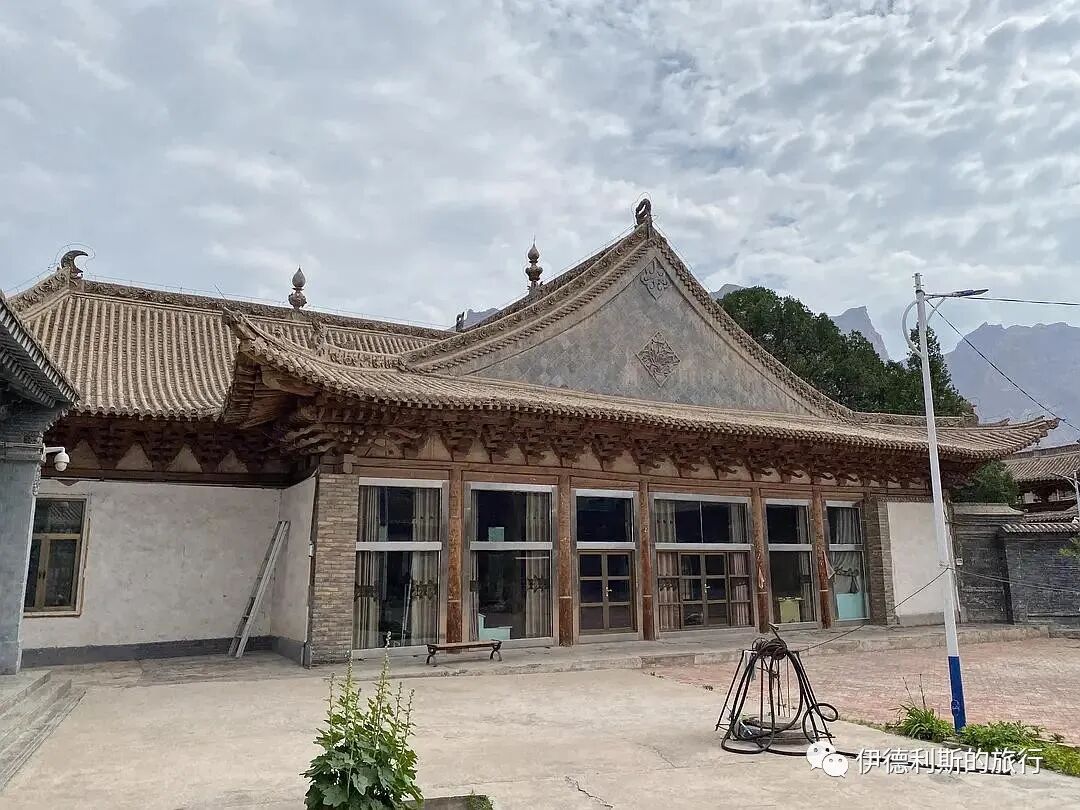
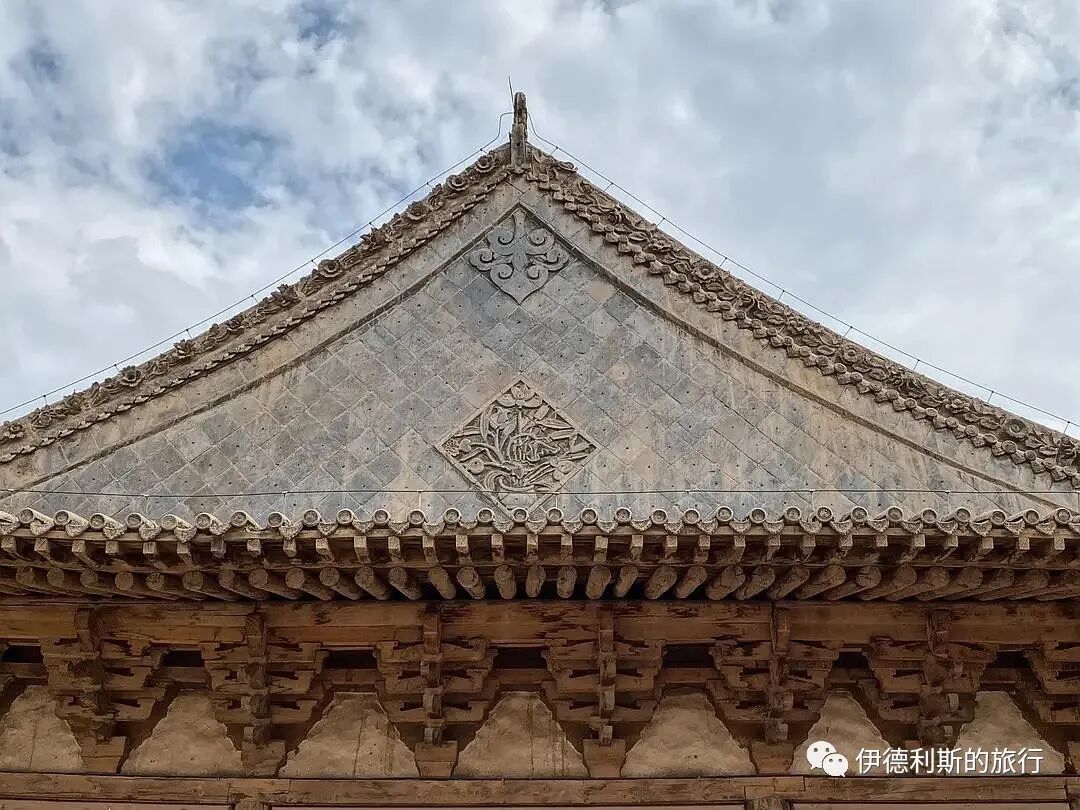
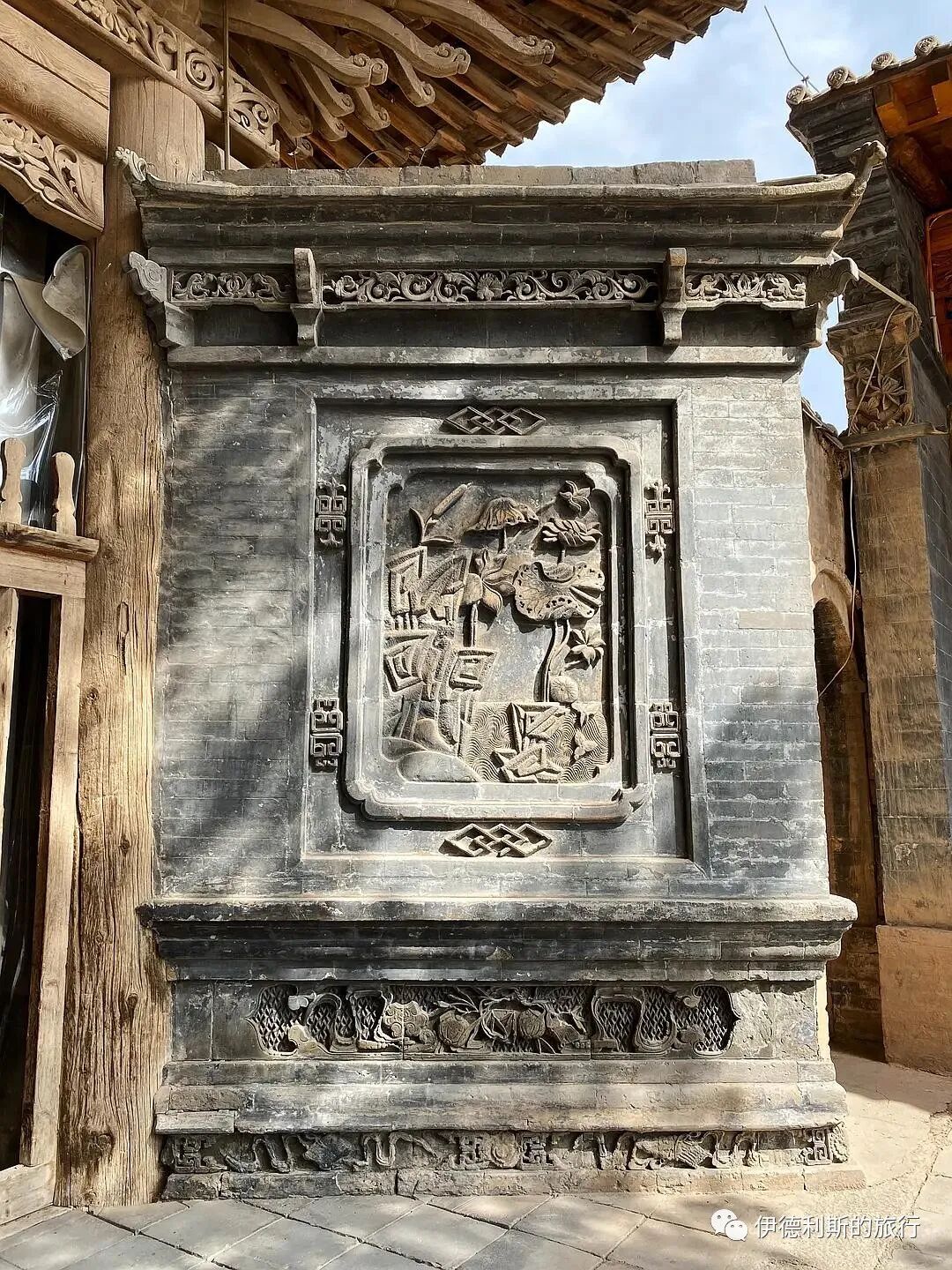
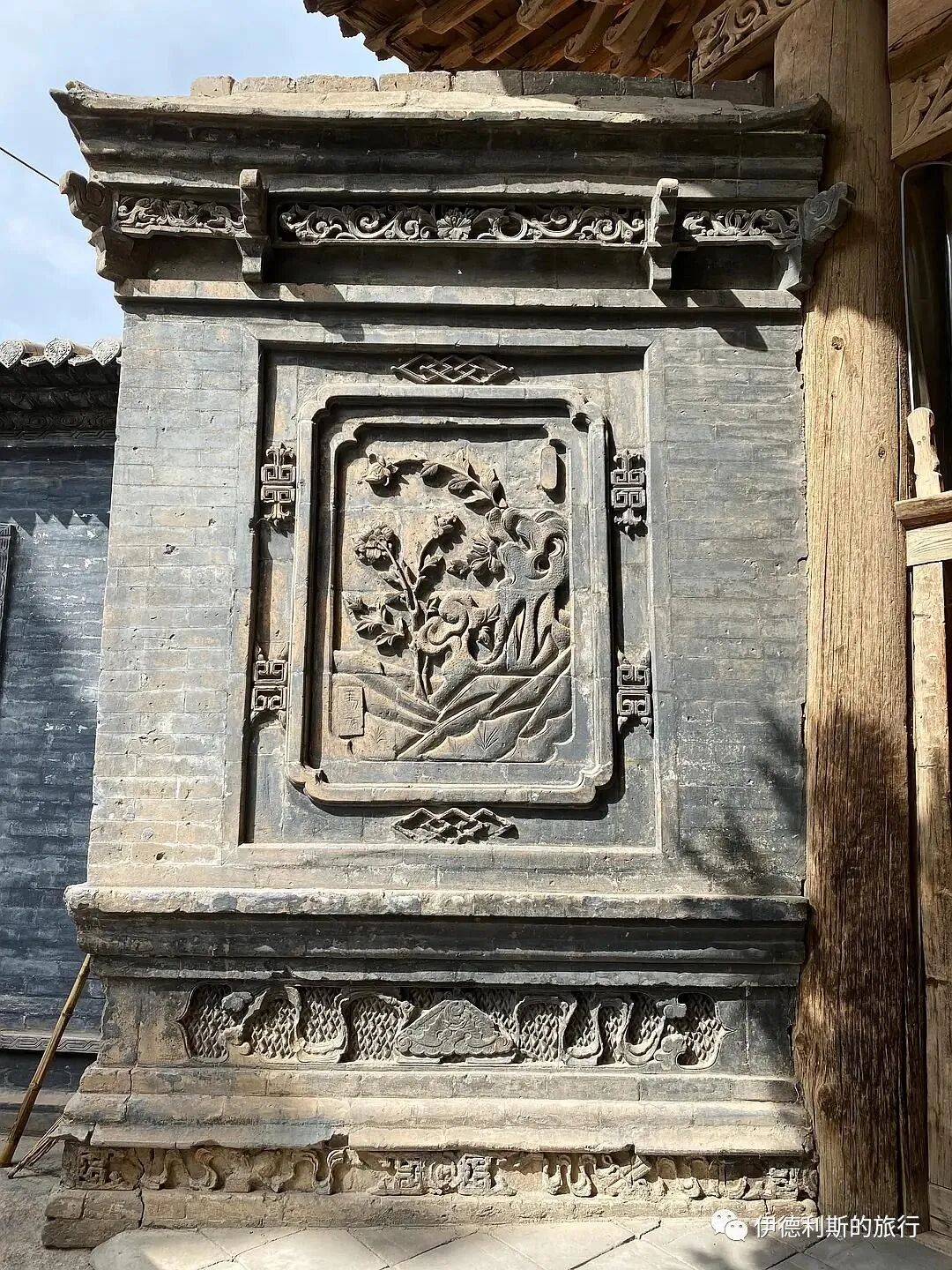
Inside the main prayer hall
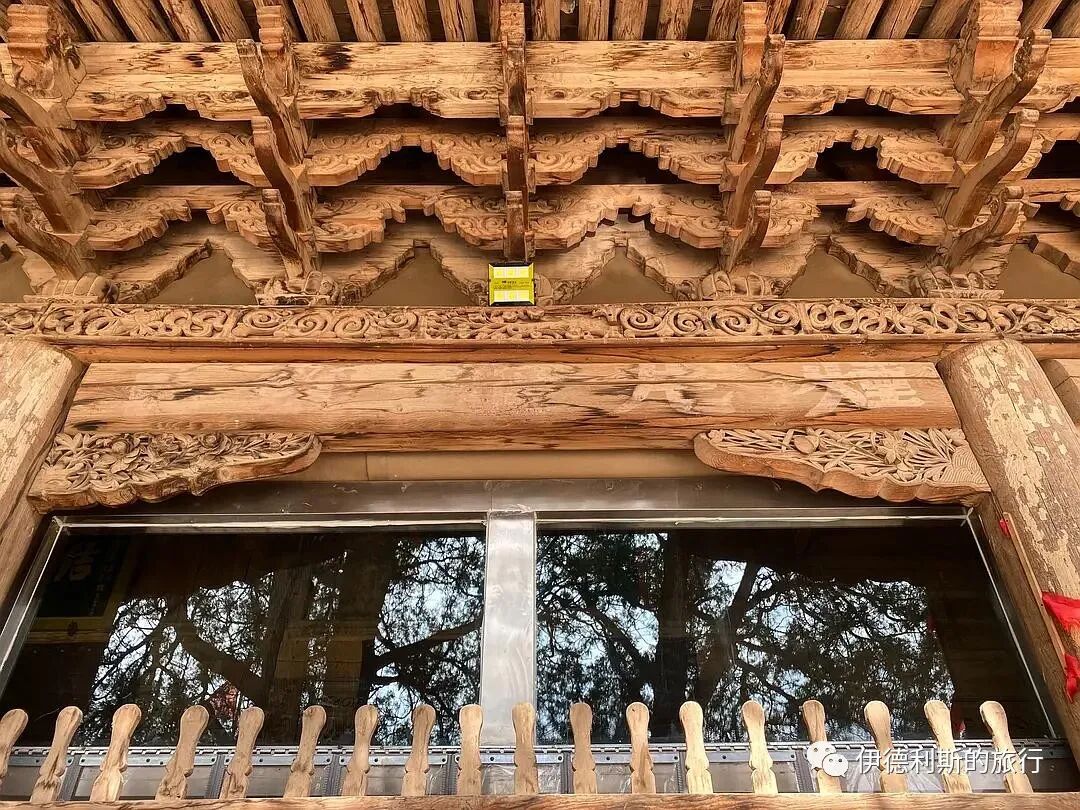
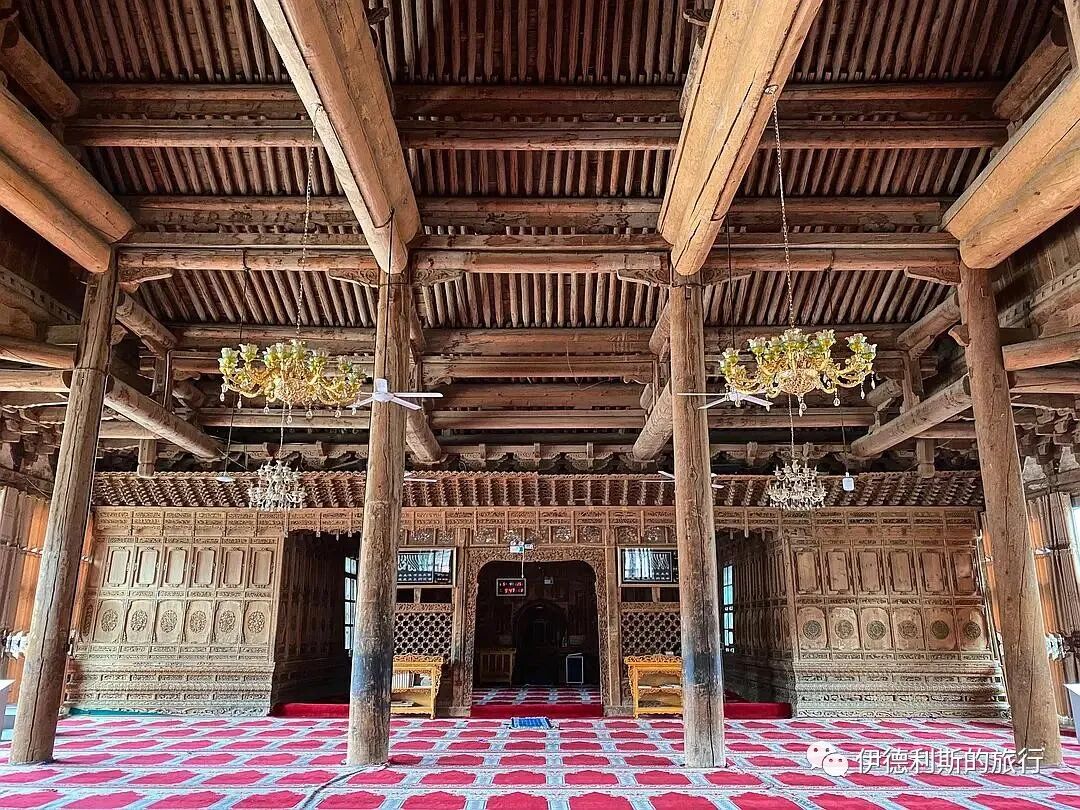
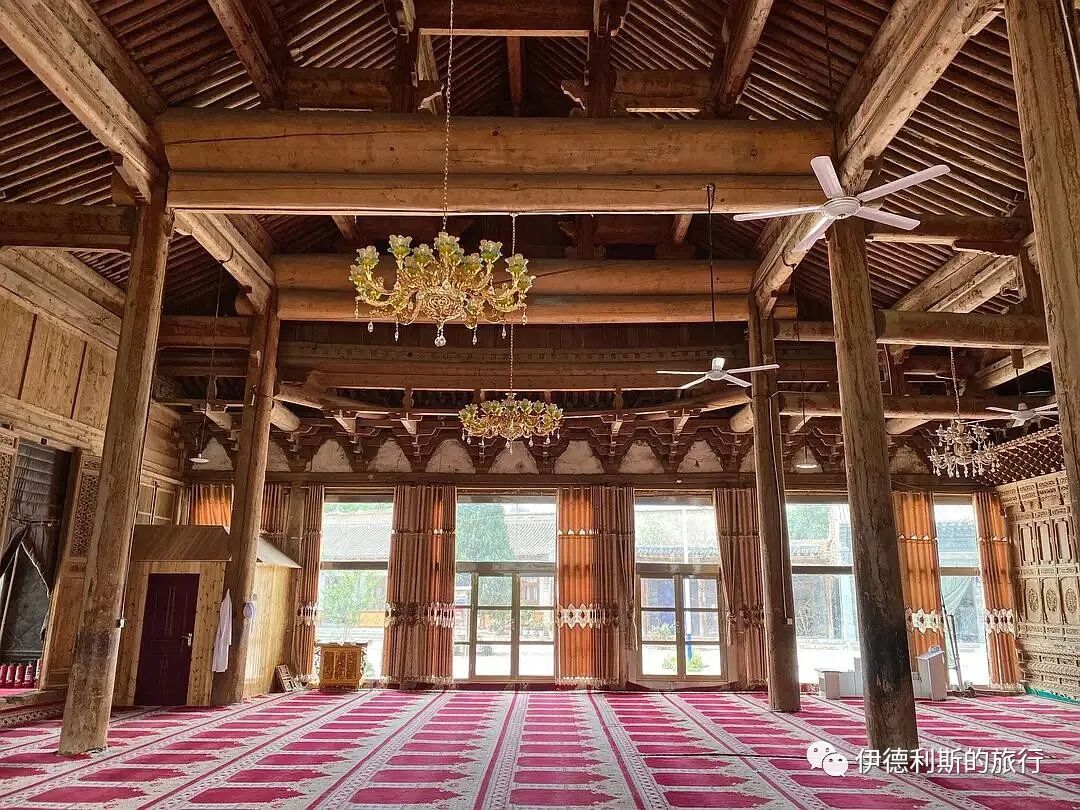
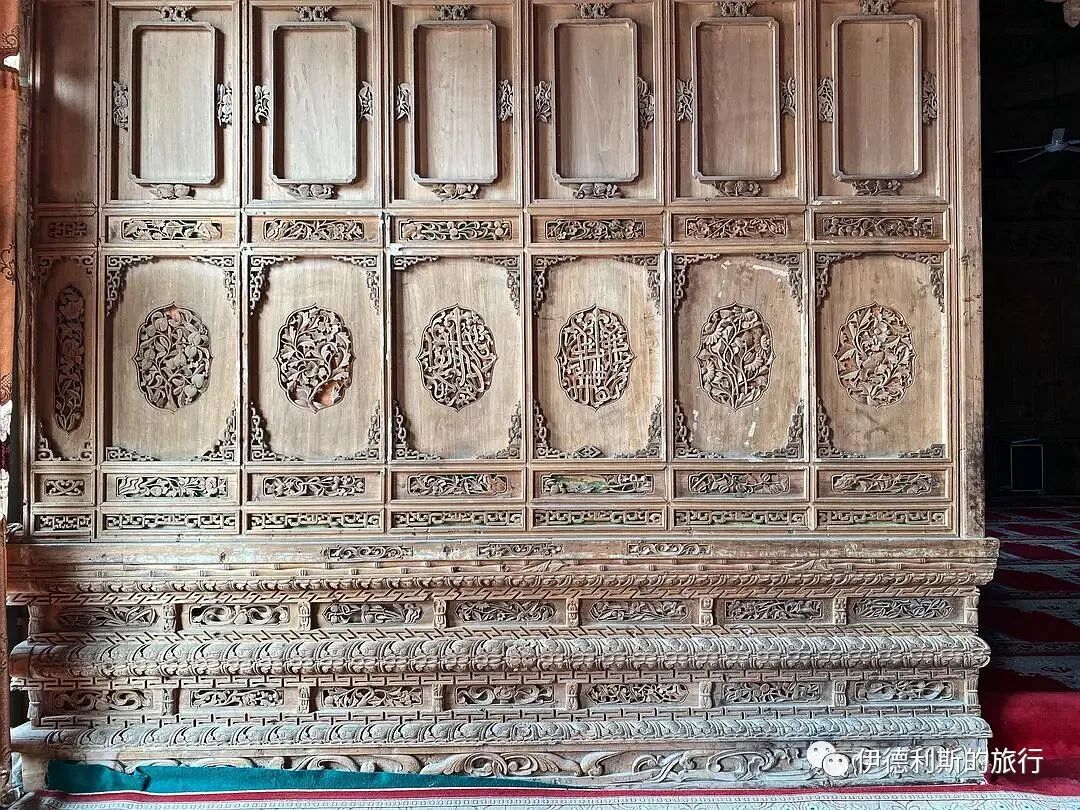
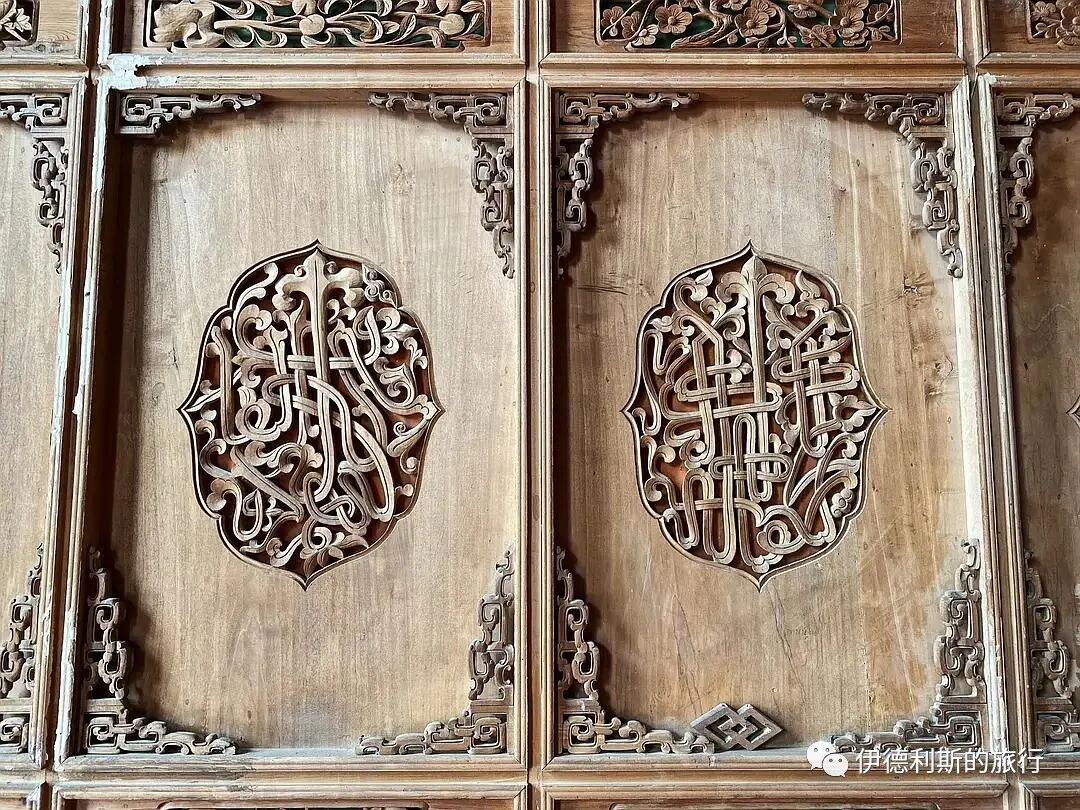
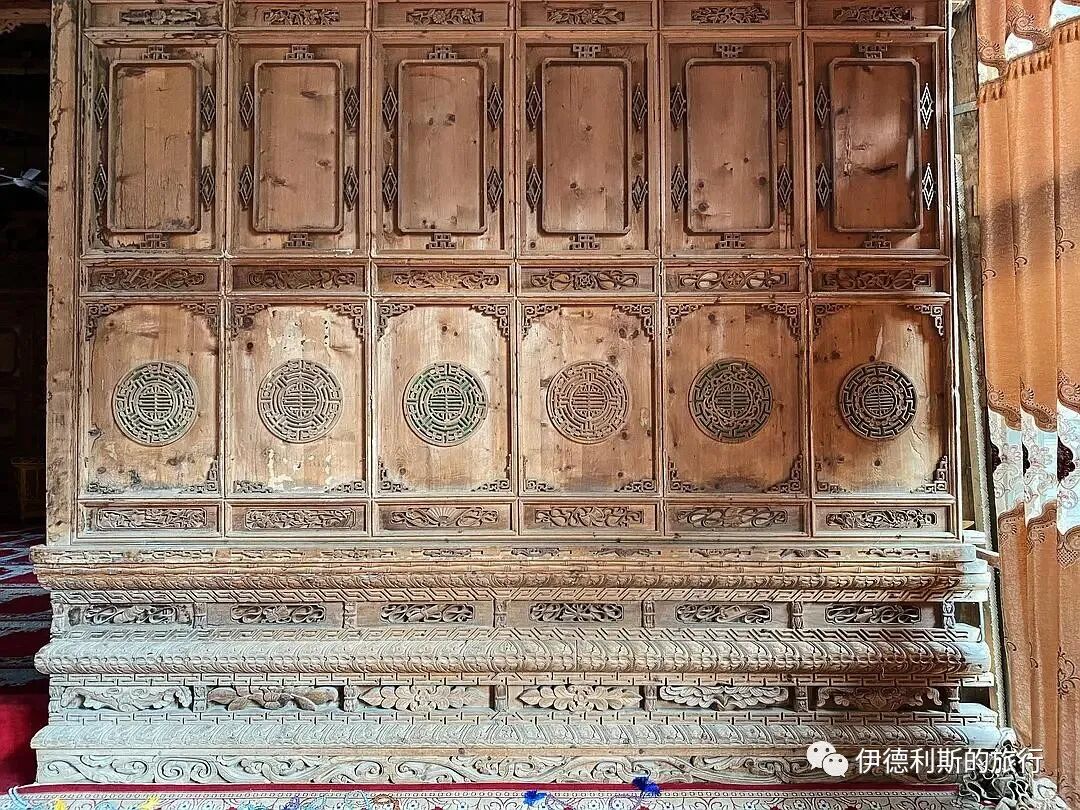
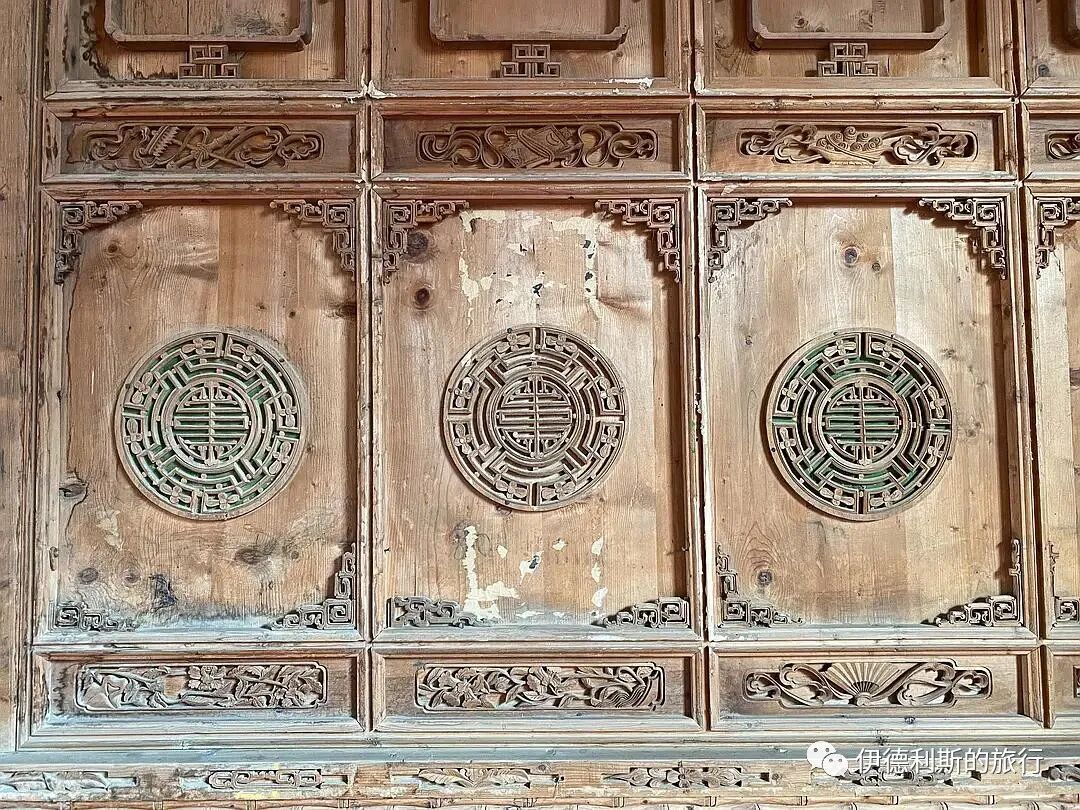
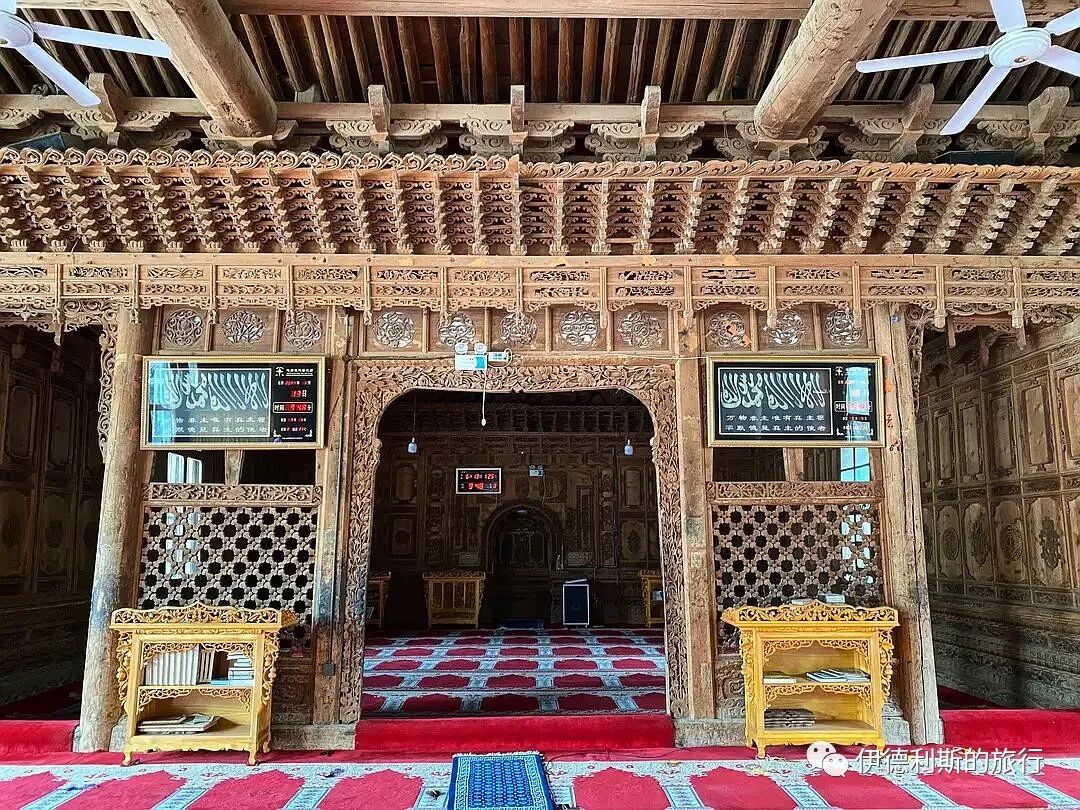
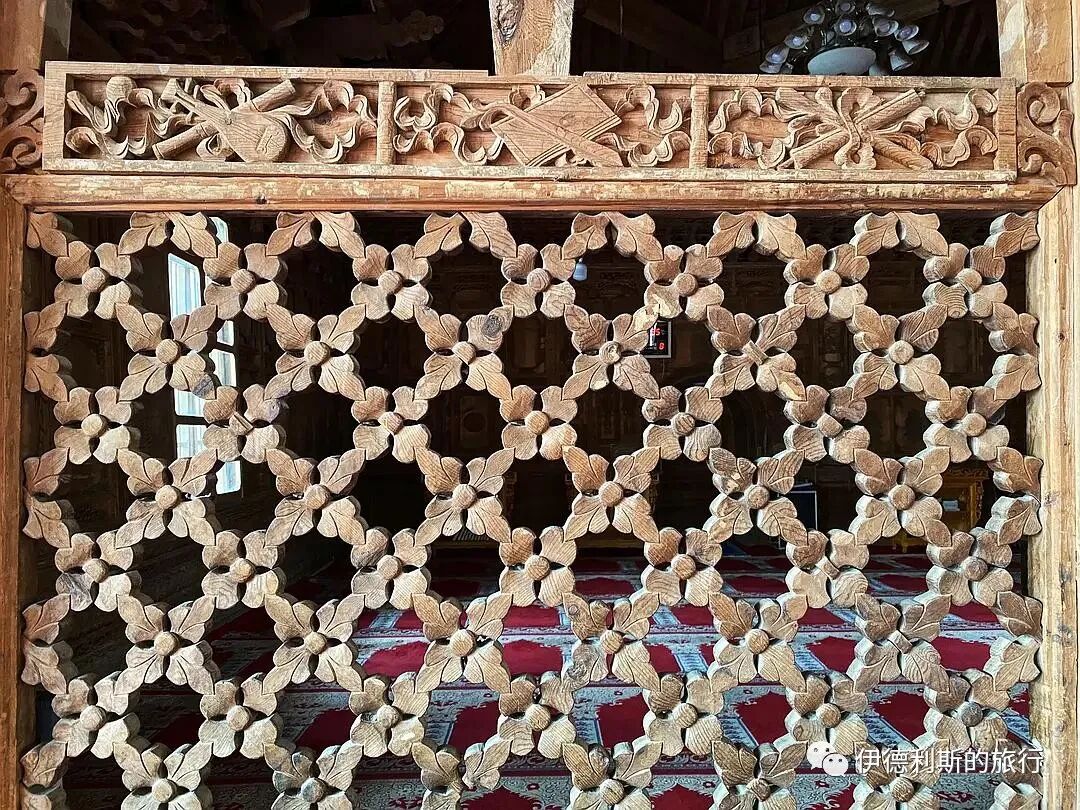
The vaulted hall and the mihrab, with intricate wood carvings.
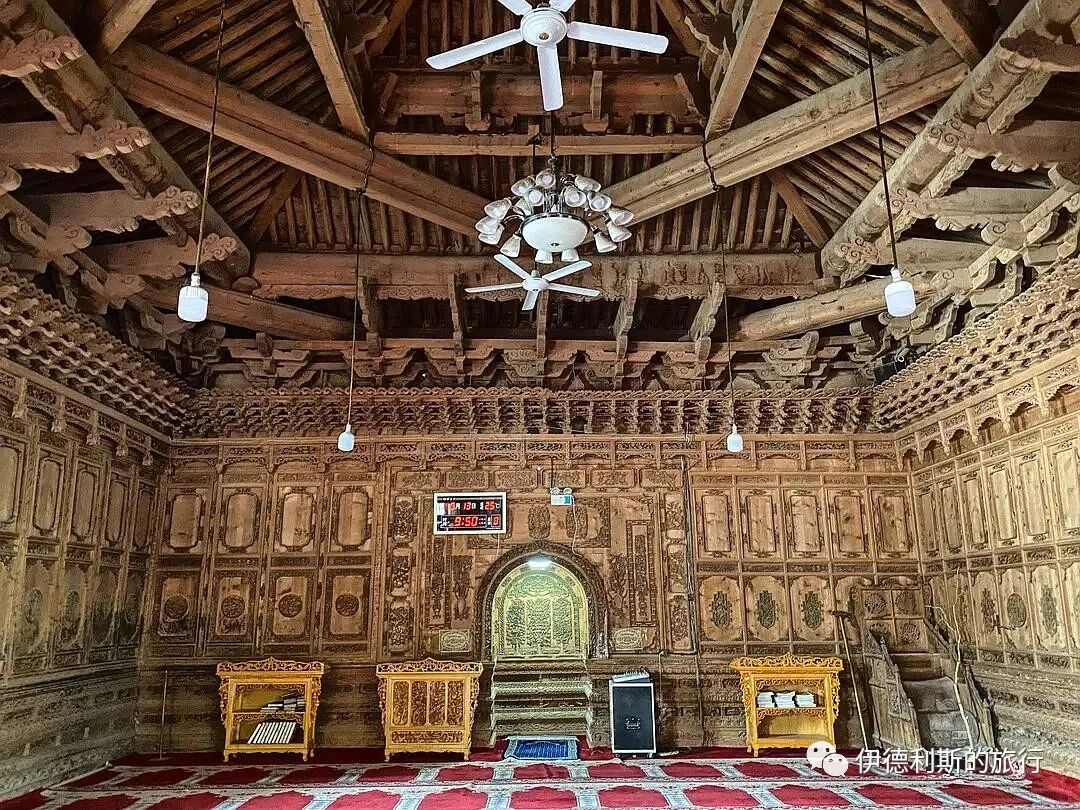
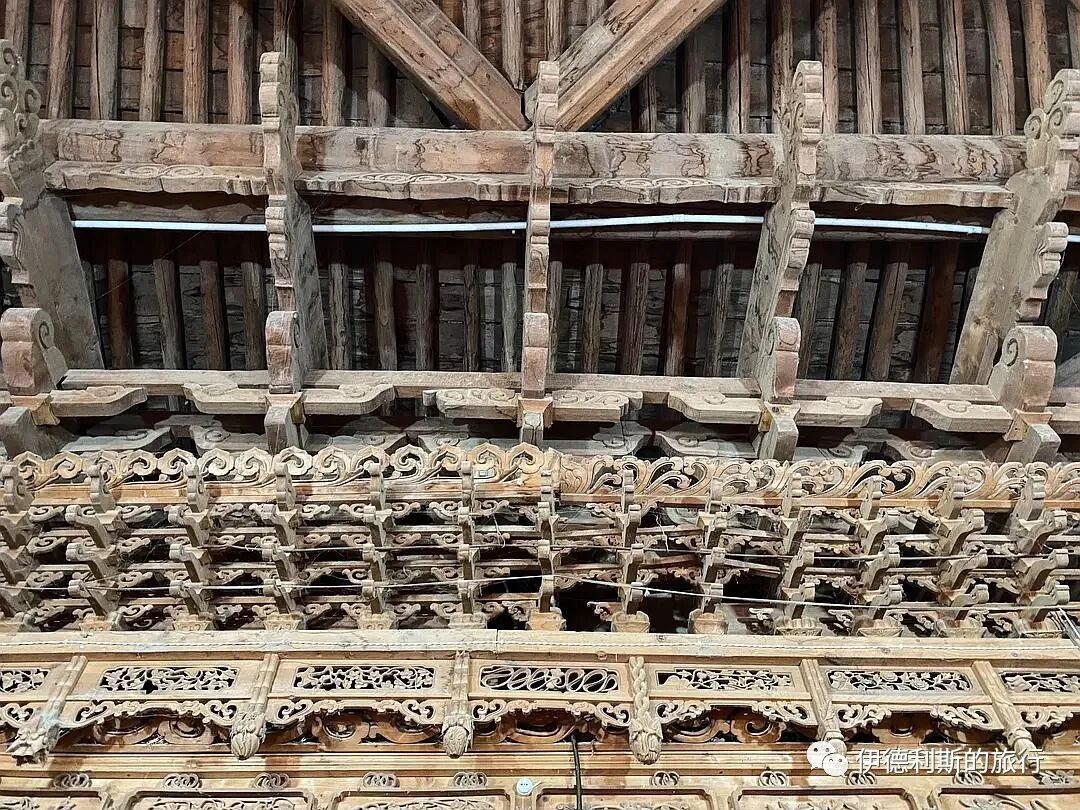
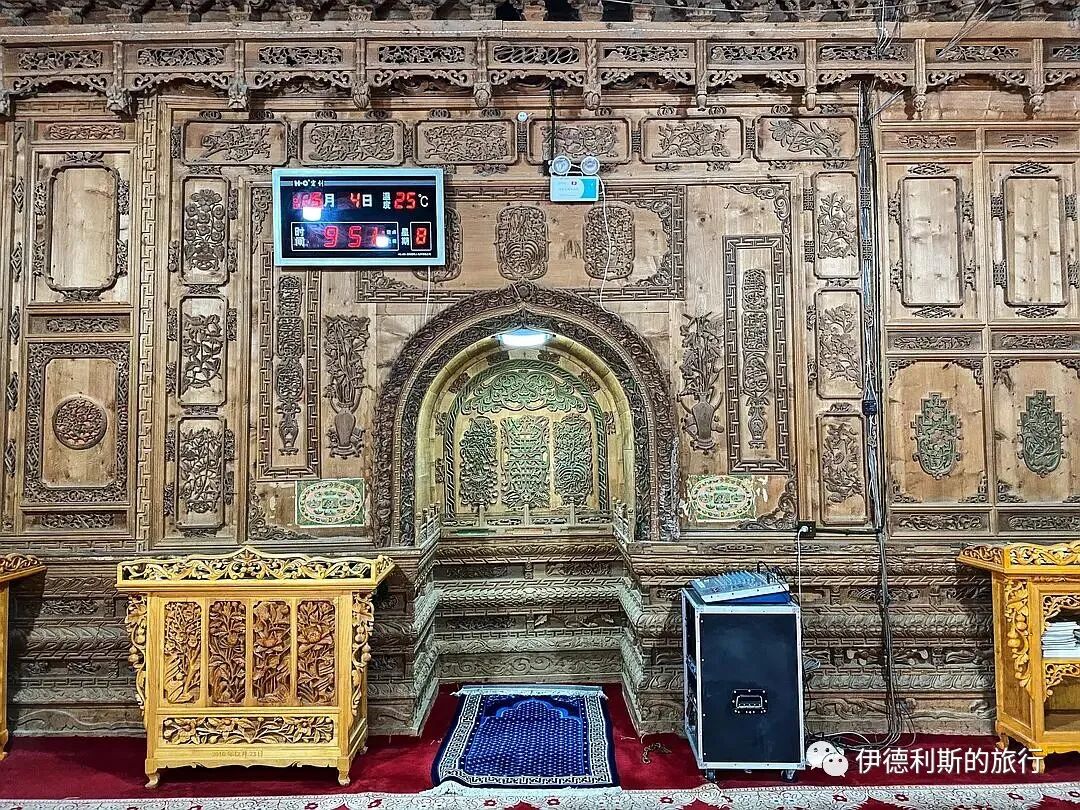
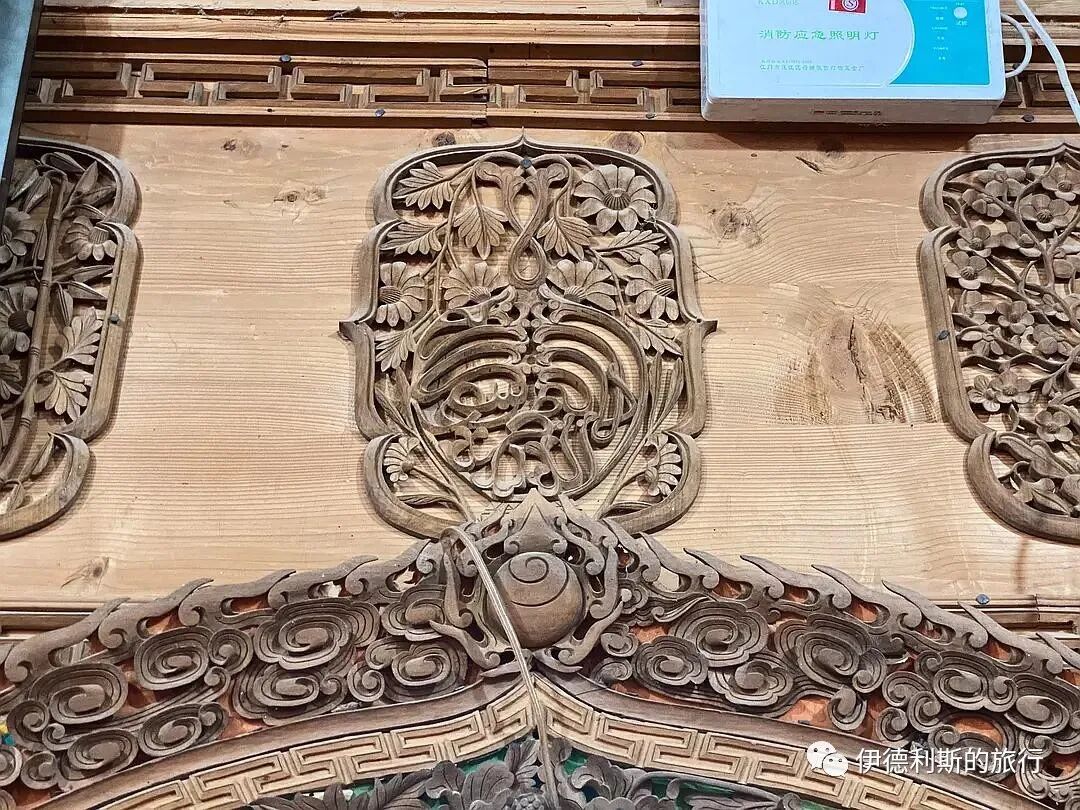
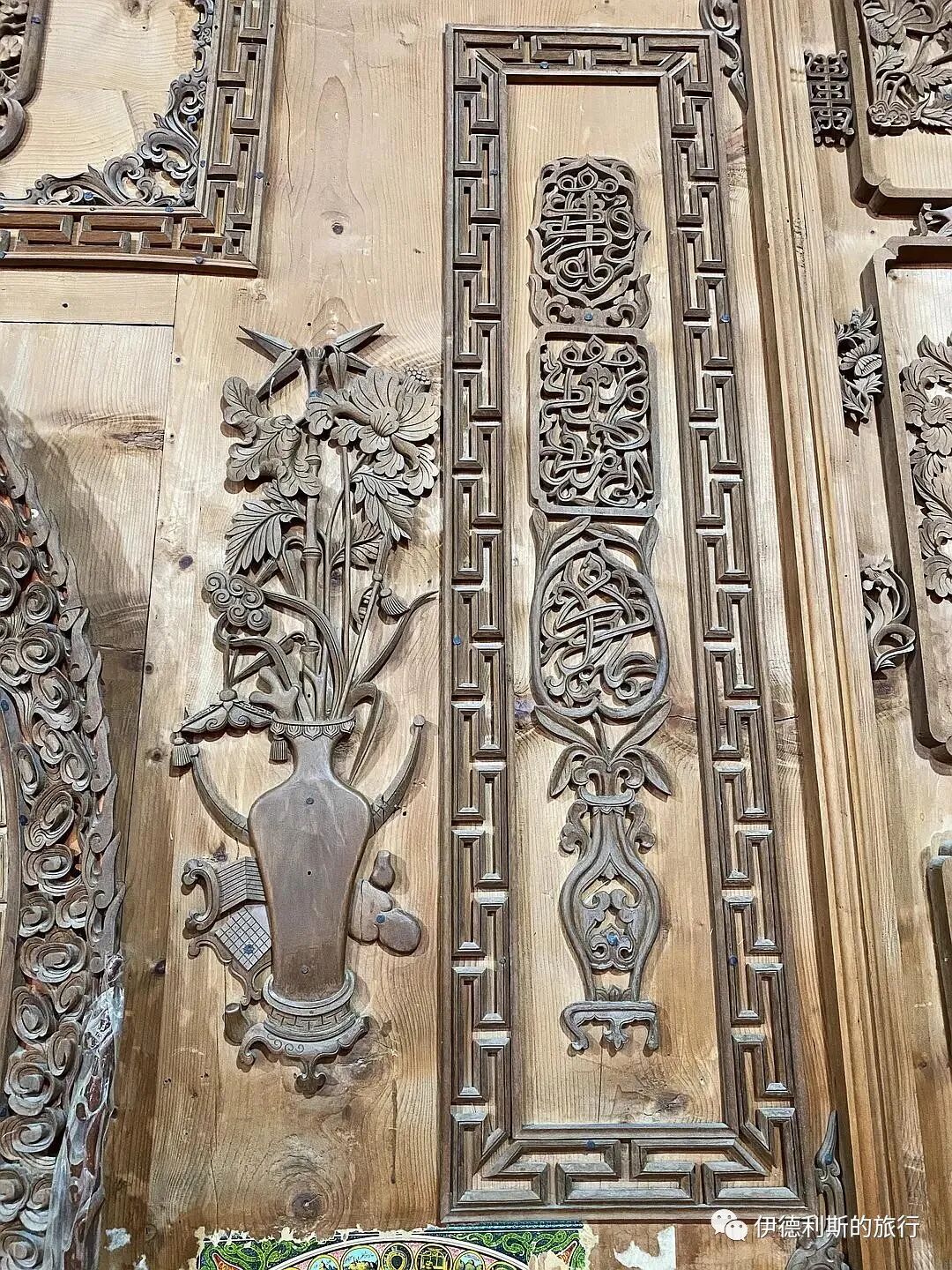
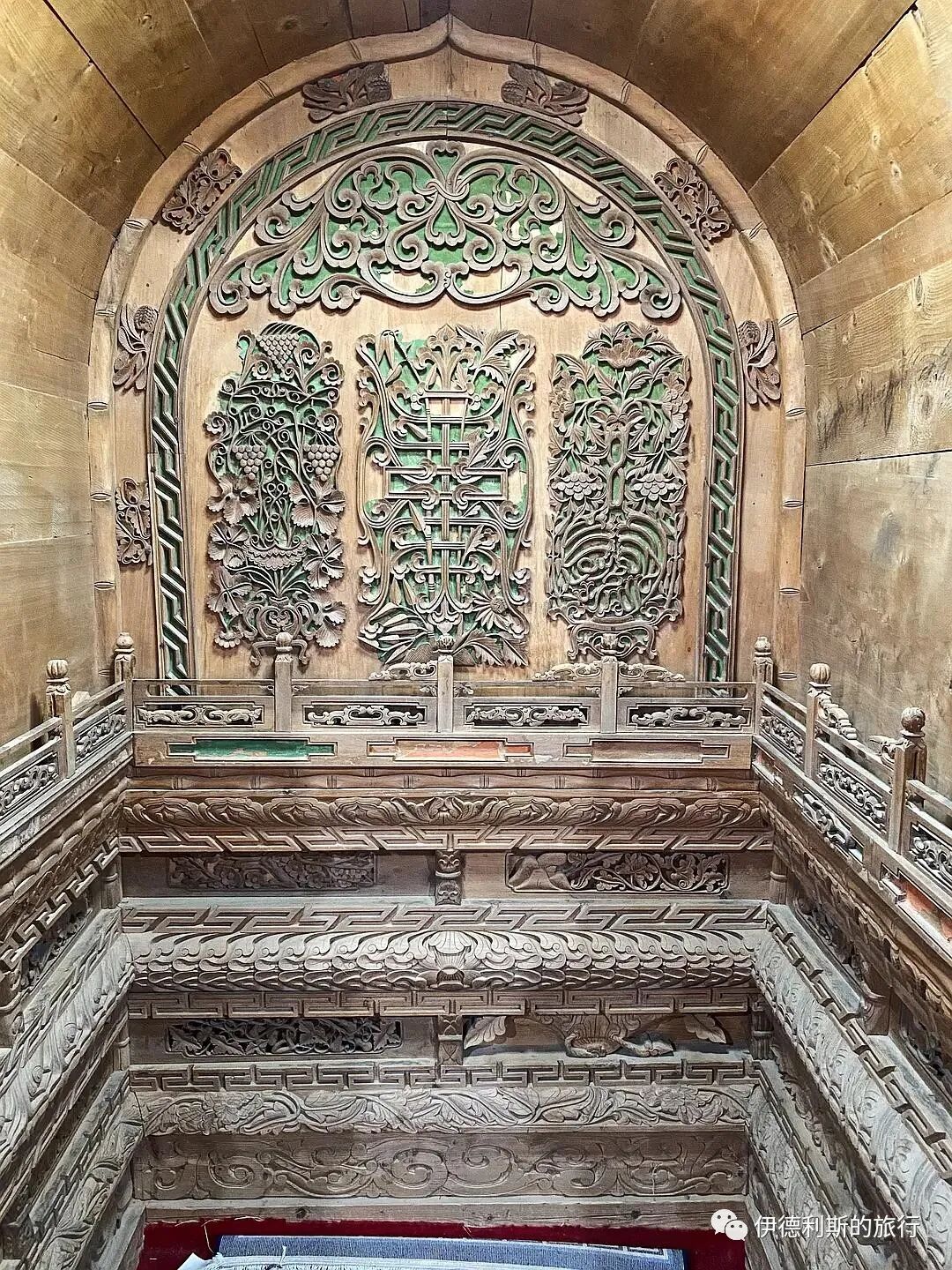
3. Mengda Mosque
Mengda Mosque is located in Dazhuang Village, Mengda Township, Xunhua County. It was first built in 1408 (the sixth year of the Yongle reign of the Ming Dynasty) and expanded three times during the Qing Dynasty. It is the Haiyi Mosque of the Mengda Gong, one of the eight Salar Gong.
The outermost part of the mosque consists of two wooden memorial archways with five-step dougong brackets, and in the middle is a three-eaved, hexagonal-roofed minaret. The minaret is 17 meters high, with the lower level made of hexagonal blue bricks, featuring brick-carved imitation wooden dougong brackets and brick-carved 'Tasmiyah' calligraphy.
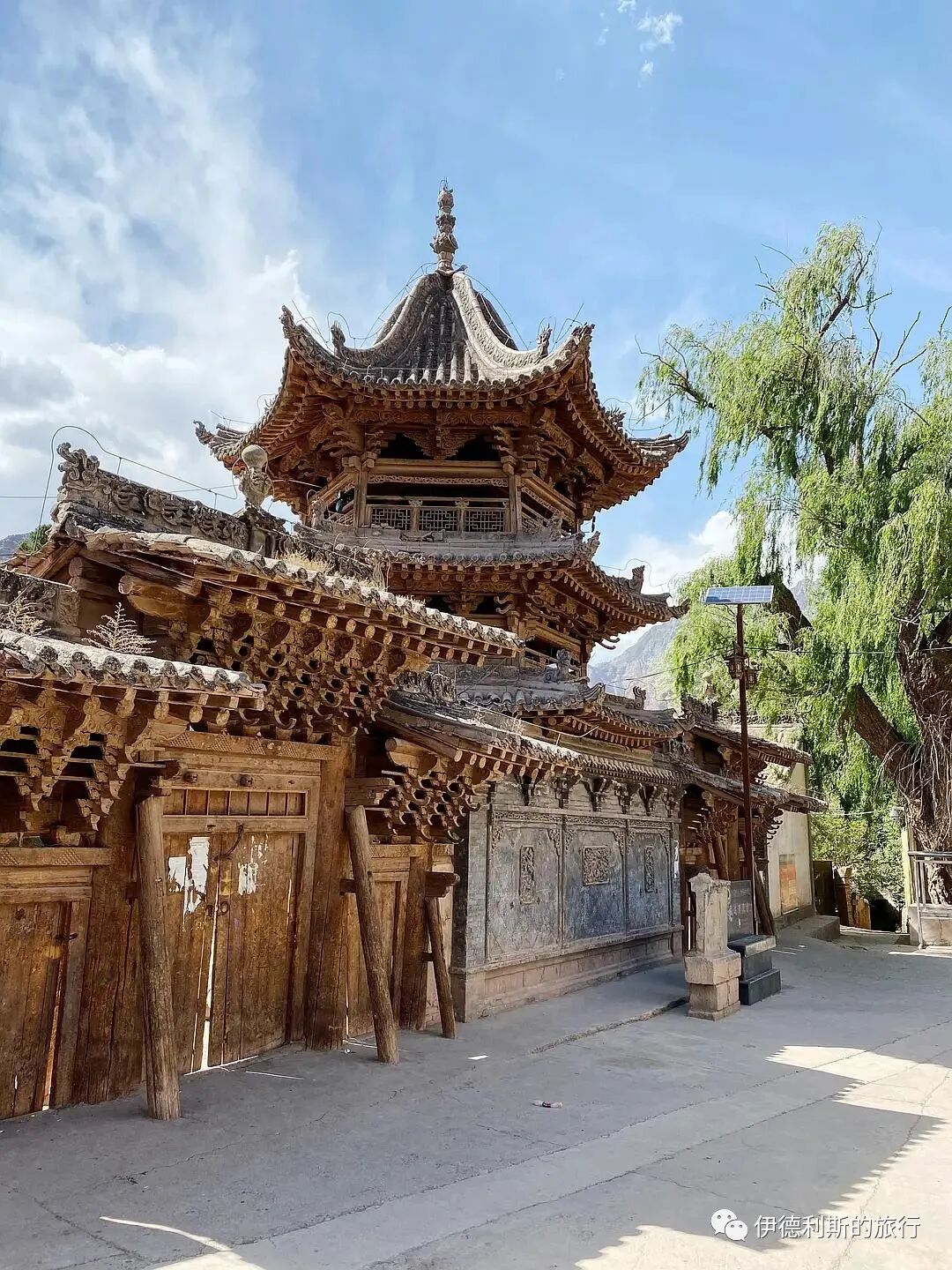
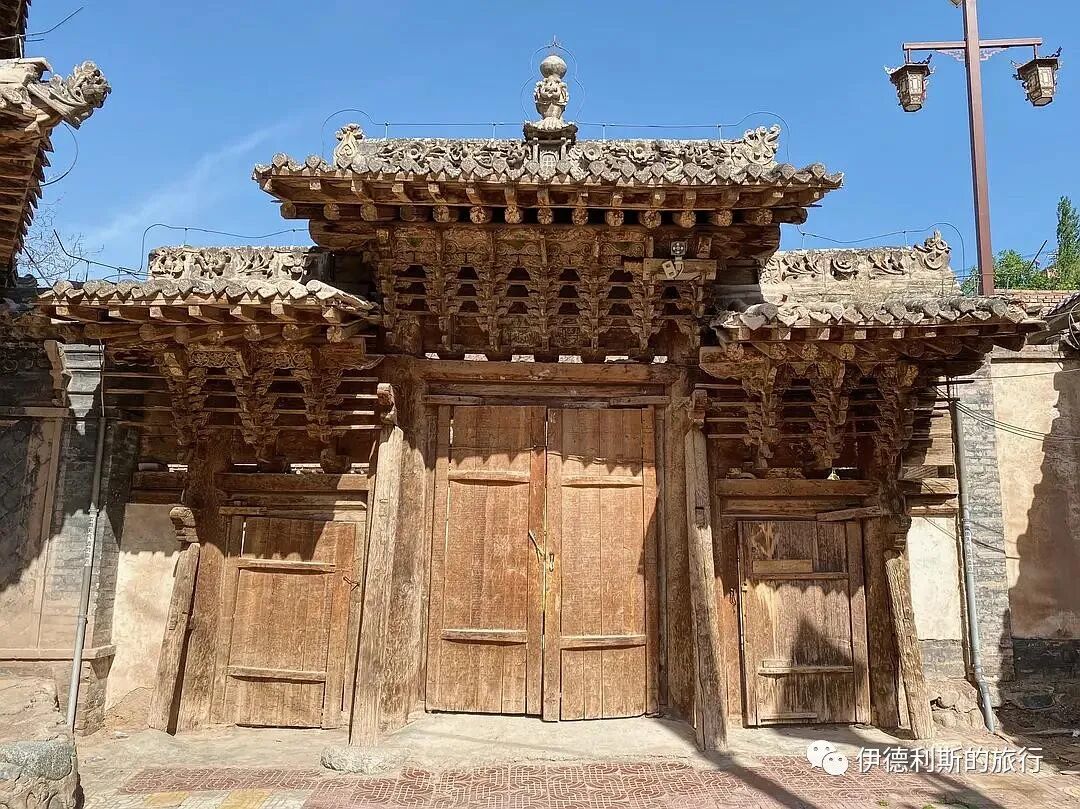
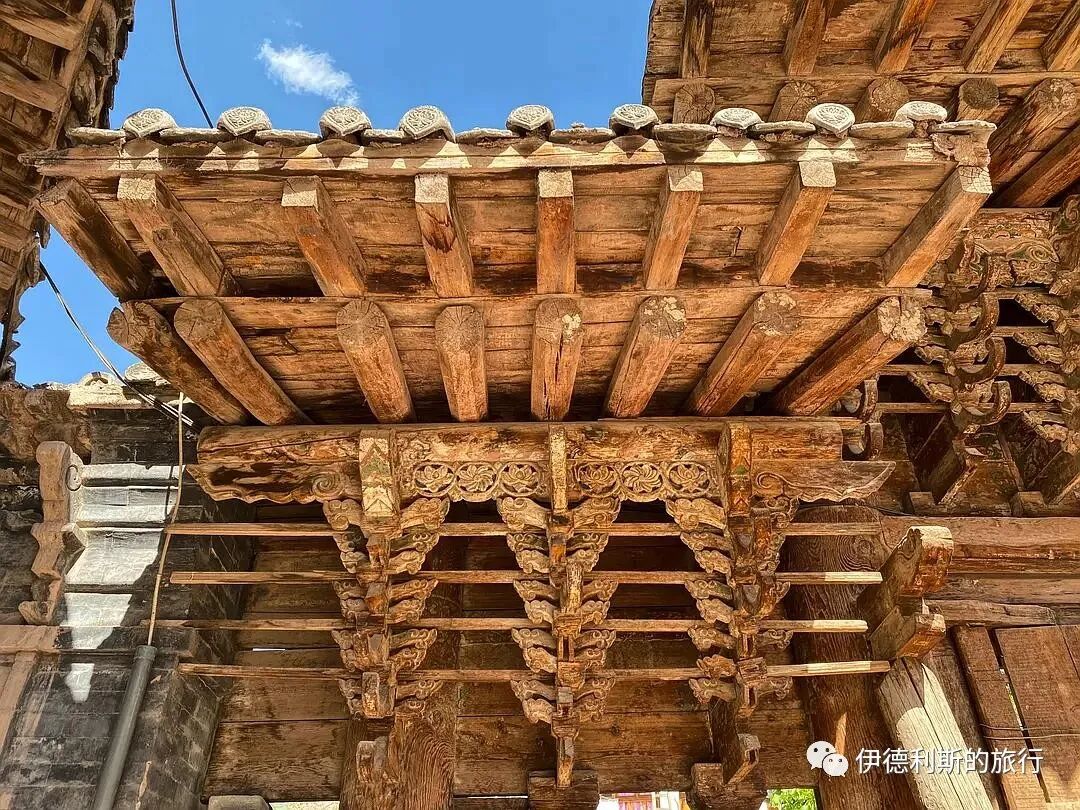
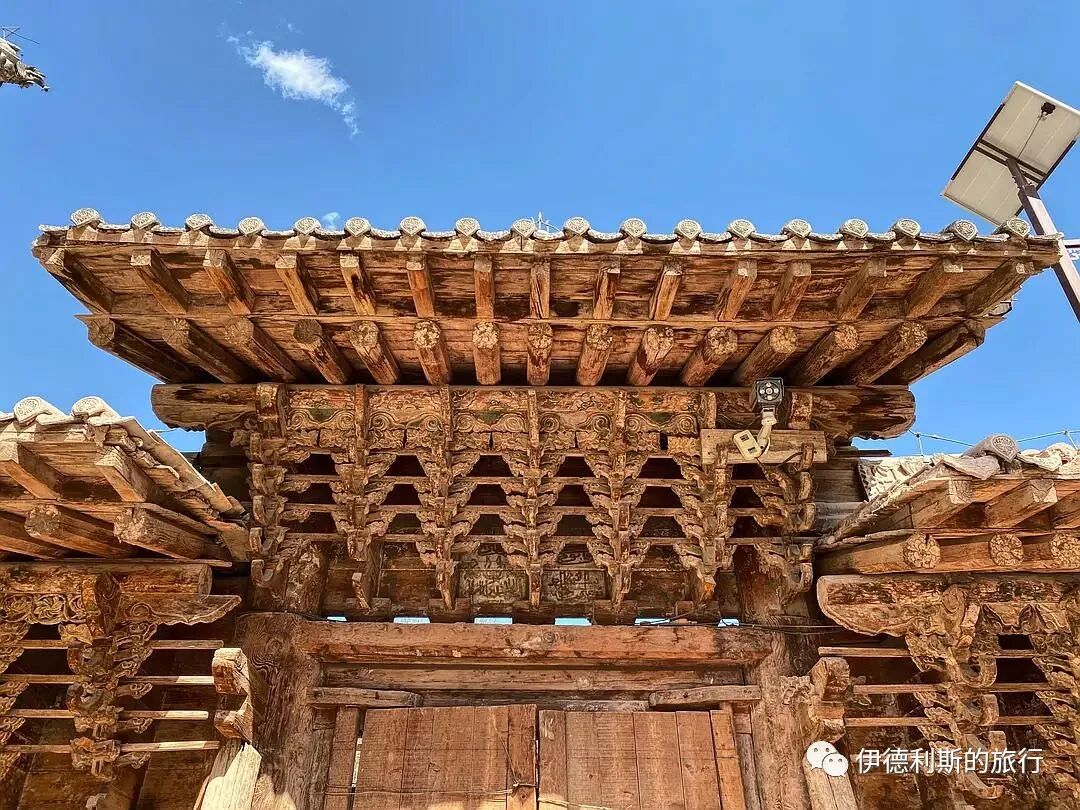
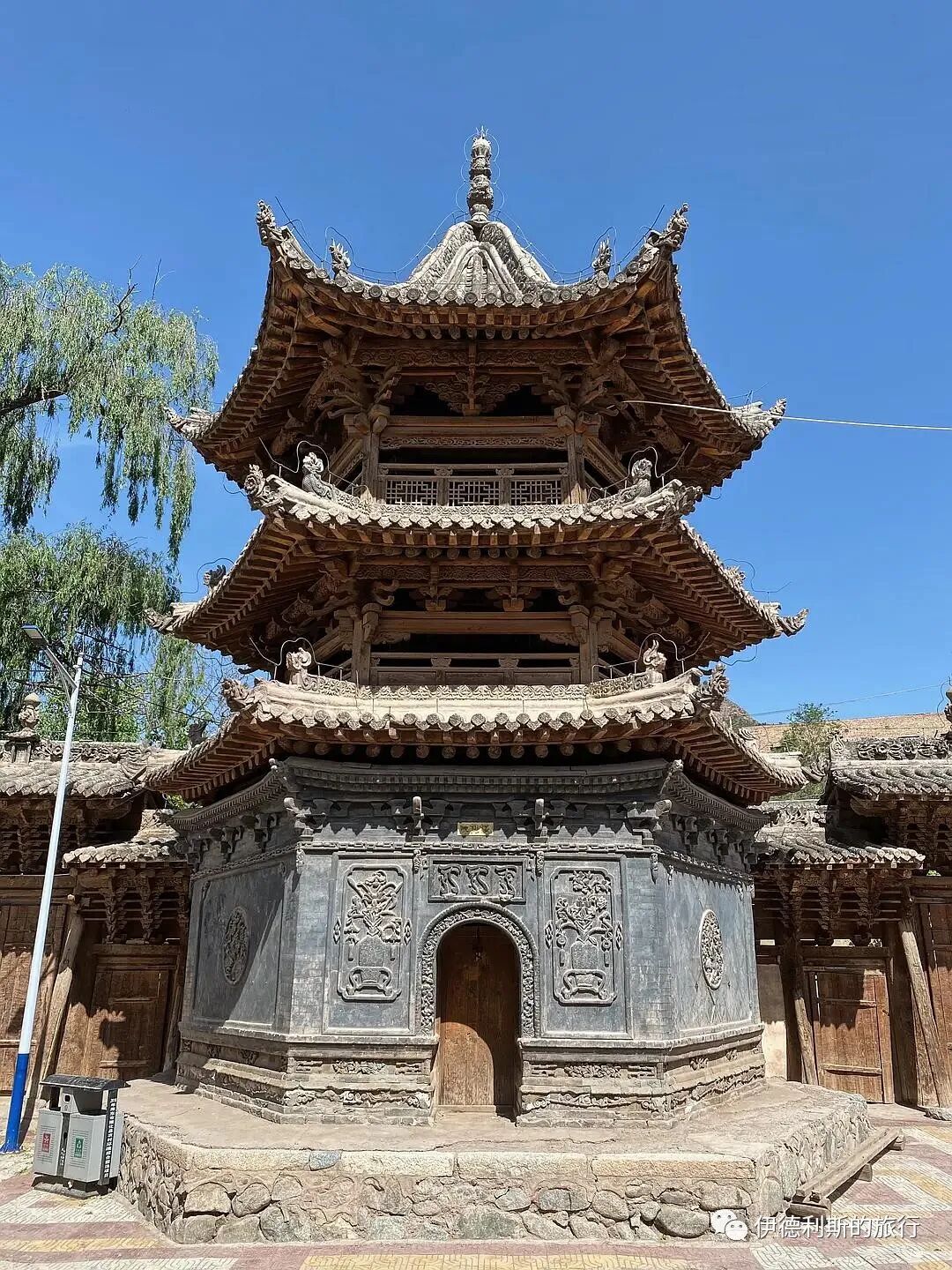
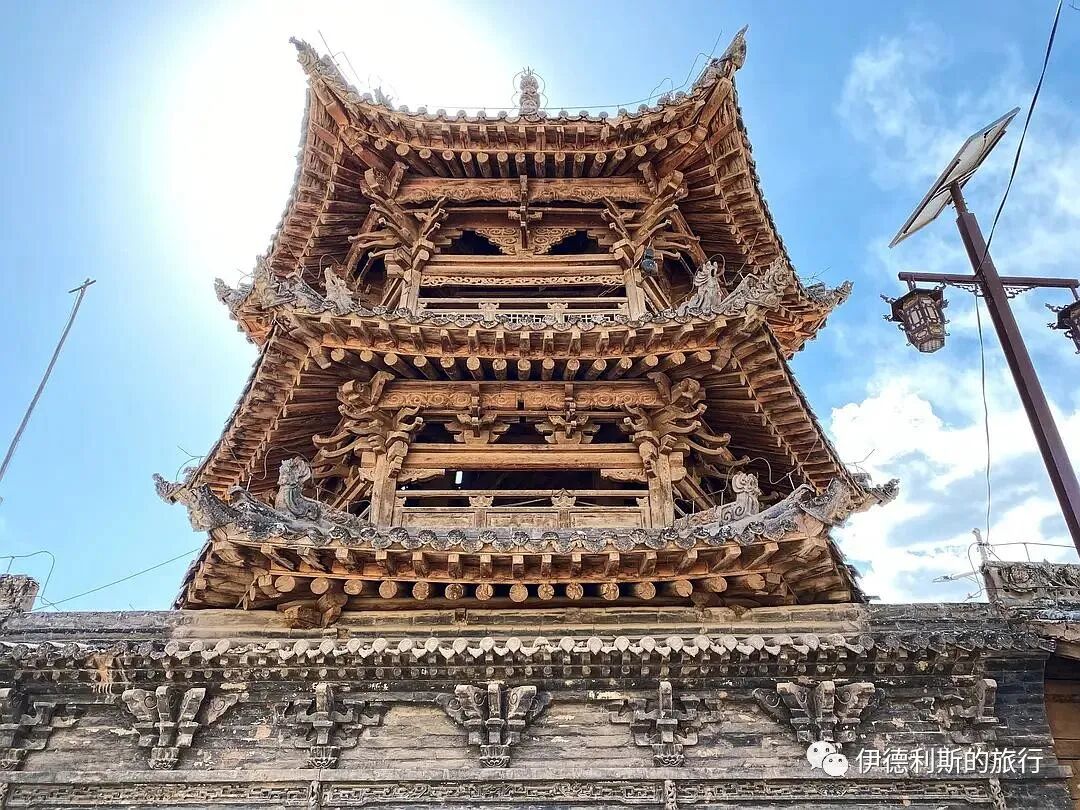
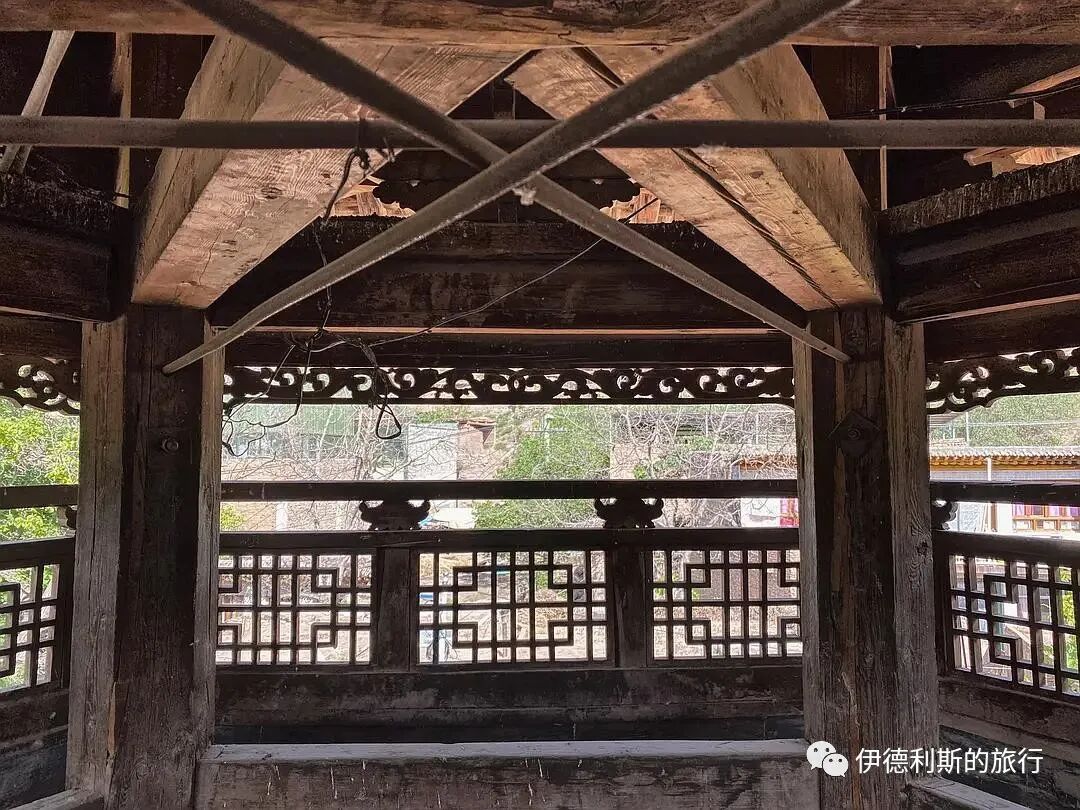
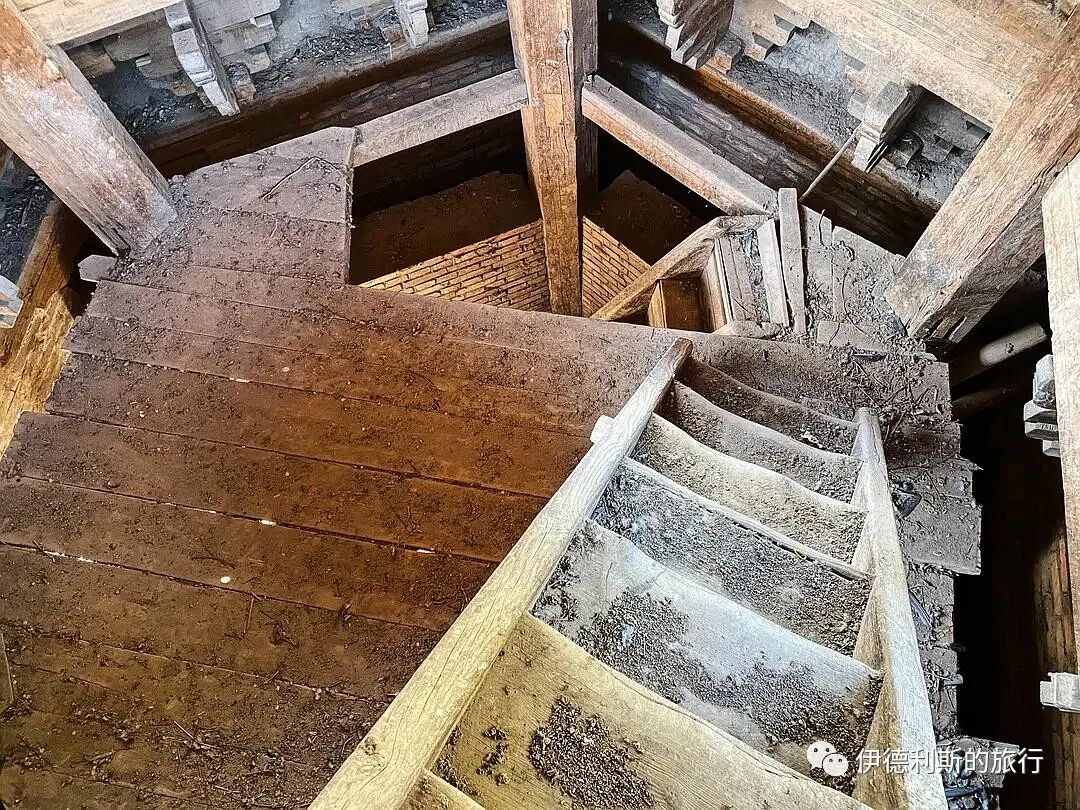
Main prayer hall
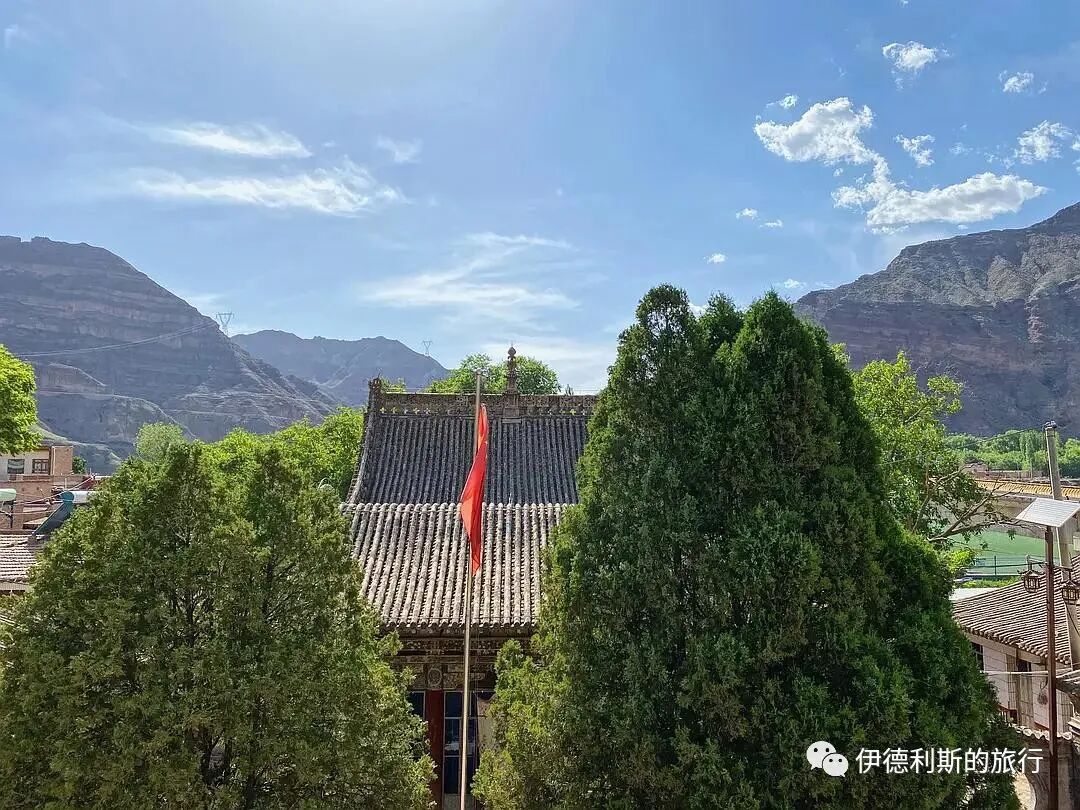
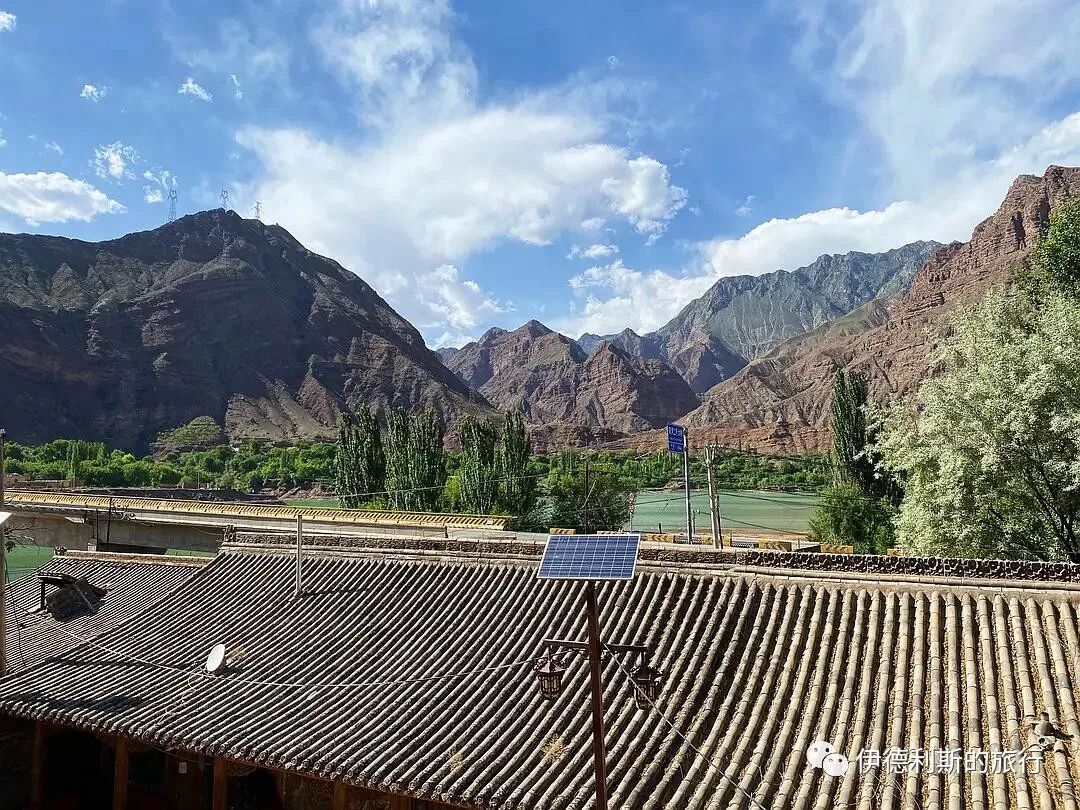
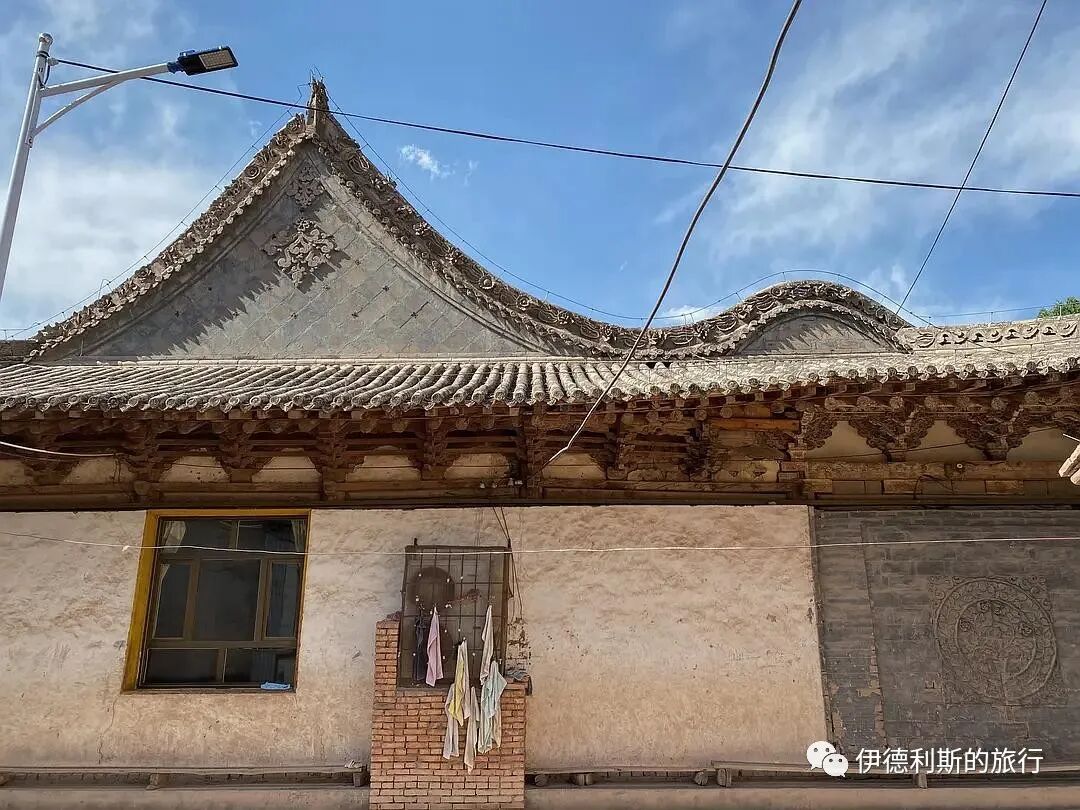
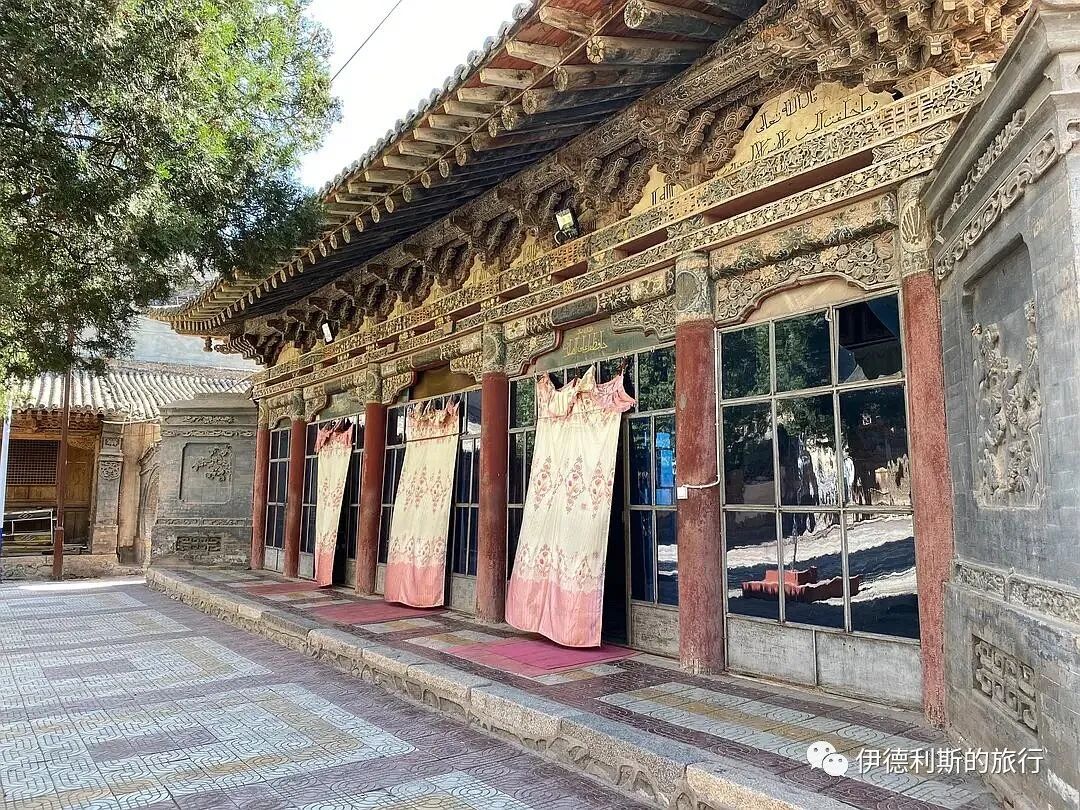
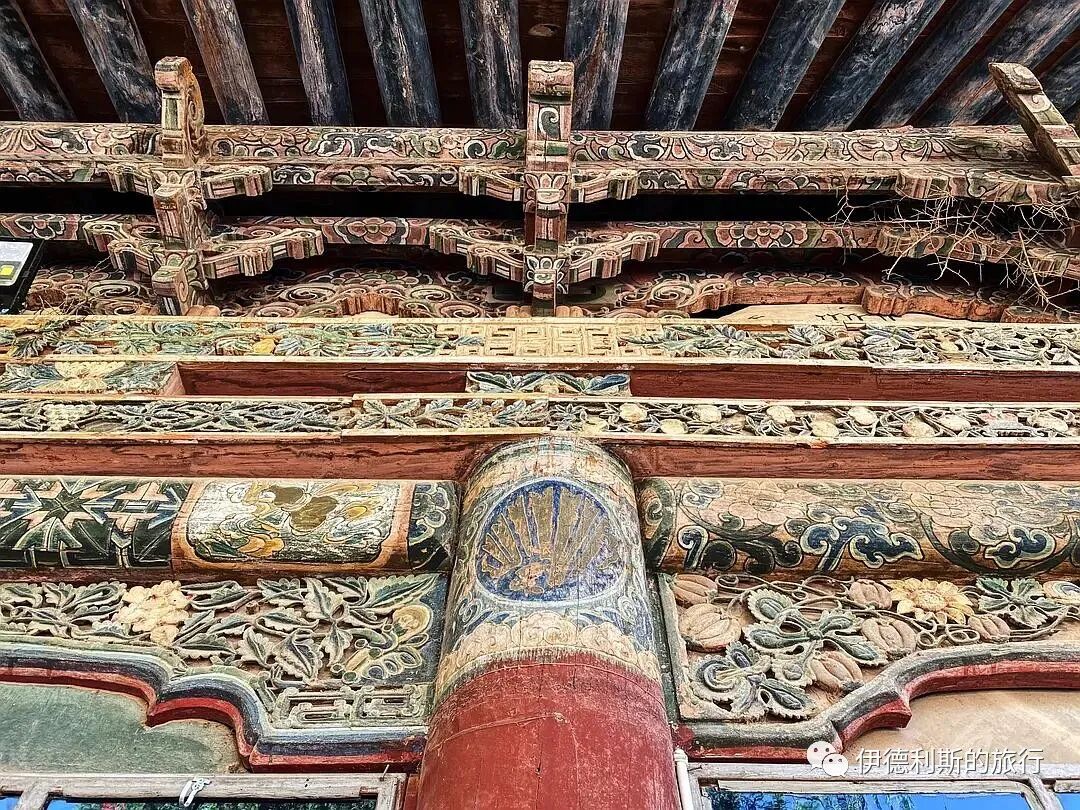
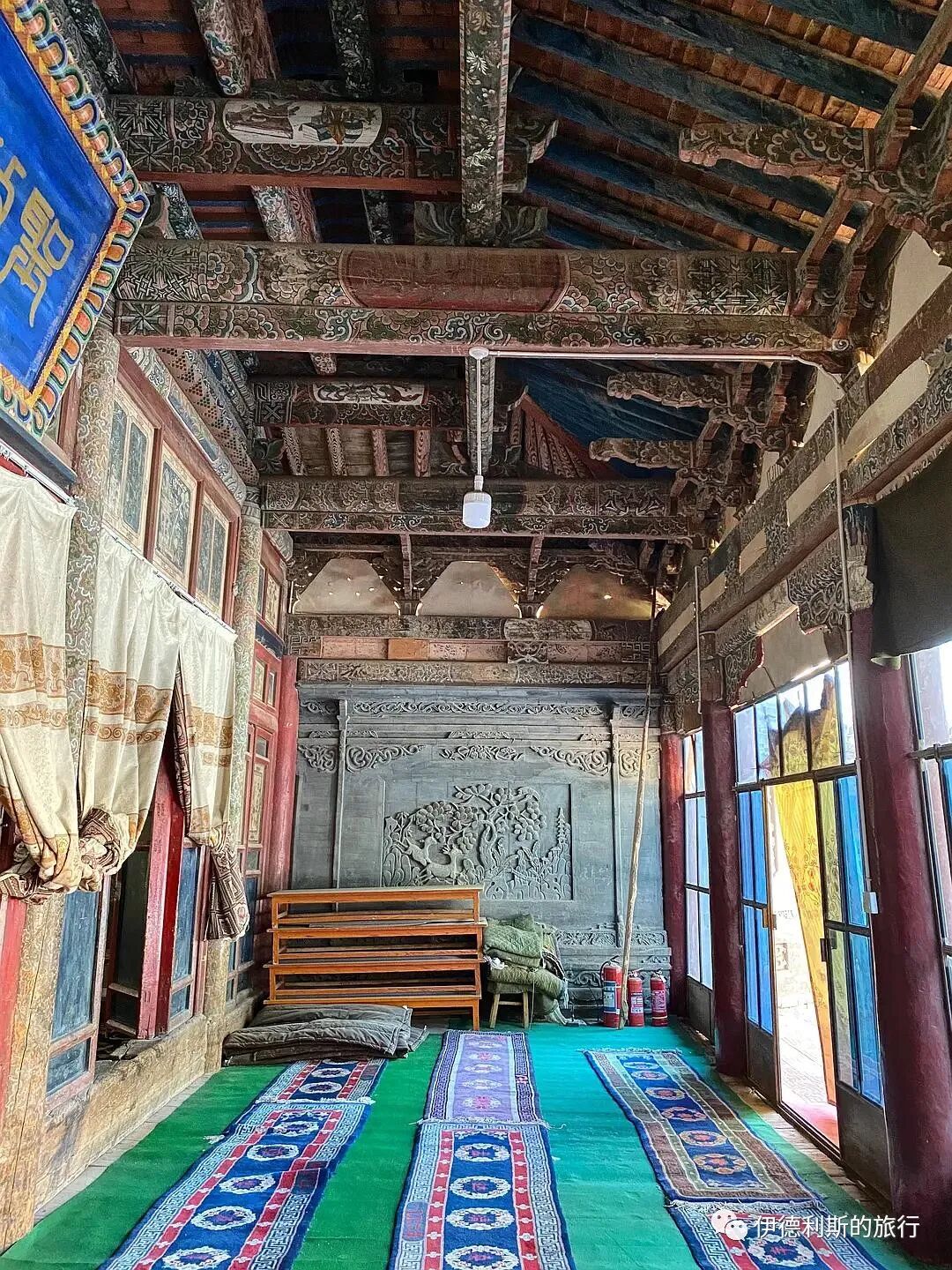
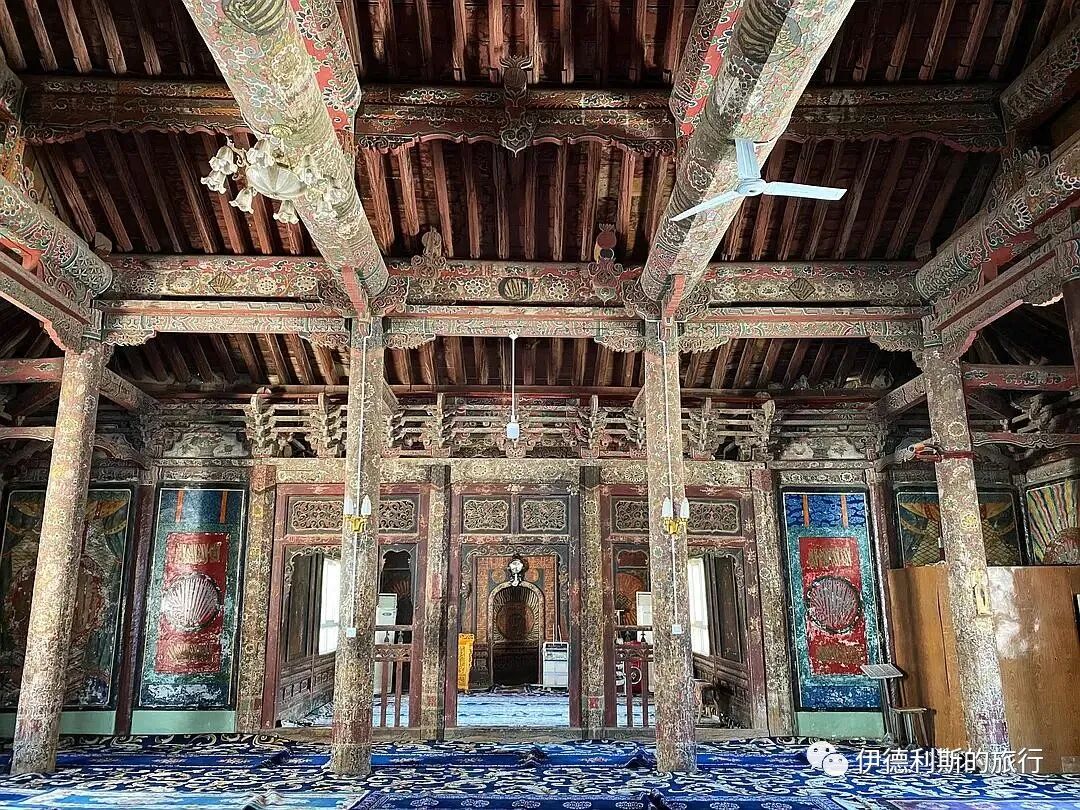
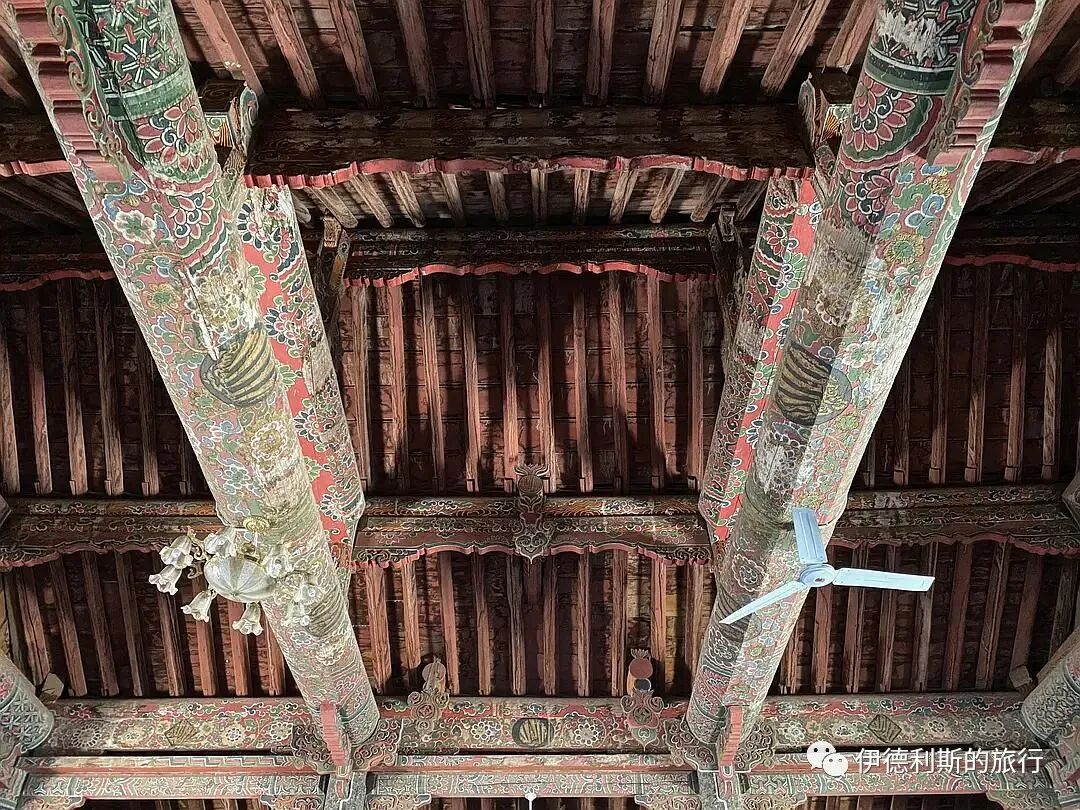
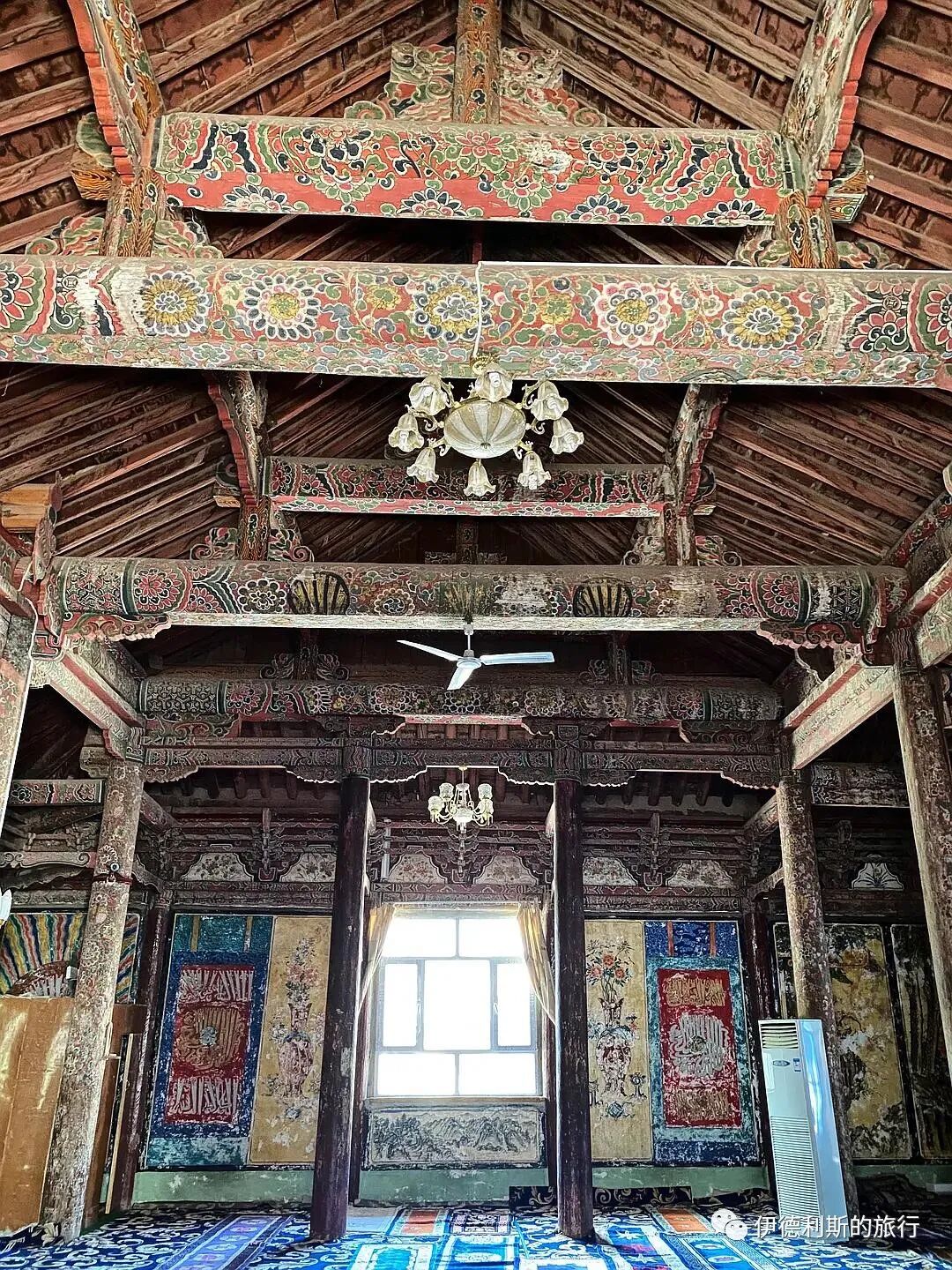
Murals in the main prayer hall
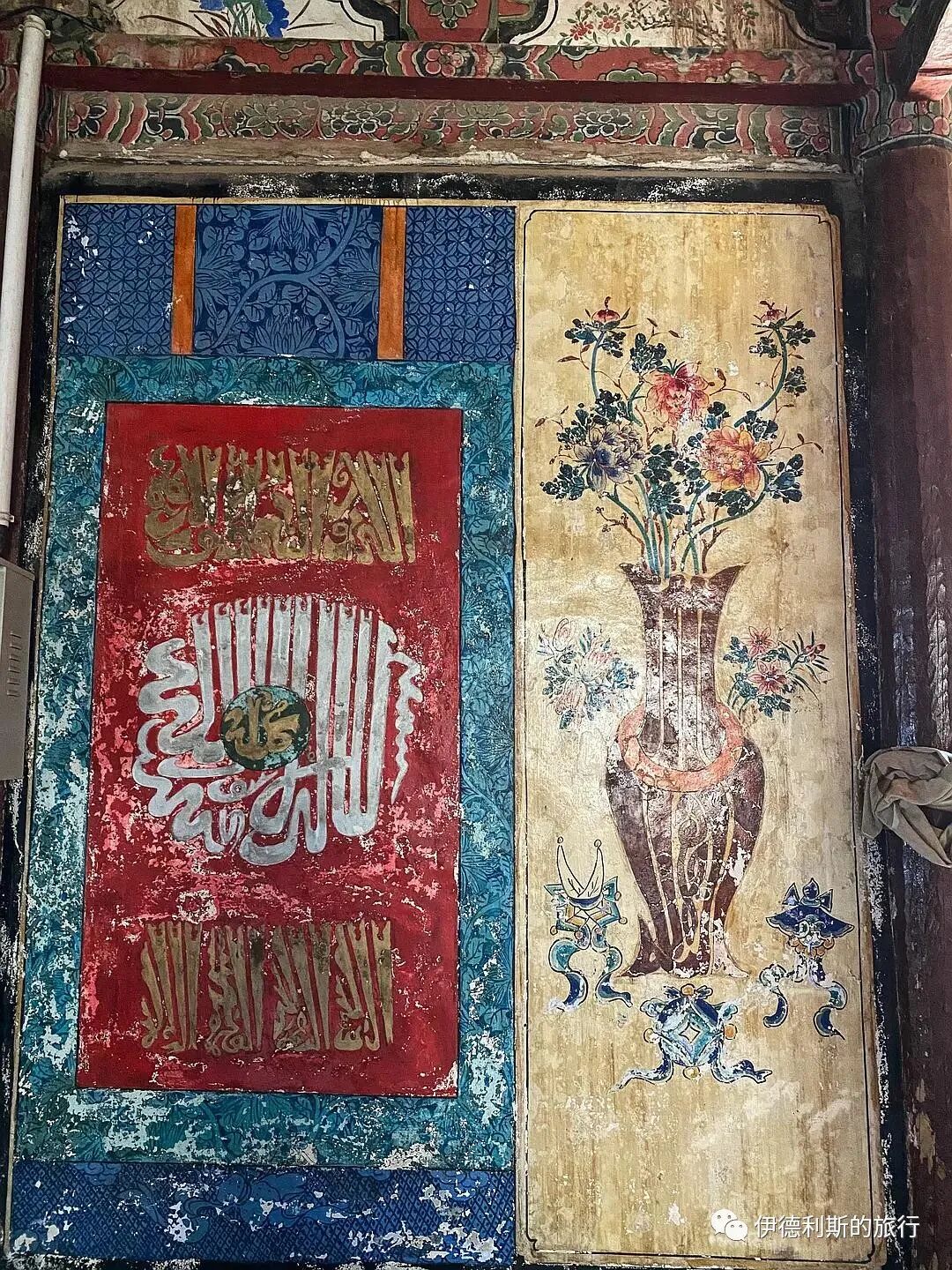
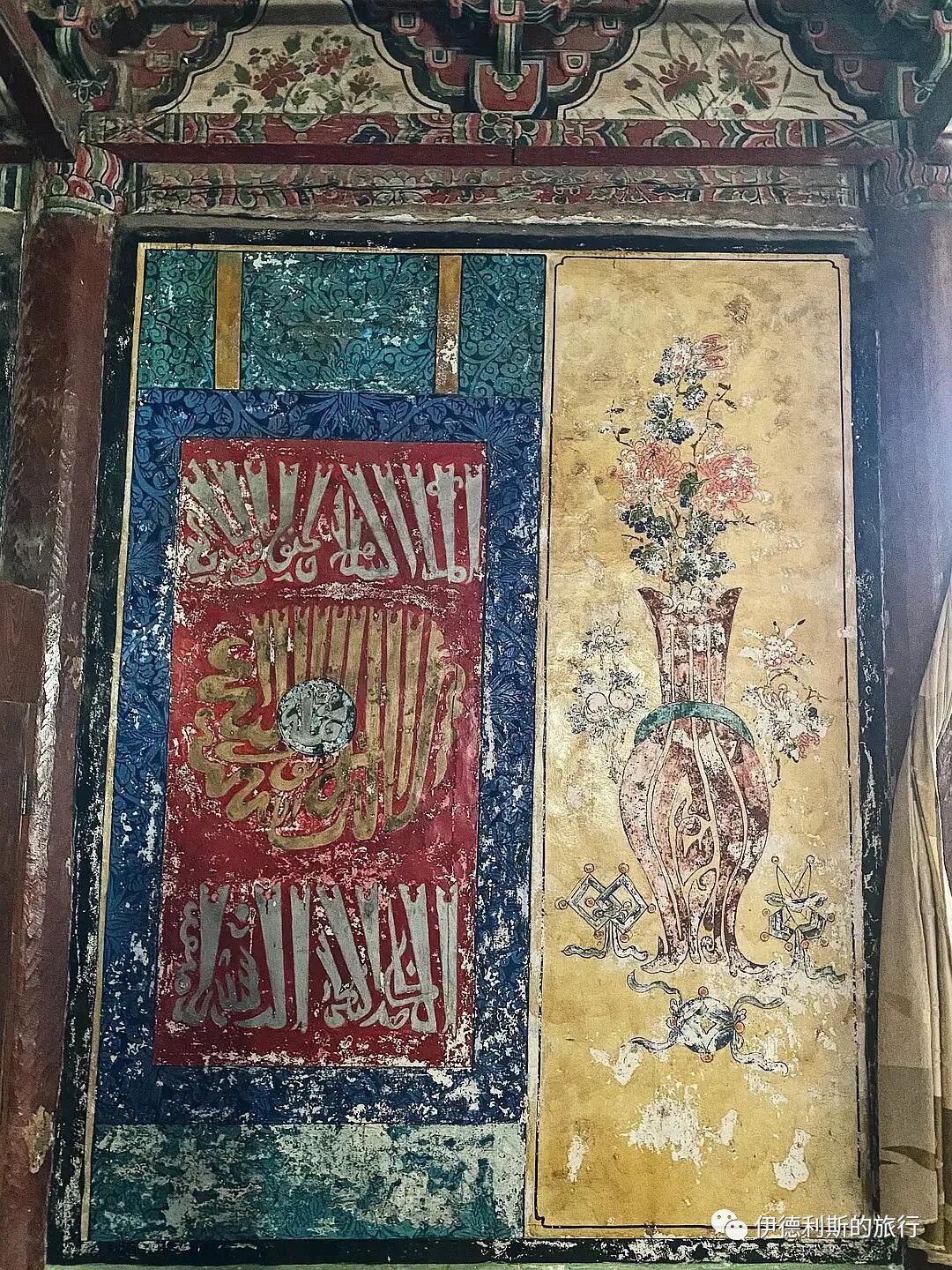
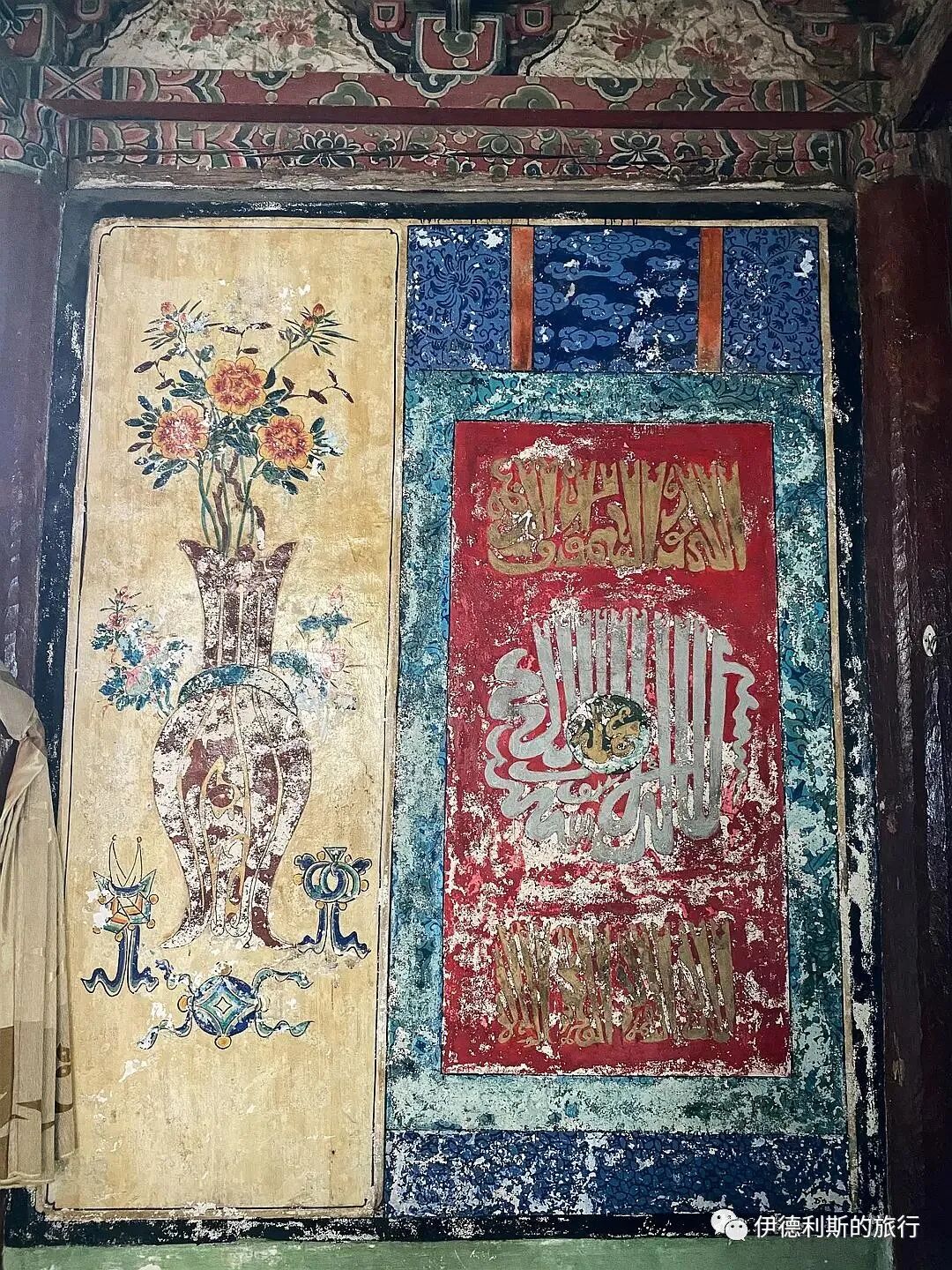
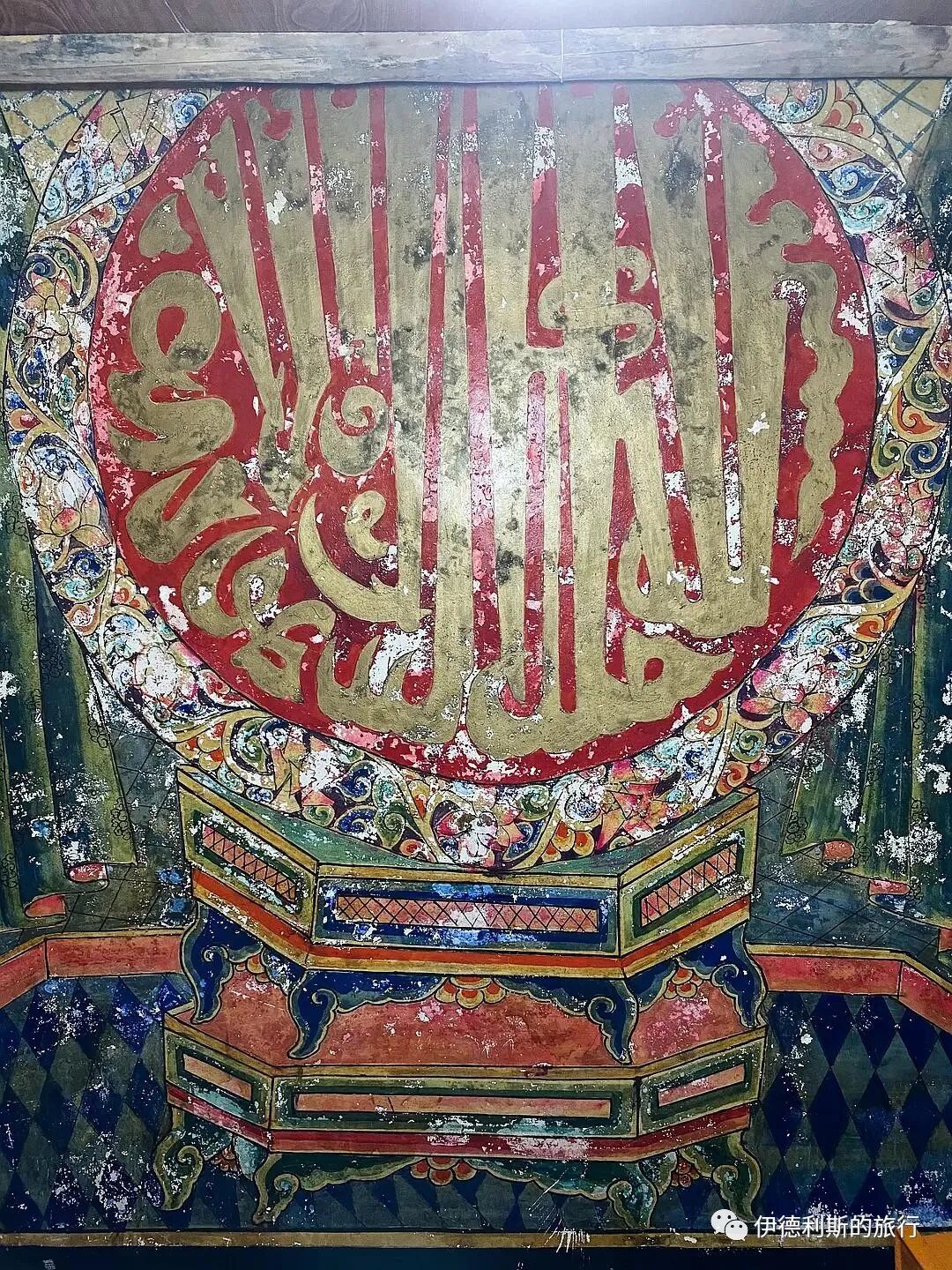
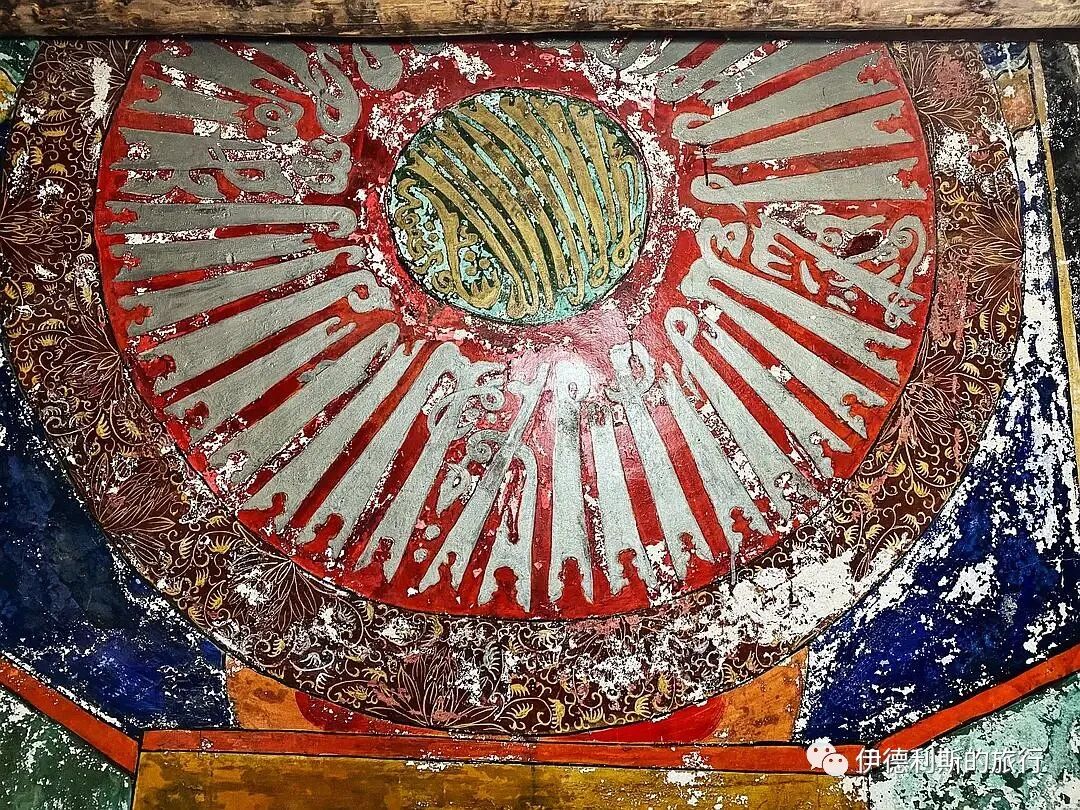
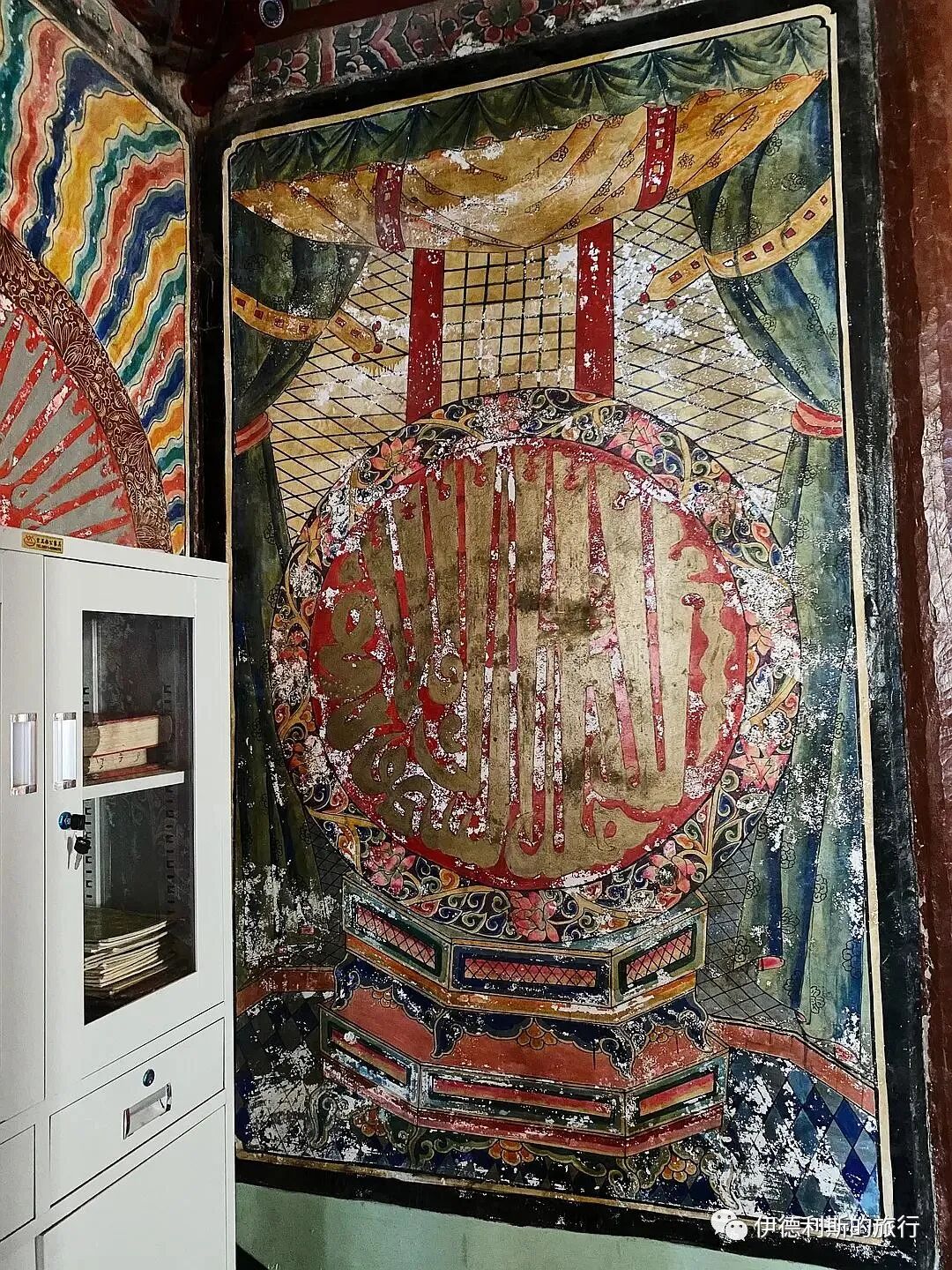
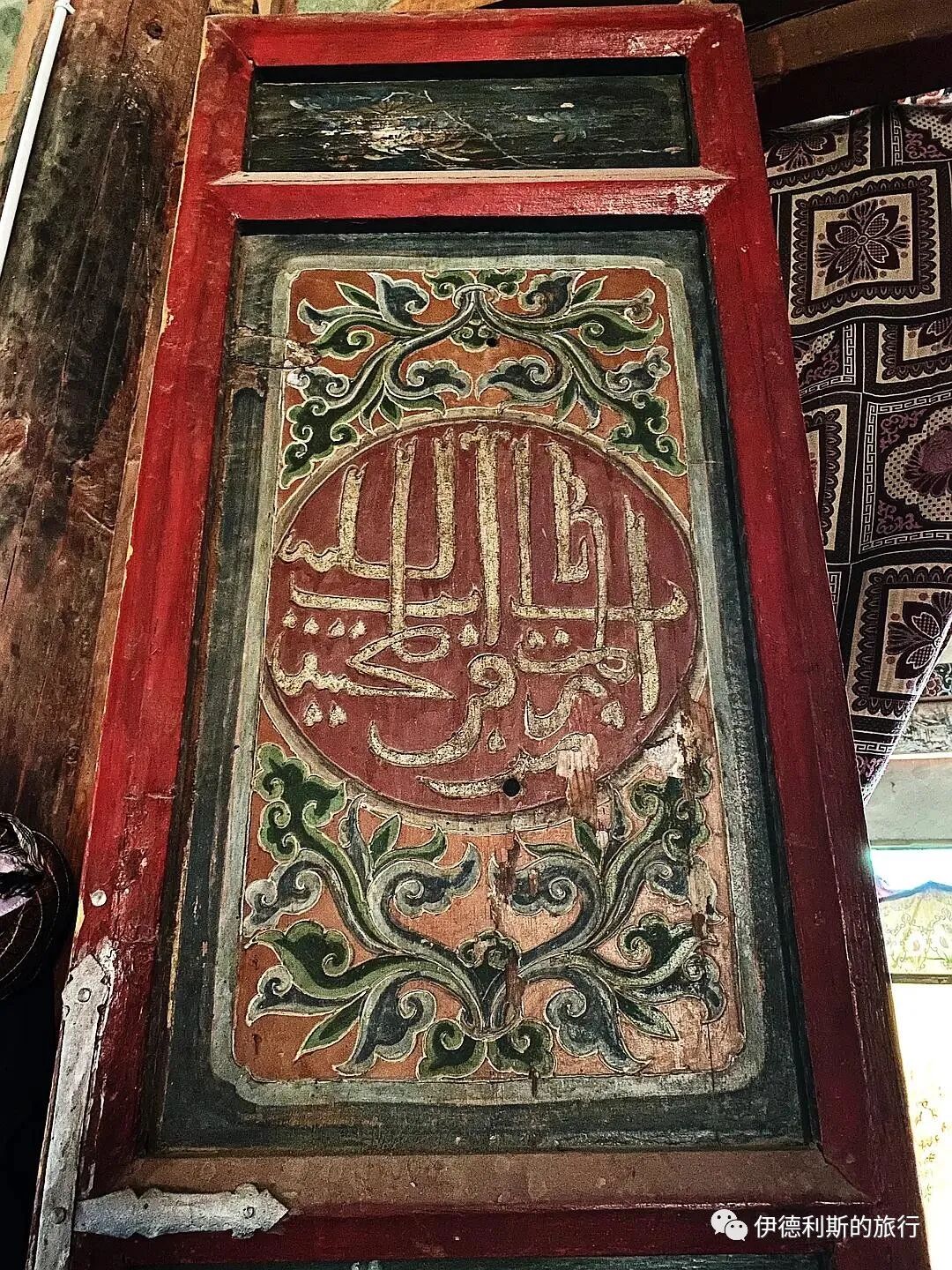
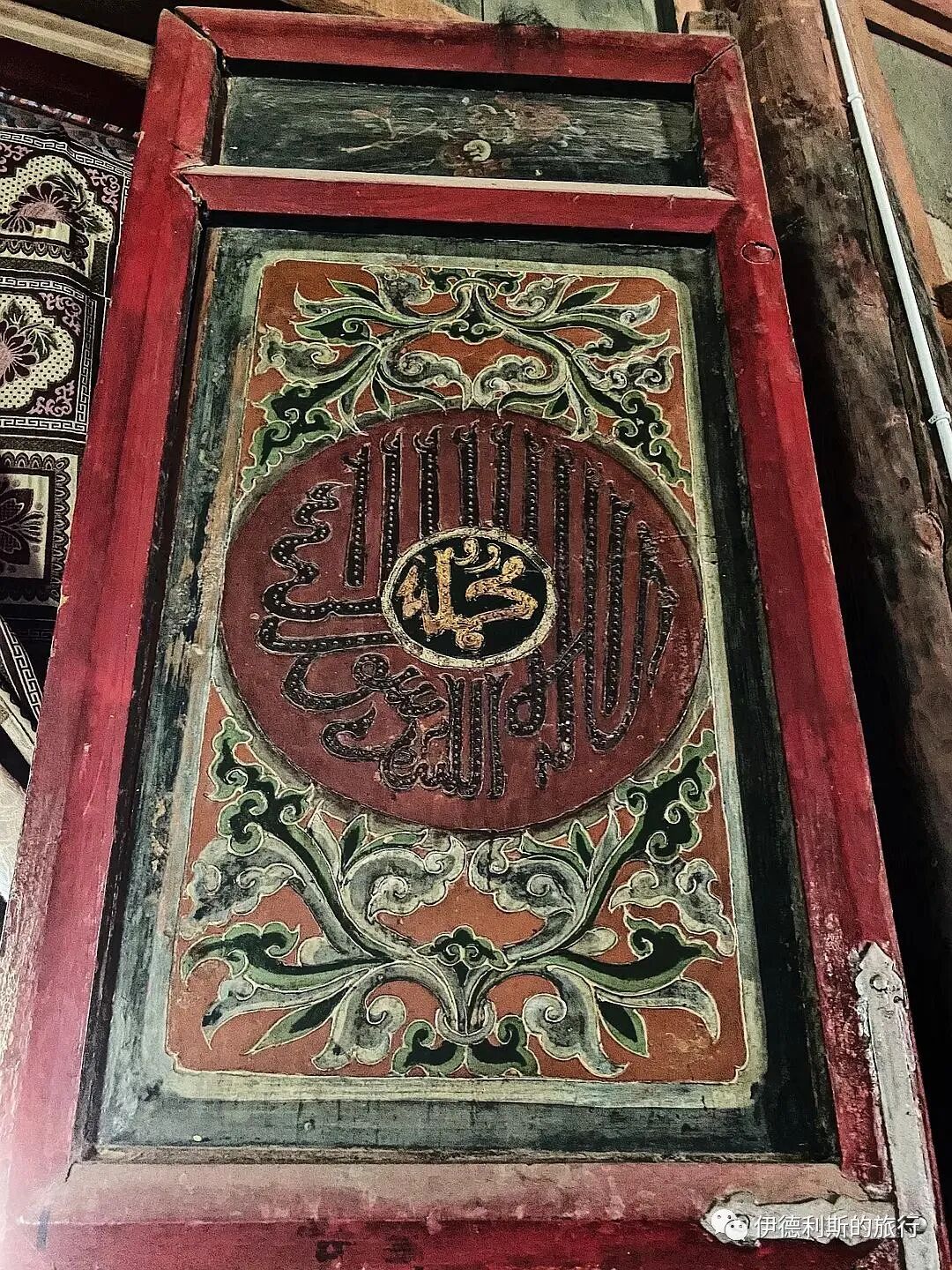
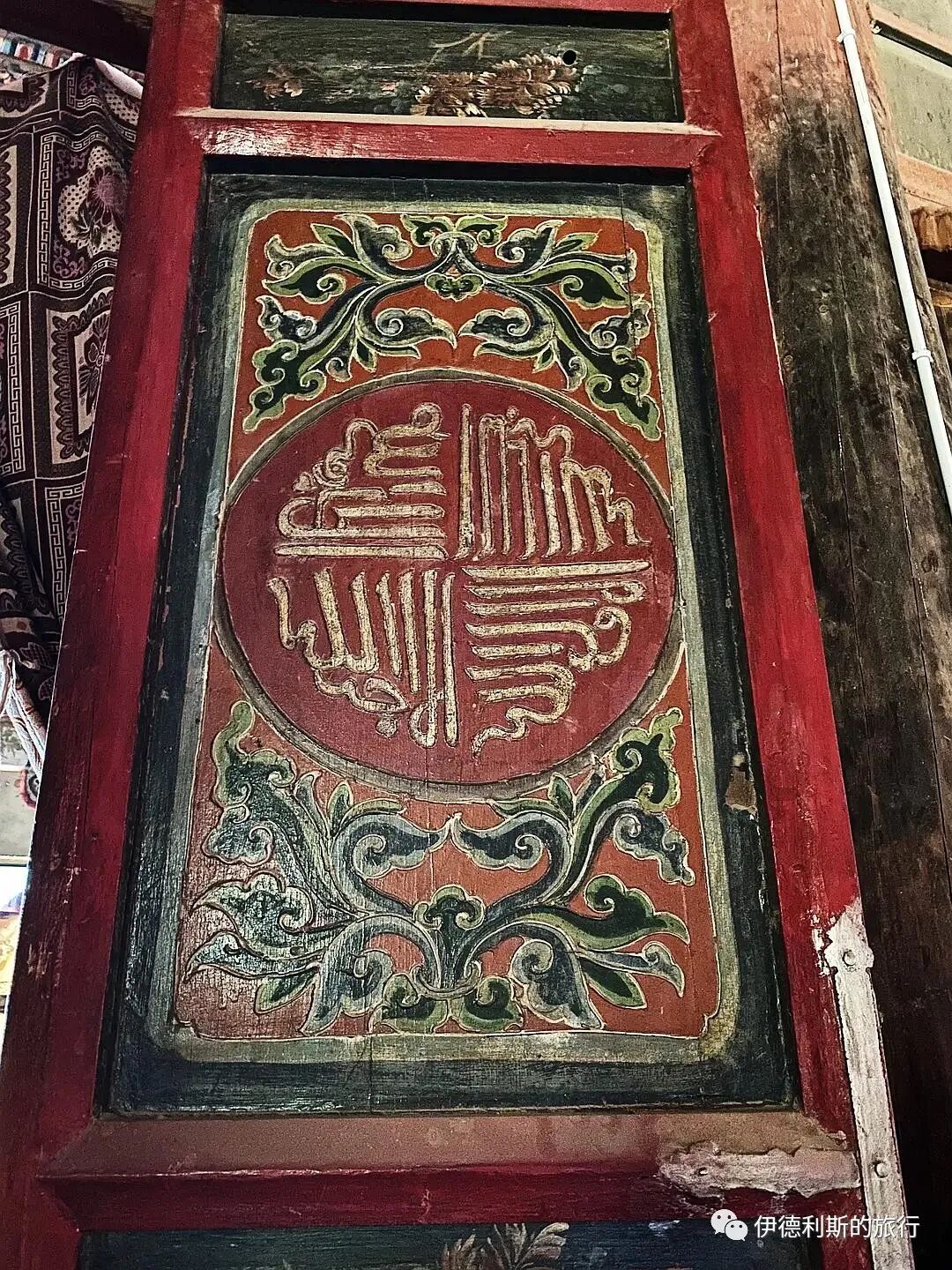
The mihrab of the kiln-style hall
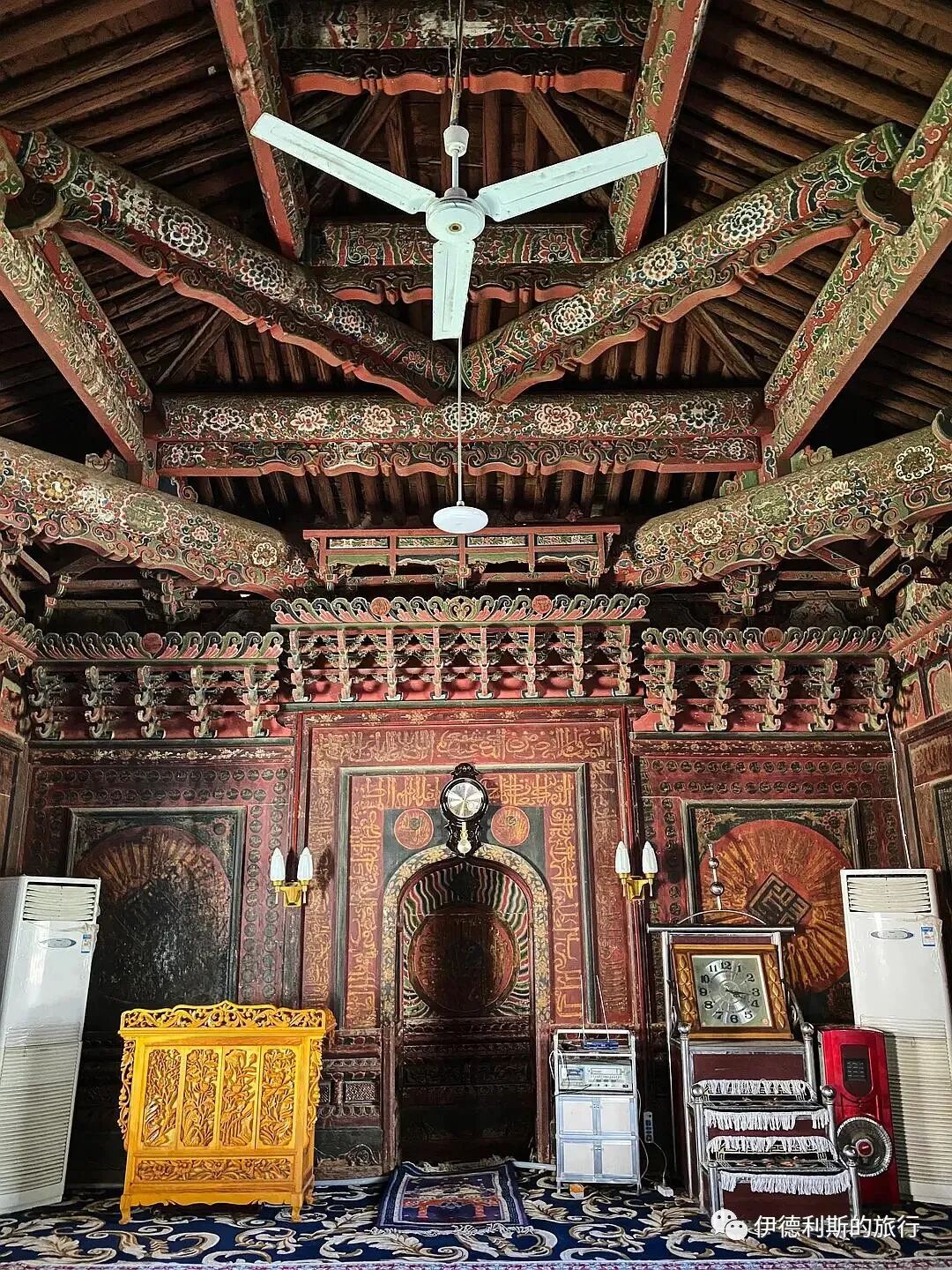
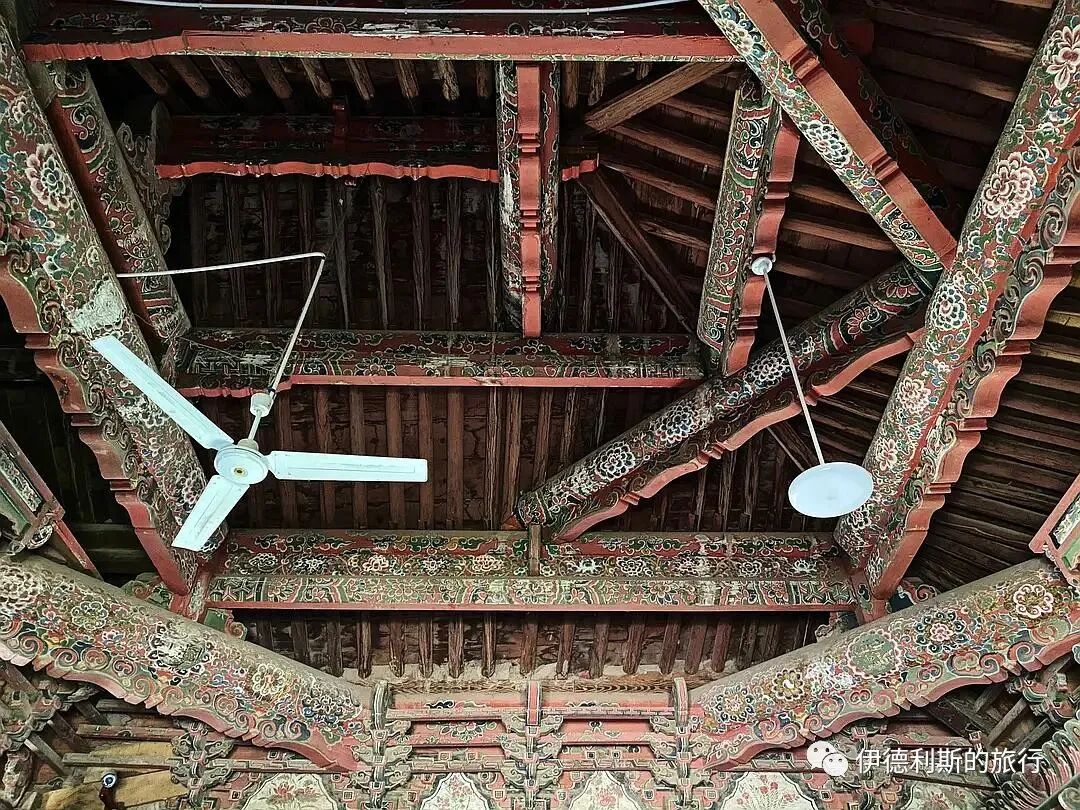
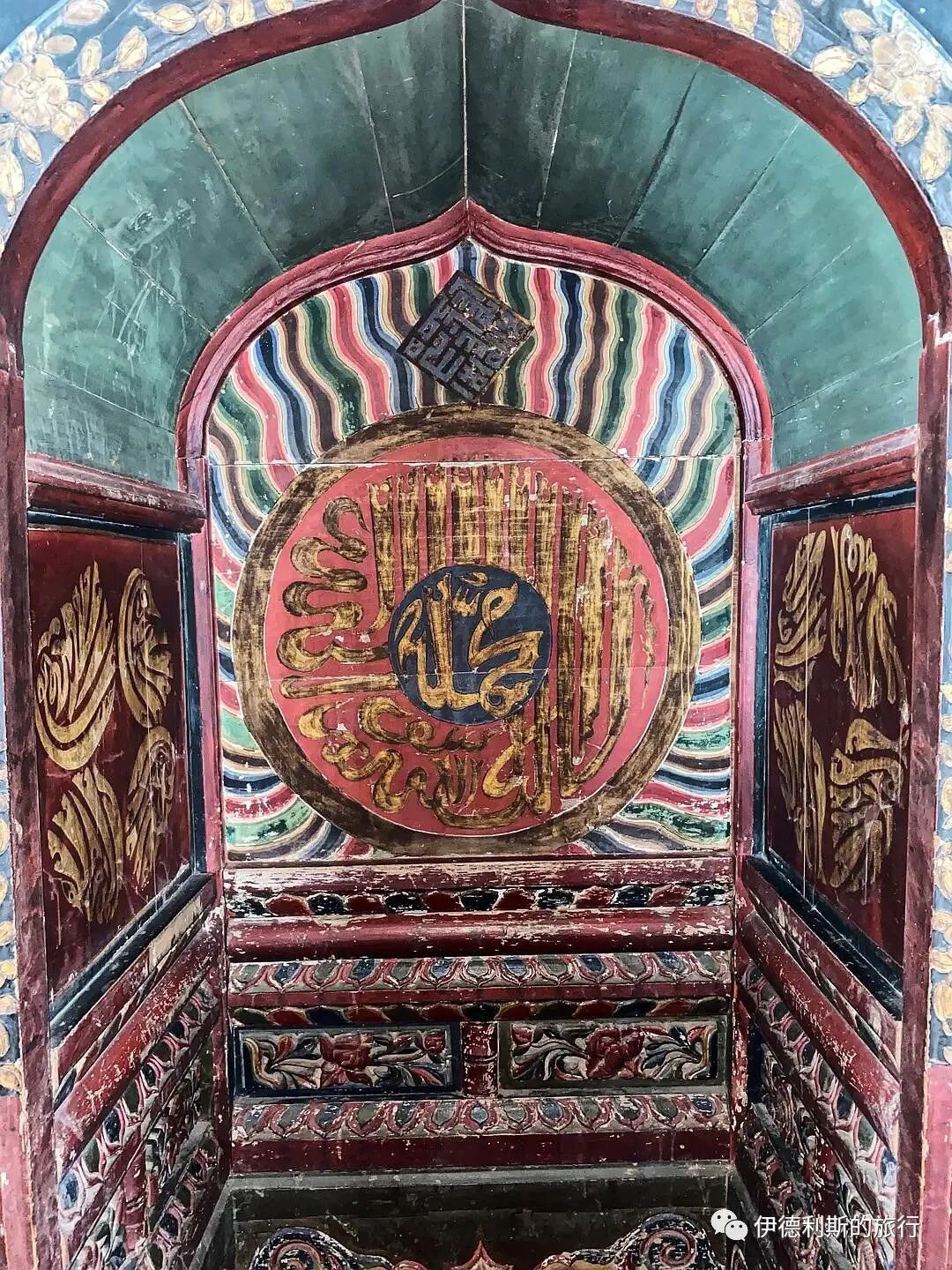
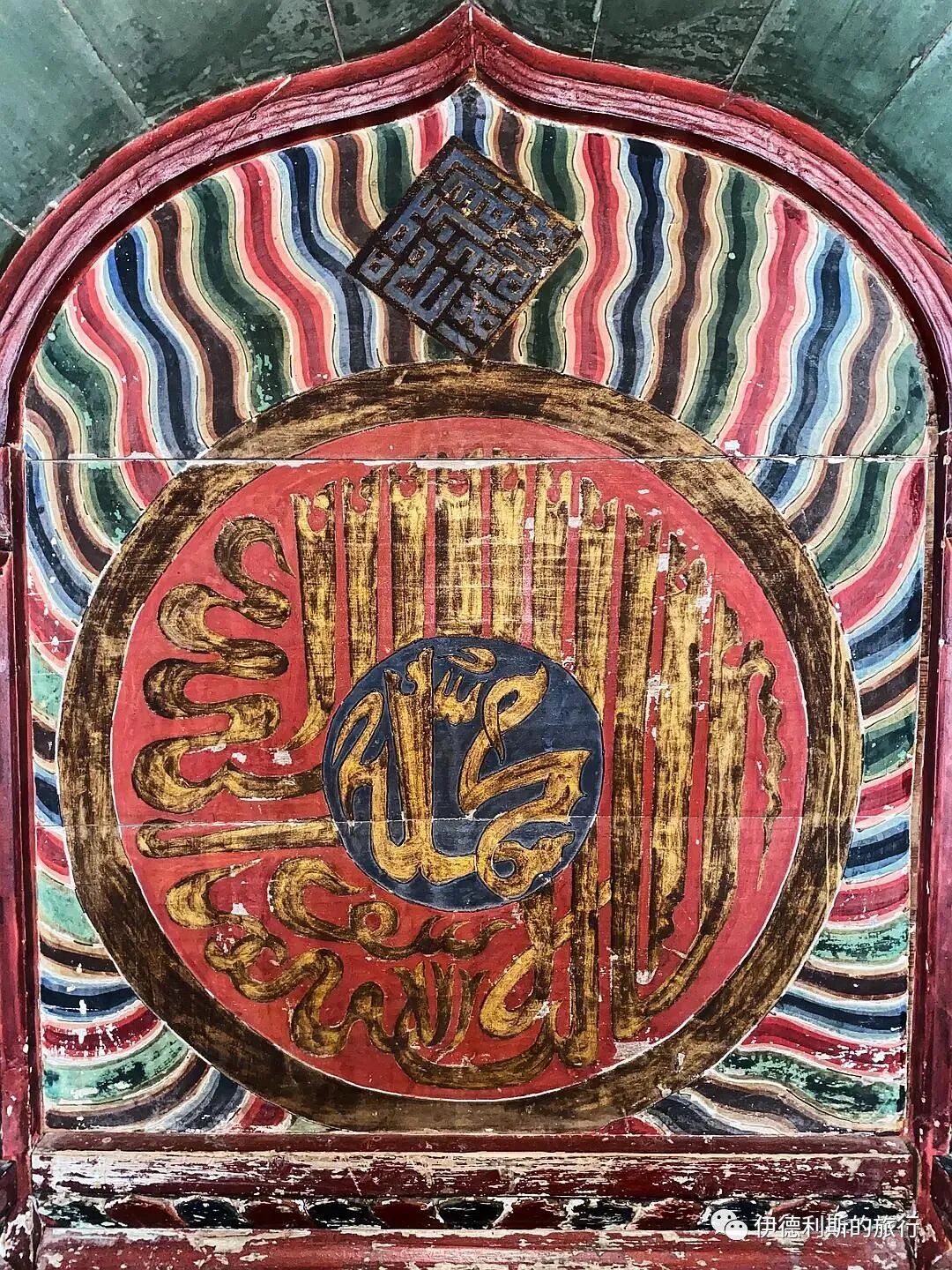
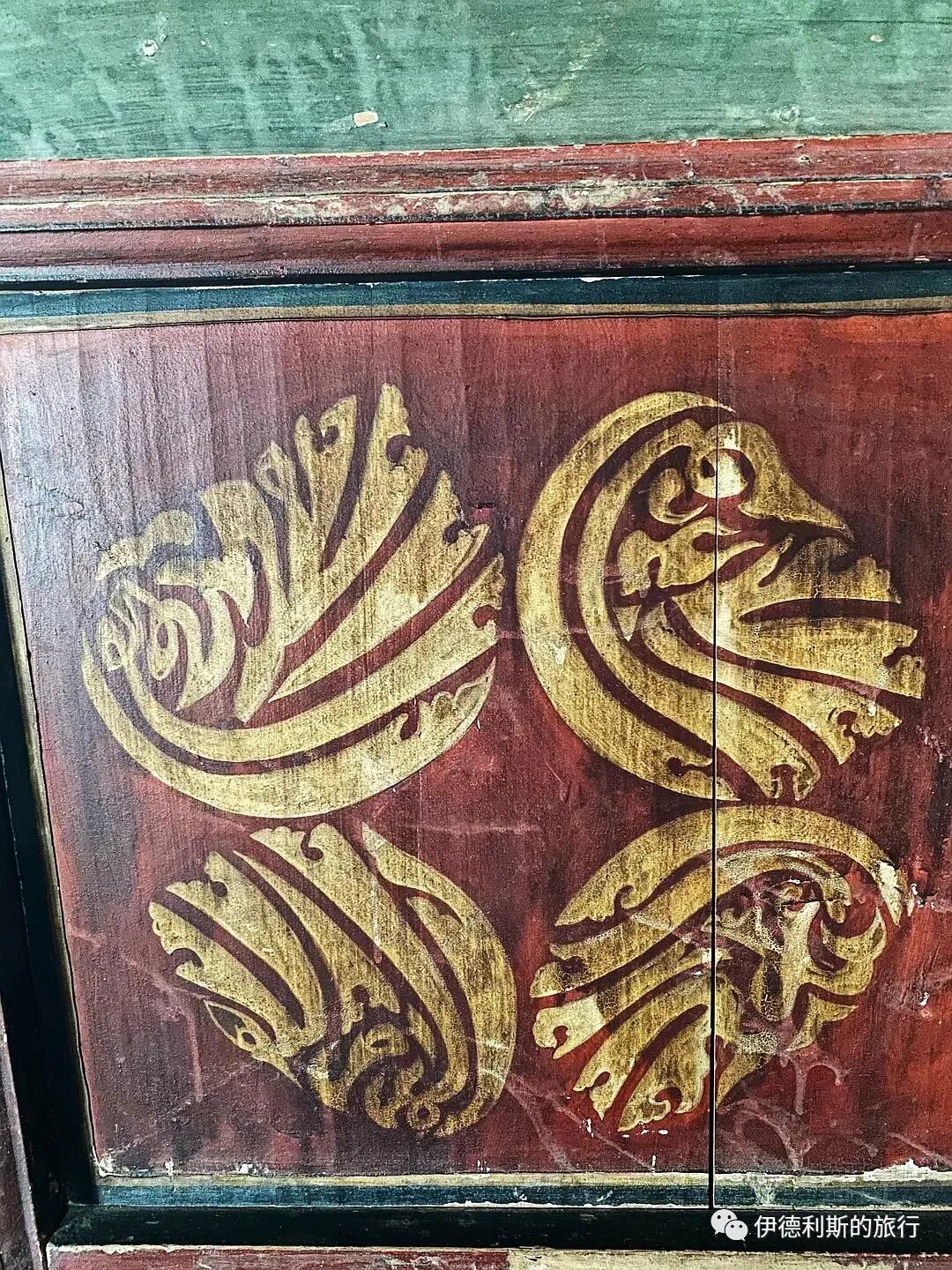
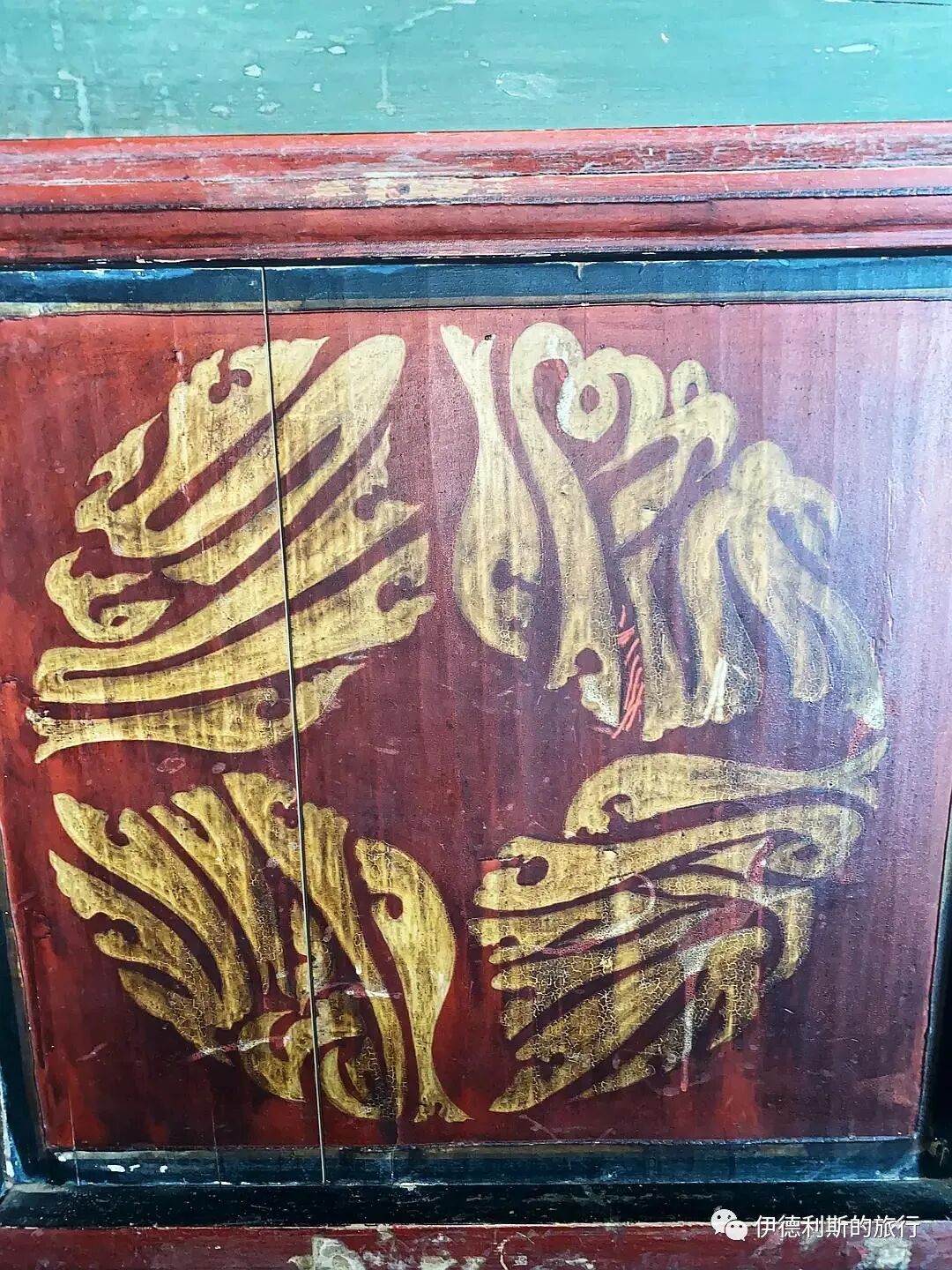
Nine Traditional Mosques and Three Gongbei Shrines in Qinghai (Part 2)
Articles • ali2007fr posted the article • 0 comments • 252 views • 2026-05-17 00:18
Summary: This travel note introduces Nine Traditional Mosques and Three Gongbei Shrines in Qinghai (Part 2). Tashapo Mosque in Xunhua was first built in 1480 (the 16th year of the Chenghua reign of the Ming Dynasty) and rebuilt in 1755 (the 20th year of the Qianlong reign of the Qing Dynasty). It is useful for readers interested in Qinghai Mosques, Chinese Muslims, Muslim Heritage.
The combination of flowers, plants, and calligraphy
4. Tashapo Mosque
Tashapo Mosque in Xunhua was first built in 1480 (the 16th year of the Chenghua reign of the Ming Dynasty) and rebuilt in 1755 (the 20th year of the Qianlong reign of the Qing Dynasty).
The base of the mosque's minaret is made of brick, while the upper part is a wooden pavilion with a double-eaved hexagonal spire. Inside, there is a hexagonal caisson ceiling that tapers layer by layer, which is very exquisite.
The gatehouse is a three-bay, three-story hip-roof structure, with grey brick splayed walls on both sides and a screen wall in front of the gate.
The main prayer hall of the mosque
Inside the main hall, there are exquisite wood carvings. It is a great pity that only a very few parts of the murals have been preserved, and this is the first time I have seen quotations inside the main hall; previously, I had only seen them on the outer walls of the main hall.
5. Labian Mosque
Labian Mosque in Xunhua County was first built during the Qianlong reign; the main hall was rebuilt in 2015, and only the minaret and the two side gate towers remain of the ancient architecture. The minaret is 18 meters high, with a brick-built lower level and a wooden pavilion on the upper level, featuring dougong brackets, upturned eaves, and a hexagonal spire.
6. Zhangga Mosque
Zhangga Mosque in Xunhua County was first built in 1406 (the fourth year of the Yongle reign of the Ming Dynasty) and rebuilt during the Qing Dynasty. The minaret is 23 meters high, with a brick-built lower level and a wooden pavilion on the upper level, featuring a double-eaved hexagonal spire, and the top-level hexagonal caisson ceiling is formed by three layers of stacked dougong brackets in an inverted bucket shape.
The main hall of the mosque, though it is a pity that much of the wooden structure has been renovated and replaced.
The murals remaining in the main hall depict Mecca using traditional Chinese painting techniques.
7. Kewa Mosque
Kewa Mosque in Xunhua County was first built in 1403 (the first year of the Yongle reign of the Ming Dynasty) and expanded during the Qing Dynasty; it is the Hayit Mosque (Jumu'ah Mosque) for the Salar people's eight Gong and nine Gong groups. The lower level of the minaret is made of brick with exquisite calligraphy and landscape brick carvings, while the upper level is a wooden pavilion with a double-eaved hexagonal roof.
To the right of the main hall is a larger main hall that was newly built in the northern part of the complex in recent years. I believe this approach of building a new main hall next to the historic one is the best choice at this stage, as it meets the needs of religious activities while protecting the original historic building. However, this approach is still in the minority; most practices involve demolishing the original historic building and rebuilding a new one. It is only because the Kewa Mosque itself is a national-level cultural relic protection unit that it is impossible to demolish the historic building.
Kewa Mosque has the richest murals among traditional Salar mosques. Let me first share the murals on the south side of the main hall, which are all about Surahs. view all
Summary: This travel note introduces Nine Traditional Mosques and Three Gongbei Shrines in Qinghai (Part 2). Tashapo Mosque in Xunhua was first built in 1480 (the 16th year of the Chenghua reign of the Ming Dynasty) and rebuilt in 1755 (the 20th year of the Qianlong reign of the Qing Dynasty). It is useful for readers interested in Qinghai Mosques, Chinese Muslims, Muslim Heritage.
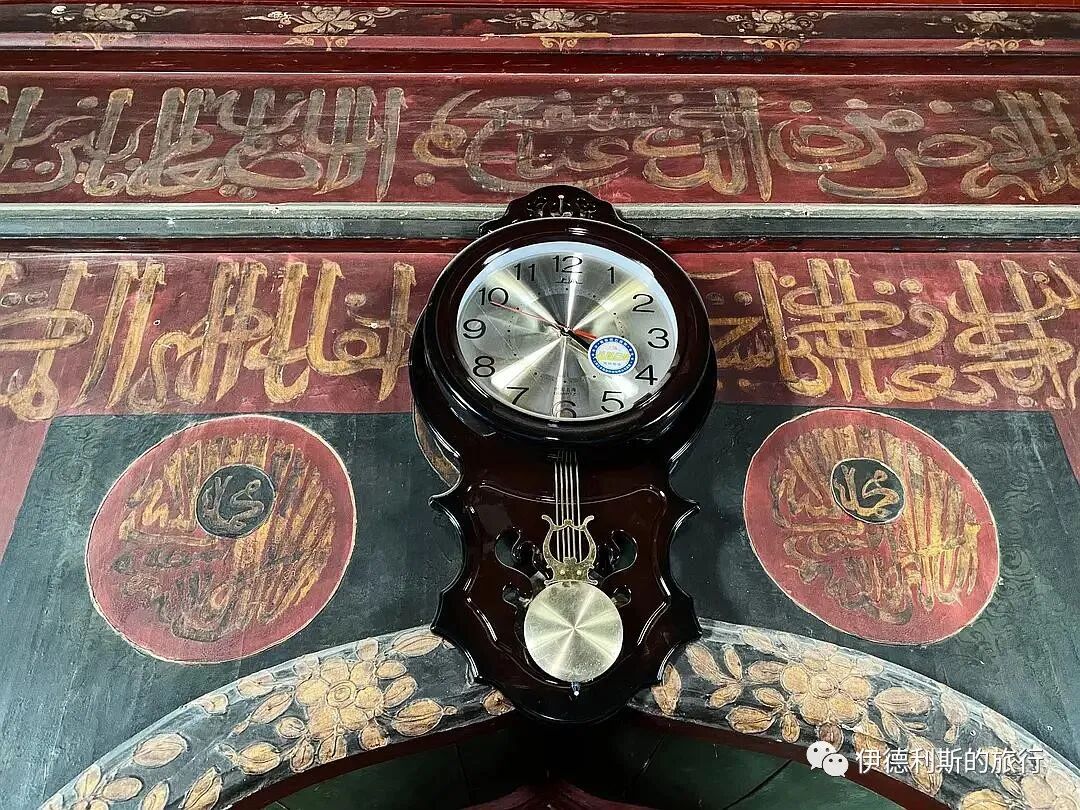
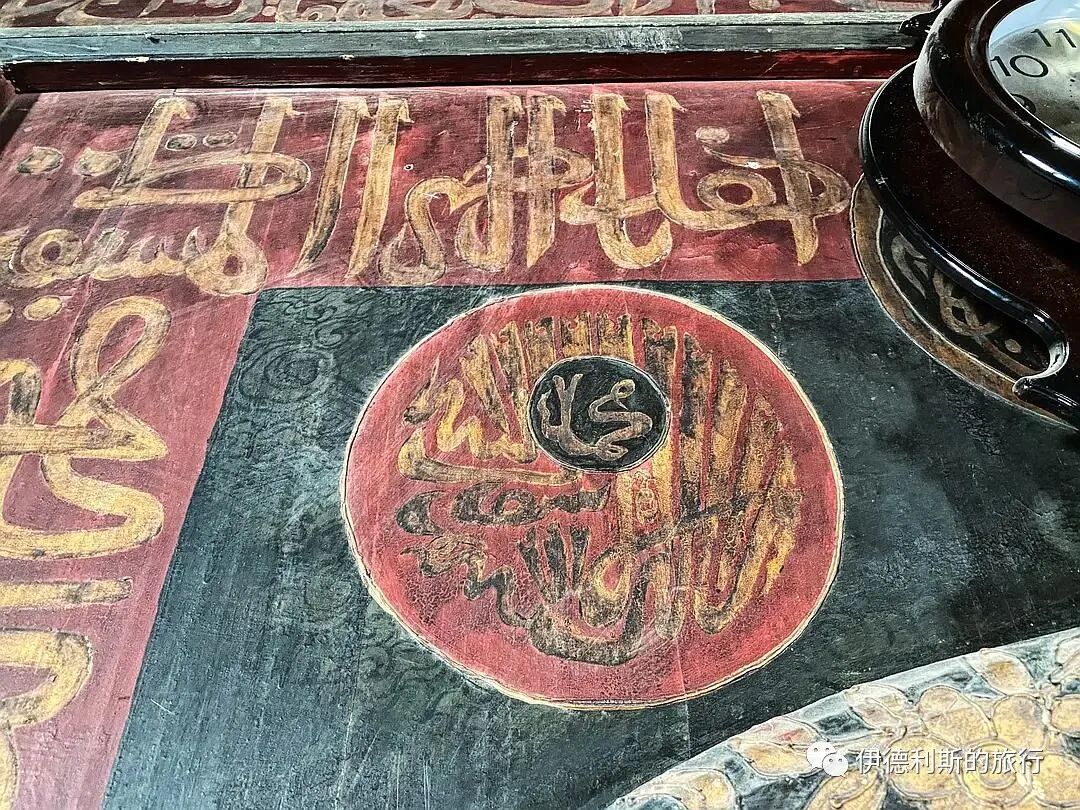
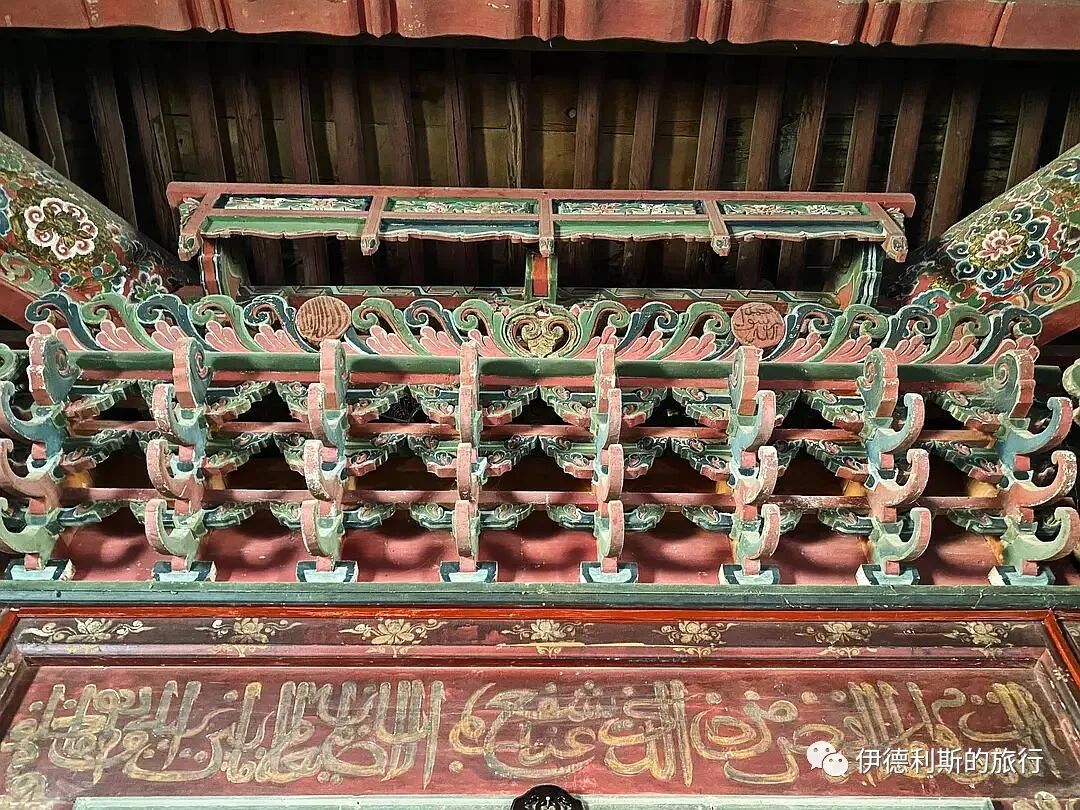
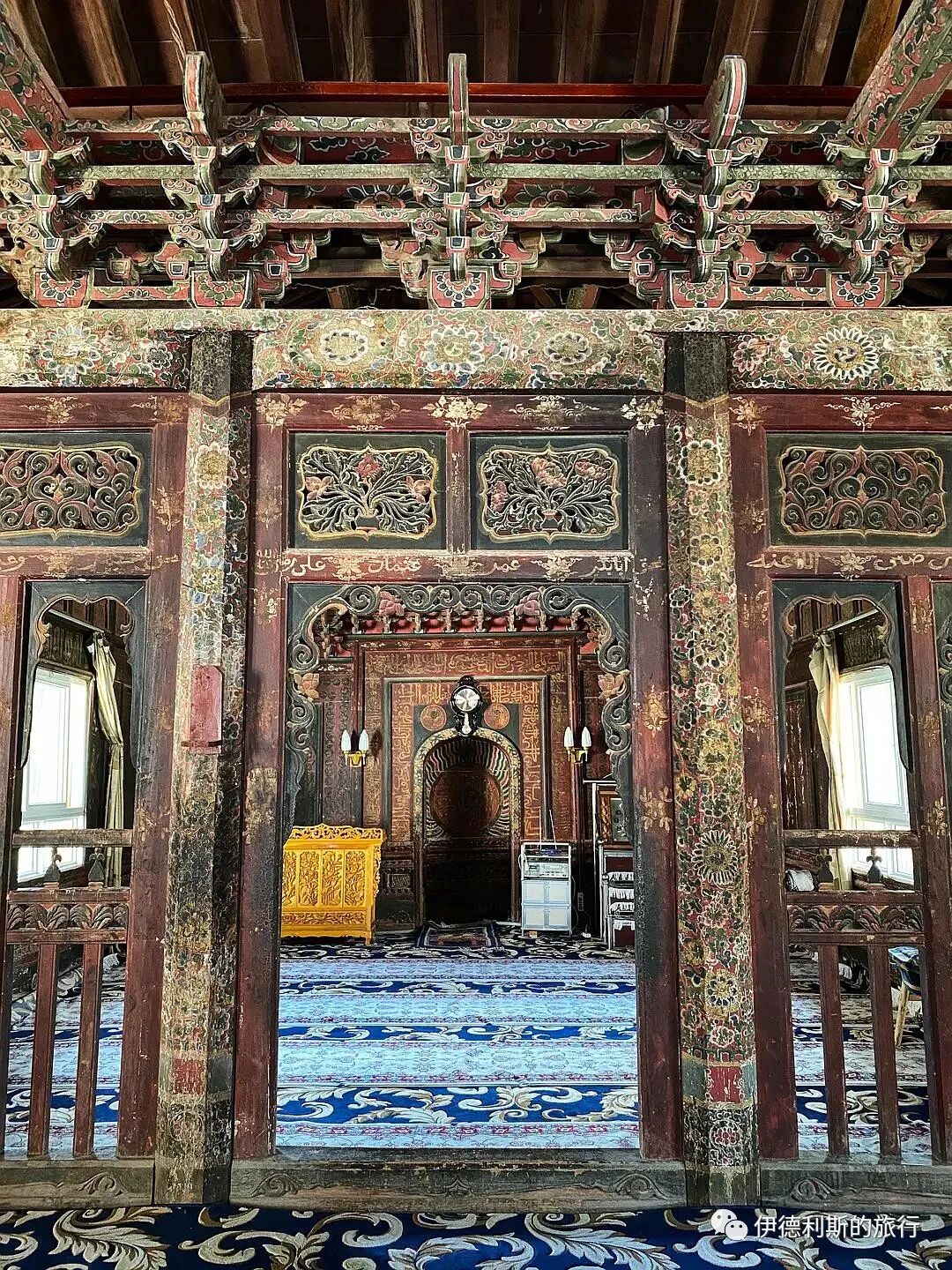
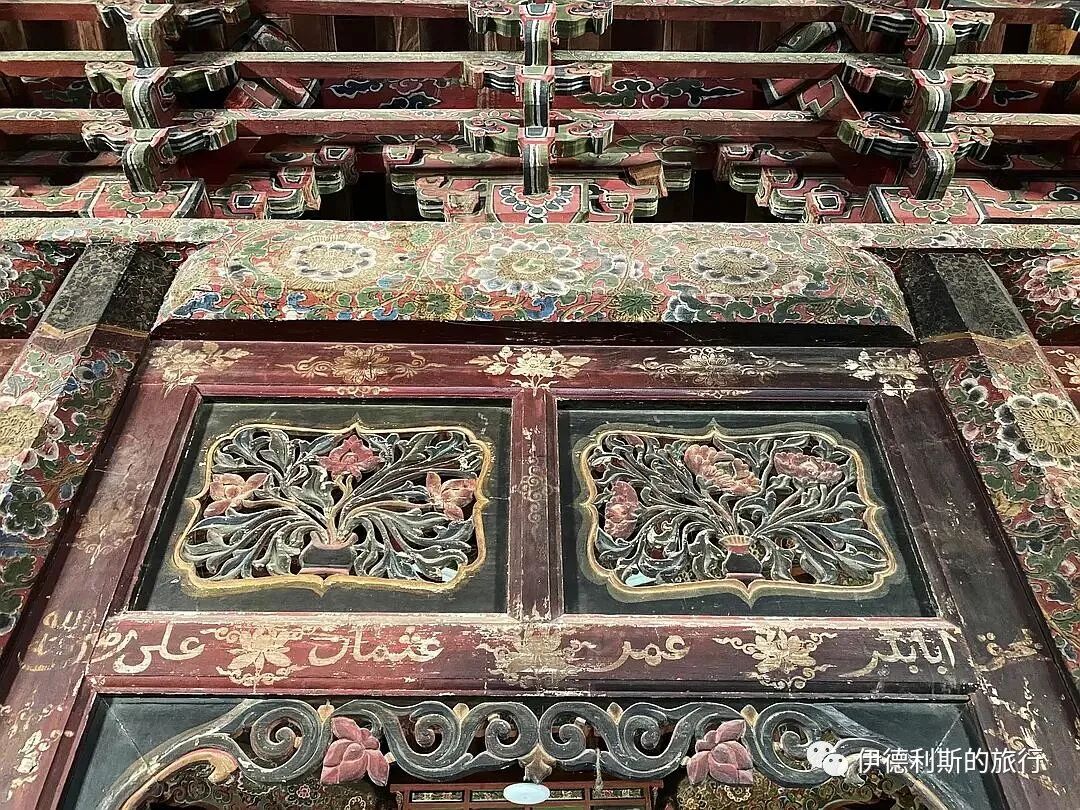
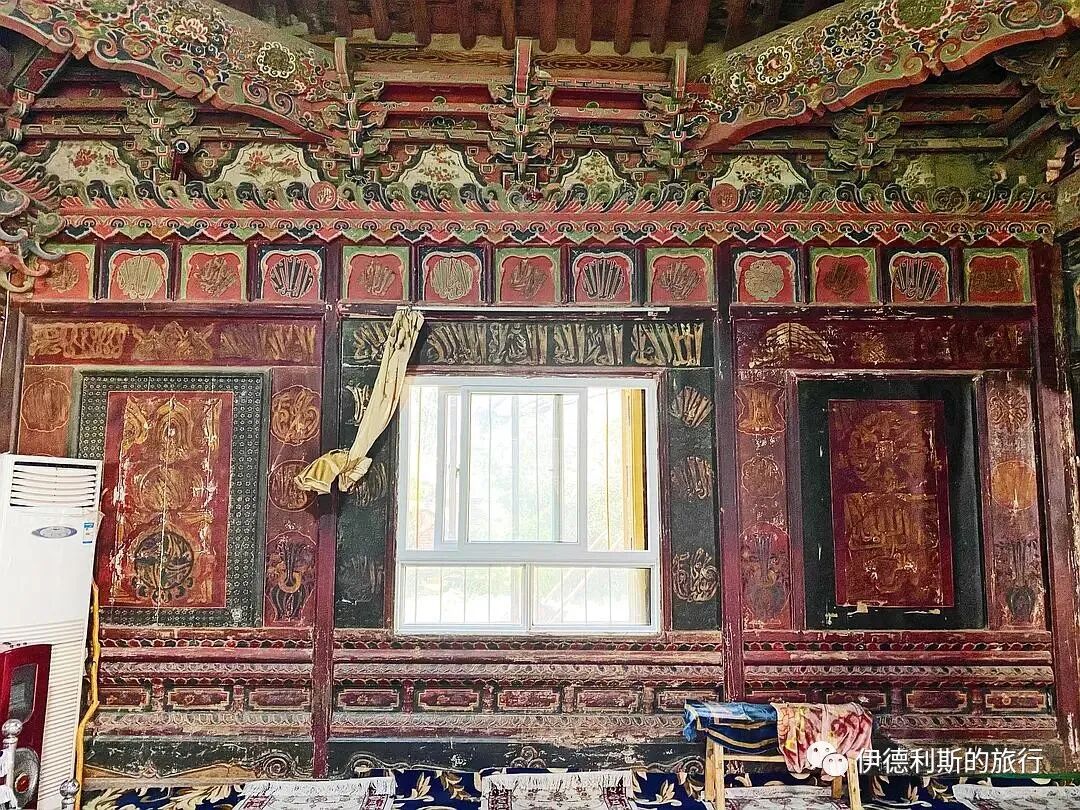
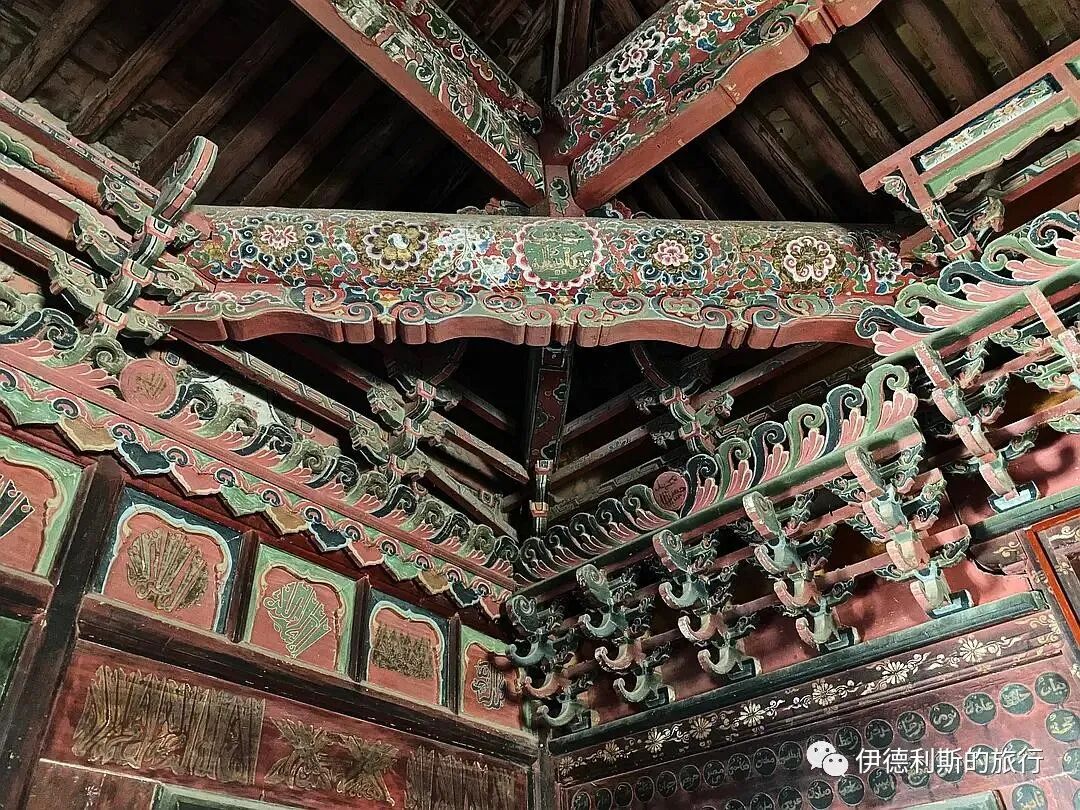
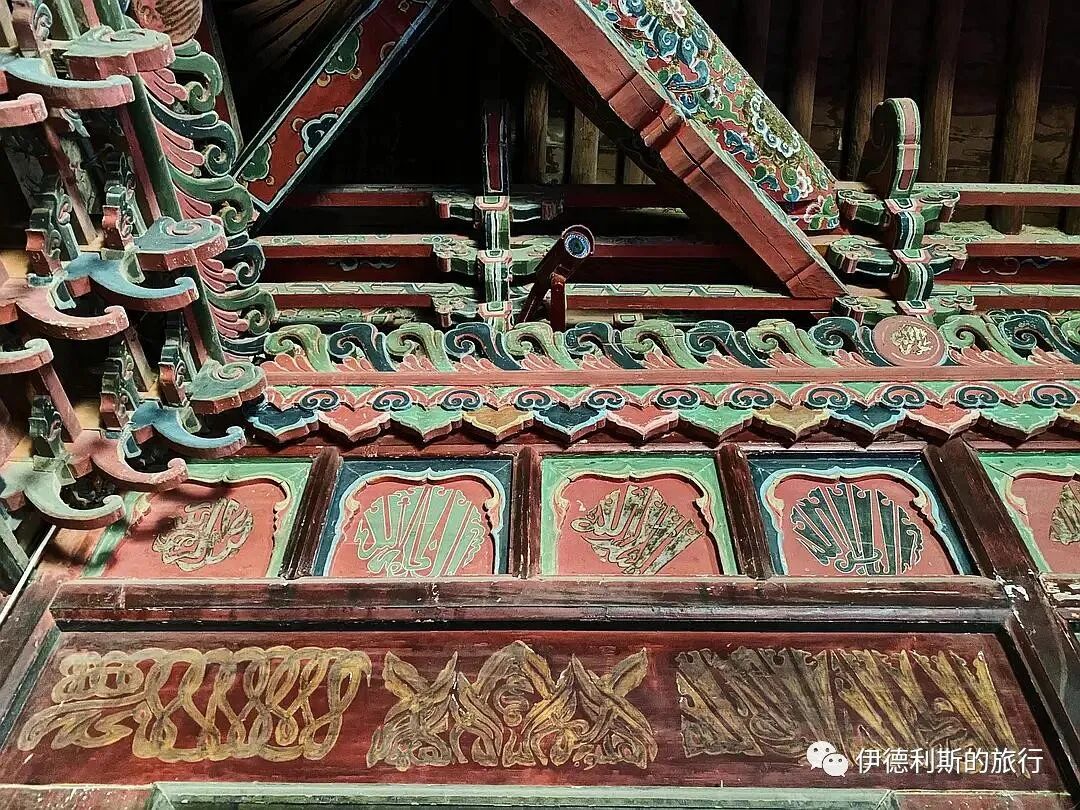
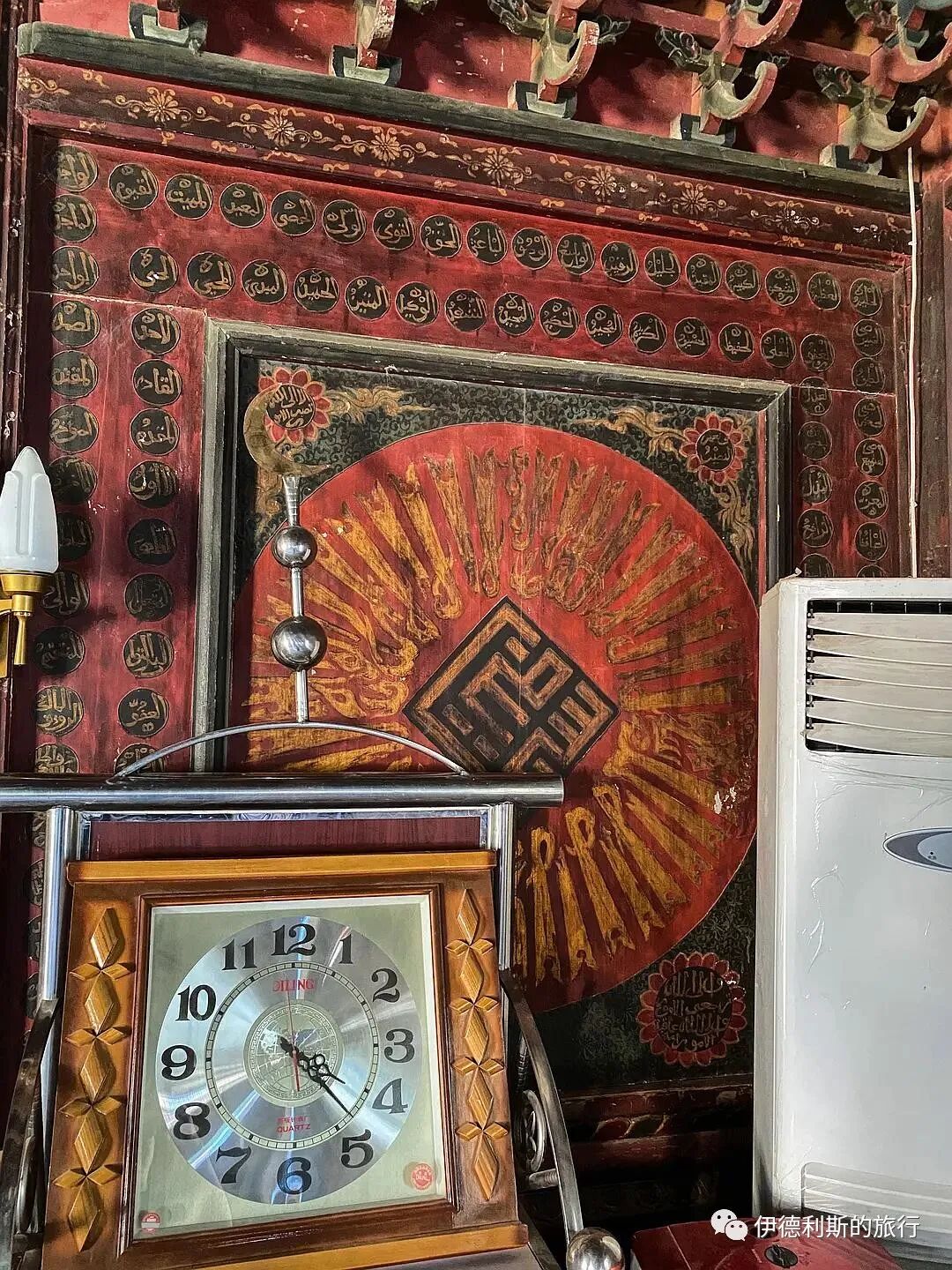
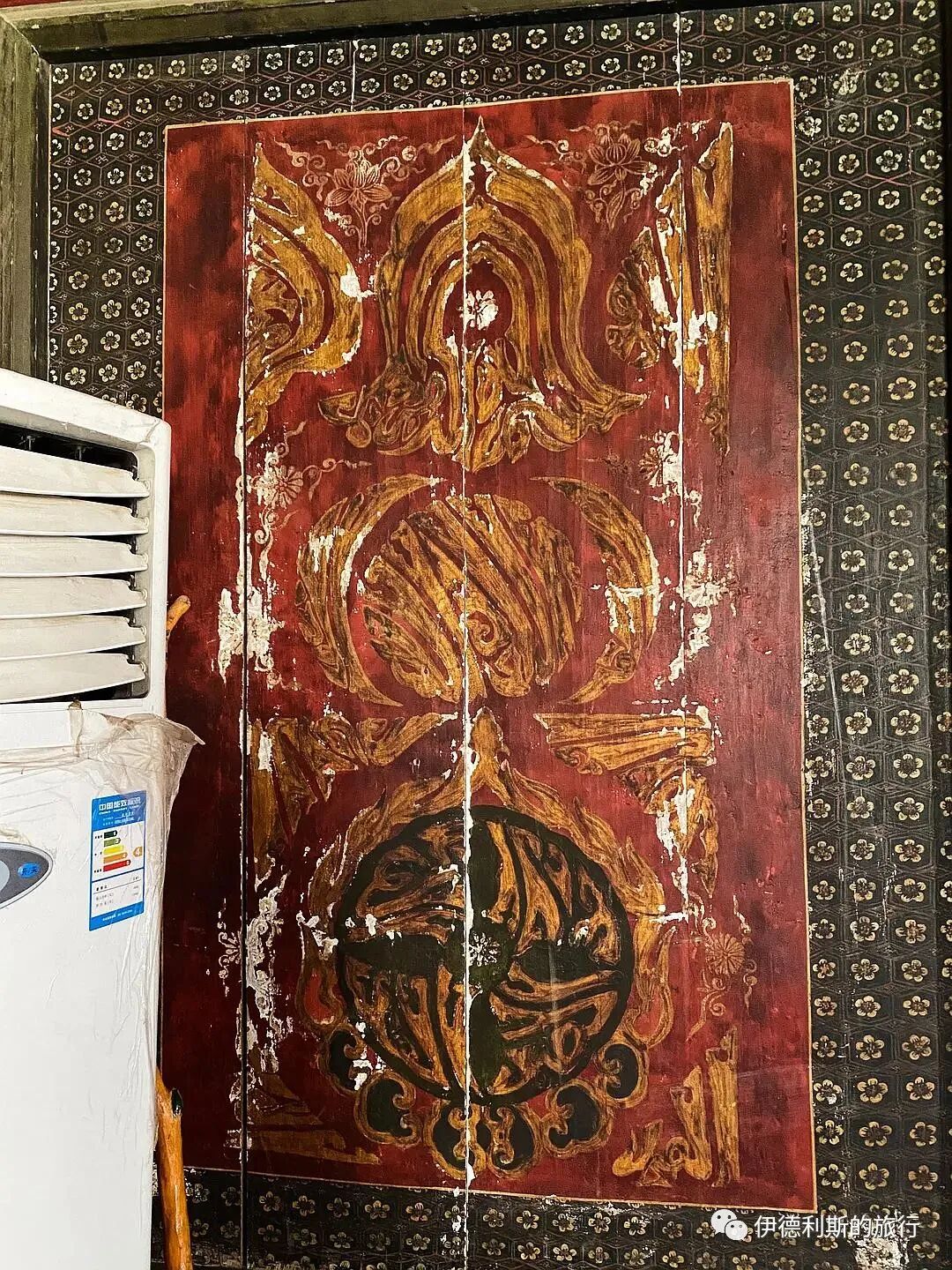
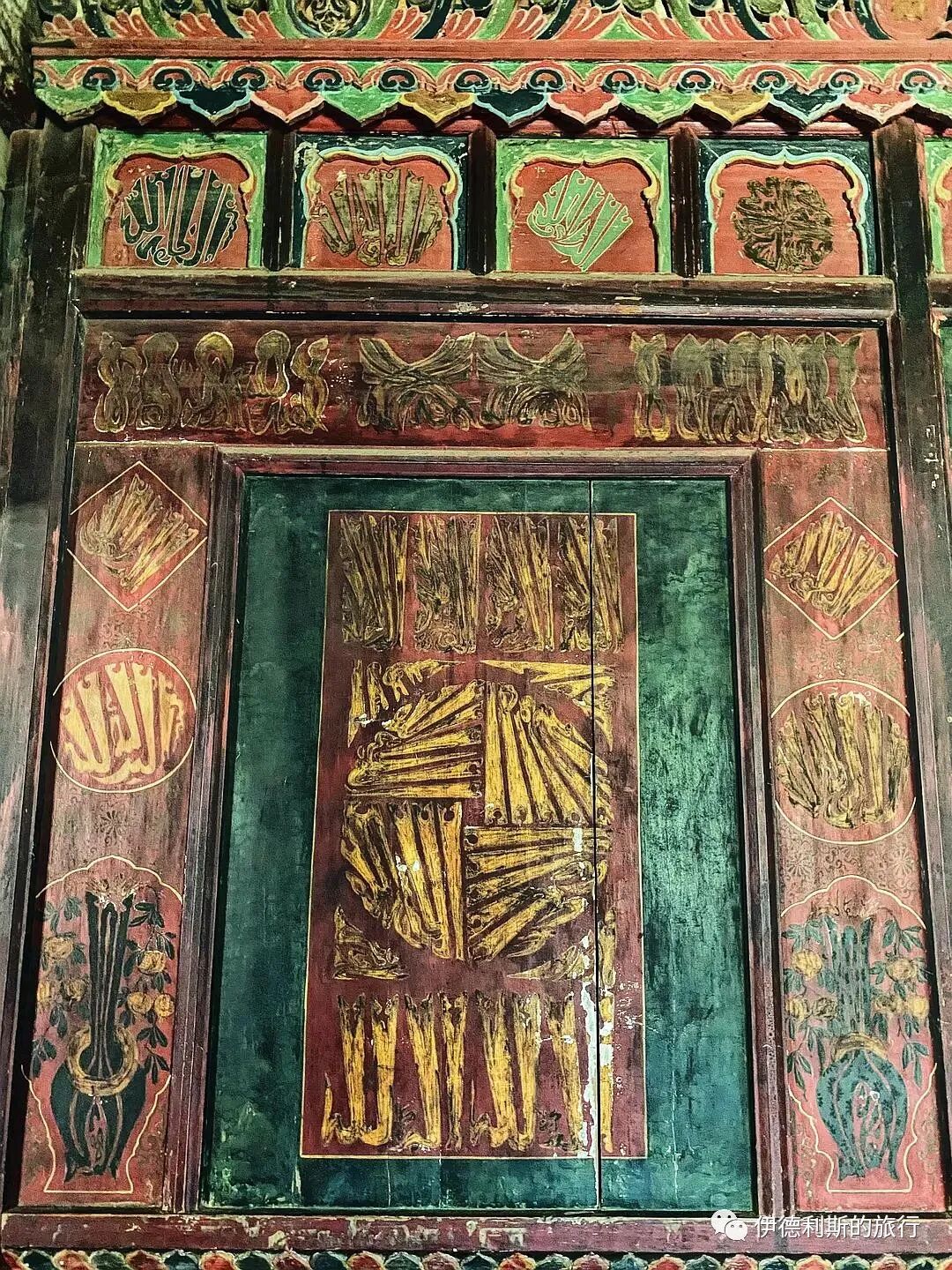
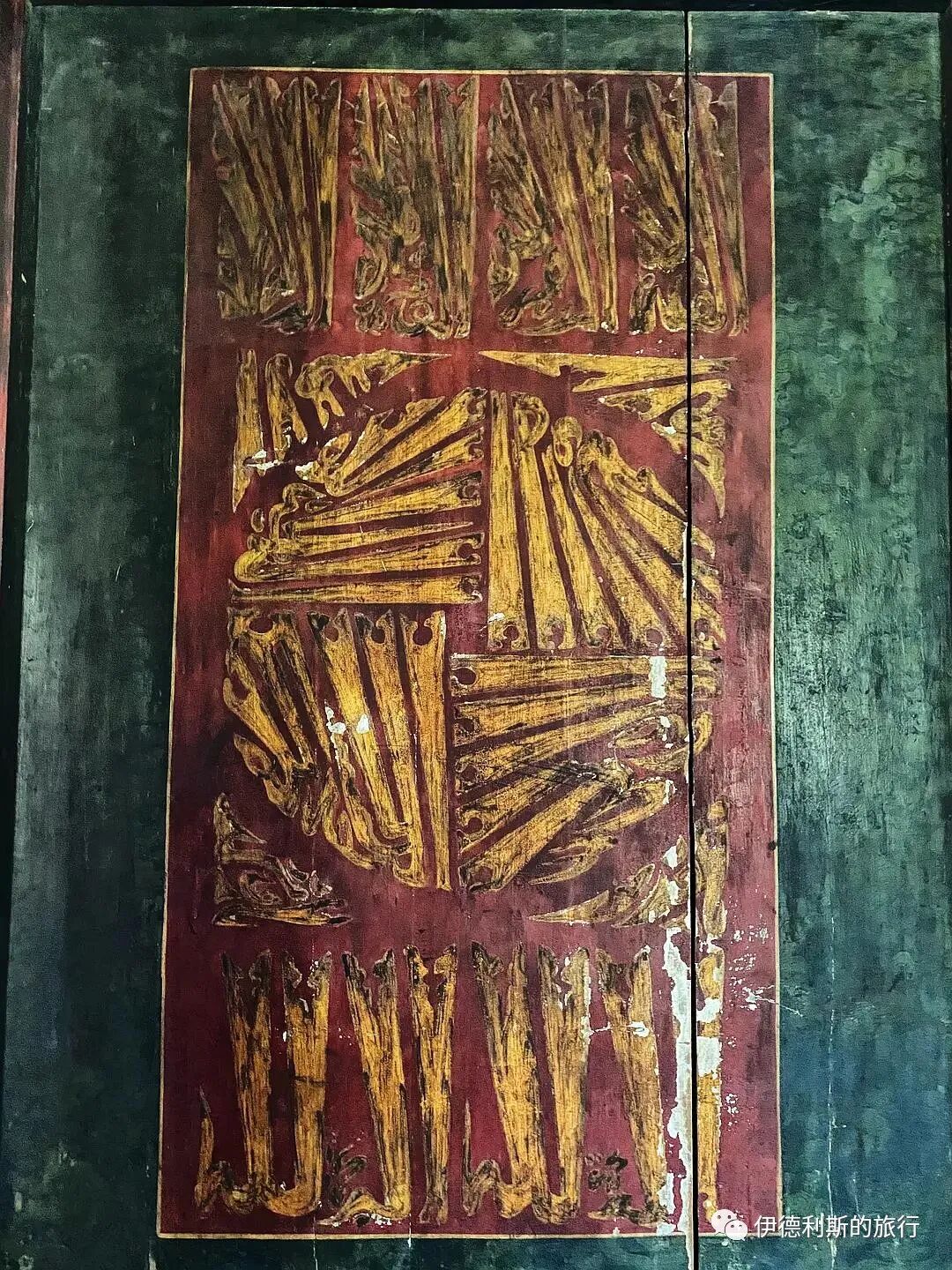
The combination of flowers, plants, and calligraphy
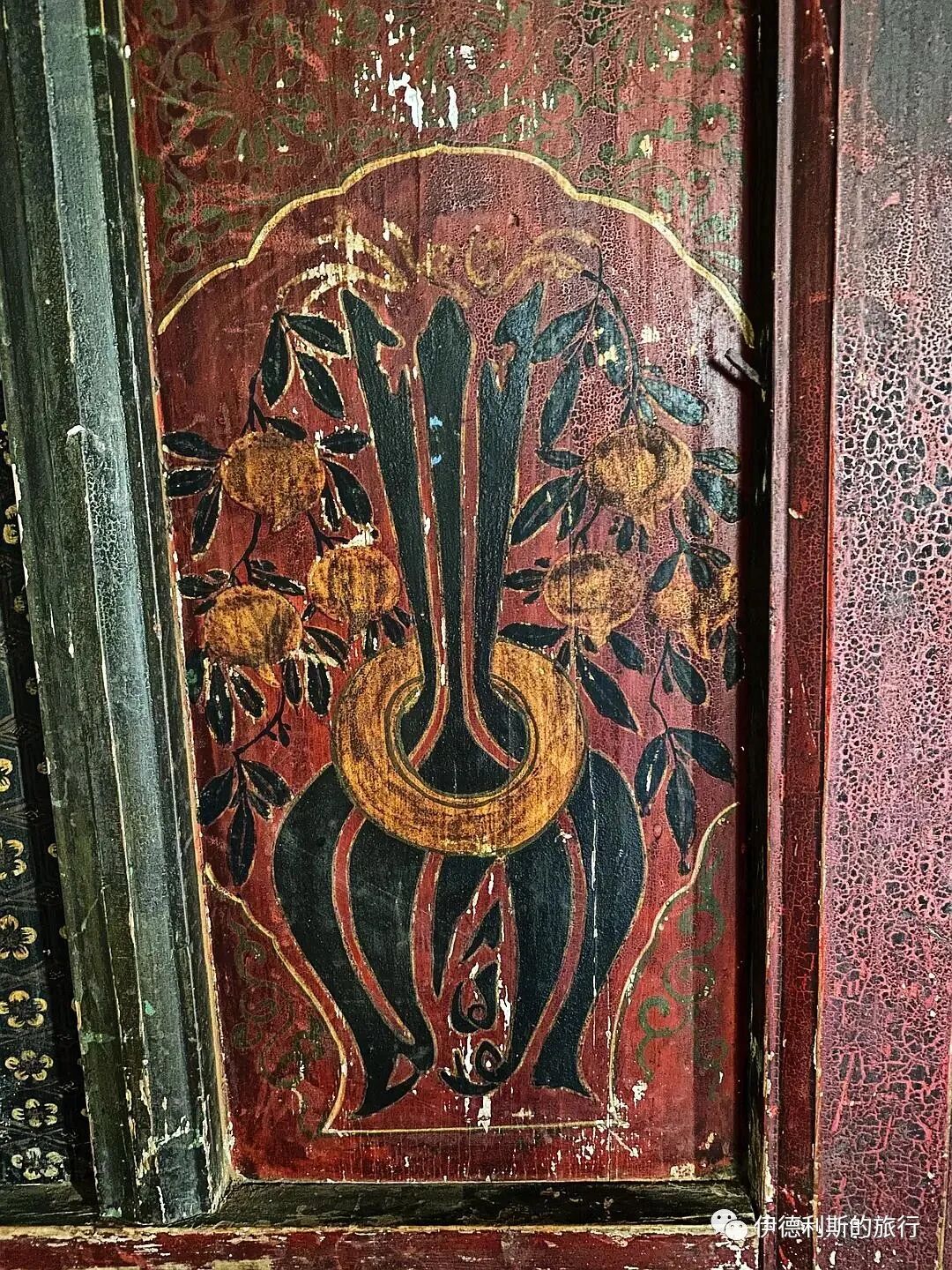
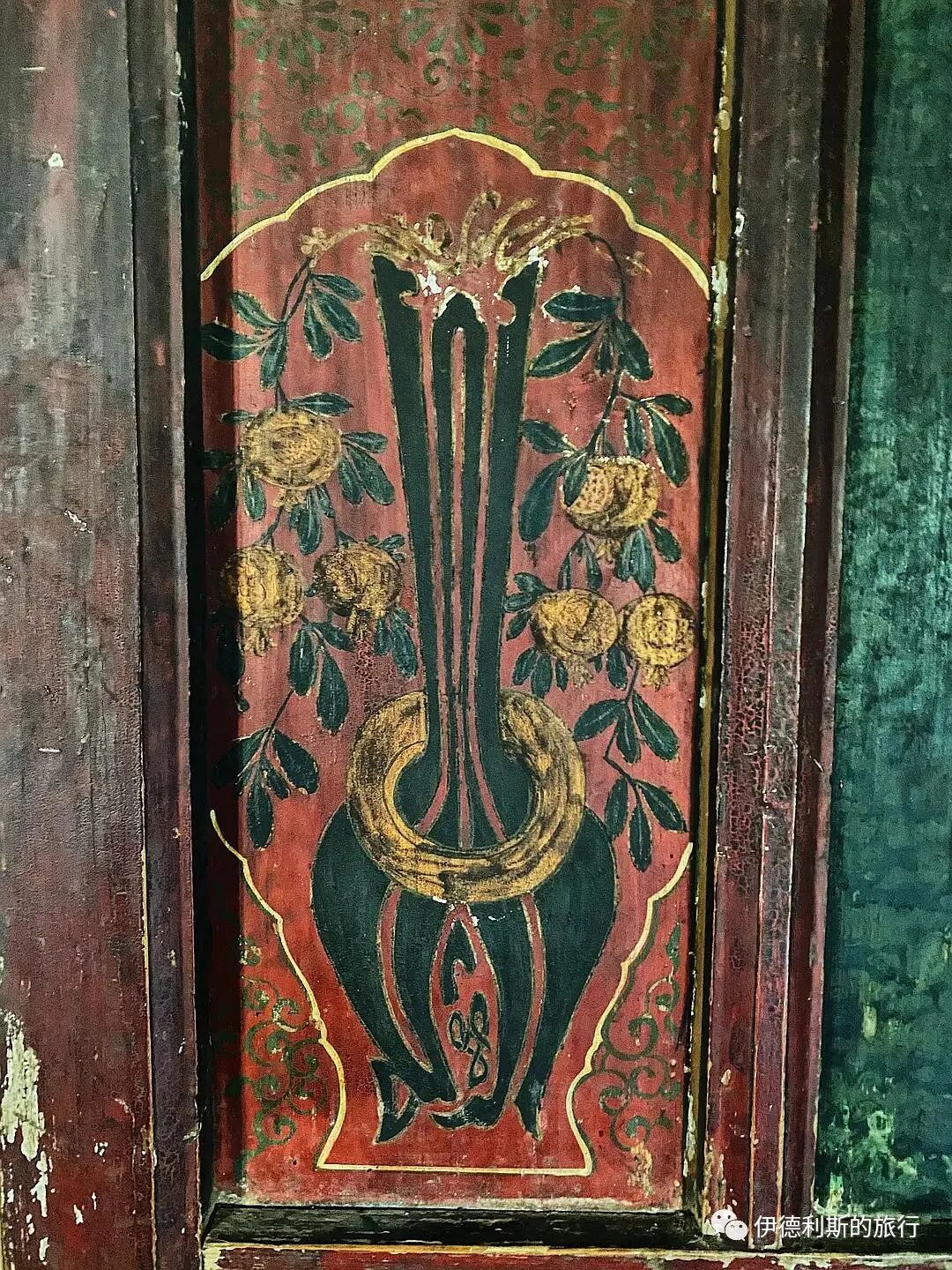
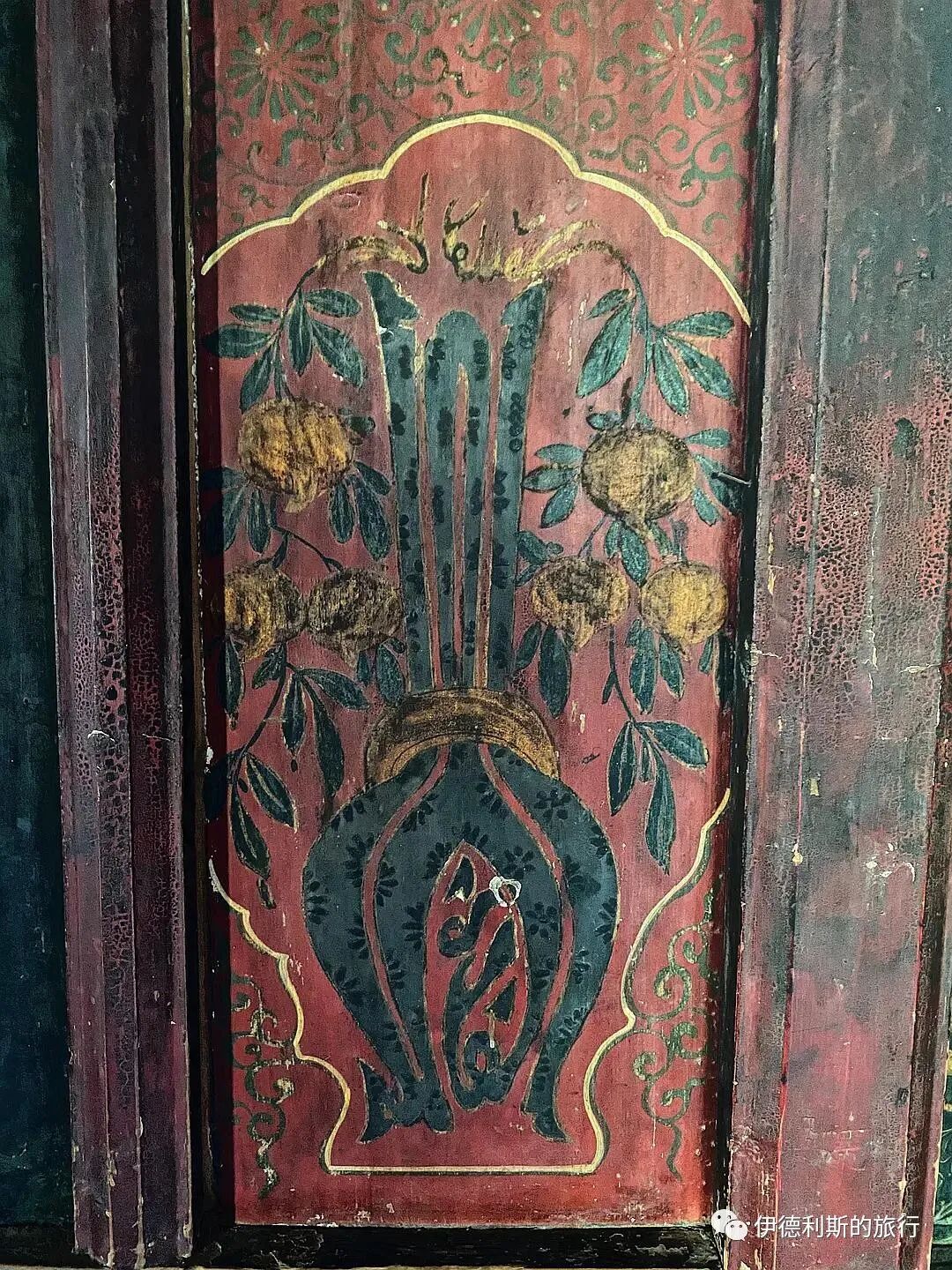
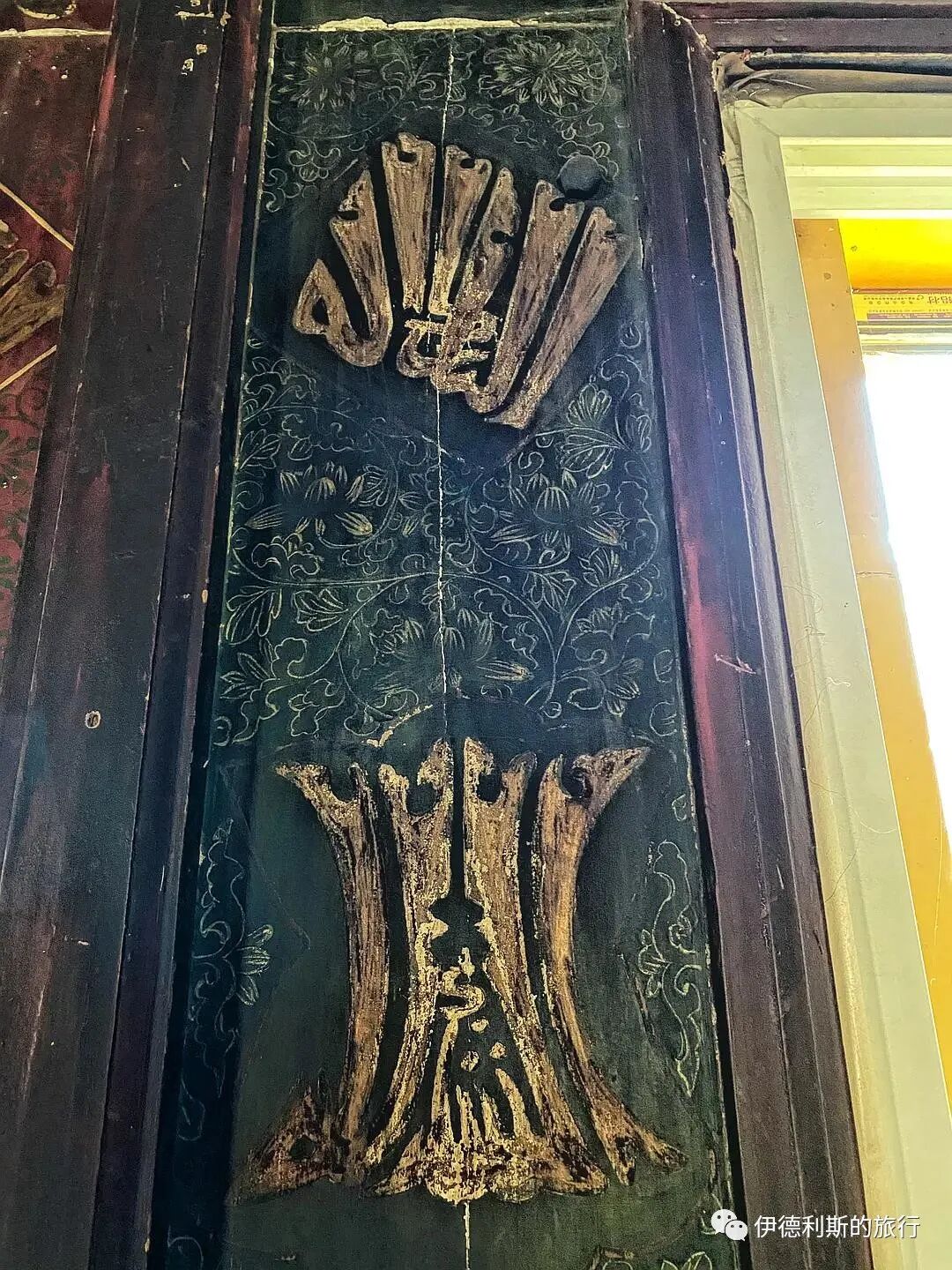
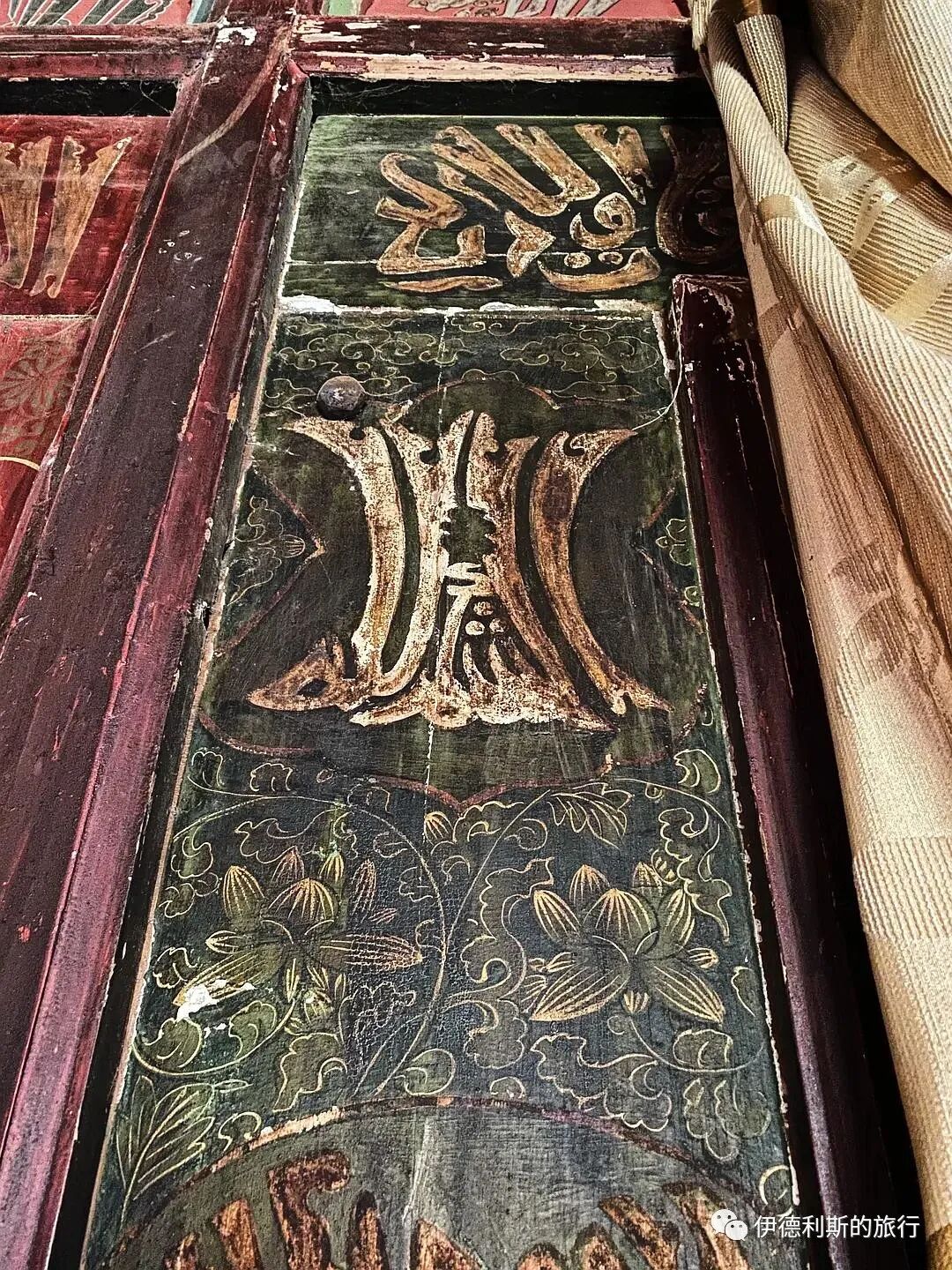
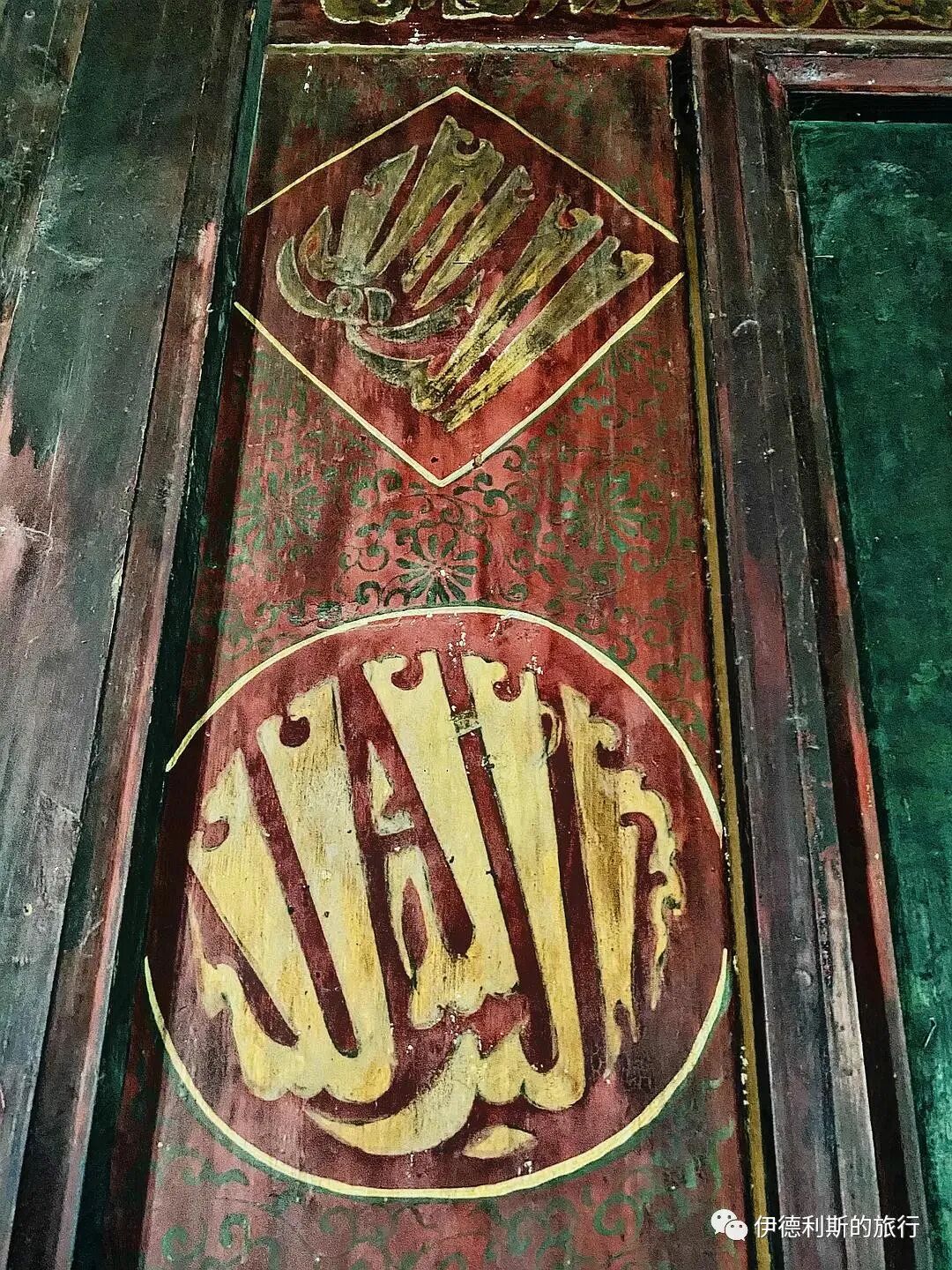
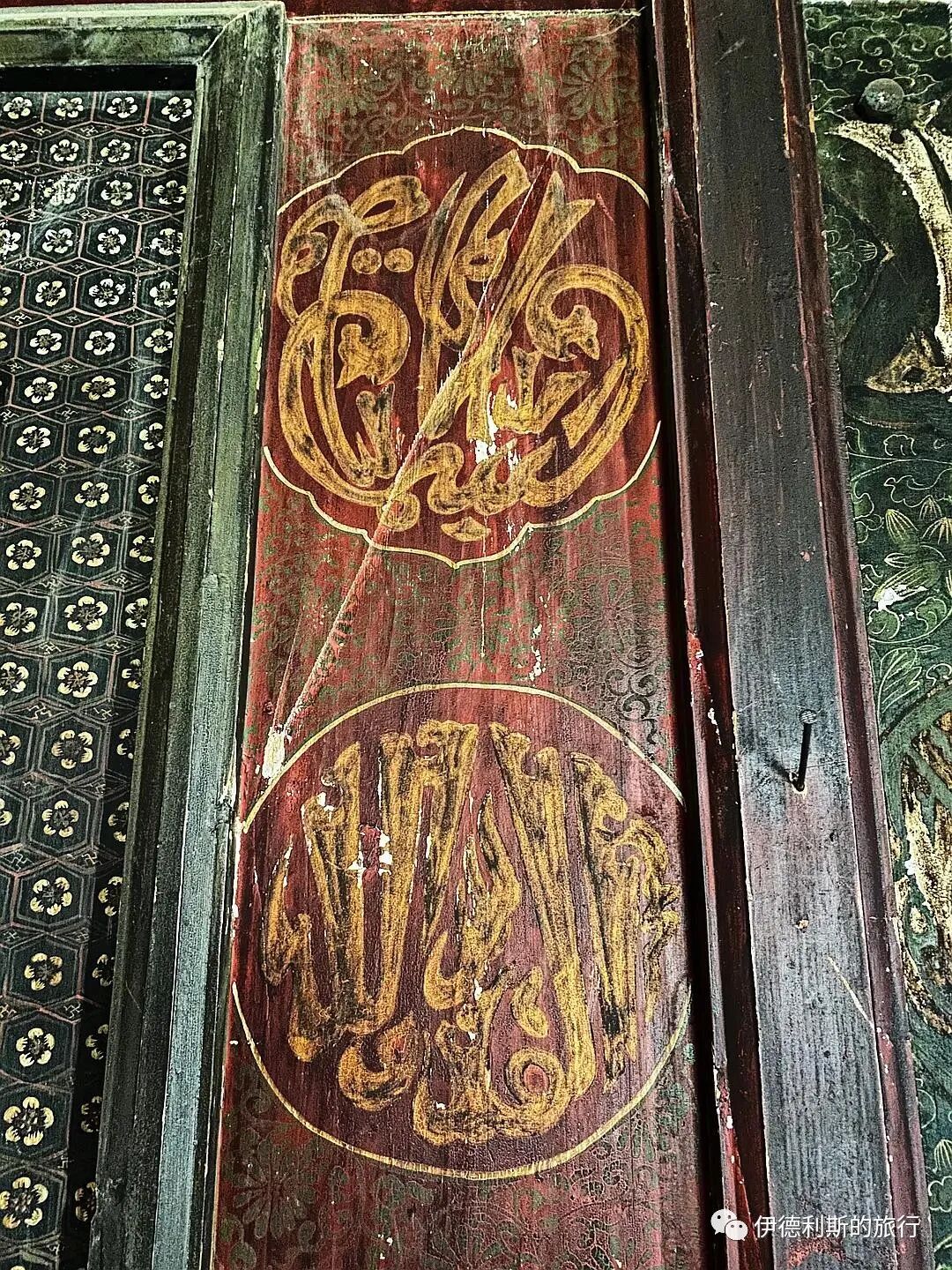
4. Tashapo Mosque
Tashapo Mosque in Xunhua was first built in 1480 (the 16th year of the Chenghua reign of the Ming Dynasty) and rebuilt in 1755 (the 20th year of the Qianlong reign of the Qing Dynasty).
The base of the mosque's minaret is made of brick, while the upper part is a wooden pavilion with a double-eaved hexagonal spire. Inside, there is a hexagonal caisson ceiling that tapers layer by layer, which is very exquisite.
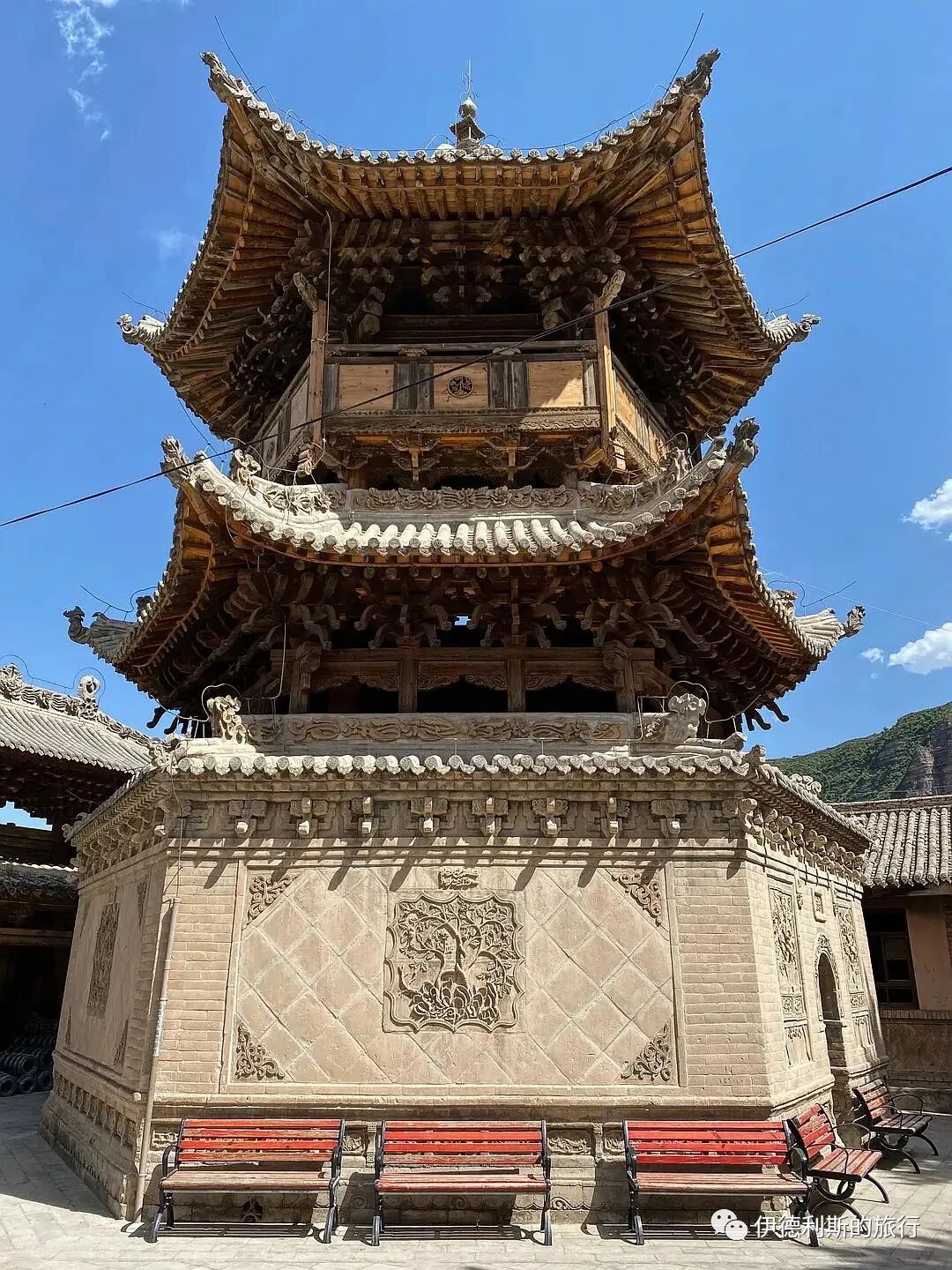
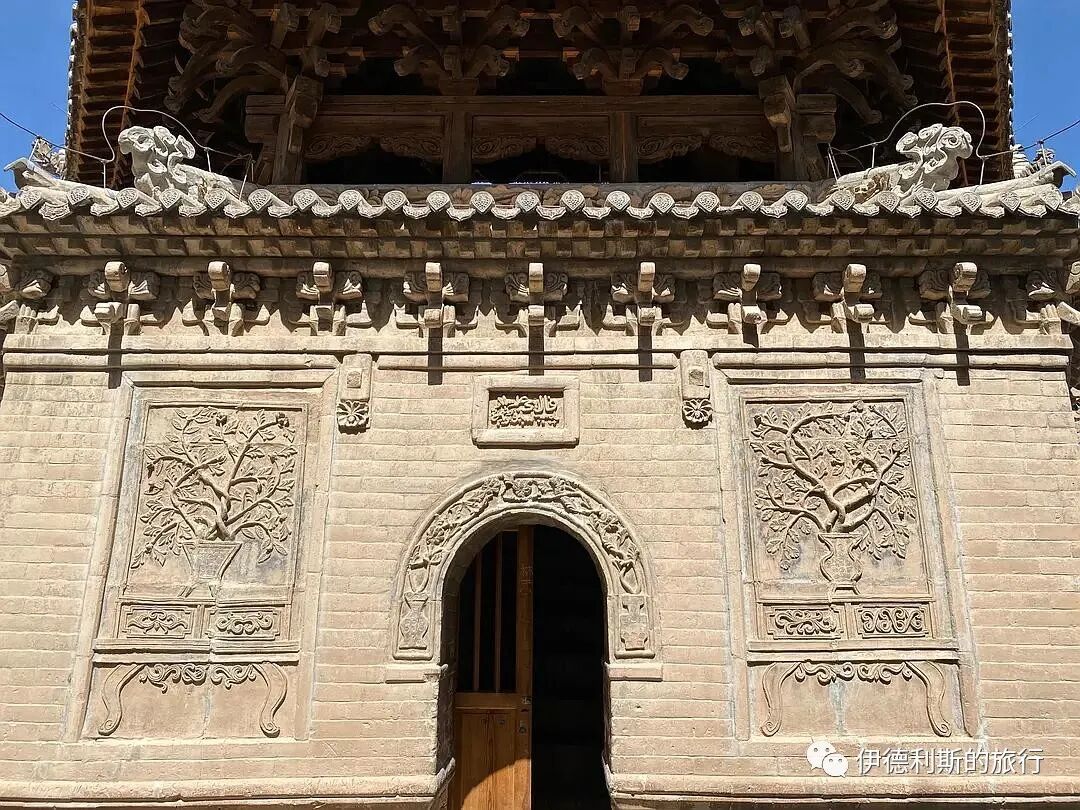
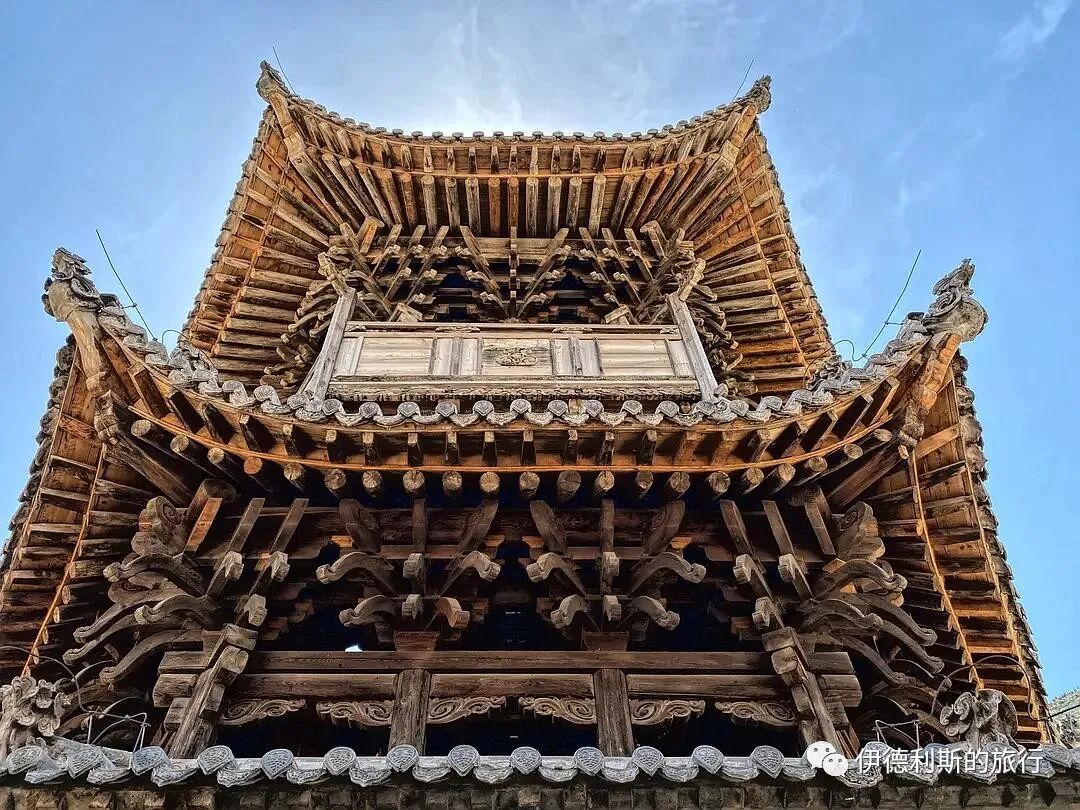
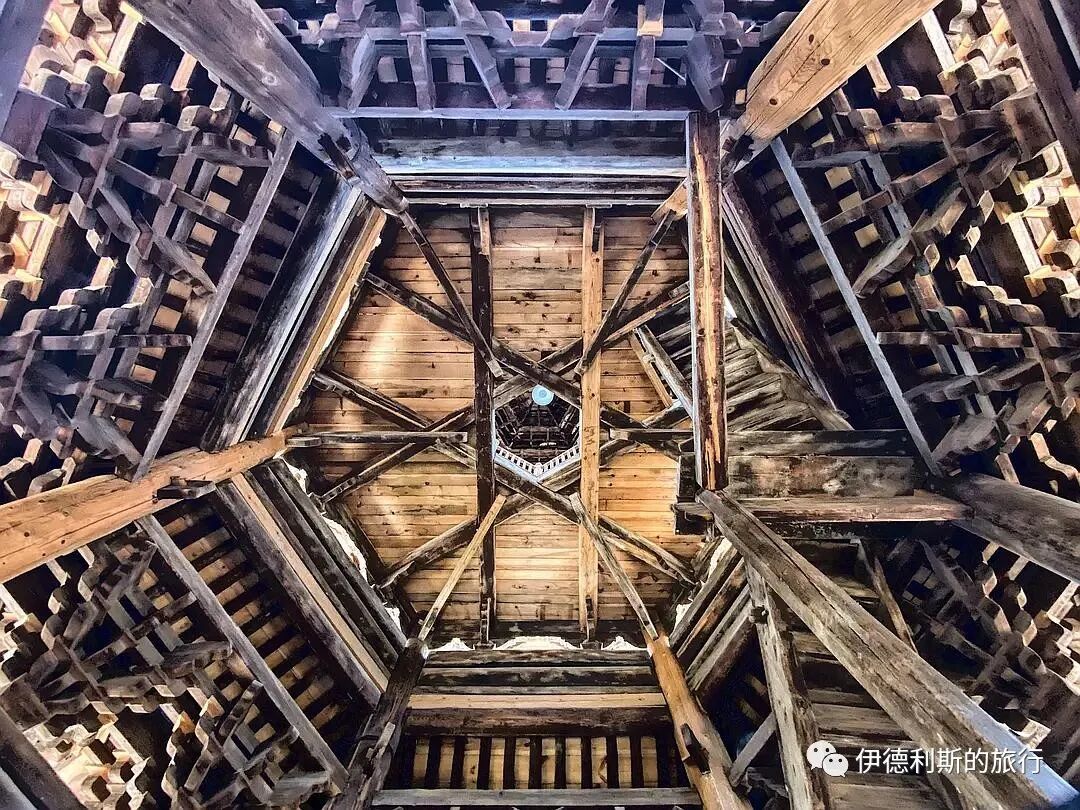
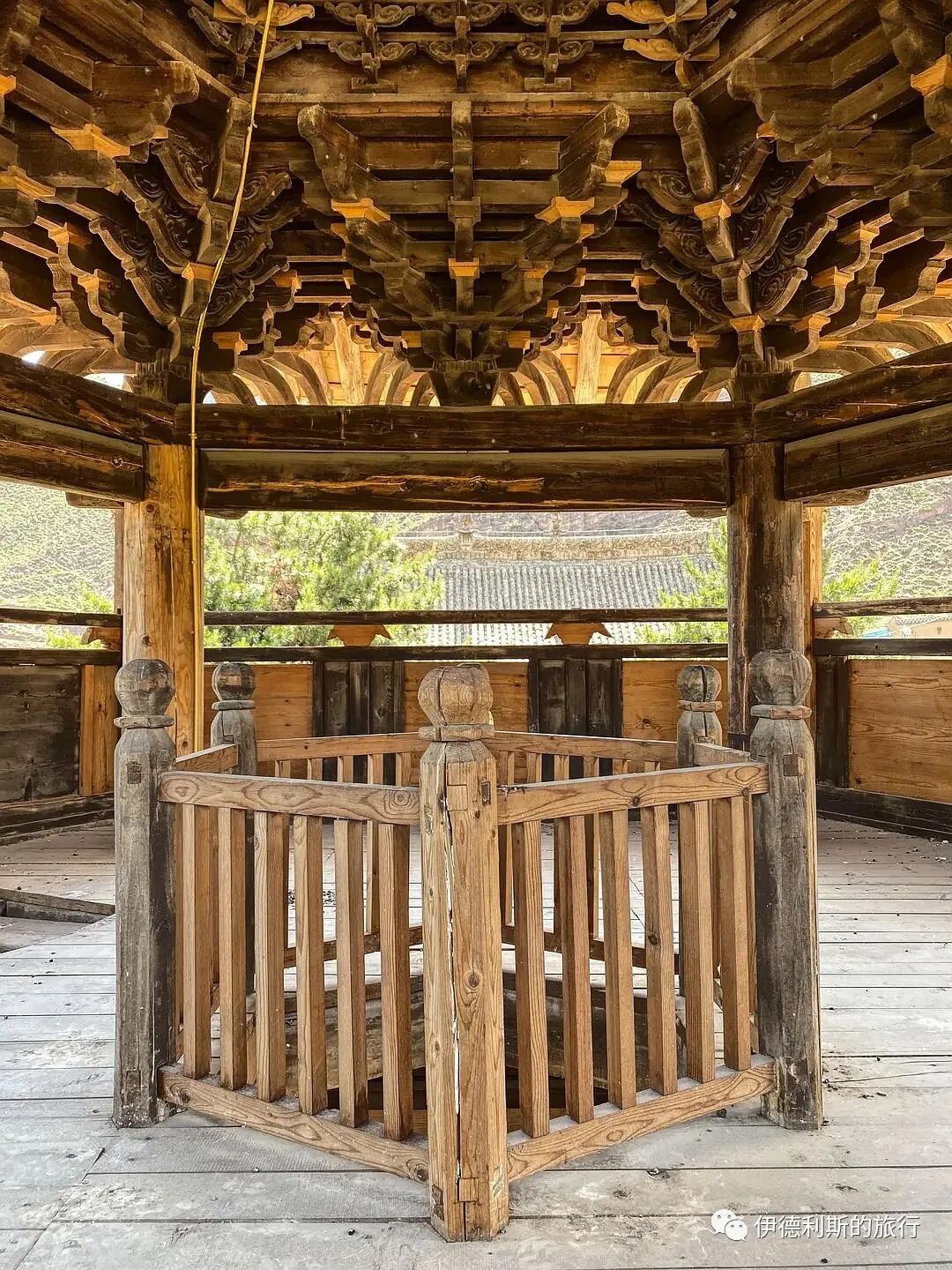
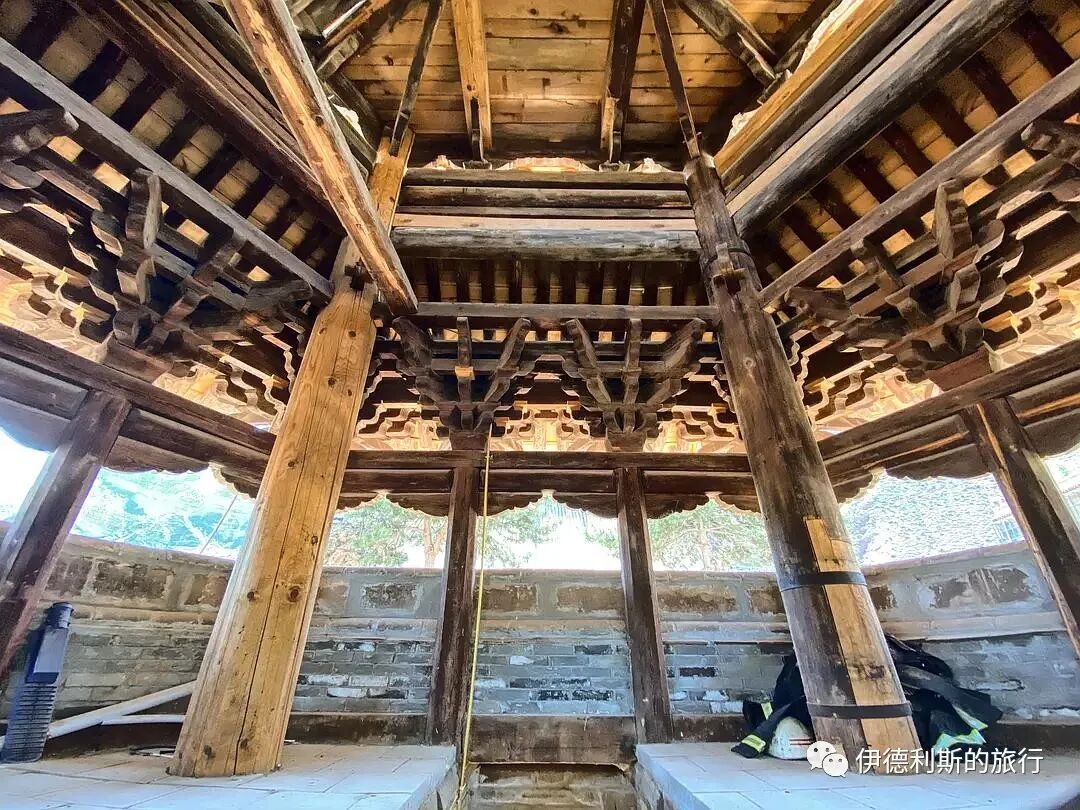
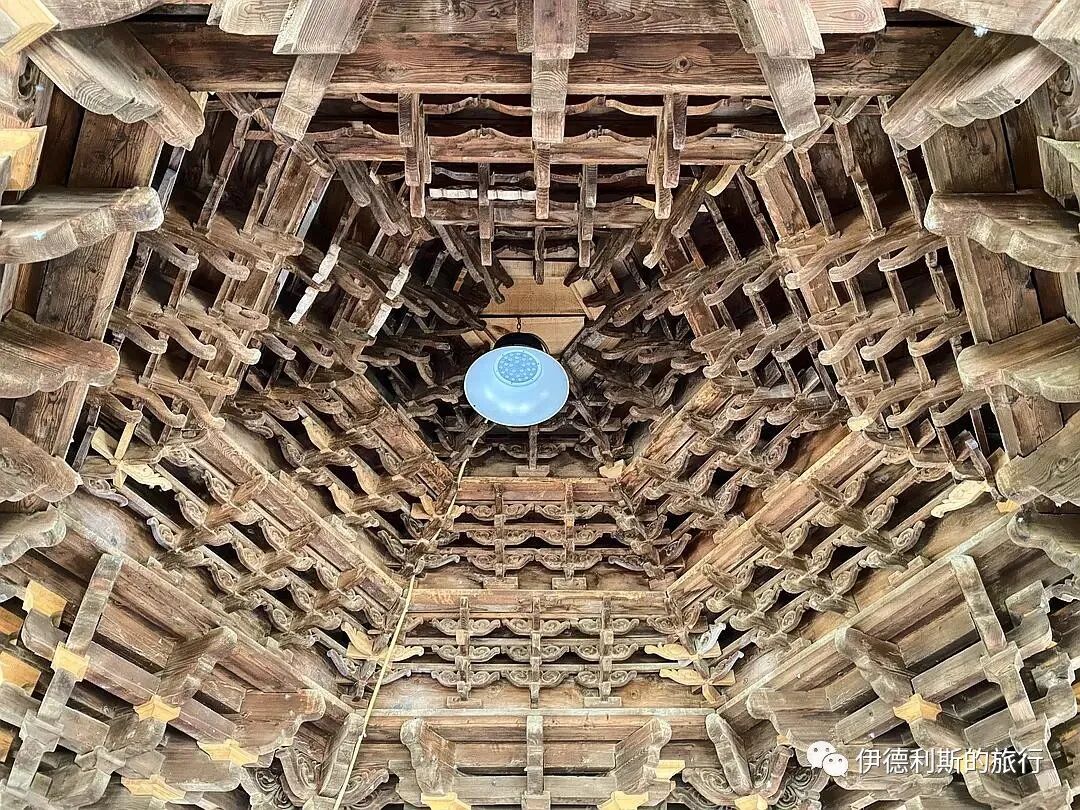
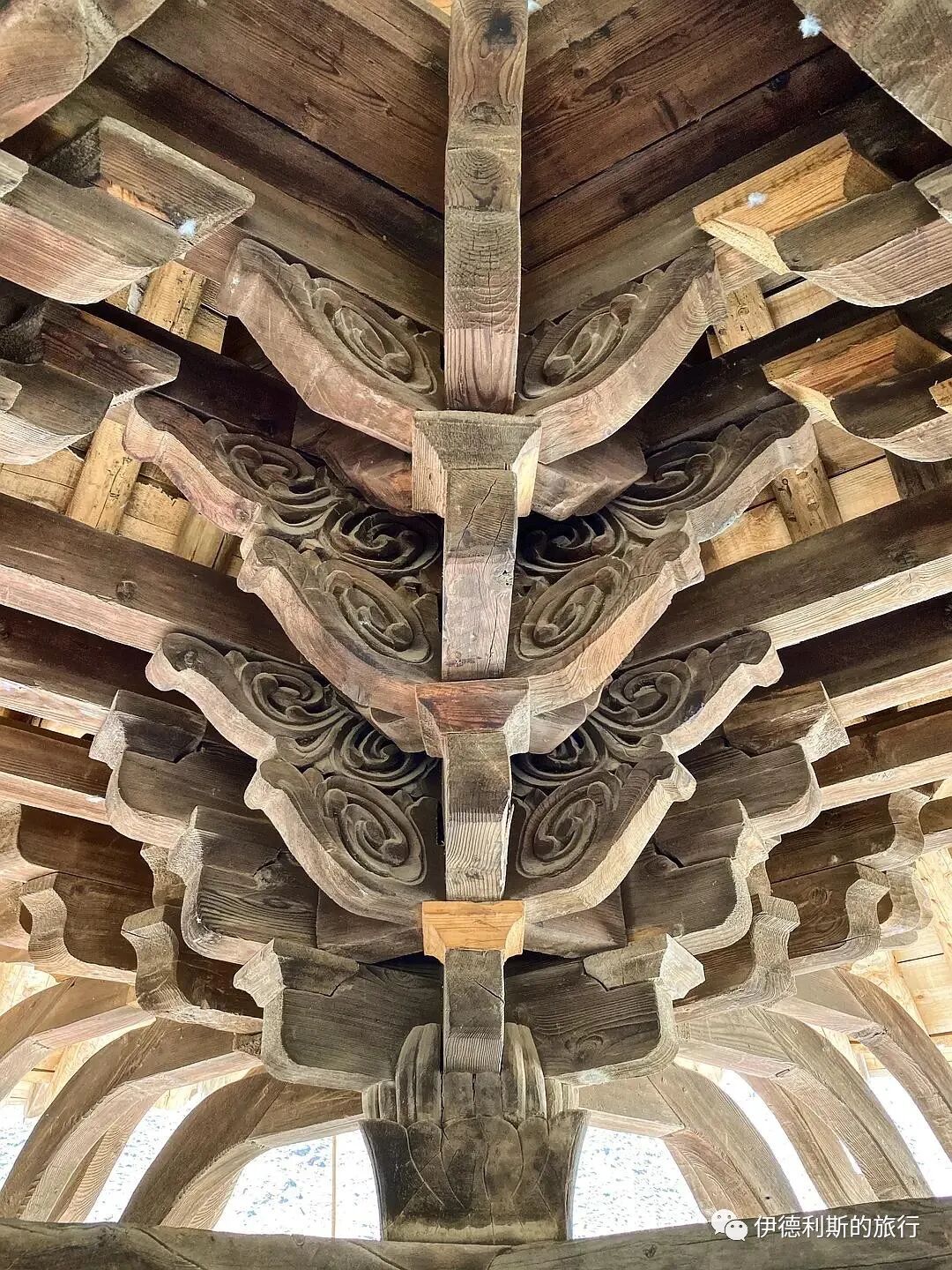
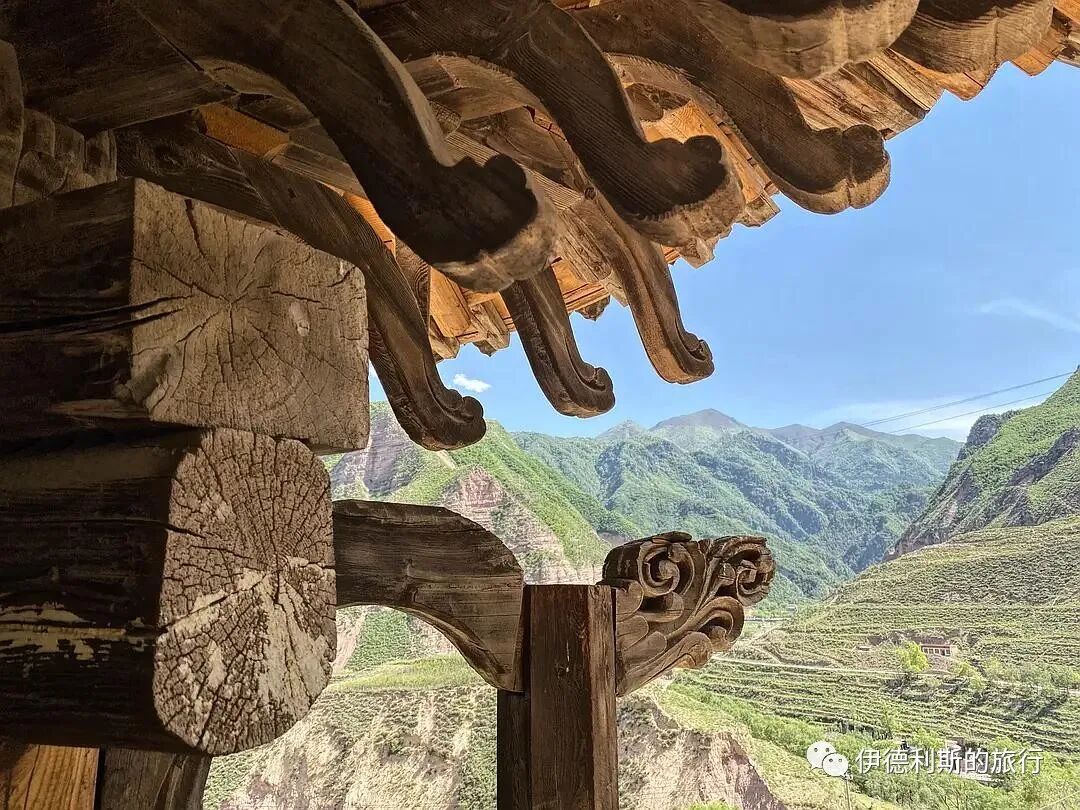
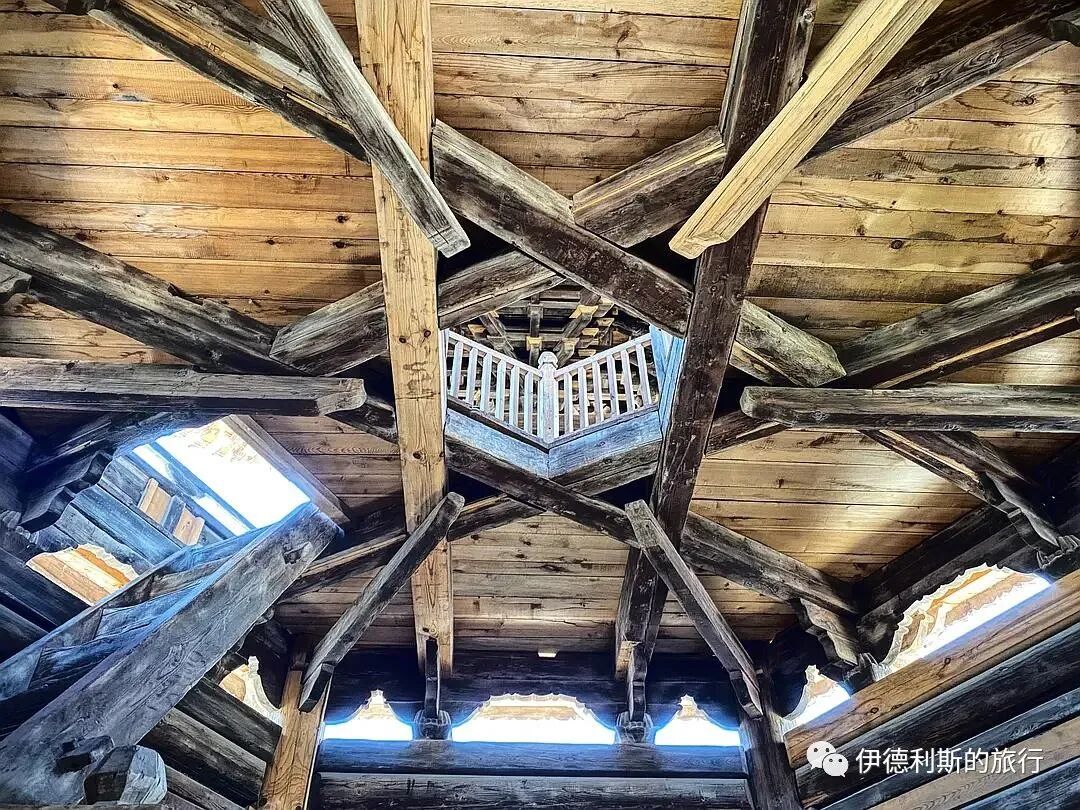
The gatehouse is a three-bay, three-story hip-roof structure, with grey brick splayed walls on both sides and a screen wall in front of the gate.
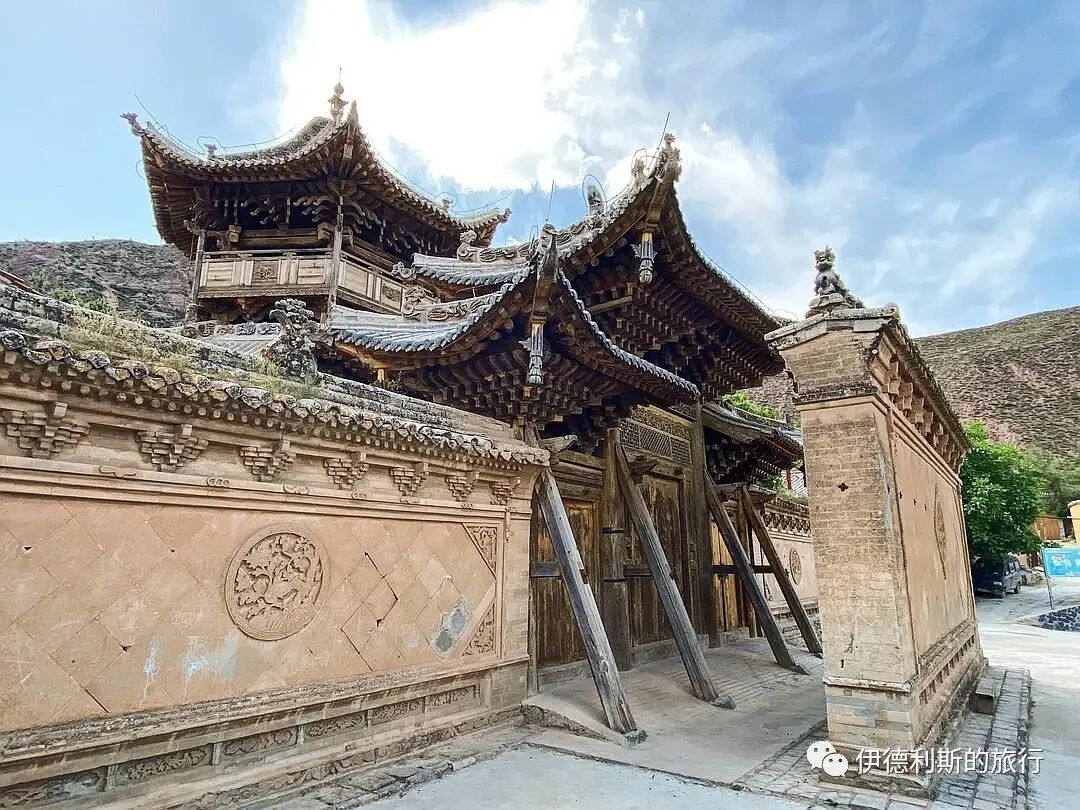
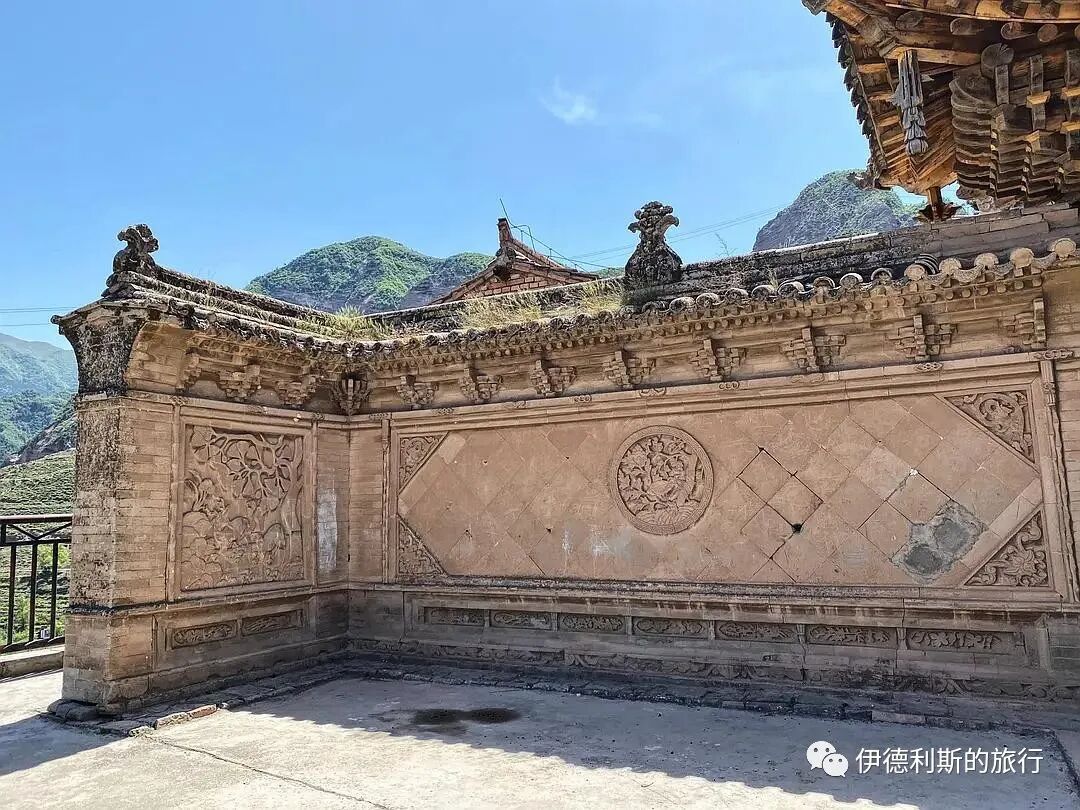
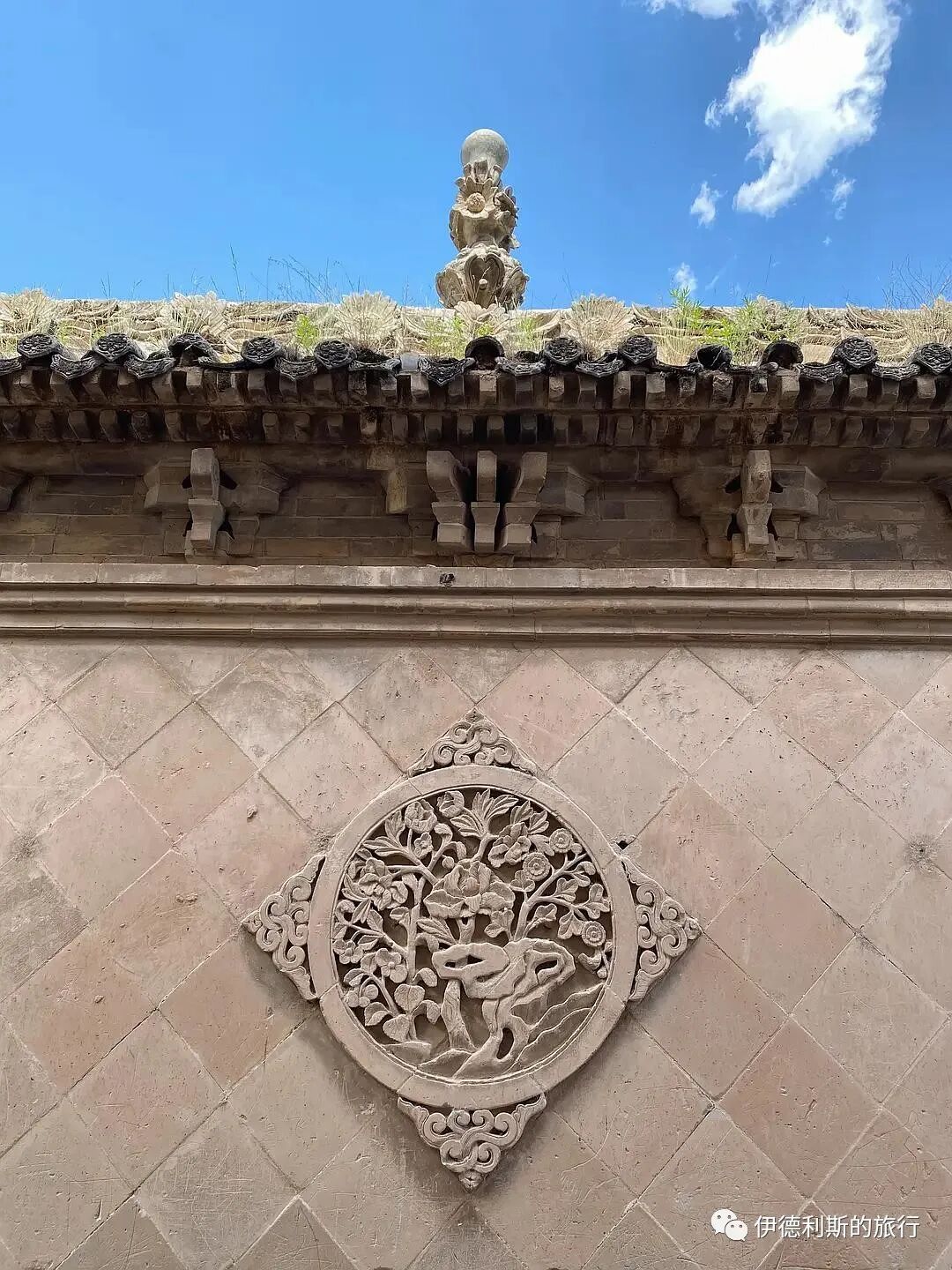
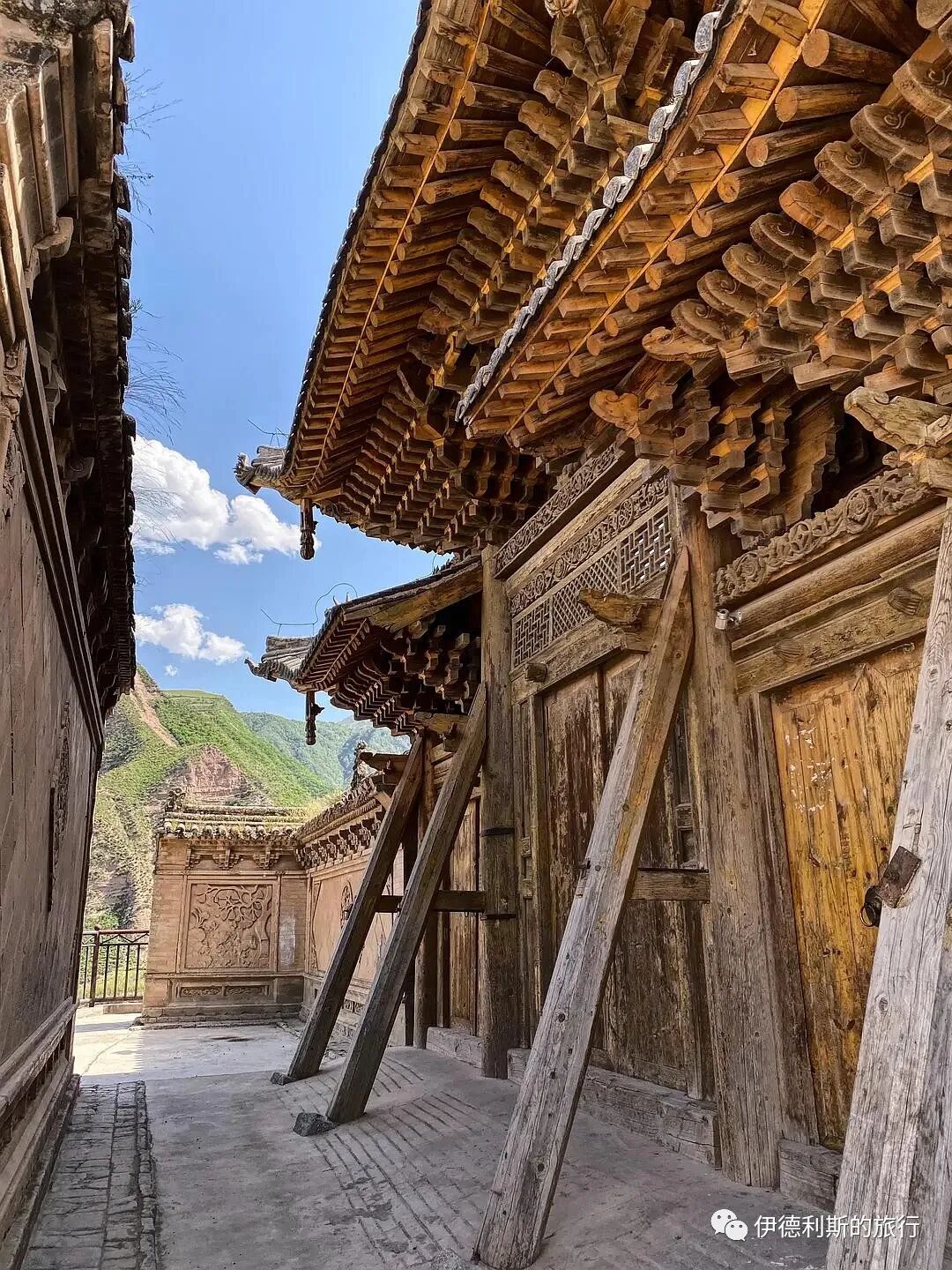
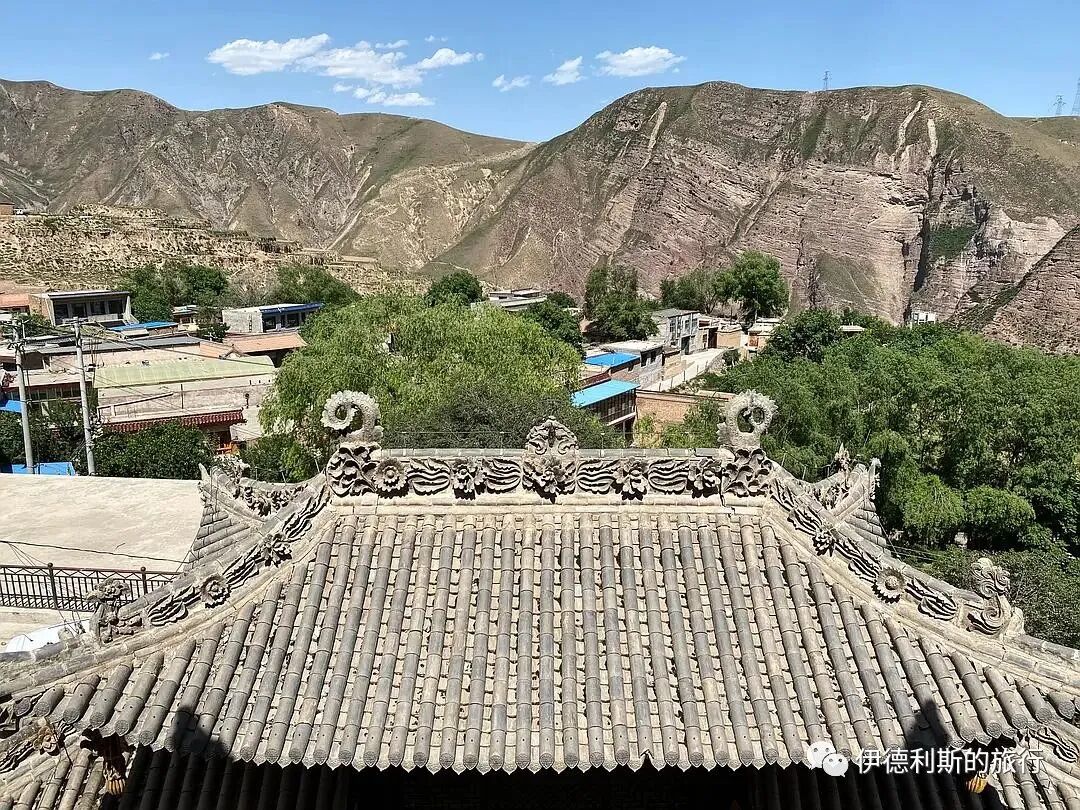
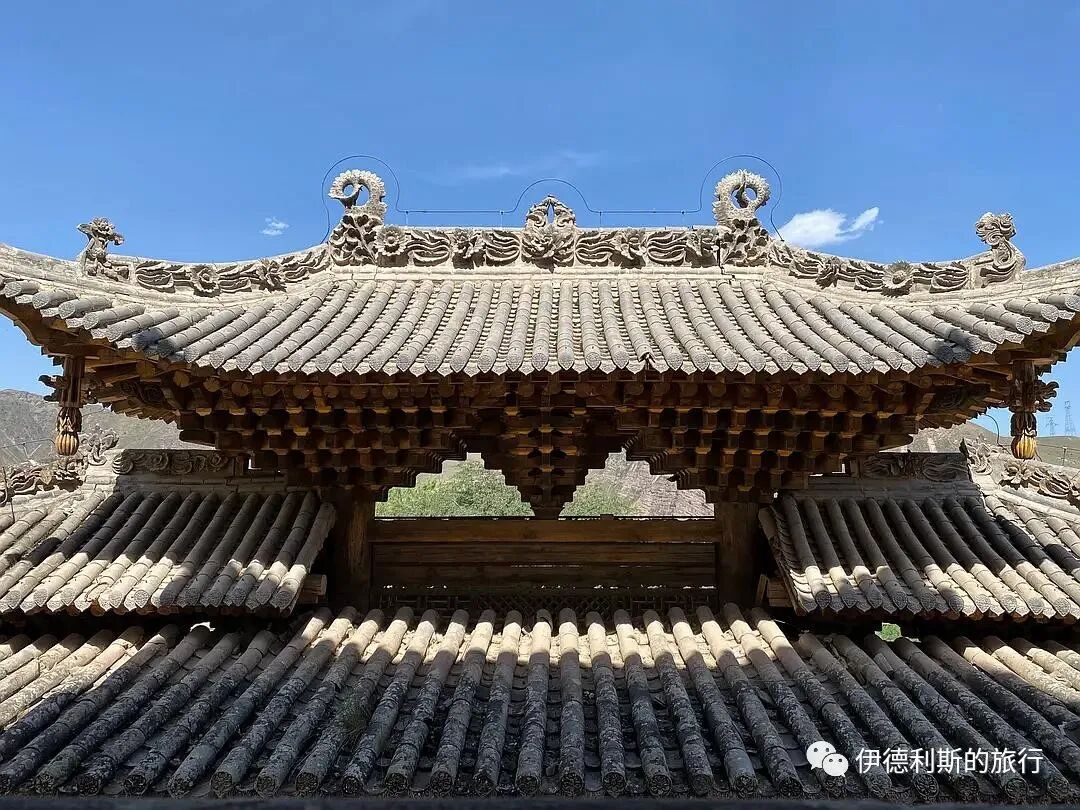
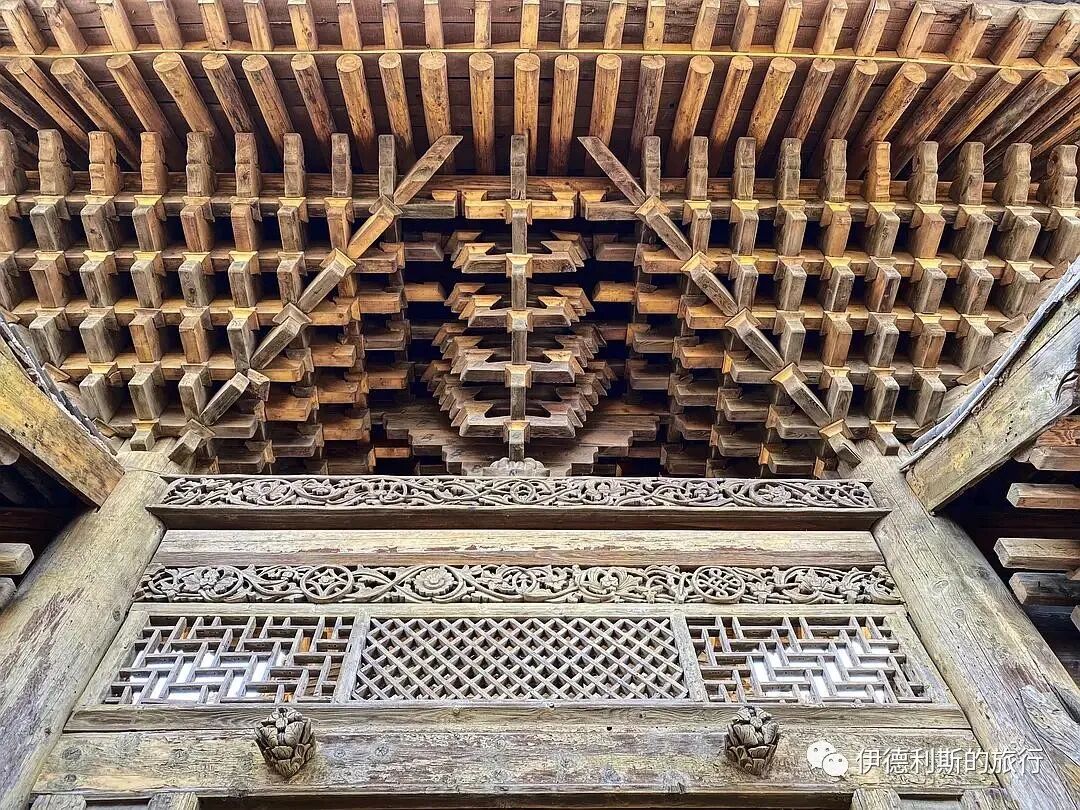
The main prayer hall of the mosque
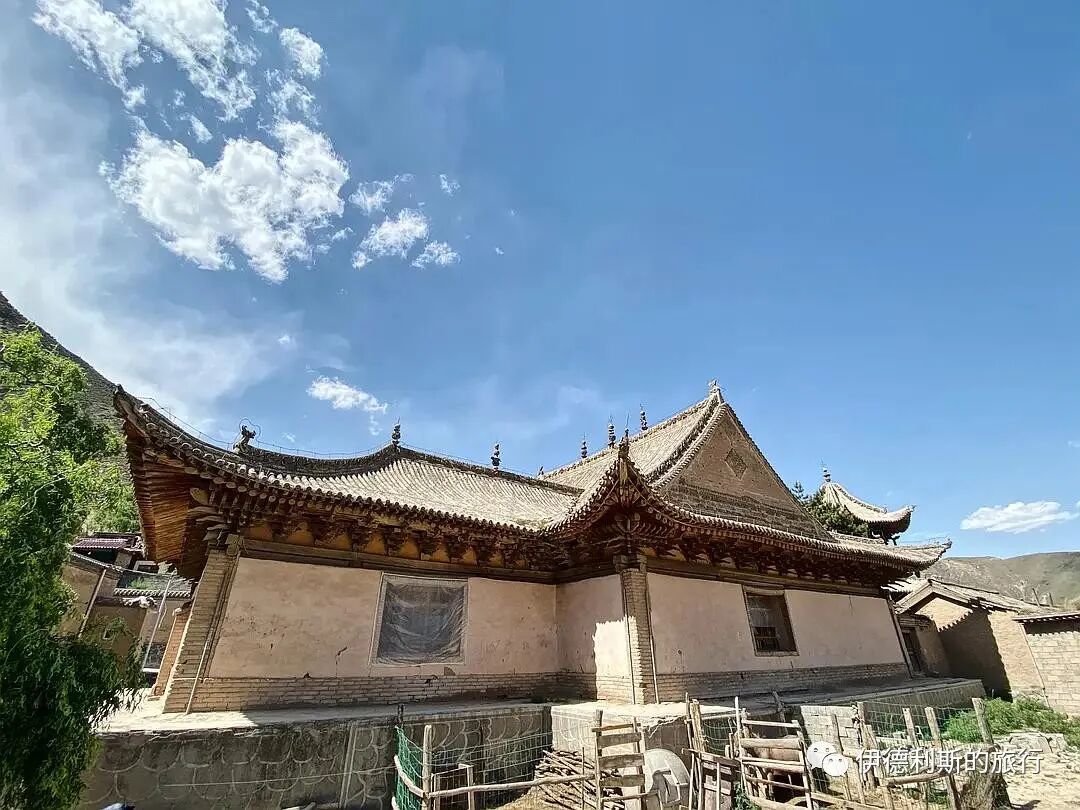
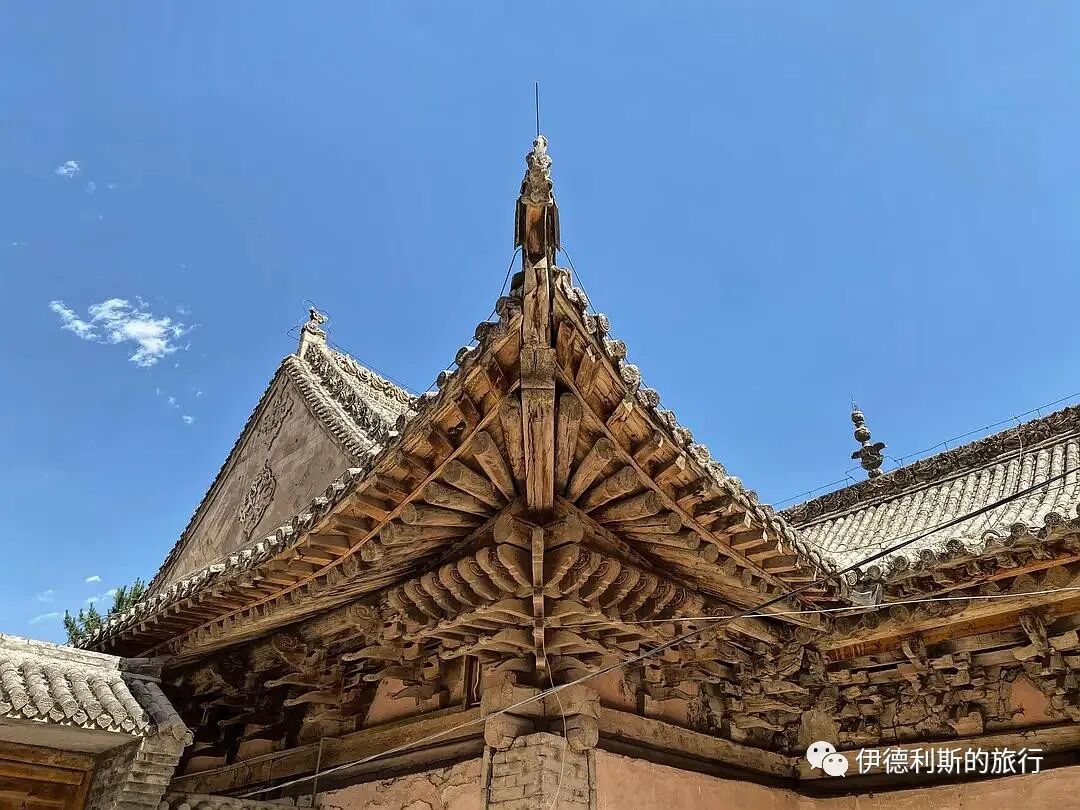
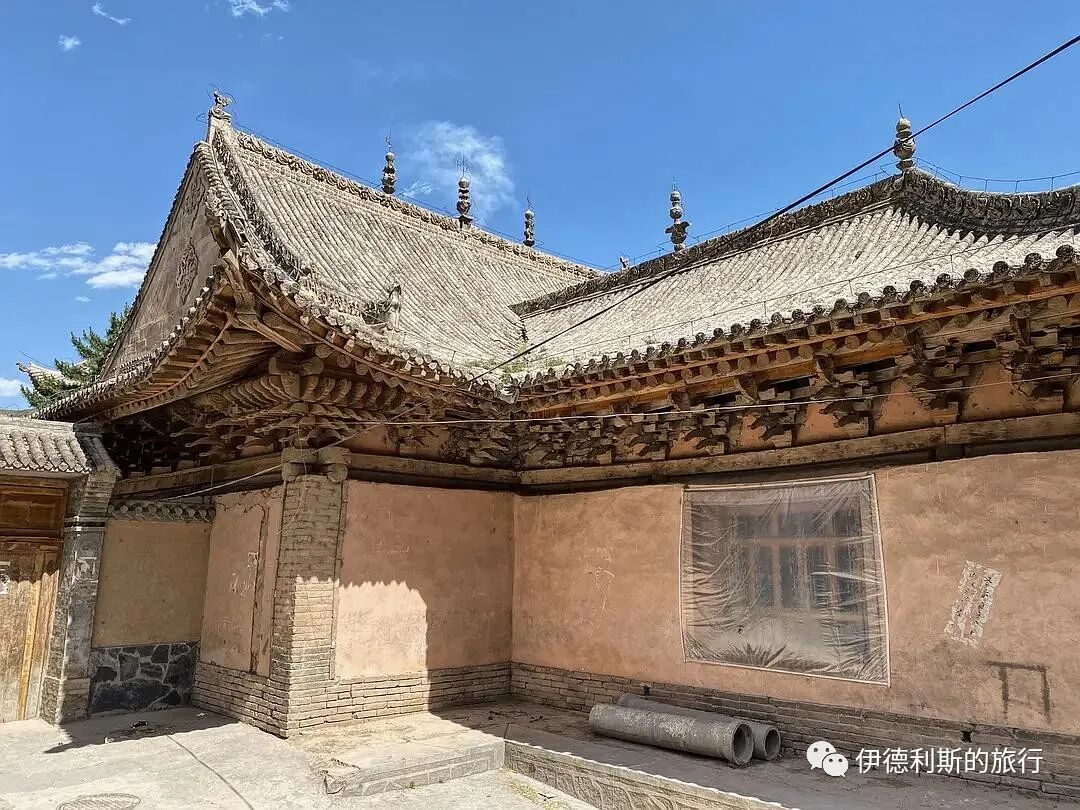
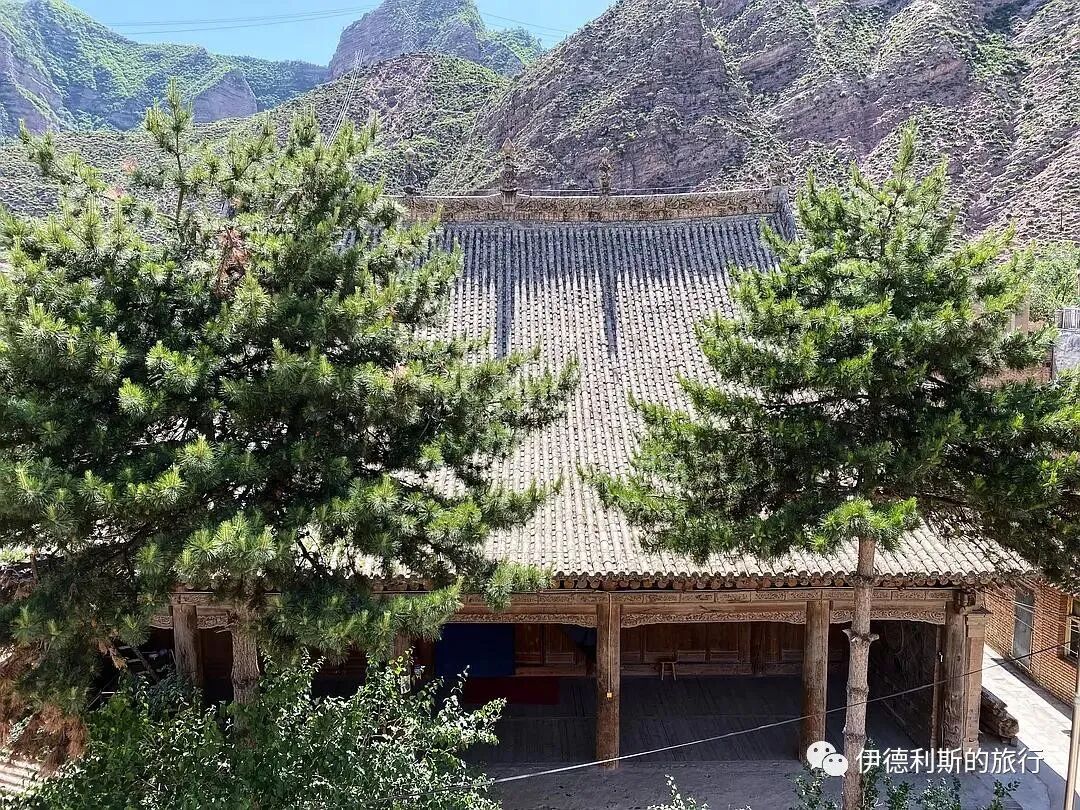
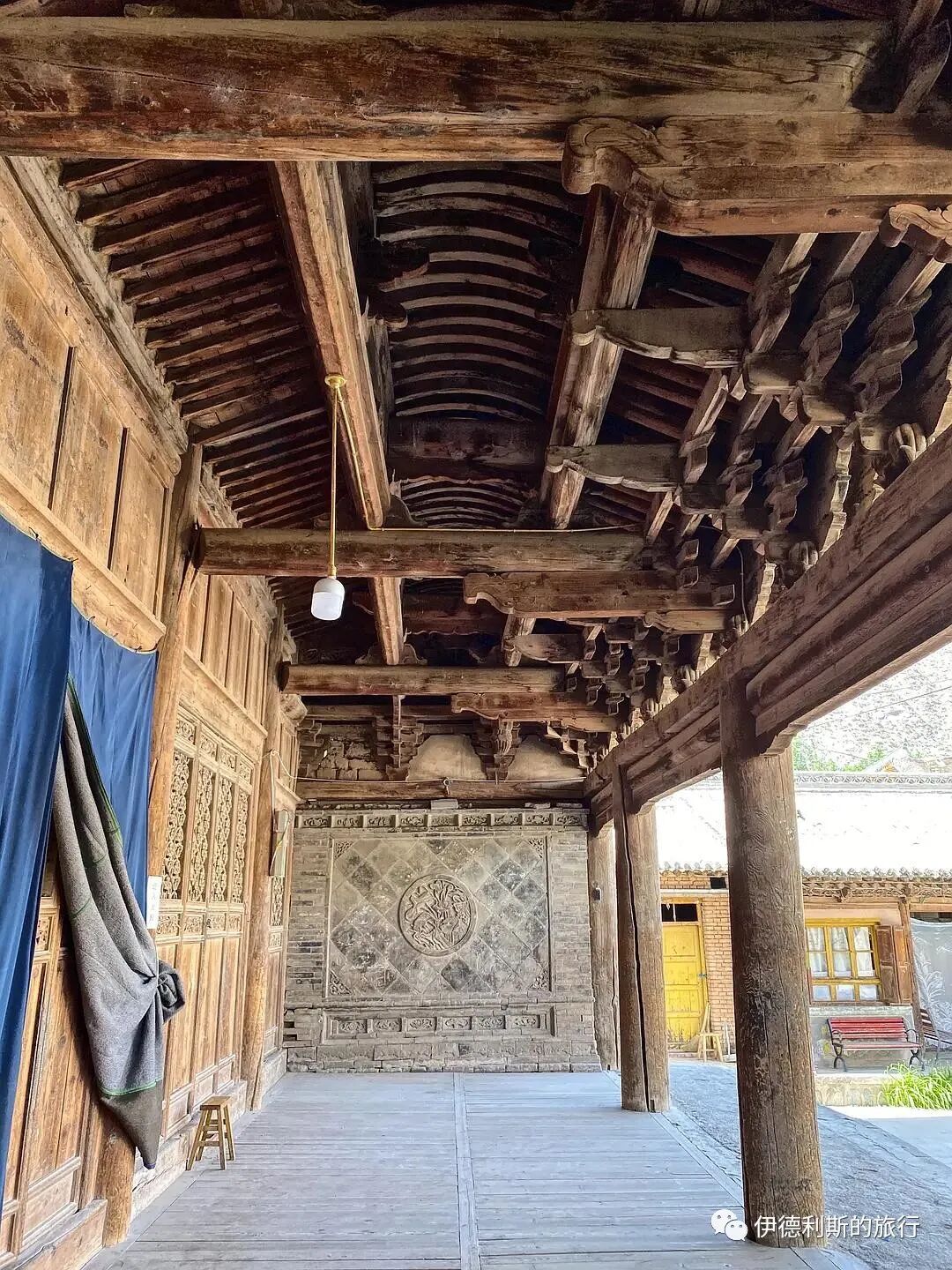
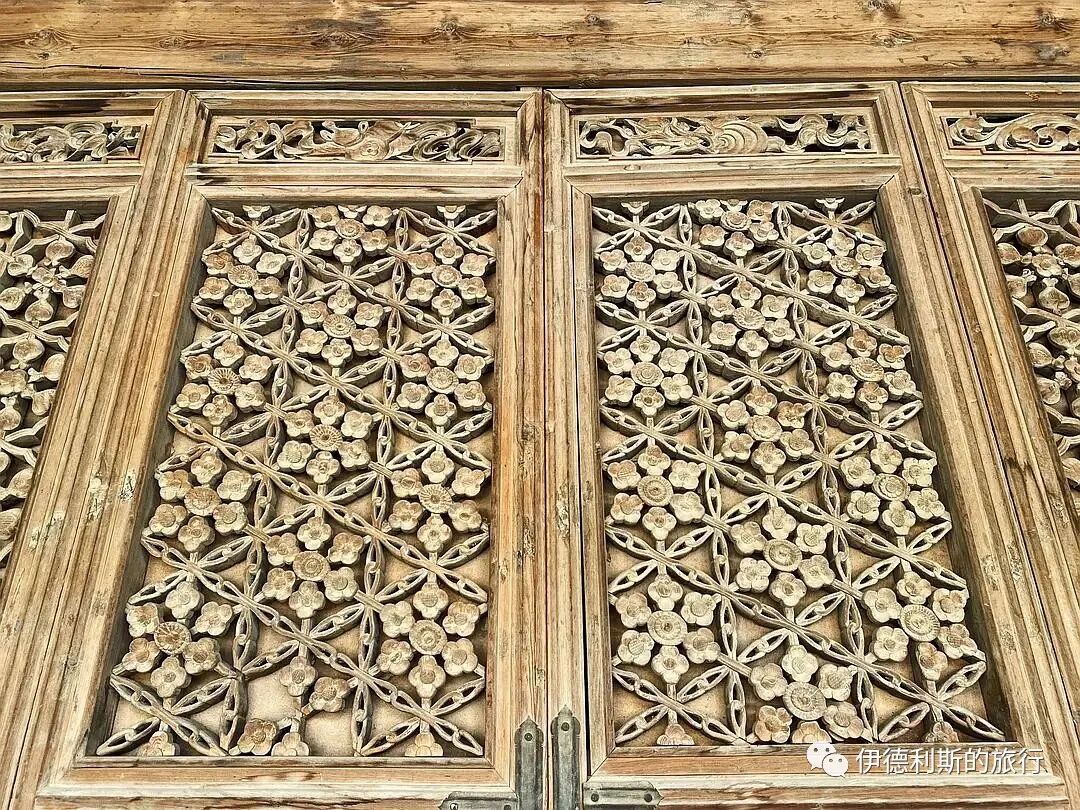
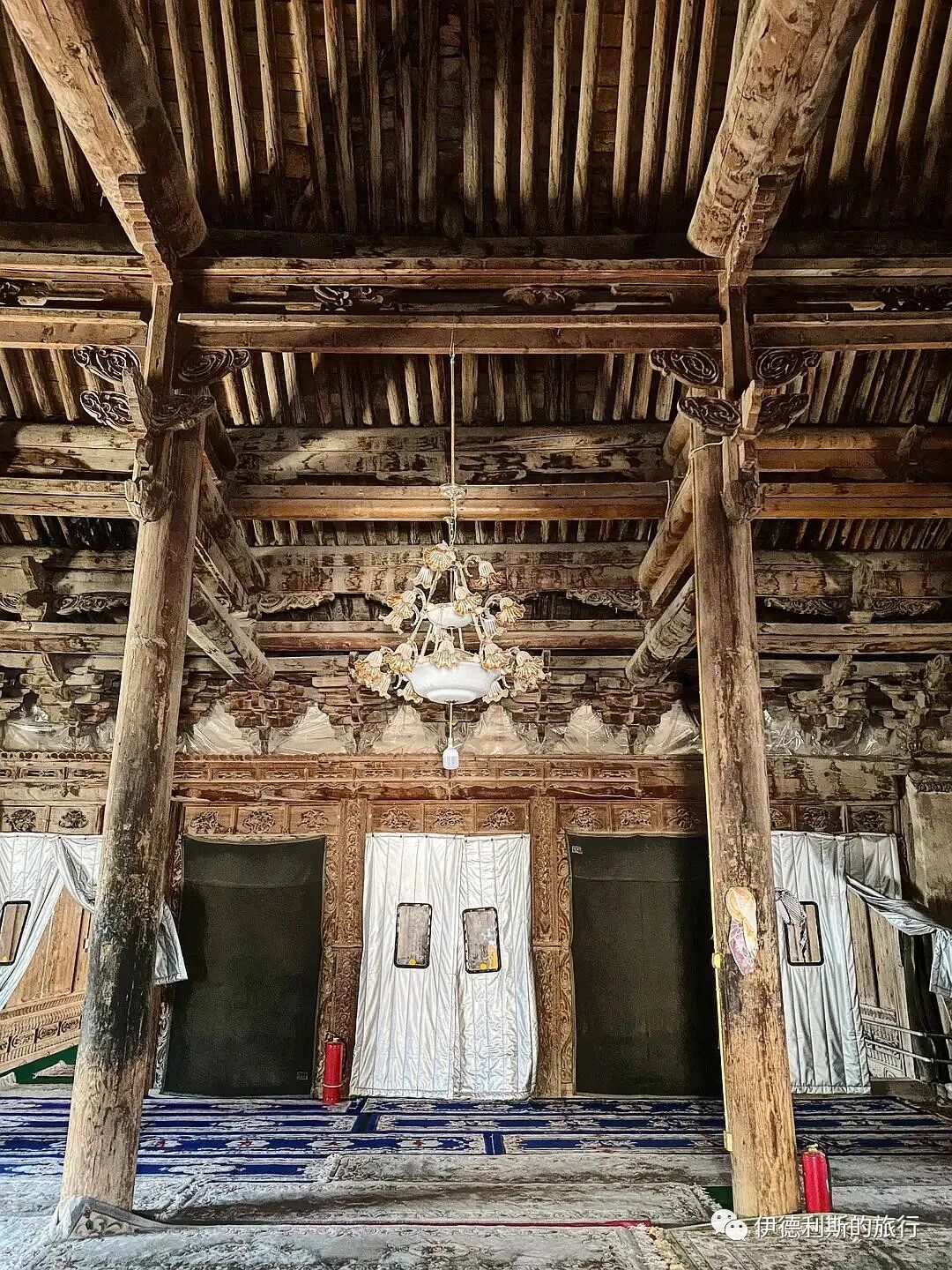
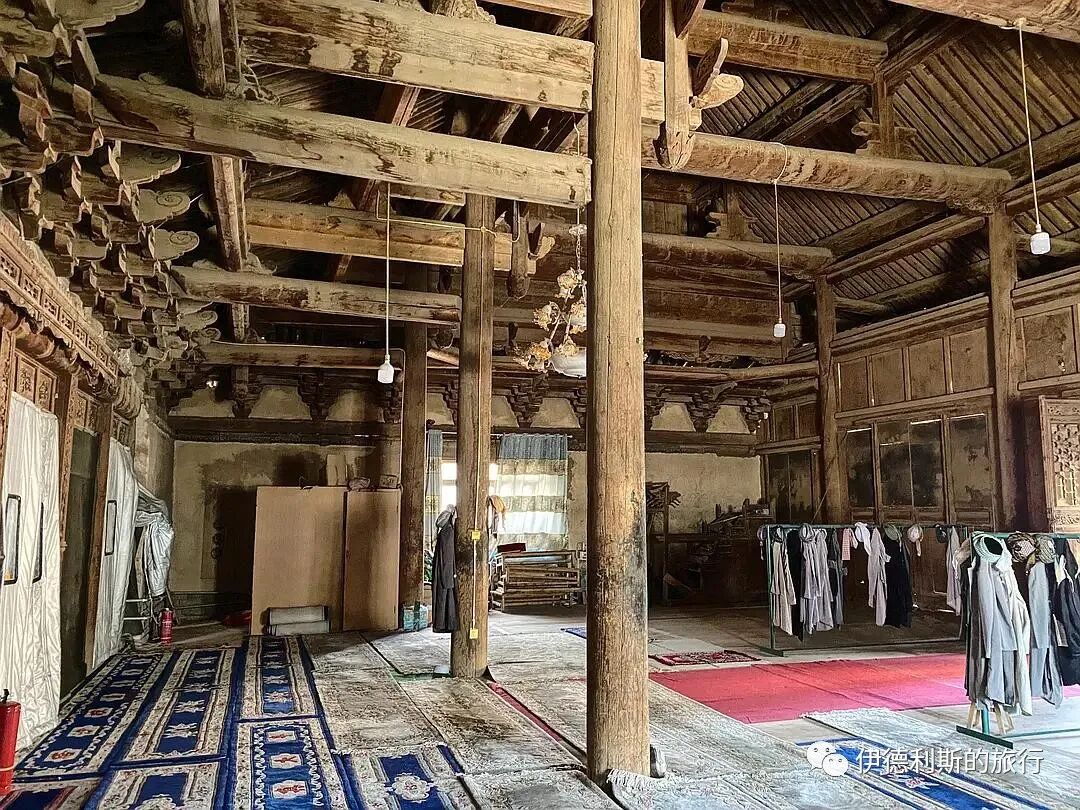
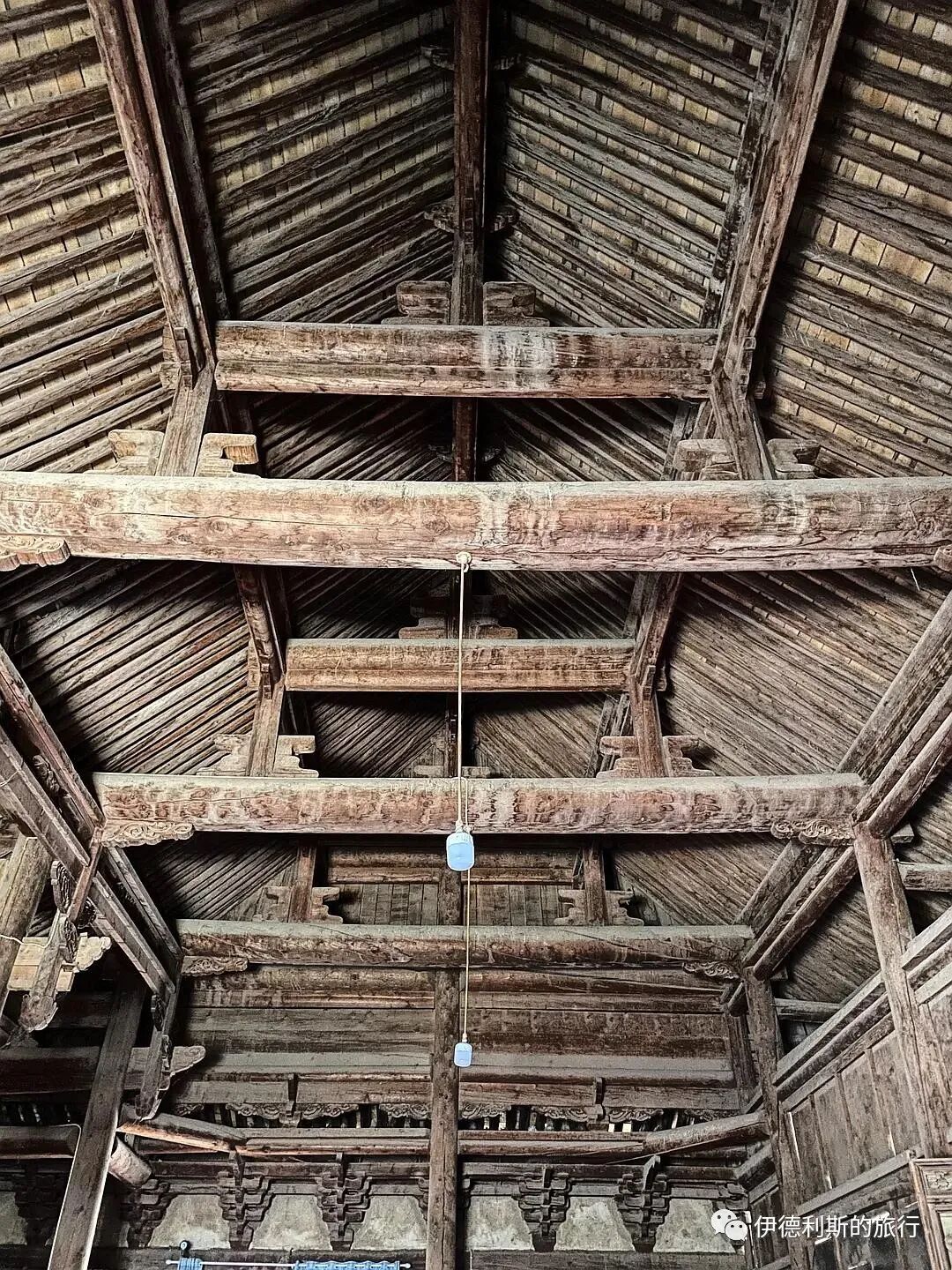
Inside the main hall, there are exquisite wood carvings. It is a great pity that only a very few parts of the murals have been preserved, and this is the first time I have seen quotations inside the main hall; previously, I had only seen them on the outer walls of the main hall.
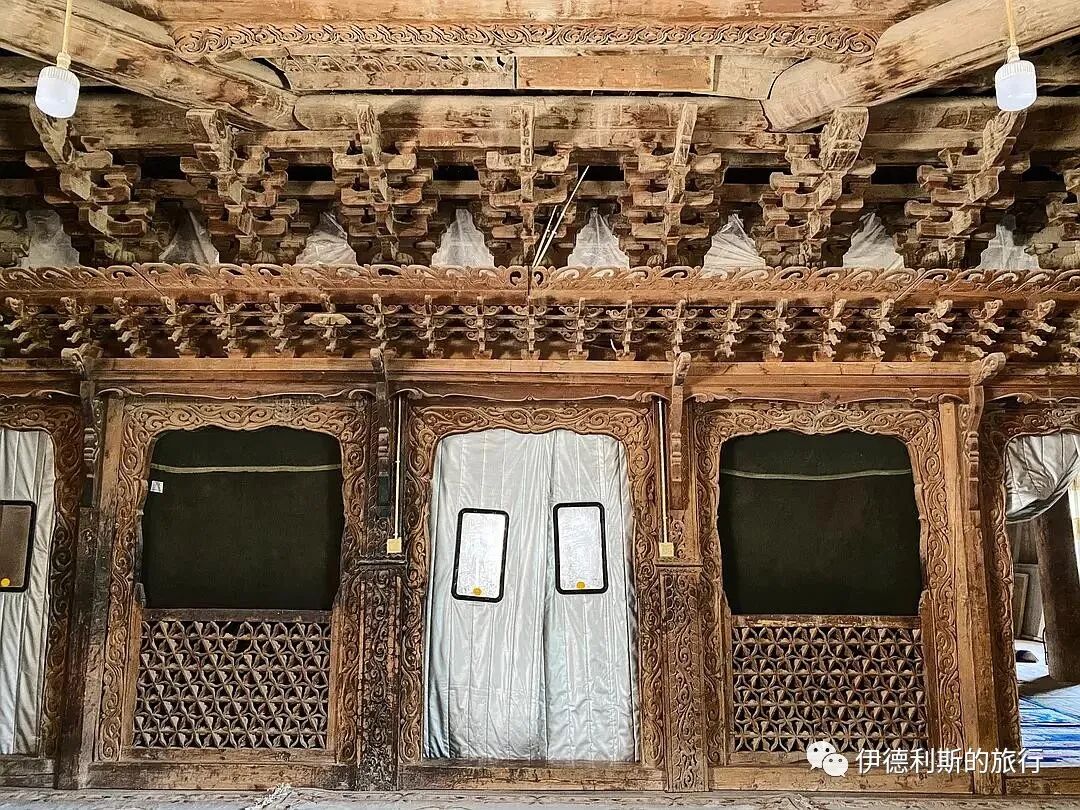
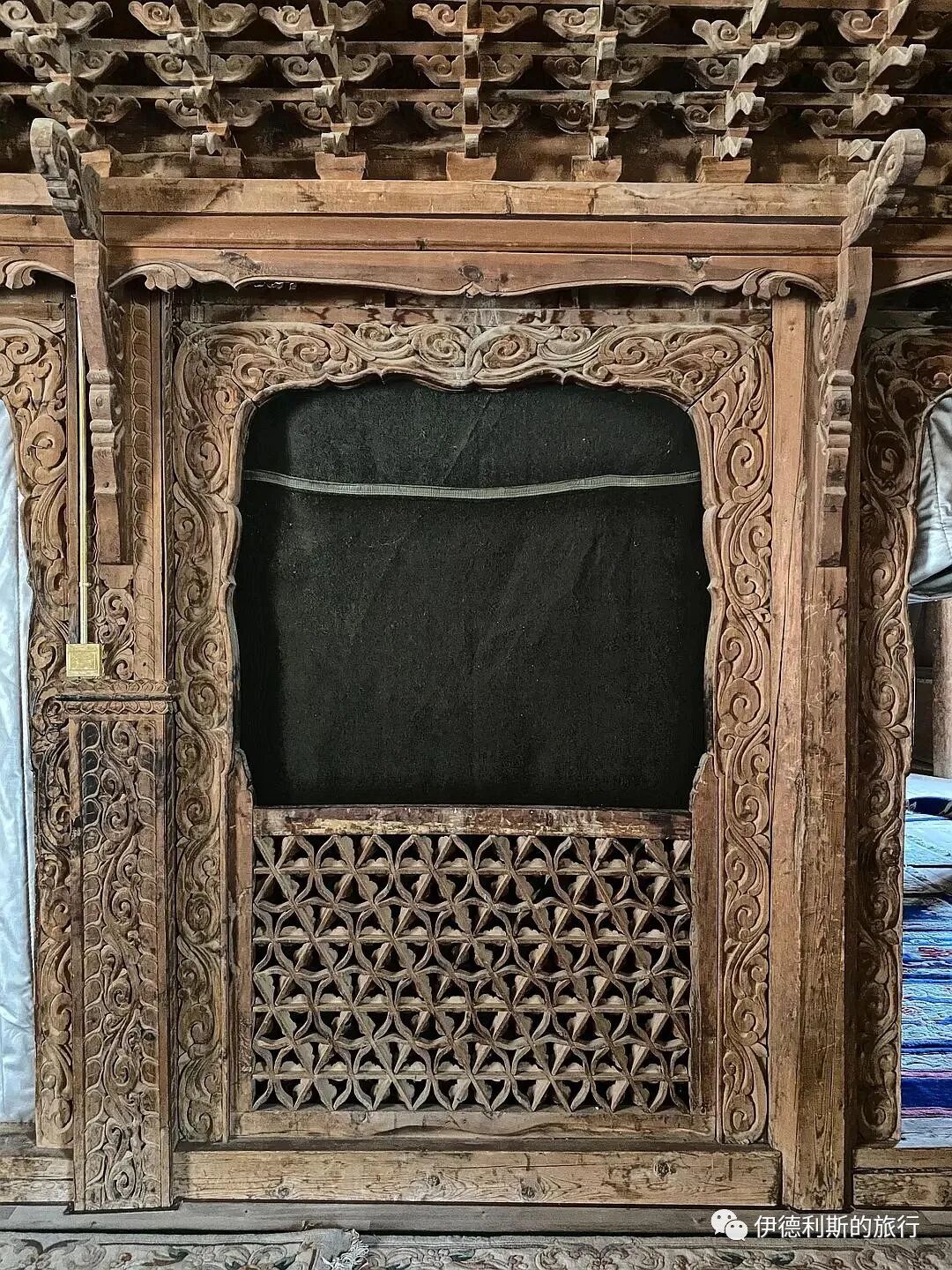
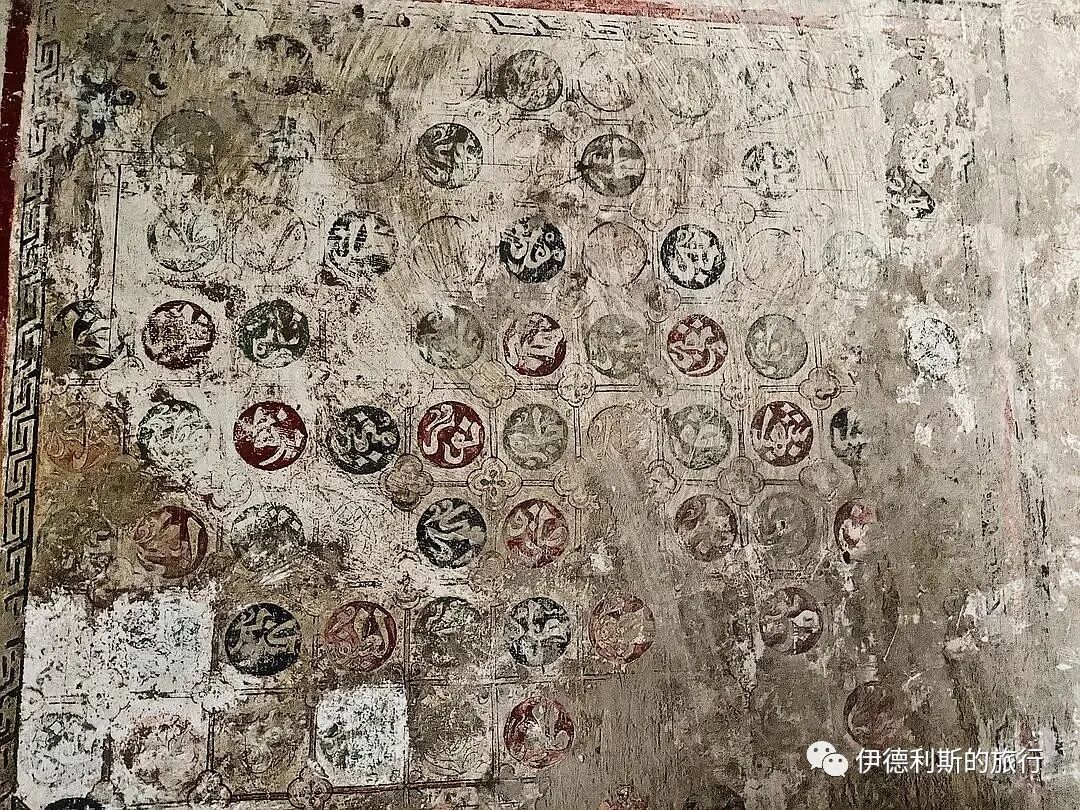
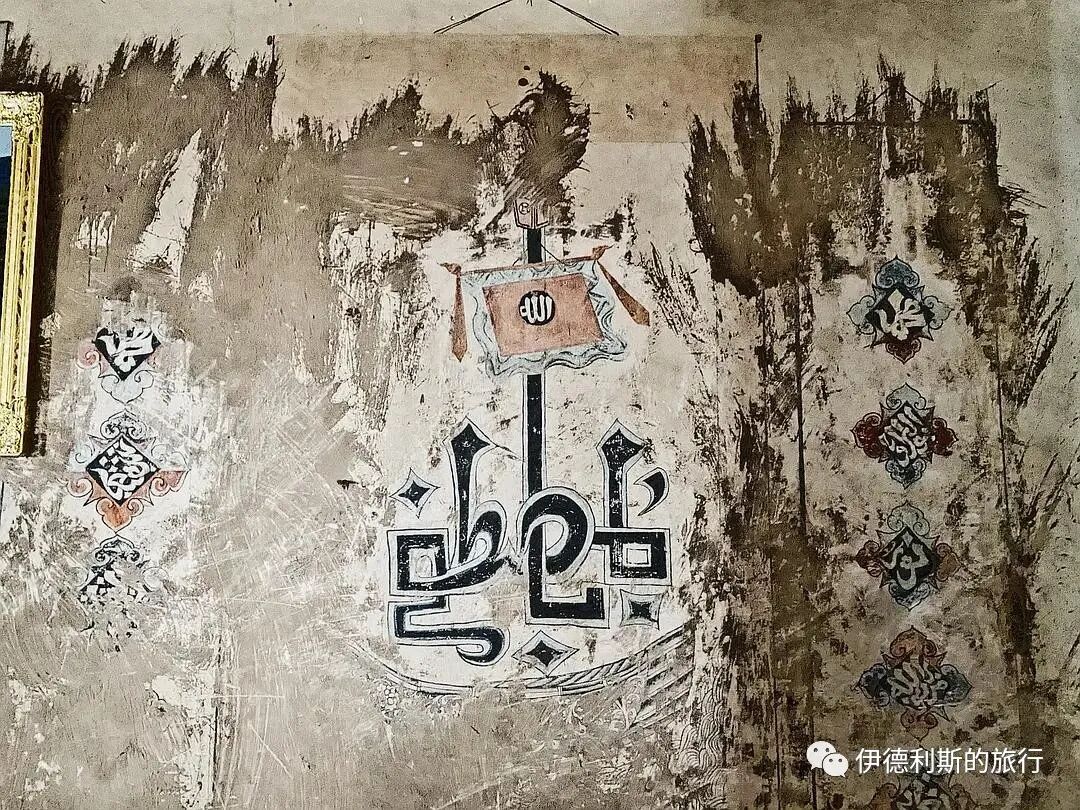
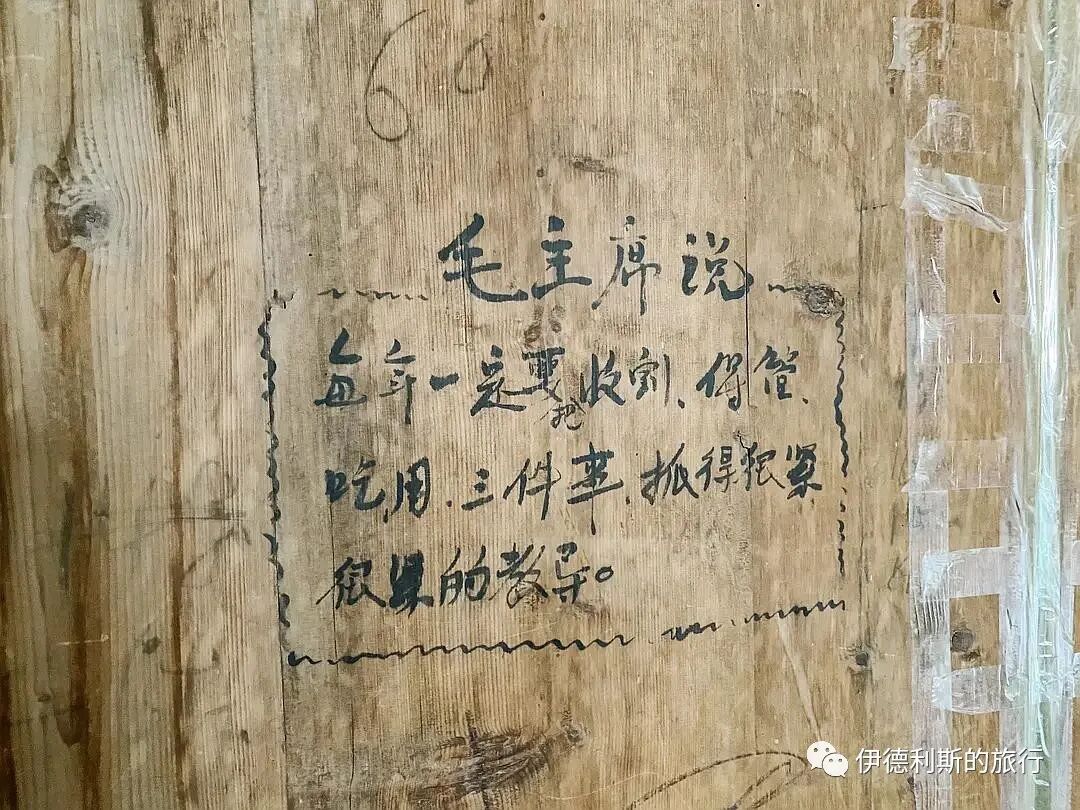
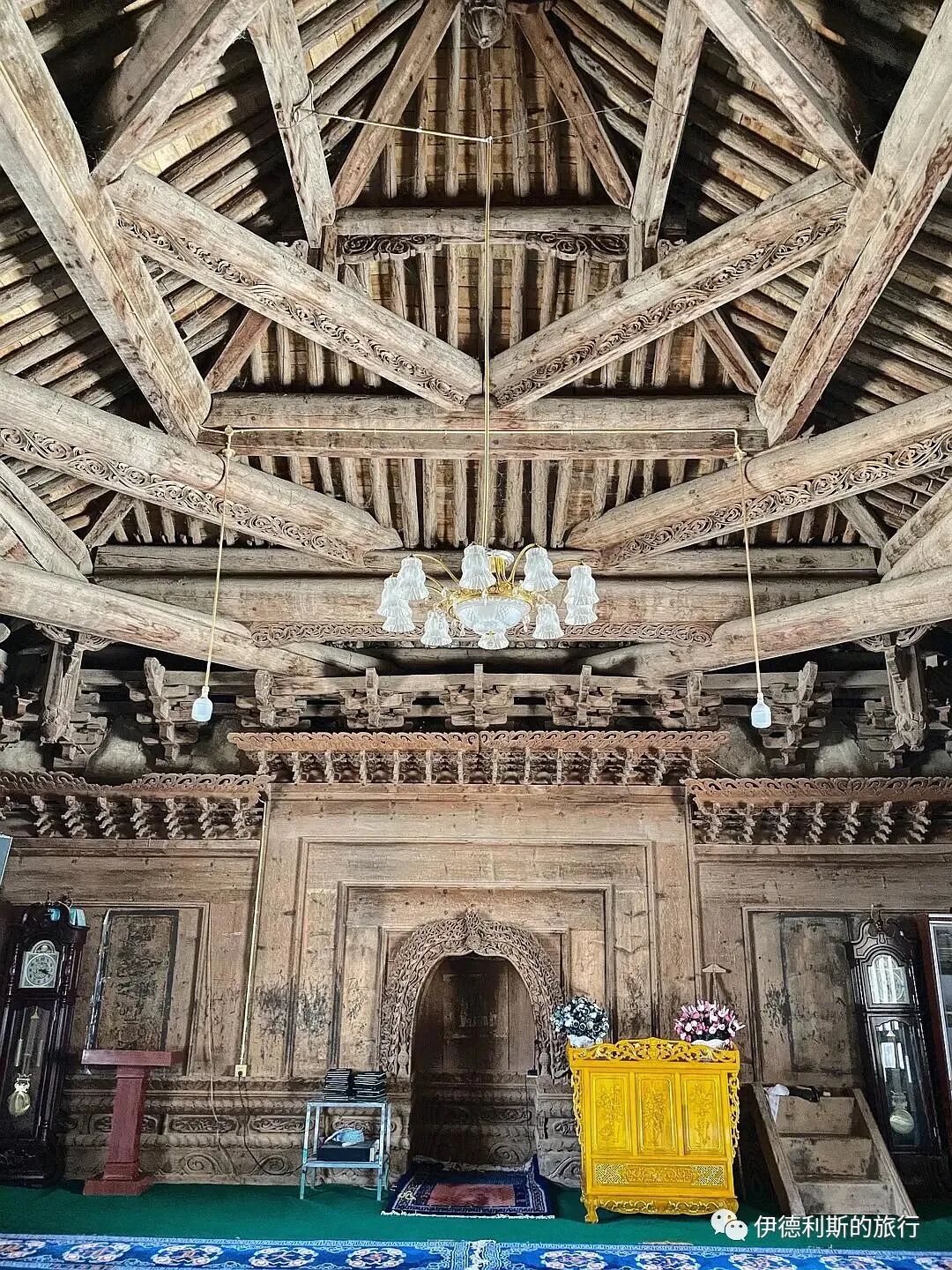
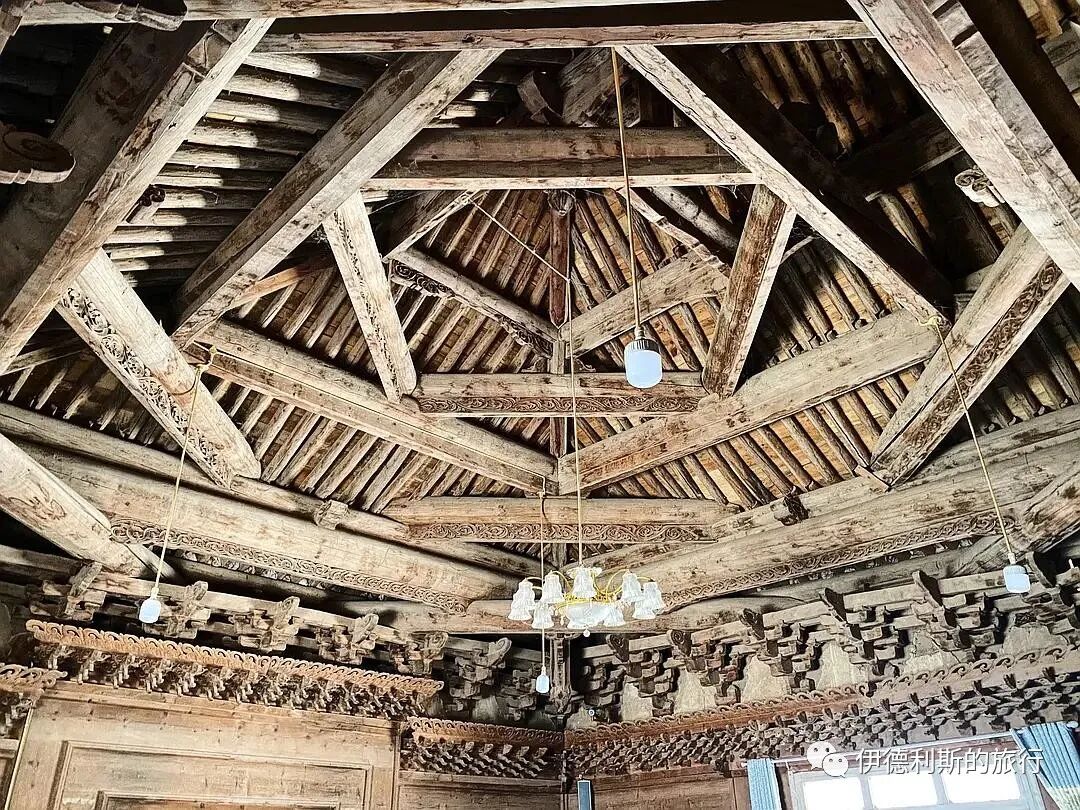
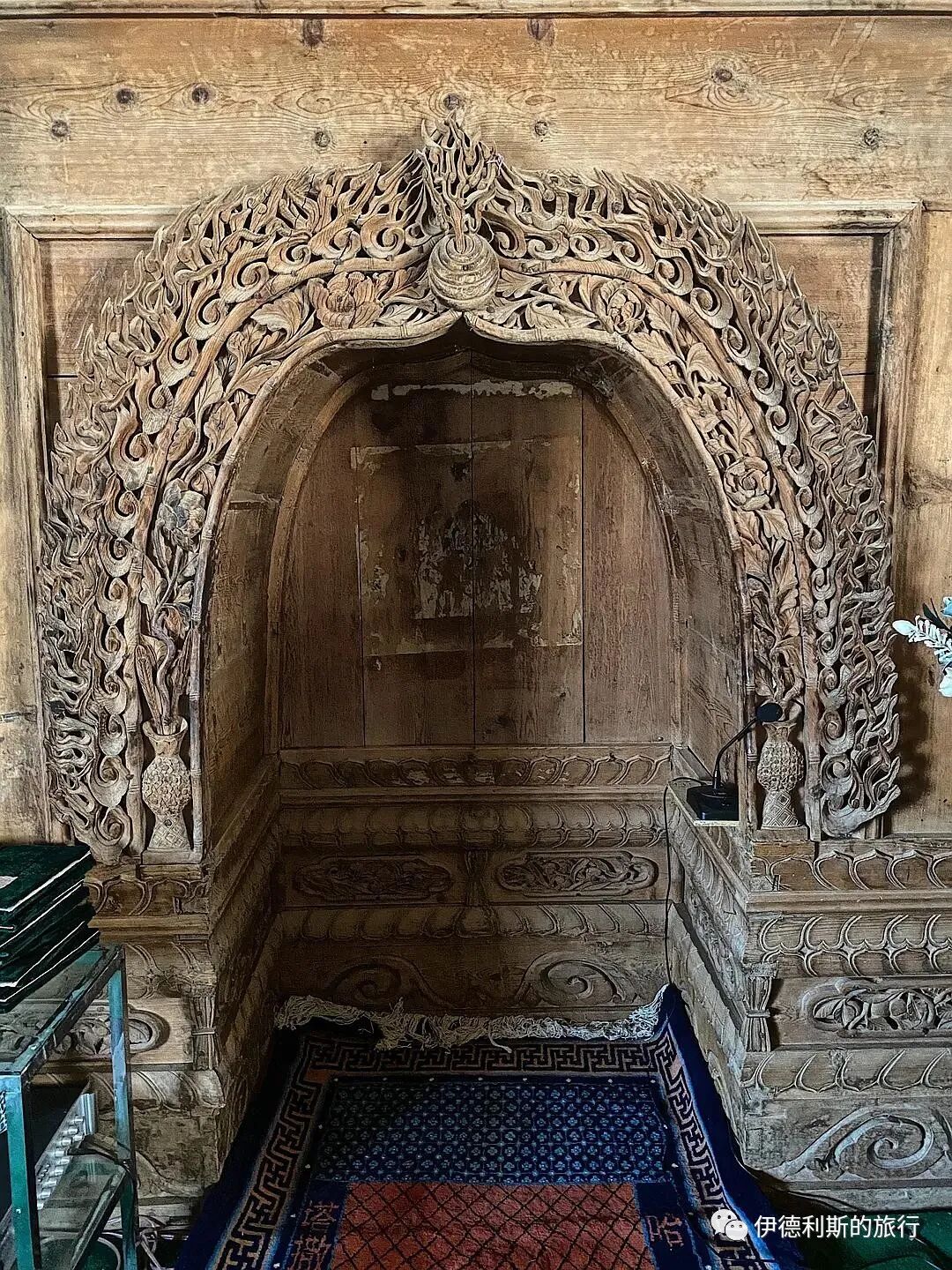
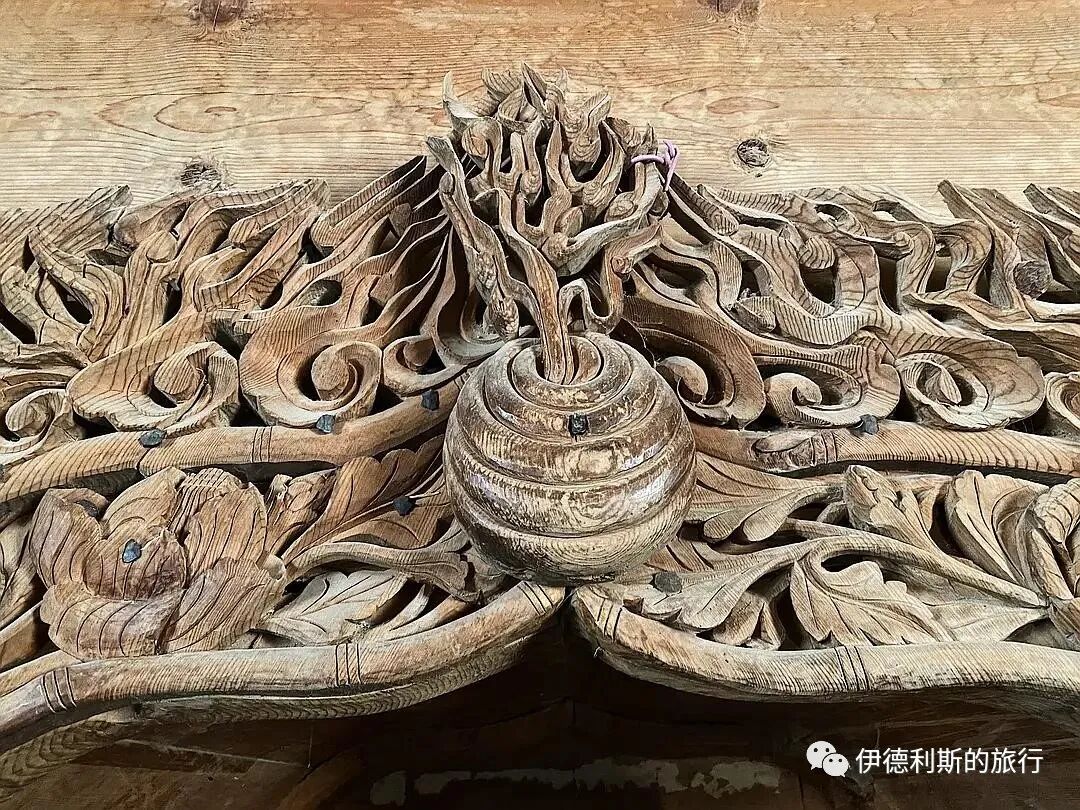
5. Labian Mosque
Labian Mosque in Xunhua County was first built during the Qianlong reign; the main hall was rebuilt in 2015, and only the minaret and the two side gate towers remain of the ancient architecture. The minaret is 18 meters high, with a brick-built lower level and a wooden pavilion on the upper level, featuring dougong brackets, upturned eaves, and a hexagonal spire.
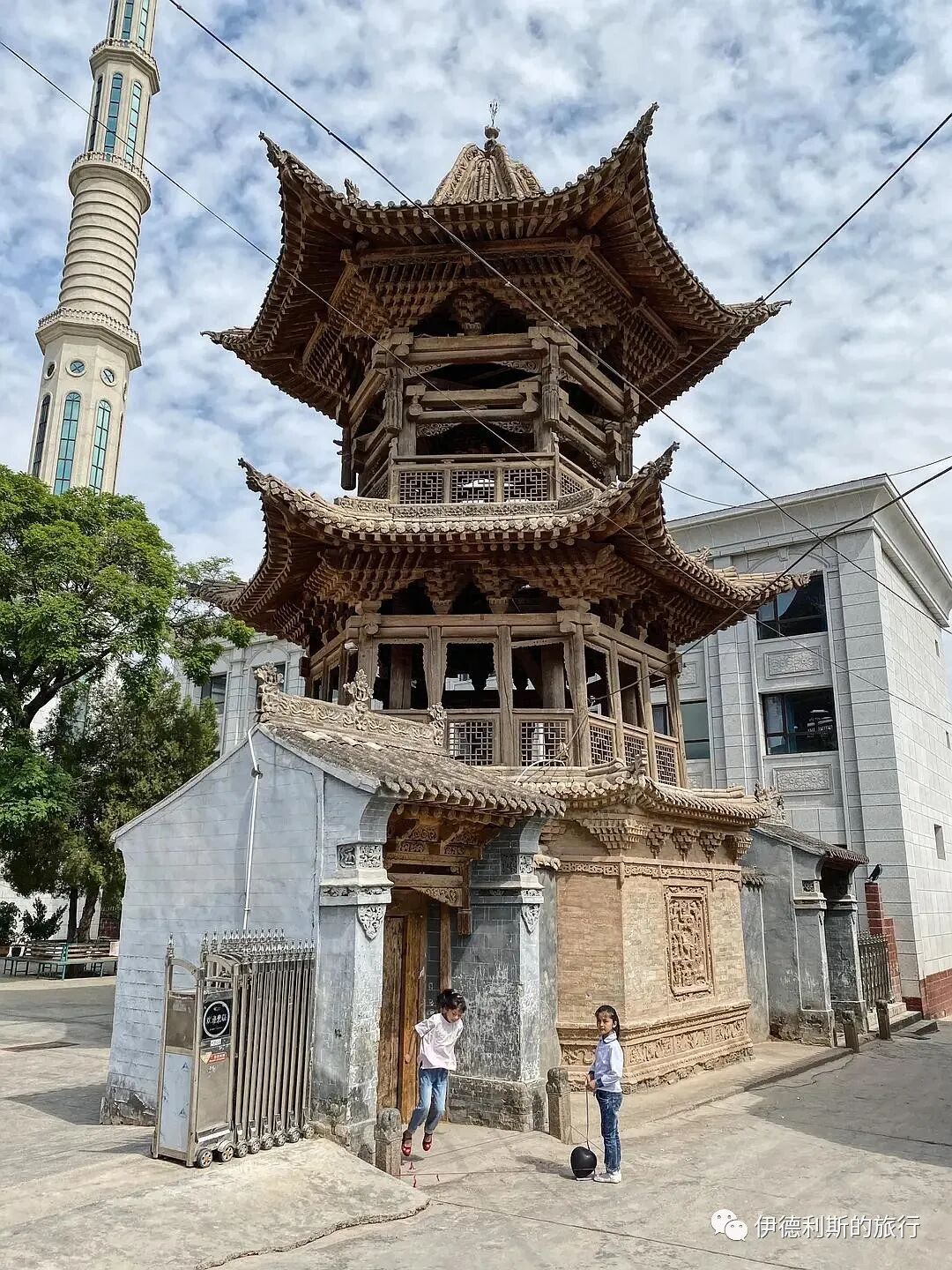
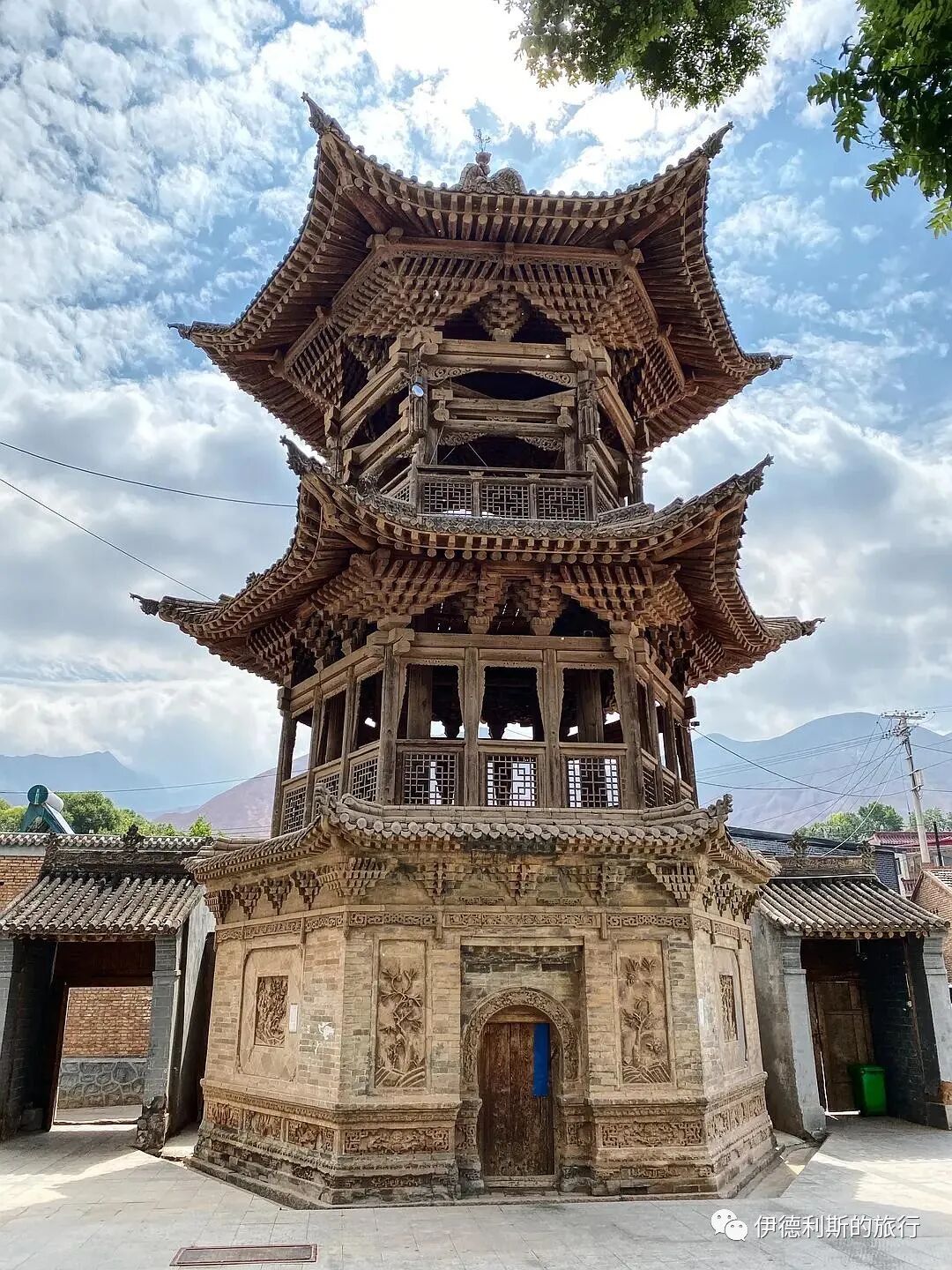
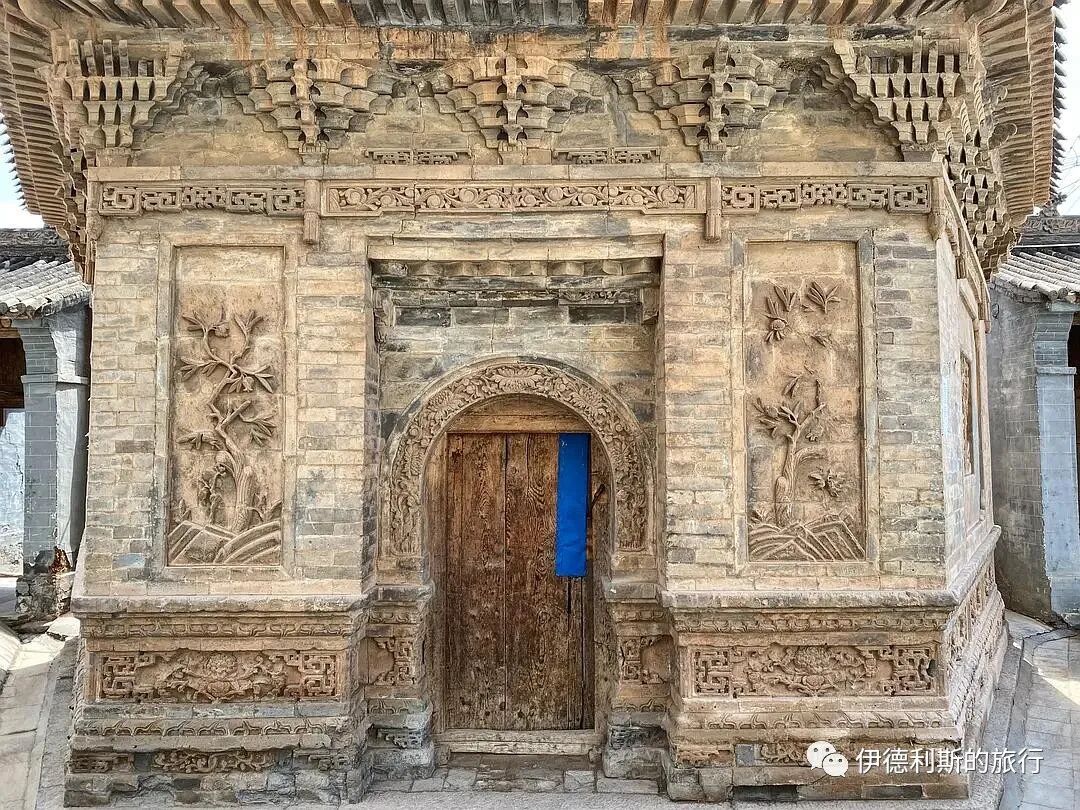
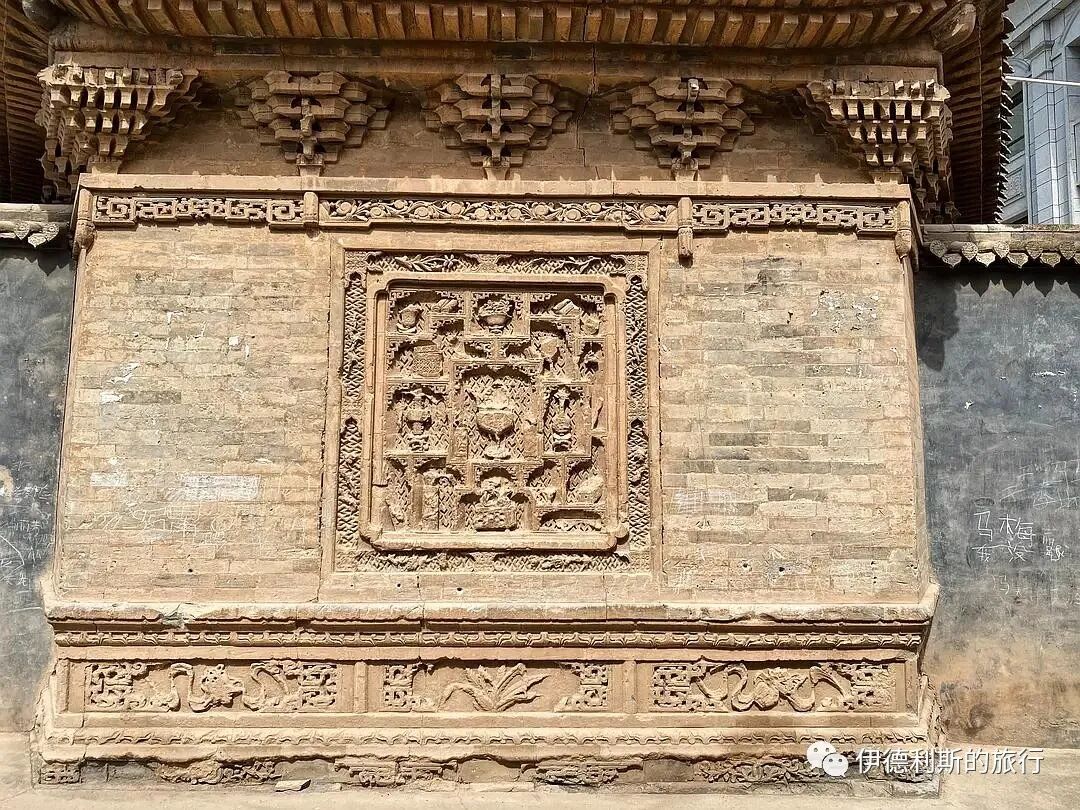
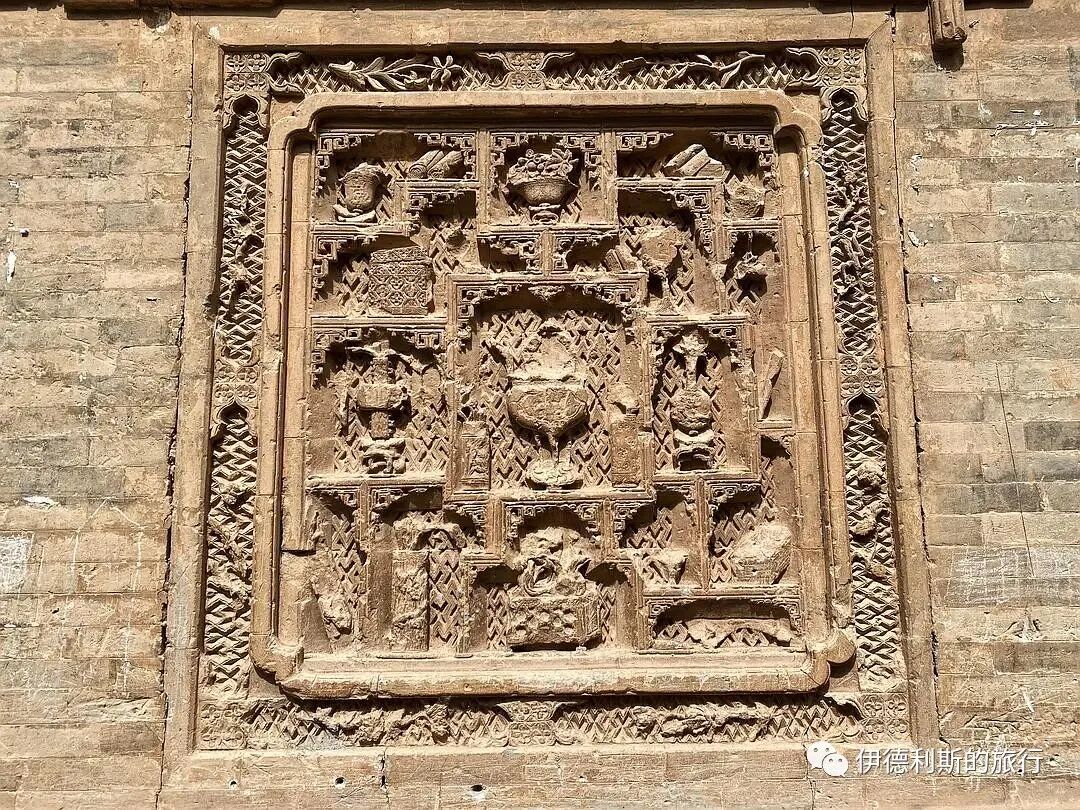
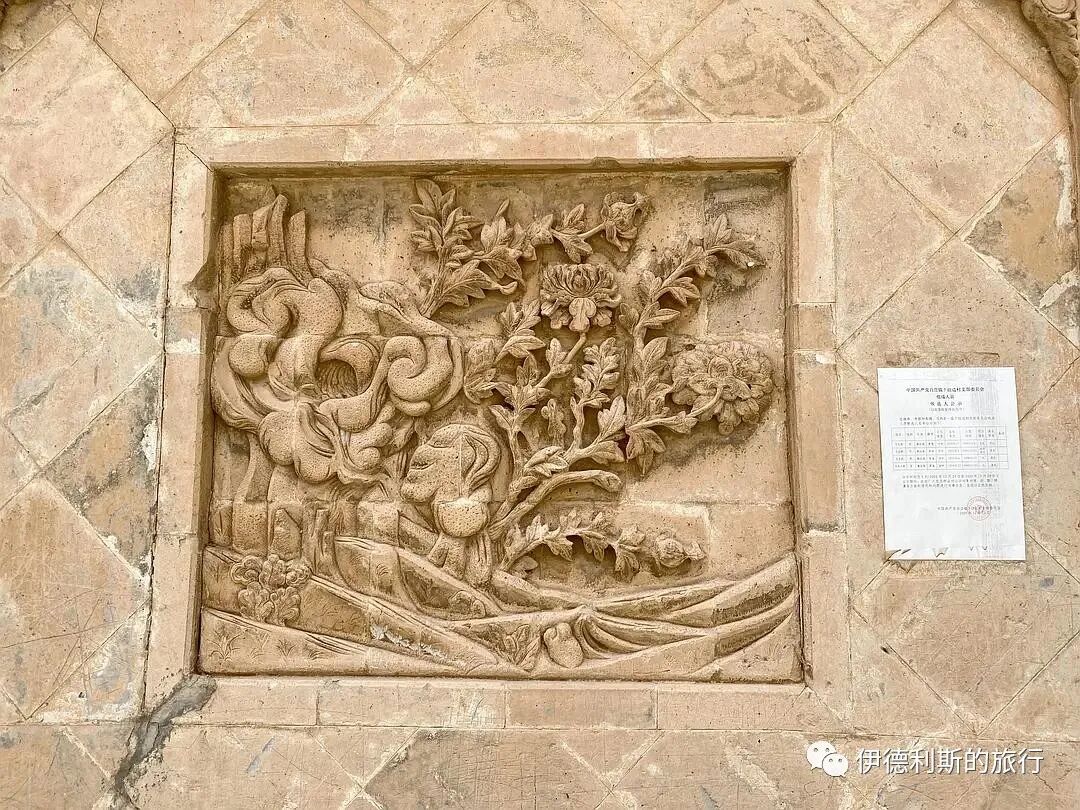
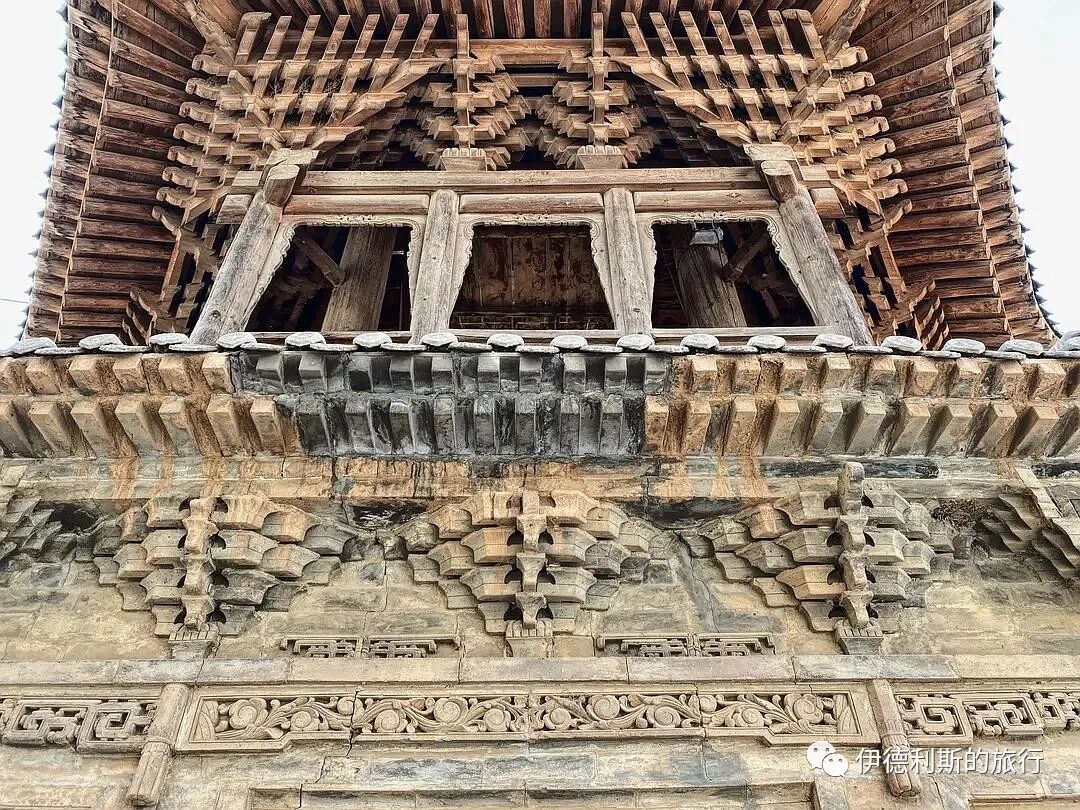
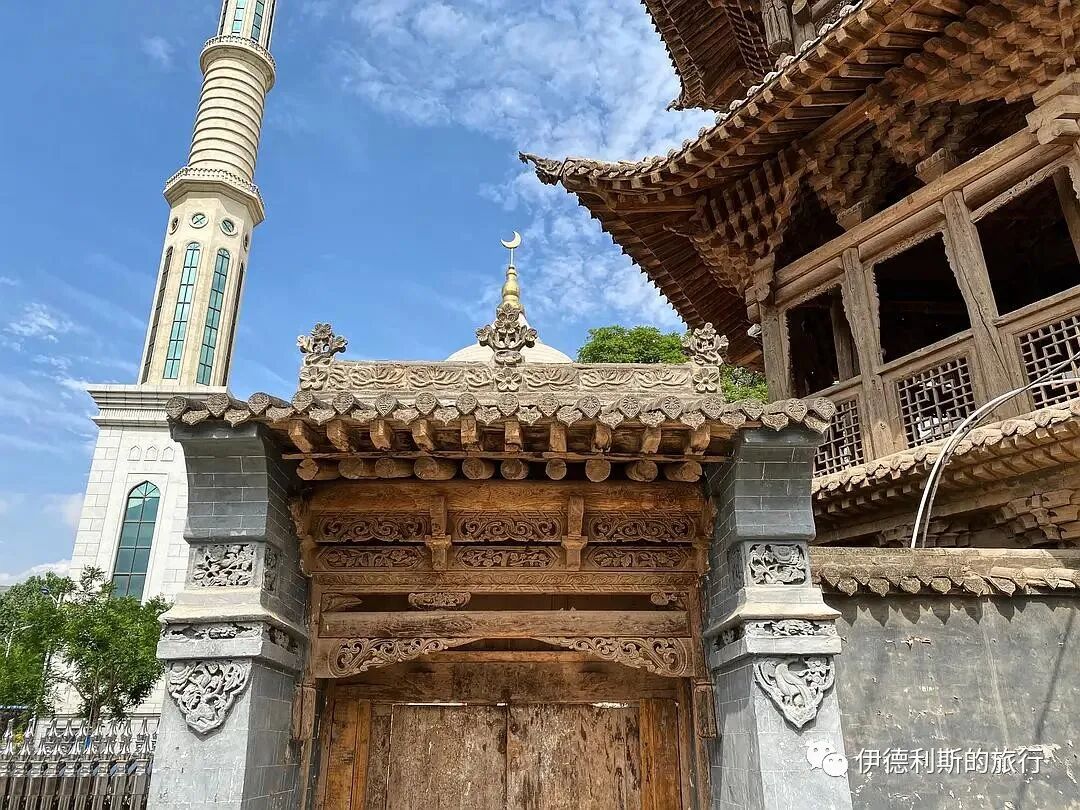
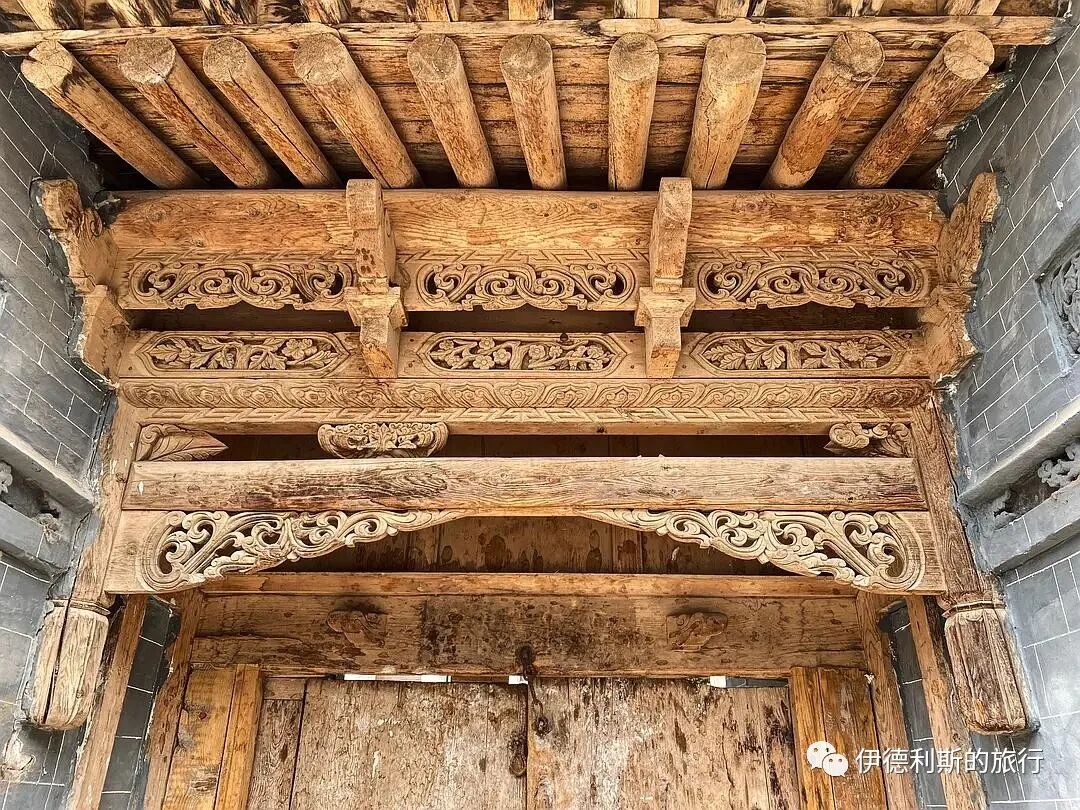
6. Zhangga Mosque
Zhangga Mosque in Xunhua County was first built in 1406 (the fourth year of the Yongle reign of the Ming Dynasty) and rebuilt during the Qing Dynasty. The minaret is 23 meters high, with a brick-built lower level and a wooden pavilion on the upper level, featuring a double-eaved hexagonal spire, and the top-level hexagonal caisson ceiling is formed by three layers of stacked dougong brackets in an inverted bucket shape.
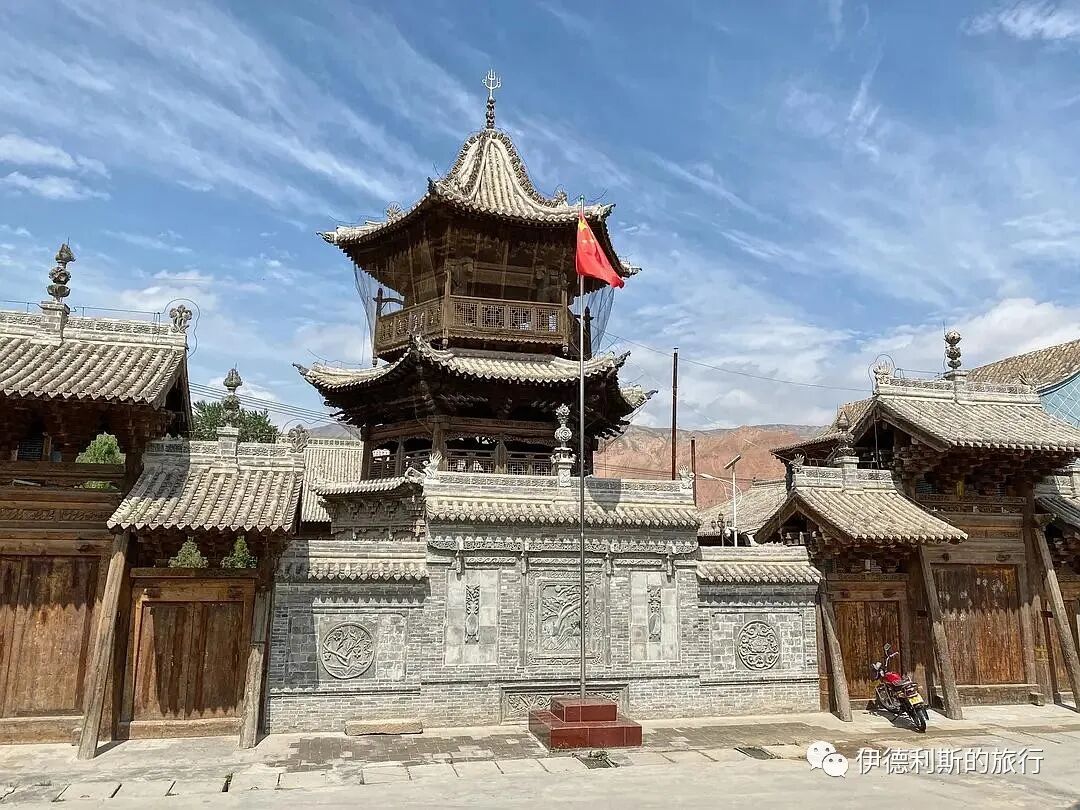
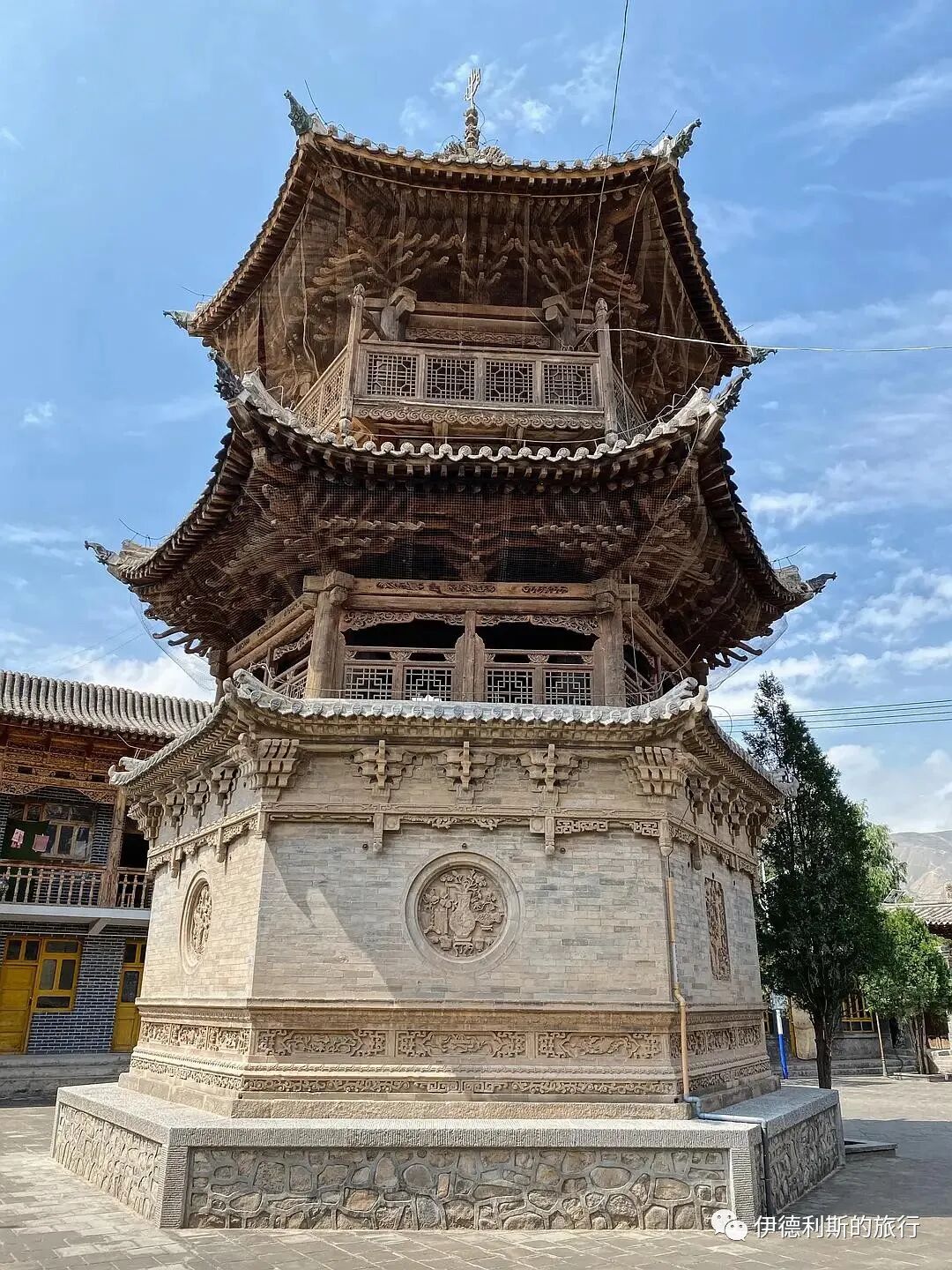
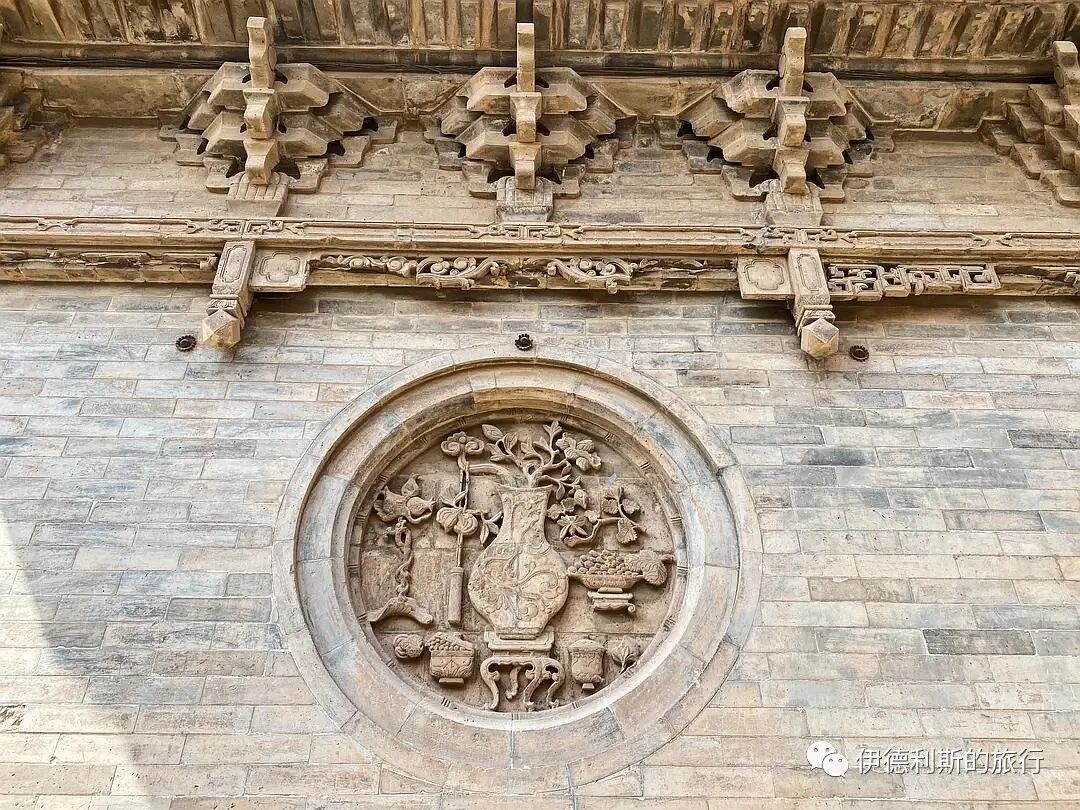
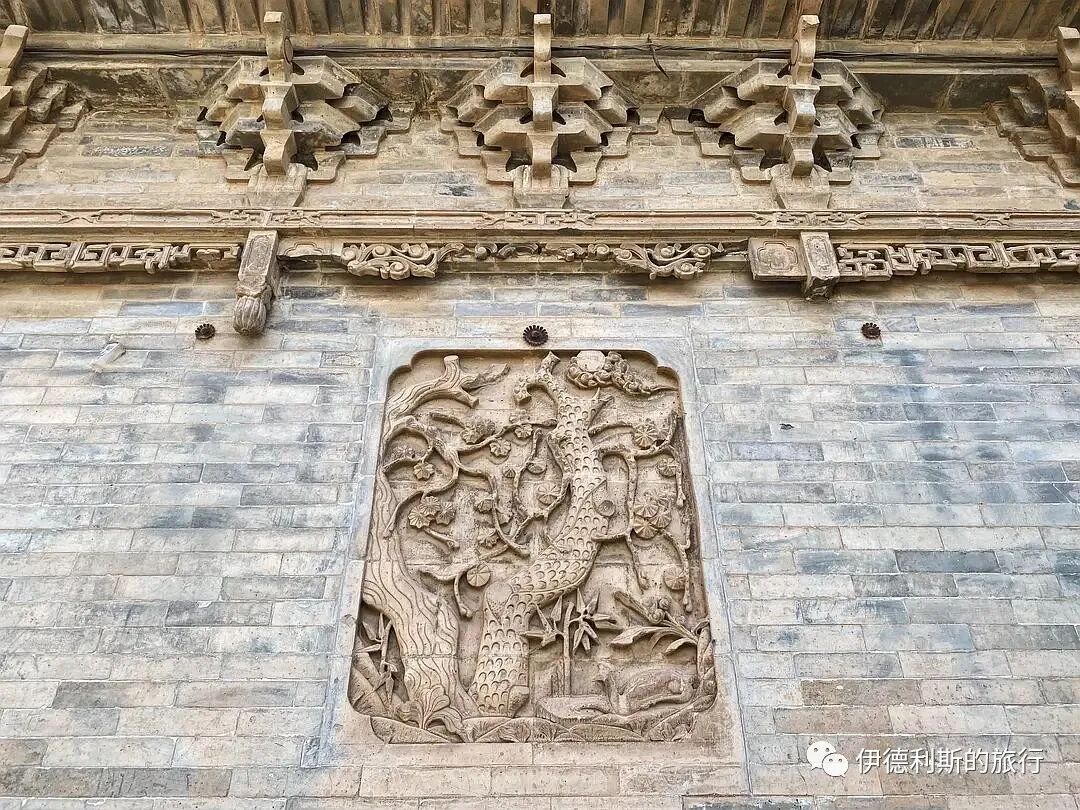
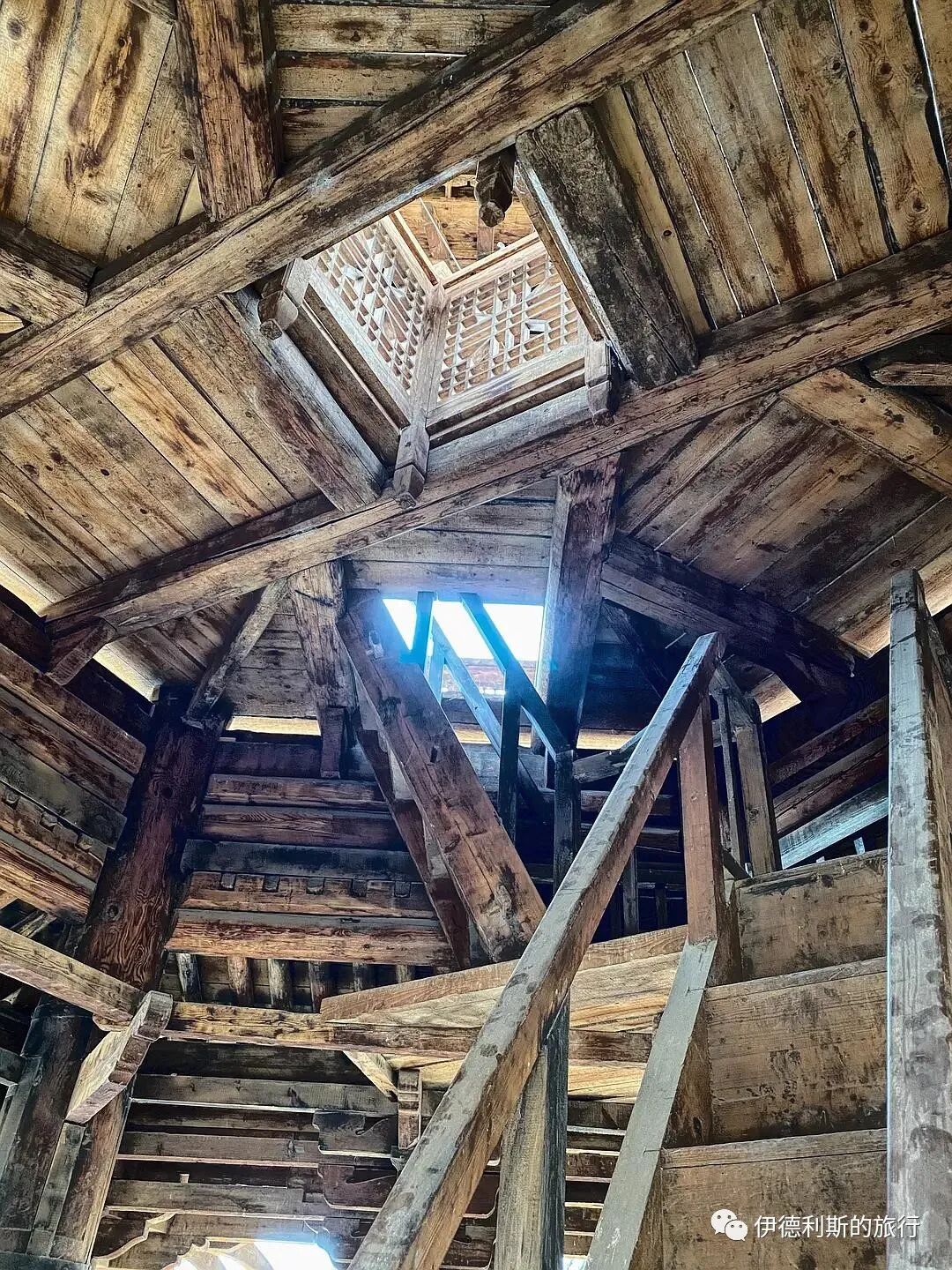
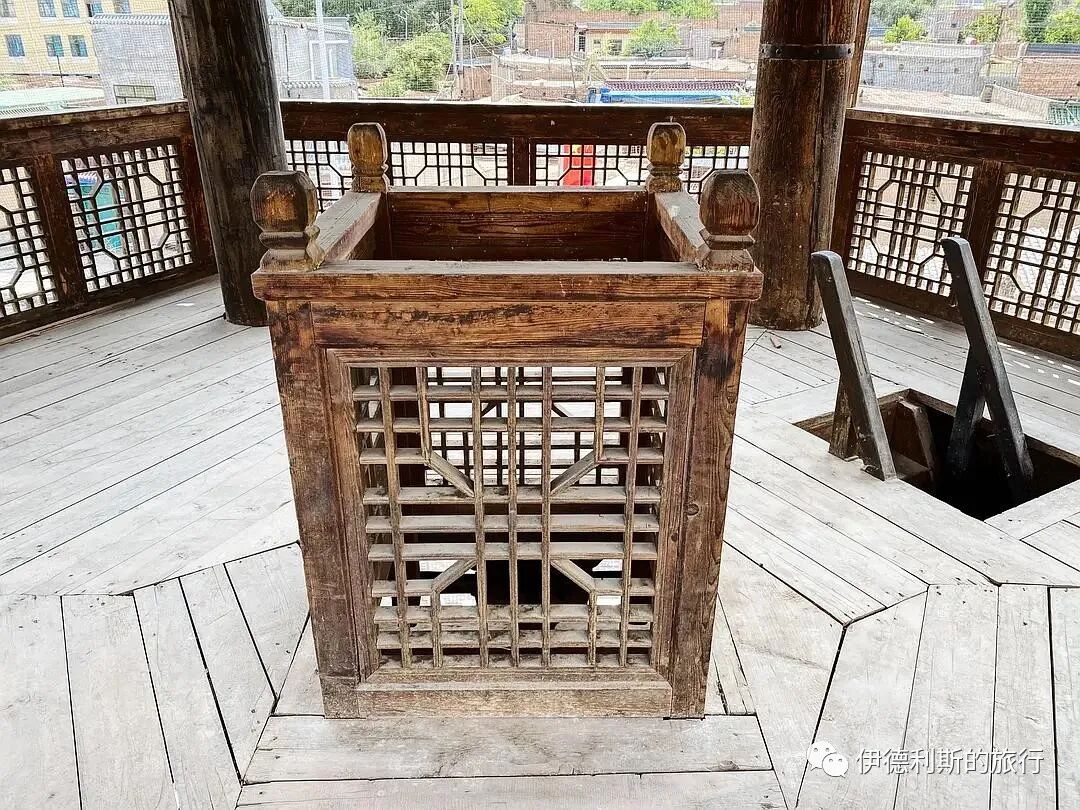
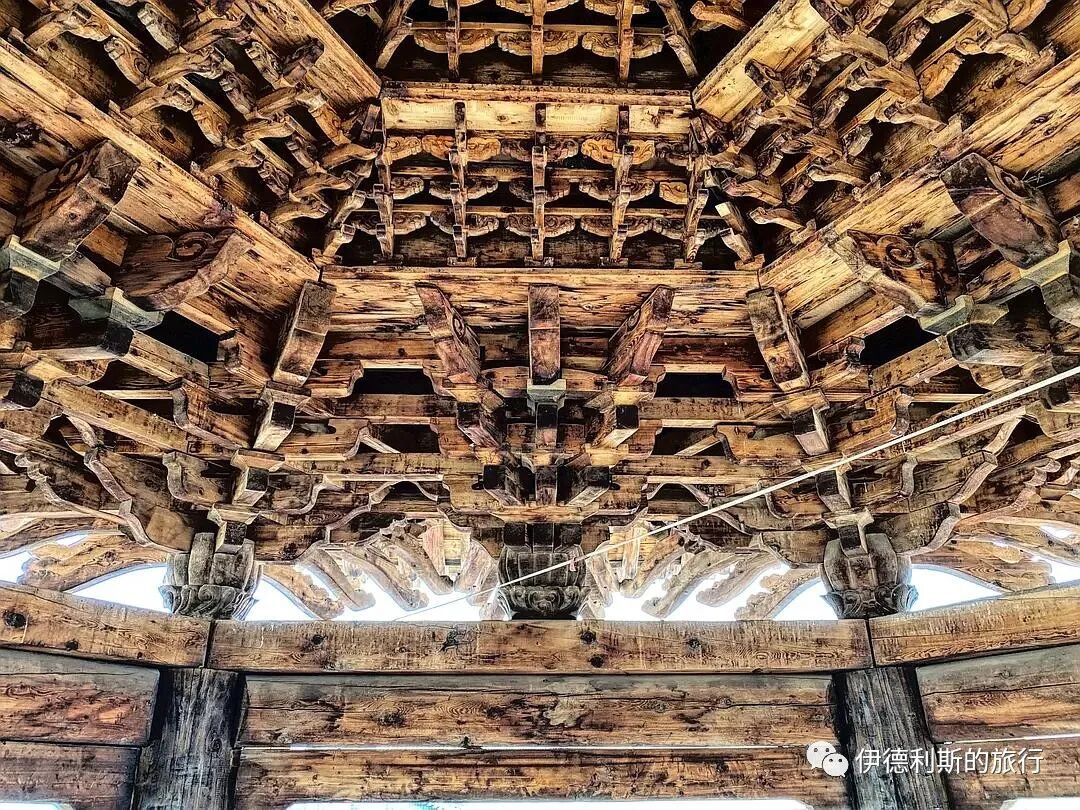
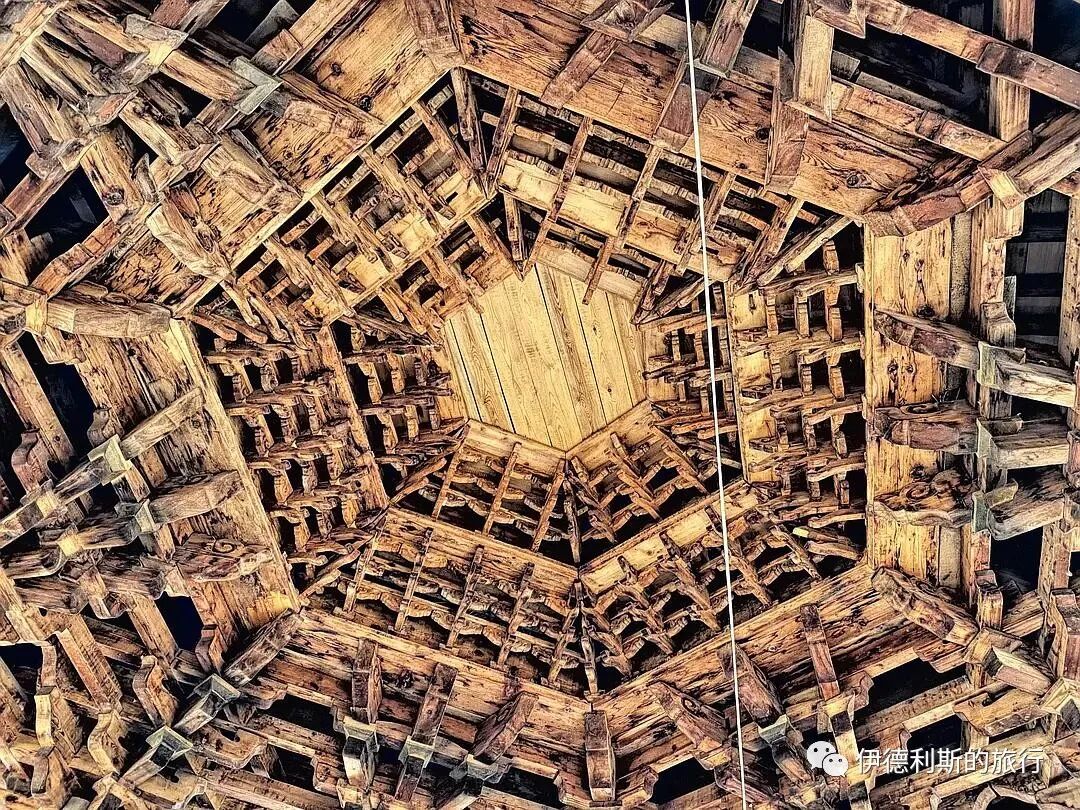
The main hall of the mosque, though it is a pity that much of the wooden structure has been renovated and replaced.
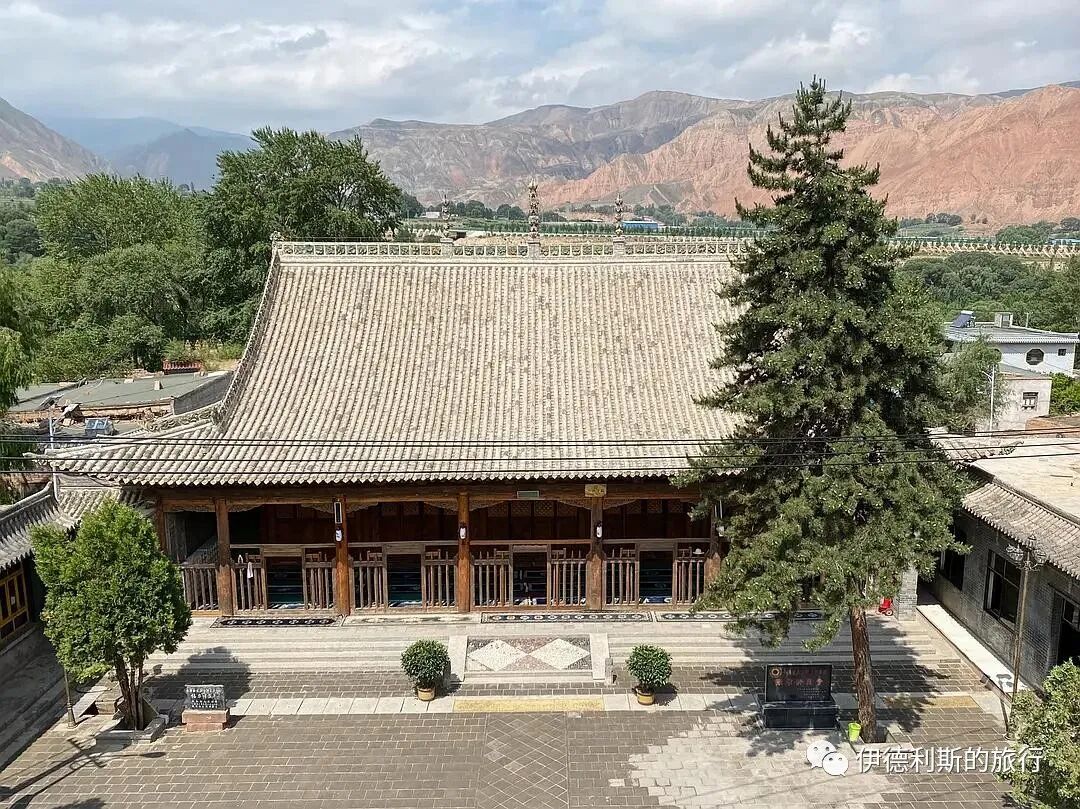
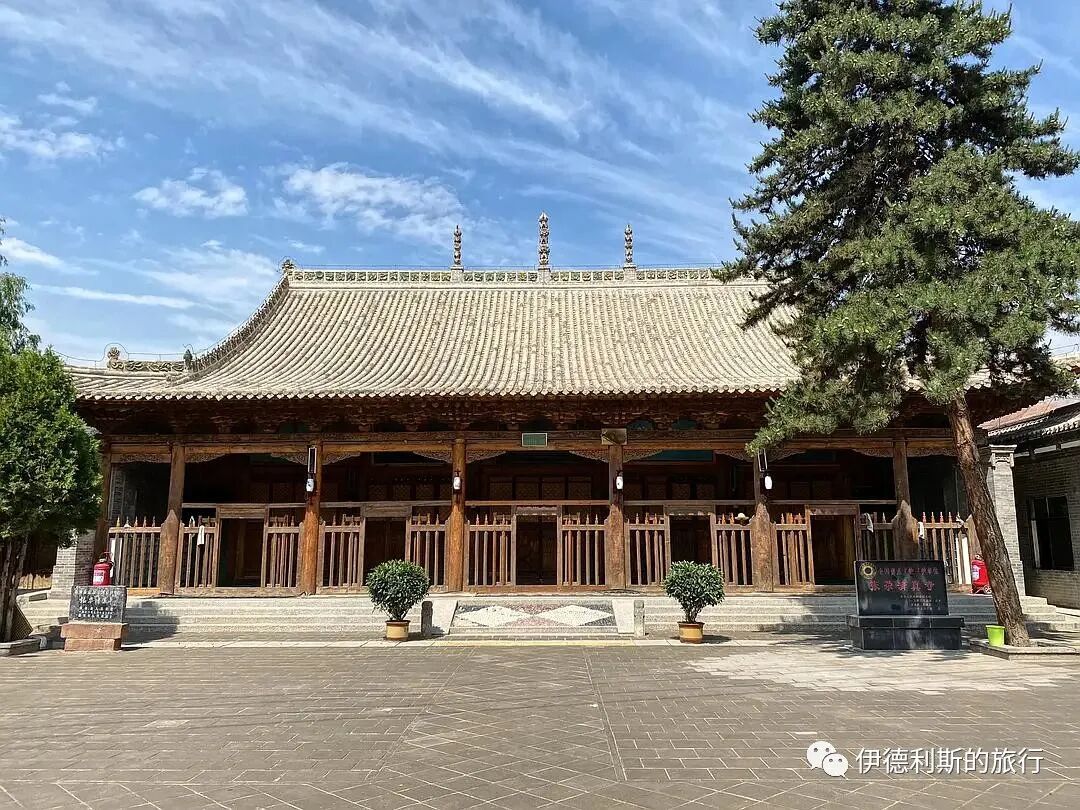
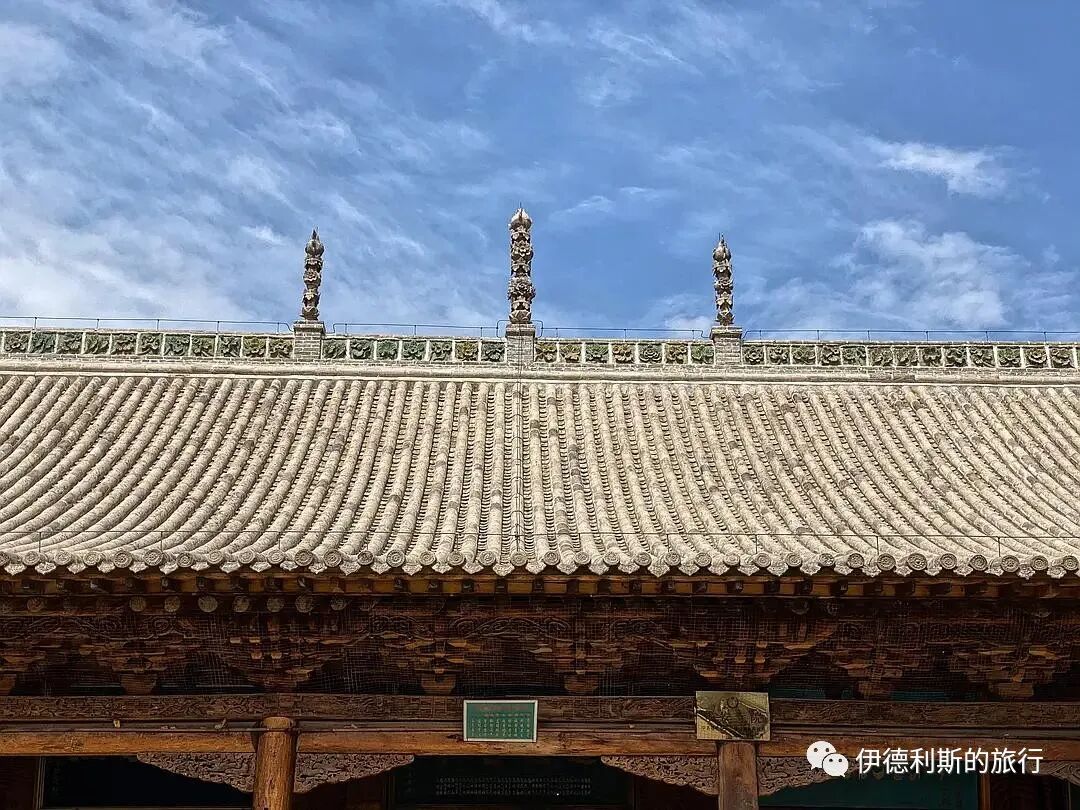
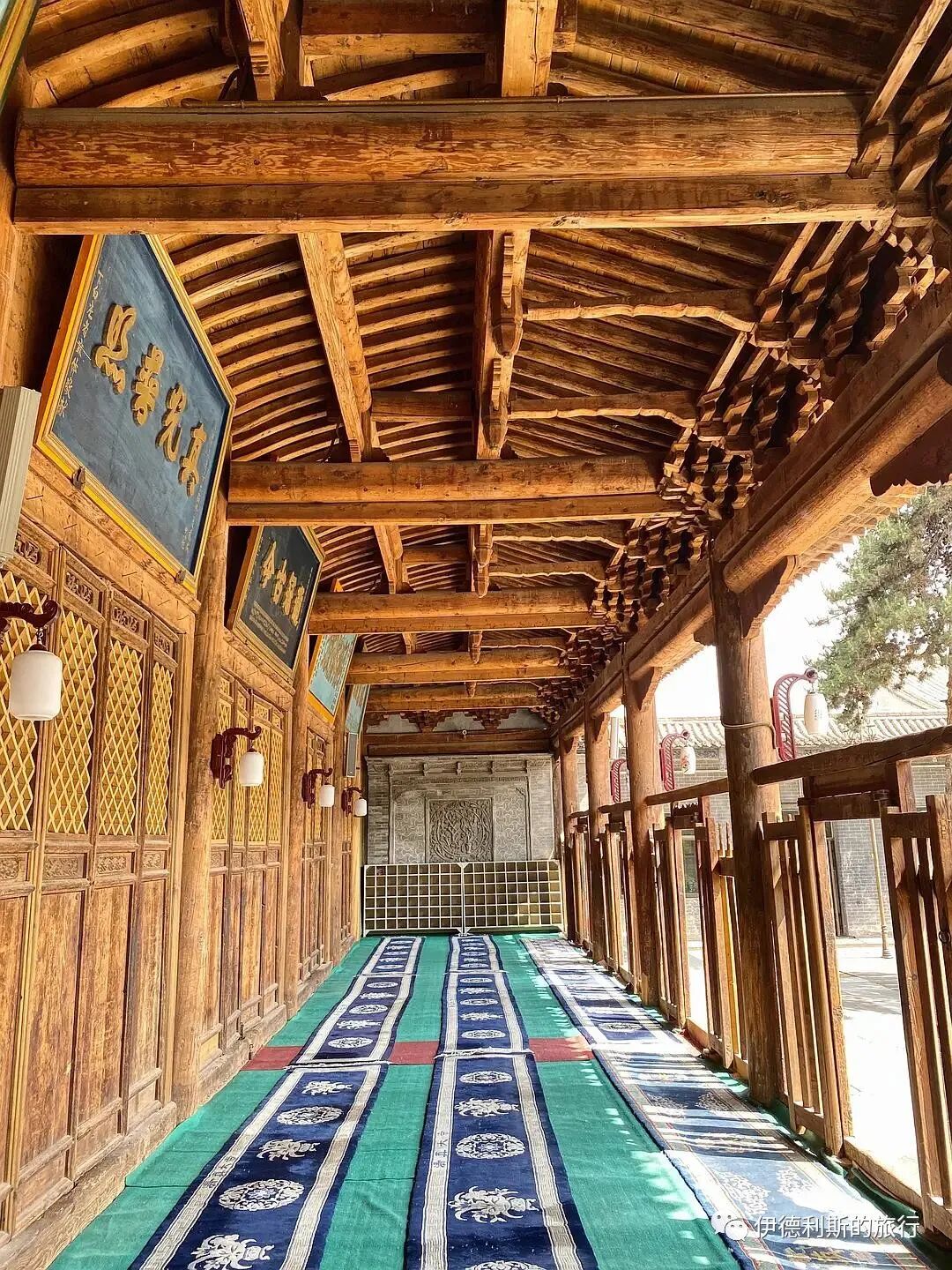
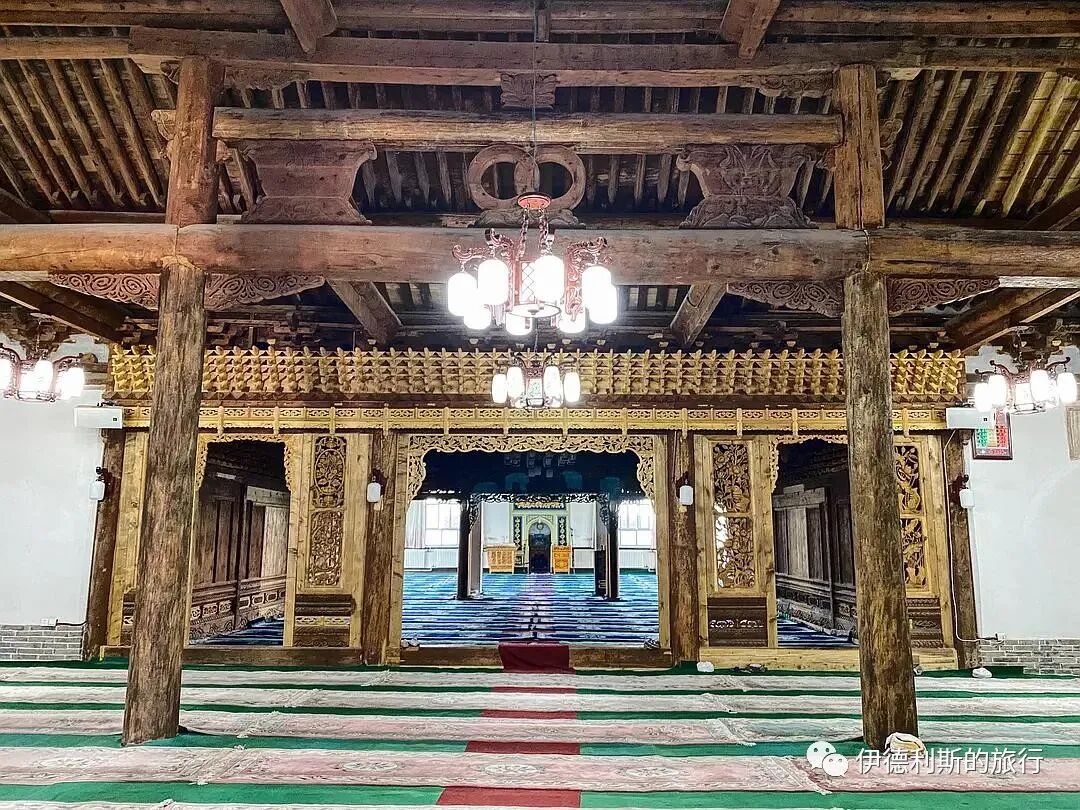
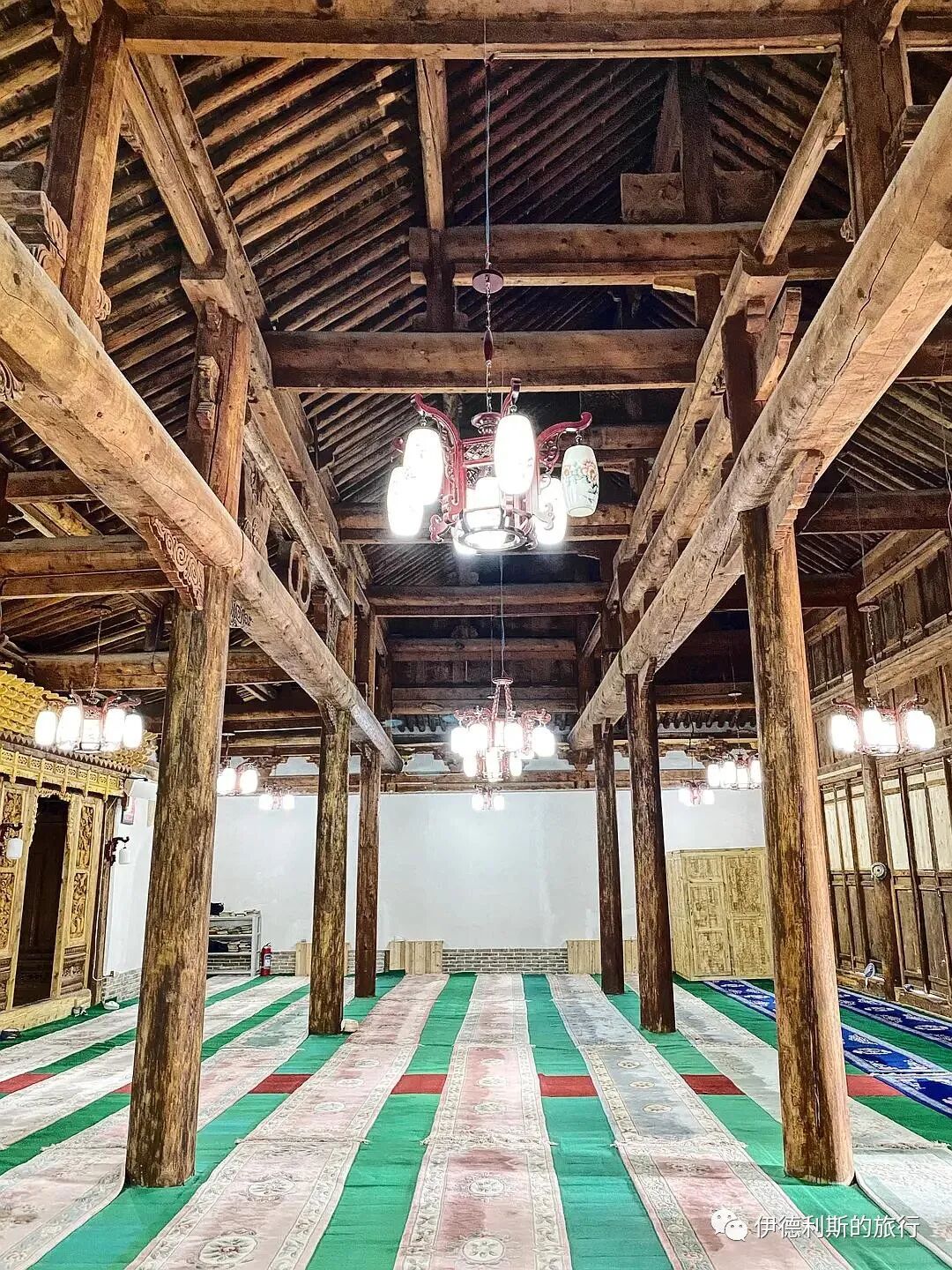
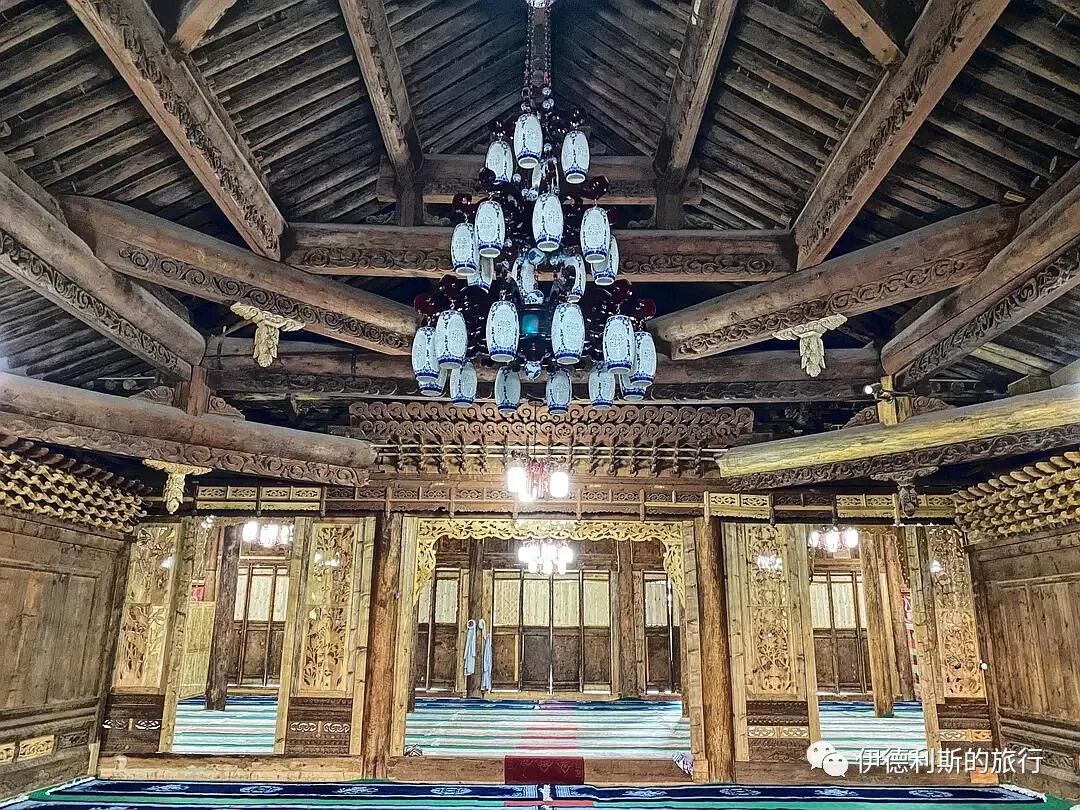
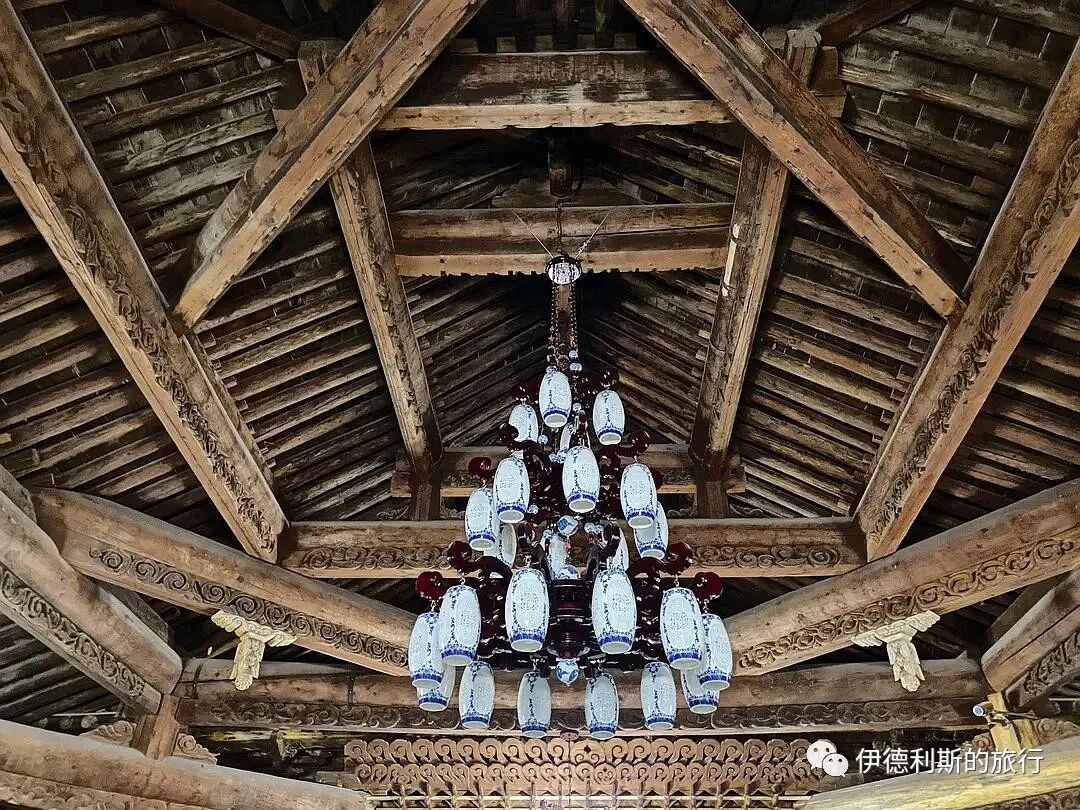
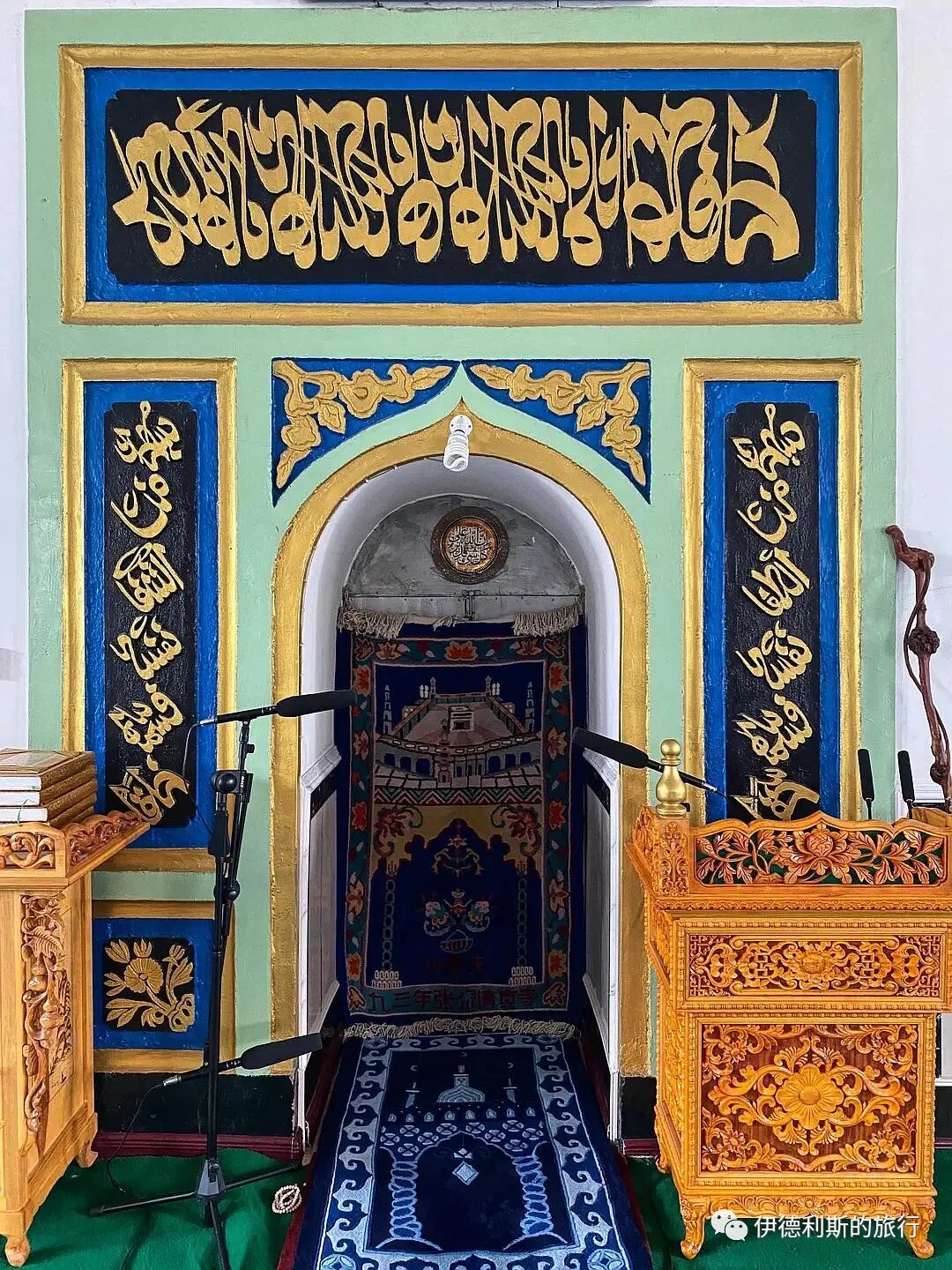
The murals remaining in the main hall depict Mecca using traditional Chinese painting techniques.
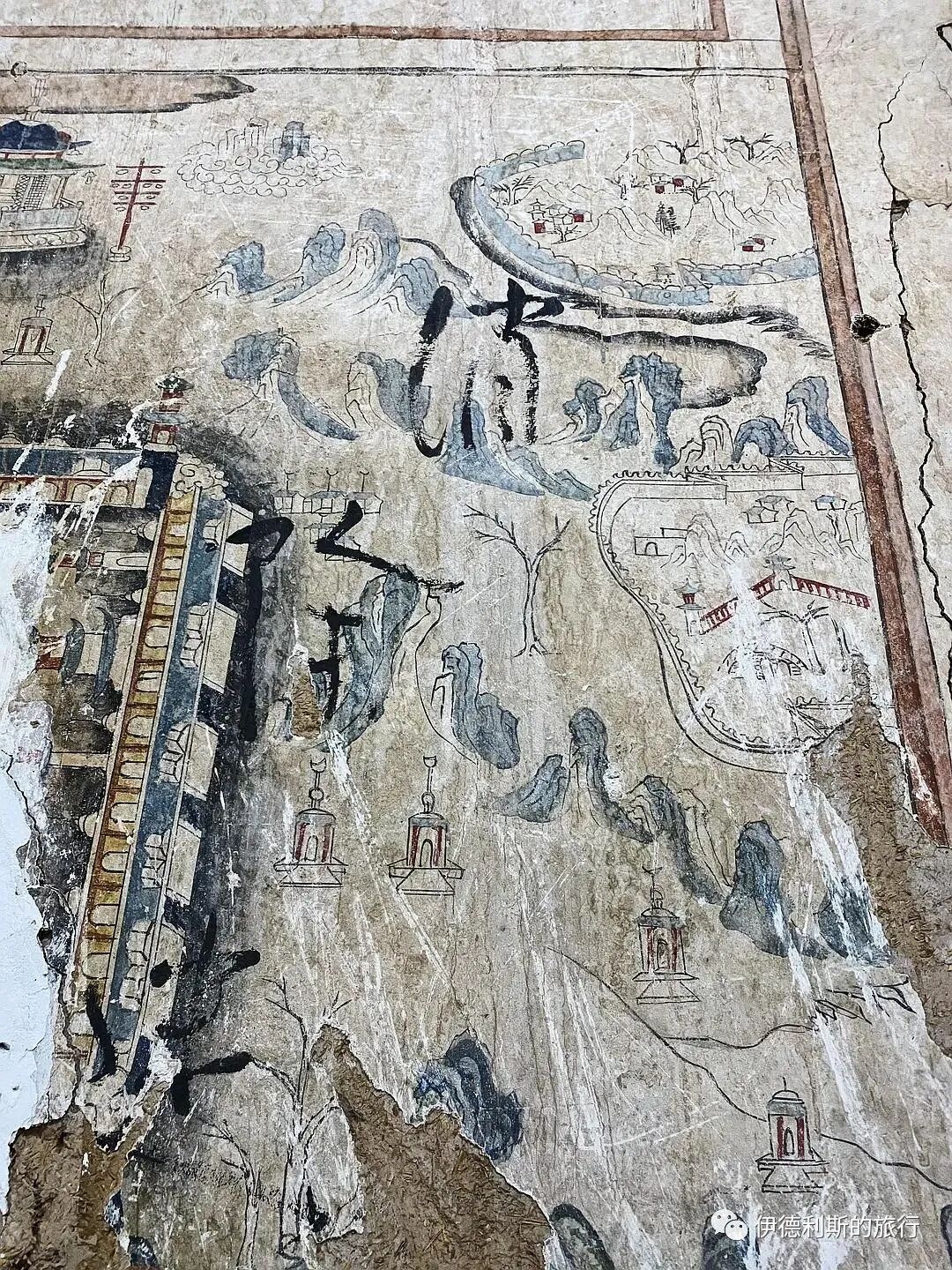
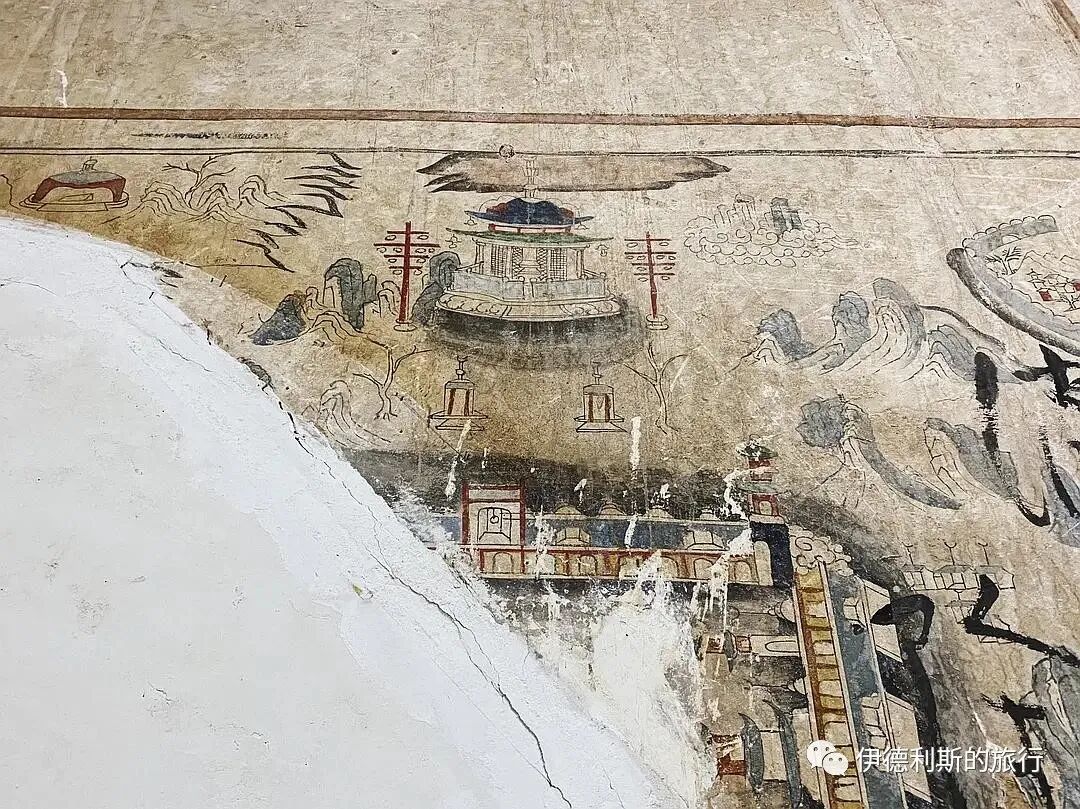
7. Kewa Mosque
Kewa Mosque in Xunhua County was first built in 1403 (the first year of the Yongle reign of the Ming Dynasty) and expanded during the Qing Dynasty; it is the Hayit Mosque (Jumu'ah Mosque) for the Salar people's eight Gong and nine Gong groups. The lower level of the minaret is made of brick with exquisite calligraphy and landscape brick carvings, while the upper level is a wooden pavilion with a double-eaved hexagonal roof.
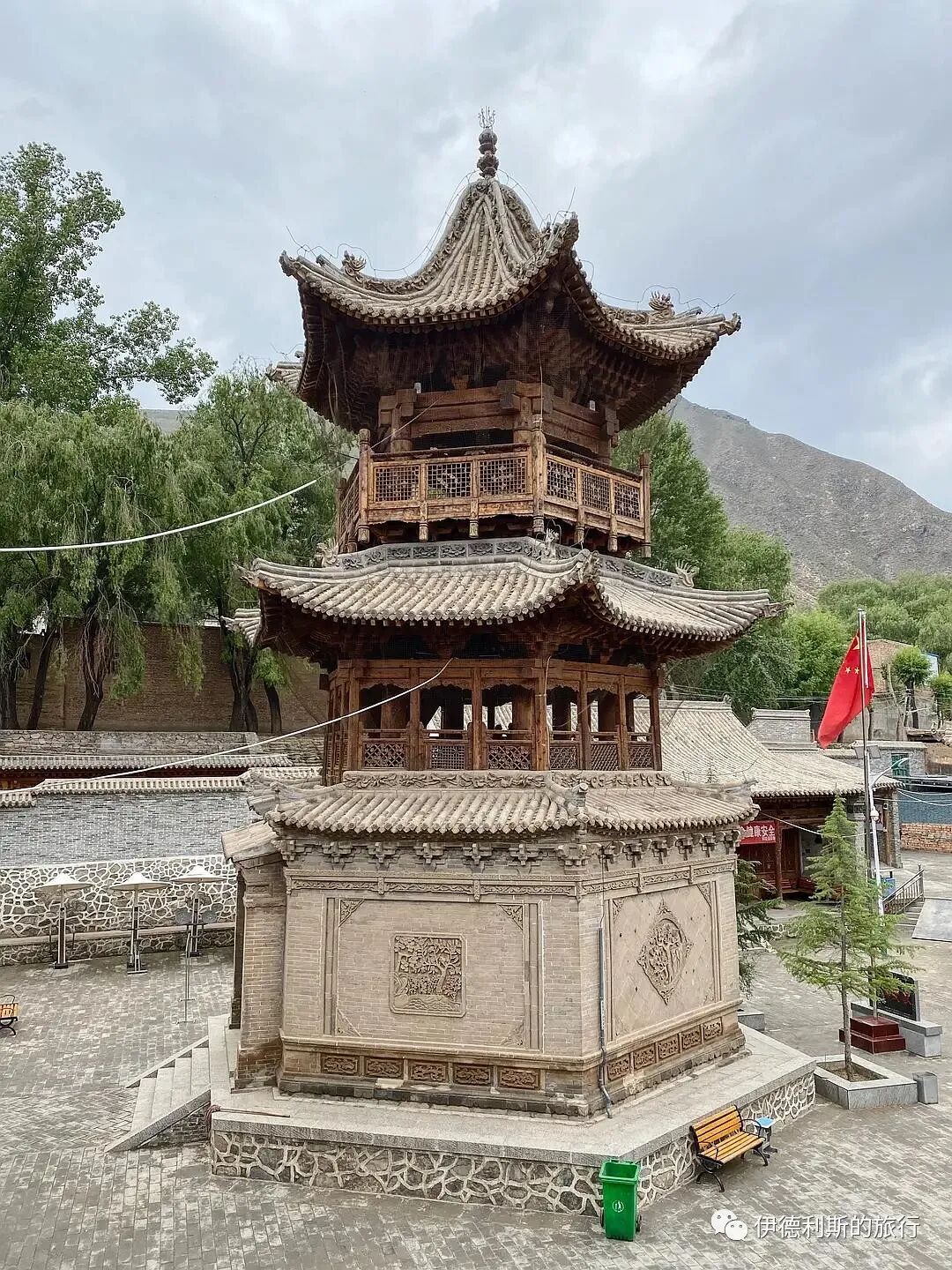
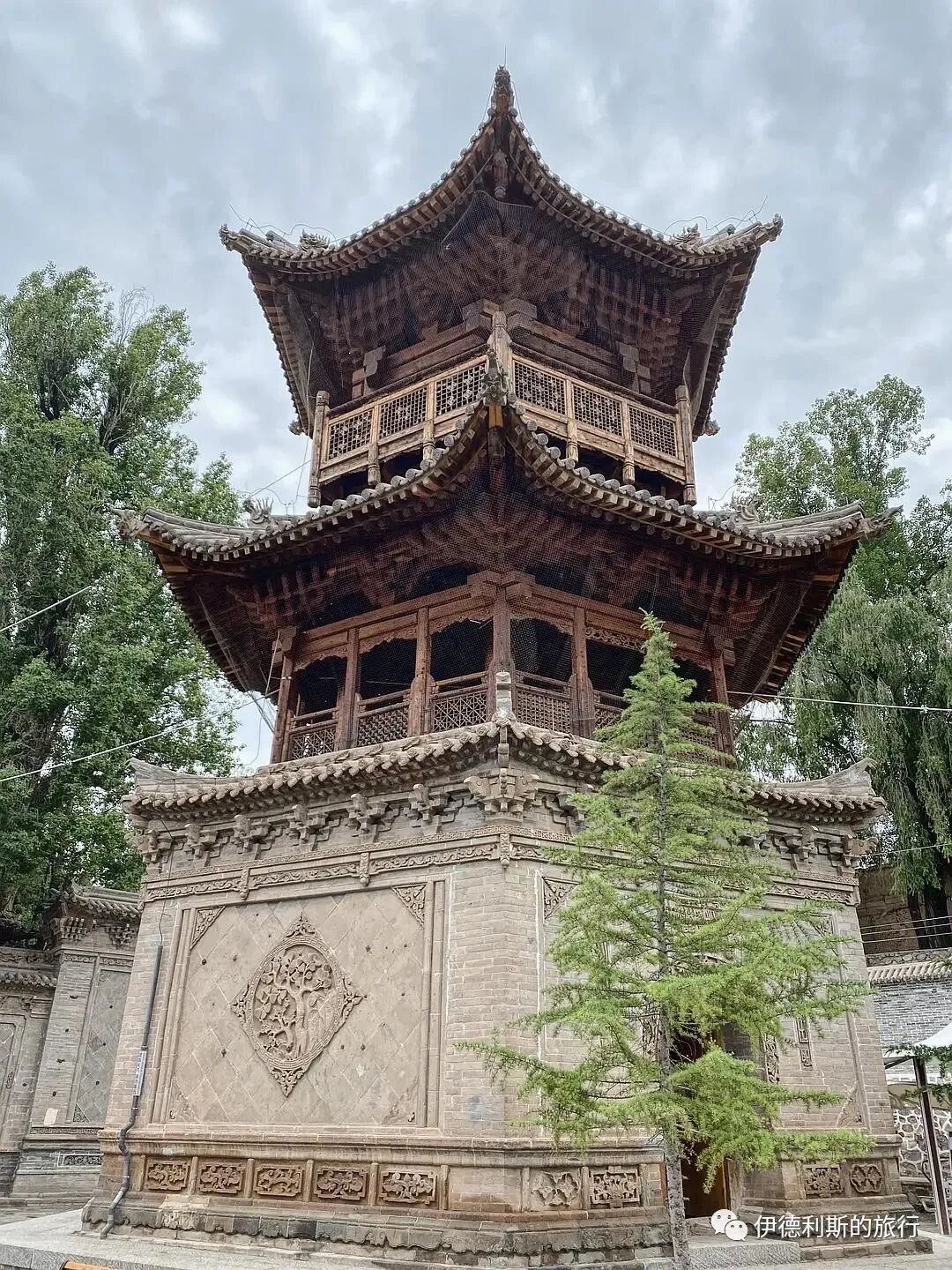
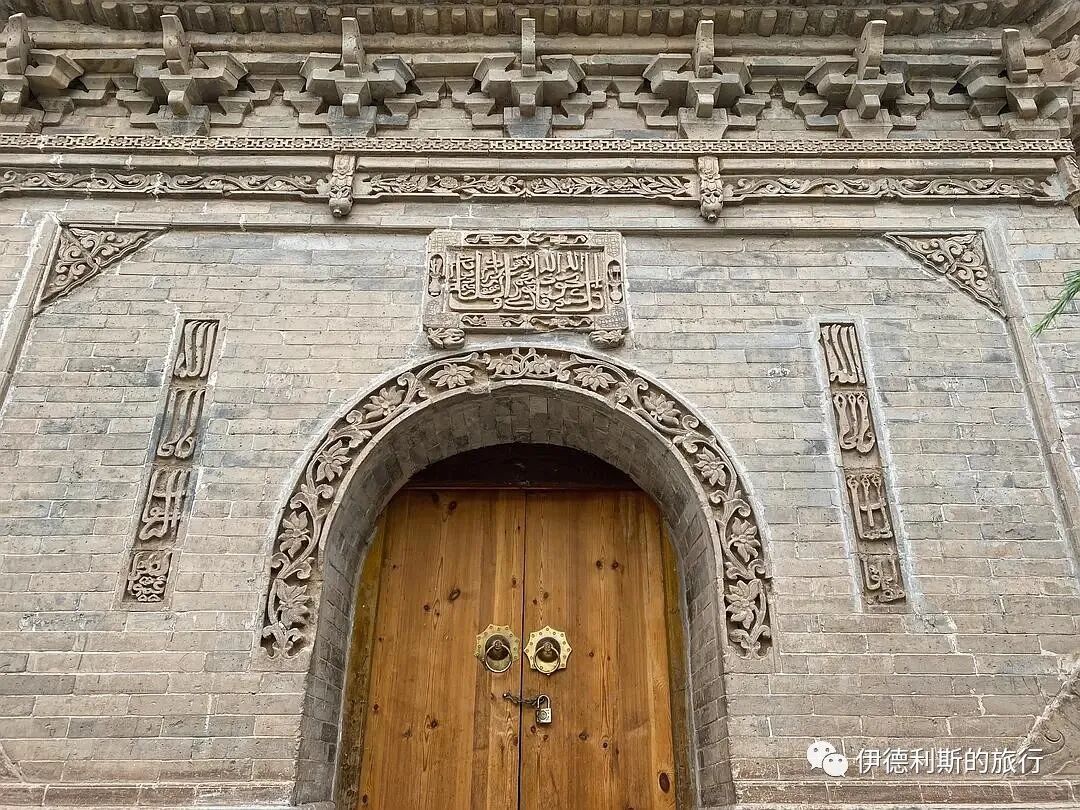
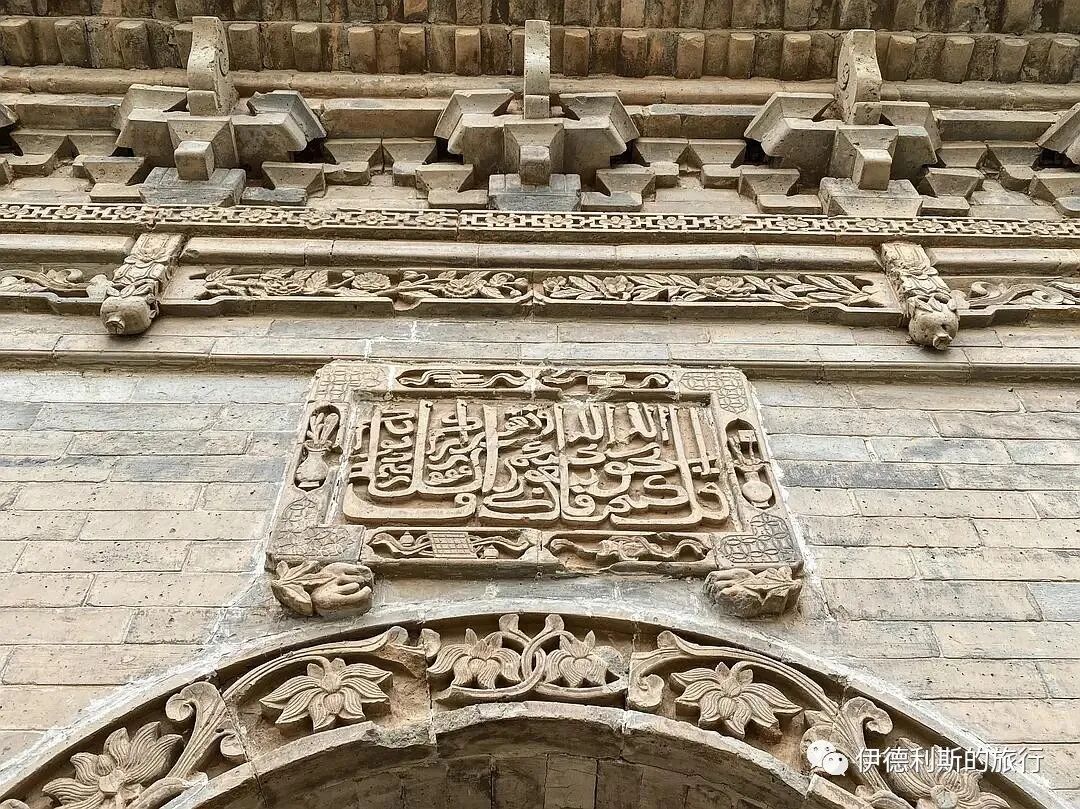
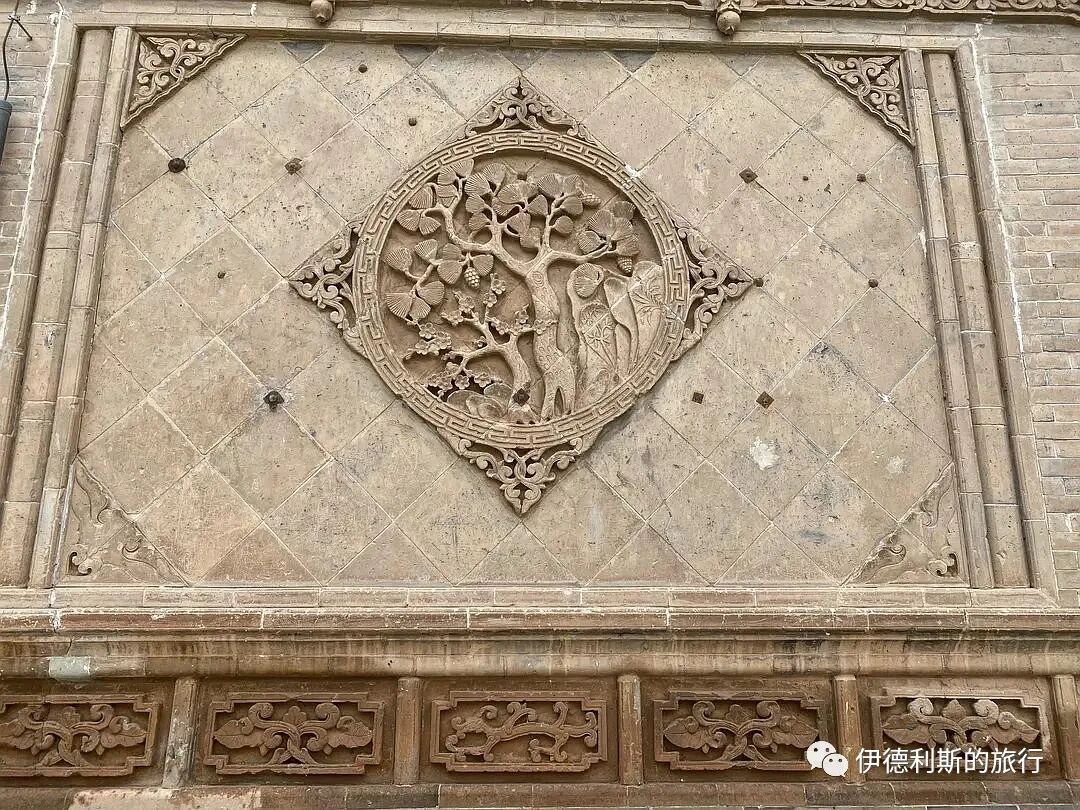
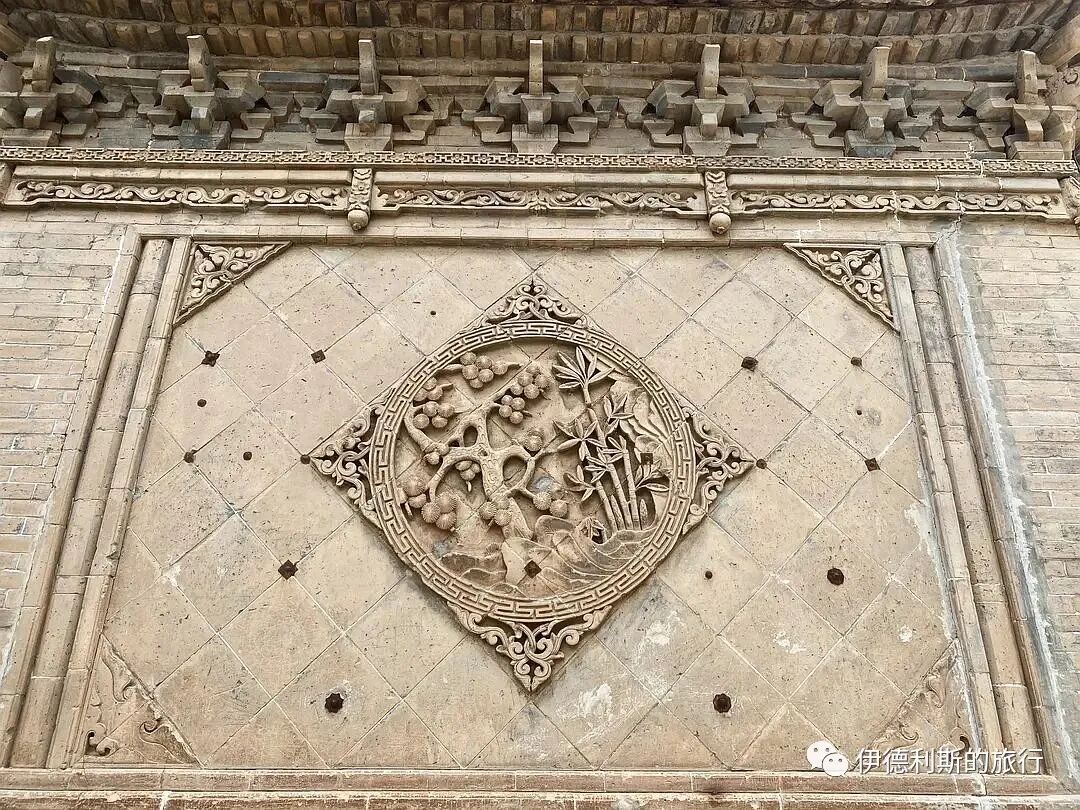
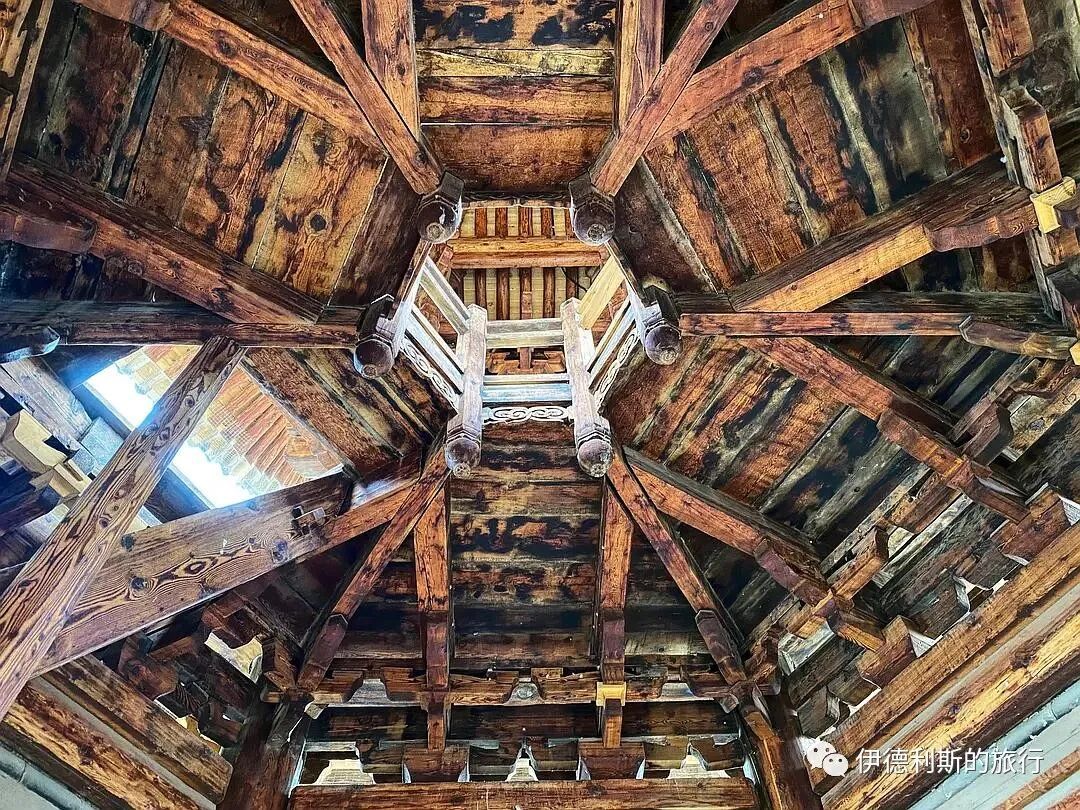
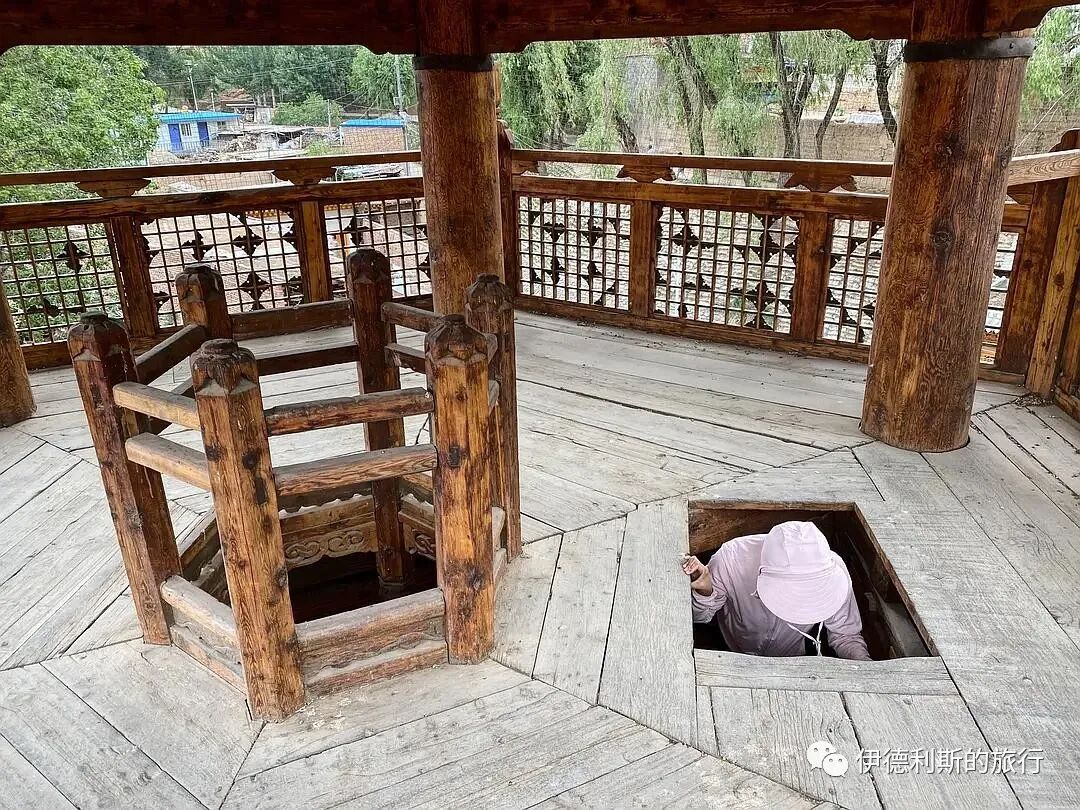
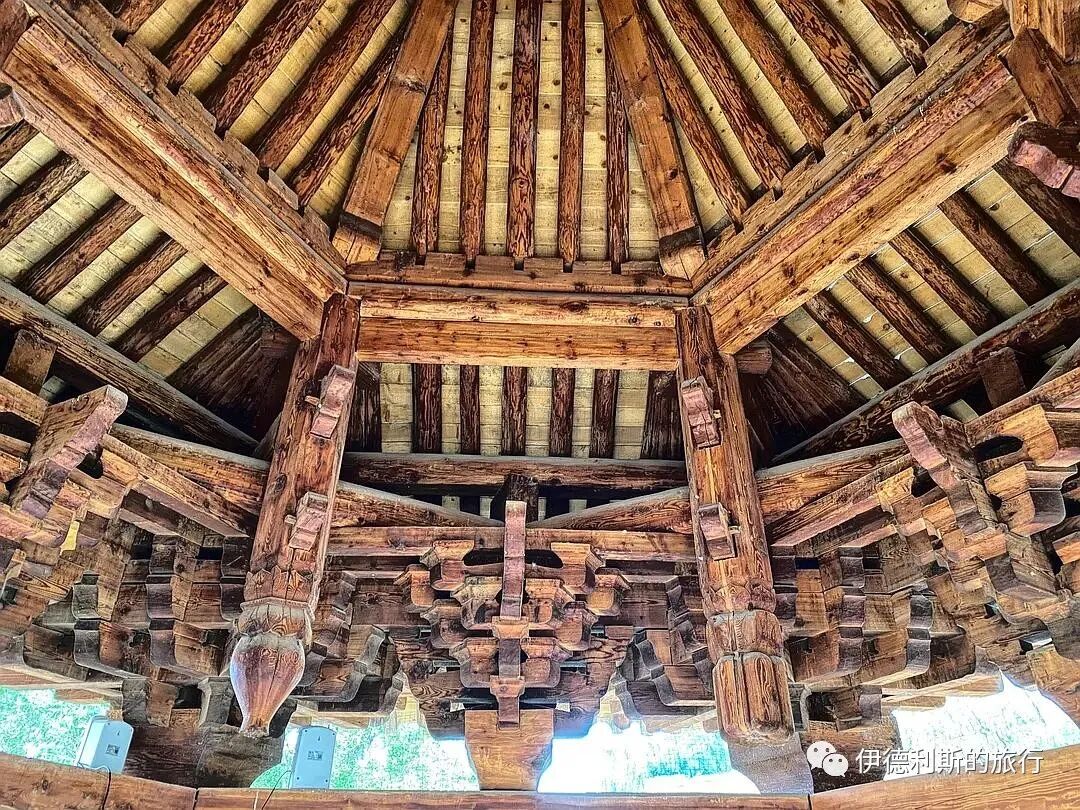
To the right of the main hall is a larger main hall that was newly built in the northern part of the complex in recent years. I believe this approach of building a new main hall next to the historic one is the best choice at this stage, as it meets the needs of religious activities while protecting the original historic building. However, this approach is still in the minority; most practices involve demolishing the original historic building and rebuilding a new one. It is only because the Kewa Mosque itself is a national-level cultural relic protection unit that it is impossible to demolish the historic building.
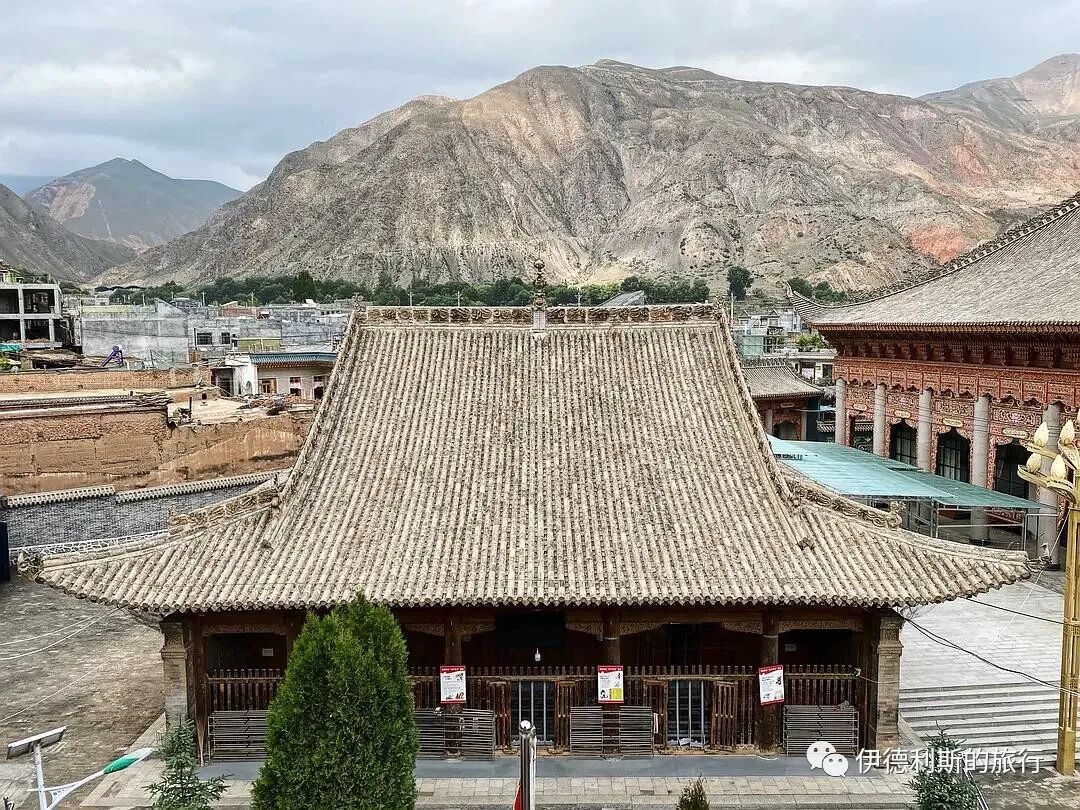
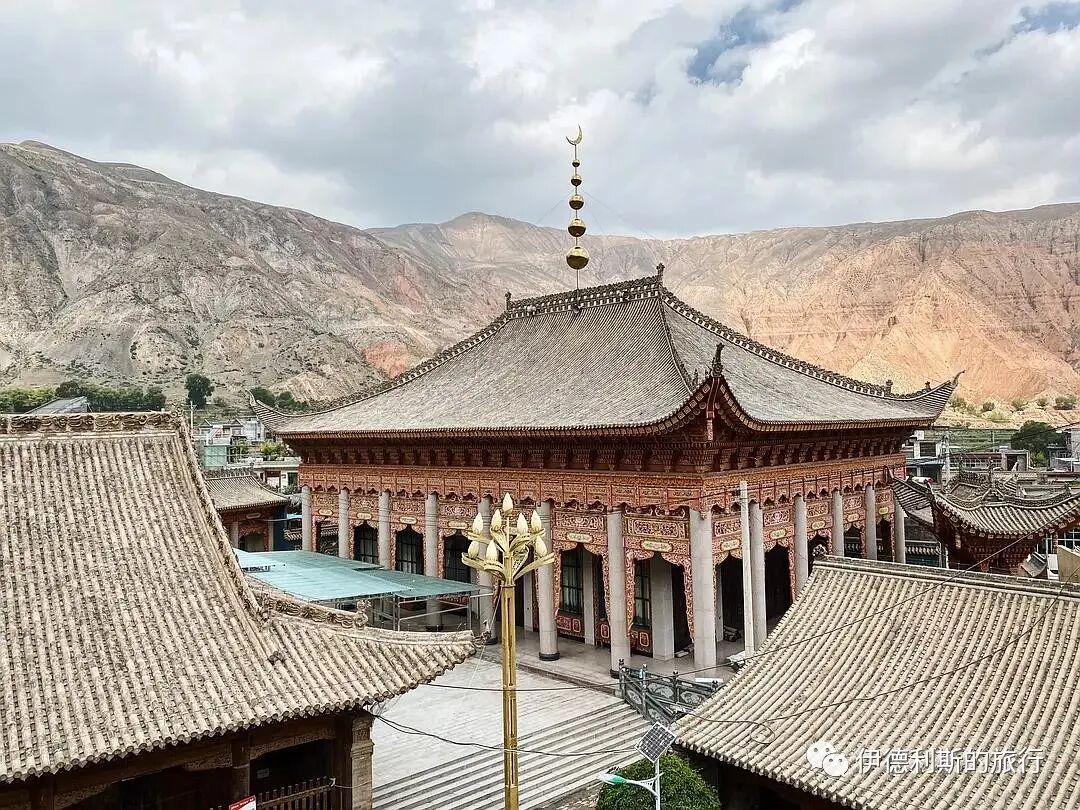
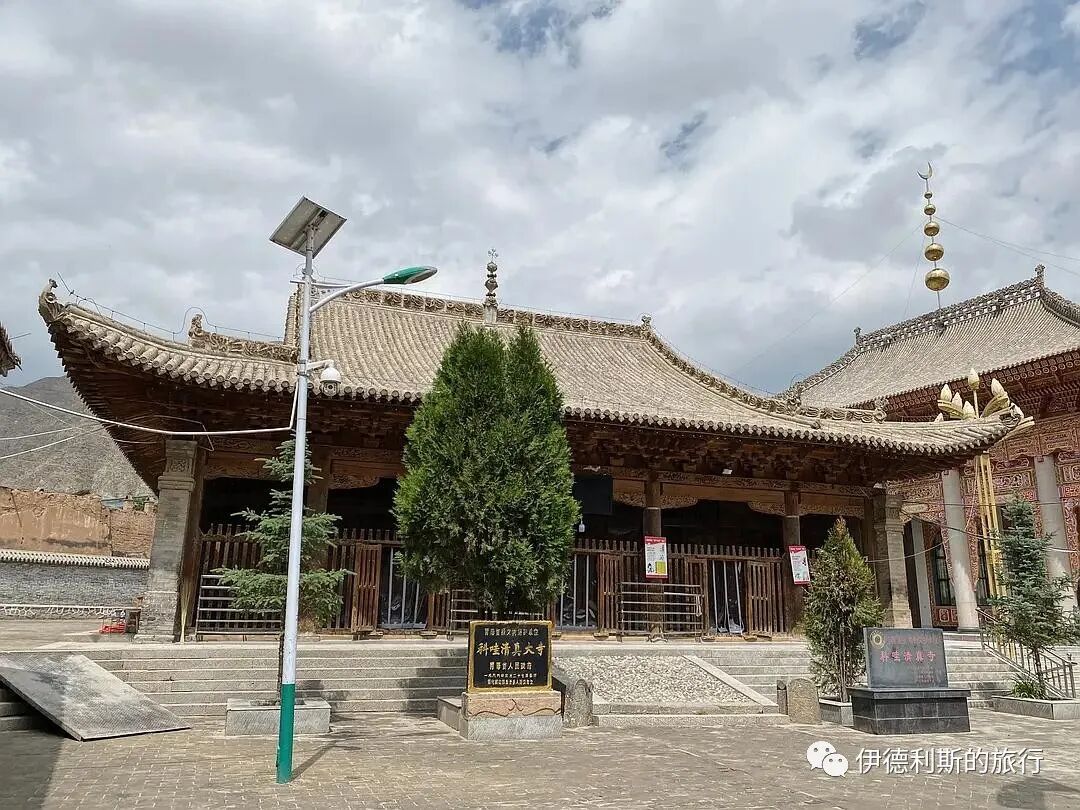
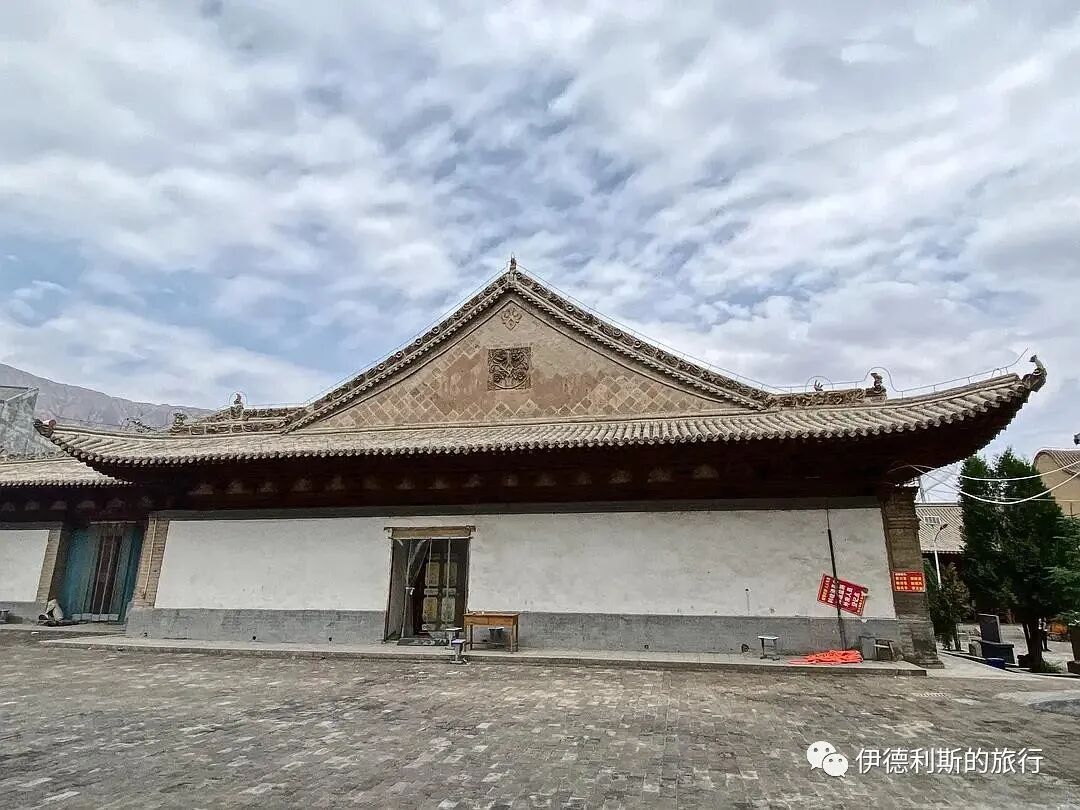
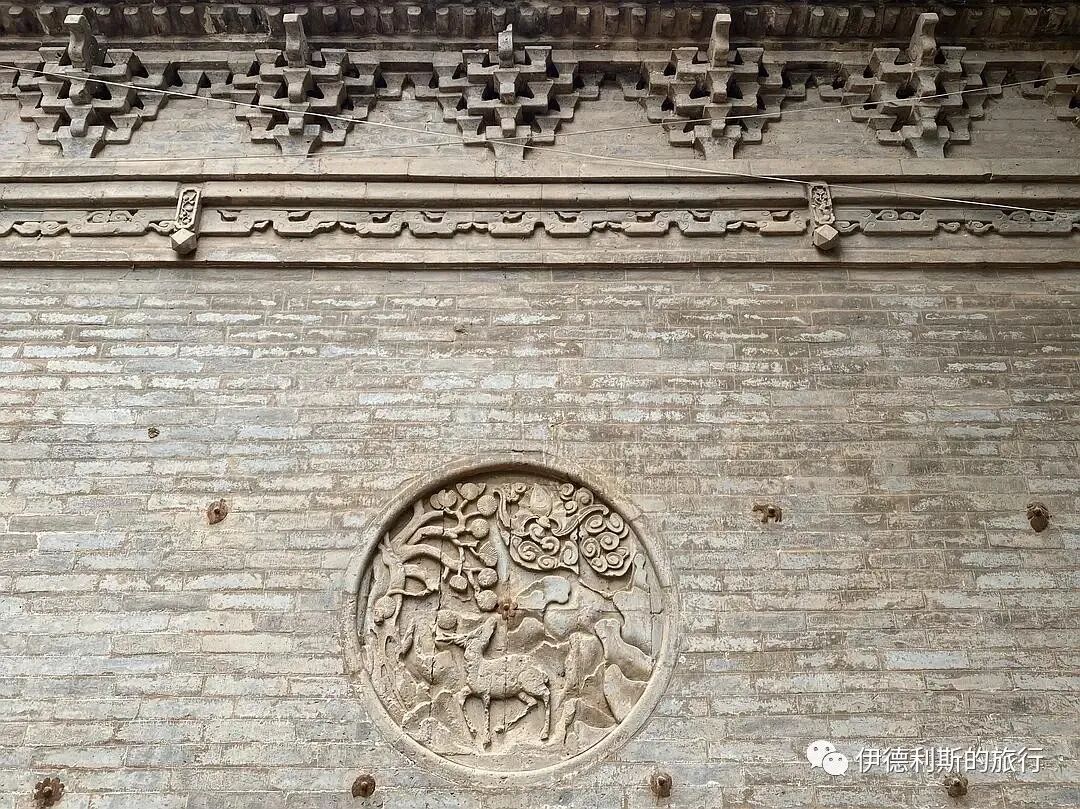
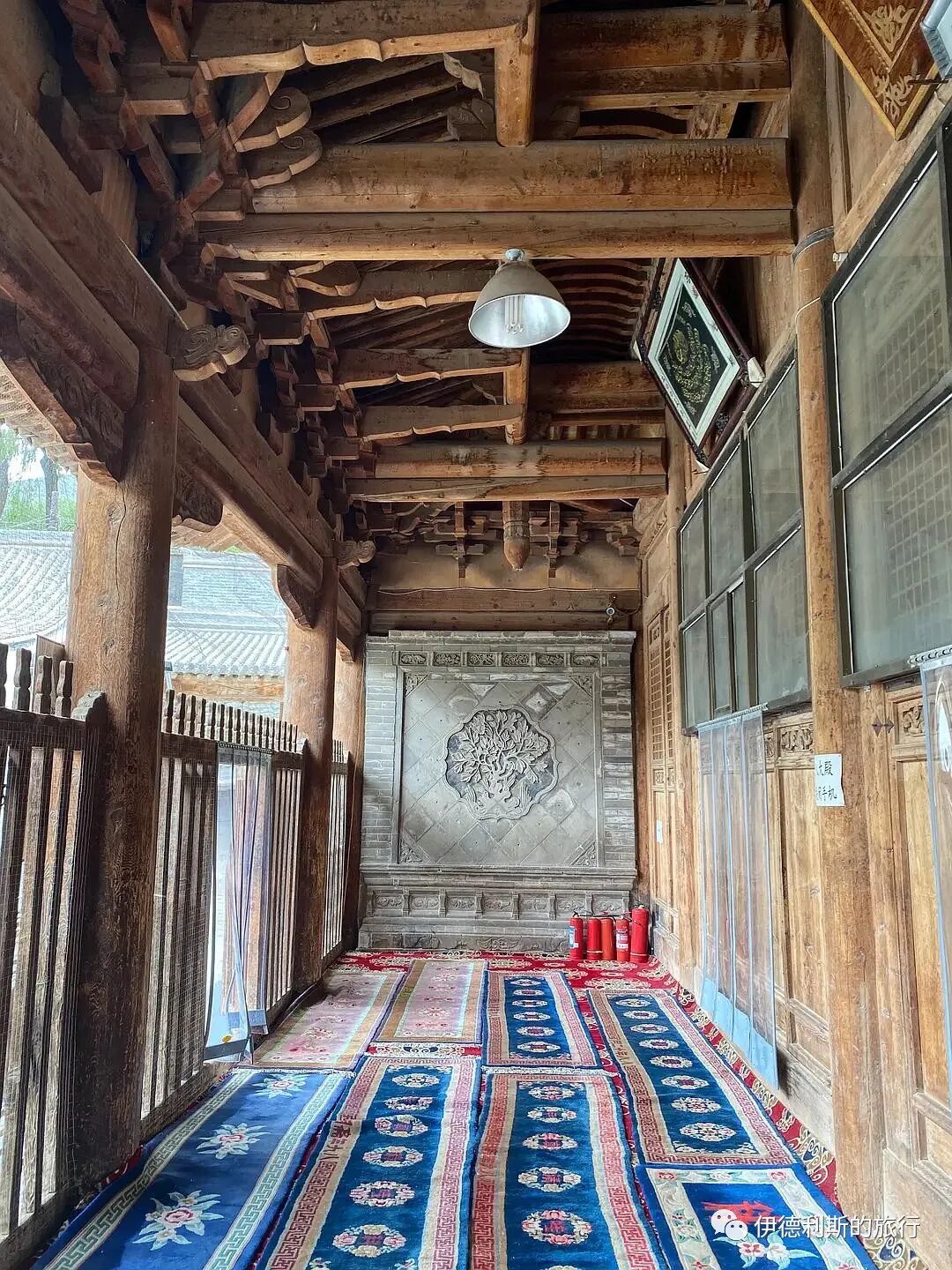
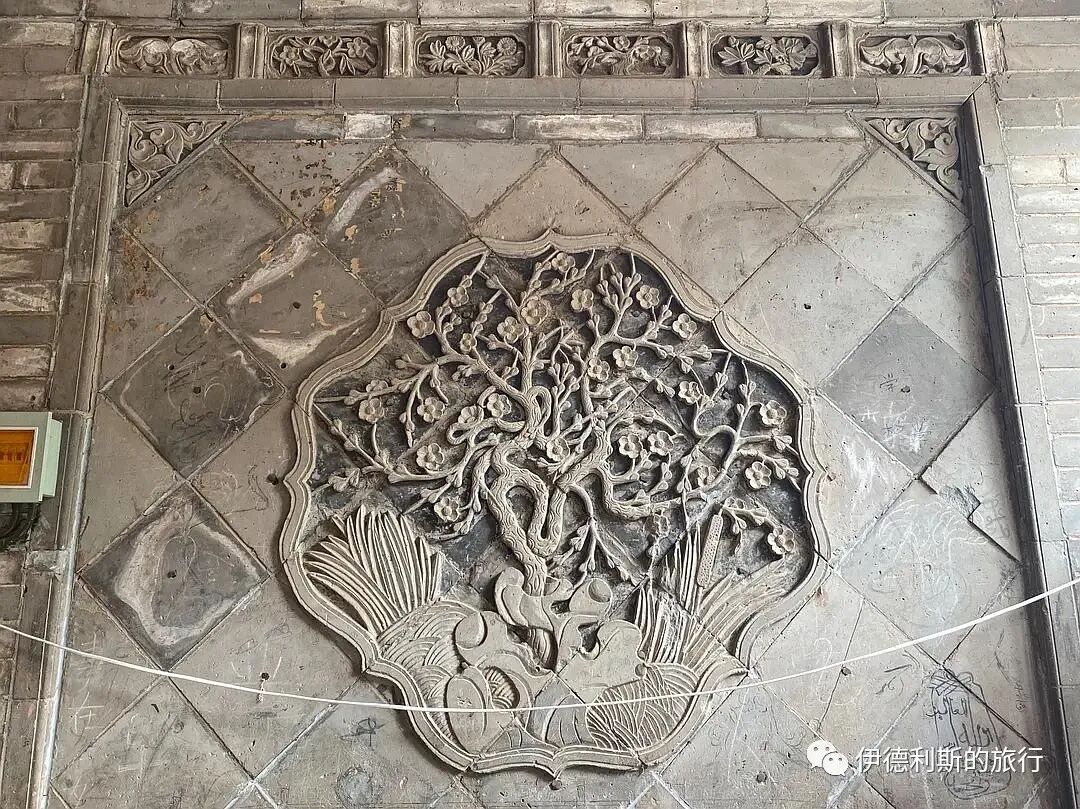
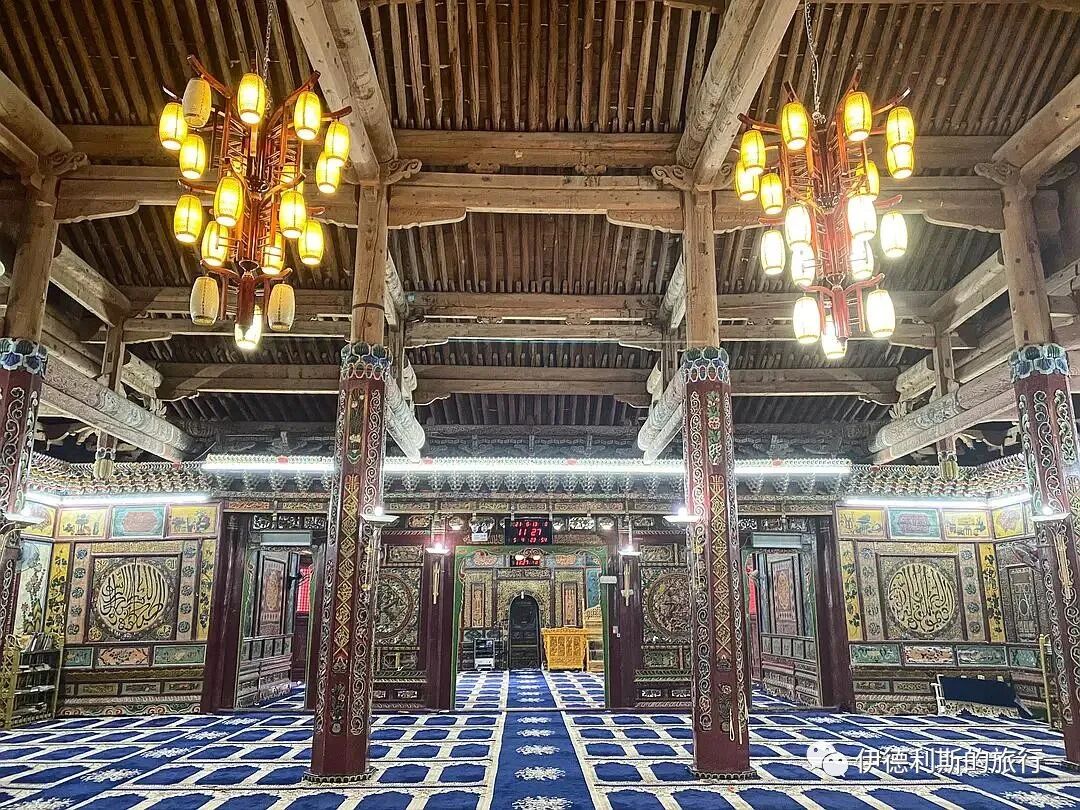
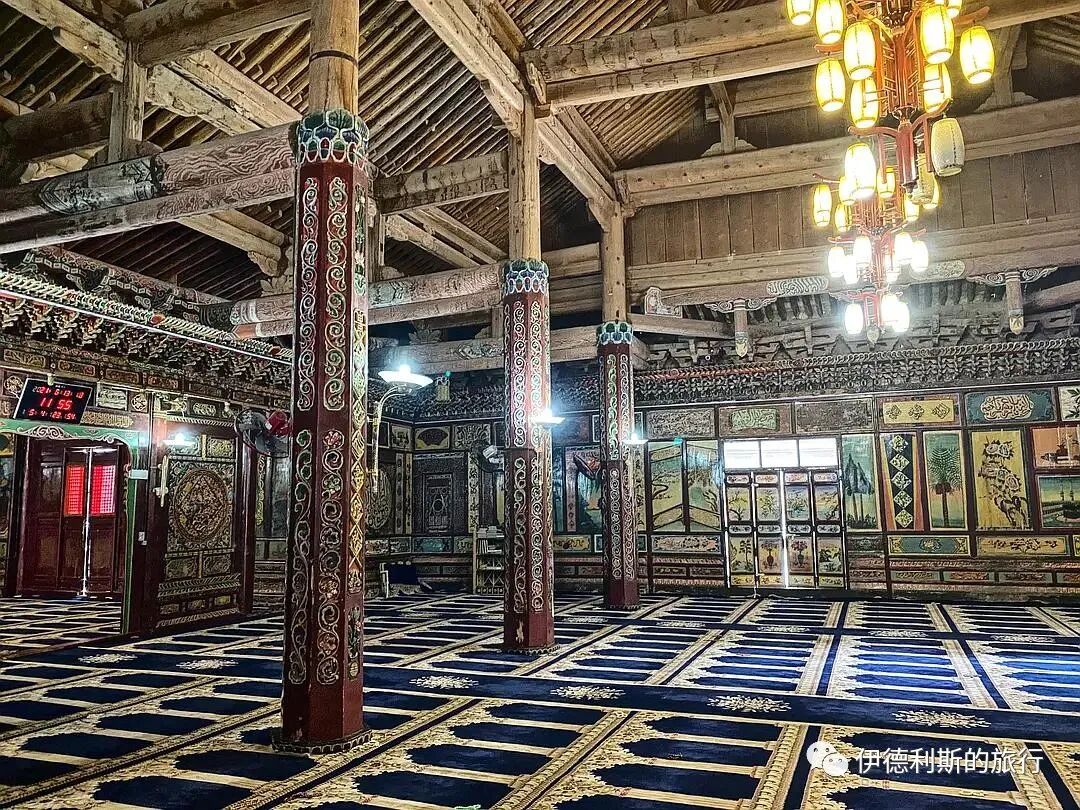
Kewa Mosque has the richest murals among traditional Salar mosques. Let me first share the murals on the south side of the main hall, which are all about Surahs.
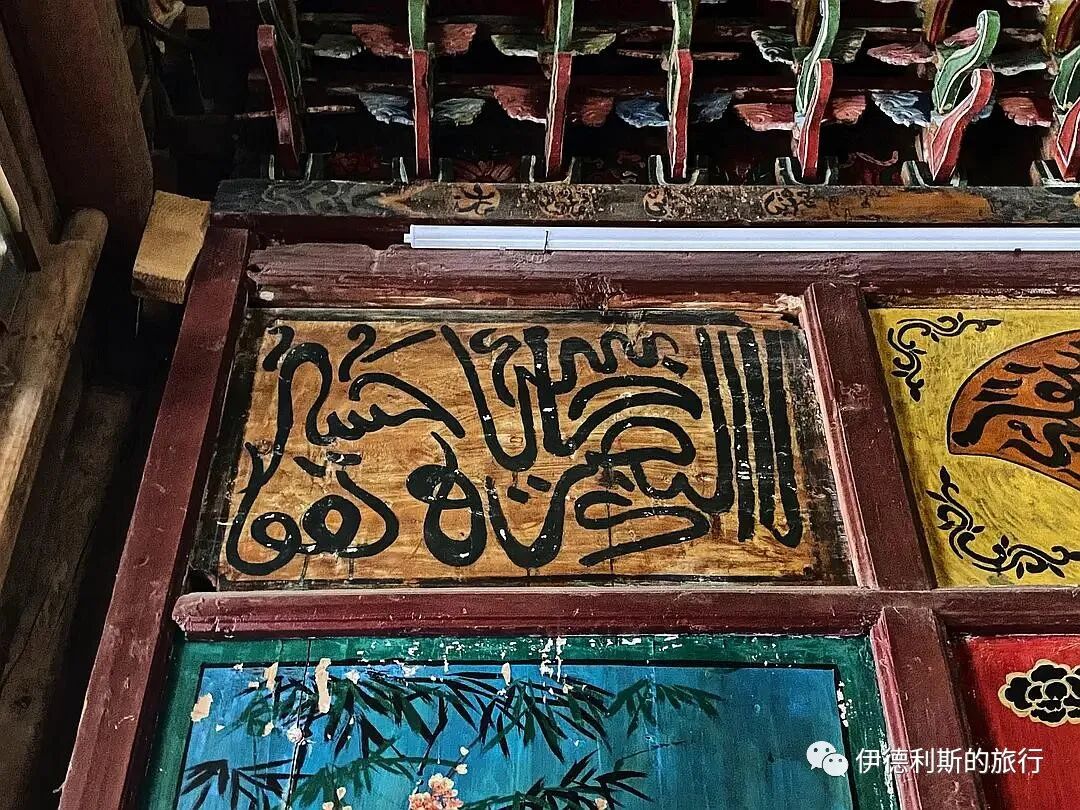
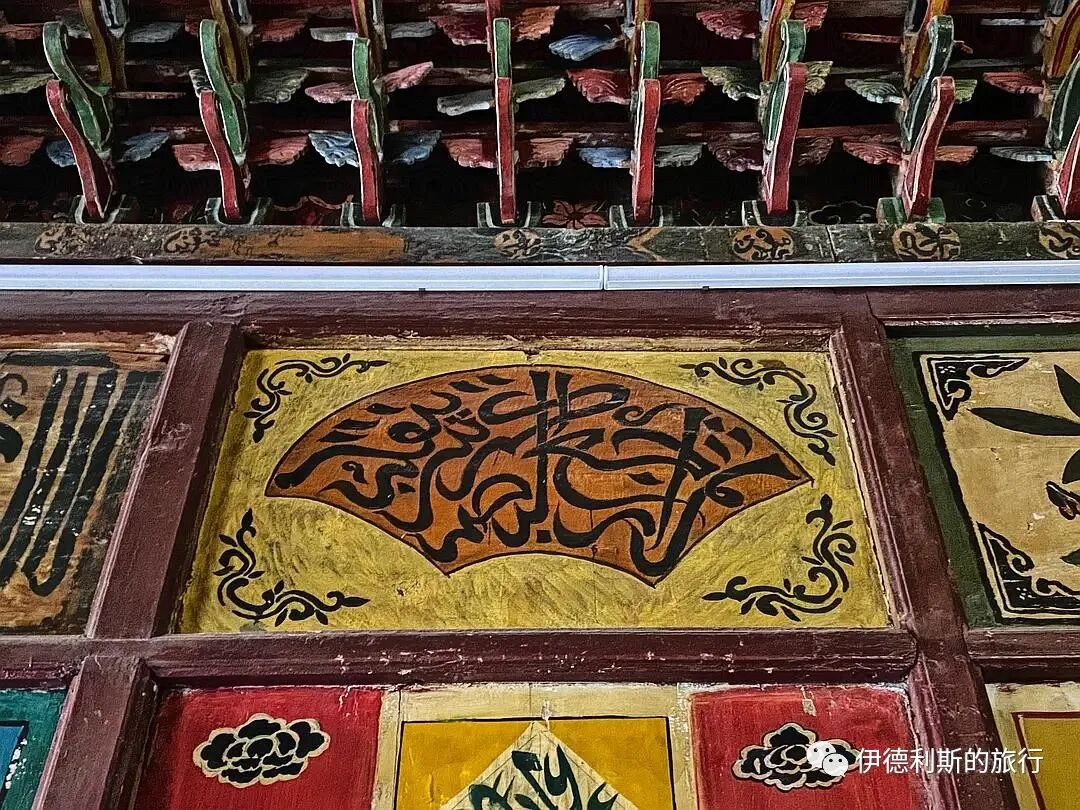
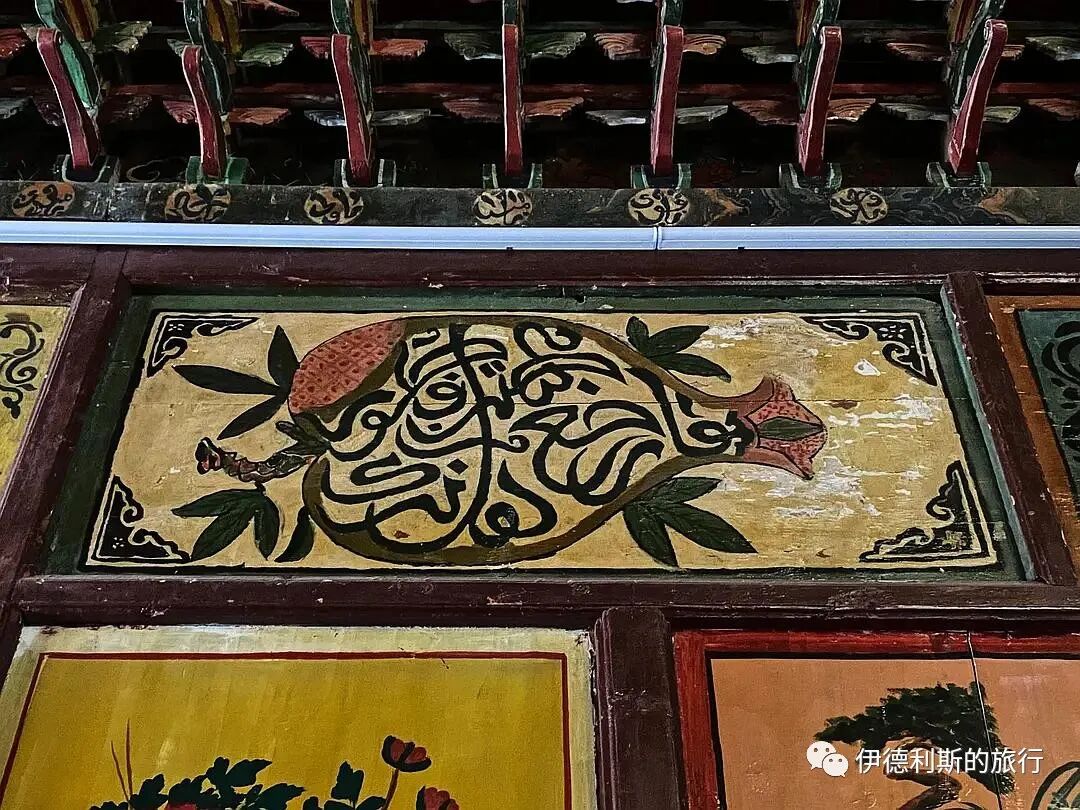
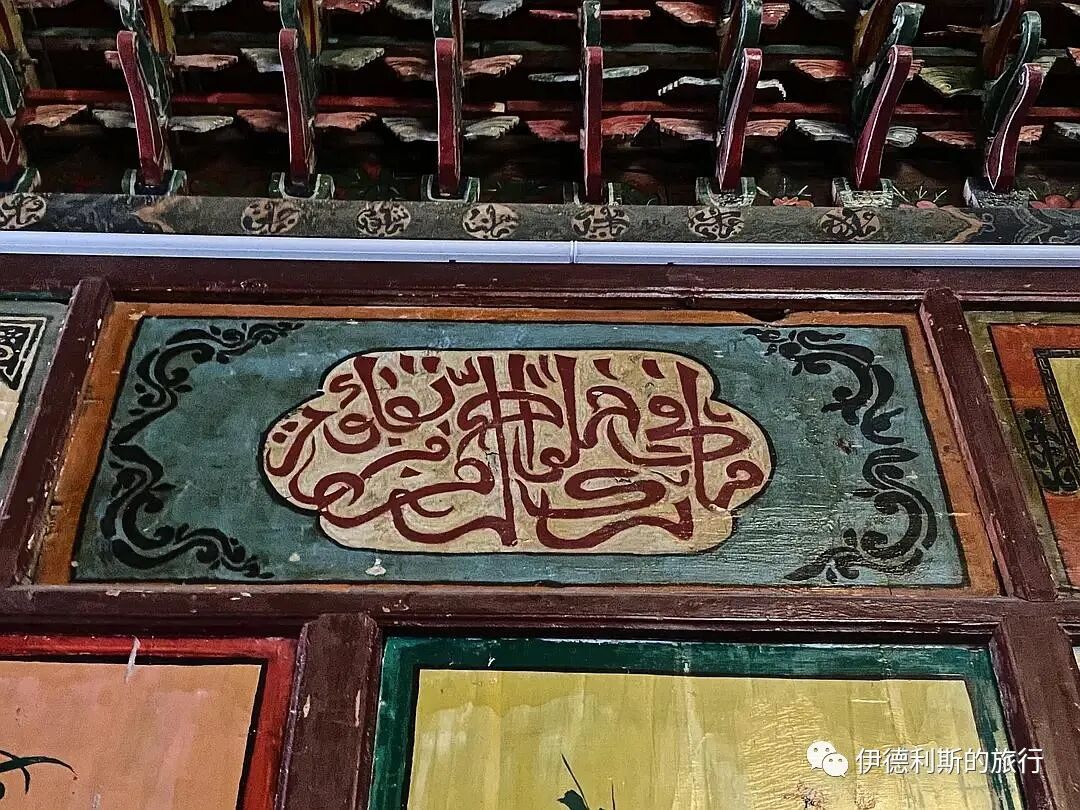
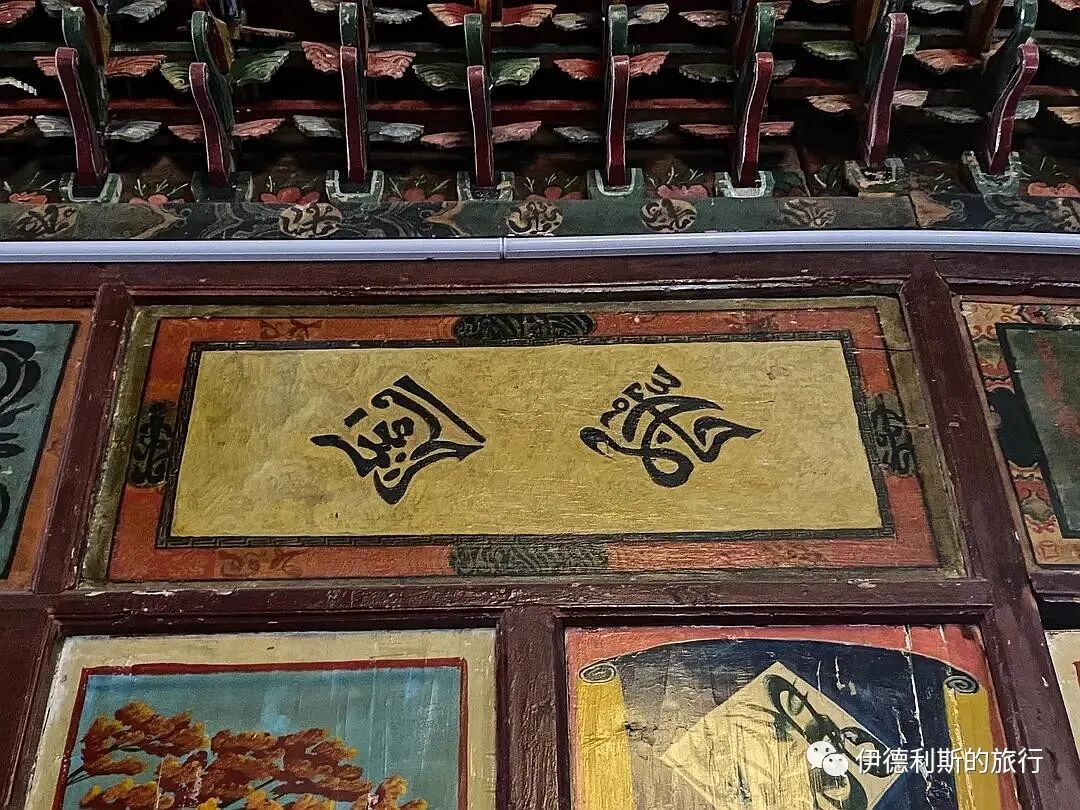
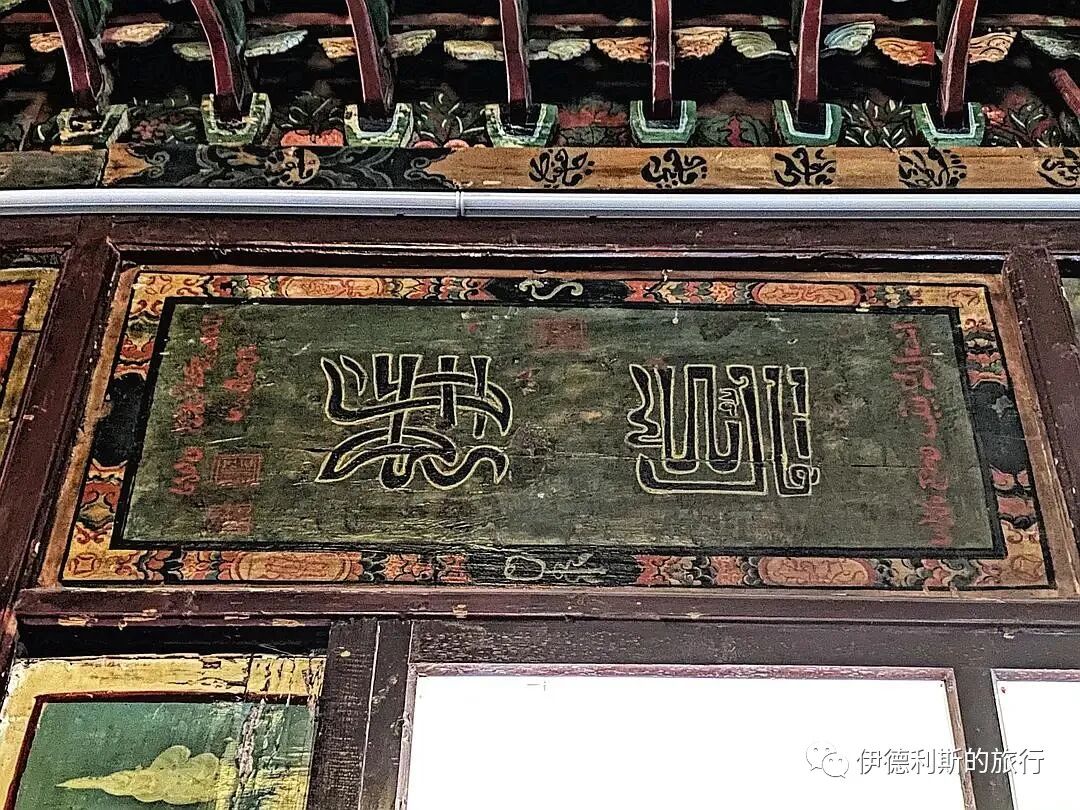
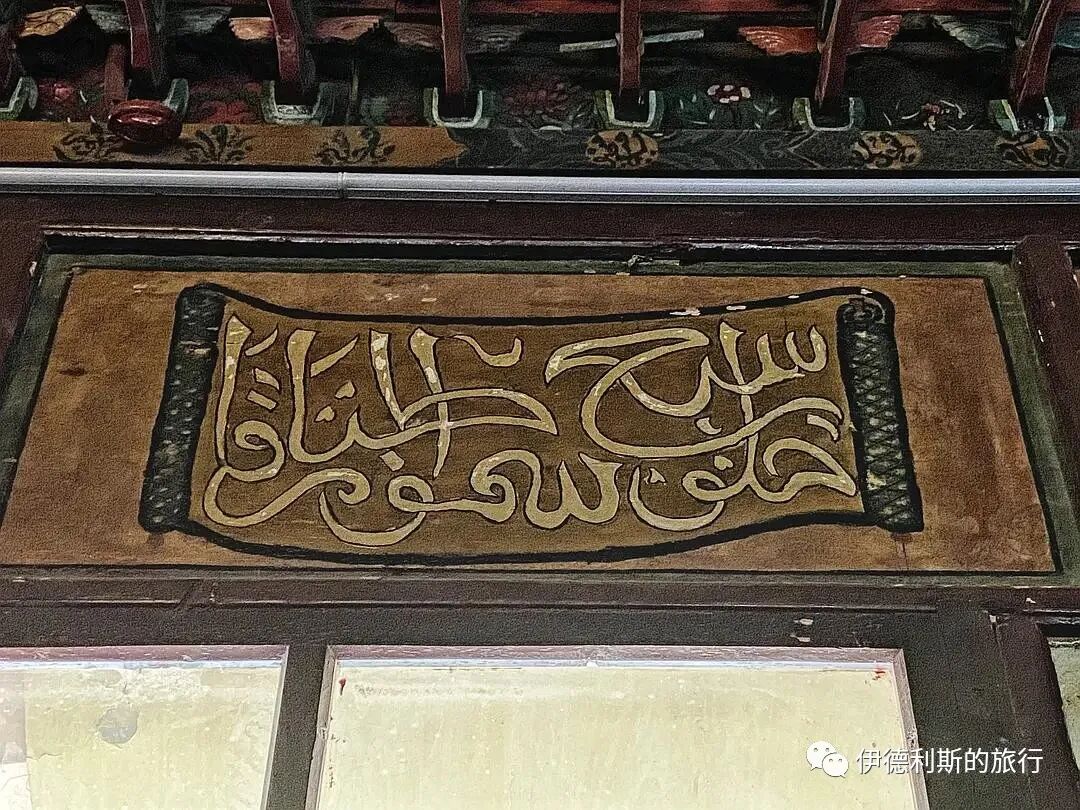
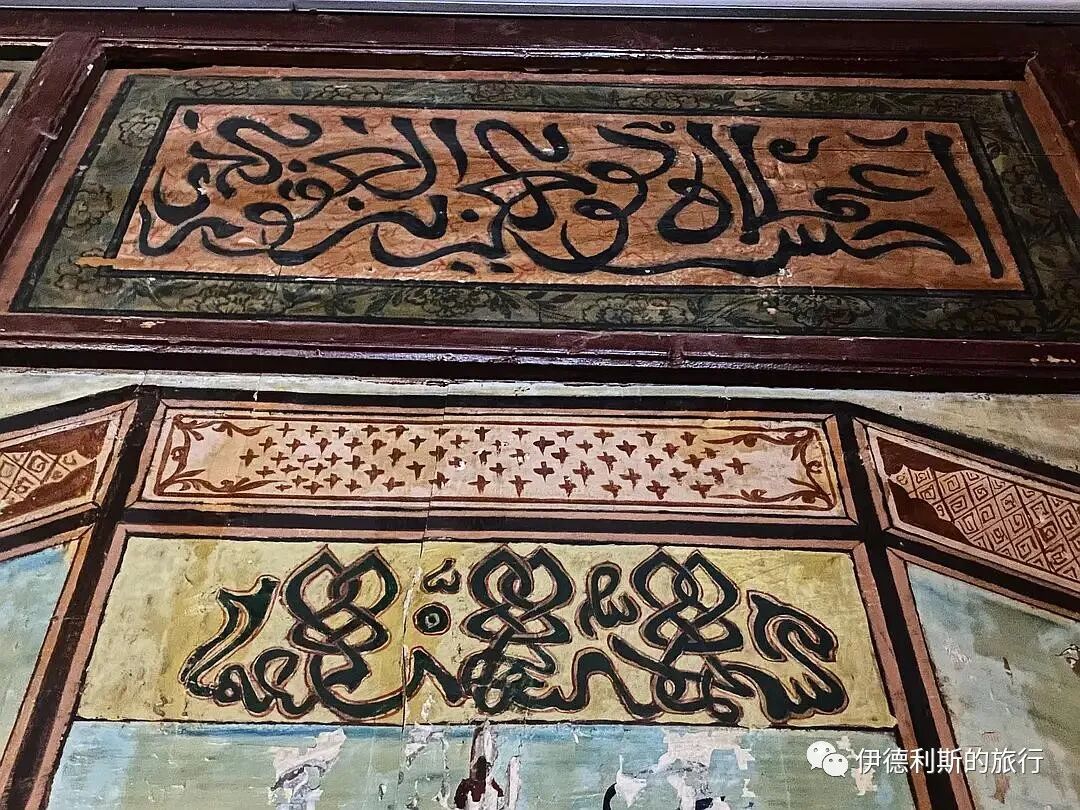
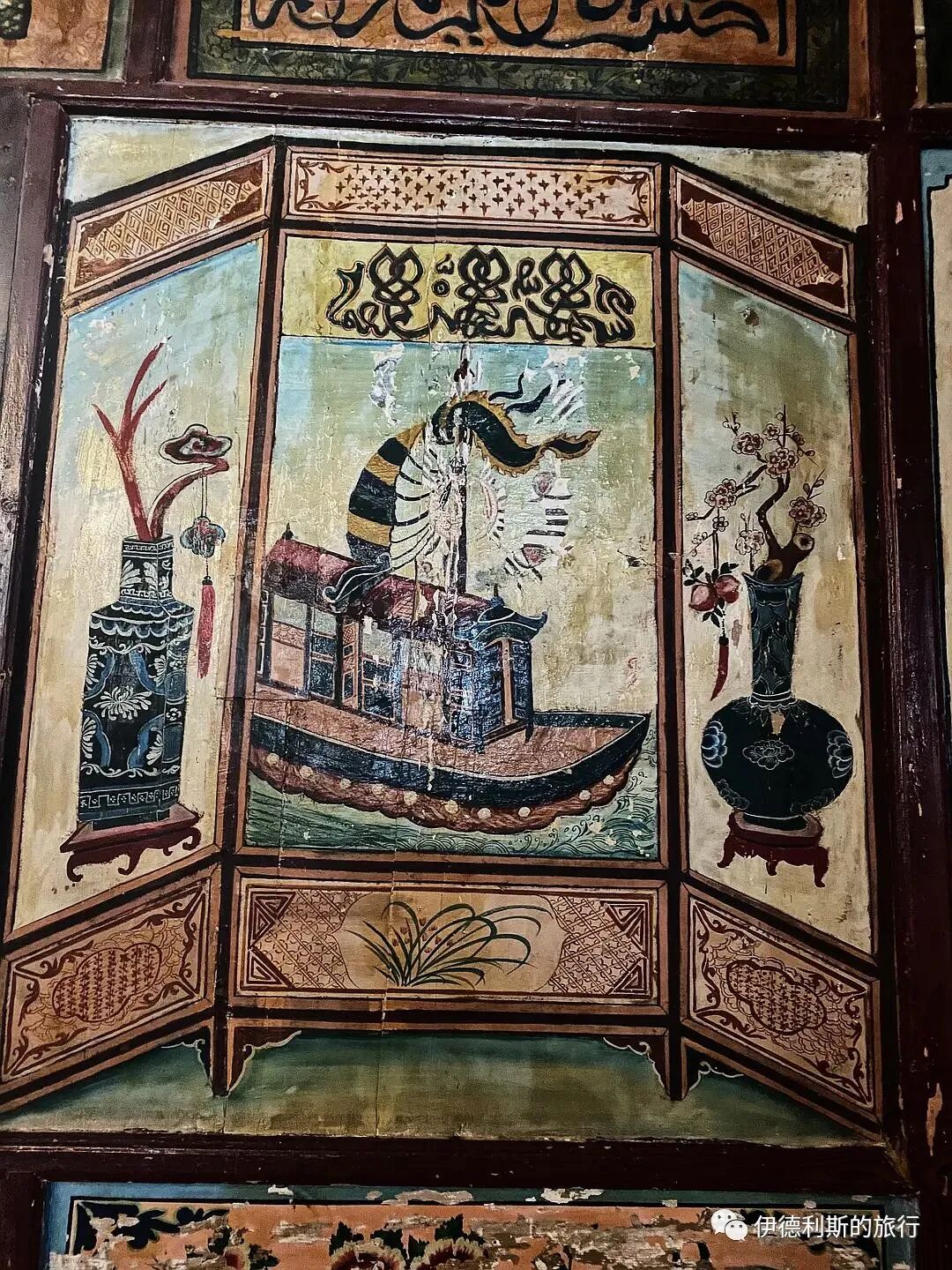
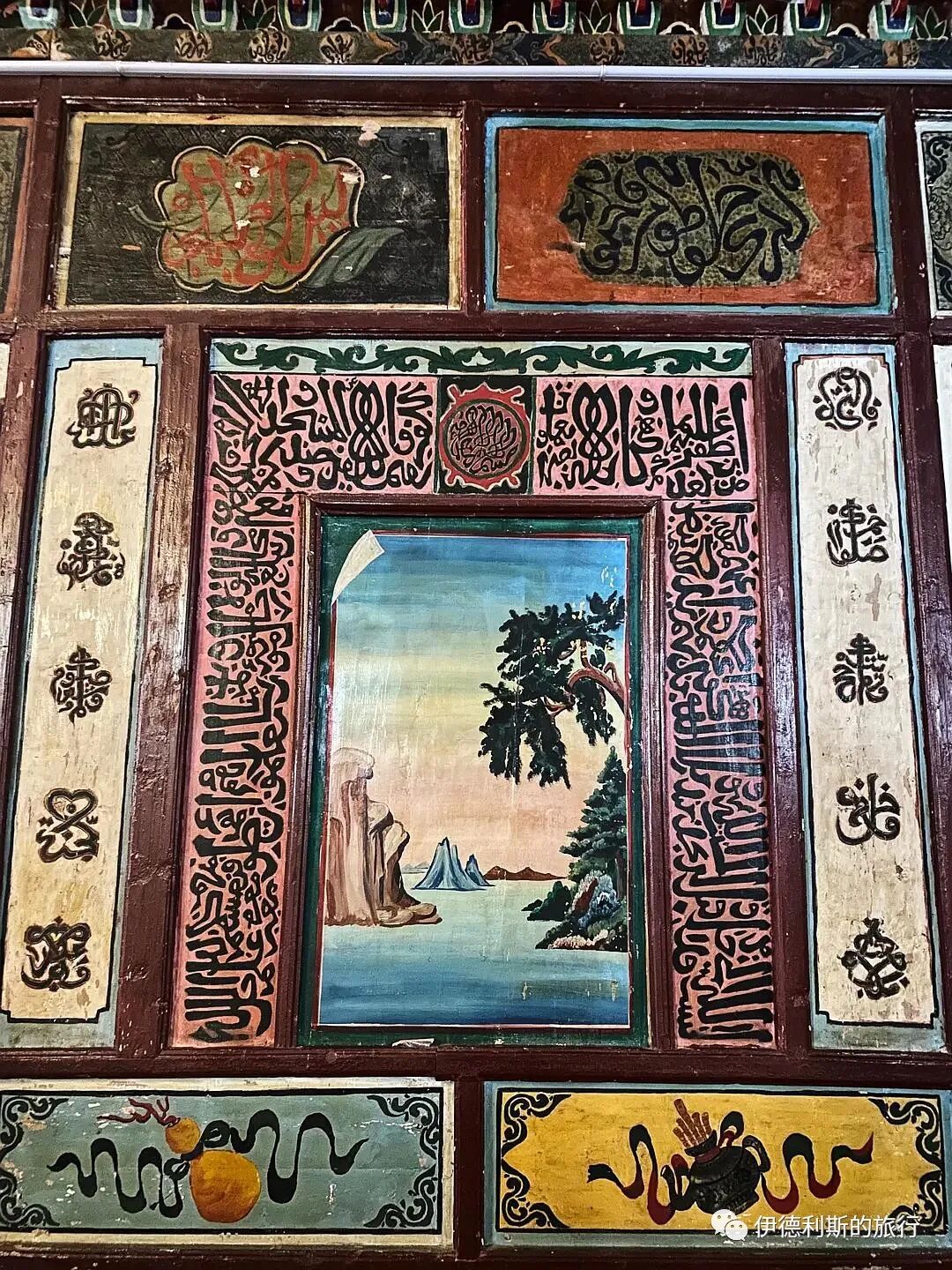
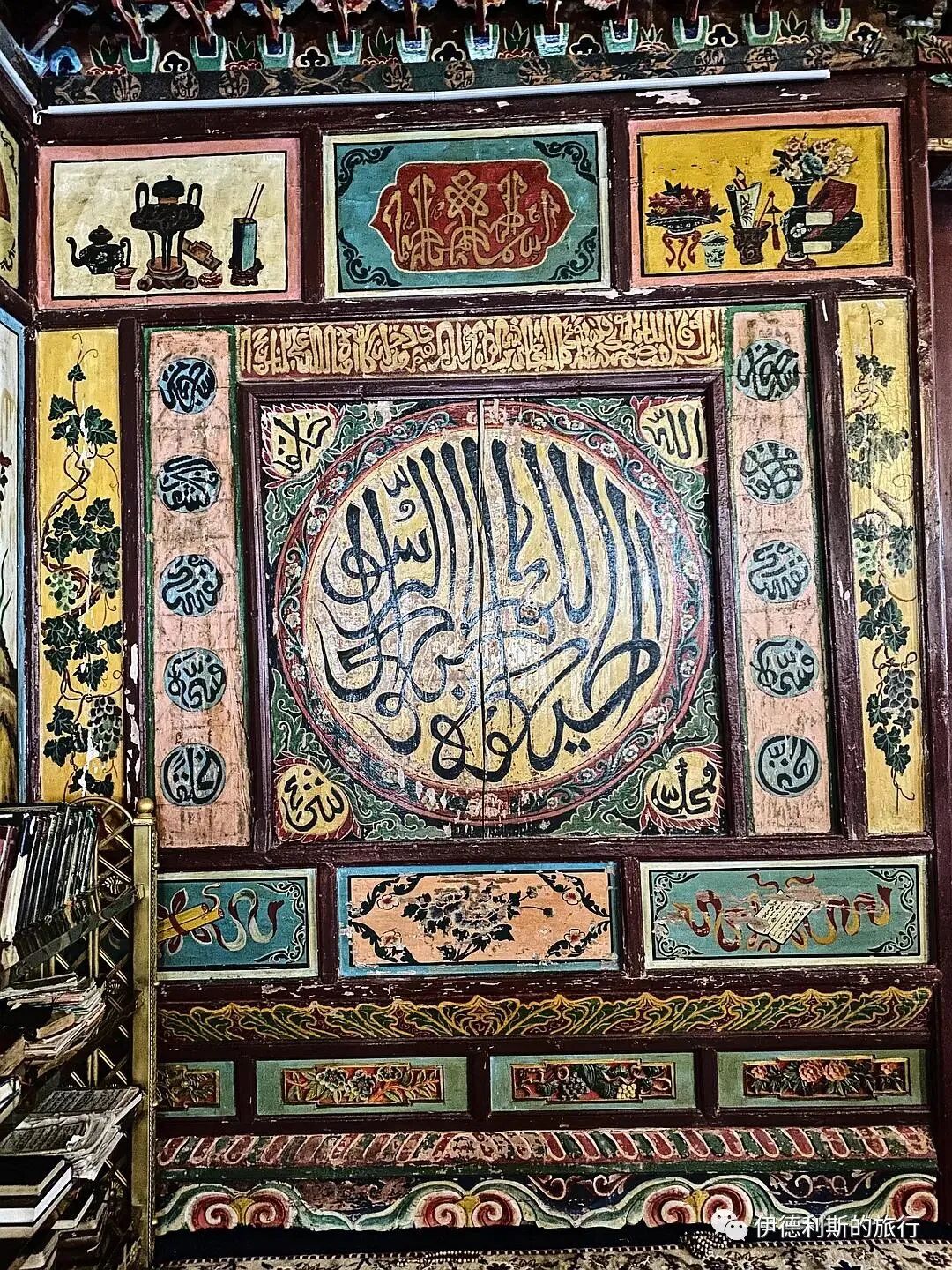
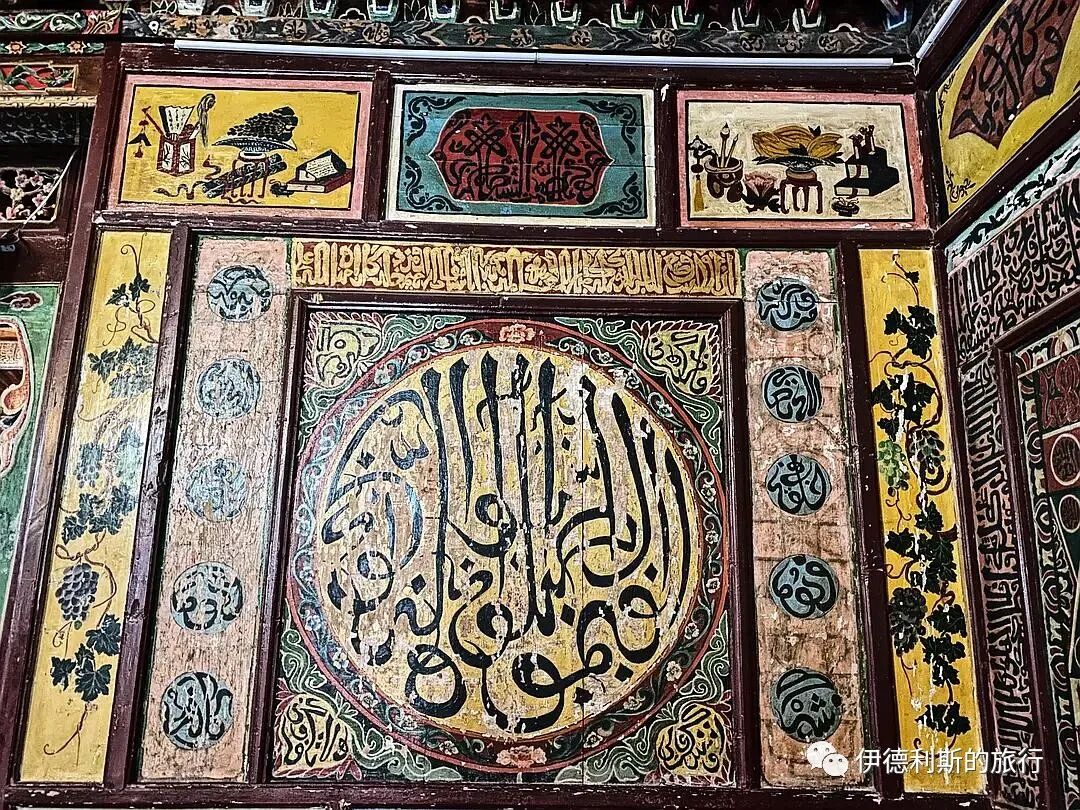
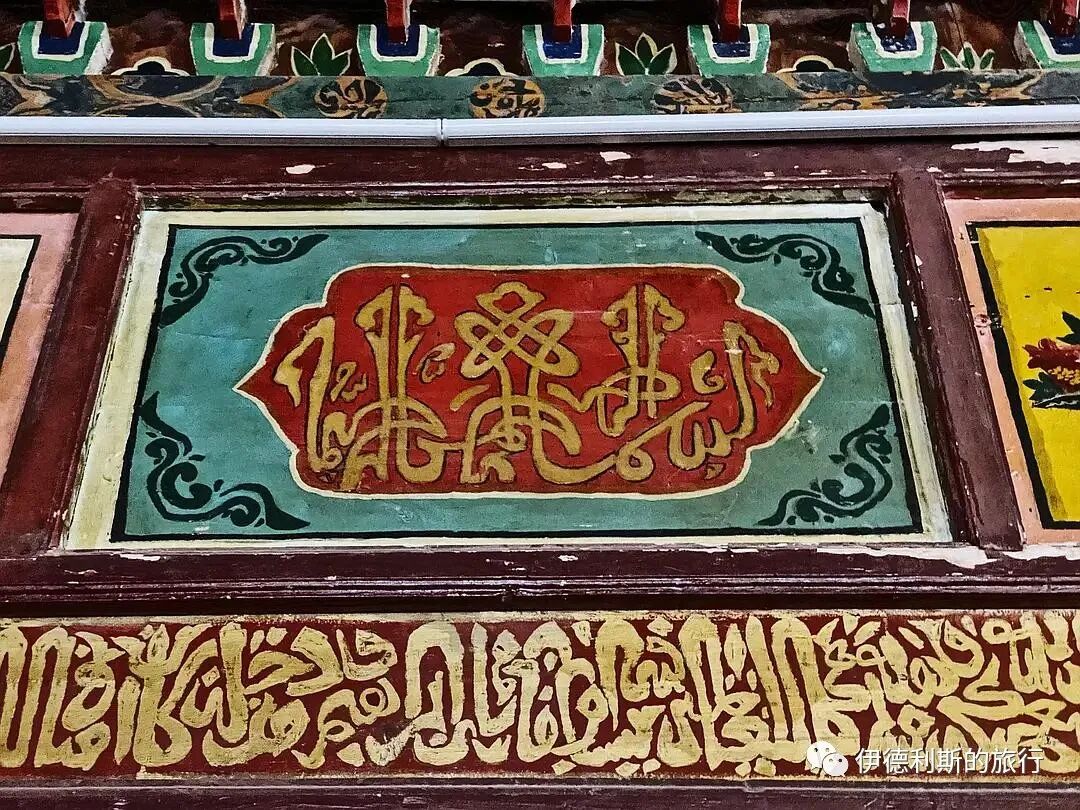
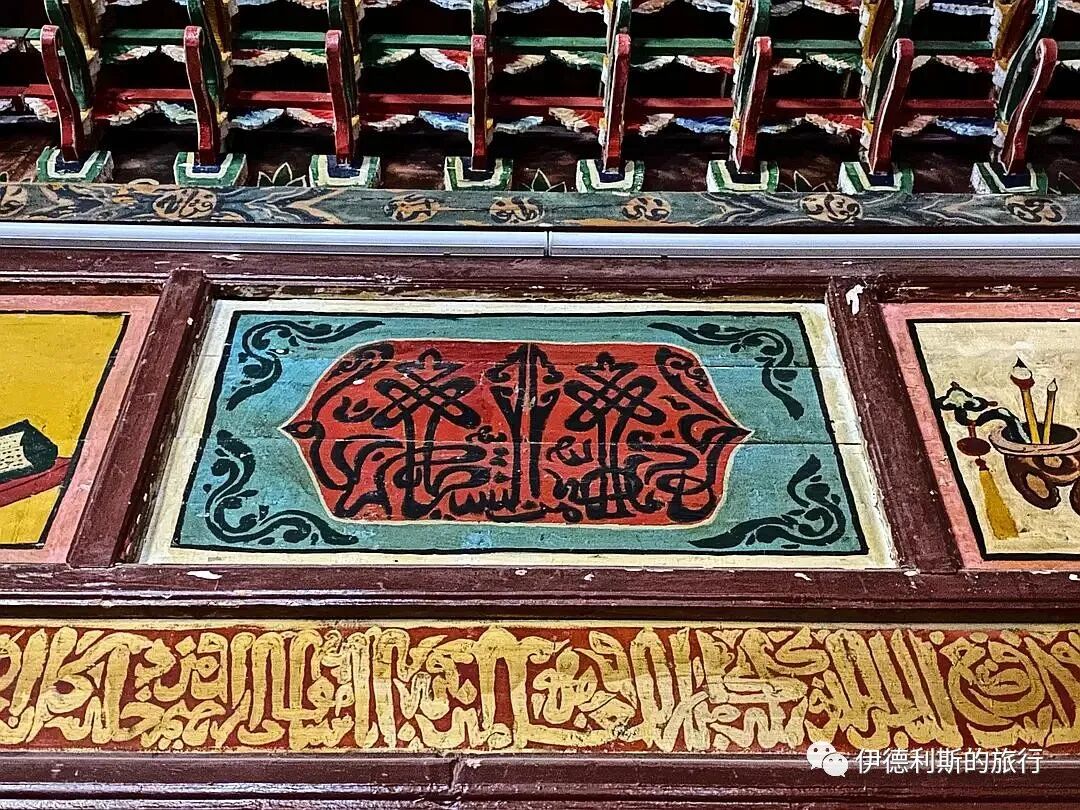
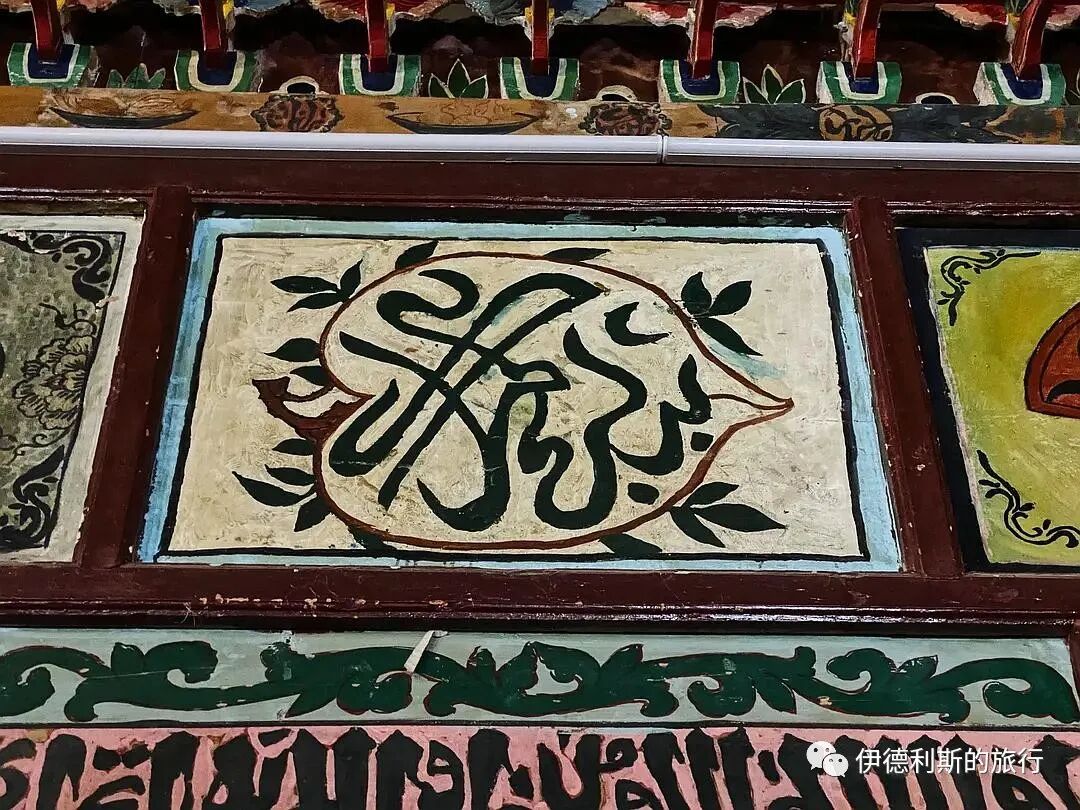
Nine Traditional Mosques and Three Gongbei Shrines in Qinghai (Part 3)
Articles • ali2007fr posted the article • 0 comments • 262 views • 2026-05-17 00:18
Summary: This travel note introduces Nine Traditional Mosques and Three Gongbei Shrines in Qinghai (Part 3). Wall paintings in the kiln hall. It is useful for readers interested in Qinghai Mosques, Chinese Muslims, Muslim Heritage.
Wall paintings in the kiln hall.
Mihrab niche
Seal script mural
8. Su Zhi Mosque
Suzhi Mosque in Xunhua County was first built in 1460 (the fourth year of the Tianshun reign of the Ming Dynasty) and expanded during the Qing Dynasty; it is the Haizi Mosque for the Salar people of the Suzhi area and is currently a cultural relic protection unit of Qinghai Province.
9. Ahetan Mosque
Although Ahetan Mosque in Hualong County is located north of the Yellow River in Hualong County, it is still a Salar mosque and, like Suzhi Mosque, belongs to the Suzhi Gong of the Salar Eight Gongs.
The mosque's three-bay, four-pillar, three-story hip-roof gate tower is 9 meters high, with the Five Pillars of Islam—Shahada, Salah, Zakat, Sawm, and Hajj—carved in the center, topped by a triangular arrangement of dougong brackets with nine steps and four cantilevered arms.
The brick-carved screen wall outside the gate tower.
(Optional) Image description
Delete
The 18-meter-high minaret has a brick base and a wooden pavilion on the upper level.
In the main hall of the mosque, we were warmly welcomed by the Imam.
Xia, Gongbei
1. Shangmajia Gongbei in Bazang Valley
Shangmajia Shang Gongbei is located on the summit of Woniu Mountain in Bazanggou, Ping'an District, Haidong City, so it is also called Woniu Mountain Gongbei; it is the tomb of Ma Diangong (1643-1715) of the Hufeiye Xianmen Menhuan.
Ma Diangong is known as Ma Ahong Taiye and is a local from Shangma Village in Bazanggou. He was eager to learn from a young age, entering the Xining Dongguan Mosque at 7 to study, and at 24, he was appointed as the Imam of the Xining Beiguan Mosque after completing his religious training. During his time at the Beiguan Mosque, he was entrusted by Huazhe Abdullahi and Apak Khoja to teach the scriptures to Xian Meizhen (Zhuzi Taiye). After Xian Meizhen founded the Xianmen Menhuan, Ma Diangong became his Naib (deputy). Before Xian Meizhen returned to Allah, because his eldest son Xian Huazhe was still young, he entrusted him to Ma Diangong and asked him to preside over religious affairs.
During the reign of Emperor Qianlong of the Qing Dynasty, the third-generation Sheikh Xian Chengde (Grandfather Chuanli) built the Gongbei for Ma Diangong; it was destroyed in 1867 and rebuilt in the early years of the Guangxu reign under the leadership of the fourth master, Grandfather Xian Linqing.
Today, the Gongbei preserves the two-courtyard layout from the Guangxu era very well and has been designated as a cultural relic protection unit of Qinghai Province.
Pushing open the gate of the Gongbei, it feels as if you could step right into the Qing Dynasty; it has a very special atmosphere. The interior has not been over-restored at all, allowing you to appreciate the exquisite Qing Dynasty brick and wood carvings, and the elder guarding the Gongbei is also very warm and friendly. Although the entire Gongbei is built on a hilltop, it does not have the helmet-roofed tomb pavilion typical of renovated Gongbeis, but is instead a traditional courtyard, which gives it a unique charm.
The mountain opposite
The screen wall outside the gate
Main gate
Looking at the main gate from inside
As soon as you enter the courtyard
The side rooms on both sides
Second gate
Mausoleum
2. Shangmazhuang Gongbei in Bazanggou
The Xia-Gongbei of Shangmazhuang in Bazanggou, Ping'an District, Haidong City, is the Gongbei of Xian Chengde (known as Chuanli Taiye), the third-generation Sheikh of the Xianmen Menhuan of the Khufiyya order. Xian Chengde built this Gongbei during the Jiaqing reign, and shortly after its completion in 1812, Xian Chengde returned to Allah, and the followers buried him here. In 1895, the fifth-generation Sheikh of the Xianmen, Xian Linyuan, returned to Allah and was also buried in the Xia-Gongbei.
Like the Upper Gongbei, the Lower Gongbei is a cultural relic protection unit of Qinghai Province, and it also consists of two courtyards, one in front and one behind, but it is larger in scale than the Upper Gongbei. The front courtyard has been destroyed and only the main gate remains, but the back courtyard is very well preserved and is a masterpiece of Qing Dynasty brick carving art.
The front courtyard gate; after entering, you can see the ceremonial gate of the back courtyard. The ceremonial gate features brick-carved dougong, with the Tasmiya carved in the center and various flowers below it.
The screen walls on both sides are carved with numerous hydrangea petals, each with a unique shape. The center is carved with a 'Joyful News of Early Spring' pattern, surrounded by four bats. The Sumeru pedestal is carved with the Eight Immortals' emblems, as well as patterns of pomegranates, finger citrons, peonies, and lotus flowers.
The brick carvings of pomegranates, peonies, the Eight Immortals' emblems, and hydrangea petals on the screen wall of the ceremonial gate. This hydrangea petal design is exactly the same as the one on the screen wall of the famous Hongshuiquan Mosque in Haidong.
The north wall screen has brick-carved dougong brackets at the top and a gabled roof. The upper part of the central screen is carved with the four Chinese characters 'Can Xia Bi Luo', with Arabic calligraphy in the center, Arabic couplets on both sides, and brick carvings of carp leaping over the dragon gate at the bottom of the couplets. The centers of the side screens feature the Chinese character 'Shou' in seal script, along with the couplets: 'Riding the phoenix to fly to the pure land, transforming into a crane to return to the pure palace.' "
The main mausoleum is under renovation, and you can see the exquisite Arabic brick carvings and the removed roof tiles.
Various brick carvings on the screen wall.
"Rabbit guarding cabbage," where "cabbage" sounds like "hundreds of wealth," and rabbits are considered good at guarding wealth.
"A mouse stealing grapes," where the mouse represents "zi" (the first of the twelve earthly branches), symbolizes having many children and grandchildren. view all
Summary: This travel note introduces Nine Traditional Mosques and Three Gongbei Shrines in Qinghai (Part 3). Wall paintings in the kiln hall. It is useful for readers interested in Qinghai Mosques, Chinese Muslims, Muslim Heritage.
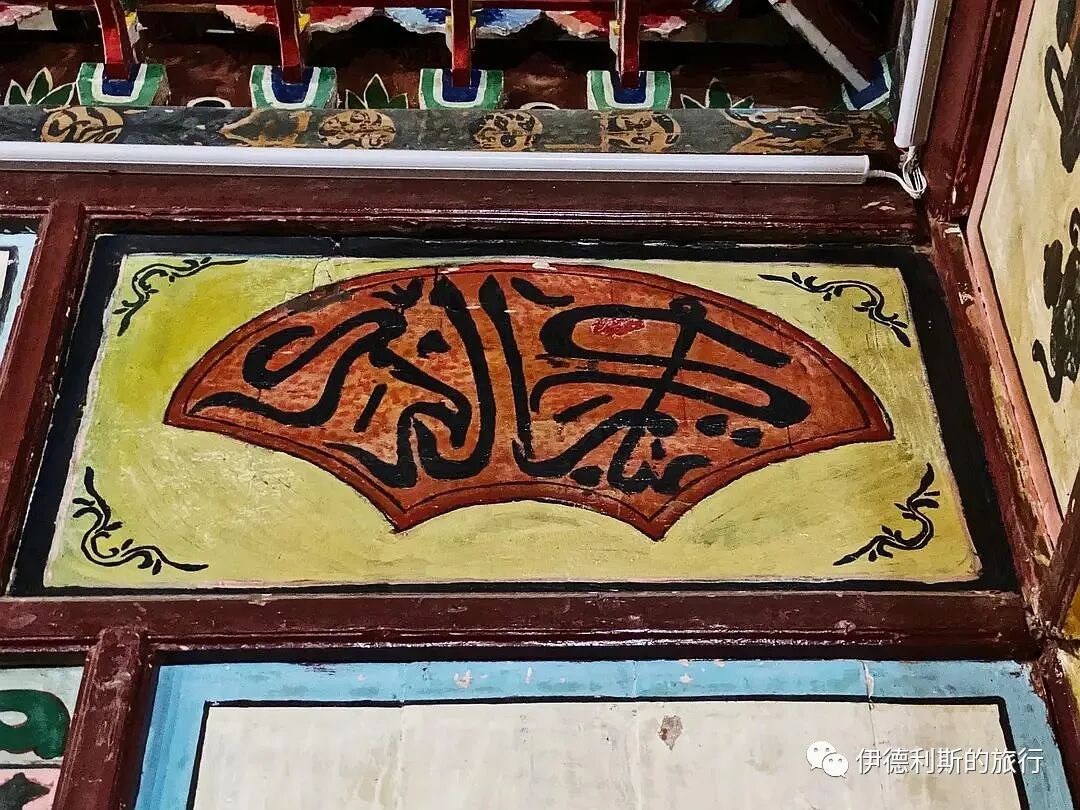
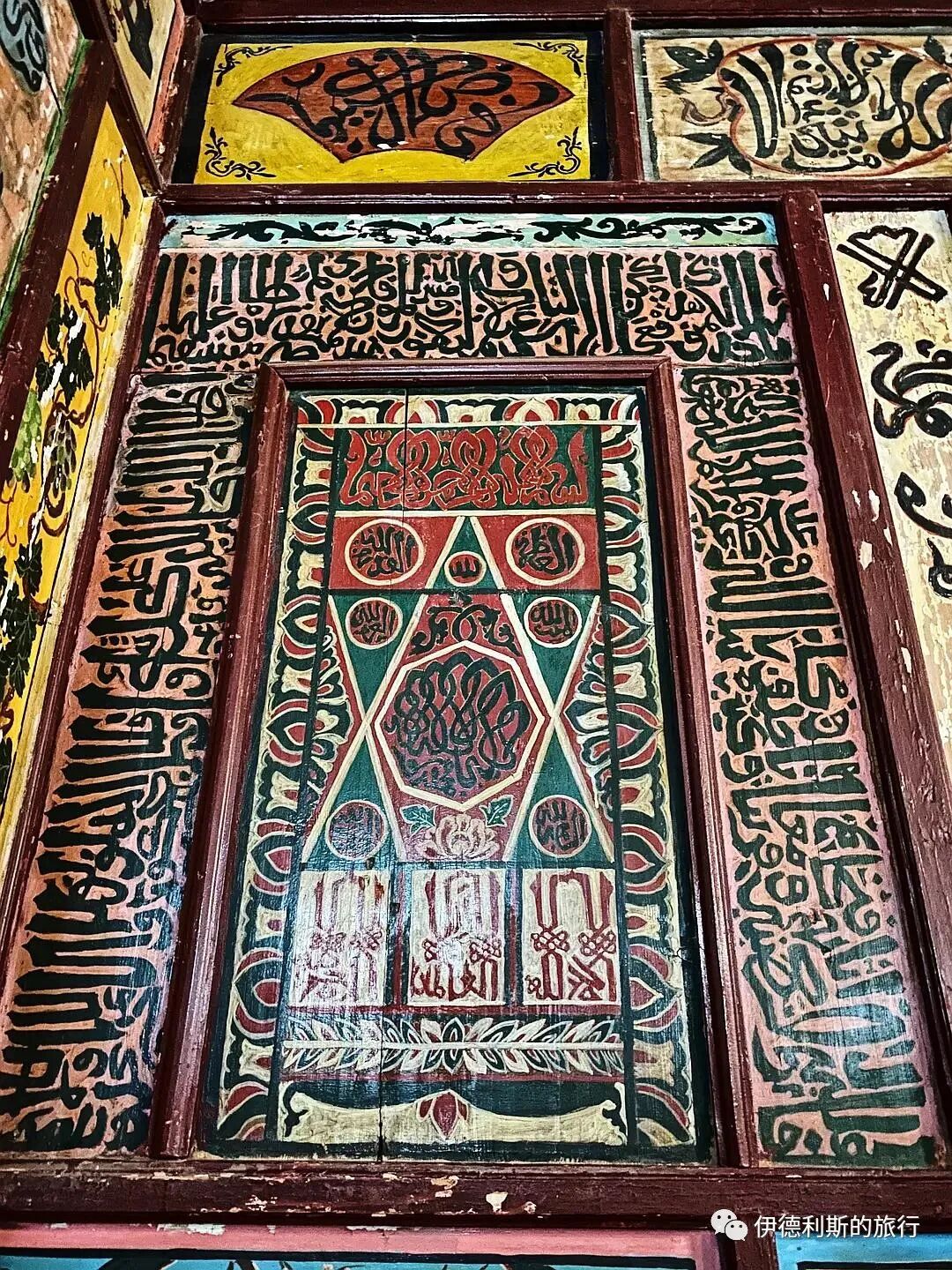
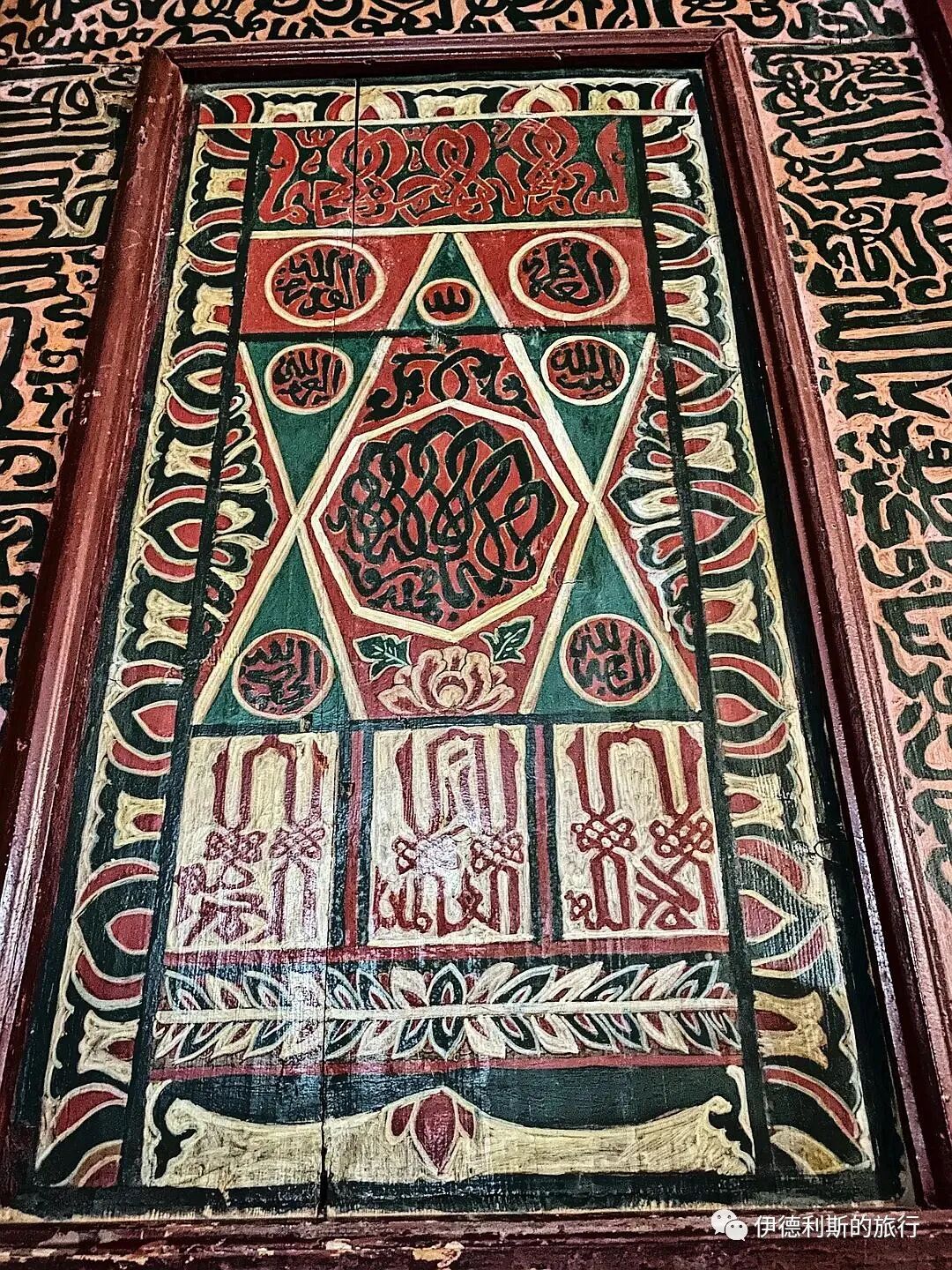
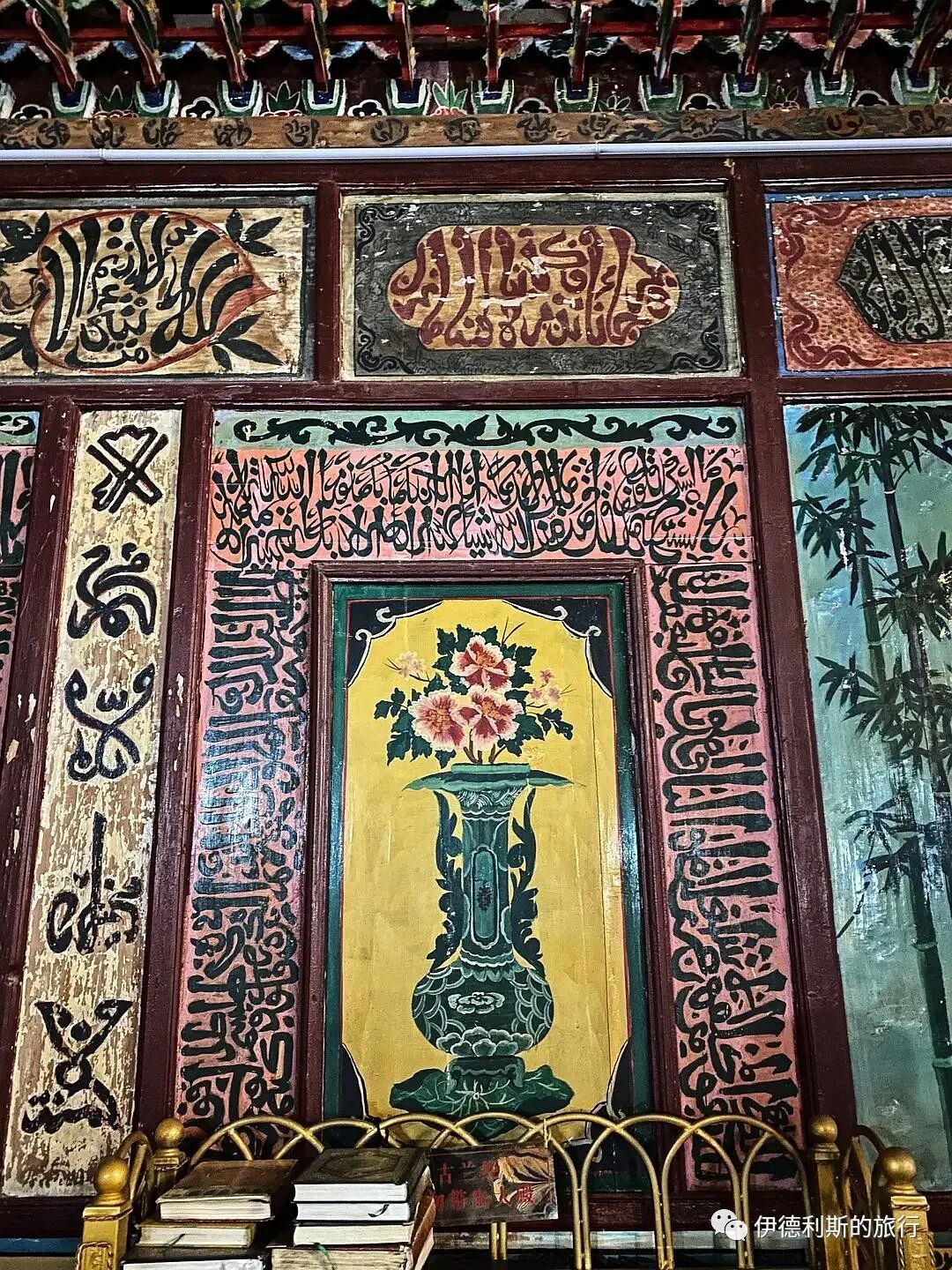
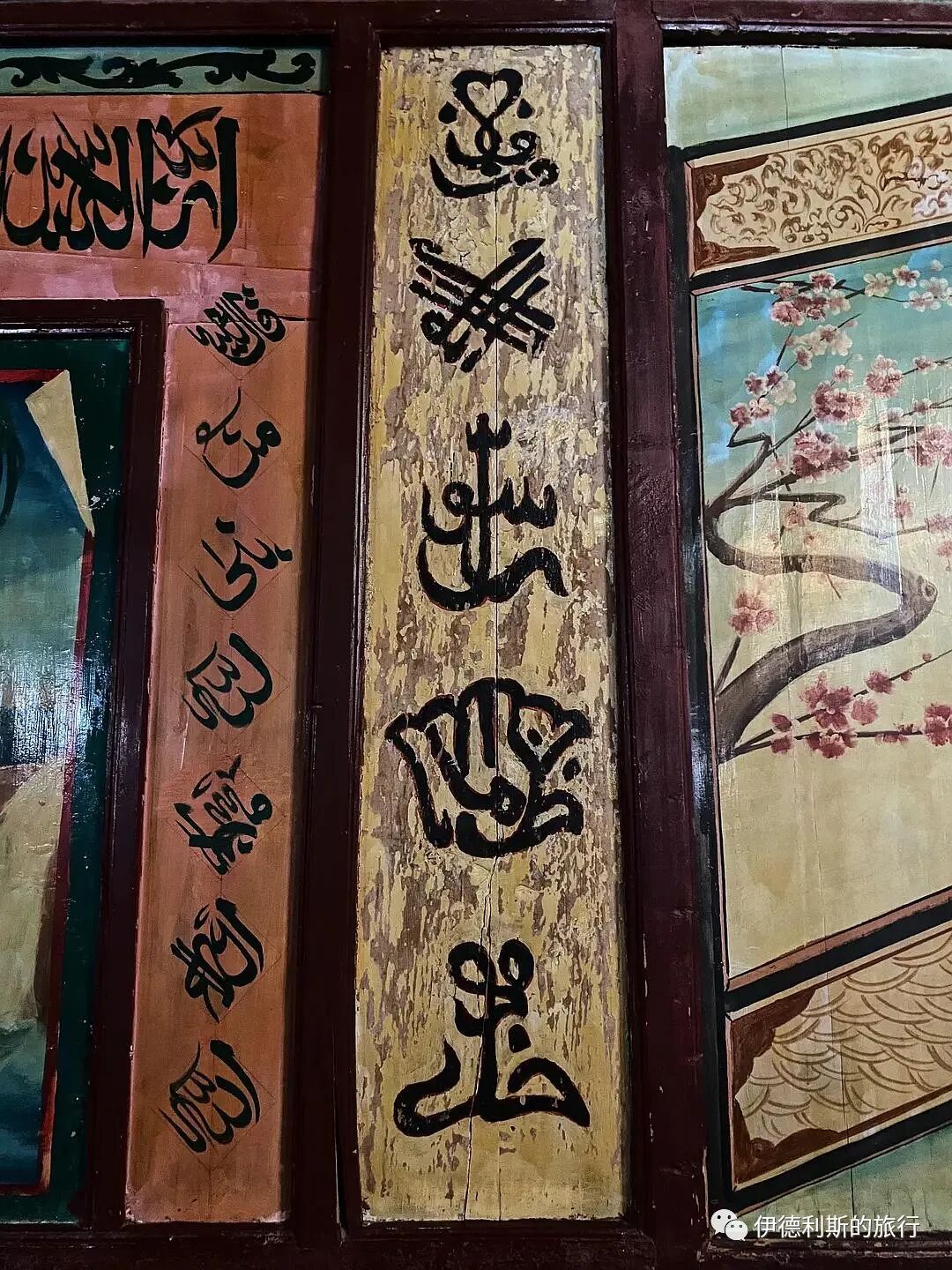
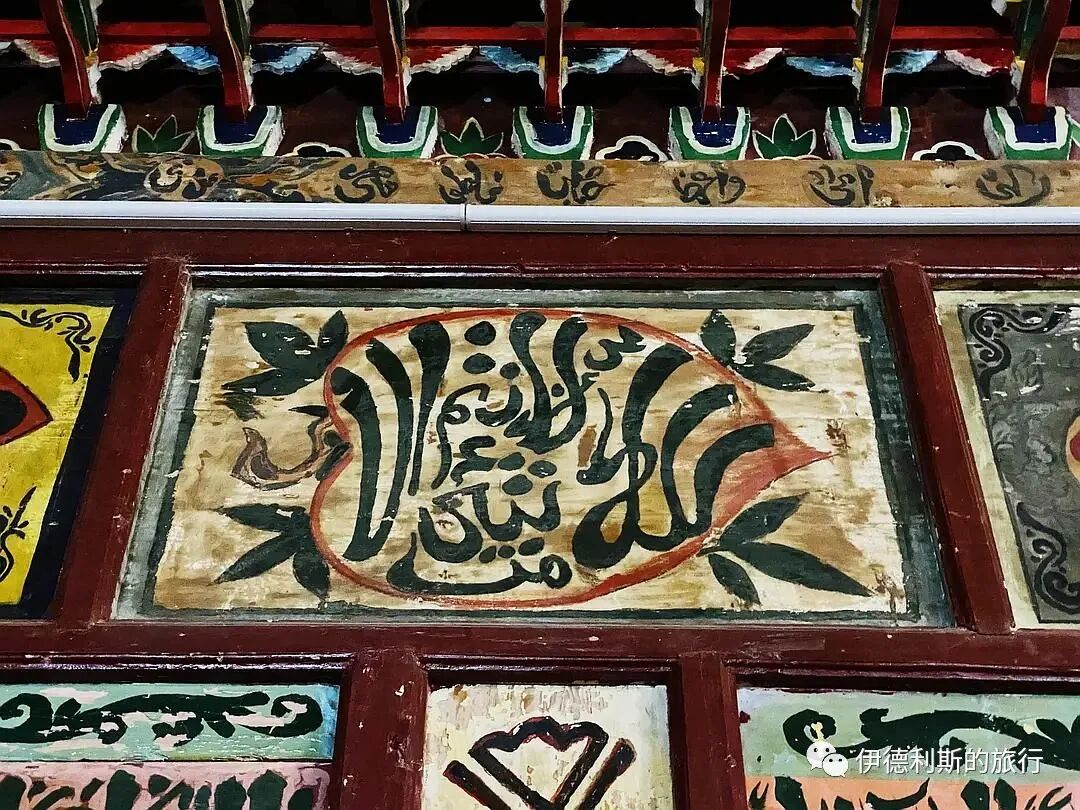
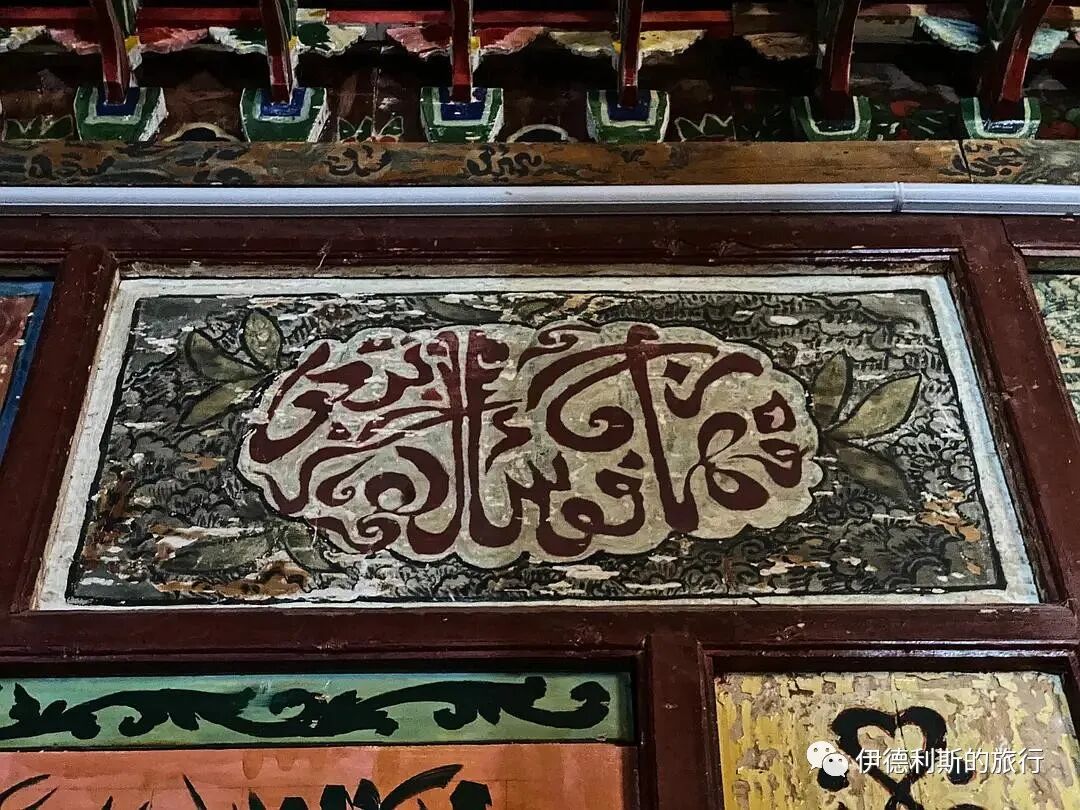
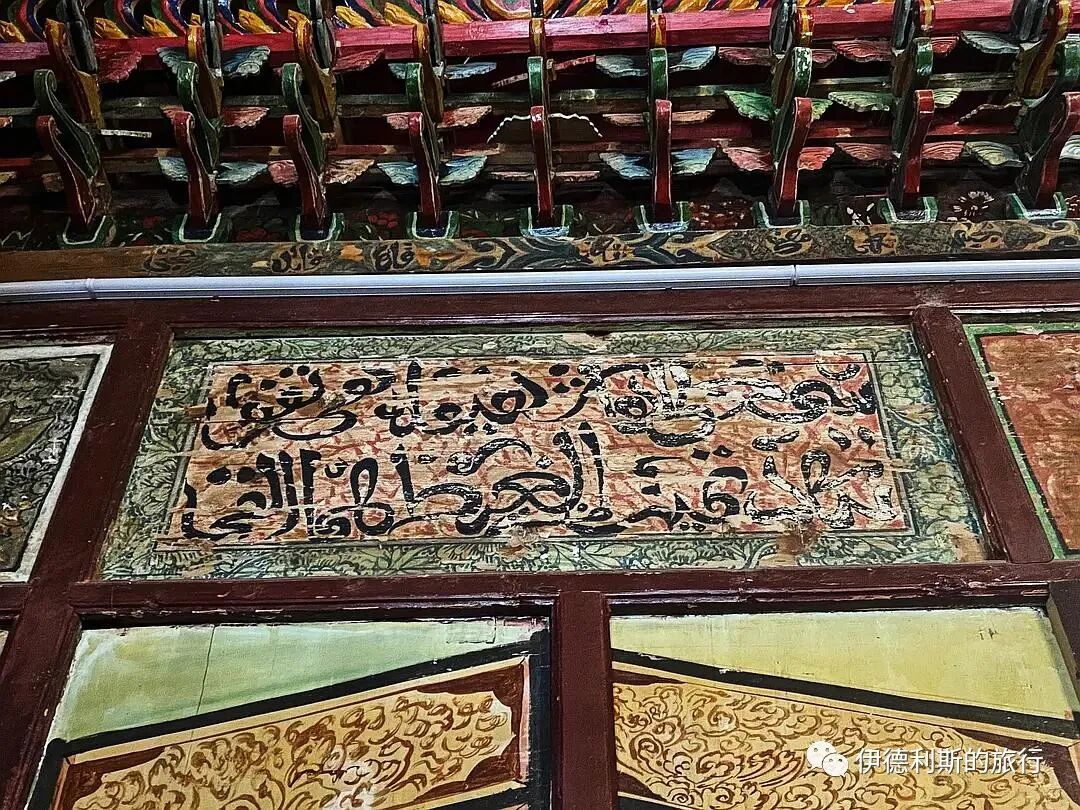
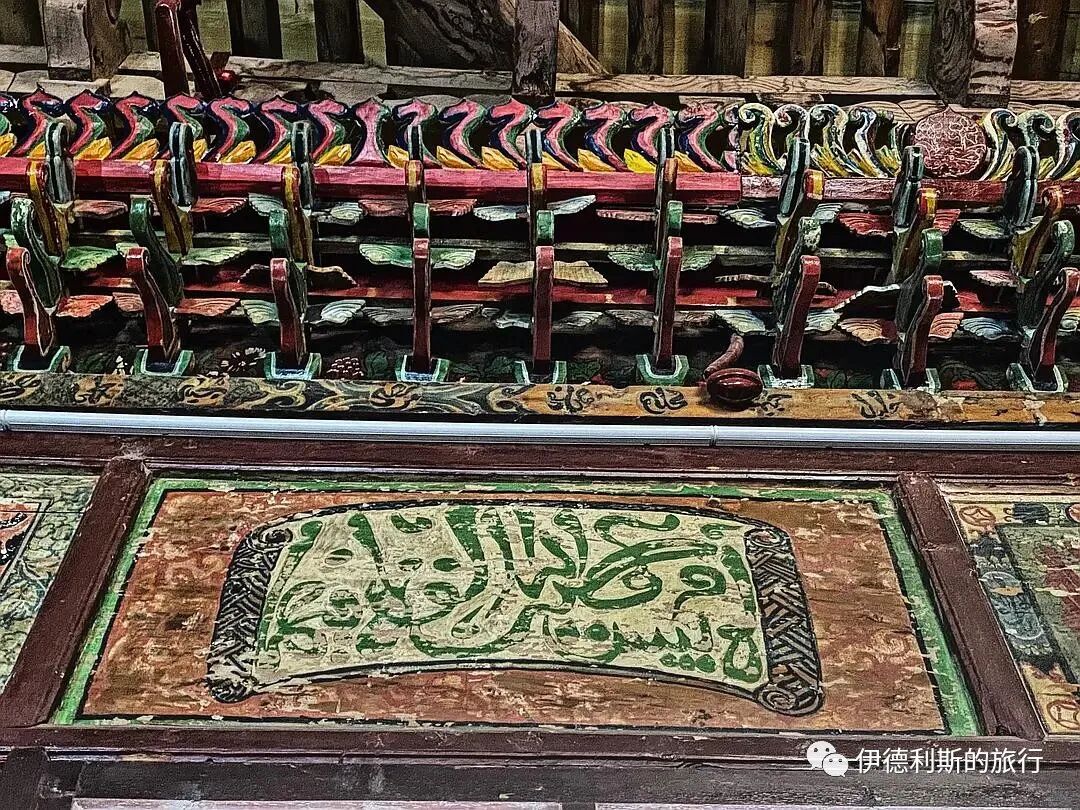
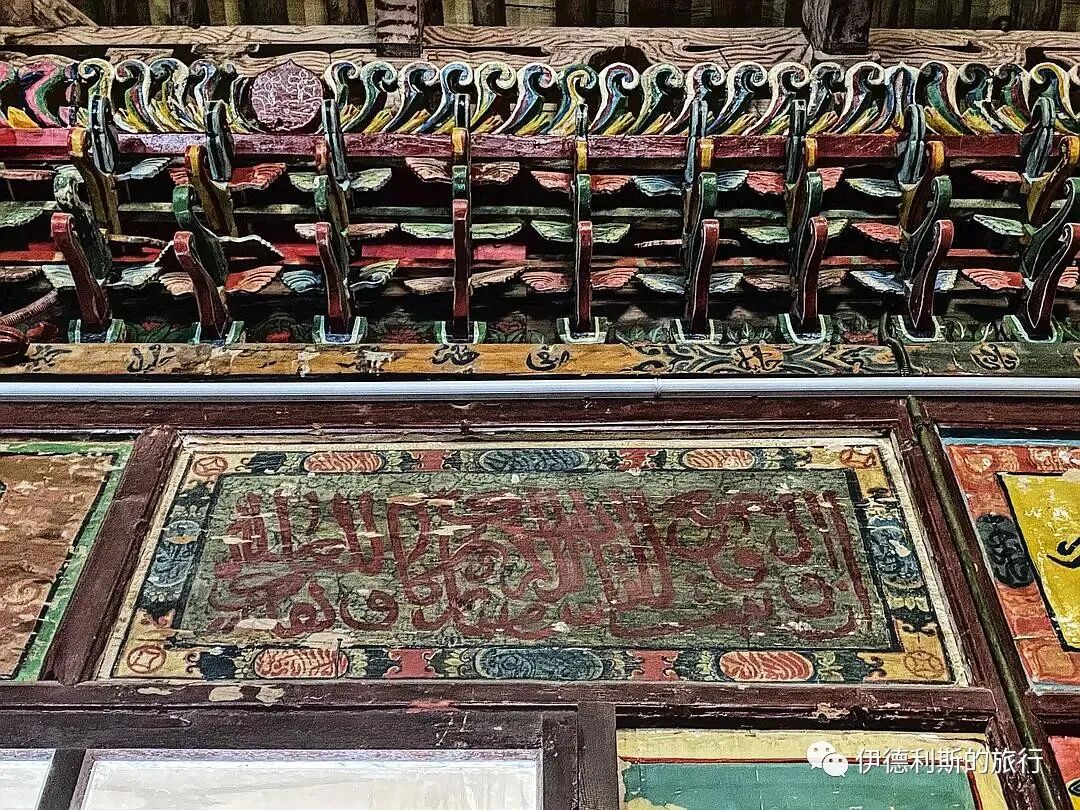
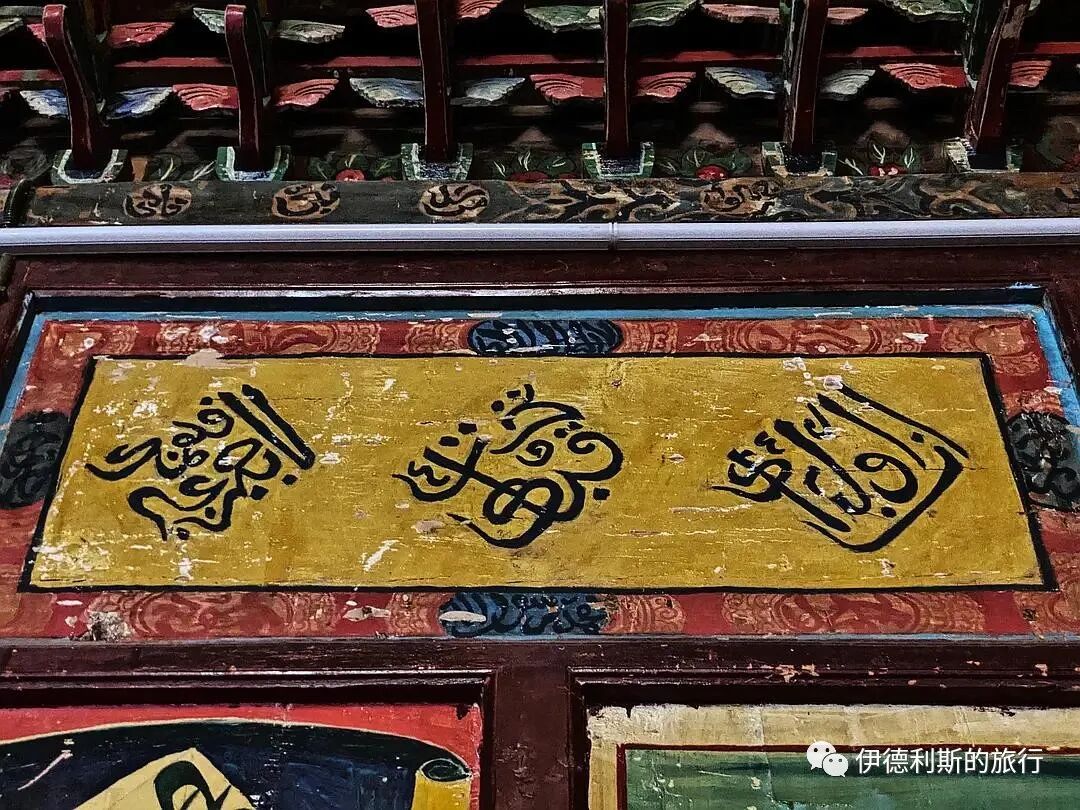
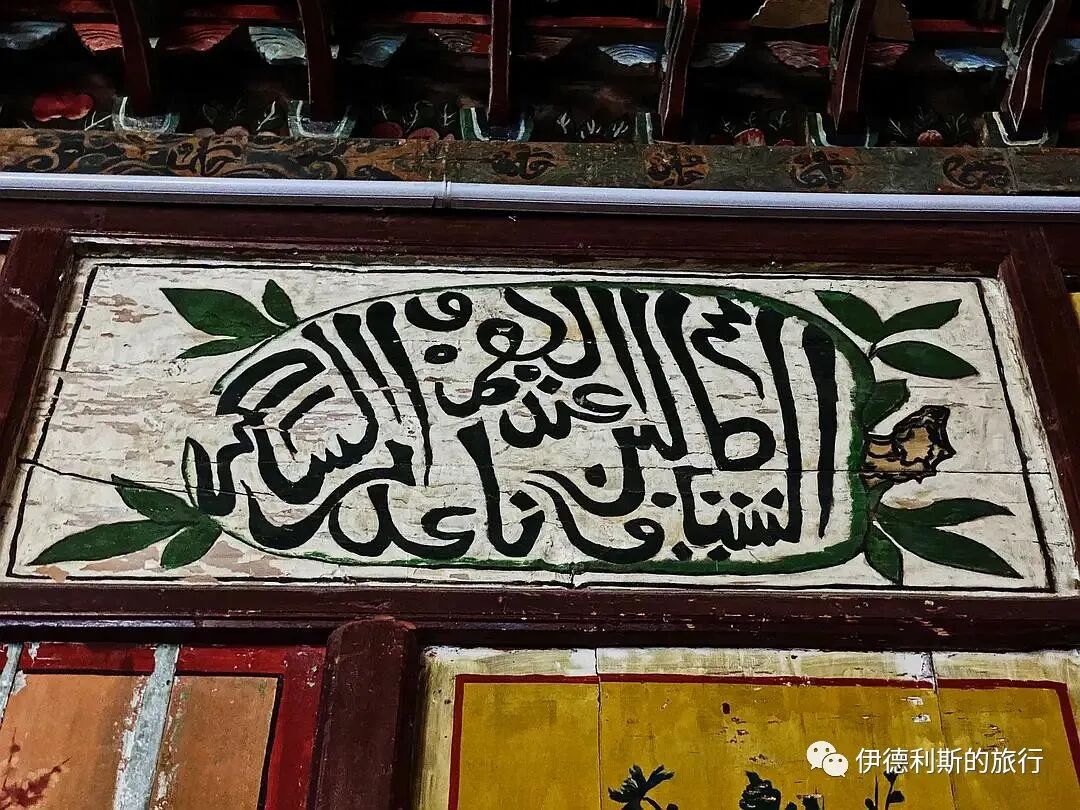
Wall paintings in the kiln hall.
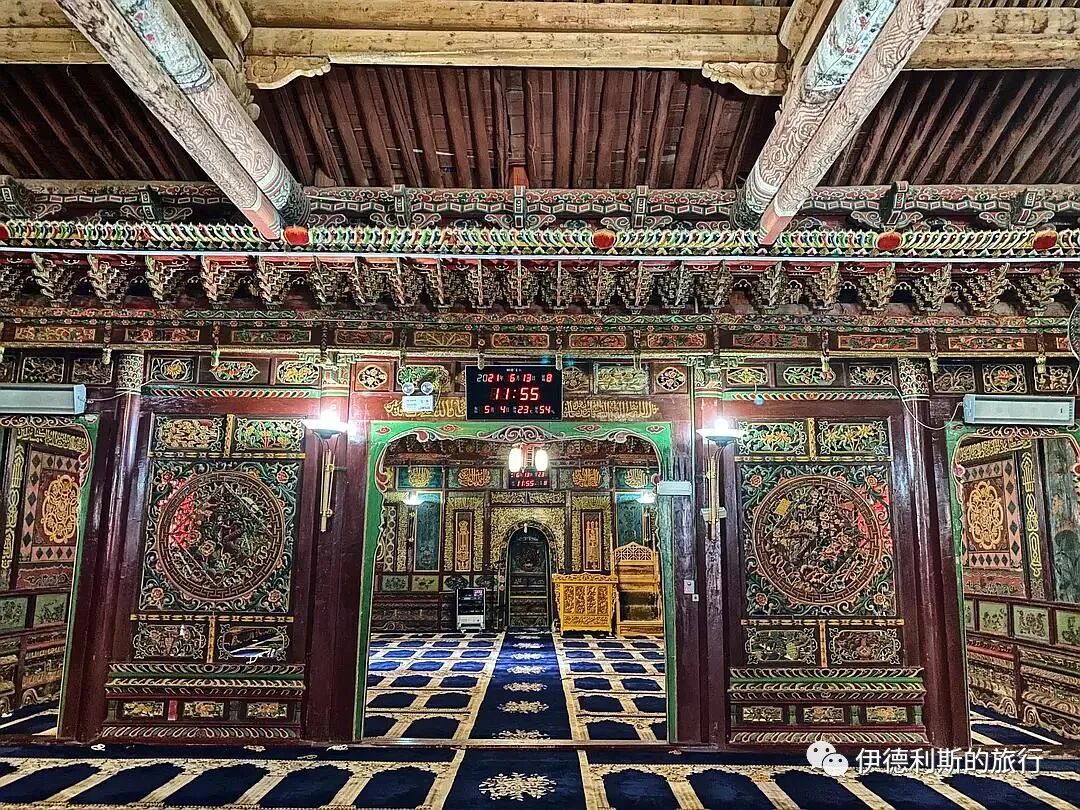
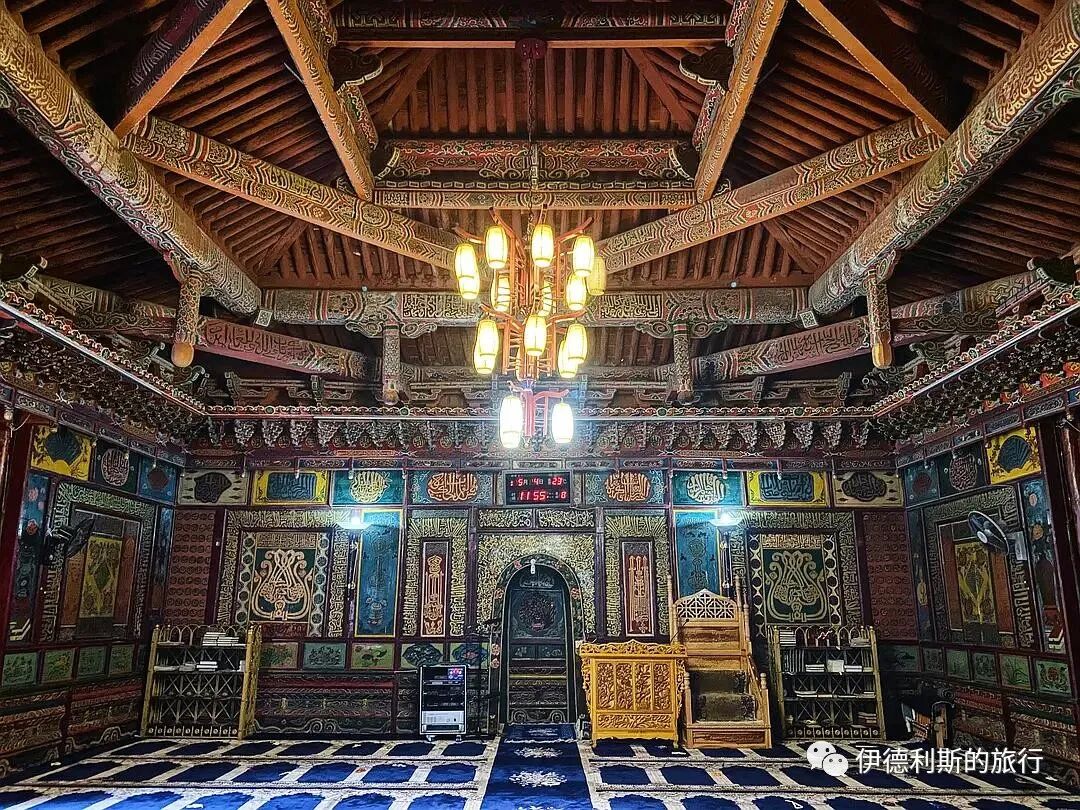
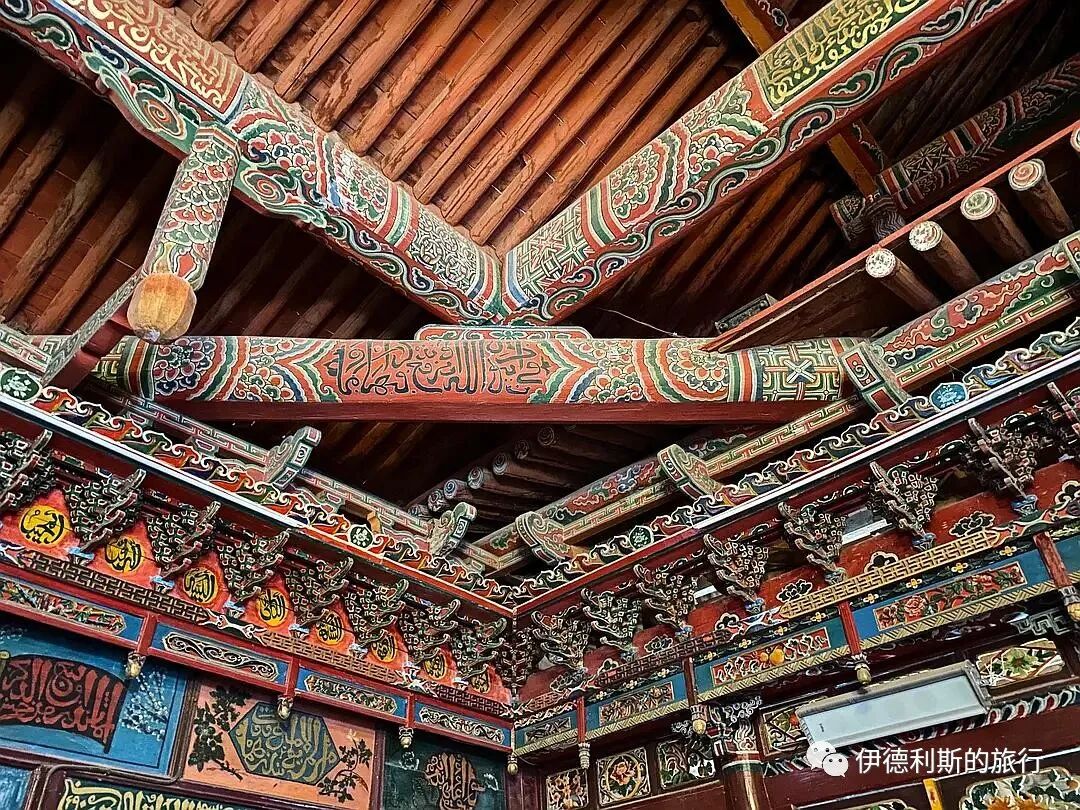
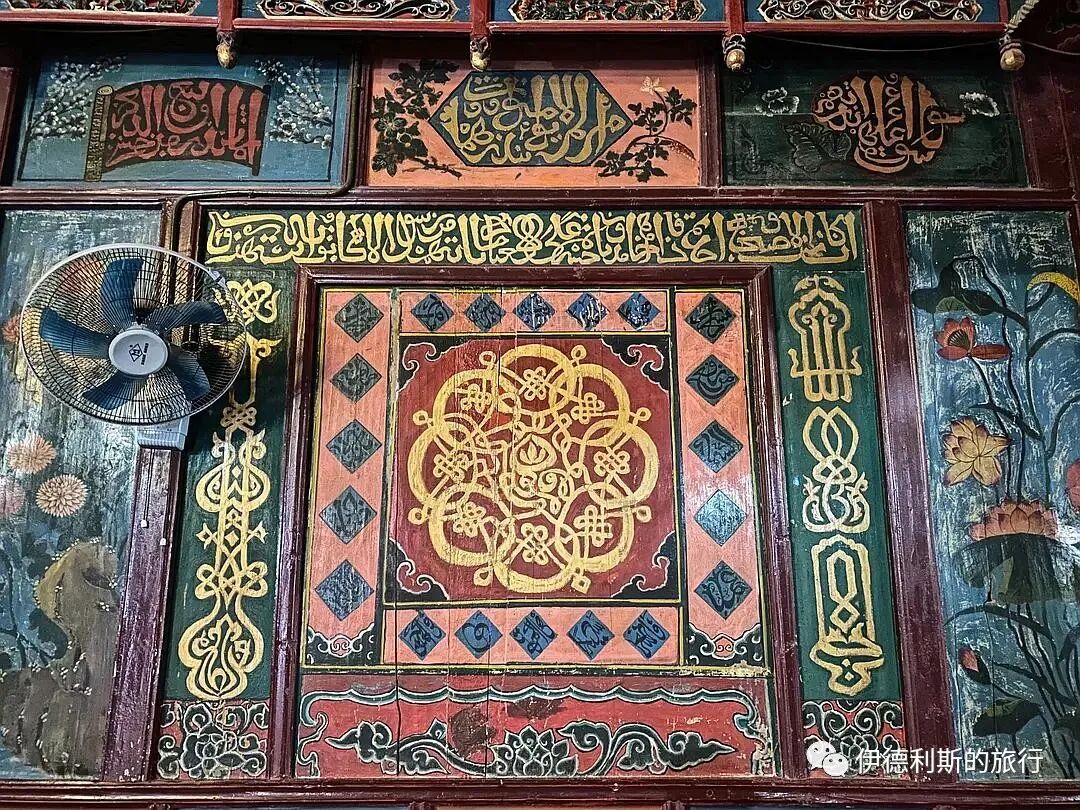
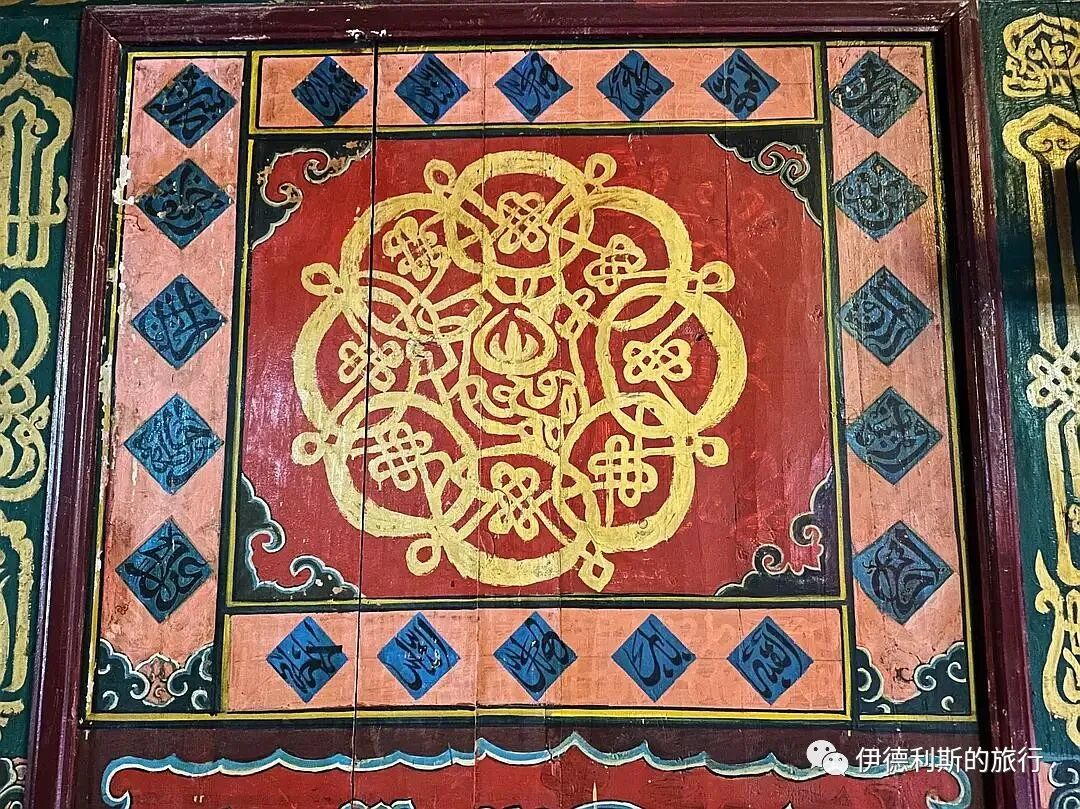
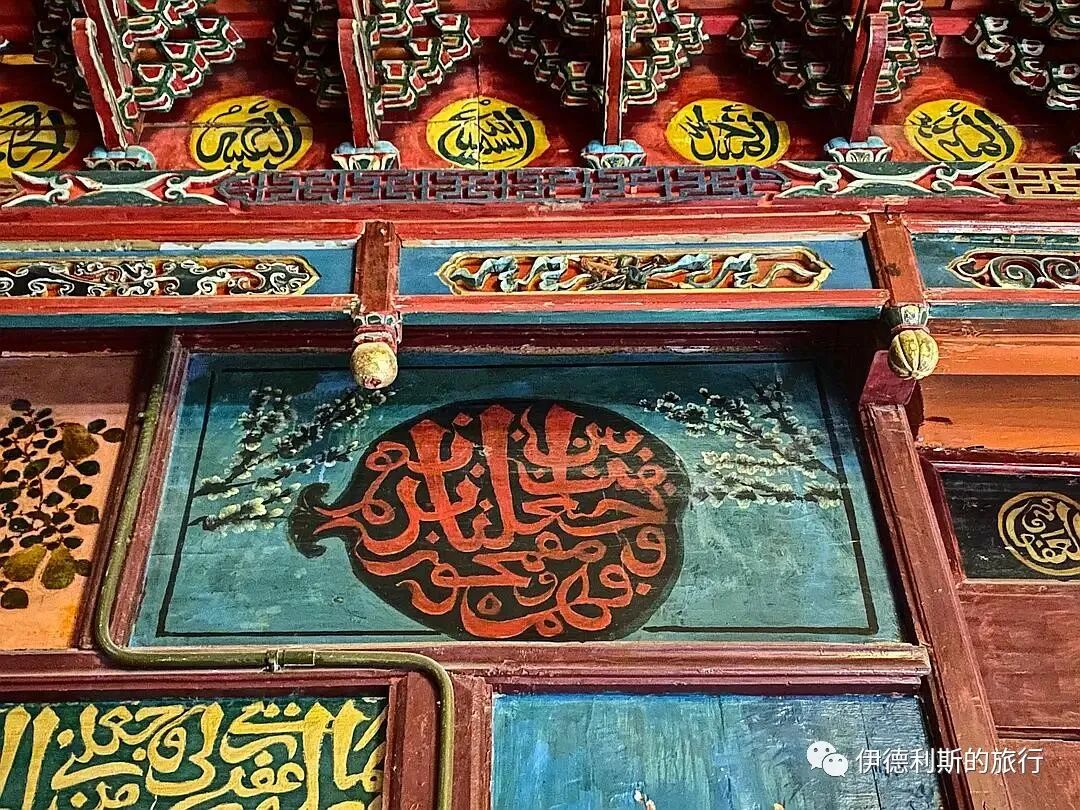
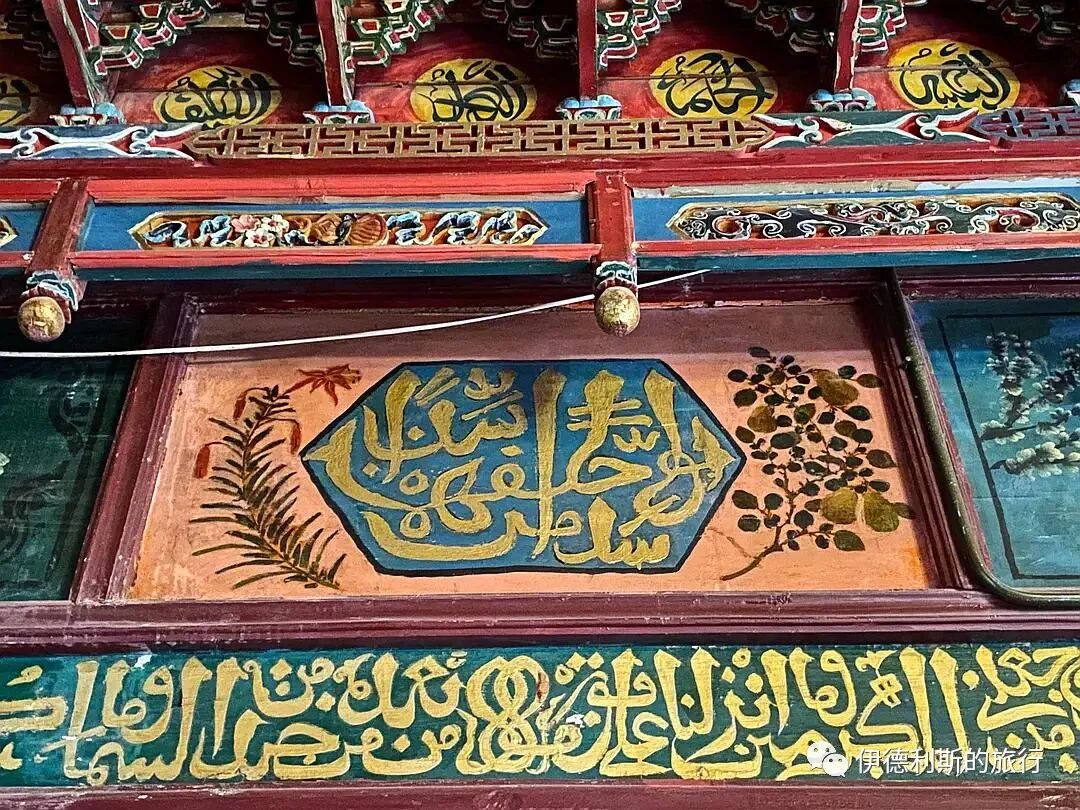
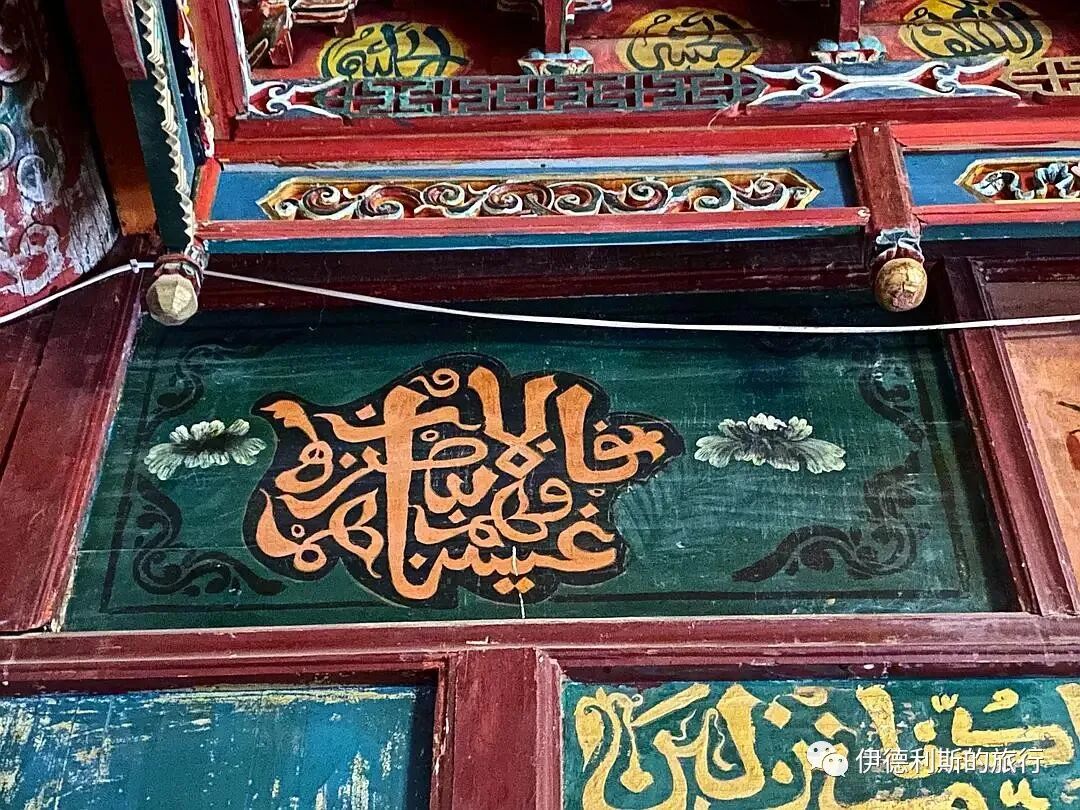
Mihrab niche
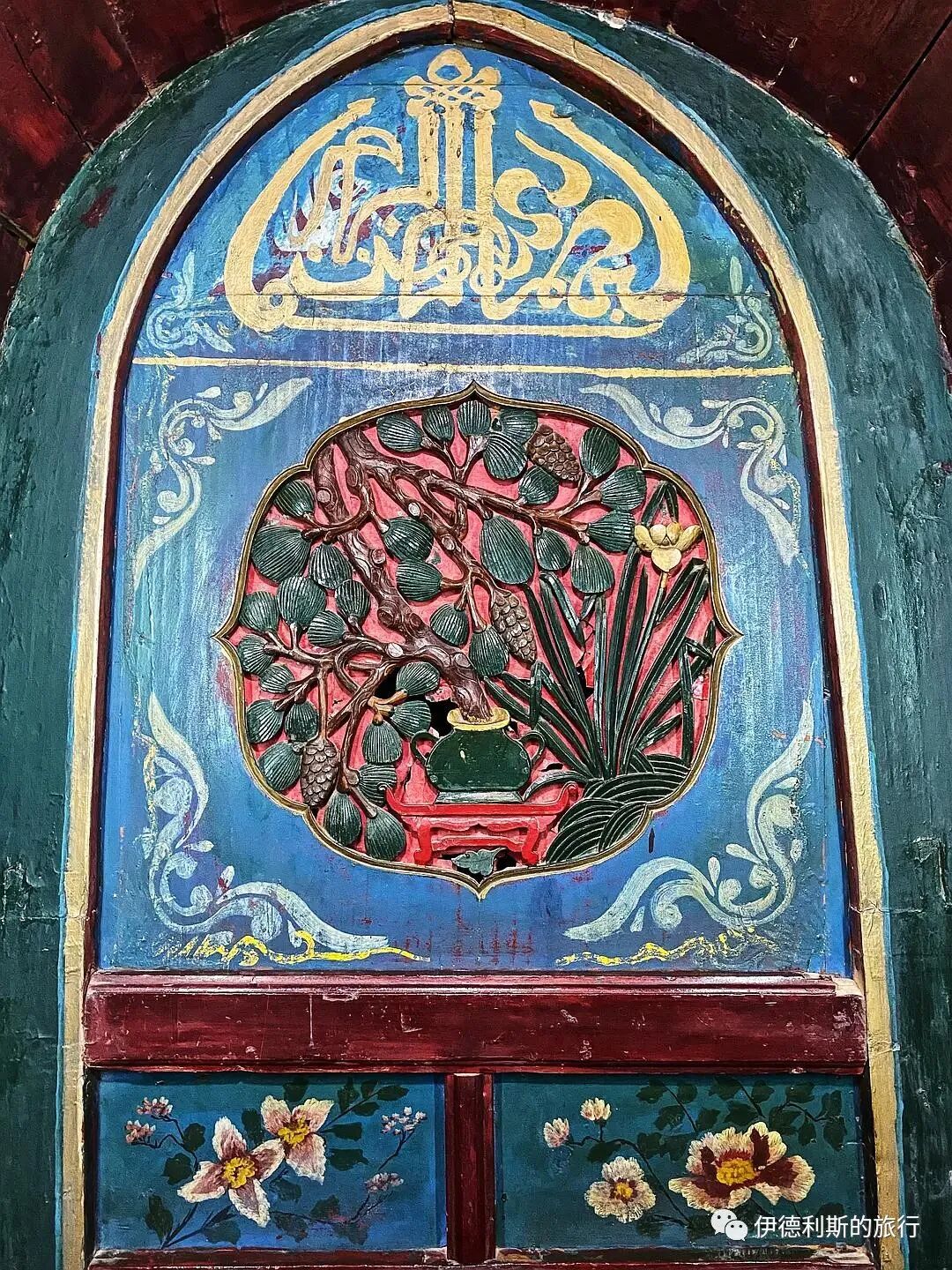
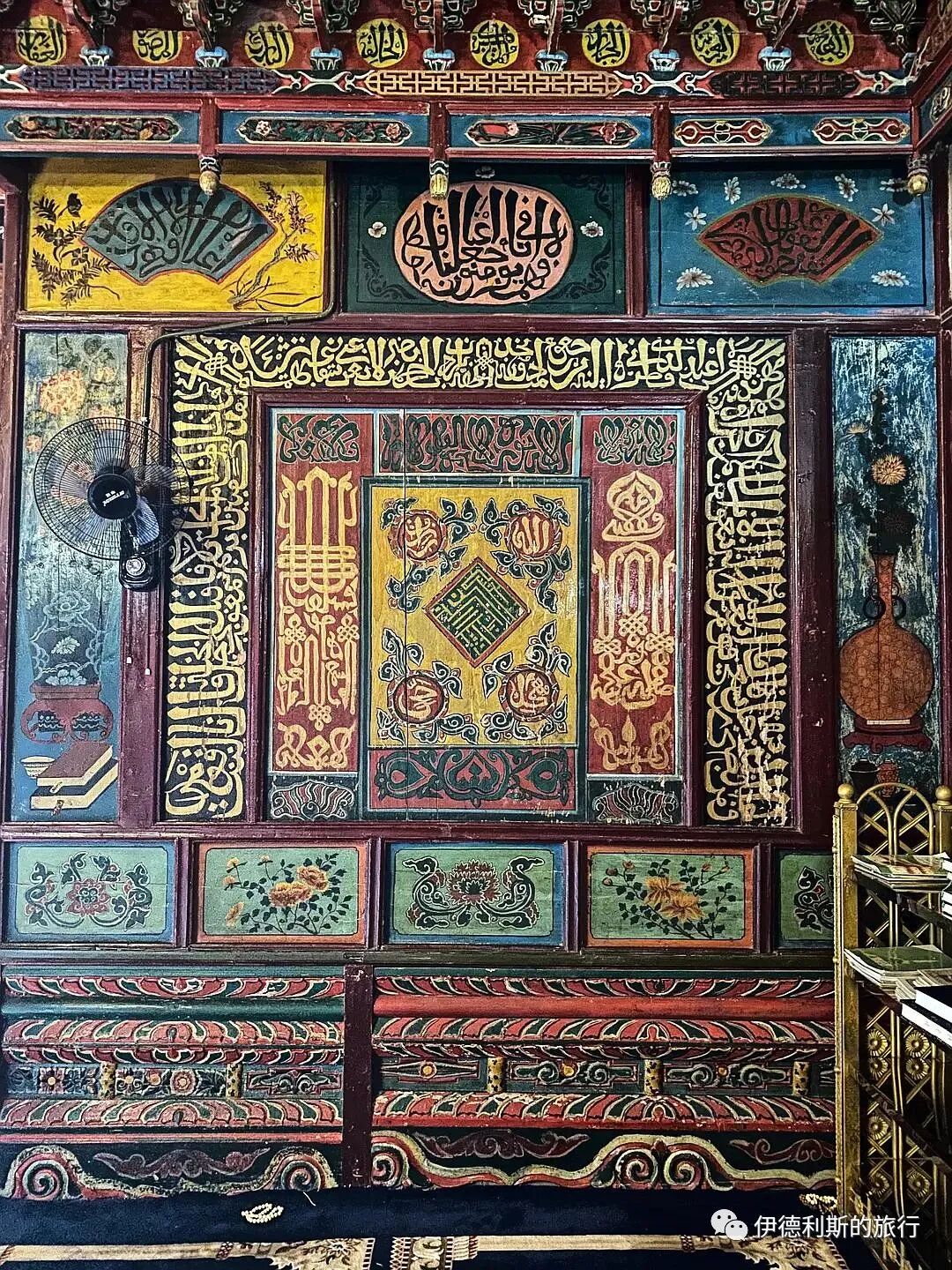
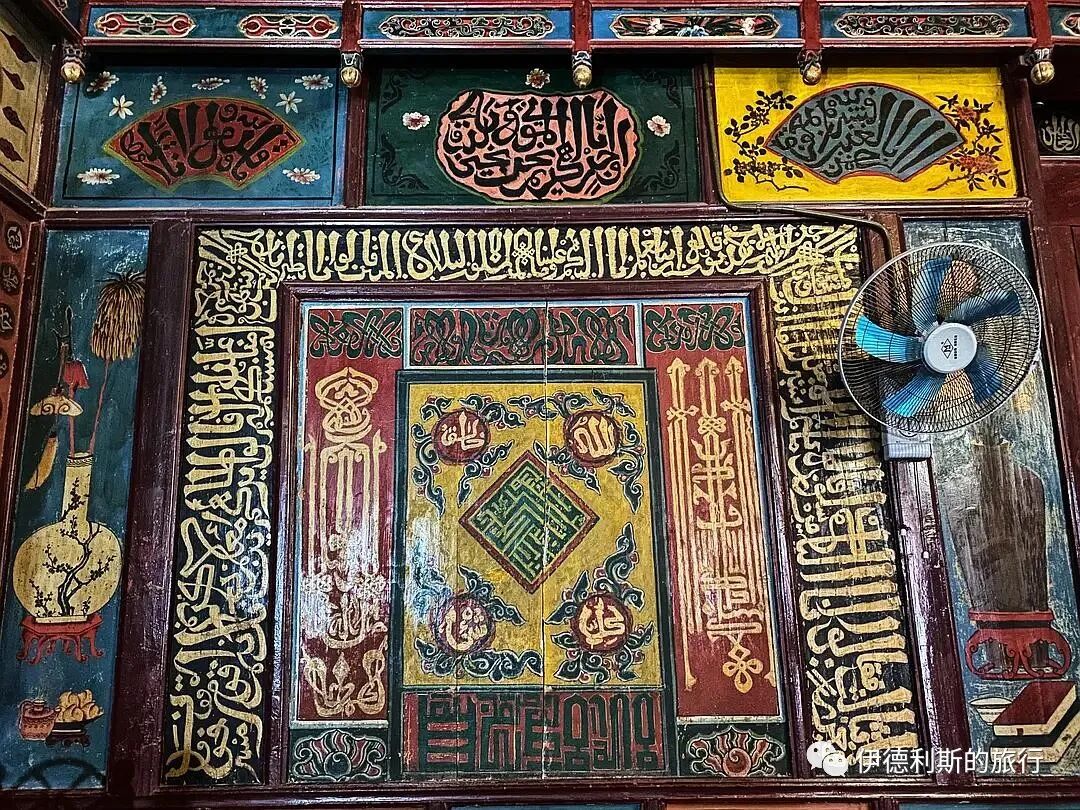
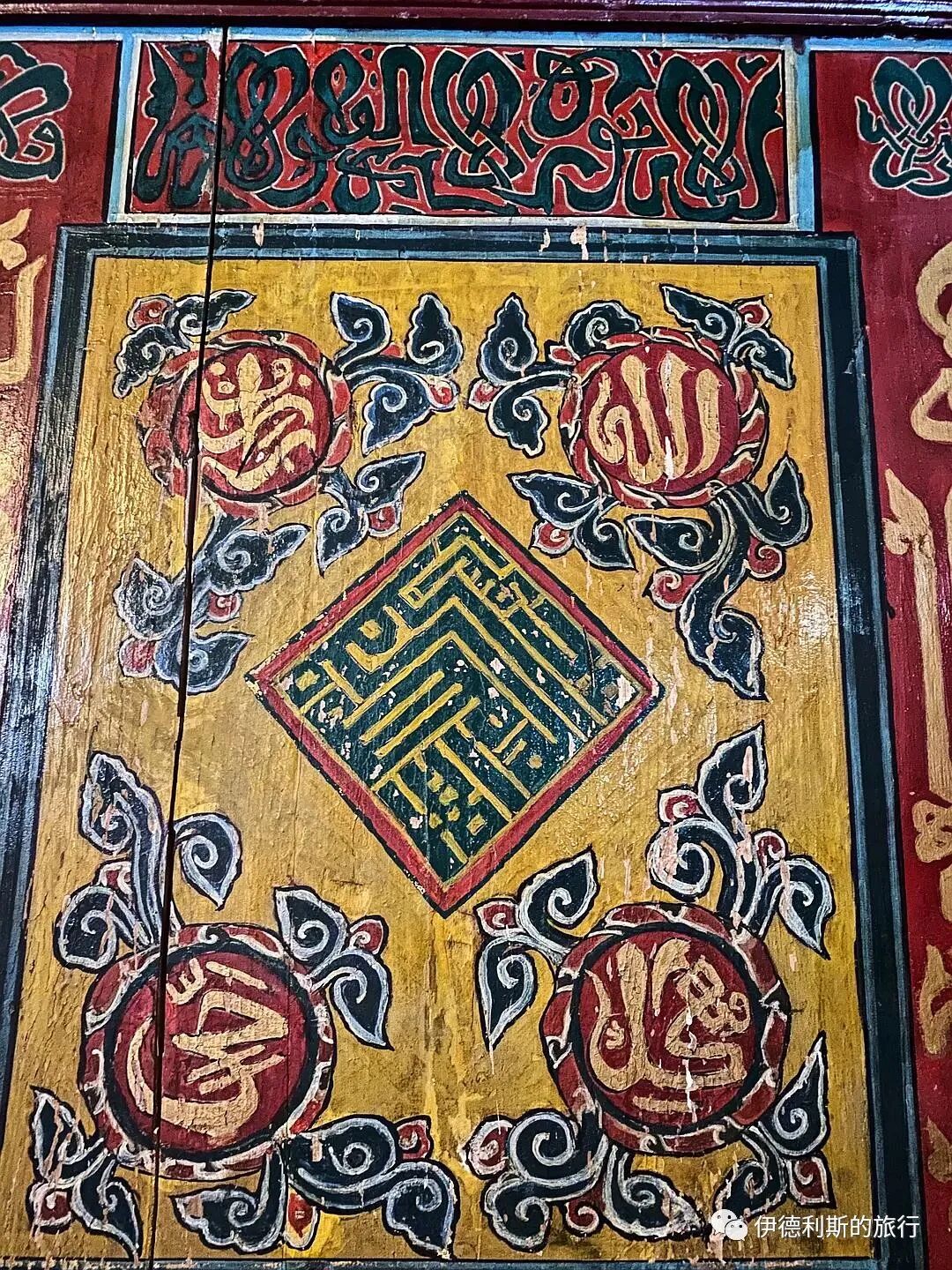
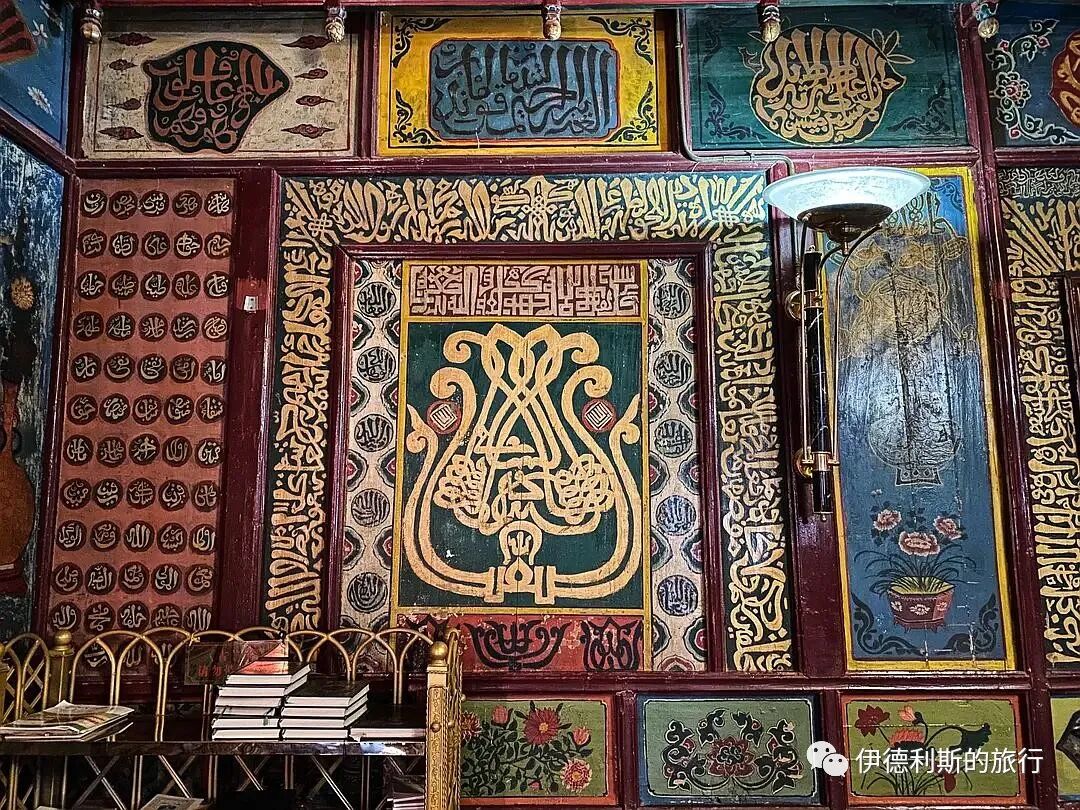
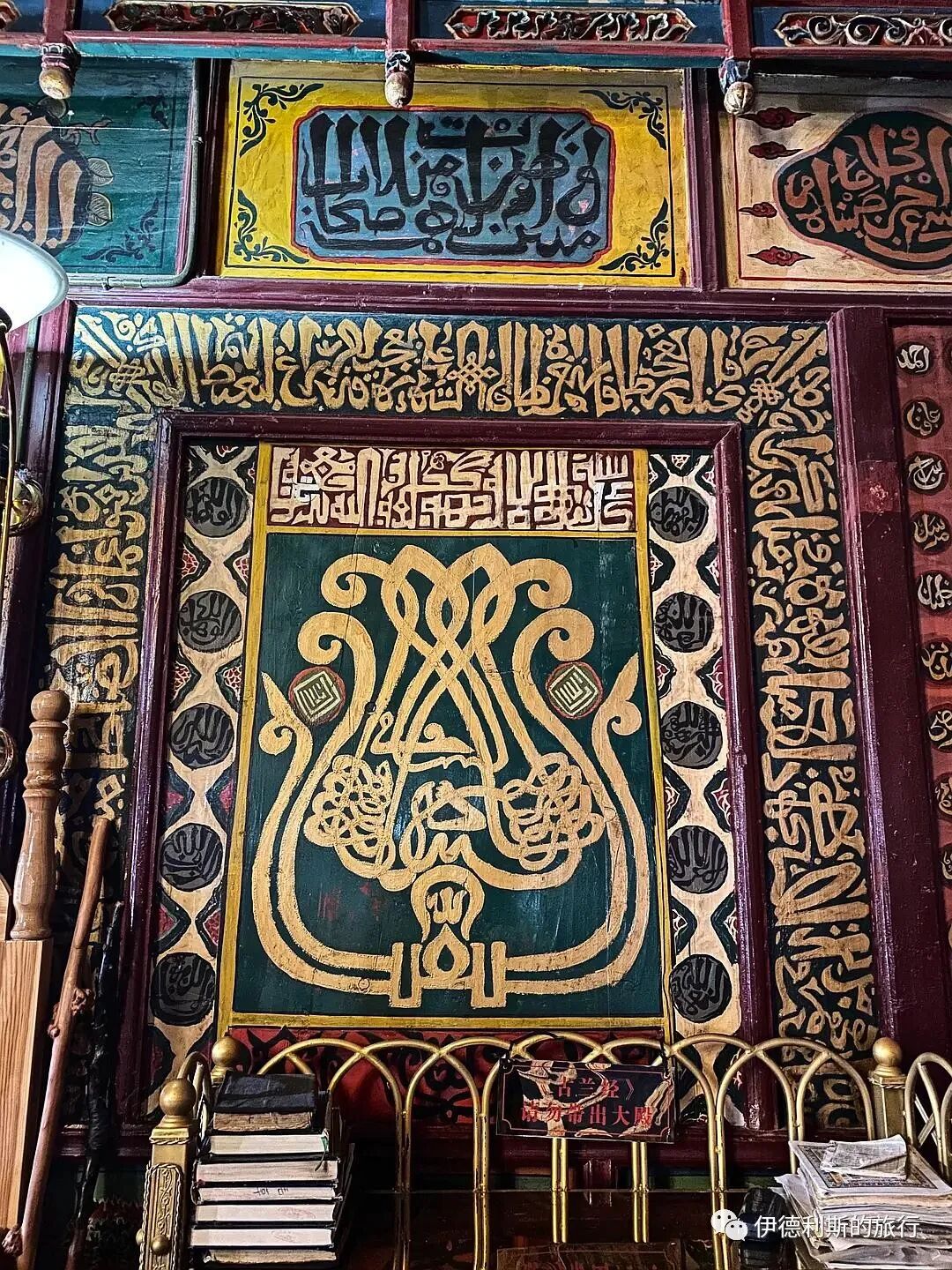
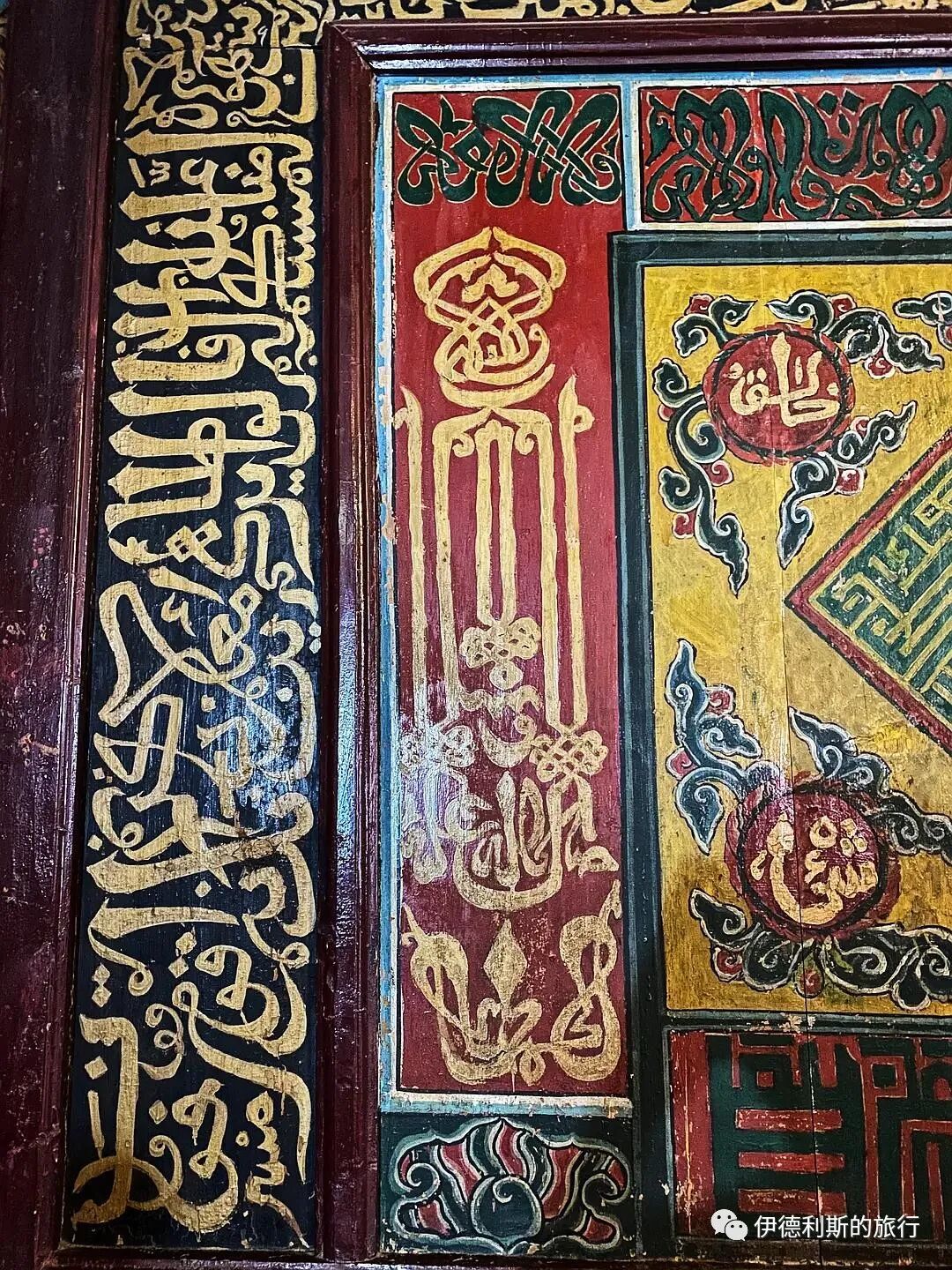
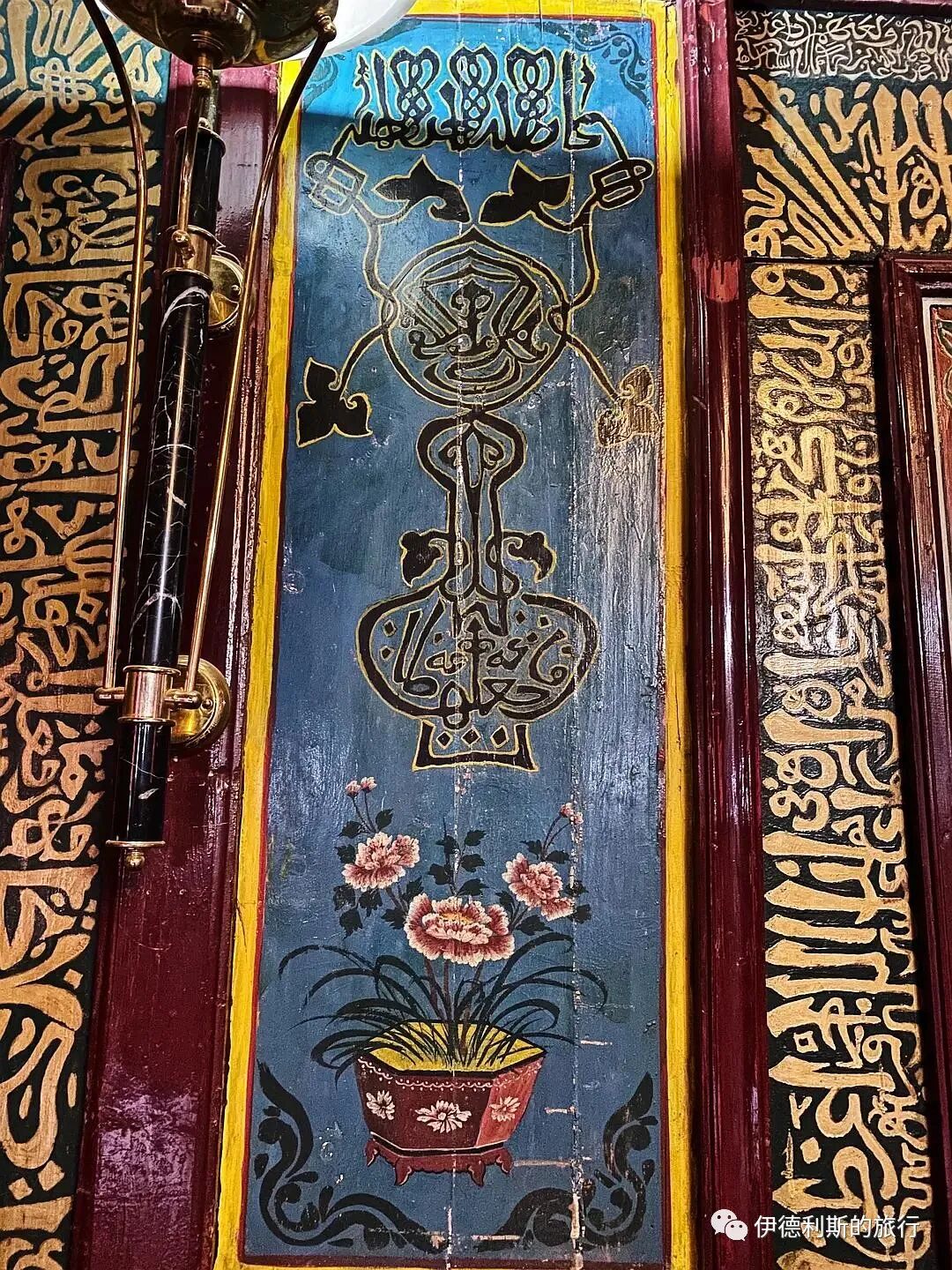
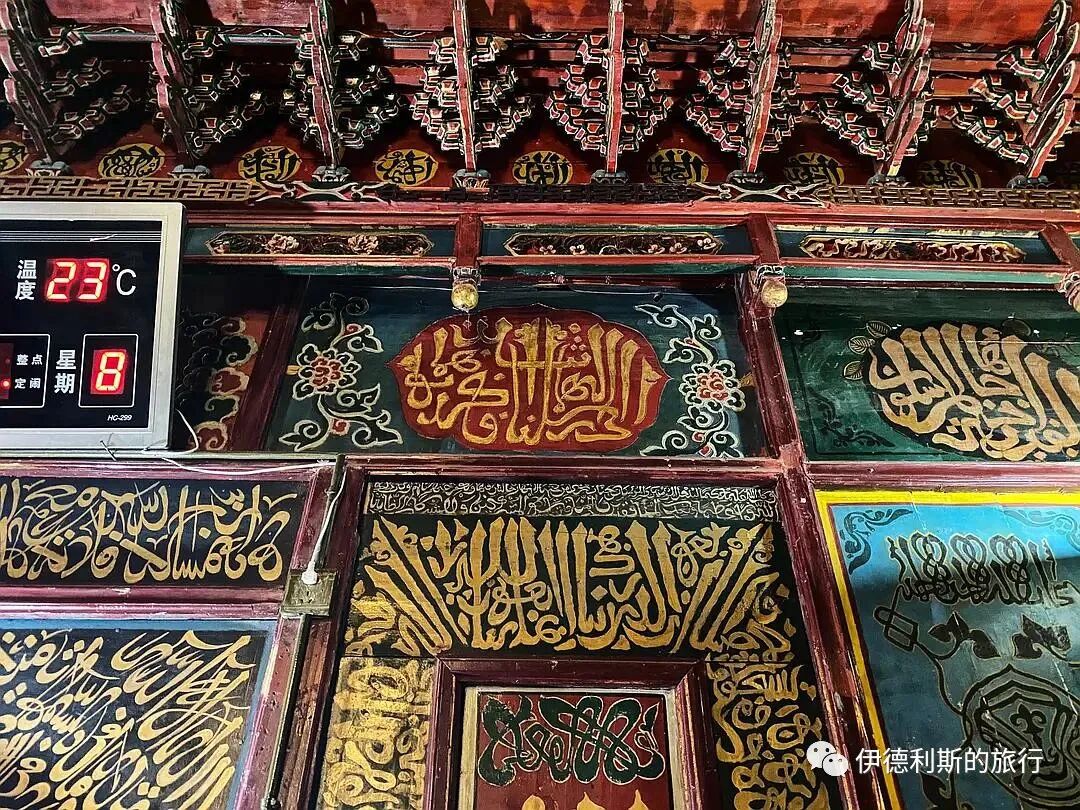
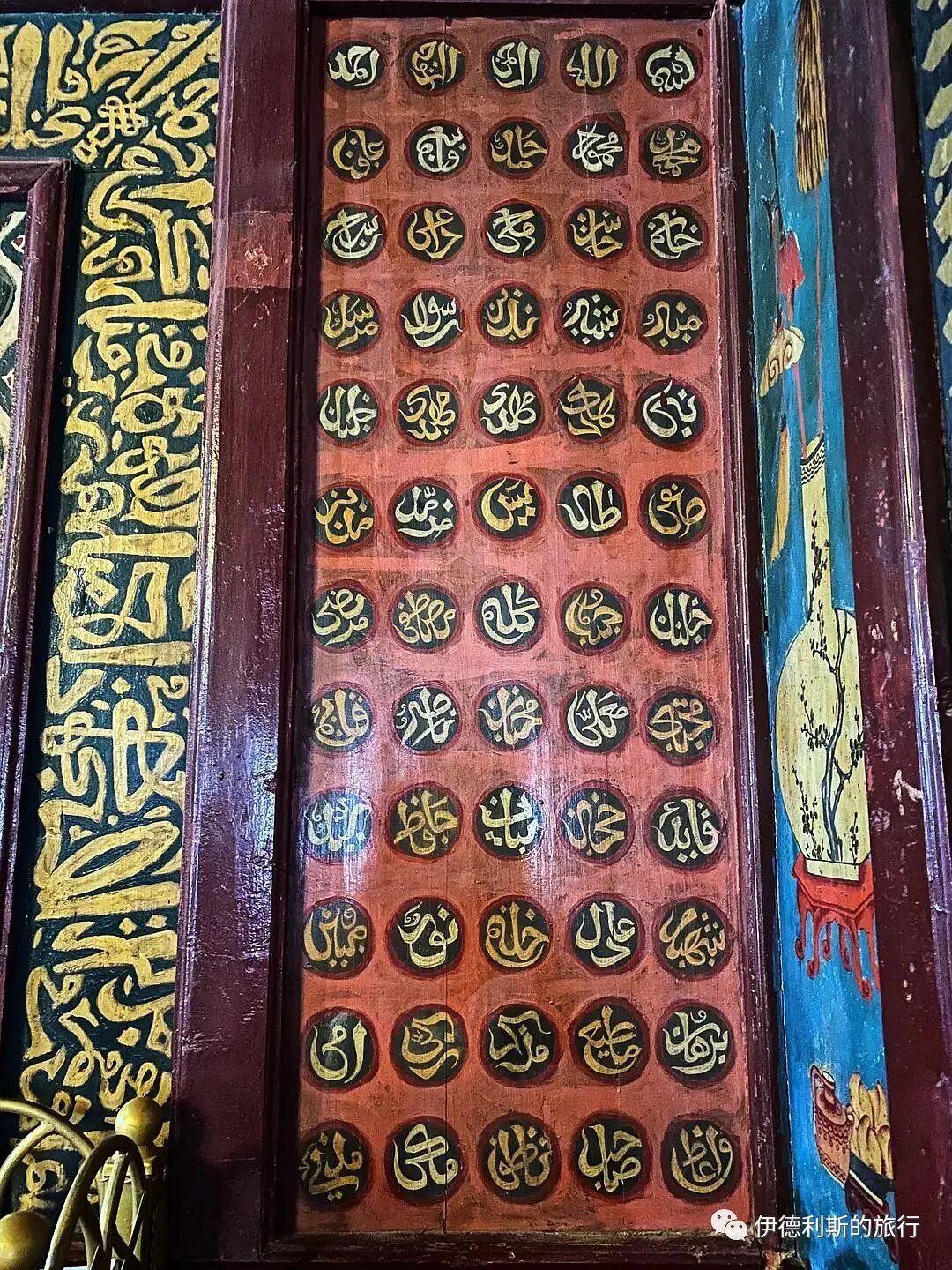
Seal script mural
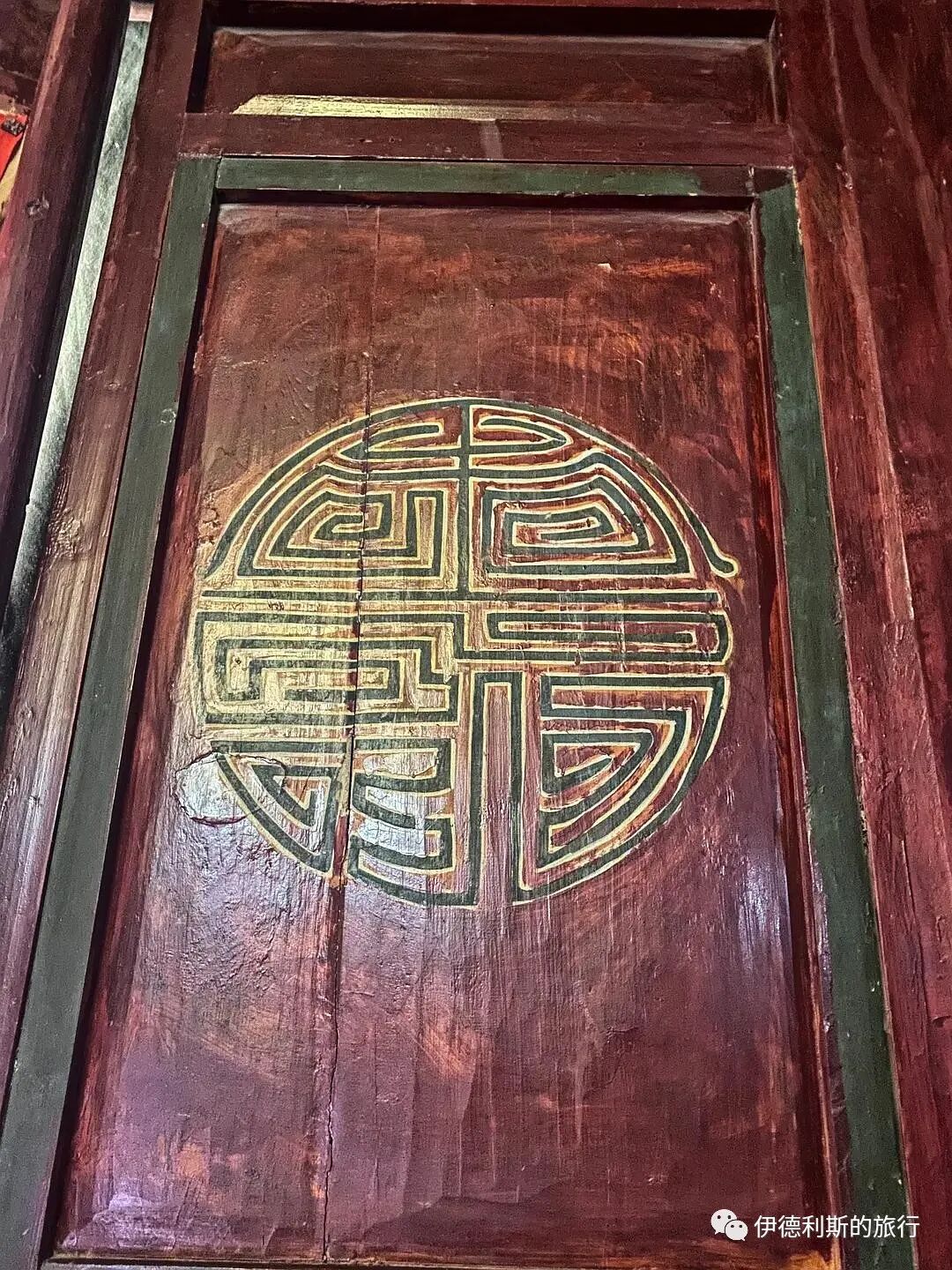
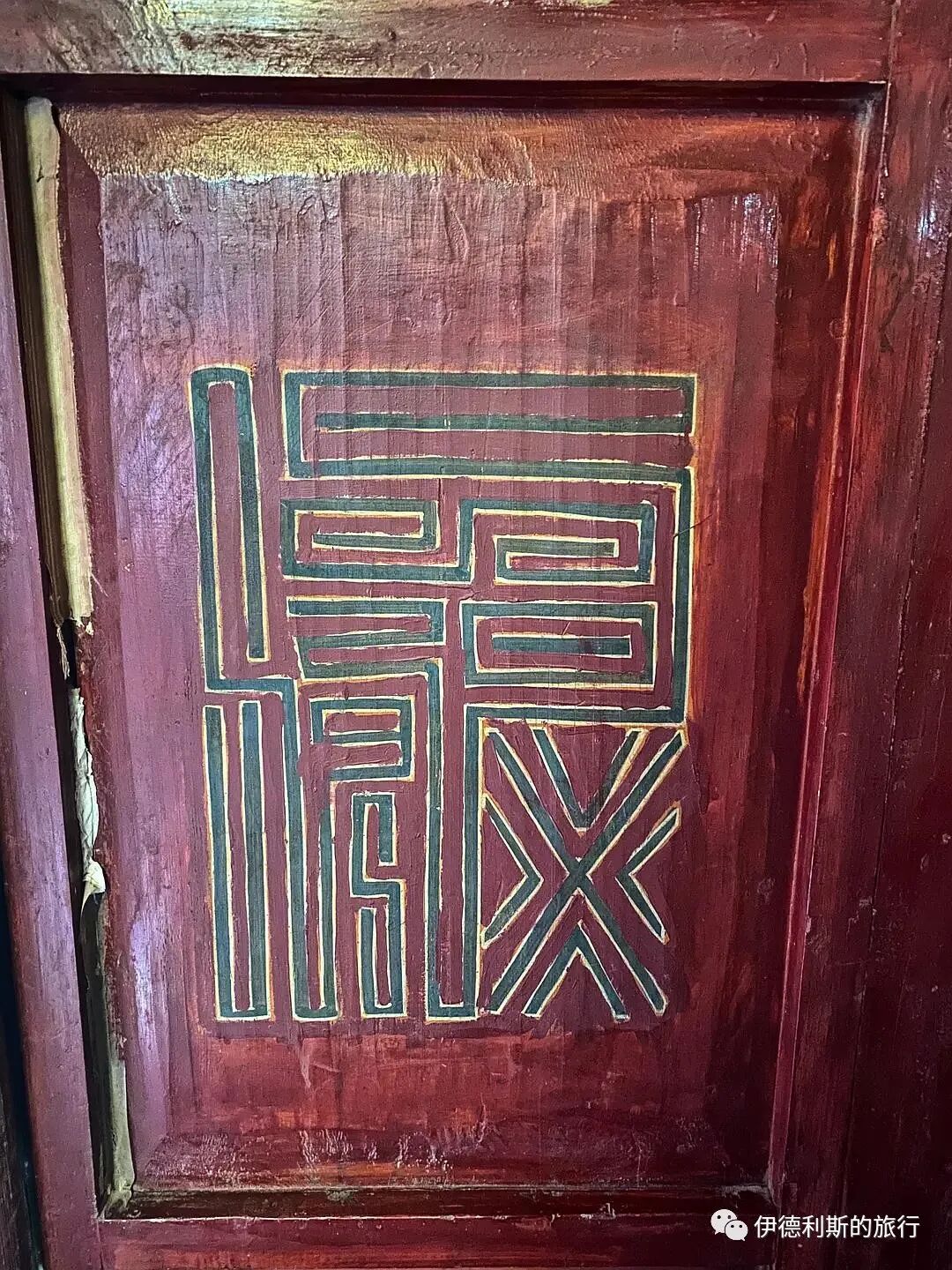
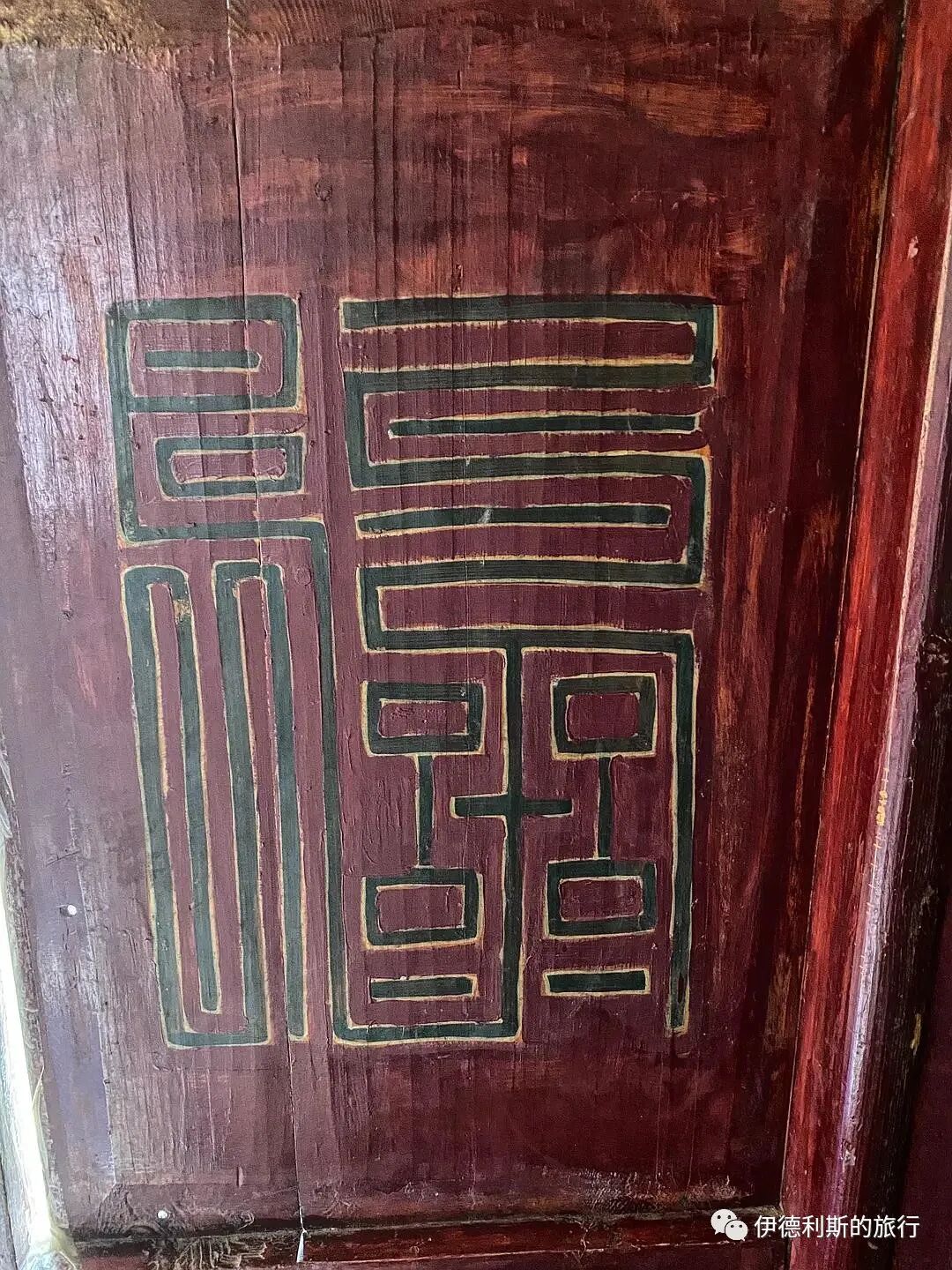
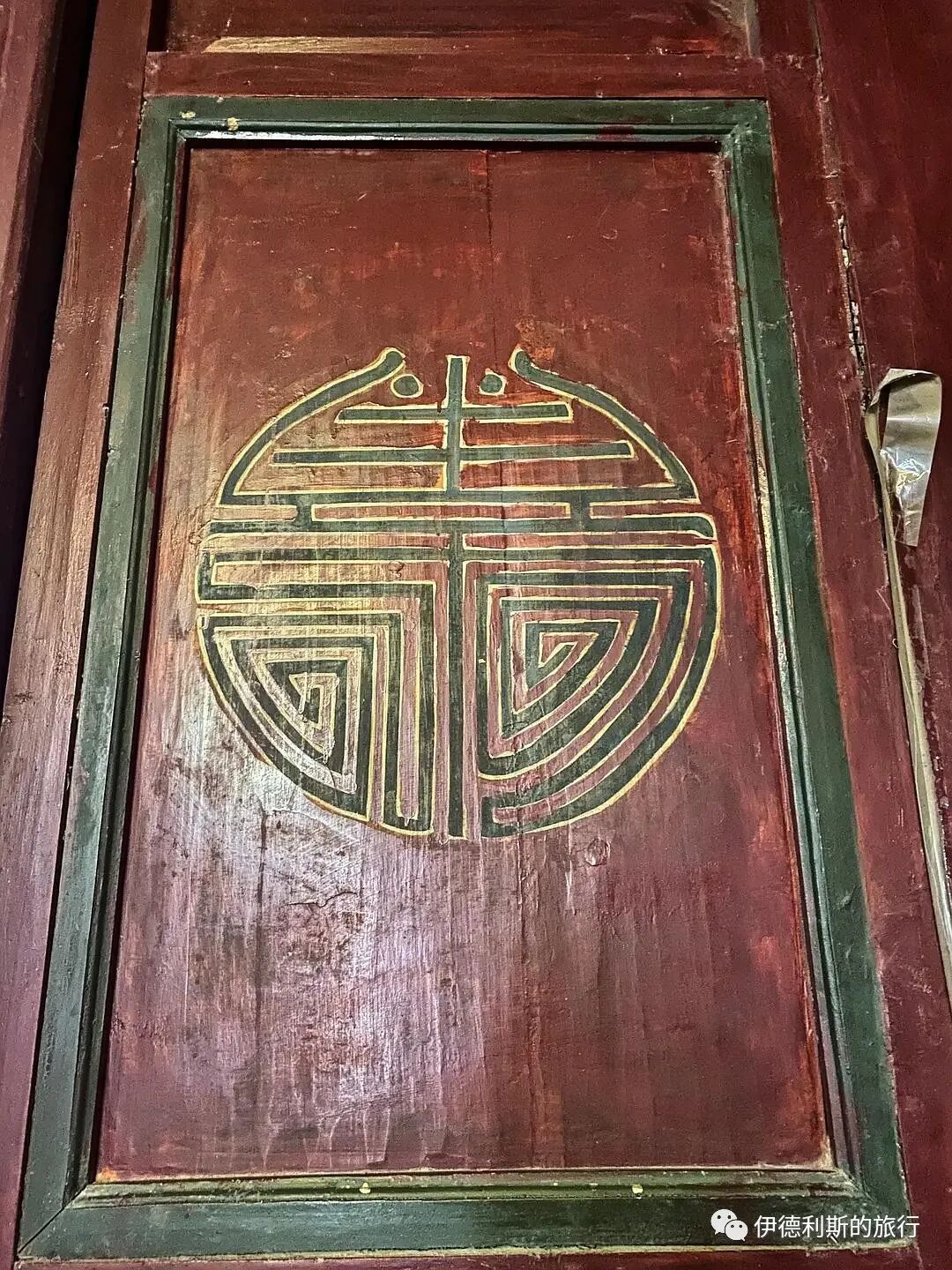
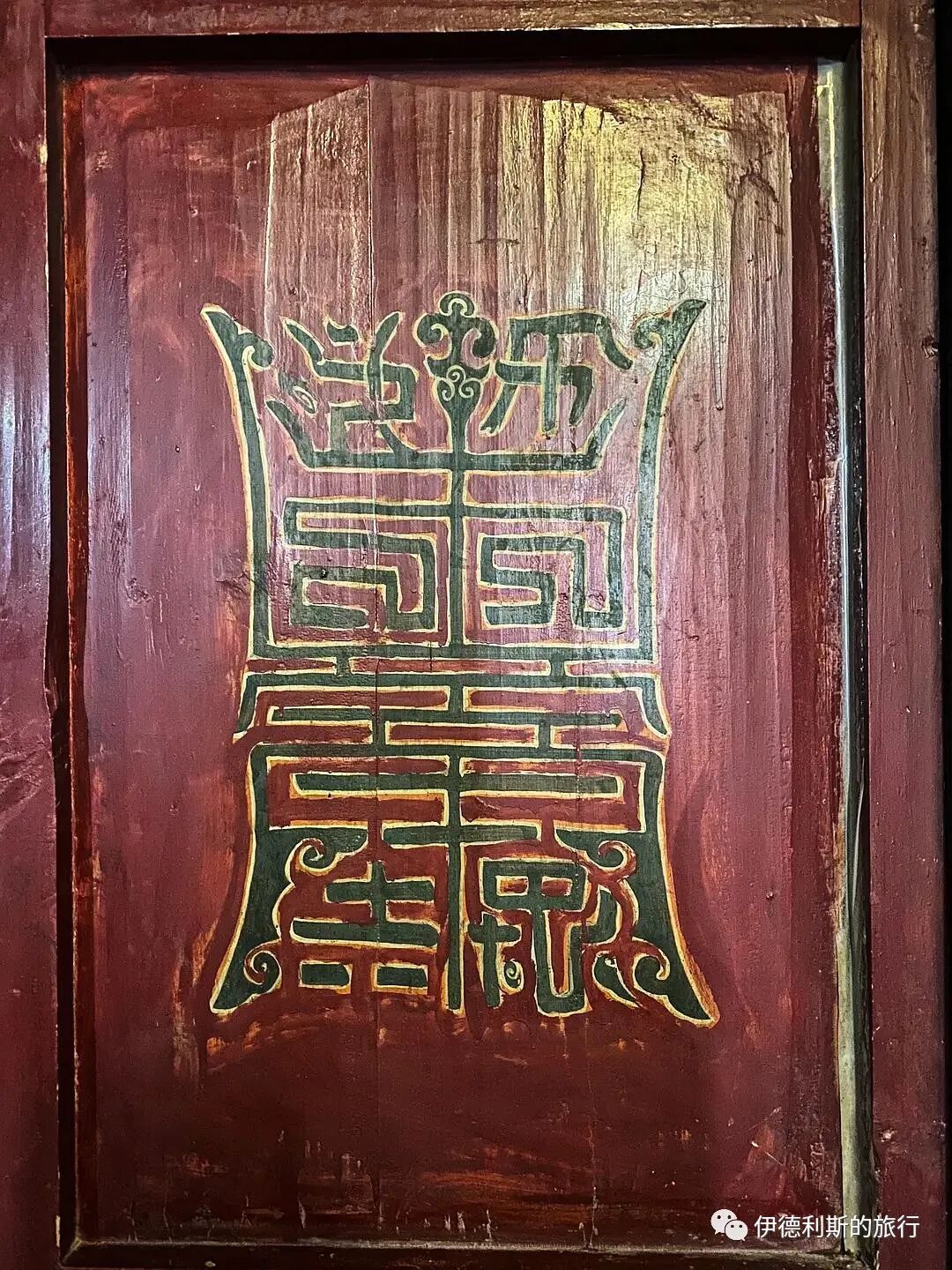
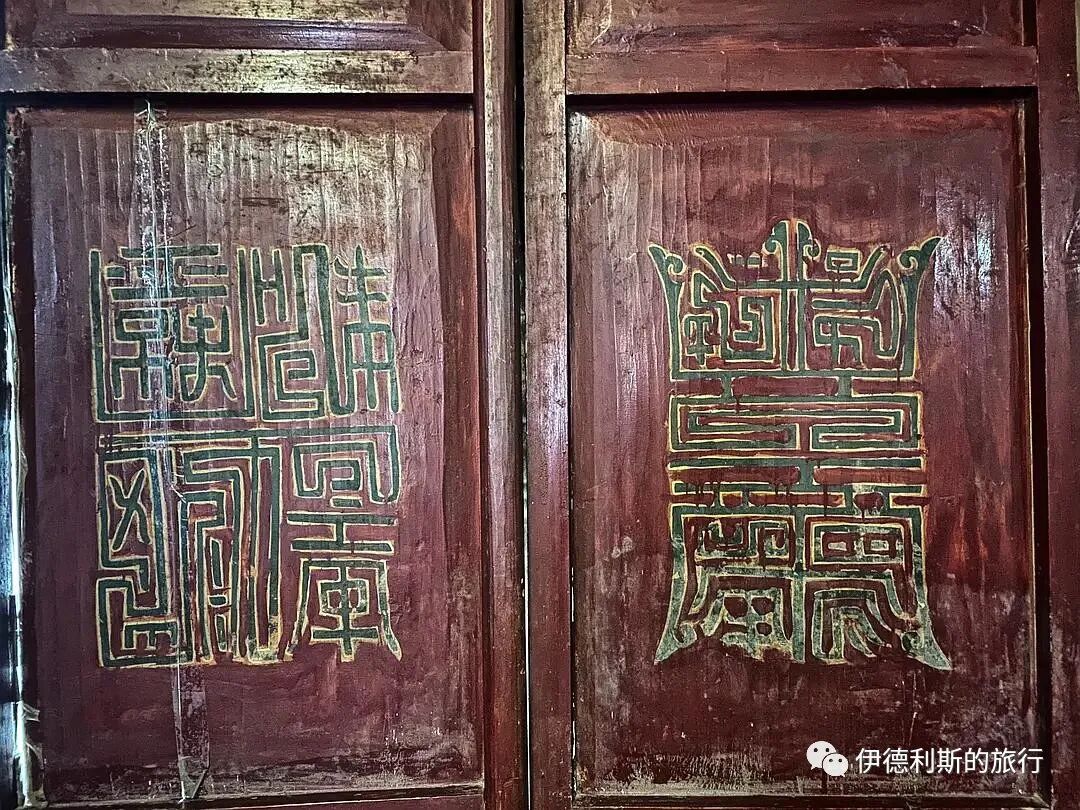
8. Su Zhi Mosque
Suzhi Mosque in Xunhua County was first built in 1460 (the fourth year of the Tianshun reign of the Ming Dynasty) and expanded during the Qing Dynasty; it is the Haizi Mosque for the Salar people of the Suzhi area and is currently a cultural relic protection unit of Qinghai Province.
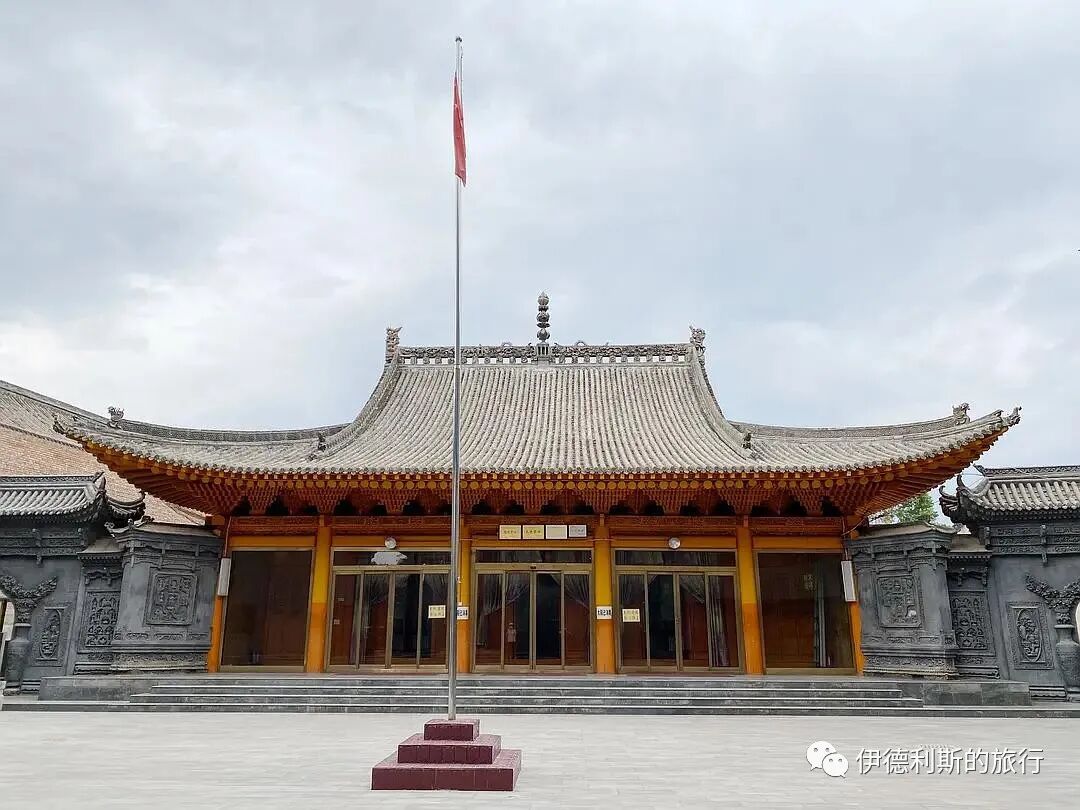
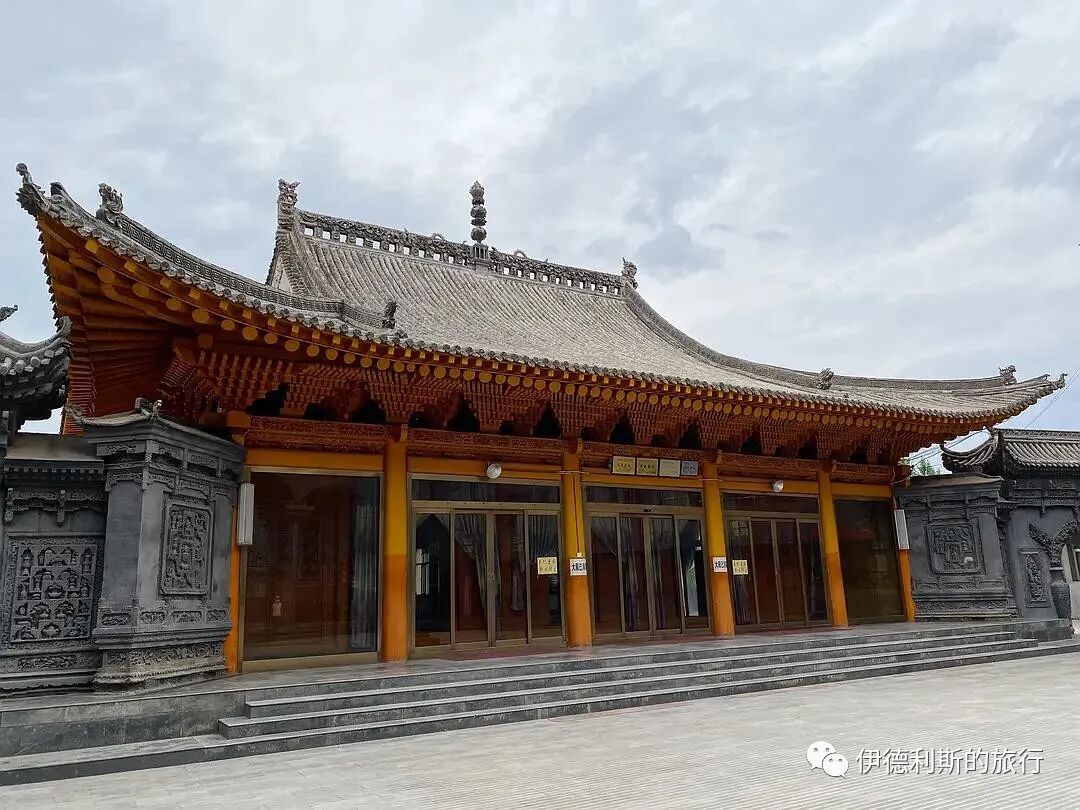
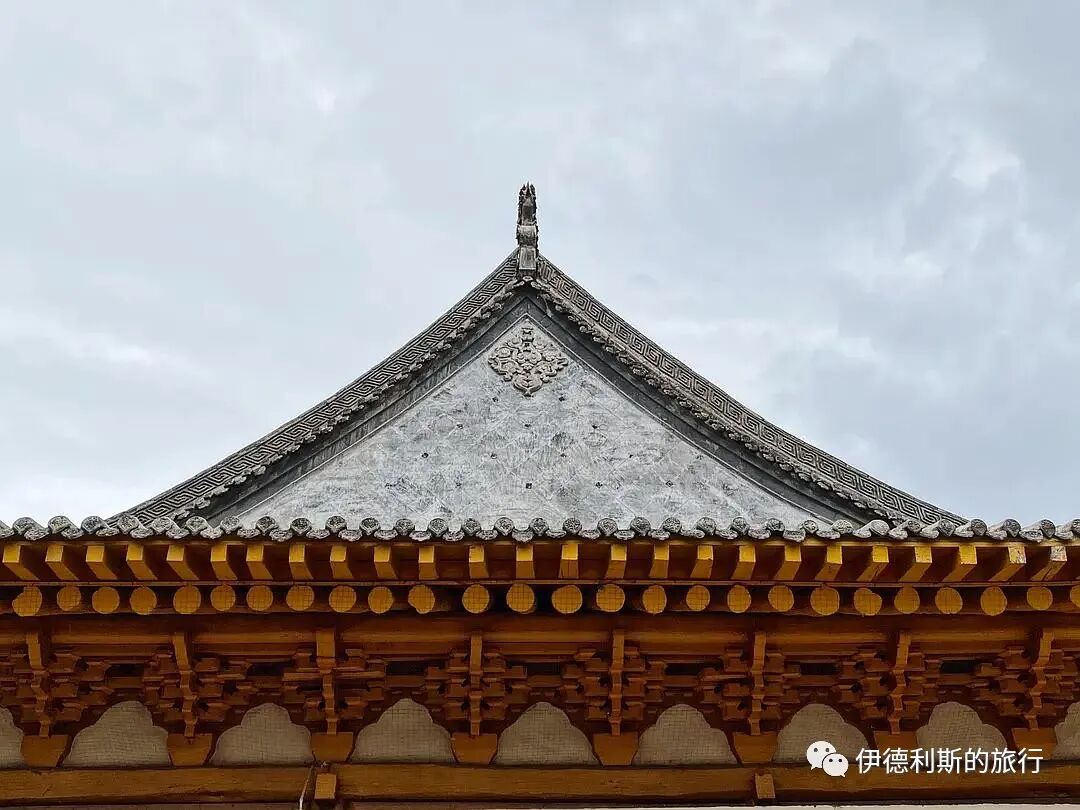
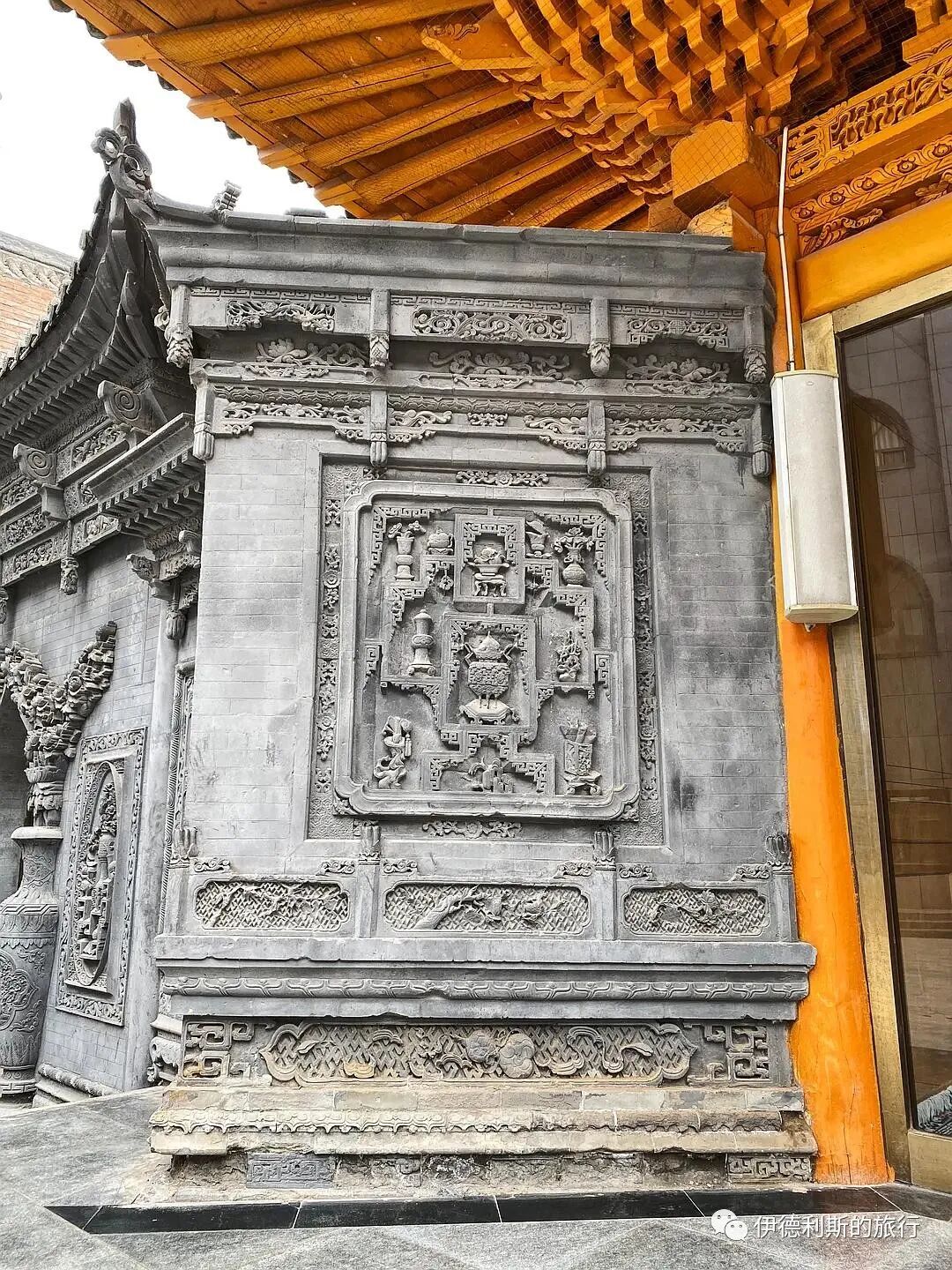
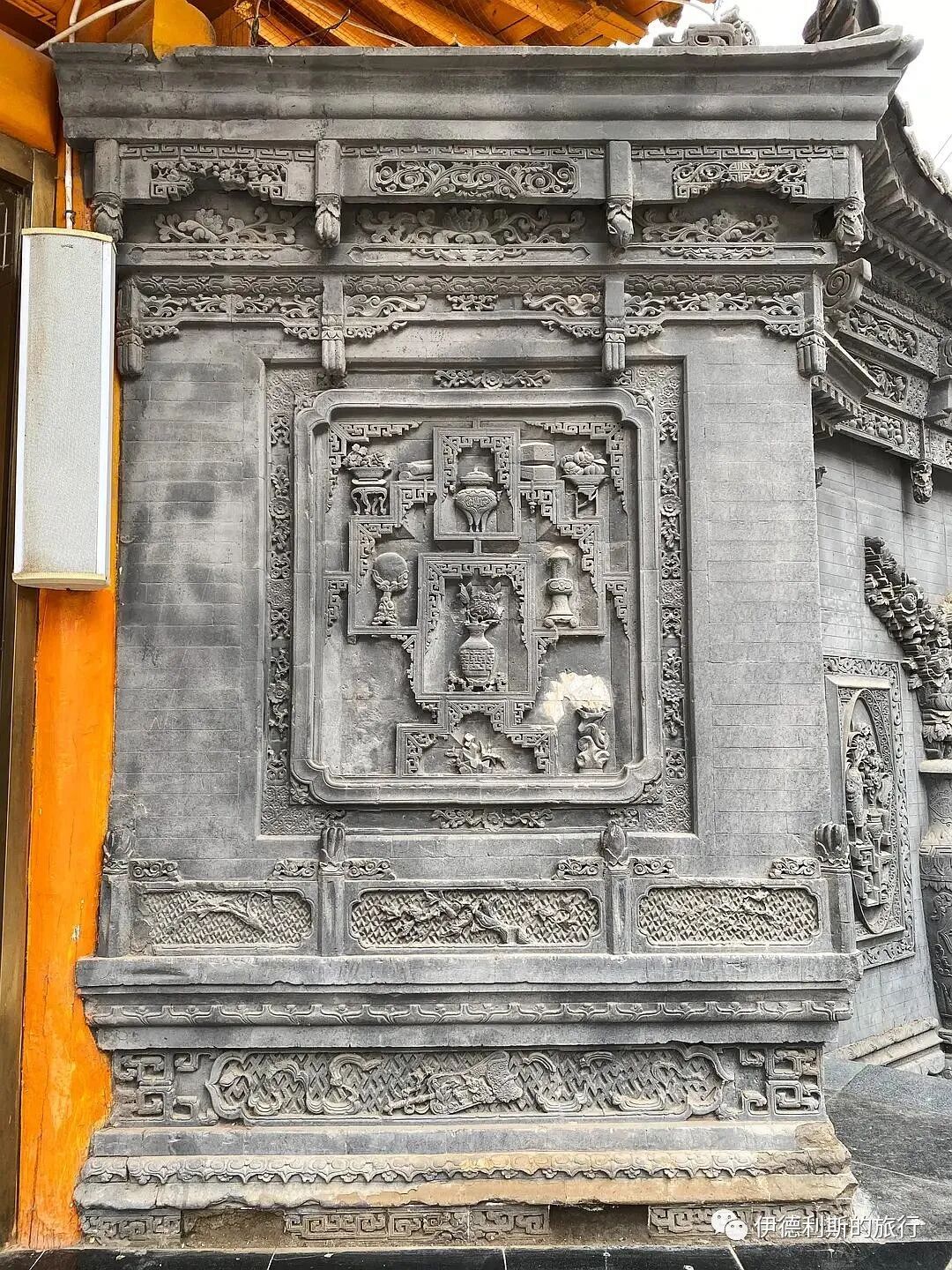
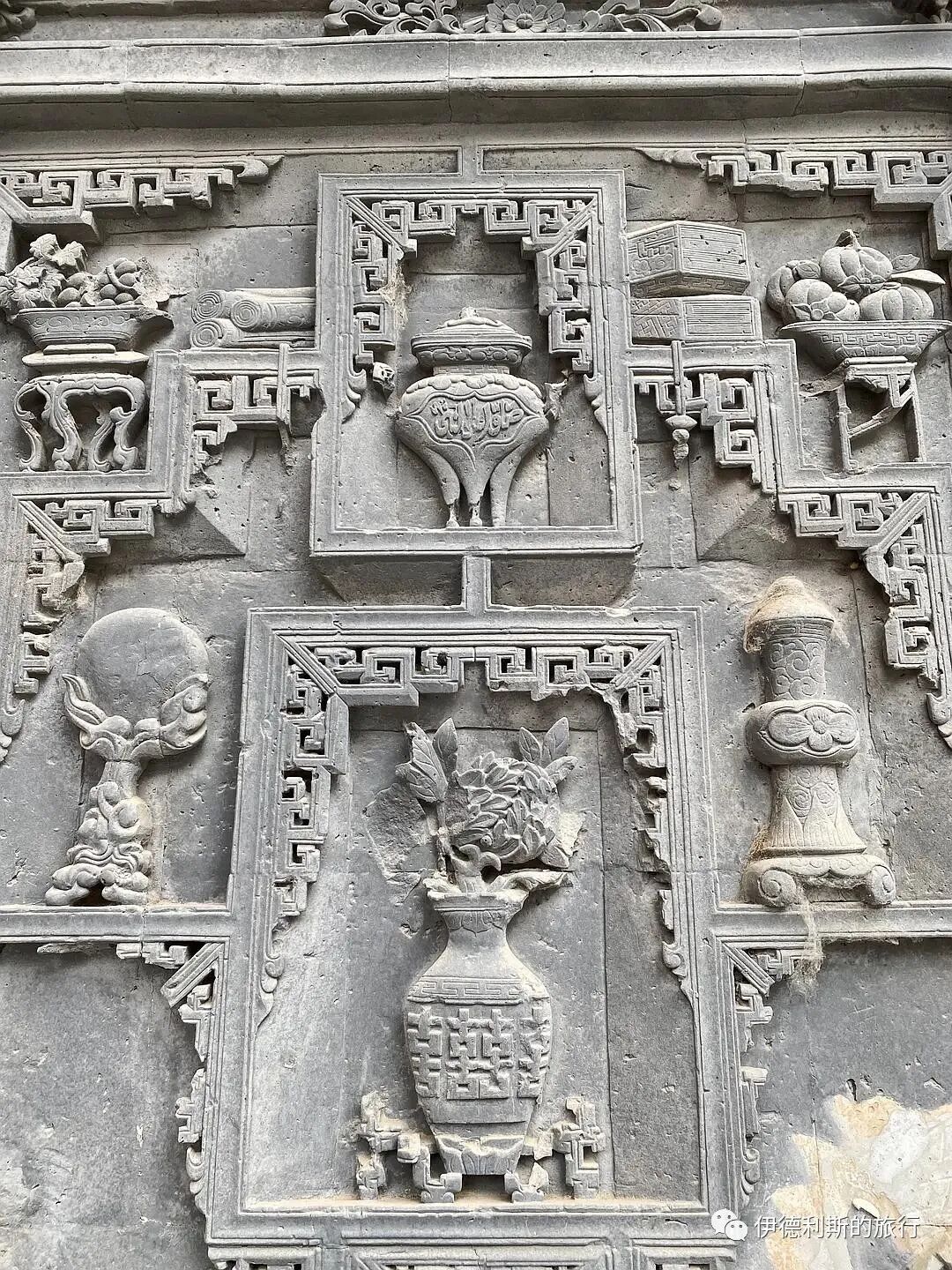
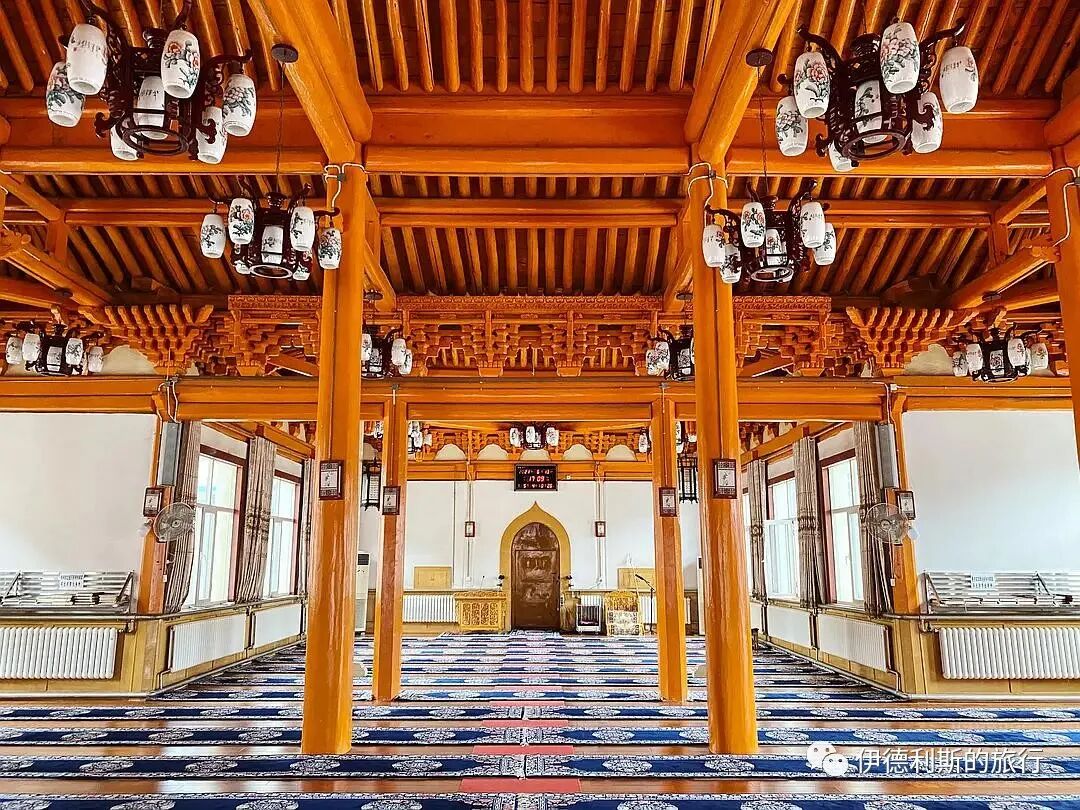
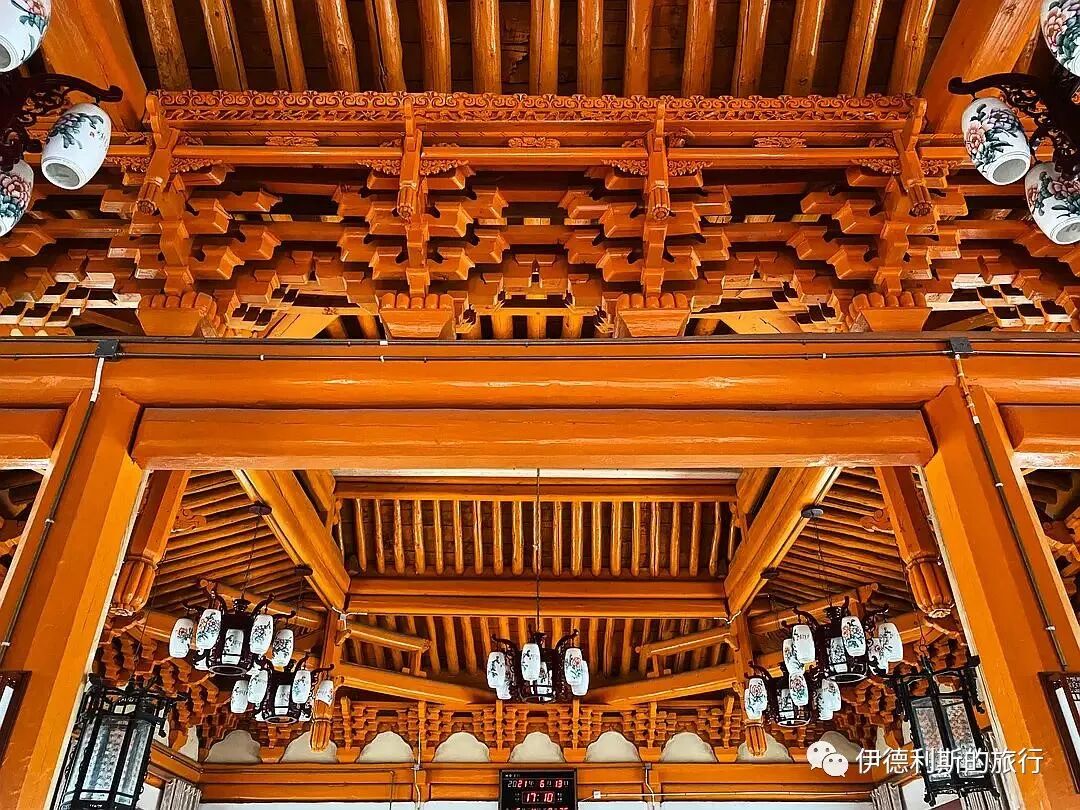
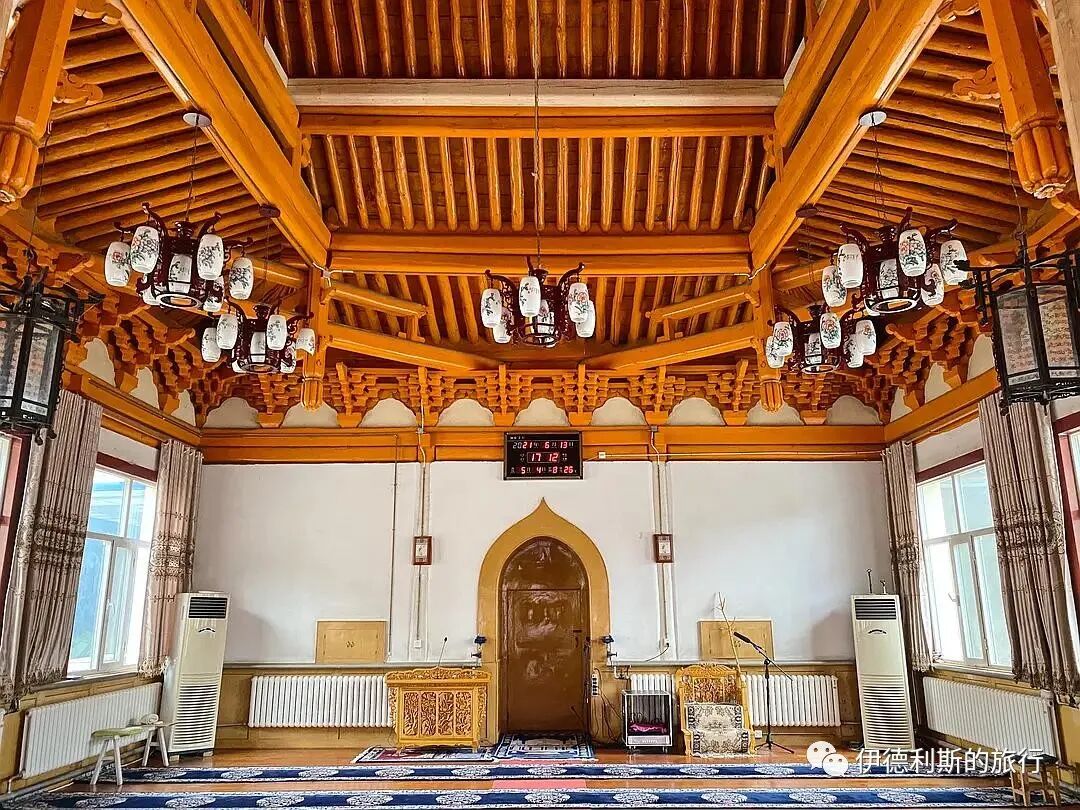
9. Ahetan Mosque
Although Ahetan Mosque in Hualong County is located north of the Yellow River in Hualong County, it is still a Salar mosque and, like Suzhi Mosque, belongs to the Suzhi Gong of the Salar Eight Gongs.
The mosque's three-bay, four-pillar, three-story hip-roof gate tower is 9 meters high, with the Five Pillars of Islam—Shahada, Salah, Zakat, Sawm, and Hajj—carved in the center, topped by a triangular arrangement of dougong brackets with nine steps and four cantilevered arms.
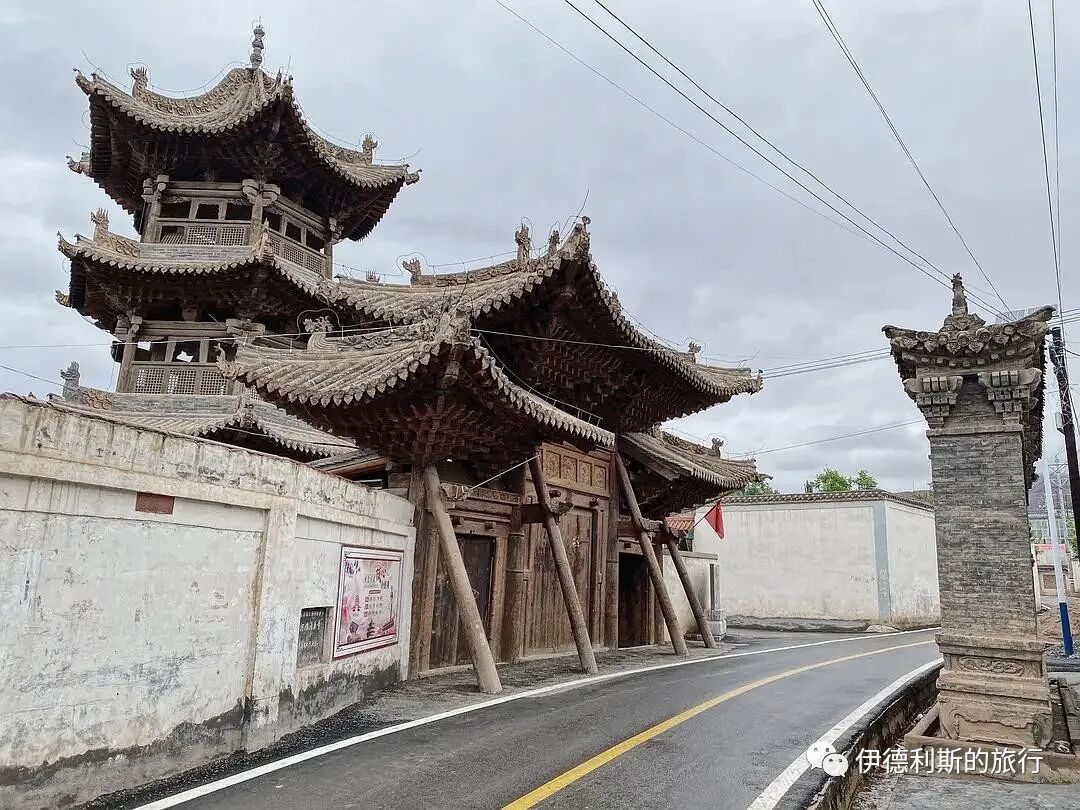
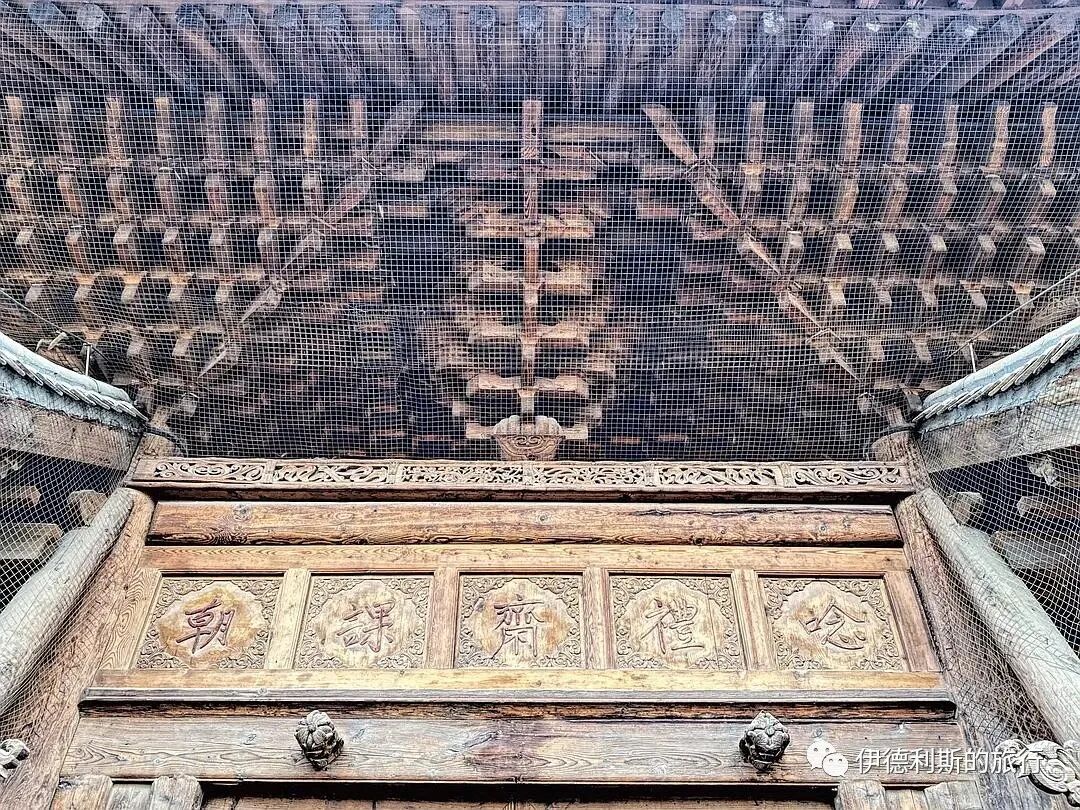
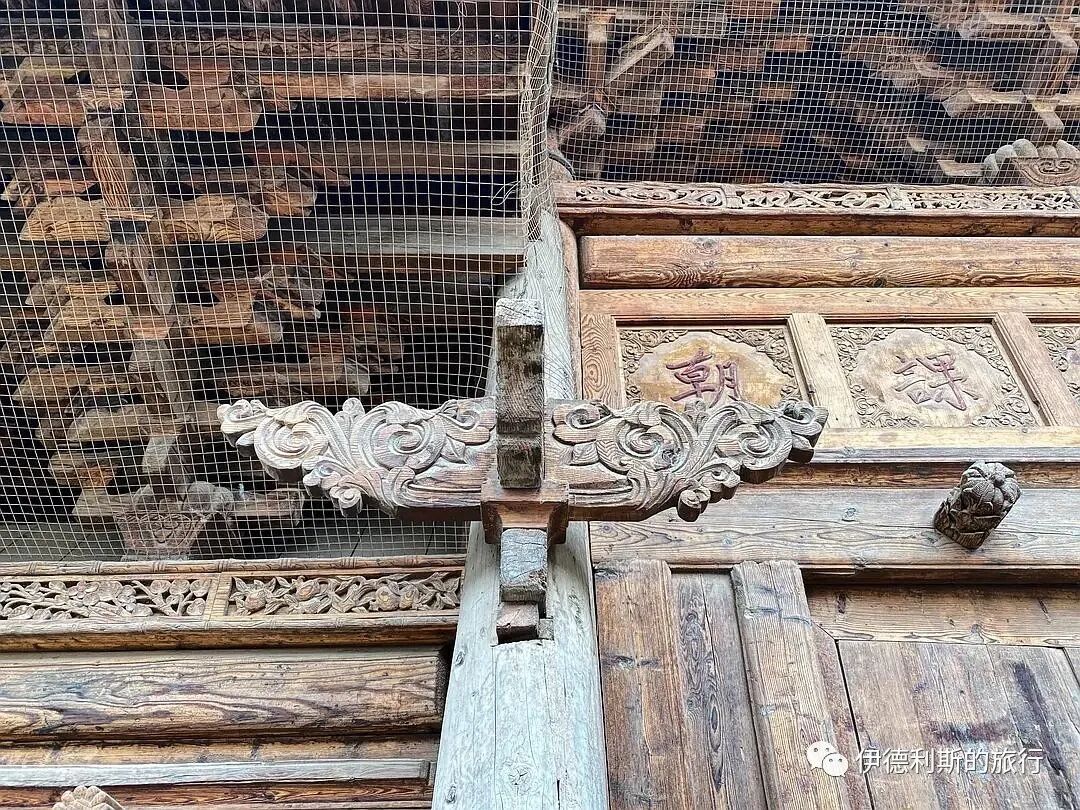
The brick-carved screen wall outside the gate tower.
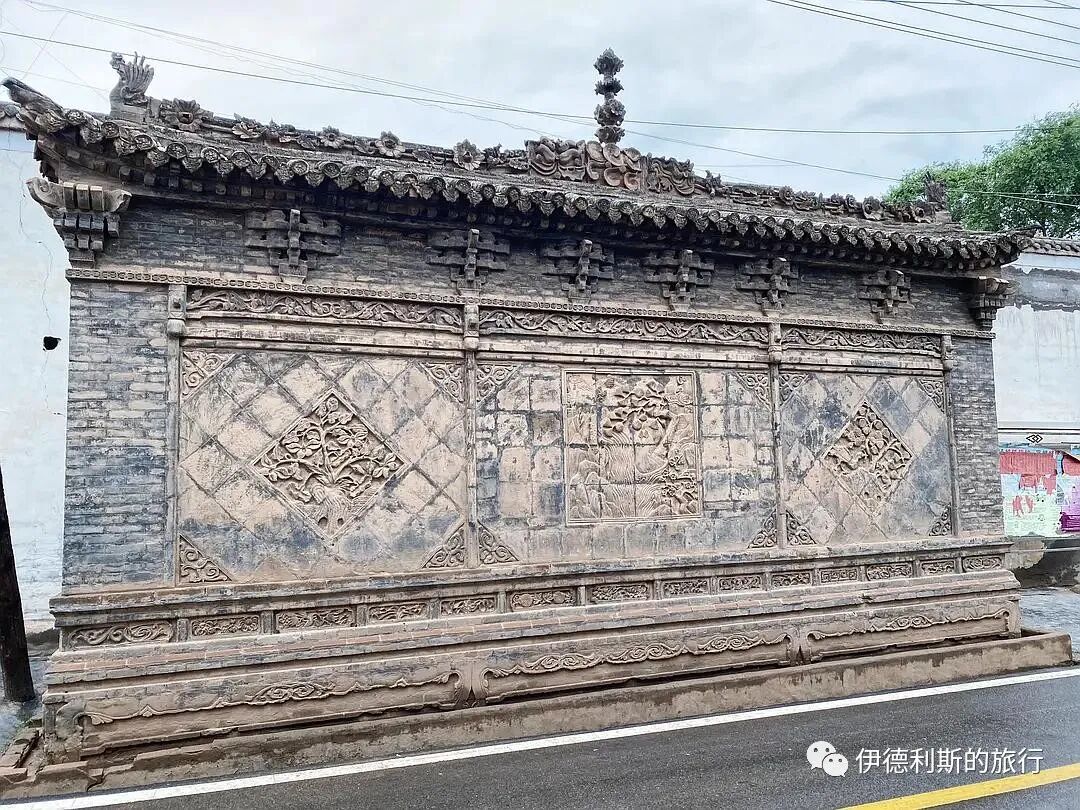
(Optional) Image description
Delete
The 18-meter-high minaret has a brick base and a wooden pavilion on the upper level.
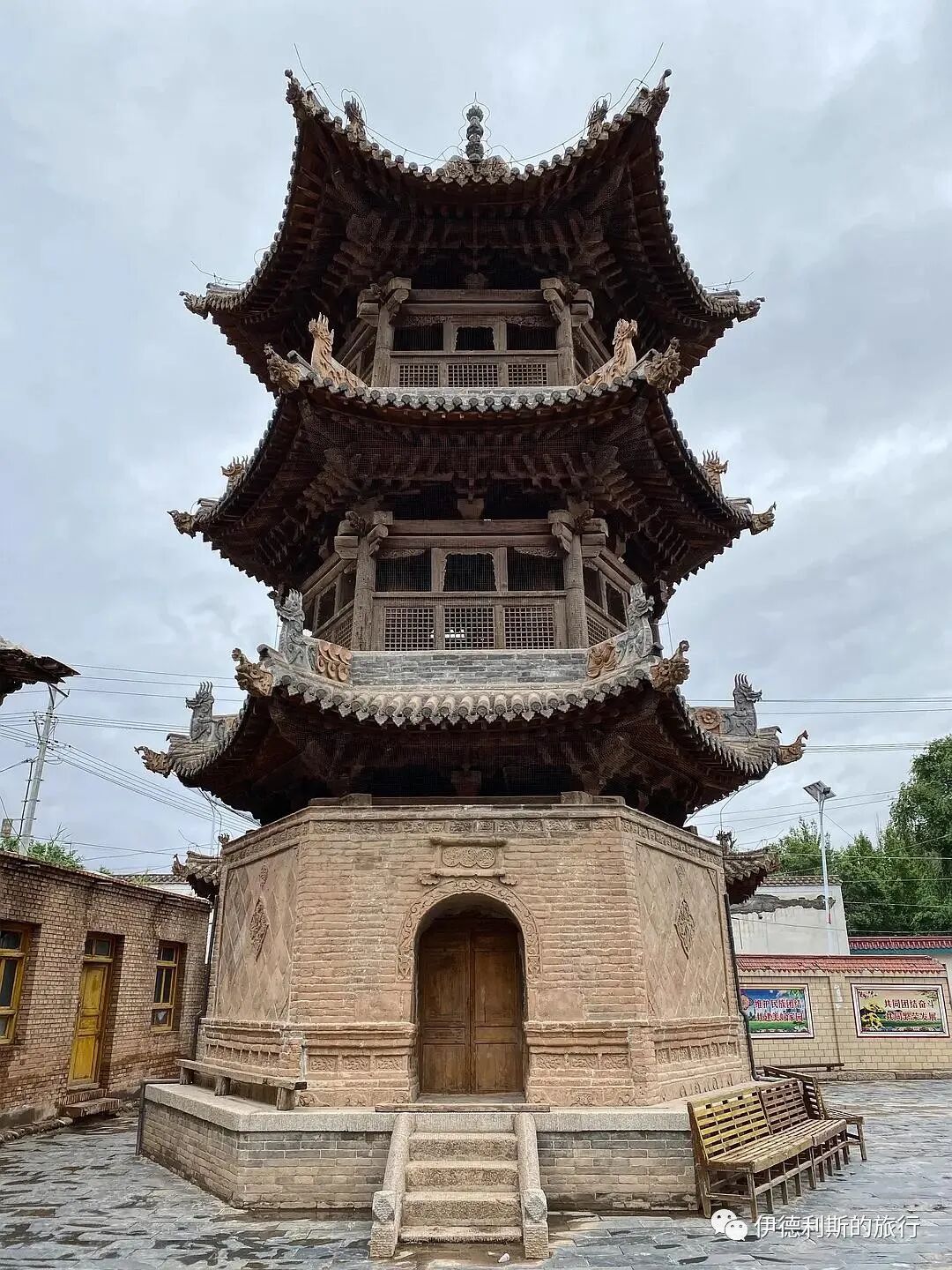
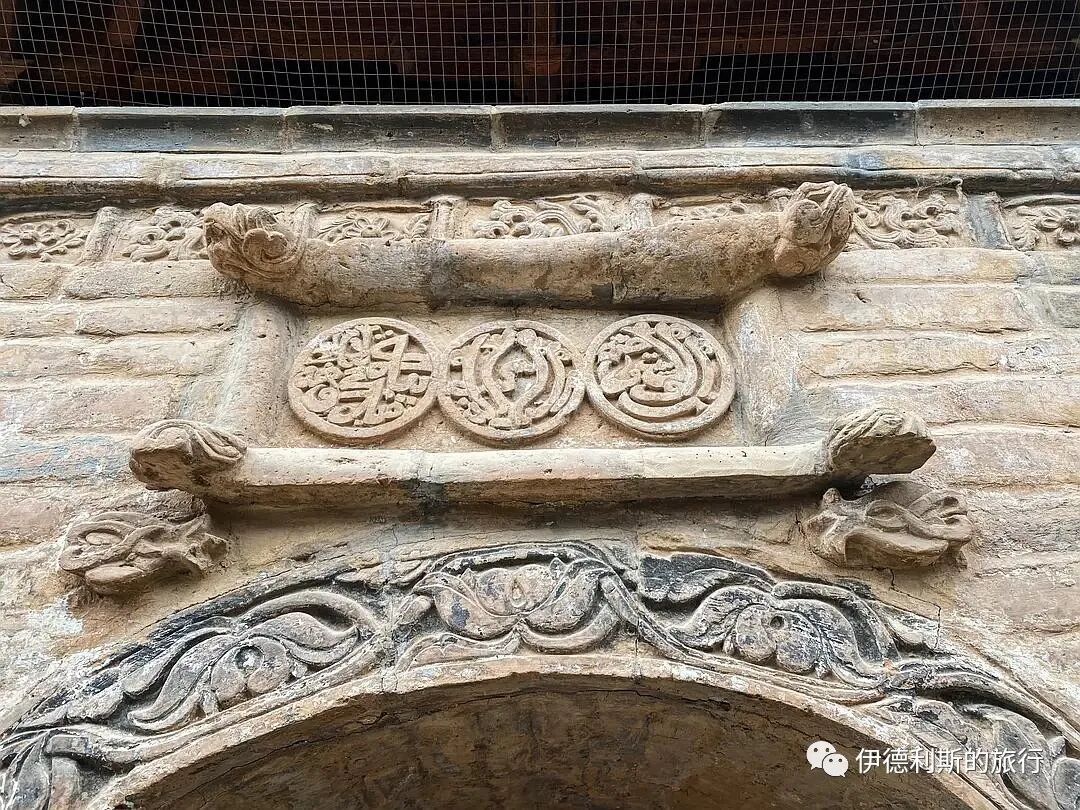
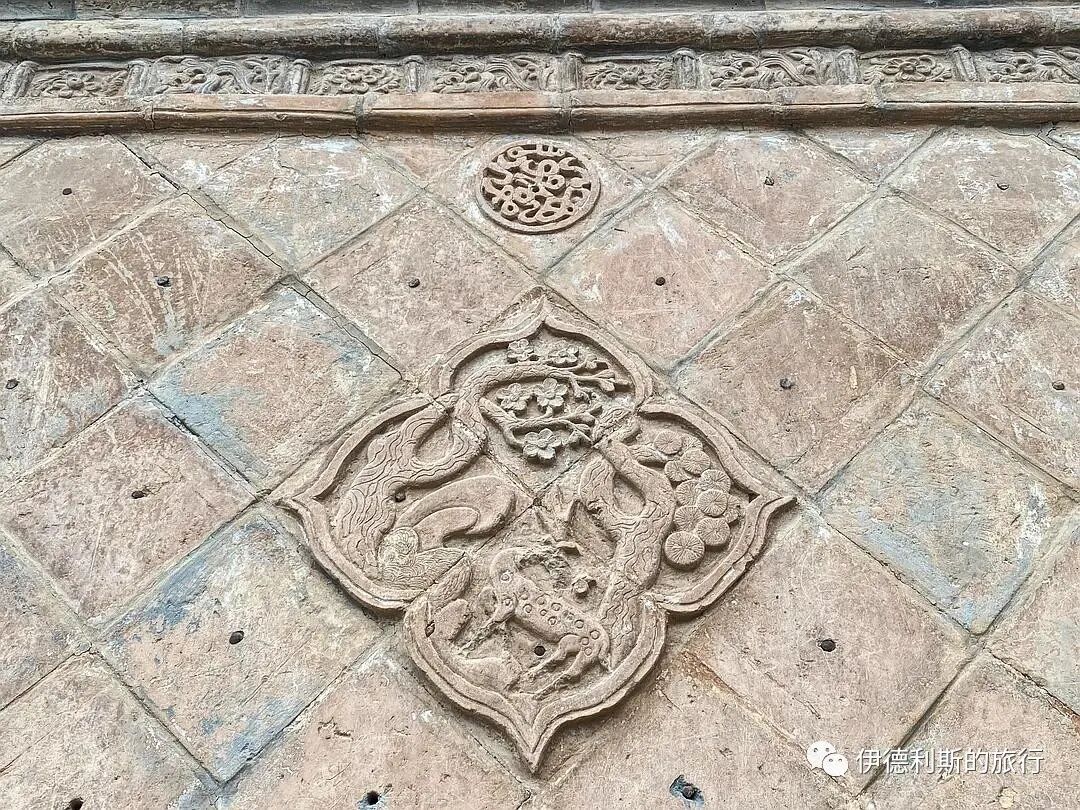
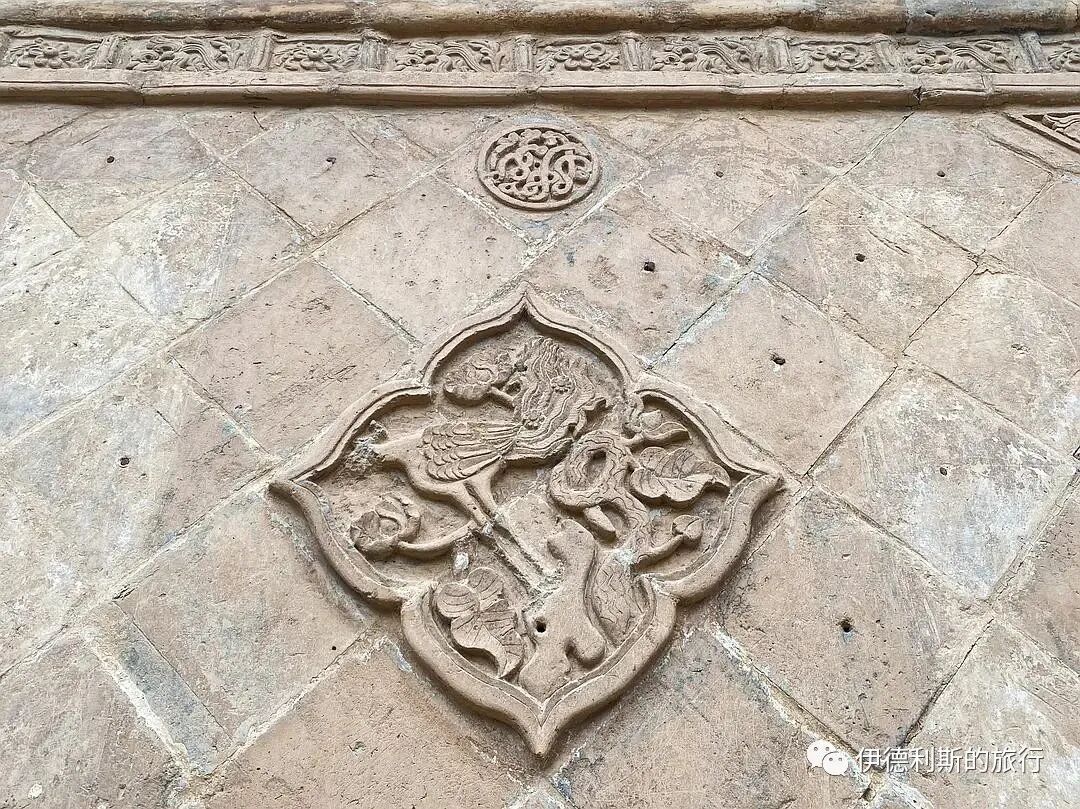
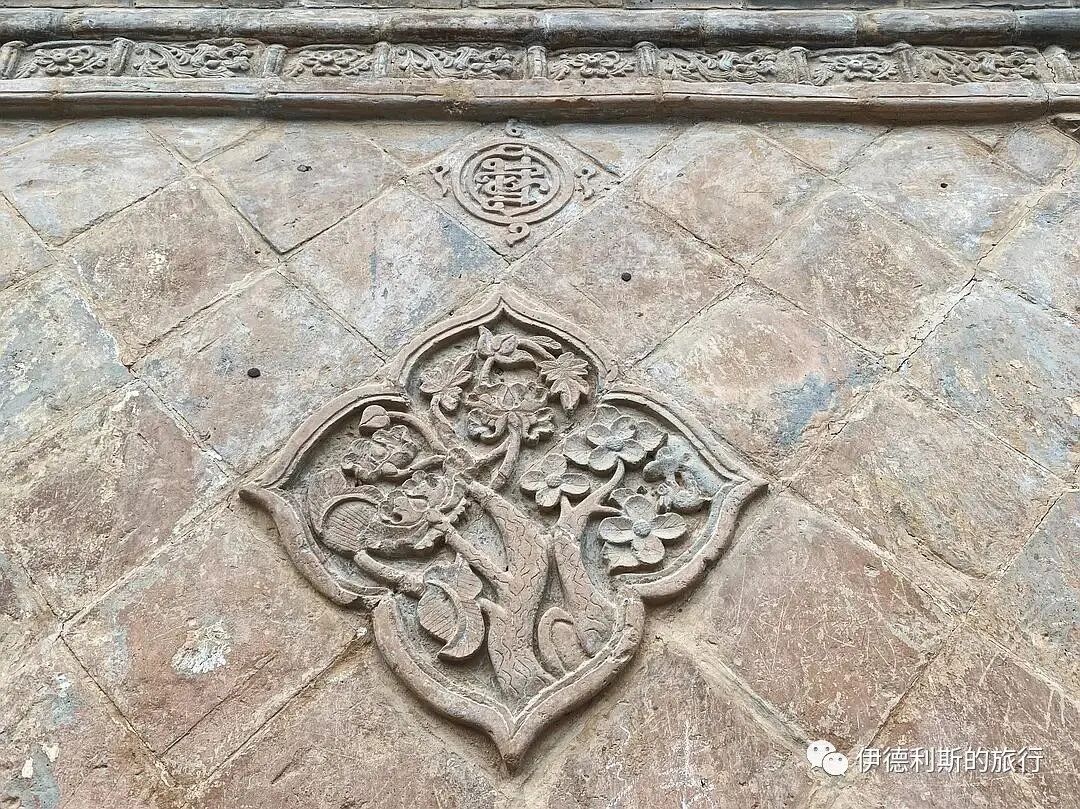
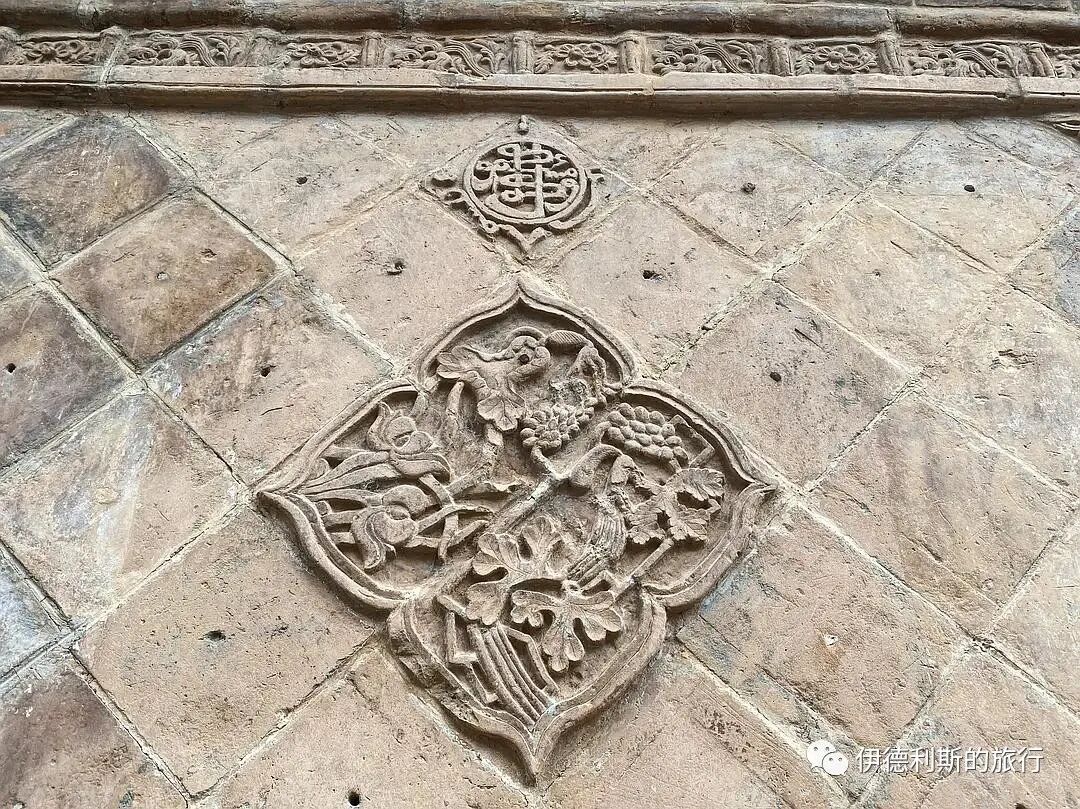
In the main hall of the mosque, we were warmly welcomed by the Imam.
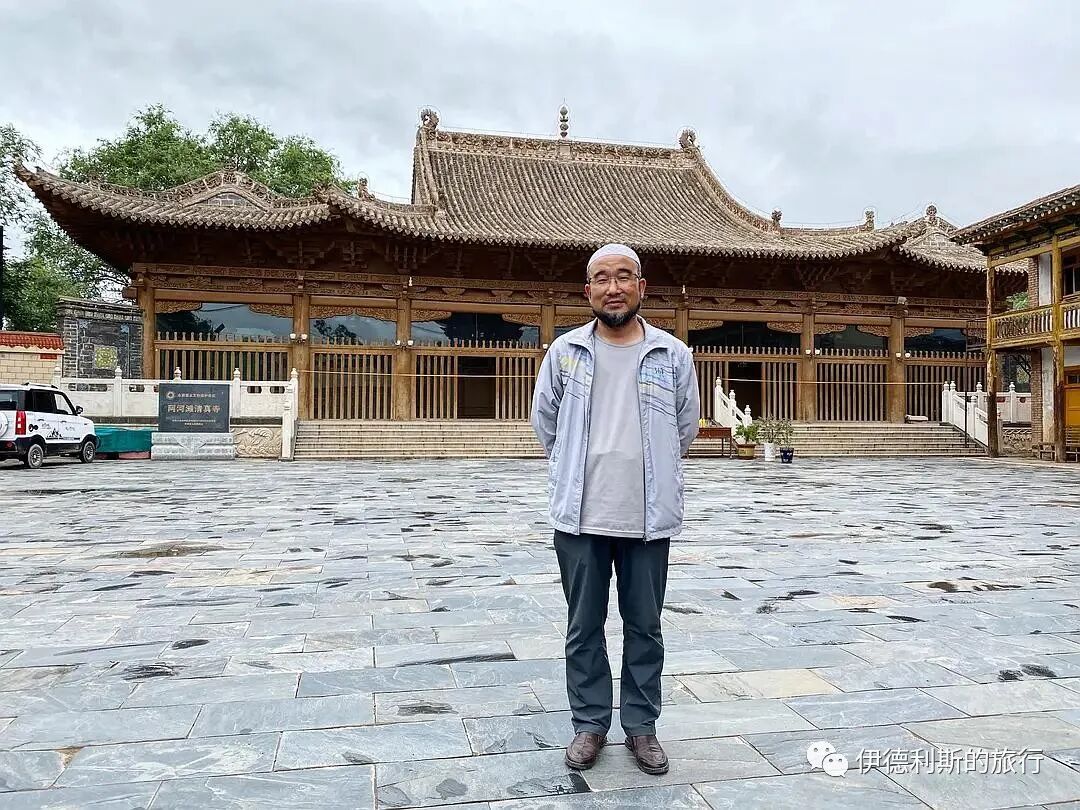
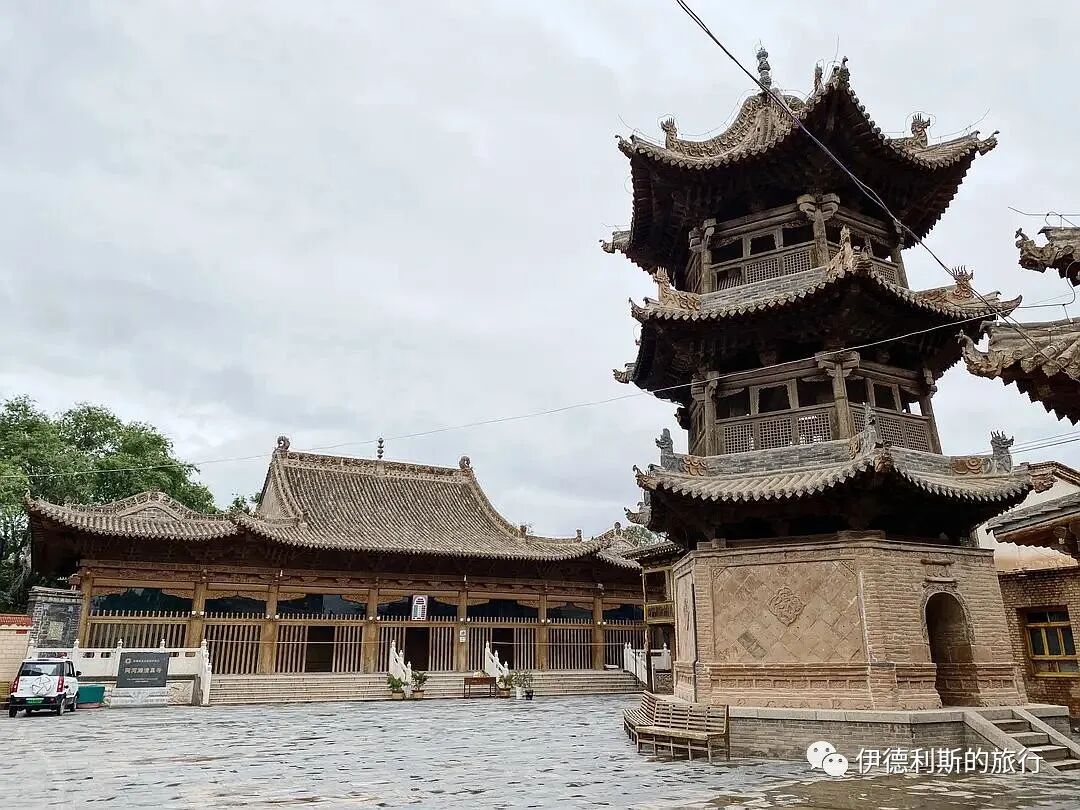
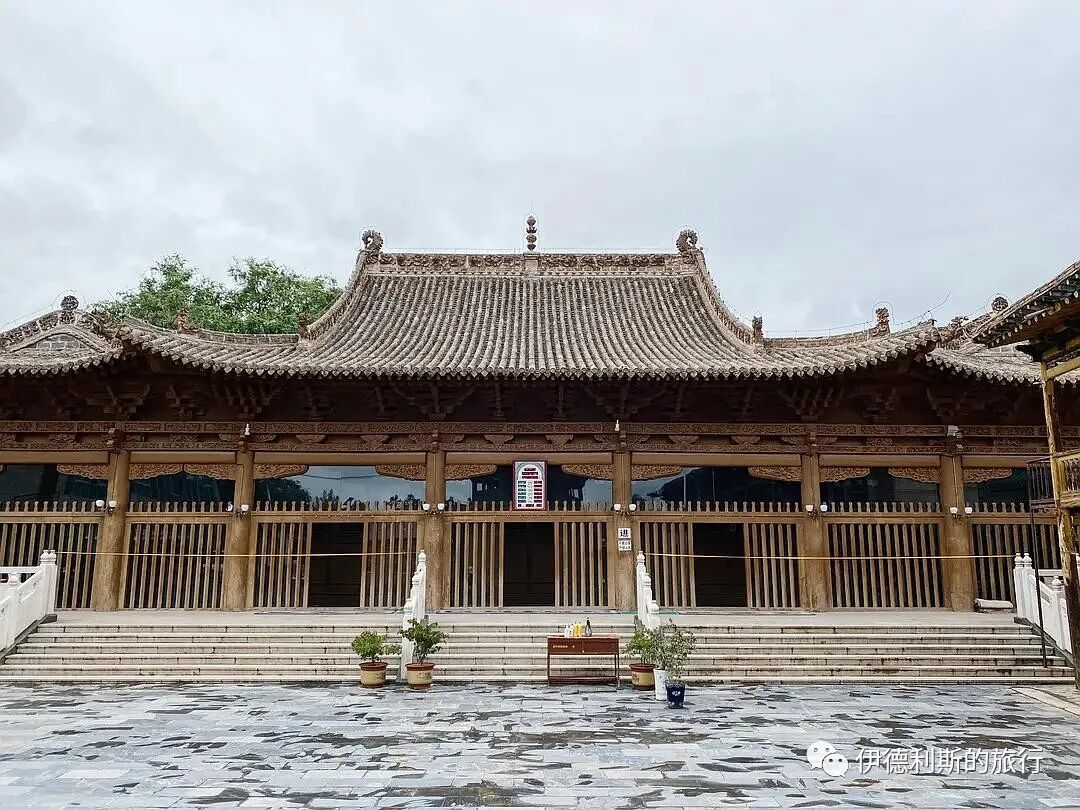
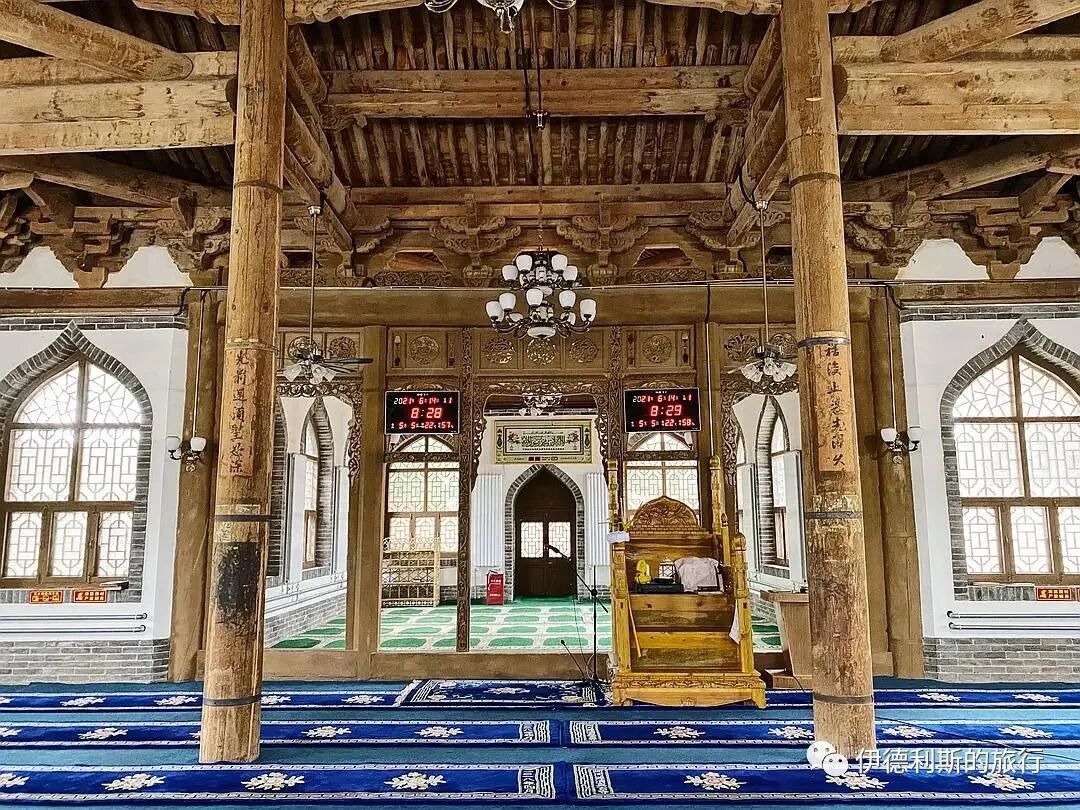
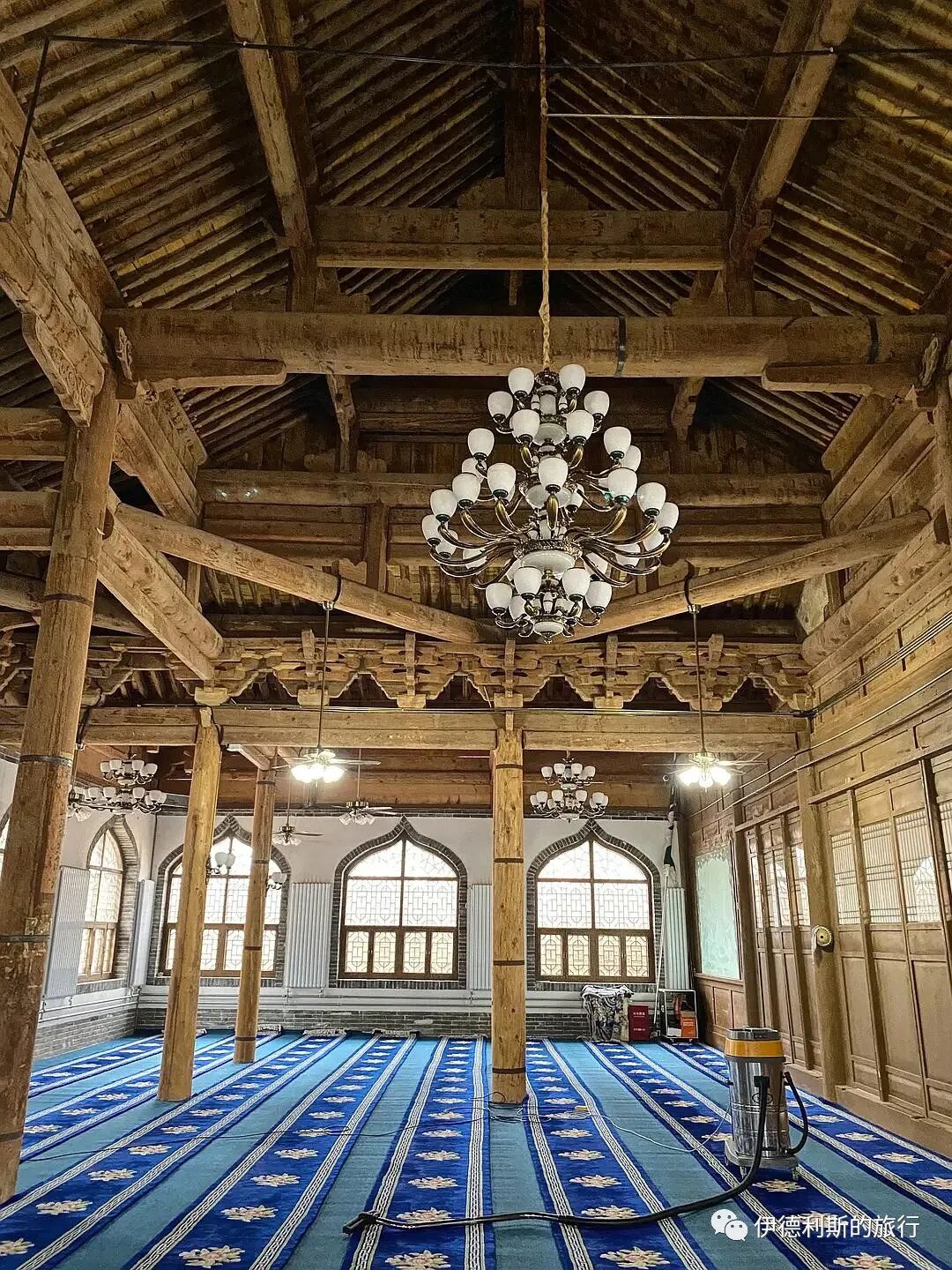
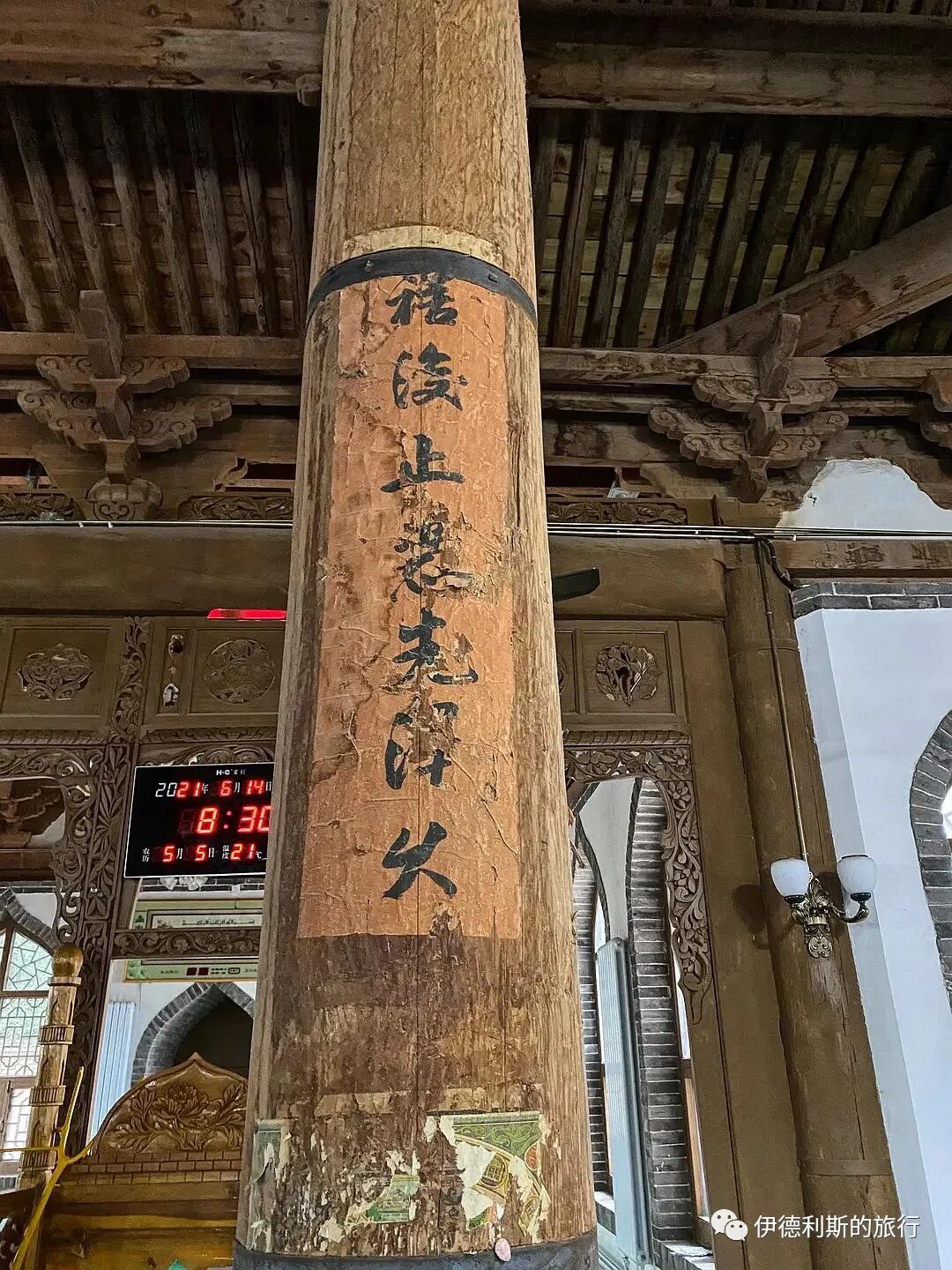
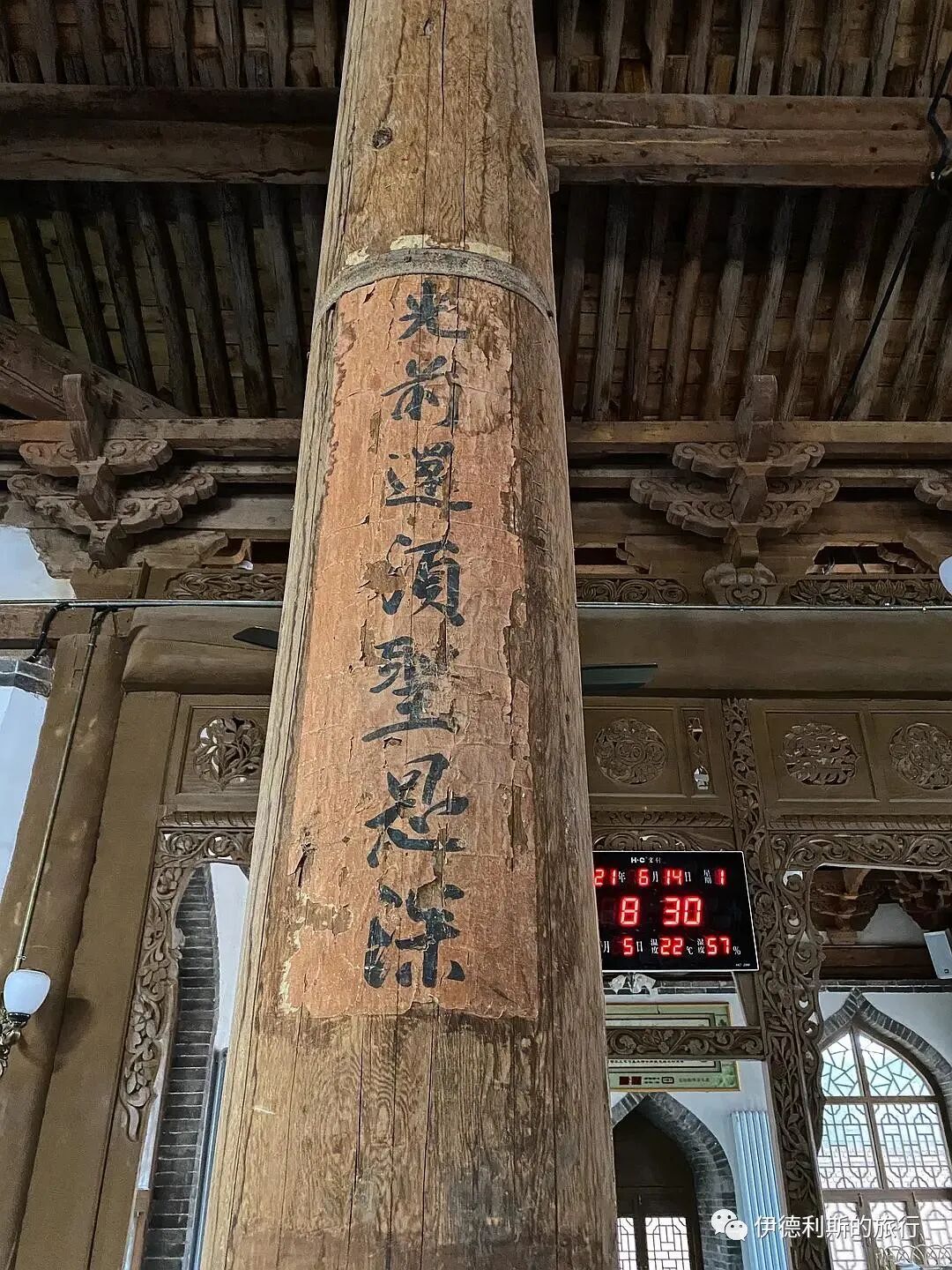
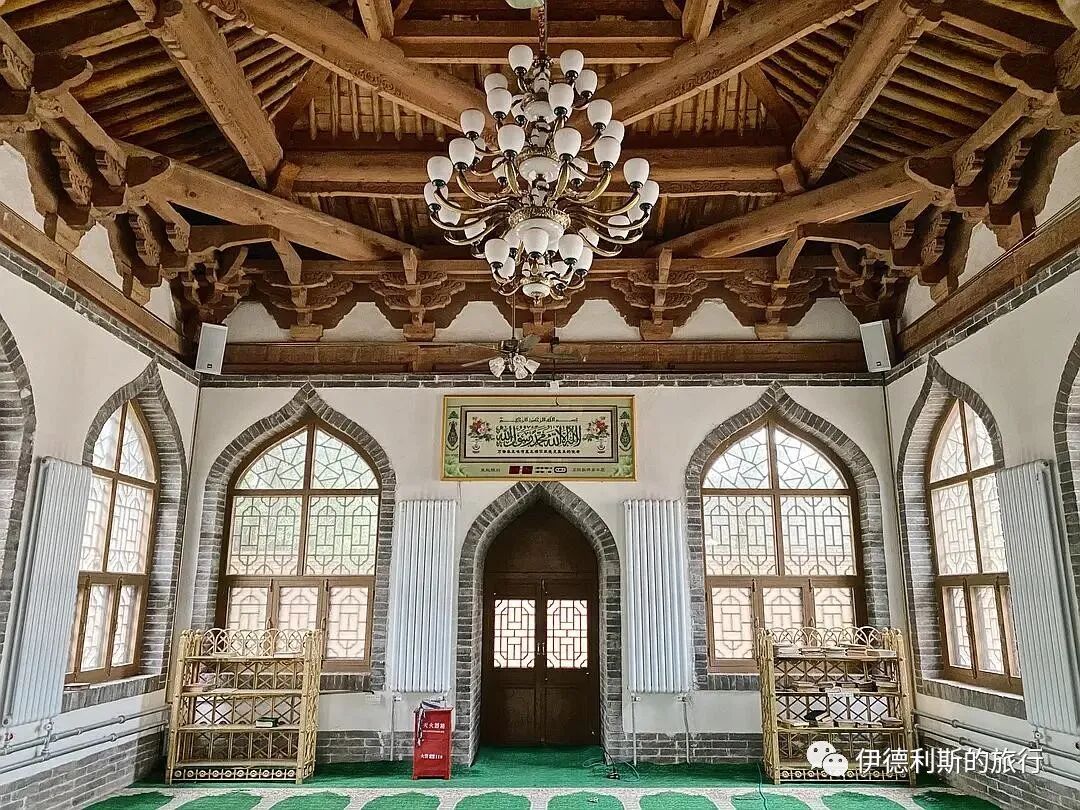
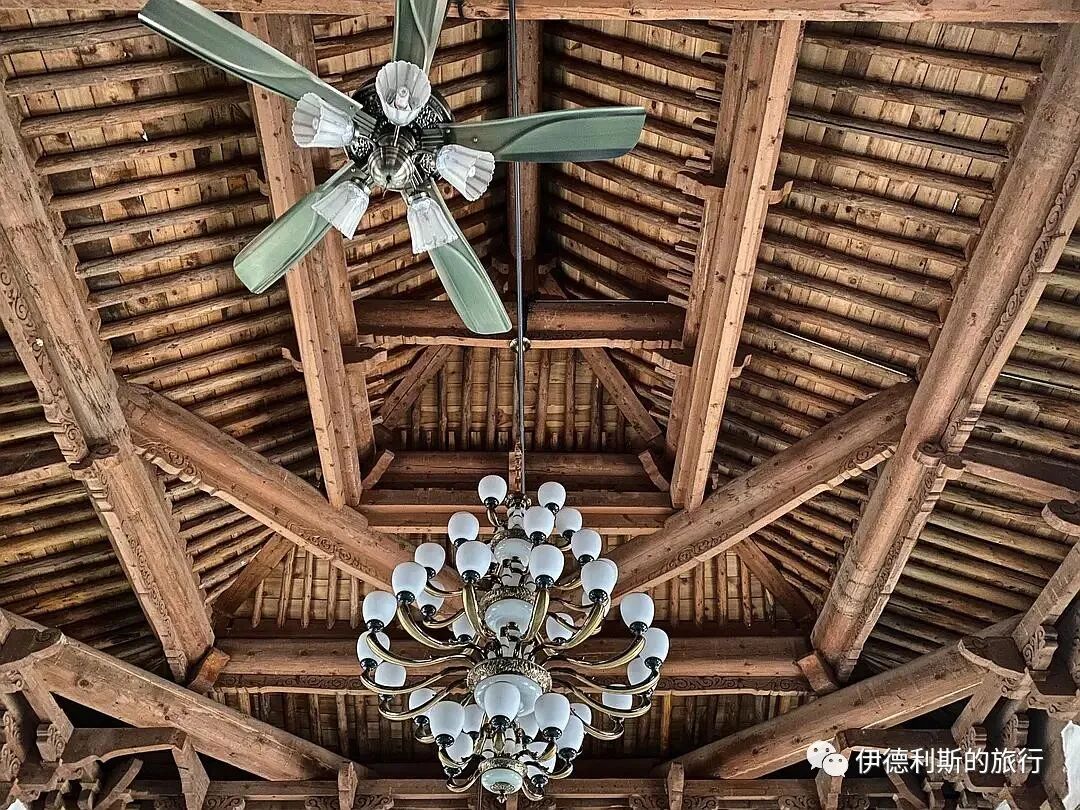
Xia, Gongbei
1. Shangmajia Gongbei in Bazang Valley
Shangmajia Shang Gongbei is located on the summit of Woniu Mountain in Bazanggou, Ping'an District, Haidong City, so it is also called Woniu Mountain Gongbei; it is the tomb of Ma Diangong (1643-1715) of the Hufeiye Xianmen Menhuan.
Ma Diangong is known as Ma Ahong Taiye and is a local from Shangma Village in Bazanggou. He was eager to learn from a young age, entering the Xining Dongguan Mosque at 7 to study, and at 24, he was appointed as the Imam of the Xining Beiguan Mosque after completing his religious training. During his time at the Beiguan Mosque, he was entrusted by Huazhe Abdullahi and Apak Khoja to teach the scriptures to Xian Meizhen (Zhuzi Taiye). After Xian Meizhen founded the Xianmen Menhuan, Ma Diangong became his Naib (deputy). Before Xian Meizhen returned to Allah, because his eldest son Xian Huazhe was still young, he entrusted him to Ma Diangong and asked him to preside over religious affairs.
During the reign of Emperor Qianlong of the Qing Dynasty, the third-generation Sheikh Xian Chengde (Grandfather Chuanli) built the Gongbei for Ma Diangong; it was destroyed in 1867 and rebuilt in the early years of the Guangxu reign under the leadership of the fourth master, Grandfather Xian Linqing.
Today, the Gongbei preserves the two-courtyard layout from the Guangxu era very well and has been designated as a cultural relic protection unit of Qinghai Province.
Pushing open the gate of the Gongbei, it feels as if you could step right into the Qing Dynasty; it has a very special atmosphere. The interior has not been over-restored at all, allowing you to appreciate the exquisite Qing Dynasty brick and wood carvings, and the elder guarding the Gongbei is also very warm and friendly. Although the entire Gongbei is built on a hilltop, it does not have the helmet-roofed tomb pavilion typical of renovated Gongbeis, but is instead a traditional courtyard, which gives it a unique charm.
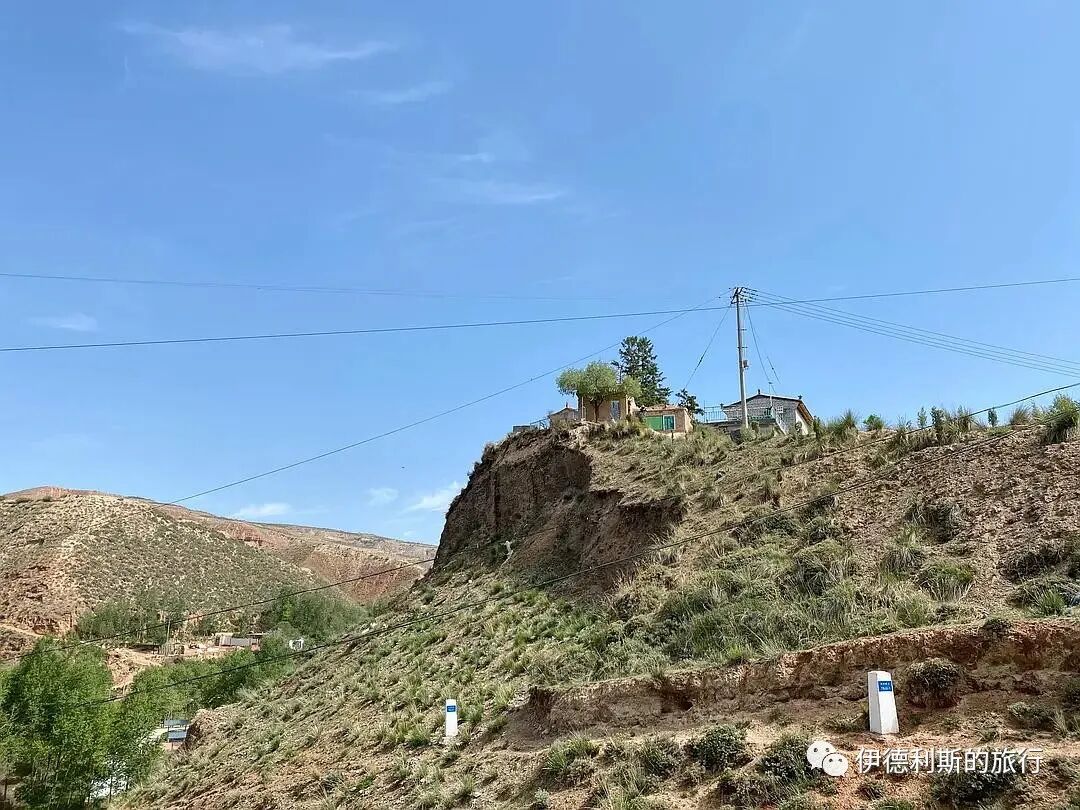
The mountain opposite
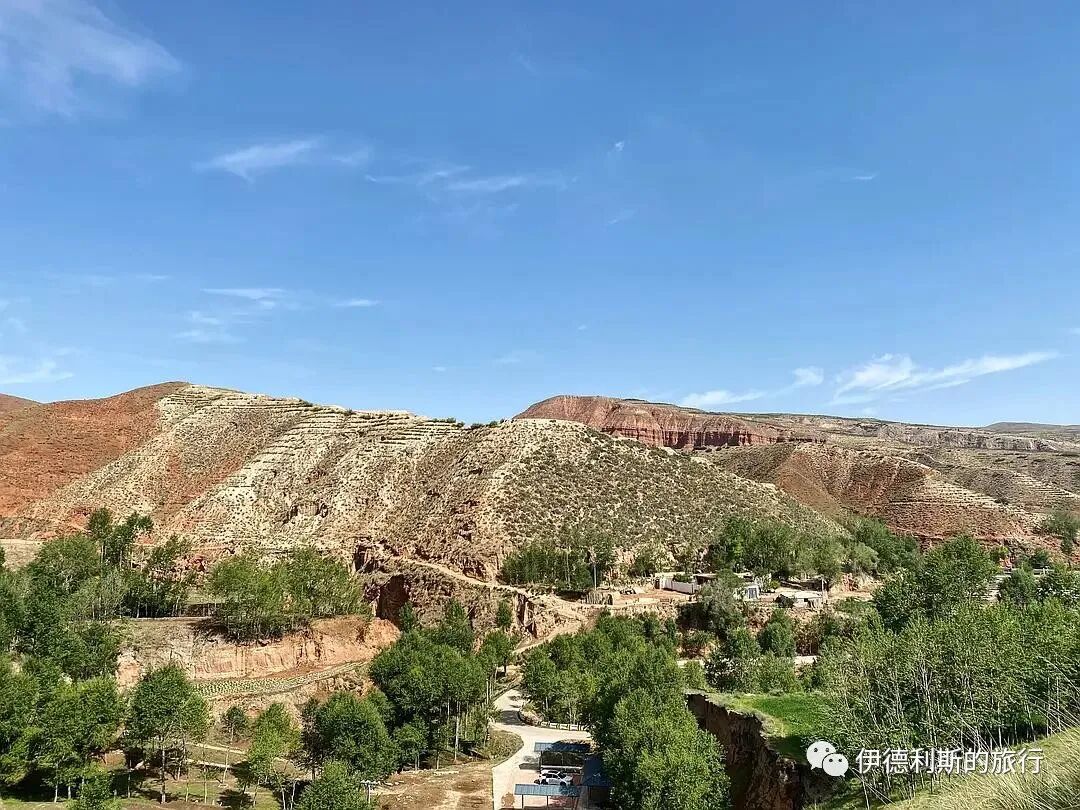
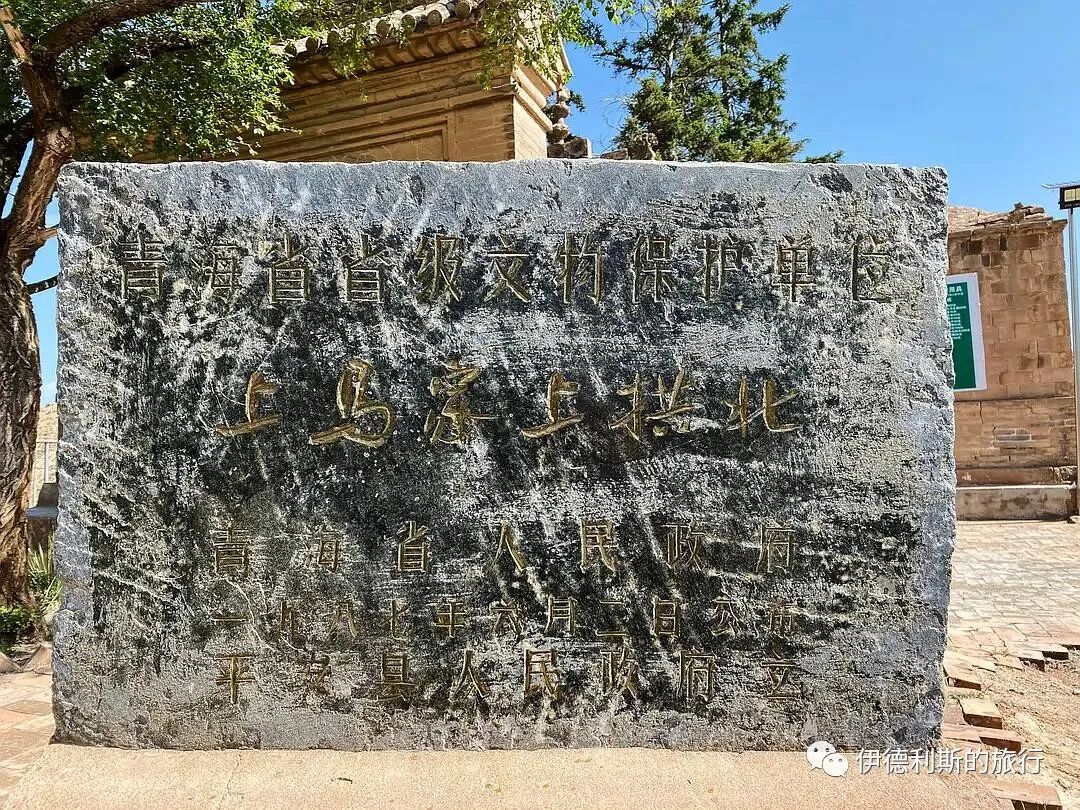
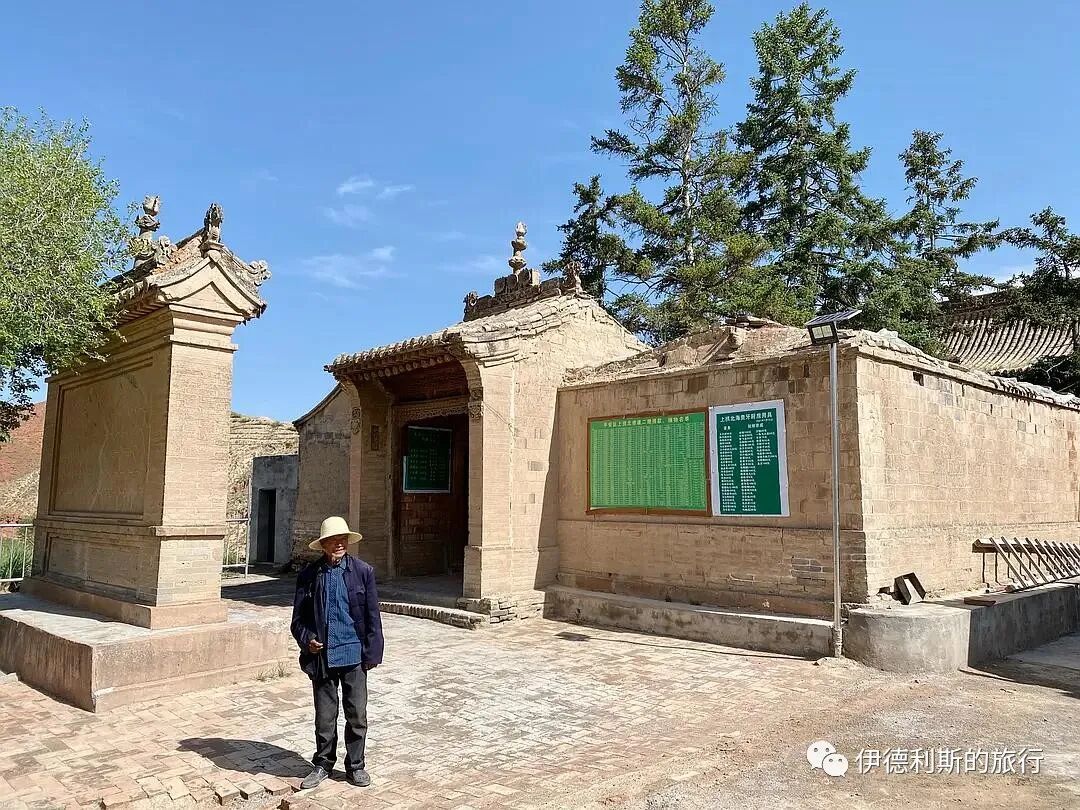
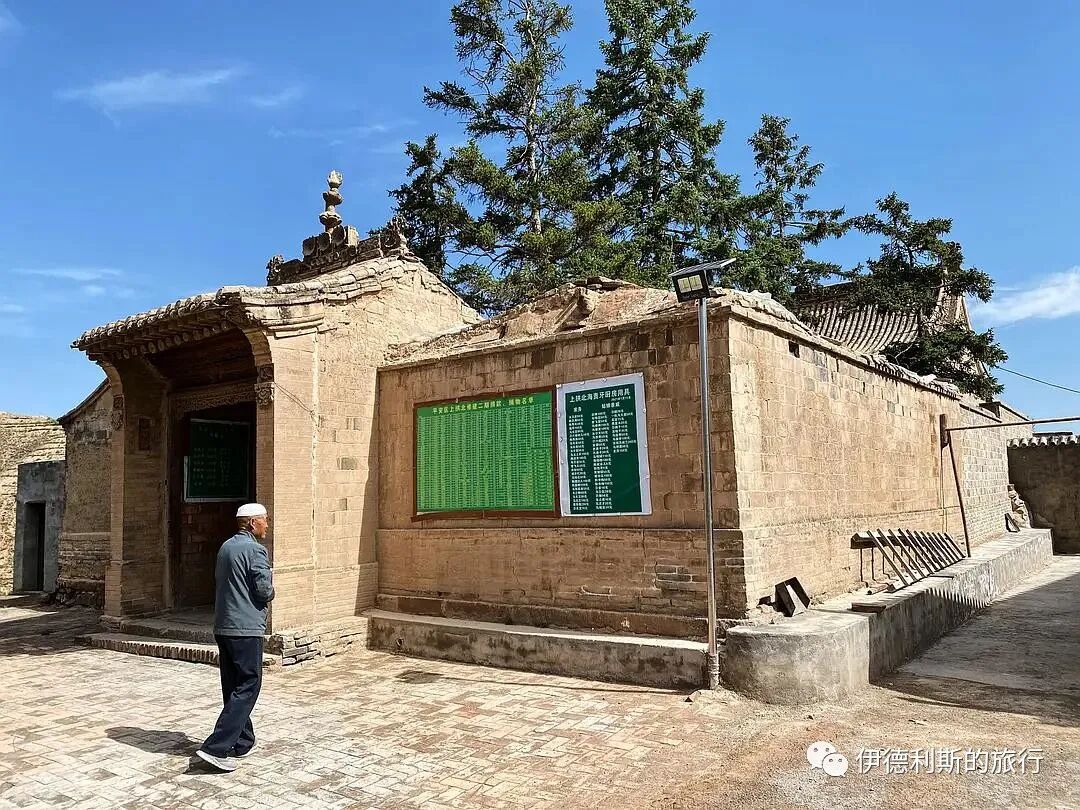
The screen wall outside the gate
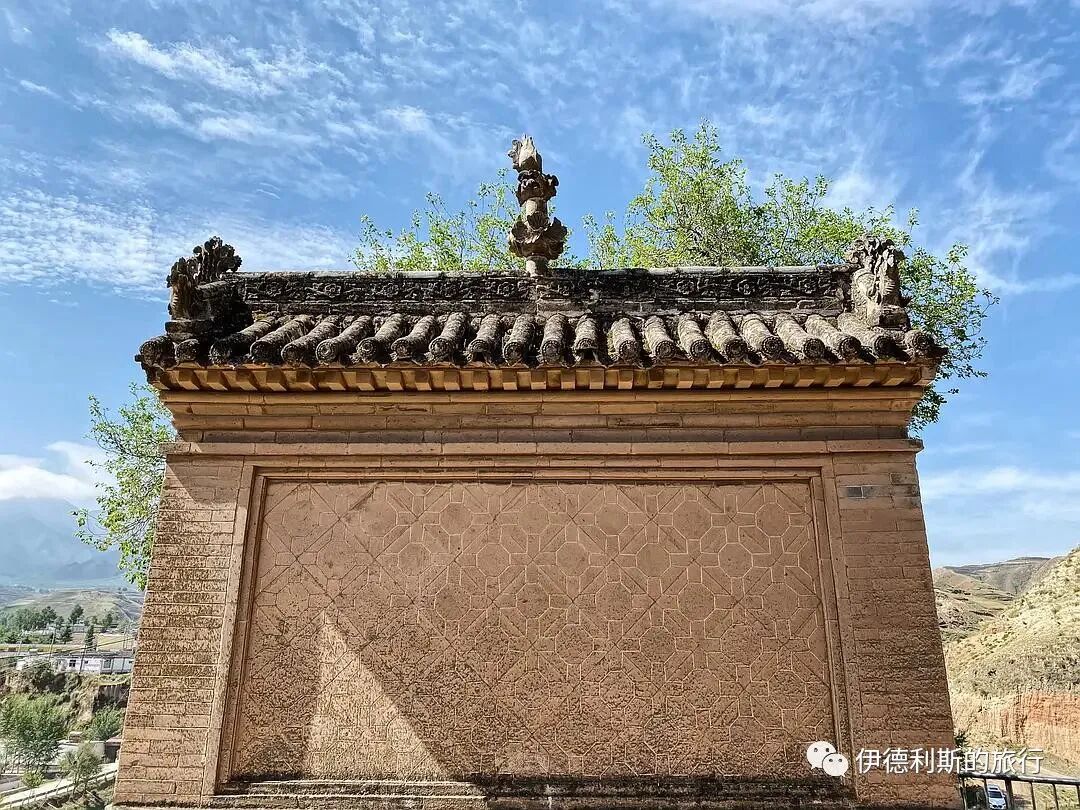
Main gate
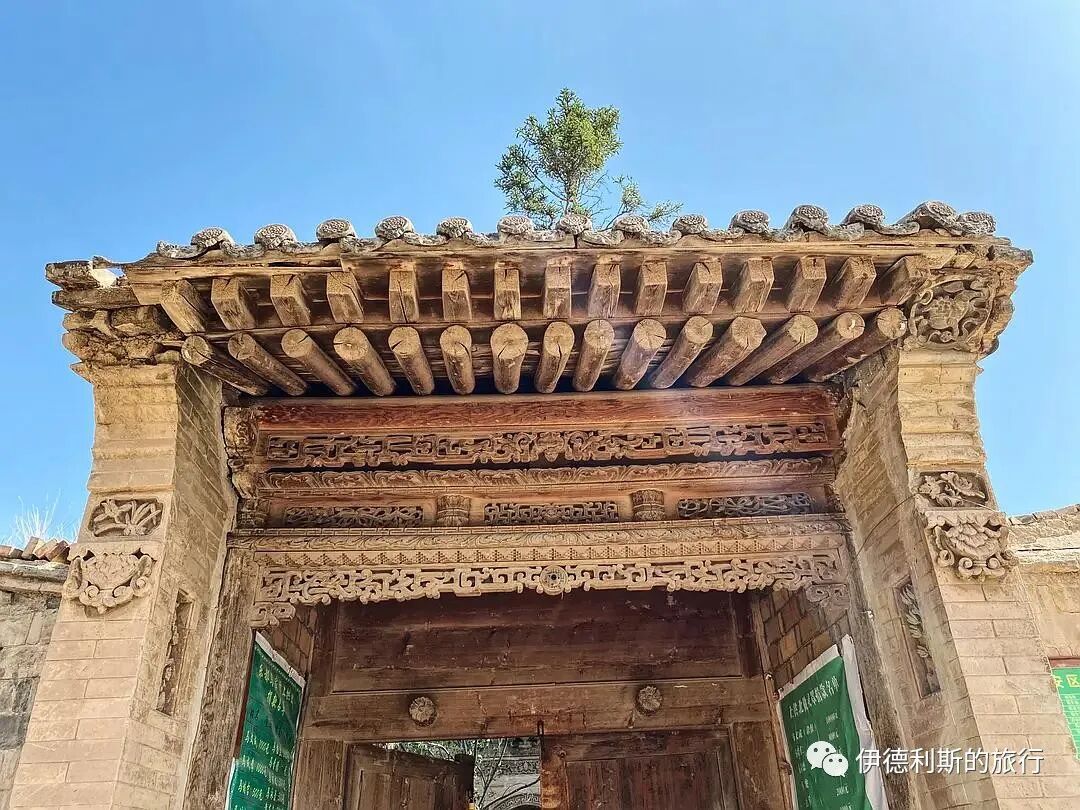
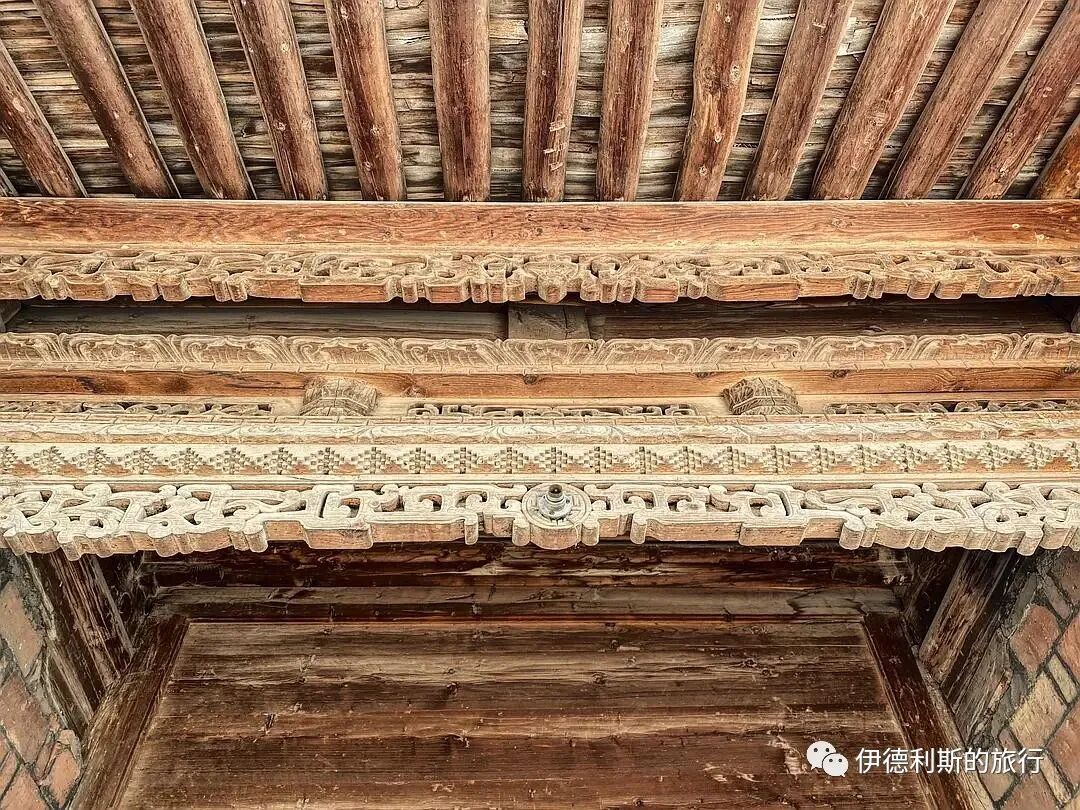
Looking at the main gate from inside
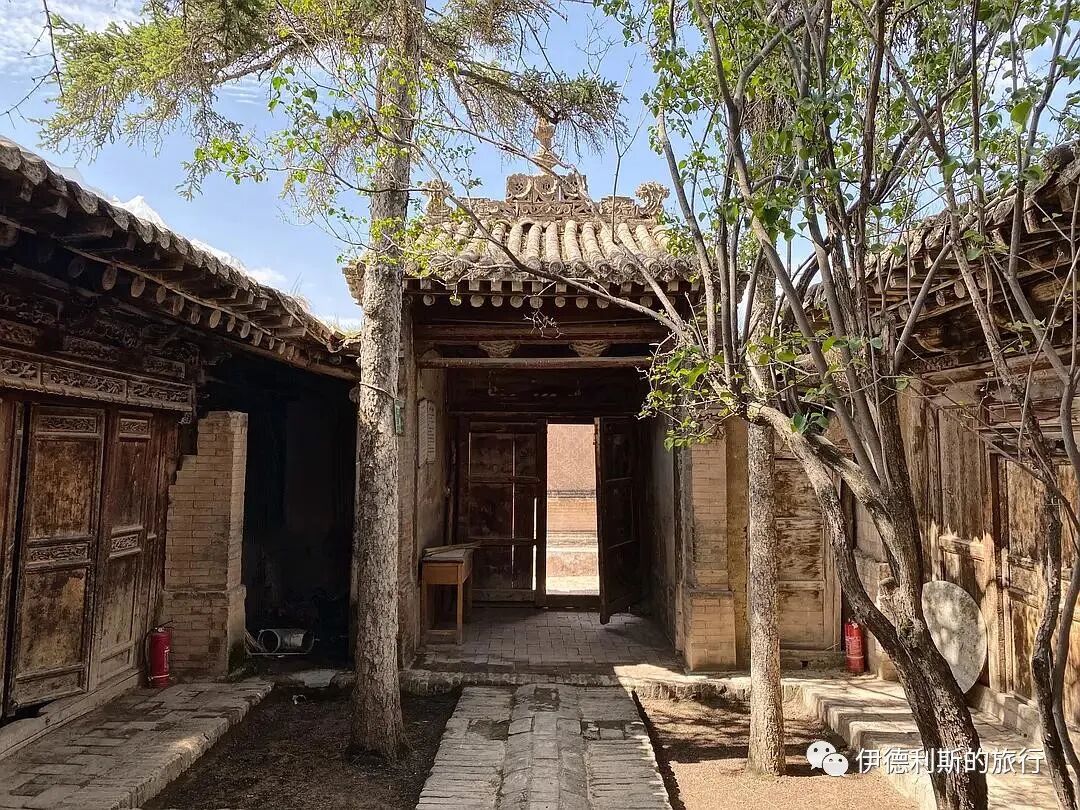
As soon as you enter the courtyard
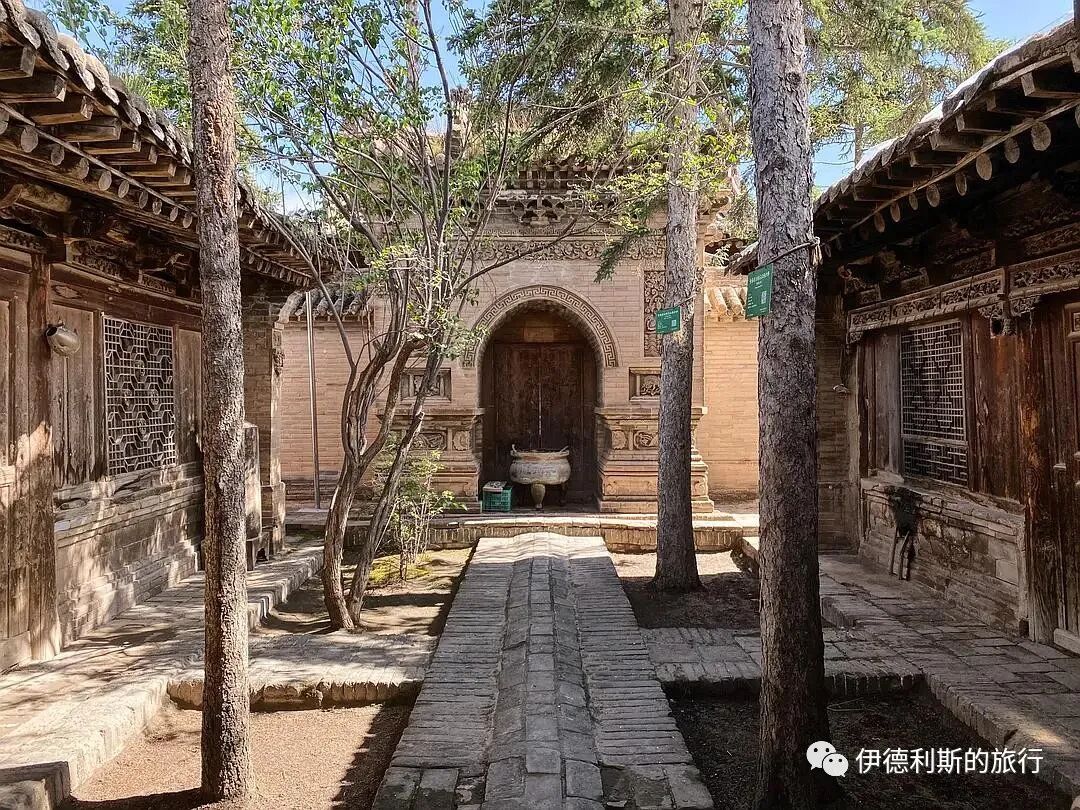
The side rooms on both sides
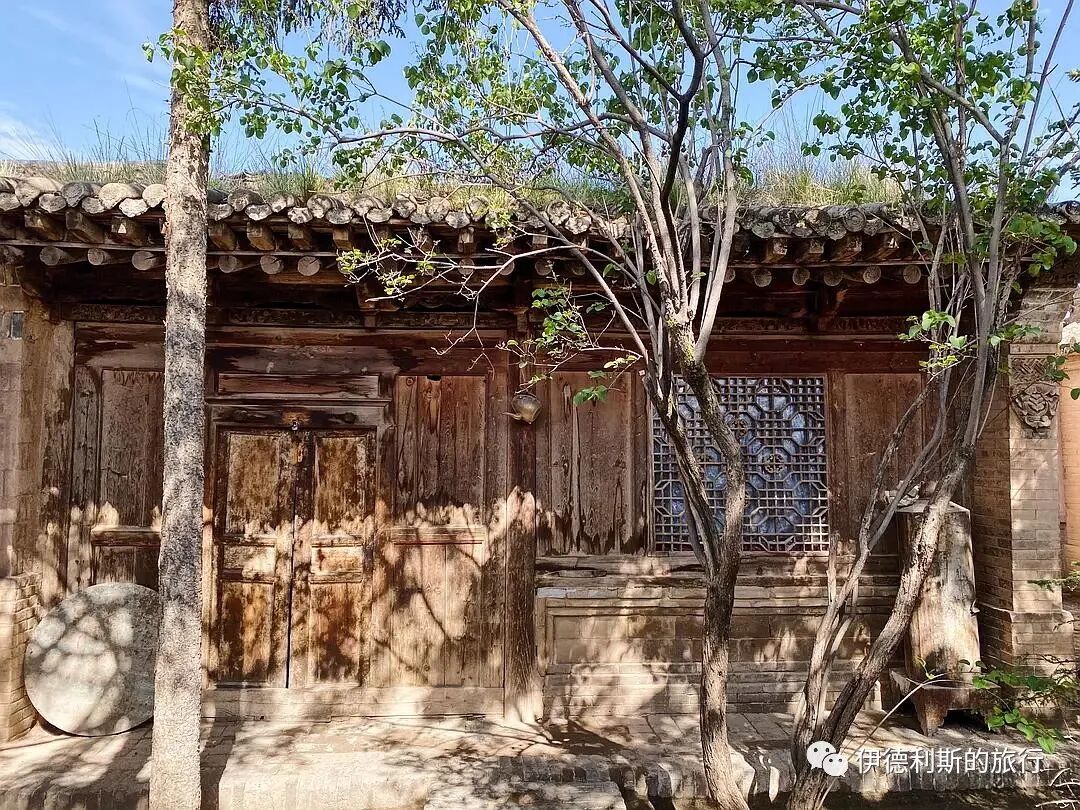
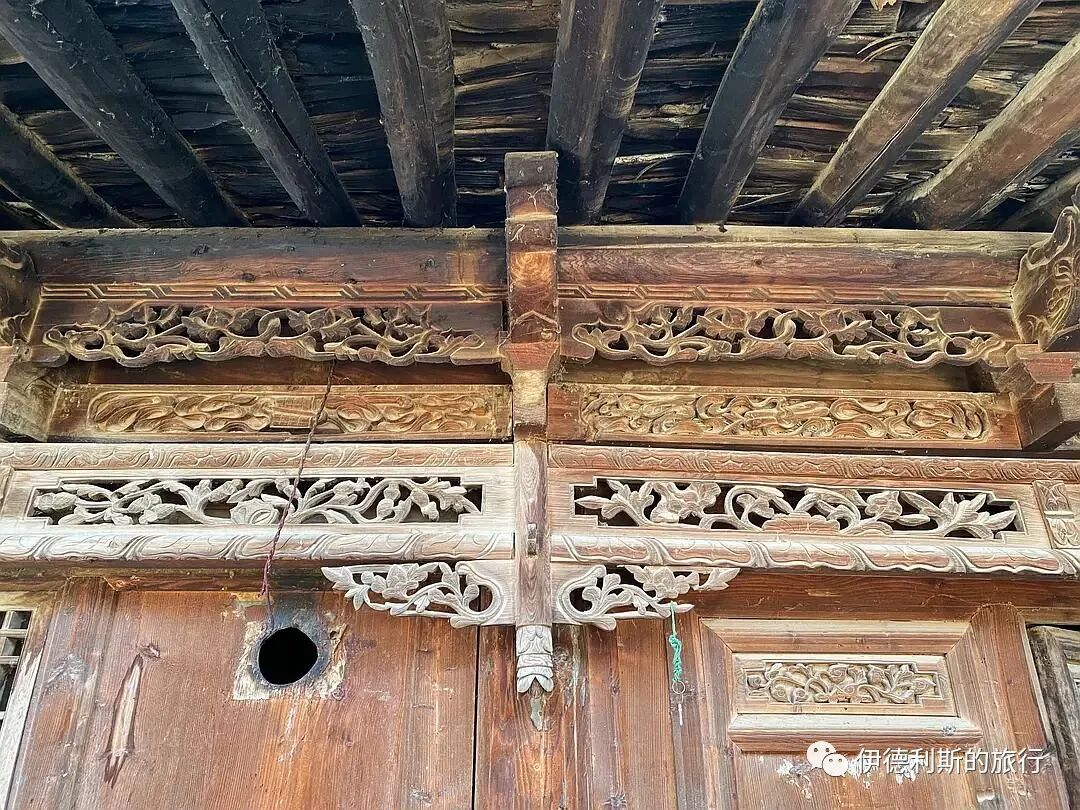
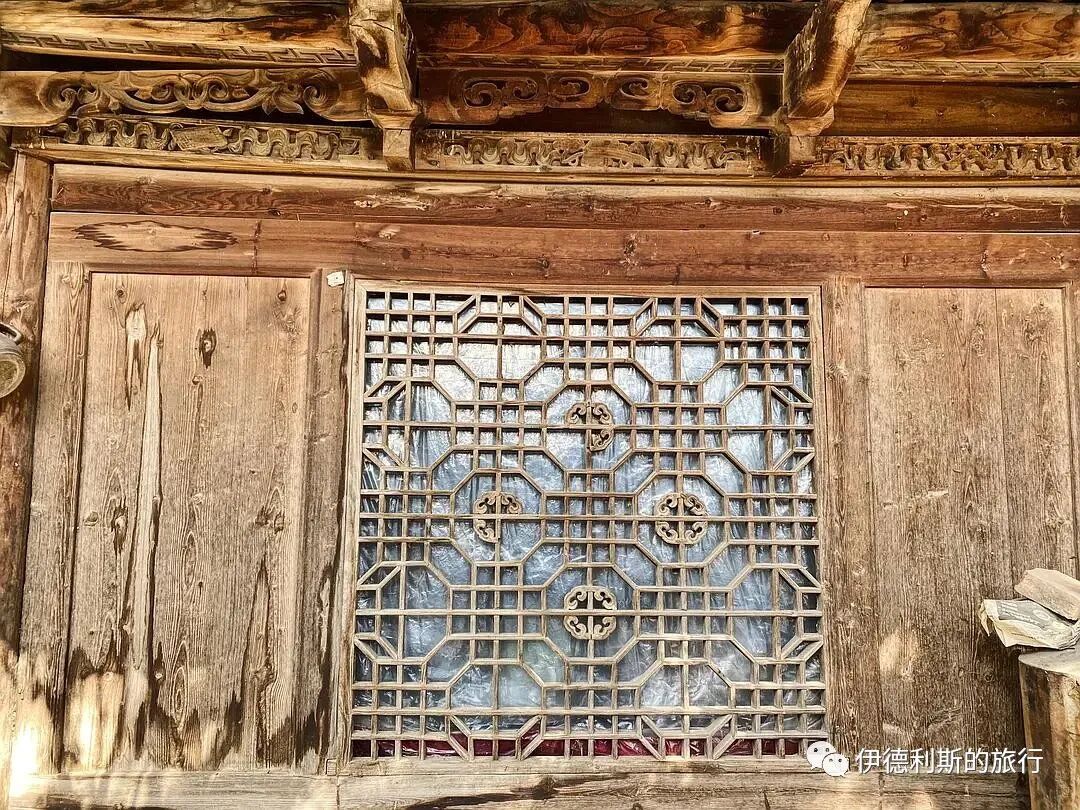
Second gate
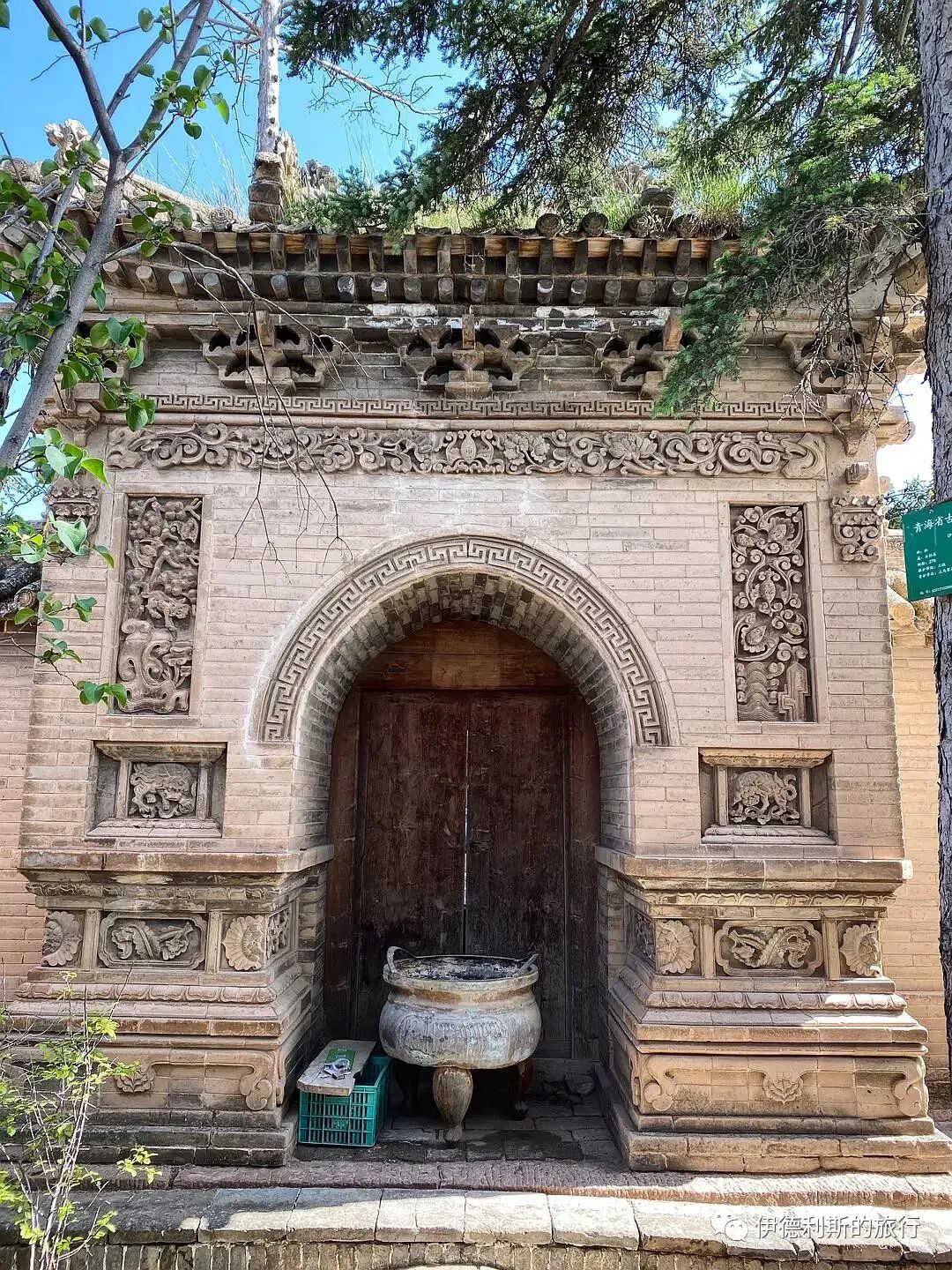
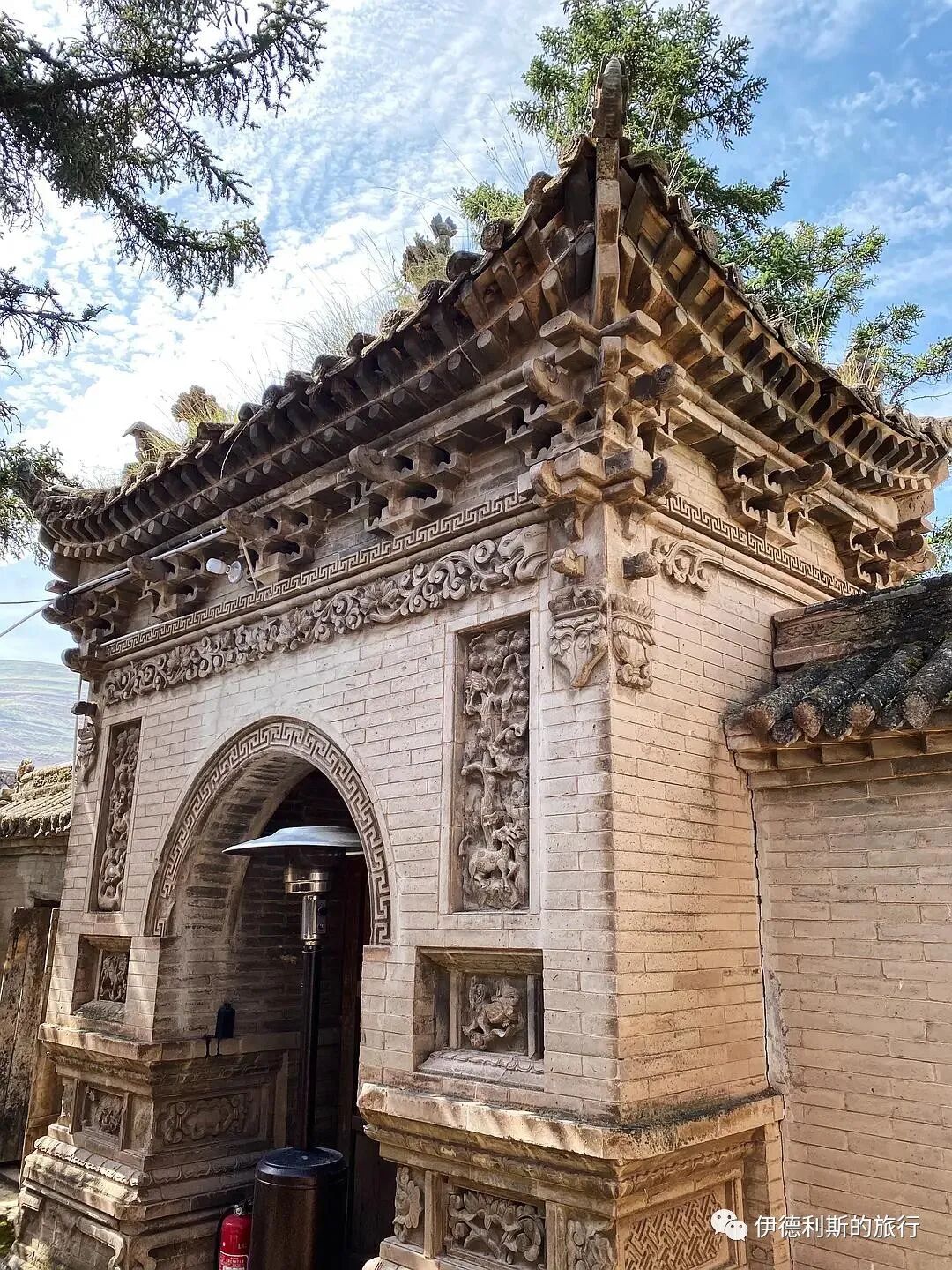
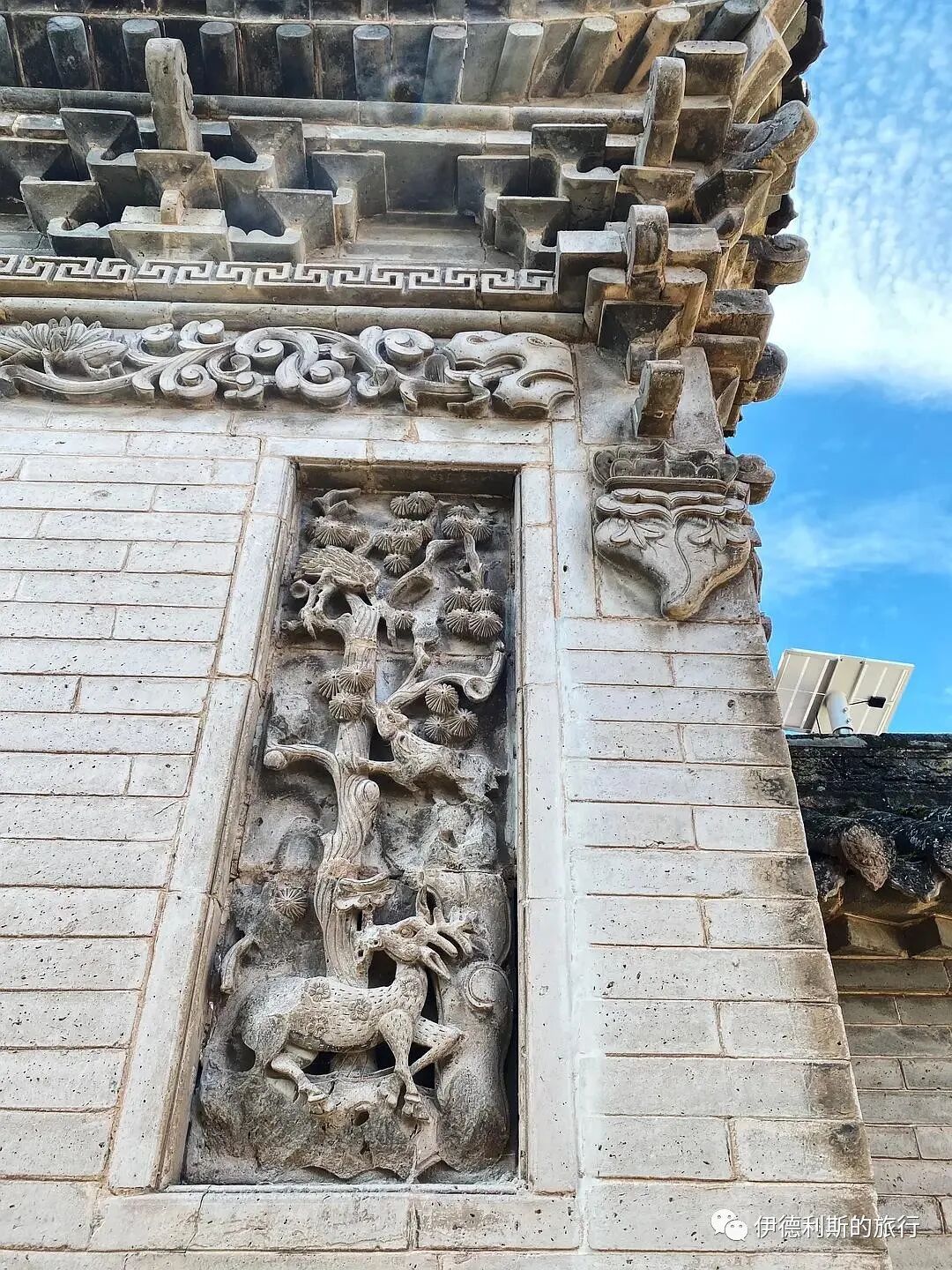
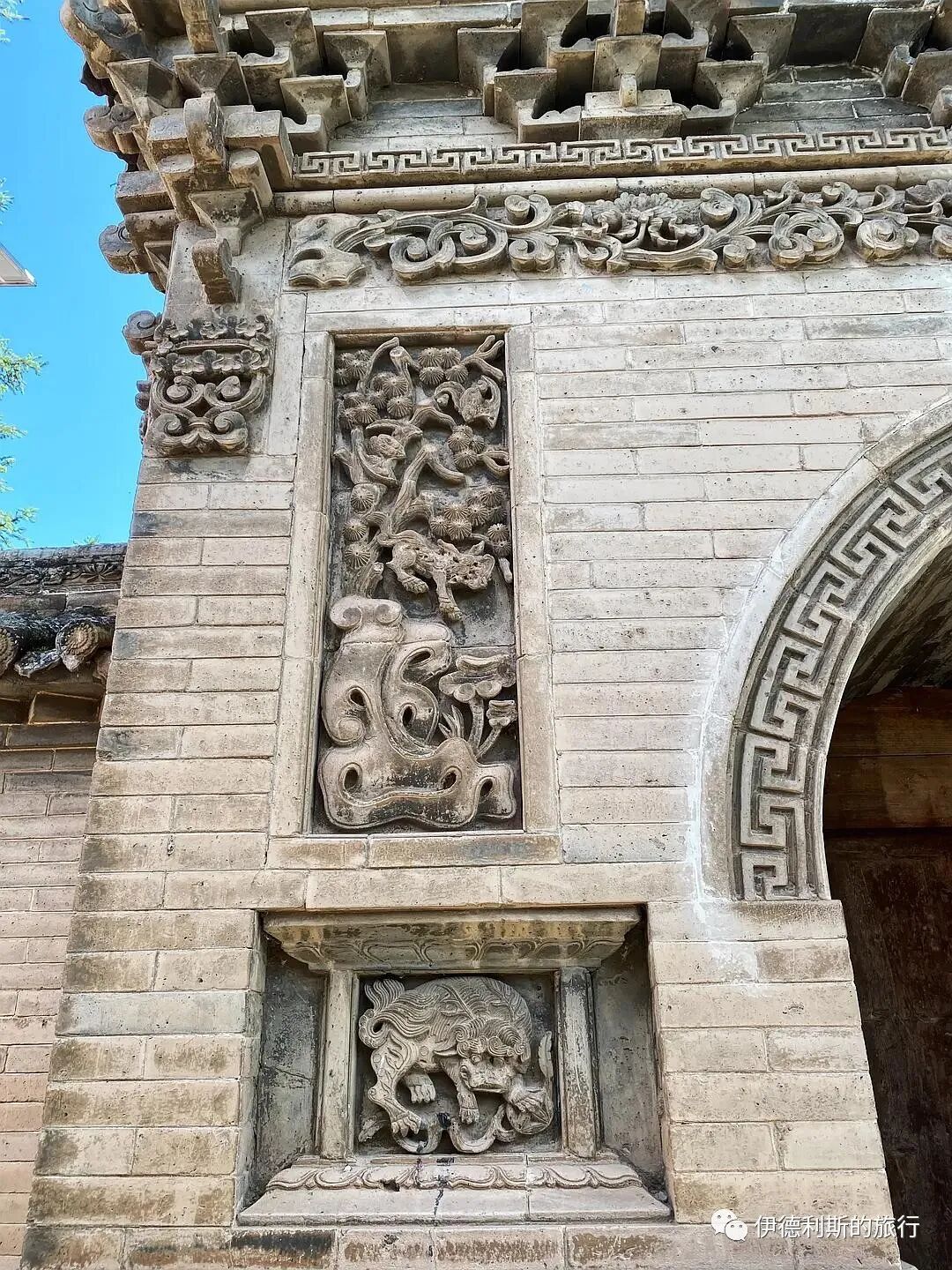
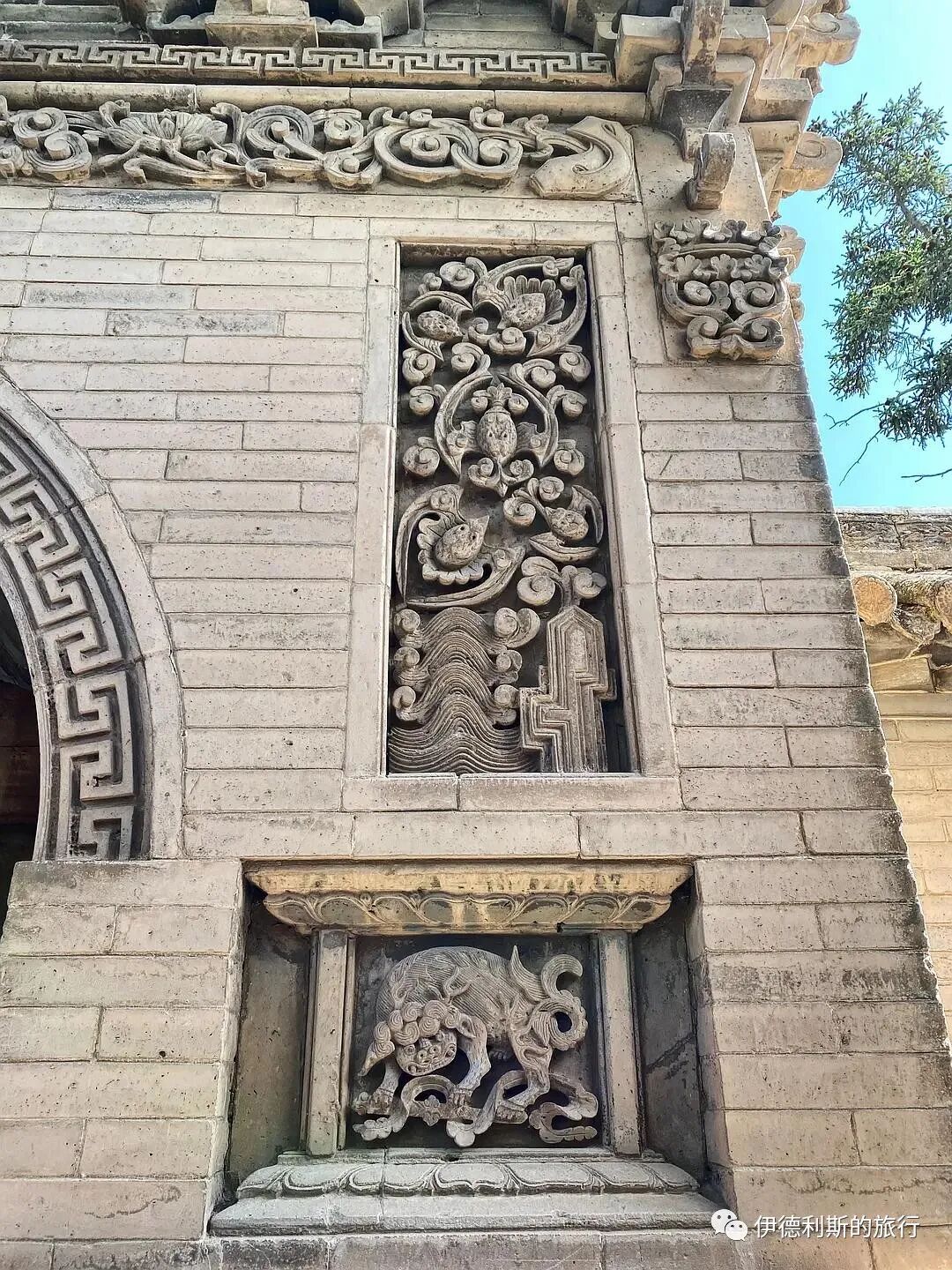
Mausoleum
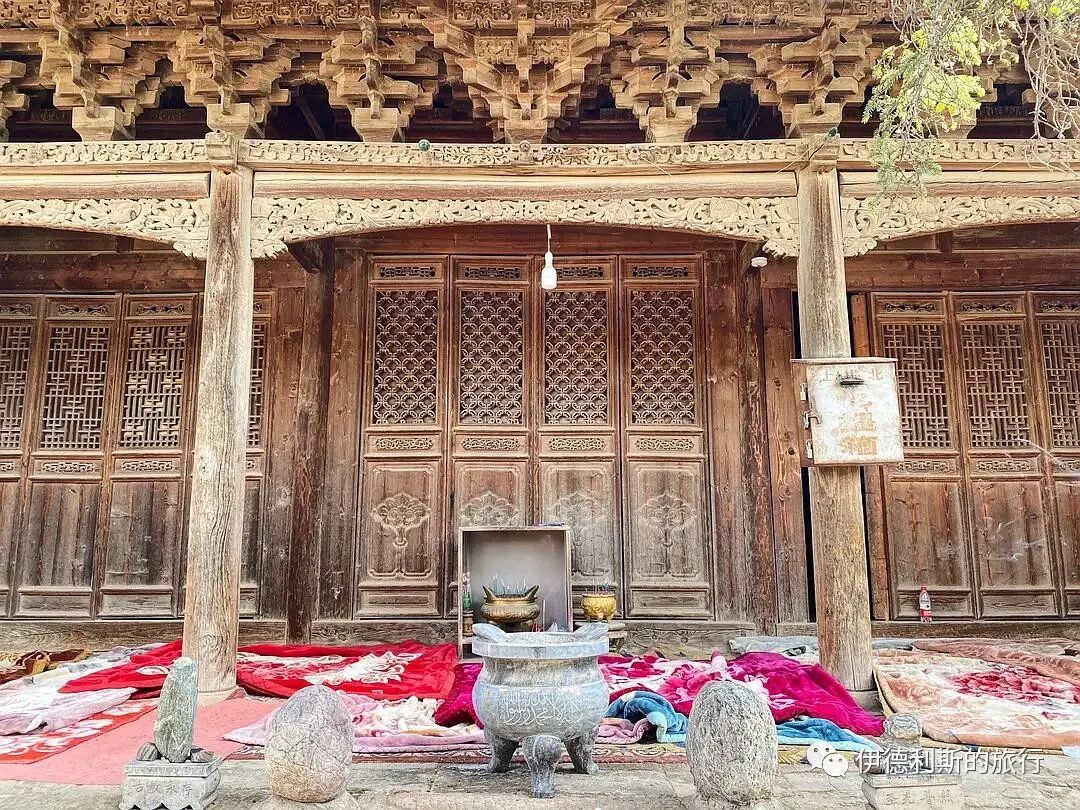
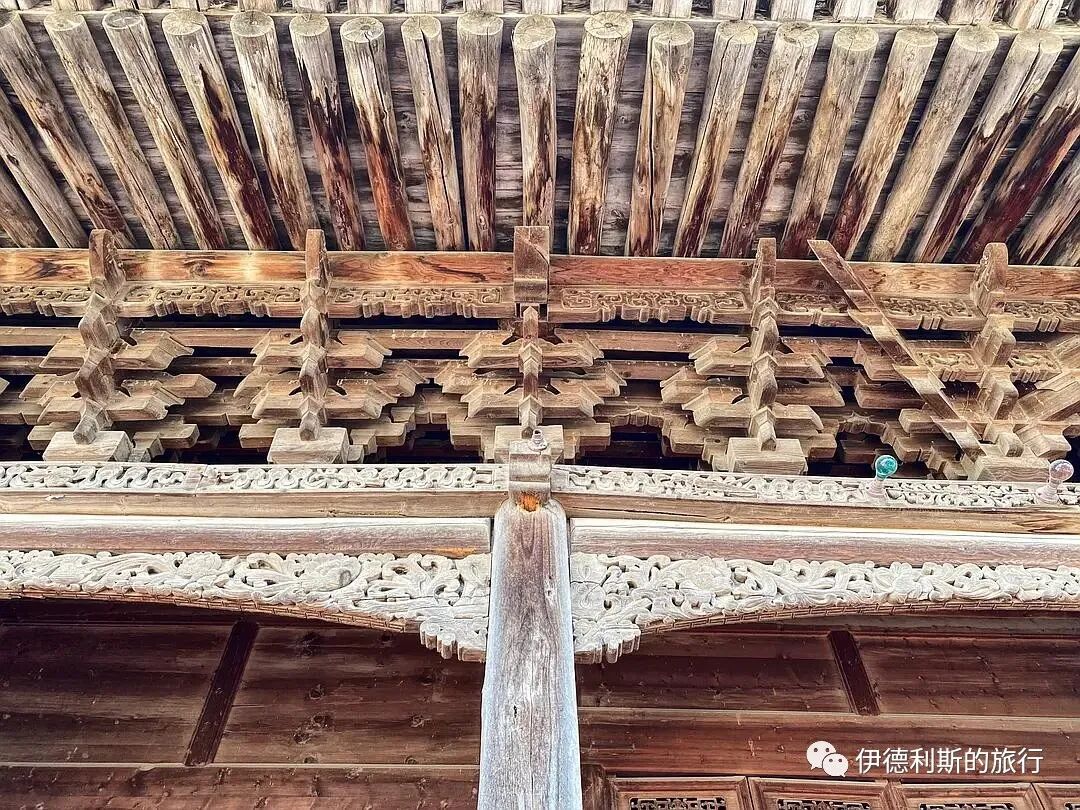
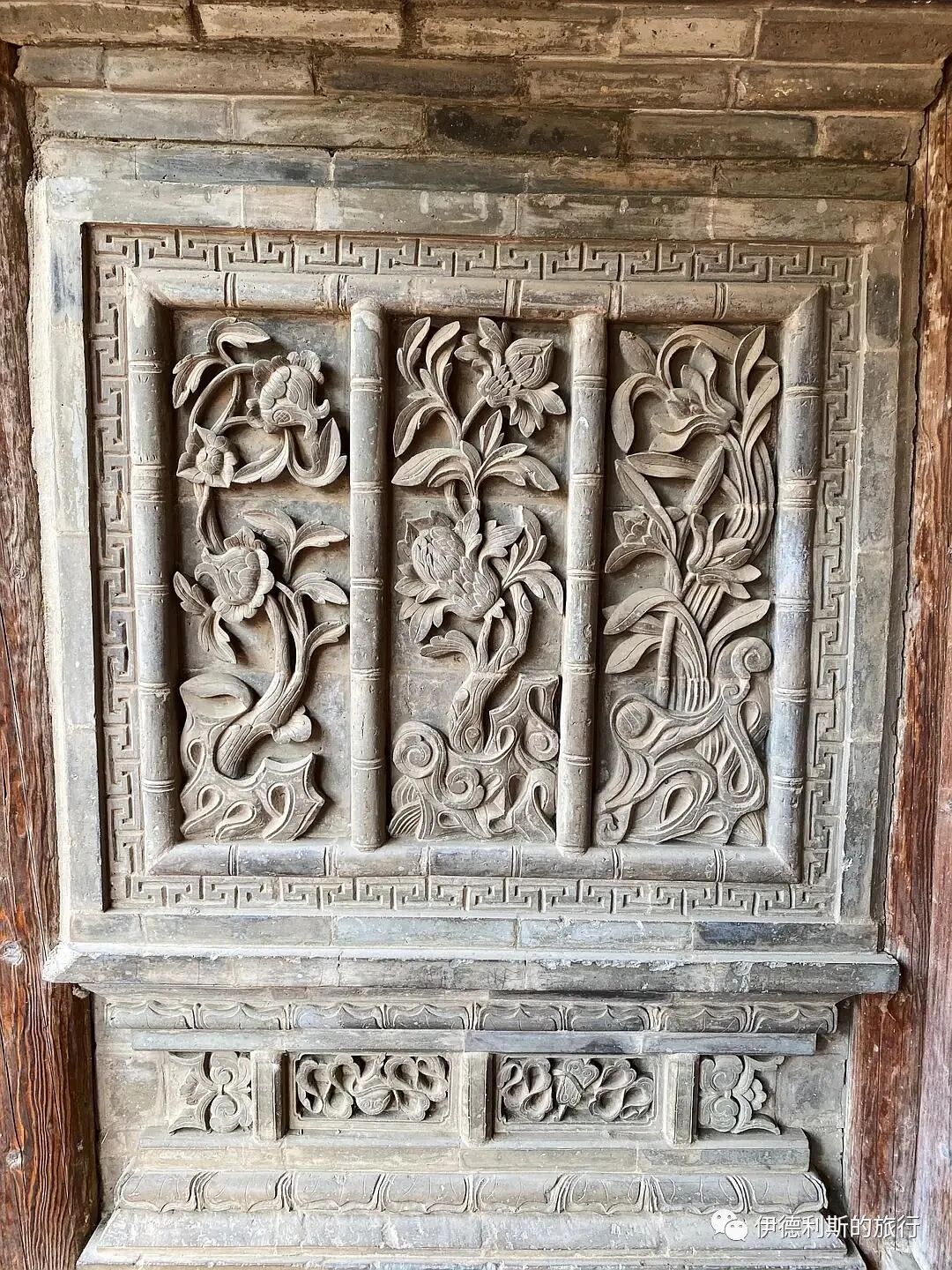
2. Shangmazhuang Gongbei in Bazanggou
The Xia-Gongbei of Shangmazhuang in Bazanggou, Ping'an District, Haidong City, is the Gongbei of Xian Chengde (known as Chuanli Taiye), the third-generation Sheikh of the Xianmen Menhuan of the Khufiyya order. Xian Chengde built this Gongbei during the Jiaqing reign, and shortly after its completion in 1812, Xian Chengde returned to Allah, and the followers buried him here. In 1895, the fifth-generation Sheikh of the Xianmen, Xian Linyuan, returned to Allah and was also buried in the Xia-Gongbei.
Like the Upper Gongbei, the Lower Gongbei is a cultural relic protection unit of Qinghai Province, and it also consists of two courtyards, one in front and one behind, but it is larger in scale than the Upper Gongbei. The front courtyard has been destroyed and only the main gate remains, but the back courtyard is very well preserved and is a masterpiece of Qing Dynasty brick carving art.
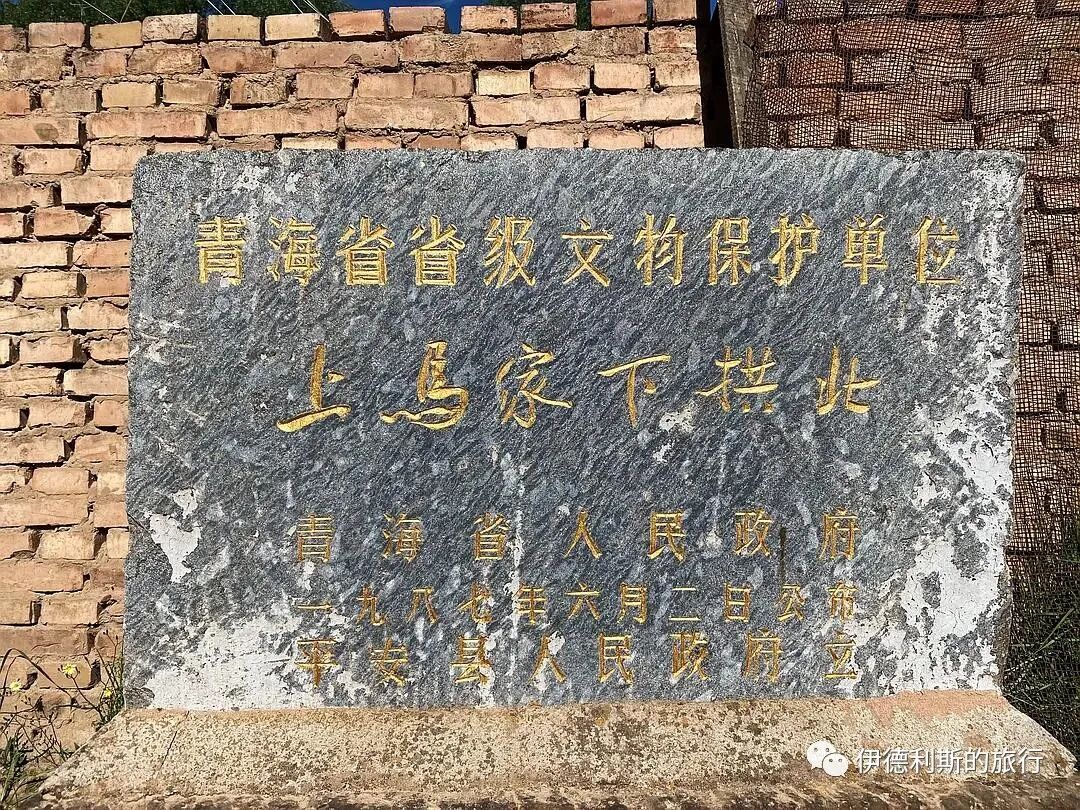
The front courtyard gate; after entering, you can see the ceremonial gate of the back courtyard. The ceremonial gate features brick-carved dougong, with the Tasmiya carved in the center and various flowers below it.
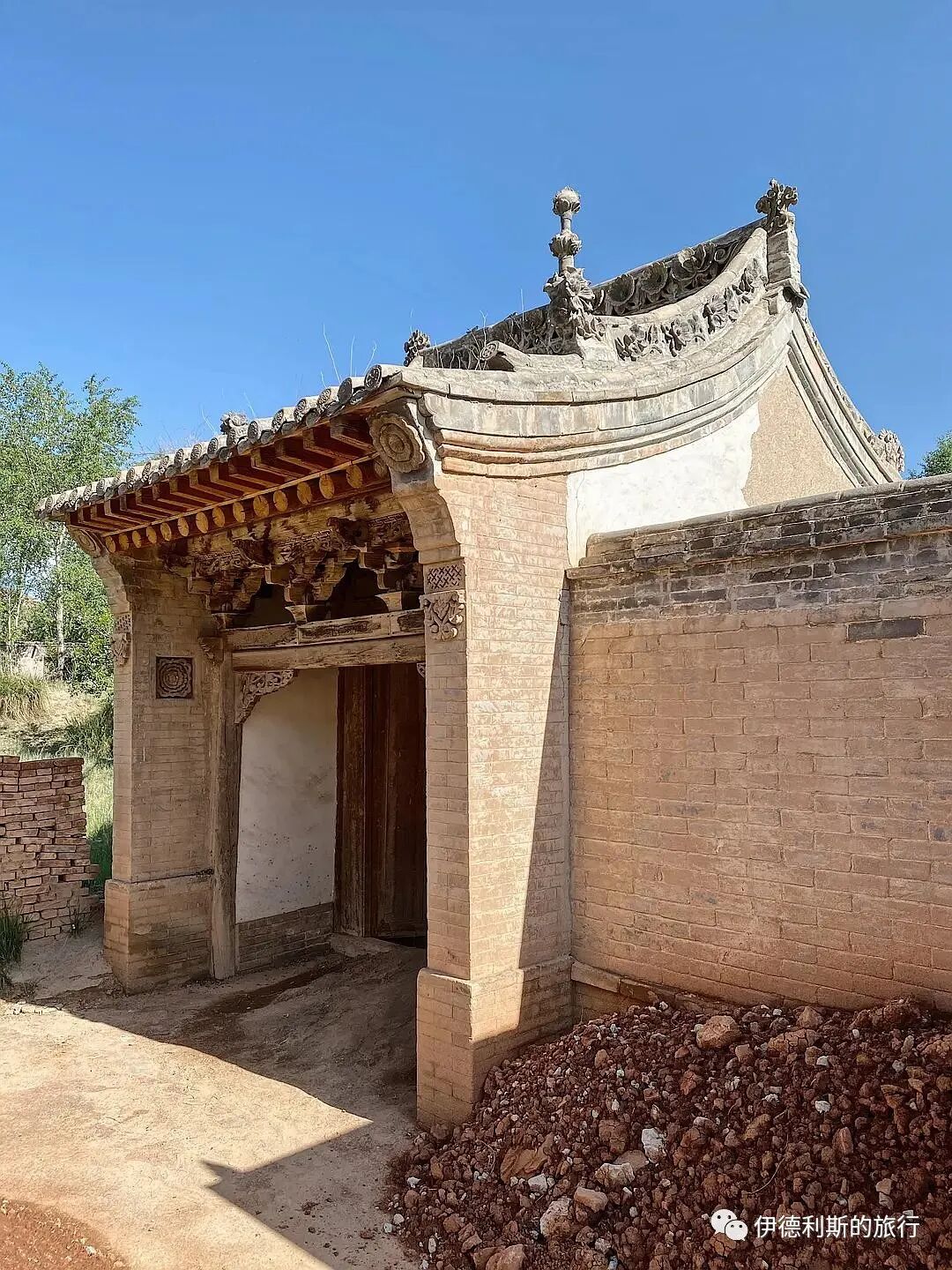
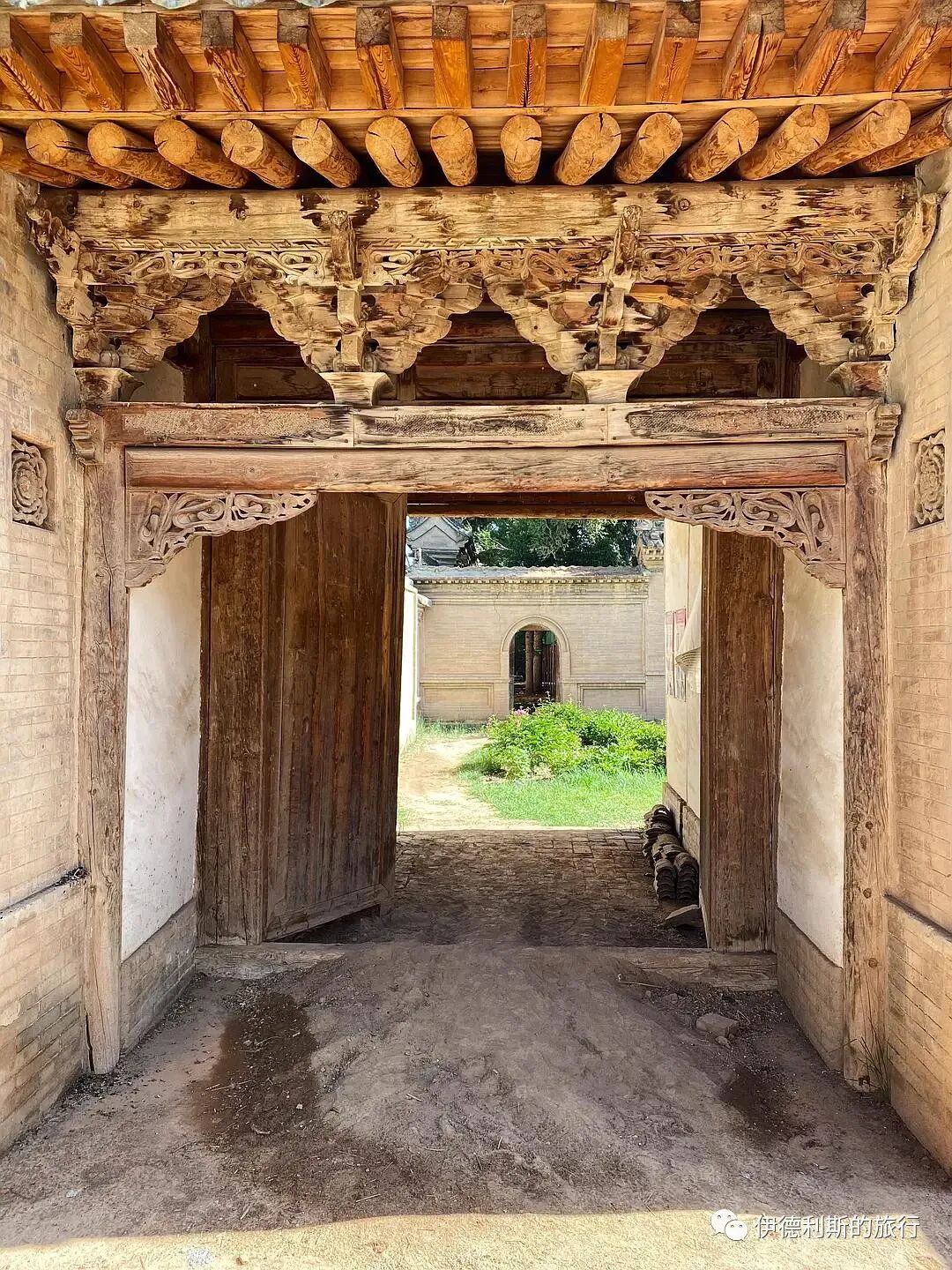
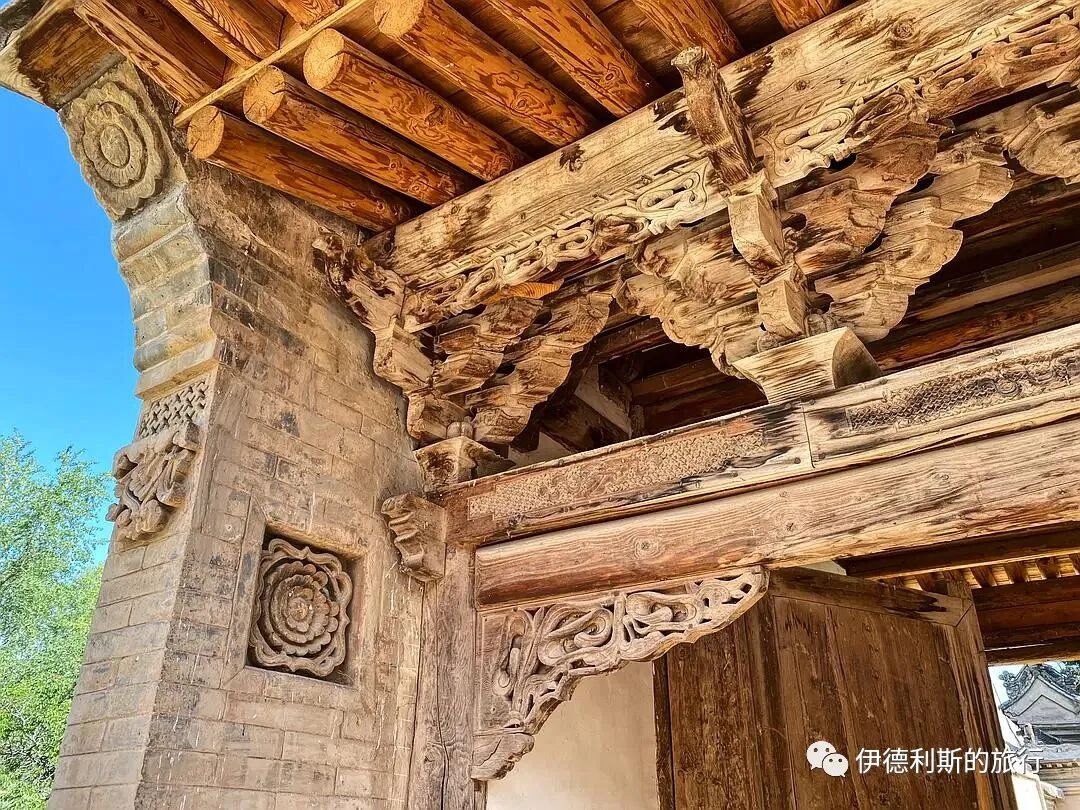
The screen walls on both sides are carved with numerous hydrangea petals, each with a unique shape. The center is carved with a 'Joyful News of Early Spring' pattern, surrounded by four bats. The Sumeru pedestal is carved with the Eight Immortals' emblems, as well as patterns of pomegranates, finger citrons, peonies, and lotus flowers.
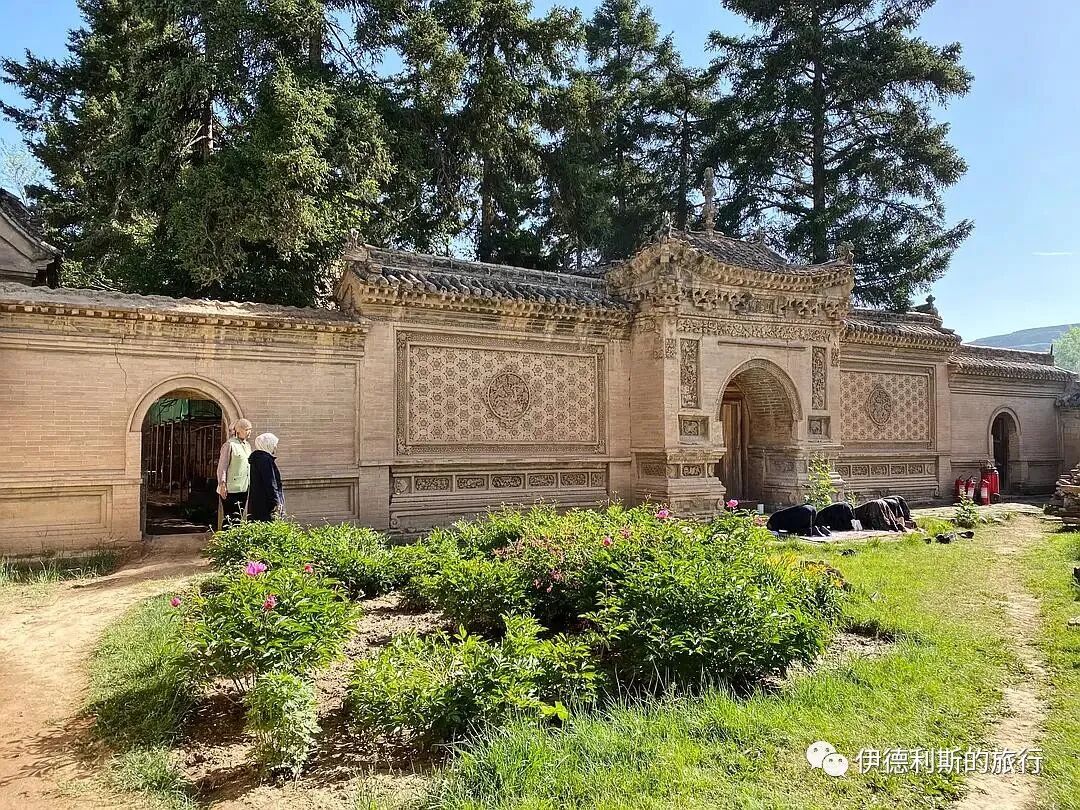
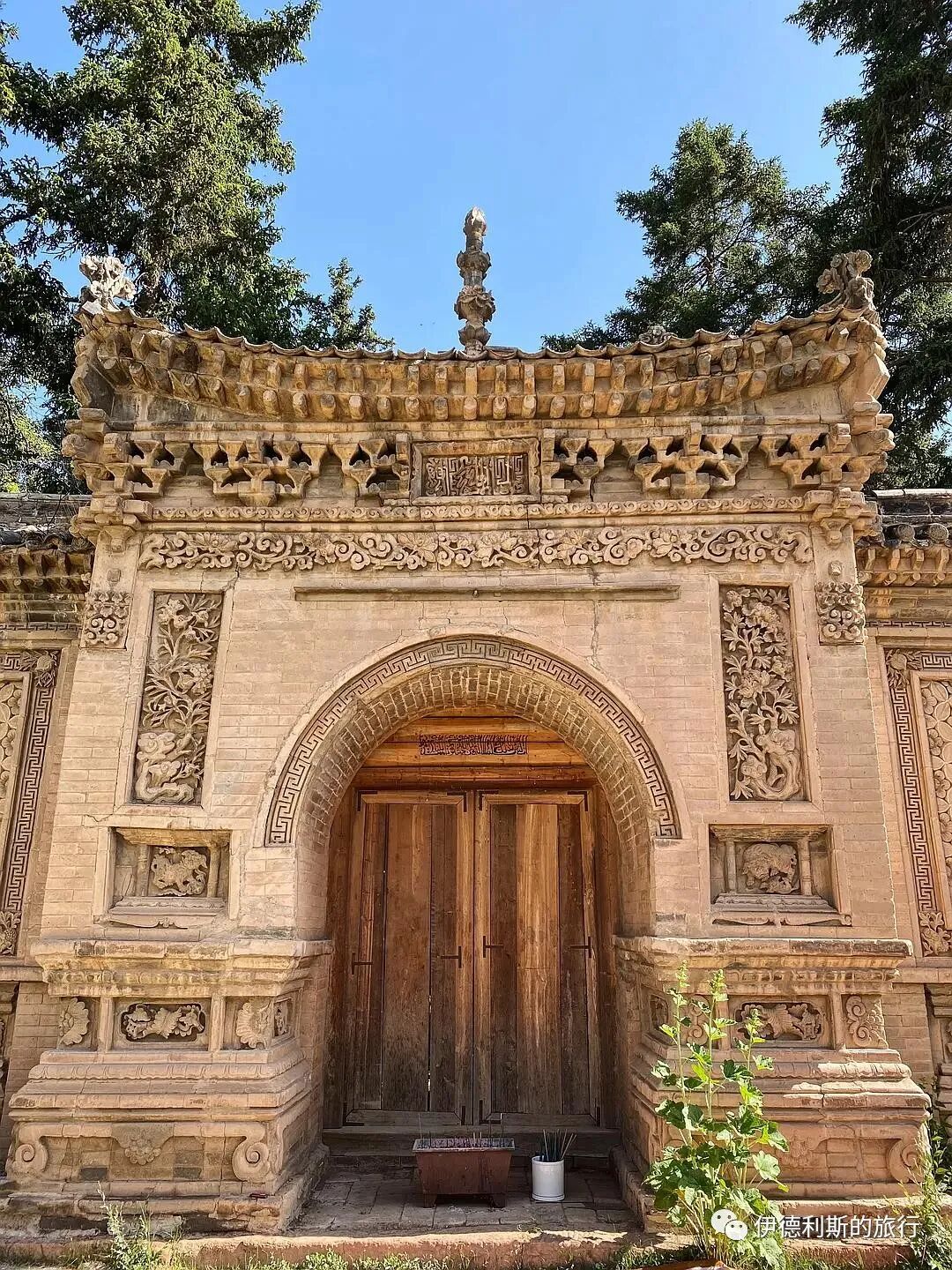
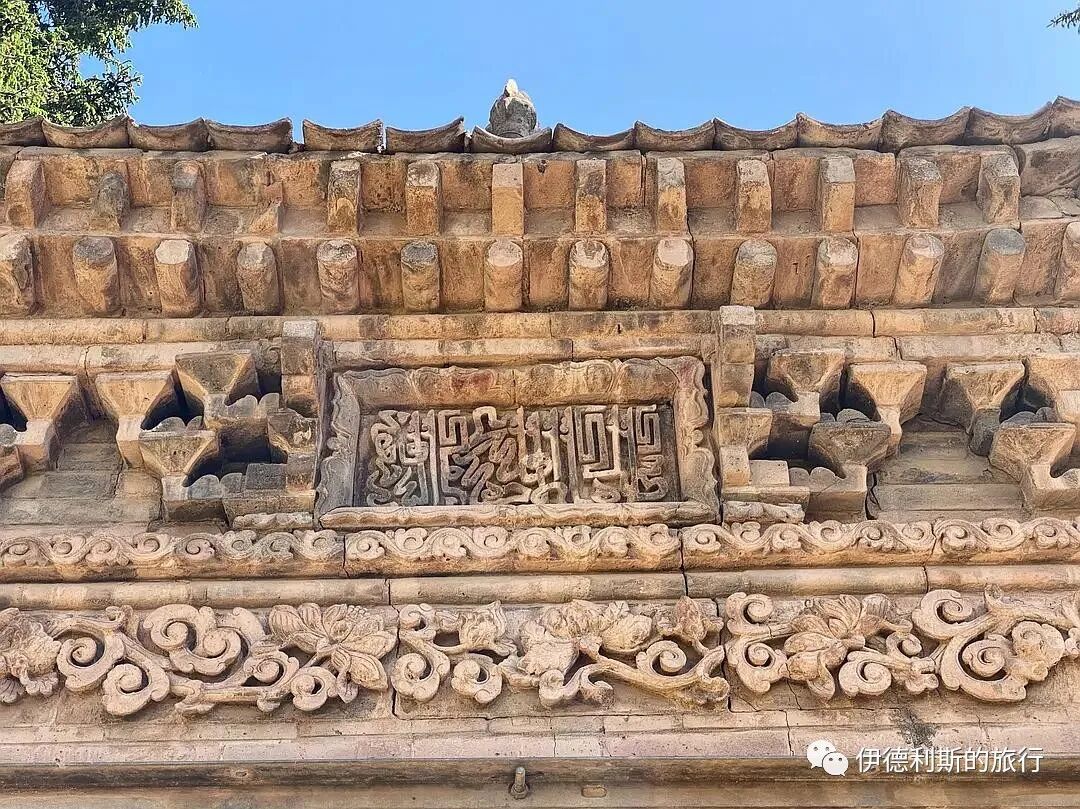
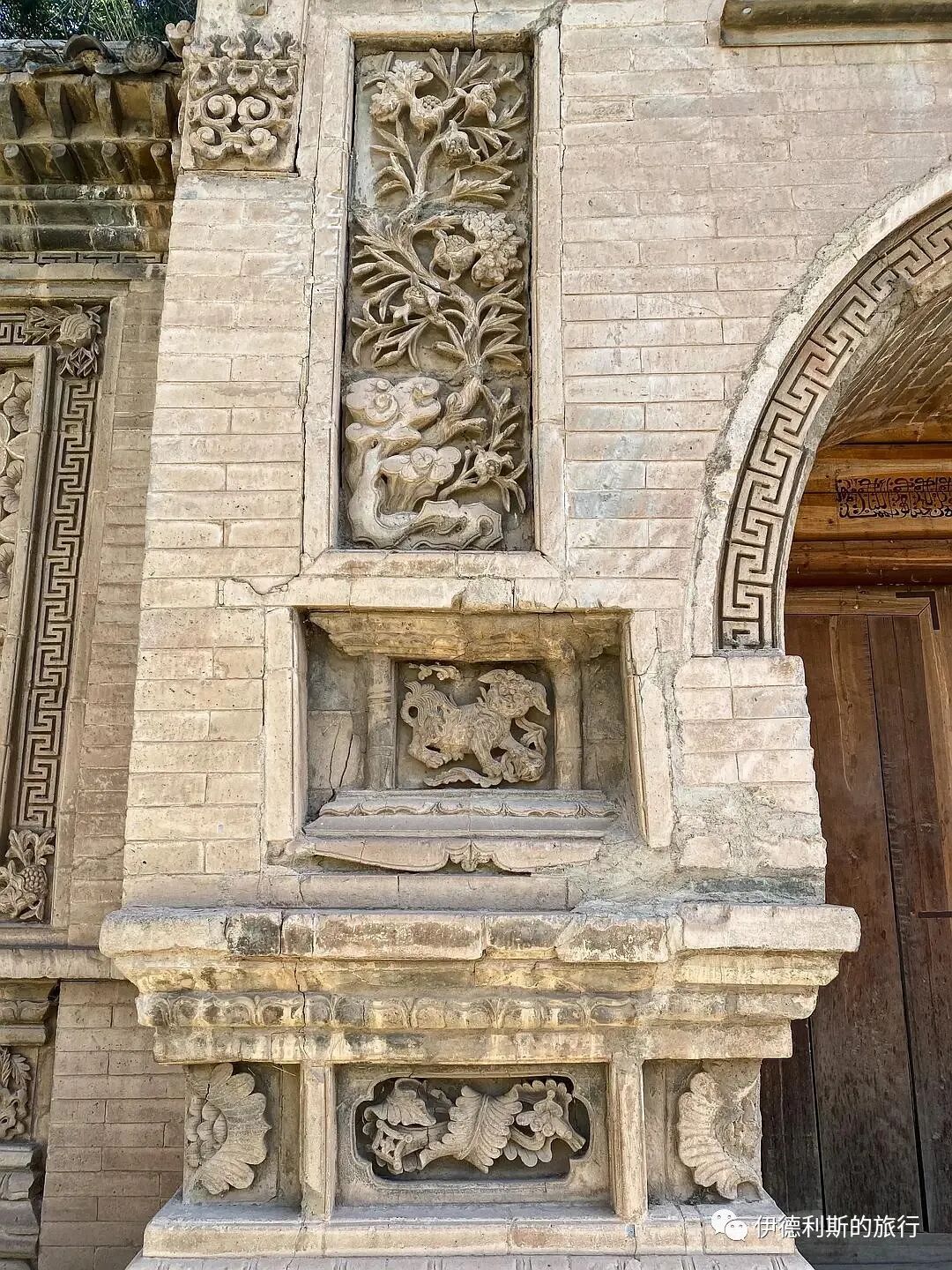
The brick carvings of pomegranates, peonies, the Eight Immortals' emblems, and hydrangea petals on the screen wall of the ceremonial gate. This hydrangea petal design is exactly the same as the one on the screen wall of the famous Hongshuiquan Mosque in Haidong.
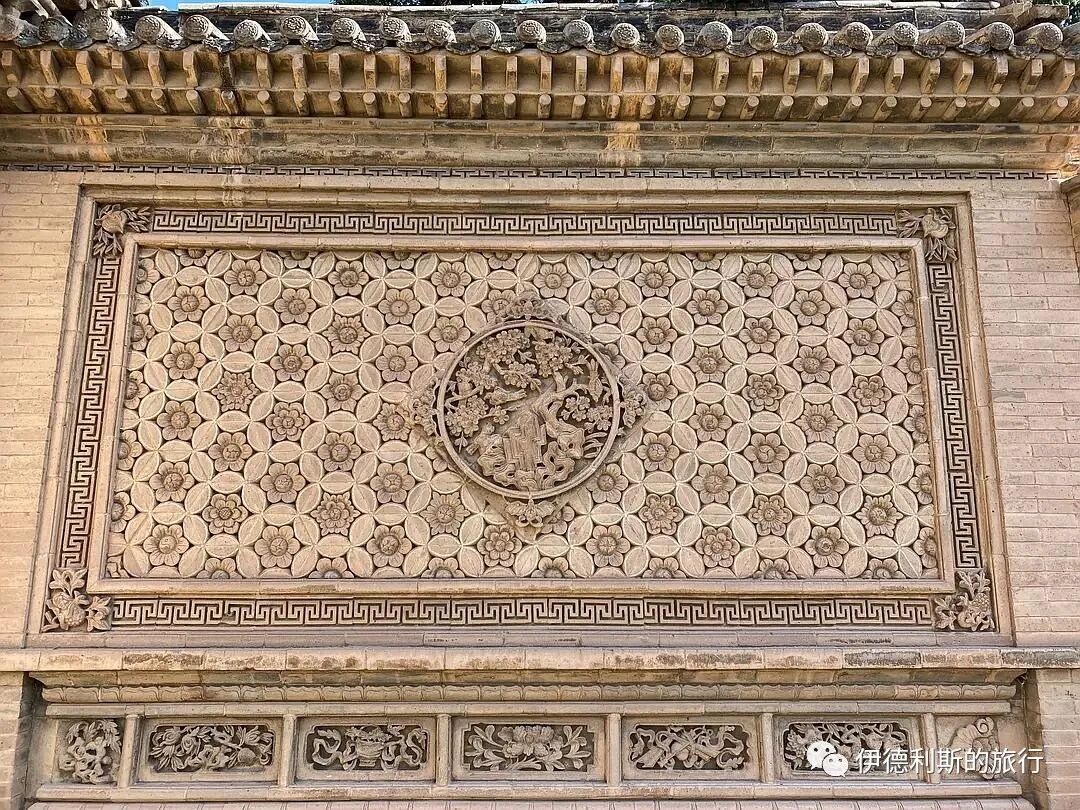
The north wall screen has brick-carved dougong brackets at the top and a gabled roof. The upper part of the central screen is carved with the four Chinese characters 'Can Xia Bi Luo', with Arabic calligraphy in the center, Arabic couplets on both sides, and brick carvings of carp leaping over the dragon gate at the bottom of the couplets. The centers of the side screens feature the Chinese character 'Shou' in seal script, along with the couplets: 'Riding the phoenix to fly to the pure land, transforming into a crane to return to the pure palace.' "
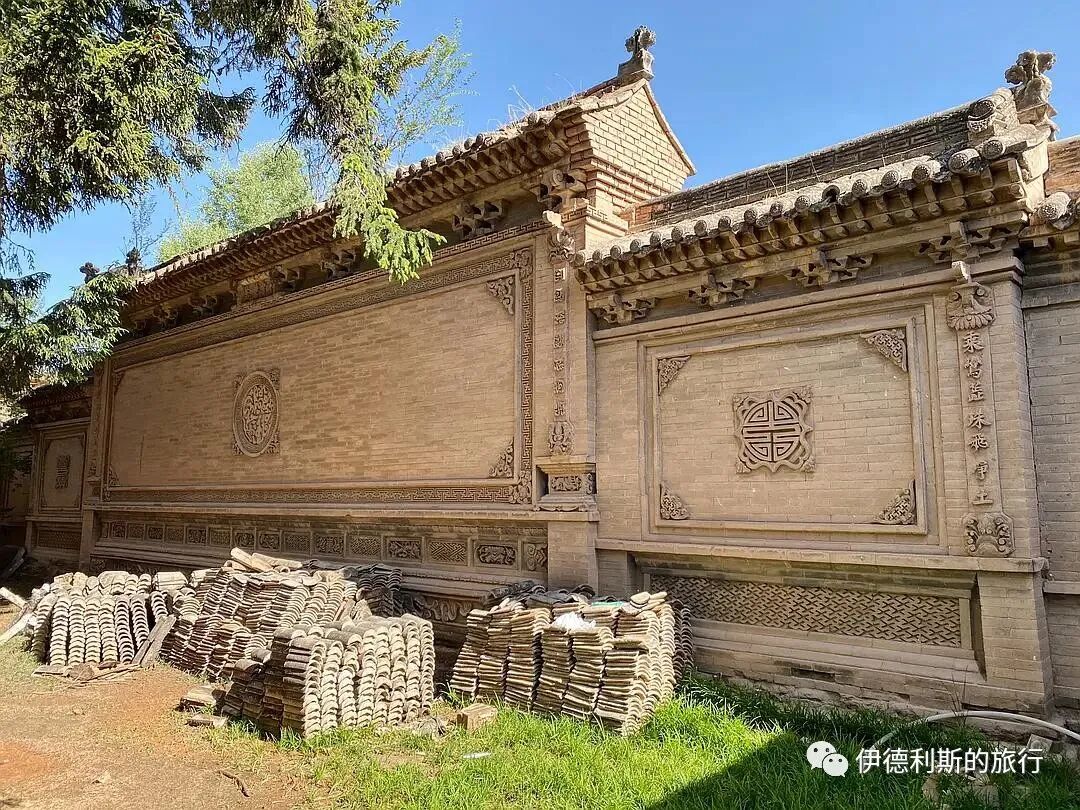
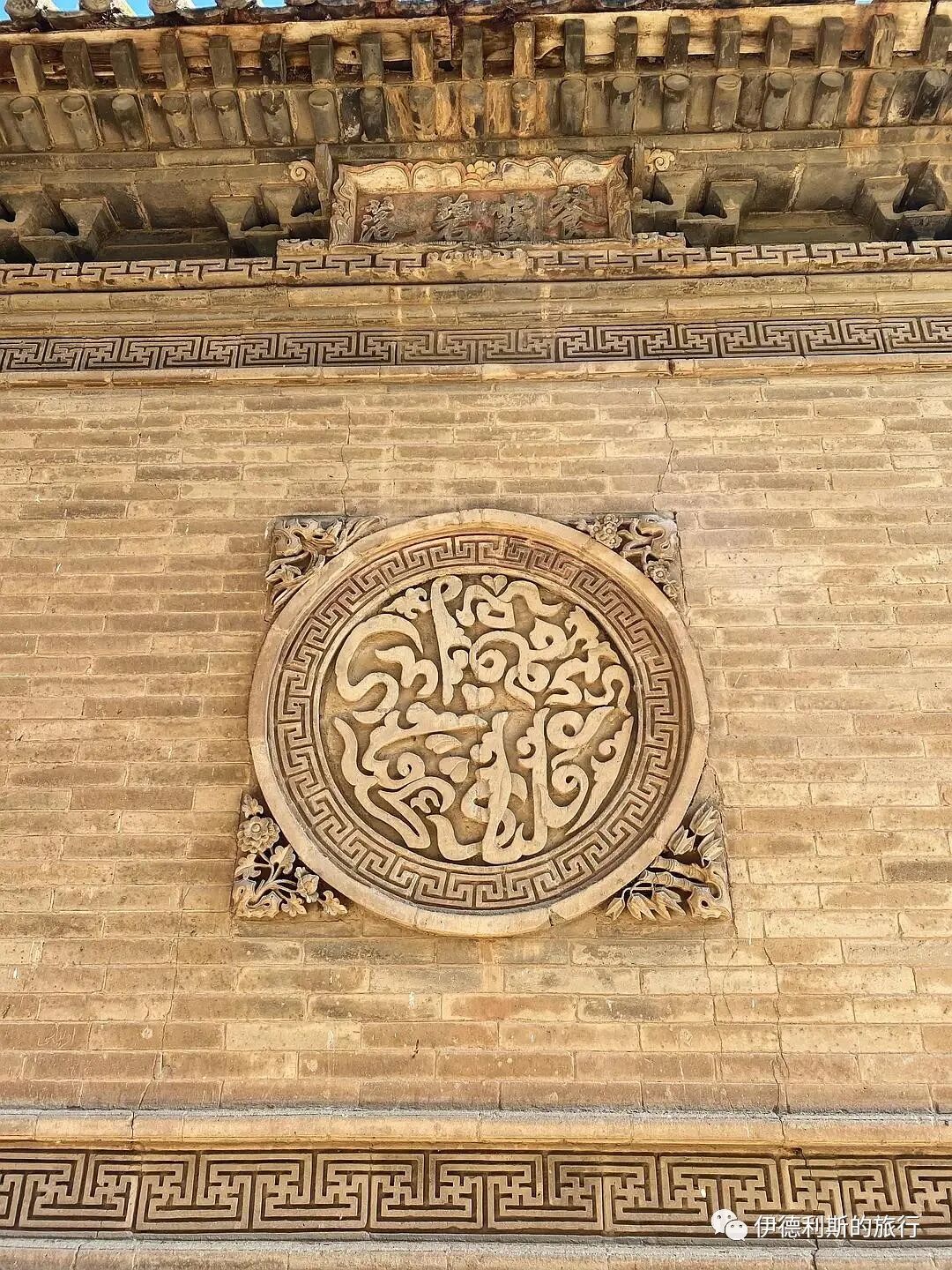
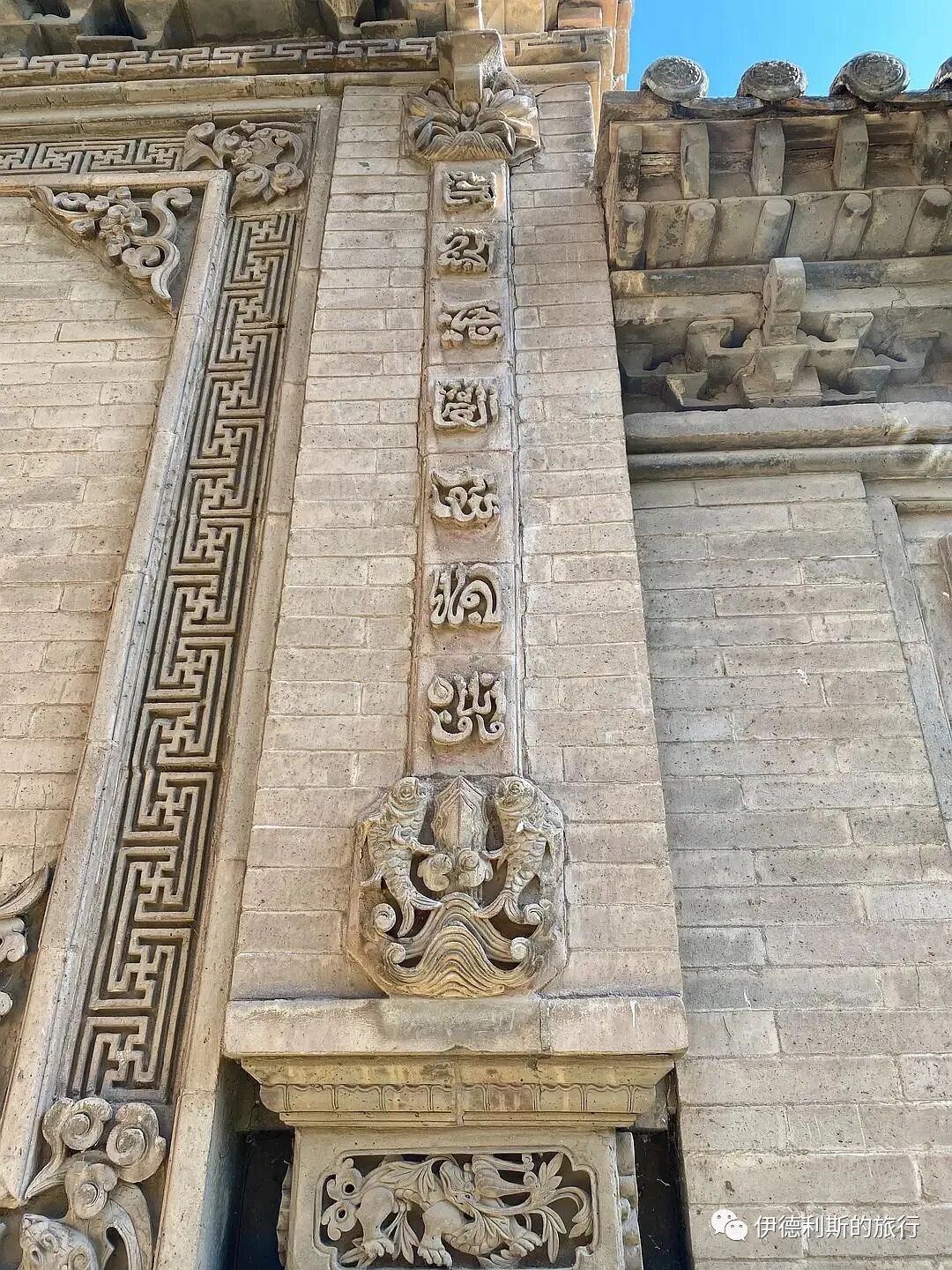
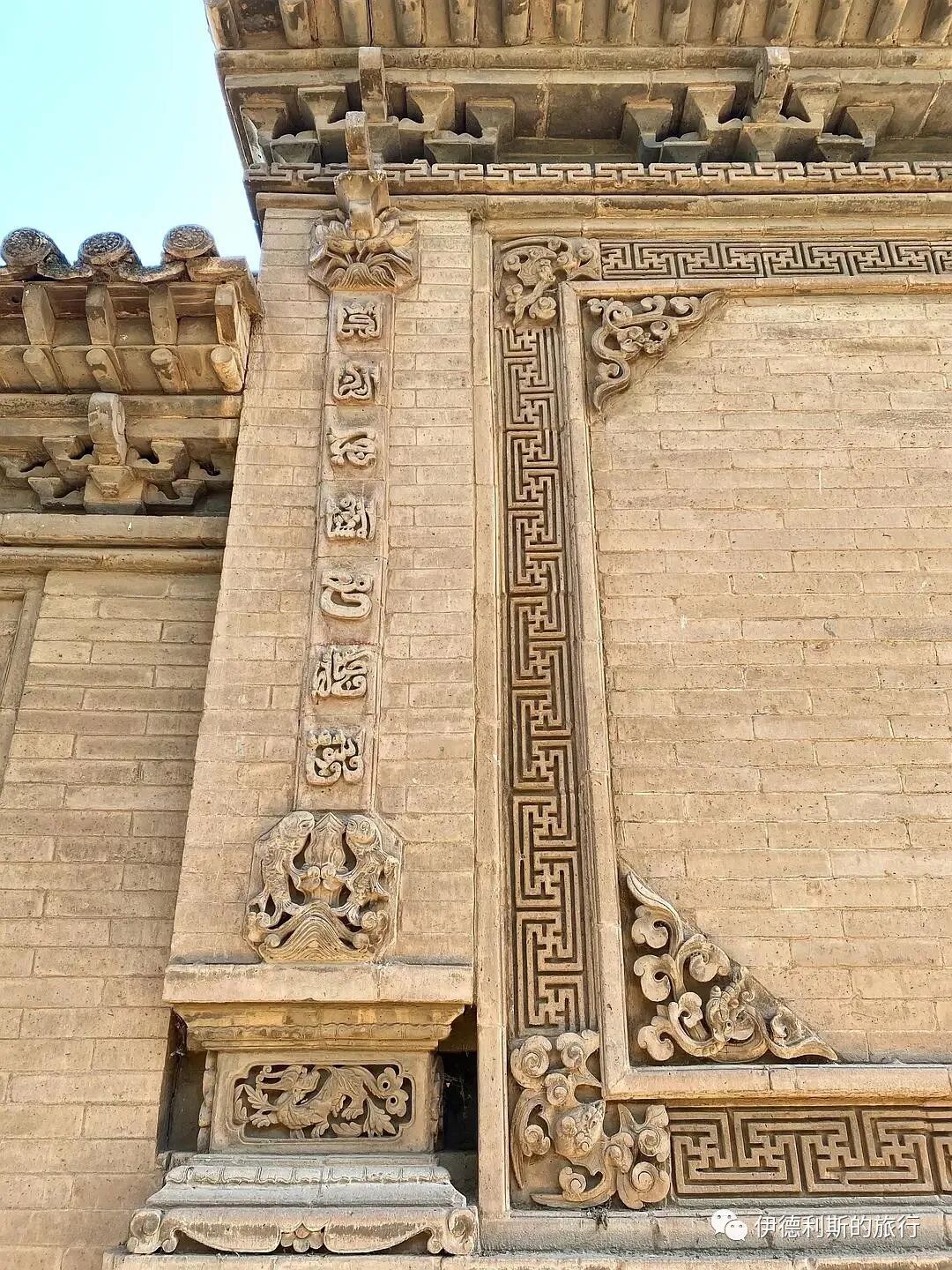
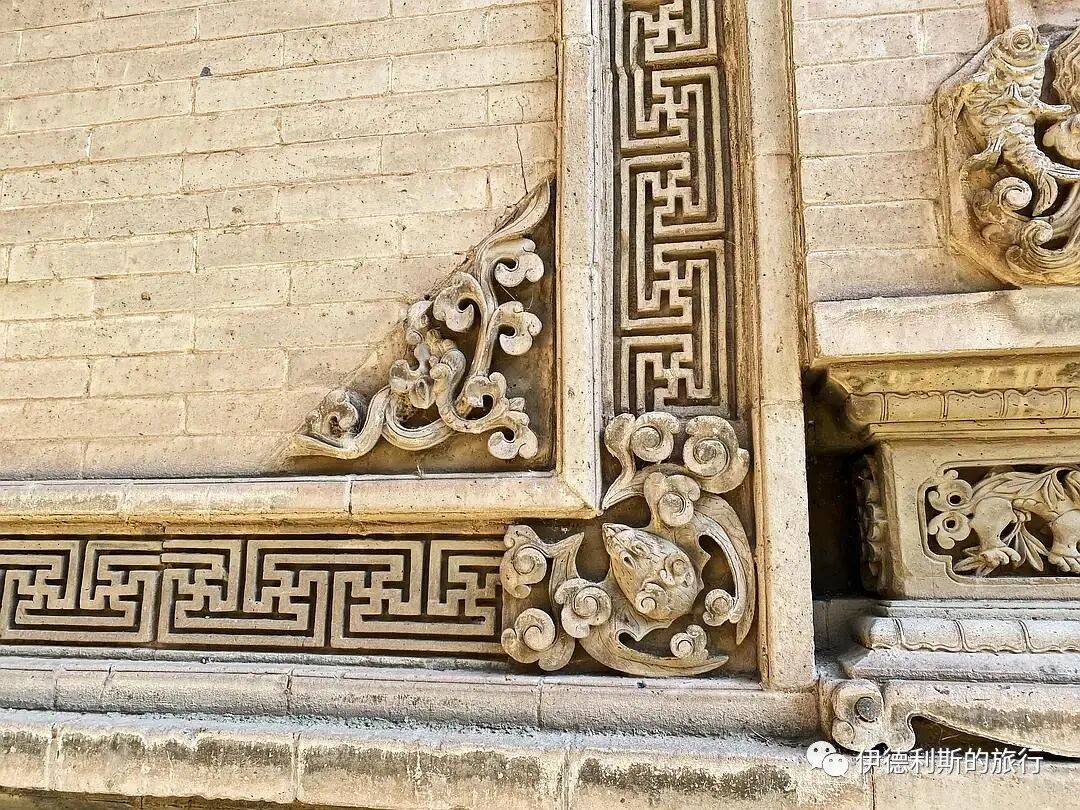
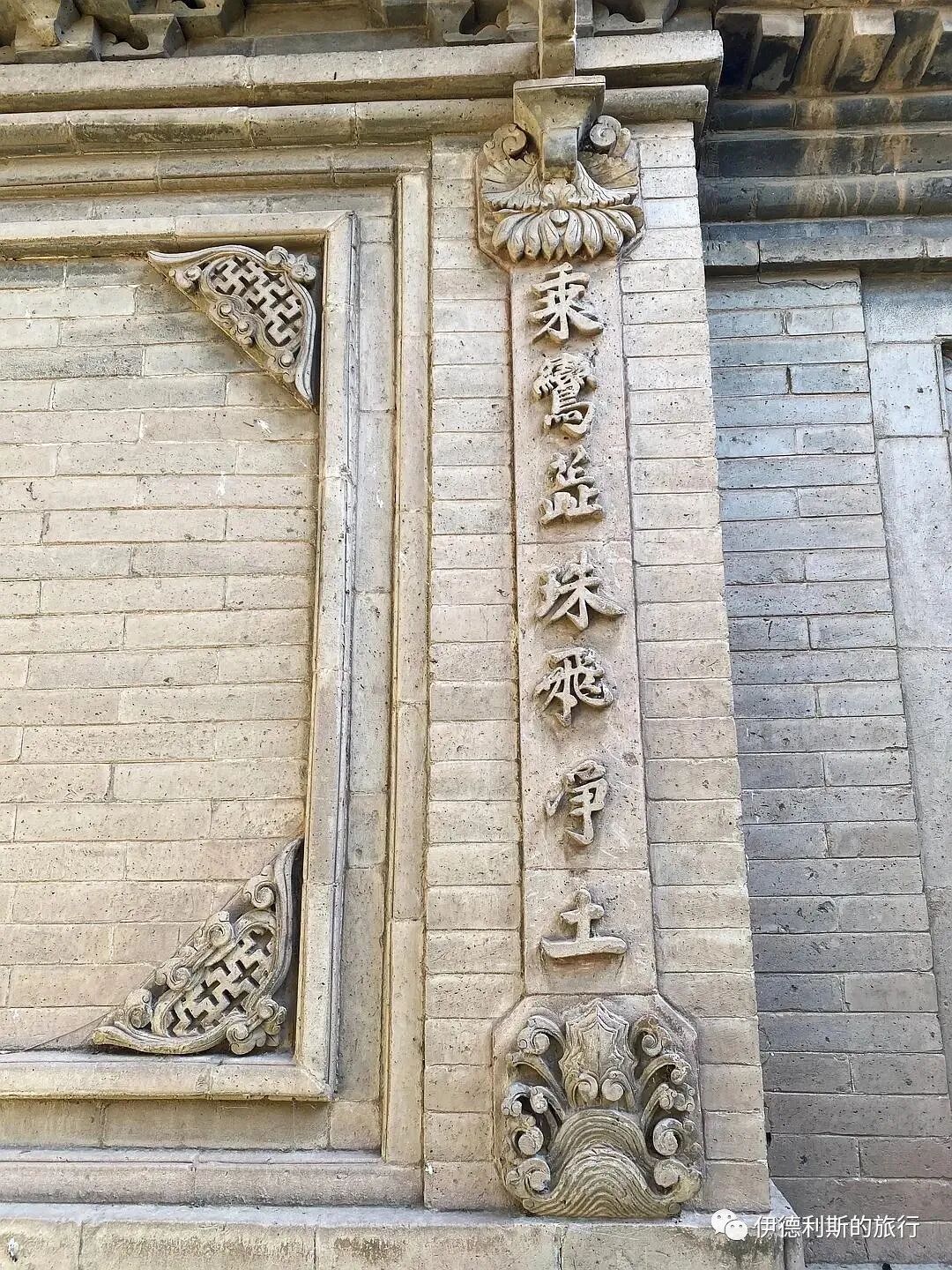
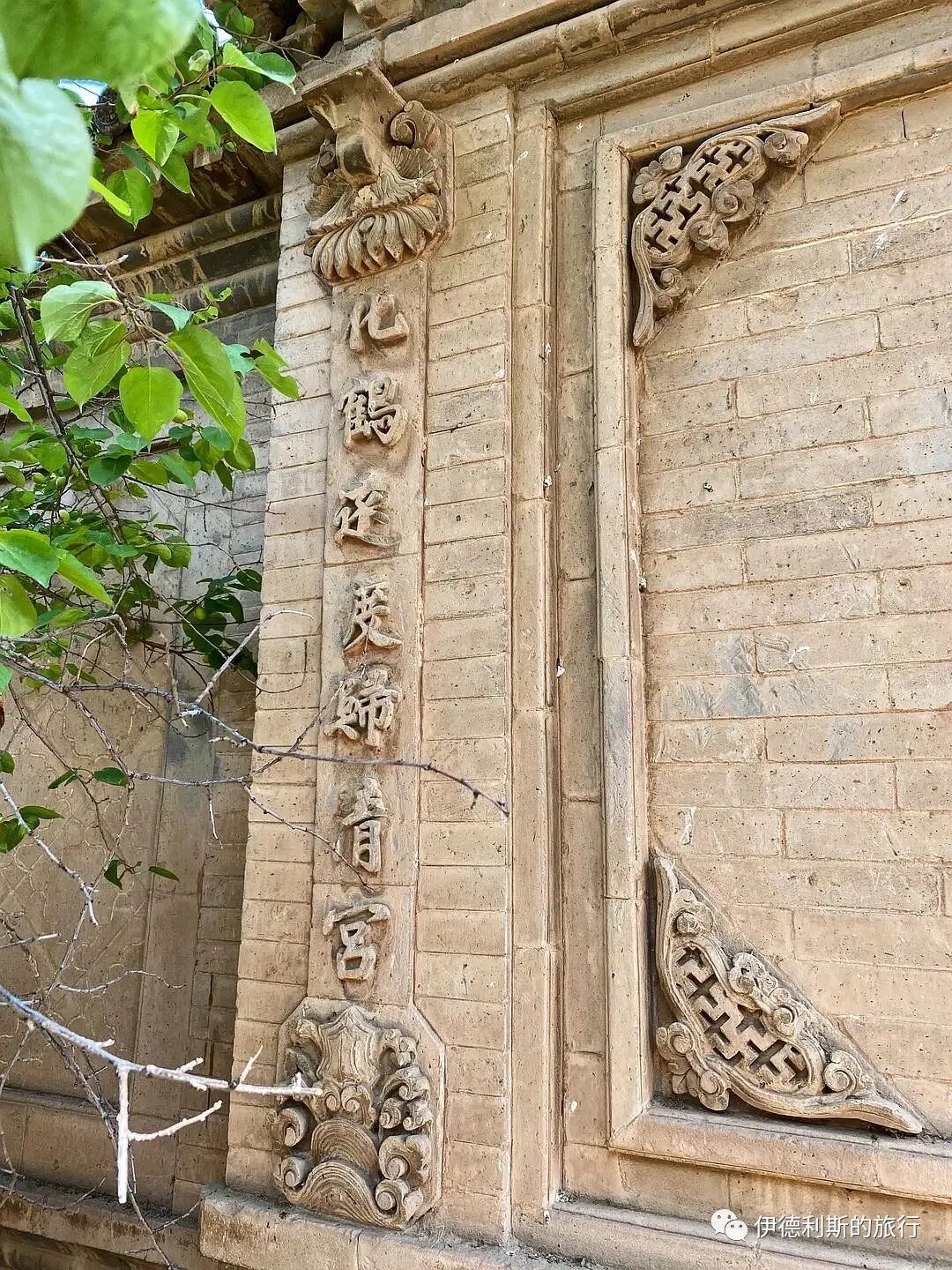
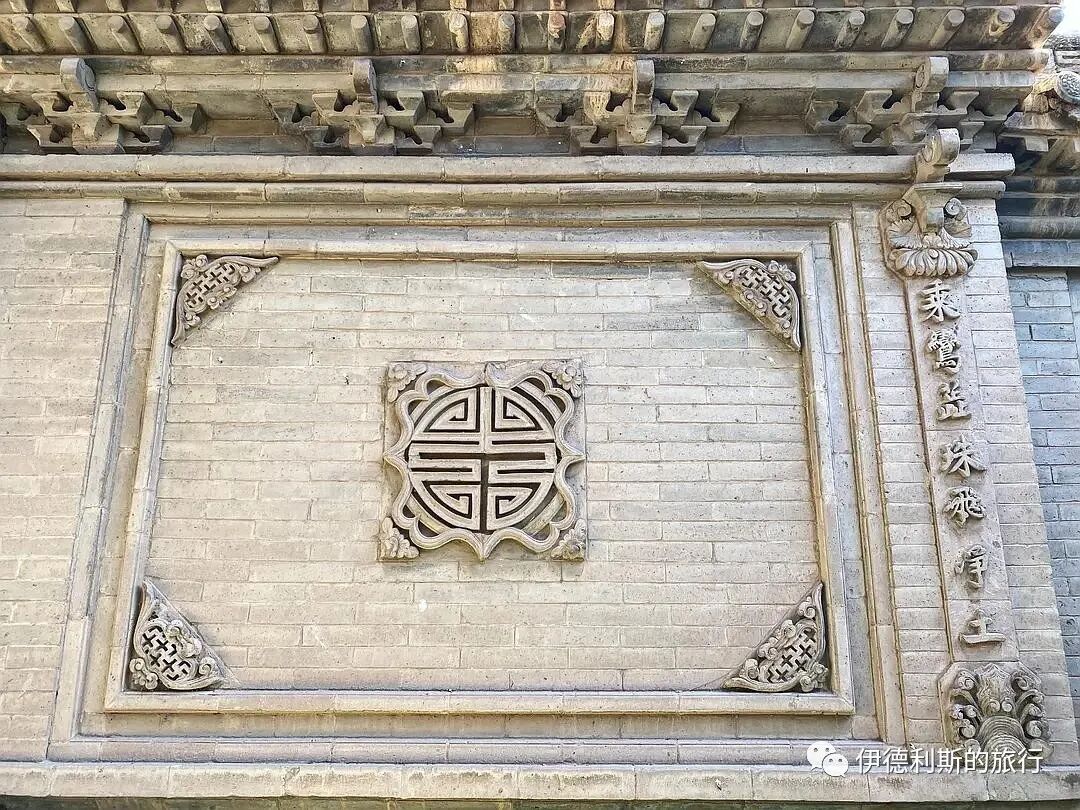
The main mausoleum is under renovation, and you can see the exquisite Arabic brick carvings and the removed roof tiles.
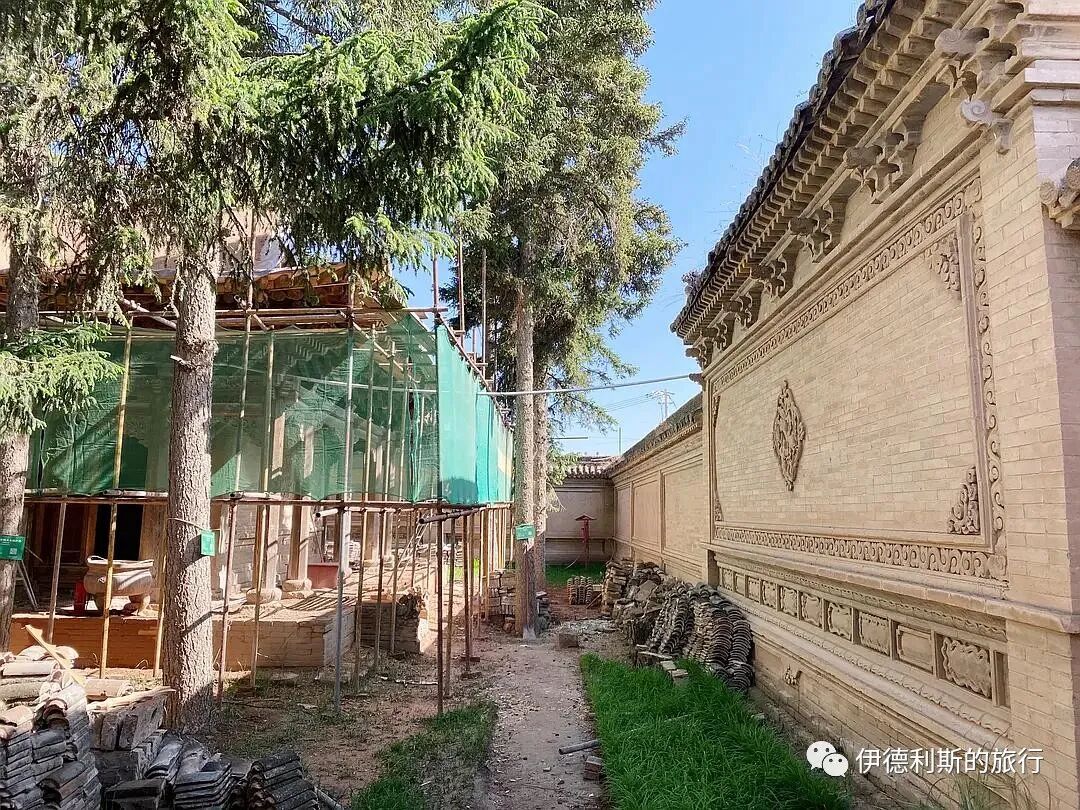
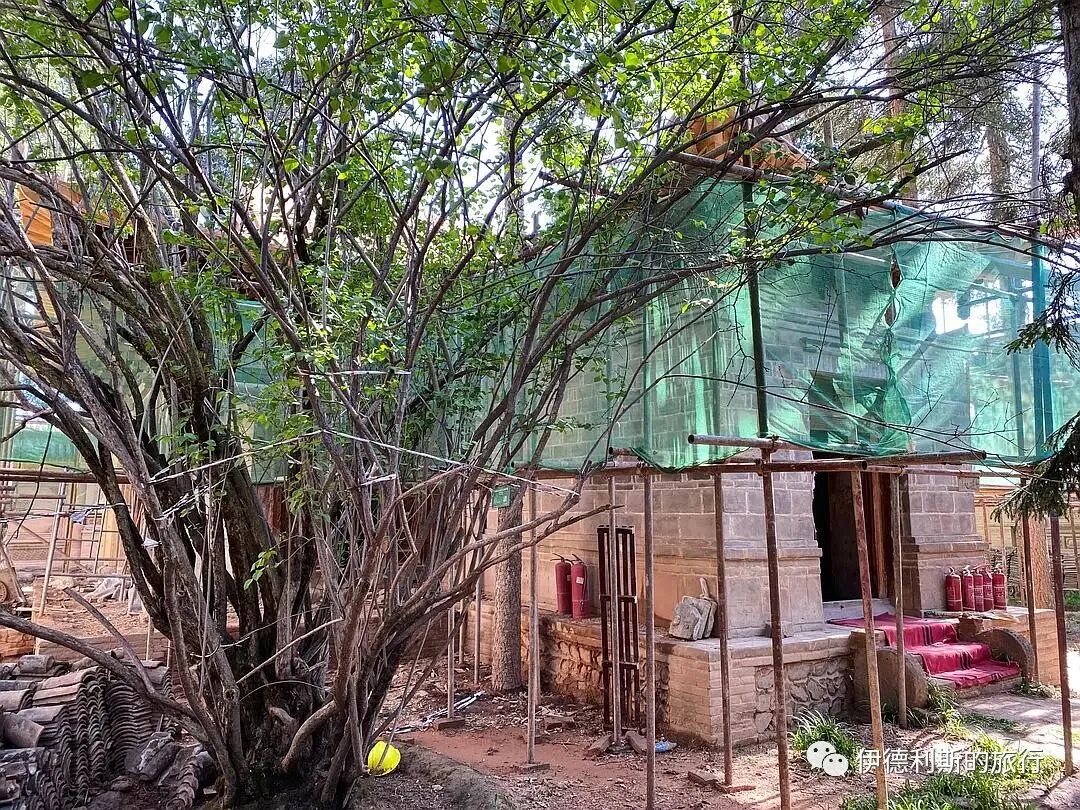
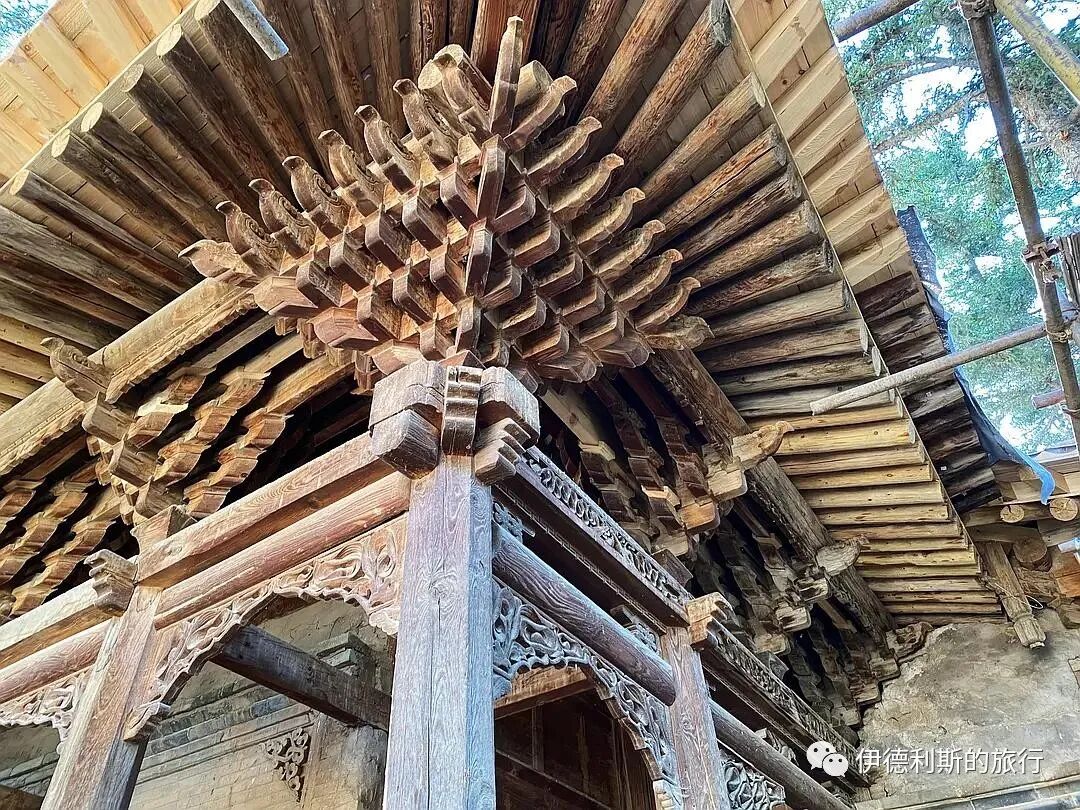
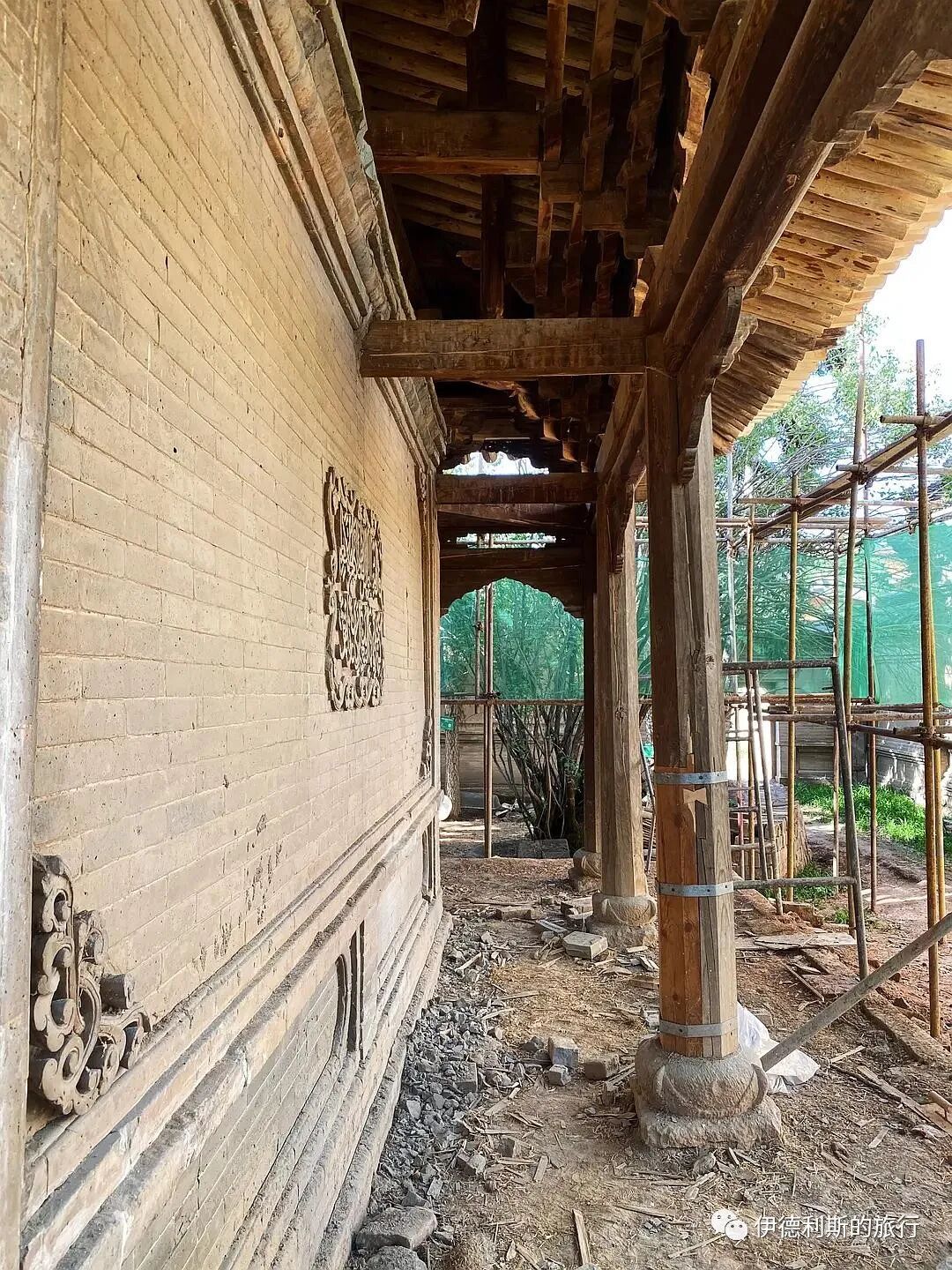
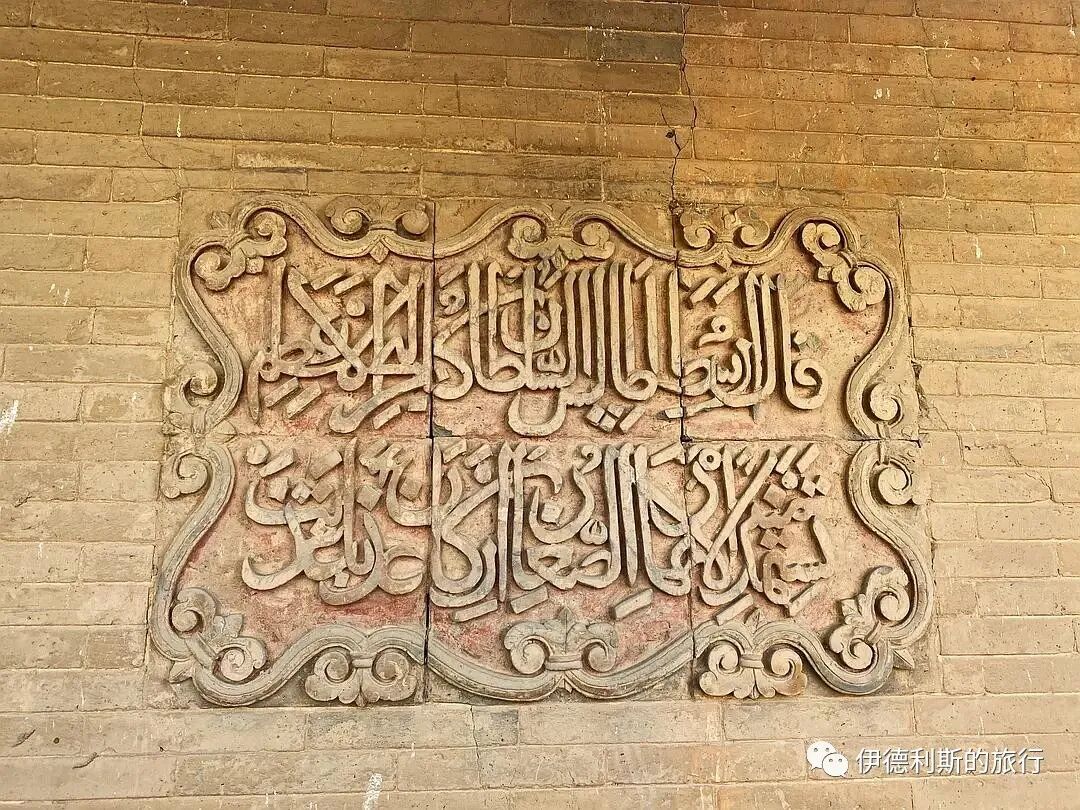
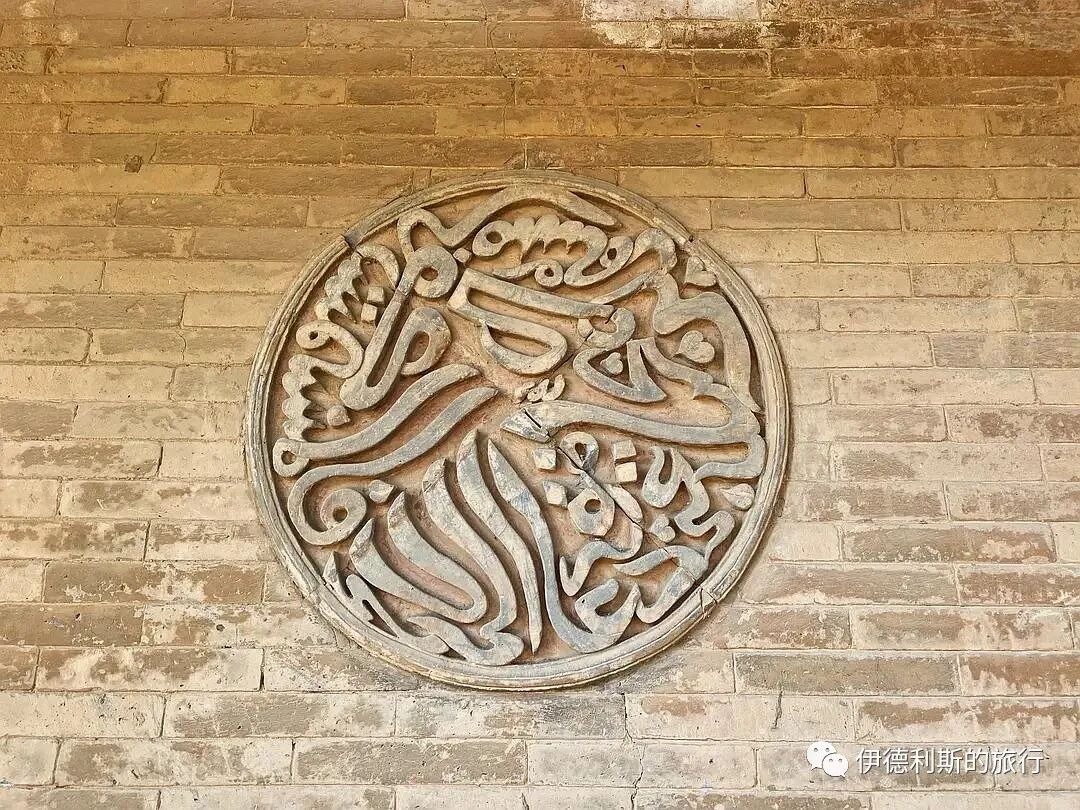
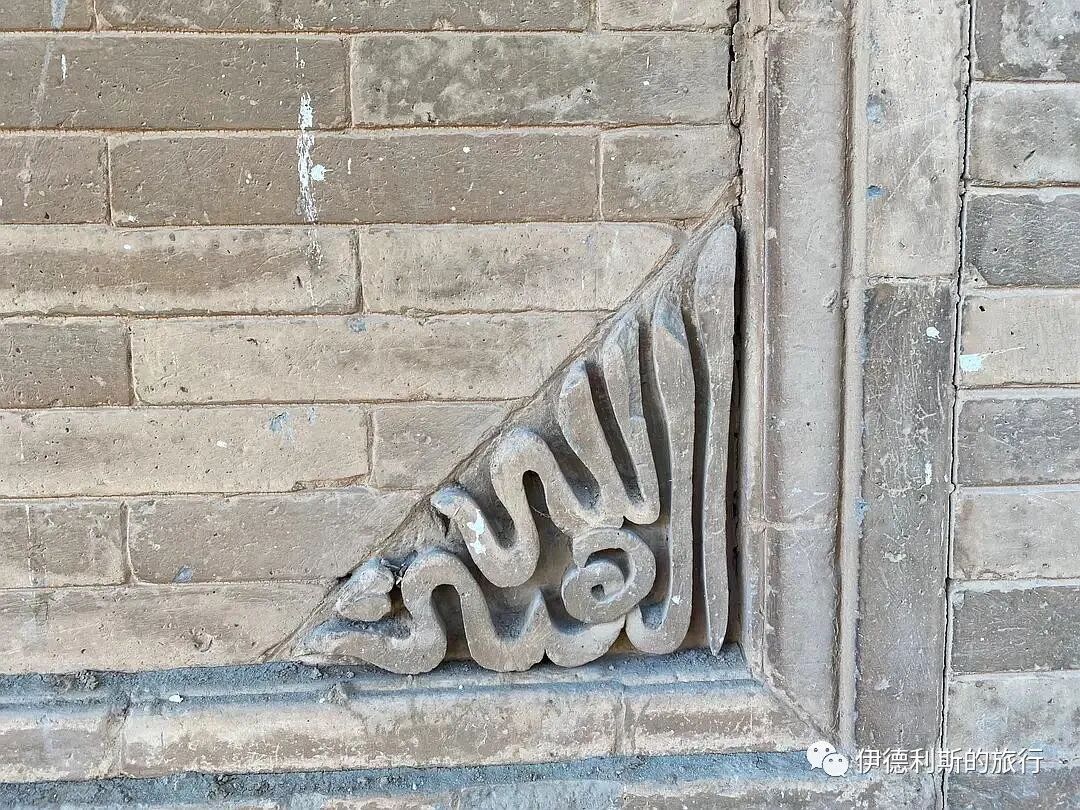
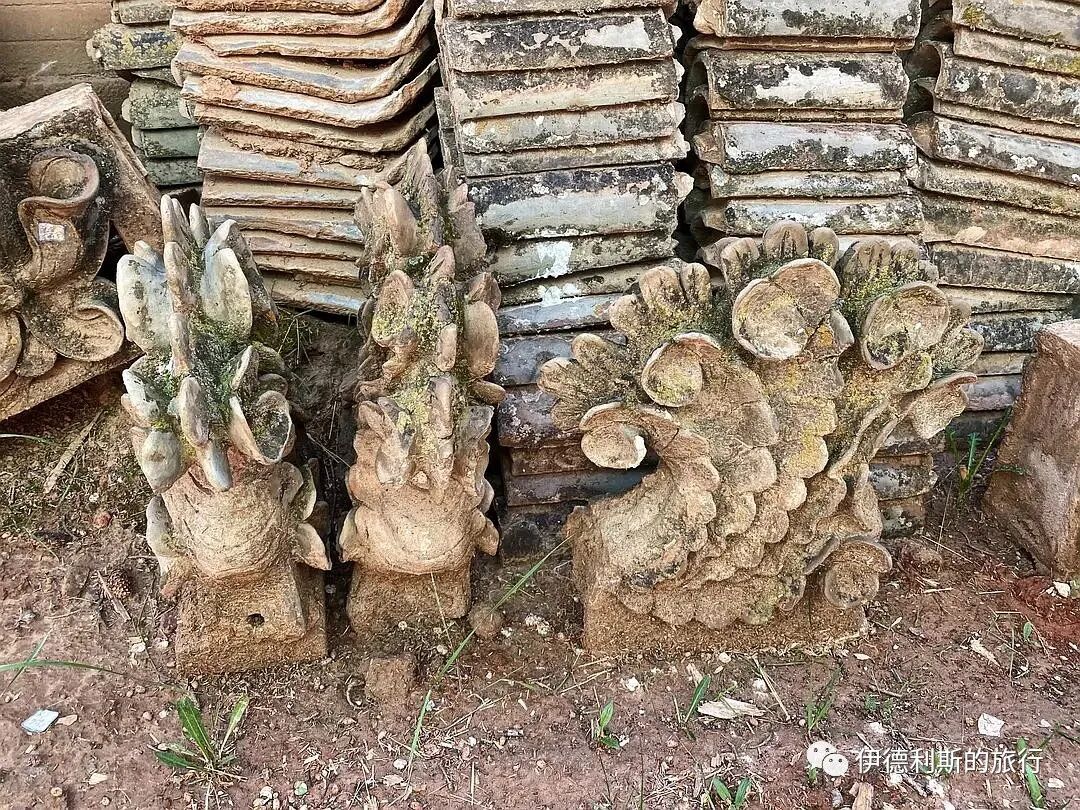
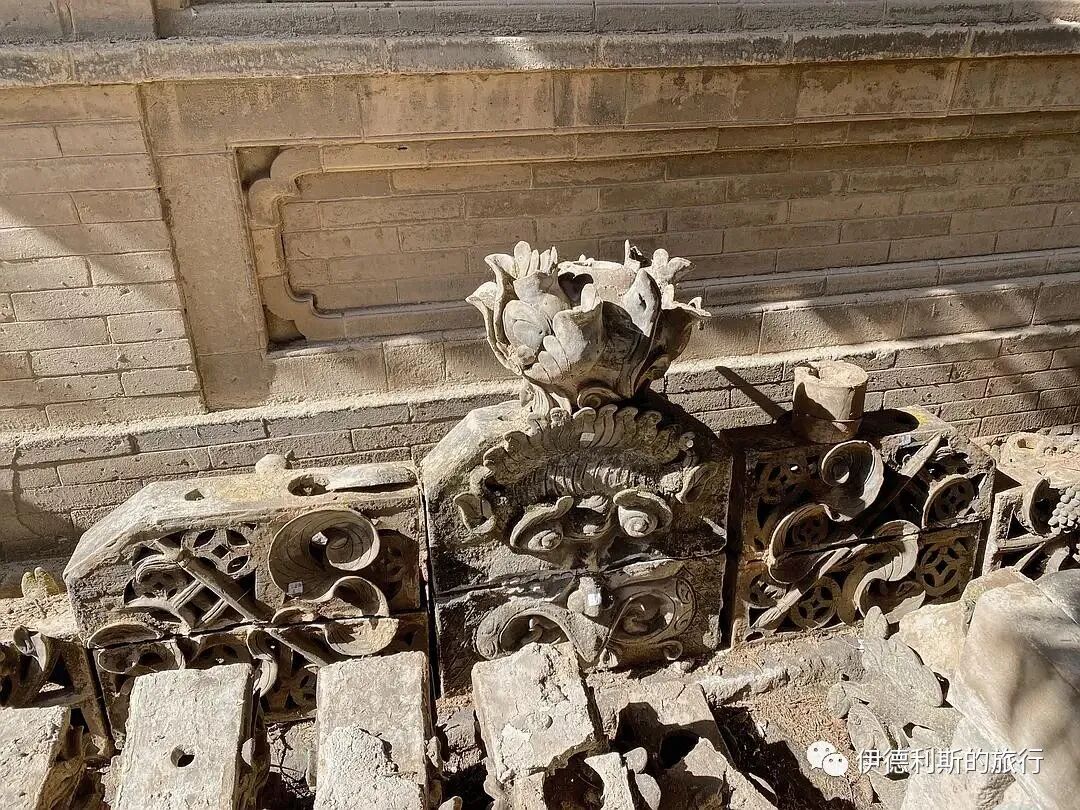
Various brick carvings on the screen wall.
"Rabbit guarding cabbage," where "cabbage" sounds like "hundreds of wealth," and rabbits are considered good at guarding wealth.
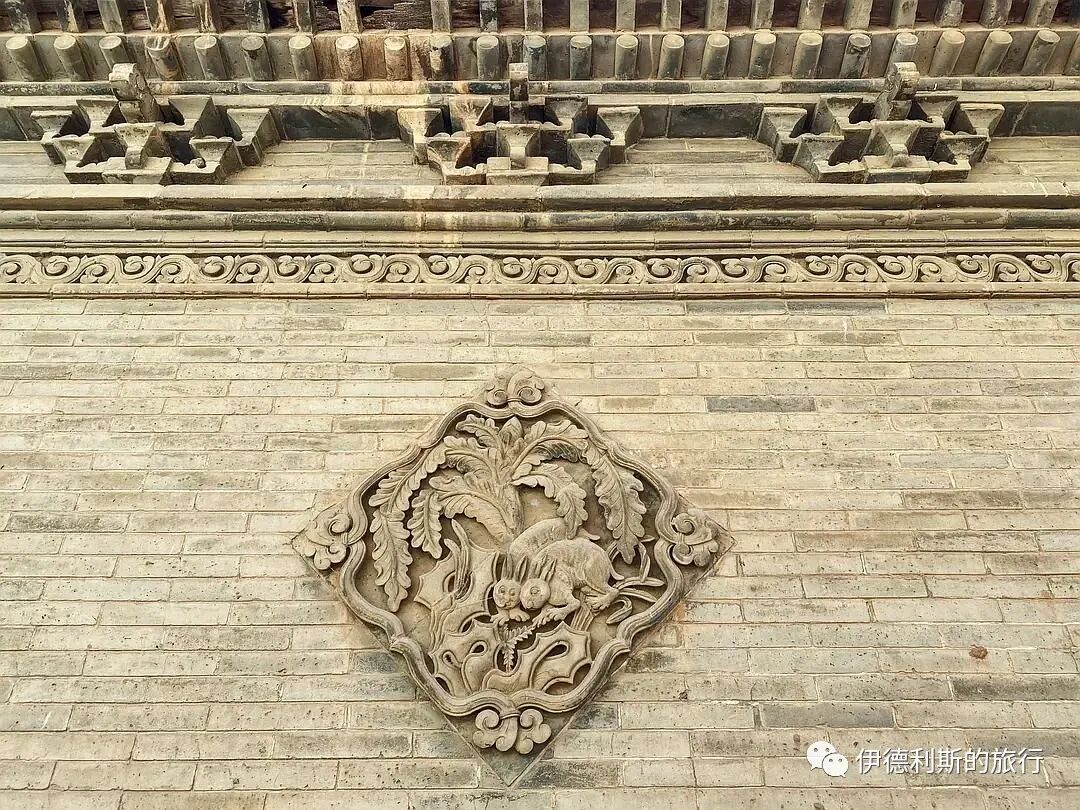
"A mouse stealing grapes," where the mouse represents "zi" (the first of the twelve earthly branches), symbolizes having many children and grandchildren.
Nine Traditional Mosques and Three Gongbei Shrines in Qinghai (Part 4)
Articles • ali2007fr posted the article • 0 comments • 269 views • 2026-05-17 00:18
Summary: This travel note introduces Nine Traditional Mosques and Three Gongbei Shrines in Qinghai (Part 4). A cat playing with a butterfly is a homophone for 'longevity'. It is useful for readers interested in Qinghai Mosques, Chinese Muslims, Muslim Heritage.
A cat playing with a butterfly is a homophone for 'longevity'.
3. Jiezi Gongbei
Hidden in the cemetery on the north side of the Jiezi Grand Mosque in Xunhua, the Jiezi Gong Gongbei is the only historical relic preserved in Jiezi Gong. Currently, only the lower brick section remains, featuring exquisite brick carvings and an inscription stating it was 're-erected in the first year of Xianfeng,' which corresponds to 1851.
It is very precious that Pastor Carter Holton, who was preaching in Xunhua in the 1930s, took photos of the well-preserved Jiezi Gongbei over 80 years ago. view all
Summary: This travel note introduces Nine Traditional Mosques and Three Gongbei Shrines in Qinghai (Part 4). A cat playing with a butterfly is a homophone for 'longevity'. It is useful for readers interested in Qinghai Mosques, Chinese Muslims, Muslim Heritage.
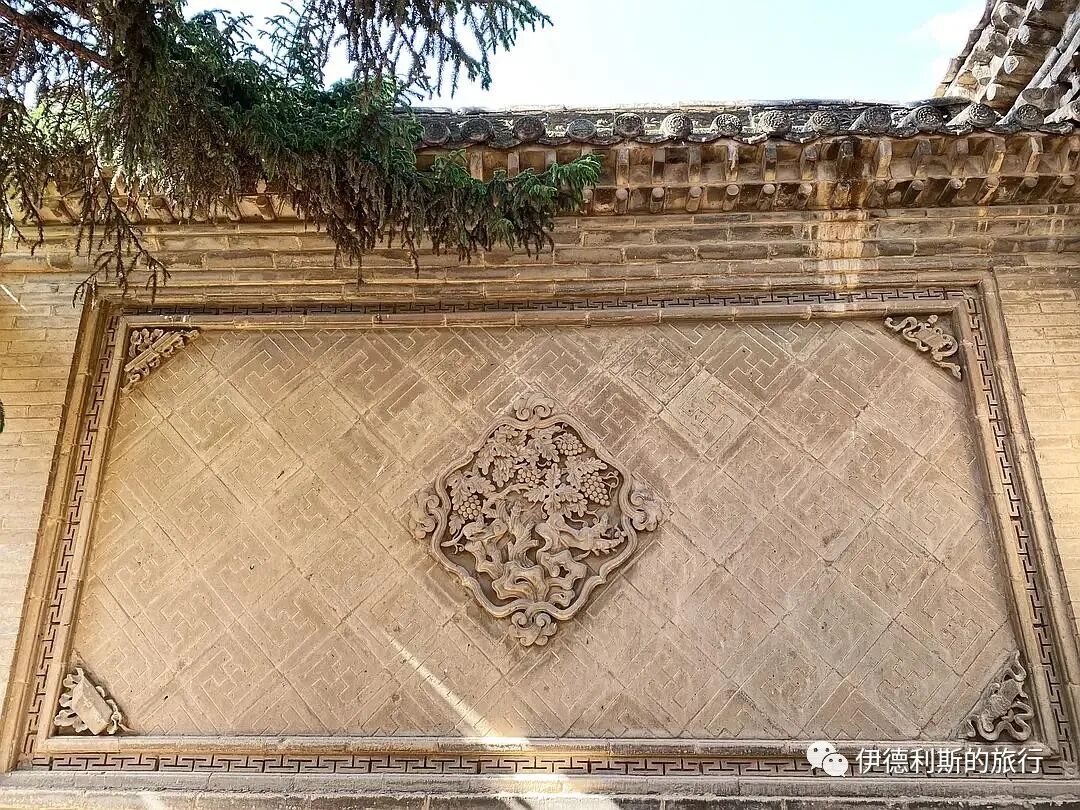
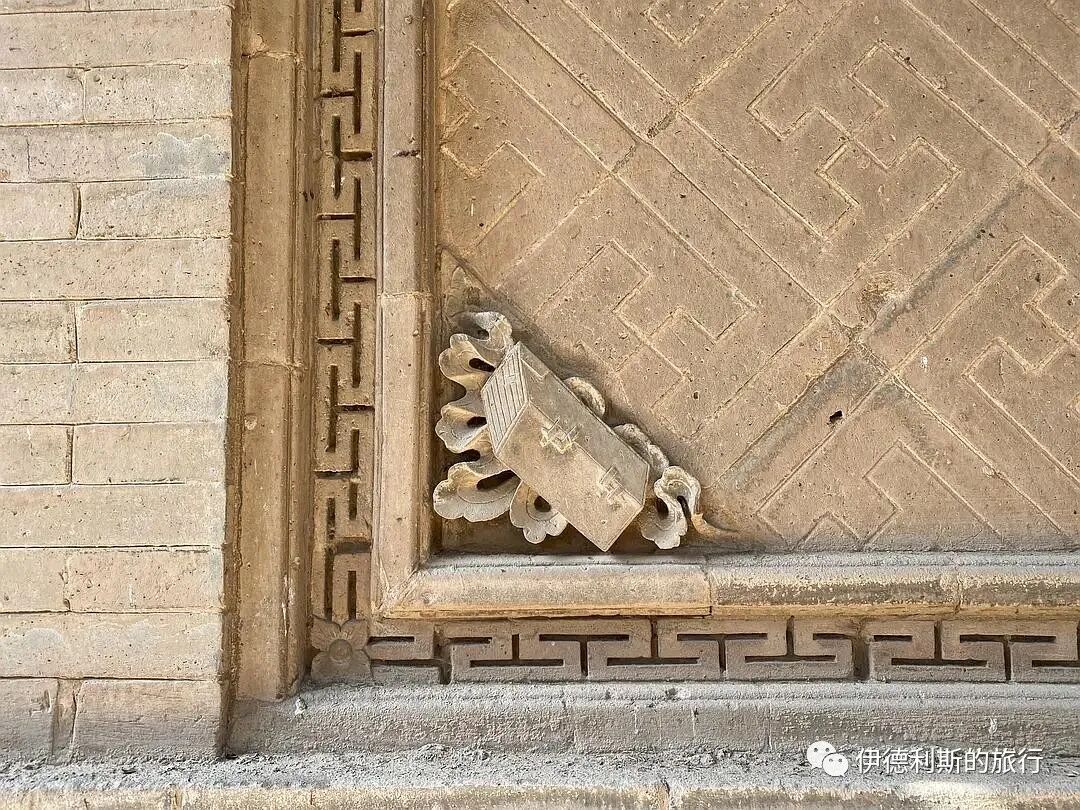
A cat playing with a butterfly is a homophone for 'longevity'.
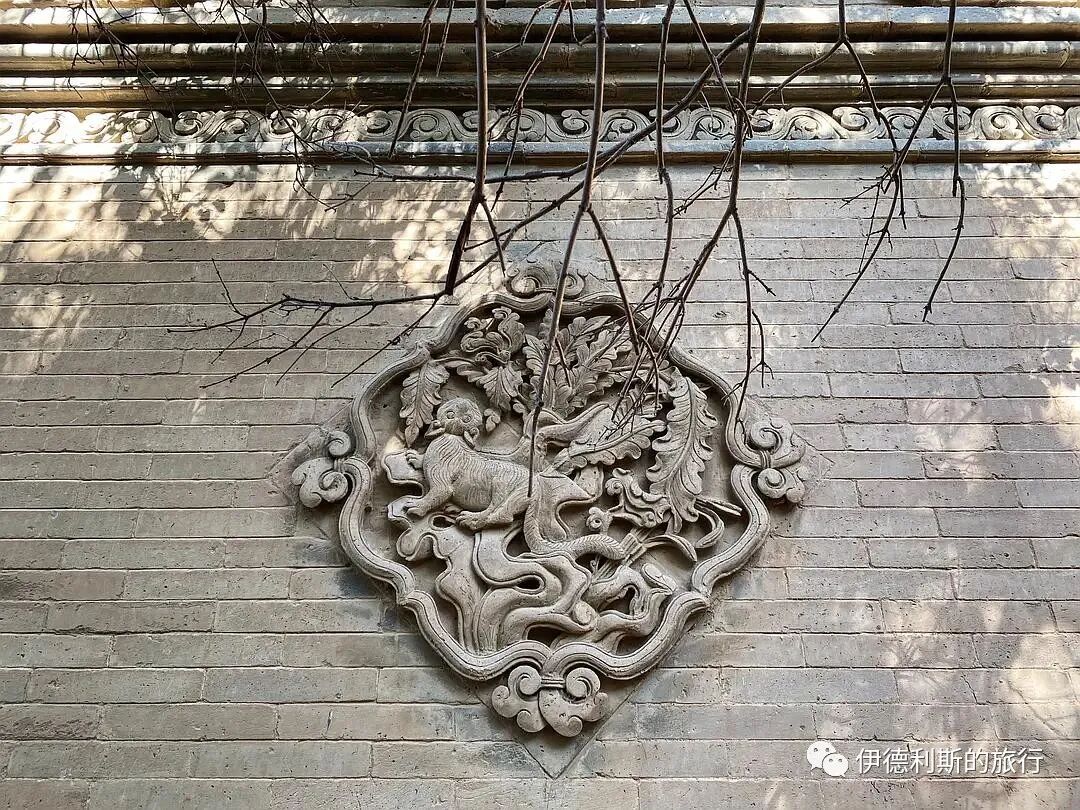
3. Jiezi Gongbei
Hidden in the cemetery on the north side of the Jiezi Grand Mosque in Xunhua, the Jiezi Gong Gongbei is the only historical relic preserved in Jiezi Gong. Currently, only the lower brick section remains, featuring exquisite brick carvings and an inscription stating it was 're-erected in the first year of Xianfeng,' which corresponds to 1851.
It is very precious that Pastor Carter Holton, who was preaching in Xunhua in the 1930s, took photos of the well-preserved Jiezi Gongbei over 80 years ago.
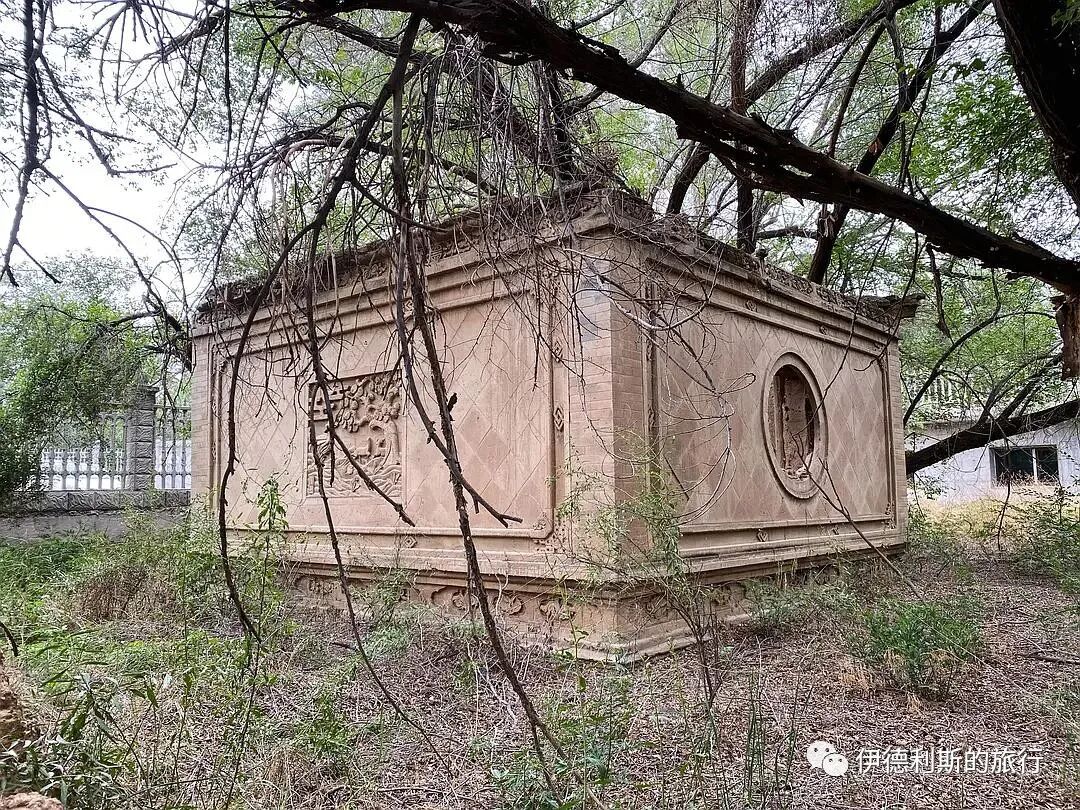
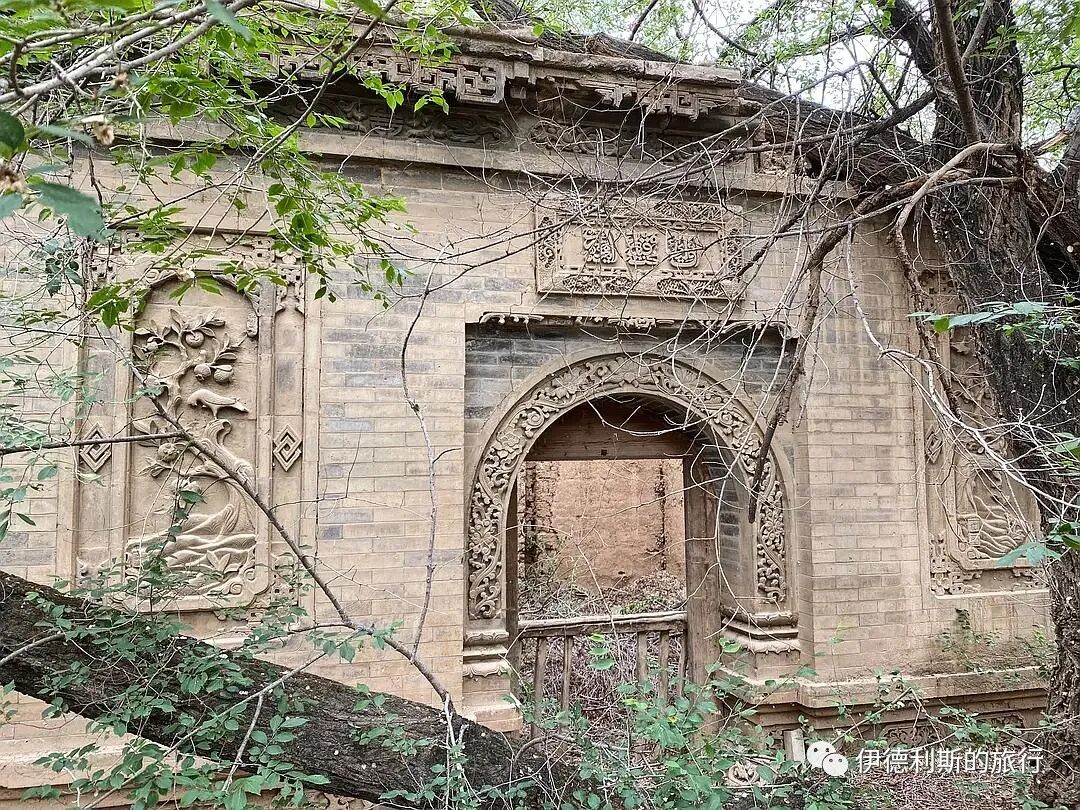
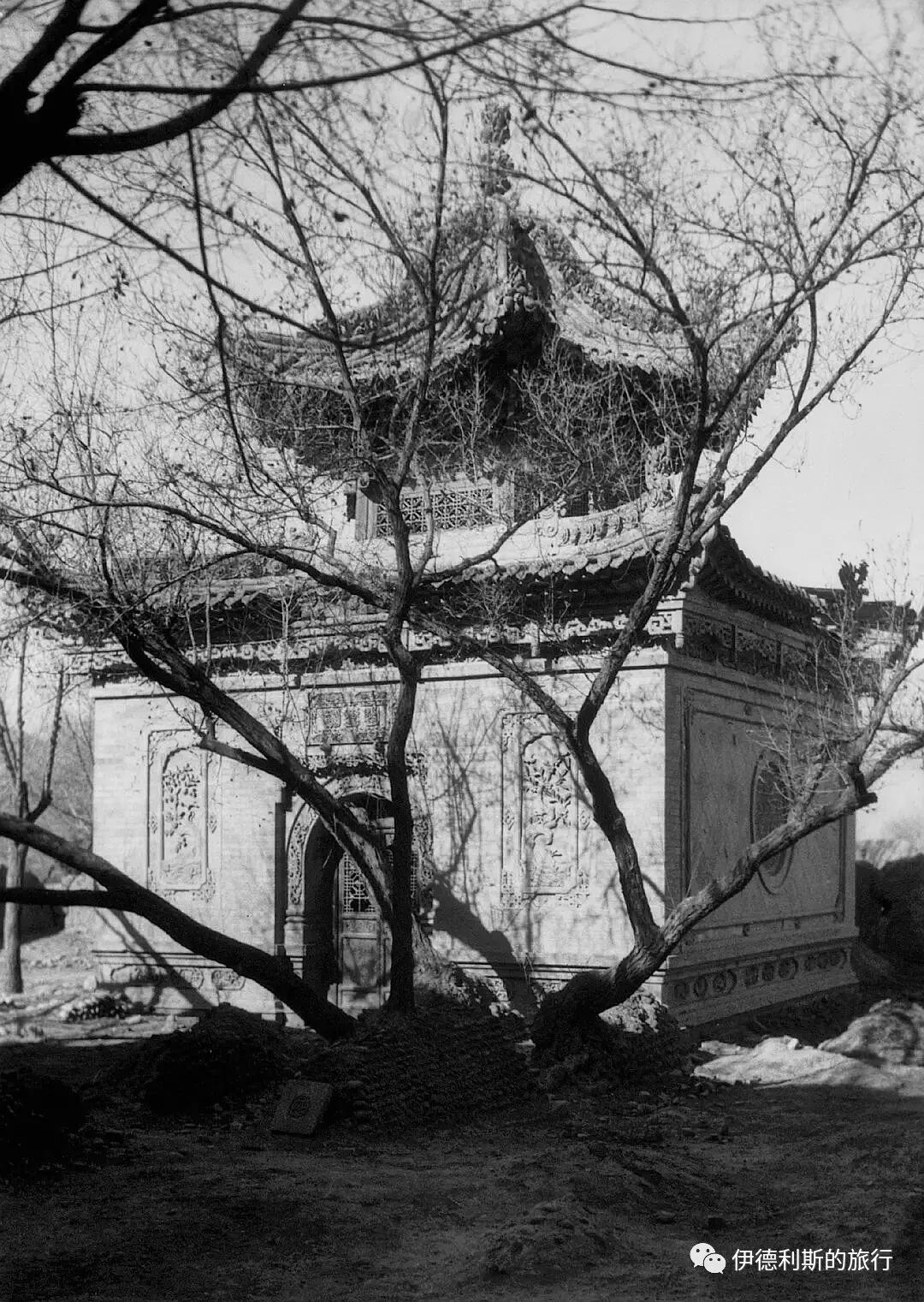
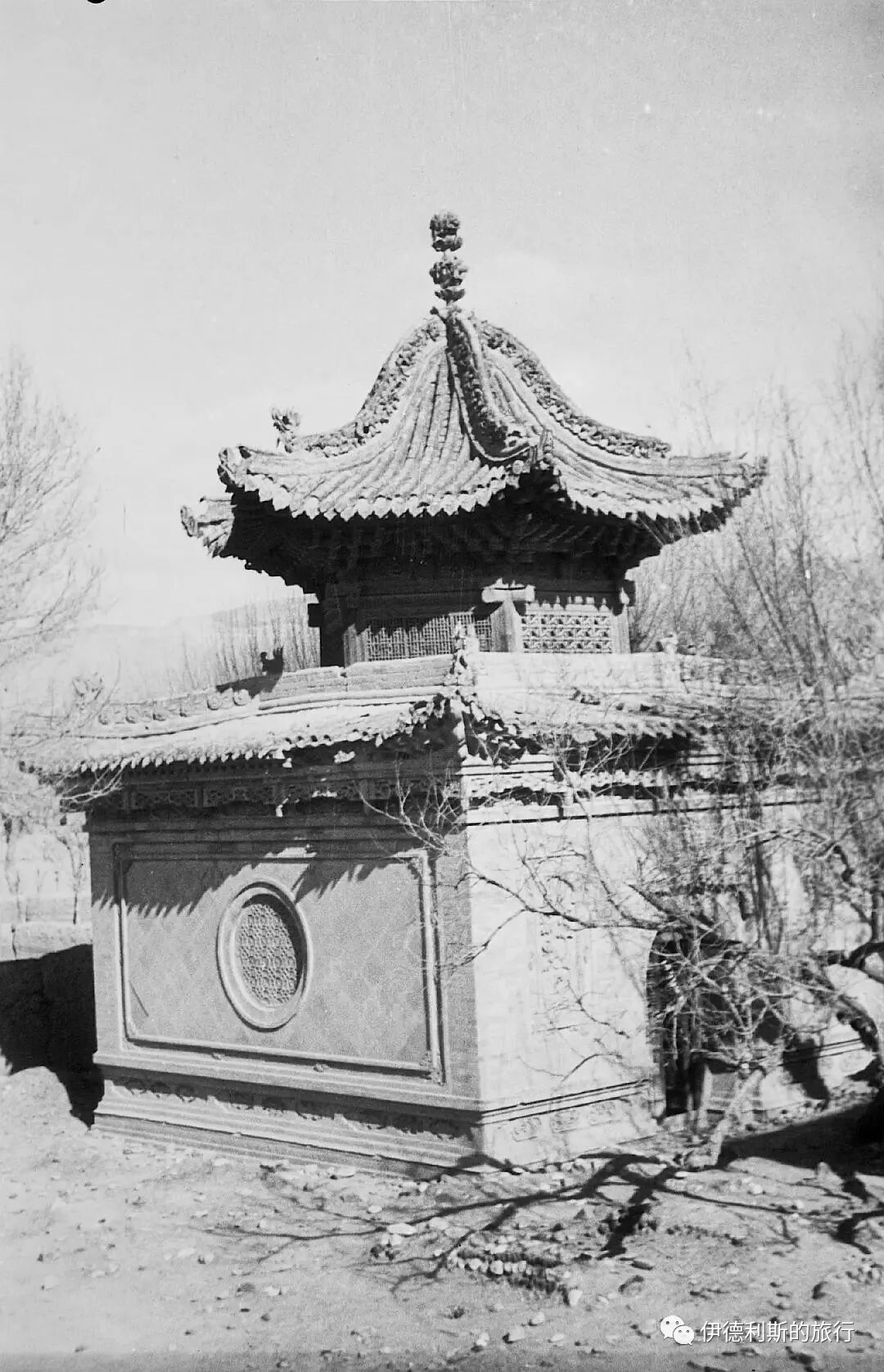
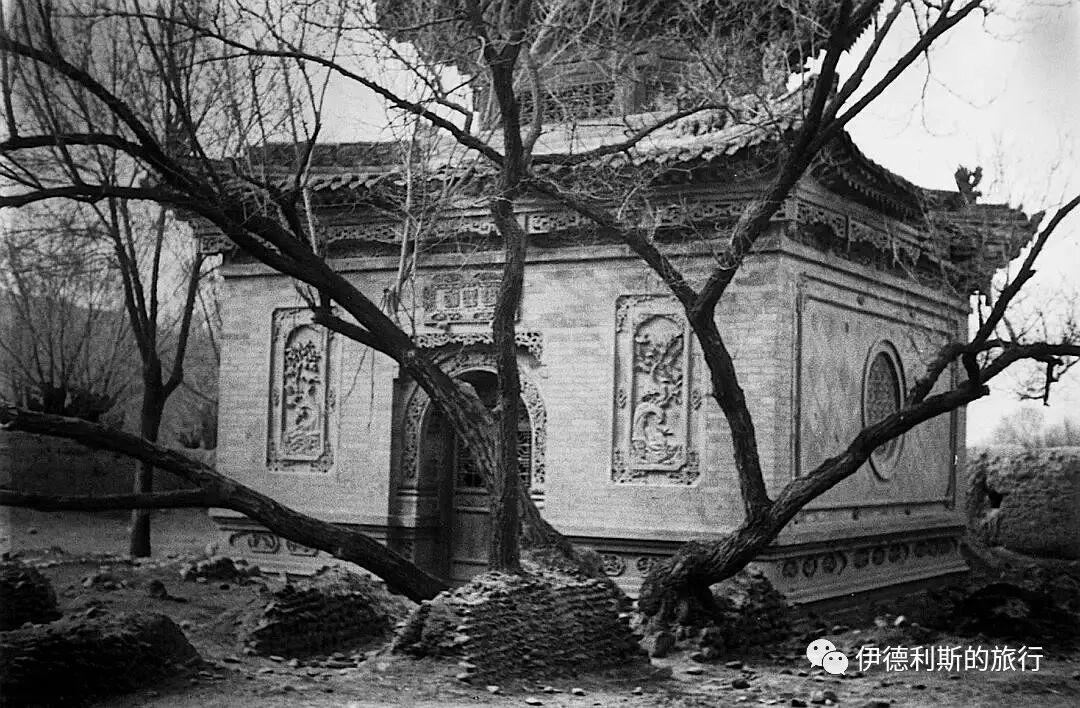
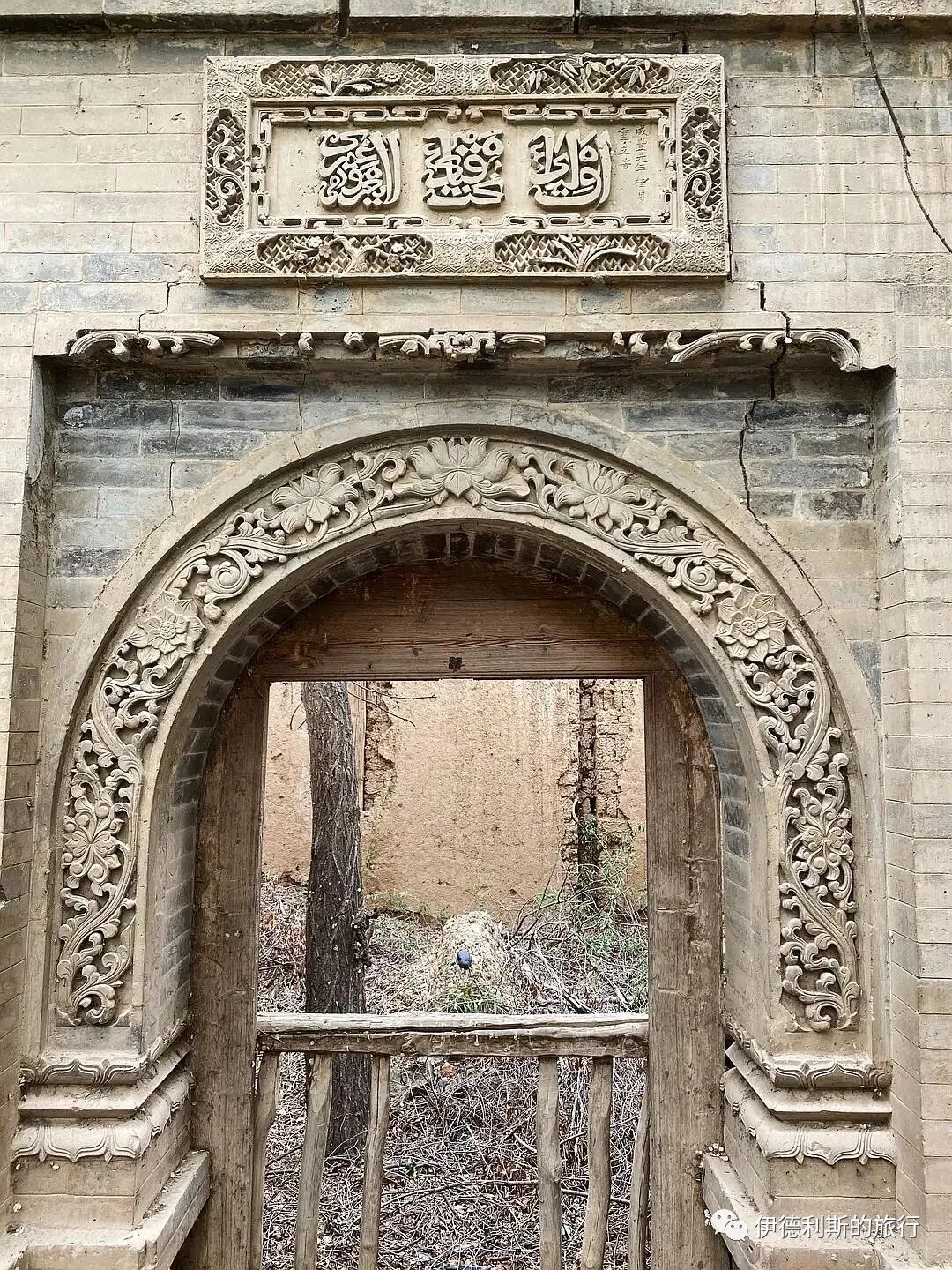
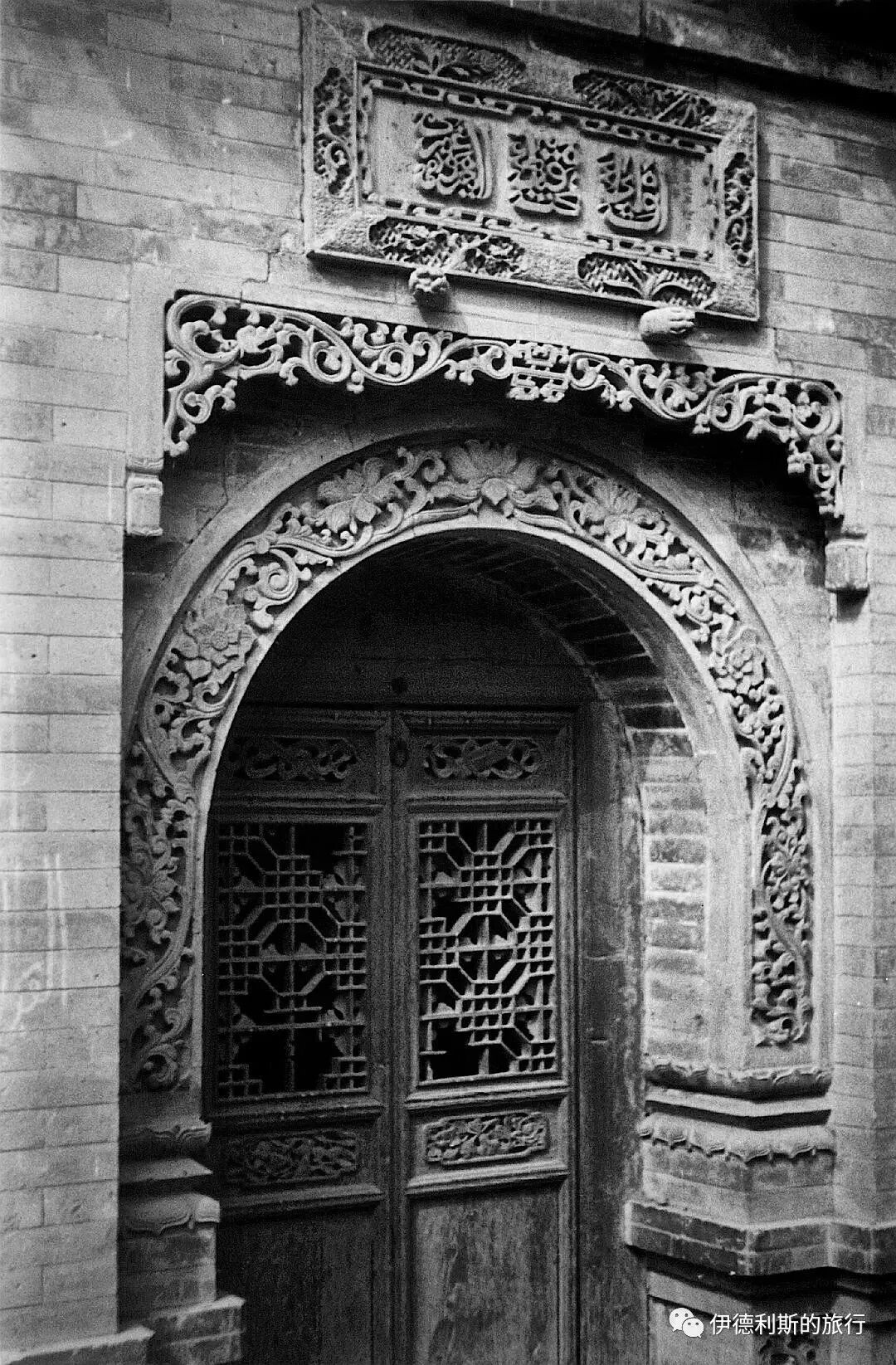
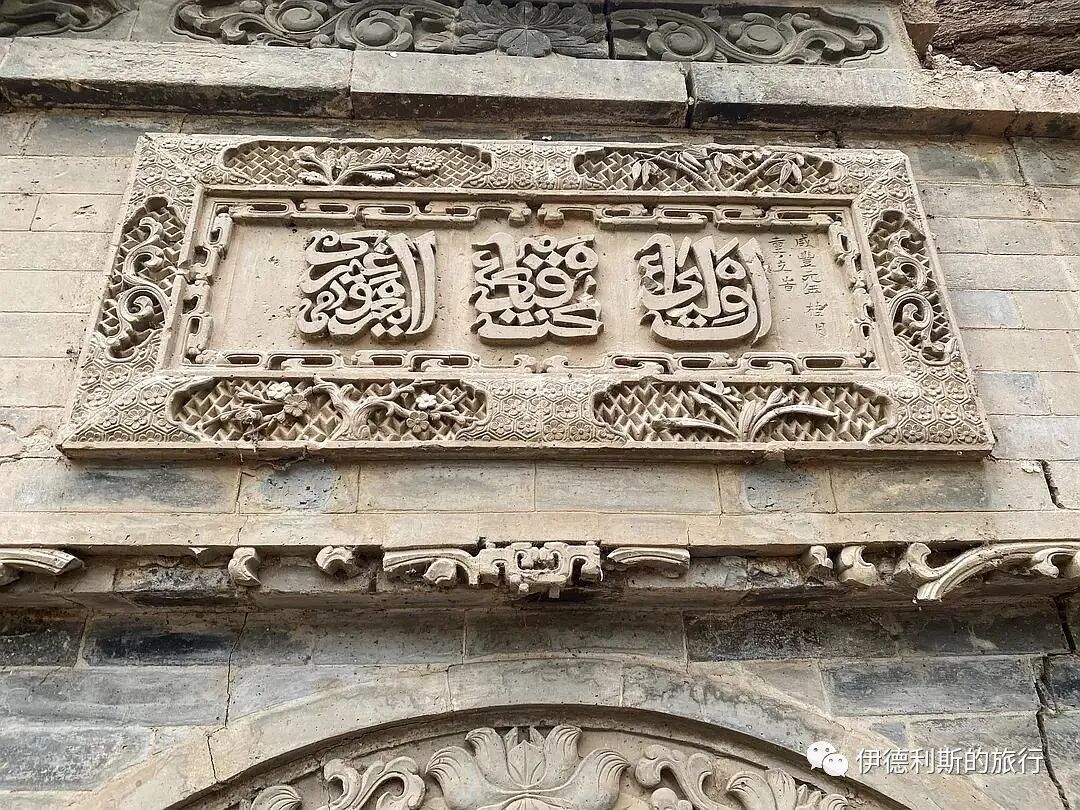
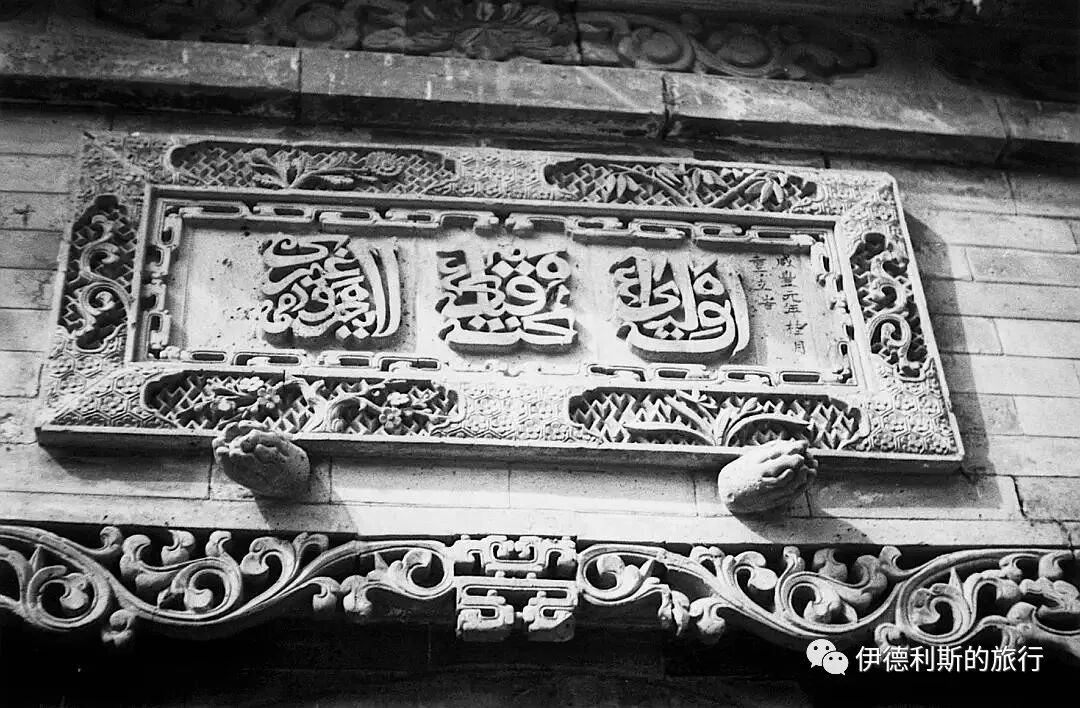
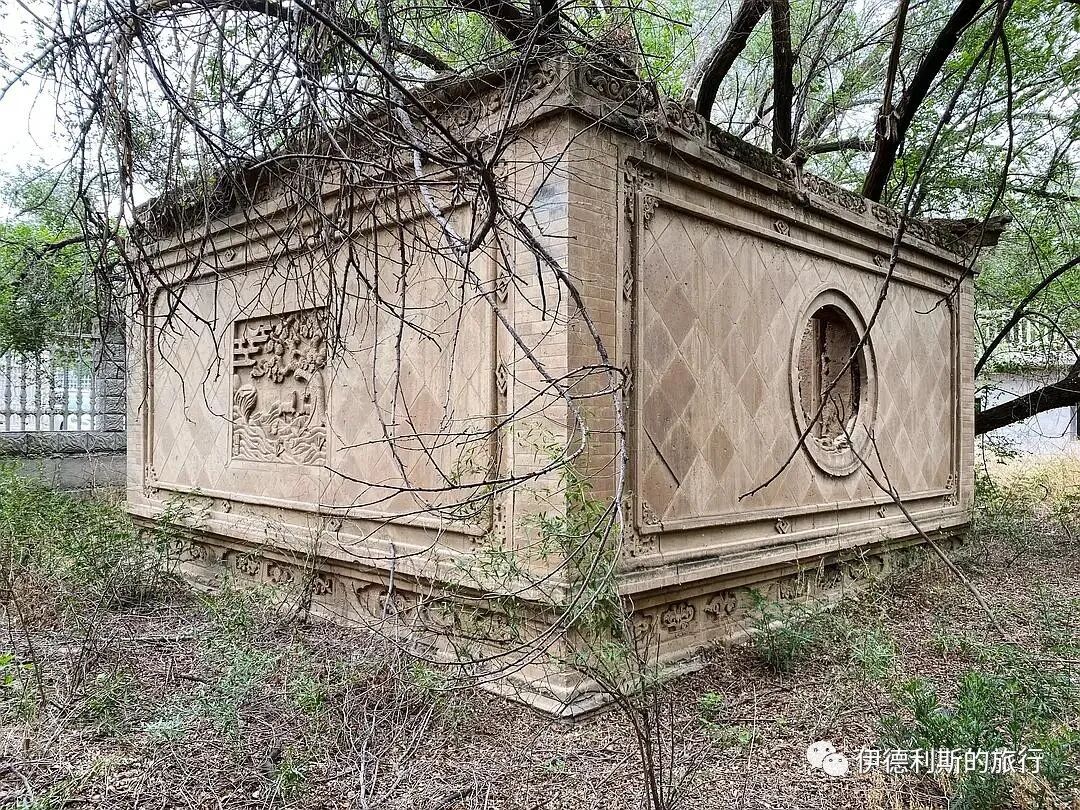
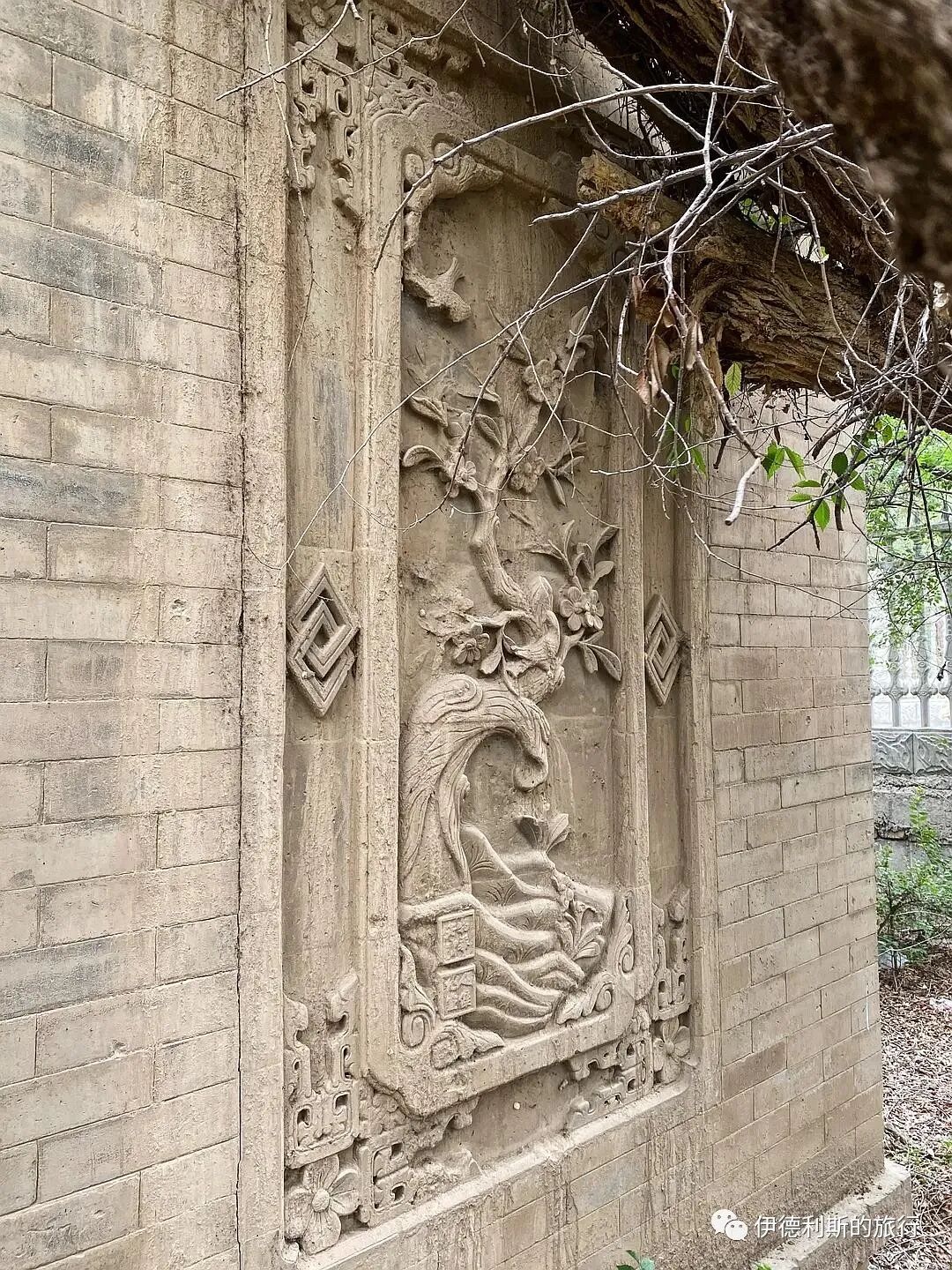
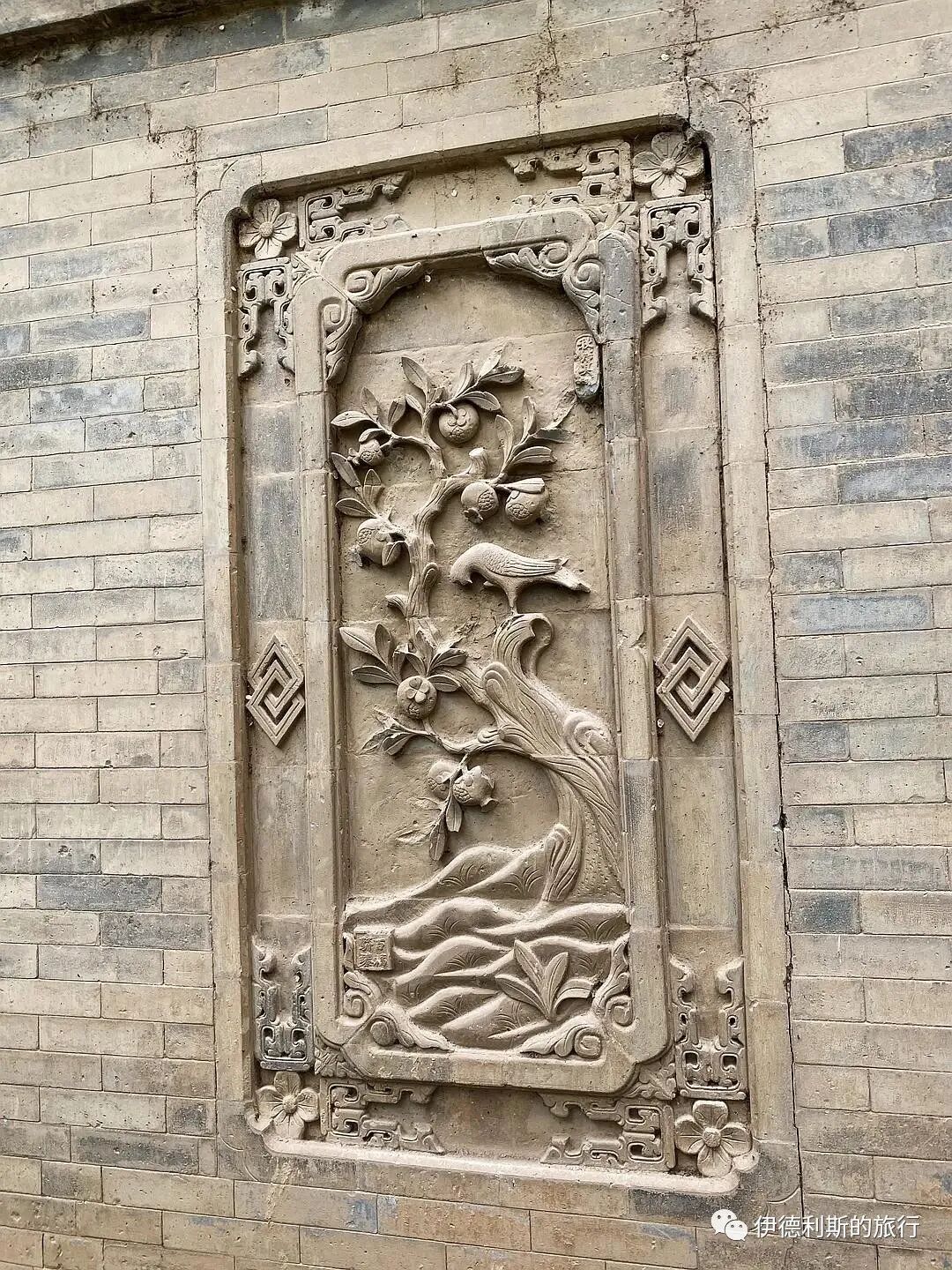
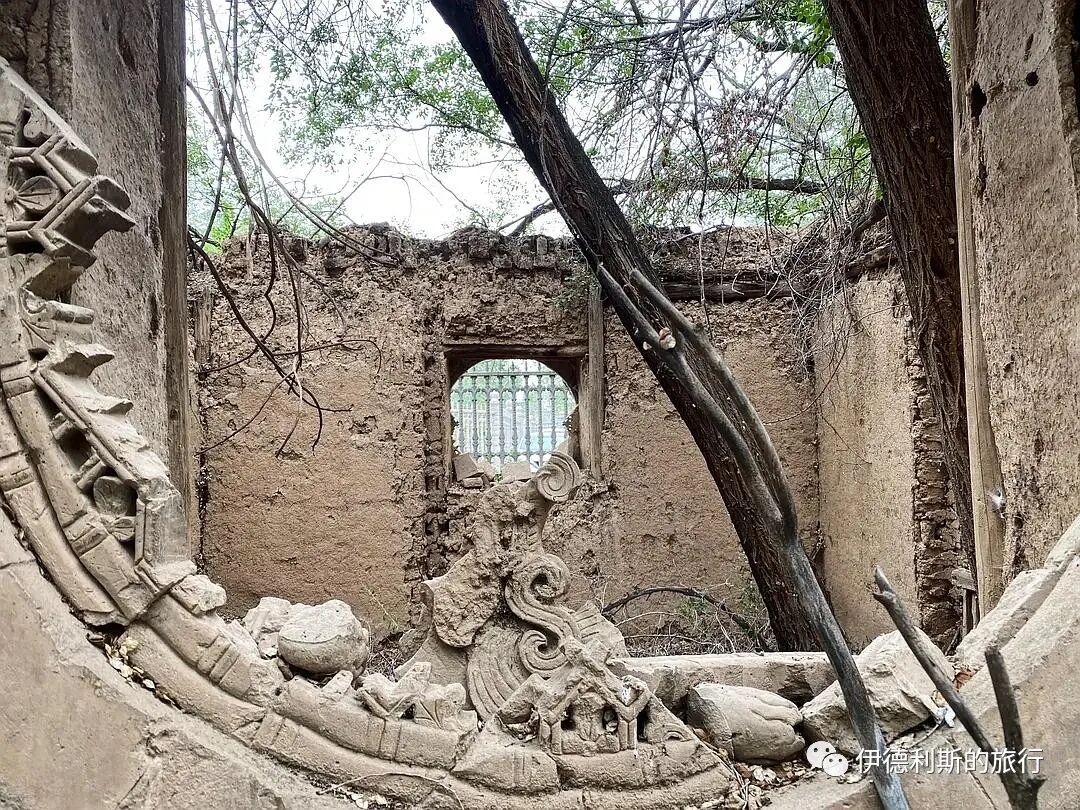
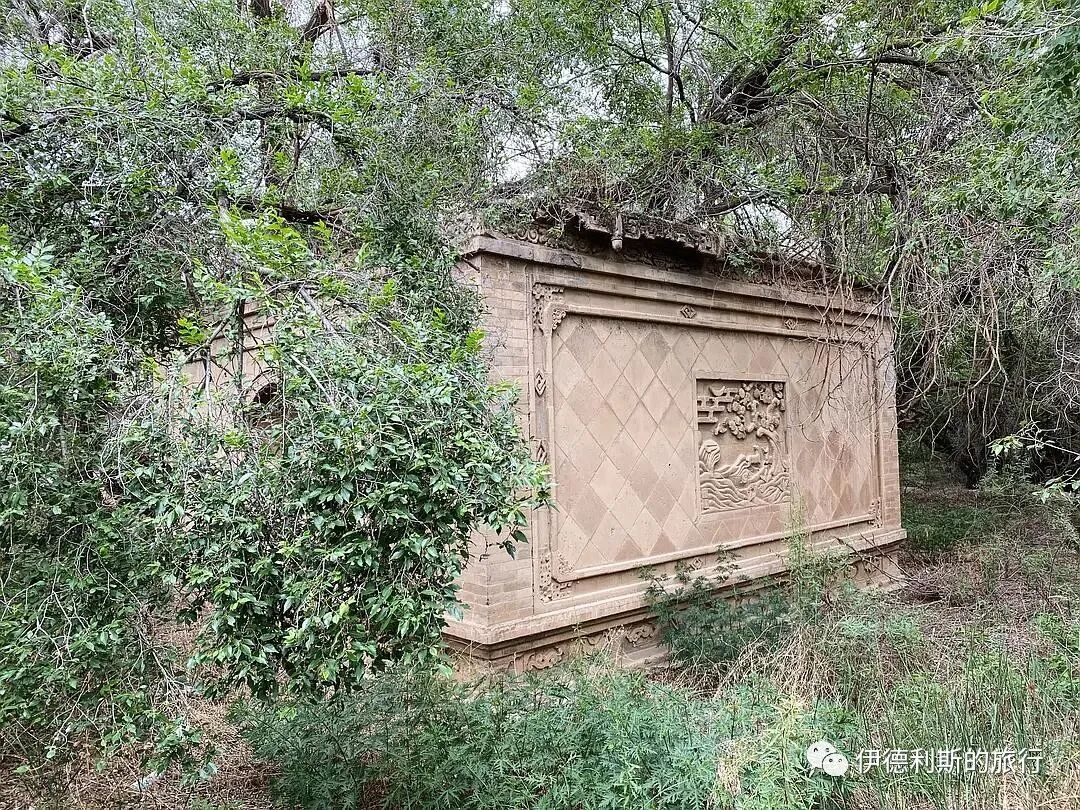
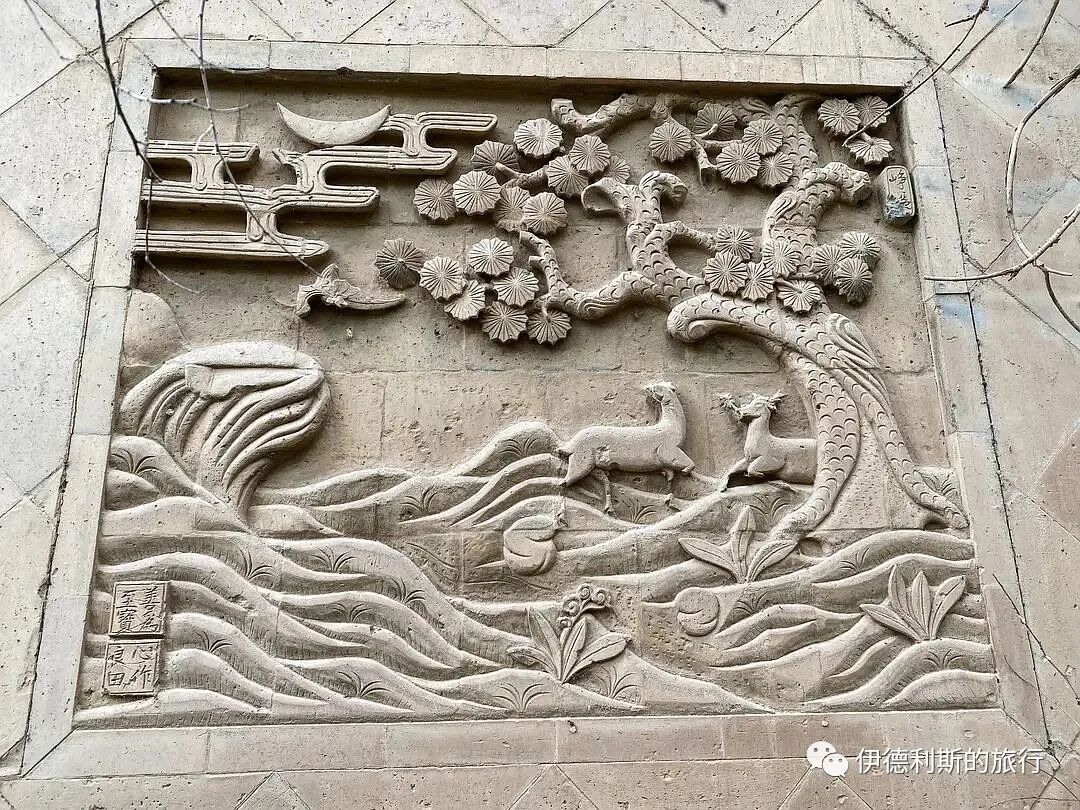
China Mosque Travel Guide: Haoxi Hui Muslim Township in Qingchuan, Guangyuan and Guanghui Gongbei
Articles • yusuf908 posted the article • 0 comments • 225 views • 2026-06-22 06:25
Summary: This China mosque travel guide follows Haoxi Hui Muslim Township in Qingchuan, Guangyuan, the Guanghui gongbei shrine, and Sichuan Muslim heritage without changing the original travel details.
This article summarizes the key points of a self-driving trip to ancient temples in Sichuan during the Spring Festival (Part 13), focusing on Haoxi Hui Muslim Township in Qingchuan County, Guangyuan, and the Guanghuiting gongbei. It keeps the original paragraph and image order, making it suitable for readers interested in Muslim life, Islamic culture, and Chinese Islamic articles. It also helps with searching for content related to Part 13 and Chinese halal food.
We left the ancient town of Qingxi in the morning and arrived at another Hui Muslim township in Guangyuan—Haoxi Hui Muslim Township. We first visited the Guanghuiting gongbei, which belongs to the Qadiriyya Sufi order (menhuan).
Guanghuiting is the burial place of Ma Chunyi, a disciple of the Qadiriyya leader Huazhe Abdullahi. Later generations call him the 'Fifth Great Ancestor'. The Fifth Great Ancestor began studying under Huazhe in 1674 (the 13th year of the Kangxi reign). The following year, he followed his teacher's orders to accompany his senior fellow student Qi Jingyi to Hanzhong, and later traveled to Qingyang Palace in Chengdu. Legend says that while returning to Hanzhong, the Fifth Great Ancestor followed his teacher's instructions to buy two bolts of white cloth in Zhongba, Jiangyou. After leaving Jiangyou, he fell ill with dysentery. He passed away (gui zhen) in 1684 (the 23rd year of the Kangxi reign) while passing through Haoxi Mosque. Later generations built a gongbei for him, naming it 'Guanghuiting'.
In 1833 (the 13th year of the Daoguang reign), Ma Longyun from Hezhou oversaw the construction of the brick pavilion at Guanghuiting and donated land to it. A front hall was added during the Xianfeng reign, and it has been renovated many times since. In 1935, Red Fourth Front Army leaders like Xu Xiangqian and Chen Changhao directed the Battle of Xuanmaguan from Guanghuiting. The imam (ahong) stationed at the mosque at the time, Su Shichang, provided them with great assistance. Before leaving, Xu Xiangqian gifted him items like white sugar. After 1966, Guanghuiting became a commune hospital. It was restored in 1980 and rebuilt into its current structure in 1984.
Historical plaques at the Guanghuiting gongbei:
The 'Huiji Qunli' (Benefiting the Masses) plaque from the 21st year of the Guangxu reign, presented by Chen, the magistrate of Pingwu County, Long'an Prefecture, who held a third-rank title as an imperial guard and was granted the title of Tongzhi. It was also signed by She Deshou, Ma Desheng, Hu Jun, She Ren, and Hu Congfeng.
The 'Wangu Zhanyi' (Venerated for All Time) plaque from the 28th year of the Guangxu reign, presented by Shan Diankui, who held a first-rank title and served as the Commander-in-Chief of the Sichuan Provincial Military, also holding the title of Commander of the Jianchang Garrison and the title of Sheng-Sheng Baturu.
Shan Diankui was a Qing dynasty military officer from Changping, Beijing. He was passionate about Islamic affairs. He wrote plaques for the Puhading Cemetery in Yangzhou, the Great Mosque in Tianjin, the Hexi Mosque in Xichang, and the Guanghui Pavilion (guanghuiting) gongbei. He funded the woodblock printing of the Shan family edition of the Precious Scripture of Life (baoming zhenjing) in Songjiang Prefecture, which is the 'Haitie' commonly used by Hui Muslims. He also established an elementary school at the Changping Mosque in his hometown.
The 'Zhimiao Qingzhen' plaque from the fifth year of the Republic of China mentions He Bingkuan, battalion commander of the first battalion of the front five units of the Western Route of the Han Army, who received a second-class medal and was credited with seven major merits. It also lists Feng Zhaosheng, Ma Junming, Ma Wanfa, and Li Ze, who were patrol officers of the right guard of the fifth battalion of the front five units of the Western Route of the Han Army and were credited with three major merits.
Inside the gongbei is the 1924 'Stele Record of the Reconstruction of Wulong Mountain and Xulong Mountain' written by La Yonggui. The text records that in 1833 (the 13th year of the Daoguang reign), Ma Nengyun from Hezhou brought silver to Haoxi to build a brick pavilion. He did not finish the work, so he went to Hezhou and Songpan to raise 270 taels of silver to complete it, and purchased a plot of land behind the pavilion and a section of mountain land. During the Xianfeng reign, Ma Daoxiang and local Muslims from Songpan and the surrounding area built a front hall (baoting) in front of the pavilion, which was rebuilt during the Tongzhi reign. In the early Guangxu reign, elders from Songpan invited Ma Dao'an, the abbot of Xulong Mountain (Haoxi gongbei), to renovate the pavilion and guest hall, and to repair one room at Wulong Mountain (Guanghui Pavilion). During the Guangxu reign, successive earthquakes tilted the Haoxi gongbei. When Mi Yongling was the abbot of Guanghui Pavilion, he went to Songpan and the local area to raise funds to rebuild the pavilions, front halls, guest halls, mountain gates, and courtyard walls of both mountains.
The two cypress trees inside the gongbei are 450 and 350 years old, respectively, and are listed as ancient and famous trees in Qingchuan County.
The prayer hall of the Guanghui Pavilion gongbei. The prayer hall (daotang) of a Qadiriyya grand gongbei usually contains both a gongbei and a prayer hall, so it is also called a gongbei mosque.
Haoxi Hui Ethnic Township is located at the border of Sichuan and Gansu. It is an important stop for people traveling from Qingchuan County to Wudu and Wenxian in Gansu to sell Sichuan tea. Most Hui Muslims in Haoxi moved here from the northwest. The Ma family is said to have come from Jingyang, Shaanxi, and the Zhe family is said to have come from Wudu and Wen County in Gansu. The Haoxi Mosque is said to have been built in the early Qing Dynasty. It was renovated many times and rebuilt into its current structure in 2017.
Haoxi Mosque is one of the most steeply situated mosques I have ever seen. The main prayer hall towers over the hillside, while the washroom and offices are at the bottom, connected by a set of steep stairs. However, a gentle asphalt road has been built now, which must be much more convenient than it was for those before us.
It is a pity that the main hall was locked when I visited, so I could not go inside.
Looking at the street scene in Qingguang Village, Haoxi, there are Hui Muslim restaurants, snack shops, and beef shops. The local yellow beef (tuhuang niurou) here is very famous. Village life is leisurely and quiet, and every day moves very slowly.
Next to Haoxi Hui Ethnic Township is the Giant Panda National Park. A sign by the road warns, 'Black bears are active in the forest area, please pay attention to your safety.' You can tell the ecology here is excellent and suitable for animals to live. view all
Summary: This China mosque travel guide follows Haoxi Hui Muslim Township in Qingchuan, Guangyuan, the Guanghui gongbei shrine, and Sichuan Muslim heritage without changing the original travel details.
This article summarizes the key points of a self-driving trip to ancient temples in Sichuan during the Spring Festival (Part 13), focusing on Haoxi Hui Muslim Township in Qingchuan County, Guangyuan, and the Guanghuiting gongbei. It keeps the original paragraph and image order, making it suitable for readers interested in Muslim life, Islamic culture, and Chinese Islamic articles. It also helps with searching for content related to Part 13 and Chinese halal food.
We left the ancient town of Qingxi in the morning and arrived at another Hui Muslim township in Guangyuan—Haoxi Hui Muslim Township. We first visited the Guanghuiting gongbei, which belongs to the Qadiriyya Sufi order (menhuan).
Guanghuiting is the burial place of Ma Chunyi, a disciple of the Qadiriyya leader Huazhe Abdullahi. Later generations call him the 'Fifth Great Ancestor'. The Fifth Great Ancestor began studying under Huazhe in 1674 (the 13th year of the Kangxi reign). The following year, he followed his teacher's orders to accompany his senior fellow student Qi Jingyi to Hanzhong, and later traveled to Qingyang Palace in Chengdu. Legend says that while returning to Hanzhong, the Fifth Great Ancestor followed his teacher's instructions to buy two bolts of white cloth in Zhongba, Jiangyou. After leaving Jiangyou, he fell ill with dysentery. He passed away (gui zhen) in 1684 (the 23rd year of the Kangxi reign) while passing through Haoxi Mosque. Later generations built a gongbei for him, naming it 'Guanghuiting'.
In 1833 (the 13th year of the Daoguang reign), Ma Longyun from Hezhou oversaw the construction of the brick pavilion at Guanghuiting and donated land to it. A front hall was added during the Xianfeng reign, and it has been renovated many times since. In 1935, Red Fourth Front Army leaders like Xu Xiangqian and Chen Changhao directed the Battle of Xuanmaguan from Guanghuiting. The imam (ahong) stationed at the mosque at the time, Su Shichang, provided them with great assistance. Before leaving, Xu Xiangqian gifted him items like white sugar. After 1966, Guanghuiting became a commune hospital. It was restored in 1980 and rebuilt into its current structure in 1984.
Historical plaques at the Guanghuiting gongbei:
The 'Huiji Qunli' (Benefiting the Masses) plaque from the 21st year of the Guangxu reign, presented by Chen, the magistrate of Pingwu County, Long'an Prefecture, who held a third-rank title as an imperial guard and was granted the title of Tongzhi. It was also signed by She Deshou, Ma Desheng, Hu Jun, She Ren, and Hu Congfeng.
The 'Wangu Zhanyi' (Venerated for All Time) plaque from the 28th year of the Guangxu reign, presented by Shan Diankui, who held a first-rank title and served as the Commander-in-Chief of the Sichuan Provincial Military, also holding the title of Commander of the Jianchang Garrison and the title of Sheng-Sheng Baturu.
Shan Diankui was a Qing dynasty military officer from Changping, Beijing. He was passionate about Islamic affairs. He wrote plaques for the Puhading Cemetery in Yangzhou, the Great Mosque in Tianjin, the Hexi Mosque in Xichang, and the Guanghui Pavilion (guanghuiting) gongbei. He funded the woodblock printing of the Shan family edition of the Precious Scripture of Life (baoming zhenjing) in Songjiang Prefecture, which is the 'Haitie' commonly used by Hui Muslims. He also established an elementary school at the Changping Mosque in his hometown.
The 'Zhimiao Qingzhen' plaque from the fifth year of the Republic of China mentions He Bingkuan, battalion commander of the first battalion of the front five units of the Western Route of the Han Army, who received a second-class medal and was credited with seven major merits. It also lists Feng Zhaosheng, Ma Junming, Ma Wanfa, and Li Ze, who were patrol officers of the right guard of the fifth battalion of the front five units of the Western Route of the Han Army and were credited with three major merits.
Inside the gongbei is the 1924 'Stele Record of the Reconstruction of Wulong Mountain and Xulong Mountain' written by La Yonggui. The text records that in 1833 (the 13th year of the Daoguang reign), Ma Nengyun from Hezhou brought silver to Haoxi to build a brick pavilion. He did not finish the work, so he went to Hezhou and Songpan to raise 270 taels of silver to complete it, and purchased a plot of land behind the pavilion and a section of mountain land. During the Xianfeng reign, Ma Daoxiang and local Muslims from Songpan and the surrounding area built a front hall (baoting) in front of the pavilion, which was rebuilt during the Tongzhi reign. In the early Guangxu reign, elders from Songpan invited Ma Dao'an, the abbot of Xulong Mountain (Haoxi gongbei), to renovate the pavilion and guest hall, and to repair one room at Wulong Mountain (Guanghui Pavilion). During the Guangxu reign, successive earthquakes tilted the Haoxi gongbei. When Mi Yongling was the abbot of Guanghui Pavilion, he went to Songpan and the local area to raise funds to rebuild the pavilions, front halls, guest halls, mountain gates, and courtyard walls of both mountains.
The two cypress trees inside the gongbei are 450 and 350 years old, respectively, and are listed as ancient and famous trees in Qingchuan County.
The prayer hall of the Guanghui Pavilion gongbei. The prayer hall (daotang) of a Qadiriyya grand gongbei usually contains both a gongbei and a prayer hall, so it is also called a gongbei mosque.
Haoxi Hui Ethnic Township is located at the border of Sichuan and Gansu. It is an important stop for people traveling from Qingchuan County to Wudu and Wenxian in Gansu to sell Sichuan tea. Most Hui Muslims in Haoxi moved here from the northwest. The Ma family is said to have come from Jingyang, Shaanxi, and the Zhe family is said to have come from Wudu and Wen County in Gansu. The Haoxi Mosque is said to have been built in the early Qing Dynasty. It was renovated many times and rebuilt into its current structure in 2017.
Haoxi Mosque is one of the most steeply situated mosques I have ever seen. The main prayer hall towers over the hillside, while the washroom and offices are at the bottom, connected by a set of steep stairs. However, a gentle asphalt road has been built now, which must be much more convenient than it was for those before us.
It is a pity that the main hall was locked when I visited, so I could not go inside.
Looking at the street scene in Qingguang Village, Haoxi, there are Hui Muslim restaurants, snack shops, and beef shops. The local yellow beef (tuhuang niurou) here is very famous. Village life is leisurely and quiet, and every day moves very slowly.
Next to Haoxi Hui Ethnic Township is the Giant Panda National Park. A sign by the road warns, 'Black bears are active in the forest area, please pay attention to your safety.' You can tell the ecology here is excellent and suitable for animals to live.
Muslim Travel Guide China 2026: Xunhua and Hualong Salar Mosques, Qinghai Halal Food and Heritage
Articles • yusuf908 posted the article • 0 comments • 239 views • 2026-05-22 10:33
Summary: Muslim Travel Guide China 2026: Xunhua and Hualong Salar Mosques, Qinghai Halal Food and Heritage is presented here as a clear English Muslim travel account, starting with this scene: By my own count, I have visited 454 mosques at home and abroad. I have visited the most in Beijing, where I have been to 67, because Beijing is my home. The place where I have visited the second most mosques is Qinghai, where I have been to 32. This is my. It keeps the original names, numbers, mosque details, food notes, photographs, and cultural context while focusing on Qinghai Mosques, Salar Muslims, Halal Travel.
By my own count, I have visited 454 mosques at home and abroad. I have visited the most in Beijing, where I have been to 67, because Beijing is my home. The place where I have visited the second most mosques is Qinghai, where I have been to 32. This is my wife's home, as I married a Salar woman from Xunhua.
Driving from Xining to Xunhua County takes about two hours on the highway. The Xunhua Salar Autonomous County is part of Haidong City. Most of Qinghai's important mosques are concentrated in Xunhua and Hualong counties, which are two neighboring ethnic autonomous counties.
This time I visited the Kewa Mosque, Zhangga Mosque, Tashapo Mosque, Qingshuihedong Mosque, Mengda Mosque, Zanbuhu Mosque, and Jiezi gongbei in Xunhua County, all of which are Major Historical and Cultural Sites Protected at the National Level. I previously visited the Hongshuiquan Mosque in Ping'an, which is also a national-level site. The Suzhi Mosque is a provincial-level protected site. In Hualong, the Ahetan Mosque is a national-level site, and the Yisha'er Mosque is a provincial-level protected site. I also visited the Yimamu Village Mosque, Guoshitan Mosque, and a few other mosques with unique traditional architectural styles. These old buildings are not too far apart, and if you have a car, you can visit them all in one or two days.
1. Qingshuihedong Grand Mosque
The Qingshuihedong Mosque is located in Qingshui Township, Xunhua Salar Autonomous County. It was first built in 1425 during the Ming Dynasty. It follows a traditional Chinese architectural layout with a central axis. However, the minaret is not on the axis; it sits about 9 meters south of the front of the main prayer hall. Along the central axis, there is a spirit wall (yingbi), a gate, and the main hall. To the north of the main hall is a side building. Unlike other mosques, the Qingshui Mosque does not have a south side building.
In 1996, a brick-carved screen wall was added to the Qingshuihedong Mosque. It features a hip roof (wudian ding) with a vase ornament on the main ridge and a pedestal base.
The gate tower has a hip roof with five-step bracket sets (dougong) under the eaves. The 17-meter-tall minaret has a brick base and a wooden attic-style upper structure with a double-eaved, hexagonal helmet-shaped roof.
The prayer hall has a gabled and hipped roof (xieshan ding), five bays wide, with projecting bracket sets and carved wooden beams and brackets. There are wooden railings between the eave pillars and brick-carved walls on both sides. On the north side, there is an arched door leading to the side courtyard.
The corridor walls are made of polished bricks with tight joints and feature brick carvings. The main hall is five bays wide and five bays deep, supported by 42 pillars. The rear prayer niche (yao dian) has wooden partitions, intricate openwork carvings, wooden bracket sets, and hanging flower pillars, all with detailed patterns and fine craftsmanship.
Near the Qingshuihedong Mosque is the Qingshuihedong South Mosque. Inside the South Mosque, I saw a women's prayer hall, which is quite rare in the Northwest.
When visiting mosques in Qinghai, I rarely saw anyone guarding the doors. Even at national-level protected sites, you can just walk in. I have never been stopped or questioned, which is very similar to my experiences abroad.
2. Mengda Mosque
Xunhua has Mengda Mountain, and on the mountain is Mengda Mountain Village. This is my wife's hometown, but the Mengda Mosque and Mengda Heavenly Lake are not in Mengda Mountain Village. They are quite far away, so be careful not to go to the wrong place.
Mengda Mosque is in Mengda Dazhuang Village. It was first built in the Yuan Dynasty and follows traditional Chinese architectural style. Along a central axis from east to west, there is a spirit wall (yingbi), a call-to-prayer tower (huanxinglou), and the main prayer hall. On both sides of the spirit wall are the left and right mountain gates, and in front of the main hall are the south and north side rooms. It covers a total area of 1,344 square meters. During the Qianlong period of the Qing Dynasty, it served as the main mosque (zongsi) for the Mengda Gong, one of the eight Salar Gong districts.
On both sides of the spirit wall at Mengda Mosque are wooden archways with three bays, four pillars, and three roofs, featuring a ridged roof design.
At Mengda Mosque, I met a retired official who used to be in charge of culture and publicity in Xunhua County. This Salar elder listed the historical sites of Xunhua for me and told me to visit them one by one when I have time. The elder's Mandarin was relatively easy to understand. The common language in Xunhua is the Salar language, so most of the time I had to ask my father-in-law to help me communicate with the locals.
The bottom floor of the call-to-prayer tower is a brick-built hexagon with brick carvings on the walls. The upper level is a wooden pavilion-style structure with a triple-eave hexagonal helmet-shaped roof.
The prayer hall consists of a porch (juanpeng), a main hall with a ridged hip-and-gable roof, and a T-shaped kiln hall (yaodian). There is a treasure vase (baoping) in the middle of the main ridges of the hall and kiln hall, covering a building area of over 300 square meters.
The prayer hall has a convex-shaped floor plan and a post-and-lintel wooden frame. The beams and pillars are decorated with gold-painted powder, and the walls are decorated with floral patterns and Arabic scripture murals.
3. Zhangga Mosque
Zhangga Mosque is located in Zhangga Village, Baizhuang Township, Xunhua Salar Autonomous County. It was first built in the Ming Dynasty and covers an area of 2,275 square meters. During the Qianlong period of the Qing Dynasty, it was the main mosque for the Zhangga Gong, one of the eight Salar Gong districts.
Zhangga Mosque has two gate towers facing east. They are in the style of a three-bay, four-pillar, three-roof archway, connected in the middle by a brick-carved spirit wall.
The prayer hall is a brick-and-wood structure with a building area of 700 square meters. It consists of a front hall, a middle hall, and a back hall. It is five bays wide and seven bays deep with a hip-and-gable roof. There are three treasure vases on the main ridge, and the eaves feature wooden carved brackets (dougong) and bird-shaped supports (quetie).
A new-style back hall was added to the west of the main hall. The original back hall became the middle hall, which is square-shaped. It features outward-extending brackets, and the beam frame is stacked into an inverted-bucket-shaped caisson ceiling with gorgeous wood carvings.
The prayer hall combines traditional hall style with Tibetan style. It is five bays wide and five bays deep, with large beams placed horizontally and carved with double-ring patterns.
4. Kewa Mosque
Kewa Mosque is located in Kewa Village, Baizhuang Town, Xunhua Salar Autonomous County, Qinghai Province. The mosque was first built in the first year of the Yongle reign of the Ming Dynasty (1403) and was renovated and expanded during the Qing Dynasty. Renovated and expanded in the 1980s. The mosque is laid out as a courtyard house, featuring a prayer hall, north and south lecture halls, a minaret, a bathing room, a screen wall, a gate tower, and a modern teaching building. It covers an area of 2,800 square meters, with a building area of 2,800 square meters. The prayer hall features carved beams and painted rafters, with wooden panels inlaid on the walls decorated with various patterns and scriptures, making it an Islamic building with Tibetan-style decorations. It was listed as a Major Historical and Cultural Site Protected at the National Level in 2013.
The new prayer hall of Kewa Mosque has been completed right next to the old one, and this mosque is the most prominent example of Tibetan-style architecture in Xunhua.
The main hall uses a post-and-lintel timber frame structure. The pillars are wrapped in finely carved wooden strips and are polygonal in shape, known as wrapped pillars (baoxiangzhu). The walls are inlaid with wooden panels painted with landscape and floral patterns. Between the main hall and the rear mihrab hall, there is a hollow-carved wooden partition featuring ruyi-shaped bracket sets (dougong) and hanging flower-shaped decorative canopies.
Kewa Mosque follows a courtyard layout. The prayer hall consists of a front hall and a rear mihrab hall. It is a brick-and-wood structure with five bays and a single-eave hip-and-gable roof.
The murals feature scriptures and are decorated with landscapes and flowers, showing a strong Tibetan painting style.
The walls of the rear mihrab hall are painted with Quranic verses in various scripts and the 99 names of Allah, while the beams are decorated with swirling patterns (xuanzi caihua), the center of the beams features gold scripture on a black background, and the pedestal (xumizuo) is carved and painted with patterns. The decorations feature a traditional Chinese Tibetan style.
On the east side of the courtyard stands a screen wall (yingbi) made of polished bricks with seamless joints, featuring a hip roof, brick bracket sets, and a pedestal base, with a brick carving of a dragon and phoenix symbolizing good fortune in the center.
The three-story minaret has a brick base with single-slope doors on the east and west sides. The second and third floors are wooden pavilions with double-eaved hexagonal pointed roofs.
5. Tashapo Mosque
Tashapo Mosque is in Tashapo Village, Qingshui Township, Xunhua Salar Autonomous County, Qinghai Province. The mosque was first built in 1480 during the Ming Dynasty and rebuilt in 1755 during the Qing Dynasty. The mosque faces east and follows an east-west axis, featuring a screen wall, a memorial archway, a minaret, and a prayer hall, with scripture halls and bathing rooms on the north and south sides. The mosque covers 1,840 square meters with a building area of 537 square meters. In 2013, it was listed as a Major Historical and Cultural Site Protected at the National Level as part of the ancient mosque building complex of the Salar people in Xunhua.
The gate tower of Tashapo Mosque has three bays, four pillars, and three stories, with a hip roof and blue brick ridges. There are brick-carved splayed walls on both sides of the archway. A straight screen wall stands in front of the gate.
The three-story minaret has a brick base with a solid adobe interior and brick carvings on the walls. The second and third floors are wooden pavilions with double-eaved hexagonal helmet-shaped roofs.
The prayer hall is a Ming Dynasty structure with a convex-shaped floor plan, with five bays, a single-eaved hip-and-gable roof, bracket sets, and a front porch. The mihrab hall has a T-shaped roof with upturned eaves.
The prayer hall covers 250 square meters and uses a raised-beam wooden frame with natural wood finishes, giving it a simple and elegant look. The north and south walls are decorated with ancient murals of scripture. The mihrab hall features a grid-pattern beam frame.
6. Suzhi Mosque
Suzhi Mosque is located in Suzhi Village, Chahandusi Township, Xunhua County, Qinghai Province. The mosque was first built in the fourth year of the Tianshun reign of the Ming Dynasty (1460) and was renovated and expanded during the Qing Dynasty. It has a square courtyard layout with a traditional four-sided courtyard design. The brick-and-wood buildings include a prayer hall, north and south scripture halls, a minaret, a gatehouse, a bathing room, and a screen wall. The prayer hall and scripture halls date back to the Qing Dynasty. In 1981, local elders donated funds for a large-scale renovation of the mosque. The mosque currently covers an area of 2,010 square meters, with a building area of 800 square meters.
The prayer hall of Suzhi Mosque has five bays and a single-eave hip-and-gable roof with upturned corners. Aluminum alloy glass doors and windows are installed between the front eave pillars. There are brick-carved splayed walls on both sides. The prayer hall consists of a front hall and a back hall. The roof ridge features three treasure vases, and the lower part of the walls is inlaid with ceramic tiles. The front hall has five bays and the back hall has three, forming a T-shape. The structure uses five-purlin beams and a traditional raised-beam timber frame. Under the eaves of the prayer hall are five-step bracket sets, and the wood carvings on the beams are exquisite. The scripture hall has five bays, with three bright rooms and two dark rooms. It has a front corridor, and the beams are carved with floral patterns. It features a single-slope roof with a ridge and a hard-mountain roof style.
7. Quran Museum
The Quran Museum is located in the building opposite Jiezi Mosque. The door is usually locked, but there is a phone number for the manager at the entrance. You can call to have someone open the door for a free visit. Two Salar leaders, Galemang and Ahemang, brought a handwritten Quran on a white camel from their original home in the Sarakhs region of Mary Province, Turkmenistan, in Central Asia. They traveled through Samarkand to China and settled in Xunhua, Qinghai, between the 10th and 14th centuries.
This Quran is divided into two parts, each with 15 volumes, totaling 30 volumes and 867 pages. The cover is made of rhinoceros hide, and the script is in the early Arabic Muhaqqaq style. The Muhaqqaq style formed during the Buyid era of the Abbasid Caliphate in the 11th century, and this book dates back to between 900 and 1200 AD.
The Quran Museum also houses various other editions of the Quran.
Pocket-sized Quran
8. Jiezi Gongbei in Xunhua
Jiezi Gongbei in Xunhua County is the tomb of Han Chengxiang (1822-1900), a spiritual leader of the Qadiriyya menhuan. Han Chengxiang traveled twice to the Shah Awliya shrine in Yarkant, Xinjiang, to seek guidance from his teachers. This gongbei was first built in 1950 and is now a major historical and cultural site protected at the national level.
I have visited important Qadiriyya gongbei sites, including those in Xixiang, Langzhong, Songpan, and Linxia. They left a great impression on me. When the elderly caretaker at the gongbei heard I was from Beijing, he not only unlocked the tomb chamber for me to visit but also warmly invited me into his room for tea.
My father-in-law is Ikhwan, so he has no interest in gongbei. Although our community in Beijing follows the Gedimu tradition, there are two tombs of saints (shaihai) inside the Niujie Mosque.
Elder Juma once provided a legal ruling (fatwa) on praying in mosques that contain graves: if the grave is next to the mosque and the prayer is performed inside the mosque, the prayer is valid. If the grave is inside the mosque, the Hanbali school of jurisprudence holds that the prayer is invalid. However, the other three major schools of jurisprudence consider the prayer valid, though praying with a grave in front of the worshiper is considered disliked (makruh).
Based on this ruling, none of the gongbei in China have the graves and the mosque built together; every gongbei has a separate prayer room.
9. West Route Army Memorial Hall
During this second visit to Hongguang Village, I saw that the West Route Army Memorial Hall had been completed. Hongguang Village has a mosque called Hongguang Mosque, also known as Zanbuhu Mosque. Because it is the only mosque in the country built by the Red Army, it is listed as a major historical and cultural site protected at the national level.
Descendants of the Red Army have visited Hongguang Village many times to honor the martyrs. Their fathers were captured by the Nationalist army under Ma Bufang and sent to Hongguang Village to build this mosque.
These captured Red Army soldiers were defiant, so they secretly carved revolutionary symbols like stars, sickles, and hammers into the bricks and tiles of the mosque.
These revolutionary symbols are scattered among the tiles on the roof of the mosque, where most people would not notice them.
Although the mosque is not large, its significance is extraordinary. It is one of the most unique mosques I have visited.
10. Imam Village
While driving through Xunhua County, I saw a village with an interesting name: Imam Village. The name sounded very Islamic, so I parked the car and walked around the village.
I did not walk far before I saw a large mosque under construction in the village, which was very grand.
When I walked closer, I saw that the decorative patterns on the base and side halls of the mosque had architectural features typical of Central Asia and Xinjiang.
This mosaic pattern is often used in North African mosques, and it looks like it will be finished soon.
11. Guoshitan Mosque
My father-in-law saw how obsessed I was with mosques. After we finished the sunset prayer (maghrib) in Jiezi, he wanted to take me to Guoshitan Village. He said they had built a new wooden mosque there, which is considered the largest wooden mosque in Xunhua County. We drove for about twenty minutes and arrived at Guoshitan Village, but it was already dark.
Guoshitan Mosque is located in Guoshitan Village, Jiezi Town. It was first built in 1445, and the current structure was built in 2020. People say the wooden beams for the main hall were purchased from Russia, and the total cost of the mosque was over 20 million.
The large wooden mosque is very spectacular and has a simple, ancient feel, as if it could be designated as a protected cultural site as soon as it was finished.
Hualong Hui Autonomous County
12. Ahetan Mosque
Ahetan Mosque is located in Ahetan Village, Gandu Town, Hualong County, Qinghai Province. It was first built in the 22nd year of the Wanli reign of the Ming Dynasty (1594). It covers an area of 1,938 square meters and consists of a prayer hall, north and south scripture halls, a screen wall, a memorial archway, and a minaret, all arranged in a traditional courtyard layout. Inside the courtyard, there are 24 two-story brick and wood rooms used as scripture halls. It was listed as a Major Historical and Cultural Site Protected at the National Level in 2013.
Ahetan Mosque is located in Ahetan Village, Gandu Town, Hualong Hui Autonomous County. It was first built in 1323 and expanded during the Ming Dynasty's Wanli reign, retaining its Yuan and Ming architectural style to this day.
The wooden memorial archway of Ahetan Mosque is a three-bay, four-pillar, three-story structure with a hip roof. It is 9 meters high and 8 meters wide, with a tall roof supported by four diagonal pillars in the front and back.
The prayer hall has a floor area of 540 square meters. It is a three-section, six-bay structure with the main hall in the center and a ridged, hip-and-gable roof. There are north and south shed-style side halls, and the interior of the halls is connected as one.
The main hall and the niche hall (yaodian) are separated by carved wooden partitions. The mihrab in the center of the west wall of the niche hall and the Sumeru pedestals on the north and south walls are decorated with exquisite wood carvings.
13. Yisha'er Mosque
Yisha Mosque is in Yisha Village, Qunke Town, Hualong Hui Autonomous County. It is a protected cultural site of Qinghai Province. The mosque was first built in the first year of the Hongzhi reign of the Ming Dynasty (1488). It was rebuilt in the 14th year of the Qianlong reign of the Qing Dynasty (1749). The original minaret was a three-story wooden structure, wider at the top and narrower at the bottom, standing 28 meters high with a diameter of 6 meters.
The cultural heritage plaque at Yisha Mosque calls it Yisha'er Mosque, but you can only find its location on Baidu Maps by searching for Yisha Mosque.
My father-in-law thinks Hualong has a better religious atmosphere than Xunhua. Most Hui Muslims from Hualong run noodle shops in other parts of China, while the Salar people from Xunhua mostly run Xinjiang-style restaurants.
Tips: Food and accommodation guide.
Almost all restaurants in Xunhua County are halal, and most serve noodles. If you want something special, try Lanfanfang Copper Pot Hot Pot. People in Qinghai love hot pot, and the local clay pot hot pot (tu huoguo) is a regional specialty.
The hot pot at Lanfanfang is unique because it is double-layered. The sauerkraut fish pot on top is especially delicious, mainly because the fish is so good.
Qingya Restaurant, another long-standing local spot just a few dozen meters from Lanfanfang, was recommended by a friend in Xunhua. You can eat representative local handmade noodle pieces (mianpian) there.
Keep in mind that portions in Northwest China are very large. Unless you have a huge appetite, order less food when traveling here.
I personally tested the dry mixed noodles (ganban mian) and firecracker noodles (paozhang mian) at Hanshouyi, and they are delicious. Both are Qinghai specialties that do not taste authentic once you leave the province.
Firecracker noodles (paozhang mian)
Dry mixed noodles (ganban mian)
If you want a nicer meal and have a large group, you must try a farmhouse restaurant in Xunhua. This Mingzhong Farmhouse looks very impressive and has a garden and private rooms inside.
It also has prayer rooms, separated for men and women. Prayer rooms are a standard feature in medium-sized or larger restaurants in Xunhua.
Hand-grabbed beef (shouzhu niurou)
Spiral oil bread (youxuan momo)
Searching for the taste of spicy hot pot (mala xiangguo).
Mala xiangguo is popular because they pick high-quality ingredients, even though it costs more. The shop fills up quickly at lunch. It has been open for three years and has two floors with a private, elegant feel. The owner cares a lot about service quality; I even caught him giving a pep talk to his staff when I arrived. The spicy pot paired with Xunhua’s most famous chili is a perfect match.
Guquan Villa.
Guquan Villa is another farmhouse-style inn in Baizhuang. Its specialty is using mountain spring water for drinking, which makes tea taste much better.
Traditional Salar families eat on a heated brick bed (kang), sitting cross-legged, which is similar to the customs in Central Asia.
Chicken Noodle Flake King (jirou mianpian wang).
Chicken noodle flakes (jirou mianpian) are hard to find elsewhere, as they are usually made with beef. This shop is one of the local specialty spots recommended by my friends in Xunhua.
Yimailong Hand-Pulled Noodle Flakes (shouzhuo shougong mianpian).
Yimailong has a good reputation among locals. I had the starch noodle soup (fentang) for breakfast here, which is another Qinghai local specialty.
For dessert, you must try Qinghai yogurt. Just look at the golden milk skin on top to see how rich the flavor is.
For lodging, we reviewed three hotels in Xunhua County: Xunhua International Hotel, Xunhua Jinheyuan Hotel, and Xunhua Borman Hotel. They are all close to each other. Jinheyuan Hotel offers the best overall value. The International Hotel is the most expensive, costing a few dozen yuan more than Jinheyuan. The International Hotel has river-view rooms, but Jinheyuan has all smart room controls, provides a ritual washing pitcher (tangping), and has indicators for the direction of prayer (qibla). Overall, it is more comfortable than the International Hotel. Borman is the cheapest, but the room facilities are old.
Jinheyuan Hotel room.
I noticed there are many restaurants in Xunhua County. All halal restaurants here are alcohol-free, so hotels are called 'restaurants' (fandian) and provide halal breakfast. People in Xunhua like to experience staying in hotels during their leisure time. My friends in Xunhua often fly to different places, not to visit tourist sites, but just to experience a night in a luxury hotel before heading back.
Return trip - Xining.
I have been to Xining many times; I even held my wedding there in 2018. This time, I specifically chose to stay one night at the Yilton International Hotel. A long time ago, when I first traveled alone, I visited Xining. While wandering near the Dongguan Mosque, I looked up and was shocked to see such a large international hotel that was actually halal—I had never seen that before. I decided then that if I ever came back to Xining, I had to experience it.
However, this time I felt the Yilton is quite old. Although the service is okay, it has been operating for over a decade. Compared to the many new luxury hotels in Xining today, the Yilton is no longer as dazzling, but it fulfilled a wish I had seven years ago.
The Yilton has a Western restaurant with affordable prices, though the taste is just average. The breakfast variety is quite rich, and you can see the full view of the Dongguan Mosque from the window.
The Dongguan Mosque (Dongguan Dasi) is currently undergoing renovations, but religious activities continue as usual and the mosque remains open to visitors.
When I return to Xining next time, I should see the renovated Dongguan Mosque, which will look like the image below.
A rendering of the Dongguan Mosque after renovations. view all
Summary: Muslim Travel Guide China 2026: Xunhua and Hualong Salar Mosques, Qinghai Halal Food and Heritage is presented here as a clear English Muslim travel account, starting with this scene: By my own count, I have visited 454 mosques at home and abroad. I have visited the most in Beijing, where I have been to 67, because Beijing is my home. The place where I have visited the second most mosques is Qinghai, where I have been to 32. This is my. It keeps the original names, numbers, mosque details, food notes, photographs, and cultural context while focusing on Qinghai Mosques, Salar Muslims, Halal Travel.
By my own count, I have visited 454 mosques at home and abroad. I have visited the most in Beijing, where I have been to 67, because Beijing is my home. The place where I have visited the second most mosques is Qinghai, where I have been to 32. This is my wife's home, as I married a Salar woman from Xunhua.
Driving from Xining to Xunhua County takes about two hours on the highway. The Xunhua Salar Autonomous County is part of Haidong City. Most of Qinghai's important mosques are concentrated in Xunhua and Hualong counties, which are two neighboring ethnic autonomous counties.
This time I visited the Kewa Mosque, Zhangga Mosque, Tashapo Mosque, Qingshuihedong Mosque, Mengda Mosque, Zanbuhu Mosque, and Jiezi gongbei in Xunhua County, all of which are Major Historical and Cultural Sites Protected at the National Level. I previously visited the Hongshuiquan Mosque in Ping'an, which is also a national-level site. The Suzhi Mosque is a provincial-level protected site. In Hualong, the Ahetan Mosque is a national-level site, and the Yisha'er Mosque is a provincial-level protected site. I also visited the Yimamu Village Mosque, Guoshitan Mosque, and a few other mosques with unique traditional architectural styles. These old buildings are not too far apart, and if you have a car, you can visit them all in one or two days.
1. Qingshuihedong Grand Mosque
The Qingshuihedong Mosque is located in Qingshui Township, Xunhua Salar Autonomous County. It was first built in 1425 during the Ming Dynasty. It follows a traditional Chinese architectural layout with a central axis. However, the minaret is not on the axis; it sits about 9 meters south of the front of the main prayer hall. Along the central axis, there is a spirit wall (yingbi), a gate, and the main hall. To the north of the main hall is a side building. Unlike other mosques, the Qingshui Mosque does not have a south side building.
In 1996, a brick-carved screen wall was added to the Qingshuihedong Mosque. It features a hip roof (wudian ding) with a vase ornament on the main ridge and a pedestal base.
The gate tower has a hip roof with five-step bracket sets (dougong) under the eaves. The 17-meter-tall minaret has a brick base and a wooden attic-style upper structure with a double-eaved, hexagonal helmet-shaped roof.
The prayer hall has a gabled and hipped roof (xieshan ding), five bays wide, with projecting bracket sets and carved wooden beams and brackets. There are wooden railings between the eave pillars and brick-carved walls on both sides. On the north side, there is an arched door leading to the side courtyard.
The corridor walls are made of polished bricks with tight joints and feature brick carvings. The main hall is five bays wide and five bays deep, supported by 42 pillars. The rear prayer niche (yao dian) has wooden partitions, intricate openwork carvings, wooden bracket sets, and hanging flower pillars, all with detailed patterns and fine craftsmanship.
Near the Qingshuihedong Mosque is the Qingshuihedong South Mosque. Inside the South Mosque, I saw a women's prayer hall, which is quite rare in the Northwest.
When visiting mosques in Qinghai, I rarely saw anyone guarding the doors. Even at national-level protected sites, you can just walk in. I have never been stopped or questioned, which is very similar to my experiences abroad.
2. Mengda Mosque
Xunhua has Mengda Mountain, and on the mountain is Mengda Mountain Village. This is my wife's hometown, but the Mengda Mosque and Mengda Heavenly Lake are not in Mengda Mountain Village. They are quite far away, so be careful not to go to the wrong place.
Mengda Mosque is in Mengda Dazhuang Village. It was first built in the Yuan Dynasty and follows traditional Chinese architectural style. Along a central axis from east to west, there is a spirit wall (yingbi), a call-to-prayer tower (huanxinglou), and the main prayer hall. On both sides of the spirit wall are the left and right mountain gates, and in front of the main hall are the south and north side rooms. It covers a total area of 1,344 square meters. During the Qianlong period of the Qing Dynasty, it served as the main mosque (zongsi) for the Mengda Gong, one of the eight Salar Gong districts.
On both sides of the spirit wall at Mengda Mosque are wooden archways with three bays, four pillars, and three roofs, featuring a ridged roof design.
At Mengda Mosque, I met a retired official who used to be in charge of culture and publicity in Xunhua County. This Salar elder listed the historical sites of Xunhua for me and told me to visit them one by one when I have time. The elder's Mandarin was relatively easy to understand. The common language in Xunhua is the Salar language, so most of the time I had to ask my father-in-law to help me communicate with the locals.
The bottom floor of the call-to-prayer tower is a brick-built hexagon with brick carvings on the walls. The upper level is a wooden pavilion-style structure with a triple-eave hexagonal helmet-shaped roof.
The prayer hall consists of a porch (juanpeng), a main hall with a ridged hip-and-gable roof, and a T-shaped kiln hall (yaodian). There is a treasure vase (baoping) in the middle of the main ridges of the hall and kiln hall, covering a building area of over 300 square meters.
The prayer hall has a convex-shaped floor plan and a post-and-lintel wooden frame. The beams and pillars are decorated with gold-painted powder, and the walls are decorated with floral patterns and Arabic scripture murals.
3. Zhangga Mosque
Zhangga Mosque is located in Zhangga Village, Baizhuang Township, Xunhua Salar Autonomous County. It was first built in the Ming Dynasty and covers an area of 2,275 square meters. During the Qianlong period of the Qing Dynasty, it was the main mosque for the Zhangga Gong, one of the eight Salar Gong districts.
Zhangga Mosque has two gate towers facing east. They are in the style of a three-bay, four-pillar, three-roof archway, connected in the middle by a brick-carved spirit wall.
The prayer hall is a brick-and-wood structure with a building area of 700 square meters. It consists of a front hall, a middle hall, and a back hall. It is five bays wide and seven bays deep with a hip-and-gable roof. There are three treasure vases on the main ridge, and the eaves feature wooden carved brackets (dougong) and bird-shaped supports (quetie).
A new-style back hall was added to the west of the main hall. The original back hall became the middle hall, which is square-shaped. It features outward-extending brackets, and the beam frame is stacked into an inverted-bucket-shaped caisson ceiling with gorgeous wood carvings.
The prayer hall combines traditional hall style with Tibetan style. It is five bays wide and five bays deep, with large beams placed horizontally and carved with double-ring patterns.
4. Kewa Mosque
Kewa Mosque is located in Kewa Village, Baizhuang Town, Xunhua Salar Autonomous County, Qinghai Province. The mosque was first built in the first year of the Yongle reign of the Ming Dynasty (1403) and was renovated and expanded during the Qing Dynasty. Renovated and expanded in the 1980s. The mosque is laid out as a courtyard house, featuring a prayer hall, north and south lecture halls, a minaret, a bathing room, a screen wall, a gate tower, and a modern teaching building. It covers an area of 2,800 square meters, with a building area of 2,800 square meters. The prayer hall features carved beams and painted rafters, with wooden panels inlaid on the walls decorated with various patterns and scriptures, making it an Islamic building with Tibetan-style decorations. It was listed as a Major Historical and Cultural Site Protected at the National Level in 2013.
The new prayer hall of Kewa Mosque has been completed right next to the old one, and this mosque is the most prominent example of Tibetan-style architecture in Xunhua.
The main hall uses a post-and-lintel timber frame structure. The pillars are wrapped in finely carved wooden strips and are polygonal in shape, known as wrapped pillars (baoxiangzhu). The walls are inlaid with wooden panels painted with landscape and floral patterns. Between the main hall and the rear mihrab hall, there is a hollow-carved wooden partition featuring ruyi-shaped bracket sets (dougong) and hanging flower-shaped decorative canopies.
Kewa Mosque follows a courtyard layout. The prayer hall consists of a front hall and a rear mihrab hall. It is a brick-and-wood structure with five bays and a single-eave hip-and-gable roof.
The murals feature scriptures and are decorated with landscapes and flowers, showing a strong Tibetan painting style.
The walls of the rear mihrab hall are painted with Quranic verses in various scripts and the 99 names of Allah, while the beams are decorated with swirling patterns (xuanzi caihua), the center of the beams features gold scripture on a black background, and the pedestal (xumizuo) is carved and painted with patterns. The decorations feature a traditional Chinese Tibetan style.
On the east side of the courtyard stands a screen wall (yingbi) made of polished bricks with seamless joints, featuring a hip roof, brick bracket sets, and a pedestal base, with a brick carving of a dragon and phoenix symbolizing good fortune in the center.
The three-story minaret has a brick base with single-slope doors on the east and west sides. The second and third floors are wooden pavilions with double-eaved hexagonal pointed roofs.
5. Tashapo Mosque
Tashapo Mosque is in Tashapo Village, Qingshui Township, Xunhua Salar Autonomous County, Qinghai Province. The mosque was first built in 1480 during the Ming Dynasty and rebuilt in 1755 during the Qing Dynasty. The mosque faces east and follows an east-west axis, featuring a screen wall, a memorial archway, a minaret, and a prayer hall, with scripture halls and bathing rooms on the north and south sides. The mosque covers 1,840 square meters with a building area of 537 square meters. In 2013, it was listed as a Major Historical and Cultural Site Protected at the National Level as part of the ancient mosque building complex of the Salar people in Xunhua.
The gate tower of Tashapo Mosque has three bays, four pillars, and three stories, with a hip roof and blue brick ridges. There are brick-carved splayed walls on both sides of the archway. A straight screen wall stands in front of the gate.
The three-story minaret has a brick base with a solid adobe interior and brick carvings on the walls. The second and third floors are wooden pavilions with double-eaved hexagonal helmet-shaped roofs.
The prayer hall is a Ming Dynasty structure with a convex-shaped floor plan, with five bays, a single-eaved hip-and-gable roof, bracket sets, and a front porch. The mihrab hall has a T-shaped roof with upturned eaves.
The prayer hall covers 250 square meters and uses a raised-beam wooden frame with natural wood finishes, giving it a simple and elegant look. The north and south walls are decorated with ancient murals of scripture. The mihrab hall features a grid-pattern beam frame.
6. Suzhi Mosque
Suzhi Mosque is located in Suzhi Village, Chahandusi Township, Xunhua County, Qinghai Province. The mosque was first built in the fourth year of the Tianshun reign of the Ming Dynasty (1460) and was renovated and expanded during the Qing Dynasty. It has a square courtyard layout with a traditional four-sided courtyard design. The brick-and-wood buildings include a prayer hall, north and south scripture halls, a minaret, a gatehouse, a bathing room, and a screen wall. The prayer hall and scripture halls date back to the Qing Dynasty. In 1981, local elders donated funds for a large-scale renovation of the mosque. The mosque currently covers an area of 2,010 square meters, with a building area of 800 square meters.
The prayer hall of Suzhi Mosque has five bays and a single-eave hip-and-gable roof with upturned corners. Aluminum alloy glass doors and windows are installed between the front eave pillars. There are brick-carved splayed walls on both sides. The prayer hall consists of a front hall and a back hall. The roof ridge features three treasure vases, and the lower part of the walls is inlaid with ceramic tiles. The front hall has five bays and the back hall has three, forming a T-shape. The structure uses five-purlin beams and a traditional raised-beam timber frame. Under the eaves of the prayer hall are five-step bracket sets, and the wood carvings on the beams are exquisite. The scripture hall has five bays, with three bright rooms and two dark rooms. It has a front corridor, and the beams are carved with floral patterns. It features a single-slope roof with a ridge and a hard-mountain roof style.
7. Quran Museum
The Quran Museum is located in the building opposite Jiezi Mosque. The door is usually locked, but there is a phone number for the manager at the entrance. You can call to have someone open the door for a free visit. Two Salar leaders, Galemang and Ahemang, brought a handwritten Quran on a white camel from their original home in the Sarakhs region of Mary Province, Turkmenistan, in Central Asia. They traveled through Samarkand to China and settled in Xunhua, Qinghai, between the 10th and 14th centuries.
This Quran is divided into two parts, each with 15 volumes, totaling 30 volumes and 867 pages. The cover is made of rhinoceros hide, and the script is in the early Arabic Muhaqqaq style. The Muhaqqaq style formed during the Buyid era of the Abbasid Caliphate in the 11th century, and this book dates back to between 900 and 1200 AD.
The Quran Museum also houses various other editions of the Quran.
Pocket-sized Quran
8. Jiezi Gongbei in Xunhua
Jiezi Gongbei in Xunhua County is the tomb of Han Chengxiang (1822-1900), a spiritual leader of the Qadiriyya menhuan. Han Chengxiang traveled twice to the Shah Awliya shrine in Yarkant, Xinjiang, to seek guidance from his teachers. This gongbei was first built in 1950 and is now a major historical and cultural site protected at the national level.
I have visited important Qadiriyya gongbei sites, including those in Xixiang, Langzhong, Songpan, and Linxia. They left a great impression on me. When the elderly caretaker at the gongbei heard I was from Beijing, he not only unlocked the tomb chamber for me to visit but also warmly invited me into his room for tea.
My father-in-law is Ikhwan, so he has no interest in gongbei. Although our community in Beijing follows the Gedimu tradition, there are two tombs of saints (shaihai) inside the Niujie Mosque.
Elder Juma once provided a legal ruling (fatwa) on praying in mosques that contain graves: if the grave is next to the mosque and the prayer is performed inside the mosque, the prayer is valid. If the grave is inside the mosque, the Hanbali school of jurisprudence holds that the prayer is invalid. However, the other three major schools of jurisprudence consider the prayer valid, though praying with a grave in front of the worshiper is considered disliked (makruh).
Based on this ruling, none of the gongbei in China have the graves and the mosque built together; every gongbei has a separate prayer room.
9. West Route Army Memorial Hall
During this second visit to Hongguang Village, I saw that the West Route Army Memorial Hall had been completed. Hongguang Village has a mosque called Hongguang Mosque, also known as Zanbuhu Mosque. Because it is the only mosque in the country built by the Red Army, it is listed as a major historical and cultural site protected at the national level.
Descendants of the Red Army have visited Hongguang Village many times to honor the martyrs. Their fathers were captured by the Nationalist army under Ma Bufang and sent to Hongguang Village to build this mosque.
These captured Red Army soldiers were defiant, so they secretly carved revolutionary symbols like stars, sickles, and hammers into the bricks and tiles of the mosque.
These revolutionary symbols are scattered among the tiles on the roof of the mosque, where most people would not notice them.
Although the mosque is not large, its significance is extraordinary. It is one of the most unique mosques I have visited.
10. Imam Village
While driving through Xunhua County, I saw a village with an interesting name: Imam Village. The name sounded very Islamic, so I parked the car and walked around the village.
I did not walk far before I saw a large mosque under construction in the village, which was very grand.
When I walked closer, I saw that the decorative patterns on the base and side halls of the mosque had architectural features typical of Central Asia and Xinjiang.
This mosaic pattern is often used in North African mosques, and it looks like it will be finished soon.
11. Guoshitan Mosque
My father-in-law saw how obsessed I was with mosques. After we finished the sunset prayer (maghrib) in Jiezi, he wanted to take me to Guoshitan Village. He said they had built a new wooden mosque there, which is considered the largest wooden mosque in Xunhua County. We drove for about twenty minutes and arrived at Guoshitan Village, but it was already dark.
Guoshitan Mosque is located in Guoshitan Village, Jiezi Town. It was first built in 1445, and the current structure was built in 2020. People say the wooden beams for the main hall were purchased from Russia, and the total cost of the mosque was over 20 million.
The large wooden mosque is very spectacular and has a simple, ancient feel, as if it could be designated as a protected cultural site as soon as it was finished.
Hualong Hui Autonomous County
12. Ahetan Mosque
Ahetan Mosque is located in Ahetan Village, Gandu Town, Hualong County, Qinghai Province. It was first built in the 22nd year of the Wanli reign of the Ming Dynasty (1594). It covers an area of 1,938 square meters and consists of a prayer hall, north and south scripture halls, a screen wall, a memorial archway, and a minaret, all arranged in a traditional courtyard layout. Inside the courtyard, there are 24 two-story brick and wood rooms used as scripture halls. It was listed as a Major Historical and Cultural Site Protected at the National Level in 2013.
Ahetan Mosque is located in Ahetan Village, Gandu Town, Hualong Hui Autonomous County. It was first built in 1323 and expanded during the Ming Dynasty's Wanli reign, retaining its Yuan and Ming architectural style to this day.
The wooden memorial archway of Ahetan Mosque is a three-bay, four-pillar, three-story structure with a hip roof. It is 9 meters high and 8 meters wide, with a tall roof supported by four diagonal pillars in the front and back.
The prayer hall has a floor area of 540 square meters. It is a three-section, six-bay structure with the main hall in the center and a ridged, hip-and-gable roof. There are north and south shed-style side halls, and the interior of the halls is connected as one.
The main hall and the niche hall (yaodian) are separated by carved wooden partitions. The mihrab in the center of the west wall of the niche hall and the Sumeru pedestals on the north and south walls are decorated with exquisite wood carvings.
13. Yisha'er Mosque
Yisha Mosque is in Yisha Village, Qunke Town, Hualong Hui Autonomous County. It is a protected cultural site of Qinghai Province. The mosque was first built in the first year of the Hongzhi reign of the Ming Dynasty (1488). It was rebuilt in the 14th year of the Qianlong reign of the Qing Dynasty (1749). The original minaret was a three-story wooden structure, wider at the top and narrower at the bottom, standing 28 meters high with a diameter of 6 meters.
The cultural heritage plaque at Yisha Mosque calls it Yisha'er Mosque, but you can only find its location on Baidu Maps by searching for Yisha Mosque.
My father-in-law thinks Hualong has a better religious atmosphere than Xunhua. Most Hui Muslims from Hualong run noodle shops in other parts of China, while the Salar people from Xunhua mostly run Xinjiang-style restaurants.
Tips: Food and accommodation guide.
Almost all restaurants in Xunhua County are halal, and most serve noodles. If you want something special, try Lanfanfang Copper Pot Hot Pot. People in Qinghai love hot pot, and the local clay pot hot pot (tu huoguo) is a regional specialty.
The hot pot at Lanfanfang is unique because it is double-layered. The sauerkraut fish pot on top is especially delicious, mainly because the fish is so good.
Qingya Restaurant, another long-standing local spot just a few dozen meters from Lanfanfang, was recommended by a friend in Xunhua. You can eat representative local handmade noodle pieces (mianpian) there.
Keep in mind that portions in Northwest China are very large. Unless you have a huge appetite, order less food when traveling here.
I personally tested the dry mixed noodles (ganban mian) and firecracker noodles (paozhang mian) at Hanshouyi, and they are delicious. Both are Qinghai specialties that do not taste authentic once you leave the province.
Firecracker noodles (paozhang mian)
Dry mixed noodles (ganban mian)
If you want a nicer meal and have a large group, you must try a farmhouse restaurant in Xunhua. This Mingzhong Farmhouse looks very impressive and has a garden and private rooms inside.
It also has prayer rooms, separated for men and women. Prayer rooms are a standard feature in medium-sized or larger restaurants in Xunhua.
Hand-grabbed beef (shouzhu niurou)
Spiral oil bread (youxuan momo)
Searching for the taste of spicy hot pot (mala xiangguo).
Mala xiangguo is popular because they pick high-quality ingredients, even though it costs more. The shop fills up quickly at lunch. It has been open for three years and has two floors with a private, elegant feel. The owner cares a lot about service quality; I even caught him giving a pep talk to his staff when I arrived. The spicy pot paired with Xunhua’s most famous chili is a perfect match.
Guquan Villa.
Guquan Villa is another farmhouse-style inn in Baizhuang. Its specialty is using mountain spring water for drinking, which makes tea taste much better.
Traditional Salar families eat on a heated brick bed (kang), sitting cross-legged, which is similar to the customs in Central Asia.
Chicken Noodle Flake King (jirou mianpian wang).
Chicken noodle flakes (jirou mianpian) are hard to find elsewhere, as they are usually made with beef. This shop is one of the local specialty spots recommended by my friends in Xunhua.
Yimailong Hand-Pulled Noodle Flakes (shouzhuo shougong mianpian).
Yimailong has a good reputation among locals. I had the starch noodle soup (fentang) for breakfast here, which is another Qinghai local specialty.
For dessert, you must try Qinghai yogurt. Just look at the golden milk skin on top to see how rich the flavor is.
For lodging, we reviewed three hotels in Xunhua County: Xunhua International Hotel, Xunhua Jinheyuan Hotel, and Xunhua Borman Hotel. They are all close to each other. Jinheyuan Hotel offers the best overall value. The International Hotel is the most expensive, costing a few dozen yuan more than Jinheyuan. The International Hotel has river-view rooms, but Jinheyuan has all smart room controls, provides a ritual washing pitcher (tangping), and has indicators for the direction of prayer (qibla). Overall, it is more comfortable than the International Hotel. Borman is the cheapest, but the room facilities are old.
Jinheyuan Hotel room.
I noticed there are many restaurants in Xunhua County. All halal restaurants here are alcohol-free, so hotels are called 'restaurants' (fandian) and provide halal breakfast. People in Xunhua like to experience staying in hotels during their leisure time. My friends in Xunhua often fly to different places, not to visit tourist sites, but just to experience a night in a luxury hotel before heading back.
Return trip - Xining.
I have been to Xining many times; I even held my wedding there in 2018. This time, I specifically chose to stay one night at the Yilton International Hotel. A long time ago, when I first traveled alone, I visited Xining. While wandering near the Dongguan Mosque, I looked up and was shocked to see such a large international hotel that was actually halal—I had never seen that before. I decided then that if I ever came back to Xining, I had to experience it.
However, this time I felt the Yilton is quite old. Although the service is okay, it has been operating for over a decade. Compared to the many new luxury hotels in Xining today, the Yilton is no longer as dazzling, but it fulfilled a wish I had seven years ago.
The Yilton has a Western restaurant with affordable prices, though the taste is just average. The breakfast variety is quite rich, and you can see the full view of the Dongguan Mosque from the window.
The Dongguan Mosque (Dongguan Dasi) is currently undergoing renovations, but religious activities continue as usual and the mosque remains open to visitors.
When I return to Xining next time, I should see the renovated Dongguan Mosque, which will look like the image below.
A rendering of the Dongguan Mosque after renovations.
Muslim Travel Guide China 2026: Qinghai Mosques, Gongbei Shrines and Plateau Halal Travel
Articles • ali2007fr posted the article • 0 comments • 264 views • 2026-05-21 12:47
Summary: Muslim Travel Guide China 2026: Qinghai Mosques, Gongbei Shrines and Plateau Halal Travel is presented here as a clear English travel account for Muslim readers, beginning with this scene: The most beautiful season to travel to Qinghai is July/August. After mid-August, the rapeseed flowers in Qinghai begin to wither, and the temperature gradually drops. In summer, the daytime temperature in. The article keeps the original place names, food details, photographs, and cultural context while focusing on Qinghai Mosques, Gongbei Shrines, Muslim Travel.
The most beautiful season to travel to Qinghai is July/August. After mid-August, the rapeseed flowers in Qinghai begin to wither, and the temperature gradually drops. In summer, the daytime temperature in Qinghai is around 23 degrees, and the night temperature is around 15 degrees. If you live in the mountains, the night temperature is around 10 degrees. Qinghai belongs to the plateau area, with an average altitude of more than 2,000 meters. Although altitude sickness is not obvious, the intensity of ultraviolet rays is high, so pay attention to sun protection and it is best to wear long-sleeved clothes.
My trip to Qinghai was to accompany my daughter-in-law back to her parents’ home to celebrate the Corban Festival. Anyone who knows me knows that I am married to a Salar from Xunhua Salar Autonomous County, Qinghai Province. We stayed in Qinghai for 20 days this time and visited Xining, Jianzha, Hongshuiquan Township, Xun Huaxian County, Mengda Mountain Village, Mengda Tianchi, Qinghai Lake, Chaka Salt Lake, Menyuan, Qilian Mountains, plus the Kumbum Monastery, Riyue Mountain, Dangar Ancient City and other places I have visited before in Qinghai, I will introduce them all in this issue for the convenience of friends who come to Qinghai.
tips Things to prepare before departure:
Umbrella:
July/August is the rainy season in Qinghai, with showers almost every day;
Sunglasses and sunscreen:
Sunglasses are not to look cool, sunscreen is more than 50 times needed, the sunshine in Qinghai is really strong;
Mosquito repellent water:
There are mosquitoes and flying insects in the mountains, although not as many as in the south;
power bank:
Large capacity, long-distance travel, especially when passing through areas with no signal, the mobile phone will consume power quickly;
Dental floss:
Eating meat every day will clog your teeth, so flossing has a good cleaning effect;
Long sleeve jacket:
Living in the mountains, you feel cold as soon as the sun sets;
Drone:
Only drones can capture the beautiful scenery of Qinghai. You can rent it online at a price of 15-35 yuan a day, and SF Express will return it. If the local SF Express says it cannot mail the drone, you can call the customer service hotline to complain on the spot. This is a personal behavior of some SF Express outlets because they are afraid of damage to valuables and claims for compensation. In fact, any outlet can mail it.
The first stop in Qinghai usually starts from Xining. As the capital of Qinghai Province, Xining is the most prosperous city in Qinghai, with many high-rise buildings and many delicacies. Xining can be said to have concentrated all the delicacies in Qinghai. For an introduction to Xining’s delicacies, please see:
Xining Halal Food Map
Xining Halal Food Map (2)
to food, Xining also has many cultural attractions, such as Ma Bufang Mansion, Dongguan Mosque, Tibetan Buddhism Kumbum Mosque, etc. Each scenic spot is not far away, so it is recommended to visit for 1-2 days.
Xining
Ma Bufang Mansion
Panoramic view of Ma Bufang Mansion
Ma Bufang's mansion was built in June 1942 (the 31st year of the Republic of China) at a cost of 30 million yuan. It is Ma Bufang's private residence and is named "Xinlu". In recent years, Ma Bufang Mansion has been closed due to some reasons, but it has recently been reopened. As the most influential figure in Qinghai's modern history, Ma Bufang has too many controversies.
During the Republic of China, Qinghai's military power, political power, and party power were all in the hands of Ma Bufang and his son. Although the official leaked information mainly criticizes the Ma family warlords, such as the corruption of Ma Bufang's private life, Ma Bufang's political achievements in Qinghai are still considerable, mainly including road construction, smoking ban, tree planting, literacy campaigns, etc.
Moreover, according to literature records, Ma Bufang was devout in his beliefs and keen on preaching. He vigorously promoted the teachings of the Yihewani sect in Xining and suppressed the officials, which attracted a lot of criticism. Today, there are still three gates in Gongbei in Xining, namely Xianmen Gongbei, Guangdemen Gongbei Mosque, and Fenghuangshan Gongbei. Gongbei was not repaired during Ma Bufang's time in power.
"The Biography of Ma Bufang" by Fan Qianfeng
"The Biography of Ma Bufang" written by Fan Qianfeng is a relatively objective material that I have read about Ma Bufang's biography. The book quotes a large number of historical materials about the Ma family and has mixed reviews of Ma Bufang. There were rumors that Ma Bufang had taken her niece as a concubine, but in fact she was marrying a distant relative from the fifth service. She was slandered because of family discord. Half of the Ma family's army returned to the Han Dynasty, and Ma opposed dividing the army based on ethnic groups. Ma contributed to Qinghai's infrastructure construction, environmental transformation and education, but he was determined to be anti-communist and fell on the wrong side of the civil war between the Kuomintang and the Communist Party, leading to a road of no return.
Tanger ancient city
The ancient city of Dangar is 40 kilometers away from Xining. Dangar is the Mongolian transliteration of the Tibetan word "Dongkel", which means "white conch". This city is named after the Dongkel Monastery of the Gelug Sect of Tibetan Buddhism.
There were folk performances in the ancient city and a Mongolian girl's catwalk, but overall it didn't leave much of an impression on me.
Riyueshan
Riyue Mountain and Dangar Ancient City are adjacent to each other, both belong to Xining City, and are the location of the geographical boundary monument of China, where nomadic civilization and farming civilization are divided. Princess Wencheng of the Tang Dynasty passed through this Tang-Tibet ancient road and married Songtsen Gampo.
Kumbum Mosque
Kumbum Mosque
Kumbum Monastery is located in Huangzhong District, Xining City. It is one of the six major monasteries of the Gelug sect of Tibetan Buddhism. It is the center of Tibetan Buddhist activities in the northwest region. It has a prominent position in Tibetan Buddhism and is a national cultural relic protection unit.
It takes half an hour to take a taxi from the city to Kumbum Monastery. If you don’t enter the building and only visit the outside, you don’t need to buy a ticket. You must wear a long gown to enter the mosque, and the ticket is 80 yuan.
Kumbum Monastery is the most profitable scenic spot in Xining. A large number of mainland tourists come to check in every year. I remember when I went there in 2014, I met a Hui driver in a taxi.
Xunhua Salar Autonomous County
Salar Hometown Folk Culture Park
Xunhua is the only Salar autonomous county in the country. There are about 200,000 Salar people living here. The Salar language is commonly spoken, and a few Salar people speak Tibetan. The cultural park is currently recruiting investment, and it is free to visit.
The park is all built in the traditional folk architectural style of the Salar people. It houses a ramen museum, a national musical instrument training class, a food street, etc., with a total investment of more than 200 million. We look forward to seeing the park prosper next year.
Mosque in the park
The park was originally the site of the Sesshu Group and there was no mosque. The mosque is an ancient mosque that was moved from another village.
Jiezi Mosque
Xunhua Jiezi Mosque is the second largest mosque in Qinghai. It was built in the Ming Dynasty and is a provincial cultural relics protection unit. It contains the handwritten Quran of the Salar ancestors. Two Salar ancestors are buried in the square, one is named Ahemang and the other is named Galemang. They moved to Samarkand from Central Asia to Qinghai in the late Yuan and early Ming dynasties.
Jiezi Mosque Reservoir
The Jiezi Mosque was rebuilt after the Kashgar Mosque in Xinjiang, and the original old building is no longer there.
Tomb of Ahemang
Ahemang and Galemang are a pair of brothers, and Ahemang is the younger brother. People say the two are the ancestors of the Salar people. They migrated from Central Asia to settle in Xunhua to avoid the persecution of the Seljuq Dynasty.
Galemang Tomb
Opposite the Jiezi Mosque is the museum, which contains manuscripts of the Quran brought by the ancestors of the Salar people.
Salar handwritten Quran
A national cultural relic, this scripture was once brought to Syria for display, causing shock in the local area. The scripture traveled to many places and was almost lost. With the protection of Allah, the scripture finally returned to the hands of the Salar people.
The manuscript "Quran" has a total of 30 volumes and 867 pages. It is divided into upper and lower volumes. Each volume is covered with rhinoceros leather. The cover is embossed with exquisite patterns. The font is similar to the "Muhaqaq" script in Arabic calligraphy. The copying date is about after the 11th century.
mengda mountain village
Mengdashan Village is located in Xunhua County, with a total of 580 households and 2,600 people. It has a grassy mountain area of 9,374 acres, a cultivated land area of 7,300 acres, and an altitude of more than 2,700 meters. It is the village with the highest altitude, the most cultivated land, and the widest village area in Jiezi Town.
The word "Mengda" comes from the Salar language, which means "stay here". The people living in the village are all Salar people. If it weren't for my father-in-law's family, it would be hard for me to know that there is such a large village in the mountains of Xunhua Street Town. The people in the village are mainly engaged in shepherding and farming, and most of the young people open restaurants in other places.
Mendashan Village Mosque
The Salar people in Mengda Mountain Village are very friendly. They will smile and say Selan when they meet strangers in the village. The children are all very cute and their appearance is obviously different from the people in the mainland. The mosque is the oldest building in Mengda Mountain Village and is said to be three to four hundred years old.
The elders in Mengda Mountain Village can all speak Salar and Tibetan. Most of the shepherds or workers employed by the family are Tibetan. The Salar people have close relations with the Tibetans. They affectionately call the Tibetans "aunts". As for why the Salar people in Mengda Mountain Village did not live in Jiezi Town, but came to the high mountain plain at an altitude of 2,700 meters, it is currently unknown. It may be to avoid the war.
Aerial photography of the back mountain of Mengda Mountain Village. The whole family is out of the country. In Salar dialect, this place is called "bazer", which means Zhuangkuoyuan.
I spent the Corban Festival in Menda Mountain Village. The Salar people here have integrated their faith into every aspect of their lives. Their children have to receive scripture education from an early age. Everyone is proud of their good religious background. They will not sell alcohol when opening restaurants outside. They feel uneasy about making illegal money.
Chaka Salt Lake
Chaka Salt Lake is a popular attraction on Douyin. It is about 300 kilometers away from Xining. You can make a day trip from Xining, but I recommend staying in Chaka for one night, because the most beautiful time in Chaka is at sunrise and sunset, as well as the starry sky at night. PS: Tickets are free for tourists from Qinghai, Hubei and Zhejiang.
Chaka is 3,000 meters above sea level. Some people may suffer from altitude sickness. It is cloudy all year round and sunny days are rare. Photos of the salt lake circulated on the Internet are often edited. To enter the scenic spot, you need to take a small train. The round-trip fare is 100 yuan per person. If you walk to the center of the lake, which is about 5 kilometers long, it is recommended to get off the train halfway. If you get off the train after reaching the center of the lake, you will find that there are many people.
Drone aerial photography of tea card
The drone I brought this time is the DJI Mavic 2, which is foldable and easy to carry. However, the battery can only last for 20 minutes, so it is equipped with three batteries. One of the batteries bulged during use. I consulted customer service and said that there may be problems in high-altitude areas. It is recommended that you consult customer service before bringing the drone to the plateau.
Zhuoer Mountain Scenic Area
Aerial photography of Zhuoer Mountain Scenic Area
Zhuoer Mountain belongs to the Qilian Mountains, with an altitude of about 3,000 meters. It departed from Xining at 8 o'clock in the morning and arrived at Zhuoer Mountain at around 1 p.m. Compared with Chaka, Zhuoer Mountain has a different scenery. It is a Danxia landform, the rocks are red, and the mountains and fields are full of flowers.
This is the back of my wife~
this is me
Mengda Tianchi
Mengda Tianchi is about 25 kilometers away from Xunhua County. It is a protected area. There are many rare wild animals and plants in the mountains. The average altitude is more than 2,000 meters. To enter the scenic area, you need to buy a ticket of 75 yuan per person, which includes the bus fee in the scenic area. It takes about an hour to climb to the top of the mountain. You can choose to go up the mountain on horseback.
Drone aerial photography of Mengda Tianchi. There is a local legend. People say Tianchi was originally in Jiezi Town. One day, a woman washed her dirty pants in the pool. That night, a rich man in the town dreamed of an old man in white clothes. The old man said to him: "Allah gave me clean and sweet things, but some people use them to wash dirty things. I want to move to a clean place. Can I borrow a horse?" "After the rich man woke up, he asked his son to prepare the horse. The next day, he found that the horse was dying from exhaustion. The rich man hurriedly prayed. The next day, he found that the horse was healthy again and was still carrying gold and silver. At night, the rich man dreamed of the old man in white again. The old man thanked him and told him that Tianchi had moved away.
Haidong
Shuishuiquan Hui Township
Shuishuiquan Mosque Main Hall
In Hongshuiquan Hui Township, Haidong City, more than ten kilometers away from Xining Caojiabao Airport, there is an ancient mosque from the Ming Dynasty. This mosque is currently the mosque with the highest cultural relic level in Qinghai and is a national cultural relic protection unit.
This mosque is a brick and wood structure, and its architectural style combines the characteristics of Tibetan Buddhist temples. There is a vase on the top of the main hall, the interior is decorated with eight Buddhist treasures, and there are many folk carvings with auspicious meanings.
It is best to go here from Ping'an and take a taxi, because the village is built in the mountains and there is no public transportation.
Mihrab in a wishful shape
the Tianluo umbrella structure on the top of the back kiln hall. This structure is unique to the mosques in Qinghai area. The Jianzha Kangjia Mosque and the Heyin Mosque in Guide also have this structure, which is of great academic research value.
menyuan
Xianmi National Forest Park
My wife and I appeared on camera holding hands
The last stop is Xianmi National Forest Park in Menyuan County. Everyone knows that Menyuan is a place where rapeseed flowers are in full bloom. In fact, rapeseed flowers can be seen everywhere in Qinghai, but few people know about Xianmi Forest Farm in Menyuan County. It is close to Xining and is the largest forest farm in Qinghai. The scenery is very similar to Canada, and there are no tickets and few tourists. It is highly recommended.
The scenic spots introduced in this issue are just the tip of the iceberg in Qinghai. There are many distinctive places that I have not been to, including Dongtai Jinai Salt Lake, Hoh Xil, Devil's Eye and other places. Because the tourist season in Qinghai is July/August, the time is short. Next year I will go to these places to see Silver Sand Allah. view all
Summary: Muslim Travel Guide China 2026: Qinghai Mosques, Gongbei Shrines and Plateau Halal Travel is presented here as a clear English travel account for Muslim readers, beginning with this scene: The most beautiful season to travel to Qinghai is July/August. After mid-August, the rapeseed flowers in Qinghai begin to wither, and the temperature gradually drops. In summer, the daytime temperature in. The article keeps the original place names, food details, photographs, and cultural context while focusing on Qinghai Mosques, Gongbei Shrines, Muslim Travel.
The most beautiful season to travel to Qinghai is July/August. After mid-August, the rapeseed flowers in Qinghai begin to wither, and the temperature gradually drops. In summer, the daytime temperature in Qinghai is around 23 degrees, and the night temperature is around 15 degrees. If you live in the mountains, the night temperature is around 10 degrees. Qinghai belongs to the plateau area, with an average altitude of more than 2,000 meters. Although altitude sickness is not obvious, the intensity of ultraviolet rays is high, so pay attention to sun protection and it is best to wear long-sleeved clothes.
My trip to Qinghai was to accompany my daughter-in-law back to her parents’ home to celebrate the Corban Festival. Anyone who knows me knows that I am married to a Salar from Xunhua Salar Autonomous County, Qinghai Province. We stayed in Qinghai for 20 days this time and visited Xining, Jianzha, Hongshuiquan Township, Xun Huaxian County, Mengda Mountain Village, Mengda Tianchi, Qinghai Lake, Chaka Salt Lake, Menyuan, Qilian Mountains, plus the Kumbum Monastery, Riyue Mountain, Dangar Ancient City and other places I have visited before in Qinghai, I will introduce them all in this issue for the convenience of friends who come to Qinghai.
tips Things to prepare before departure:
Umbrella:
July/August is the rainy season in Qinghai, with showers almost every day;
Sunglasses and sunscreen:
Sunglasses are not to look cool, sunscreen is more than 50 times needed, the sunshine in Qinghai is really strong;
Mosquito repellent water:
There are mosquitoes and flying insects in the mountains, although not as many as in the south;
power bank:
Large capacity, long-distance travel, especially when passing through areas with no signal, the mobile phone will consume power quickly;
Dental floss:
Eating meat every day will clog your teeth, so flossing has a good cleaning effect;
Long sleeve jacket:
Living in the mountains, you feel cold as soon as the sun sets;
Drone:
Only drones can capture the beautiful scenery of Qinghai. You can rent it online at a price of 15-35 yuan a day, and SF Express will return it. If the local SF Express says it cannot mail the drone, you can call the customer service hotline to complain on the spot. This is a personal behavior of some SF Express outlets because they are afraid of damage to valuables and claims for compensation. In fact, any outlet can mail it.
The first stop in Qinghai usually starts from Xining. As the capital of Qinghai Province, Xining is the most prosperous city in Qinghai, with many high-rise buildings and many delicacies. Xining can be said to have concentrated all the delicacies in Qinghai. For an introduction to Xining’s delicacies, please see:
Xining Halal Food Map
Xining Halal Food Map (2)
to food, Xining also has many cultural attractions, such as Ma Bufang Mansion, Dongguan Mosque, Tibetan Buddhism Kumbum Mosque, etc. Each scenic spot is not far away, so it is recommended to visit for 1-2 days.
Xining
Ma Bufang Mansion
Panoramic view of Ma Bufang Mansion
Ma Bufang's mansion was built in June 1942 (the 31st year of the Republic of China) at a cost of 30 million yuan. It is Ma Bufang's private residence and is named "Xinlu". In recent years, Ma Bufang Mansion has been closed due to some reasons, but it has recently been reopened. As the most influential figure in Qinghai's modern history, Ma Bufang has too many controversies.
During the Republic of China, Qinghai's military power, political power, and party power were all in the hands of Ma Bufang and his son. Although the official leaked information mainly criticizes the Ma family warlords, such as the corruption of Ma Bufang's private life, Ma Bufang's political achievements in Qinghai are still considerable, mainly including road construction, smoking ban, tree planting, literacy campaigns, etc.
Moreover, according to literature records, Ma Bufang was devout in his beliefs and keen on preaching. He vigorously promoted the teachings of the Yihewani sect in Xining and suppressed the officials, which attracted a lot of criticism. Today, there are still three gates in Gongbei in Xining, namely Xianmen Gongbei, Guangdemen Gongbei Mosque, and Fenghuangshan Gongbei. Gongbei was not repaired during Ma Bufang's time in power.
"The Biography of Ma Bufang" by Fan Qianfeng
"The Biography of Ma Bufang" written by Fan Qianfeng is a relatively objective material that I have read about Ma Bufang's biography. The book quotes a large number of historical materials about the Ma family and has mixed reviews of Ma Bufang. There were rumors that Ma Bufang had taken her niece as a concubine, but in fact she was marrying a distant relative from the fifth service. She was slandered because of family discord. Half of the Ma family's army returned to the Han Dynasty, and Ma opposed dividing the army based on ethnic groups. Ma contributed to Qinghai's infrastructure construction, environmental transformation and education, but he was determined to be anti-communist and fell on the wrong side of the civil war between the Kuomintang and the Communist Party, leading to a road of no return.
Tanger ancient city
The ancient city of Dangar is 40 kilometers away from Xining. Dangar is the Mongolian transliteration of the Tibetan word "Dongkel", which means "white conch". This city is named after the Dongkel Monastery of the Gelug Sect of Tibetan Buddhism.
There were folk performances in the ancient city and a Mongolian girl's catwalk, but overall it didn't leave much of an impression on me.
Riyueshan
Riyue Mountain and Dangar Ancient City are adjacent to each other, both belong to Xining City, and are the location of the geographical boundary monument of China, where nomadic civilization and farming civilization are divided. Princess Wencheng of the Tang Dynasty passed through this Tang-Tibet ancient road and married Songtsen Gampo.
Kumbum Mosque
Kumbum Mosque
Kumbum Monastery is located in Huangzhong District, Xining City. It is one of the six major monasteries of the Gelug sect of Tibetan Buddhism. It is the center of Tibetan Buddhist activities in the northwest region. It has a prominent position in Tibetan Buddhism and is a national cultural relic protection unit.
It takes half an hour to take a taxi from the city to Kumbum Monastery. If you don’t enter the building and only visit the outside, you don’t need to buy a ticket. You must wear a long gown to enter the mosque, and the ticket is 80 yuan.
Kumbum Monastery is the most profitable scenic spot in Xining. A large number of mainland tourists come to check in every year. I remember when I went there in 2014, I met a Hui driver in a taxi.
Xunhua Salar Autonomous County
Salar Hometown Folk Culture Park
Xunhua is the only Salar autonomous county in the country. There are about 200,000 Salar people living here. The Salar language is commonly spoken, and a few Salar people speak Tibetan. The cultural park is currently recruiting investment, and it is free to visit.
The park is all built in the traditional folk architectural style of the Salar people. It houses a ramen museum, a national musical instrument training class, a food street, etc., with a total investment of more than 200 million. We look forward to seeing the park prosper next year.
Mosque in the park
The park was originally the site of the Sesshu Group and there was no mosque. The mosque is an ancient mosque that was moved from another village.
Jiezi Mosque
Xunhua Jiezi Mosque is the second largest mosque in Qinghai. It was built in the Ming Dynasty and is a provincial cultural relics protection unit. It contains the handwritten Quran of the Salar ancestors. Two Salar ancestors are buried in the square, one is named Ahemang and the other is named Galemang. They moved to Samarkand from Central Asia to Qinghai in the late Yuan and early Ming dynasties.
Jiezi Mosque Reservoir
The Jiezi Mosque was rebuilt after the Kashgar Mosque in Xinjiang, and the original old building is no longer there.
Tomb of Ahemang
Ahemang and Galemang are a pair of brothers, and Ahemang is the younger brother. People say the two are the ancestors of the Salar people. They migrated from Central Asia to settle in Xunhua to avoid the persecution of the Seljuq Dynasty.
Galemang Tomb
Opposite the Jiezi Mosque is the museum, which contains manuscripts of the Quran brought by the ancestors of the Salar people.
Salar handwritten Quran
A national cultural relic, this scripture was once brought to Syria for display, causing shock in the local area. The scripture traveled to many places and was almost lost. With the protection of Allah, the scripture finally returned to the hands of the Salar people.
The manuscript "Quran" has a total of 30 volumes and 867 pages. It is divided into upper and lower volumes. Each volume is covered with rhinoceros leather. The cover is embossed with exquisite patterns. The font is similar to the "Muhaqaq" script in Arabic calligraphy. The copying date is about after the 11th century.
mengda mountain village
Mengdashan Village is located in Xunhua County, with a total of 580 households and 2,600 people. It has a grassy mountain area of 9,374 acres, a cultivated land area of 7,300 acres, and an altitude of more than 2,700 meters. It is the village with the highest altitude, the most cultivated land, and the widest village area in Jiezi Town.
The word "Mengda" comes from the Salar language, which means "stay here". The people living in the village are all Salar people. If it weren't for my father-in-law's family, it would be hard for me to know that there is such a large village in the mountains of Xunhua Street Town. The people in the village are mainly engaged in shepherding and farming, and most of the young people open restaurants in other places.
Mendashan Village Mosque
The Salar people in Mengda Mountain Village are very friendly. They will smile and say Selan when they meet strangers in the village. The children are all very cute and their appearance is obviously different from the people in the mainland. The mosque is the oldest building in Mengda Mountain Village and is said to be three to four hundred years old.
The elders in Mengda Mountain Village can all speak Salar and Tibetan. Most of the shepherds or workers employed by the family are Tibetan. The Salar people have close relations with the Tibetans. They affectionately call the Tibetans "aunts". As for why the Salar people in Mengda Mountain Village did not live in Jiezi Town, but came to the high mountain plain at an altitude of 2,700 meters, it is currently unknown. It may be to avoid the war.
Aerial photography of the back mountain of Mengda Mountain Village. The whole family is out of the country. In Salar dialect, this place is called "bazer", which means Zhuangkuoyuan.
I spent the Corban Festival in Menda Mountain Village. The Salar people here have integrated their faith into every aspect of their lives. Their children have to receive scripture education from an early age. Everyone is proud of their good religious background. They will not sell alcohol when opening restaurants outside. They feel uneasy about making illegal money.
Chaka Salt Lake
Chaka Salt Lake is a popular attraction on Douyin. It is about 300 kilometers away from Xining. You can make a day trip from Xining, but I recommend staying in Chaka for one night, because the most beautiful time in Chaka is at sunrise and sunset, as well as the starry sky at night. PS: Tickets are free for tourists from Qinghai, Hubei and Zhejiang.
Chaka is 3,000 meters above sea level. Some people may suffer from altitude sickness. It is cloudy all year round and sunny days are rare. Photos of the salt lake circulated on the Internet are often edited. To enter the scenic spot, you need to take a small train. The round-trip fare is 100 yuan per person. If you walk to the center of the lake, which is about 5 kilometers long, it is recommended to get off the train halfway. If you get off the train after reaching the center of the lake, you will find that there are many people.
Drone aerial photography of tea card
The drone I brought this time is the DJI Mavic 2, which is foldable and easy to carry. However, the battery can only last for 20 minutes, so it is equipped with three batteries. One of the batteries bulged during use. I consulted customer service and said that there may be problems in high-altitude areas. It is recommended that you consult customer service before bringing the drone to the plateau.
Zhuoer Mountain Scenic Area
Aerial photography of Zhuoer Mountain Scenic Area
Zhuoer Mountain belongs to the Qilian Mountains, with an altitude of about 3,000 meters. It departed from Xining at 8 o'clock in the morning and arrived at Zhuoer Mountain at around 1 p.m. Compared with Chaka, Zhuoer Mountain has a different scenery. It is a Danxia landform, the rocks are red, and the mountains and fields are full of flowers.
This is the back of my wife~
this is me
Mengda Tianchi
Mengda Tianchi is about 25 kilometers away from Xunhua County. It is a protected area. There are many rare wild animals and plants in the mountains. The average altitude is more than 2,000 meters. To enter the scenic area, you need to buy a ticket of 75 yuan per person, which includes the bus fee in the scenic area. It takes about an hour to climb to the top of the mountain. You can choose to go up the mountain on horseback.
Drone aerial photography of Mengda Tianchi. There is a local legend. People say Tianchi was originally in Jiezi Town. One day, a woman washed her dirty pants in the pool. That night, a rich man in the town dreamed of an old man in white clothes. The old man said to him: "Allah gave me clean and sweet things, but some people use them to wash dirty things. I want to move to a clean place. Can I borrow a horse?" "After the rich man woke up, he asked his son to prepare the horse. The next day, he found that the horse was dying from exhaustion. The rich man hurriedly prayed. The next day, he found that the horse was healthy again and was still carrying gold and silver. At night, the rich man dreamed of the old man in white again. The old man thanked him and told him that Tianchi had moved away.
Haidong
Shuishuiquan Hui Township
Shuishuiquan Mosque Main Hall
In Hongshuiquan Hui Township, Haidong City, more than ten kilometers away from Xining Caojiabao Airport, there is an ancient mosque from the Ming Dynasty. This mosque is currently the mosque with the highest cultural relic level in Qinghai and is a national cultural relic protection unit.
This mosque is a brick and wood structure, and its architectural style combines the characteristics of Tibetan Buddhist temples. There is a vase on the top of the main hall, the interior is decorated with eight Buddhist treasures, and there are many folk carvings with auspicious meanings.
It is best to go here from Ping'an and take a taxi, because the village is built in the mountains and there is no public transportation.
Mihrab in a wishful shape
the Tianluo umbrella structure on the top of the back kiln hall. This structure is unique to the mosques in Qinghai area. The Jianzha Kangjia Mosque and the Heyin Mosque in Guide also have this structure, which is of great academic research value.
menyuan
Xianmi National Forest Park
My wife and I appeared on camera holding hands
The last stop is Xianmi National Forest Park in Menyuan County. Everyone knows that Menyuan is a place where rapeseed flowers are in full bloom. In fact, rapeseed flowers can be seen everywhere in Qinghai, but few people know about Xianmi Forest Farm in Menyuan County. It is close to Xining and is the largest forest farm in Qinghai. The scenery is very similar to Canada, and there are no tickets and few tourists. It is highly recommended.
The scenic spots introduced in this issue are just the tip of the iceberg in Qinghai. There are many distinctive places that I have not been to, including Dongtai Jinai Salt Lake, Hoh Xil, Devil's Eye and other places. Because the tourist season in Qinghai is July/August, the time is short. Next year I will go to these places to see Silver Sand Allah.
Nine Traditional Mosques and Three Gongbei Shrines in Qinghai (Part 1)
Articles • ali2007fr posted the article • 0 comments • 339 views • 2026-05-17 00:18
Summary: This travel note introduces Nine Traditional Mosques and Three Gongbei Shrines in Qinghai (Part 1). Hongshuiquan Mosque is located in Hongshuiquan Township, Ping'an District, Haidong City. It is useful for readers interested in Qinghai Mosques, Chinese Muslims, Muslim Heritage.
Above, mosque
1. Hongshuiquan Mosque
2. Qingshuihe East Mosque
3. Mengda Mosque
4. Tashapo Mosque
5. Labian Mosque
6. Zhangga Mosque
7. Kewa Mosque
8. Su Zhi Mosque
9. Ahetan Mosque
Xia, Gongbei
1. Shangmajia Gongbei in Bazang Valley
2. Bazanggou Shangmazhuang Gongbei
3. Jiezi Gongbei
Above, mosque
1. Hongshuiquan Mosque
Hongshuiquan Mosque is located in Hongshuiquan Township, Ping'an District, Haidong City. The buildings preserved today are basically in the style of the Qianlong era, and I personally think it is the most beautiful ancient mosque in Qinghai.
I took the early flight on Saturday from Beijing to Xining Airport, and called a Didi as soon as I got out. Although Hongshuiquan Mosque is less than 20 kilometers away from Xining Airport, the road is full of winding mountain paths, and with the rain, the drive felt a bit thrilling.
The mosque's screen wall is built from imitation wood blue bricks, and the side facing the main gate is carved with a 'Hundred Flowers Picture' made of 255 hydrangea petals, with each design being unique. The uncle who manages the mosque said that legend has it that when the mosque was being built, a lady steamed buns for the craftsmen every day, so the craftsmen carved the shapes of these buns onto it. The back of the screen wall features a large brick carving of 'Qilin and Phoenix Bringing Prosperity'.
The unicorn and the phoenix bring good fortune
The main gate has a beamless structure, and the ceiling is built entirely by stacking and interlocking short crossbeams instead of using roof beams.
On the splayed walls to the left and right of the main gate are two large green brick carvings of 'mice stealing grapes' and 'a qilin with a pine tree,' created using the traditional single-layer high-relief brick carving technique. The mouse represents 'zi,' symbolizing many children and grandchildren. The pine tree sounds like 'song' (to send), symbolizing 'the qilin bringing a child.'
The Bangke Tower is a three-eaved, hexagonal, spire-roofed pavilion supported by two massive central pillars, with 12 surrounding pillars, a structure known as 'two men carrying mountains with twelve oxen'. The ground floor of the Bangke Tower features brick carvings of 'cats leaping and butterflies dancing', 'rabbits guarding cabbage', and 'plum blossoms, orchids, bamboo, and chrysanthemums', with a style somewhat similar to Shanxi brick carvings from the late Ming to early Qing dynasties. The words for 'cat' and 'butterfly' sound like 'taotie', symbolizing longevity. The word for 'cabbage' sounds like 'hundreds of wealth', and rabbits are considered good at guarding wealth.
The mosque is divided into front and back courtyards by brick walls on both sides of the minaret.
The main hall has a vaulted gable-and-hip roof and consists of three parts: the front porch, the main hall, and the rear kiln-style hall. The roof ridge of the main hall features openwork glazed brick carvings and architectural models of dougong-style halls, with ornaments inspired by the 'treasure vases' placed on the roof ridges of Tibetan Buddhist temples.
On both sides of the main hall, the eight-character screen panels are carved with patterns of 'peacocks playing with peonies', 'four arts and ruyi', 'bamboo and plum blossoms for double happiness', 'peace throughout the four seasons', 'jade hall and peace', 'joyful news of early spring', 'mandarin ducks playing in water', 'lotus flowers on a single stalk', and 'pomegranate bursting with a hundred seeds', as well as large seals, fish, conch shells, and various floral designs.
The front porch capitals use corbels to support the beam frame, which is in the Tibetan architectural style. The wooden carvings on the circular arch spandrels feature patterns such as 'two dragons playing with a pearl' and 'a dragon playing with a phoenix'. The wooden carvings at the junction of the eaves columns and inner columns feature 'dragon and tiger' patterns.
The rear hall is entirely made of wood carvings, with the upper part in the style of a celestial pavilion, featuring carved railings, partition doors, and dougong brackets. The caisson ceiling at the top resembles a giant open umbrella, commonly known as the 'heavenly canopy umbrella'.
The lower part uses a partition screen design, carved with various landscapes, plants, and pavilions, but unfortunately, the Arabic wood carvings were destroyed during the Cultural Revolution. The door apron panels are entirely carved with the character 'Shou' (longevity) in different calligraphic styles.
The mihrab niche is shaped like a vase. The mouth of the vase is carved with flowers, the petals feature some patterns of the Buddhist 'Eight Treasures', and the outer edges are carved with floral patterns.
2. Qingshuihe East Mosque
Qingshuihe East Mosque is located in Shangzhuang Village, Qingshui Township, Xunhua County. It is the Haizi Mosque (the main mosque) of the Salar Bagong Qingshui Gong, originally built in 1425 and rebuilt many times throughout the generations.
First, let's admire the 17-meter-high minaret, with its double-eaved hexagonal spire featuring exquisite brick and wood carvings.
The main hall of the mosque features a ridge-top hip-and-gable roof with projecting dougong brackets, brick-carved splayed walls on both sides, and brick-carved corridor walls to the north and south of the veranda, with each window featuring a unique lattice design.
Inside the main prayer hall
The vaulted hall and the mihrab, with intricate wood carvings.
3. Mengda Mosque
Mengda Mosque is located in Dazhuang Village, Mengda Township, Xunhua County. It was first built in 1408 (the sixth year of the Yongle reign of the Ming Dynasty) and expanded three times during the Qing Dynasty. It is the Haiyi Mosque of the Mengda Gong, one of the eight Salar Gong.
The outermost part of the mosque consists of two wooden memorial archways with five-step dougong brackets, and in the middle is a three-eaved, hexagonal-roofed minaret. The minaret is 17 meters high, with the lower level made of hexagonal blue bricks, featuring brick-carved imitation wooden dougong brackets and brick-carved 'Tasmiyah' calligraphy.
Main prayer hall
Murals in the main prayer hall
The mihrab of the kiln-style hall view all
Summary: This travel note introduces Nine Traditional Mosques and Three Gongbei Shrines in Qinghai (Part 1). Hongshuiquan Mosque is located in Hongshuiquan Township, Ping'an District, Haidong City. It is useful for readers interested in Qinghai Mosques, Chinese Muslims, Muslim Heritage.
Above, mosque
1. Hongshuiquan Mosque
2. Qingshuihe East Mosque
3. Mengda Mosque
4. Tashapo Mosque
5. Labian Mosque
6. Zhangga Mosque
7. Kewa Mosque
8. Su Zhi Mosque
9. Ahetan Mosque
Xia, Gongbei
1. Shangmajia Gongbei in Bazang Valley
2. Bazanggou Shangmazhuang Gongbei
3. Jiezi Gongbei
Above, mosque
1. Hongshuiquan Mosque
Hongshuiquan Mosque is located in Hongshuiquan Township, Ping'an District, Haidong City. The buildings preserved today are basically in the style of the Qianlong era, and I personally think it is the most beautiful ancient mosque in Qinghai.
I took the early flight on Saturday from Beijing to Xining Airport, and called a Didi as soon as I got out. Although Hongshuiquan Mosque is less than 20 kilometers away from Xining Airport, the road is full of winding mountain paths, and with the rain, the drive felt a bit thrilling.
The mosque's screen wall is built from imitation wood blue bricks, and the side facing the main gate is carved with a 'Hundred Flowers Picture' made of 255 hydrangea petals, with each design being unique. The uncle who manages the mosque said that legend has it that when the mosque was being built, a lady steamed buns for the craftsmen every day, so the craftsmen carved the shapes of these buns onto it. The back of the screen wall features a large brick carving of 'Qilin and Phoenix Bringing Prosperity'.
The unicorn and the phoenix bring good fortune
The main gate has a beamless structure, and the ceiling is built entirely by stacking and interlocking short crossbeams instead of using roof beams.
On the splayed walls to the left and right of the main gate are two large green brick carvings of 'mice stealing grapes' and 'a qilin with a pine tree,' created using the traditional single-layer high-relief brick carving technique. The mouse represents 'zi,' symbolizing many children and grandchildren. The pine tree sounds like 'song' (to send), symbolizing 'the qilin bringing a child.'
The Bangke Tower is a three-eaved, hexagonal, spire-roofed pavilion supported by two massive central pillars, with 12 surrounding pillars, a structure known as 'two men carrying mountains with twelve oxen'. The ground floor of the Bangke Tower features brick carvings of 'cats leaping and butterflies dancing', 'rabbits guarding cabbage', and 'plum blossoms, orchids, bamboo, and chrysanthemums', with a style somewhat similar to Shanxi brick carvings from the late Ming to early Qing dynasties. The words for 'cat' and 'butterfly' sound like 'taotie', symbolizing longevity. The word for 'cabbage' sounds like 'hundreds of wealth', and rabbits are considered good at guarding wealth.
The mosque is divided into front and back courtyards by brick walls on both sides of the minaret.
The main hall has a vaulted gable-and-hip roof and consists of three parts: the front porch, the main hall, and the rear kiln-style hall. The roof ridge of the main hall features openwork glazed brick carvings and architectural models of dougong-style halls, with ornaments inspired by the 'treasure vases' placed on the roof ridges of Tibetan Buddhist temples.
On both sides of the main hall, the eight-character screen panels are carved with patterns of 'peacocks playing with peonies', 'four arts and ruyi', 'bamboo and plum blossoms for double happiness', 'peace throughout the four seasons', 'jade hall and peace', 'joyful news of early spring', 'mandarin ducks playing in water', 'lotus flowers on a single stalk', and 'pomegranate bursting with a hundred seeds', as well as large seals, fish, conch shells, and various floral designs.
The front porch capitals use corbels to support the beam frame, which is in the Tibetan architectural style. The wooden carvings on the circular arch spandrels feature patterns such as 'two dragons playing with a pearl' and 'a dragon playing with a phoenix'. The wooden carvings at the junction of the eaves columns and inner columns feature 'dragon and tiger' patterns.
The rear hall is entirely made of wood carvings, with the upper part in the style of a celestial pavilion, featuring carved railings, partition doors, and dougong brackets. The caisson ceiling at the top resembles a giant open umbrella, commonly known as the 'heavenly canopy umbrella'.
The lower part uses a partition screen design, carved with various landscapes, plants, and pavilions, but unfortunately, the Arabic wood carvings were destroyed during the Cultural Revolution. The door apron panels are entirely carved with the character 'Shou' (longevity) in different calligraphic styles.
The mihrab niche is shaped like a vase. The mouth of the vase is carved with flowers, the petals feature some patterns of the Buddhist 'Eight Treasures', and the outer edges are carved with floral patterns.
2. Qingshuihe East Mosque
Qingshuihe East Mosque is located in Shangzhuang Village, Qingshui Township, Xunhua County. It is the Haizi Mosque (the main mosque) of the Salar Bagong Qingshui Gong, originally built in 1425 and rebuilt many times throughout the generations.
First, let's admire the 17-meter-high minaret, with its double-eaved hexagonal spire featuring exquisite brick and wood carvings.
The main hall of the mosque features a ridge-top hip-and-gable roof with projecting dougong brackets, brick-carved splayed walls on both sides, and brick-carved corridor walls to the north and south of the veranda, with each window featuring a unique lattice design.
Inside the main prayer hall
The vaulted hall and the mihrab, with intricate wood carvings.
3. Mengda Mosque
Mengda Mosque is located in Dazhuang Village, Mengda Township, Xunhua County. It was first built in 1408 (the sixth year of the Yongle reign of the Ming Dynasty) and expanded three times during the Qing Dynasty. It is the Haiyi Mosque of the Mengda Gong, one of the eight Salar Gong.
The outermost part of the mosque consists of two wooden memorial archways with five-step dougong brackets, and in the middle is a three-eaved, hexagonal-roofed minaret. The minaret is 17 meters high, with the lower level made of hexagonal blue bricks, featuring brick-carved imitation wooden dougong brackets and brick-carved 'Tasmiyah' calligraphy.
Main prayer hall
Murals in the main prayer hall
The mihrab of the kiln-style hall
Nine Traditional Mosques and Three Gongbei Shrines in Qinghai (Part 2)
Articles • ali2007fr posted the article • 0 comments • 252 views • 2026-05-17 00:18
Summary: This travel note introduces Nine Traditional Mosques and Three Gongbei Shrines in Qinghai (Part 2). Tashapo Mosque in Xunhua was first built in 1480 (the 16th year of the Chenghua reign of the Ming Dynasty) and rebuilt in 1755 (the 20th year of the Qianlong reign of the Qing Dynasty). It is useful for readers interested in Qinghai Mosques, Chinese Muslims, Muslim Heritage.
The combination of flowers, plants, and calligraphy
4. Tashapo Mosque
Tashapo Mosque in Xunhua was first built in 1480 (the 16th year of the Chenghua reign of the Ming Dynasty) and rebuilt in 1755 (the 20th year of the Qianlong reign of the Qing Dynasty).
The base of the mosque's minaret is made of brick, while the upper part is a wooden pavilion with a double-eaved hexagonal spire. Inside, there is a hexagonal caisson ceiling that tapers layer by layer, which is very exquisite.
The gatehouse is a three-bay, three-story hip-roof structure, with grey brick splayed walls on both sides and a screen wall in front of the gate.
The main prayer hall of the mosque
Inside the main hall, there are exquisite wood carvings. It is a great pity that only a very few parts of the murals have been preserved, and this is the first time I have seen quotations inside the main hall; previously, I had only seen them on the outer walls of the main hall.
5. Labian Mosque
Labian Mosque in Xunhua County was first built during the Qianlong reign; the main hall was rebuilt in 2015, and only the minaret and the two side gate towers remain of the ancient architecture. The minaret is 18 meters high, with a brick-built lower level and a wooden pavilion on the upper level, featuring dougong brackets, upturned eaves, and a hexagonal spire.
6. Zhangga Mosque
Zhangga Mosque in Xunhua County was first built in 1406 (the fourth year of the Yongle reign of the Ming Dynasty) and rebuilt during the Qing Dynasty. The minaret is 23 meters high, with a brick-built lower level and a wooden pavilion on the upper level, featuring a double-eaved hexagonal spire, and the top-level hexagonal caisson ceiling is formed by three layers of stacked dougong brackets in an inverted bucket shape.
The main hall of the mosque, though it is a pity that much of the wooden structure has been renovated and replaced.
The murals remaining in the main hall depict Mecca using traditional Chinese painting techniques.
7. Kewa Mosque
Kewa Mosque in Xunhua County was first built in 1403 (the first year of the Yongle reign of the Ming Dynasty) and expanded during the Qing Dynasty; it is the Hayit Mosque (Jumu'ah Mosque) for the Salar people's eight Gong and nine Gong groups. The lower level of the minaret is made of brick with exquisite calligraphy and landscape brick carvings, while the upper level is a wooden pavilion with a double-eaved hexagonal roof.
To the right of the main hall is a larger main hall that was newly built in the northern part of the complex in recent years. I believe this approach of building a new main hall next to the historic one is the best choice at this stage, as it meets the needs of religious activities while protecting the original historic building. However, this approach is still in the minority; most practices involve demolishing the original historic building and rebuilding a new one. It is only because the Kewa Mosque itself is a national-level cultural relic protection unit that it is impossible to demolish the historic building.
Kewa Mosque has the richest murals among traditional Salar mosques. Let me first share the murals on the south side of the main hall, which are all about Surahs. view all
Summary: This travel note introduces Nine Traditional Mosques and Three Gongbei Shrines in Qinghai (Part 2). Tashapo Mosque in Xunhua was first built in 1480 (the 16th year of the Chenghua reign of the Ming Dynasty) and rebuilt in 1755 (the 20th year of the Qianlong reign of the Qing Dynasty). It is useful for readers interested in Qinghai Mosques, Chinese Muslims, Muslim Heritage.
The combination of flowers, plants, and calligraphy
4. Tashapo Mosque
Tashapo Mosque in Xunhua was first built in 1480 (the 16th year of the Chenghua reign of the Ming Dynasty) and rebuilt in 1755 (the 20th year of the Qianlong reign of the Qing Dynasty).
The base of the mosque's minaret is made of brick, while the upper part is a wooden pavilion with a double-eaved hexagonal spire. Inside, there is a hexagonal caisson ceiling that tapers layer by layer, which is very exquisite.
The gatehouse is a three-bay, three-story hip-roof structure, with grey brick splayed walls on both sides and a screen wall in front of the gate.
The main prayer hall of the mosque
Inside the main hall, there are exquisite wood carvings. It is a great pity that only a very few parts of the murals have been preserved, and this is the first time I have seen quotations inside the main hall; previously, I had only seen them on the outer walls of the main hall.
5. Labian Mosque
Labian Mosque in Xunhua County was first built during the Qianlong reign; the main hall was rebuilt in 2015, and only the minaret and the two side gate towers remain of the ancient architecture. The minaret is 18 meters high, with a brick-built lower level and a wooden pavilion on the upper level, featuring dougong brackets, upturned eaves, and a hexagonal spire.
6. Zhangga Mosque
Zhangga Mosque in Xunhua County was first built in 1406 (the fourth year of the Yongle reign of the Ming Dynasty) and rebuilt during the Qing Dynasty. The minaret is 23 meters high, with a brick-built lower level and a wooden pavilion on the upper level, featuring a double-eaved hexagonal spire, and the top-level hexagonal caisson ceiling is formed by three layers of stacked dougong brackets in an inverted bucket shape.
The main hall of the mosque, though it is a pity that much of the wooden structure has been renovated and replaced.
The murals remaining in the main hall depict Mecca using traditional Chinese painting techniques.
7. Kewa Mosque
Kewa Mosque in Xunhua County was first built in 1403 (the first year of the Yongle reign of the Ming Dynasty) and expanded during the Qing Dynasty; it is the Hayit Mosque (Jumu'ah Mosque) for the Salar people's eight Gong and nine Gong groups. The lower level of the minaret is made of brick with exquisite calligraphy and landscape brick carvings, while the upper level is a wooden pavilion with a double-eaved hexagonal roof.
To the right of the main hall is a larger main hall that was newly built in the northern part of the complex in recent years. I believe this approach of building a new main hall next to the historic one is the best choice at this stage, as it meets the needs of religious activities while protecting the original historic building. However, this approach is still in the minority; most practices involve demolishing the original historic building and rebuilding a new one. It is only because the Kewa Mosque itself is a national-level cultural relic protection unit that it is impossible to demolish the historic building.
Kewa Mosque has the richest murals among traditional Salar mosques. Let me first share the murals on the south side of the main hall, which are all about Surahs.
Nine Traditional Mosques and Three Gongbei Shrines in Qinghai (Part 3)
Articles • ali2007fr posted the article • 0 comments • 262 views • 2026-05-17 00:18
Summary: This travel note introduces Nine Traditional Mosques and Three Gongbei Shrines in Qinghai (Part 3). Wall paintings in the kiln hall. It is useful for readers interested in Qinghai Mosques, Chinese Muslims, Muslim Heritage.
Wall paintings in the kiln hall.
Mihrab niche
Seal script mural
8. Su Zhi Mosque
Suzhi Mosque in Xunhua County was first built in 1460 (the fourth year of the Tianshun reign of the Ming Dynasty) and expanded during the Qing Dynasty; it is the Haizi Mosque for the Salar people of the Suzhi area and is currently a cultural relic protection unit of Qinghai Province.
9. Ahetan Mosque
Although Ahetan Mosque in Hualong County is located north of the Yellow River in Hualong County, it is still a Salar mosque and, like Suzhi Mosque, belongs to the Suzhi Gong of the Salar Eight Gongs.
The mosque's three-bay, four-pillar, three-story hip-roof gate tower is 9 meters high, with the Five Pillars of Islam—Shahada, Salah, Zakat, Sawm, and Hajj—carved in the center, topped by a triangular arrangement of dougong brackets with nine steps and four cantilevered arms.
The brick-carved screen wall outside the gate tower.
(Optional) Image description
Delete
The 18-meter-high minaret has a brick base and a wooden pavilion on the upper level.
In the main hall of the mosque, we were warmly welcomed by the Imam.
Xia, Gongbei
1. Shangmajia Gongbei in Bazang Valley
Shangmajia Shang Gongbei is located on the summit of Woniu Mountain in Bazanggou, Ping'an District, Haidong City, so it is also called Woniu Mountain Gongbei; it is the tomb of Ma Diangong (1643-1715) of the Hufeiye Xianmen Menhuan.
Ma Diangong is known as Ma Ahong Taiye and is a local from Shangma Village in Bazanggou. He was eager to learn from a young age, entering the Xining Dongguan Mosque at 7 to study, and at 24, he was appointed as the Imam of the Xining Beiguan Mosque after completing his religious training. During his time at the Beiguan Mosque, he was entrusted by Huazhe Abdullahi and Apak Khoja to teach the scriptures to Xian Meizhen (Zhuzi Taiye). After Xian Meizhen founded the Xianmen Menhuan, Ma Diangong became his Naib (deputy). Before Xian Meizhen returned to Allah, because his eldest son Xian Huazhe was still young, he entrusted him to Ma Diangong and asked him to preside over religious affairs.
During the reign of Emperor Qianlong of the Qing Dynasty, the third-generation Sheikh Xian Chengde (Grandfather Chuanli) built the Gongbei for Ma Diangong; it was destroyed in 1867 and rebuilt in the early years of the Guangxu reign under the leadership of the fourth master, Grandfather Xian Linqing.
Today, the Gongbei preserves the two-courtyard layout from the Guangxu era very well and has been designated as a cultural relic protection unit of Qinghai Province.
Pushing open the gate of the Gongbei, it feels as if you could step right into the Qing Dynasty; it has a very special atmosphere. The interior has not been over-restored at all, allowing you to appreciate the exquisite Qing Dynasty brick and wood carvings, and the elder guarding the Gongbei is also very warm and friendly. Although the entire Gongbei is built on a hilltop, it does not have the helmet-roofed tomb pavilion typical of renovated Gongbeis, but is instead a traditional courtyard, which gives it a unique charm.
The mountain opposite
The screen wall outside the gate
Main gate
Looking at the main gate from inside
As soon as you enter the courtyard
The side rooms on both sides
Second gate
Mausoleum
2. Shangmazhuang Gongbei in Bazanggou
The Xia-Gongbei of Shangmazhuang in Bazanggou, Ping'an District, Haidong City, is the Gongbei of Xian Chengde (known as Chuanli Taiye), the third-generation Sheikh of the Xianmen Menhuan of the Khufiyya order. Xian Chengde built this Gongbei during the Jiaqing reign, and shortly after its completion in 1812, Xian Chengde returned to Allah, and the followers buried him here. In 1895, the fifth-generation Sheikh of the Xianmen, Xian Linyuan, returned to Allah and was also buried in the Xia-Gongbei.
Like the Upper Gongbei, the Lower Gongbei is a cultural relic protection unit of Qinghai Province, and it also consists of two courtyards, one in front and one behind, but it is larger in scale than the Upper Gongbei. The front courtyard has been destroyed and only the main gate remains, but the back courtyard is very well preserved and is a masterpiece of Qing Dynasty brick carving art.
The front courtyard gate; after entering, you can see the ceremonial gate of the back courtyard. The ceremonial gate features brick-carved dougong, with the Tasmiya carved in the center and various flowers below it.
The screen walls on both sides are carved with numerous hydrangea petals, each with a unique shape. The center is carved with a 'Joyful News of Early Spring' pattern, surrounded by four bats. The Sumeru pedestal is carved with the Eight Immortals' emblems, as well as patterns of pomegranates, finger citrons, peonies, and lotus flowers.
The brick carvings of pomegranates, peonies, the Eight Immortals' emblems, and hydrangea petals on the screen wall of the ceremonial gate. This hydrangea petal design is exactly the same as the one on the screen wall of the famous Hongshuiquan Mosque in Haidong.
The north wall screen has brick-carved dougong brackets at the top and a gabled roof. The upper part of the central screen is carved with the four Chinese characters 'Can Xia Bi Luo', with Arabic calligraphy in the center, Arabic couplets on both sides, and brick carvings of carp leaping over the dragon gate at the bottom of the couplets. The centers of the side screens feature the Chinese character 'Shou' in seal script, along with the couplets: 'Riding the phoenix to fly to the pure land, transforming into a crane to return to the pure palace.' "
The main mausoleum is under renovation, and you can see the exquisite Arabic brick carvings and the removed roof tiles.
Various brick carvings on the screen wall.
"Rabbit guarding cabbage," where "cabbage" sounds like "hundreds of wealth," and rabbits are considered good at guarding wealth.
"A mouse stealing grapes," where the mouse represents "zi" (the first of the twelve earthly branches), symbolizes having many children and grandchildren. view all
Summary: This travel note introduces Nine Traditional Mosques and Three Gongbei Shrines in Qinghai (Part 3). Wall paintings in the kiln hall. It is useful for readers interested in Qinghai Mosques, Chinese Muslims, Muslim Heritage.
Wall paintings in the kiln hall.
Mihrab niche
Seal script mural
8. Su Zhi Mosque
Suzhi Mosque in Xunhua County was first built in 1460 (the fourth year of the Tianshun reign of the Ming Dynasty) and expanded during the Qing Dynasty; it is the Haizi Mosque for the Salar people of the Suzhi area and is currently a cultural relic protection unit of Qinghai Province.
9. Ahetan Mosque
Although Ahetan Mosque in Hualong County is located north of the Yellow River in Hualong County, it is still a Salar mosque and, like Suzhi Mosque, belongs to the Suzhi Gong of the Salar Eight Gongs.
The mosque's three-bay, four-pillar, three-story hip-roof gate tower is 9 meters high, with the Five Pillars of Islam—Shahada, Salah, Zakat, Sawm, and Hajj—carved in the center, topped by a triangular arrangement of dougong brackets with nine steps and four cantilevered arms.
The brick-carved screen wall outside the gate tower.
(Optional) Image description
Delete
The 18-meter-high minaret has a brick base and a wooden pavilion on the upper level.
In the main hall of the mosque, we were warmly welcomed by the Imam.
Xia, Gongbei
1. Shangmajia Gongbei in Bazang Valley
Shangmajia Shang Gongbei is located on the summit of Woniu Mountain in Bazanggou, Ping'an District, Haidong City, so it is also called Woniu Mountain Gongbei; it is the tomb of Ma Diangong (1643-1715) of the Hufeiye Xianmen Menhuan.
Ma Diangong is known as Ma Ahong Taiye and is a local from Shangma Village in Bazanggou. He was eager to learn from a young age, entering the Xining Dongguan Mosque at 7 to study, and at 24, he was appointed as the Imam of the Xining Beiguan Mosque after completing his religious training. During his time at the Beiguan Mosque, he was entrusted by Huazhe Abdullahi and Apak Khoja to teach the scriptures to Xian Meizhen (Zhuzi Taiye). After Xian Meizhen founded the Xianmen Menhuan, Ma Diangong became his Naib (deputy). Before Xian Meizhen returned to Allah, because his eldest son Xian Huazhe was still young, he entrusted him to Ma Diangong and asked him to preside over religious affairs.
During the reign of Emperor Qianlong of the Qing Dynasty, the third-generation Sheikh Xian Chengde (Grandfather Chuanli) built the Gongbei for Ma Diangong; it was destroyed in 1867 and rebuilt in the early years of the Guangxu reign under the leadership of the fourth master, Grandfather Xian Linqing.
Today, the Gongbei preserves the two-courtyard layout from the Guangxu era very well and has been designated as a cultural relic protection unit of Qinghai Province.
Pushing open the gate of the Gongbei, it feels as if you could step right into the Qing Dynasty; it has a very special atmosphere. The interior has not been over-restored at all, allowing you to appreciate the exquisite Qing Dynasty brick and wood carvings, and the elder guarding the Gongbei is also very warm and friendly. Although the entire Gongbei is built on a hilltop, it does not have the helmet-roofed tomb pavilion typical of renovated Gongbeis, but is instead a traditional courtyard, which gives it a unique charm.
The mountain opposite
The screen wall outside the gate
Main gate
Looking at the main gate from inside
As soon as you enter the courtyard
The side rooms on both sides
Second gate
Mausoleum
2. Shangmazhuang Gongbei in Bazanggou
The Xia-Gongbei of Shangmazhuang in Bazanggou, Ping'an District, Haidong City, is the Gongbei of Xian Chengde (known as Chuanli Taiye), the third-generation Sheikh of the Xianmen Menhuan of the Khufiyya order. Xian Chengde built this Gongbei during the Jiaqing reign, and shortly after its completion in 1812, Xian Chengde returned to Allah, and the followers buried him here. In 1895, the fifth-generation Sheikh of the Xianmen, Xian Linyuan, returned to Allah and was also buried in the Xia-Gongbei.
Like the Upper Gongbei, the Lower Gongbei is a cultural relic protection unit of Qinghai Province, and it also consists of two courtyards, one in front and one behind, but it is larger in scale than the Upper Gongbei. The front courtyard has been destroyed and only the main gate remains, but the back courtyard is very well preserved and is a masterpiece of Qing Dynasty brick carving art.
The front courtyard gate; after entering, you can see the ceremonial gate of the back courtyard. The ceremonial gate features brick-carved dougong, with the Tasmiya carved in the center and various flowers below it.
The screen walls on both sides are carved with numerous hydrangea petals, each with a unique shape. The center is carved with a 'Joyful News of Early Spring' pattern, surrounded by four bats. The Sumeru pedestal is carved with the Eight Immortals' emblems, as well as patterns of pomegranates, finger citrons, peonies, and lotus flowers.
The brick carvings of pomegranates, peonies, the Eight Immortals' emblems, and hydrangea petals on the screen wall of the ceremonial gate. This hydrangea petal design is exactly the same as the one on the screen wall of the famous Hongshuiquan Mosque in Haidong.
The north wall screen has brick-carved dougong brackets at the top and a gabled roof. The upper part of the central screen is carved with the four Chinese characters 'Can Xia Bi Luo', with Arabic calligraphy in the center, Arabic couplets on both sides, and brick carvings of carp leaping over the dragon gate at the bottom of the couplets. The centers of the side screens feature the Chinese character 'Shou' in seal script, along with the couplets: 'Riding the phoenix to fly to the pure land, transforming into a crane to return to the pure palace.' "
The main mausoleum is under renovation, and you can see the exquisite Arabic brick carvings and the removed roof tiles.
Various brick carvings on the screen wall.
"Rabbit guarding cabbage," where "cabbage" sounds like "hundreds of wealth," and rabbits are considered good at guarding wealth.
"A mouse stealing grapes," where the mouse represents "zi" (the first of the twelve earthly branches), symbolizes having many children and grandchildren.
Nine Traditional Mosques and Three Gongbei Shrines in Qinghai (Part 4)
Articles • ali2007fr posted the article • 0 comments • 269 views • 2026-05-17 00:18
Summary: This travel note introduces Nine Traditional Mosques and Three Gongbei Shrines in Qinghai (Part 4). A cat playing with a butterfly is a homophone for 'longevity'. It is useful for readers interested in Qinghai Mosques, Chinese Muslims, Muslim Heritage.
A cat playing with a butterfly is a homophone for 'longevity'.
3. Jiezi Gongbei
Hidden in the cemetery on the north side of the Jiezi Grand Mosque in Xunhua, the Jiezi Gong Gongbei is the only historical relic preserved in Jiezi Gong. Currently, only the lower brick section remains, featuring exquisite brick carvings and an inscription stating it was 're-erected in the first year of Xianfeng,' which corresponds to 1851.
It is very precious that Pastor Carter Holton, who was preaching in Xunhua in the 1930s, took photos of the well-preserved Jiezi Gongbei over 80 years ago. view all
Summary: This travel note introduces Nine Traditional Mosques and Three Gongbei Shrines in Qinghai (Part 4). A cat playing with a butterfly is a homophone for 'longevity'. It is useful for readers interested in Qinghai Mosques, Chinese Muslims, Muslim Heritage.
A cat playing with a butterfly is a homophone for 'longevity'.
3. Jiezi Gongbei
Hidden in the cemetery on the north side of the Jiezi Grand Mosque in Xunhua, the Jiezi Gong Gongbei is the only historical relic preserved in Jiezi Gong. Currently, only the lower brick section remains, featuring exquisite brick carvings and an inscription stating it was 're-erected in the first year of Xianfeng,' which corresponds to 1851.
It is very precious that Pastor Carter Holton, who was preaching in Xunhua in the 1930s, took photos of the well-preserved Jiezi Gongbei over 80 years ago.