

Utsul Cham Muslims
Exploring China's Southernmost Muslim Villages: Sanya's Huihui & Huixin, Halal Cuisine, and Historic Mosques
Articles • Hasan09 posted the article • 0 comments • 2 views • 1 hours ago
Exploring China's Southernmost Muslim Villages: The Unique Geography and Culture of Sanya's Huihui and Huixin Villages
Abstract:
A systematic look at the history and current landscape of the Muslim villages in Sanya, sitting right at China's southernmost tip. We break down how the Utsul Muslims preserve their Islamic faith, distinct linguistic system, and strict dietary laws in this tropical seaside city, serving as a living specimen of Maritime Silk Road culture.
February 22, 2022
The sky was still a bit overcast. Yesterday's forecast promised clear skies, but today it flipped to cloudy. Whatever, at least it's finally not raining. Decided to head out for a stroll. The original plan was to hit Linchunling Forest Park for some hiking and panoramic views of Sanya.
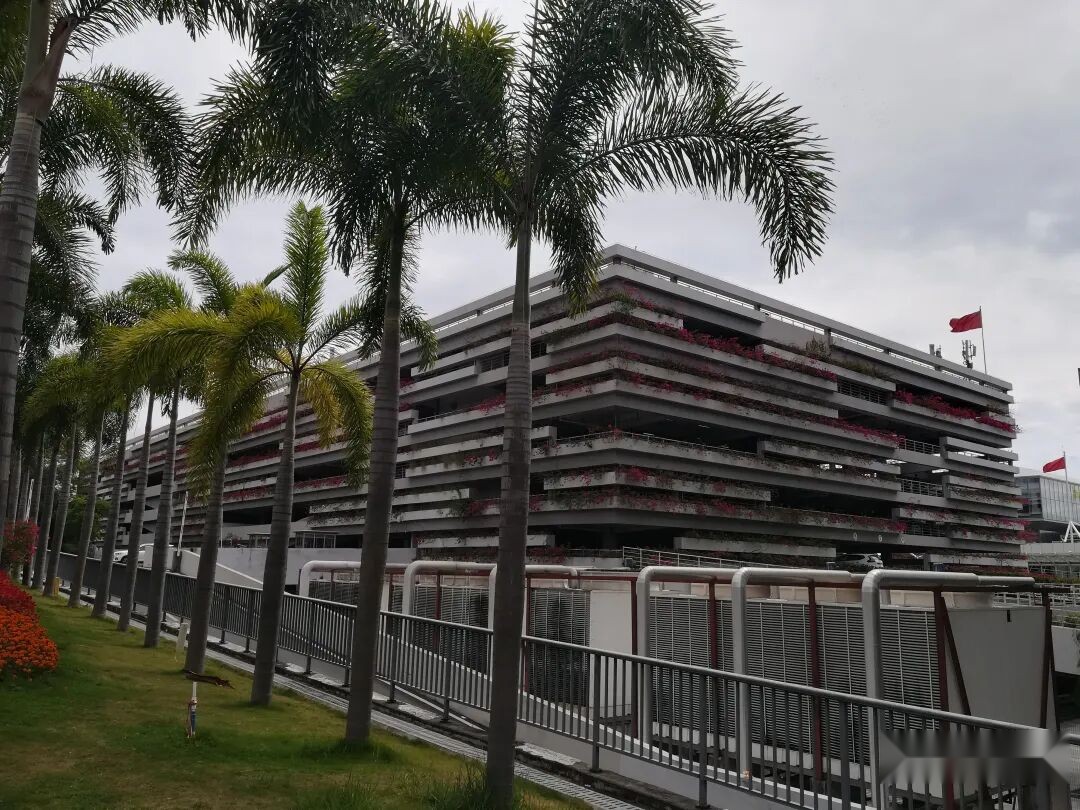
Checked the map and saw that Bus Route 50 from the Sanya Railway Station goes straight there. Somehow, I ended up at Phoenix International Airport instead—didn't take the wrong bus, alright, I just got on heading the complete opposite direction.
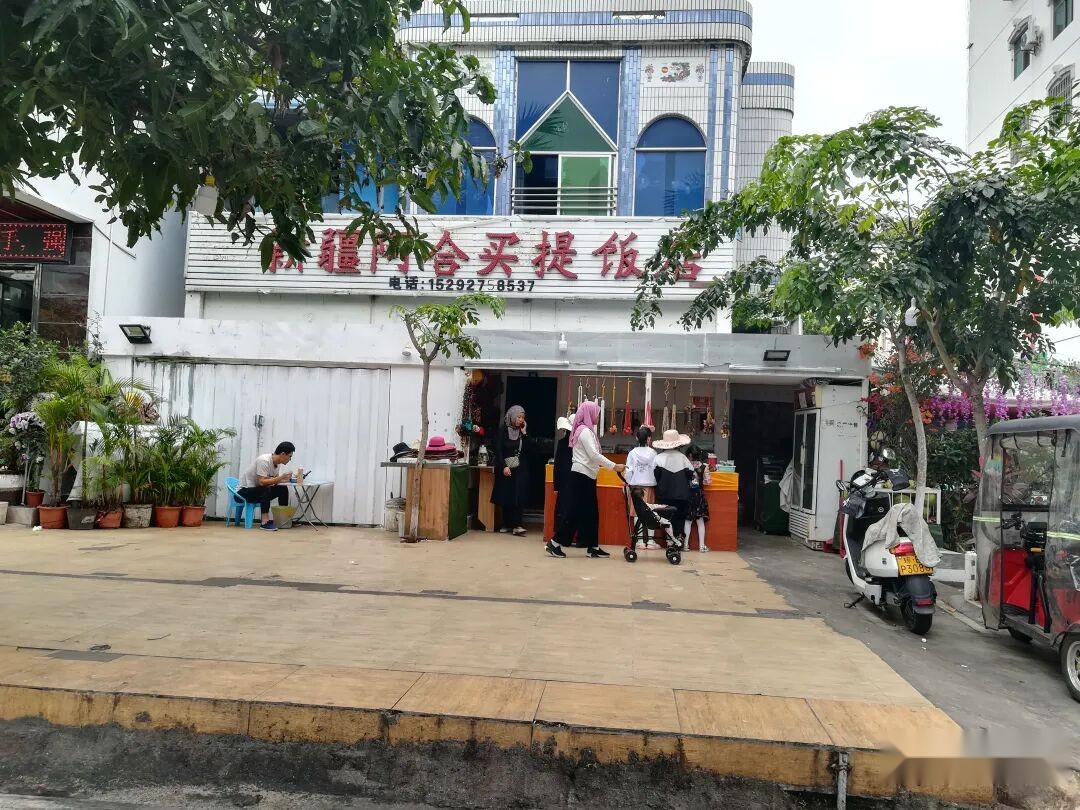
On the way, we passed Huihui Village (Huihui Muslim Village). I'd looked it up online a few days ago—it’s hyped as China's southernmost Muslim village. It was only three stops away from the airport. After hanging out at the airport for a bit, I caught Bus Route 24 and hopped off right at the Beautiful Phoenix Hotel, which drops you right into Huihui Village. My first vibe? Honestly felt like stumbling into a Uyghur village.
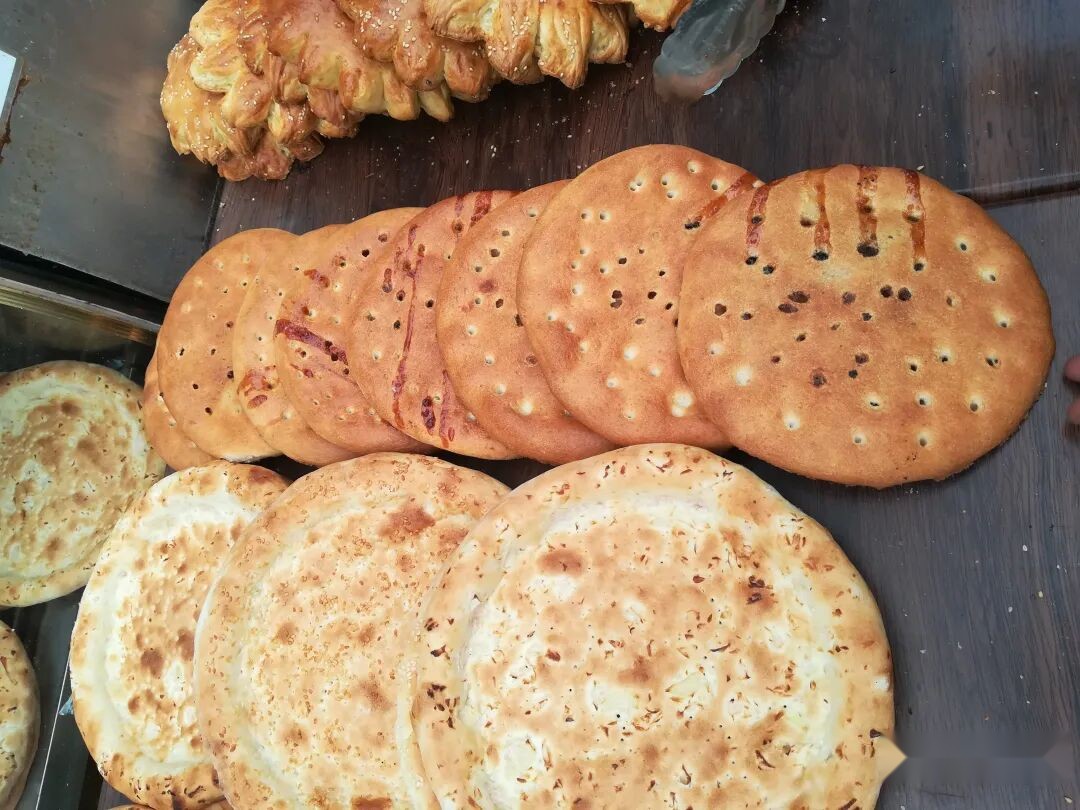
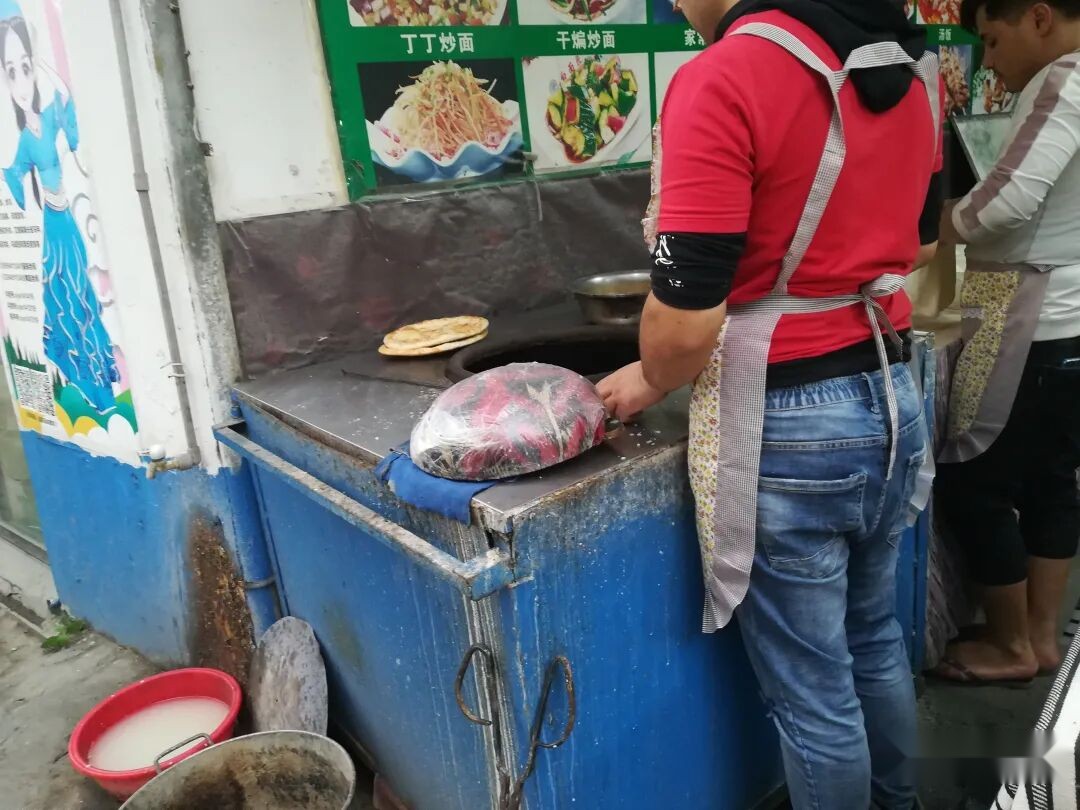
Freshly baked nan (traditional Uyghur flatbread) in Xinjiang usually has to be made at designated nan industrial parks, but here you see plenty of freshly baked nan stalls all over. Saw one of these syrup-dripping nan fresh out of the oven and couldn't resist grabbing one for 5 RMB. Munched on it while walking—super tasty.
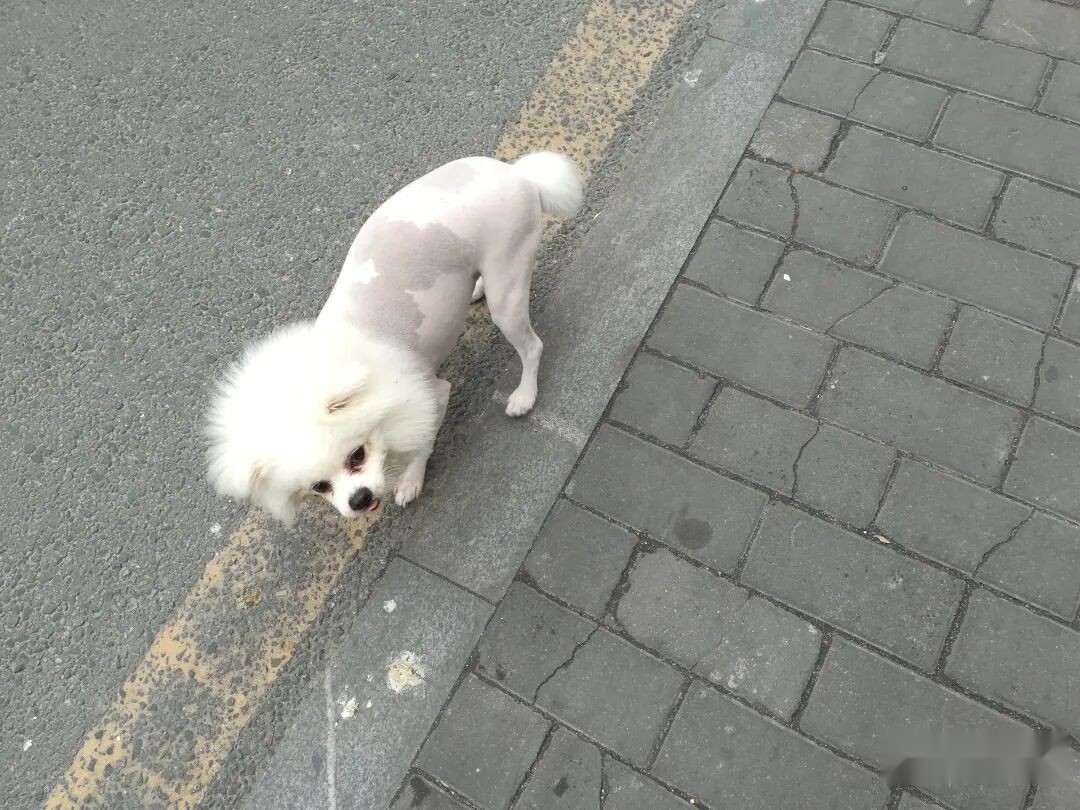
Thought I spotted a weird dog breed at first, but looking closer, the little guy just got a fresh haircut. Gotta say, the grooming skills aren't bad at all. Shaved super smooth, even the fur on its paws was trimmed clean.
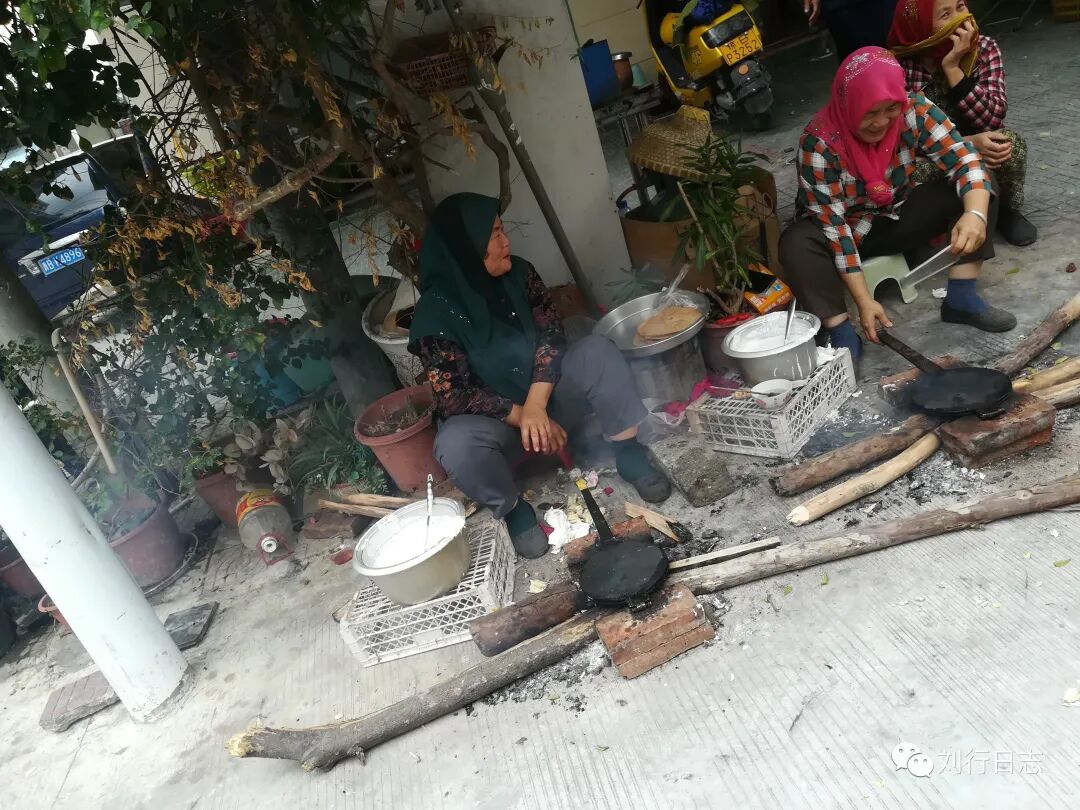
Found an older sister making pancakes in the alleyway with a vibe totally giving Gansu-Shaanxi Hui Muslim style. Using wood fuel, she pours the batter into this little black pan, closes the lid, and adds fire underneath. This pan can be heated from both sides, and the finished pancakes get tossed onto the iron tray right in the middle. The lady on the side said they're 2 RMB each, but when I asked the lady actually cooking them on the left, she said they aren't for sale. Pretty unique way of cooking, right?
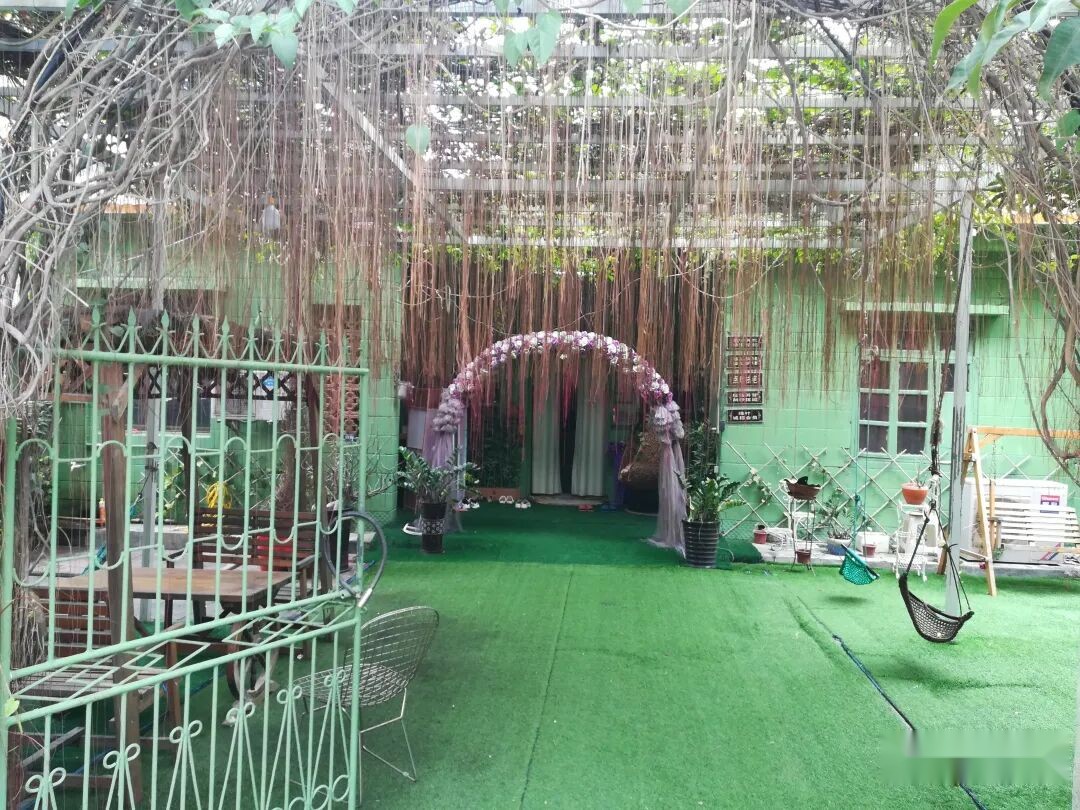
A green house in the village—looks like a women's beauty salon. Even the building is painted green, and the color combo is super coordinated and easy on the eyes.
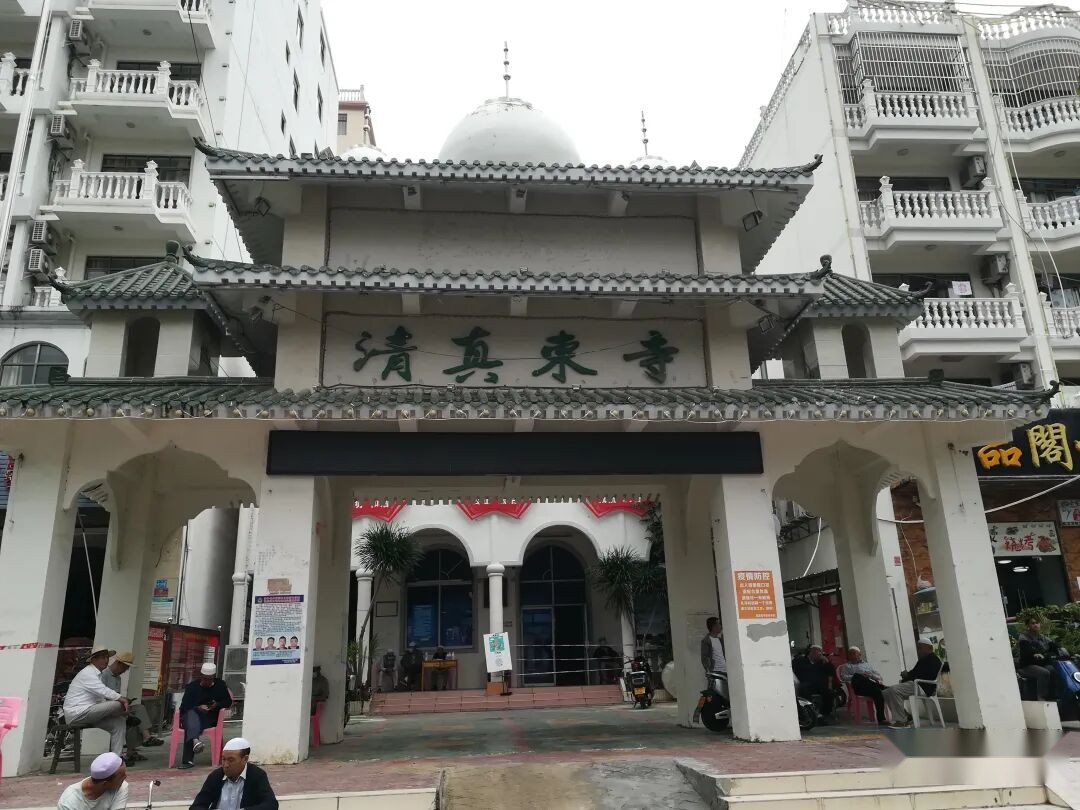
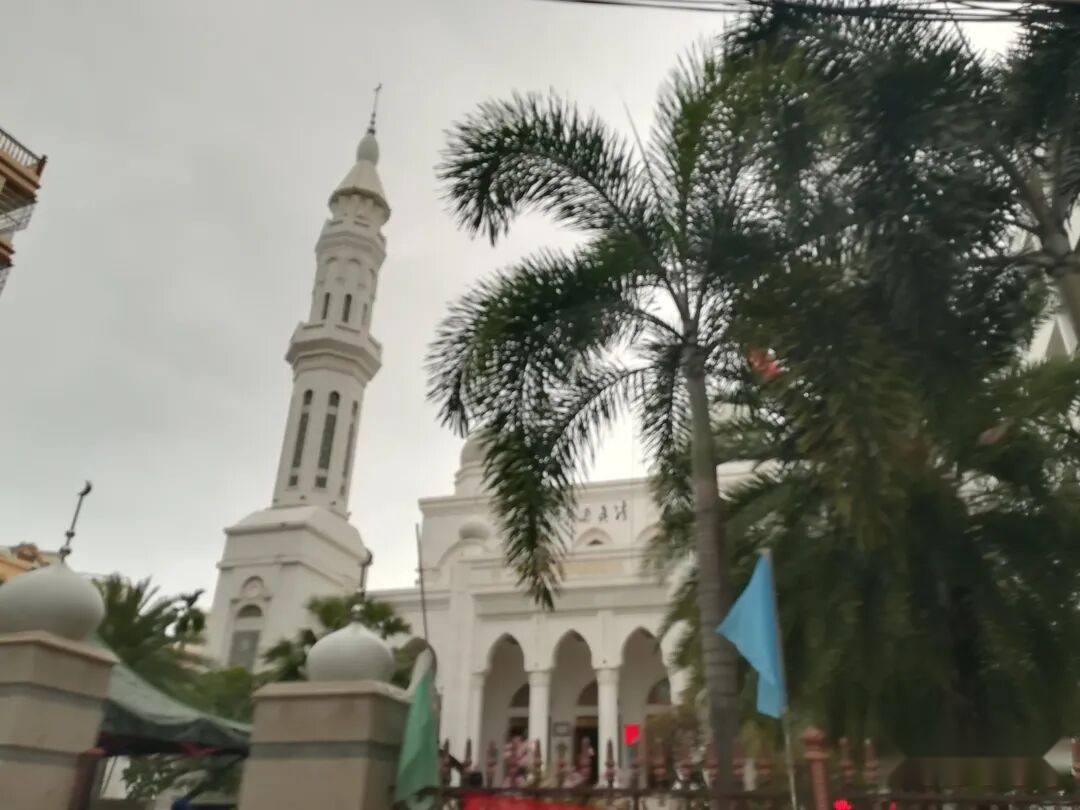
Qingzhen Dongsi (Sanya East Mosque). So, is there a Qingzhen Xisi (West Mosque)? Sure enough, there is! Not just a West Mosque, but a South Mosque and North Mosque too. There are six mosques in total, with the other two being the Sanya Ancient Mosque and Nankai Mosque.
Huihui Civilization Farmers Market. Not super big, and strictly sells halal food.
Killing a duck, getting it ready. This local sister just slaughtered a duck and is cleaning it up right there. Usually, whatever you buy at the market is already prepped, so this one must have been home-raised.
An airplane over the treetops.
A 'flying chicken' under the treetops.
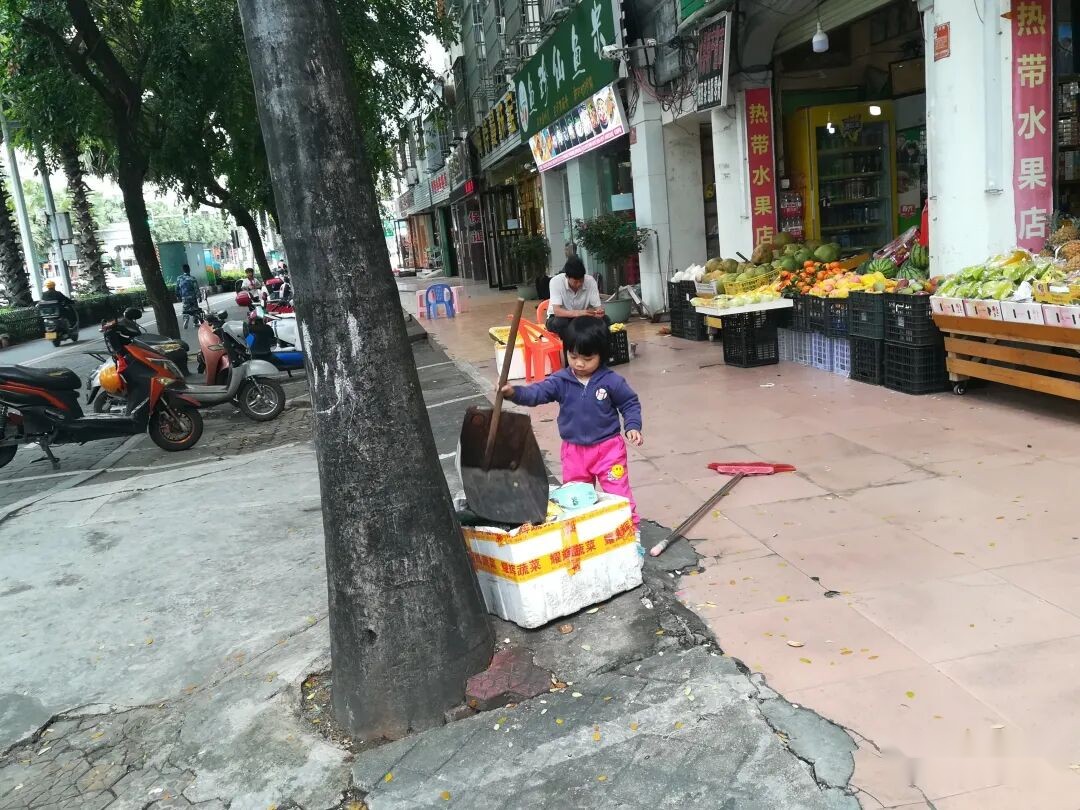
Little kids working hard.
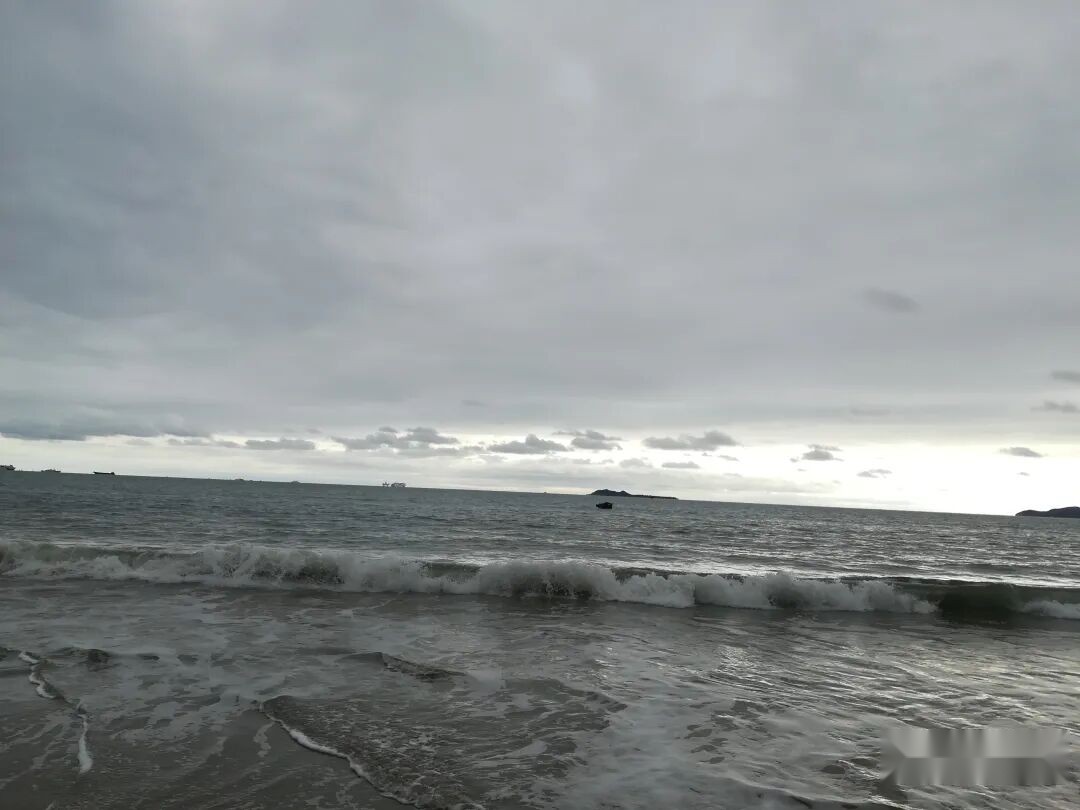
The village isn't far from Sanya Bay—just a little over two kilometers—so I ditched the mountain hike and went for a stroll by the ocean instead. It was overcast, but the waves were huge. Sat by the beach watching the surf and the crowds walking by. A few pretty girls walked past every now and then, and of course, plenty of not-so-pretty ones too.
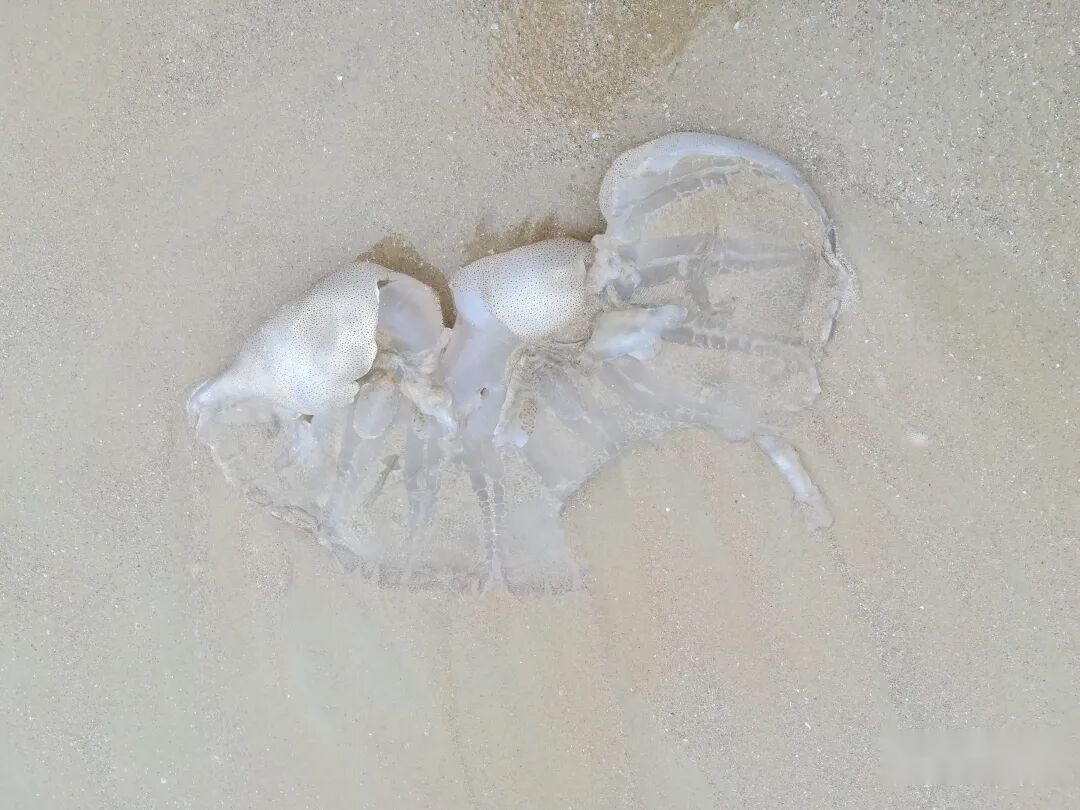
A jellyfish washed ashore by the waves. Wonder if this one is edible—making a cold tossed jellyfish skin salad with it would be pretty awesome.
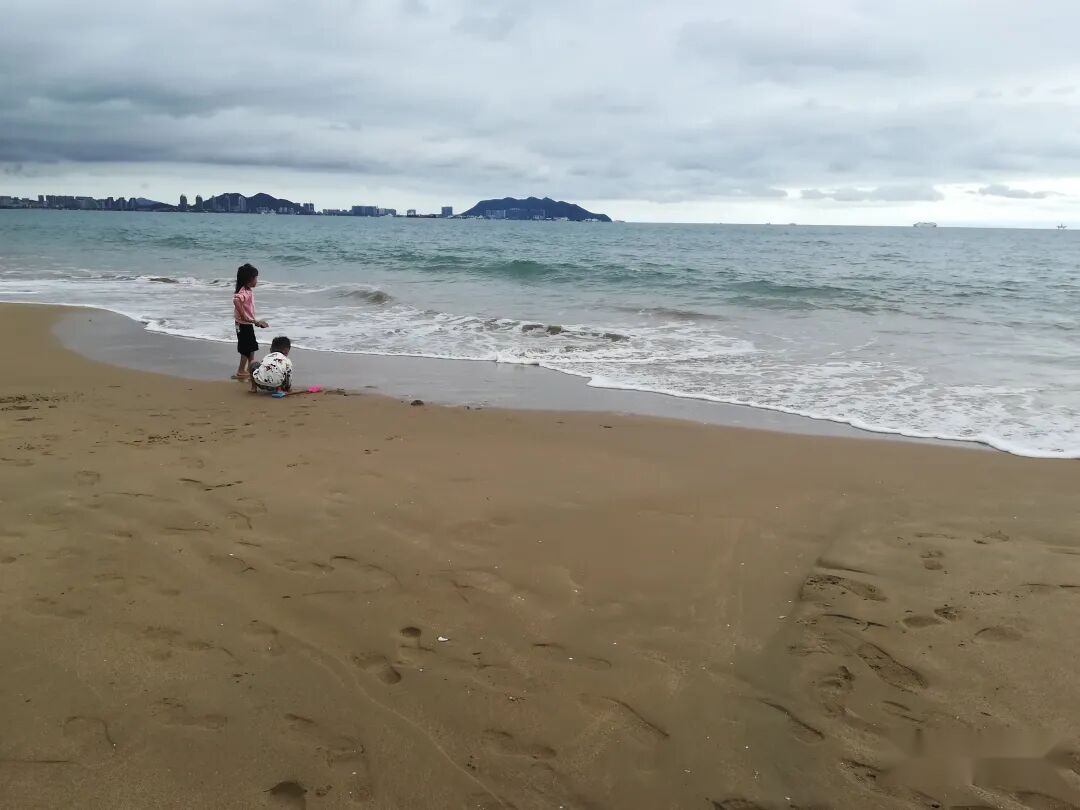
Two kids playing a real-life Jingwei (mythological bird trying to fill the sea with pebbles), using little plastic shovels trying to fill up the ocean. You guys got this!
There are two Muslim villages. The other one is Huixin Village (Huixin Muslim Village), just over four kilometers from Huihui Village, and you can just walk along the coast to get there. There are tons of little shops in this village; two small streets are packed with vendors selling stuff, mostly street food. A lot of houses in the village also have homestay signs hanging outside. Saw another batch of fresh, plain nan just out of the oven. Grabbed one, though honestly, this one wasn't as good as the ones in Xinjiang. There were small street stalls selling home-grown produce, like dragon fruit going for 10 RMB for four jin (about 4 lbs), and watermelons for 5 RMB each.
Qingzhen Nansi (Sanya South Mosque). The architecture is super new, looks like it was recently renovated. Just happened to pass by Nankai Mosque too, didn't make a special trip for it though.
Walking back from Huixin Village is also over four kilometers, and the bus stop is a good two kilometers away. Might as well just walk all the way back since I'm not in a rush anyway, plus I get to check out the street views.
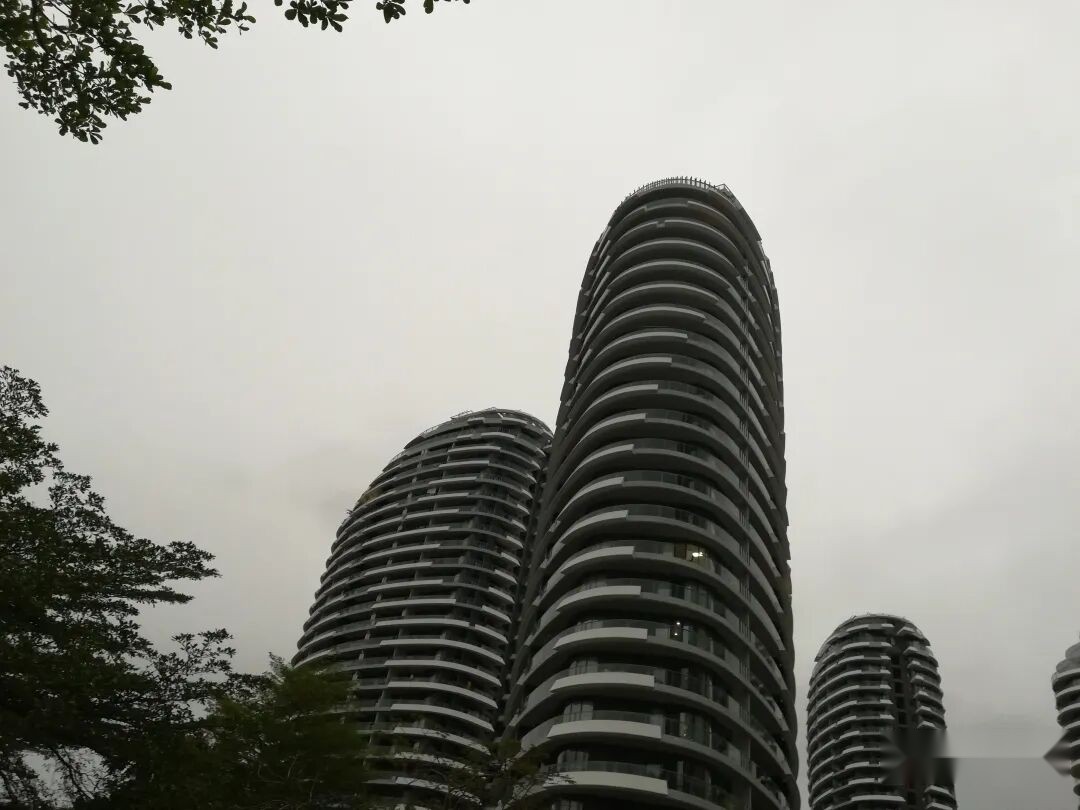
Sanya has a ton of gorgeous architecture. This cluster of four buildings has a really unique vibe.
Not sure how my calligraphy skills are, but I feel like it's pretty much on par with mine. Guess it must just be my lack of skill that I couldn't appreciate their profound artistic depth.
Sanya River in the evening twilight.
This kid in a red jacket chased me for a long way while the adults yelled from behind, 'Keep running and the old man up ahead is gonna grab you!' Well, I had to play along, so I yelled back for him to come with me, and he immediately ran back. Walked all day and felt pretty beat, so I grabbed some water and hit the sack. view all
Exploring China's Southernmost Muslim Villages: The Unique Geography and Culture of Sanya's Huihui and Huixin Villages
Abstract:
A systematic look at the history and current landscape of the Muslim villages in Sanya, sitting right at China's southernmost tip. We break down how the Utsul Muslims preserve their Islamic faith, distinct linguistic system, and strict dietary laws in this tropical seaside city, serving as a living specimen of Maritime Silk Road culture.
February 22, 2022
The sky was still a bit overcast. Yesterday's forecast promised clear skies, but today it flipped to cloudy. Whatever, at least it's finally not raining. Decided to head out for a stroll. The original plan was to hit Linchunling Forest Park for some hiking and panoramic views of Sanya.
Checked the map and saw that Bus Route 50 from the Sanya Railway Station goes straight there. Somehow, I ended up at Phoenix International Airport instead—didn't take the wrong bus, alright, I just got on heading the complete opposite direction.
On the way, we passed Huihui Village (Huihui Muslim Village). I'd looked it up online a few days ago—it’s hyped as China's southernmost Muslim village. It was only three stops away from the airport. After hanging out at the airport for a bit, I caught Bus Route 24 and hopped off right at the Beautiful Phoenix Hotel, which drops you right into Huihui Village. My first vibe? Honestly felt like stumbling into a Uyghur village.
Freshly baked nan (traditional Uyghur flatbread) in Xinjiang usually has to be made at designated nan industrial parks, but here you see plenty of freshly baked nan stalls all over. Saw one of these syrup-dripping nan fresh out of the oven and couldn't resist grabbing one for 5 RMB. Munched on it while walking—super tasty.
Thought I spotted a weird dog breed at first, but looking closer, the little guy just got a fresh haircut. Gotta say, the grooming skills aren't bad at all. Shaved super smooth, even the fur on its paws was trimmed clean.
Found an older sister making pancakes in the alleyway with a vibe totally giving Gansu-Shaanxi Hui Muslim style. Using wood fuel, she pours the batter into this little black pan, closes the lid, and adds fire underneath. This pan can be heated from both sides, and the finished pancakes get tossed onto the iron tray right in the middle. The lady on the side said they're 2 RMB each, but when I asked the lady actually cooking them on the left, she said they aren't for sale. Pretty unique way of cooking, right?
A green house in the village—looks like a women's beauty salon. Even the building is painted green, and the color combo is super coordinated and easy on the eyes.
Qingzhen Dongsi (Sanya East Mosque). So, is there a Qingzhen Xisi (West Mosque)? Sure enough, there is! Not just a West Mosque, but a South Mosque and North Mosque too. There are six mosques in total, with the other two being the Sanya Ancient Mosque and Nankai Mosque.
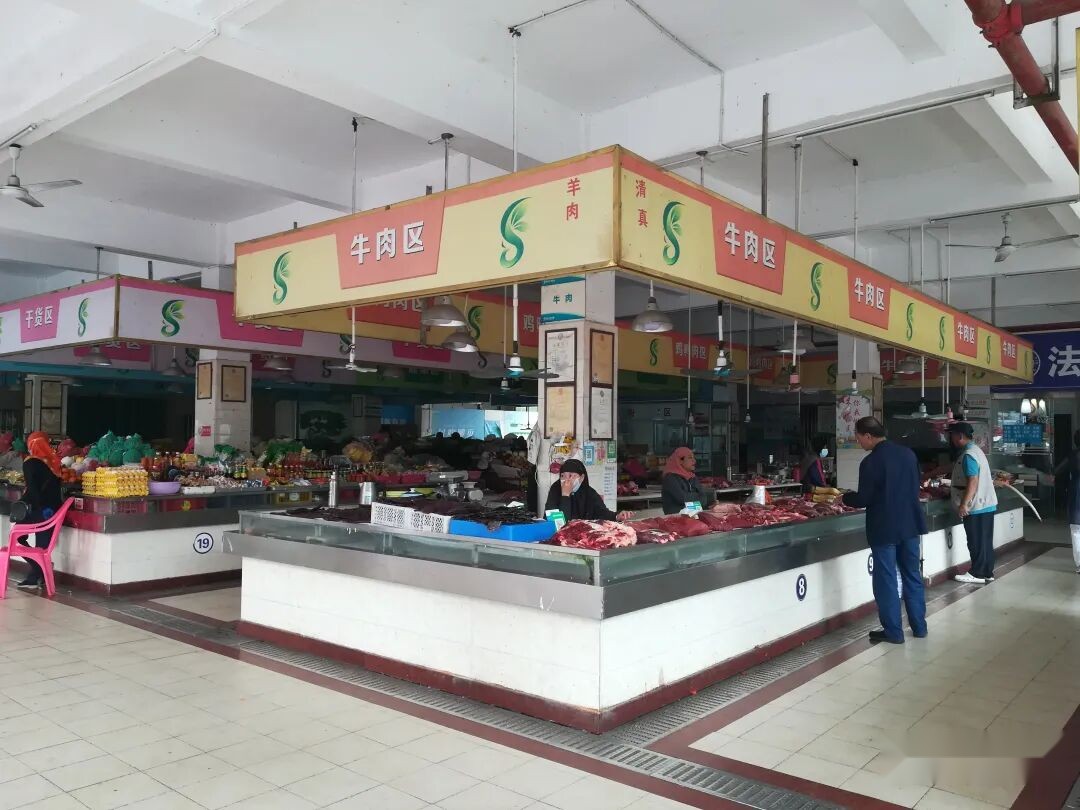
Huihui Civilization Farmers Market. Not super big, and strictly sells halal food.
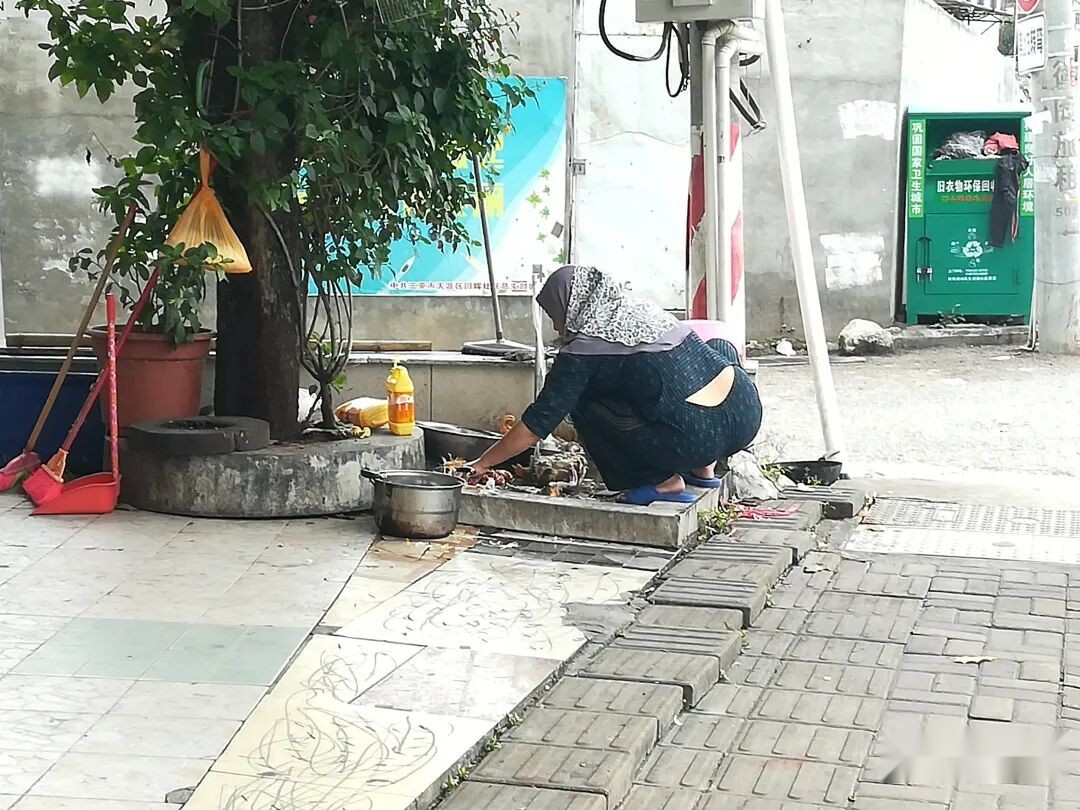
Killing a duck, getting it ready. This local sister just slaughtered a duck and is cleaning it up right there. Usually, whatever you buy at the market is already prepped, so this one must have been home-raised.
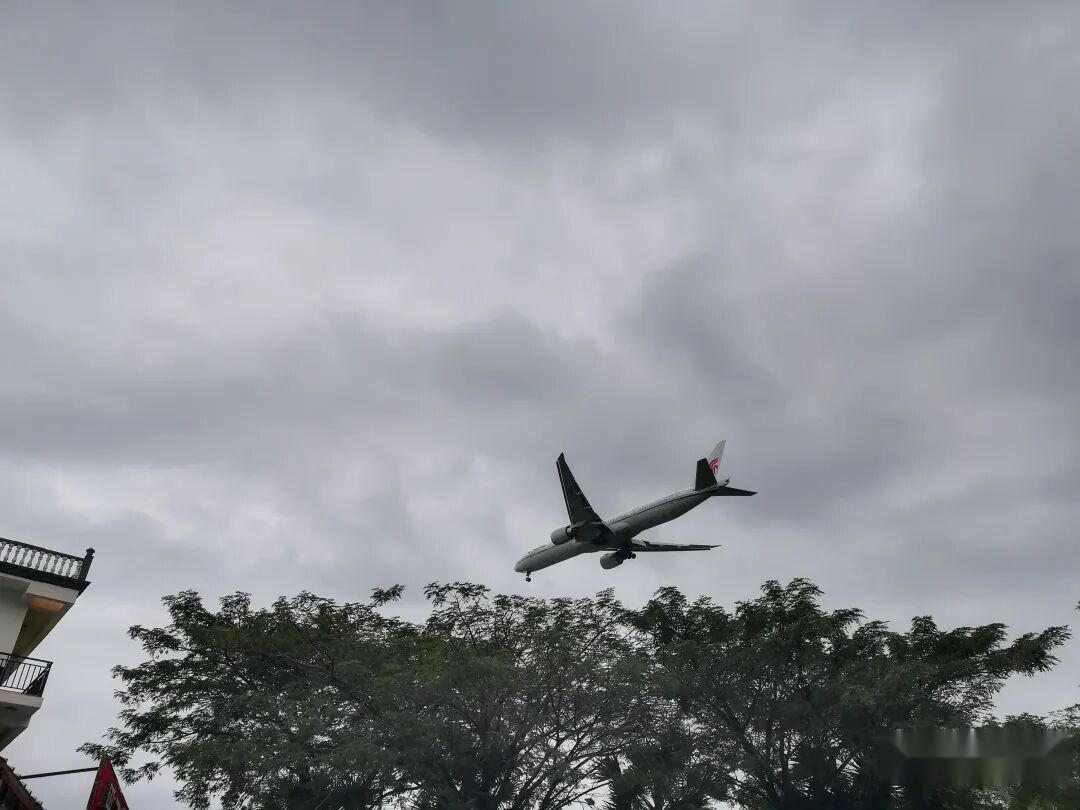
An airplane over the treetops.
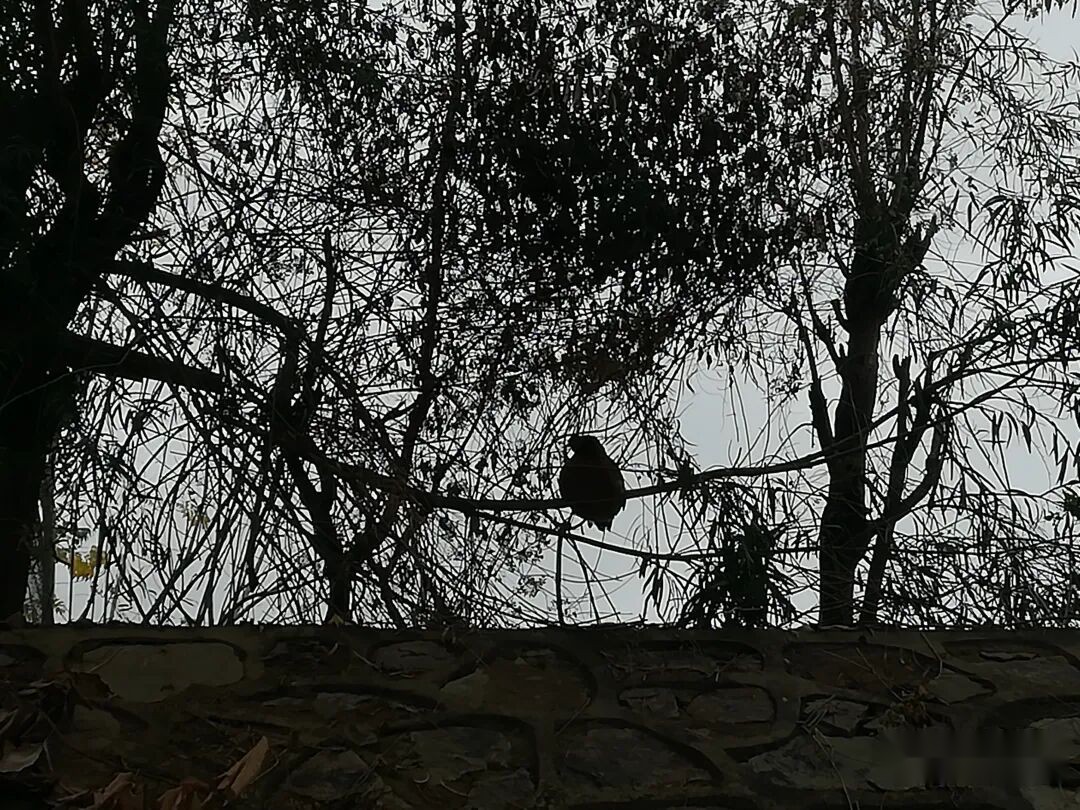
A 'flying chicken' under the treetops.
Little kids working hard.
The village isn't far from Sanya Bay—just a little over two kilometers—so I ditched the mountain hike and went for a stroll by the ocean instead. It was overcast, but the waves were huge. Sat by the beach watching the surf and the crowds walking by. A few pretty girls walked past every now and then, and of course, plenty of not-so-pretty ones too.
A jellyfish washed ashore by the waves. Wonder if this one is edible—making a cold tossed jellyfish skin salad with it would be pretty awesome.
Two kids playing a real-life Jingwei (mythological bird trying to fill the sea with pebbles), using little plastic shovels trying to fill up the ocean. You guys got this!
There are two Muslim villages. The other one is Huixin Village (Huixin Muslim Village), just over four kilometers from Huihui Village, and you can just walk along the coast to get there. There are tons of little shops in this village; two small streets are packed with vendors selling stuff, mostly street food. A lot of houses in the village also have homestay signs hanging outside. Saw another batch of fresh, plain nan just out of the oven. Grabbed one, though honestly, this one wasn't as good as the ones in Xinjiang. There were small street stalls selling home-grown produce, like dragon fruit going for 10 RMB for four jin (about 4 lbs), and watermelons for 5 RMB each.
Qingzhen Nansi (Sanya South Mosque). The architecture is super new, looks like it was recently renovated. Just happened to pass by Nankai Mosque too, didn't make a special trip for it though.
Walking back from Huixin Village is also over four kilometers, and the bus stop is a good two kilometers away. Might as well just walk all the way back since I'm not in a rush anyway, plus I get to check out the street views.
Sanya has a ton of gorgeous architecture. This cluster of four buildings has a really unique vibe.
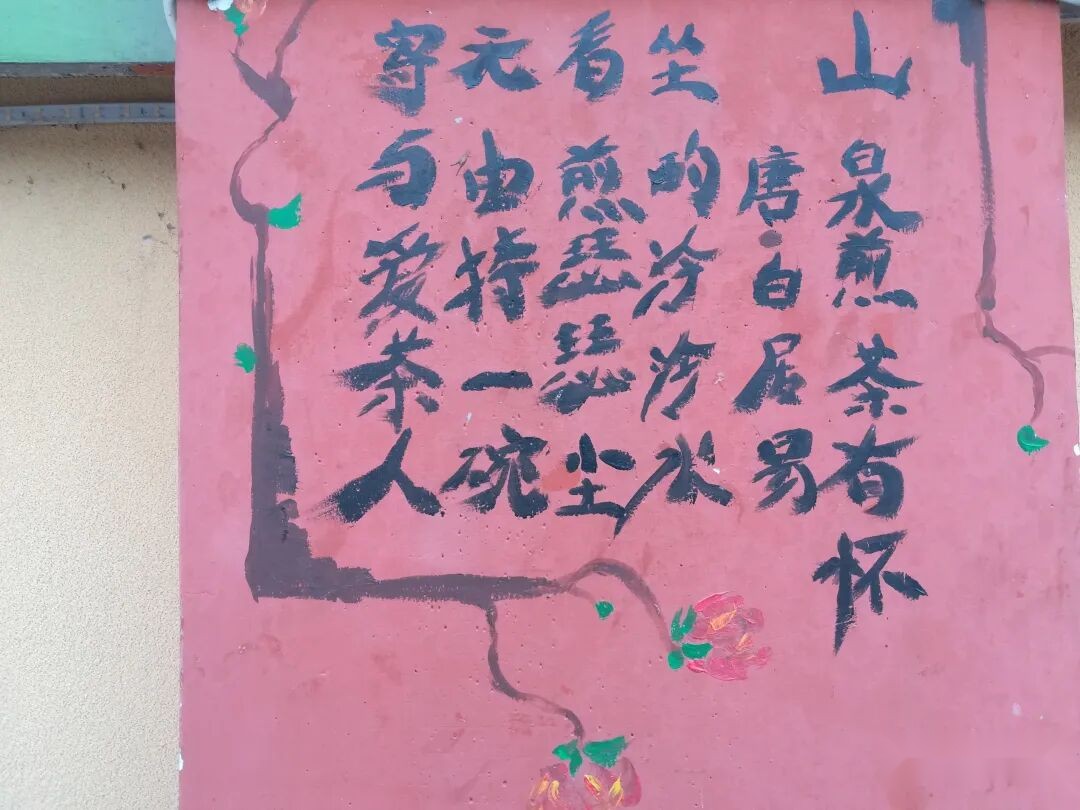
Not sure how my calligraphy skills are, but I feel like it's pretty much on par with mine. Guess it must just be my lack of skill that I couldn't appreciate their profound artistic depth.
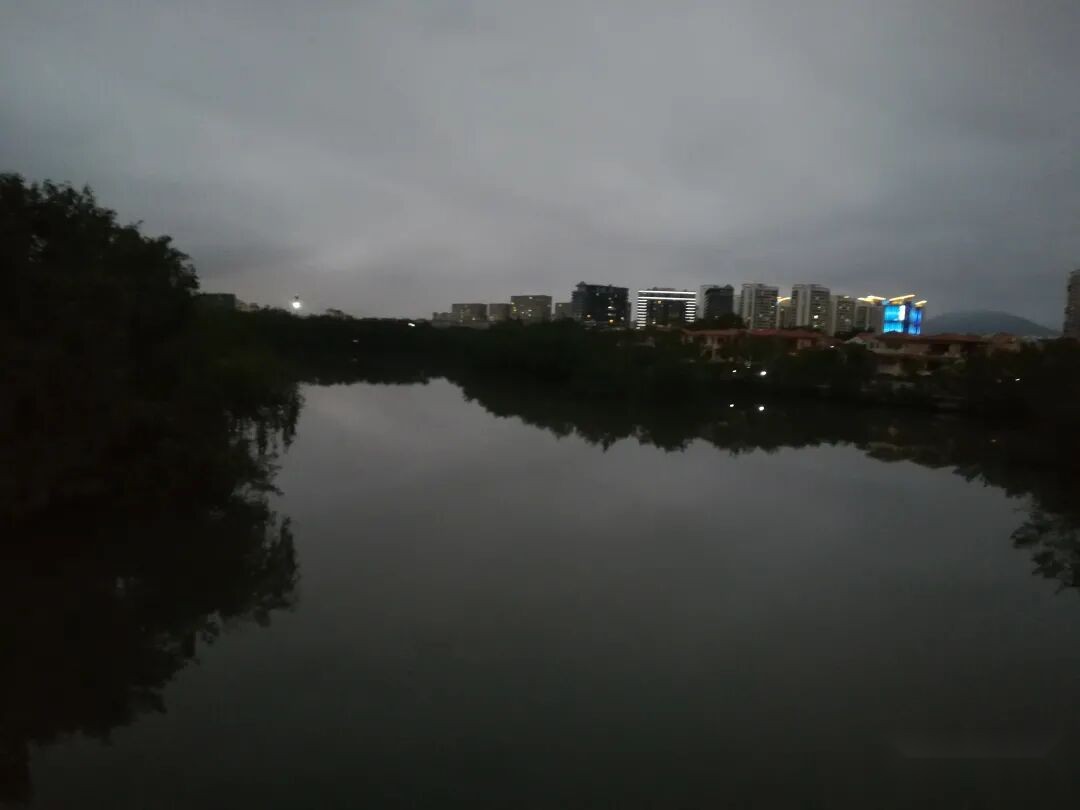
Sanya River in the evening twilight.
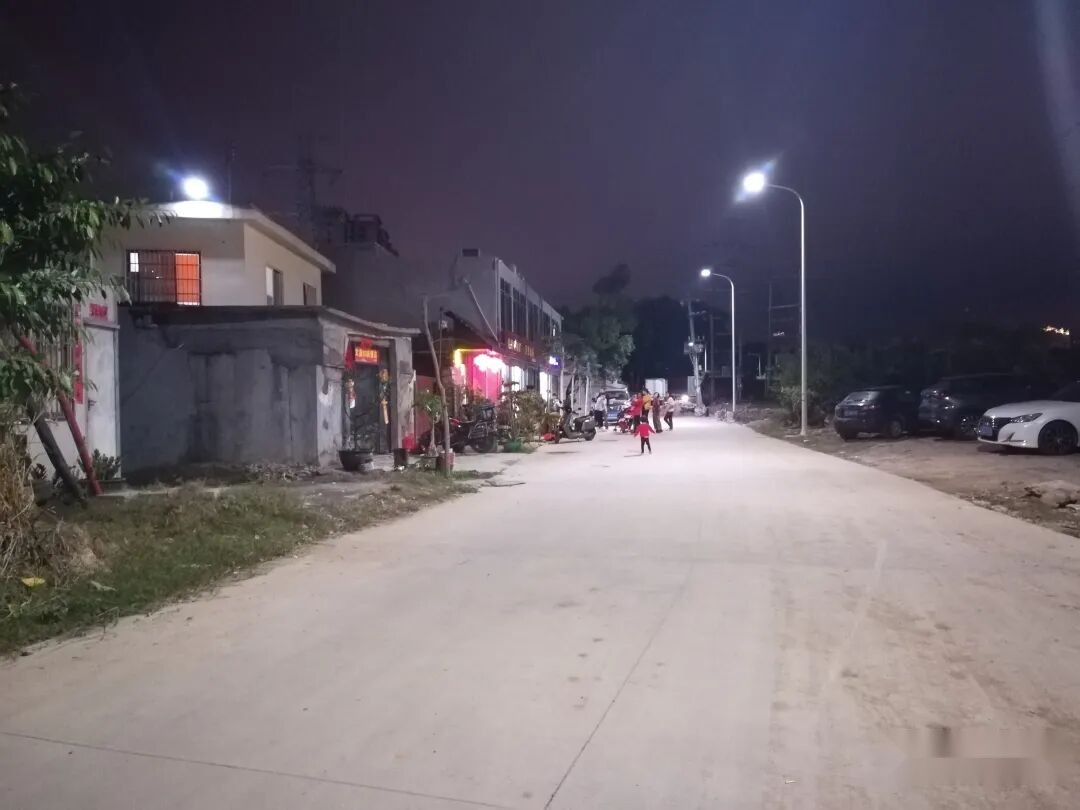
This kid in a red jacket chased me for a long way while the adults yelled from behind, 'Keep running and the old man up ahead is gonna grab you!' Well, I had to play along, so I yelled back for him to come with me, and he immediately ran back. Walked all day and felt pretty beat, so I grabbed some water and hit the sack.
Sanya Halal Travel Guide: Exploring White Domes, Tropical Mosques, and Utsul Cham Muslims in Hainan
Articles • Hasan09 posted the article • 0 comments • 4 views • 3 hours ago
Sanya's Six Historic Mosques: A Guide to White Domes and Tropical Island Islamic Architecture Framed by Coconut Palms
Abstract:
A panoramic deep-dive into the six surviving mosques nestled within Huihui Village (Huihui Muslim Village) and Huixin Village (Huixin Muslim Village) in Sanya's Tianya District. Complete with photo-rich details on tropical white-domed architectural clusters and serene prayer halls like Sanya Ancient Mosque, South Mosque, and North Mosque, this serves as an insider's field guide for Muslim road-trippers and independent travelers.
Stepping into this part of Sanya seriously feels like teleporting to the Middle East!
Cruising past Huihui Village (Huihui Muslim Village) near the Sanya airport, you might genuinely feel like you've been dropped into a traditional residential neighborhood in the Middle East—think Dubai or Doha. We're talking striking white architecture and intricate Arabic geometric patterns that look totally different from the usual Lingnan aesthetic.
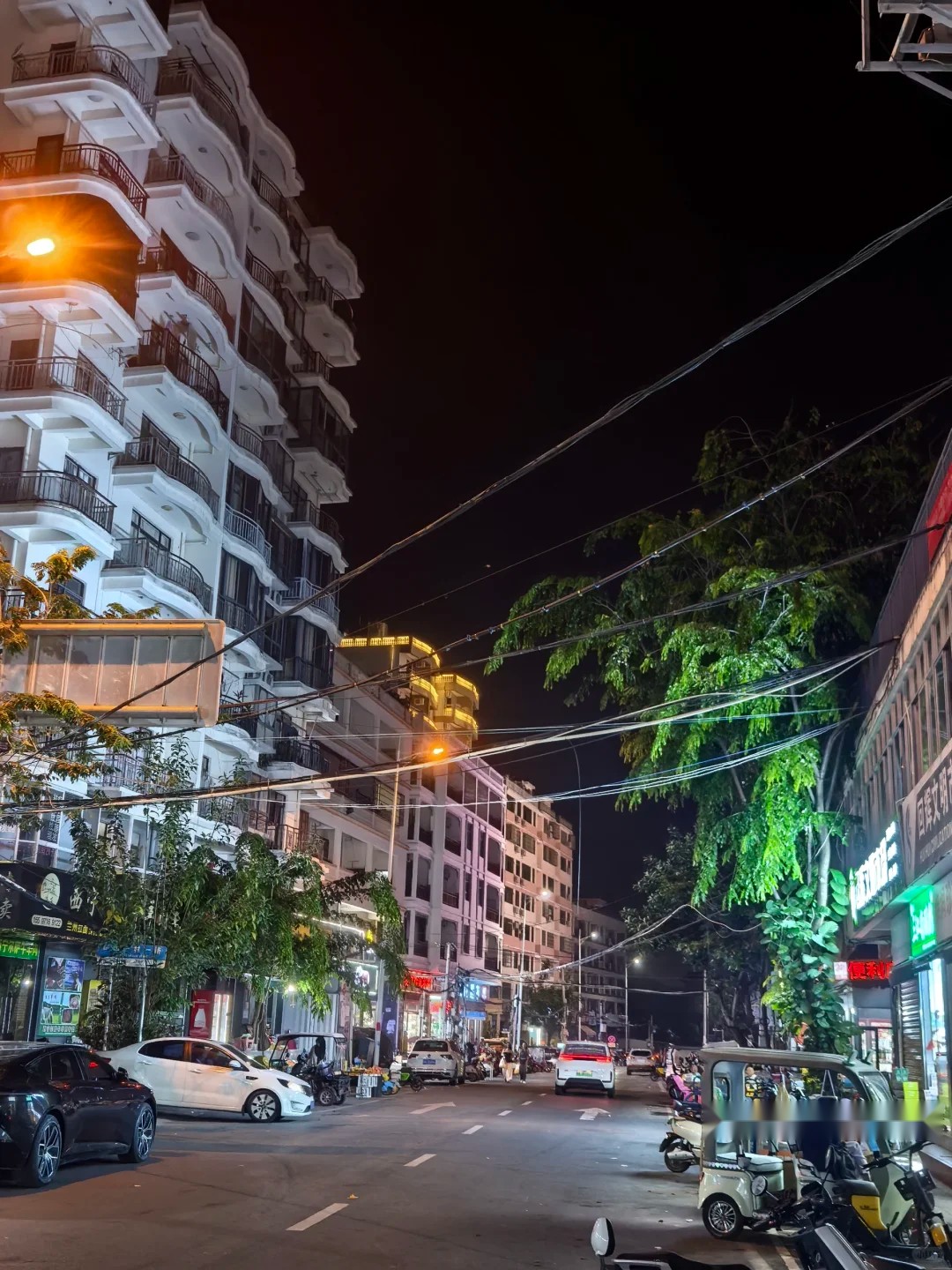
▲ Architectural styles lining the streets of Huixin Village (Huixin Muslim Village) in Fenghuang Town, Sanya, lean heavily into crisp white tones.
Even wilder? Sanya has a registered urban population of under a million, yet it boasts a whopping six mosques (meanwhile, Nanning has an urban population of over four million and just one). The mosque density here is way higher than most other southern Chinese cities.
▲ Mosques in Sanya.
Right there in Huihui Village (Huihui Muslim Village), you'll find three mosques sitting close together, creating a vibrant religious vibe that makes you completely forget you're chilling in a tropical island paradise.
▲ Architectural styles along the streets of Huixin Village (Huixin Muslim Village) in Fenghuang Town, Sanya.
Most Muslims in southern China today—if you find them—originally migrated from Northwest China. But Sanya's Muslims, the Utsul Muslims, are a total exception. They migrated down from Southeast Asia, and with a population of around 10,000, they make up China's southernmost ethnic minority group.
▲ South Mosque in Huixin Village (Huixin Muslim Village), Fenghuang Town, Sanya.
The ancestors of the Utsul Muslims hail from the Champa Kingdom in Southeast Asia (now southern Vietnam), making them China's only Muslim immigrant group with Southeast Asian roots.
Because of this unique history, this little beach city packs in six mosques in a very tight radius. While Utsul Muslims are officially categorized as Hui people due to their religious faith, their appearance and language are totally different from Northwest Hui Muslims. The Utsul people feature distinct Southeast Asian and Arab physical traits, and they speak an Austronesian language belonging to the Chamic language family, closely related to Southeast Asian Cham languages.
Why did the Utsul people migrate from Southeast Asia to Sanya?
✅ [Origins of the Utsul People]
Sanya's Utsul Muslims are descendants of the ancient Cham people of Southeast Asia. The Cham originated in the Kingdom of Linyi (present-day central Vietnam). Linyi was originally part of China's sphere, but during the chaos at the end of the Eastern Han dynasty, they broke away to establish their own state, which later grew into the Champa Kingdom.
▲ The Champa Kingdom.
The Cham people were originally influenced by India and practiced Brahmanism. Later, as Arab merchants traded along the coast, Islam was introduced to Champa, and local Muslim communities gradually formed.
Vietnam bordered Champa, but back then, Vietnam was still under Chinese rule. As the Tang Dynasty weakened, Vietnam shook off Chinese control and established the Dinh Dynasty in 968 AD, becoming Champa's brand-new neighbor.
Once independent, Vietnam launched military campaigns against Champa. To escape the ravages of war, batches of Muslim Cham people migrated across the sea to Hainan Island during the Song and Yuan dynasties, settling down in scattered pockets across the island.
▲ Geographic location of Hainan Island.
The Cham populations in northern Hainan, being closer to the mainland, eventually intermarried and assimilated with the Han and Li ethnic groups. But Sanya, sitting right at the island's southernmost tip, was geographically isolated, and large numbers of Han Chinese didn't settle there at the time. As a result, the local Cham escaped assimilation. They planted roots in Sanya, established tight-knit Muslim communities, evolved into the Utsul people, and developed their own Utsul dialect.
▲ Distribution of the Cham people.
✅ [The Fall of the Champa Kingdom]
Wars between Champa and Vietnam dragged on for centuries, with Vietnam gradually gaining the upper hand.
In 1471, Vietnamese forces captured the royal capital of Champa, reducing Champa to a vassal state of Vietnam.
By 1802, Vietnam abolished the native chieftains and brought the region under direct imperial administration (*gaitu guiliu*), officially spelling the end of the Champa Kingdom.
Following the fall of their nation, the surviving Cham people were mostly scattered across modern-day Vietnam and Cambodia. Due to aggressive assimilation policies in both countries, the Cham population plummeted dramatically; today, the combined Cham population in both nations is under 500,000.
▲ Current Cham population distribution.
✅【Current Status of the Utsul People in Sanya】
In 1939, when the Japanese invaded Hainan and built an airport in Phoenix, Sanya, the local Utsul people were forced to relocate to the Yanglan area, forming the clustered settlement known as Huihui Village (Huihui Muslim Village).
After Japan's defeat, some Utsul people returned to their original site to establish Huixin Village (Huixin Muslim Village).
Since then, Sanya has been home to two major villages: Huihui and Huixin.
▲ Hainan Ethnic Minority Languages
After the founding of New China, based on religious beliefs, the Huihui people—who have deep roots on Hainan Island for nearly a thousand years—were officially classified as Hui Muslims rather than Cham people.
In recent years, as Sanya has transformed into a major tourist destination, the Huihui people have seized tourism opportunities to develop their cultural village. Visitors can head over to Phoenix Town, where the Huihui people are concentrated and where you'll find 6 mosques, to experience the culture of this Muslim community originally from Southeast Asia.
▲ A Sanya Hui Muslim Bride (Photo courtesy of Sanya Tianya District Hui Culture Communication Service Center)
These Muslim Cham people crossed the ocean seeking refuge and ultimately put down roots on Hainan Island, boasting a history of 600 to 700 years. Shaped by a unique geographical and cultural environment, the Huihui people add a vibrant, distinctive cultural stamp to Hainan's ethnic heritage.
Today, there are about 10,000 Huihui people in Sanya, mainly clustered in Huihui Village (Huihui Muslim Village) and Huixin Village (Huixin Muslim Village), where they still preserve their ancient beliefs and traditions to this day.
▲ Architecture in Huixin Village (Huixin Muslim Village)
✅ Location: Phoenix Town, Tianya District, Sanya
Huihui Village (Huihui Muslim Village) (around Fenghuang Road and the East Mosque)
Huixin Village (Huixin Muslim Village) (around Huixin Road and the South Mosque)
—(End of Article)— view all
Sanya's Six Historic Mosques: A Guide to White Domes and Tropical Island Islamic Architecture Framed by Coconut Palms
Abstract:
A panoramic deep-dive into the six surviving mosques nestled within Huihui Village (Huihui Muslim Village) and Huixin Village (Huixin Muslim Village) in Sanya's Tianya District. Complete with photo-rich details on tropical white-domed architectural clusters and serene prayer halls like Sanya Ancient Mosque, South Mosque, and North Mosque, this serves as an insider's field guide for Muslim road-trippers and independent travelers.
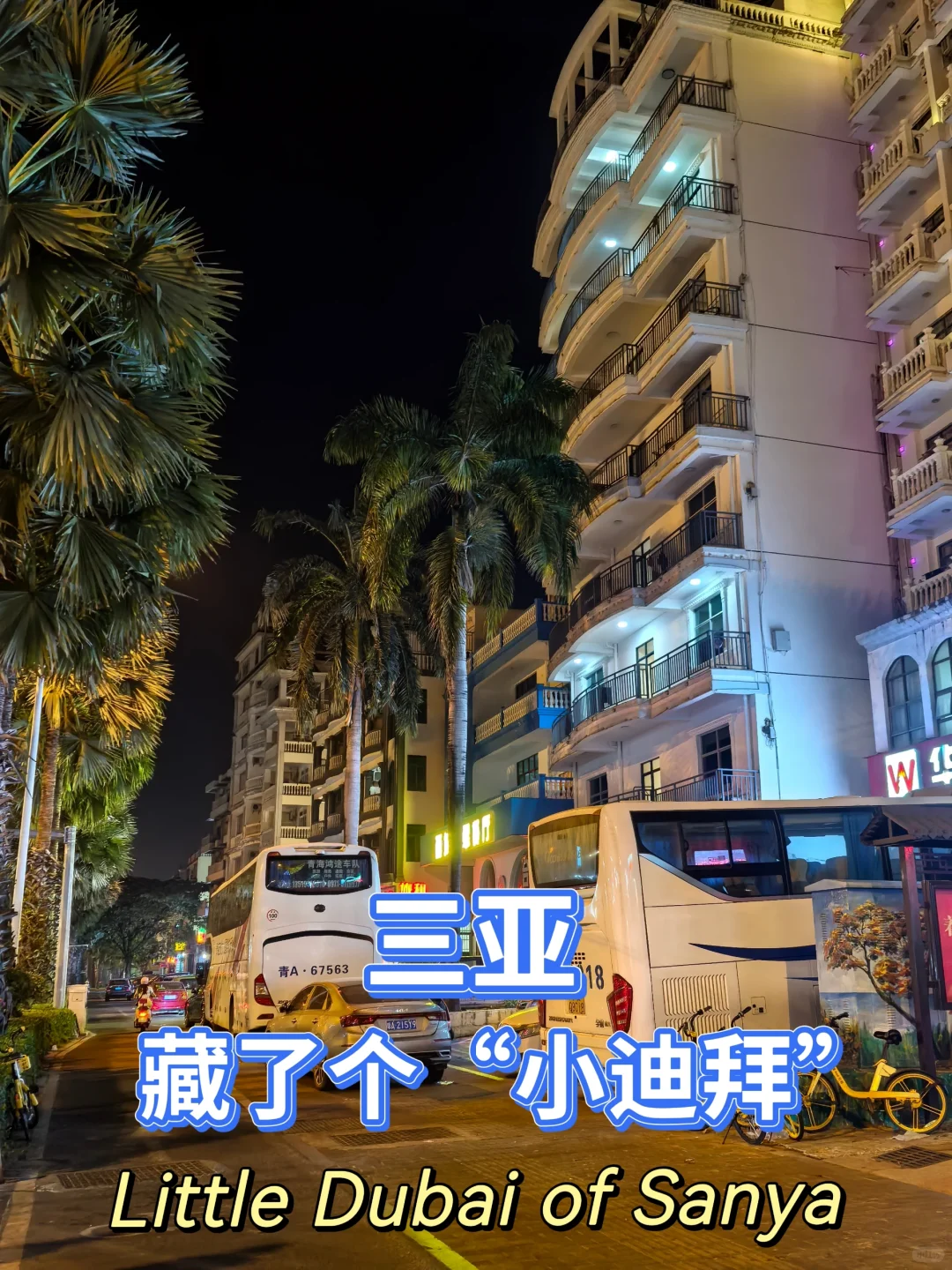
Stepping into this part of Sanya seriously feels like teleporting to the Middle East!
Cruising past Huihui Village (Huihui Muslim Village) near the Sanya airport, you might genuinely feel like you've been dropped into a traditional residential neighborhood in the Middle East—think Dubai or Doha. We're talking striking white architecture and intricate Arabic geometric patterns that look totally different from the usual Lingnan aesthetic.
▲ Architectural styles lining the streets of Huixin Village (Huixin Muslim Village) in Fenghuang Town, Sanya, lean heavily into crisp white tones.
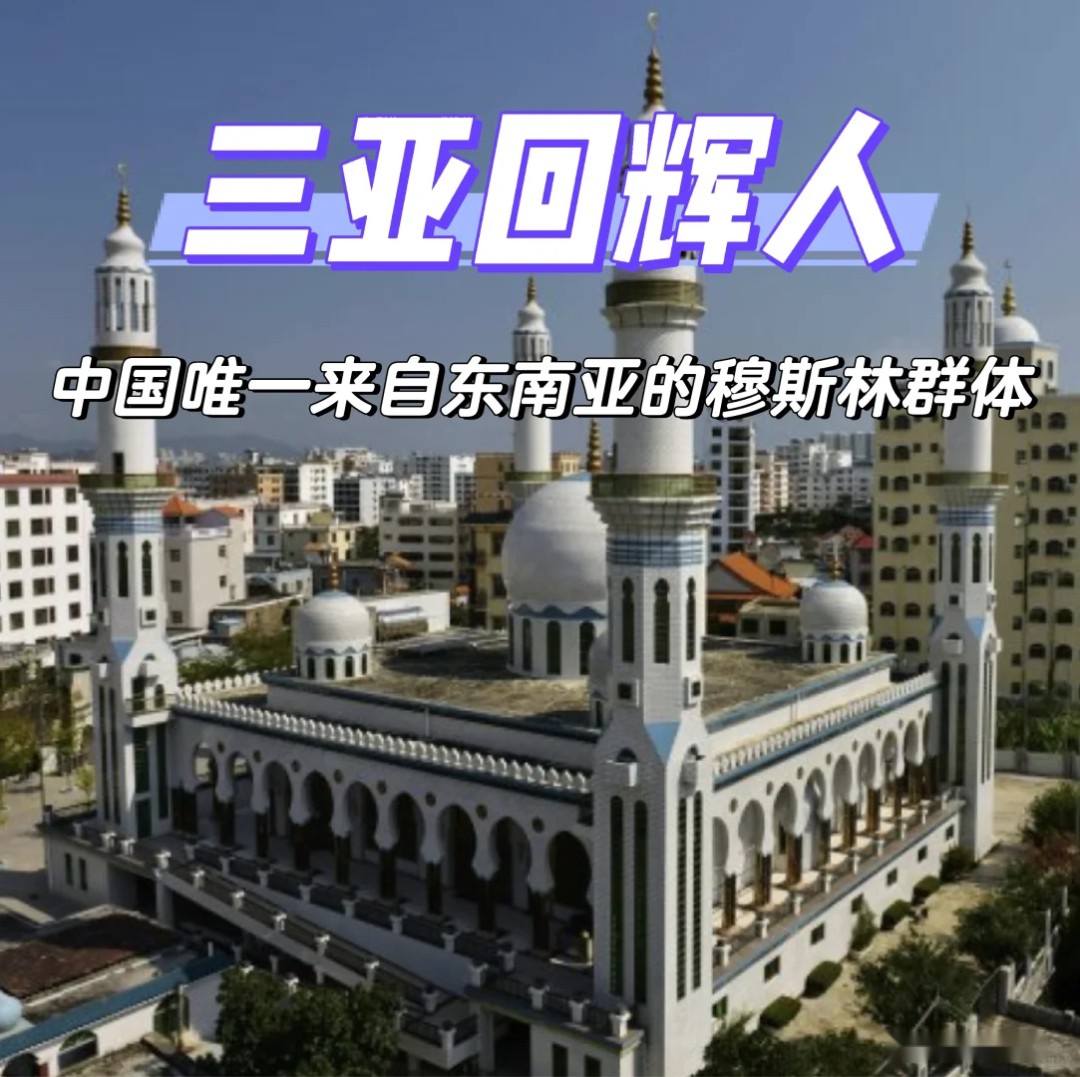
Even wilder? Sanya has a registered urban population of under a million, yet it boasts a whopping six mosques (meanwhile, Nanning has an urban population of over four million and just one). The mosque density here is way higher than most other southern Chinese cities.
▲ Mosques in Sanya.
Right there in Huihui Village (Huihui Muslim Village), you'll find three mosques sitting close together, creating a vibrant religious vibe that makes you completely forget you're chilling in a tropical island paradise.
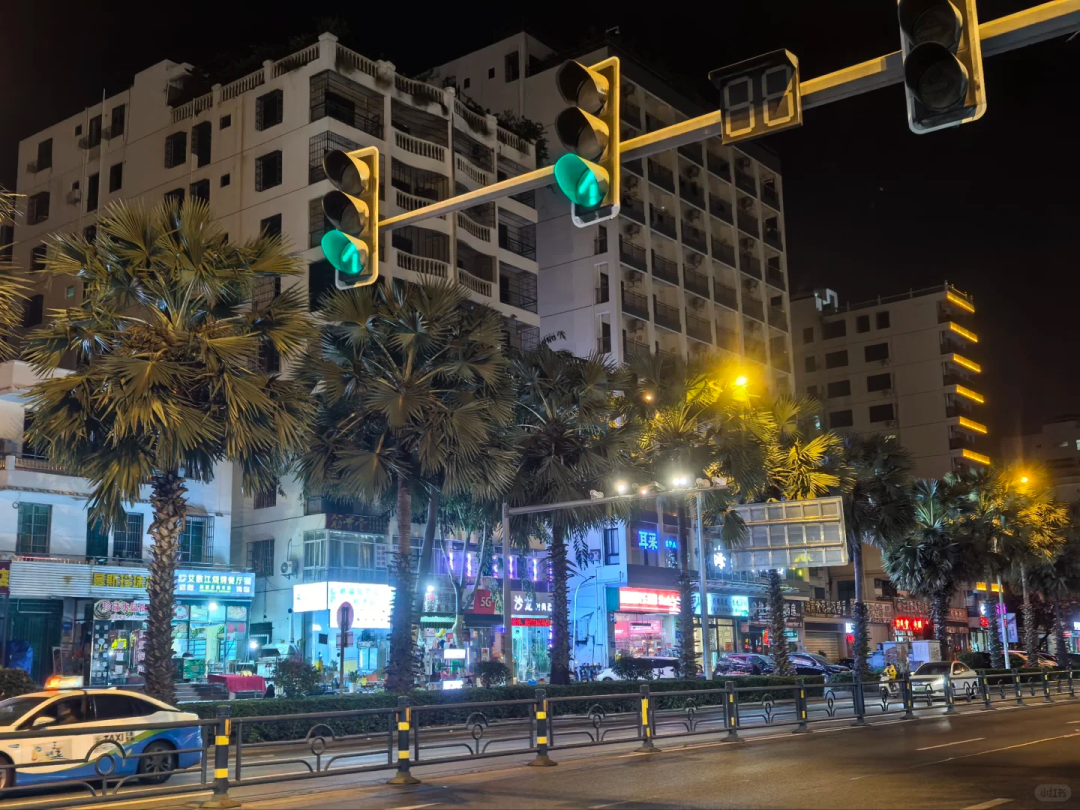
▲ Architectural styles along the streets of Huixin Village (Huixin Muslim Village) in Fenghuang Town, Sanya.
Most Muslims in southern China today—if you find them—originally migrated from Northwest China. But Sanya's Muslims, the Utsul Muslims, are a total exception. They migrated down from Southeast Asia, and with a population of around 10,000, they make up China's southernmost ethnic minority group.
▲ South Mosque in Huixin Village (Huixin Muslim Village), Fenghuang Town, Sanya.
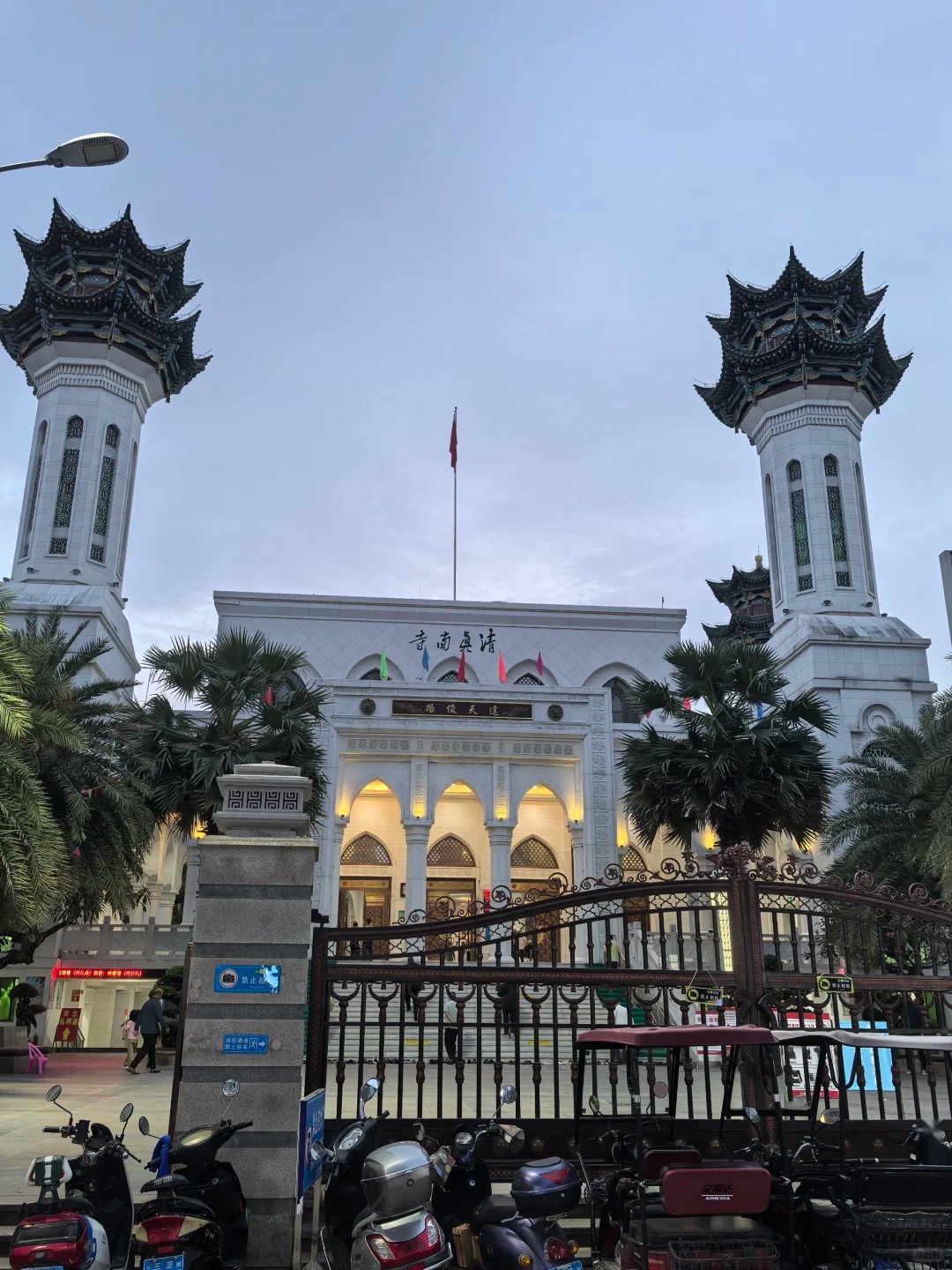
The ancestors of the Utsul Muslims hail from the Champa Kingdom in Southeast Asia (now southern Vietnam), making them China's only Muslim immigrant group with Southeast Asian roots.
Because of this unique history, this little beach city packs in six mosques in a very tight radius. While Utsul Muslims are officially categorized as Hui people due to their religious faith, their appearance and language are totally different from Northwest Hui Muslims. The Utsul people feature distinct Southeast Asian and Arab physical traits, and they speak an Austronesian language belonging to the Chamic language family, closely related to Southeast Asian Cham languages.
Why did the Utsul people migrate from Southeast Asia to Sanya?
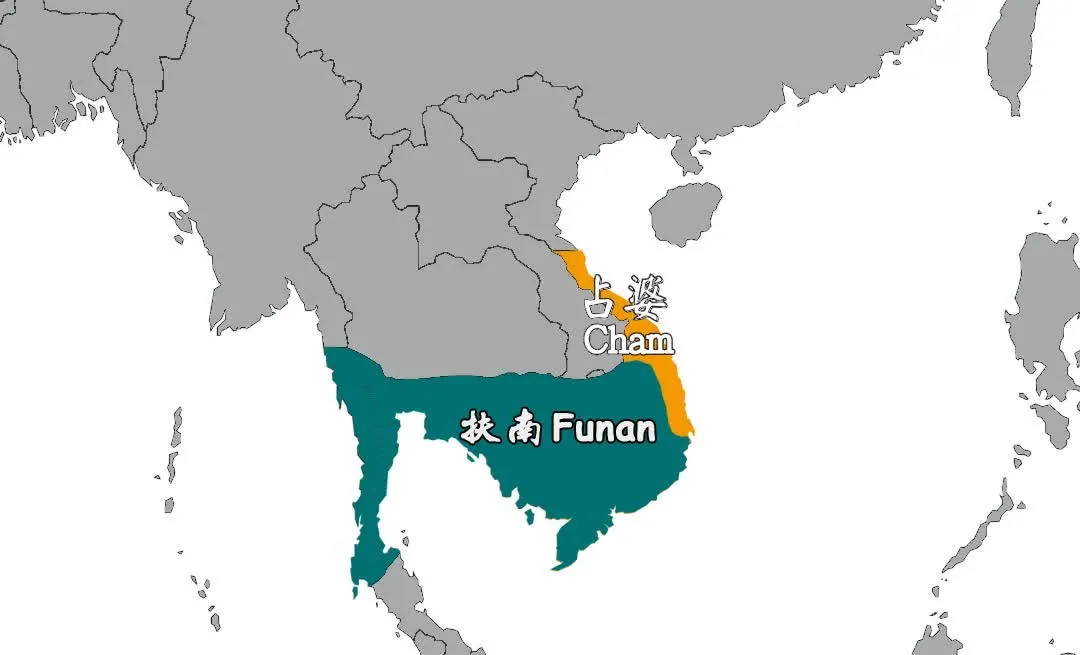
✅ [Origins of the Utsul People]
Sanya's Utsul Muslims are descendants of the ancient Cham people of Southeast Asia. The Cham originated in the Kingdom of Linyi (present-day central Vietnam). Linyi was originally part of China's sphere, but during the chaos at the end of the Eastern Han dynasty, they broke away to establish their own state, which later grew into the Champa Kingdom.
▲ The Champa Kingdom.

The Cham people were originally influenced by India and practiced Brahmanism. Later, as Arab merchants traded along the coast, Islam was introduced to Champa, and local Muslim communities gradually formed.
Vietnam bordered Champa, but back then, Vietnam was still under Chinese rule. As the Tang Dynasty weakened, Vietnam shook off Chinese control and established the Dinh Dynasty in 968 AD, becoming Champa's brand-new neighbor.
Once independent, Vietnam launched military campaigns against Champa. To escape the ravages of war, batches of Muslim Cham people migrated across the sea to Hainan Island during the Song and Yuan dynasties, settling down in scattered pockets across the island.
▲ Geographic location of Hainan Island.
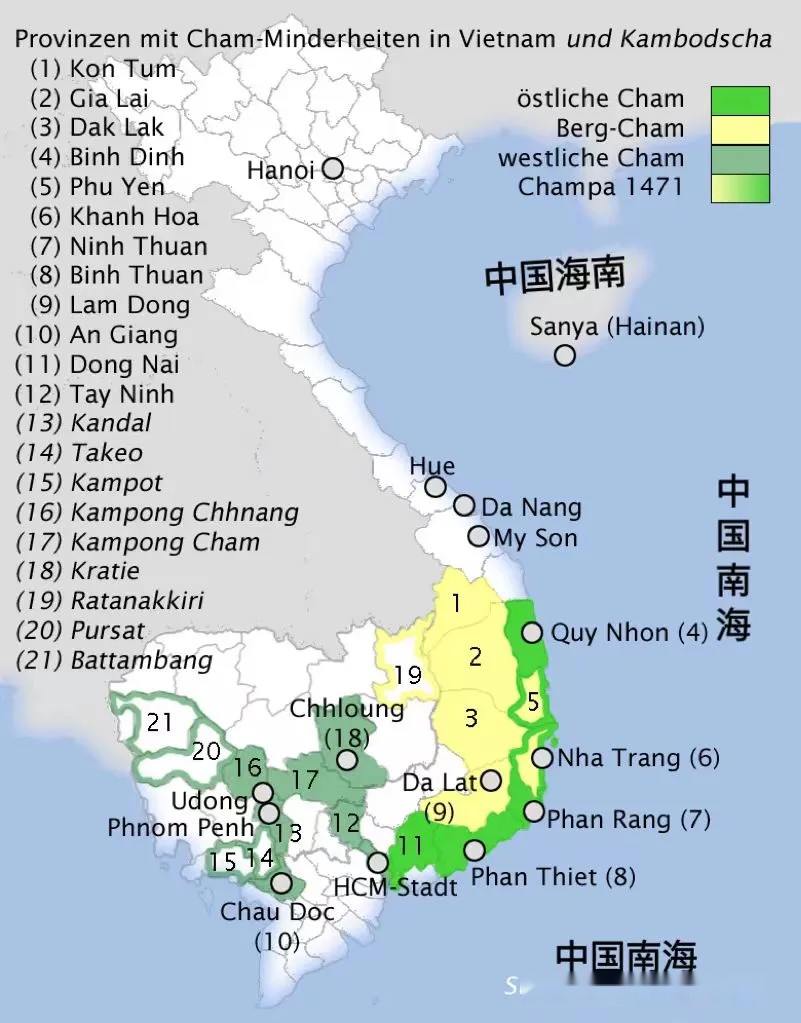
The Cham populations in northern Hainan, being closer to the mainland, eventually intermarried and assimilated with the Han and Li ethnic groups. But Sanya, sitting right at the island's southernmost tip, was geographically isolated, and large numbers of Han Chinese didn't settle there at the time. As a result, the local Cham escaped assimilation. They planted roots in Sanya, established tight-knit Muslim communities, evolved into the Utsul people, and developed their own Utsul dialect.
▲ Distribution of the Cham people.
✅ [The Fall of the Champa Kingdom]
Wars between Champa and Vietnam dragged on for centuries, with Vietnam gradually gaining the upper hand.
In 1471, Vietnamese forces captured the royal capital of Champa, reducing Champa to a vassal state of Vietnam.
By 1802, Vietnam abolished the native chieftains and brought the region under direct imperial administration (*gaitu guiliu*), officially spelling the end of the Champa Kingdom.
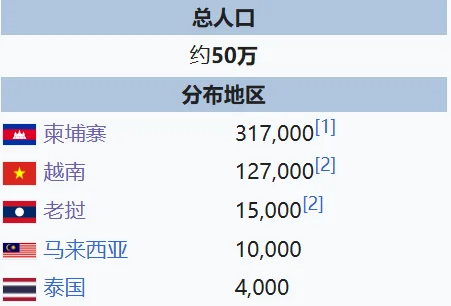
Following the fall of their nation, the surviving Cham people were mostly scattered across modern-day Vietnam and Cambodia. Due to aggressive assimilation policies in both countries, the Cham population plummeted dramatically; today, the combined Cham population in both nations is under 500,000.
▲ Current Cham population distribution.
✅【Current Status of the Utsul People in Sanya】
In 1939, when the Japanese invaded Hainan and built an airport in Phoenix, Sanya, the local Utsul people were forced to relocate to the Yanglan area, forming the clustered settlement known as Huihui Village (Huihui Muslim Village).
After Japan's defeat, some Utsul people returned to their original site to establish Huixin Village (Huixin Muslim Village).
Since then, Sanya has been home to two major villages: Huihui and Huixin.
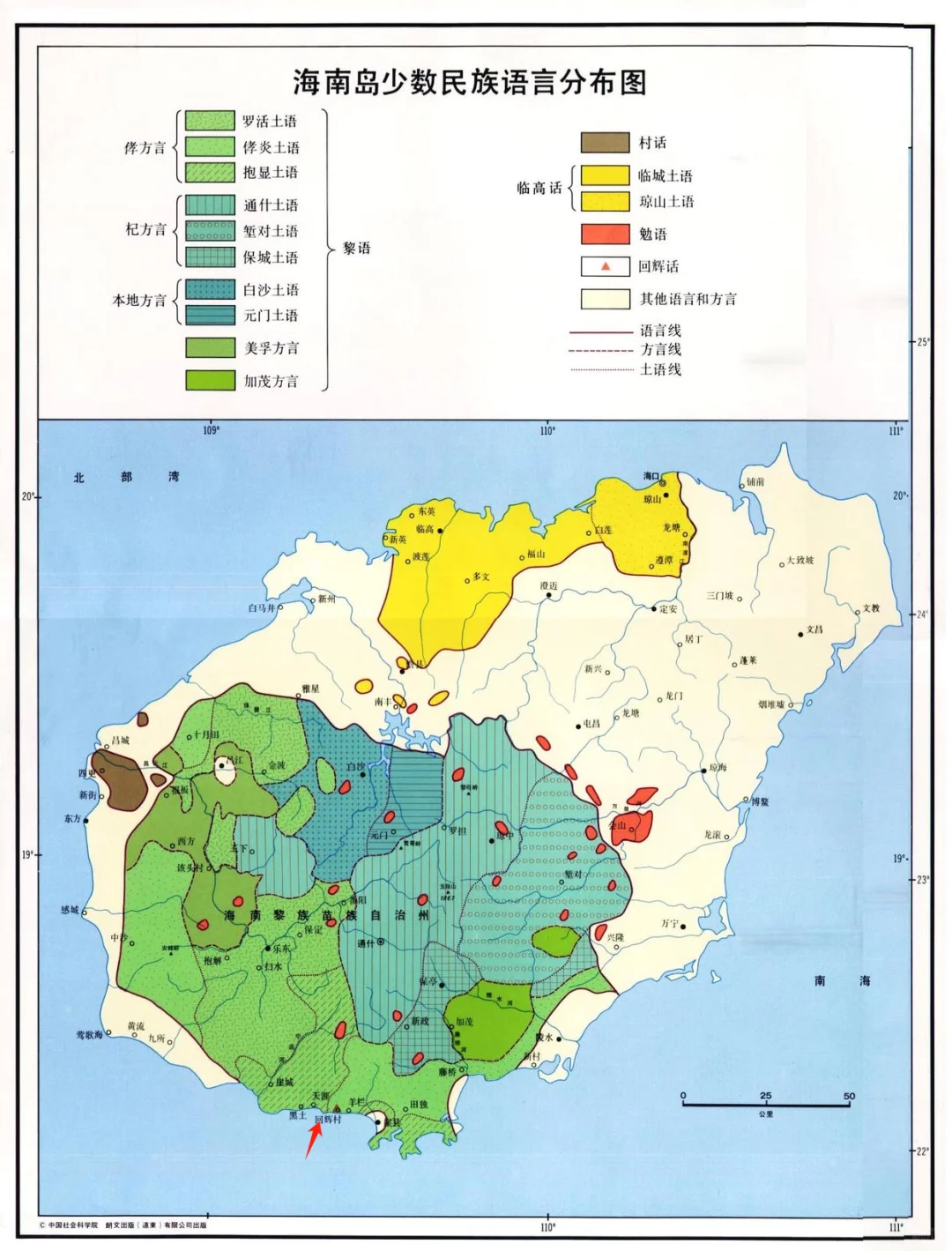
▲ Hainan Ethnic Minority Languages
After the founding of New China, based on religious beliefs, the Huihui people—who have deep roots on Hainan Island for nearly a thousand years—were officially classified as Hui Muslims rather than Cham people.
In recent years, as Sanya has transformed into a major tourist destination, the Huihui people have seized tourism opportunities to develop their cultural village. Visitors can head over to Phoenix Town, where the Huihui people are concentrated and where you'll find 6 mosques, to experience the culture of this Muslim community originally from Southeast Asia.
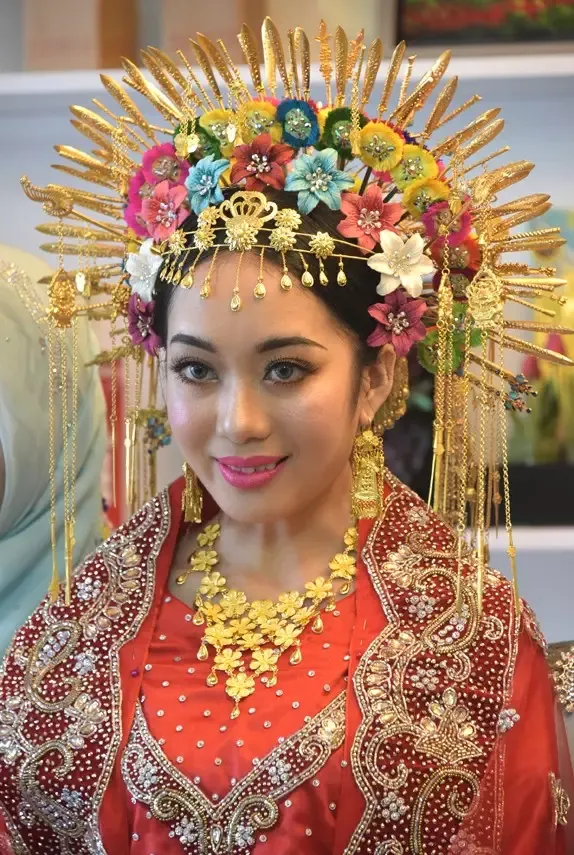
▲ A Sanya Hui Muslim Bride (Photo courtesy of Sanya Tianya District Hui Culture Communication Service Center)
These Muslim Cham people crossed the ocean seeking refuge and ultimately put down roots on Hainan Island, boasting a history of 600 to 700 years. Shaped by a unique geographical and cultural environment, the Huihui people add a vibrant, distinctive cultural stamp to Hainan's ethnic heritage.
Today, there are about 10,000 Huihui people in Sanya, mainly clustered in Huihui Village (Huihui Muslim Village) and Huixin Village (Huixin Muslim Village), where they still preserve their ancient beliefs and traditions to this day.
▲ Architecture in Huixin Village (Huixin Muslim Village)
✅ Location: Phoenix Town, Tianya District, Sanya
Huihui Village (Huihui Muslim Village) (around Fenghuang Road and the East Mosque)
Huixin Village (Huixin Muslim Village) (around Huixin Road and the South Mosque)
—(End of Article)—
Tracing Sanya & Hainan's Muslim Heritage: History, Mosques, and Halal Culture
Articles • Hasan09 posted the article • 0 comments • 4 views • 3 hours ago
A Historical Investigation into the Ancient Place Names 'Huihuidun' and 'Huideng': Tracing the Historical Footprints of Muslim Ancestors Landing on the Shores of Yazhou Bay
Abstract:
This paper investigates the historical and geographical evolution of the place names 'Huihuidun' (Huihuidun Muslim settlement) and 'Huideng' (Huideng Muslim settlement) in Sanya, Hainan. Combining historical records from successive editions of Yazhou gazetteers with unearthed ancient Islamic stone inscriptions, it analyzes the key historical nodes during the Song and Yuan dynasties when Muslim merchant vessels took shelter and landed to settle on Hainan Island.
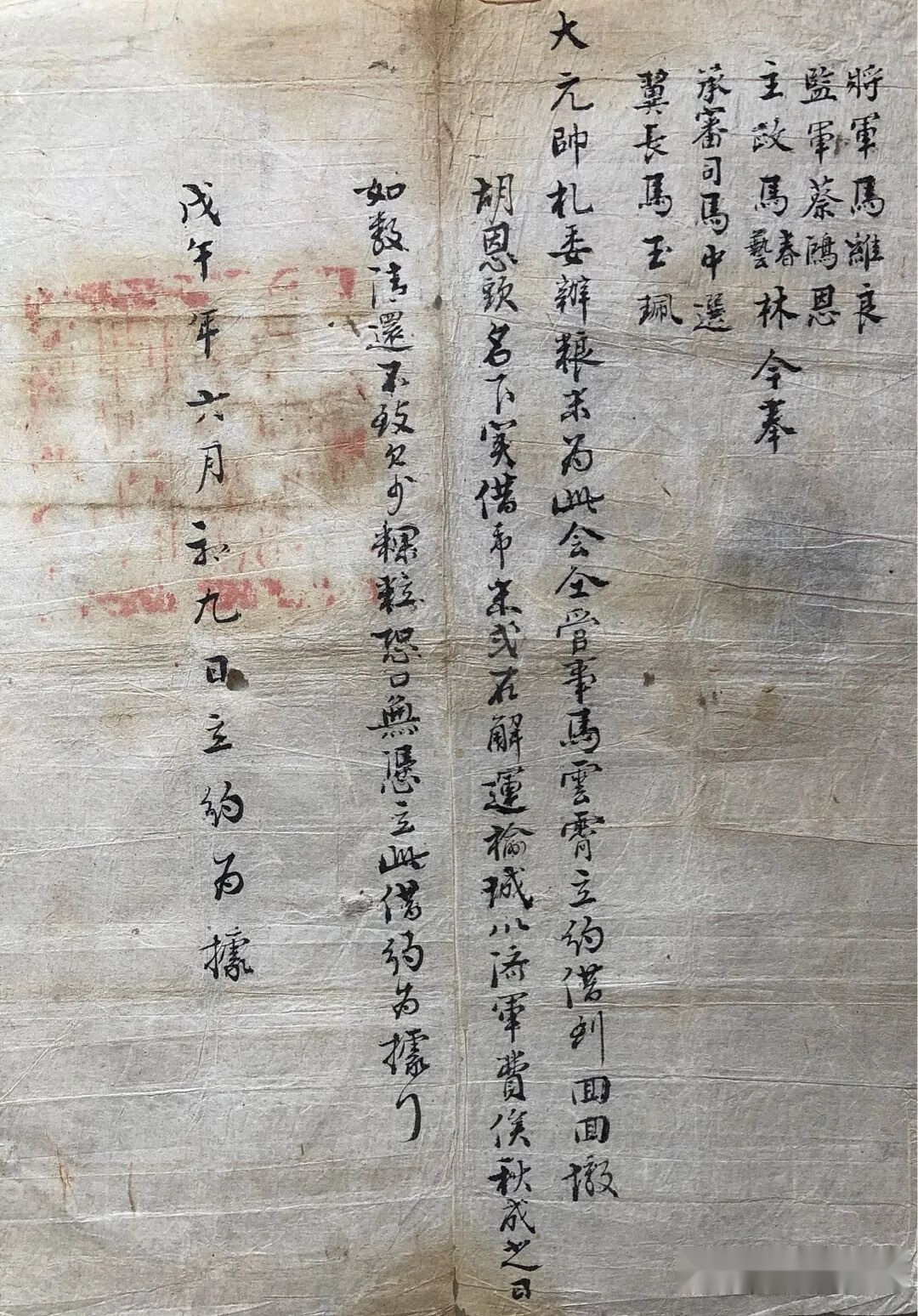
Pictured above is a military grain receipt dated the 9th day of the sixth lunar month in the Wuwu year (the eighth year of Xianfeng, 1858). It records General Ma Weiliang, Military Supervisor Cai Hongen, Administrator Ma Chunlin, Ma Yilin, Adjudication Officer Ma Zhongxuan, and Wing Commander Ma Yupeining borrowing military grain from Hu Enhxian of Huihuidun (Huihuidun Muslim settlement).
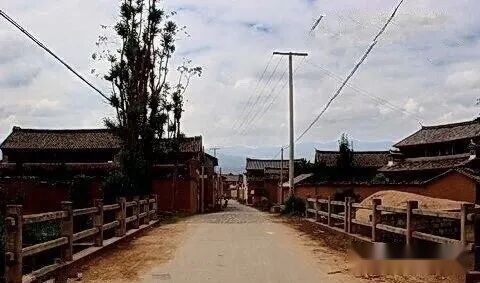
The Huihuidun mentioned in the receipt is located at the northwestern tip of Weishan Yi and Hui Autonomous County in Yunnan. It is a famous, large Hui Muslim village in Yunnan, and its current name is 'Huideng' (Huideng Muslim settlement).
The history of Huideng dates back more than 700 years. At that time, Mongke Khan sent his younger brother Kublai Khan to conquer Yunnan. A large number of Muslims crossed the leather raft bridges into Yunnan along with the Yuan army and settled down. Over time, they became an important part of Yunnan's multi-ethnic family. Huideng was one of the earliest places where they settled in Yunnan. Because they were referred to as 'Huihui' (Hui Muslims), the place came to be named Huihuidun.
Legend has it that by the Hongwu reign of the Ming dynasty, a precious lantern appeared on the large tree in front of the Huihuidun Mosque. Whenever night fell, it shone brightly, guiding travelers in the dark, which is why Huihuidun later acquired the alternative name 'Huihuideng' (Huihuideng Mosque area / lantern settlement). Meanwhile, because the Bai language of Dali frequently uses 'deng' as a suffix for place names, some people also referred to Huideng at the time as 'Huideng' (Huihui deng).
During the Daoguang reign of the Qing dynasty, due to a corrupt and incompetent government, ethnic conflicts in Yunnan intensified, eventually triggering the eighteen-year Panthay Rebellion during the Xianfeng and Tongzhi eras. Before Du Wenxiu officially launched his uprising against the Qing, he used Menghua (the former name of Weishan) Huihuidun and the Greater and Lesser Weiqu areas as a base to gather and build his strength, eventually expanding and growing. After Du Wenxiu established his headquarters in Dali, Huihuidun also became an important military stronghold in Menghua.
In the eleventh year of Tongzhi (1871), after the failure of Du Wenxiu's uprising, Qing imperial forces launched a massive massacre of innocent Hui Muslims in Dali, Weishan, and other places. Huihuidun escaped the catastrophe of a village massacre only because figures like Mi Fuquan surrendered and pledged allegiance to the Qing court.
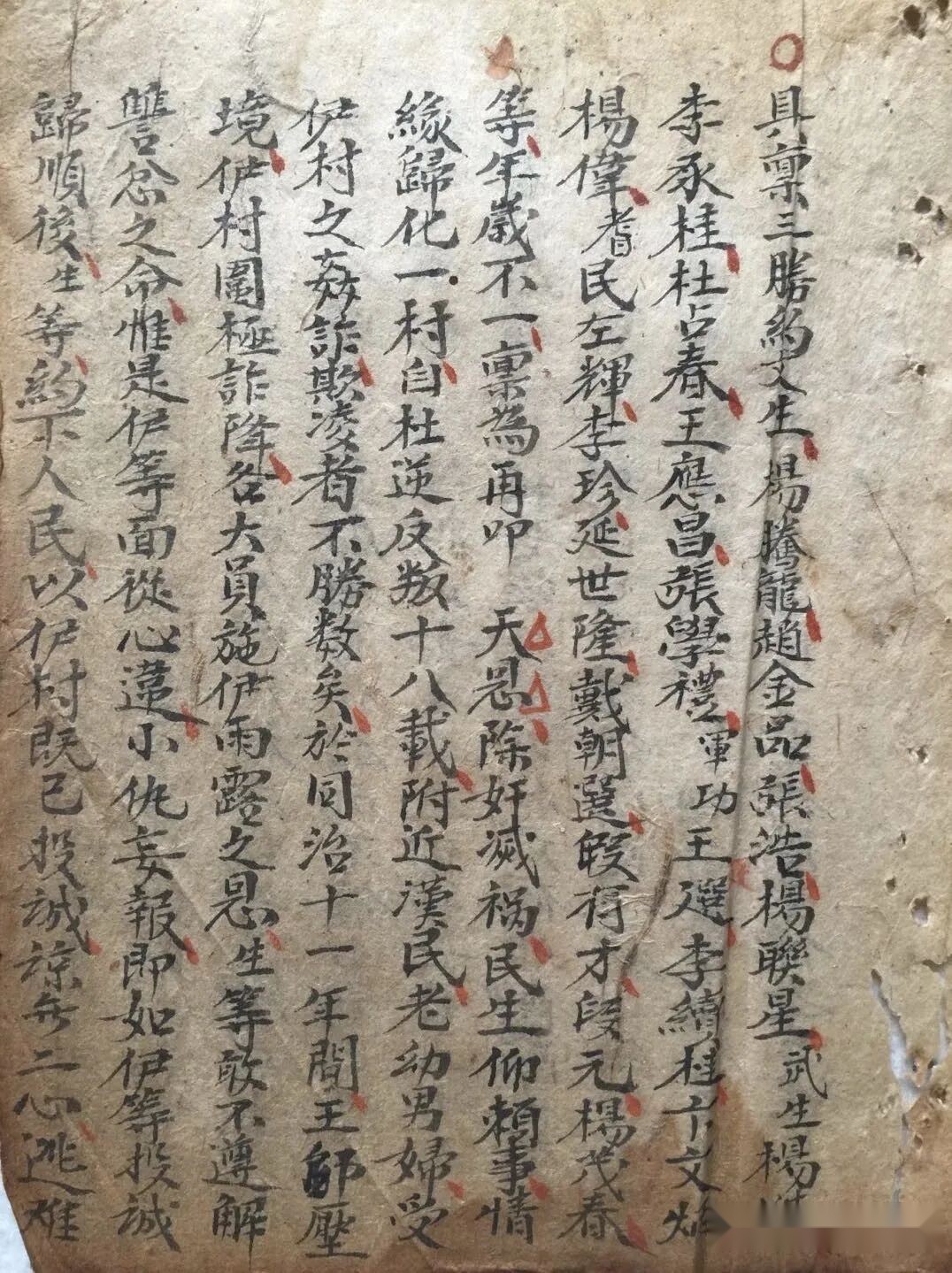
Although the Qing court did not carry out a massacre in Huihuidun, it went to extremes to humiliate the locals. First, they forcibly renamed Huihuidun to 'Huihuideng' (meaning 'Huihui repent of their ascent', also mockingly called 'leedaocai' or 'liuyicun', meaning 'leftover vegetable scraps' or 'the village left behind'). Second, they coerced village Hui Muslims led by gentry figures like Mi Fuquan to 'huihan' (abandon their Islamic faith), meaning they had to give up their original beliefs and show repentance and submission to the imperial court by drinking alcohol and eating pork. Finally, the authorities ordered the local gentry and militia of Sansheng District where the village was located to closely monitor the village's Hui Muslims. Anyone caught engaging in so-called 'unlawful acts' such as refusing pork, not drinking alcohol, or secretly performing a dua (personal prayer) was to be sent to the officials for severe investigation and punishment. The document pictured below is an official denunciation submitted in the first year of Guangxu by various gentry members of Sansheng District, accusing Mi Fuquan and others of 'insincerely converting to Han ways and plotting rebellion':
Under this policy of ethnic discrimination, local Hui Muslims endured humiliation and bore heavy burdens to survive the darkest forty years of their history.
Following the founding of the Republic of China, under the influence of the guiding principle of the 'Republic of Five Nationalities,' Huihuidun finally ushered in a new dawn. Aside from restoring their faith, through the unremitting efforts of the villagers, Huihuidun regained its vibrant luster in economic, cultural, and other fields. Ultimately, it was honorably renamed back to 'Huideng'.
After the founding of the People's Republic of China, guided by relevant ethnic policies, Huideng achieved further development, and the people's lives became even happier.
(Huideng Mosque) view all
A Historical Investigation into the Ancient Place Names 'Huihuidun' and 'Huideng': Tracing the Historical Footprints of Muslim Ancestors Landing on the Shores of Yazhou Bay
Abstract:
This paper investigates the historical and geographical evolution of the place names 'Huihuidun' (Huihuidun Muslim settlement) and 'Huideng' (Huideng Muslim settlement) in Sanya, Hainan. Combining historical records from successive editions of Yazhou gazetteers with unearthed ancient Islamic stone inscriptions, it analyzes the key historical nodes during the Song and Yuan dynasties when Muslim merchant vessels took shelter and landed to settle on Hainan Island.
Pictured above is a military grain receipt dated the 9th day of the sixth lunar month in the Wuwu year (the eighth year of Xianfeng, 1858). It records General Ma Weiliang, Military Supervisor Cai Hongen, Administrator Ma Chunlin, Ma Yilin, Adjudication Officer Ma Zhongxuan, and Wing Commander Ma Yupeining borrowing military grain from Hu Enhxian of Huihuidun (Huihuidun Muslim settlement).
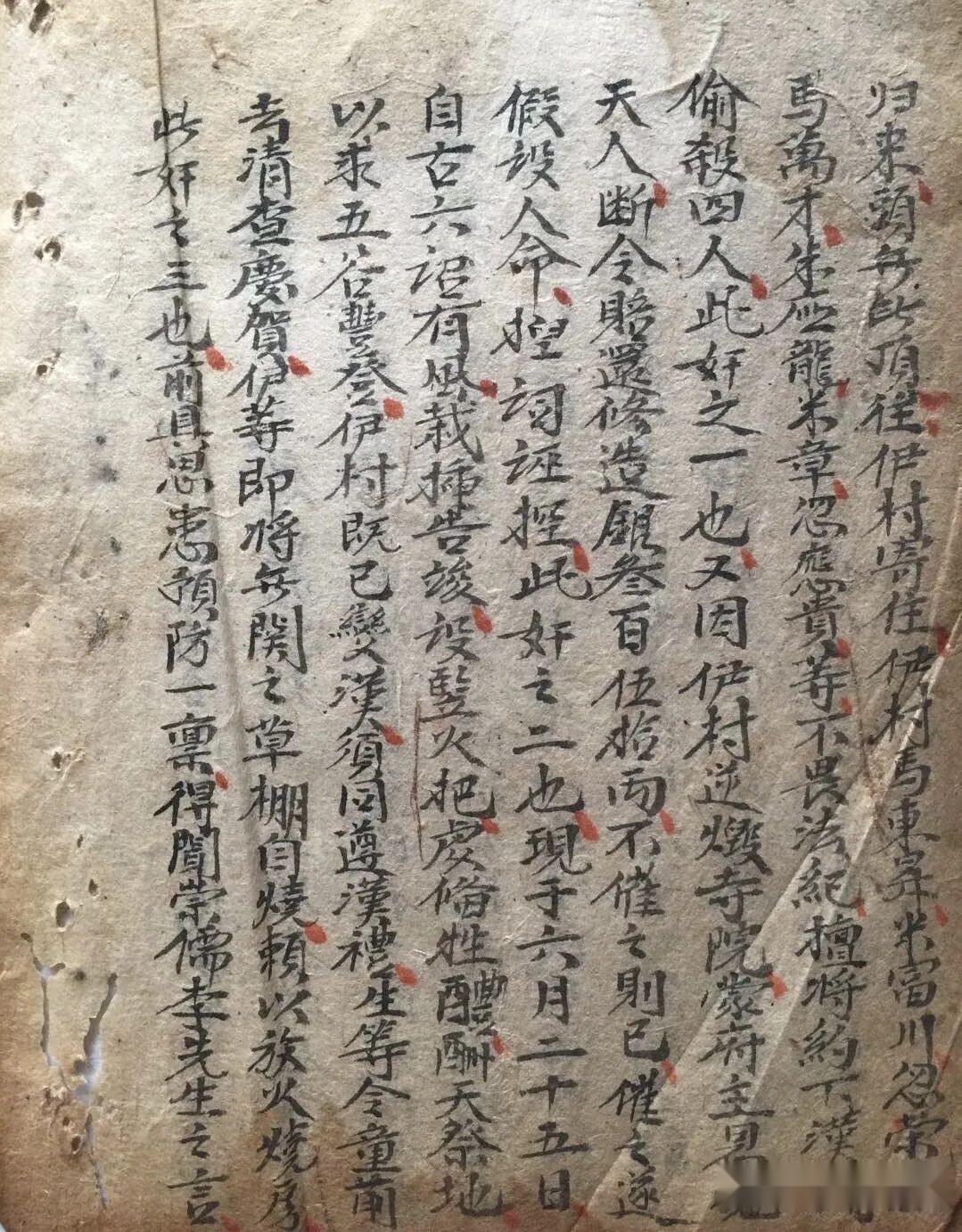
The Huihuidun mentioned in the receipt is located at the northwestern tip of Weishan Yi and Hui Autonomous County in Yunnan. It is a famous, large Hui Muslim village in Yunnan, and its current name is 'Huideng' (Huideng Muslim settlement).
The history of Huideng dates back more than 700 years. At that time, Mongke Khan sent his younger brother Kublai Khan to conquer Yunnan. A large number of Muslims crossed the leather raft bridges into Yunnan along with the Yuan army and settled down. Over time, they became an important part of Yunnan's multi-ethnic family. Huideng was one of the earliest places where they settled in Yunnan. Because they were referred to as 'Huihui' (Hui Muslims), the place came to be named Huihuidun.
Legend has it that by the Hongwu reign of the Ming dynasty, a precious lantern appeared on the large tree in front of the Huihuidun Mosque. Whenever night fell, it shone brightly, guiding travelers in the dark, which is why Huihuidun later acquired the alternative name 'Huihuideng' (Huihuideng Mosque area / lantern settlement). Meanwhile, because the Bai language of Dali frequently uses 'deng' as a suffix for place names, some people also referred to Huideng at the time as 'Huideng' (Huihui deng).

During the Daoguang reign of the Qing dynasty, due to a corrupt and incompetent government, ethnic conflicts in Yunnan intensified, eventually triggering the eighteen-year Panthay Rebellion during the Xianfeng and Tongzhi eras. Before Du Wenxiu officially launched his uprising against the Qing, he used Menghua (the former name of Weishan) Huihuidun and the Greater and Lesser Weiqu areas as a base to gather and build his strength, eventually expanding and growing. After Du Wenxiu established his headquarters in Dali, Huihuidun also became an important military stronghold in Menghua.
In the eleventh year of Tongzhi (1871), after the failure of Du Wenxiu's uprising, Qing imperial forces launched a massive massacre of innocent Hui Muslims in Dali, Weishan, and other places. Huihuidun escaped the catastrophe of a village massacre only because figures like Mi Fuquan surrendered and pledged allegiance to the Qing court.
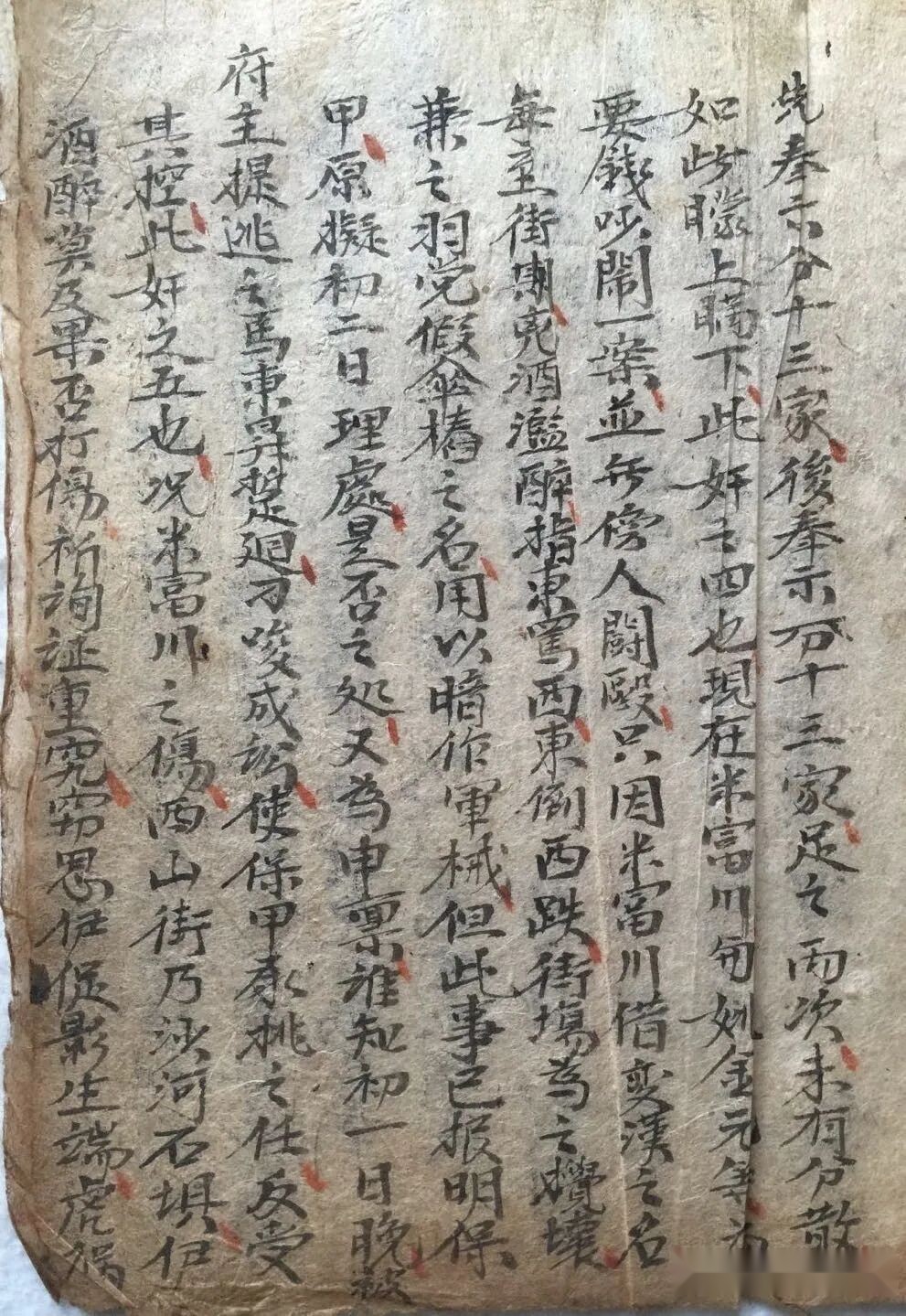
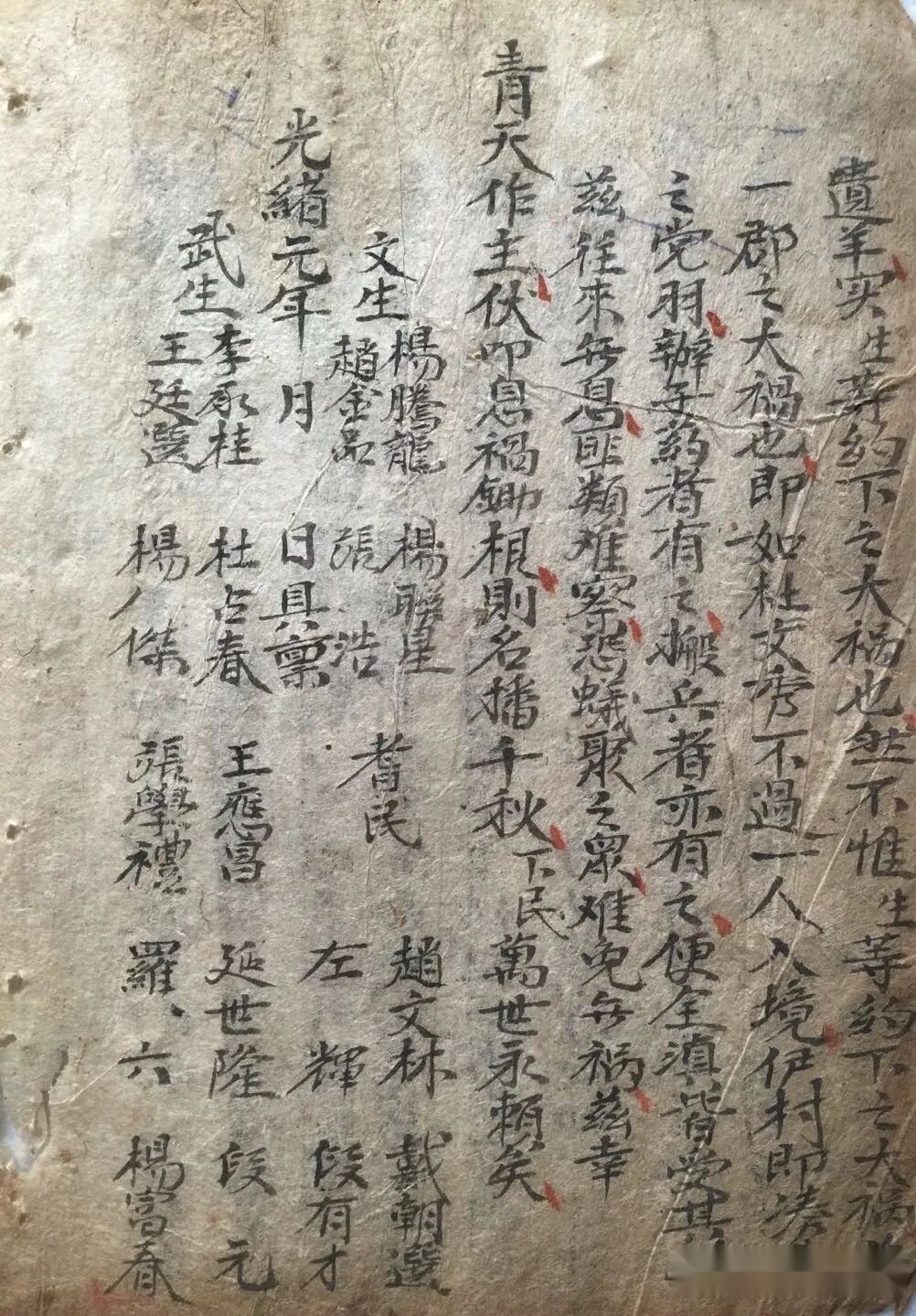
Although the Qing court did not carry out a massacre in Huihuidun, it went to extremes to humiliate the locals. First, they forcibly renamed Huihuidun to 'Huihuideng' (meaning 'Huihui repent of their ascent', also mockingly called 'leedaocai' or 'liuyicun', meaning 'leftover vegetable scraps' or 'the village left behind'). Second, they coerced village Hui Muslims led by gentry figures like Mi Fuquan to 'huihan' (abandon their Islamic faith), meaning they had to give up their original beliefs and show repentance and submission to the imperial court by drinking alcohol and eating pork. Finally, the authorities ordered the local gentry and militia of Sansheng District where the village was located to closely monitor the village's Hui Muslims. Anyone caught engaging in so-called 'unlawful acts' such as refusing pork, not drinking alcohol, or secretly performing a dua (personal prayer) was to be sent to the officials for severe investigation and punishment. The document pictured below is an official denunciation submitted in the first year of Guangxu by various gentry members of Sansheng District, accusing Mi Fuquan and others of 'insincerely converting to Han ways and plotting rebellion':
Under this policy of ethnic discrimination, local Hui Muslims endured humiliation and bore heavy burdens to survive the darkest forty years of their history.
Following the founding of the Republic of China, under the influence of the guiding principle of the 'Republic of Five Nationalities,' Huihuidun finally ushered in a new dawn. Aside from restoring their faith, through the unremitting efforts of the villagers, Huihuidun regained its vibrant luster in economic, cultural, and other fields. Ultimately, it was honorably renamed back to 'Huideng'.
After the founding of the People's Republic of China, guided by relevant ethnic policies, Huideng achieved further development, and the people's lives became even happier.
(Huideng Mosque)
Sanya's Muslim Villages: Exploring Huihui, Huixin, Halal Food & Historic Mosques in Hainan
Articles • Hasan09 posted the article • 0 comments • 4 views • 3 hours ago
Visual Chronicle of Sanya's Twin Muslim Villages, Huihui and Huixin: Pearl Markets, Hijab-Wearing Women, and Island Hui Muslim Street Life
Abstract:
Capturing through a documentary lens the everyday street life of the Huihui and Huixin Muslim villages in Sanya. A look at Hui Muslim women weaving through the First Market, resilient figures running pearl and handicraft businesses, and the peaceful, devout religious and cultural ecosystem of this tropical village enclave.
Around the First Market, you'll spot plenty of women wearing headscarves, chewing betel nut (a local Hainan habit), selling smartphones and pearls. They all hail from Sanya's two famous Muslim villages: Huihui Village and Huixin Village. If you come here to travel, cruise down Fenghuang Road and you'll see pearl and jade shops mixed with Xinjiang halal eateries, with the尖顶 (minaret) of a masjid rising in the distance. No matter how scorching the weather gets, you'll see women in hijabs and long robes zooming by on motor scooters—this is the vibe of Sanya's uniquely distinct Muslim villages. I spent a few days there looking for a rental, documenting their day-to-day life.
Huihui Village, Home to the Huihui People, Is the Largest Village
The Huihui people are descendants of the ancient Champa Kingdom, which existed for over a thousand years and practiced Islam. After the Champa Kingdom was crushed by the Khmer, some survivors fled and settled in Hainan around the year 1700. Local Hainanese people began calling them the Huihui people, and Huihui Village gets its name from this history. It used to be part of Fenghuang Town, but today it falls under the Huihui Community in Tianya District. It's super close to the airport, and heading south brings you to Sanya Bay, home to an ancient Muslim graveyard stretching over several kilometers.
If you're visiting, just drop a pin on the East Masjid (Huihui Village has several masjids including the Sanya Ancient Mosque, East Masjid, Northwest Grand Masjid, and North Grand Masjid, with the North Grand Masjid being the most grand and majestic). The East Masjid sits right along Fenghuang Road, with Huihui Village wrapping around its north and south sides. North of Fenghuang Road, Huihui Village meets Yanglan Road—on this side you have the Huihui Village masjid, and across the way stands the Yanglan Village Guandi Temple.
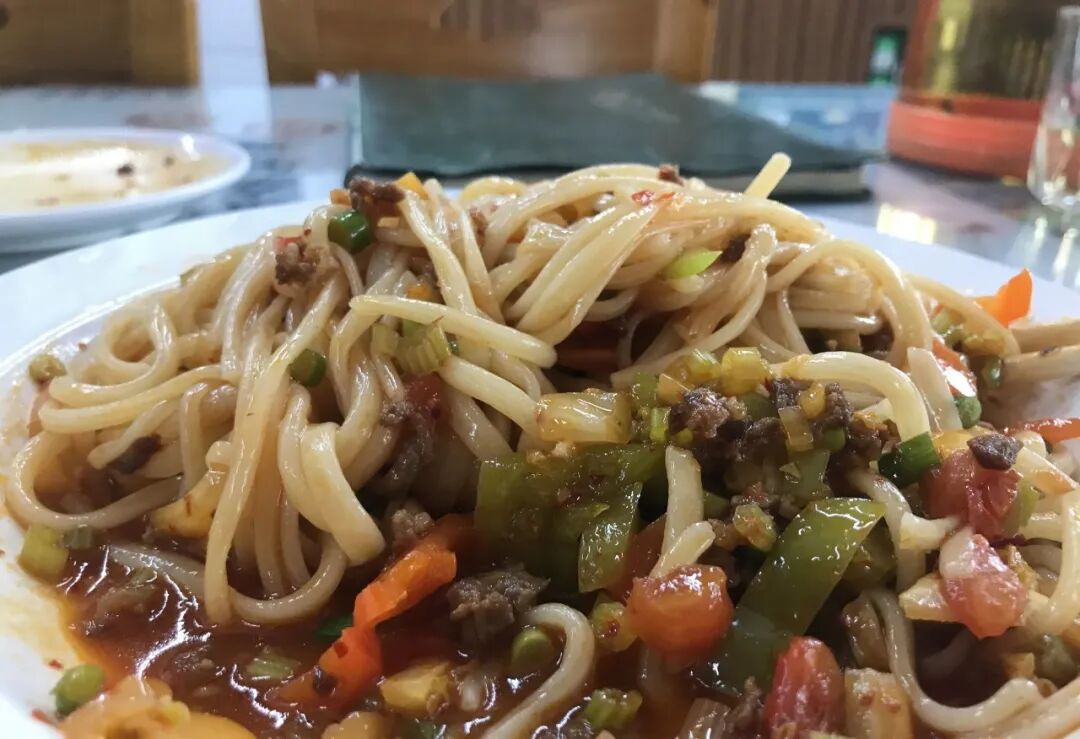
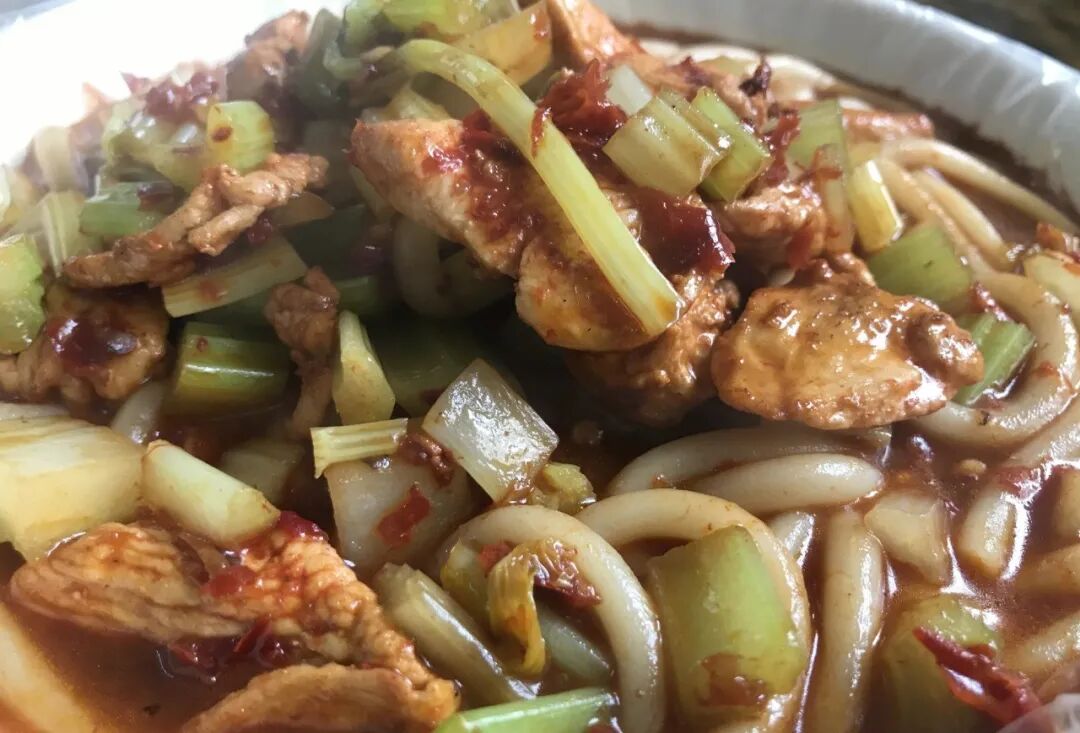
Arrived at the Huihui East Masjid right around noon. Grabbed a bowl of banmian (hand-pulled mixed noodles) next door for 20 RMB.
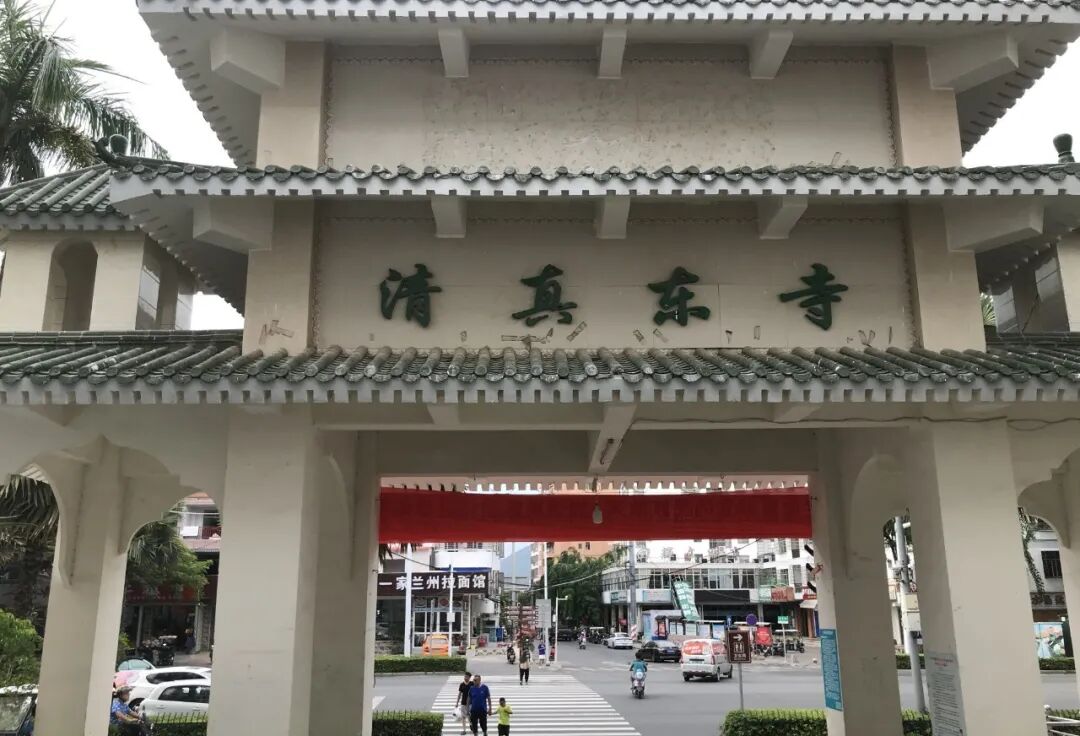
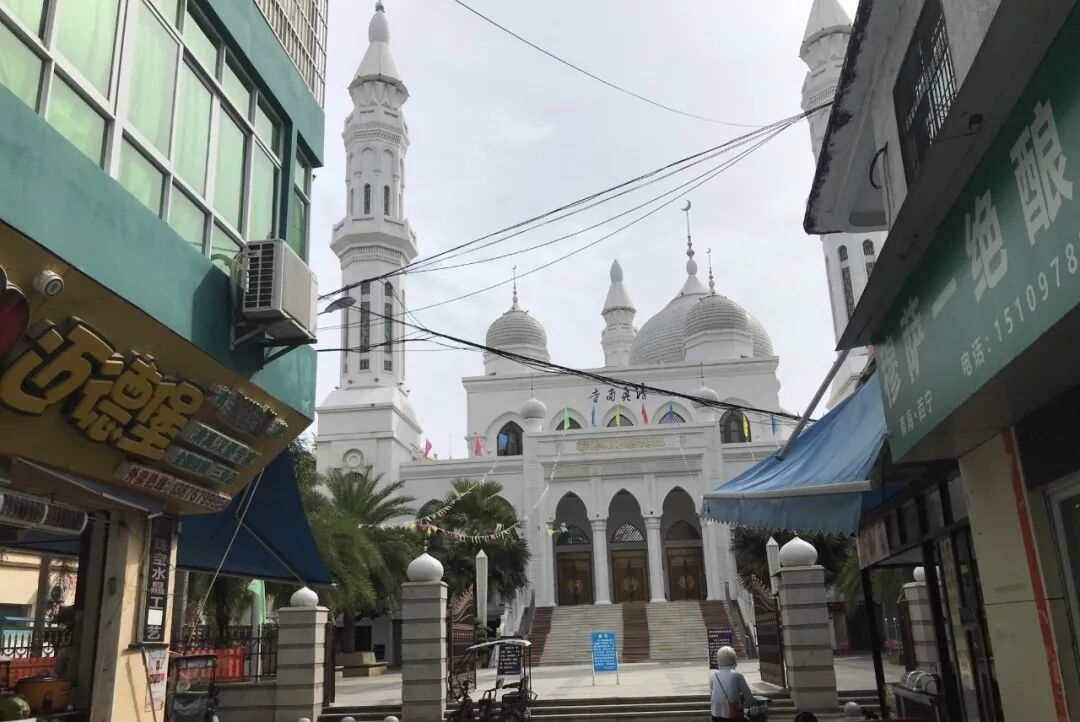
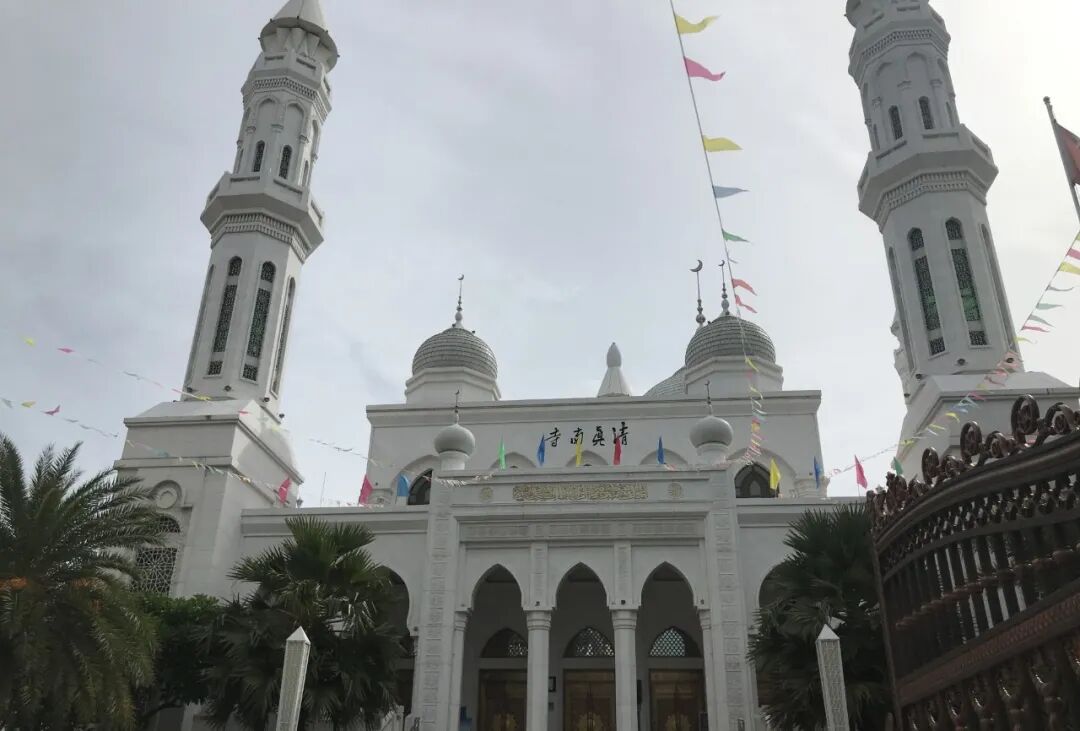
The most prominent landmark on Fenghuang Road: the Huihui East Masjid, flanked by Huihui Village on both sides.
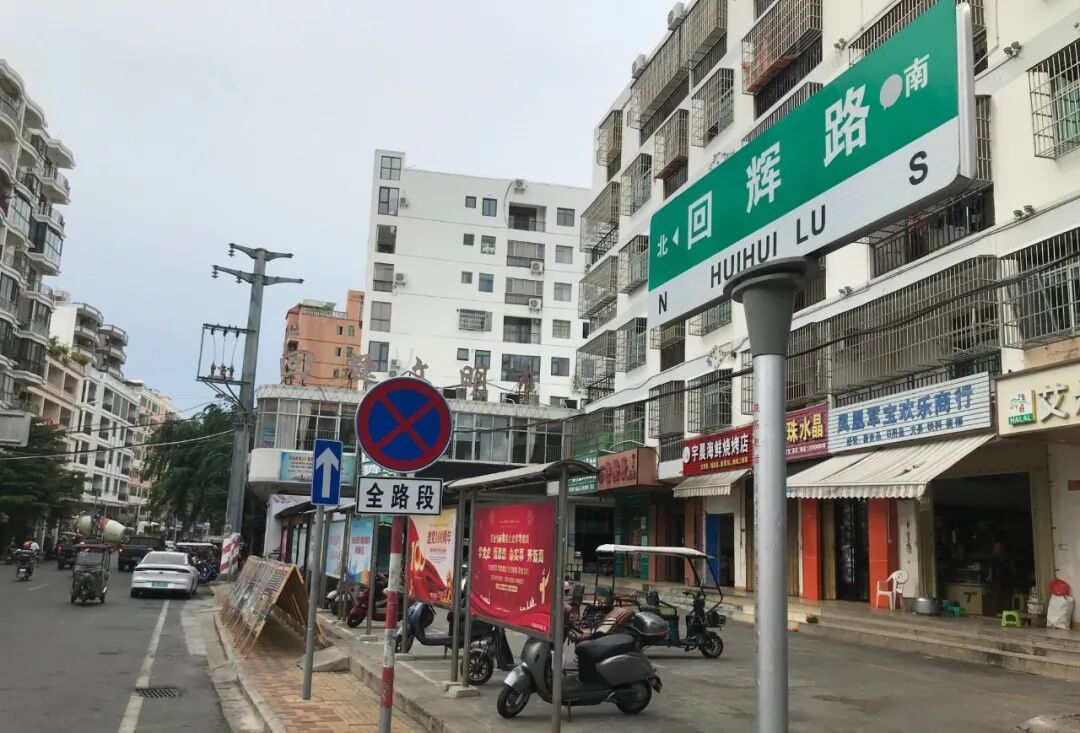
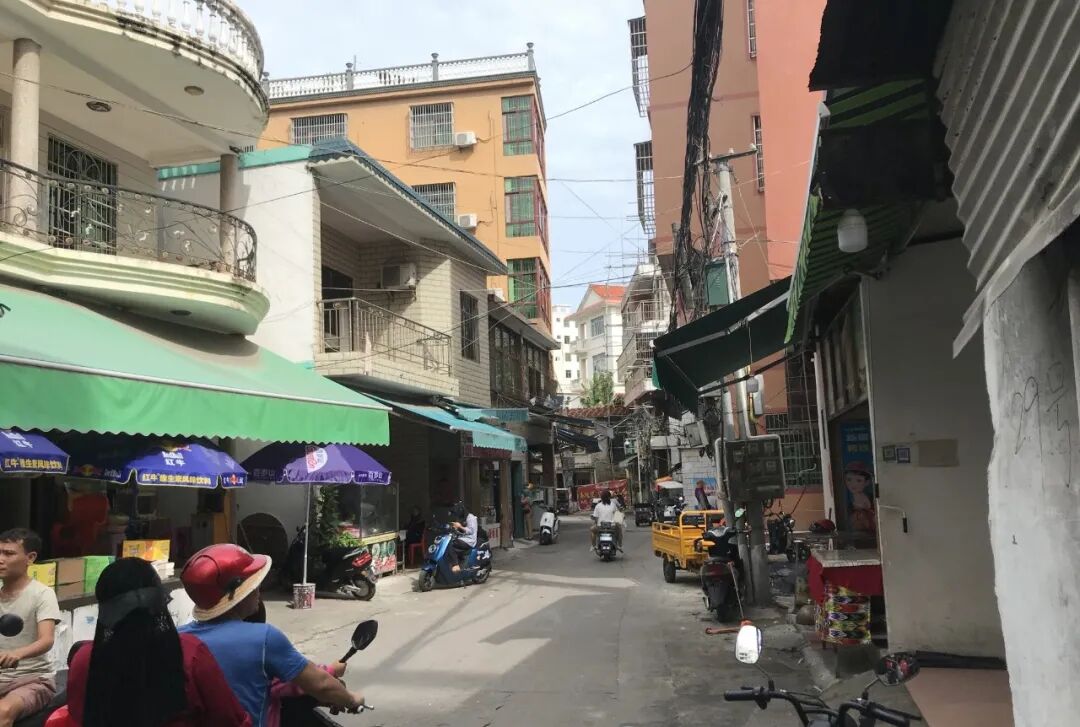
Huihui Road
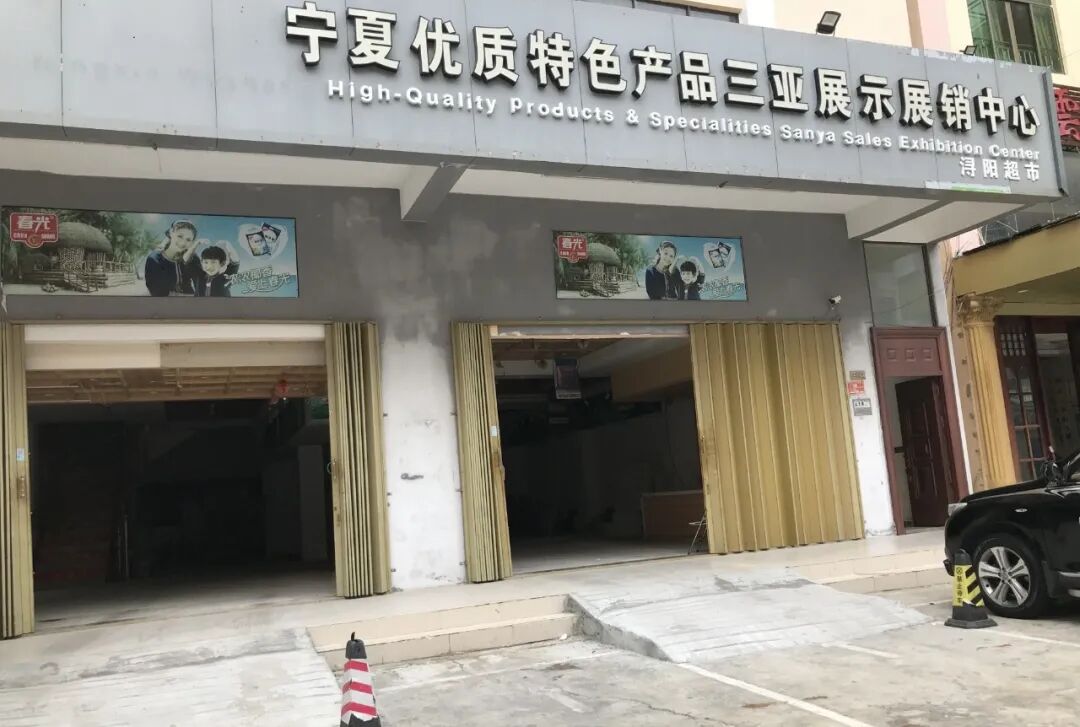
Ningxia specialty products showroom, currently under renovation.
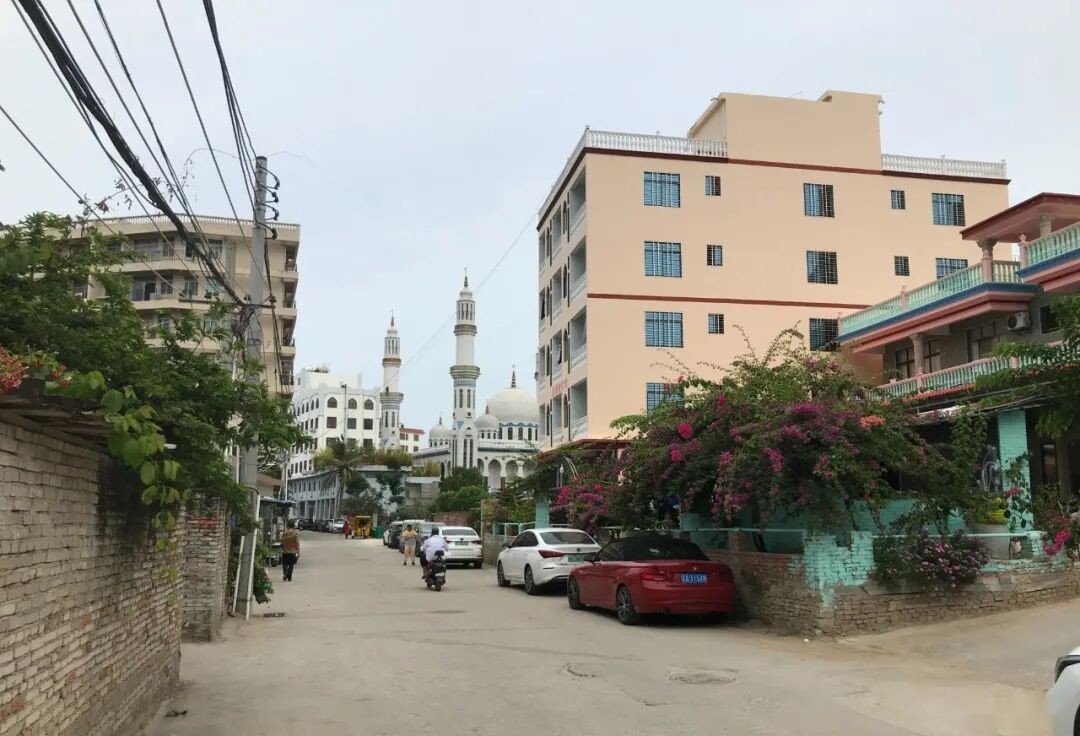
Venturing deeper into the village, the towering minaret of the North Grand Masjid comes into view in the distance—hardly looks like typical village architecture.
The North Grand Masjid
The North Grand Masjid during the afternoon adhan (call to prayer).
The historic Northwest Grand Masjid in Huihui Village.
Notices posted at the masjid, including the daily prayer (dua/salah) schedule.
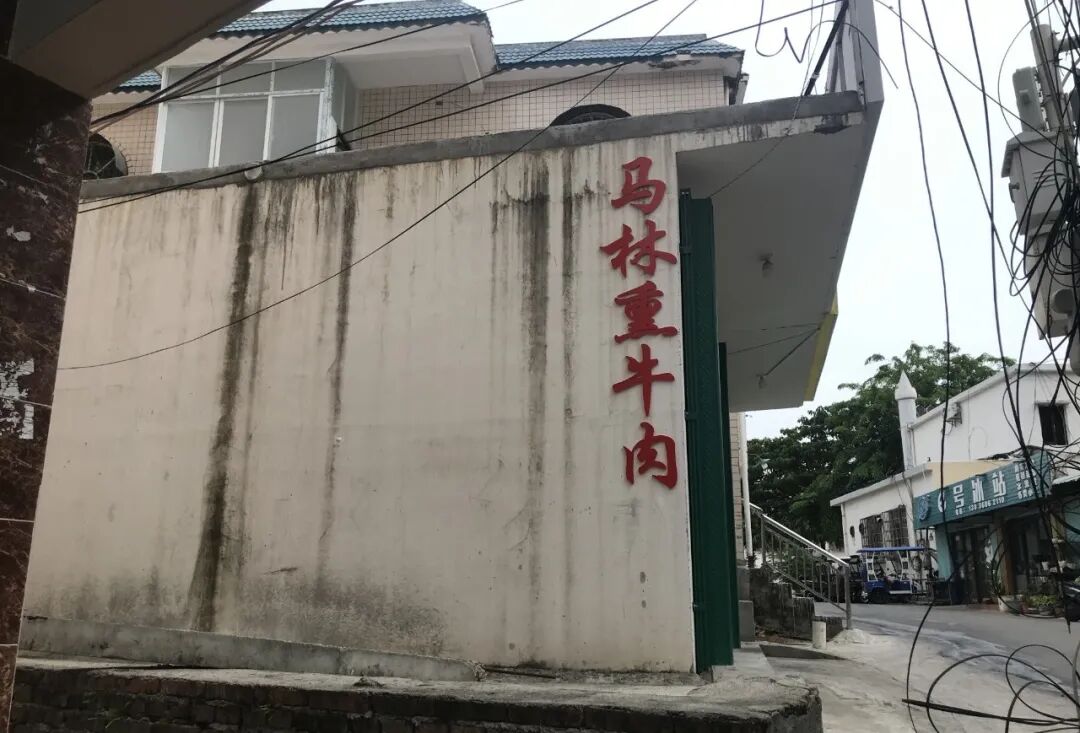
Huihui Smoked Beef Shop
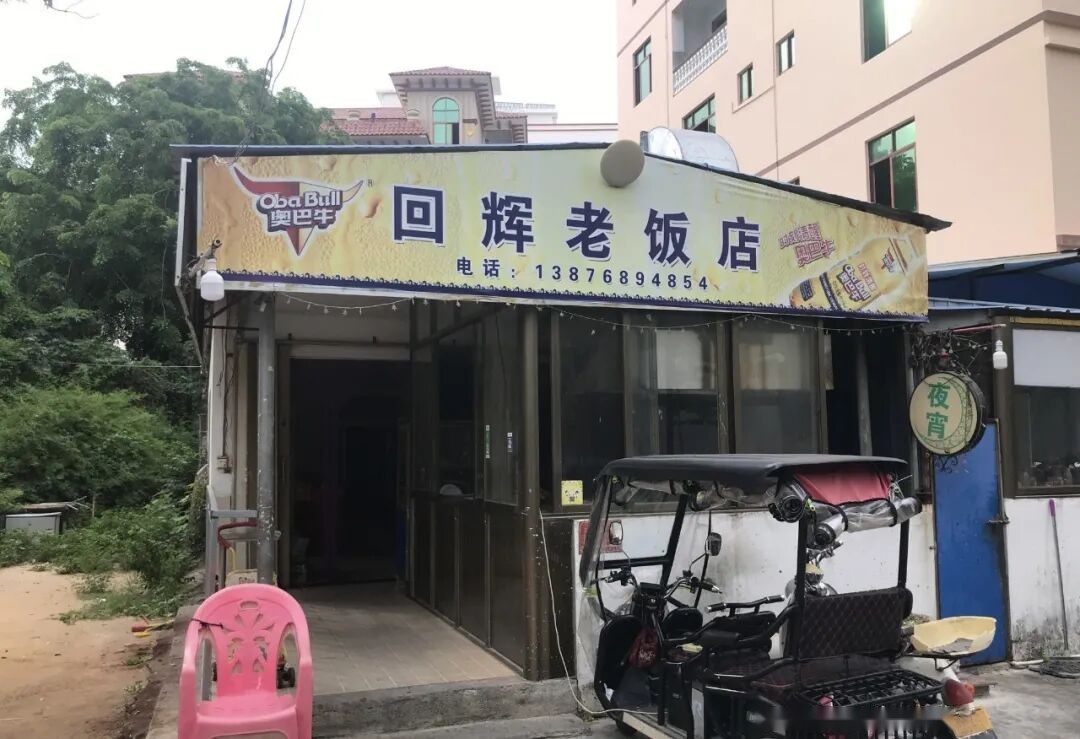
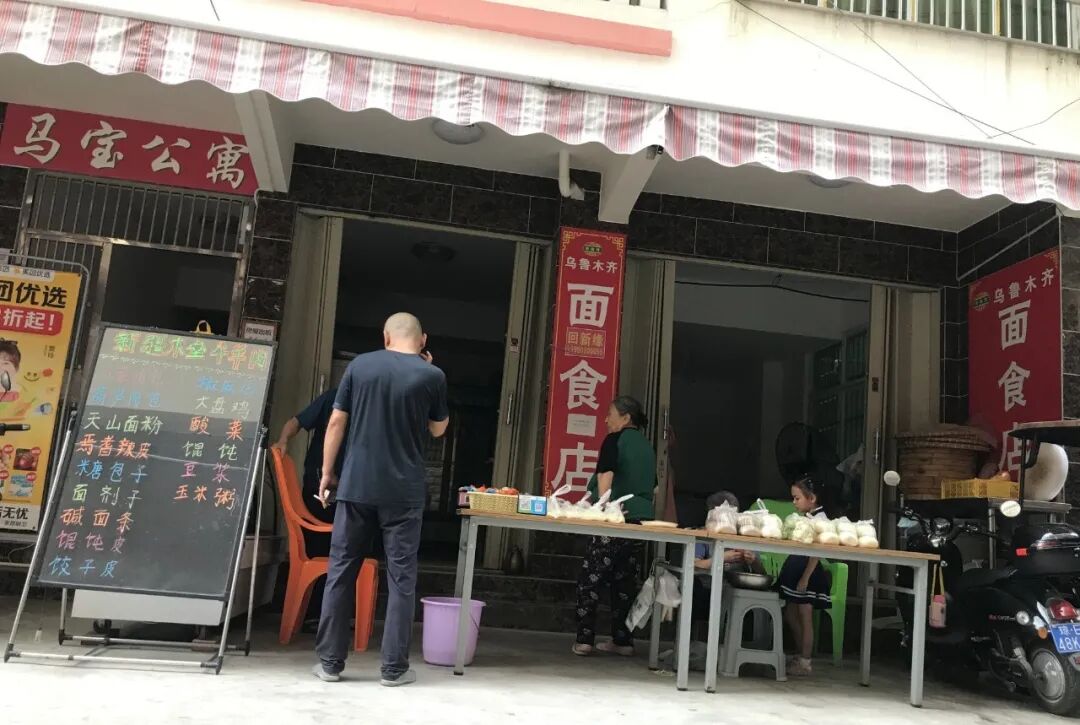
A local restaurant in Huihui Village
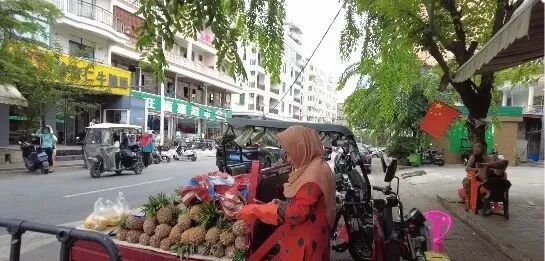
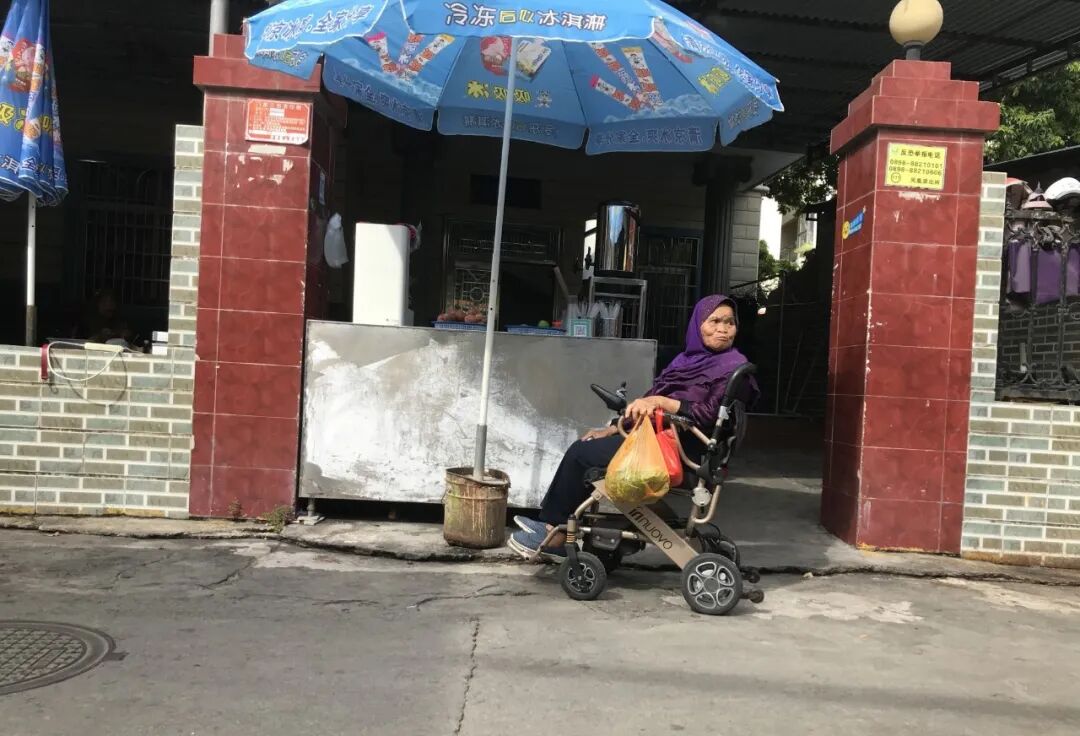
A Huihui woman selling pineapples in the village.
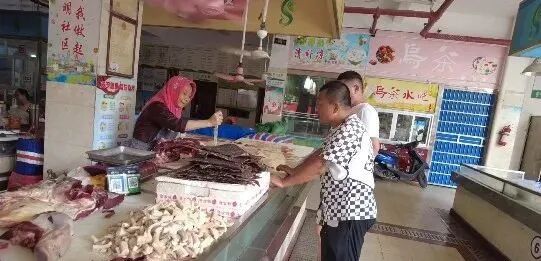
A Huihui woman selling beef at the local wet market.
Typical women's attire—they dress this way no matter how hot it gets.
A Huihui villager riding a scooter.
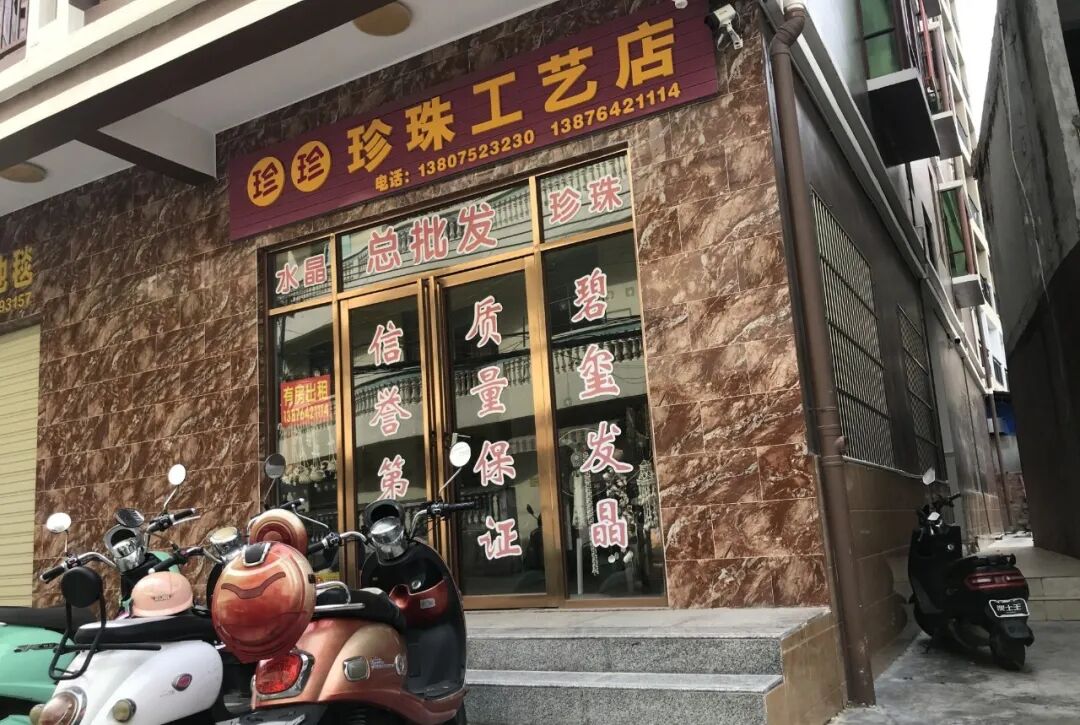
Pearls are the main hustle here; the people of Huihui Village are fantastic at business.
Yusuf (Joseph), a major prophet in Islam; many locals are named Yusuf.
A traditional ethnic clothing shop in Huihui Village.
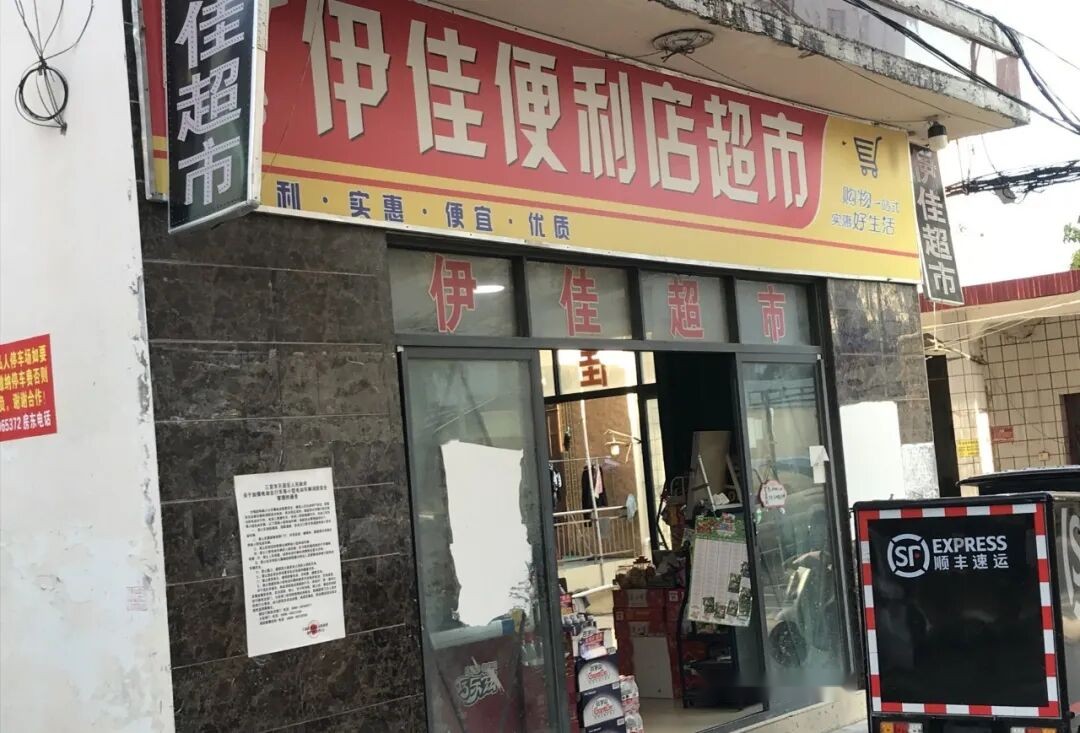
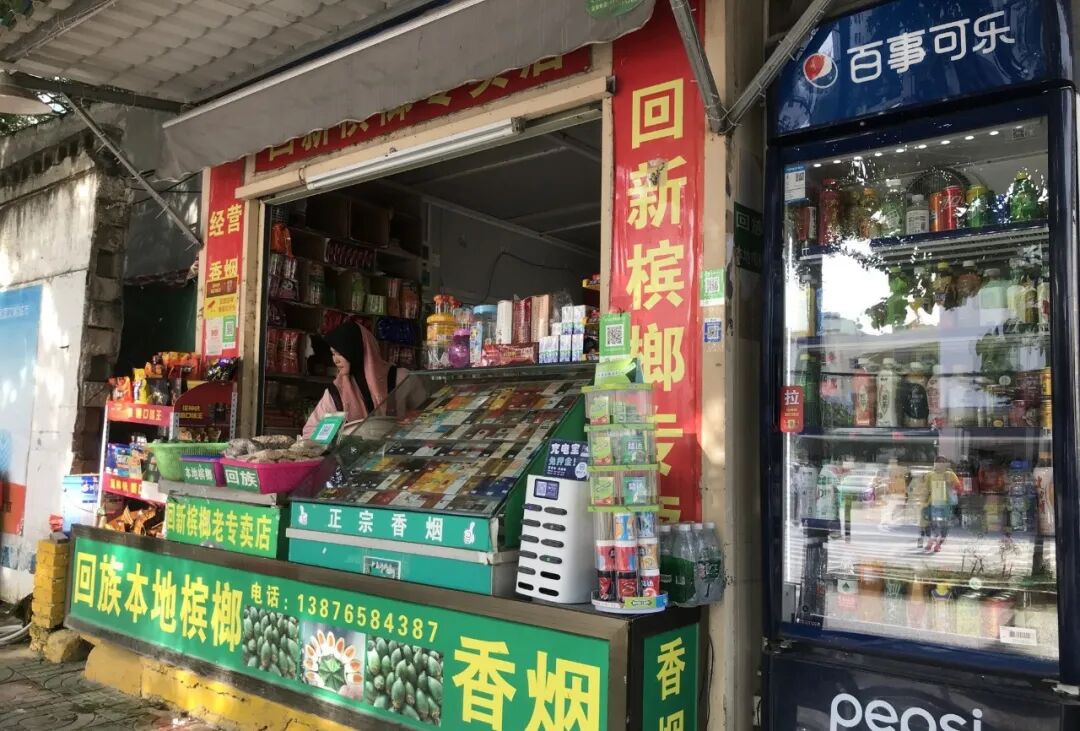
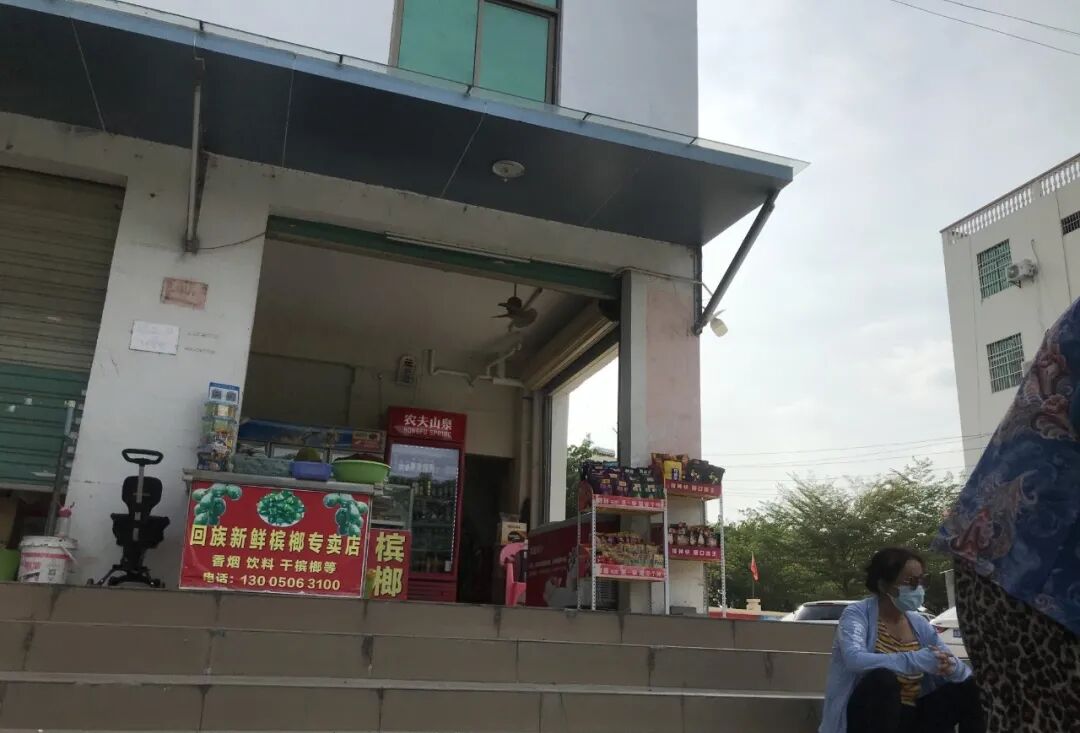
Convenience store
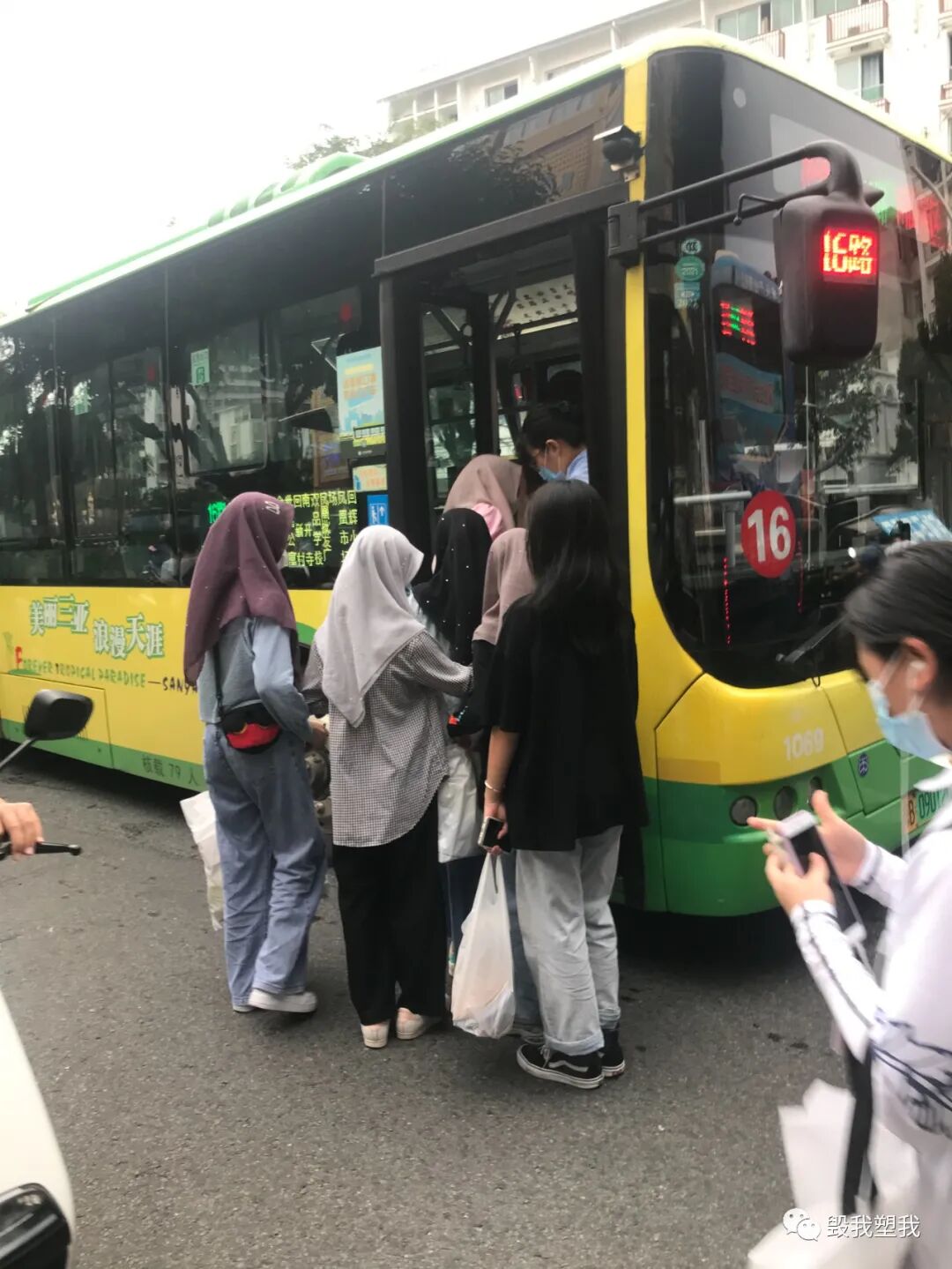
Students catching the public bus.
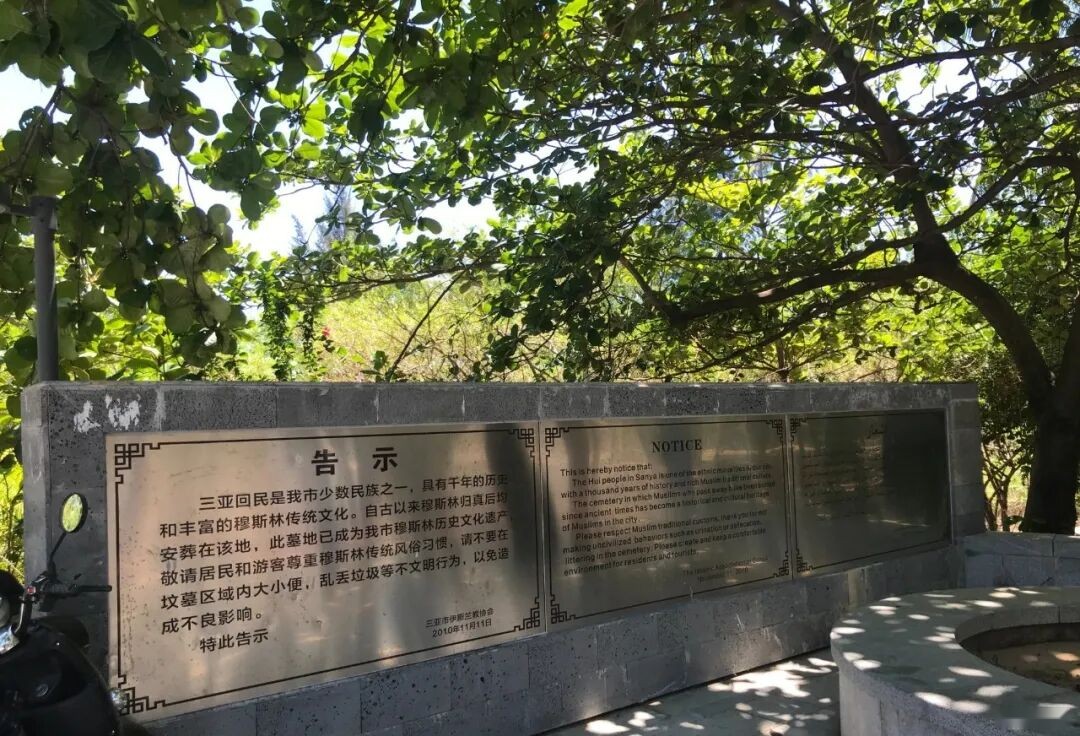
The Muslim cemetery at Sanya Bay.
Huixin Village: Smaller, more compact, lively, and packed with street eats.
Huixin Village is smaller in area, but it's actually where the earliest Cham people originally settled, right by the ocean. Later on, Japanese invaders built an airport here and drove the people of Huixin Village across to Yanglan, creating Huihui Village. After the victory of the War of Resistance Against Japanese Aggression, some of the Cham people migrated back to what is now Huixin Village. Geographically, it stretches from Yihang Market in the east all the way to Nankai Masjid in the west.
Huixin Village (Huixin Muslim Village) has two mosques: Nankai Mosque and Southern Mosque. Southern Mosque is right in the middle of the village, but Nankai Mosque is the largest—definitely use it as your landmark if you're exploring the area. It takes about half an hour to get here from Huihui Village (Huihui Muslim Village).
A meal in Huixin Village (Huixin Muslim Village): Rabier stir-fried rice noodles for 16 yuan.
Rolling into Huixin Village (Huixin Muslim Village), you'll spot Southern Mosque right away; it's the heart of the community.
Southern Mosque, closed to visitors during the pandemic.
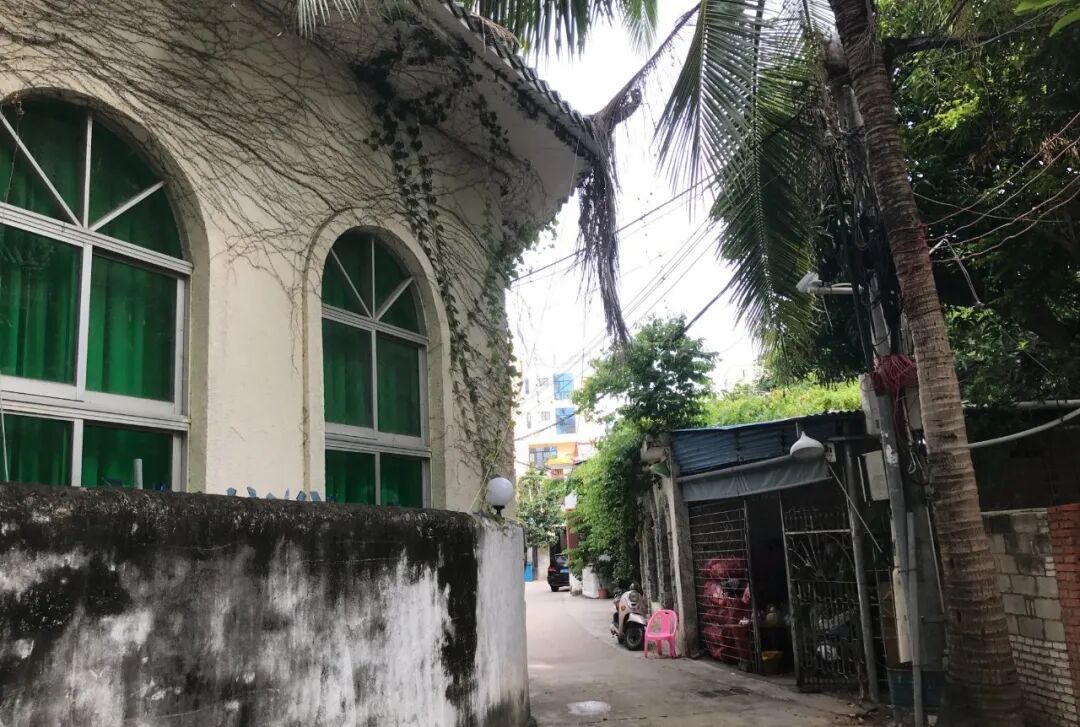
The alleys of Huixin Village (Huixin Muslim Village) are totally buzzing with local daily life.
Tucked away in the narrow alleys of Huixin Village (Huixin Muslim Village), you'll find an endless lineup of street snacks.
Pearl shops are seriously everywhere you look in Huixin Village (Huixin Muslim Village).
Strolling through the alleys of Huixin Village (Huixin Muslim Village).
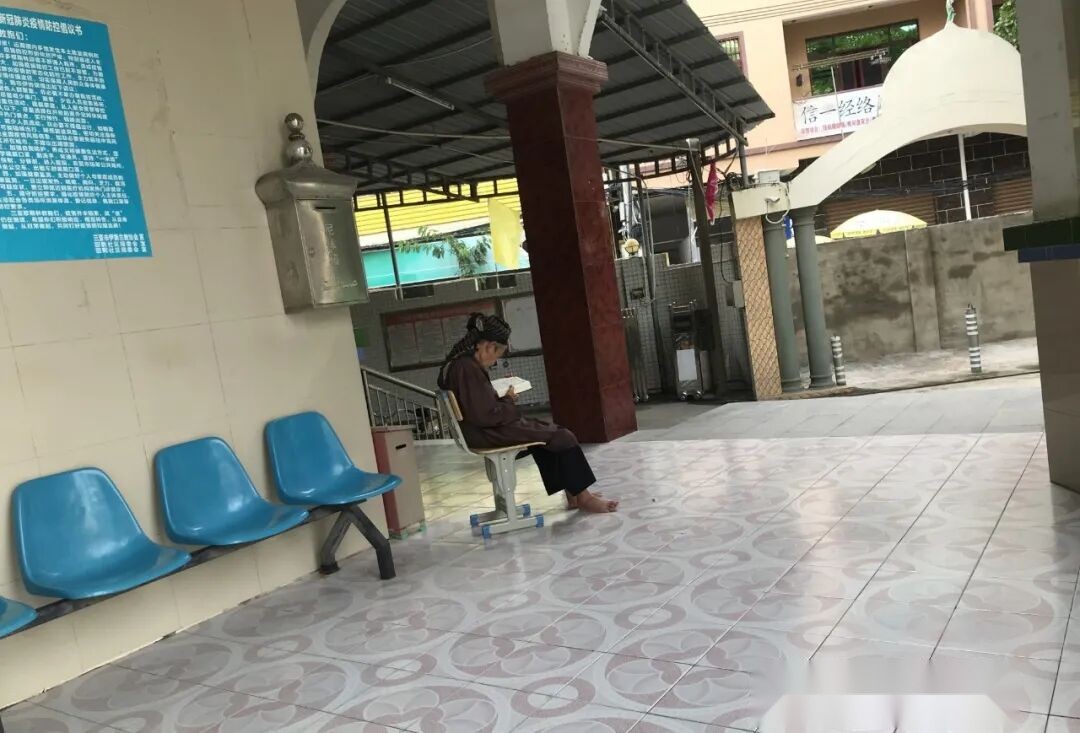
Someone studying religious texts at the Huixin Village (Huixin Muslim Village) mosque.
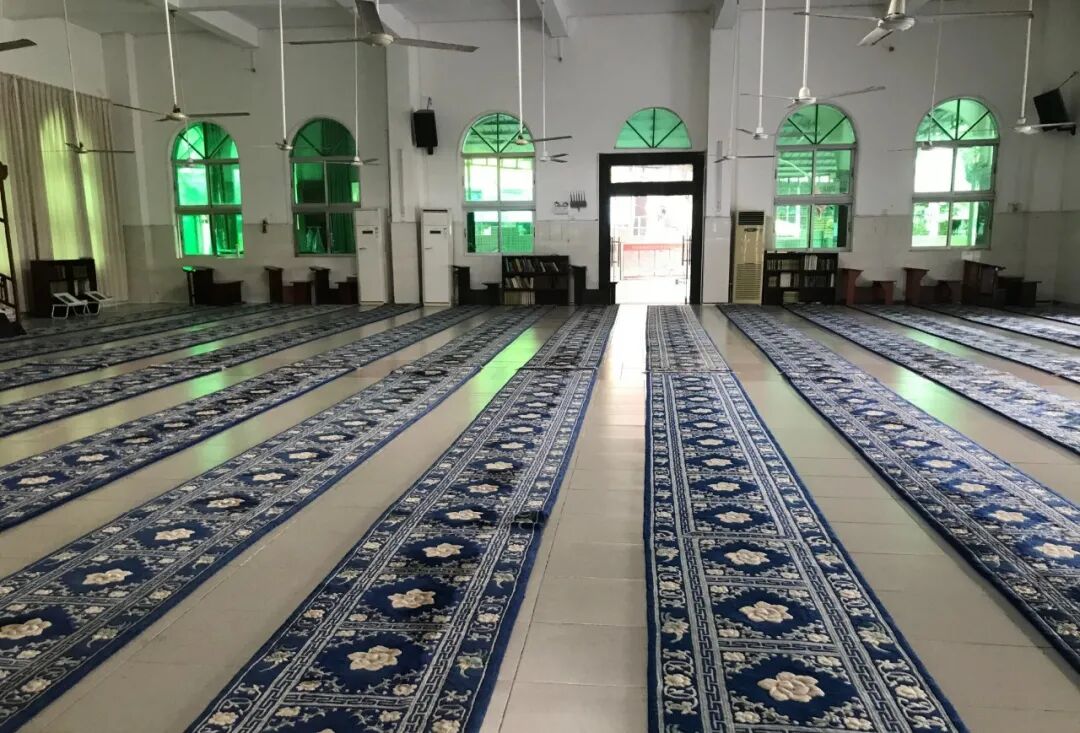
The prayer hall at Nankai Mosque.
Nankai Mosque.
Nankai Mosque.
The morning market in Huixin Village (Huixin Muslim Village) is mostly run by local women—here's a stall selling dried fish.
An afternoon vibe in the alleys of Huixin Village (Huixin Muslim Village), lined with tons of little snack spots.
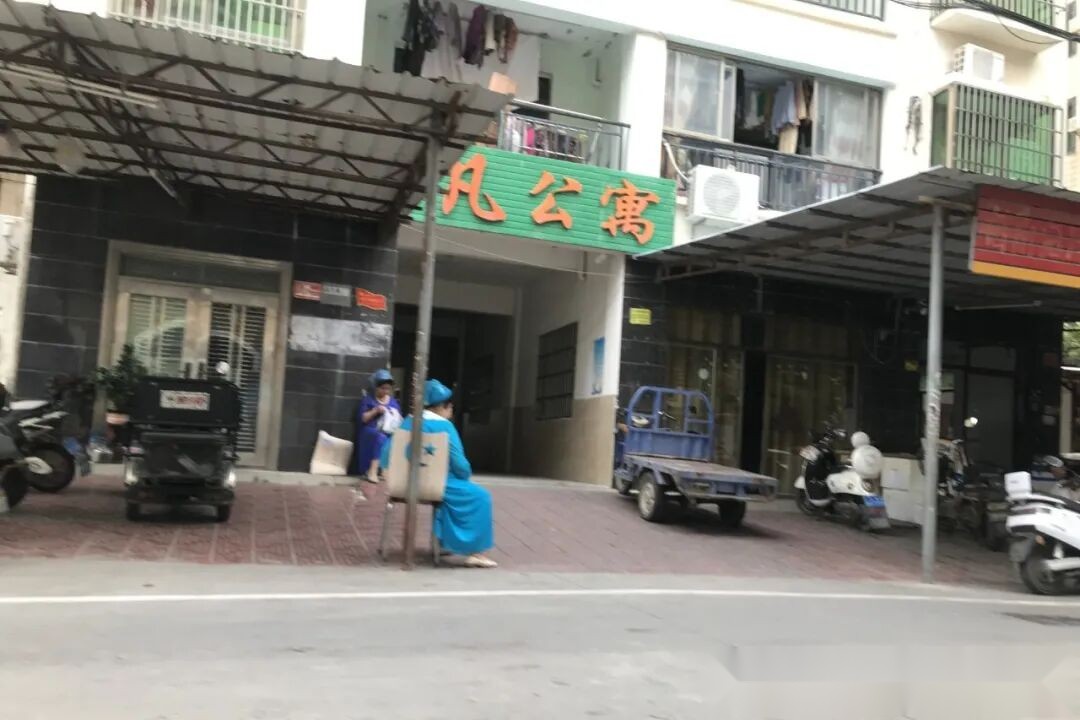
Huixin Village (Huixin Muslim Village) has a ton of rental apartments, home to both Hui Muslims and Han Chinese, making the streets super lively.
Spotting women with and without headscarves. Every winter, tons of people from northern China come down here to rent places and spend their retirement.
Whenever I stayed in Sanya, I'd always come here to buy my beef and mutton.
Chewing this is a total Hainan tradition.
There are lots of rental apartments around here, along with spots selling northern Chinese wheat noodles.
Rental apartments.
People walking down the street.
Dining spots on Huixin Street. Honestly, aside from beef dumplings, most of what they serve are trendy night market street eats.
A spot selling Xinjiang mutton skewers, right by a rental apartment building.
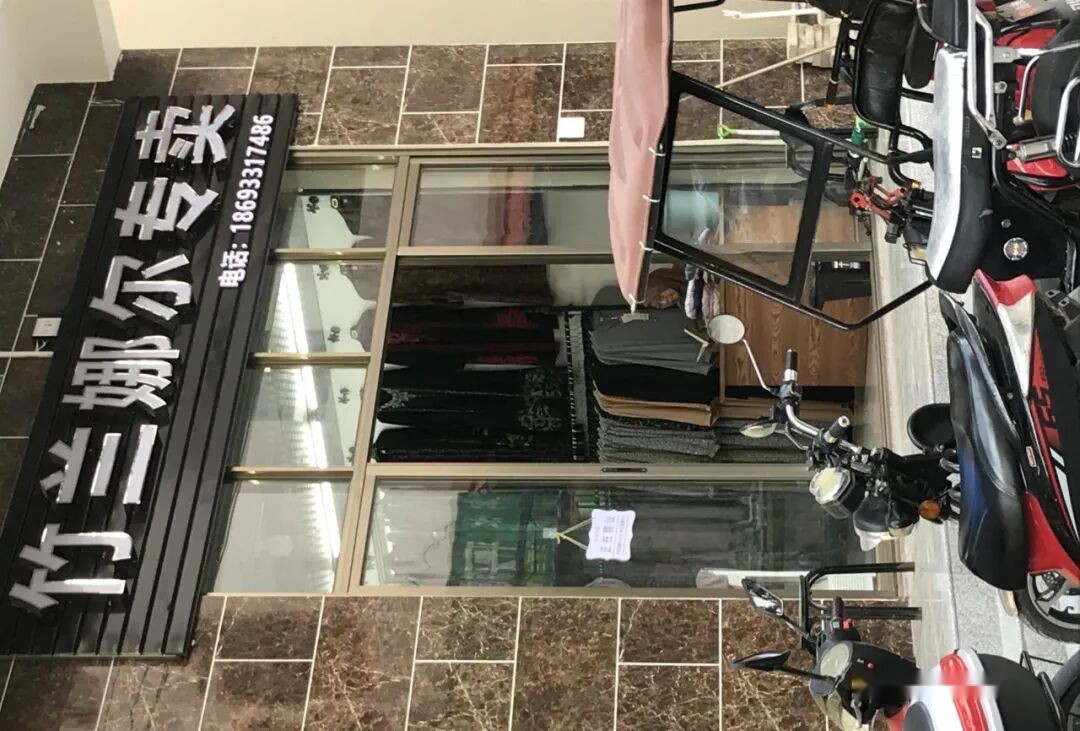
A shop selling traditional ethnic clothing.
Or written as Tasim, which means in the exalted name of Allah. A shop selling traditional ethnic clothing here.
This place sells hijabs, with all kinds of stylish headscarves available—basically the wraps used to cover the head.
Xinjiang dapanji (Xinjiang big plate chicken).
A guy selling skewers over here is trying to transfer his shop lease, so I asked him about it.
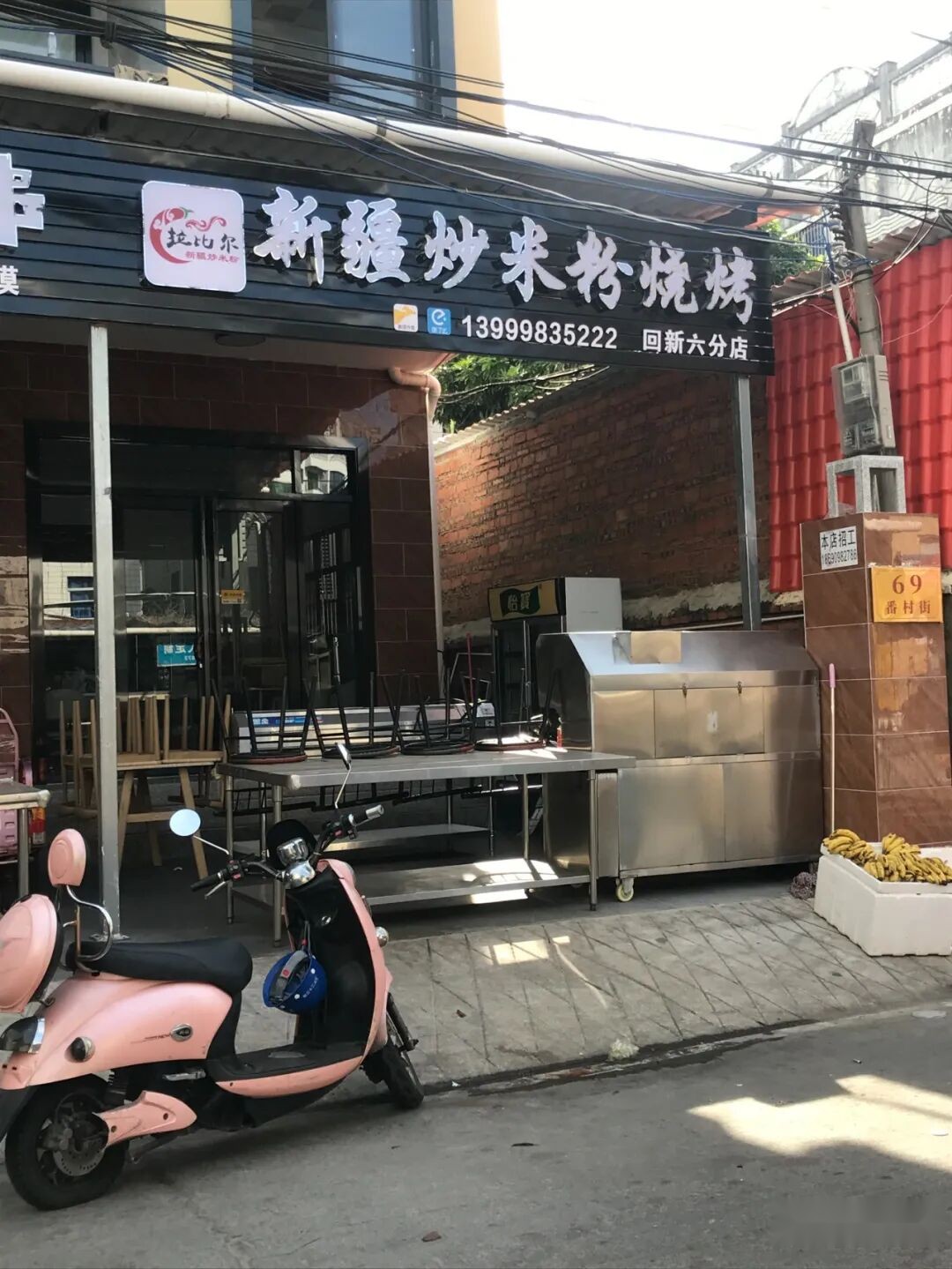
Xinjiang-style stir-fried rice noodles.
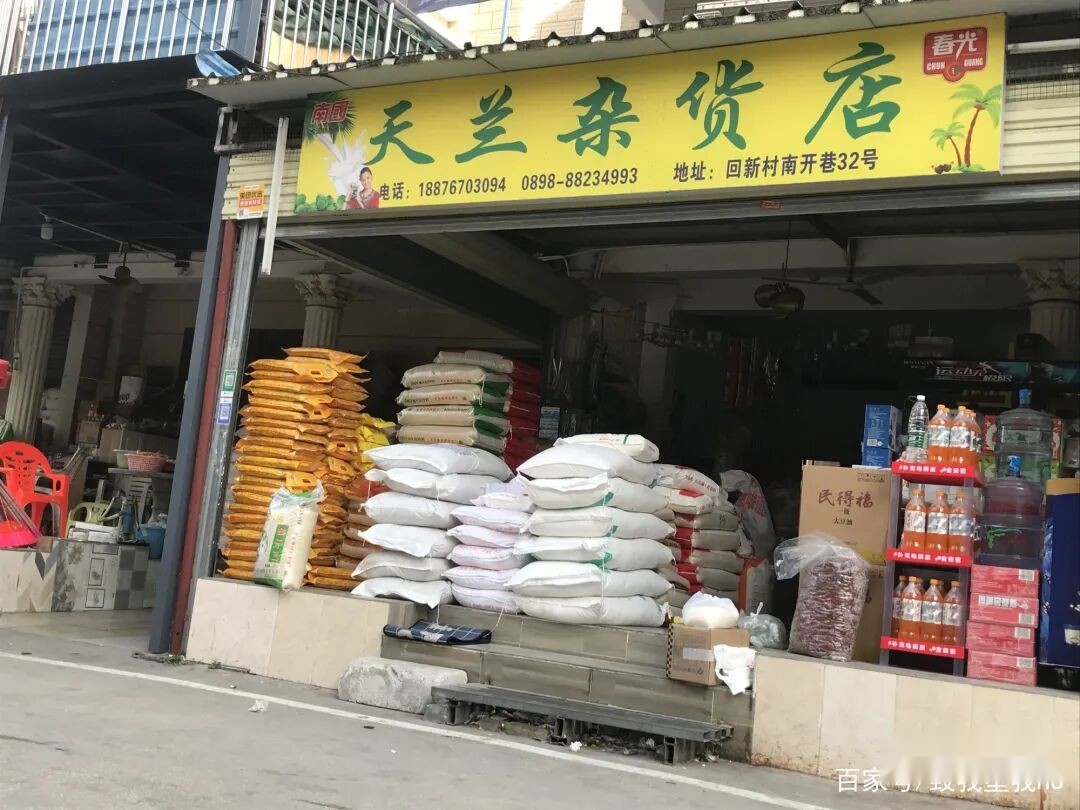
A local specialty grocery store.
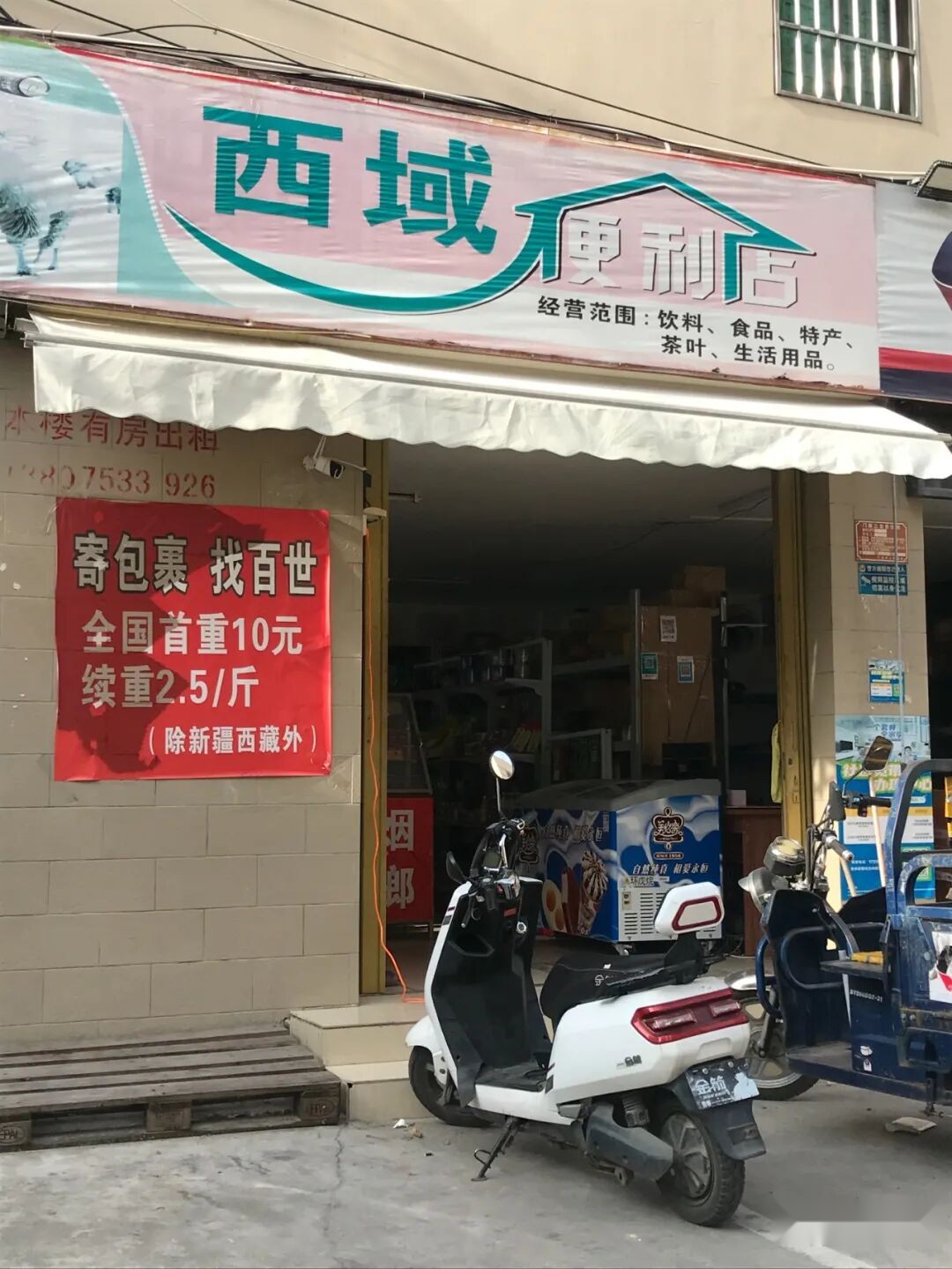
A convenience store in Huixin Village (Huixin Muslim Village) that also handles express delivery drop-offs and pickups.
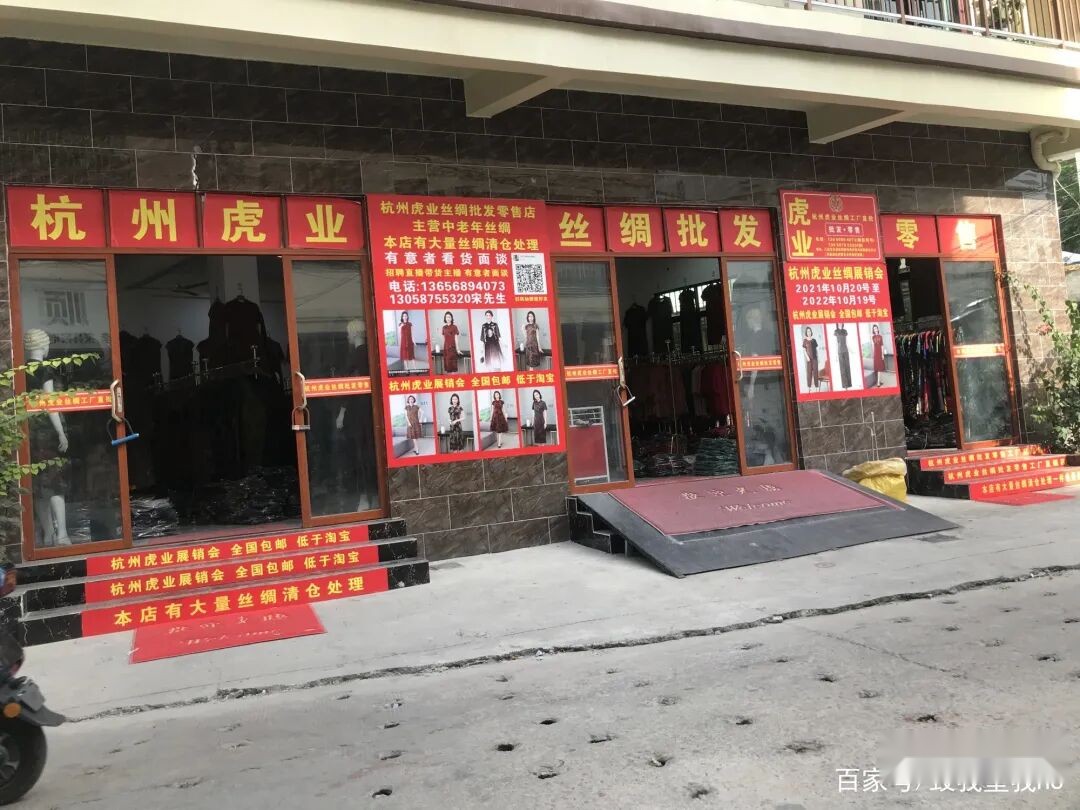
Traders from other provinces who came here to sell silk—their goods actually sell pretty well right here in the Hui Muslim village.
A view of the distant Nanshan Mosque (Nanshan Masjid).
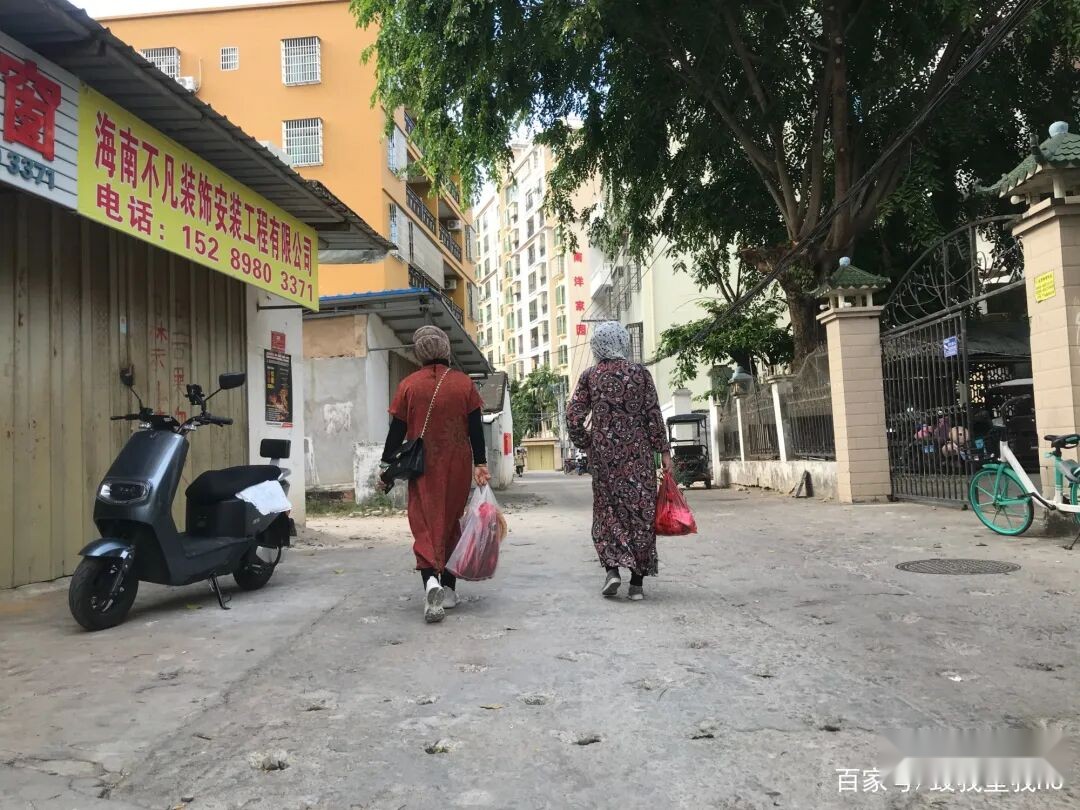
Local women walking through Huixin Village (Huixin Muslim Village).
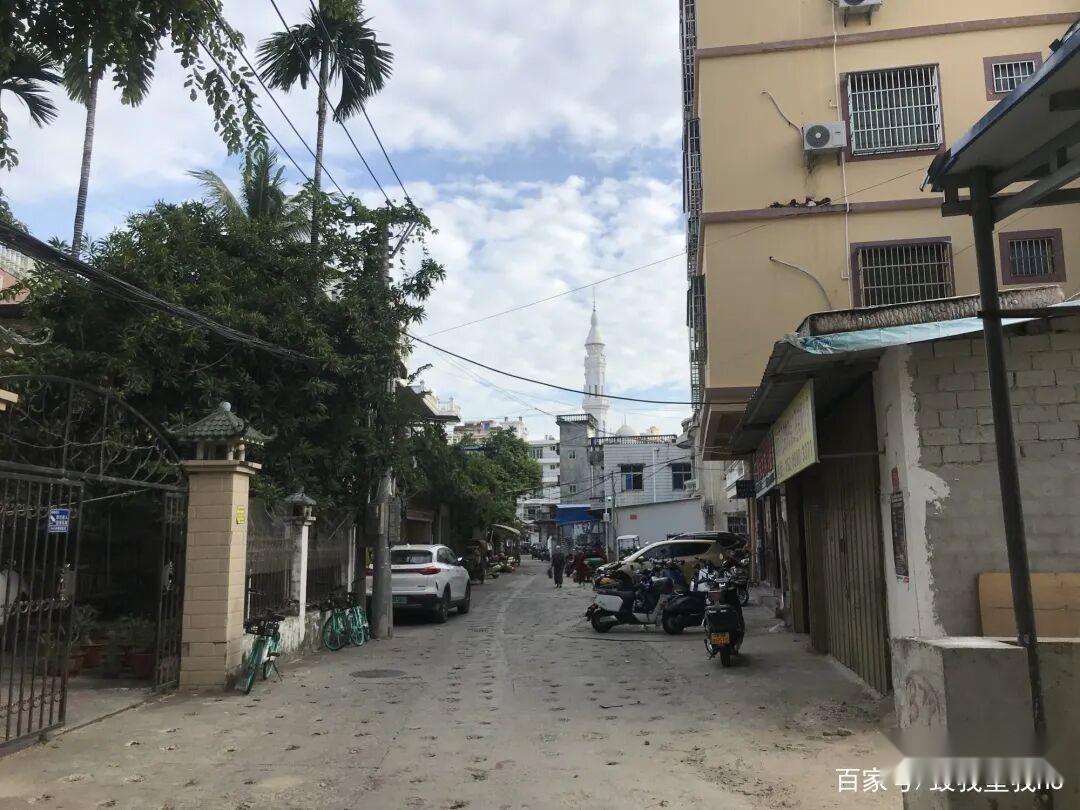
A small local mosque tucked away right here.
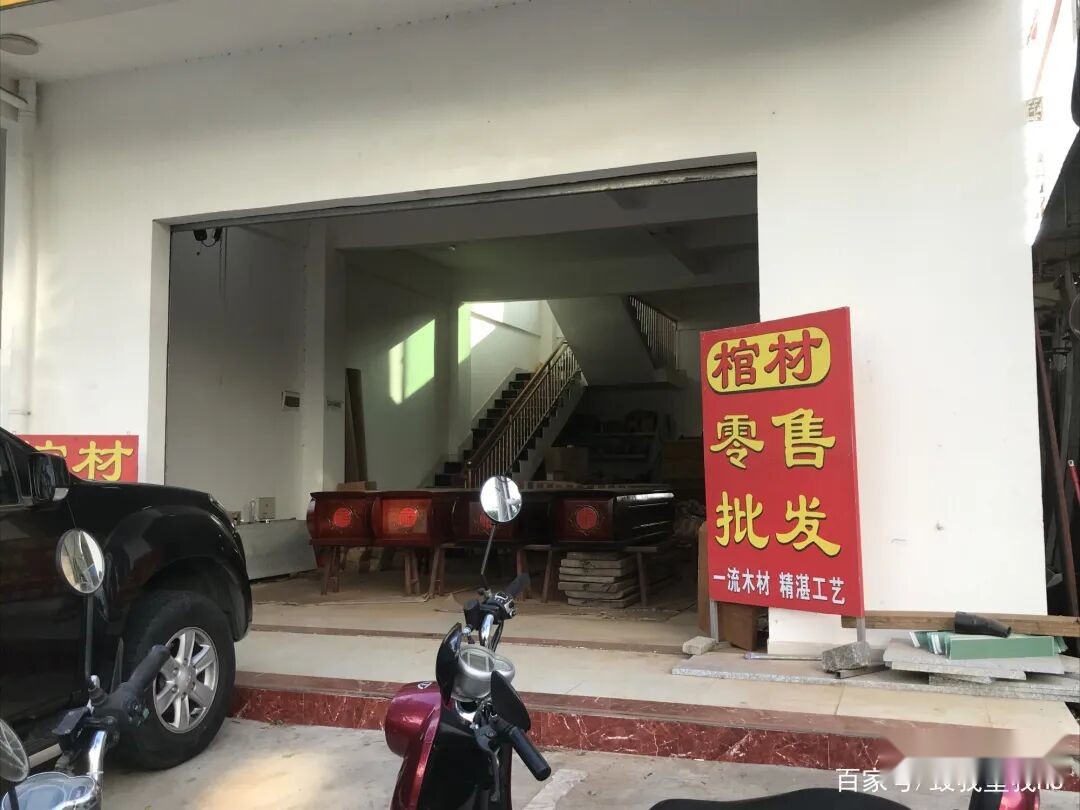
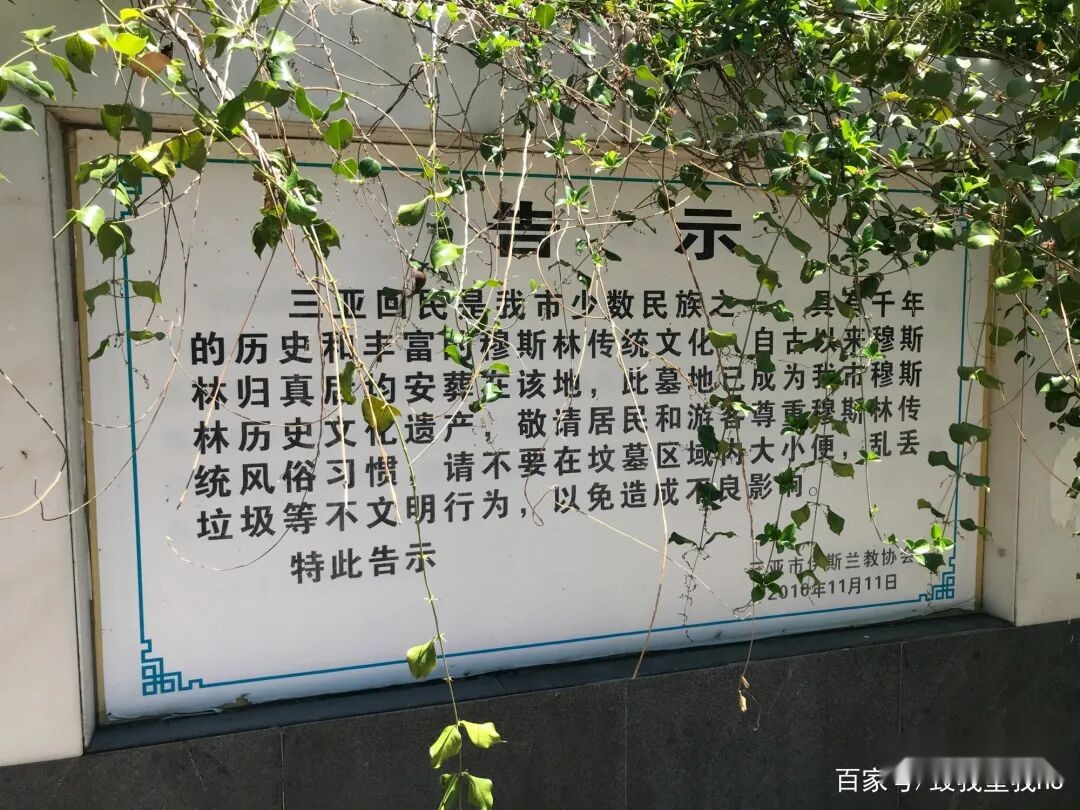
There are a few casket shops along Huihui Road. I shot some footage in Tengqiao Town before and they have them there too—some people in Sanya are allowed to have traditional burials.
The Sanya Bay ancient Muslim cemetery.
To be honest, the Hui Muslim villages these days are super secularized. Most of the apartment buildings built by local Hui families are rented out to snowbirds coming down from Northern China for the winter. You'll see some folks making dua at the mosque, but not everyone, and while some of the guys wear taqiyah prayer caps, others don't. You can find all kinds of regional food here. But things really depend on the specific family. For instance, when I checked out a 7-story apartment building with a courtyard for rent, the male host told me guests could cook whatever they wanted, and a one-bedroom with a balcony went for 1,200 RMB. Meanwhile, when I asked about a restaurant that was up for transfer, the owner straight up asked me, 'You're Han Chinese, right? We don't rent to Han folks.' When I mentioned there were other places renting out right down the street, she just smiled and said, 'It's different—some people are cool with it, some aren't.' So if you're coming here as a tourist, or moving here long-term for a chill retirement, you definitely need to respect local customs and traditions. Trust me, when you're traveling in Sanya surrounded by swaying coconut palms and ocean vibes, finding a spot like this where you can grab authentic Western China bites while checking out a totally unique side of Sanya is pretty epic. This is Sanya's Hui Muslim community—Huihui Village (Huihui Muslim Village) and Huixin Village (Huixin Muslim Village). view all
Visual Chronicle of Sanya's Twin Muslim Villages, Huihui and Huixin: Pearl Markets, Hijab-Wearing Women, and Island Hui Muslim Street Life
Abstract:
Capturing through a documentary lens the everyday street life of the Huihui and Huixin Muslim villages in Sanya. A look at Hui Muslim women weaving through the First Market, resilient figures running pearl and handicraft businesses, and the peaceful, devout religious and cultural ecosystem of this tropical village enclave.
Around the First Market, you'll spot plenty of women wearing headscarves, chewing betel nut (a local Hainan habit), selling smartphones and pearls. They all hail from Sanya's two famous Muslim villages: Huihui Village and Huixin Village. If you come here to travel, cruise down Fenghuang Road and you'll see pearl and jade shops mixed with Xinjiang halal eateries, with the尖顶 (minaret) of a masjid rising in the distance. No matter how scorching the weather gets, you'll see women in hijabs and long robes zooming by on motor scooters—this is the vibe of Sanya's uniquely distinct Muslim villages. I spent a few days there looking for a rental, documenting their day-to-day life.
Huihui Village, Home to the Huihui People, Is the Largest Village
The Huihui people are descendants of the ancient Champa Kingdom, which existed for over a thousand years and practiced Islam. After the Champa Kingdom was crushed by the Khmer, some survivors fled and settled in Hainan around the year 1700. Local Hainanese people began calling them the Huihui people, and Huihui Village gets its name from this history. It used to be part of Fenghuang Town, but today it falls under the Huihui Community in Tianya District. It's super close to the airport, and heading south brings you to Sanya Bay, home to an ancient Muslim graveyard stretching over several kilometers.
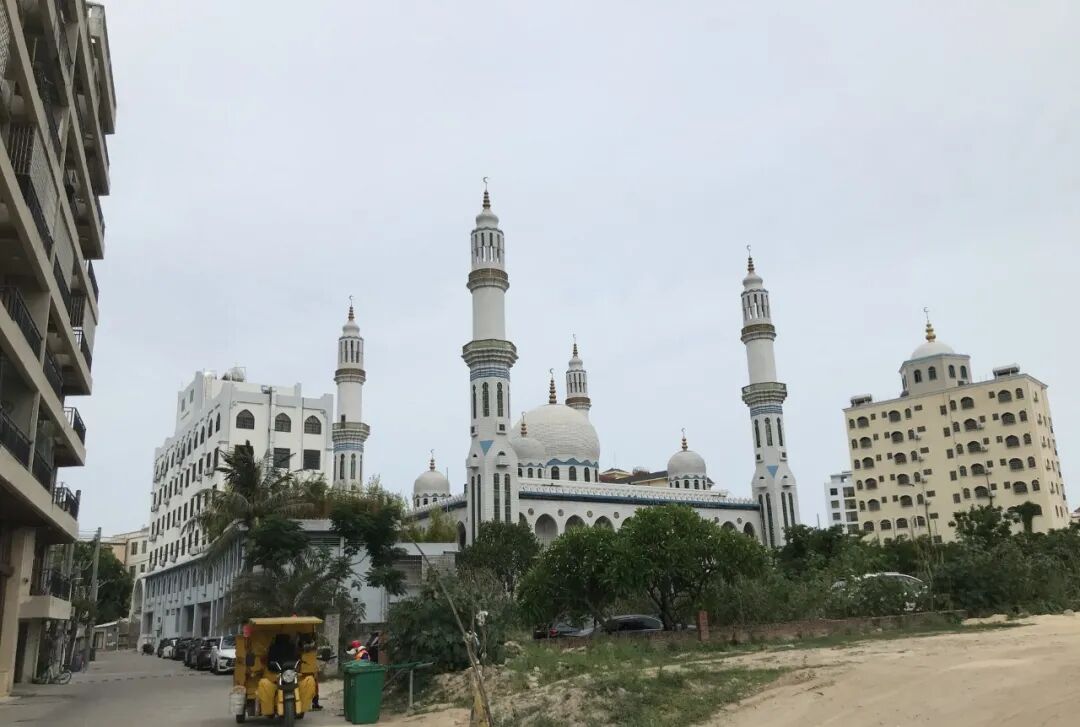
If you're visiting, just drop a pin on the East Masjid (Huihui Village has several masjids including the Sanya Ancient Mosque, East Masjid, Northwest Grand Masjid, and North Grand Masjid, with the North Grand Masjid being the most grand and majestic). The East Masjid sits right along Fenghuang Road, with Huihui Village wrapping around its north and south sides. North of Fenghuang Road, Huihui Village meets Yanglan Road—on this side you have the Huihui Village masjid, and across the way stands the Yanglan Village Guandi Temple.
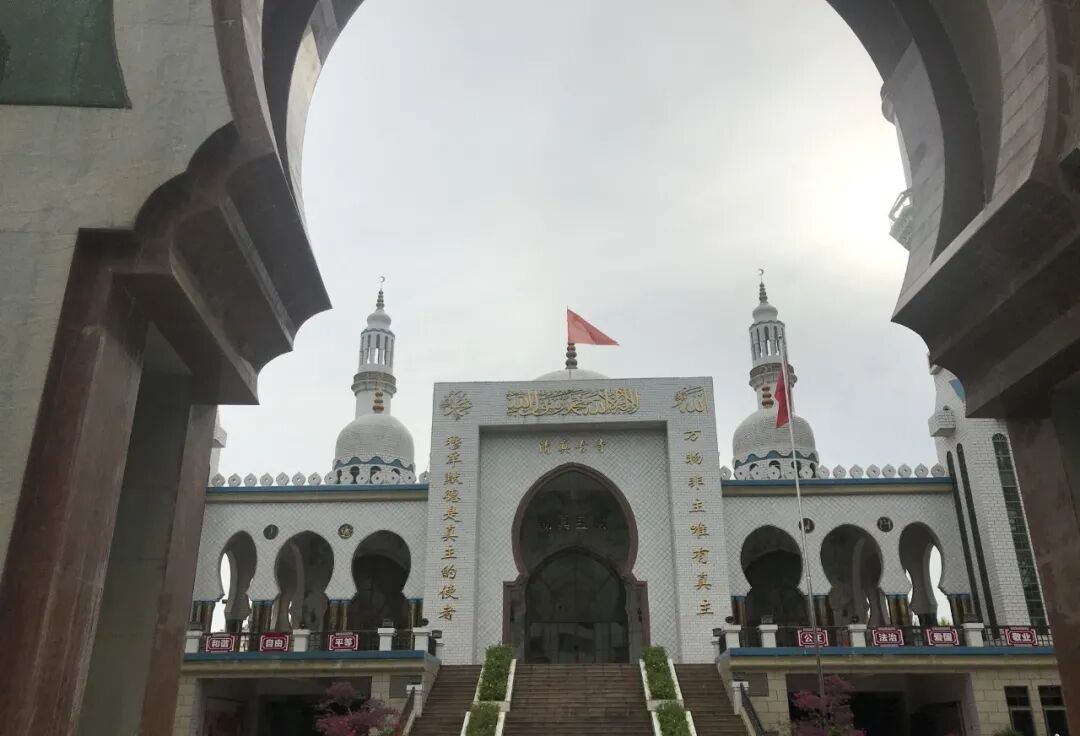
Arrived at the Huihui East Masjid right around noon. Grabbed a bowl of banmian (hand-pulled mixed noodles) next door for 20 RMB.
The most prominent landmark on Fenghuang Road: the Huihui East Masjid, flanked by Huihui Village on both sides.
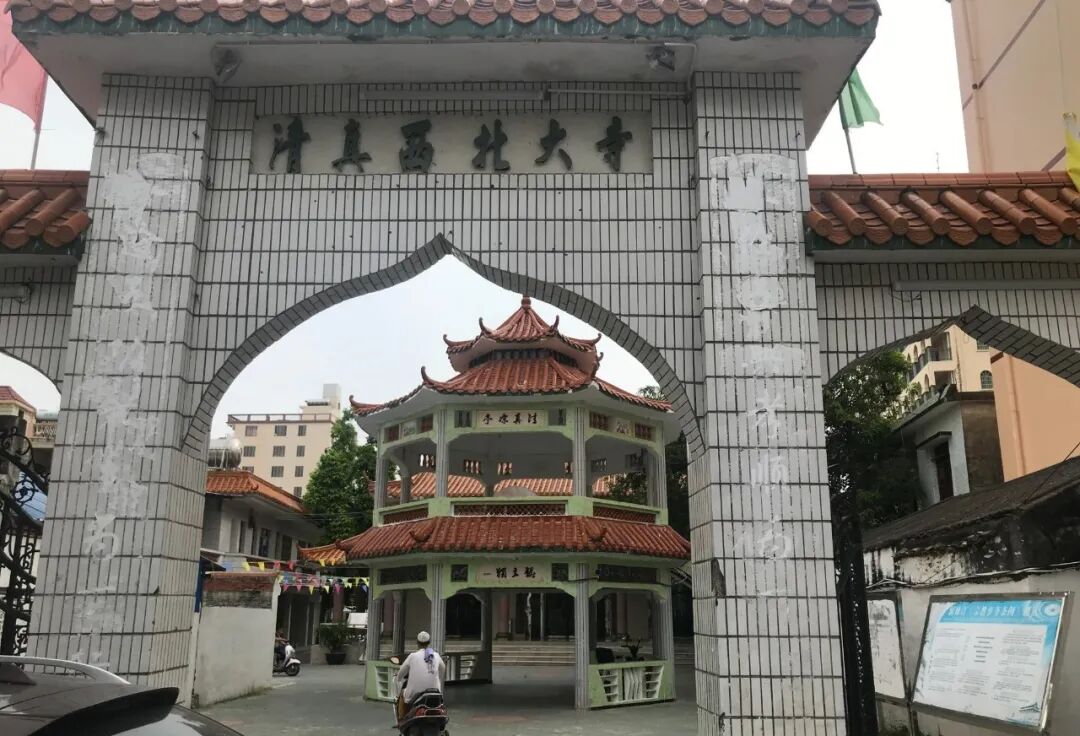
Huihui Road
Ningxia specialty products showroom, currently under renovation.
Venturing deeper into the village, the towering minaret of the North Grand Masjid comes into view in the distance—hardly looks like typical village architecture.
The North Grand Masjid
The North Grand Masjid during the afternoon adhan (call to prayer).
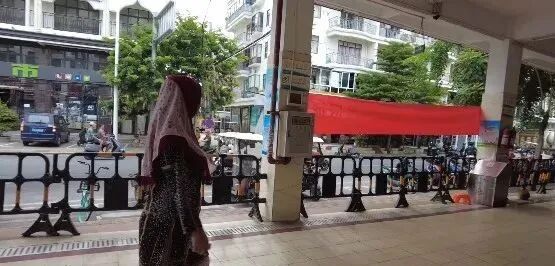
The historic Northwest Grand Masjid in Huihui Village.
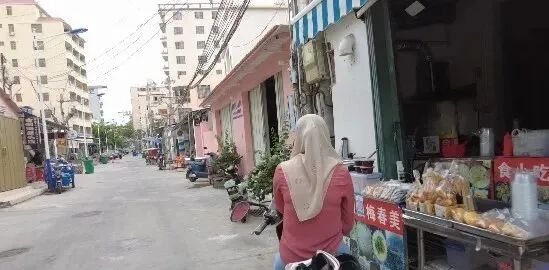
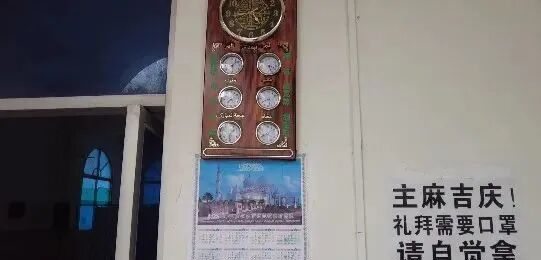
Notices posted at the masjid, including the daily prayer (dua/salah) schedule.
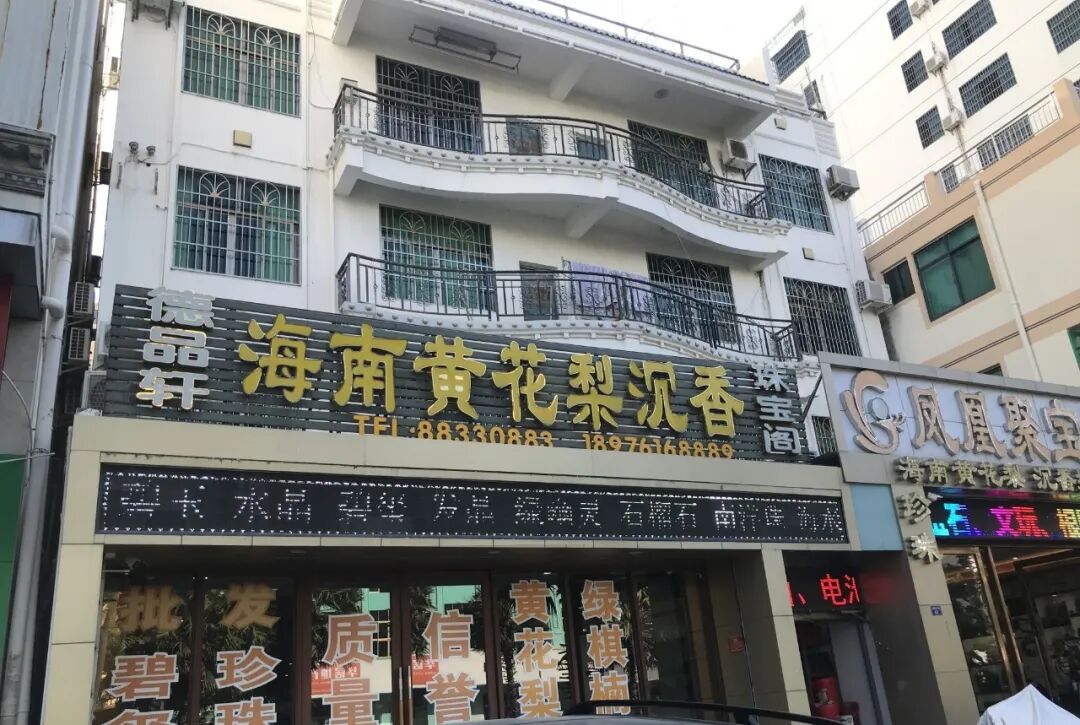
Huihui Smoked Beef Shop
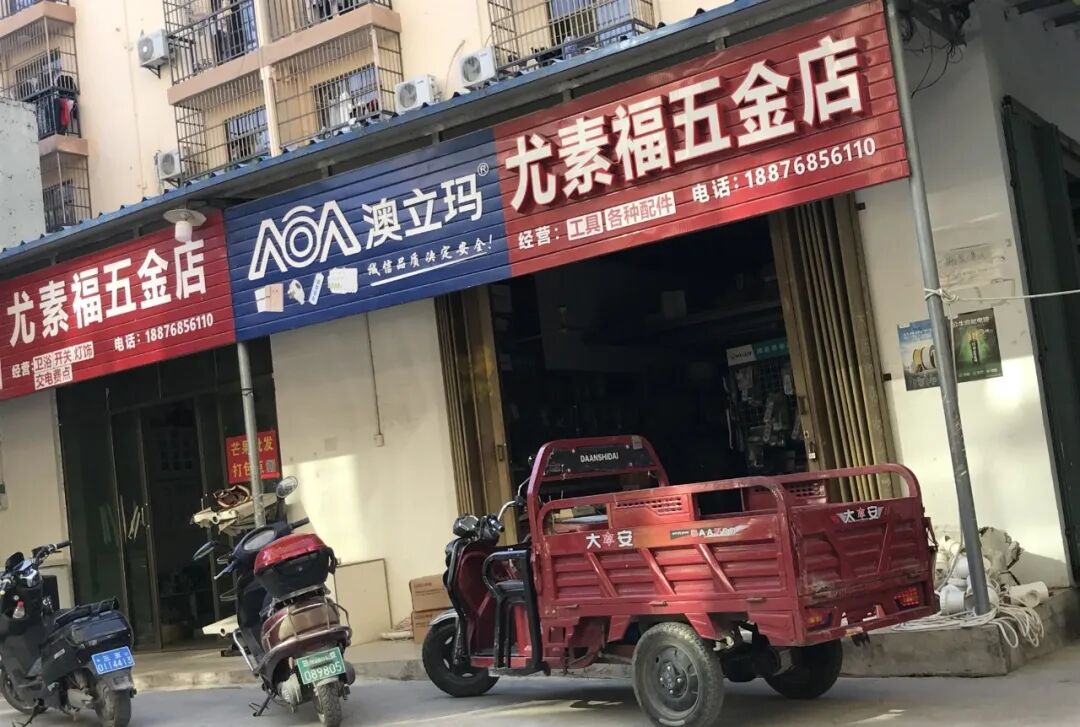
A local restaurant in Huihui Village
A Huihui woman selling pineapples in the village.
A Huihui woman selling beef at the local wet market.
Typical women's attire—they dress this way no matter how hot it gets.
A Huihui villager riding a scooter.
Pearls are the main hustle here; the people of Huihui Village are fantastic at business.
Yusuf (Joseph), a major prophet in Islam; many locals are named Yusuf.
A traditional ethnic clothing shop in Huihui Village.
Convenience store
Students catching the public bus.
The Muslim cemetery at Sanya Bay.
Huixin Village: Smaller, more compact, lively, and packed with street eats.
Huixin Village is smaller in area, but it's actually where the earliest Cham people originally settled, right by the ocean. Later on, Japanese invaders built an airport here and drove the people of Huixin Village across to Yanglan, creating Huihui Village. After the victory of the War of Resistance Against Japanese Aggression, some of the Cham people migrated back to what is now Huixin Village. Geographically, it stretches from Yihang Market in the east all the way to Nankai Masjid in the west.
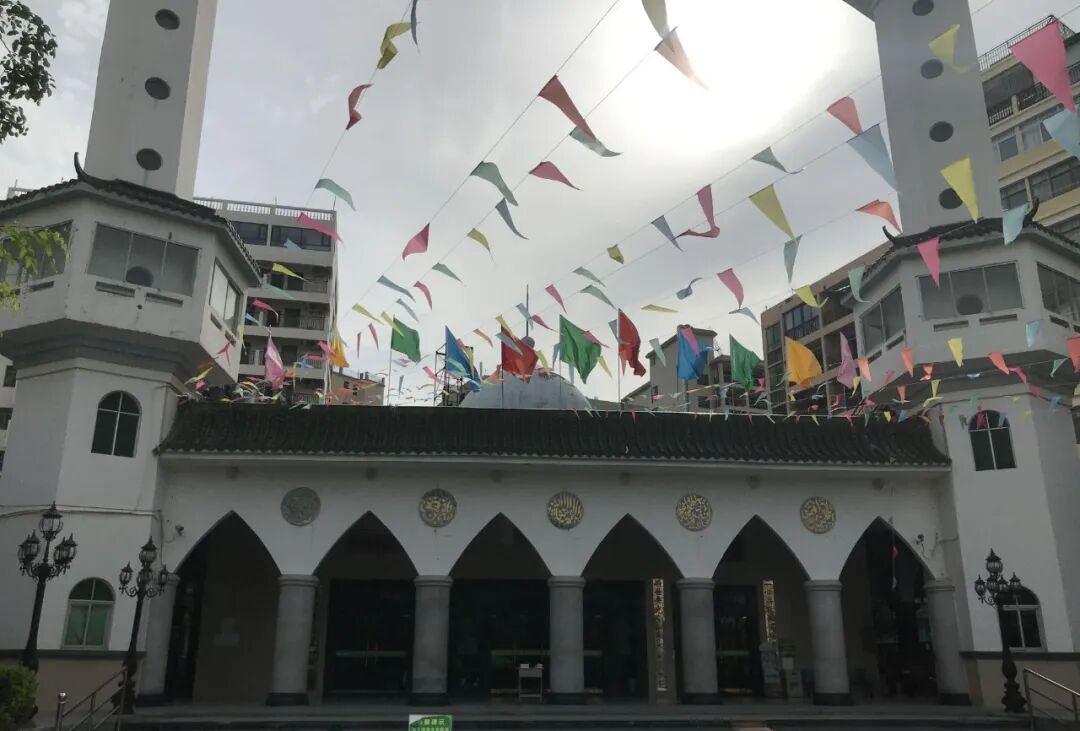
Huixin Village (Huixin Muslim Village) has two mosques: Nankai Mosque and Southern Mosque. Southern Mosque is right in the middle of the village, but Nankai Mosque is the largest—definitely use it as your landmark if you're exploring the area. It takes about half an hour to get here from Huihui Village (Huihui Muslim Village).
A meal in Huixin Village (Huixin Muslim Village): Rabier stir-fried rice noodles for 16 yuan.
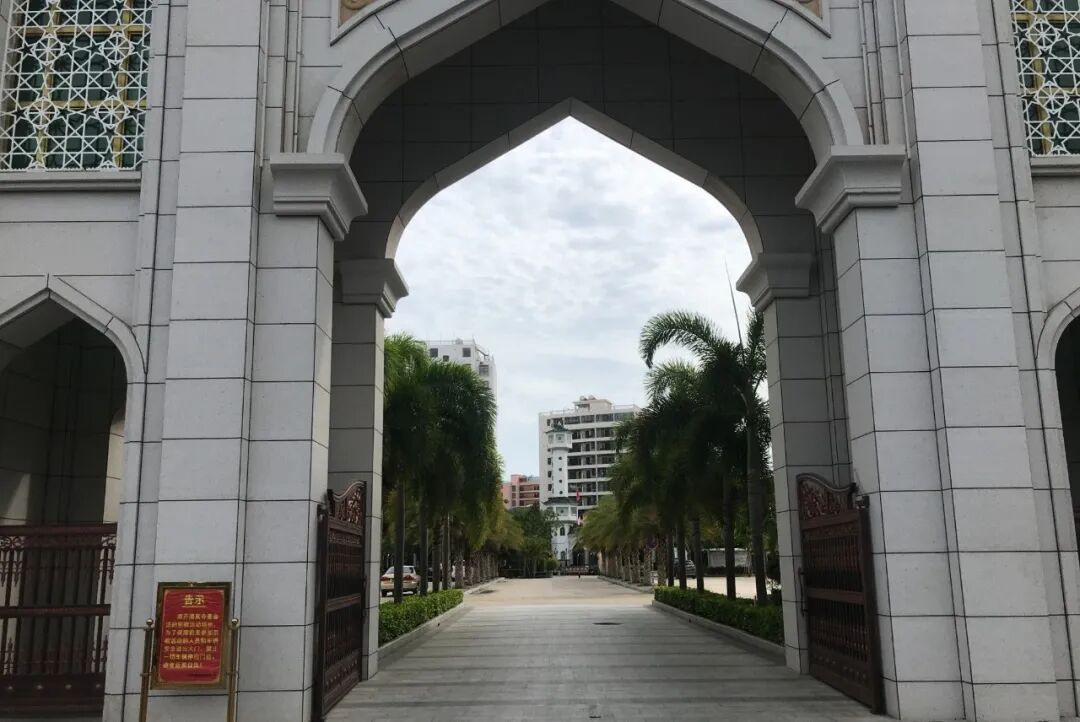
Rolling into Huixin Village (Huixin Muslim Village), you'll spot Southern Mosque right away; it's the heart of the community.
Southern Mosque, closed to visitors during the pandemic.
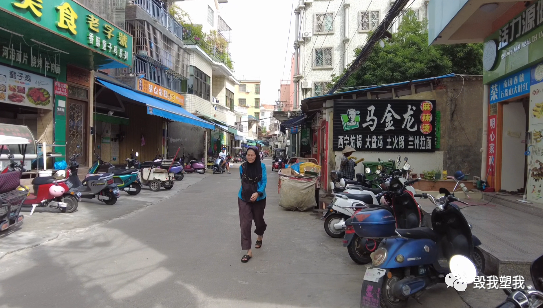
The alleys of Huixin Village (Huixin Muslim Village) are totally buzzing with local daily life.
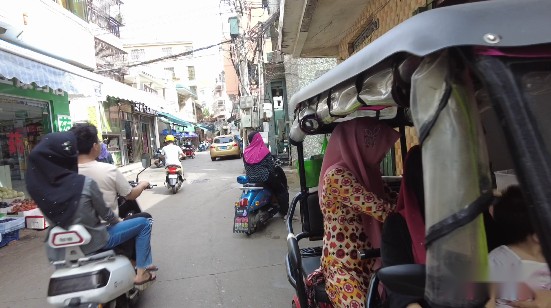
Tucked away in the narrow alleys of Huixin Village (Huixin Muslim Village), you'll find an endless lineup of street snacks.
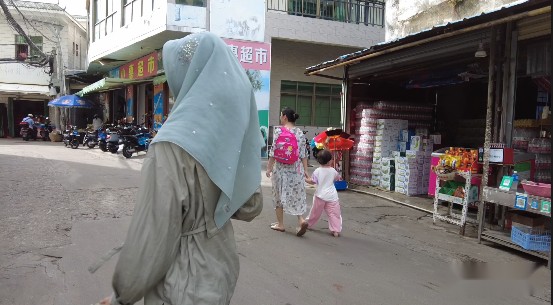
Pearl shops are seriously everywhere you look in Huixin Village (Huixin Muslim Village).
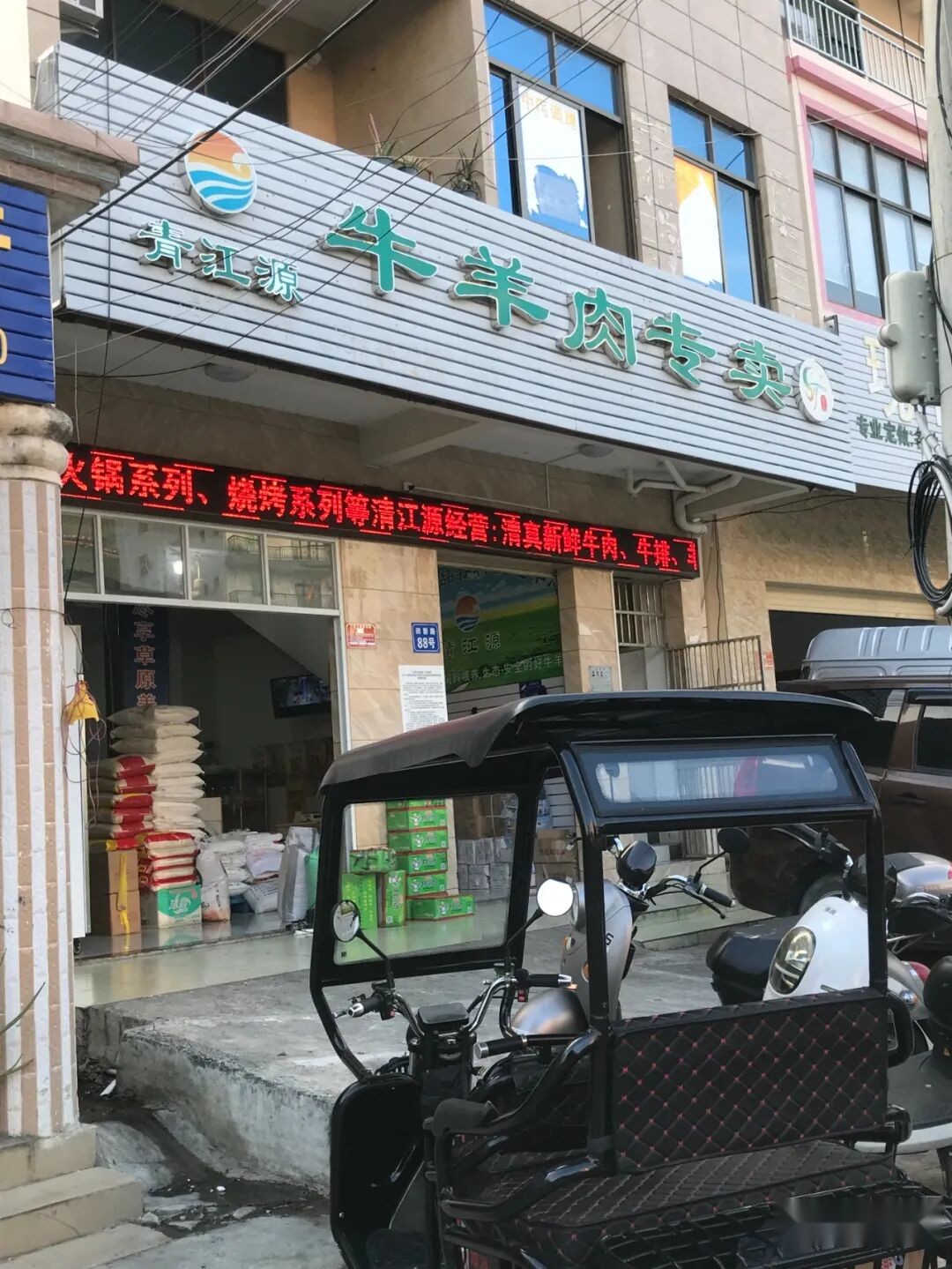
Strolling through the alleys of Huixin Village (Huixin Muslim Village).
Someone studying religious texts at the Huixin Village (Huixin Muslim Village) mosque.
The prayer hall at Nankai Mosque.
Nankai Mosque.
Nankai Mosque.
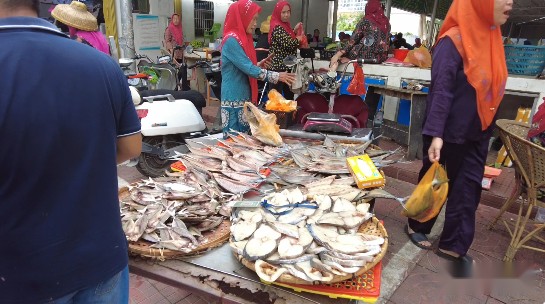
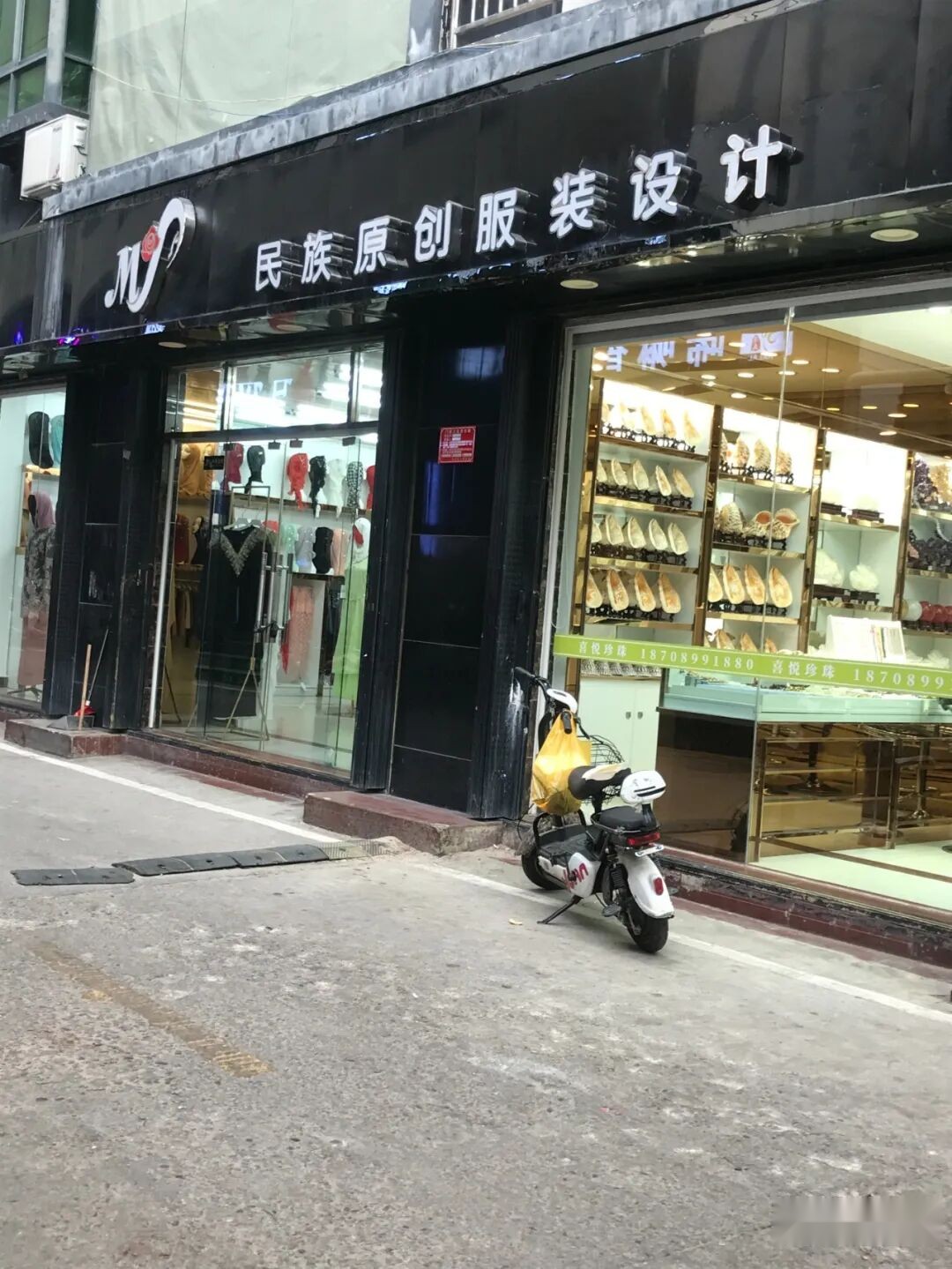
The morning market in Huixin Village (Huixin Muslim Village) is mostly run by local women—here's a stall selling dried fish.
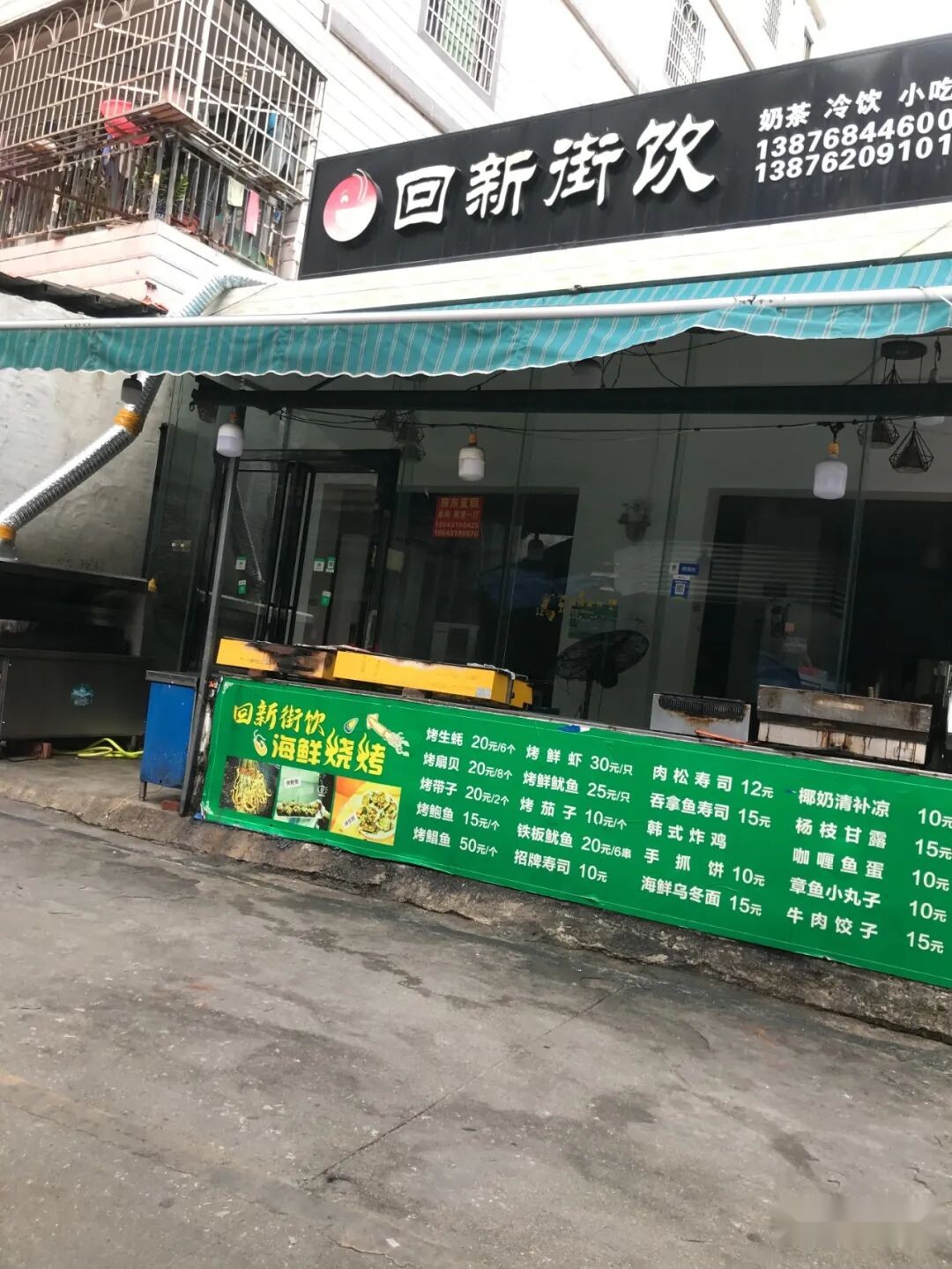
An afternoon vibe in the alleys of Huixin Village (Huixin Muslim Village), lined with tons of little snack spots.
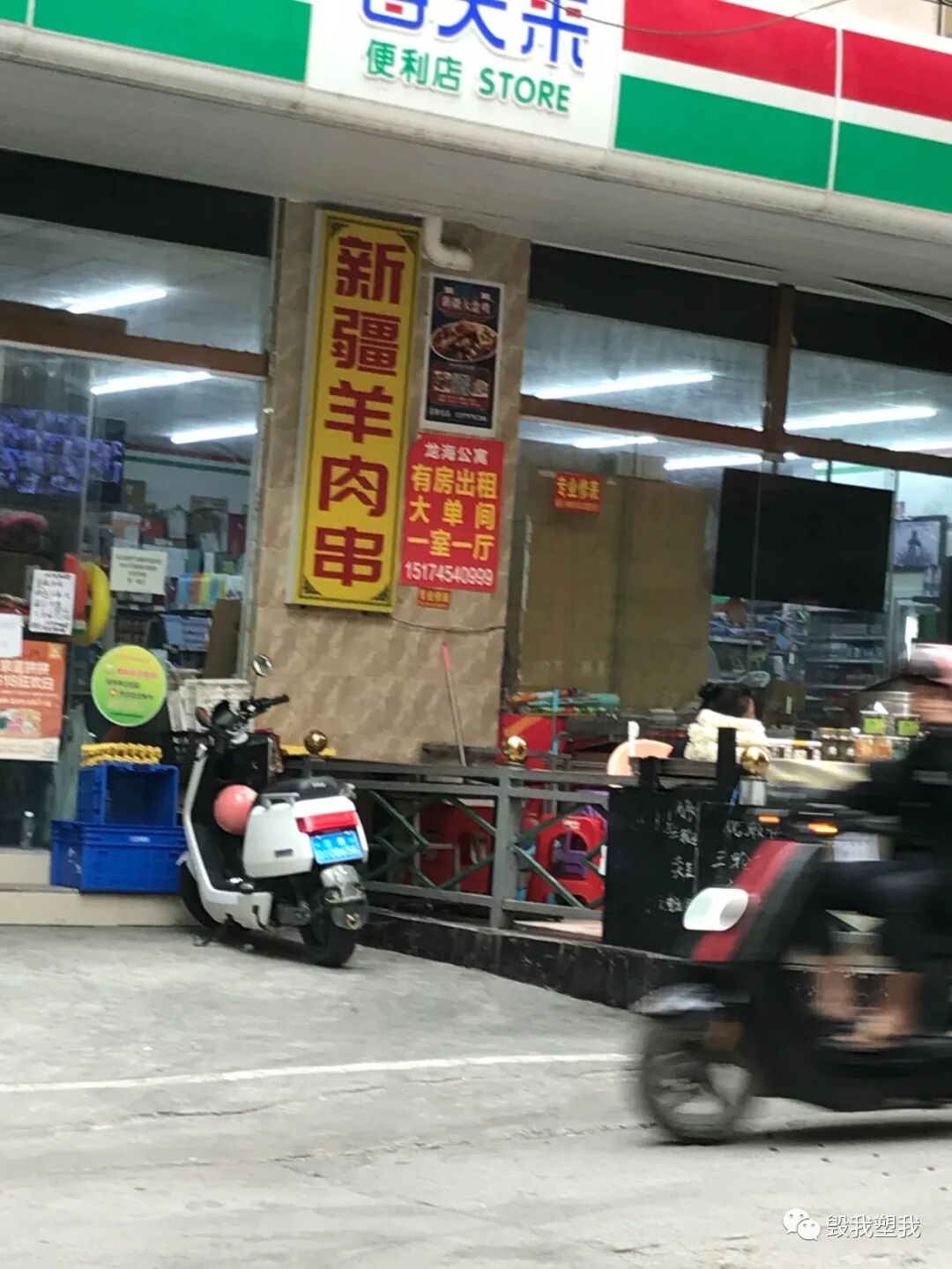
Huixin Village (Huixin Muslim Village) has a ton of rental apartments, home to both Hui Muslims and Han Chinese, making the streets super lively.
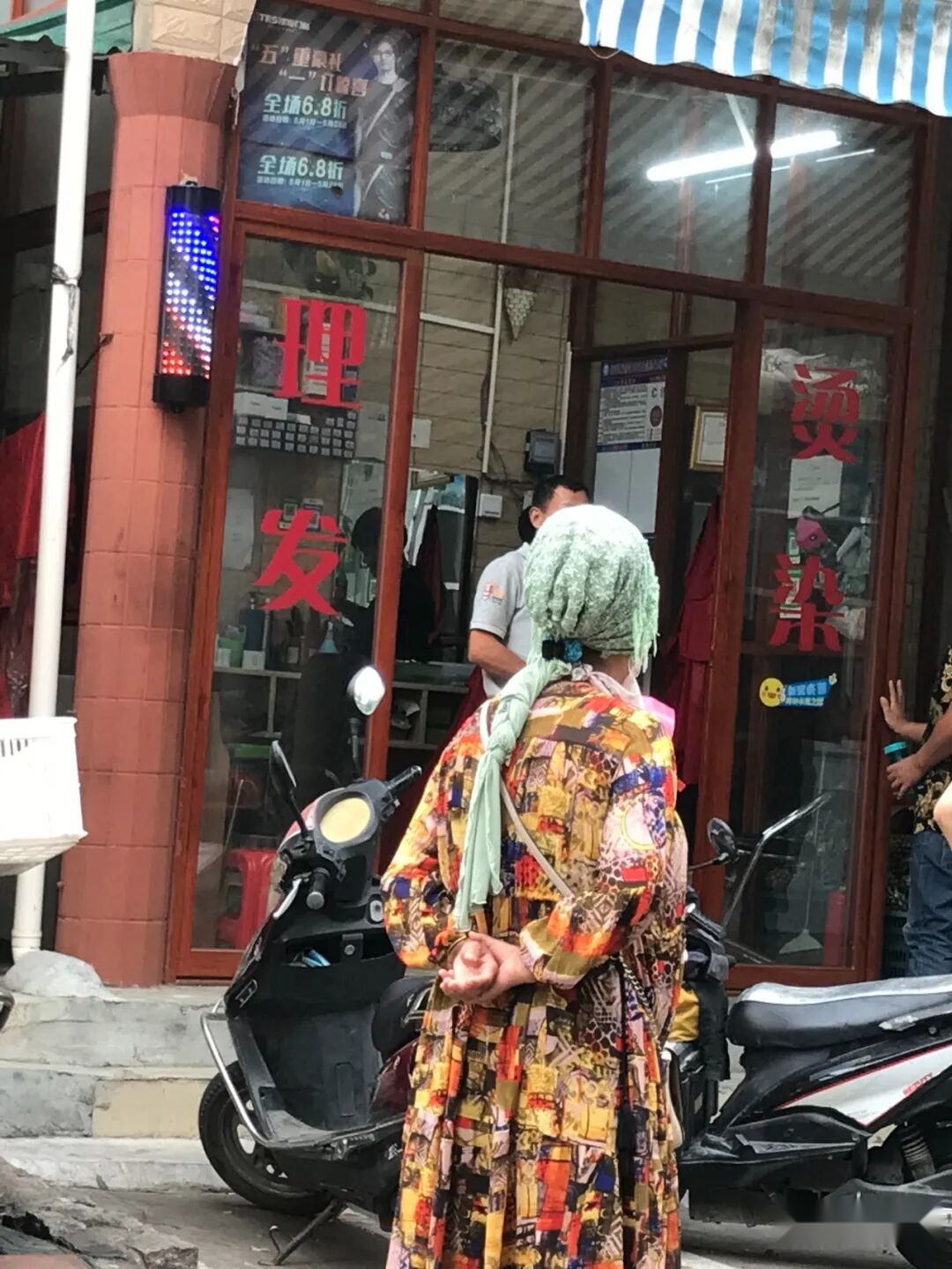
Spotting women with and without headscarves. Every winter, tons of people from northern China come down here to rent places and spend their retirement.
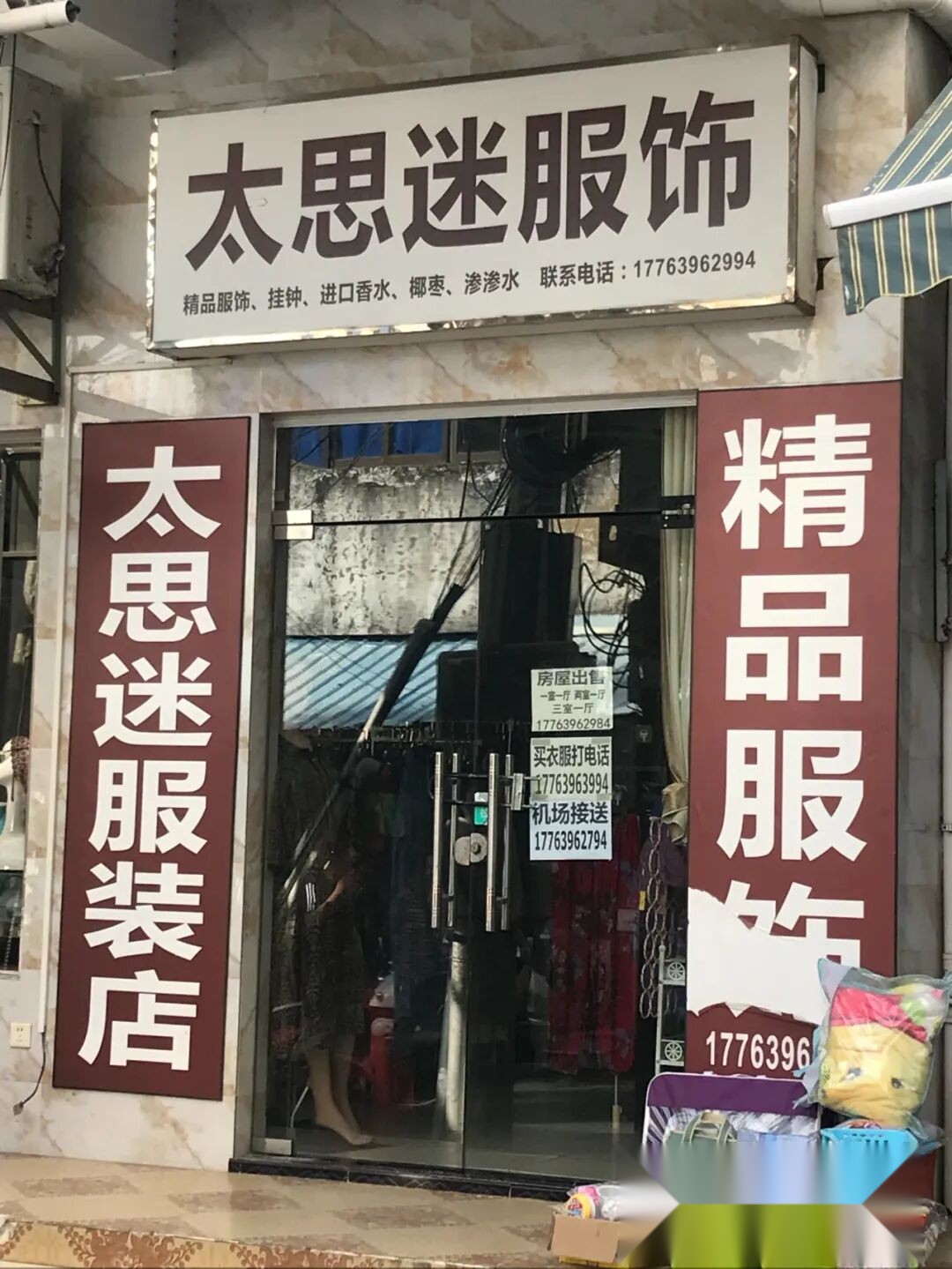
Whenever I stayed in Sanya, I'd always come here to buy my beef and mutton.
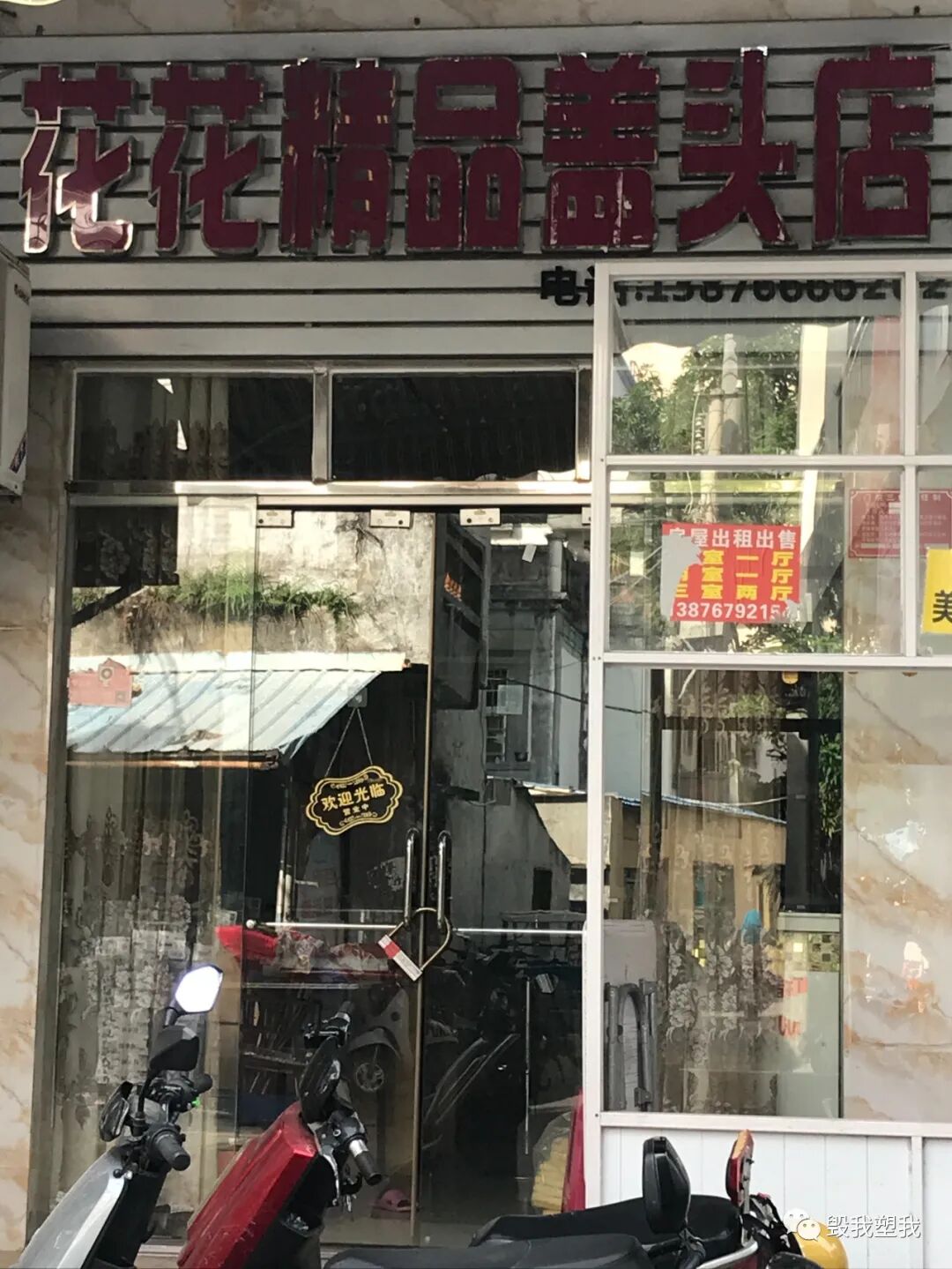
Chewing this is a total Hainan tradition.
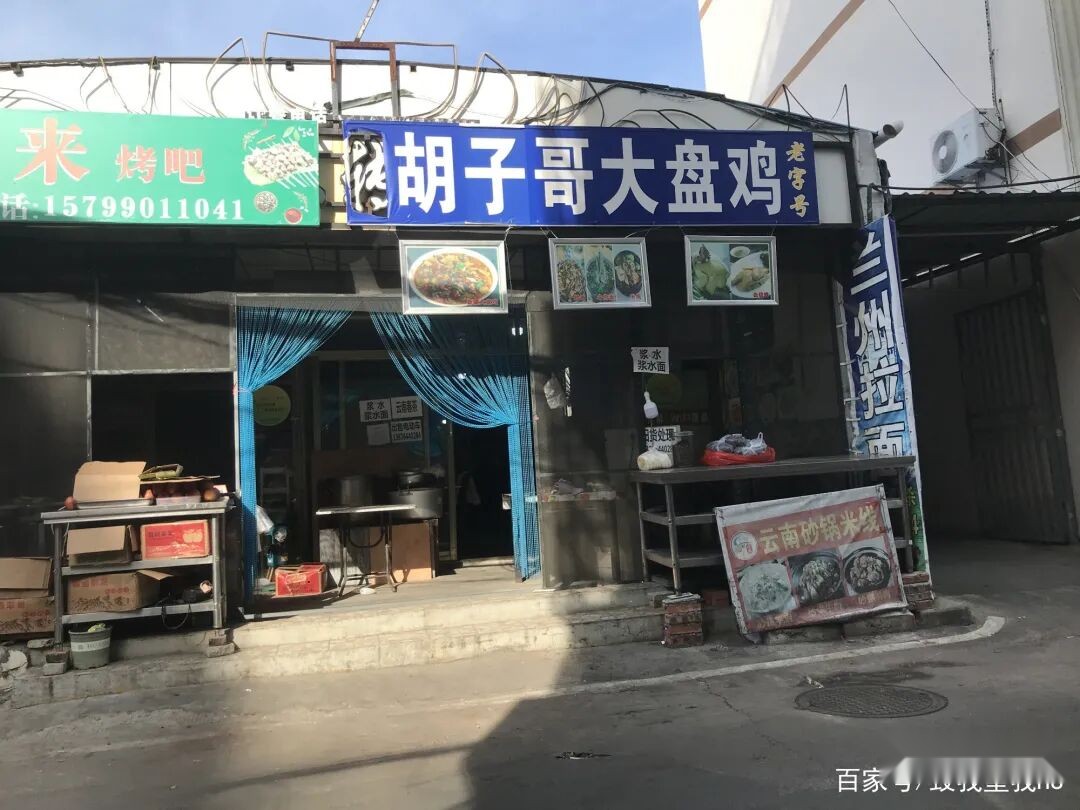
There are lots of rental apartments around here, along with spots selling northern Chinese wheat noodles.
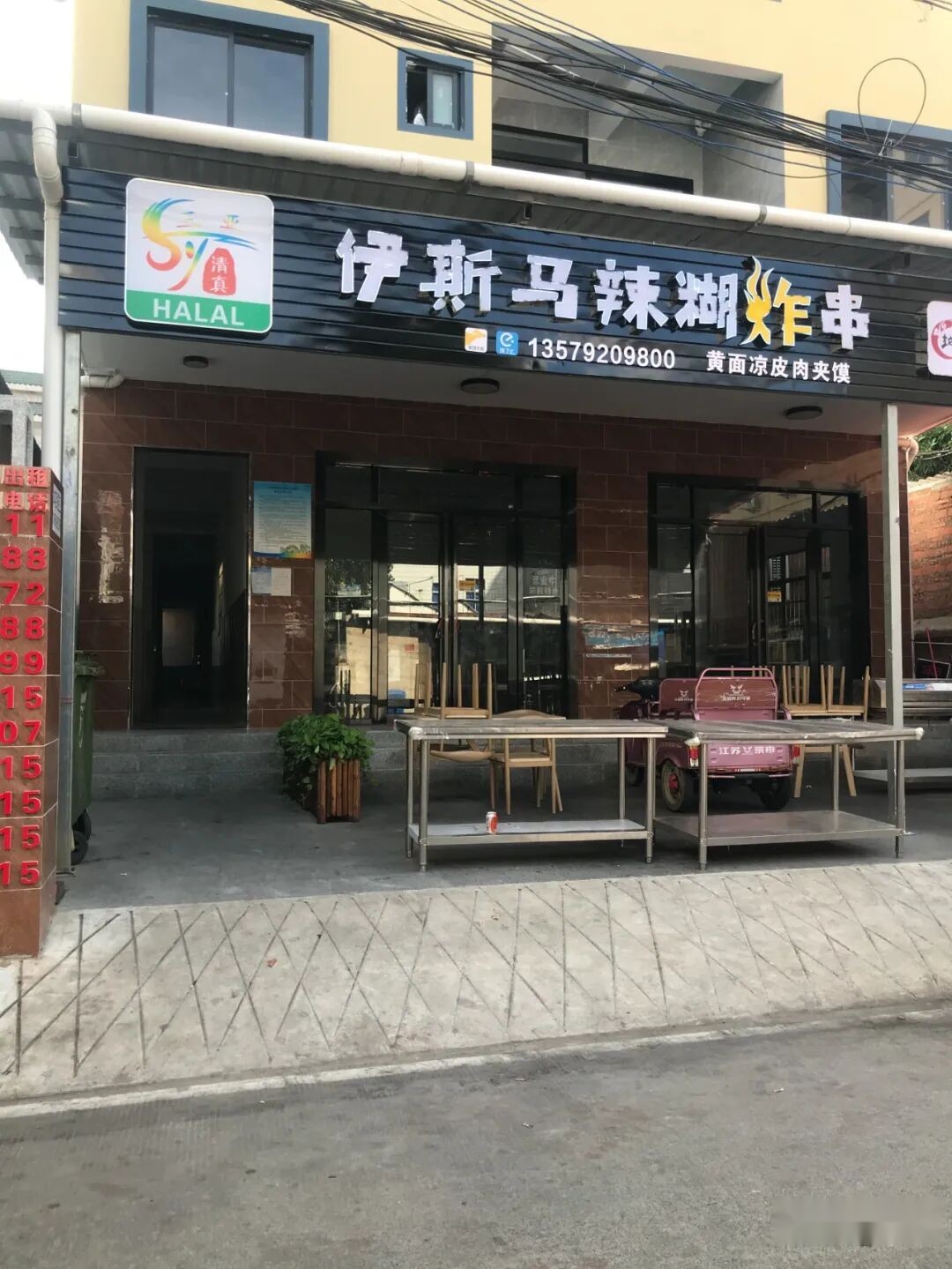
Rental apartments.
People walking down the street.
Dining spots on Huixin Street. Honestly, aside from beef dumplings, most of what they serve are trendy night market street eats.
A spot selling Xinjiang mutton skewers, right by a rental apartment building.
A shop selling traditional ethnic clothing.
Or written as Tasim, which means in the exalted name of Allah. A shop selling traditional ethnic clothing here.
This place sells hijabs, with all kinds of stylish headscarves available—basically the wraps used to cover the head.
Xinjiang dapanji (Xinjiang big plate chicken).
A guy selling skewers over here is trying to transfer his shop lease, so I asked him about it.
Xinjiang-style stir-fried rice noodles.
A local specialty grocery store.
A convenience store in Huixin Village (Huixin Muslim Village) that also handles express delivery drop-offs and pickups.
Traders from other provinces who came here to sell silk—their goods actually sell pretty well right here in the Hui Muslim village.
A view of the distant Nanshan Mosque (Nanshan Masjid).
Local women walking through Huixin Village (Huixin Muslim Village).
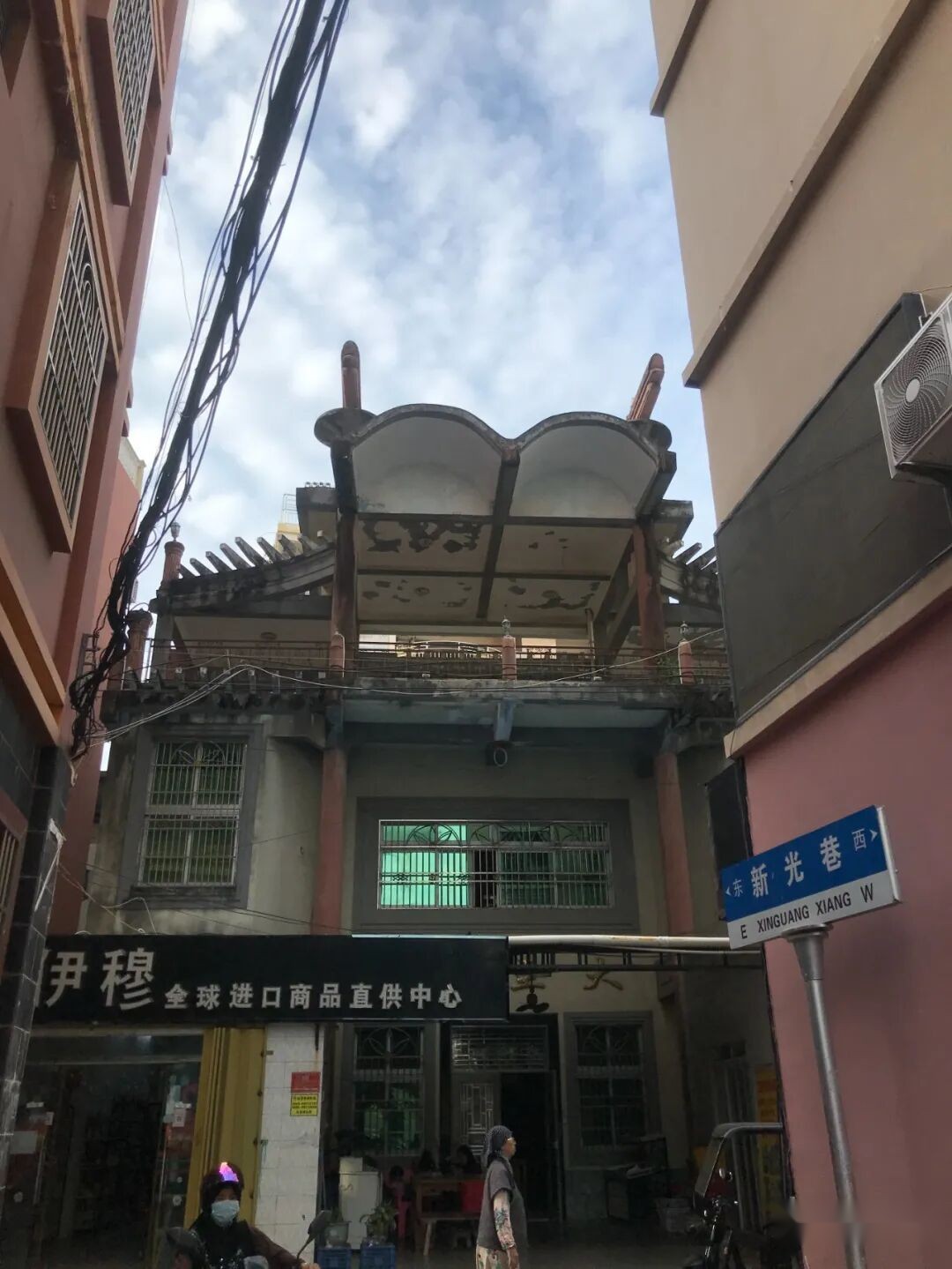
A small local mosque tucked away right here.
There are a few casket shops along Huihui Road. I shot some footage in Tengqiao Town before and they have them there too—some people in Sanya are allowed to have traditional burials.
The Sanya Bay ancient Muslim cemetery.
To be honest, the Hui Muslim villages these days are super secularized. Most of the apartment buildings built by local Hui families are rented out to snowbirds coming down from Northern China for the winter. You'll see some folks making dua at the mosque, but not everyone, and while some of the guys wear taqiyah prayer caps, others don't. You can find all kinds of regional food here. But things really depend on the specific family. For instance, when I checked out a 7-story apartment building with a courtyard for rent, the male host told me guests could cook whatever they wanted, and a one-bedroom with a balcony went for 1,200 RMB. Meanwhile, when I asked about a restaurant that was up for transfer, the owner straight up asked me, 'You're Han Chinese, right? We don't rent to Han folks.' When I mentioned there were other places renting out right down the street, she just smiled and said, 'It's different—some people are cool with it, some aren't.' So if you're coming here as a tourist, or moving here long-term for a chill retirement, you definitely need to respect local customs and traditions. Trust me, when you're traveling in Sanya surrounded by swaying coconut palms and ocean vibes, finding a spot like this where you can grab authentic Western China bites while checking out a totally unique side of Sanya is pretty epic. This is Sanya's Hui Muslim community—Huihui Village (Huihui Muslim Village) and Huixin Village (Huixin Muslim Village).
Exploring China's Southernmost Muslim Villages: Sanya's Huihui & Huixin, Halal Cuisine, and Historic Mosques
Articles • Hasan09 posted the article • 0 comments • 2 views • 1 hours ago
Exploring China's Southernmost Muslim Villages: The Unique Geography and Culture of Sanya's Huihui and Huixin Villages
Abstract:
A systematic look at the history and current landscape of the Muslim villages in Sanya, sitting right at China's southernmost tip. We break down how the Utsul Muslims preserve their Islamic faith, distinct linguistic system, and strict dietary laws in this tropical seaside city, serving as a living specimen of Maritime Silk Road culture.
February 22, 2022
The sky was still a bit overcast. Yesterday's forecast promised clear skies, but today it flipped to cloudy. Whatever, at least it's finally not raining. Decided to head out for a stroll. The original plan was to hit Linchunling Forest Park for some hiking and panoramic views of Sanya.
Checked the map and saw that Bus Route 50 from the Sanya Railway Station goes straight there. Somehow, I ended up at Phoenix International Airport instead—didn't take the wrong bus, alright, I just got on heading the complete opposite direction.
On the way, we passed Huihui Village (Huihui Muslim Village). I'd looked it up online a few days ago—it’s hyped as China's southernmost Muslim village. It was only three stops away from the airport. After hanging out at the airport for a bit, I caught Bus Route 24 and hopped off right at the Beautiful Phoenix Hotel, which drops you right into Huihui Village. My first vibe? Honestly felt like stumbling into a Uyghur village.
Freshly baked nan (traditional Uyghur flatbread) in Xinjiang usually has to be made at designated nan industrial parks, but here you see plenty of freshly baked nan stalls all over. Saw one of these syrup-dripping nan fresh out of the oven and couldn't resist grabbing one for 5 RMB. Munched on it while walking—super tasty.
Thought I spotted a weird dog breed at first, but looking closer, the little guy just got a fresh haircut. Gotta say, the grooming skills aren't bad at all. Shaved super smooth, even the fur on its paws was trimmed clean.
Found an older sister making pancakes in the alleyway with a vibe totally giving Gansu-Shaanxi Hui Muslim style. Using wood fuel, she pours the batter into this little black pan, closes the lid, and adds fire underneath. This pan can be heated from both sides, and the finished pancakes get tossed onto the iron tray right in the middle. The lady on the side said they're 2 RMB each, but when I asked the lady actually cooking them on the left, she said they aren't for sale. Pretty unique way of cooking, right?
A green house in the village—looks like a women's beauty salon. Even the building is painted green, and the color combo is super coordinated and easy on the eyes.
Qingzhen Dongsi (Sanya East Mosque). So, is there a Qingzhen Xisi (West Mosque)? Sure enough, there is! Not just a West Mosque, but a South Mosque and North Mosque too. There are six mosques in total, with the other two being the Sanya Ancient Mosque and Nankai Mosque.
Huihui Civilization Farmers Market. Not super big, and strictly sells halal food.
Killing a duck, getting it ready. This local sister just slaughtered a duck and is cleaning it up right there. Usually, whatever you buy at the market is already prepped, so this one must have been home-raised.
An airplane over the treetops.
A 'flying chicken' under the treetops.
Little kids working hard.
The village isn't far from Sanya Bay—just a little over two kilometers—so I ditched the mountain hike and went for a stroll by the ocean instead. It was overcast, but the waves were huge. Sat by the beach watching the surf and the crowds walking by. A few pretty girls walked past every now and then, and of course, plenty of not-so-pretty ones too.
A jellyfish washed ashore by the waves. Wonder if this one is edible—making a cold tossed jellyfish skin salad with it would be pretty awesome.
Two kids playing a real-life Jingwei (mythological bird trying to fill the sea with pebbles), using little plastic shovels trying to fill up the ocean. You guys got this!
There are two Muslim villages. The other one is Huixin Village (Huixin Muslim Village), just over four kilometers from Huihui Village, and you can just walk along the coast to get there. There are tons of little shops in this village; two small streets are packed with vendors selling stuff, mostly street food. A lot of houses in the village also have homestay signs hanging outside. Saw another batch of fresh, plain nan just out of the oven. Grabbed one, though honestly, this one wasn't as good as the ones in Xinjiang. There were small street stalls selling home-grown produce, like dragon fruit going for 10 RMB for four jin (about 4 lbs), and watermelons for 5 RMB each.
Qingzhen Nansi (Sanya South Mosque). The architecture is super new, looks like it was recently renovated. Just happened to pass by Nankai Mosque too, didn't make a special trip for it though.
Walking back from Huixin Village is also over four kilometers, and the bus stop is a good two kilometers away. Might as well just walk all the way back since I'm not in a rush anyway, plus I get to check out the street views.
Sanya has a ton of gorgeous architecture. This cluster of four buildings has a really unique vibe.
Not sure how my calligraphy skills are, but I feel like it's pretty much on par with mine. Guess it must just be my lack of skill that I couldn't appreciate their profound artistic depth.
Sanya River in the evening twilight.
This kid in a red jacket chased me for a long way while the adults yelled from behind, 'Keep running and the old man up ahead is gonna grab you!' Well, I had to play along, so I yelled back for him to come with me, and he immediately ran back. Walked all day and felt pretty beat, so I grabbed some water and hit the sack. view all
Exploring China's Southernmost Muslim Villages: The Unique Geography and Culture of Sanya's Huihui and Huixin Villages
Abstract:
A systematic look at the history and current landscape of the Muslim villages in Sanya, sitting right at China's southernmost tip. We break down how the Utsul Muslims preserve their Islamic faith, distinct linguistic system, and strict dietary laws in this tropical seaside city, serving as a living specimen of Maritime Silk Road culture.
February 22, 2022
The sky was still a bit overcast. Yesterday's forecast promised clear skies, but today it flipped to cloudy. Whatever, at least it's finally not raining. Decided to head out for a stroll. The original plan was to hit Linchunling Forest Park for some hiking and panoramic views of Sanya.
Checked the map and saw that Bus Route 50 from the Sanya Railway Station goes straight there. Somehow, I ended up at Phoenix International Airport instead—didn't take the wrong bus, alright, I just got on heading the complete opposite direction.
On the way, we passed Huihui Village (Huihui Muslim Village). I'd looked it up online a few days ago—it’s hyped as China's southernmost Muslim village. It was only three stops away from the airport. After hanging out at the airport for a bit, I caught Bus Route 24 and hopped off right at the Beautiful Phoenix Hotel, which drops you right into Huihui Village. My first vibe? Honestly felt like stumbling into a Uyghur village.
Freshly baked nan (traditional Uyghur flatbread) in Xinjiang usually has to be made at designated nan industrial parks, but here you see plenty of freshly baked nan stalls all over. Saw one of these syrup-dripping nan fresh out of the oven and couldn't resist grabbing one for 5 RMB. Munched on it while walking—super tasty.
Thought I spotted a weird dog breed at first, but looking closer, the little guy just got a fresh haircut. Gotta say, the grooming skills aren't bad at all. Shaved super smooth, even the fur on its paws was trimmed clean.
Found an older sister making pancakes in the alleyway with a vibe totally giving Gansu-Shaanxi Hui Muslim style. Using wood fuel, she pours the batter into this little black pan, closes the lid, and adds fire underneath. This pan can be heated from both sides, and the finished pancakes get tossed onto the iron tray right in the middle. The lady on the side said they're 2 RMB each, but when I asked the lady actually cooking them on the left, she said they aren't for sale. Pretty unique way of cooking, right?
A green house in the village—looks like a women's beauty salon. Even the building is painted green, and the color combo is super coordinated and easy on the eyes.
Qingzhen Dongsi (Sanya East Mosque). So, is there a Qingzhen Xisi (West Mosque)? Sure enough, there is! Not just a West Mosque, but a South Mosque and North Mosque too. There are six mosques in total, with the other two being the Sanya Ancient Mosque and Nankai Mosque.
Huihui Civilization Farmers Market. Not super big, and strictly sells halal food.
Killing a duck, getting it ready. This local sister just slaughtered a duck and is cleaning it up right there. Usually, whatever you buy at the market is already prepped, so this one must have been home-raised.
An airplane over the treetops.
A 'flying chicken' under the treetops.
Little kids working hard.
The village isn't far from Sanya Bay—just a little over two kilometers—so I ditched the mountain hike and went for a stroll by the ocean instead. It was overcast, but the waves were huge. Sat by the beach watching the surf and the crowds walking by. A few pretty girls walked past every now and then, and of course, plenty of not-so-pretty ones too.
A jellyfish washed ashore by the waves. Wonder if this one is edible—making a cold tossed jellyfish skin salad with it would be pretty awesome.
Two kids playing a real-life Jingwei (mythological bird trying to fill the sea with pebbles), using little plastic shovels trying to fill up the ocean. You guys got this!
There are two Muslim villages. The other one is Huixin Village (Huixin Muslim Village), just over four kilometers from Huihui Village, and you can just walk along the coast to get there. There are tons of little shops in this village; two small streets are packed with vendors selling stuff, mostly street food. A lot of houses in the village also have homestay signs hanging outside. Saw another batch of fresh, plain nan just out of the oven. Grabbed one, though honestly, this one wasn't as good as the ones in Xinjiang. There were small street stalls selling home-grown produce, like dragon fruit going for 10 RMB for four jin (about 4 lbs), and watermelons for 5 RMB each.
Qingzhen Nansi (Sanya South Mosque). The architecture is super new, looks like it was recently renovated. Just happened to pass by Nankai Mosque too, didn't make a special trip for it though.
Walking back from Huixin Village is also over four kilometers, and the bus stop is a good two kilometers away. Might as well just walk all the way back since I'm not in a rush anyway, plus I get to check out the street views.
Sanya has a ton of gorgeous architecture. This cluster of four buildings has a really unique vibe.
Not sure how my calligraphy skills are, but I feel like it's pretty much on par with mine. Guess it must just be my lack of skill that I couldn't appreciate their profound artistic depth.
Sanya River in the evening twilight.
This kid in a red jacket chased me for a long way while the adults yelled from behind, 'Keep running and the old man up ahead is gonna grab you!' Well, I had to play along, so I yelled back for him to come with me, and he immediately ran back. Walked all day and felt pretty beat, so I grabbed some water and hit the sack.
Sanya Halal Travel Guide: Exploring White Domes, Tropical Mosques, and Utsul Cham Muslims in Hainan
Articles • Hasan09 posted the article • 0 comments • 4 views • 3 hours ago
Sanya's Six Historic Mosques: A Guide to White Domes and Tropical Island Islamic Architecture Framed by Coconut Palms
Abstract:
A panoramic deep-dive into the six surviving mosques nestled within Huihui Village (Huihui Muslim Village) and Huixin Village (Huixin Muslim Village) in Sanya's Tianya District. Complete with photo-rich details on tropical white-domed architectural clusters and serene prayer halls like Sanya Ancient Mosque, South Mosque, and North Mosque, this serves as an insider's field guide for Muslim road-trippers and independent travelers.
Stepping into this part of Sanya seriously feels like teleporting to the Middle East!
Cruising past Huihui Village (Huihui Muslim Village) near the Sanya airport, you might genuinely feel like you've been dropped into a traditional residential neighborhood in the Middle East—think Dubai or Doha. We're talking striking white architecture and intricate Arabic geometric patterns that look totally different from the usual Lingnan aesthetic.
▲ Architectural styles lining the streets of Huixin Village (Huixin Muslim Village) in Fenghuang Town, Sanya, lean heavily into crisp white tones.
Even wilder? Sanya has a registered urban population of under a million, yet it boasts a whopping six mosques (meanwhile, Nanning has an urban population of over four million and just one). The mosque density here is way higher than most other southern Chinese cities.
▲ Mosques in Sanya.
Right there in Huihui Village (Huihui Muslim Village), you'll find three mosques sitting close together, creating a vibrant religious vibe that makes you completely forget you're chilling in a tropical island paradise.
▲ Architectural styles along the streets of Huixin Village (Huixin Muslim Village) in Fenghuang Town, Sanya.
Most Muslims in southern China today—if you find them—originally migrated from Northwest China. But Sanya's Muslims, the Utsul Muslims, are a total exception. They migrated down from Southeast Asia, and with a population of around 10,000, they make up China's southernmost ethnic minority group.
▲ South Mosque in Huixin Village (Huixin Muslim Village), Fenghuang Town, Sanya.
The ancestors of the Utsul Muslims hail from the Champa Kingdom in Southeast Asia (now southern Vietnam), making them China's only Muslim immigrant group with Southeast Asian roots.
Because of this unique history, this little beach city packs in six mosques in a very tight radius. While Utsul Muslims are officially categorized as Hui people due to their religious faith, their appearance and language are totally different from Northwest Hui Muslims. The Utsul people feature distinct Southeast Asian and Arab physical traits, and they speak an Austronesian language belonging to the Chamic language family, closely related to Southeast Asian Cham languages.
Why did the Utsul people migrate from Southeast Asia to Sanya?
✅ [Origins of the Utsul People]
Sanya's Utsul Muslims are descendants of the ancient Cham people of Southeast Asia. The Cham originated in the Kingdom of Linyi (present-day central Vietnam). Linyi was originally part of China's sphere, but during the chaos at the end of the Eastern Han dynasty, they broke away to establish their own state, which later grew into the Champa Kingdom.
▲ The Champa Kingdom.
The Cham people were originally influenced by India and practiced Brahmanism. Later, as Arab merchants traded along the coast, Islam was introduced to Champa, and local Muslim communities gradually formed.
Vietnam bordered Champa, but back then, Vietnam was still under Chinese rule. As the Tang Dynasty weakened, Vietnam shook off Chinese control and established the Dinh Dynasty in 968 AD, becoming Champa's brand-new neighbor.
Once independent, Vietnam launched military campaigns against Champa. To escape the ravages of war, batches of Muslim Cham people migrated across the sea to Hainan Island during the Song and Yuan dynasties, settling down in scattered pockets across the island.
▲ Geographic location of Hainan Island.
The Cham populations in northern Hainan, being closer to the mainland, eventually intermarried and assimilated with the Han and Li ethnic groups. But Sanya, sitting right at the island's southernmost tip, was geographically isolated, and large numbers of Han Chinese didn't settle there at the time. As a result, the local Cham escaped assimilation. They planted roots in Sanya, established tight-knit Muslim communities, evolved into the Utsul people, and developed their own Utsul dialect.
▲ Distribution of the Cham people.
✅ [The Fall of the Champa Kingdom]
Wars between Champa and Vietnam dragged on for centuries, with Vietnam gradually gaining the upper hand.
In 1471, Vietnamese forces captured the royal capital of Champa, reducing Champa to a vassal state of Vietnam.
By 1802, Vietnam abolished the native chieftains and brought the region under direct imperial administration (*gaitu guiliu*), officially spelling the end of the Champa Kingdom.
Following the fall of their nation, the surviving Cham people were mostly scattered across modern-day Vietnam and Cambodia. Due to aggressive assimilation policies in both countries, the Cham population plummeted dramatically; today, the combined Cham population in both nations is under 500,000.
▲ Current Cham population distribution.
✅【Current Status of the Utsul People in Sanya】
In 1939, when the Japanese invaded Hainan and built an airport in Phoenix, Sanya, the local Utsul people were forced to relocate to the Yanglan area, forming the clustered settlement known as Huihui Village (Huihui Muslim Village).
After Japan's defeat, some Utsul people returned to their original site to establish Huixin Village (Huixin Muslim Village).
Since then, Sanya has been home to two major villages: Huihui and Huixin.
▲ Hainan Ethnic Minority Languages
After the founding of New China, based on religious beliefs, the Huihui people—who have deep roots on Hainan Island for nearly a thousand years—were officially classified as Hui Muslims rather than Cham people.
In recent years, as Sanya has transformed into a major tourist destination, the Huihui people have seized tourism opportunities to develop their cultural village. Visitors can head over to Phoenix Town, where the Huihui people are concentrated and where you'll find 6 mosques, to experience the culture of this Muslim community originally from Southeast Asia.
▲ A Sanya Hui Muslim Bride (Photo courtesy of Sanya Tianya District Hui Culture Communication Service Center)
These Muslim Cham people crossed the ocean seeking refuge and ultimately put down roots on Hainan Island, boasting a history of 600 to 700 years. Shaped by a unique geographical and cultural environment, the Huihui people add a vibrant, distinctive cultural stamp to Hainan's ethnic heritage.
Today, there are about 10,000 Huihui people in Sanya, mainly clustered in Huihui Village (Huihui Muslim Village) and Huixin Village (Huixin Muslim Village), where they still preserve their ancient beliefs and traditions to this day.
▲ Architecture in Huixin Village (Huixin Muslim Village)
✅ Location: Phoenix Town, Tianya District, Sanya
Huihui Village (Huihui Muslim Village) (around Fenghuang Road and the East Mosque)
Huixin Village (Huixin Muslim Village) (around Huixin Road and the South Mosque)
—(End of Article)— view all
Sanya's Six Historic Mosques: A Guide to White Domes and Tropical Island Islamic Architecture Framed by Coconut Palms
Abstract:
A panoramic deep-dive into the six surviving mosques nestled within Huihui Village (Huihui Muslim Village) and Huixin Village (Huixin Muslim Village) in Sanya's Tianya District. Complete with photo-rich details on tropical white-domed architectural clusters and serene prayer halls like Sanya Ancient Mosque, South Mosque, and North Mosque, this serves as an insider's field guide for Muslim road-trippers and independent travelers.
Stepping into this part of Sanya seriously feels like teleporting to the Middle East!
Cruising past Huihui Village (Huihui Muslim Village) near the Sanya airport, you might genuinely feel like you've been dropped into a traditional residential neighborhood in the Middle East—think Dubai or Doha. We're talking striking white architecture and intricate Arabic geometric patterns that look totally different from the usual Lingnan aesthetic.
▲ Architectural styles lining the streets of Huixin Village (Huixin Muslim Village) in Fenghuang Town, Sanya, lean heavily into crisp white tones.
Even wilder? Sanya has a registered urban population of under a million, yet it boasts a whopping six mosques (meanwhile, Nanning has an urban population of over four million and just one). The mosque density here is way higher than most other southern Chinese cities.
▲ Mosques in Sanya.
Right there in Huihui Village (Huihui Muslim Village), you'll find three mosques sitting close together, creating a vibrant religious vibe that makes you completely forget you're chilling in a tropical island paradise.
▲ Architectural styles along the streets of Huixin Village (Huixin Muslim Village) in Fenghuang Town, Sanya.
Most Muslims in southern China today—if you find them—originally migrated from Northwest China. But Sanya's Muslims, the Utsul Muslims, are a total exception. They migrated down from Southeast Asia, and with a population of around 10,000, they make up China's southernmost ethnic minority group.
▲ South Mosque in Huixin Village (Huixin Muslim Village), Fenghuang Town, Sanya.
The ancestors of the Utsul Muslims hail from the Champa Kingdom in Southeast Asia (now southern Vietnam), making them China's only Muslim immigrant group with Southeast Asian roots.
Because of this unique history, this little beach city packs in six mosques in a very tight radius. While Utsul Muslims are officially categorized as Hui people due to their religious faith, their appearance and language are totally different from Northwest Hui Muslims. The Utsul people feature distinct Southeast Asian and Arab physical traits, and they speak an Austronesian language belonging to the Chamic language family, closely related to Southeast Asian Cham languages.
Why did the Utsul people migrate from Southeast Asia to Sanya?
✅ [Origins of the Utsul People]
Sanya's Utsul Muslims are descendants of the ancient Cham people of Southeast Asia. The Cham originated in the Kingdom of Linyi (present-day central Vietnam). Linyi was originally part of China's sphere, but during the chaos at the end of the Eastern Han dynasty, they broke away to establish their own state, which later grew into the Champa Kingdom.
▲ The Champa Kingdom.
The Cham people were originally influenced by India and practiced Brahmanism. Later, as Arab merchants traded along the coast, Islam was introduced to Champa, and local Muslim communities gradually formed.
Vietnam bordered Champa, but back then, Vietnam was still under Chinese rule. As the Tang Dynasty weakened, Vietnam shook off Chinese control and established the Dinh Dynasty in 968 AD, becoming Champa's brand-new neighbor.
Once independent, Vietnam launched military campaigns against Champa. To escape the ravages of war, batches of Muslim Cham people migrated across the sea to Hainan Island during the Song and Yuan dynasties, settling down in scattered pockets across the island.
▲ Geographic location of Hainan Island.
The Cham populations in northern Hainan, being closer to the mainland, eventually intermarried and assimilated with the Han and Li ethnic groups. But Sanya, sitting right at the island's southernmost tip, was geographically isolated, and large numbers of Han Chinese didn't settle there at the time. As a result, the local Cham escaped assimilation. They planted roots in Sanya, established tight-knit Muslim communities, evolved into the Utsul people, and developed their own Utsul dialect.
▲ Distribution of the Cham people.
✅ [The Fall of the Champa Kingdom]
Wars between Champa and Vietnam dragged on for centuries, with Vietnam gradually gaining the upper hand.
In 1471, Vietnamese forces captured the royal capital of Champa, reducing Champa to a vassal state of Vietnam.
By 1802, Vietnam abolished the native chieftains and brought the region under direct imperial administration (*gaitu guiliu*), officially spelling the end of the Champa Kingdom.
Following the fall of their nation, the surviving Cham people were mostly scattered across modern-day Vietnam and Cambodia. Due to aggressive assimilation policies in both countries, the Cham population plummeted dramatically; today, the combined Cham population in both nations is under 500,000.
▲ Current Cham population distribution.
✅【Current Status of the Utsul People in Sanya】
In 1939, when the Japanese invaded Hainan and built an airport in Phoenix, Sanya, the local Utsul people were forced to relocate to the Yanglan area, forming the clustered settlement known as Huihui Village (Huihui Muslim Village).
After Japan's defeat, some Utsul people returned to their original site to establish Huixin Village (Huixin Muslim Village).
Since then, Sanya has been home to two major villages: Huihui and Huixin.
▲ Hainan Ethnic Minority Languages
After the founding of New China, based on religious beliefs, the Huihui people—who have deep roots on Hainan Island for nearly a thousand years—were officially classified as Hui Muslims rather than Cham people.
In recent years, as Sanya has transformed into a major tourist destination, the Huihui people have seized tourism opportunities to develop their cultural village. Visitors can head over to Phoenix Town, where the Huihui people are concentrated and where you'll find 6 mosques, to experience the culture of this Muslim community originally from Southeast Asia.
▲ A Sanya Hui Muslim Bride (Photo courtesy of Sanya Tianya District Hui Culture Communication Service Center)
These Muslim Cham people crossed the ocean seeking refuge and ultimately put down roots on Hainan Island, boasting a history of 600 to 700 years. Shaped by a unique geographical and cultural environment, the Huihui people add a vibrant, distinctive cultural stamp to Hainan's ethnic heritage.
Today, there are about 10,000 Huihui people in Sanya, mainly clustered in Huihui Village (Huihui Muslim Village) and Huixin Village (Huixin Muslim Village), where they still preserve their ancient beliefs and traditions to this day.
▲ Architecture in Huixin Village (Huixin Muslim Village)
✅ Location: Phoenix Town, Tianya District, Sanya
Huihui Village (Huihui Muslim Village) (around Fenghuang Road and the East Mosque)
Huixin Village (Huixin Muslim Village) (around Huixin Road and the South Mosque)
—(End of Article)—
Tracing Sanya & Hainan's Muslim Heritage: History, Mosques, and Halal Culture
Articles • Hasan09 posted the article • 0 comments • 4 views • 3 hours ago
A Historical Investigation into the Ancient Place Names 'Huihuidun' and 'Huideng': Tracing the Historical Footprints of Muslim Ancestors Landing on the Shores of Yazhou Bay
Abstract:
This paper investigates the historical and geographical evolution of the place names 'Huihuidun' (Huihuidun Muslim settlement) and 'Huideng' (Huideng Muslim settlement) in Sanya, Hainan. Combining historical records from successive editions of Yazhou gazetteers with unearthed ancient Islamic stone inscriptions, it analyzes the key historical nodes during the Song and Yuan dynasties when Muslim merchant vessels took shelter and landed to settle on Hainan Island.
Pictured above is a military grain receipt dated the 9th day of the sixth lunar month in the Wuwu year (the eighth year of Xianfeng, 1858). It records General Ma Weiliang, Military Supervisor Cai Hongen, Administrator Ma Chunlin, Ma Yilin, Adjudication Officer Ma Zhongxuan, and Wing Commander Ma Yupeining borrowing military grain from Hu Enhxian of Huihuidun (Huihuidun Muslim settlement).
The Huihuidun mentioned in the receipt is located at the northwestern tip of Weishan Yi and Hui Autonomous County in Yunnan. It is a famous, large Hui Muslim village in Yunnan, and its current name is 'Huideng' (Huideng Muslim settlement).
The history of Huideng dates back more than 700 years. At that time, Mongke Khan sent his younger brother Kublai Khan to conquer Yunnan. A large number of Muslims crossed the leather raft bridges into Yunnan along with the Yuan army and settled down. Over time, they became an important part of Yunnan's multi-ethnic family. Huideng was one of the earliest places where they settled in Yunnan. Because they were referred to as 'Huihui' (Hui Muslims), the place came to be named Huihuidun.
Legend has it that by the Hongwu reign of the Ming dynasty, a precious lantern appeared on the large tree in front of the Huihuidun Mosque. Whenever night fell, it shone brightly, guiding travelers in the dark, which is why Huihuidun later acquired the alternative name 'Huihuideng' (Huihuideng Mosque area / lantern settlement). Meanwhile, because the Bai language of Dali frequently uses 'deng' as a suffix for place names, some people also referred to Huideng at the time as 'Huideng' (Huihui deng).
During the Daoguang reign of the Qing dynasty, due to a corrupt and incompetent government, ethnic conflicts in Yunnan intensified, eventually triggering the eighteen-year Panthay Rebellion during the Xianfeng and Tongzhi eras. Before Du Wenxiu officially launched his uprising against the Qing, he used Menghua (the former name of Weishan) Huihuidun and the Greater and Lesser Weiqu areas as a base to gather and build his strength, eventually expanding and growing. After Du Wenxiu established his headquarters in Dali, Huihuidun also became an important military stronghold in Menghua.
In the eleventh year of Tongzhi (1871), after the failure of Du Wenxiu's uprising, Qing imperial forces launched a massive massacre of innocent Hui Muslims in Dali, Weishan, and other places. Huihuidun escaped the catastrophe of a village massacre only because figures like Mi Fuquan surrendered and pledged allegiance to the Qing court.
Although the Qing court did not carry out a massacre in Huihuidun, it went to extremes to humiliate the locals. First, they forcibly renamed Huihuidun to 'Huihuideng' (meaning 'Huihui repent of their ascent', also mockingly called 'leedaocai' or 'liuyicun', meaning 'leftover vegetable scraps' or 'the village left behind'). Second, they coerced village Hui Muslims led by gentry figures like Mi Fuquan to 'huihan' (abandon their Islamic faith), meaning they had to give up their original beliefs and show repentance and submission to the imperial court by drinking alcohol and eating pork. Finally, the authorities ordered the local gentry and militia of Sansheng District where the village was located to closely monitor the village's Hui Muslims. Anyone caught engaging in so-called 'unlawful acts' such as refusing pork, not drinking alcohol, or secretly performing a dua (personal prayer) was to be sent to the officials for severe investigation and punishment. The document pictured below is an official denunciation submitted in the first year of Guangxu by various gentry members of Sansheng District, accusing Mi Fuquan and others of 'insincerely converting to Han ways and plotting rebellion':
Under this policy of ethnic discrimination, local Hui Muslims endured humiliation and bore heavy burdens to survive the darkest forty years of their history.
Following the founding of the Republic of China, under the influence of the guiding principle of the 'Republic of Five Nationalities,' Huihuidun finally ushered in a new dawn. Aside from restoring their faith, through the unremitting efforts of the villagers, Huihuidun regained its vibrant luster in economic, cultural, and other fields. Ultimately, it was honorably renamed back to 'Huideng'.
After the founding of the People's Republic of China, guided by relevant ethnic policies, Huideng achieved further development, and the people's lives became even happier.
(Huideng Mosque) view all
A Historical Investigation into the Ancient Place Names 'Huihuidun' and 'Huideng': Tracing the Historical Footprints of Muslim Ancestors Landing on the Shores of Yazhou Bay
Abstract:
This paper investigates the historical and geographical evolution of the place names 'Huihuidun' (Huihuidun Muslim settlement) and 'Huideng' (Huideng Muslim settlement) in Sanya, Hainan. Combining historical records from successive editions of Yazhou gazetteers with unearthed ancient Islamic stone inscriptions, it analyzes the key historical nodes during the Song and Yuan dynasties when Muslim merchant vessels took shelter and landed to settle on Hainan Island.
Pictured above is a military grain receipt dated the 9th day of the sixth lunar month in the Wuwu year (the eighth year of Xianfeng, 1858). It records General Ma Weiliang, Military Supervisor Cai Hongen, Administrator Ma Chunlin, Ma Yilin, Adjudication Officer Ma Zhongxuan, and Wing Commander Ma Yupeining borrowing military grain from Hu Enhxian of Huihuidun (Huihuidun Muslim settlement).
The Huihuidun mentioned in the receipt is located at the northwestern tip of Weishan Yi and Hui Autonomous County in Yunnan. It is a famous, large Hui Muslim village in Yunnan, and its current name is 'Huideng' (Huideng Muslim settlement).
The history of Huideng dates back more than 700 years. At that time, Mongke Khan sent his younger brother Kublai Khan to conquer Yunnan. A large number of Muslims crossed the leather raft bridges into Yunnan along with the Yuan army and settled down. Over time, they became an important part of Yunnan's multi-ethnic family. Huideng was one of the earliest places where they settled in Yunnan. Because they were referred to as 'Huihui' (Hui Muslims), the place came to be named Huihuidun.
Legend has it that by the Hongwu reign of the Ming dynasty, a precious lantern appeared on the large tree in front of the Huihuidun Mosque. Whenever night fell, it shone brightly, guiding travelers in the dark, which is why Huihuidun later acquired the alternative name 'Huihuideng' (Huihuideng Mosque area / lantern settlement). Meanwhile, because the Bai language of Dali frequently uses 'deng' as a suffix for place names, some people also referred to Huideng at the time as 'Huideng' (Huihui deng).
During the Daoguang reign of the Qing dynasty, due to a corrupt and incompetent government, ethnic conflicts in Yunnan intensified, eventually triggering the eighteen-year Panthay Rebellion during the Xianfeng and Tongzhi eras. Before Du Wenxiu officially launched his uprising against the Qing, he used Menghua (the former name of Weishan) Huihuidun and the Greater and Lesser Weiqu areas as a base to gather and build his strength, eventually expanding and growing. After Du Wenxiu established his headquarters in Dali, Huihuidun also became an important military stronghold in Menghua.
In the eleventh year of Tongzhi (1871), after the failure of Du Wenxiu's uprising, Qing imperial forces launched a massive massacre of innocent Hui Muslims in Dali, Weishan, and other places. Huihuidun escaped the catastrophe of a village massacre only because figures like Mi Fuquan surrendered and pledged allegiance to the Qing court.
Although the Qing court did not carry out a massacre in Huihuidun, it went to extremes to humiliate the locals. First, they forcibly renamed Huihuidun to 'Huihuideng' (meaning 'Huihui repent of their ascent', also mockingly called 'leedaocai' or 'liuyicun', meaning 'leftover vegetable scraps' or 'the village left behind'). Second, they coerced village Hui Muslims led by gentry figures like Mi Fuquan to 'huihan' (abandon their Islamic faith), meaning they had to give up their original beliefs and show repentance and submission to the imperial court by drinking alcohol and eating pork. Finally, the authorities ordered the local gentry and militia of Sansheng District where the village was located to closely monitor the village's Hui Muslims. Anyone caught engaging in so-called 'unlawful acts' such as refusing pork, not drinking alcohol, or secretly performing a dua (personal prayer) was to be sent to the officials for severe investigation and punishment. The document pictured below is an official denunciation submitted in the first year of Guangxu by various gentry members of Sansheng District, accusing Mi Fuquan and others of 'insincerely converting to Han ways and plotting rebellion':
Under this policy of ethnic discrimination, local Hui Muslims endured humiliation and bore heavy burdens to survive the darkest forty years of their history.
Following the founding of the Republic of China, under the influence of the guiding principle of the 'Republic of Five Nationalities,' Huihuidun finally ushered in a new dawn. Aside from restoring their faith, through the unremitting efforts of the villagers, Huihuidun regained its vibrant luster in economic, cultural, and other fields. Ultimately, it was honorably renamed back to 'Huideng'.
After the founding of the People's Republic of China, guided by relevant ethnic policies, Huideng achieved further development, and the people's lives became even happier.
(Huideng Mosque)
Sanya's Muslim Villages: Exploring Huihui, Huixin, Halal Food & Historic Mosques in Hainan
Articles • Hasan09 posted the article • 0 comments • 4 views • 3 hours ago
Visual Chronicle of Sanya's Twin Muslim Villages, Huihui and Huixin: Pearl Markets, Hijab-Wearing Women, and Island Hui Muslim Street Life
Abstract:
Capturing through a documentary lens the everyday street life of the Huihui and Huixin Muslim villages in Sanya. A look at Hui Muslim women weaving through the First Market, resilient figures running pearl and handicraft businesses, and the peaceful, devout religious and cultural ecosystem of this tropical village enclave.
Around the First Market, you'll spot plenty of women wearing headscarves, chewing betel nut (a local Hainan habit), selling smartphones and pearls. They all hail from Sanya's two famous Muslim villages: Huihui Village and Huixin Village. If you come here to travel, cruise down Fenghuang Road and you'll see pearl and jade shops mixed with Xinjiang halal eateries, with the尖顶 (minaret) of a masjid rising in the distance. No matter how scorching the weather gets, you'll see women in hijabs and long robes zooming by on motor scooters—this is the vibe of Sanya's uniquely distinct Muslim villages. I spent a few days there looking for a rental, documenting their day-to-day life.
Huihui Village, Home to the Huihui People, Is the Largest Village
The Huihui people are descendants of the ancient Champa Kingdom, which existed for over a thousand years and practiced Islam. After the Champa Kingdom was crushed by the Khmer, some survivors fled and settled in Hainan around the year 1700. Local Hainanese people began calling them the Huihui people, and Huihui Village gets its name from this history. It used to be part of Fenghuang Town, but today it falls under the Huihui Community in Tianya District. It's super close to the airport, and heading south brings you to Sanya Bay, home to an ancient Muslim graveyard stretching over several kilometers.
If you're visiting, just drop a pin on the East Masjid (Huihui Village has several masjids including the Sanya Ancient Mosque, East Masjid, Northwest Grand Masjid, and North Grand Masjid, with the North Grand Masjid being the most grand and majestic). The East Masjid sits right along Fenghuang Road, with Huihui Village wrapping around its north and south sides. North of Fenghuang Road, Huihui Village meets Yanglan Road—on this side you have the Huihui Village masjid, and across the way stands the Yanglan Village Guandi Temple.
Arrived at the Huihui East Masjid right around noon. Grabbed a bowl of banmian (hand-pulled mixed noodles) next door for 20 RMB.
The most prominent landmark on Fenghuang Road: the Huihui East Masjid, flanked by Huihui Village on both sides.
Huihui Road
Ningxia specialty products showroom, currently under renovation.
Venturing deeper into the village, the towering minaret of the North Grand Masjid comes into view in the distance—hardly looks like typical village architecture.
The North Grand Masjid
The North Grand Masjid during the afternoon adhan (call to prayer).
The historic Northwest Grand Masjid in Huihui Village.
Notices posted at the masjid, including the daily prayer (dua/salah) schedule.
Huihui Smoked Beef Shop
A local restaurant in Huihui Village
A Huihui woman selling pineapples in the village.
A Huihui woman selling beef at the local wet market.
Typical women's attire—they dress this way no matter how hot it gets.
A Huihui villager riding a scooter.
Pearls are the main hustle here; the people of Huihui Village are fantastic at business.
Yusuf (Joseph), a major prophet in Islam; many locals are named Yusuf.
A traditional ethnic clothing shop in Huihui Village.
Convenience store
Students catching the public bus.
The Muslim cemetery at Sanya Bay.
Huixin Village: Smaller, more compact, lively, and packed with street eats.
Huixin Village is smaller in area, but it's actually where the earliest Cham people originally settled, right by the ocean. Later on, Japanese invaders built an airport here and drove the people of Huixin Village across to Yanglan, creating Huihui Village. After the victory of the War of Resistance Against Japanese Aggression, some of the Cham people migrated back to what is now Huixin Village. Geographically, it stretches from Yihang Market in the east all the way to Nankai Masjid in the west.
Huixin Village (Huixin Muslim Village) has two mosques: Nankai Mosque and Southern Mosque. Southern Mosque is right in the middle of the village, but Nankai Mosque is the largest—definitely use it as your landmark if you're exploring the area. It takes about half an hour to get here from Huihui Village (Huihui Muslim Village).
A meal in Huixin Village (Huixin Muslim Village): Rabier stir-fried rice noodles for 16 yuan.
Rolling into Huixin Village (Huixin Muslim Village), you'll spot Southern Mosque right away; it's the heart of the community.
Southern Mosque, closed to visitors during the pandemic.
The alleys of Huixin Village (Huixin Muslim Village) are totally buzzing with local daily life.
Tucked away in the narrow alleys of Huixin Village (Huixin Muslim Village), you'll find an endless lineup of street snacks.
Pearl shops are seriously everywhere you look in Huixin Village (Huixin Muslim Village).
Strolling through the alleys of Huixin Village (Huixin Muslim Village).
Someone studying religious texts at the Huixin Village (Huixin Muslim Village) mosque.
The prayer hall at Nankai Mosque.
Nankai Mosque.
Nankai Mosque.
The morning market in Huixin Village (Huixin Muslim Village) is mostly run by local women—here's a stall selling dried fish.
An afternoon vibe in the alleys of Huixin Village (Huixin Muslim Village), lined with tons of little snack spots.
Huixin Village (Huixin Muslim Village) has a ton of rental apartments, home to both Hui Muslims and Han Chinese, making the streets super lively.
Spotting women with and without headscarves. Every winter, tons of people from northern China come down here to rent places and spend their retirement.
Whenever I stayed in Sanya, I'd always come here to buy my beef and mutton.
Chewing this is a total Hainan tradition.
There are lots of rental apartments around here, along with spots selling northern Chinese wheat noodles.
Rental apartments.
People walking down the street.
Dining spots on Huixin Street. Honestly, aside from beef dumplings, most of what they serve are trendy night market street eats.
A spot selling Xinjiang mutton skewers, right by a rental apartment building.
A shop selling traditional ethnic clothing.
Or written as Tasim, which means in the exalted name of Allah. A shop selling traditional ethnic clothing here.
This place sells hijabs, with all kinds of stylish headscarves available—basically the wraps used to cover the head.
Xinjiang dapanji (Xinjiang big plate chicken).
A guy selling skewers over here is trying to transfer his shop lease, so I asked him about it.
Xinjiang-style stir-fried rice noodles.
A local specialty grocery store.
A convenience store in Huixin Village (Huixin Muslim Village) that also handles express delivery drop-offs and pickups.
Traders from other provinces who came here to sell silk—their goods actually sell pretty well right here in the Hui Muslim village.
A view of the distant Nanshan Mosque (Nanshan Masjid).
Local women walking through Huixin Village (Huixin Muslim Village).
A small local mosque tucked away right here.
There are a few casket shops along Huihui Road. I shot some footage in Tengqiao Town before and they have them there too—some people in Sanya are allowed to have traditional burials.
The Sanya Bay ancient Muslim cemetery.
To be honest, the Hui Muslim villages these days are super secularized. Most of the apartment buildings built by local Hui families are rented out to snowbirds coming down from Northern China for the winter. You'll see some folks making dua at the mosque, but not everyone, and while some of the guys wear taqiyah prayer caps, others don't. You can find all kinds of regional food here. But things really depend on the specific family. For instance, when I checked out a 7-story apartment building with a courtyard for rent, the male host told me guests could cook whatever they wanted, and a one-bedroom with a balcony went for 1,200 RMB. Meanwhile, when I asked about a restaurant that was up for transfer, the owner straight up asked me, 'You're Han Chinese, right? We don't rent to Han folks.' When I mentioned there were other places renting out right down the street, she just smiled and said, 'It's different—some people are cool with it, some aren't.' So if you're coming here as a tourist, or moving here long-term for a chill retirement, you definitely need to respect local customs and traditions. Trust me, when you're traveling in Sanya surrounded by swaying coconut palms and ocean vibes, finding a spot like this where you can grab authentic Western China bites while checking out a totally unique side of Sanya is pretty epic. This is Sanya's Hui Muslim community—Huihui Village (Huihui Muslim Village) and Huixin Village (Huixin Muslim Village). view all
Visual Chronicle of Sanya's Twin Muslim Villages, Huihui and Huixin: Pearl Markets, Hijab-Wearing Women, and Island Hui Muslim Street Life
Abstract:
Capturing through a documentary lens the everyday street life of the Huihui and Huixin Muslim villages in Sanya. A look at Hui Muslim women weaving through the First Market, resilient figures running pearl and handicraft businesses, and the peaceful, devout religious and cultural ecosystem of this tropical village enclave.
Around the First Market, you'll spot plenty of women wearing headscarves, chewing betel nut (a local Hainan habit), selling smartphones and pearls. They all hail from Sanya's two famous Muslim villages: Huihui Village and Huixin Village. If you come here to travel, cruise down Fenghuang Road and you'll see pearl and jade shops mixed with Xinjiang halal eateries, with the尖顶 (minaret) of a masjid rising in the distance. No matter how scorching the weather gets, you'll see women in hijabs and long robes zooming by on motor scooters—this is the vibe of Sanya's uniquely distinct Muslim villages. I spent a few days there looking for a rental, documenting their day-to-day life.
Huihui Village, Home to the Huihui People, Is the Largest Village
The Huihui people are descendants of the ancient Champa Kingdom, which existed for over a thousand years and practiced Islam. After the Champa Kingdom was crushed by the Khmer, some survivors fled and settled in Hainan around the year 1700. Local Hainanese people began calling them the Huihui people, and Huihui Village gets its name from this history. It used to be part of Fenghuang Town, but today it falls under the Huihui Community in Tianya District. It's super close to the airport, and heading south brings you to Sanya Bay, home to an ancient Muslim graveyard stretching over several kilometers.
If you're visiting, just drop a pin on the East Masjid (Huihui Village has several masjids including the Sanya Ancient Mosque, East Masjid, Northwest Grand Masjid, and North Grand Masjid, with the North Grand Masjid being the most grand and majestic). The East Masjid sits right along Fenghuang Road, with Huihui Village wrapping around its north and south sides. North of Fenghuang Road, Huihui Village meets Yanglan Road—on this side you have the Huihui Village masjid, and across the way stands the Yanglan Village Guandi Temple.
Arrived at the Huihui East Masjid right around noon. Grabbed a bowl of banmian (hand-pulled mixed noodles) next door for 20 RMB.
The most prominent landmark on Fenghuang Road: the Huihui East Masjid, flanked by Huihui Village on both sides.
Huihui Road
Ningxia specialty products showroom, currently under renovation.
Venturing deeper into the village, the towering minaret of the North Grand Masjid comes into view in the distance—hardly looks like typical village architecture.
The North Grand Masjid
The North Grand Masjid during the afternoon adhan (call to prayer).
The historic Northwest Grand Masjid in Huihui Village.
Notices posted at the masjid, including the daily prayer (dua/salah) schedule.
Huihui Smoked Beef Shop
A local restaurant in Huihui Village
A Huihui woman selling pineapples in the village.
A Huihui woman selling beef at the local wet market.
Typical women's attire—they dress this way no matter how hot it gets.
A Huihui villager riding a scooter.
Pearls are the main hustle here; the people of Huihui Village are fantastic at business.
Yusuf (Joseph), a major prophet in Islam; many locals are named Yusuf.
A traditional ethnic clothing shop in Huihui Village.
Convenience store
Students catching the public bus.
The Muslim cemetery at Sanya Bay.
Huixin Village: Smaller, more compact, lively, and packed with street eats.
Huixin Village is smaller in area, but it's actually where the earliest Cham people originally settled, right by the ocean. Later on, Japanese invaders built an airport here and drove the people of Huixin Village across to Yanglan, creating Huihui Village. After the victory of the War of Resistance Against Japanese Aggression, some of the Cham people migrated back to what is now Huixin Village. Geographically, it stretches from Yihang Market in the east all the way to Nankai Masjid in the west.
Huixin Village (Huixin Muslim Village) has two mosques: Nankai Mosque and Southern Mosque. Southern Mosque is right in the middle of the village, but Nankai Mosque is the largest—definitely use it as your landmark if you're exploring the area. It takes about half an hour to get here from Huihui Village (Huihui Muslim Village).
A meal in Huixin Village (Huixin Muslim Village): Rabier stir-fried rice noodles for 16 yuan.
Rolling into Huixin Village (Huixin Muslim Village), you'll spot Southern Mosque right away; it's the heart of the community.
Southern Mosque, closed to visitors during the pandemic.
The alleys of Huixin Village (Huixin Muslim Village) are totally buzzing with local daily life.
Tucked away in the narrow alleys of Huixin Village (Huixin Muslim Village), you'll find an endless lineup of street snacks.
Pearl shops are seriously everywhere you look in Huixin Village (Huixin Muslim Village).
Strolling through the alleys of Huixin Village (Huixin Muslim Village).
Someone studying religious texts at the Huixin Village (Huixin Muslim Village) mosque.
The prayer hall at Nankai Mosque.
Nankai Mosque.
Nankai Mosque.
The morning market in Huixin Village (Huixin Muslim Village) is mostly run by local women—here's a stall selling dried fish.
An afternoon vibe in the alleys of Huixin Village (Huixin Muslim Village), lined with tons of little snack spots.
Huixin Village (Huixin Muslim Village) has a ton of rental apartments, home to both Hui Muslims and Han Chinese, making the streets super lively.
Spotting women with and without headscarves. Every winter, tons of people from northern China come down here to rent places and spend their retirement.
Whenever I stayed in Sanya, I'd always come here to buy my beef and mutton.
Chewing this is a total Hainan tradition.
There are lots of rental apartments around here, along with spots selling northern Chinese wheat noodles.
Rental apartments.
People walking down the street.
Dining spots on Huixin Street. Honestly, aside from beef dumplings, most of what they serve are trendy night market street eats.
A spot selling Xinjiang mutton skewers, right by a rental apartment building.
A shop selling traditional ethnic clothing.
Or written as Tasim, which means in the exalted name of Allah. A shop selling traditional ethnic clothing here.
This place sells hijabs, with all kinds of stylish headscarves available—basically the wraps used to cover the head.
Xinjiang dapanji (Xinjiang big plate chicken).
A guy selling skewers over here is trying to transfer his shop lease, so I asked him about it.
Xinjiang-style stir-fried rice noodles.
A local specialty grocery store.
A convenience store in Huixin Village (Huixin Muslim Village) that also handles express delivery drop-offs and pickups.
Traders from other provinces who came here to sell silk—their goods actually sell pretty well right here in the Hui Muslim village.
A view of the distant Nanshan Mosque (Nanshan Masjid).
Local women walking through Huixin Village (Huixin Muslim Village).
A small local mosque tucked away right here.
There are a few casket shops along Huihui Road. I shot some footage in Tengqiao Town before and they have them there too—some people in Sanya are allowed to have traditional burials.
The Sanya Bay ancient Muslim cemetery.
To be honest, the Hui Muslim villages these days are super secularized. Most of the apartment buildings built by local Hui families are rented out to snowbirds coming down from Northern China for the winter. You'll see some folks making dua at the mosque, but not everyone, and while some of the guys wear taqiyah prayer caps, others don't. You can find all kinds of regional food here. But things really depend on the specific family. For instance, when I checked out a 7-story apartment building with a courtyard for rent, the male host told me guests could cook whatever they wanted, and a one-bedroom with a balcony went for 1,200 RMB. Meanwhile, when I asked about a restaurant that was up for transfer, the owner straight up asked me, 'You're Han Chinese, right? We don't rent to Han folks.' When I mentioned there were other places renting out right down the street, she just smiled and said, 'It's different—some people are cool with it, some aren't.' So if you're coming here as a tourist, or moving here long-term for a chill retirement, you definitely need to respect local customs and traditions. Trust me, when you're traveling in Sanya surrounded by swaying coconut palms and ocean vibes, finding a spot like this where you can grab authentic Western China bites while checking out a totally unique side of Sanya is pretty epic. This is Sanya's Hui Muslim community—Huihui Village (Huihui Muslim Village) and Huixin Village (Huixin Muslim Village).