

Indonesia Muslim Travel
Muslim Travel Guide Indonesia: Jakarta, Trowulan, Demak Grand Mosque and Java Halal Journey
Articles • yusuf908 posted the article • 0 comments • 175 views • 2026-05-24 00:17
Summary: This Indonesia Muslim travel guide part 1 covers visa-free entry, avoiding bribes, Jakarta, Indonesian halal travel basics, Java history, Trowulan, Wali Songo heritage, Demak Grand Mosque, Sunan Ampel sites, and the country through the eyes of a Chinese Hui Muslim.
Indonesia has the largest Muslim population in the world, with over 200 million Muslims. Most follow the Shafi'i school of jurisprudence. Indonesian Muslims have long been on the fringes of the Muslim world, but this marginalization has gradually improved since Indonesia gained independence from colonial rulers in 1945. Today, hundreds of thousands of Indonesians go on the Hajj to Mecca every year. They are known as the "rice of Hejaz," with Hejaz referring to the region of Mecca and Medina.
Indonesia currently offers visa-free entry to citizens from mainland China. You only need your passport to fly in, with no prior application or fees. I have seen many netizens online complain about customs officers asking for bribes upon entry. I flew from Beijing to Jakarta and was not asked for a bribe, so it might be an isolated issue. My consistent principle is to firmly refuse any customs bribes. As Muslims, we cannot engage in bribery. I would rather not enter the country than pay. Even if the bribe is only a small amount, it is a matter of principle that I will not compromise on. Since this behavior often targets Chinese travelers, we must not encourage such discriminatory practices.
I heard about similar bribe requests when I visited Vietnam, but I never encountered them. My method is to prepare my round-trip flight tickets and hotel booking confirmations in advance, print them out, and have them ready when customs asks me the purpose of my visit. I show them the itinerary I prepared, which clearly states my travel purpose. Once customs sees this, they know I am an experienced traveler, and they have no reason to ask for a bribe before letting me through.
Many online travel guides view Indonesia from a non-Muslim perspective. I have read many of them and find them superficial and biased when judging the country's majority ethnic group. Below, I will introduce my halal journey through Indonesia from the perspective of a Chinese Hui Muslim.
Items to prepare before leaving for Indonesia:
1. Round-trip flight tickets and hotel booking confirmations, printed out and kept handy to prevent customs from questioning you or asking for bribes;
2. Portable WiFi, which can be rented from major travel websites for about 10 yuan a day. Renting WiFi is more convenient than buying a local SIM card. In my experience, mobile signals on many islands are not as good as WiFi. You can activate international roaming in advance, but it is only useful for receiving text messages. International roaming still cannot access sites like Google, but portable WiFi can. Google Maps is very important when traveling abroad;
3. Power adapter
Indonesian power plugs are wider than those in China, so you will need an adapter. You can buy a universal multi-function power adapter online.
4. Grab
This is a ride-hailing app used across Southeast Asia. You must have it; it is very useful. You can link your credit card to pay without cash. If you do not have it, you will almost certainly be overcharged for taxis.
5. Sunscreen, mosquito repellent, sunglasses, and flip-flops
These are all essentials for life in the tropics.
6. Indonesian Rupiah cash
You can exchange money in China or at the airport in Indonesia. The currency has a low value; 10,000 Indonesian Rupiah is worth about 5 Chinese Yuan.
First stop: Jakarta
Jakarta is the capital and largest city of Indonesia. Many people only use it as a short transit stop, but there is actually a lot to see and do here. It is a microcosm of Indonesia where you can experience all kinds of local cultures. If your schedule is not tight, you might want to stay a few extra days. As a food blogger, what attracts me most is that I can find halal versions of cuisines from all over the world here.
Xiamen Airlines halal meal
I have to praise the halal meal on Xiamen Airlines; it was better than any other halal meal I have had on domestic airlines. A quick tip: I did not book a halal meal in advance for this flight, but Xiamen Airlines offers both halal and non-halal options on flights to Jakarta, so you do not need to reserve one ahead of time.
Except for budget airlines that do not provide meals, almost all airlines offer a meal booking service. Booking a religious meal costs nothing extra as it is included in your ticket price. You must book at least 24 hours in advance. You can do this through the airline's app, by calling their customer service, or through the customer service of the platform where you bought your ticket. If you are worried about the airline's ingredients, you can also book a vegetarian meal. Some airlines let you set dietary preferences in their app. Once you do this, the system will automatically book a halal meal whenever you buy a ticket with them.
DIGITAL AIRPORT capsule hotel
After flying all day, I arrived in Jakarta at 10 p.m. My plan was to fly to Komodo Island early the day after tomorrow. To save time and money, I chose a capsule hotel on the first floor of Terminal 3 at the airport. This way, I did not have to travel into the city after landing that night, and I would not have to wake up early to catch my flight later. It turned out to be a great choice. Although the capsule was small and only fit one person, it was clean and had everything I needed, including bottled water, a towel, a locker, a power outlet, and a TV. It felt like lying inside a space pod.
The lights in the space could change color, and there was air conditioning.
The capsule hotel has shared bathrooms. Even though it is a public area, each shower and washroom is private. Once you lock the door, it is just like a private bathroom, so it does not feel awkward at all. This was my first time staying in a capsule hotel, and I was very satisfied. I hope this model becomes more popular.
MALACCA TOAST airport fast food restaurant
Egg sandwich
Halal bidet spray in the bathroom
You can still find non-halal food in Indonesia. Some restaurants run by non-Muslims, such as Catholics or Hindus, sell alcohol but will note that they are pork-free. I have seen women wearing headscarves eating in these places. I only saw pork sold in Chinese-run restaurants in Surabaya, and you will never see anyone wearing a headscarf in those shops. If a restaurant has a clear halal certification sign at the entrance, it definitely does not sell alcohol.
Indonesian halal certification logo
This is what the common Indonesian halal certification logo looks like. It comes in two versions: one in Arabic script and one in Latin letters. HALAL also means halal in the Indonesian language. If the logo on a package is very small, they might leave out the Latin letters but will still include the Arabic word حلال
to make it easy for friends (dosti) from all countries to recognize.
Shaburi all-you-can-eat Japanese hot pot restaurant
Located on the third floor of Terminal 3 at Soekarno-Hatta Airport, a set meal costs about 60 yuan. You get one plate of meat, and you can eat as many vegetables, fruits, and sushi as you like.
Restaurant service in Indonesia is generally warm and attentive, especially with the servers' sweet smiles.
The individual hot pots are very similar to the Xiabu Xiabu chain back home.
Indonesian casual dining restaurant in Terminal 2
Indonesian fried rice (nasi goreng)
This type of fried rice is what I eat most often in Indonesia, and it is one of my favorite Indonesian foods. You can even eat it for breakfast. It costs anywhere from 6 to 30 yuan and is popular all over Southeast Asia. It is made by stir-frying white rice with sweet soy sauce, tamarind, and dried shrimp. It is served with various sides, including satay skewers, cucumber, Indonesian shrimp crackers, and a fried egg.
Istiqlal Mosque (Masjid Istiqlal)
Jakarta's Istiqlal Mosque (Masjid Istiqlal in Indonesian, which means 'independence' in Arabic) was built to celebrate Indonesia's independence. The foundation was laid on August 24, 1961, and it opened on February 22, 1978. The architect, Frederich Silaban, was a Christian. The mosque was built next to the Jakarta Cathedral to symbolize religious harmony.
The site was under renovation when I arrived. It was the rainy season in Indonesia, and Jakarta had just experienced flooding, leaving many areas waterlogged. Yet, after the floods, everything went back to normal. I was struck by the driver who brought me here. As we talked about the Jakarta floods, he pointed to the water marks along the street while laughing. I was amazed at how optimistic they could be. Their love for smiling is my deepest impression of Indonesians. Even though they are poor, they have a high sense of happiness.
Visiting the mosque is free. You need to take off your shoes and leave them at the storage area. The man at the entrance greeted me warmly and asked me to write down my country and religion in the guest book.
I had learned about this mosque on TV before. It is considered the largest in Southeast Asia and was built at a huge cost. However, after visiting in person, I did not find it as beautiful as I had imagined. As my trip continued, I saw many more unique mosques in Indonesia.
Jakarta Old Town
(Kota Tua Jakarta)
Jakarta Old Town covers only 1.3 square kilometers, about the size of a plaza. It contains many Dutch buildings from the 17th century. At that time, Jakarta was the headquarters for the Dutch East India Company to trade spices and other goods in Asia.
Let's talk about Indonesia's colonial history. A friend once asked me why we rarely hear from Indonesian Muslims on the world stage despite there being so many of them. The reason is that Indonesia was colonized for a long time. From the 16th to the 20th century, it was a Dutch colony. During World War II, the Japanese arrived and drove out the Dutch, and Indonesia was colonized by Japan for a few years. It was not until 1945 that Indonesia declared independence. Before this, the actual ruling class was never Muslim, which is why Indonesian Muslims have been marginalized internationally.
Street view of Jakarta Old Town
Although Indonesia is considered a Muslim country with a Muslim population of over 80%, it is not an Islamic state. Only countries with Islam as the state religion can be called Islamic states, and Indonesia has no state religion. This shows the marginalized status of Indonesian Muslims in their own history. A country where 87% of the population is Muslim cannot even establish Islam as the state religion. Neighboring Malaysia manages to do this, even though its Muslim population is only 60%, so Malaysia is considered an Islamic state.
Performance in the Old Town square
The Indonesian constitution requires citizens to have a religious belief. The Jakarta Charter published in 1945 clearly stated: 'The state shall be based on the belief in the One Supreme Allah, with the obligation for adherents of Islam to practice Sharia in accordance with correct and moral humanitarian principles.'
Indonesian citizens cannot have no religion, or they will be treated as materialist communists. You know what I mean. This is often linked to what people call the anti-Chinese sentiment in Indonesia, because at that time, many Chinese in Indonesia were associated with communism. Major General Suharto, who was pro-Western, overthrew the pro-communist Sukarno government and then started a massive anti-communist purge. When it happened, it targeted communists and was not specifically aimed at Chinese people. Therefore, focusing only on anti-Chinese sentiment ignores the background of the event.
The Special Region of Banda Aceh in Indonesia follows the second half of the Jakarta Charter by implementing Sharia law. Located in the northwest corner of Indonesia, Banda Aceh is the closest city in the country to Mecca. The prayer direction (qibla) in Indonesia faces northwest, but there are no direct flights, or I would really like to go there and experience the atmosphere of Sharia.
Street snacks in the old town
There are many snacks along the streets of the old town. I am not used to eating these unfamiliar foods on the side of the road, but interested friends can go and try them. I suspect they might not taste very good, as we may not be used to many Southeast Asian specialties. Plus, the hot weather could easily give you an upset stomach.
Some basic toilets in Indonesia have a plastic water bottle placed above the urinal. This bottle is used for washing yourself.
Grand Indonesia
Grand Indonesia is the largest shopping mall in Jakarta. It is truly massive and ranks among the best in Asia. The mall has everything, including a farmers market and numerous restaurants and snack shops. You can spend an entire day here. If you do not want to walk around in the scorching sun, I suggest coming here for shopping and relaxation.
The supermarket on the basement floor
Indonesian specialty civet coffee beans (kopi luwak)
I carefully checked the various internationally famous brands in the supermarket, and almost every product I saw had a halal certification mark.
Halal Yoshinoya
Japanese food in the mall
Japanese food is quite common in Indonesia and very popular with the locals. You often have to wait in line to eat at these types of restaurants. Japanese food in Indonesia is linked to the Japanese occupation during World War II. Many Japanese companies stayed in Indonesia after the war, bringing a large number of Japanese people with them.
A bookstore in the mall.
The bookstore in the mall has a large section for religious books. It carries books from all major religions, with the most being Islamic books. They are mostly in Indonesian, so I could not read them. Otherwise, I would have bought a few to take home.
Italian restaurant Popolamama.
This is an Italian restaurant in the mall. I have not seen a halal Italian restaurant in Beijing yet. The standard of Western restaurants in Jakarta is world-famous.
Italian pizza.
A pizza, a salad, and a glass of juice cost about 60 RMB. This price level is already quite high for Indonesia, as costs are even lower in other smaller Indonesian cities.
Second stop: Komodo Island.
Komodo Island is a major destination for my trip. I came here to fulfill a childhood wish as a nature enthusiast. When I was in elementary school, my family gave me a set of four encyclopedias. I flipped through the natural science volume the most, and I was deeply impressed by the various record-breaking plants and animals it introduced. Komodo Island is a place with great biodiversity and frequently appeared on nature shows.
Komodo Island is located in the southeastern corner of Indonesia. It is just a bit further south to reach Australia, so it faces Oceania across the sea. There are no direct flights from China to Komodo Island, so you must transfer through Jakarta or Bali. I flew for over three hours from Jakarta to reach Labuan Bajo Airport, which is the closest airport to Komodo Island. If you transfer from Bali to Labuan Bajo, it only takes one hour.
The main road of Labuan Bajo town.
After leaving Labuan Bajo Airport, I took a taxi for half an hour to reach the small town of Labuan Bajo. This is the busiest area in the region. The picture above shows the liveliest street in this town. The town has a small population, underdeveloped commerce, and covers only two square kilometers. Many residents still keep their traditional way of life, and most make a living from fishing and tourism. The most common shops along the street are dive shops. Komodo Island has many high-quality diving spots, but the underwater currents are complex and suitable for professional divers. Beginners are not advised to go.
Sylvia Hotel & Resort Komodo
My hotel had a private beach. Many hotels here have private beaches, and they are affordable and beautiful. You can stay in a very nice place for two or three hundred a night. I do not recommend this hotel, though, because it is far from the town center. There are no shops nearby and no public transport, so you cannot go out for a walk at night. I suggest staying in town next time for more convenience.
The hotel swimming pool
The only restaurant in the hotel
A steak set meal
A steak costs less than 100 yuan. There are no decent restaurants in Labuan Bajo town, mostly just small street shops. It is important to note that many Christians live in this town, and most restaurants on the island are run by Christians. They often label their food as halal and serve no pork, but they do sell alcohol.
Masjid Agung Nurul Falaq Labuan Bajo mosque
I took a taxi from the hotel and asked the driver to take me to the biggest mosque in town. He brought me here. This mosque is small compared to others in Indonesia. The density of Muslims in Indonesia decreases from the northwest to the southeast. The Aceh Special Region in the far northwest is the most Islamic, while Bali in the southeast is dominated by Hindus.
Muslims in Southeast Asia are mainly followers of the Shafi'i school. You can see them raise their hands three times during namaz. Whether they raise their hands three times or once, both practices have correct hadith support.
Small Indonesian barbecue
A simple Indonesian meal on the island, grilled chicken skewers with rice. The chili sauce is extremely spicy, just like the chili in Hunan.
I walked through a residential area and found a small mosque in the village. It was very simple, surrounded by villagers' houses, with chickens pecking for bugs nearby.
Interestingly, there is a pink Catholic grave built right next to this mosque. It is the first time I have seen such a combination.
The tombstone features paintings of the Virgin Mary and Jesus.
After resting for the night, I booked a one-day tour on Trip.com for the next day. The itinerary included Padar Island, Komodo Island, Pink Beach, Taka Makassar, a manta ray snorkeling spot, and Kanawa Island. It cost 789 RMB and included lunch, hotel pickup and drop-off, and an English-speaking guide.
The tour group provided face masks.
We left at 5:30 in the morning, and the driver arrived at the hotel on time to pick us up. Before we left, the guide gave every tourist a face mask. It was January 27, 2020. The epidemic had already broken out in China, but Indonesia was not affected at all, so the tourists did not pay much attention to it. The group included people from various countries, including Japan, South Korea, Sichuan, Taiwan, and Europe and America.
Padar Island
Overlooking from the top of Padar Island.
It took about an hour by boat to reach Padar Island. There are no residents on this island, and it remains in its original state. I climbed along the seaside to the top of the mountain to overlook the whole area. Some tourists brought drones for aerial photography.
Panoramic view of Padar Island.
After a short stay on the island, we continued by boat to Taka Makassar.
Taka Makassar.
The small island is a crescent-shaped isolated island that might be submerged when the tide rises slightly. However, the island is very beautiful with blue water. Looking down from the air, it looks like a gemstone embedded in the sea. The sand on the island already shows a light pink color, which is a feature of the Komodo area.
Taka Makassar.
You can go snorkeling nearby. It is very shallow, and because the water is so clear, you cannot see many fish. Be sure to protect yourself from the sun.
Pink Beach
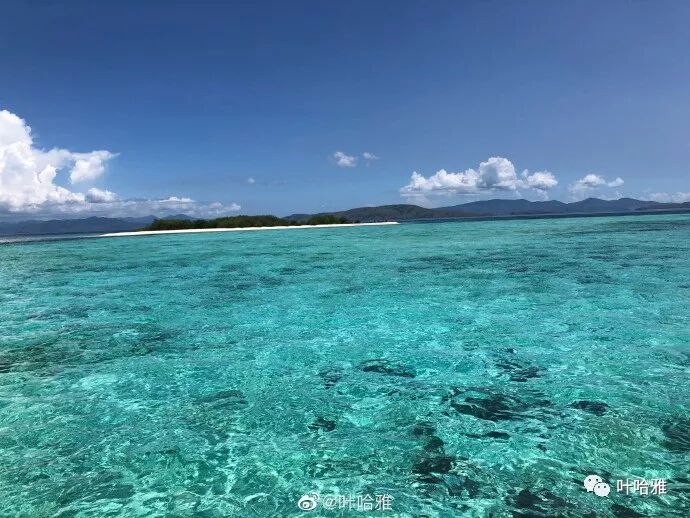
The beaches around Komodo Island are generally pink because they contain tiny coral particles. Since this area was developed late, it has maintained its original natural state, and the seawater is crystal clear.
Fine pink sand grains
The sea view of Komodo Island is incredibly beautiful.
The underwater video of me trying to catch fish with a GoPro
Komodo National Park
Next, I continued to Komodo National Park. Just before landing, I saw a dark cloud floating over Komodo Island from a distance, making the atmosphere of landing on the island feel even more eerie. The world's largest venomous reptile, the Komodo dragon, lives on this island.
Komodo National Park consists of many islands, including the larger Padar Island, Rinca Island, and Komodo Island. About 3,000 giant lizards live on the islands. Indonesia established the national park to protect the Komodo dragons, and it was later listed as a World Heritage site by UNESCO.
You must be led by a park ranger to enter the forest. Tourists cannot act alone because the giant lizards on the island are all in the wild and are venomous and very dangerous. The long stick in the ranger's hand can block the giant lizard's attack. People often say Komodo dragons have toxic bacteria in their saliva because they eat carrion, which kills their prey through infection. Scientists have disproven this. In reality, Komodo dragons are born with venom glands, and it is their venom that kills the prey.
The park entrance asks visitors to stay quiet. Our group walked carefully the whole way, eyes wide open, watching every plant and tree around us.
I saw a dead, dried-up tree trunk and imagined a dinosaur pushing it over.
Komodo dragon nest
Our guide pointed to a mound of dirt in the distance, saying it was a Komodo dragon nest. It was about a meter high and five or six meters wide. The scene looked just like something out of Jurassic Park.
Near a pond, the guide stopped to tell us that dragons often come here to drink. Then I saw a deer limping toward the water. Its head was already injured, likely by a dragon. The guide said deer are the dragon's main food, and this deer would probably die soon after the attack.
A dragon in the bushes
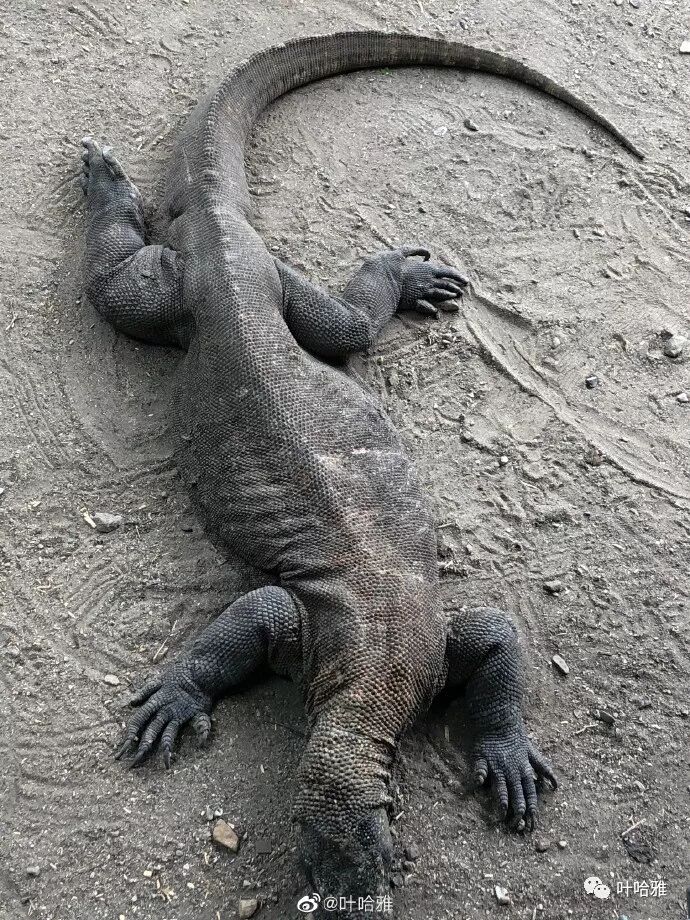
We kept walking until the guide suddenly stopped and pointed to a dragon in the nearby bushes. I followed his finger and took a photo of the first dragon I saw. It was about two meters long, lying perfectly still in the brush. I could clearly hear it breathing.
Right after that, we saw three more dragons in the rest area, lying in the corner of a pavilion where tourists drink tea. The crowd got excited, and some people wanted to get close for photos. The guide became very alert and sternly warned everyone not to get too close.
Komodo dragons are hermaphroditic and can reproduce asexually. They live in trees when young and move to the plains as adults. They can dive, and they can run at speeds of 20 kilometers per hour. Their mitochondria are different from typical cold-blooded animals, allowing them to boost their metabolism to the level of a mammal, which gives them amazing speed and endurance. Attacks on humans are rare on the island, though there has been a case of a fisherman being killed by a dragon. Dragons have no natural predators on the island, but they will not attack humans if there is plenty of food.
Adult dragons grow over 3 meters long. They use their tongues to identify scents and can smell blood from 10 kilometers away. For small prey, the dragon bites them to death immediately. For larger prey, the dragon bites once and lets go, waiting for the venom to take effect before tracking the scent of blood to find the carcass.
We left Komodo National Park and headed to our next spot for snorkeling. The waters there are home to another ancient giant, the manta ray (guifu), which lived at the same time as the dinosaurs. They are the largest of their kind, reaching up to eight meters in length. They are said to be rare, and seeing them depends on luck, but we were very fortunate to spot a group of about four or five swimming right beneath our feet.
The manta ray is a strange-looking giant that has not changed since the dinosaur era, making it a true living fossil. These unique ancient creatures were the biggest draw for me on Komodo Island. Seeing animals I once only watched on nature shows appear right before my eyes was such a thrill.
The actual view is about what you see in the photos. The water where the manta rays appear is not very clear, but as the saying goes, clear water has no fish. The guy in the video is quite brave to get so close to the manta rays. It is actually a bit dangerous. Although manta rays have a gentle temperament, divers fear them when they get angry, as their two wings can break a diver's ribs.
Komodo Island is only a one-hour flight from the popular Indonesian tourist destination of Bali. To travel from Komodo to other Indonesian cities, you have to transfer through Bali. Although I am not very interested in Bali, since I am already here, I decided to go and look around the island.
Stop 3: Bali
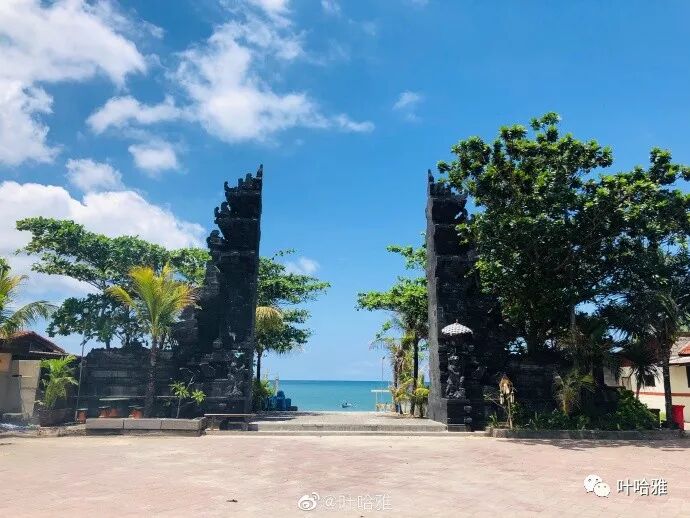
The Hindu-style gates on Bali represent the journey from the secular to the sacred.
Bali is the only island in Indonesia where Hinduism is the dominant religion, and Hindu statues can be seen everywhere. Since this is a halal trip, I am not very interested in these non-Islamic artifacts. I came here mainly to have a decent halal seafood meal. If friends (dosti) plan to vacation in Bali, you do not need to worry too much about food, as halal restaurants are easy to find. The native residents here have a habit of eating roast suckling pig, most restaurants sell alcohol, and prices are very high.
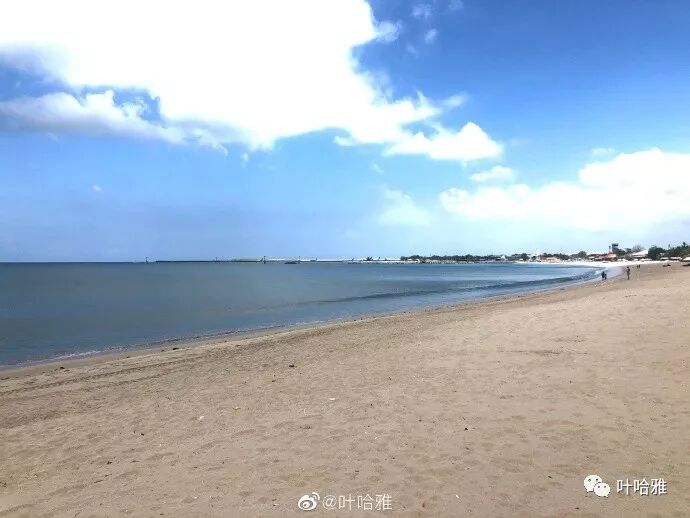
Jimbaran Beach
Bali Airport is about three kilometers from Jimbaran Beach. In Indonesia, you must be careful not to engage with drivers soliciting passengers around the airport, as the chance of being ripped off is nearly 100%. There are two options for taking a taxi. One is the official taxi ticket counter at the airport where fares are prepaid. Just tell the staff your destination, pay, and you will get a slip. Follow the staff's instructions to find your driver, and there will be no extra charges. The other option is to use Grab. I highly recommend this app because it is cheaper, you do not need to pay cash, and you do not have to worry about language barriers, just like using Didi.
The exterior view of a restaurant on Jimbaran Beach.
Having just come from the pristine Komodo Island, seeing these highly commercialized beaches felt like a bit of a letdown, and the seawater is far less clear than in Komodo.
Crabs picked and cooked on the spot.
I asked my Hindu driver to take me to a halal restaurant, and he brought me to this place. He charged me over 100 yuan for a trip of less than five kilometers. It was my own fault for mishearing his 100 as 10 before I got in. I was in a rush, so I didn't argue. I only regret not installing the Grab app back home. I couldn't download it while in Indonesia and had to use a VPN to finally get it.
A squid weighing over one kilogram.
This seafood meal cost about 500 yuan. The prices were clearly marked, but it was definitely not as good a value as eating back home. The rice and side dishes were free. The taste was just average. The seafood was boiled plain, and you could add some strange seasonings or just squeeze some lemon juice over it to mix with the rice.
The island residents love growing flowers.
I don't recommend Bali because it really doesn't live up to its reputation. Prices on the island are more than double those in other parts of Indonesia, and it is heavily commercialized. Many of my friends who have been there don't think highly of it. I think it is only suitable for people who like to stay in their hotels, which we call hotel-staying. But everyone has their own preferences. Compared to Komodo Island, the hotels in Bali are much higher quality. If you don't mind spending the money, you can find a nice hotel here and stay for a few days.
Fourth stop: Yogyakarta.
I added Yogyakarta and Surabaya to my trip at the last minute because the pandemic suddenly broke out, my holiday was extended, and my flight home was canceled. A lady traveling with us, who had just arrived from there with her family, raved about how fun Yogyakarta and Surabaya were. She strongly suggested I go to Yogyakarta to experience Javanese culture. So, I just bought a ticket from Bali to Yogyakarta, and the flight took about an hour.
Yogyakarta is a famous historical and cultural city in Indonesia, similar to ancient capitals like Nanjing or Xi'an in China. All Javanese court arts originated here. Historically, Yogyakarta was ruled by a Sultan. After Indonesia gained independence in 1945, the Sultan of Yogyakarta pledged loyalty to Indonesia. The Sultanate became the Yogyakarta Special Region under Indonesia, with the Sultan serving as the governor and retaining his hereditary position.
The hotel garden and swimming pool.
Everything from landing to checking into the hotel was comfortable, and everyone I met was very friendly. I remember sitting in a taxi, staring blankly at the road outside the window. The car slowly drove past two girls. I wasn't sure if one of them was a transgender woman or a cross-dresser, but when she saw me looking at her, she winked at me.
I came for breakfast in the morning and it looked like I was the only guest. The waiter greeted me very warmly and asked what kind of breakfast I wanted. There were Western and Indonesian options, so of course, I chose the Indonesian style.
I enjoyed the view outside the window while eating. The spire in the distance is Prambanan, a famous Hindu site in Yogyakarta.
I always eat Indonesian fried rice (nasi goreng) for breakfast. The hotel breakfast is included in the room rate. Everything in Yogyakarta is very cheap, and even a five-star resort costs only about 300 RMB per night.
Some Indonesian TV stations automatically broadcast the call to prayer (adhan) when it is time for namaz.
Masjid Raya Al-Muttaqun mosque
Masjid Raya Al-Muttaqun mosque
I originally planned to visit the nearby Prambanan mosque. When I reached the entrance, I saw a mosque in traditional Javanese style across the street. It caught my full attention, so I decided to skip Prambanan and start my Javanese mosque tour instead.
The interior of the mosque is made of wood. A downside to this dark-colored wood is that it makes the main hall look dim. I noticed this same issue in several other mosques.
Since the prayer direction in Indonesia is toward the northwest, but buildings usually face south, the carpets in the main hall are laid out toward Mecca, which makes them look slanted.
The main hall of the mosque is on the second floor, and the first floor is a classroom where children are learning Arabic under a teacher's guidance. It started raining outside. January and February are the rainy season in Indonesia, with thunderstorms almost every day, but they stop quickly.
Prambanan (Candi Prambanan)
Prambanan ruins
Yogyakarta has two popular tourist spots. One is Borobudur, the world's largest Buddhist temple complex, and the other is Prambanan, the largest Hindu temple complex in Southeast Asia. Both are World Heritage sites built around the 9th century by unknown creators, and both were abandoned after completion. Legend says Prambanan might have been built by the second king of the Mataram Kingdom. Both complexes were rediscovered and rebuilt in the early 20th century, so most of the structures are new. Prambanan charges an entrance fee of 170 RMB, and Borobudur is over a hundred kilometers away, so I only walked around the entrance of the Prambanan temple.
I see many tourists online taking provocative photos in temples. I don't think this is right. After all, this is a religious holy site, and taking such photos feels out of place. A girl wrote in her travel guide that many Indonesian girls asked to take photos with her at Prambanan. She thought they were interested in her hairstyle because they envied her freedom to show her hair. I really want to tell her she is overthinking it. This is as ridiculous as those fake posts in China claiming Hui Muslims envy Han people for being able to eat pork. Don't you know that Indonesia does not force women to wear headscarves at all?
Mataram Mosque (Masjid Mataram)
In the Kotagede suburb of Yogyakarta, I found the tomb of Sultan Suta Wijaya Senapati of the Mataram Kingdom. Next to it stands a mosque that combines Hindu and Javanese architectural styles. The Mataram Kingdom was the first Islamic kingdom established in the Central Java region of Indonesia.
Because the faith in the Java region shifted from Hinduism to Islam, the ancient buildings on the island retain many traces of Hinduism. The gate of this mosque is a type of Hindu architectural style.
The internet says Mataram Mosque charges an entrance fee of about 10 yuan. I didn't run into anyone asking me for a ticket, and mosques really shouldn't charge tourists.
In the front hall of the mosque, some tourists were resting to escape the heat. The main hall of Mataram Mosque still uses the Javanese architectural style, with a front hall and a main hall, but no minaret. Drum beating is used instead of the call to prayer.
Prayer drum
The prayer drum is usually beaten during congregational prayers or festival prayers, which is a distinct Javanese feature.
Although the lights were on in the main hall, it was actually still quite dark. I brightened the photo a bit. This style is indeed not as well-lit as domed buildings.
The ritual of offering flowers to commemorate the deceased is inherited from Hindu traditions.
Next to the cemetery, there is a pool built as a bathhouse for performing major and minor ablutions. It is likely no longer in use. The pond is home to many giant catfish, both black and white.
Great Mosque of Yogyakarta (Masjid Gedhe Kauman)
Great Mosque of Yogyakarta
The Great Mosque of Yogyakarta (Masjid Gedhe Kauman) was built in 1773 right next to the Yogyakarta Palace. It is a traditional Javanese-style building. When I visited, I happened to run into a group of students there for an activity. Their teacher led them in namaz, so I joined in too.
This Javanese architectural style was likely influenced by ancient Chinese architecture. During the Ming Dynasty, Zheng He traveled to Java many times, bringing many craftsmen with him and spreading Islamic culture and Chinese civilization.
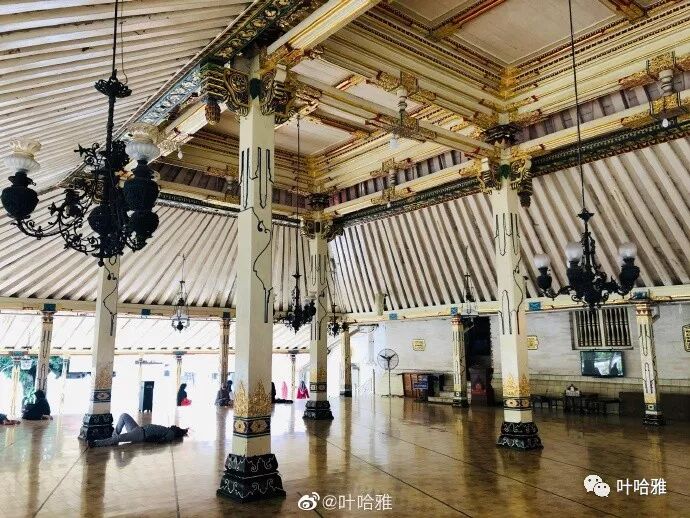
The front hall of the main prayer hall
A sign written in Javanese script hangs on the wall
A group of religious school students perform namaz led by their teacher, with the boys in front and the girls in a designated area behind them.
This is the area reserved for the Sultan to perform namaz, and ordinary people are not allowed inside. Honestly, this kind of privilege is not something Islam promotes; even a king should stand in the same row as the common people.
The minbar pulpit features typical Javanese patterns and a golden color, just like the tones of the Thai Royal Palace.
A mihrab with Southeast Asian royal characteristics
The Yogyakarta Palace is right next to the mosque. The palace is divided into a south section and a north section, and you have to buy separate tickets for each, costing about three yuan per ticket. I visited the north section, and it didn't feel like a palace at all to me. It was too simple, with only a few shed-like buildings, which made me wonder for a moment if this was really a palace.
Yogyakarta Palace
Soko Tunggal Mosque
Soko Tunggal Mosque
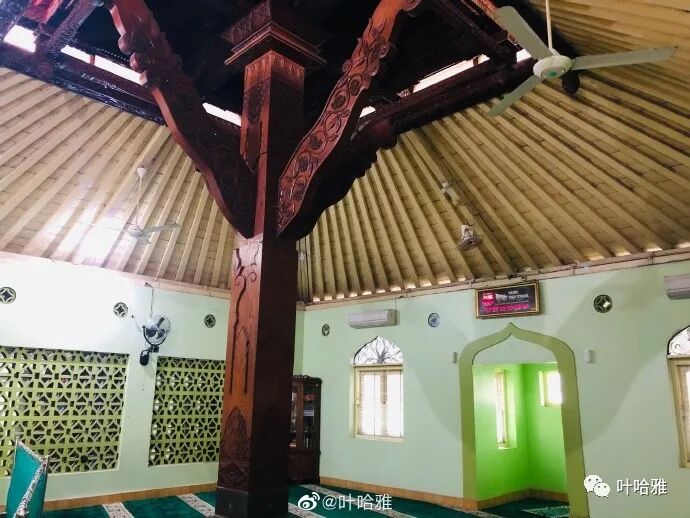
The Soko Tunggal Mosque in Yogyakarta gets its name from the Indonesian words for 'one pillar.' Built in 1972, it was designed by R. Ngabehi Mintobudoyo, who also designed the Yogyakarta Palace.
The main hall is supported by one central pillar and four side pillars, making five in total. This represents the temptations of evil from the four directions, a common feature in Javanese architecture. The flower carvings on the pillars show that praying in the mosque brings the grace of Allah.
A single pillar inside the main hall.
Yogyakarta is a city with a strong religious atmosphere. I felt this at the hotel where I stayed in the suburbs. Every time for namaz arrived, the sound of the adhan echoed from all around. It lasted for about ten minutes, likely because the clocks at different mosques were slightly out of sync.
I wandered into a nearby village. I saw a sign at the entrance that said 'Selamat Datang.' I first thought it was the village name, but that did not seem right since I had seen the phrase in many places. I asked a villager and learned it is Indonesian for 'welcome,' a phrase used across Southeast Asia.
Nurul Falaq Mosque
The people in this village are very friendly. Everyone I met on the road, whether young or old, smiled and nodded to greet me. The village loudspeaker was broadcasting an imam giving a sermon. I followed the sound to the mosque, but the door was closed. Before I could even say anything, a villager walked over and opened the door for me. It turned out the key was kept right by the entrance.
A mosque plaque. No matter how small the mosque is, it is officially registered.
A list of donations (niet), just like the ones in our mosques back home.
Baitussalam religious school
The Baitussalam religious school in the village
There are many religious schools like this in Yogyakarta. The children inside look like elementary school students. During breaks, they run around and play, and some gather around their teacher to do homework.
Main entrance of the school
Playground
The mosque inside the school
Exterior of the school mosque
Masjid Nurul Iman mosque in the same village
If this small mosque were in the city center, it would only be considered a dua room (musholla). Every mosque here is officially registered.
Masjid Jogokariyan mosque
Masjid Jogokariyan mosque
The mosque was built in 1967. Most people in this area work in batik, so the mosque has bright colors. Notice that the name of the mosque on the right side of the photo uses many colors.
No matter the time, you can always see people reading the Quran in the mosque, most of them women.
While I was in a taxi heading to the mosque, the driver noticed I was busy taking photos of every mosque we passed. He asked if I was a Muslim, so I blurted out, "Assalamu alaikum." He laughed after returning the greeting and pointed at my beard, saying I looked like a Muslim. I told him of course, as growing a beard is Sunnah.
You do not really need to emphasize your Muslim identity while traveling in Indonesia. From my experience, even if people only know you are from China, they treat you no differently. Talk of anti-Chinese sentiment is an exaggeration. Many ethnic Chinese still live in Indonesia today, with families who settled here hundreds of years ago. They have intermarried for generations, making it hard to tell their ethnicity by appearance alone.
SIX SENSES Spanish Restaurant
I saw a beautiful Spanish restaurant nearby on TripAdvisor. The setting is truly lovely, featuring a manor with a fountain and a garden. There are no halal Spanish restaurants back home in China, so I decided to fill that gap in my palate here in Yogyakarta.
The front porch of the restaurant
The interior decor of the restaurant
Cream of mushroom soup
I originally wanted to eat Spanish seafood paella, but after checking the menu, the portion was too large for one person. I did not want to waste food, and since the weather is hot and my appetite is smaller, I ordered a cream of mushroom soup and a salmon salad instead.
Salmon salad, with the salmon at the bottom of the plate
The tableware at this restaurant is very exquisite, and the waiters are very gentlemanly.
Lemon juice, with a small cup of honey on the side
This restaurant looks very fancy, but the bill, including service charge and tax, was less than 100 RMB. That is considered high-end spending locally, which shows how down-to-earth Yogyakarta is.
Fried chicken meal eaten next to the mosque
This meal cost about 5 RMB. Indonesians love fried food and will fry almost anything. The waiter did not give me any cutlery with my meal because everyone eats with their hands, so I followed suit and finished it that way.
Stop 5: Surabaya
It takes one hour to fly from Yogyakarta to Surabaya, but I suggest taking a train or bus instead. My flight was canceled once, and when I rebooked, it was delayed. The weather on Java island is unpredictable, so traveling by land is better from the start. Land transport only costs a few dozen RMB, while a plane ticket costs over 300.
Surabaya is the second-largest city in Indonesia. Indonesians call it Surabaya, so remember this name to make asking for directions easier. Zheng He landed here when he reached Java island during his voyages to the Western Ocean, and it is now home to the largest population of ethnic Chinese in Indonesia.
In 1520, the first Islamic dynasty to rise in central Java, Indonesia, was the Demak Sultanate. Sultan Raden Patah (1475-1518) was of Chinese descent and an ancestor of Indonesia's fourth president, Abdurrahman Wahid. His surname was Chen. Wahid stated he had Chinese ancestry, and his ancestor, Chen Jinhan, traveled to Java with Zheng He's fleet during his fifth voyage in the 15th year of the Yongle reign (1417) and settled in Surabaya.
Al-Akbar National Mosque (Masjid Nasional Al-Akbar Surabaya)
Al-Akbar National Mosque
This is a landmark building in Surabaya. It feels even bigger and more beautiful than the Istiqlal Mosque in Jakarta. Construction began in 1995, stopped for two years during the 1997 Asian financial crisis, and was completed in 2000. Then-President Abdurrahman Wahid presided over the opening ceremony. President Wahid was also the chairman of the Nahdlatul Ulama, making him a leader in the Indonesian religious community. It says a lot that a descendant of a Chinese ancestor could achieve such a position in Indonesia.
A cat in the main prayer hall
Mihrab
pulpit (minbar)
Prayer drum
Sunan Ampel arch
Sunan Ampel Tomb view all
Summary: This Indonesia Muslim travel guide part 1 covers visa-free entry, avoiding bribes, Jakarta, Indonesian halal travel basics, Java history, Trowulan, Wali Songo heritage, Demak Grand Mosque, Sunan Ampel sites, and the country through the eyes of a Chinese Hui Muslim.
Indonesia has the largest Muslim population in the world, with over 200 million Muslims. Most follow the Shafi'i school of jurisprudence. Indonesian Muslims have long been on the fringes of the Muslim world, but this marginalization has gradually improved since Indonesia gained independence from colonial rulers in 1945. Today, hundreds of thousands of Indonesians go on the Hajj to Mecca every year. They are known as the "rice of Hejaz," with Hejaz referring to the region of Mecca and Medina.
Indonesia currently offers visa-free entry to citizens from mainland China. You only need your passport to fly in, with no prior application or fees. I have seen many netizens online complain about customs officers asking for bribes upon entry. I flew from Beijing to Jakarta and was not asked for a bribe, so it might be an isolated issue. My consistent principle is to firmly refuse any customs bribes. As Muslims, we cannot engage in bribery. I would rather not enter the country than pay. Even if the bribe is only a small amount, it is a matter of principle that I will not compromise on. Since this behavior often targets Chinese travelers, we must not encourage such discriminatory practices.
I heard about similar bribe requests when I visited Vietnam, but I never encountered them. My method is to prepare my round-trip flight tickets and hotel booking confirmations in advance, print them out, and have them ready when customs asks me the purpose of my visit. I show them the itinerary I prepared, which clearly states my travel purpose. Once customs sees this, they know I am an experienced traveler, and they have no reason to ask for a bribe before letting me through.
Many online travel guides view Indonesia from a non-Muslim perspective. I have read many of them and find them superficial and biased when judging the country's majority ethnic group. Below, I will introduce my halal journey through Indonesia from the perspective of a Chinese Hui Muslim.
Items to prepare before leaving for Indonesia:
1. Round-trip flight tickets and hotel booking confirmations, printed out and kept handy to prevent customs from questioning you or asking for bribes;
2. Portable WiFi, which can be rented from major travel websites for about 10 yuan a day. Renting WiFi is more convenient than buying a local SIM card. In my experience, mobile signals on many islands are not as good as WiFi. You can activate international roaming in advance, but it is only useful for receiving text messages. International roaming still cannot access sites like Google, but portable WiFi can. Google Maps is very important when traveling abroad;
3. Power adapter
Indonesian power plugs are wider than those in China, so you will need an adapter. You can buy a universal multi-function power adapter online.
4. Grab
This is a ride-hailing app used across Southeast Asia. You must have it; it is very useful. You can link your credit card to pay without cash. If you do not have it, you will almost certainly be overcharged for taxis.
5. Sunscreen, mosquito repellent, sunglasses, and flip-flops
These are all essentials for life in the tropics.
6. Indonesian Rupiah cash
You can exchange money in China or at the airport in Indonesia. The currency has a low value; 10,000 Indonesian Rupiah is worth about 5 Chinese Yuan.
First stop: Jakarta
Jakarta is the capital and largest city of Indonesia. Many people only use it as a short transit stop, but there is actually a lot to see and do here. It is a microcosm of Indonesia where you can experience all kinds of local cultures. If your schedule is not tight, you might want to stay a few extra days. As a food blogger, what attracts me most is that I can find halal versions of cuisines from all over the world here.
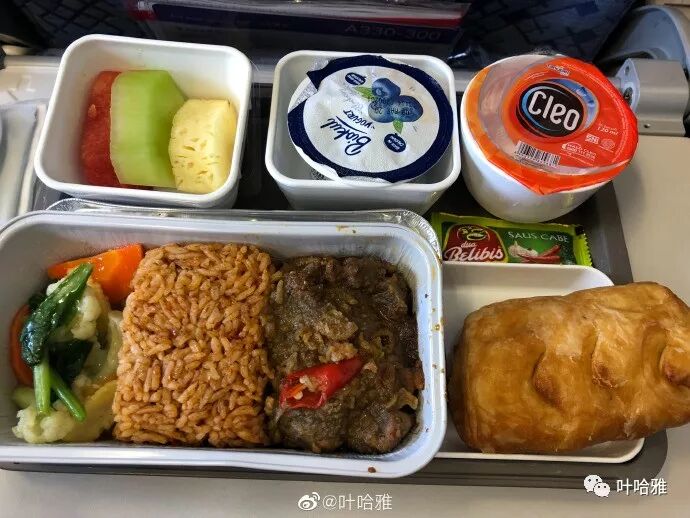
Xiamen Airlines halal meal
I have to praise the halal meal on Xiamen Airlines; it was better than any other halal meal I have had on domestic airlines. A quick tip: I did not book a halal meal in advance for this flight, but Xiamen Airlines offers both halal and non-halal options on flights to Jakarta, so you do not need to reserve one ahead of time.
Except for budget airlines that do not provide meals, almost all airlines offer a meal booking service. Booking a religious meal costs nothing extra as it is included in your ticket price. You must book at least 24 hours in advance. You can do this through the airline's app, by calling their customer service, or through the customer service of the platform where you bought your ticket. If you are worried about the airline's ingredients, you can also book a vegetarian meal. Some airlines let you set dietary preferences in their app. Once you do this, the system will automatically book a halal meal whenever you buy a ticket with them.
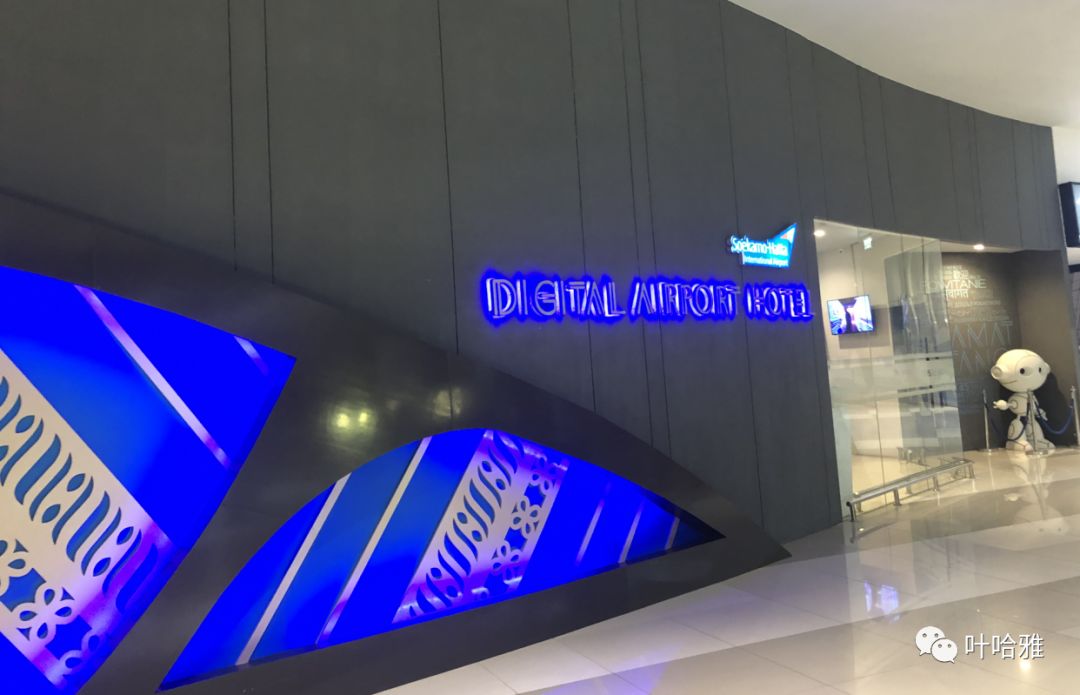
DIGITAL AIRPORT capsule hotel
After flying all day, I arrived in Jakarta at 10 p.m. My plan was to fly to Komodo Island early the day after tomorrow. To save time and money, I chose a capsule hotel on the first floor of Terminal 3 at the airport. This way, I did not have to travel into the city after landing that night, and I would not have to wake up early to catch my flight later. It turned out to be a great choice. Although the capsule was small and only fit one person, it was clean and had everything I needed, including bottled water, a towel, a locker, a power outlet, and a TV. It felt like lying inside a space pod.
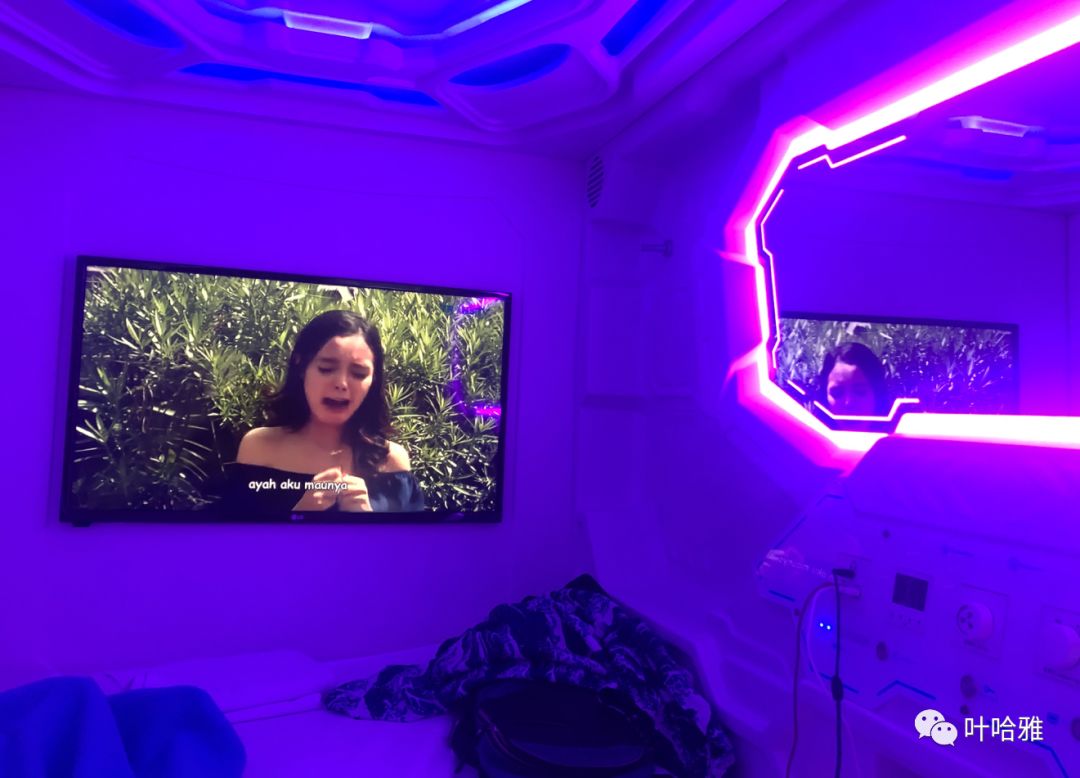
The lights in the space could change color, and there was air conditioning.
The capsule hotel has shared bathrooms. Even though it is a public area, each shower and washroom is private. Once you lock the door, it is just like a private bathroom, so it does not feel awkward at all. This was my first time staying in a capsule hotel, and I was very satisfied. I hope this model becomes more popular.
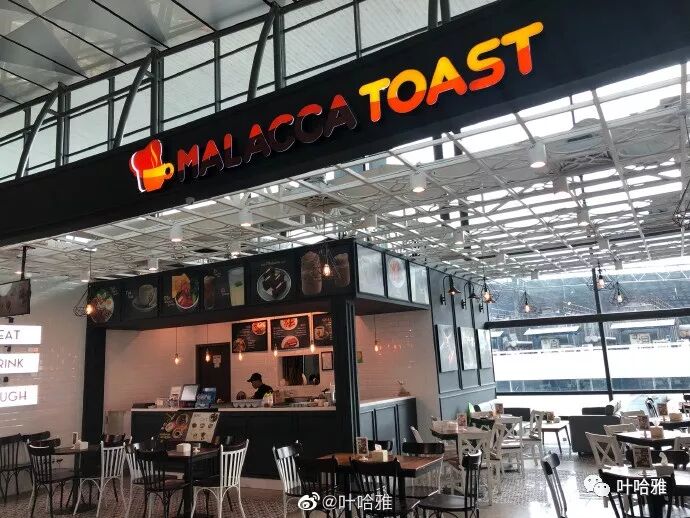
MALACCA TOAST airport fast food restaurant
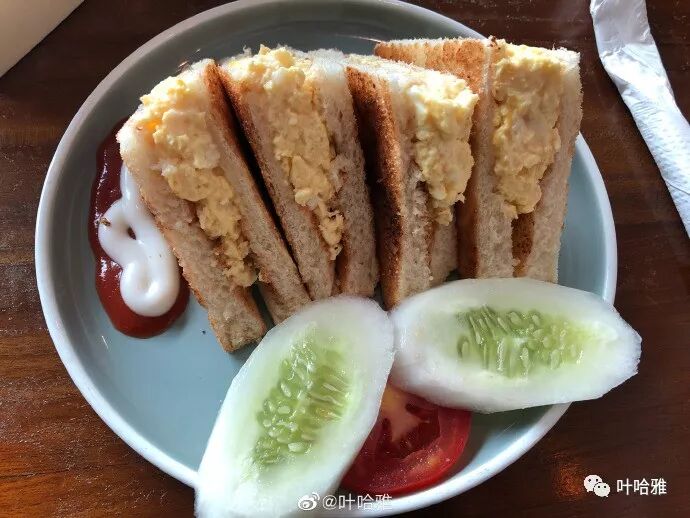
Egg sandwich
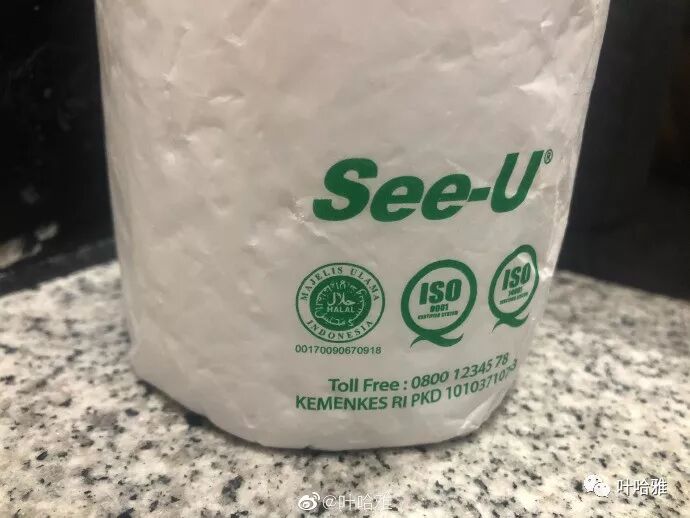
Halal bidet spray in the bathroom
You can still find non-halal food in Indonesia. Some restaurants run by non-Muslims, such as Catholics or Hindus, sell alcohol but will note that they are pork-free. I have seen women wearing headscarves eating in these places. I only saw pork sold in Chinese-run restaurants in Surabaya, and you will never see anyone wearing a headscarf in those shops. If a restaurant has a clear halal certification sign at the entrance, it definitely does not sell alcohol.
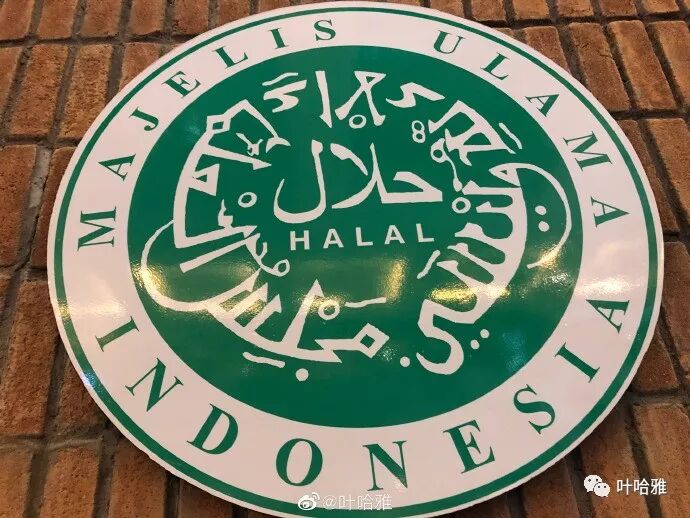
Indonesian halal certification logo
This is what the common Indonesian halal certification logo looks like. It comes in two versions: one in Arabic script and one in Latin letters. HALAL also means halal in the Indonesian language. If the logo on a package is very small, they might leave out the Latin letters but will still include the Arabic word حلال
to make it easy for friends (dosti) from all countries to recognize.
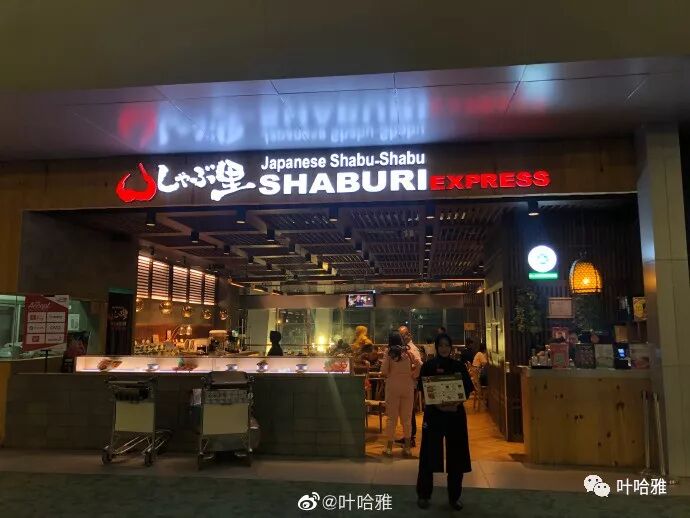
Shaburi all-you-can-eat Japanese hot pot restaurant
Located on the third floor of Terminal 3 at Soekarno-Hatta Airport, a set meal costs about 60 yuan. You get one plate of meat, and you can eat as many vegetables, fruits, and sushi as you like.
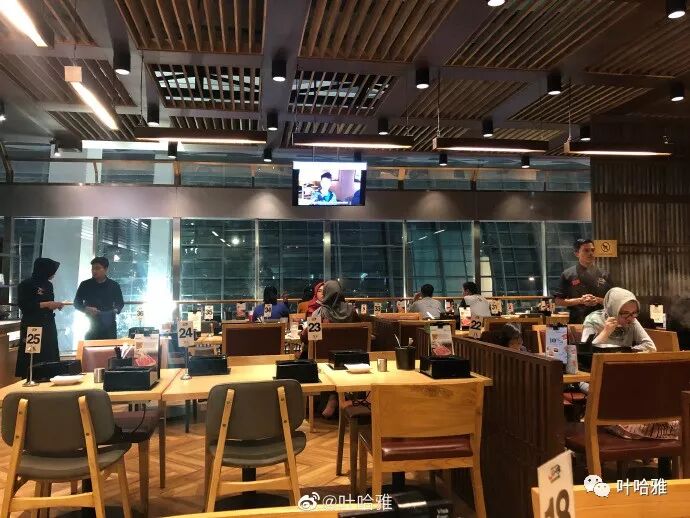
Restaurant service in Indonesia is generally warm and attentive, especially with the servers' sweet smiles.
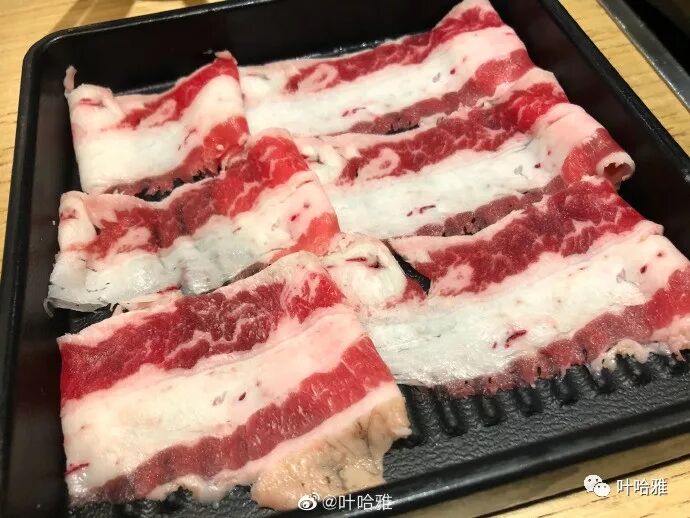
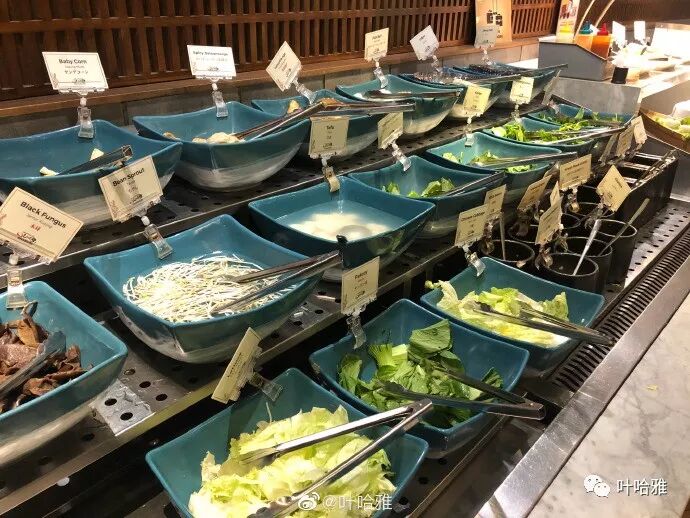
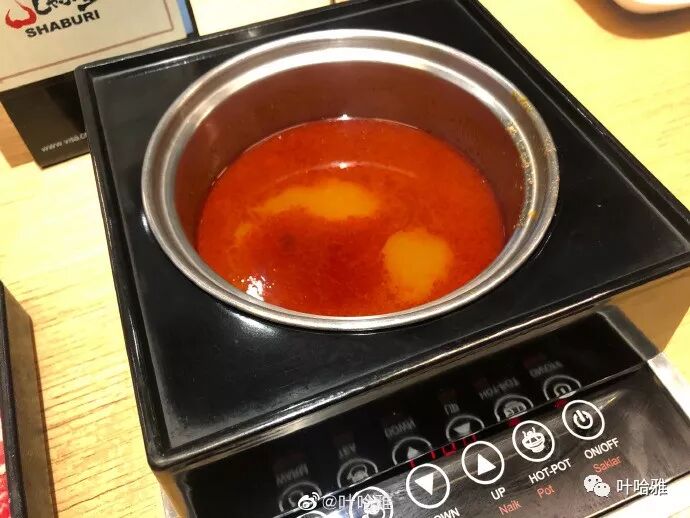
The individual hot pots are very similar to the Xiabu Xiabu chain back home.
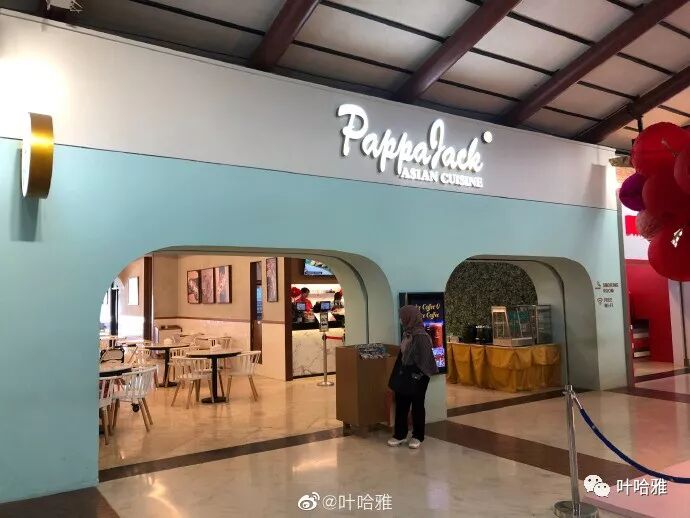
Indonesian casual dining restaurant in Terminal 2
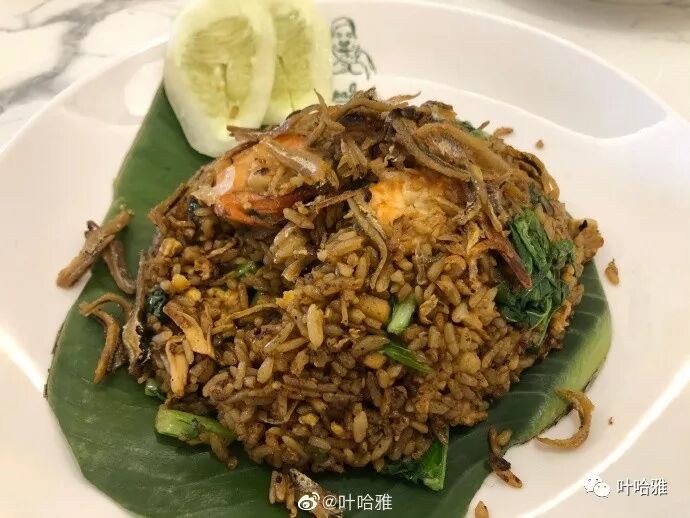
Indonesian fried rice (nasi goreng)
This type of fried rice is what I eat most often in Indonesia, and it is one of my favorite Indonesian foods. You can even eat it for breakfast. It costs anywhere from 6 to 30 yuan and is popular all over Southeast Asia. It is made by stir-frying white rice with sweet soy sauce, tamarind, and dried shrimp. It is served with various sides, including satay skewers, cucumber, Indonesian shrimp crackers, and a fried egg.
Istiqlal Mosque (Masjid Istiqlal)
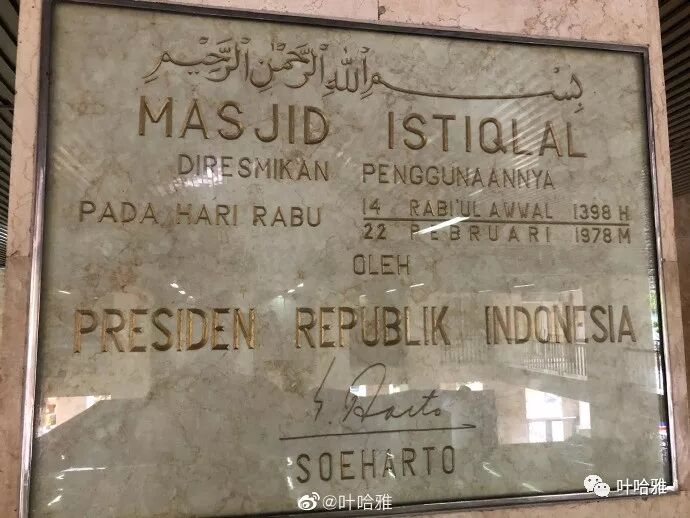
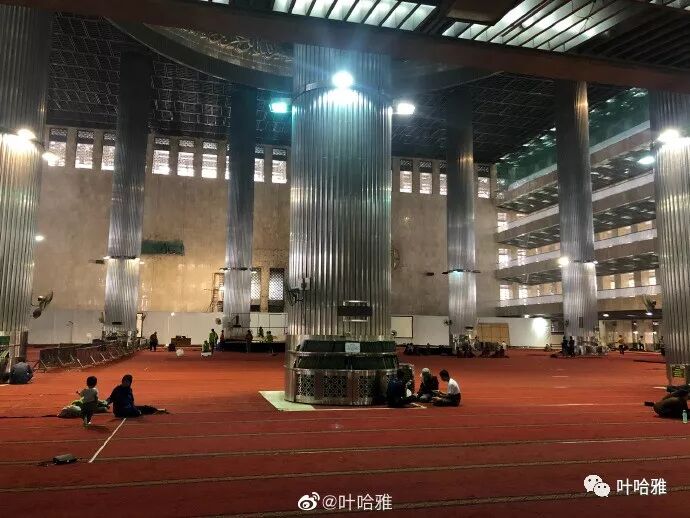
Jakarta's Istiqlal Mosque (Masjid Istiqlal in Indonesian, which means 'independence' in Arabic) was built to celebrate Indonesia's independence. The foundation was laid on August 24, 1961, and it opened on February 22, 1978. The architect, Frederich Silaban, was a Christian. The mosque was built next to the Jakarta Cathedral to symbolize religious harmony.
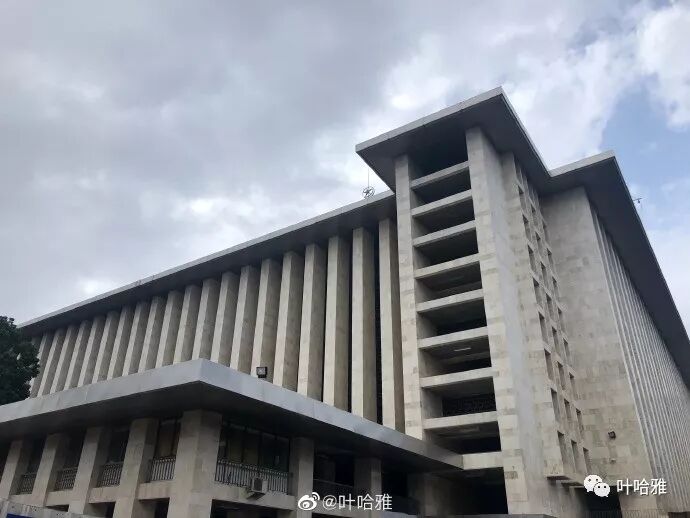
The site was under renovation when I arrived. It was the rainy season in Indonesia, and Jakarta had just experienced flooding, leaving many areas waterlogged. Yet, after the floods, everything went back to normal. I was struck by the driver who brought me here. As we talked about the Jakarta floods, he pointed to the water marks along the street while laughing. I was amazed at how optimistic they could be. Their love for smiling is my deepest impression of Indonesians. Even though they are poor, they have a high sense of happiness.
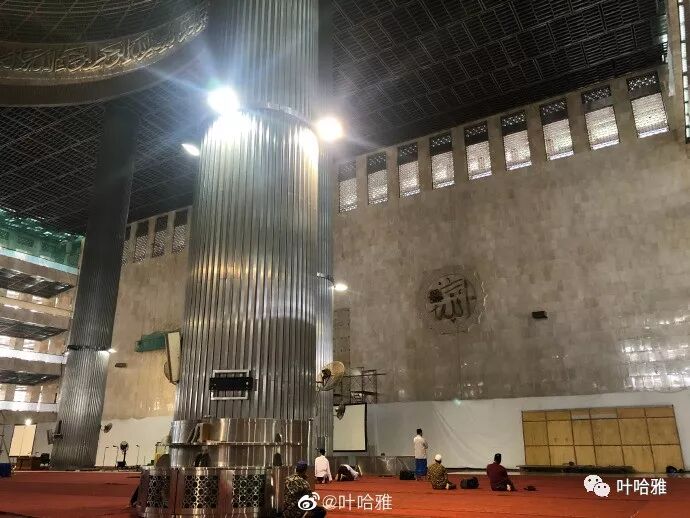
Visiting the mosque is free. You need to take off your shoes and leave them at the storage area. The man at the entrance greeted me warmly and asked me to write down my country and religion in the guest book.
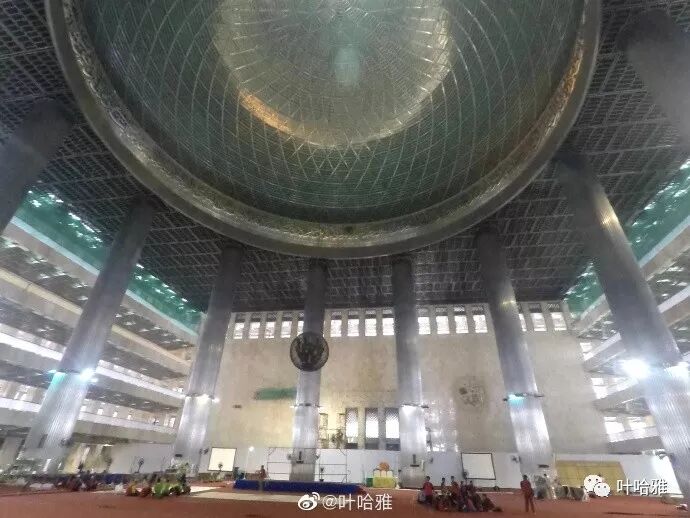
I had learned about this mosque on TV before. It is considered the largest in Southeast Asia and was built at a huge cost. However, after visiting in person, I did not find it as beautiful as I had imagined. As my trip continued, I saw many more unique mosques in Indonesia.
Jakarta Old Town
(Kota Tua Jakarta)
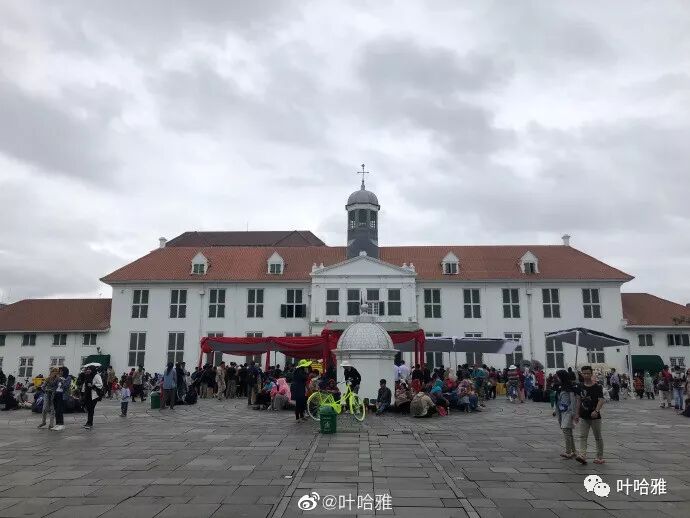
Jakarta Old Town covers only 1.3 square kilometers, about the size of a plaza. It contains many Dutch buildings from the 17th century. At that time, Jakarta was the headquarters for the Dutch East India Company to trade spices and other goods in Asia.
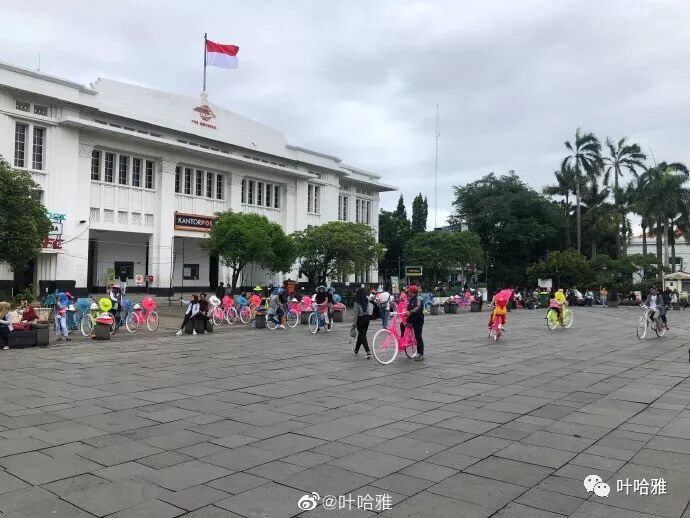
Let's talk about Indonesia's colonial history. A friend once asked me why we rarely hear from Indonesian Muslims on the world stage despite there being so many of them. The reason is that Indonesia was colonized for a long time. From the 16th to the 20th century, it was a Dutch colony. During World War II, the Japanese arrived and drove out the Dutch, and Indonesia was colonized by Japan for a few years. It was not until 1945 that Indonesia declared independence. Before this, the actual ruling class was never Muslim, which is why Indonesian Muslims have been marginalized internationally.
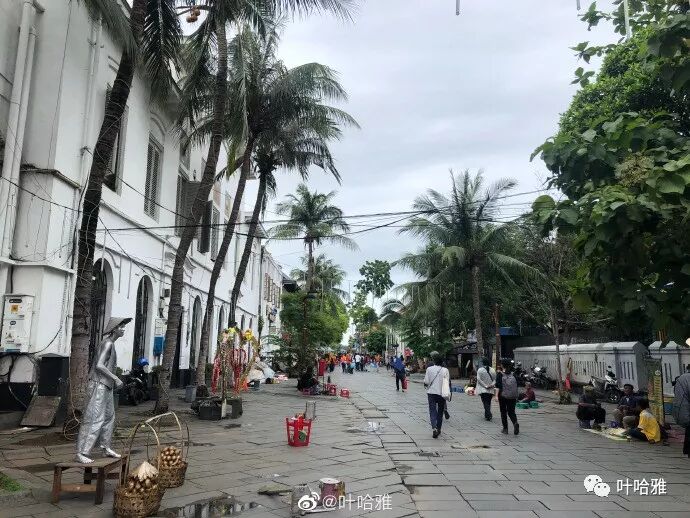
Street view of Jakarta Old Town
Although Indonesia is considered a Muslim country with a Muslim population of over 80%, it is not an Islamic state. Only countries with Islam as the state religion can be called Islamic states, and Indonesia has no state religion. This shows the marginalized status of Indonesian Muslims in their own history. A country where 87% of the population is Muslim cannot even establish Islam as the state religion. Neighboring Malaysia manages to do this, even though its Muslim population is only 60%, so Malaysia is considered an Islamic state.
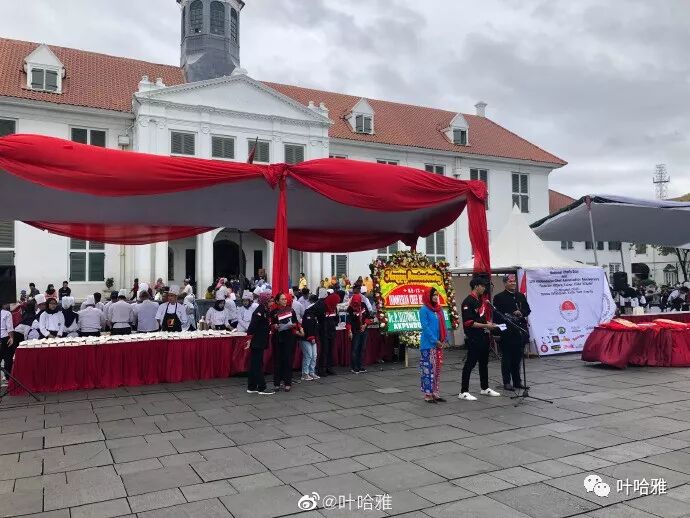
Performance in the Old Town square
The Indonesian constitution requires citizens to have a religious belief. The Jakarta Charter published in 1945 clearly stated: 'The state shall be based on the belief in the One Supreme Allah, with the obligation for adherents of Islam to practice Sharia in accordance with correct and moral humanitarian principles.'
Indonesian citizens cannot have no religion, or they will be treated as materialist communists. You know what I mean. This is often linked to what people call the anti-Chinese sentiment in Indonesia, because at that time, many Chinese in Indonesia were associated with communism. Major General Suharto, who was pro-Western, overthrew the pro-communist Sukarno government and then started a massive anti-communist purge. When it happened, it targeted communists and was not specifically aimed at Chinese people. Therefore, focusing only on anti-Chinese sentiment ignores the background of the event.
The Special Region of Banda Aceh in Indonesia follows the second half of the Jakarta Charter by implementing Sharia law. Located in the northwest corner of Indonesia, Banda Aceh is the closest city in the country to Mecca. The prayer direction (qibla) in Indonesia faces northwest, but there are no direct flights, or I would really like to go there and experience the atmosphere of Sharia.
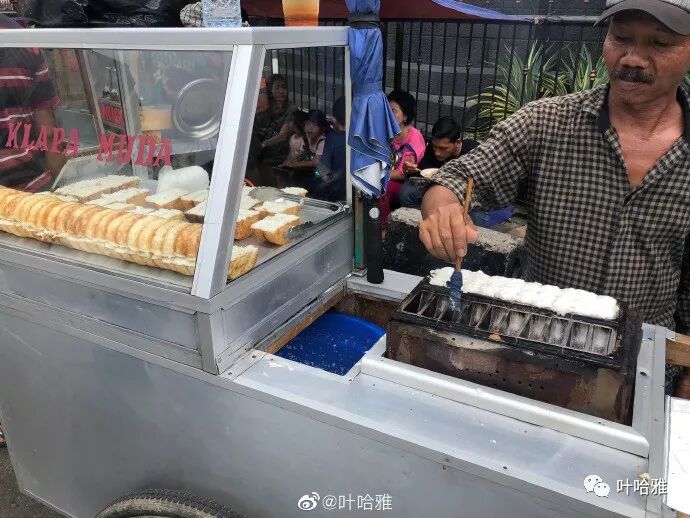
Street snacks in the old town
There are many snacks along the streets of the old town. I am not used to eating these unfamiliar foods on the side of the road, but interested friends can go and try them. I suspect they might not taste very good, as we may not be used to many Southeast Asian specialties. Plus, the hot weather could easily give you an upset stomach.

Some basic toilets in Indonesia have a plastic water bottle placed above the urinal. This bottle is used for washing yourself.
Grand Indonesia
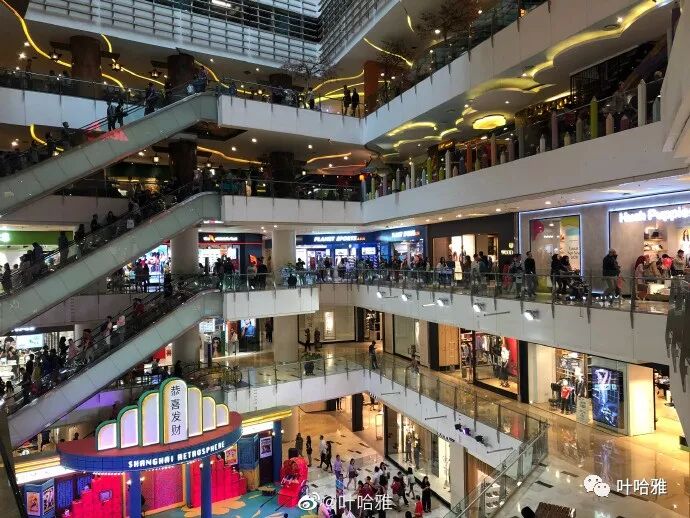
Grand Indonesia is the largest shopping mall in Jakarta. It is truly massive and ranks among the best in Asia. The mall has everything, including a farmers market and numerous restaurants and snack shops. You can spend an entire day here. If you do not want to walk around in the scorching sun, I suggest coming here for shopping and relaxation.
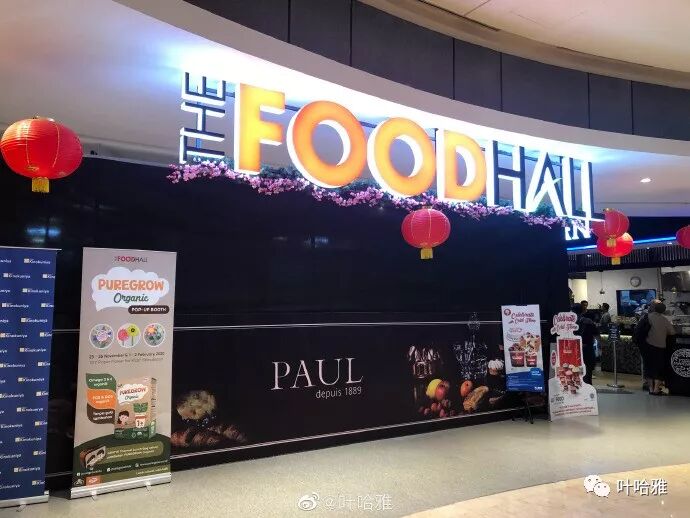
The supermarket on the basement floor
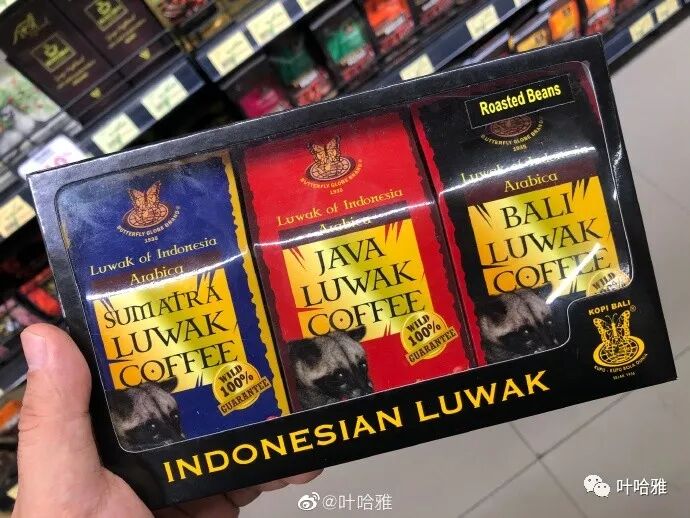
Indonesian specialty civet coffee beans (kopi luwak)
I carefully checked the various internationally famous brands in the supermarket, and almost every product I saw had a halal certification mark.
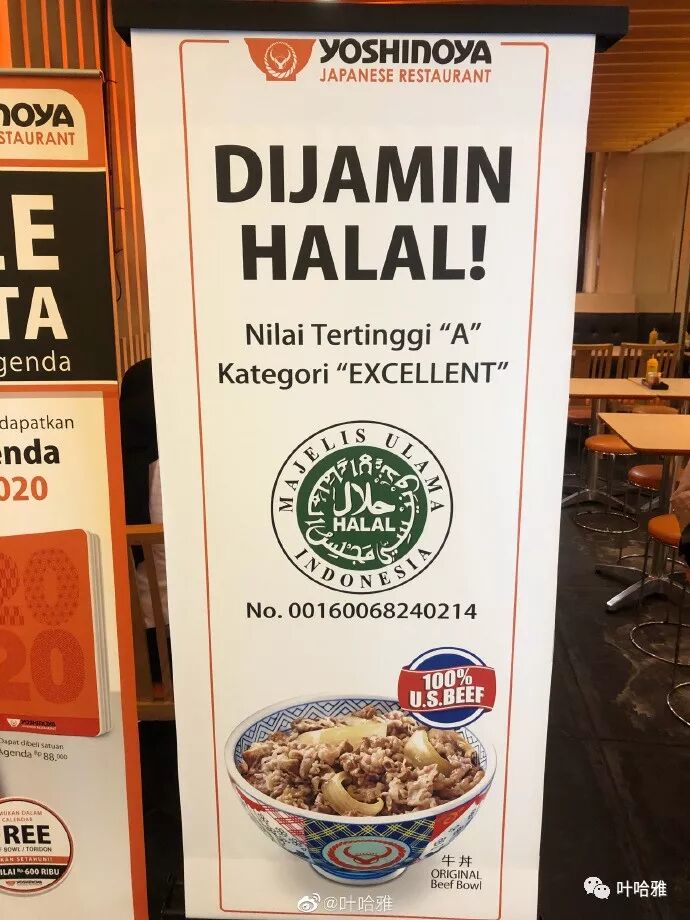
Halal Yoshinoya
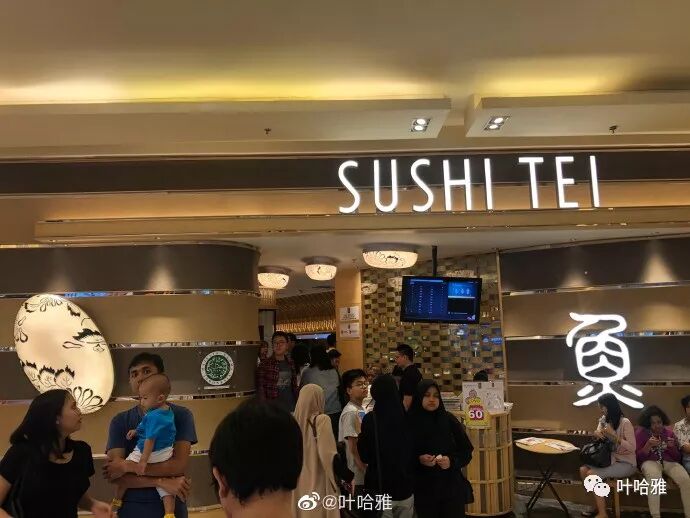
Japanese food in the mall
Japanese food is quite common in Indonesia and very popular with the locals. You often have to wait in line to eat at these types of restaurants. Japanese food in Indonesia is linked to the Japanese occupation during World War II. Many Japanese companies stayed in Indonesia after the war, bringing a large number of Japanese people with them.
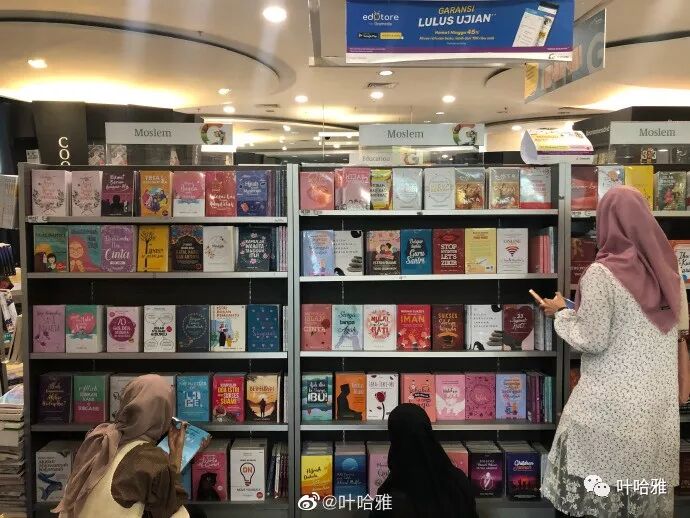
A bookstore in the mall.
The bookstore in the mall has a large section for religious books. It carries books from all major religions, with the most being Islamic books. They are mostly in Indonesian, so I could not read them. Otherwise, I would have bought a few to take home.
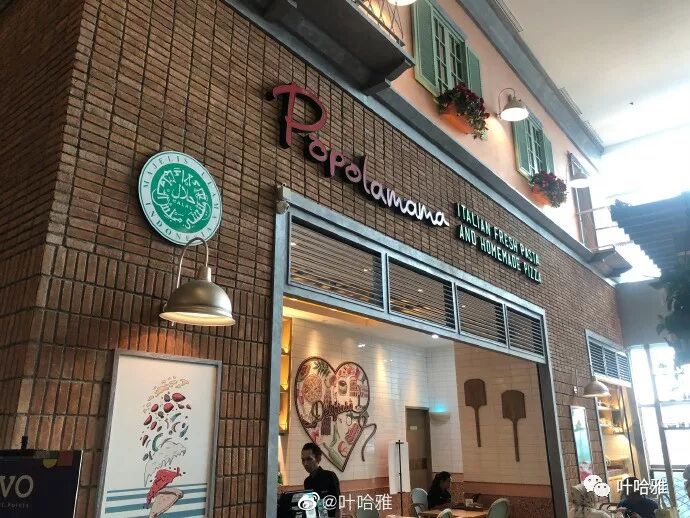
Italian restaurant Popolamama.
This is an Italian restaurant in the mall. I have not seen a halal Italian restaurant in Beijing yet. The standard of Western restaurants in Jakarta is world-famous.

Italian pizza.
A pizza, a salad, and a glass of juice cost about 60 RMB. This price level is already quite high for Indonesia, as costs are even lower in other smaller Indonesian cities.
Second stop: Komodo Island.
Komodo Island is a major destination for my trip. I came here to fulfill a childhood wish as a nature enthusiast. When I was in elementary school, my family gave me a set of four encyclopedias. I flipped through the natural science volume the most, and I was deeply impressed by the various record-breaking plants and animals it introduced. Komodo Island is a place with great biodiversity and frequently appeared on nature shows.
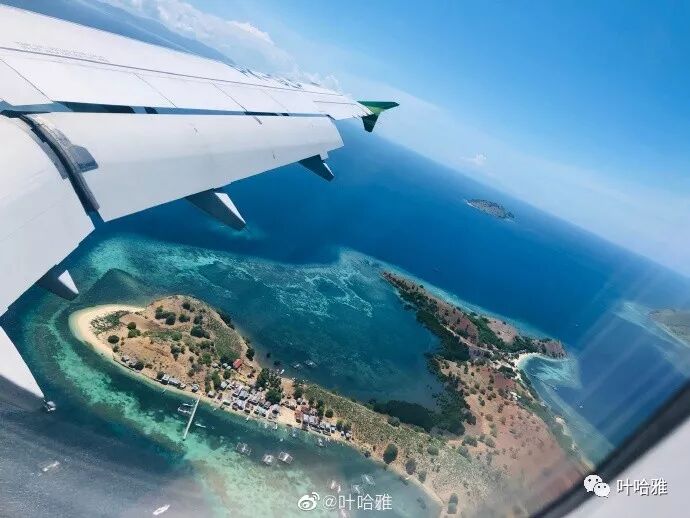
Komodo Island is located in the southeastern corner of Indonesia. It is just a bit further south to reach Australia, so it faces Oceania across the sea. There are no direct flights from China to Komodo Island, so you must transfer through Jakarta or Bali. I flew for over three hours from Jakarta to reach Labuan Bajo Airport, which is the closest airport to Komodo Island. If you transfer from Bali to Labuan Bajo, it only takes one hour.
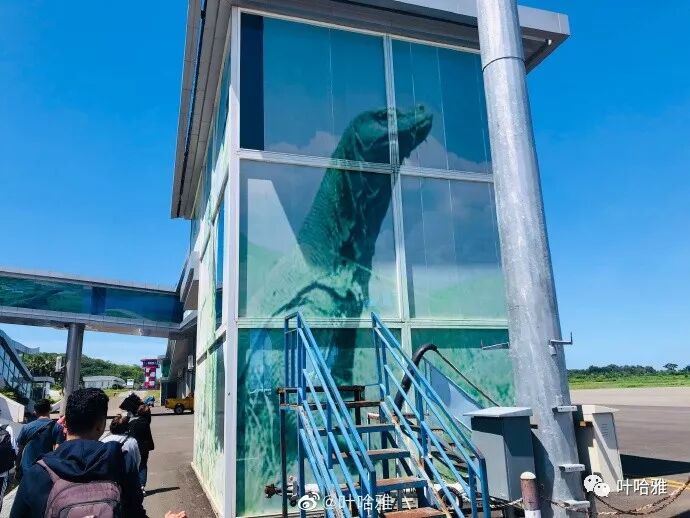
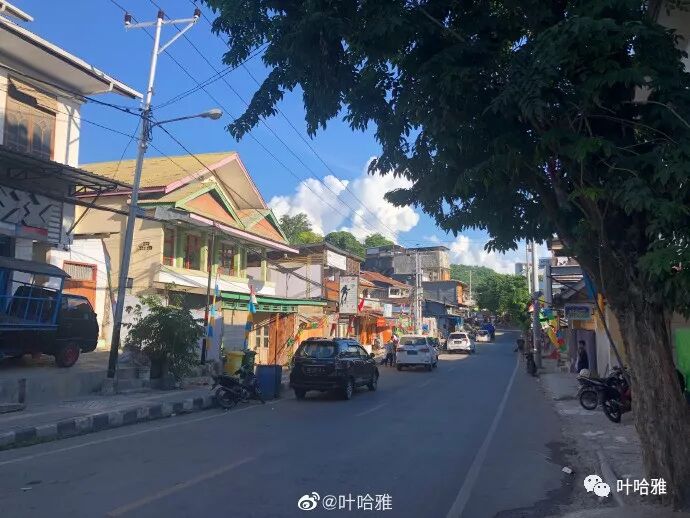
The main road of Labuan Bajo town.
After leaving Labuan Bajo Airport, I took a taxi for half an hour to reach the small town of Labuan Bajo. This is the busiest area in the region. The picture above shows the liveliest street in this town. The town has a small population, underdeveloped commerce, and covers only two square kilometers. Many residents still keep their traditional way of life, and most make a living from fishing and tourism. The most common shops along the street are dive shops. Komodo Island has many high-quality diving spots, but the underwater currents are complex and suitable for professional divers. Beginners are not advised to go.
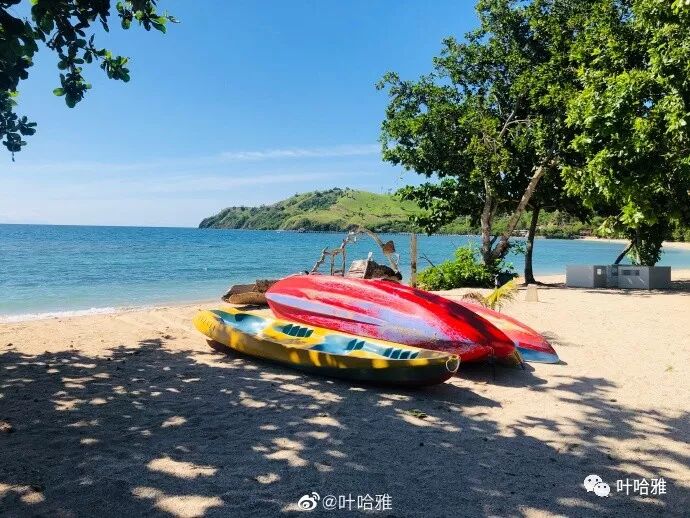
Sylvia Hotel & Resort Komodo
My hotel had a private beach. Many hotels here have private beaches, and they are affordable and beautiful. You can stay in a very nice place for two or three hundred a night. I do not recommend this hotel, though, because it is far from the town center. There are no shops nearby and no public transport, so you cannot go out for a walk at night. I suggest staying in town next time for more convenience.
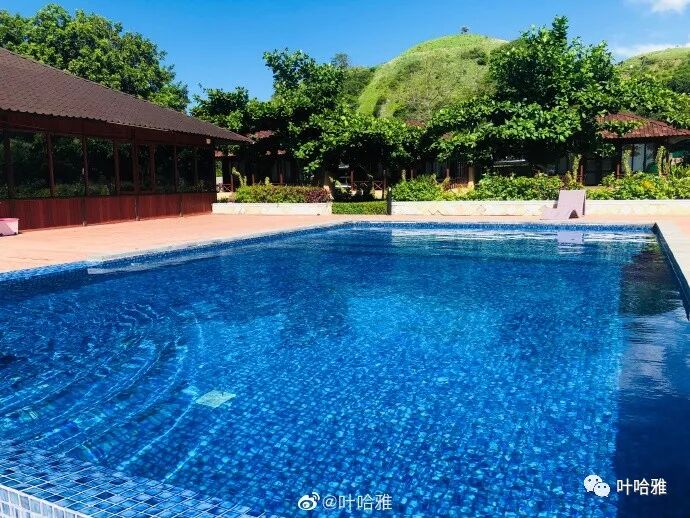
The hotel swimming pool
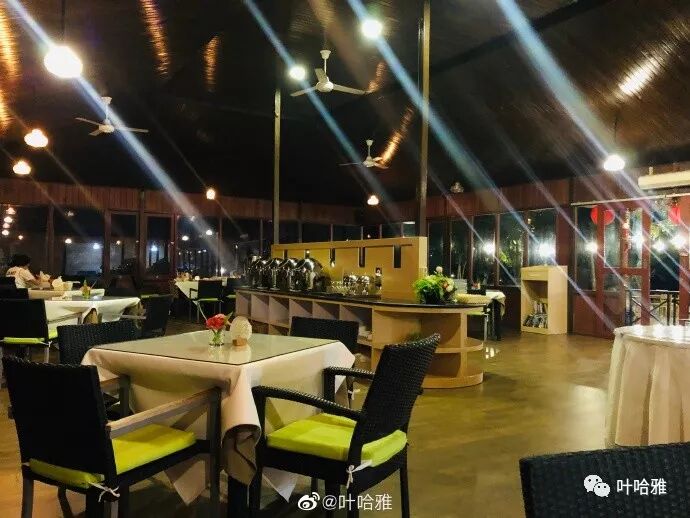
The only restaurant in the hotel
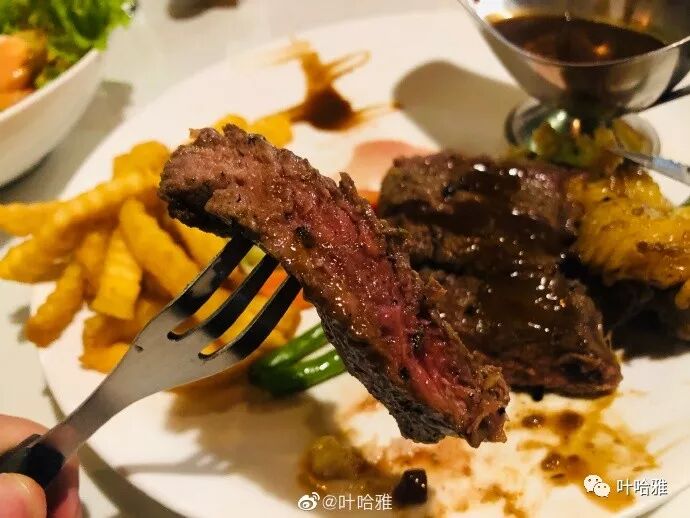
A steak set meal
A steak costs less than 100 yuan. There are no decent restaurants in Labuan Bajo town, mostly just small street shops. It is important to note that many Christians live in this town, and most restaurants on the island are run by Christians. They often label their food as halal and serve no pork, but they do sell alcohol.
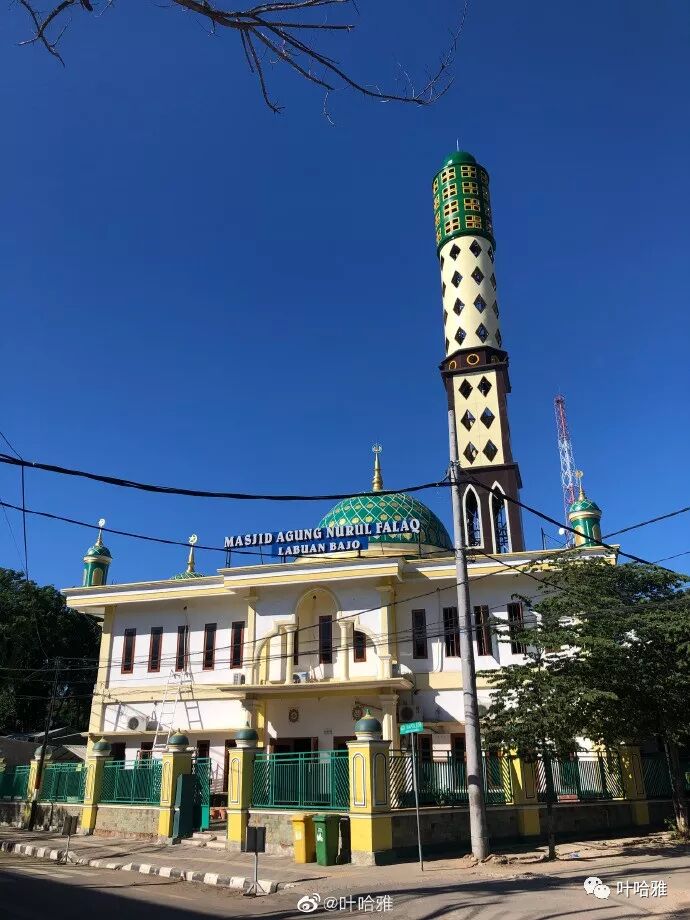
Masjid Agung Nurul Falaq Labuan Bajo mosque
I took a taxi from the hotel and asked the driver to take me to the biggest mosque in town. He brought me here. This mosque is small compared to others in Indonesia. The density of Muslims in Indonesia decreases from the northwest to the southeast. The Aceh Special Region in the far northwest is the most Islamic, while Bali in the southeast is dominated by Hindus.
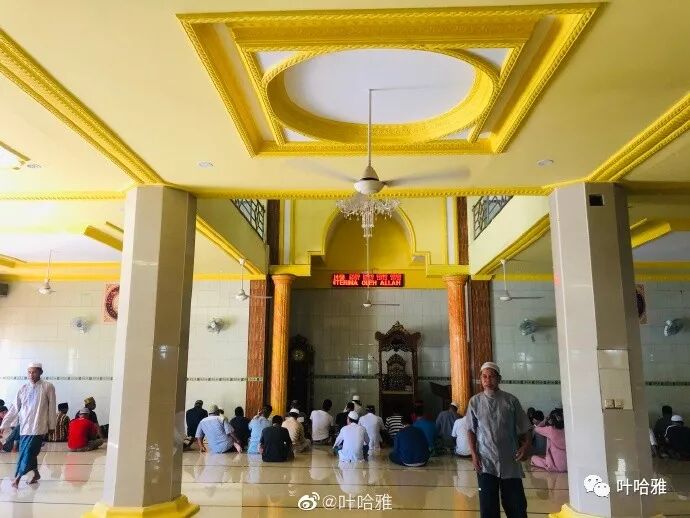
Muslims in Southeast Asia are mainly followers of the Shafi'i school. You can see them raise their hands three times during namaz. Whether they raise their hands three times or once, both practices have correct hadith support.
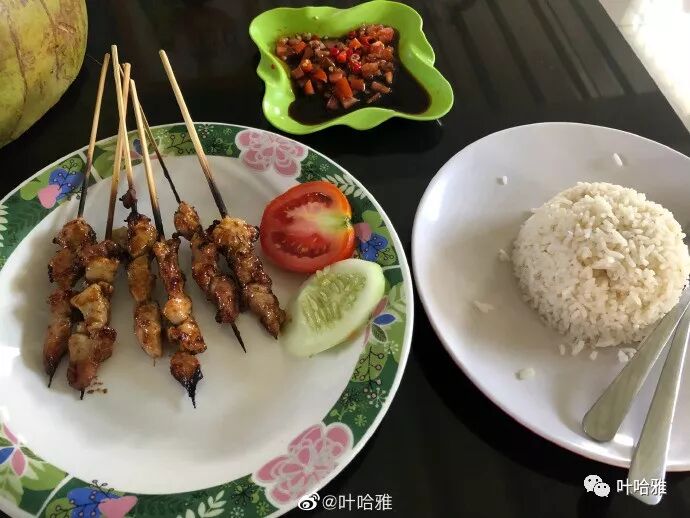
Small Indonesian barbecue
A simple Indonesian meal on the island, grilled chicken skewers with rice. The chili sauce is extremely spicy, just like the chili in Hunan.
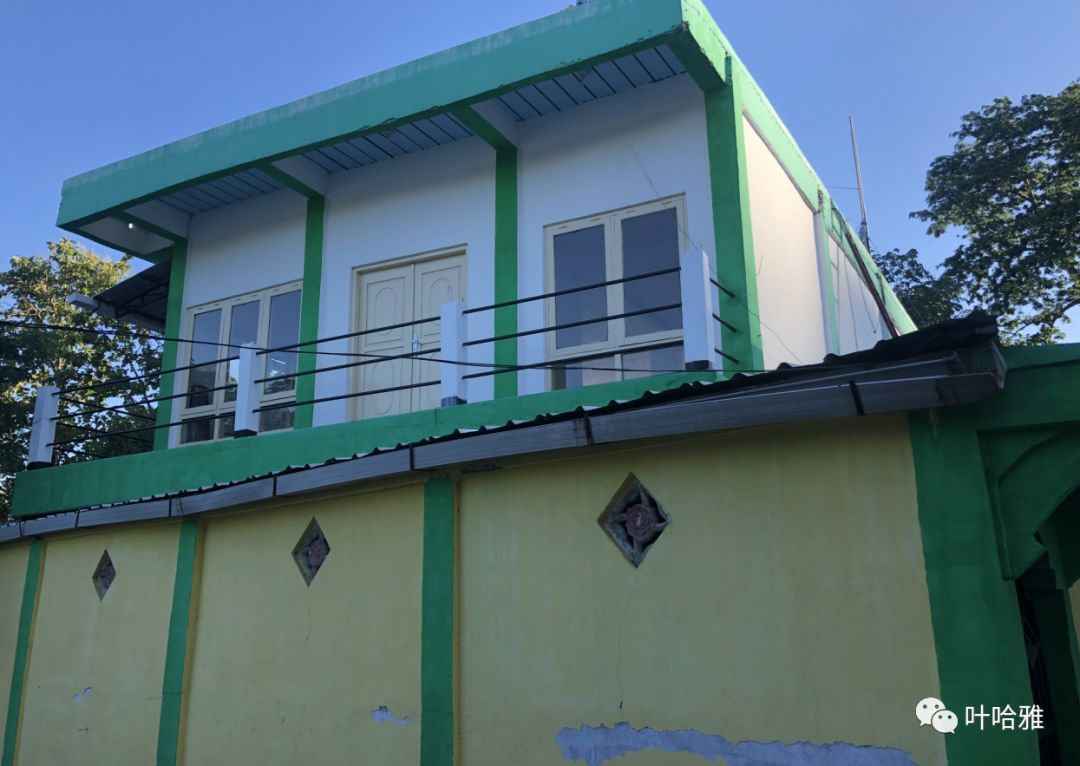
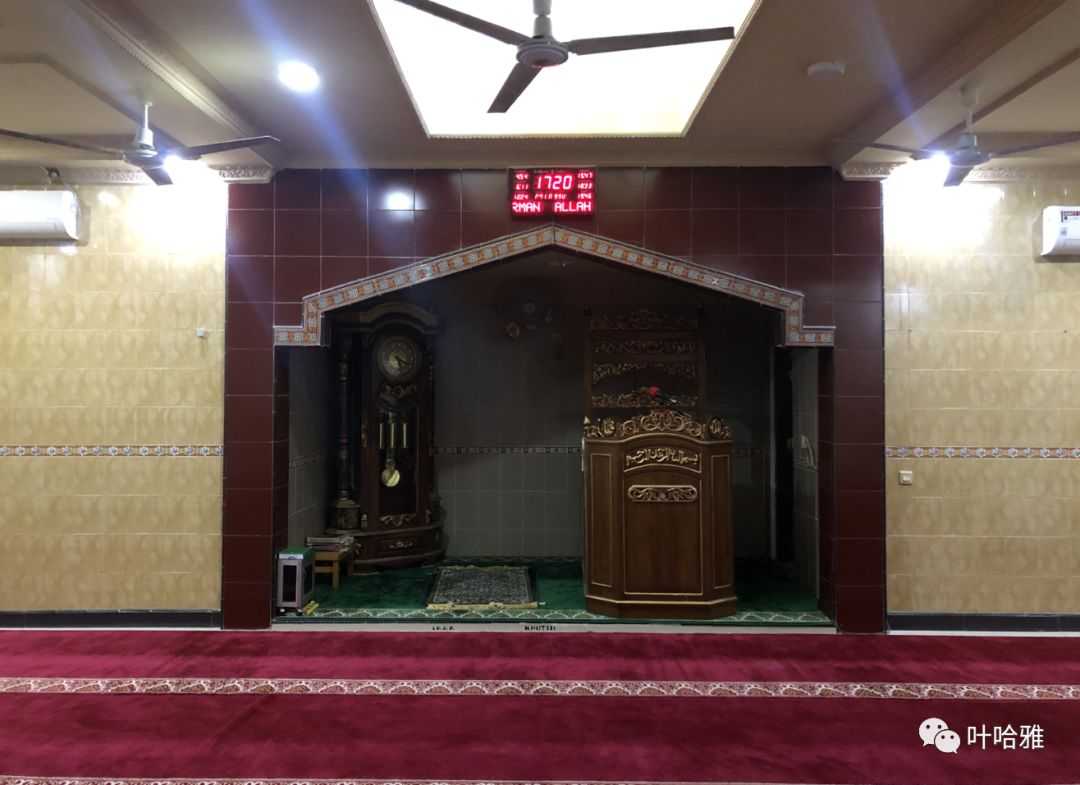
I walked through a residential area and found a small mosque in the village. It was very simple, surrounded by villagers' houses, with chickens pecking for bugs nearby.
Interestingly, there is a pink Catholic grave built right next to this mosque. It is the first time I have seen such a combination.
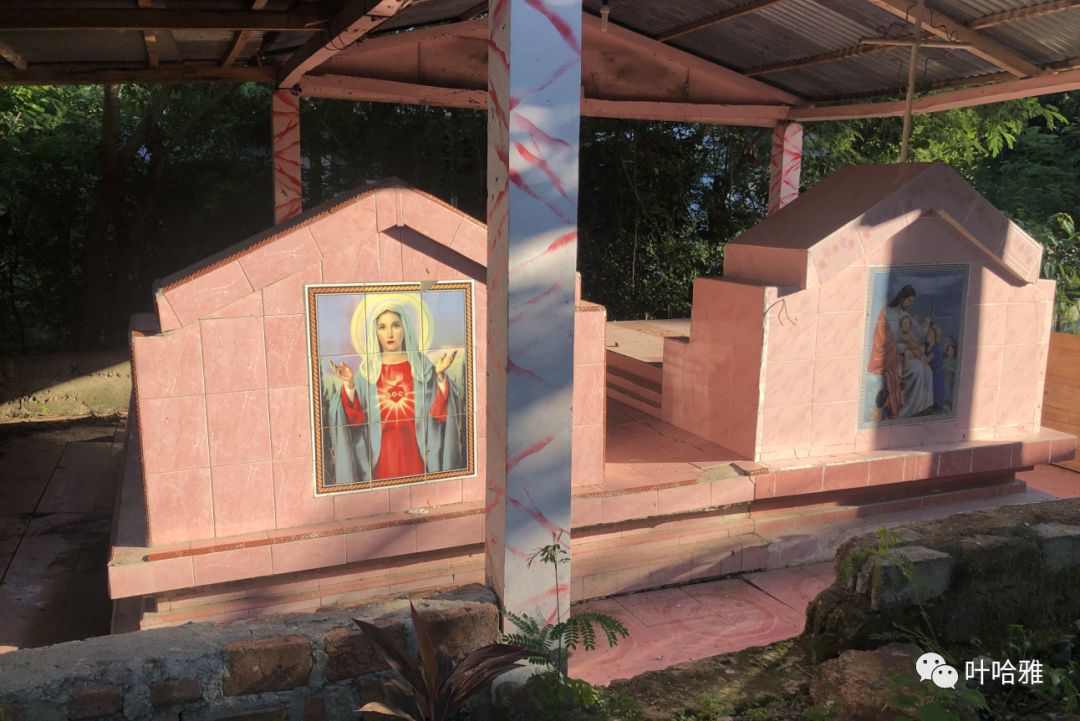
The tombstone features paintings of the Virgin Mary and Jesus.
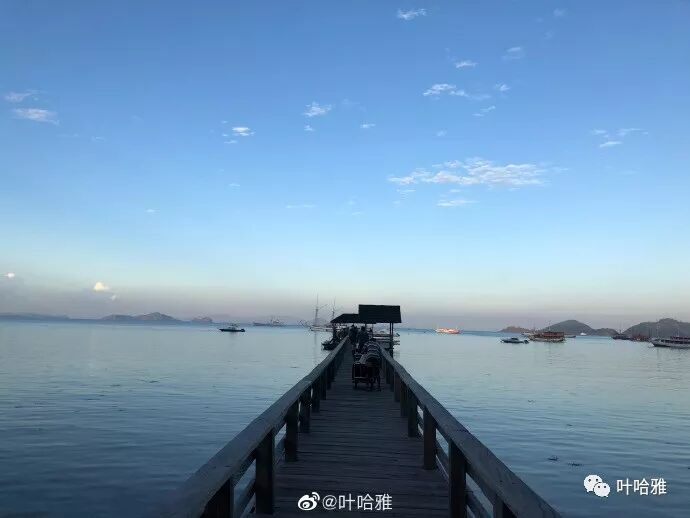
After resting for the night, I booked a one-day tour on Trip.com for the next day. The itinerary included Padar Island, Komodo Island, Pink Beach, Taka Makassar, a manta ray snorkeling spot, and Kanawa Island. It cost 789 RMB and included lunch, hotel pickup and drop-off, and an English-speaking guide.
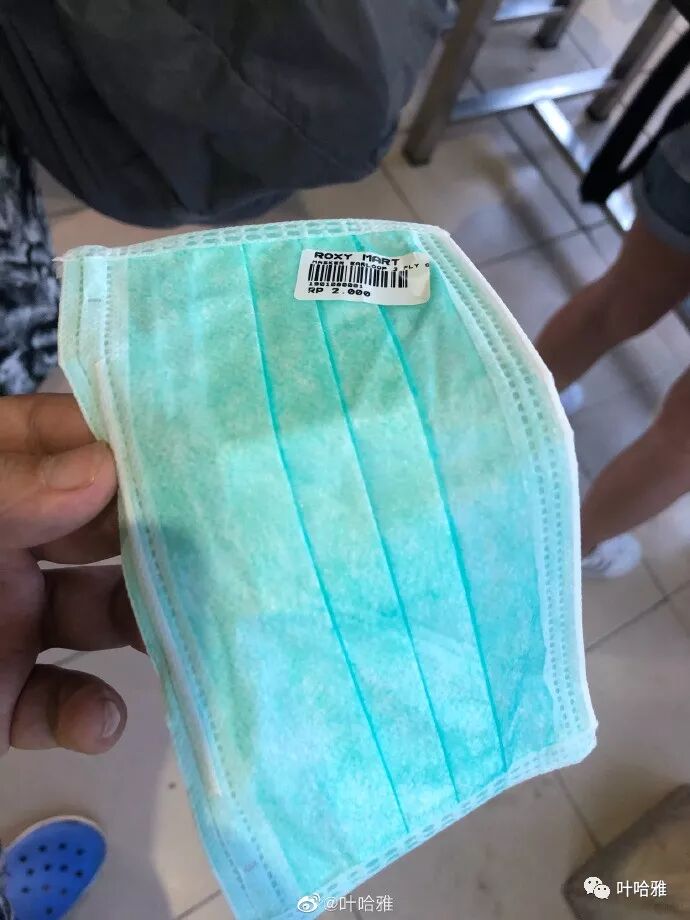
The tour group provided face masks.
We left at 5:30 in the morning, and the driver arrived at the hotel on time to pick us up. Before we left, the guide gave every tourist a face mask. It was January 27, 2020. The epidemic had already broken out in China, but Indonesia was not affected at all, so the tourists did not pay much attention to it. The group included people from various countries, including Japan, South Korea, Sichuan, Taiwan, and Europe and America.
Padar Island
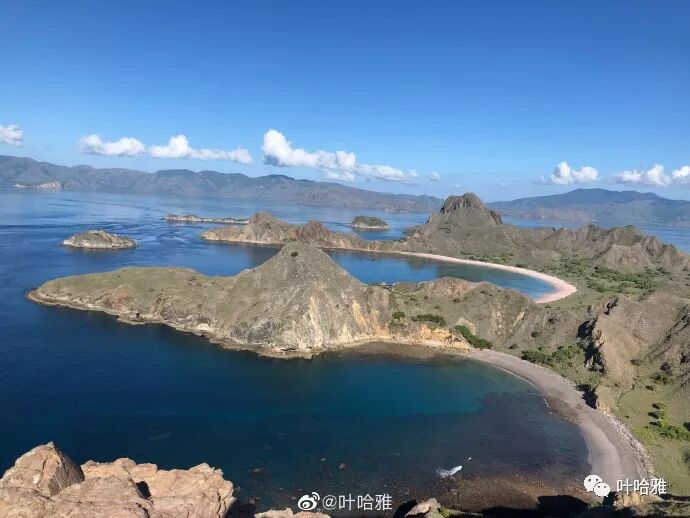
Overlooking from the top of Padar Island.
It took about an hour by boat to reach Padar Island. There are no residents on this island, and it remains in its original state. I climbed along the seaside to the top of the mountain to overlook the whole area. Some tourists brought drones for aerial photography.
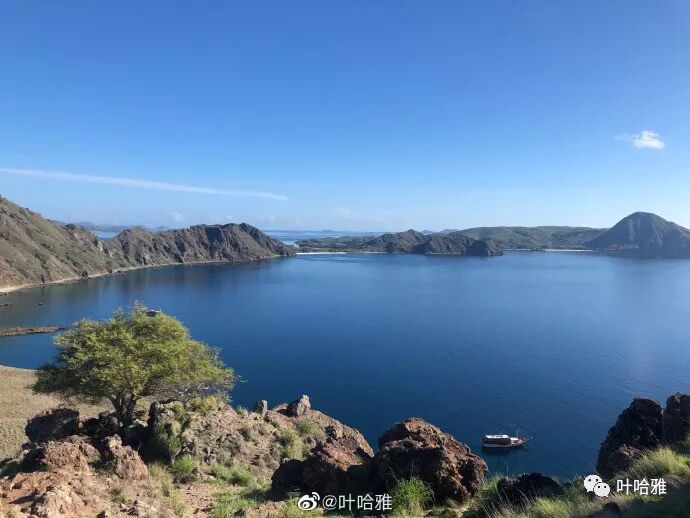
Panoramic view of Padar Island.
After a short stay on the island, we continued by boat to Taka Makassar.
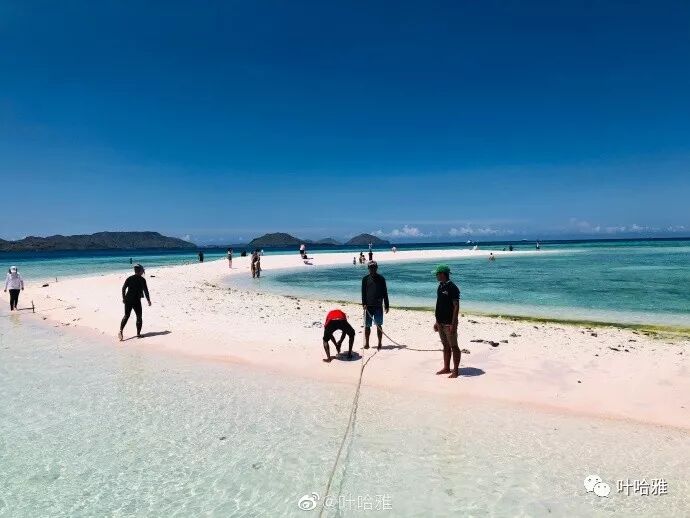
Taka Makassar.
The small island is a crescent-shaped isolated island that might be submerged when the tide rises slightly. However, the island is very beautiful with blue water. Looking down from the air, it looks like a gemstone embedded in the sea. The sand on the island already shows a light pink color, which is a feature of the Komodo area.
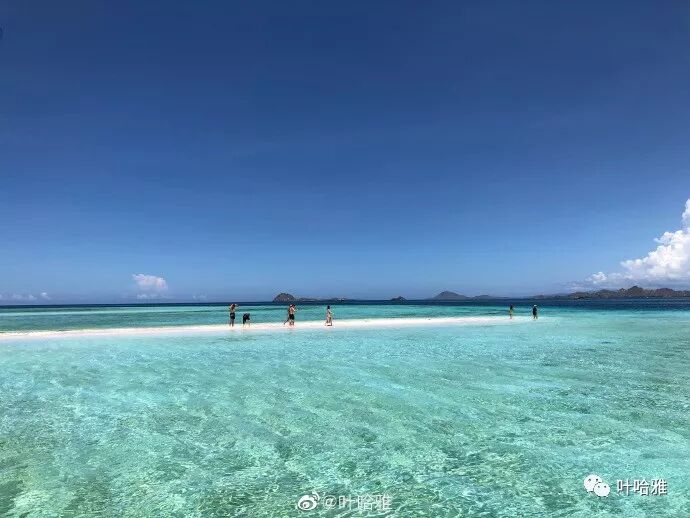
Taka Makassar.
You can go snorkeling nearby. It is very shallow, and because the water is so clear, you cannot see many fish. Be sure to protect yourself from the sun.
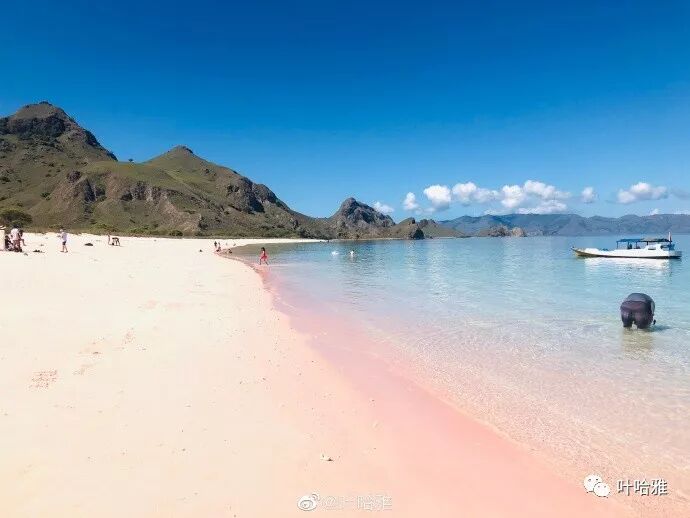
Pink Beach
The beaches around Komodo Island are generally pink because they contain tiny coral particles. Since this area was developed late, it has maintained its original natural state, and the seawater is crystal clear.
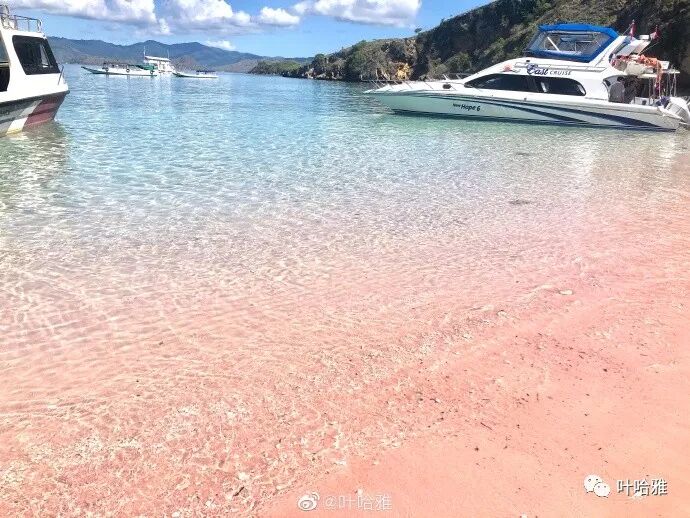
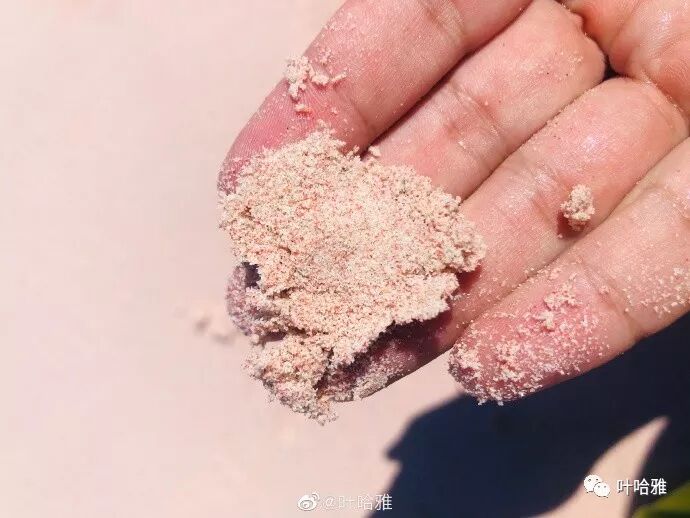
Fine pink sand grains
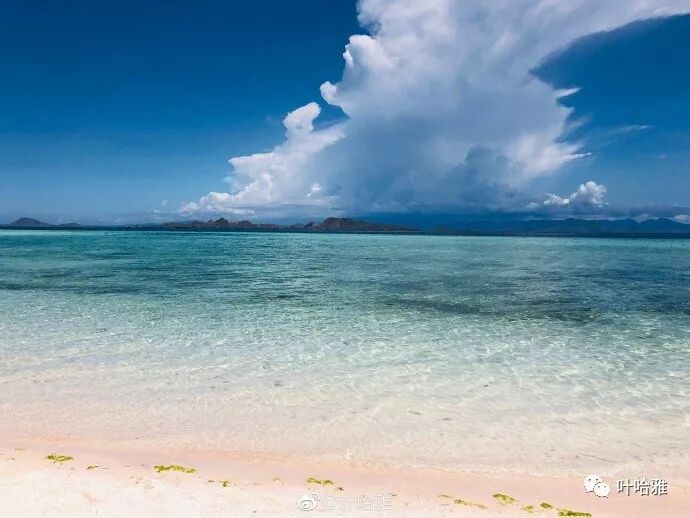
The sea view of Komodo Island is incredibly beautiful.
The underwater video of me trying to catch fish with a GoPro
Komodo National Park
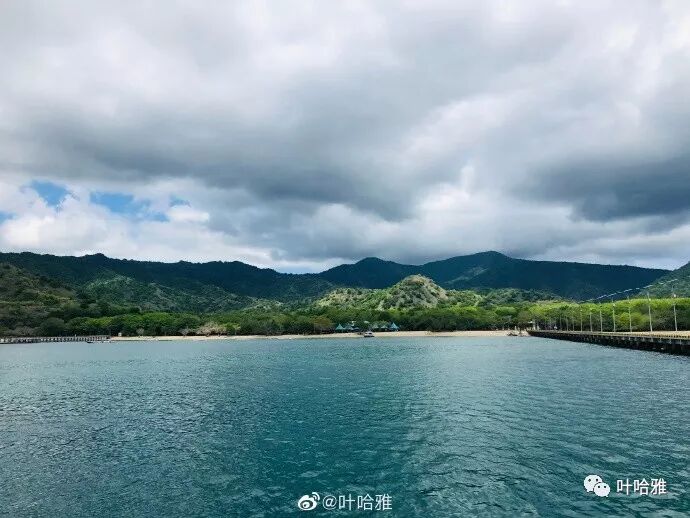
Next, I continued to Komodo National Park. Just before landing, I saw a dark cloud floating over Komodo Island from a distance, making the atmosphere of landing on the island feel even more eerie. The world's largest venomous reptile, the Komodo dragon, lives on this island.
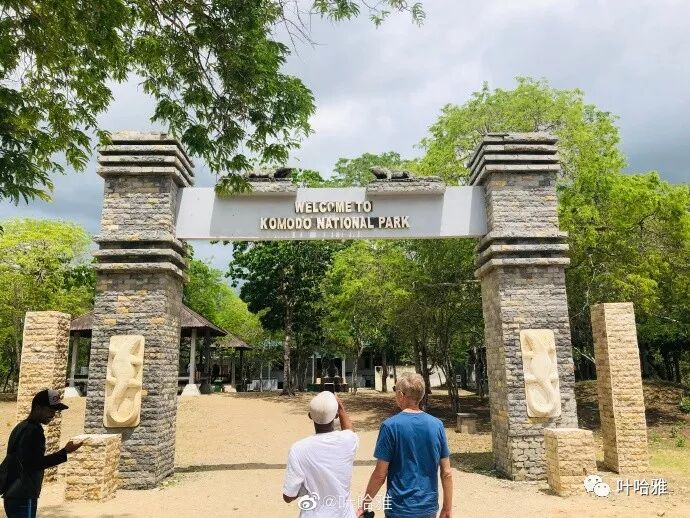
Komodo National Park consists of many islands, including the larger Padar Island, Rinca Island, and Komodo Island. About 3,000 giant lizards live on the islands. Indonesia established the national park to protect the Komodo dragons, and it was later listed as a World Heritage site by UNESCO.
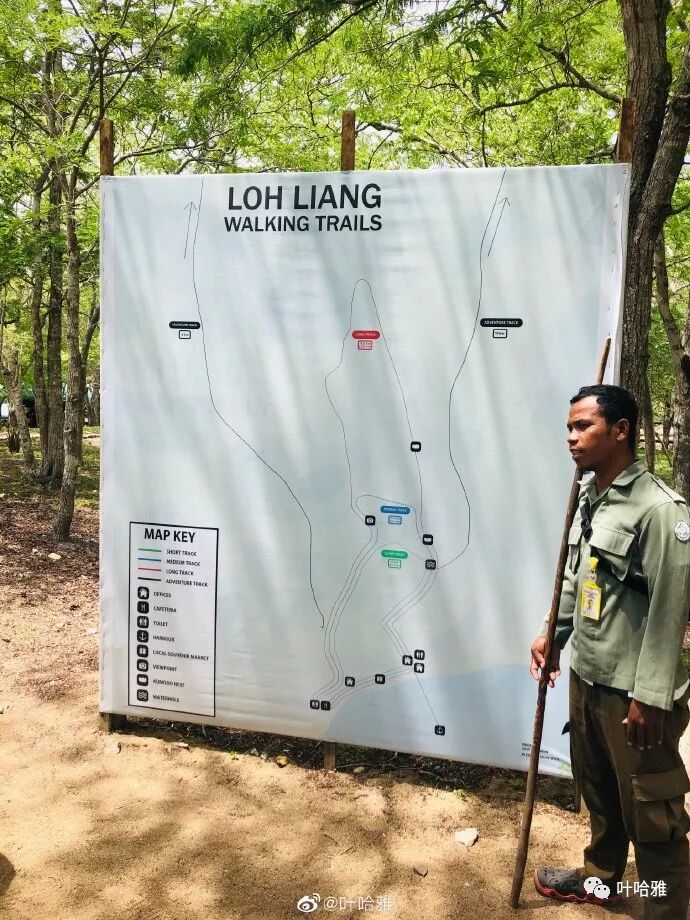
You must be led by a park ranger to enter the forest. Tourists cannot act alone because the giant lizards on the island are all in the wild and are venomous and very dangerous. The long stick in the ranger's hand can block the giant lizard's attack. People often say Komodo dragons have toxic bacteria in their saliva because they eat carrion, which kills their prey through infection. Scientists have disproven this. In reality, Komodo dragons are born with venom glands, and it is their venom that kills the prey.
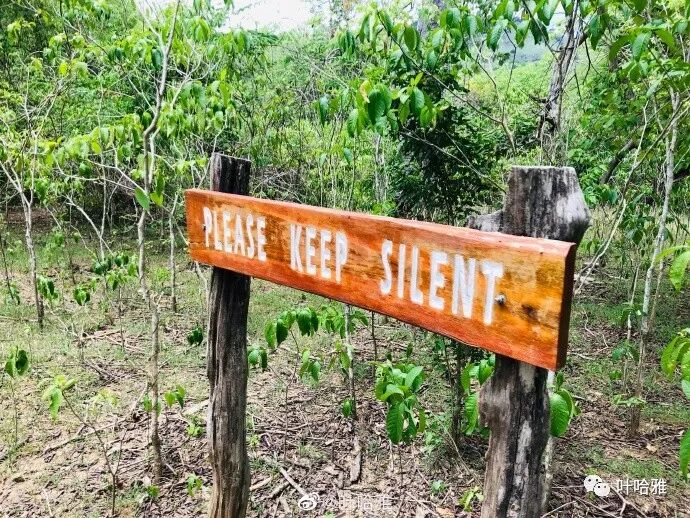
The park entrance asks visitors to stay quiet. Our group walked carefully the whole way, eyes wide open, watching every plant and tree around us.
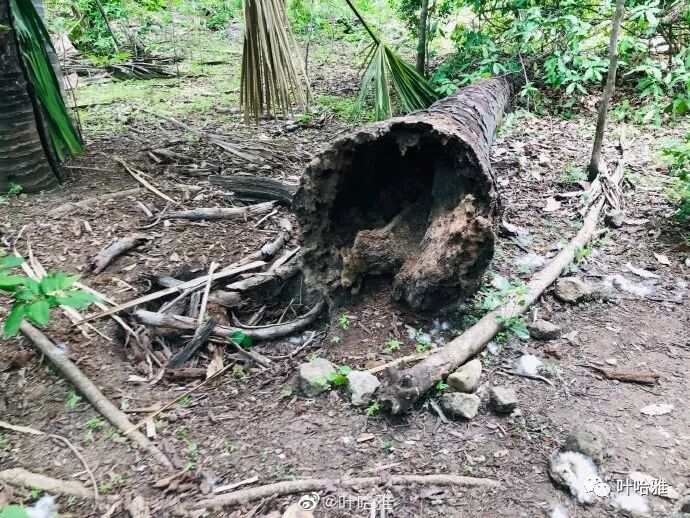
I saw a dead, dried-up tree trunk and imagined a dinosaur pushing it over.
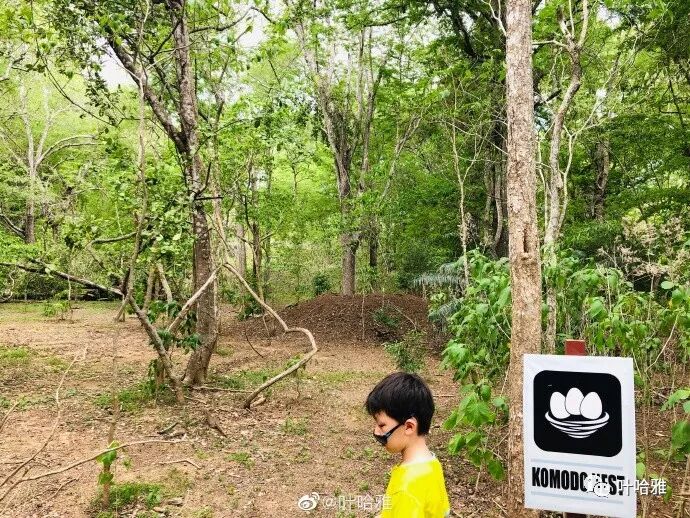
Komodo dragon nest
Our guide pointed to a mound of dirt in the distance, saying it was a Komodo dragon nest. It was about a meter high and five or six meters wide. The scene looked just like something out of Jurassic Park.
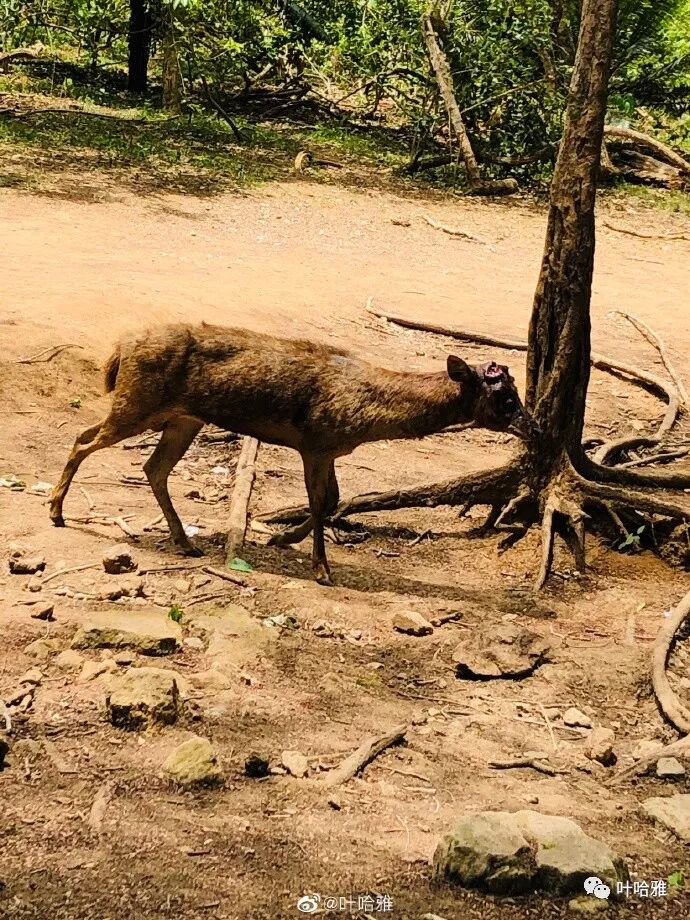
Near a pond, the guide stopped to tell us that dragons often come here to drink. Then I saw a deer limping toward the water. Its head was already injured, likely by a dragon. The guide said deer are the dragon's main food, and this deer would probably die soon after the attack.
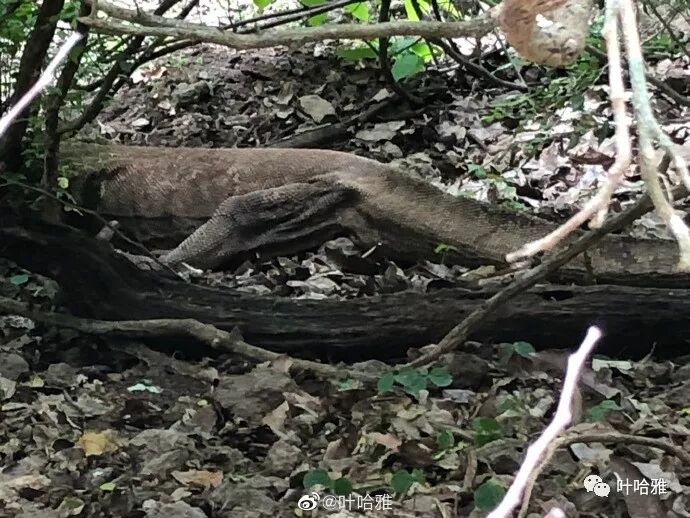
A dragon in the bushes
We kept walking until the guide suddenly stopped and pointed to a dragon in the nearby bushes. I followed his finger and took a photo of the first dragon I saw. It was about two meters long, lying perfectly still in the brush. I could clearly hear it breathing.
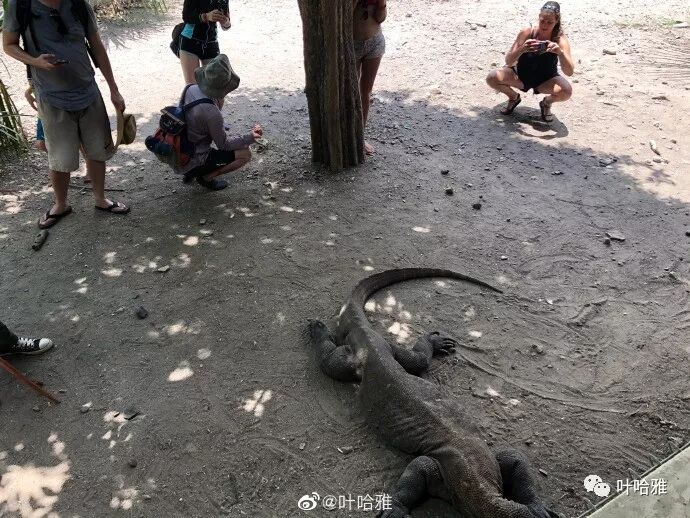
Right after that, we saw three more dragons in the rest area, lying in the corner of a pavilion where tourists drink tea. The crowd got excited, and some people wanted to get close for photos. The guide became very alert and sternly warned everyone not to get too close.
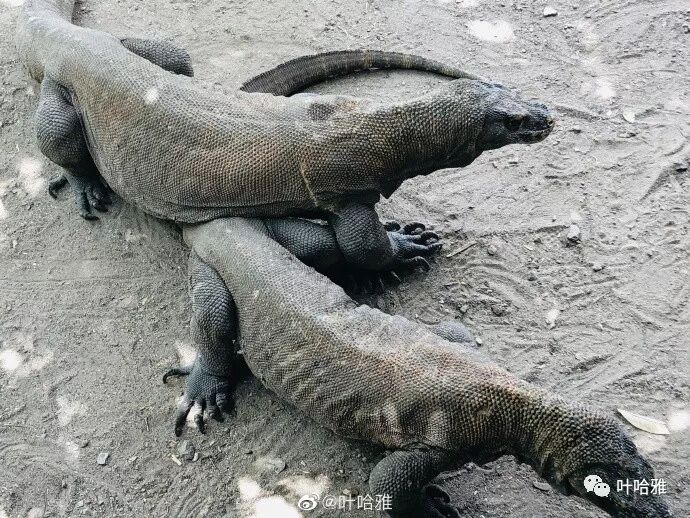
Komodo dragons are hermaphroditic and can reproduce asexually. They live in trees when young and move to the plains as adults. They can dive, and they can run at speeds of 20 kilometers per hour. Their mitochondria are different from typical cold-blooded animals, allowing them to boost their metabolism to the level of a mammal, which gives them amazing speed and endurance. Attacks on humans are rare on the island, though there has been a case of a fisherman being killed by a dragon. Dragons have no natural predators on the island, but they will not attack humans if there is plenty of food.
Adult dragons grow over 3 meters long. They use their tongues to identify scents and can smell blood from 10 kilometers away. For small prey, the dragon bites them to death immediately. For larger prey, the dragon bites once and lets go, waiting for the venom to take effect before tracking the scent of blood to find the carcass.
We left Komodo National Park and headed to our next spot for snorkeling. The waters there are home to another ancient giant, the manta ray (guifu), which lived at the same time as the dinosaurs. They are the largest of their kind, reaching up to eight meters in length. They are said to be rare, and seeing them depends on luck, but we were very fortunate to spot a group of about four or five swimming right beneath our feet.
The manta ray is a strange-looking giant that has not changed since the dinosaur era, making it a true living fossil. These unique ancient creatures were the biggest draw for me on Komodo Island. Seeing animals I once only watched on nature shows appear right before my eyes was such a thrill.
The actual view is about what you see in the photos. The water where the manta rays appear is not very clear, but as the saying goes, clear water has no fish. The guy in the video is quite brave to get so close to the manta rays. It is actually a bit dangerous. Although manta rays have a gentle temperament, divers fear them when they get angry, as their two wings can break a diver's ribs.

Komodo Island is only a one-hour flight from the popular Indonesian tourist destination of Bali. To travel from Komodo to other Indonesian cities, you have to transfer through Bali. Although I am not very interested in Bali, since I am already here, I decided to go and look around the island.
Stop 3: Bali
The Hindu-style gates on Bali represent the journey from the secular to the sacred.
Bali is the only island in Indonesia where Hinduism is the dominant religion, and Hindu statues can be seen everywhere. Since this is a halal trip, I am not very interested in these non-Islamic artifacts. I came here mainly to have a decent halal seafood meal. If friends (dosti) plan to vacation in Bali, you do not need to worry too much about food, as halal restaurants are easy to find. The native residents here have a habit of eating roast suckling pig, most restaurants sell alcohol, and prices are very high.
Jimbaran Beach
Bali Airport is about three kilometers from Jimbaran Beach. In Indonesia, you must be careful not to engage with drivers soliciting passengers around the airport, as the chance of being ripped off is nearly 100%. There are two options for taking a taxi. One is the official taxi ticket counter at the airport where fares are prepaid. Just tell the staff your destination, pay, and you will get a slip. Follow the staff's instructions to find your driver, and there will be no extra charges. The other option is to use Grab. I highly recommend this app because it is cheaper, you do not need to pay cash, and you do not have to worry about language barriers, just like using Didi.
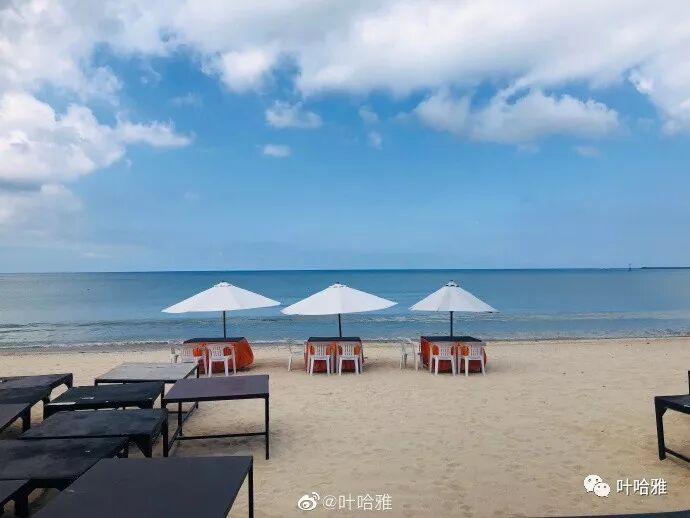
The exterior view of a restaurant on Jimbaran Beach.
Having just come from the pristine Komodo Island, seeing these highly commercialized beaches felt like a bit of a letdown, and the seawater is far less clear than in Komodo.
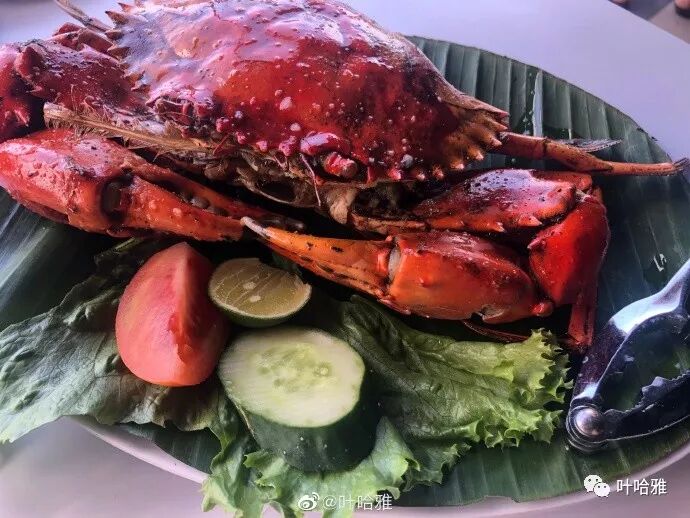
Crabs picked and cooked on the spot.
I asked my Hindu driver to take me to a halal restaurant, and he brought me to this place. He charged me over 100 yuan for a trip of less than five kilometers. It was my own fault for mishearing his 100 as 10 before I got in. I was in a rush, so I didn't argue. I only regret not installing the Grab app back home. I couldn't download it while in Indonesia and had to use a VPN to finally get it.
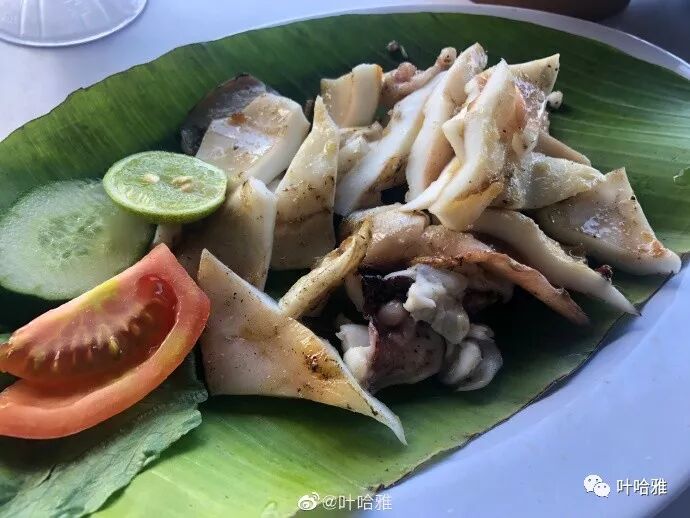
A squid weighing over one kilogram.
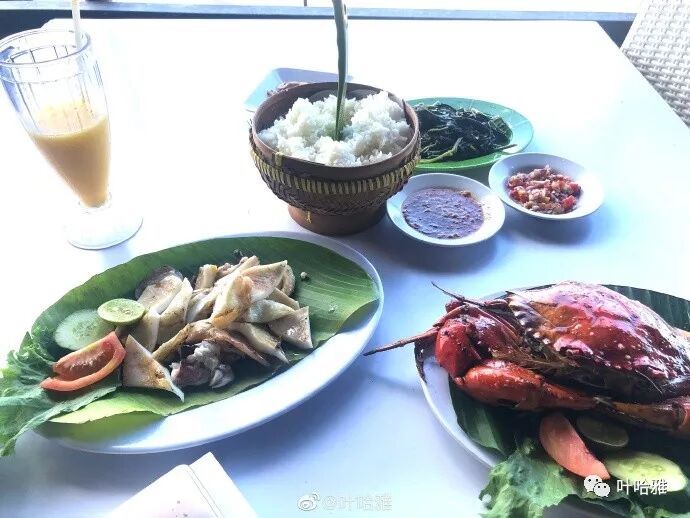
This seafood meal cost about 500 yuan. The prices were clearly marked, but it was definitely not as good a value as eating back home. The rice and side dishes were free. The taste was just average. The seafood was boiled plain, and you could add some strange seasonings or just squeeze some lemon juice over it to mix with the rice.
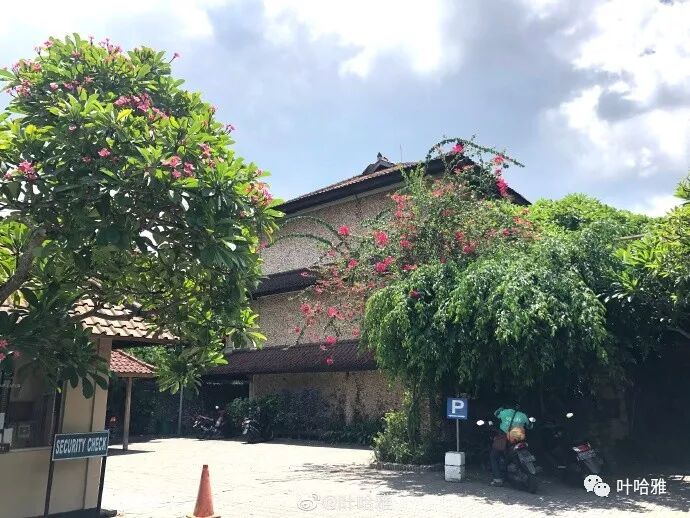
The island residents love growing flowers.
I don't recommend Bali because it really doesn't live up to its reputation. Prices on the island are more than double those in other parts of Indonesia, and it is heavily commercialized. Many of my friends who have been there don't think highly of it. I think it is only suitable for people who like to stay in their hotels, which we call hotel-staying. But everyone has their own preferences. Compared to Komodo Island, the hotels in Bali are much higher quality. If you don't mind spending the money, you can find a nice hotel here and stay for a few days.
Fourth stop: Yogyakarta.
I added Yogyakarta and Surabaya to my trip at the last minute because the pandemic suddenly broke out, my holiday was extended, and my flight home was canceled. A lady traveling with us, who had just arrived from there with her family, raved about how fun Yogyakarta and Surabaya were. She strongly suggested I go to Yogyakarta to experience Javanese culture. So, I just bought a ticket from Bali to Yogyakarta, and the flight took about an hour.
Yogyakarta is a famous historical and cultural city in Indonesia, similar to ancient capitals like Nanjing or Xi'an in China. All Javanese court arts originated here. Historically, Yogyakarta was ruled by a Sultan. After Indonesia gained independence in 1945, the Sultan of Yogyakarta pledged loyalty to Indonesia. The Sultanate became the Yogyakarta Special Region under Indonesia, with the Sultan serving as the governor and retaining his hereditary position.
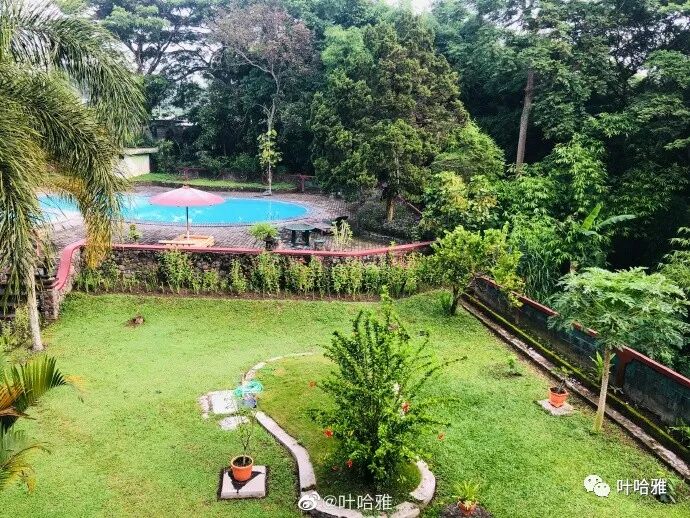
The hotel garden and swimming pool.
Everything from landing to checking into the hotel was comfortable, and everyone I met was very friendly. I remember sitting in a taxi, staring blankly at the road outside the window. The car slowly drove past two girls. I wasn't sure if one of them was a transgender woman or a cross-dresser, but when she saw me looking at her, she winked at me.
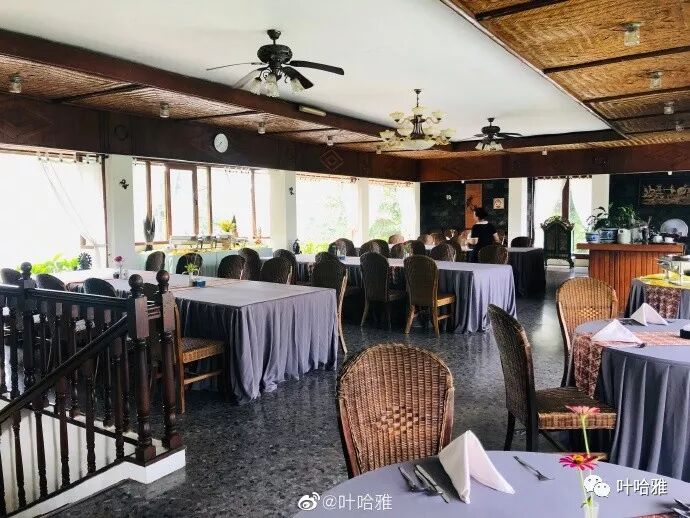
I came for breakfast in the morning and it looked like I was the only guest. The waiter greeted me very warmly and asked what kind of breakfast I wanted. There were Western and Indonesian options, so of course, I chose the Indonesian style.
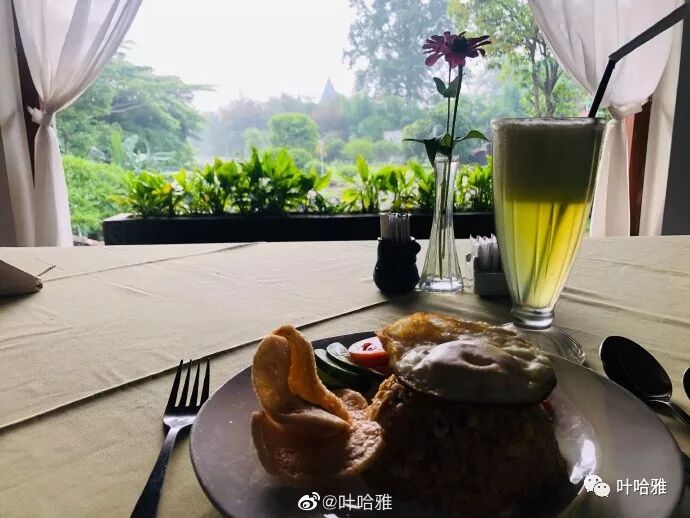
I enjoyed the view outside the window while eating. The spire in the distance is Prambanan, a famous Hindu site in Yogyakarta.
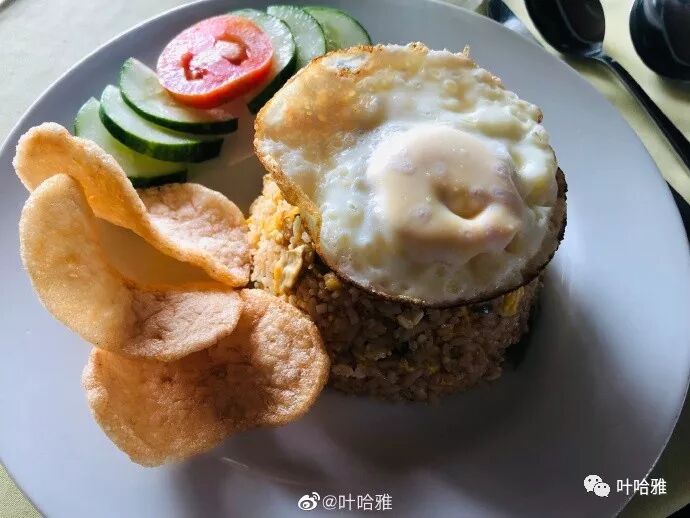
I always eat Indonesian fried rice (nasi goreng) for breakfast. The hotel breakfast is included in the room rate. Everything in Yogyakarta is very cheap, and even a five-star resort costs only about 300 RMB per night.
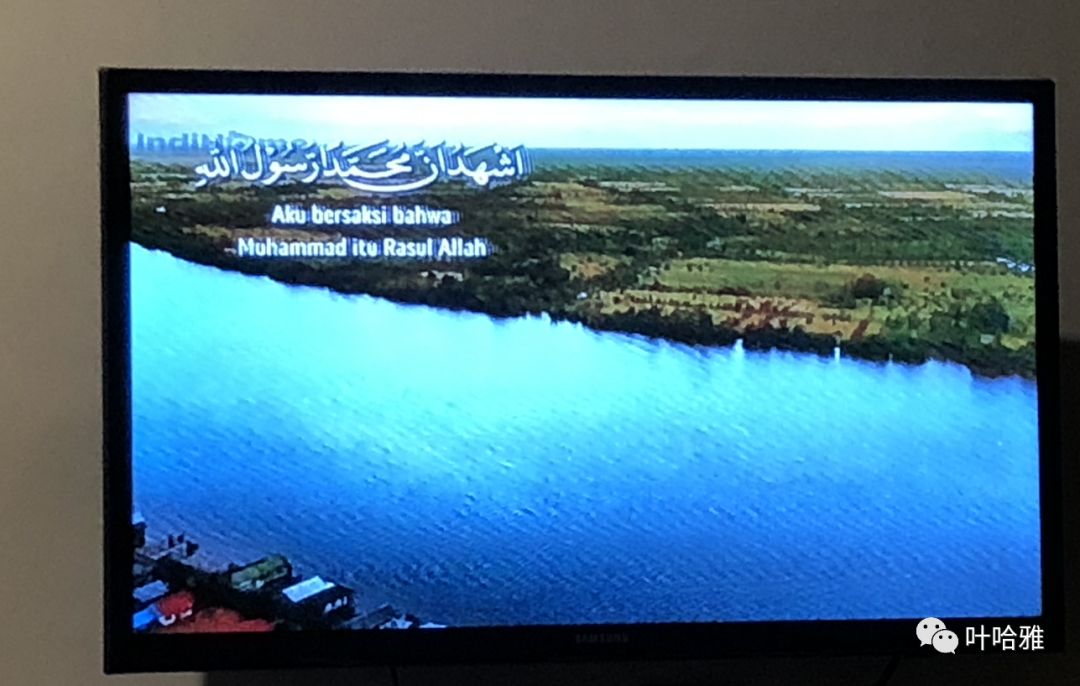
Some Indonesian TV stations automatically broadcast the call to prayer (adhan) when it is time for namaz.
Masjid Raya Al-Muttaqun mosque
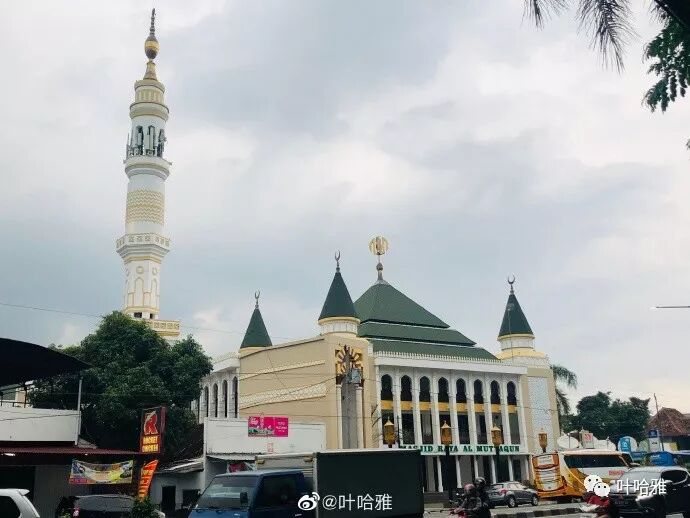
Masjid Raya Al-Muttaqun mosque
I originally planned to visit the nearby Prambanan mosque. When I reached the entrance, I saw a mosque in traditional Javanese style across the street. It caught my full attention, so I decided to skip Prambanan and start my Javanese mosque tour instead.
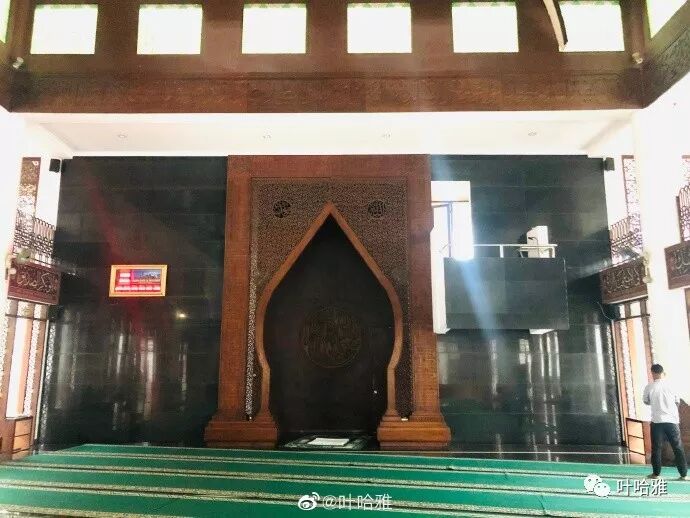
The interior of the mosque is made of wood. A downside to this dark-colored wood is that it makes the main hall look dim. I noticed this same issue in several other mosques.
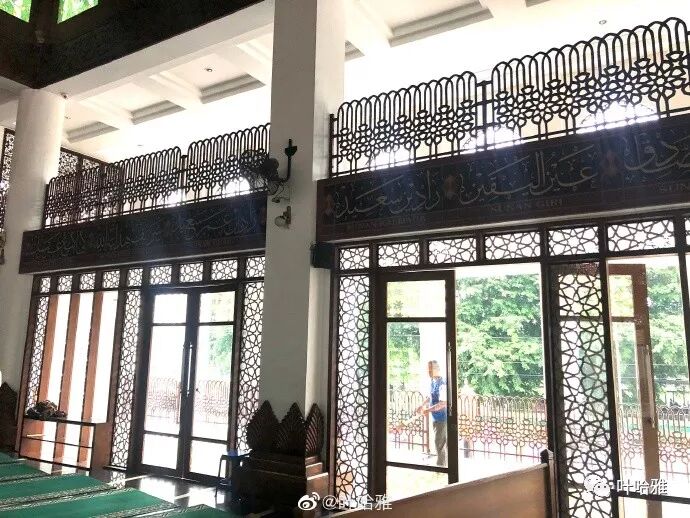
Since the prayer direction in Indonesia is toward the northwest, but buildings usually face south, the carpets in the main hall are laid out toward Mecca, which makes them look slanted.
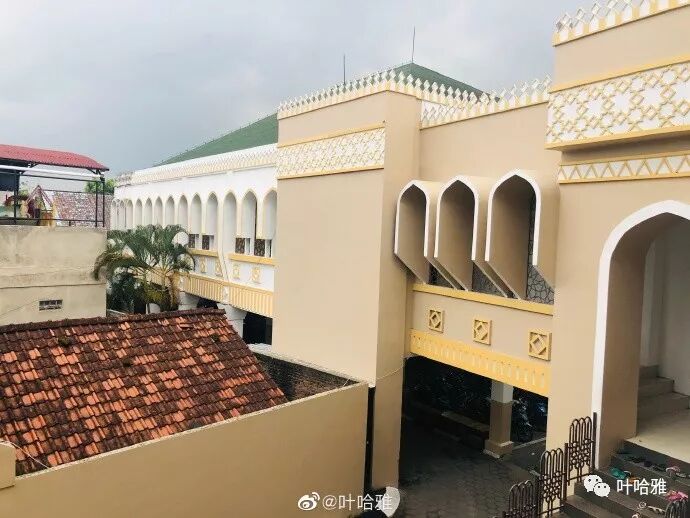
The main hall of the mosque is on the second floor, and the first floor is a classroom where children are learning Arabic under a teacher's guidance. It started raining outside. January and February are the rainy season in Indonesia, with thunderstorms almost every day, but they stop quickly.
Prambanan (Candi Prambanan)
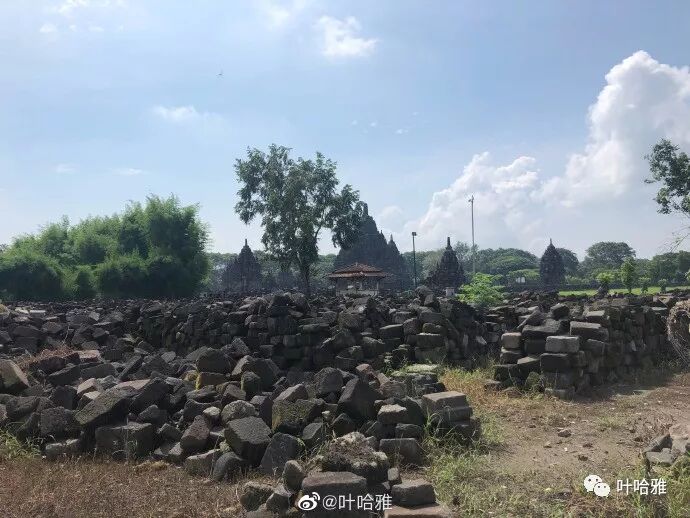
Prambanan ruins
Yogyakarta has two popular tourist spots. One is Borobudur, the world's largest Buddhist temple complex, and the other is Prambanan, the largest Hindu temple complex in Southeast Asia. Both are World Heritage sites built around the 9th century by unknown creators, and both were abandoned after completion. Legend says Prambanan might have been built by the second king of the Mataram Kingdom. Both complexes were rediscovered and rebuilt in the early 20th century, so most of the structures are new. Prambanan charges an entrance fee of 170 RMB, and Borobudur is over a hundred kilometers away, so I only walked around the entrance of the Prambanan temple.
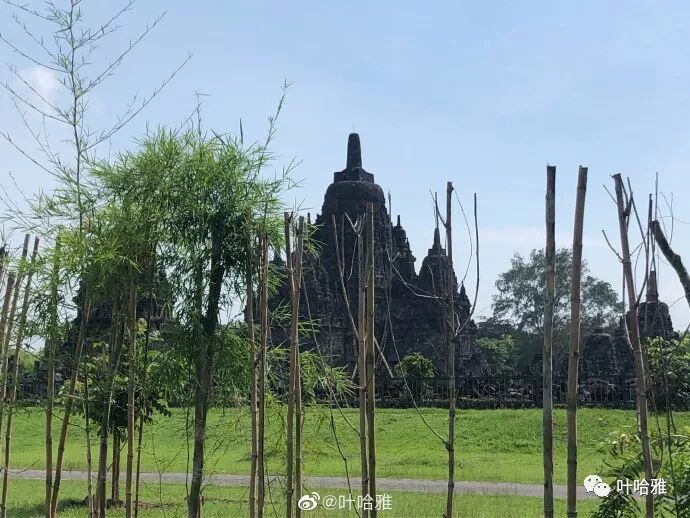
I see many tourists online taking provocative photos in temples. I don't think this is right. After all, this is a religious holy site, and taking such photos feels out of place. A girl wrote in her travel guide that many Indonesian girls asked to take photos with her at Prambanan. She thought they were interested in her hairstyle because they envied her freedom to show her hair. I really want to tell her she is overthinking it. This is as ridiculous as those fake posts in China claiming Hui Muslims envy Han people for being able to eat pork. Don't you know that Indonesia does not force women to wear headscarves at all?
Mataram Mosque (Masjid Mataram)
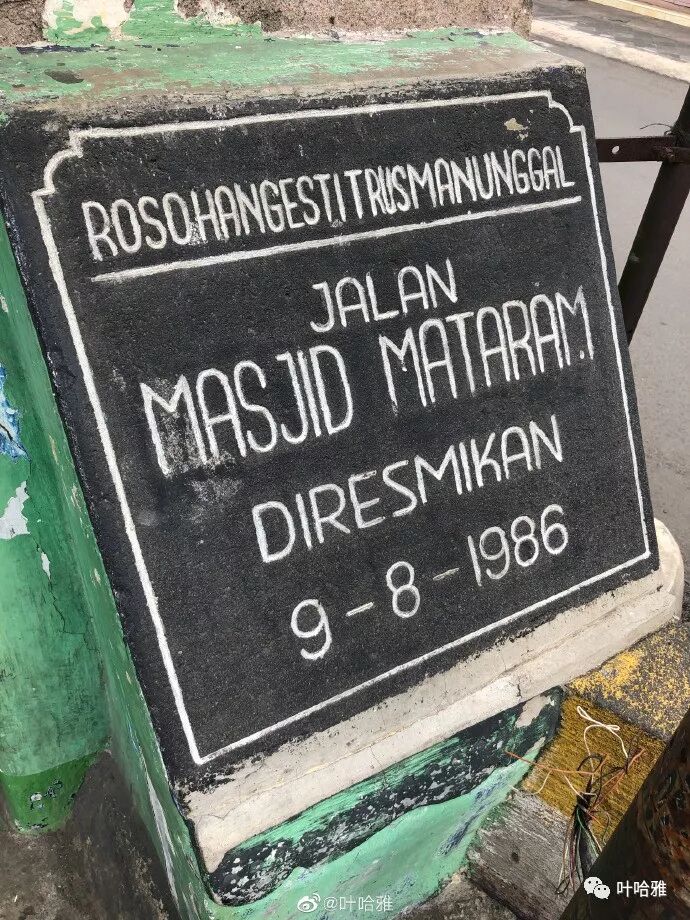
In the Kotagede suburb of Yogyakarta, I found the tomb of Sultan Suta Wijaya Senapati of the Mataram Kingdom. Next to it stands a mosque that combines Hindu and Javanese architectural styles. The Mataram Kingdom was the first Islamic kingdom established in the Central Java region of Indonesia.
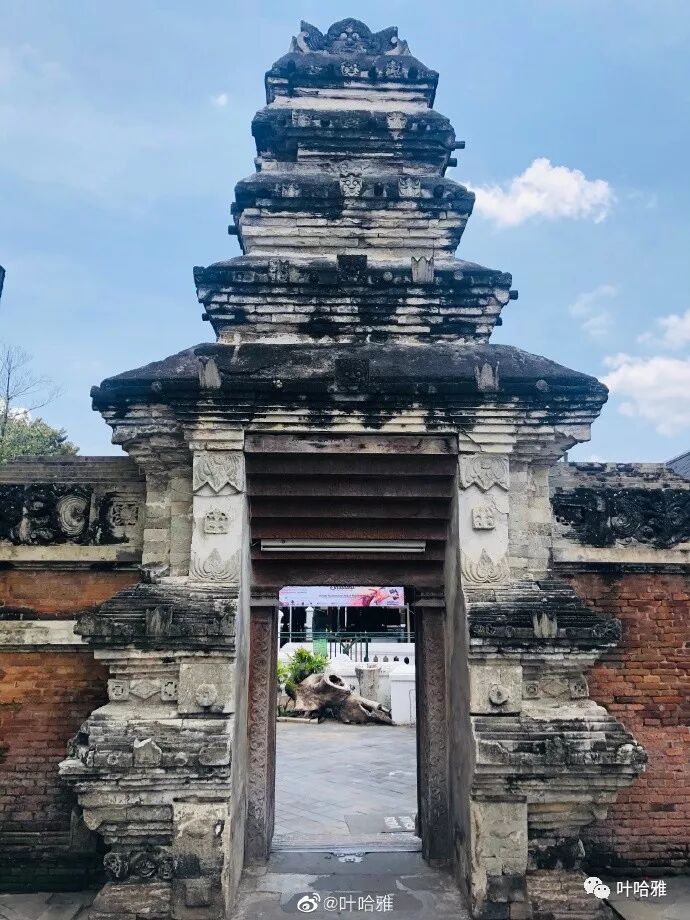
Because the faith in the Java region shifted from Hinduism to Islam, the ancient buildings on the island retain many traces of Hinduism. The gate of this mosque is a type of Hindu architectural style.
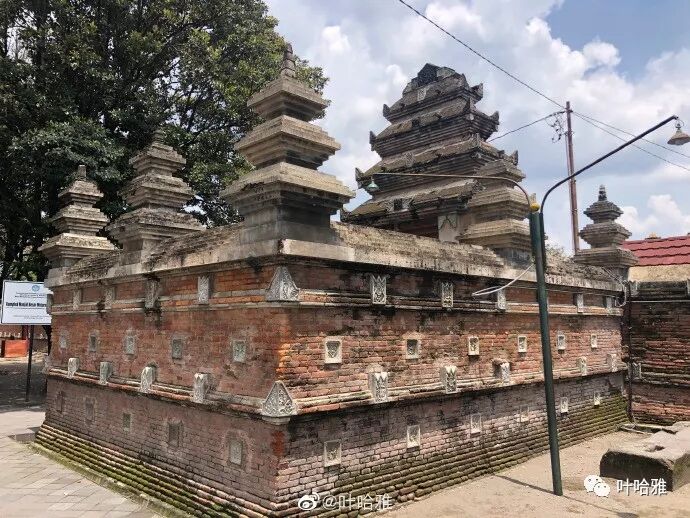
The internet says Mataram Mosque charges an entrance fee of about 10 yuan. I didn't run into anyone asking me for a ticket, and mosques really shouldn't charge tourists.
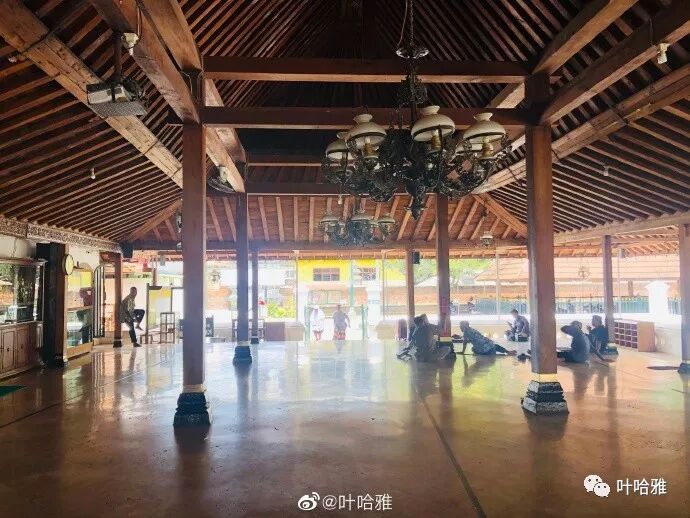
In the front hall of the mosque, some tourists were resting to escape the heat. The main hall of Mataram Mosque still uses the Javanese architectural style, with a front hall and a main hall, but no minaret. Drum beating is used instead of the call to prayer.
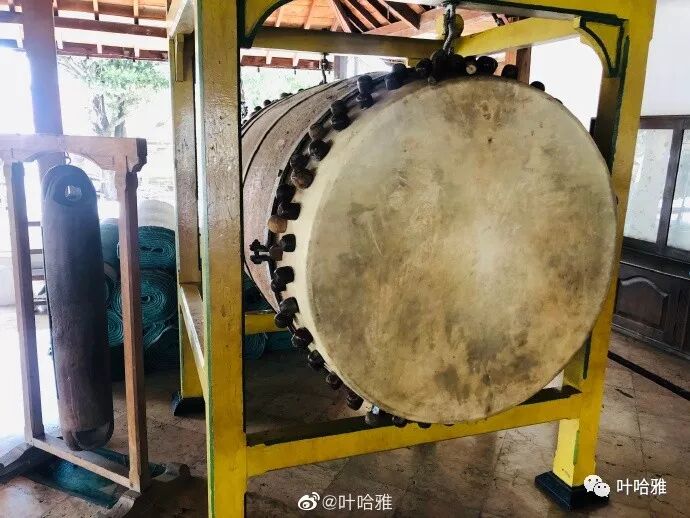
Prayer drum
The prayer drum is usually beaten during congregational prayers or festival prayers, which is a distinct Javanese feature.
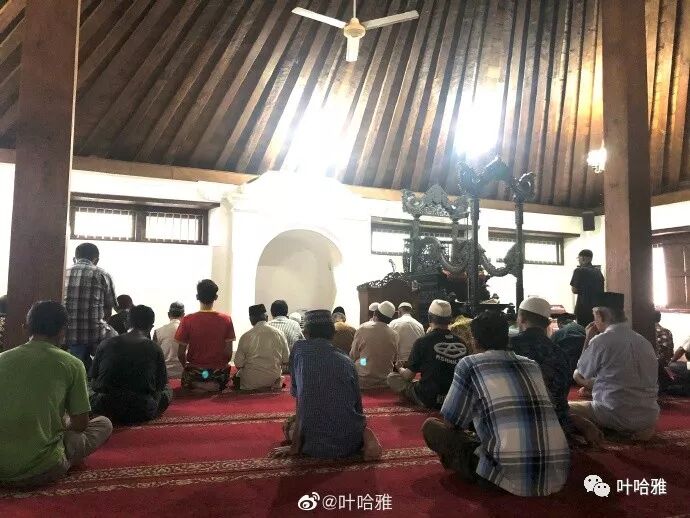
Although the lights were on in the main hall, it was actually still quite dark. I brightened the photo a bit. This style is indeed not as well-lit as domed buildings.
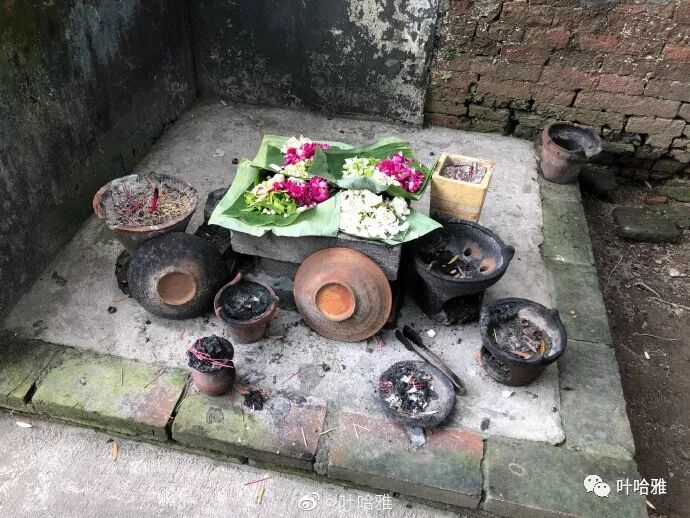
The ritual of offering flowers to commemorate the deceased is inherited from Hindu traditions.
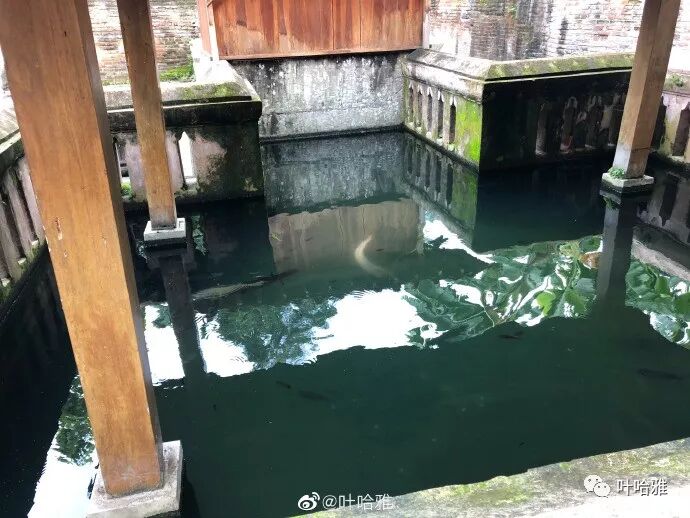
Next to the cemetery, there is a pool built as a bathhouse for performing major and minor ablutions. It is likely no longer in use. The pond is home to many giant catfish, both black and white.
Great Mosque of Yogyakarta (Masjid Gedhe Kauman)
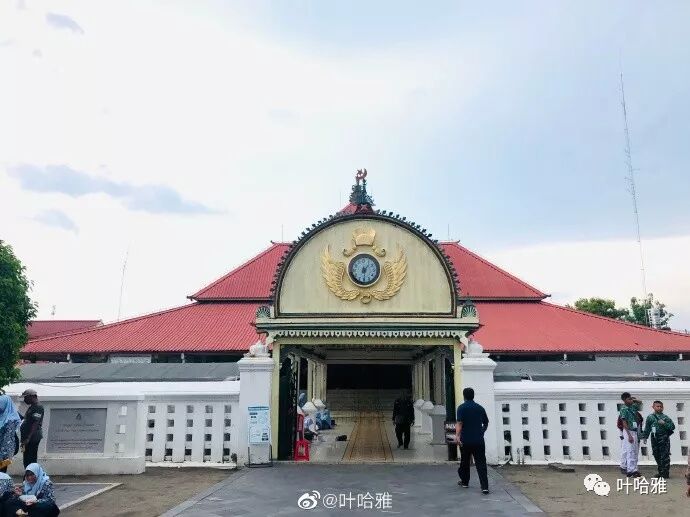
Great Mosque of Yogyakarta
The Great Mosque of Yogyakarta (Masjid Gedhe Kauman) was built in 1773 right next to the Yogyakarta Palace. It is a traditional Javanese-style building. When I visited, I happened to run into a group of students there for an activity. Their teacher led them in namaz, so I joined in too.
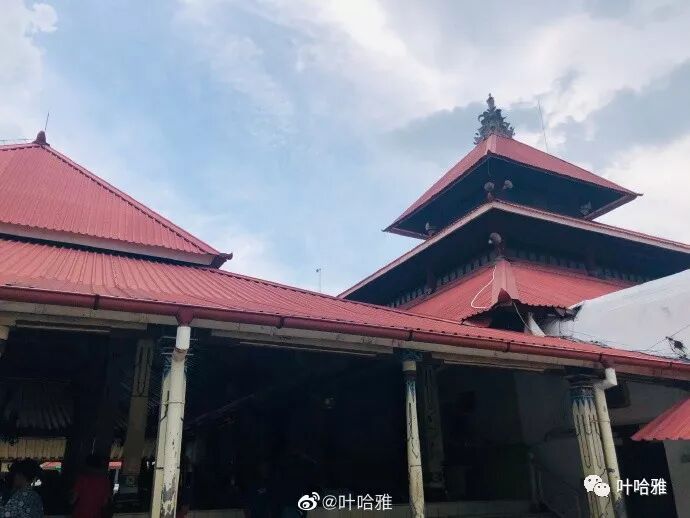
This Javanese architectural style was likely influenced by ancient Chinese architecture. During the Ming Dynasty, Zheng He traveled to Java many times, bringing many craftsmen with him and spreading Islamic culture and Chinese civilization.
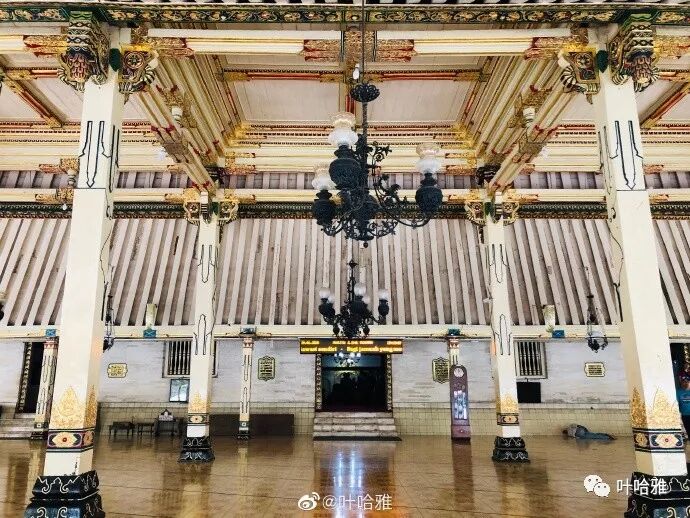
The front hall of the main prayer hall
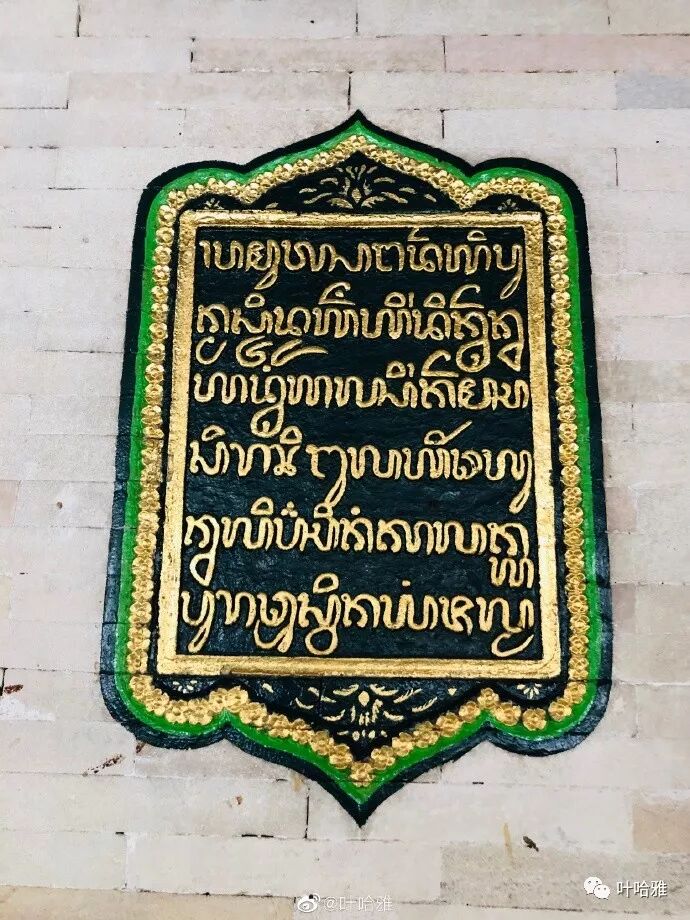
A sign written in Javanese script hangs on the wall
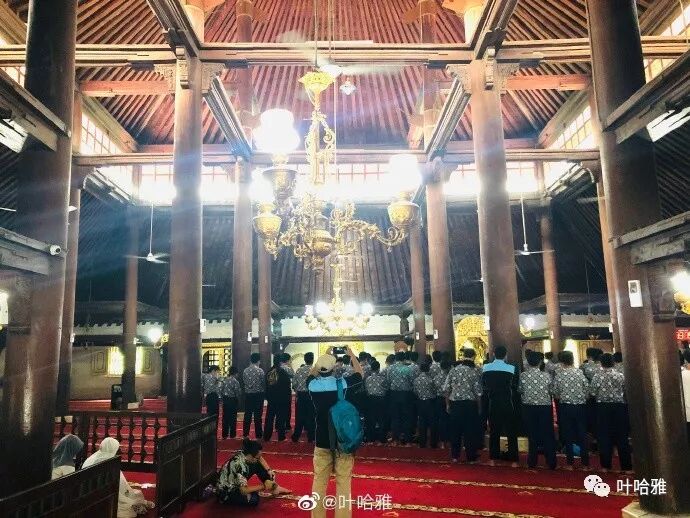
A group of religious school students perform namaz led by their teacher, with the boys in front and the girls in a designated area behind them.
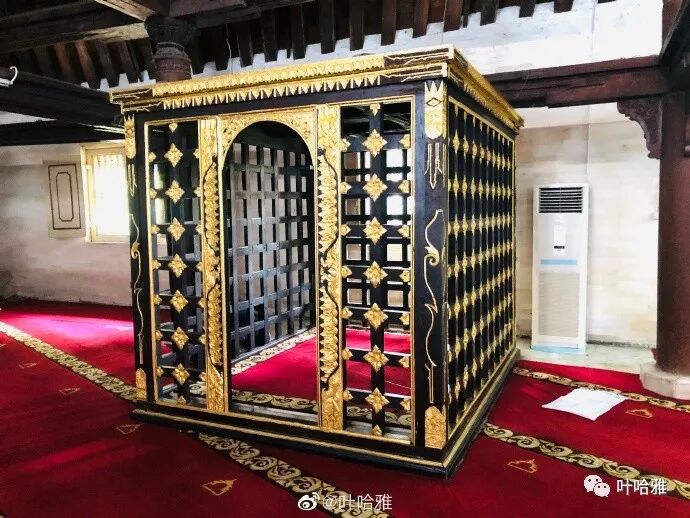
This is the area reserved for the Sultan to perform namaz, and ordinary people are not allowed inside. Honestly, this kind of privilege is not something Islam promotes; even a king should stand in the same row as the common people.
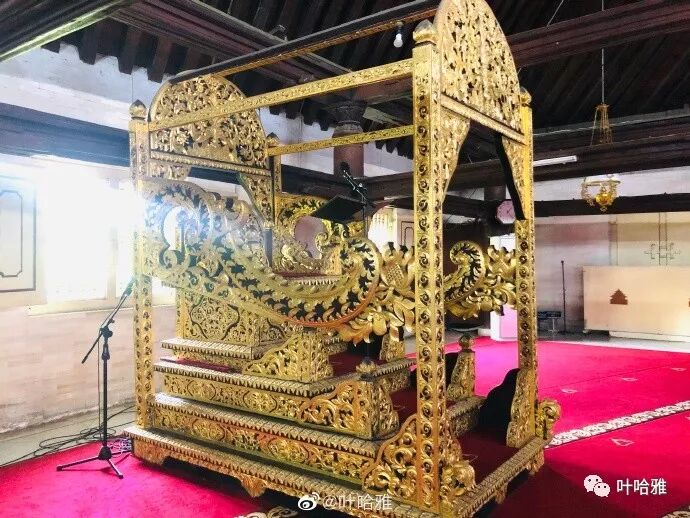
The minbar pulpit features typical Javanese patterns and a golden color, just like the tones of the Thai Royal Palace.
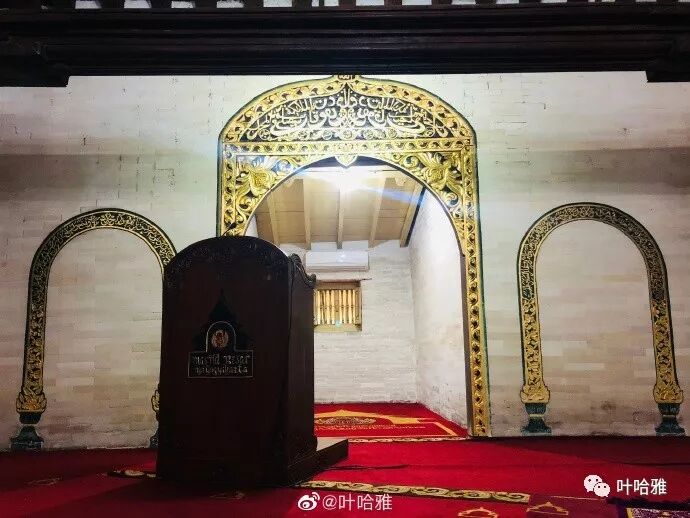
A mihrab with Southeast Asian royal characteristics
The Yogyakarta Palace is right next to the mosque. The palace is divided into a south section and a north section, and you have to buy separate tickets for each, costing about three yuan per ticket. I visited the north section, and it didn't feel like a palace at all to me. It was too simple, with only a few shed-like buildings, which made me wonder for a moment if this was really a palace.
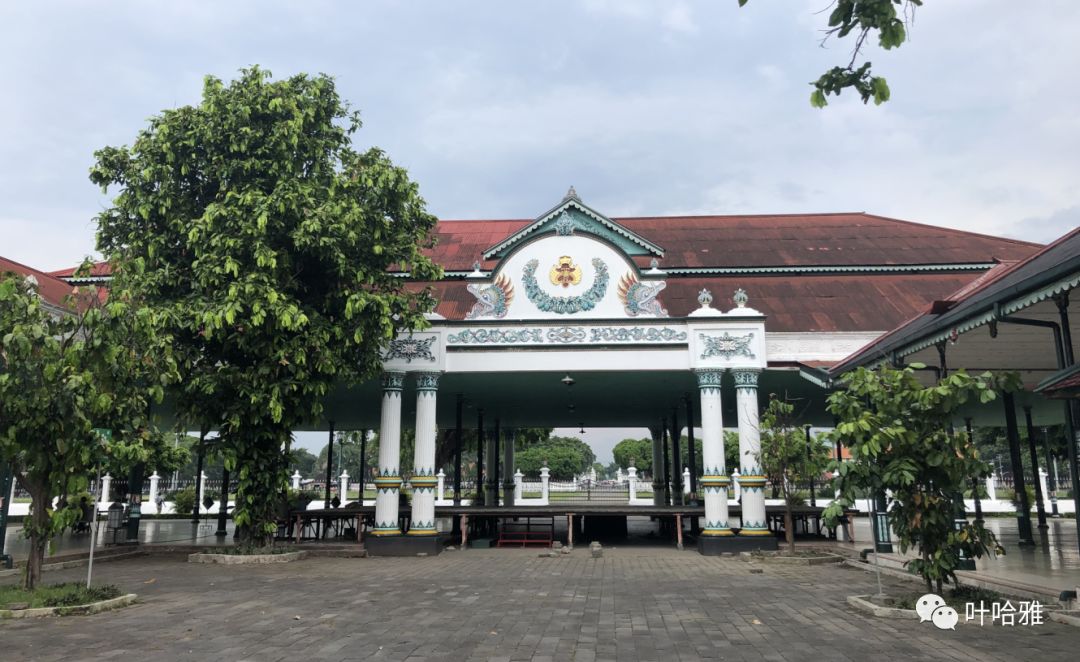
Yogyakarta Palace
Soko Tunggal Mosque
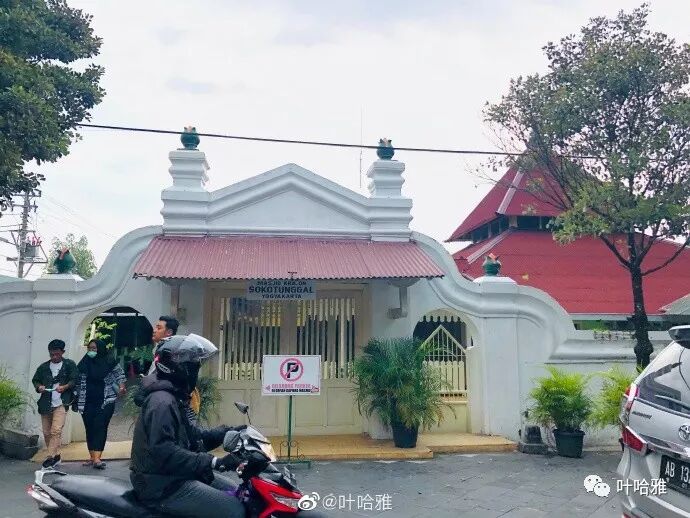
Soko Tunggal Mosque
The Soko Tunggal Mosque in Yogyakarta gets its name from the Indonesian words for 'one pillar.' Built in 1972, it was designed by R. Ngabehi Mintobudoyo, who also designed the Yogyakarta Palace.
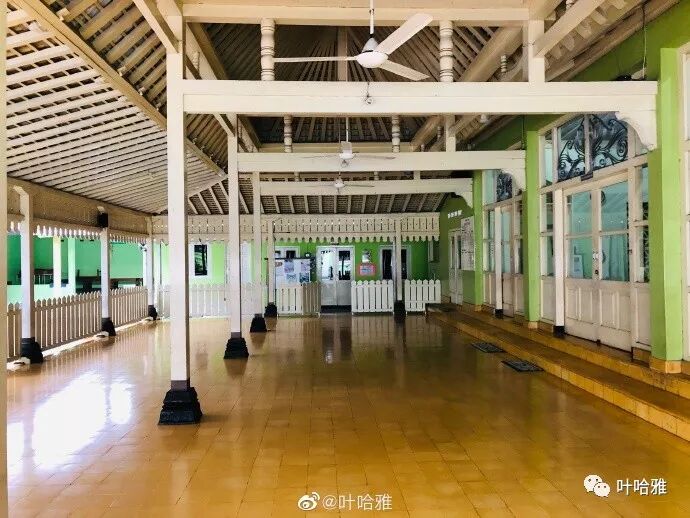
The main hall is supported by one central pillar and four side pillars, making five in total. This represents the temptations of evil from the four directions, a common feature in Javanese architecture. The flower carvings on the pillars show that praying in the mosque brings the grace of Allah.
A single pillar inside the main hall.
Yogyakarta is a city with a strong religious atmosphere. I felt this at the hotel where I stayed in the suburbs. Every time for namaz arrived, the sound of the adhan echoed from all around. It lasted for about ten minutes, likely because the clocks at different mosques were slightly out of sync.
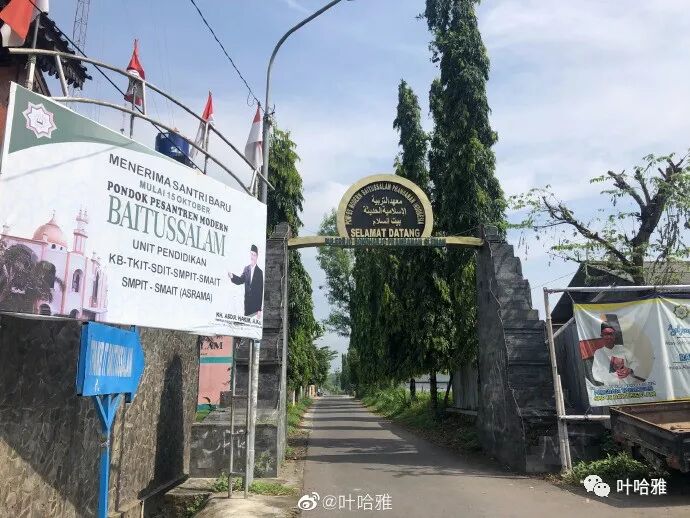
I wandered into a nearby village. I saw a sign at the entrance that said 'Selamat Datang.' I first thought it was the village name, but that did not seem right since I had seen the phrase in many places. I asked a villager and learned it is Indonesian for 'welcome,' a phrase used across Southeast Asia.
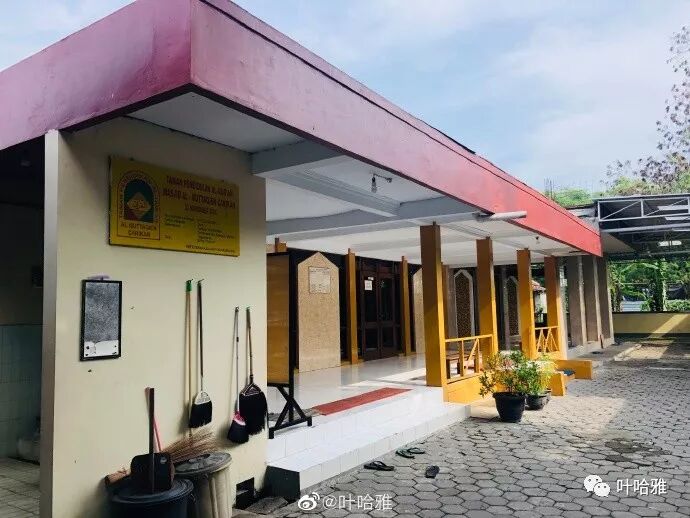
Nurul Falaq Mosque
The people in this village are very friendly. Everyone I met on the road, whether young or old, smiled and nodded to greet me. The village loudspeaker was broadcasting an imam giving a sermon. I followed the sound to the mosque, but the door was closed. Before I could even say anything, a villager walked over and opened the door for me. It turned out the key was kept right by the entrance.
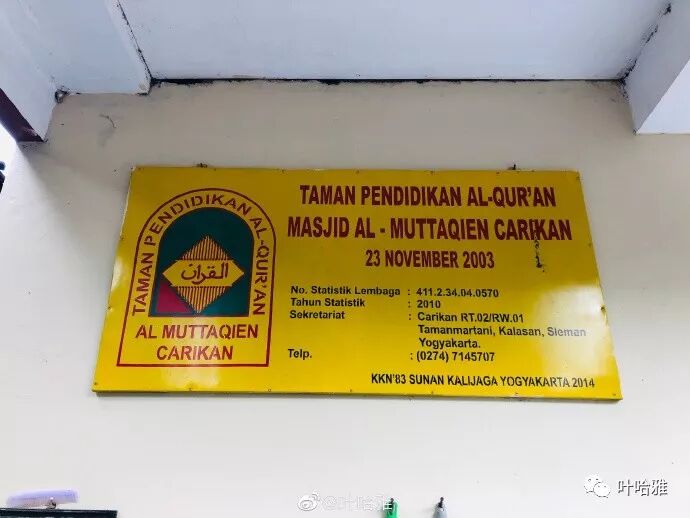
A mosque plaque. No matter how small the mosque is, it is officially registered.
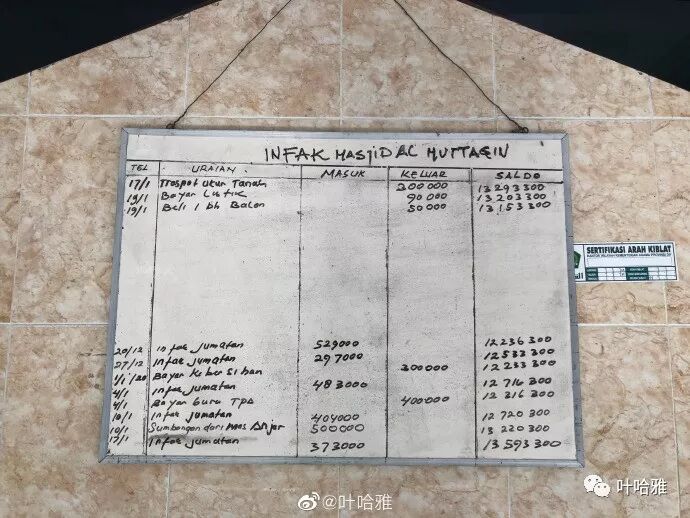
A list of donations (niet), just like the ones in our mosques back home.
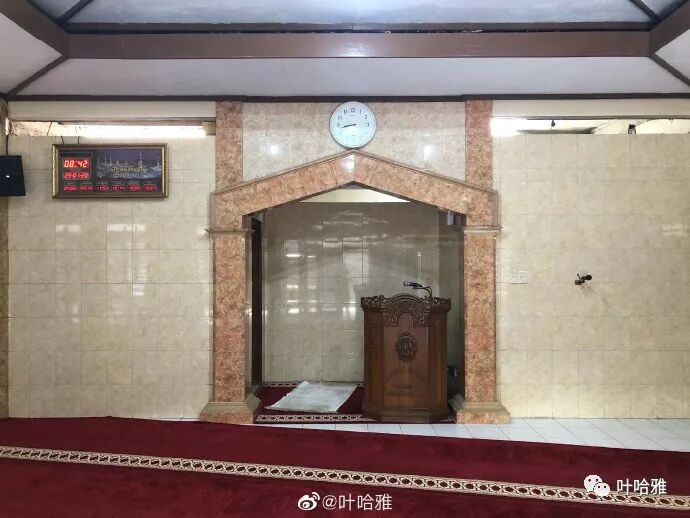
Baitussalam religious school
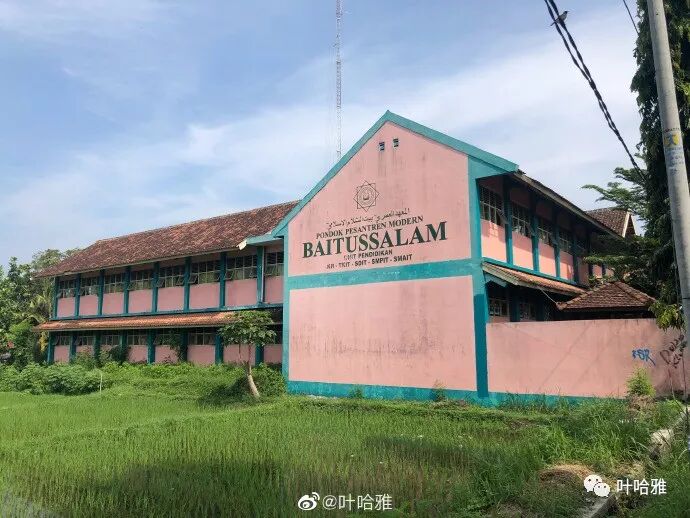
The Baitussalam religious school in the village
There are many religious schools like this in Yogyakarta. The children inside look like elementary school students. During breaks, they run around and play, and some gather around their teacher to do homework.
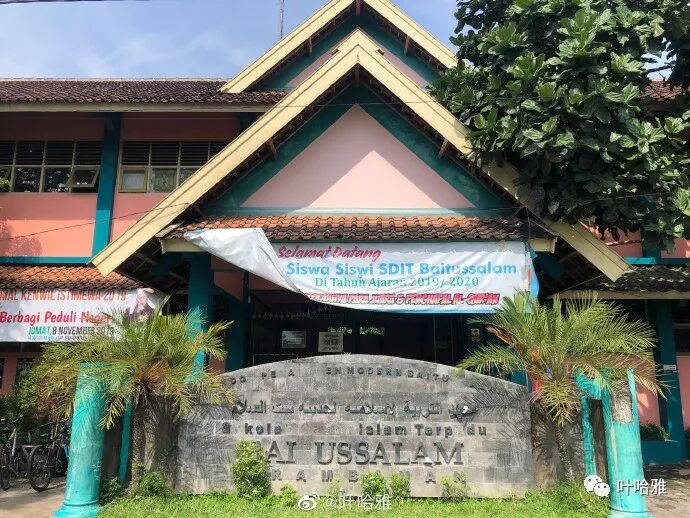
Main entrance of the school
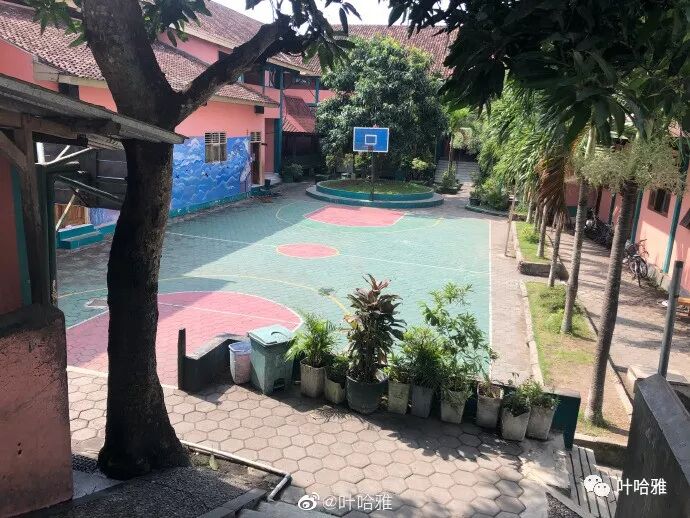
Playground
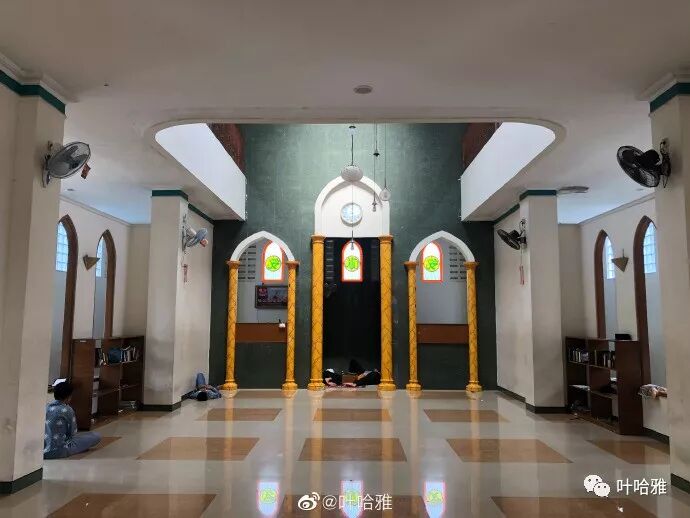
The mosque inside the school
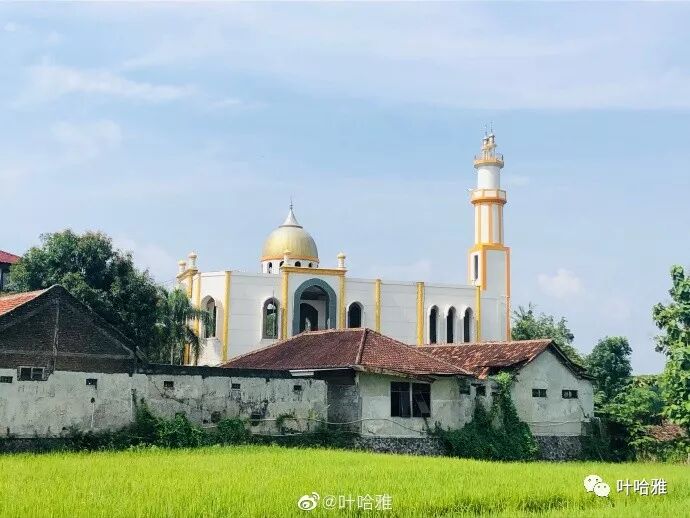
Exterior of the school mosque
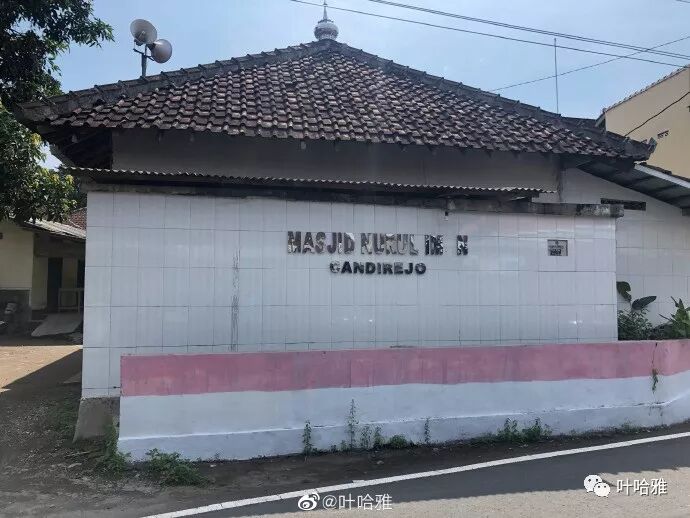
Masjid Nurul Iman mosque in the same village
If this small mosque were in the city center, it would only be considered a dua room (musholla). Every mosque here is officially registered.
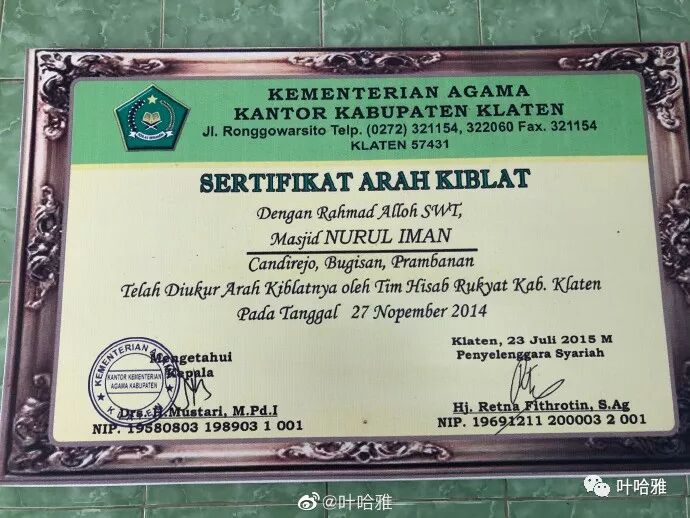
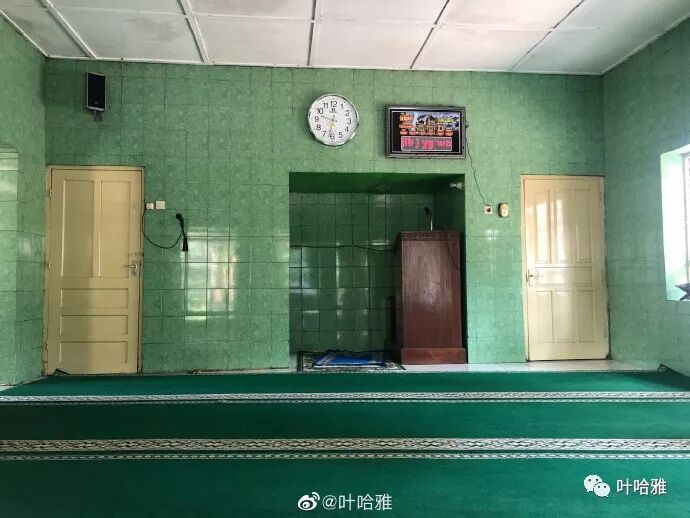
Masjid Jogokariyan mosque
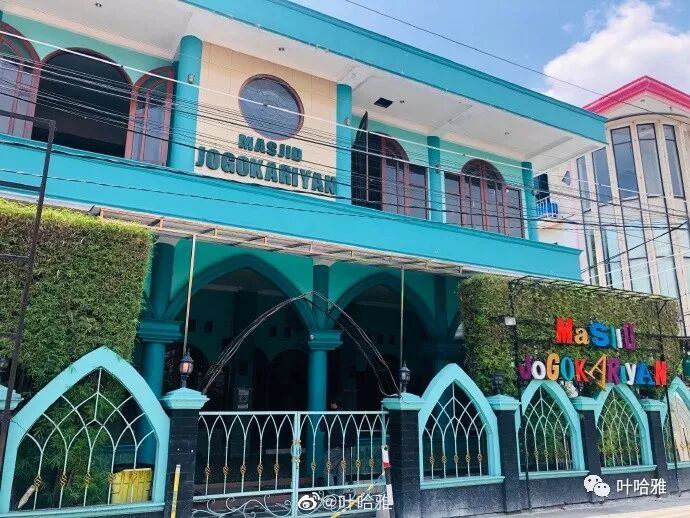
Masjid Jogokariyan mosque
The mosque was built in 1967. Most people in this area work in batik, so the mosque has bright colors. Notice that the name of the mosque on the right side of the photo uses many colors.
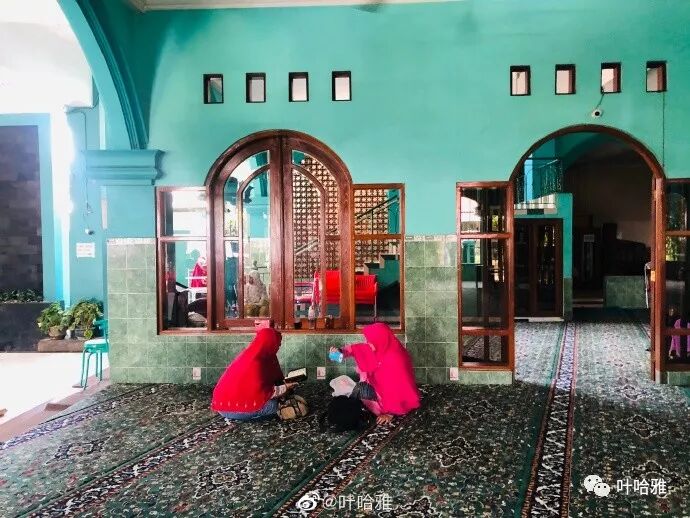
No matter the time, you can always see people reading the Quran in the mosque, most of them women.
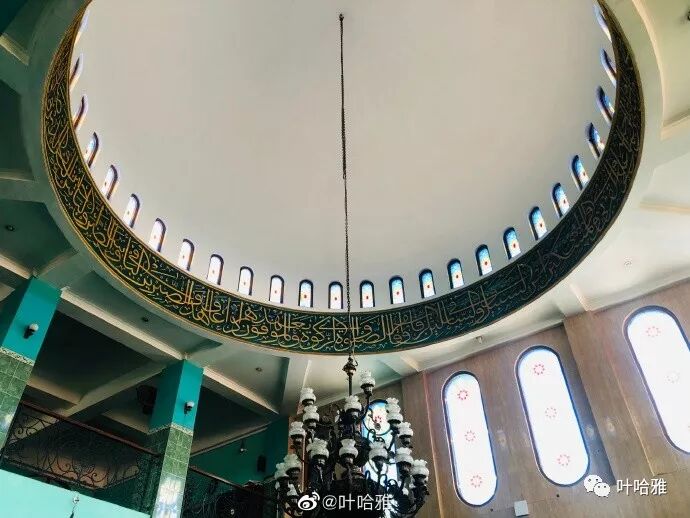
While I was in a taxi heading to the mosque, the driver noticed I was busy taking photos of every mosque we passed. He asked if I was a Muslim, so I blurted out, "Assalamu alaikum." He laughed after returning the greeting and pointed at my beard, saying I looked like a Muslim. I told him of course, as growing a beard is Sunnah.
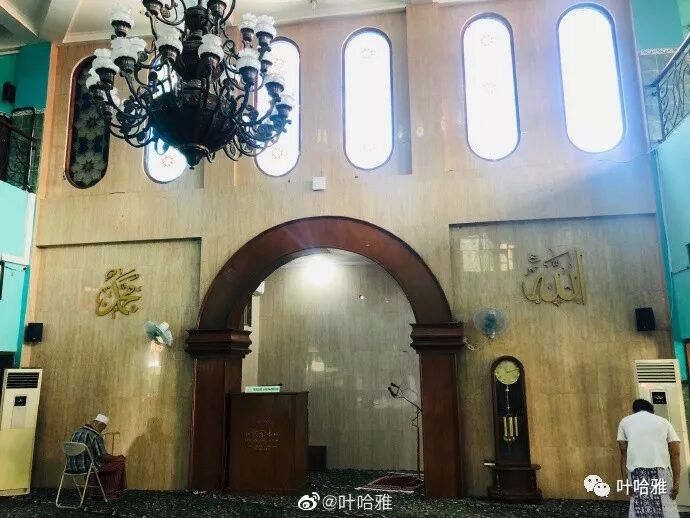
You do not really need to emphasize your Muslim identity while traveling in Indonesia. From my experience, even if people only know you are from China, they treat you no differently. Talk of anti-Chinese sentiment is an exaggeration. Many ethnic Chinese still live in Indonesia today, with families who settled here hundreds of years ago. They have intermarried for generations, making it hard to tell their ethnicity by appearance alone.
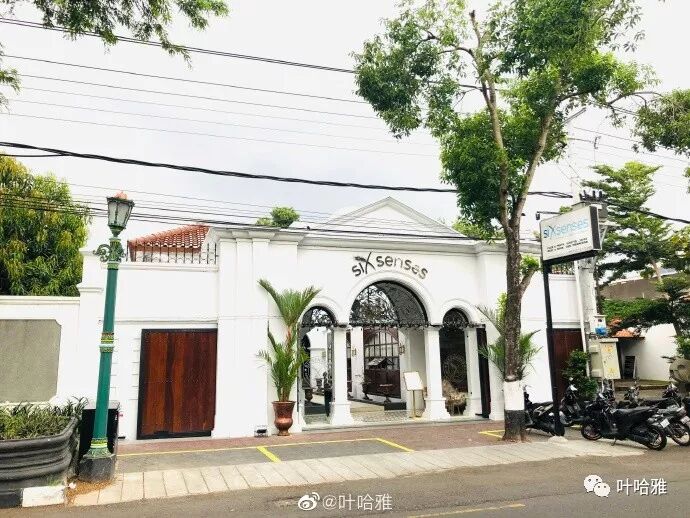
SIX SENSES Spanish Restaurant
I saw a beautiful Spanish restaurant nearby on TripAdvisor. The setting is truly lovely, featuring a manor with a fountain and a garden. There are no halal Spanish restaurants back home in China, so I decided to fill that gap in my palate here in Yogyakarta.
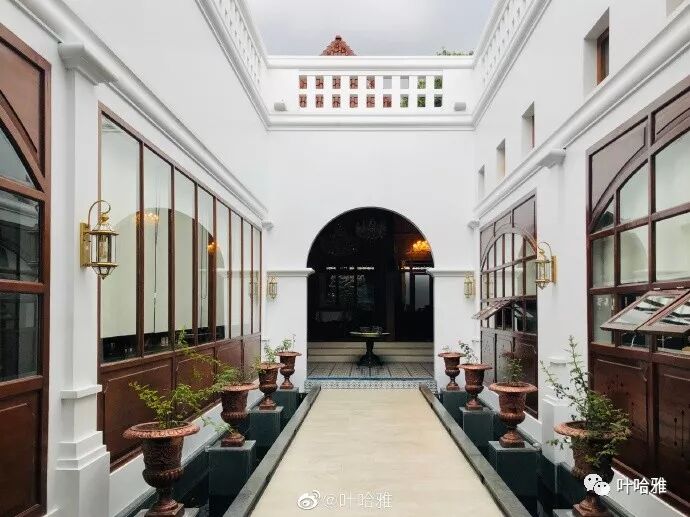
The front porch of the restaurant
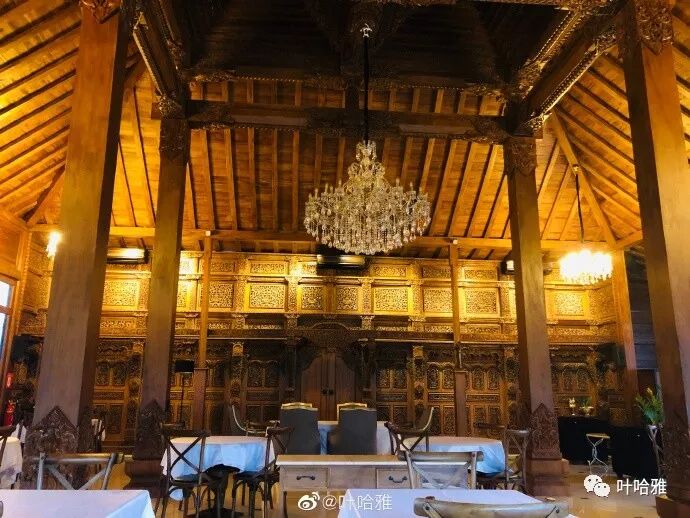
The interior decor of the restaurant
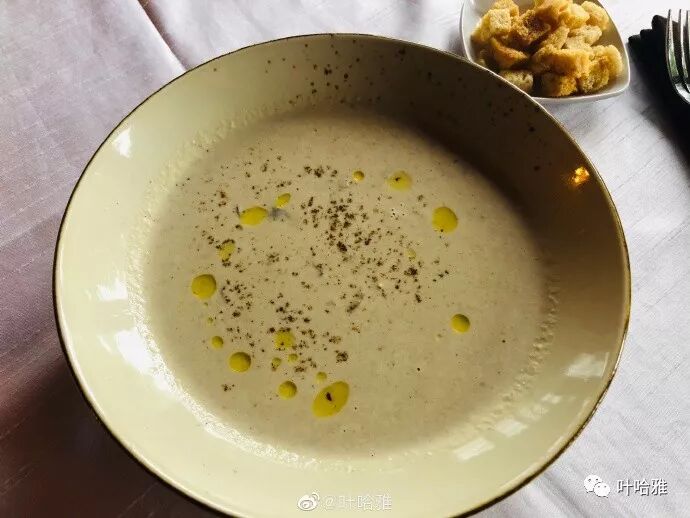
Cream of mushroom soup
I originally wanted to eat Spanish seafood paella, but after checking the menu, the portion was too large for one person. I did not want to waste food, and since the weather is hot and my appetite is smaller, I ordered a cream of mushroom soup and a salmon salad instead.
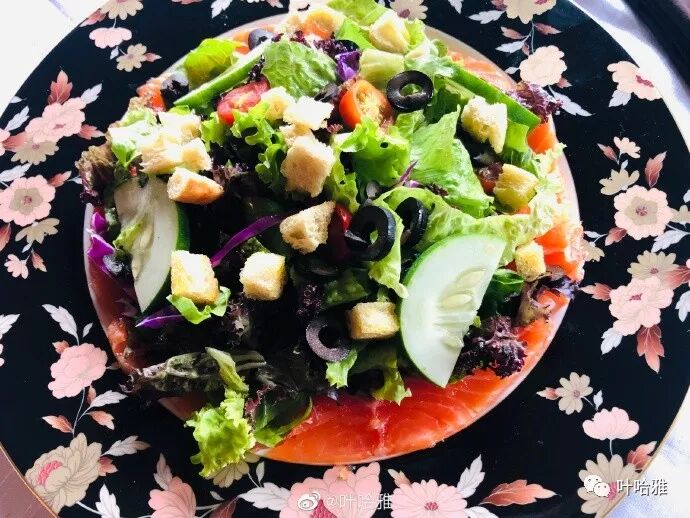
Salmon salad, with the salmon at the bottom of the plate
The tableware at this restaurant is very exquisite, and the waiters are very gentlemanly.
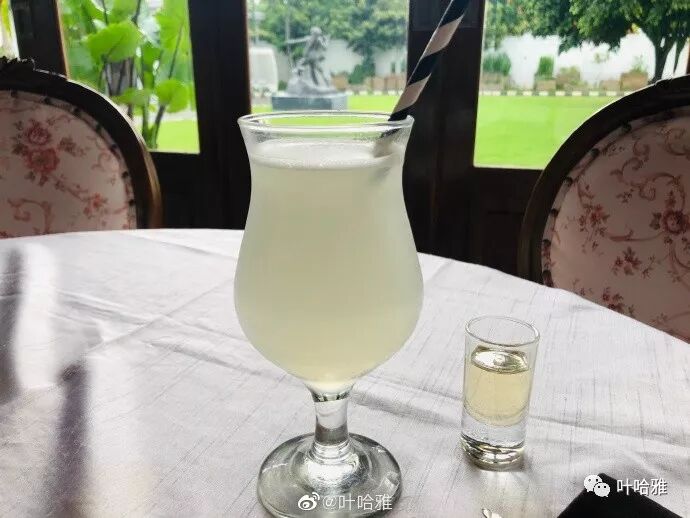
Lemon juice, with a small cup of honey on the side
This restaurant looks very fancy, but the bill, including service charge and tax, was less than 100 RMB. That is considered high-end spending locally, which shows how down-to-earth Yogyakarta is.
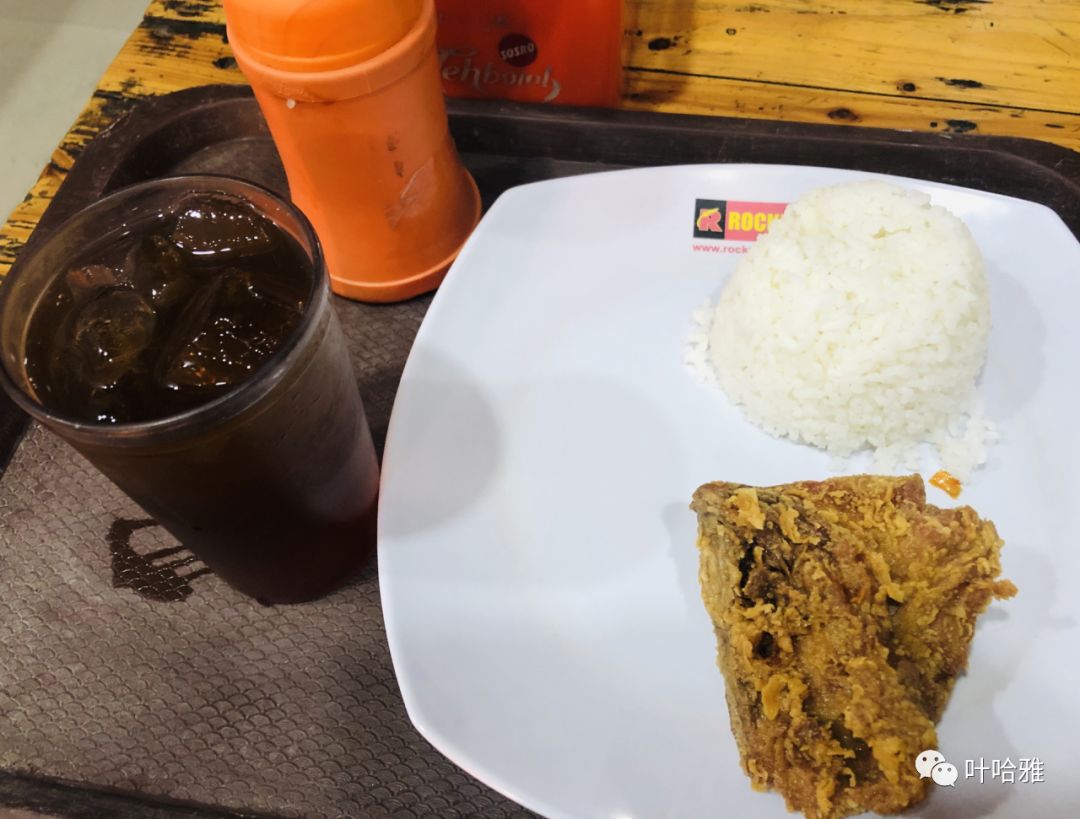
Fried chicken meal eaten next to the mosque
This meal cost about 5 RMB. Indonesians love fried food and will fry almost anything. The waiter did not give me any cutlery with my meal because everyone eats with their hands, so I followed suit and finished it that way.
Stop 5: Surabaya
It takes one hour to fly from Yogyakarta to Surabaya, but I suggest taking a train or bus instead. My flight was canceled once, and when I rebooked, it was delayed. The weather on Java island is unpredictable, so traveling by land is better from the start. Land transport only costs a few dozen RMB, while a plane ticket costs over 300.
Surabaya is the second-largest city in Indonesia. Indonesians call it Surabaya, so remember this name to make asking for directions easier. Zheng He landed here when he reached Java island during his voyages to the Western Ocean, and it is now home to the largest population of ethnic Chinese in Indonesia.
In 1520, the first Islamic dynasty to rise in central Java, Indonesia, was the Demak Sultanate. Sultan Raden Patah (1475-1518) was of Chinese descent and an ancestor of Indonesia's fourth president, Abdurrahman Wahid. His surname was Chen. Wahid stated he had Chinese ancestry, and his ancestor, Chen Jinhan, traveled to Java with Zheng He's fleet during his fifth voyage in the 15th year of the Yongle reign (1417) and settled in Surabaya.
Al-Akbar National Mosque (Masjid Nasional Al-Akbar Surabaya)
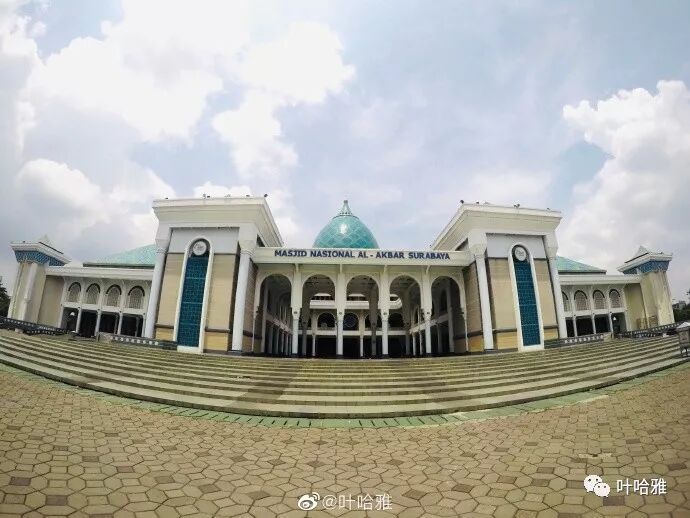
Al-Akbar National Mosque
This is a landmark building in Surabaya. It feels even bigger and more beautiful than the Istiqlal Mosque in Jakarta. Construction began in 1995, stopped for two years during the 1997 Asian financial crisis, and was completed in 2000. Then-President Abdurrahman Wahid presided over the opening ceremony. President Wahid was also the chairman of the Nahdlatul Ulama, making him a leader in the Indonesian religious community. It says a lot that a descendant of a Chinese ancestor could achieve such a position in Indonesia.
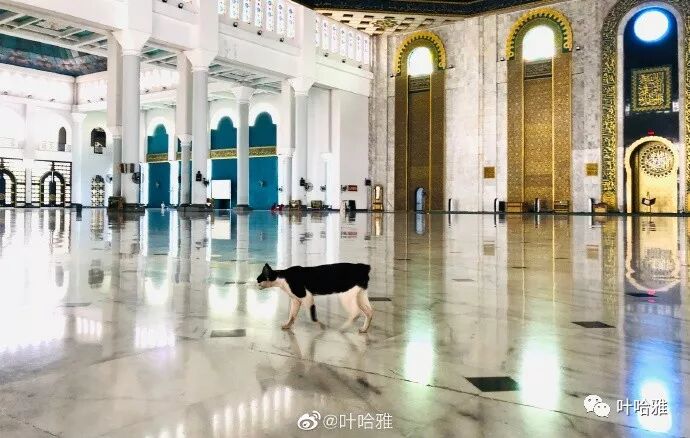
A cat in the main prayer hall
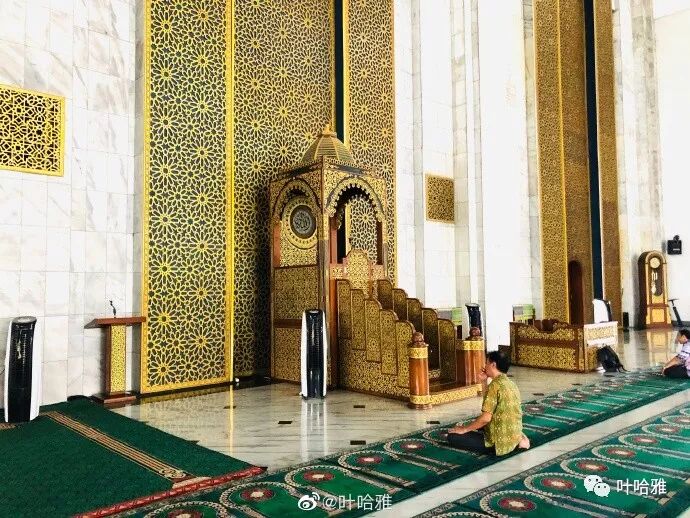
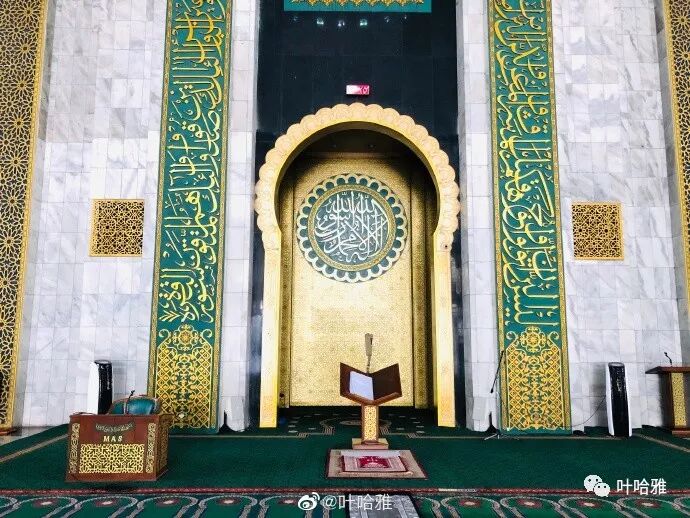
Mihrab
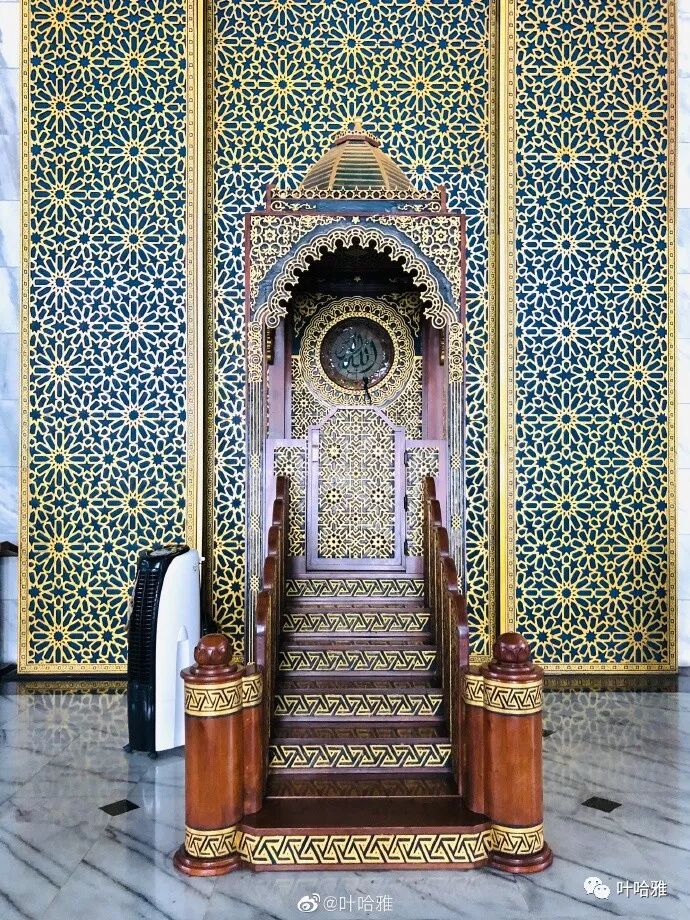
pulpit (minbar)
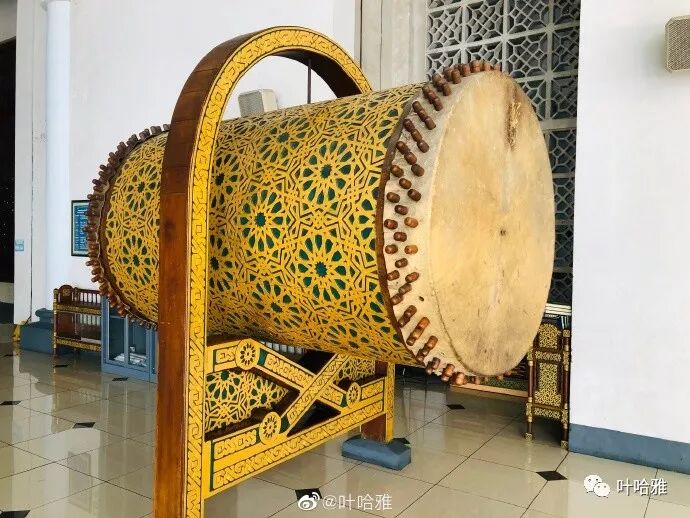
Prayer drum
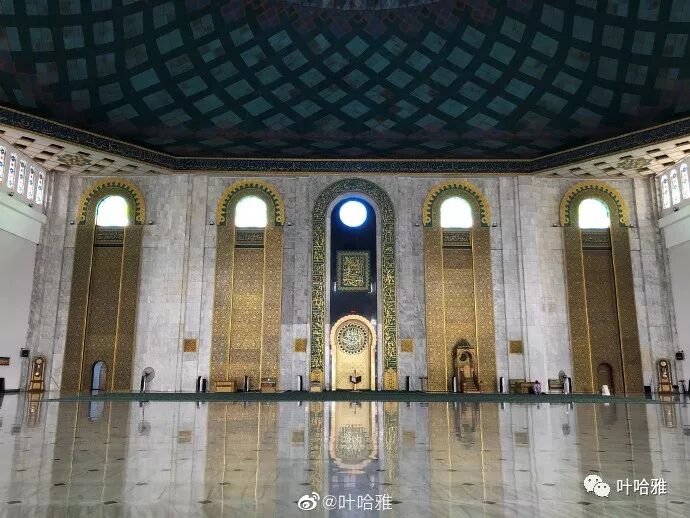
Sunan Ampel arch
Sunan Ampel Tomb
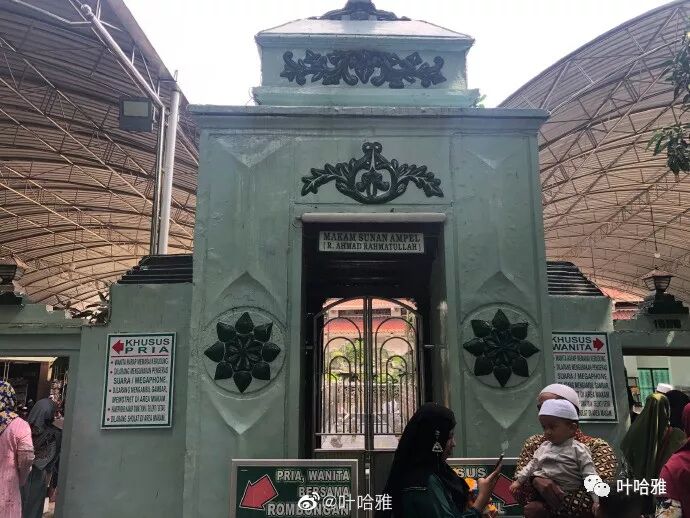
Muslim Travel Guide Indonesia Solo: Central Java Palaces, Mosques and Muslim Heritage
Articles • yusuf908 posted the article • 0 comments • 186 views • 2026-05-23 23:07
Summary: Muslim Travel Guide Indonesia Solo: Central Java Palaces, Mosques and Muslim Heritage is presented here as a clear Muslim travel account, beginning with this scene: In our last article, The Lost Ancient Capital of Java: Kotagede, we introduced how the Mataram Sultanate became the most powerful Islamic kingdom on Java in the first half of the 17th century. The account keeps its focus on Solo Mosques, Indonesia Muslim Travel, Central Java while preserving the names, places, food, and historical details from the Chinese source.
In our last article, The Lost Ancient Capital of Java: Kotagede, we introduced how the Mataram Sultanate became the most powerful Islamic kingdom on Java in the first half of the 17th century. However, after the third ruler, Sultan Agung (reigned 1613-1645), passed away, the royal family fell into a power struggle. After the 1670s, the Dutch East India Company used power struggles within the Mataram Sultanate to slowly tighten its control over Central Java.
Moving the capital to Solo
In 1726, the last Mataram Sultan, Pakubuwana II, took the throne. In 1740, a massacre of Chinese people broke out in the Dutch East India Company headquarters of Batavia (Jakarta), and chaos quickly spread across the entire island of Java. In 1741, Chinese armed forces entered Central Java and began to besiege Semarang, the capital of the Dutch East India Company in the region. Sultan Pakubuwana II chose to help the Chinese fight the Dutch East India Company, so he sent his army to join the siege of Semarang. However, as Dutch reinforcements arrived, the Chinese-Javanese alliance was pushed back repeatedly. Sultan Pakubuwana II had to negotiate with the Dutch, hoping to trade the entire northern coast of Java for peace.
As the negotiations went on, both the Javanese and the Chinese began to turn against Sultan Pakubuwana II. On June 30, 1742, the Chinese-Javanese alliance captured Kartasura, the capital of the Mataram Sultanate, and Sultan Pakubuwono II was forced to flee. On December 14, 1742, Sultan Pakubuwono II returned to the capital with Dutch help, but the palace had been destroyed and the city was considered cursed. Because of this, Sultan Pakubuwono II decided to move the capital.
On February 17, 1745, Sultan Pakubuwono II officially moved the capital to Solo (Surakarta), which became the final capital of the Mataram Sultanate. By this time, most of the Mataram Sultanate's territory had been handed over to the Dutch East India Company, and all official appointments required Dutch approval. Sultan Pakubuwono II had become a Dutch puppet. At the same time, the Mataram Sultanate was constantly splitting apart from within.
Surakarta Sunanate
The first to rebel was Raden Mas Said, the grandson of Mataram Sultan Amangkurat III. In 1746, Prince Mangkubumi, the brother of Sultan Pakubuwono II, also joined the rebellion. The Sultan died in 1749, and before he passed away, he entrusted the Dutch East India Company to handle state affairs. In 1755, the Dutch East India Company represented the successor, Sultan Pakubuwono III, in negotiations with Prince Mangkubumi. A treaty was finally signed, splitting the Mataram Sultanate into two parts: the Yogyakarta Sultanate and the Surakarta Sunanate. Solo officially became the capital of the Surakarta Sunanate.
During the Dutch East Indies era, the Surakarta Sunanate and the Yogyakarta Sultanate both enjoyed autonomous status and were considered vassal states of the Dutch Empire. During the reign of Pakubuwono X (who ruled from 1893 to 1939), the prestige and power of the Surakarta Sunanate reached its peak. He understood the colonial economy much better than any of his predecessors. He raised funds by leasing land to European developers and buying shares in commercial real estate. He led the construction of many buildings and infrastructure projects in the city of Solo, and brought water and electricity to many parts of the Sunanate, earning him widespread respect.
The Republic of Indonesia was declared in 1945, and in 1946 an anti-monarchy movement broke out, stripping the Sunan of Solo of his ruling power and incorporating the Sunanate into Central Java Province. Although he has no real power, the Sunan of Solo still holds royal authority and a special status in maintaining traditional Javanese culture, and he remains highly prestigious.
1. Solo Palace: 1745
The Solo Palace (Kraton Surakarta Hadiningrat) is a massive complex with gardens and courtyards that served as the royal seat for the Mataram Sultanate and the Sunanate of Solo. The Solo court played an important role in developing and preserving traditional Javanese culture, and people call this place the center of Javanese culture.
In 1743, the last Sultan of the Mataram Sultanate, Pakubuwana II, began building a new capital in the village of Sala, 20 kilometers southeast of the old capital, Kartasura. The Sultan's palace was completed in 1744, and the village of Sala was renamed Solo (Surakarta, also known as Solo).
In 1745, the Mataram Sultanate officially moved its capital to Solo, and the Solo Palace became the final palace of this once-powerful Islamic kingdom on Java island. During the preparations for the move, the Sultan took all the wealth from the old capital of Kartasura, even including various flowers and trees.
After the Sunanate of Solo was established in 1755, the palace remained the seat of the Sunan's court. Today, most of the palace area is still occupied by the Sunan and is not open to the public; only a portion is open as a museum, displaying various gifts, weapons, and carriages collected by the Sunan.
The main architect of the Solo Palace was Pangeran Mangkubumi (who later ascended the throne as Sultan Hamengkubuwana I), who was also the main architect of the Yogyakarta Palace, so the basic spatial layout of the two palaces is very similar. The Solo Palace underwent large-scale renovations and expansions during the reign of Pakubuwana X (reigned 1893-1939). These buildings belong to a Javanese-European fusion style, with blue and white as the main color scheme. Some of the buildings were destroyed by a fire in 1985 and were later restored.
1. Pagelaran Pavilion
The northernmost building of the Solo Palace is a pavilion (pendapo) called Pagelaran, where the Sunan received courtiers during ceremonies and festivals. Many cannons are placed in front of the palace, the most famous of which was built by the Mataram Sultanate's most famous ruler, Sultan Agung (reigned 1613-1645), and moved here in 1744 by the last Sultan, Pakubuwana II.
2. Kori Brajanala Gate
Kori Brajanala is the gate connecting the north and south sections of the palace, built by Sunan Pakubuwana III. The gate roof uses the Semar Tinandu style, and there are guard rooms on both sides. A clock tower (Jam Panggung) was built on one side of the gate, which used to ring once every hour.
3. Kori Kamandungan Gate
Kori Kamandungan is the main palace gate. It is a three-door structure (Kori Kupu Tarung) built by Pakubuwana III in 1819 and later rebuilt by Pakubuwana X. The word Kamandungan comes from "mandong," which means "to stop." Anyone entering the palace must stop here for a moment to prepare their body and mind. Large mirrors are mounted on the gate walls so people can tidy their appearance before entering the palace.
Palace guards stand at the gate. The area behind the gate is still occupied by the Sunan and his family and is not open to the public.
From outside the gate, you can see the Panggung Songgo Buwono tower inside. It was built in 1782 and stands 30 meters tall with 5 levels. The tower caught fire in November 1954, was rebuilt at the end of September 1959, and was renovated again in May 1978. The top of the tower was once square, but it was later rebuilt into an octagon. The top is decorated with a Sengkala (Javanese clock Candra Sangkala). This tower serves as a place for the Sunan to meditate, a high point to observe the Dutch fort outside the city, and a spot to sight the moon during Ramadan.
There is a pair of guardian statues (Dvarapala) in front of the gate. Dvarapala originated as gate gods in Hinduism and Buddhism. In Javanese culture, they usually appear as giant, fierce-looking asuras holding a vajra.
4. Garden Museum
Part of the side garden has been turned into a museum, displaying a collection of artifacts including statues, weapons, royal treasures, and carriages. However, the exhibits have almost no descriptions and are not in good condition.
5. Sasana Mulya Prince's Residence
A series of royal buildings are scattered around the palace. I visited a building called Sasana Mulya, built by Pakubuwana III as a residence for the Sunan's princes and their descendants. The royal family often gathers here, and the palace also hosts weddings at this location.
Today, it is also a practice space for traditional Solo song and dance, and related traditional cultural events are held here every week.
6. Around the Palace
Inside the walls of the Solo palace, there is a two-story watchtower.
A building next to the palace shows a typical blend of Dutch colonial and Javanese styles.
On the streets near the palace, there are horse-drawn carriage tours.
The outer walls and gates of the Solo palace.
2. Solo Grand Mosque (Masjid Agung Surakarta)
The Solo Grand Mosque is located north of the palace. It was built by Sunan Pakubuwana III in 1763 and finished in 1768. The Solo Grand Mosque serves as both a Friday mosque and a royal mosque. Many Islamic ceremonies for the Solo court take place here, the most important being the Prophet's Birthday (Sekaten). During Sekaten, two sets of large gamelan instruments (Gangsa Sekaten) are moved from the Solo palace storage to the mosque courtyard. One set was made in 1810. Traditional Javanese gamelan music is performed here except during prayer times.
The Solo Grand Mosque is a classic example of traditional Javanese mosque architecture. The main hall has a three-tiered pyramid-shaped roof called a Tajug. This structure comes from Indian and Chinese cultures and existed before Islam reached Java. It shows how Indonesian Islam blends with local culture. The decoration at the very top of the roof is called a Mustoko or Memolo. Traditional Mustoko are made of clay, but the ones at the Solo Grand Mosque have been replaced with Indian-style domes. During the reign of Pakubuwono X, the roof of the main hall was covered in gold, but other materials replaced it later.
The main hall does not use walls for support. Instead, it uses four pillars called Soko Guru that connect to the roof.
The front porch (Serambi) is located in front of the main hall and is connected to it. The front porch is mainly used for shade and shelter from rain. People also pray there during Friday congregational prayers.
Early traditional Javanese mosques rarely had minarets. Instead, they used a large drum (Bedug) inside the front porch to call people to prayer. Today, the Solo Grand Mosque has an Indian Mughal-style minaret built in 1928 by Sunan Pakubuwono XI.
3. Mangkunegara Palace (Pura Mangkunegaran)
In 1757, Raden Mas Said, a rebel from the Mataram Sultanate, surrendered to the Solo Sunanate. He signed an agreement with the Dutch East India Company to establish the Mangkunegaran princely state near Solo and took the name Mangkunegara I. That same year, he built the Mangkunegara Palace (Pura Mangkunegaran) in Solo.
After Indonesia gained independence, Mangkunegara VIII announced in 1946 that he would join the Republic of Indonesia. Although he lost his ruling power in later movements, he and the Solo Sunan still hold cultural status and prestige.
The palace is now open to the public as a tourist site. Once inside, English-speaking guides are available to show you around.
The main building of the palace is a traditional Javanese pavilion called a Pendopo Ageng. It was built in 1815 by Mangkunegara II (reigned 1796-1835) and later expanded by Mangkunegara IV (reigned 1853-1881). It became the largest pavilion in Indonesia at the time and can hold 10,000 people.
The roof of the Pendopo Ageng is a trapezoidal pyramid shape called a Joglo, and the entrance features Dutch colonial-style decorations. Inside the pavilion, there are chandeliers installed in 1866, and the floor is covered in marble. Traditional Javanese song and dance performances are held here regularly.
Behind the main hall (Pendopo) is a rectangular area called Pringgitan. It was built during the reign of Mankunugoro II to welcome royal guests.
Further back is the Dalem Agen hall, which features a pyramid-shaped Jogro roof. This 1,000-square-meter building was once the royal inner court. It now serves as an exhibition hall for royal heirlooms, though photography is not allowed.
Behind the Dalem Agen hall is the royal residence. It is now the home of the Mank Nugoro family, the descendants of the royals, and part of it is open as a museum.
The palace backyard is filled with ornamental plants, European-style statues, fountains, and birdcages.
The octagonal building Pracimoyasa (Dalem Veranda) overlooks the garden. It has a traditional Javanese three-tiered roof and contains elegant European furniture and candelabra chandeliers. This area served as the royal dining room, dressing room, and bathroom.
The palace collection includes headpieces worn for traditional Javanese dances, as well as stained glass windows painted with figures in traditional Javanese clothing.
To the east in front of the palace is the headquarters for the Mangkunegaran infantry and cavalry. It is a fortress-style building constructed in 1874. view all
Summary: Muslim Travel Guide Indonesia Solo: Central Java Palaces, Mosques and Muslim Heritage is presented here as a clear Muslim travel account, beginning with this scene: In our last article, The Lost Ancient Capital of Java: Kotagede, we introduced how the Mataram Sultanate became the most powerful Islamic kingdom on Java in the first half of the 17th century. The account keeps its focus on Solo Mosques, Indonesia Muslim Travel, Central Java while preserving the names, places, food, and historical details from the Chinese source.
In our last article, The Lost Ancient Capital of Java: Kotagede, we introduced how the Mataram Sultanate became the most powerful Islamic kingdom on Java in the first half of the 17th century. However, after the third ruler, Sultan Agung (reigned 1613-1645), passed away, the royal family fell into a power struggle. After the 1670s, the Dutch East India Company used power struggles within the Mataram Sultanate to slowly tighten its control over Central Java.
Moving the capital to Solo
In 1726, the last Mataram Sultan, Pakubuwana II, took the throne. In 1740, a massacre of Chinese people broke out in the Dutch East India Company headquarters of Batavia (Jakarta), and chaos quickly spread across the entire island of Java. In 1741, Chinese armed forces entered Central Java and began to besiege Semarang, the capital of the Dutch East India Company in the region. Sultan Pakubuwana II chose to help the Chinese fight the Dutch East India Company, so he sent his army to join the siege of Semarang. However, as Dutch reinforcements arrived, the Chinese-Javanese alliance was pushed back repeatedly. Sultan Pakubuwana II had to negotiate with the Dutch, hoping to trade the entire northern coast of Java for peace.
As the negotiations went on, both the Javanese and the Chinese began to turn against Sultan Pakubuwana II. On June 30, 1742, the Chinese-Javanese alliance captured Kartasura, the capital of the Mataram Sultanate, and Sultan Pakubuwono II was forced to flee. On December 14, 1742, Sultan Pakubuwono II returned to the capital with Dutch help, but the palace had been destroyed and the city was considered cursed. Because of this, Sultan Pakubuwono II decided to move the capital.
On February 17, 1745, Sultan Pakubuwono II officially moved the capital to Solo (Surakarta), which became the final capital of the Mataram Sultanate. By this time, most of the Mataram Sultanate's territory had been handed over to the Dutch East India Company, and all official appointments required Dutch approval. Sultan Pakubuwono II had become a Dutch puppet. At the same time, the Mataram Sultanate was constantly splitting apart from within.
Surakarta Sunanate
The first to rebel was Raden Mas Said, the grandson of Mataram Sultan Amangkurat III. In 1746, Prince Mangkubumi, the brother of Sultan Pakubuwono II, also joined the rebellion. The Sultan died in 1749, and before he passed away, he entrusted the Dutch East India Company to handle state affairs. In 1755, the Dutch East India Company represented the successor, Sultan Pakubuwono III, in negotiations with Prince Mangkubumi. A treaty was finally signed, splitting the Mataram Sultanate into two parts: the Yogyakarta Sultanate and the Surakarta Sunanate. Solo officially became the capital of the Surakarta Sunanate.
During the Dutch East Indies era, the Surakarta Sunanate and the Yogyakarta Sultanate both enjoyed autonomous status and were considered vassal states of the Dutch Empire. During the reign of Pakubuwono X (who ruled from 1893 to 1939), the prestige and power of the Surakarta Sunanate reached its peak. He understood the colonial economy much better than any of his predecessors. He raised funds by leasing land to European developers and buying shares in commercial real estate. He led the construction of many buildings and infrastructure projects in the city of Solo, and brought water and electricity to many parts of the Sunanate, earning him widespread respect.
The Republic of Indonesia was declared in 1945, and in 1946 an anti-monarchy movement broke out, stripping the Sunan of Solo of his ruling power and incorporating the Sunanate into Central Java Province. Although he has no real power, the Sunan of Solo still holds royal authority and a special status in maintaining traditional Javanese culture, and he remains highly prestigious.
1. Solo Palace: 1745
The Solo Palace (Kraton Surakarta Hadiningrat) is a massive complex with gardens and courtyards that served as the royal seat for the Mataram Sultanate and the Sunanate of Solo. The Solo court played an important role in developing and preserving traditional Javanese culture, and people call this place the center of Javanese culture.
In 1743, the last Sultan of the Mataram Sultanate, Pakubuwana II, began building a new capital in the village of Sala, 20 kilometers southeast of the old capital, Kartasura. The Sultan's palace was completed in 1744, and the village of Sala was renamed Solo (Surakarta, also known as Solo).
In 1745, the Mataram Sultanate officially moved its capital to Solo, and the Solo Palace became the final palace of this once-powerful Islamic kingdom on Java island. During the preparations for the move, the Sultan took all the wealth from the old capital of Kartasura, even including various flowers and trees.
After the Sunanate of Solo was established in 1755, the palace remained the seat of the Sunan's court. Today, most of the palace area is still occupied by the Sunan and is not open to the public; only a portion is open as a museum, displaying various gifts, weapons, and carriages collected by the Sunan.
The main architect of the Solo Palace was Pangeran Mangkubumi (who later ascended the throne as Sultan Hamengkubuwana I), who was also the main architect of the Yogyakarta Palace, so the basic spatial layout of the two palaces is very similar. The Solo Palace underwent large-scale renovations and expansions during the reign of Pakubuwana X (reigned 1893-1939). These buildings belong to a Javanese-European fusion style, with blue and white as the main color scheme. Some of the buildings were destroyed by a fire in 1985 and were later restored.
1. Pagelaran Pavilion
The northernmost building of the Solo Palace is a pavilion (pendapo) called Pagelaran, where the Sunan received courtiers during ceremonies and festivals. Many cannons are placed in front of the palace, the most famous of which was built by the Mataram Sultanate's most famous ruler, Sultan Agung (reigned 1613-1645), and moved here in 1744 by the last Sultan, Pakubuwana II.
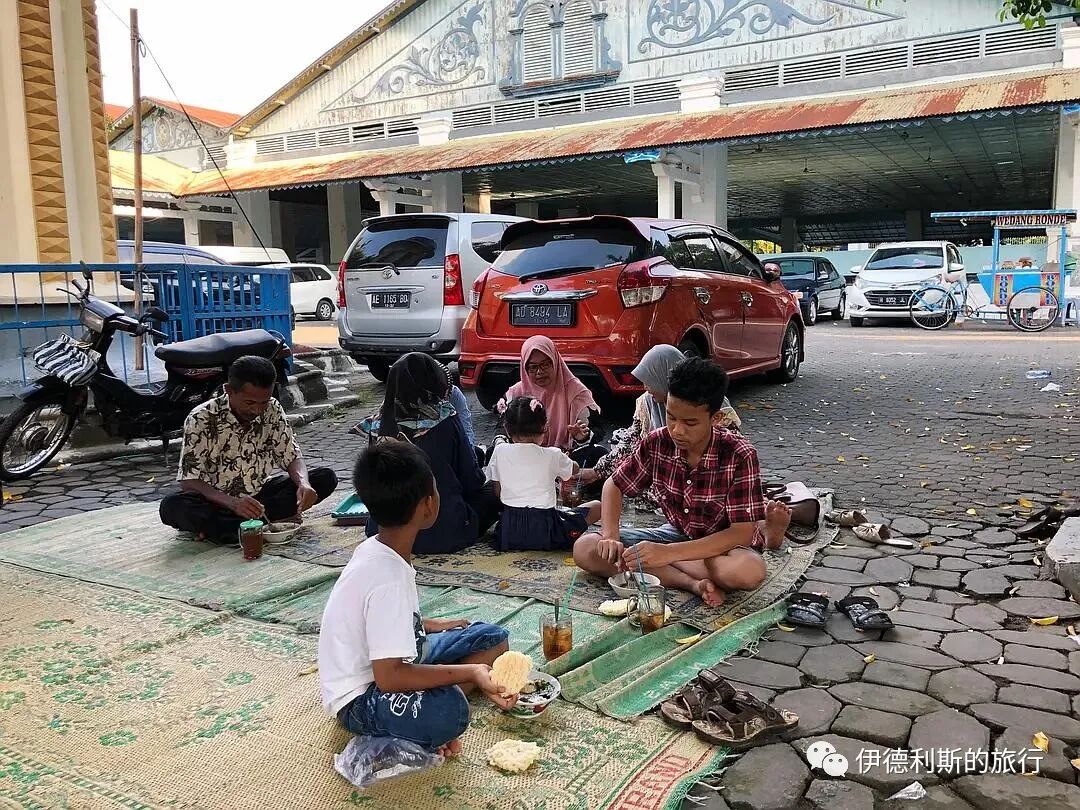
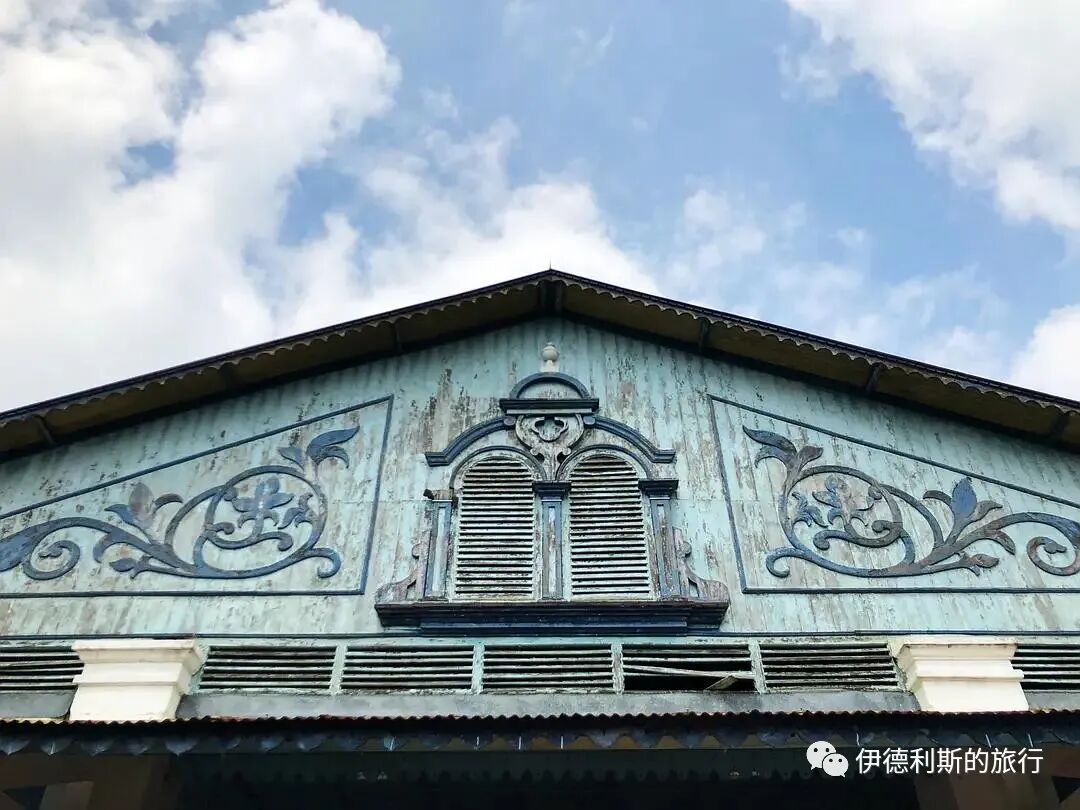
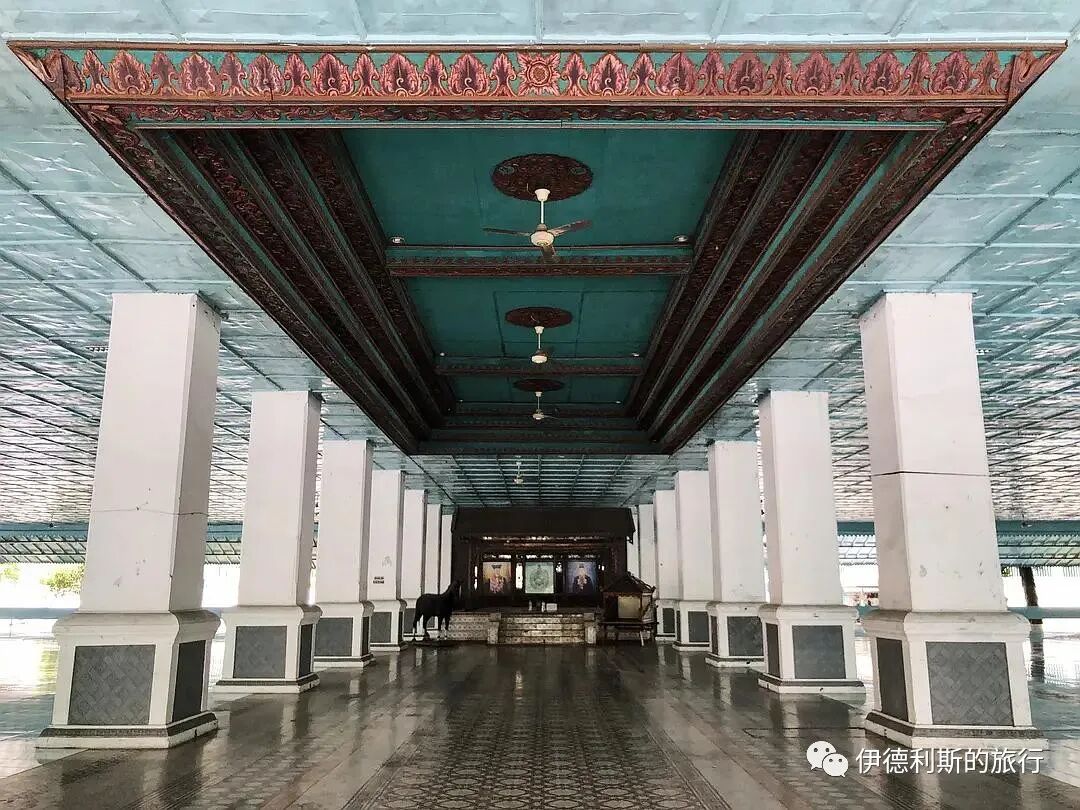
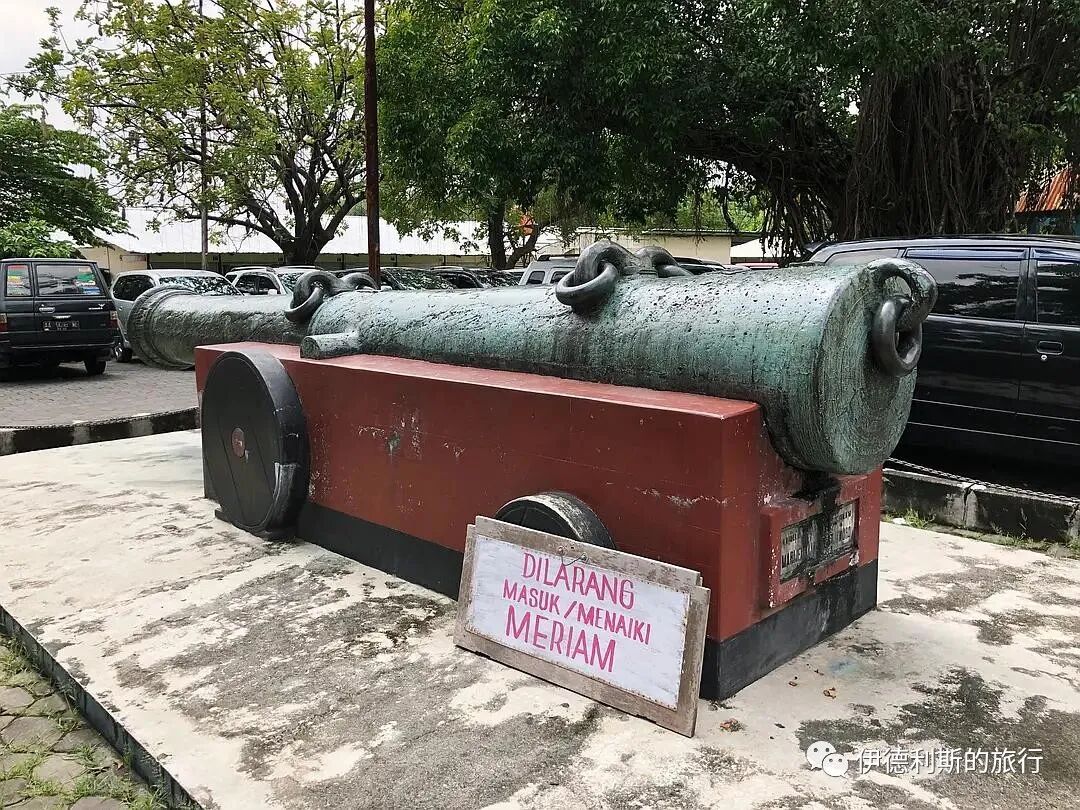
2. Kori Brajanala Gate
Kori Brajanala is the gate connecting the north and south sections of the palace, built by Sunan Pakubuwana III. The gate roof uses the Semar Tinandu style, and there are guard rooms on both sides. A clock tower (Jam Panggung) was built on one side of the gate, which used to ring once every hour.
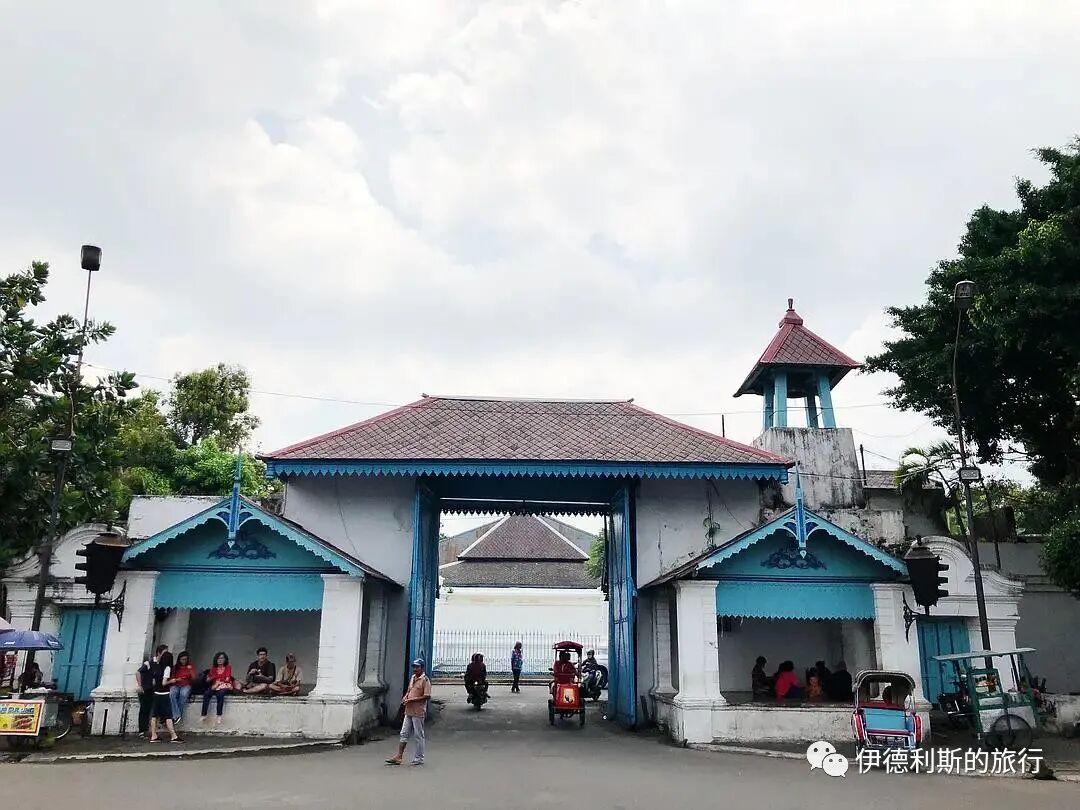
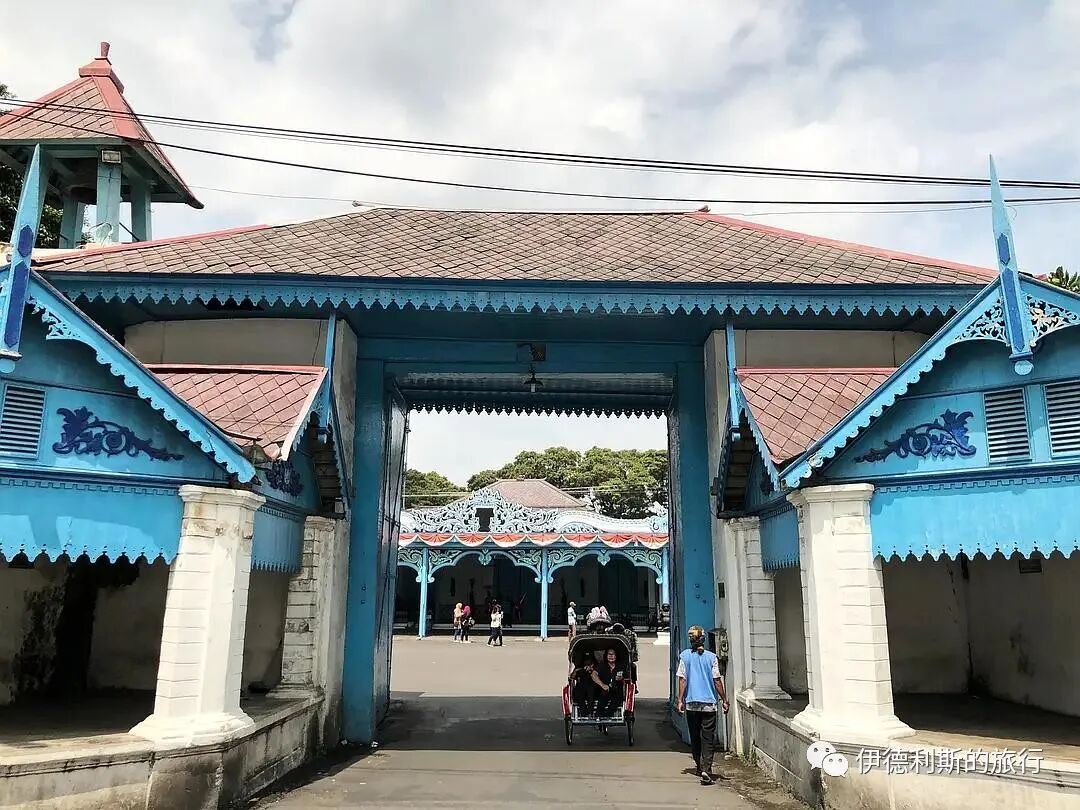
3. Kori Kamandungan Gate
Kori Kamandungan is the main palace gate. It is a three-door structure (Kori Kupu Tarung) built by Pakubuwana III in 1819 and later rebuilt by Pakubuwana X. The word Kamandungan comes from "mandong," which means "to stop." Anyone entering the palace must stop here for a moment to prepare their body and mind. Large mirrors are mounted on the gate walls so people can tidy their appearance before entering the palace.
Palace guards stand at the gate. The area behind the gate is still occupied by the Sunan and his family and is not open to the public.
From outside the gate, you can see the Panggung Songgo Buwono tower inside. It was built in 1782 and stands 30 meters tall with 5 levels. The tower caught fire in November 1954, was rebuilt at the end of September 1959, and was renovated again in May 1978. The top of the tower was once square, but it was later rebuilt into an octagon. The top is decorated with a Sengkala (Javanese clock Candra Sangkala). This tower serves as a place for the Sunan to meditate, a high point to observe the Dutch fort outside the city, and a spot to sight the moon during Ramadan.
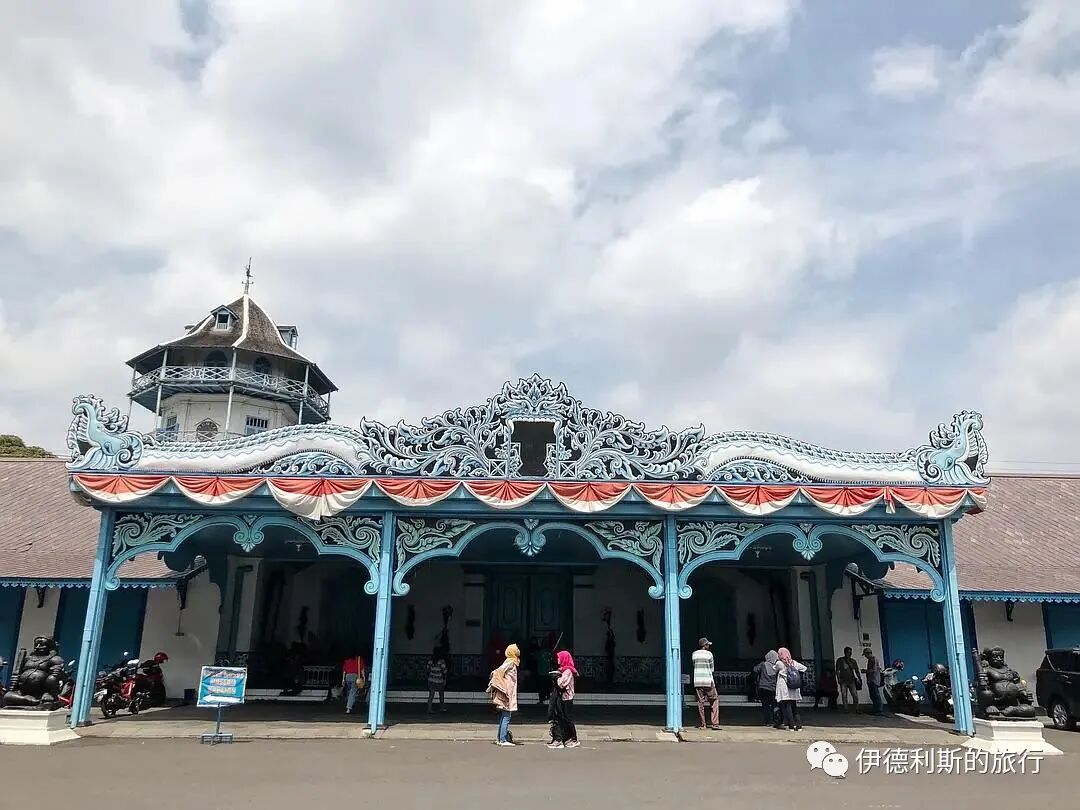
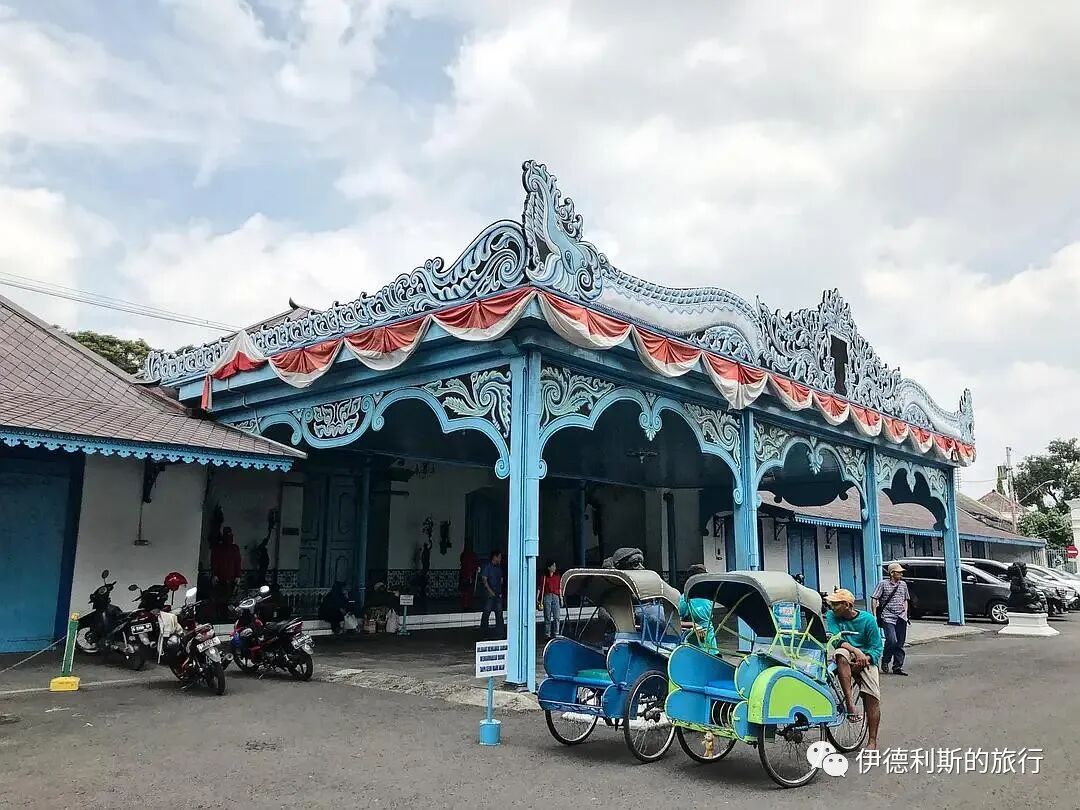
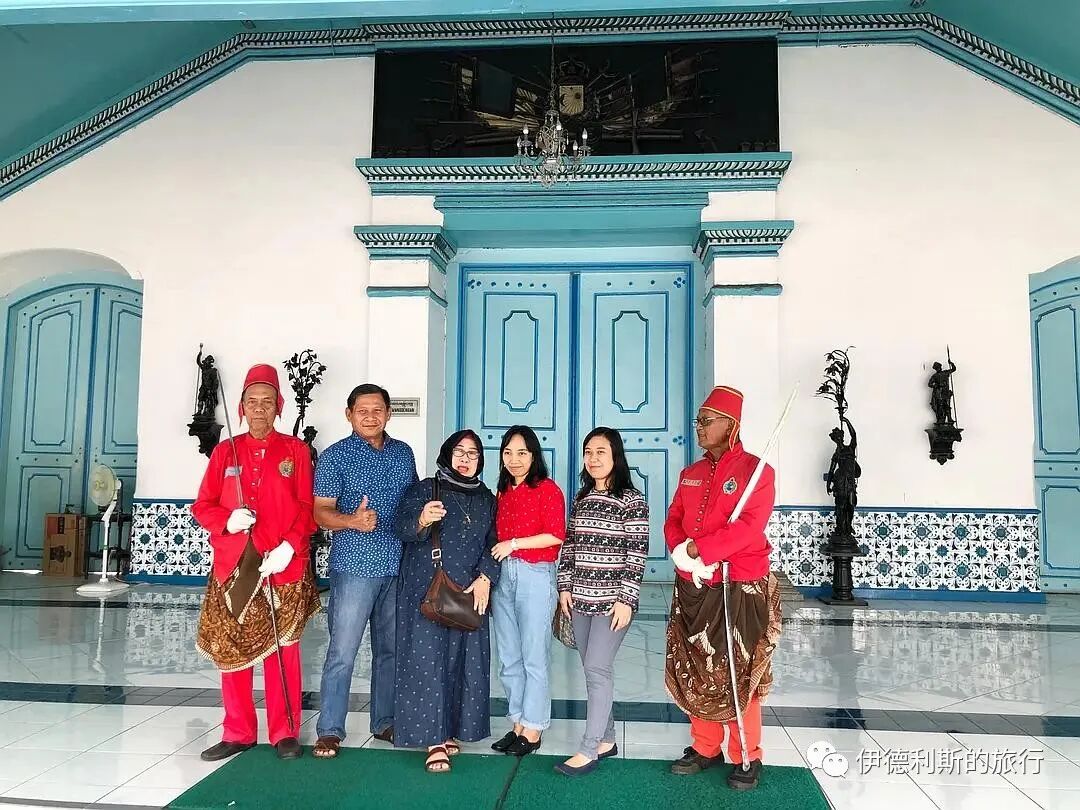
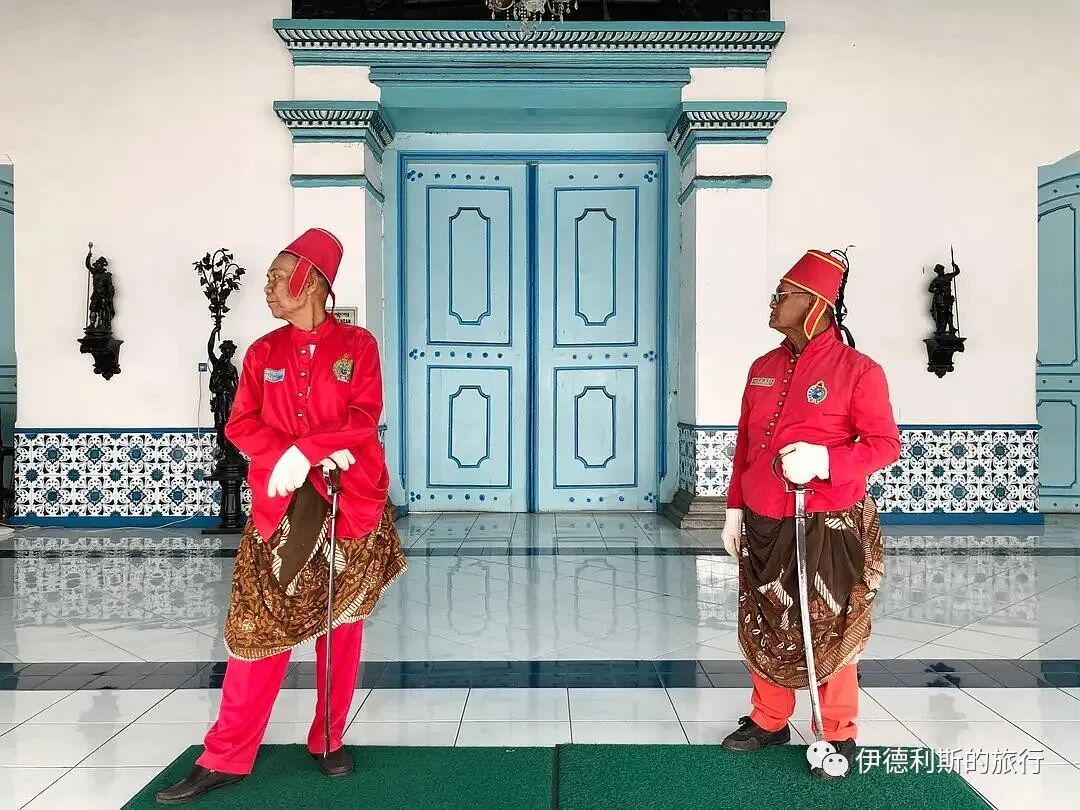
There is a pair of guardian statues (Dvarapala) in front of the gate. Dvarapala originated as gate gods in Hinduism and Buddhism. In Javanese culture, they usually appear as giant, fierce-looking asuras holding a vajra.
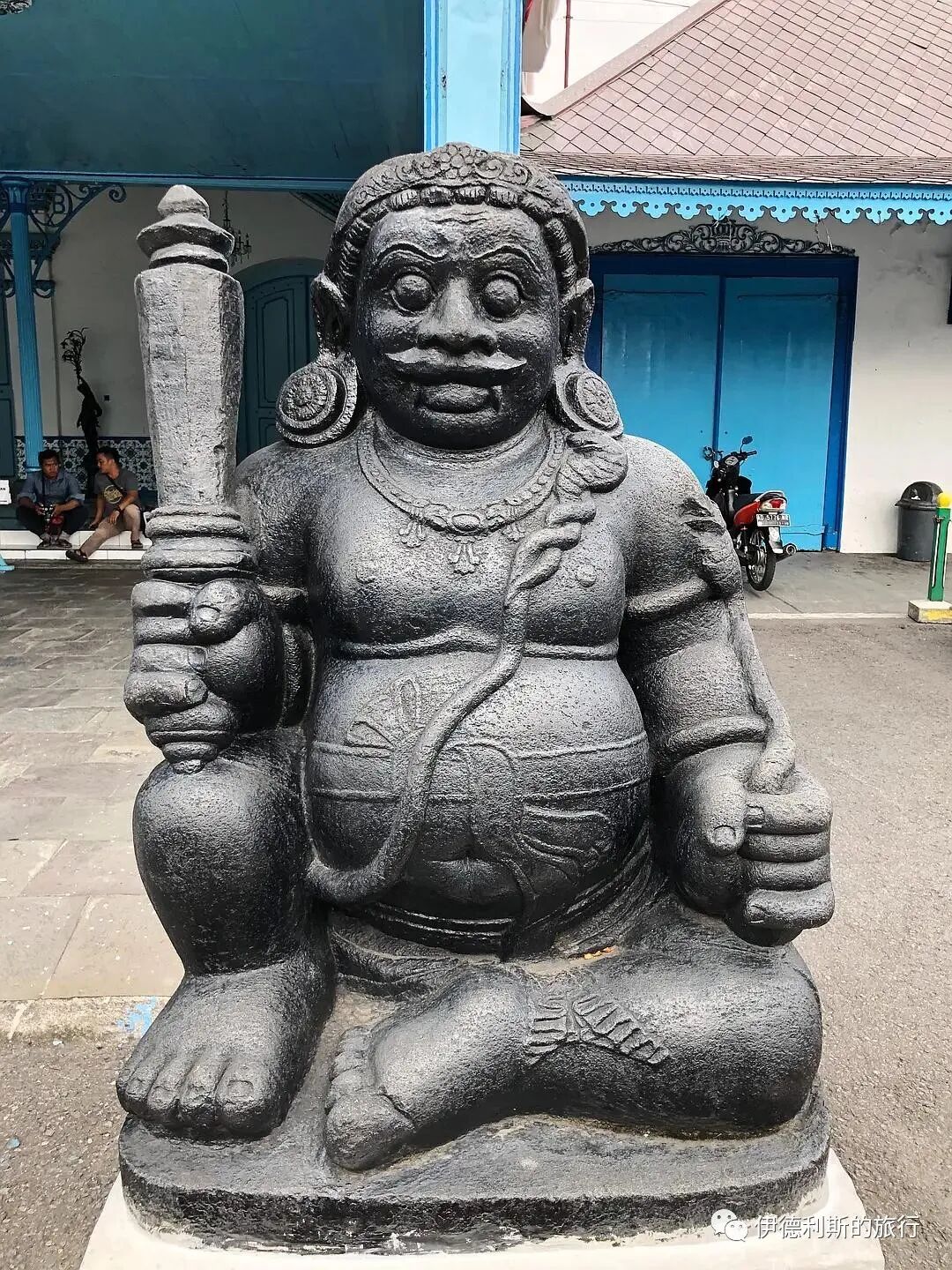
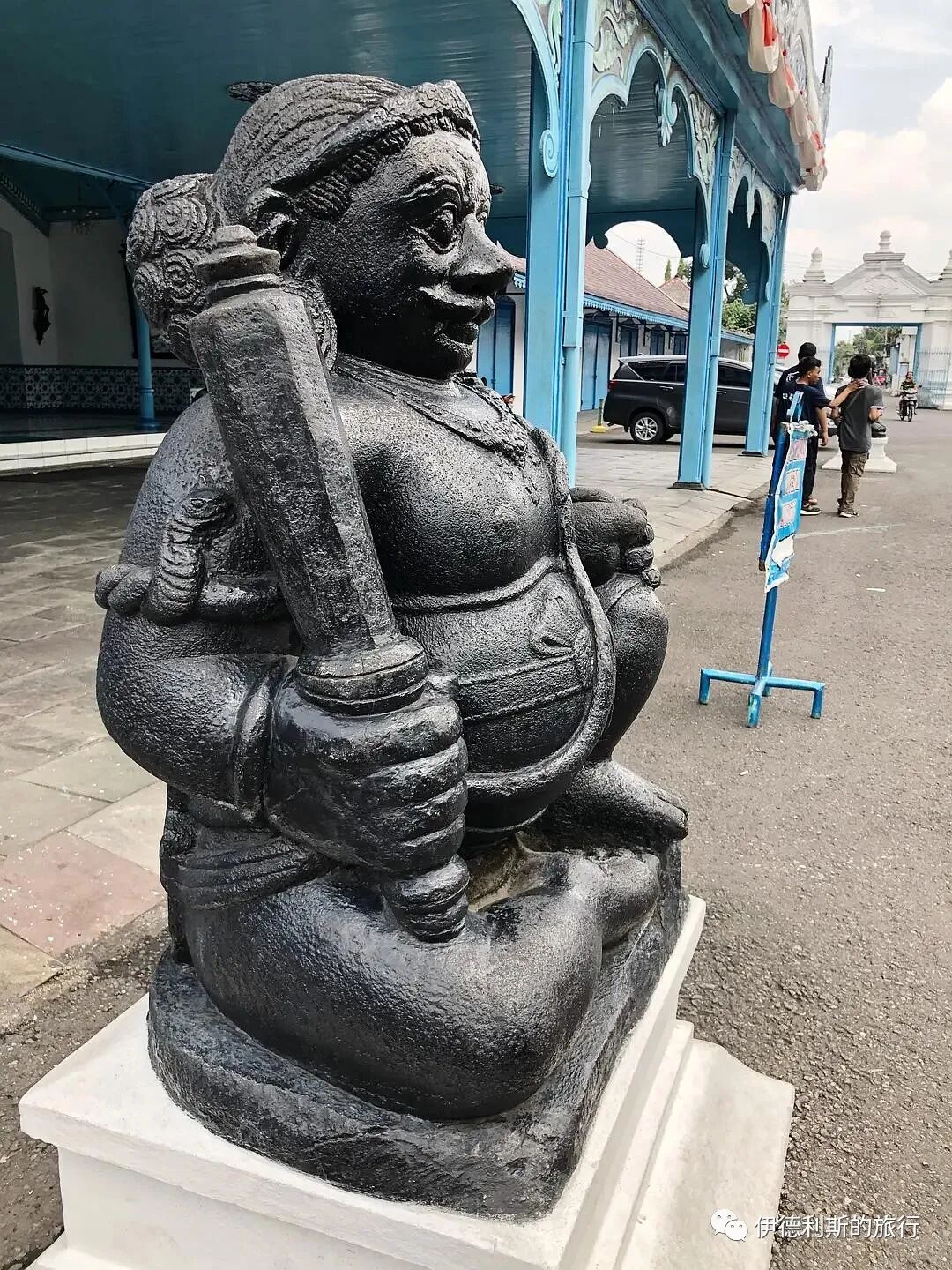
4. Garden Museum
Part of the side garden has been turned into a museum, displaying a collection of artifacts including statues, weapons, royal treasures, and carriages. However, the exhibits have almost no descriptions and are not in good condition.
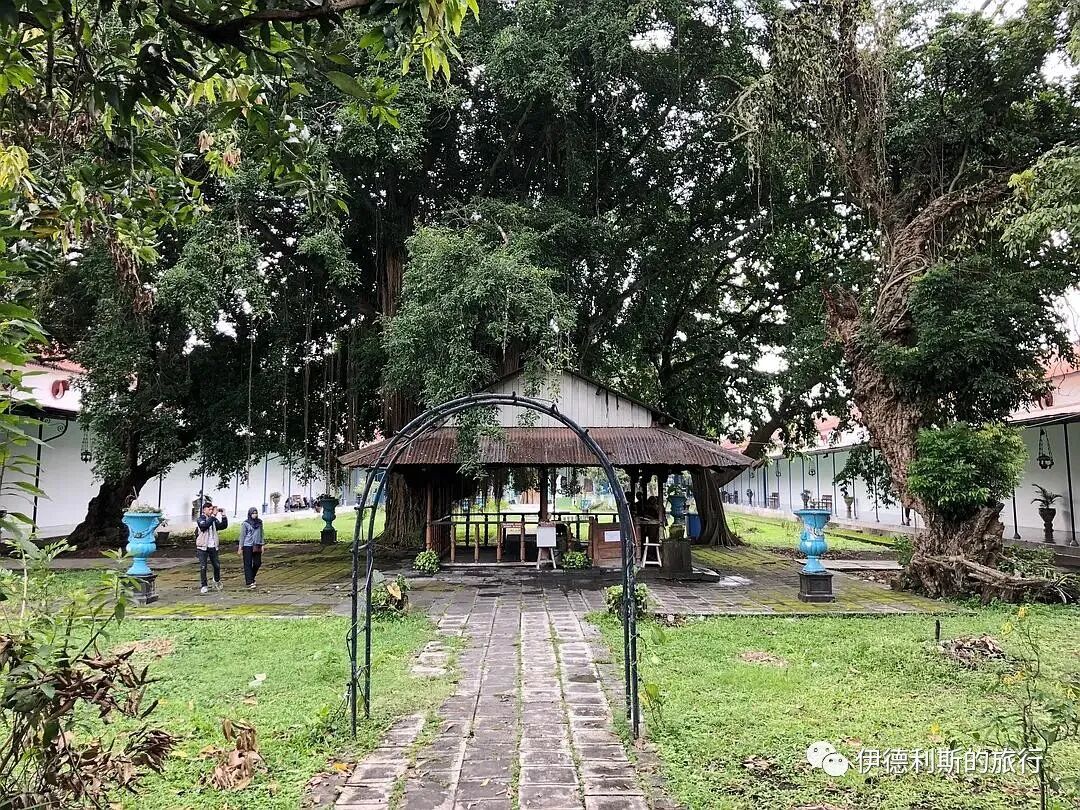
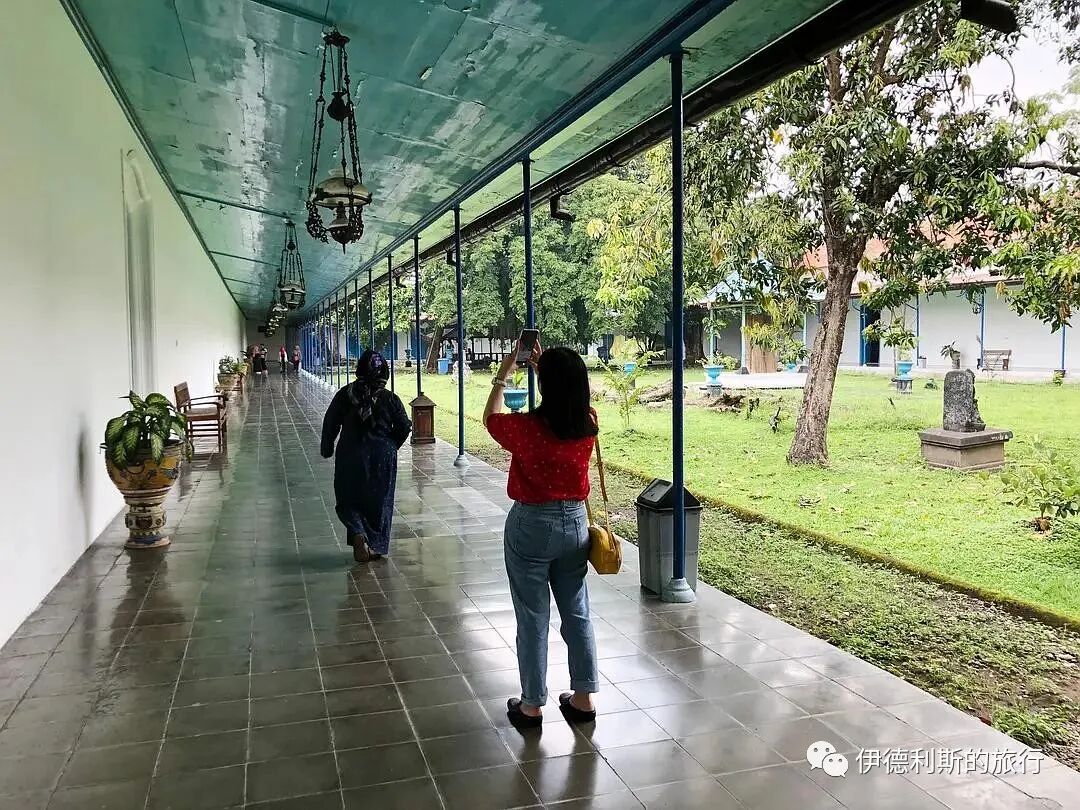
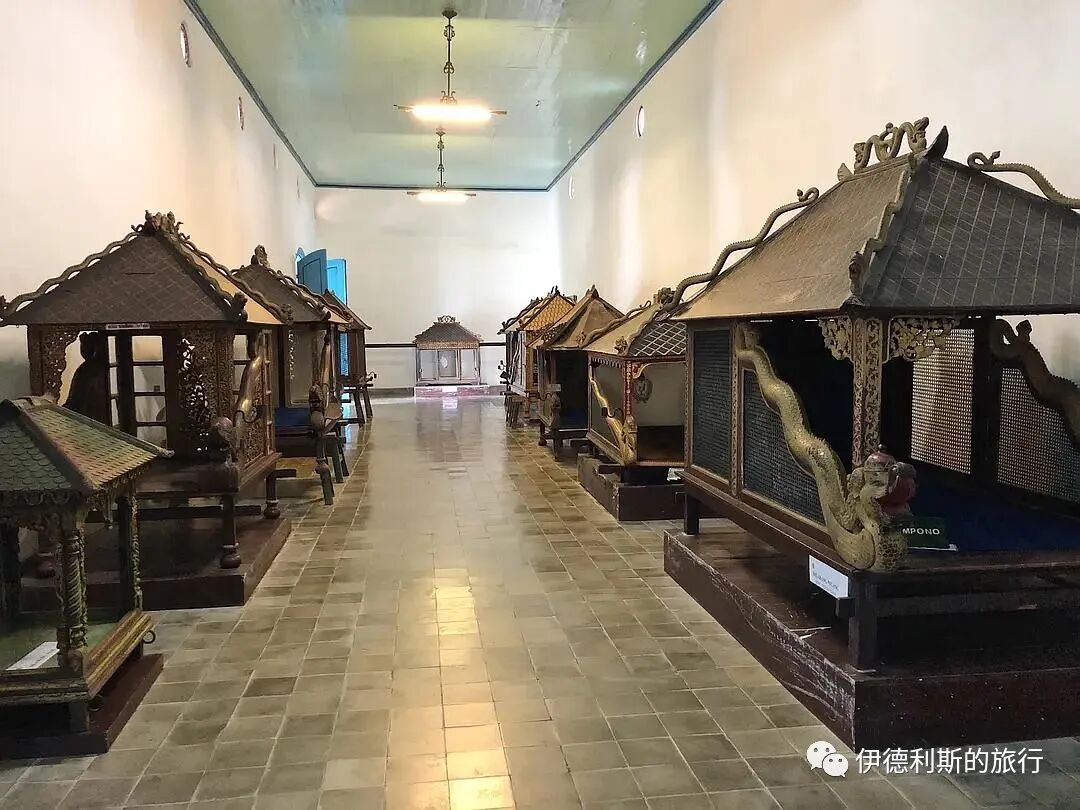
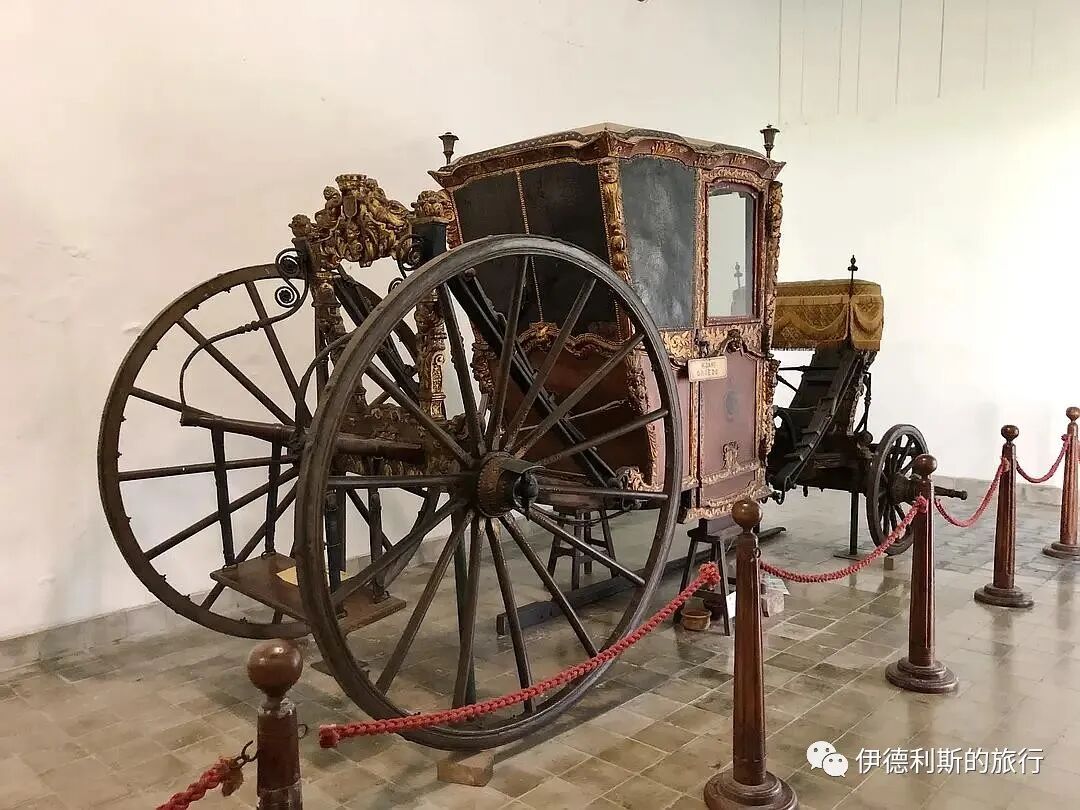
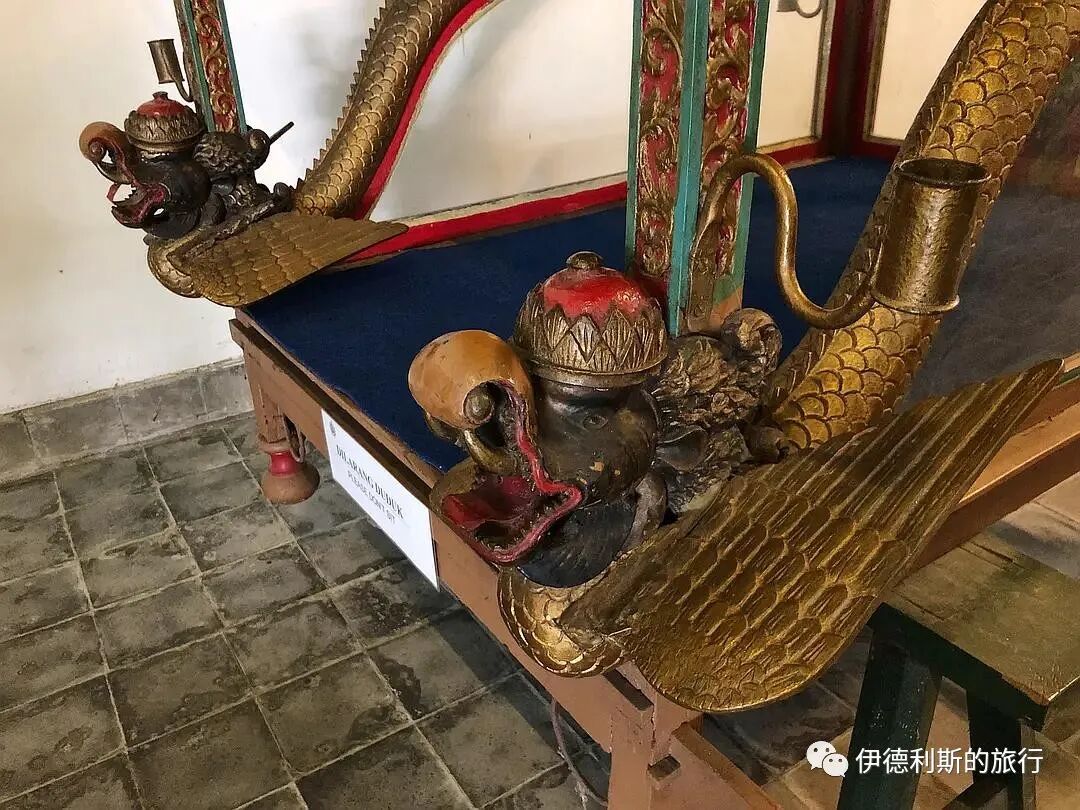
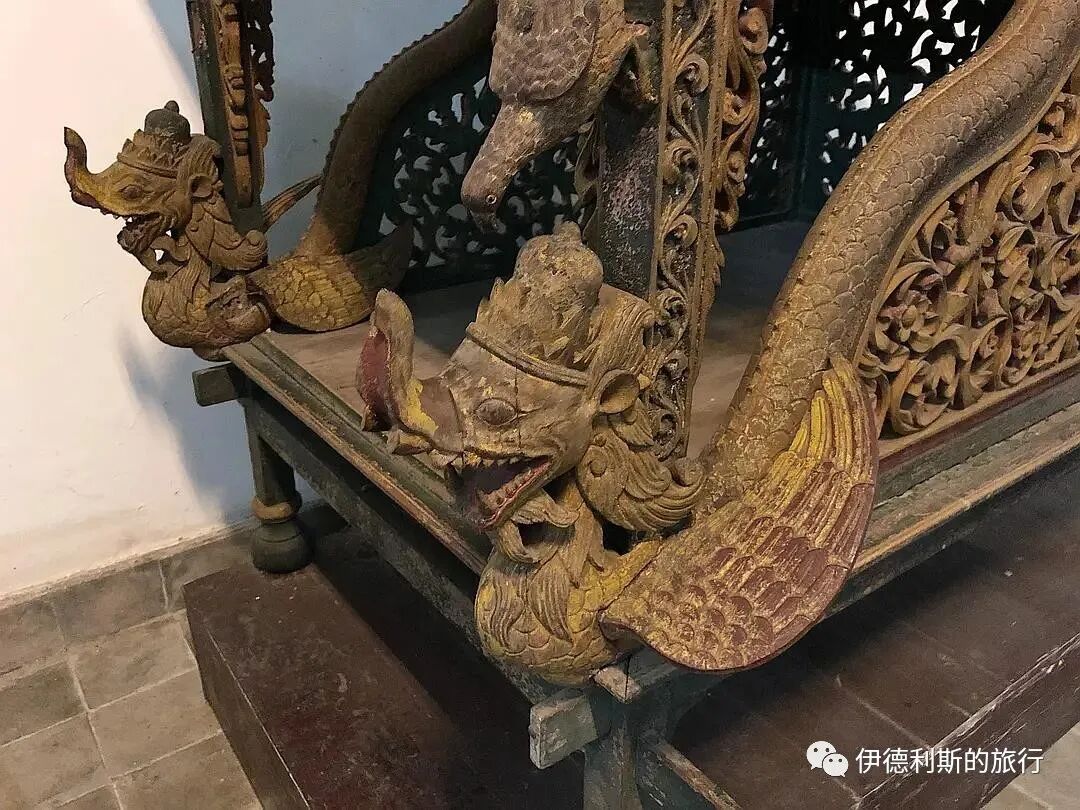
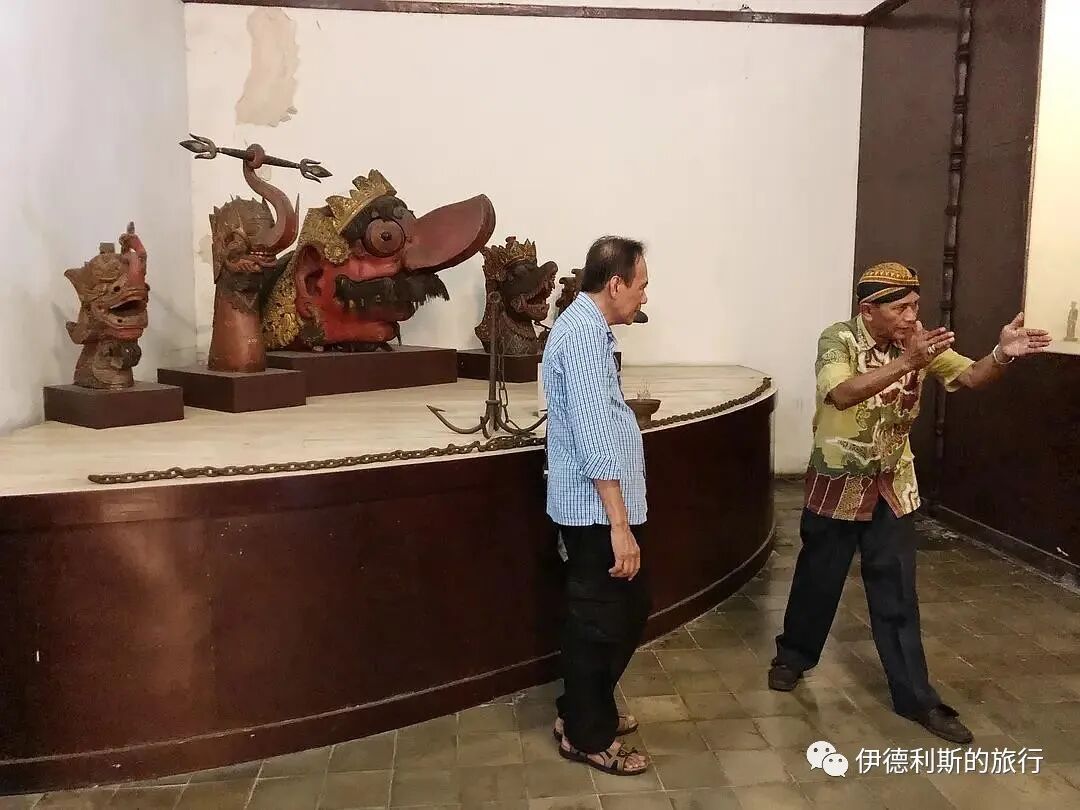
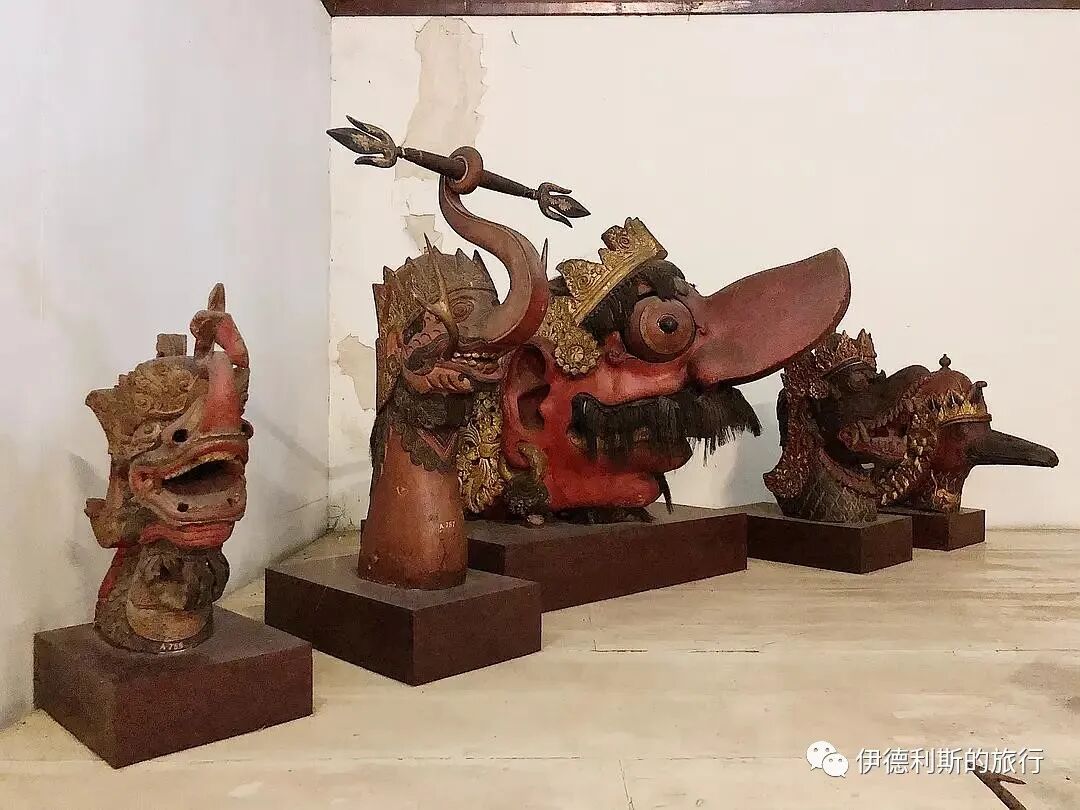
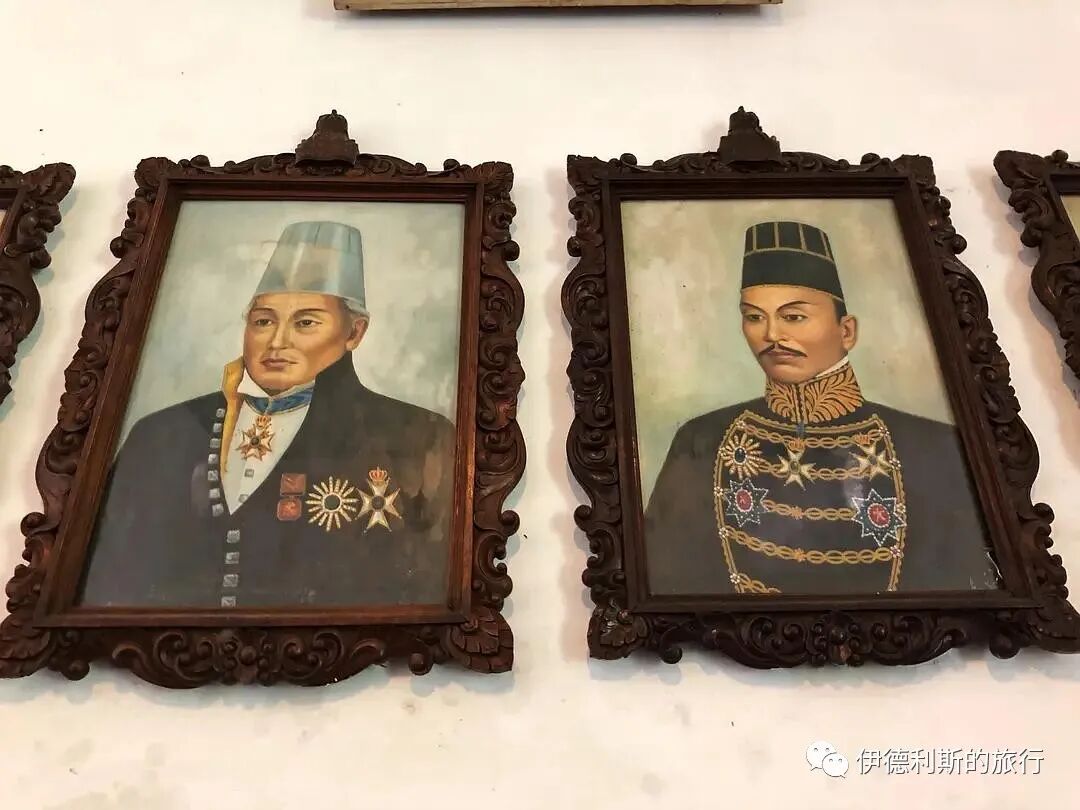
5. Sasana Mulya Prince's Residence
A series of royal buildings are scattered around the palace. I visited a building called Sasana Mulya, built by Pakubuwana III as a residence for the Sunan's princes and their descendants. The royal family often gathers here, and the palace also hosts weddings at this location.
Today, it is also a practice space for traditional Solo song and dance, and related traditional cultural events are held here every week.
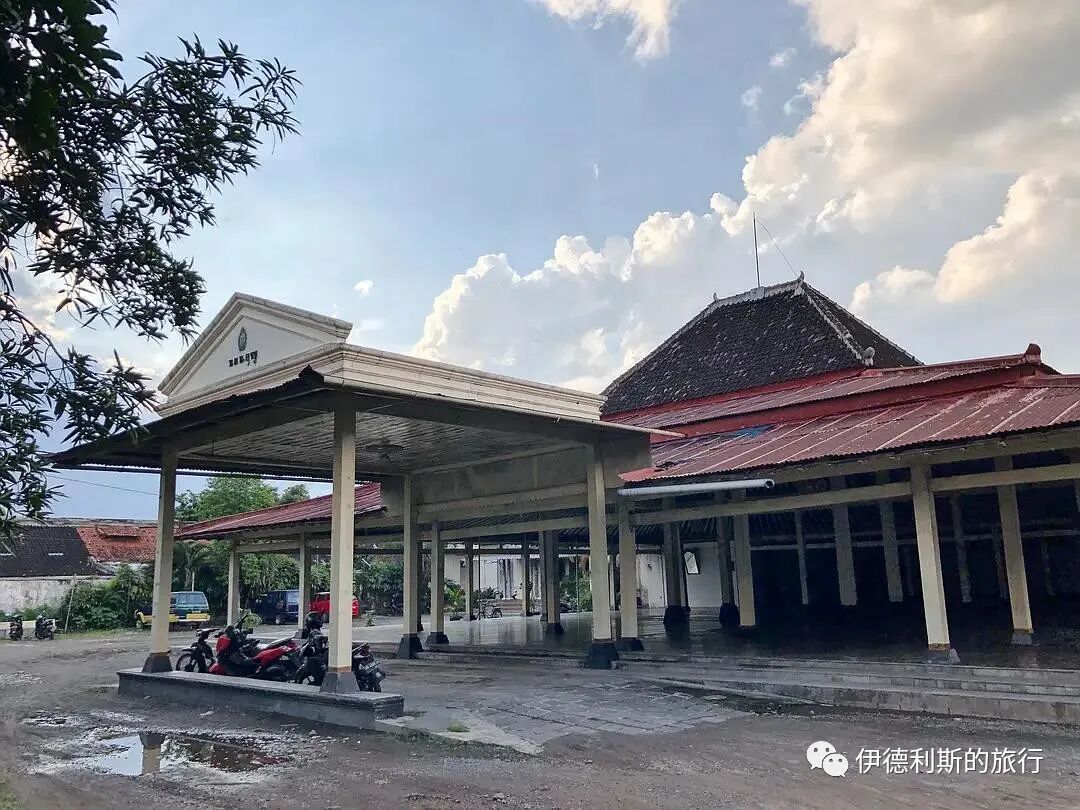
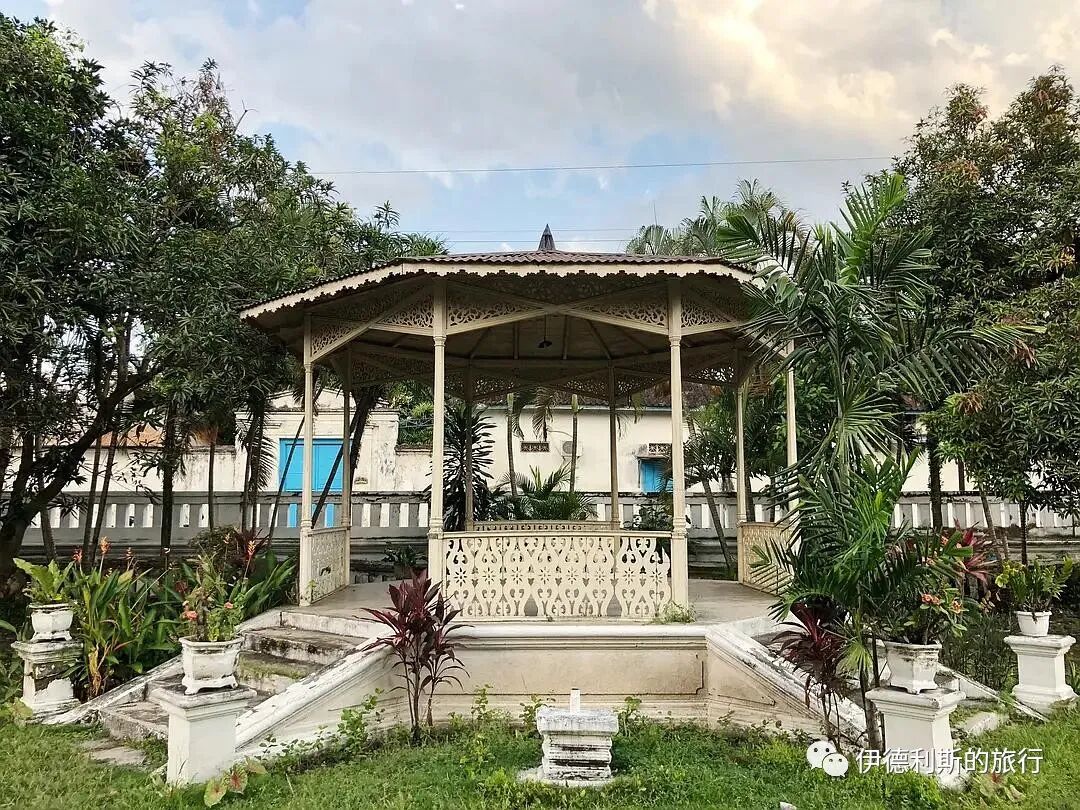
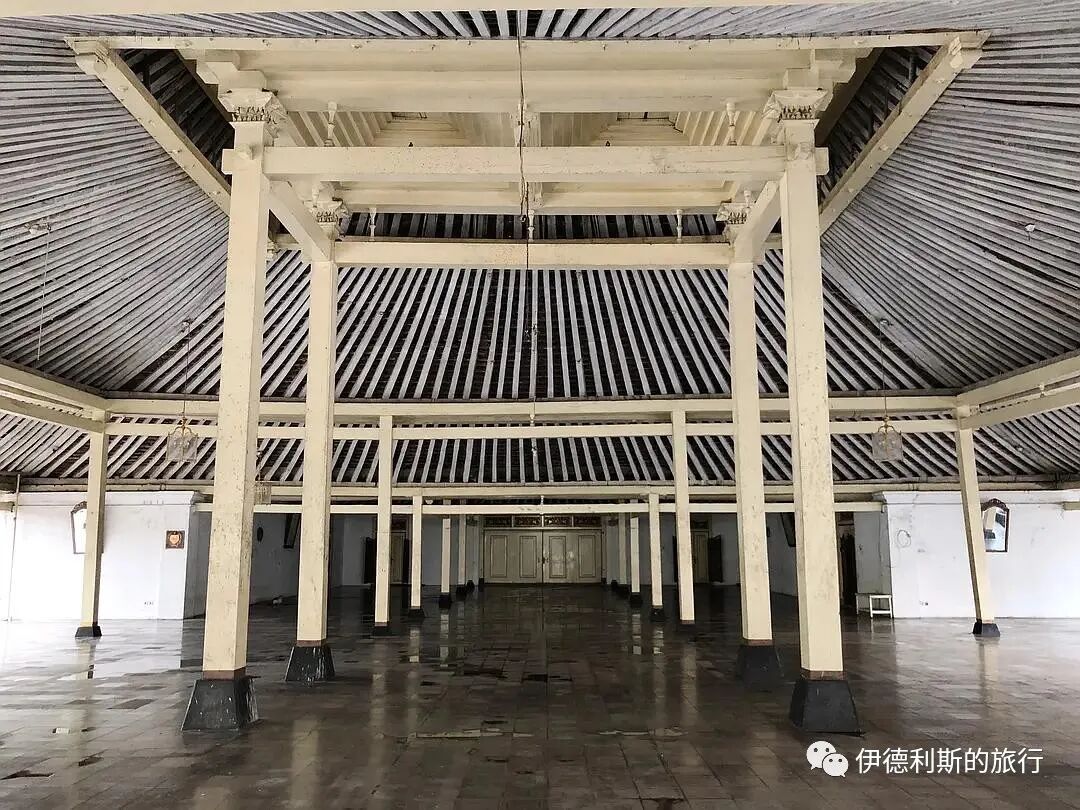
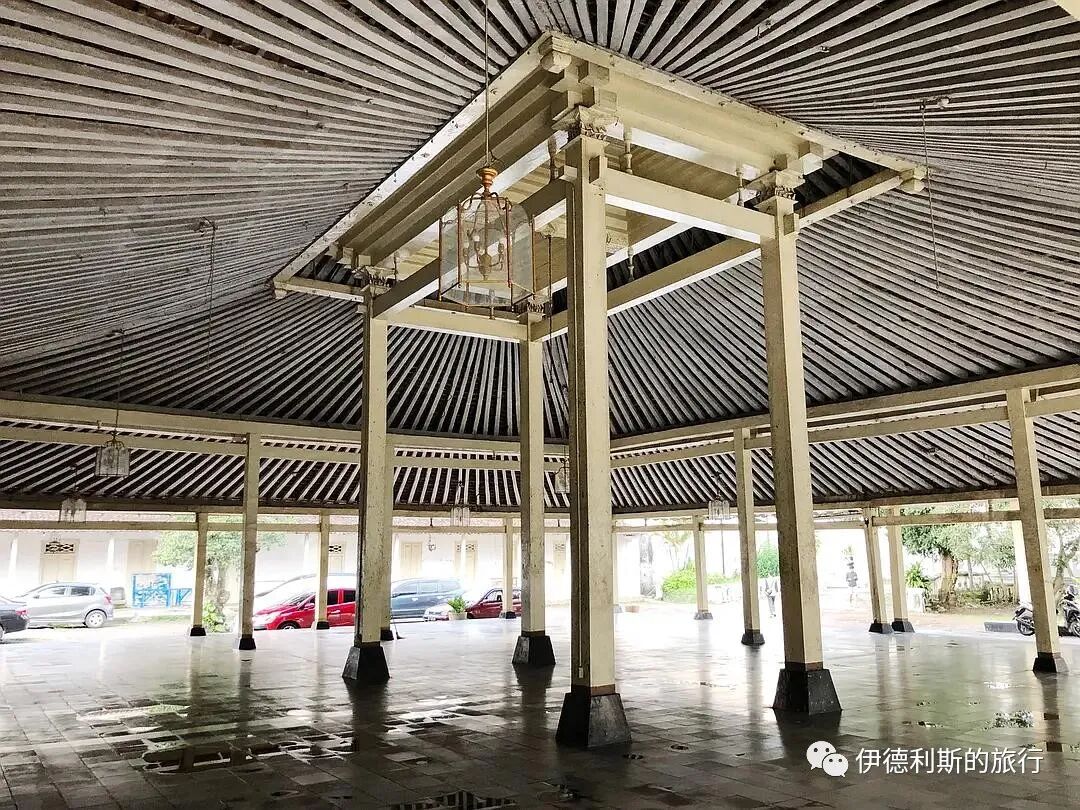
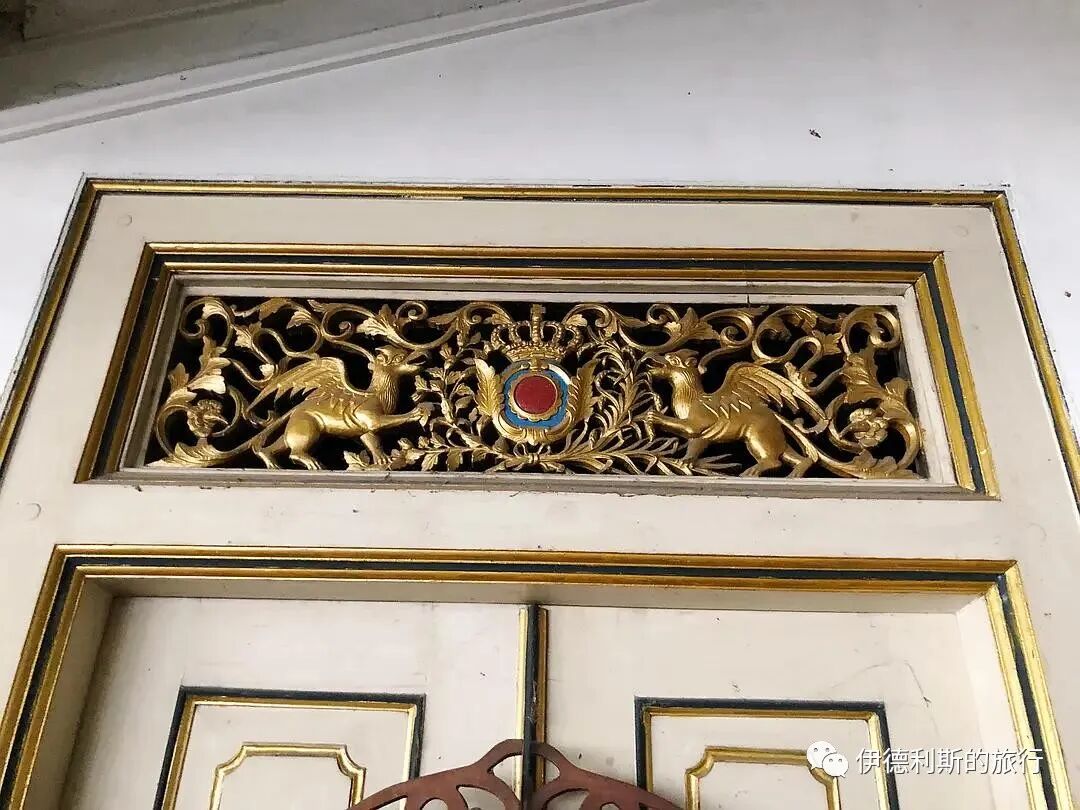
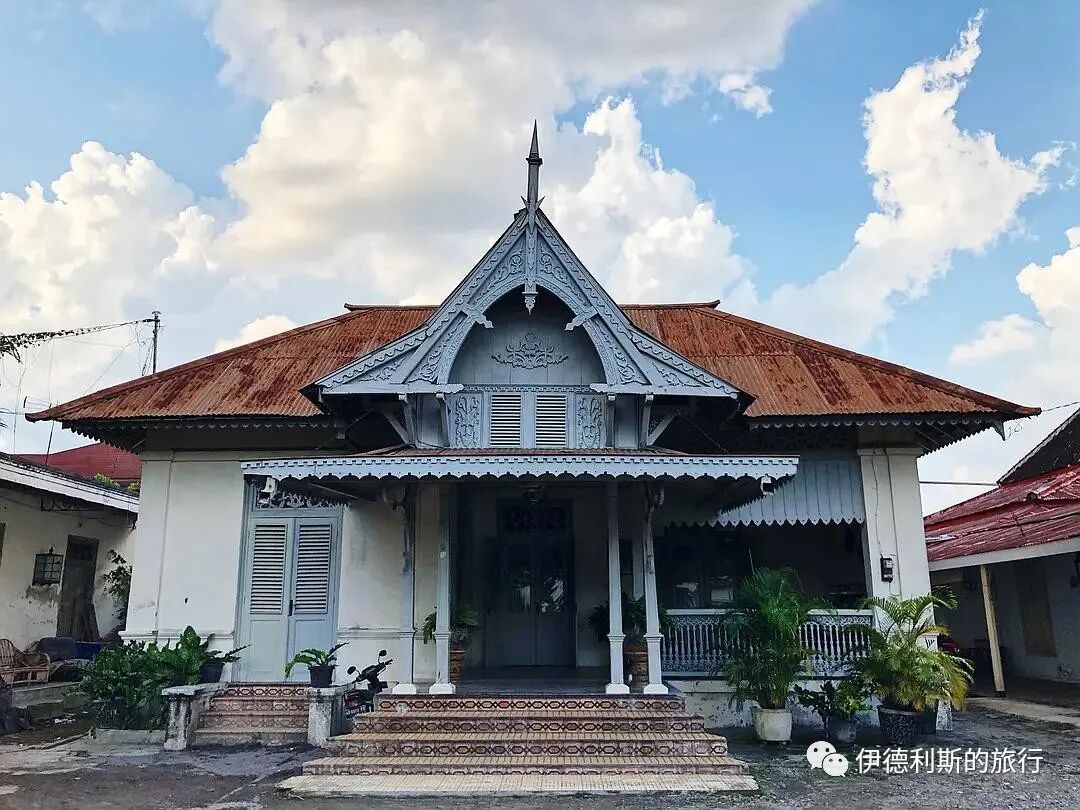
6. Around the Palace
Inside the walls of the Solo palace, there is a two-story watchtower.
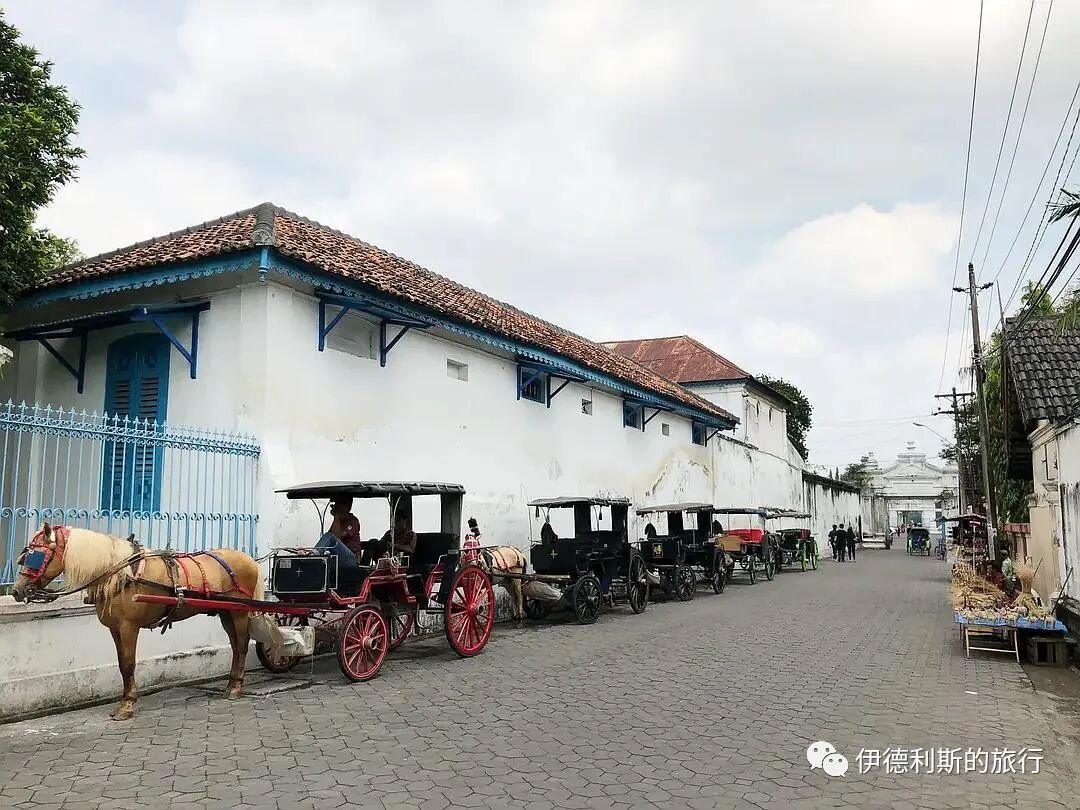
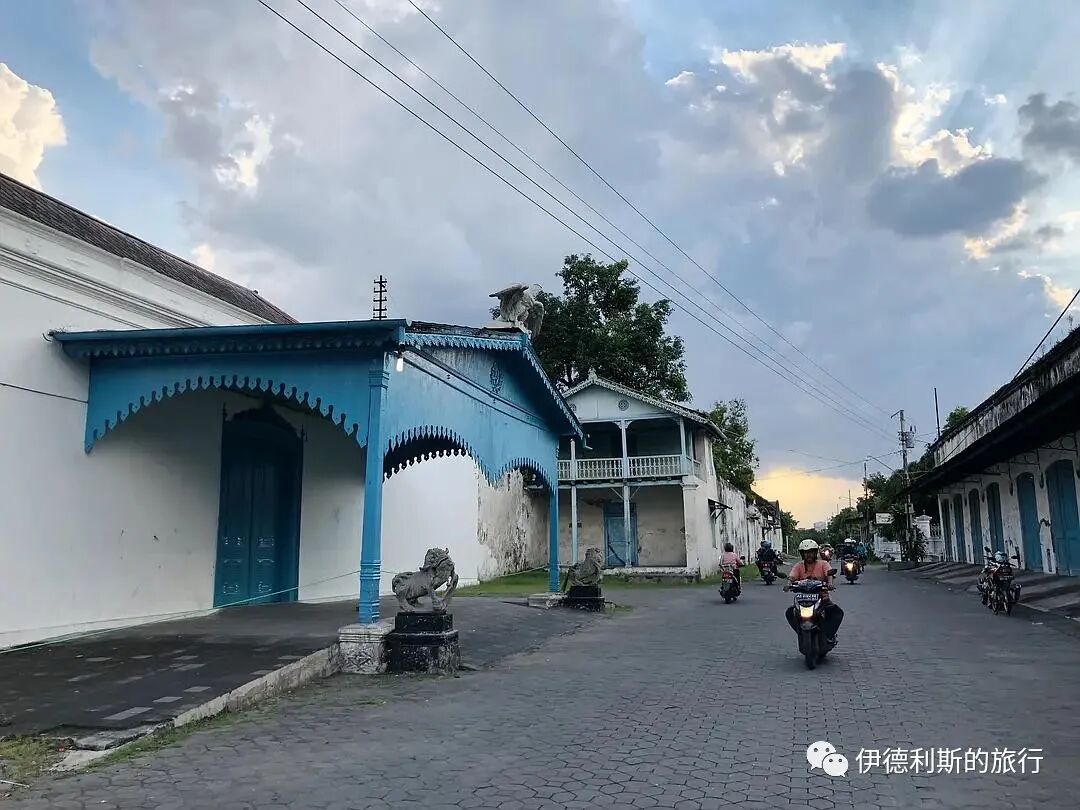
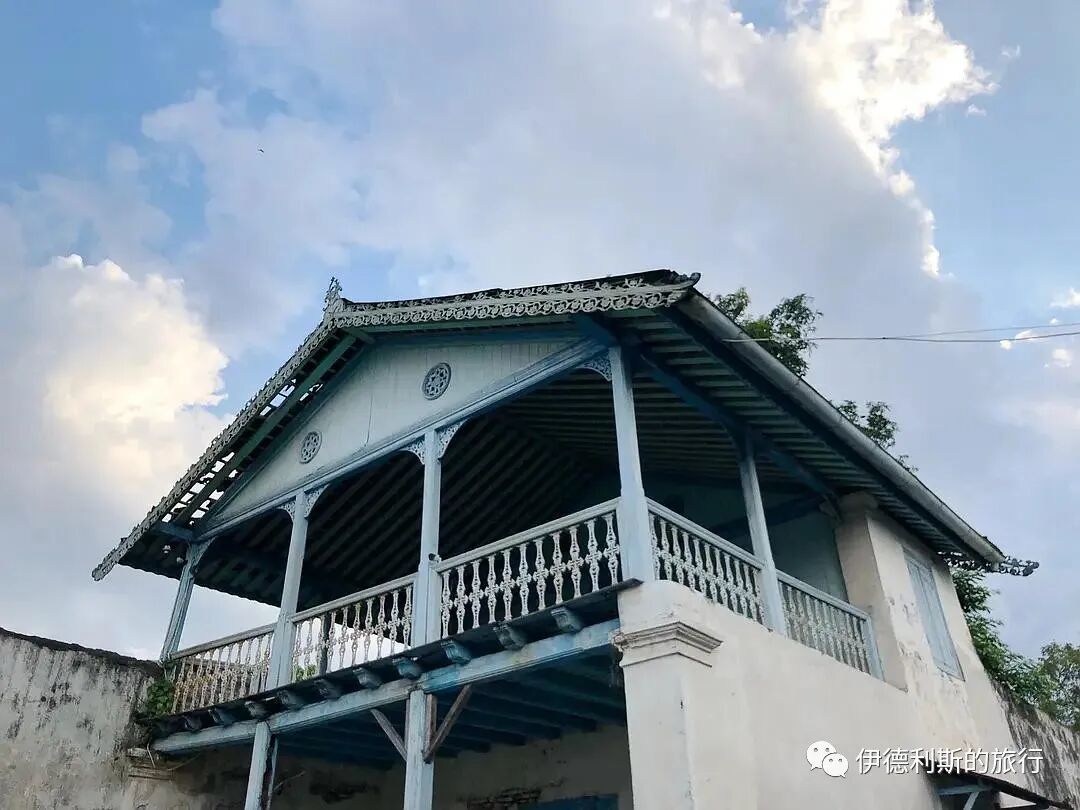
A building next to the palace shows a typical blend of Dutch colonial and Javanese styles.
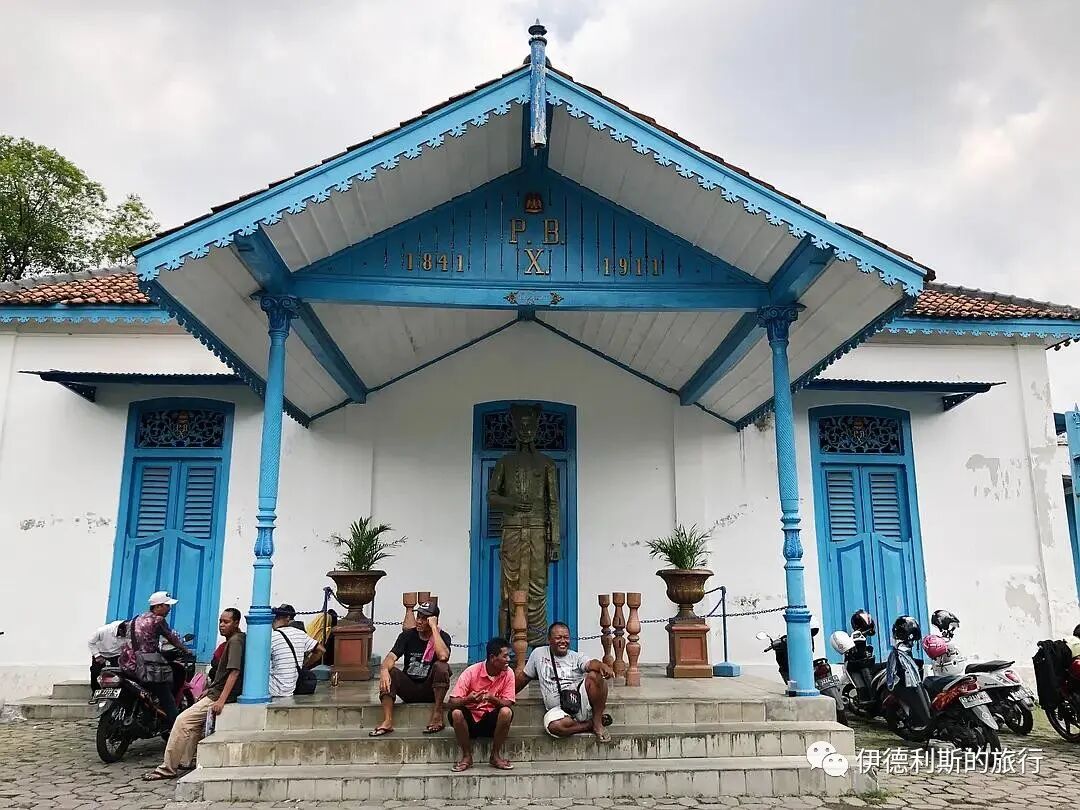
On the streets near the palace, there are horse-drawn carriage tours.
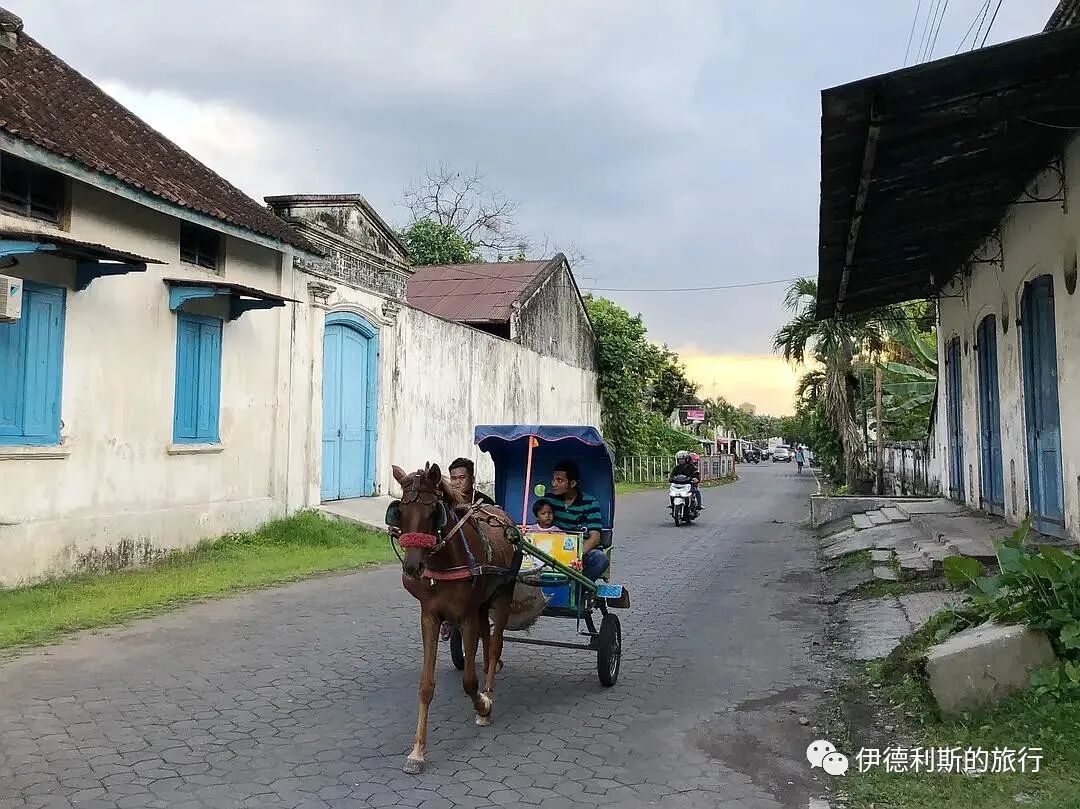
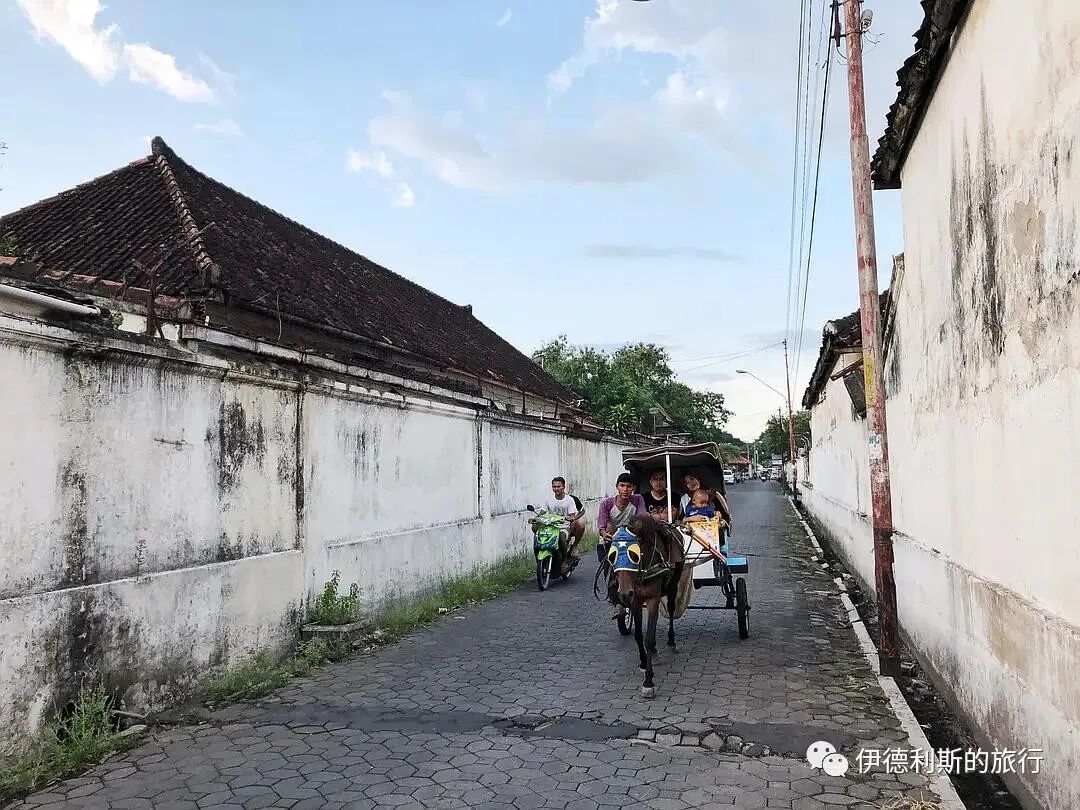
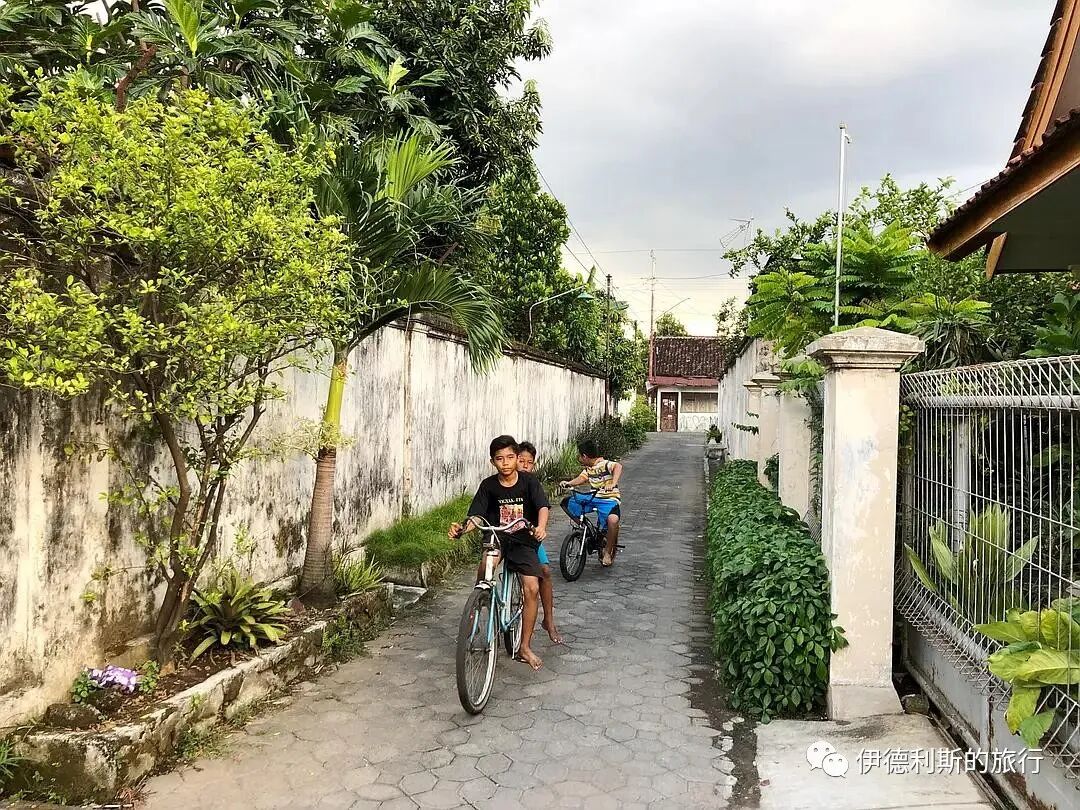
The outer walls and gates of the Solo palace.
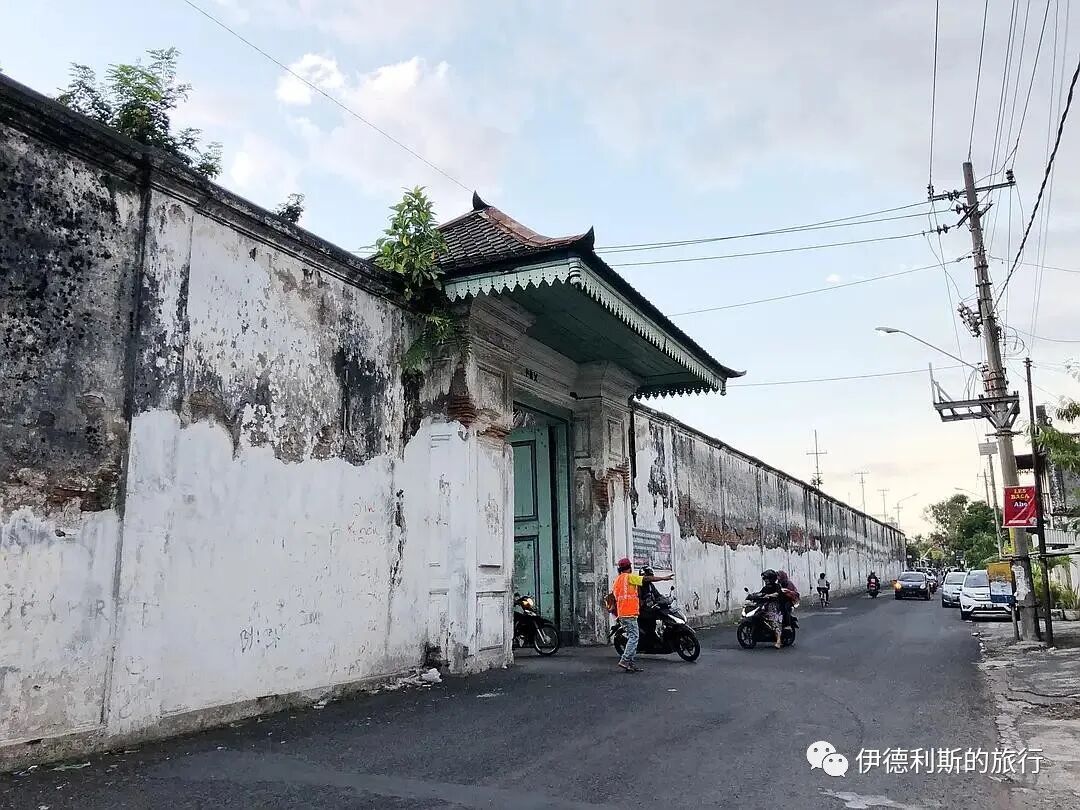
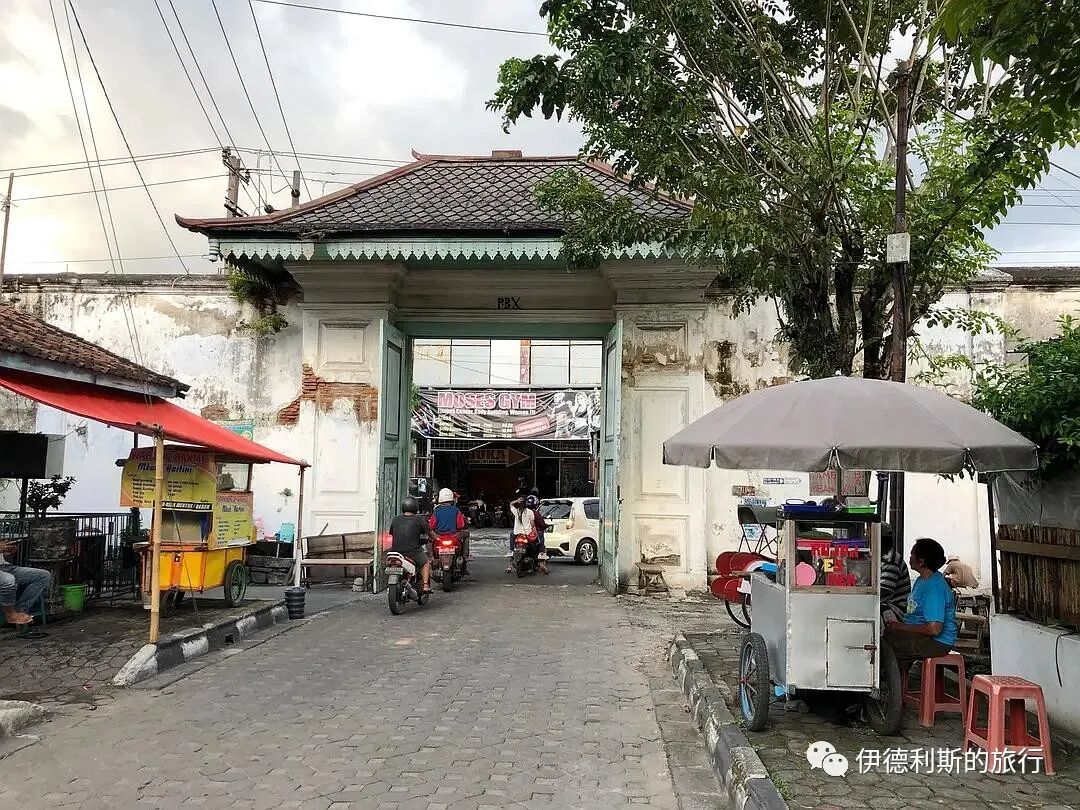
2. Solo Grand Mosque (Masjid Agung Surakarta)
The Solo Grand Mosque is located north of the palace. It was built by Sunan Pakubuwana III in 1763 and finished in 1768. The Solo Grand Mosque serves as both a Friday mosque and a royal mosque. Many Islamic ceremonies for the Solo court take place here, the most important being the Prophet's Birthday (Sekaten). During Sekaten, two sets of large gamelan instruments (Gangsa Sekaten) are moved from the Solo palace storage to the mosque courtyard. One set was made in 1810. Traditional Javanese gamelan music is performed here except during prayer times.
The Solo Grand Mosque is a classic example of traditional Javanese mosque architecture. The main hall has a three-tiered pyramid-shaped roof called a Tajug. This structure comes from Indian and Chinese cultures and existed before Islam reached Java. It shows how Indonesian Islam blends with local culture. The decoration at the very top of the roof is called a Mustoko or Memolo. Traditional Mustoko are made of clay, but the ones at the Solo Grand Mosque have been replaced with Indian-style domes. During the reign of Pakubuwono X, the roof of the main hall was covered in gold, but other materials replaced it later.
The main hall does not use walls for support. Instead, it uses four pillars called Soko Guru that connect to the roof.
The front porch (Serambi) is located in front of the main hall and is connected to it. The front porch is mainly used for shade and shelter from rain. People also pray there during Friday congregational prayers.
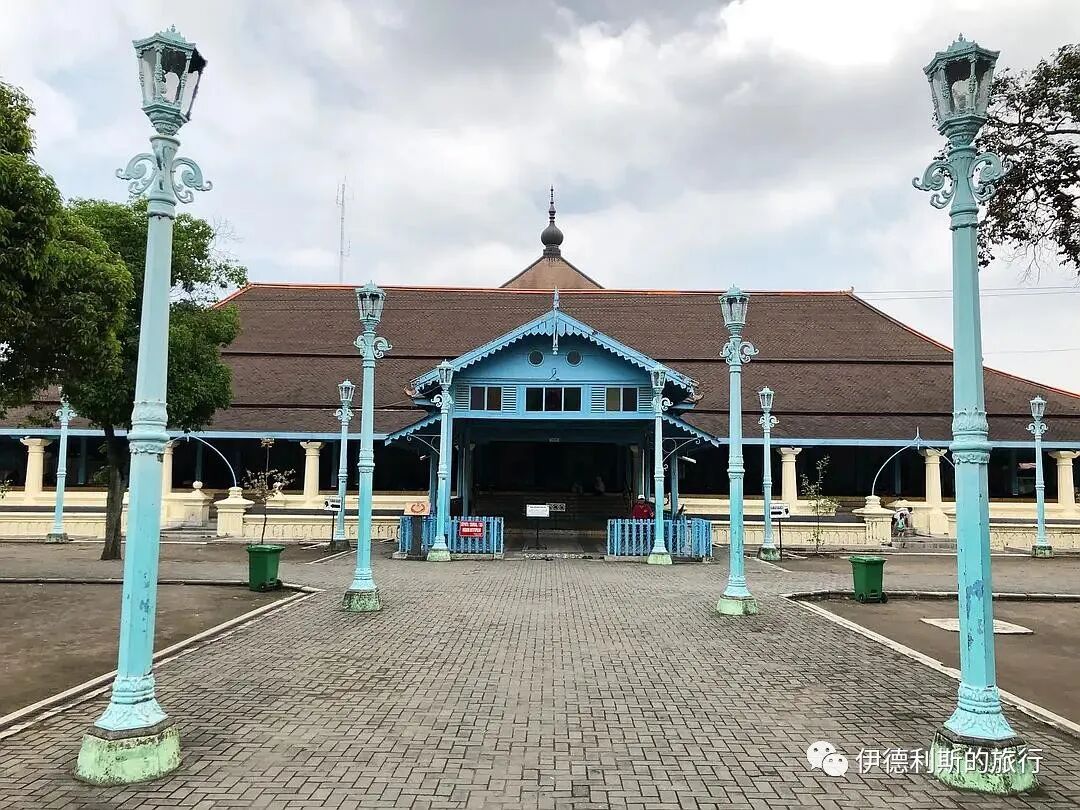
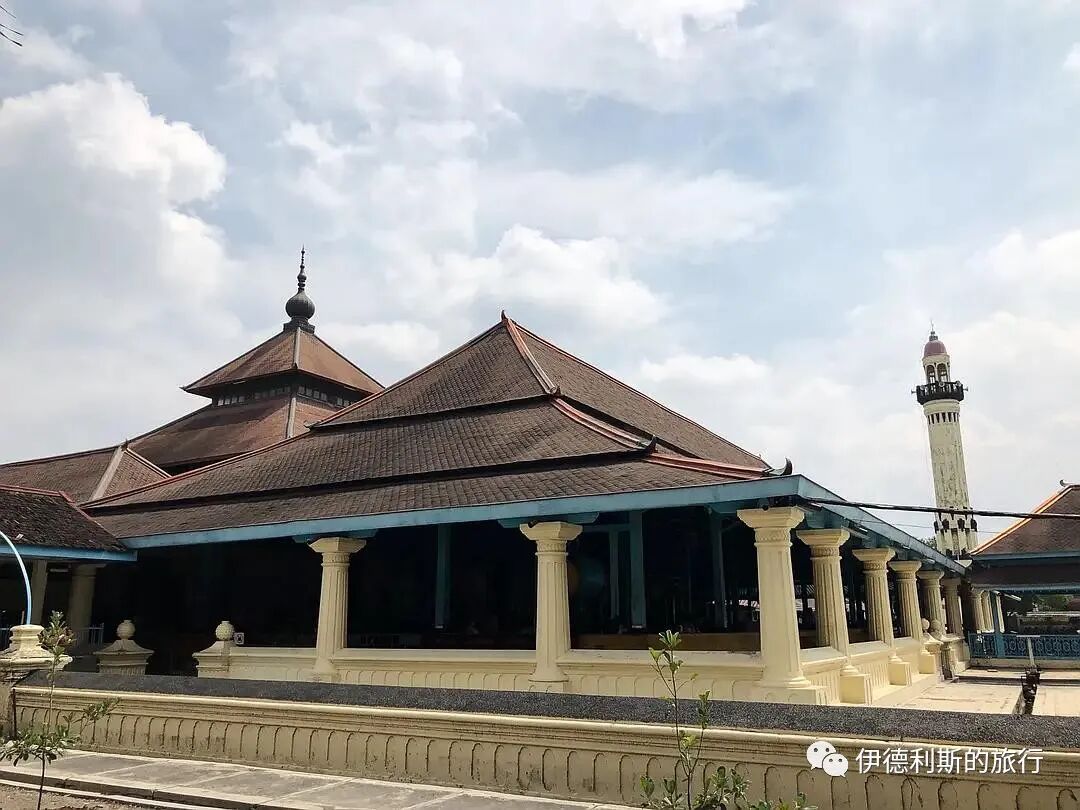
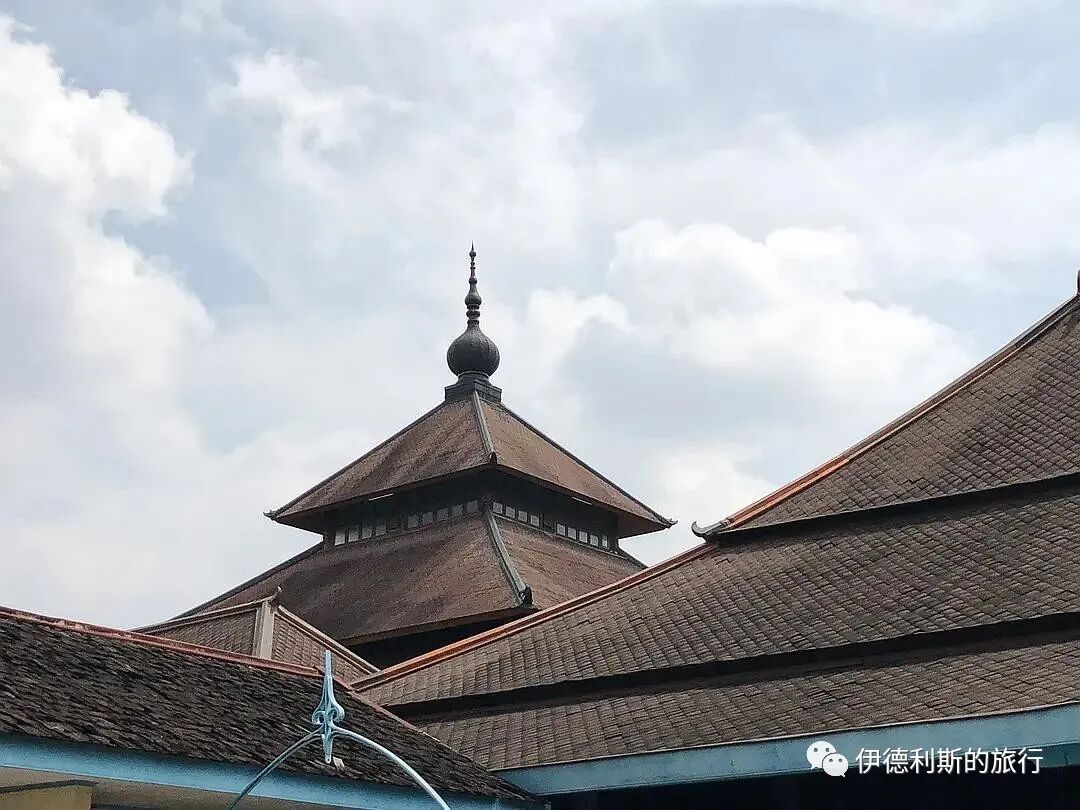
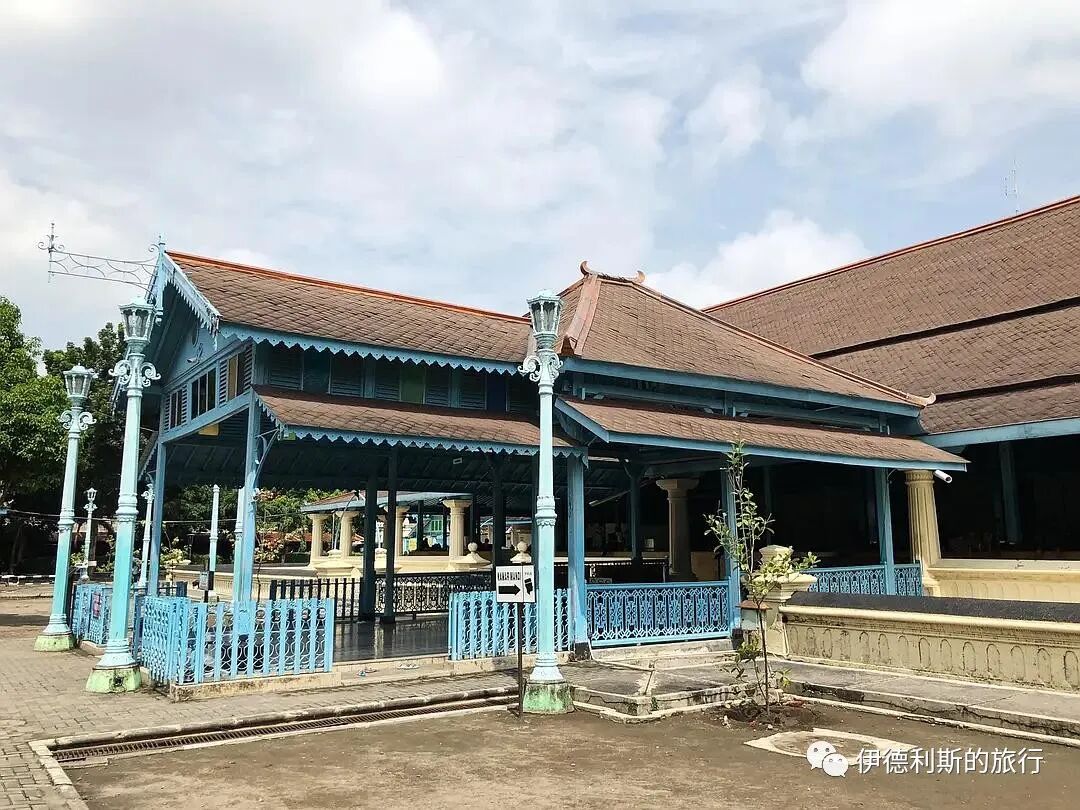
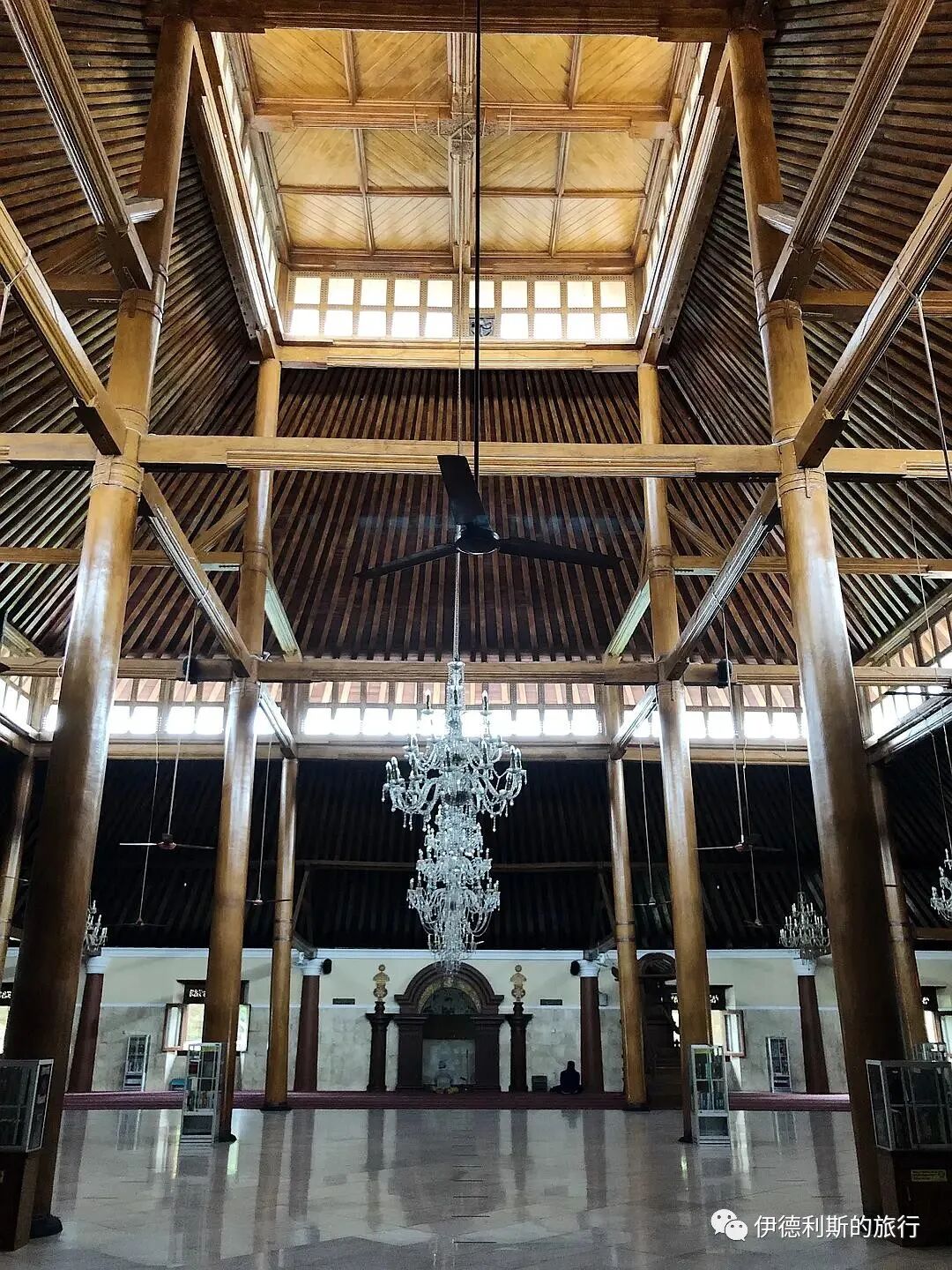
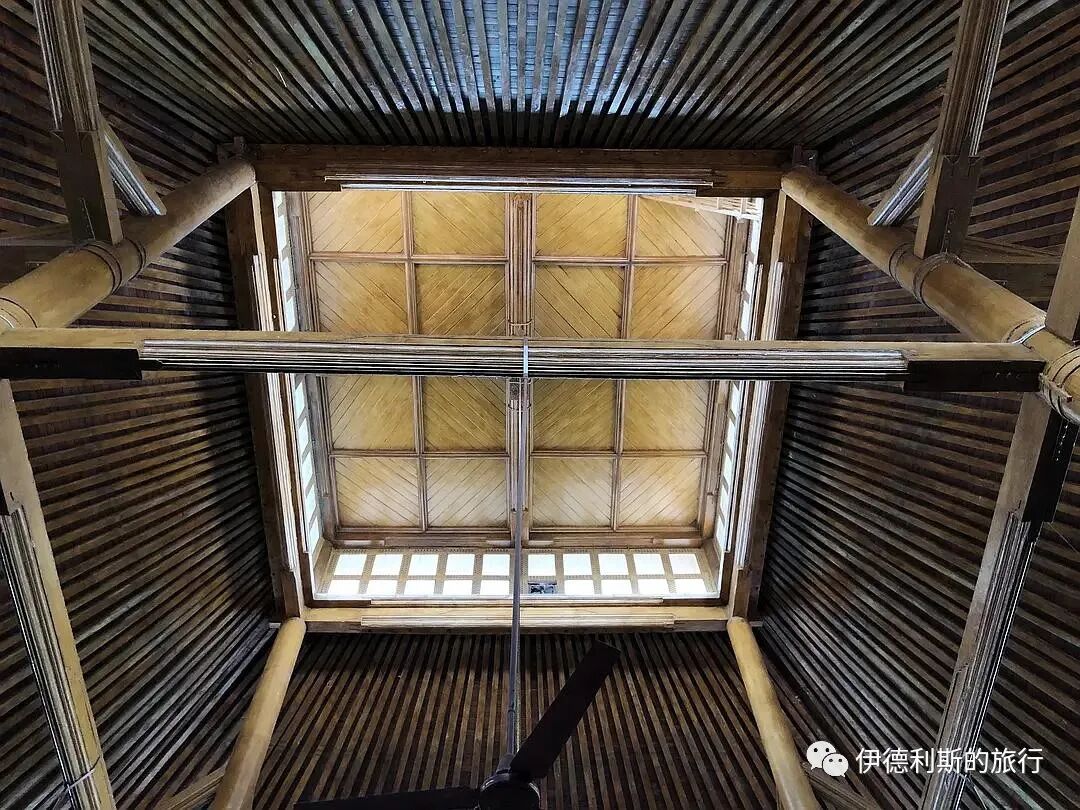
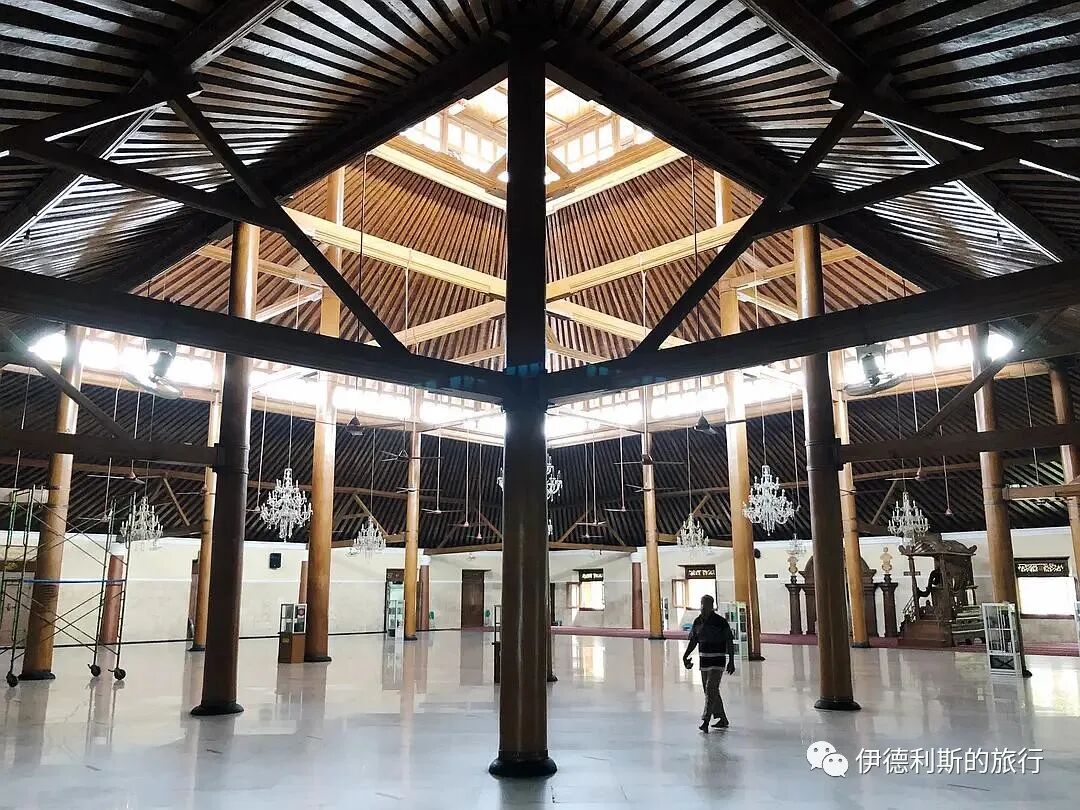
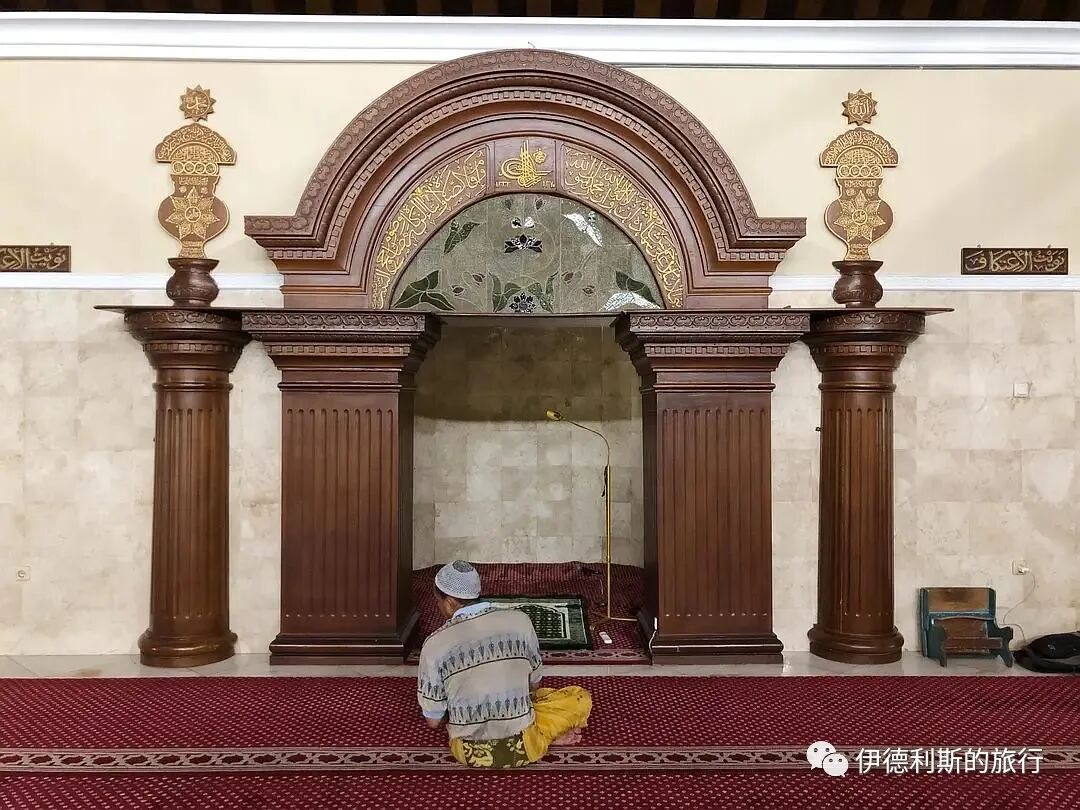
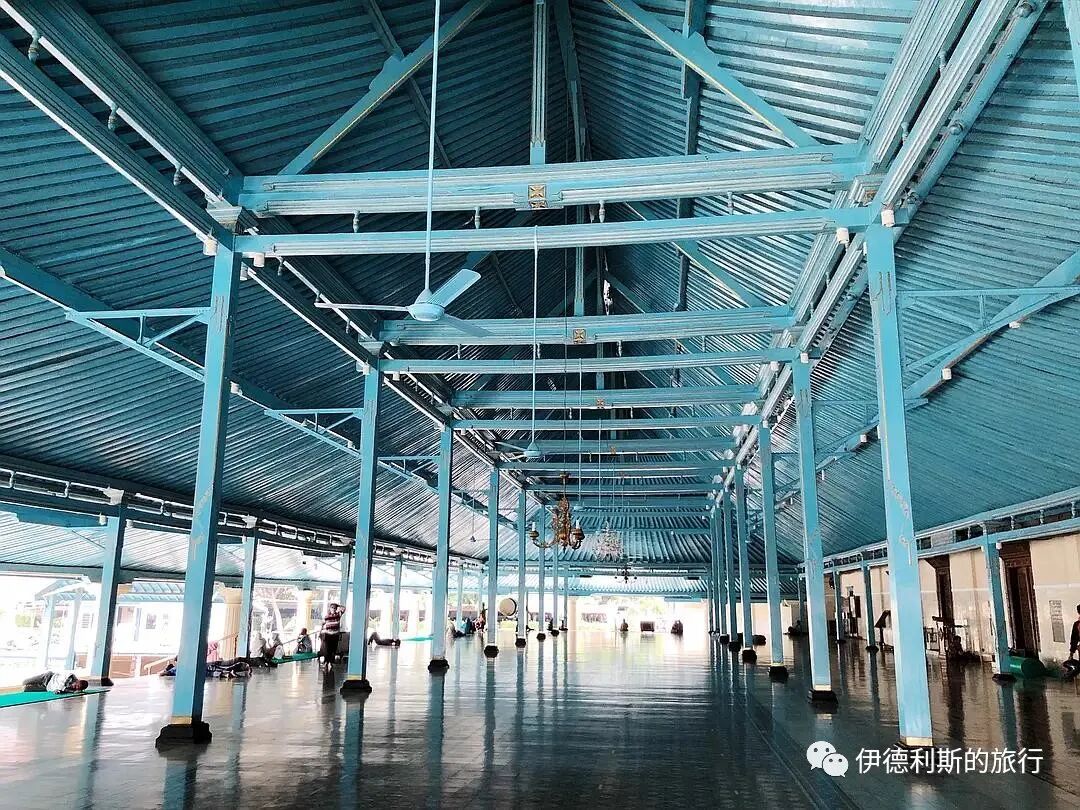
Early traditional Javanese mosques rarely had minarets. Instead, they used a large drum (Bedug) inside the front porch to call people to prayer. Today, the Solo Grand Mosque has an Indian Mughal-style minaret built in 1928 by Sunan Pakubuwono XI.
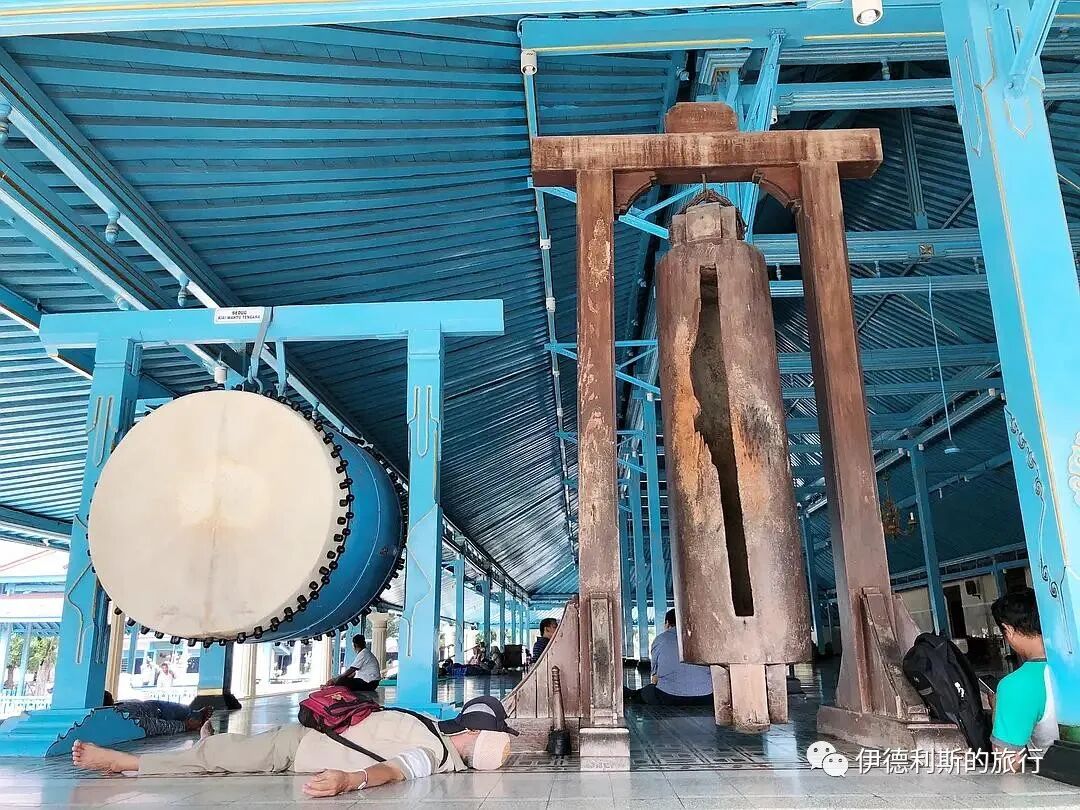
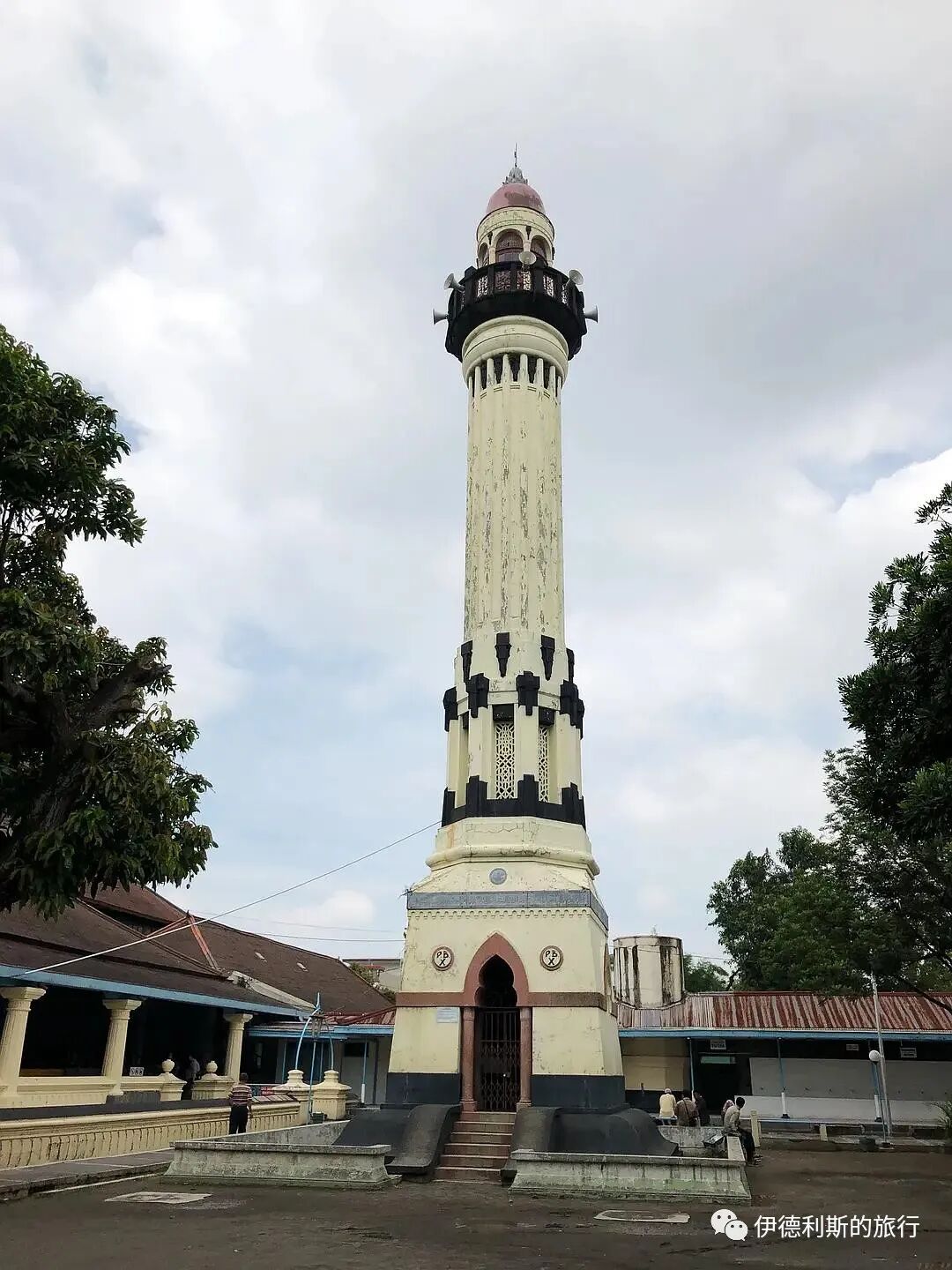
3. Mangkunegara Palace (Pura Mangkunegaran)
In 1757, Raden Mas Said, a rebel from the Mataram Sultanate, surrendered to the Solo Sunanate. He signed an agreement with the Dutch East India Company to establish the Mangkunegaran princely state near Solo and took the name Mangkunegara I. That same year, he built the Mangkunegara Palace (Pura Mangkunegaran) in Solo.
After Indonesia gained independence, Mangkunegara VIII announced in 1946 that he would join the Republic of Indonesia. Although he lost his ruling power in later movements, he and the Solo Sunan still hold cultural status and prestige.
The palace is now open to the public as a tourist site. Once inside, English-speaking guides are available to show you around.
The main building of the palace is a traditional Javanese pavilion called a Pendopo Ageng. It was built in 1815 by Mangkunegara II (reigned 1796-1835) and later expanded by Mangkunegara IV (reigned 1853-1881). It became the largest pavilion in Indonesia at the time and can hold 10,000 people.
The roof of the Pendopo Ageng is a trapezoidal pyramid shape called a Joglo, and the entrance features Dutch colonial-style decorations. Inside the pavilion, there are chandeliers installed in 1866, and the floor is covered in marble. Traditional Javanese song and dance performances are held here regularly.
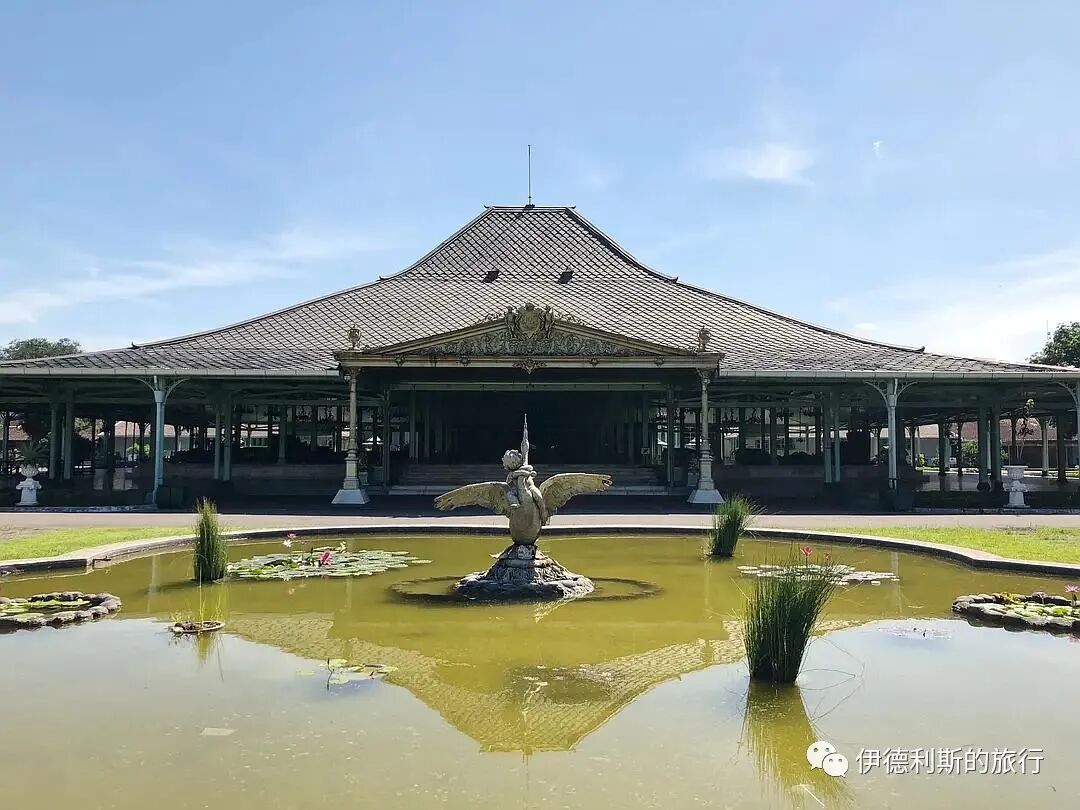
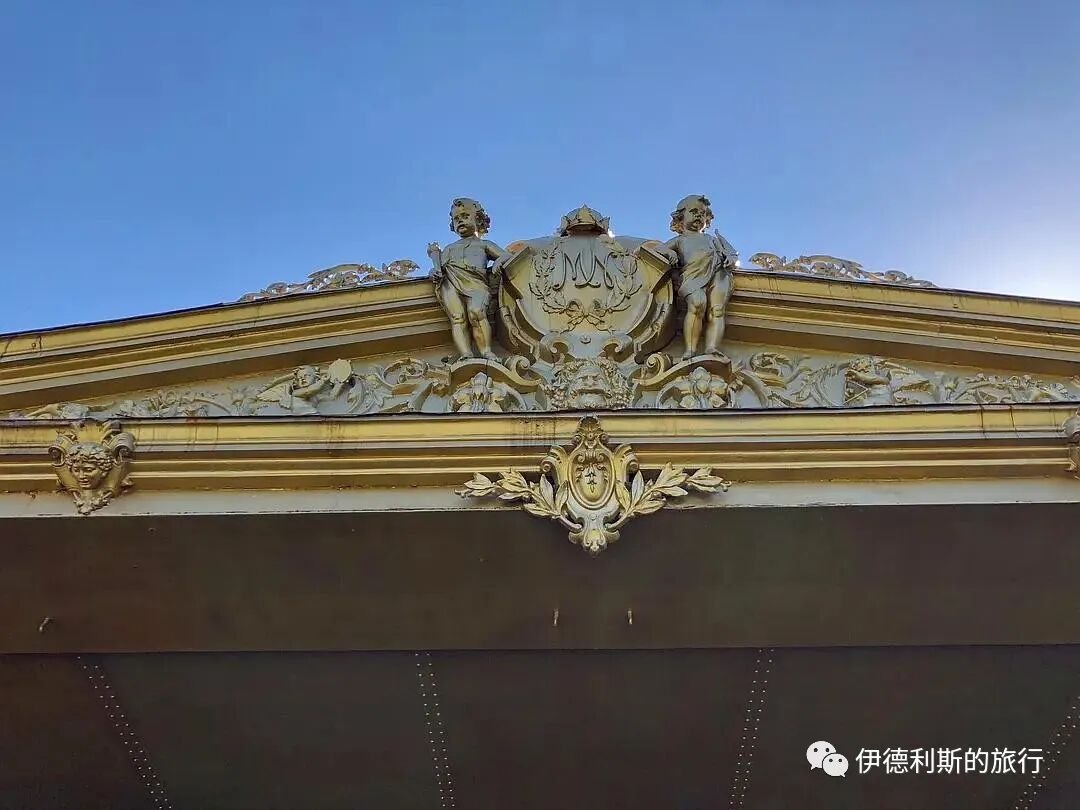
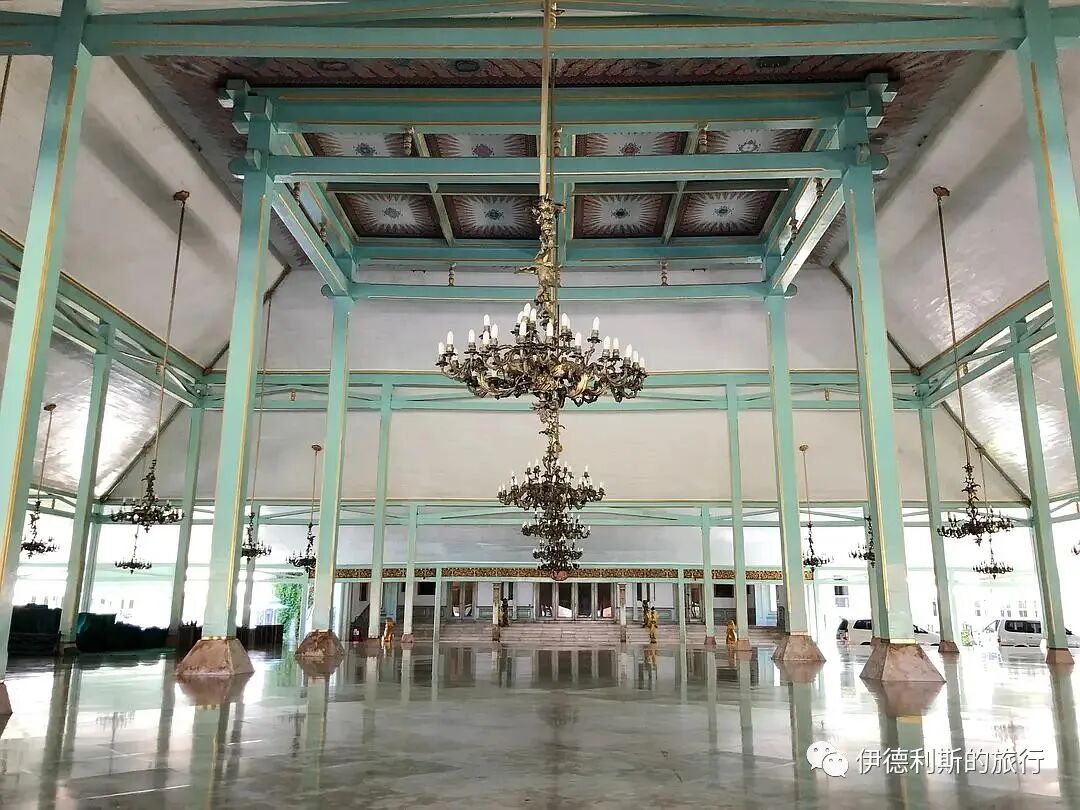
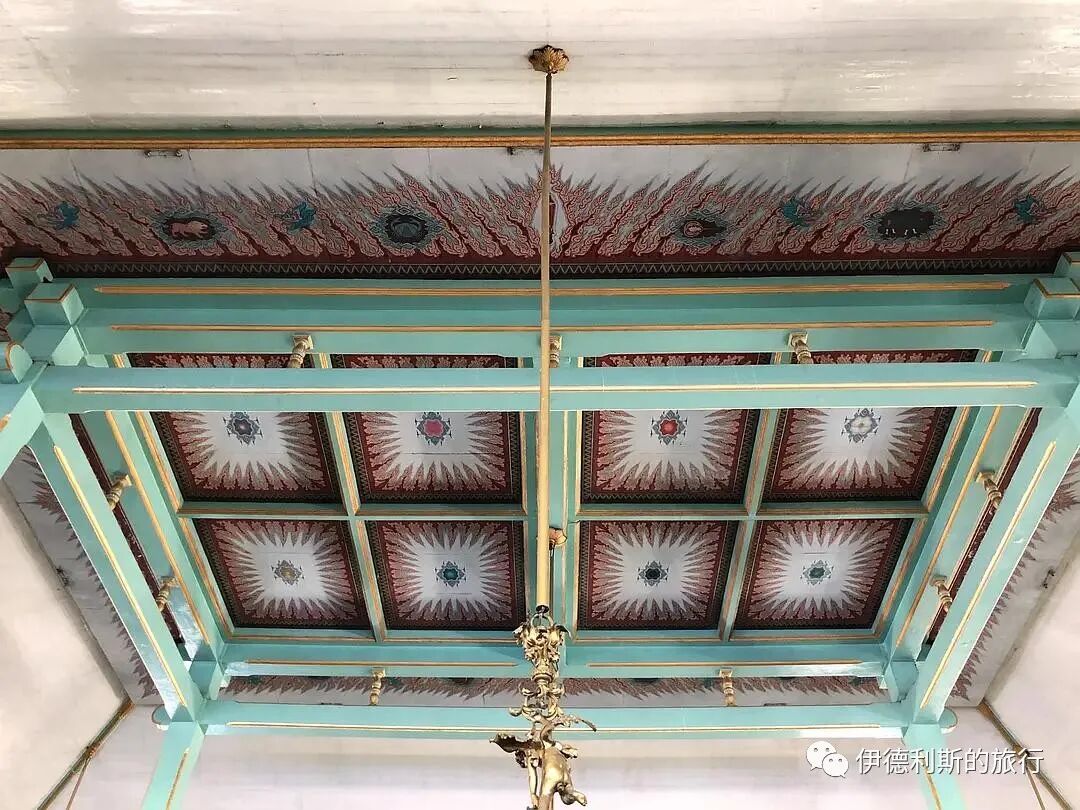
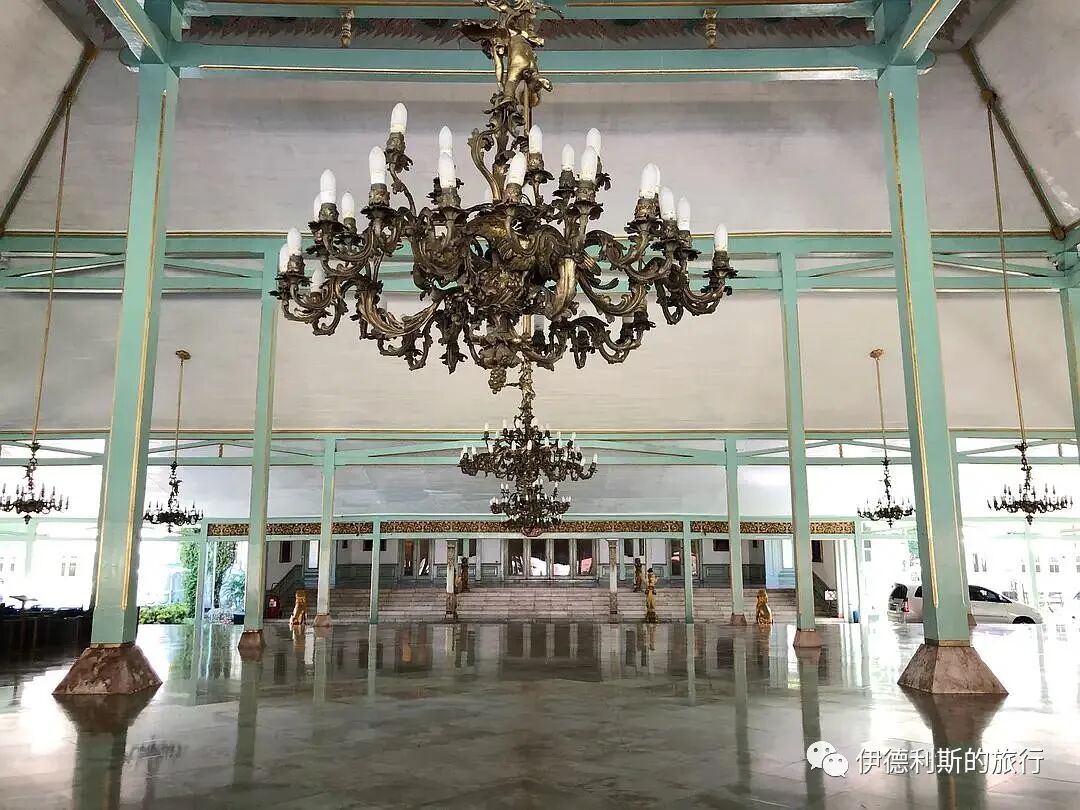
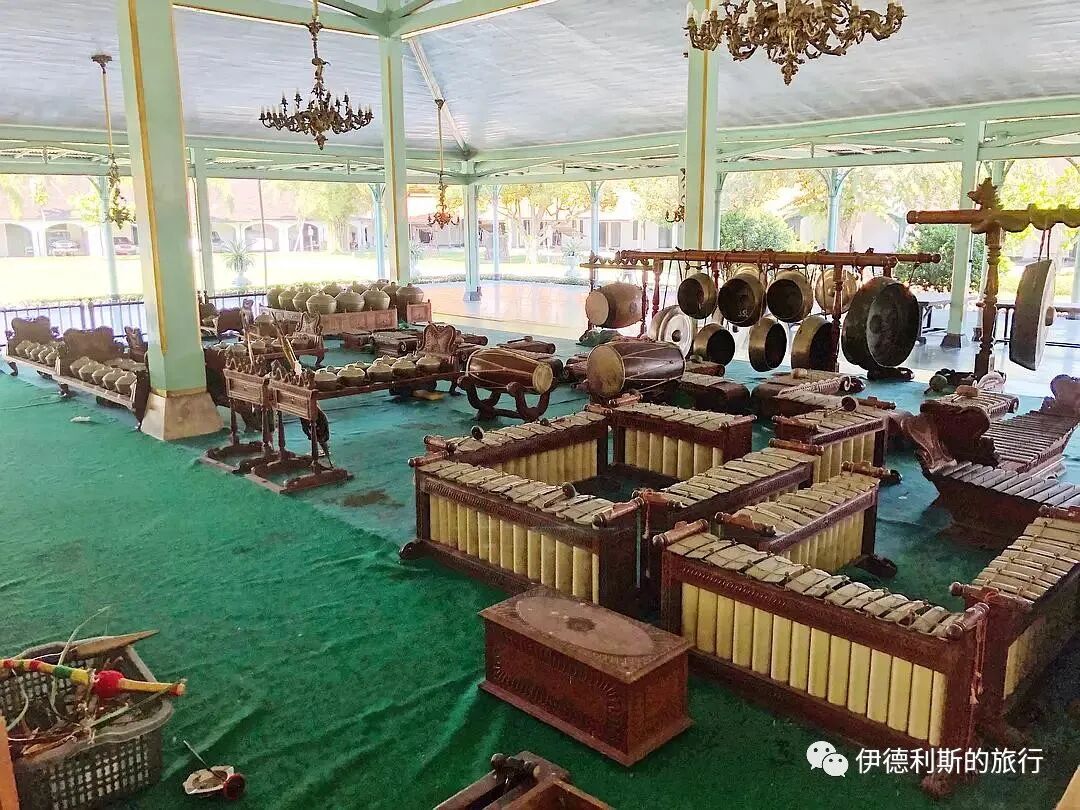
Behind the main hall (Pendopo) is a rectangular area called Pringgitan. It was built during the reign of Mankunugoro II to welcome royal guests.
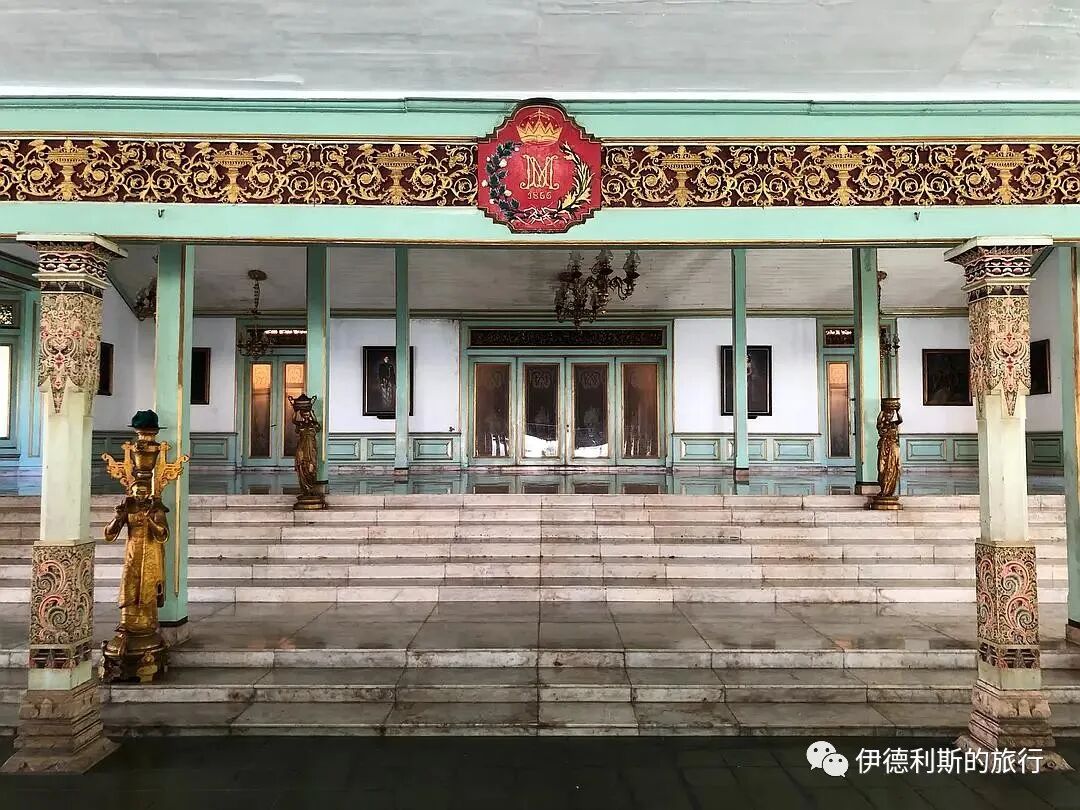
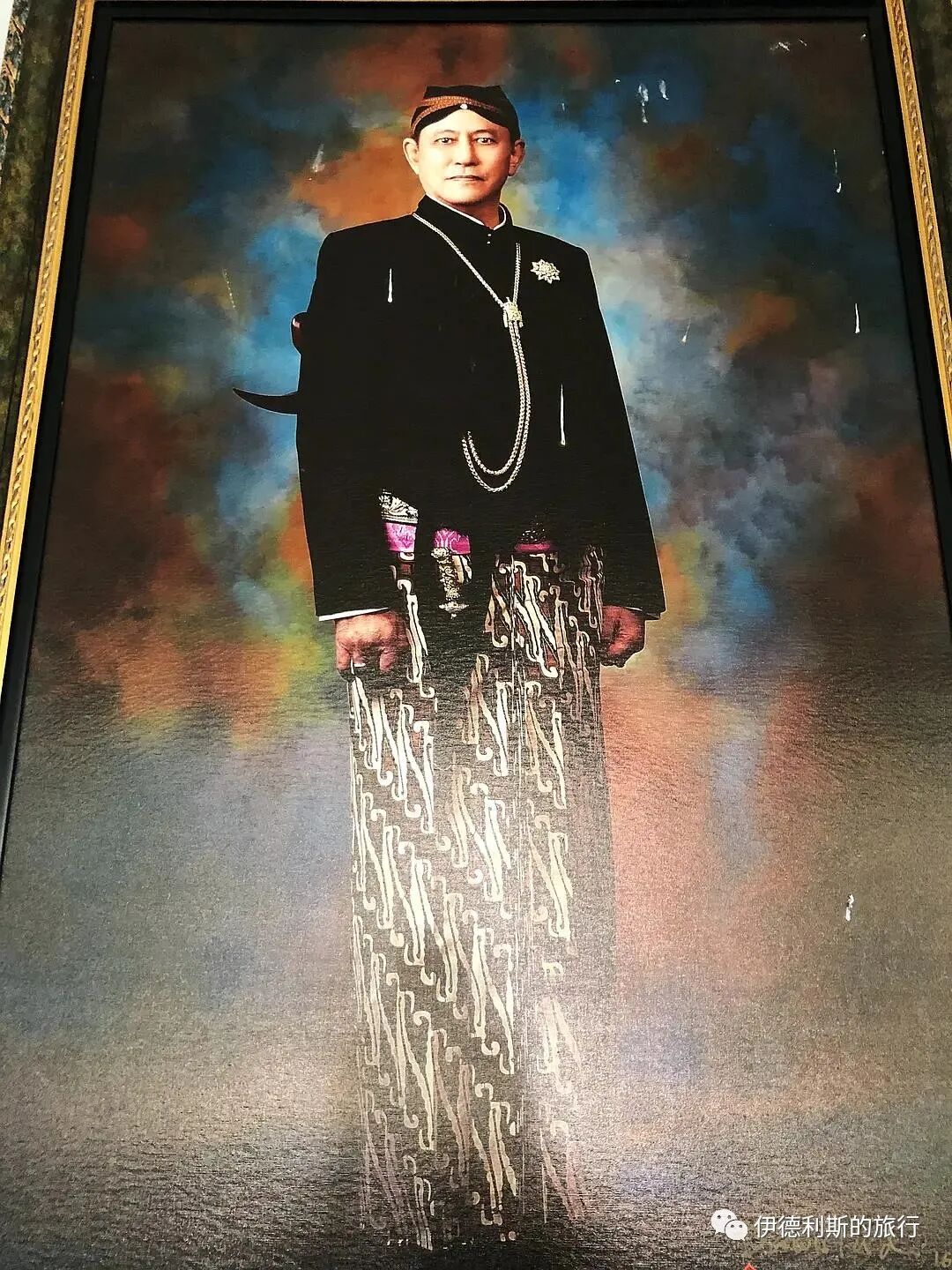
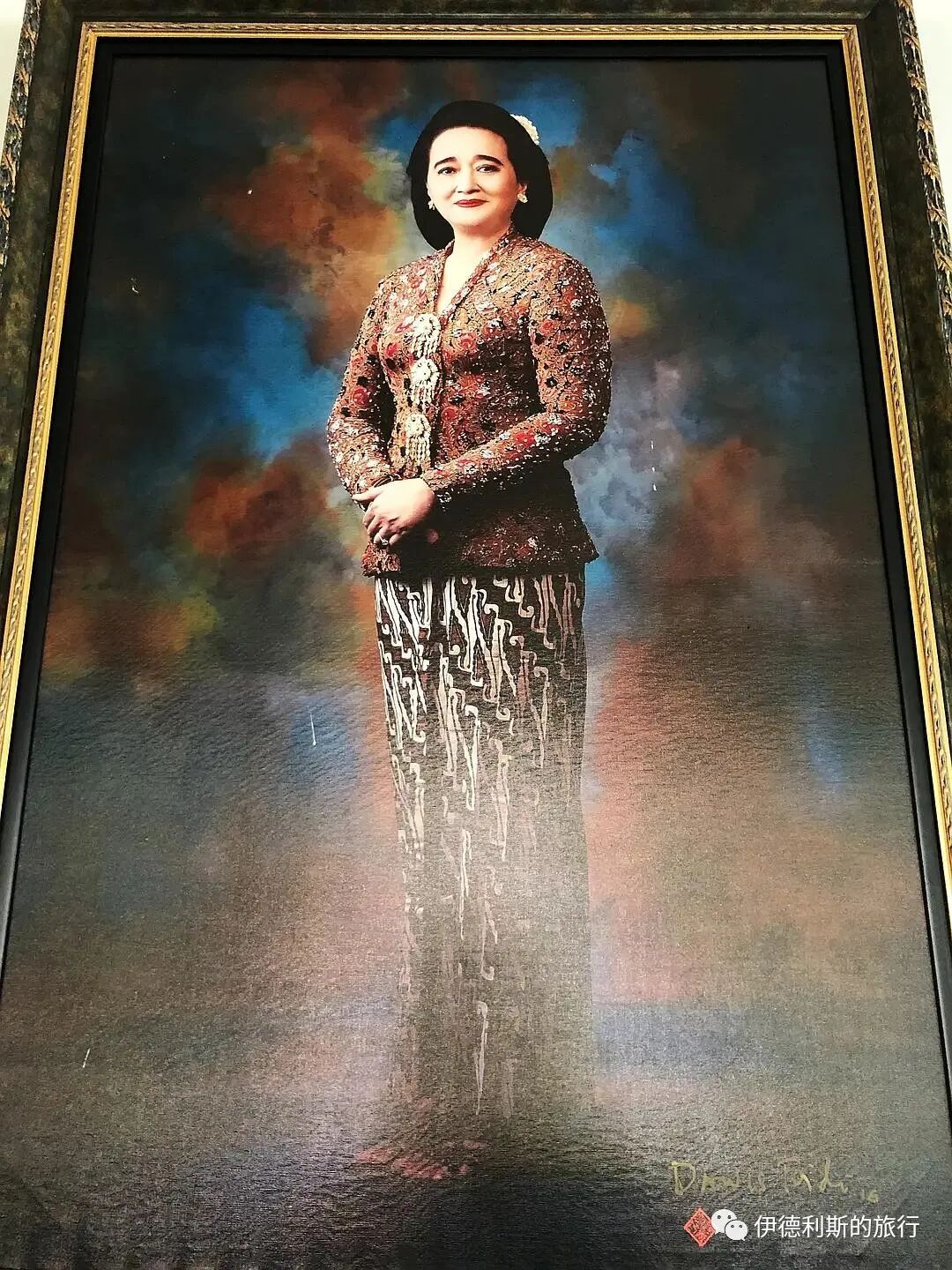
Further back is the Dalem Agen hall, which features a pyramid-shaped Jogro roof. This 1,000-square-meter building was once the royal inner court. It now serves as an exhibition hall for royal heirlooms, though photography is not allowed.
Behind the Dalem Agen hall is the royal residence. It is now the home of the Mank Nugoro family, the descendants of the royals, and part of it is open as a museum.
The palace backyard is filled with ornamental plants, European-style statues, fountains, and birdcages.
The octagonal building Pracimoyasa (Dalem Veranda) overlooks the garden. It has a traditional Javanese three-tiered roof and contains elegant European furniture and candelabra chandeliers. This area served as the royal dining room, dressing room, and bathroom.
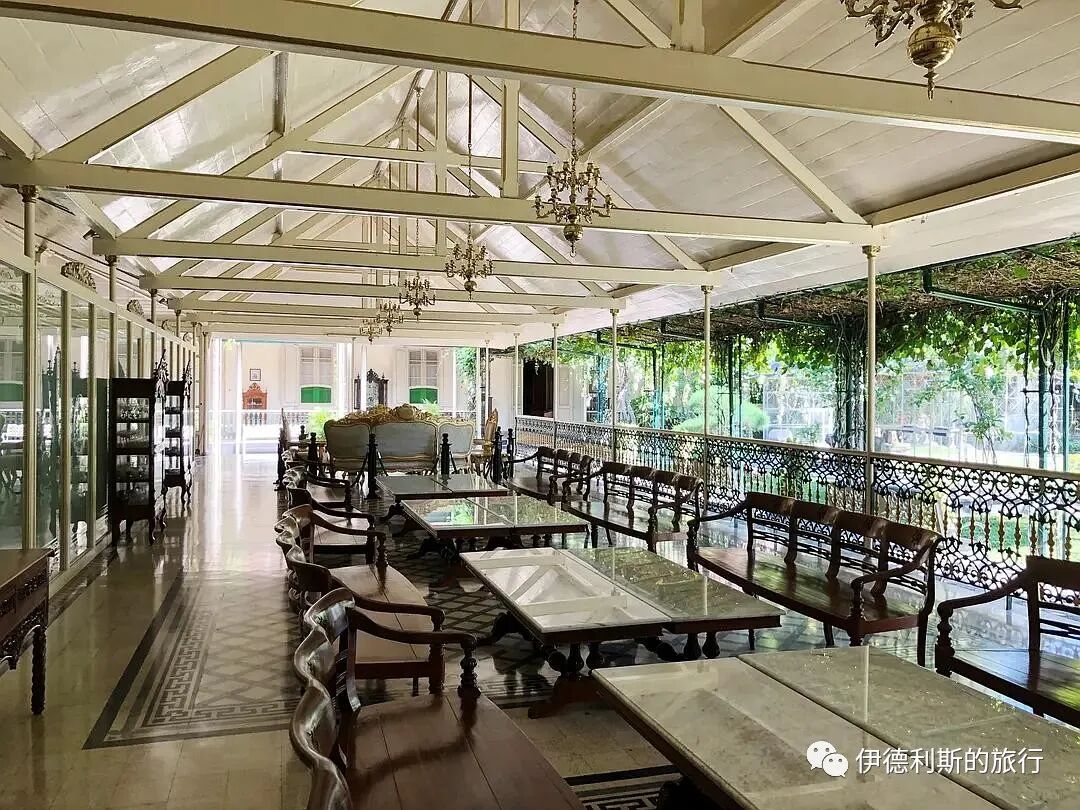
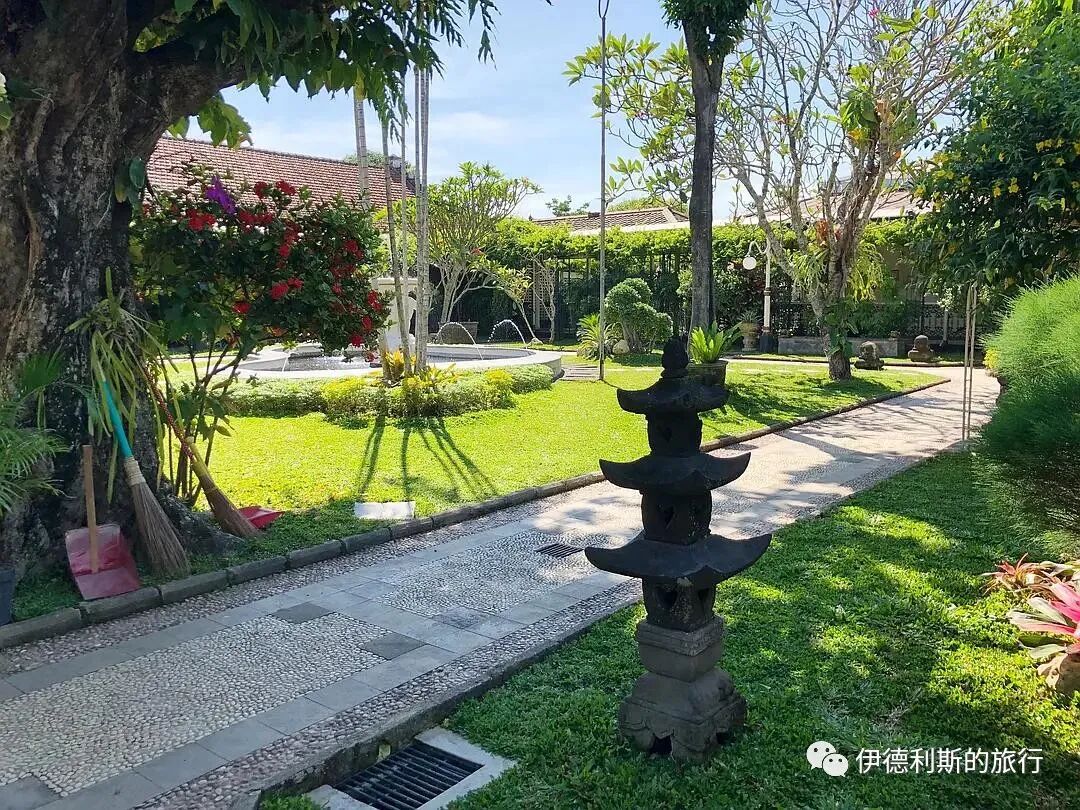
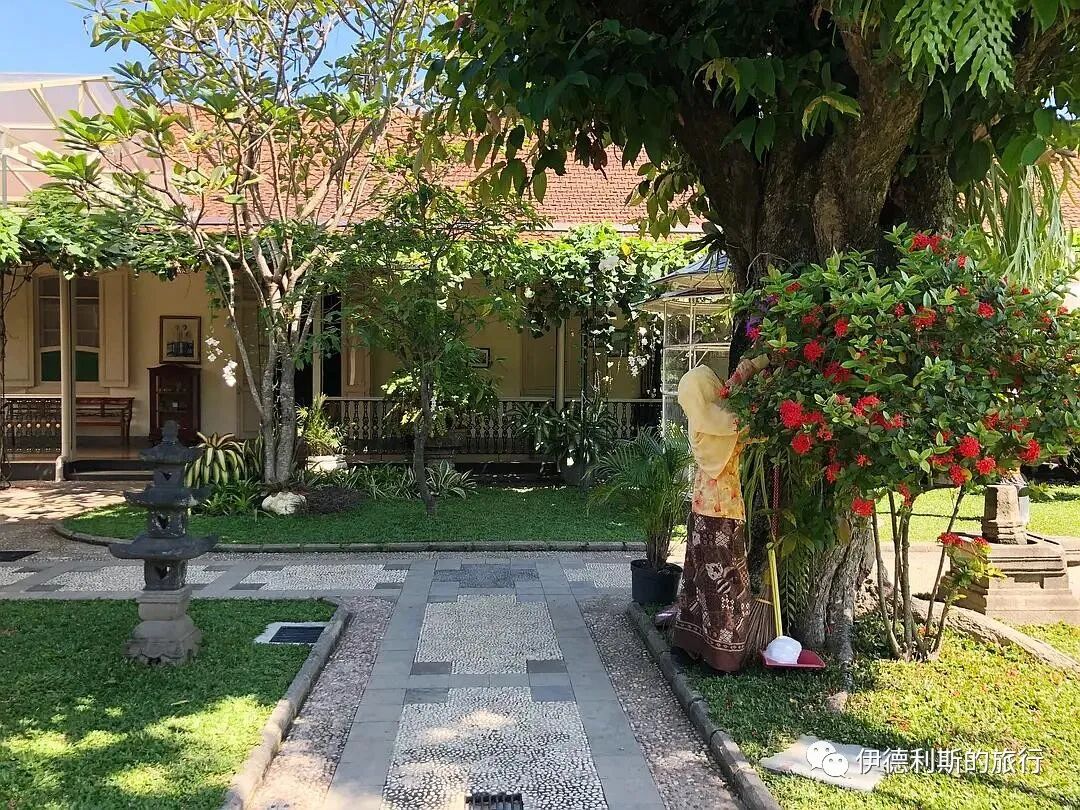
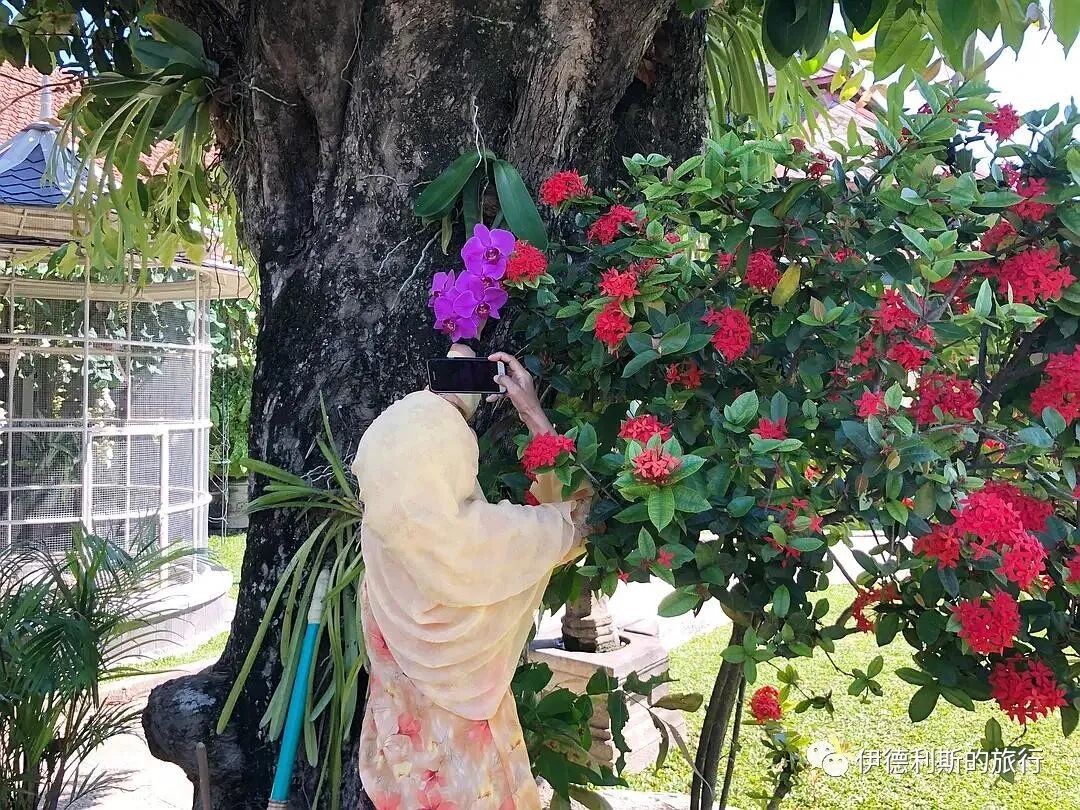
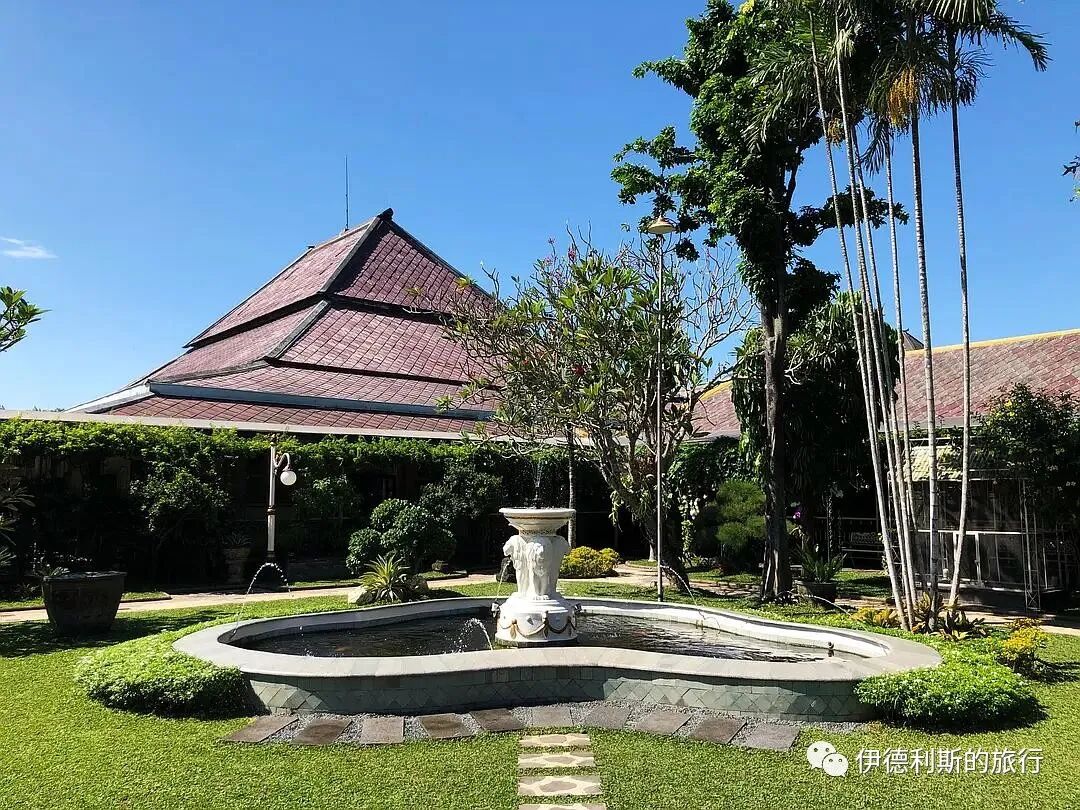
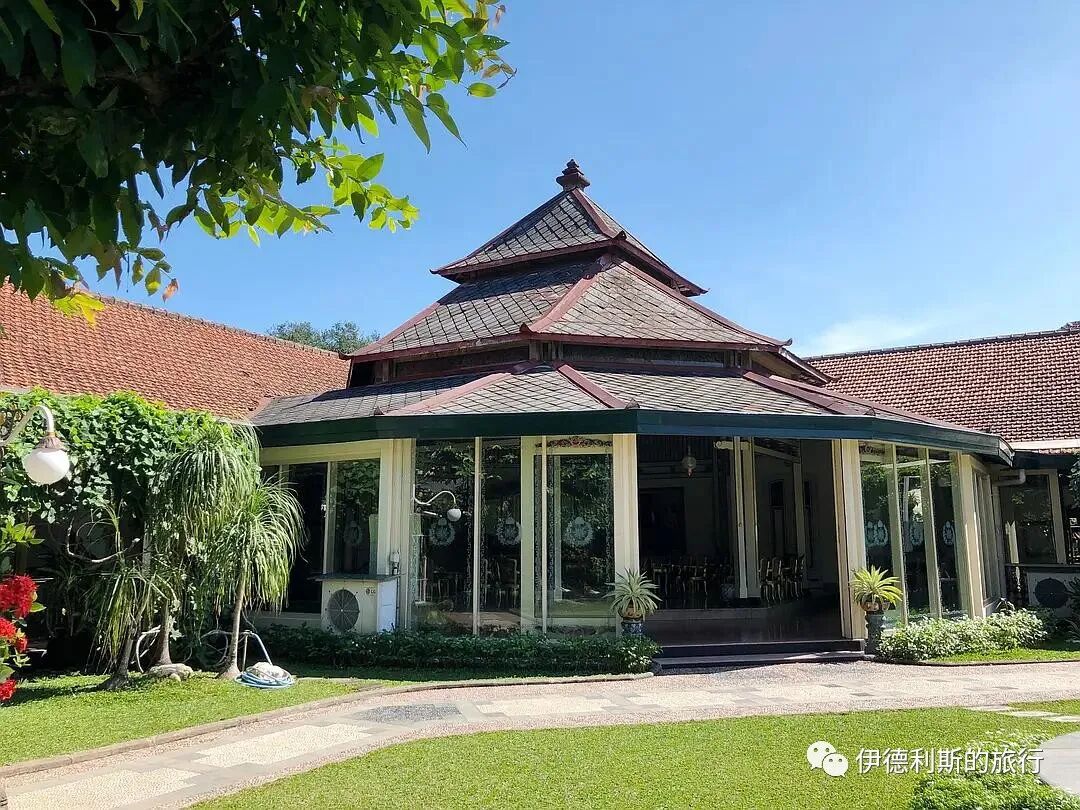
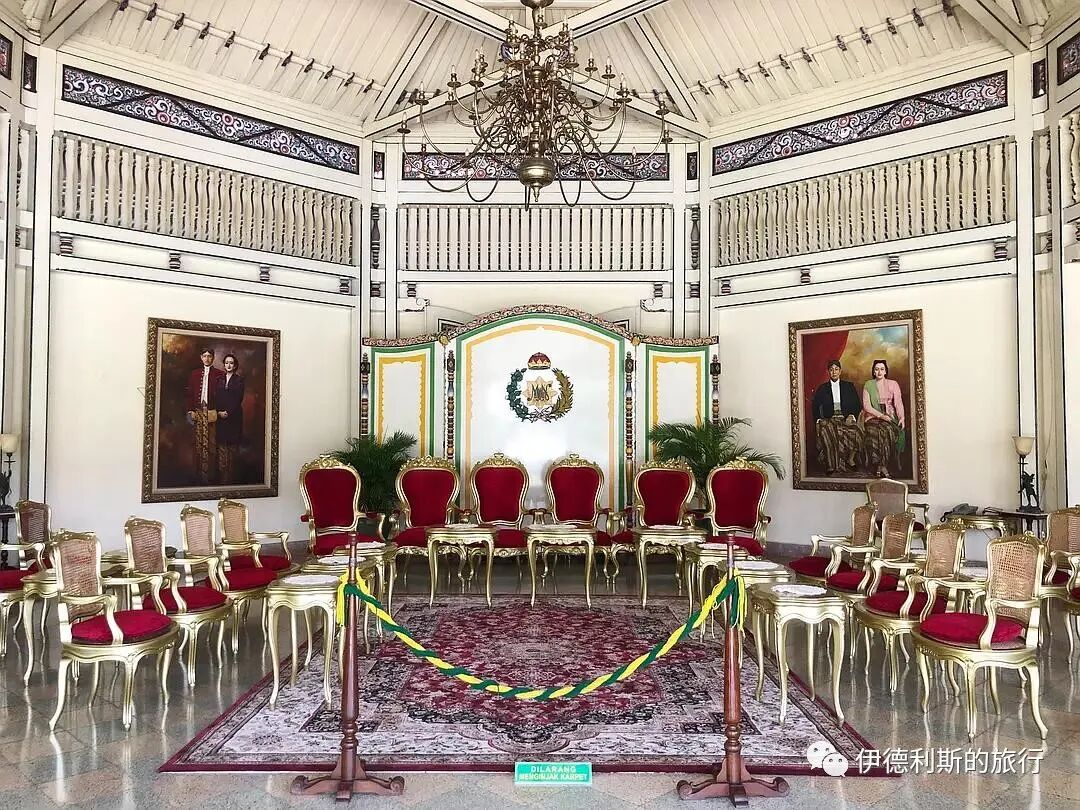
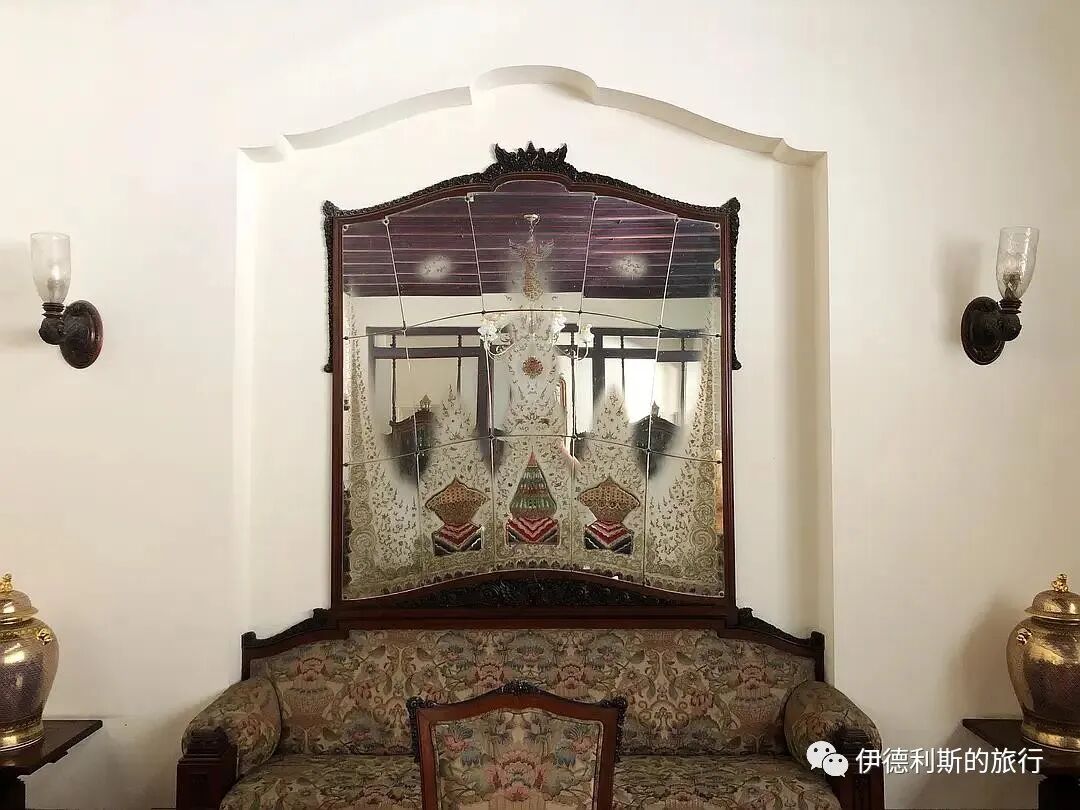
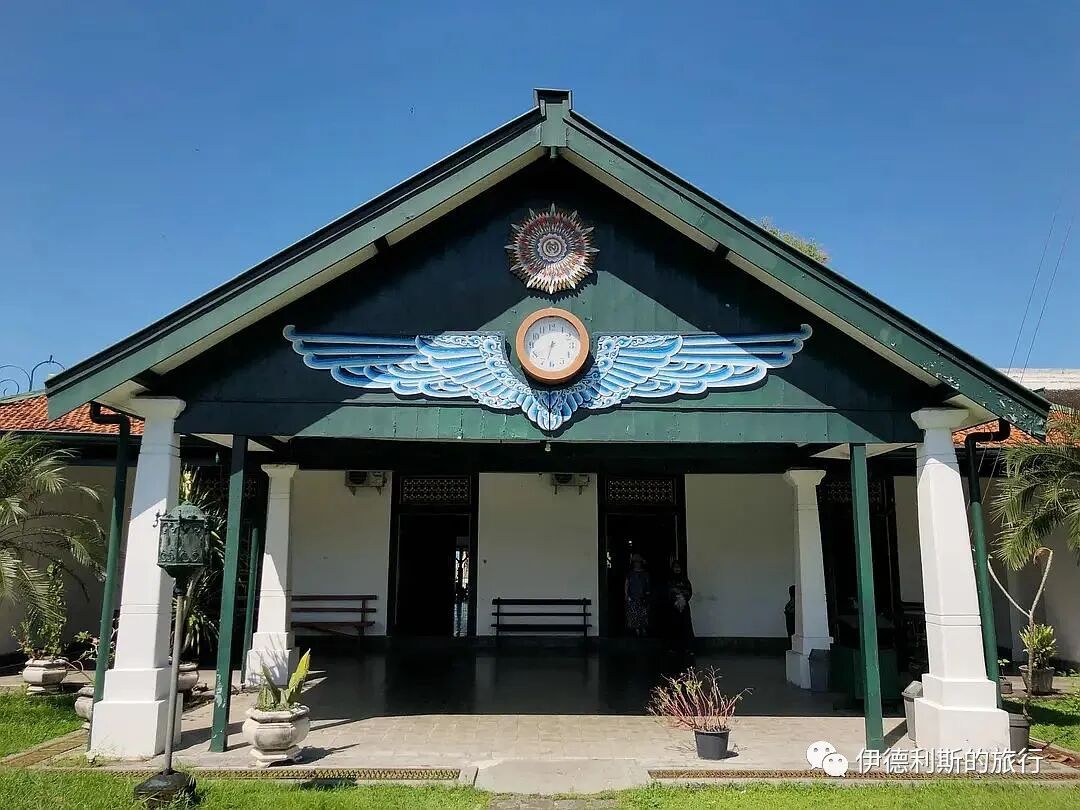
The palace collection includes headpieces worn for traditional Javanese dances, as well as stained glass windows painted with figures in traditional Javanese clothing.
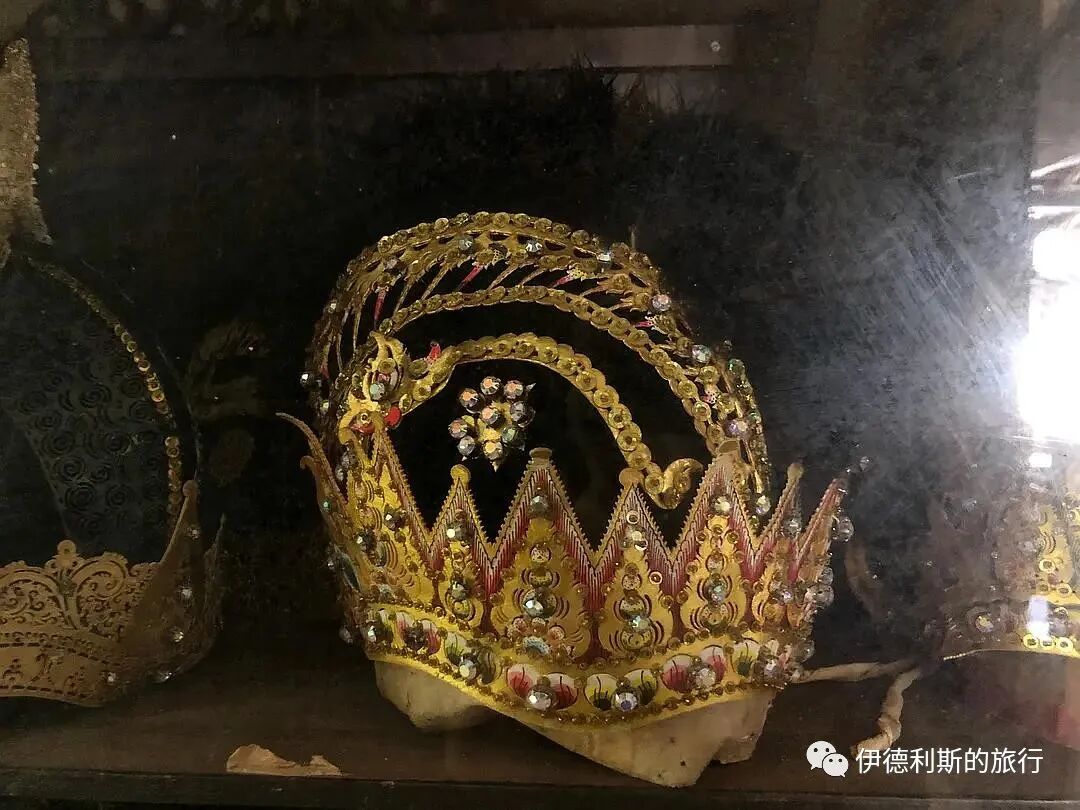
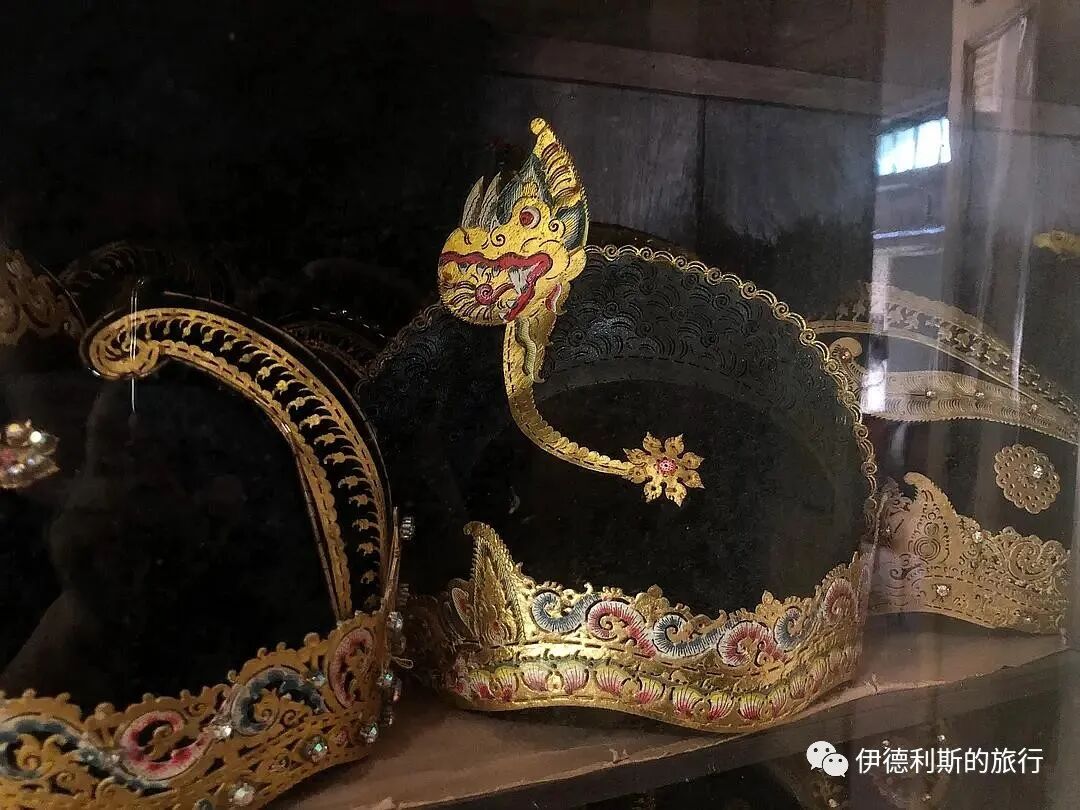
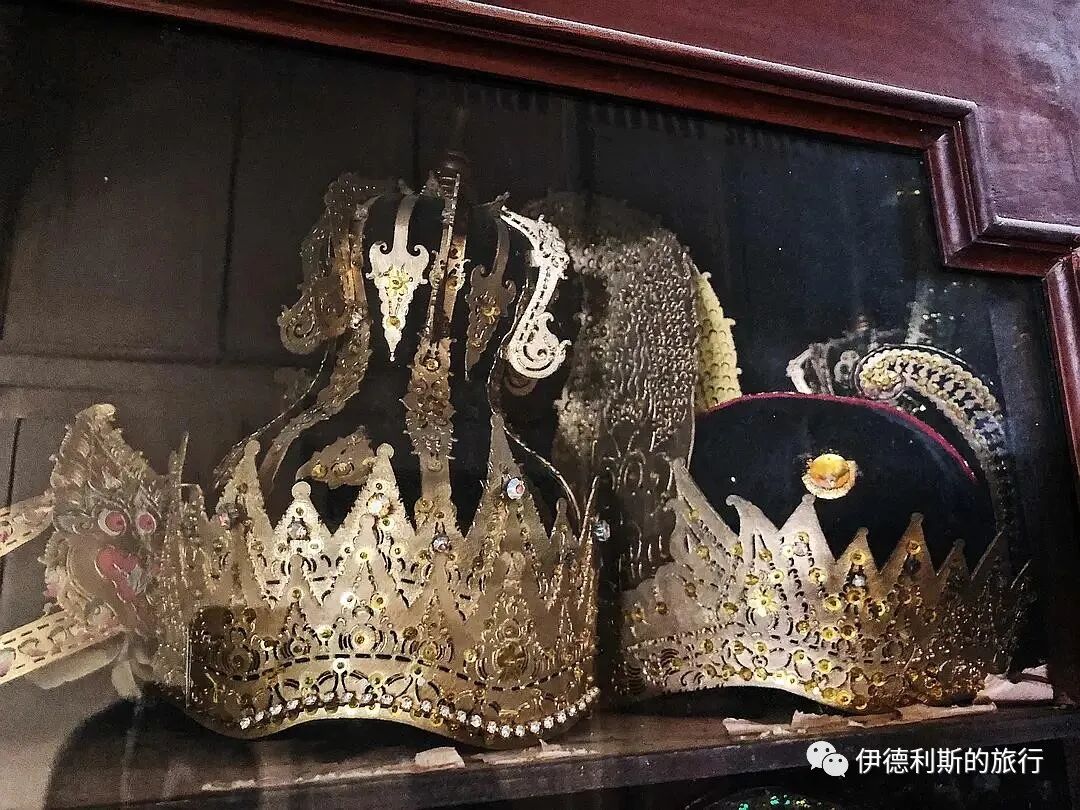
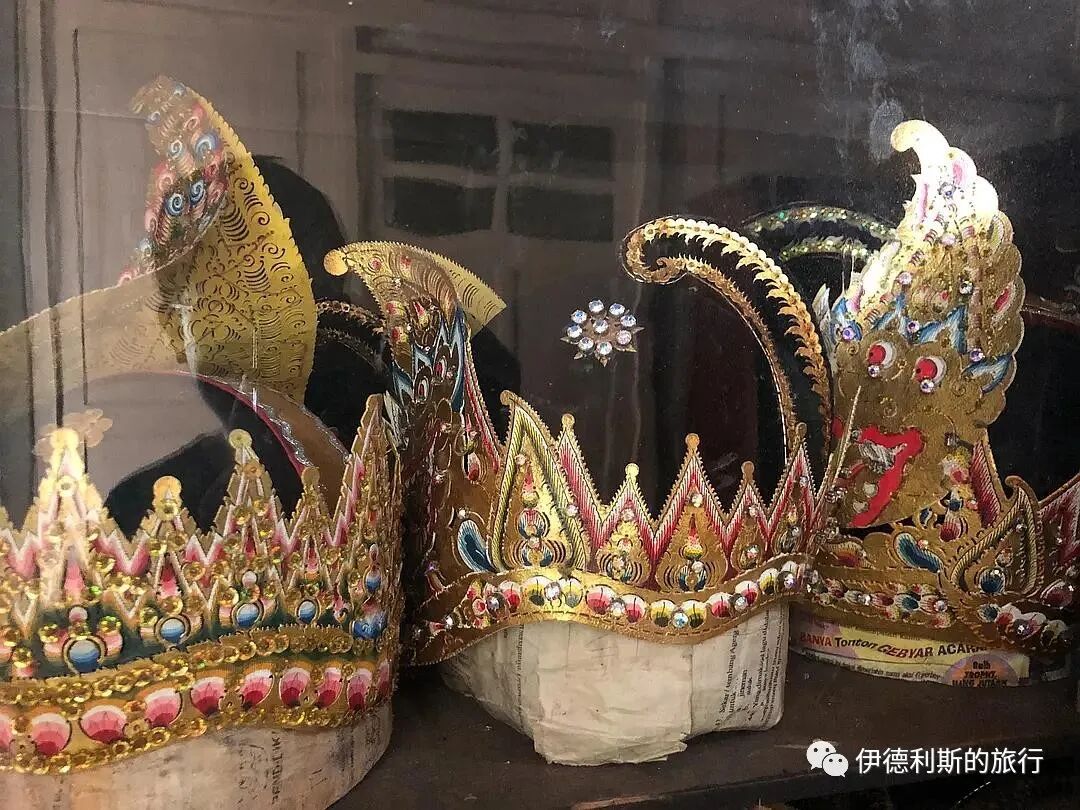
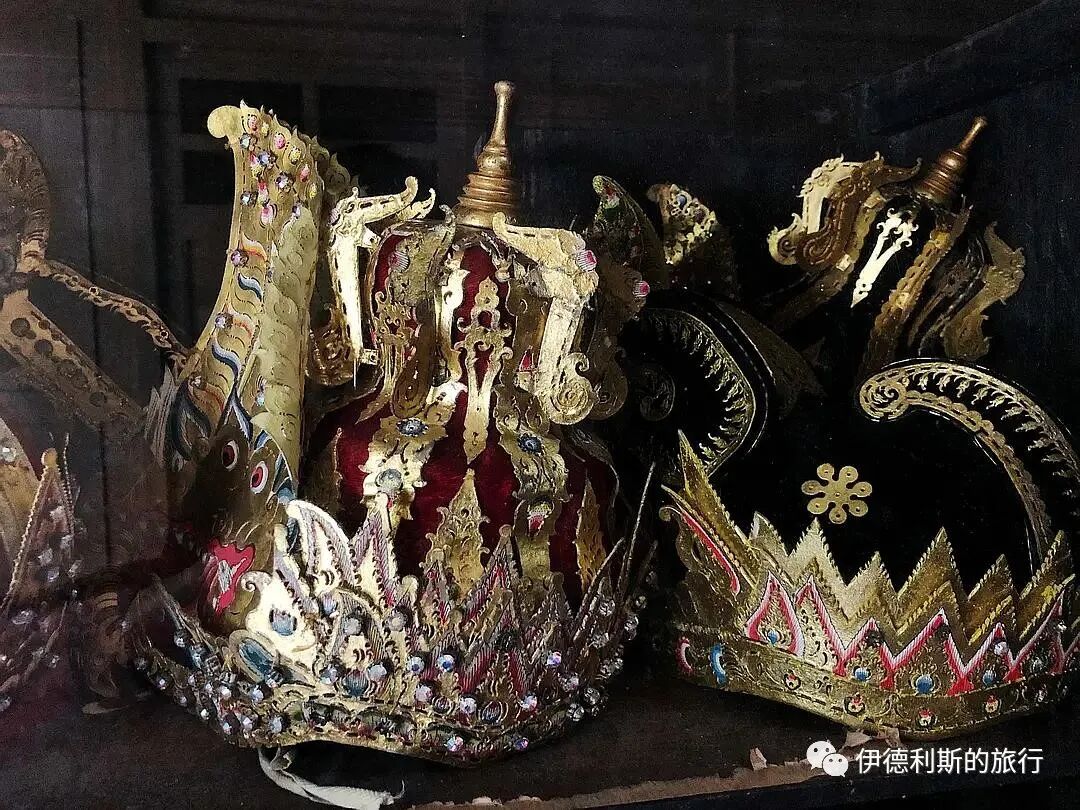
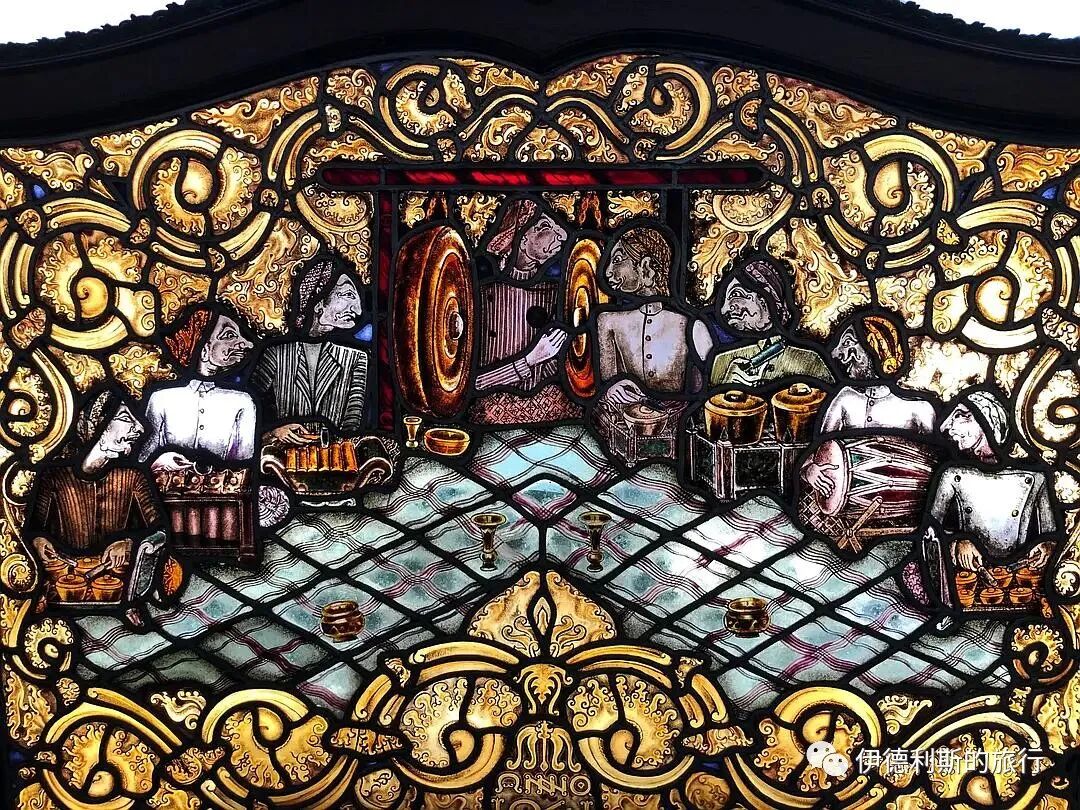
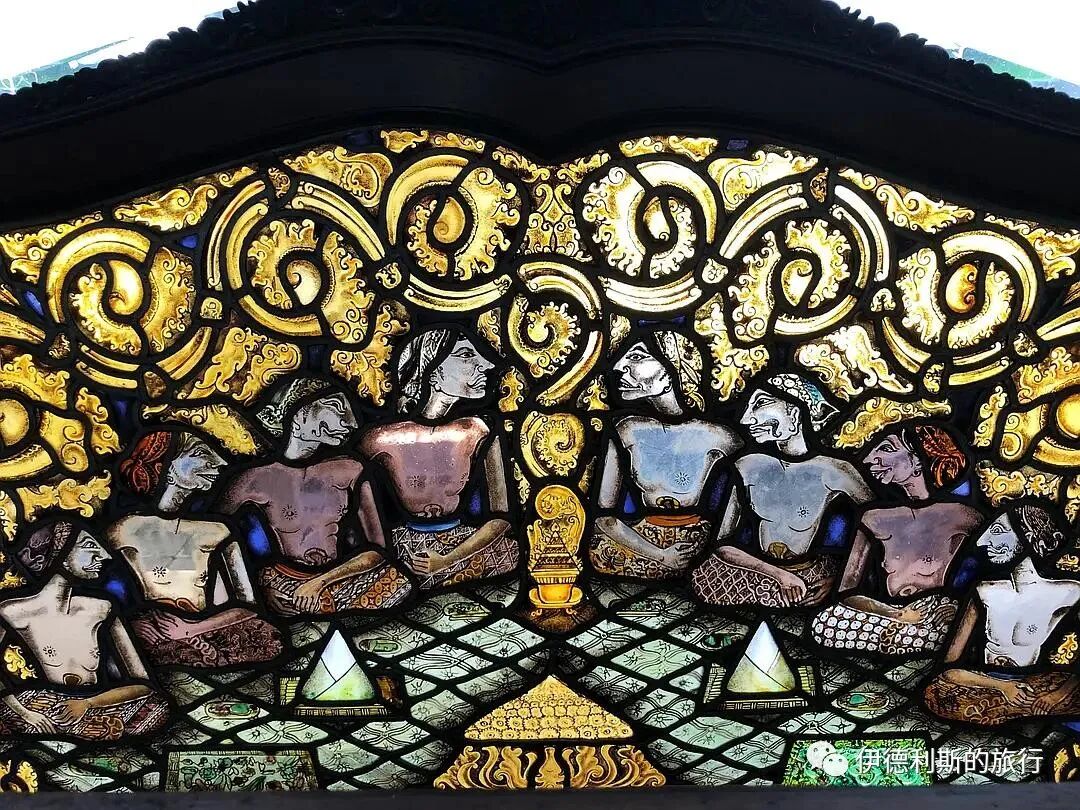
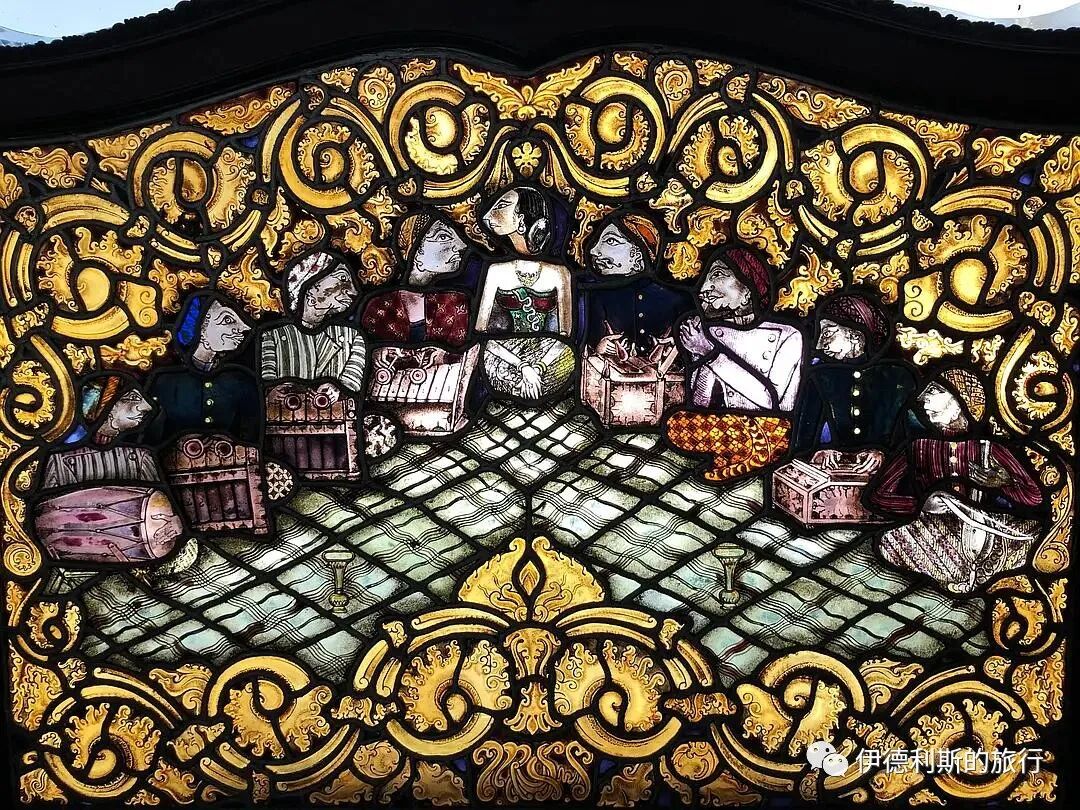
To the east in front of the palace is the headquarters for the Mangkunegaran infantry and cavalry. It is a fortress-style building constructed in 1874.
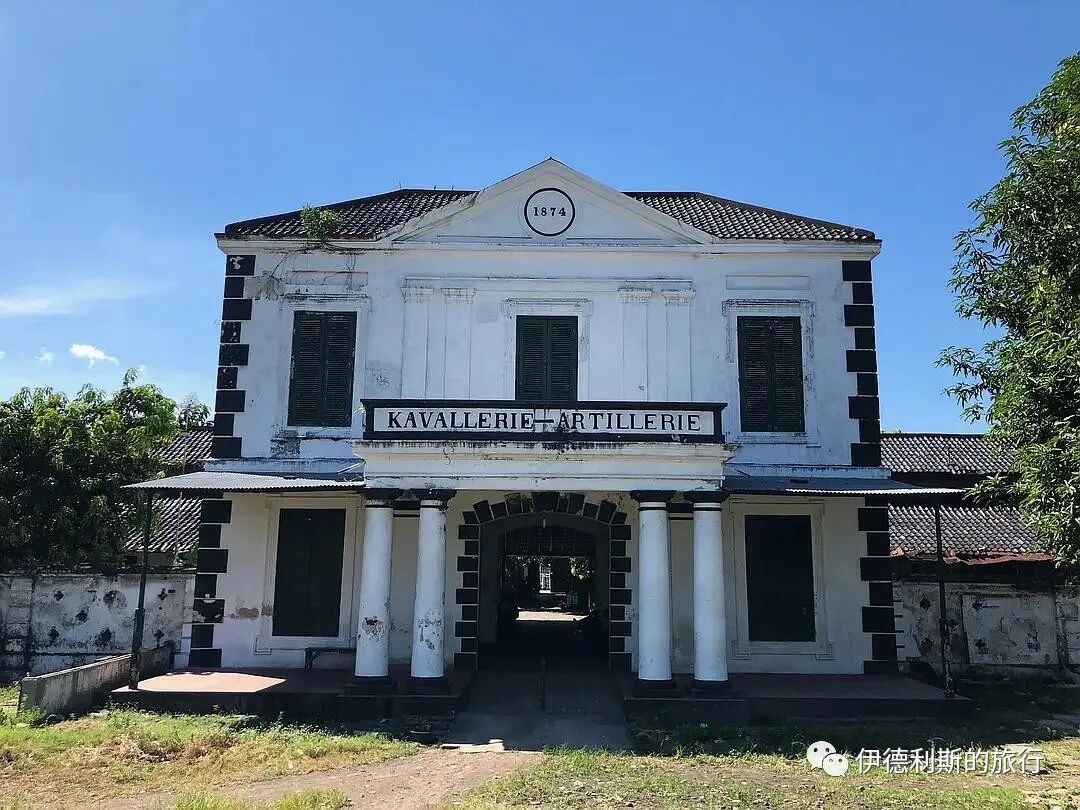
Muslim Travel Guide Indonesia Yogyakarta: Sultanate Palaces, Mosques and Islamic Heritage
Articles • yusuf908 posted the article • 0 comments • 205 views • 2026-05-23 23:07
Summary: Muslim Travel Guide Indonesia Yogyakarta: Sultanate Palaces, Mosques and Islamic Heritage is presented here as a clear Muslim travel account, beginning with this scene: In our last article, The Lost Ancient Capital of Java: Kotagede, we introduced how the Mataram Sultanate became the most powerful Islamic kingdom on Java in the first half of the 17th century. The account keeps its focus on Yogyakarta Mosques, Indonesia Muslim Travel, Sultanate Palaces while preserving the names, places, food, and historical details from the Chinese source.
In our last article, The Lost Ancient Capital of Java: Kotagede, we introduced how the Mataram Sultanate became the most powerful Islamic kingdom on Java in the first half of the 17th century. However, after the third ruler, Sultan Agung (reigned 1613-1645), passed away, the royal family fell into a power struggle. After the 1670s, the Dutch East India Company used these power struggles to tighten their control, eventually splitting the Mataram Sultanate into the Yogyakarta Sultanate and the Surakarta Sunanate in 1755. After Indonesia declared independence in 1945, the Sultan of Yogyakarta pledged loyalty to the Indonesian government, and the sultanate became the Special Region of Yogyakarta, with the Sultan serving as governor. The governorship is hereditary, has no term limit, and is not appointed by the Indonesian government, making it the only region in Indonesia currently ruled by a sultan.
Table of Contents
1. Yogyakarta Palace: 1755
1. North Section
2. South Section
2. Yogyakarta Water Castle: 1758-1765
1. Segaran Lake Area
2. Bathing Area
3. Great Mosque of Yogyakarta: 1773
4. Royal Dining Hall: 1916
5. Sultan of Yogyakarta's Hat
1. Yogyakarta Palace: 1755
In 1755, the third war of succession for the Mataram Sultanate ended. The Dutch East India Company signed a treaty with two princes of the Mataram Sultanate, Mangkubumi and Pakubuwono III, to establish the Yogyakarta Sultanate and the Surakarta Sultanate. Prince Mangkubumi then became the founding Sultan of the Yogyakarta Sultanate, known as Hamengkubuwono I.
After becoming Sultan, Hamengkubuwono I chose a banyan forest between two rivers in Yogyakarta to build his palace. The Yogyakarta Palace (Kraton Ngayogyakarta Hadiningrat) has since served as the residence for ten sultans over 264 years.
Most of the existing palace buildings were renovated during the reign of Sultan Hamengkubuwono VIII (reigned 1921-1939) in the first half of the 20th century, and some parts were repaired again after the 2006 earthquake.
1. North Section
The Yogyakarta Palace site is currently divided into north and south sections, and you need to buy separate tickets for each. The main gate between the two sections only opens during official events, so you have to use the side gate on normal days.
The northernmost building is called Bangsal Pagelaran, where official ceremonies are held. When I visited, there was a royal manuscript exhibition, but photography was forbidden.
The Siti Hinggil in the south is where grand court ceremonies take place, and every Sultan of Yogyakarta has been crowned here. In 1949, the Netherlands officially recognized Indonesia's independence, and Indonesia's founding father, Sukarno, was officially inaugurated as president here.
2. South Section
Further south is the Kamandhungan, commonly known as Keben, which was used by the Sultan to pass death sentences in the past. This is currently the main gate to the southern part of the palace, and the ticket office is located here. After buying a ticket to enter the southern section, you reach Sri Manganti. This was once used to receive VIP guests, and now it hosts performances of gamelan music, wayang shadow puppetry, Javanese poetry, and classical dance almost every morning.
The Traju Mas Ward to the east of Keben was once the place where the Sultan welcomed guests. It collapsed during the 2006 earthquake and was not fully restored until 2010.
South of Keben is the Donopratopo gate, which has a pair of guardian statues called Dvarapala in front of it. Dvarapala originated as gate gods in Hinduism and Buddhism. In Javanese culture, they usually appear as giant, fierce-looking asuras holding a vajra.
After passing through the Donopratopo gate, you enter the Kedhaton area, the heart of the palace. Only part of this area is open to the public, as the rest serves as the living quarters for the Sultan's family. The courtyard is covered in sand from the southern beach, where royal servants (Abdi-Dalem) stand barefoot.
There are currently 2,640 royal servants in the Yogyakarta palace, and they all wear traditional Yogyakarta attire. You can buy the Blangkon hats worn by these servants right inside the palace. A Blangkon is a traditional batik headpiece for men from central and eastern Java. Legend says that Java island was once ruled by a giant named Dewata Cengkar. Dewata Cengkar often demanded human sacrifices, and the people were terrified of him. A man named Aji Saka volunteered to be sacrificed. He said to the giant, 'Great King of Java, I have only one wish before I die.' 'I want a piece of land as big as my headcloth.' The giant agreed to the request, so Aji Saka asked the giant to hold one end of the headcloth. The headcloth kept growing larger, and the giant kept stepping back until he reached the sea, where Aji Saka kicked him into the water. After defeating the giant, the people elected Aji Saka as the new King of Java, and the Blangkon he wore became a symbol of the Javanese people.
A more credible view is that after the 8th century, as more Indian Muslim merchants came to Java to trade, the combination of their turbans and Javanese batik created the Javanese Iket headcloth. The Blangkon is actually a more practical version of the Iket headcloth. The earliest headcloths required a complex tying process. Over time, people fixed the cloth into a set shape, creating a hat that did not need to be tied, which is the Blangkon.
The most common types of Blangkon are the Yogyakarta style and the Solo style. The Yogyakarta Blangkon is known for the Mondholan, a bulge on the back. In ancient times, Javanese men tied their long hair at the back of their heads. When wearing a Blangkon, they would wrap their hair tightly, creating this bulge. Because Solo was deeply influenced by Dutch colonialism, the locals stopped growing their hair long, so the back of the Solo Blangkon is flat.
The east-facing Kencono Ward (Golden Pavilion) is the main hall of the palace and the site for various royal ceremonies.
The railings are carved with Batara Kala, the Javanese Hindu god of the underworld, who is also the god of time and destruction. In traditional Javanese mythology, Batara Kala eating the sun is the cause of solar eclipses. Legend says Batara Kala is the son of Batara Guru, the Javanese version of the god Shiva. In a moment of uncontrollable desire, Batara Guru had relations with his beautiful wife, Dewi Uma, on the back of a sacred cow. Uma felt very ashamed, and after being cursed, she took on the appearance of a monster. Therefore, the child she gave birth to, Batara Kala, also had a monster's appearance.
The railings are carved with the snake god Naga from Hindu and Buddhist culture. The Naga of Java and Bali is a crowned snake, representing a blend of the Hindu Shiva tradition and the native Javanese animist snake tradition. In the 9th century, the Javanese Naga looked like a cobra. After the 15th century, it was influenced by the Chinese dragon, though it lacks claws.
Batik
Some buildings
A palanquin used during Sultanate court processions
South of the Kedhaton is the Kamagangan Gate, which features statues of two Naga snake gods. Beyond the Kamagangan Gate is outside the palace grounds. This area was once used to train and test retainers, and the Magangan Ward in the middle of the courtyard is the site for the Bedhol Songsong puppet ceremony.
The palace walls of the Yogyakarta Palace
2. Yogyakarta Water Castle: 1758-1765
The Yogyakarta Water Palace (Taman Sari) is the garden harem of the Sultan of Yogyakarta. It was built in 1758 by order of the founding Sultan Hamengkubuwono I, and the architect was Tumenggung Mangundipura. Tumenggung Mangundipura traveled to the Dutch East India Company headquarters in Batavia (Old Jakarta) twice to study European architecture, so the buildings in the Water Palace blend Javanese and Dutch styles.
The Water Palace was finished in 1765, featuring a mosque, meditation rooms, bathing areas, 18 water gardens and pavilions, and a complex water system, but these designs were neglected after Sultan Hamengkubuwono I died in 1791. The Water Palace was damaged during the British invasion of Yogyakarta in 1812 and again during the Java War from 1825 to 1830.
After an earthquake in 1867, the palace complex was completely abandoned, local residents began building homes on the ruins, and the dried-up lake was gradually filled in. Parts of the Water Palace were restored after the 1970s, but only the bathing area was fully repaired.
1. Segaran Lake Area
The main buildings of the Water Palace sit around an artificial lake called Segaran (artificial sea).
In the middle of Segaran lake is an island called Kenongo (magnolia island), which used to be covered in magnolia flowers. A building called Gedhong Kenongo stood on the island and was once the largest structure in the Water Palace, but it was severely damaged in the 1867 earthquake.
Before the 1859 earthquake
After the 1867 earthquake
There is an underwater tunnel on the south side of Kenongo island that connects to the land. The underwater tunnel built in 1761 still exists today, and it has a row of ventilation structures called Tajug on top.
The entrance to the underwater tunnel on Kenongo island.
On the west side of Kenongo island is an artificial island made of a single building, the Sumur Gumuling mosque, which can only be reached through the underwater tunnel.
The exit of the underwater tunnel at the Sumur Gumuling mosque.
2. Bathing Area
The bathing area is on the south side of Segaran lake; it was not the most important building back then, but it is the best-preserved part of the Water Palace today.
The bathing area has east and west gates decorated with detailed flower and bird patterns. The west gate is called Gedhong Gapura Hageng, built in 1765; it was once the main entrance to the bathing area but is now closed.
The east gate is called Gedhong Gapura Panggung, built in 1758; it is now the visitor entrance to the bathing area and features two Naga (serpent deity) statues on the gate.
Umbul Pasiraman is the central bathing area for the royal family, surrounded by lounges and changing rooms for the Sultan, his daughters, and his concubines, with the tallest tower serving as the spot where the Sultan watched his harem bathe. In the past, only women were allowed to enter the central bathing area, except for the Sultan himself.
3. Great Mosque of Yogyakarta: 1773
The Great Mosque of Yogyakarta (Masjid Gedhe Kauman) sits northwest of the Yogyakarta Palace. Built in 1773, it serves as the royal mosque for the Sultan of Yogyakarta.
The Great Mosque of Yogyakarta features a classic traditional Javanese mosque style. The mosque has no minaret. Its main structure consists of a prayer hall and a front porch called a serambi. The roof of the prayer hall features an ornament called a Mustaka.
The front porch of the prayer hall.
Inside the prayer hall, the mihrab and the pulpit (minbar) both show a strong Javanese style. There is also a cage-like structure called a Maxura, which is where the Sultan of Yogyakarta prays.
The pulpit (minbar).
The place where the Sultan prays.
The mihrab.
4. Royal Dining Hall: 1916
Located next to the Yogyakarta Sultan's Palace, nDalem Joyokusuman was the home of Prince Gusti Haryo Haji Joyokusumo. It is now open as a cultural center and restaurant. I ate Nasi Blawong and Telo ijo here. Nasi Blawong is a specialty dish of the Sultan of Yogyakarta. It was once only served at the Sultan's birthday banquets, and the reddish Blawong rice used in it is considered sacred. Telo ijo is a cassava pastry drizzled with pandan coconut milk.
nDalem Joyokusuman was built in 1916 during the reign of the eighth Sultan of Yogyakarta, Hamengkubuwono VIII, and has been occupied by members of the Sultan's family ever since. Peringgitan is the inner hall behind the main living room. It is where the prince's family held activities and displayed valuable gifts the prince received.
Sentong Kiwo in picture 4 was originally a guest room and now serves as an exhibition hall.
The area in the courtyard where gamelan music is performed.
A photo of the prince's family when they were young.
5. Sultan of Yogyakarta's Hat
I bought a hat at Beringharjo Market in Yogyakarta that locals wear for weddings. It is based on the crown from the Yogyakarta Sultan's court.
Sultan Hamengkubuwono VII of Yogyakarta, photographed in 1885.
Members of the Yogyakarta Sultan's royal family, photographed in 1885. view all
Summary: Muslim Travel Guide Indonesia Yogyakarta: Sultanate Palaces, Mosques and Islamic Heritage is presented here as a clear Muslim travel account, beginning with this scene: In our last article, The Lost Ancient Capital of Java: Kotagede, we introduced how the Mataram Sultanate became the most powerful Islamic kingdom on Java in the first half of the 17th century. The account keeps its focus on Yogyakarta Mosques, Indonesia Muslim Travel, Sultanate Palaces while preserving the names, places, food, and historical details from the Chinese source.
In our last article, The Lost Ancient Capital of Java: Kotagede, we introduced how the Mataram Sultanate became the most powerful Islamic kingdom on Java in the first half of the 17th century. However, after the third ruler, Sultan Agung (reigned 1613-1645), passed away, the royal family fell into a power struggle. After the 1670s, the Dutch East India Company used these power struggles to tighten their control, eventually splitting the Mataram Sultanate into the Yogyakarta Sultanate and the Surakarta Sunanate in 1755. After Indonesia declared independence in 1945, the Sultan of Yogyakarta pledged loyalty to the Indonesian government, and the sultanate became the Special Region of Yogyakarta, with the Sultan serving as governor. The governorship is hereditary, has no term limit, and is not appointed by the Indonesian government, making it the only region in Indonesia currently ruled by a sultan.
Table of Contents
1. Yogyakarta Palace: 1755
1. North Section
2. South Section
2. Yogyakarta Water Castle: 1758-1765
1. Segaran Lake Area
2. Bathing Area
3. Great Mosque of Yogyakarta: 1773
4. Royal Dining Hall: 1916
5. Sultan of Yogyakarta's Hat
1. Yogyakarta Palace: 1755
In 1755, the third war of succession for the Mataram Sultanate ended. The Dutch East India Company signed a treaty with two princes of the Mataram Sultanate, Mangkubumi and Pakubuwono III, to establish the Yogyakarta Sultanate and the Surakarta Sultanate. Prince Mangkubumi then became the founding Sultan of the Yogyakarta Sultanate, known as Hamengkubuwono I.
After becoming Sultan, Hamengkubuwono I chose a banyan forest between two rivers in Yogyakarta to build his palace. The Yogyakarta Palace (Kraton Ngayogyakarta Hadiningrat) has since served as the residence for ten sultans over 264 years.
Most of the existing palace buildings were renovated during the reign of Sultan Hamengkubuwono VIII (reigned 1921-1939) in the first half of the 20th century, and some parts were repaired again after the 2006 earthquake.
1. North Section
The Yogyakarta Palace site is currently divided into north and south sections, and you need to buy separate tickets for each. The main gate between the two sections only opens during official events, so you have to use the side gate on normal days.
The northernmost building is called Bangsal Pagelaran, where official ceremonies are held. When I visited, there was a royal manuscript exhibition, but photography was forbidden.
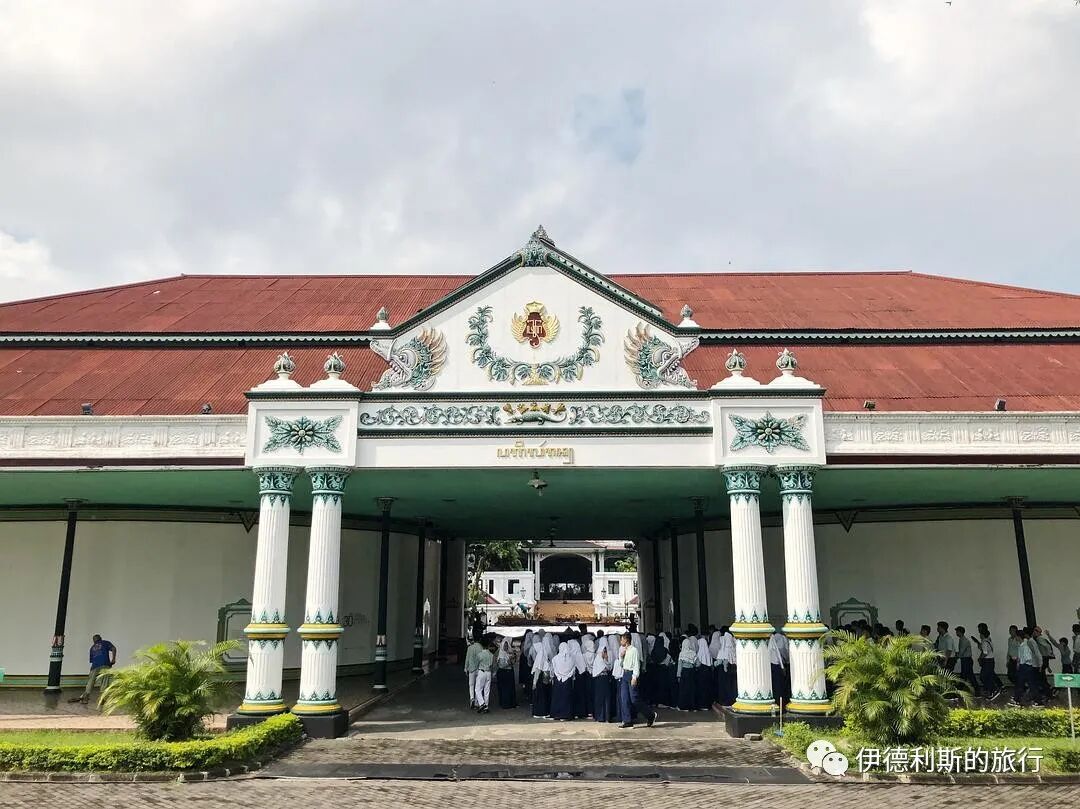
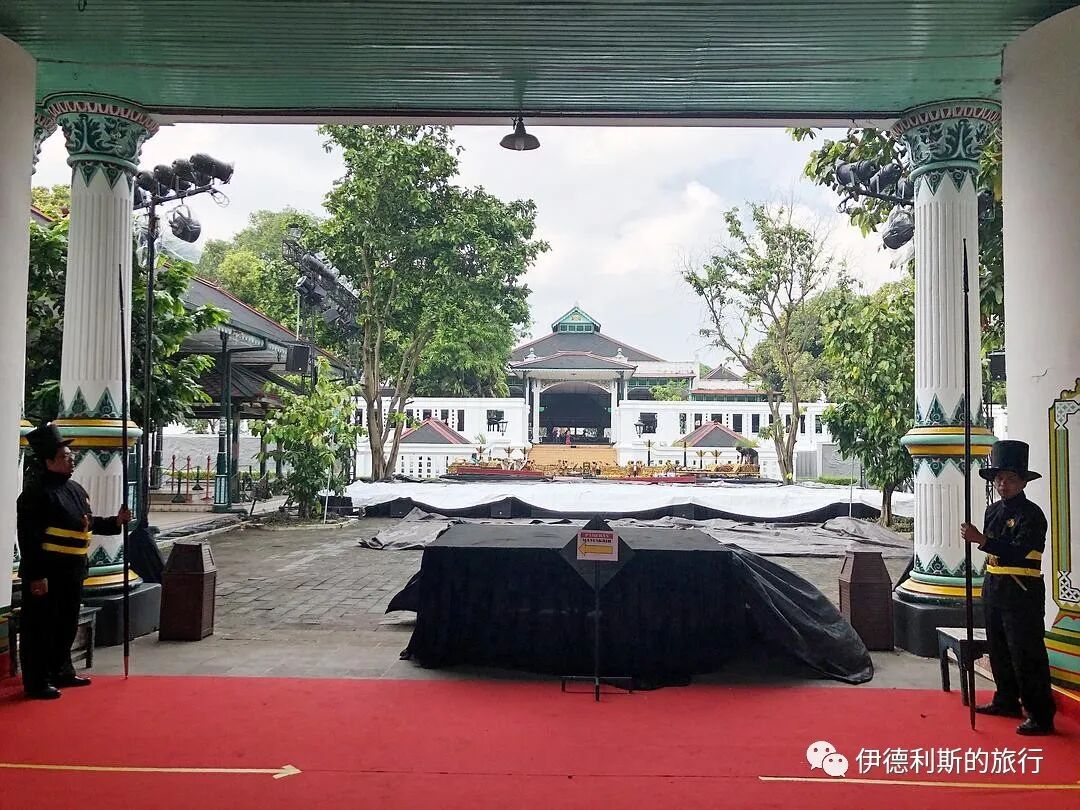
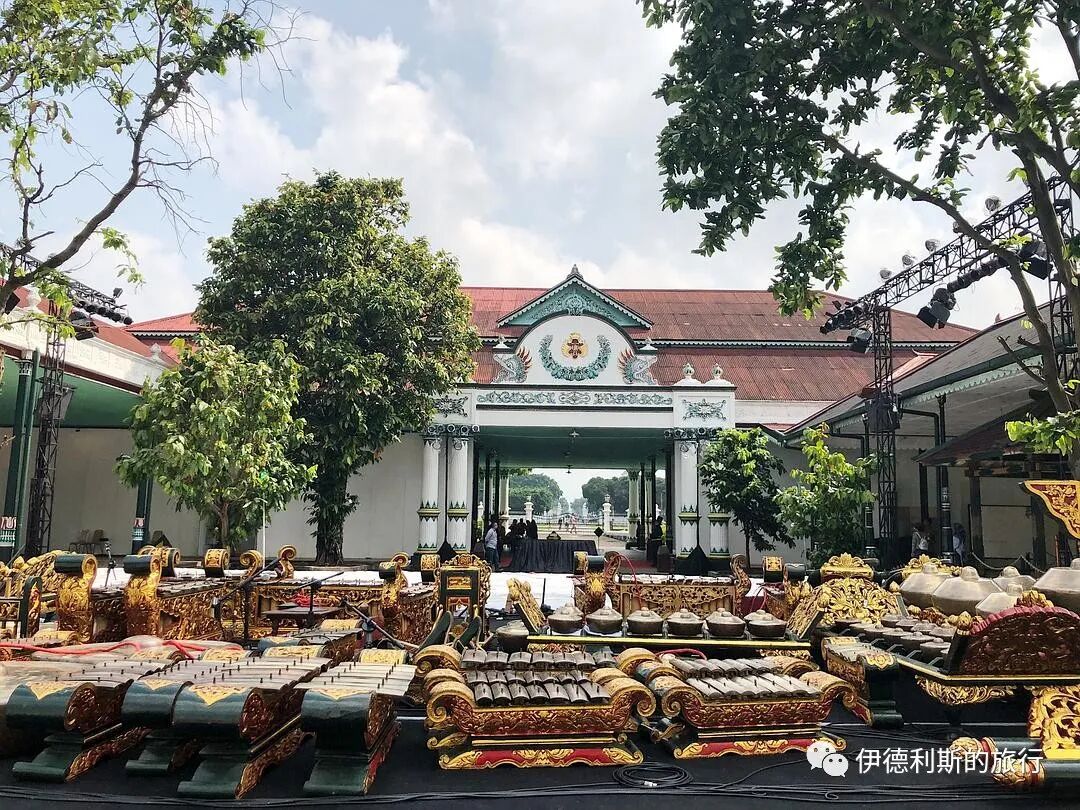
The Siti Hinggil in the south is where grand court ceremonies take place, and every Sultan of Yogyakarta has been crowned here. In 1949, the Netherlands officially recognized Indonesia's independence, and Indonesia's founding father, Sukarno, was officially inaugurated as president here.
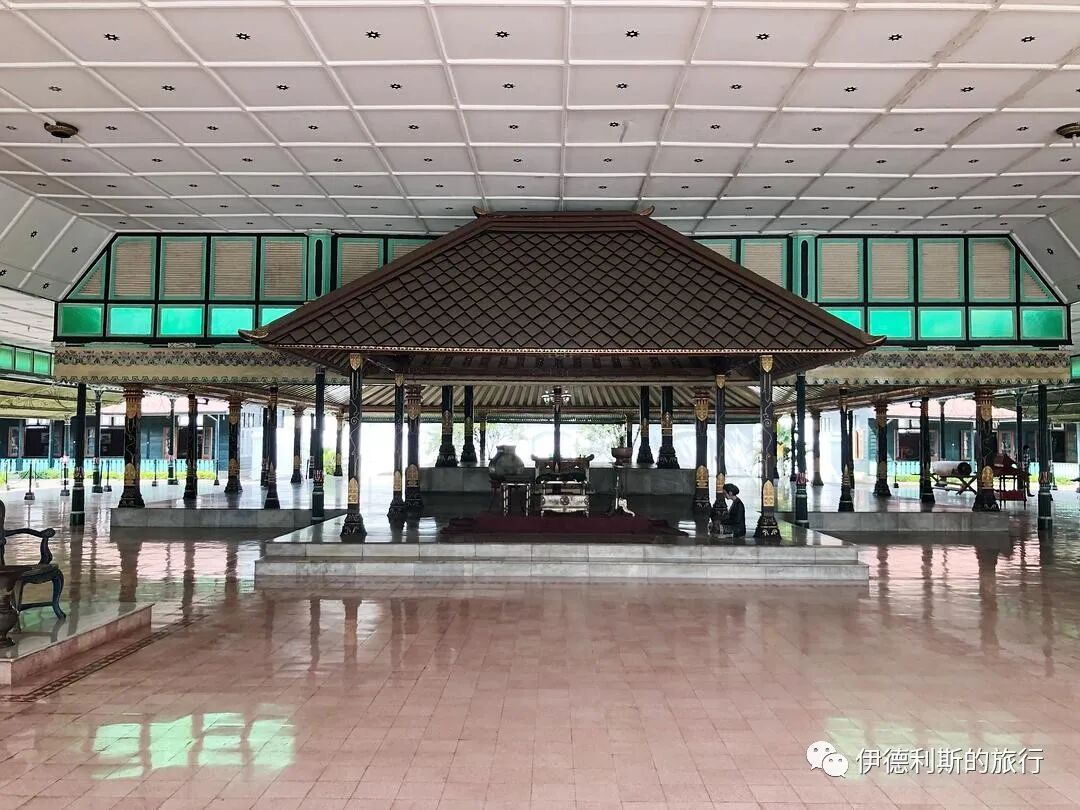
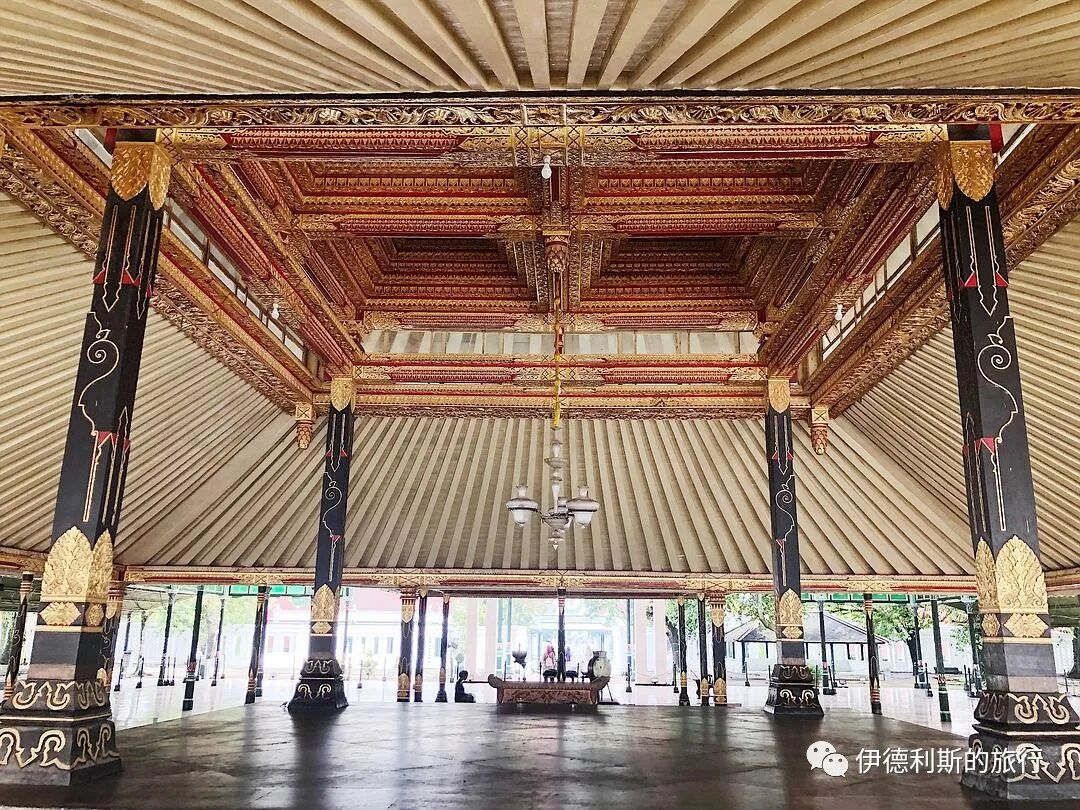
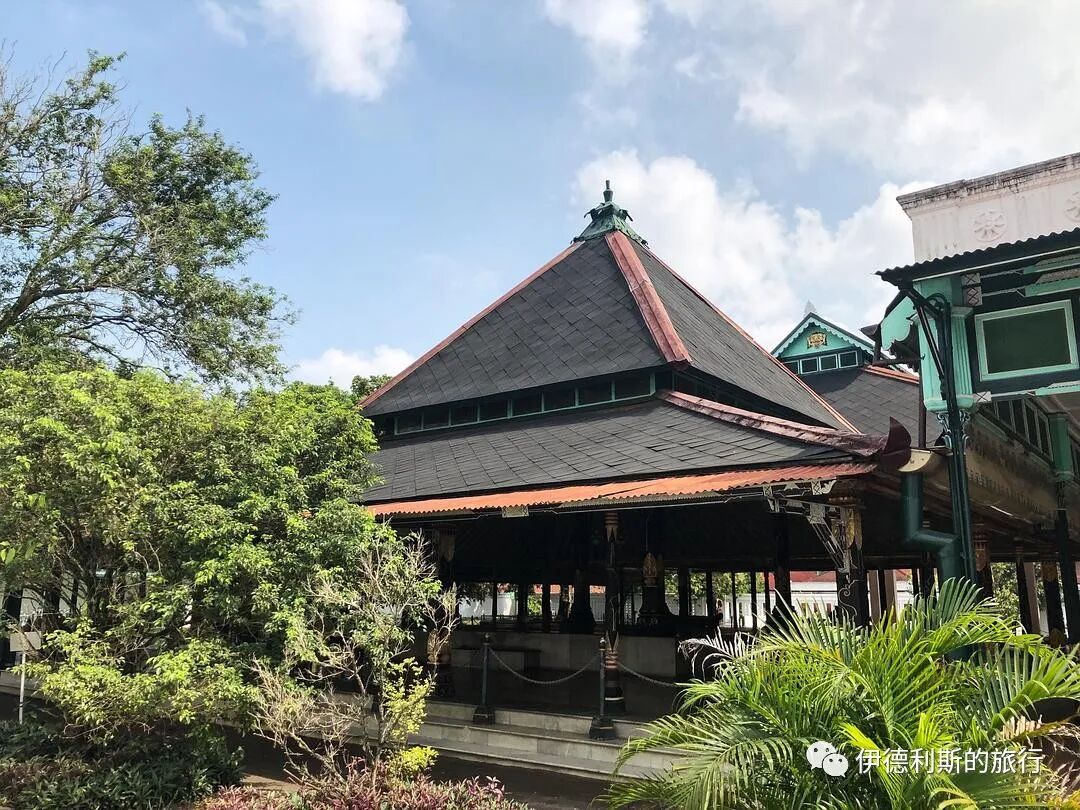
2. South Section
Further south is the Kamandhungan, commonly known as Keben, which was used by the Sultan to pass death sentences in the past. This is currently the main gate to the southern part of the palace, and the ticket office is located here. After buying a ticket to enter the southern section, you reach Sri Manganti. This was once used to receive VIP guests, and now it hosts performances of gamelan music, wayang shadow puppetry, Javanese poetry, and classical dance almost every morning.
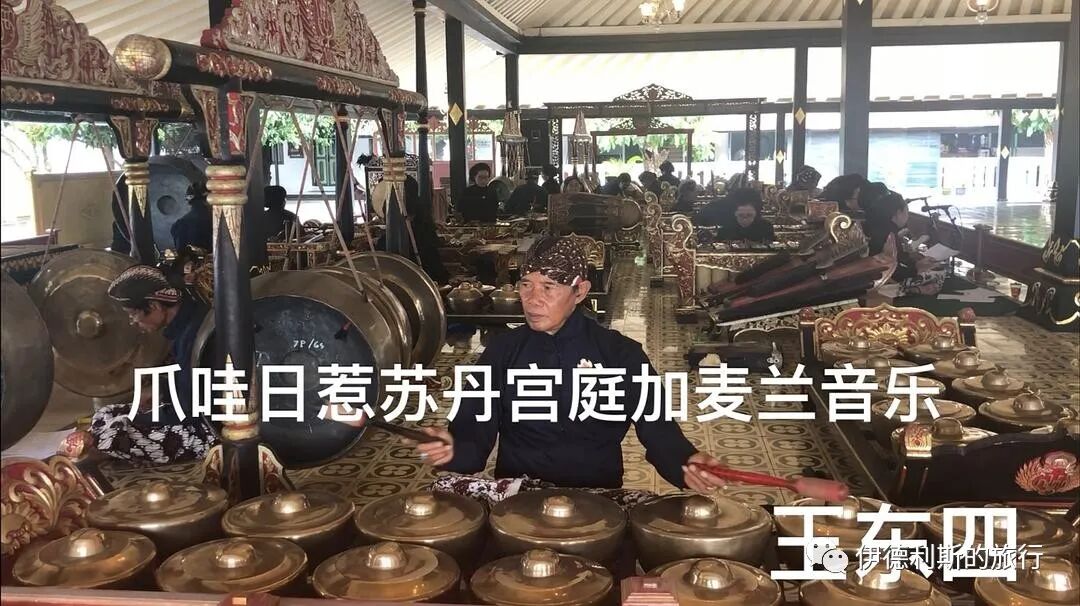
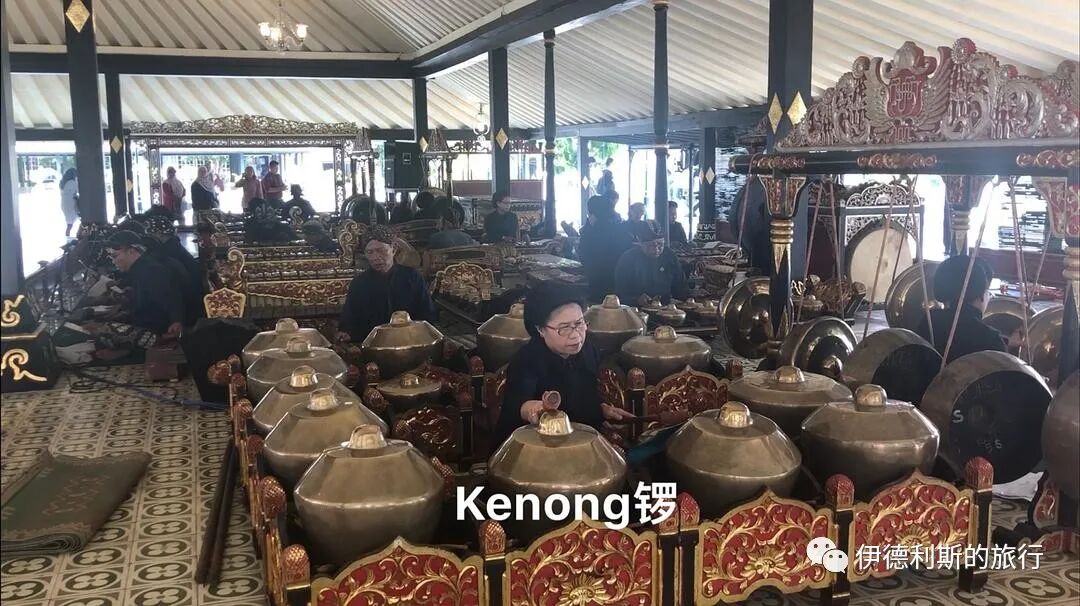
The Traju Mas Ward to the east of Keben was once the place where the Sultan welcomed guests. It collapsed during the 2006 earthquake and was not fully restored until 2010.
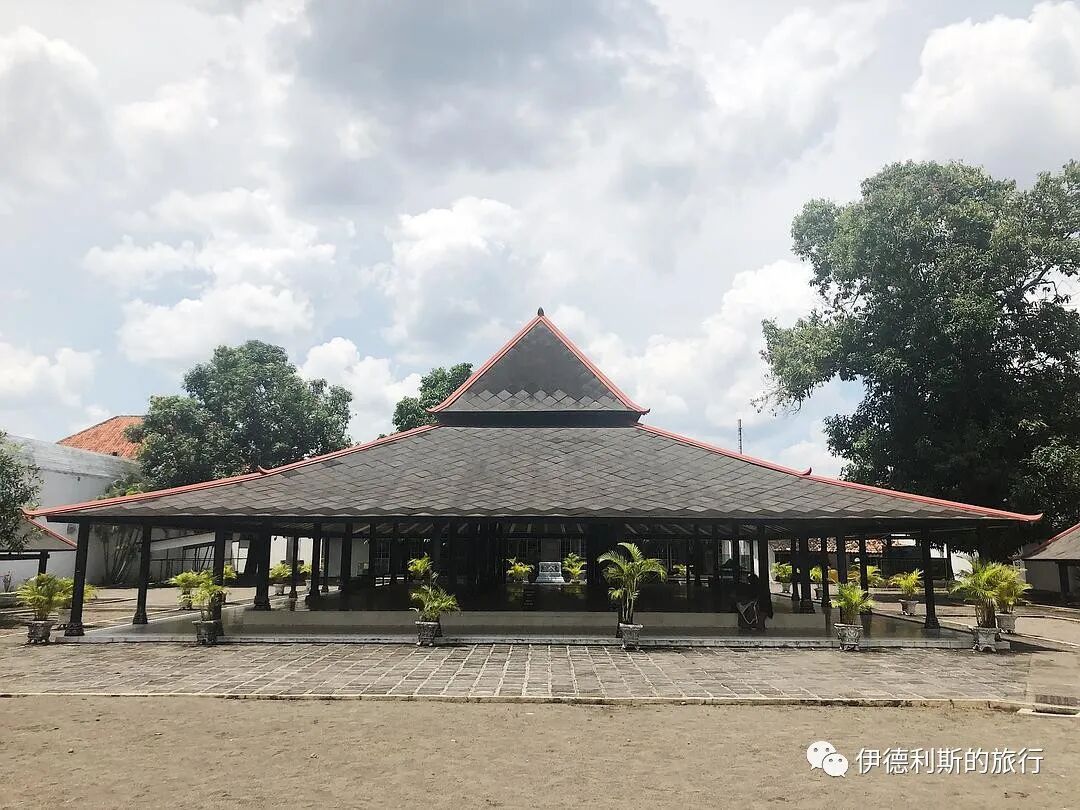
South of Keben is the Donopratopo gate, which has a pair of guardian statues called Dvarapala in front of it. Dvarapala originated as gate gods in Hinduism and Buddhism. In Javanese culture, they usually appear as giant, fierce-looking asuras holding a vajra.
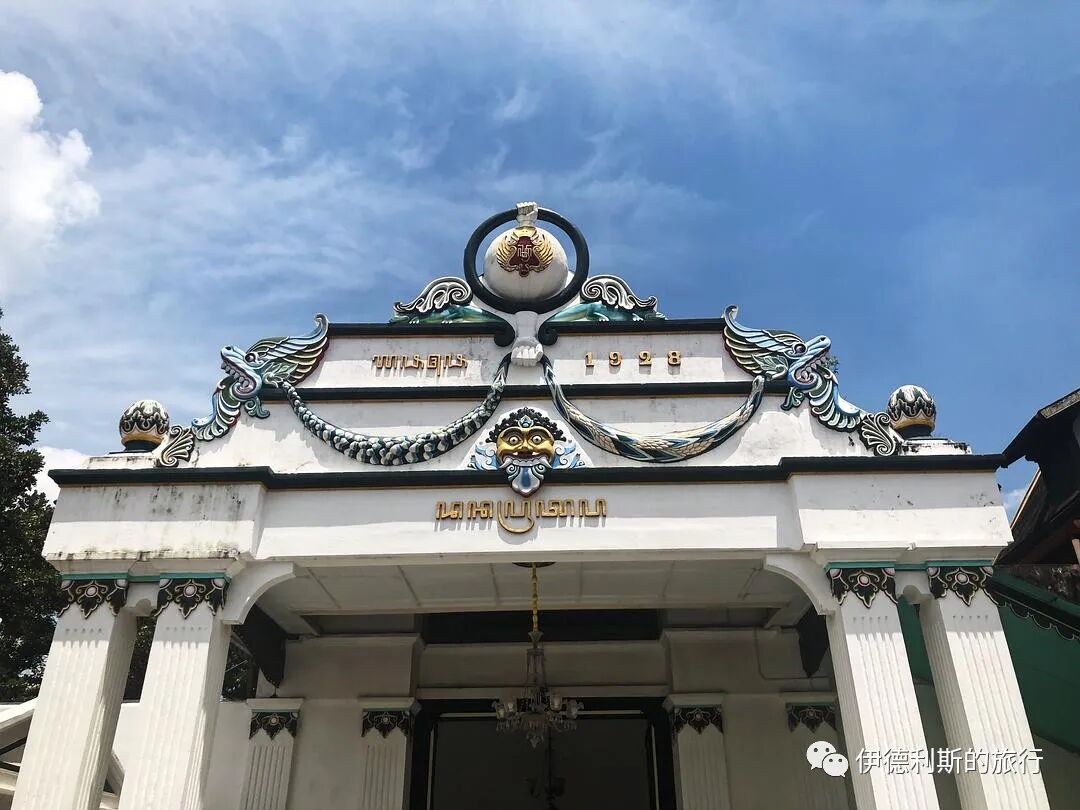
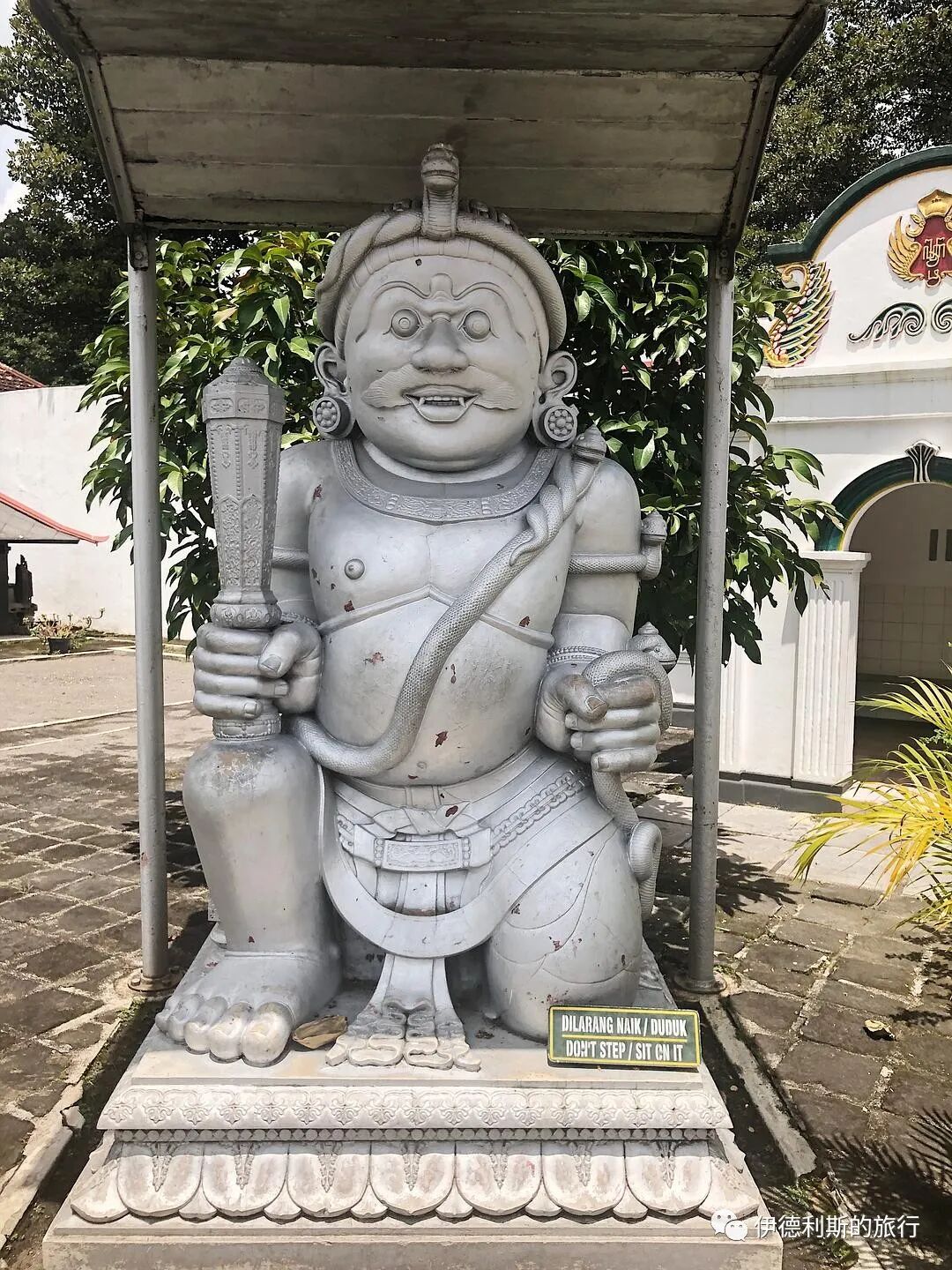
After passing through the Donopratopo gate, you enter the Kedhaton area, the heart of the palace. Only part of this area is open to the public, as the rest serves as the living quarters for the Sultan's family. The courtyard is covered in sand from the southern beach, where royal servants (Abdi-Dalem) stand barefoot.
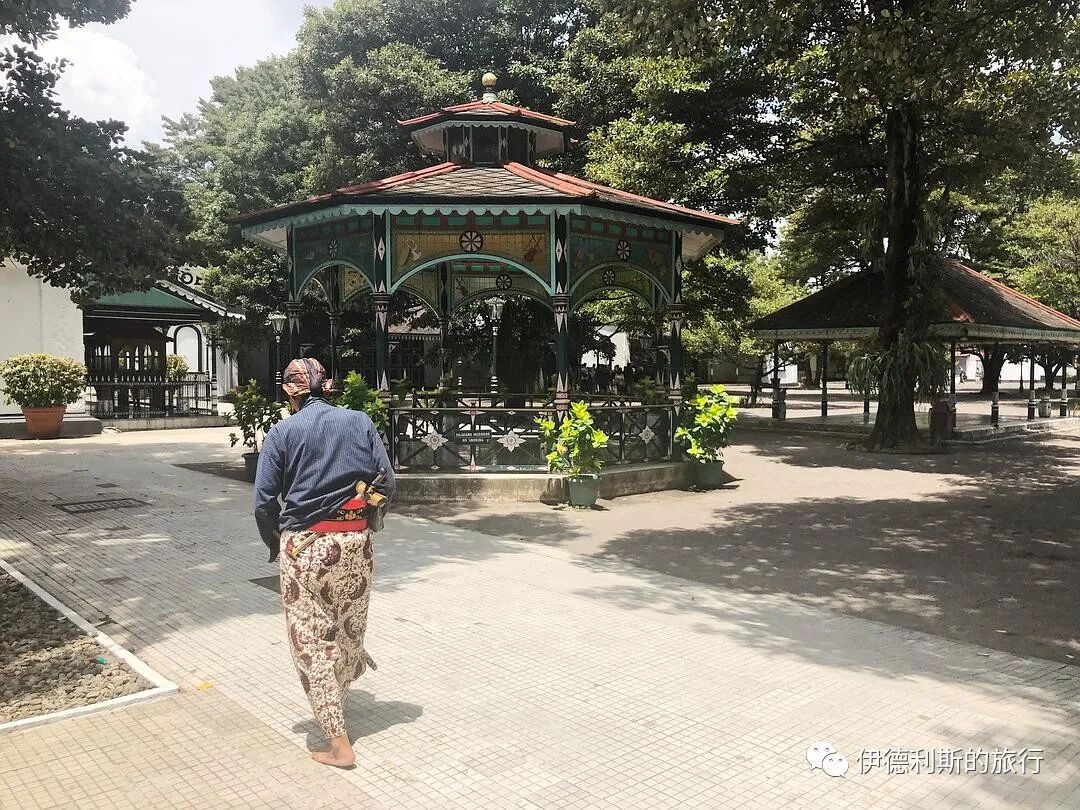
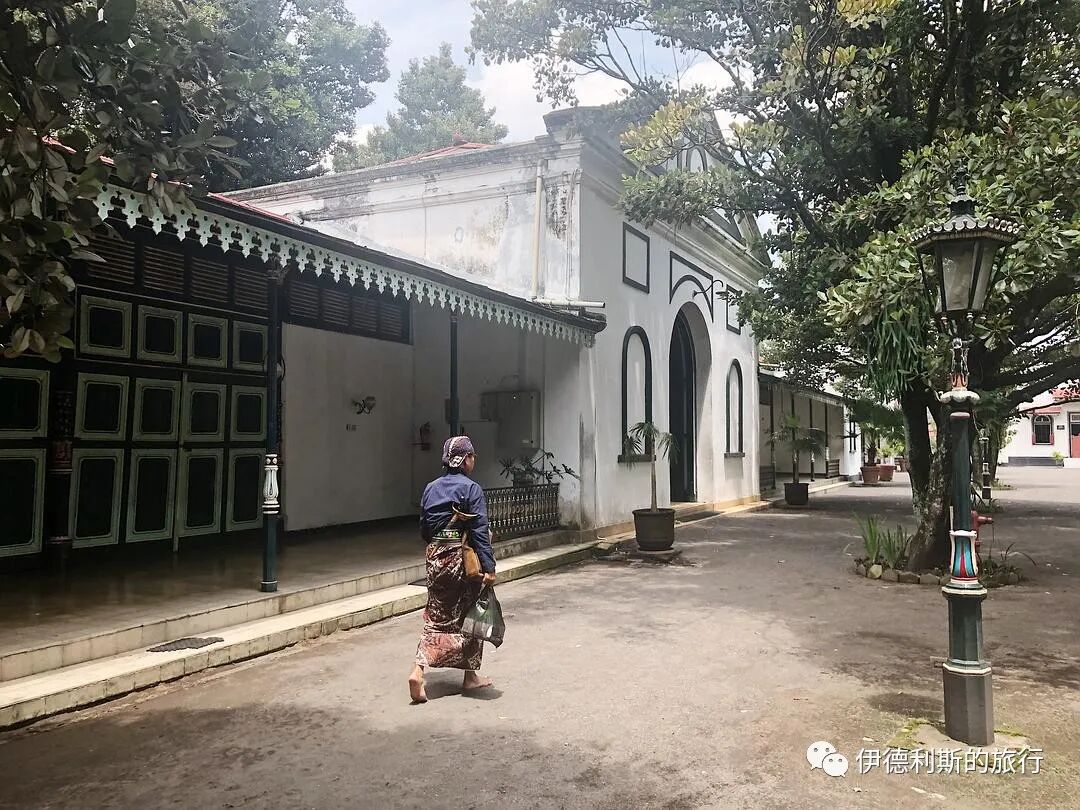
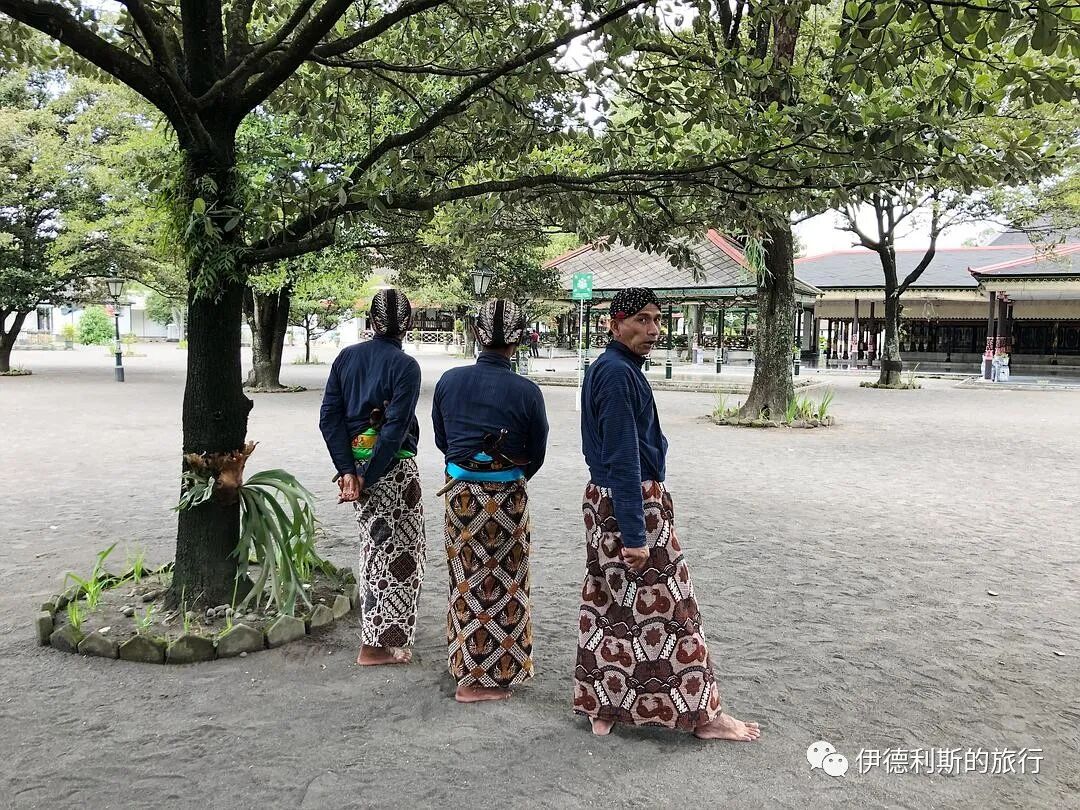
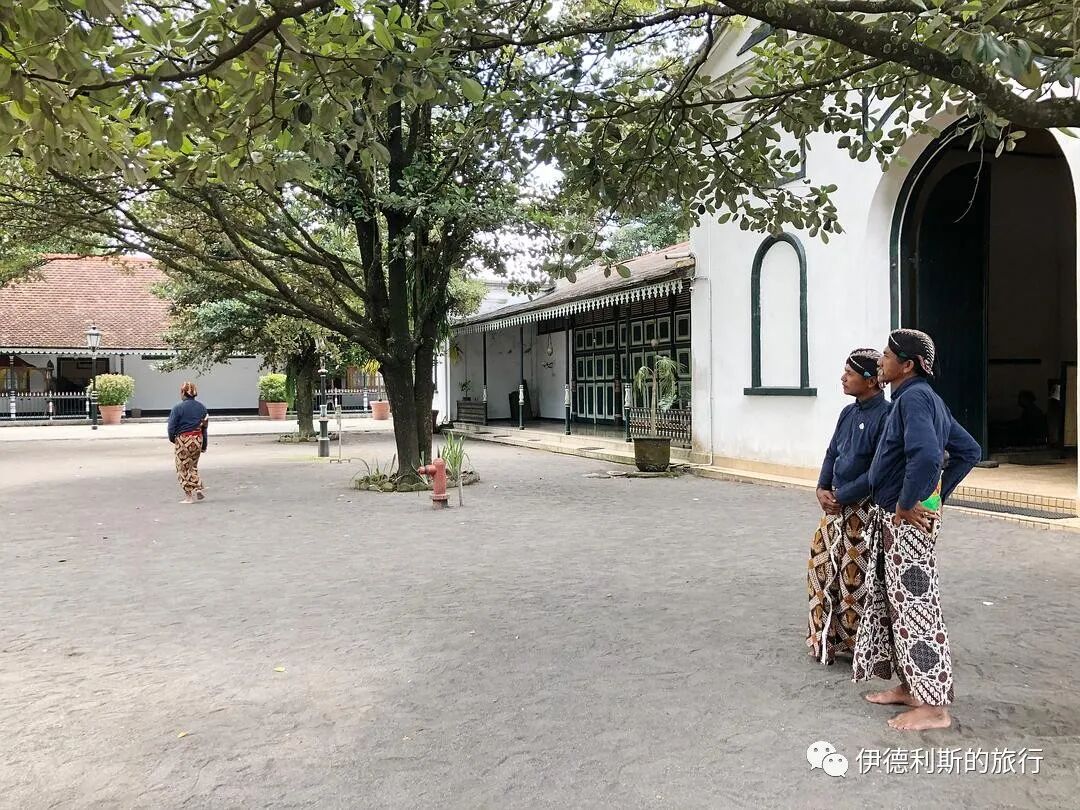
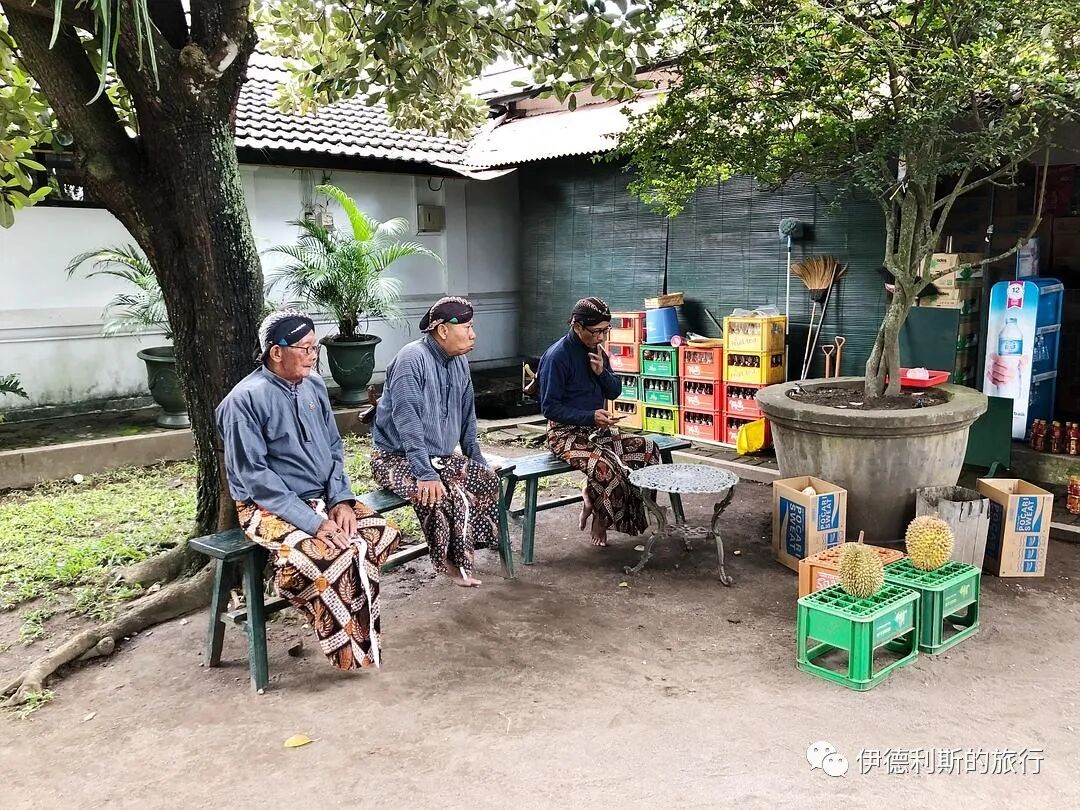
There are currently 2,640 royal servants in the Yogyakarta palace, and they all wear traditional Yogyakarta attire. You can buy the Blangkon hats worn by these servants right inside the palace. A Blangkon is a traditional batik headpiece for men from central and eastern Java. Legend says that Java island was once ruled by a giant named Dewata Cengkar. Dewata Cengkar often demanded human sacrifices, and the people were terrified of him. A man named Aji Saka volunteered to be sacrificed. He said to the giant, 'Great King of Java, I have only one wish before I die.' 'I want a piece of land as big as my headcloth.' The giant agreed to the request, so Aji Saka asked the giant to hold one end of the headcloth. The headcloth kept growing larger, and the giant kept stepping back until he reached the sea, where Aji Saka kicked him into the water. After defeating the giant, the people elected Aji Saka as the new King of Java, and the Blangkon he wore became a symbol of the Javanese people.
A more credible view is that after the 8th century, as more Indian Muslim merchants came to Java to trade, the combination of their turbans and Javanese batik created the Javanese Iket headcloth. The Blangkon is actually a more practical version of the Iket headcloth. The earliest headcloths required a complex tying process. Over time, people fixed the cloth into a set shape, creating a hat that did not need to be tied, which is the Blangkon.
The most common types of Blangkon are the Yogyakarta style and the Solo style. The Yogyakarta Blangkon is known for the Mondholan, a bulge on the back. In ancient times, Javanese men tied their long hair at the back of their heads. When wearing a Blangkon, they would wrap their hair tightly, creating this bulge. Because Solo was deeply influenced by Dutch colonialism, the locals stopped growing their hair long, so the back of the Solo Blangkon is flat.
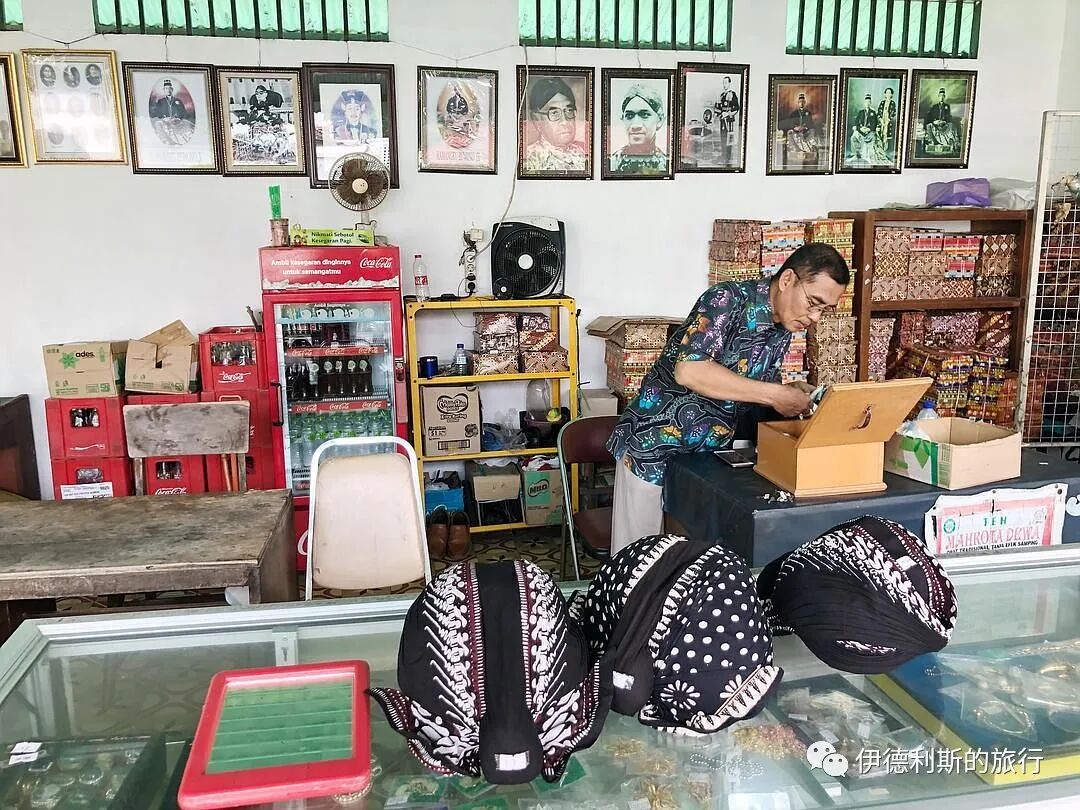
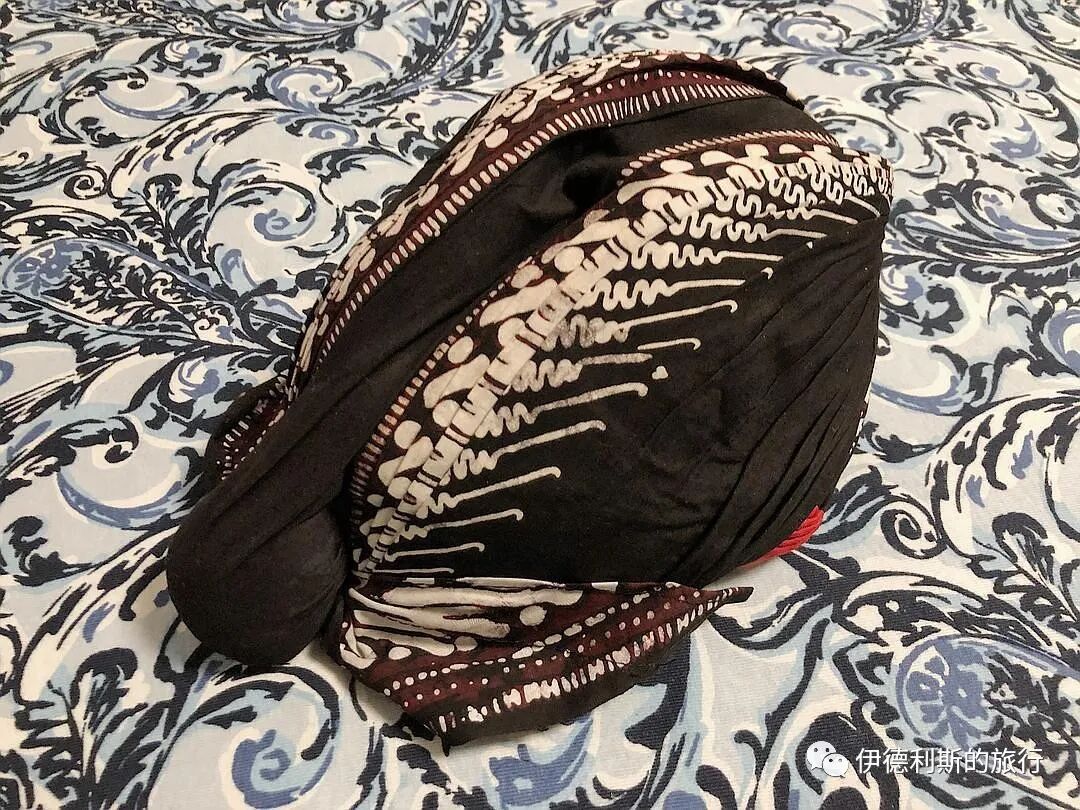
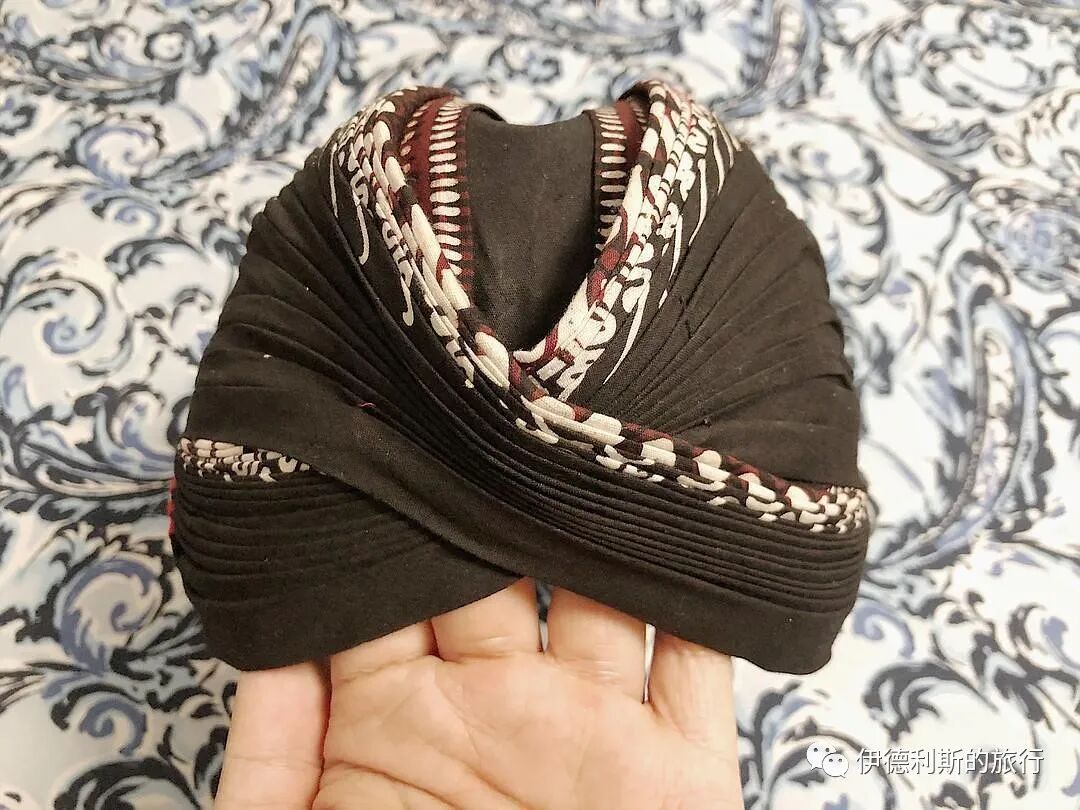
The east-facing Kencono Ward (Golden Pavilion) is the main hall of the palace and the site for various royal ceremonies.
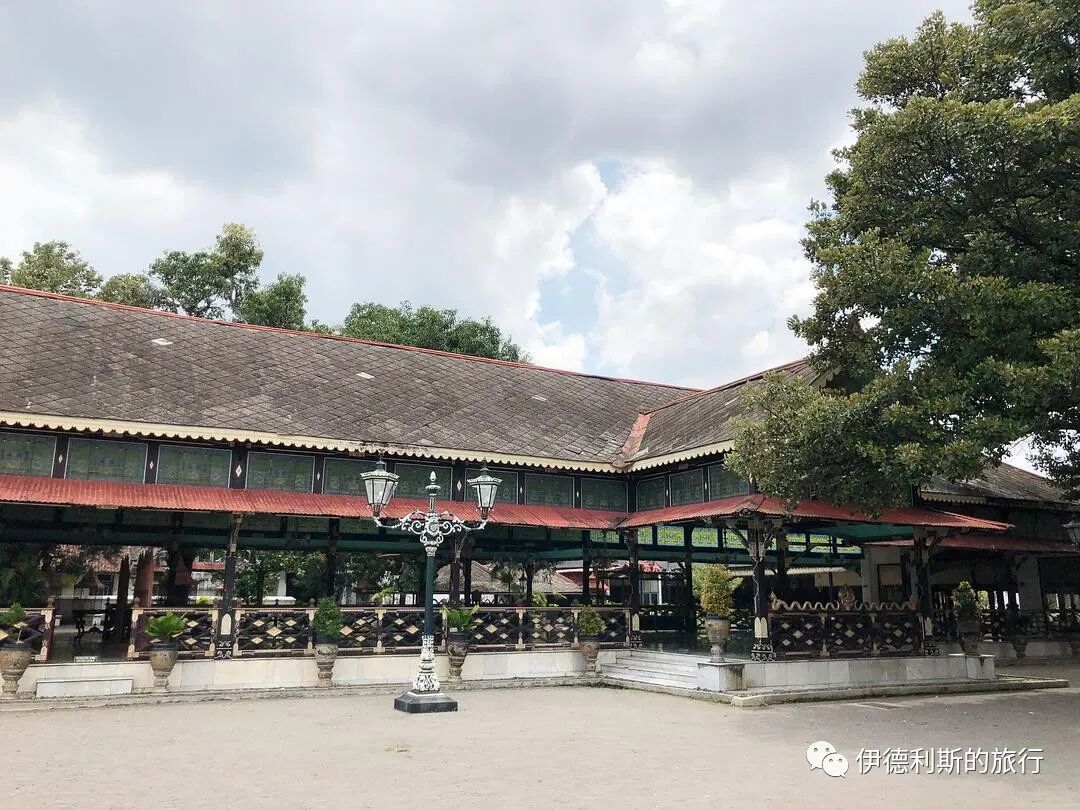
The railings are carved with Batara Kala, the Javanese Hindu god of the underworld, who is also the god of time and destruction. In traditional Javanese mythology, Batara Kala eating the sun is the cause of solar eclipses. Legend says Batara Kala is the son of Batara Guru, the Javanese version of the god Shiva. In a moment of uncontrollable desire, Batara Guru had relations with his beautiful wife, Dewi Uma, on the back of a sacred cow. Uma felt very ashamed, and after being cursed, she took on the appearance of a monster. Therefore, the child she gave birth to, Batara Kala, also had a monster's appearance.
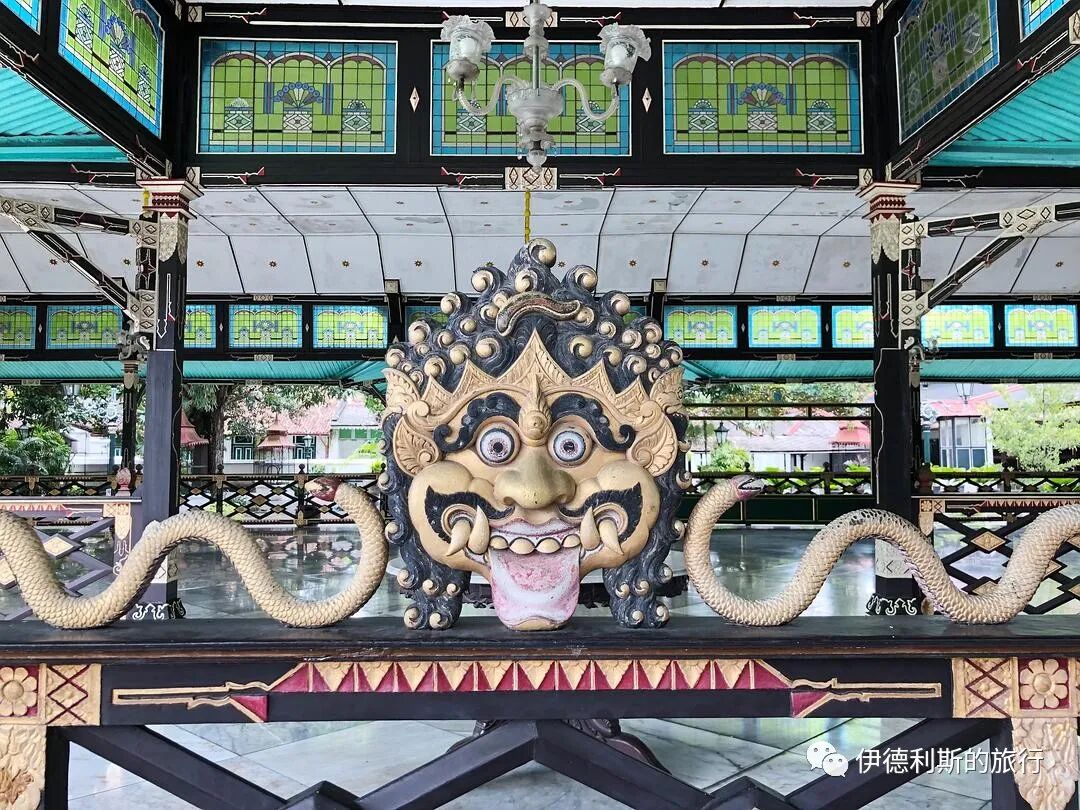
The railings are carved with the snake god Naga from Hindu and Buddhist culture. The Naga of Java and Bali is a crowned snake, representing a blend of the Hindu Shiva tradition and the native Javanese animist snake tradition. In the 9th century, the Javanese Naga looked like a cobra. After the 15th century, it was influenced by the Chinese dragon, though it lacks claws.
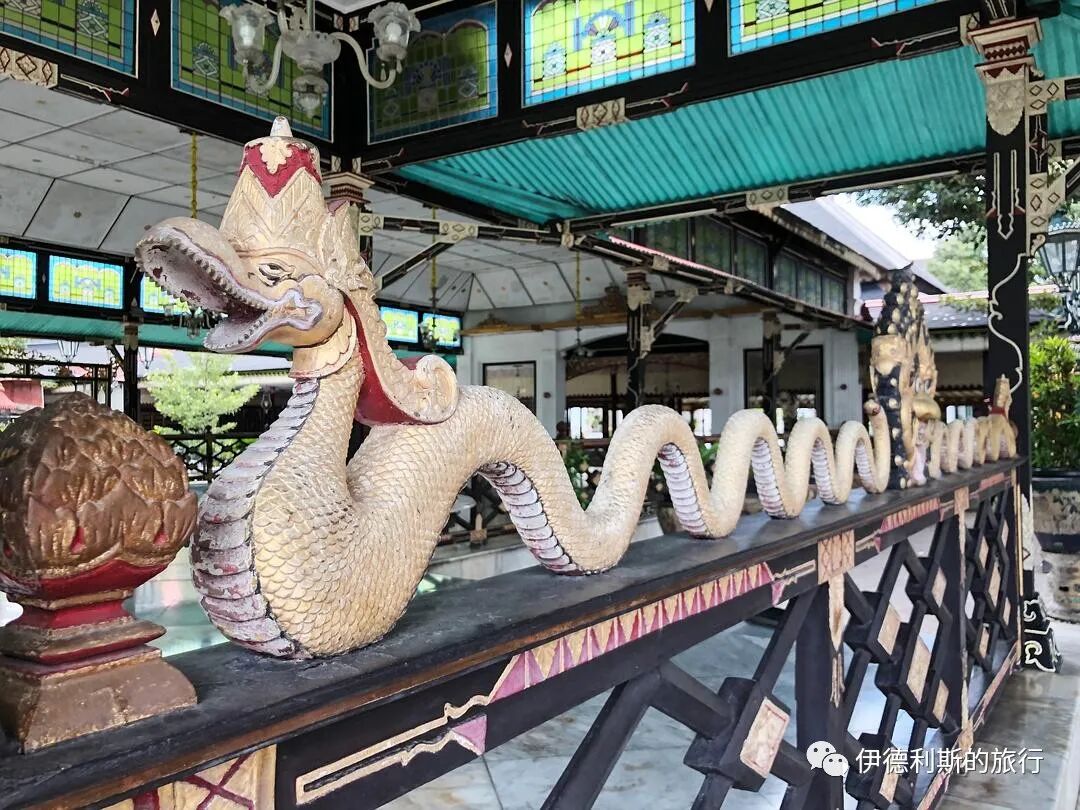
Batik
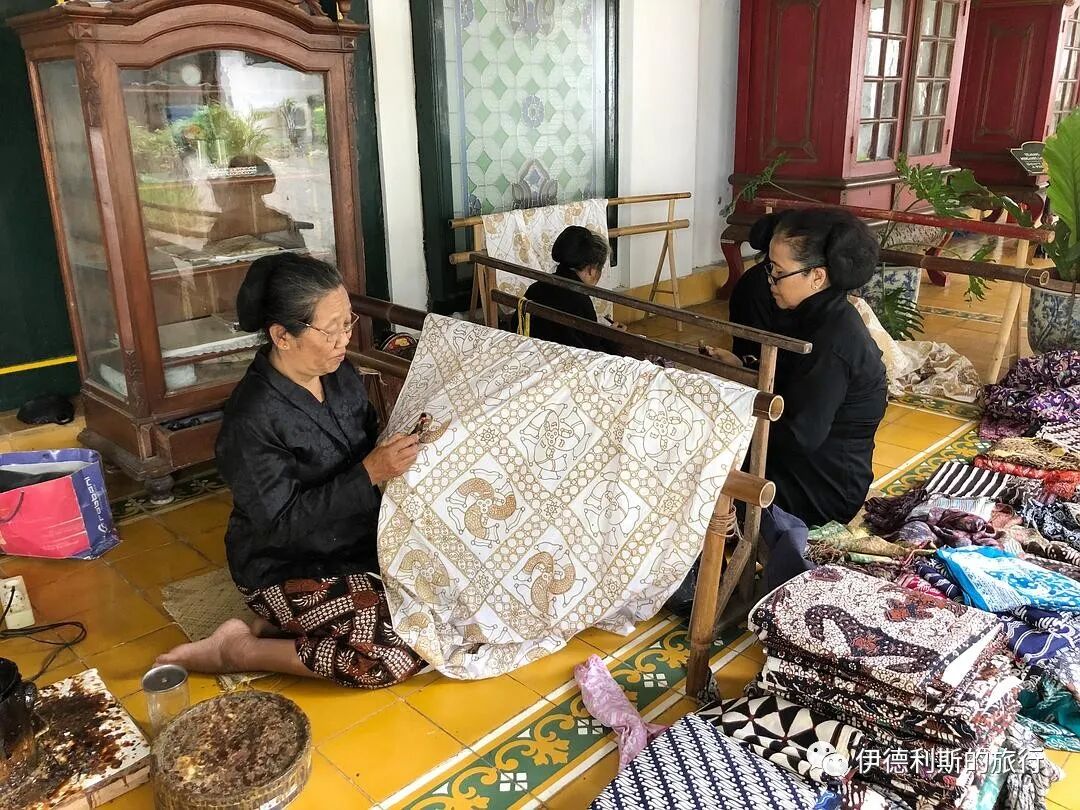
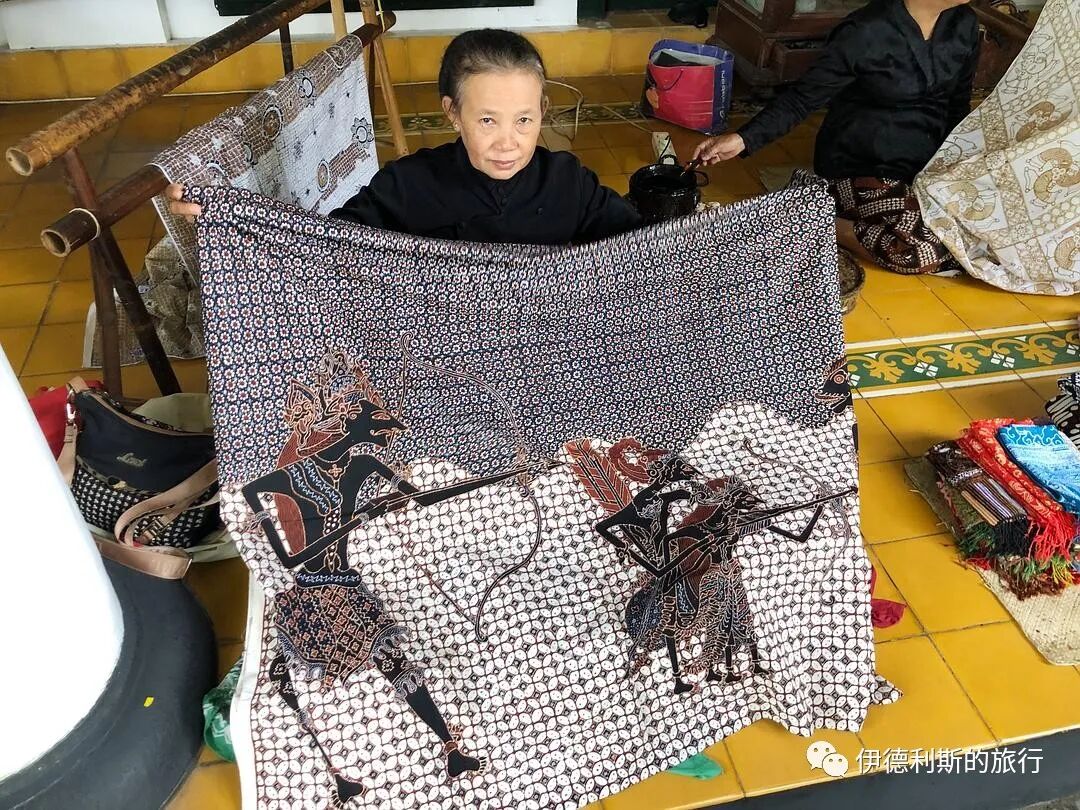
Some buildings
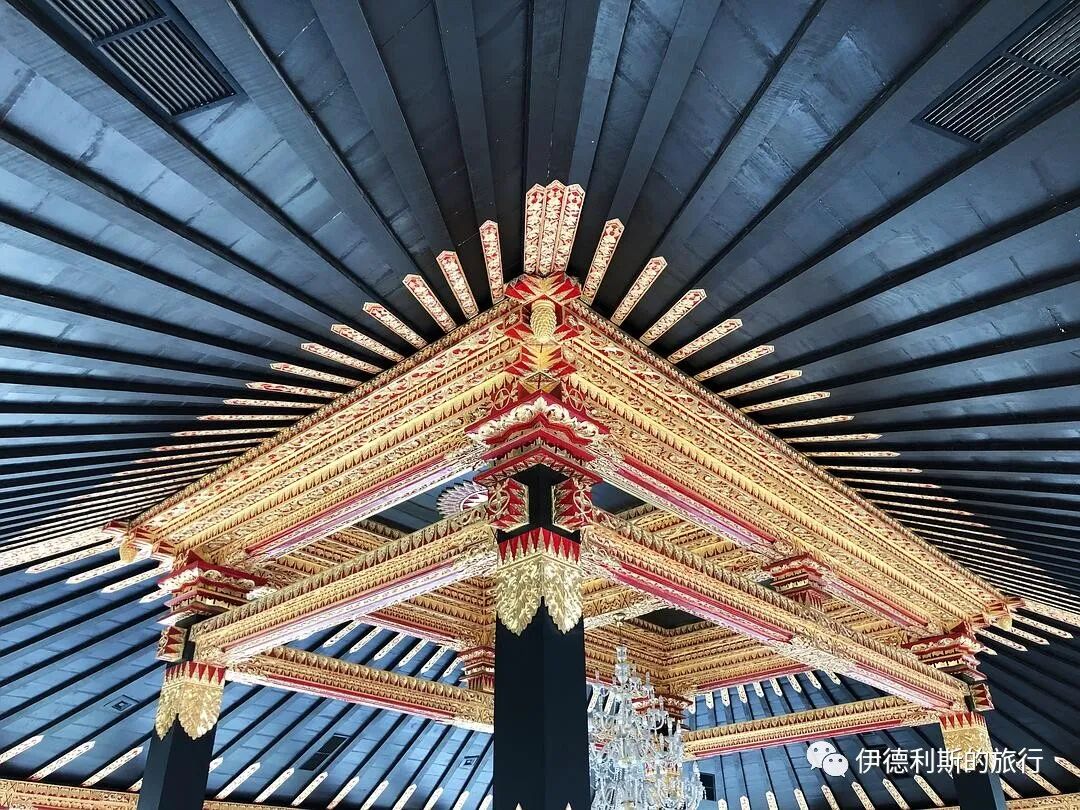
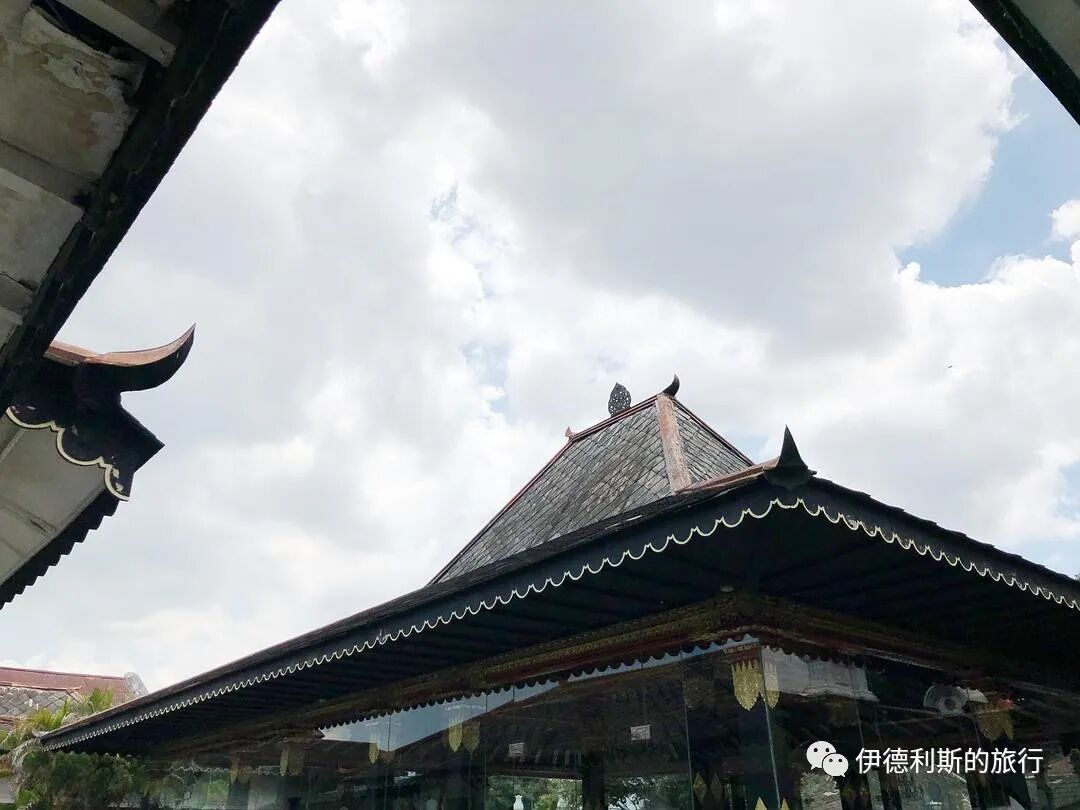
A palanquin used during Sultanate court processions
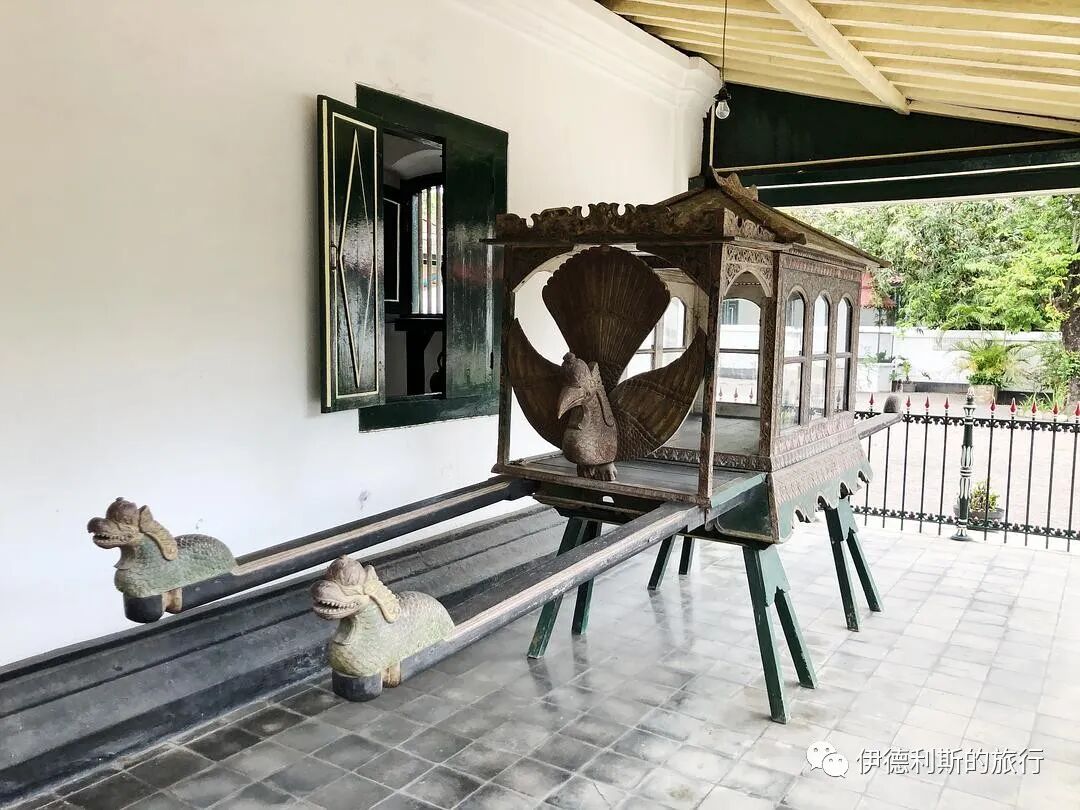
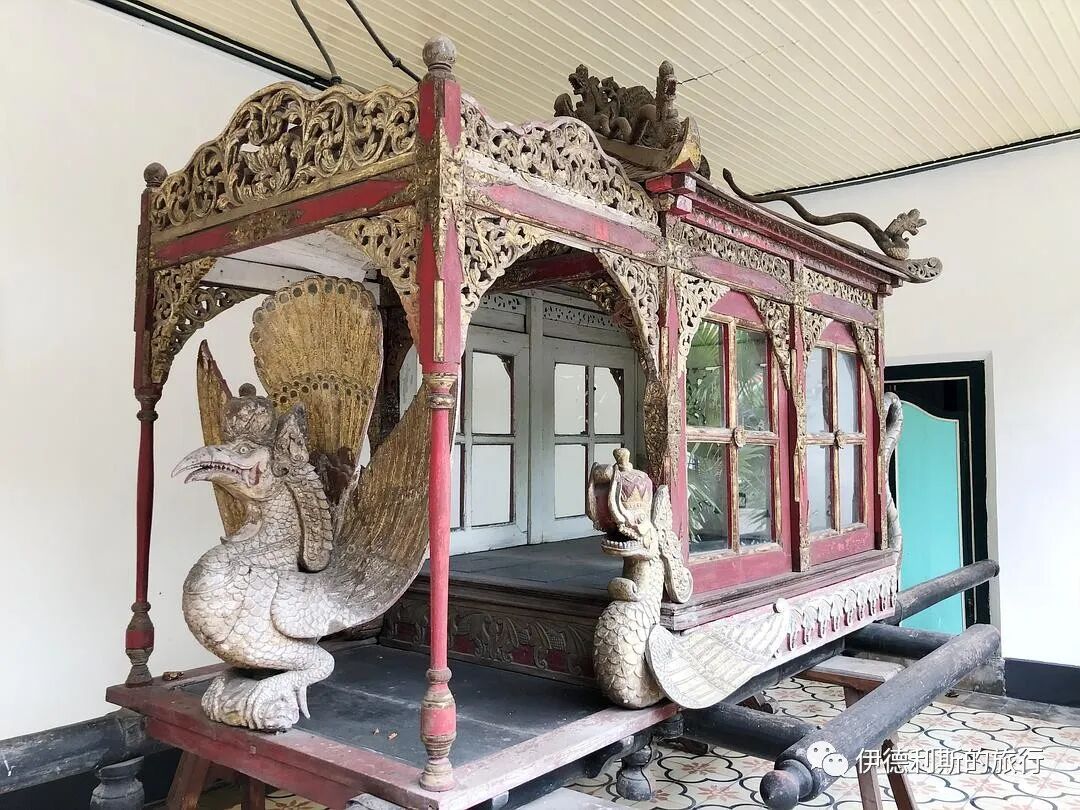
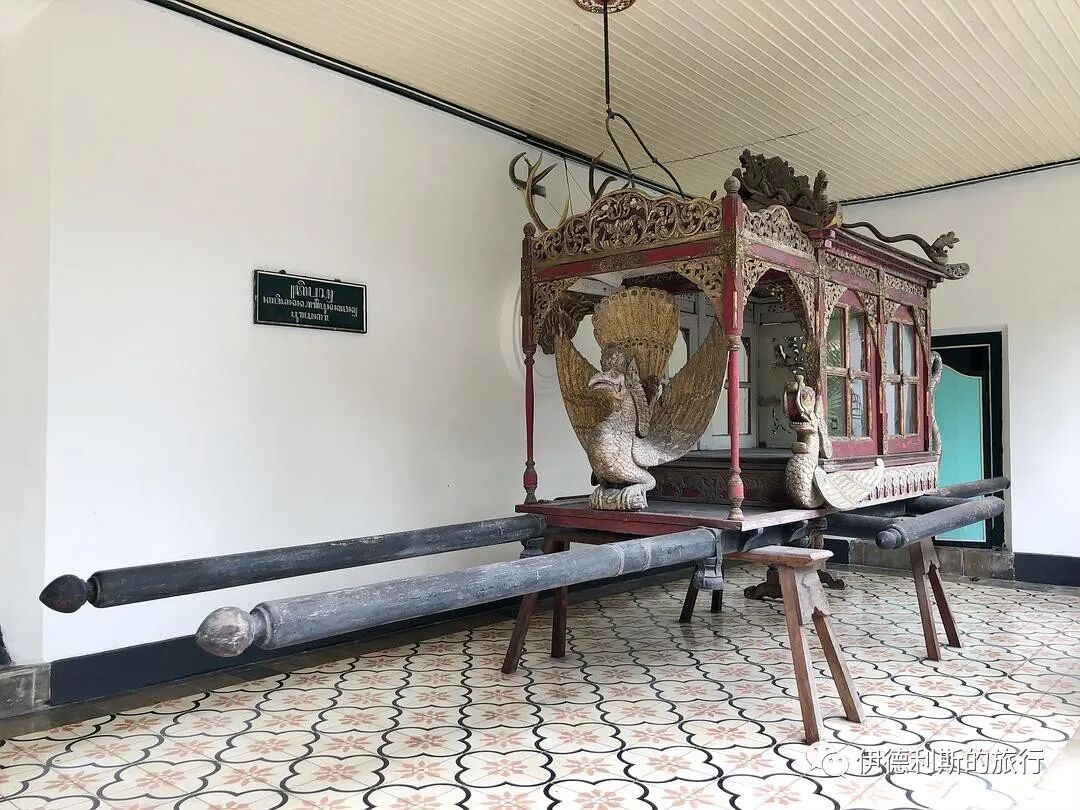
South of the Kedhaton is the Kamagangan Gate, which features statues of two Naga snake gods. Beyond the Kamagangan Gate is outside the palace grounds. This area was once used to train and test retainers, and the Magangan Ward in the middle of the courtyard is the site for the Bedhol Songsong puppet ceremony.
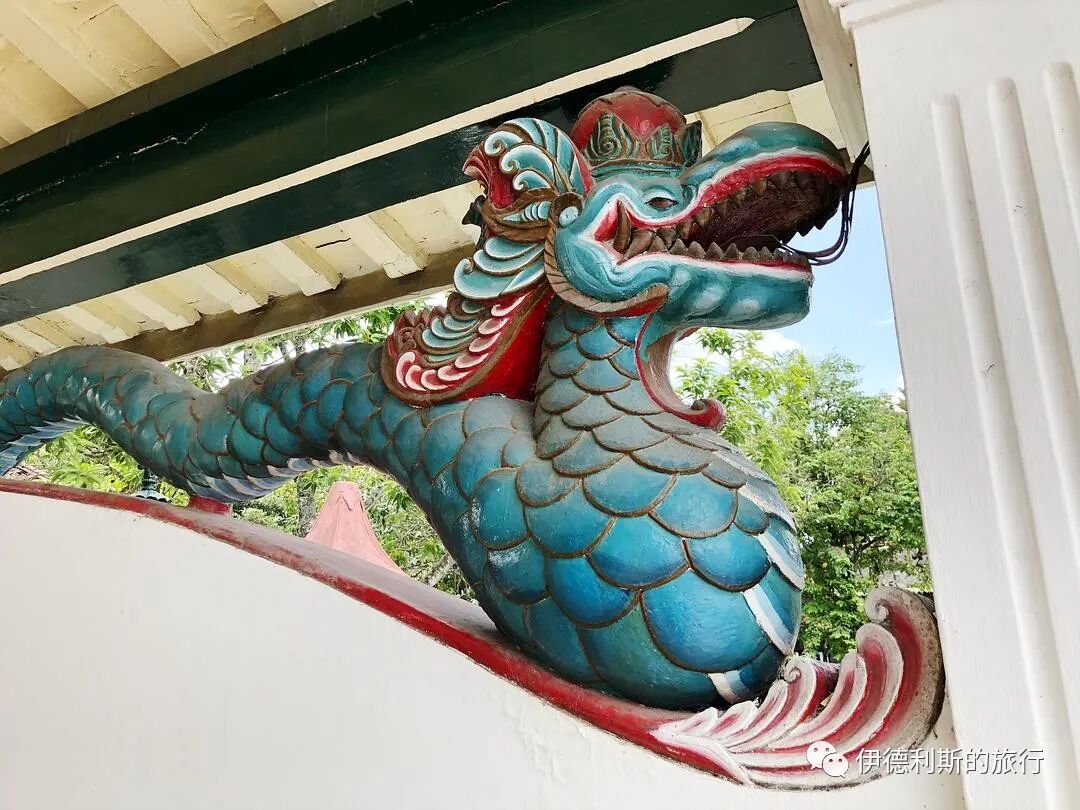
The palace walls of the Yogyakarta Palace
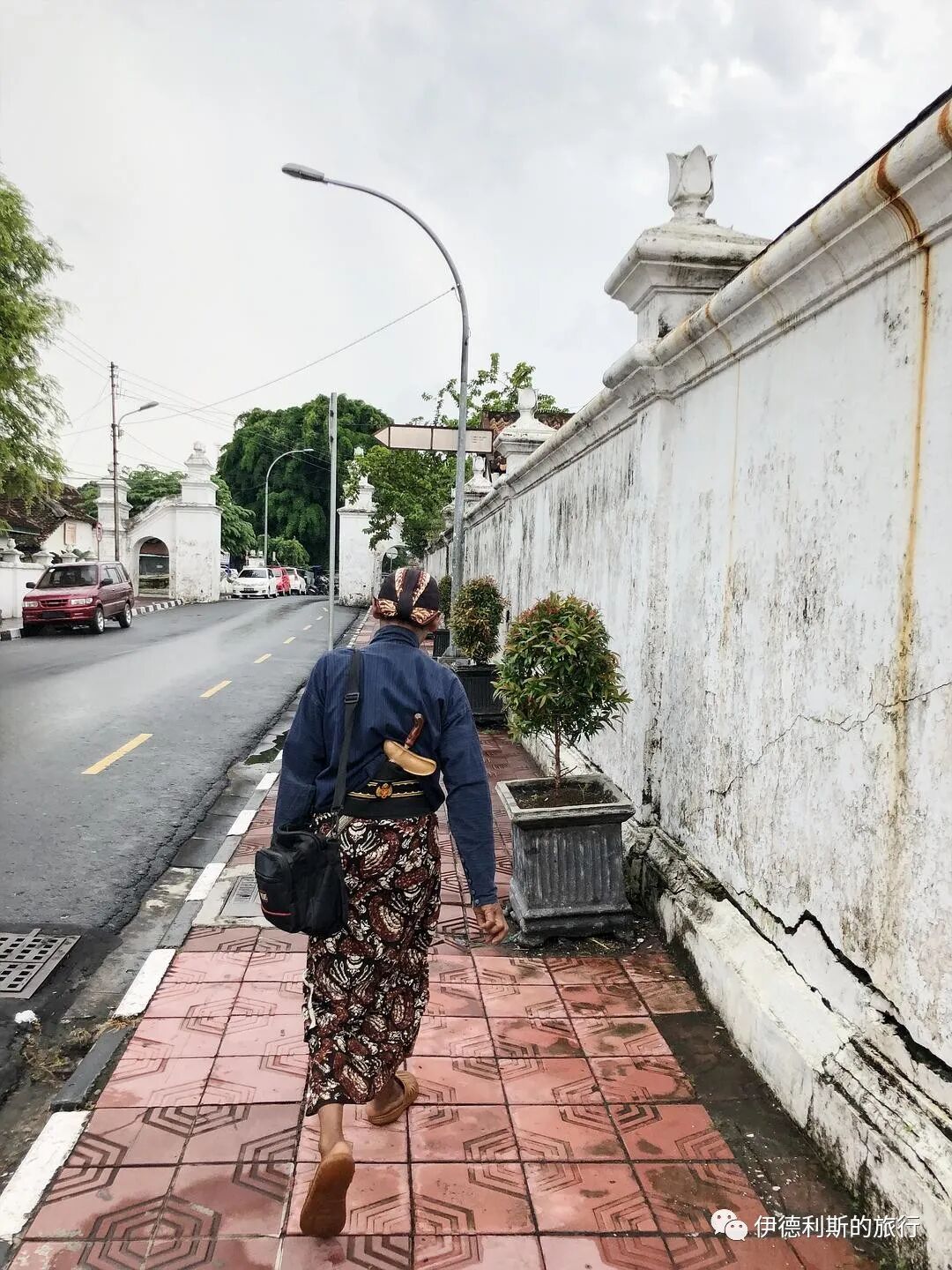
2. Yogyakarta Water Castle: 1758-1765
The Yogyakarta Water Palace (Taman Sari) is the garden harem of the Sultan of Yogyakarta. It was built in 1758 by order of the founding Sultan Hamengkubuwono I, and the architect was Tumenggung Mangundipura. Tumenggung Mangundipura traveled to the Dutch East India Company headquarters in Batavia (Old Jakarta) twice to study European architecture, so the buildings in the Water Palace blend Javanese and Dutch styles.
The Water Palace was finished in 1765, featuring a mosque, meditation rooms, bathing areas, 18 water gardens and pavilions, and a complex water system, but these designs were neglected after Sultan Hamengkubuwono I died in 1791. The Water Palace was damaged during the British invasion of Yogyakarta in 1812 and again during the Java War from 1825 to 1830.
After an earthquake in 1867, the palace complex was completely abandoned, local residents began building homes on the ruins, and the dried-up lake was gradually filled in. Parts of the Water Palace were restored after the 1970s, but only the bathing area was fully repaired.
1. Segaran Lake Area
The main buildings of the Water Palace sit around an artificial lake called Segaran (artificial sea).
In the middle of Segaran lake is an island called Kenongo (magnolia island), which used to be covered in magnolia flowers. A building called Gedhong Kenongo stood on the island and was once the largest structure in the Water Palace, but it was severely damaged in the 1867 earthquake.
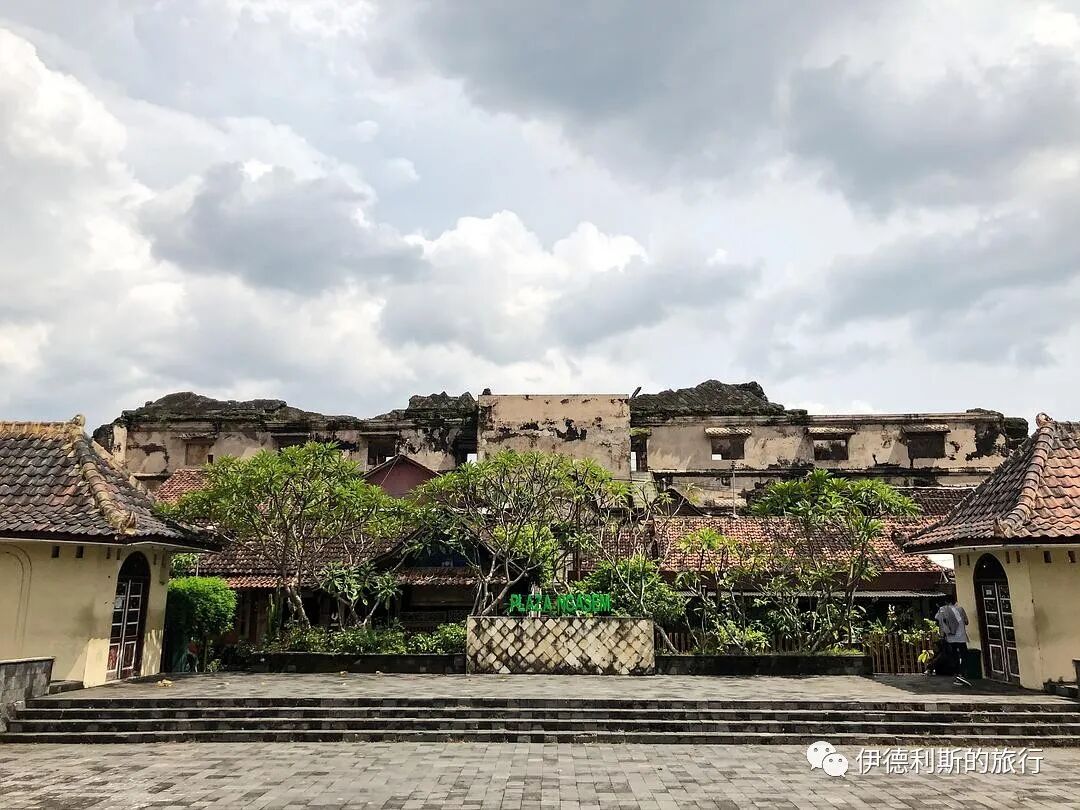
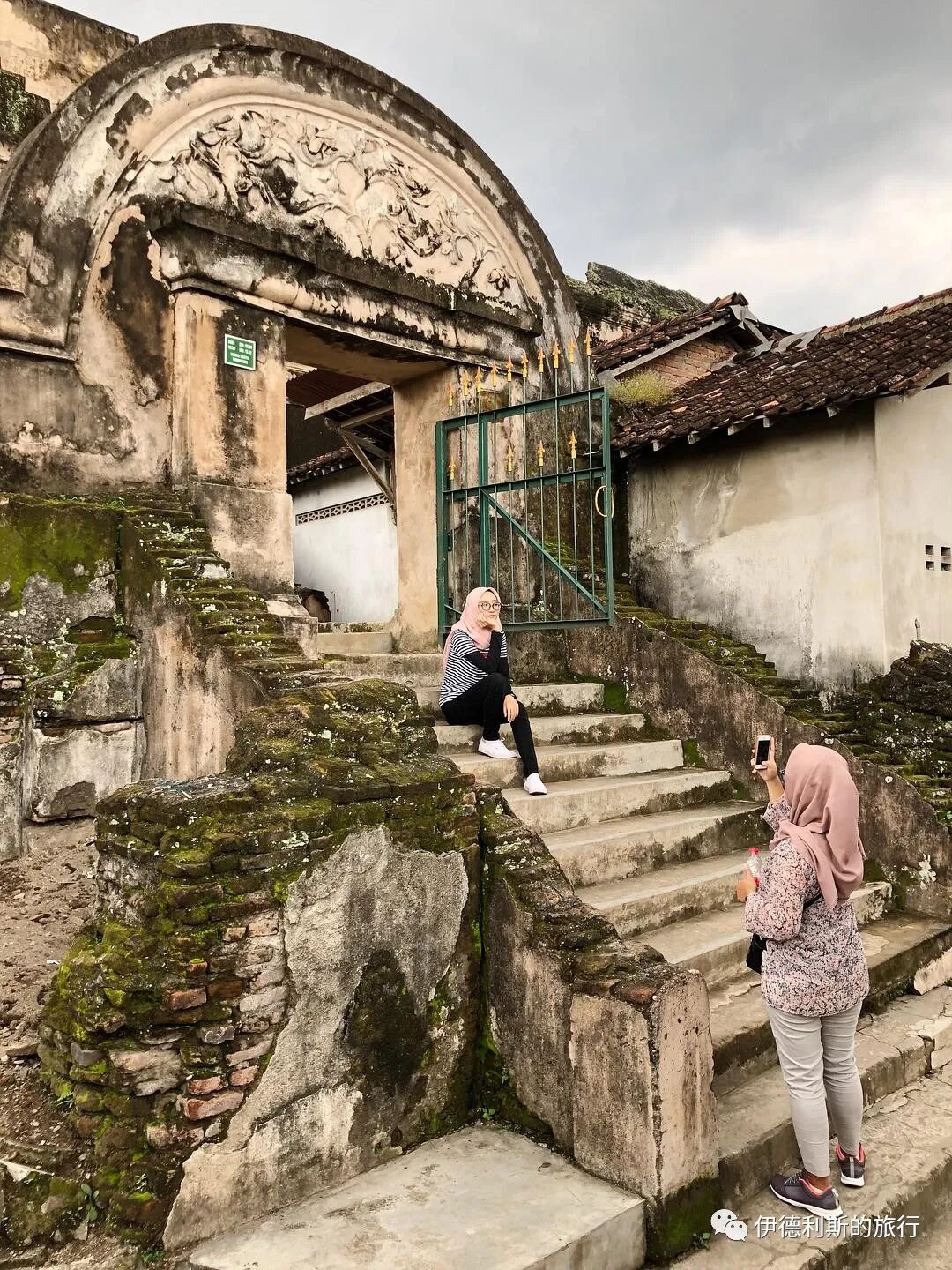
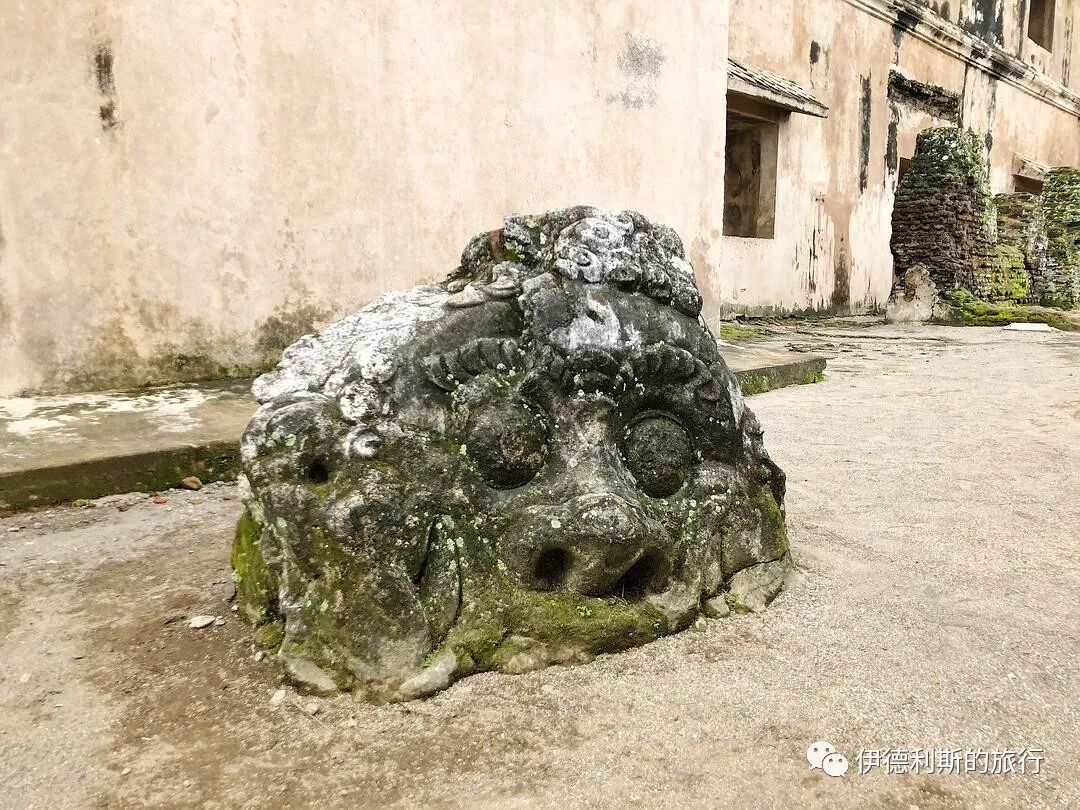
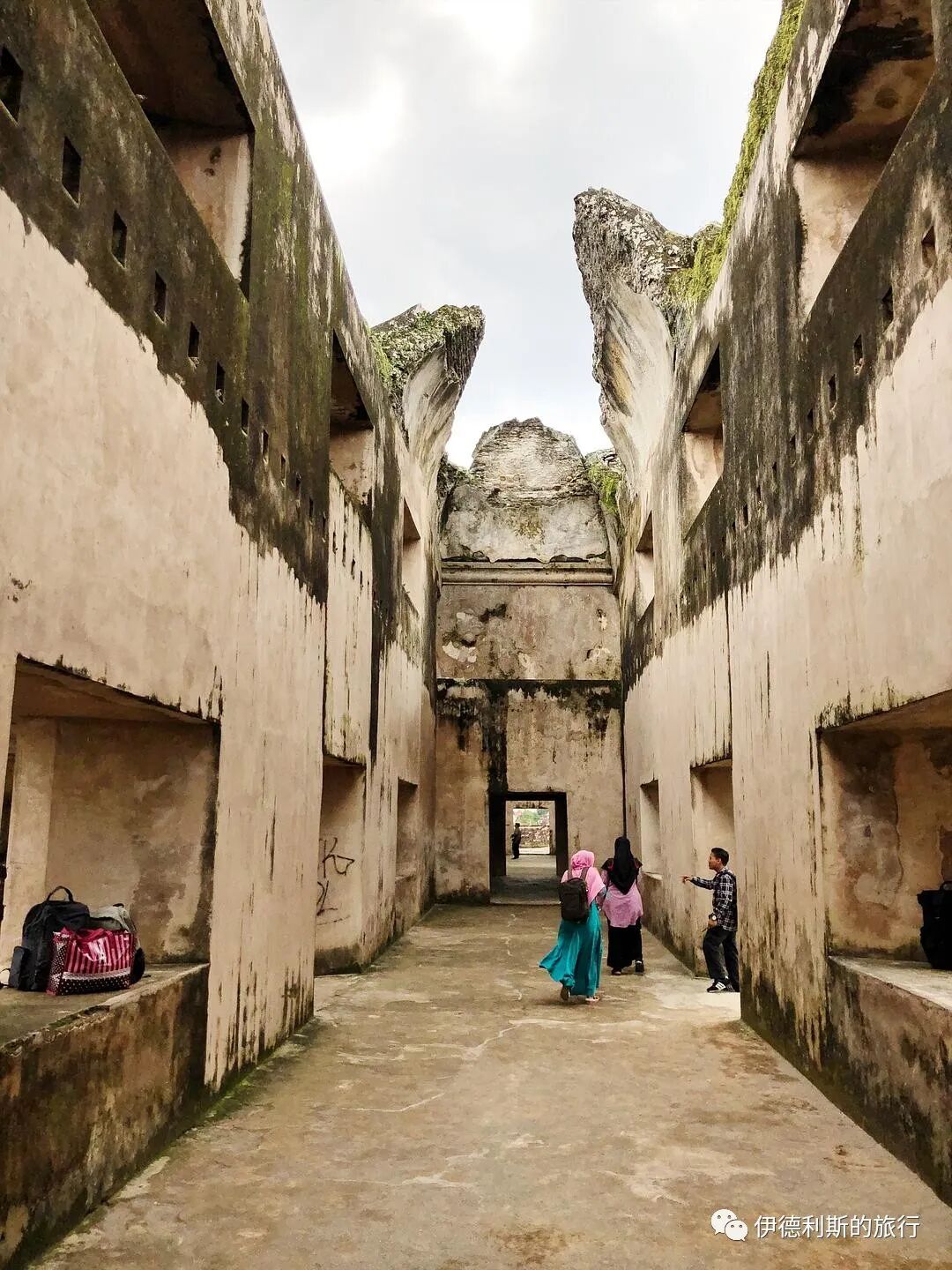
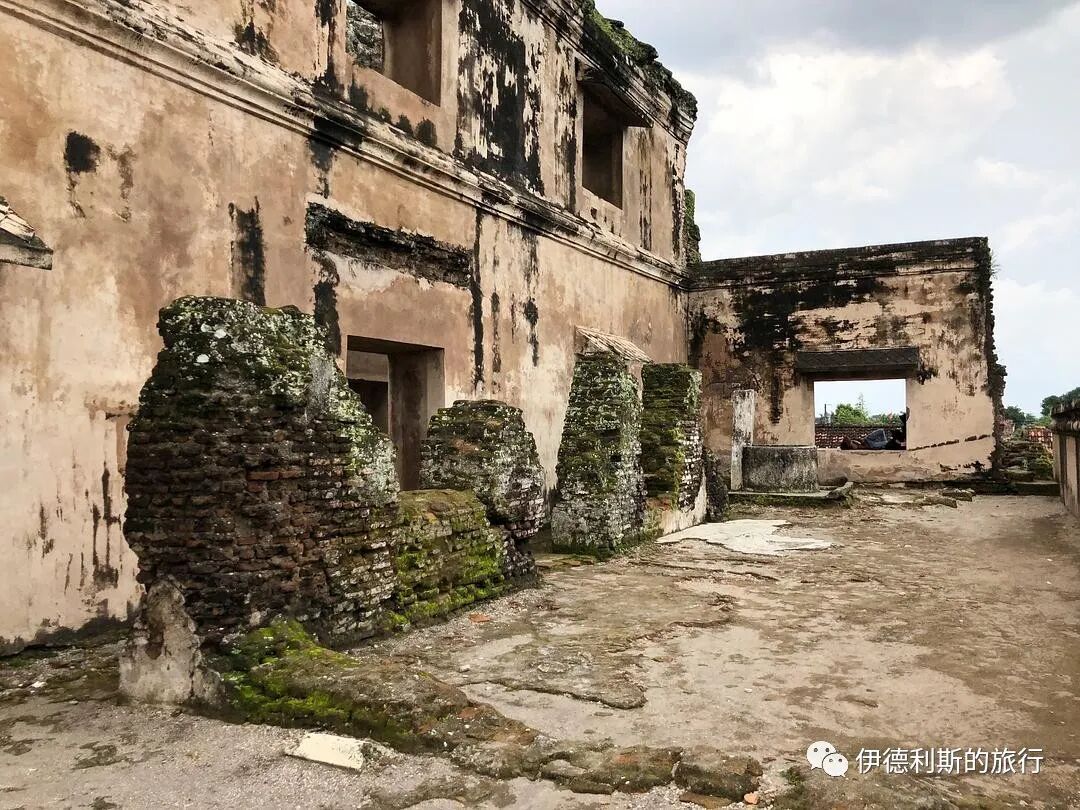
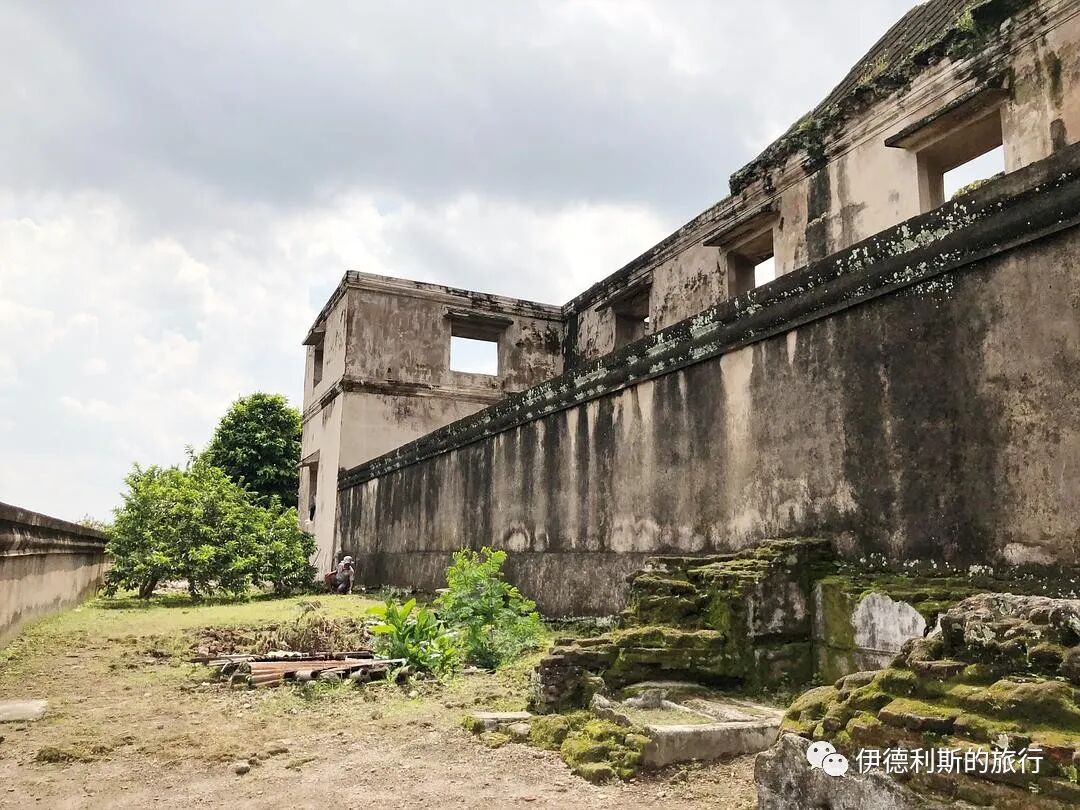
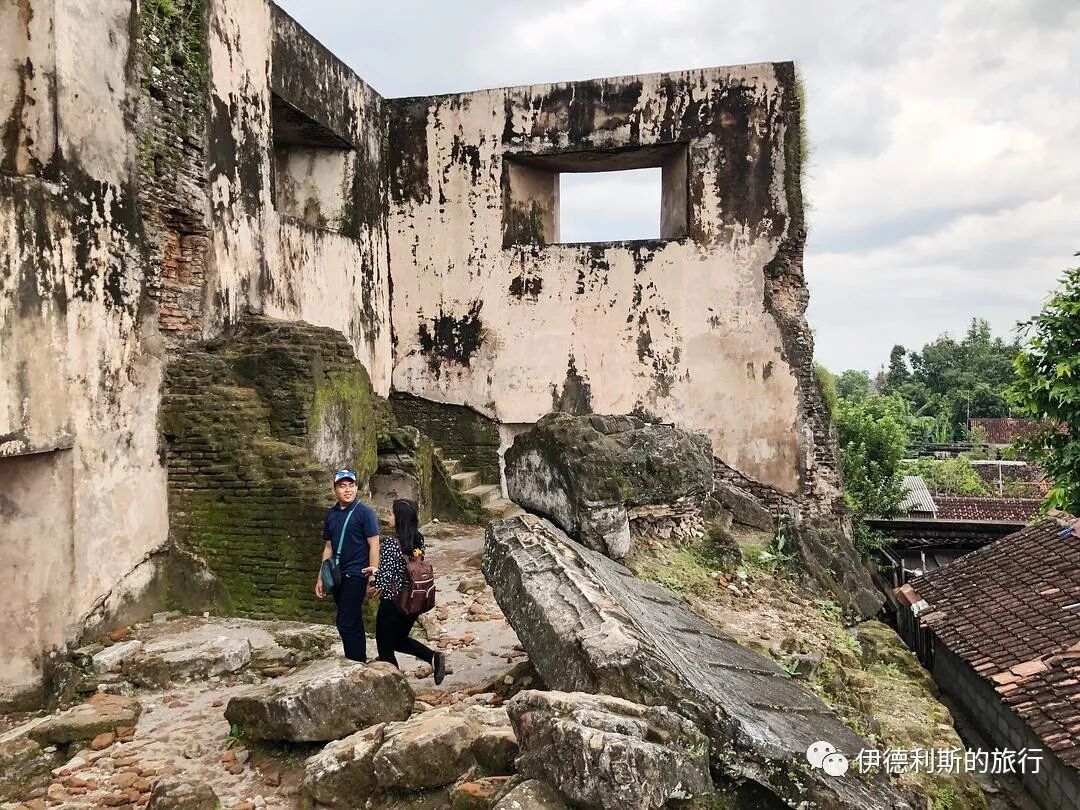
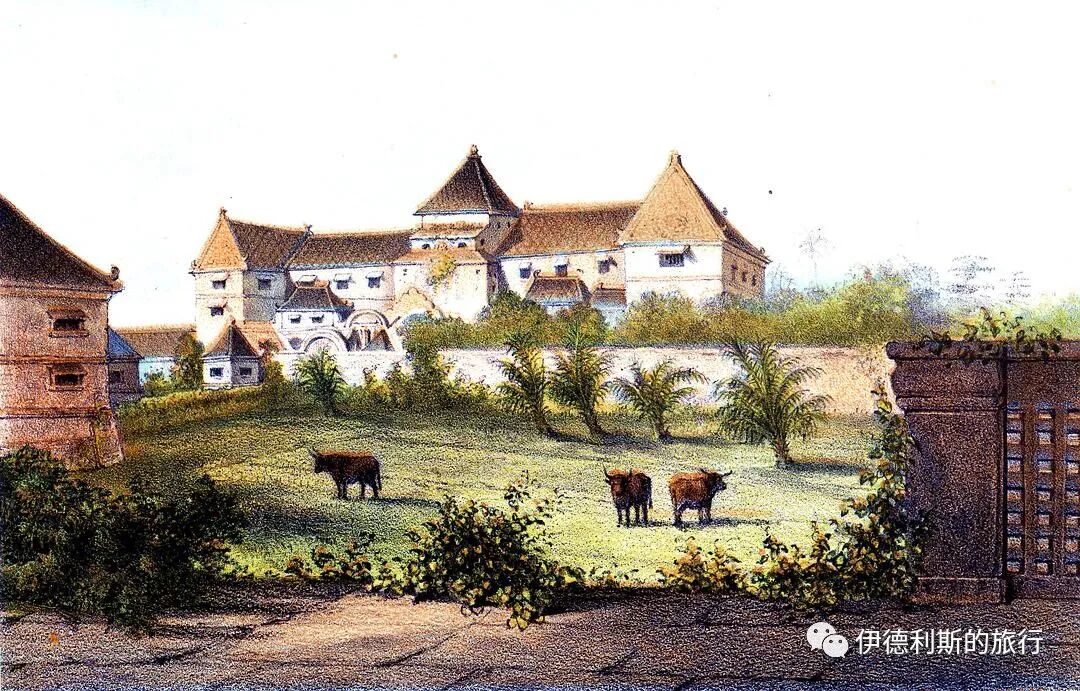
Before the 1859 earthquake
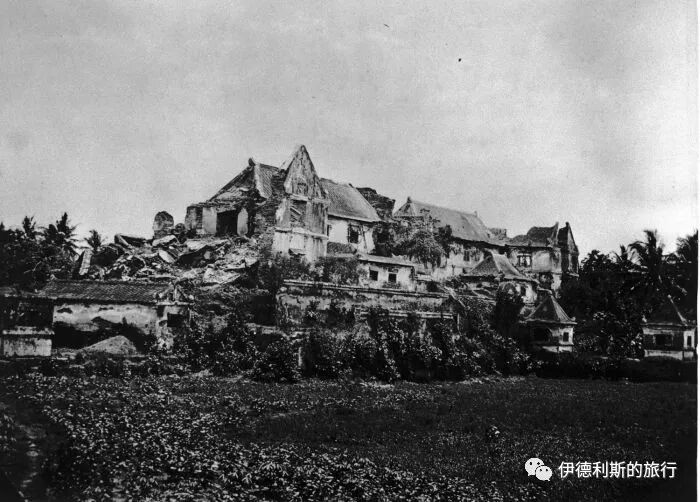
After the 1867 earthquake
There is an underwater tunnel on the south side of Kenongo island that connects to the land. The underwater tunnel built in 1761 still exists today, and it has a row of ventilation structures called Tajug on top.
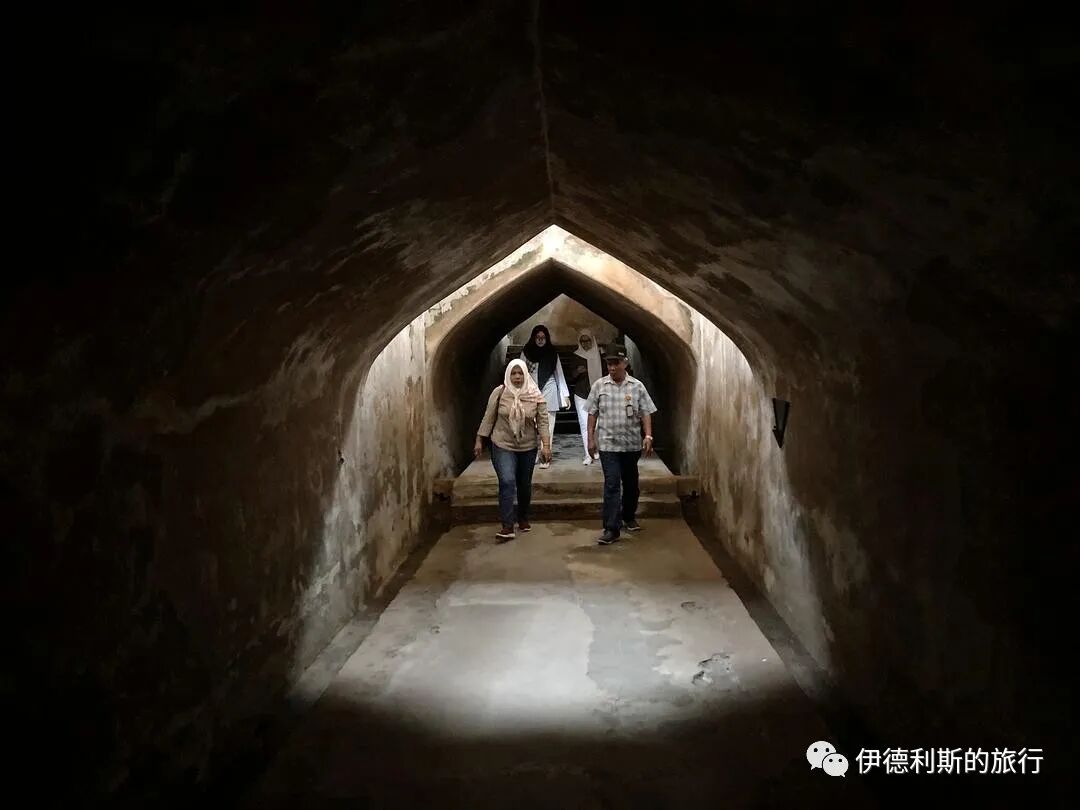
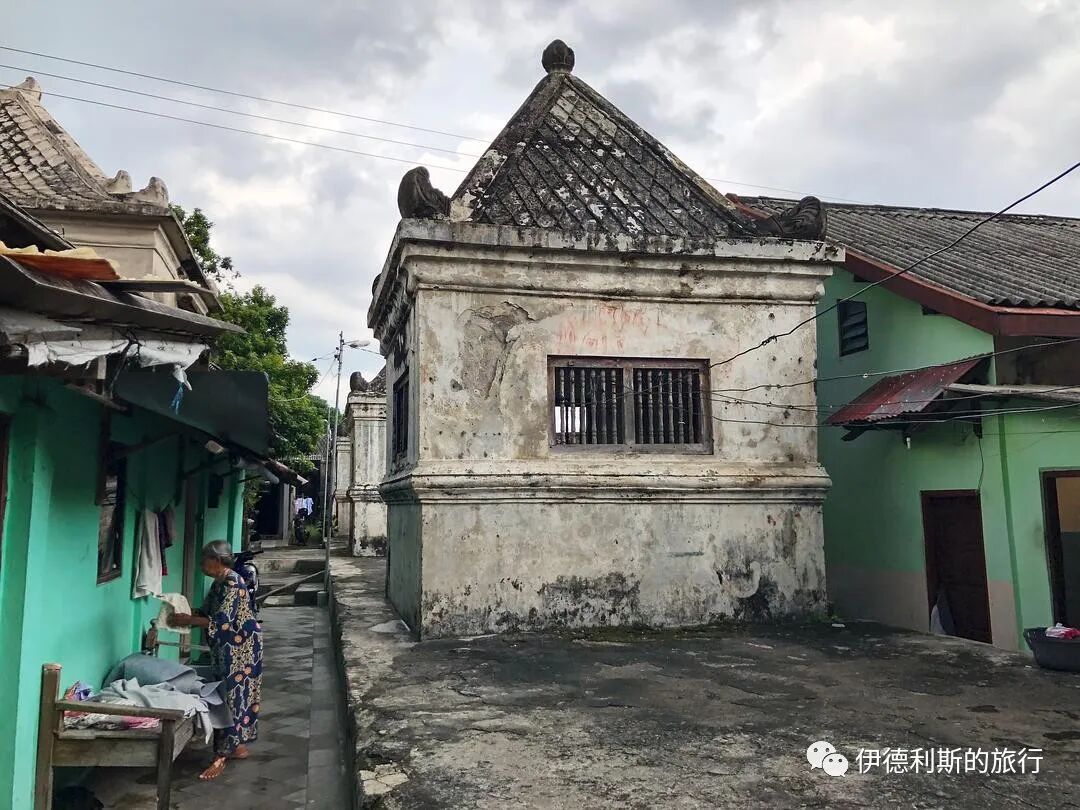
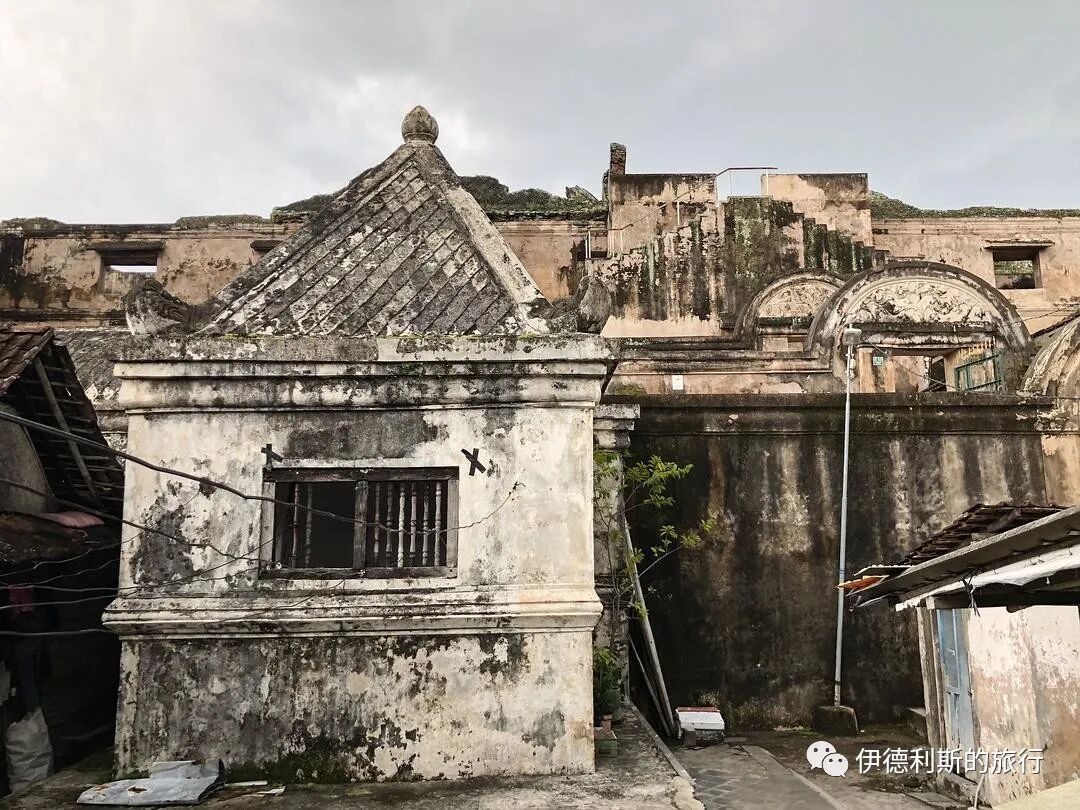
The entrance to the underwater tunnel on Kenongo island.
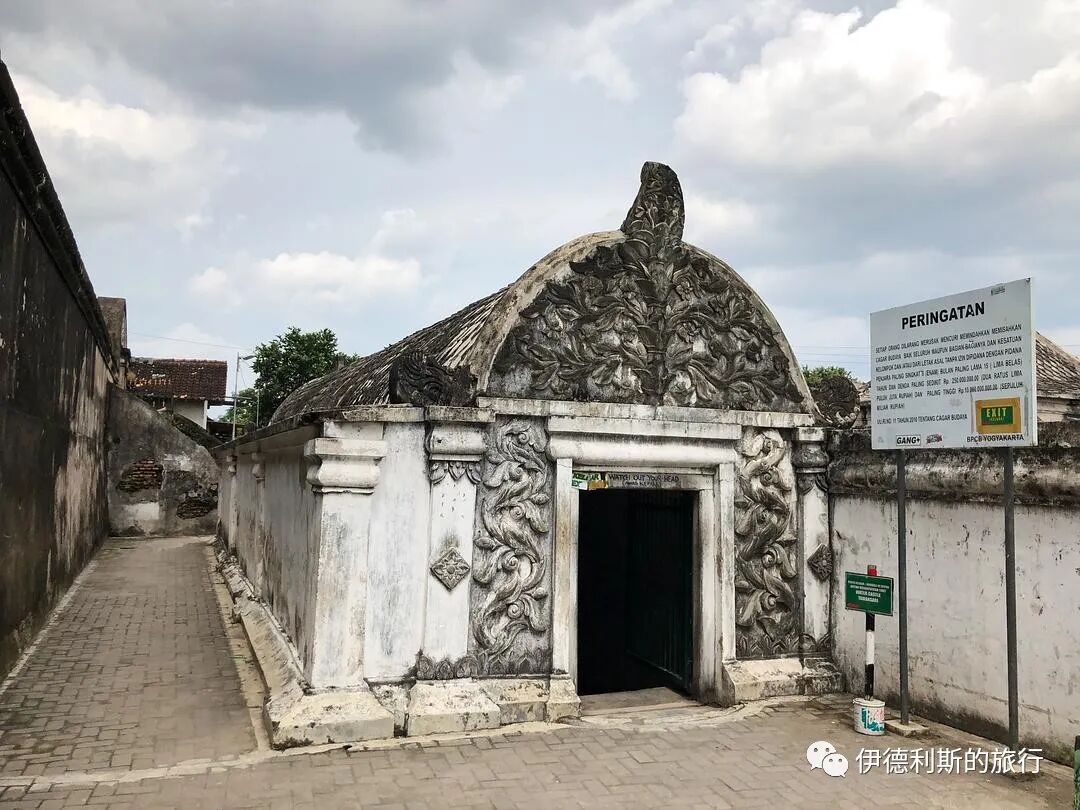
On the west side of Kenongo island is an artificial island made of a single building, the Sumur Gumuling mosque, which can only be reached through the underwater tunnel.
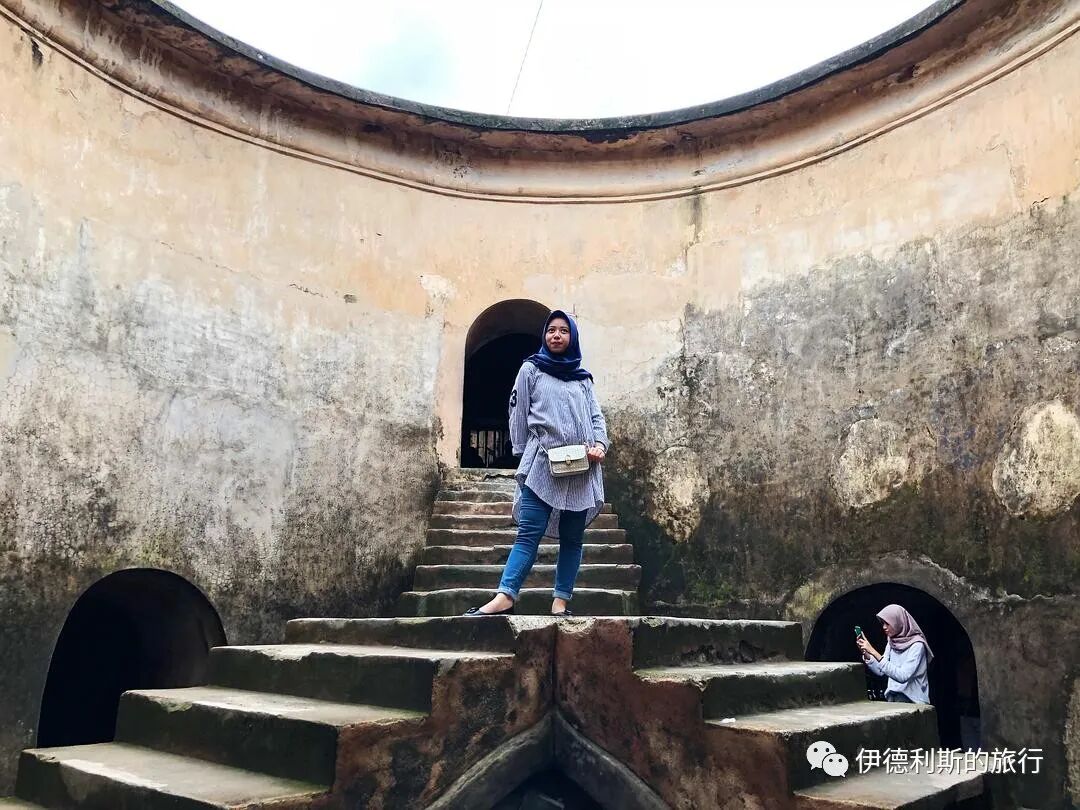
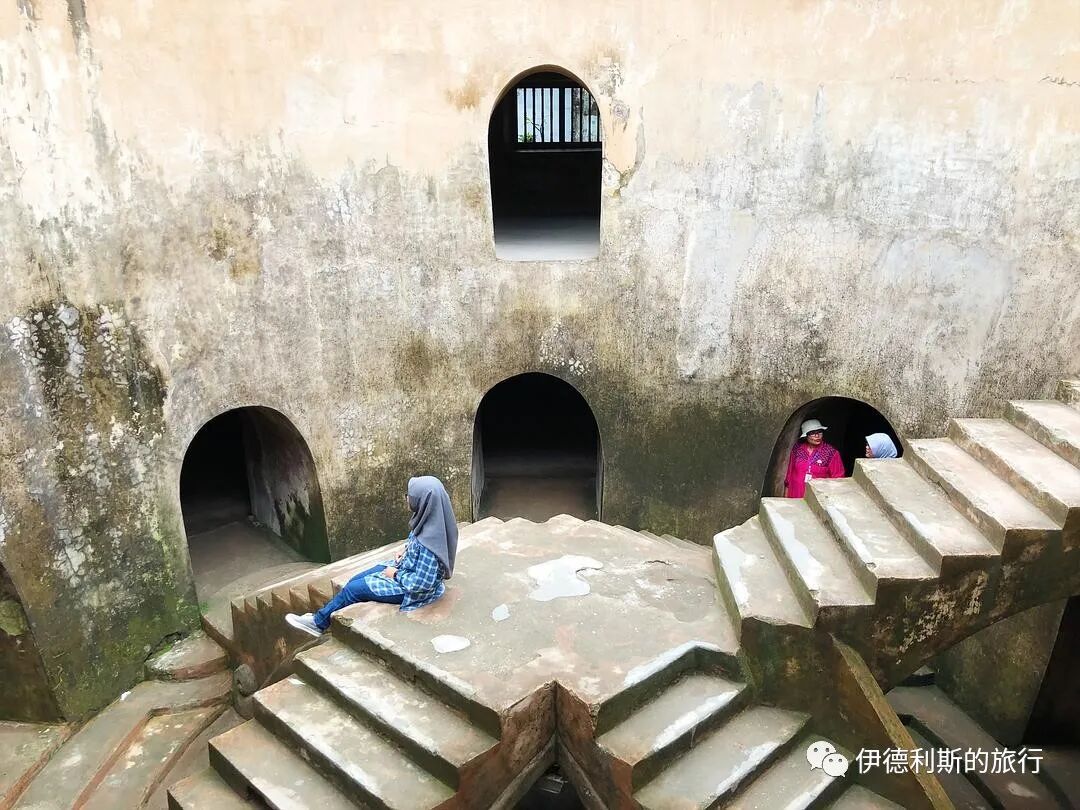
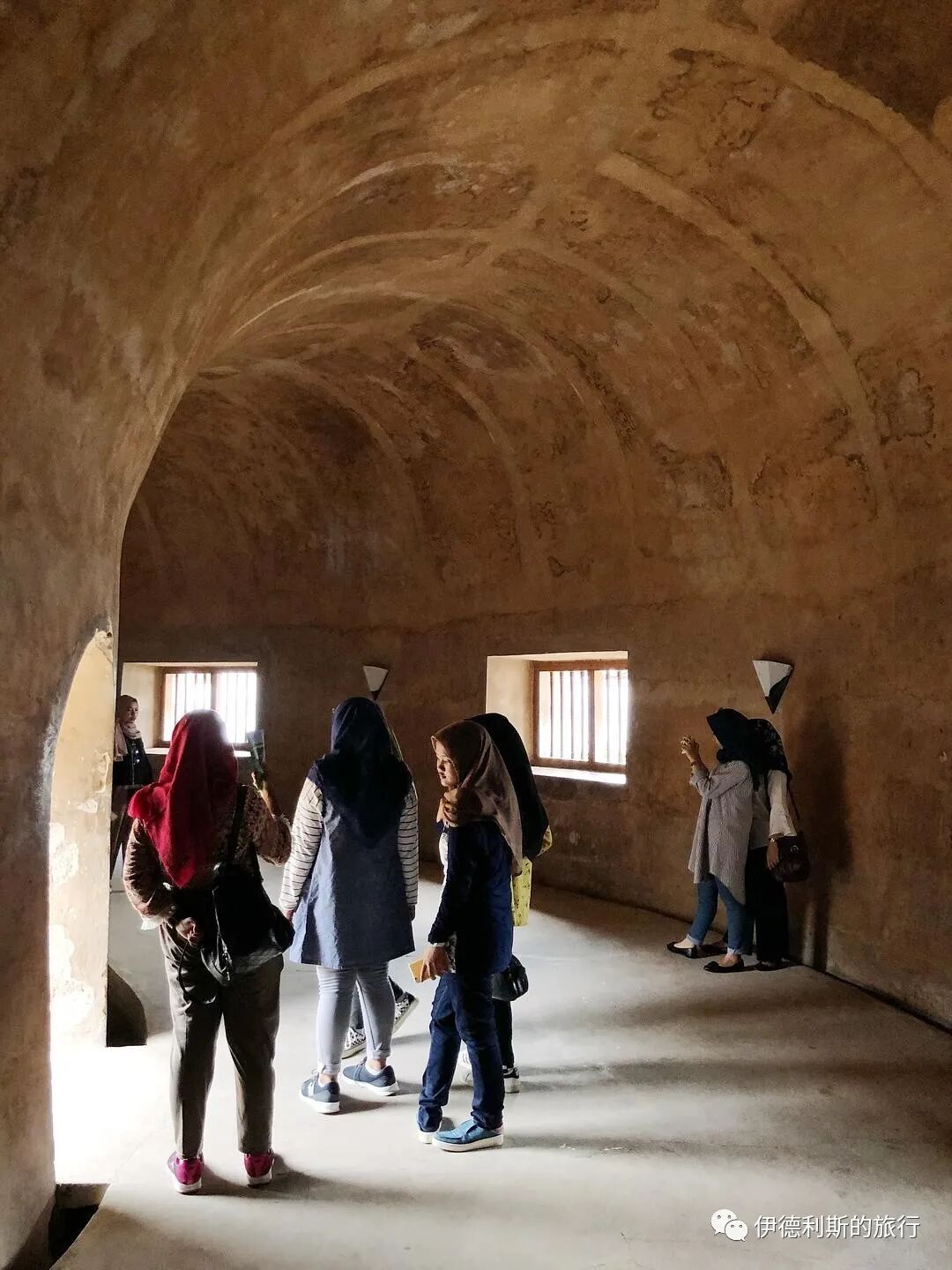
The exit of the underwater tunnel at the Sumur Gumuling mosque.
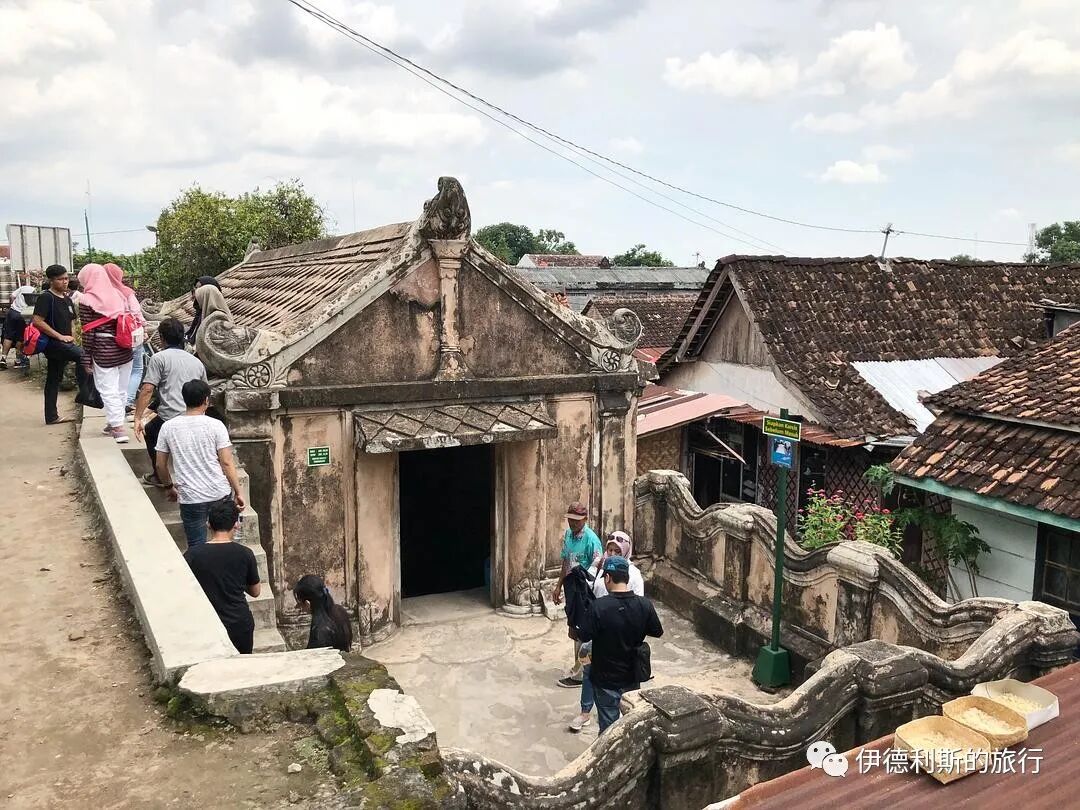
2. Bathing Area
The bathing area is on the south side of Segaran lake; it was not the most important building back then, but it is the best-preserved part of the Water Palace today.
The bathing area has east and west gates decorated with detailed flower and bird patterns. The west gate is called Gedhong Gapura Hageng, built in 1765; it was once the main entrance to the bathing area but is now closed.
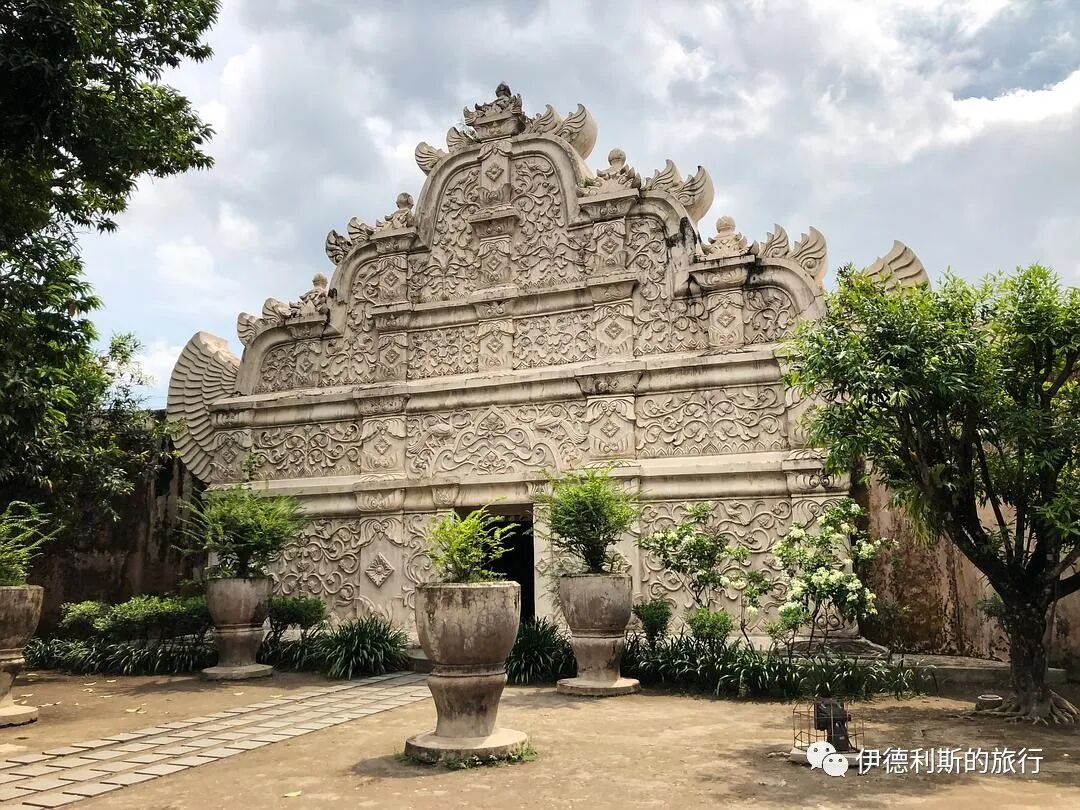
The east gate is called Gedhong Gapura Panggung, built in 1758; it is now the visitor entrance to the bathing area and features two Naga (serpent deity) statues on the gate.
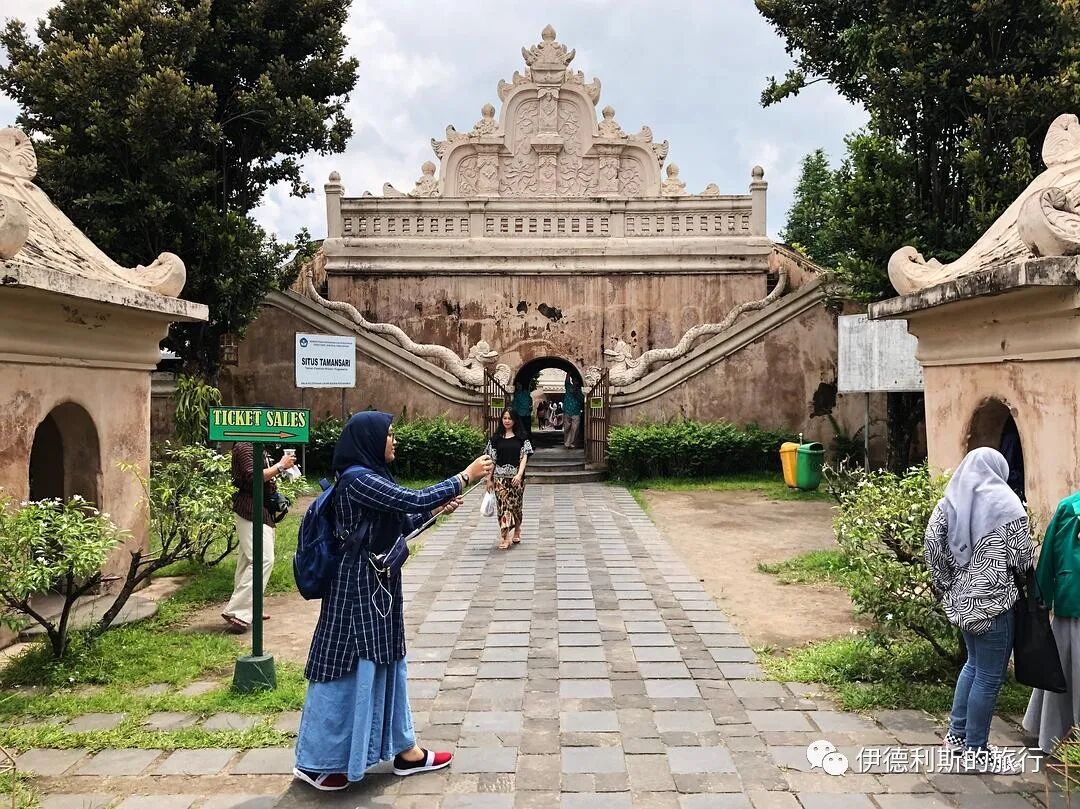
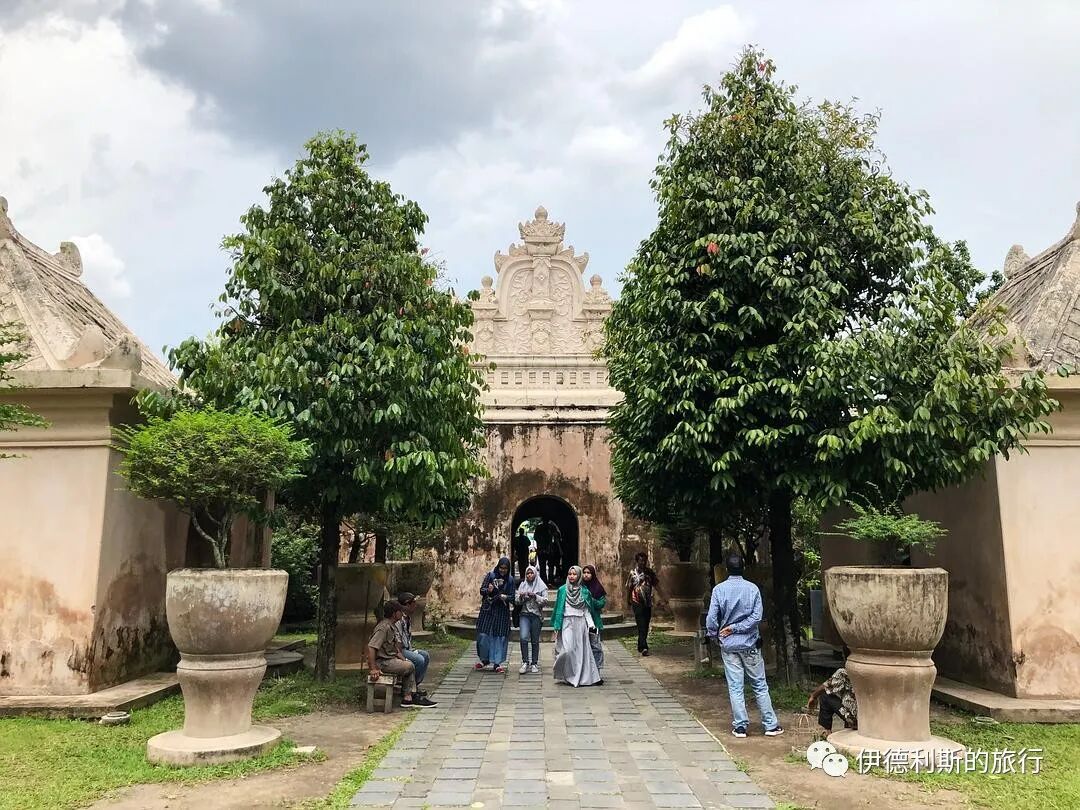
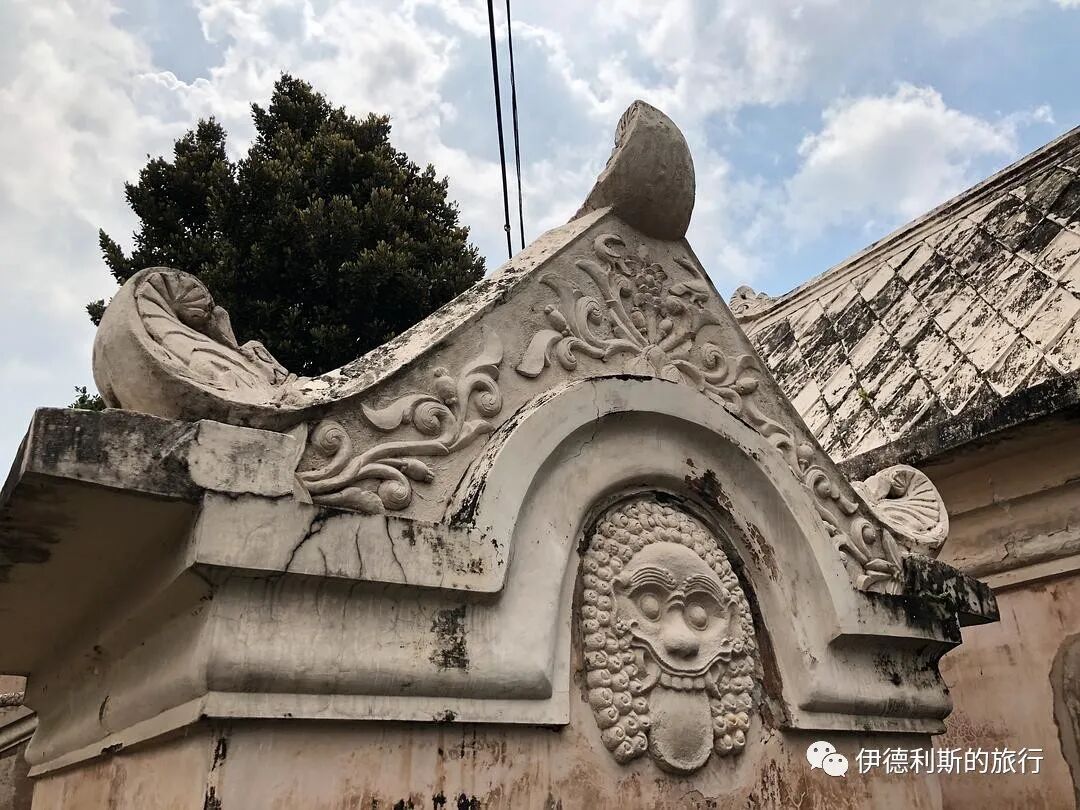
Umbul Pasiraman is the central bathing area for the royal family, surrounded by lounges and changing rooms for the Sultan, his daughters, and his concubines, with the tallest tower serving as the spot where the Sultan watched his harem bathe. In the past, only women were allowed to enter the central bathing area, except for the Sultan himself.
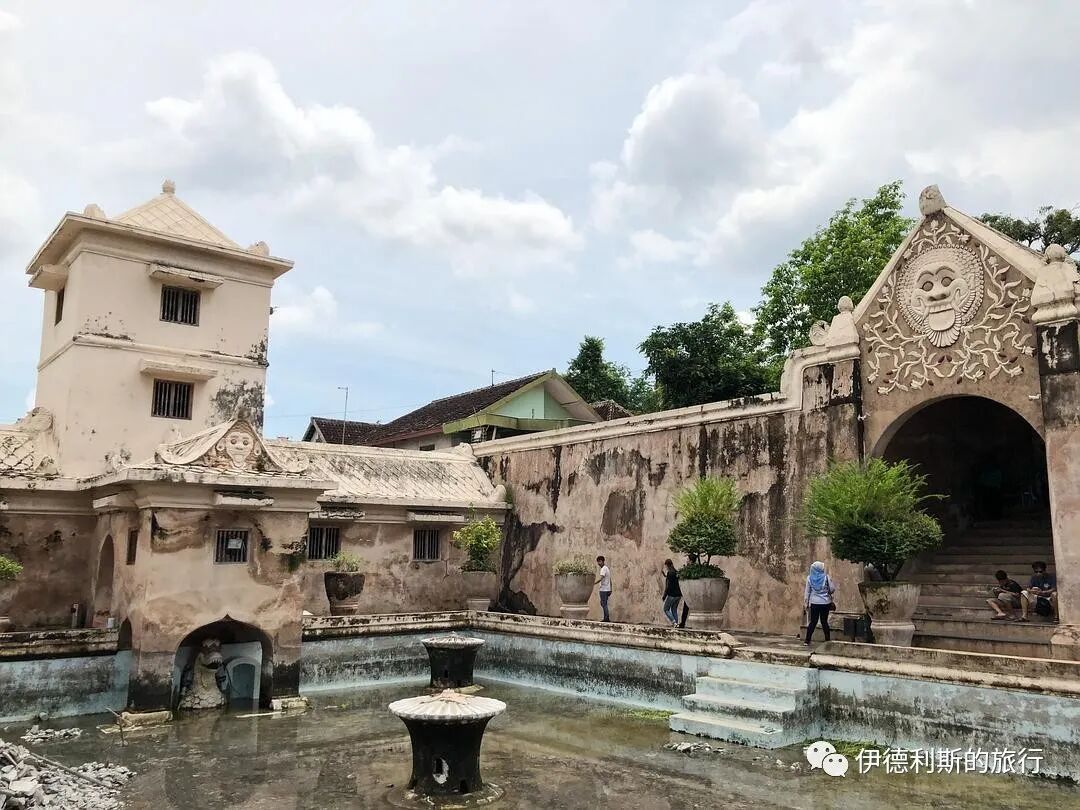
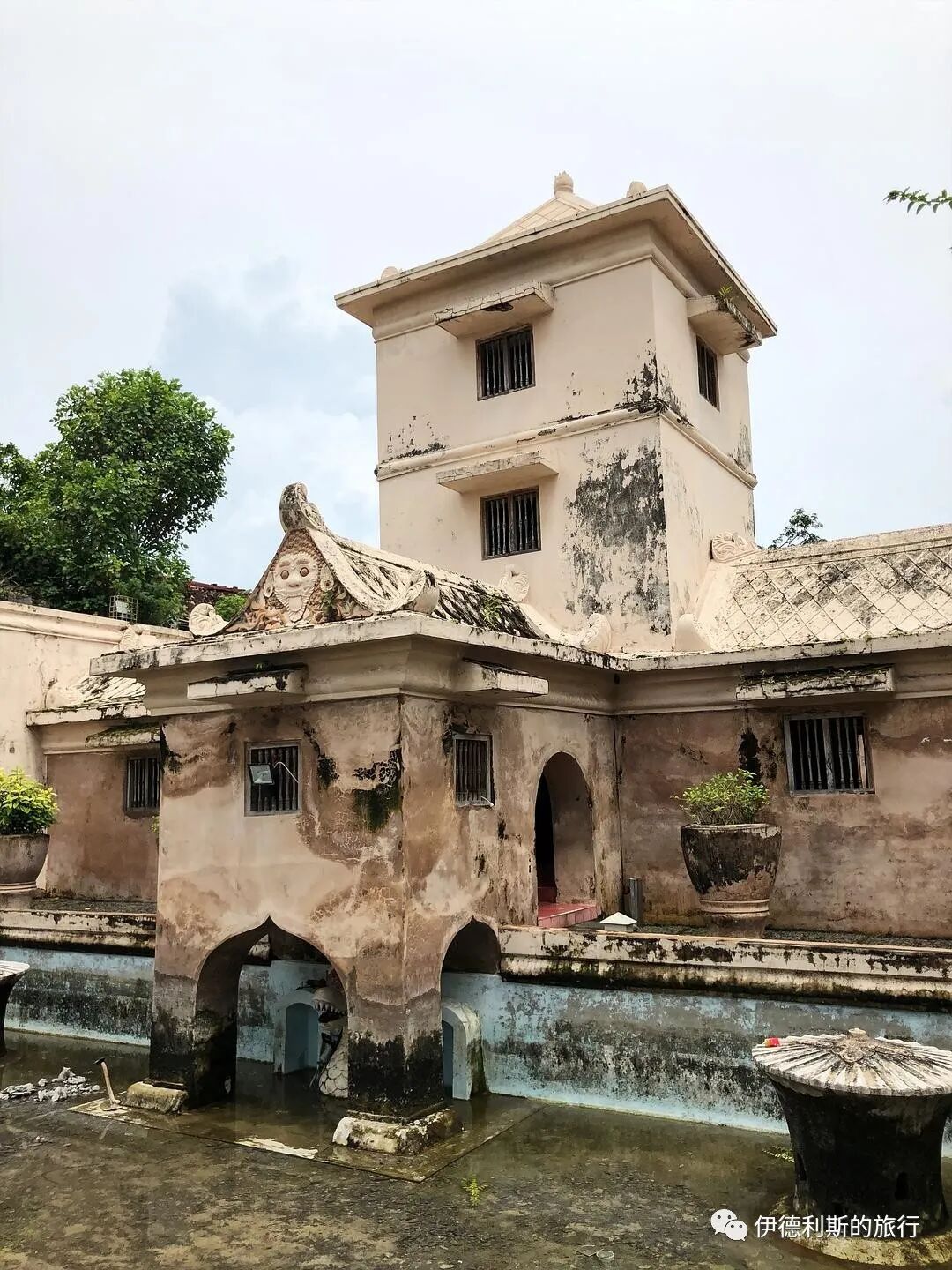
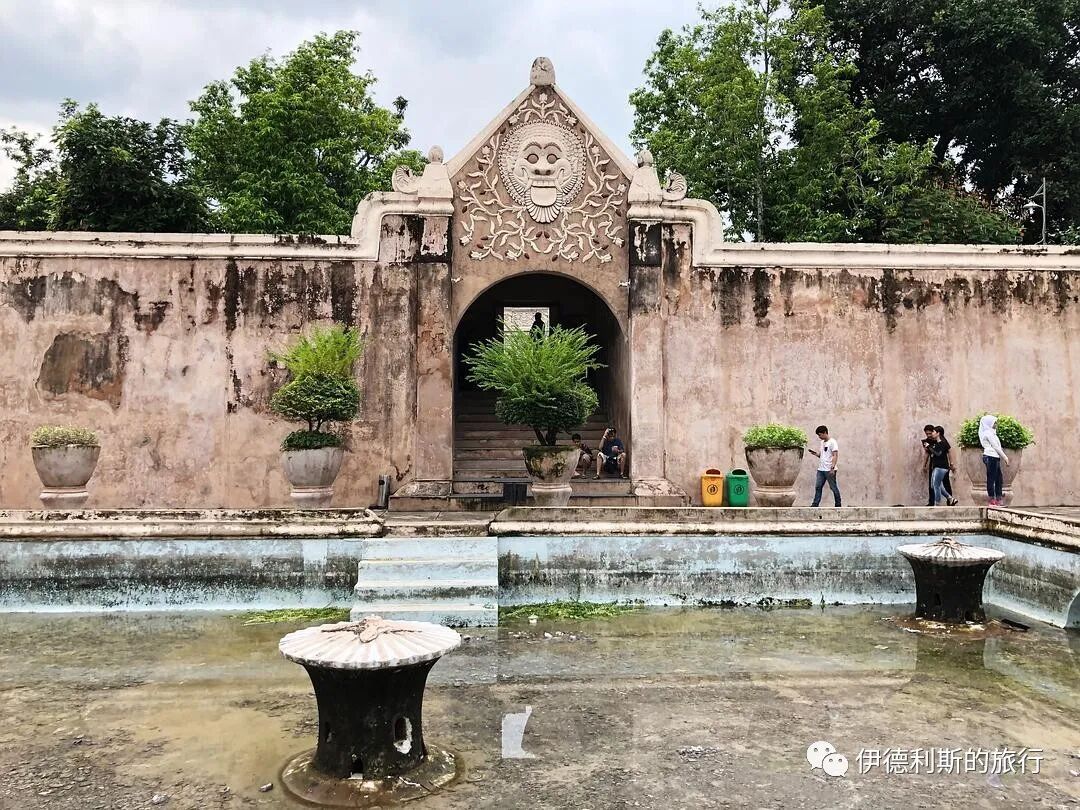
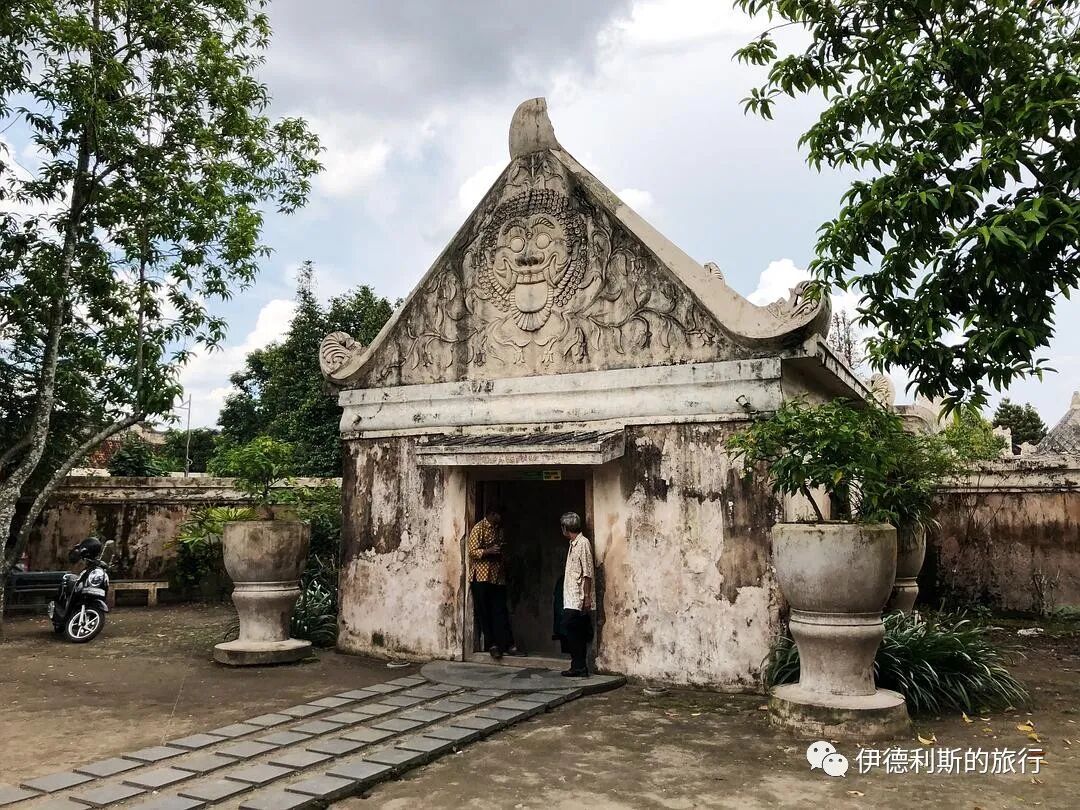
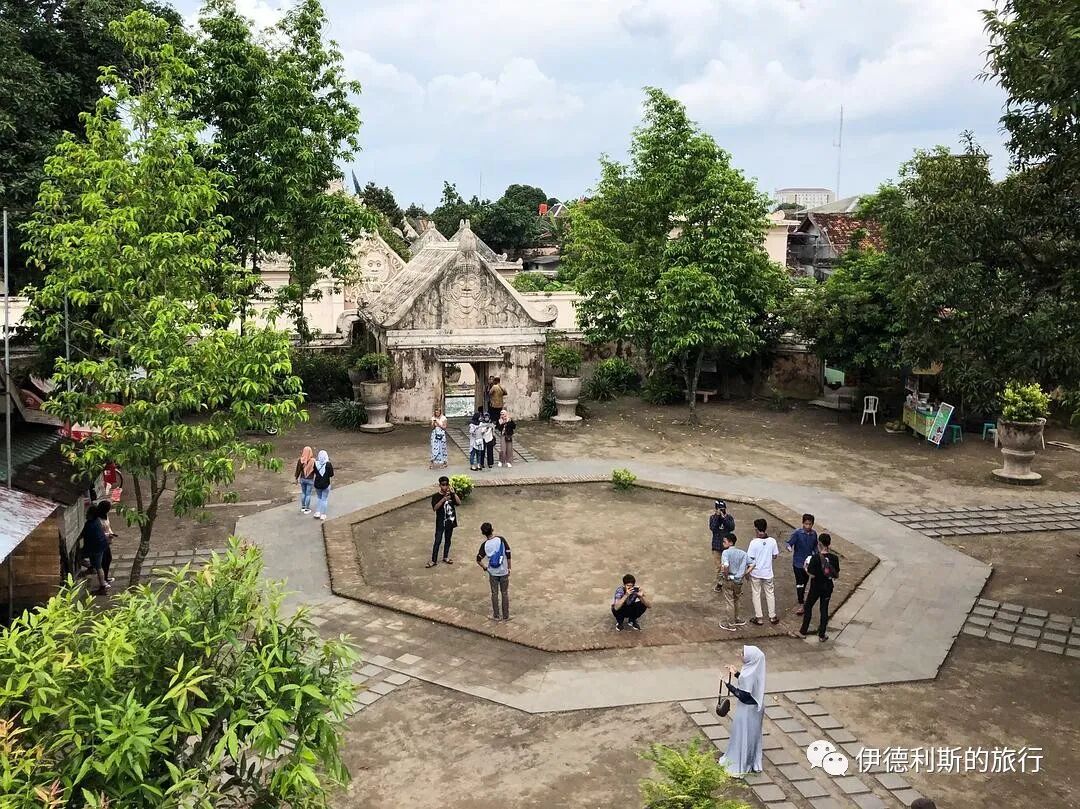
3. Great Mosque of Yogyakarta: 1773
The Great Mosque of Yogyakarta (Masjid Gedhe Kauman) sits northwest of the Yogyakarta Palace. Built in 1773, it serves as the royal mosque for the Sultan of Yogyakarta.
The Great Mosque of Yogyakarta features a classic traditional Javanese mosque style. The mosque has no minaret. Its main structure consists of a prayer hall and a front porch called a serambi. The roof of the prayer hall features an ornament called a Mustaka.
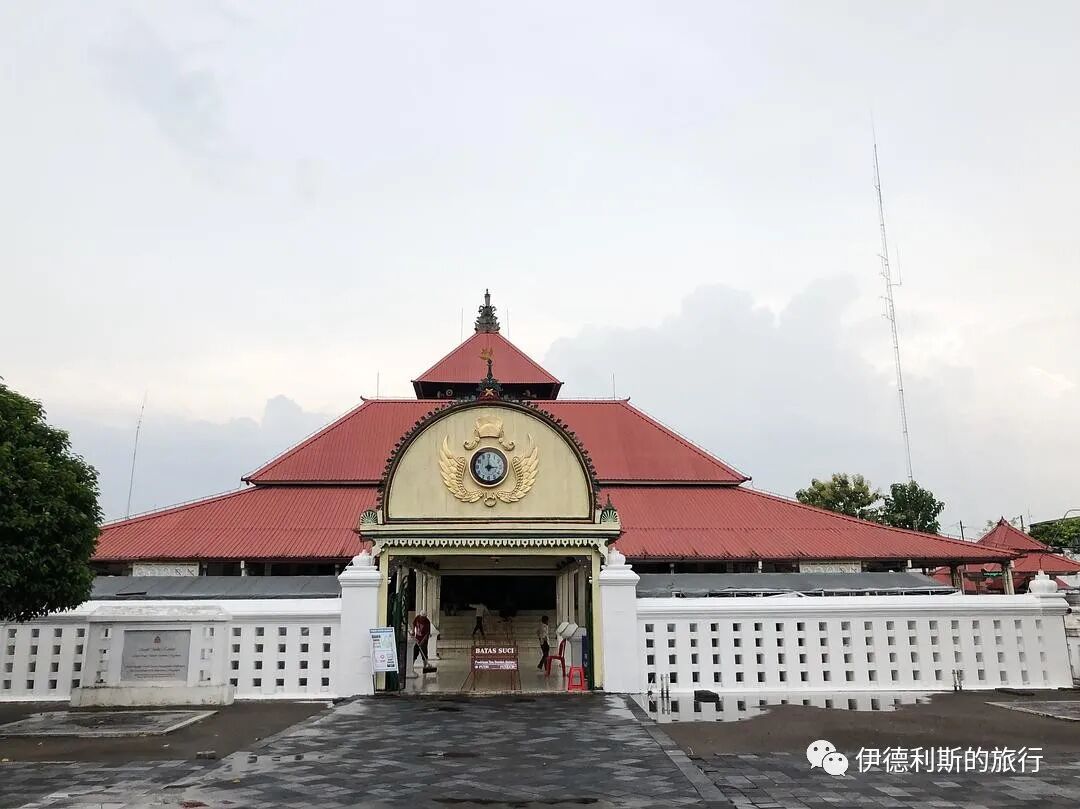
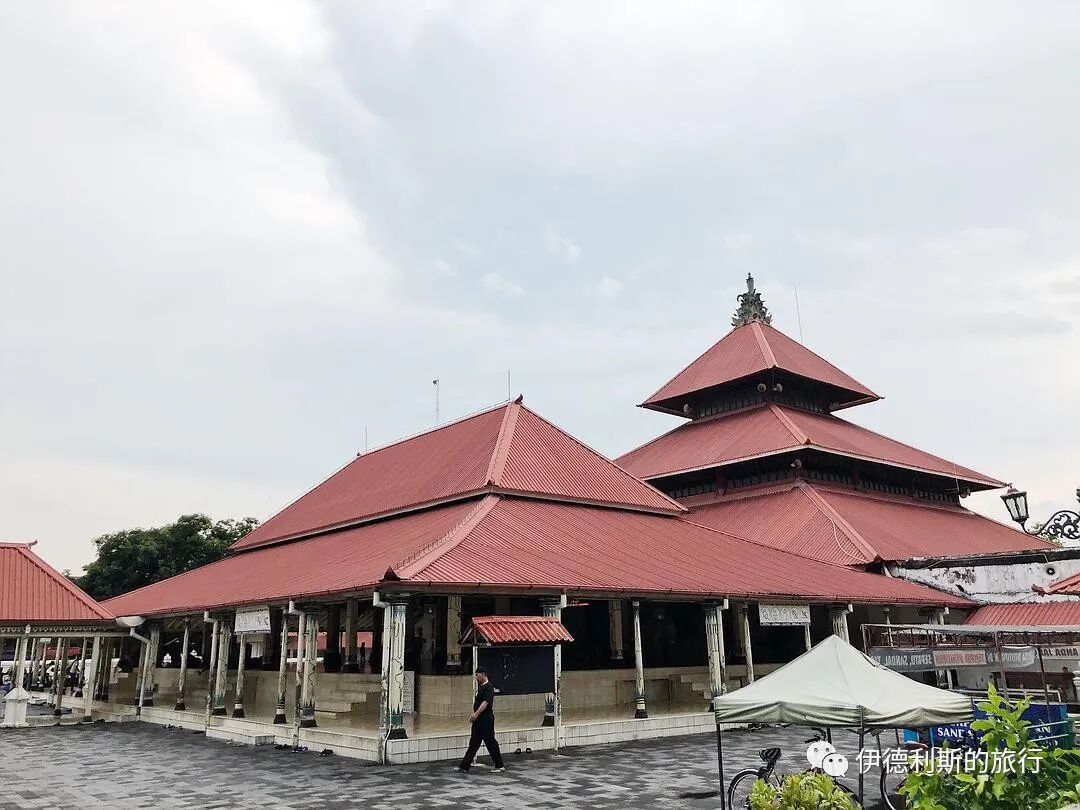
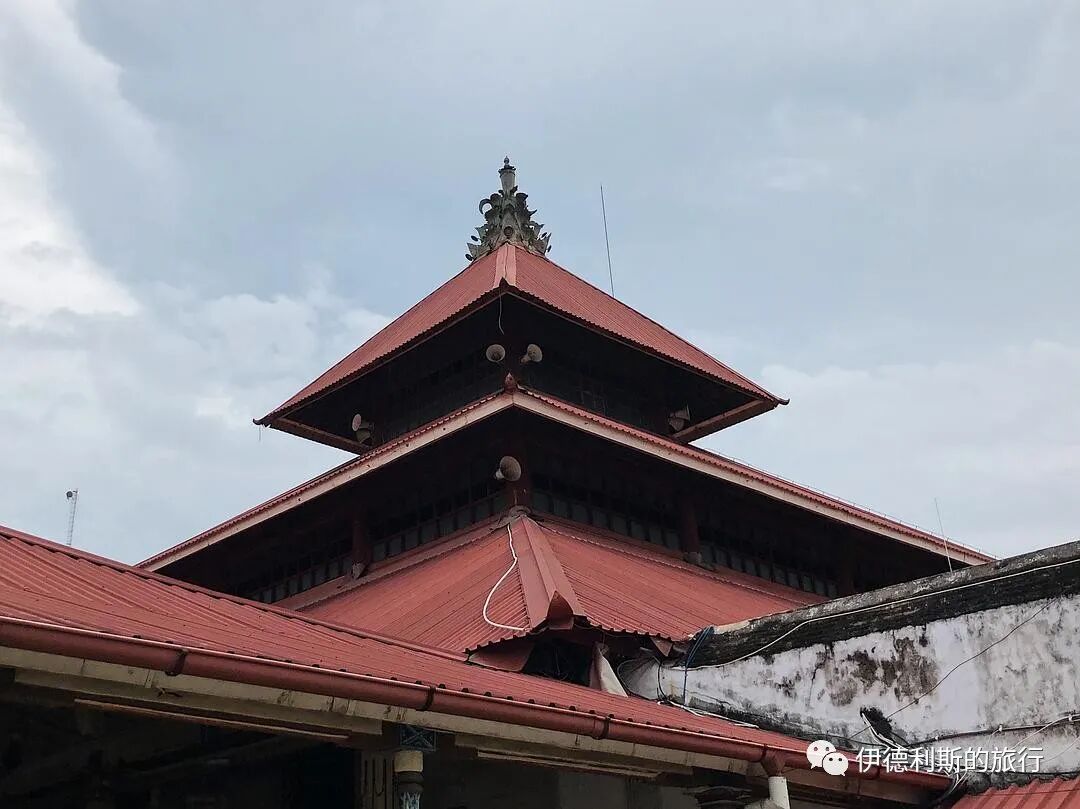
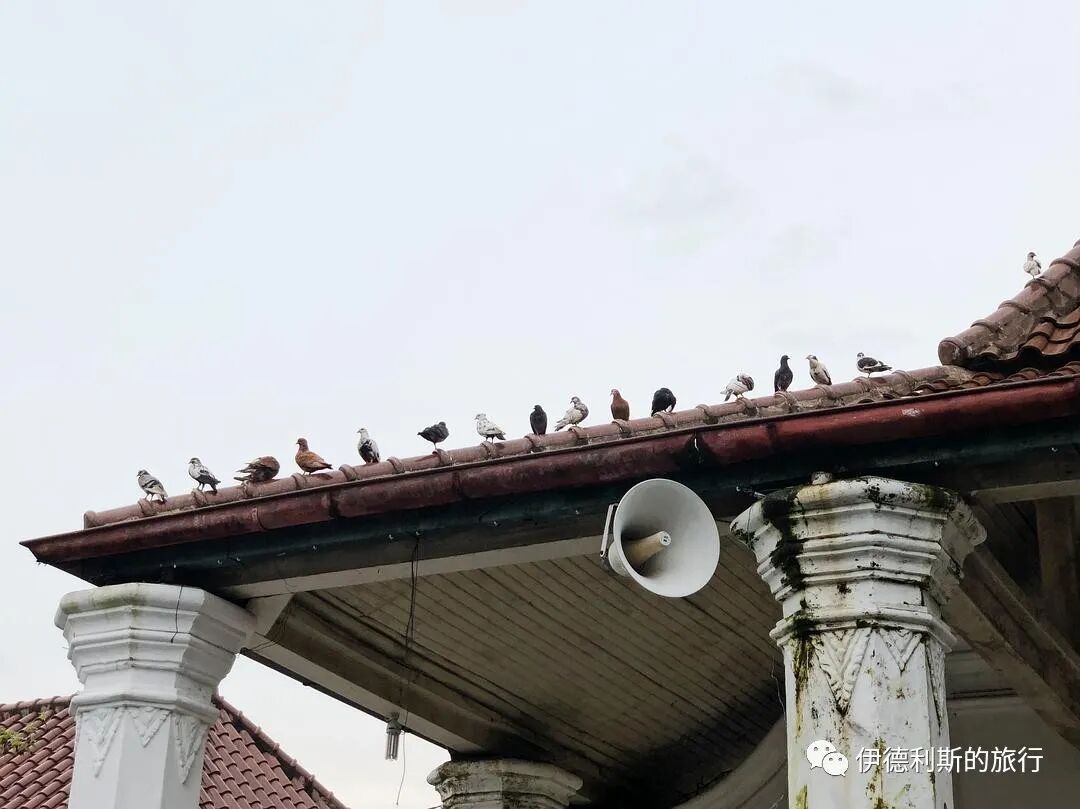
The front porch of the prayer hall.
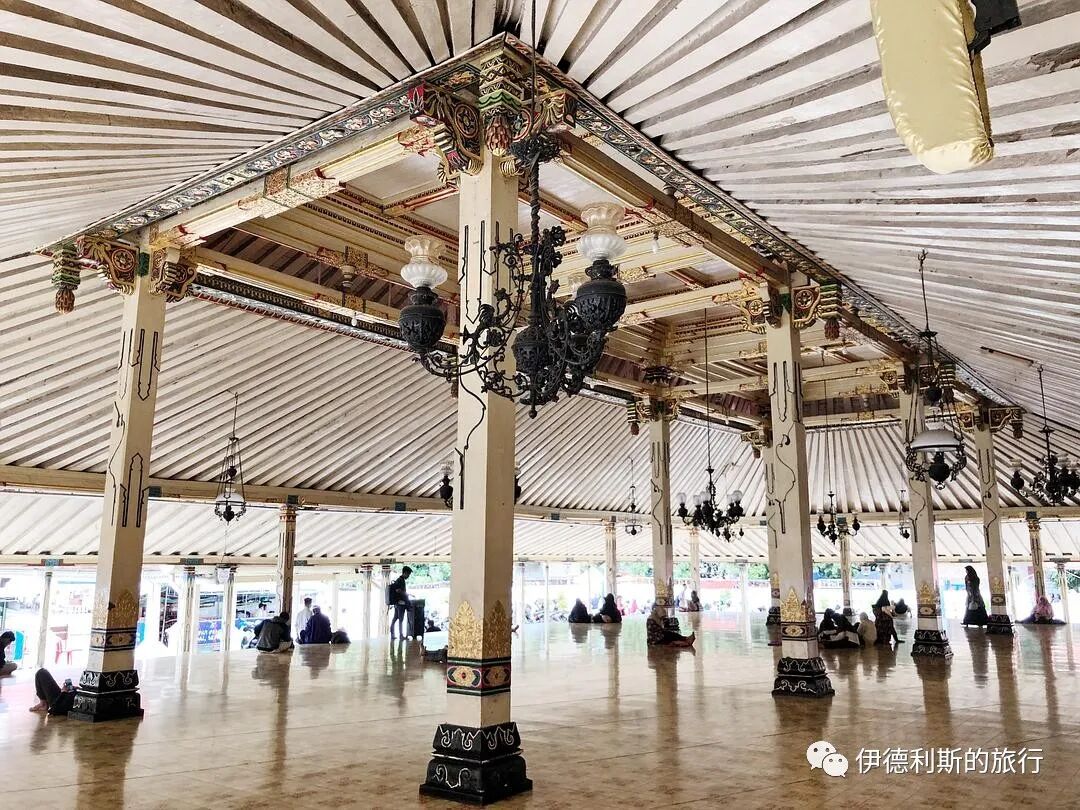
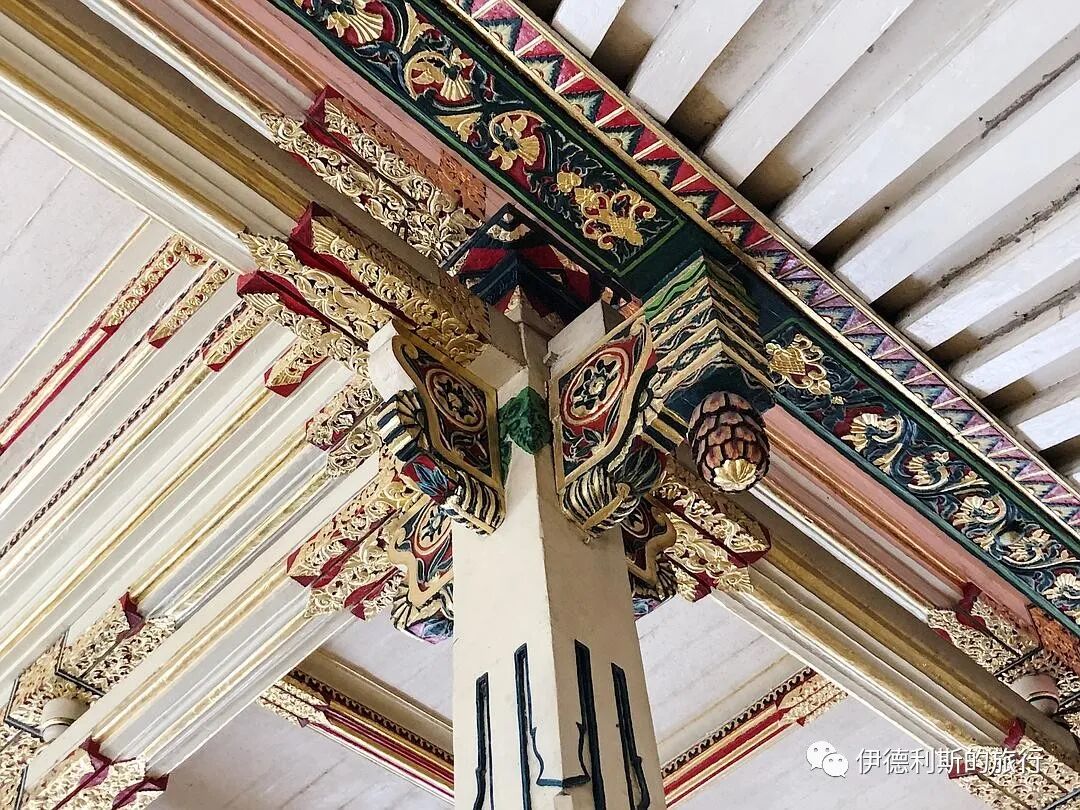
Inside the prayer hall, the mihrab and the pulpit (minbar) both show a strong Javanese style. There is also a cage-like structure called a Maxura, which is where the Sultan of Yogyakarta prays.
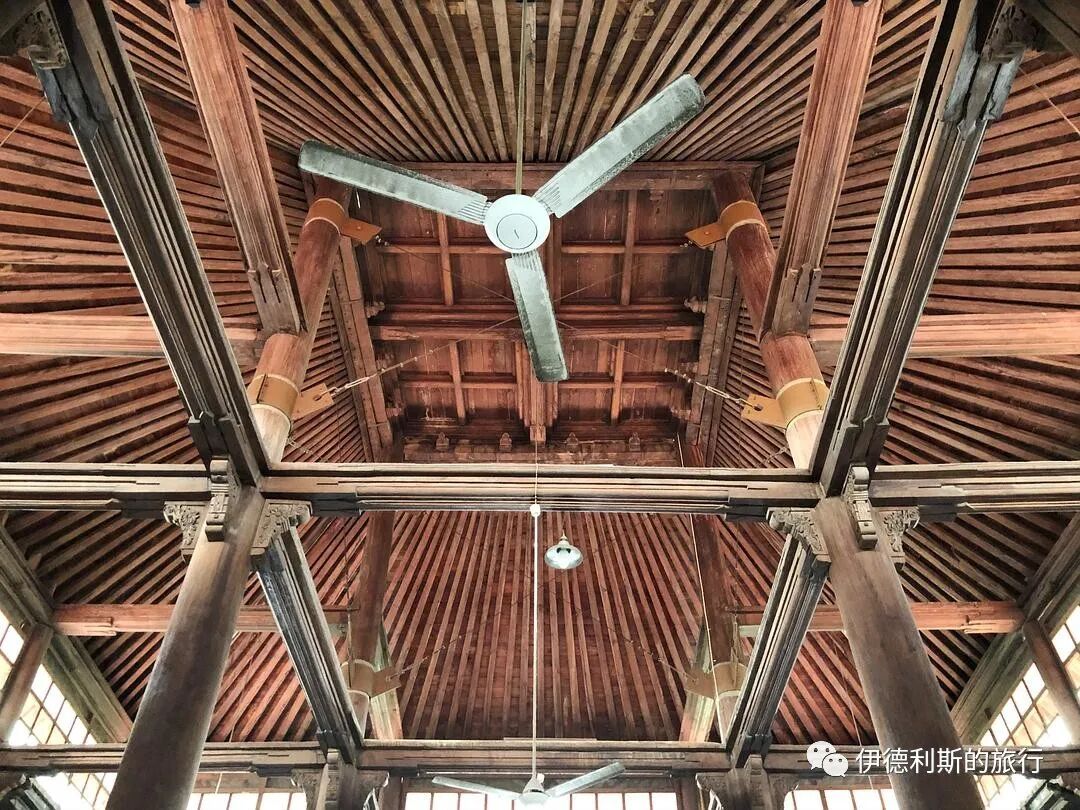
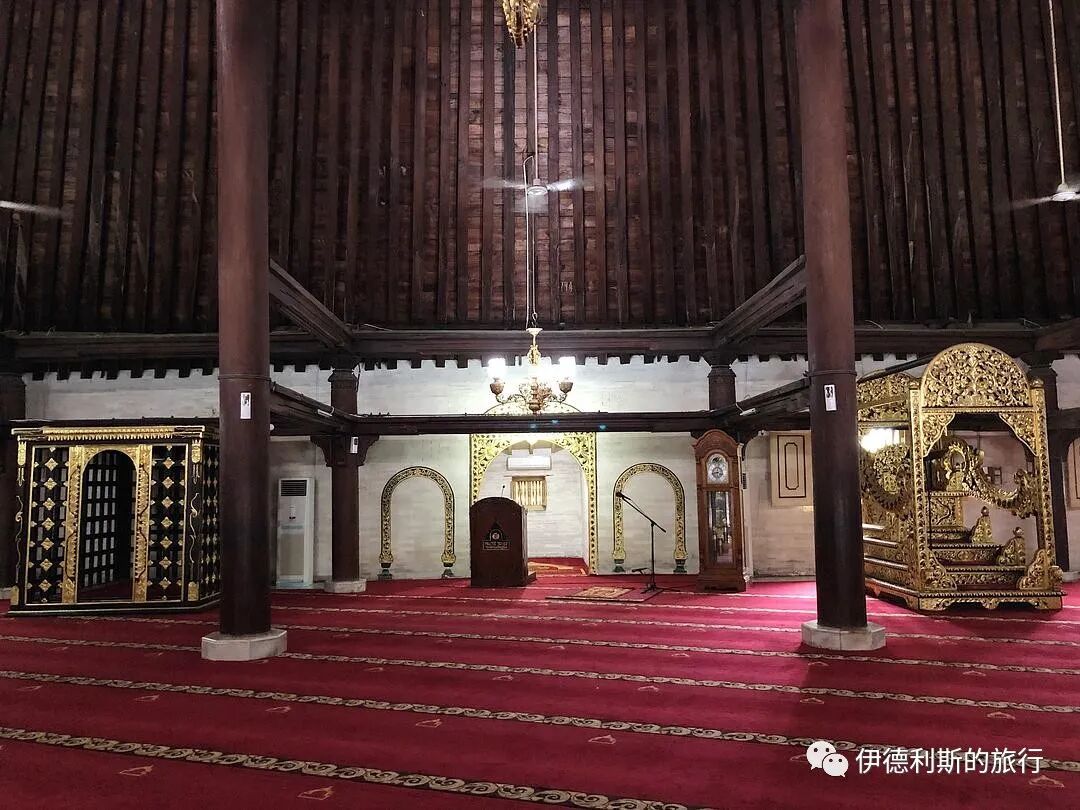
The pulpit (minbar).
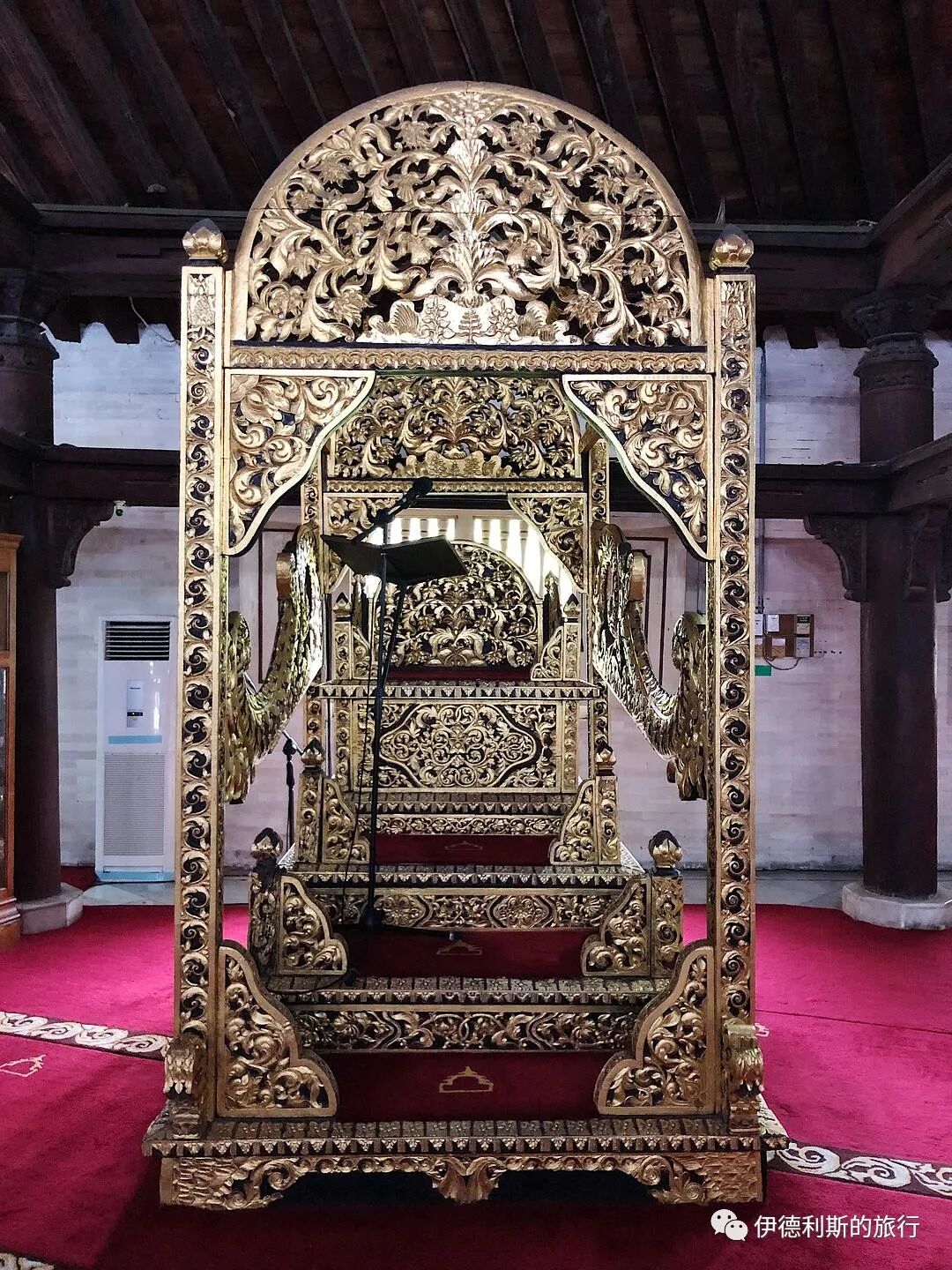
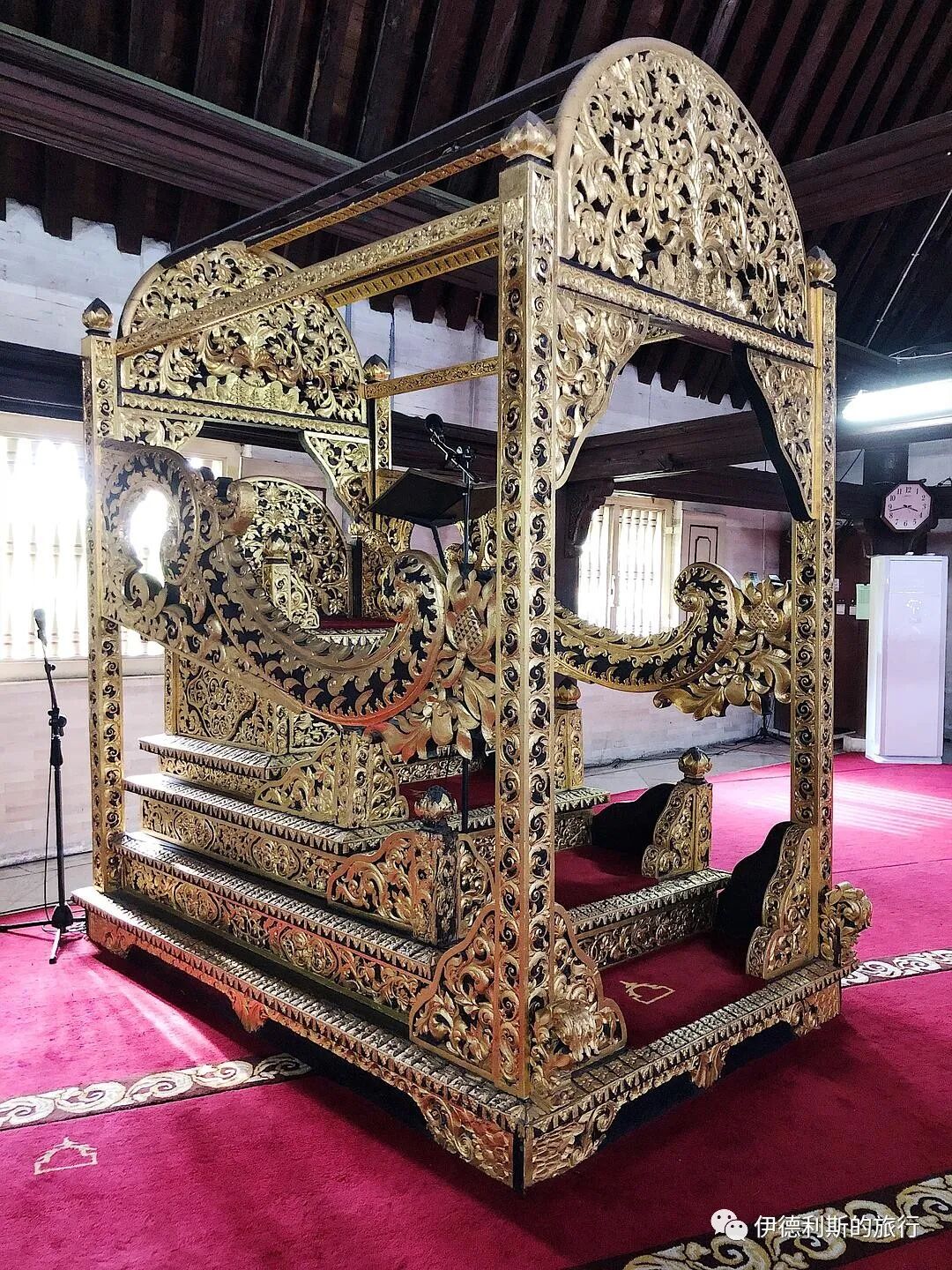
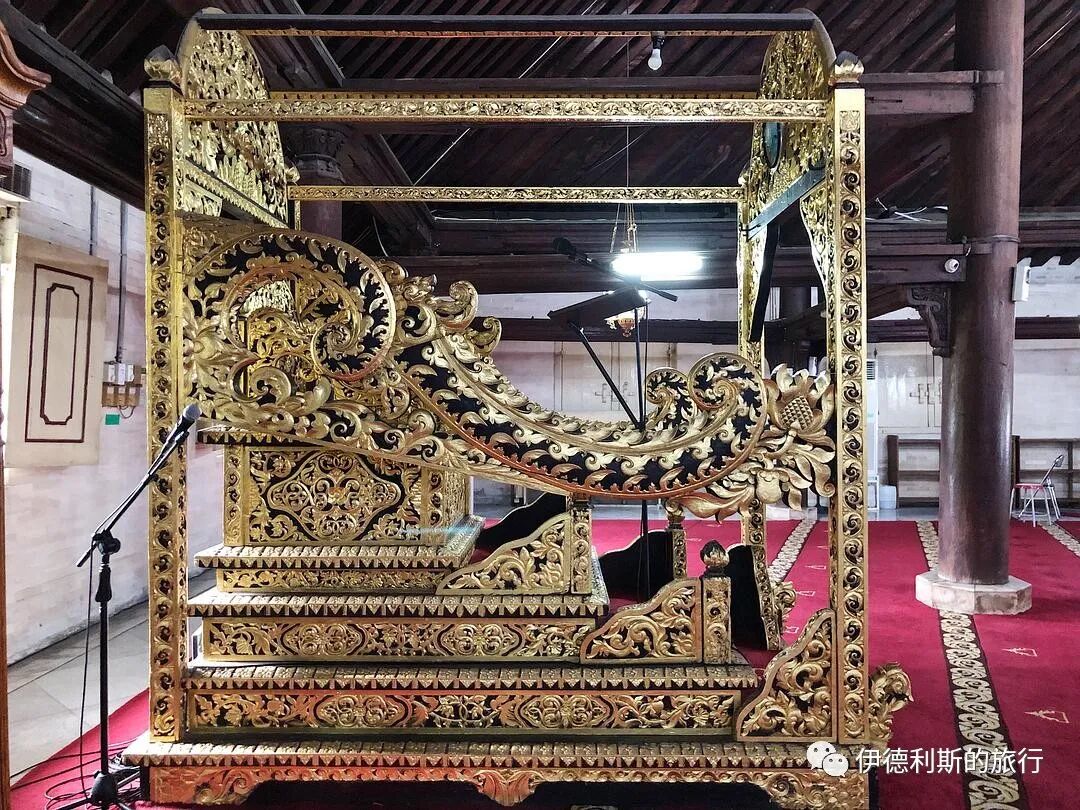
The place where the Sultan prays.
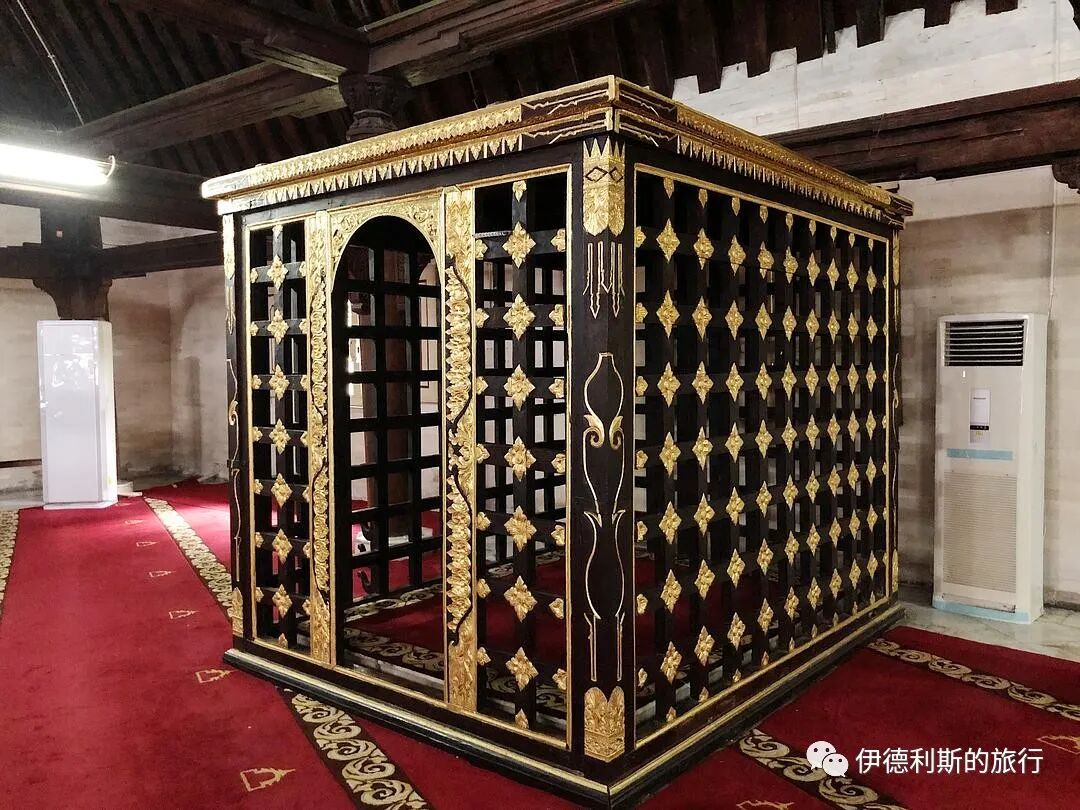
The mihrab.
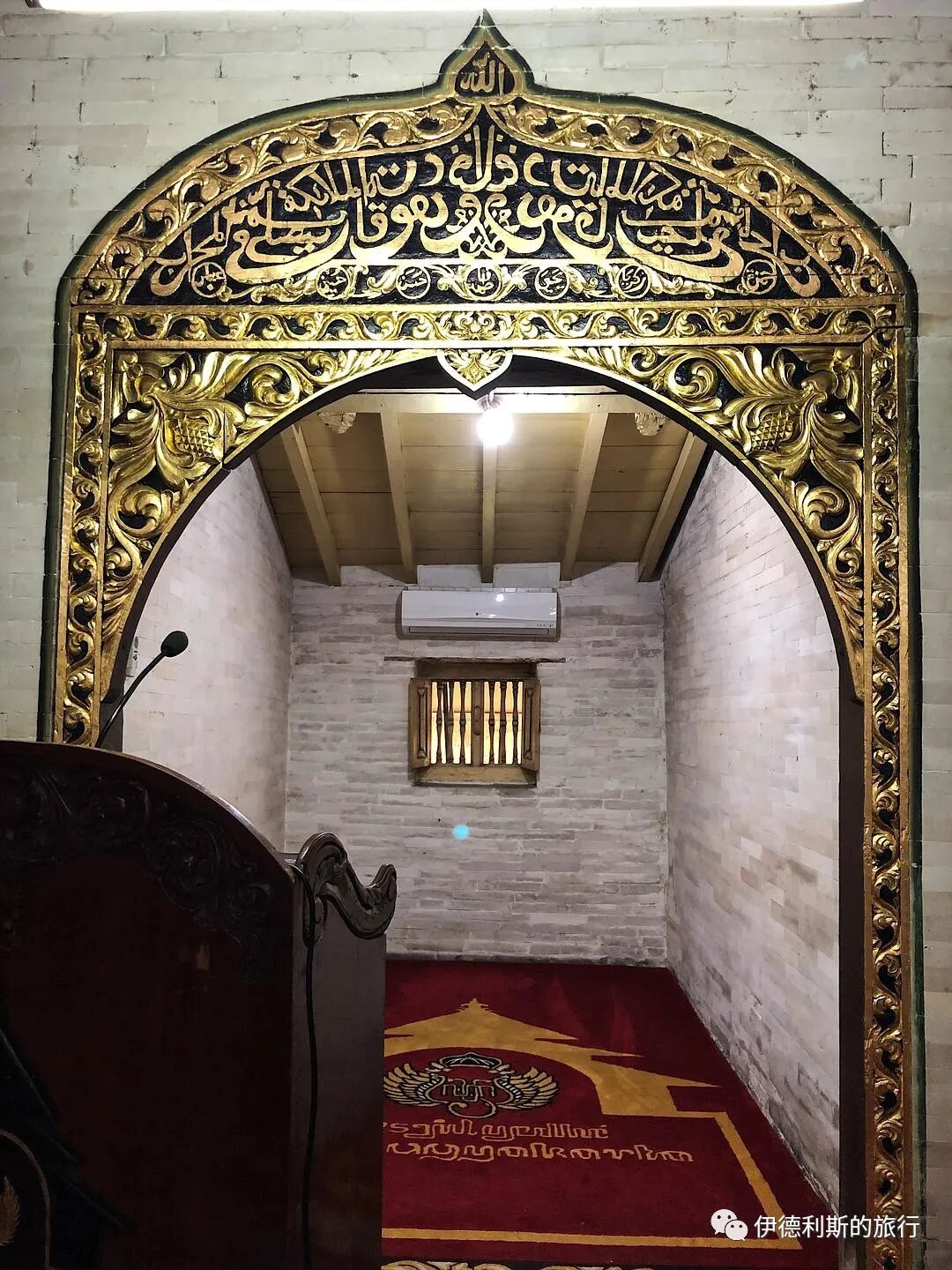
4. Royal Dining Hall: 1916
Located next to the Yogyakarta Sultan's Palace, nDalem Joyokusuman was the home of Prince Gusti Haryo Haji Joyokusumo. It is now open as a cultural center and restaurant. I ate Nasi Blawong and Telo ijo here. Nasi Blawong is a specialty dish of the Sultan of Yogyakarta. It was once only served at the Sultan's birthday banquets, and the reddish Blawong rice used in it is considered sacred. Telo ijo is a cassava pastry drizzled with pandan coconut milk.
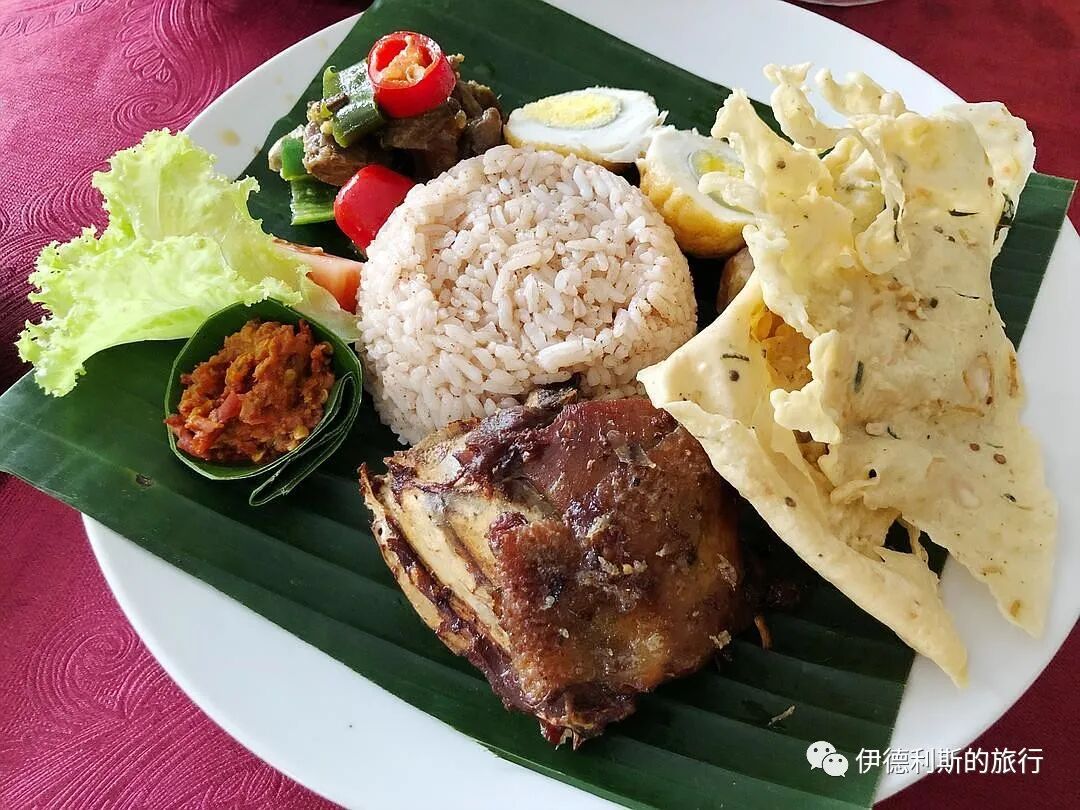
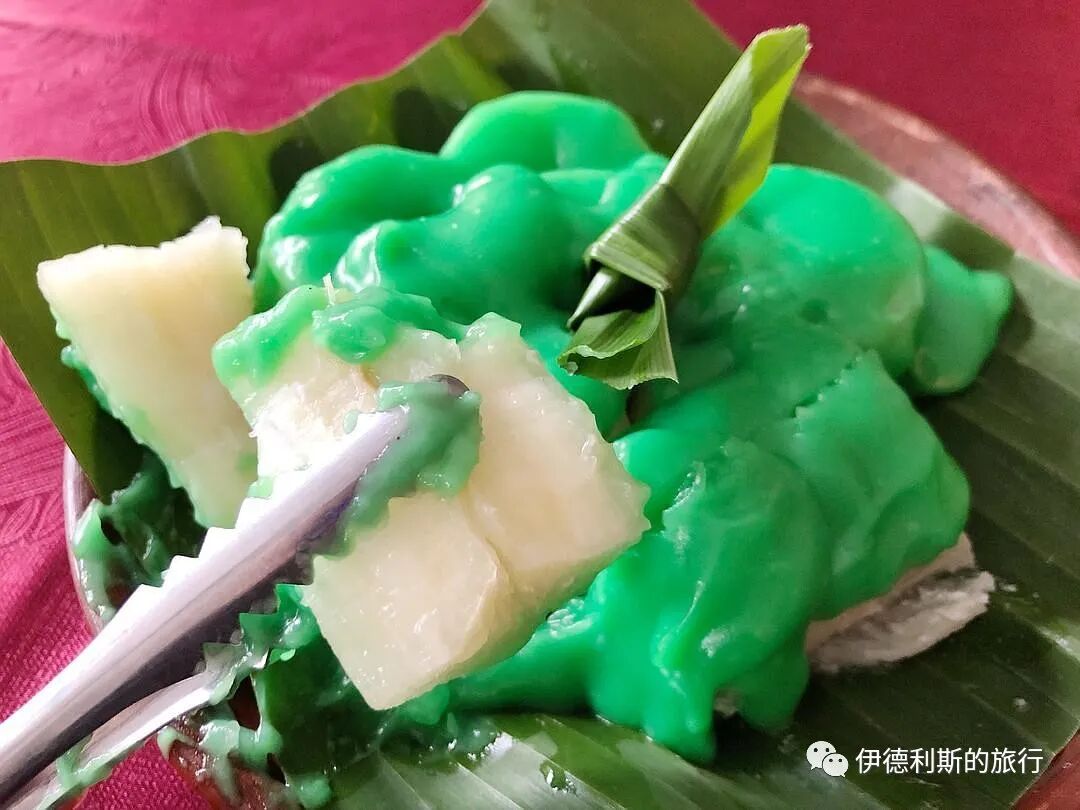
nDalem Joyokusuman was built in 1916 during the reign of the eighth Sultan of Yogyakarta, Hamengkubuwono VIII, and has been occupied by members of the Sultan's family ever since. Peringgitan is the inner hall behind the main living room. It is where the prince's family held activities and displayed valuable gifts the prince received.
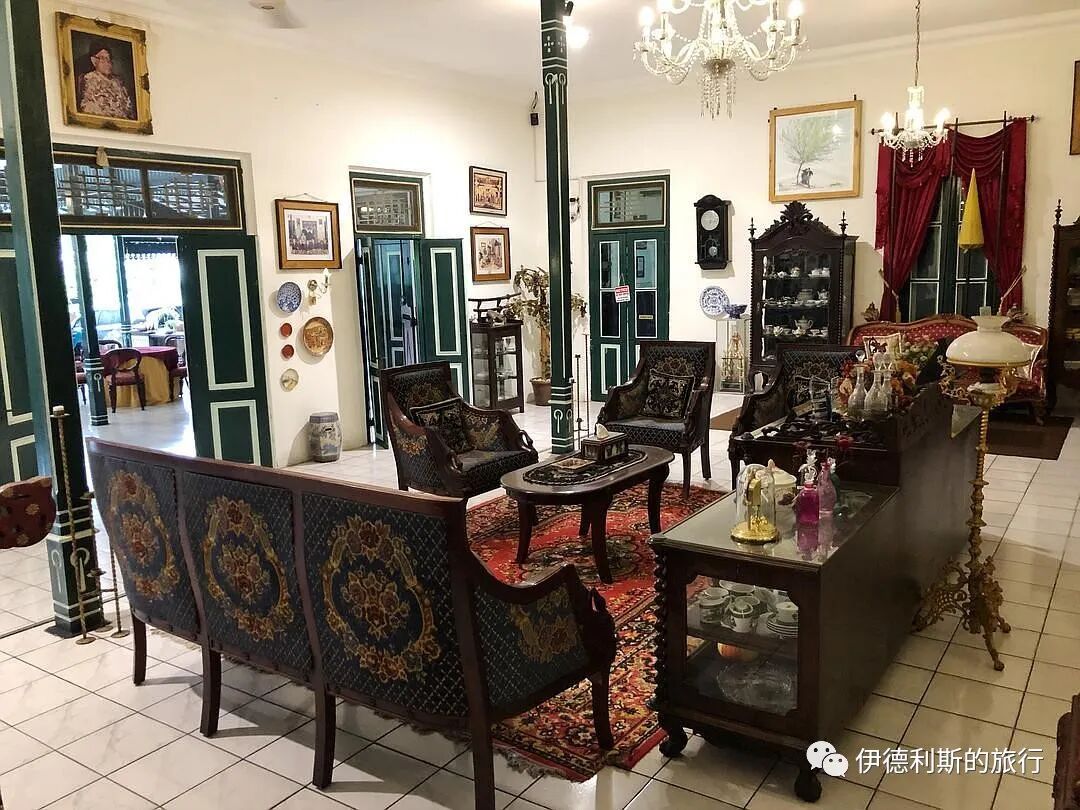
Sentong Kiwo in picture 4 was originally a guest room and now serves as an exhibition hall.
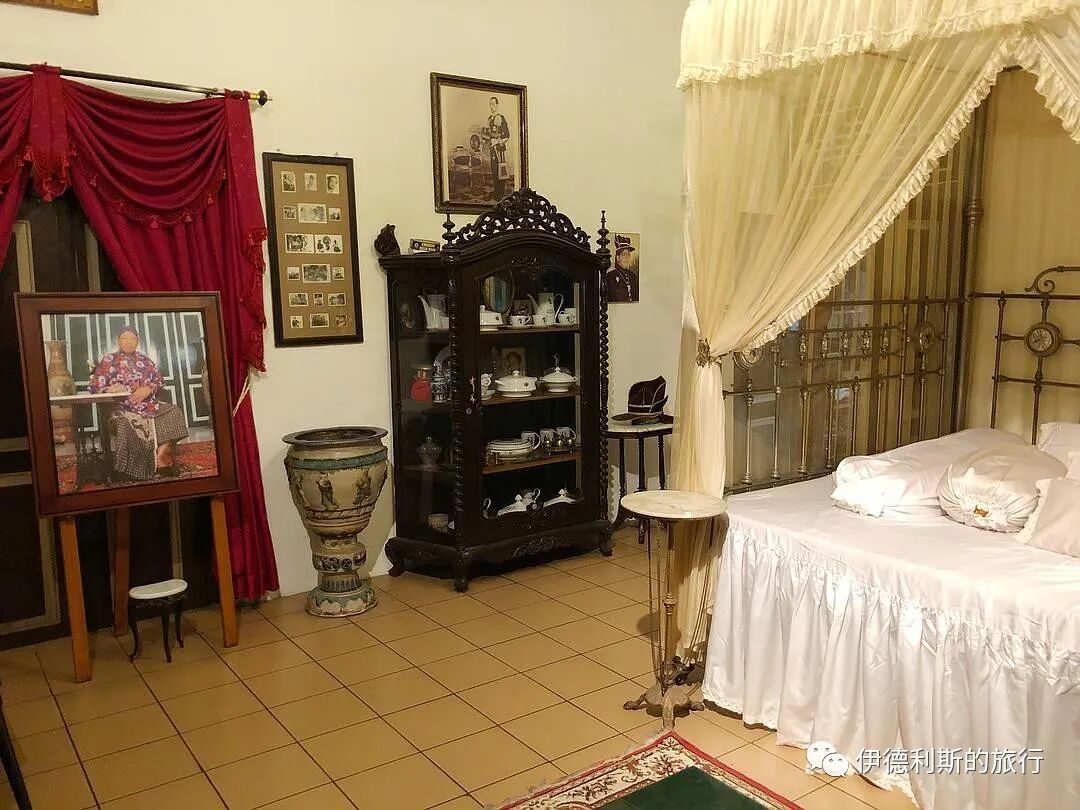
The area in the courtyard where gamelan music is performed.
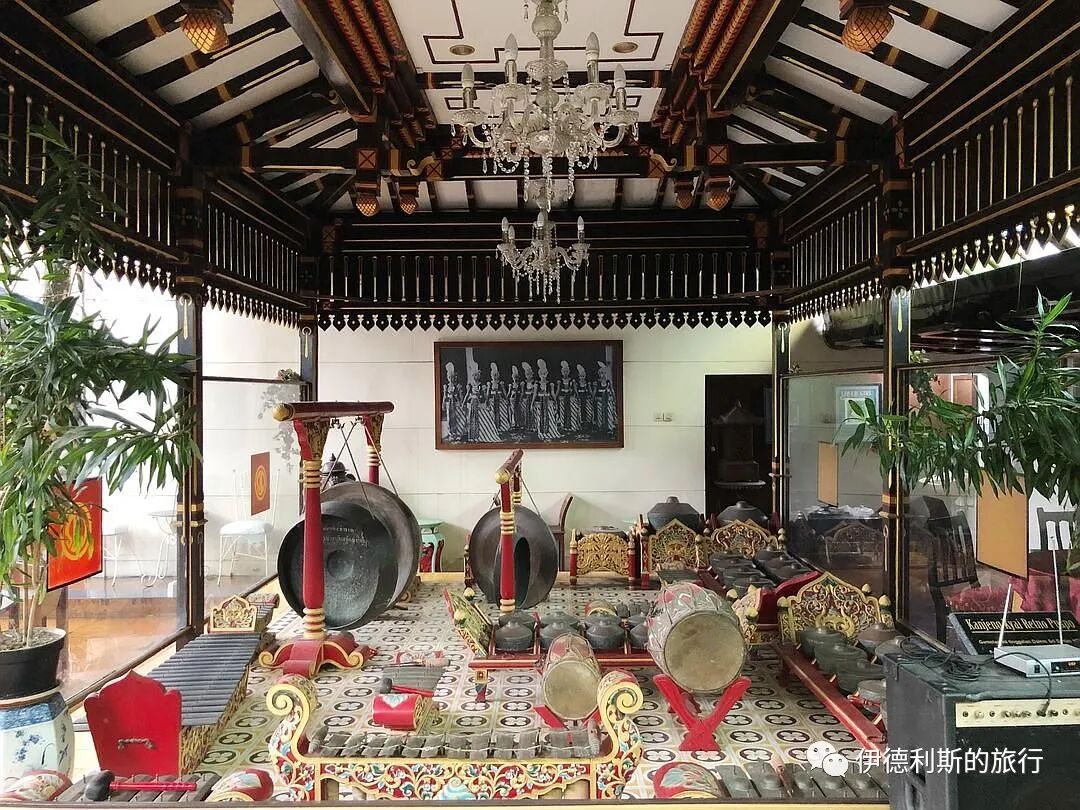
A photo of the prince's family when they were young.
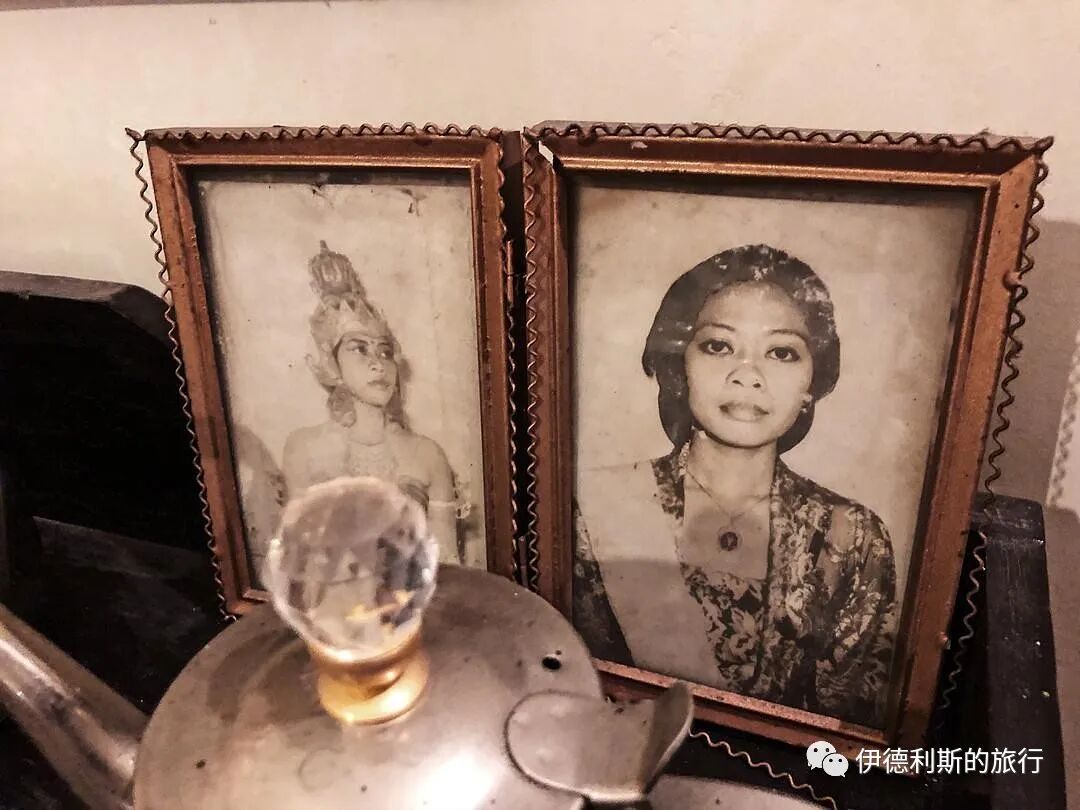
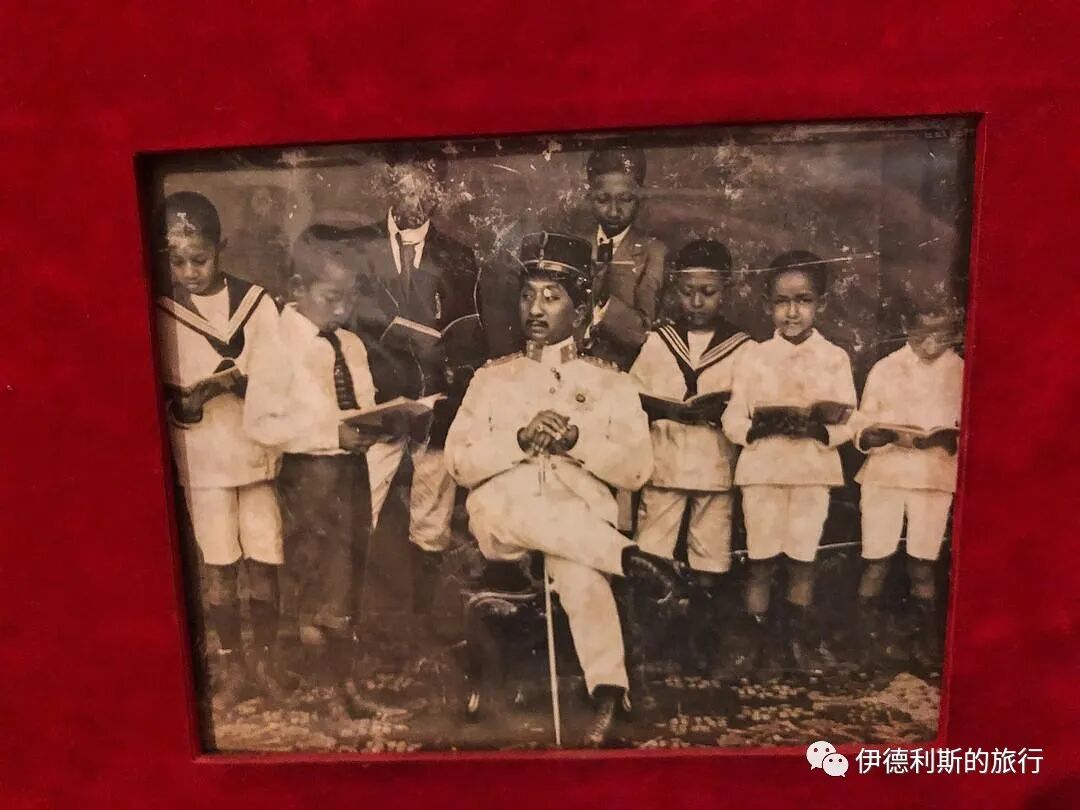
5. Sultan of Yogyakarta's Hat
I bought a hat at Beringharjo Market in Yogyakarta that locals wear for weddings. It is based on the crown from the Yogyakarta Sultan's court.
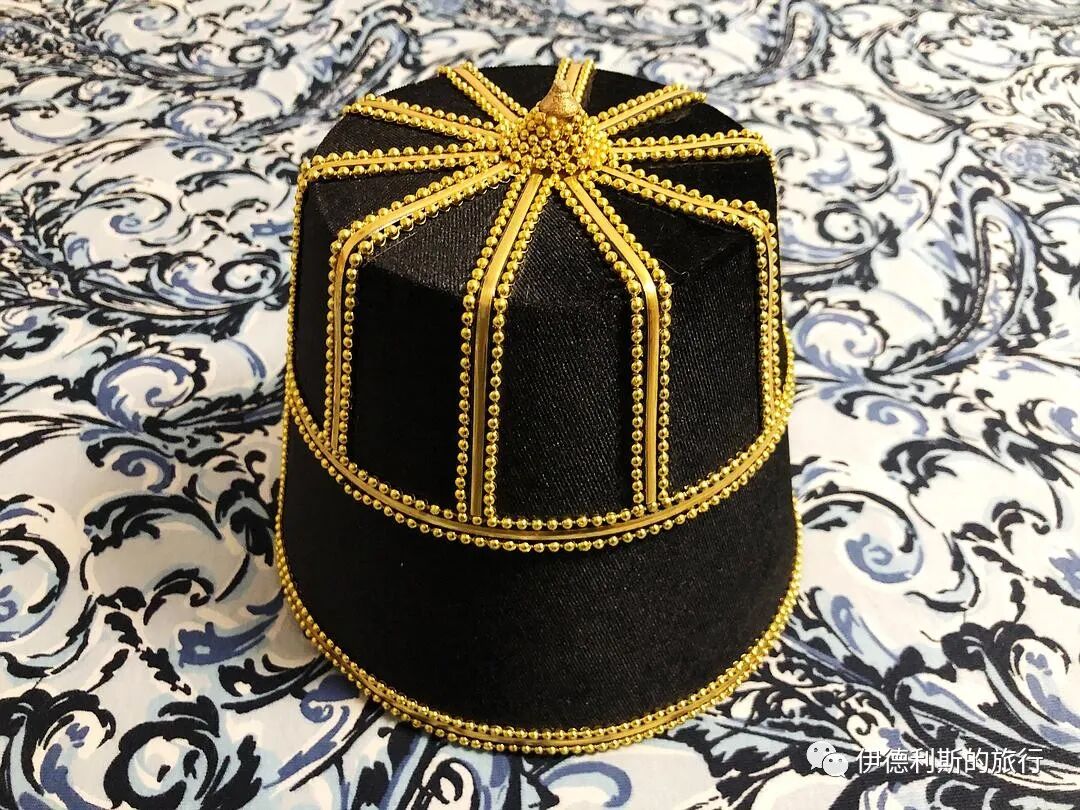
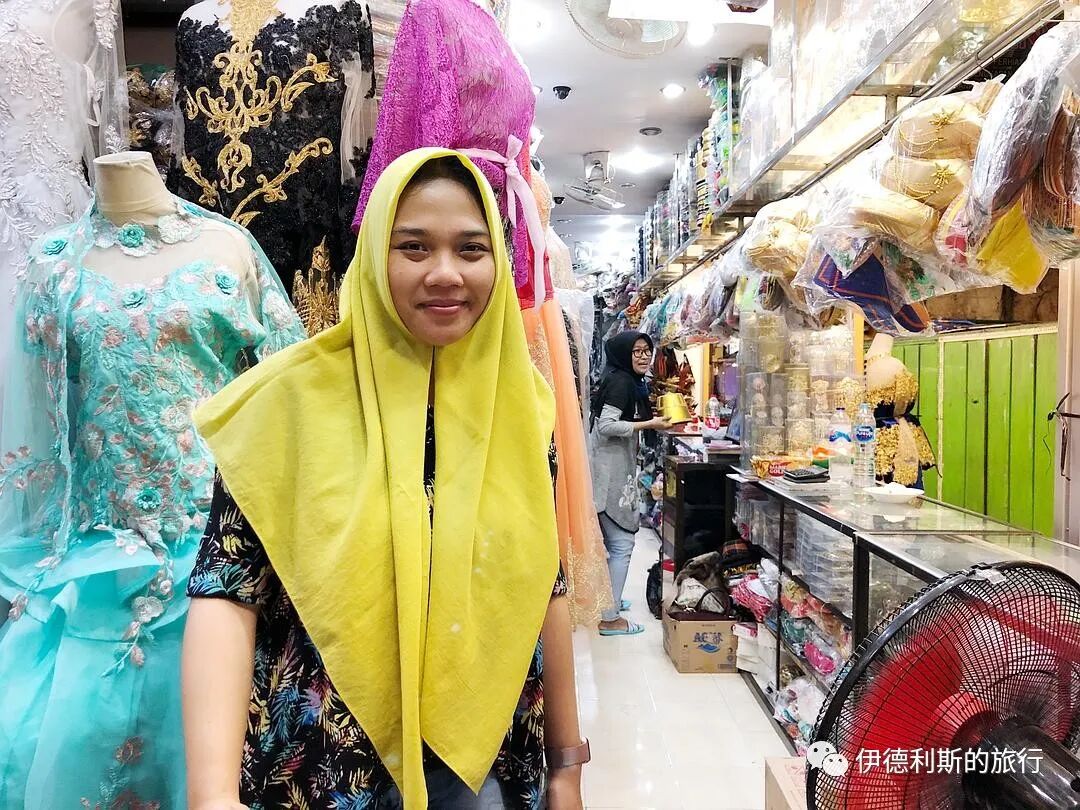
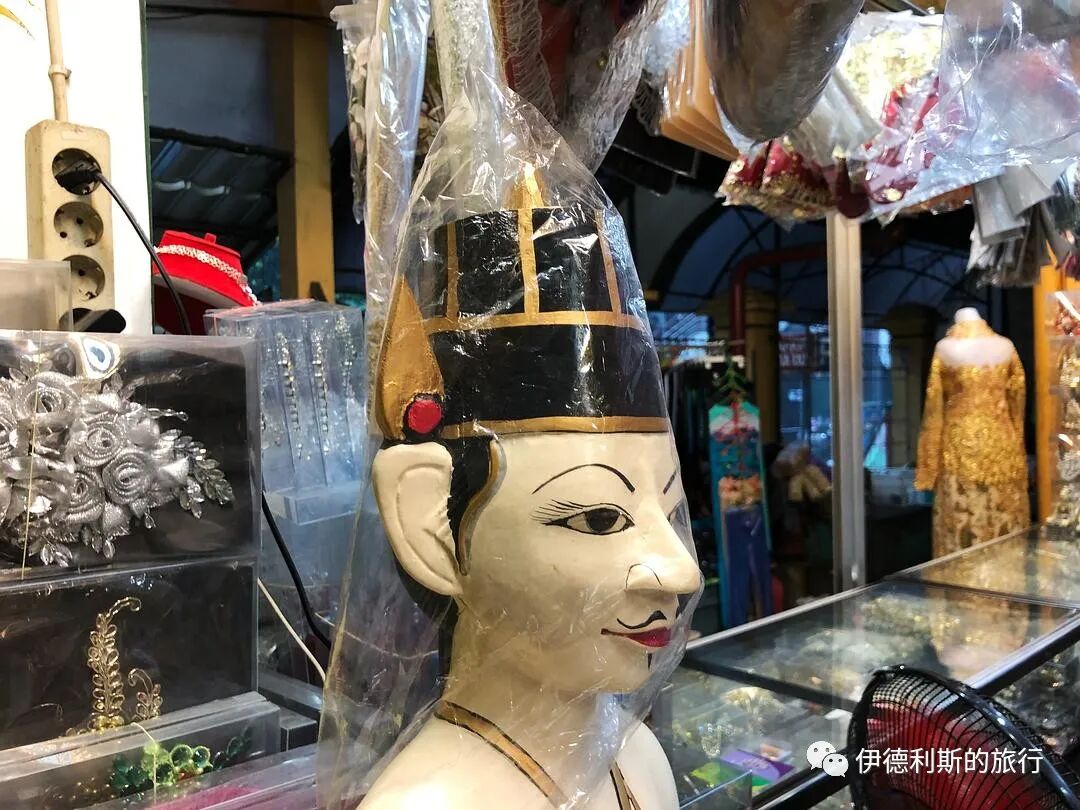
Sultan Hamengkubuwono VII of Yogyakarta, photographed in 1885.
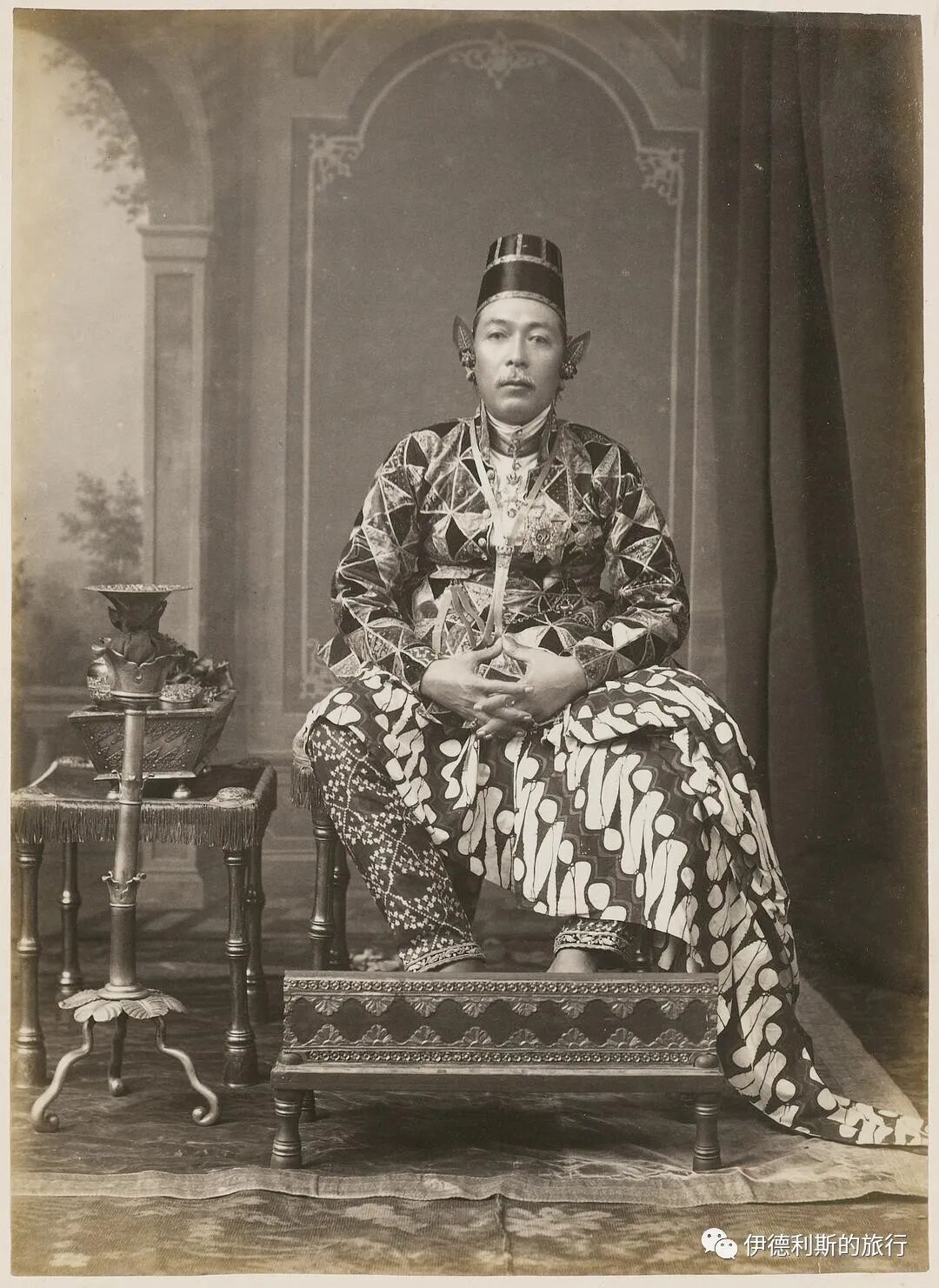
Members of the Yogyakarta Sultan's royal family, photographed in 1885.
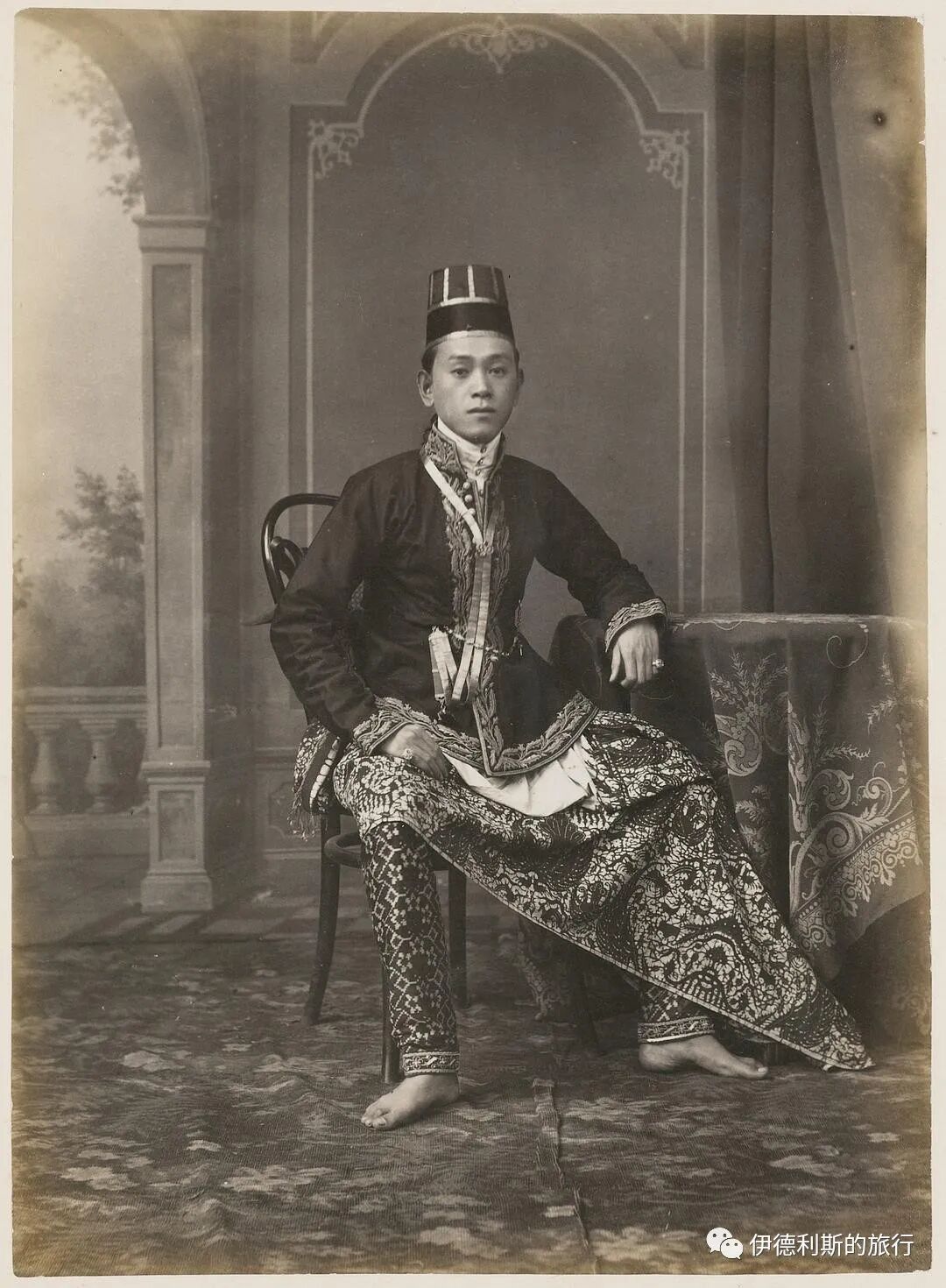
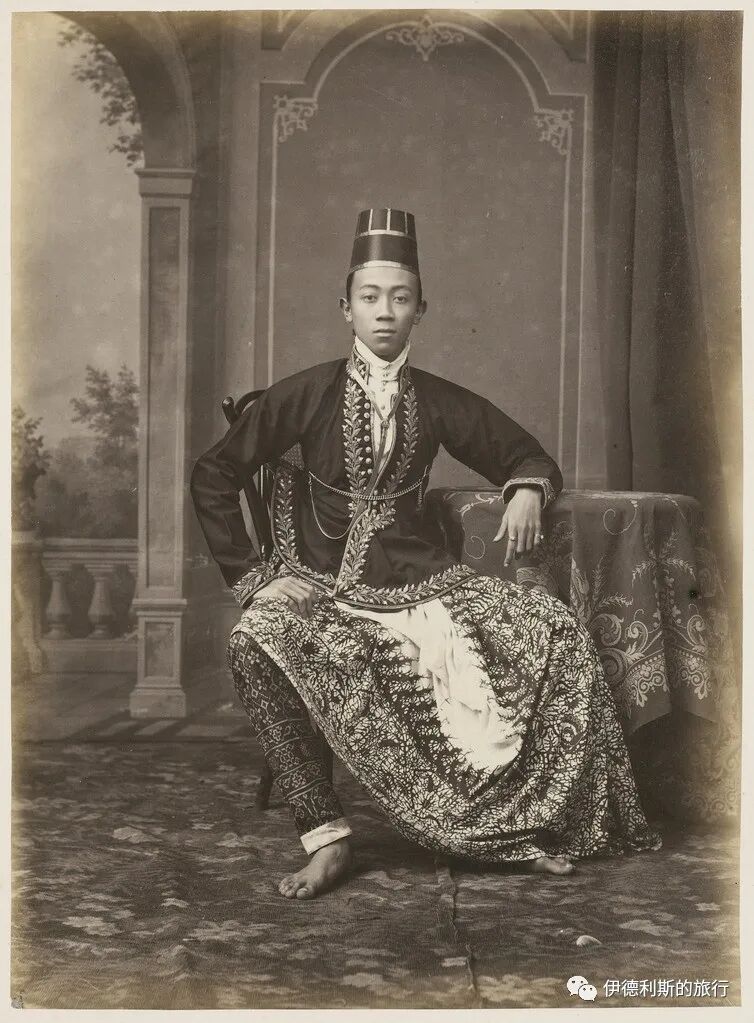
Muslim History Guide Indonesia Kotagede: Mataram Capital, Mosques and Java Muslim Heritage
Articles • yusuf908 posted the article • 0 comments • 170 views • 2026-05-23 23:06
Summary: Muslim History Guide Indonesia Kotagede: Mataram Capital, Mosques and Java Muslim Heritage is presented here as a clear Muslim travel account, beginning with this scene: Kotagede is now a small town in the southeastern suburbs of the ancient Javanese city of Yogyakarta, famous for its silverwork, but the name Kotagede originally meant great city. The account keeps its focus on Kotagede Mosques, Indonesia Muslim Travel, Mataram Sultanate while preserving the names, places, food, and historical details from the Chinese source.
Kotagede is now a small town in the southeastern suburbs of the ancient Javanese city of Yogyakarta, famous for its silverwork, but the name Kotagede originally meant great city. Between the 1570s and 1613, this place was the first capital of the Mataram Sultanate.
The Mataram Sultanate was the most powerful Islamic kingdom on Java in the 17th century, and it later split into the Yogyakarta and Surakarta sultanates in 1755, which both still exist today. Kotagede still houses the royal tombs of the Mataram Sultanate, and the tomb guards are employed by both the Yogyakarta and Surakarta sultanate families, making it a famous pilgrimage site for people from both places.
Founding the Mataram Sultanate
Reliable historical records only began after the Mataram Sultanate started working closely with the Dutch East India Company in the 17th century, as earlier historical materials are very limited and filled with myths.
In early historical records, Kotagede was originally a forest. In 1568, Hadiwijaya, a minister of the Demak Sultanate, sent Kyai Gedhe Pamanahan to kill the last sultan, Arya Penangsang, and establish the Pajang Kingdom. To reward Kyai Gedhe Pamanahan for his service, Sultan Hadiwijaya granted Kotagede to Ki Ageng Pemanahan. Pemanahan and his adopted son, Danang Sutawijaya, cleared the forest to build the first settlement, which they named Mataram, and Pemanahan became known as the King of Mataram (Ki Gedhe Mataram).
After Pemanahan died in 1575, Danang Sutawijaya declared himself the King of Mataram, but Mataram was still a vassal of the Pajang Kingdom at that time. A major power struggle occurred in the Pajang Kingdom in 1582, and Sutawijaya took the chance to break free from Pajang rule, officially establishing the Mataram Sultanate in 1587.
In 1601, Prince Mas Jolang became the second Sultan of Mataram. During his reign, he built many structures in Kotagede, the most important of which was the Prabayeksa built within the palace. In the Yogyakarta palace that survives today, the Prabayeksa is a massive wooden building that served as the sultan's private inner chamber, housing many magical treasures and weapons. Jolang also built several pleasure gardens (taman).
In 1613, Prince Mas Rangsang became the third Sultan of Mataram. Rangsang was known as the Great Sultan (Sultan Agung) and was the most powerful ruler in the history of the Mataram Sultanate. While expanding his territory, he moved the capital from Kotagede to Kerta, 5 kilometers to the south, ending Kotagede's history as the capital.
Territory of the Mataram Sultanate
Great Mosque of Mataram
The Great Mosque of Mataram (Masjid Gedhe Mataram) is the most important architectural relic of the Mataram Sultanate. The mosque was first built in 1575, and the original walls and gates are still preserved today.
This style of gate, known as Paduraksa, comes from the ancient Hindu gopuram gate, which was widely used in old Javanese Hindu and Buddhist temples from the 8th to 9th centuries and was adopted by Islamic sultanate mosques, palaces, and cemeteries after the 15th century. When used for non-Hindu buildings, this architectural style is generally called Kori Agung. The main gate of the Great Mosque of Mataram is known as one of the most classic Kori Agung gates on Java island.
Outside of the east gate
Inside of the east gate
Inside of the south gate
Fish balls (yüwan) eaten in the courtyard
The main hall of the mosque was rebuilt in the 17th century by Sultan Agung and later repaired several times by the sultans of Yogyakarta and Solo. The current building was rebuilt after a fire in 1926 and still keeps the traditional Javanese mosque style. The mosque consists of a main hall and a front porch called a serambi, surrounded by a pool of water. Traditionally, dipping your feet in the pool before entering the main hall symbolizes purification.
Mataram Sultan Tombs
The Mataram Sultan Tombs (Makam Kota Gede) are located on the west side of the mosque and hold the grave of Ki Gedhe Mataram, the founder of the Mataram Sultanate. The tomb guards, called Juru Kunci, are hired jointly by the two sultan families of Yogyakarta and Solo.
The stone carving on the gate comes from the Javanese Hindu god of the underworld, Batara Kala, who is also the god of time and destruction. In traditional Javanese mythology, Batara Kala is the son of the Javanese version of Shiva, Batara Guru, and his eating of the sun is the cause of solar eclipses.
The tomb gate photographed by Kassian Cephas in 1890 view all
Summary: Muslim History Guide Indonesia Kotagede: Mataram Capital, Mosques and Java Muslim Heritage is presented here as a clear Muslim travel account, beginning with this scene: Kotagede is now a small town in the southeastern suburbs of the ancient Javanese city of Yogyakarta, famous for its silverwork, but the name Kotagede originally meant great city. The account keeps its focus on Kotagede Mosques, Indonesia Muslim Travel, Mataram Sultanate while preserving the names, places, food, and historical details from the Chinese source.
Kotagede is now a small town in the southeastern suburbs of the ancient Javanese city of Yogyakarta, famous for its silverwork, but the name Kotagede originally meant great city. Between the 1570s and 1613, this place was the first capital of the Mataram Sultanate.
The Mataram Sultanate was the most powerful Islamic kingdom on Java in the 17th century, and it later split into the Yogyakarta and Surakarta sultanates in 1755, which both still exist today. Kotagede still houses the royal tombs of the Mataram Sultanate, and the tomb guards are employed by both the Yogyakarta and Surakarta sultanate families, making it a famous pilgrimage site for people from both places.
Founding the Mataram Sultanate
Reliable historical records only began after the Mataram Sultanate started working closely with the Dutch East India Company in the 17th century, as earlier historical materials are very limited and filled with myths.
In early historical records, Kotagede was originally a forest. In 1568, Hadiwijaya, a minister of the Demak Sultanate, sent Kyai Gedhe Pamanahan to kill the last sultan, Arya Penangsang, and establish the Pajang Kingdom. To reward Kyai Gedhe Pamanahan for his service, Sultan Hadiwijaya granted Kotagede to Ki Ageng Pemanahan. Pemanahan and his adopted son, Danang Sutawijaya, cleared the forest to build the first settlement, which they named Mataram, and Pemanahan became known as the King of Mataram (Ki Gedhe Mataram).
After Pemanahan died in 1575, Danang Sutawijaya declared himself the King of Mataram, but Mataram was still a vassal of the Pajang Kingdom at that time. A major power struggle occurred in the Pajang Kingdom in 1582, and Sutawijaya took the chance to break free from Pajang rule, officially establishing the Mataram Sultanate in 1587.
In 1601, Prince Mas Jolang became the second Sultan of Mataram. During his reign, he built many structures in Kotagede, the most important of which was the Prabayeksa built within the palace. In the Yogyakarta palace that survives today, the Prabayeksa is a massive wooden building that served as the sultan's private inner chamber, housing many magical treasures and weapons. Jolang also built several pleasure gardens (taman).
In 1613, Prince Mas Rangsang became the third Sultan of Mataram. Rangsang was known as the Great Sultan (Sultan Agung) and was the most powerful ruler in the history of the Mataram Sultanate. While expanding his territory, he moved the capital from Kotagede to Kerta, 5 kilometers to the south, ending Kotagede's history as the capital.
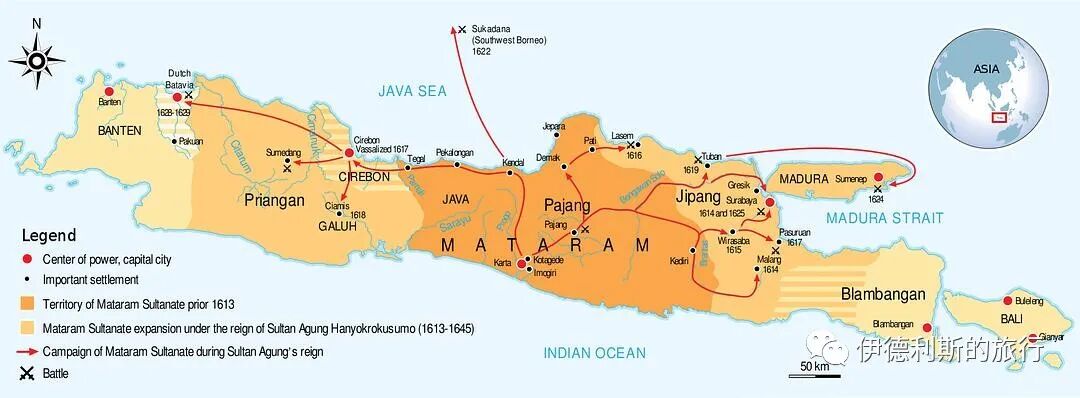
Territory of the Mataram Sultanate
Great Mosque of Mataram
The Great Mosque of Mataram (Masjid Gedhe Mataram) is the most important architectural relic of the Mataram Sultanate. The mosque was first built in 1575, and the original walls and gates are still preserved today.
This style of gate, known as Paduraksa, comes from the ancient Hindu gopuram gate, which was widely used in old Javanese Hindu and Buddhist temples from the 8th to 9th centuries and was adopted by Islamic sultanate mosques, palaces, and cemeteries after the 15th century. When used for non-Hindu buildings, this architectural style is generally called Kori Agung. The main gate of the Great Mosque of Mataram is known as one of the most classic Kori Agung gates on Java island.
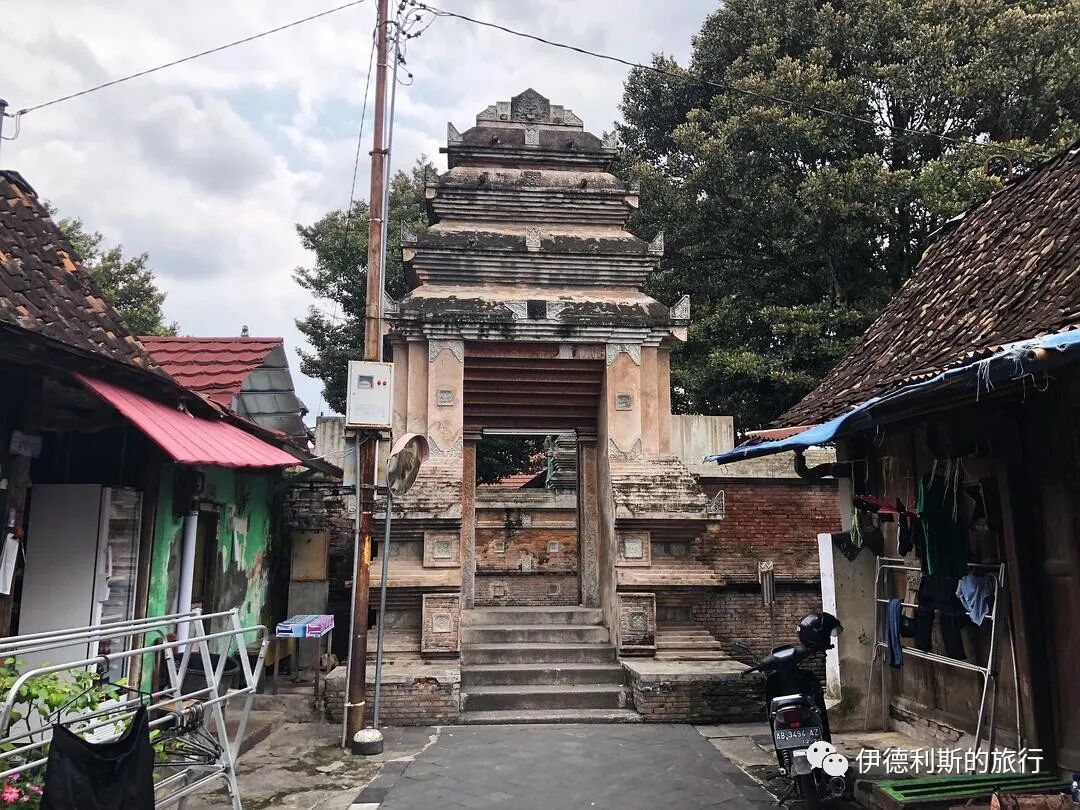
Outside of the east gate
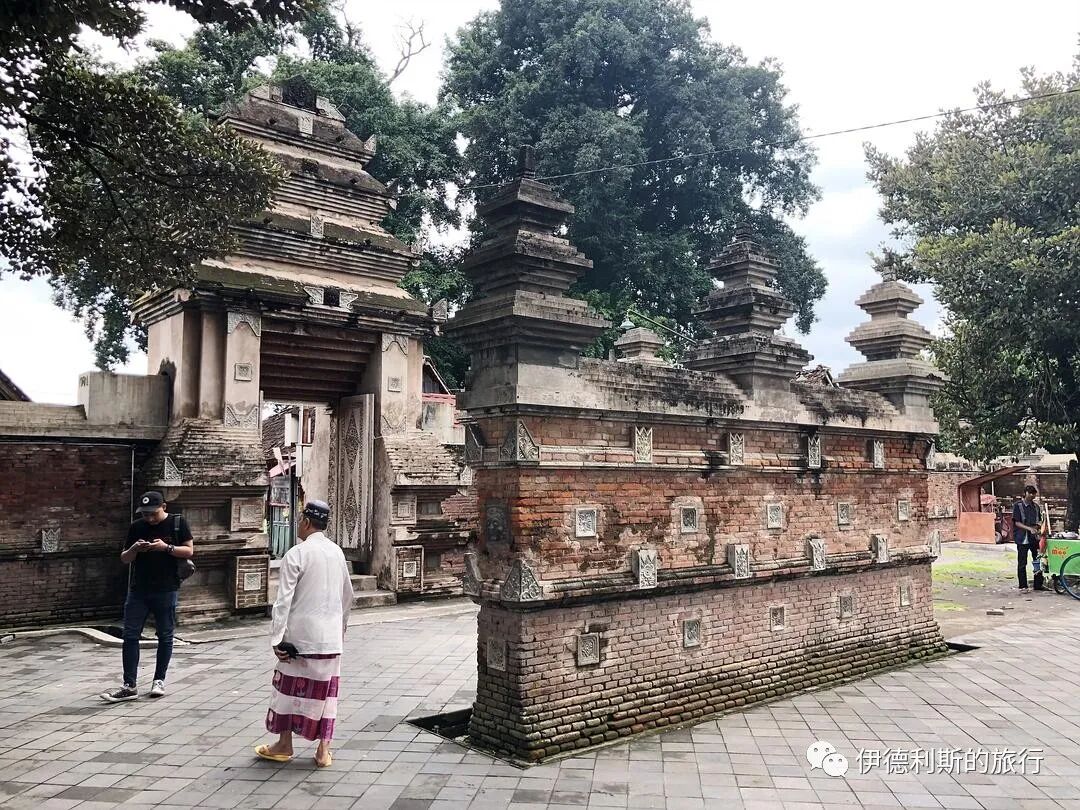
Inside of the east gate
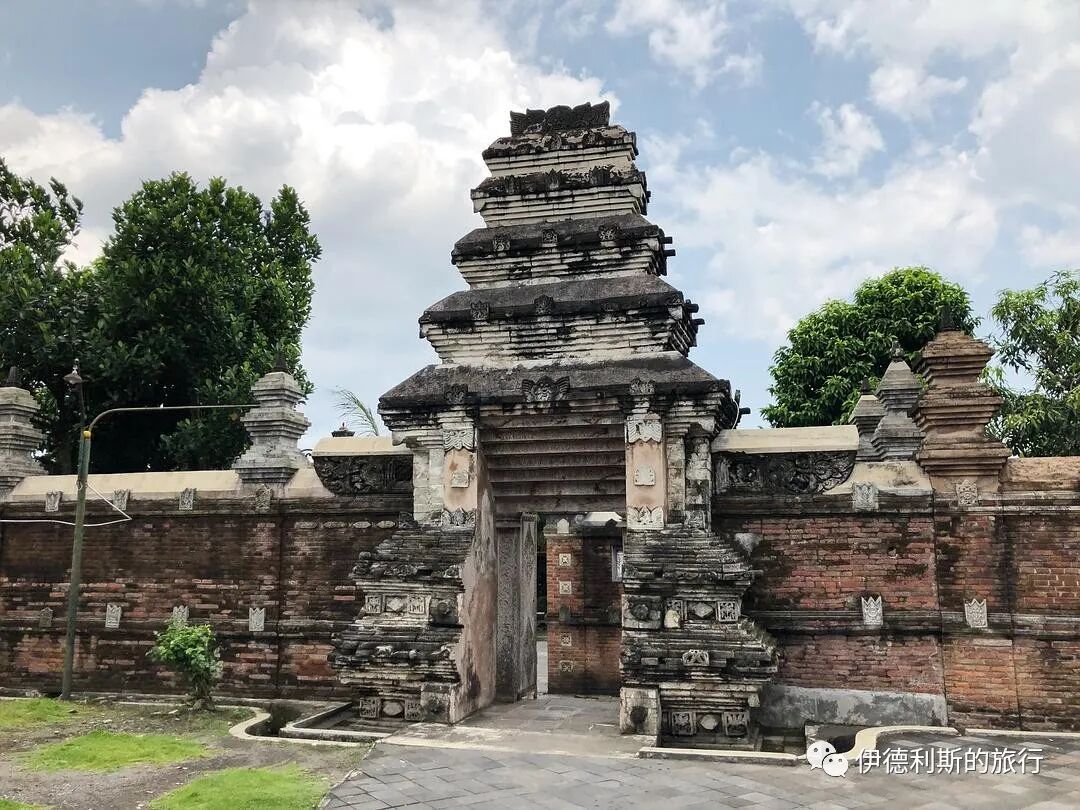
Inside of the south gate
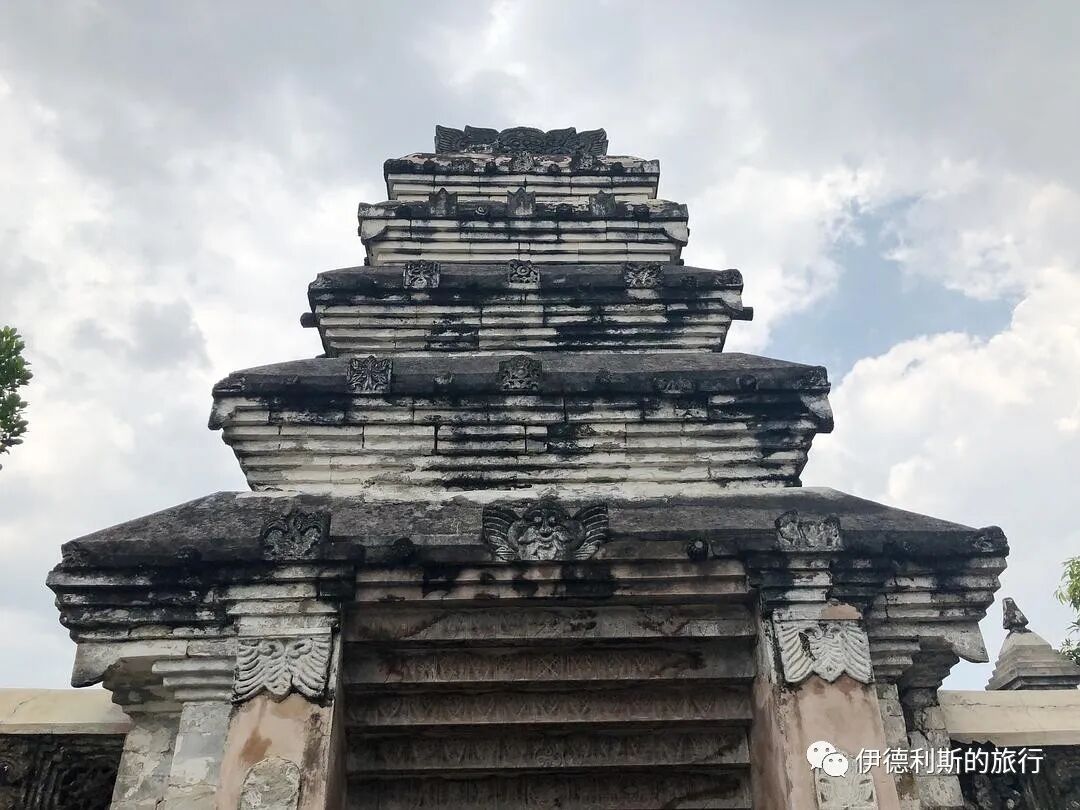
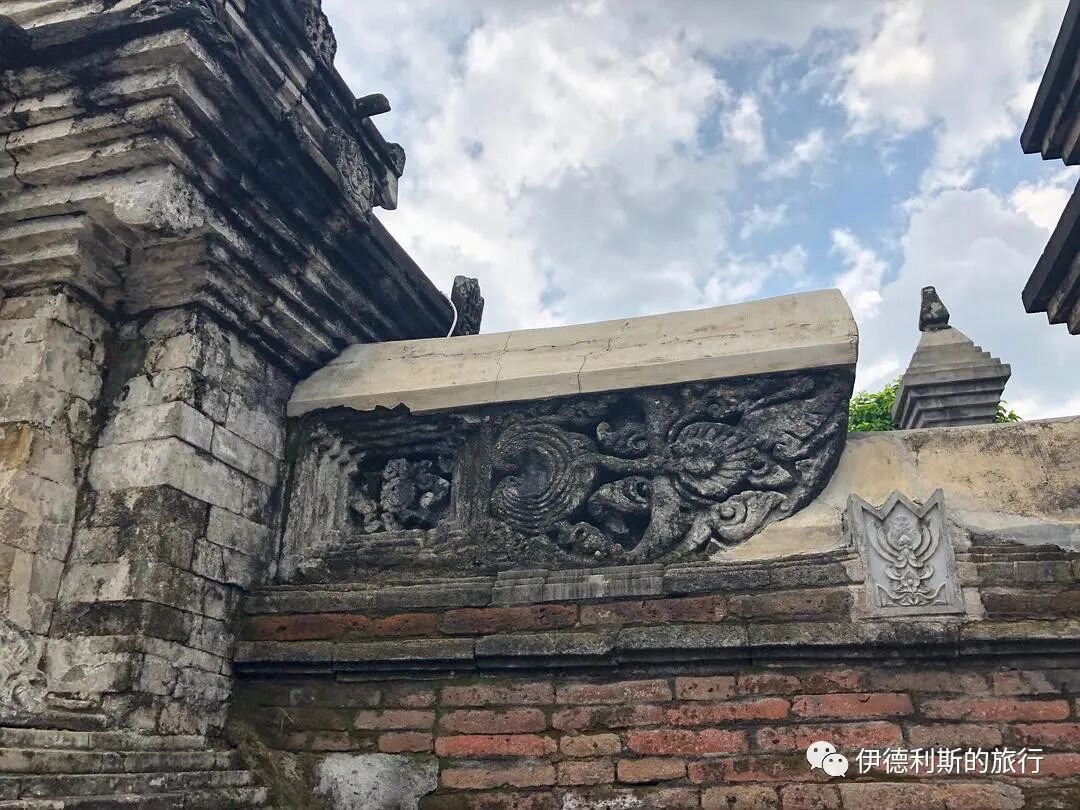
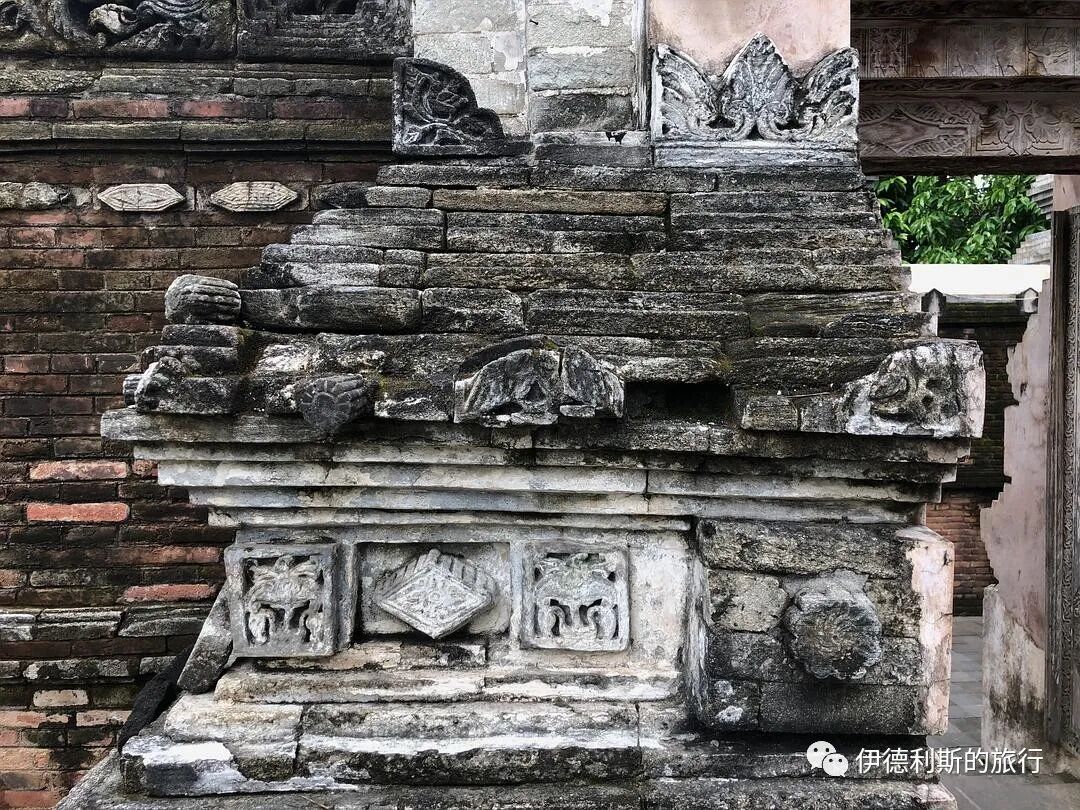
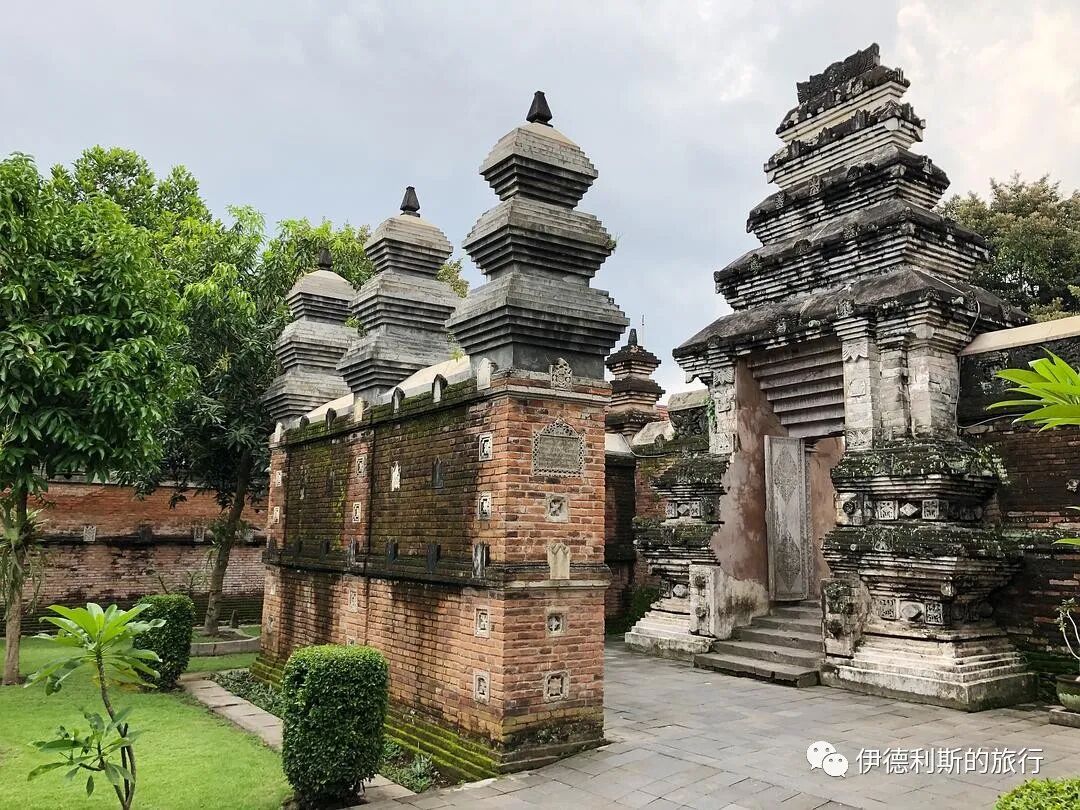
Fish balls (yüwan) eaten in the courtyard
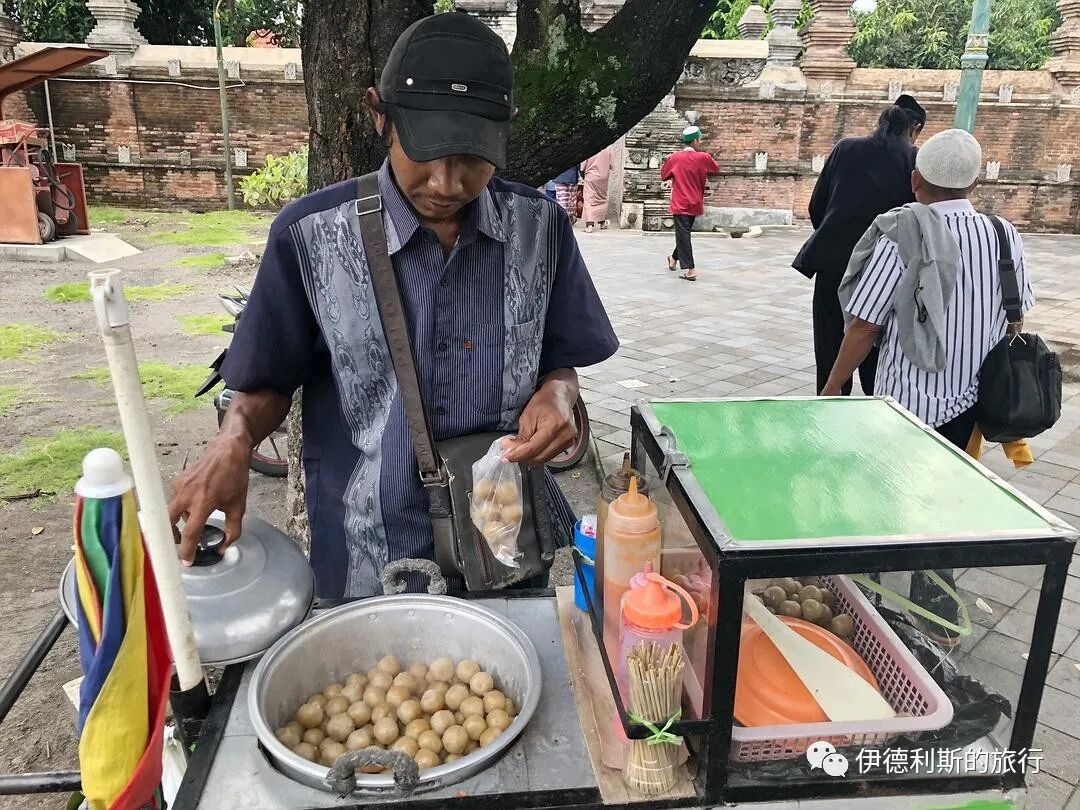
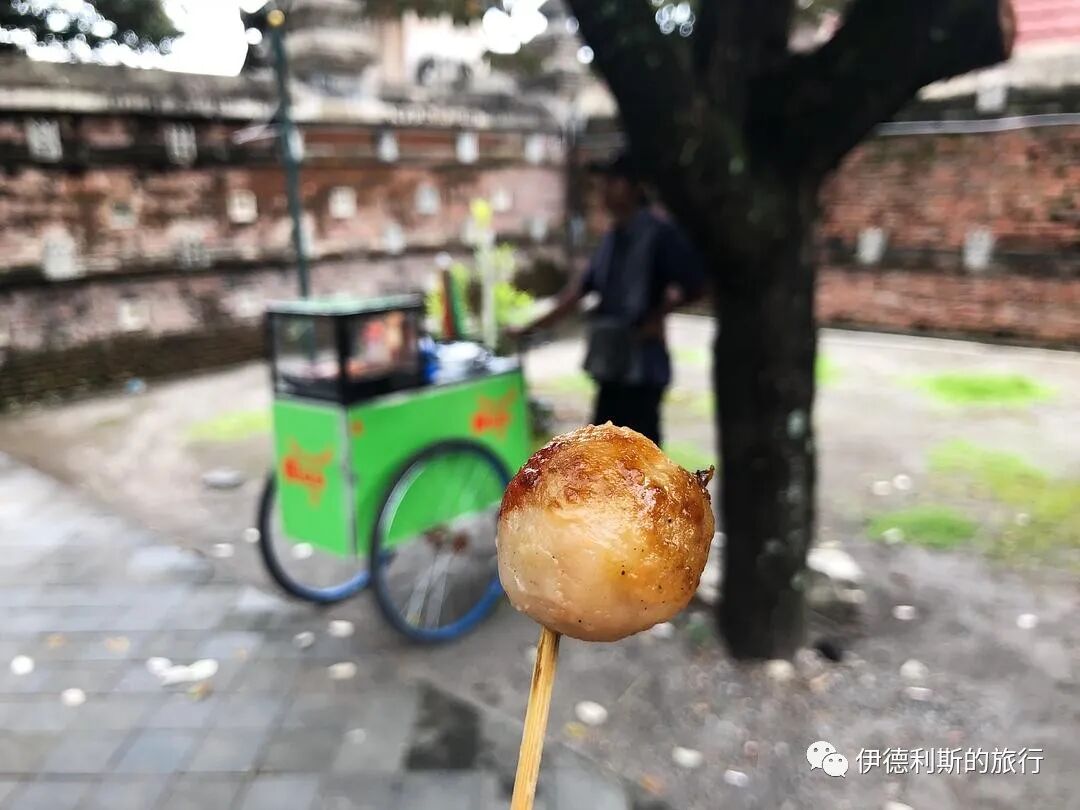
The main hall of the mosque was rebuilt in the 17th century by Sultan Agung and later repaired several times by the sultans of Yogyakarta and Solo. The current building was rebuilt after a fire in 1926 and still keeps the traditional Javanese mosque style. The mosque consists of a main hall and a front porch called a serambi, surrounded by a pool of water. Traditionally, dipping your feet in the pool before entering the main hall symbolizes purification.
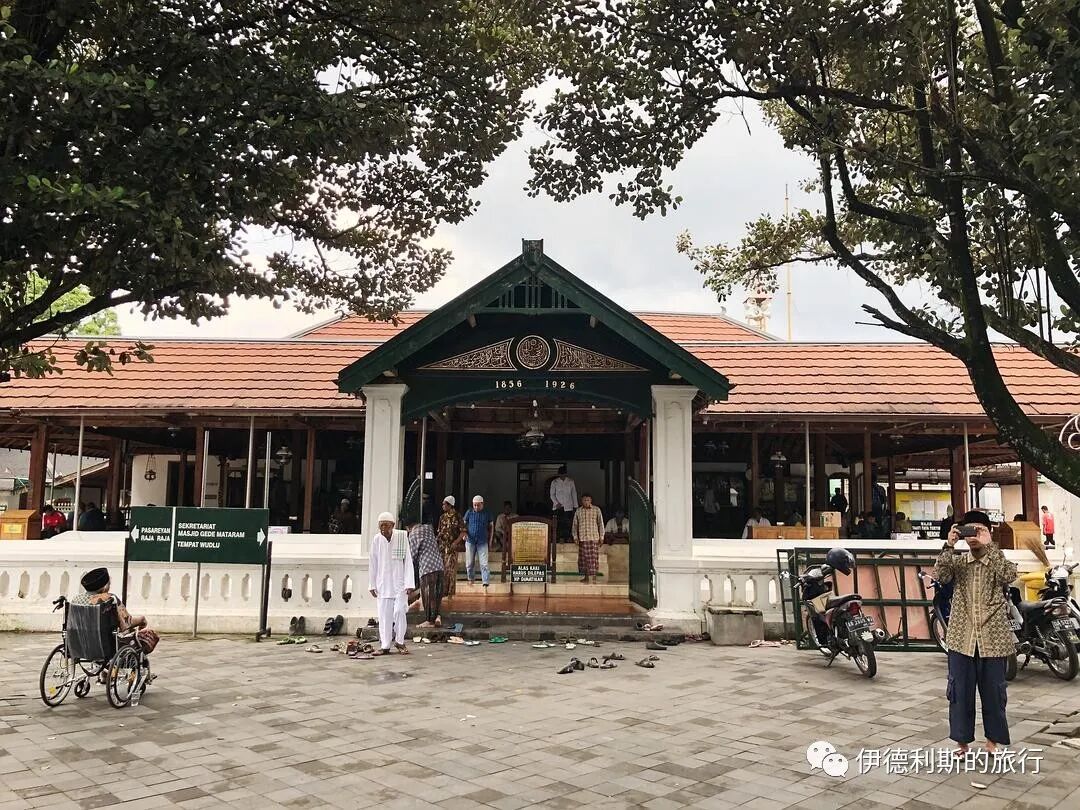
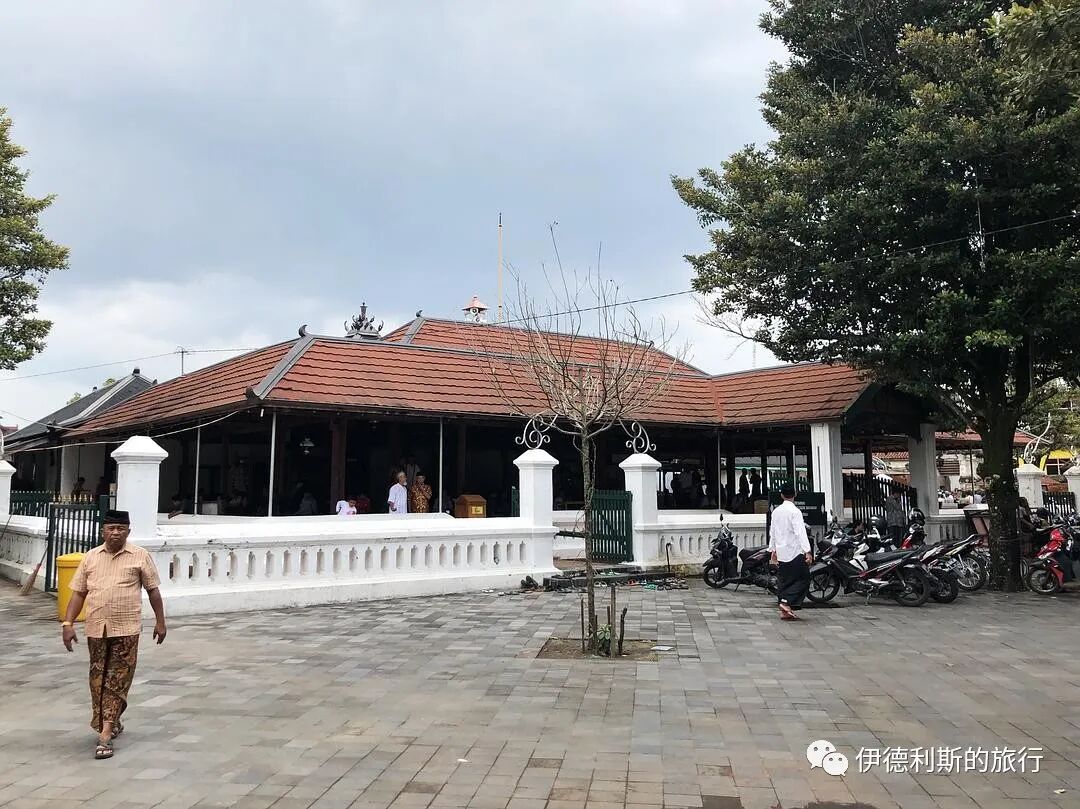
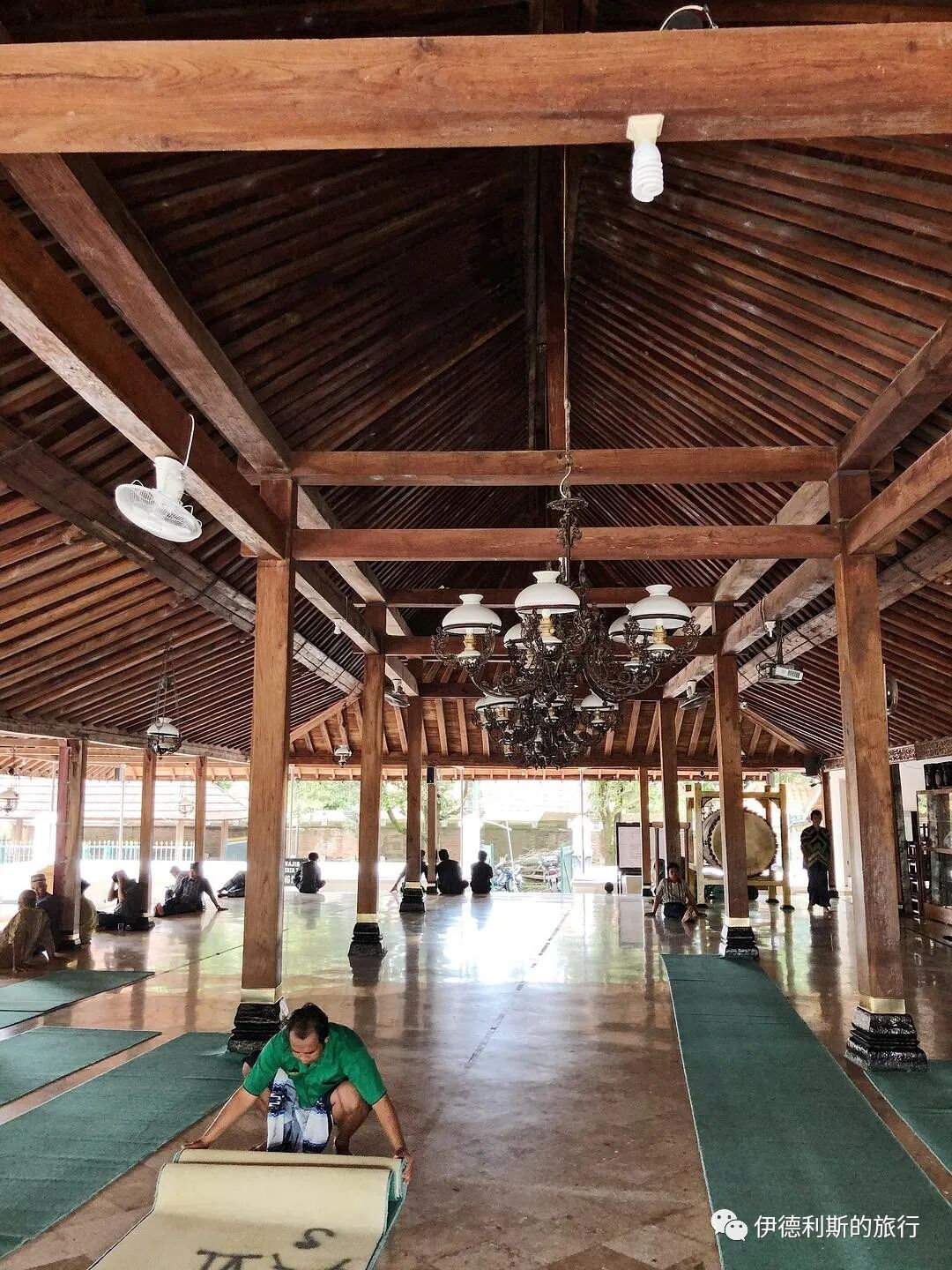
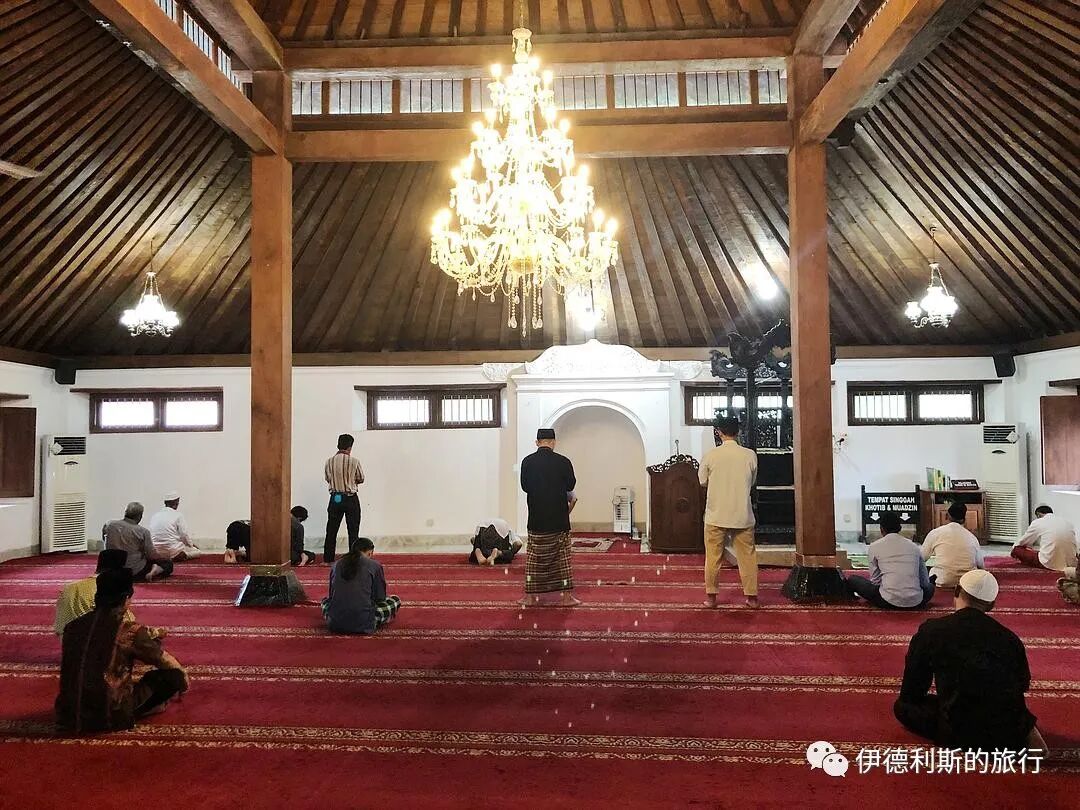
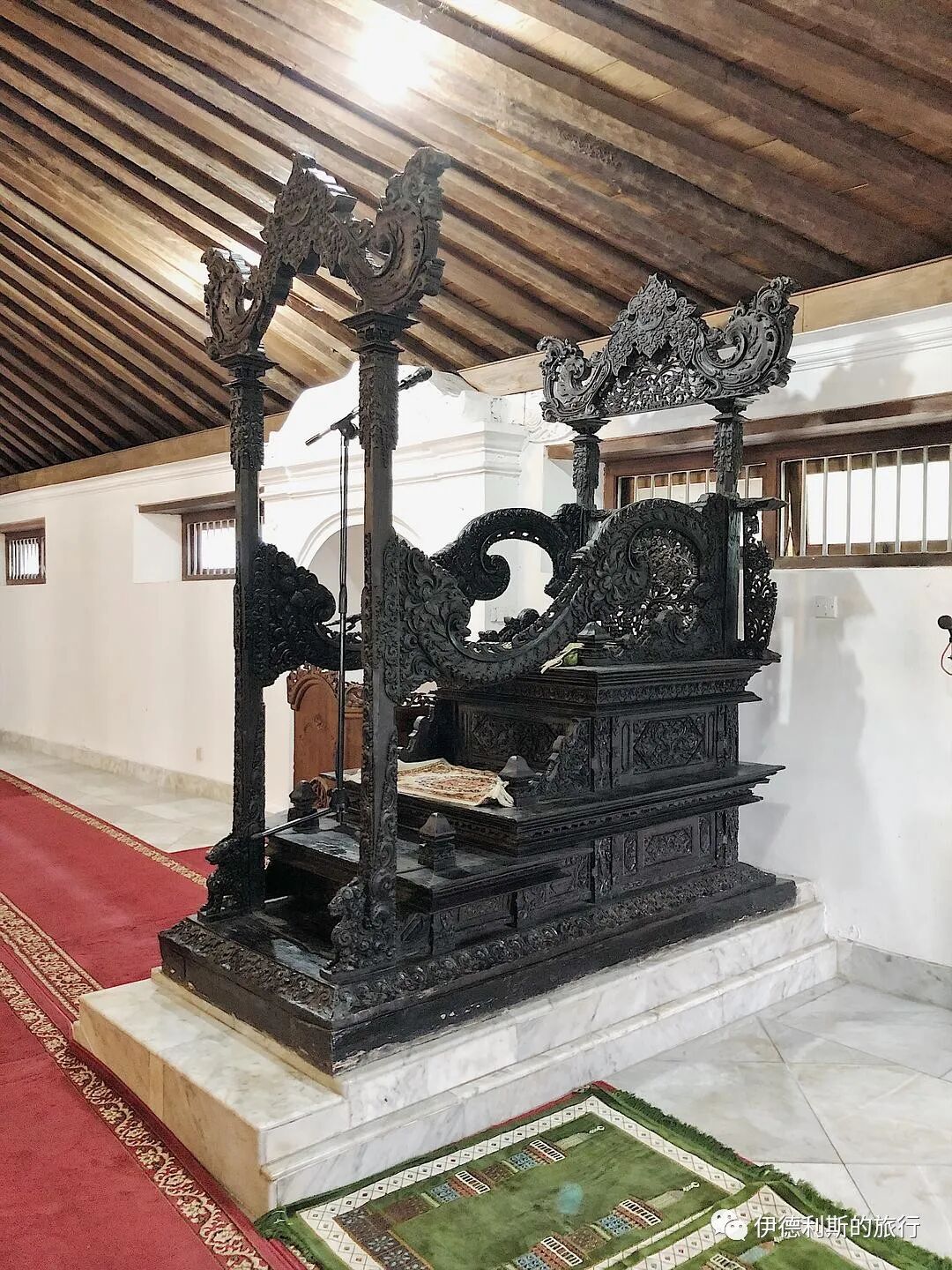
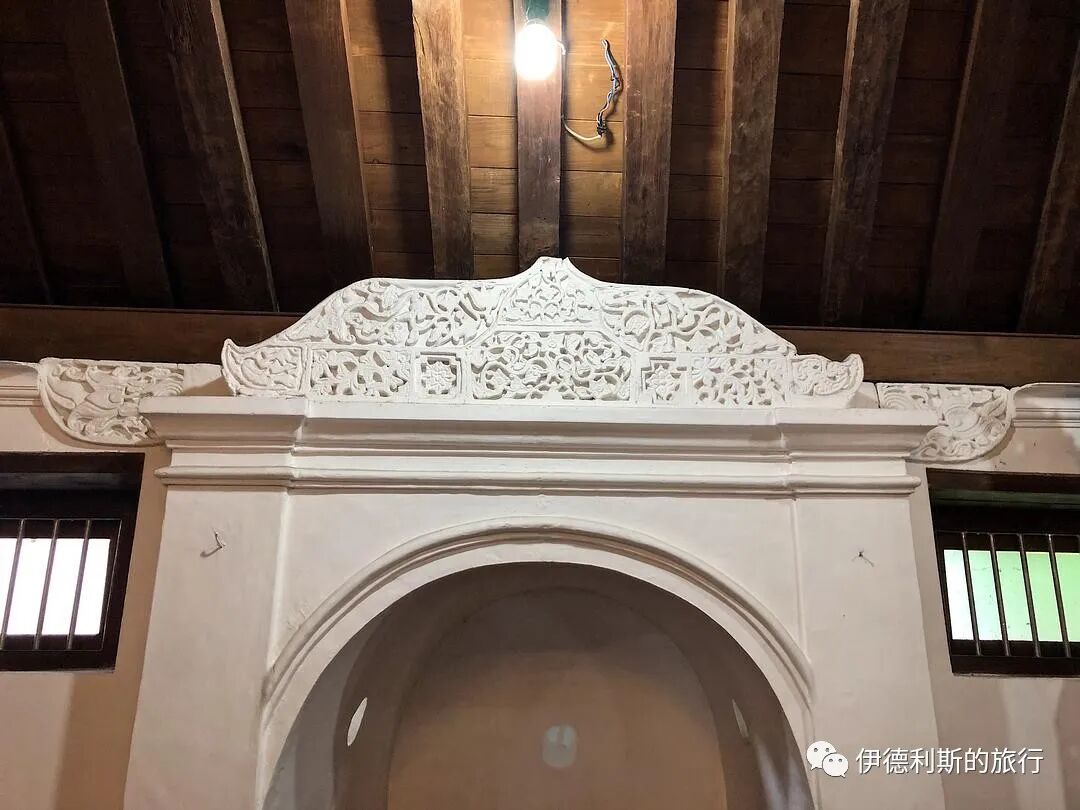
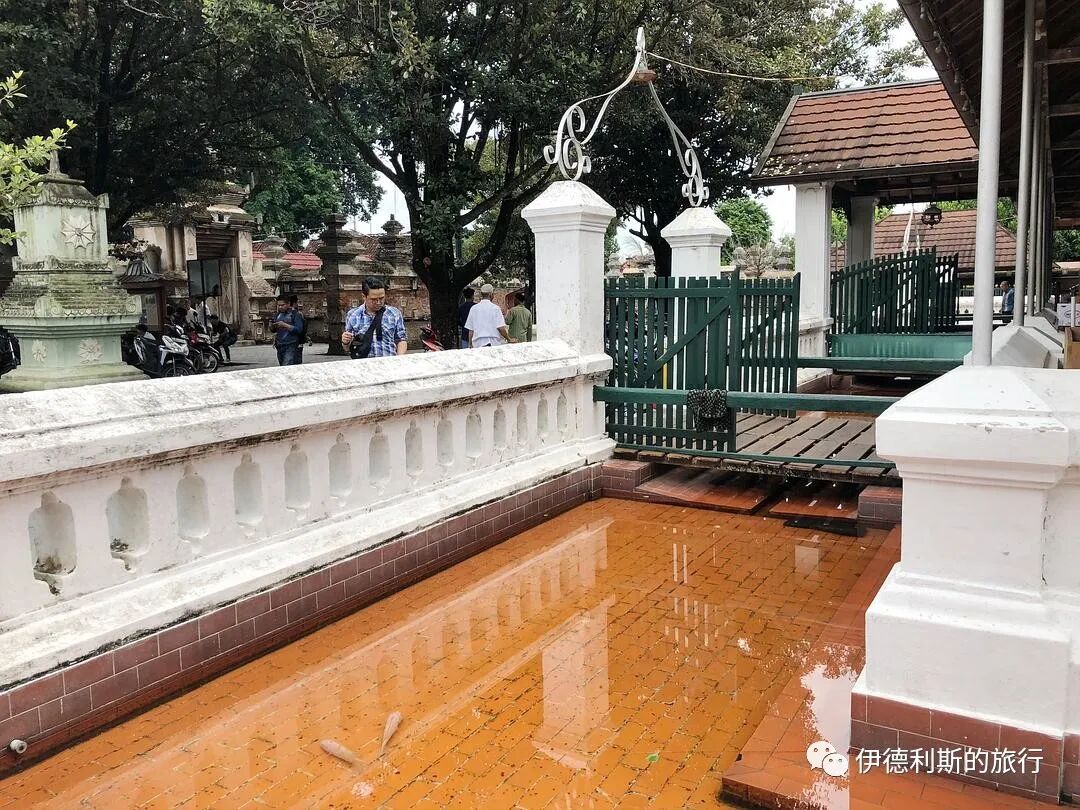
Mataram Sultan Tombs
The Mataram Sultan Tombs (Makam Kota Gede) are located on the west side of the mosque and hold the grave of Ki Gedhe Mataram, the founder of the Mataram Sultanate. The tomb guards, called Juru Kunci, are hired jointly by the two sultan families of Yogyakarta and Solo.
The stone carving on the gate comes from the Javanese Hindu god of the underworld, Batara Kala, who is also the god of time and destruction. In traditional Javanese mythology, Batara Kala is the son of the Javanese version of Shiva, Batara Guru, and his eating of the sun is the cause of solar eclipses.
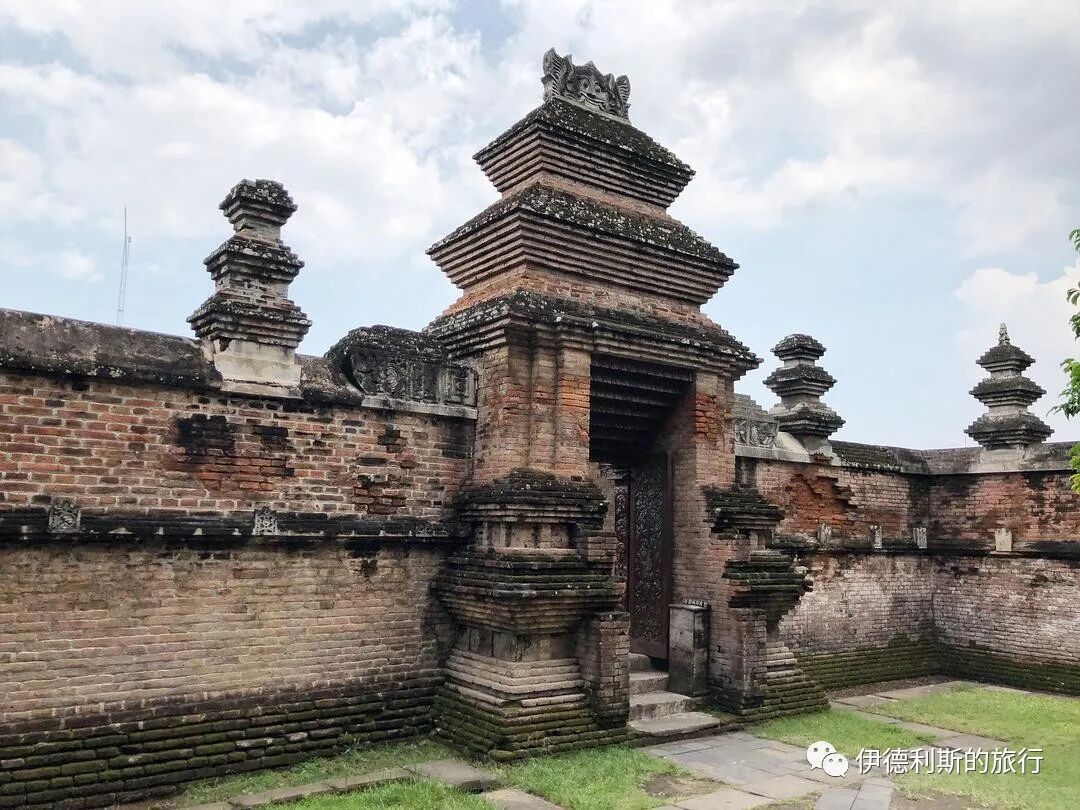
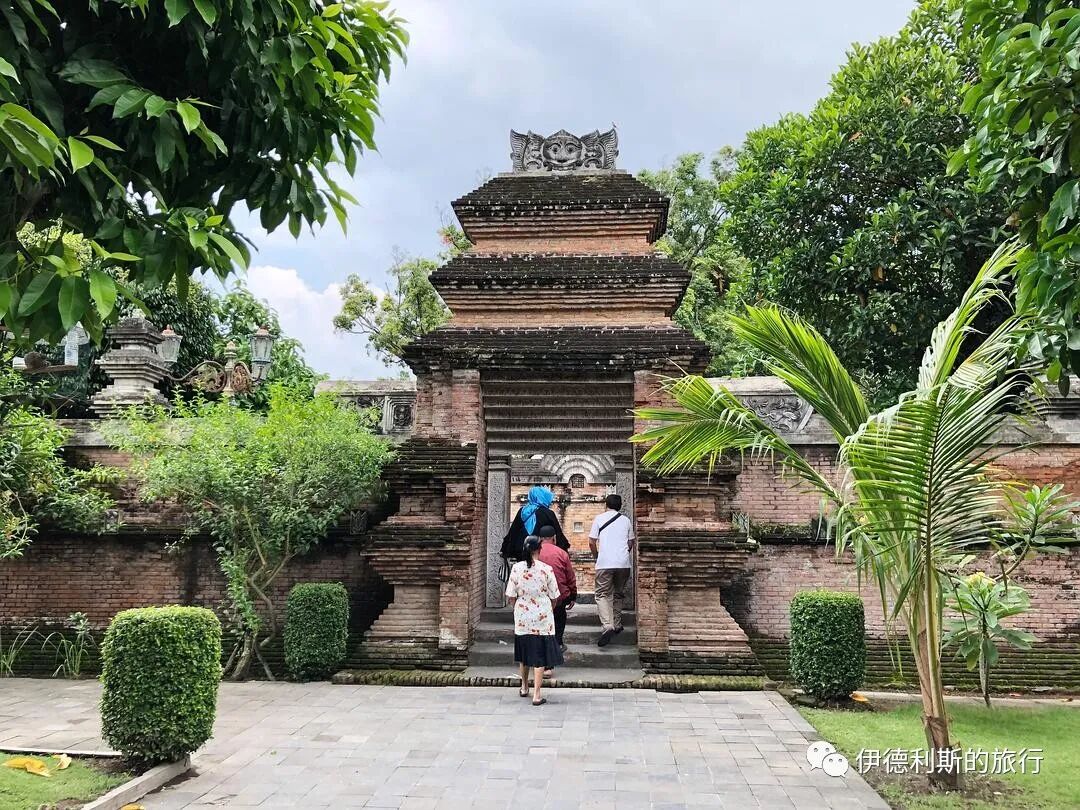
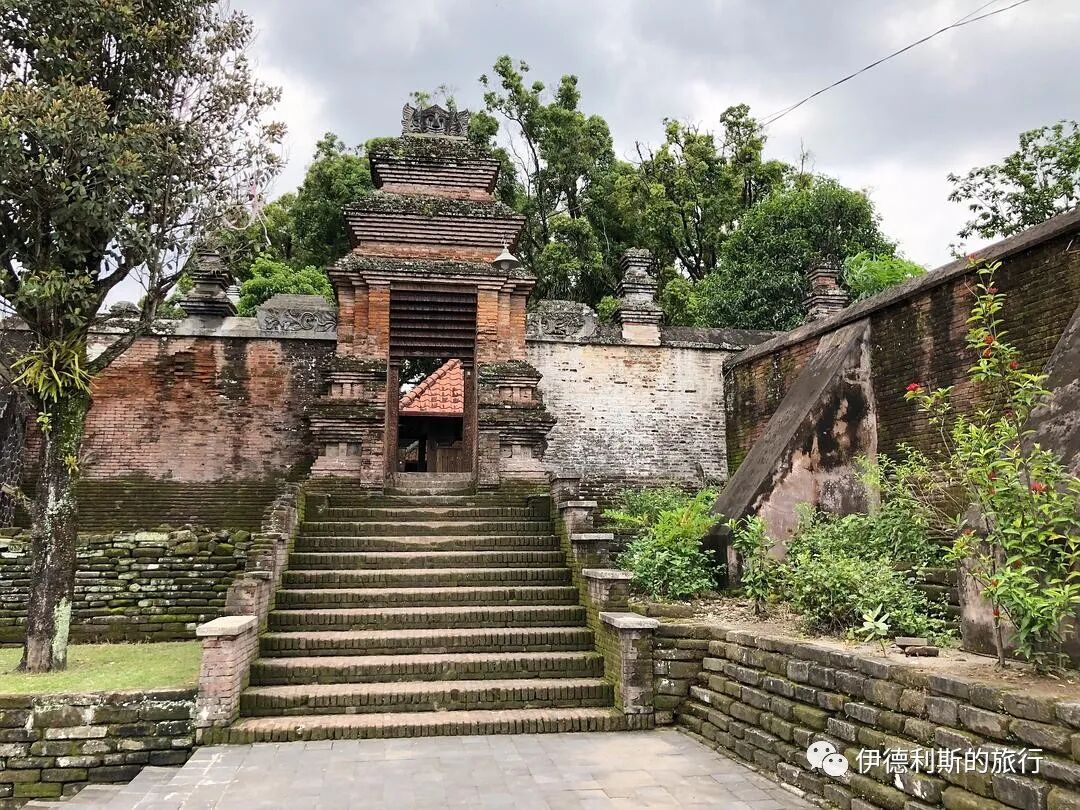
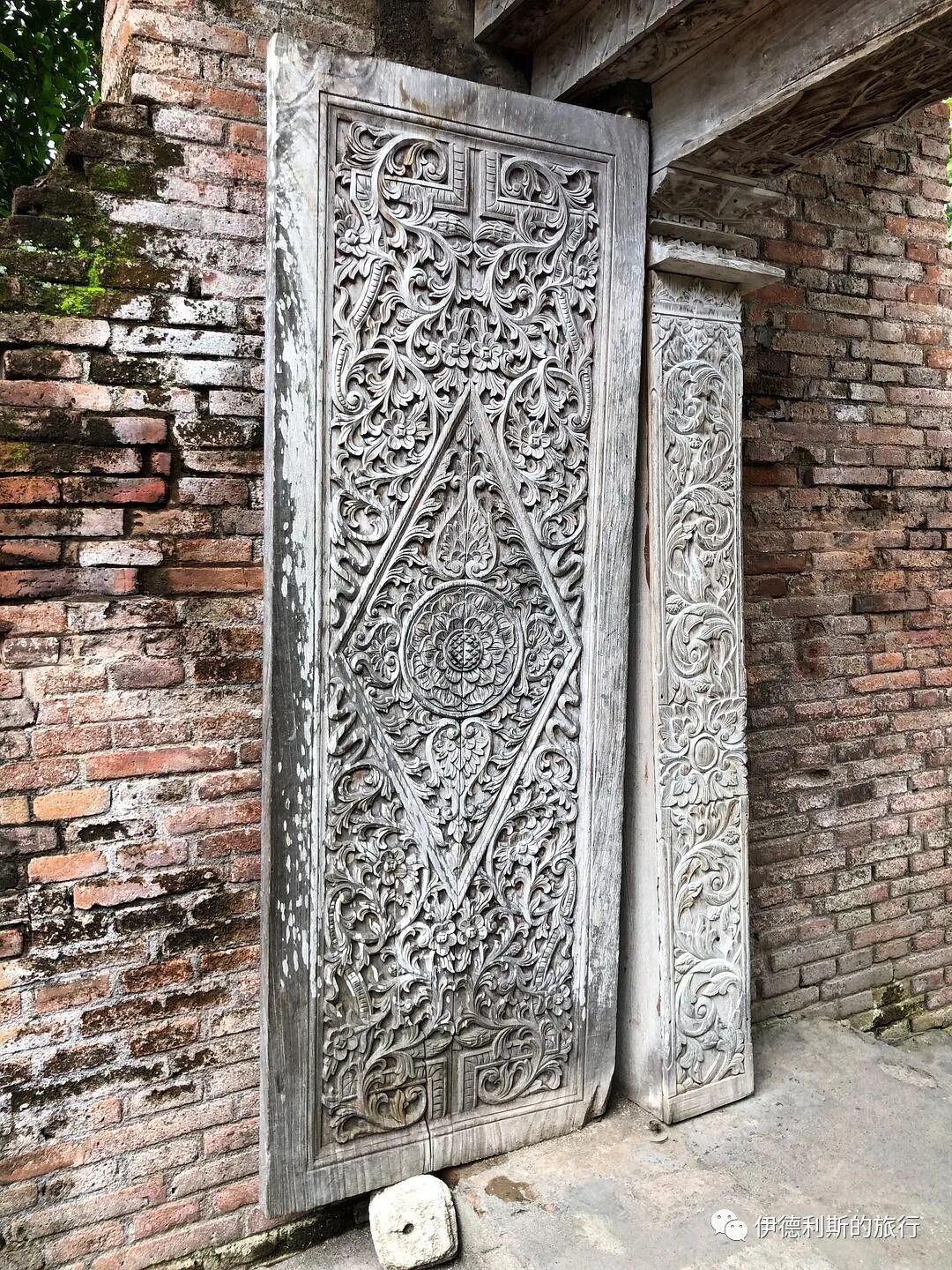
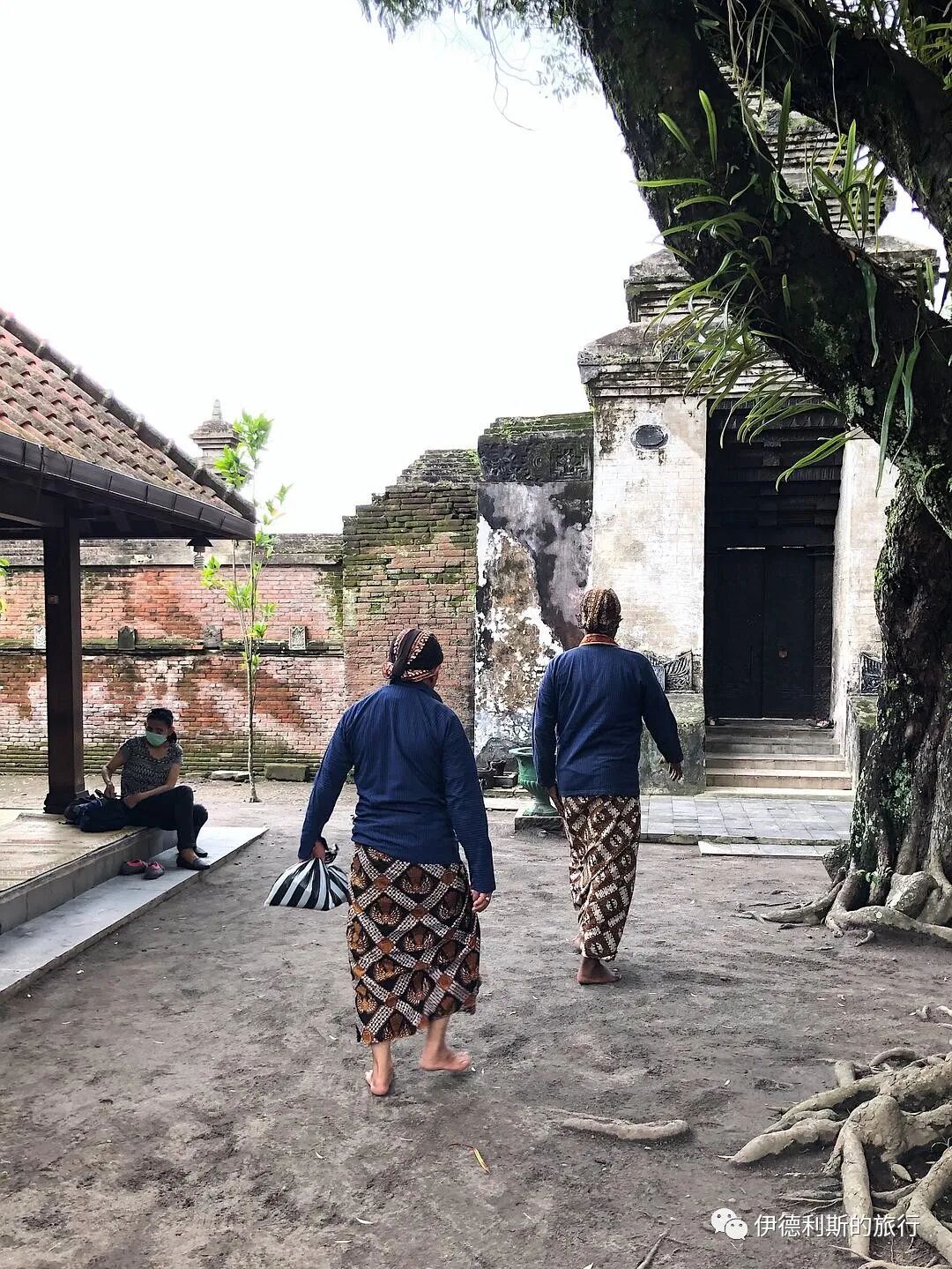
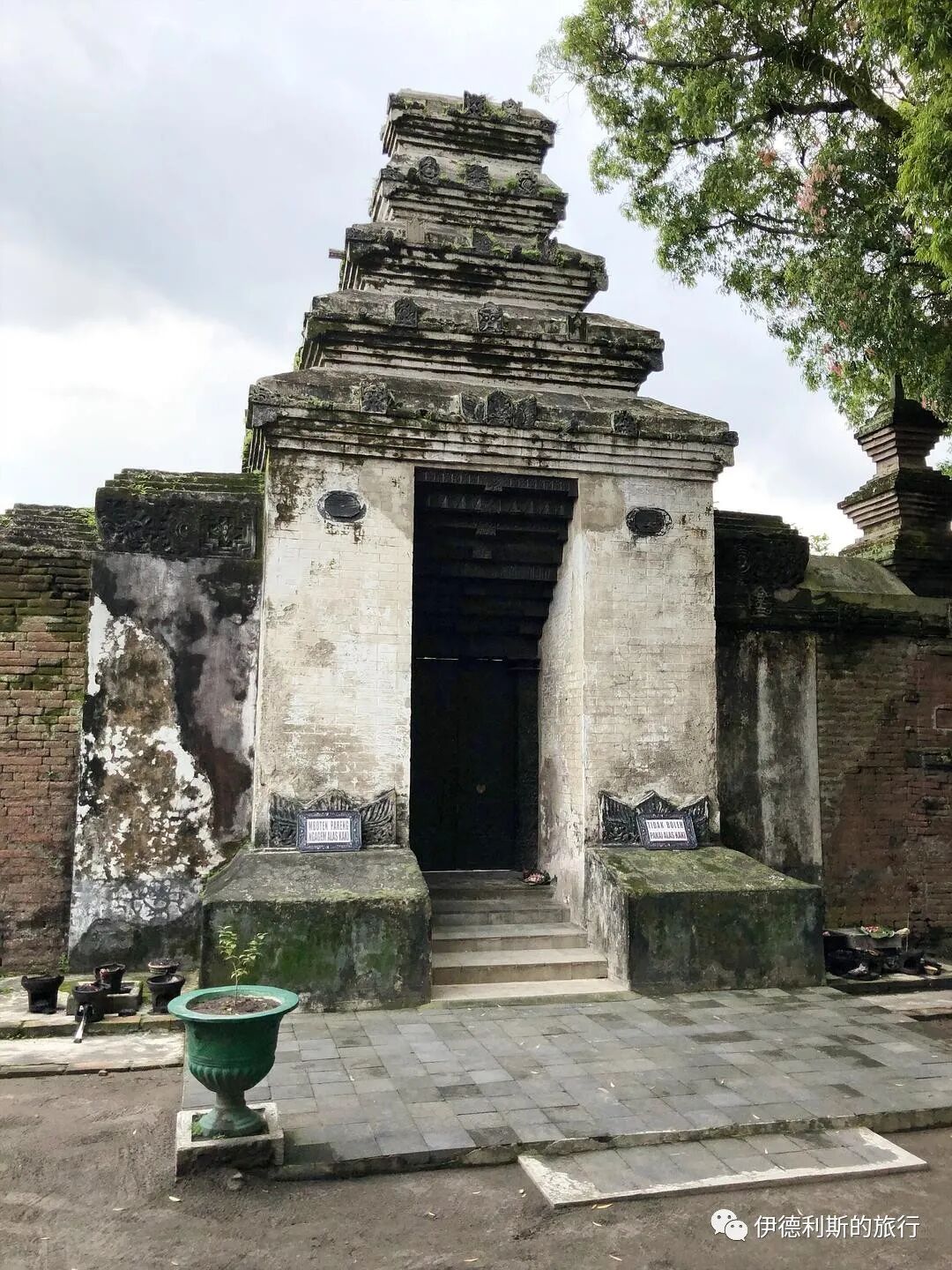
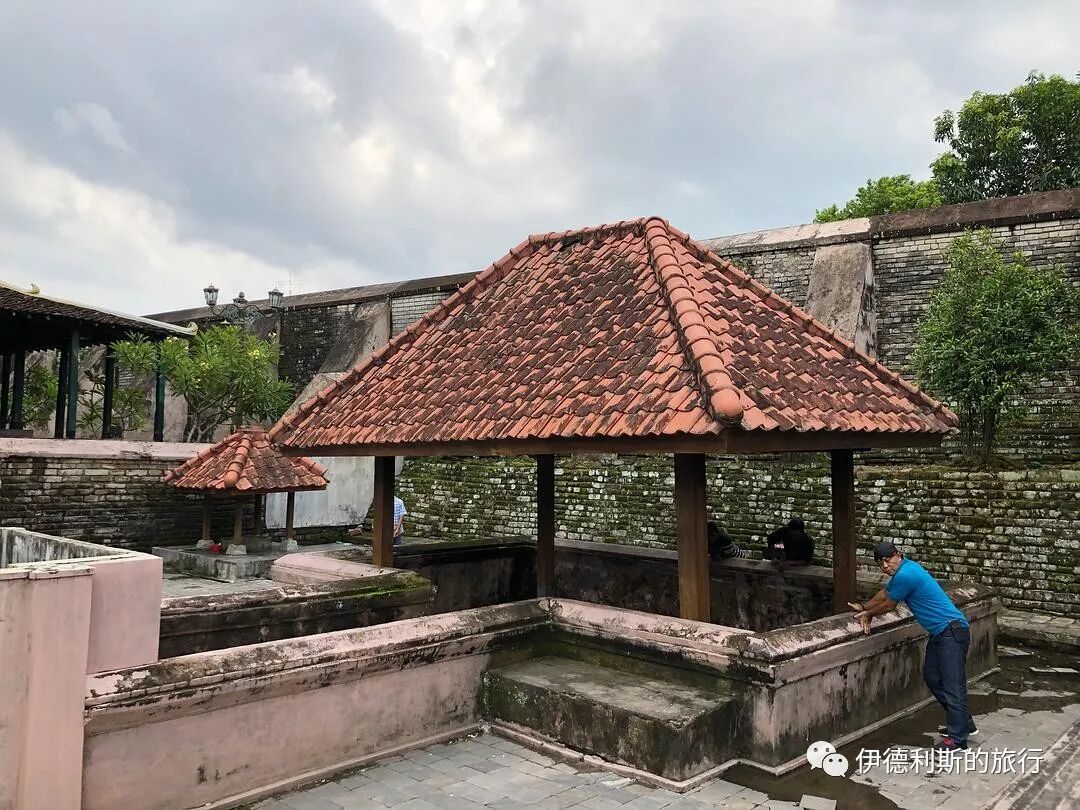
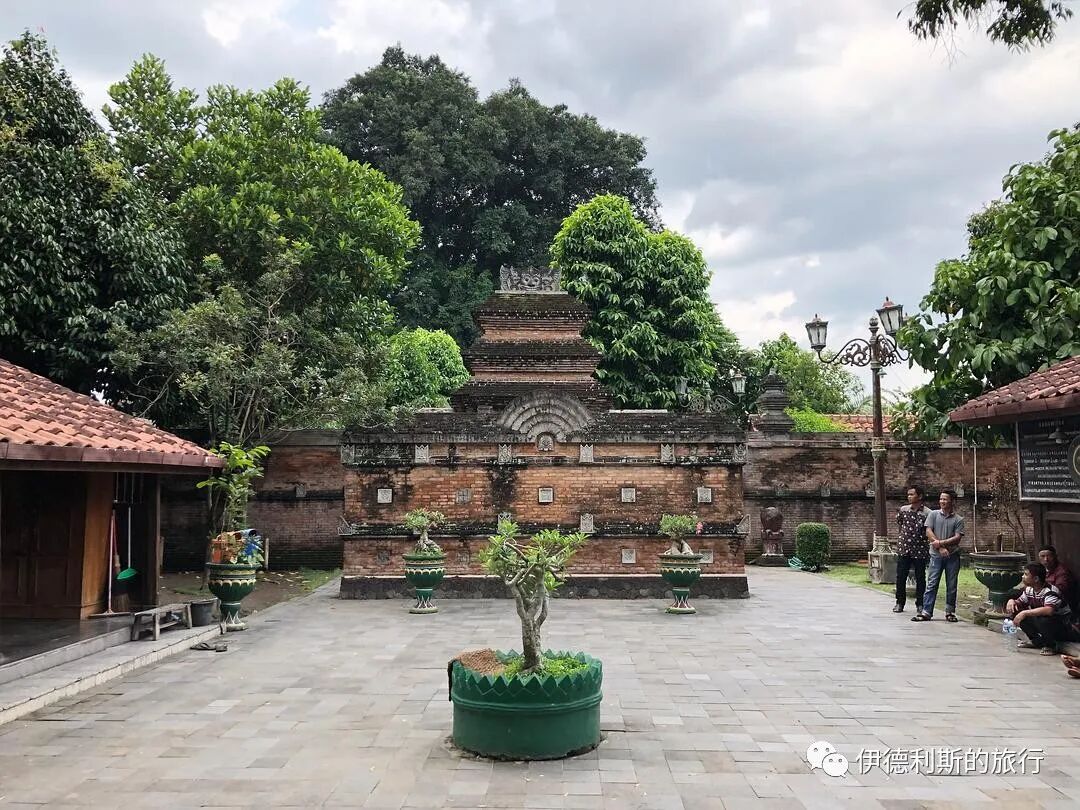
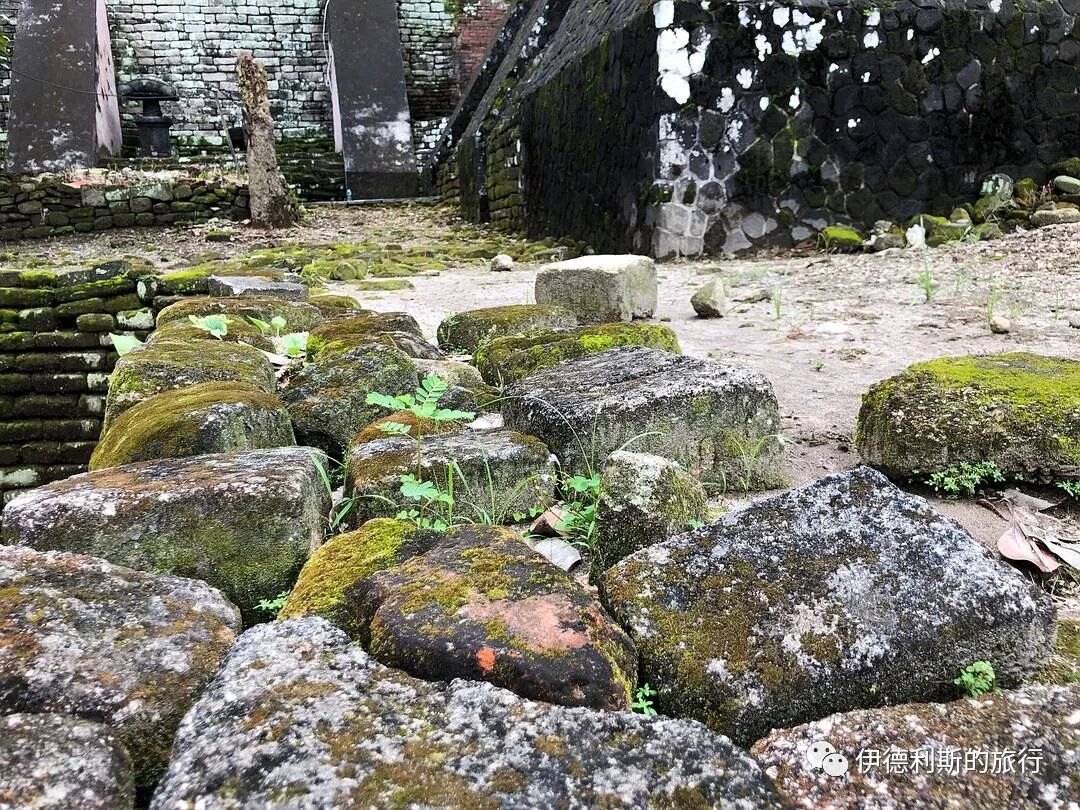
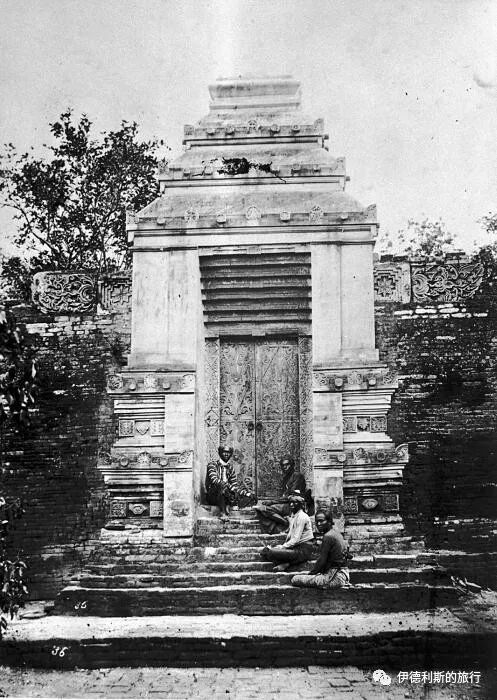
The tomb gate photographed by Kassian Cephas in 1890
Muslim Travel Guide Indonesia Banten: Sultanate Mosques, Coastal City and Islamic Heritage
Articles • yusuf908 posted the article • 0 comments • 172 views • 2026-05-23 23:06
Summary: Muslim Travel Guide Indonesia Banten: Sultanate Mosques, Coastal City and Islamic Heritage is presented here as a clear Muslim travel account, beginning with this scene: Banten is located at the westernmost tip of Java Island, facing Sumatra across the Sunda Strait. The account keeps its focus on Banten Mosques, Indonesia Muslim Travel, Sultanate History while preserving the names, places, food, and historical details from the Chinese source.
Banten is located at the westernmost tip of Java Island, facing Sumatra across the Sunda Strait. The local Bantenese people are a branch of the Sundanese. In the 16th century, the Banten Sultanate rose to become a powerful maritime trading nation in western Java, controlling the pepper trade in Southeast Asia. The Banten Sultanate reached its peak in the 17th century and had intense conflicts with the Dutch East India Company. After the 18th century, the Banten Sultanate gradually came under the control of the Dutch East India Company and was finally annexed into the Dutch East Indies in the 19th century.
Today, the ancient city of Banten still retains many ruins, and the Great Mosque of Banten (Masjid Agung Banten), built in the 16th century, remains a famous religious site. two palaces of the Banten Sultanate, a Dutch fortress, and several tombs of the Banten Sultans have been preserved. Due to time constraints, I could not visit all the historical sites this time, but I still hope to share the ruins of the Banten Sultanate that I saw with everyone.
Table of Contents
1. Traveling to the Ancient City of Banten
2. The Establishment of the Banten Sultanate
3. The Port City of Banten
4. Surosowan Palace—Sultan's Residence: 1552
5. Great Mosque of Banten: 1566
6. Banten Bazaar
7. Speelwijk Castle—Dutch Fortress: 1682
8. Kaibon Palace—Residence of the Last Queen Mother: Early 19th Century
1. Traveling to the Ancient City of Banten
The ancient city of Banten is located west of Jakarta, and it takes an hour and a half to drive there under normal traffic conditions. There are buses from Kalideres bus station in western Jakarta to the city of Serang, where Banten is located. Once you arrive at the station, just ask people for "Serang" and they will point you in the right direction. The bus I took picked up passengers along the way before getting on the highway, so it took three hours to reach Serang. Friends who want to go, please make sure to allow extra time. It was very interesting that before getting on the highway, vendors kept getting on the bus to sell various things, including fruits, snacks, ballpoint pens, electronic watches, and so on. There were also several groups of singers, making it feel like a moving bazaar.
After getting on the bus, be sure to tell the driver or conductor that you are going to the Great Mosque of Banten, which is Masjid Agung Banten. Note that the pronunciation of Banten is "Banden." Then the driver will drop you off at the intersection before entering Serang city. From there, you can take a minibus or call a Grab to the ancient city of Banten.
2. The Establishment of the Banten Sultanate
After the 15th century, the Hindu-Buddhist Majapahit empire declined and the Islamic Malacca Sultanate rose. Many Muslim merchants from Arabia and India settled on the north coast of Java, marking a new chapter in Javanese history.
Between the 15th and 16th centuries, many Sufi Muslims arrived in Java to spread the faith, with the Nine Saints (Wali Songo) being the most famous. Among the Nine Saints, Sunan Gunung Jati was the only one who used military force to spread Islam.
Sunan Gunung Jati was born Syarif Hidayatullah. His father came from the Hashim family in Egypt, the same family as the Prophet Muhammad, and his mother was a princess from the Hindu Sunda Kingdom in western Java. Although his grandfather was a Hindu king, Sunan Gunung Jati's mother and his uncle, Prince Walangsungsang, both converted to Islam.
In 1470, after spending years studying Islamic knowledge in places like Mecca and Baghdad in the Middle East, Sunan Gunung Jati returned to Java to help his uncle rule the port town of Cirebon in West Java. In 1479, Sunan Gunung Jati took over from his uncle to rule Cirebon, established the Cirebon Sultanate, and officially declared independence from the Sunda Kingdom in 1482.
Shortly before Sunan Gunung Jati established the Cirebon Sultanate, the Muslim port town of Demak in Central Java had already gained independence from the Majapahit Kingdom in 1475. These two Javanese Muslim states, which relied on maritime trade, joined forces and posed a major threat to the existing Hindu Sunda Kingdom. The Sunda Kingdom then went to Malacca to seek help from the Portuguese. In 1522, the Portuguese officially formed an alliance with the Sunda Kingdom to control the local pepper trade.
However, after the alliance was formed, the Portuguese failed to send troops to help in time. The joint Cirebon-Demak forces took the opportunity to capture Sunda Kalapa, an important port of the Sunda Kingdom, and renamed it Jakarta. After that, the Sunda Kingdom fought a five-year war alone against the Cirebon-Demak coalition. In 1527, the Sultan of Cirebon, Sunan Gunung Jati, sent his son Hasanudin to join the Demak Sultanate and capture Banten, another important port of the Sunda Kingdom. Sunan Gunung Jati then appointed his son as the Sultan of Banten. In 1552, the Banten Sultanate broke away from the Cirebon Sultanate and became an independent state.
The territory of the Banten Sultanate, drawn by Gunawan Kartapranata.
3. The Port City of Banten
Shortly after becoming the Sultan of Banten, Hasanudin began building a new port city at the mouth of the Banten River. By the mid-16th century, Banten had become an important port that could rival Malacca.
According to the Portuguese historian João de Barros, the city of Banten was located in the middle of the harbor, and a clear river ran through the city, allowing ships to sail into the town center. Inside the city, there was a brick fortress with a two-story wooden defensive structure. The city center had a square that served as a market in the morning and was used for military or artistic activities at noon. On the south side of the square was the Sultan's palace, known as the Surosowan Palace, with a tall building next to it used by the Sultan to receive his subjects. On the west side of the square was the Great Mosque, which is today's Great Mosque of Banten.
At that time, only local residents were allowed to live in the city. Foreigners lived near the harbor in the north, with foreign Muslims in the northeast and non-Muslim foreigners in the northwest.
In the late 16th century, the Banten Sultanate controlled the pepper trade in the Lampung region at the southern tip of Sumatra. It traded closely with Portugal, the Netherlands, Britain, France, and Denmark, becoming a major international trade hub in Southeast Asia. With help from the British, the Danes, and the Chinese, the Banten Sultanate traded with Persia, India, Siam, Vietnam, the Philippines, China, and Japan.
Banten City in 1724, drawn by François Valentijn.
4. Surosowan Palace—Sultan's Residence: 1552
Surosowan Palace was built in 1552 by the Banten Sultan Maulana Hasanuddin and later served as the residence for successive sultans. A Dutchman designed the palace, which is why it features the corner bastion structure of a Dutch fort.
In 1808, to defend against a British invasion of Java, the Dutch ordered the construction of the Great Post Road across the island. They also ordered the Banten Sultan to move his capital and provide labor to build a port for the Dutch fleet. The Sultan refused, so the Dutch destroyed Surosowan Palace and imprisoned the entire royal family. After the British invaded Java in 1813, they forced the last Sultan to abdicate, marking the end of the Banten Sultanate. After the Anglo-Dutch Treaty of 1814 was signed, Britain returned the Banten region to the Dutch, and Banten was officially incorporated into the Dutch East Indies.
Today, the ruins of Surosowan Palace include two-meter-high walls made of red stone and coral. The most prominent site inside is the princess's bathing pool, which looks similar to the existing pools at the Sultan's palace in Yogyakarta.
5. Great Mosque of Banten: 1566
The Great Mosque of Banten (Masjid Agung Banten) is a famous Javanese-style mosque, built in 1566 by order of Sultan Maulana Hasanuddin. The women's hall (Pawestren) was added in the 1580s. In 1632, a Chinese man named Cek-ban-cut designed and built the minaret (bangker), and in the 17th century, a Dutch convert to Islam named Hendrik Lucaasz Cardeel designed and built the religious school (tiyamah).
As a typical Javanese-style mosque, the Great Mosque of Banten has a large porch-style shelter (serambi) in front of the main prayer hall. Inside the main hall, four main wooden pillars (saka guru) support a five-tiered roof. The top three tiers look more like a Chinese Buddhist pagoda than a traditional Javanese roof. Historical records suggest the original roof only had three tiers, and the top two were likely added between the 18th and 19th centuries. The mosque's minaret is 24 meters high with a base diameter of 10 meters, blending Mughal style with the local Javanese Hindu/Buddhist mosque (Candi) style.
The Great Mosque of Banten, drawn by Josias Cornelis Rappard in the 1880s.
Right next to the mosque is the family cemetery of the Banten Sultanate. The first Sultan, Maulana Hasanuddin (reigned 1552–1570), the sixth Sultan, Ageng Tirtayasa (reigned 1651–1683), and the seventh Sultan, Abu Nashar Abdul Qahar (reigned 1683–1687), are all buried there.
The reign of the sixth Sultan, Ageng Tirtayasa, from 1651 to 1682, is known as the golden age of the Banten Sultanate. During this time, the Banten Sultanate built a powerful navy with the help of European shipyards and attracted many Europeans to work in Banten. To ensure safe travel, the Banten Sultanate sent a fleet in 1661 to conquer the Tanjungpura Kingdom in western Kalimantan, attempting to break the blockade by the Dutch East India Company (VOC).
6. Banten Bazaar
As a holy site, the Great Mosque of Banten attracts a constant stream of Muslims every day, and a very lively bazaar has formed around it. At the bazaar, I drank an iced beverage called Es Campur made with coconut milk, red sugar syrup, coconut meat, and fruit jelly, and I also had some simple street-style boiled noodles (Mie Rebus). The bazaar is full of people selling sapodilla (Manilkara zapota), which is sweet and delicious. Sapodilla is native to the Caribbean in Central America. It was brought to the Philippines by Spanish colonists and later widely planted across Southeast Asia, where it is called sawo in Indonesia.
I bought two hats at the Banten bazaar. One of them is the black velvet cap (peci), which is the most common type in Indonesia. The peci is also called a songkok (Songkok). Indonesian and Malay Muslim men usually wear this hat for important ceremonies like weddings, funerals, or Eid al-Fitr. The word peci likely comes from the Dutch word petje, which means small hat.
The peci may have originated from the felt fez hat promoted by the Ottoman Empire starting in 1826. It soon spread to the Indonesian and Malay regions, gradually taking on the form of the modern songkok. Many Indonesian nationalist activists wore the songkok in the early 20th century, with Indonesia's first president, Sukarno, being the most famous among them. After Sukarno made the peci part of the official Indonesian presidential attire, black velvet became the most common style of peci in Indonesia.
The second hat is made of woven bamboo. Besides the round one I bought, there are also boat-shaped ones similar to the songkok, which feel perfect for summer.
Another hat shop.
7. Speelwijk Castle—Dutch Fortress: 1682
Speelwijk Castle is a fortress built by the Dutch East India Company on the northwest coast of Banten. It was first built in 1682 and expanded twice, in 1685 and 1731. This castle was mainly used to control the activities of the Banten Sultanate and to protect Dutch merchant ships from pirate attacks.
Starting in the 16th century, the Dutch began competing with Portugal and England for the pepper trade in Java. In 1602, the Dutch established the famous Dutch East India Company, and the following year they set up a permanent trading post in Banten. In 1619, the Dutch East India Company captured Jakarta, which was controlled by the Banten Sultanate, and renamed it Batavia to serve as their headquarters. By the late 17th century, the Dutch East India Company had become the world's wealthiest private company and had completely defeated the Portuguese on Java.
In 1680, the Dutch East India Company incited a civil war within the Banten Sultanate, took the opportunity to drive British merchants out of Banten, and gained a monopoly on the surrounding pepper trade. After 1682, the Banten Sultanate gradually came under the control of the Dutch East India Company, and even the succession of the Sultan required approval from the company. Speelwijk Castle is the best witness to this historical period. After 1752, the Banten Sultanate officially became a vassal state of the Dutch East India Company.
Speelwijk Castle was eventually abandoned due to a plague in 1811. Today, there are many Dutch graves in front of the castle, including those of castle officer Hugo Pieter Faure, who died in 1763, and the castle tax collector and purchaser Kopman en Fiscaal Deserbezeting, who died in 1769.
Old photo of the Dutch cemetery
8. Kaibon Palace—Residence of the Last Queen Mother: Early 19th Century
Kaibon Palace was the last building constructed by the Banten Sultanate. Built in the early 19th century, it served as the palace for Ratu Aisyah, the mother of the final sultan, Muhamad Syafiuddin.
After the British invaded Java in 1813, they ordered the final Banten sultan, Muhamad Syafiuddin, to abdicate, marking the end of the Banten Sultanate. After the Anglo-Dutch Treaty of 1814 was signed, Britain returned the Banten region to the Dutch, and Banten was officially incorporated into the Dutch East Indies. In 1832, the Dutch destroyed Kaibon Palace, leaving it in complete ruins.
The palace still preserves its traditional Javanese Paduraksa-style gate. The Paduraksa gate originated from the ancient Hindu Gopuram gate. It was widely used in ancient Javanese Hindu and Buddhist temples from the 8th to 9th centuries and was later adopted by Islamic sultanates for their mosques, palaces, and cemeteries after the 15th century.
Part of the palace still retains the Queen Mother's bedroom, which featured a cooling system powered by flowing water.
Photographed by Georg Friedrich Johannes between 1915 and 1926
Photographed in 1933 view all
Summary: Muslim Travel Guide Indonesia Banten: Sultanate Mosques, Coastal City and Islamic Heritage is presented here as a clear Muslim travel account, beginning with this scene: Banten is located at the westernmost tip of Java Island, facing Sumatra across the Sunda Strait. The account keeps its focus on Banten Mosques, Indonesia Muslim Travel, Sultanate History while preserving the names, places, food, and historical details from the Chinese source.
Banten is located at the westernmost tip of Java Island, facing Sumatra across the Sunda Strait. The local Bantenese people are a branch of the Sundanese. In the 16th century, the Banten Sultanate rose to become a powerful maritime trading nation in western Java, controlling the pepper trade in Southeast Asia. The Banten Sultanate reached its peak in the 17th century and had intense conflicts with the Dutch East India Company. After the 18th century, the Banten Sultanate gradually came under the control of the Dutch East India Company and was finally annexed into the Dutch East Indies in the 19th century.
Today, the ancient city of Banten still retains many ruins, and the Great Mosque of Banten (Masjid Agung Banten), built in the 16th century, remains a famous religious site. two palaces of the Banten Sultanate, a Dutch fortress, and several tombs of the Banten Sultans have been preserved. Due to time constraints, I could not visit all the historical sites this time, but I still hope to share the ruins of the Banten Sultanate that I saw with everyone.
Table of Contents
1. Traveling to the Ancient City of Banten
2. The Establishment of the Banten Sultanate
3. The Port City of Banten
4. Surosowan Palace—Sultan's Residence: 1552
5. Great Mosque of Banten: 1566
6. Banten Bazaar
7. Speelwijk Castle—Dutch Fortress: 1682
8. Kaibon Palace—Residence of the Last Queen Mother: Early 19th Century
1. Traveling to the Ancient City of Banten
The ancient city of Banten is located west of Jakarta, and it takes an hour and a half to drive there under normal traffic conditions. There are buses from Kalideres bus station in western Jakarta to the city of Serang, where Banten is located. Once you arrive at the station, just ask people for "Serang" and they will point you in the right direction. The bus I took picked up passengers along the way before getting on the highway, so it took three hours to reach Serang. Friends who want to go, please make sure to allow extra time. It was very interesting that before getting on the highway, vendors kept getting on the bus to sell various things, including fruits, snacks, ballpoint pens, electronic watches, and so on. There were also several groups of singers, making it feel like a moving bazaar.
After getting on the bus, be sure to tell the driver or conductor that you are going to the Great Mosque of Banten, which is Masjid Agung Banten. Note that the pronunciation of Banten is "Banden." Then the driver will drop you off at the intersection before entering Serang city. From there, you can take a minibus or call a Grab to the ancient city of Banten.
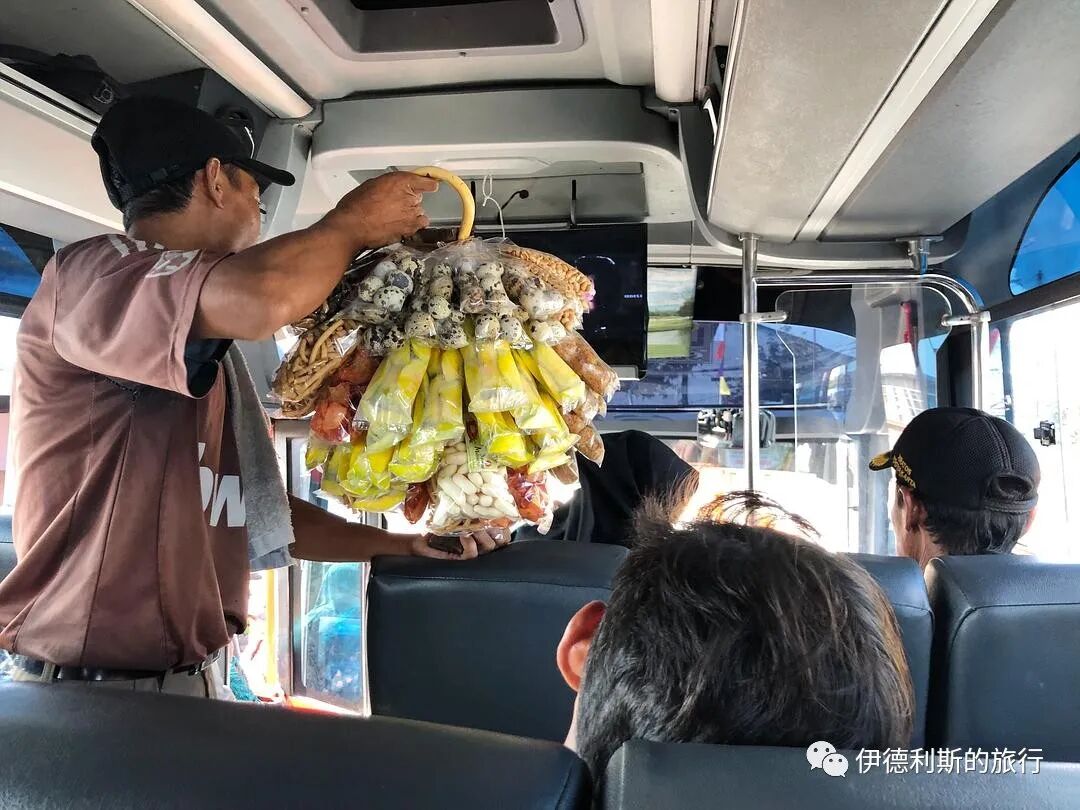
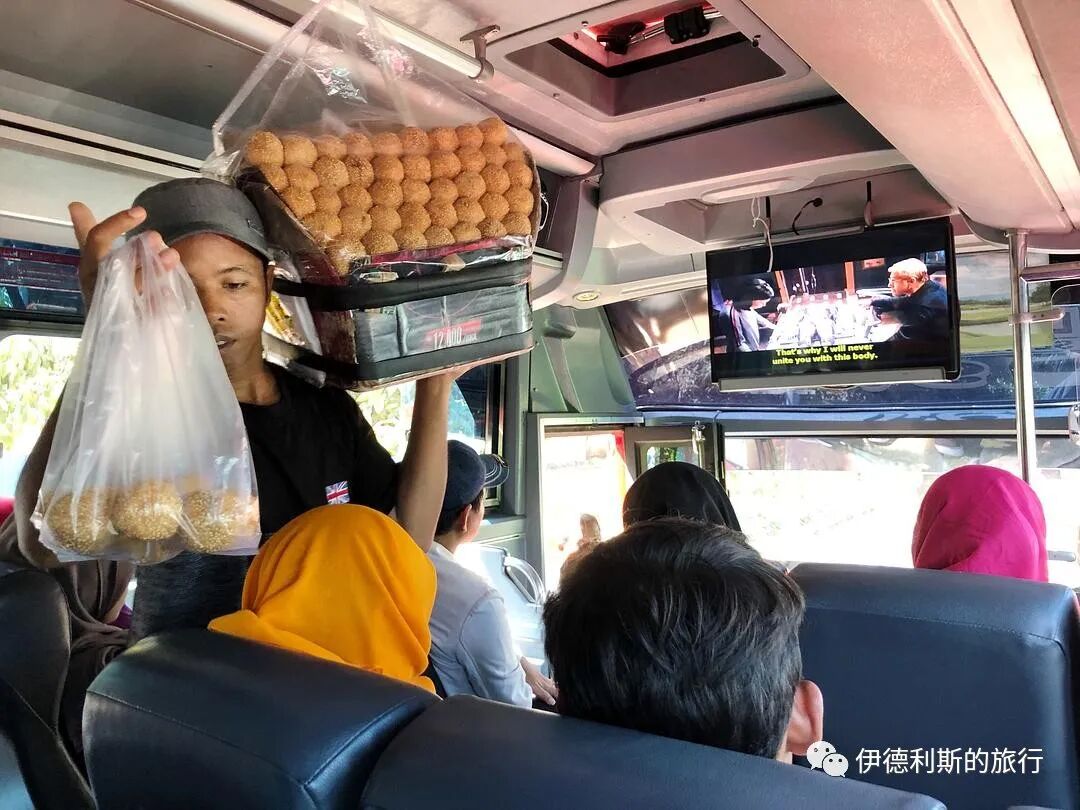
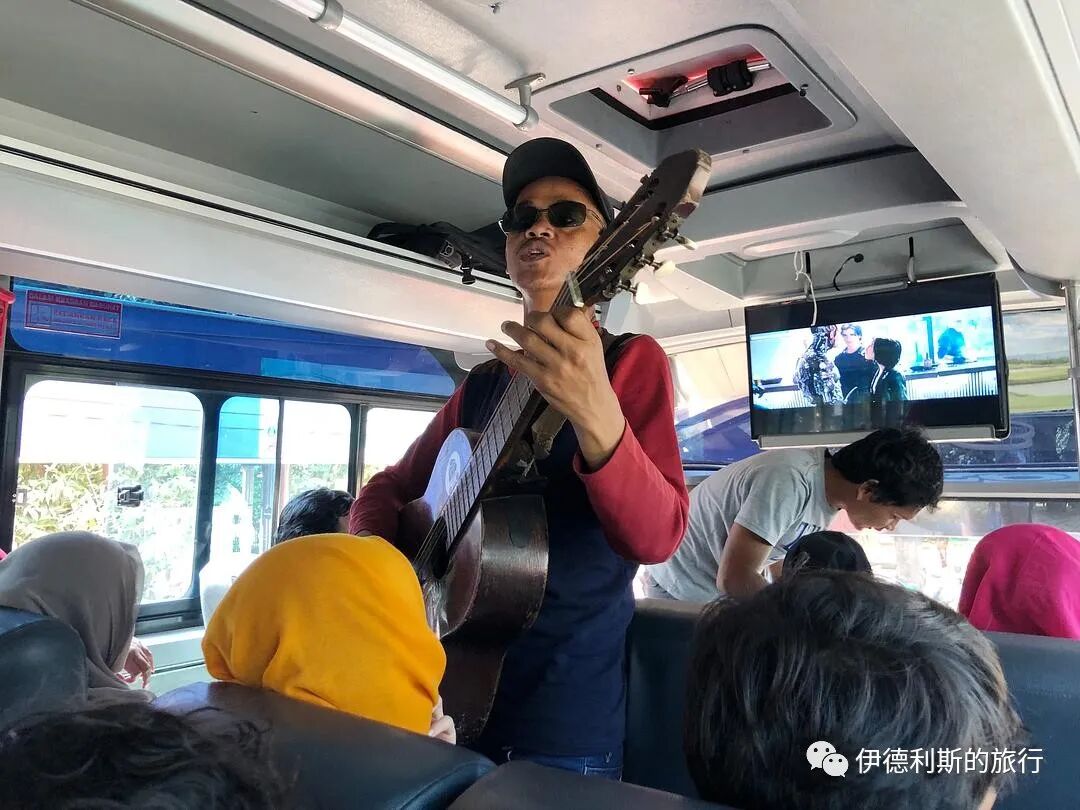
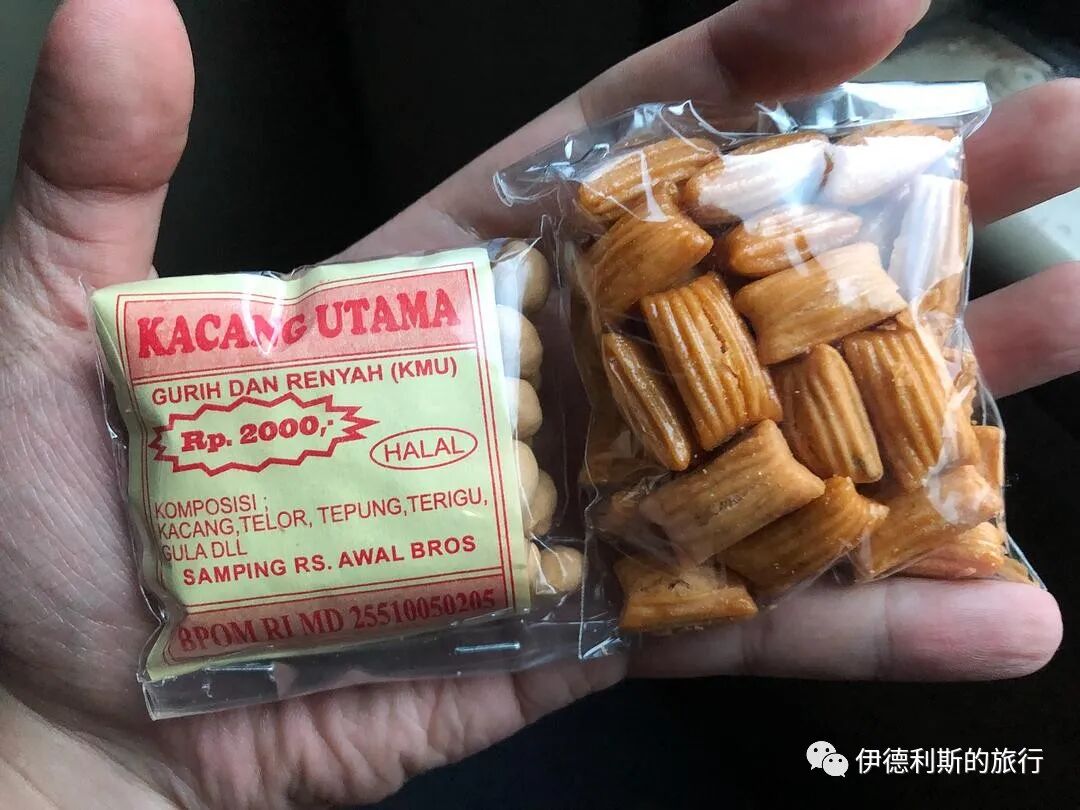
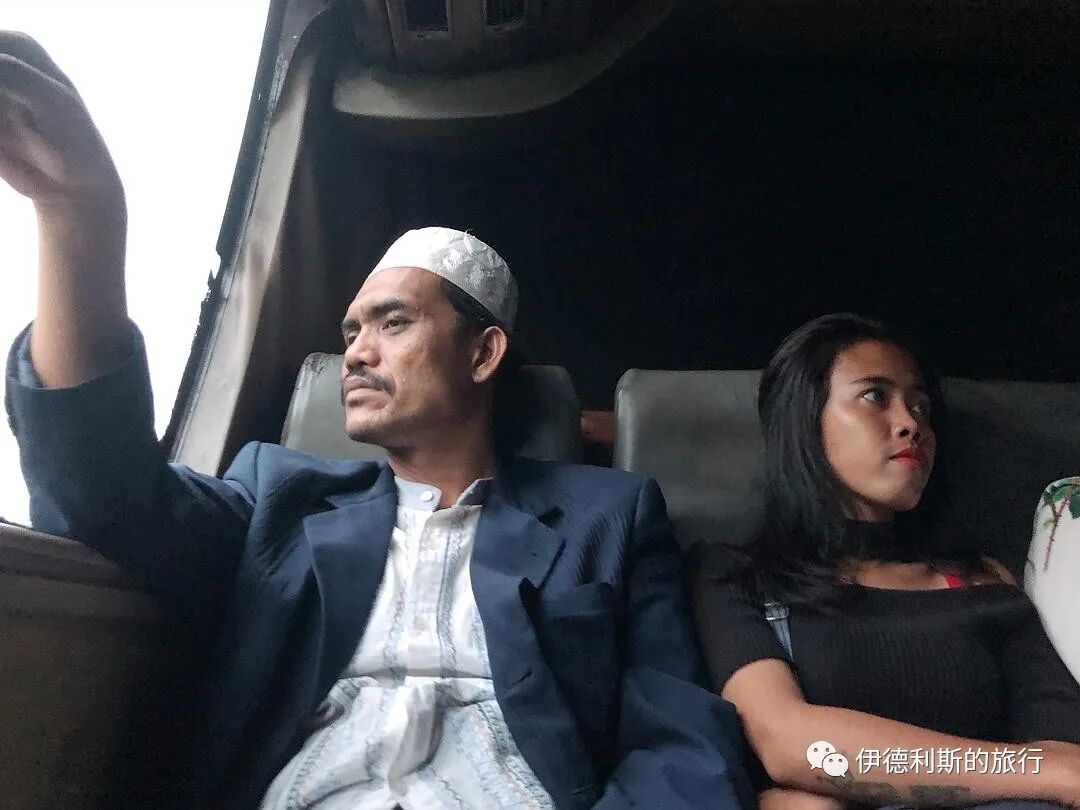
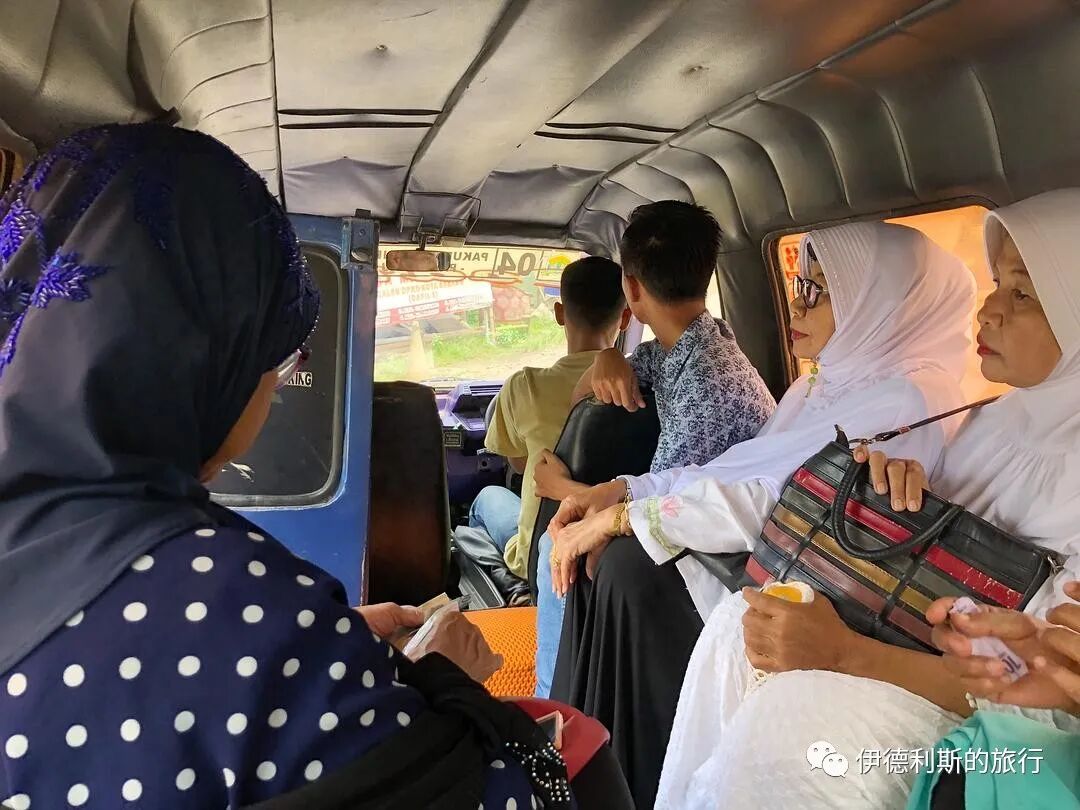
2. The Establishment of the Banten Sultanate
After the 15th century, the Hindu-Buddhist Majapahit empire declined and the Islamic Malacca Sultanate rose. Many Muslim merchants from Arabia and India settled on the north coast of Java, marking a new chapter in Javanese history.
Between the 15th and 16th centuries, many Sufi Muslims arrived in Java to spread the faith, with the Nine Saints (Wali Songo) being the most famous. Among the Nine Saints, Sunan Gunung Jati was the only one who used military force to spread Islam.
Sunan Gunung Jati was born Syarif Hidayatullah. His father came from the Hashim family in Egypt, the same family as the Prophet Muhammad, and his mother was a princess from the Hindu Sunda Kingdom in western Java. Although his grandfather was a Hindu king, Sunan Gunung Jati's mother and his uncle, Prince Walangsungsang, both converted to Islam.
In 1470, after spending years studying Islamic knowledge in places like Mecca and Baghdad in the Middle East, Sunan Gunung Jati returned to Java to help his uncle rule the port town of Cirebon in West Java. In 1479, Sunan Gunung Jati took over from his uncle to rule Cirebon, established the Cirebon Sultanate, and officially declared independence from the Sunda Kingdom in 1482.
Shortly before Sunan Gunung Jati established the Cirebon Sultanate, the Muslim port town of Demak in Central Java had already gained independence from the Majapahit Kingdom in 1475. These two Javanese Muslim states, which relied on maritime trade, joined forces and posed a major threat to the existing Hindu Sunda Kingdom. The Sunda Kingdom then went to Malacca to seek help from the Portuguese. In 1522, the Portuguese officially formed an alliance with the Sunda Kingdom to control the local pepper trade.
However, after the alliance was formed, the Portuguese failed to send troops to help in time. The joint Cirebon-Demak forces took the opportunity to capture Sunda Kalapa, an important port of the Sunda Kingdom, and renamed it Jakarta. After that, the Sunda Kingdom fought a five-year war alone against the Cirebon-Demak coalition. In 1527, the Sultan of Cirebon, Sunan Gunung Jati, sent his son Hasanudin to join the Demak Sultanate and capture Banten, another important port of the Sunda Kingdom. Sunan Gunung Jati then appointed his son as the Sultan of Banten. In 1552, the Banten Sultanate broke away from the Cirebon Sultanate and became an independent state.
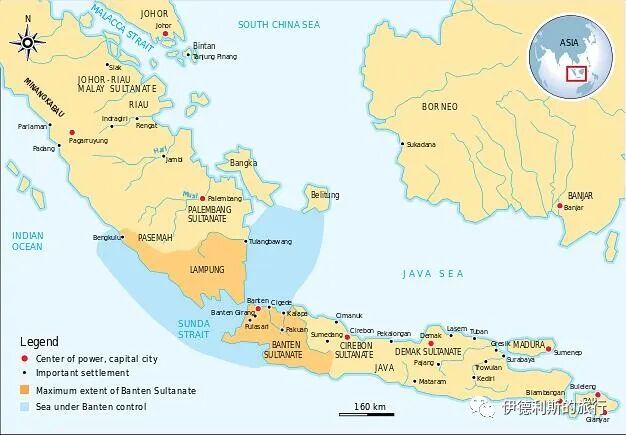
The territory of the Banten Sultanate, drawn by Gunawan Kartapranata.
3. The Port City of Banten
Shortly after becoming the Sultan of Banten, Hasanudin began building a new port city at the mouth of the Banten River. By the mid-16th century, Banten had become an important port that could rival Malacca.
According to the Portuguese historian João de Barros, the city of Banten was located in the middle of the harbor, and a clear river ran through the city, allowing ships to sail into the town center. Inside the city, there was a brick fortress with a two-story wooden defensive structure. The city center had a square that served as a market in the morning and was used for military or artistic activities at noon. On the south side of the square was the Sultan's palace, known as the Surosowan Palace, with a tall building next to it used by the Sultan to receive his subjects. On the west side of the square was the Great Mosque, which is today's Great Mosque of Banten.
At that time, only local residents were allowed to live in the city. Foreigners lived near the harbor in the north, with foreign Muslims in the northeast and non-Muslim foreigners in the northwest.
In the late 16th century, the Banten Sultanate controlled the pepper trade in the Lampung region at the southern tip of Sumatra. It traded closely with Portugal, the Netherlands, Britain, France, and Denmark, becoming a major international trade hub in Southeast Asia. With help from the British, the Danes, and the Chinese, the Banten Sultanate traded with Persia, India, Siam, Vietnam, the Philippines, China, and Japan.
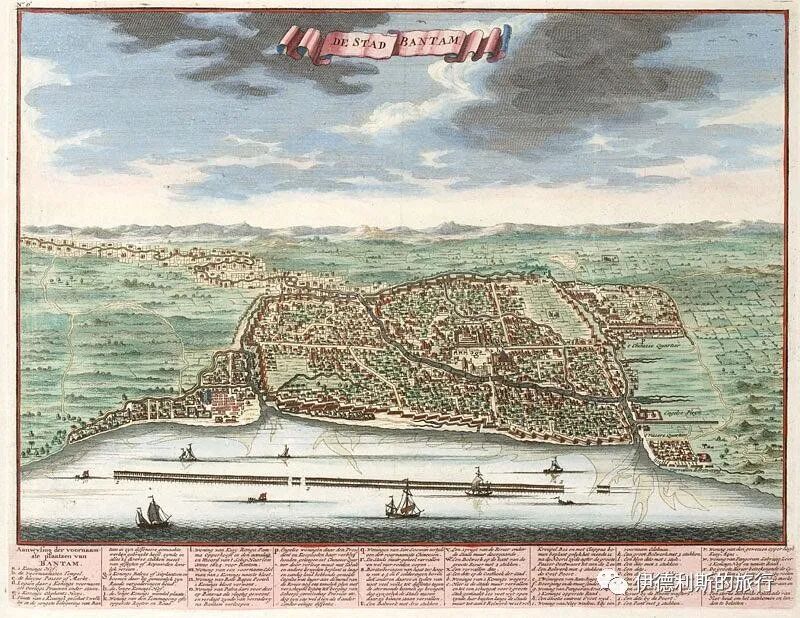
Banten City in 1724, drawn by François Valentijn.
4. Surosowan Palace—Sultan's Residence: 1552
Surosowan Palace was built in 1552 by the Banten Sultan Maulana Hasanuddin and later served as the residence for successive sultans. A Dutchman designed the palace, which is why it features the corner bastion structure of a Dutch fort.
In 1808, to defend against a British invasion of Java, the Dutch ordered the construction of the Great Post Road across the island. They also ordered the Banten Sultan to move his capital and provide labor to build a port for the Dutch fleet. The Sultan refused, so the Dutch destroyed Surosowan Palace and imprisoned the entire royal family. After the British invaded Java in 1813, they forced the last Sultan to abdicate, marking the end of the Banten Sultanate. After the Anglo-Dutch Treaty of 1814 was signed, Britain returned the Banten region to the Dutch, and Banten was officially incorporated into the Dutch East Indies.
Today, the ruins of Surosowan Palace include two-meter-high walls made of red stone and coral. The most prominent site inside is the princess's bathing pool, which looks similar to the existing pools at the Sultan's palace in Yogyakarta.
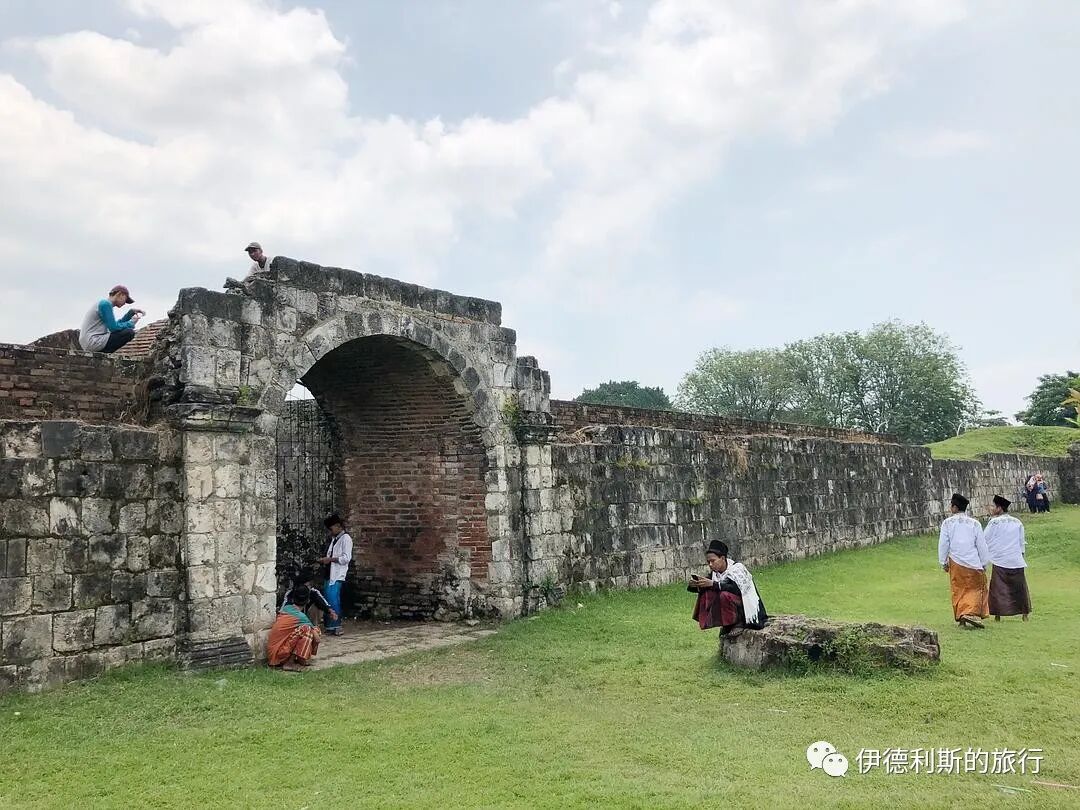
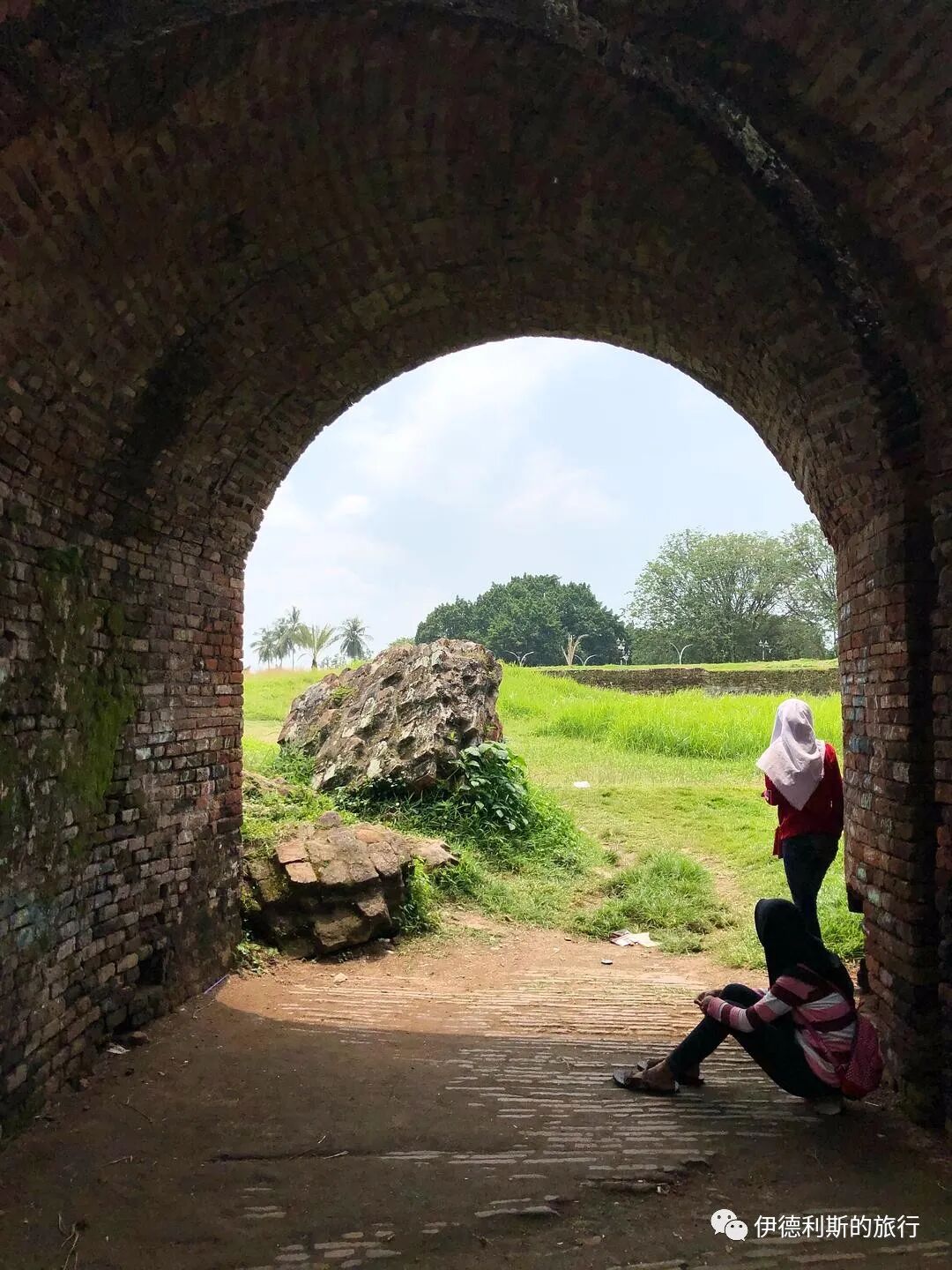
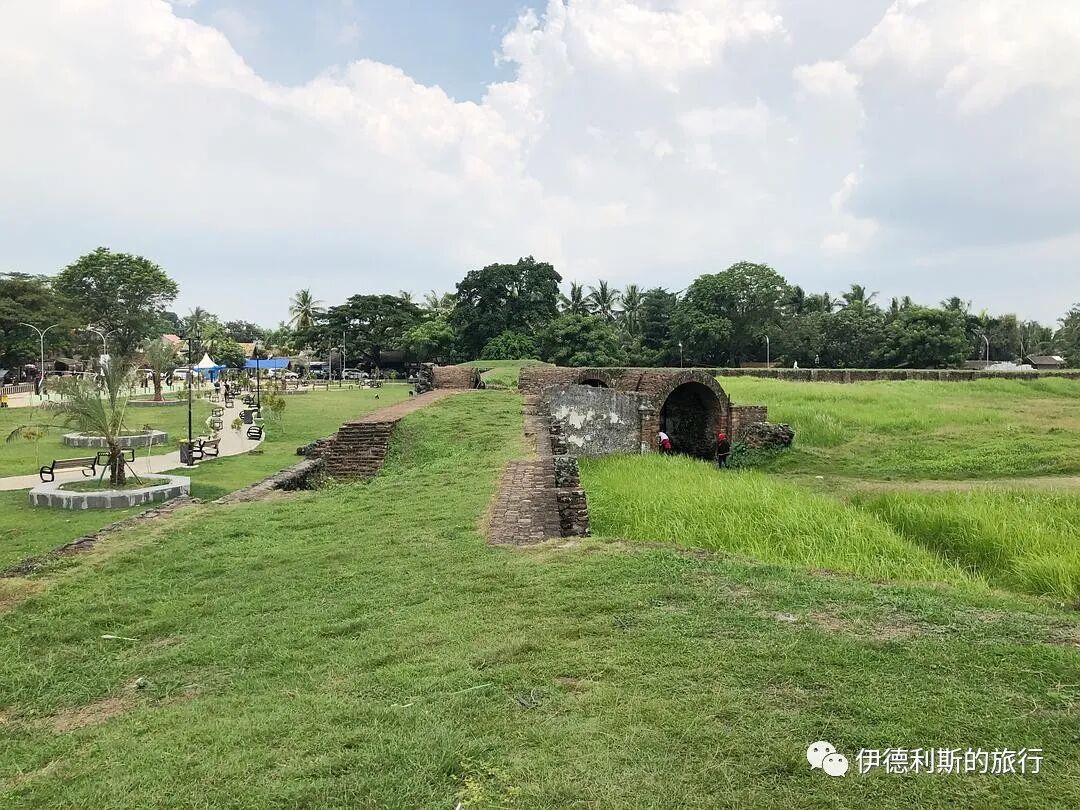
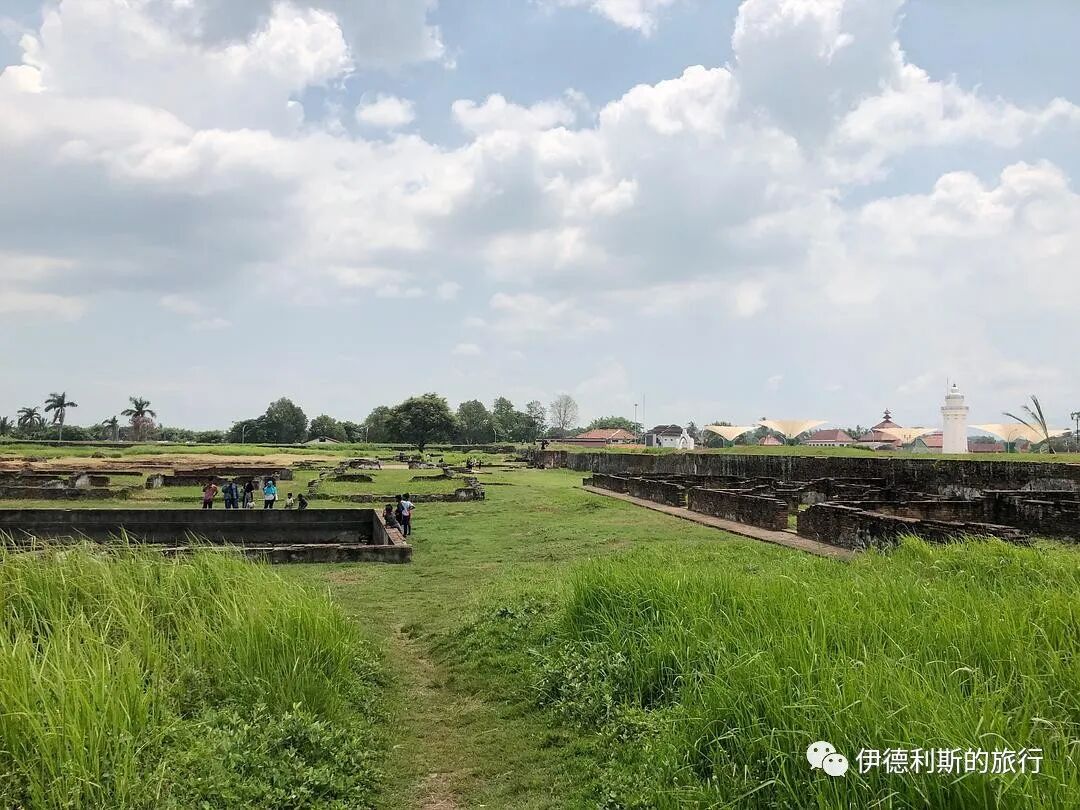
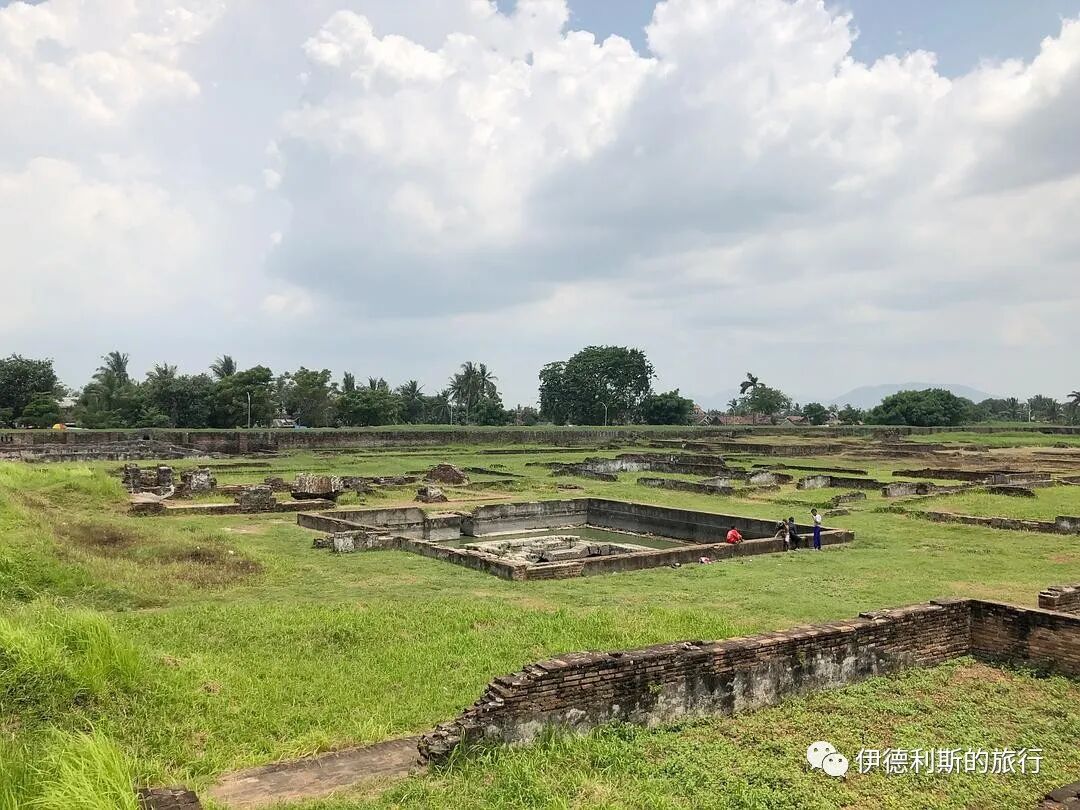
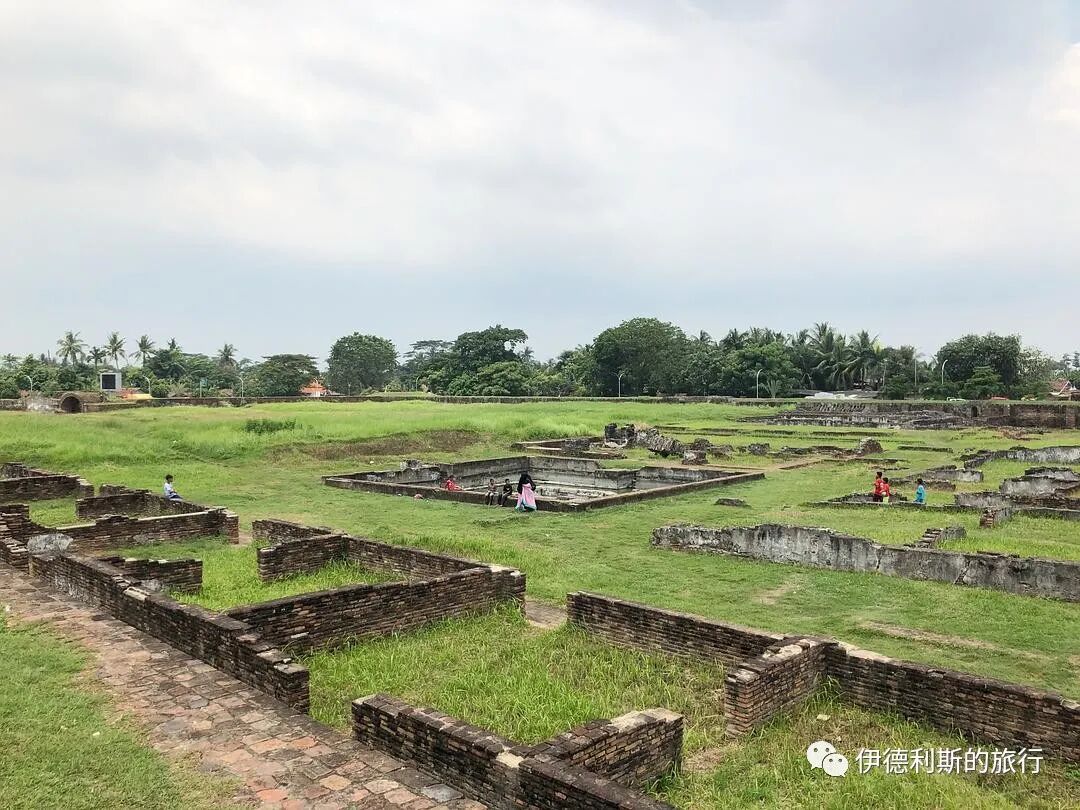
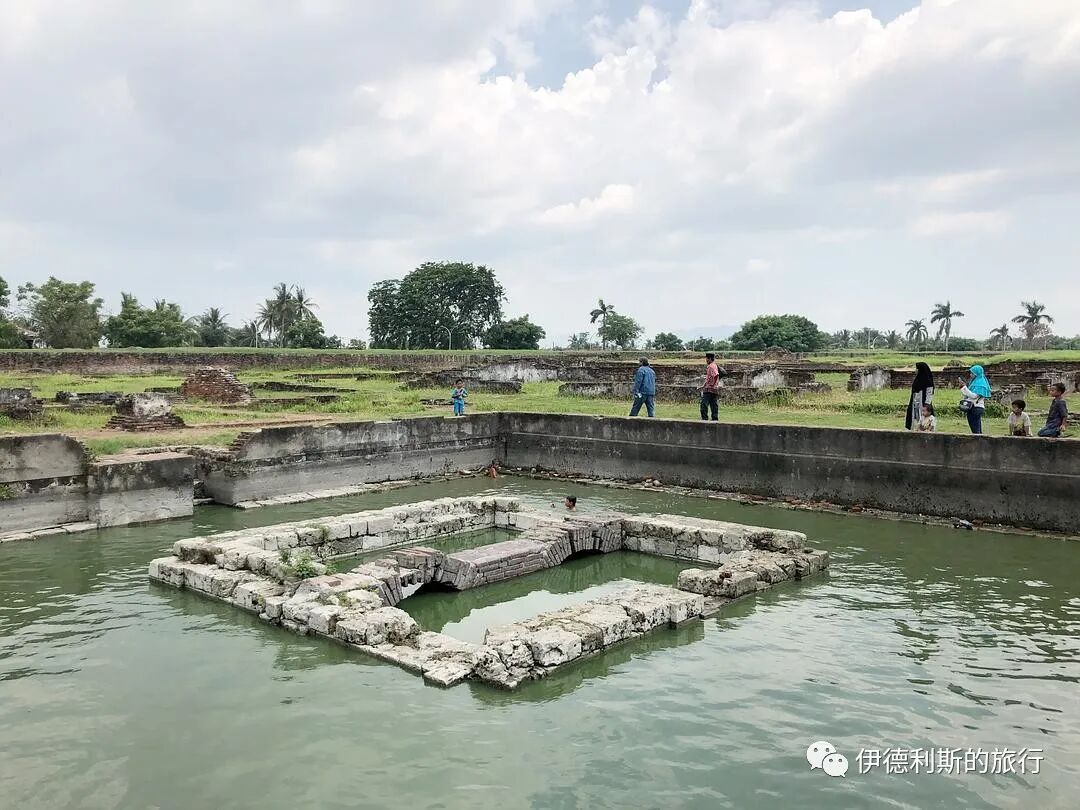
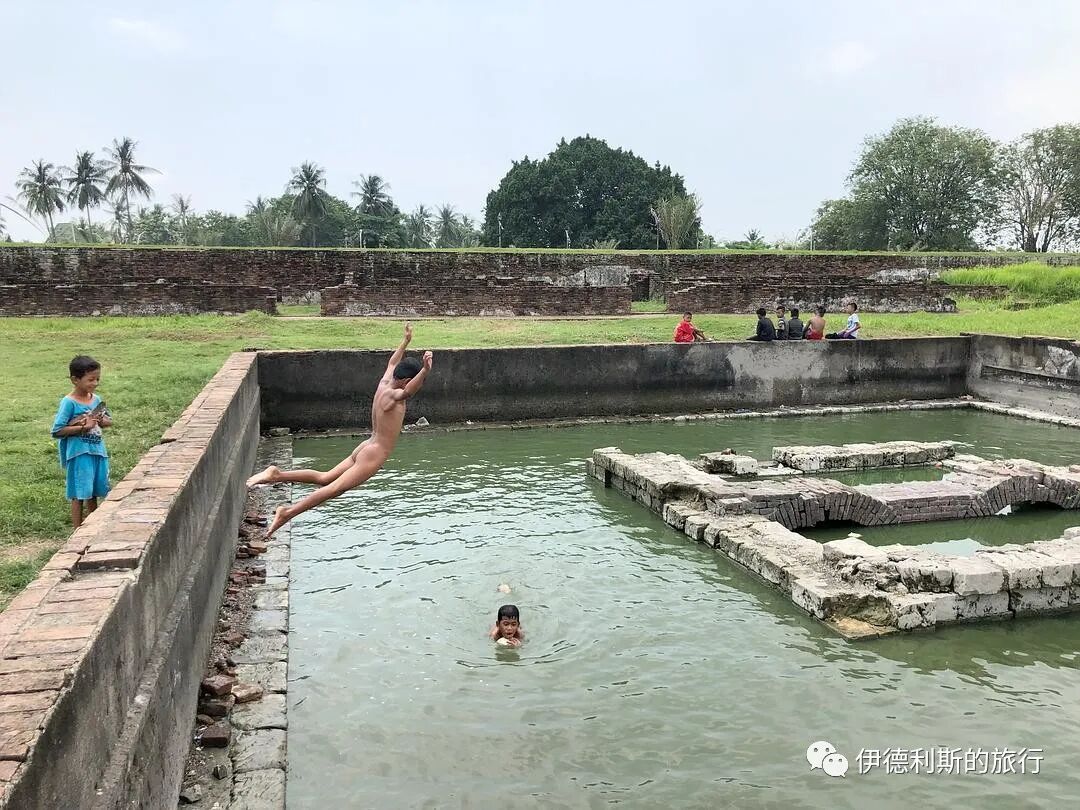
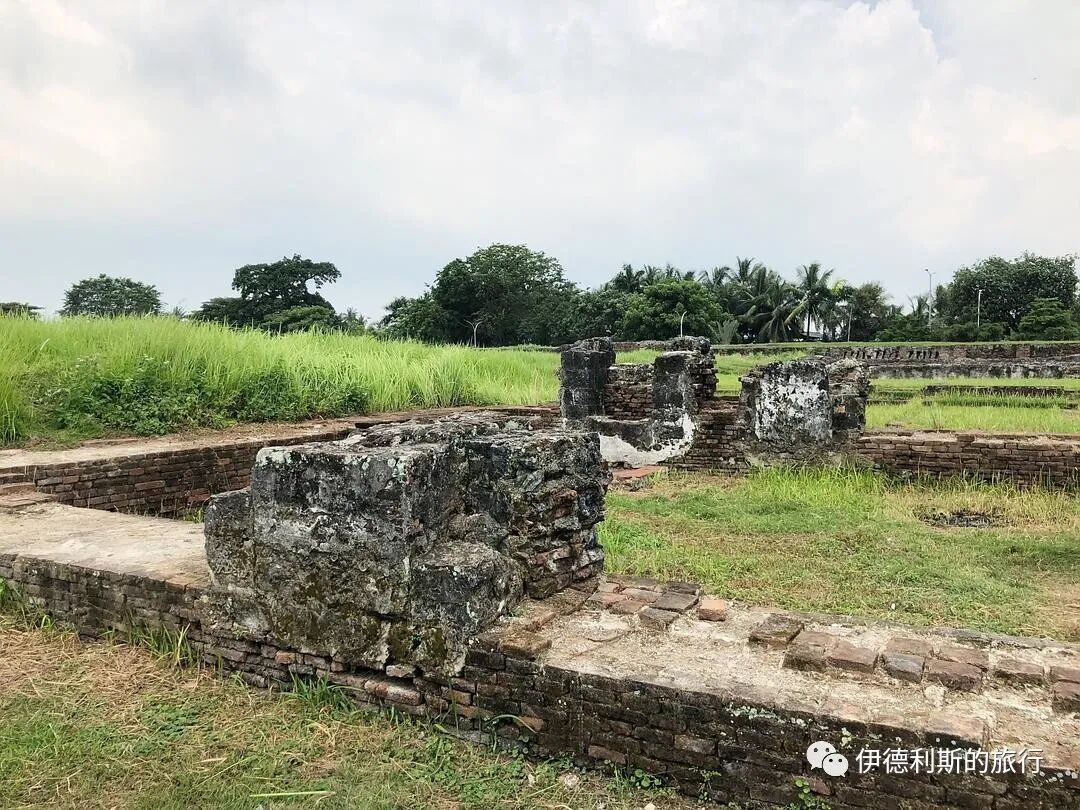
5. Great Mosque of Banten: 1566
The Great Mosque of Banten (Masjid Agung Banten) is a famous Javanese-style mosque, built in 1566 by order of Sultan Maulana Hasanuddin. The women's hall (Pawestren) was added in the 1580s. In 1632, a Chinese man named Cek-ban-cut designed and built the minaret (bangker), and in the 17th century, a Dutch convert to Islam named Hendrik Lucaasz Cardeel designed and built the religious school (tiyamah).
As a typical Javanese-style mosque, the Great Mosque of Banten has a large porch-style shelter (serambi) in front of the main prayer hall. Inside the main hall, four main wooden pillars (saka guru) support a five-tiered roof. The top three tiers look more like a Chinese Buddhist pagoda than a traditional Javanese roof. Historical records suggest the original roof only had three tiers, and the top two were likely added between the 18th and 19th centuries. The mosque's minaret is 24 meters high with a base diameter of 10 meters, blending Mughal style with the local Javanese Hindu/Buddhist mosque (Candi) style.
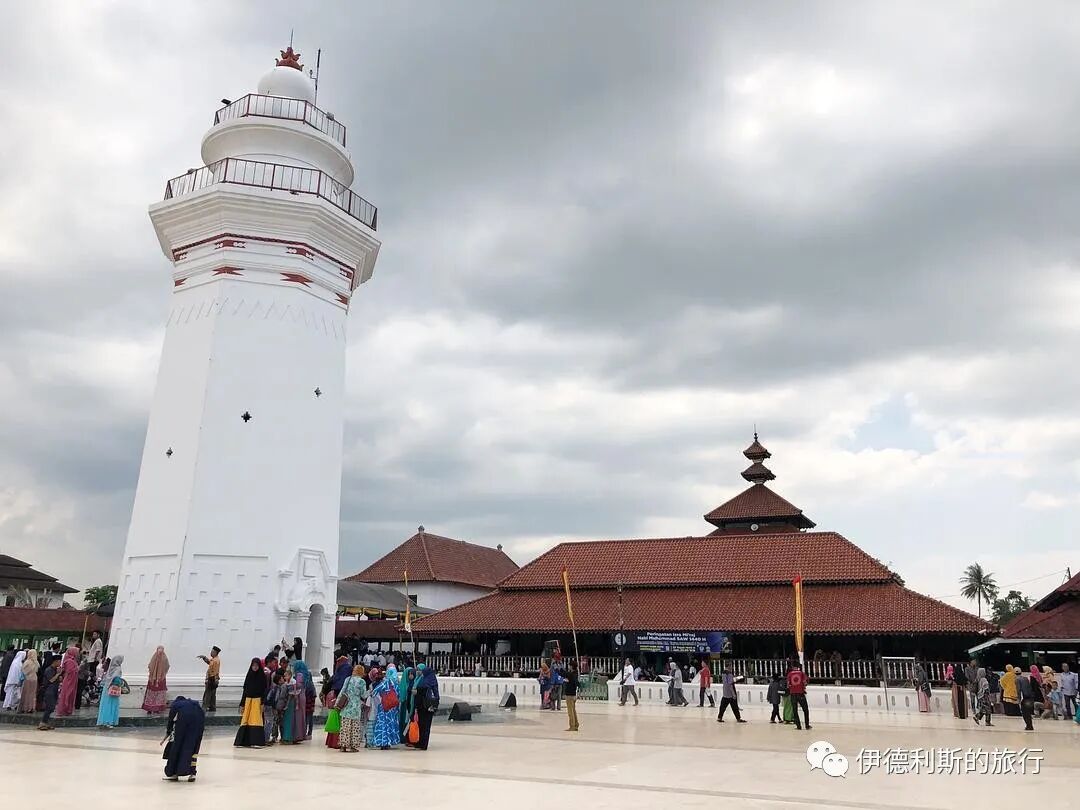
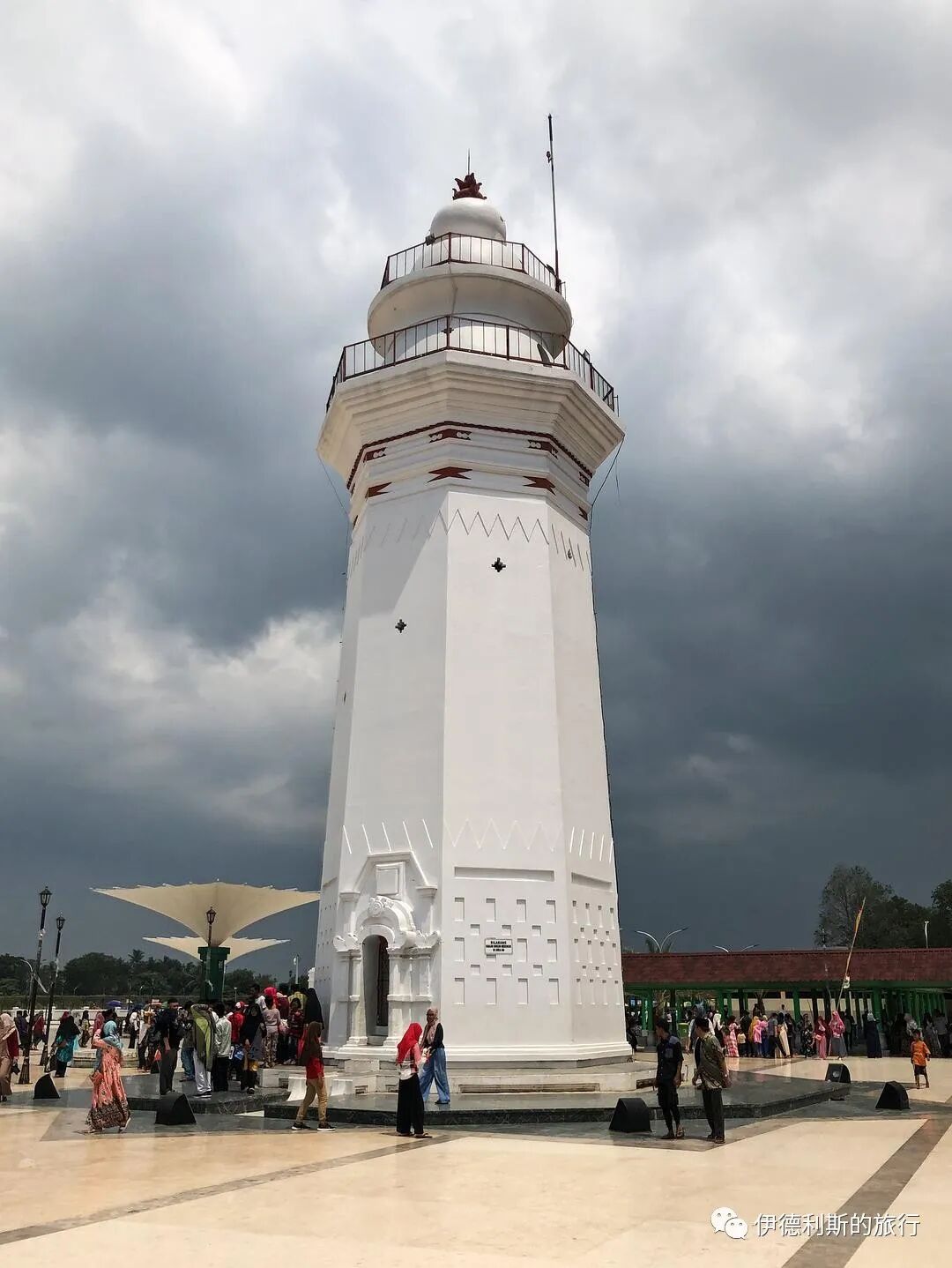
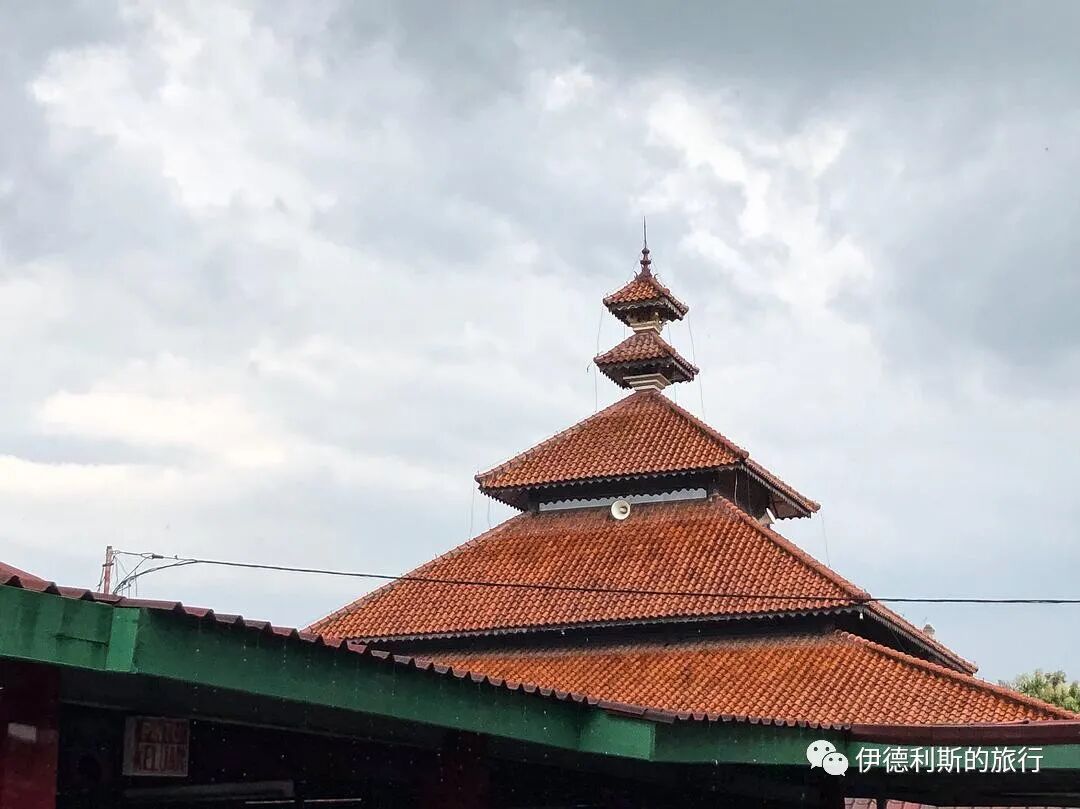
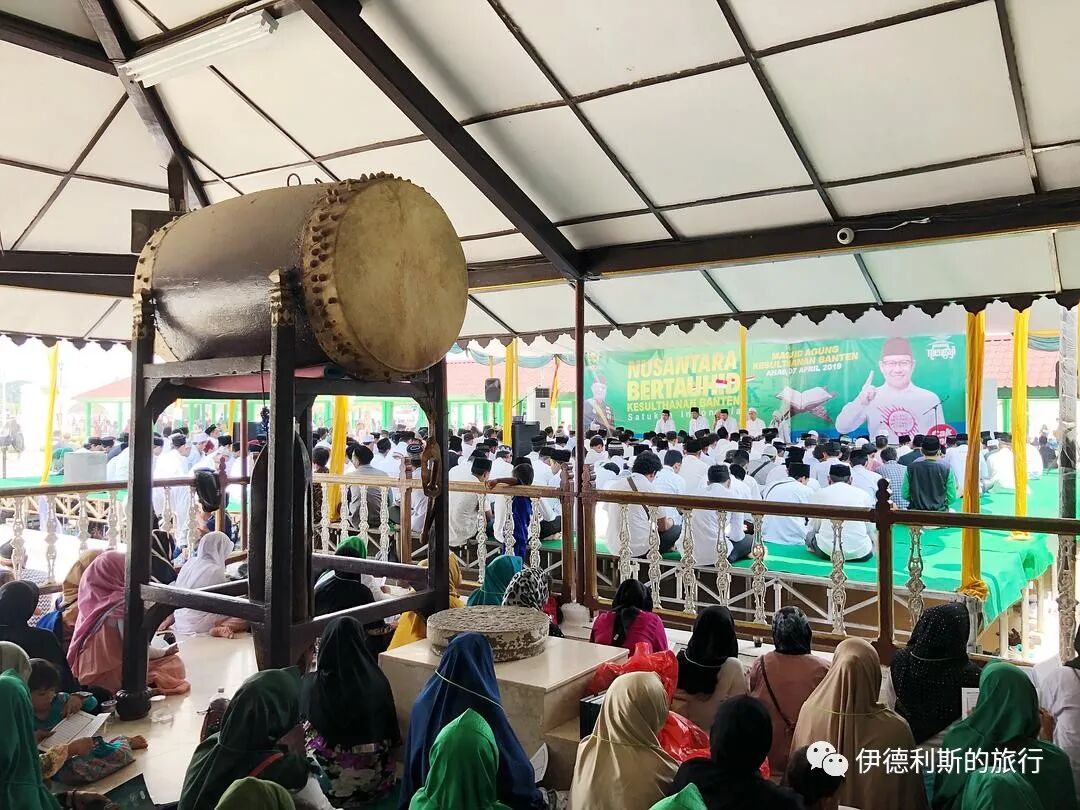
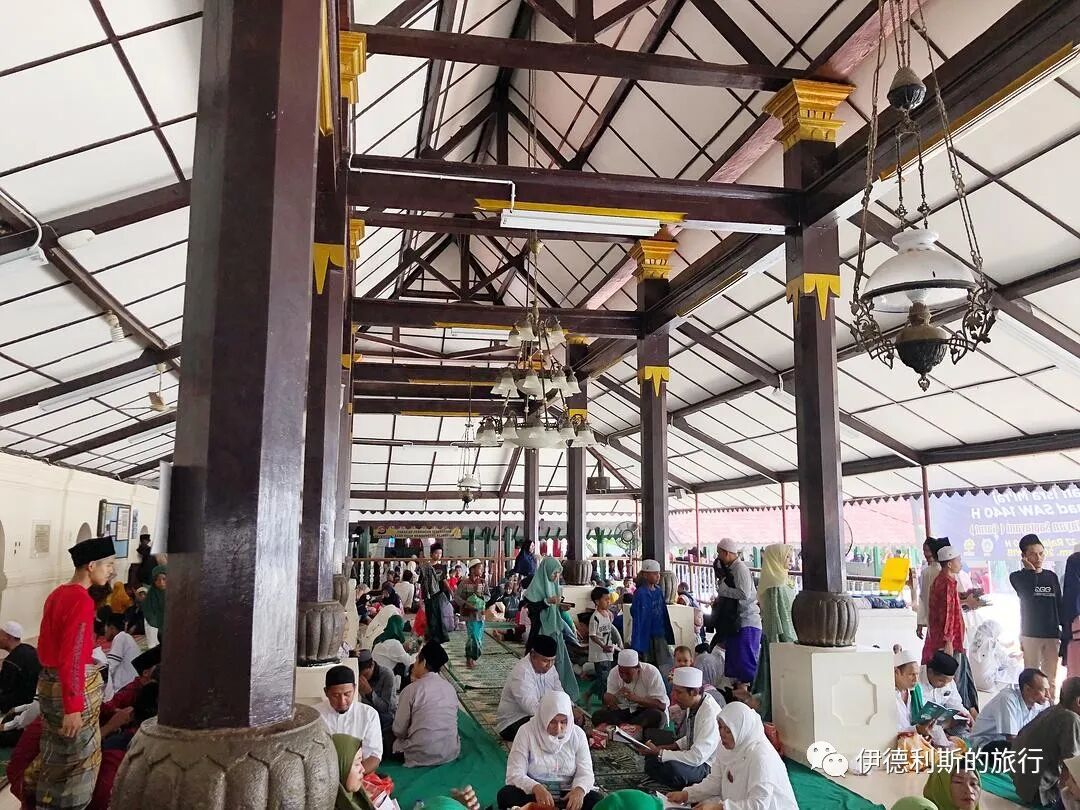
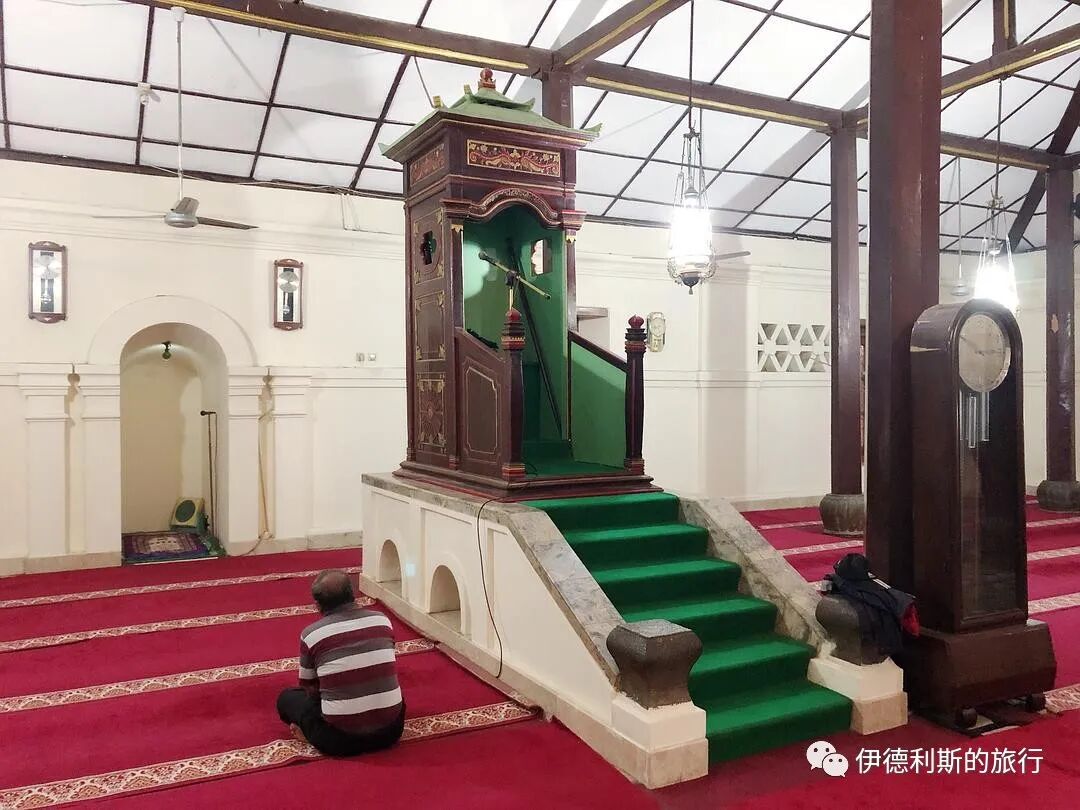
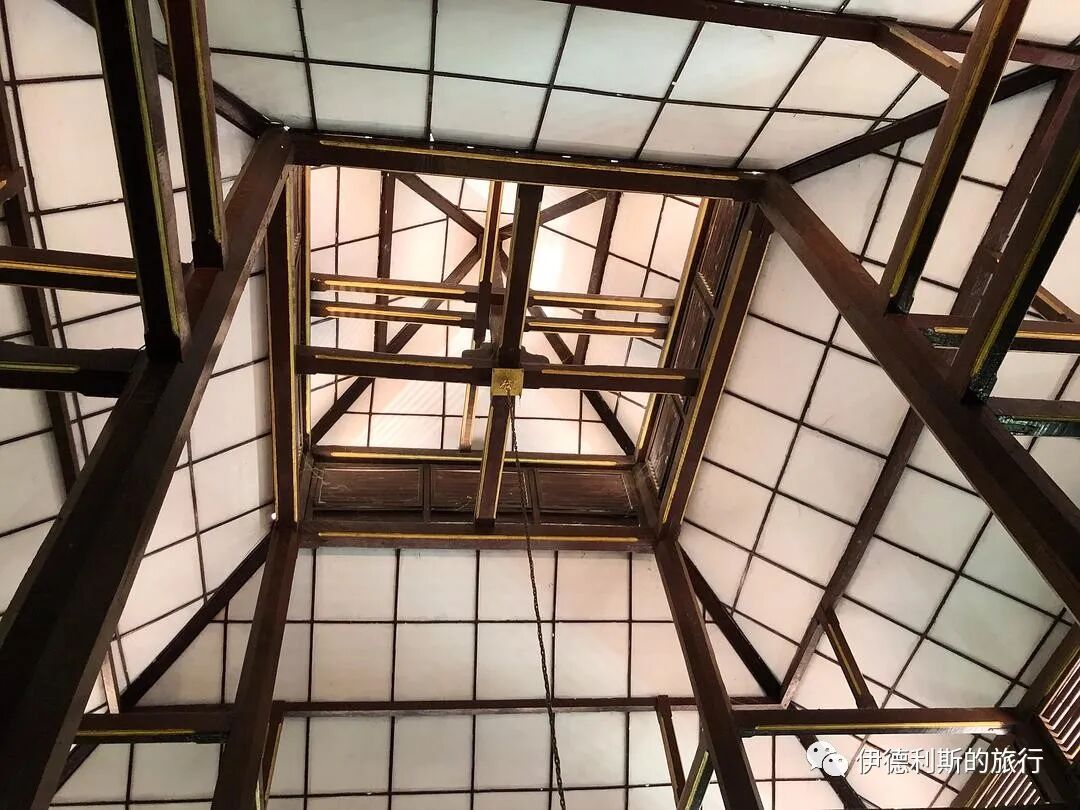
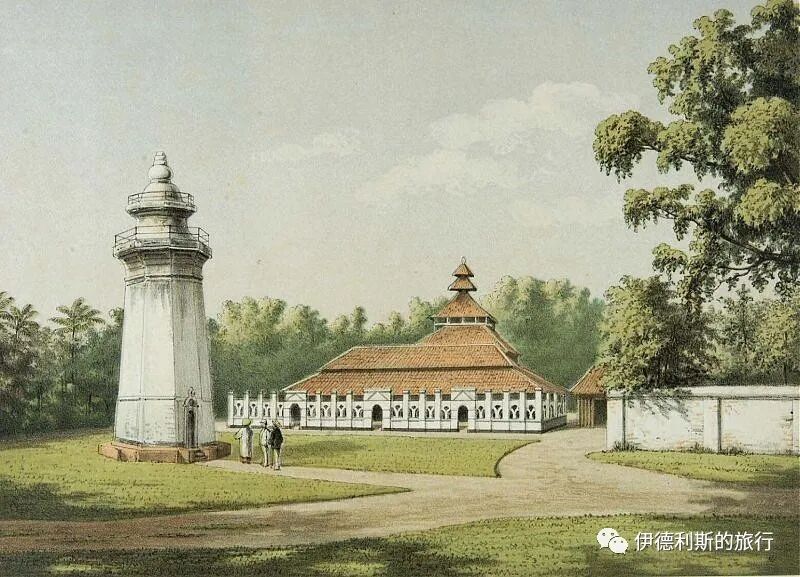
The Great Mosque of Banten, drawn by Josias Cornelis Rappard in the 1880s.
Right next to the mosque is the family cemetery of the Banten Sultanate. The first Sultan, Maulana Hasanuddin (reigned 1552–1570), the sixth Sultan, Ageng Tirtayasa (reigned 1651–1683), and the seventh Sultan, Abu Nashar Abdul Qahar (reigned 1683–1687), are all buried there.
The reign of the sixth Sultan, Ageng Tirtayasa, from 1651 to 1682, is known as the golden age of the Banten Sultanate. During this time, the Banten Sultanate built a powerful navy with the help of European shipyards and attracted many Europeans to work in Banten. To ensure safe travel, the Banten Sultanate sent a fleet in 1661 to conquer the Tanjungpura Kingdom in western Kalimantan, attempting to break the blockade by the Dutch East India Company (VOC).
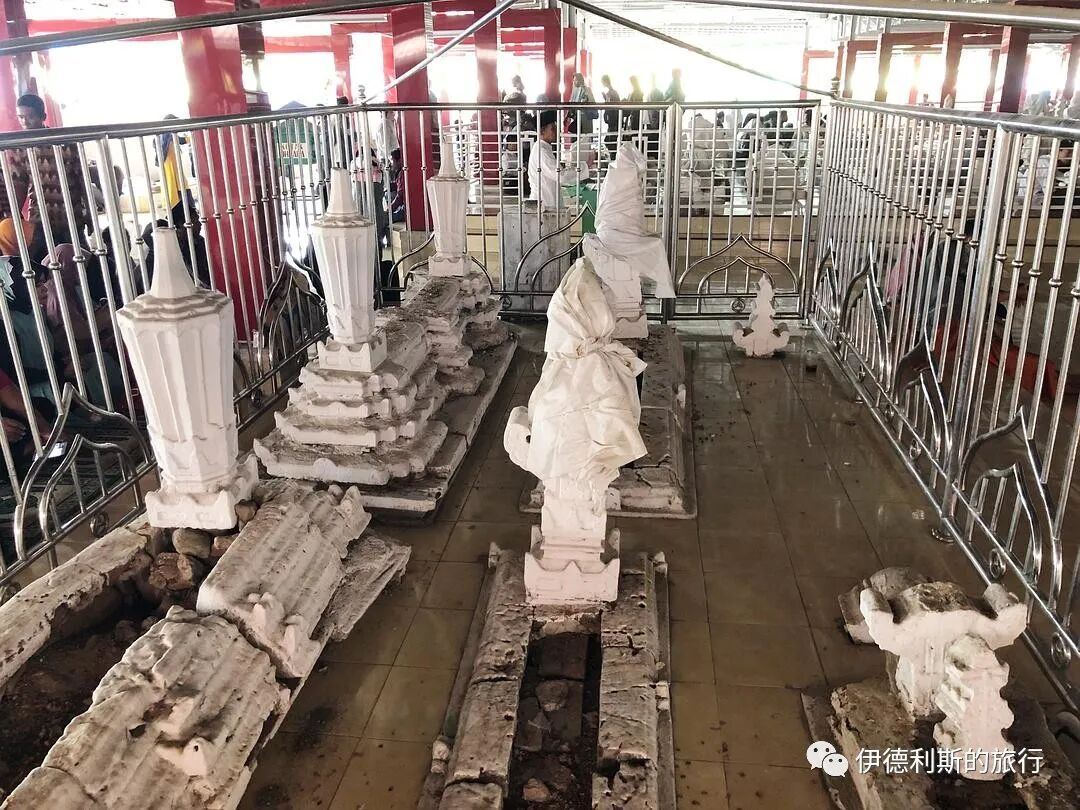
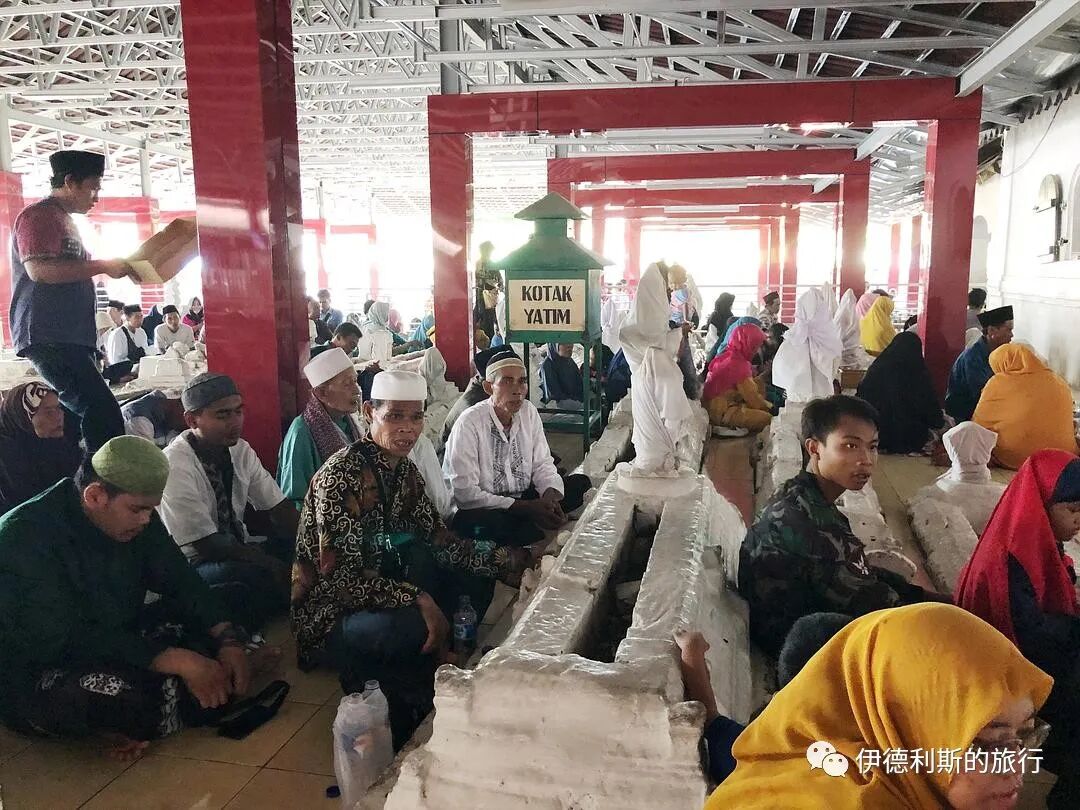
6. Banten Bazaar
As a holy site, the Great Mosque of Banten attracts a constant stream of Muslims every day, and a very lively bazaar has formed around it. At the bazaar, I drank an iced beverage called Es Campur made with coconut milk, red sugar syrup, coconut meat, and fruit jelly, and I also had some simple street-style boiled noodles (Mie Rebus). The bazaar is full of people selling sapodilla (Manilkara zapota), which is sweet and delicious. Sapodilla is native to the Caribbean in Central America. It was brought to the Philippines by Spanish colonists and later widely planted across Southeast Asia, where it is called sawo in Indonesia.
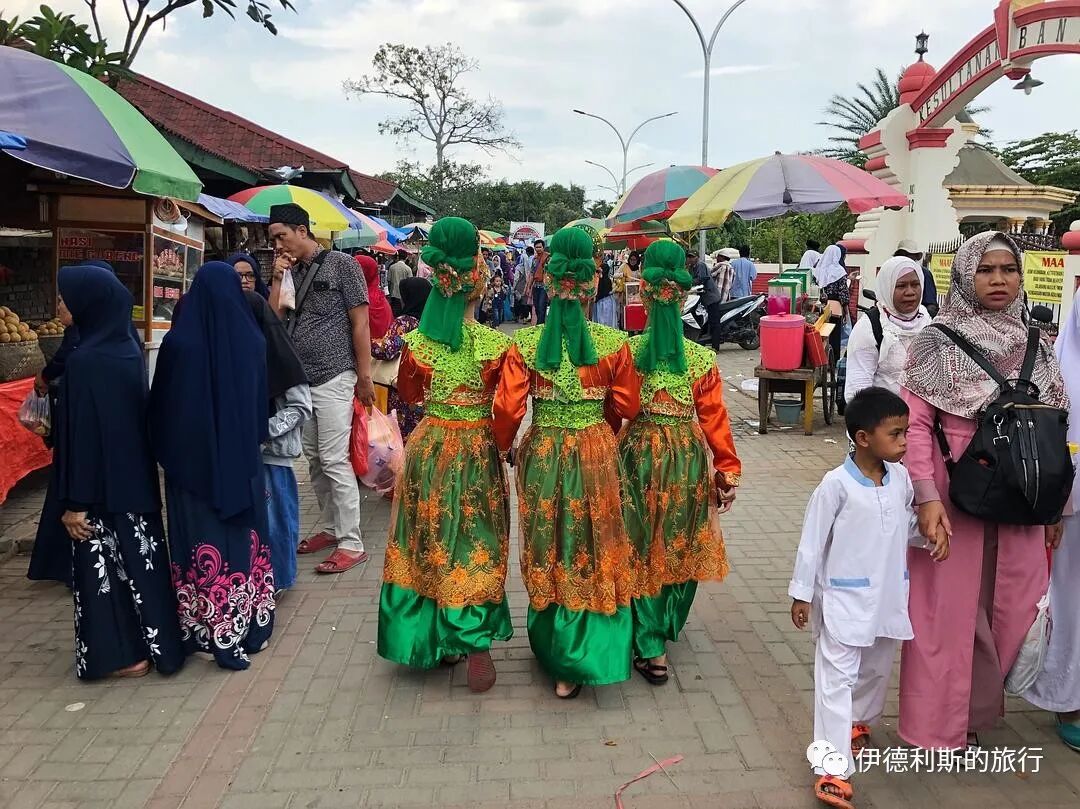
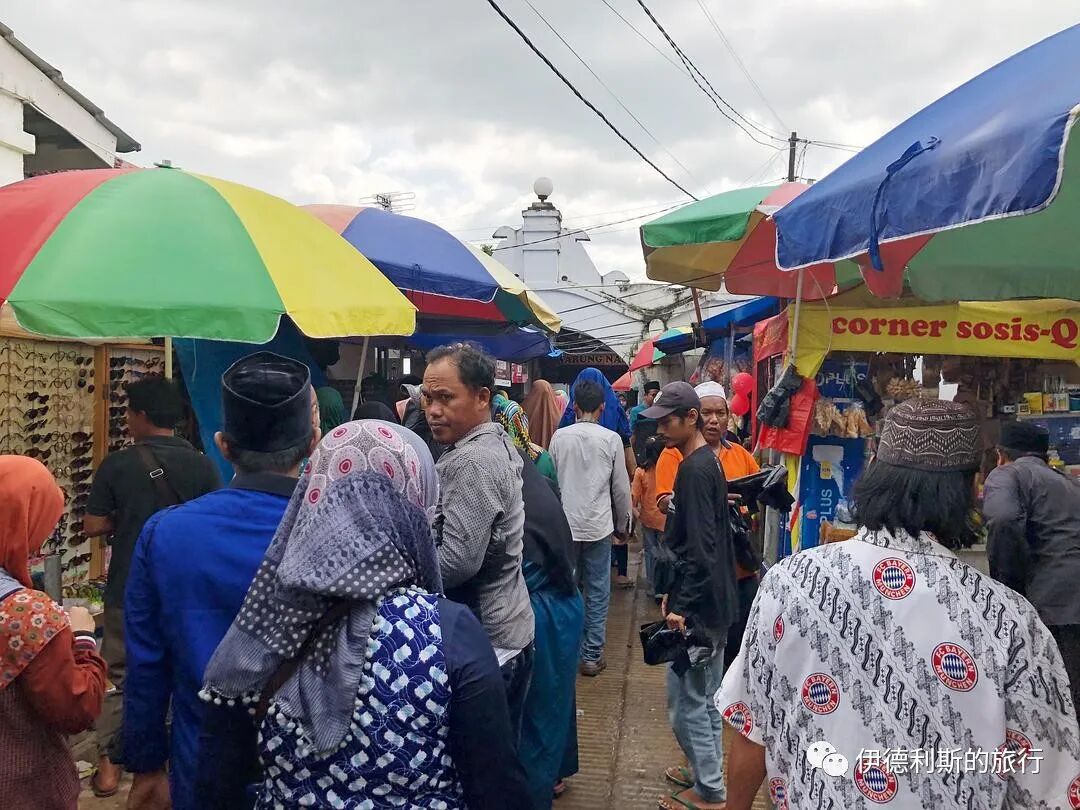
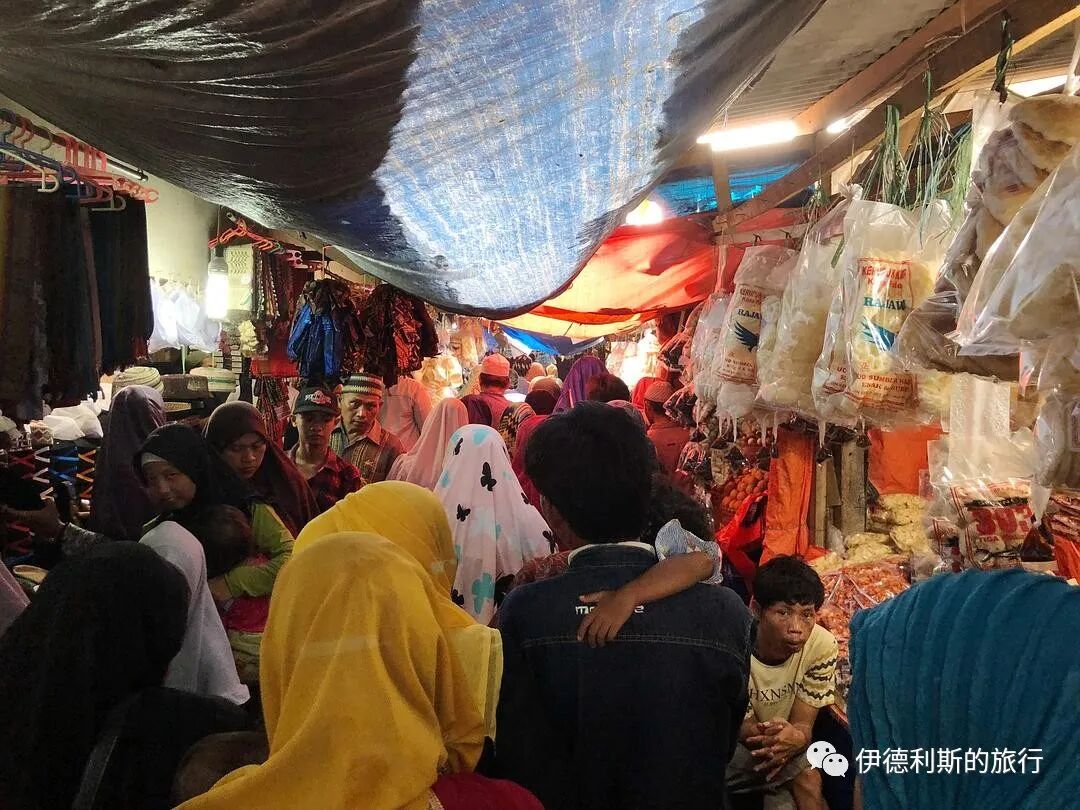
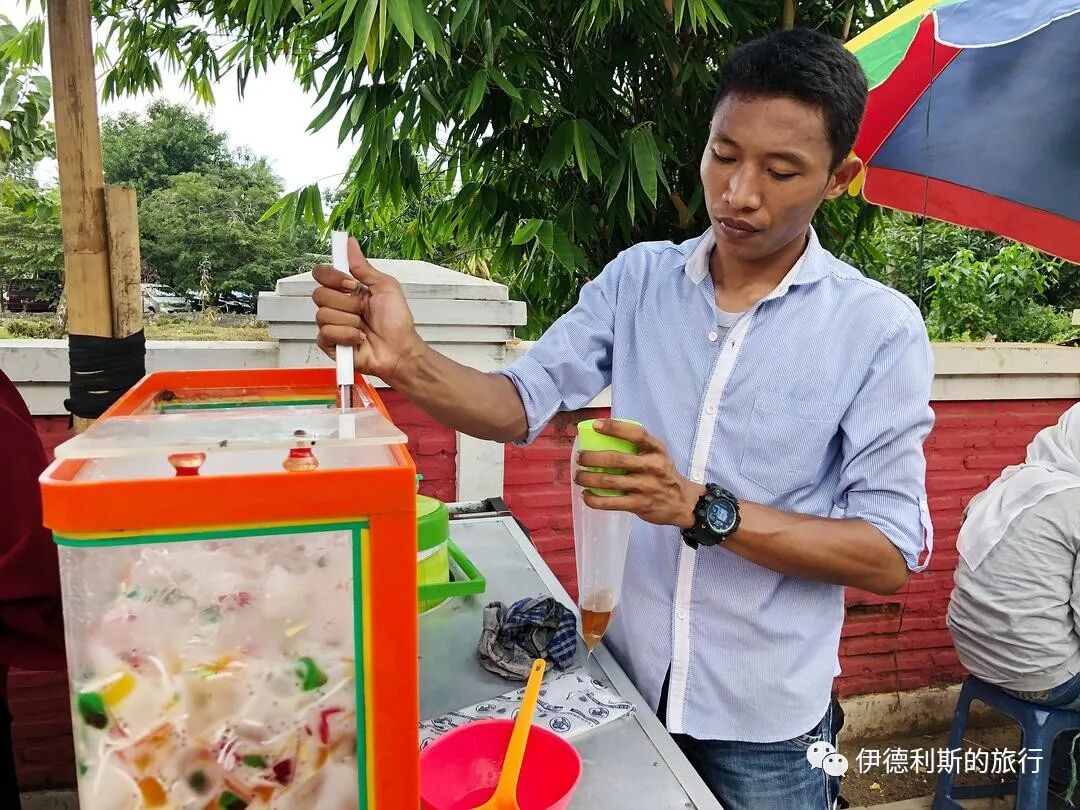
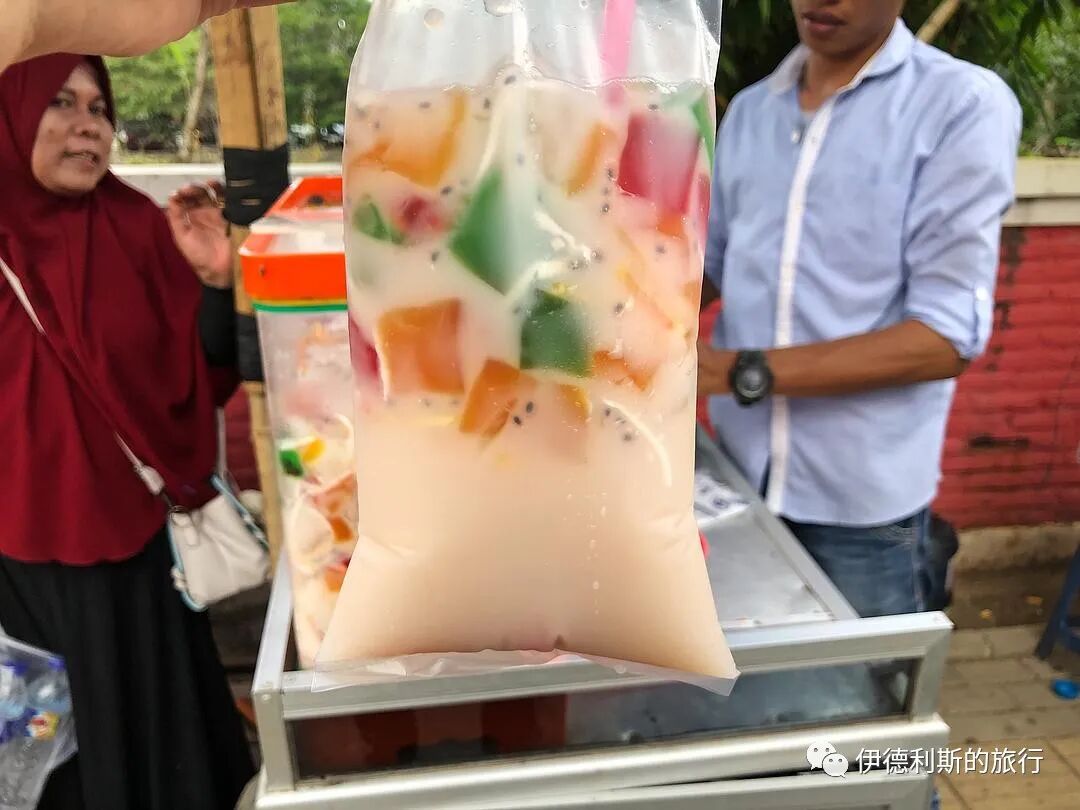
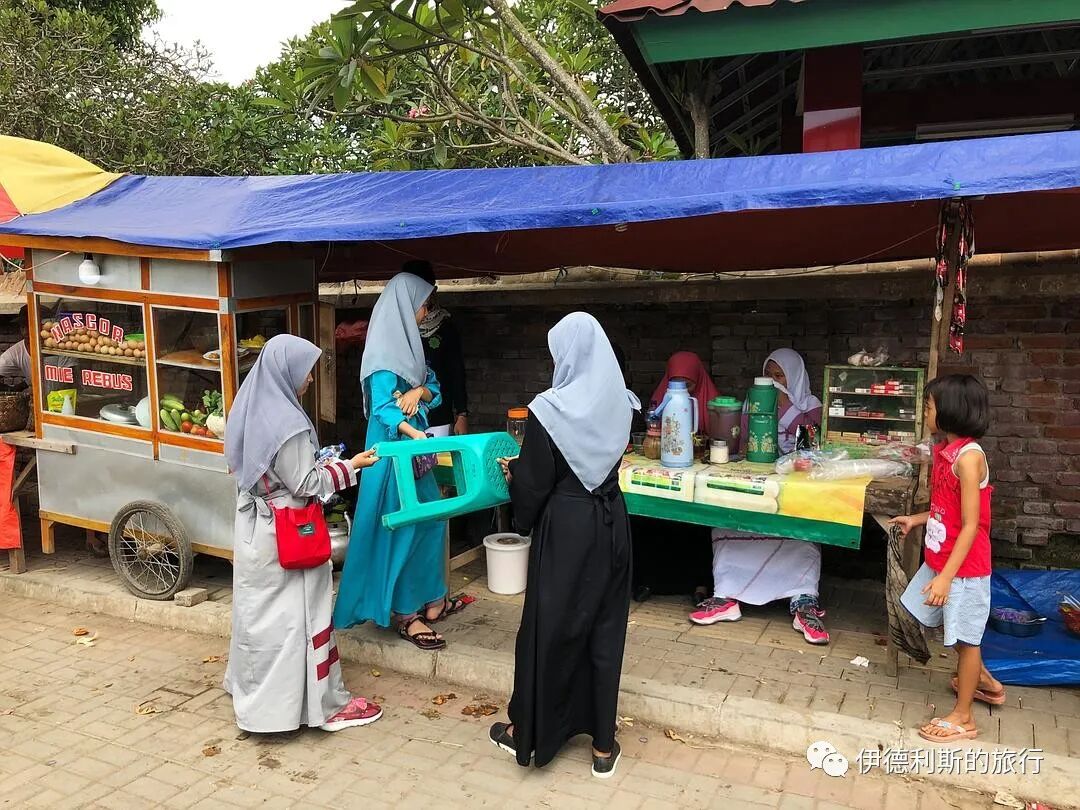
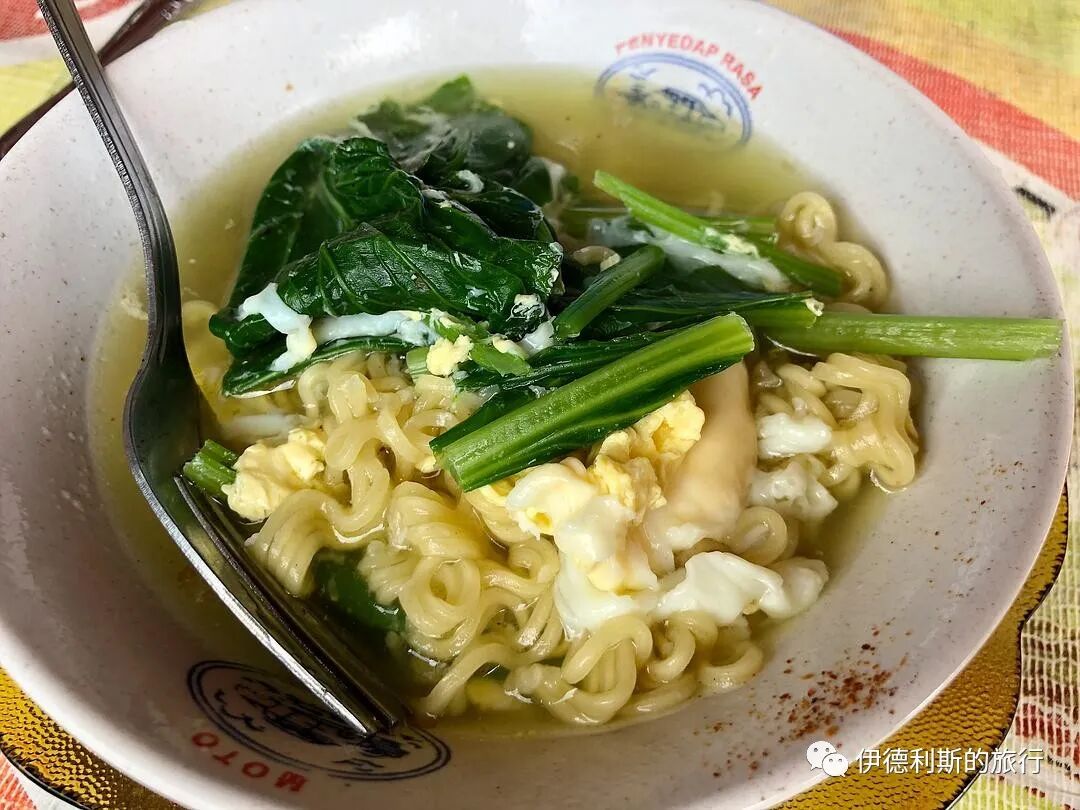
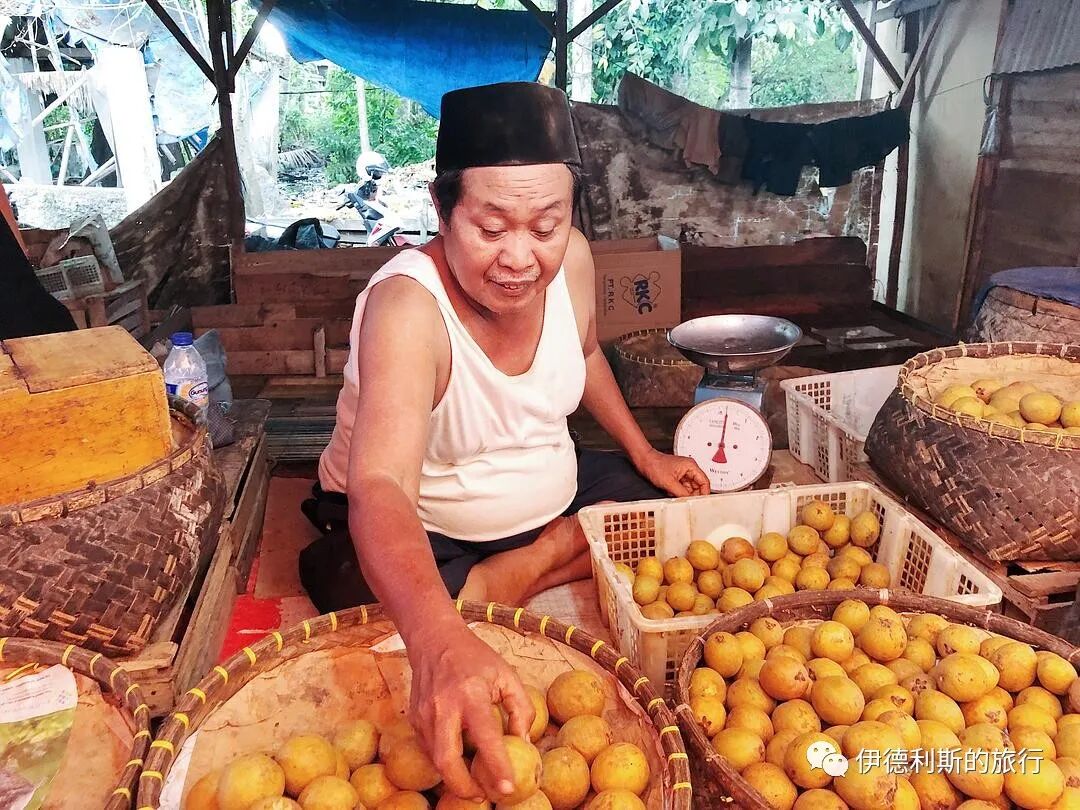
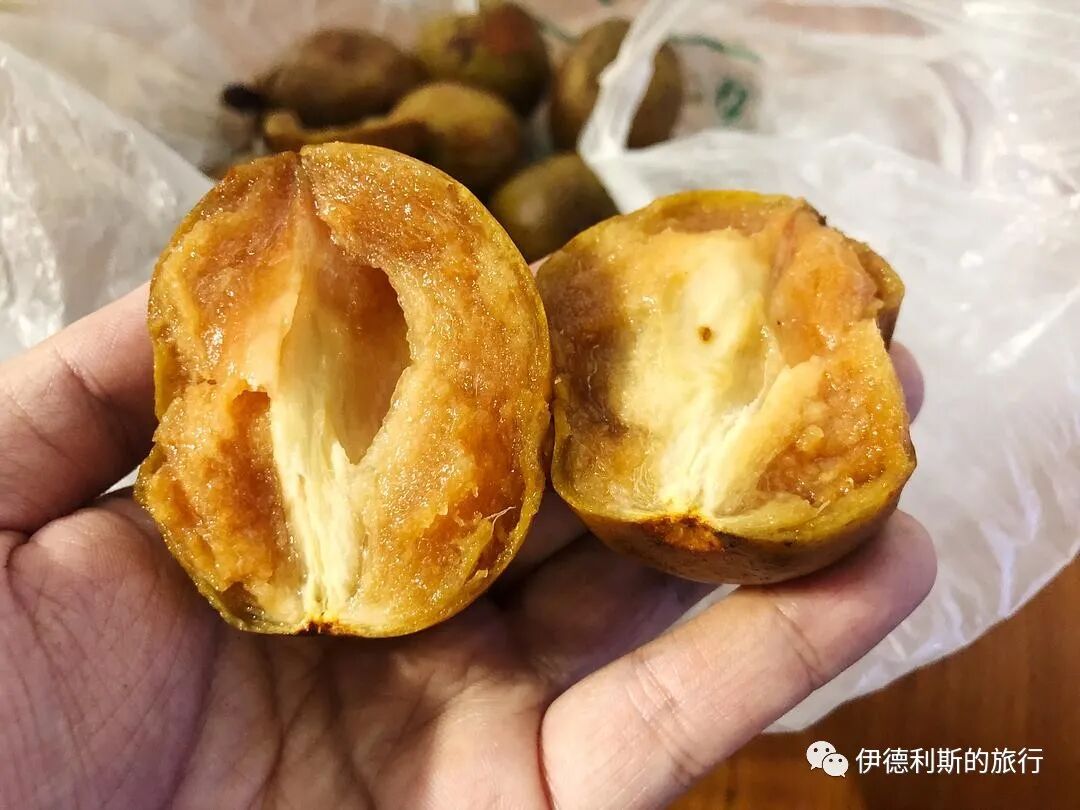
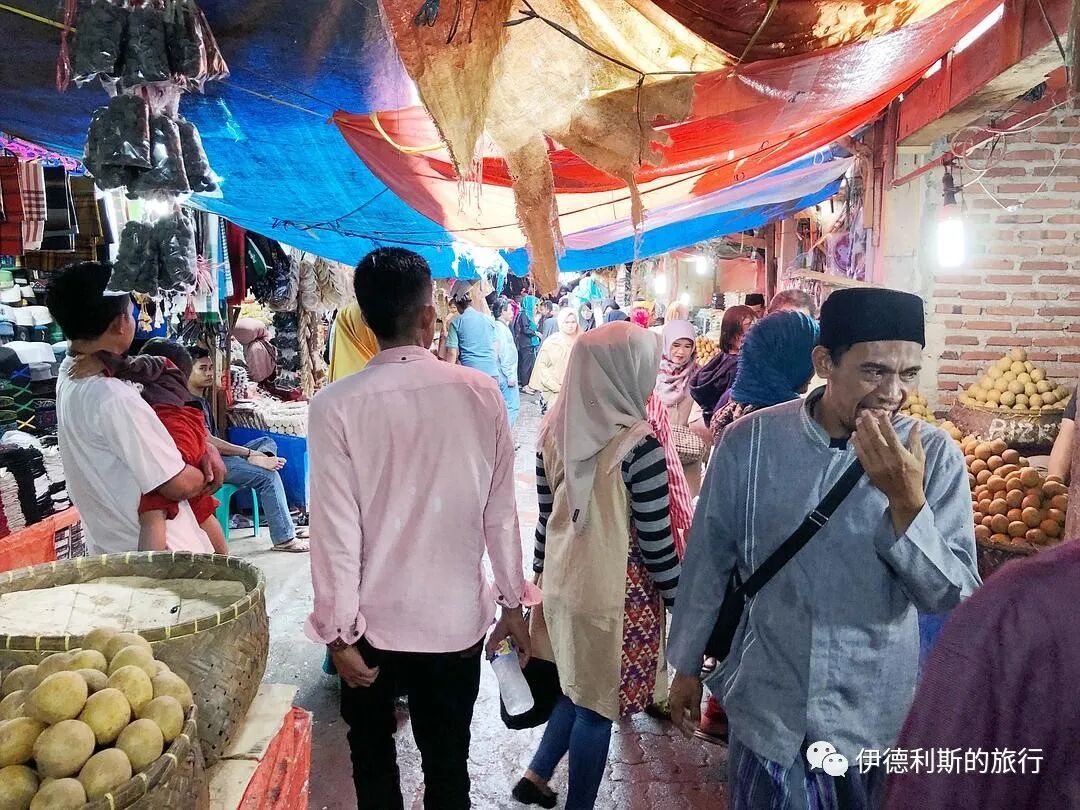
I bought two hats at the Banten bazaar. One of them is the black velvet cap (peci), which is the most common type in Indonesia. The peci is also called a songkok (Songkok). Indonesian and Malay Muslim men usually wear this hat for important ceremonies like weddings, funerals, or Eid al-Fitr. The word peci likely comes from the Dutch word petje, which means small hat.
The peci may have originated from the felt fez hat promoted by the Ottoman Empire starting in 1826. It soon spread to the Indonesian and Malay regions, gradually taking on the form of the modern songkok. Many Indonesian nationalist activists wore the songkok in the early 20th century, with Indonesia's first president, Sukarno, being the most famous among them. After Sukarno made the peci part of the official Indonesian presidential attire, black velvet became the most common style of peci in Indonesia.
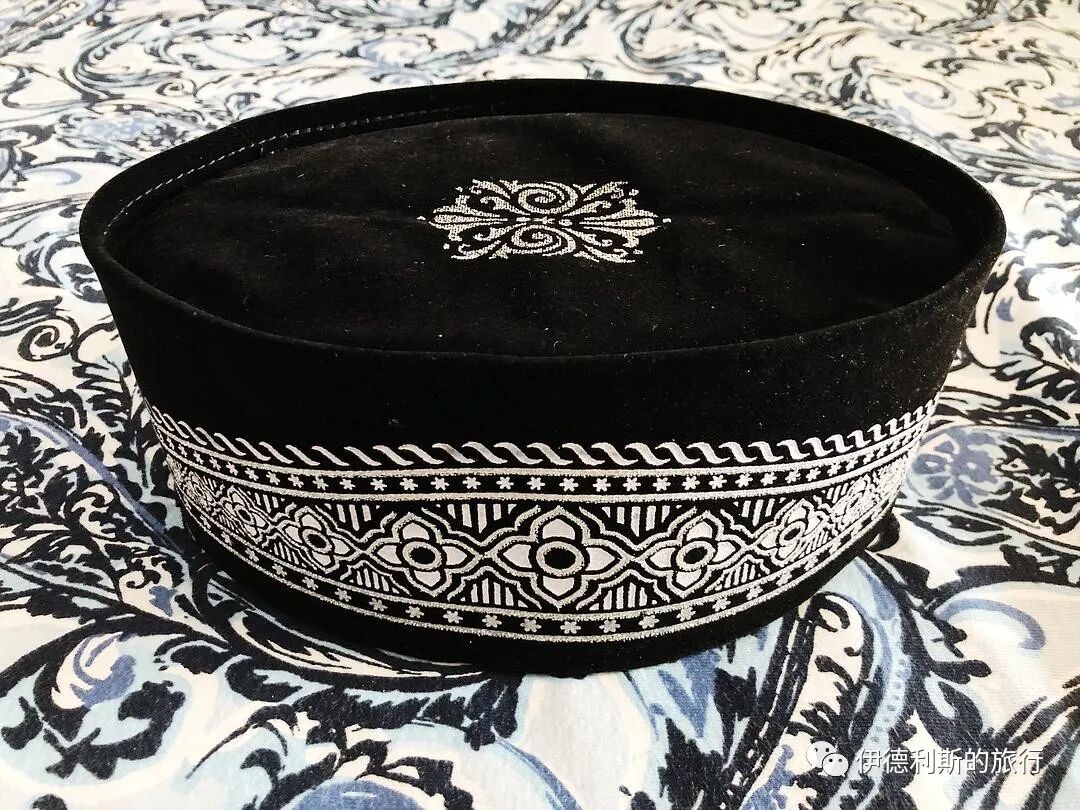
The second hat is made of woven bamboo. Besides the round one I bought, there are also boat-shaped ones similar to the songkok, which feel perfect for summer.
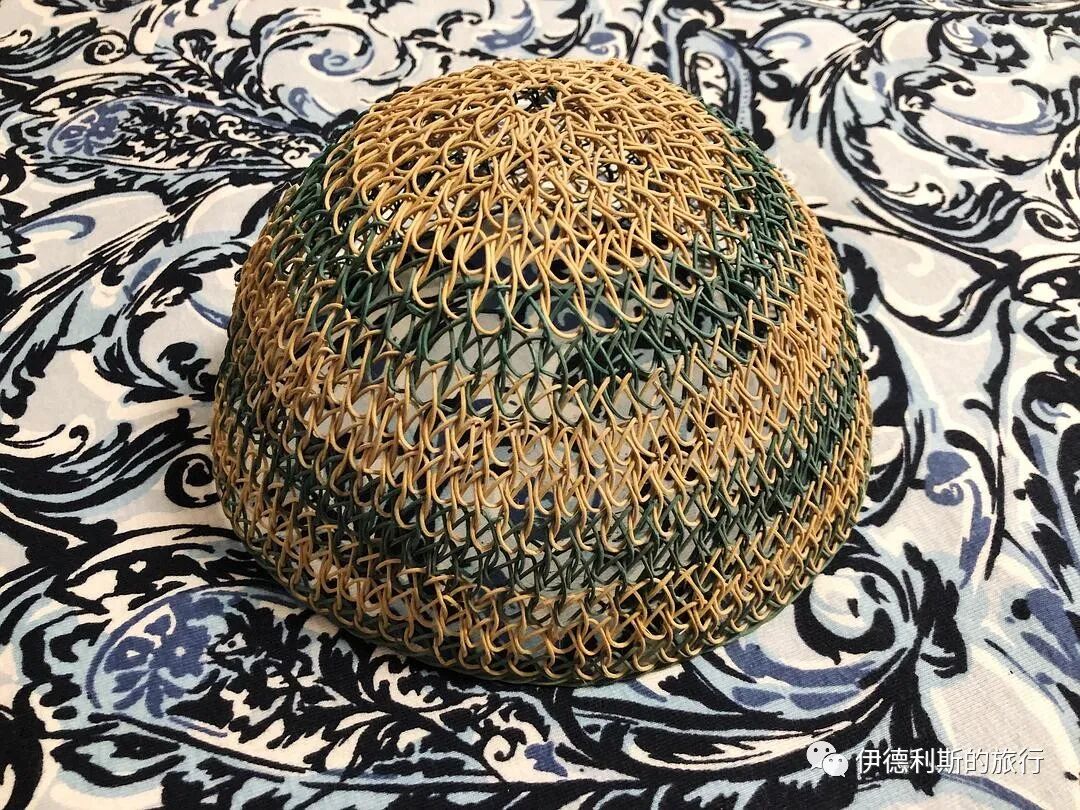
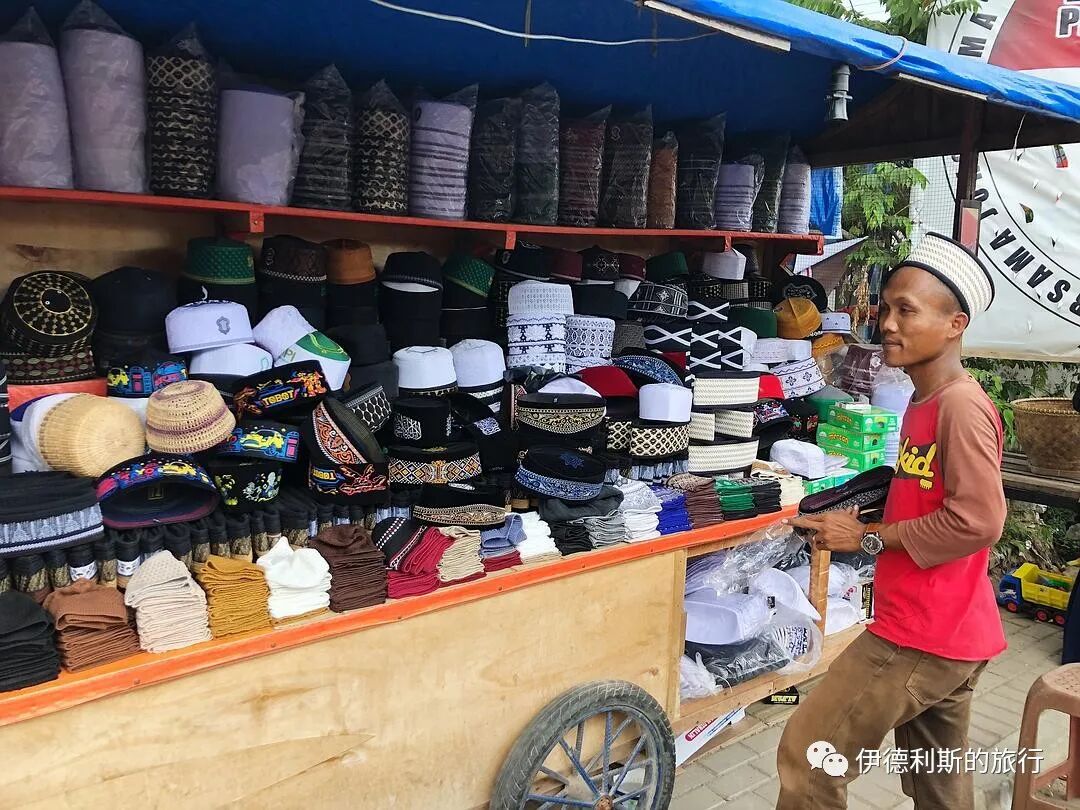
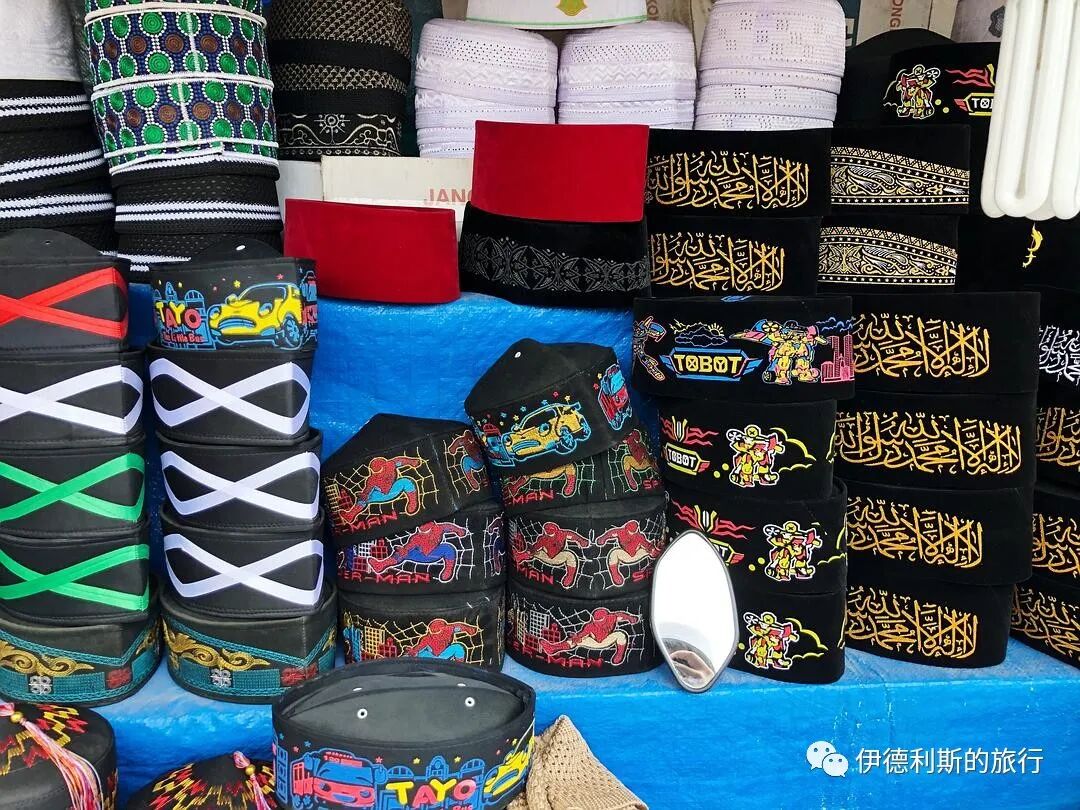
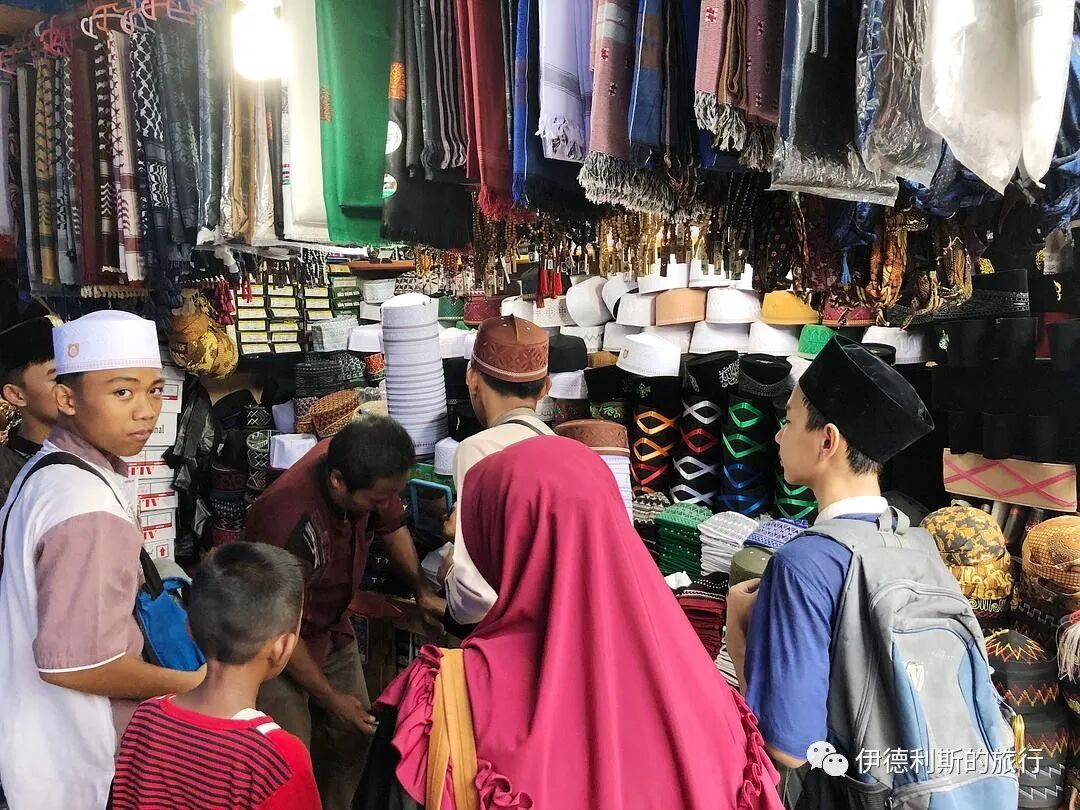
Another hat shop.
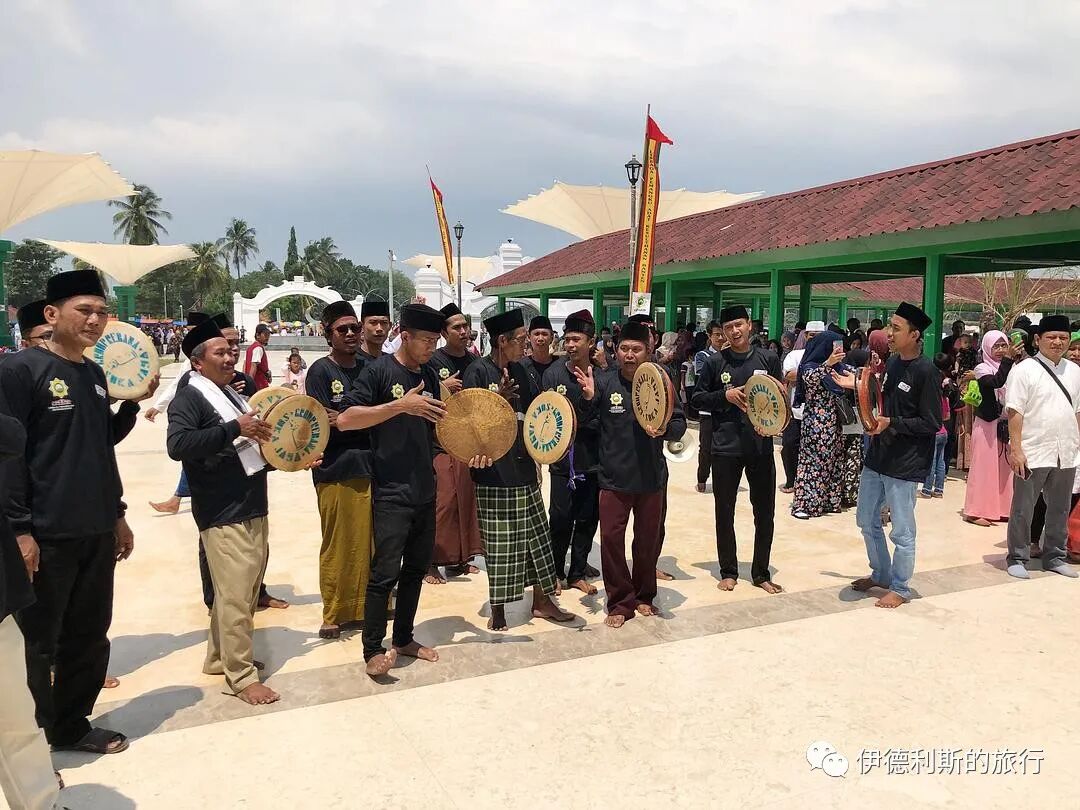
7. Speelwijk Castle—Dutch Fortress: 1682
Speelwijk Castle is a fortress built by the Dutch East India Company on the northwest coast of Banten. It was first built in 1682 and expanded twice, in 1685 and 1731. This castle was mainly used to control the activities of the Banten Sultanate and to protect Dutch merchant ships from pirate attacks.
Starting in the 16th century, the Dutch began competing with Portugal and England for the pepper trade in Java. In 1602, the Dutch established the famous Dutch East India Company, and the following year they set up a permanent trading post in Banten. In 1619, the Dutch East India Company captured Jakarta, which was controlled by the Banten Sultanate, and renamed it Batavia to serve as their headquarters. By the late 17th century, the Dutch East India Company had become the world's wealthiest private company and had completely defeated the Portuguese on Java.
In 1680, the Dutch East India Company incited a civil war within the Banten Sultanate, took the opportunity to drive British merchants out of Banten, and gained a monopoly on the surrounding pepper trade. After 1682, the Banten Sultanate gradually came under the control of the Dutch East India Company, and even the succession of the Sultan required approval from the company. Speelwijk Castle is the best witness to this historical period. After 1752, the Banten Sultanate officially became a vassal state of the Dutch East India Company.
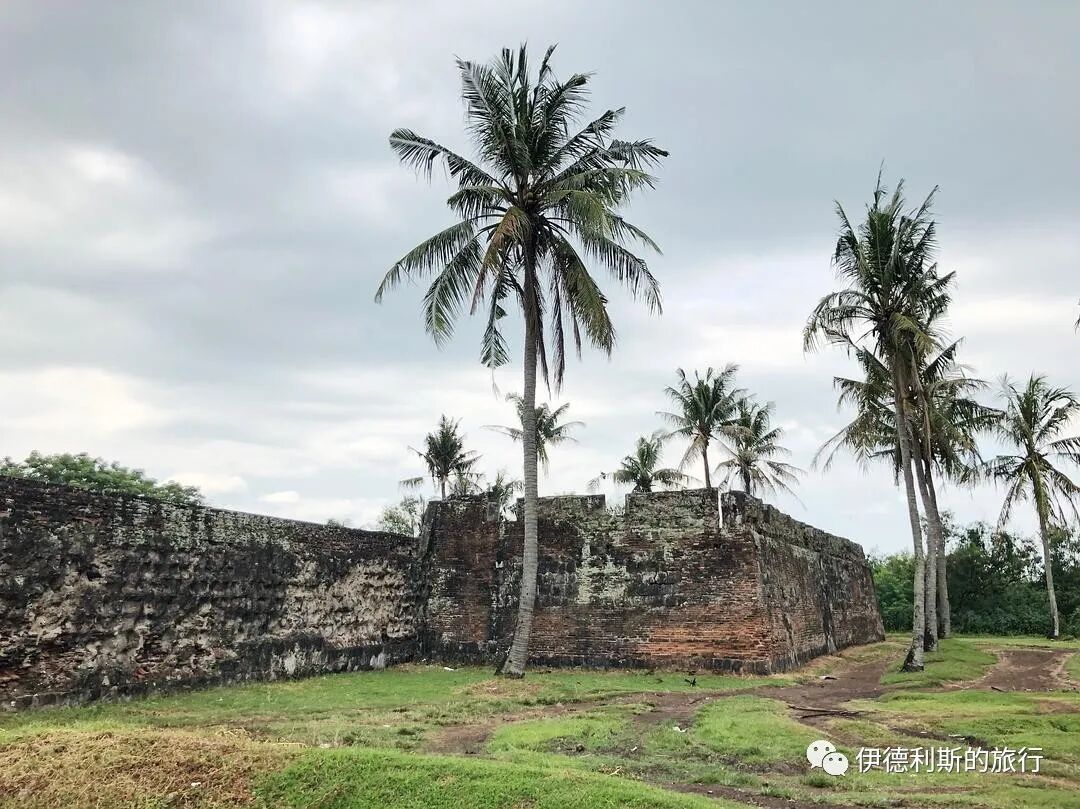
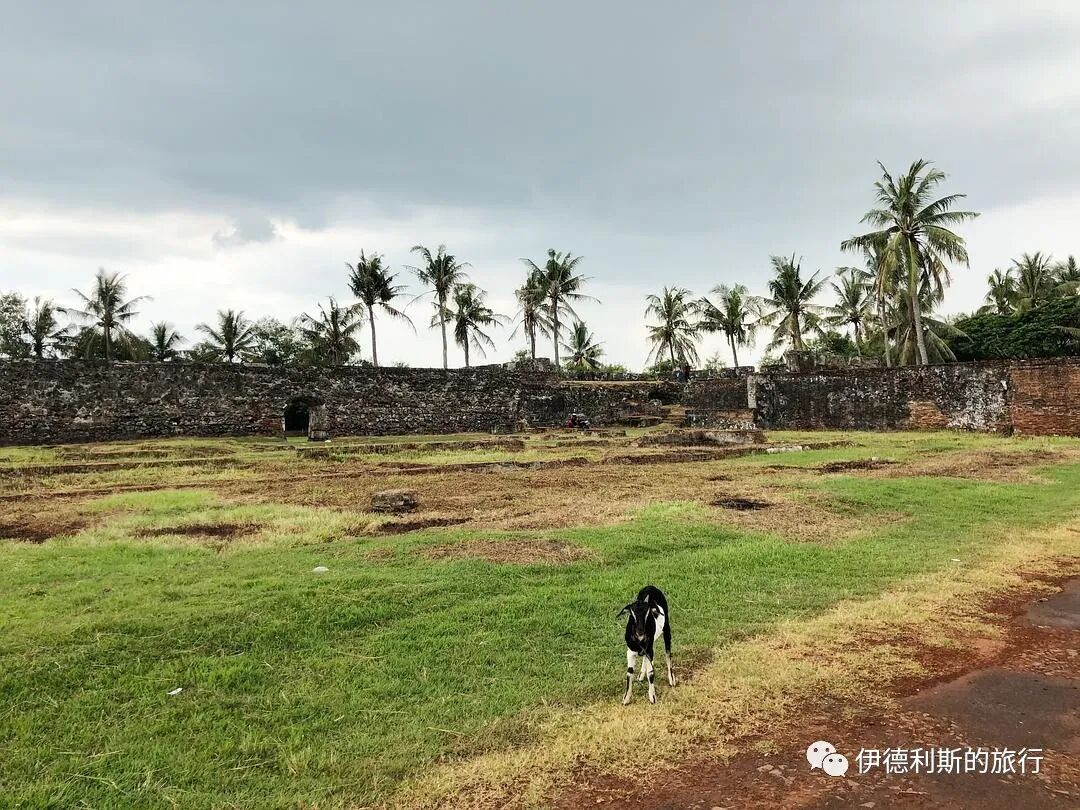
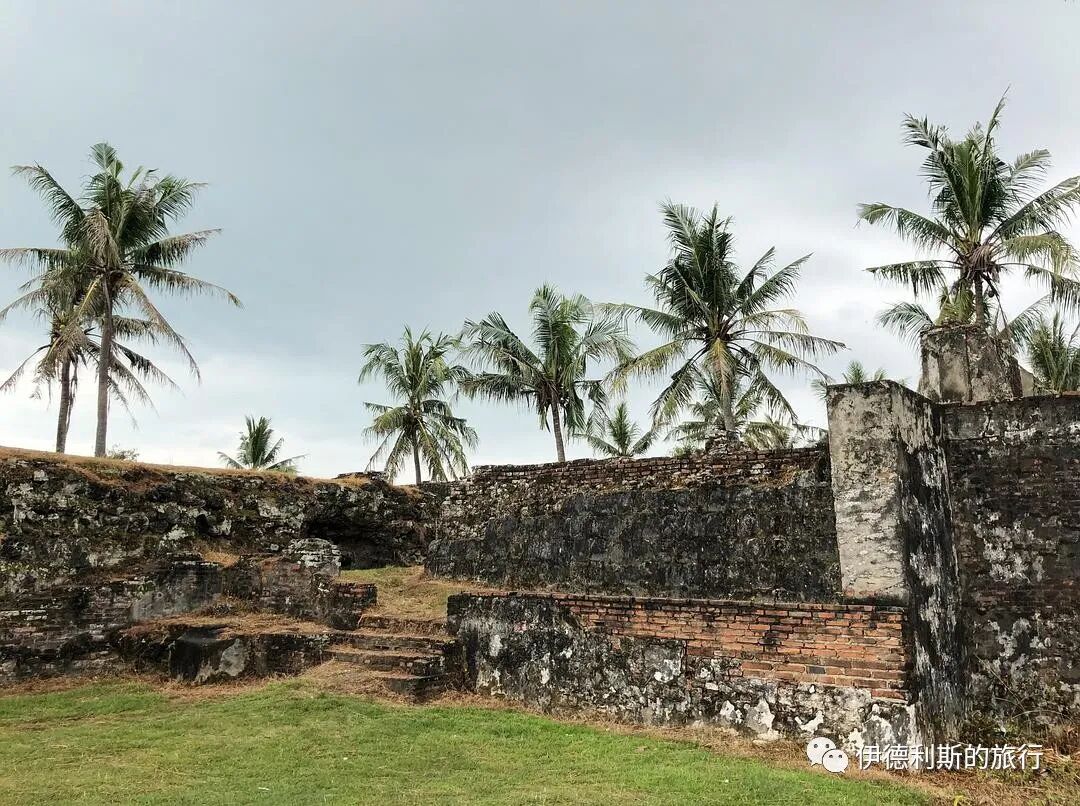
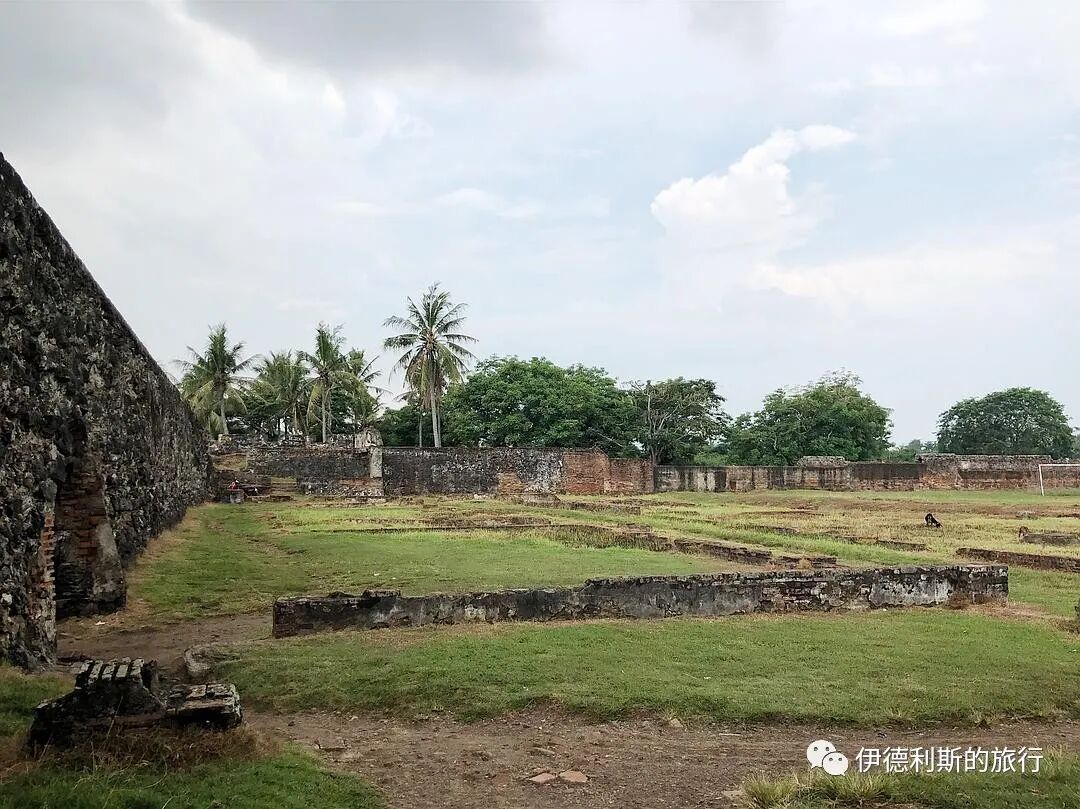
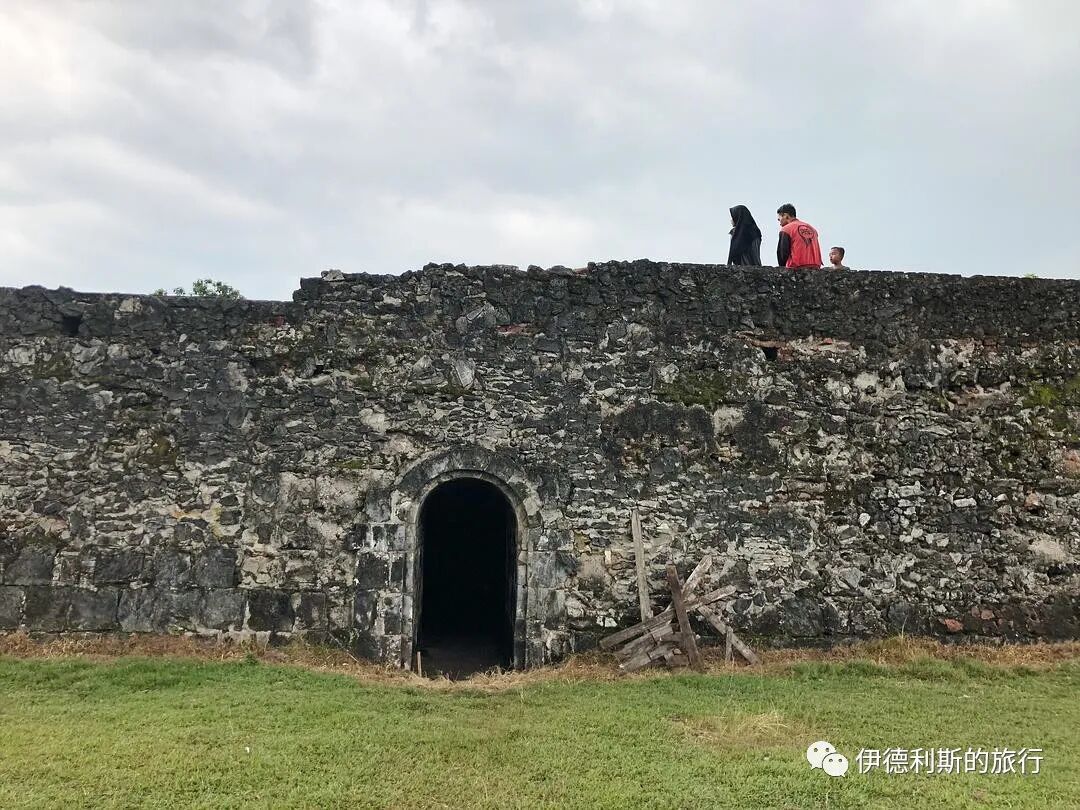
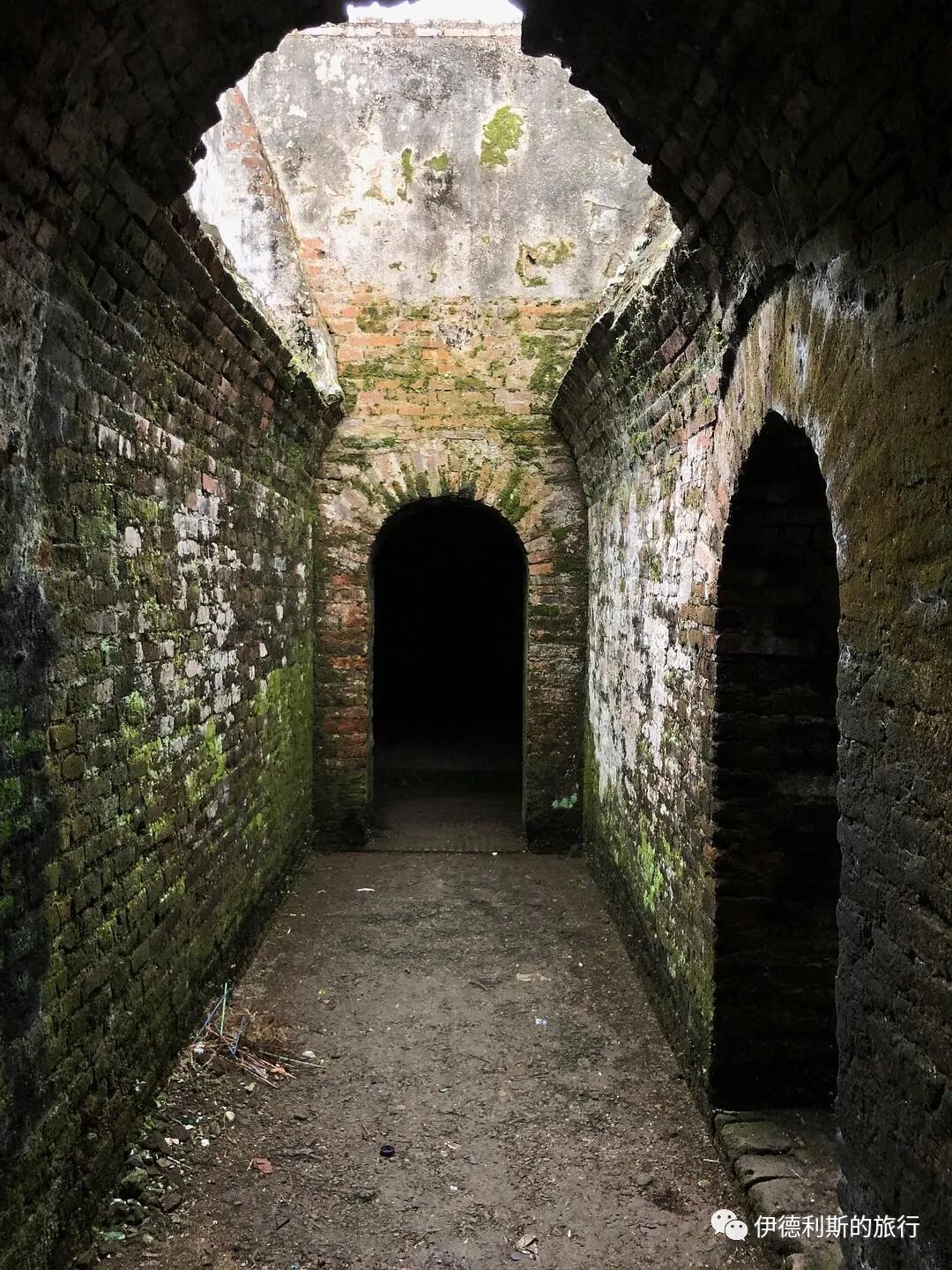
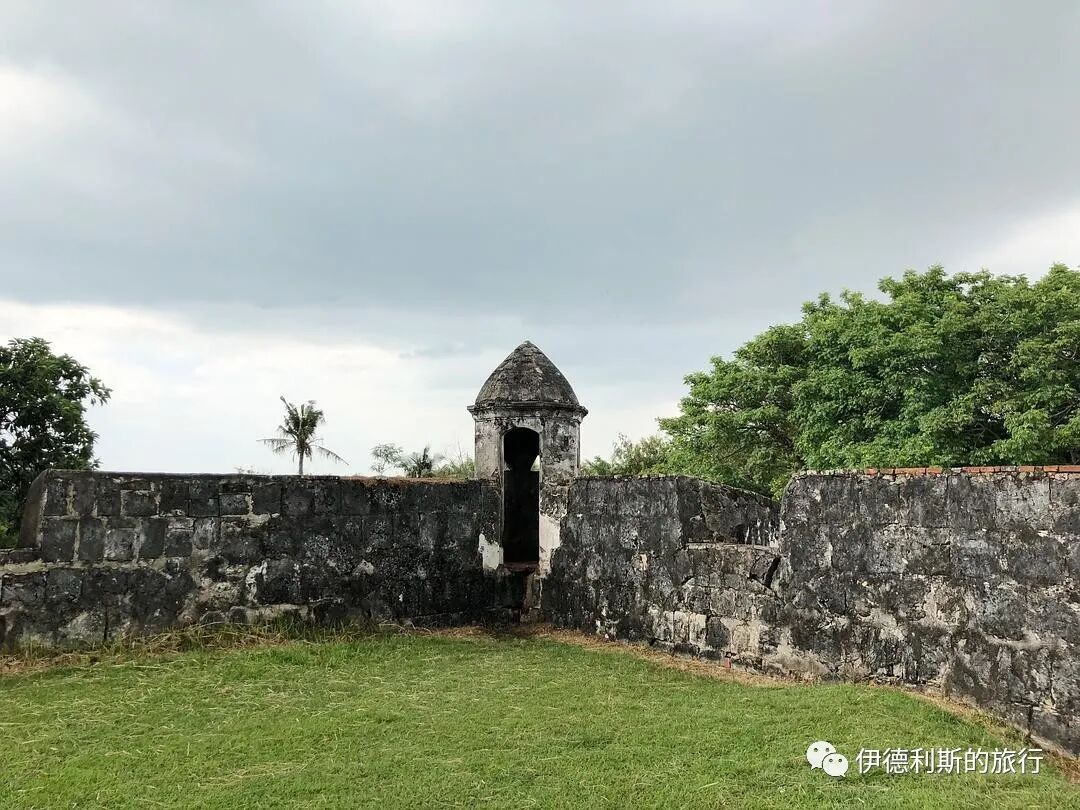
Speelwijk Castle was eventually abandoned due to a plague in 1811. Today, there are many Dutch graves in front of the castle, including those of castle officer Hugo Pieter Faure, who died in 1763, and the castle tax collector and purchaser Kopman en Fiscaal Deserbezeting, who died in 1769.
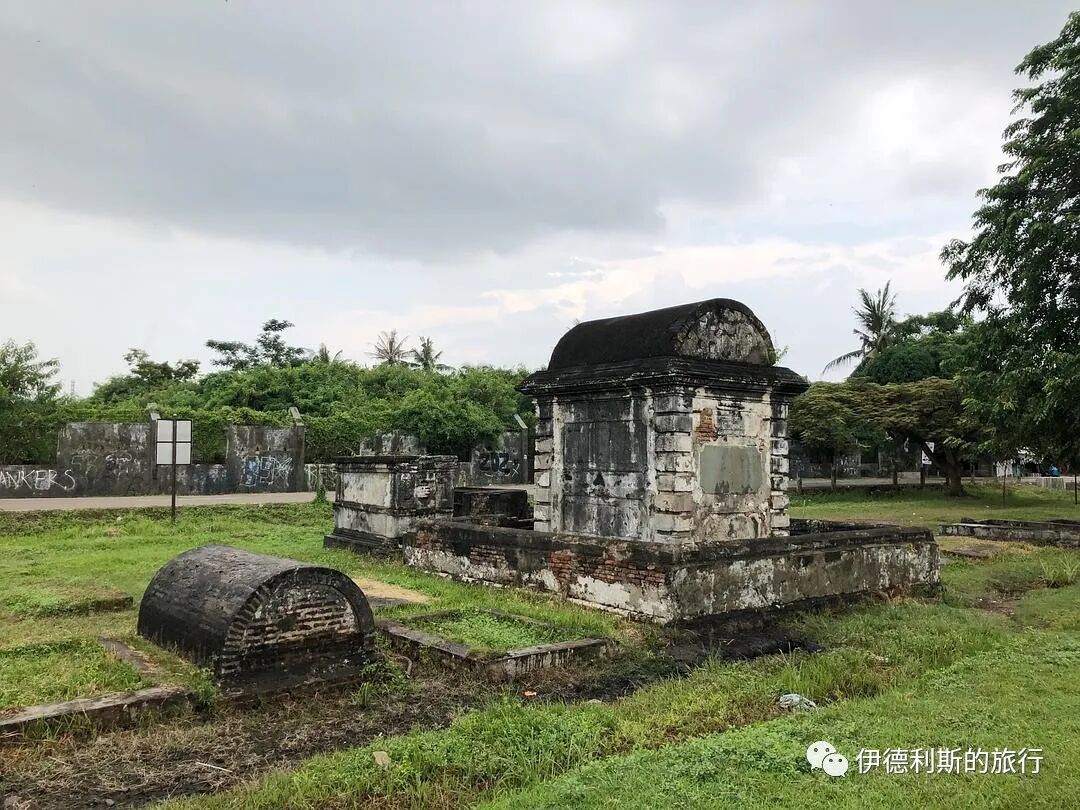
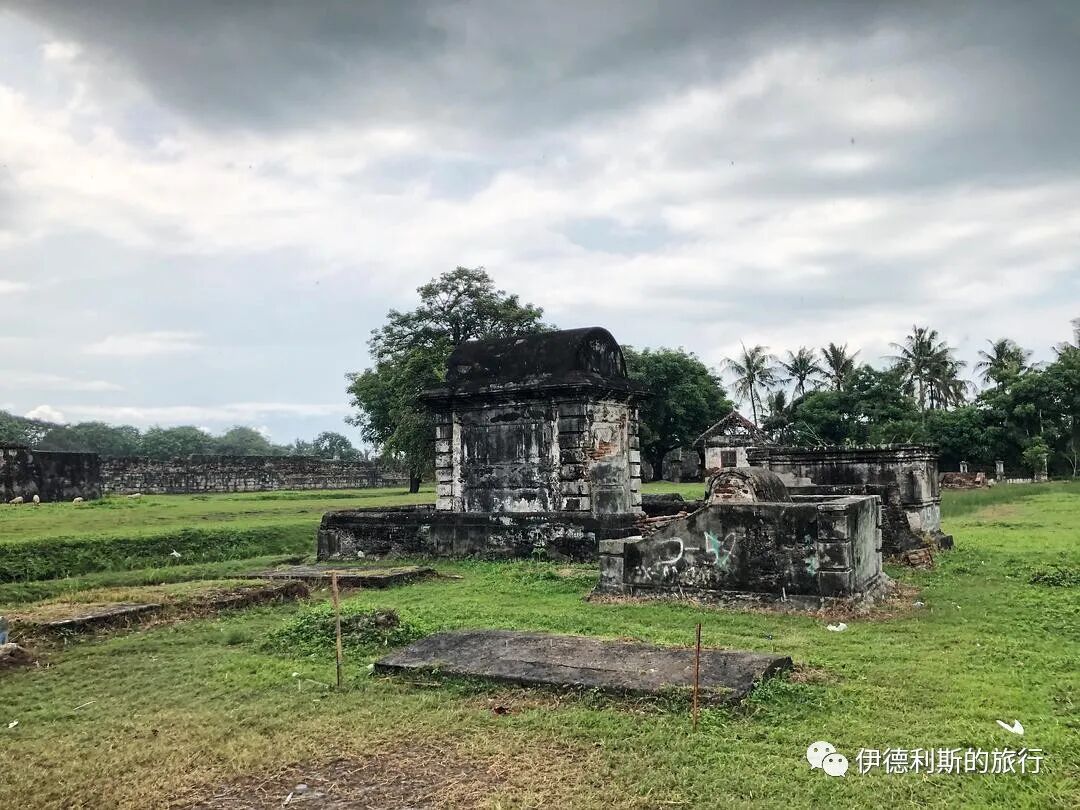
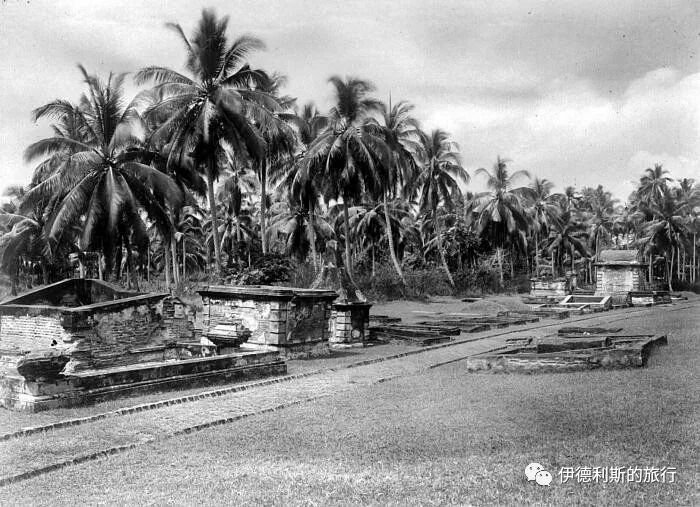
Old photo of the Dutch cemetery
8. Kaibon Palace—Residence of the Last Queen Mother: Early 19th Century
Kaibon Palace was the last building constructed by the Banten Sultanate. Built in the early 19th century, it served as the palace for Ratu Aisyah, the mother of the final sultan, Muhamad Syafiuddin.
After the British invaded Java in 1813, they ordered the final Banten sultan, Muhamad Syafiuddin, to abdicate, marking the end of the Banten Sultanate. After the Anglo-Dutch Treaty of 1814 was signed, Britain returned the Banten region to the Dutch, and Banten was officially incorporated into the Dutch East Indies. In 1832, the Dutch destroyed Kaibon Palace, leaving it in complete ruins.
The palace still preserves its traditional Javanese Paduraksa-style gate. The Paduraksa gate originated from the ancient Hindu Gopuram gate. It was widely used in ancient Javanese Hindu and Buddhist temples from the 8th to 9th centuries and was later adopted by Islamic sultanates for their mosques, palaces, and cemeteries after the 15th century.
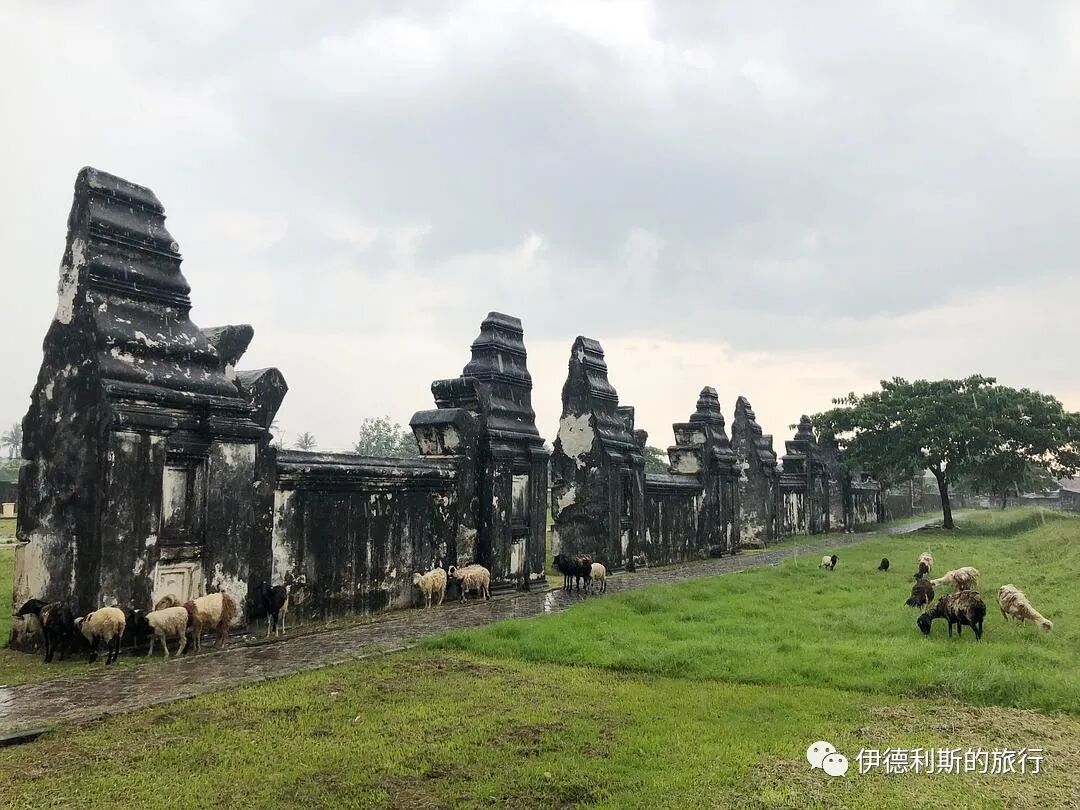
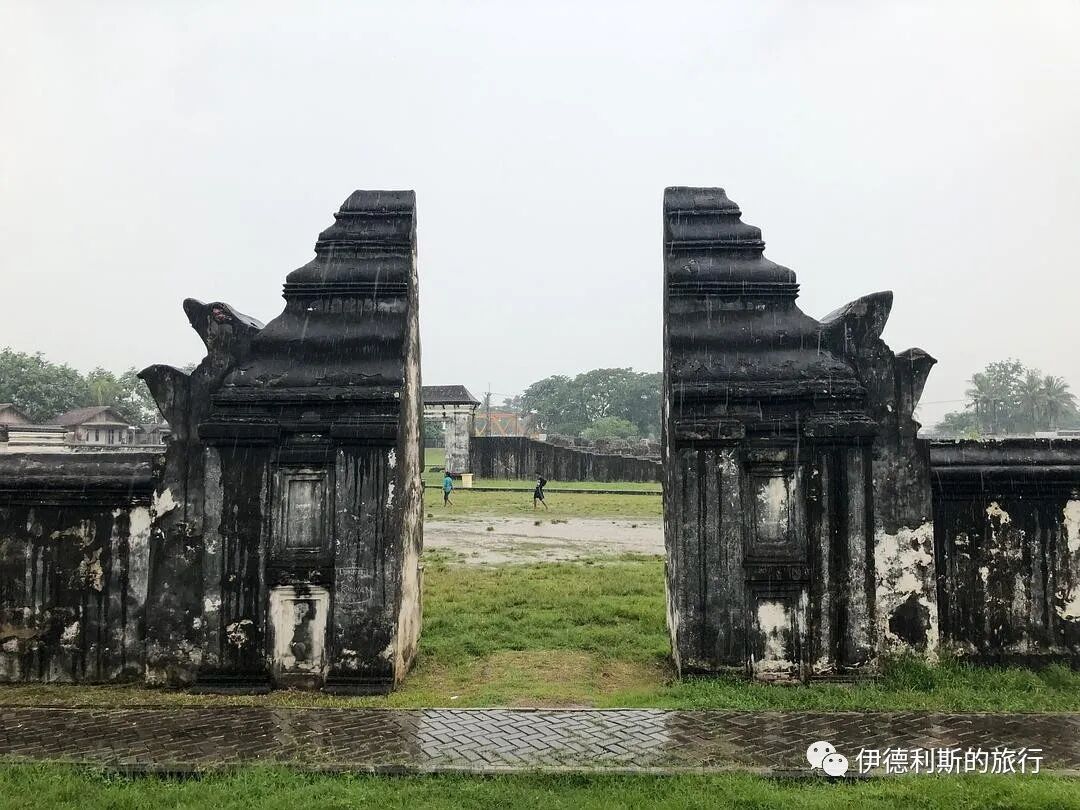
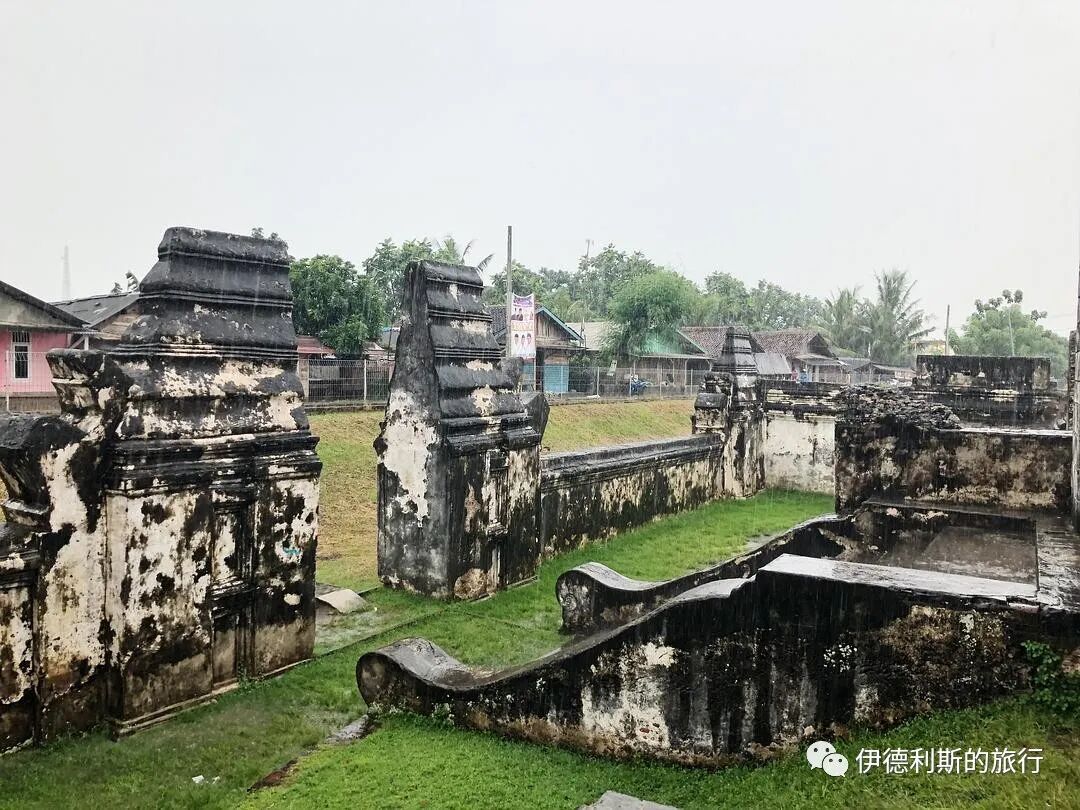
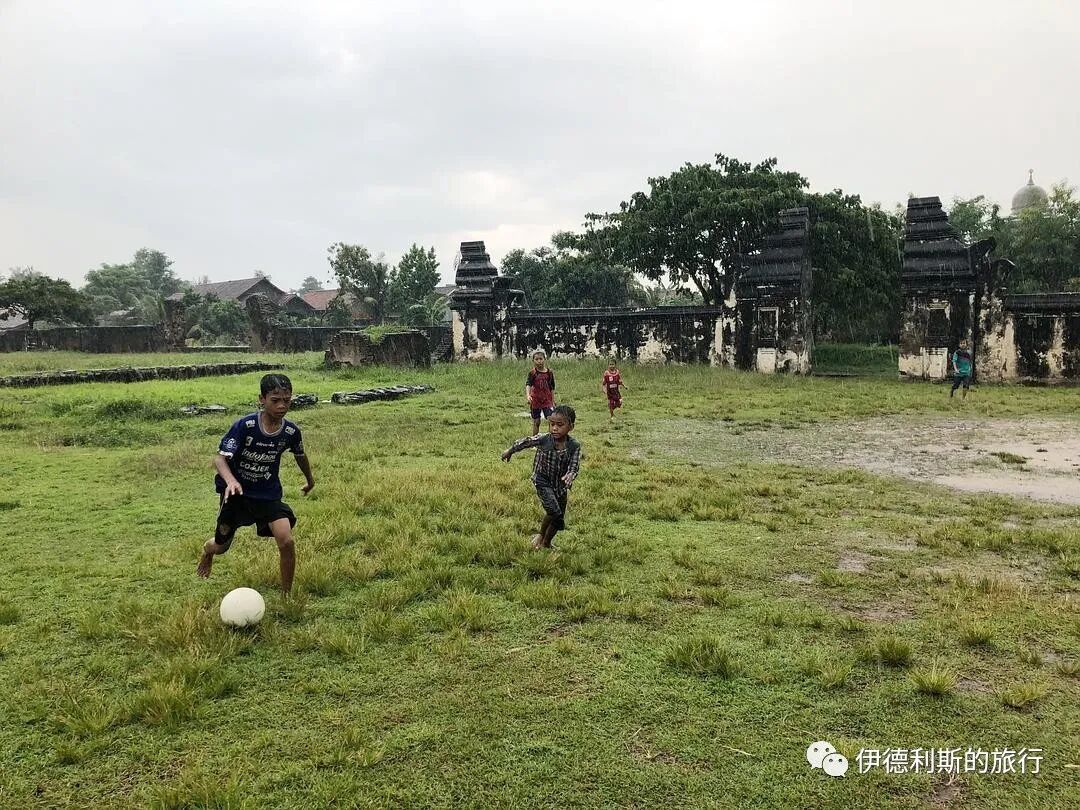
Part of the palace still retains the Queen Mother's bedroom, which featured a cooling system powered by flowing water.
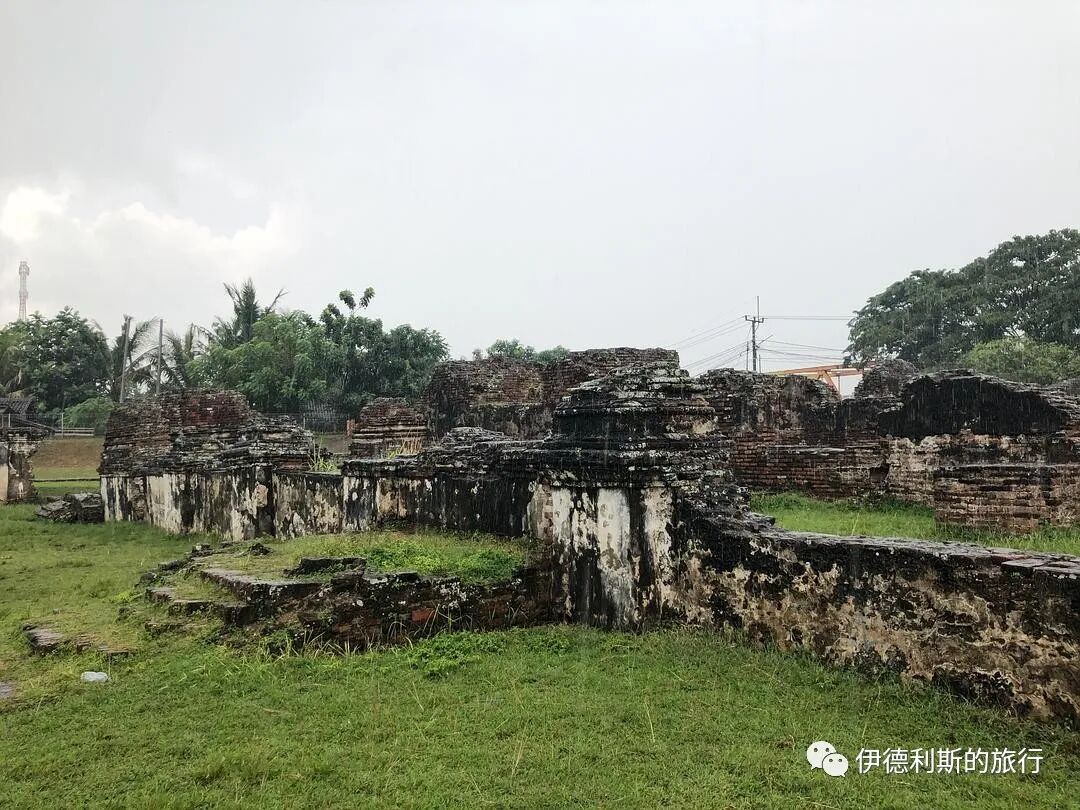
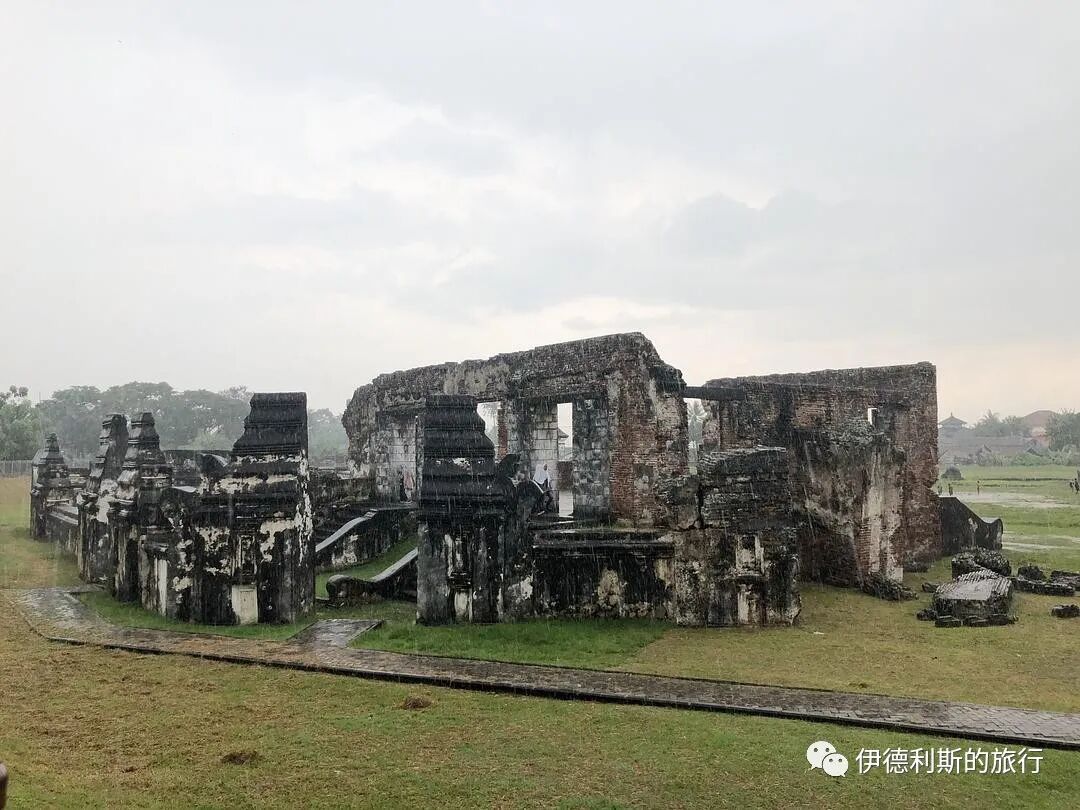
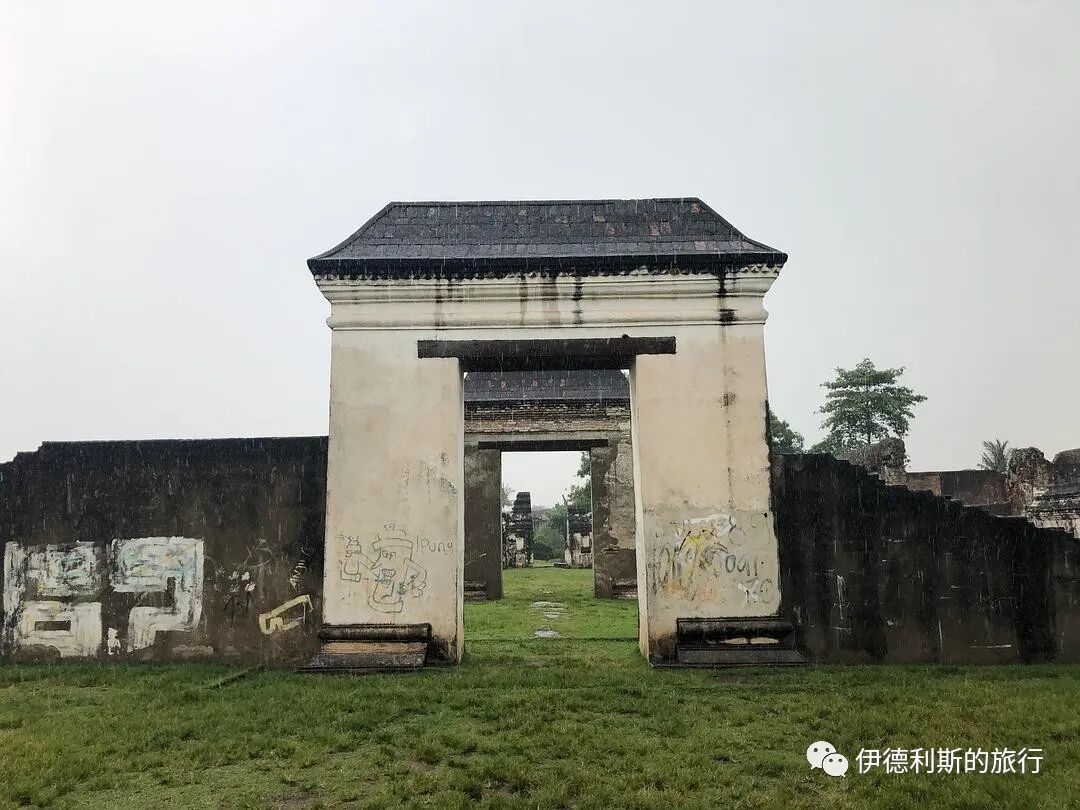
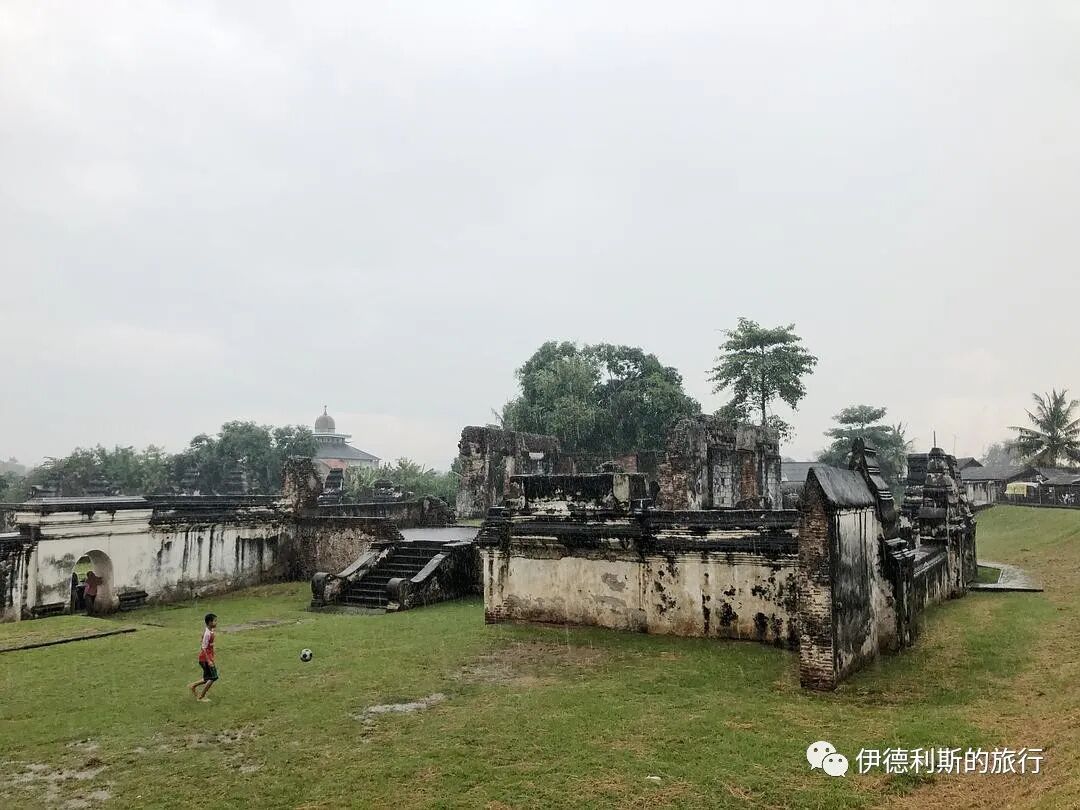
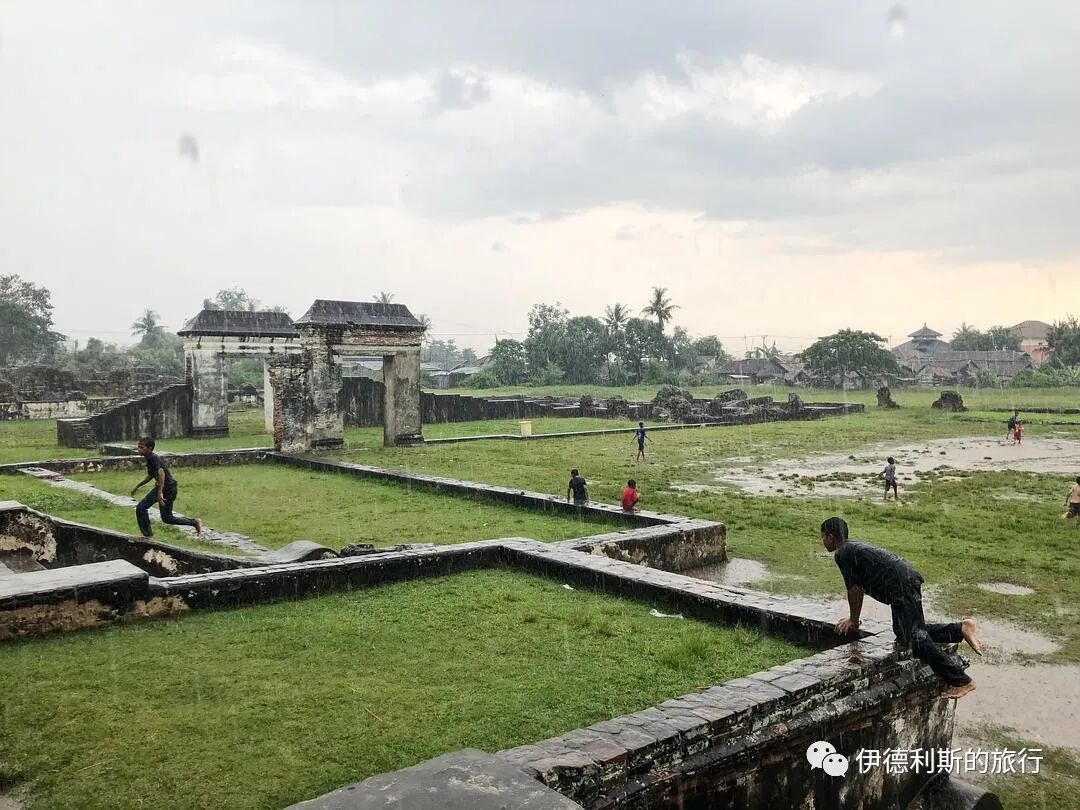
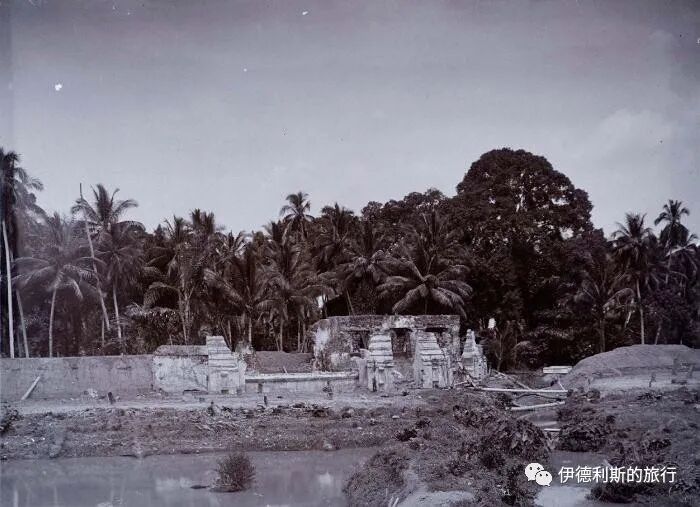
Photographed by Georg Friedrich Johannes between 1915 and 1926
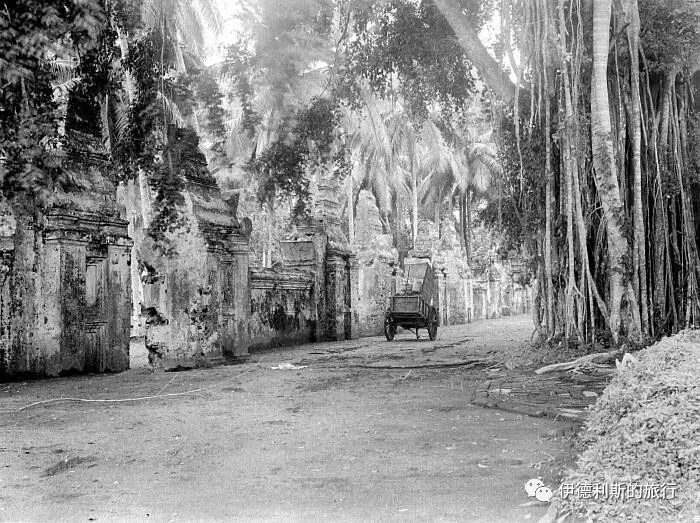
Photographed in 1933
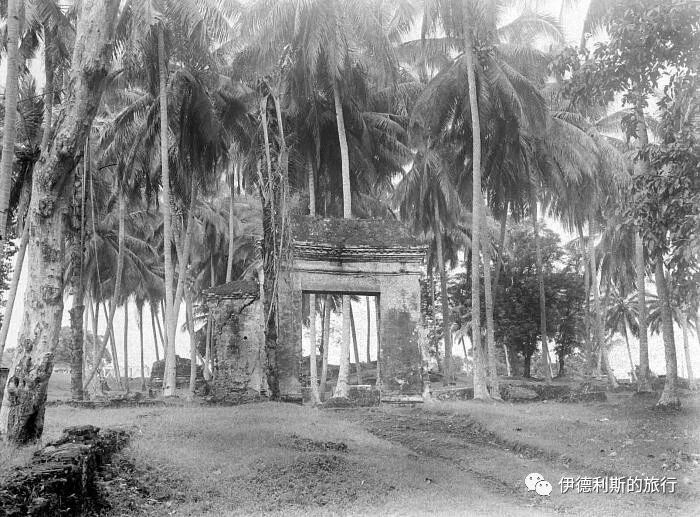
Muslim History Guide Indonesia Java: Kudus Mosques, Old City Streets and Islamic Heritage
Articles • yusuf908 posted the article • 0 comments • 189 views • 2026-05-23 23:06
Summary: Muslim History Guide Indonesia Java: Kudus Mosques, Old City Streets and Islamic Heritage is presented here as a clear Muslim travel account, beginning with this scene: In our last article, The First Sultanate of Java: Demak, we introduced the medieval trading port of Demak, located an hour's drive northeast of the Central Java capital, Semarang. The account keeps its focus on Kudus Mosques, Indonesia Muslim Travel, Java Islamic Heritage while preserving the names, places, food, and historical details from the Chinese source.
In our last article, The First Sultanate of Java: Demak, we introduced the medieval trading port of Demak, located an hour's drive northeast of the Central Java capital, Semarang. This is where the first sultanate on Java was established. Another hour's drive northeast from Demak brings you to Kudus, an important holy city for Islam on Java.
Kudus is the only city on Java with an Arabic name. Kudus is actually the Arabic pronunciation of Jerusalem, al-Quds. The city is named after Sunan Kudus, one of the nine saints (Wali Sanga) of Javanese Islam. The tomb of Sunan Kudus is now an important holy site on Java, and the Al-Aqsa Mosque next to the tomb is world-famous for its unique minaret built in the early Javanese style.
Kudus was born into a family of Islamic scholars. His grandfather, Sunan Ampel, was one of the nine saints of Javanese Islam. He served for a long time as the imam of the Great Mosque of Demak and was a teacher to Raden Patah, the founder of the Demak Sultanate. His father, Sunan Ngudung, was also a famous Javanese Islamic sage who served as the imam of the Great Mosque of Demak from 1520 to 1524.
In 1478, the Buddhist-majority Majapahit army killed King Brawijaya V, who had united the Muslims. As the biological son of Brawijaya V, the Demak Sultan Raden Patah officially declared war on the Majapahit Kingdom. Kudus's father, Ngudung, led the Demak Sultanate's army as a commander in a war against the Majapahit Kingdom that lasted for many years. He was killed in battle in 1524.
As Ngudung's son, Kudus also served as an officer in four wars against the Majapahit Kingdom, though he focused most of his energy on his religious studies. Kudus studied under Sunan Kalijaga, the founder of the Great Mosque of Demak and one of the nine saints of Javanese Islam. Like his teacher, Kudus was very tolerant of traditional Javanese culture. He once tied a cow, which Hindus consider sacred, inside the mosque to attract Hindu followers, and he forbade people from slaughtering cows. When building the mosque, Kudus also used Javanese Hindu architectural styles.
Kudus Al-Aqsa Mosque: 1549
The Kudus Al-Aqsa Mosque (Masjid Al Aqsa Menara Kudus) was built by Kudus in 1549 and is known for its unique traditional Javanese architectural style.
The mosque shares its name with the famous Al-Aqsa Mosque in Jerusalem. People say while on his way to Hajj, Kudus helped cure a plague in a city. He refused the generous gifts offered by the locals, accepting only a stone from the holy site surrounding the Al-Aqsa Mosque in Jerusalem. After returning to Java, Kudus used the stone to build this mosque.
19th century
Early 20th century
The architectural style of the Kudus Al-Aqsa Mosque directly inherits from the Buddhist/Hindu architecture of the Majapahit era, featuring two types of signature gates: the split gate (candi bentar) and the main gate (kori agung).
A mosque (candi) is a type of Hindu/Buddhist mosque architecture found on Java, Bali, and Lombok. A split gate (candi bentar) means a split mosque, where the structure is symmetrically divided down the center to create a path. In reality, the split gate (candi bentar) does not have doors installed. It serves as a passage from the secular world into a sacred space, creating a sense of solemnity before entering the main building.
The split gate (candi bentar) of the Kudus Al-Aqsa Mosque is built from red brick steps.
The main gate (kori agung), also known as a paduraksa gate in Hindu/Buddhist architecture, is the primary entrance from the secular world into a sacred space. The Kori Agung gate comes from the ancient Hindu Gopuram gate. It was widely used in old Javanese Hindu and Buddhist temples from the 8th to 9th centuries. After the 15th century, Islamic sultanates used it for mosques, palaces, and tombs, but without the complex Hindu and Buddhist decorations.
The Kori Agung is actually a type of Majapahit-style stepped temple (candi) building. It is made of red brick and has beautiful patterns on its wooden doors.
A side door of the mosque that connects to the holy tomb.
The main hall of the mosque was rebuilt in modern times, but it still keeps two original Kori Agung gates inside.
The most famous building at Al-Aqsa Mosque is this minaret, which is the earliest one in Java and the only one from the 16th century on the island. This tower is not a Persian-style spire at all. It is a traditional Javanese Majapahit-style tower with a large prayer drum (bedug) on top used to call people to prayer. Today, a drum tower (bale kulkul) in the same style still exists in Bali, used to signal attacks, fires, or public events.
Early 20th century
The ablution pool at Al-Aqsa Mosque is also very unique. Each water tap has a traditional statue. People say Sunan Kudus designed this during the early construction to attract local Hindus and Buddhists to come here to clean themselves.
Tomb of Sunan Kudus: 1550.
Sunan Kudus passed away in 1550 and was buried in the backyard of Al-Aqsa Mosque. The holy tomb is also in the traditional Majapahit architectural style.
The gate of the holy tomb.
The path after entering the gate.
The split gate (candi bentar) in the middle of the path.
Early 20th century
Next is another Kori Agung gate.
Then you enter the bathing area, where people perform wudu before entering the holy tomb.
Then you pass through this split gate (candi bentar) to enter the outer burial area.
Then you pass through this Kori Agung gate to reach the actual holy tomb.
Early 20th century
Langgar Bubrah ruins: 1533.
The Langgar Bubrah ruins sit in a small alley south of the Al-Aqsa Mosque. They are an important witness to Java Island's 16th-century transition from Hinduism to Islam.
Prince Pontjowati of the Majapahit Kingdom reportedly built Langgar Bubrah in 1533 as a Hindu temple. Later, Prince Pontjowati converted to Islam under the guidance of Kudus and became his student, turning this site into a mosque.
Langgar Bubrah features traditional Majapahit-style brick carvings.
The room once had a roof, but it did not survive. Now, only the stone column bases (umpak) that supported the roof remain. Next to the column bases, there is a Hindu linga and a stone used for grinding herbs.
Beside the ruins, there is also a Hindu stone carving featuring an image of Shiva. view all
Summary: Muslim History Guide Indonesia Java: Kudus Mosques, Old City Streets and Islamic Heritage is presented here as a clear Muslim travel account, beginning with this scene: In our last article, The First Sultanate of Java: Demak, we introduced the medieval trading port of Demak, located an hour's drive northeast of the Central Java capital, Semarang. The account keeps its focus on Kudus Mosques, Indonesia Muslim Travel, Java Islamic Heritage while preserving the names, places, food, and historical details from the Chinese source.
In our last article, The First Sultanate of Java: Demak, we introduced the medieval trading port of Demak, located an hour's drive northeast of the Central Java capital, Semarang. This is where the first sultanate on Java was established. Another hour's drive northeast from Demak brings you to Kudus, an important holy city for Islam on Java.
Kudus is the only city on Java with an Arabic name. Kudus is actually the Arabic pronunciation of Jerusalem, al-Quds. The city is named after Sunan Kudus, one of the nine saints (Wali Sanga) of Javanese Islam. The tomb of Sunan Kudus is now an important holy site on Java, and the Al-Aqsa Mosque next to the tomb is world-famous for its unique minaret built in the early Javanese style.
Kudus was born into a family of Islamic scholars. His grandfather, Sunan Ampel, was one of the nine saints of Javanese Islam. He served for a long time as the imam of the Great Mosque of Demak and was a teacher to Raden Patah, the founder of the Demak Sultanate. His father, Sunan Ngudung, was also a famous Javanese Islamic sage who served as the imam of the Great Mosque of Demak from 1520 to 1524.
In 1478, the Buddhist-majority Majapahit army killed King Brawijaya V, who had united the Muslims. As the biological son of Brawijaya V, the Demak Sultan Raden Patah officially declared war on the Majapahit Kingdom. Kudus's father, Ngudung, led the Demak Sultanate's army as a commander in a war against the Majapahit Kingdom that lasted for many years. He was killed in battle in 1524.
As Ngudung's son, Kudus also served as an officer in four wars against the Majapahit Kingdom, though he focused most of his energy on his religious studies. Kudus studied under Sunan Kalijaga, the founder of the Great Mosque of Demak and one of the nine saints of Javanese Islam. Like his teacher, Kudus was very tolerant of traditional Javanese culture. He once tied a cow, which Hindus consider sacred, inside the mosque to attract Hindu followers, and he forbade people from slaughtering cows. When building the mosque, Kudus also used Javanese Hindu architectural styles.
Kudus Al-Aqsa Mosque: 1549
The Kudus Al-Aqsa Mosque (Masjid Al Aqsa Menara Kudus) was built by Kudus in 1549 and is known for its unique traditional Javanese architectural style.
The mosque shares its name with the famous Al-Aqsa Mosque in Jerusalem. People say while on his way to Hajj, Kudus helped cure a plague in a city. He refused the generous gifts offered by the locals, accepting only a stone from the holy site surrounding the Al-Aqsa Mosque in Jerusalem. After returning to Java, Kudus used the stone to build this mosque.
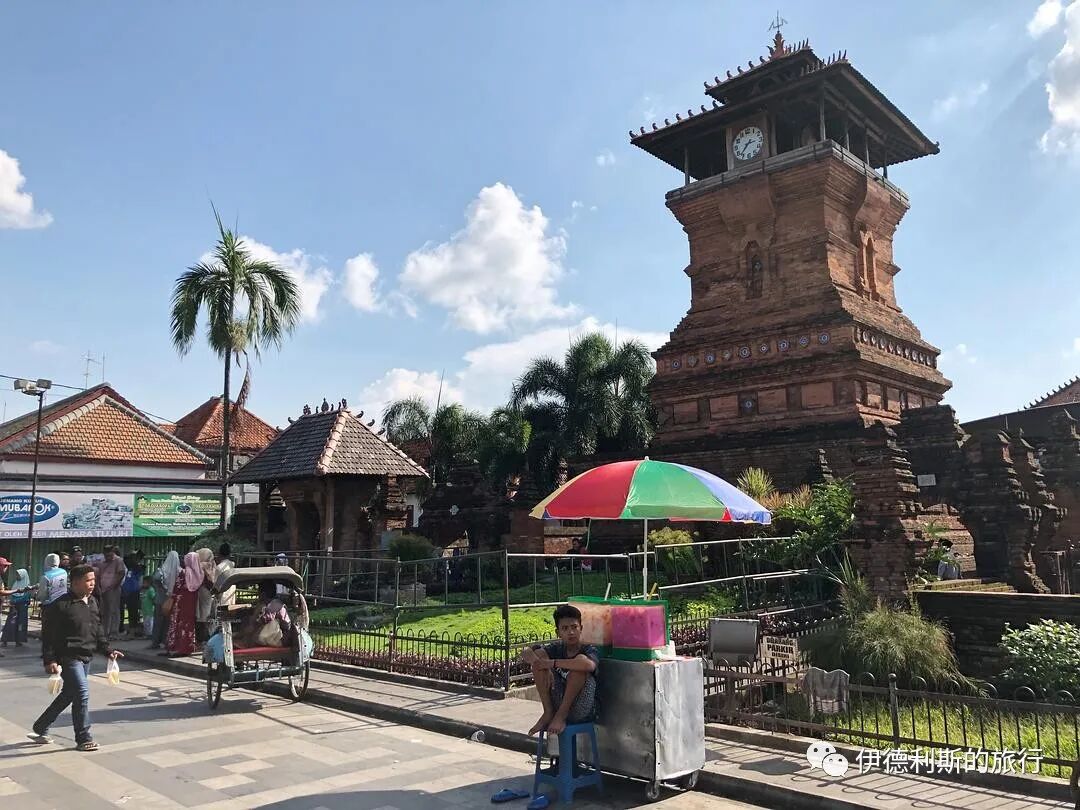
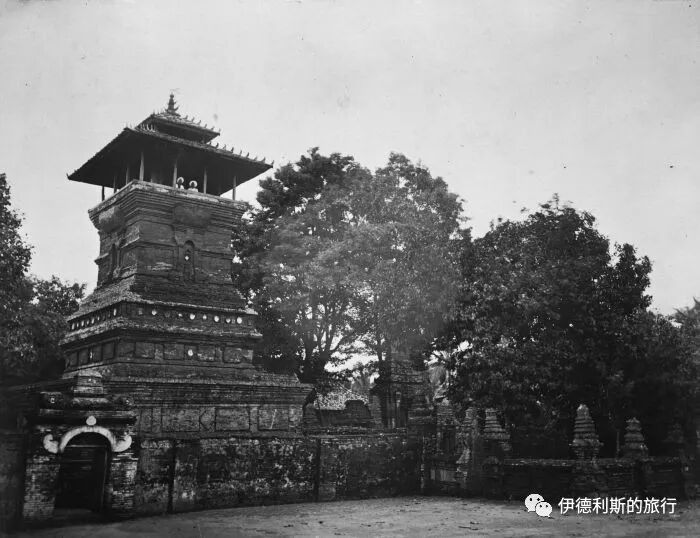
19th century
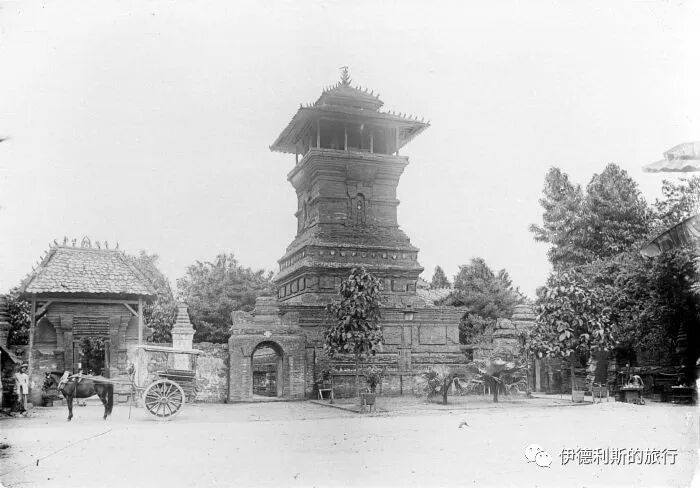
Early 20th century
The architectural style of the Kudus Al-Aqsa Mosque directly inherits from the Buddhist/Hindu architecture of the Majapahit era, featuring two types of signature gates: the split gate (candi bentar) and the main gate (kori agung).
A mosque (candi) is a type of Hindu/Buddhist mosque architecture found on Java, Bali, and Lombok. A split gate (candi bentar) means a split mosque, where the structure is symmetrically divided down the center to create a path. In reality, the split gate (candi bentar) does not have doors installed. It serves as a passage from the secular world into a sacred space, creating a sense of solemnity before entering the main building.
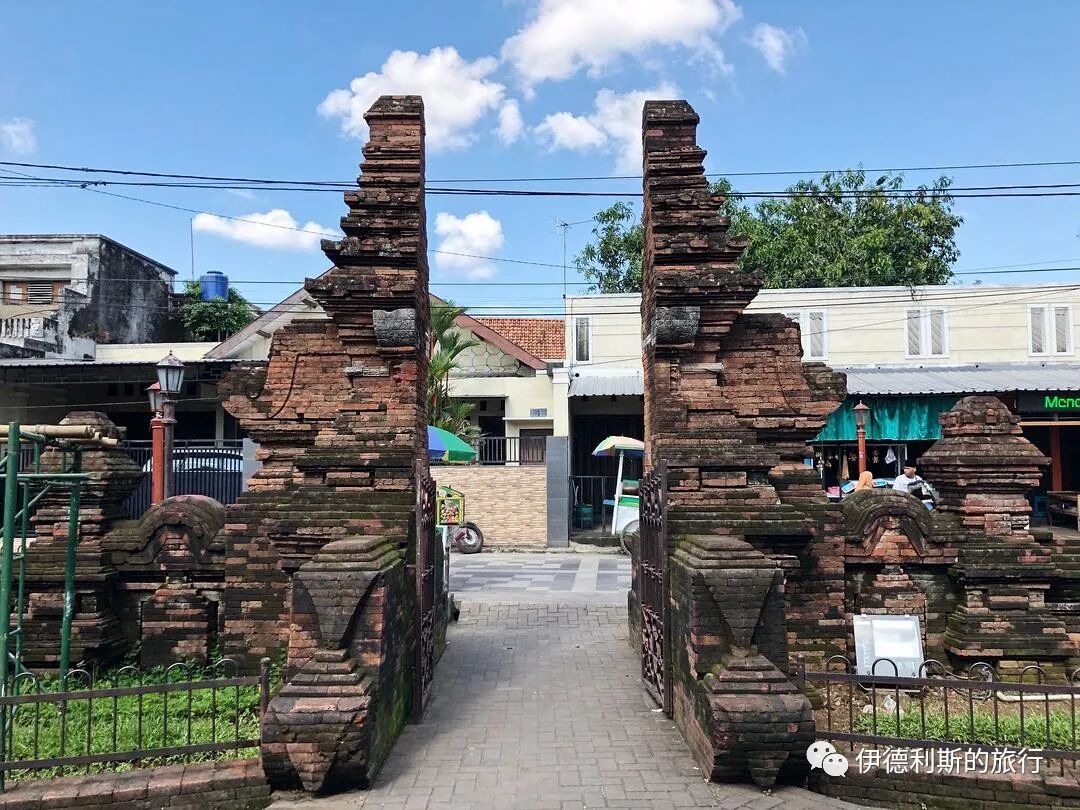
The split gate (candi bentar) of the Kudus Al-Aqsa Mosque is built from red brick steps.
The main gate (kori agung), also known as a paduraksa gate in Hindu/Buddhist architecture, is the primary entrance from the secular world into a sacred space. The Kori Agung gate comes from the ancient Hindu Gopuram gate. It was widely used in old Javanese Hindu and Buddhist temples from the 8th to 9th centuries. After the 15th century, Islamic sultanates used it for mosques, palaces, and tombs, but without the complex Hindu and Buddhist decorations.
The Kori Agung is actually a type of Majapahit-style stepped temple (candi) building. It is made of red brick and has beautiful patterns on its wooden doors.
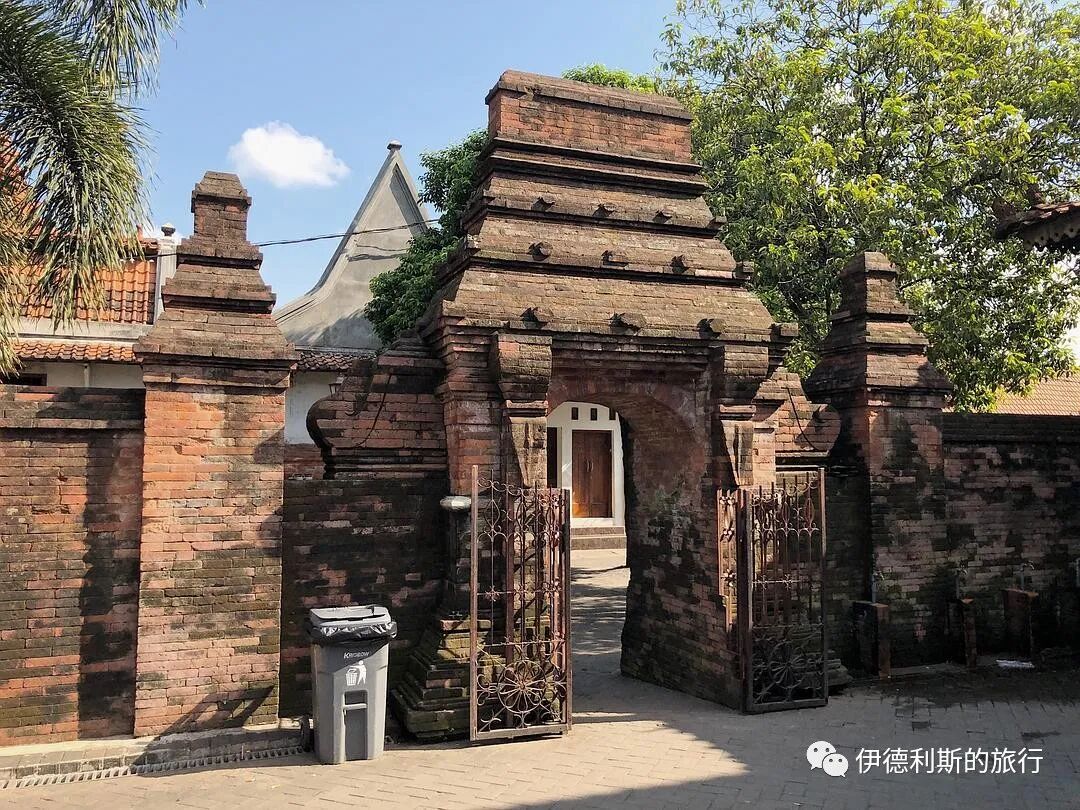
A side door of the mosque that connects to the holy tomb.
The main hall of the mosque was rebuilt in modern times, but it still keeps two original Kori Agung gates inside.
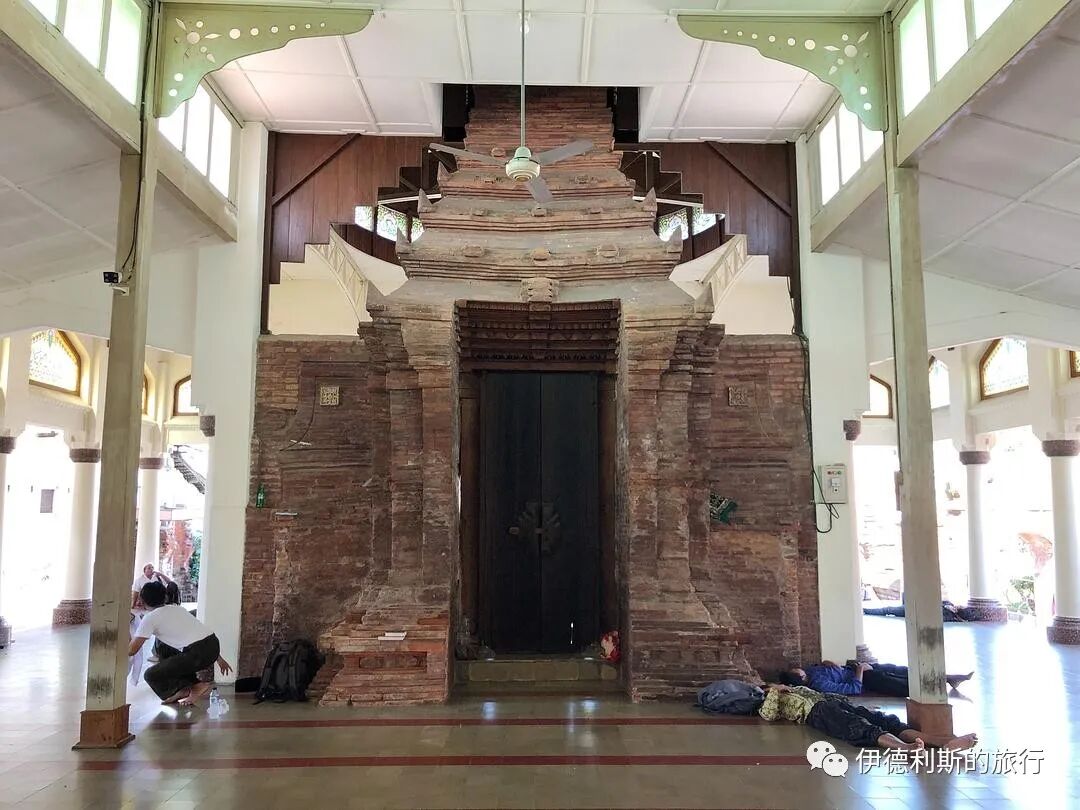
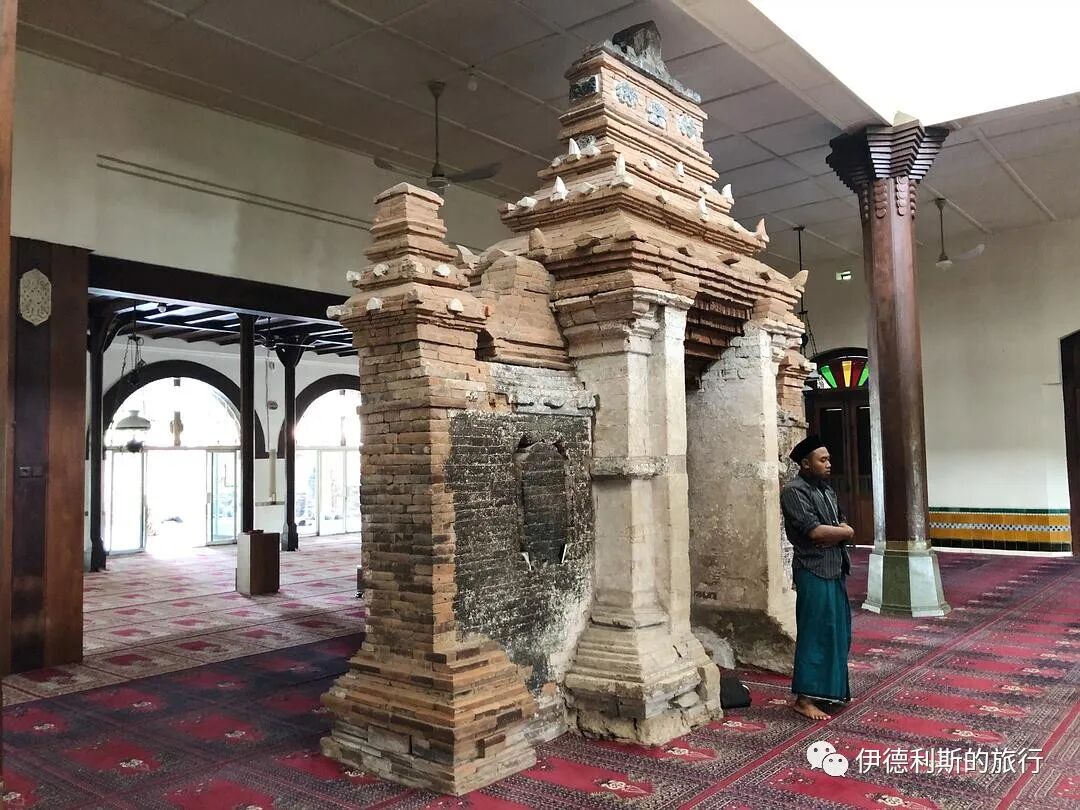
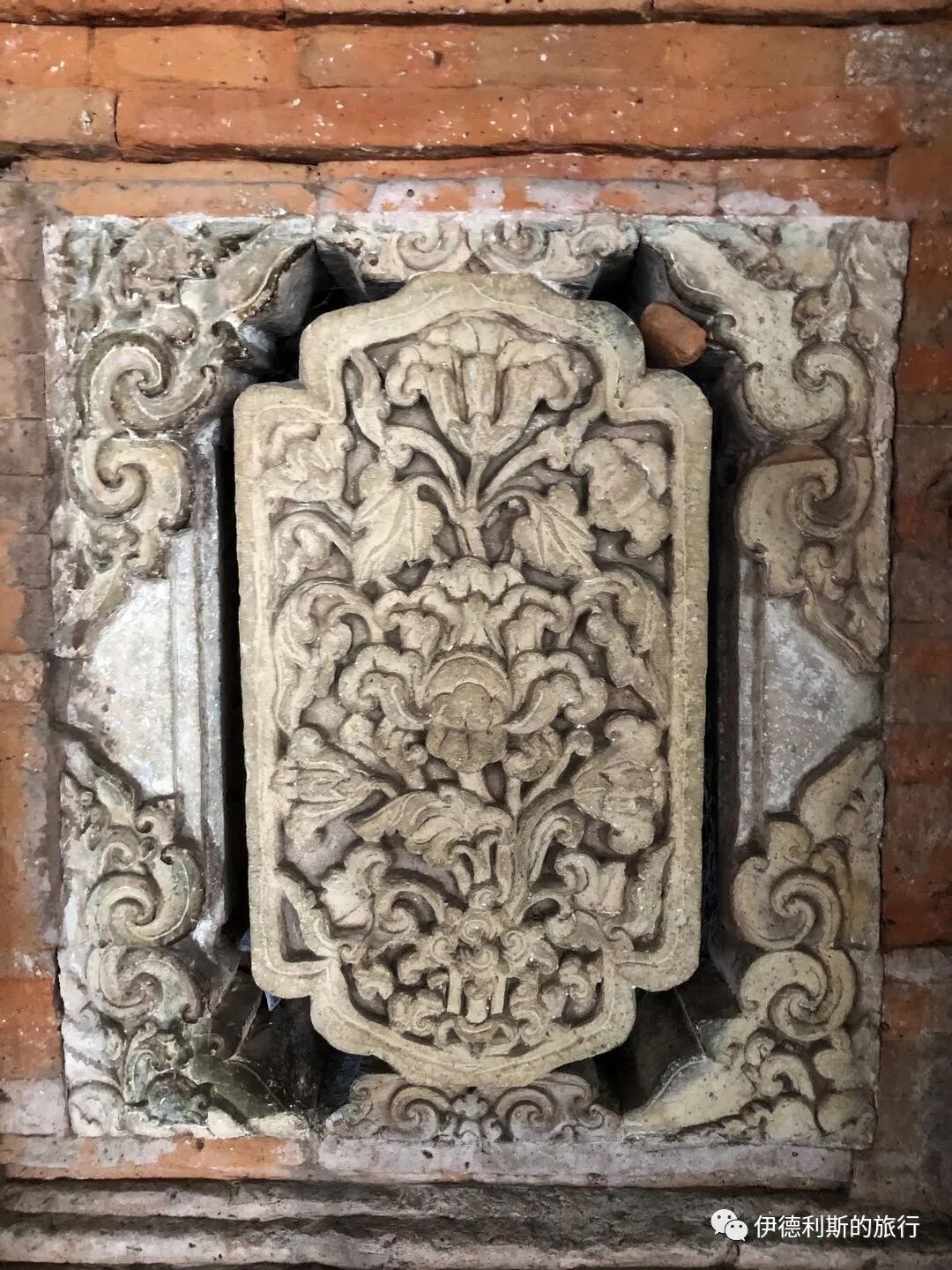
The most famous building at Al-Aqsa Mosque is this minaret, which is the earliest one in Java and the only one from the 16th century on the island. This tower is not a Persian-style spire at all. It is a traditional Javanese Majapahit-style tower with a large prayer drum (bedug) on top used to call people to prayer. Today, a drum tower (bale kulkul) in the same style still exists in Bali, used to signal attacks, fires, or public events.
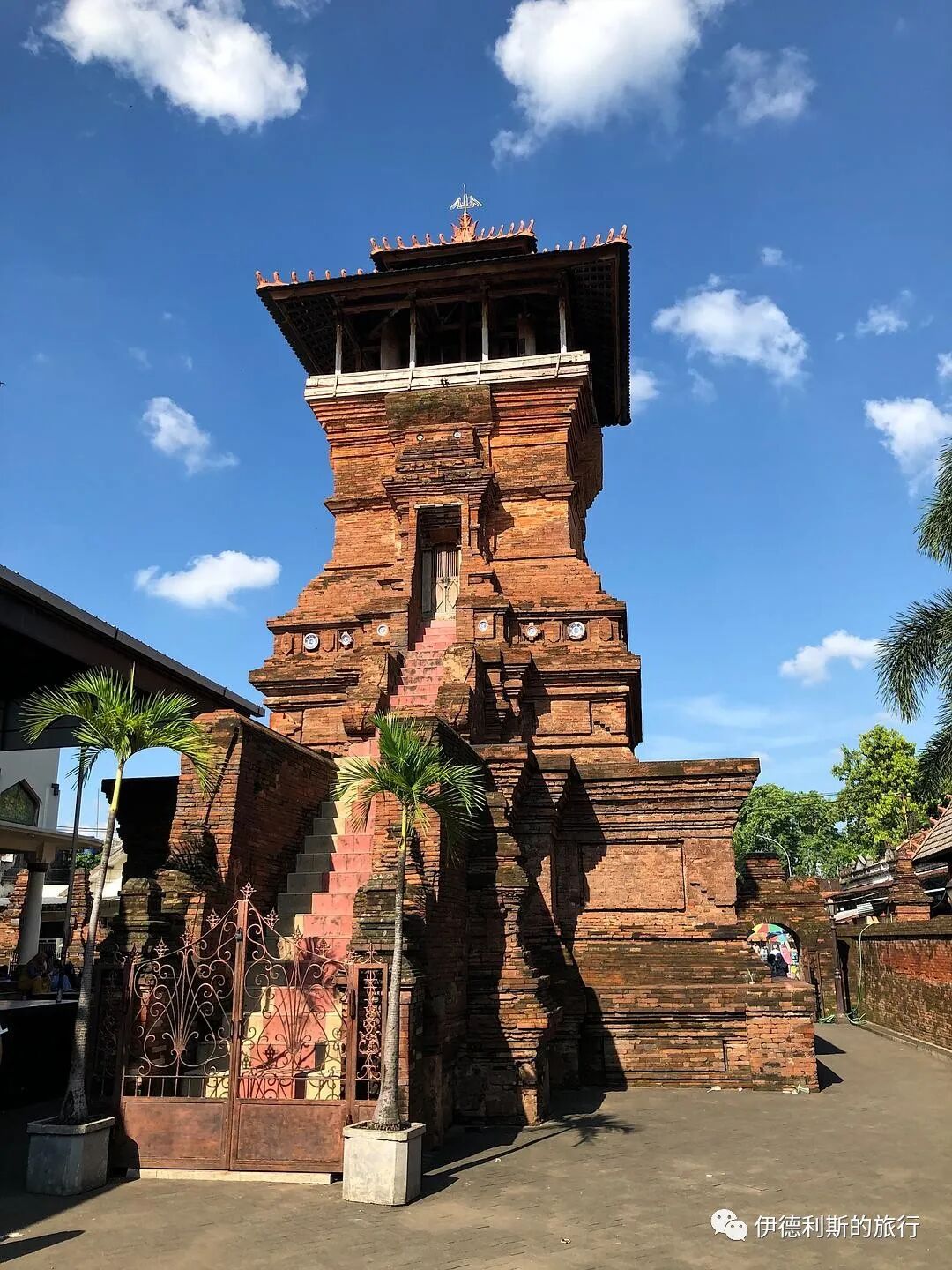
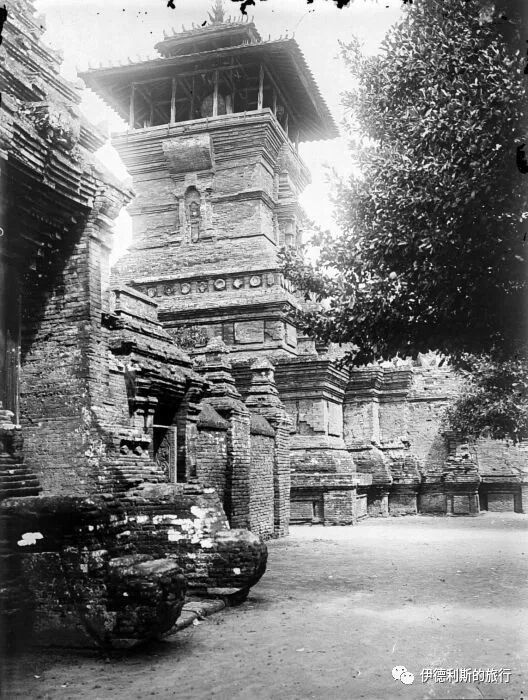
Early 20th century
The ablution pool at Al-Aqsa Mosque is also very unique. Each water tap has a traditional statue. People say Sunan Kudus designed this during the early construction to attract local Hindus and Buddhists to come here to clean themselves.
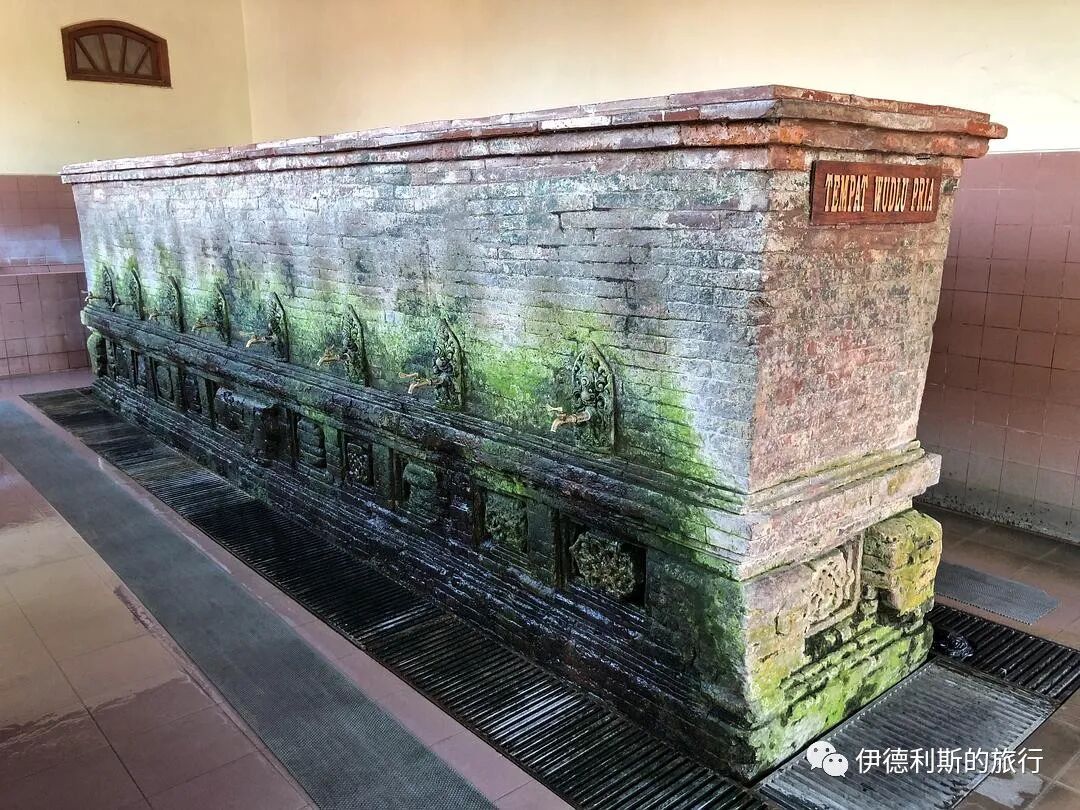
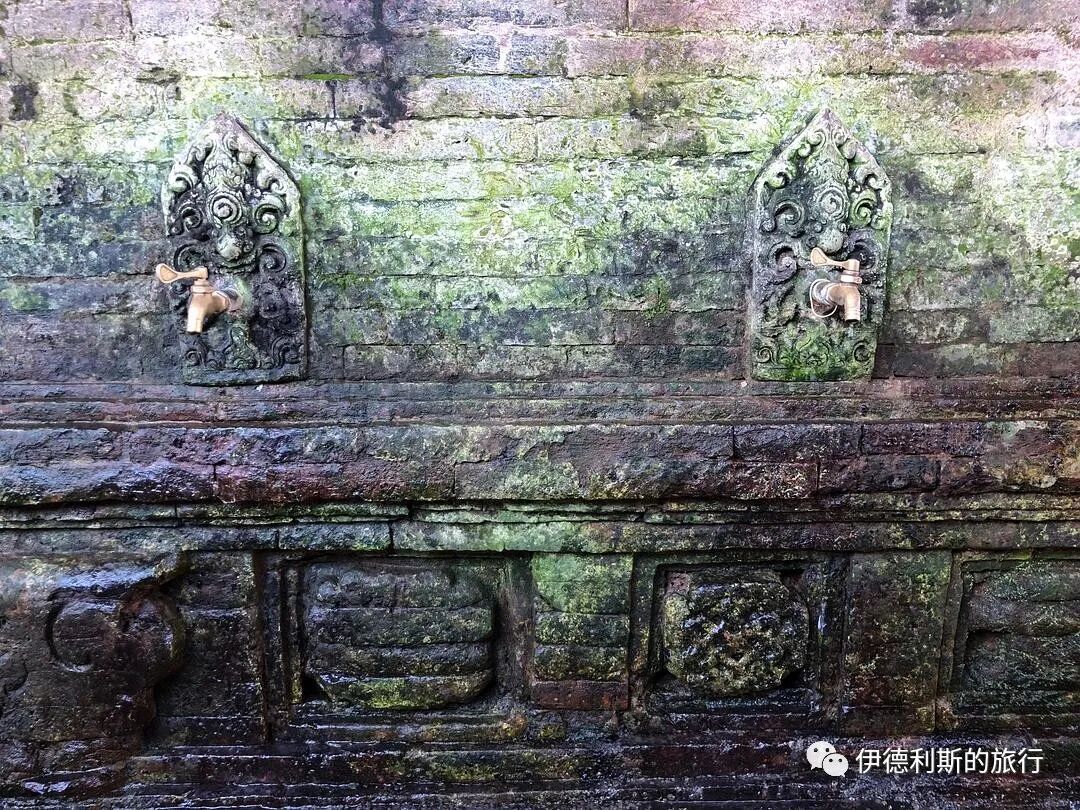
Tomb of Sunan Kudus: 1550.
Sunan Kudus passed away in 1550 and was buried in the backyard of Al-Aqsa Mosque. The holy tomb is also in the traditional Majapahit architectural style.
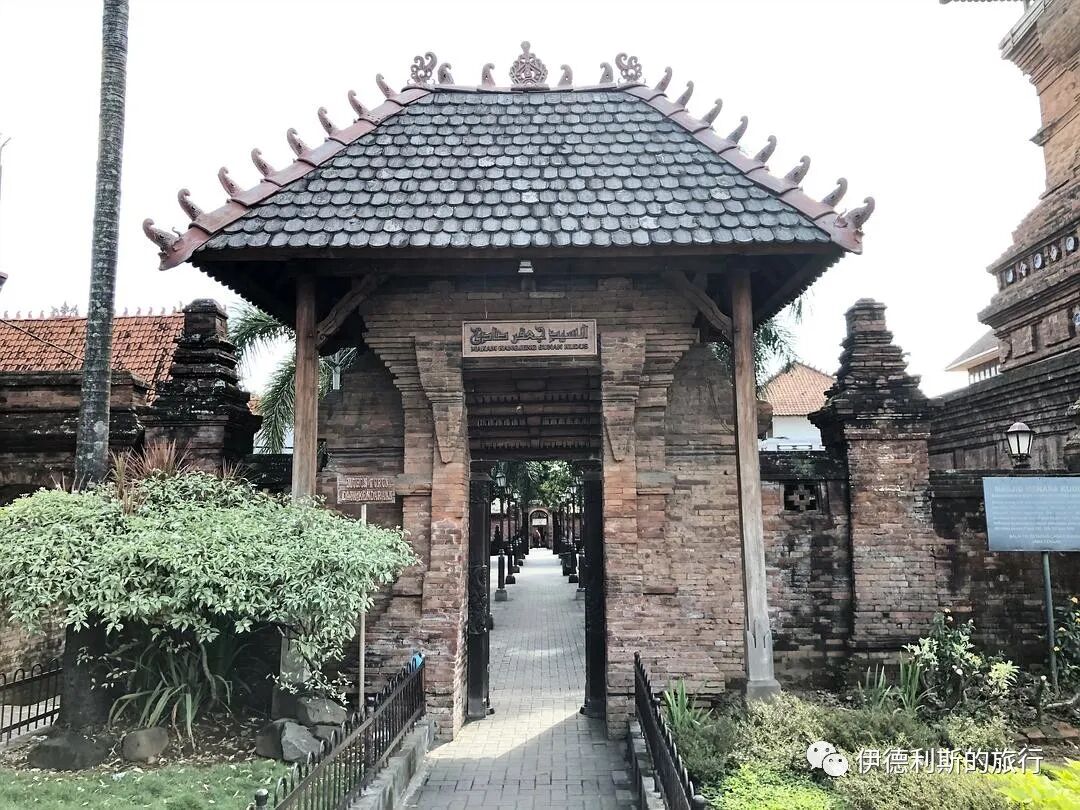
The gate of the holy tomb.
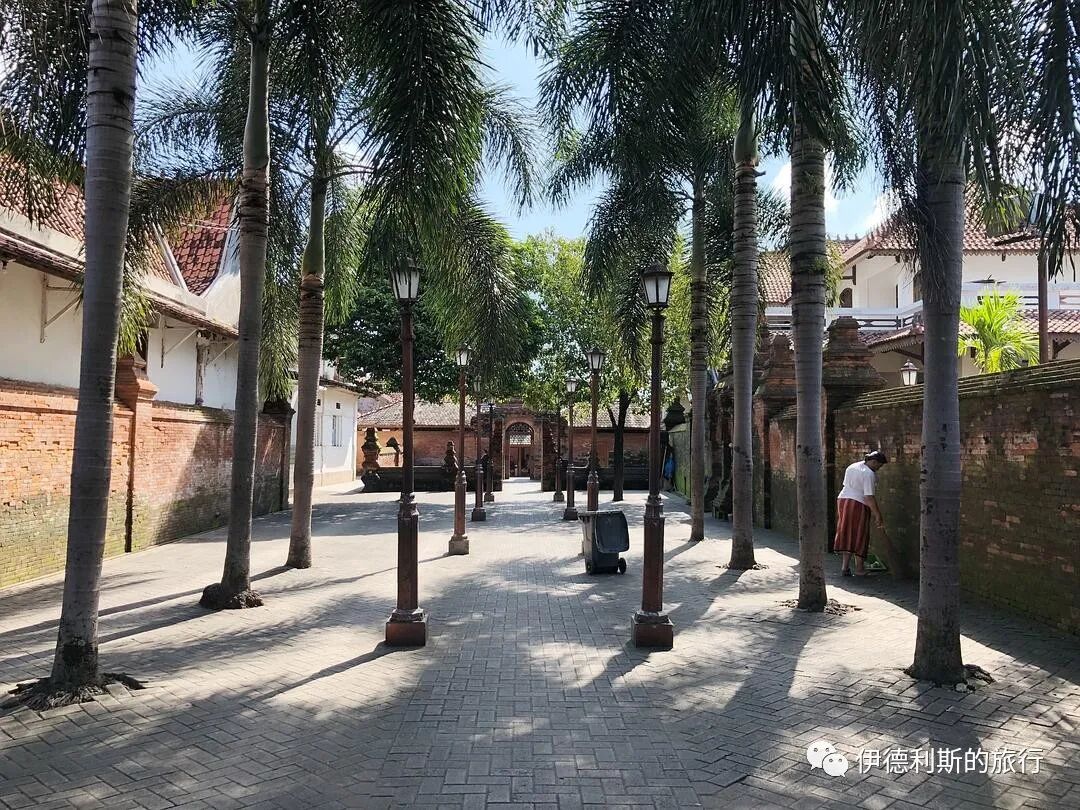
The path after entering the gate.
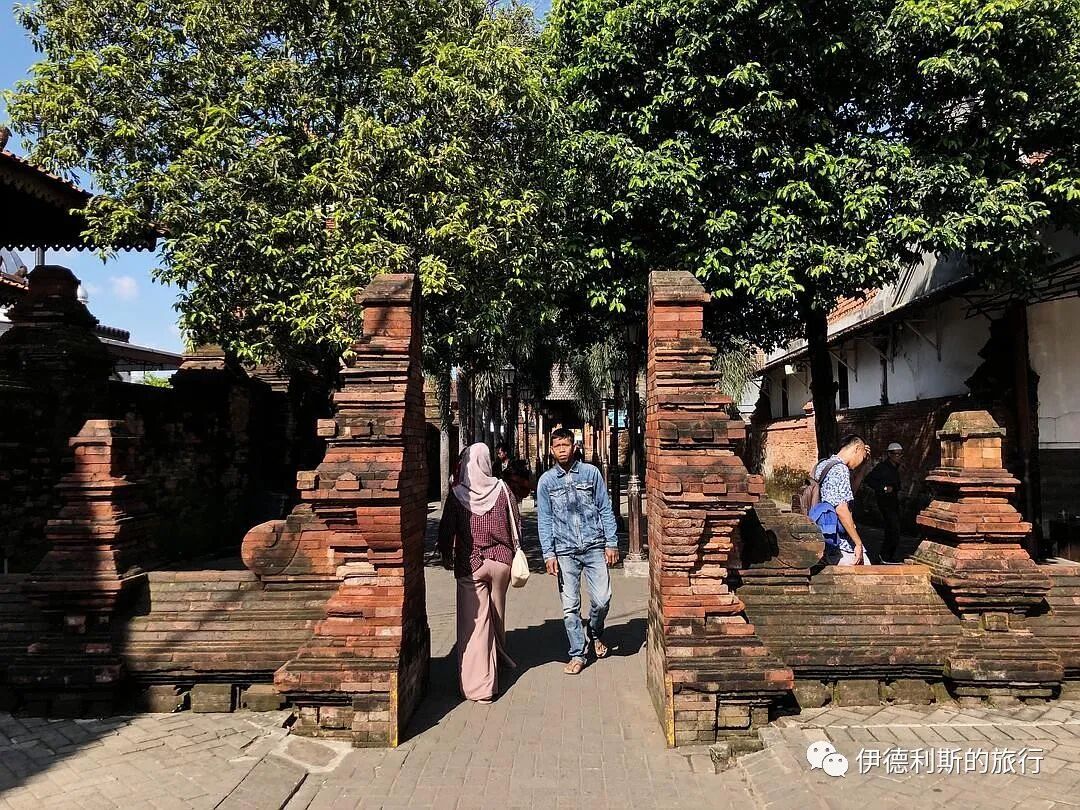
The split gate (candi bentar) in the middle of the path.
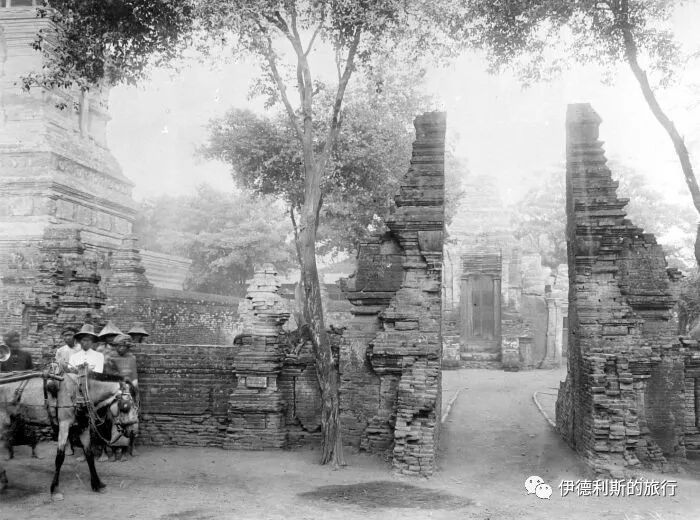
Early 20th century
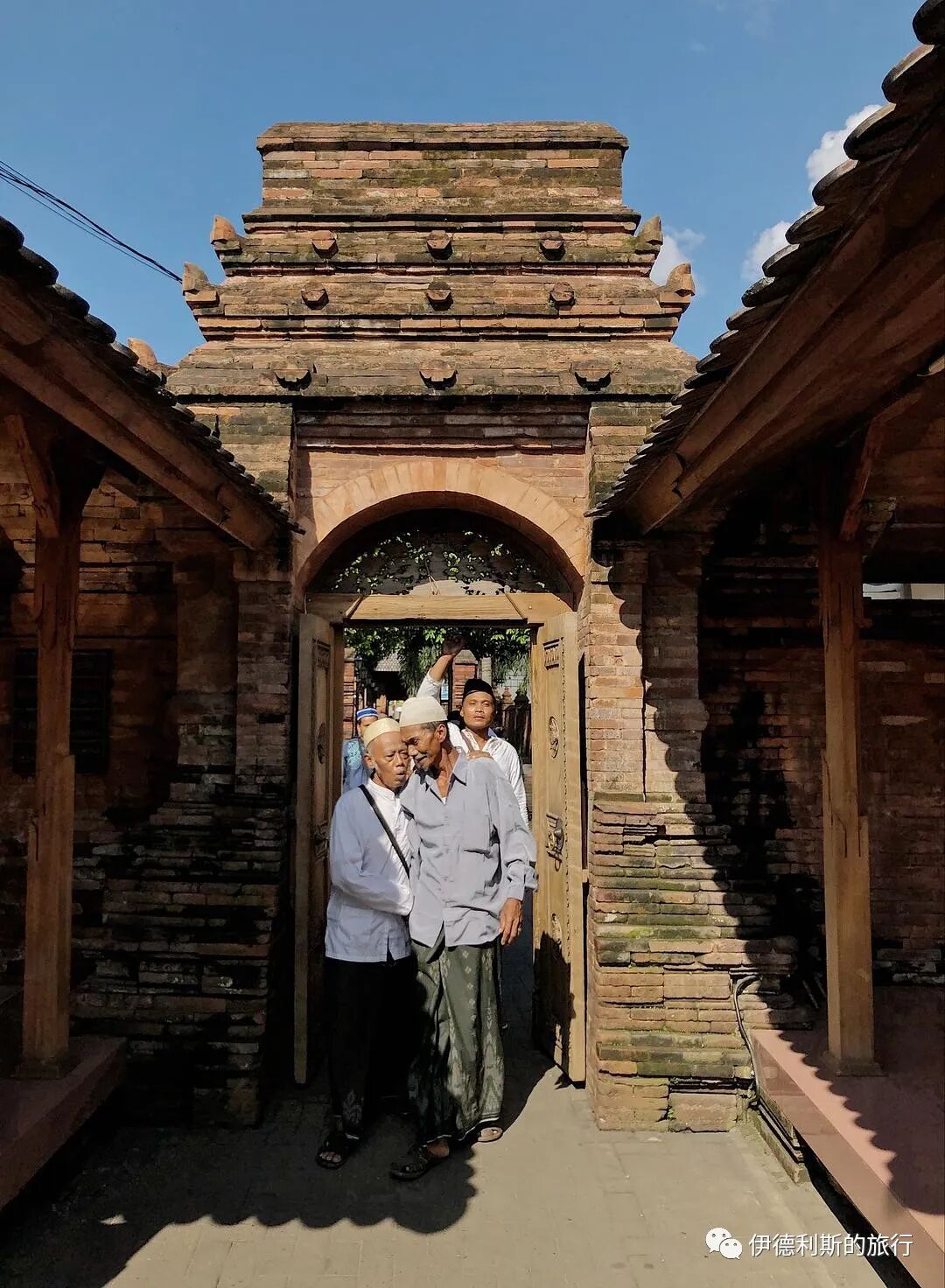
Next is another Kori Agung gate.
Then you enter the bathing area, where people perform wudu before entering the holy tomb.
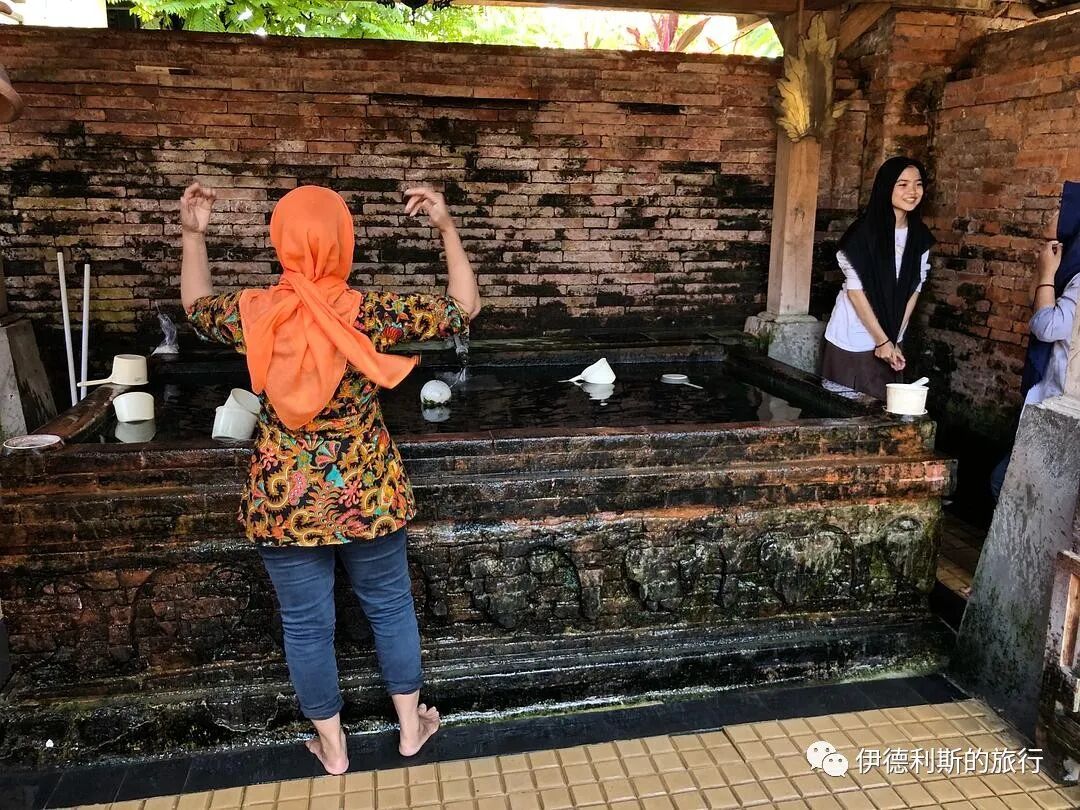
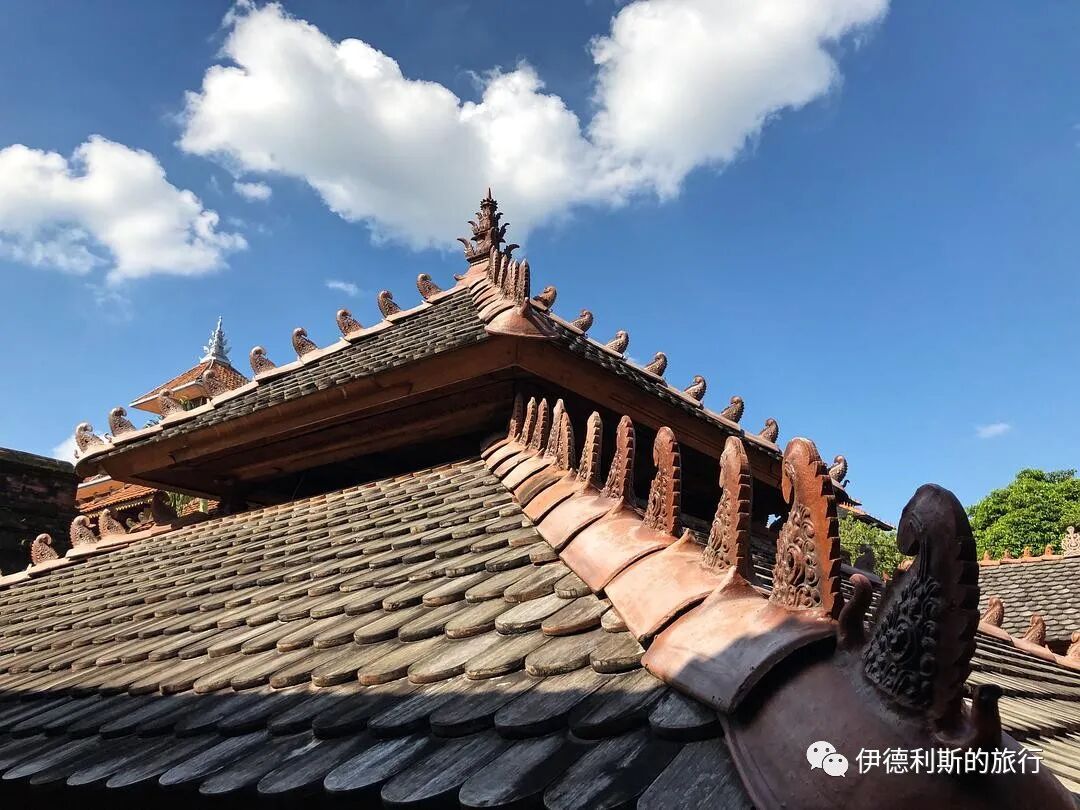
Then you pass through this split gate (candi bentar) to enter the outer burial area.
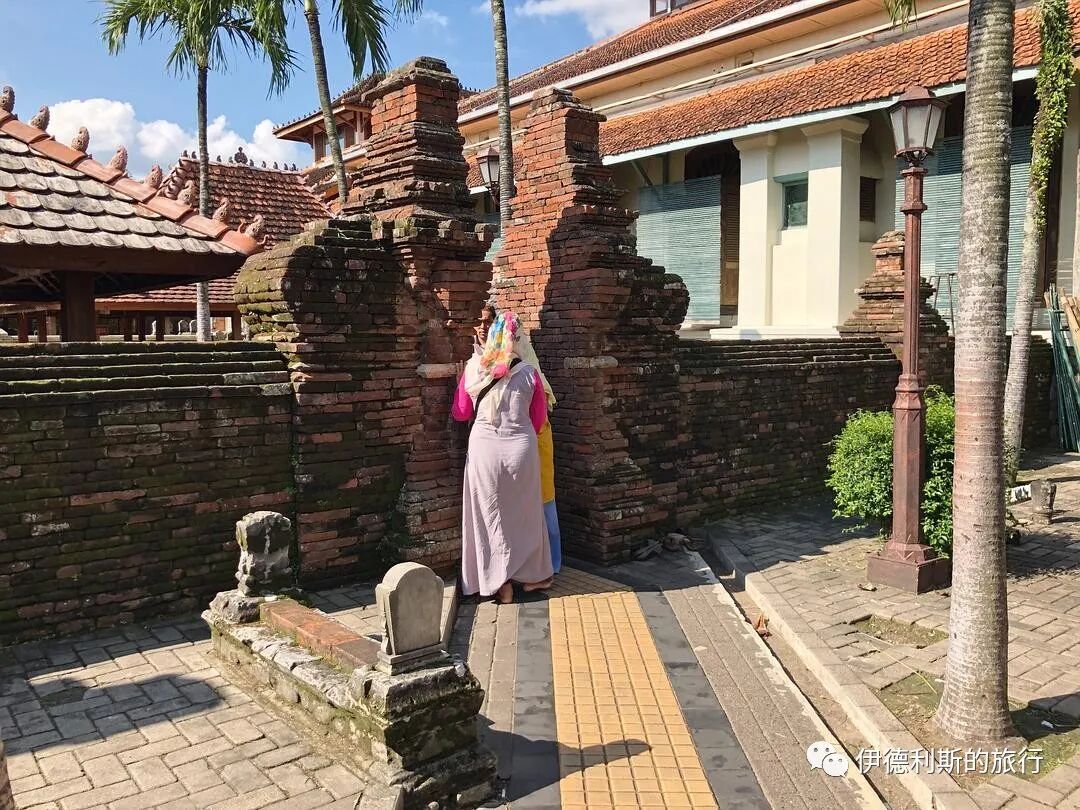
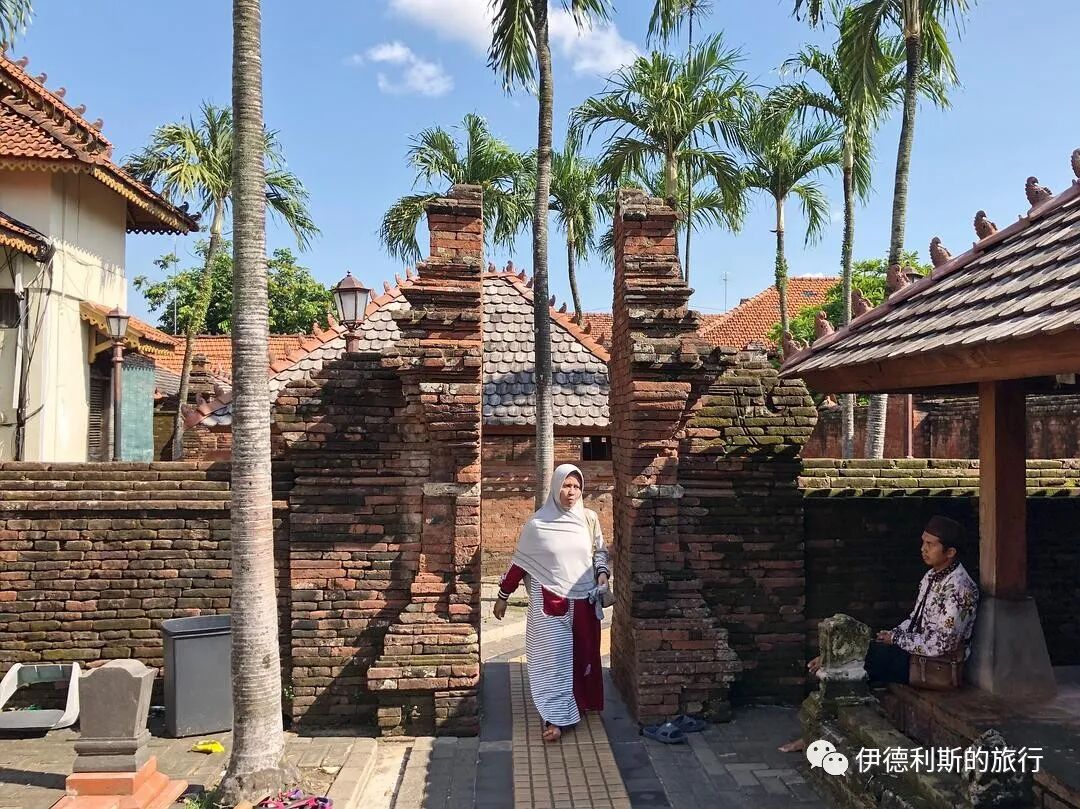
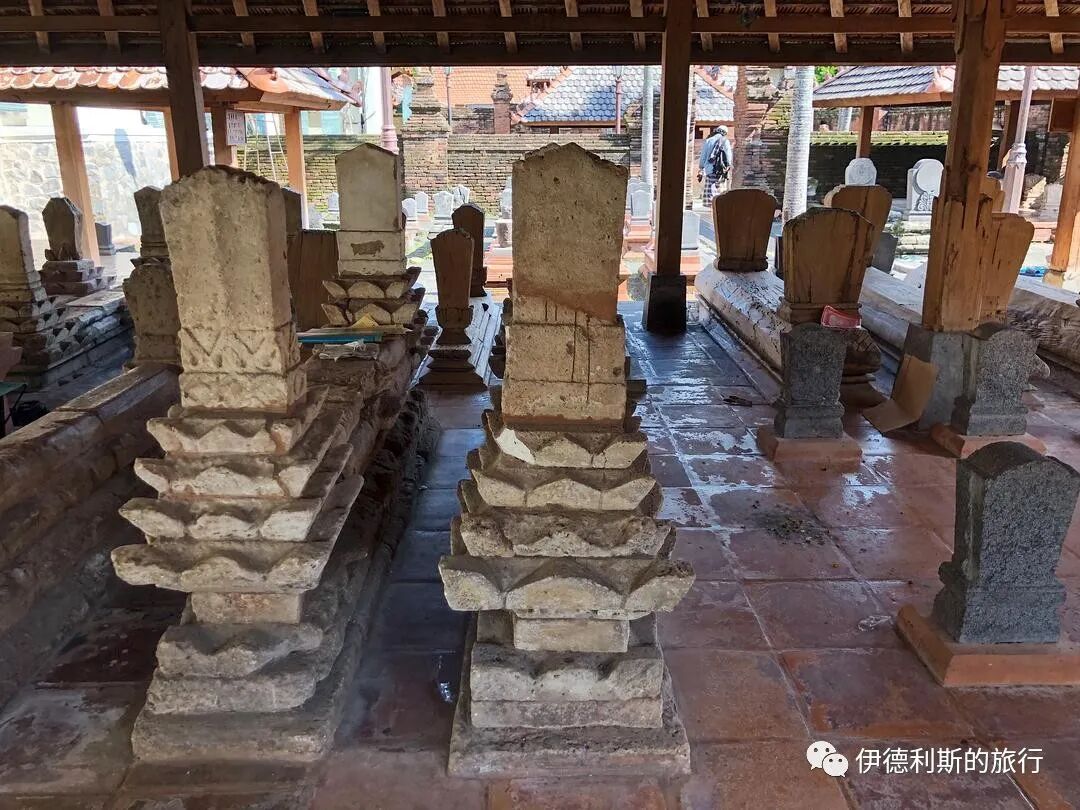
Then you pass through this Kori Agung gate to reach the actual holy tomb.
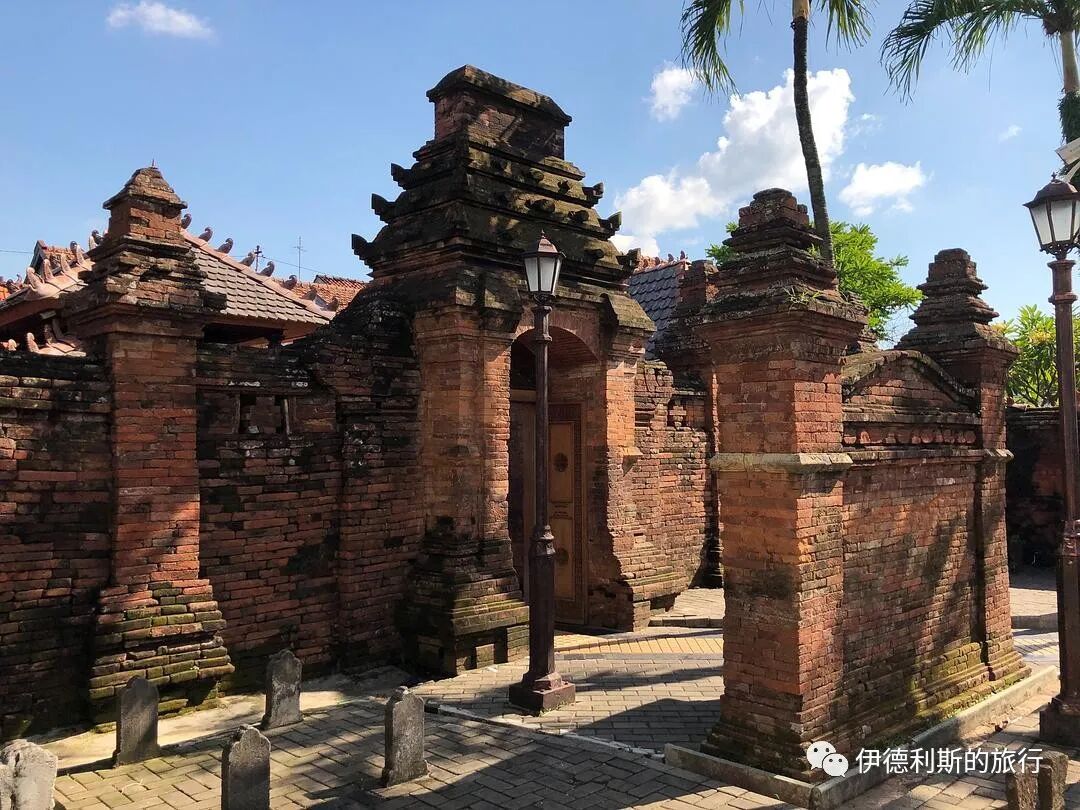
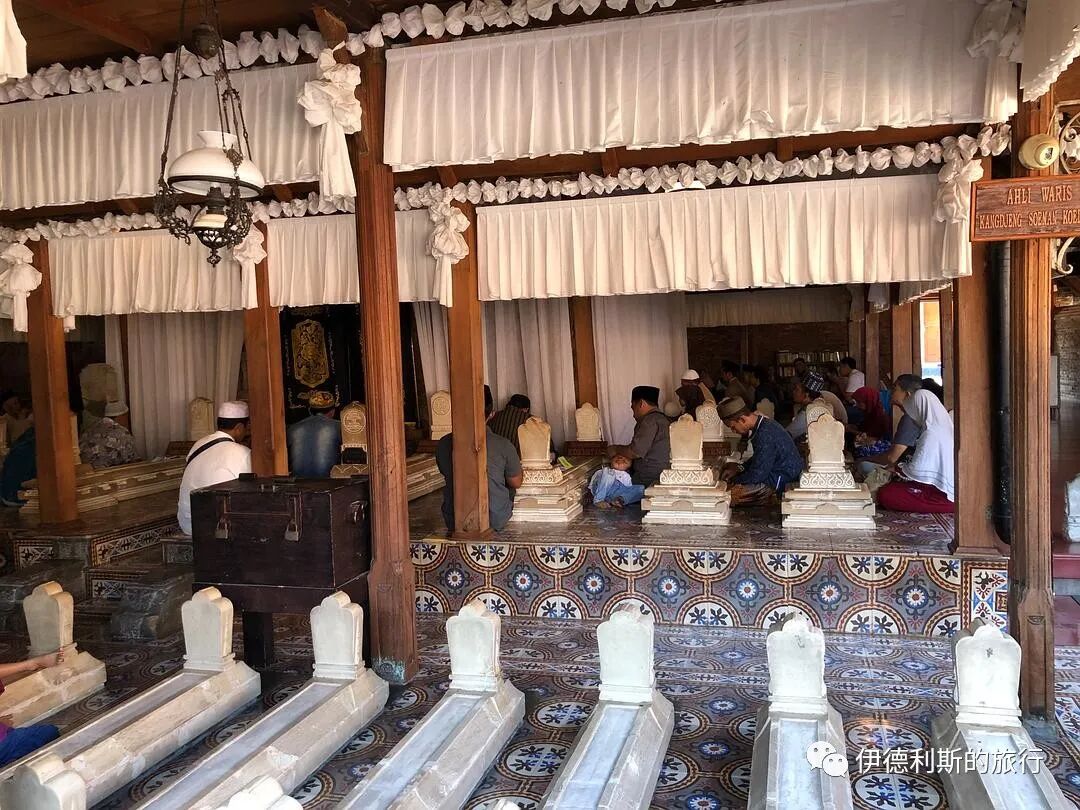
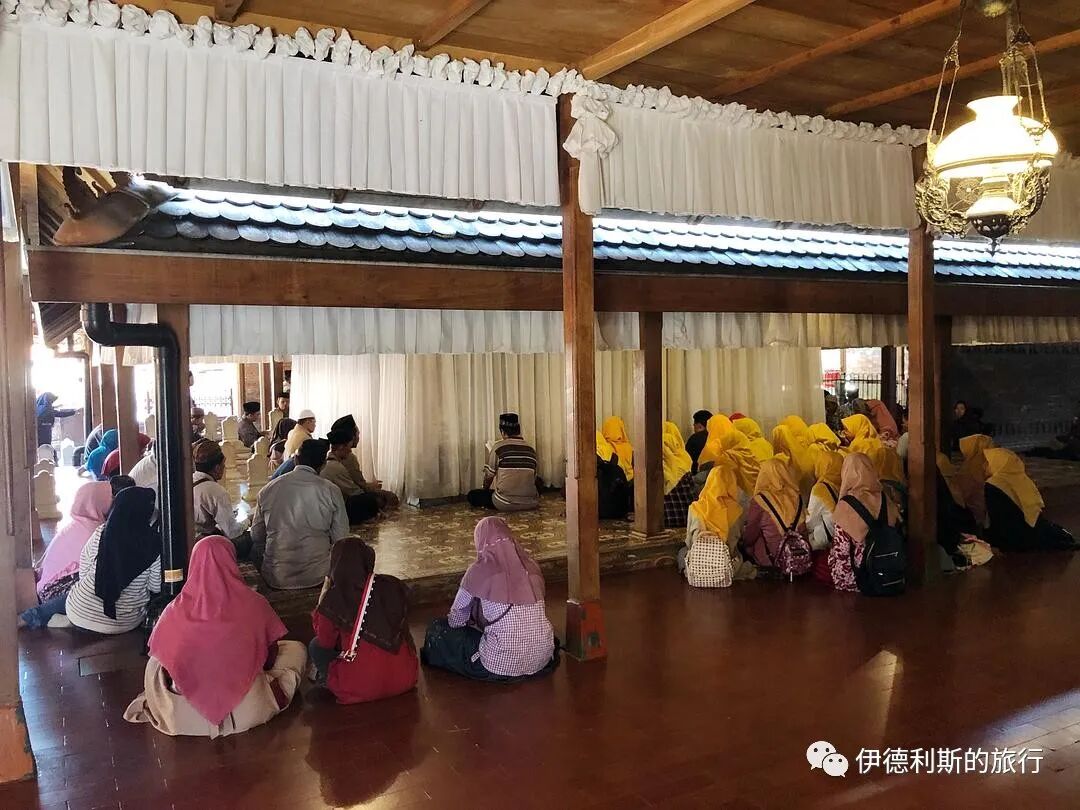
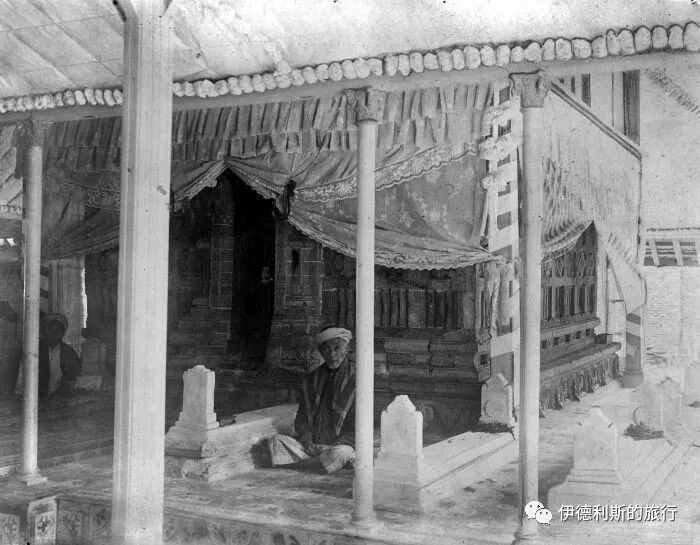
Early 20th century
Langgar Bubrah ruins: 1533.
The Langgar Bubrah ruins sit in a small alley south of the Al-Aqsa Mosque. They are an important witness to Java Island's 16th-century transition from Hinduism to Islam.
Prince Pontjowati of the Majapahit Kingdom reportedly built Langgar Bubrah in 1533 as a Hindu temple. Later, Prince Pontjowati converted to Islam under the guidance of Kudus and became his student, turning this site into a mosque.
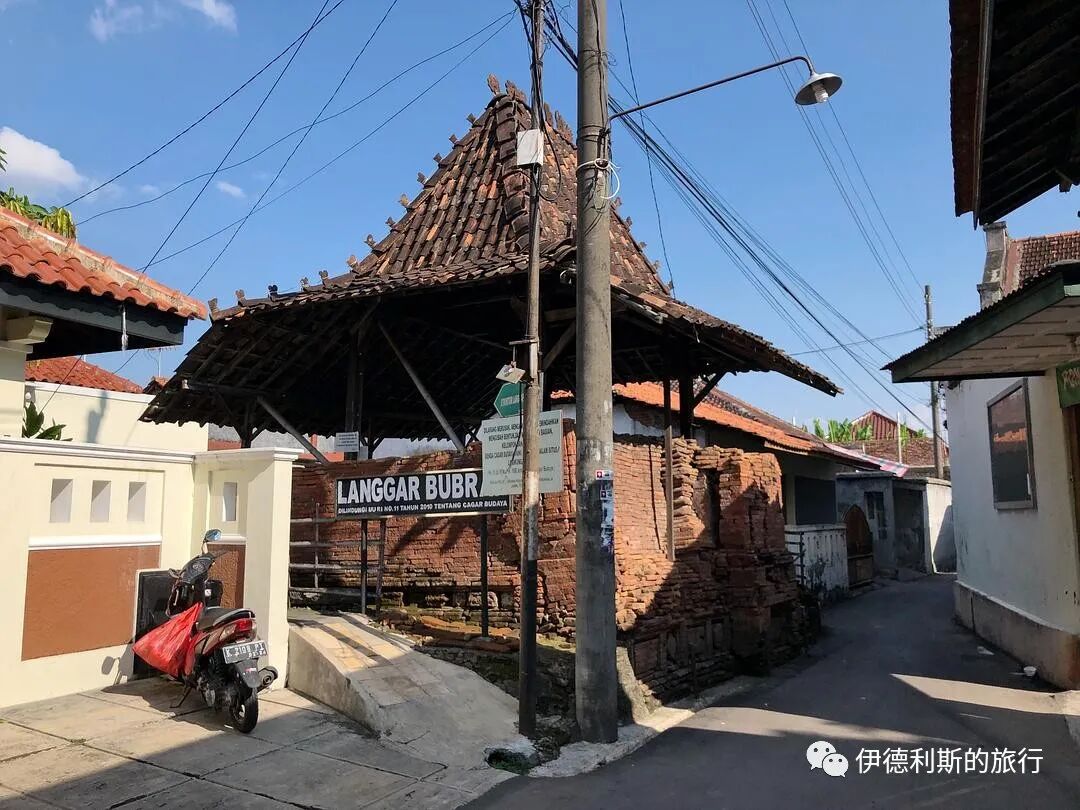
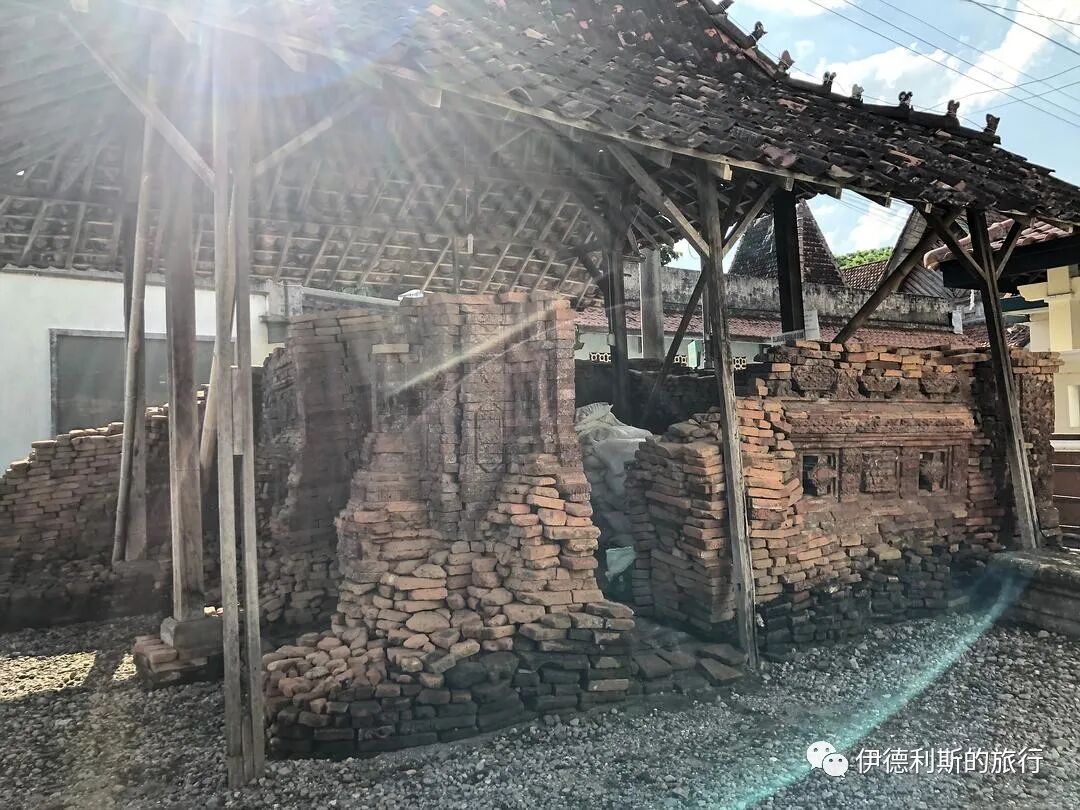
Langgar Bubrah features traditional Majapahit-style brick carvings.
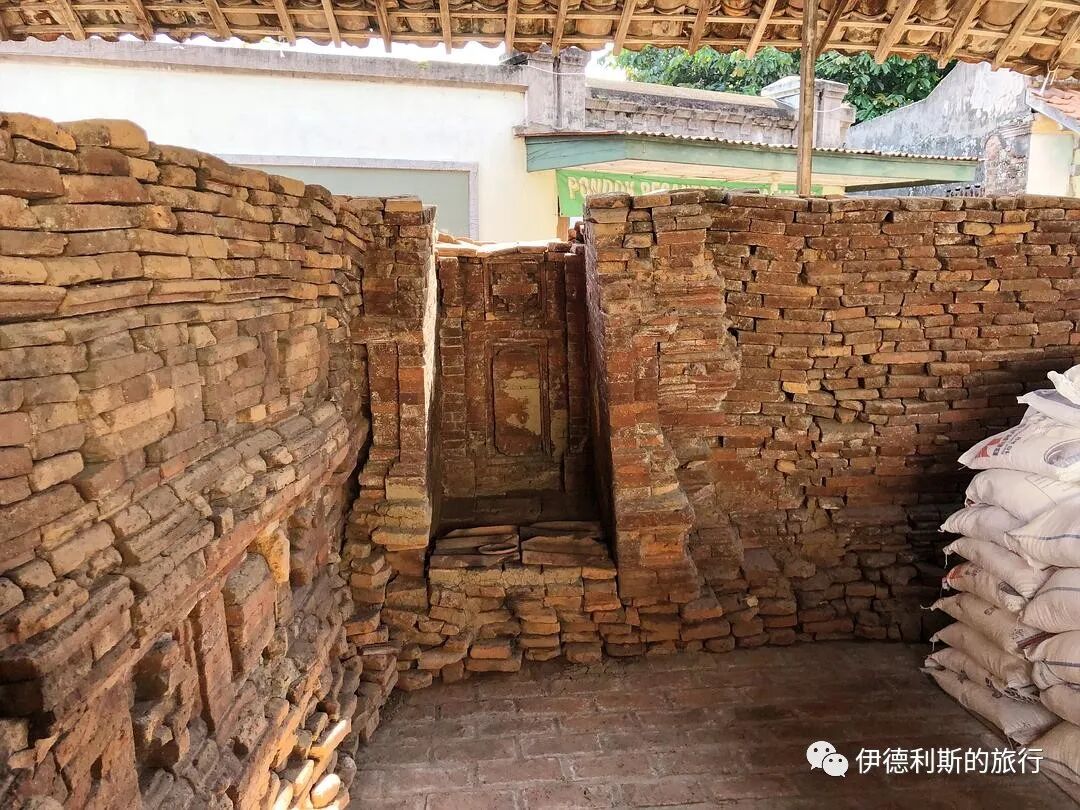
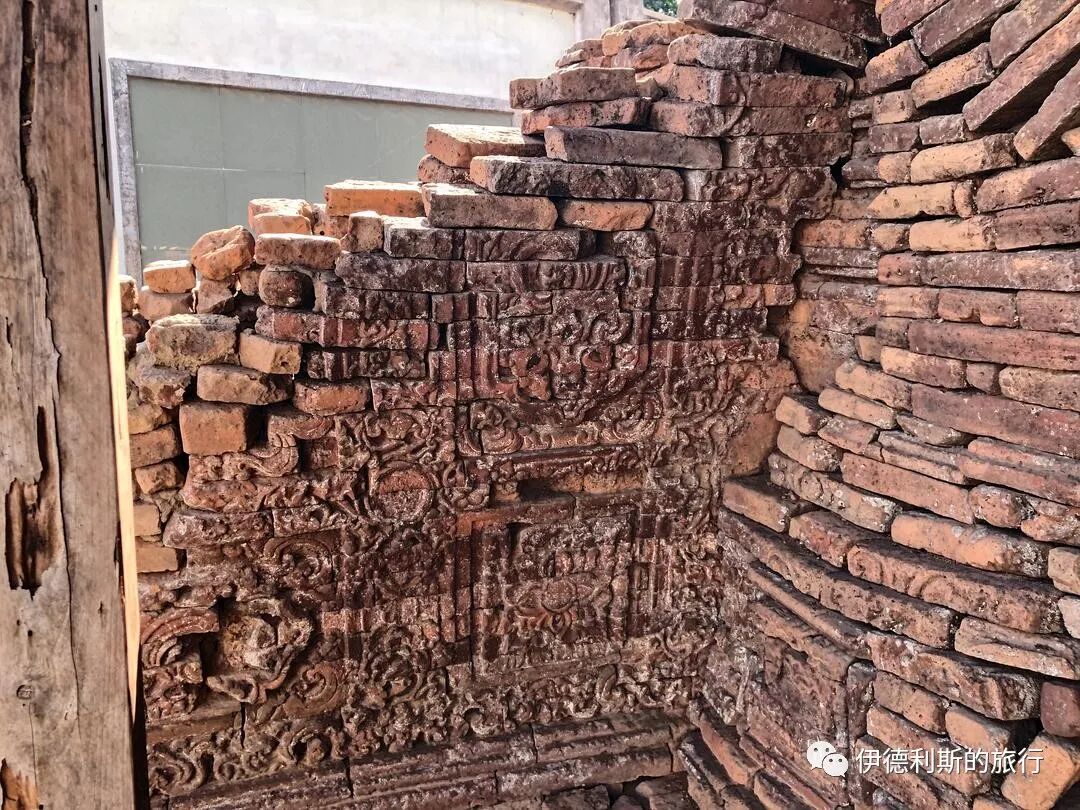
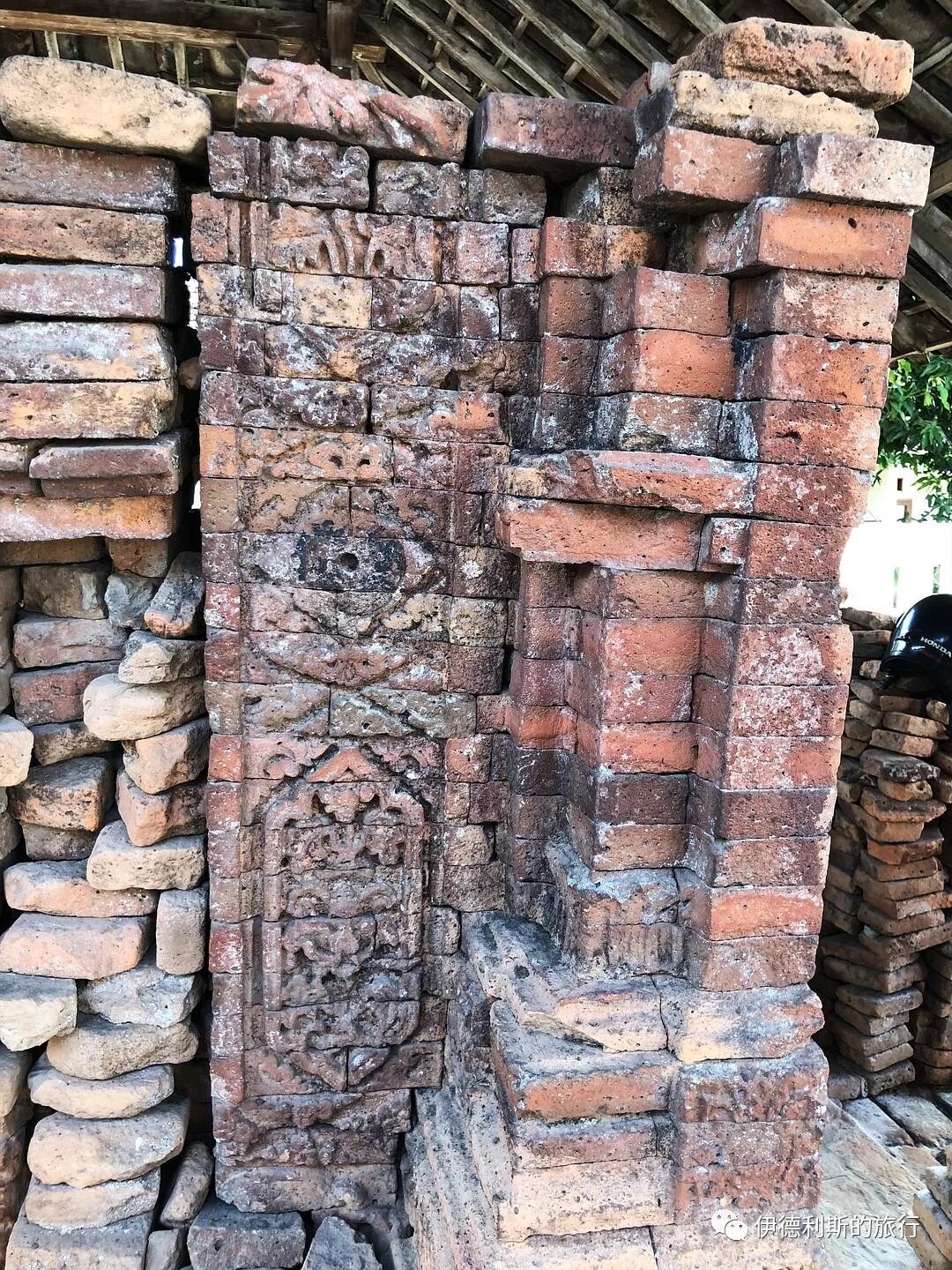
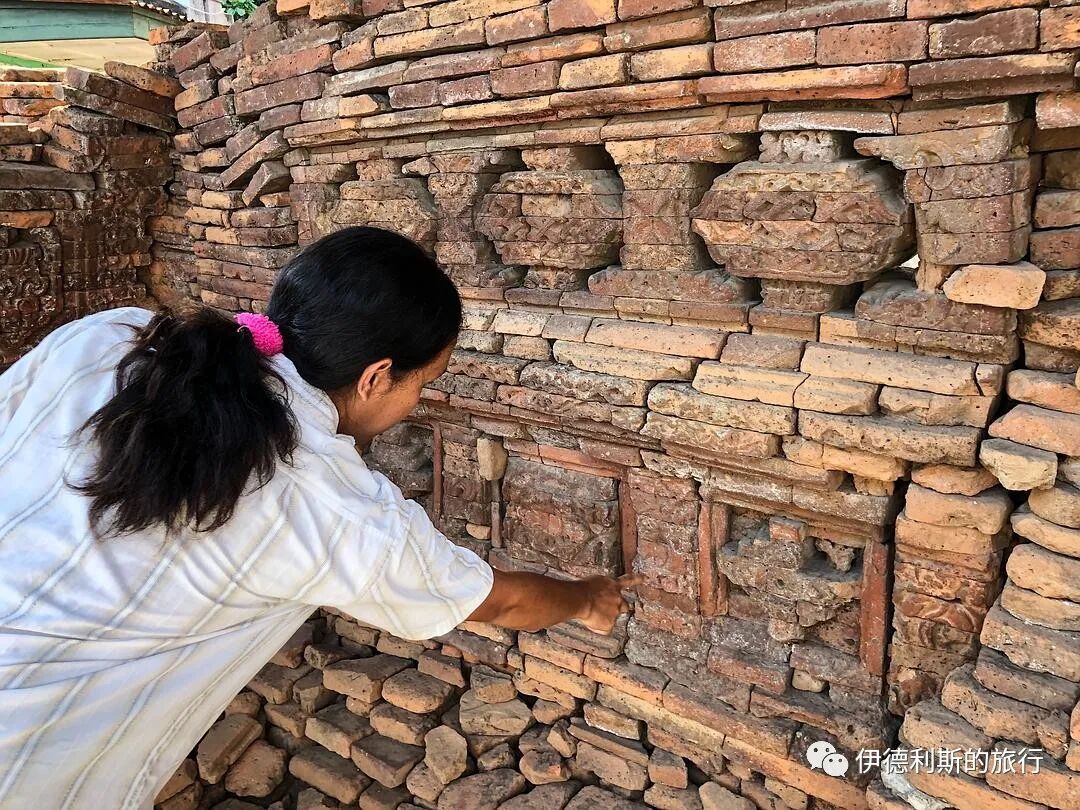
The room once had a roof, but it did not survive. Now, only the stone column bases (umpak) that supported the roof remain. Next to the column bases, there is a Hindu linga and a stone used for grinding herbs.
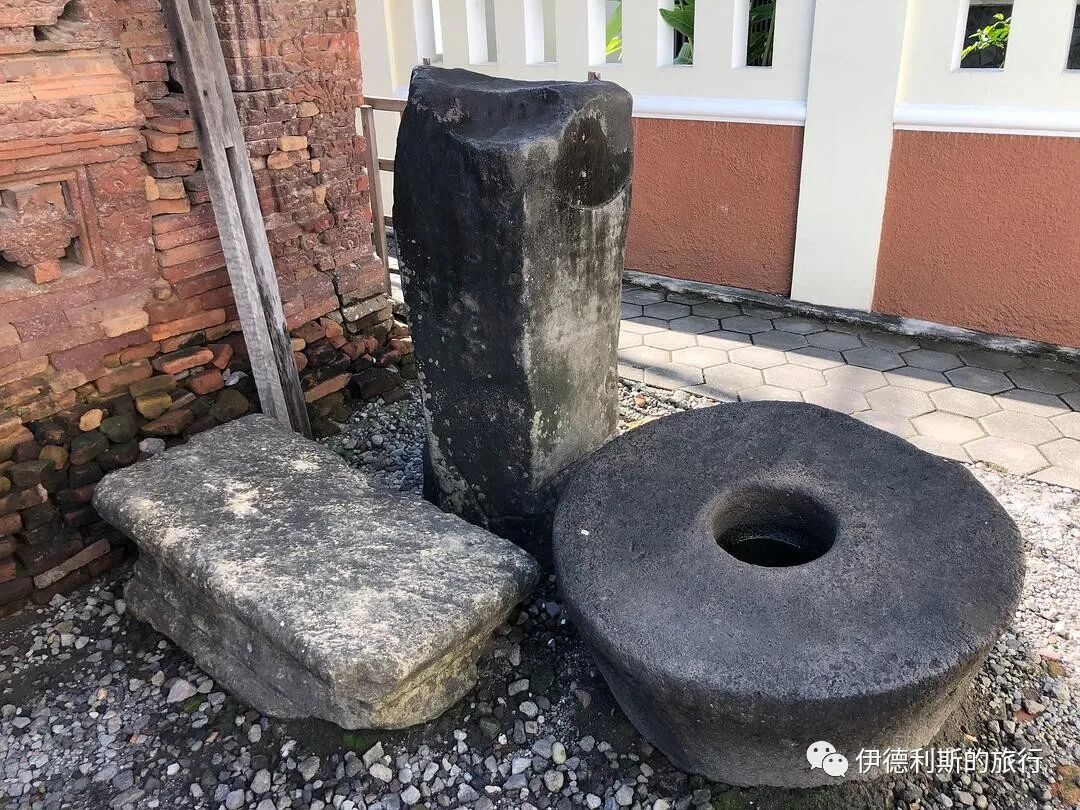
Beside the ruins, there is also a Hindu stone carving featuring an image of Shiva.
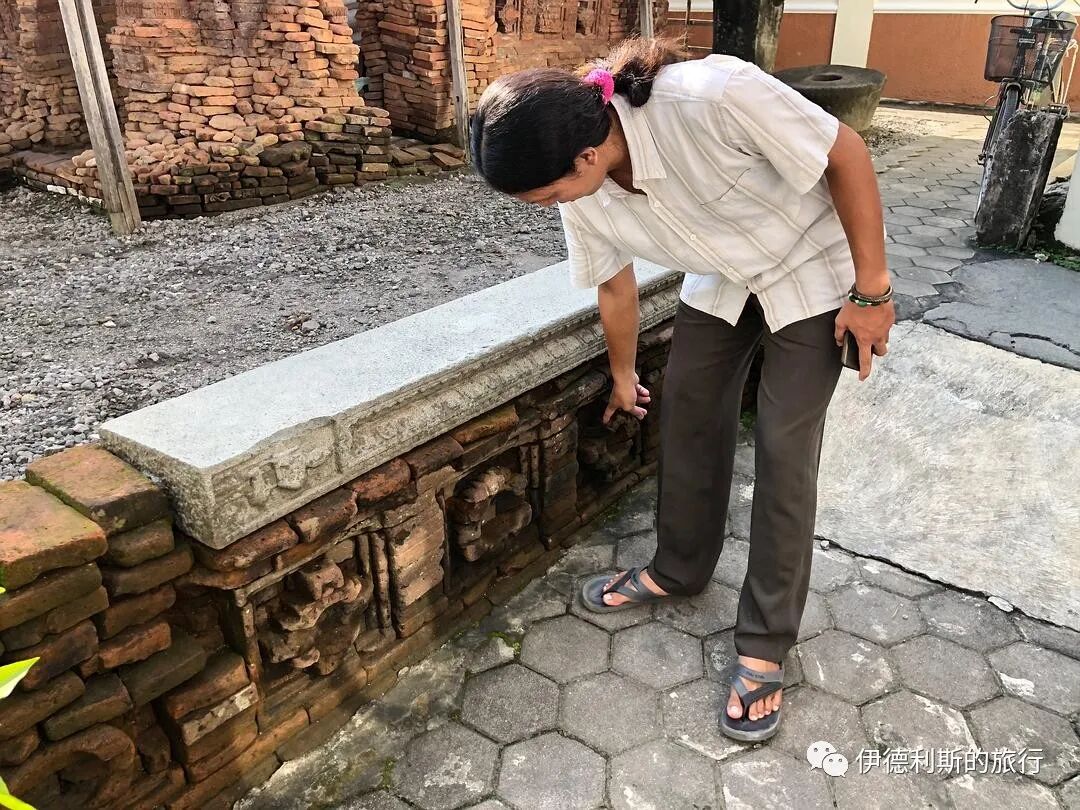
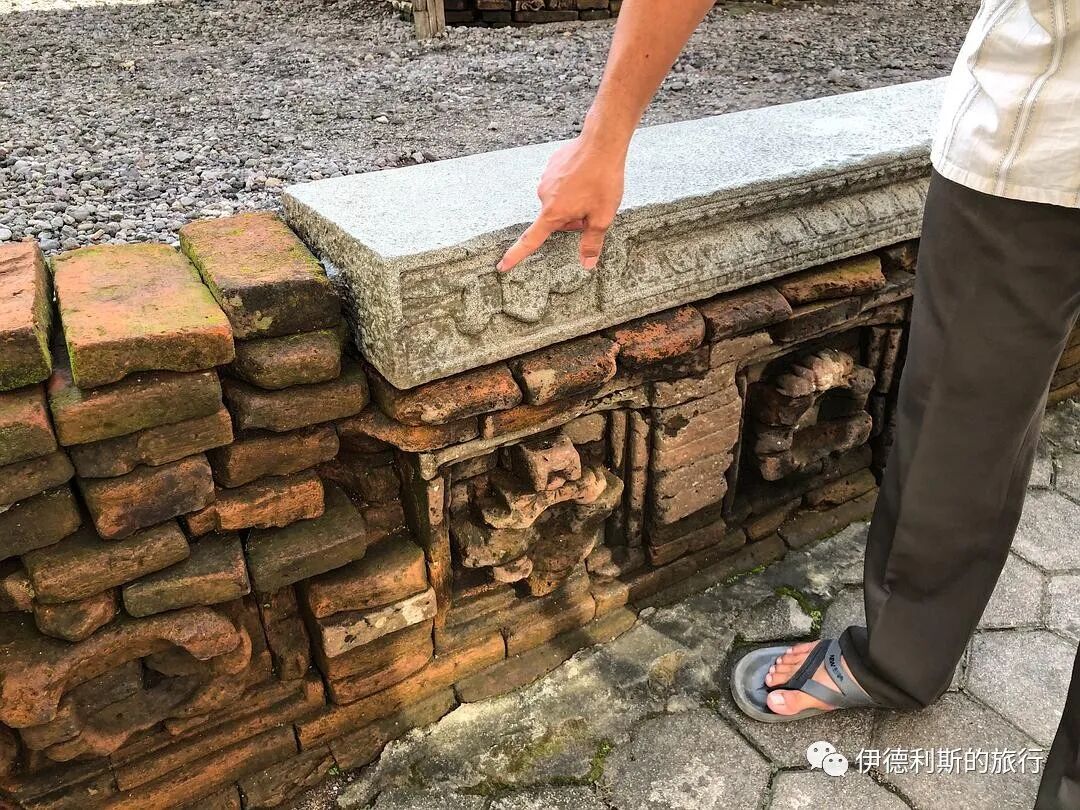
Muslim Travel Guide Indonesia: Jakarta, Trowulan, Demak Grand Mosque and Java Halal Journey
Articles • yusuf908 posted the article • 0 comments • 232 views • 2026-05-23 08:23
Summary: This Indonesia Muslim travel guide part 1 covers visa-free entry, avoiding bribes, Jakarta, Indonesian halal travel basics, Java history, Trowulan, Wali Songo heritage, Demak Grand Mosque, Sunan Ampel sites, and the country through the eyes of a Chinese Hui Muslim.
Indonesia has the largest Muslim population in the world, with over 200 million Muslims. Most follow the Shafi'i school of jurisprudence. Indonesian Muslims have long been on the fringes of the Muslim world, but this marginalization has gradually improved since Indonesia gained independence from colonial rulers in 1945. Today, hundreds of thousands of Indonesians go on the Hajj to Mecca every year. They are known as the "rice of Hejaz," with Hejaz referring to the region of Mecca and Medina.
Indonesia currently offers visa-free entry to citizens from mainland China. You only need your passport to fly in, with no prior application or fees. I have seen many netizens online complain about customs officers asking for bribes upon entry. I flew from Beijing to Jakarta and was not asked for a bribe, so it might be an isolated issue. My consistent principle is to firmly refuse any customs bribes. As Muslims, we cannot engage in bribery. I would rather not enter the country than pay. Even if the bribe is only a small amount, it is a matter of principle that I will not compromise on. Since this behavior often targets Chinese travelers, we must not encourage such discriminatory practices.
I heard about similar bribe requests when I visited Vietnam, but I never encountered them. My method is to prepare my round-trip flight tickets and hotel booking confirmations in advance, print them out, and have them ready when customs asks me the purpose of my visit. I show them the itinerary I prepared, which clearly states my travel purpose. Once customs sees this, they know I am an experienced traveler, and they have no reason to ask for a bribe before letting me through.
Many online travel guides view Indonesia from a non-Muslim perspective. I have read many of them and find them superficial and biased when judging the country's majority ethnic group. Below, I will introduce my halal journey through Indonesia from the perspective of a Chinese Hui Muslim.
Items to prepare before leaving for Indonesia:
1. Round-trip flight tickets and hotel booking confirmations, printed out and kept handy to prevent customs from questioning you or asking for bribes;
2. Portable WiFi, which can be rented from major travel websites for about 10 yuan a day. Renting WiFi is more convenient than buying a local SIM card. In my experience, mobile signals on many islands are not as good as WiFi. You can activate international roaming in advance, but it is only useful for receiving text messages. International roaming still cannot access sites like Google, but portable WiFi can. Google Maps is very important when traveling abroad;
3. Power adapter
Indonesian power plugs are wider than those in China, so you will need an adapter. You can buy a universal multi-function power adapter online.
4. Grab
This is a ride-hailing app used across Southeast Asia. You must have it; it is very useful. You can link your credit card to pay without cash. If you do not have it, you will almost certainly be overcharged for taxis.
5. Sunscreen, mosquito repellent, sunglasses, and flip-flops
These are all essentials for life in the tropics.
6. Indonesian Rupiah cash
You can exchange money in China or at the airport in Indonesia. The currency has a low value; 10,000 Indonesian Rupiah is worth about 5 Chinese Yuan.
First stop: Jakarta
Jakarta is the capital and largest city of Indonesia. Many people only use it as a short transit stop, but there is actually a lot to see and do here. It is a microcosm of Indonesia where you can experience all kinds of local cultures. If your schedule is not tight, you might want to stay a few extra days. As a food blogger, what attracts me most is that I can find halal versions of cuisines from all over the world here.
Xiamen Airlines halal meal
I have to praise the halal meal on Xiamen Airlines; it was better than any other halal meal I have had on domestic airlines. A quick tip: I did not book a halal meal in advance for this flight, but Xiamen Airlines offers both halal and non-halal options on flights to Jakarta, so you do not need to reserve one ahead of time.
Except for budget airlines that do not provide meals, almost all airlines offer a meal booking service. Booking a religious meal costs nothing extra as it is included in your ticket price. You must book at least 24 hours in advance. You can do this through the airline's app, by calling their customer service, or through the customer service of the platform where you bought your ticket. If you are worried about the airline's ingredients, you can also book a vegetarian meal. Some airlines let you set dietary preferences in their app. Once you do this, the system will automatically book a halal meal whenever you buy a ticket with them.
DIGITAL AIRPORT capsule hotel
After flying all day, I arrived in Jakarta at 10 p.m. My plan was to fly to Komodo Island early the day after tomorrow. To save time and money, I chose a capsule hotel on the first floor of Terminal 3 at the airport. This way, I did not have to travel into the city after landing that night, and I would not have to wake up early to catch my flight later. It turned out to be a great choice. Although the capsule was small and only fit one person, it was clean and had everything I needed, including bottled water, a towel, a locker, a power outlet, and a TV. It felt like lying inside a space pod.
The lights in the space could change color, and there was air conditioning.
The capsule hotel has shared bathrooms. Even though it is a public area, each shower and washroom is private. Once you lock the door, it is just like a private bathroom, so it does not feel awkward at all. This was my first time staying in a capsule hotel, and I was very satisfied. I hope this model becomes more popular.
MALACCA TOAST airport fast food restaurant
Egg sandwich
Halal bidet spray in the bathroom
You can still find non-halal food in Indonesia. Some restaurants run by non-Muslims, such as Catholics or Hindus, sell alcohol but will note that they are pork-free. I have seen women wearing headscarves eating in these places. I only saw pork sold in Chinese-run restaurants in Surabaya, and you will never see anyone wearing a headscarf in those shops. If a restaurant has a clear halal certification sign at the entrance, it definitely does not sell alcohol.
Indonesian halal certification logo
This is what the common Indonesian halal certification logo looks like. It comes in two versions: one in Arabic script and one in Latin letters. HALAL also means halal in the Indonesian language. If the logo on a package is very small, they might leave out the Latin letters but will still include the Arabic word حلال
to make it easy for friends (dosti) from all countries to recognize.
Shaburi all-you-can-eat Japanese hot pot restaurant
Located on the third floor of Terminal 3 at Soekarno-Hatta Airport, a set meal costs about 60 yuan. You get one plate of meat, and you can eat as many vegetables, fruits, and sushi as you like.
Restaurant service in Indonesia is generally warm and attentive, especially with the servers' sweet smiles.
The individual hot pots are very similar to the Xiabu Xiabu chain back home.
Indonesian casual dining restaurant in Terminal 2
Indonesian fried rice (nasi goreng)
This type of fried rice is what I eat most often in Indonesia, and it is one of my favorite Indonesian foods. You can even eat it for breakfast. It costs anywhere from 6 to 30 yuan and is popular all over Southeast Asia. It is made by stir-frying white rice with sweet soy sauce, tamarind, and dried shrimp. It is served with various sides, including satay skewers, cucumber, Indonesian shrimp crackers, and a fried egg.
Istiqlal Mosque (Masjid Istiqlal)
Jakarta's Istiqlal Mosque (Masjid Istiqlal in Indonesian, which means 'independence' in Arabic) was built to celebrate Indonesia's independence. The foundation was laid on August 24, 1961, and it opened on February 22, 1978. The architect, Frederich Silaban, was a Christian. The mosque was built next to the Jakarta Cathedral to symbolize religious harmony.
The site was under renovation when I arrived. It was the rainy season in Indonesia, and Jakarta had just experienced flooding, leaving many areas waterlogged. Yet, after the floods, everything went back to normal. I was struck by the driver who brought me here. As we talked about the Jakarta floods, he pointed to the water marks along the street while laughing. I was amazed at how optimistic they could be. Their love for smiling is my deepest impression of Indonesians. Even though they are poor, they have a high sense of happiness.
Visiting the mosque is free. You need to take off your shoes and leave them at the storage area. The man at the entrance greeted me warmly and asked me to write down my country and religion in the guest book.
I had learned about this mosque on TV before. It is considered the largest in Southeast Asia and was built at a huge cost. However, after visiting in person, I did not find it as beautiful as I had imagined. As my trip continued, I saw many more unique mosques in Indonesia.
Jakarta Old Town
(Kota Tua Jakarta)
Jakarta Old Town covers only 1.3 square kilometers, about the size of a plaza. It contains many Dutch buildings from the 17th century. At that time, Jakarta was the headquarters for the Dutch East India Company to trade spices and other goods in Asia.
Let's talk about Indonesia's colonial history. A friend once asked me why we rarely hear from Indonesian Muslims on the world stage despite there being so many of them. The reason is that Indonesia was colonized for a long time. From the 16th to the 20th century, it was a Dutch colony. During World War II, the Japanese arrived and drove out the Dutch, and Indonesia was colonized by Japan for a few years. It was not until 1945 that Indonesia declared independence. Before this, the actual ruling class was never Muslim, which is why Indonesian Muslims have been marginalized internationally.
Street view of Jakarta Old Town
Although Indonesia is considered a Muslim country with a Muslim population of over 80%, it is not an Islamic state. Only countries with Islam as the state religion can be called Islamic states, and Indonesia has no state religion. This shows the marginalized status of Indonesian Muslims in their own history. A country where 87% of the population is Muslim cannot even establish Islam as the state religion. Neighboring Malaysia manages to do this, even though its Muslim population is only 60%, so Malaysia is considered an Islamic state.
Performance in the Old Town square
The Indonesian constitution requires citizens to have a religious belief. The Jakarta Charter published in 1945 clearly stated: 'The state shall be based on the belief in the One Supreme Allah, with the obligation for adherents of Islam to practice Sharia in accordance with correct and moral humanitarian principles.'
Indonesian citizens cannot have no religion, or they will be treated as materialist communists. You know what I mean. This is often linked to what people call the anti-Chinese sentiment in Indonesia, because at that time, many Chinese in Indonesia were associated with communism. Major General Suharto, who was pro-Western, overthrew the pro-communist Sukarno government and then started a massive anti-communist purge. When it happened, it targeted communists and was not specifically aimed at Chinese people. Therefore, focusing only on anti-Chinese sentiment ignores the background of the event.
The Special Region of Banda Aceh in Indonesia follows the second half of the Jakarta Charter by implementing Sharia law. Located in the northwest corner of Indonesia, Banda Aceh is the closest city in the country to Mecca. The prayer direction (qibla) in Indonesia faces northwest, but there are no direct flights, or I would really like to go there and experience the atmosphere of Sharia.
Street snacks in the old town
There are many snacks along the streets of the old town. I am not used to eating these unfamiliar foods on the side of the road, but interested friends can go and try them. I suspect they might not taste very good, as we may not be used to many Southeast Asian specialties. Plus, the hot weather could easily give you an upset stomach.
Some basic toilets in Indonesia have a plastic water bottle placed above the urinal. This bottle is used for washing yourself.
Grand Indonesia
Grand Indonesia is the largest shopping mall in Jakarta. It is truly massive and ranks among the best in Asia. The mall has everything, including a farmers market and numerous restaurants and snack shops. You can spend an entire day here. If you do not want to walk around in the scorching sun, I suggest coming here for shopping and relaxation.
The supermarket on the basement floor
Indonesian specialty civet coffee beans (kopi luwak)
I carefully checked the various internationally famous brands in the supermarket, and almost every product I saw had a halal certification mark.
Halal Yoshinoya
Japanese food in the mall
Japanese food is quite common in Indonesia and very popular with the locals. You often have to wait in line to eat at these types of restaurants. Japanese food in Indonesia is linked to the Japanese occupation during World War II. Many Japanese companies stayed in Indonesia after the war, bringing a large number of Japanese people with them.
A bookstore in the mall.
The bookstore in the mall has a large section for religious books. It carries books from all major religions, with the most being Islamic books. They are mostly in Indonesian, so I could not read them. Otherwise, I would have bought a few to take home.
Italian restaurant Popolamama.
This is an Italian restaurant in the mall. I have not seen a halal Italian restaurant in Beijing yet. The standard of Western restaurants in Jakarta is world-famous.
Italian pizza.
A pizza, a salad, and a glass of juice cost about 60 RMB. This price level is already quite high for Indonesia, as costs are even lower in other smaller Indonesian cities.
Second stop: Komodo Island.
Komodo Island is a major destination for my trip. I came here to fulfill a childhood wish as a nature enthusiast. When I was in elementary school, my family gave me a set of four encyclopedias. I flipped through the natural science volume the most, and I was deeply impressed by the various record-breaking plants and animals it introduced. Komodo Island is a place with great biodiversity and frequently appeared on nature shows.
Komodo Island is located in the southeastern corner of Indonesia. It is just a bit further south to reach Australia, so it faces Oceania across the sea. There are no direct flights from China to Komodo Island, so you must transfer through Jakarta or Bali. I flew for over three hours from Jakarta to reach Labuan Bajo Airport, which is the closest airport to Komodo Island. If you transfer from Bali to Labuan Bajo, it only takes one hour.
The main road of Labuan Bajo town.
After leaving Labuan Bajo Airport, I took a taxi for half an hour to reach the small town of Labuan Bajo. This is the busiest area in the region. The picture above shows the liveliest street in this town. The town has a small population, underdeveloped commerce, and covers only two square kilometers. Many residents still keep their traditional way of life, and most make a living from fishing and tourism. The most common shops along the street are dive shops. Komodo Island has many high-quality diving spots, but the underwater currents are complex and suitable for professional divers. Beginners are not advised to go.
Sylvia Hotel & Resort Komodo
My hotel had a private beach. Many hotels here have private beaches, and they are affordable and beautiful. You can stay in a very nice place for two or three hundred a night. I do not recommend this hotel, though, because it is far from the town center. There are no shops nearby and no public transport, so you cannot go out for a walk at night. I suggest staying in town next time for more convenience.
The hotel swimming pool
The only restaurant in the hotel
A steak set meal
A steak costs less than 100 yuan. There are no decent restaurants in Labuan Bajo town, mostly just small street shops. It is important to note that many Christians live in this town, and most restaurants on the island are run by Christians. They often label their food as halal and serve no pork, but they do sell alcohol.
Masjid Agung Nurul Falaq Labuan Bajo mosque
I took a taxi from the hotel and asked the driver to take me to the biggest mosque in town. He brought me here. This mosque is small compared to others in Indonesia. The density of Muslims in Indonesia decreases from the northwest to the southeast. The Aceh Special Region in the far northwest is the most Islamic, while Bali in the southeast is dominated by Hindus.
Muslims in Southeast Asia are mainly followers of the Shafi'i school. You can see them raise their hands three times during namaz. Whether they raise their hands three times or once, both practices have correct hadith support.
Small Indonesian barbecue
A simple Indonesian meal on the island, grilled chicken skewers with rice. The chili sauce is extremely spicy, just like the chili in Hunan.
I walked through a residential area and found a small mosque in the village. It was very simple, surrounded by villagers' houses, with chickens pecking for bugs nearby.
Interestingly, there is a pink Catholic grave built right next to this mosque. It is the first time I have seen such a combination.
The tombstone features paintings of the Virgin Mary and Jesus.
After resting for the night, I booked a one-day tour on Trip.com for the next day. The itinerary included Padar Island, Komodo Island, Pink Beach, Taka Makassar, a manta ray snorkeling spot, and Kanawa Island. It cost 789 RMB and included lunch, hotel pickup and drop-off, and an English-speaking guide.
The tour group provided face masks.
We left at 5:30 in the morning, and the driver arrived at the hotel on time to pick us up. Before we left, the guide gave every tourist a face mask. It was January 27, 2020. The epidemic had already broken out in China, but Indonesia was not affected at all, so the tourists did not pay much attention to it. The group included people from various countries, including Japan, South Korea, Sichuan, Taiwan, and Europe and America.
Padar Island
Overlooking from the top of Padar Island.
It took about an hour by boat to reach Padar Island. There are no residents on this island, and it remains in its original state. I climbed along the seaside to the top of the mountain to overlook the whole area. Some tourists brought drones for aerial photography.
Panoramic view of Padar Island.
After a short stay on the island, we continued by boat to Taka Makassar.
Taka Makassar.
The small island is a crescent-shaped isolated island that might be submerged when the tide rises slightly. However, the island is very beautiful with blue water. Looking down from the air, it looks like a gemstone embedded in the sea. The sand on the island already shows a light pink color, which is a feature of the Komodo area.
Taka Makassar.
You can go snorkeling nearby. It is very shallow, and because the water is so clear, you cannot see many fish. Be sure to protect yourself from the sun.
Pink Beach
The beaches around Komodo Island are generally pink because they contain tiny coral particles. Since this area was developed late, it has maintained its original natural state, and the seawater is crystal clear.
Fine pink sand grains
The sea view of Komodo Island is incredibly beautiful.
The underwater video of me trying to catch fish with a GoPro
Komodo National Park
Next, I continued to Komodo National Park. Just before landing, I saw a dark cloud floating over Komodo Island from a distance, making the atmosphere of landing on the island feel even more eerie. The world's largest venomous reptile, the Komodo dragon, lives on this island.
Komodo National Park consists of many islands, including the larger Padar Island, Rinca Island, and Komodo Island. About 3,000 giant lizards live on the islands. Indonesia established the national park to protect the Komodo dragons, and it was later listed as a World Heritage site by UNESCO.
You must be led by a park ranger to enter the forest. Tourists cannot act alone because the giant lizards on the island are all in the wild and are venomous and very dangerous. The long stick in the ranger's hand can block the giant lizard's attack. People often say Komodo dragons have toxic bacteria in their saliva because they eat carrion, which kills their prey through infection. Scientists have disproven this. In reality, Komodo dragons are born with venom glands, and it is their venom that kills the prey.
The park entrance asks visitors to stay quiet. Our group walked carefully the whole way, eyes wide open, watching every plant and tree around us.
I saw a dead, dried-up tree trunk and imagined a dinosaur pushing it over.
Komodo dragon nest
Our guide pointed to a mound of dirt in the distance, saying it was a Komodo dragon nest. It was about a meter high and five or six meters wide. The scene looked just like something out of Jurassic Park.
Near a pond, the guide stopped to tell us that dragons often come here to drink. Then I saw a deer limping toward the water. Its head was already injured, likely by a dragon. The guide said deer are the dragon's main food, and this deer would probably die soon after the attack.
A dragon in the bushes
We kept walking until the guide suddenly stopped and pointed to a dragon in the nearby bushes. I followed his finger and took a photo of the first dragon I saw. It was about two meters long, lying perfectly still in the brush. I could clearly hear it breathing.
Right after that, we saw three more dragons in the rest area, lying in the corner of a pavilion where tourists drink tea. The crowd got excited, and some people wanted to get close for photos. The guide became very alert and sternly warned everyone not to get too close.
Komodo dragons are hermaphroditic and can reproduce asexually. They live in trees when young and move to the plains as adults. They can dive, and they can run at speeds of 20 kilometers per hour. Their mitochondria are different from typical cold-blooded animals, allowing them to boost their metabolism to the level of a mammal, which gives them amazing speed and endurance. Attacks on humans are rare on the island, though there has been a case of a fisherman being killed by a dragon. Dragons have no natural predators on the island, but they will not attack humans if there is plenty of food.
Adult dragons grow over 3 meters long. They use their tongues to identify scents and can smell blood from 10 kilometers away. For small prey, the dragon bites them to death immediately. For larger prey, the dragon bites once and lets go, waiting for the venom to take effect before tracking the scent of blood to find the carcass.
We left Komodo National Park and headed to our next spot for snorkeling. The waters there are home to another ancient giant, the manta ray (guifu), which lived at the same time as the dinosaurs. They are the largest of their kind, reaching up to eight meters in length. They are said to be rare, and seeing them depends on luck, but we were very fortunate to spot a group of about four or five swimming right beneath our feet.
The manta ray is a strange-looking giant that has not changed since the dinosaur era, making it a true living fossil. These unique ancient creatures were the biggest draw for me on Komodo Island. Seeing animals I once only watched on nature shows appear right before my eyes was such a thrill.
The actual view is about what you see in the photos. The water where the manta rays appear is not very clear, but as the saying goes, clear water has no fish. The guy in the video is quite brave to get so close to the manta rays. It is actually a bit dangerous. Although manta rays have a gentle temperament, divers fear them when they get angry, as their two wings can break a diver's ribs.
Komodo Island is only a one-hour flight from the popular Indonesian tourist destination of Bali. To travel from Komodo to other Indonesian cities, you have to transfer through Bali. Although I am not very interested in Bali, since I am already here, I decided to go and look around the island.
Stop 3: Bali
The Hindu-style gates on Bali represent the journey from the secular to the sacred.
Bali is the only island in Indonesia where Hinduism is the dominant religion, and Hindu statues can be seen everywhere. Since this is a halal trip, I am not very interested in these non-Islamic artifacts. I came here mainly to have a decent halal seafood meal. If friends (dosti) plan to vacation in Bali, you do not need to worry too much about food, as halal restaurants are easy to find. The native residents here have a habit of eating roast suckling pig, most restaurants sell alcohol, and prices are very high.
Jimbaran Beach
Bali Airport is about three kilometers from Jimbaran Beach. In Indonesia, you must be careful not to engage with drivers soliciting passengers around the airport, as the chance of being ripped off is nearly 100%. There are two options for taking a taxi. One is the official taxi ticket counter at the airport where fares are prepaid. Just tell the staff your destination, pay, and you will get a slip. Follow the staff's instructions to find your driver, and there will be no extra charges. The other option is to use Grab. I highly recommend this app because it is cheaper, you do not need to pay cash, and you do not have to worry about language barriers, just like using Didi.
The exterior view of a restaurant on Jimbaran Beach.
Having just come from the pristine Komodo Island, seeing these highly commercialized beaches felt like a bit of a letdown, and the seawater is far less clear than in Komodo.
Crabs picked and cooked on the spot.
I asked my Hindu driver to take me to a halal restaurant, and he brought me to this place. He charged me over 100 yuan for a trip of less than five kilometers. It was my own fault for mishearing his 100 as 10 before I got in. I was in a rush, so I didn't argue. I only regret not installing the Grab app back home. I couldn't download it while in Indonesia and had to use a VPN to finally get it.
A squid weighing over one kilogram.
This seafood meal cost about 500 yuan. The prices were clearly marked, but it was definitely not as good a value as eating back home. The rice and side dishes were free. The taste was just average. The seafood was boiled plain, and you could add some strange seasonings or just squeeze some lemon juice over it to mix with the rice.
The island residents love growing flowers.
I don't recommend Bali because it really doesn't live up to its reputation. Prices on the island are more than double those in other parts of Indonesia, and it is heavily commercialized. Many of my friends who have been there don't think highly of it. I think it is only suitable for people who like to stay in their hotels, which we call hotel-staying. But everyone has their own preferences. Compared to Komodo Island, the hotels in Bali are much higher quality. If you don't mind spending the money, you can find a nice hotel here and stay for a few days.
Fourth stop: Yogyakarta.
I added Yogyakarta and Surabaya to my trip at the last minute because the pandemic suddenly broke out, my holiday was extended, and my flight home was canceled. A lady traveling with us, who had just arrived from there with her family, raved about how fun Yogyakarta and Surabaya were. She strongly suggested I go to Yogyakarta to experience Javanese culture. So, I just bought a ticket from Bali to Yogyakarta, and the flight took about an hour.
Yogyakarta is a famous historical and cultural city in Indonesia, similar to ancient capitals like Nanjing or Xi'an in China. All Javanese court arts originated here. Historically, Yogyakarta was ruled by a Sultan. After Indonesia gained independence in 1945, the Sultan of Yogyakarta pledged loyalty to Indonesia. The Sultanate became the Yogyakarta Special Region under Indonesia, with the Sultan serving as the governor and retaining his hereditary position.
The hotel garden and swimming pool.
Everything from landing to checking into the hotel was comfortable, and everyone I met was very friendly. I remember sitting in a taxi, staring blankly at the road outside the window. The car slowly drove past two girls. I wasn't sure if one of them was a transgender woman or a cross-dresser, but when she saw me looking at her, she winked at me.
I came for breakfast in the morning and it looked like I was the only guest. The waiter greeted me very warmly and asked what kind of breakfast I wanted. There were Western and Indonesian options, so of course, I chose the Indonesian style.
I enjoyed the view outside the window while eating. The spire in the distance is Prambanan, a famous Hindu site in Yogyakarta.
I always eat Indonesian fried rice (nasi goreng) for breakfast. The hotel breakfast is included in the room rate. Everything in Yogyakarta is very cheap, and even a five-star resort costs only about 300 RMB per night.
Some Indonesian TV stations automatically broadcast the call to prayer (adhan) when it is time for namaz.
Masjid Raya Al-Muttaqun mosque
Masjid Raya Al-Muttaqun mosque
I originally planned to visit the nearby Prambanan mosque. When I reached the entrance, I saw a mosque in traditional Javanese style across the street. It caught my full attention, so I decided to skip Prambanan and start my Javanese mosque tour instead.
The interior of the mosque is made of wood. A downside to this dark-colored wood is that it makes the main hall look dim. I noticed this same issue in several other mosques.
Since the prayer direction in Indonesia is toward the northwest, but buildings usually face south, the carpets in the main hall are laid out toward Mecca, which makes them look slanted.
The main hall of the mosque is on the second floor, and the first floor is a classroom where children are learning Arabic under a teacher's guidance. It started raining outside. January and February are the rainy season in Indonesia, with thunderstorms almost every day, but they stop quickly.
Prambanan (Candi Prambanan)
Prambanan ruins
Yogyakarta has two popular tourist spots. One is Borobudur, the world's largest Buddhist temple complex, and the other is Prambanan, the largest Hindu temple complex in Southeast Asia. Both are World Heritage sites built around the 9th century by unknown creators, and both were abandoned after completion. Legend says Prambanan might have been built by the second king of the Mataram Kingdom. Both complexes were rediscovered and rebuilt in the early 20th century, so most of the structures are new. Prambanan charges an entrance fee of 170 RMB, and Borobudur is over a hundred kilometers away, so I only walked around the entrance of the Prambanan temple.
I see many tourists online taking provocative photos in temples. I don't think this is right. After all, this is a religious holy site, and taking such photos feels out of place. A girl wrote in her travel guide that many Indonesian girls asked to take photos with her at Prambanan. She thought they were interested in her hairstyle because they envied her freedom to show her hair. I really want to tell her she is overthinking it. This is as ridiculous as those fake posts in China claiming Hui Muslims envy Han people for being able to eat pork. Don't you know that Indonesia does not force women to wear headscarves at all?
Mataram Mosque (Masjid Mataram)
In the Kotagede suburb of Yogyakarta, I found the tomb of Sultan Suta Wijaya Senapati of the Mataram Kingdom. Next to it stands a mosque that combines Hindu and Javanese architectural styles. The Mataram Kingdom was the first Islamic kingdom established in the Central Java region of Indonesia.
Because the faith in the Java region shifted from Hinduism to Islam, the ancient buildings on the island retain many traces of Hinduism. The gate of this mosque is a type of Hindu architectural style.
The internet says Mataram Mosque charges an entrance fee of about 10 yuan. I didn't run into anyone asking me for a ticket, and mosques really shouldn't charge tourists.
In the front hall of the mosque, some tourists were resting to escape the heat. The main hall of Mataram Mosque still uses the Javanese architectural style, with a front hall and a main hall, but no minaret. Drum beating is used instead of the call to prayer.
Prayer drum
The prayer drum is usually beaten during congregational prayers or festival prayers, which is a distinct Javanese feature.
Although the lights were on in the main hall, it was actually still quite dark. I brightened the photo a bit. This style is indeed not as well-lit as domed buildings.
The ritual of offering flowers to commemorate the deceased is inherited from Hindu traditions.
Next to the cemetery, there is a pool built as a bathhouse for performing major and minor ablutions. It is likely no longer in use. The pond is home to many giant catfish, both black and white.
Great Mosque of Yogyakarta (Masjid Gedhe Kauman)
Great Mosque of Yogyakarta
The Great Mosque of Yogyakarta (Masjid Gedhe Kauman) was built in 1773 right next to the Yogyakarta Palace. It is a traditional Javanese-style building. When I visited, I happened to run into a group of students there for an activity. Their teacher led them in namaz, so I joined in too.
This Javanese architectural style was likely influenced by ancient Chinese architecture. During the Ming Dynasty, Zheng He traveled to Java many times, bringing many craftsmen with him and spreading Islamic culture and Chinese civilization.
The front hall of the main prayer hall
A sign written in Javanese script hangs on the wall
A group of religious school students perform namaz led by their teacher, with the boys in front and the girls in a designated area behind them.
This is the area reserved for the Sultan to perform namaz, and ordinary people are not allowed inside. Honestly, this kind of privilege is not something Islam promotes; even a king should stand in the same row as the common people.
The minbar pulpit features typical Javanese patterns and a golden color, just like the tones of the Thai Royal Palace.
A mihrab with Southeast Asian royal characteristics
The Yogyakarta Palace is right next to the mosque. The palace is divided into a south section and a north section, and you have to buy separate tickets for each, costing about three yuan per ticket. I visited the north section, and it didn't feel like a palace at all to me. It was too simple, with only a few shed-like buildings, which made me wonder for a moment if this was really a palace.
Yogyakarta Palace
Soko Tunggal Mosque
Soko Tunggal Mosque
The Soko Tunggal Mosque in Yogyakarta gets its name from the Indonesian words for 'one pillar.' Built in 1972, it was designed by R. Ngabehi Mintobudoyo, who also designed the Yogyakarta Palace.
The main hall is supported by one central pillar and four side pillars, making five in total. This represents the temptations of evil from the four directions, a common feature in Javanese architecture. The flower carvings on the pillars show that praying in the mosque brings the grace of Allah.
A single pillar inside the main hall.
Yogyakarta is a city with a strong religious atmosphere. I felt this at the hotel where I stayed in the suburbs. Every time for namaz arrived, the sound of the adhan echoed from all around. It lasted for about ten minutes, likely because the clocks at different mosques were slightly out of sync.
I wandered into a nearby village. I saw a sign at the entrance that said 'Selamat Datang.' I first thought it was the village name, but that did not seem right since I had seen the phrase in many places. I asked a villager and learned it is Indonesian for 'welcome,' a phrase used across Southeast Asia.
Nurul Falaq Mosque
The people in this village are very friendly. Everyone I met on the road, whether young or old, smiled and nodded to greet me. The village loudspeaker was broadcasting an imam giving a sermon. I followed the sound to the mosque, but the door was closed. Before I could even say anything, a villager walked over and opened the door for me. It turned out the key was kept right by the entrance.
A mosque plaque. No matter how small the mosque is, it is officially registered.
A list of donations (niet), just like the ones in our mosques back home.
Baitussalam religious school
The Baitussalam religious school in the village
There are many religious schools like this in Yogyakarta. The children inside look like elementary school students. During breaks, they run around and play, and some gather around their teacher to do homework.
Main entrance of the school
Playground
The mosque inside the school
Exterior of the school mosque
Masjid Nurul Iman mosque in the same village
If this small mosque were in the city center, it would only be considered a dua room (musholla). Every mosque here is officially registered.
Masjid Jogokariyan mosque
Masjid Jogokariyan mosque
The mosque was built in 1967. Most people in this area work in batik, so the mosque has bright colors. Notice that the name of the mosque on the right side of the photo uses many colors.
No matter the time, you can always see people reading the Quran in the mosque, most of them women.
While I was in a taxi heading to the mosque, the driver noticed I was busy taking photos of every mosque we passed. He asked if I was a Muslim, so I blurted out, "Assalamu alaikum." He laughed after returning the greeting and pointed at my beard, saying I looked like a Muslim. I told him of course, as growing a beard is Sunnah.
You do not really need to emphasize your Muslim identity while traveling in Indonesia. From my experience, even if people only know you are from China, they treat you no differently. Talk of anti-Chinese sentiment is an exaggeration. Many ethnic Chinese still live in Indonesia today, with families who settled here hundreds of years ago. They have intermarried for generations, making it hard to tell their ethnicity by appearance alone.
SIX SENSES Spanish Restaurant
I saw a beautiful Spanish restaurant nearby on TripAdvisor. The setting is truly lovely, featuring a manor with a fountain and a garden. There are no halal Spanish restaurants back home in China, so I decided to fill that gap in my palate here in Yogyakarta.
The front porch of the restaurant
The interior decor of the restaurant
Cream of mushroom soup
I originally wanted to eat Spanish seafood paella, but after checking the menu, the portion was too large for one person. I did not want to waste food, and since the weather is hot and my appetite is smaller, I ordered a cream of mushroom soup and a salmon salad instead.
Salmon salad, with the salmon at the bottom of the plate
The tableware at this restaurant is very exquisite, and the waiters are very gentlemanly.
Lemon juice, with a small cup of honey on the side
This restaurant looks very fancy, but the bill, including service charge and tax, was less than 100 RMB. That is considered high-end spending locally, which shows how down-to-earth Yogyakarta is.
Fried chicken meal eaten next to the mosque
This meal cost about 5 RMB. Indonesians love fried food and will fry almost anything. The waiter did not give me any cutlery with my meal because everyone eats with their hands, so I followed suit and finished it that way.
Stop 5: Surabaya
It takes one hour to fly from Yogyakarta to Surabaya, but I suggest taking a train or bus instead. My flight was canceled once, and when I rebooked, it was delayed. The weather on Java island is unpredictable, so traveling by land is better from the start. Land transport only costs a few dozen RMB, while a plane ticket costs over 300.
Surabaya is the second-largest city in Indonesia. Indonesians call it Surabaya, so remember this name to make asking for directions easier. Zheng He landed here when he reached Java island during his voyages to the Western Ocean, and it is now home to the largest population of ethnic Chinese in Indonesia.
In 1520, the first Islamic dynasty to rise in central Java, Indonesia, was the Demak Sultanate. Sultan Raden Patah (1475-1518) was of Chinese descent and an ancestor of Indonesia's fourth president, Abdurrahman Wahid. His surname was Chen. Wahid stated he had Chinese ancestry, and his ancestor, Chen Jinhan, traveled to Java with Zheng He's fleet during his fifth voyage in the 15th year of the Yongle reign (1417) and settled in Surabaya.
Al-Akbar National Mosque (Masjid Nasional Al-Akbar Surabaya)
Al-Akbar National Mosque
This is a landmark building in Surabaya. It feels even bigger and more beautiful than the Istiqlal Mosque in Jakarta. Construction began in 1995, stopped for two years during the 1997 Asian financial crisis, and was completed in 2000. Then-President Abdurrahman Wahid presided over the opening ceremony. President Wahid was also the chairman of the Nahdlatul Ulama, making him a leader in the Indonesian religious community. It says a lot that a descendant of a Chinese ancestor could achieve such a position in Indonesia.
A cat in the main prayer hall
Mihrab
pulpit (minbar)
Prayer drum
Sunan Ampel arch
Sunan Ampel Tomb view all
Summary: This Indonesia Muslim travel guide part 1 covers visa-free entry, avoiding bribes, Jakarta, Indonesian halal travel basics, Java history, Trowulan, Wali Songo heritage, Demak Grand Mosque, Sunan Ampel sites, and the country through the eyes of a Chinese Hui Muslim.
Indonesia has the largest Muslim population in the world, with over 200 million Muslims. Most follow the Shafi'i school of jurisprudence. Indonesian Muslims have long been on the fringes of the Muslim world, but this marginalization has gradually improved since Indonesia gained independence from colonial rulers in 1945. Today, hundreds of thousands of Indonesians go on the Hajj to Mecca every year. They are known as the "rice of Hejaz," with Hejaz referring to the region of Mecca and Medina.
Indonesia currently offers visa-free entry to citizens from mainland China. You only need your passport to fly in, with no prior application or fees. I have seen many netizens online complain about customs officers asking for bribes upon entry. I flew from Beijing to Jakarta and was not asked for a bribe, so it might be an isolated issue. My consistent principle is to firmly refuse any customs bribes. As Muslims, we cannot engage in bribery. I would rather not enter the country than pay. Even if the bribe is only a small amount, it is a matter of principle that I will not compromise on. Since this behavior often targets Chinese travelers, we must not encourage such discriminatory practices.
I heard about similar bribe requests when I visited Vietnam, but I never encountered them. My method is to prepare my round-trip flight tickets and hotel booking confirmations in advance, print them out, and have them ready when customs asks me the purpose of my visit. I show them the itinerary I prepared, which clearly states my travel purpose. Once customs sees this, they know I am an experienced traveler, and they have no reason to ask for a bribe before letting me through.
Many online travel guides view Indonesia from a non-Muslim perspective. I have read many of them and find them superficial and biased when judging the country's majority ethnic group. Below, I will introduce my halal journey through Indonesia from the perspective of a Chinese Hui Muslim.
Items to prepare before leaving for Indonesia:
1. Round-trip flight tickets and hotel booking confirmations, printed out and kept handy to prevent customs from questioning you or asking for bribes;
2. Portable WiFi, which can be rented from major travel websites for about 10 yuan a day. Renting WiFi is more convenient than buying a local SIM card. In my experience, mobile signals on many islands are not as good as WiFi. You can activate international roaming in advance, but it is only useful for receiving text messages. International roaming still cannot access sites like Google, but portable WiFi can. Google Maps is very important when traveling abroad;
3. Power adapter
Indonesian power plugs are wider than those in China, so you will need an adapter. You can buy a universal multi-function power adapter online.
4. Grab
This is a ride-hailing app used across Southeast Asia. You must have it; it is very useful. You can link your credit card to pay without cash. If you do not have it, you will almost certainly be overcharged for taxis.
5. Sunscreen, mosquito repellent, sunglasses, and flip-flops
These are all essentials for life in the tropics.
6. Indonesian Rupiah cash
You can exchange money in China or at the airport in Indonesia. The currency has a low value; 10,000 Indonesian Rupiah is worth about 5 Chinese Yuan.
First stop: Jakarta
Jakarta is the capital and largest city of Indonesia. Many people only use it as a short transit stop, but there is actually a lot to see and do here. It is a microcosm of Indonesia where you can experience all kinds of local cultures. If your schedule is not tight, you might want to stay a few extra days. As a food blogger, what attracts me most is that I can find halal versions of cuisines from all over the world here.
Xiamen Airlines halal meal
I have to praise the halal meal on Xiamen Airlines; it was better than any other halal meal I have had on domestic airlines. A quick tip: I did not book a halal meal in advance for this flight, but Xiamen Airlines offers both halal and non-halal options on flights to Jakarta, so you do not need to reserve one ahead of time.
Except for budget airlines that do not provide meals, almost all airlines offer a meal booking service. Booking a religious meal costs nothing extra as it is included in your ticket price. You must book at least 24 hours in advance. You can do this through the airline's app, by calling their customer service, or through the customer service of the platform where you bought your ticket. If you are worried about the airline's ingredients, you can also book a vegetarian meal. Some airlines let you set dietary preferences in their app. Once you do this, the system will automatically book a halal meal whenever you buy a ticket with them.
DIGITAL AIRPORT capsule hotel
After flying all day, I arrived in Jakarta at 10 p.m. My plan was to fly to Komodo Island early the day after tomorrow. To save time and money, I chose a capsule hotel on the first floor of Terminal 3 at the airport. This way, I did not have to travel into the city after landing that night, and I would not have to wake up early to catch my flight later. It turned out to be a great choice. Although the capsule was small and only fit one person, it was clean and had everything I needed, including bottled water, a towel, a locker, a power outlet, and a TV. It felt like lying inside a space pod.
The lights in the space could change color, and there was air conditioning.
The capsule hotel has shared bathrooms. Even though it is a public area, each shower and washroom is private. Once you lock the door, it is just like a private bathroom, so it does not feel awkward at all. This was my first time staying in a capsule hotel, and I was very satisfied. I hope this model becomes more popular.
MALACCA TOAST airport fast food restaurant
Egg sandwich
Halal bidet spray in the bathroom
You can still find non-halal food in Indonesia. Some restaurants run by non-Muslims, such as Catholics or Hindus, sell alcohol but will note that they are pork-free. I have seen women wearing headscarves eating in these places. I only saw pork sold in Chinese-run restaurants in Surabaya, and you will never see anyone wearing a headscarf in those shops. If a restaurant has a clear halal certification sign at the entrance, it definitely does not sell alcohol.
Indonesian halal certification logo
This is what the common Indonesian halal certification logo looks like. It comes in two versions: one in Arabic script and one in Latin letters. HALAL also means halal in the Indonesian language. If the logo on a package is very small, they might leave out the Latin letters but will still include the Arabic word حلال
to make it easy for friends (dosti) from all countries to recognize.
Shaburi all-you-can-eat Japanese hot pot restaurant
Located on the third floor of Terminal 3 at Soekarno-Hatta Airport, a set meal costs about 60 yuan. You get one plate of meat, and you can eat as many vegetables, fruits, and sushi as you like.
Restaurant service in Indonesia is generally warm and attentive, especially with the servers' sweet smiles.
The individual hot pots are very similar to the Xiabu Xiabu chain back home.
Indonesian casual dining restaurant in Terminal 2
Indonesian fried rice (nasi goreng)
This type of fried rice is what I eat most often in Indonesia, and it is one of my favorite Indonesian foods. You can even eat it for breakfast. It costs anywhere from 6 to 30 yuan and is popular all over Southeast Asia. It is made by stir-frying white rice with sweet soy sauce, tamarind, and dried shrimp. It is served with various sides, including satay skewers, cucumber, Indonesian shrimp crackers, and a fried egg.
Istiqlal Mosque (Masjid Istiqlal)
Jakarta's Istiqlal Mosque (Masjid Istiqlal in Indonesian, which means 'independence' in Arabic) was built to celebrate Indonesia's independence. The foundation was laid on August 24, 1961, and it opened on February 22, 1978. The architect, Frederich Silaban, was a Christian. The mosque was built next to the Jakarta Cathedral to symbolize religious harmony.
The site was under renovation when I arrived. It was the rainy season in Indonesia, and Jakarta had just experienced flooding, leaving many areas waterlogged. Yet, after the floods, everything went back to normal. I was struck by the driver who brought me here. As we talked about the Jakarta floods, he pointed to the water marks along the street while laughing. I was amazed at how optimistic they could be. Their love for smiling is my deepest impression of Indonesians. Even though they are poor, they have a high sense of happiness.
Visiting the mosque is free. You need to take off your shoes and leave them at the storage area. The man at the entrance greeted me warmly and asked me to write down my country and religion in the guest book.
I had learned about this mosque on TV before. It is considered the largest in Southeast Asia and was built at a huge cost. However, after visiting in person, I did not find it as beautiful as I had imagined. As my trip continued, I saw many more unique mosques in Indonesia.
Jakarta Old Town
(Kota Tua Jakarta)
Jakarta Old Town covers only 1.3 square kilometers, about the size of a plaza. It contains many Dutch buildings from the 17th century. At that time, Jakarta was the headquarters for the Dutch East India Company to trade spices and other goods in Asia.
Let's talk about Indonesia's colonial history. A friend once asked me why we rarely hear from Indonesian Muslims on the world stage despite there being so many of them. The reason is that Indonesia was colonized for a long time. From the 16th to the 20th century, it was a Dutch colony. During World War II, the Japanese arrived and drove out the Dutch, and Indonesia was colonized by Japan for a few years. It was not until 1945 that Indonesia declared independence. Before this, the actual ruling class was never Muslim, which is why Indonesian Muslims have been marginalized internationally.
Street view of Jakarta Old Town
Although Indonesia is considered a Muslim country with a Muslim population of over 80%, it is not an Islamic state. Only countries with Islam as the state religion can be called Islamic states, and Indonesia has no state religion. This shows the marginalized status of Indonesian Muslims in their own history. A country where 87% of the population is Muslim cannot even establish Islam as the state religion. Neighboring Malaysia manages to do this, even though its Muslim population is only 60%, so Malaysia is considered an Islamic state.
Performance in the Old Town square
The Indonesian constitution requires citizens to have a religious belief. The Jakarta Charter published in 1945 clearly stated: 'The state shall be based on the belief in the One Supreme Allah, with the obligation for adherents of Islam to practice Sharia in accordance with correct and moral humanitarian principles.'
Indonesian citizens cannot have no religion, or they will be treated as materialist communists. You know what I mean. This is often linked to what people call the anti-Chinese sentiment in Indonesia, because at that time, many Chinese in Indonesia were associated with communism. Major General Suharto, who was pro-Western, overthrew the pro-communist Sukarno government and then started a massive anti-communist purge. When it happened, it targeted communists and was not specifically aimed at Chinese people. Therefore, focusing only on anti-Chinese sentiment ignores the background of the event.
The Special Region of Banda Aceh in Indonesia follows the second half of the Jakarta Charter by implementing Sharia law. Located in the northwest corner of Indonesia, Banda Aceh is the closest city in the country to Mecca. The prayer direction (qibla) in Indonesia faces northwest, but there are no direct flights, or I would really like to go there and experience the atmosphere of Sharia.
Street snacks in the old town
There are many snacks along the streets of the old town. I am not used to eating these unfamiliar foods on the side of the road, but interested friends can go and try them. I suspect they might not taste very good, as we may not be used to many Southeast Asian specialties. Plus, the hot weather could easily give you an upset stomach.
Some basic toilets in Indonesia have a plastic water bottle placed above the urinal. This bottle is used for washing yourself.
Grand Indonesia
Grand Indonesia is the largest shopping mall in Jakarta. It is truly massive and ranks among the best in Asia. The mall has everything, including a farmers market and numerous restaurants and snack shops. You can spend an entire day here. If you do not want to walk around in the scorching sun, I suggest coming here for shopping and relaxation.
The supermarket on the basement floor
Indonesian specialty civet coffee beans (kopi luwak)
I carefully checked the various internationally famous brands in the supermarket, and almost every product I saw had a halal certification mark.
Halal Yoshinoya
Japanese food in the mall
Japanese food is quite common in Indonesia and very popular with the locals. You often have to wait in line to eat at these types of restaurants. Japanese food in Indonesia is linked to the Japanese occupation during World War II. Many Japanese companies stayed in Indonesia after the war, bringing a large number of Japanese people with them.
A bookstore in the mall.
The bookstore in the mall has a large section for religious books. It carries books from all major religions, with the most being Islamic books. They are mostly in Indonesian, so I could not read them. Otherwise, I would have bought a few to take home.
Italian restaurant Popolamama.
This is an Italian restaurant in the mall. I have not seen a halal Italian restaurant in Beijing yet. The standard of Western restaurants in Jakarta is world-famous.
Italian pizza.
A pizza, a salad, and a glass of juice cost about 60 RMB. This price level is already quite high for Indonesia, as costs are even lower in other smaller Indonesian cities.
Second stop: Komodo Island.
Komodo Island is a major destination for my trip. I came here to fulfill a childhood wish as a nature enthusiast. When I was in elementary school, my family gave me a set of four encyclopedias. I flipped through the natural science volume the most, and I was deeply impressed by the various record-breaking plants and animals it introduced. Komodo Island is a place with great biodiversity and frequently appeared on nature shows.
Komodo Island is located in the southeastern corner of Indonesia. It is just a bit further south to reach Australia, so it faces Oceania across the sea. There are no direct flights from China to Komodo Island, so you must transfer through Jakarta or Bali. I flew for over three hours from Jakarta to reach Labuan Bajo Airport, which is the closest airport to Komodo Island. If you transfer from Bali to Labuan Bajo, it only takes one hour.
The main road of Labuan Bajo town.
After leaving Labuan Bajo Airport, I took a taxi for half an hour to reach the small town of Labuan Bajo. This is the busiest area in the region. The picture above shows the liveliest street in this town. The town has a small population, underdeveloped commerce, and covers only two square kilometers. Many residents still keep their traditional way of life, and most make a living from fishing and tourism. The most common shops along the street are dive shops. Komodo Island has many high-quality diving spots, but the underwater currents are complex and suitable for professional divers. Beginners are not advised to go.
Sylvia Hotel & Resort Komodo
My hotel had a private beach. Many hotels here have private beaches, and they are affordable and beautiful. You can stay in a very nice place for two or three hundred a night. I do not recommend this hotel, though, because it is far from the town center. There are no shops nearby and no public transport, so you cannot go out for a walk at night. I suggest staying in town next time for more convenience.
The hotel swimming pool
The only restaurant in the hotel
A steak set meal
A steak costs less than 100 yuan. There are no decent restaurants in Labuan Bajo town, mostly just small street shops. It is important to note that many Christians live in this town, and most restaurants on the island are run by Christians. They often label their food as halal and serve no pork, but they do sell alcohol.
Masjid Agung Nurul Falaq Labuan Bajo mosque
I took a taxi from the hotel and asked the driver to take me to the biggest mosque in town. He brought me here. This mosque is small compared to others in Indonesia. The density of Muslims in Indonesia decreases from the northwest to the southeast. The Aceh Special Region in the far northwest is the most Islamic, while Bali in the southeast is dominated by Hindus.
Muslims in Southeast Asia are mainly followers of the Shafi'i school. You can see them raise their hands three times during namaz. Whether they raise their hands three times or once, both practices have correct hadith support.
Small Indonesian barbecue
A simple Indonesian meal on the island, grilled chicken skewers with rice. The chili sauce is extremely spicy, just like the chili in Hunan.
I walked through a residential area and found a small mosque in the village. It was very simple, surrounded by villagers' houses, with chickens pecking for bugs nearby.
Interestingly, there is a pink Catholic grave built right next to this mosque. It is the first time I have seen such a combination.
The tombstone features paintings of the Virgin Mary and Jesus.
After resting for the night, I booked a one-day tour on Trip.com for the next day. The itinerary included Padar Island, Komodo Island, Pink Beach, Taka Makassar, a manta ray snorkeling spot, and Kanawa Island. It cost 789 RMB and included lunch, hotel pickup and drop-off, and an English-speaking guide.
The tour group provided face masks.
We left at 5:30 in the morning, and the driver arrived at the hotel on time to pick us up. Before we left, the guide gave every tourist a face mask. It was January 27, 2020. The epidemic had already broken out in China, but Indonesia was not affected at all, so the tourists did not pay much attention to it. The group included people from various countries, including Japan, South Korea, Sichuan, Taiwan, and Europe and America.
Padar Island
Overlooking from the top of Padar Island.
It took about an hour by boat to reach Padar Island. There are no residents on this island, and it remains in its original state. I climbed along the seaside to the top of the mountain to overlook the whole area. Some tourists brought drones for aerial photography.
Panoramic view of Padar Island.
After a short stay on the island, we continued by boat to Taka Makassar.
Taka Makassar.
The small island is a crescent-shaped isolated island that might be submerged when the tide rises slightly. However, the island is very beautiful with blue water. Looking down from the air, it looks like a gemstone embedded in the sea. The sand on the island already shows a light pink color, which is a feature of the Komodo area.
Taka Makassar.
You can go snorkeling nearby. It is very shallow, and because the water is so clear, you cannot see many fish. Be sure to protect yourself from the sun.
Pink Beach
The beaches around Komodo Island are generally pink because they contain tiny coral particles. Since this area was developed late, it has maintained its original natural state, and the seawater is crystal clear.
Fine pink sand grains
The sea view of Komodo Island is incredibly beautiful.
The underwater video of me trying to catch fish with a GoPro
Komodo National Park
Next, I continued to Komodo National Park. Just before landing, I saw a dark cloud floating over Komodo Island from a distance, making the atmosphere of landing on the island feel even more eerie. The world's largest venomous reptile, the Komodo dragon, lives on this island.
Komodo National Park consists of many islands, including the larger Padar Island, Rinca Island, and Komodo Island. About 3,000 giant lizards live on the islands. Indonesia established the national park to protect the Komodo dragons, and it was later listed as a World Heritage site by UNESCO.
You must be led by a park ranger to enter the forest. Tourists cannot act alone because the giant lizards on the island are all in the wild and are venomous and very dangerous. The long stick in the ranger's hand can block the giant lizard's attack. People often say Komodo dragons have toxic bacteria in their saliva because they eat carrion, which kills their prey through infection. Scientists have disproven this. In reality, Komodo dragons are born with venom glands, and it is their venom that kills the prey.
The park entrance asks visitors to stay quiet. Our group walked carefully the whole way, eyes wide open, watching every plant and tree around us.
I saw a dead, dried-up tree trunk and imagined a dinosaur pushing it over.
Komodo dragon nest
Our guide pointed to a mound of dirt in the distance, saying it was a Komodo dragon nest. It was about a meter high and five or six meters wide. The scene looked just like something out of Jurassic Park.
Near a pond, the guide stopped to tell us that dragons often come here to drink. Then I saw a deer limping toward the water. Its head was already injured, likely by a dragon. The guide said deer are the dragon's main food, and this deer would probably die soon after the attack.
A dragon in the bushes
We kept walking until the guide suddenly stopped and pointed to a dragon in the nearby bushes. I followed his finger and took a photo of the first dragon I saw. It was about two meters long, lying perfectly still in the brush. I could clearly hear it breathing.
Right after that, we saw three more dragons in the rest area, lying in the corner of a pavilion where tourists drink tea. The crowd got excited, and some people wanted to get close for photos. The guide became very alert and sternly warned everyone not to get too close.
Komodo dragons are hermaphroditic and can reproduce asexually. They live in trees when young and move to the plains as adults. They can dive, and they can run at speeds of 20 kilometers per hour. Their mitochondria are different from typical cold-blooded animals, allowing them to boost their metabolism to the level of a mammal, which gives them amazing speed and endurance. Attacks on humans are rare on the island, though there has been a case of a fisherman being killed by a dragon. Dragons have no natural predators on the island, but they will not attack humans if there is plenty of food.
Adult dragons grow over 3 meters long. They use their tongues to identify scents and can smell blood from 10 kilometers away. For small prey, the dragon bites them to death immediately. For larger prey, the dragon bites once and lets go, waiting for the venom to take effect before tracking the scent of blood to find the carcass.
We left Komodo National Park and headed to our next spot for snorkeling. The waters there are home to another ancient giant, the manta ray (guifu), which lived at the same time as the dinosaurs. They are the largest of their kind, reaching up to eight meters in length. They are said to be rare, and seeing them depends on luck, but we were very fortunate to spot a group of about four or five swimming right beneath our feet.
The manta ray is a strange-looking giant that has not changed since the dinosaur era, making it a true living fossil. These unique ancient creatures were the biggest draw for me on Komodo Island. Seeing animals I once only watched on nature shows appear right before my eyes was such a thrill.
The actual view is about what you see in the photos. The water where the manta rays appear is not very clear, but as the saying goes, clear water has no fish. The guy in the video is quite brave to get so close to the manta rays. It is actually a bit dangerous. Although manta rays have a gentle temperament, divers fear them when they get angry, as their two wings can break a diver's ribs.
Komodo Island is only a one-hour flight from the popular Indonesian tourist destination of Bali. To travel from Komodo to other Indonesian cities, you have to transfer through Bali. Although I am not very interested in Bali, since I am already here, I decided to go and look around the island.
Stop 3: Bali
The Hindu-style gates on Bali represent the journey from the secular to the sacred.
Bali is the only island in Indonesia where Hinduism is the dominant religion, and Hindu statues can be seen everywhere. Since this is a halal trip, I am not very interested in these non-Islamic artifacts. I came here mainly to have a decent halal seafood meal. If friends (dosti) plan to vacation in Bali, you do not need to worry too much about food, as halal restaurants are easy to find. The native residents here have a habit of eating roast suckling pig, most restaurants sell alcohol, and prices are very high.
Jimbaran Beach
Bali Airport is about three kilometers from Jimbaran Beach. In Indonesia, you must be careful not to engage with drivers soliciting passengers around the airport, as the chance of being ripped off is nearly 100%. There are two options for taking a taxi. One is the official taxi ticket counter at the airport where fares are prepaid. Just tell the staff your destination, pay, and you will get a slip. Follow the staff's instructions to find your driver, and there will be no extra charges. The other option is to use Grab. I highly recommend this app because it is cheaper, you do not need to pay cash, and you do not have to worry about language barriers, just like using Didi.
The exterior view of a restaurant on Jimbaran Beach.
Having just come from the pristine Komodo Island, seeing these highly commercialized beaches felt like a bit of a letdown, and the seawater is far less clear than in Komodo.
Crabs picked and cooked on the spot.
I asked my Hindu driver to take me to a halal restaurant, and he brought me to this place. He charged me over 100 yuan for a trip of less than five kilometers. It was my own fault for mishearing his 100 as 10 before I got in. I was in a rush, so I didn't argue. I only regret not installing the Grab app back home. I couldn't download it while in Indonesia and had to use a VPN to finally get it.
A squid weighing over one kilogram.
This seafood meal cost about 500 yuan. The prices were clearly marked, but it was definitely not as good a value as eating back home. The rice and side dishes were free. The taste was just average. The seafood was boiled plain, and you could add some strange seasonings or just squeeze some lemon juice over it to mix with the rice.
The island residents love growing flowers.
I don't recommend Bali because it really doesn't live up to its reputation. Prices on the island are more than double those in other parts of Indonesia, and it is heavily commercialized. Many of my friends who have been there don't think highly of it. I think it is only suitable for people who like to stay in their hotels, which we call hotel-staying. But everyone has their own preferences. Compared to Komodo Island, the hotels in Bali are much higher quality. If you don't mind spending the money, you can find a nice hotel here and stay for a few days.
Fourth stop: Yogyakarta.
I added Yogyakarta and Surabaya to my trip at the last minute because the pandemic suddenly broke out, my holiday was extended, and my flight home was canceled. A lady traveling with us, who had just arrived from there with her family, raved about how fun Yogyakarta and Surabaya were. She strongly suggested I go to Yogyakarta to experience Javanese culture. So, I just bought a ticket from Bali to Yogyakarta, and the flight took about an hour.
Yogyakarta is a famous historical and cultural city in Indonesia, similar to ancient capitals like Nanjing or Xi'an in China. All Javanese court arts originated here. Historically, Yogyakarta was ruled by a Sultan. After Indonesia gained independence in 1945, the Sultan of Yogyakarta pledged loyalty to Indonesia. The Sultanate became the Yogyakarta Special Region under Indonesia, with the Sultan serving as the governor and retaining his hereditary position.
The hotel garden and swimming pool.
Everything from landing to checking into the hotel was comfortable, and everyone I met was very friendly. I remember sitting in a taxi, staring blankly at the road outside the window. The car slowly drove past two girls. I wasn't sure if one of them was a transgender woman or a cross-dresser, but when she saw me looking at her, she winked at me.
I came for breakfast in the morning and it looked like I was the only guest. The waiter greeted me very warmly and asked what kind of breakfast I wanted. There were Western and Indonesian options, so of course, I chose the Indonesian style.
I enjoyed the view outside the window while eating. The spire in the distance is Prambanan, a famous Hindu site in Yogyakarta.
I always eat Indonesian fried rice (nasi goreng) for breakfast. The hotel breakfast is included in the room rate. Everything in Yogyakarta is very cheap, and even a five-star resort costs only about 300 RMB per night.
Some Indonesian TV stations automatically broadcast the call to prayer (adhan) when it is time for namaz.
Masjid Raya Al-Muttaqun mosque
Masjid Raya Al-Muttaqun mosque
I originally planned to visit the nearby Prambanan mosque. When I reached the entrance, I saw a mosque in traditional Javanese style across the street. It caught my full attention, so I decided to skip Prambanan and start my Javanese mosque tour instead.
The interior of the mosque is made of wood. A downside to this dark-colored wood is that it makes the main hall look dim. I noticed this same issue in several other mosques.
Since the prayer direction in Indonesia is toward the northwest, but buildings usually face south, the carpets in the main hall are laid out toward Mecca, which makes them look slanted.
The main hall of the mosque is on the second floor, and the first floor is a classroom where children are learning Arabic under a teacher's guidance. It started raining outside. January and February are the rainy season in Indonesia, with thunderstorms almost every day, but they stop quickly.
Prambanan (Candi Prambanan)
Prambanan ruins
Yogyakarta has two popular tourist spots. One is Borobudur, the world's largest Buddhist temple complex, and the other is Prambanan, the largest Hindu temple complex in Southeast Asia. Both are World Heritage sites built around the 9th century by unknown creators, and both were abandoned after completion. Legend says Prambanan might have been built by the second king of the Mataram Kingdom. Both complexes were rediscovered and rebuilt in the early 20th century, so most of the structures are new. Prambanan charges an entrance fee of 170 RMB, and Borobudur is over a hundred kilometers away, so I only walked around the entrance of the Prambanan temple.
I see many tourists online taking provocative photos in temples. I don't think this is right. After all, this is a religious holy site, and taking such photos feels out of place. A girl wrote in her travel guide that many Indonesian girls asked to take photos with her at Prambanan. She thought they were interested in her hairstyle because they envied her freedom to show her hair. I really want to tell her she is overthinking it. This is as ridiculous as those fake posts in China claiming Hui Muslims envy Han people for being able to eat pork. Don't you know that Indonesia does not force women to wear headscarves at all?
Mataram Mosque (Masjid Mataram)
In the Kotagede suburb of Yogyakarta, I found the tomb of Sultan Suta Wijaya Senapati of the Mataram Kingdom. Next to it stands a mosque that combines Hindu and Javanese architectural styles. The Mataram Kingdom was the first Islamic kingdom established in the Central Java region of Indonesia.
Because the faith in the Java region shifted from Hinduism to Islam, the ancient buildings on the island retain many traces of Hinduism. The gate of this mosque is a type of Hindu architectural style.
The internet says Mataram Mosque charges an entrance fee of about 10 yuan. I didn't run into anyone asking me for a ticket, and mosques really shouldn't charge tourists.
In the front hall of the mosque, some tourists were resting to escape the heat. The main hall of Mataram Mosque still uses the Javanese architectural style, with a front hall and a main hall, but no minaret. Drum beating is used instead of the call to prayer.
Prayer drum
The prayer drum is usually beaten during congregational prayers or festival prayers, which is a distinct Javanese feature.
Although the lights were on in the main hall, it was actually still quite dark. I brightened the photo a bit. This style is indeed not as well-lit as domed buildings.
The ritual of offering flowers to commemorate the deceased is inherited from Hindu traditions.
Next to the cemetery, there is a pool built as a bathhouse for performing major and minor ablutions. It is likely no longer in use. The pond is home to many giant catfish, both black and white.
Great Mosque of Yogyakarta (Masjid Gedhe Kauman)
Great Mosque of Yogyakarta
The Great Mosque of Yogyakarta (Masjid Gedhe Kauman) was built in 1773 right next to the Yogyakarta Palace. It is a traditional Javanese-style building. When I visited, I happened to run into a group of students there for an activity. Their teacher led them in namaz, so I joined in too.
This Javanese architectural style was likely influenced by ancient Chinese architecture. During the Ming Dynasty, Zheng He traveled to Java many times, bringing many craftsmen with him and spreading Islamic culture and Chinese civilization.
The front hall of the main prayer hall
A sign written in Javanese script hangs on the wall
A group of religious school students perform namaz led by their teacher, with the boys in front and the girls in a designated area behind them.
This is the area reserved for the Sultan to perform namaz, and ordinary people are not allowed inside. Honestly, this kind of privilege is not something Islam promotes; even a king should stand in the same row as the common people.
The minbar pulpit features typical Javanese patterns and a golden color, just like the tones of the Thai Royal Palace.
A mihrab with Southeast Asian royal characteristics
The Yogyakarta Palace is right next to the mosque. The palace is divided into a south section and a north section, and you have to buy separate tickets for each, costing about three yuan per ticket. I visited the north section, and it didn't feel like a palace at all to me. It was too simple, with only a few shed-like buildings, which made me wonder for a moment if this was really a palace.
Yogyakarta Palace
Soko Tunggal Mosque
Soko Tunggal Mosque
The Soko Tunggal Mosque in Yogyakarta gets its name from the Indonesian words for 'one pillar.' Built in 1972, it was designed by R. Ngabehi Mintobudoyo, who also designed the Yogyakarta Palace.
The main hall is supported by one central pillar and four side pillars, making five in total. This represents the temptations of evil from the four directions, a common feature in Javanese architecture. The flower carvings on the pillars show that praying in the mosque brings the grace of Allah.
A single pillar inside the main hall.
Yogyakarta is a city with a strong religious atmosphere. I felt this at the hotel where I stayed in the suburbs. Every time for namaz arrived, the sound of the adhan echoed from all around. It lasted for about ten minutes, likely because the clocks at different mosques were slightly out of sync.
I wandered into a nearby village. I saw a sign at the entrance that said 'Selamat Datang.' I first thought it was the village name, but that did not seem right since I had seen the phrase in many places. I asked a villager and learned it is Indonesian for 'welcome,' a phrase used across Southeast Asia.
Nurul Falaq Mosque
The people in this village are very friendly. Everyone I met on the road, whether young or old, smiled and nodded to greet me. The village loudspeaker was broadcasting an imam giving a sermon. I followed the sound to the mosque, but the door was closed. Before I could even say anything, a villager walked over and opened the door for me. It turned out the key was kept right by the entrance.
A mosque plaque. No matter how small the mosque is, it is officially registered.
A list of donations (niet), just like the ones in our mosques back home.
Baitussalam religious school
The Baitussalam religious school in the village
There are many religious schools like this in Yogyakarta. The children inside look like elementary school students. During breaks, they run around and play, and some gather around their teacher to do homework.
Main entrance of the school
Playground
The mosque inside the school
Exterior of the school mosque
Masjid Nurul Iman mosque in the same village
If this small mosque were in the city center, it would only be considered a dua room (musholla). Every mosque here is officially registered.
Masjid Jogokariyan mosque
Masjid Jogokariyan mosque
The mosque was built in 1967. Most people in this area work in batik, so the mosque has bright colors. Notice that the name of the mosque on the right side of the photo uses many colors.
No matter the time, you can always see people reading the Quran in the mosque, most of them women.
While I was in a taxi heading to the mosque, the driver noticed I was busy taking photos of every mosque we passed. He asked if I was a Muslim, so I blurted out, "Assalamu alaikum." He laughed after returning the greeting and pointed at my beard, saying I looked like a Muslim. I told him of course, as growing a beard is Sunnah.
You do not really need to emphasize your Muslim identity while traveling in Indonesia. From my experience, even if people only know you are from China, they treat you no differently. Talk of anti-Chinese sentiment is an exaggeration. Many ethnic Chinese still live in Indonesia today, with families who settled here hundreds of years ago. They have intermarried for generations, making it hard to tell their ethnicity by appearance alone.
SIX SENSES Spanish Restaurant
I saw a beautiful Spanish restaurant nearby on TripAdvisor. The setting is truly lovely, featuring a manor with a fountain and a garden. There are no halal Spanish restaurants back home in China, so I decided to fill that gap in my palate here in Yogyakarta.
The front porch of the restaurant
The interior decor of the restaurant
Cream of mushroom soup
I originally wanted to eat Spanish seafood paella, but after checking the menu, the portion was too large for one person. I did not want to waste food, and since the weather is hot and my appetite is smaller, I ordered a cream of mushroom soup and a salmon salad instead.
Salmon salad, with the salmon at the bottom of the plate
The tableware at this restaurant is very exquisite, and the waiters are very gentlemanly.
Lemon juice, with a small cup of honey on the side
This restaurant looks very fancy, but the bill, including service charge and tax, was less than 100 RMB. That is considered high-end spending locally, which shows how down-to-earth Yogyakarta is.
Fried chicken meal eaten next to the mosque
This meal cost about 5 RMB. Indonesians love fried food and will fry almost anything. The waiter did not give me any cutlery with my meal because everyone eats with their hands, so I followed suit and finished it that way.
Stop 5: Surabaya
It takes one hour to fly from Yogyakarta to Surabaya, but I suggest taking a train or bus instead. My flight was canceled once, and when I rebooked, it was delayed. The weather on Java island is unpredictable, so traveling by land is better from the start. Land transport only costs a few dozen RMB, while a plane ticket costs over 300.
Surabaya is the second-largest city in Indonesia. Indonesians call it Surabaya, so remember this name to make asking for directions easier. Zheng He landed here when he reached Java island during his voyages to the Western Ocean, and it is now home to the largest population of ethnic Chinese in Indonesia.
In 1520, the first Islamic dynasty to rise in central Java, Indonesia, was the Demak Sultanate. Sultan Raden Patah (1475-1518) was of Chinese descent and an ancestor of Indonesia's fourth president, Abdurrahman Wahid. His surname was Chen. Wahid stated he had Chinese ancestry, and his ancestor, Chen Jinhan, traveled to Java with Zheng He's fleet during his fifth voyage in the 15th year of the Yongle reign (1417) and settled in Surabaya.
Al-Akbar National Mosque (Masjid Nasional Al-Akbar Surabaya)
Al-Akbar National Mosque
This is a landmark building in Surabaya. It feels even bigger and more beautiful than the Istiqlal Mosque in Jakarta. Construction began in 1995, stopped for two years during the 1997 Asian financial crisis, and was completed in 2000. Then-President Abdurrahman Wahid presided over the opening ceremony. President Wahid was also the chairman of the Nahdlatul Ulama, making him a leader in the Indonesian religious community. It says a lot that a descendant of a Chinese ancestor could achieve such a position in Indonesia.
A cat in the main prayer hall
Mihrab
pulpit (minbar)
Prayer drum
Sunan Ampel arch
Sunan Ampel Tomb
Muslim Travel Guide Indonesia: Surabaya Sunan Ampel Mosque, Cheng Ho Mosque and Halal Airport Food
Articles • yusuf908 posted the article • 0 comments • 215 views • 2026-05-23 06:09
Summary: This Indonesia Muslim travel guide part 2 follows Surabaya, Sunan Ampel Mosque, Cheng Ho Mosque, Islamic history in Java, local Chinese Muslim heritage, airport halal food, and practical reflections from a Chinese Hui Muslim traveler.
The gongbei of Sunan Ampel (1401-1481).
Sunan Ampel Mosque (1401-1481) in Surabaya was built in 1421. Sunan Ampel was a key founder of Islam in Java and held a status similar to Hu Dengzhou in China. His ancestor was the famous Sufi master Ahmad Muhajir from Iraq. Ampel married a woman of Chinese descent named Nyi Gede Manila, and they had two sons and two daughters. After Ampel passed away in 1481, he was buried inside the mosque. Today, it is a place of pilgrimage for believers. When I arrived, a school was organizing a visit to the grave, so I joined the students in performing a dua and listened to them chant various melodies of praise for the Prophet. Although this is a holy tomb, it looks very simple. It has no grave mound and is not as luxurious as the menhuan gongbei in China.
The main hall of Sunan Ampel Mosque.
Islam had already spread to Indonesia as early as the 13th century. In his travelogues, Marco Polo mentioned that when he stayed in the kingdom of Perlak on the Malay Peninsula and the kingdom of Pasai in Sumatra in 1292, he found that the people there practiced Islam. Meanwhile, the Chinese historian Ma Huan recorded his observations in Sumatra during Zheng He's voyages in "The Overall Survey of the Ocean's Shores" (Yingya Shenglan). He stated that in places like Palembang, West Sumatra, and Aceh on the northeast coast of Sumatra, the kings and the people were all Hui Muslims, and there were also merchants from Guangzhou, Zhangzhou, and Quanzhou in China.
Students arrived one after another, sat on the ground, and followed their teacher in praising Allah and the Prophet.
Indonesia established its first Islamic sultanate in the 13th century on the island of Sumatra, called Samudera Pasai. Its founder, Mirah Silau, was a royal descendant who converted to Islam under the influence of the Arab merchant Sheikh Ismail and the South Indian mentor Sultan Muhammad.
The boys finished reciting, and then the girls continued.
No matter whose tombstone it is, it is always in such a small space.
Cheng Ho Mosque
Surabaya has a Cheng Ho Mosque named after Zheng He, built by Indonesian Chinese. There are over 200,000 Indonesian Chinese Muslims. Many more have long blended into the Indonesian community, some even changing to Indonesian surnames, making them hard to distinguish by appearance. These facts show that any attempt to exclude Chinese people in Indonesia is unpopular and impossible to succeed in theory or practice.
Cheng Ho Mosque
The architectural style of the Cheng Ho Mosque references the Niujie Mosque in Beijing. Since then, seven more Cheng Ho mosques have been built in Indonesia. The groundbreaking ceremony was held on October 15, 2001, which was the day of Isra and Mi'raj.
Islam spread in Indonesia mainly through peaceful means. Scholars currently believe there were several channels. First, merchants from Arabia, India, and China brought Islam to Indonesia through trade. On May 22, 2006, the British newspaper The Daily Telegraph reported that after 18 months of salvage work, European and Indonesian teams discovered about 250,000 artifacts from the Tang and Song dynasties in an ancient shipwreck in the Java Sea, including many Islamic items. This shows that China had a significant influence on the Islamization of Indonesia. Zheng He was very active in Southeast Asia. He actively engaged in local Islamic activities, built mosques, and established Chinese Muslim communities. To this day, Indonesian Chinese Muslims still commemorate Zheng He.
The second channel for spreading the faith was Sufi missionary work. The mystical ideas of Sufism were easily accepted by local residents who practiced Hinduism. Before Islam arrived, Hinduism was the mainstream religion in Indonesia. As Sufi scholars became more active, many residents and the ruling class abandoned their original polytheism and converted to the monotheistic faith of Islam.
Large red lanterns and the call-to-prayer drum are a perfect blend of Chinese and Indonesian cultures.
The main hall is an open space, meaning it has no doors. Doors are not needed here, as the mosque is always open to the public.
This is the location of the Indonesian Chinese Islamic Association and the Indonesian Haji Cheng Ho Foundation.
The stone inscriptions inside the mosque record the history of Zheng He and the spiritual legacy he left behind in Surabaya.
The inscriptions clearly state that Zheng He was a Muslim. They also explain why he participated in Buddhist, Confucian, and Taoist activities. Simply put, he had to adapt to the world around him.
Masjid Al Ittihad Pakuwon Mall mosque
Masjid Al Ittihad Pakuwon Mall mosque
This mosque is built inside the Pakuwon Mall. Indonesian friends (dosti) told me that almost every building in Indonesia has a prayer room. Prayer rooms are different from mosques because they usually lack facilities for a full ritual wash (ghusl) and do not have an imam. This is the first time I have seen a full mosque inside a shopping mall.
The mosque also offers free storage services.
Area for minor ritual washing (wudu)
Main prayer hall
Mount Bromo
(Bromo)
After finishing my tour of the city, I planned to head to Mount Bromo. You can book a two-day local tour from Surabaya for about 1,000 yuan, but they require at least two people. I checked the route and decided I could have a great trip without a tour group, so I boarded the train to the volcano.
The train has first-class and second-class seats.
To get to Mount Bromo, start at Gubeng train station in Surabaya. Take a train for over two hours and get off at Probolinggo. The train ticket costs about 5 yuan. Outside the Probolinggo station, green minibuses head to the village at the foot of the volcano. They leave when full and cost about 15 yuan each. The 50-kilometer trip takes an hour and a half, but you have to wait for the bus to fill up. On my way back, I waited over three hours and it never filled, so I had to take an unlicensed taxi back to the Probolinggo train station. The 100 yuan I paid for the 50-kilometer ride was not expensive.
If you catch the bus smoothly, the total cost to climb Mount Bromo is no more than 50 yuan. Because I arrived in the middle of the night and wanted to see the sunrise, I spent an extra 200 yuan on taxis for the round trip.
A prayer room on the train.
The driver dropped me off at the village at the foot of the volcano at 2 a.m. From there, you have to hike to the summit unless you rent an off-road vehicle or ride a horse, which is expensive. Climbing in the middle of the night is pitch black, so you need to use your phone's flashlight. You must pay a 10 yuan entrance fee to enter the village and climb to the summit for the sunrise, and you need to buy another ticket to get close to the crater.
Off-road vehicles for climbing. You can charter one for a few people for about 300 yuan per vehicle.
The scenery along the way after daybreak.
Dawn before the sunrise.
Google Maps shows the walk to the King Kong Hill (Penanjakan) summit is about 3 kilometers, but it is a mountain road and difficult to walk. It is also cold on the mountain at night, so you need a cotton jacket to stay warm. It took me an hour and a half to walk those three kilometers. It was pitch black along the way with no other tourists, just a few villagers on horseback who occasionally asked if I wanted a ride.
I shivered in the cold wind while waiting for the sunrise. The scenery around Mount Bromo is truly beautiful. In the morning, with the sea of clouds, the small town looks like a fairyland from a distance.
A town in the clouds.
Mount Bromo crater.
Looking from afar, the Mount Bromo crater is still emitting smoke, and you can already smell the sulfur. This volcano is still active, but you can walk up to the crater for a close look. You just need to bring your own gas mask, as a regular face mask won't help. Some people say it stings your throat and eyes. You can ride a horse from the foot of the mountain to the crater. You need to buy a ticket to visit the crater, which costs about 170 yuan per person. Considering the pandemic, I couldn't risk any respiratory issues, or it would be very troublesome to return home, so I gave up on the idea of walking into the crater, even though I really wanted to see the lava flowing.
The meatball noodle soup (wanzi fentang) at the train station restaurant uses meatballs made with beef fat, much like the style in Yunnan.
On the way back to Surabaya, I kept eating to keep my energy up. There is nothing on the mountain except small stalls selling instant noodles and hot coffee, and there are no mosques.
I had an Indonesian-style set meal at the Broadway shopping center.
I ate Indonesian fried rice (nasi goreng) at the Surabaya airport.
Thai-style hot pot, rich in curry flavor and slightly spicy.
Different colored plates have different prices, and they count the plates to calculate the bill after you finish eating.
There are two ways to eat Thai-style hot pot: you can grill or boil the food.
HANAMASA, a Japanese-style wagyu barbecue restaurant near the Surabaya train station.
You can also grill and boil meat at the same time here, and the greeter wearing a headscarf spoke to me in Japanese.
Help yourself to the fruit snacks.
A variety of Southeast Asian desserts.
They specialize in wagyu beef, but also serve chicken, seafood, and more.
The server suggested I try both the grilled meat and the hot pot, and both tasted good. I still think the hot pot in Beijing is better, as Indonesians don't use sesame paste for it. This meal cost a few dozen yuan per person, as prices in Surabaya are also quite low.
My trip to Indonesia ended after my visit to Surabaya. I flew from Surabaya back to Beijing with a layover in Hong Kong. My Cathay Pacific flight was delayed for 12 hours, and I wasn't allowed to leave the airport to look around. Many passengers were stuck at the airport, and since the border was closed during the pandemic, we had to wait at the airport until our flight took off the next morning.
I spent the whole night walking around Hong Kong International Airport. There are currently two dua rooms at the airport, one near gate 42 and the other near gate 211.
The dua room near gate 211
The dua room near gate 42
After leaving Indonesia, it felt a bit strange not being able to eat just anywhere at Hong Kong airport. There is currently only one halal-certified restaurant in the entire airport called Old Town White Coffee. There used to be a halal Popeyes, but it has closed down.
Old Town White Coffee
This restaurant serves no alcohol and offers Southeast Asian food. I ordered a bowl of Ipoh shredded chicken rice noodles (hefen), a side of fried chicken, and a lemon tea for about 100 yuan. The taste was decent, and I felt very grateful to have a hot halal meal at that time.
The restaurant is open from 7:00 AM to 9:00 PM and is located in the food court area. view all
Summary: This Indonesia Muslim travel guide part 2 follows Surabaya, Sunan Ampel Mosque, Cheng Ho Mosque, Islamic history in Java, local Chinese Muslim heritage, airport halal food, and practical reflections from a Chinese Hui Muslim traveler.
The gongbei of Sunan Ampel (1401-1481).
Sunan Ampel Mosque (1401-1481) in Surabaya was built in 1421. Sunan Ampel was a key founder of Islam in Java and held a status similar to Hu Dengzhou in China. His ancestor was the famous Sufi master Ahmad Muhajir from Iraq. Ampel married a woman of Chinese descent named Nyi Gede Manila, and they had two sons and two daughters. After Ampel passed away in 1481, he was buried inside the mosque. Today, it is a place of pilgrimage for believers. When I arrived, a school was organizing a visit to the grave, so I joined the students in performing a dua and listened to them chant various melodies of praise for the Prophet. Although this is a holy tomb, it looks very simple. It has no grave mound and is not as luxurious as the menhuan gongbei in China.
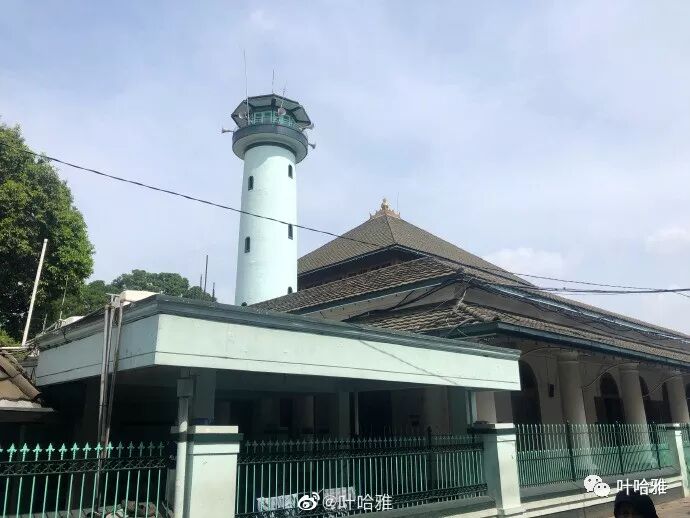
The main hall of Sunan Ampel Mosque.
Islam had already spread to Indonesia as early as the 13th century. In his travelogues, Marco Polo mentioned that when he stayed in the kingdom of Perlak on the Malay Peninsula and the kingdom of Pasai in Sumatra in 1292, he found that the people there practiced Islam. Meanwhile, the Chinese historian Ma Huan recorded his observations in Sumatra during Zheng He's voyages in "The Overall Survey of the Ocean's Shores" (Yingya Shenglan). He stated that in places like Palembang, West Sumatra, and Aceh on the northeast coast of Sumatra, the kings and the people were all Hui Muslims, and there were also merchants from Guangzhou, Zhangzhou, and Quanzhou in China.
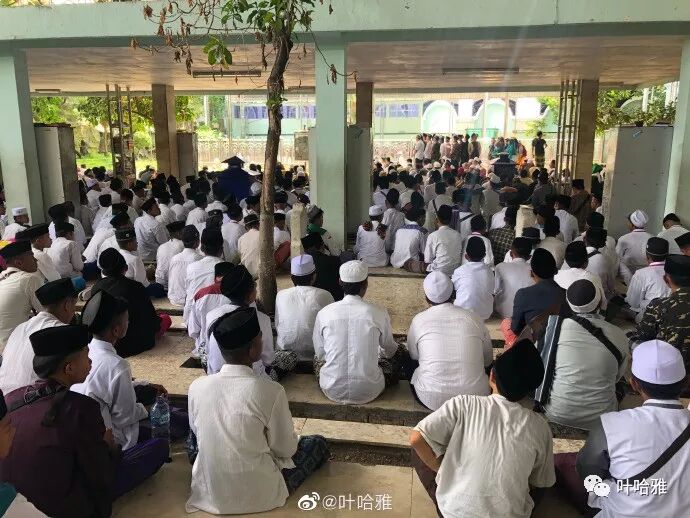
Students arrived one after another, sat on the ground, and followed their teacher in praising Allah and the Prophet.
Indonesia established its first Islamic sultanate in the 13th century on the island of Sumatra, called Samudera Pasai. Its founder, Mirah Silau, was a royal descendant who converted to Islam under the influence of the Arab merchant Sheikh Ismail and the South Indian mentor Sultan Muhammad.
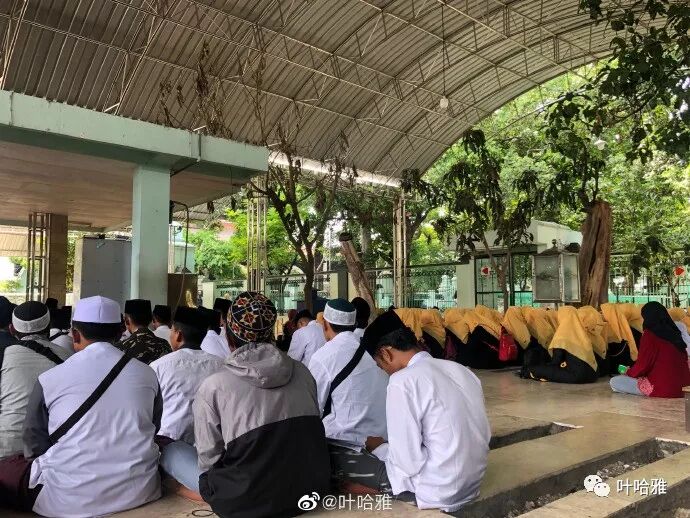
The boys finished reciting, and then the girls continued.
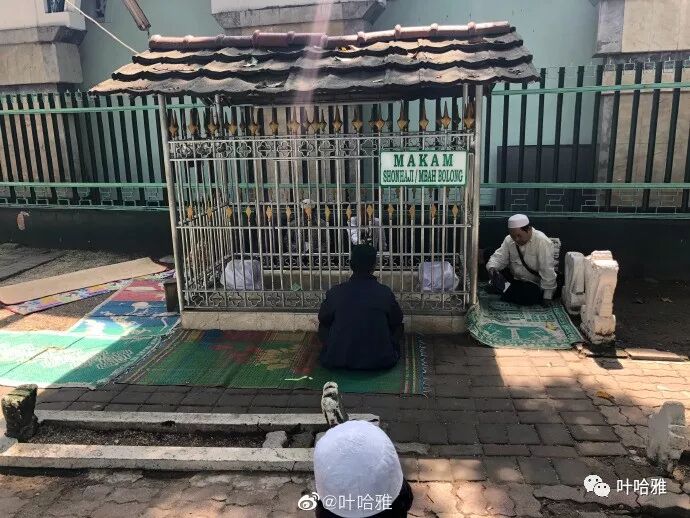
No matter whose tombstone it is, it is always in such a small space.
Cheng Ho Mosque
Surabaya has a Cheng Ho Mosque named after Zheng He, built by Indonesian Chinese. There are over 200,000 Indonesian Chinese Muslims. Many more have long blended into the Indonesian community, some even changing to Indonesian surnames, making them hard to distinguish by appearance. These facts show that any attempt to exclude Chinese people in Indonesia is unpopular and impossible to succeed in theory or practice.
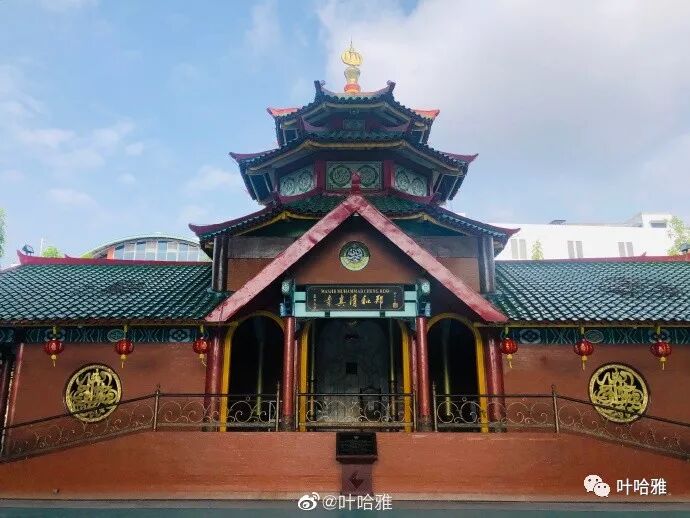
Cheng Ho Mosque
The architectural style of the Cheng Ho Mosque references the Niujie Mosque in Beijing. Since then, seven more Cheng Ho mosques have been built in Indonesia. The groundbreaking ceremony was held on October 15, 2001, which was the day of Isra and Mi'raj.
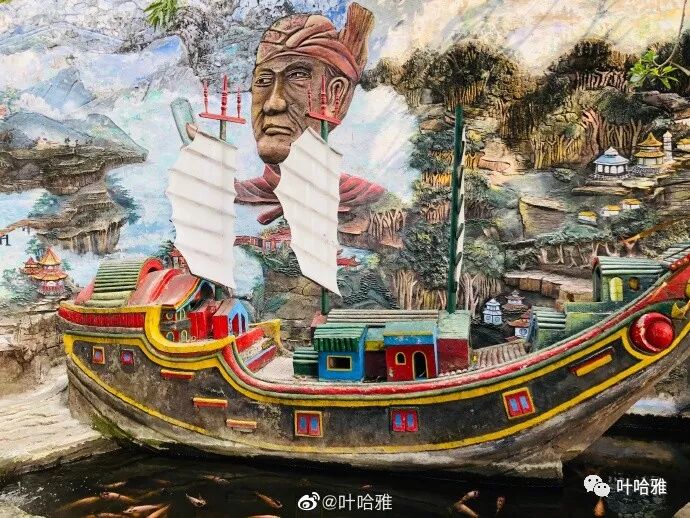
Islam spread in Indonesia mainly through peaceful means. Scholars currently believe there were several channels. First, merchants from Arabia, India, and China brought Islam to Indonesia through trade. On May 22, 2006, the British newspaper The Daily Telegraph reported that after 18 months of salvage work, European and Indonesian teams discovered about 250,000 artifacts from the Tang and Song dynasties in an ancient shipwreck in the Java Sea, including many Islamic items. This shows that China had a significant influence on the Islamization of Indonesia. Zheng He was very active in Southeast Asia. He actively engaged in local Islamic activities, built mosques, and established Chinese Muslim communities. To this day, Indonesian Chinese Muslims still commemorate Zheng He.
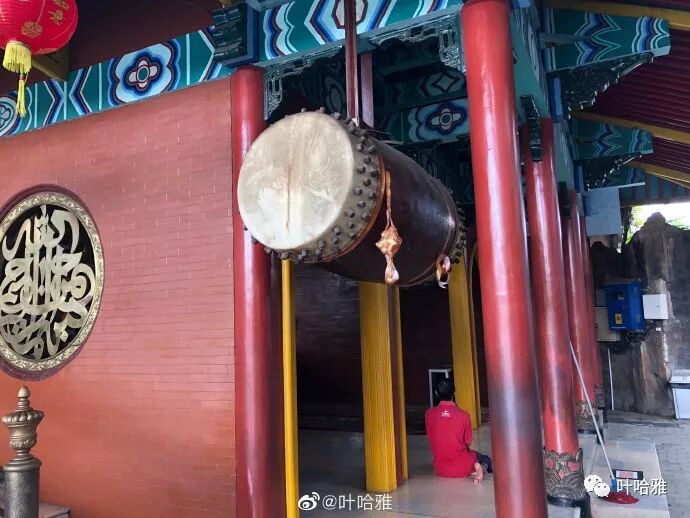
The second channel for spreading the faith was Sufi missionary work. The mystical ideas of Sufism were easily accepted by local residents who practiced Hinduism. Before Islam arrived, Hinduism was the mainstream religion in Indonesia. As Sufi scholars became more active, many residents and the ruling class abandoned their original polytheism and converted to the monotheistic faith of Islam.
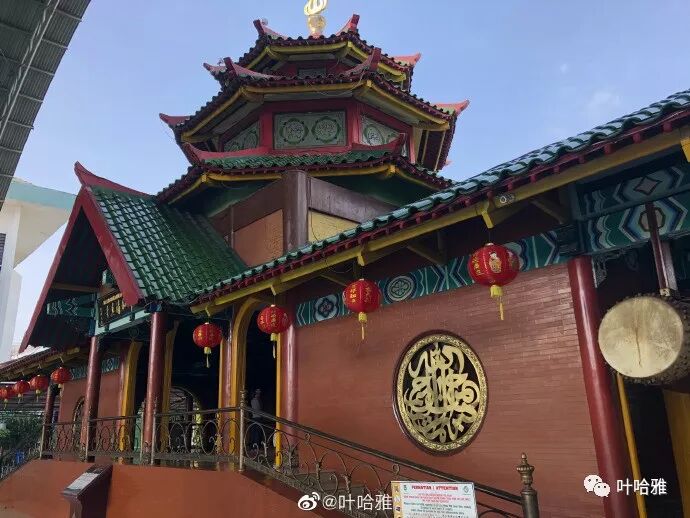
Large red lanterns and the call-to-prayer drum are a perfect blend of Chinese and Indonesian cultures.
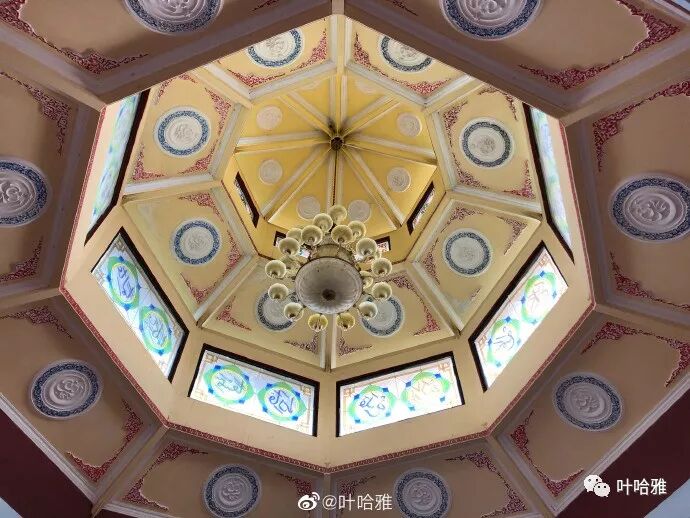
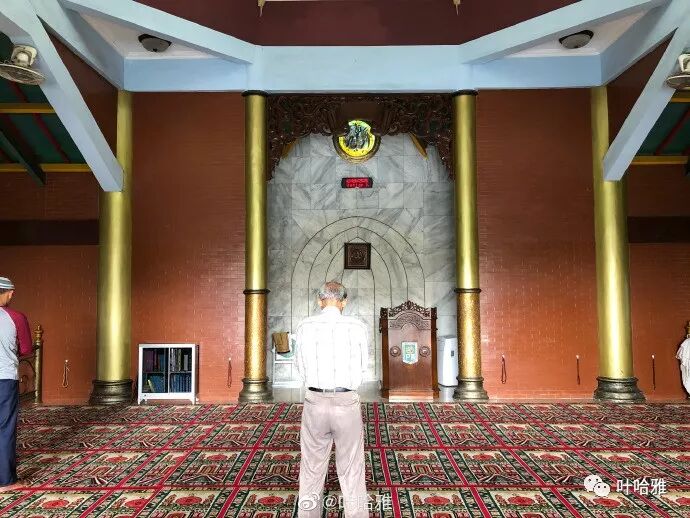
The main hall is an open space, meaning it has no doors. Doors are not needed here, as the mosque is always open to the public.
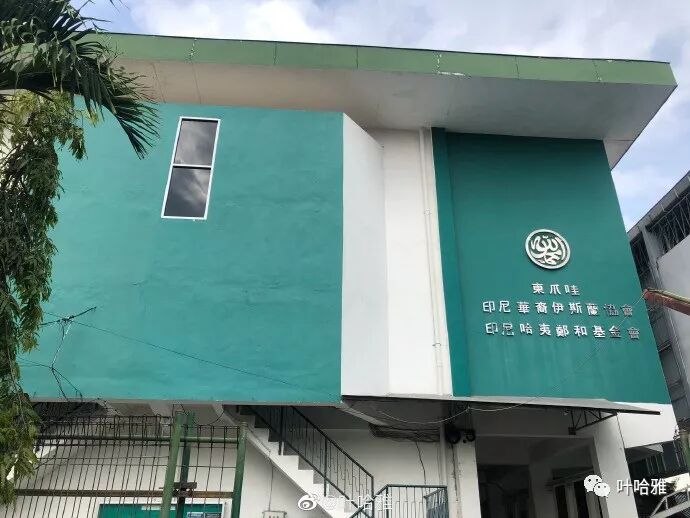
This is the location of the Indonesian Chinese Islamic Association and the Indonesian Haji Cheng Ho Foundation.
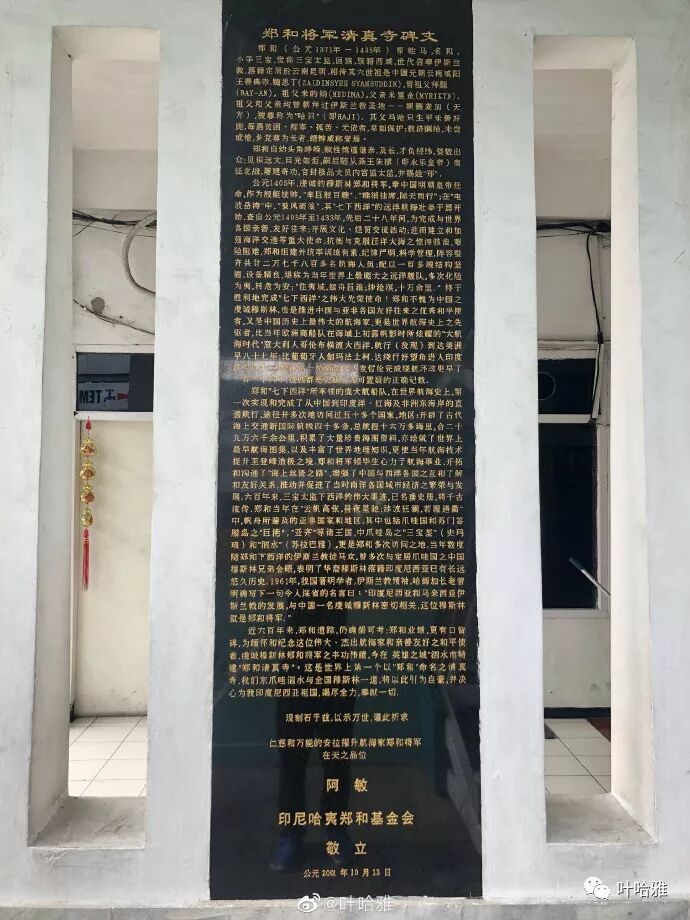
The stone inscriptions inside the mosque record the history of Zheng He and the spiritual legacy he left behind in Surabaya.
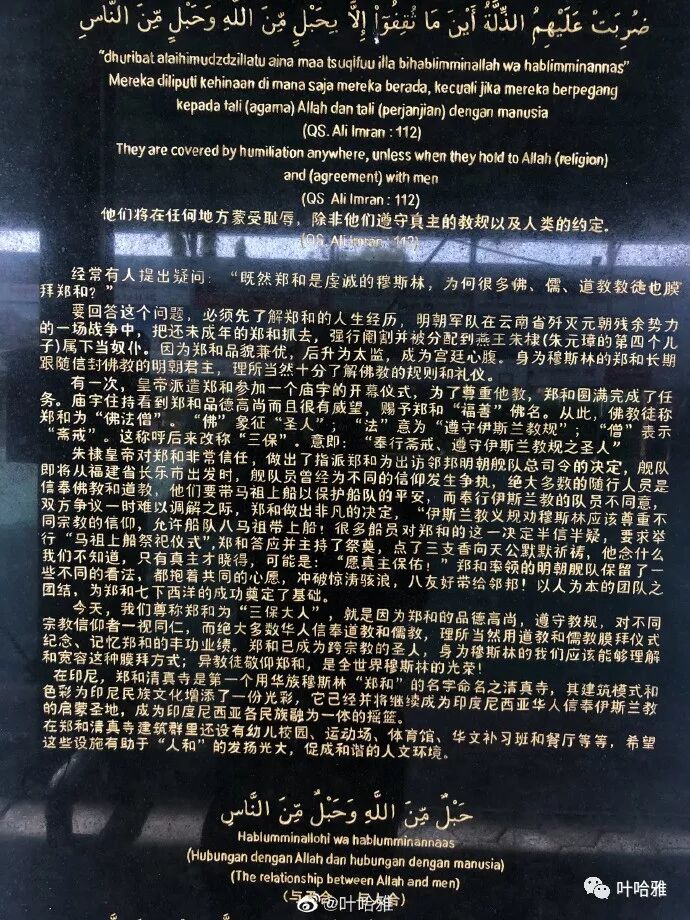
The inscriptions clearly state that Zheng He was a Muslim. They also explain why he participated in Buddhist, Confucian, and Taoist activities. Simply put, he had to adapt to the world around him.
Masjid Al Ittihad Pakuwon Mall mosque
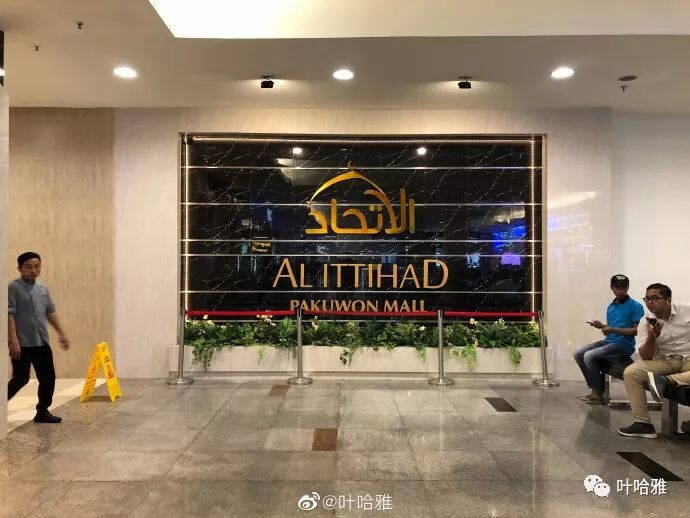
Masjid Al Ittihad Pakuwon Mall mosque
This mosque is built inside the Pakuwon Mall. Indonesian friends (dosti) told me that almost every building in Indonesia has a prayer room. Prayer rooms are different from mosques because they usually lack facilities for a full ritual wash (ghusl) and do not have an imam. This is the first time I have seen a full mosque inside a shopping mall.
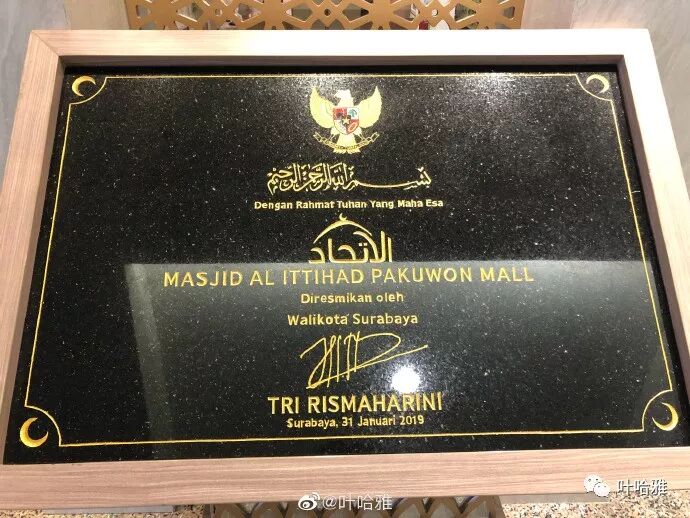
The mosque also offers free storage services.

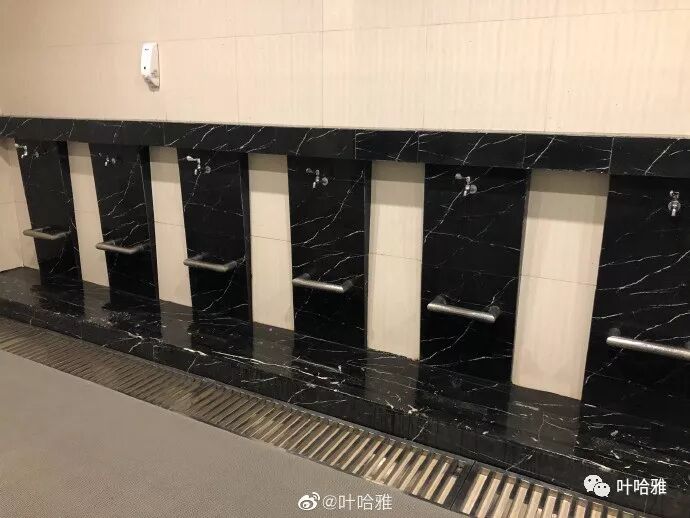
Area for minor ritual washing (wudu)
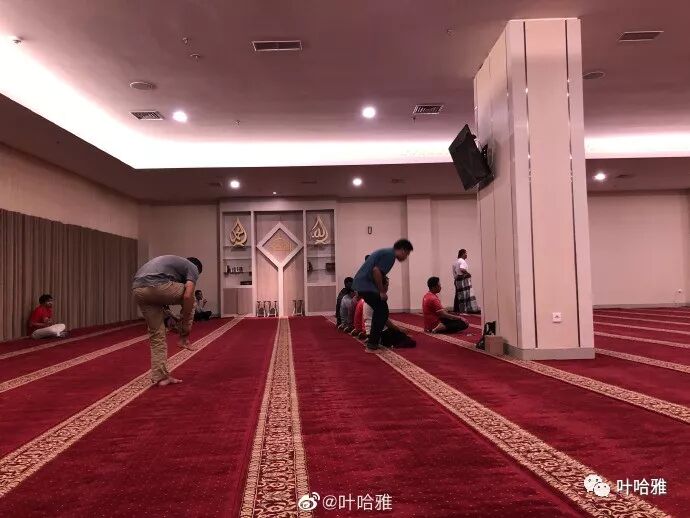
Main prayer hall
Mount Bromo
(Bromo)
After finishing my tour of the city, I planned to head to Mount Bromo. You can book a two-day local tour from Surabaya for about 1,000 yuan, but they require at least two people. I checked the route and decided I could have a great trip without a tour group, so I boarded the train to the volcano.
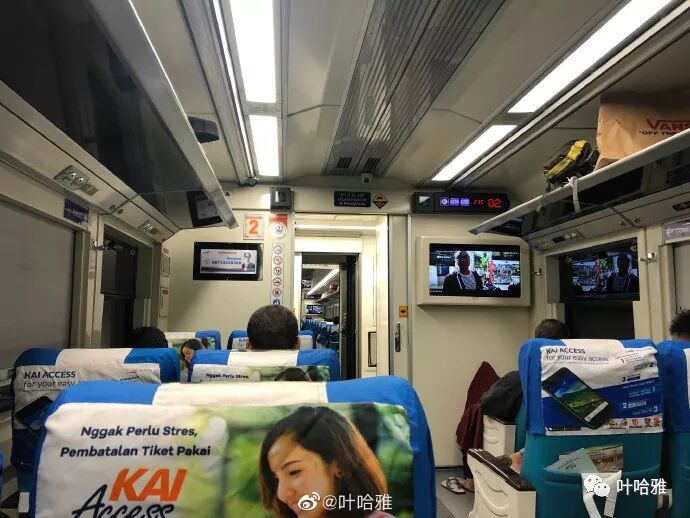
The train has first-class and second-class seats.
To get to Mount Bromo, start at Gubeng train station in Surabaya. Take a train for over two hours and get off at Probolinggo. The train ticket costs about 5 yuan. Outside the Probolinggo station, green minibuses head to the village at the foot of the volcano. They leave when full and cost about 15 yuan each. The 50-kilometer trip takes an hour and a half, but you have to wait for the bus to fill up. On my way back, I waited over three hours and it never filled, so I had to take an unlicensed taxi back to the Probolinggo train station. The 100 yuan I paid for the 50-kilometer ride was not expensive.
If you catch the bus smoothly, the total cost to climb Mount Bromo is no more than 50 yuan. Because I arrived in the middle of the night and wanted to see the sunrise, I spent an extra 200 yuan on taxis for the round trip.
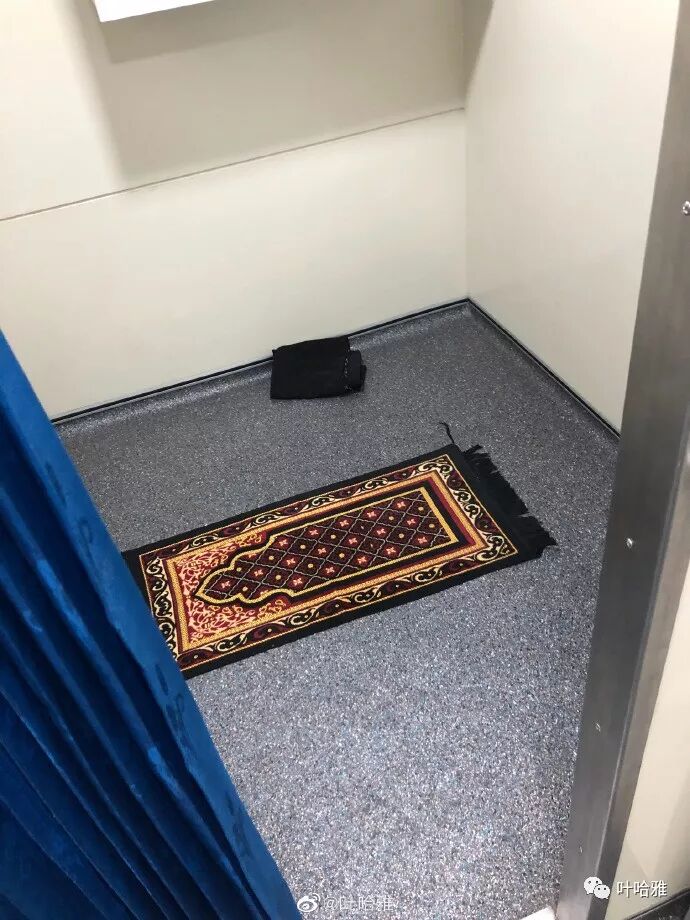
A prayer room on the train.
The driver dropped me off at the village at the foot of the volcano at 2 a.m. From there, you have to hike to the summit unless you rent an off-road vehicle or ride a horse, which is expensive. Climbing in the middle of the night is pitch black, so you need to use your phone's flashlight. You must pay a 10 yuan entrance fee to enter the village and climb to the summit for the sunrise, and you need to buy another ticket to get close to the crater.
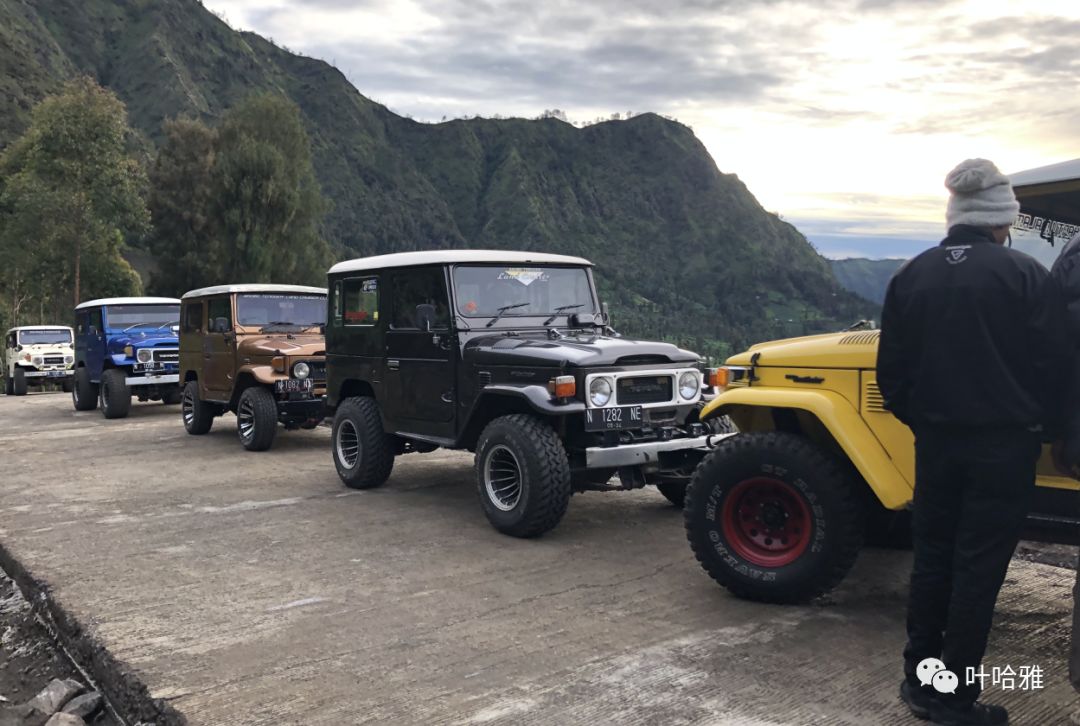
Off-road vehicles for climbing. You can charter one for a few people for about 300 yuan per vehicle.
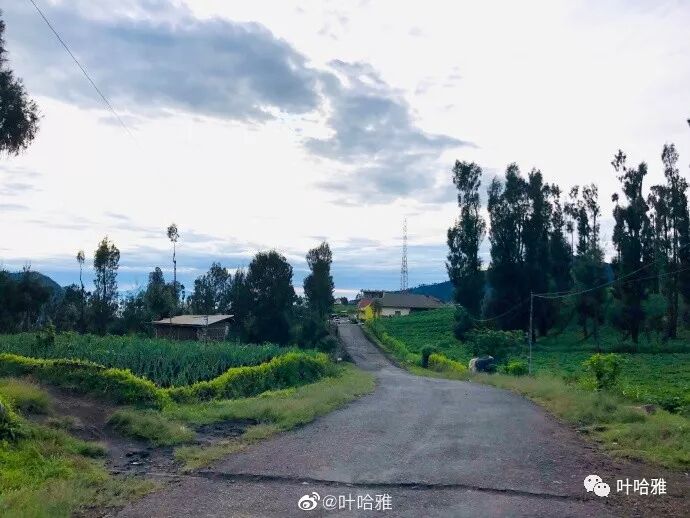
The scenery along the way after daybreak.
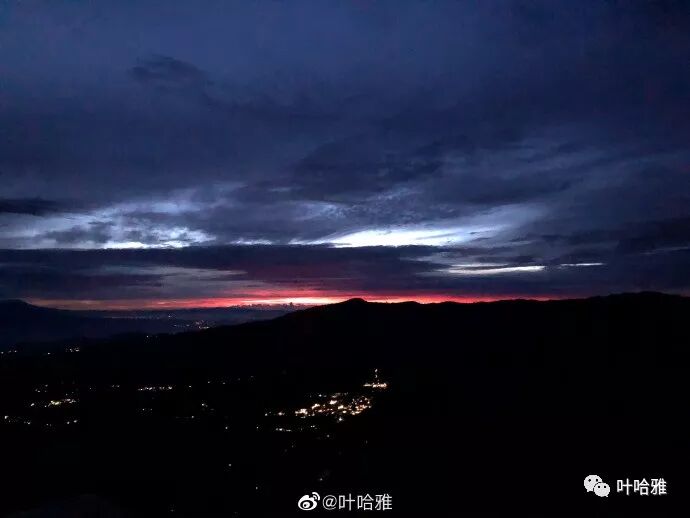
Dawn before the sunrise.
Google Maps shows the walk to the King Kong Hill (Penanjakan) summit is about 3 kilometers, but it is a mountain road and difficult to walk. It is also cold on the mountain at night, so you need a cotton jacket to stay warm. It took me an hour and a half to walk those three kilometers. It was pitch black along the way with no other tourists, just a few villagers on horseback who occasionally asked if I wanted a ride.
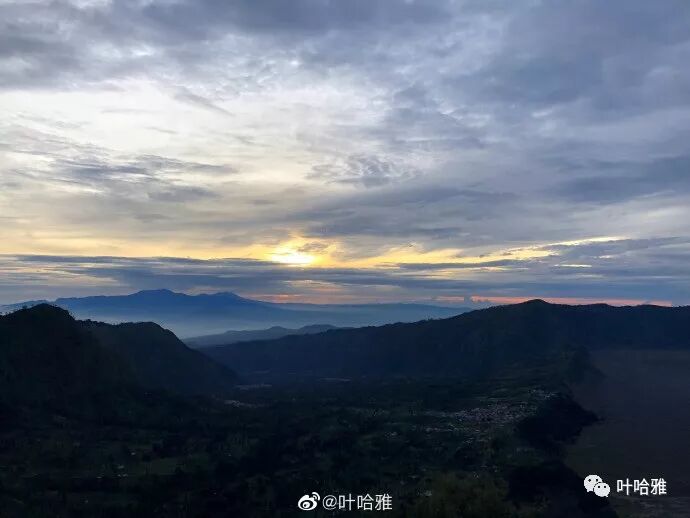
I shivered in the cold wind while waiting for the sunrise. The scenery around Mount Bromo is truly beautiful. In the morning, with the sea of clouds, the small town looks like a fairyland from a distance.
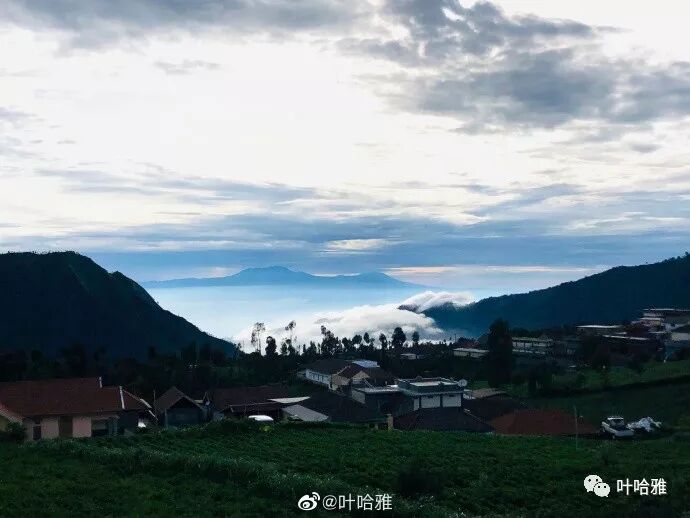
A town in the clouds.
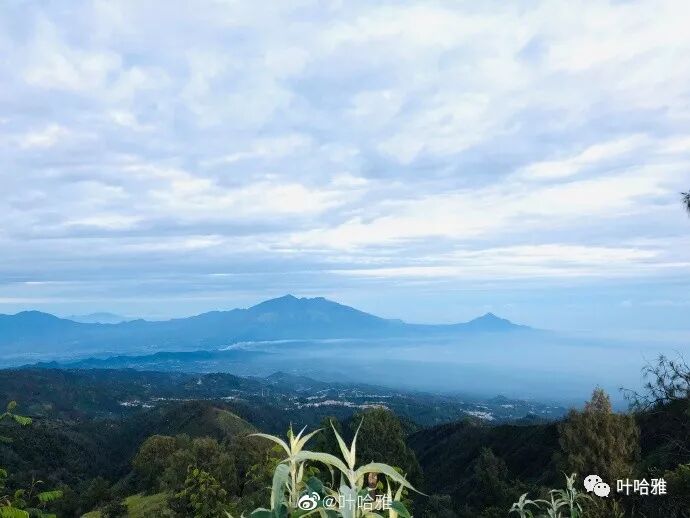
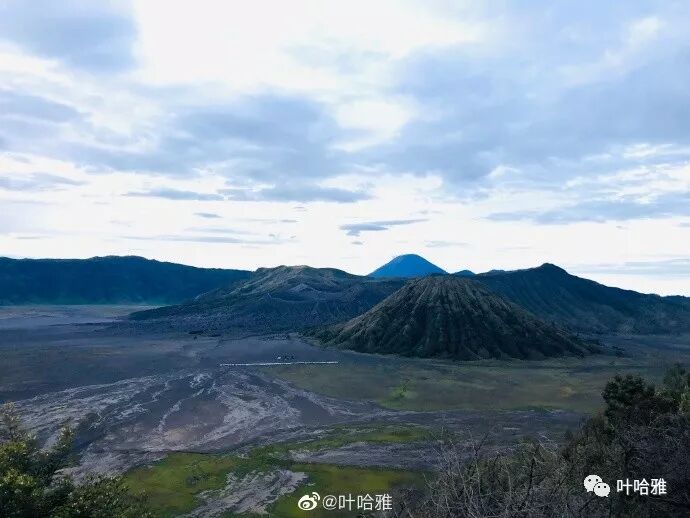
Mount Bromo crater.
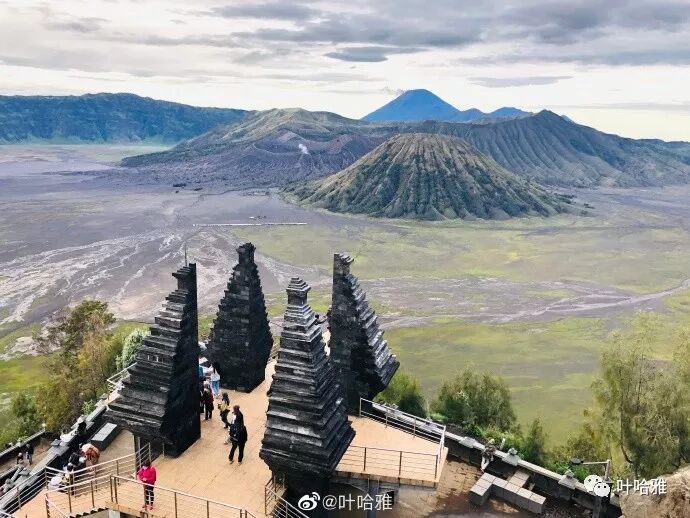
Looking from afar, the Mount Bromo crater is still emitting smoke, and you can already smell the sulfur. This volcano is still active, but you can walk up to the crater for a close look. You just need to bring your own gas mask, as a regular face mask won't help. Some people say it stings your throat and eyes. You can ride a horse from the foot of the mountain to the crater. You need to buy a ticket to visit the crater, which costs about 170 yuan per person. Considering the pandemic, I couldn't risk any respiratory issues, or it would be very troublesome to return home, so I gave up on the idea of walking into the crater, even though I really wanted to see the lava flowing.
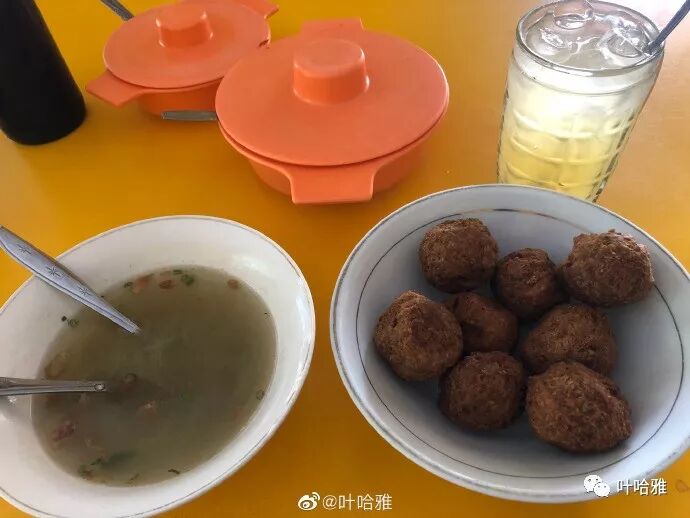
The meatball noodle soup (wanzi fentang) at the train station restaurant uses meatballs made with beef fat, much like the style in Yunnan.
On the way back to Surabaya, I kept eating to keep my energy up. There is nothing on the mountain except small stalls selling instant noodles and hot coffee, and there are no mosques.
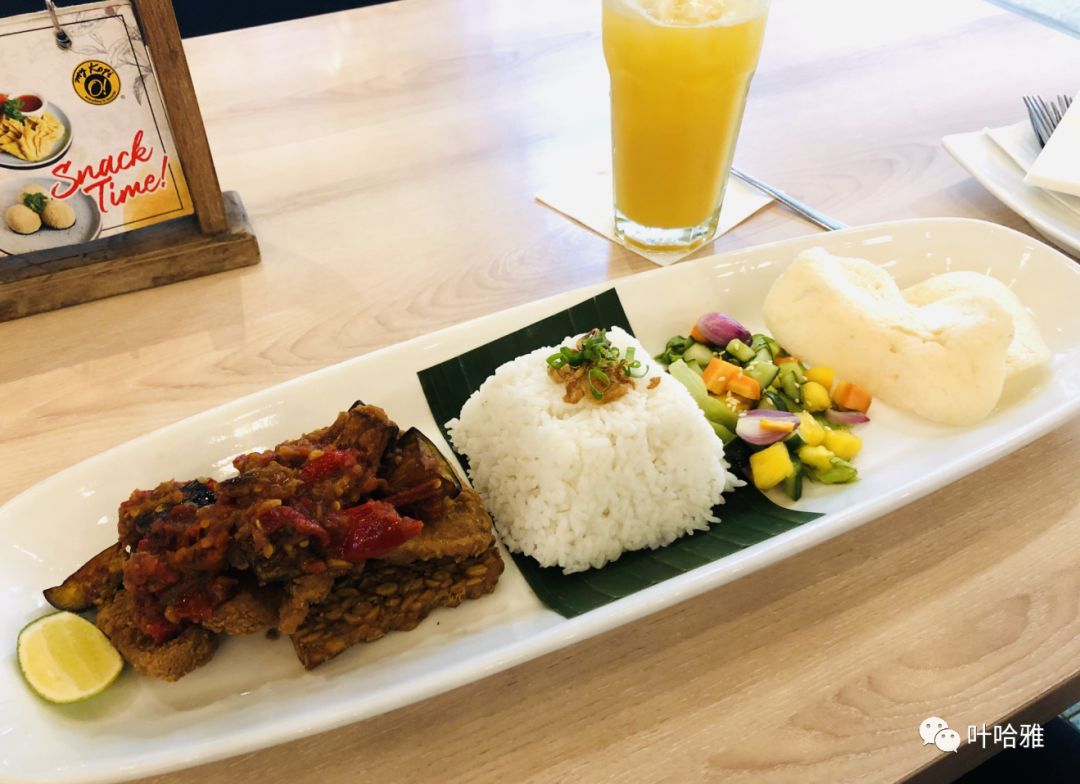
I had an Indonesian-style set meal at the Broadway shopping center.
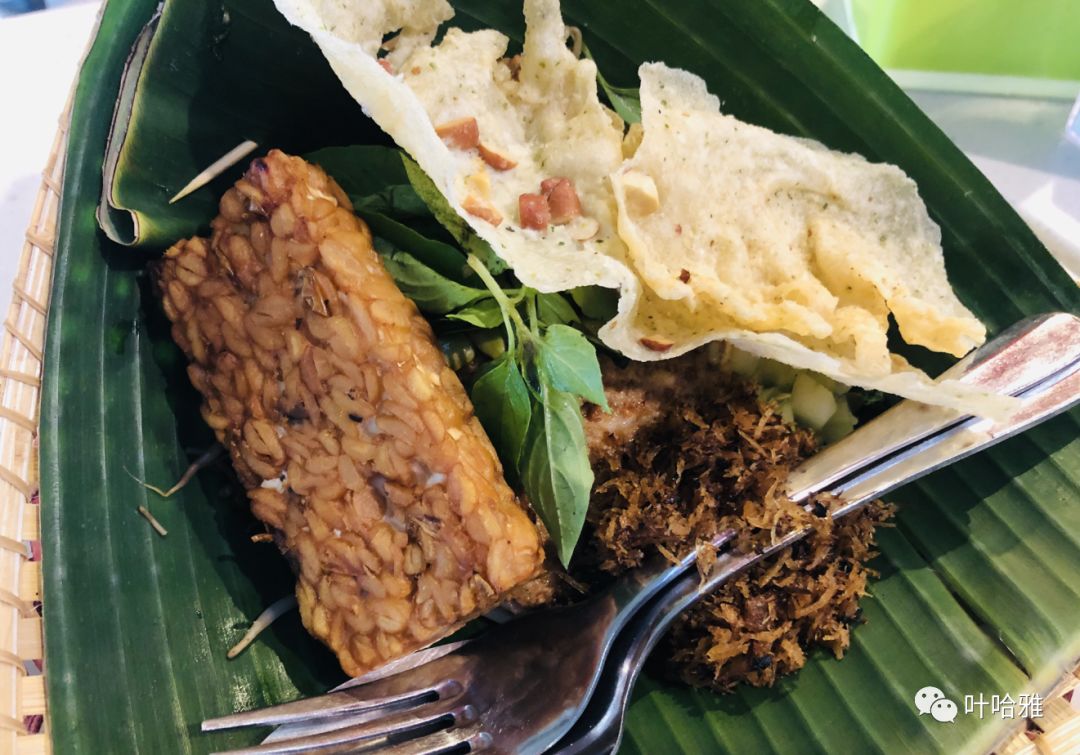
I ate Indonesian fried rice (nasi goreng) at the Surabaya airport.
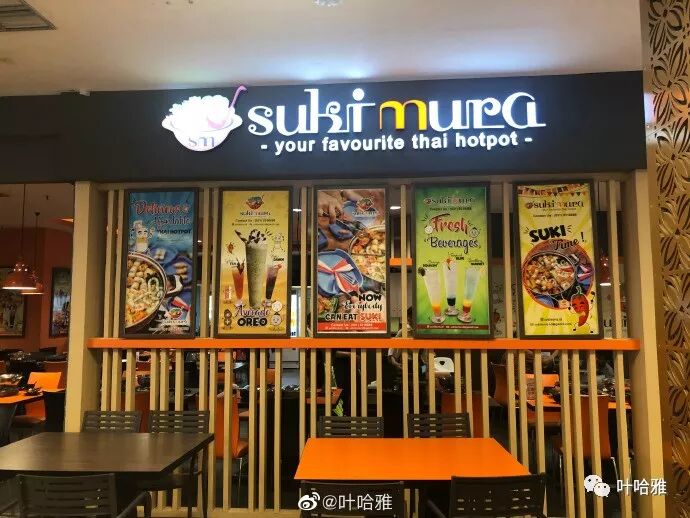
Thai-style hot pot, rich in curry flavor and slightly spicy.
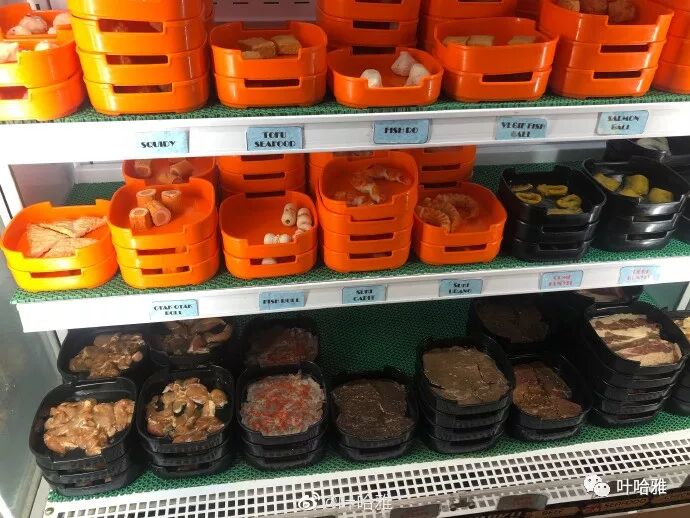
Different colored plates have different prices, and they count the plates to calculate the bill after you finish eating.
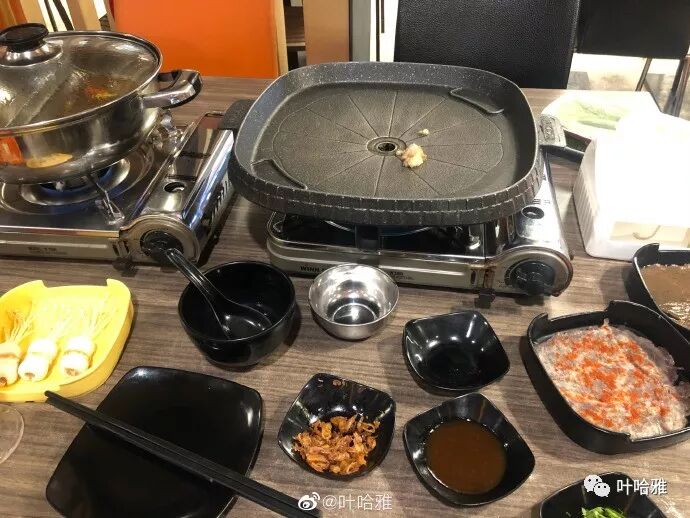
There are two ways to eat Thai-style hot pot: you can grill or boil the food.
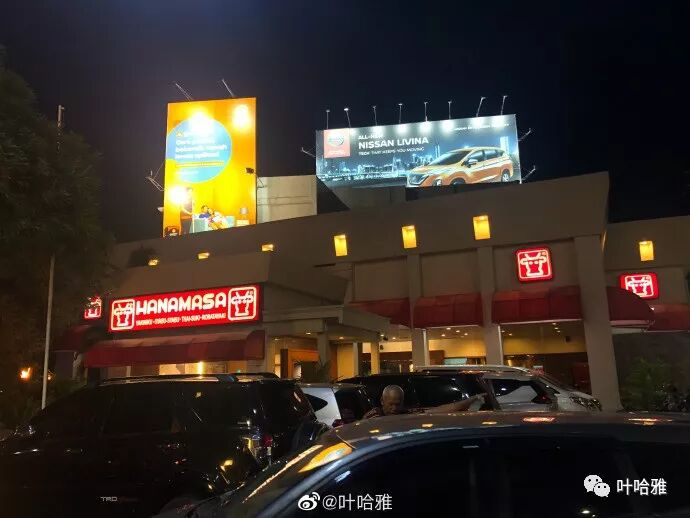
HANAMASA, a Japanese-style wagyu barbecue restaurant near the Surabaya train station.
You can also grill and boil meat at the same time here, and the greeter wearing a headscarf spoke to me in Japanese.
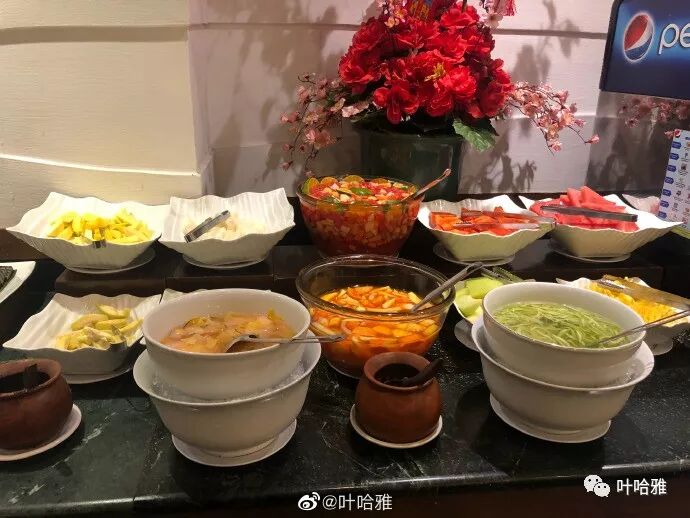
Help yourself to the fruit snacks.
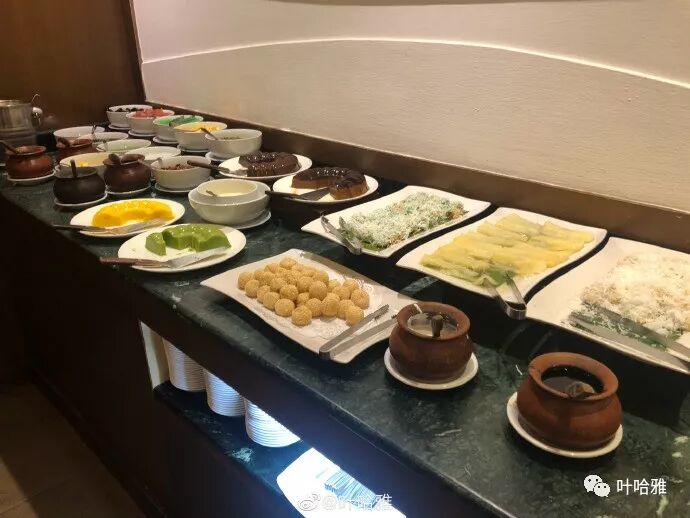
A variety of Southeast Asian desserts.
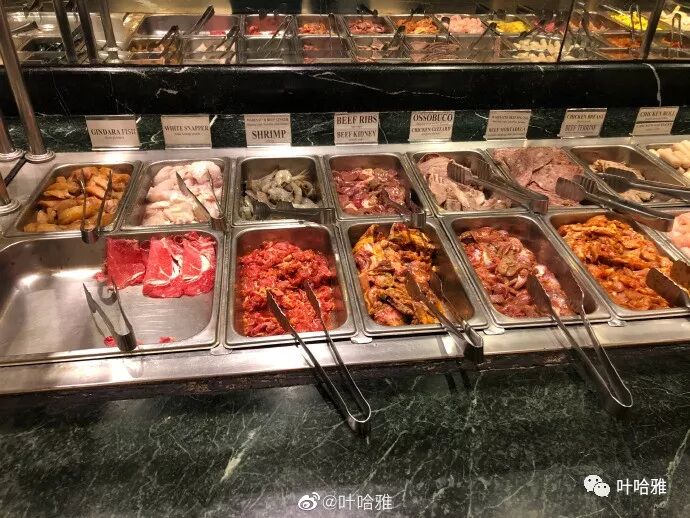
They specialize in wagyu beef, but also serve chicken, seafood, and more.
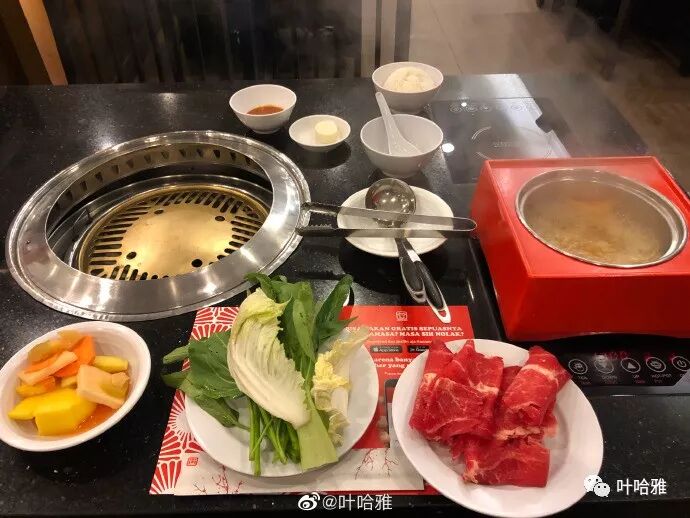
The server suggested I try both the grilled meat and the hot pot, and both tasted good. I still think the hot pot in Beijing is better, as Indonesians don't use sesame paste for it. This meal cost a few dozen yuan per person, as prices in Surabaya are also quite low.
My trip to Indonesia ended after my visit to Surabaya. I flew from Surabaya back to Beijing with a layover in Hong Kong. My Cathay Pacific flight was delayed for 12 hours, and I wasn't allowed to leave the airport to look around. Many passengers were stuck at the airport, and since the border was closed during the pandemic, we had to wait at the airport until our flight took off the next morning.
I spent the whole night walking around Hong Kong International Airport. There are currently two dua rooms at the airport, one near gate 42 and the other near gate 211.
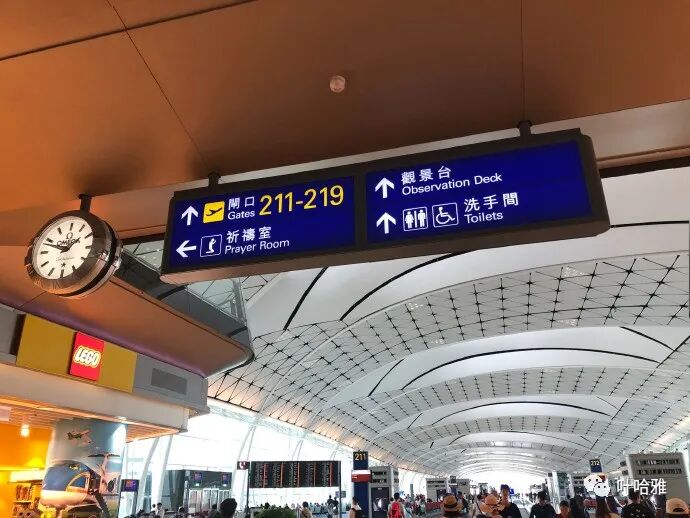
The dua room near gate 211
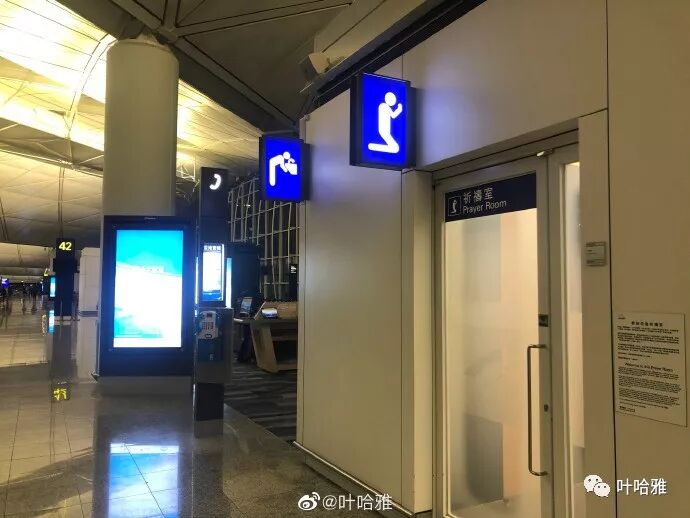
The dua room near gate 42
After leaving Indonesia, it felt a bit strange not being able to eat just anywhere at Hong Kong airport. There is currently only one halal-certified restaurant in the entire airport called Old Town White Coffee. There used to be a halal Popeyes, but it has closed down.
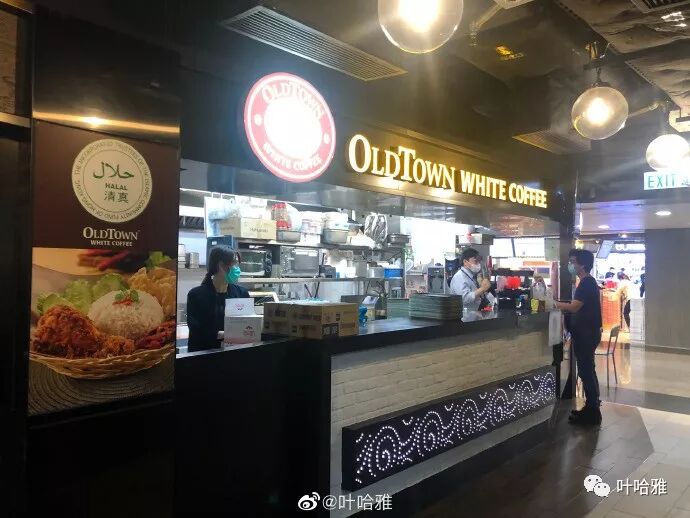
Old Town White Coffee
This restaurant serves no alcohol and offers Southeast Asian food. I ordered a bowl of Ipoh shredded chicken rice noodles (hefen), a side of fried chicken, and a lemon tea for about 100 yuan. The taste was decent, and I felt very grateful to have a hot halal meal at that time.
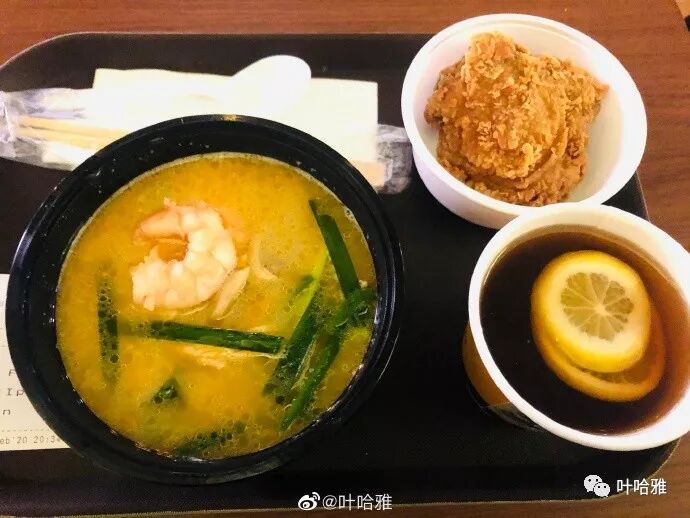
The restaurant is open from 7:00 AM to 9:00 PM and is located in the food court area.
Muslim Travel Guide Indonesia: Jakarta, Trowulan, Demak Grand Mosque and Java Halal Journey
Articles • yusuf908 posted the article • 0 comments • 175 views • 2026-05-24 00:17
Summary: This Indonesia Muslim travel guide part 1 covers visa-free entry, avoiding bribes, Jakarta, Indonesian halal travel basics, Java history, Trowulan, Wali Songo heritage, Demak Grand Mosque, Sunan Ampel sites, and the country through the eyes of a Chinese Hui Muslim.
Indonesia has the largest Muslim population in the world, with over 200 million Muslims. Most follow the Shafi'i school of jurisprudence. Indonesian Muslims have long been on the fringes of the Muslim world, but this marginalization has gradually improved since Indonesia gained independence from colonial rulers in 1945. Today, hundreds of thousands of Indonesians go on the Hajj to Mecca every year. They are known as the "rice of Hejaz," with Hejaz referring to the region of Mecca and Medina.
Indonesia currently offers visa-free entry to citizens from mainland China. You only need your passport to fly in, with no prior application or fees. I have seen many netizens online complain about customs officers asking for bribes upon entry. I flew from Beijing to Jakarta and was not asked for a bribe, so it might be an isolated issue. My consistent principle is to firmly refuse any customs bribes. As Muslims, we cannot engage in bribery. I would rather not enter the country than pay. Even if the bribe is only a small amount, it is a matter of principle that I will not compromise on. Since this behavior often targets Chinese travelers, we must not encourage such discriminatory practices.
I heard about similar bribe requests when I visited Vietnam, but I never encountered them. My method is to prepare my round-trip flight tickets and hotel booking confirmations in advance, print them out, and have them ready when customs asks me the purpose of my visit. I show them the itinerary I prepared, which clearly states my travel purpose. Once customs sees this, they know I am an experienced traveler, and they have no reason to ask for a bribe before letting me through.
Many online travel guides view Indonesia from a non-Muslim perspective. I have read many of them and find them superficial and biased when judging the country's majority ethnic group. Below, I will introduce my halal journey through Indonesia from the perspective of a Chinese Hui Muslim.
Items to prepare before leaving for Indonesia:
1. Round-trip flight tickets and hotel booking confirmations, printed out and kept handy to prevent customs from questioning you or asking for bribes;
2. Portable WiFi, which can be rented from major travel websites for about 10 yuan a day. Renting WiFi is more convenient than buying a local SIM card. In my experience, mobile signals on many islands are not as good as WiFi. You can activate international roaming in advance, but it is only useful for receiving text messages. International roaming still cannot access sites like Google, but portable WiFi can. Google Maps is very important when traveling abroad;
3. Power adapter
Indonesian power plugs are wider than those in China, so you will need an adapter. You can buy a universal multi-function power adapter online.
4. Grab
This is a ride-hailing app used across Southeast Asia. You must have it; it is very useful. You can link your credit card to pay without cash. If you do not have it, you will almost certainly be overcharged for taxis.
5. Sunscreen, mosquito repellent, sunglasses, and flip-flops
These are all essentials for life in the tropics.
6. Indonesian Rupiah cash
You can exchange money in China or at the airport in Indonesia. The currency has a low value; 10,000 Indonesian Rupiah is worth about 5 Chinese Yuan.
First stop: Jakarta
Jakarta is the capital and largest city of Indonesia. Many people only use it as a short transit stop, but there is actually a lot to see and do here. It is a microcosm of Indonesia where you can experience all kinds of local cultures. If your schedule is not tight, you might want to stay a few extra days. As a food blogger, what attracts me most is that I can find halal versions of cuisines from all over the world here.
Xiamen Airlines halal meal
I have to praise the halal meal on Xiamen Airlines; it was better than any other halal meal I have had on domestic airlines. A quick tip: I did not book a halal meal in advance for this flight, but Xiamen Airlines offers both halal and non-halal options on flights to Jakarta, so you do not need to reserve one ahead of time.
Except for budget airlines that do not provide meals, almost all airlines offer a meal booking service. Booking a religious meal costs nothing extra as it is included in your ticket price. You must book at least 24 hours in advance. You can do this through the airline's app, by calling their customer service, or through the customer service of the platform where you bought your ticket. If you are worried about the airline's ingredients, you can also book a vegetarian meal. Some airlines let you set dietary preferences in their app. Once you do this, the system will automatically book a halal meal whenever you buy a ticket with them.
DIGITAL AIRPORT capsule hotel
After flying all day, I arrived in Jakarta at 10 p.m. My plan was to fly to Komodo Island early the day after tomorrow. To save time and money, I chose a capsule hotel on the first floor of Terminal 3 at the airport. This way, I did not have to travel into the city after landing that night, and I would not have to wake up early to catch my flight later. It turned out to be a great choice. Although the capsule was small and only fit one person, it was clean and had everything I needed, including bottled water, a towel, a locker, a power outlet, and a TV. It felt like lying inside a space pod.
The lights in the space could change color, and there was air conditioning.
The capsule hotel has shared bathrooms. Even though it is a public area, each shower and washroom is private. Once you lock the door, it is just like a private bathroom, so it does not feel awkward at all. This was my first time staying in a capsule hotel, and I was very satisfied. I hope this model becomes more popular.
MALACCA TOAST airport fast food restaurant
Egg sandwich
Halal bidet spray in the bathroom
You can still find non-halal food in Indonesia. Some restaurants run by non-Muslims, such as Catholics or Hindus, sell alcohol but will note that they are pork-free. I have seen women wearing headscarves eating in these places. I only saw pork sold in Chinese-run restaurants in Surabaya, and you will never see anyone wearing a headscarf in those shops. If a restaurant has a clear halal certification sign at the entrance, it definitely does not sell alcohol.
Indonesian halal certification logo
This is what the common Indonesian halal certification logo looks like. It comes in two versions: one in Arabic script and one in Latin letters. HALAL also means halal in the Indonesian language. If the logo on a package is very small, they might leave out the Latin letters but will still include the Arabic word حلال
to make it easy for friends (dosti) from all countries to recognize.
Shaburi all-you-can-eat Japanese hot pot restaurant
Located on the third floor of Terminal 3 at Soekarno-Hatta Airport, a set meal costs about 60 yuan. You get one plate of meat, and you can eat as many vegetables, fruits, and sushi as you like.
Restaurant service in Indonesia is generally warm and attentive, especially with the servers' sweet smiles.
The individual hot pots are very similar to the Xiabu Xiabu chain back home.
Indonesian casual dining restaurant in Terminal 2
Indonesian fried rice (nasi goreng)
This type of fried rice is what I eat most often in Indonesia, and it is one of my favorite Indonesian foods. You can even eat it for breakfast. It costs anywhere from 6 to 30 yuan and is popular all over Southeast Asia. It is made by stir-frying white rice with sweet soy sauce, tamarind, and dried shrimp. It is served with various sides, including satay skewers, cucumber, Indonesian shrimp crackers, and a fried egg.
Istiqlal Mosque (Masjid Istiqlal)
Jakarta's Istiqlal Mosque (Masjid Istiqlal in Indonesian, which means 'independence' in Arabic) was built to celebrate Indonesia's independence. The foundation was laid on August 24, 1961, and it opened on February 22, 1978. The architect, Frederich Silaban, was a Christian. The mosque was built next to the Jakarta Cathedral to symbolize religious harmony.
The site was under renovation when I arrived. It was the rainy season in Indonesia, and Jakarta had just experienced flooding, leaving many areas waterlogged. Yet, after the floods, everything went back to normal. I was struck by the driver who brought me here. As we talked about the Jakarta floods, he pointed to the water marks along the street while laughing. I was amazed at how optimistic they could be. Their love for smiling is my deepest impression of Indonesians. Even though they are poor, they have a high sense of happiness.
Visiting the mosque is free. You need to take off your shoes and leave them at the storage area. The man at the entrance greeted me warmly and asked me to write down my country and religion in the guest book.
I had learned about this mosque on TV before. It is considered the largest in Southeast Asia and was built at a huge cost. However, after visiting in person, I did not find it as beautiful as I had imagined. As my trip continued, I saw many more unique mosques in Indonesia.
Jakarta Old Town
(Kota Tua Jakarta)
Jakarta Old Town covers only 1.3 square kilometers, about the size of a plaza. It contains many Dutch buildings from the 17th century. At that time, Jakarta was the headquarters for the Dutch East India Company to trade spices and other goods in Asia.
Let's talk about Indonesia's colonial history. A friend once asked me why we rarely hear from Indonesian Muslims on the world stage despite there being so many of them. The reason is that Indonesia was colonized for a long time. From the 16th to the 20th century, it was a Dutch colony. During World War II, the Japanese arrived and drove out the Dutch, and Indonesia was colonized by Japan for a few years. It was not until 1945 that Indonesia declared independence. Before this, the actual ruling class was never Muslim, which is why Indonesian Muslims have been marginalized internationally.
Street view of Jakarta Old Town
Although Indonesia is considered a Muslim country with a Muslim population of over 80%, it is not an Islamic state. Only countries with Islam as the state religion can be called Islamic states, and Indonesia has no state religion. This shows the marginalized status of Indonesian Muslims in their own history. A country where 87% of the population is Muslim cannot even establish Islam as the state religion. Neighboring Malaysia manages to do this, even though its Muslim population is only 60%, so Malaysia is considered an Islamic state.
Performance in the Old Town square
The Indonesian constitution requires citizens to have a religious belief. The Jakarta Charter published in 1945 clearly stated: 'The state shall be based on the belief in the One Supreme Allah, with the obligation for adherents of Islam to practice Sharia in accordance with correct and moral humanitarian principles.'
Indonesian citizens cannot have no religion, or they will be treated as materialist communists. You know what I mean. This is often linked to what people call the anti-Chinese sentiment in Indonesia, because at that time, many Chinese in Indonesia were associated with communism. Major General Suharto, who was pro-Western, overthrew the pro-communist Sukarno government and then started a massive anti-communist purge. When it happened, it targeted communists and was not specifically aimed at Chinese people. Therefore, focusing only on anti-Chinese sentiment ignores the background of the event.
The Special Region of Banda Aceh in Indonesia follows the second half of the Jakarta Charter by implementing Sharia law. Located in the northwest corner of Indonesia, Banda Aceh is the closest city in the country to Mecca. The prayer direction (qibla) in Indonesia faces northwest, but there are no direct flights, or I would really like to go there and experience the atmosphere of Sharia.
Street snacks in the old town
There are many snacks along the streets of the old town. I am not used to eating these unfamiliar foods on the side of the road, but interested friends can go and try them. I suspect they might not taste very good, as we may not be used to many Southeast Asian specialties. Plus, the hot weather could easily give you an upset stomach.
Some basic toilets in Indonesia have a plastic water bottle placed above the urinal. This bottle is used for washing yourself.
Grand Indonesia
Grand Indonesia is the largest shopping mall in Jakarta. It is truly massive and ranks among the best in Asia. The mall has everything, including a farmers market and numerous restaurants and snack shops. You can spend an entire day here. If you do not want to walk around in the scorching sun, I suggest coming here for shopping and relaxation.
The supermarket on the basement floor
Indonesian specialty civet coffee beans (kopi luwak)
I carefully checked the various internationally famous brands in the supermarket, and almost every product I saw had a halal certification mark.
Halal Yoshinoya
Japanese food in the mall
Japanese food is quite common in Indonesia and very popular with the locals. You often have to wait in line to eat at these types of restaurants. Japanese food in Indonesia is linked to the Japanese occupation during World War II. Many Japanese companies stayed in Indonesia after the war, bringing a large number of Japanese people with them.
A bookstore in the mall.
The bookstore in the mall has a large section for religious books. It carries books from all major religions, with the most being Islamic books. They are mostly in Indonesian, so I could not read them. Otherwise, I would have bought a few to take home.
Italian restaurant Popolamama.
This is an Italian restaurant in the mall. I have not seen a halal Italian restaurant in Beijing yet. The standard of Western restaurants in Jakarta is world-famous.
Italian pizza.
A pizza, a salad, and a glass of juice cost about 60 RMB. This price level is already quite high for Indonesia, as costs are even lower in other smaller Indonesian cities.
Second stop: Komodo Island.
Komodo Island is a major destination for my trip. I came here to fulfill a childhood wish as a nature enthusiast. When I was in elementary school, my family gave me a set of four encyclopedias. I flipped through the natural science volume the most, and I was deeply impressed by the various record-breaking plants and animals it introduced. Komodo Island is a place with great biodiversity and frequently appeared on nature shows.
Komodo Island is located in the southeastern corner of Indonesia. It is just a bit further south to reach Australia, so it faces Oceania across the sea. There are no direct flights from China to Komodo Island, so you must transfer through Jakarta or Bali. I flew for over three hours from Jakarta to reach Labuan Bajo Airport, which is the closest airport to Komodo Island. If you transfer from Bali to Labuan Bajo, it only takes one hour.
The main road of Labuan Bajo town.
After leaving Labuan Bajo Airport, I took a taxi for half an hour to reach the small town of Labuan Bajo. This is the busiest area in the region. The picture above shows the liveliest street in this town. The town has a small population, underdeveloped commerce, and covers only two square kilometers. Many residents still keep their traditional way of life, and most make a living from fishing and tourism. The most common shops along the street are dive shops. Komodo Island has many high-quality diving spots, but the underwater currents are complex and suitable for professional divers. Beginners are not advised to go.
Sylvia Hotel & Resort Komodo
My hotel had a private beach. Many hotels here have private beaches, and they are affordable and beautiful. You can stay in a very nice place for two or three hundred a night. I do not recommend this hotel, though, because it is far from the town center. There are no shops nearby and no public transport, so you cannot go out for a walk at night. I suggest staying in town next time for more convenience.
The hotel swimming pool
The only restaurant in the hotel
A steak set meal
A steak costs less than 100 yuan. There are no decent restaurants in Labuan Bajo town, mostly just small street shops. It is important to note that many Christians live in this town, and most restaurants on the island are run by Christians. They often label their food as halal and serve no pork, but they do sell alcohol.
Masjid Agung Nurul Falaq Labuan Bajo mosque
I took a taxi from the hotel and asked the driver to take me to the biggest mosque in town. He brought me here. This mosque is small compared to others in Indonesia. The density of Muslims in Indonesia decreases from the northwest to the southeast. The Aceh Special Region in the far northwest is the most Islamic, while Bali in the southeast is dominated by Hindus.
Muslims in Southeast Asia are mainly followers of the Shafi'i school. You can see them raise their hands three times during namaz. Whether they raise their hands three times or once, both practices have correct hadith support.
Small Indonesian barbecue
A simple Indonesian meal on the island, grilled chicken skewers with rice. The chili sauce is extremely spicy, just like the chili in Hunan.
I walked through a residential area and found a small mosque in the village. It was very simple, surrounded by villagers' houses, with chickens pecking for bugs nearby.
Interestingly, there is a pink Catholic grave built right next to this mosque. It is the first time I have seen such a combination.
The tombstone features paintings of the Virgin Mary and Jesus.
After resting for the night, I booked a one-day tour on Trip.com for the next day. The itinerary included Padar Island, Komodo Island, Pink Beach, Taka Makassar, a manta ray snorkeling spot, and Kanawa Island. It cost 789 RMB and included lunch, hotel pickup and drop-off, and an English-speaking guide.
The tour group provided face masks.
We left at 5:30 in the morning, and the driver arrived at the hotel on time to pick us up. Before we left, the guide gave every tourist a face mask. It was January 27, 2020. The epidemic had already broken out in China, but Indonesia was not affected at all, so the tourists did not pay much attention to it. The group included people from various countries, including Japan, South Korea, Sichuan, Taiwan, and Europe and America.
Padar Island
Overlooking from the top of Padar Island.
It took about an hour by boat to reach Padar Island. There are no residents on this island, and it remains in its original state. I climbed along the seaside to the top of the mountain to overlook the whole area. Some tourists brought drones for aerial photography.
Panoramic view of Padar Island.
After a short stay on the island, we continued by boat to Taka Makassar.
Taka Makassar.
The small island is a crescent-shaped isolated island that might be submerged when the tide rises slightly. However, the island is very beautiful with blue water. Looking down from the air, it looks like a gemstone embedded in the sea. The sand on the island already shows a light pink color, which is a feature of the Komodo area.
Taka Makassar.
You can go snorkeling nearby. It is very shallow, and because the water is so clear, you cannot see many fish. Be sure to protect yourself from the sun.
Pink Beach
The beaches around Komodo Island are generally pink because they contain tiny coral particles. Since this area was developed late, it has maintained its original natural state, and the seawater is crystal clear.
Fine pink sand grains
The sea view of Komodo Island is incredibly beautiful.
The underwater video of me trying to catch fish with a GoPro
Komodo National Park
Next, I continued to Komodo National Park. Just before landing, I saw a dark cloud floating over Komodo Island from a distance, making the atmosphere of landing on the island feel even more eerie. The world's largest venomous reptile, the Komodo dragon, lives on this island.
Komodo National Park consists of many islands, including the larger Padar Island, Rinca Island, and Komodo Island. About 3,000 giant lizards live on the islands. Indonesia established the national park to protect the Komodo dragons, and it was later listed as a World Heritage site by UNESCO.
You must be led by a park ranger to enter the forest. Tourists cannot act alone because the giant lizards on the island are all in the wild and are venomous and very dangerous. The long stick in the ranger's hand can block the giant lizard's attack. People often say Komodo dragons have toxic bacteria in their saliva because they eat carrion, which kills their prey through infection. Scientists have disproven this. In reality, Komodo dragons are born with venom glands, and it is their venom that kills the prey.
The park entrance asks visitors to stay quiet. Our group walked carefully the whole way, eyes wide open, watching every plant and tree around us.
I saw a dead, dried-up tree trunk and imagined a dinosaur pushing it over.
Komodo dragon nest
Our guide pointed to a mound of dirt in the distance, saying it was a Komodo dragon nest. It was about a meter high and five or six meters wide. The scene looked just like something out of Jurassic Park.
Near a pond, the guide stopped to tell us that dragons often come here to drink. Then I saw a deer limping toward the water. Its head was already injured, likely by a dragon. The guide said deer are the dragon's main food, and this deer would probably die soon after the attack.
A dragon in the bushes
We kept walking until the guide suddenly stopped and pointed to a dragon in the nearby bushes. I followed his finger and took a photo of the first dragon I saw. It was about two meters long, lying perfectly still in the brush. I could clearly hear it breathing.
Right after that, we saw three more dragons in the rest area, lying in the corner of a pavilion where tourists drink tea. The crowd got excited, and some people wanted to get close for photos. The guide became very alert and sternly warned everyone not to get too close.
Komodo dragons are hermaphroditic and can reproduce asexually. They live in trees when young and move to the plains as adults. They can dive, and they can run at speeds of 20 kilometers per hour. Their mitochondria are different from typical cold-blooded animals, allowing them to boost their metabolism to the level of a mammal, which gives them amazing speed and endurance. Attacks on humans are rare on the island, though there has been a case of a fisherman being killed by a dragon. Dragons have no natural predators on the island, but they will not attack humans if there is plenty of food.
Adult dragons grow over 3 meters long. They use their tongues to identify scents and can smell blood from 10 kilometers away. For small prey, the dragon bites them to death immediately. For larger prey, the dragon bites once and lets go, waiting for the venom to take effect before tracking the scent of blood to find the carcass.
We left Komodo National Park and headed to our next spot for snorkeling. The waters there are home to another ancient giant, the manta ray (guifu), which lived at the same time as the dinosaurs. They are the largest of their kind, reaching up to eight meters in length. They are said to be rare, and seeing them depends on luck, but we were very fortunate to spot a group of about four or five swimming right beneath our feet.
The manta ray is a strange-looking giant that has not changed since the dinosaur era, making it a true living fossil. These unique ancient creatures were the biggest draw for me on Komodo Island. Seeing animals I once only watched on nature shows appear right before my eyes was such a thrill.
The actual view is about what you see in the photos. The water where the manta rays appear is not very clear, but as the saying goes, clear water has no fish. The guy in the video is quite brave to get so close to the manta rays. It is actually a bit dangerous. Although manta rays have a gentle temperament, divers fear them when they get angry, as their two wings can break a diver's ribs.
Komodo Island is only a one-hour flight from the popular Indonesian tourist destination of Bali. To travel from Komodo to other Indonesian cities, you have to transfer through Bali. Although I am not very interested in Bali, since I am already here, I decided to go and look around the island.
Stop 3: Bali
The Hindu-style gates on Bali represent the journey from the secular to the sacred.
Bali is the only island in Indonesia where Hinduism is the dominant religion, and Hindu statues can be seen everywhere. Since this is a halal trip, I am not very interested in these non-Islamic artifacts. I came here mainly to have a decent halal seafood meal. If friends (dosti) plan to vacation in Bali, you do not need to worry too much about food, as halal restaurants are easy to find. The native residents here have a habit of eating roast suckling pig, most restaurants sell alcohol, and prices are very high.
Jimbaran Beach
Bali Airport is about three kilometers from Jimbaran Beach. In Indonesia, you must be careful not to engage with drivers soliciting passengers around the airport, as the chance of being ripped off is nearly 100%. There are two options for taking a taxi. One is the official taxi ticket counter at the airport where fares are prepaid. Just tell the staff your destination, pay, and you will get a slip. Follow the staff's instructions to find your driver, and there will be no extra charges. The other option is to use Grab. I highly recommend this app because it is cheaper, you do not need to pay cash, and you do not have to worry about language barriers, just like using Didi.
The exterior view of a restaurant on Jimbaran Beach.
Having just come from the pristine Komodo Island, seeing these highly commercialized beaches felt like a bit of a letdown, and the seawater is far less clear than in Komodo.
Crabs picked and cooked on the spot.
I asked my Hindu driver to take me to a halal restaurant, and he brought me to this place. He charged me over 100 yuan for a trip of less than five kilometers. It was my own fault for mishearing his 100 as 10 before I got in. I was in a rush, so I didn't argue. I only regret not installing the Grab app back home. I couldn't download it while in Indonesia and had to use a VPN to finally get it.
A squid weighing over one kilogram.
This seafood meal cost about 500 yuan. The prices were clearly marked, but it was definitely not as good a value as eating back home. The rice and side dishes were free. The taste was just average. The seafood was boiled plain, and you could add some strange seasonings or just squeeze some lemon juice over it to mix with the rice.
The island residents love growing flowers.
I don't recommend Bali because it really doesn't live up to its reputation. Prices on the island are more than double those in other parts of Indonesia, and it is heavily commercialized. Many of my friends who have been there don't think highly of it. I think it is only suitable for people who like to stay in their hotels, which we call hotel-staying. But everyone has their own preferences. Compared to Komodo Island, the hotels in Bali are much higher quality. If you don't mind spending the money, you can find a nice hotel here and stay for a few days.
Fourth stop: Yogyakarta.
I added Yogyakarta and Surabaya to my trip at the last minute because the pandemic suddenly broke out, my holiday was extended, and my flight home was canceled. A lady traveling with us, who had just arrived from there with her family, raved about how fun Yogyakarta and Surabaya were. She strongly suggested I go to Yogyakarta to experience Javanese culture. So, I just bought a ticket from Bali to Yogyakarta, and the flight took about an hour.
Yogyakarta is a famous historical and cultural city in Indonesia, similar to ancient capitals like Nanjing or Xi'an in China. All Javanese court arts originated here. Historically, Yogyakarta was ruled by a Sultan. After Indonesia gained independence in 1945, the Sultan of Yogyakarta pledged loyalty to Indonesia. The Sultanate became the Yogyakarta Special Region under Indonesia, with the Sultan serving as the governor and retaining his hereditary position.
The hotel garden and swimming pool.
Everything from landing to checking into the hotel was comfortable, and everyone I met was very friendly. I remember sitting in a taxi, staring blankly at the road outside the window. The car slowly drove past two girls. I wasn't sure if one of them was a transgender woman or a cross-dresser, but when she saw me looking at her, she winked at me.
I came for breakfast in the morning and it looked like I was the only guest. The waiter greeted me very warmly and asked what kind of breakfast I wanted. There were Western and Indonesian options, so of course, I chose the Indonesian style.
I enjoyed the view outside the window while eating. The spire in the distance is Prambanan, a famous Hindu site in Yogyakarta.
I always eat Indonesian fried rice (nasi goreng) for breakfast. The hotel breakfast is included in the room rate. Everything in Yogyakarta is very cheap, and even a five-star resort costs only about 300 RMB per night.
Some Indonesian TV stations automatically broadcast the call to prayer (adhan) when it is time for namaz.
Masjid Raya Al-Muttaqun mosque
Masjid Raya Al-Muttaqun mosque
I originally planned to visit the nearby Prambanan mosque. When I reached the entrance, I saw a mosque in traditional Javanese style across the street. It caught my full attention, so I decided to skip Prambanan and start my Javanese mosque tour instead.
The interior of the mosque is made of wood. A downside to this dark-colored wood is that it makes the main hall look dim. I noticed this same issue in several other mosques.
Since the prayer direction in Indonesia is toward the northwest, but buildings usually face south, the carpets in the main hall are laid out toward Mecca, which makes them look slanted.
The main hall of the mosque is on the second floor, and the first floor is a classroom where children are learning Arabic under a teacher's guidance. It started raining outside. January and February are the rainy season in Indonesia, with thunderstorms almost every day, but they stop quickly.
Prambanan (Candi Prambanan)
Prambanan ruins
Yogyakarta has two popular tourist spots. One is Borobudur, the world's largest Buddhist temple complex, and the other is Prambanan, the largest Hindu temple complex in Southeast Asia. Both are World Heritage sites built around the 9th century by unknown creators, and both were abandoned after completion. Legend says Prambanan might have been built by the second king of the Mataram Kingdom. Both complexes were rediscovered and rebuilt in the early 20th century, so most of the structures are new. Prambanan charges an entrance fee of 170 RMB, and Borobudur is over a hundred kilometers away, so I only walked around the entrance of the Prambanan temple.
I see many tourists online taking provocative photos in temples. I don't think this is right. After all, this is a religious holy site, and taking such photos feels out of place. A girl wrote in her travel guide that many Indonesian girls asked to take photos with her at Prambanan. She thought they were interested in her hairstyle because they envied her freedom to show her hair. I really want to tell her she is overthinking it. This is as ridiculous as those fake posts in China claiming Hui Muslims envy Han people for being able to eat pork. Don't you know that Indonesia does not force women to wear headscarves at all?
Mataram Mosque (Masjid Mataram)
In the Kotagede suburb of Yogyakarta, I found the tomb of Sultan Suta Wijaya Senapati of the Mataram Kingdom. Next to it stands a mosque that combines Hindu and Javanese architectural styles. The Mataram Kingdom was the first Islamic kingdom established in the Central Java region of Indonesia.
Because the faith in the Java region shifted from Hinduism to Islam, the ancient buildings on the island retain many traces of Hinduism. The gate of this mosque is a type of Hindu architectural style.
The internet says Mataram Mosque charges an entrance fee of about 10 yuan. I didn't run into anyone asking me for a ticket, and mosques really shouldn't charge tourists.
In the front hall of the mosque, some tourists were resting to escape the heat. The main hall of Mataram Mosque still uses the Javanese architectural style, with a front hall and a main hall, but no minaret. Drum beating is used instead of the call to prayer.
Prayer drum
The prayer drum is usually beaten during congregational prayers or festival prayers, which is a distinct Javanese feature.
Although the lights were on in the main hall, it was actually still quite dark. I brightened the photo a bit. This style is indeed not as well-lit as domed buildings.
The ritual of offering flowers to commemorate the deceased is inherited from Hindu traditions.
Next to the cemetery, there is a pool built as a bathhouse for performing major and minor ablutions. It is likely no longer in use. The pond is home to many giant catfish, both black and white.
Great Mosque of Yogyakarta (Masjid Gedhe Kauman)
Great Mosque of Yogyakarta
The Great Mosque of Yogyakarta (Masjid Gedhe Kauman) was built in 1773 right next to the Yogyakarta Palace. It is a traditional Javanese-style building. When I visited, I happened to run into a group of students there for an activity. Their teacher led them in namaz, so I joined in too.
This Javanese architectural style was likely influenced by ancient Chinese architecture. During the Ming Dynasty, Zheng He traveled to Java many times, bringing many craftsmen with him and spreading Islamic culture and Chinese civilization.
The front hall of the main prayer hall
A sign written in Javanese script hangs on the wall
A group of religious school students perform namaz led by their teacher, with the boys in front and the girls in a designated area behind them.
This is the area reserved for the Sultan to perform namaz, and ordinary people are not allowed inside. Honestly, this kind of privilege is not something Islam promotes; even a king should stand in the same row as the common people.
The minbar pulpit features typical Javanese patterns and a golden color, just like the tones of the Thai Royal Palace.
A mihrab with Southeast Asian royal characteristics
The Yogyakarta Palace is right next to the mosque. The palace is divided into a south section and a north section, and you have to buy separate tickets for each, costing about three yuan per ticket. I visited the north section, and it didn't feel like a palace at all to me. It was too simple, with only a few shed-like buildings, which made me wonder for a moment if this was really a palace.
Yogyakarta Palace
Soko Tunggal Mosque
Soko Tunggal Mosque
The Soko Tunggal Mosque in Yogyakarta gets its name from the Indonesian words for 'one pillar.' Built in 1972, it was designed by R. Ngabehi Mintobudoyo, who also designed the Yogyakarta Palace.
The main hall is supported by one central pillar and four side pillars, making five in total. This represents the temptations of evil from the four directions, a common feature in Javanese architecture. The flower carvings on the pillars show that praying in the mosque brings the grace of Allah.
A single pillar inside the main hall.
Yogyakarta is a city with a strong religious atmosphere. I felt this at the hotel where I stayed in the suburbs. Every time for namaz arrived, the sound of the adhan echoed from all around. It lasted for about ten minutes, likely because the clocks at different mosques were slightly out of sync.
I wandered into a nearby village. I saw a sign at the entrance that said 'Selamat Datang.' I first thought it was the village name, but that did not seem right since I had seen the phrase in many places. I asked a villager and learned it is Indonesian for 'welcome,' a phrase used across Southeast Asia.
Nurul Falaq Mosque
The people in this village are very friendly. Everyone I met on the road, whether young or old, smiled and nodded to greet me. The village loudspeaker was broadcasting an imam giving a sermon. I followed the sound to the mosque, but the door was closed. Before I could even say anything, a villager walked over and opened the door for me. It turned out the key was kept right by the entrance.
A mosque plaque. No matter how small the mosque is, it is officially registered.
A list of donations (niet), just like the ones in our mosques back home.
Baitussalam religious school
The Baitussalam religious school in the village
There are many religious schools like this in Yogyakarta. The children inside look like elementary school students. During breaks, they run around and play, and some gather around their teacher to do homework.
Main entrance of the school
Playground
The mosque inside the school
Exterior of the school mosque
Masjid Nurul Iman mosque in the same village
If this small mosque were in the city center, it would only be considered a dua room (musholla). Every mosque here is officially registered.
Masjid Jogokariyan mosque
Masjid Jogokariyan mosque
The mosque was built in 1967. Most people in this area work in batik, so the mosque has bright colors. Notice that the name of the mosque on the right side of the photo uses many colors.
No matter the time, you can always see people reading the Quran in the mosque, most of them women.
While I was in a taxi heading to the mosque, the driver noticed I was busy taking photos of every mosque we passed. He asked if I was a Muslim, so I blurted out, "Assalamu alaikum." He laughed after returning the greeting and pointed at my beard, saying I looked like a Muslim. I told him of course, as growing a beard is Sunnah.
You do not really need to emphasize your Muslim identity while traveling in Indonesia. From my experience, even if people only know you are from China, they treat you no differently. Talk of anti-Chinese sentiment is an exaggeration. Many ethnic Chinese still live in Indonesia today, with families who settled here hundreds of years ago. They have intermarried for generations, making it hard to tell their ethnicity by appearance alone.
SIX SENSES Spanish Restaurant
I saw a beautiful Spanish restaurant nearby on TripAdvisor. The setting is truly lovely, featuring a manor with a fountain and a garden. There are no halal Spanish restaurants back home in China, so I decided to fill that gap in my palate here in Yogyakarta.
The front porch of the restaurant
The interior decor of the restaurant
Cream of mushroom soup
I originally wanted to eat Spanish seafood paella, but after checking the menu, the portion was too large for one person. I did not want to waste food, and since the weather is hot and my appetite is smaller, I ordered a cream of mushroom soup and a salmon salad instead.
Salmon salad, with the salmon at the bottom of the plate
The tableware at this restaurant is very exquisite, and the waiters are very gentlemanly.
Lemon juice, with a small cup of honey on the side
This restaurant looks very fancy, but the bill, including service charge and tax, was less than 100 RMB. That is considered high-end spending locally, which shows how down-to-earth Yogyakarta is.
Fried chicken meal eaten next to the mosque
This meal cost about 5 RMB. Indonesians love fried food and will fry almost anything. The waiter did not give me any cutlery with my meal because everyone eats with their hands, so I followed suit and finished it that way.
Stop 5: Surabaya
It takes one hour to fly from Yogyakarta to Surabaya, but I suggest taking a train or bus instead. My flight was canceled once, and when I rebooked, it was delayed. The weather on Java island is unpredictable, so traveling by land is better from the start. Land transport only costs a few dozen RMB, while a plane ticket costs over 300.
Surabaya is the second-largest city in Indonesia. Indonesians call it Surabaya, so remember this name to make asking for directions easier. Zheng He landed here when he reached Java island during his voyages to the Western Ocean, and it is now home to the largest population of ethnic Chinese in Indonesia.
In 1520, the first Islamic dynasty to rise in central Java, Indonesia, was the Demak Sultanate. Sultan Raden Patah (1475-1518) was of Chinese descent and an ancestor of Indonesia's fourth president, Abdurrahman Wahid. His surname was Chen. Wahid stated he had Chinese ancestry, and his ancestor, Chen Jinhan, traveled to Java with Zheng He's fleet during his fifth voyage in the 15th year of the Yongle reign (1417) and settled in Surabaya.
Al-Akbar National Mosque (Masjid Nasional Al-Akbar Surabaya)
Al-Akbar National Mosque
This is a landmark building in Surabaya. It feels even bigger and more beautiful than the Istiqlal Mosque in Jakarta. Construction began in 1995, stopped for two years during the 1997 Asian financial crisis, and was completed in 2000. Then-President Abdurrahman Wahid presided over the opening ceremony. President Wahid was also the chairman of the Nahdlatul Ulama, making him a leader in the Indonesian religious community. It says a lot that a descendant of a Chinese ancestor could achieve such a position in Indonesia.
A cat in the main prayer hall
Mihrab
pulpit (minbar)
Prayer drum
Sunan Ampel arch
Sunan Ampel Tomb view all
Summary: This Indonesia Muslim travel guide part 1 covers visa-free entry, avoiding bribes, Jakarta, Indonesian halal travel basics, Java history, Trowulan, Wali Songo heritage, Demak Grand Mosque, Sunan Ampel sites, and the country through the eyes of a Chinese Hui Muslim.
Indonesia has the largest Muslim population in the world, with over 200 million Muslims. Most follow the Shafi'i school of jurisprudence. Indonesian Muslims have long been on the fringes of the Muslim world, but this marginalization has gradually improved since Indonesia gained independence from colonial rulers in 1945. Today, hundreds of thousands of Indonesians go on the Hajj to Mecca every year. They are known as the "rice of Hejaz," with Hejaz referring to the region of Mecca and Medina.
Indonesia currently offers visa-free entry to citizens from mainland China. You only need your passport to fly in, with no prior application or fees. I have seen many netizens online complain about customs officers asking for bribes upon entry. I flew from Beijing to Jakarta and was not asked for a bribe, so it might be an isolated issue. My consistent principle is to firmly refuse any customs bribes. As Muslims, we cannot engage in bribery. I would rather not enter the country than pay. Even if the bribe is only a small amount, it is a matter of principle that I will not compromise on. Since this behavior often targets Chinese travelers, we must not encourage such discriminatory practices.
I heard about similar bribe requests when I visited Vietnam, but I never encountered them. My method is to prepare my round-trip flight tickets and hotel booking confirmations in advance, print them out, and have them ready when customs asks me the purpose of my visit. I show them the itinerary I prepared, which clearly states my travel purpose. Once customs sees this, they know I am an experienced traveler, and they have no reason to ask for a bribe before letting me through.
Many online travel guides view Indonesia from a non-Muslim perspective. I have read many of them and find them superficial and biased when judging the country's majority ethnic group. Below, I will introduce my halal journey through Indonesia from the perspective of a Chinese Hui Muslim.
Items to prepare before leaving for Indonesia:
1. Round-trip flight tickets and hotel booking confirmations, printed out and kept handy to prevent customs from questioning you or asking for bribes;
2. Portable WiFi, which can be rented from major travel websites for about 10 yuan a day. Renting WiFi is more convenient than buying a local SIM card. In my experience, mobile signals on many islands are not as good as WiFi. You can activate international roaming in advance, but it is only useful for receiving text messages. International roaming still cannot access sites like Google, but portable WiFi can. Google Maps is very important when traveling abroad;
3. Power adapter
Indonesian power plugs are wider than those in China, so you will need an adapter. You can buy a universal multi-function power adapter online.
4. Grab
This is a ride-hailing app used across Southeast Asia. You must have it; it is very useful. You can link your credit card to pay without cash. If you do not have it, you will almost certainly be overcharged for taxis.
5. Sunscreen, mosquito repellent, sunglasses, and flip-flops
These are all essentials for life in the tropics.
6. Indonesian Rupiah cash
You can exchange money in China or at the airport in Indonesia. The currency has a low value; 10,000 Indonesian Rupiah is worth about 5 Chinese Yuan.
First stop: Jakarta
Jakarta is the capital and largest city of Indonesia. Many people only use it as a short transit stop, but there is actually a lot to see and do here. It is a microcosm of Indonesia where you can experience all kinds of local cultures. If your schedule is not tight, you might want to stay a few extra days. As a food blogger, what attracts me most is that I can find halal versions of cuisines from all over the world here.
Xiamen Airlines halal meal
I have to praise the halal meal on Xiamen Airlines; it was better than any other halal meal I have had on domestic airlines. A quick tip: I did not book a halal meal in advance for this flight, but Xiamen Airlines offers both halal and non-halal options on flights to Jakarta, so you do not need to reserve one ahead of time.
Except for budget airlines that do not provide meals, almost all airlines offer a meal booking service. Booking a religious meal costs nothing extra as it is included in your ticket price. You must book at least 24 hours in advance. You can do this through the airline's app, by calling their customer service, or through the customer service of the platform where you bought your ticket. If you are worried about the airline's ingredients, you can also book a vegetarian meal. Some airlines let you set dietary preferences in their app. Once you do this, the system will automatically book a halal meal whenever you buy a ticket with them.
DIGITAL AIRPORT capsule hotel
After flying all day, I arrived in Jakarta at 10 p.m. My plan was to fly to Komodo Island early the day after tomorrow. To save time and money, I chose a capsule hotel on the first floor of Terminal 3 at the airport. This way, I did not have to travel into the city after landing that night, and I would not have to wake up early to catch my flight later. It turned out to be a great choice. Although the capsule was small and only fit one person, it was clean and had everything I needed, including bottled water, a towel, a locker, a power outlet, and a TV. It felt like lying inside a space pod.
The lights in the space could change color, and there was air conditioning.
The capsule hotel has shared bathrooms. Even though it is a public area, each shower and washroom is private. Once you lock the door, it is just like a private bathroom, so it does not feel awkward at all. This was my first time staying in a capsule hotel, and I was very satisfied. I hope this model becomes more popular.
MALACCA TOAST airport fast food restaurant
Egg sandwich
Halal bidet spray in the bathroom
You can still find non-halal food in Indonesia. Some restaurants run by non-Muslims, such as Catholics or Hindus, sell alcohol but will note that they are pork-free. I have seen women wearing headscarves eating in these places. I only saw pork sold in Chinese-run restaurants in Surabaya, and you will never see anyone wearing a headscarf in those shops. If a restaurant has a clear halal certification sign at the entrance, it definitely does not sell alcohol.
Indonesian halal certification logo
This is what the common Indonesian halal certification logo looks like. It comes in two versions: one in Arabic script and one in Latin letters. HALAL also means halal in the Indonesian language. If the logo on a package is very small, they might leave out the Latin letters but will still include the Arabic word حلال
to make it easy for friends (dosti) from all countries to recognize.
Shaburi all-you-can-eat Japanese hot pot restaurant
Located on the third floor of Terminal 3 at Soekarno-Hatta Airport, a set meal costs about 60 yuan. You get one plate of meat, and you can eat as many vegetables, fruits, and sushi as you like.
Restaurant service in Indonesia is generally warm and attentive, especially with the servers' sweet smiles.
The individual hot pots are very similar to the Xiabu Xiabu chain back home.
Indonesian casual dining restaurant in Terminal 2
Indonesian fried rice (nasi goreng)
This type of fried rice is what I eat most often in Indonesia, and it is one of my favorite Indonesian foods. You can even eat it for breakfast. It costs anywhere from 6 to 30 yuan and is popular all over Southeast Asia. It is made by stir-frying white rice with sweet soy sauce, tamarind, and dried shrimp. It is served with various sides, including satay skewers, cucumber, Indonesian shrimp crackers, and a fried egg.
Istiqlal Mosque (Masjid Istiqlal)
Jakarta's Istiqlal Mosque (Masjid Istiqlal in Indonesian, which means 'independence' in Arabic) was built to celebrate Indonesia's independence. The foundation was laid on August 24, 1961, and it opened on February 22, 1978. The architect, Frederich Silaban, was a Christian. The mosque was built next to the Jakarta Cathedral to symbolize religious harmony.
The site was under renovation when I arrived. It was the rainy season in Indonesia, and Jakarta had just experienced flooding, leaving many areas waterlogged. Yet, after the floods, everything went back to normal. I was struck by the driver who brought me here. As we talked about the Jakarta floods, he pointed to the water marks along the street while laughing. I was amazed at how optimistic they could be. Their love for smiling is my deepest impression of Indonesians. Even though they are poor, they have a high sense of happiness.
Visiting the mosque is free. You need to take off your shoes and leave them at the storage area. The man at the entrance greeted me warmly and asked me to write down my country and religion in the guest book.
I had learned about this mosque on TV before. It is considered the largest in Southeast Asia and was built at a huge cost. However, after visiting in person, I did not find it as beautiful as I had imagined. As my trip continued, I saw many more unique mosques in Indonesia.
Jakarta Old Town
(Kota Tua Jakarta)
Jakarta Old Town covers only 1.3 square kilometers, about the size of a plaza. It contains many Dutch buildings from the 17th century. At that time, Jakarta was the headquarters for the Dutch East India Company to trade spices and other goods in Asia.
Let's talk about Indonesia's colonial history. A friend once asked me why we rarely hear from Indonesian Muslims on the world stage despite there being so many of them. The reason is that Indonesia was colonized for a long time. From the 16th to the 20th century, it was a Dutch colony. During World War II, the Japanese arrived and drove out the Dutch, and Indonesia was colonized by Japan for a few years. It was not until 1945 that Indonesia declared independence. Before this, the actual ruling class was never Muslim, which is why Indonesian Muslims have been marginalized internationally.
Street view of Jakarta Old Town
Although Indonesia is considered a Muslim country with a Muslim population of over 80%, it is not an Islamic state. Only countries with Islam as the state religion can be called Islamic states, and Indonesia has no state religion. This shows the marginalized status of Indonesian Muslims in their own history. A country where 87% of the population is Muslim cannot even establish Islam as the state religion. Neighboring Malaysia manages to do this, even though its Muslim population is only 60%, so Malaysia is considered an Islamic state.
Performance in the Old Town square
The Indonesian constitution requires citizens to have a religious belief. The Jakarta Charter published in 1945 clearly stated: 'The state shall be based on the belief in the One Supreme Allah, with the obligation for adherents of Islam to practice Sharia in accordance with correct and moral humanitarian principles.'
Indonesian citizens cannot have no religion, or they will be treated as materialist communists. You know what I mean. This is often linked to what people call the anti-Chinese sentiment in Indonesia, because at that time, many Chinese in Indonesia were associated with communism. Major General Suharto, who was pro-Western, overthrew the pro-communist Sukarno government and then started a massive anti-communist purge. When it happened, it targeted communists and was not specifically aimed at Chinese people. Therefore, focusing only on anti-Chinese sentiment ignores the background of the event.
The Special Region of Banda Aceh in Indonesia follows the second half of the Jakarta Charter by implementing Sharia law. Located in the northwest corner of Indonesia, Banda Aceh is the closest city in the country to Mecca. The prayer direction (qibla) in Indonesia faces northwest, but there are no direct flights, or I would really like to go there and experience the atmosphere of Sharia.
Street snacks in the old town
There are many snacks along the streets of the old town. I am not used to eating these unfamiliar foods on the side of the road, but interested friends can go and try them. I suspect they might not taste very good, as we may not be used to many Southeast Asian specialties. Plus, the hot weather could easily give you an upset stomach.
Some basic toilets in Indonesia have a plastic water bottle placed above the urinal. This bottle is used for washing yourself.
Grand Indonesia
Grand Indonesia is the largest shopping mall in Jakarta. It is truly massive and ranks among the best in Asia. The mall has everything, including a farmers market and numerous restaurants and snack shops. You can spend an entire day here. If you do not want to walk around in the scorching sun, I suggest coming here for shopping and relaxation.
The supermarket on the basement floor
Indonesian specialty civet coffee beans (kopi luwak)
I carefully checked the various internationally famous brands in the supermarket, and almost every product I saw had a halal certification mark.
Halal Yoshinoya
Japanese food in the mall
Japanese food is quite common in Indonesia and very popular with the locals. You often have to wait in line to eat at these types of restaurants. Japanese food in Indonesia is linked to the Japanese occupation during World War II. Many Japanese companies stayed in Indonesia after the war, bringing a large number of Japanese people with them.
A bookstore in the mall.
The bookstore in the mall has a large section for religious books. It carries books from all major religions, with the most being Islamic books. They are mostly in Indonesian, so I could not read them. Otherwise, I would have bought a few to take home.
Italian restaurant Popolamama.
This is an Italian restaurant in the mall. I have not seen a halal Italian restaurant in Beijing yet. The standard of Western restaurants in Jakarta is world-famous.
Italian pizza.
A pizza, a salad, and a glass of juice cost about 60 RMB. This price level is already quite high for Indonesia, as costs are even lower in other smaller Indonesian cities.
Second stop: Komodo Island.
Komodo Island is a major destination for my trip. I came here to fulfill a childhood wish as a nature enthusiast. When I was in elementary school, my family gave me a set of four encyclopedias. I flipped through the natural science volume the most, and I was deeply impressed by the various record-breaking plants and animals it introduced. Komodo Island is a place with great biodiversity and frequently appeared on nature shows.
Komodo Island is located in the southeastern corner of Indonesia. It is just a bit further south to reach Australia, so it faces Oceania across the sea. There are no direct flights from China to Komodo Island, so you must transfer through Jakarta or Bali. I flew for over three hours from Jakarta to reach Labuan Bajo Airport, which is the closest airport to Komodo Island. If you transfer from Bali to Labuan Bajo, it only takes one hour.
The main road of Labuan Bajo town.
After leaving Labuan Bajo Airport, I took a taxi for half an hour to reach the small town of Labuan Bajo. This is the busiest area in the region. The picture above shows the liveliest street in this town. The town has a small population, underdeveloped commerce, and covers only two square kilometers. Many residents still keep their traditional way of life, and most make a living from fishing and tourism. The most common shops along the street are dive shops. Komodo Island has many high-quality diving spots, but the underwater currents are complex and suitable for professional divers. Beginners are not advised to go.
Sylvia Hotel & Resort Komodo
My hotel had a private beach. Many hotels here have private beaches, and they are affordable and beautiful. You can stay in a very nice place for two or three hundred a night. I do not recommend this hotel, though, because it is far from the town center. There are no shops nearby and no public transport, so you cannot go out for a walk at night. I suggest staying in town next time for more convenience.
The hotel swimming pool
The only restaurant in the hotel
A steak set meal
A steak costs less than 100 yuan. There are no decent restaurants in Labuan Bajo town, mostly just small street shops. It is important to note that many Christians live in this town, and most restaurants on the island are run by Christians. They often label their food as halal and serve no pork, but they do sell alcohol.
Masjid Agung Nurul Falaq Labuan Bajo mosque
I took a taxi from the hotel and asked the driver to take me to the biggest mosque in town. He brought me here. This mosque is small compared to others in Indonesia. The density of Muslims in Indonesia decreases from the northwest to the southeast. The Aceh Special Region in the far northwest is the most Islamic, while Bali in the southeast is dominated by Hindus.
Muslims in Southeast Asia are mainly followers of the Shafi'i school. You can see them raise their hands three times during namaz. Whether they raise their hands three times or once, both practices have correct hadith support.
Small Indonesian barbecue
A simple Indonesian meal on the island, grilled chicken skewers with rice. The chili sauce is extremely spicy, just like the chili in Hunan.
I walked through a residential area and found a small mosque in the village. It was very simple, surrounded by villagers' houses, with chickens pecking for bugs nearby.
Interestingly, there is a pink Catholic grave built right next to this mosque. It is the first time I have seen such a combination.
The tombstone features paintings of the Virgin Mary and Jesus.
After resting for the night, I booked a one-day tour on Trip.com for the next day. The itinerary included Padar Island, Komodo Island, Pink Beach, Taka Makassar, a manta ray snorkeling spot, and Kanawa Island. It cost 789 RMB and included lunch, hotel pickup and drop-off, and an English-speaking guide.
The tour group provided face masks.
We left at 5:30 in the morning, and the driver arrived at the hotel on time to pick us up. Before we left, the guide gave every tourist a face mask. It was January 27, 2020. The epidemic had already broken out in China, but Indonesia was not affected at all, so the tourists did not pay much attention to it. The group included people from various countries, including Japan, South Korea, Sichuan, Taiwan, and Europe and America.
Padar Island
Overlooking from the top of Padar Island.
It took about an hour by boat to reach Padar Island. There are no residents on this island, and it remains in its original state. I climbed along the seaside to the top of the mountain to overlook the whole area. Some tourists brought drones for aerial photography.
Panoramic view of Padar Island.
After a short stay on the island, we continued by boat to Taka Makassar.
Taka Makassar.
The small island is a crescent-shaped isolated island that might be submerged when the tide rises slightly. However, the island is very beautiful with blue water. Looking down from the air, it looks like a gemstone embedded in the sea. The sand on the island already shows a light pink color, which is a feature of the Komodo area.
Taka Makassar.
You can go snorkeling nearby. It is very shallow, and because the water is so clear, you cannot see many fish. Be sure to protect yourself from the sun.
Pink Beach
The beaches around Komodo Island are generally pink because they contain tiny coral particles. Since this area was developed late, it has maintained its original natural state, and the seawater is crystal clear.
Fine pink sand grains
The sea view of Komodo Island is incredibly beautiful.
The underwater video of me trying to catch fish with a GoPro
Komodo National Park
Next, I continued to Komodo National Park. Just before landing, I saw a dark cloud floating over Komodo Island from a distance, making the atmosphere of landing on the island feel even more eerie. The world's largest venomous reptile, the Komodo dragon, lives on this island.
Komodo National Park consists of many islands, including the larger Padar Island, Rinca Island, and Komodo Island. About 3,000 giant lizards live on the islands. Indonesia established the national park to protect the Komodo dragons, and it was later listed as a World Heritage site by UNESCO.
You must be led by a park ranger to enter the forest. Tourists cannot act alone because the giant lizards on the island are all in the wild and are venomous and very dangerous. The long stick in the ranger's hand can block the giant lizard's attack. People often say Komodo dragons have toxic bacteria in their saliva because they eat carrion, which kills their prey through infection. Scientists have disproven this. In reality, Komodo dragons are born with venom glands, and it is their venom that kills the prey.
The park entrance asks visitors to stay quiet. Our group walked carefully the whole way, eyes wide open, watching every plant and tree around us.
I saw a dead, dried-up tree trunk and imagined a dinosaur pushing it over.
Komodo dragon nest
Our guide pointed to a mound of dirt in the distance, saying it was a Komodo dragon nest. It was about a meter high and five or six meters wide. The scene looked just like something out of Jurassic Park.
Near a pond, the guide stopped to tell us that dragons often come here to drink. Then I saw a deer limping toward the water. Its head was already injured, likely by a dragon. The guide said deer are the dragon's main food, and this deer would probably die soon after the attack.
A dragon in the bushes
We kept walking until the guide suddenly stopped and pointed to a dragon in the nearby bushes. I followed his finger and took a photo of the first dragon I saw. It was about two meters long, lying perfectly still in the brush. I could clearly hear it breathing.
Right after that, we saw three more dragons in the rest area, lying in the corner of a pavilion where tourists drink tea. The crowd got excited, and some people wanted to get close for photos. The guide became very alert and sternly warned everyone not to get too close.
Komodo dragons are hermaphroditic and can reproduce asexually. They live in trees when young and move to the plains as adults. They can dive, and they can run at speeds of 20 kilometers per hour. Their mitochondria are different from typical cold-blooded animals, allowing them to boost their metabolism to the level of a mammal, which gives them amazing speed and endurance. Attacks on humans are rare on the island, though there has been a case of a fisherman being killed by a dragon. Dragons have no natural predators on the island, but they will not attack humans if there is plenty of food.
Adult dragons grow over 3 meters long. They use their tongues to identify scents and can smell blood from 10 kilometers away. For small prey, the dragon bites them to death immediately. For larger prey, the dragon bites once and lets go, waiting for the venom to take effect before tracking the scent of blood to find the carcass.
We left Komodo National Park and headed to our next spot for snorkeling. The waters there are home to another ancient giant, the manta ray (guifu), which lived at the same time as the dinosaurs. They are the largest of their kind, reaching up to eight meters in length. They are said to be rare, and seeing them depends on luck, but we were very fortunate to spot a group of about four or five swimming right beneath our feet.
The manta ray is a strange-looking giant that has not changed since the dinosaur era, making it a true living fossil. These unique ancient creatures were the biggest draw for me on Komodo Island. Seeing animals I once only watched on nature shows appear right before my eyes was such a thrill.
The actual view is about what you see in the photos. The water where the manta rays appear is not very clear, but as the saying goes, clear water has no fish. The guy in the video is quite brave to get so close to the manta rays. It is actually a bit dangerous. Although manta rays have a gentle temperament, divers fear them when they get angry, as their two wings can break a diver's ribs.
Komodo Island is only a one-hour flight from the popular Indonesian tourist destination of Bali. To travel from Komodo to other Indonesian cities, you have to transfer through Bali. Although I am not very interested in Bali, since I am already here, I decided to go and look around the island.
Stop 3: Bali
The Hindu-style gates on Bali represent the journey from the secular to the sacred.
Bali is the only island in Indonesia where Hinduism is the dominant religion, and Hindu statues can be seen everywhere. Since this is a halal trip, I am not very interested in these non-Islamic artifacts. I came here mainly to have a decent halal seafood meal. If friends (dosti) plan to vacation in Bali, you do not need to worry too much about food, as halal restaurants are easy to find. The native residents here have a habit of eating roast suckling pig, most restaurants sell alcohol, and prices are very high.
Jimbaran Beach
Bali Airport is about three kilometers from Jimbaran Beach. In Indonesia, you must be careful not to engage with drivers soliciting passengers around the airport, as the chance of being ripped off is nearly 100%. There are two options for taking a taxi. One is the official taxi ticket counter at the airport where fares are prepaid. Just tell the staff your destination, pay, and you will get a slip. Follow the staff's instructions to find your driver, and there will be no extra charges. The other option is to use Grab. I highly recommend this app because it is cheaper, you do not need to pay cash, and you do not have to worry about language barriers, just like using Didi.
The exterior view of a restaurant on Jimbaran Beach.
Having just come from the pristine Komodo Island, seeing these highly commercialized beaches felt like a bit of a letdown, and the seawater is far less clear than in Komodo.
Crabs picked and cooked on the spot.
I asked my Hindu driver to take me to a halal restaurant, and he brought me to this place. He charged me over 100 yuan for a trip of less than five kilometers. It was my own fault for mishearing his 100 as 10 before I got in. I was in a rush, so I didn't argue. I only regret not installing the Grab app back home. I couldn't download it while in Indonesia and had to use a VPN to finally get it.
A squid weighing over one kilogram.
This seafood meal cost about 500 yuan. The prices were clearly marked, but it was definitely not as good a value as eating back home. The rice and side dishes were free. The taste was just average. The seafood was boiled plain, and you could add some strange seasonings or just squeeze some lemon juice over it to mix with the rice.
The island residents love growing flowers.
I don't recommend Bali because it really doesn't live up to its reputation. Prices on the island are more than double those in other parts of Indonesia, and it is heavily commercialized. Many of my friends who have been there don't think highly of it. I think it is only suitable for people who like to stay in their hotels, which we call hotel-staying. But everyone has their own preferences. Compared to Komodo Island, the hotels in Bali are much higher quality. If you don't mind spending the money, you can find a nice hotel here and stay for a few days.
Fourth stop: Yogyakarta.
I added Yogyakarta and Surabaya to my trip at the last minute because the pandemic suddenly broke out, my holiday was extended, and my flight home was canceled. A lady traveling with us, who had just arrived from there with her family, raved about how fun Yogyakarta and Surabaya were. She strongly suggested I go to Yogyakarta to experience Javanese culture. So, I just bought a ticket from Bali to Yogyakarta, and the flight took about an hour.
Yogyakarta is a famous historical and cultural city in Indonesia, similar to ancient capitals like Nanjing or Xi'an in China. All Javanese court arts originated here. Historically, Yogyakarta was ruled by a Sultan. After Indonesia gained independence in 1945, the Sultan of Yogyakarta pledged loyalty to Indonesia. The Sultanate became the Yogyakarta Special Region under Indonesia, with the Sultan serving as the governor and retaining his hereditary position.
The hotel garden and swimming pool.
Everything from landing to checking into the hotel was comfortable, and everyone I met was very friendly. I remember sitting in a taxi, staring blankly at the road outside the window. The car slowly drove past two girls. I wasn't sure if one of them was a transgender woman or a cross-dresser, but when she saw me looking at her, she winked at me.
I came for breakfast in the morning and it looked like I was the only guest. The waiter greeted me very warmly and asked what kind of breakfast I wanted. There were Western and Indonesian options, so of course, I chose the Indonesian style.
I enjoyed the view outside the window while eating. The spire in the distance is Prambanan, a famous Hindu site in Yogyakarta.
I always eat Indonesian fried rice (nasi goreng) for breakfast. The hotel breakfast is included in the room rate. Everything in Yogyakarta is very cheap, and even a five-star resort costs only about 300 RMB per night.
Some Indonesian TV stations automatically broadcast the call to prayer (adhan) when it is time for namaz.
Masjid Raya Al-Muttaqun mosque
Masjid Raya Al-Muttaqun mosque
I originally planned to visit the nearby Prambanan mosque. When I reached the entrance, I saw a mosque in traditional Javanese style across the street. It caught my full attention, so I decided to skip Prambanan and start my Javanese mosque tour instead.
The interior of the mosque is made of wood. A downside to this dark-colored wood is that it makes the main hall look dim. I noticed this same issue in several other mosques.
Since the prayer direction in Indonesia is toward the northwest, but buildings usually face south, the carpets in the main hall are laid out toward Mecca, which makes them look slanted.
The main hall of the mosque is on the second floor, and the first floor is a classroom where children are learning Arabic under a teacher's guidance. It started raining outside. January and February are the rainy season in Indonesia, with thunderstorms almost every day, but they stop quickly.
Prambanan (Candi Prambanan)
Prambanan ruins
Yogyakarta has two popular tourist spots. One is Borobudur, the world's largest Buddhist temple complex, and the other is Prambanan, the largest Hindu temple complex in Southeast Asia. Both are World Heritage sites built around the 9th century by unknown creators, and both were abandoned after completion. Legend says Prambanan might have been built by the second king of the Mataram Kingdom. Both complexes were rediscovered and rebuilt in the early 20th century, so most of the structures are new. Prambanan charges an entrance fee of 170 RMB, and Borobudur is over a hundred kilometers away, so I only walked around the entrance of the Prambanan temple.
I see many tourists online taking provocative photos in temples. I don't think this is right. After all, this is a religious holy site, and taking such photos feels out of place. A girl wrote in her travel guide that many Indonesian girls asked to take photos with her at Prambanan. She thought they were interested in her hairstyle because they envied her freedom to show her hair. I really want to tell her she is overthinking it. This is as ridiculous as those fake posts in China claiming Hui Muslims envy Han people for being able to eat pork. Don't you know that Indonesia does not force women to wear headscarves at all?
Mataram Mosque (Masjid Mataram)
In the Kotagede suburb of Yogyakarta, I found the tomb of Sultan Suta Wijaya Senapati of the Mataram Kingdom. Next to it stands a mosque that combines Hindu and Javanese architectural styles. The Mataram Kingdom was the first Islamic kingdom established in the Central Java region of Indonesia.
Because the faith in the Java region shifted from Hinduism to Islam, the ancient buildings on the island retain many traces of Hinduism. The gate of this mosque is a type of Hindu architectural style.
The internet says Mataram Mosque charges an entrance fee of about 10 yuan. I didn't run into anyone asking me for a ticket, and mosques really shouldn't charge tourists.
In the front hall of the mosque, some tourists were resting to escape the heat. The main hall of Mataram Mosque still uses the Javanese architectural style, with a front hall and a main hall, but no minaret. Drum beating is used instead of the call to prayer.
Prayer drum
The prayer drum is usually beaten during congregational prayers or festival prayers, which is a distinct Javanese feature.
Although the lights were on in the main hall, it was actually still quite dark. I brightened the photo a bit. This style is indeed not as well-lit as domed buildings.
The ritual of offering flowers to commemorate the deceased is inherited from Hindu traditions.
Next to the cemetery, there is a pool built as a bathhouse for performing major and minor ablutions. It is likely no longer in use. The pond is home to many giant catfish, both black and white.
Great Mosque of Yogyakarta (Masjid Gedhe Kauman)
Great Mosque of Yogyakarta
The Great Mosque of Yogyakarta (Masjid Gedhe Kauman) was built in 1773 right next to the Yogyakarta Palace. It is a traditional Javanese-style building. When I visited, I happened to run into a group of students there for an activity. Their teacher led them in namaz, so I joined in too.
This Javanese architectural style was likely influenced by ancient Chinese architecture. During the Ming Dynasty, Zheng He traveled to Java many times, bringing many craftsmen with him and spreading Islamic culture and Chinese civilization.
The front hall of the main prayer hall
A sign written in Javanese script hangs on the wall
A group of religious school students perform namaz led by their teacher, with the boys in front and the girls in a designated area behind them.
This is the area reserved for the Sultan to perform namaz, and ordinary people are not allowed inside. Honestly, this kind of privilege is not something Islam promotes; even a king should stand in the same row as the common people.
The minbar pulpit features typical Javanese patterns and a golden color, just like the tones of the Thai Royal Palace.
A mihrab with Southeast Asian royal characteristics
The Yogyakarta Palace is right next to the mosque. The palace is divided into a south section and a north section, and you have to buy separate tickets for each, costing about three yuan per ticket. I visited the north section, and it didn't feel like a palace at all to me. It was too simple, with only a few shed-like buildings, which made me wonder for a moment if this was really a palace.
Yogyakarta Palace
Soko Tunggal Mosque
Soko Tunggal Mosque
The Soko Tunggal Mosque in Yogyakarta gets its name from the Indonesian words for 'one pillar.' Built in 1972, it was designed by R. Ngabehi Mintobudoyo, who also designed the Yogyakarta Palace.
The main hall is supported by one central pillar and four side pillars, making five in total. This represents the temptations of evil from the four directions, a common feature in Javanese architecture. The flower carvings on the pillars show that praying in the mosque brings the grace of Allah.
A single pillar inside the main hall.
Yogyakarta is a city with a strong religious atmosphere. I felt this at the hotel where I stayed in the suburbs. Every time for namaz arrived, the sound of the adhan echoed from all around. It lasted for about ten minutes, likely because the clocks at different mosques were slightly out of sync.
I wandered into a nearby village. I saw a sign at the entrance that said 'Selamat Datang.' I first thought it was the village name, but that did not seem right since I had seen the phrase in many places. I asked a villager and learned it is Indonesian for 'welcome,' a phrase used across Southeast Asia.
Nurul Falaq Mosque
The people in this village are very friendly. Everyone I met on the road, whether young or old, smiled and nodded to greet me. The village loudspeaker was broadcasting an imam giving a sermon. I followed the sound to the mosque, but the door was closed. Before I could even say anything, a villager walked over and opened the door for me. It turned out the key was kept right by the entrance.
A mosque plaque. No matter how small the mosque is, it is officially registered.
A list of donations (niet), just like the ones in our mosques back home.
Baitussalam religious school
The Baitussalam religious school in the village
There are many religious schools like this in Yogyakarta. The children inside look like elementary school students. During breaks, they run around and play, and some gather around their teacher to do homework.
Main entrance of the school
Playground
The mosque inside the school
Exterior of the school mosque
Masjid Nurul Iman mosque in the same village
If this small mosque were in the city center, it would only be considered a dua room (musholla). Every mosque here is officially registered.
Masjid Jogokariyan mosque
Masjid Jogokariyan mosque
The mosque was built in 1967. Most people in this area work in batik, so the mosque has bright colors. Notice that the name of the mosque on the right side of the photo uses many colors.
No matter the time, you can always see people reading the Quran in the mosque, most of them women.
While I was in a taxi heading to the mosque, the driver noticed I was busy taking photos of every mosque we passed. He asked if I was a Muslim, so I blurted out, "Assalamu alaikum." He laughed after returning the greeting and pointed at my beard, saying I looked like a Muslim. I told him of course, as growing a beard is Sunnah.
You do not really need to emphasize your Muslim identity while traveling in Indonesia. From my experience, even if people only know you are from China, they treat you no differently. Talk of anti-Chinese sentiment is an exaggeration. Many ethnic Chinese still live in Indonesia today, with families who settled here hundreds of years ago. They have intermarried for generations, making it hard to tell their ethnicity by appearance alone.
SIX SENSES Spanish Restaurant
I saw a beautiful Spanish restaurant nearby on TripAdvisor. The setting is truly lovely, featuring a manor with a fountain and a garden. There are no halal Spanish restaurants back home in China, so I decided to fill that gap in my palate here in Yogyakarta.
The front porch of the restaurant
The interior decor of the restaurant
Cream of mushroom soup
I originally wanted to eat Spanish seafood paella, but after checking the menu, the portion was too large for one person. I did not want to waste food, and since the weather is hot and my appetite is smaller, I ordered a cream of mushroom soup and a salmon salad instead.
Salmon salad, with the salmon at the bottom of the plate
The tableware at this restaurant is very exquisite, and the waiters are very gentlemanly.
Lemon juice, with a small cup of honey on the side
This restaurant looks very fancy, but the bill, including service charge and tax, was less than 100 RMB. That is considered high-end spending locally, which shows how down-to-earth Yogyakarta is.
Fried chicken meal eaten next to the mosque
This meal cost about 5 RMB. Indonesians love fried food and will fry almost anything. The waiter did not give me any cutlery with my meal because everyone eats with their hands, so I followed suit and finished it that way.
Stop 5: Surabaya
It takes one hour to fly from Yogyakarta to Surabaya, but I suggest taking a train or bus instead. My flight was canceled once, and when I rebooked, it was delayed. The weather on Java island is unpredictable, so traveling by land is better from the start. Land transport only costs a few dozen RMB, while a plane ticket costs over 300.
Surabaya is the second-largest city in Indonesia. Indonesians call it Surabaya, so remember this name to make asking for directions easier. Zheng He landed here when he reached Java island during his voyages to the Western Ocean, and it is now home to the largest population of ethnic Chinese in Indonesia.
In 1520, the first Islamic dynasty to rise in central Java, Indonesia, was the Demak Sultanate. Sultan Raden Patah (1475-1518) was of Chinese descent and an ancestor of Indonesia's fourth president, Abdurrahman Wahid. His surname was Chen. Wahid stated he had Chinese ancestry, and his ancestor, Chen Jinhan, traveled to Java with Zheng He's fleet during his fifth voyage in the 15th year of the Yongle reign (1417) and settled in Surabaya.
Al-Akbar National Mosque (Masjid Nasional Al-Akbar Surabaya)
Al-Akbar National Mosque
This is a landmark building in Surabaya. It feels even bigger and more beautiful than the Istiqlal Mosque in Jakarta. Construction began in 1995, stopped for two years during the 1997 Asian financial crisis, and was completed in 2000. Then-President Abdurrahman Wahid presided over the opening ceremony. President Wahid was also the chairman of the Nahdlatul Ulama, making him a leader in the Indonesian religious community. It says a lot that a descendant of a Chinese ancestor could achieve such a position in Indonesia.
A cat in the main prayer hall
Mihrab
pulpit (minbar)
Prayer drum
Sunan Ampel arch
Sunan Ampel Tomb
Muslim Travel Guide Indonesia Solo: Central Java Palaces, Mosques and Muslim Heritage
Articles • yusuf908 posted the article • 0 comments • 186 views • 2026-05-23 23:07
Summary: Muslim Travel Guide Indonesia Solo: Central Java Palaces, Mosques and Muslim Heritage is presented here as a clear Muslim travel account, beginning with this scene: In our last article, The Lost Ancient Capital of Java: Kotagede, we introduced how the Mataram Sultanate became the most powerful Islamic kingdom on Java in the first half of the 17th century. The account keeps its focus on Solo Mosques, Indonesia Muslim Travel, Central Java while preserving the names, places, food, and historical details from the Chinese source.
In our last article, The Lost Ancient Capital of Java: Kotagede, we introduced how the Mataram Sultanate became the most powerful Islamic kingdom on Java in the first half of the 17th century. However, after the third ruler, Sultan Agung (reigned 1613-1645), passed away, the royal family fell into a power struggle. After the 1670s, the Dutch East India Company used power struggles within the Mataram Sultanate to slowly tighten its control over Central Java.
Moving the capital to Solo
In 1726, the last Mataram Sultan, Pakubuwana II, took the throne. In 1740, a massacre of Chinese people broke out in the Dutch East India Company headquarters of Batavia (Jakarta), and chaos quickly spread across the entire island of Java. In 1741, Chinese armed forces entered Central Java and began to besiege Semarang, the capital of the Dutch East India Company in the region. Sultan Pakubuwana II chose to help the Chinese fight the Dutch East India Company, so he sent his army to join the siege of Semarang. However, as Dutch reinforcements arrived, the Chinese-Javanese alliance was pushed back repeatedly. Sultan Pakubuwana II had to negotiate with the Dutch, hoping to trade the entire northern coast of Java for peace.
As the negotiations went on, both the Javanese and the Chinese began to turn against Sultan Pakubuwana II. On June 30, 1742, the Chinese-Javanese alliance captured Kartasura, the capital of the Mataram Sultanate, and Sultan Pakubuwono II was forced to flee. On December 14, 1742, Sultan Pakubuwono II returned to the capital with Dutch help, but the palace had been destroyed and the city was considered cursed. Because of this, Sultan Pakubuwono II decided to move the capital.
On February 17, 1745, Sultan Pakubuwono II officially moved the capital to Solo (Surakarta), which became the final capital of the Mataram Sultanate. By this time, most of the Mataram Sultanate's territory had been handed over to the Dutch East India Company, and all official appointments required Dutch approval. Sultan Pakubuwono II had become a Dutch puppet. At the same time, the Mataram Sultanate was constantly splitting apart from within.
Surakarta Sunanate
The first to rebel was Raden Mas Said, the grandson of Mataram Sultan Amangkurat III. In 1746, Prince Mangkubumi, the brother of Sultan Pakubuwono II, also joined the rebellion. The Sultan died in 1749, and before he passed away, he entrusted the Dutch East India Company to handle state affairs. In 1755, the Dutch East India Company represented the successor, Sultan Pakubuwono III, in negotiations with Prince Mangkubumi. A treaty was finally signed, splitting the Mataram Sultanate into two parts: the Yogyakarta Sultanate and the Surakarta Sunanate. Solo officially became the capital of the Surakarta Sunanate.
During the Dutch East Indies era, the Surakarta Sunanate and the Yogyakarta Sultanate both enjoyed autonomous status and were considered vassal states of the Dutch Empire. During the reign of Pakubuwono X (who ruled from 1893 to 1939), the prestige and power of the Surakarta Sunanate reached its peak. He understood the colonial economy much better than any of his predecessors. He raised funds by leasing land to European developers and buying shares in commercial real estate. He led the construction of many buildings and infrastructure projects in the city of Solo, and brought water and electricity to many parts of the Sunanate, earning him widespread respect.
The Republic of Indonesia was declared in 1945, and in 1946 an anti-monarchy movement broke out, stripping the Sunan of Solo of his ruling power and incorporating the Sunanate into Central Java Province. Although he has no real power, the Sunan of Solo still holds royal authority and a special status in maintaining traditional Javanese culture, and he remains highly prestigious.
1. Solo Palace: 1745
The Solo Palace (Kraton Surakarta Hadiningrat) is a massive complex with gardens and courtyards that served as the royal seat for the Mataram Sultanate and the Sunanate of Solo. The Solo court played an important role in developing and preserving traditional Javanese culture, and people call this place the center of Javanese culture.
In 1743, the last Sultan of the Mataram Sultanate, Pakubuwana II, began building a new capital in the village of Sala, 20 kilometers southeast of the old capital, Kartasura. The Sultan's palace was completed in 1744, and the village of Sala was renamed Solo (Surakarta, also known as Solo).
In 1745, the Mataram Sultanate officially moved its capital to Solo, and the Solo Palace became the final palace of this once-powerful Islamic kingdom on Java island. During the preparations for the move, the Sultan took all the wealth from the old capital of Kartasura, even including various flowers and trees.
After the Sunanate of Solo was established in 1755, the palace remained the seat of the Sunan's court. Today, most of the palace area is still occupied by the Sunan and is not open to the public; only a portion is open as a museum, displaying various gifts, weapons, and carriages collected by the Sunan.
The main architect of the Solo Palace was Pangeran Mangkubumi (who later ascended the throne as Sultan Hamengkubuwana I), who was also the main architect of the Yogyakarta Palace, so the basic spatial layout of the two palaces is very similar. The Solo Palace underwent large-scale renovations and expansions during the reign of Pakubuwana X (reigned 1893-1939). These buildings belong to a Javanese-European fusion style, with blue and white as the main color scheme. Some of the buildings were destroyed by a fire in 1985 and were later restored.
1. Pagelaran Pavilion
The northernmost building of the Solo Palace is a pavilion (pendapo) called Pagelaran, where the Sunan received courtiers during ceremonies and festivals. Many cannons are placed in front of the palace, the most famous of which was built by the Mataram Sultanate's most famous ruler, Sultan Agung (reigned 1613-1645), and moved here in 1744 by the last Sultan, Pakubuwana II.
2. Kori Brajanala Gate
Kori Brajanala is the gate connecting the north and south sections of the palace, built by Sunan Pakubuwana III. The gate roof uses the Semar Tinandu style, and there are guard rooms on both sides. A clock tower (Jam Panggung) was built on one side of the gate, which used to ring once every hour.
3. Kori Kamandungan Gate
Kori Kamandungan is the main palace gate. It is a three-door structure (Kori Kupu Tarung) built by Pakubuwana III in 1819 and later rebuilt by Pakubuwana X. The word Kamandungan comes from "mandong," which means "to stop." Anyone entering the palace must stop here for a moment to prepare their body and mind. Large mirrors are mounted on the gate walls so people can tidy their appearance before entering the palace.
Palace guards stand at the gate. The area behind the gate is still occupied by the Sunan and his family and is not open to the public.
From outside the gate, you can see the Panggung Songgo Buwono tower inside. It was built in 1782 and stands 30 meters tall with 5 levels. The tower caught fire in November 1954, was rebuilt at the end of September 1959, and was renovated again in May 1978. The top of the tower was once square, but it was later rebuilt into an octagon. The top is decorated with a Sengkala (Javanese clock Candra Sangkala). This tower serves as a place for the Sunan to meditate, a high point to observe the Dutch fort outside the city, and a spot to sight the moon during Ramadan.
There is a pair of guardian statues (Dvarapala) in front of the gate. Dvarapala originated as gate gods in Hinduism and Buddhism. In Javanese culture, they usually appear as giant, fierce-looking asuras holding a vajra.
4. Garden Museum
Part of the side garden has been turned into a museum, displaying a collection of artifacts including statues, weapons, royal treasures, and carriages. However, the exhibits have almost no descriptions and are not in good condition.
5. Sasana Mulya Prince's Residence
A series of royal buildings are scattered around the palace. I visited a building called Sasana Mulya, built by Pakubuwana III as a residence for the Sunan's princes and their descendants. The royal family often gathers here, and the palace also hosts weddings at this location.
Today, it is also a practice space for traditional Solo song and dance, and related traditional cultural events are held here every week.
6. Around the Palace
Inside the walls of the Solo palace, there is a two-story watchtower.
A building next to the palace shows a typical blend of Dutch colonial and Javanese styles.
On the streets near the palace, there are horse-drawn carriage tours.
The outer walls and gates of the Solo palace.
2. Solo Grand Mosque (Masjid Agung Surakarta)
The Solo Grand Mosque is located north of the palace. It was built by Sunan Pakubuwana III in 1763 and finished in 1768. The Solo Grand Mosque serves as both a Friday mosque and a royal mosque. Many Islamic ceremonies for the Solo court take place here, the most important being the Prophet's Birthday (Sekaten). During Sekaten, two sets of large gamelan instruments (Gangsa Sekaten) are moved from the Solo palace storage to the mosque courtyard. One set was made in 1810. Traditional Javanese gamelan music is performed here except during prayer times.
The Solo Grand Mosque is a classic example of traditional Javanese mosque architecture. The main hall has a three-tiered pyramid-shaped roof called a Tajug. This structure comes from Indian and Chinese cultures and existed before Islam reached Java. It shows how Indonesian Islam blends with local culture. The decoration at the very top of the roof is called a Mustoko or Memolo. Traditional Mustoko are made of clay, but the ones at the Solo Grand Mosque have been replaced with Indian-style domes. During the reign of Pakubuwono X, the roof of the main hall was covered in gold, but other materials replaced it later.
The main hall does not use walls for support. Instead, it uses four pillars called Soko Guru that connect to the roof.
The front porch (Serambi) is located in front of the main hall and is connected to it. The front porch is mainly used for shade and shelter from rain. People also pray there during Friday congregational prayers.
Early traditional Javanese mosques rarely had minarets. Instead, they used a large drum (Bedug) inside the front porch to call people to prayer. Today, the Solo Grand Mosque has an Indian Mughal-style minaret built in 1928 by Sunan Pakubuwono XI.
3. Mangkunegara Palace (Pura Mangkunegaran)
In 1757, Raden Mas Said, a rebel from the Mataram Sultanate, surrendered to the Solo Sunanate. He signed an agreement with the Dutch East India Company to establish the Mangkunegaran princely state near Solo and took the name Mangkunegara I. That same year, he built the Mangkunegara Palace (Pura Mangkunegaran) in Solo.
After Indonesia gained independence, Mangkunegara VIII announced in 1946 that he would join the Republic of Indonesia. Although he lost his ruling power in later movements, he and the Solo Sunan still hold cultural status and prestige.
The palace is now open to the public as a tourist site. Once inside, English-speaking guides are available to show you around.
The main building of the palace is a traditional Javanese pavilion called a Pendopo Ageng. It was built in 1815 by Mangkunegara II (reigned 1796-1835) and later expanded by Mangkunegara IV (reigned 1853-1881). It became the largest pavilion in Indonesia at the time and can hold 10,000 people.
The roof of the Pendopo Ageng is a trapezoidal pyramid shape called a Joglo, and the entrance features Dutch colonial-style decorations. Inside the pavilion, there are chandeliers installed in 1866, and the floor is covered in marble. Traditional Javanese song and dance performances are held here regularly.
Behind the main hall (Pendopo) is a rectangular area called Pringgitan. It was built during the reign of Mankunugoro II to welcome royal guests.
Further back is the Dalem Agen hall, which features a pyramid-shaped Jogro roof. This 1,000-square-meter building was once the royal inner court. It now serves as an exhibition hall for royal heirlooms, though photography is not allowed.
Behind the Dalem Agen hall is the royal residence. It is now the home of the Mank Nugoro family, the descendants of the royals, and part of it is open as a museum.
The palace backyard is filled with ornamental plants, European-style statues, fountains, and birdcages.
The octagonal building Pracimoyasa (Dalem Veranda) overlooks the garden. It has a traditional Javanese three-tiered roof and contains elegant European furniture and candelabra chandeliers. This area served as the royal dining room, dressing room, and bathroom.
The palace collection includes headpieces worn for traditional Javanese dances, as well as stained glass windows painted with figures in traditional Javanese clothing.
To the east in front of the palace is the headquarters for the Mangkunegaran infantry and cavalry. It is a fortress-style building constructed in 1874. view all
Summary: Muslim Travel Guide Indonesia Solo: Central Java Palaces, Mosques and Muslim Heritage is presented here as a clear Muslim travel account, beginning with this scene: In our last article, The Lost Ancient Capital of Java: Kotagede, we introduced how the Mataram Sultanate became the most powerful Islamic kingdom on Java in the first half of the 17th century. The account keeps its focus on Solo Mosques, Indonesia Muslim Travel, Central Java while preserving the names, places, food, and historical details from the Chinese source.
In our last article, The Lost Ancient Capital of Java: Kotagede, we introduced how the Mataram Sultanate became the most powerful Islamic kingdom on Java in the first half of the 17th century. However, after the third ruler, Sultan Agung (reigned 1613-1645), passed away, the royal family fell into a power struggle. After the 1670s, the Dutch East India Company used power struggles within the Mataram Sultanate to slowly tighten its control over Central Java.
Moving the capital to Solo
In 1726, the last Mataram Sultan, Pakubuwana II, took the throne. In 1740, a massacre of Chinese people broke out in the Dutch East India Company headquarters of Batavia (Jakarta), and chaos quickly spread across the entire island of Java. In 1741, Chinese armed forces entered Central Java and began to besiege Semarang, the capital of the Dutch East India Company in the region. Sultan Pakubuwana II chose to help the Chinese fight the Dutch East India Company, so he sent his army to join the siege of Semarang. However, as Dutch reinforcements arrived, the Chinese-Javanese alliance was pushed back repeatedly. Sultan Pakubuwana II had to negotiate with the Dutch, hoping to trade the entire northern coast of Java for peace.
As the negotiations went on, both the Javanese and the Chinese began to turn against Sultan Pakubuwana II. On June 30, 1742, the Chinese-Javanese alliance captured Kartasura, the capital of the Mataram Sultanate, and Sultan Pakubuwono II was forced to flee. On December 14, 1742, Sultan Pakubuwono II returned to the capital with Dutch help, but the palace had been destroyed and the city was considered cursed. Because of this, Sultan Pakubuwono II decided to move the capital.
On February 17, 1745, Sultan Pakubuwono II officially moved the capital to Solo (Surakarta), which became the final capital of the Mataram Sultanate. By this time, most of the Mataram Sultanate's territory had been handed over to the Dutch East India Company, and all official appointments required Dutch approval. Sultan Pakubuwono II had become a Dutch puppet. At the same time, the Mataram Sultanate was constantly splitting apart from within.
Surakarta Sunanate
The first to rebel was Raden Mas Said, the grandson of Mataram Sultan Amangkurat III. In 1746, Prince Mangkubumi, the brother of Sultan Pakubuwono II, also joined the rebellion. The Sultan died in 1749, and before he passed away, he entrusted the Dutch East India Company to handle state affairs. In 1755, the Dutch East India Company represented the successor, Sultan Pakubuwono III, in negotiations with Prince Mangkubumi. A treaty was finally signed, splitting the Mataram Sultanate into two parts: the Yogyakarta Sultanate and the Surakarta Sunanate. Solo officially became the capital of the Surakarta Sunanate.
During the Dutch East Indies era, the Surakarta Sunanate and the Yogyakarta Sultanate both enjoyed autonomous status and were considered vassal states of the Dutch Empire. During the reign of Pakubuwono X (who ruled from 1893 to 1939), the prestige and power of the Surakarta Sunanate reached its peak. He understood the colonial economy much better than any of his predecessors. He raised funds by leasing land to European developers and buying shares in commercial real estate. He led the construction of many buildings and infrastructure projects in the city of Solo, and brought water and electricity to many parts of the Sunanate, earning him widespread respect.
The Republic of Indonesia was declared in 1945, and in 1946 an anti-monarchy movement broke out, stripping the Sunan of Solo of his ruling power and incorporating the Sunanate into Central Java Province. Although he has no real power, the Sunan of Solo still holds royal authority and a special status in maintaining traditional Javanese culture, and he remains highly prestigious.
1. Solo Palace: 1745
The Solo Palace (Kraton Surakarta Hadiningrat) is a massive complex with gardens and courtyards that served as the royal seat for the Mataram Sultanate and the Sunanate of Solo. The Solo court played an important role in developing and preserving traditional Javanese culture, and people call this place the center of Javanese culture.
In 1743, the last Sultan of the Mataram Sultanate, Pakubuwana II, began building a new capital in the village of Sala, 20 kilometers southeast of the old capital, Kartasura. The Sultan's palace was completed in 1744, and the village of Sala was renamed Solo (Surakarta, also known as Solo).
In 1745, the Mataram Sultanate officially moved its capital to Solo, and the Solo Palace became the final palace of this once-powerful Islamic kingdom on Java island. During the preparations for the move, the Sultan took all the wealth from the old capital of Kartasura, even including various flowers and trees.
After the Sunanate of Solo was established in 1755, the palace remained the seat of the Sunan's court. Today, most of the palace area is still occupied by the Sunan and is not open to the public; only a portion is open as a museum, displaying various gifts, weapons, and carriages collected by the Sunan.
The main architect of the Solo Palace was Pangeran Mangkubumi (who later ascended the throne as Sultan Hamengkubuwana I), who was also the main architect of the Yogyakarta Palace, so the basic spatial layout of the two palaces is very similar. The Solo Palace underwent large-scale renovations and expansions during the reign of Pakubuwana X (reigned 1893-1939). These buildings belong to a Javanese-European fusion style, with blue and white as the main color scheme. Some of the buildings were destroyed by a fire in 1985 and were later restored.
1. Pagelaran Pavilion
The northernmost building of the Solo Palace is a pavilion (pendapo) called Pagelaran, where the Sunan received courtiers during ceremonies and festivals. Many cannons are placed in front of the palace, the most famous of which was built by the Mataram Sultanate's most famous ruler, Sultan Agung (reigned 1613-1645), and moved here in 1744 by the last Sultan, Pakubuwana II.
2. Kori Brajanala Gate
Kori Brajanala is the gate connecting the north and south sections of the palace, built by Sunan Pakubuwana III. The gate roof uses the Semar Tinandu style, and there are guard rooms on both sides. A clock tower (Jam Panggung) was built on one side of the gate, which used to ring once every hour.
3. Kori Kamandungan Gate
Kori Kamandungan is the main palace gate. It is a three-door structure (Kori Kupu Tarung) built by Pakubuwana III in 1819 and later rebuilt by Pakubuwana X. The word Kamandungan comes from "mandong," which means "to stop." Anyone entering the palace must stop here for a moment to prepare their body and mind. Large mirrors are mounted on the gate walls so people can tidy their appearance before entering the palace.
Palace guards stand at the gate. The area behind the gate is still occupied by the Sunan and his family and is not open to the public.
From outside the gate, you can see the Panggung Songgo Buwono tower inside. It was built in 1782 and stands 30 meters tall with 5 levels. The tower caught fire in November 1954, was rebuilt at the end of September 1959, and was renovated again in May 1978. The top of the tower was once square, but it was later rebuilt into an octagon. The top is decorated with a Sengkala (Javanese clock Candra Sangkala). This tower serves as a place for the Sunan to meditate, a high point to observe the Dutch fort outside the city, and a spot to sight the moon during Ramadan.
There is a pair of guardian statues (Dvarapala) in front of the gate. Dvarapala originated as gate gods in Hinduism and Buddhism. In Javanese culture, they usually appear as giant, fierce-looking asuras holding a vajra.
4. Garden Museum
Part of the side garden has been turned into a museum, displaying a collection of artifacts including statues, weapons, royal treasures, and carriages. However, the exhibits have almost no descriptions and are not in good condition.
5. Sasana Mulya Prince's Residence
A series of royal buildings are scattered around the palace. I visited a building called Sasana Mulya, built by Pakubuwana III as a residence for the Sunan's princes and their descendants. The royal family often gathers here, and the palace also hosts weddings at this location.
Today, it is also a practice space for traditional Solo song and dance, and related traditional cultural events are held here every week.
6. Around the Palace
Inside the walls of the Solo palace, there is a two-story watchtower.
A building next to the palace shows a typical blend of Dutch colonial and Javanese styles.
On the streets near the palace, there are horse-drawn carriage tours.
The outer walls and gates of the Solo palace.
2. Solo Grand Mosque (Masjid Agung Surakarta)
The Solo Grand Mosque is located north of the palace. It was built by Sunan Pakubuwana III in 1763 and finished in 1768. The Solo Grand Mosque serves as both a Friday mosque and a royal mosque. Many Islamic ceremonies for the Solo court take place here, the most important being the Prophet's Birthday (Sekaten). During Sekaten, two sets of large gamelan instruments (Gangsa Sekaten) are moved from the Solo palace storage to the mosque courtyard. One set was made in 1810. Traditional Javanese gamelan music is performed here except during prayer times.
The Solo Grand Mosque is a classic example of traditional Javanese mosque architecture. The main hall has a three-tiered pyramid-shaped roof called a Tajug. This structure comes from Indian and Chinese cultures and existed before Islam reached Java. It shows how Indonesian Islam blends with local culture. The decoration at the very top of the roof is called a Mustoko or Memolo. Traditional Mustoko are made of clay, but the ones at the Solo Grand Mosque have been replaced with Indian-style domes. During the reign of Pakubuwono X, the roof of the main hall was covered in gold, but other materials replaced it later.
The main hall does not use walls for support. Instead, it uses four pillars called Soko Guru that connect to the roof.
The front porch (Serambi) is located in front of the main hall and is connected to it. The front porch is mainly used for shade and shelter from rain. People also pray there during Friday congregational prayers.
Early traditional Javanese mosques rarely had minarets. Instead, they used a large drum (Bedug) inside the front porch to call people to prayer. Today, the Solo Grand Mosque has an Indian Mughal-style minaret built in 1928 by Sunan Pakubuwono XI.
3. Mangkunegara Palace (Pura Mangkunegaran)
In 1757, Raden Mas Said, a rebel from the Mataram Sultanate, surrendered to the Solo Sunanate. He signed an agreement with the Dutch East India Company to establish the Mangkunegaran princely state near Solo and took the name Mangkunegara I. That same year, he built the Mangkunegara Palace (Pura Mangkunegaran) in Solo.
After Indonesia gained independence, Mangkunegara VIII announced in 1946 that he would join the Republic of Indonesia. Although he lost his ruling power in later movements, he and the Solo Sunan still hold cultural status and prestige.
The palace is now open to the public as a tourist site. Once inside, English-speaking guides are available to show you around.
The main building of the palace is a traditional Javanese pavilion called a Pendopo Ageng. It was built in 1815 by Mangkunegara II (reigned 1796-1835) and later expanded by Mangkunegara IV (reigned 1853-1881). It became the largest pavilion in Indonesia at the time and can hold 10,000 people.
The roof of the Pendopo Ageng is a trapezoidal pyramid shape called a Joglo, and the entrance features Dutch colonial-style decorations. Inside the pavilion, there are chandeliers installed in 1866, and the floor is covered in marble. Traditional Javanese song and dance performances are held here regularly.
Behind the main hall (Pendopo) is a rectangular area called Pringgitan. It was built during the reign of Mankunugoro II to welcome royal guests.
Further back is the Dalem Agen hall, which features a pyramid-shaped Jogro roof. This 1,000-square-meter building was once the royal inner court. It now serves as an exhibition hall for royal heirlooms, though photography is not allowed.
Behind the Dalem Agen hall is the royal residence. It is now the home of the Mank Nugoro family, the descendants of the royals, and part of it is open as a museum.
The palace backyard is filled with ornamental plants, European-style statues, fountains, and birdcages.
The octagonal building Pracimoyasa (Dalem Veranda) overlooks the garden. It has a traditional Javanese three-tiered roof and contains elegant European furniture and candelabra chandeliers. This area served as the royal dining room, dressing room, and bathroom.
The palace collection includes headpieces worn for traditional Javanese dances, as well as stained glass windows painted with figures in traditional Javanese clothing.
To the east in front of the palace is the headquarters for the Mangkunegaran infantry and cavalry. It is a fortress-style building constructed in 1874.
Muslim Travel Guide Indonesia Yogyakarta: Sultanate Palaces, Mosques and Islamic Heritage
Articles • yusuf908 posted the article • 0 comments • 205 views • 2026-05-23 23:07
Summary: Muslim Travel Guide Indonesia Yogyakarta: Sultanate Palaces, Mosques and Islamic Heritage is presented here as a clear Muslim travel account, beginning with this scene: In our last article, The Lost Ancient Capital of Java: Kotagede, we introduced how the Mataram Sultanate became the most powerful Islamic kingdom on Java in the first half of the 17th century. The account keeps its focus on Yogyakarta Mosques, Indonesia Muslim Travel, Sultanate Palaces while preserving the names, places, food, and historical details from the Chinese source.
In our last article, The Lost Ancient Capital of Java: Kotagede, we introduced how the Mataram Sultanate became the most powerful Islamic kingdom on Java in the first half of the 17th century. However, after the third ruler, Sultan Agung (reigned 1613-1645), passed away, the royal family fell into a power struggle. After the 1670s, the Dutch East India Company used these power struggles to tighten their control, eventually splitting the Mataram Sultanate into the Yogyakarta Sultanate and the Surakarta Sunanate in 1755. After Indonesia declared independence in 1945, the Sultan of Yogyakarta pledged loyalty to the Indonesian government, and the sultanate became the Special Region of Yogyakarta, with the Sultan serving as governor. The governorship is hereditary, has no term limit, and is not appointed by the Indonesian government, making it the only region in Indonesia currently ruled by a sultan.
Table of Contents
1. Yogyakarta Palace: 1755
1. North Section
2. South Section
2. Yogyakarta Water Castle: 1758-1765
1. Segaran Lake Area
2. Bathing Area
3. Great Mosque of Yogyakarta: 1773
4. Royal Dining Hall: 1916
5. Sultan of Yogyakarta's Hat
1. Yogyakarta Palace: 1755
In 1755, the third war of succession for the Mataram Sultanate ended. The Dutch East India Company signed a treaty with two princes of the Mataram Sultanate, Mangkubumi and Pakubuwono III, to establish the Yogyakarta Sultanate and the Surakarta Sultanate. Prince Mangkubumi then became the founding Sultan of the Yogyakarta Sultanate, known as Hamengkubuwono I.
After becoming Sultan, Hamengkubuwono I chose a banyan forest between two rivers in Yogyakarta to build his palace. The Yogyakarta Palace (Kraton Ngayogyakarta Hadiningrat) has since served as the residence for ten sultans over 264 years.
Most of the existing palace buildings were renovated during the reign of Sultan Hamengkubuwono VIII (reigned 1921-1939) in the first half of the 20th century, and some parts were repaired again after the 2006 earthquake.
1. North Section
The Yogyakarta Palace site is currently divided into north and south sections, and you need to buy separate tickets for each. The main gate between the two sections only opens during official events, so you have to use the side gate on normal days.
The northernmost building is called Bangsal Pagelaran, where official ceremonies are held. When I visited, there was a royal manuscript exhibition, but photography was forbidden.
The Siti Hinggil in the south is where grand court ceremonies take place, and every Sultan of Yogyakarta has been crowned here. In 1949, the Netherlands officially recognized Indonesia's independence, and Indonesia's founding father, Sukarno, was officially inaugurated as president here.
2. South Section
Further south is the Kamandhungan, commonly known as Keben, which was used by the Sultan to pass death sentences in the past. This is currently the main gate to the southern part of the palace, and the ticket office is located here. After buying a ticket to enter the southern section, you reach Sri Manganti. This was once used to receive VIP guests, and now it hosts performances of gamelan music, wayang shadow puppetry, Javanese poetry, and classical dance almost every morning.
The Traju Mas Ward to the east of Keben was once the place where the Sultan welcomed guests. It collapsed during the 2006 earthquake and was not fully restored until 2010.
South of Keben is the Donopratopo gate, which has a pair of guardian statues called Dvarapala in front of it. Dvarapala originated as gate gods in Hinduism and Buddhism. In Javanese culture, they usually appear as giant, fierce-looking asuras holding a vajra.
After passing through the Donopratopo gate, you enter the Kedhaton area, the heart of the palace. Only part of this area is open to the public, as the rest serves as the living quarters for the Sultan's family. The courtyard is covered in sand from the southern beach, where royal servants (Abdi-Dalem) stand barefoot.
There are currently 2,640 royal servants in the Yogyakarta palace, and they all wear traditional Yogyakarta attire. You can buy the Blangkon hats worn by these servants right inside the palace. A Blangkon is a traditional batik headpiece for men from central and eastern Java. Legend says that Java island was once ruled by a giant named Dewata Cengkar. Dewata Cengkar often demanded human sacrifices, and the people were terrified of him. A man named Aji Saka volunteered to be sacrificed. He said to the giant, 'Great King of Java, I have only one wish before I die.' 'I want a piece of land as big as my headcloth.' The giant agreed to the request, so Aji Saka asked the giant to hold one end of the headcloth. The headcloth kept growing larger, and the giant kept stepping back until he reached the sea, where Aji Saka kicked him into the water. After defeating the giant, the people elected Aji Saka as the new King of Java, and the Blangkon he wore became a symbol of the Javanese people.
A more credible view is that after the 8th century, as more Indian Muslim merchants came to Java to trade, the combination of their turbans and Javanese batik created the Javanese Iket headcloth. The Blangkon is actually a more practical version of the Iket headcloth. The earliest headcloths required a complex tying process. Over time, people fixed the cloth into a set shape, creating a hat that did not need to be tied, which is the Blangkon.
The most common types of Blangkon are the Yogyakarta style and the Solo style. The Yogyakarta Blangkon is known for the Mondholan, a bulge on the back. In ancient times, Javanese men tied their long hair at the back of their heads. When wearing a Blangkon, they would wrap their hair tightly, creating this bulge. Because Solo was deeply influenced by Dutch colonialism, the locals stopped growing their hair long, so the back of the Solo Blangkon is flat.
The east-facing Kencono Ward (Golden Pavilion) is the main hall of the palace and the site for various royal ceremonies.
The railings are carved with Batara Kala, the Javanese Hindu god of the underworld, who is also the god of time and destruction. In traditional Javanese mythology, Batara Kala eating the sun is the cause of solar eclipses. Legend says Batara Kala is the son of Batara Guru, the Javanese version of the god Shiva. In a moment of uncontrollable desire, Batara Guru had relations with his beautiful wife, Dewi Uma, on the back of a sacred cow. Uma felt very ashamed, and after being cursed, she took on the appearance of a monster. Therefore, the child she gave birth to, Batara Kala, also had a monster's appearance.
The railings are carved with the snake god Naga from Hindu and Buddhist culture. The Naga of Java and Bali is a crowned snake, representing a blend of the Hindu Shiva tradition and the native Javanese animist snake tradition. In the 9th century, the Javanese Naga looked like a cobra. After the 15th century, it was influenced by the Chinese dragon, though it lacks claws.
Batik
Some buildings
A palanquin used during Sultanate court processions
South of the Kedhaton is the Kamagangan Gate, which features statues of two Naga snake gods. Beyond the Kamagangan Gate is outside the palace grounds. This area was once used to train and test retainers, and the Magangan Ward in the middle of the courtyard is the site for the Bedhol Songsong puppet ceremony.
The palace walls of the Yogyakarta Palace
2. Yogyakarta Water Castle: 1758-1765
The Yogyakarta Water Palace (Taman Sari) is the garden harem of the Sultan of Yogyakarta. It was built in 1758 by order of the founding Sultan Hamengkubuwono I, and the architect was Tumenggung Mangundipura. Tumenggung Mangundipura traveled to the Dutch East India Company headquarters in Batavia (Old Jakarta) twice to study European architecture, so the buildings in the Water Palace blend Javanese and Dutch styles.
The Water Palace was finished in 1765, featuring a mosque, meditation rooms, bathing areas, 18 water gardens and pavilions, and a complex water system, but these designs were neglected after Sultan Hamengkubuwono I died in 1791. The Water Palace was damaged during the British invasion of Yogyakarta in 1812 and again during the Java War from 1825 to 1830.
After an earthquake in 1867, the palace complex was completely abandoned, local residents began building homes on the ruins, and the dried-up lake was gradually filled in. Parts of the Water Palace were restored after the 1970s, but only the bathing area was fully repaired.
1. Segaran Lake Area
The main buildings of the Water Palace sit around an artificial lake called Segaran (artificial sea).
In the middle of Segaran lake is an island called Kenongo (magnolia island), which used to be covered in magnolia flowers. A building called Gedhong Kenongo stood on the island and was once the largest structure in the Water Palace, but it was severely damaged in the 1867 earthquake.
Before the 1859 earthquake
After the 1867 earthquake
There is an underwater tunnel on the south side of Kenongo island that connects to the land. The underwater tunnel built in 1761 still exists today, and it has a row of ventilation structures called Tajug on top.
The entrance to the underwater tunnel on Kenongo island.
On the west side of Kenongo island is an artificial island made of a single building, the Sumur Gumuling mosque, which can only be reached through the underwater tunnel.
The exit of the underwater tunnel at the Sumur Gumuling mosque.
2. Bathing Area
The bathing area is on the south side of Segaran lake; it was not the most important building back then, but it is the best-preserved part of the Water Palace today.
The bathing area has east and west gates decorated with detailed flower and bird patterns. The west gate is called Gedhong Gapura Hageng, built in 1765; it was once the main entrance to the bathing area but is now closed.
The east gate is called Gedhong Gapura Panggung, built in 1758; it is now the visitor entrance to the bathing area and features two Naga (serpent deity) statues on the gate.
Umbul Pasiraman is the central bathing area for the royal family, surrounded by lounges and changing rooms for the Sultan, his daughters, and his concubines, with the tallest tower serving as the spot where the Sultan watched his harem bathe. In the past, only women were allowed to enter the central bathing area, except for the Sultan himself.
3. Great Mosque of Yogyakarta: 1773
The Great Mosque of Yogyakarta (Masjid Gedhe Kauman) sits northwest of the Yogyakarta Palace. Built in 1773, it serves as the royal mosque for the Sultan of Yogyakarta.
The Great Mosque of Yogyakarta features a classic traditional Javanese mosque style. The mosque has no minaret. Its main structure consists of a prayer hall and a front porch called a serambi. The roof of the prayer hall features an ornament called a Mustaka.
The front porch of the prayer hall.
Inside the prayer hall, the mihrab and the pulpit (minbar) both show a strong Javanese style. There is also a cage-like structure called a Maxura, which is where the Sultan of Yogyakarta prays.
The pulpit (minbar).
The place where the Sultan prays.
The mihrab.
4. Royal Dining Hall: 1916
Located next to the Yogyakarta Sultan's Palace, nDalem Joyokusuman was the home of Prince Gusti Haryo Haji Joyokusumo. It is now open as a cultural center and restaurant. I ate Nasi Blawong and Telo ijo here. Nasi Blawong is a specialty dish of the Sultan of Yogyakarta. It was once only served at the Sultan's birthday banquets, and the reddish Blawong rice used in it is considered sacred. Telo ijo is a cassava pastry drizzled with pandan coconut milk.
nDalem Joyokusuman was built in 1916 during the reign of the eighth Sultan of Yogyakarta, Hamengkubuwono VIII, and has been occupied by members of the Sultan's family ever since. Peringgitan is the inner hall behind the main living room. It is where the prince's family held activities and displayed valuable gifts the prince received.
Sentong Kiwo in picture 4 was originally a guest room and now serves as an exhibition hall.
The area in the courtyard where gamelan music is performed.
A photo of the prince's family when they were young.
5. Sultan of Yogyakarta's Hat
I bought a hat at Beringharjo Market in Yogyakarta that locals wear for weddings. It is based on the crown from the Yogyakarta Sultan's court.
Sultan Hamengkubuwono VII of Yogyakarta, photographed in 1885.
Members of the Yogyakarta Sultan's royal family, photographed in 1885. view all
Summary: Muslim Travel Guide Indonesia Yogyakarta: Sultanate Palaces, Mosques and Islamic Heritage is presented here as a clear Muslim travel account, beginning with this scene: In our last article, The Lost Ancient Capital of Java: Kotagede, we introduced how the Mataram Sultanate became the most powerful Islamic kingdom on Java in the first half of the 17th century. The account keeps its focus on Yogyakarta Mosques, Indonesia Muslim Travel, Sultanate Palaces while preserving the names, places, food, and historical details from the Chinese source.
In our last article, The Lost Ancient Capital of Java: Kotagede, we introduced how the Mataram Sultanate became the most powerful Islamic kingdom on Java in the first half of the 17th century. However, after the third ruler, Sultan Agung (reigned 1613-1645), passed away, the royal family fell into a power struggle. After the 1670s, the Dutch East India Company used these power struggles to tighten their control, eventually splitting the Mataram Sultanate into the Yogyakarta Sultanate and the Surakarta Sunanate in 1755. After Indonesia declared independence in 1945, the Sultan of Yogyakarta pledged loyalty to the Indonesian government, and the sultanate became the Special Region of Yogyakarta, with the Sultan serving as governor. The governorship is hereditary, has no term limit, and is not appointed by the Indonesian government, making it the only region in Indonesia currently ruled by a sultan.
Table of Contents
1. Yogyakarta Palace: 1755
1. North Section
2. South Section
2. Yogyakarta Water Castle: 1758-1765
1. Segaran Lake Area
2. Bathing Area
3. Great Mosque of Yogyakarta: 1773
4. Royal Dining Hall: 1916
5. Sultan of Yogyakarta's Hat
1. Yogyakarta Palace: 1755
In 1755, the third war of succession for the Mataram Sultanate ended. The Dutch East India Company signed a treaty with two princes of the Mataram Sultanate, Mangkubumi and Pakubuwono III, to establish the Yogyakarta Sultanate and the Surakarta Sultanate. Prince Mangkubumi then became the founding Sultan of the Yogyakarta Sultanate, known as Hamengkubuwono I.
After becoming Sultan, Hamengkubuwono I chose a banyan forest between two rivers in Yogyakarta to build his palace. The Yogyakarta Palace (Kraton Ngayogyakarta Hadiningrat) has since served as the residence for ten sultans over 264 years.
Most of the existing palace buildings were renovated during the reign of Sultan Hamengkubuwono VIII (reigned 1921-1939) in the first half of the 20th century, and some parts were repaired again after the 2006 earthquake.
1. North Section
The Yogyakarta Palace site is currently divided into north and south sections, and you need to buy separate tickets for each. The main gate between the two sections only opens during official events, so you have to use the side gate on normal days.
The northernmost building is called Bangsal Pagelaran, where official ceremonies are held. When I visited, there was a royal manuscript exhibition, but photography was forbidden.
The Siti Hinggil in the south is where grand court ceremonies take place, and every Sultan of Yogyakarta has been crowned here. In 1949, the Netherlands officially recognized Indonesia's independence, and Indonesia's founding father, Sukarno, was officially inaugurated as president here.
2. South Section
Further south is the Kamandhungan, commonly known as Keben, which was used by the Sultan to pass death sentences in the past. This is currently the main gate to the southern part of the palace, and the ticket office is located here. After buying a ticket to enter the southern section, you reach Sri Manganti. This was once used to receive VIP guests, and now it hosts performances of gamelan music, wayang shadow puppetry, Javanese poetry, and classical dance almost every morning.
The Traju Mas Ward to the east of Keben was once the place where the Sultan welcomed guests. It collapsed during the 2006 earthquake and was not fully restored until 2010.
South of Keben is the Donopratopo gate, which has a pair of guardian statues called Dvarapala in front of it. Dvarapala originated as gate gods in Hinduism and Buddhism. In Javanese culture, they usually appear as giant, fierce-looking asuras holding a vajra.
After passing through the Donopratopo gate, you enter the Kedhaton area, the heart of the palace. Only part of this area is open to the public, as the rest serves as the living quarters for the Sultan's family. The courtyard is covered in sand from the southern beach, where royal servants (Abdi-Dalem) stand barefoot.
There are currently 2,640 royal servants in the Yogyakarta palace, and they all wear traditional Yogyakarta attire. You can buy the Blangkon hats worn by these servants right inside the palace. A Blangkon is a traditional batik headpiece for men from central and eastern Java. Legend says that Java island was once ruled by a giant named Dewata Cengkar. Dewata Cengkar often demanded human sacrifices, and the people were terrified of him. A man named Aji Saka volunteered to be sacrificed. He said to the giant, 'Great King of Java, I have only one wish before I die.' 'I want a piece of land as big as my headcloth.' The giant agreed to the request, so Aji Saka asked the giant to hold one end of the headcloth. The headcloth kept growing larger, and the giant kept stepping back until he reached the sea, where Aji Saka kicked him into the water. After defeating the giant, the people elected Aji Saka as the new King of Java, and the Blangkon he wore became a symbol of the Javanese people.
A more credible view is that after the 8th century, as more Indian Muslim merchants came to Java to trade, the combination of their turbans and Javanese batik created the Javanese Iket headcloth. The Blangkon is actually a more practical version of the Iket headcloth. The earliest headcloths required a complex tying process. Over time, people fixed the cloth into a set shape, creating a hat that did not need to be tied, which is the Blangkon.
The most common types of Blangkon are the Yogyakarta style and the Solo style. The Yogyakarta Blangkon is known for the Mondholan, a bulge on the back. In ancient times, Javanese men tied their long hair at the back of their heads. When wearing a Blangkon, they would wrap their hair tightly, creating this bulge. Because Solo was deeply influenced by Dutch colonialism, the locals stopped growing their hair long, so the back of the Solo Blangkon is flat.
The east-facing Kencono Ward (Golden Pavilion) is the main hall of the palace and the site for various royal ceremonies.
The railings are carved with Batara Kala, the Javanese Hindu god of the underworld, who is also the god of time and destruction. In traditional Javanese mythology, Batara Kala eating the sun is the cause of solar eclipses. Legend says Batara Kala is the son of Batara Guru, the Javanese version of the god Shiva. In a moment of uncontrollable desire, Batara Guru had relations with his beautiful wife, Dewi Uma, on the back of a sacred cow. Uma felt very ashamed, and after being cursed, she took on the appearance of a monster. Therefore, the child she gave birth to, Batara Kala, also had a monster's appearance.
The railings are carved with the snake god Naga from Hindu and Buddhist culture. The Naga of Java and Bali is a crowned snake, representing a blend of the Hindu Shiva tradition and the native Javanese animist snake tradition. In the 9th century, the Javanese Naga looked like a cobra. After the 15th century, it was influenced by the Chinese dragon, though it lacks claws.
Batik
Some buildings
A palanquin used during Sultanate court processions
South of the Kedhaton is the Kamagangan Gate, which features statues of two Naga snake gods. Beyond the Kamagangan Gate is outside the palace grounds. This area was once used to train and test retainers, and the Magangan Ward in the middle of the courtyard is the site for the Bedhol Songsong puppet ceremony.
The palace walls of the Yogyakarta Palace
2. Yogyakarta Water Castle: 1758-1765
The Yogyakarta Water Palace (Taman Sari) is the garden harem of the Sultan of Yogyakarta. It was built in 1758 by order of the founding Sultan Hamengkubuwono I, and the architect was Tumenggung Mangundipura. Tumenggung Mangundipura traveled to the Dutch East India Company headquarters in Batavia (Old Jakarta) twice to study European architecture, so the buildings in the Water Palace blend Javanese and Dutch styles.
The Water Palace was finished in 1765, featuring a mosque, meditation rooms, bathing areas, 18 water gardens and pavilions, and a complex water system, but these designs were neglected after Sultan Hamengkubuwono I died in 1791. The Water Palace was damaged during the British invasion of Yogyakarta in 1812 and again during the Java War from 1825 to 1830.
After an earthquake in 1867, the palace complex was completely abandoned, local residents began building homes on the ruins, and the dried-up lake was gradually filled in. Parts of the Water Palace were restored after the 1970s, but only the bathing area was fully repaired.
1. Segaran Lake Area
The main buildings of the Water Palace sit around an artificial lake called Segaran (artificial sea).
In the middle of Segaran lake is an island called Kenongo (magnolia island), which used to be covered in magnolia flowers. A building called Gedhong Kenongo stood on the island and was once the largest structure in the Water Palace, but it was severely damaged in the 1867 earthquake.
Before the 1859 earthquake
After the 1867 earthquake
There is an underwater tunnel on the south side of Kenongo island that connects to the land. The underwater tunnel built in 1761 still exists today, and it has a row of ventilation structures called Tajug on top.
The entrance to the underwater tunnel on Kenongo island.
On the west side of Kenongo island is an artificial island made of a single building, the Sumur Gumuling mosque, which can only be reached through the underwater tunnel.
The exit of the underwater tunnel at the Sumur Gumuling mosque.
2. Bathing Area
The bathing area is on the south side of Segaran lake; it was not the most important building back then, but it is the best-preserved part of the Water Palace today.
The bathing area has east and west gates decorated with detailed flower and bird patterns. The west gate is called Gedhong Gapura Hageng, built in 1765; it was once the main entrance to the bathing area but is now closed.
The east gate is called Gedhong Gapura Panggung, built in 1758; it is now the visitor entrance to the bathing area and features two Naga (serpent deity) statues on the gate.
Umbul Pasiraman is the central bathing area for the royal family, surrounded by lounges and changing rooms for the Sultan, his daughters, and his concubines, with the tallest tower serving as the spot where the Sultan watched his harem bathe. In the past, only women were allowed to enter the central bathing area, except for the Sultan himself.
3. Great Mosque of Yogyakarta: 1773
The Great Mosque of Yogyakarta (Masjid Gedhe Kauman) sits northwest of the Yogyakarta Palace. Built in 1773, it serves as the royal mosque for the Sultan of Yogyakarta.
The Great Mosque of Yogyakarta features a classic traditional Javanese mosque style. The mosque has no minaret. Its main structure consists of a prayer hall and a front porch called a serambi. The roof of the prayer hall features an ornament called a Mustaka.
The front porch of the prayer hall.
Inside the prayer hall, the mihrab and the pulpit (minbar) both show a strong Javanese style. There is also a cage-like structure called a Maxura, which is where the Sultan of Yogyakarta prays.
The pulpit (minbar).
The place where the Sultan prays.
The mihrab.
4. Royal Dining Hall: 1916
Located next to the Yogyakarta Sultan's Palace, nDalem Joyokusuman was the home of Prince Gusti Haryo Haji Joyokusumo. It is now open as a cultural center and restaurant. I ate Nasi Blawong and Telo ijo here. Nasi Blawong is a specialty dish of the Sultan of Yogyakarta. It was once only served at the Sultan's birthday banquets, and the reddish Blawong rice used in it is considered sacred. Telo ijo is a cassava pastry drizzled with pandan coconut milk.
nDalem Joyokusuman was built in 1916 during the reign of the eighth Sultan of Yogyakarta, Hamengkubuwono VIII, and has been occupied by members of the Sultan's family ever since. Peringgitan is the inner hall behind the main living room. It is where the prince's family held activities and displayed valuable gifts the prince received.
Sentong Kiwo in picture 4 was originally a guest room and now serves as an exhibition hall.
The area in the courtyard where gamelan music is performed.
A photo of the prince's family when they were young.
5. Sultan of Yogyakarta's Hat
I bought a hat at Beringharjo Market in Yogyakarta that locals wear for weddings. It is based on the crown from the Yogyakarta Sultan's court.
Sultan Hamengkubuwono VII of Yogyakarta, photographed in 1885.
Members of the Yogyakarta Sultan's royal family, photographed in 1885.
Muslim History Guide Indonesia Kotagede: Mataram Capital, Mosques and Java Muslim Heritage
Articles • yusuf908 posted the article • 0 comments • 170 views • 2026-05-23 23:06
Summary: Muslim History Guide Indonesia Kotagede: Mataram Capital, Mosques and Java Muslim Heritage is presented here as a clear Muslim travel account, beginning with this scene: Kotagede is now a small town in the southeastern suburbs of the ancient Javanese city of Yogyakarta, famous for its silverwork, but the name Kotagede originally meant great city. The account keeps its focus on Kotagede Mosques, Indonesia Muslim Travel, Mataram Sultanate while preserving the names, places, food, and historical details from the Chinese source.
Kotagede is now a small town in the southeastern suburbs of the ancient Javanese city of Yogyakarta, famous for its silverwork, but the name Kotagede originally meant great city. Between the 1570s and 1613, this place was the first capital of the Mataram Sultanate.
The Mataram Sultanate was the most powerful Islamic kingdom on Java in the 17th century, and it later split into the Yogyakarta and Surakarta sultanates in 1755, which both still exist today. Kotagede still houses the royal tombs of the Mataram Sultanate, and the tomb guards are employed by both the Yogyakarta and Surakarta sultanate families, making it a famous pilgrimage site for people from both places.
Founding the Mataram Sultanate
Reliable historical records only began after the Mataram Sultanate started working closely with the Dutch East India Company in the 17th century, as earlier historical materials are very limited and filled with myths.
In early historical records, Kotagede was originally a forest. In 1568, Hadiwijaya, a minister of the Demak Sultanate, sent Kyai Gedhe Pamanahan to kill the last sultan, Arya Penangsang, and establish the Pajang Kingdom. To reward Kyai Gedhe Pamanahan for his service, Sultan Hadiwijaya granted Kotagede to Ki Ageng Pemanahan. Pemanahan and his adopted son, Danang Sutawijaya, cleared the forest to build the first settlement, which they named Mataram, and Pemanahan became known as the King of Mataram (Ki Gedhe Mataram).
After Pemanahan died in 1575, Danang Sutawijaya declared himself the King of Mataram, but Mataram was still a vassal of the Pajang Kingdom at that time. A major power struggle occurred in the Pajang Kingdom in 1582, and Sutawijaya took the chance to break free from Pajang rule, officially establishing the Mataram Sultanate in 1587.
In 1601, Prince Mas Jolang became the second Sultan of Mataram. During his reign, he built many structures in Kotagede, the most important of which was the Prabayeksa built within the palace. In the Yogyakarta palace that survives today, the Prabayeksa is a massive wooden building that served as the sultan's private inner chamber, housing many magical treasures and weapons. Jolang also built several pleasure gardens (taman).
In 1613, Prince Mas Rangsang became the third Sultan of Mataram. Rangsang was known as the Great Sultan (Sultan Agung) and was the most powerful ruler in the history of the Mataram Sultanate. While expanding his territory, he moved the capital from Kotagede to Kerta, 5 kilometers to the south, ending Kotagede's history as the capital.
Territory of the Mataram Sultanate
Great Mosque of Mataram
The Great Mosque of Mataram (Masjid Gedhe Mataram) is the most important architectural relic of the Mataram Sultanate. The mosque was first built in 1575, and the original walls and gates are still preserved today.
This style of gate, known as Paduraksa, comes from the ancient Hindu gopuram gate, which was widely used in old Javanese Hindu and Buddhist temples from the 8th to 9th centuries and was adopted by Islamic sultanate mosques, palaces, and cemeteries after the 15th century. When used for non-Hindu buildings, this architectural style is generally called Kori Agung. The main gate of the Great Mosque of Mataram is known as one of the most classic Kori Agung gates on Java island.
Outside of the east gate
Inside of the east gate
Inside of the south gate
Fish balls (yüwan) eaten in the courtyard
The main hall of the mosque was rebuilt in the 17th century by Sultan Agung and later repaired several times by the sultans of Yogyakarta and Solo. The current building was rebuilt after a fire in 1926 and still keeps the traditional Javanese mosque style. The mosque consists of a main hall and a front porch called a serambi, surrounded by a pool of water. Traditionally, dipping your feet in the pool before entering the main hall symbolizes purification.
Mataram Sultan Tombs
The Mataram Sultan Tombs (Makam Kota Gede) are located on the west side of the mosque and hold the grave of Ki Gedhe Mataram, the founder of the Mataram Sultanate. The tomb guards, called Juru Kunci, are hired jointly by the two sultan families of Yogyakarta and Solo.
The stone carving on the gate comes from the Javanese Hindu god of the underworld, Batara Kala, who is also the god of time and destruction. In traditional Javanese mythology, Batara Kala is the son of the Javanese version of Shiva, Batara Guru, and his eating of the sun is the cause of solar eclipses.
The tomb gate photographed by Kassian Cephas in 1890 view all
Summary: Muslim History Guide Indonesia Kotagede: Mataram Capital, Mosques and Java Muslim Heritage is presented here as a clear Muslim travel account, beginning with this scene: Kotagede is now a small town in the southeastern suburbs of the ancient Javanese city of Yogyakarta, famous for its silverwork, but the name Kotagede originally meant great city. The account keeps its focus on Kotagede Mosques, Indonesia Muslim Travel, Mataram Sultanate while preserving the names, places, food, and historical details from the Chinese source.
Kotagede is now a small town in the southeastern suburbs of the ancient Javanese city of Yogyakarta, famous for its silverwork, but the name Kotagede originally meant great city. Between the 1570s and 1613, this place was the first capital of the Mataram Sultanate.
The Mataram Sultanate was the most powerful Islamic kingdom on Java in the 17th century, and it later split into the Yogyakarta and Surakarta sultanates in 1755, which both still exist today. Kotagede still houses the royal tombs of the Mataram Sultanate, and the tomb guards are employed by both the Yogyakarta and Surakarta sultanate families, making it a famous pilgrimage site for people from both places.
Founding the Mataram Sultanate
Reliable historical records only began after the Mataram Sultanate started working closely with the Dutch East India Company in the 17th century, as earlier historical materials are very limited and filled with myths.
In early historical records, Kotagede was originally a forest. In 1568, Hadiwijaya, a minister of the Demak Sultanate, sent Kyai Gedhe Pamanahan to kill the last sultan, Arya Penangsang, and establish the Pajang Kingdom. To reward Kyai Gedhe Pamanahan for his service, Sultan Hadiwijaya granted Kotagede to Ki Ageng Pemanahan. Pemanahan and his adopted son, Danang Sutawijaya, cleared the forest to build the first settlement, which they named Mataram, and Pemanahan became known as the King of Mataram (Ki Gedhe Mataram).
After Pemanahan died in 1575, Danang Sutawijaya declared himself the King of Mataram, but Mataram was still a vassal of the Pajang Kingdom at that time. A major power struggle occurred in the Pajang Kingdom in 1582, and Sutawijaya took the chance to break free from Pajang rule, officially establishing the Mataram Sultanate in 1587.
In 1601, Prince Mas Jolang became the second Sultan of Mataram. During his reign, he built many structures in Kotagede, the most important of which was the Prabayeksa built within the palace. In the Yogyakarta palace that survives today, the Prabayeksa is a massive wooden building that served as the sultan's private inner chamber, housing many magical treasures and weapons. Jolang also built several pleasure gardens (taman).
In 1613, Prince Mas Rangsang became the third Sultan of Mataram. Rangsang was known as the Great Sultan (Sultan Agung) and was the most powerful ruler in the history of the Mataram Sultanate. While expanding his territory, he moved the capital from Kotagede to Kerta, 5 kilometers to the south, ending Kotagede's history as the capital.
Territory of the Mataram Sultanate
Great Mosque of Mataram
The Great Mosque of Mataram (Masjid Gedhe Mataram) is the most important architectural relic of the Mataram Sultanate. The mosque was first built in 1575, and the original walls and gates are still preserved today.
This style of gate, known as Paduraksa, comes from the ancient Hindu gopuram gate, which was widely used in old Javanese Hindu and Buddhist temples from the 8th to 9th centuries and was adopted by Islamic sultanate mosques, palaces, and cemeteries after the 15th century. When used for non-Hindu buildings, this architectural style is generally called Kori Agung. The main gate of the Great Mosque of Mataram is known as one of the most classic Kori Agung gates on Java island.
Outside of the east gate
Inside of the east gate
Inside of the south gate
Fish balls (yüwan) eaten in the courtyard
The main hall of the mosque was rebuilt in the 17th century by Sultan Agung and later repaired several times by the sultans of Yogyakarta and Solo. The current building was rebuilt after a fire in 1926 and still keeps the traditional Javanese mosque style. The mosque consists of a main hall and a front porch called a serambi, surrounded by a pool of water. Traditionally, dipping your feet in the pool before entering the main hall symbolizes purification.
Mataram Sultan Tombs
The Mataram Sultan Tombs (Makam Kota Gede) are located on the west side of the mosque and hold the grave of Ki Gedhe Mataram, the founder of the Mataram Sultanate. The tomb guards, called Juru Kunci, are hired jointly by the two sultan families of Yogyakarta and Solo.
The stone carving on the gate comes from the Javanese Hindu god of the underworld, Batara Kala, who is also the god of time and destruction. In traditional Javanese mythology, Batara Kala is the son of the Javanese version of Shiva, Batara Guru, and his eating of the sun is the cause of solar eclipses.
The tomb gate photographed by Kassian Cephas in 1890
Muslim Travel Guide Indonesia Banten: Sultanate Mosques, Coastal City and Islamic Heritage
Articles • yusuf908 posted the article • 0 comments • 172 views • 2026-05-23 23:06
Summary: Muslim Travel Guide Indonesia Banten: Sultanate Mosques, Coastal City and Islamic Heritage is presented here as a clear Muslim travel account, beginning with this scene: Banten is located at the westernmost tip of Java Island, facing Sumatra across the Sunda Strait. The account keeps its focus on Banten Mosques, Indonesia Muslim Travel, Sultanate History while preserving the names, places, food, and historical details from the Chinese source.
Banten is located at the westernmost tip of Java Island, facing Sumatra across the Sunda Strait. The local Bantenese people are a branch of the Sundanese. In the 16th century, the Banten Sultanate rose to become a powerful maritime trading nation in western Java, controlling the pepper trade in Southeast Asia. The Banten Sultanate reached its peak in the 17th century and had intense conflicts with the Dutch East India Company. After the 18th century, the Banten Sultanate gradually came under the control of the Dutch East India Company and was finally annexed into the Dutch East Indies in the 19th century.
Today, the ancient city of Banten still retains many ruins, and the Great Mosque of Banten (Masjid Agung Banten), built in the 16th century, remains a famous religious site. two palaces of the Banten Sultanate, a Dutch fortress, and several tombs of the Banten Sultans have been preserved. Due to time constraints, I could not visit all the historical sites this time, but I still hope to share the ruins of the Banten Sultanate that I saw with everyone.
Table of Contents
1. Traveling to the Ancient City of Banten
2. The Establishment of the Banten Sultanate
3. The Port City of Banten
4. Surosowan Palace—Sultan's Residence: 1552
5. Great Mosque of Banten: 1566
6. Banten Bazaar
7. Speelwijk Castle—Dutch Fortress: 1682
8. Kaibon Palace—Residence of the Last Queen Mother: Early 19th Century
1. Traveling to the Ancient City of Banten
The ancient city of Banten is located west of Jakarta, and it takes an hour and a half to drive there under normal traffic conditions. There are buses from Kalideres bus station in western Jakarta to the city of Serang, where Banten is located. Once you arrive at the station, just ask people for "Serang" and they will point you in the right direction. The bus I took picked up passengers along the way before getting on the highway, so it took three hours to reach Serang. Friends who want to go, please make sure to allow extra time. It was very interesting that before getting on the highway, vendors kept getting on the bus to sell various things, including fruits, snacks, ballpoint pens, electronic watches, and so on. There were also several groups of singers, making it feel like a moving bazaar.
After getting on the bus, be sure to tell the driver or conductor that you are going to the Great Mosque of Banten, which is Masjid Agung Banten. Note that the pronunciation of Banten is "Banden." Then the driver will drop you off at the intersection before entering Serang city. From there, you can take a minibus or call a Grab to the ancient city of Banten.
2. The Establishment of the Banten Sultanate
After the 15th century, the Hindu-Buddhist Majapahit empire declined and the Islamic Malacca Sultanate rose. Many Muslim merchants from Arabia and India settled on the north coast of Java, marking a new chapter in Javanese history.
Between the 15th and 16th centuries, many Sufi Muslims arrived in Java to spread the faith, with the Nine Saints (Wali Songo) being the most famous. Among the Nine Saints, Sunan Gunung Jati was the only one who used military force to spread Islam.
Sunan Gunung Jati was born Syarif Hidayatullah. His father came from the Hashim family in Egypt, the same family as the Prophet Muhammad, and his mother was a princess from the Hindu Sunda Kingdom in western Java. Although his grandfather was a Hindu king, Sunan Gunung Jati's mother and his uncle, Prince Walangsungsang, both converted to Islam.
In 1470, after spending years studying Islamic knowledge in places like Mecca and Baghdad in the Middle East, Sunan Gunung Jati returned to Java to help his uncle rule the port town of Cirebon in West Java. In 1479, Sunan Gunung Jati took over from his uncle to rule Cirebon, established the Cirebon Sultanate, and officially declared independence from the Sunda Kingdom in 1482.
Shortly before Sunan Gunung Jati established the Cirebon Sultanate, the Muslim port town of Demak in Central Java had already gained independence from the Majapahit Kingdom in 1475. These two Javanese Muslim states, which relied on maritime trade, joined forces and posed a major threat to the existing Hindu Sunda Kingdom. The Sunda Kingdom then went to Malacca to seek help from the Portuguese. In 1522, the Portuguese officially formed an alliance with the Sunda Kingdom to control the local pepper trade.
However, after the alliance was formed, the Portuguese failed to send troops to help in time. The joint Cirebon-Demak forces took the opportunity to capture Sunda Kalapa, an important port of the Sunda Kingdom, and renamed it Jakarta. After that, the Sunda Kingdom fought a five-year war alone against the Cirebon-Demak coalition. In 1527, the Sultan of Cirebon, Sunan Gunung Jati, sent his son Hasanudin to join the Demak Sultanate and capture Banten, another important port of the Sunda Kingdom. Sunan Gunung Jati then appointed his son as the Sultan of Banten. In 1552, the Banten Sultanate broke away from the Cirebon Sultanate and became an independent state.
The territory of the Banten Sultanate, drawn by Gunawan Kartapranata.
3. The Port City of Banten
Shortly after becoming the Sultan of Banten, Hasanudin began building a new port city at the mouth of the Banten River. By the mid-16th century, Banten had become an important port that could rival Malacca.
According to the Portuguese historian João de Barros, the city of Banten was located in the middle of the harbor, and a clear river ran through the city, allowing ships to sail into the town center. Inside the city, there was a brick fortress with a two-story wooden defensive structure. The city center had a square that served as a market in the morning and was used for military or artistic activities at noon. On the south side of the square was the Sultan's palace, known as the Surosowan Palace, with a tall building next to it used by the Sultan to receive his subjects. On the west side of the square was the Great Mosque, which is today's Great Mosque of Banten.
At that time, only local residents were allowed to live in the city. Foreigners lived near the harbor in the north, with foreign Muslims in the northeast and non-Muslim foreigners in the northwest.
In the late 16th century, the Banten Sultanate controlled the pepper trade in the Lampung region at the southern tip of Sumatra. It traded closely with Portugal, the Netherlands, Britain, France, and Denmark, becoming a major international trade hub in Southeast Asia. With help from the British, the Danes, and the Chinese, the Banten Sultanate traded with Persia, India, Siam, Vietnam, the Philippines, China, and Japan.
Banten City in 1724, drawn by François Valentijn.
4. Surosowan Palace—Sultan's Residence: 1552
Surosowan Palace was built in 1552 by the Banten Sultan Maulana Hasanuddin and later served as the residence for successive sultans. A Dutchman designed the palace, which is why it features the corner bastion structure of a Dutch fort.
In 1808, to defend against a British invasion of Java, the Dutch ordered the construction of the Great Post Road across the island. They also ordered the Banten Sultan to move his capital and provide labor to build a port for the Dutch fleet. The Sultan refused, so the Dutch destroyed Surosowan Palace and imprisoned the entire royal family. After the British invaded Java in 1813, they forced the last Sultan to abdicate, marking the end of the Banten Sultanate. After the Anglo-Dutch Treaty of 1814 was signed, Britain returned the Banten region to the Dutch, and Banten was officially incorporated into the Dutch East Indies.
Today, the ruins of Surosowan Palace include two-meter-high walls made of red stone and coral. The most prominent site inside is the princess's bathing pool, which looks similar to the existing pools at the Sultan's palace in Yogyakarta.
5. Great Mosque of Banten: 1566
The Great Mosque of Banten (Masjid Agung Banten) is a famous Javanese-style mosque, built in 1566 by order of Sultan Maulana Hasanuddin. The women's hall (Pawestren) was added in the 1580s. In 1632, a Chinese man named Cek-ban-cut designed and built the minaret (bangker), and in the 17th century, a Dutch convert to Islam named Hendrik Lucaasz Cardeel designed and built the religious school (tiyamah).
As a typical Javanese-style mosque, the Great Mosque of Banten has a large porch-style shelter (serambi) in front of the main prayer hall. Inside the main hall, four main wooden pillars (saka guru) support a five-tiered roof. The top three tiers look more like a Chinese Buddhist pagoda than a traditional Javanese roof. Historical records suggest the original roof only had three tiers, and the top two were likely added between the 18th and 19th centuries. The mosque's minaret is 24 meters high with a base diameter of 10 meters, blending Mughal style with the local Javanese Hindu/Buddhist mosque (Candi) style.
The Great Mosque of Banten, drawn by Josias Cornelis Rappard in the 1880s.
Right next to the mosque is the family cemetery of the Banten Sultanate. The first Sultan, Maulana Hasanuddin (reigned 1552–1570), the sixth Sultan, Ageng Tirtayasa (reigned 1651–1683), and the seventh Sultan, Abu Nashar Abdul Qahar (reigned 1683–1687), are all buried there.
The reign of the sixth Sultan, Ageng Tirtayasa, from 1651 to 1682, is known as the golden age of the Banten Sultanate. During this time, the Banten Sultanate built a powerful navy with the help of European shipyards and attracted many Europeans to work in Banten. To ensure safe travel, the Banten Sultanate sent a fleet in 1661 to conquer the Tanjungpura Kingdom in western Kalimantan, attempting to break the blockade by the Dutch East India Company (VOC).
6. Banten Bazaar
As a holy site, the Great Mosque of Banten attracts a constant stream of Muslims every day, and a very lively bazaar has formed around it. At the bazaar, I drank an iced beverage called Es Campur made with coconut milk, red sugar syrup, coconut meat, and fruit jelly, and I also had some simple street-style boiled noodles (Mie Rebus). The bazaar is full of people selling sapodilla (Manilkara zapota), which is sweet and delicious. Sapodilla is native to the Caribbean in Central America. It was brought to the Philippines by Spanish colonists and later widely planted across Southeast Asia, where it is called sawo in Indonesia.
I bought two hats at the Banten bazaar. One of them is the black velvet cap (peci), which is the most common type in Indonesia. The peci is also called a songkok (Songkok). Indonesian and Malay Muslim men usually wear this hat for important ceremonies like weddings, funerals, or Eid al-Fitr. The word peci likely comes from the Dutch word petje, which means small hat.
The peci may have originated from the felt fez hat promoted by the Ottoman Empire starting in 1826. It soon spread to the Indonesian and Malay regions, gradually taking on the form of the modern songkok. Many Indonesian nationalist activists wore the songkok in the early 20th century, with Indonesia's first president, Sukarno, being the most famous among them. After Sukarno made the peci part of the official Indonesian presidential attire, black velvet became the most common style of peci in Indonesia.
The second hat is made of woven bamboo. Besides the round one I bought, there are also boat-shaped ones similar to the songkok, which feel perfect for summer.
Another hat shop.
7. Speelwijk Castle—Dutch Fortress: 1682
Speelwijk Castle is a fortress built by the Dutch East India Company on the northwest coast of Banten. It was first built in 1682 and expanded twice, in 1685 and 1731. This castle was mainly used to control the activities of the Banten Sultanate and to protect Dutch merchant ships from pirate attacks.
Starting in the 16th century, the Dutch began competing with Portugal and England for the pepper trade in Java. In 1602, the Dutch established the famous Dutch East India Company, and the following year they set up a permanent trading post in Banten. In 1619, the Dutch East India Company captured Jakarta, which was controlled by the Banten Sultanate, and renamed it Batavia to serve as their headquarters. By the late 17th century, the Dutch East India Company had become the world's wealthiest private company and had completely defeated the Portuguese on Java.
In 1680, the Dutch East India Company incited a civil war within the Banten Sultanate, took the opportunity to drive British merchants out of Banten, and gained a monopoly on the surrounding pepper trade. After 1682, the Banten Sultanate gradually came under the control of the Dutch East India Company, and even the succession of the Sultan required approval from the company. Speelwijk Castle is the best witness to this historical period. After 1752, the Banten Sultanate officially became a vassal state of the Dutch East India Company.
Speelwijk Castle was eventually abandoned due to a plague in 1811. Today, there are many Dutch graves in front of the castle, including those of castle officer Hugo Pieter Faure, who died in 1763, and the castle tax collector and purchaser Kopman en Fiscaal Deserbezeting, who died in 1769.
Old photo of the Dutch cemetery
8. Kaibon Palace—Residence of the Last Queen Mother: Early 19th Century
Kaibon Palace was the last building constructed by the Banten Sultanate. Built in the early 19th century, it served as the palace for Ratu Aisyah, the mother of the final sultan, Muhamad Syafiuddin.
After the British invaded Java in 1813, they ordered the final Banten sultan, Muhamad Syafiuddin, to abdicate, marking the end of the Banten Sultanate. After the Anglo-Dutch Treaty of 1814 was signed, Britain returned the Banten region to the Dutch, and Banten was officially incorporated into the Dutch East Indies. In 1832, the Dutch destroyed Kaibon Palace, leaving it in complete ruins.
The palace still preserves its traditional Javanese Paduraksa-style gate. The Paduraksa gate originated from the ancient Hindu Gopuram gate. It was widely used in ancient Javanese Hindu and Buddhist temples from the 8th to 9th centuries and was later adopted by Islamic sultanates for their mosques, palaces, and cemeteries after the 15th century.
Part of the palace still retains the Queen Mother's bedroom, which featured a cooling system powered by flowing water.
Photographed by Georg Friedrich Johannes between 1915 and 1926
Photographed in 1933 view all
Summary: Muslim Travel Guide Indonesia Banten: Sultanate Mosques, Coastal City and Islamic Heritage is presented here as a clear Muslim travel account, beginning with this scene: Banten is located at the westernmost tip of Java Island, facing Sumatra across the Sunda Strait. The account keeps its focus on Banten Mosques, Indonesia Muslim Travel, Sultanate History while preserving the names, places, food, and historical details from the Chinese source.
Banten is located at the westernmost tip of Java Island, facing Sumatra across the Sunda Strait. The local Bantenese people are a branch of the Sundanese. In the 16th century, the Banten Sultanate rose to become a powerful maritime trading nation in western Java, controlling the pepper trade in Southeast Asia. The Banten Sultanate reached its peak in the 17th century and had intense conflicts with the Dutch East India Company. After the 18th century, the Banten Sultanate gradually came under the control of the Dutch East India Company and was finally annexed into the Dutch East Indies in the 19th century.
Today, the ancient city of Banten still retains many ruins, and the Great Mosque of Banten (Masjid Agung Banten), built in the 16th century, remains a famous religious site. two palaces of the Banten Sultanate, a Dutch fortress, and several tombs of the Banten Sultans have been preserved. Due to time constraints, I could not visit all the historical sites this time, but I still hope to share the ruins of the Banten Sultanate that I saw with everyone.
Table of Contents
1. Traveling to the Ancient City of Banten
2. The Establishment of the Banten Sultanate
3. The Port City of Banten
4. Surosowan Palace—Sultan's Residence: 1552
5. Great Mosque of Banten: 1566
6. Banten Bazaar
7. Speelwijk Castle—Dutch Fortress: 1682
8. Kaibon Palace—Residence of the Last Queen Mother: Early 19th Century
1. Traveling to the Ancient City of Banten
The ancient city of Banten is located west of Jakarta, and it takes an hour and a half to drive there under normal traffic conditions. There are buses from Kalideres bus station in western Jakarta to the city of Serang, where Banten is located. Once you arrive at the station, just ask people for "Serang" and they will point you in the right direction. The bus I took picked up passengers along the way before getting on the highway, so it took three hours to reach Serang. Friends who want to go, please make sure to allow extra time. It was very interesting that before getting on the highway, vendors kept getting on the bus to sell various things, including fruits, snacks, ballpoint pens, electronic watches, and so on. There were also several groups of singers, making it feel like a moving bazaar.
After getting on the bus, be sure to tell the driver or conductor that you are going to the Great Mosque of Banten, which is Masjid Agung Banten. Note that the pronunciation of Banten is "Banden." Then the driver will drop you off at the intersection before entering Serang city. From there, you can take a minibus or call a Grab to the ancient city of Banten.
2. The Establishment of the Banten Sultanate
After the 15th century, the Hindu-Buddhist Majapahit empire declined and the Islamic Malacca Sultanate rose. Many Muslim merchants from Arabia and India settled on the north coast of Java, marking a new chapter in Javanese history.
Between the 15th and 16th centuries, many Sufi Muslims arrived in Java to spread the faith, with the Nine Saints (Wali Songo) being the most famous. Among the Nine Saints, Sunan Gunung Jati was the only one who used military force to spread Islam.
Sunan Gunung Jati was born Syarif Hidayatullah. His father came from the Hashim family in Egypt, the same family as the Prophet Muhammad, and his mother was a princess from the Hindu Sunda Kingdom in western Java. Although his grandfather was a Hindu king, Sunan Gunung Jati's mother and his uncle, Prince Walangsungsang, both converted to Islam.
In 1470, after spending years studying Islamic knowledge in places like Mecca and Baghdad in the Middle East, Sunan Gunung Jati returned to Java to help his uncle rule the port town of Cirebon in West Java. In 1479, Sunan Gunung Jati took over from his uncle to rule Cirebon, established the Cirebon Sultanate, and officially declared independence from the Sunda Kingdom in 1482.
Shortly before Sunan Gunung Jati established the Cirebon Sultanate, the Muslim port town of Demak in Central Java had already gained independence from the Majapahit Kingdom in 1475. These two Javanese Muslim states, which relied on maritime trade, joined forces and posed a major threat to the existing Hindu Sunda Kingdom. The Sunda Kingdom then went to Malacca to seek help from the Portuguese. In 1522, the Portuguese officially formed an alliance with the Sunda Kingdom to control the local pepper trade.
However, after the alliance was formed, the Portuguese failed to send troops to help in time. The joint Cirebon-Demak forces took the opportunity to capture Sunda Kalapa, an important port of the Sunda Kingdom, and renamed it Jakarta. After that, the Sunda Kingdom fought a five-year war alone against the Cirebon-Demak coalition. In 1527, the Sultan of Cirebon, Sunan Gunung Jati, sent his son Hasanudin to join the Demak Sultanate and capture Banten, another important port of the Sunda Kingdom. Sunan Gunung Jati then appointed his son as the Sultan of Banten. In 1552, the Banten Sultanate broke away from the Cirebon Sultanate and became an independent state.
The territory of the Banten Sultanate, drawn by Gunawan Kartapranata.
3. The Port City of Banten
Shortly after becoming the Sultan of Banten, Hasanudin began building a new port city at the mouth of the Banten River. By the mid-16th century, Banten had become an important port that could rival Malacca.
According to the Portuguese historian João de Barros, the city of Banten was located in the middle of the harbor, and a clear river ran through the city, allowing ships to sail into the town center. Inside the city, there was a brick fortress with a two-story wooden defensive structure. The city center had a square that served as a market in the morning and was used for military or artistic activities at noon. On the south side of the square was the Sultan's palace, known as the Surosowan Palace, with a tall building next to it used by the Sultan to receive his subjects. On the west side of the square was the Great Mosque, which is today's Great Mosque of Banten.
At that time, only local residents were allowed to live in the city. Foreigners lived near the harbor in the north, with foreign Muslims in the northeast and non-Muslim foreigners in the northwest.
In the late 16th century, the Banten Sultanate controlled the pepper trade in the Lampung region at the southern tip of Sumatra. It traded closely with Portugal, the Netherlands, Britain, France, and Denmark, becoming a major international trade hub in Southeast Asia. With help from the British, the Danes, and the Chinese, the Banten Sultanate traded with Persia, India, Siam, Vietnam, the Philippines, China, and Japan.
Banten City in 1724, drawn by François Valentijn.
4. Surosowan Palace—Sultan's Residence: 1552
Surosowan Palace was built in 1552 by the Banten Sultan Maulana Hasanuddin and later served as the residence for successive sultans. A Dutchman designed the palace, which is why it features the corner bastion structure of a Dutch fort.
In 1808, to defend against a British invasion of Java, the Dutch ordered the construction of the Great Post Road across the island. They also ordered the Banten Sultan to move his capital and provide labor to build a port for the Dutch fleet. The Sultan refused, so the Dutch destroyed Surosowan Palace and imprisoned the entire royal family. After the British invaded Java in 1813, they forced the last Sultan to abdicate, marking the end of the Banten Sultanate. After the Anglo-Dutch Treaty of 1814 was signed, Britain returned the Banten region to the Dutch, and Banten was officially incorporated into the Dutch East Indies.
Today, the ruins of Surosowan Palace include two-meter-high walls made of red stone and coral. The most prominent site inside is the princess's bathing pool, which looks similar to the existing pools at the Sultan's palace in Yogyakarta.
5. Great Mosque of Banten: 1566
The Great Mosque of Banten (Masjid Agung Banten) is a famous Javanese-style mosque, built in 1566 by order of Sultan Maulana Hasanuddin. The women's hall (Pawestren) was added in the 1580s. In 1632, a Chinese man named Cek-ban-cut designed and built the minaret (bangker), and in the 17th century, a Dutch convert to Islam named Hendrik Lucaasz Cardeel designed and built the religious school (tiyamah).
As a typical Javanese-style mosque, the Great Mosque of Banten has a large porch-style shelter (serambi) in front of the main prayer hall. Inside the main hall, four main wooden pillars (saka guru) support a five-tiered roof. The top three tiers look more like a Chinese Buddhist pagoda than a traditional Javanese roof. Historical records suggest the original roof only had three tiers, and the top two were likely added between the 18th and 19th centuries. The mosque's minaret is 24 meters high with a base diameter of 10 meters, blending Mughal style with the local Javanese Hindu/Buddhist mosque (Candi) style.
The Great Mosque of Banten, drawn by Josias Cornelis Rappard in the 1880s.
Right next to the mosque is the family cemetery of the Banten Sultanate. The first Sultan, Maulana Hasanuddin (reigned 1552–1570), the sixth Sultan, Ageng Tirtayasa (reigned 1651–1683), and the seventh Sultan, Abu Nashar Abdul Qahar (reigned 1683–1687), are all buried there.
The reign of the sixth Sultan, Ageng Tirtayasa, from 1651 to 1682, is known as the golden age of the Banten Sultanate. During this time, the Banten Sultanate built a powerful navy with the help of European shipyards and attracted many Europeans to work in Banten. To ensure safe travel, the Banten Sultanate sent a fleet in 1661 to conquer the Tanjungpura Kingdom in western Kalimantan, attempting to break the blockade by the Dutch East India Company (VOC).
6. Banten Bazaar
As a holy site, the Great Mosque of Banten attracts a constant stream of Muslims every day, and a very lively bazaar has formed around it. At the bazaar, I drank an iced beverage called Es Campur made with coconut milk, red sugar syrup, coconut meat, and fruit jelly, and I also had some simple street-style boiled noodles (Mie Rebus). The bazaar is full of people selling sapodilla (Manilkara zapota), which is sweet and delicious. Sapodilla is native to the Caribbean in Central America. It was brought to the Philippines by Spanish colonists and later widely planted across Southeast Asia, where it is called sawo in Indonesia.
I bought two hats at the Banten bazaar. One of them is the black velvet cap (peci), which is the most common type in Indonesia. The peci is also called a songkok (Songkok). Indonesian and Malay Muslim men usually wear this hat for important ceremonies like weddings, funerals, or Eid al-Fitr. The word peci likely comes from the Dutch word petje, which means small hat.
The peci may have originated from the felt fez hat promoted by the Ottoman Empire starting in 1826. It soon spread to the Indonesian and Malay regions, gradually taking on the form of the modern songkok. Many Indonesian nationalist activists wore the songkok in the early 20th century, with Indonesia's first president, Sukarno, being the most famous among them. After Sukarno made the peci part of the official Indonesian presidential attire, black velvet became the most common style of peci in Indonesia.
The second hat is made of woven bamboo. Besides the round one I bought, there are also boat-shaped ones similar to the songkok, which feel perfect for summer.
Another hat shop.
7. Speelwijk Castle—Dutch Fortress: 1682
Speelwijk Castle is a fortress built by the Dutch East India Company on the northwest coast of Banten. It was first built in 1682 and expanded twice, in 1685 and 1731. This castle was mainly used to control the activities of the Banten Sultanate and to protect Dutch merchant ships from pirate attacks.
Starting in the 16th century, the Dutch began competing with Portugal and England for the pepper trade in Java. In 1602, the Dutch established the famous Dutch East India Company, and the following year they set up a permanent trading post in Banten. In 1619, the Dutch East India Company captured Jakarta, which was controlled by the Banten Sultanate, and renamed it Batavia to serve as their headquarters. By the late 17th century, the Dutch East India Company had become the world's wealthiest private company and had completely defeated the Portuguese on Java.
In 1680, the Dutch East India Company incited a civil war within the Banten Sultanate, took the opportunity to drive British merchants out of Banten, and gained a monopoly on the surrounding pepper trade. After 1682, the Banten Sultanate gradually came under the control of the Dutch East India Company, and even the succession of the Sultan required approval from the company. Speelwijk Castle is the best witness to this historical period. After 1752, the Banten Sultanate officially became a vassal state of the Dutch East India Company.
Speelwijk Castle was eventually abandoned due to a plague in 1811. Today, there are many Dutch graves in front of the castle, including those of castle officer Hugo Pieter Faure, who died in 1763, and the castle tax collector and purchaser Kopman en Fiscaal Deserbezeting, who died in 1769.
Old photo of the Dutch cemetery
8. Kaibon Palace—Residence of the Last Queen Mother: Early 19th Century
Kaibon Palace was the last building constructed by the Banten Sultanate. Built in the early 19th century, it served as the palace for Ratu Aisyah, the mother of the final sultan, Muhamad Syafiuddin.
After the British invaded Java in 1813, they ordered the final Banten sultan, Muhamad Syafiuddin, to abdicate, marking the end of the Banten Sultanate. After the Anglo-Dutch Treaty of 1814 was signed, Britain returned the Banten region to the Dutch, and Banten was officially incorporated into the Dutch East Indies. In 1832, the Dutch destroyed Kaibon Palace, leaving it in complete ruins.
The palace still preserves its traditional Javanese Paduraksa-style gate. The Paduraksa gate originated from the ancient Hindu Gopuram gate. It was widely used in ancient Javanese Hindu and Buddhist temples from the 8th to 9th centuries and was later adopted by Islamic sultanates for their mosques, palaces, and cemeteries after the 15th century.
Part of the palace still retains the Queen Mother's bedroom, which featured a cooling system powered by flowing water.
Photographed by Georg Friedrich Johannes between 1915 and 1926
Photographed in 1933
Muslim History Guide Indonesia Java: Kudus Mosques, Old City Streets and Islamic Heritage
Articles • yusuf908 posted the article • 0 comments • 189 views • 2026-05-23 23:06
Summary: Muslim History Guide Indonesia Java: Kudus Mosques, Old City Streets and Islamic Heritage is presented here as a clear Muslim travel account, beginning with this scene: In our last article, The First Sultanate of Java: Demak, we introduced the medieval trading port of Demak, located an hour's drive northeast of the Central Java capital, Semarang. The account keeps its focus on Kudus Mosques, Indonesia Muslim Travel, Java Islamic Heritage while preserving the names, places, food, and historical details from the Chinese source.
In our last article, The First Sultanate of Java: Demak, we introduced the medieval trading port of Demak, located an hour's drive northeast of the Central Java capital, Semarang. This is where the first sultanate on Java was established. Another hour's drive northeast from Demak brings you to Kudus, an important holy city for Islam on Java.
Kudus is the only city on Java with an Arabic name. Kudus is actually the Arabic pronunciation of Jerusalem, al-Quds. The city is named after Sunan Kudus, one of the nine saints (Wali Sanga) of Javanese Islam. The tomb of Sunan Kudus is now an important holy site on Java, and the Al-Aqsa Mosque next to the tomb is world-famous for its unique minaret built in the early Javanese style.
Kudus was born into a family of Islamic scholars. His grandfather, Sunan Ampel, was one of the nine saints of Javanese Islam. He served for a long time as the imam of the Great Mosque of Demak and was a teacher to Raden Patah, the founder of the Demak Sultanate. His father, Sunan Ngudung, was also a famous Javanese Islamic sage who served as the imam of the Great Mosque of Demak from 1520 to 1524.
In 1478, the Buddhist-majority Majapahit army killed King Brawijaya V, who had united the Muslims. As the biological son of Brawijaya V, the Demak Sultan Raden Patah officially declared war on the Majapahit Kingdom. Kudus's father, Ngudung, led the Demak Sultanate's army as a commander in a war against the Majapahit Kingdom that lasted for many years. He was killed in battle in 1524.
As Ngudung's son, Kudus also served as an officer in four wars against the Majapahit Kingdom, though he focused most of his energy on his religious studies. Kudus studied under Sunan Kalijaga, the founder of the Great Mosque of Demak and one of the nine saints of Javanese Islam. Like his teacher, Kudus was very tolerant of traditional Javanese culture. He once tied a cow, which Hindus consider sacred, inside the mosque to attract Hindu followers, and he forbade people from slaughtering cows. When building the mosque, Kudus also used Javanese Hindu architectural styles.
Kudus Al-Aqsa Mosque: 1549
The Kudus Al-Aqsa Mosque (Masjid Al Aqsa Menara Kudus) was built by Kudus in 1549 and is known for its unique traditional Javanese architectural style.
The mosque shares its name with the famous Al-Aqsa Mosque in Jerusalem. People say while on his way to Hajj, Kudus helped cure a plague in a city. He refused the generous gifts offered by the locals, accepting only a stone from the holy site surrounding the Al-Aqsa Mosque in Jerusalem. After returning to Java, Kudus used the stone to build this mosque.
19th century
Early 20th century
The architectural style of the Kudus Al-Aqsa Mosque directly inherits from the Buddhist/Hindu architecture of the Majapahit era, featuring two types of signature gates: the split gate (candi bentar) and the main gate (kori agung).
A mosque (candi) is a type of Hindu/Buddhist mosque architecture found on Java, Bali, and Lombok. A split gate (candi bentar) means a split mosque, where the structure is symmetrically divided down the center to create a path. In reality, the split gate (candi bentar) does not have doors installed. It serves as a passage from the secular world into a sacred space, creating a sense of solemnity before entering the main building.
The split gate (candi bentar) of the Kudus Al-Aqsa Mosque is built from red brick steps.
The main gate (kori agung), also known as a paduraksa gate in Hindu/Buddhist architecture, is the primary entrance from the secular world into a sacred space. The Kori Agung gate comes from the ancient Hindu Gopuram gate. It was widely used in old Javanese Hindu and Buddhist temples from the 8th to 9th centuries. After the 15th century, Islamic sultanates used it for mosques, palaces, and tombs, but without the complex Hindu and Buddhist decorations.
The Kori Agung is actually a type of Majapahit-style stepped temple (candi) building. It is made of red brick and has beautiful patterns on its wooden doors.
A side door of the mosque that connects to the holy tomb.
The main hall of the mosque was rebuilt in modern times, but it still keeps two original Kori Agung gates inside.
The most famous building at Al-Aqsa Mosque is this minaret, which is the earliest one in Java and the only one from the 16th century on the island. This tower is not a Persian-style spire at all. It is a traditional Javanese Majapahit-style tower with a large prayer drum (bedug) on top used to call people to prayer. Today, a drum tower (bale kulkul) in the same style still exists in Bali, used to signal attacks, fires, or public events.
Early 20th century
The ablution pool at Al-Aqsa Mosque is also very unique. Each water tap has a traditional statue. People say Sunan Kudus designed this during the early construction to attract local Hindus and Buddhists to come here to clean themselves.
Tomb of Sunan Kudus: 1550.
Sunan Kudus passed away in 1550 and was buried in the backyard of Al-Aqsa Mosque. The holy tomb is also in the traditional Majapahit architectural style.
The gate of the holy tomb.
The path after entering the gate.
The split gate (candi bentar) in the middle of the path.
Early 20th century
Next is another Kori Agung gate.
Then you enter the bathing area, where people perform wudu before entering the holy tomb.
Then you pass through this split gate (candi bentar) to enter the outer burial area.
Then you pass through this Kori Agung gate to reach the actual holy tomb.
Early 20th century
Langgar Bubrah ruins: 1533.
The Langgar Bubrah ruins sit in a small alley south of the Al-Aqsa Mosque. They are an important witness to Java Island's 16th-century transition from Hinduism to Islam.
Prince Pontjowati of the Majapahit Kingdom reportedly built Langgar Bubrah in 1533 as a Hindu temple. Later, Prince Pontjowati converted to Islam under the guidance of Kudus and became his student, turning this site into a mosque.
Langgar Bubrah features traditional Majapahit-style brick carvings.
The room once had a roof, but it did not survive. Now, only the stone column bases (umpak) that supported the roof remain. Next to the column bases, there is a Hindu linga and a stone used for grinding herbs.
Beside the ruins, there is also a Hindu stone carving featuring an image of Shiva. view all
Summary: Muslim History Guide Indonesia Java: Kudus Mosques, Old City Streets and Islamic Heritage is presented here as a clear Muslim travel account, beginning with this scene: In our last article, The First Sultanate of Java: Demak, we introduced the medieval trading port of Demak, located an hour's drive northeast of the Central Java capital, Semarang. The account keeps its focus on Kudus Mosques, Indonesia Muslim Travel, Java Islamic Heritage while preserving the names, places, food, and historical details from the Chinese source.
In our last article, The First Sultanate of Java: Demak, we introduced the medieval trading port of Demak, located an hour's drive northeast of the Central Java capital, Semarang. This is where the first sultanate on Java was established. Another hour's drive northeast from Demak brings you to Kudus, an important holy city for Islam on Java.
Kudus is the only city on Java with an Arabic name. Kudus is actually the Arabic pronunciation of Jerusalem, al-Quds. The city is named after Sunan Kudus, one of the nine saints (Wali Sanga) of Javanese Islam. The tomb of Sunan Kudus is now an important holy site on Java, and the Al-Aqsa Mosque next to the tomb is world-famous for its unique minaret built in the early Javanese style.
Kudus was born into a family of Islamic scholars. His grandfather, Sunan Ampel, was one of the nine saints of Javanese Islam. He served for a long time as the imam of the Great Mosque of Demak and was a teacher to Raden Patah, the founder of the Demak Sultanate. His father, Sunan Ngudung, was also a famous Javanese Islamic sage who served as the imam of the Great Mosque of Demak from 1520 to 1524.
In 1478, the Buddhist-majority Majapahit army killed King Brawijaya V, who had united the Muslims. As the biological son of Brawijaya V, the Demak Sultan Raden Patah officially declared war on the Majapahit Kingdom. Kudus's father, Ngudung, led the Demak Sultanate's army as a commander in a war against the Majapahit Kingdom that lasted for many years. He was killed in battle in 1524.
As Ngudung's son, Kudus also served as an officer in four wars against the Majapahit Kingdom, though he focused most of his energy on his religious studies. Kudus studied under Sunan Kalijaga, the founder of the Great Mosque of Demak and one of the nine saints of Javanese Islam. Like his teacher, Kudus was very tolerant of traditional Javanese culture. He once tied a cow, which Hindus consider sacred, inside the mosque to attract Hindu followers, and he forbade people from slaughtering cows. When building the mosque, Kudus also used Javanese Hindu architectural styles.
Kudus Al-Aqsa Mosque: 1549
The Kudus Al-Aqsa Mosque (Masjid Al Aqsa Menara Kudus) was built by Kudus in 1549 and is known for its unique traditional Javanese architectural style.
The mosque shares its name with the famous Al-Aqsa Mosque in Jerusalem. People say while on his way to Hajj, Kudus helped cure a plague in a city. He refused the generous gifts offered by the locals, accepting only a stone from the holy site surrounding the Al-Aqsa Mosque in Jerusalem. After returning to Java, Kudus used the stone to build this mosque.
19th century
Early 20th century
The architectural style of the Kudus Al-Aqsa Mosque directly inherits from the Buddhist/Hindu architecture of the Majapahit era, featuring two types of signature gates: the split gate (candi bentar) and the main gate (kori agung).
A mosque (candi) is a type of Hindu/Buddhist mosque architecture found on Java, Bali, and Lombok. A split gate (candi bentar) means a split mosque, where the structure is symmetrically divided down the center to create a path. In reality, the split gate (candi bentar) does not have doors installed. It serves as a passage from the secular world into a sacred space, creating a sense of solemnity before entering the main building.
The split gate (candi bentar) of the Kudus Al-Aqsa Mosque is built from red brick steps.
The main gate (kori agung), also known as a paduraksa gate in Hindu/Buddhist architecture, is the primary entrance from the secular world into a sacred space. The Kori Agung gate comes from the ancient Hindu Gopuram gate. It was widely used in old Javanese Hindu and Buddhist temples from the 8th to 9th centuries. After the 15th century, Islamic sultanates used it for mosques, palaces, and tombs, but without the complex Hindu and Buddhist decorations.
The Kori Agung is actually a type of Majapahit-style stepped temple (candi) building. It is made of red brick and has beautiful patterns on its wooden doors.
A side door of the mosque that connects to the holy tomb.
The main hall of the mosque was rebuilt in modern times, but it still keeps two original Kori Agung gates inside.
The most famous building at Al-Aqsa Mosque is this minaret, which is the earliest one in Java and the only one from the 16th century on the island. This tower is not a Persian-style spire at all. It is a traditional Javanese Majapahit-style tower with a large prayer drum (bedug) on top used to call people to prayer. Today, a drum tower (bale kulkul) in the same style still exists in Bali, used to signal attacks, fires, or public events.
Early 20th century
The ablution pool at Al-Aqsa Mosque is also very unique. Each water tap has a traditional statue. People say Sunan Kudus designed this during the early construction to attract local Hindus and Buddhists to come here to clean themselves.
Tomb of Sunan Kudus: 1550.
Sunan Kudus passed away in 1550 and was buried in the backyard of Al-Aqsa Mosque. The holy tomb is also in the traditional Majapahit architectural style.
The gate of the holy tomb.
The path after entering the gate.
The split gate (candi bentar) in the middle of the path.
Early 20th century
Next is another Kori Agung gate.
Then you enter the bathing area, where people perform wudu before entering the holy tomb.
Then you pass through this split gate (candi bentar) to enter the outer burial area.
Then you pass through this Kori Agung gate to reach the actual holy tomb.
Early 20th century
Langgar Bubrah ruins: 1533.
The Langgar Bubrah ruins sit in a small alley south of the Al-Aqsa Mosque. They are an important witness to Java Island's 16th-century transition from Hinduism to Islam.
Prince Pontjowati of the Majapahit Kingdom reportedly built Langgar Bubrah in 1533 as a Hindu temple. Later, Prince Pontjowati converted to Islam under the guidance of Kudus and became his student, turning this site into a mosque.
Langgar Bubrah features traditional Majapahit-style brick carvings.
The room once had a roof, but it did not survive. Now, only the stone column bases (umpak) that supported the roof remain. Next to the column bases, there is a Hindu linga and a stone used for grinding herbs.
Beside the ruins, there is also a Hindu stone carving featuring an image of Shiva.
Muslim Travel Guide Indonesia: Jakarta, Trowulan, Demak Grand Mosque and Java Halal Journey
Articles • yusuf908 posted the article • 0 comments • 232 views • 2026-05-23 08:23
Summary: This Indonesia Muslim travel guide part 1 covers visa-free entry, avoiding bribes, Jakarta, Indonesian halal travel basics, Java history, Trowulan, Wali Songo heritage, Demak Grand Mosque, Sunan Ampel sites, and the country through the eyes of a Chinese Hui Muslim.
Indonesia has the largest Muslim population in the world, with over 200 million Muslims. Most follow the Shafi'i school of jurisprudence. Indonesian Muslims have long been on the fringes of the Muslim world, but this marginalization has gradually improved since Indonesia gained independence from colonial rulers in 1945. Today, hundreds of thousands of Indonesians go on the Hajj to Mecca every year. They are known as the "rice of Hejaz," with Hejaz referring to the region of Mecca and Medina.
Indonesia currently offers visa-free entry to citizens from mainland China. You only need your passport to fly in, with no prior application or fees. I have seen many netizens online complain about customs officers asking for bribes upon entry. I flew from Beijing to Jakarta and was not asked for a bribe, so it might be an isolated issue. My consistent principle is to firmly refuse any customs bribes. As Muslims, we cannot engage in bribery. I would rather not enter the country than pay. Even if the bribe is only a small amount, it is a matter of principle that I will not compromise on. Since this behavior often targets Chinese travelers, we must not encourage such discriminatory practices.
I heard about similar bribe requests when I visited Vietnam, but I never encountered them. My method is to prepare my round-trip flight tickets and hotel booking confirmations in advance, print them out, and have them ready when customs asks me the purpose of my visit. I show them the itinerary I prepared, which clearly states my travel purpose. Once customs sees this, they know I am an experienced traveler, and they have no reason to ask for a bribe before letting me through.
Many online travel guides view Indonesia from a non-Muslim perspective. I have read many of them and find them superficial and biased when judging the country's majority ethnic group. Below, I will introduce my halal journey through Indonesia from the perspective of a Chinese Hui Muslim.
Items to prepare before leaving for Indonesia:
1. Round-trip flight tickets and hotel booking confirmations, printed out and kept handy to prevent customs from questioning you or asking for bribes;
2. Portable WiFi, which can be rented from major travel websites for about 10 yuan a day. Renting WiFi is more convenient than buying a local SIM card. In my experience, mobile signals on many islands are not as good as WiFi. You can activate international roaming in advance, but it is only useful for receiving text messages. International roaming still cannot access sites like Google, but portable WiFi can. Google Maps is very important when traveling abroad;
3. Power adapter
Indonesian power plugs are wider than those in China, so you will need an adapter. You can buy a universal multi-function power adapter online.
4. Grab
This is a ride-hailing app used across Southeast Asia. You must have it; it is very useful. You can link your credit card to pay without cash. If you do not have it, you will almost certainly be overcharged for taxis.
5. Sunscreen, mosquito repellent, sunglasses, and flip-flops
These are all essentials for life in the tropics.
6. Indonesian Rupiah cash
You can exchange money in China or at the airport in Indonesia. The currency has a low value; 10,000 Indonesian Rupiah is worth about 5 Chinese Yuan.
First stop: Jakarta
Jakarta is the capital and largest city of Indonesia. Many people only use it as a short transit stop, but there is actually a lot to see and do here. It is a microcosm of Indonesia where you can experience all kinds of local cultures. If your schedule is not tight, you might want to stay a few extra days. As a food blogger, what attracts me most is that I can find halal versions of cuisines from all over the world here.
Xiamen Airlines halal meal
I have to praise the halal meal on Xiamen Airlines; it was better than any other halal meal I have had on domestic airlines. A quick tip: I did not book a halal meal in advance for this flight, but Xiamen Airlines offers both halal and non-halal options on flights to Jakarta, so you do not need to reserve one ahead of time.
Except for budget airlines that do not provide meals, almost all airlines offer a meal booking service. Booking a religious meal costs nothing extra as it is included in your ticket price. You must book at least 24 hours in advance. You can do this through the airline's app, by calling their customer service, or through the customer service of the platform where you bought your ticket. If you are worried about the airline's ingredients, you can also book a vegetarian meal. Some airlines let you set dietary preferences in their app. Once you do this, the system will automatically book a halal meal whenever you buy a ticket with them.
DIGITAL AIRPORT capsule hotel
After flying all day, I arrived in Jakarta at 10 p.m. My plan was to fly to Komodo Island early the day after tomorrow. To save time and money, I chose a capsule hotel on the first floor of Terminal 3 at the airport. This way, I did not have to travel into the city after landing that night, and I would not have to wake up early to catch my flight later. It turned out to be a great choice. Although the capsule was small and only fit one person, it was clean and had everything I needed, including bottled water, a towel, a locker, a power outlet, and a TV. It felt like lying inside a space pod.
The lights in the space could change color, and there was air conditioning.
The capsule hotel has shared bathrooms. Even though it is a public area, each shower and washroom is private. Once you lock the door, it is just like a private bathroom, so it does not feel awkward at all. This was my first time staying in a capsule hotel, and I was very satisfied. I hope this model becomes more popular.
MALACCA TOAST airport fast food restaurant
Egg sandwich
Halal bidet spray in the bathroom
You can still find non-halal food in Indonesia. Some restaurants run by non-Muslims, such as Catholics or Hindus, sell alcohol but will note that they are pork-free. I have seen women wearing headscarves eating in these places. I only saw pork sold in Chinese-run restaurants in Surabaya, and you will never see anyone wearing a headscarf in those shops. If a restaurant has a clear halal certification sign at the entrance, it definitely does not sell alcohol.
Indonesian halal certification logo
This is what the common Indonesian halal certification logo looks like. It comes in two versions: one in Arabic script and one in Latin letters. HALAL also means halal in the Indonesian language. If the logo on a package is very small, they might leave out the Latin letters but will still include the Arabic word حلال
to make it easy for friends (dosti) from all countries to recognize.
Shaburi all-you-can-eat Japanese hot pot restaurant
Located on the third floor of Terminal 3 at Soekarno-Hatta Airport, a set meal costs about 60 yuan. You get one plate of meat, and you can eat as many vegetables, fruits, and sushi as you like.
Restaurant service in Indonesia is generally warm and attentive, especially with the servers' sweet smiles.
The individual hot pots are very similar to the Xiabu Xiabu chain back home.
Indonesian casual dining restaurant in Terminal 2
Indonesian fried rice (nasi goreng)
This type of fried rice is what I eat most often in Indonesia, and it is one of my favorite Indonesian foods. You can even eat it for breakfast. It costs anywhere from 6 to 30 yuan and is popular all over Southeast Asia. It is made by stir-frying white rice with sweet soy sauce, tamarind, and dried shrimp. It is served with various sides, including satay skewers, cucumber, Indonesian shrimp crackers, and a fried egg.
Istiqlal Mosque (Masjid Istiqlal)
Jakarta's Istiqlal Mosque (Masjid Istiqlal in Indonesian, which means 'independence' in Arabic) was built to celebrate Indonesia's independence. The foundation was laid on August 24, 1961, and it opened on February 22, 1978. The architect, Frederich Silaban, was a Christian. The mosque was built next to the Jakarta Cathedral to symbolize religious harmony.
The site was under renovation when I arrived. It was the rainy season in Indonesia, and Jakarta had just experienced flooding, leaving many areas waterlogged. Yet, after the floods, everything went back to normal. I was struck by the driver who brought me here. As we talked about the Jakarta floods, he pointed to the water marks along the street while laughing. I was amazed at how optimistic they could be. Their love for smiling is my deepest impression of Indonesians. Even though they are poor, they have a high sense of happiness.
Visiting the mosque is free. You need to take off your shoes and leave them at the storage area. The man at the entrance greeted me warmly and asked me to write down my country and religion in the guest book.
I had learned about this mosque on TV before. It is considered the largest in Southeast Asia and was built at a huge cost. However, after visiting in person, I did not find it as beautiful as I had imagined. As my trip continued, I saw many more unique mosques in Indonesia.
Jakarta Old Town
(Kota Tua Jakarta)
Jakarta Old Town covers only 1.3 square kilometers, about the size of a plaza. It contains many Dutch buildings from the 17th century. At that time, Jakarta was the headquarters for the Dutch East India Company to trade spices and other goods in Asia.
Let's talk about Indonesia's colonial history. A friend once asked me why we rarely hear from Indonesian Muslims on the world stage despite there being so many of them. The reason is that Indonesia was colonized for a long time. From the 16th to the 20th century, it was a Dutch colony. During World War II, the Japanese arrived and drove out the Dutch, and Indonesia was colonized by Japan for a few years. It was not until 1945 that Indonesia declared independence. Before this, the actual ruling class was never Muslim, which is why Indonesian Muslims have been marginalized internationally.
Street view of Jakarta Old Town
Although Indonesia is considered a Muslim country with a Muslim population of over 80%, it is not an Islamic state. Only countries with Islam as the state religion can be called Islamic states, and Indonesia has no state religion. This shows the marginalized status of Indonesian Muslims in their own history. A country where 87% of the population is Muslim cannot even establish Islam as the state religion. Neighboring Malaysia manages to do this, even though its Muslim population is only 60%, so Malaysia is considered an Islamic state.
Performance in the Old Town square
The Indonesian constitution requires citizens to have a religious belief. The Jakarta Charter published in 1945 clearly stated: 'The state shall be based on the belief in the One Supreme Allah, with the obligation for adherents of Islam to practice Sharia in accordance with correct and moral humanitarian principles.'
Indonesian citizens cannot have no religion, or they will be treated as materialist communists. You know what I mean. This is often linked to what people call the anti-Chinese sentiment in Indonesia, because at that time, many Chinese in Indonesia were associated with communism. Major General Suharto, who was pro-Western, overthrew the pro-communist Sukarno government and then started a massive anti-communist purge. When it happened, it targeted communists and was not specifically aimed at Chinese people. Therefore, focusing only on anti-Chinese sentiment ignores the background of the event.
The Special Region of Banda Aceh in Indonesia follows the second half of the Jakarta Charter by implementing Sharia law. Located in the northwest corner of Indonesia, Banda Aceh is the closest city in the country to Mecca. The prayer direction (qibla) in Indonesia faces northwest, but there are no direct flights, or I would really like to go there and experience the atmosphere of Sharia.
Street snacks in the old town
There are many snacks along the streets of the old town. I am not used to eating these unfamiliar foods on the side of the road, but interested friends can go and try them. I suspect they might not taste very good, as we may not be used to many Southeast Asian specialties. Plus, the hot weather could easily give you an upset stomach.
Some basic toilets in Indonesia have a plastic water bottle placed above the urinal. This bottle is used for washing yourself.
Grand Indonesia
Grand Indonesia is the largest shopping mall in Jakarta. It is truly massive and ranks among the best in Asia. The mall has everything, including a farmers market and numerous restaurants and snack shops. You can spend an entire day here. If you do not want to walk around in the scorching sun, I suggest coming here for shopping and relaxation.
The supermarket on the basement floor
Indonesian specialty civet coffee beans (kopi luwak)
I carefully checked the various internationally famous brands in the supermarket, and almost every product I saw had a halal certification mark.
Halal Yoshinoya
Japanese food in the mall
Japanese food is quite common in Indonesia and very popular with the locals. You often have to wait in line to eat at these types of restaurants. Japanese food in Indonesia is linked to the Japanese occupation during World War II. Many Japanese companies stayed in Indonesia after the war, bringing a large number of Japanese people with them.
A bookstore in the mall.
The bookstore in the mall has a large section for religious books. It carries books from all major religions, with the most being Islamic books. They are mostly in Indonesian, so I could not read them. Otherwise, I would have bought a few to take home.
Italian restaurant Popolamama.
This is an Italian restaurant in the mall. I have not seen a halal Italian restaurant in Beijing yet. The standard of Western restaurants in Jakarta is world-famous.
Italian pizza.
A pizza, a salad, and a glass of juice cost about 60 RMB. This price level is already quite high for Indonesia, as costs are even lower in other smaller Indonesian cities.
Second stop: Komodo Island.
Komodo Island is a major destination for my trip. I came here to fulfill a childhood wish as a nature enthusiast. When I was in elementary school, my family gave me a set of four encyclopedias. I flipped through the natural science volume the most, and I was deeply impressed by the various record-breaking plants and animals it introduced. Komodo Island is a place with great biodiversity and frequently appeared on nature shows.
Komodo Island is located in the southeastern corner of Indonesia. It is just a bit further south to reach Australia, so it faces Oceania across the sea. There are no direct flights from China to Komodo Island, so you must transfer through Jakarta or Bali. I flew for over three hours from Jakarta to reach Labuan Bajo Airport, which is the closest airport to Komodo Island. If you transfer from Bali to Labuan Bajo, it only takes one hour.
The main road of Labuan Bajo town.
After leaving Labuan Bajo Airport, I took a taxi for half an hour to reach the small town of Labuan Bajo. This is the busiest area in the region. The picture above shows the liveliest street in this town. The town has a small population, underdeveloped commerce, and covers only two square kilometers. Many residents still keep their traditional way of life, and most make a living from fishing and tourism. The most common shops along the street are dive shops. Komodo Island has many high-quality diving spots, but the underwater currents are complex and suitable for professional divers. Beginners are not advised to go.
Sylvia Hotel & Resort Komodo
My hotel had a private beach. Many hotels here have private beaches, and they are affordable and beautiful. You can stay in a very nice place for two or three hundred a night. I do not recommend this hotel, though, because it is far from the town center. There are no shops nearby and no public transport, so you cannot go out for a walk at night. I suggest staying in town next time for more convenience.
The hotel swimming pool
The only restaurant in the hotel
A steak set meal
A steak costs less than 100 yuan. There are no decent restaurants in Labuan Bajo town, mostly just small street shops. It is important to note that many Christians live in this town, and most restaurants on the island are run by Christians. They often label their food as halal and serve no pork, but they do sell alcohol.
Masjid Agung Nurul Falaq Labuan Bajo mosque
I took a taxi from the hotel and asked the driver to take me to the biggest mosque in town. He brought me here. This mosque is small compared to others in Indonesia. The density of Muslims in Indonesia decreases from the northwest to the southeast. The Aceh Special Region in the far northwest is the most Islamic, while Bali in the southeast is dominated by Hindus.
Muslims in Southeast Asia are mainly followers of the Shafi'i school. You can see them raise their hands three times during namaz. Whether they raise their hands three times or once, both practices have correct hadith support.
Small Indonesian barbecue
A simple Indonesian meal on the island, grilled chicken skewers with rice. The chili sauce is extremely spicy, just like the chili in Hunan.
I walked through a residential area and found a small mosque in the village. It was very simple, surrounded by villagers' houses, with chickens pecking for bugs nearby.
Interestingly, there is a pink Catholic grave built right next to this mosque. It is the first time I have seen such a combination.
The tombstone features paintings of the Virgin Mary and Jesus.
After resting for the night, I booked a one-day tour on Trip.com for the next day. The itinerary included Padar Island, Komodo Island, Pink Beach, Taka Makassar, a manta ray snorkeling spot, and Kanawa Island. It cost 789 RMB and included lunch, hotel pickup and drop-off, and an English-speaking guide.
The tour group provided face masks.
We left at 5:30 in the morning, and the driver arrived at the hotel on time to pick us up. Before we left, the guide gave every tourist a face mask. It was January 27, 2020. The epidemic had already broken out in China, but Indonesia was not affected at all, so the tourists did not pay much attention to it. The group included people from various countries, including Japan, South Korea, Sichuan, Taiwan, and Europe and America.
Padar Island
Overlooking from the top of Padar Island.
It took about an hour by boat to reach Padar Island. There are no residents on this island, and it remains in its original state. I climbed along the seaside to the top of the mountain to overlook the whole area. Some tourists brought drones for aerial photography.
Panoramic view of Padar Island.
After a short stay on the island, we continued by boat to Taka Makassar.
Taka Makassar.
The small island is a crescent-shaped isolated island that might be submerged when the tide rises slightly. However, the island is very beautiful with blue water. Looking down from the air, it looks like a gemstone embedded in the sea. The sand on the island already shows a light pink color, which is a feature of the Komodo area.
Taka Makassar.
You can go snorkeling nearby. It is very shallow, and because the water is so clear, you cannot see many fish. Be sure to protect yourself from the sun.
Pink Beach
The beaches around Komodo Island are generally pink because they contain tiny coral particles. Since this area was developed late, it has maintained its original natural state, and the seawater is crystal clear.
Fine pink sand grains
The sea view of Komodo Island is incredibly beautiful.
The underwater video of me trying to catch fish with a GoPro
Komodo National Park
Next, I continued to Komodo National Park. Just before landing, I saw a dark cloud floating over Komodo Island from a distance, making the atmosphere of landing on the island feel even more eerie. The world's largest venomous reptile, the Komodo dragon, lives on this island.
Komodo National Park consists of many islands, including the larger Padar Island, Rinca Island, and Komodo Island. About 3,000 giant lizards live on the islands. Indonesia established the national park to protect the Komodo dragons, and it was later listed as a World Heritage site by UNESCO.
You must be led by a park ranger to enter the forest. Tourists cannot act alone because the giant lizards on the island are all in the wild and are venomous and very dangerous. The long stick in the ranger's hand can block the giant lizard's attack. People often say Komodo dragons have toxic bacteria in their saliva because they eat carrion, which kills their prey through infection. Scientists have disproven this. In reality, Komodo dragons are born with venom glands, and it is their venom that kills the prey.
The park entrance asks visitors to stay quiet. Our group walked carefully the whole way, eyes wide open, watching every plant and tree around us.
I saw a dead, dried-up tree trunk and imagined a dinosaur pushing it over.
Komodo dragon nest
Our guide pointed to a mound of dirt in the distance, saying it was a Komodo dragon nest. It was about a meter high and five or six meters wide. The scene looked just like something out of Jurassic Park.
Near a pond, the guide stopped to tell us that dragons often come here to drink. Then I saw a deer limping toward the water. Its head was already injured, likely by a dragon. The guide said deer are the dragon's main food, and this deer would probably die soon after the attack.
A dragon in the bushes
We kept walking until the guide suddenly stopped and pointed to a dragon in the nearby bushes. I followed his finger and took a photo of the first dragon I saw. It was about two meters long, lying perfectly still in the brush. I could clearly hear it breathing.
Right after that, we saw three more dragons in the rest area, lying in the corner of a pavilion where tourists drink tea. The crowd got excited, and some people wanted to get close for photos. The guide became very alert and sternly warned everyone not to get too close.
Komodo dragons are hermaphroditic and can reproduce asexually. They live in trees when young and move to the plains as adults. They can dive, and they can run at speeds of 20 kilometers per hour. Their mitochondria are different from typical cold-blooded animals, allowing them to boost their metabolism to the level of a mammal, which gives them amazing speed and endurance. Attacks on humans are rare on the island, though there has been a case of a fisherman being killed by a dragon. Dragons have no natural predators on the island, but they will not attack humans if there is plenty of food.
Adult dragons grow over 3 meters long. They use their tongues to identify scents and can smell blood from 10 kilometers away. For small prey, the dragon bites them to death immediately. For larger prey, the dragon bites once and lets go, waiting for the venom to take effect before tracking the scent of blood to find the carcass.
We left Komodo National Park and headed to our next spot for snorkeling. The waters there are home to another ancient giant, the manta ray (guifu), which lived at the same time as the dinosaurs. They are the largest of their kind, reaching up to eight meters in length. They are said to be rare, and seeing them depends on luck, but we were very fortunate to spot a group of about four or five swimming right beneath our feet.
The manta ray is a strange-looking giant that has not changed since the dinosaur era, making it a true living fossil. These unique ancient creatures were the biggest draw for me on Komodo Island. Seeing animals I once only watched on nature shows appear right before my eyes was such a thrill.
The actual view is about what you see in the photos. The water where the manta rays appear is not very clear, but as the saying goes, clear water has no fish. The guy in the video is quite brave to get so close to the manta rays. It is actually a bit dangerous. Although manta rays have a gentle temperament, divers fear them when they get angry, as their two wings can break a diver's ribs.
Komodo Island is only a one-hour flight from the popular Indonesian tourist destination of Bali. To travel from Komodo to other Indonesian cities, you have to transfer through Bali. Although I am not very interested in Bali, since I am already here, I decided to go and look around the island.
Stop 3: Bali
The Hindu-style gates on Bali represent the journey from the secular to the sacred.
Bali is the only island in Indonesia where Hinduism is the dominant religion, and Hindu statues can be seen everywhere. Since this is a halal trip, I am not very interested in these non-Islamic artifacts. I came here mainly to have a decent halal seafood meal. If friends (dosti) plan to vacation in Bali, you do not need to worry too much about food, as halal restaurants are easy to find. The native residents here have a habit of eating roast suckling pig, most restaurants sell alcohol, and prices are very high.
Jimbaran Beach
Bali Airport is about three kilometers from Jimbaran Beach. In Indonesia, you must be careful not to engage with drivers soliciting passengers around the airport, as the chance of being ripped off is nearly 100%. There are two options for taking a taxi. One is the official taxi ticket counter at the airport where fares are prepaid. Just tell the staff your destination, pay, and you will get a slip. Follow the staff's instructions to find your driver, and there will be no extra charges. The other option is to use Grab. I highly recommend this app because it is cheaper, you do not need to pay cash, and you do not have to worry about language barriers, just like using Didi.
The exterior view of a restaurant on Jimbaran Beach.
Having just come from the pristine Komodo Island, seeing these highly commercialized beaches felt like a bit of a letdown, and the seawater is far less clear than in Komodo.
Crabs picked and cooked on the spot.
I asked my Hindu driver to take me to a halal restaurant, and he brought me to this place. He charged me over 100 yuan for a trip of less than five kilometers. It was my own fault for mishearing his 100 as 10 before I got in. I was in a rush, so I didn't argue. I only regret not installing the Grab app back home. I couldn't download it while in Indonesia and had to use a VPN to finally get it.
A squid weighing over one kilogram.
This seafood meal cost about 500 yuan. The prices were clearly marked, but it was definitely not as good a value as eating back home. The rice and side dishes were free. The taste was just average. The seafood was boiled plain, and you could add some strange seasonings or just squeeze some lemon juice over it to mix with the rice.
The island residents love growing flowers.
I don't recommend Bali because it really doesn't live up to its reputation. Prices on the island are more than double those in other parts of Indonesia, and it is heavily commercialized. Many of my friends who have been there don't think highly of it. I think it is only suitable for people who like to stay in their hotels, which we call hotel-staying. But everyone has their own preferences. Compared to Komodo Island, the hotels in Bali are much higher quality. If you don't mind spending the money, you can find a nice hotel here and stay for a few days.
Fourth stop: Yogyakarta.
I added Yogyakarta and Surabaya to my trip at the last minute because the pandemic suddenly broke out, my holiday was extended, and my flight home was canceled. A lady traveling with us, who had just arrived from there with her family, raved about how fun Yogyakarta and Surabaya were. She strongly suggested I go to Yogyakarta to experience Javanese culture. So, I just bought a ticket from Bali to Yogyakarta, and the flight took about an hour.
Yogyakarta is a famous historical and cultural city in Indonesia, similar to ancient capitals like Nanjing or Xi'an in China. All Javanese court arts originated here. Historically, Yogyakarta was ruled by a Sultan. After Indonesia gained independence in 1945, the Sultan of Yogyakarta pledged loyalty to Indonesia. The Sultanate became the Yogyakarta Special Region under Indonesia, with the Sultan serving as the governor and retaining his hereditary position.
The hotel garden and swimming pool.
Everything from landing to checking into the hotel was comfortable, and everyone I met was very friendly. I remember sitting in a taxi, staring blankly at the road outside the window. The car slowly drove past two girls. I wasn't sure if one of them was a transgender woman or a cross-dresser, but when she saw me looking at her, she winked at me.
I came for breakfast in the morning and it looked like I was the only guest. The waiter greeted me very warmly and asked what kind of breakfast I wanted. There were Western and Indonesian options, so of course, I chose the Indonesian style.
I enjoyed the view outside the window while eating. The spire in the distance is Prambanan, a famous Hindu site in Yogyakarta.
I always eat Indonesian fried rice (nasi goreng) for breakfast. The hotel breakfast is included in the room rate. Everything in Yogyakarta is very cheap, and even a five-star resort costs only about 300 RMB per night.
Some Indonesian TV stations automatically broadcast the call to prayer (adhan) when it is time for namaz.
Masjid Raya Al-Muttaqun mosque
Masjid Raya Al-Muttaqun mosque
I originally planned to visit the nearby Prambanan mosque. When I reached the entrance, I saw a mosque in traditional Javanese style across the street. It caught my full attention, so I decided to skip Prambanan and start my Javanese mosque tour instead.
The interior of the mosque is made of wood. A downside to this dark-colored wood is that it makes the main hall look dim. I noticed this same issue in several other mosques.
Since the prayer direction in Indonesia is toward the northwest, but buildings usually face south, the carpets in the main hall are laid out toward Mecca, which makes them look slanted.
The main hall of the mosque is on the second floor, and the first floor is a classroom where children are learning Arabic under a teacher's guidance. It started raining outside. January and February are the rainy season in Indonesia, with thunderstorms almost every day, but they stop quickly.
Prambanan (Candi Prambanan)
Prambanan ruins
Yogyakarta has two popular tourist spots. One is Borobudur, the world's largest Buddhist temple complex, and the other is Prambanan, the largest Hindu temple complex in Southeast Asia. Both are World Heritage sites built around the 9th century by unknown creators, and both were abandoned after completion. Legend says Prambanan might have been built by the second king of the Mataram Kingdom. Both complexes were rediscovered and rebuilt in the early 20th century, so most of the structures are new. Prambanan charges an entrance fee of 170 RMB, and Borobudur is over a hundred kilometers away, so I only walked around the entrance of the Prambanan temple.
I see many tourists online taking provocative photos in temples. I don't think this is right. After all, this is a religious holy site, and taking such photos feels out of place. A girl wrote in her travel guide that many Indonesian girls asked to take photos with her at Prambanan. She thought they were interested in her hairstyle because they envied her freedom to show her hair. I really want to tell her she is overthinking it. This is as ridiculous as those fake posts in China claiming Hui Muslims envy Han people for being able to eat pork. Don't you know that Indonesia does not force women to wear headscarves at all?
Mataram Mosque (Masjid Mataram)
In the Kotagede suburb of Yogyakarta, I found the tomb of Sultan Suta Wijaya Senapati of the Mataram Kingdom. Next to it stands a mosque that combines Hindu and Javanese architectural styles. The Mataram Kingdom was the first Islamic kingdom established in the Central Java region of Indonesia.
Because the faith in the Java region shifted from Hinduism to Islam, the ancient buildings on the island retain many traces of Hinduism. The gate of this mosque is a type of Hindu architectural style.
The internet says Mataram Mosque charges an entrance fee of about 10 yuan. I didn't run into anyone asking me for a ticket, and mosques really shouldn't charge tourists.
In the front hall of the mosque, some tourists were resting to escape the heat. The main hall of Mataram Mosque still uses the Javanese architectural style, with a front hall and a main hall, but no minaret. Drum beating is used instead of the call to prayer.
Prayer drum
The prayer drum is usually beaten during congregational prayers or festival prayers, which is a distinct Javanese feature.
Although the lights were on in the main hall, it was actually still quite dark. I brightened the photo a bit. This style is indeed not as well-lit as domed buildings.
The ritual of offering flowers to commemorate the deceased is inherited from Hindu traditions.
Next to the cemetery, there is a pool built as a bathhouse for performing major and minor ablutions. It is likely no longer in use. The pond is home to many giant catfish, both black and white.
Great Mosque of Yogyakarta (Masjid Gedhe Kauman)
Great Mosque of Yogyakarta
The Great Mosque of Yogyakarta (Masjid Gedhe Kauman) was built in 1773 right next to the Yogyakarta Palace. It is a traditional Javanese-style building. When I visited, I happened to run into a group of students there for an activity. Their teacher led them in namaz, so I joined in too.
This Javanese architectural style was likely influenced by ancient Chinese architecture. During the Ming Dynasty, Zheng He traveled to Java many times, bringing many craftsmen with him and spreading Islamic culture and Chinese civilization.
The front hall of the main prayer hall
A sign written in Javanese script hangs on the wall
A group of religious school students perform namaz led by their teacher, with the boys in front and the girls in a designated area behind them.
This is the area reserved for the Sultan to perform namaz, and ordinary people are not allowed inside. Honestly, this kind of privilege is not something Islam promotes; even a king should stand in the same row as the common people.
The minbar pulpit features typical Javanese patterns and a golden color, just like the tones of the Thai Royal Palace.
A mihrab with Southeast Asian royal characteristics
The Yogyakarta Palace is right next to the mosque. The palace is divided into a south section and a north section, and you have to buy separate tickets for each, costing about three yuan per ticket. I visited the north section, and it didn't feel like a palace at all to me. It was too simple, with only a few shed-like buildings, which made me wonder for a moment if this was really a palace.
Yogyakarta Palace
Soko Tunggal Mosque
Soko Tunggal Mosque
The Soko Tunggal Mosque in Yogyakarta gets its name from the Indonesian words for 'one pillar.' Built in 1972, it was designed by R. Ngabehi Mintobudoyo, who also designed the Yogyakarta Palace.
The main hall is supported by one central pillar and four side pillars, making five in total. This represents the temptations of evil from the four directions, a common feature in Javanese architecture. The flower carvings on the pillars show that praying in the mosque brings the grace of Allah.
A single pillar inside the main hall.
Yogyakarta is a city with a strong religious atmosphere. I felt this at the hotel where I stayed in the suburbs. Every time for namaz arrived, the sound of the adhan echoed from all around. It lasted for about ten minutes, likely because the clocks at different mosques were slightly out of sync.
I wandered into a nearby village. I saw a sign at the entrance that said 'Selamat Datang.' I first thought it was the village name, but that did not seem right since I had seen the phrase in many places. I asked a villager and learned it is Indonesian for 'welcome,' a phrase used across Southeast Asia.
Nurul Falaq Mosque
The people in this village are very friendly. Everyone I met on the road, whether young or old, smiled and nodded to greet me. The village loudspeaker was broadcasting an imam giving a sermon. I followed the sound to the mosque, but the door was closed. Before I could even say anything, a villager walked over and opened the door for me. It turned out the key was kept right by the entrance.
A mosque plaque. No matter how small the mosque is, it is officially registered.
A list of donations (niet), just like the ones in our mosques back home.
Baitussalam religious school
The Baitussalam religious school in the village
There are many religious schools like this in Yogyakarta. The children inside look like elementary school students. During breaks, they run around and play, and some gather around their teacher to do homework.
Main entrance of the school
Playground
The mosque inside the school
Exterior of the school mosque
Masjid Nurul Iman mosque in the same village
If this small mosque were in the city center, it would only be considered a dua room (musholla). Every mosque here is officially registered.
Masjid Jogokariyan mosque
Masjid Jogokariyan mosque
The mosque was built in 1967. Most people in this area work in batik, so the mosque has bright colors. Notice that the name of the mosque on the right side of the photo uses many colors.
No matter the time, you can always see people reading the Quran in the mosque, most of them women.
While I was in a taxi heading to the mosque, the driver noticed I was busy taking photos of every mosque we passed. He asked if I was a Muslim, so I blurted out, "Assalamu alaikum." He laughed after returning the greeting and pointed at my beard, saying I looked like a Muslim. I told him of course, as growing a beard is Sunnah.
You do not really need to emphasize your Muslim identity while traveling in Indonesia. From my experience, even if people only know you are from China, they treat you no differently. Talk of anti-Chinese sentiment is an exaggeration. Many ethnic Chinese still live in Indonesia today, with families who settled here hundreds of years ago. They have intermarried for generations, making it hard to tell their ethnicity by appearance alone.
SIX SENSES Spanish Restaurant
I saw a beautiful Spanish restaurant nearby on TripAdvisor. The setting is truly lovely, featuring a manor with a fountain and a garden. There are no halal Spanish restaurants back home in China, so I decided to fill that gap in my palate here in Yogyakarta.
The front porch of the restaurant
The interior decor of the restaurant
Cream of mushroom soup
I originally wanted to eat Spanish seafood paella, but after checking the menu, the portion was too large for one person. I did not want to waste food, and since the weather is hot and my appetite is smaller, I ordered a cream of mushroom soup and a salmon salad instead.
Salmon salad, with the salmon at the bottom of the plate
The tableware at this restaurant is very exquisite, and the waiters are very gentlemanly.
Lemon juice, with a small cup of honey on the side
This restaurant looks very fancy, but the bill, including service charge and tax, was less than 100 RMB. That is considered high-end spending locally, which shows how down-to-earth Yogyakarta is.
Fried chicken meal eaten next to the mosque
This meal cost about 5 RMB. Indonesians love fried food and will fry almost anything. The waiter did not give me any cutlery with my meal because everyone eats with their hands, so I followed suit and finished it that way.
Stop 5: Surabaya
It takes one hour to fly from Yogyakarta to Surabaya, but I suggest taking a train or bus instead. My flight was canceled once, and when I rebooked, it was delayed. The weather on Java island is unpredictable, so traveling by land is better from the start. Land transport only costs a few dozen RMB, while a plane ticket costs over 300.
Surabaya is the second-largest city in Indonesia. Indonesians call it Surabaya, so remember this name to make asking for directions easier. Zheng He landed here when he reached Java island during his voyages to the Western Ocean, and it is now home to the largest population of ethnic Chinese in Indonesia.
In 1520, the first Islamic dynasty to rise in central Java, Indonesia, was the Demak Sultanate. Sultan Raden Patah (1475-1518) was of Chinese descent and an ancestor of Indonesia's fourth president, Abdurrahman Wahid. His surname was Chen. Wahid stated he had Chinese ancestry, and his ancestor, Chen Jinhan, traveled to Java with Zheng He's fleet during his fifth voyage in the 15th year of the Yongle reign (1417) and settled in Surabaya.
Al-Akbar National Mosque (Masjid Nasional Al-Akbar Surabaya)
Al-Akbar National Mosque
This is a landmark building in Surabaya. It feels even bigger and more beautiful than the Istiqlal Mosque in Jakarta. Construction began in 1995, stopped for two years during the 1997 Asian financial crisis, and was completed in 2000. Then-President Abdurrahman Wahid presided over the opening ceremony. President Wahid was also the chairman of the Nahdlatul Ulama, making him a leader in the Indonesian religious community. It says a lot that a descendant of a Chinese ancestor could achieve such a position in Indonesia.
A cat in the main prayer hall
Mihrab
pulpit (minbar)
Prayer drum
Sunan Ampel arch
Sunan Ampel Tomb view all
Summary: This Indonesia Muslim travel guide part 1 covers visa-free entry, avoiding bribes, Jakarta, Indonesian halal travel basics, Java history, Trowulan, Wali Songo heritage, Demak Grand Mosque, Sunan Ampel sites, and the country through the eyes of a Chinese Hui Muslim.
Indonesia has the largest Muslim population in the world, with over 200 million Muslims. Most follow the Shafi'i school of jurisprudence. Indonesian Muslims have long been on the fringes of the Muslim world, but this marginalization has gradually improved since Indonesia gained independence from colonial rulers in 1945. Today, hundreds of thousands of Indonesians go on the Hajj to Mecca every year. They are known as the "rice of Hejaz," with Hejaz referring to the region of Mecca and Medina.
Indonesia currently offers visa-free entry to citizens from mainland China. You only need your passport to fly in, with no prior application or fees. I have seen many netizens online complain about customs officers asking for bribes upon entry. I flew from Beijing to Jakarta and was not asked for a bribe, so it might be an isolated issue. My consistent principle is to firmly refuse any customs bribes. As Muslims, we cannot engage in bribery. I would rather not enter the country than pay. Even if the bribe is only a small amount, it is a matter of principle that I will not compromise on. Since this behavior often targets Chinese travelers, we must not encourage such discriminatory practices.
I heard about similar bribe requests when I visited Vietnam, but I never encountered them. My method is to prepare my round-trip flight tickets and hotel booking confirmations in advance, print them out, and have them ready when customs asks me the purpose of my visit. I show them the itinerary I prepared, which clearly states my travel purpose. Once customs sees this, they know I am an experienced traveler, and they have no reason to ask for a bribe before letting me through.
Many online travel guides view Indonesia from a non-Muslim perspective. I have read many of them and find them superficial and biased when judging the country's majority ethnic group. Below, I will introduce my halal journey through Indonesia from the perspective of a Chinese Hui Muslim.
Items to prepare before leaving for Indonesia:
1. Round-trip flight tickets and hotel booking confirmations, printed out and kept handy to prevent customs from questioning you or asking for bribes;
2. Portable WiFi, which can be rented from major travel websites for about 10 yuan a day. Renting WiFi is more convenient than buying a local SIM card. In my experience, mobile signals on many islands are not as good as WiFi. You can activate international roaming in advance, but it is only useful for receiving text messages. International roaming still cannot access sites like Google, but portable WiFi can. Google Maps is very important when traveling abroad;
3. Power adapter
Indonesian power plugs are wider than those in China, so you will need an adapter. You can buy a universal multi-function power adapter online.
4. Grab
This is a ride-hailing app used across Southeast Asia. You must have it; it is very useful. You can link your credit card to pay without cash. If you do not have it, you will almost certainly be overcharged for taxis.
5. Sunscreen, mosquito repellent, sunglasses, and flip-flops
These are all essentials for life in the tropics.
6. Indonesian Rupiah cash
You can exchange money in China or at the airport in Indonesia. The currency has a low value; 10,000 Indonesian Rupiah is worth about 5 Chinese Yuan.
First stop: Jakarta
Jakarta is the capital and largest city of Indonesia. Many people only use it as a short transit stop, but there is actually a lot to see and do here. It is a microcosm of Indonesia where you can experience all kinds of local cultures. If your schedule is not tight, you might want to stay a few extra days. As a food blogger, what attracts me most is that I can find halal versions of cuisines from all over the world here.
Xiamen Airlines halal meal
I have to praise the halal meal on Xiamen Airlines; it was better than any other halal meal I have had on domestic airlines. A quick tip: I did not book a halal meal in advance for this flight, but Xiamen Airlines offers both halal and non-halal options on flights to Jakarta, so you do not need to reserve one ahead of time.
Except for budget airlines that do not provide meals, almost all airlines offer a meal booking service. Booking a religious meal costs nothing extra as it is included in your ticket price. You must book at least 24 hours in advance. You can do this through the airline's app, by calling their customer service, or through the customer service of the platform where you bought your ticket. If you are worried about the airline's ingredients, you can also book a vegetarian meal. Some airlines let you set dietary preferences in their app. Once you do this, the system will automatically book a halal meal whenever you buy a ticket with them.
DIGITAL AIRPORT capsule hotel
After flying all day, I arrived in Jakarta at 10 p.m. My plan was to fly to Komodo Island early the day after tomorrow. To save time and money, I chose a capsule hotel on the first floor of Terminal 3 at the airport. This way, I did not have to travel into the city after landing that night, and I would not have to wake up early to catch my flight later. It turned out to be a great choice. Although the capsule was small and only fit one person, it was clean and had everything I needed, including bottled water, a towel, a locker, a power outlet, and a TV. It felt like lying inside a space pod.
The lights in the space could change color, and there was air conditioning.
The capsule hotel has shared bathrooms. Even though it is a public area, each shower and washroom is private. Once you lock the door, it is just like a private bathroom, so it does not feel awkward at all. This was my first time staying in a capsule hotel, and I was very satisfied. I hope this model becomes more popular.
MALACCA TOAST airport fast food restaurant
Egg sandwich
Halal bidet spray in the bathroom
You can still find non-halal food in Indonesia. Some restaurants run by non-Muslims, such as Catholics or Hindus, sell alcohol but will note that they are pork-free. I have seen women wearing headscarves eating in these places. I only saw pork sold in Chinese-run restaurants in Surabaya, and you will never see anyone wearing a headscarf in those shops. If a restaurant has a clear halal certification sign at the entrance, it definitely does not sell alcohol.
Indonesian halal certification logo
This is what the common Indonesian halal certification logo looks like. It comes in two versions: one in Arabic script and one in Latin letters. HALAL also means halal in the Indonesian language. If the logo on a package is very small, they might leave out the Latin letters but will still include the Arabic word حلال
to make it easy for friends (dosti) from all countries to recognize.
Shaburi all-you-can-eat Japanese hot pot restaurant
Located on the third floor of Terminal 3 at Soekarno-Hatta Airport, a set meal costs about 60 yuan. You get one plate of meat, and you can eat as many vegetables, fruits, and sushi as you like.
Restaurant service in Indonesia is generally warm and attentive, especially with the servers' sweet smiles.
The individual hot pots are very similar to the Xiabu Xiabu chain back home.
Indonesian casual dining restaurant in Terminal 2
Indonesian fried rice (nasi goreng)
This type of fried rice is what I eat most often in Indonesia, and it is one of my favorite Indonesian foods. You can even eat it for breakfast. It costs anywhere from 6 to 30 yuan and is popular all over Southeast Asia. It is made by stir-frying white rice with sweet soy sauce, tamarind, and dried shrimp. It is served with various sides, including satay skewers, cucumber, Indonesian shrimp crackers, and a fried egg.
Istiqlal Mosque (Masjid Istiqlal)
Jakarta's Istiqlal Mosque (Masjid Istiqlal in Indonesian, which means 'independence' in Arabic) was built to celebrate Indonesia's independence. The foundation was laid on August 24, 1961, and it opened on February 22, 1978. The architect, Frederich Silaban, was a Christian. The mosque was built next to the Jakarta Cathedral to symbolize religious harmony.
The site was under renovation when I arrived. It was the rainy season in Indonesia, and Jakarta had just experienced flooding, leaving many areas waterlogged. Yet, after the floods, everything went back to normal. I was struck by the driver who brought me here. As we talked about the Jakarta floods, he pointed to the water marks along the street while laughing. I was amazed at how optimistic they could be. Their love for smiling is my deepest impression of Indonesians. Even though they are poor, they have a high sense of happiness.
Visiting the mosque is free. You need to take off your shoes and leave them at the storage area. The man at the entrance greeted me warmly and asked me to write down my country and religion in the guest book.
I had learned about this mosque on TV before. It is considered the largest in Southeast Asia and was built at a huge cost. However, after visiting in person, I did not find it as beautiful as I had imagined. As my trip continued, I saw many more unique mosques in Indonesia.
Jakarta Old Town
(Kota Tua Jakarta)
Jakarta Old Town covers only 1.3 square kilometers, about the size of a plaza. It contains many Dutch buildings from the 17th century. At that time, Jakarta was the headquarters for the Dutch East India Company to trade spices and other goods in Asia.
Let's talk about Indonesia's colonial history. A friend once asked me why we rarely hear from Indonesian Muslims on the world stage despite there being so many of them. The reason is that Indonesia was colonized for a long time. From the 16th to the 20th century, it was a Dutch colony. During World War II, the Japanese arrived and drove out the Dutch, and Indonesia was colonized by Japan for a few years. It was not until 1945 that Indonesia declared independence. Before this, the actual ruling class was never Muslim, which is why Indonesian Muslims have been marginalized internationally.
Street view of Jakarta Old Town
Although Indonesia is considered a Muslim country with a Muslim population of over 80%, it is not an Islamic state. Only countries with Islam as the state religion can be called Islamic states, and Indonesia has no state religion. This shows the marginalized status of Indonesian Muslims in their own history. A country where 87% of the population is Muslim cannot even establish Islam as the state religion. Neighboring Malaysia manages to do this, even though its Muslim population is only 60%, so Malaysia is considered an Islamic state.
Performance in the Old Town square
The Indonesian constitution requires citizens to have a religious belief. The Jakarta Charter published in 1945 clearly stated: 'The state shall be based on the belief in the One Supreme Allah, with the obligation for adherents of Islam to practice Sharia in accordance with correct and moral humanitarian principles.'
Indonesian citizens cannot have no religion, or they will be treated as materialist communists. You know what I mean. This is often linked to what people call the anti-Chinese sentiment in Indonesia, because at that time, many Chinese in Indonesia were associated with communism. Major General Suharto, who was pro-Western, overthrew the pro-communist Sukarno government and then started a massive anti-communist purge. When it happened, it targeted communists and was not specifically aimed at Chinese people. Therefore, focusing only on anti-Chinese sentiment ignores the background of the event.
The Special Region of Banda Aceh in Indonesia follows the second half of the Jakarta Charter by implementing Sharia law. Located in the northwest corner of Indonesia, Banda Aceh is the closest city in the country to Mecca. The prayer direction (qibla) in Indonesia faces northwest, but there are no direct flights, or I would really like to go there and experience the atmosphere of Sharia.
Street snacks in the old town
There are many snacks along the streets of the old town. I am not used to eating these unfamiliar foods on the side of the road, but interested friends can go and try them. I suspect they might not taste very good, as we may not be used to many Southeast Asian specialties. Plus, the hot weather could easily give you an upset stomach.
Some basic toilets in Indonesia have a plastic water bottle placed above the urinal. This bottle is used for washing yourself.
Grand Indonesia
Grand Indonesia is the largest shopping mall in Jakarta. It is truly massive and ranks among the best in Asia. The mall has everything, including a farmers market and numerous restaurants and snack shops. You can spend an entire day here. If you do not want to walk around in the scorching sun, I suggest coming here for shopping and relaxation.
The supermarket on the basement floor
Indonesian specialty civet coffee beans (kopi luwak)
I carefully checked the various internationally famous brands in the supermarket, and almost every product I saw had a halal certification mark.
Halal Yoshinoya
Japanese food in the mall
Japanese food is quite common in Indonesia and very popular with the locals. You often have to wait in line to eat at these types of restaurants. Japanese food in Indonesia is linked to the Japanese occupation during World War II. Many Japanese companies stayed in Indonesia after the war, bringing a large number of Japanese people with them.
A bookstore in the mall.
The bookstore in the mall has a large section for religious books. It carries books from all major religions, with the most being Islamic books. They are mostly in Indonesian, so I could not read them. Otherwise, I would have bought a few to take home.
Italian restaurant Popolamama.
This is an Italian restaurant in the mall. I have not seen a halal Italian restaurant in Beijing yet. The standard of Western restaurants in Jakarta is world-famous.
Italian pizza.
A pizza, a salad, and a glass of juice cost about 60 RMB. This price level is already quite high for Indonesia, as costs are even lower in other smaller Indonesian cities.
Second stop: Komodo Island.
Komodo Island is a major destination for my trip. I came here to fulfill a childhood wish as a nature enthusiast. When I was in elementary school, my family gave me a set of four encyclopedias. I flipped through the natural science volume the most, and I was deeply impressed by the various record-breaking plants and animals it introduced. Komodo Island is a place with great biodiversity and frequently appeared on nature shows.
Komodo Island is located in the southeastern corner of Indonesia. It is just a bit further south to reach Australia, so it faces Oceania across the sea. There are no direct flights from China to Komodo Island, so you must transfer through Jakarta or Bali. I flew for over three hours from Jakarta to reach Labuan Bajo Airport, which is the closest airport to Komodo Island. If you transfer from Bali to Labuan Bajo, it only takes one hour.
The main road of Labuan Bajo town.
After leaving Labuan Bajo Airport, I took a taxi for half an hour to reach the small town of Labuan Bajo. This is the busiest area in the region. The picture above shows the liveliest street in this town. The town has a small population, underdeveloped commerce, and covers only two square kilometers. Many residents still keep their traditional way of life, and most make a living from fishing and tourism. The most common shops along the street are dive shops. Komodo Island has many high-quality diving spots, but the underwater currents are complex and suitable for professional divers. Beginners are not advised to go.
Sylvia Hotel & Resort Komodo
My hotel had a private beach. Many hotels here have private beaches, and they are affordable and beautiful. You can stay in a very nice place for two or three hundred a night. I do not recommend this hotel, though, because it is far from the town center. There are no shops nearby and no public transport, so you cannot go out for a walk at night. I suggest staying in town next time for more convenience.
The hotel swimming pool
The only restaurant in the hotel
A steak set meal
A steak costs less than 100 yuan. There are no decent restaurants in Labuan Bajo town, mostly just small street shops. It is important to note that many Christians live in this town, and most restaurants on the island are run by Christians. They often label their food as halal and serve no pork, but they do sell alcohol.
Masjid Agung Nurul Falaq Labuan Bajo mosque
I took a taxi from the hotel and asked the driver to take me to the biggest mosque in town. He brought me here. This mosque is small compared to others in Indonesia. The density of Muslims in Indonesia decreases from the northwest to the southeast. The Aceh Special Region in the far northwest is the most Islamic, while Bali in the southeast is dominated by Hindus.
Muslims in Southeast Asia are mainly followers of the Shafi'i school. You can see them raise their hands three times during namaz. Whether they raise their hands three times or once, both practices have correct hadith support.
Small Indonesian barbecue
A simple Indonesian meal on the island, grilled chicken skewers with rice. The chili sauce is extremely spicy, just like the chili in Hunan.
I walked through a residential area and found a small mosque in the village. It was very simple, surrounded by villagers' houses, with chickens pecking for bugs nearby.
Interestingly, there is a pink Catholic grave built right next to this mosque. It is the first time I have seen such a combination.
The tombstone features paintings of the Virgin Mary and Jesus.
After resting for the night, I booked a one-day tour on Trip.com for the next day. The itinerary included Padar Island, Komodo Island, Pink Beach, Taka Makassar, a manta ray snorkeling spot, and Kanawa Island. It cost 789 RMB and included lunch, hotel pickup and drop-off, and an English-speaking guide.
The tour group provided face masks.
We left at 5:30 in the morning, and the driver arrived at the hotel on time to pick us up. Before we left, the guide gave every tourist a face mask. It was January 27, 2020. The epidemic had already broken out in China, but Indonesia was not affected at all, so the tourists did not pay much attention to it. The group included people from various countries, including Japan, South Korea, Sichuan, Taiwan, and Europe and America.
Padar Island
Overlooking from the top of Padar Island.
It took about an hour by boat to reach Padar Island. There are no residents on this island, and it remains in its original state. I climbed along the seaside to the top of the mountain to overlook the whole area. Some tourists brought drones for aerial photography.
Panoramic view of Padar Island.
After a short stay on the island, we continued by boat to Taka Makassar.
Taka Makassar.
The small island is a crescent-shaped isolated island that might be submerged when the tide rises slightly. However, the island is very beautiful with blue water. Looking down from the air, it looks like a gemstone embedded in the sea. The sand on the island already shows a light pink color, which is a feature of the Komodo area.
Taka Makassar.
You can go snorkeling nearby. It is very shallow, and because the water is so clear, you cannot see many fish. Be sure to protect yourself from the sun.
Pink Beach
The beaches around Komodo Island are generally pink because they contain tiny coral particles. Since this area was developed late, it has maintained its original natural state, and the seawater is crystal clear.
Fine pink sand grains
The sea view of Komodo Island is incredibly beautiful.
The underwater video of me trying to catch fish with a GoPro
Komodo National Park
Next, I continued to Komodo National Park. Just before landing, I saw a dark cloud floating over Komodo Island from a distance, making the atmosphere of landing on the island feel even more eerie. The world's largest venomous reptile, the Komodo dragon, lives on this island.
Komodo National Park consists of many islands, including the larger Padar Island, Rinca Island, and Komodo Island. About 3,000 giant lizards live on the islands. Indonesia established the national park to protect the Komodo dragons, and it was later listed as a World Heritage site by UNESCO.
You must be led by a park ranger to enter the forest. Tourists cannot act alone because the giant lizards on the island are all in the wild and are venomous and very dangerous. The long stick in the ranger's hand can block the giant lizard's attack. People often say Komodo dragons have toxic bacteria in their saliva because they eat carrion, which kills their prey through infection. Scientists have disproven this. In reality, Komodo dragons are born with venom glands, and it is their venom that kills the prey.
The park entrance asks visitors to stay quiet. Our group walked carefully the whole way, eyes wide open, watching every plant and tree around us.
I saw a dead, dried-up tree trunk and imagined a dinosaur pushing it over.
Komodo dragon nest
Our guide pointed to a mound of dirt in the distance, saying it was a Komodo dragon nest. It was about a meter high and five or six meters wide. The scene looked just like something out of Jurassic Park.
Near a pond, the guide stopped to tell us that dragons often come here to drink. Then I saw a deer limping toward the water. Its head was already injured, likely by a dragon. The guide said deer are the dragon's main food, and this deer would probably die soon after the attack.
A dragon in the bushes
We kept walking until the guide suddenly stopped and pointed to a dragon in the nearby bushes. I followed his finger and took a photo of the first dragon I saw. It was about two meters long, lying perfectly still in the brush. I could clearly hear it breathing.
Right after that, we saw three more dragons in the rest area, lying in the corner of a pavilion where tourists drink tea. The crowd got excited, and some people wanted to get close for photos. The guide became very alert and sternly warned everyone not to get too close.
Komodo dragons are hermaphroditic and can reproduce asexually. They live in trees when young and move to the plains as adults. They can dive, and they can run at speeds of 20 kilometers per hour. Their mitochondria are different from typical cold-blooded animals, allowing them to boost their metabolism to the level of a mammal, which gives them amazing speed and endurance. Attacks on humans are rare on the island, though there has been a case of a fisherman being killed by a dragon. Dragons have no natural predators on the island, but they will not attack humans if there is plenty of food.
Adult dragons grow over 3 meters long. They use their tongues to identify scents and can smell blood from 10 kilometers away. For small prey, the dragon bites them to death immediately. For larger prey, the dragon bites once and lets go, waiting for the venom to take effect before tracking the scent of blood to find the carcass.
We left Komodo National Park and headed to our next spot for snorkeling. The waters there are home to another ancient giant, the manta ray (guifu), which lived at the same time as the dinosaurs. They are the largest of their kind, reaching up to eight meters in length. They are said to be rare, and seeing them depends on luck, but we were very fortunate to spot a group of about four or five swimming right beneath our feet.
The manta ray is a strange-looking giant that has not changed since the dinosaur era, making it a true living fossil. These unique ancient creatures were the biggest draw for me on Komodo Island. Seeing animals I once only watched on nature shows appear right before my eyes was such a thrill.
The actual view is about what you see in the photos. The water where the manta rays appear is not very clear, but as the saying goes, clear water has no fish. The guy in the video is quite brave to get so close to the manta rays. It is actually a bit dangerous. Although manta rays have a gentle temperament, divers fear them when they get angry, as their two wings can break a diver's ribs.
Komodo Island is only a one-hour flight from the popular Indonesian tourist destination of Bali. To travel from Komodo to other Indonesian cities, you have to transfer through Bali. Although I am not very interested in Bali, since I am already here, I decided to go and look around the island.
Stop 3: Bali
The Hindu-style gates on Bali represent the journey from the secular to the sacred.
Bali is the only island in Indonesia where Hinduism is the dominant religion, and Hindu statues can be seen everywhere. Since this is a halal trip, I am not very interested in these non-Islamic artifacts. I came here mainly to have a decent halal seafood meal. If friends (dosti) plan to vacation in Bali, you do not need to worry too much about food, as halal restaurants are easy to find. The native residents here have a habit of eating roast suckling pig, most restaurants sell alcohol, and prices are very high.
Jimbaran Beach
Bali Airport is about three kilometers from Jimbaran Beach. In Indonesia, you must be careful not to engage with drivers soliciting passengers around the airport, as the chance of being ripped off is nearly 100%. There are two options for taking a taxi. One is the official taxi ticket counter at the airport where fares are prepaid. Just tell the staff your destination, pay, and you will get a slip. Follow the staff's instructions to find your driver, and there will be no extra charges. The other option is to use Grab. I highly recommend this app because it is cheaper, you do not need to pay cash, and you do not have to worry about language barriers, just like using Didi.
The exterior view of a restaurant on Jimbaran Beach.
Having just come from the pristine Komodo Island, seeing these highly commercialized beaches felt like a bit of a letdown, and the seawater is far less clear than in Komodo.
Crabs picked and cooked on the spot.
I asked my Hindu driver to take me to a halal restaurant, and he brought me to this place. He charged me over 100 yuan for a trip of less than five kilometers. It was my own fault for mishearing his 100 as 10 before I got in. I was in a rush, so I didn't argue. I only regret not installing the Grab app back home. I couldn't download it while in Indonesia and had to use a VPN to finally get it.
A squid weighing over one kilogram.
This seafood meal cost about 500 yuan. The prices were clearly marked, but it was definitely not as good a value as eating back home. The rice and side dishes were free. The taste was just average. The seafood was boiled plain, and you could add some strange seasonings or just squeeze some lemon juice over it to mix with the rice.
The island residents love growing flowers.
I don't recommend Bali because it really doesn't live up to its reputation. Prices on the island are more than double those in other parts of Indonesia, and it is heavily commercialized. Many of my friends who have been there don't think highly of it. I think it is only suitable for people who like to stay in their hotels, which we call hotel-staying. But everyone has their own preferences. Compared to Komodo Island, the hotels in Bali are much higher quality. If you don't mind spending the money, you can find a nice hotel here and stay for a few days.
Fourth stop: Yogyakarta.
I added Yogyakarta and Surabaya to my trip at the last minute because the pandemic suddenly broke out, my holiday was extended, and my flight home was canceled. A lady traveling with us, who had just arrived from there with her family, raved about how fun Yogyakarta and Surabaya were. She strongly suggested I go to Yogyakarta to experience Javanese culture. So, I just bought a ticket from Bali to Yogyakarta, and the flight took about an hour.
Yogyakarta is a famous historical and cultural city in Indonesia, similar to ancient capitals like Nanjing or Xi'an in China. All Javanese court arts originated here. Historically, Yogyakarta was ruled by a Sultan. After Indonesia gained independence in 1945, the Sultan of Yogyakarta pledged loyalty to Indonesia. The Sultanate became the Yogyakarta Special Region under Indonesia, with the Sultan serving as the governor and retaining his hereditary position.
The hotel garden and swimming pool.
Everything from landing to checking into the hotel was comfortable, and everyone I met was very friendly. I remember sitting in a taxi, staring blankly at the road outside the window. The car slowly drove past two girls. I wasn't sure if one of them was a transgender woman or a cross-dresser, but when she saw me looking at her, she winked at me.
I came for breakfast in the morning and it looked like I was the only guest. The waiter greeted me very warmly and asked what kind of breakfast I wanted. There were Western and Indonesian options, so of course, I chose the Indonesian style.
I enjoyed the view outside the window while eating. The spire in the distance is Prambanan, a famous Hindu site in Yogyakarta.
I always eat Indonesian fried rice (nasi goreng) for breakfast. The hotel breakfast is included in the room rate. Everything in Yogyakarta is very cheap, and even a five-star resort costs only about 300 RMB per night.
Some Indonesian TV stations automatically broadcast the call to prayer (adhan) when it is time for namaz.
Masjid Raya Al-Muttaqun mosque
Masjid Raya Al-Muttaqun mosque
I originally planned to visit the nearby Prambanan mosque. When I reached the entrance, I saw a mosque in traditional Javanese style across the street. It caught my full attention, so I decided to skip Prambanan and start my Javanese mosque tour instead.
The interior of the mosque is made of wood. A downside to this dark-colored wood is that it makes the main hall look dim. I noticed this same issue in several other mosques.
Since the prayer direction in Indonesia is toward the northwest, but buildings usually face south, the carpets in the main hall are laid out toward Mecca, which makes them look slanted.
The main hall of the mosque is on the second floor, and the first floor is a classroom where children are learning Arabic under a teacher's guidance. It started raining outside. January and February are the rainy season in Indonesia, with thunderstorms almost every day, but they stop quickly.
Prambanan (Candi Prambanan)
Prambanan ruins
Yogyakarta has two popular tourist spots. One is Borobudur, the world's largest Buddhist temple complex, and the other is Prambanan, the largest Hindu temple complex in Southeast Asia. Both are World Heritage sites built around the 9th century by unknown creators, and both were abandoned after completion. Legend says Prambanan might have been built by the second king of the Mataram Kingdom. Both complexes were rediscovered and rebuilt in the early 20th century, so most of the structures are new. Prambanan charges an entrance fee of 170 RMB, and Borobudur is over a hundred kilometers away, so I only walked around the entrance of the Prambanan temple.
I see many tourists online taking provocative photos in temples. I don't think this is right. After all, this is a religious holy site, and taking such photos feels out of place. A girl wrote in her travel guide that many Indonesian girls asked to take photos with her at Prambanan. She thought they were interested in her hairstyle because they envied her freedom to show her hair. I really want to tell her she is overthinking it. This is as ridiculous as those fake posts in China claiming Hui Muslims envy Han people for being able to eat pork. Don't you know that Indonesia does not force women to wear headscarves at all?
Mataram Mosque (Masjid Mataram)
In the Kotagede suburb of Yogyakarta, I found the tomb of Sultan Suta Wijaya Senapati of the Mataram Kingdom. Next to it stands a mosque that combines Hindu and Javanese architectural styles. The Mataram Kingdom was the first Islamic kingdom established in the Central Java region of Indonesia.
Because the faith in the Java region shifted from Hinduism to Islam, the ancient buildings on the island retain many traces of Hinduism. The gate of this mosque is a type of Hindu architectural style.
The internet says Mataram Mosque charges an entrance fee of about 10 yuan. I didn't run into anyone asking me for a ticket, and mosques really shouldn't charge tourists.
In the front hall of the mosque, some tourists were resting to escape the heat. The main hall of Mataram Mosque still uses the Javanese architectural style, with a front hall and a main hall, but no minaret. Drum beating is used instead of the call to prayer.
Prayer drum
The prayer drum is usually beaten during congregational prayers or festival prayers, which is a distinct Javanese feature.
Although the lights were on in the main hall, it was actually still quite dark. I brightened the photo a bit. This style is indeed not as well-lit as domed buildings.
The ritual of offering flowers to commemorate the deceased is inherited from Hindu traditions.
Next to the cemetery, there is a pool built as a bathhouse for performing major and minor ablutions. It is likely no longer in use. The pond is home to many giant catfish, both black and white.
Great Mosque of Yogyakarta (Masjid Gedhe Kauman)
Great Mosque of Yogyakarta
The Great Mosque of Yogyakarta (Masjid Gedhe Kauman) was built in 1773 right next to the Yogyakarta Palace. It is a traditional Javanese-style building. When I visited, I happened to run into a group of students there for an activity. Their teacher led them in namaz, so I joined in too.
This Javanese architectural style was likely influenced by ancient Chinese architecture. During the Ming Dynasty, Zheng He traveled to Java many times, bringing many craftsmen with him and spreading Islamic culture and Chinese civilization.
The front hall of the main prayer hall
A sign written in Javanese script hangs on the wall
A group of religious school students perform namaz led by their teacher, with the boys in front and the girls in a designated area behind them.
This is the area reserved for the Sultan to perform namaz, and ordinary people are not allowed inside. Honestly, this kind of privilege is not something Islam promotes; even a king should stand in the same row as the common people.
The minbar pulpit features typical Javanese patterns and a golden color, just like the tones of the Thai Royal Palace.
A mihrab with Southeast Asian royal characteristics
The Yogyakarta Palace is right next to the mosque. The palace is divided into a south section and a north section, and you have to buy separate tickets for each, costing about three yuan per ticket. I visited the north section, and it didn't feel like a palace at all to me. It was too simple, with only a few shed-like buildings, which made me wonder for a moment if this was really a palace.
Yogyakarta Palace
Soko Tunggal Mosque
Soko Tunggal Mosque
The Soko Tunggal Mosque in Yogyakarta gets its name from the Indonesian words for 'one pillar.' Built in 1972, it was designed by R. Ngabehi Mintobudoyo, who also designed the Yogyakarta Palace.
The main hall is supported by one central pillar and four side pillars, making five in total. This represents the temptations of evil from the four directions, a common feature in Javanese architecture. The flower carvings on the pillars show that praying in the mosque brings the grace of Allah.
A single pillar inside the main hall.
Yogyakarta is a city with a strong religious atmosphere. I felt this at the hotel where I stayed in the suburbs. Every time for namaz arrived, the sound of the adhan echoed from all around. It lasted for about ten minutes, likely because the clocks at different mosques were slightly out of sync.
I wandered into a nearby village. I saw a sign at the entrance that said 'Selamat Datang.' I first thought it was the village name, but that did not seem right since I had seen the phrase in many places. I asked a villager and learned it is Indonesian for 'welcome,' a phrase used across Southeast Asia.
Nurul Falaq Mosque
The people in this village are very friendly. Everyone I met on the road, whether young or old, smiled and nodded to greet me. The village loudspeaker was broadcasting an imam giving a sermon. I followed the sound to the mosque, but the door was closed. Before I could even say anything, a villager walked over and opened the door for me. It turned out the key was kept right by the entrance.
A mosque plaque. No matter how small the mosque is, it is officially registered.
A list of donations (niet), just like the ones in our mosques back home.
Baitussalam religious school
The Baitussalam religious school in the village
There are many religious schools like this in Yogyakarta. The children inside look like elementary school students. During breaks, they run around and play, and some gather around their teacher to do homework.
Main entrance of the school
Playground
The mosque inside the school
Exterior of the school mosque
Masjid Nurul Iman mosque in the same village
If this small mosque were in the city center, it would only be considered a dua room (musholla). Every mosque here is officially registered.
Masjid Jogokariyan mosque
Masjid Jogokariyan mosque
The mosque was built in 1967. Most people in this area work in batik, so the mosque has bright colors. Notice that the name of the mosque on the right side of the photo uses many colors.
No matter the time, you can always see people reading the Quran in the mosque, most of them women.
While I was in a taxi heading to the mosque, the driver noticed I was busy taking photos of every mosque we passed. He asked if I was a Muslim, so I blurted out, "Assalamu alaikum." He laughed after returning the greeting and pointed at my beard, saying I looked like a Muslim. I told him of course, as growing a beard is Sunnah.
You do not really need to emphasize your Muslim identity while traveling in Indonesia. From my experience, even if people only know you are from China, they treat you no differently. Talk of anti-Chinese sentiment is an exaggeration. Many ethnic Chinese still live in Indonesia today, with families who settled here hundreds of years ago. They have intermarried for generations, making it hard to tell their ethnicity by appearance alone.
SIX SENSES Spanish Restaurant
I saw a beautiful Spanish restaurant nearby on TripAdvisor. The setting is truly lovely, featuring a manor with a fountain and a garden. There are no halal Spanish restaurants back home in China, so I decided to fill that gap in my palate here in Yogyakarta.
The front porch of the restaurant
The interior decor of the restaurant
Cream of mushroom soup
I originally wanted to eat Spanish seafood paella, but after checking the menu, the portion was too large for one person. I did not want to waste food, and since the weather is hot and my appetite is smaller, I ordered a cream of mushroom soup and a salmon salad instead.
Salmon salad, with the salmon at the bottom of the plate
The tableware at this restaurant is very exquisite, and the waiters are very gentlemanly.
Lemon juice, with a small cup of honey on the side
This restaurant looks very fancy, but the bill, including service charge and tax, was less than 100 RMB. That is considered high-end spending locally, which shows how down-to-earth Yogyakarta is.
Fried chicken meal eaten next to the mosque
This meal cost about 5 RMB. Indonesians love fried food and will fry almost anything. The waiter did not give me any cutlery with my meal because everyone eats with their hands, so I followed suit and finished it that way.
Stop 5: Surabaya
It takes one hour to fly from Yogyakarta to Surabaya, but I suggest taking a train or bus instead. My flight was canceled once, and when I rebooked, it was delayed. The weather on Java island is unpredictable, so traveling by land is better from the start. Land transport only costs a few dozen RMB, while a plane ticket costs over 300.
Surabaya is the second-largest city in Indonesia. Indonesians call it Surabaya, so remember this name to make asking for directions easier. Zheng He landed here when he reached Java island during his voyages to the Western Ocean, and it is now home to the largest population of ethnic Chinese in Indonesia.
In 1520, the first Islamic dynasty to rise in central Java, Indonesia, was the Demak Sultanate. Sultan Raden Patah (1475-1518) was of Chinese descent and an ancestor of Indonesia's fourth president, Abdurrahman Wahid. His surname was Chen. Wahid stated he had Chinese ancestry, and his ancestor, Chen Jinhan, traveled to Java with Zheng He's fleet during his fifth voyage in the 15th year of the Yongle reign (1417) and settled in Surabaya.
Al-Akbar National Mosque (Masjid Nasional Al-Akbar Surabaya)
Al-Akbar National Mosque
This is a landmark building in Surabaya. It feels even bigger and more beautiful than the Istiqlal Mosque in Jakarta. Construction began in 1995, stopped for two years during the 1997 Asian financial crisis, and was completed in 2000. Then-President Abdurrahman Wahid presided over the opening ceremony. President Wahid was also the chairman of the Nahdlatul Ulama, making him a leader in the Indonesian religious community. It says a lot that a descendant of a Chinese ancestor could achieve such a position in Indonesia.
A cat in the main prayer hall
Mihrab
pulpit (minbar)
Prayer drum
Sunan Ampel arch
Sunan Ampel Tomb
Muslim Travel Guide Indonesia: Surabaya Sunan Ampel Mosque, Cheng Ho Mosque and Halal Airport Food
Articles • yusuf908 posted the article • 0 comments • 215 views • 2026-05-23 06:09
Summary: This Indonesia Muslim travel guide part 2 follows Surabaya, Sunan Ampel Mosque, Cheng Ho Mosque, Islamic history in Java, local Chinese Muslim heritage, airport halal food, and practical reflections from a Chinese Hui Muslim traveler.
The gongbei of Sunan Ampel (1401-1481).
Sunan Ampel Mosque (1401-1481) in Surabaya was built in 1421. Sunan Ampel was a key founder of Islam in Java and held a status similar to Hu Dengzhou in China. His ancestor was the famous Sufi master Ahmad Muhajir from Iraq. Ampel married a woman of Chinese descent named Nyi Gede Manila, and they had two sons and two daughters. After Ampel passed away in 1481, he was buried inside the mosque. Today, it is a place of pilgrimage for believers. When I arrived, a school was organizing a visit to the grave, so I joined the students in performing a dua and listened to them chant various melodies of praise for the Prophet. Although this is a holy tomb, it looks very simple. It has no grave mound and is not as luxurious as the menhuan gongbei in China.
The main hall of Sunan Ampel Mosque.
Islam had already spread to Indonesia as early as the 13th century. In his travelogues, Marco Polo mentioned that when he stayed in the kingdom of Perlak on the Malay Peninsula and the kingdom of Pasai in Sumatra in 1292, he found that the people there practiced Islam. Meanwhile, the Chinese historian Ma Huan recorded his observations in Sumatra during Zheng He's voyages in "The Overall Survey of the Ocean's Shores" (Yingya Shenglan). He stated that in places like Palembang, West Sumatra, and Aceh on the northeast coast of Sumatra, the kings and the people were all Hui Muslims, and there were also merchants from Guangzhou, Zhangzhou, and Quanzhou in China.
Students arrived one after another, sat on the ground, and followed their teacher in praising Allah and the Prophet.
Indonesia established its first Islamic sultanate in the 13th century on the island of Sumatra, called Samudera Pasai. Its founder, Mirah Silau, was a royal descendant who converted to Islam under the influence of the Arab merchant Sheikh Ismail and the South Indian mentor Sultan Muhammad.
The boys finished reciting, and then the girls continued.
No matter whose tombstone it is, it is always in such a small space.
Cheng Ho Mosque
Surabaya has a Cheng Ho Mosque named after Zheng He, built by Indonesian Chinese. There are over 200,000 Indonesian Chinese Muslims. Many more have long blended into the Indonesian community, some even changing to Indonesian surnames, making them hard to distinguish by appearance. These facts show that any attempt to exclude Chinese people in Indonesia is unpopular and impossible to succeed in theory or practice.
Cheng Ho Mosque
The architectural style of the Cheng Ho Mosque references the Niujie Mosque in Beijing. Since then, seven more Cheng Ho mosques have been built in Indonesia. The groundbreaking ceremony was held on October 15, 2001, which was the day of Isra and Mi'raj.
Islam spread in Indonesia mainly through peaceful means. Scholars currently believe there were several channels. First, merchants from Arabia, India, and China brought Islam to Indonesia through trade. On May 22, 2006, the British newspaper The Daily Telegraph reported that after 18 months of salvage work, European and Indonesian teams discovered about 250,000 artifacts from the Tang and Song dynasties in an ancient shipwreck in the Java Sea, including many Islamic items. This shows that China had a significant influence on the Islamization of Indonesia. Zheng He was very active in Southeast Asia. He actively engaged in local Islamic activities, built mosques, and established Chinese Muslim communities. To this day, Indonesian Chinese Muslims still commemorate Zheng He.
The second channel for spreading the faith was Sufi missionary work. The mystical ideas of Sufism were easily accepted by local residents who practiced Hinduism. Before Islam arrived, Hinduism was the mainstream religion in Indonesia. As Sufi scholars became more active, many residents and the ruling class abandoned their original polytheism and converted to the monotheistic faith of Islam.
Large red lanterns and the call-to-prayer drum are a perfect blend of Chinese and Indonesian cultures.
The main hall is an open space, meaning it has no doors. Doors are not needed here, as the mosque is always open to the public.
This is the location of the Indonesian Chinese Islamic Association and the Indonesian Haji Cheng Ho Foundation.
The stone inscriptions inside the mosque record the history of Zheng He and the spiritual legacy he left behind in Surabaya.
The inscriptions clearly state that Zheng He was a Muslim. They also explain why he participated in Buddhist, Confucian, and Taoist activities. Simply put, he had to adapt to the world around him.
Masjid Al Ittihad Pakuwon Mall mosque
Masjid Al Ittihad Pakuwon Mall mosque
This mosque is built inside the Pakuwon Mall. Indonesian friends (dosti) told me that almost every building in Indonesia has a prayer room. Prayer rooms are different from mosques because they usually lack facilities for a full ritual wash (ghusl) and do not have an imam. This is the first time I have seen a full mosque inside a shopping mall.
The mosque also offers free storage services.
Area for minor ritual washing (wudu)
Main prayer hall
Mount Bromo
(Bromo)
After finishing my tour of the city, I planned to head to Mount Bromo. You can book a two-day local tour from Surabaya for about 1,000 yuan, but they require at least two people. I checked the route and decided I could have a great trip without a tour group, so I boarded the train to the volcano.
The train has first-class and second-class seats.
To get to Mount Bromo, start at Gubeng train station in Surabaya. Take a train for over two hours and get off at Probolinggo. The train ticket costs about 5 yuan. Outside the Probolinggo station, green minibuses head to the village at the foot of the volcano. They leave when full and cost about 15 yuan each. The 50-kilometer trip takes an hour and a half, but you have to wait for the bus to fill up. On my way back, I waited over three hours and it never filled, so I had to take an unlicensed taxi back to the Probolinggo train station. The 100 yuan I paid for the 50-kilometer ride was not expensive.
If you catch the bus smoothly, the total cost to climb Mount Bromo is no more than 50 yuan. Because I arrived in the middle of the night and wanted to see the sunrise, I spent an extra 200 yuan on taxis for the round trip.
A prayer room on the train.
The driver dropped me off at the village at the foot of the volcano at 2 a.m. From there, you have to hike to the summit unless you rent an off-road vehicle or ride a horse, which is expensive. Climbing in the middle of the night is pitch black, so you need to use your phone's flashlight. You must pay a 10 yuan entrance fee to enter the village and climb to the summit for the sunrise, and you need to buy another ticket to get close to the crater.
Off-road vehicles for climbing. You can charter one for a few people for about 300 yuan per vehicle.
The scenery along the way after daybreak.
Dawn before the sunrise.
Google Maps shows the walk to the King Kong Hill (Penanjakan) summit is about 3 kilometers, but it is a mountain road and difficult to walk. It is also cold on the mountain at night, so you need a cotton jacket to stay warm. It took me an hour and a half to walk those three kilometers. It was pitch black along the way with no other tourists, just a few villagers on horseback who occasionally asked if I wanted a ride.
I shivered in the cold wind while waiting for the sunrise. The scenery around Mount Bromo is truly beautiful. In the morning, with the sea of clouds, the small town looks like a fairyland from a distance.
A town in the clouds.
Mount Bromo crater.
Looking from afar, the Mount Bromo crater is still emitting smoke, and you can already smell the sulfur. This volcano is still active, but you can walk up to the crater for a close look. You just need to bring your own gas mask, as a regular face mask won't help. Some people say it stings your throat and eyes. You can ride a horse from the foot of the mountain to the crater. You need to buy a ticket to visit the crater, which costs about 170 yuan per person. Considering the pandemic, I couldn't risk any respiratory issues, or it would be very troublesome to return home, so I gave up on the idea of walking into the crater, even though I really wanted to see the lava flowing.
The meatball noodle soup (wanzi fentang) at the train station restaurant uses meatballs made with beef fat, much like the style in Yunnan.
On the way back to Surabaya, I kept eating to keep my energy up. There is nothing on the mountain except small stalls selling instant noodles and hot coffee, and there are no mosques.
I had an Indonesian-style set meal at the Broadway shopping center.
I ate Indonesian fried rice (nasi goreng) at the Surabaya airport.
Thai-style hot pot, rich in curry flavor and slightly spicy.
Different colored plates have different prices, and they count the plates to calculate the bill after you finish eating.
There are two ways to eat Thai-style hot pot: you can grill or boil the food.
HANAMASA, a Japanese-style wagyu barbecue restaurant near the Surabaya train station.
You can also grill and boil meat at the same time here, and the greeter wearing a headscarf spoke to me in Japanese.
Help yourself to the fruit snacks.
A variety of Southeast Asian desserts.
They specialize in wagyu beef, but also serve chicken, seafood, and more.
The server suggested I try both the grilled meat and the hot pot, and both tasted good. I still think the hot pot in Beijing is better, as Indonesians don't use sesame paste for it. This meal cost a few dozen yuan per person, as prices in Surabaya are also quite low.
My trip to Indonesia ended after my visit to Surabaya. I flew from Surabaya back to Beijing with a layover in Hong Kong. My Cathay Pacific flight was delayed for 12 hours, and I wasn't allowed to leave the airport to look around. Many passengers were stuck at the airport, and since the border was closed during the pandemic, we had to wait at the airport until our flight took off the next morning.
I spent the whole night walking around Hong Kong International Airport. There are currently two dua rooms at the airport, one near gate 42 and the other near gate 211.
The dua room near gate 211
The dua room near gate 42
After leaving Indonesia, it felt a bit strange not being able to eat just anywhere at Hong Kong airport. There is currently only one halal-certified restaurant in the entire airport called Old Town White Coffee. There used to be a halal Popeyes, but it has closed down.
Old Town White Coffee
This restaurant serves no alcohol and offers Southeast Asian food. I ordered a bowl of Ipoh shredded chicken rice noodles (hefen), a side of fried chicken, and a lemon tea for about 100 yuan. The taste was decent, and I felt very grateful to have a hot halal meal at that time.
The restaurant is open from 7:00 AM to 9:00 PM and is located in the food court area. view all
Summary: This Indonesia Muslim travel guide part 2 follows Surabaya, Sunan Ampel Mosque, Cheng Ho Mosque, Islamic history in Java, local Chinese Muslim heritage, airport halal food, and practical reflections from a Chinese Hui Muslim traveler.
The gongbei of Sunan Ampel (1401-1481).
Sunan Ampel Mosque (1401-1481) in Surabaya was built in 1421. Sunan Ampel was a key founder of Islam in Java and held a status similar to Hu Dengzhou in China. His ancestor was the famous Sufi master Ahmad Muhajir from Iraq. Ampel married a woman of Chinese descent named Nyi Gede Manila, and they had two sons and two daughters. After Ampel passed away in 1481, he was buried inside the mosque. Today, it is a place of pilgrimage for believers. When I arrived, a school was organizing a visit to the grave, so I joined the students in performing a dua and listened to them chant various melodies of praise for the Prophet. Although this is a holy tomb, it looks very simple. It has no grave mound and is not as luxurious as the menhuan gongbei in China.
The main hall of Sunan Ampel Mosque.
Islam had already spread to Indonesia as early as the 13th century. In his travelogues, Marco Polo mentioned that when he stayed in the kingdom of Perlak on the Malay Peninsula and the kingdom of Pasai in Sumatra in 1292, he found that the people there practiced Islam. Meanwhile, the Chinese historian Ma Huan recorded his observations in Sumatra during Zheng He's voyages in "The Overall Survey of the Ocean's Shores" (Yingya Shenglan). He stated that in places like Palembang, West Sumatra, and Aceh on the northeast coast of Sumatra, the kings and the people were all Hui Muslims, and there were also merchants from Guangzhou, Zhangzhou, and Quanzhou in China.
Students arrived one after another, sat on the ground, and followed their teacher in praising Allah and the Prophet.
Indonesia established its first Islamic sultanate in the 13th century on the island of Sumatra, called Samudera Pasai. Its founder, Mirah Silau, was a royal descendant who converted to Islam under the influence of the Arab merchant Sheikh Ismail and the South Indian mentor Sultan Muhammad.
The boys finished reciting, and then the girls continued.
No matter whose tombstone it is, it is always in such a small space.
Cheng Ho Mosque
Surabaya has a Cheng Ho Mosque named after Zheng He, built by Indonesian Chinese. There are over 200,000 Indonesian Chinese Muslims. Many more have long blended into the Indonesian community, some even changing to Indonesian surnames, making them hard to distinguish by appearance. These facts show that any attempt to exclude Chinese people in Indonesia is unpopular and impossible to succeed in theory or practice.
Cheng Ho Mosque
The architectural style of the Cheng Ho Mosque references the Niujie Mosque in Beijing. Since then, seven more Cheng Ho mosques have been built in Indonesia. The groundbreaking ceremony was held on October 15, 2001, which was the day of Isra and Mi'raj.
Islam spread in Indonesia mainly through peaceful means. Scholars currently believe there were several channels. First, merchants from Arabia, India, and China brought Islam to Indonesia through trade. On May 22, 2006, the British newspaper The Daily Telegraph reported that after 18 months of salvage work, European and Indonesian teams discovered about 250,000 artifacts from the Tang and Song dynasties in an ancient shipwreck in the Java Sea, including many Islamic items. This shows that China had a significant influence on the Islamization of Indonesia. Zheng He was very active in Southeast Asia. He actively engaged in local Islamic activities, built mosques, and established Chinese Muslim communities. To this day, Indonesian Chinese Muslims still commemorate Zheng He.
The second channel for spreading the faith was Sufi missionary work. The mystical ideas of Sufism were easily accepted by local residents who practiced Hinduism. Before Islam arrived, Hinduism was the mainstream religion in Indonesia. As Sufi scholars became more active, many residents and the ruling class abandoned their original polytheism and converted to the monotheistic faith of Islam.
Large red lanterns and the call-to-prayer drum are a perfect blend of Chinese and Indonesian cultures.
The main hall is an open space, meaning it has no doors. Doors are not needed here, as the mosque is always open to the public.
This is the location of the Indonesian Chinese Islamic Association and the Indonesian Haji Cheng Ho Foundation.
The stone inscriptions inside the mosque record the history of Zheng He and the spiritual legacy he left behind in Surabaya.
The inscriptions clearly state that Zheng He was a Muslim. They also explain why he participated in Buddhist, Confucian, and Taoist activities. Simply put, he had to adapt to the world around him.
Masjid Al Ittihad Pakuwon Mall mosque
Masjid Al Ittihad Pakuwon Mall mosque
This mosque is built inside the Pakuwon Mall. Indonesian friends (dosti) told me that almost every building in Indonesia has a prayer room. Prayer rooms are different from mosques because they usually lack facilities for a full ritual wash (ghusl) and do not have an imam. This is the first time I have seen a full mosque inside a shopping mall.
The mosque also offers free storage services.
Area for minor ritual washing (wudu)
Main prayer hall
Mount Bromo
(Bromo)
After finishing my tour of the city, I planned to head to Mount Bromo. You can book a two-day local tour from Surabaya for about 1,000 yuan, but they require at least two people. I checked the route and decided I could have a great trip without a tour group, so I boarded the train to the volcano.
The train has first-class and second-class seats.
To get to Mount Bromo, start at Gubeng train station in Surabaya. Take a train for over two hours and get off at Probolinggo. The train ticket costs about 5 yuan. Outside the Probolinggo station, green minibuses head to the village at the foot of the volcano. They leave when full and cost about 15 yuan each. The 50-kilometer trip takes an hour and a half, but you have to wait for the bus to fill up. On my way back, I waited over three hours and it never filled, so I had to take an unlicensed taxi back to the Probolinggo train station. The 100 yuan I paid for the 50-kilometer ride was not expensive.
If you catch the bus smoothly, the total cost to climb Mount Bromo is no more than 50 yuan. Because I arrived in the middle of the night and wanted to see the sunrise, I spent an extra 200 yuan on taxis for the round trip.
A prayer room on the train.
The driver dropped me off at the village at the foot of the volcano at 2 a.m. From there, you have to hike to the summit unless you rent an off-road vehicle or ride a horse, which is expensive. Climbing in the middle of the night is pitch black, so you need to use your phone's flashlight. You must pay a 10 yuan entrance fee to enter the village and climb to the summit for the sunrise, and you need to buy another ticket to get close to the crater.
Off-road vehicles for climbing. You can charter one for a few people for about 300 yuan per vehicle.
The scenery along the way after daybreak.
Dawn before the sunrise.
Google Maps shows the walk to the King Kong Hill (Penanjakan) summit is about 3 kilometers, but it is a mountain road and difficult to walk. It is also cold on the mountain at night, so you need a cotton jacket to stay warm. It took me an hour and a half to walk those three kilometers. It was pitch black along the way with no other tourists, just a few villagers on horseback who occasionally asked if I wanted a ride.
I shivered in the cold wind while waiting for the sunrise. The scenery around Mount Bromo is truly beautiful. In the morning, with the sea of clouds, the small town looks like a fairyland from a distance.
A town in the clouds.
Mount Bromo crater.
Looking from afar, the Mount Bromo crater is still emitting smoke, and you can already smell the sulfur. This volcano is still active, but you can walk up to the crater for a close look. You just need to bring your own gas mask, as a regular face mask won't help. Some people say it stings your throat and eyes. You can ride a horse from the foot of the mountain to the crater. You need to buy a ticket to visit the crater, which costs about 170 yuan per person. Considering the pandemic, I couldn't risk any respiratory issues, or it would be very troublesome to return home, so I gave up on the idea of walking into the crater, even though I really wanted to see the lava flowing.
The meatball noodle soup (wanzi fentang) at the train station restaurant uses meatballs made with beef fat, much like the style in Yunnan.
On the way back to Surabaya, I kept eating to keep my energy up. There is nothing on the mountain except small stalls selling instant noodles and hot coffee, and there are no mosques.
I had an Indonesian-style set meal at the Broadway shopping center.
I ate Indonesian fried rice (nasi goreng) at the Surabaya airport.
Thai-style hot pot, rich in curry flavor and slightly spicy.
Different colored plates have different prices, and they count the plates to calculate the bill after you finish eating.
There are two ways to eat Thai-style hot pot: you can grill or boil the food.
HANAMASA, a Japanese-style wagyu barbecue restaurant near the Surabaya train station.
You can also grill and boil meat at the same time here, and the greeter wearing a headscarf spoke to me in Japanese.
Help yourself to the fruit snacks.
A variety of Southeast Asian desserts.
They specialize in wagyu beef, but also serve chicken, seafood, and more.
The server suggested I try both the grilled meat and the hot pot, and both tasted good. I still think the hot pot in Beijing is better, as Indonesians don't use sesame paste for it. This meal cost a few dozen yuan per person, as prices in Surabaya are also quite low.
My trip to Indonesia ended after my visit to Surabaya. I flew from Surabaya back to Beijing with a layover in Hong Kong. My Cathay Pacific flight was delayed for 12 hours, and I wasn't allowed to leave the airport to look around. Many passengers were stuck at the airport, and since the border was closed during the pandemic, we had to wait at the airport until our flight took off the next morning.
I spent the whole night walking around Hong Kong International Airport. There are currently two dua rooms at the airport, one near gate 42 and the other near gate 211.
The dua room near gate 211
The dua room near gate 42
After leaving Indonesia, it felt a bit strange not being able to eat just anywhere at Hong Kong airport. There is currently only one halal-certified restaurant in the entire airport called Old Town White Coffee. There used to be a halal Popeyes, but it has closed down.
Old Town White Coffee
This restaurant serves no alcohol and offers Southeast Asian food. I ordered a bowl of Ipoh shredded chicken rice noodles (hefen), a side of fried chicken, and a lemon tea for about 100 yuan. The taste was decent, and I felt very grateful to have a hot halal meal at that time.
The restaurant is open from 7:00 AM to 9:00 PM and is located in the food court area.