

Muslim Community
Muslim Travel Guide Singapore: Islamic Religious Council Exhibition, Muslim Community and Heritage
Articles • Hasan09 posted the article • 0 comments • 337 views • 2026-05-24 01:47
Summary: This Singapore Muslim travel guide visits the exhibition area inside the Islamic Religious Council building in the Singapore Islamic Centre complex. It keeps the source notes on the building, displays, and community context.
Inside the Singapore Islamic Centre complex, one building houses the Islamic Religious Council of Singapore. There is an exhibition area on the first floor. However, this exhibition area is actually not open to the public. I explained my purpose to the person in charge after I went in, and they made an exception for me to visit for a few minutes.
The exhibition mainly features items used by Singaporean Muslims in their religious life.
For example, look at the wooden object hanging in the first picture.
This piece of wood is called a beduk. For instance, during Ramadan, when it is time to break the fast, the mosque will strike the beduk to remind everyone. They also strike the beduk on Jumu'ah to call people to prayer. These are common in Malaysia, and you can still see them in some mosques in Singapore today.
If I have the chance to visit Singapore again, I will show you all one.
The belt-like item in the second picture is actually similar to a name tag.
It is an identification badge worn by pilgrims from Singapore during Hajj. The vests issued to Chinese pilgrims feature the Chinese flag and the word China, which serve the same purpose.
The photo in image three shows a mufti named Said, who is focused on using the compass above to find the direction of the Kaaba in Mecca.
Since they were building the Mosque of the Faithful (Qianxinzhe Qingzhensi) at the time, they had to determine the direction of the Kaaba before construction began.
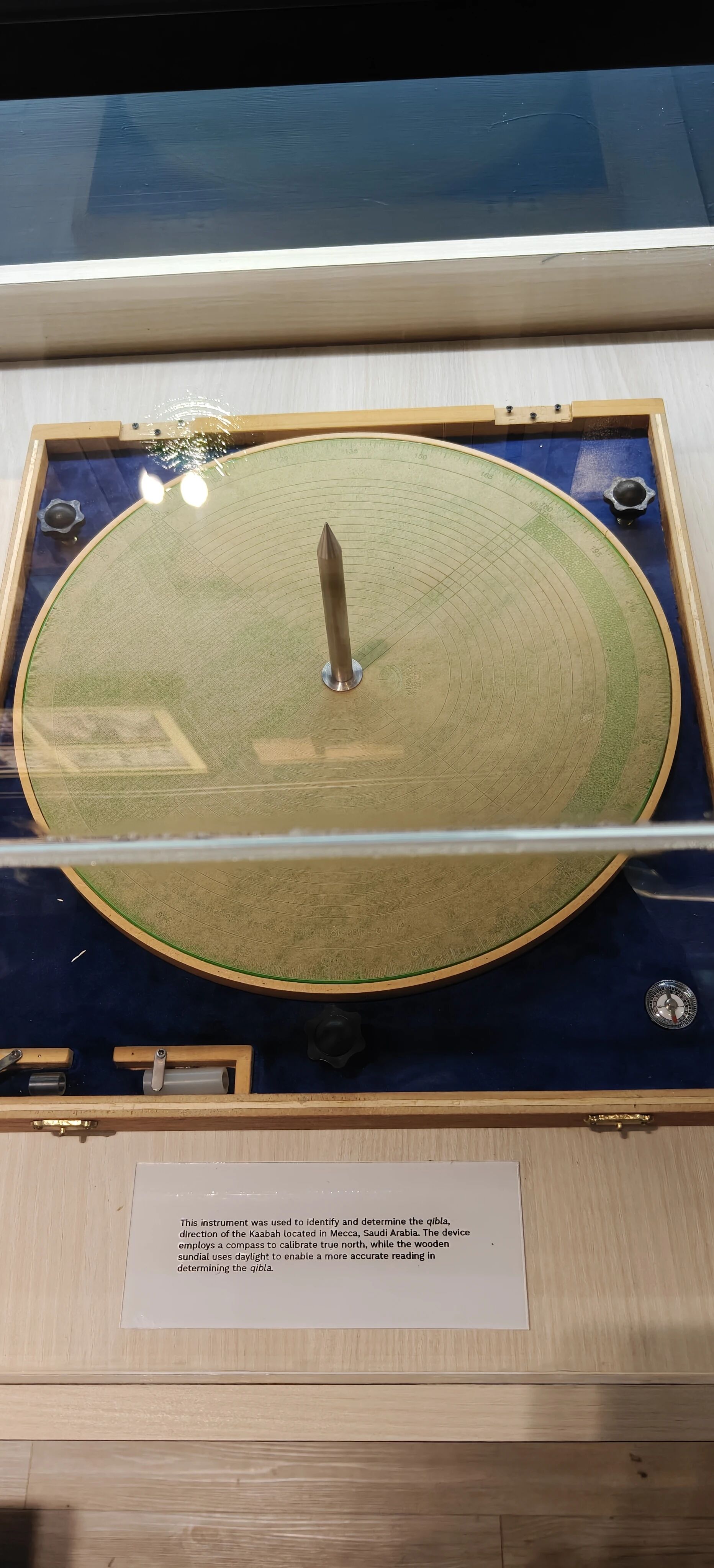
The object in image four looks like a sundial, but it is not for telling time; it is used with a compass to pinpoint the exact direction of the Kaaba in Mecca.
The photos in the image five exhibit record major events in the history of Islam in Singapore by year, such as the founding of the Mosque of the Faithful and the election of the first official president of the Islamic Religious Council.
Images six and seven
show Islamic books published in Singapore over the years in Tamil (a South Indian language from the Dravidian family), Malay, and English. view all
Summary: This Singapore Muslim travel guide visits the exhibition area inside the Islamic Religious Council building in the Singapore Islamic Centre complex. It keeps the source notes on the building, displays, and community context.
Inside the Singapore Islamic Centre complex, one building houses the Islamic Religious Council of Singapore. There is an exhibition area on the first floor. However, this exhibition area is actually not open to the public. I explained my purpose to the person in charge after I went in, and they made an exception for me to visit for a few minutes.
The exhibition mainly features items used by Singaporean Muslims in their religious life.
For example, look at the wooden object hanging in the first picture.
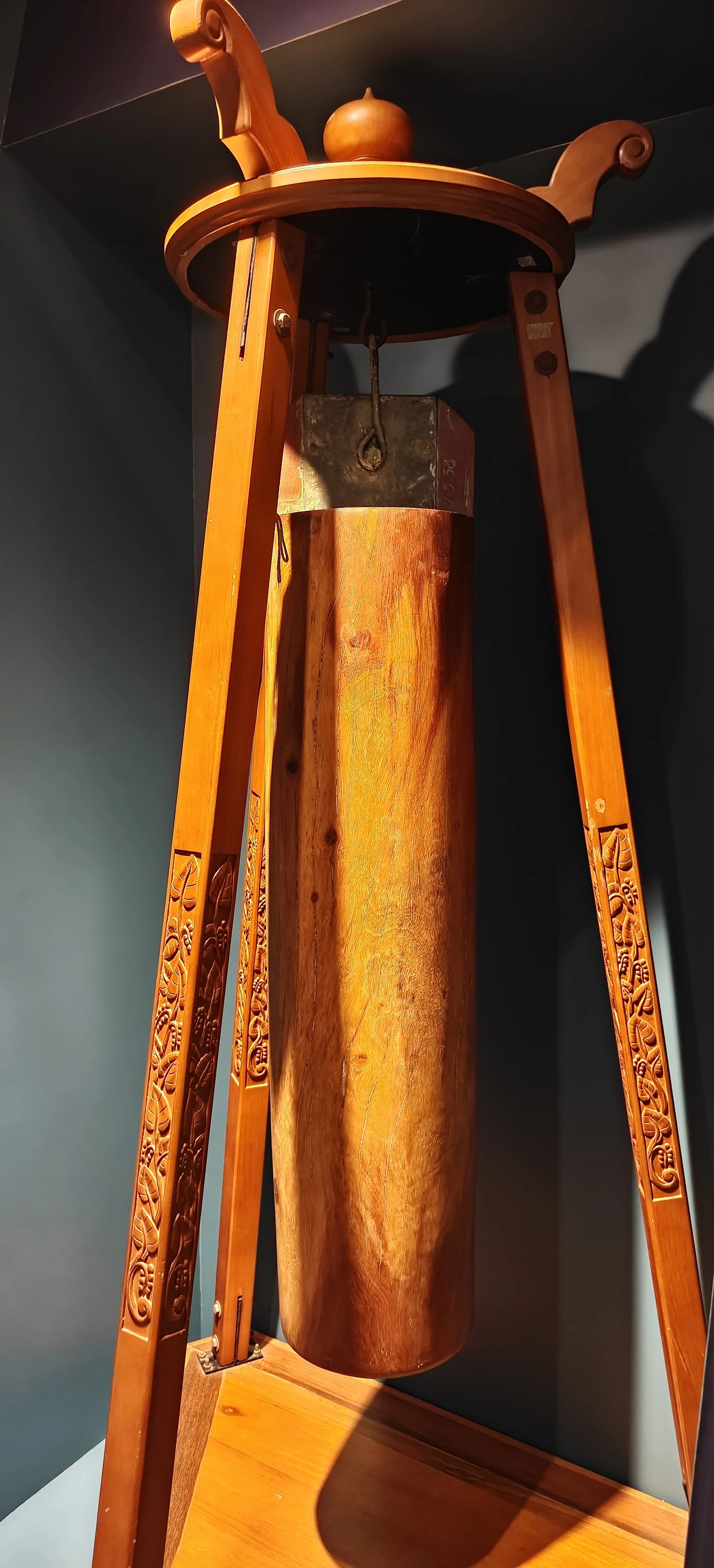
This piece of wood is called a beduk. For instance, during Ramadan, when it is time to break the fast, the mosque will strike the beduk to remind everyone. They also strike the beduk on Jumu'ah to call people to prayer. These are common in Malaysia, and you can still see them in some mosques in Singapore today.
If I have the chance to visit Singapore again, I will show you all one.
The belt-like item in the second picture is actually similar to a name tag.
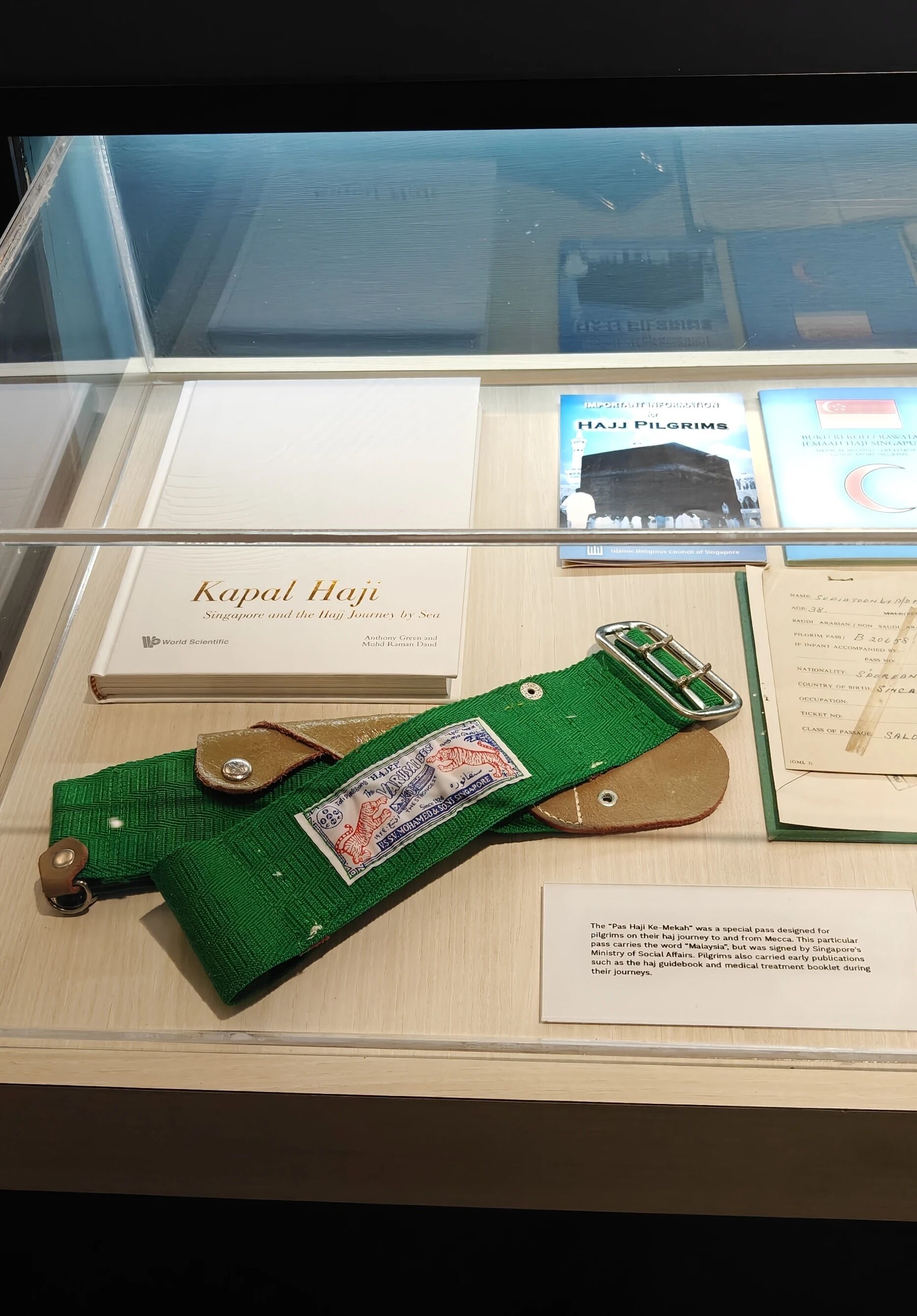
It is an identification badge worn by pilgrims from Singapore during Hajj. The vests issued to Chinese pilgrims feature the Chinese flag and the word China, which serve the same purpose.
The photo in image three shows a mufti named Said, who is focused on using the compass above to find the direction of the Kaaba in Mecca.
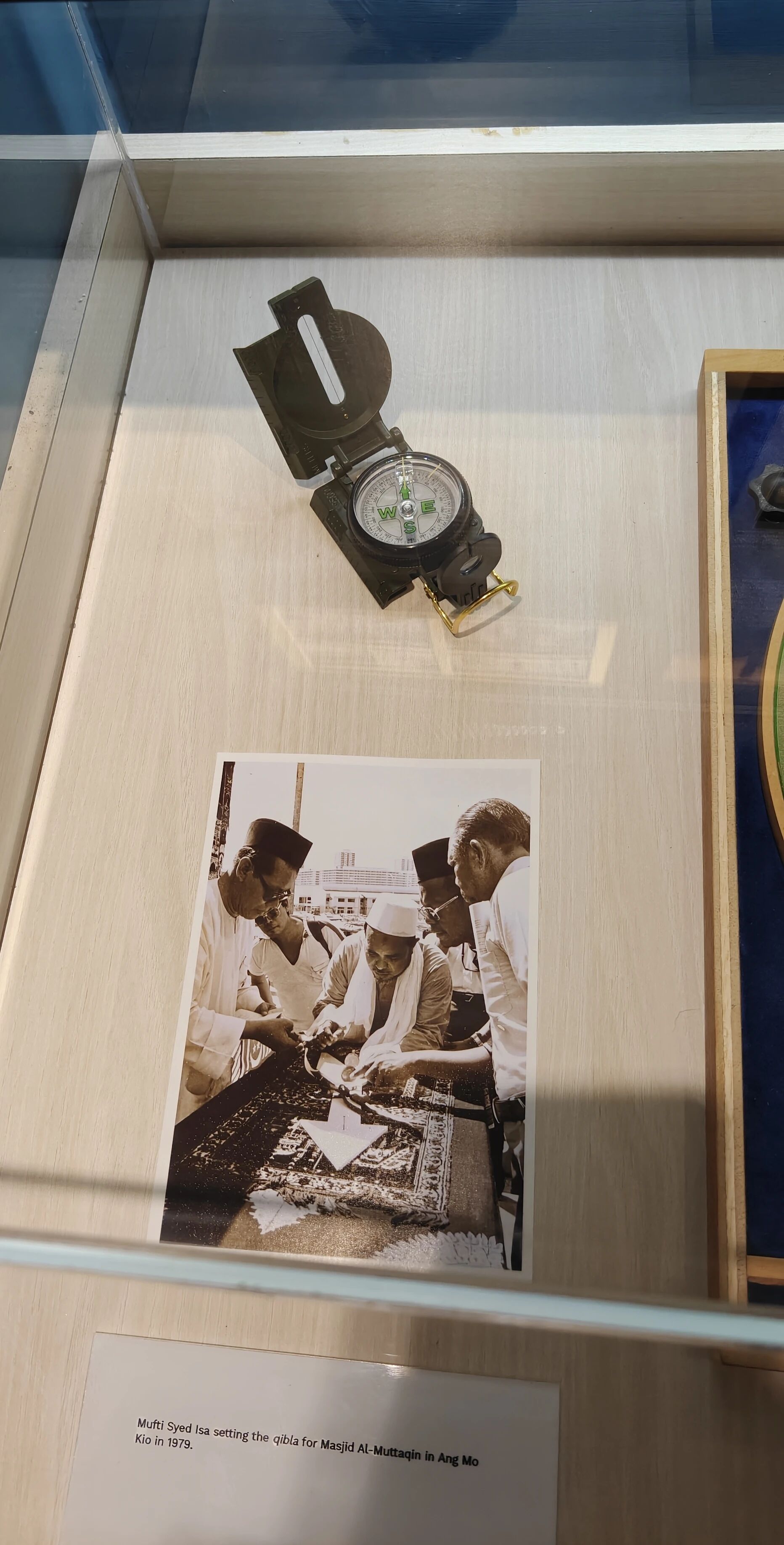
Since they were building the Mosque of the Faithful (Qianxinzhe Qingzhensi) at the time, they had to determine the direction of the Kaaba before construction began.
The object in image four looks like a sundial, but it is not for telling time; it is used with a compass to pinpoint the exact direction of the Kaaba in Mecca.
The photos in the image five exhibit record major events in the history of Islam in Singapore by year, such as the founding of the Mosque of the Faithful and the election of the first official president of the Islamic Religious Council.
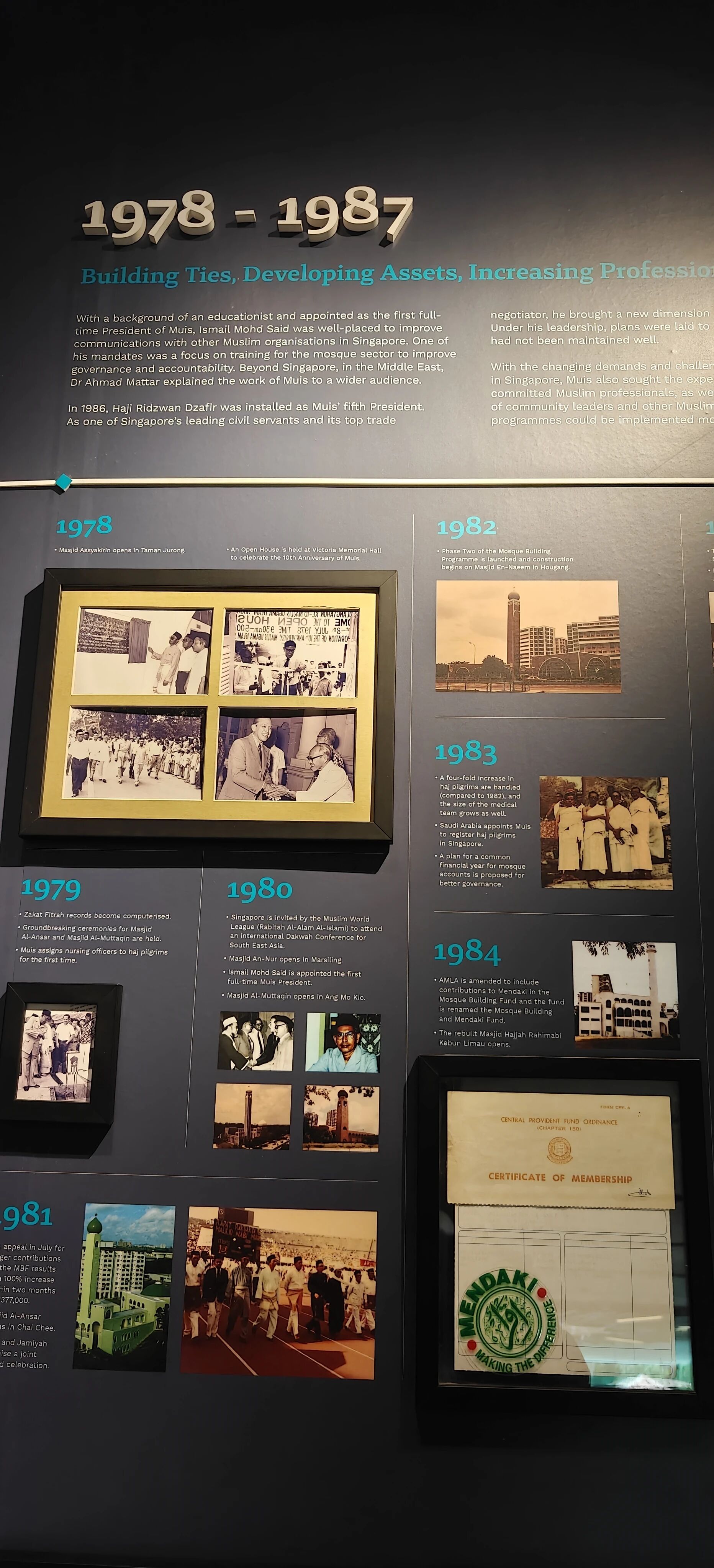
Images six and seven
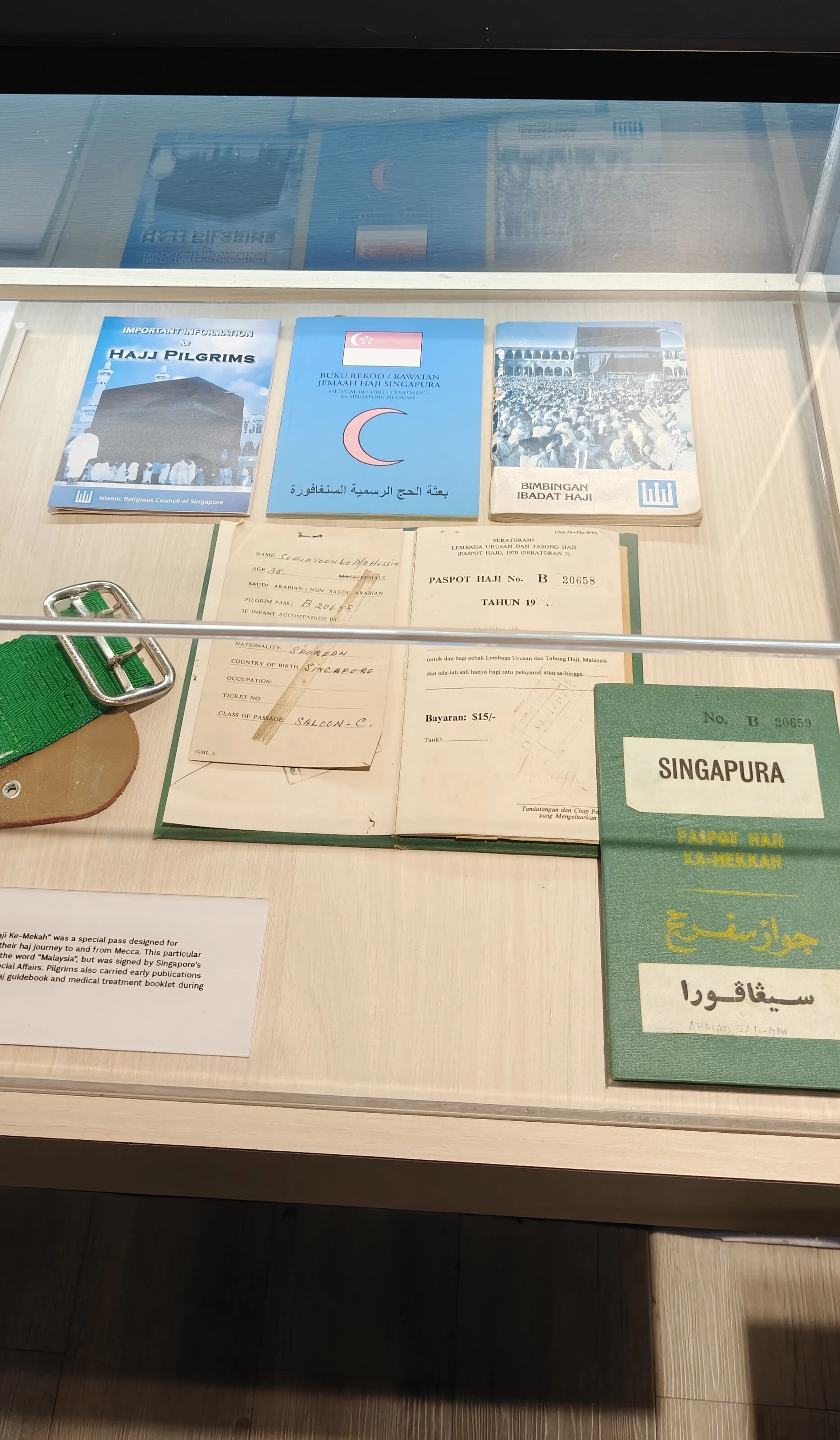
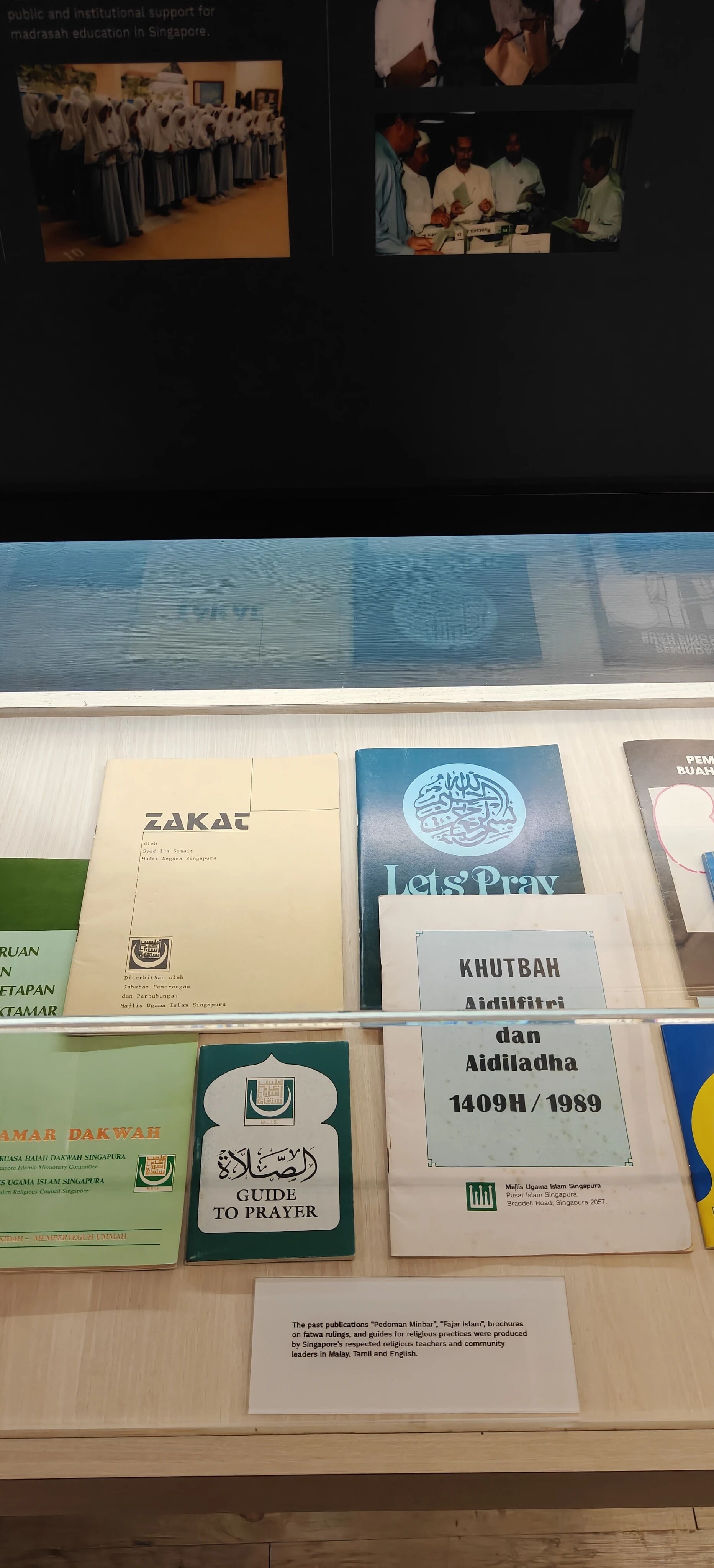
show Islamic books published in Singapore over the years in Tamil (a South Indian language from the Dravidian family), Malay, and English.
Muslim Travel Guide Singapore: Oldest Mosque, Kampong Malacca and Early Muslim Community
Articles • Hasan09 posted the article • 0 comments • 353 views • 2026-05-24 01:46
Summary: This Singapore Muslim travel guide visits the mosque described as the oldest mosque in Singapore, located around Kampong Malacca and built in 1820. It keeps the history, location, and mosque observations from the original account.
This place is not far from the underground mosque I mentioned last time. Located in the Kampong Malacca area of Singapore, it was built in 1820 and is the oldest mosque in Singapore. It is older than other early mosques, such as the South Indian-style Jamae Mosque, which I shared before and was built in 1826.
That is a few years later than this mosque.
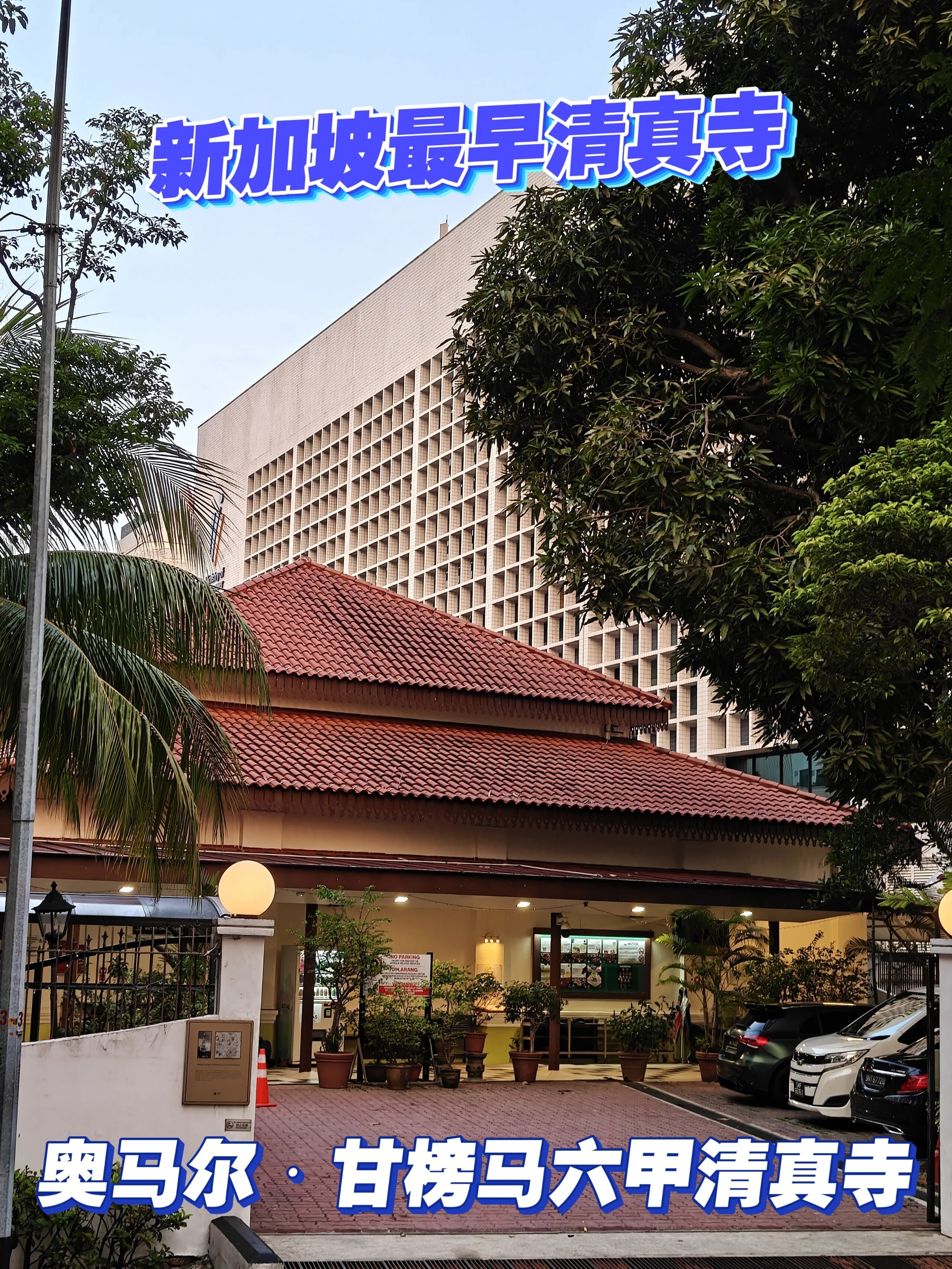
Back to the main topic, the roof of this oldest mosque in Singapore (Picture 1) looks very much like a traditional Malay hut.
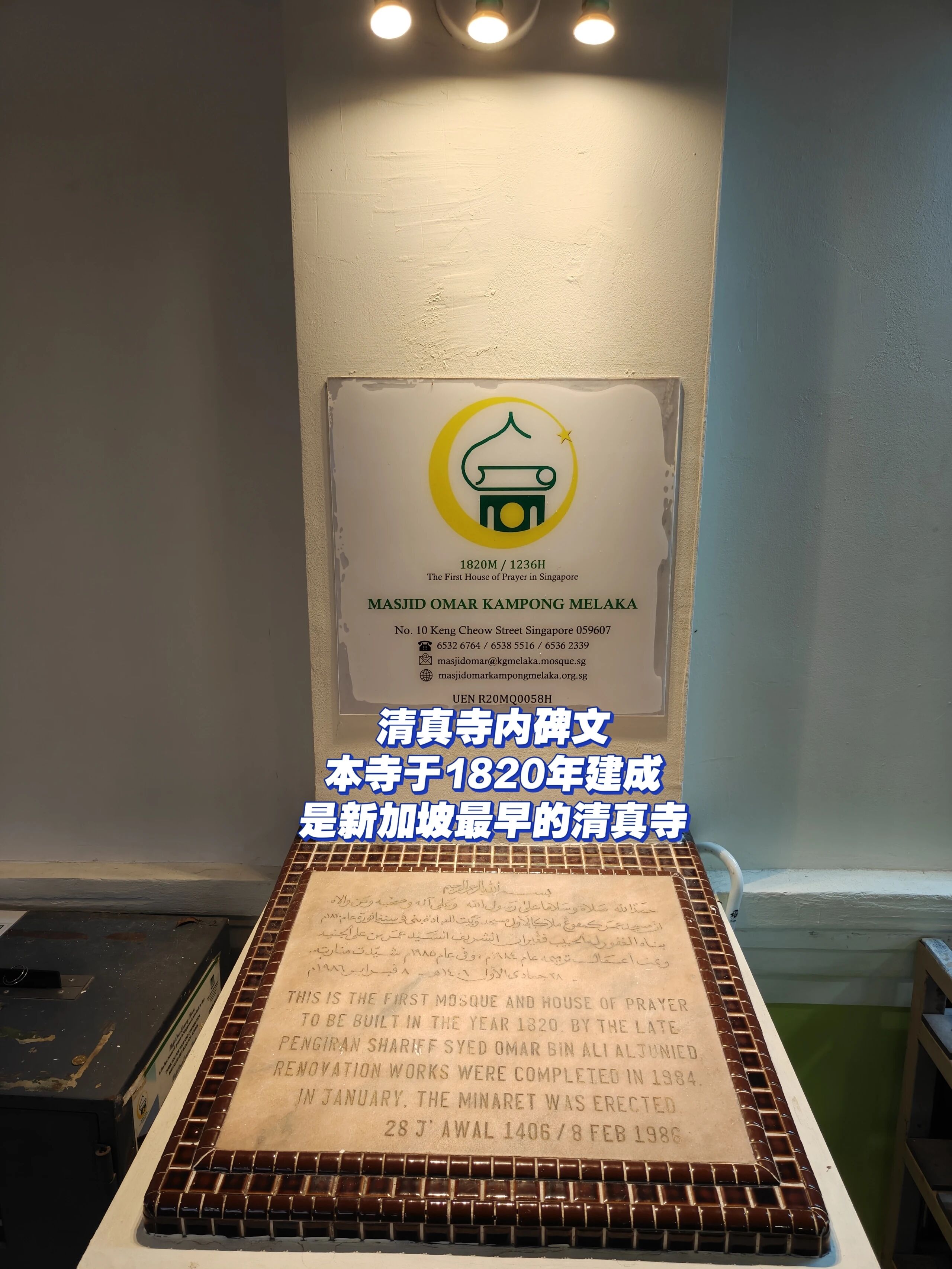
After entering, you can see the renovation plaque on the back of the prayer hall (Picture 2). The mosque was first built in 1820 and finished its renovation in 1984.
The founder of this mosque was named Syed Omar, and he was an Arab merchant.
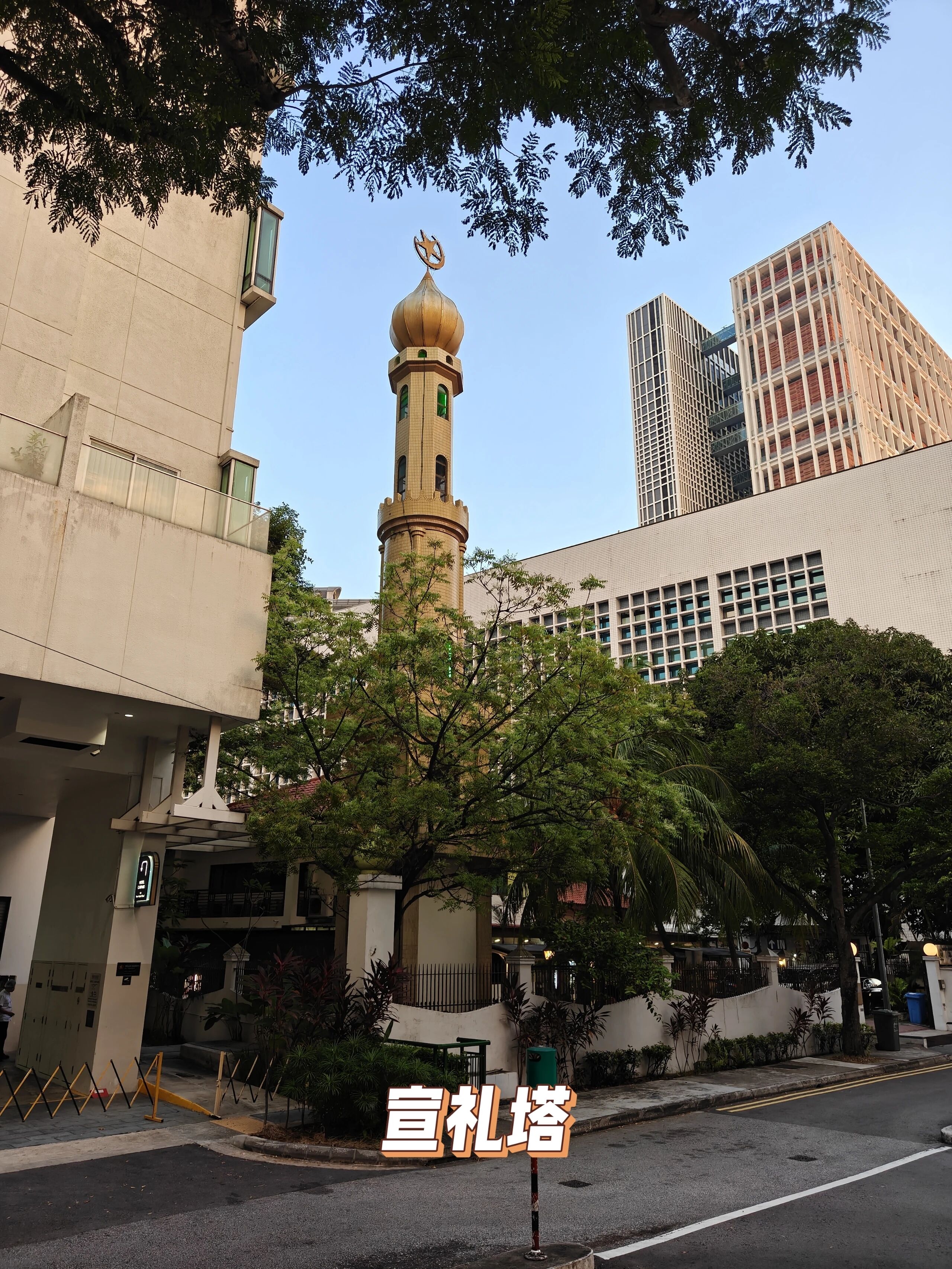
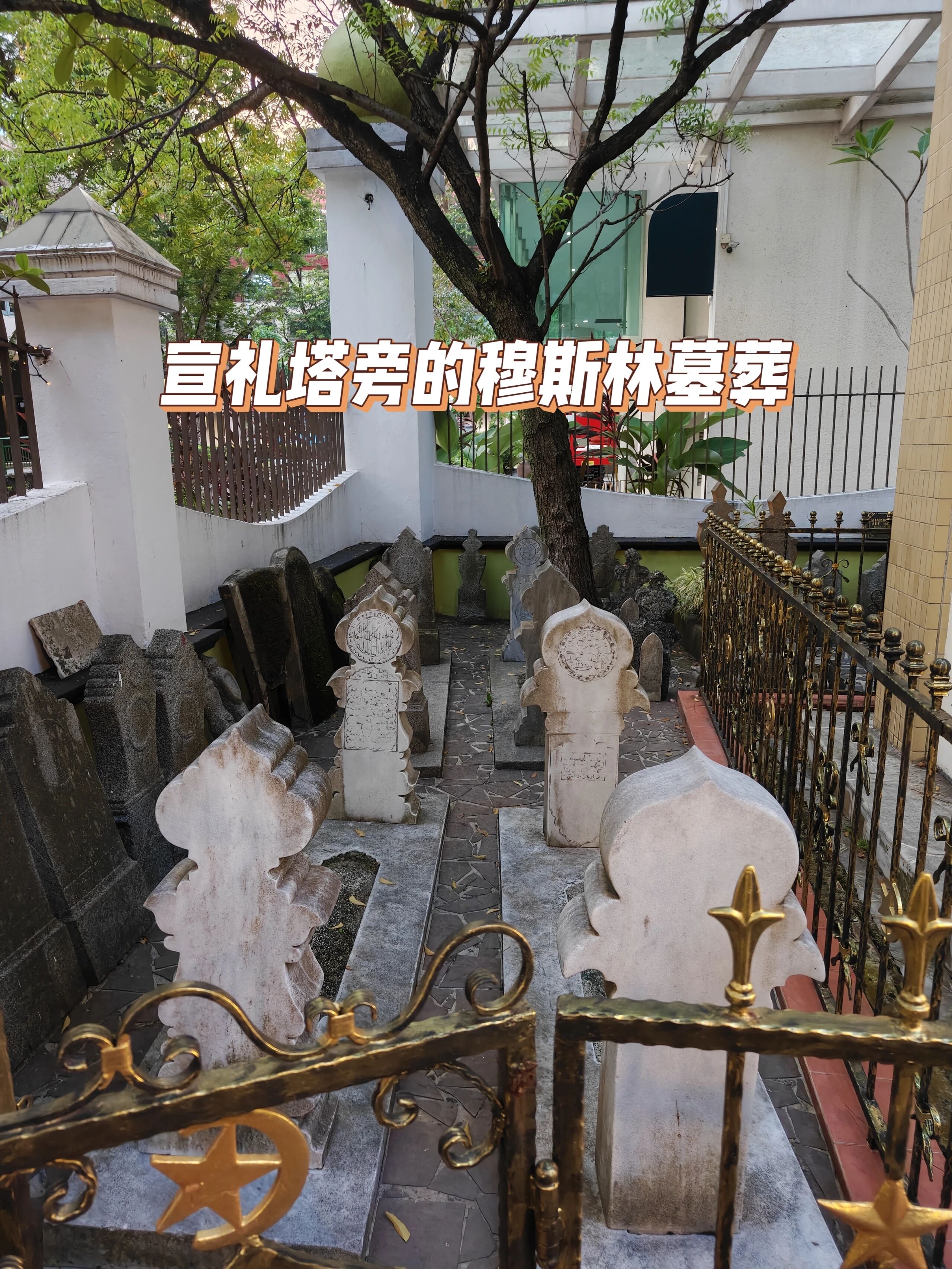
Today, members of his family are buried in the tomb next to the mosque's minaret (Picture 4).
Let's look at the mosque's notice board. It says in English, Malay, Bengali, and Tamil that staying overnight without permission is prohibited (Picture 6).
This shows that the people who visit this mosque the most are Malays, Tamils, and Bengalis.
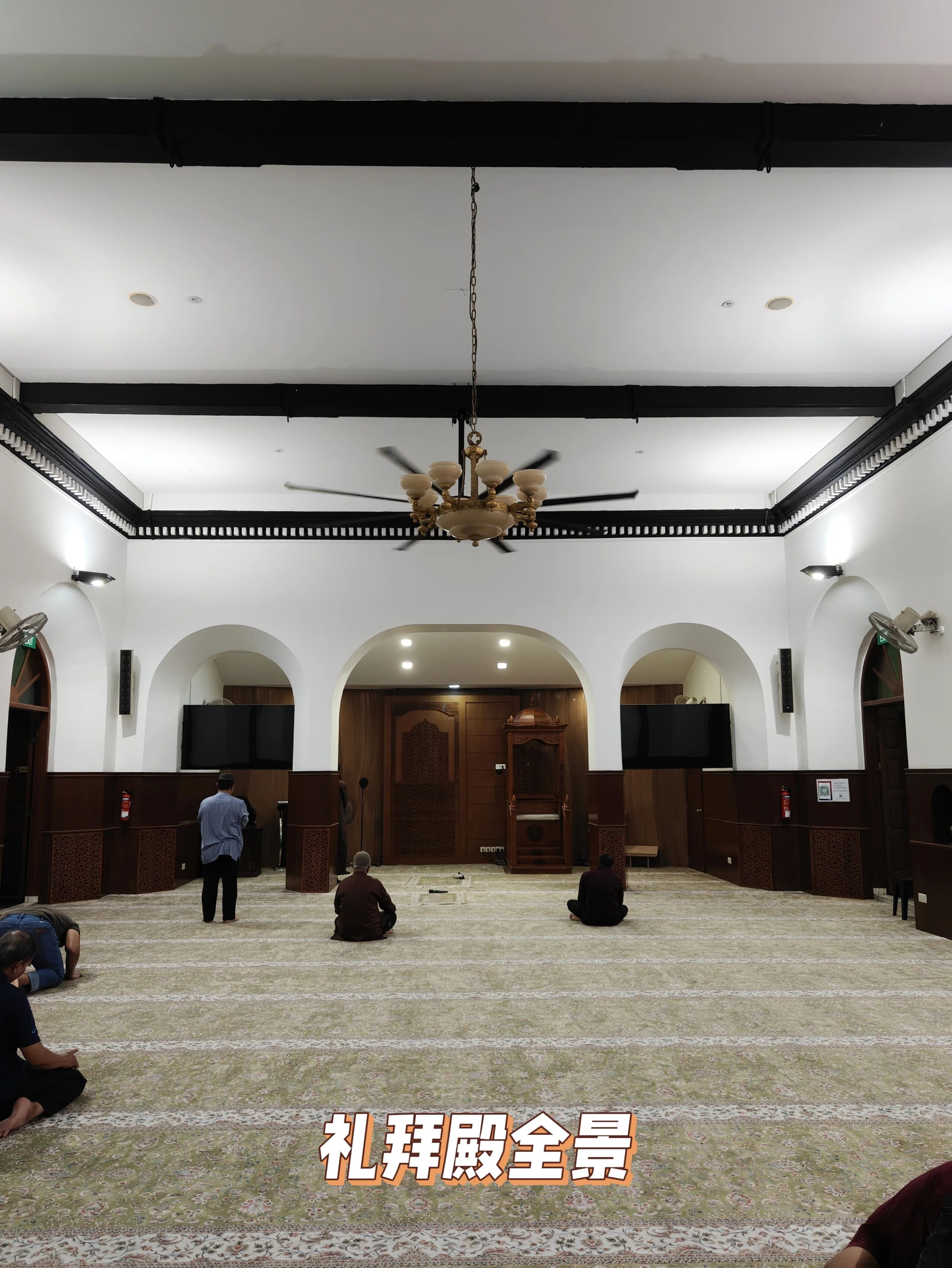
Entering the prayer hall, I feel the architectural style is very beautiful, and the door frames tilt toward the ceiling (Picture 8, Picture 9).
I remember seeing this kind of design in some old Western castles. When I came here last time, I remember the Malay imam was very young and polite. I asked him if he was the imam, and he said the imam was busy these two days, so he was filling in.
He also asked if I had encountered any trouble in Singapore and told me I could contact him anytime if I had any problems.
When I visited again this time, the imam was still very young, but it was not the same person as last time.
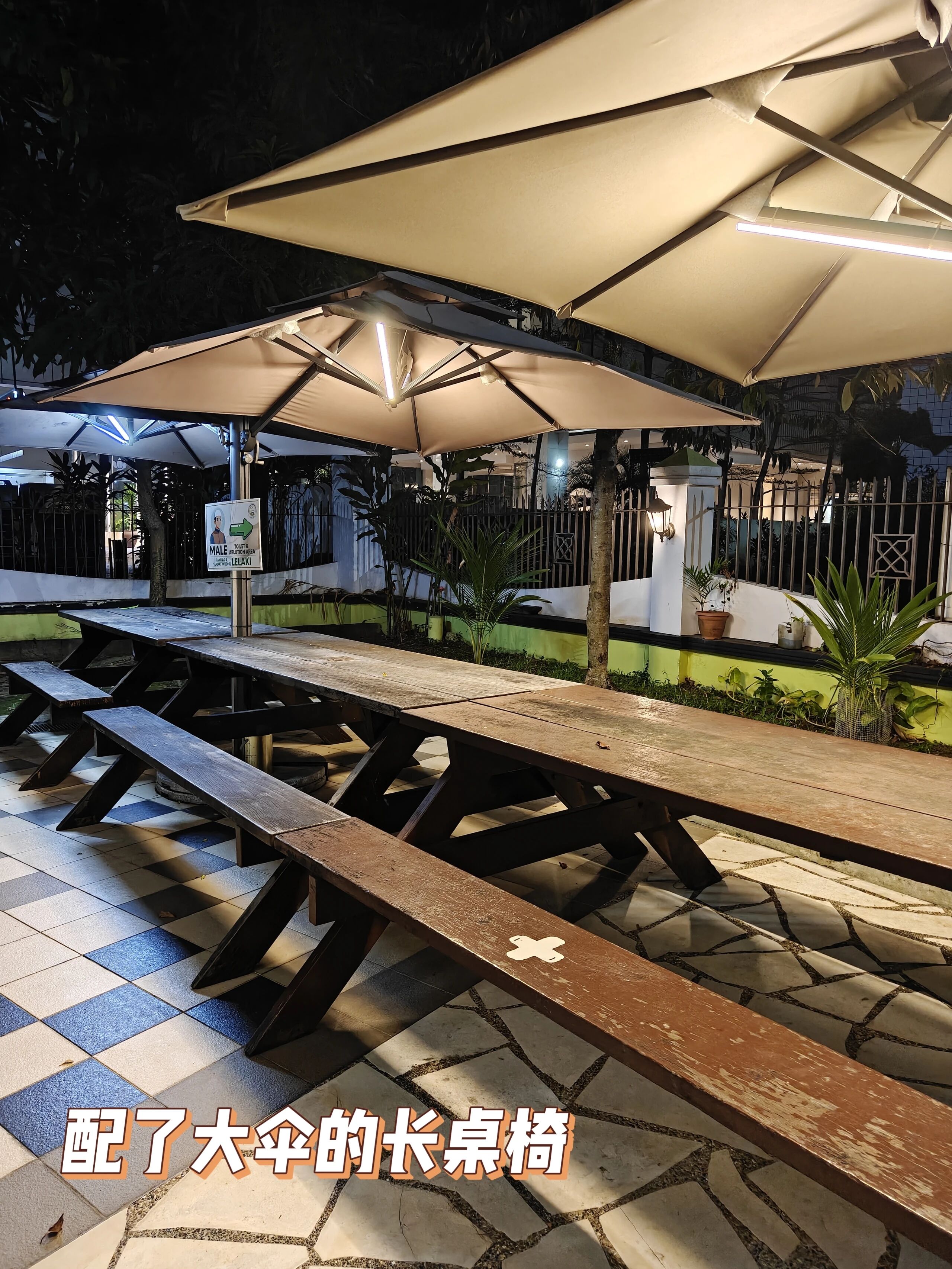
After the namaz ended, I went to the courtyard to take a look. There were long benches and tables set up (Photo 14), and next to the tables was a vending machine (Photo 15) selling various types of instant food.
Many of the instant foods in convenience stores here in Singapore have halal labels, so it is quite convenient to find a meal.
There is a microwave (Photo 16) nearby, so you can heat up what you buy and sit at the table to eat.
In the next article, I will take you to continue exploring mosques in Singapore. See you then. view all
Summary: This Singapore Muslim travel guide visits the mosque described as the oldest mosque in Singapore, located around Kampong Malacca and built in 1820. It keeps the history, location, and mosque observations from the original account.
This place is not far from the underground mosque I mentioned last time. Located in the Kampong Malacca area of Singapore, it was built in 1820 and is the oldest mosque in Singapore. It is older than other early mosques, such as the South Indian-style Jamae Mosque, which I shared before and was built in 1826.
That is a few years later than this mosque.
Back to the main topic, the roof of this oldest mosque in Singapore (Picture 1) looks very much like a traditional Malay hut.
After entering, you can see the renovation plaque on the back of the prayer hall (Picture 2). The mosque was first built in 1820 and finished its renovation in 1984.
The founder of this mosque was named Syed Omar, and he was an Arab merchant.
Today, members of his family are buried in the tomb next to the mosque's minaret (Picture 4).
Let's look at the mosque's notice board. It says in English, Malay, Bengali, and Tamil that staying overnight without permission is prohibited (Picture 6).
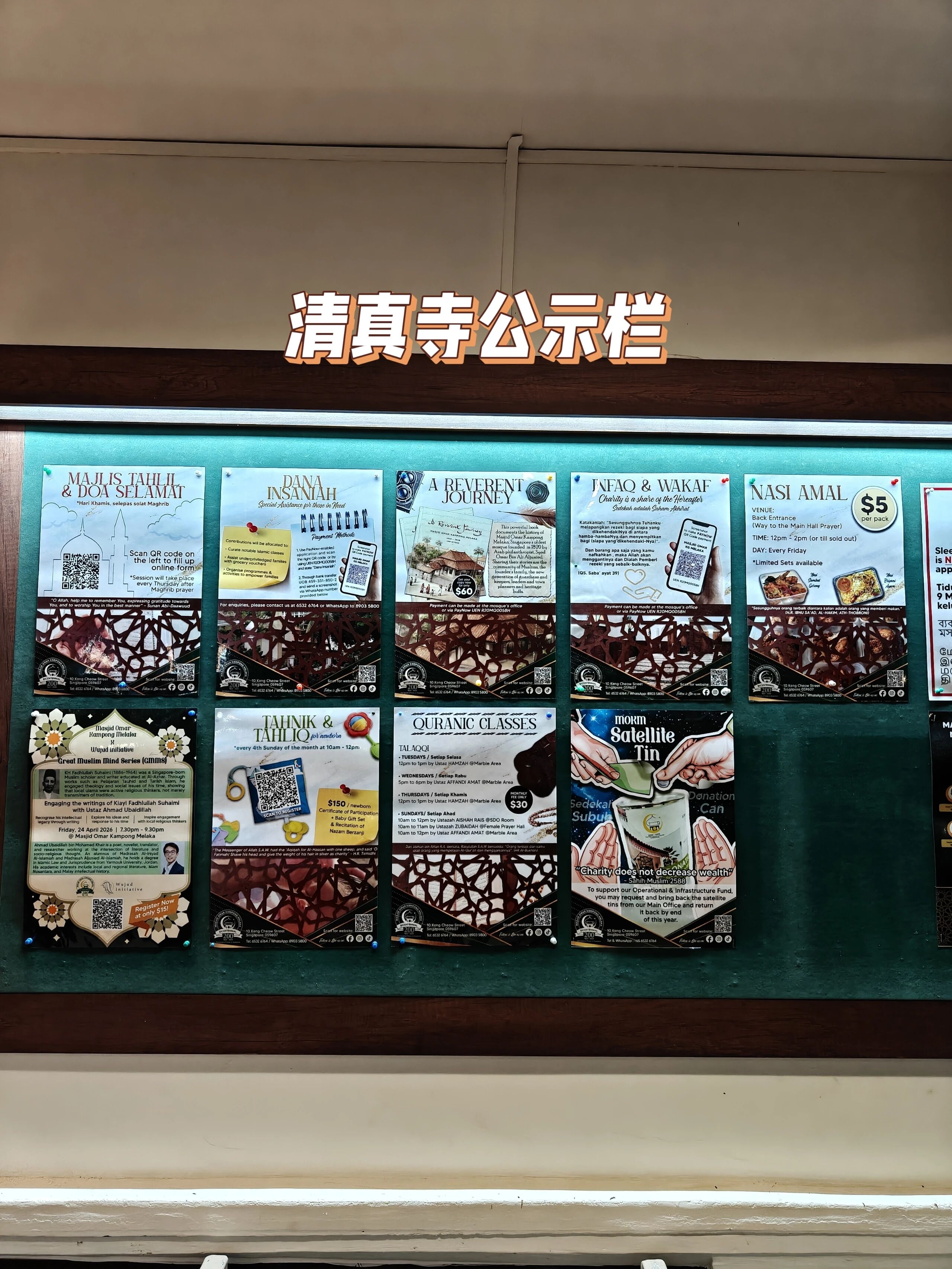
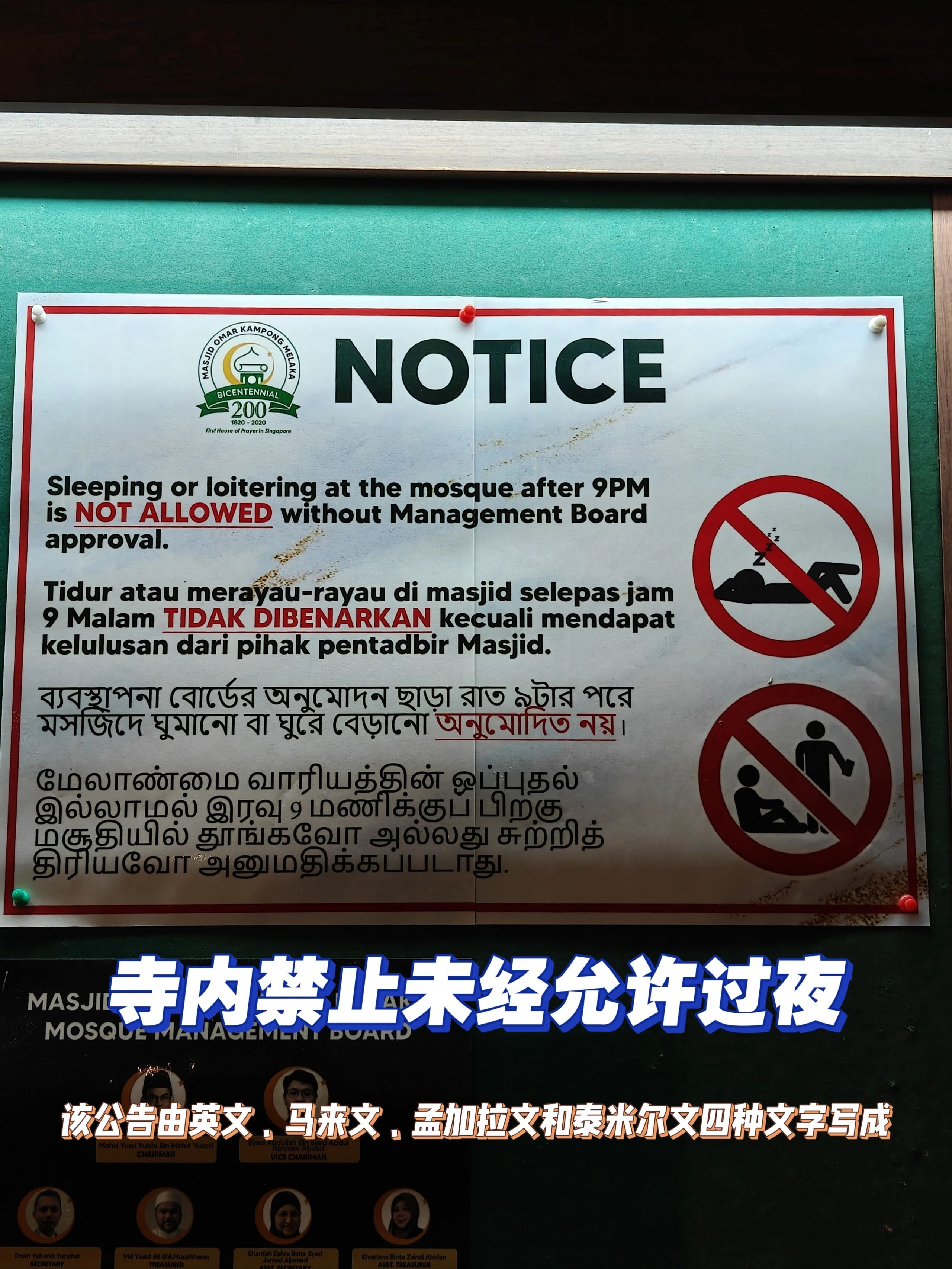
This shows that the people who visit this mosque the most are Malays, Tamils, and Bengalis.
Entering the prayer hall, I feel the architectural style is very beautiful, and the door frames tilt toward the ceiling (Picture 8, Picture 9).
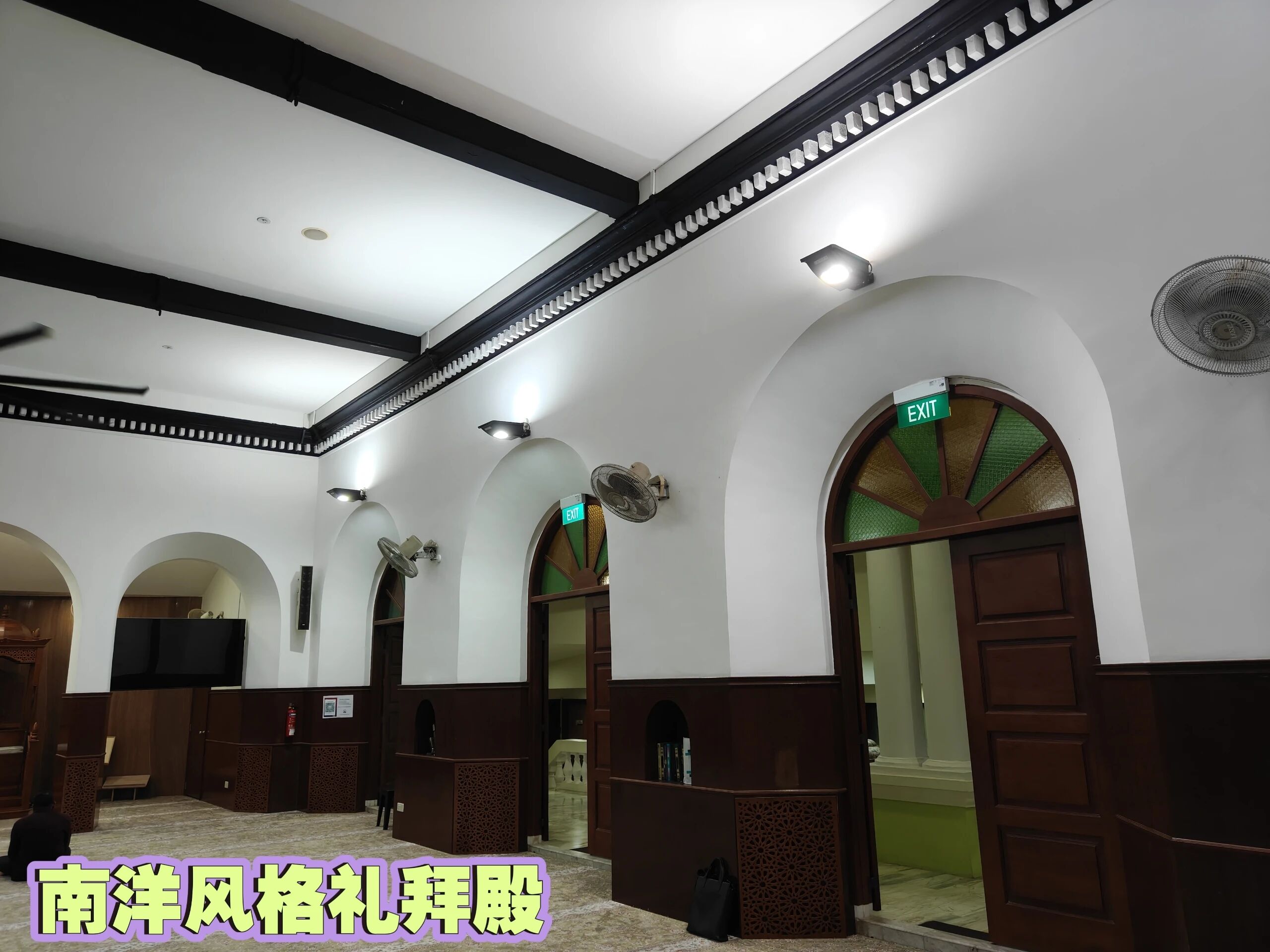
I remember seeing this kind of design in some old Western castles. When I came here last time, I remember the Malay imam was very young and polite. I asked him if he was the imam, and he said the imam was busy these two days, so he was filling in.
He also asked if I had encountered any trouble in Singapore and told me I could contact him anytime if I had any problems.
When I visited again this time, the imam was still very young, but it was not the same person as last time.
After the namaz ended, I went to the courtyard to take a look. There were long benches and tables set up (Photo 14), and next to the tables was a vending machine (Photo 15) selling various types of instant food.
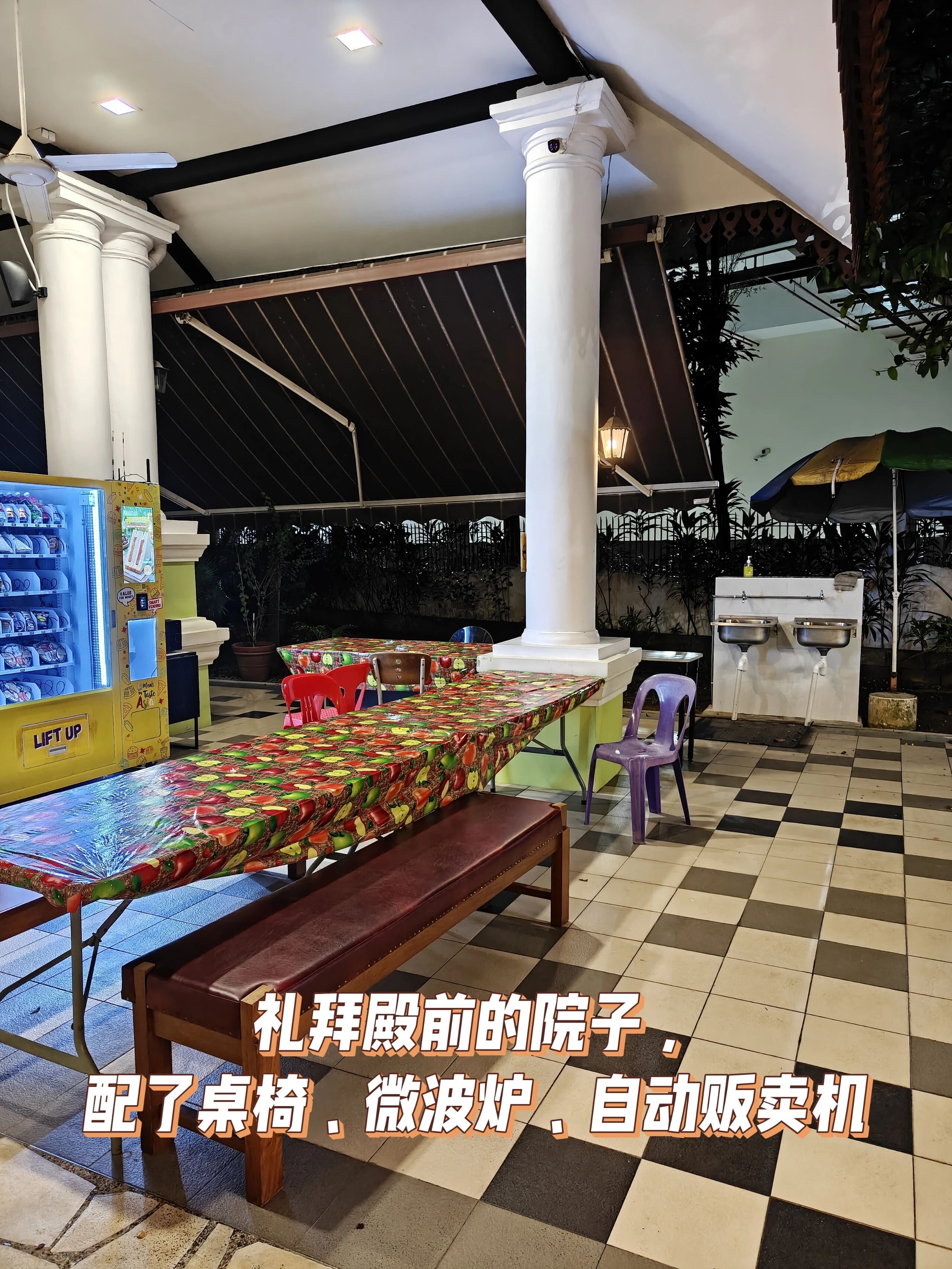

Many of the instant foods in convenience stores here in Singapore have halal labels, so it is quite convenient to find a meal.
There is a microwave (Photo 16) nearby, so you can heat up what you buy and sit at the table to eat.

In the next article, I will take you to continue exploring mosques in Singapore. See you then.
Muslim Travel Guide Beijing Changying: Hui Township Market, Halal Food and Local Community
Articles • yusuf908 posted the article • 0 comments • 236 views • 2026-05-23 23:30
Summary: Changying Hui Township in Beijing has a lively weekend market with halal food, local snacks, and vendors from the Hui Muslim community. This account keeps the market route, dishes, prices where given, and photographs in the original order.
I went to the big market in Changying on Sunday morning. I worked near Changying for nine years and only changed jobs last year, and then the big market opened there. The market is open every day until noon, and it is busiest on weekends.
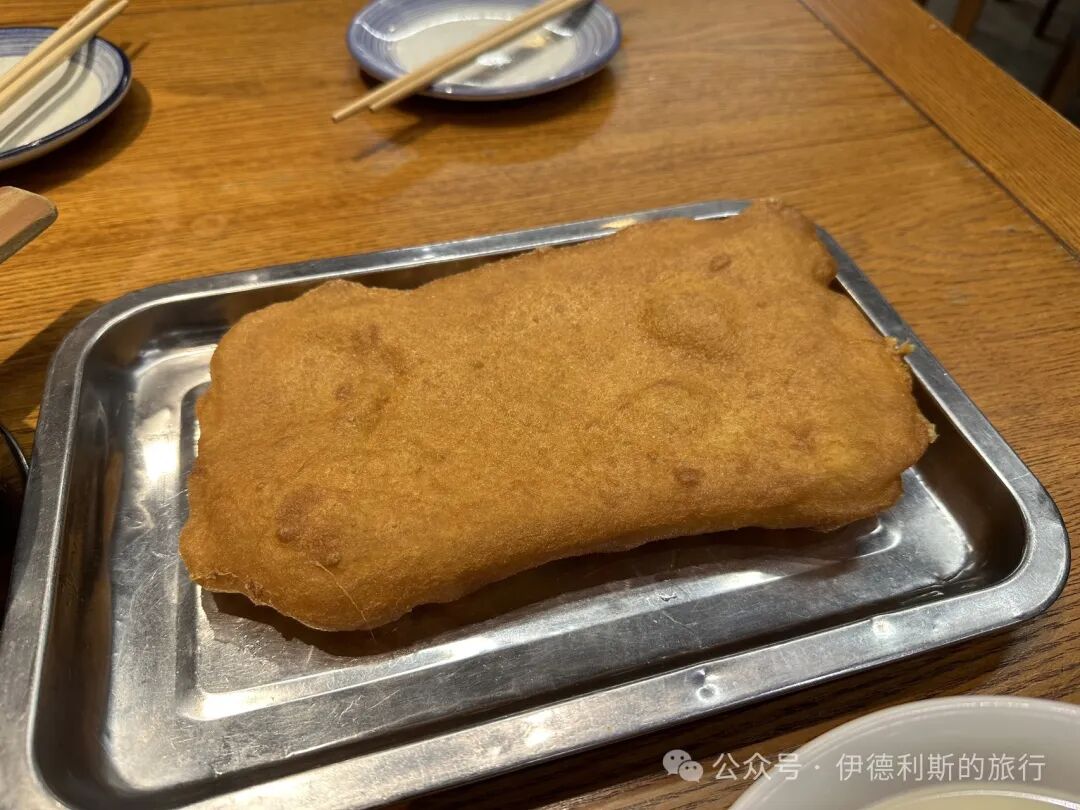
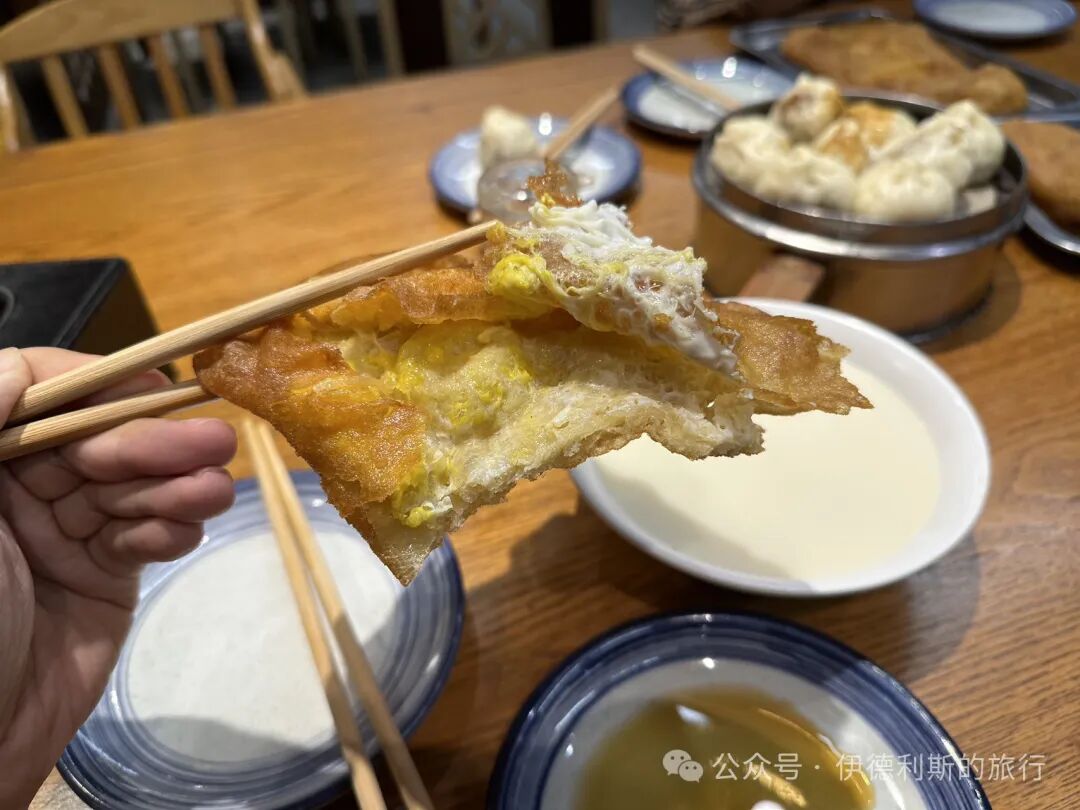
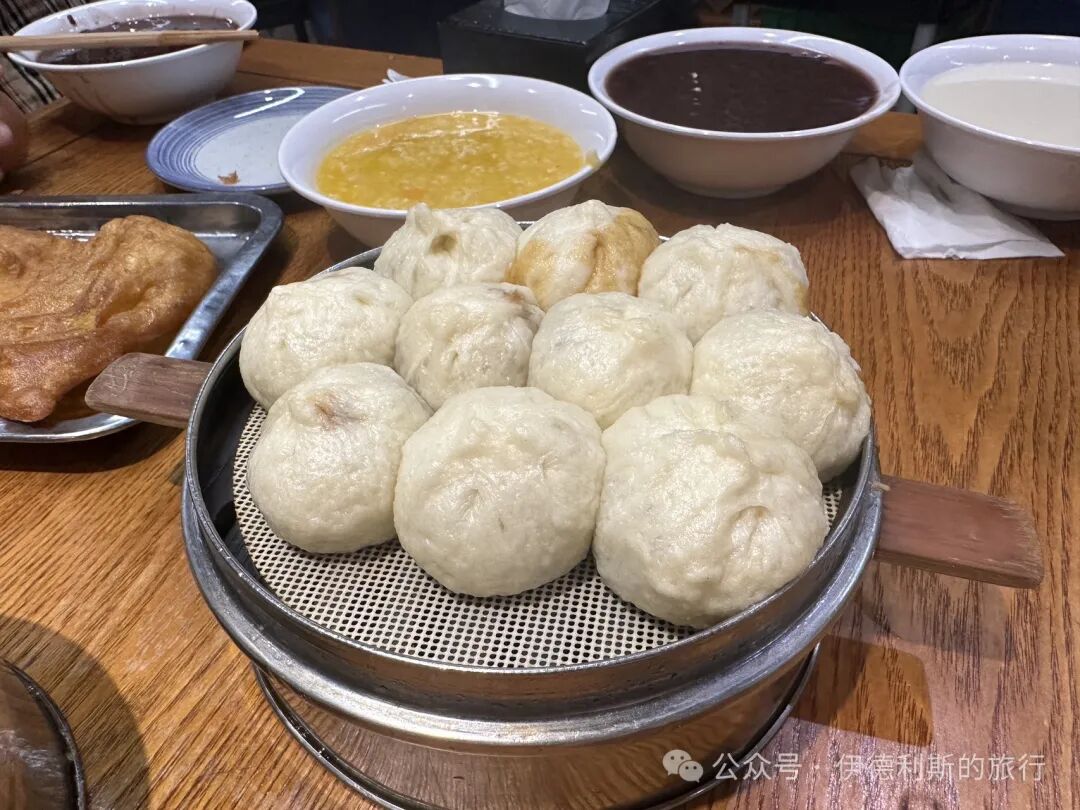
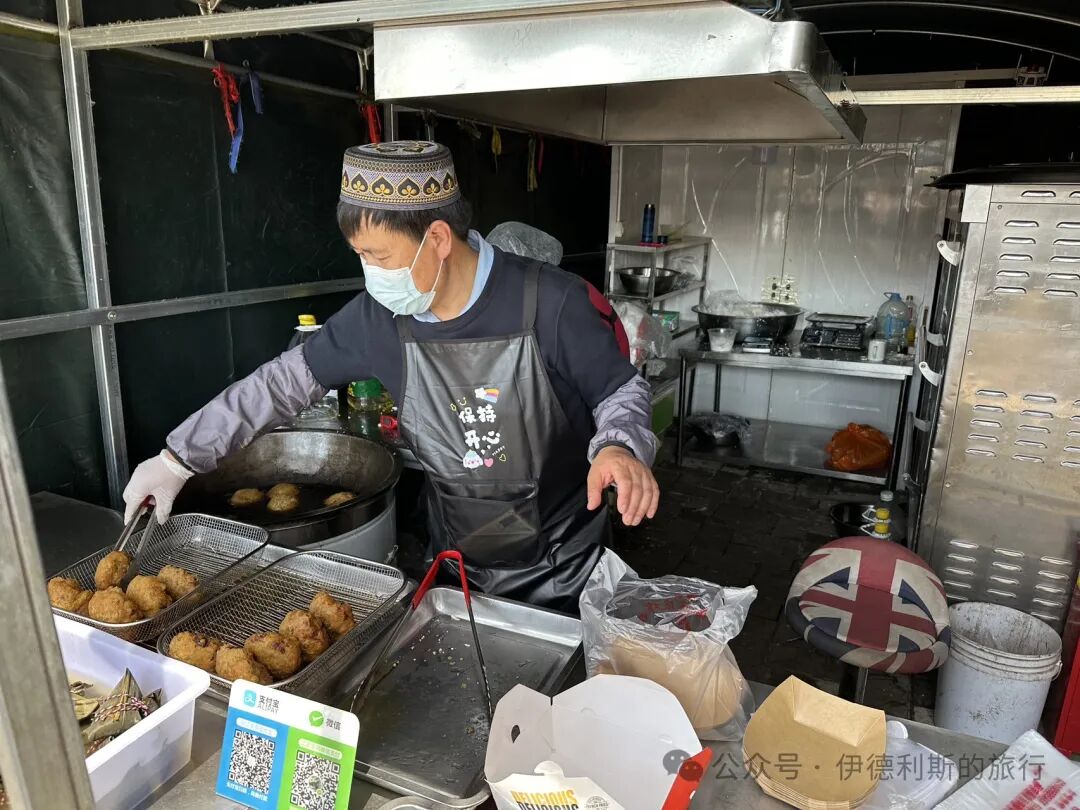
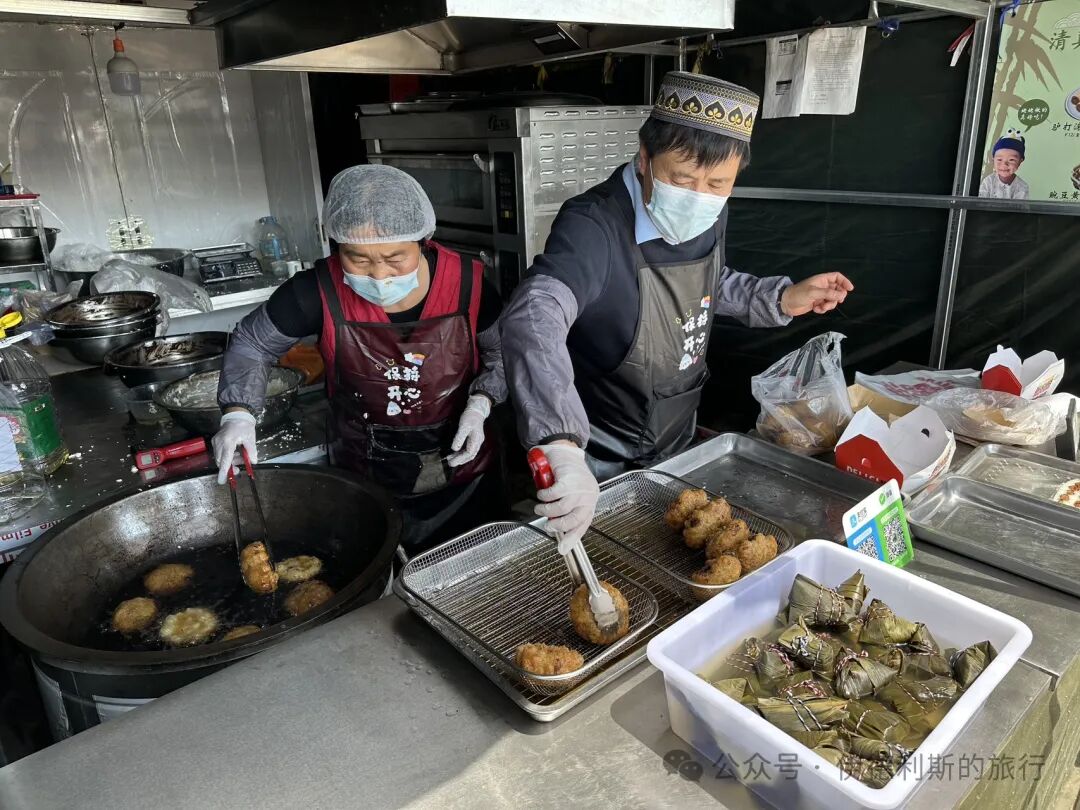
In the morning, I first had breakfast at Qingyanfang on Changying Middle Road, where I ordered steamed buns (xiaolongbao), lucky bags (fudai), pumpkin porridge, and purple rice porridge. Lucky bags are similar to egg fritters (jidan guozi), but they are rarely seen in Beijing. There were no halal steamed buns before, but some shops have started making them in recent years.
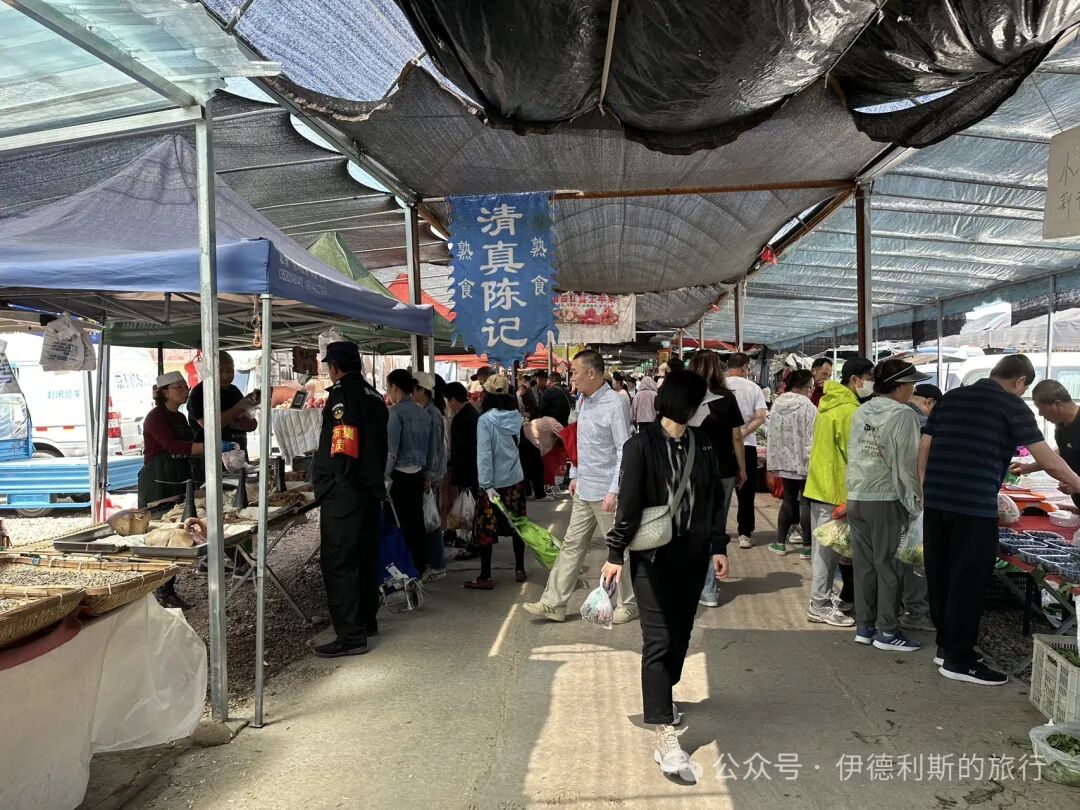
After breakfast, I walked north along the Changying intersection to reach the big market at the southeast corner of Changying Sports Park. There are many halal shops at the market.
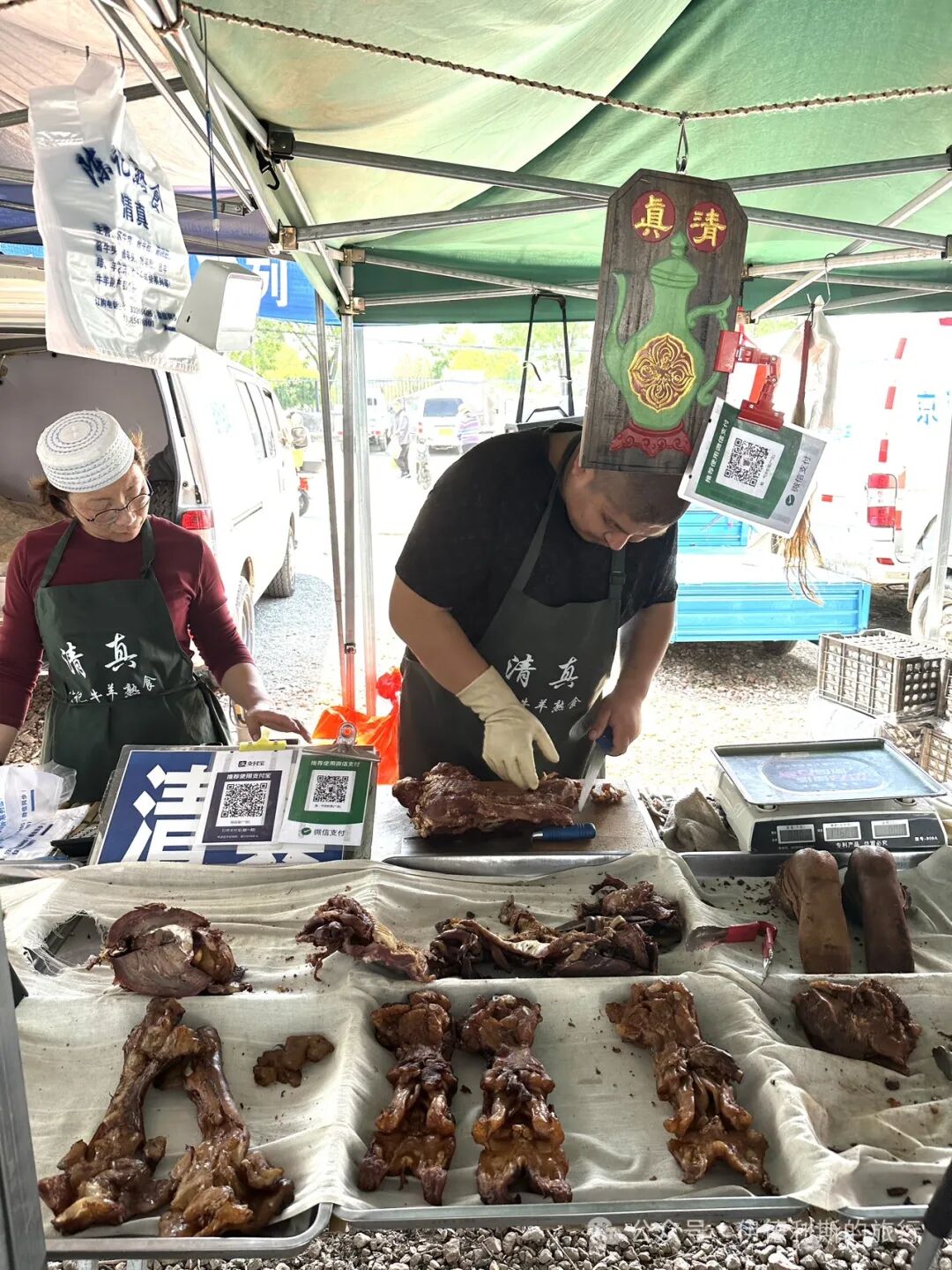
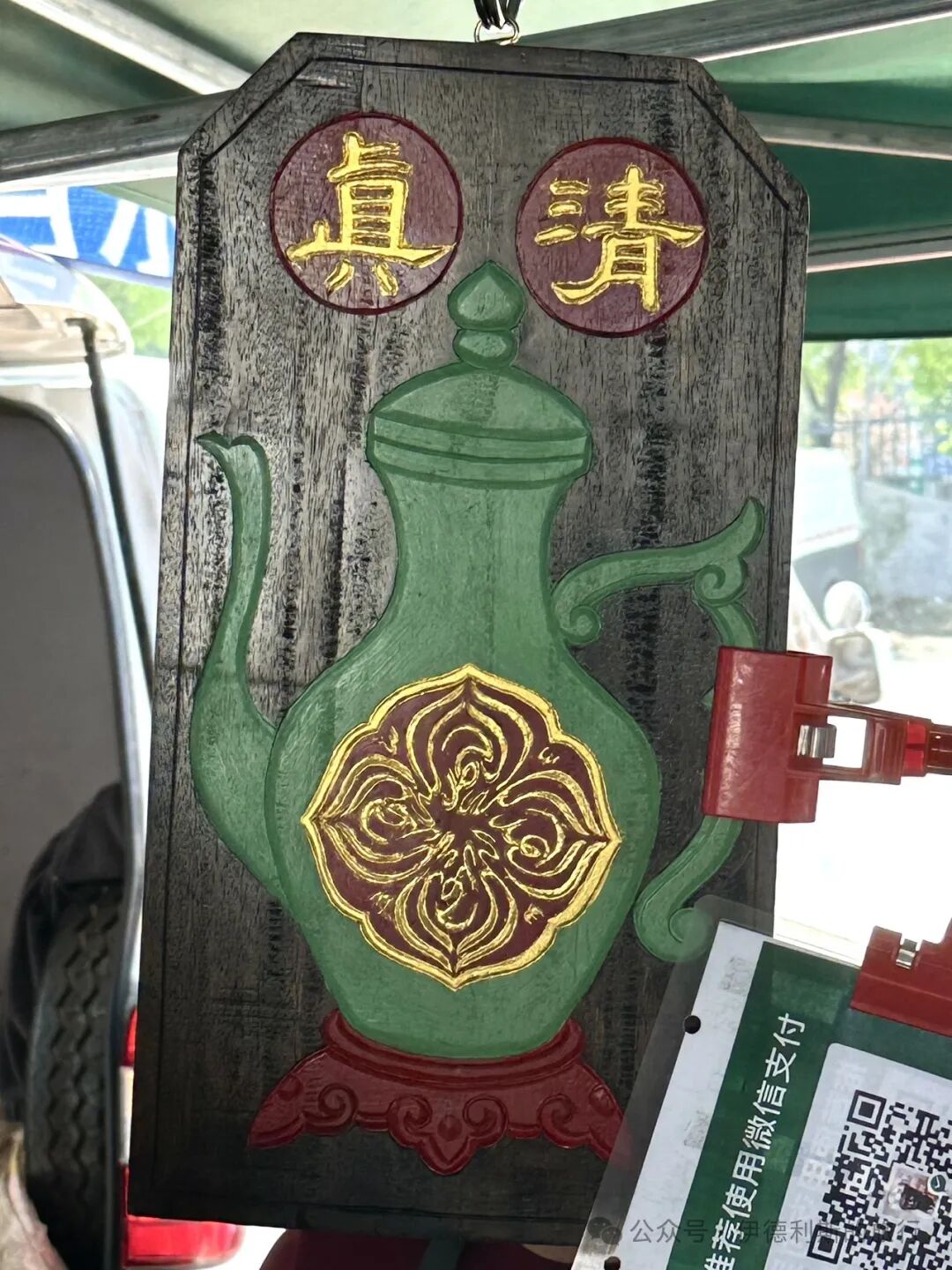
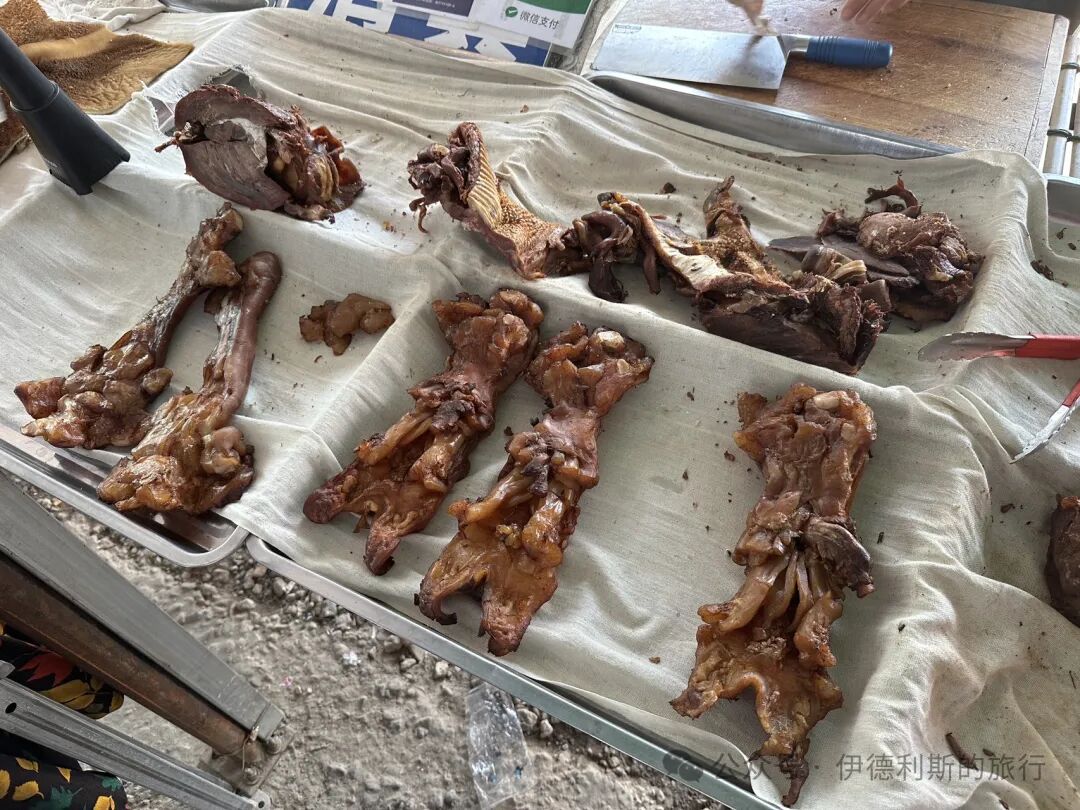
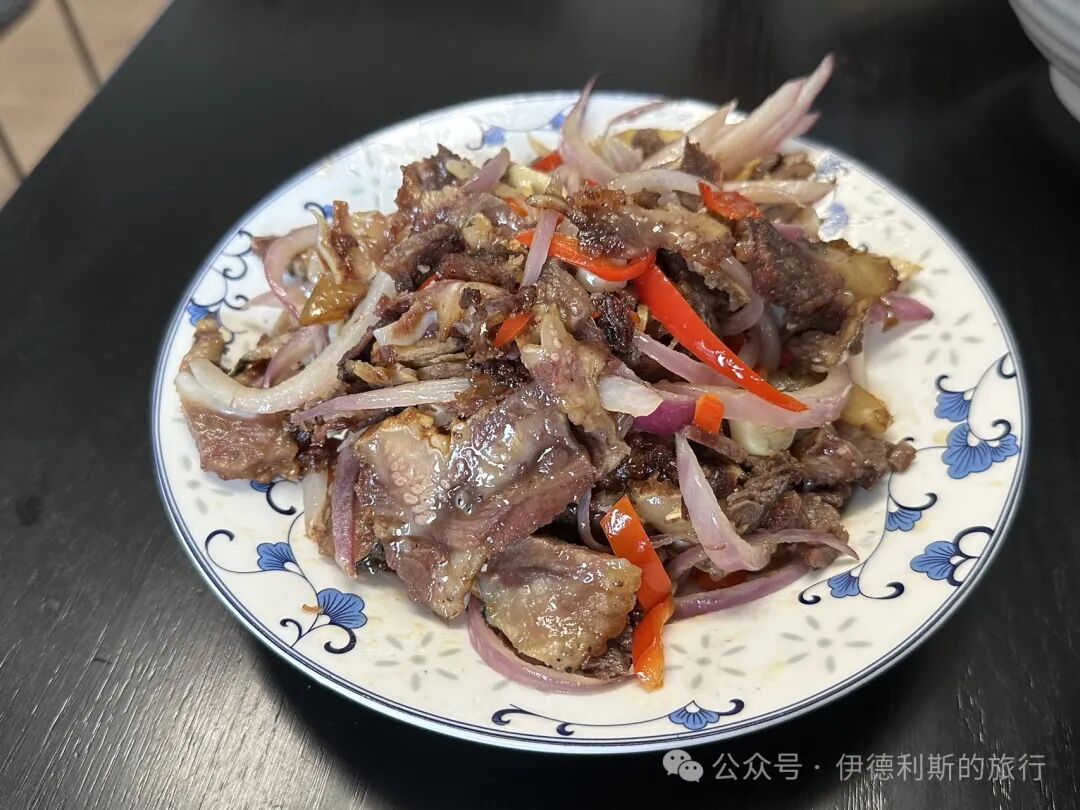
We first bought beef head meat at Chen's to take home for a stir-fry. Their shop's water kettle sign (tangping pai) was made by my friend Dong Yidong, and this traditional style of sign is very rare now.
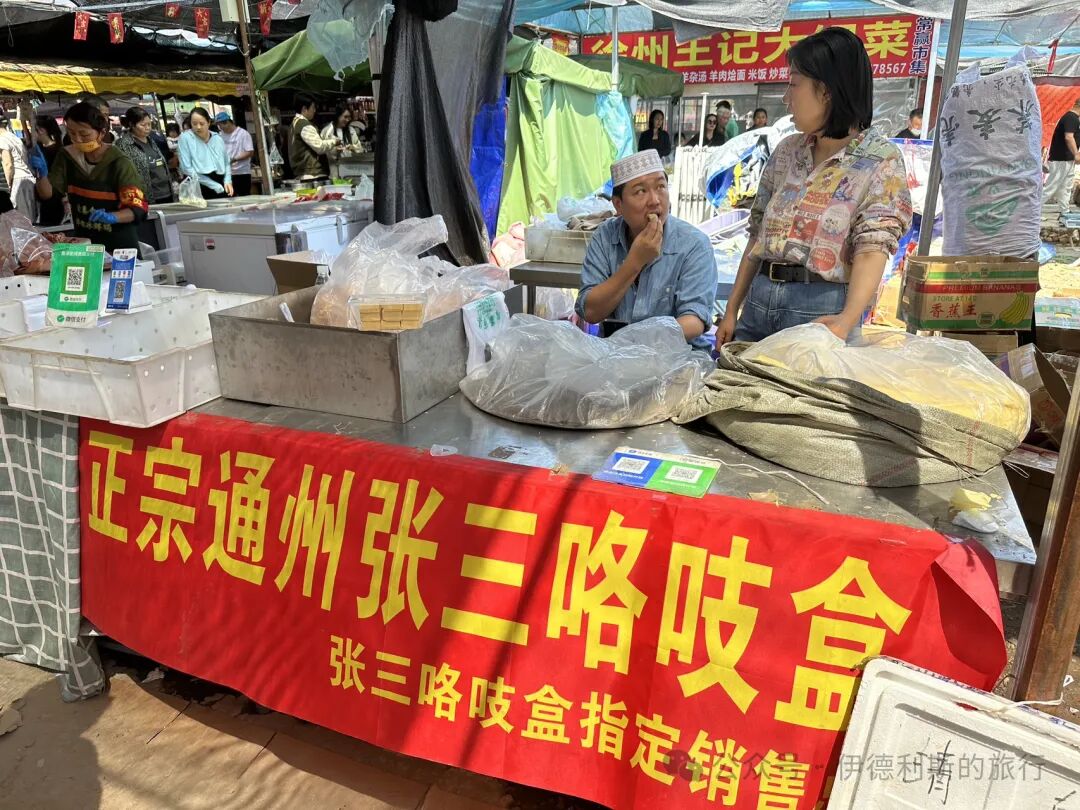
The market also has crispy fried dough snacks (gezhihe) from Hui Muslims in Tongzhou, and they also sell fermented mung bean milk (douzhier) from Baoji; many people buy it, but it was sold out when we got there.
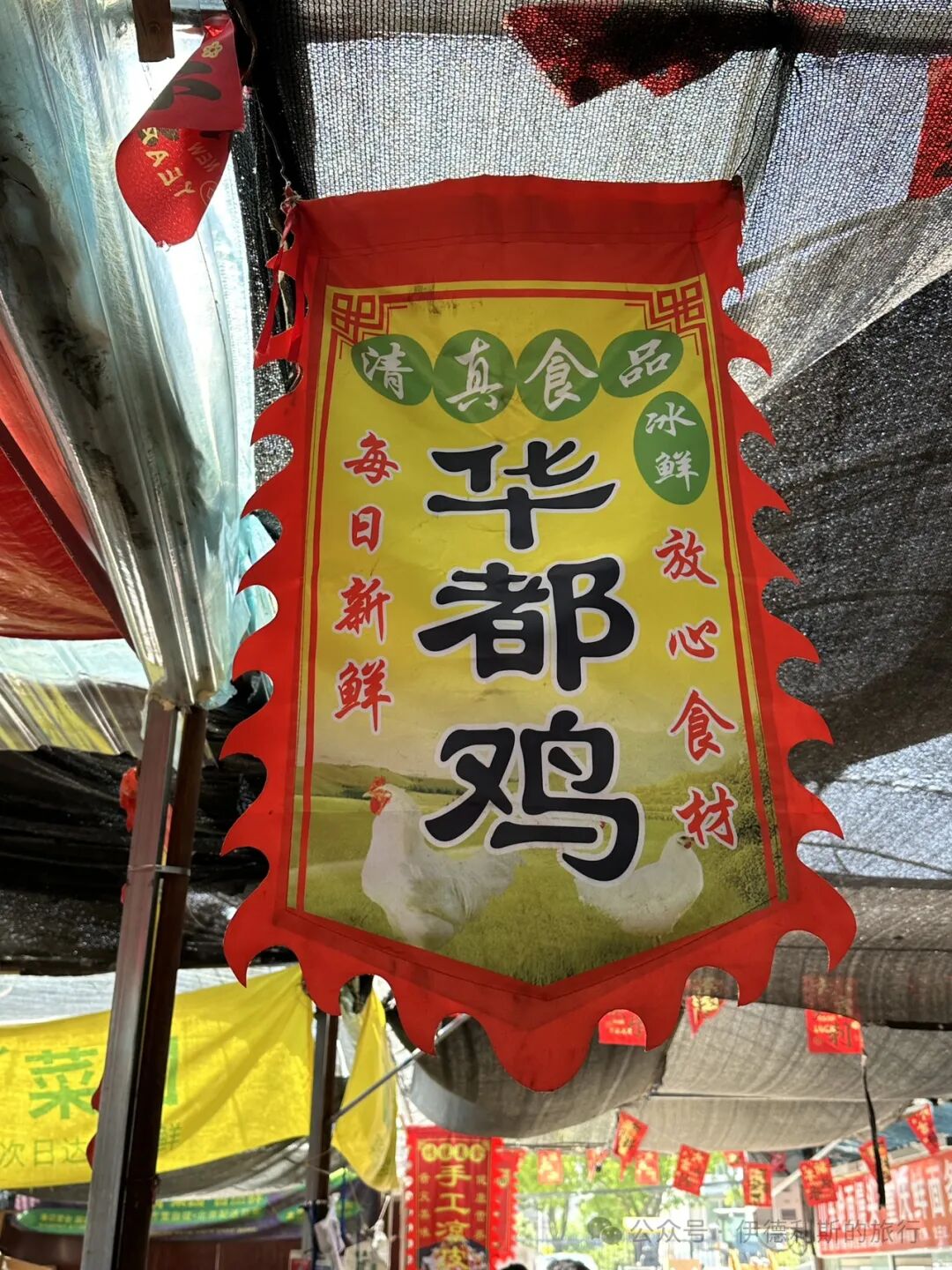
There is a Huadu chicken stall at the market, and we bought a free-range chicken to take home for a big plate chicken (dapanji) dish. Huadu has a halal chicken slaughter and processing plant in Luanping, Hebei, which supplies the Beijing market and also exports to Japan. They have opened online shops in recent years, and much of the halal chicken you can buy online now comes from them.
The market also has all kinds of beef, mutton, fruits, and vegetables, especially free samples; we tried muskmelon, nectarines, apples, and watermelon, which made my son very happy.
The northernmost row of the market is the snack area, where a noodle shop sells cold noodles, which are perfect for summer.
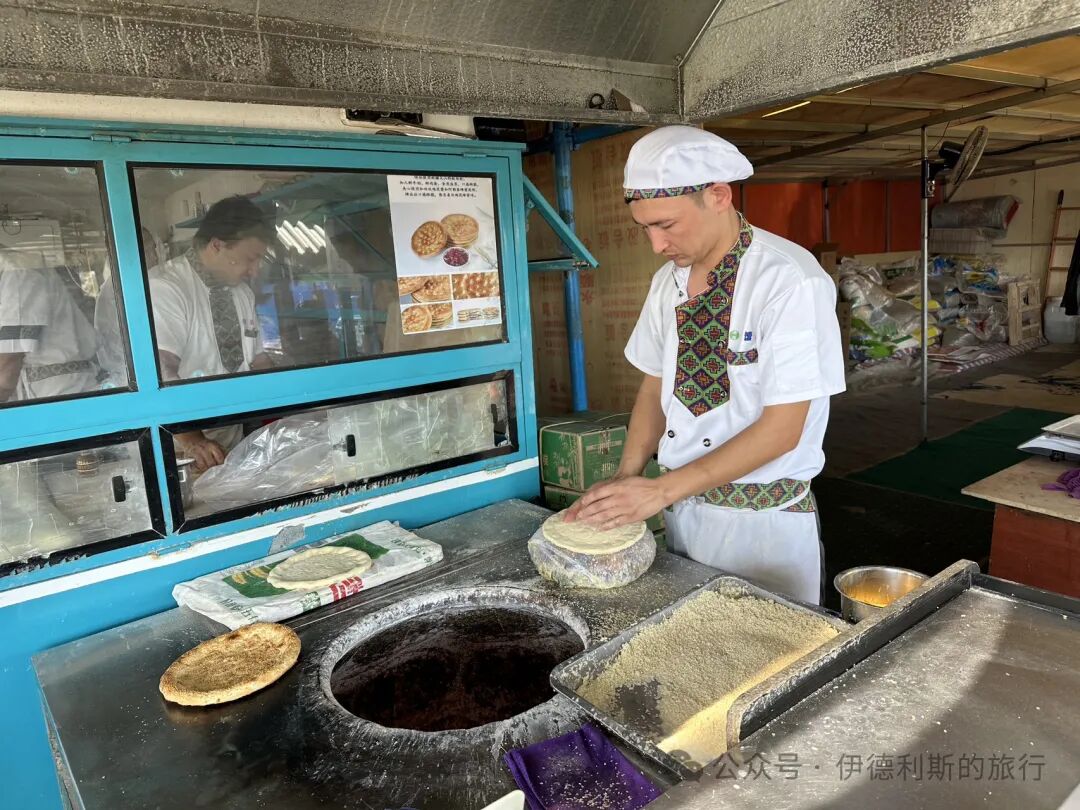
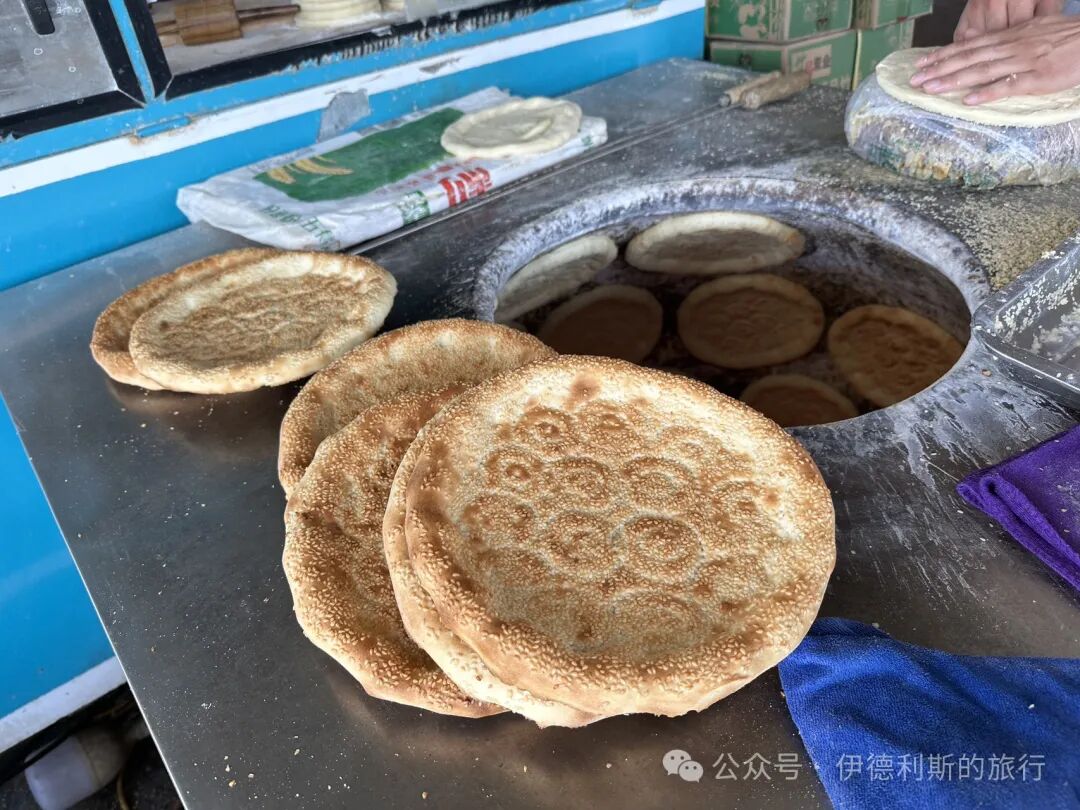
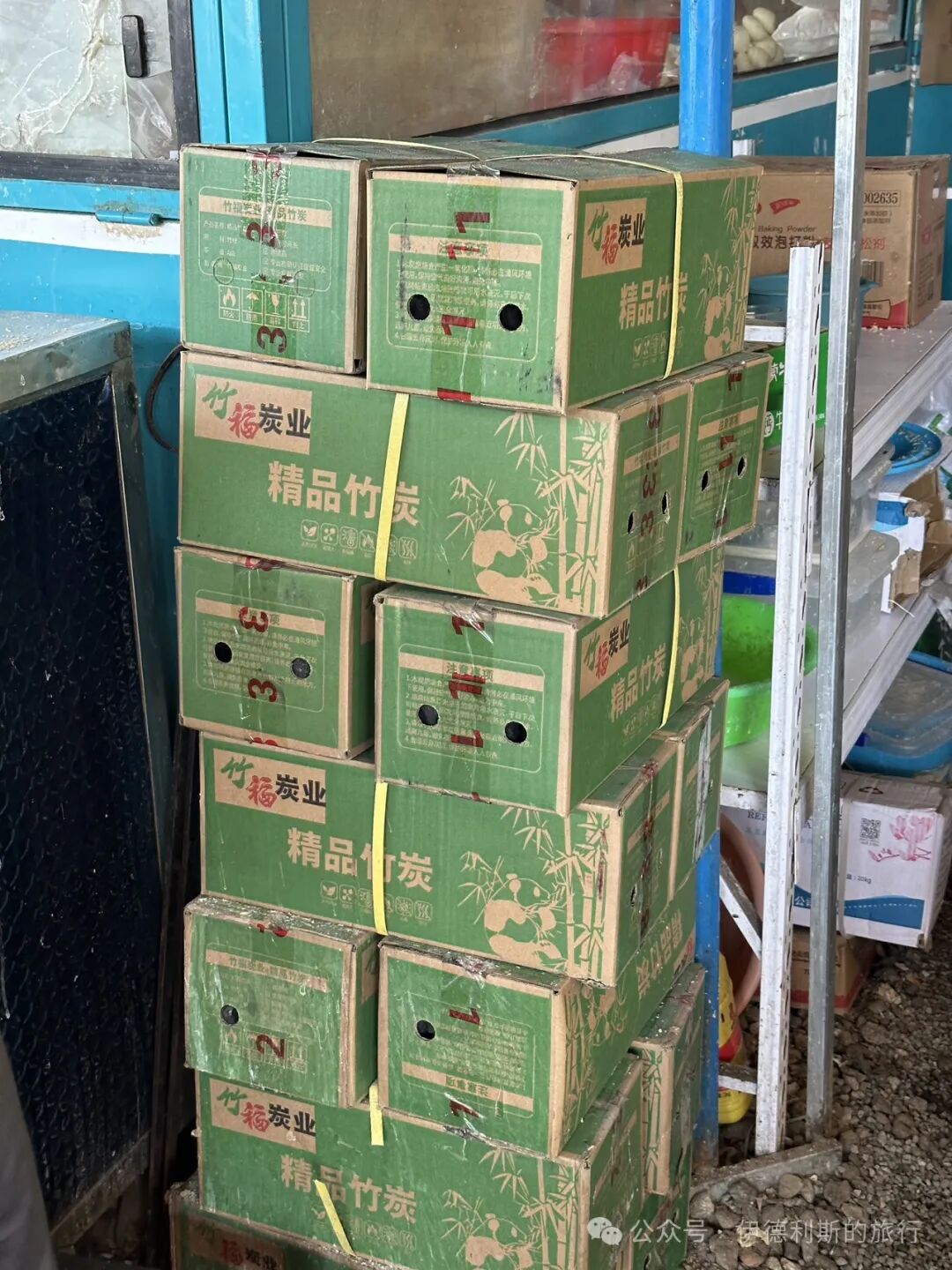
The two most popular snacks at the market are crispy fried cakes (cuipi zhagao) and freshly baked naan bread (kaonang), both of which have long lines. The naan shop uses a bamboo charcoal oven, and the naan they make is especially fragrant with a texture different from electric-baked ones. We arrived a bit late and missed the freshly baked meat pies (kaobaozi), but if you go earlier, they are surely very fragrant when they come out of the oven.
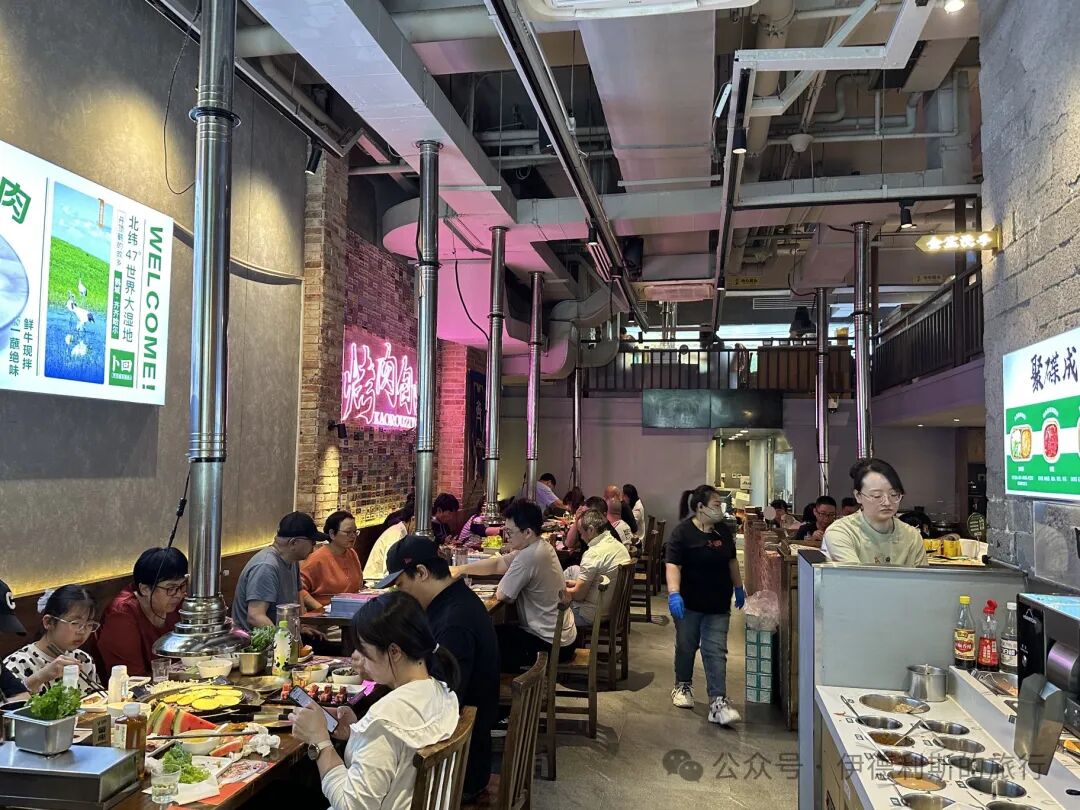
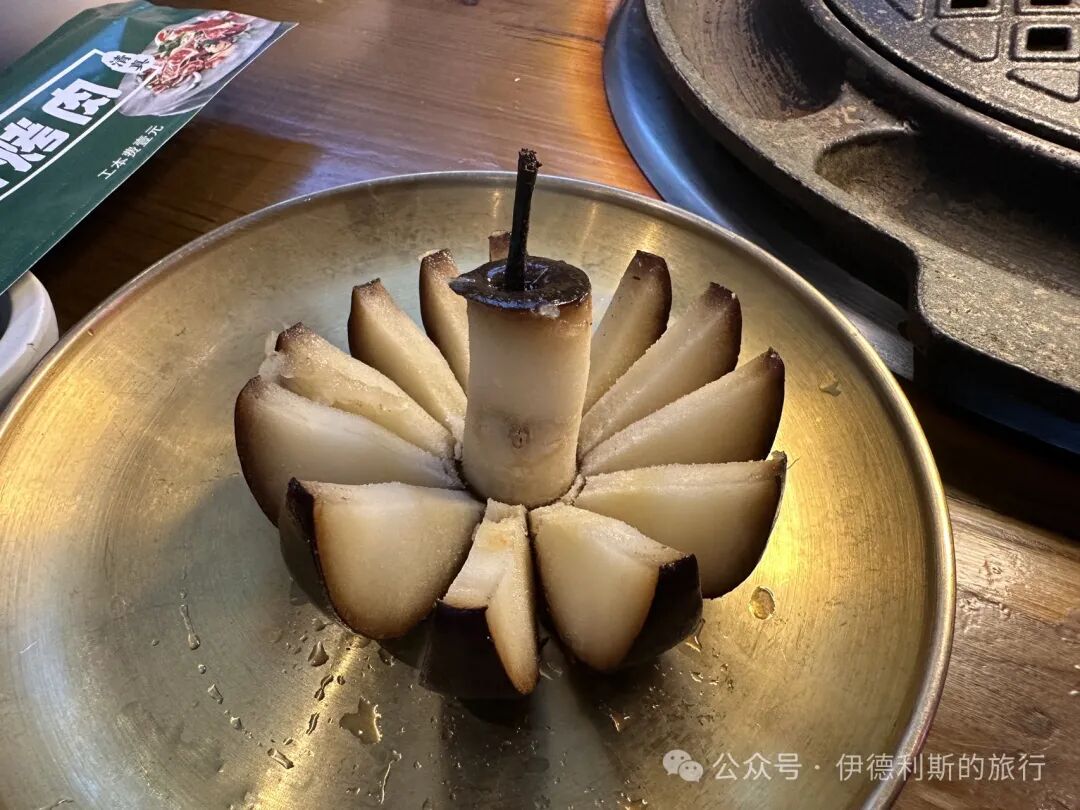
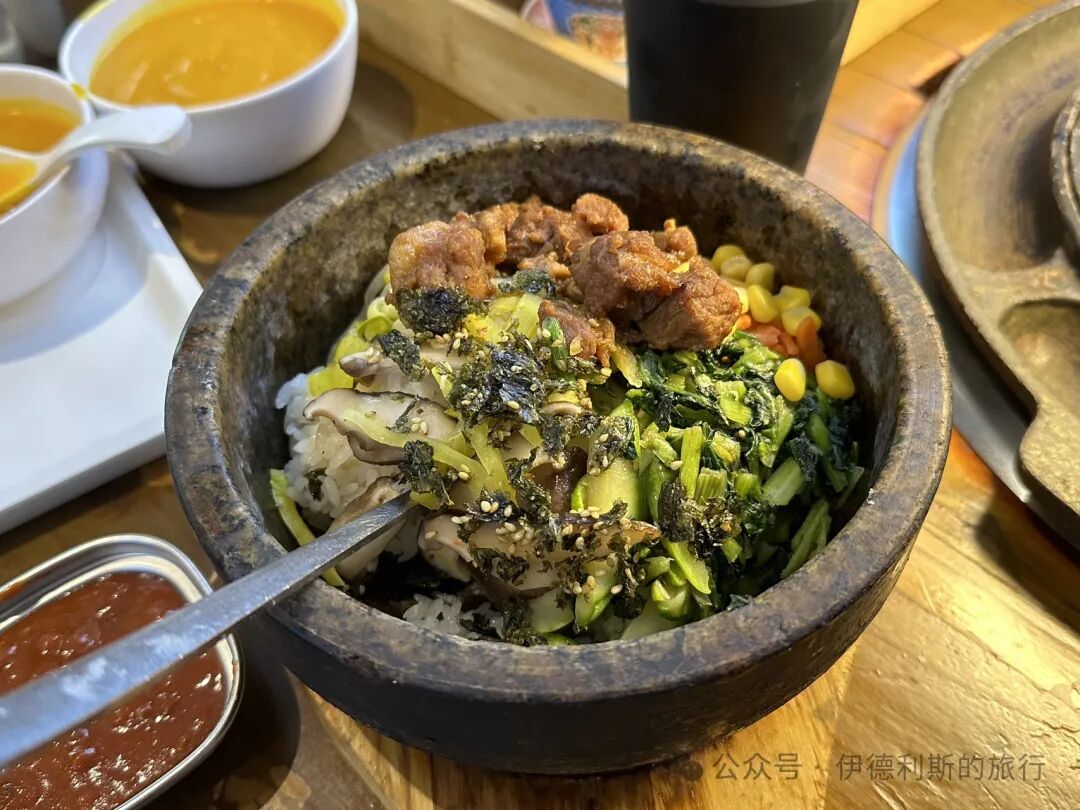
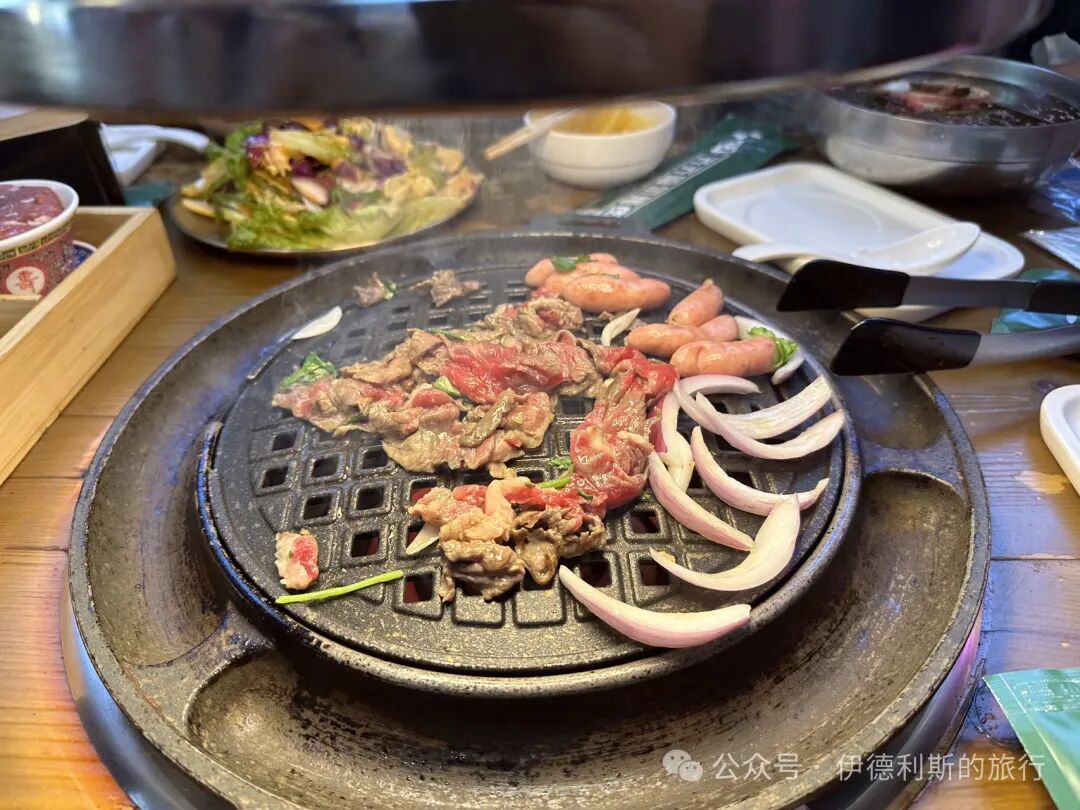
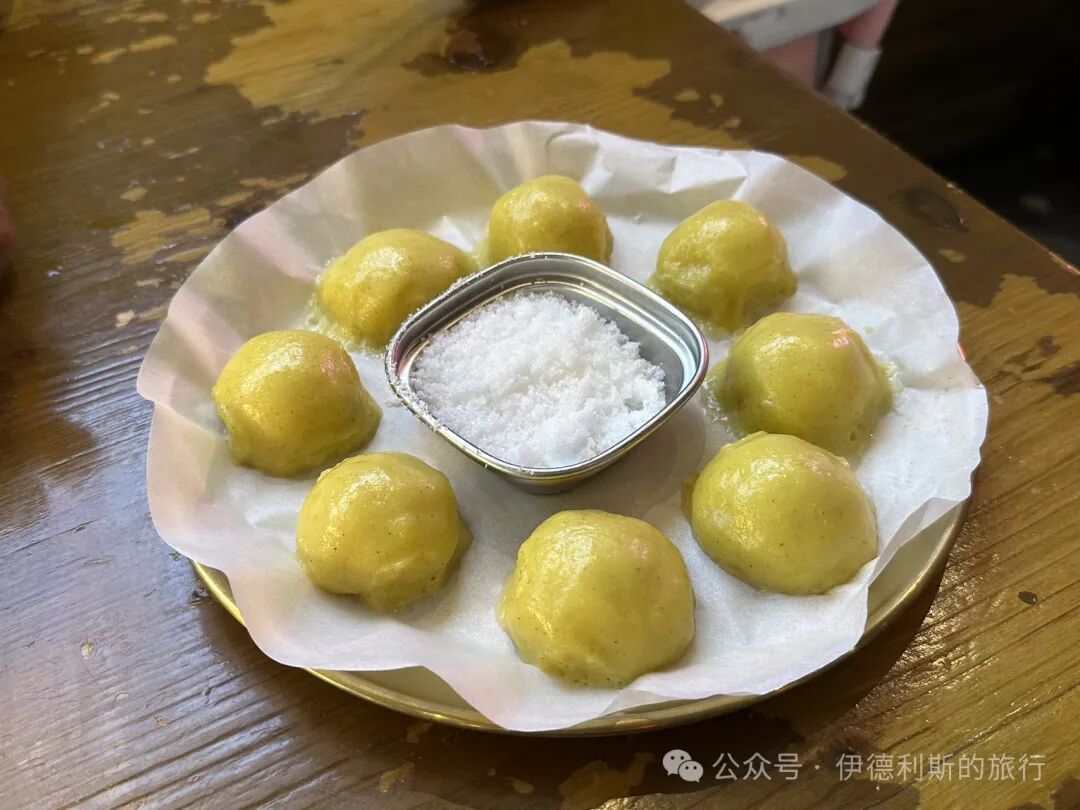
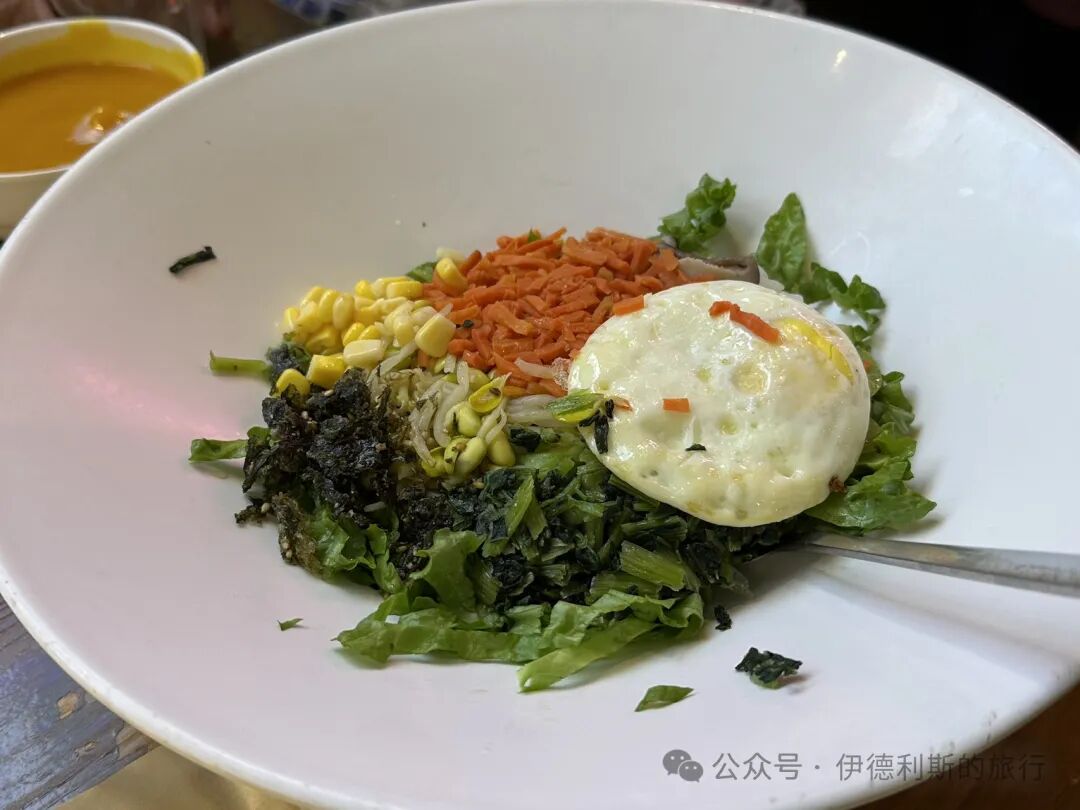
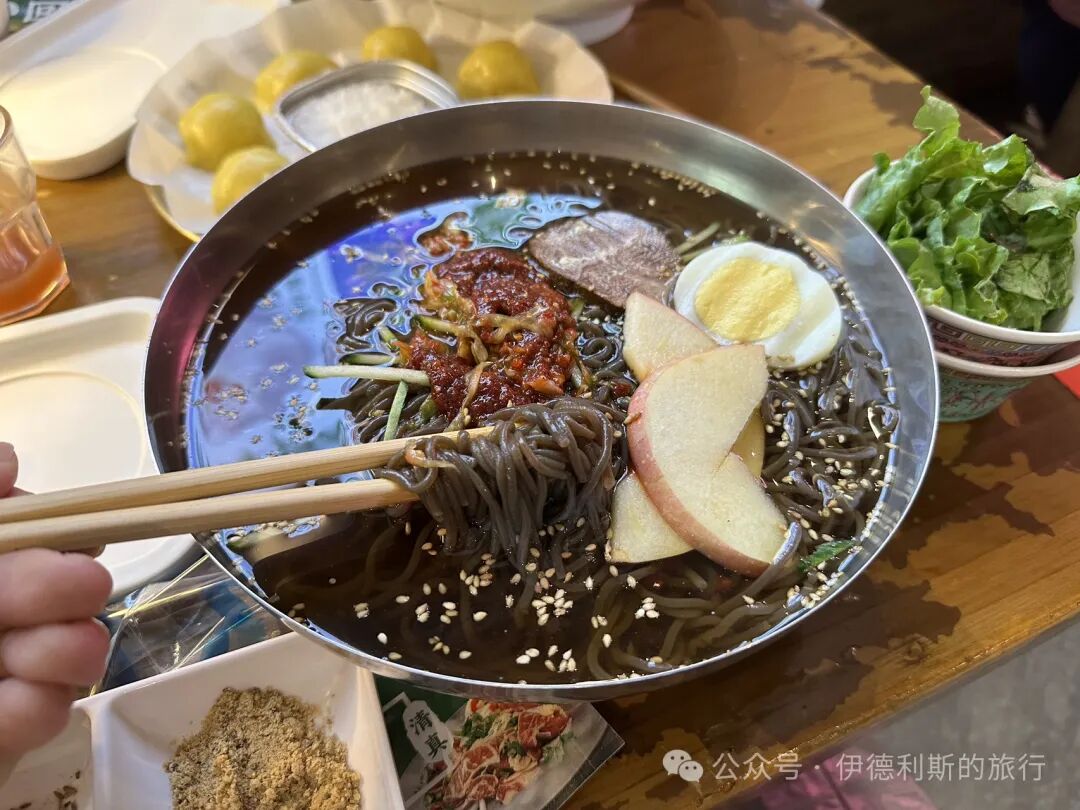
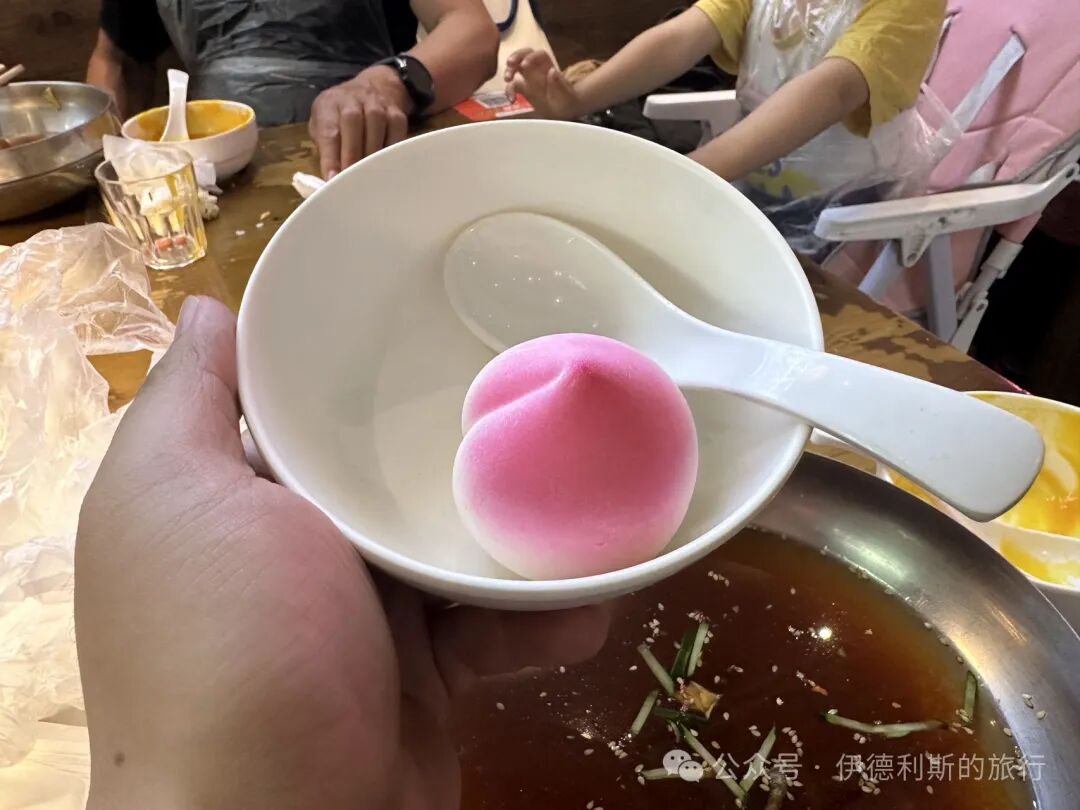
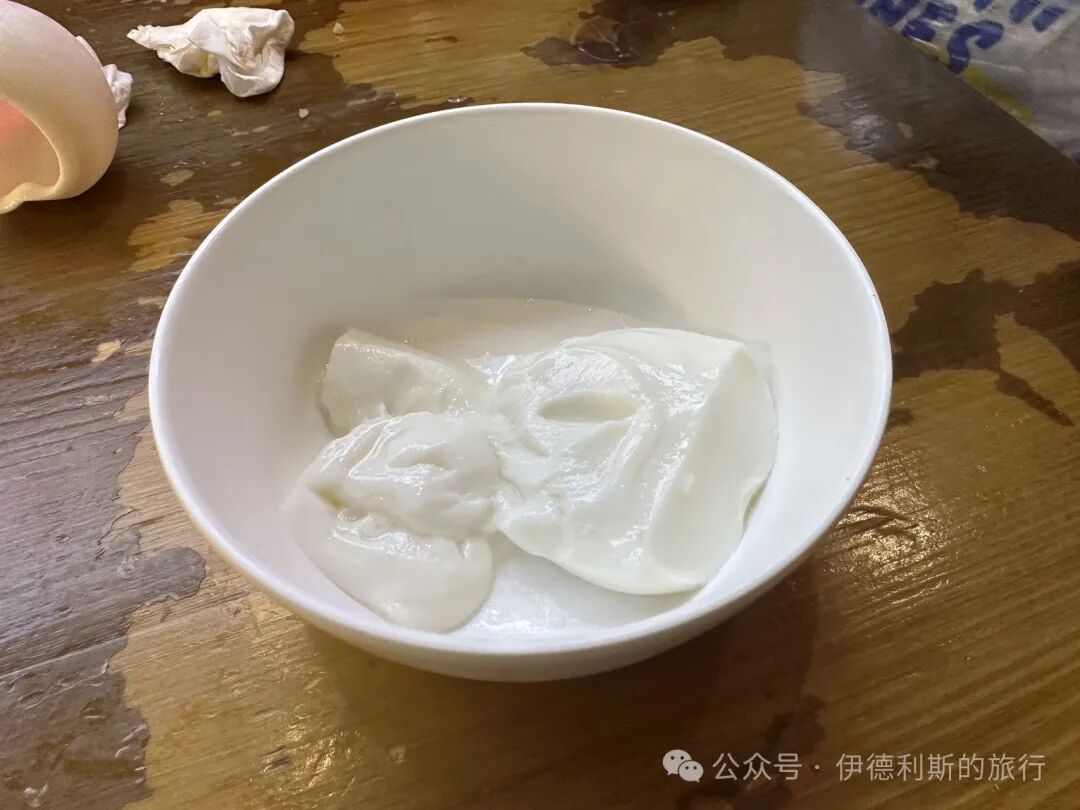
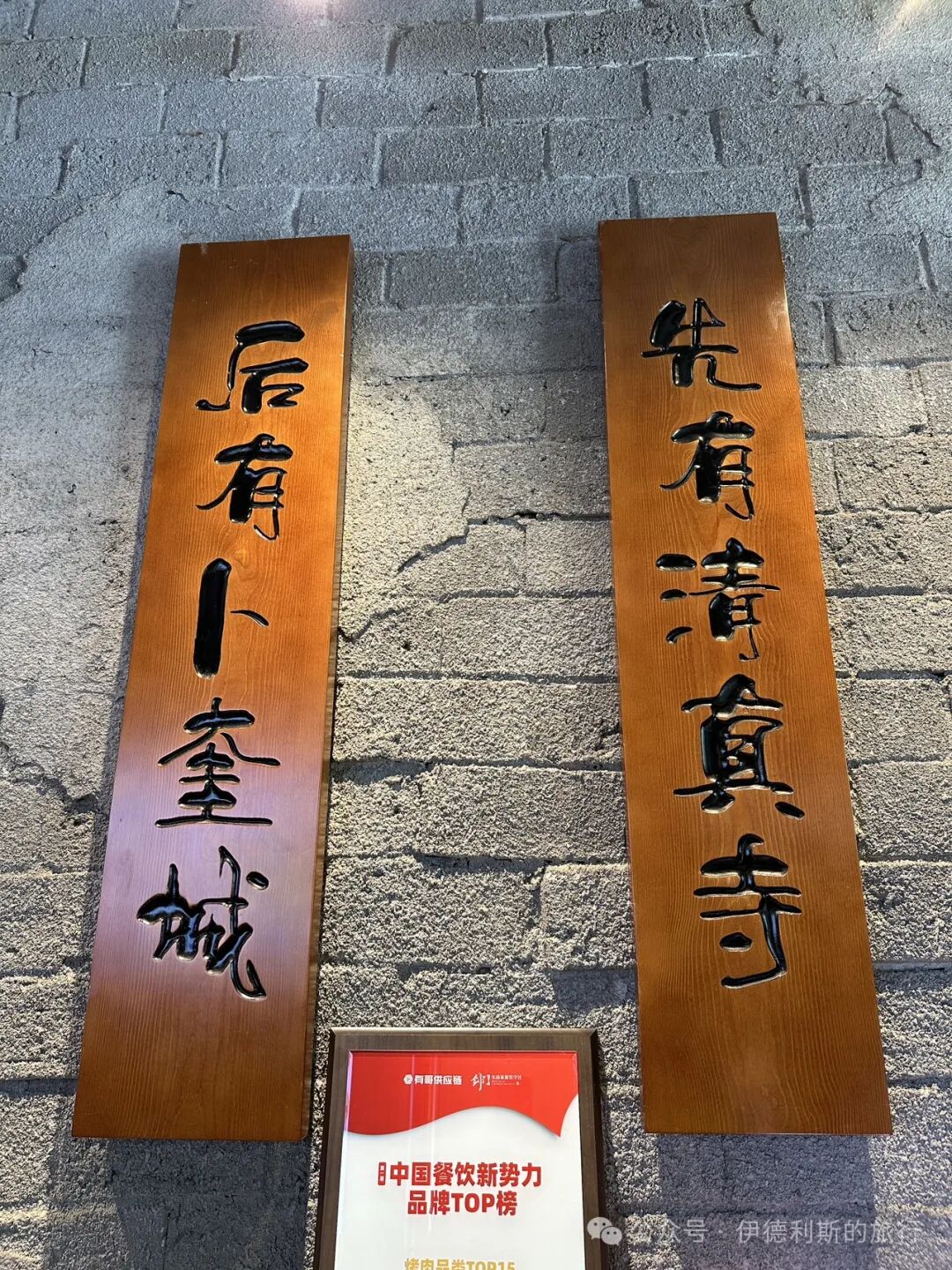
After visiting the Changying market, we took the bus for three stops to Guanzhuang Road to eat at Bu Hui Qiqihar Barbecue. I haven't been here for several years, and it is very popular on weekend afternoons now; we waited for half an hour to get a table. They now offer a nine-grid set meal with meat and shrimp, which is quite rich, and the set also includes almond tofu, sliced frozen pears, and small sticky bean buns (niandoubao). It was my first time eating Northeast-style sticky bean buns, which are made of yellow rice flour wrapped around a kidney bean filling; they aren't sweet, with a light flavor of yellow rice and kidney beans that everyone liked. For our main course, we ordered stone pot bibimbap, basin bibimbap, and cold noodles. My mother-in-law tried stone pot rice (bibimbap) for the first time and really liked the taste. The side dishes inside were also very nutritious. Cold noodles (lengmian) are the main reason I come to this restaurant. The weather is getting hotter now, and a bowl of these sweet and sour noodles is especially refreshing. view all
Summary: Changying Hui Township in Beijing has a lively weekend market with halal food, local snacks, and vendors from the Hui Muslim community. This account keeps the market route, dishes, prices where given, and photographs in the original order.
I went to the big market in Changying on Sunday morning. I worked near Changying for nine years and only changed jobs last year, and then the big market opened there. The market is open every day until noon, and it is busiest on weekends.
In the morning, I first had breakfast at Qingyanfang on Changying Middle Road, where I ordered steamed buns (xiaolongbao), lucky bags (fudai), pumpkin porridge, and purple rice porridge. Lucky bags are similar to egg fritters (jidan guozi), but they are rarely seen in Beijing. There were no halal steamed buns before, but some shops have started making them in recent years.
After breakfast, I walked north along the Changying intersection to reach the big market at the southeast corner of Changying Sports Park. There are many halal shops at the market.
We first bought beef head meat at Chen's to take home for a stir-fry. Their shop's water kettle sign (tangping pai) was made by my friend Dong Yidong, and this traditional style of sign is very rare now.
The market also has crispy fried dough snacks (gezhihe) from Hui Muslims in Tongzhou, and they also sell fermented mung bean milk (douzhier) from Baoji; many people buy it, but it was sold out when we got there.
There is a Huadu chicken stall at the market, and we bought a free-range chicken to take home for a big plate chicken (dapanji) dish. Huadu has a halal chicken slaughter and processing plant in Luanping, Hebei, which supplies the Beijing market and also exports to Japan. They have opened online shops in recent years, and much of the halal chicken you can buy online now comes from them.

The market also has all kinds of beef, mutton, fruits, and vegetables, especially free samples; we tried muskmelon, nectarines, apples, and watermelon, which made my son very happy.
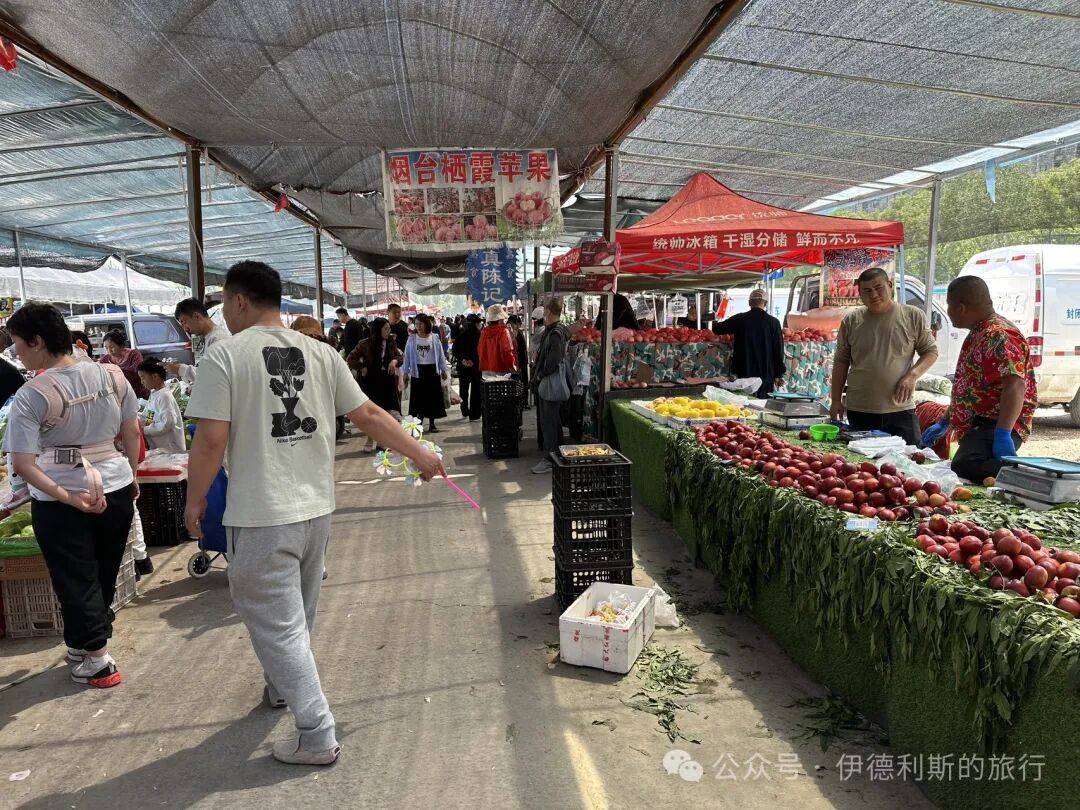
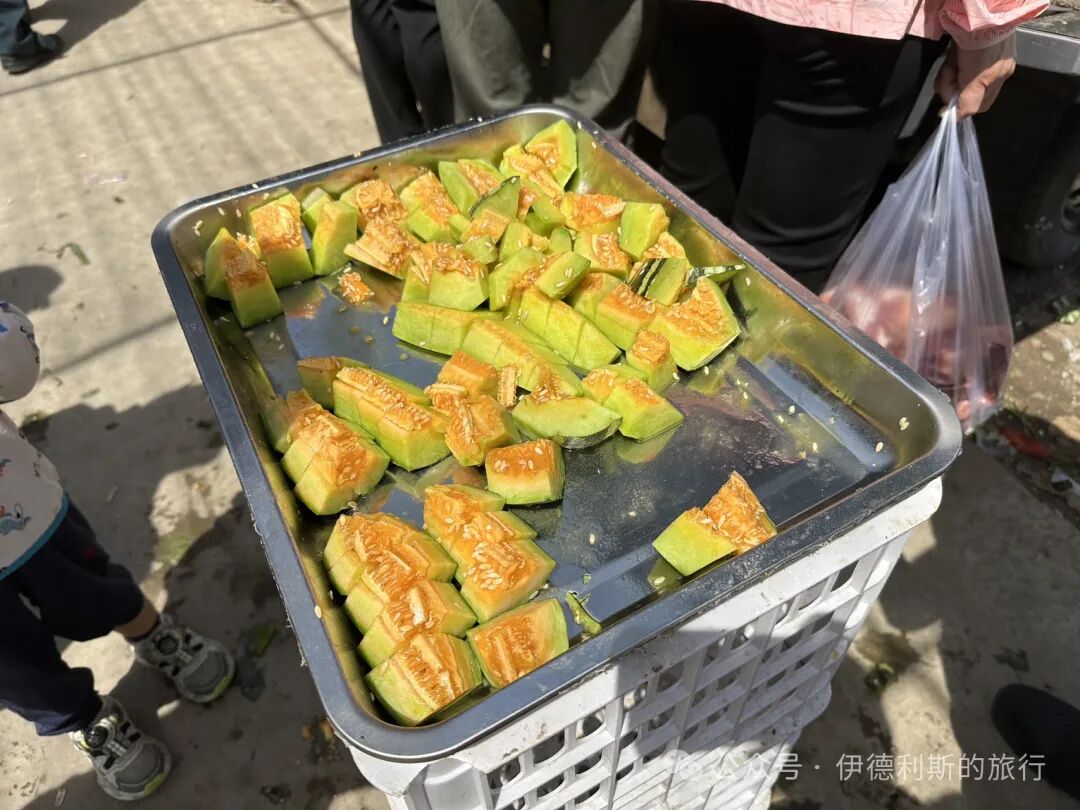

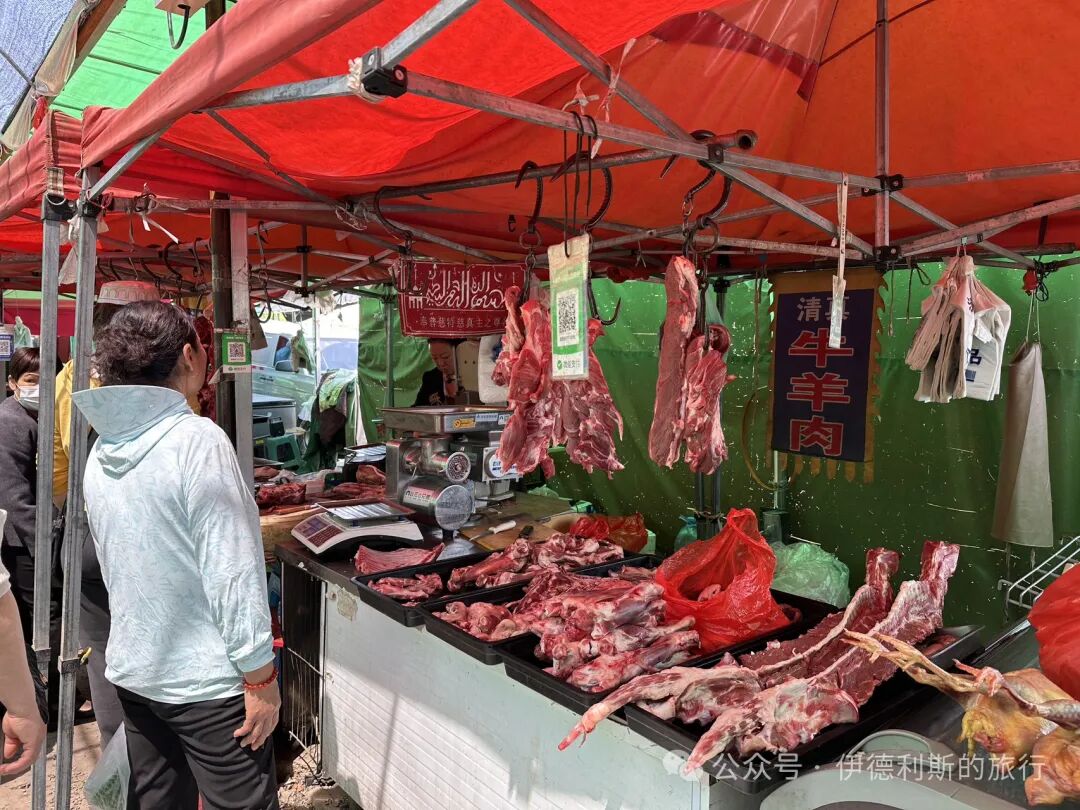
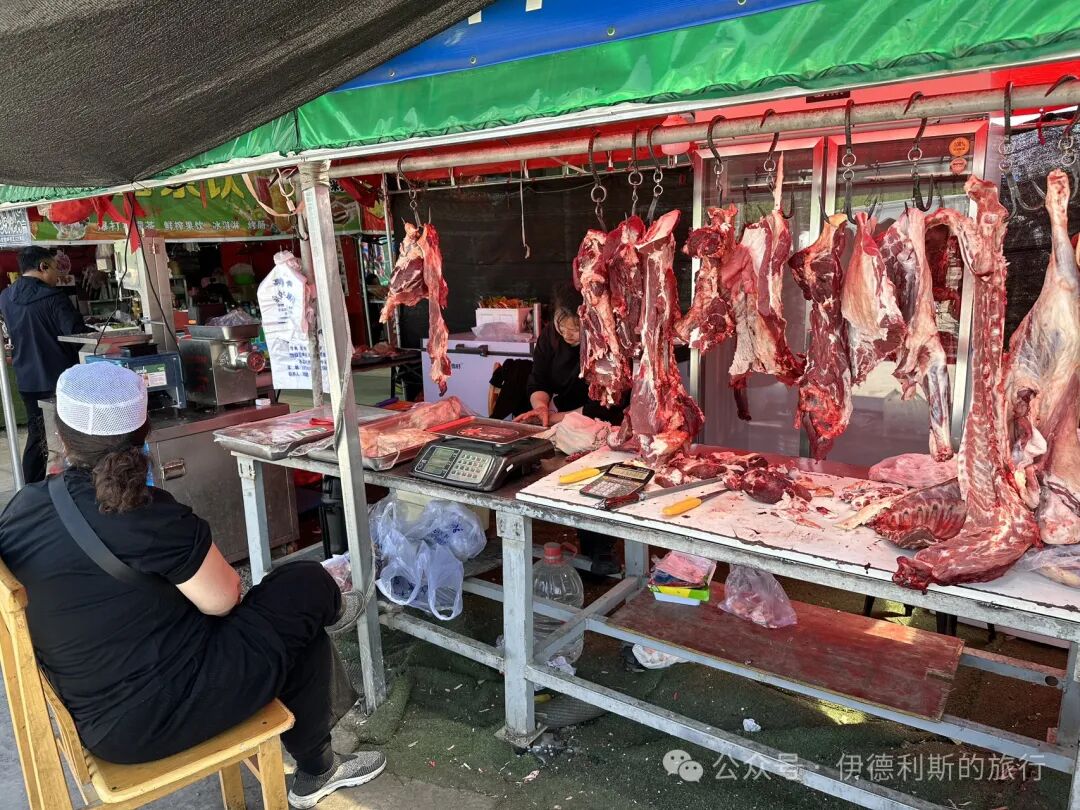
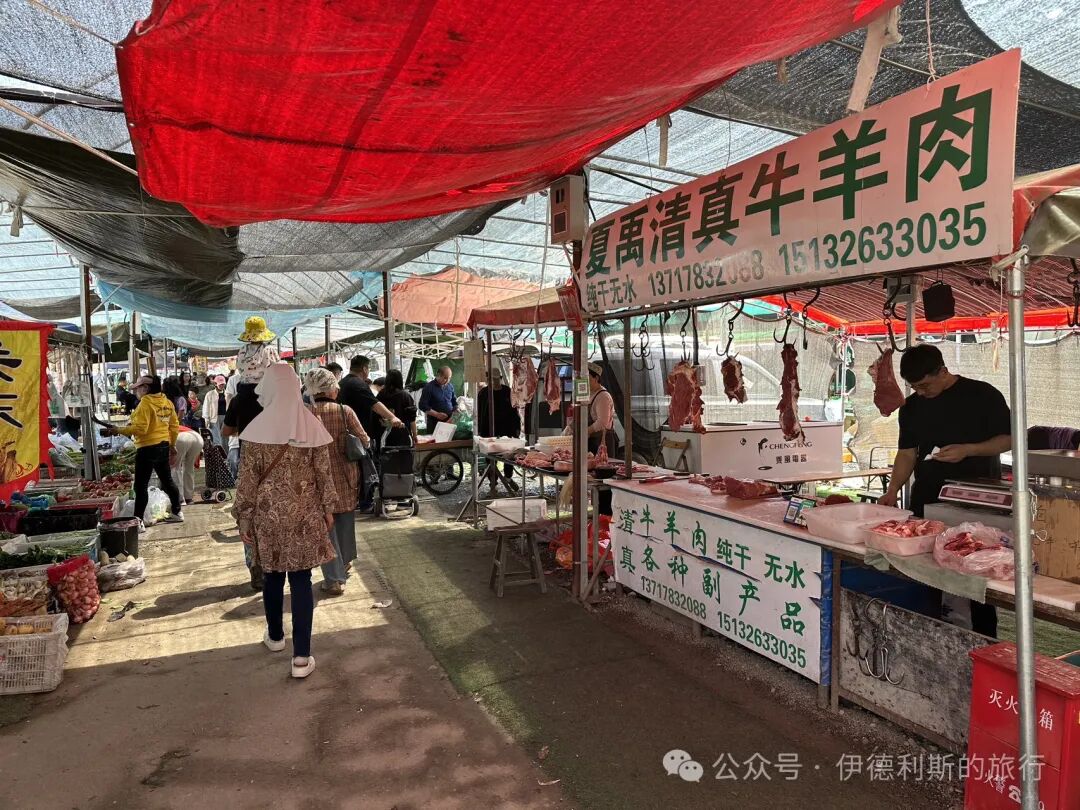
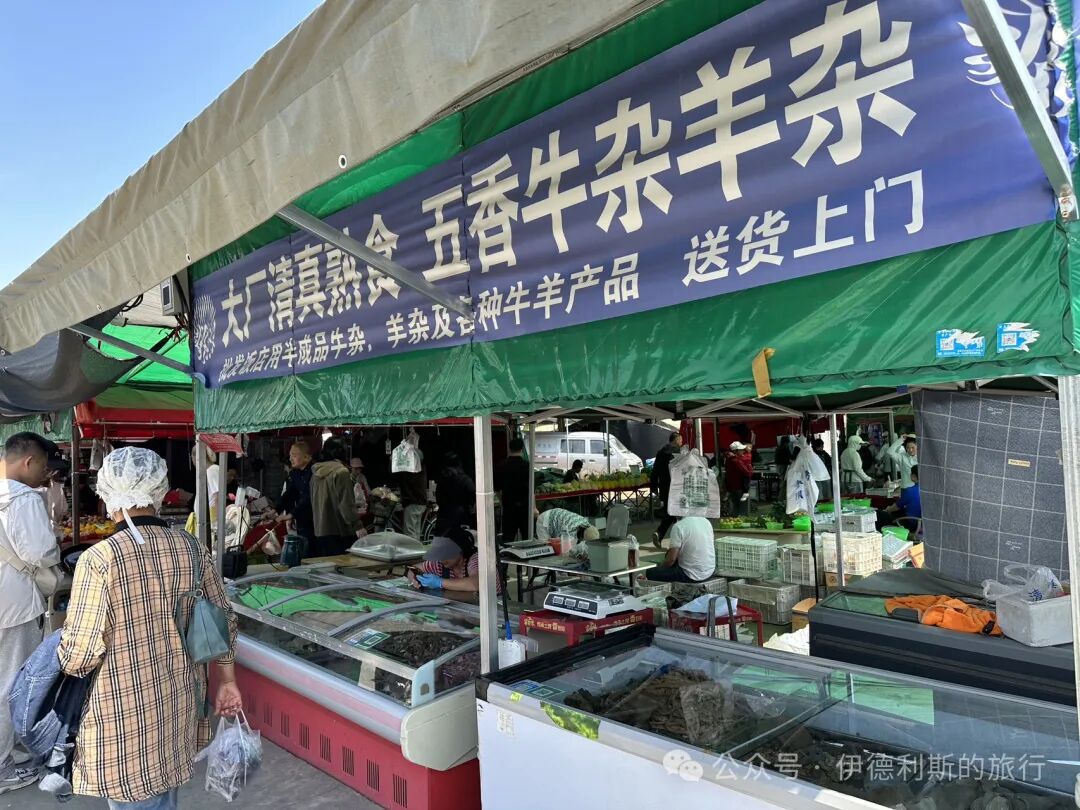
The northernmost row of the market is the snack area, where a noodle shop sells cold noodles, which are perfect for summer.
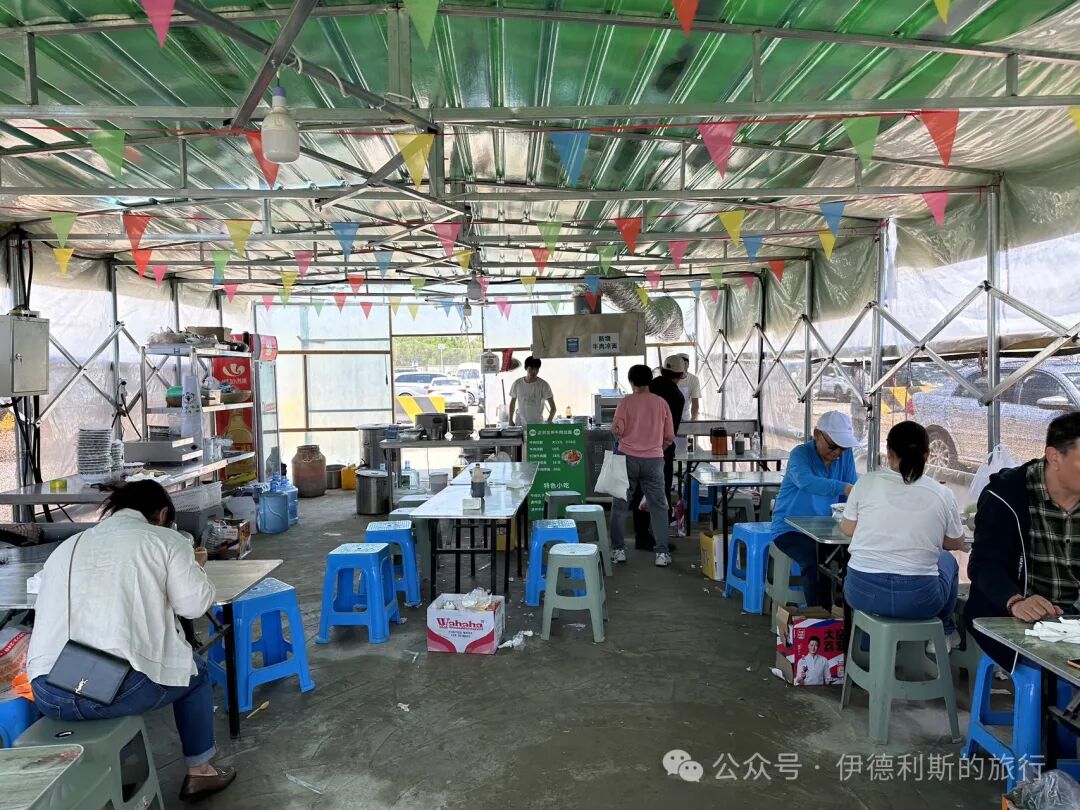
The two most popular snacks at the market are crispy fried cakes (cuipi zhagao) and freshly baked naan bread (kaonang), both of which have long lines. The naan shop uses a bamboo charcoal oven, and the naan they make is especially fragrant with a texture different from electric-baked ones. We arrived a bit late and missed the freshly baked meat pies (kaobaozi), but if you go earlier, they are surely very fragrant when they come out of the oven.
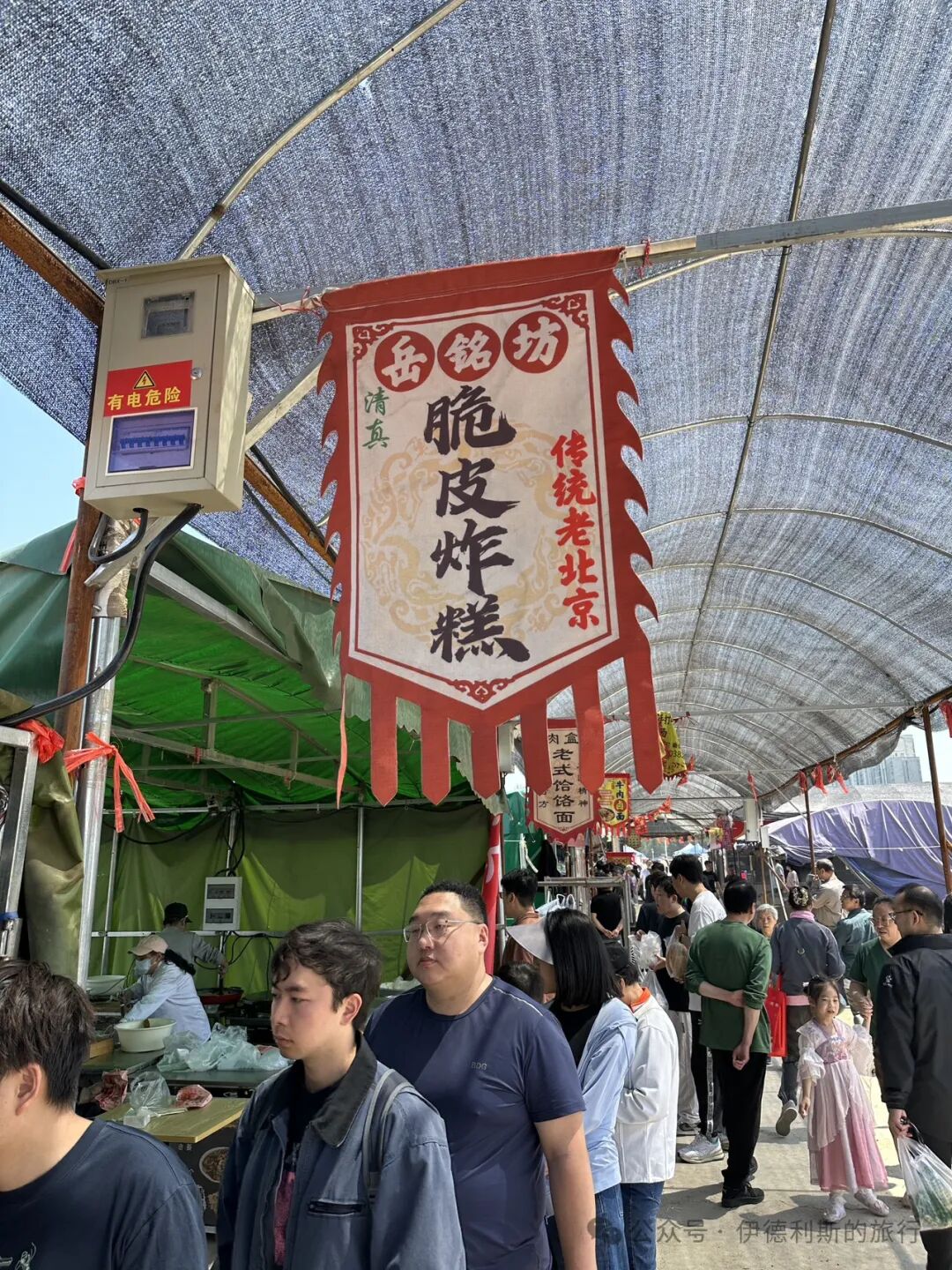
After visiting the Changying market, we took the bus for three stops to Guanzhuang Road to eat at Bu Hui Qiqihar Barbecue. I haven't been here for several years, and it is very popular on weekend afternoons now; we waited for half an hour to get a table. They now offer a nine-grid set meal with meat and shrimp, which is quite rich, and the set also includes almond tofu, sliced frozen pears, and small sticky bean buns (niandoubao). It was my first time eating Northeast-style sticky bean buns, which are made of yellow rice flour wrapped around a kidney bean filling; they aren't sweet, with a light flavor of yellow rice and kidney beans that everyone liked. For our main course, we ordered stone pot bibimbap, basin bibimbap, and cold noodles. My mother-in-law tried stone pot rice (bibimbap) for the first time and really liked the taste. The side dishes inside were also very nutritious. Cold noodles (lengmian) are the main reason I come to this restaurant. The weather is getting hotter now, and a bowl of these sweet and sour noodles is especially refreshing.

Muslim Travel Guide Korea Busan: Busan Mosque, Turkish Imam, Friday Prayer and Muslim Community
Articles • yusuf908 posted the article • 0 comments • 233 views • 2026-05-23 22:23
Summary: This Korea Muslim travel guide visits Busan Mosque, describing the quiet neighborhood, Turkish-style interior, TIKA renovation note, conversations with the imam from Turkiye, Friday prayer, Muslims from Uzbekistan, Korean converts, and a later stop by the sea.
After staying in Seoul for about eight days, I planned to visit other places in Korea. I took a train from Seoul Station and arrived in Busan, the second largest city in Korea, in a few hours. Although it is the second largest, there is indeed a lot of difference between the second largest and the first largest.
Busan does not look very big, it can only be said to be a medium-sized city. If Seoul is equivalent to Beijing or Shanghai, then Busan can only be said to be equivalent to Qingdao.
I checked into a hotel in downtown Busan. At the same price, the accommodation environment was much better than in Seoul. After that, I set off to the largest mosque in Busan. This mosque is a little far from the actual city. In fact, there are mosques in Busan city, but they are very small.
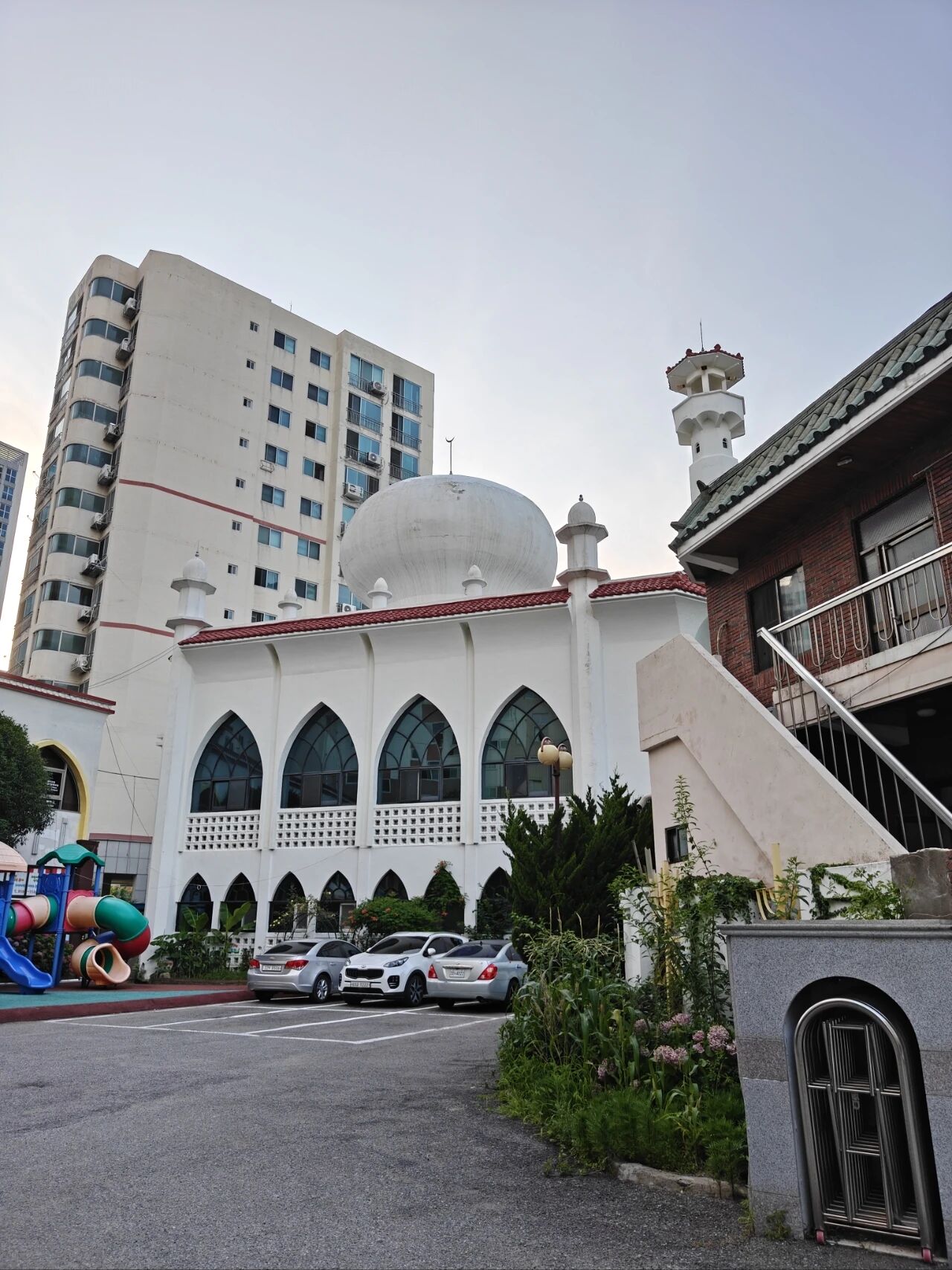
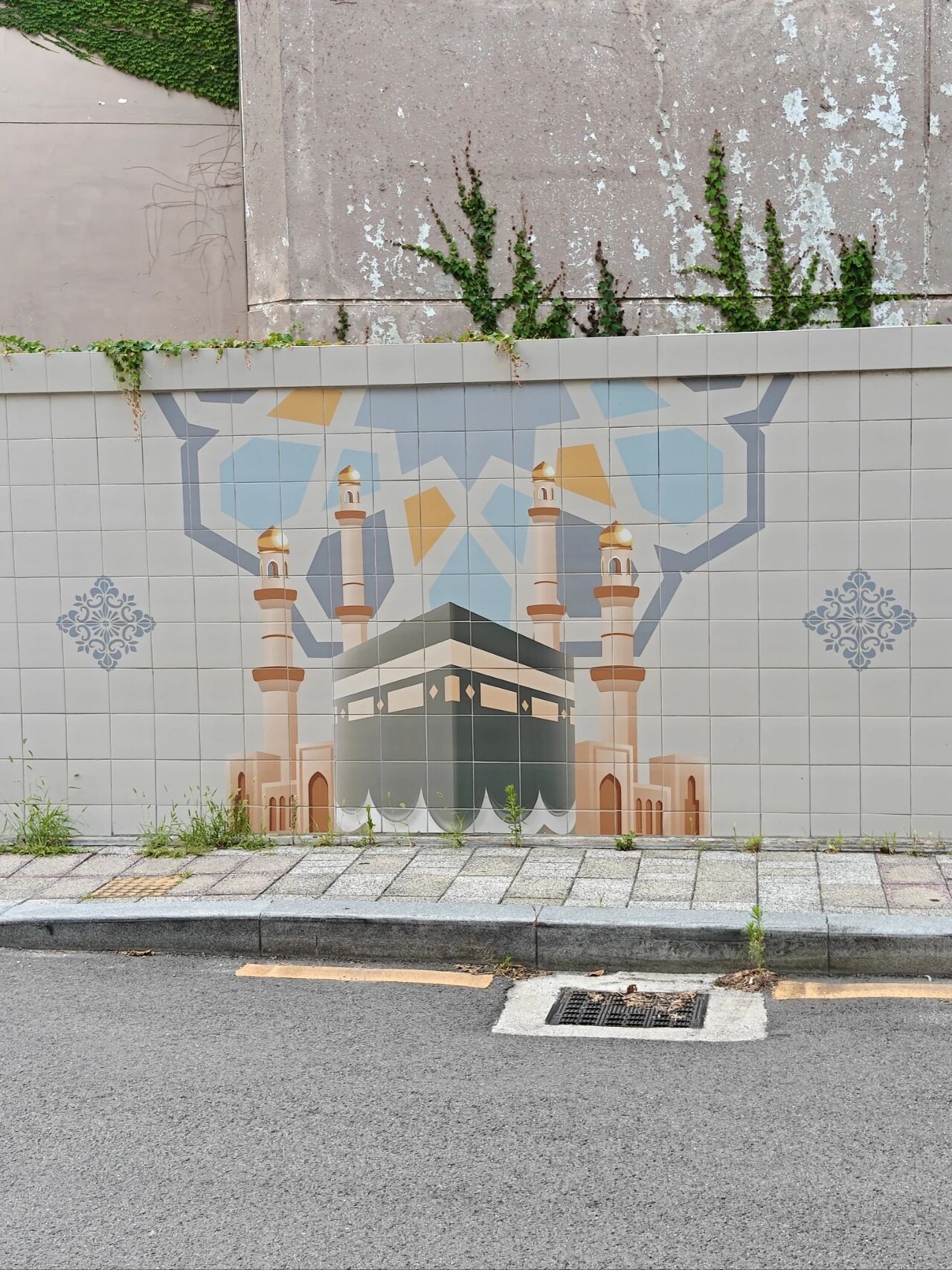
After taking the subway for several stops, we almost arrived at the Busan Mosque. The environment here is quiet and quiet, without the hustle and bustle of the city. You can also see Islamic-themed wall paintings around the mosque (picture 2). There is also a kindergarten in the courtyard of the mosque, but I later learned that it has nothing to do with the mosque.
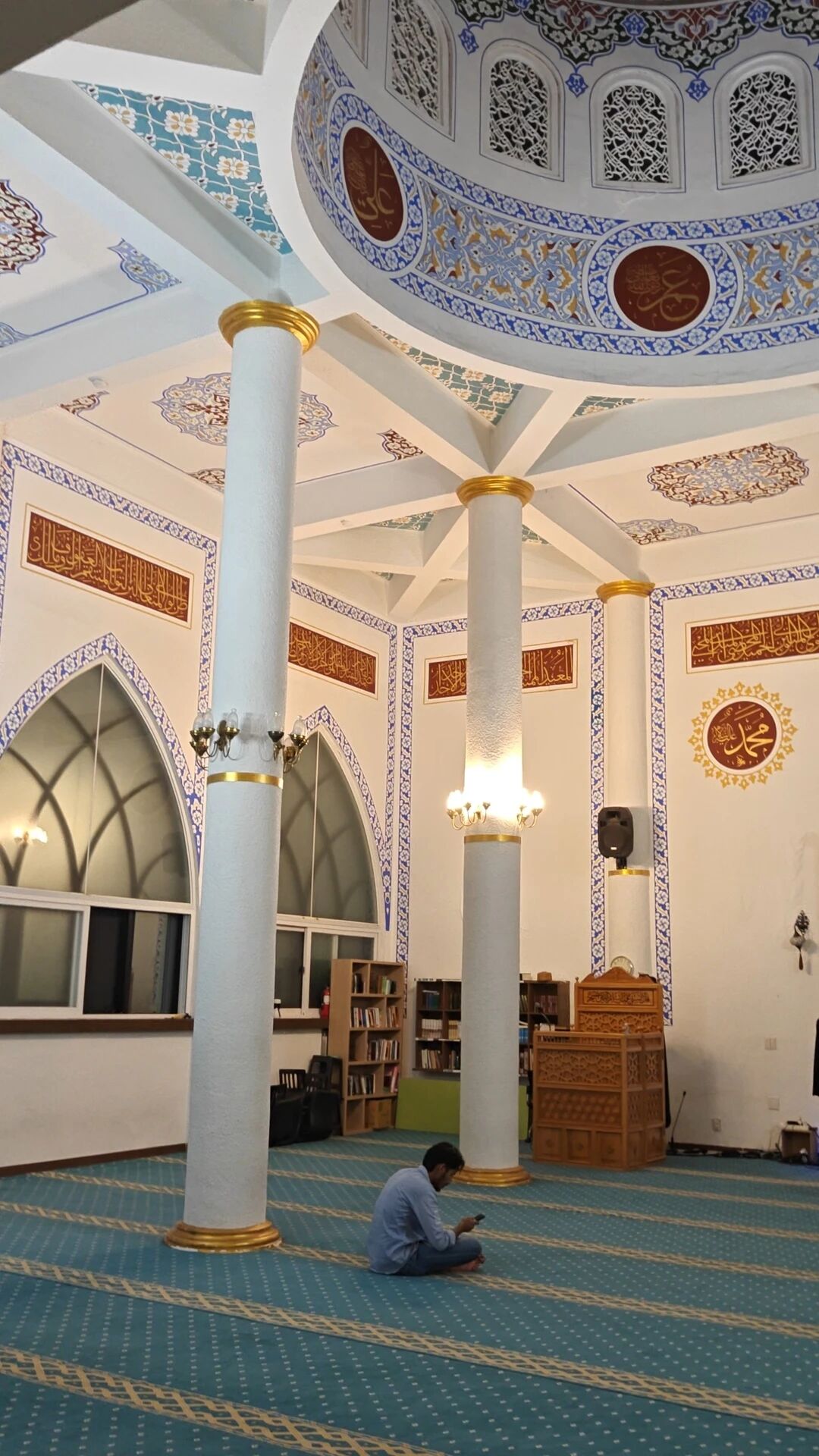
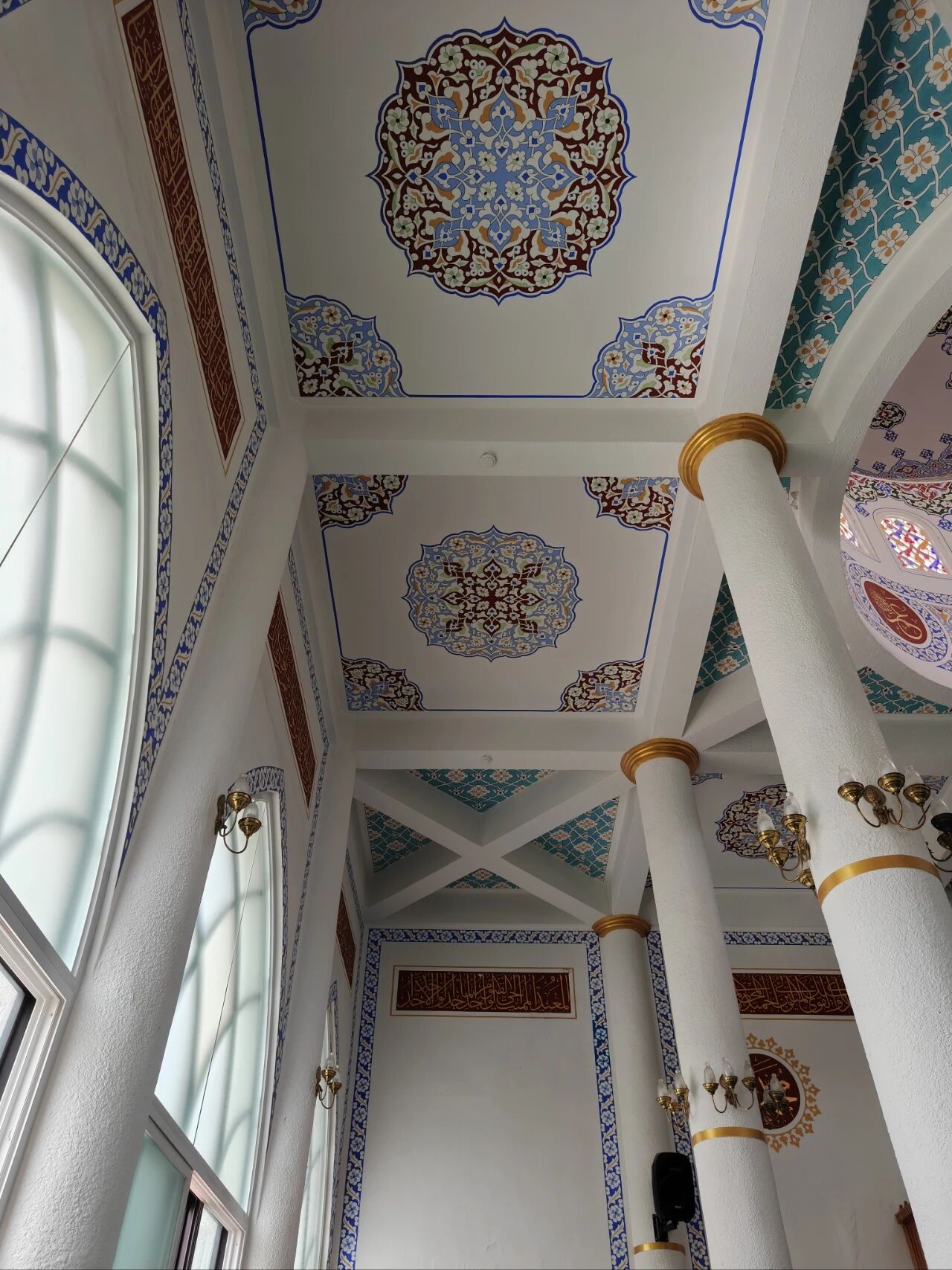
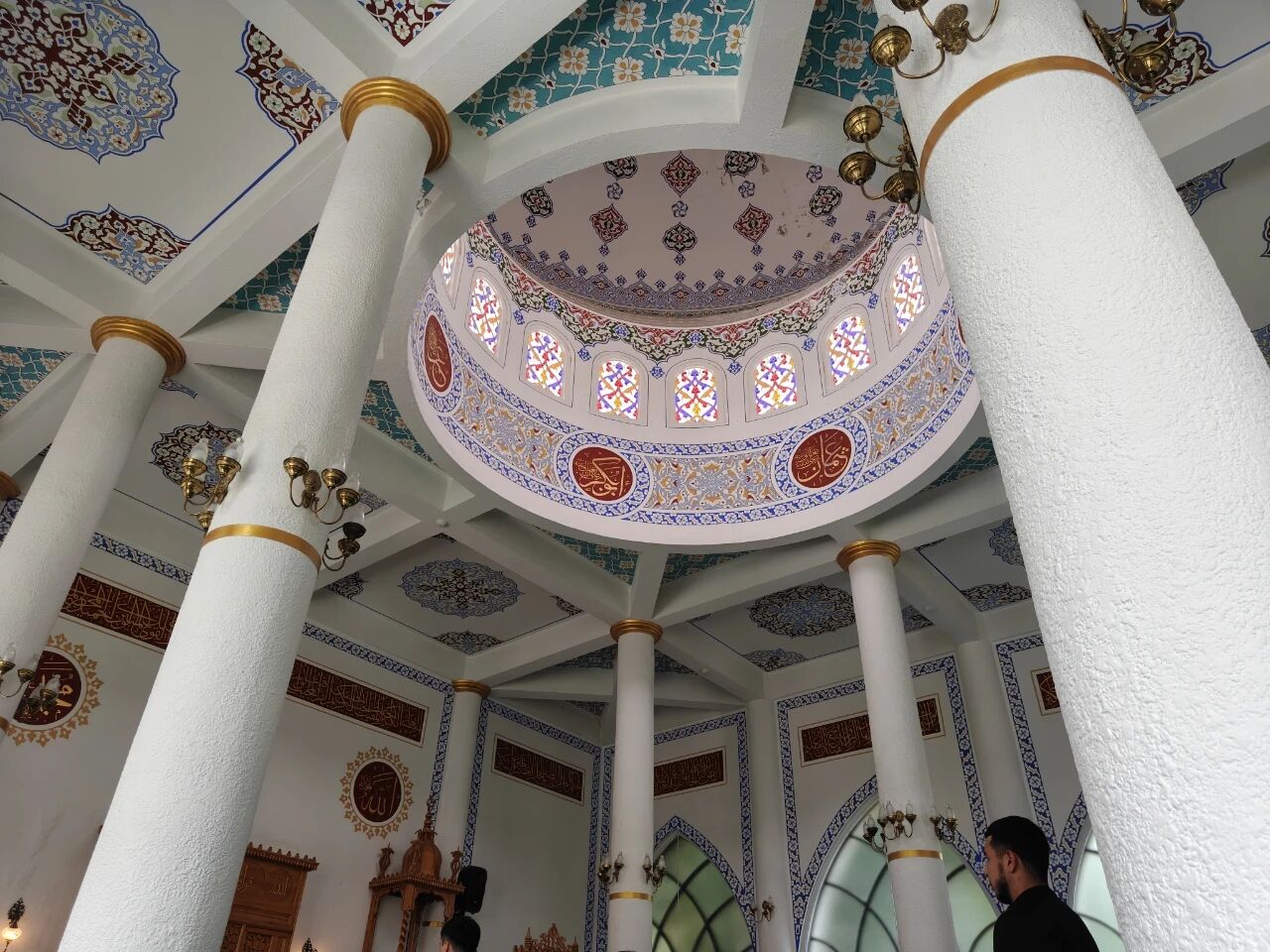
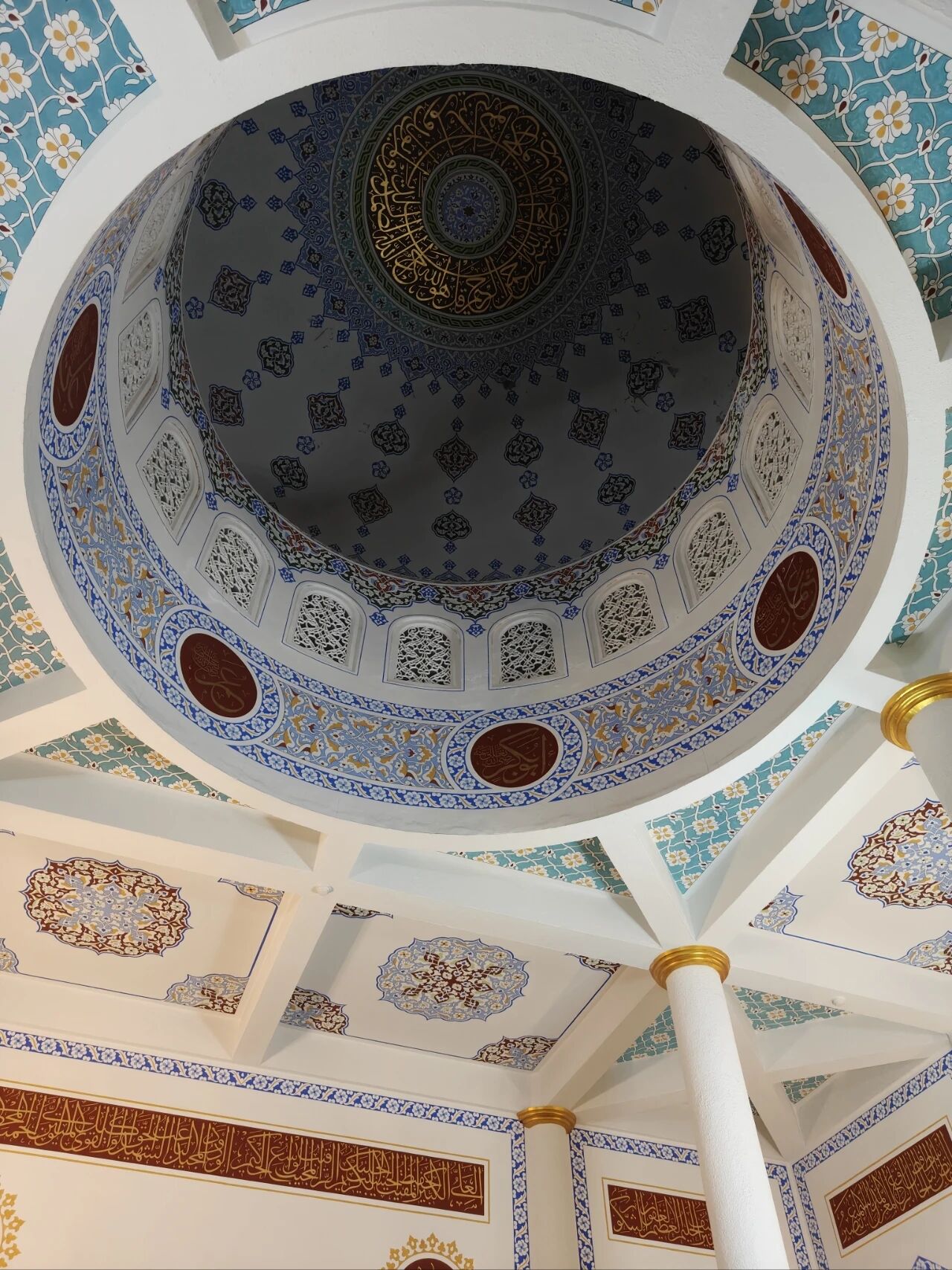
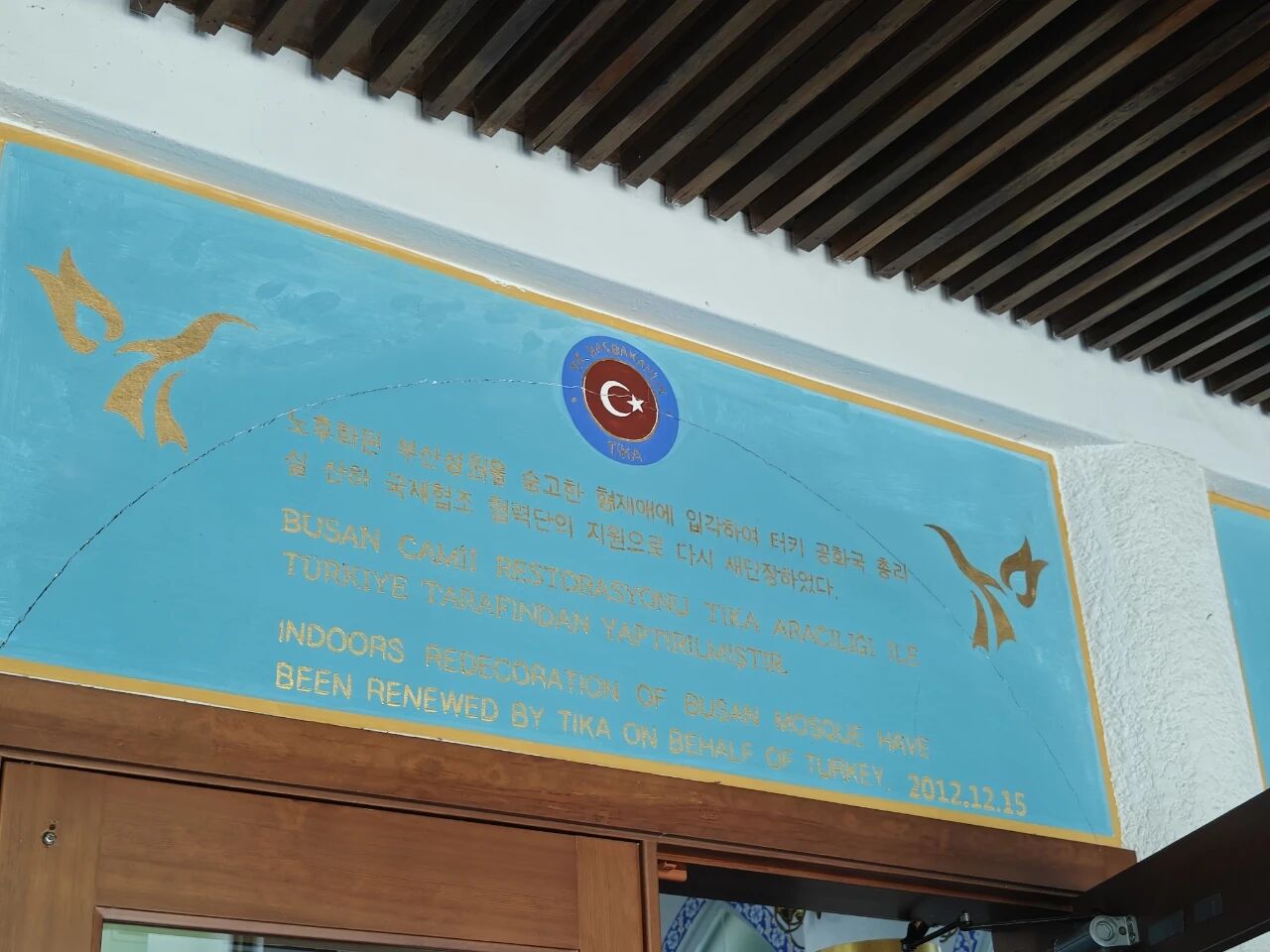
The wudu area and toilet are on the first floor, just below the steps from the mosque into the prayer hall. the prayer hall is also painted in Turkish style. On the door of the prayer hall, it is written in Korean, Turkish and English that "TIKA maintains and updates the interior decoration of the Busan Mosque on behalf of Turkiye."
So what kind of organization is this TIKA? I found out it was the Turkish Cooperation and Coordination Agency, which is Turkiye's overseas aid organization.
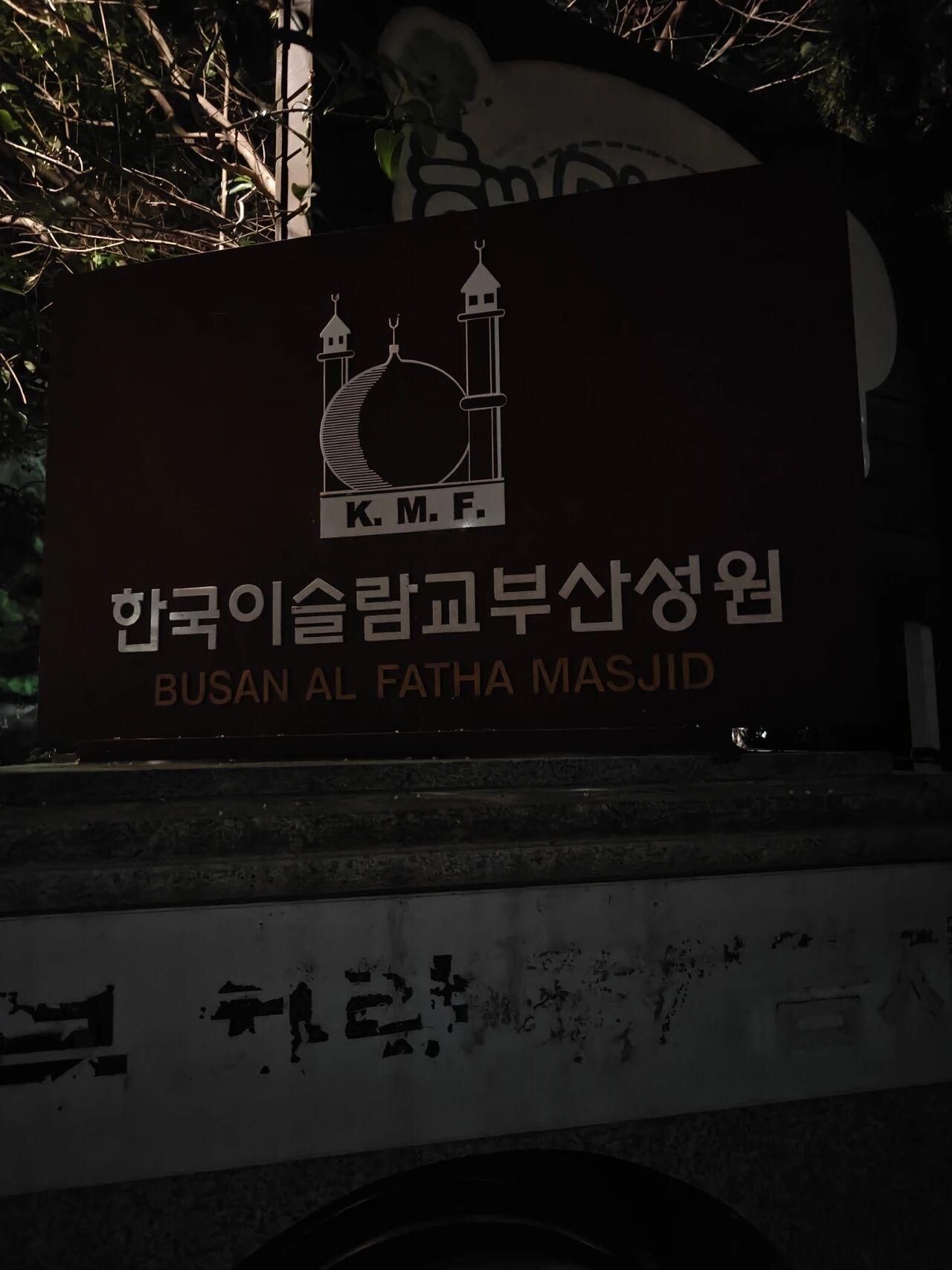
The full name of the place is also written on the door of the mosque (Picture 8): Busan Fateh (Beginning) Mosque.
There were not many people in the prayer hall, except for a Korean uncle, and most of them did not have East Asian faces, so I seemed a bit conspicuous. The imam who was born in Turkiye asked me where I was from, and I answered China. After salah he asked me to sit in his office for a while.
When we arrived at the office, we started chatting using translation software. As we chatted about politics, the imam said that there are two big countries in the world, one is the United States and the other is China, and China is gaining the upper hand.
Then the imam asked me some information about China, such as the average salary in Shanghai. He said it turned out to be similar to Turkiye. Maybe he thought the Chinese earned higher wages than the Turks. It was getting late at that time, and we separated after chatting for more than an hour.
The next day was Friday prayer day, and I came to the Busan Mosque again. Because it was a gathering day, there were many people in the prayer hall. The imam said that most of the people who came here were from Uzbekistan and other countries. There are some Koreans who have accepted Islam, but not many.
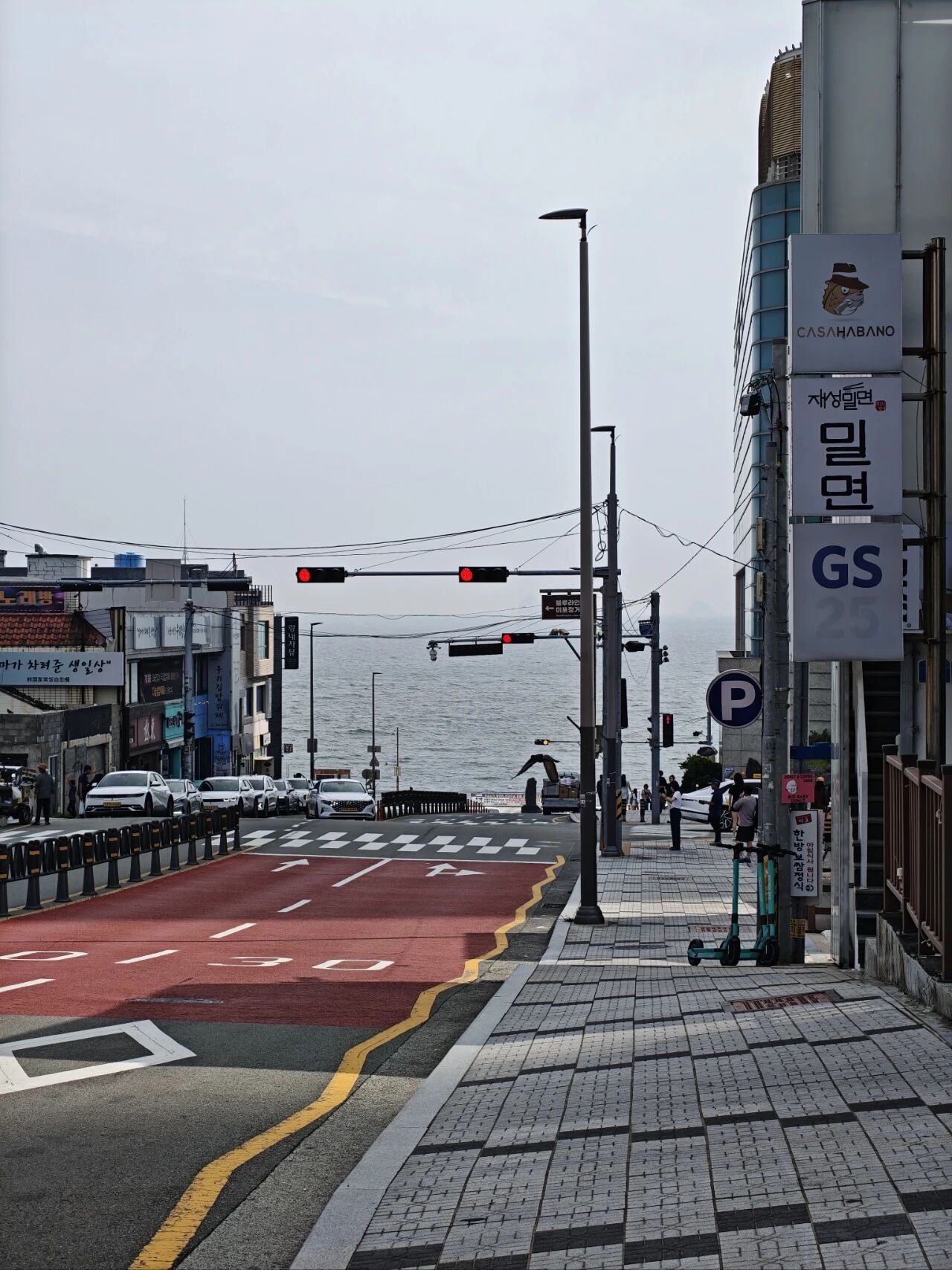
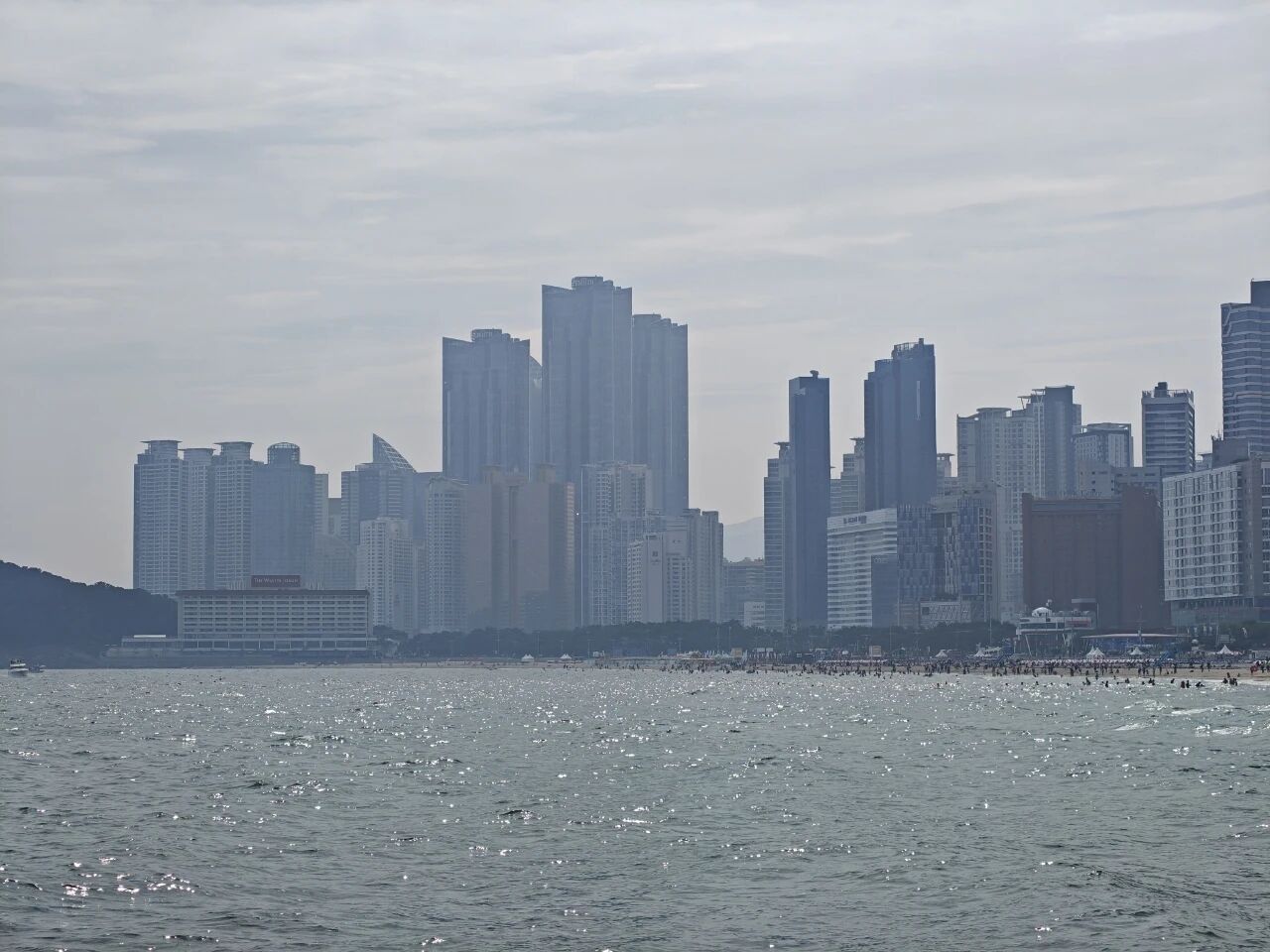
After the prayer, I left the Busan Mosque and went to the famous Mipo in Busan to watch the sea. view all
Summary: This Korea Muslim travel guide visits Busan Mosque, describing the quiet neighborhood, Turkish-style interior, TIKA renovation note, conversations with the imam from Turkiye, Friday prayer, Muslims from Uzbekistan, Korean converts, and a later stop by the sea.
After staying in Seoul for about eight days, I planned to visit other places in Korea. I took a train from Seoul Station and arrived in Busan, the second largest city in Korea, in a few hours. Although it is the second largest, there is indeed a lot of difference between the second largest and the first largest.
Busan does not look very big, it can only be said to be a medium-sized city. If Seoul is equivalent to Beijing or Shanghai, then Busan can only be said to be equivalent to Qingdao.
I checked into a hotel in downtown Busan. At the same price, the accommodation environment was much better than in Seoul. After that, I set off to the largest mosque in Busan. This mosque is a little far from the actual city. In fact, there are mosques in Busan city, but they are very small.
After taking the subway for several stops, we almost arrived at the Busan Mosque. The environment here is quiet and quiet, without the hustle and bustle of the city. You can also see Islamic-themed wall paintings around the mosque (picture 2). There is also a kindergarten in the courtyard of the mosque, but I later learned that it has nothing to do with the mosque.
The wudu area and toilet are on the first floor, just below the steps from the mosque into the prayer hall. the prayer hall is also painted in Turkish style. On the door of the prayer hall, it is written in Korean, Turkish and English that "TIKA maintains and updates the interior decoration of the Busan Mosque on behalf of Turkiye."
So what kind of organization is this TIKA? I found out it was the Turkish Cooperation and Coordination Agency, which is Turkiye's overseas aid organization.
The full name of the place is also written on the door of the mosque (Picture 8): Busan Fateh (Beginning) Mosque.
There were not many people in the prayer hall, except for a Korean uncle, and most of them did not have East Asian faces, so I seemed a bit conspicuous. The imam who was born in Turkiye asked me where I was from, and I answered China. After salah he asked me to sit in his office for a while.
When we arrived at the office, we started chatting using translation software. As we chatted about politics, the imam said that there are two big countries in the world, one is the United States and the other is China, and China is gaining the upper hand.
Then the imam asked me some information about China, such as the average salary in Shanghai. He said it turned out to be similar to Turkiye. Maybe he thought the Chinese earned higher wages than the Turks. It was getting late at that time, and we separated after chatting for more than an hour.
The next day was Friday prayer day, and I came to the Busan Mosque again. Because it was a gathering day, there were many people in the prayer hall. The imam said that most of the people who came here were from Uzbekistan and other countries. There are some Koreans who have accepted Islam, but not many.
After the prayer, I left the Busan Mosque and went to the famous Mipo in Busan to watch the sea.
Muslim Travel Guide Korea Seoul: Seoul Central Mosque, Friday Prayer, Muslim School and Itaewon Community
Articles • yusuf908 posted the article • 0 comments • 243 views • 2026-05-23 22:22
Summary: This Korea Muslim travel guide visits Seoul Central Mosque in Itaewon, showing its hillside location, Turkish-style prayer hall, Friday prayer lunch boxes, Korean Muslims, mosque classes, a school bus, and the history of the first modern mosque in Korea.
Seoul is a city built on hills. The terrain here is uneven, and you can often see various settlements built on small hills. Seoul Central Mosque is located at the eastern foot of Namsan Mountain. After climbing up the high steps shown in Picture 2, you still have to walk uphill for a while to reach it.
As you can see in Picture 1, there is a set of steps leading to the prayer hall. In fact, there is another set of steps on the other side of the prayer hall.
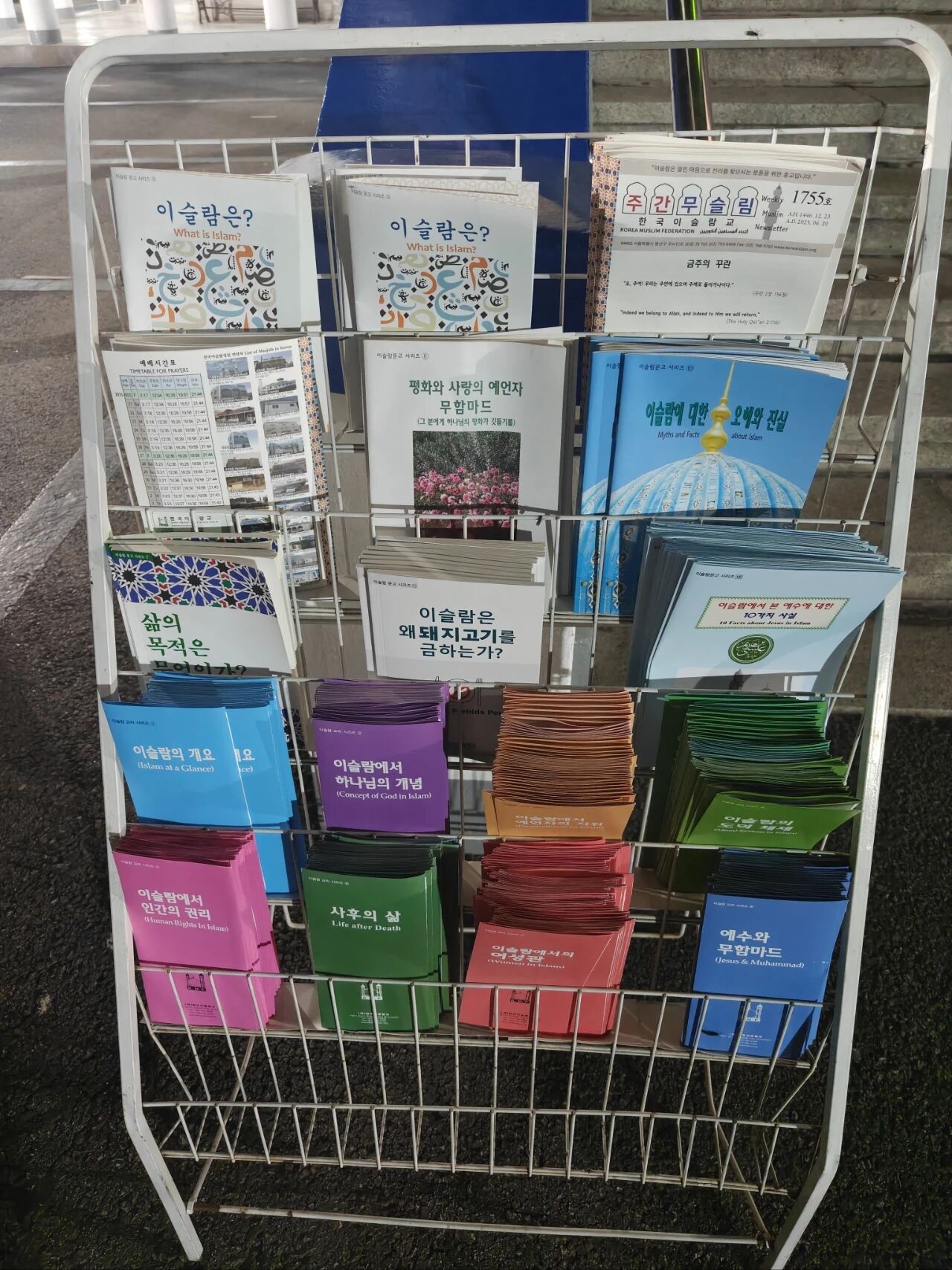
Picture 3: There are some introductory Islam materials placed next to the steps of the prayer hall, all of which are in Korean. There is no translation in English or Chinese.
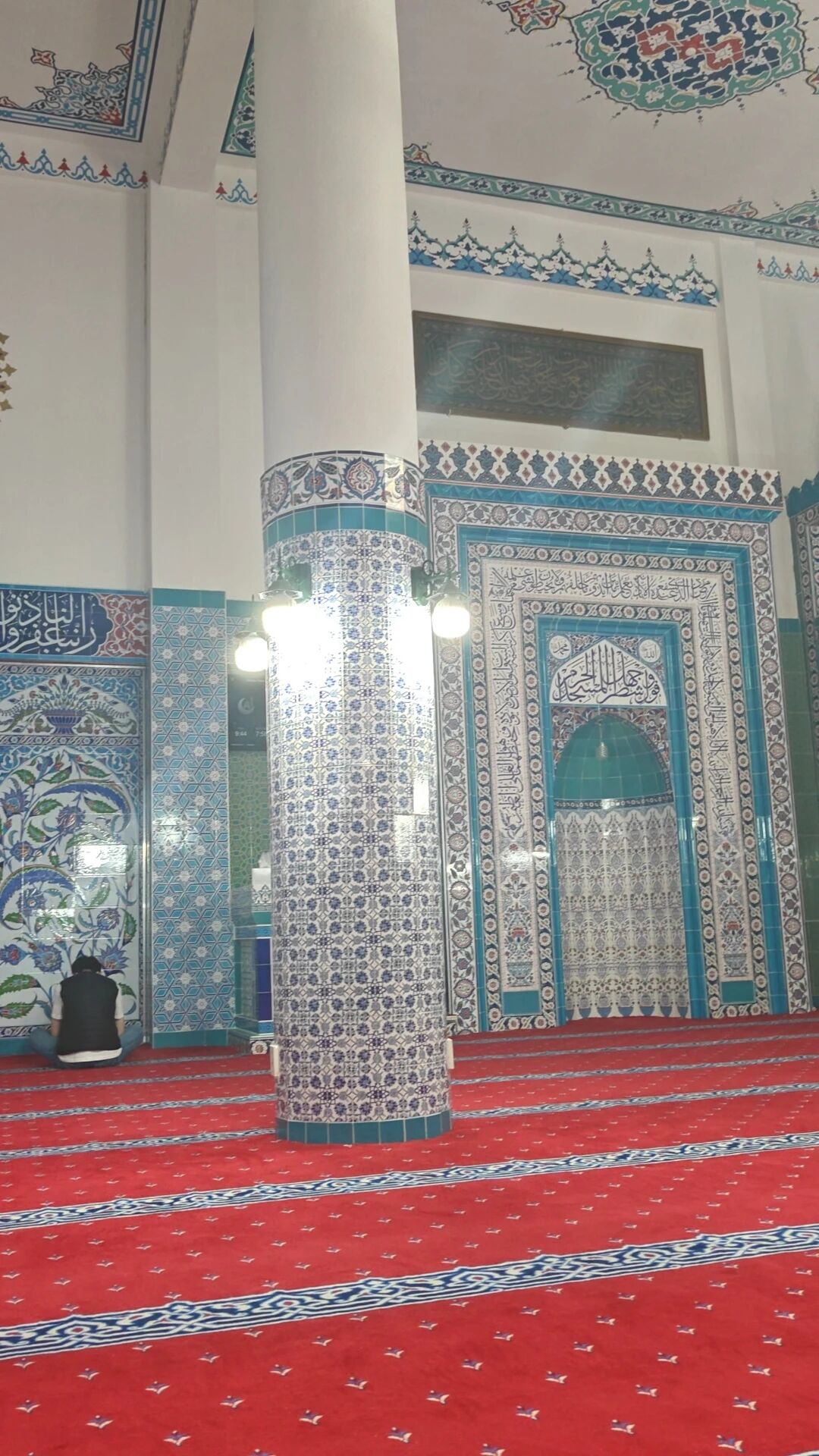
Picture 4: Entering the prayer hall, you will find that it is also in Turkish style. This was originally the location of the military camp of the Turkish army stationed in South Korea.
Picture 5: You can overlook the surrounding area from the mosque courtyard, but if you want to see the whole of Seoul, it is recommended to go to Seoul Namsan Tower not far away.
Picture 6: After Friday prayers, free lunch boxes will be distributed in the mosque’s cafeteria, conference room and museum. I tasted it for everyone and it tasted good. There is beef, kimchi, dried fish, and something similar to tofu skin.
In the cafeteria I met some Korean Muslims who had accepted Islam. I briefly communicated with one of them using a translator. He said that he had read about the Hui Muslims in China before in books, and today was the first time he saw them. There is also an old woman who is originally from Jilin and wears a headscarf.
But she only speaks Korean.
Picture 7: There is a school bus parked in the courtyard, and there are several classrooms nearby. It seems that some Korean Muslims (mainly foreigners) will send their children here to receive some basic education.
Picture 8: The canteen just now is also the exhibition room of the mosque. The photos on the wall record the history of this first mosque in modern Korea. view all
Summary: This Korea Muslim travel guide visits Seoul Central Mosque in Itaewon, showing its hillside location, Turkish-style prayer hall, Friday prayer lunch boxes, Korean Muslims, mosque classes, a school bus, and the history of the first modern mosque in Korea.
Seoul is a city built on hills. The terrain here is uneven, and you can often see various settlements built on small hills. Seoul Central Mosque is located at the eastern foot of Namsan Mountain. After climbing up the high steps shown in Picture 2, you still have to walk uphill for a while to reach it.
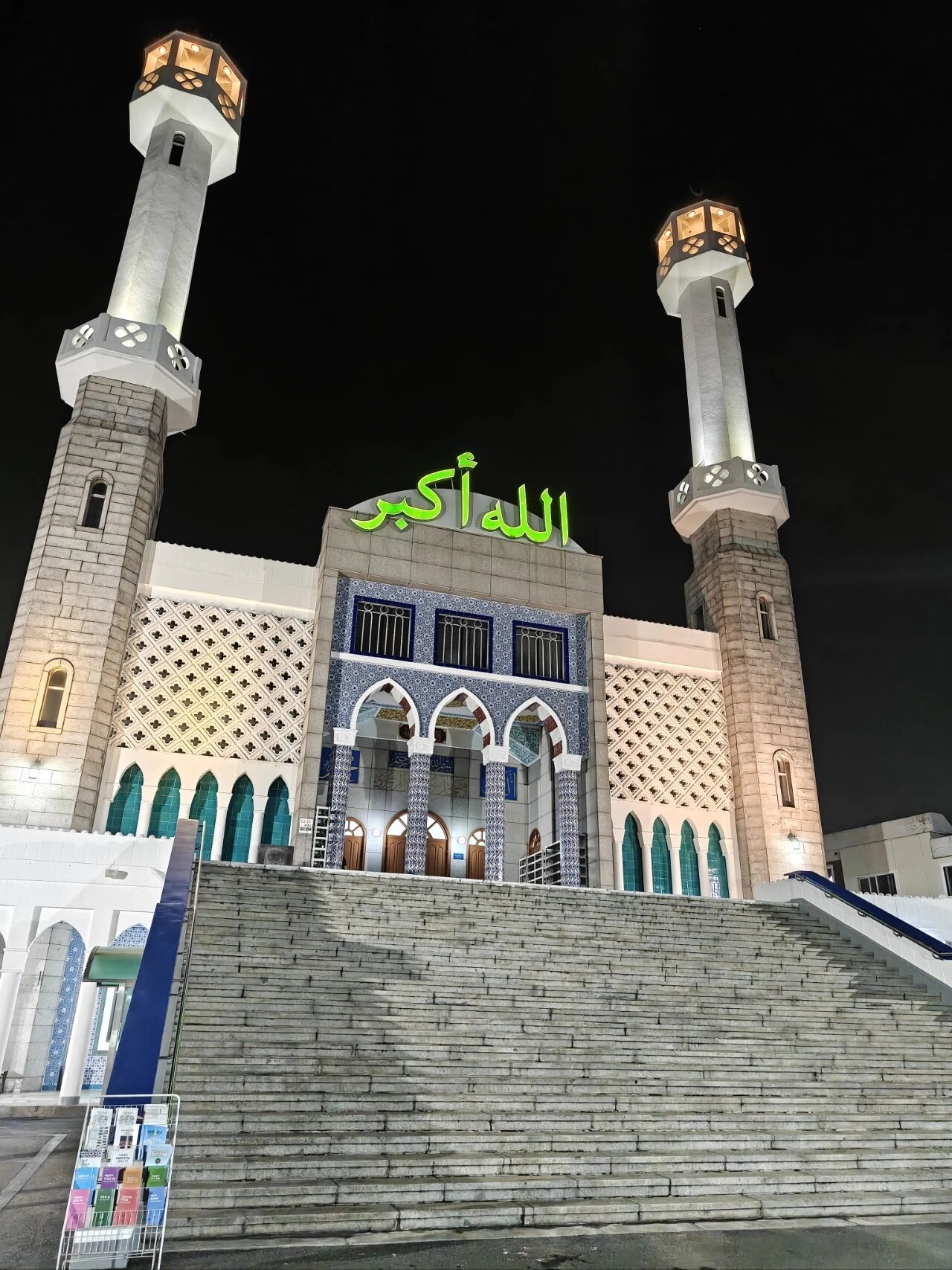
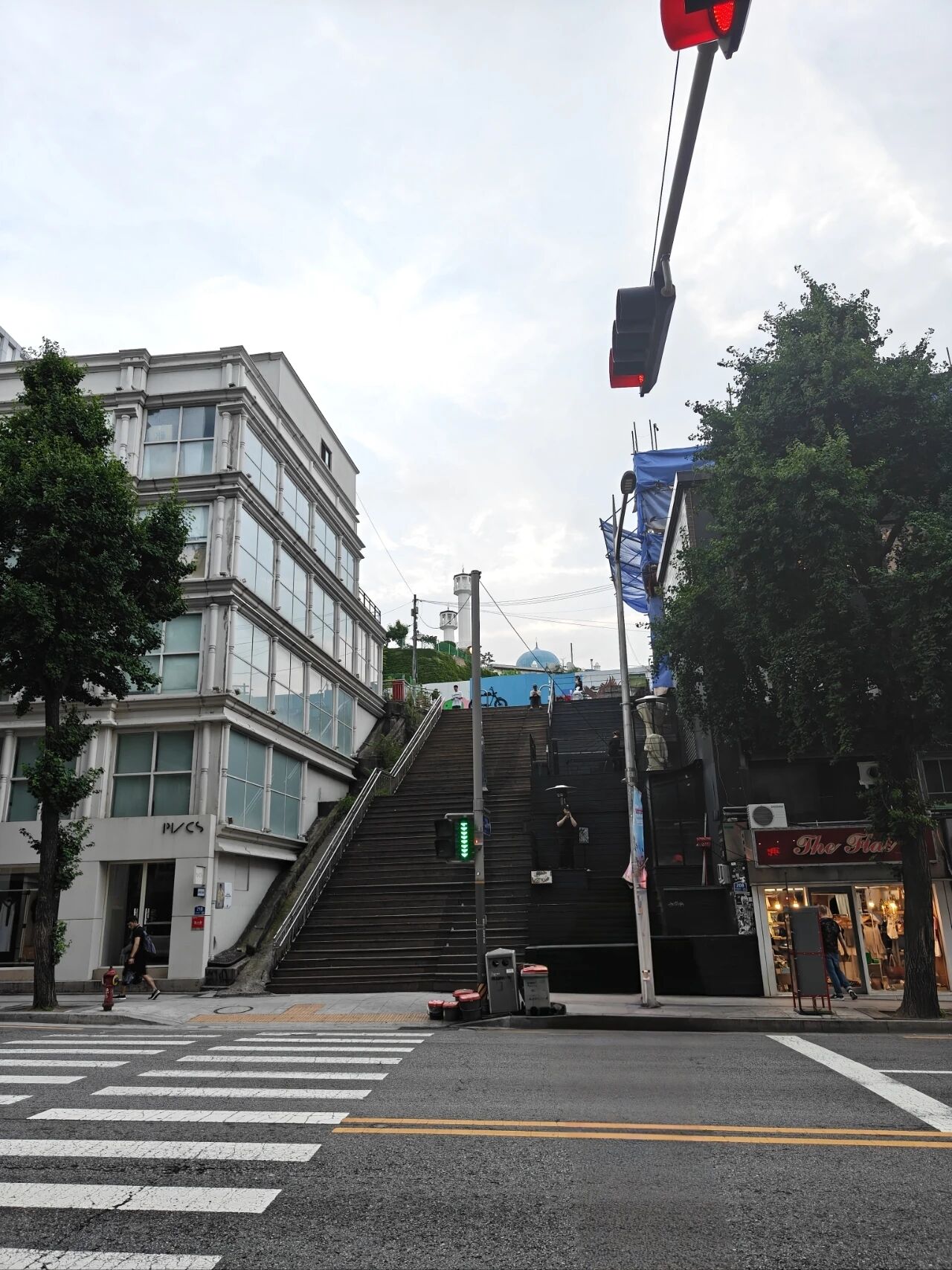
As you can see in Picture 1, there is a set of steps leading to the prayer hall. In fact, there is another set of steps on the other side of the prayer hall.
Picture 3: There are some introductory Islam materials placed next to the steps of the prayer hall, all of which are in Korean. There is no translation in English or Chinese.
Picture 4: Entering the prayer hall, you will find that it is also in Turkish style. This was originally the location of the military camp of the Turkish army stationed in South Korea.
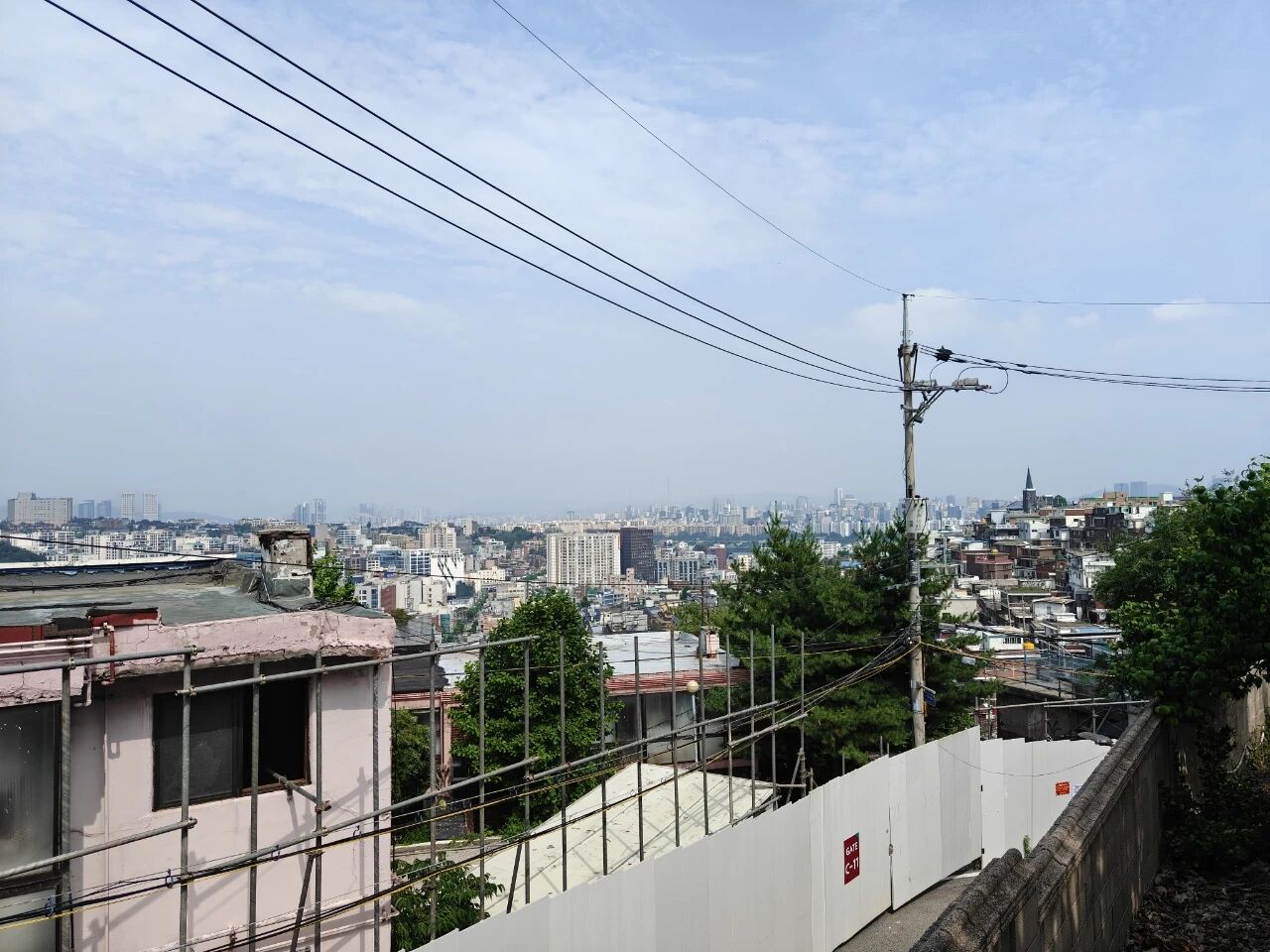
Picture 5: You can overlook the surrounding area from the mosque courtyard, but if you want to see the whole of Seoul, it is recommended to go to Seoul Namsan Tower not far away.
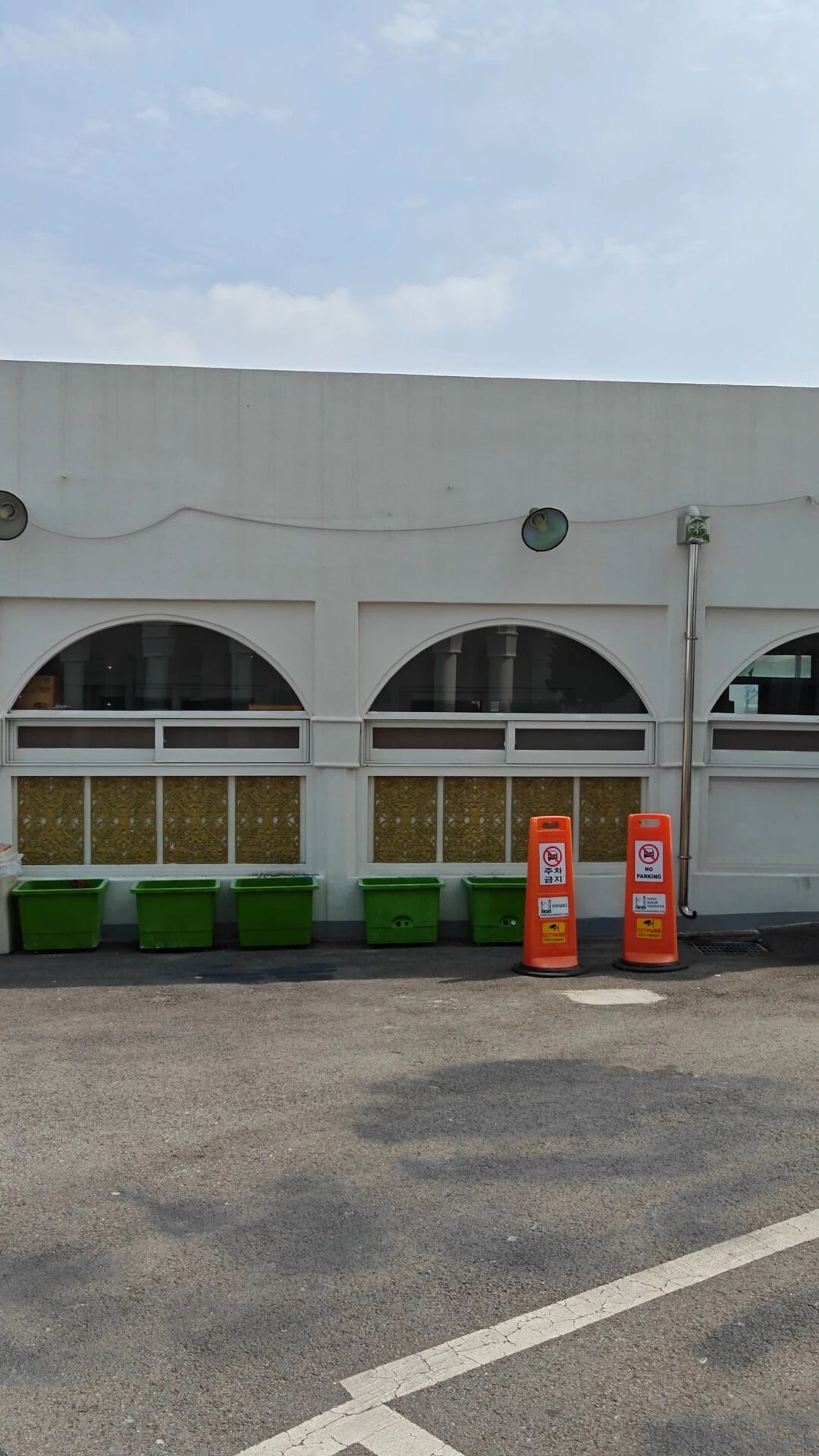
Picture 6: After Friday prayers, free lunch boxes will be distributed in the mosque’s cafeteria, conference room and museum. I tasted it for everyone and it tasted good. There is beef, kimchi, dried fish, and something similar to tofu skin.

In the cafeteria I met some Korean Muslims who had accepted Islam. I briefly communicated with one of them using a translator. He said that he had read about the Hui Muslims in China before in books, and today was the first time he saw them. There is also an old woman who is originally from Jilin and wears a headscarf.
But she only speaks Korean.
Picture 7: There is a school bus parked in the courtyard, and there are several classrooms nearby. It seems that some Korean Muslims (mainly foreigners) will send their children here to receive some basic education.
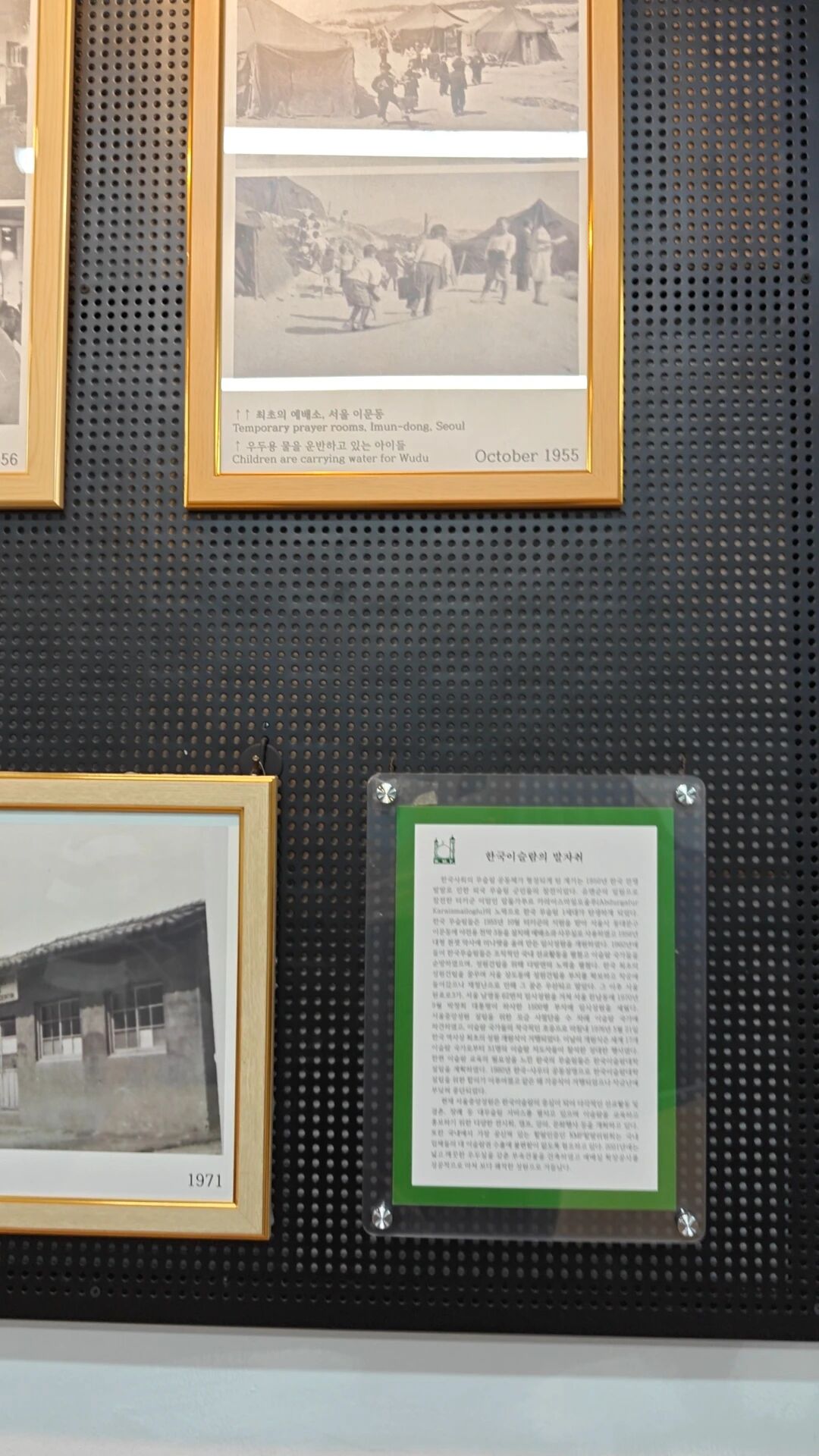
Picture 8: The canteen just now is also the exhibition room of the mosque. The photos on the wall record the history of this first mosque in modern Korea.
Muslim Travel Guide Japan Tokyo: Yoyogi Mosque, Friday Prayer, Turkish Market and Muslim Community
Articles • yusuf908 posted the article • 0 comments • 245 views • 2026-05-23 22:22
Summary: This Japan Muslim travel guide follows two visits to Yoyogi Mosque in Tokyo, covering Friday prayer, the Turkish-style prayer hall, the halal supermarket, the small museum, local Muslims, non-Muslim visitors, and a touching scene of people accepting Islam.
The first time I went to Yoyogi Mosque (Tokyo Camii) (Tokyo Camii) (Tokyo Camii) (Tokyo Camii) was the day I first arrived in Japan. The subway line was very complicated, but I still found the place smoothly.
That day was Friday, and many Muslims could be seen near the mosque. When we arrived at the mosque, the terrace on the second floor was already full, and the sun made the marble floor hot, making it impossible to stay. After a while, the insulation cloth was handed over, and I sat on it, but it wasn't hot anymore.
After a while, a piece of paper was handed over, with the general content of the imam's speech that day written on it in Arabic, English and Japanese. This is quite fresh.
After salah, people filed out of the main hall, and I finally had a chance to go in and take a look. The inside is in the Turkish style, with beautiful paintings.
There was a halal food supermarket on the first floor of the mosque. I still remember the people working there, a Japanese woman wearing a headscarf, and two or three Uzbeks. next next next next to the supermarket, there is also an exquisite small fireplace on the first floor.
After salah, I stayed on the terrace on the second floor for a while and met two Chinese people. One was a man from Qinghai. He advised me to develop here. But traveling abroad and working are two different things. The latter has too many things to consider and costs to pay.
The other was an old man. He said that he was a professor at a university here and had written books. If I remember correctly, he seems to be from Beijing. He came to Japan when he was young. Now he is married and has children in Japan and has lived in Japan for many years.
After that I left the mosque and went to Meguro and Shinjuku.
The second time I went to Yoyogi Mosque (Tokyo Camii) (Tokyo Camii) (Tokyo Camii) (Tokyo Camii) was eight days later. I was on a flight back to my country that night, so I took the opportunity to go to Yoyogi while I was last in Tokyo.
I visited the halal supermarket again. The weather was hot at that time, so I bought a box of ice cream to eat. This ice cream is a special kind of ice cream from Turkey. It is very tough and chewy. There are three architectural models placed near the supermarket, which are what Yoyogi Mosque (Tokyo Camii) (Tokyo Camii) (Tokyo Camii) (Tokyo Camii) looked like in history.
The first-generation mosques were no different from traditional Japanese huts from the Edo period. The second generation has a dome and a minaret. Although the configuration is the same as the current mosque, the style is different. Now this building is in typical Turkish style.
There is an elevator on the right side of the model. When I went upstairs, I saw a teacher teaching Qur'an recitation to the children. After that, I went to the museum at the mosque here. To be honest, apart from some old photos, there were no other exhibits in this museum.
Moreover, these photos seem to have no fixed theme and have nothing to do with the mosque.
After leaving the museum, we came to the main hall. Here I saw a scene that touched me very much. At that time, I noticed a young man and woman at the front of the prayer hall, sitting opposite the imam of the mosque.
After listening to their words, I later realized that they were accepting Islam. I had only seen others accepting Islam on the Internet before, but I didn’t expect to see it in person today. This is the first time I have seen someone accept Islam.
Before I left, I saw some non-Muslim visitors coming in and sitting in the main hall. An imam who spoke Japanese was introducing the mosque and Islam to them. I just exchanged a few words with him, so he knew that I was from China.
Seeing that I was about to leave, he pulled me and introduced to the tourists that this person was from China. I sheepishly said hello to the tourists, konnichiwa, and then left. view all
Summary: This Japan Muslim travel guide follows two visits to Yoyogi Mosque in Tokyo, covering Friday prayer, the Turkish-style prayer hall, the halal supermarket, the small museum, local Muslims, non-Muslim visitors, and a touching scene of people accepting Islam.
The first time I went to Yoyogi Mosque (Tokyo Camii) (Tokyo Camii) (Tokyo Camii) (Tokyo Camii) was the day I first arrived in Japan. The subway line was very complicated, but I still found the place smoothly.
That day was Friday, and many Muslims could be seen near the mosque. When we arrived at the mosque, the terrace on the second floor was already full, and the sun made the marble floor hot, making it impossible to stay. After a while, the insulation cloth was handed over, and I sat on it, but it wasn't hot anymore.
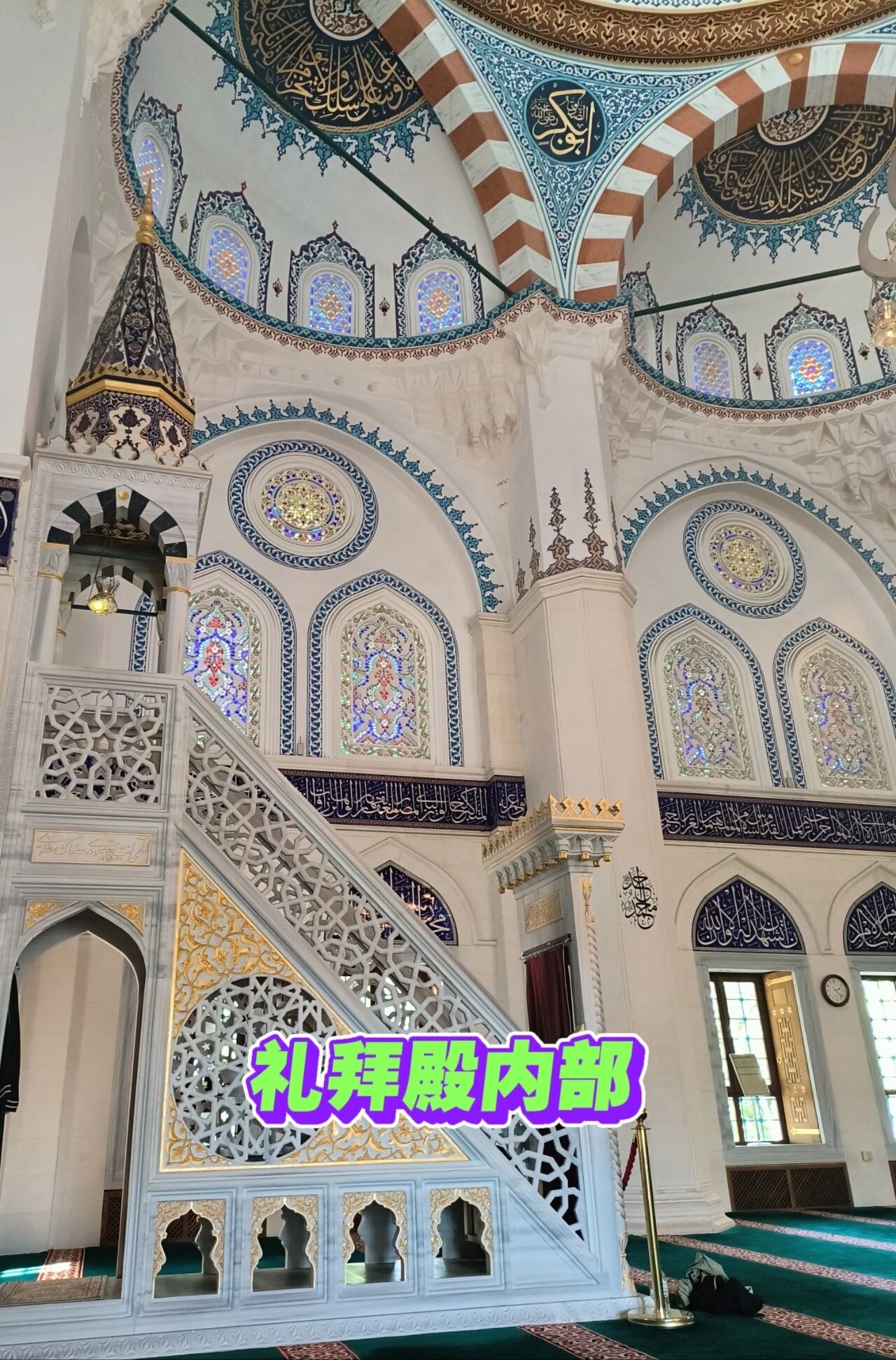
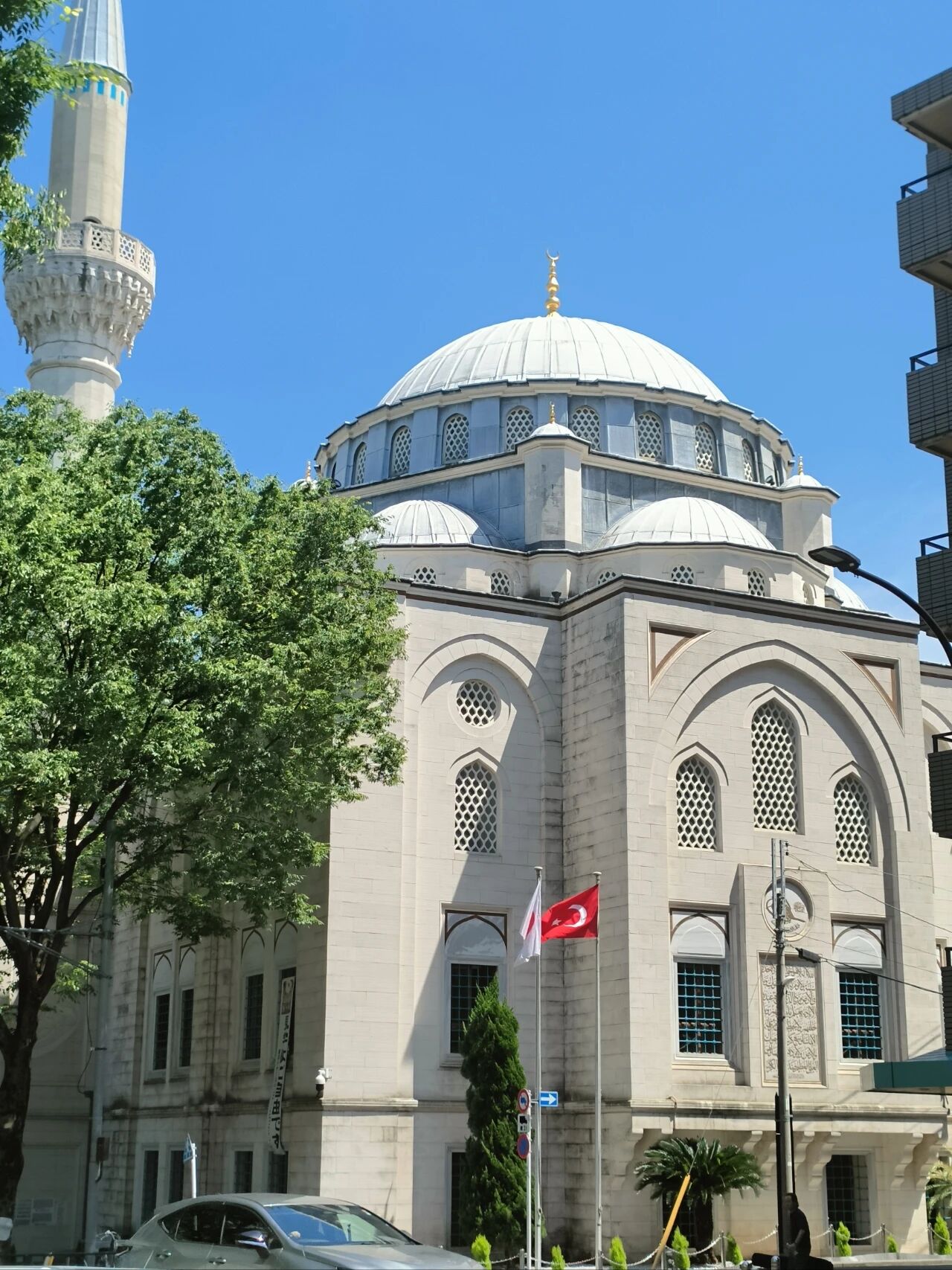
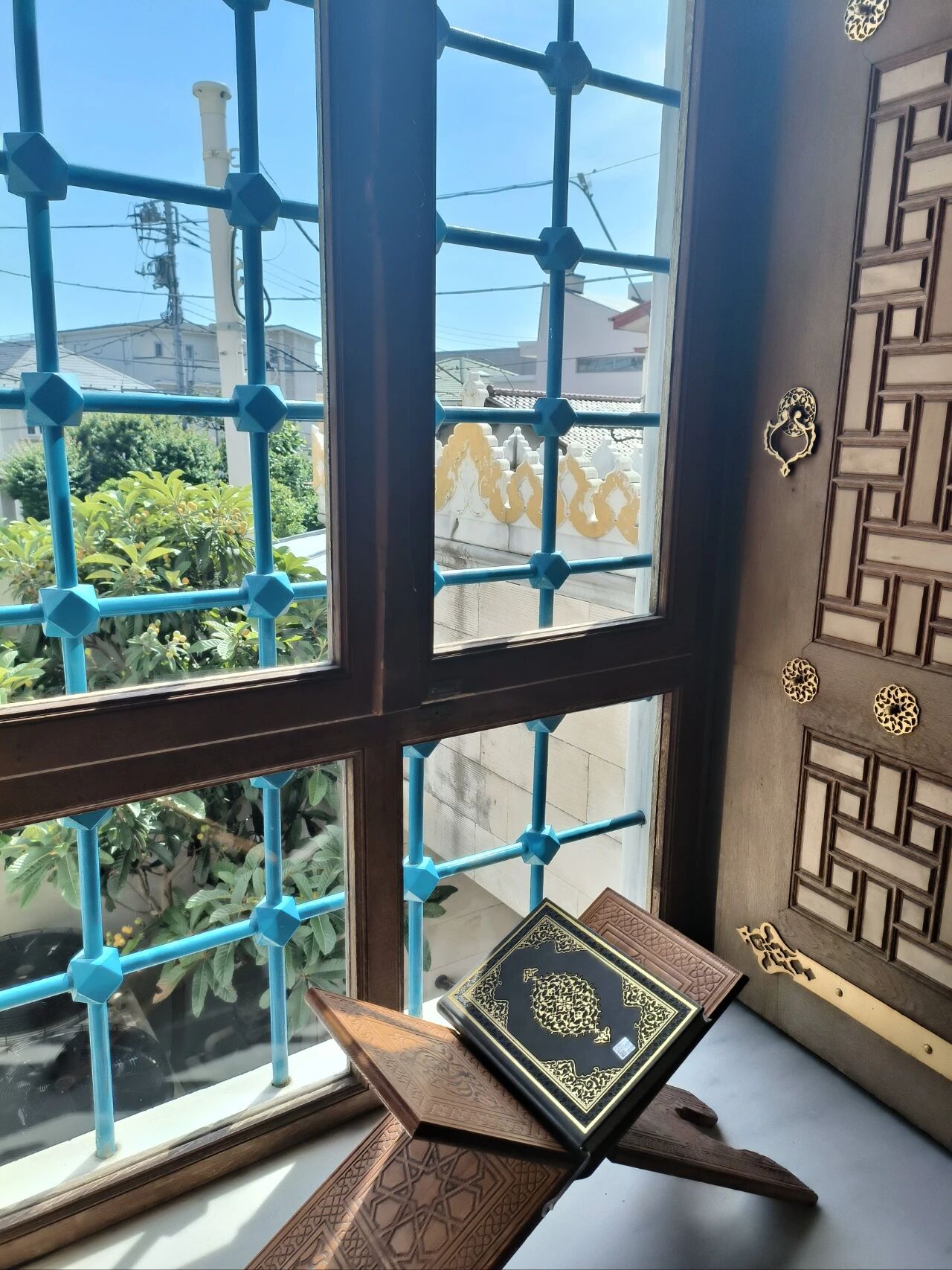
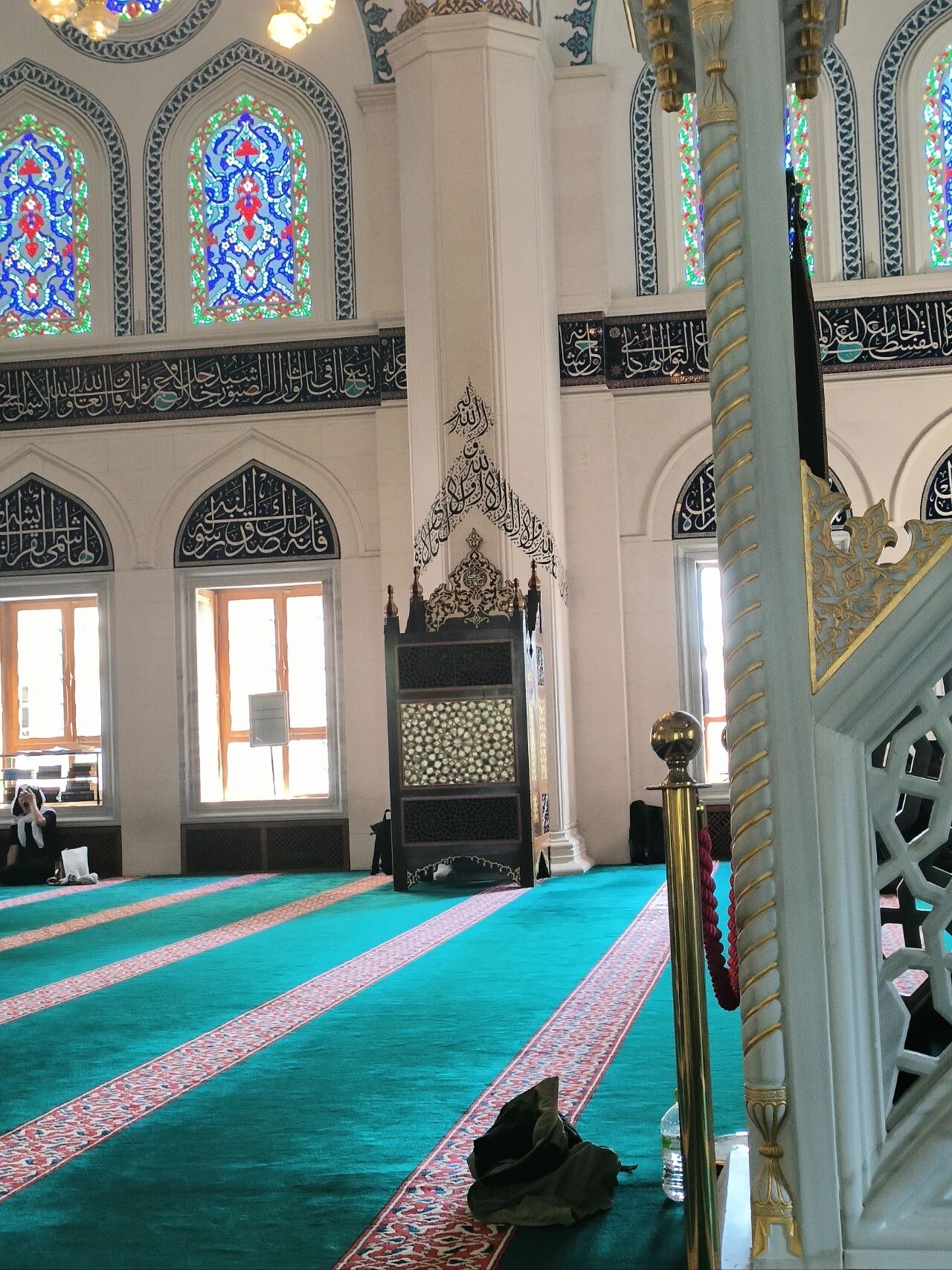
After a while, a piece of paper was handed over, with the general content of the imam's speech that day written on it in Arabic, English and Japanese. This is quite fresh.
After salah, people filed out of the main hall, and I finally had a chance to go in and take a look. The inside is in the Turkish style, with beautiful paintings.
There was a halal food supermarket on the first floor of the mosque. I still remember the people working there, a Japanese woman wearing a headscarf, and two or three Uzbeks. next next next next to the supermarket, there is also an exquisite small fireplace on the first floor.
After salah, I stayed on the terrace on the second floor for a while and met two Chinese people. One was a man from Qinghai. He advised me to develop here. But traveling abroad and working are two different things. The latter has too many things to consider and costs to pay.
The other was an old man. He said that he was a professor at a university here and had written books. If I remember correctly, he seems to be from Beijing. He came to Japan when he was young. Now he is married and has children in Japan and has lived in Japan for many years.
After that I left the mosque and went to Meguro and Shinjuku.
The second time I went to Yoyogi Mosque (Tokyo Camii) (Tokyo Camii) (Tokyo Camii) (Tokyo Camii) was eight days later. I was on a flight back to my country that night, so I took the opportunity to go to Yoyogi while I was last in Tokyo.
I visited the halal supermarket again. The weather was hot at that time, so I bought a box of ice cream to eat. This ice cream is a special kind of ice cream from Turkey. It is very tough and chewy. There are three architectural models placed near the supermarket, which are what Yoyogi Mosque (Tokyo Camii) (Tokyo Camii) (Tokyo Camii) (Tokyo Camii) looked like in history.
The first-generation mosques were no different from traditional Japanese huts from the Edo period. The second generation has a dome and a minaret. Although the configuration is the same as the current mosque, the style is different. Now this building is in typical Turkish style.
There is an elevator on the right side of the model. When I went upstairs, I saw a teacher teaching Qur'an recitation to the children. After that, I went to the museum at the mosque here. To be honest, apart from some old photos, there were no other exhibits in this museum.
Moreover, these photos seem to have no fixed theme and have nothing to do with the mosque.
After leaving the museum, we came to the main hall. Here I saw a scene that touched me very much. At that time, I noticed a young man and woman at the front of the prayer hall, sitting opposite the imam of the mosque.
After listening to their words, I later realized that they were accepting Islam. I had only seen others accepting Islam on the Internet before, but I didn’t expect to see it in person today. This is the first time I have seen someone accept Islam.
Before I left, I saw some non-Muslim visitors coming in and sitting in the main hall. An imam who spoke Japanese was introducing the mosque and Islam to them. I just exchanged a few words with him, so he knew that I was from China.
Seeing that I was about to leave, he pulled me and introduced to the tourists that this person was from China. I sheepishly said hello to the tourists, konnichiwa, and then left.
Halal Food in China: Halal Rules, Shrimp Debate, Anti-Muslim Hate Speech and Muslim Community Unity
Articles • yusuf908 posted the article • 0 comments • 214 views • 2026-05-23 22:05
Summary: This essay contrasts heated internal arguments over whether shrimp is halal with more serious anti-Muslim hate speech online, urging Muslims to stay alert to real threats, protect community unity, and avoid wasting energy on hostile infighting.
Originally I didn't plan to write this tweet. Firstly, it's because I'm too busy at home, and secondly, I think people nowadays always pretend to be asleep no matter how loud you scream. Not only will you not be able to wake them up, they will actually think you are disturbing their nap!
"Can shrimp be eaten?" This topic in domestic Muslim circles always has endless topics, endless questions, unsolvable knots and unavoidable ups and downs. Today we won’t talk about whether shrimps can be eaten, because it’s not a big deal at all. If you want to eat it, just eat it. If you don’t want to eat it, don’t eat it. It’s not a big deal. The evidence is there, you can just check it out for yourself. In other words, when you ask this question, you actually know better than the person who answers the question whether you can eat it!
Today I will show you some screenshots from Weibo to let you know what kind of public opinion environment we are facing today. Stop clinging to those miserable "shrimps". Whether you eat them or not will not have any substantial impact on you. However, if these remarks are implemented by extreme people, they will have an immeasurable impact on our group and even the peace and stability of the entire country.
Scary, right? This is just the first one. Also, do you still think "shrimp" is important? unimportant! Not important at all! It's nothing compared to this. Seeing this, I guess there are still many people who don’t understand the purpose of my tweet today. In fact, the purpose of my tweet today is to let everyone stop those insignificant "controversies", return to the great mission of "unity" taught by revelation and precepts, and abandon all prejudices to truly realize the call of "all believers are brothers".
Of course, another purpose of my tweet is that when we meet such people on the Internet or in real life, we don’t have to defend ourselves with them, because these people have twisted psychology. If you encounter such a person, call the police if you are able. The police will punish such people accordingly, and they will also receive the punishment they deserve for their arrogance! However, if you are unable to do anything, then just click on a complaint on the online platform where you encountered such remarks, and I believe that the online platform will handle them accordingly.
"Shrimp" is not a big problem. The big problem of our group now is the insensitivity of the vast majority of people, the carping of some "self-appointed self-appointed self-appointed religious police", and the carnival of some young people. This is the fundamental problem. Are you afraid of eating a shrimp when someone dares to break many serious laws? You sing and dance every day and still care about whether crabs are legal? Let's put aside these insignificant controversies and let's work together to fight against anti-Muslim hate accounts. Don't let another "shrimp" make our group fall apart and become a mess! view all
Summary: This essay contrasts heated internal arguments over whether shrimp is halal with more serious anti-Muslim hate speech online, urging Muslims to stay alert to real threats, protect community unity, and avoid wasting energy on hostile infighting.
Originally I didn't plan to write this tweet. Firstly, it's because I'm too busy at home, and secondly, I think people nowadays always pretend to be asleep no matter how loud you scream. Not only will you not be able to wake them up, they will actually think you are disturbing their nap!
"Can shrimp be eaten?" This topic in domestic Muslim circles always has endless topics, endless questions, unsolvable knots and unavoidable ups and downs. Today we won’t talk about whether shrimps can be eaten, because it’s not a big deal at all. If you want to eat it, just eat it. If you don’t want to eat it, don’t eat it. It’s not a big deal. The evidence is there, you can just check it out for yourself. In other words, when you ask this question, you actually know better than the person who answers the question whether you can eat it!
Today I will show you some screenshots from Weibo to let you know what kind of public opinion environment we are facing today. Stop clinging to those miserable "shrimps". Whether you eat them or not will not have any substantial impact on you. However, if these remarks are implemented by extreme people, they will have an immeasurable impact on our group and even the peace and stability of the entire country.

Scary, right? This is just the first one. Also, do you still think "shrimp" is important? unimportant! Not important at all! It's nothing compared to this. Seeing this, I guess there are still many people who don’t understand the purpose of my tweet today. In fact, the purpose of my tweet today is to let everyone stop those insignificant "controversies", return to the great mission of "unity" taught by revelation and precepts, and abandon all prejudices to truly realize the call of "all believers are brothers".

Of course, another purpose of my tweet is that when we meet such people on the Internet or in real life, we don’t have to defend ourselves with them, because these people have twisted psychology. If you encounter such a person, call the police if you are able. The police will punish such people accordingly, and they will also receive the punishment they deserve for their arrogance! However, if you are unable to do anything, then just click on a complaint on the online platform where you encountered such remarks, and I believe that the online platform will handle them accordingly.

"Shrimp" is not a big problem. The big problem of our group now is the insensitivity of the vast majority of people, the carping of some "self-appointed self-appointed self-appointed religious police", and the carnival of some young people. This is the fundamental problem. Are you afraid of eating a shrimp when someone dares to break many serious laws? You sing and dance every day and still care about whether crabs are legal? Let's put aside these insignificant controversies and let's work together to fight against anti-Muslim hate accounts. Don't let another "shrimp" make our group fall apart and become a mess!

Halal Food in China Shanghai: Pork Bun Incident, Halal Restaurant Respect and Muslim Community Rights
Articles • yusuf908 posted the article • 0 comments • 236 views • 2026-05-23 21:55
Summary: This article responds to a Shanghai halal restaurant pork bun incident and an influencer's comments, arguing that halal food spaces, Muslim dignity, national symbols, legal boundaries, and ethnic unity should not be turned into tools for provocation.
I haven’t written a book in a long, long time. It’s been so long that I almost forgot that I had registered this account. Actually, it’s not that I’m lazy, it’s mainly because I have too many things to do this year. The rice I grow at home is about to mature, and I’m also building a small shelter to protect myself from the wind and rain, so I haven’t had time to write.
A lot of things have happened on the Internet during this period, such as the renaming of the halal canteens of Tsinghua University and Peking University some time ago, and the incident in the past two days where a certain blogger [Vaccine and Science] ate his own pork buns in a halal restaurant in Xuhui District, Shanghai, made a video and uploaded it to the Internet. These things have caused a great psychological contrast among the Hui Muslim compatriots in China, especially the behavior of this extremely royal V. Typical of this is deliberately provoking trouble, and then if there is any physical conflict with him in the restaurant, he will pretend to be a victim and exaggerate the publicity. When someone pointed out his immoral behavior, he said I can eat whatever I want! What I eat is my freedom!
This certain influencer can be regarded as an extremely royal man who has been famous for a long time. He has repeatedly worn his own clothes with words printed with hostility to halal food in Tiananmen Square and other solemn occasions. He is also suspected of tampering with the national anthem of the People's Republic of China. Any citizen of the People's Republic of China should have an attitude of respect and awe when facing the national anthem, national flag, and national emblem. Playing and playing when the national anthem is played or sung is absolutely not allowed, and our country also has a special corresponding " The laws and regulations of the National Flag Law, National Anthem Law, and National Emblem Law, and once suspected insults to the national flag, national emblem, or suspected tampering of the national anthem are confirmed, the highest level of personnel can be dealt with in accordance with Article 299 of the Criminal Law of the People's Republic of China. The influencer’s deliberate provocation of trouble clearly violated the crime of “picking quarrels and provoking troubles.” Refer to Article 293 of the Criminal Law. Anyone who commits one of the following acts of provoking troubles is punishable by up to five years in prison, criminal detention, or surveillance.
This influencer was originally an angel in white, and it was his job to treat illnesses and save people. For some unknown reason, he embarked on the path of being extremely imperial and extremely hostile to Muslim compatriots. I guess he was stimulated by something, maybe there was something wrong with his brain, and then he set up "imaginary enemies" among the compatriots around him.
The influencer’s highly publicized incident of eating pork buns in a Shanghai halal restaurant revealed the influencer’s distorted humanity and absurd behavior of extreme hatred of the Muslim community and halal food. People like them claim to be "opposing extremism" but at the same time engage in the dirty behavior of extreme Han nationalists, and then they also pretend to be "victims" and make irresponsible remarks from the moral high ground.
The Constitution guarantees citizens' freedom of speech, but no freedom is absolute and must not harm national, social, collective interests or the legitimate freedoms and rights of other citizens. Uploading such provocative videos online with the intention of expanding the negative impact is an abuse of freedom of speech and cyberspace. This kind of behavior destroys social harmony and stability, may trigger antagonism between social groups, and interfere with the country's normal ethnic work order.
Through this incident, we hope that relevant departments or organizations such as the Shanghai Municipal Religious Committee, the Shanghai Islamic Association, and the restaurant concerned will hold the influencer accountable for the corresponding legal responsibilities, and that the behavior of illegal criminals will not be allowed to undermine the country's national policy of "national unity"! Of course, every one of us citizens of the People's Republic of China should abide by the laws and regulations of the country, be able to "know the law", "understand the law" and use the law to protect our legitimate rights and interests, so that we can become a qualified and law-abiding good citizen! If you encounter illegal criminals, you must report and report them to the relevant departments as soon as possible. Let us work together to build a solid Chinese dream and complete the sacred mission of the great rejuvenation of the Chinese nation! view all
Summary: This article responds to a Shanghai halal restaurant pork bun incident and an influencer's comments, arguing that halal food spaces, Muslim dignity, national symbols, legal boundaries, and ethnic unity should not be turned into tools for provocation.
I haven’t written a book in a long, long time. It’s been so long that I almost forgot that I had registered this account. Actually, it’s not that I’m lazy, it’s mainly because I have too many things to do this year. The rice I grow at home is about to mature, and I’m also building a small shelter to protect myself from the wind and rain, so I haven’t had time to write.
A lot of things have happened on the Internet during this period, such as the renaming of the halal canteens of Tsinghua University and Peking University some time ago, and the incident in the past two days where a certain blogger [Vaccine and Science] ate his own pork buns in a halal restaurant in Xuhui District, Shanghai, made a video and uploaded it to the Internet. These things have caused a great psychological contrast among the Hui Muslim compatriots in China, especially the behavior of this extremely royal V. Typical of this is deliberately provoking trouble, and then if there is any physical conflict with him in the restaurant, he will pretend to be a victim and exaggerate the publicity. When someone pointed out his immoral behavior, he said I can eat whatever I want! What I eat is my freedom!
This certain influencer can be regarded as an extremely royal man who has been famous for a long time. He has repeatedly worn his own clothes with words printed with hostility to halal food in Tiananmen Square and other solemn occasions. He is also suspected of tampering with the national anthem of the People's Republic of China. Any citizen of the People's Republic of China should have an attitude of respect and awe when facing the national anthem, national flag, and national emblem. Playing and playing when the national anthem is played or sung is absolutely not allowed, and our country also has a special corresponding " The laws and regulations of the National Flag Law, National Anthem Law, and National Emblem Law, and once suspected insults to the national flag, national emblem, or suspected tampering of the national anthem are confirmed, the highest level of personnel can be dealt with in accordance with Article 299 of the Criminal Law of the People's Republic of China. The influencer’s deliberate provocation of trouble clearly violated the crime of “picking quarrels and provoking troubles.” Refer to Article 293 of the Criminal Law. Anyone who commits one of the following acts of provoking troubles is punishable by up to five years in prison, criminal detention, or surveillance.
This influencer was originally an angel in white, and it was his job to treat illnesses and save people. For some unknown reason, he embarked on the path of being extremely imperial and extremely hostile to Muslim compatriots. I guess he was stimulated by something, maybe there was something wrong with his brain, and then he set up "imaginary enemies" among the compatriots around him.
The influencer’s highly publicized incident of eating pork buns in a Shanghai halal restaurant revealed the influencer’s distorted humanity and absurd behavior of extreme hatred of the Muslim community and halal food. People like them claim to be "opposing extremism" but at the same time engage in the dirty behavior of extreme Han nationalists, and then they also pretend to be "victims" and make irresponsible remarks from the moral high ground.

The Constitution guarantees citizens' freedom of speech, but no freedom is absolute and must not harm national, social, collective interests or the legitimate freedoms and rights of other citizens. Uploading such provocative videos online with the intention of expanding the negative impact is an abuse of freedom of speech and cyberspace. This kind of behavior destroys social harmony and stability, may trigger antagonism between social groups, and interfere with the country's normal ethnic work order.
Through this incident, we hope that relevant departments or organizations such as the Shanghai Municipal Religious Committee, the Shanghai Islamic Association, and the restaurant concerned will hold the influencer accountable for the corresponding legal responsibilities, and that the behavior of illegal criminals will not be allowed to undermine the country's national policy of "national unity"! Of course, every one of us citizens of the People's Republic of China should abide by the laws and regulations of the country, be able to "know the law", "understand the law" and use the law to protect our legitimate rights and interests, so that we can become a qualified and law-abiding good citizen! If you encounter illegal criminals, you must report and report them to the relevant departments as soon as possible. Let us work together to build a solid Chinese dream and complete the sacred mission of the great rejuvenation of the Chinese nation!

China Muslim Travel Tips: Anti-Muslim Online Hate, Hui Muslim Safety and Community Awareness
Articles • yusuf908 posted the article • 0 comments • 228 views • 2026-05-23 21:55
Summary: This analysis explains why anti-Muslim online hate is dangerous, arguing that it damages ethnic unity, distorts Islam, increases social tension, stigmatizes Hui Muslims and other Muslim groups, and can be used by hostile forces to divide society.
In a contemporary society where globalization and informatization are intertwined, the concept of "anti-Muslim hate", which is obviously discriminatory and inflammatory, is quietly spreading through the Internet. The so-called "anti-Muslim hate" mainly refers to remarks and behaviors that stigmatize and demonize Islam and the Muslim community. On the surface, such remarks are made under the banner of "maintaining national security" and "exposing religious extremism". In fact, they directly link specific religions to terrorism and social conflicts by confusing concepts and overgeneralizing, posing a deep threat to the unity of a multi-ethnic country, social stability and national unity. This article will systematically analyze the harmfulness of "anti-Muslim hate account's" remarks from three aspects: national unity, social stability, and national unity.
1. Destroying national unity: dissolving the identity of the national community
The foundation of national unity lies in the identification of all ethnic groups with the "Chinese nation community". As a multi-ethnic country with 56 ethnic groups, China has a Muslim population of more than 20 million, and 10 ethnic minorities including the Hui and Uyghurs have Islam as their main belief. Historically, after Islam was introduced to China in the Tang Dynasty, it completed its localization transformation through methods such as "interpreting revelation through Confucianism" and formed a tradition of patriotism and religion. For example, Qing Dynasty scholar Liu Zhi interpreted Islamic classics through Confucianism, which promoted the deep integration of the two civilizations; After the founding of New China, national leaders visited mosques many times to emphasize equality and unity of all ethnic groups.
However, the "anti-Muslim hate account" remarks deliberately sever this historical bond, and its core logic contains four major misunderstandings: first, equating extremism with religion itself, ignoring differences within Islam and the reality that moderate Muslims are the mainstream in China; The second is to use individual extreme cases to generalize the whole situation and confuse terrorist organizations with ordinary believers; The third is to promote racist thinking and incite opposition with the idea that "those who are not of my group must have different motives"; The fourth is to transplant conflicts from other countries, copy religious conflicts in the Middle East and Europe to China, and fabricate the "Islamic threat theory." If such remarks are widely disseminated, they will shake the sense of belonging of ethnic minorities to the country, and may even be used by foreign forces as a tool to split China. For example, some politicians in the United States use the so-called "human rights issues in Xinjiang" as an excuse to try to undermine the stability of Xinjiang by stigmatizing China's Muslim groups, thereby curbing China's development.
2. Threaten social stability: intensify contradictions and induce conflicts
Social stability requires rational dialogue and inclusive coexistence among different groups. At present, the proliferation of "anti-Muslim hate account" remarks is closely related to the lack of supervision of social media and the irrational voices of some scholars. For example, the controversy over the "generalization of halal" on online platforms has expanded religious symbols to the realm of public life (such as "halal aisles" and "halal tissues"), exaggerating the anxiety of "special group privileges" and causing non-Muslim groups to feel excluded. Once this oppositional sentiment is extreme, it may trigger mass incidents. Egypt's lesson is particularly profound: after the Morsi government was overthrown by the military in 2013, the suppression of the Muslim Brotherhood led to severe social divisions and frequent violent conflicts. The death toll in Port Said alone reached 25 people in a single day. Looking at China, if the "anti-Muslim hate account" rhetoric is allowed to spread, it may repeat the tragedy of religious confrontation similar to Egypt.
What is even more alarming is that “anti-Muslim hate” remarks are often intertwined with regional discrimination. For example, Muslim-inhabited areas in Ningxia, Henan and other places are stigmatized as "so-and-so-stan", implying that there is a "separatist tendency" in these areas. Such labeling narratives not only ignore the reality of harmonious coexistence of local ethnic groups (such as the prevalence of Hui-Han intermarriage and frequent economic mutual assistance), but also exacerbate regional barriers and provide extremists with an excuse to incite violence. In recent years, gang-related cases heard by the Huating Court have shown that criminal organizations often carry out violence under the guise of religion or national identity. If the "anti-Muslim hate" rhetoric encourages social prejudice against specific groups, it may provide a breeding ground for gangs and evil forces.
3. Disintegration of national unity: splitting the cultural foundation of diversity and unity
National unity is the lifeline of a multi-ethnic country. The "harmony without difference" relationship that has been established between Chinese Muslims and non-Muslims for thousands of years is a reflection of the inclusiveness of Chinese culture. For example, the Shadian Hui Muslims in Yunnan and the Han people jointly develop the economy, and the Hui Han people in Linxia, Gansu cooperate to promote poverty alleviation projects, both of which show examples of ethnic mutual assistance. The "anti-Muslim hate" rhetoric destroys this symbiotic relationship by creating cultural opposition. Typical manifestations include:
1. Strengthening religious boundaries: Misinterpreting Muslims’ daily religious practices (such as worshiping and fasting) as “refusal to integrate into mainstream society” and ignoring the fact that most Muslims also practice traditional Chinese culture.
2. Stigmatizing national customs: stigmatizing halal dietary norms as "economic privileges" and ignoring its basic right attribute of freedom of religious belief.
3. Inciting historical nihilism: One-sidedly citing ethnic conflicts in history and tampering with historical facts to reflect the present, such as distorting the reasons for the transformation of Shaanxi-Gansu in the Qing Dynasty and covering up the nature of its socio-economic contradictions.
Once this narrative becomes mainstream, it will lead to the collapse of trust among ethnic groups. India’s post-independence lessons are worth warning: the differences between the Congress Party and the Muslim League eventually led to the partition of India and Pakistan, tens of millions of people were displaced, and the Kashmir issue remains unresolved. If China allows the "anti-Muslim hate account" ideological trend to spread, it may repeat the same mistakes and plunge ethnic relations into a "self-fulfilling prophecy" trap.
4. Response path: Rule of law and civilization go hand in hand
To curb the harm of "anti-Muslim hate account", it is necessary to build a double line of defense of the rule of law and civilization. At the legal level, laws such as the Constitution and Regulations on Religious Affairs should be strictly followed to protect legitimate religious activities and combat extremism and illegal speech. For example, we need to strengthen supervision over the dissemination of discriminatory content on social media platforms, and hold accounts that deliberately create ethnic antagonism accountable in accordance with the law. At the civilization level, it is necessary to strengthen the education of "Chinese nation community", explore historical cases of exchanges and integration of various ethnic groups (such as the cultural integration of Hui Confucianism in the Yuan Dynasty, and the Hui Han Dynasty to jointly resist foreign aggression during the Anti-Japanese War), and eliminate prejudice through cultural identity.
International experience is also worth learning from: after Germany accepted Syrian refugees, it failed to effectively deal with religious and cultural conflicts, which led to the intensification of social conflicts; China's policy of guiding Islam to adapt to Chinese society has successfully avoided similar dilemmas by guiding religion to adapt to socialist society. This practice shows that only by adhering to ethnic relations of equality, unity, and mutual assistance can we build a solid foundation for long-term peace and stability in the country.
The harm of "anti-Muslim hate account" remarks is by no means limited to quarrels in cyberspace, but is related to core issues related to national unity, social stability and national unity. History has repeatedly proven that stigmatizing a specific religion or ethnic group will eventually tear apart society and breed violence. Within the framework of a pluralistic and integrated Chinese civilization, only by settling disputes under the rule of law and building consensus through culture can we completely eradicate the breeding ground for "anti-Muslim hate" and protect the prosperity and dignity of the Chinese nation. view all
Summary: This analysis explains why anti-Muslim online hate is dangerous, arguing that it damages ethnic unity, distorts Islam, increases social tension, stigmatizes Hui Muslims and other Muslim groups, and can be used by hostile forces to divide society.
In a contemporary society where globalization and informatization are intertwined, the concept of "anti-Muslim hate", which is obviously discriminatory and inflammatory, is quietly spreading through the Internet. The so-called "anti-Muslim hate" mainly refers to remarks and behaviors that stigmatize and demonize Islam and the Muslim community. On the surface, such remarks are made under the banner of "maintaining national security" and "exposing religious extremism". In fact, they directly link specific religions to terrorism and social conflicts by confusing concepts and overgeneralizing, posing a deep threat to the unity of a multi-ethnic country, social stability and national unity. This article will systematically analyze the harmfulness of "anti-Muslim hate account's" remarks from three aspects: national unity, social stability, and national unity.
1. Destroying national unity: dissolving the identity of the national community
The foundation of national unity lies in the identification of all ethnic groups with the "Chinese nation community". As a multi-ethnic country with 56 ethnic groups, China has a Muslim population of more than 20 million, and 10 ethnic minorities including the Hui and Uyghurs have Islam as their main belief. Historically, after Islam was introduced to China in the Tang Dynasty, it completed its localization transformation through methods such as "interpreting revelation through Confucianism" and formed a tradition of patriotism and religion. For example, Qing Dynasty scholar Liu Zhi interpreted Islamic classics through Confucianism, which promoted the deep integration of the two civilizations; After the founding of New China, national leaders visited mosques many times to emphasize equality and unity of all ethnic groups.
However, the "anti-Muslim hate account" remarks deliberately sever this historical bond, and its core logic contains four major misunderstandings: first, equating extremism with religion itself, ignoring differences within Islam and the reality that moderate Muslims are the mainstream in China; The second is to use individual extreme cases to generalize the whole situation and confuse terrorist organizations with ordinary believers; The third is to promote racist thinking and incite opposition with the idea that "those who are not of my group must have different motives"; The fourth is to transplant conflicts from other countries, copy religious conflicts in the Middle East and Europe to China, and fabricate the "Islamic threat theory." If such remarks are widely disseminated, they will shake the sense of belonging of ethnic minorities to the country, and may even be used by foreign forces as a tool to split China. For example, some politicians in the United States use the so-called "human rights issues in Xinjiang" as an excuse to try to undermine the stability of Xinjiang by stigmatizing China's Muslim groups, thereby curbing China's development.
2. Threaten social stability: intensify contradictions and induce conflicts
Social stability requires rational dialogue and inclusive coexistence among different groups. At present, the proliferation of "anti-Muslim hate account" remarks is closely related to the lack of supervision of social media and the irrational voices of some scholars. For example, the controversy over the "generalization of halal" on online platforms has expanded religious symbols to the realm of public life (such as "halal aisles" and "halal tissues"), exaggerating the anxiety of "special group privileges" and causing non-Muslim groups to feel excluded. Once this oppositional sentiment is extreme, it may trigger mass incidents. Egypt's lesson is particularly profound: after the Morsi government was overthrown by the military in 2013, the suppression of the Muslim Brotherhood led to severe social divisions and frequent violent conflicts. The death toll in Port Said alone reached 25 people in a single day. Looking at China, if the "anti-Muslim hate account" rhetoric is allowed to spread, it may repeat the tragedy of religious confrontation similar to Egypt.
What is even more alarming is that “anti-Muslim hate” remarks are often intertwined with regional discrimination. For example, Muslim-inhabited areas in Ningxia, Henan and other places are stigmatized as "so-and-so-stan", implying that there is a "separatist tendency" in these areas. Such labeling narratives not only ignore the reality of harmonious coexistence of local ethnic groups (such as the prevalence of Hui-Han intermarriage and frequent economic mutual assistance), but also exacerbate regional barriers and provide extremists with an excuse to incite violence. In recent years, gang-related cases heard by the Huating Court have shown that criminal organizations often carry out violence under the guise of religion or national identity. If the "anti-Muslim hate" rhetoric encourages social prejudice against specific groups, it may provide a breeding ground for gangs and evil forces.
3. Disintegration of national unity: splitting the cultural foundation of diversity and unity
National unity is the lifeline of a multi-ethnic country. The "harmony without difference" relationship that has been established between Chinese Muslims and non-Muslims for thousands of years is a reflection of the inclusiveness of Chinese culture. For example, the Shadian Hui Muslims in Yunnan and the Han people jointly develop the economy, and the Hui Han people in Linxia, Gansu cooperate to promote poverty alleviation projects, both of which show examples of ethnic mutual assistance. The "anti-Muslim hate" rhetoric destroys this symbiotic relationship by creating cultural opposition. Typical manifestations include:
1. Strengthening religious boundaries: Misinterpreting Muslims’ daily religious practices (such as worshiping and fasting) as “refusal to integrate into mainstream society” and ignoring the fact that most Muslims also practice traditional Chinese culture.
2. Stigmatizing national customs: stigmatizing halal dietary norms as "economic privileges" and ignoring its basic right attribute of freedom of religious belief.
3. Inciting historical nihilism: One-sidedly citing ethnic conflicts in history and tampering with historical facts to reflect the present, such as distorting the reasons for the transformation of Shaanxi-Gansu in the Qing Dynasty and covering up the nature of its socio-economic contradictions.
Once this narrative becomes mainstream, it will lead to the collapse of trust among ethnic groups. India’s post-independence lessons are worth warning: the differences between the Congress Party and the Muslim League eventually led to the partition of India and Pakistan, tens of millions of people were displaced, and the Kashmir issue remains unresolved. If China allows the "anti-Muslim hate account" ideological trend to spread, it may repeat the same mistakes and plunge ethnic relations into a "self-fulfilling prophecy" trap.
4. Response path: Rule of law and civilization go hand in hand
To curb the harm of "anti-Muslim hate account", it is necessary to build a double line of defense of the rule of law and civilization. At the legal level, laws such as the Constitution and Regulations on Religious Affairs should be strictly followed to protect legitimate religious activities and combat extremism and illegal speech. For example, we need to strengthen supervision over the dissemination of discriminatory content on social media platforms, and hold accounts that deliberately create ethnic antagonism accountable in accordance with the law. At the civilization level, it is necessary to strengthen the education of "Chinese nation community", explore historical cases of exchanges and integration of various ethnic groups (such as the cultural integration of Hui Confucianism in the Yuan Dynasty, and the Hui Han Dynasty to jointly resist foreign aggression during the Anti-Japanese War), and eliminate prejudice through cultural identity.
International experience is also worth learning from: after Germany accepted Syrian refugees, it failed to effectively deal with religious and cultural conflicts, which led to the intensification of social conflicts; China's policy of guiding Islam to adapt to Chinese society has successfully avoided similar dilemmas by guiding religion to adapt to socialist society. This practice shows that only by adhering to ethnic relations of equality, unity, and mutual assistance can we build a solid foundation for long-term peace and stability in the country.
The harm of "anti-Muslim hate account" remarks is by no means limited to quarrels in cyberspace, but is related to core issues related to national unity, social stability and national unity. History has repeatedly proven that stigmatizing a specific religion or ethnic group will eventually tear apart society and breed violence. Within the framework of a pluralistic and integrated Chinese civilization, only by settling disputes under the rule of law and building consensus through culture can we completely eradicate the breeding ground for "anti-Muslim hate" and protect the prosperity and dignity of the Chinese nation.
China Muslim Travel Tips Ramadan: Hadith, Eid Moon Sighting and Local Imam Unity
Articles • yusuf908 posted the article • 0 comments • 231 views • 2026-05-23 21:31
Summary: This Ramadan reflection discusses recurring disputes about moon sighting, starting and ending the fast, following the local imam, and protecting unity in Muslim communities even when people hold different fiqh views.
This year's Ramadan has mostly passed. Some people have already ended the fast today, and some will end it tomorrow, but the hostile arguments on Moments have not stopped with the end of Ramadan. On the contrary, those who continue to fast today mock those who have already broken their fast today as radicals. In China, they blindly follow the trend of breaking the fast without seeing the moon. Those who continue to fast today mock those who continue to fast today as old-fashioned. Obviously, there is accurate information about the moon sighting abroad, so why not accept a distant moon sighting?
Every year, our group always quarrels and slanders each other over the issue of fasting and breaking fast. The root of all this is the famous hadith: “Fast when you see the new moon, and break your fast when you see the new moon. But if the sky is cloudy, then you have enough for the thirty days of Sha'ban (calculation based on this)! ". [the two Sahih collections], the differences in each Ramadan basically appear here, and there is also the situation of receiving the new moon from a distant place. There is also a hadith: Narrated by Qurayb ibn Abu Muslim Umm al-Fadl bint al-Harith sent me to Sham to meet Mu'awiya. I was in Sham when the crescent moon of Ramadan appeared after I arrived in Sham to complete her mission. We saw the new moon on the Friday night. When I returned to Medina at the end of the month, Ibn Abbas mentioned the new moon when he asked me, "When did you see the new moon?" "I said: "We saw the new moon on the Friday night. He asked: "Did you see it too?" "I said: "Yes, everyone has seen it. They all fasted, and Mu'awiya also fasted. "Ibn Abbas said: "We saw the new moon on Saturday night. So, we will continue to fast until we are thirty days old or until we see the new moon. "I said: "Aren't you satisfied with Mu'awiya's sight of the moon and his fasting? "Ibn Abbas said: "No, this is what the Messenger of Allah ordered us to do. "Muslim Collection of Hadith." Today we are in the era of the "global village" with the explosion of information. People in the Western Hemisphere will know about the new moon one minute after seeing it in the Eastern Hemisphere, so people who see the new moon will naturally start or end the fast. However, those who refuse to accept a distant moon sighting believe that there is a time difference of several hours between the new moon seen by people in the Eastern Hemisphere and those in the Western Hemisphere, and the distance is far away, so they do not need to accept a distant moon sighting, so they delay starting or ending the fast.
Do the above two hadiths contradict each other? Not contradictory at all! On the contrary, there is strong complementarity, and it also reflects the inclusiveness of Islam in seeking common ground while reserving differences, and Islam is a religion that makes it easy for people and not difficult for others. On the contrary, it is our partial understanding or complete misinterpretation of these two hadiths that led to this situation of blaming each other. In the end, we all used these two hadiths to say that the other party was mistaken. In fact, similar and seemingly contradictory hadiths include "My disciples will be divided into seventy-three groups, only one group will enter heaven, and the others will enter hell." This group of saved people are believers who follow me, and they follow my disciples as examples. "Ibn Majah" and another passage "Whoever dies by reciting that there is no god but Allah will surely enter paradise, even if he steals and commits adultery." "[the two Sahih collections], these two hadiths seem to be contradictory and conflicting with each other. In fact, as long as these two hadiths are combined and understood, they encourage everyone to actively do good deeds and work hard to complete various meritorious deeds. Even if you are originally a person who has committed serious sins, as long as you work hard to improve, actively repent to Allah, and promise not to do it again, you will belong to the residents of heaven.
The same is true for the above two hadiths about the new moon. They must be combined to understand each other in order to truly understand their meaning. Otherwise, if we only understand a certain hadith alone, we will end up in today's situation of mutual accusations. If the two hadiths are combined and understood, then we can easily solve this problem. The choice of whether to accept a distant moon sighting from another place depends on the imam of our community. If the imam of our community chooses to accept a distant moon sighting, then we will follow the fast or break the fast. If the imam of our community chooses to not accept the distant moon sighting, then we will follow the imam and choose to postpone the fast or delay the fast. Because the Messenger of Allah said, "Fear Allah and obey the [Imam] among you, even if it is an Abyssinian black servant with a head like a raisin as your Imam." "Ibn Majah". The imam of this community will consider all factors and finally make the most correct choice. We can just follow him. Don't mess up the atmosphere of unity in this community or even surrounding communities for our own reasons. If we do this, we will violate the great mission of "Muslims should unite with each other" commanded by Allah.
Having said so much, I can only say one thing: Those who choose to accept a distant moon sighting and fast or break their fast, or those who choose to not accept a distant moon sighting and delay fasting and break the fast, both are fine. As for whether to choose to accept a distant moon sighting or not, it depends on the imam of the community! As for who is right and who is wrong, we just have to be ourselves. In the days to come, Allah will reward every servant according to their intention. Finally, I would like to end today’s tweet with a Hadith: “All work depends on intention, and everyone has the [reward] of his intention” [the two Sahih collections]! view all
Summary: This Ramadan reflection discusses recurring disputes about moon sighting, starting and ending the fast, following the local imam, and protecting unity in Muslim communities even when people hold different fiqh views.
This year's Ramadan has mostly passed. Some people have already ended the fast today, and some will end it tomorrow, but the hostile arguments on Moments have not stopped with the end of Ramadan. On the contrary, those who continue to fast today mock those who have already broken their fast today as radicals. In China, they blindly follow the trend of breaking the fast without seeing the moon. Those who continue to fast today mock those who continue to fast today as old-fashioned. Obviously, there is accurate information about the moon sighting abroad, so why not accept a distant moon sighting?
Every year, our group always quarrels and slanders each other over the issue of fasting and breaking fast. The root of all this is the famous hadith: “Fast when you see the new moon, and break your fast when you see the new moon. But if the sky is cloudy, then you have enough for the thirty days of Sha'ban (calculation based on this)! ". [the two Sahih collections], the differences in each Ramadan basically appear here, and there is also the situation of receiving the new moon from a distant place. There is also a hadith: Narrated by Qurayb ibn Abu Muslim Umm al-Fadl bint al-Harith sent me to Sham to meet Mu'awiya. I was in Sham when the crescent moon of Ramadan appeared after I arrived in Sham to complete her mission. We saw the new moon on the Friday night. When I returned to Medina at the end of the month, Ibn Abbas mentioned the new moon when he asked me, "When did you see the new moon?" "I said: "We saw the new moon on the Friday night. He asked: "Did you see it too?" "I said: "Yes, everyone has seen it. They all fasted, and Mu'awiya also fasted. "Ibn Abbas said: "We saw the new moon on Saturday night. So, we will continue to fast until we are thirty days old or until we see the new moon. "I said: "Aren't you satisfied with Mu'awiya's sight of the moon and his fasting? "Ibn Abbas said: "No, this is what the Messenger of Allah ordered us to do. "Muslim Collection of Hadith." Today we are in the era of the "global village" with the explosion of information. People in the Western Hemisphere will know about the new moon one minute after seeing it in the Eastern Hemisphere, so people who see the new moon will naturally start or end the fast. However, those who refuse to accept a distant moon sighting believe that there is a time difference of several hours between the new moon seen by people in the Eastern Hemisphere and those in the Western Hemisphere, and the distance is far away, so they do not need to accept a distant moon sighting, so they delay starting or ending the fast.
Do the above two hadiths contradict each other? Not contradictory at all! On the contrary, there is strong complementarity, and it also reflects the inclusiveness of Islam in seeking common ground while reserving differences, and Islam is a religion that makes it easy for people and not difficult for others. On the contrary, it is our partial understanding or complete misinterpretation of these two hadiths that led to this situation of blaming each other. In the end, we all used these two hadiths to say that the other party was mistaken. In fact, similar and seemingly contradictory hadiths include "My disciples will be divided into seventy-three groups, only one group will enter heaven, and the others will enter hell." This group of saved people are believers who follow me, and they follow my disciples as examples. "Ibn Majah" and another passage "Whoever dies by reciting that there is no god but Allah will surely enter paradise, even if he steals and commits adultery." "[the two Sahih collections], these two hadiths seem to be contradictory and conflicting with each other. In fact, as long as these two hadiths are combined and understood, they encourage everyone to actively do good deeds and work hard to complete various meritorious deeds. Even if you are originally a person who has committed serious sins, as long as you work hard to improve, actively repent to Allah, and promise not to do it again, you will belong to the residents of heaven.
The same is true for the above two hadiths about the new moon. They must be combined to understand each other in order to truly understand their meaning. Otherwise, if we only understand a certain hadith alone, we will end up in today's situation of mutual accusations. If the two hadiths are combined and understood, then we can easily solve this problem. The choice of whether to accept a distant moon sighting from another place depends on the imam of our community. If the imam of our community chooses to accept a distant moon sighting, then we will follow the fast or break the fast. If the imam of our community chooses to not accept the distant moon sighting, then we will follow the imam and choose to postpone the fast or delay the fast. Because the Messenger of Allah said, "Fear Allah and obey the [Imam] among you, even if it is an Abyssinian black servant with a head like a raisin as your Imam." "Ibn Majah". The imam of this community will consider all factors and finally make the most correct choice. We can just follow him. Don't mess up the atmosphere of unity in this community or even surrounding communities for our own reasons. If we do this, we will violate the great mission of "Muslims should unite with each other" commanded by Allah.
Having said so much, I can only say one thing: Those who choose to accept a distant moon sighting and fast or break their fast, or those who choose to not accept a distant moon sighting and delay fasting and break the fast, both are fine. As for whether to choose to accept a distant moon sighting or not, it depends on the imam of the community! As for who is right and who is wrong, we just have to be ourselves. In the days to come, Allah will reward every servant according to their intention. Finally, I would like to end today’s tweet with a Hadith: “All work depends on intention, and everyone has the [reward] of his intention” [the two Sahih collections]!
Muslim Travel Guide Vancouver: Ahmadiyya Mosque, Muslim Community and Canada City Story
Articles • yusuf908 posted the article • 0 comments • 165 views • 2026-05-23 01:19
Summary: This Vancouver Muslim travel guide continues the journey with an Ahmadiyya mosque visit, conversations with Pakistani-Canadian worshippers, Quran reflections, local hospitality, airport trouble, and the author's final move toward Calgary after a colorful Canada trip.
The Ahmadiyya movement started in the Punjab region of India in the 19th century. Its founder, Mirza Ghulam Ahmad (1835-1908), claimed to be the savior Mahdi. Although this group claims to follow all the scriptures and laws brought by the Prophet Muhammad, mainstream Islam today still considers them heretical. The Al-Azhar Fatwa Committee spent over a year studying them and concluded that Ahmadiyya are not Muslims, mainly because they believe there are prophets after the Prophet Muhammad.
Mirza Ghulam Ahmad
Ahmad believed that after Jesus was crucified, he did not ascend to heaven. Instead, he woke up in the tomb, traveled to Roza Bal in Kashmir, India, to find the lost tribes of Israel, and lived there until he died.
Everyone I met at this mosque that day was a Pakistani-Canadian. Their prayer rituals were no different from traditional Islam. After talking to them, I learned that their ancestors had accepted Ahmadiyya, which has a history of over a hundred years since its founding.
Regarding the Five Pillars, Ahmadiyya also follow the Quran and Sunnah. Ten years ago at the Beijing International Book Fair, I picked up some of their books, including a Chinese version of a Quran commentary by Zhou Zhongxi, 'Basic Questions and Answers about Islam,' and a Chinese translation of 'The Philosophy of the Teachings of Islam' by Ahmad. I have also visited their website and have some understanding of their basic claims.
The people in the mosque were very excited. They did not expect that I, a Chinese person from Beijing, would know anything about them. I had planned to leave, but they invited me into their office, served me tea and desserts, and brought out some Chinese materials to give to me.
I listened to them talk about their experiences. Because they are an illegal organization in Pakistan, they faced persecution and came to Canada as refugees. They now hold Canadian passports. They are usually afraid of meeting fellow Pakistanis abroad because most Pakistanis do not recognize them. As soon as Pakistanis hear they are Ahmadiyya, they turn around and leave, unwilling to say a single word.
But they say Ahmadiyya is exactly the same as Islam, yet the world just does not understand. Currently, there are over 10 million Ahmadiyya followers worldwide. About 4 million are in Pakistan, and the rest are mainly distributed across Africa, Europe, America, and Southeast Asia. Most of the followers are of South Asian descent.
Ahmadiyya believe the Prophet Muhammad is the Seal of the Prophets, meaning he validates all previous prophets. They believe that after the Prophet Muhammad, while no new scripture would be revealed, people would still receive revelations from Allah. The Prophet Muhammad once prophesied that the Mahdi would come to lead all Muslims to unity and victory. They believe this person has already arrived, has the character of Jesus, and is the Indian man, Ahmad.
Hakeem Noor-ud-Din (1834-1914), the first successor of Ahmadiyya
The first caliph oversaw the translation of the Quran into English. During his lifetime, many famous people studied under him, including the Egyptian leader Muhammad Ali. This English translation later reached China, where people who did not know the full story used it as a reference for writing Quranic commentaries.
To be honest, after reading their work, I am impressed by their academic skills. These Ahmadiyya followers are not ignorant people. On the contrary, they are well-read in scriptures, good at citing sources, quick-thinking, and very persuasive.
I understand their way of thinking, but I cannot accept their claims. I also know that faith is not always rational. You cannot always use logic to explain right and wrong between religions. Whether you believe or not often comes down to a single thought.
If I have to give a reason for not believing, the main point is that over more than a hundred years of missionary work and five generations of caliphs, the Ahmadiyya movement has had very little influence on the world, almost to the point of being negligible. Even though they claim to have millions of followers in over two hundred countries, they have not influenced our politics or daily lives. They are not even as well-known as political leaders like the American Founding Fathers or Marx. How can a savior have less influence on the world than some thinkers and political leaders?
As for the minor details this group argues about, I do not think they are worth debating. You cannot even change the ideas of one Sufi order (menhuan) to another through debate. Every sect has descriptions of its own spiritual masters that outsiders cannot understand. If you understand how various Sufi groups developed, you will not be surprised by the rise of the Ahmadiyya.
The rise of the Ahmadiyya has a historical context. In 19th-century India, it was a time of political turmoil, followed by the partition of India and Pakistan. People were suffering and felt the end of the world was coming. It was just like when the Mongol army marched west in earlier times; people then also thought the end had arrived. In such a social environment, many were unhappy with the world and hoped for a savior to appear.
At the same time, someone in Africa also claimed to be the Mahdi, but he was wiped out shortly after. Do not simply think of these people as scammers. Some self-proclaimed religious leaders truly believe they are special and do not think they are lying. If a person lives in isolation for a long time and is malnourished, they might have hallucinations. They might believe they really heard revelations from Allah. Then, through rumors spread by people who do not know the truth, it eventually ferments into a new religious group.
So the problem is not what they said or did, but what their appearance brought to this world. At least for now, most Chinese Muslims have never heard of this Mahdi. He has had no influence on our lives. He has been gone for over a hundred years, and our world has not become a better place because of the arrival of a savior.
In fact, since the Prophet Muhammad, no new religious group has reached world-class influence. Most only spread within specific regions or groups. The world does not run or develop under the leadership of a new religious leader. If their god only intended to save that small group of people who think they have the truth, that would be too narrow-minded.
Even in India and Pakistan, where the Ahmadiyya began, the region did not become more prosperous or united because of the savior's arrival. Instead, his arrival led to even more conflict.
Ahmadiyya Quran translations in various languages, including the Chinese version.
The person on the right in the photo above is the fifth and current Caliph, Mirza Masroor Ahmad (1950-). Born in Pakistan, he is the nephew of the fourth Caliph (left), Mirza Tahir Ahmad, as his mother was the fourth Caliph's sister. He now lives in the UK and has visited Vancouver many times, where members of the mosque have met him often.
The second and third Caliphs.
The Ahmadiyya community restored the Caliphate system. They choose successors through internal nomination rather than hereditary succession or public election, and there is no requirement for the Caliph to be from the Hashim family.
Congratulatory messages sent by various Canadian government officials for the 50th anniversary of the Ahmadiyya community.
The Ahmadiyya motto: Love for all, hatred for none.
Kitchen.
I asked them about their dietary rules, which are the same as ours, so they do not eat just anything. They also introduced me to some reliable halal chain restaurants in Canada.
Saying dua before and after meals.
Abdus Salam.
He is likely the most famous Ahmadiyya follower. Abdus Salam was Pakistani and won the Nobel Prize in Physics in 1979. He was the first Pakistani Nobel laureate and served as the head of the Pakistani delegation to the International Atomic Energy Agency. Because his faith was not officially recognized, he later chose to leave Pakistan. He passed away in Oxford in 1996, and his body was returned to Pakistan. His grave is in Rabwah, Pakistan. The tombstone originally stated he was the first Muslim to win a Nobel Prize, but the word Muslim was later covered up.
However, as far as I know, Egyptian President Sadat won the Nobel Peace Prize in 1978, a year before Salam. Does that mean the Peace Prize does not count as a Nobel Prize? Or does Sadat not count as a Muslim?
The tombstone of Abdus Salam.
Salam meeting with Kennedy.
Salam said: The Quran tells us to reflect on the laws of nature created by Allah. Our generation is lucky to have caught a glimpse of a part of Allah's design. This is a blessing, and I express my gratitude with a humble heart.
When reading his Nobel Prize in Physics acceptance speech, he quoted the Quran: He created seven heavens in layers. You cannot see any flaw in the creation of the Most Merciful. Look again! What kind of flaws can you actually see? Then look twice more, and your eyes will return to you, dazzled and weary! (67:3-4) In fact, this is the belief of all physicists. The deeper we explore, the more we are amazed, and the more dazzled we become.
The current Caliph once attended the groundbreaking ceremony for this mosque.
The Ahmadiyya movement repeatedly emphasizes that the meaning of jihad is not aggression or starting a war, but rather inner spiritual practice. Force may not be used unless it is to resist oppression.
A small incident happened when I left Vancouver to head to my next stop, Calgary. People at the Ahmadiyya mosque learned I was going to the airport and immediately offered to drive me. They told me not to rush and that we could chat a bit more. Later, an uncle drove me. I reminded him several times on the road that the airport I was going to was not Vancouver Airport, but another one. He said he understood, but he still took me to the wrong place. He then called another person from the mosque and asked him to wait for us there. This person was a taxi driver. We returned and switched to his car so he could take me to the airport, which was faster. I switched to the taxi to continue to the new airport. On the way, the driver said I needed to pay. I said no problem. For the 50-kilometer trip, the meter showed over 120 dollars. I asked him for a discount, and he finally charged me 100 dollars and did not ask for a tip.
Luckily, my flight was delayed by another hour, so I didn't miss it. If I had taken the bus to the airport myself, I wouldn't have spent 100 dollars. I wanted to save some money, but ended up losing a lot instead. I believe the man didn't mean to lead me the wrong way, but maybe this experience was a little warning for me?
My next stop is Calgary, the most affordable city in Canada. I am going to see Banff National Park, which is just like a copy of northern Xinjiang. view all
Summary: This Vancouver Muslim travel guide continues the journey with an Ahmadiyya mosque visit, conversations with Pakistani-Canadian worshippers, Quran reflections, local hospitality, airport trouble, and the author's final move toward Calgary after a colorful Canada trip.

The Ahmadiyya movement started in the Punjab region of India in the 19th century. Its founder, Mirza Ghulam Ahmad (1835-1908), claimed to be the savior Mahdi. Although this group claims to follow all the scriptures and laws brought by the Prophet Muhammad, mainstream Islam today still considers them heretical. The Al-Azhar Fatwa Committee spent over a year studying them and concluded that Ahmadiyya are not Muslims, mainly because they believe there are prophets after the Prophet Muhammad.
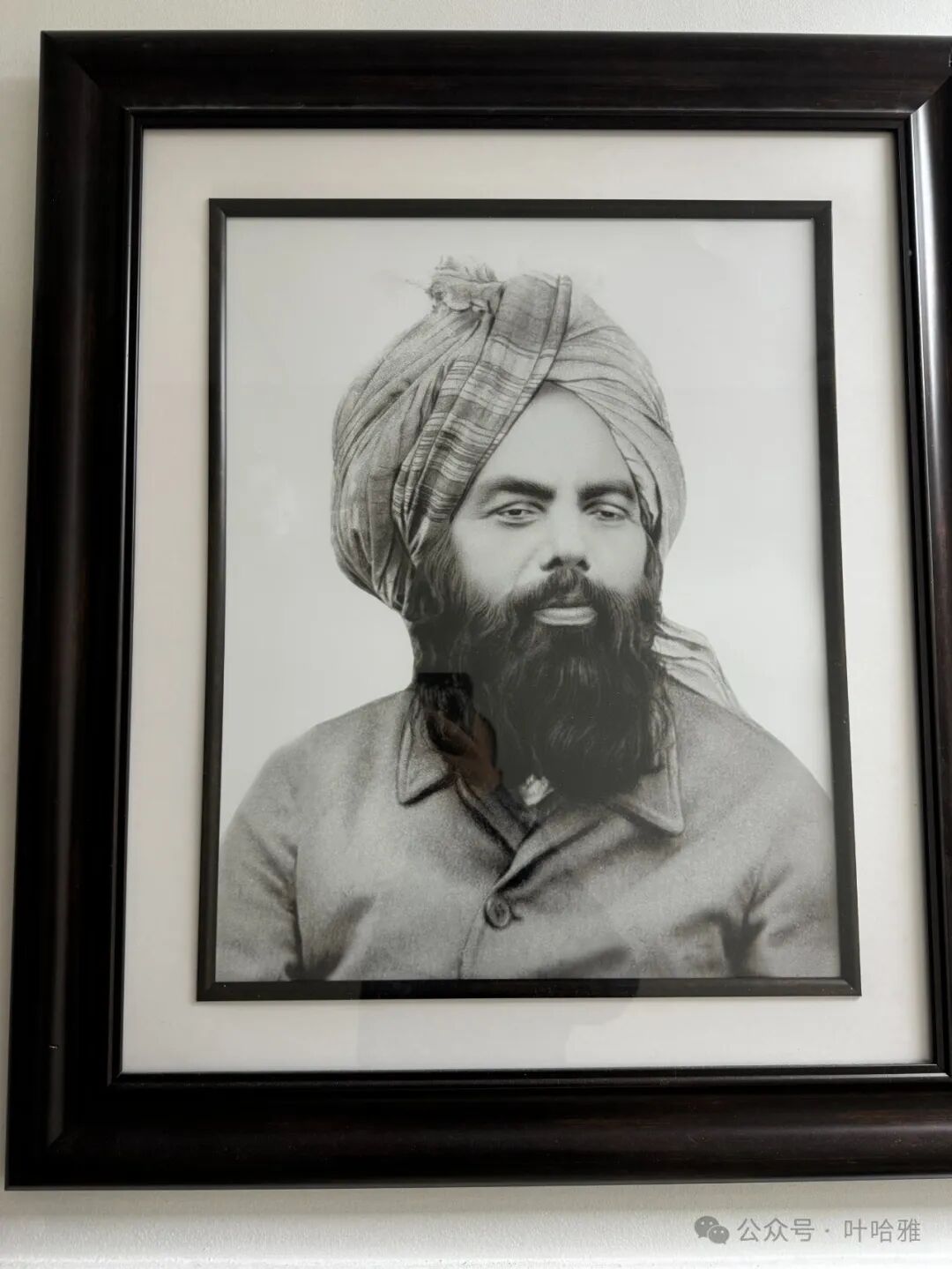
Mirza Ghulam Ahmad
Ahmad believed that after Jesus was crucified, he did not ascend to heaven. Instead, he woke up in the tomb, traveled to Roza Bal in Kashmir, India, to find the lost tribes of Israel, and lived there until he died.
Everyone I met at this mosque that day was a Pakistani-Canadian. Their prayer rituals were no different from traditional Islam. After talking to them, I learned that their ancestors had accepted Ahmadiyya, which has a history of over a hundred years since its founding.
Regarding the Five Pillars, Ahmadiyya also follow the Quran and Sunnah. Ten years ago at the Beijing International Book Fair, I picked up some of their books, including a Chinese version of a Quran commentary by Zhou Zhongxi, 'Basic Questions and Answers about Islam,' and a Chinese translation of 'The Philosophy of the Teachings of Islam' by Ahmad. I have also visited their website and have some understanding of their basic claims.
The people in the mosque were very excited. They did not expect that I, a Chinese person from Beijing, would know anything about them. I had planned to leave, but they invited me into their office, served me tea and desserts, and brought out some Chinese materials to give to me.
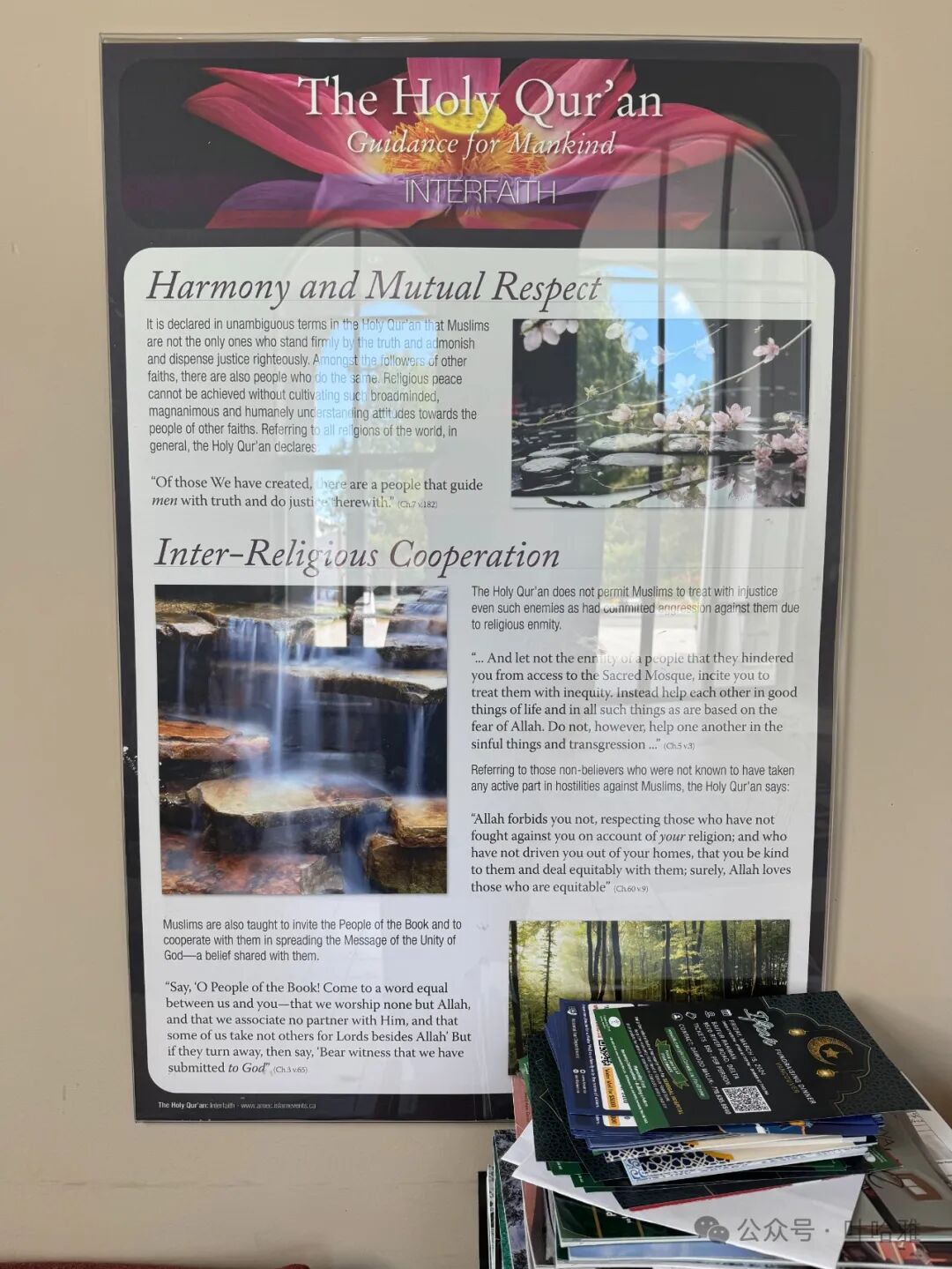
I listened to them talk about their experiences. Because they are an illegal organization in Pakistan, they faced persecution and came to Canada as refugees. They now hold Canadian passports. They are usually afraid of meeting fellow Pakistanis abroad because most Pakistanis do not recognize them. As soon as Pakistanis hear they are Ahmadiyya, they turn around and leave, unwilling to say a single word.

But they say Ahmadiyya is exactly the same as Islam, yet the world just does not understand. Currently, there are over 10 million Ahmadiyya followers worldwide. About 4 million are in Pakistan, and the rest are mainly distributed across Africa, Europe, America, and Southeast Asia. Most of the followers are of South Asian descent.
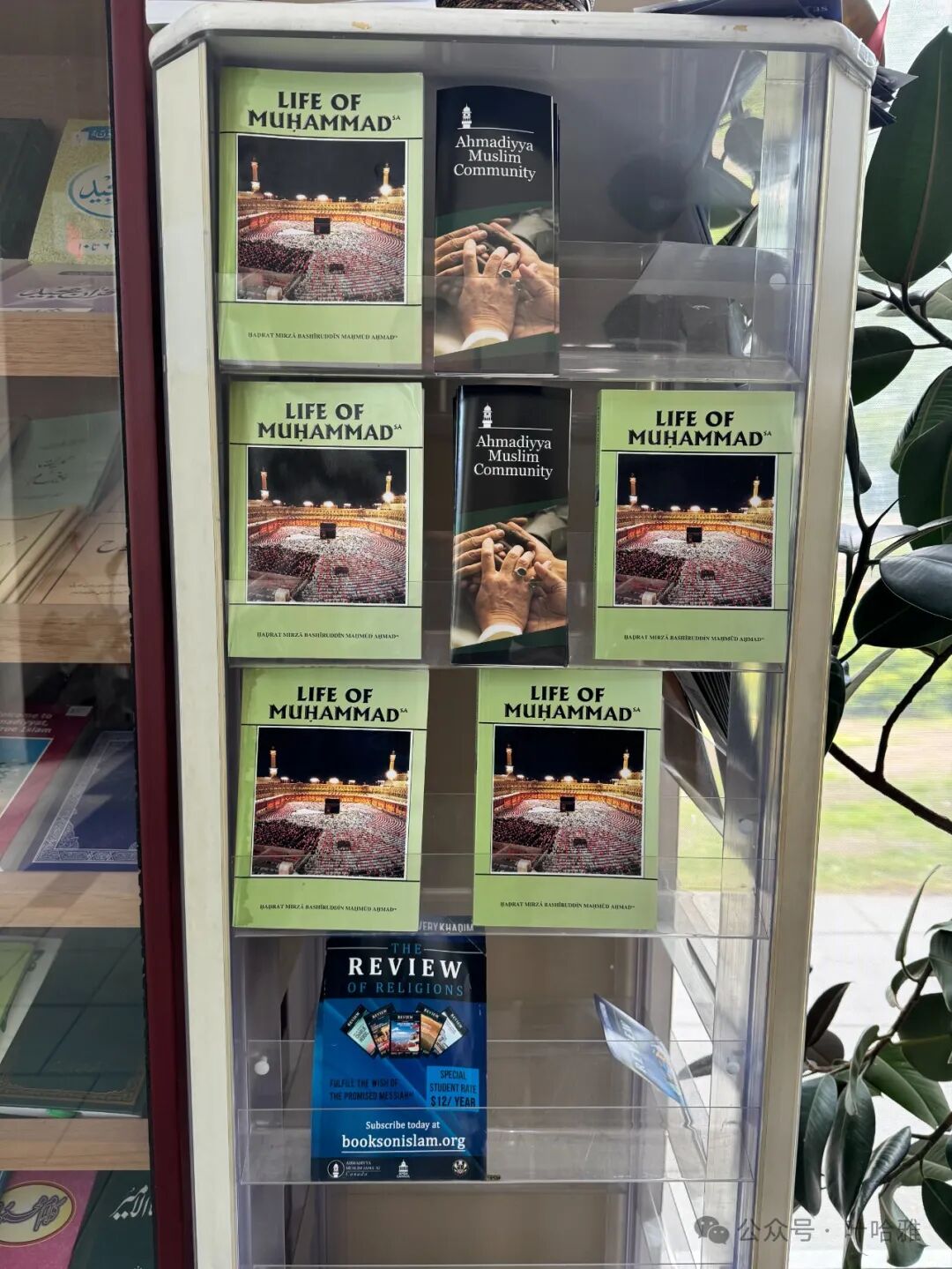
Ahmadiyya believe the Prophet Muhammad is the Seal of the Prophets, meaning he validates all previous prophets. They believe that after the Prophet Muhammad, while no new scripture would be revealed, people would still receive revelations from Allah. The Prophet Muhammad once prophesied that the Mahdi would come to lead all Muslims to unity and victory. They believe this person has already arrived, has the character of Jesus, and is the Indian man, Ahmad.
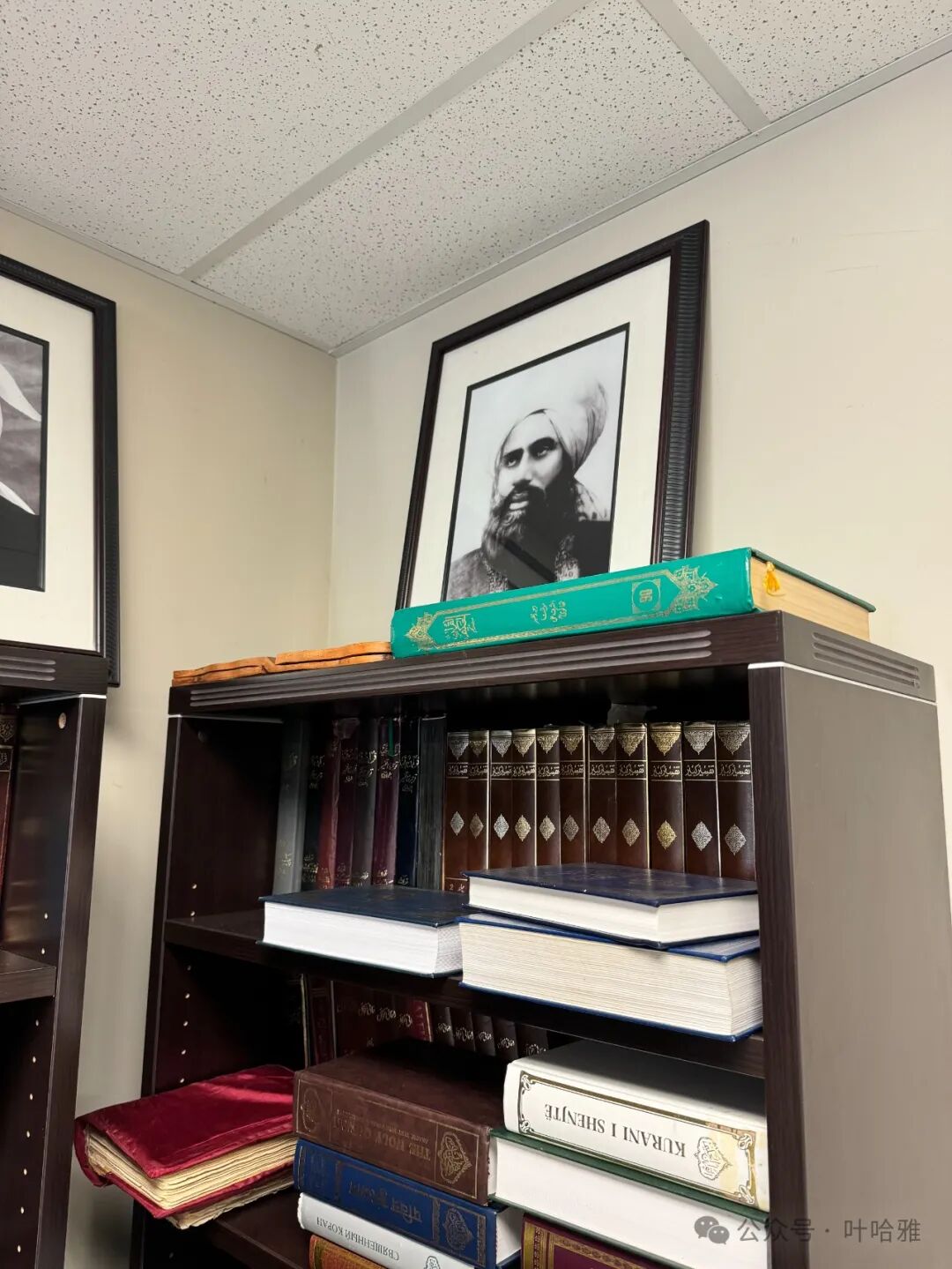
Hakeem Noor-ud-Din (1834-1914), the first successor of Ahmadiyya
The first caliph oversaw the translation of the Quran into English. During his lifetime, many famous people studied under him, including the Egyptian leader Muhammad Ali. This English translation later reached China, where people who did not know the full story used it as a reference for writing Quranic commentaries.
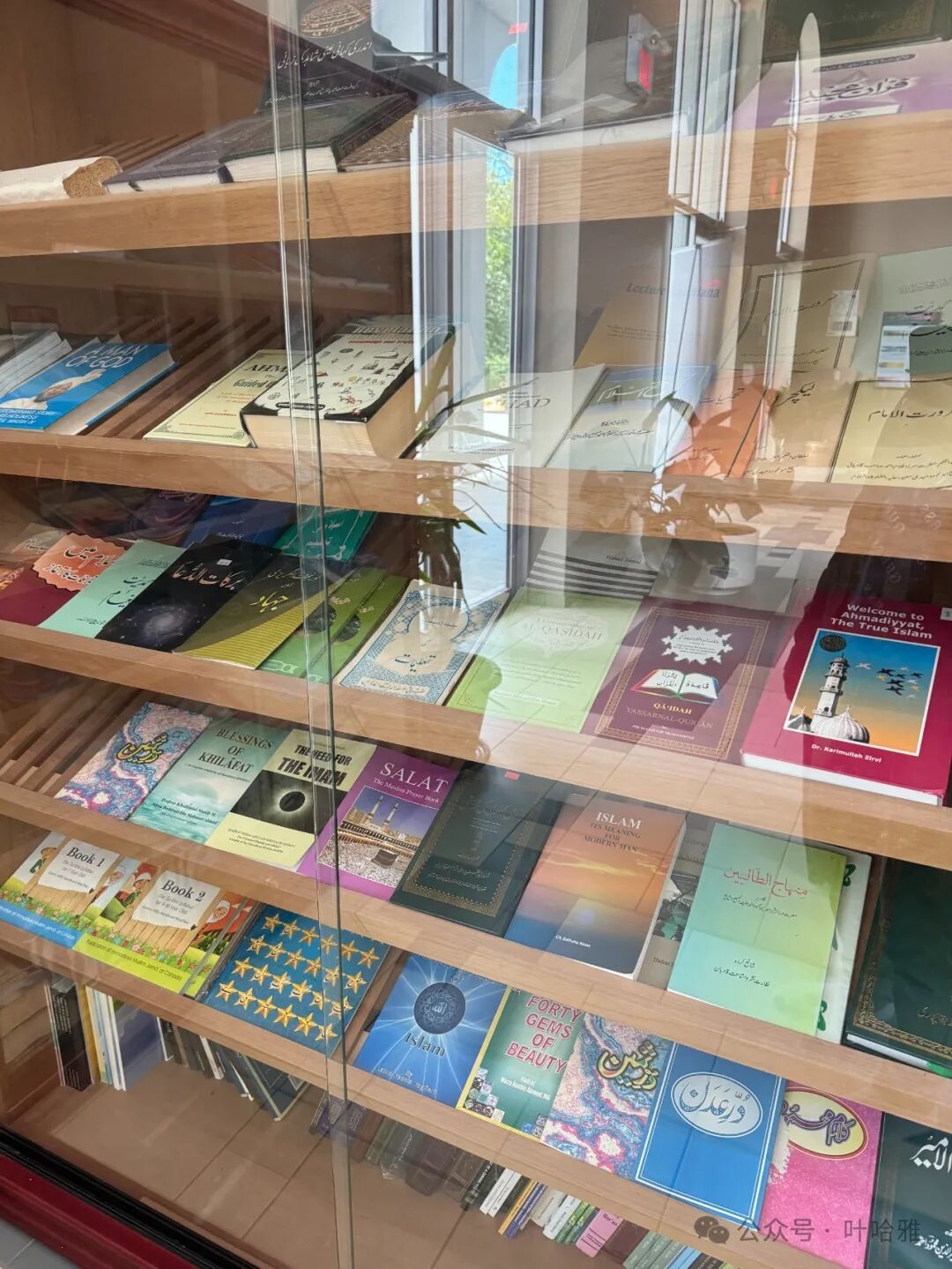
To be honest, after reading their work, I am impressed by their academic skills. These Ahmadiyya followers are not ignorant people. On the contrary, they are well-read in scriptures, good at citing sources, quick-thinking, and very persuasive.
I understand their way of thinking, but I cannot accept their claims. I also know that faith is not always rational. You cannot always use logic to explain right and wrong between religions. Whether you believe or not often comes down to a single thought.
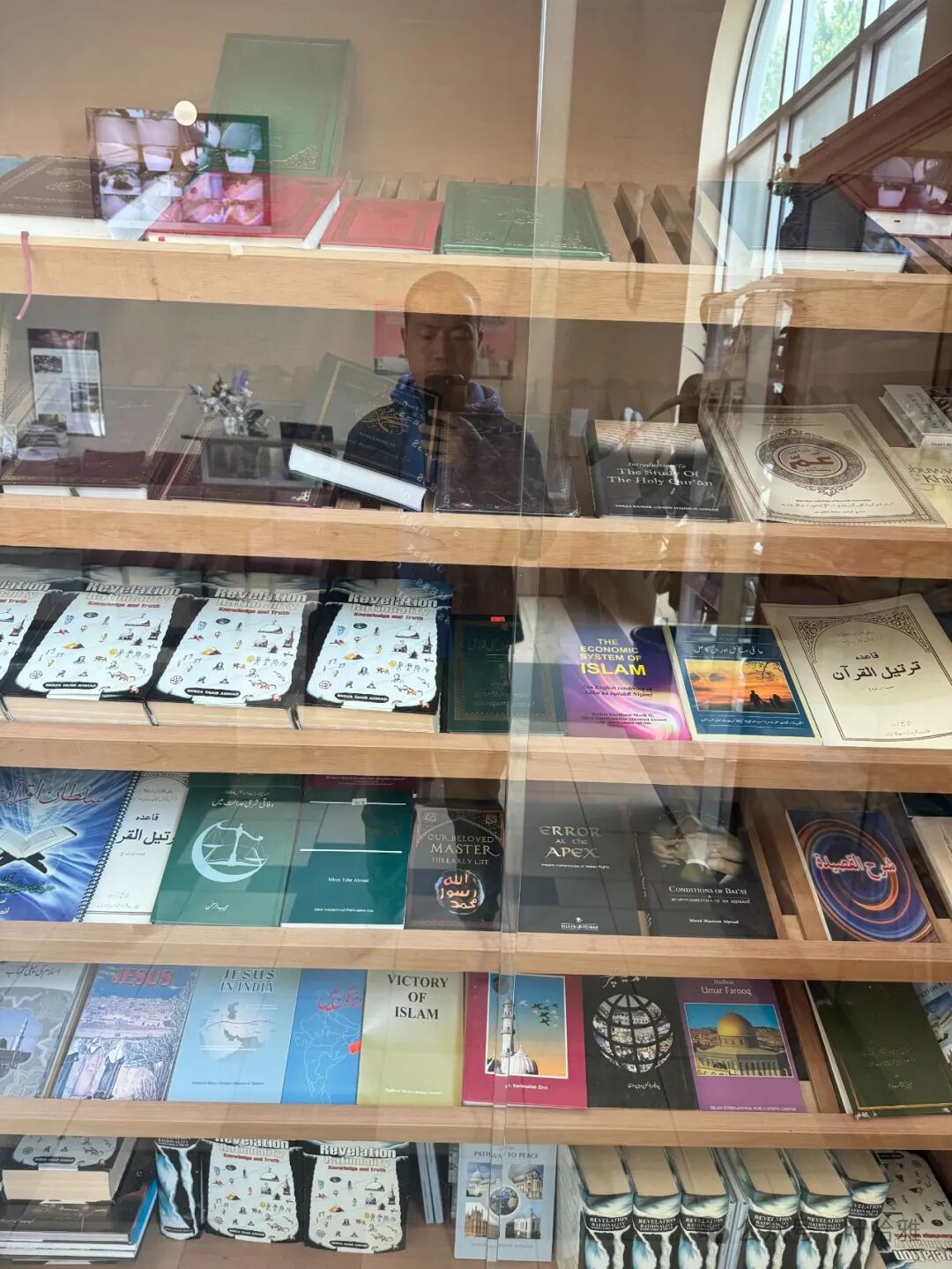
If I have to give a reason for not believing, the main point is that over more than a hundred years of missionary work and five generations of caliphs, the Ahmadiyya movement has had very little influence on the world, almost to the point of being negligible. Even though they claim to have millions of followers in over two hundred countries, they have not influenced our politics or daily lives. They are not even as well-known as political leaders like the American Founding Fathers or Marx. How can a savior have less influence on the world than some thinkers and political leaders?
As for the minor details this group argues about, I do not think they are worth debating. You cannot even change the ideas of one Sufi order (menhuan) to another through debate. Every sect has descriptions of its own spiritual masters that outsiders cannot understand. If you understand how various Sufi groups developed, you will not be surprised by the rise of the Ahmadiyya.
The rise of the Ahmadiyya has a historical context. In 19th-century India, it was a time of political turmoil, followed by the partition of India and Pakistan. People were suffering and felt the end of the world was coming. It was just like when the Mongol army marched west in earlier times; people then also thought the end had arrived. In such a social environment, many were unhappy with the world and hoped for a savior to appear.
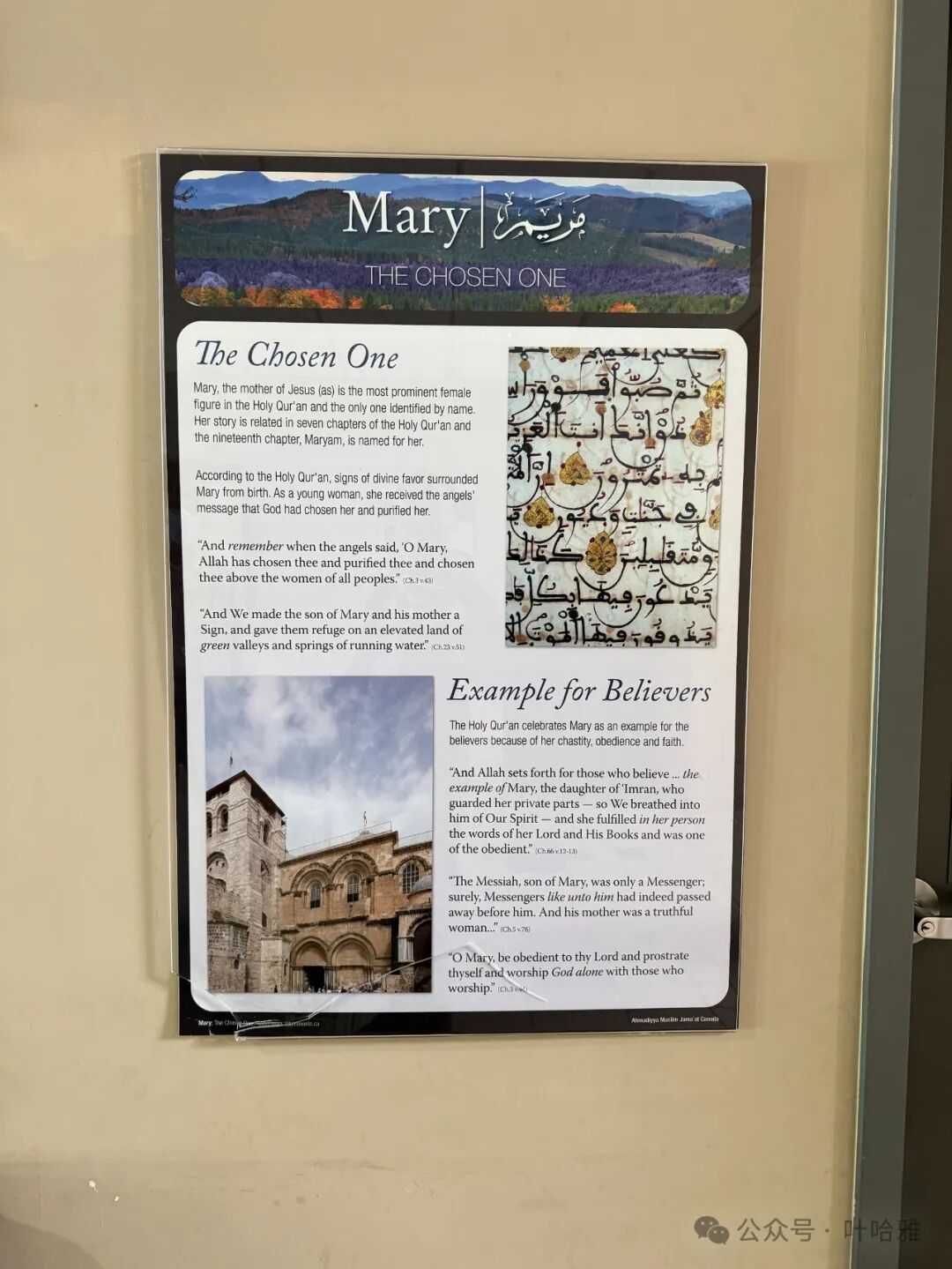
At the same time, someone in Africa also claimed to be the Mahdi, but he was wiped out shortly after. Do not simply think of these people as scammers. Some self-proclaimed religious leaders truly believe they are special and do not think they are lying. If a person lives in isolation for a long time and is malnourished, they might have hallucinations. They might believe they really heard revelations from Allah. Then, through rumors spread by people who do not know the truth, it eventually ferments into a new religious group.
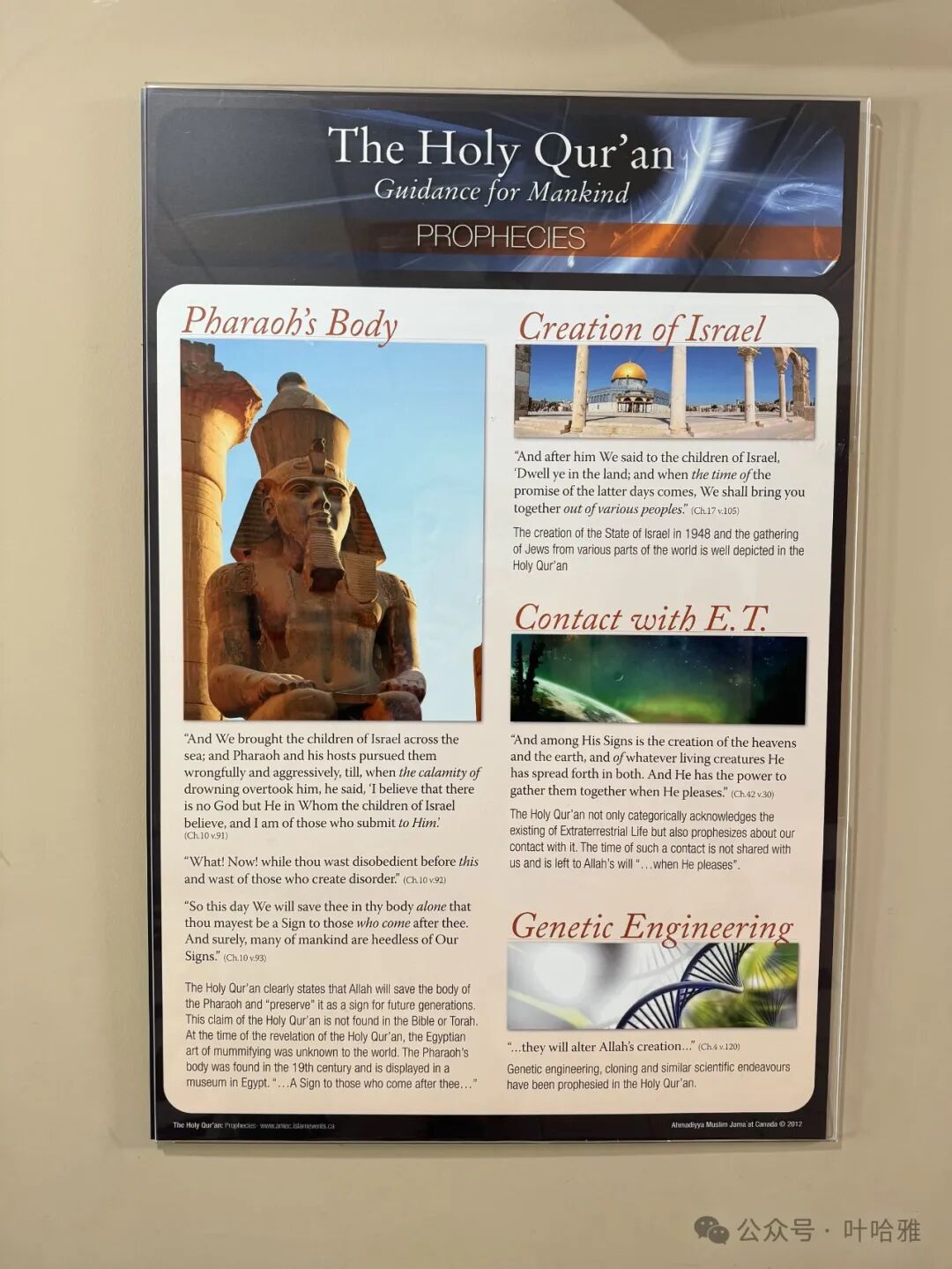
So the problem is not what they said or did, but what their appearance brought to this world. At least for now, most Chinese Muslims have never heard of this Mahdi. He has had no influence on our lives. He has been gone for over a hundred years, and our world has not become a better place because of the arrival of a savior.
In fact, since the Prophet Muhammad, no new religious group has reached world-class influence. Most only spread within specific regions or groups. The world does not run or develop under the leadership of a new religious leader. If their god only intended to save that small group of people who think they have the truth, that would be too narrow-minded.

Even in India and Pakistan, where the Ahmadiyya began, the region did not become more prosperous or united because of the savior's arrival. Instead, his arrival led to even more conflict.
Ahmadiyya Quran translations in various languages, including the Chinese version.
The person on the right in the photo above is the fifth and current Caliph, Mirza Masroor Ahmad (1950-). Born in Pakistan, he is the nephew of the fourth Caliph (left), Mirza Tahir Ahmad, as his mother was the fourth Caliph's sister. He now lives in the UK and has visited Vancouver many times, where members of the mosque have met him often.
The second and third Caliphs.
The Ahmadiyya community restored the Caliphate system. They choose successors through internal nomination rather than hereditary succession or public election, and there is no requirement for the Caliph to be from the Hashim family.
Congratulatory messages sent by various Canadian government officials for the 50th anniversary of the Ahmadiyya community.
The Ahmadiyya motto: Love for all, hatred for none.
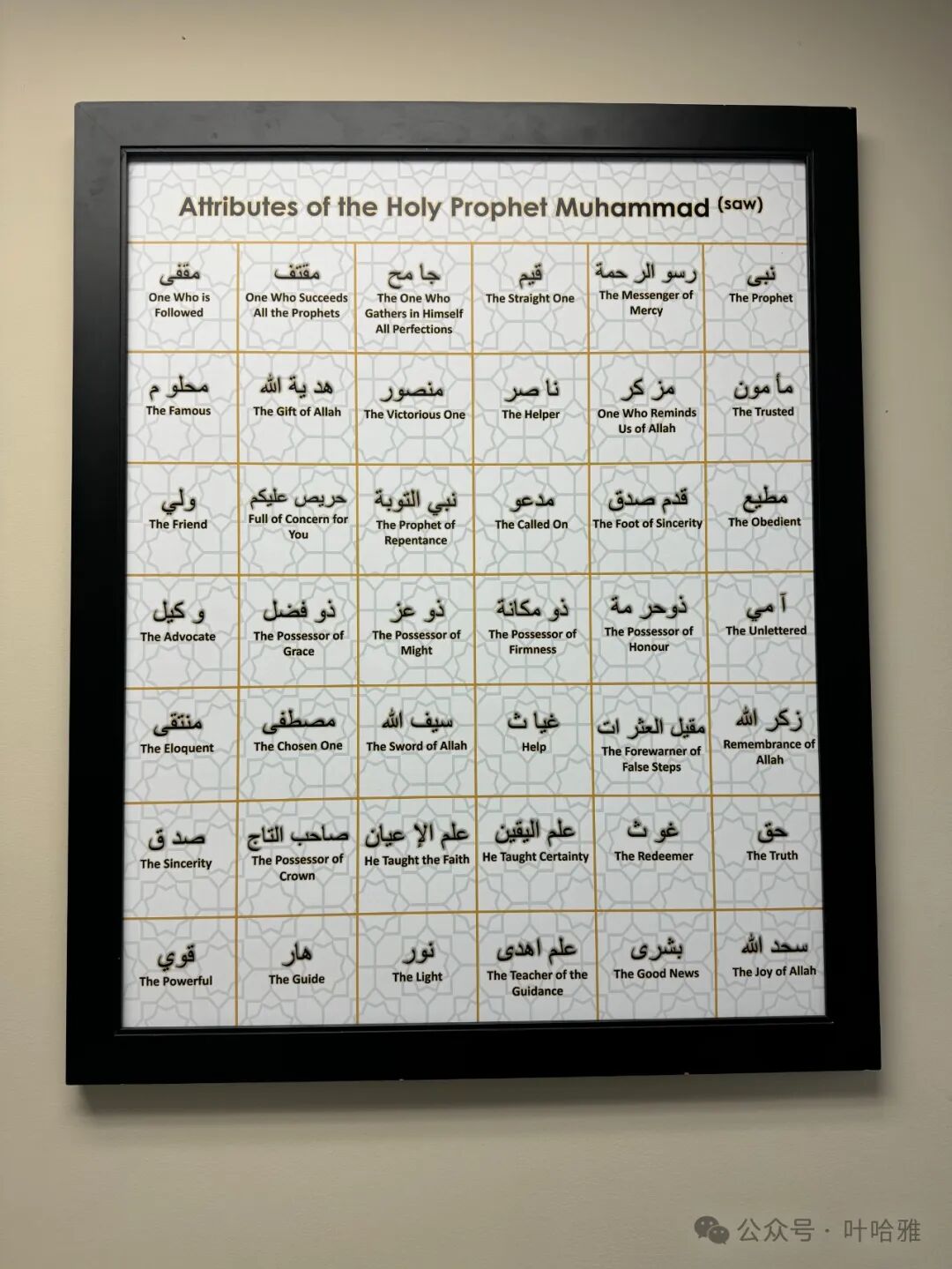

Kitchen.
I asked them about their dietary rules, which are the same as ours, so they do not eat just anything. They also introduced me to some reliable halal chain restaurants in Canada.
Saying dua before and after meals.
Abdus Salam.
He is likely the most famous Ahmadiyya follower. Abdus Salam was Pakistani and won the Nobel Prize in Physics in 1979. He was the first Pakistani Nobel laureate and served as the head of the Pakistani delegation to the International Atomic Energy Agency. Because his faith was not officially recognized, he later chose to leave Pakistan. He passed away in Oxford in 1996, and his body was returned to Pakistan. His grave is in Rabwah, Pakistan. The tombstone originally stated he was the first Muslim to win a Nobel Prize, but the word Muslim was later covered up.
However, as far as I know, Egyptian President Sadat won the Nobel Peace Prize in 1978, a year before Salam. Does that mean the Peace Prize does not count as a Nobel Prize? Or does Sadat not count as a Muslim?
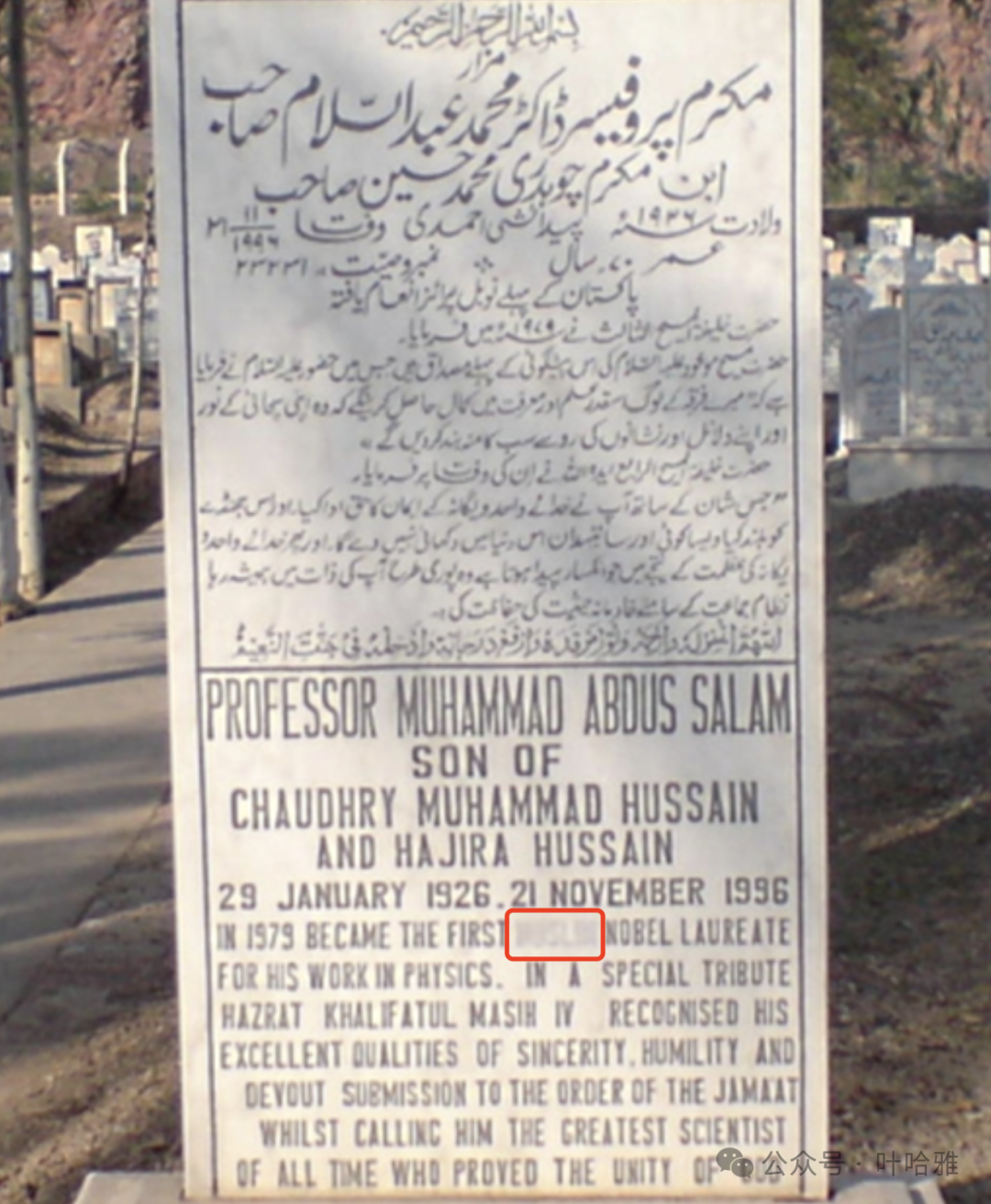
The tombstone of Abdus Salam.
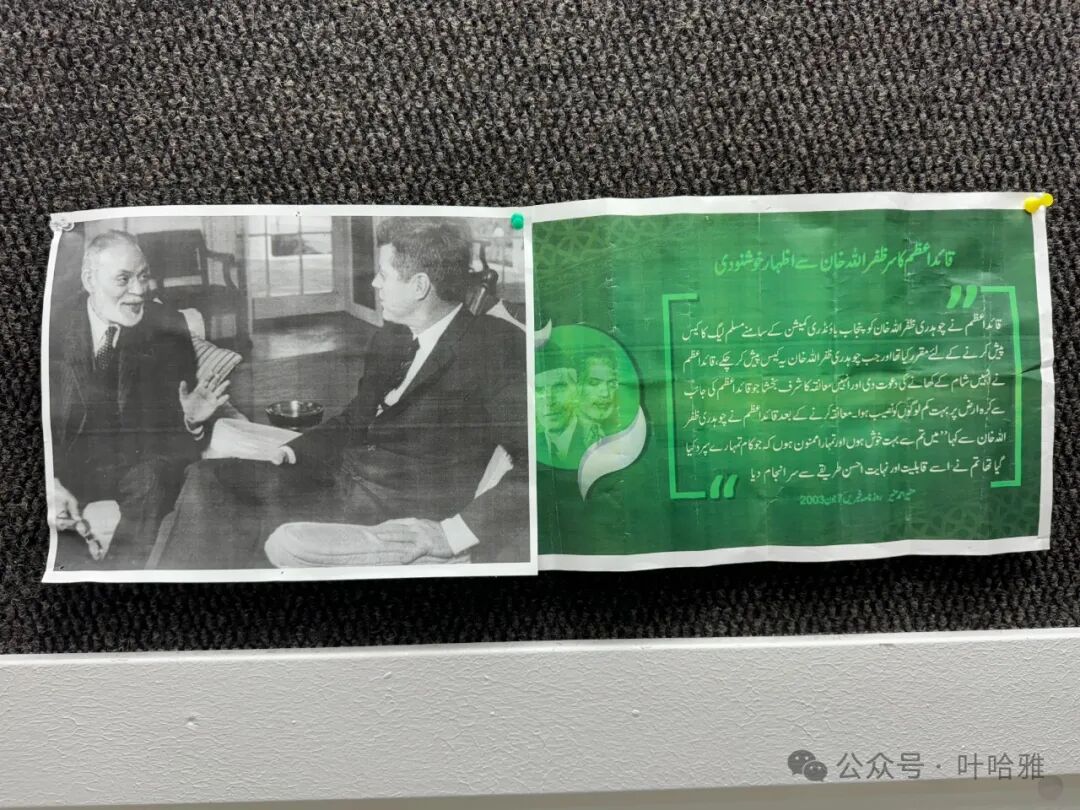
Salam meeting with Kennedy.
Salam said: The Quran tells us to reflect on the laws of nature created by Allah. Our generation is lucky to have caught a glimpse of a part of Allah's design. This is a blessing, and I express my gratitude with a humble heart.
When reading his Nobel Prize in Physics acceptance speech, he quoted the Quran: He created seven heavens in layers. You cannot see any flaw in the creation of the Most Merciful. Look again! What kind of flaws can you actually see? Then look twice more, and your eyes will return to you, dazzled and weary! (67:3-4) In fact, this is the belief of all physicists. The deeper we explore, the more we are amazed, and the more dazzled we become.
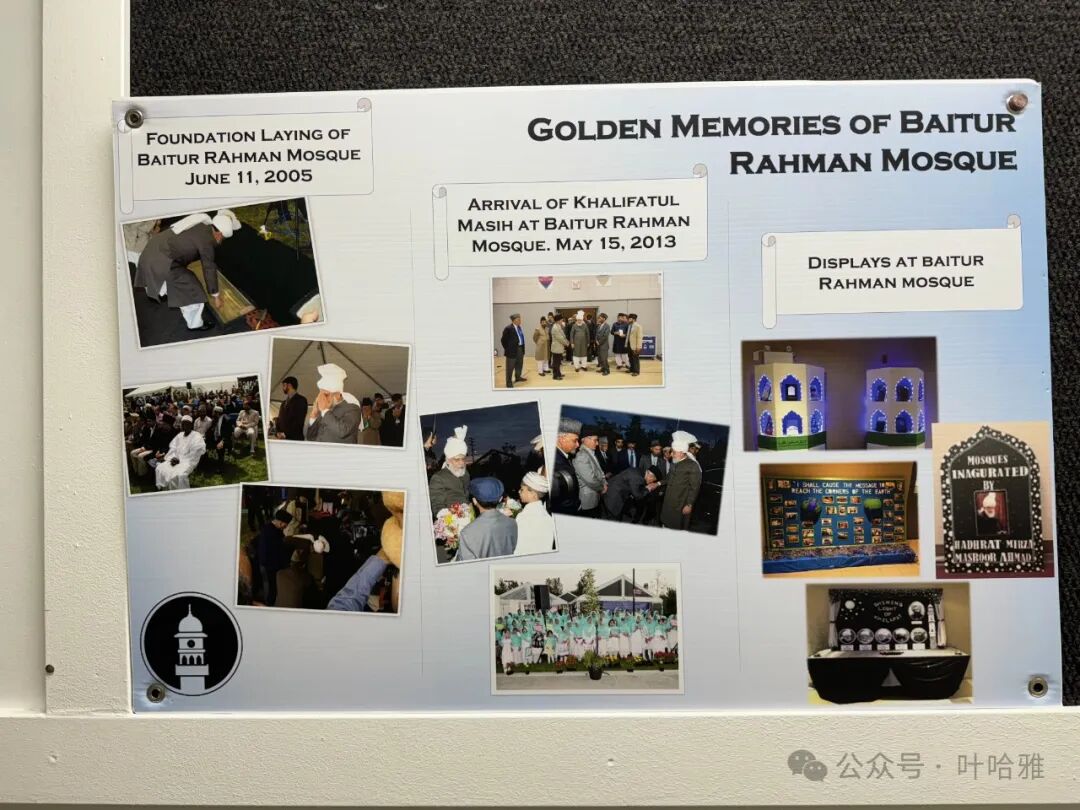
The current Caliph once attended the groundbreaking ceremony for this mosque.
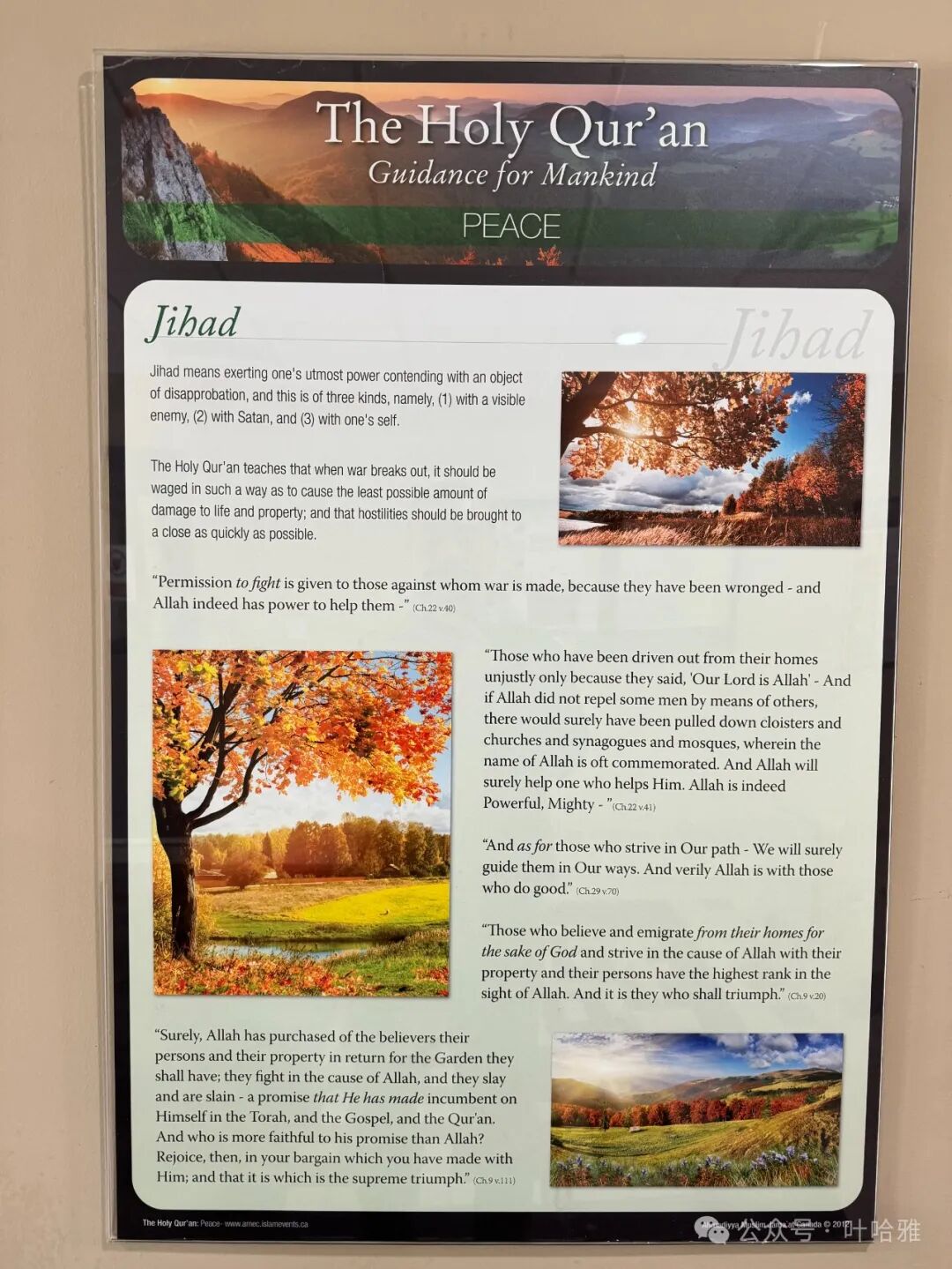
The Ahmadiyya movement repeatedly emphasizes that the meaning of jihad is not aggression or starting a war, but rather inner spiritual practice. Force may not be used unless it is to resist oppression.
A small incident happened when I left Vancouver to head to my next stop, Calgary. People at the Ahmadiyya mosque learned I was going to the airport and immediately offered to drive me. They told me not to rush and that we could chat a bit more. Later, an uncle drove me. I reminded him several times on the road that the airport I was going to was not Vancouver Airport, but another one. He said he understood, but he still took me to the wrong place. He then called another person from the mosque and asked him to wait for us there. This person was a taxi driver. We returned and switched to his car so he could take me to the airport, which was faster. I switched to the taxi to continue to the new airport. On the way, the driver said I needed to pay. I said no problem. For the 50-kilometer trip, the meter showed over 120 dollars. I asked him for a discount, and he finally charged me 100 dollars and did not ask for a tip.
Luckily, my flight was delayed by another hour, so I didn't miss it. If I had taken the bus to the airport myself, I wouldn't have spent 100 dollars. I wanted to save some money, but ended up losing a lot instead. I believe the man didn't mean to lead me the wrong way, but maybe this experience was a little warning for me?
My next stop is Calgary, the most affordable city in Canada. I am going to see Banff National Park, which is just like a copy of northern Xinjiang.
Halal Travel Guide: Beijing - Mawlid Week Two at Sanlihe and Xihui
Articles • ali2007fr posted the article • 0 comments • 236 views • 2026-05-20 09:37
Summary: The second week of Beijing Mawlid gatherings covered Sanlihe Mosque and Xihui Mosque, with Quran recitation, sermons, meat porridge, fried dough, and community meals. The article preserves the mosque histories, food details, prayer scenes, and local Muslim community memories.
The Mawlid (Prophet's birthday) celebrations in Beijing have been going on for two weeks. I visited Dongsi, Balizhuang, and Yangzha during the first week, and I went to Sanlihe and Xihui for the holy gatherings on the weekend of the second week.
On Saturday, I attended the Mawlid at Yongshou Mosque in Sanlihe. After the scripture recitation and sermon (wa'erzi), we had watermelon, pastries, and snacks. I also received fried dough (youxiang), meat porridge, crispy beef (songrou), and meat portions (roufen).
Yongshou Mosque was first built in 1605 (the 30th year of the Wanli reign). It has been renovated many times and is now a cultural heritage site in the Xicheng District. Historically, Sanlihe was the largest cemetery for Hui Muslims in the Beijing suburbs. As early as 1456 (the 7th year of the Jingtai reign of the Ming Dynasty), the Samarkand envoy Muhammad Sheriban petitioned the Ming court to visit and offer sacrifices at his ancestral graves in the public cemetery outside Fuchengmen, which Emperor Yingzong of Ming granted. In 1605 (the 30th year of the Wanli reign), the ceremonial eunuch Li Shou, the imperial guard Dong Yingyuan, and others initiated a fundraising campaign to purchase the 'Wengseng Huangtang' in Sanlihe to officially build Yongshou Mosque.
The Sanlihe Hui Muslim cemetery historically held the graves of various sages, sheikhs, imams, scholars, and generals. The sages include Wang Daiyu; the sheikhs include Zhuazi Baba and Shadeng Baba; the imams include Imam Wang Yousan, Imam Wang Haoran, Imam Ma Meizhai, Lao Hong Wuba, and Lada Li; the scholar is Ma Linyi; and the generals include Ma Fulu, Ma Longbiao, and Ma Fuxiang. more than a hundred Hui Muslim heroes who died in Beijing while fighting the Eight-Nation Alliance with Ma Fulu during the Gengzi year (1900) were all buried here.
In the afternoon, I stewed some meat portions. Combined with the meat porridge, fried dough, pea flour cake (wandouhuang), and crispy beef distributed by the mosque, it made for a very classic Beijing Hui Muslim feast (nietie).
North of Sanlihe is the 'Hongmaogou Residential Area.' It was originally called 'Hongmaogou' (Red Hat Ditch) and was the cemetery for the Uyghur people known as the 'Red Hat Hui' who lived in the Hui camp on West Chang'an Street before the 1950s.
In 1759 (the 24th year of the Qianlong reign), after Emperor Qianlong pacified the Great and Small Khojas of the White Mountain faction, he summoned the surrendered Hui people, led by the 'Eight Hui Nobles,' to Beijing. The ordinary people among them were organized into the 'Hui People's Company' under the Left Wing Fifth Regiment of the Plain White Banner of the Imperial Household Department. In Manchu, this was called 'hoise niru.' They were settled in the Hui camp outside the West Chang'an Gate and chose Hongmaogou as their cemetery.
Besides the Uyghurs, Hongmaogou also contained the grave of Zhuazi Baba, one of the two great sheikh graves in Sanlihe. In the past, every spring, many Beijing Hui Muslims would take their families to visit the grave of Zhuazi Baba to offer dua.
On Sunday morning, I attended the Mawlid at Xihui Mosque. Xihui Mosque is located by the Beijing-Hangzhou Grand Canal. It was built in 1821 (the first year of the Daoguang reign) and is not far from Yangzha Mosque and Guanzhuang Mosque. Although the mosque and the community were separated due to relocation and high-rise development, the new residential area is not far away, so the community still has a strong sense of unity, and the holy gathering was very lively.
Before the Mawlid began, everyone drank meat porridge and ate fruit, chatting with each other to strengthen friendships. After the Mawlid started, the imams from various communities in Chaoyang District led the opening dua, followed by scripture recitations. Then, the local imam gave a sermon to commemorate and learn from the noble Prophet.
After leaving the prayer hall, everyone went to the feast. Following the tradition of 'guests first, locals later,' the imams, directors, and guests invited by the mosque sat down to eat first, and the local community members took their seats afterward.
The kitchen at Xihui Mosque is a long room where everyone worked in an orderly and organized way. After entering, the first thing you see is the 'eight big bowls' of stewed dishes. Stewed beef, meatballs, crispy beef, lamb offal, kelp, and yam were served as people ate. Next was the frying area, where sugar-filled fried rolls (tangjuanguo) and toothpick meat were fried on the spot. Next is the stir-fry area, where they quickly cook dishes like stir-fried tripe with coriander (yanbao sandan), stir-fried shrimp (qingchao xiarou), diced chicken with cashews (yaoguo jiding), stir-fried lamb with scallions (congbao yangrou), and braised eggplant (hongshao qiezi) over high heat. Finally, there are the steamers, with paper-wrapped fish (zhibaoyu) steaming on one side and rice on the other. view all
Summary: The second week of Beijing Mawlid gatherings covered Sanlihe Mosque and Xihui Mosque, with Quran recitation, sermons, meat porridge, fried dough, and community meals. The article preserves the mosque histories, food details, prayer scenes, and local Muslim community memories.
The Mawlid (Prophet's birthday) celebrations in Beijing have been going on for two weeks. I visited Dongsi, Balizhuang, and Yangzha during the first week, and I went to Sanlihe and Xihui for the holy gatherings on the weekend of the second week.
On Saturday, I attended the Mawlid at Yongshou Mosque in Sanlihe. After the scripture recitation and sermon (wa'erzi), we had watermelon, pastries, and snacks. I also received fried dough (youxiang), meat porridge, crispy beef (songrou), and meat portions (roufen).
Yongshou Mosque was first built in 1605 (the 30th year of the Wanli reign). It has been renovated many times and is now a cultural heritage site in the Xicheng District. Historically, Sanlihe was the largest cemetery for Hui Muslims in the Beijing suburbs. As early as 1456 (the 7th year of the Jingtai reign of the Ming Dynasty), the Samarkand envoy Muhammad Sheriban petitioned the Ming court to visit and offer sacrifices at his ancestral graves in the public cemetery outside Fuchengmen, which Emperor Yingzong of Ming granted. In 1605 (the 30th year of the Wanli reign), the ceremonial eunuch Li Shou, the imperial guard Dong Yingyuan, and others initiated a fundraising campaign to purchase the 'Wengseng Huangtang' in Sanlihe to officially build Yongshou Mosque.
The Sanlihe Hui Muslim cemetery historically held the graves of various sages, sheikhs, imams, scholars, and generals. The sages include Wang Daiyu; the sheikhs include Zhuazi Baba and Shadeng Baba; the imams include Imam Wang Yousan, Imam Wang Haoran, Imam Ma Meizhai, Lao Hong Wuba, and Lada Li; the scholar is Ma Linyi; and the generals include Ma Fulu, Ma Longbiao, and Ma Fuxiang. more than a hundred Hui Muslim heroes who died in Beijing while fighting the Eight-Nation Alliance with Ma Fulu during the Gengzi year (1900) were all buried here.
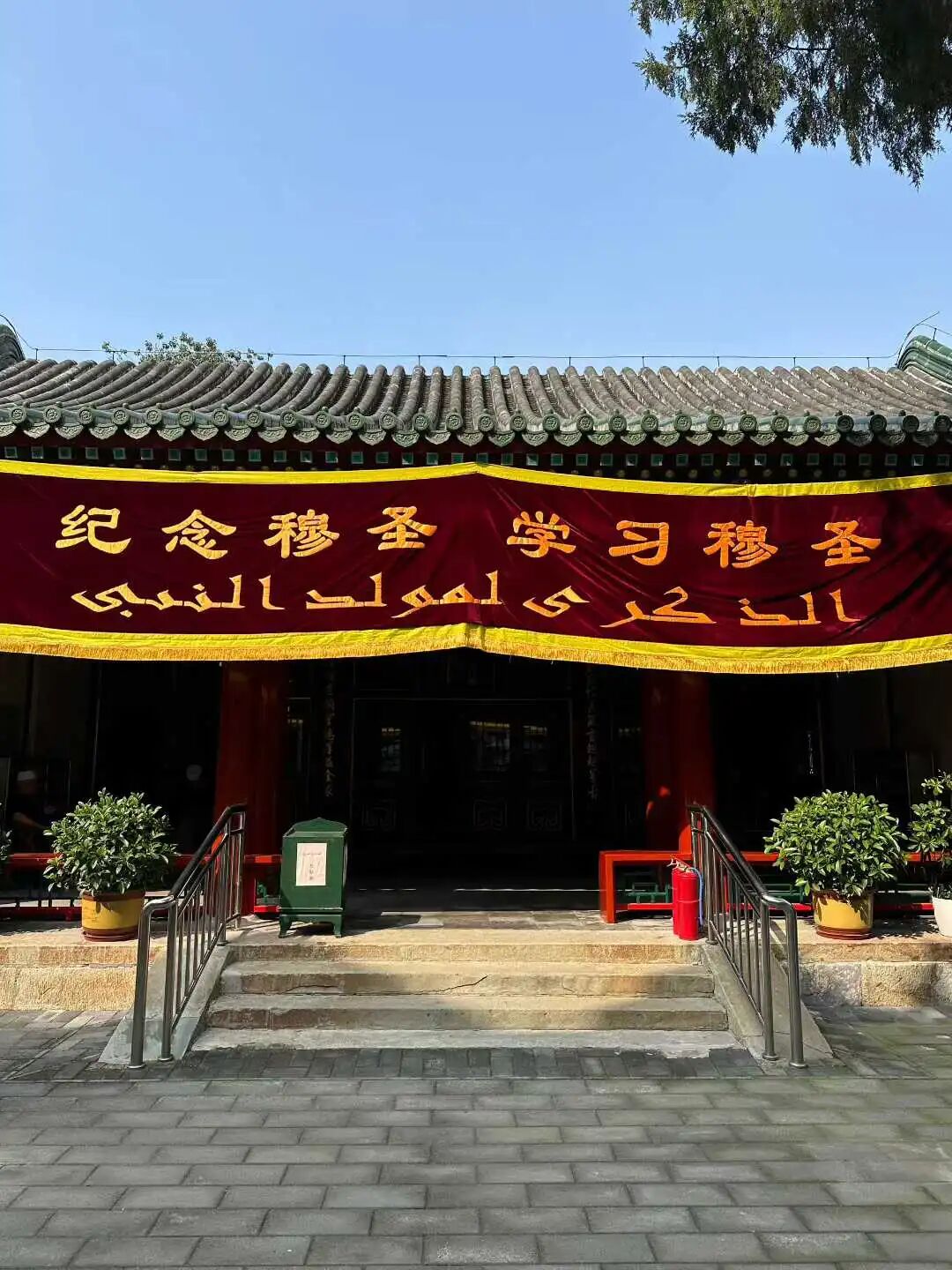
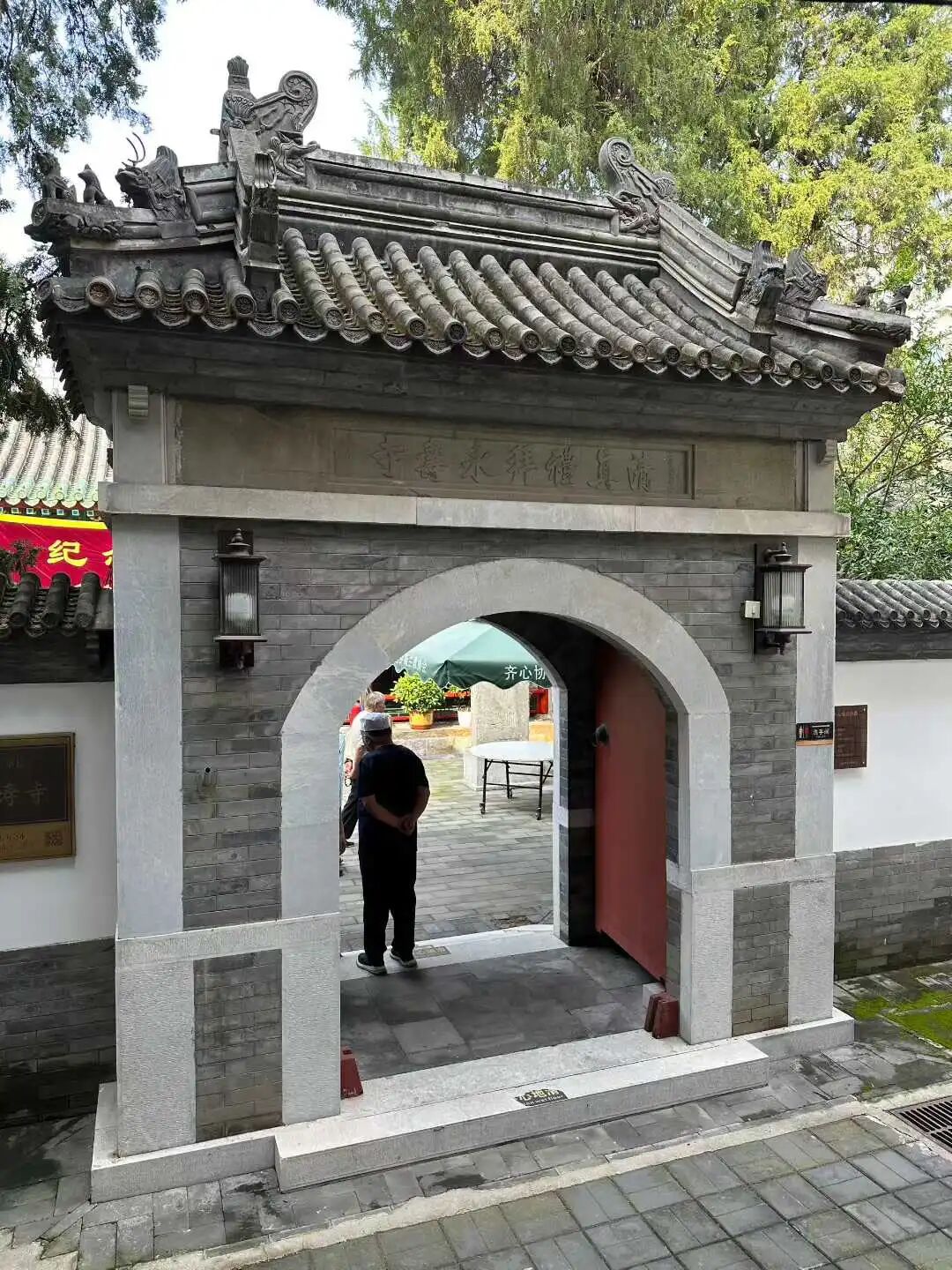
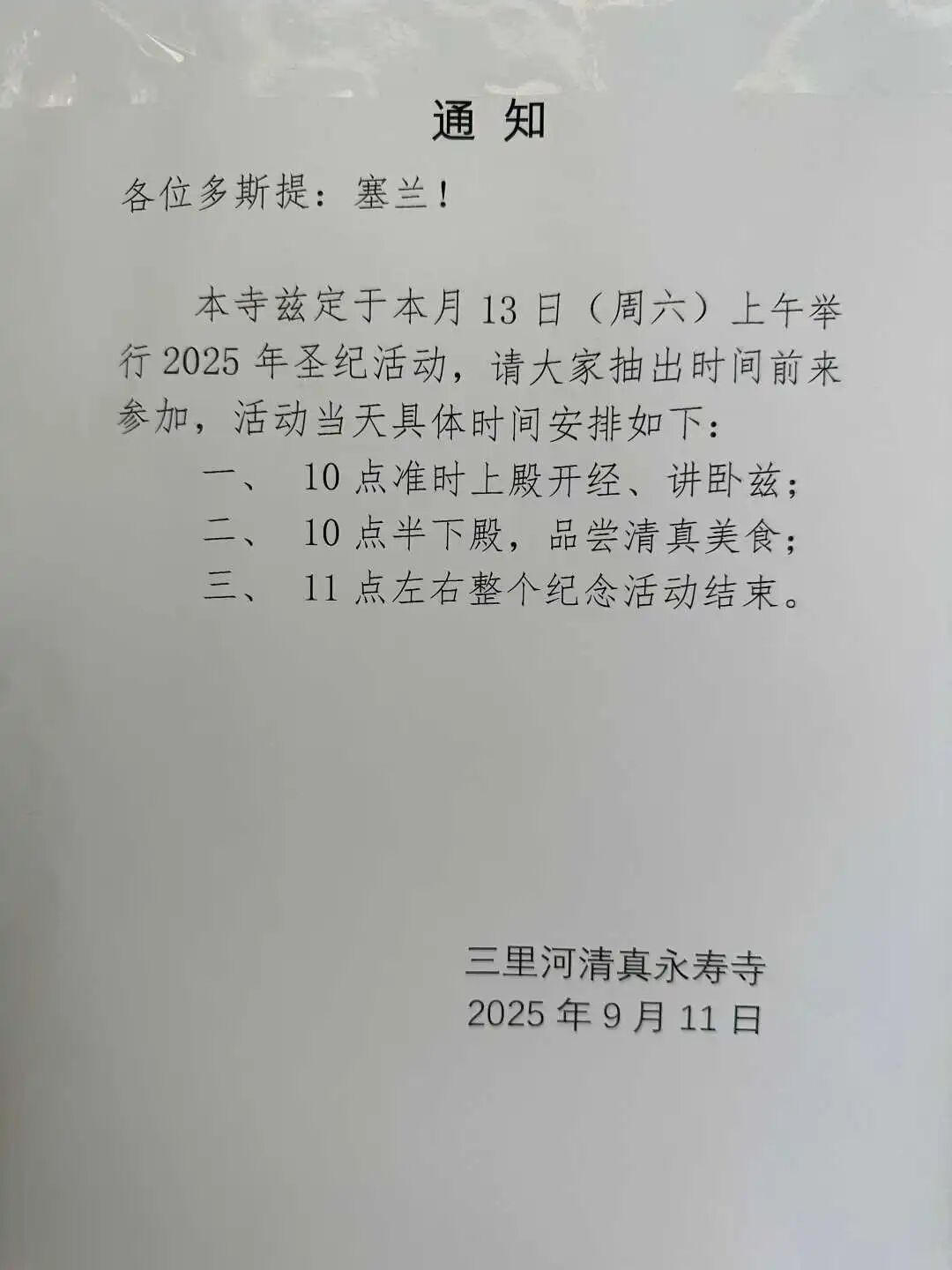
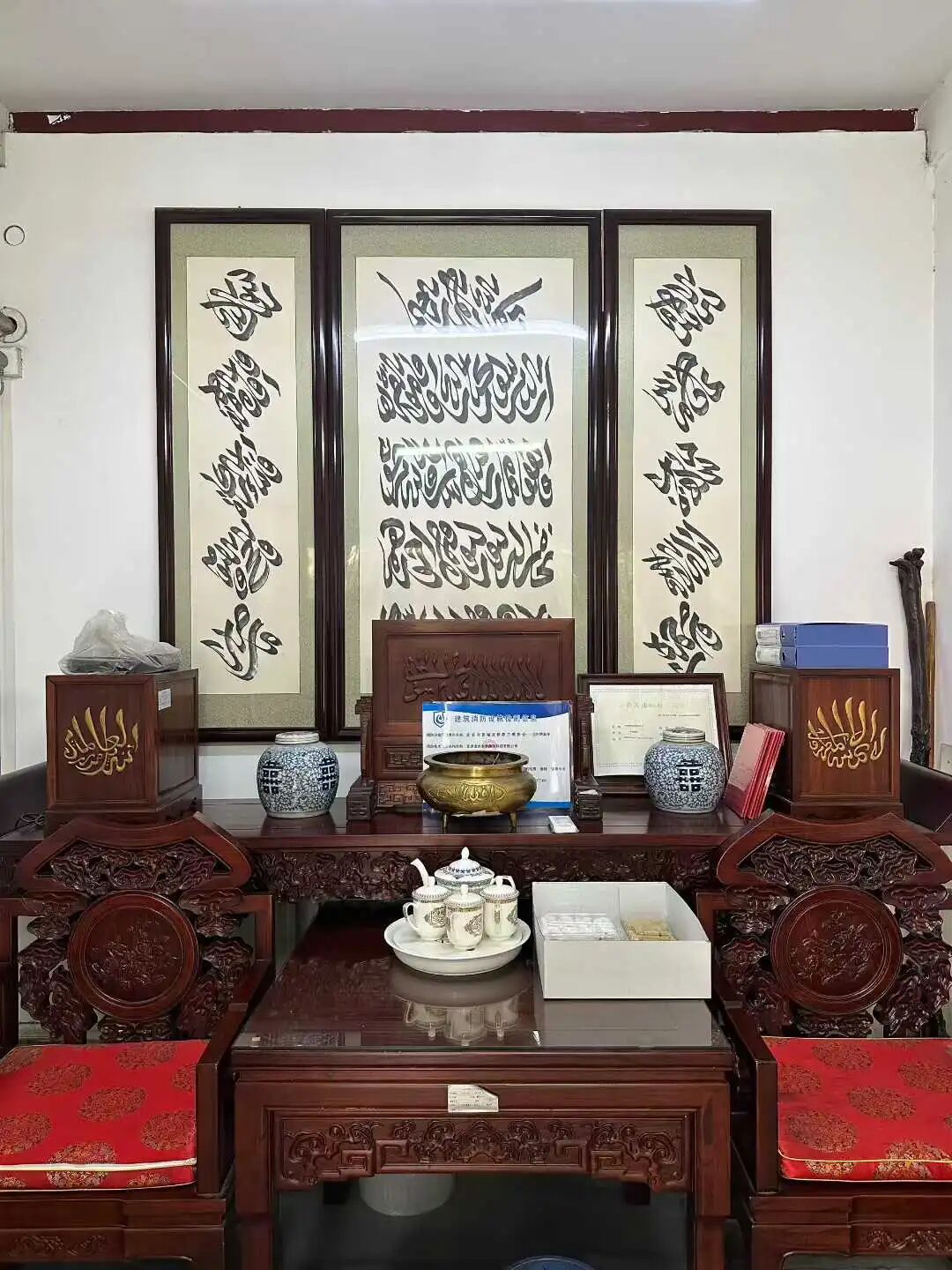
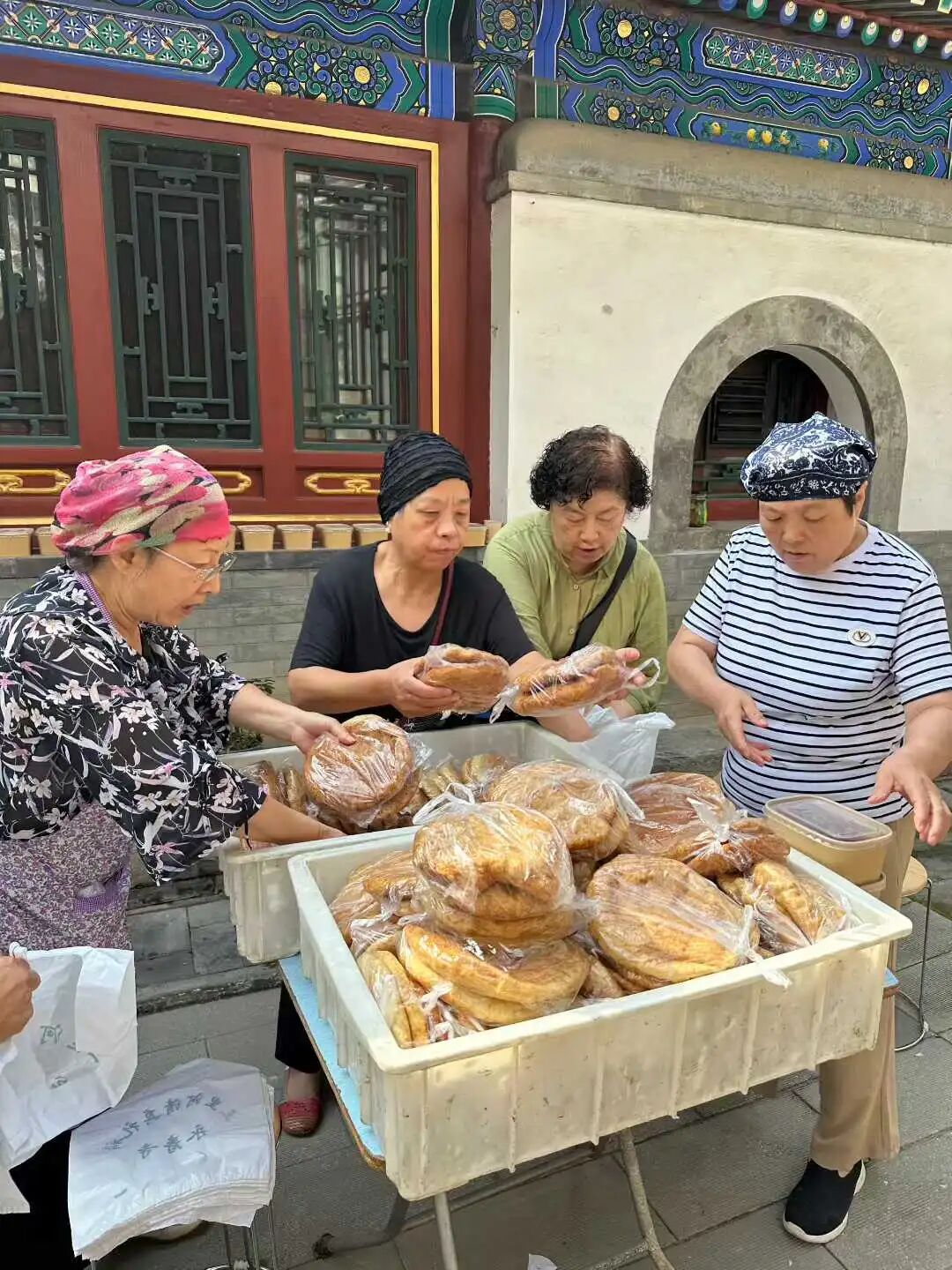
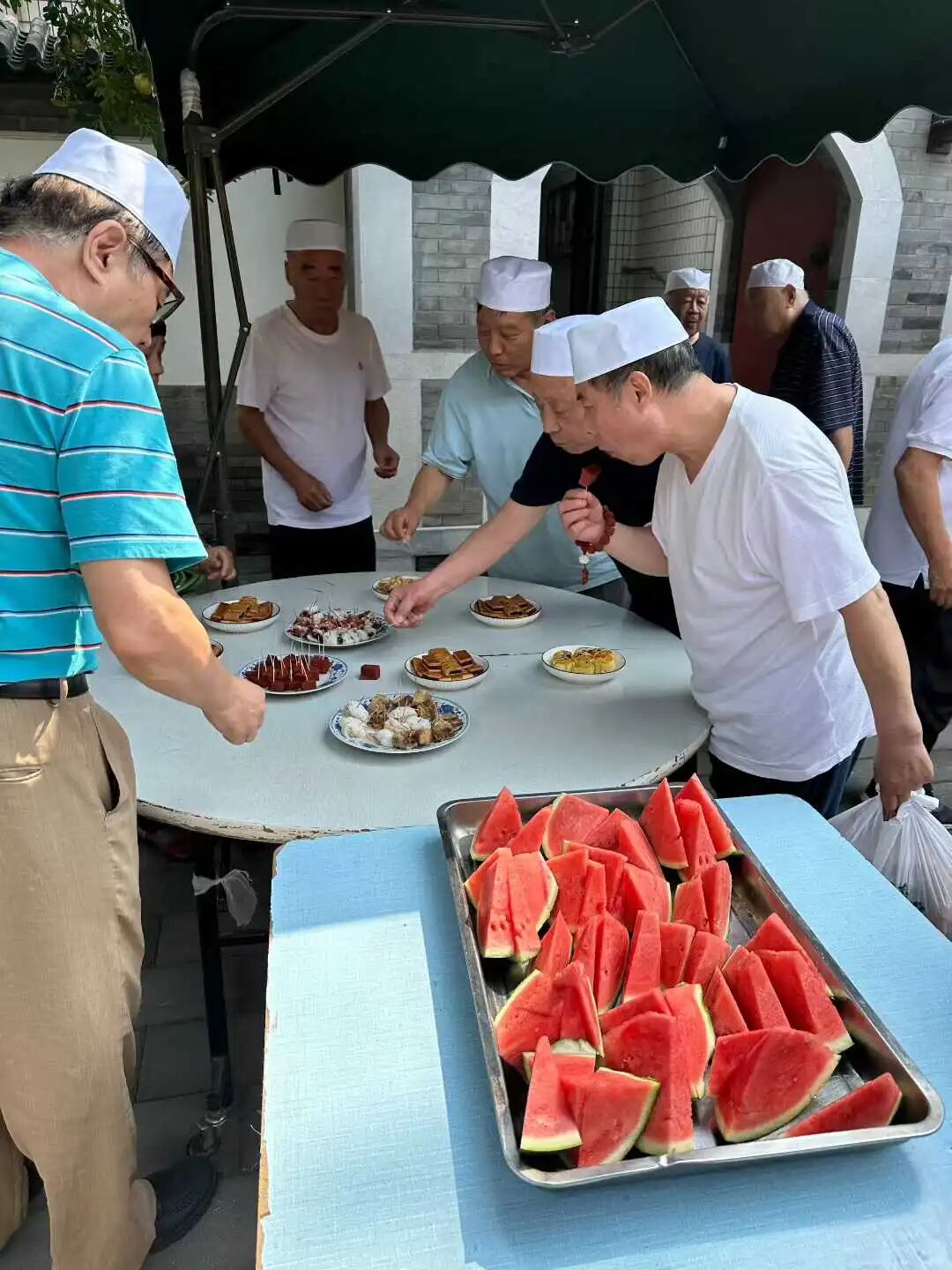
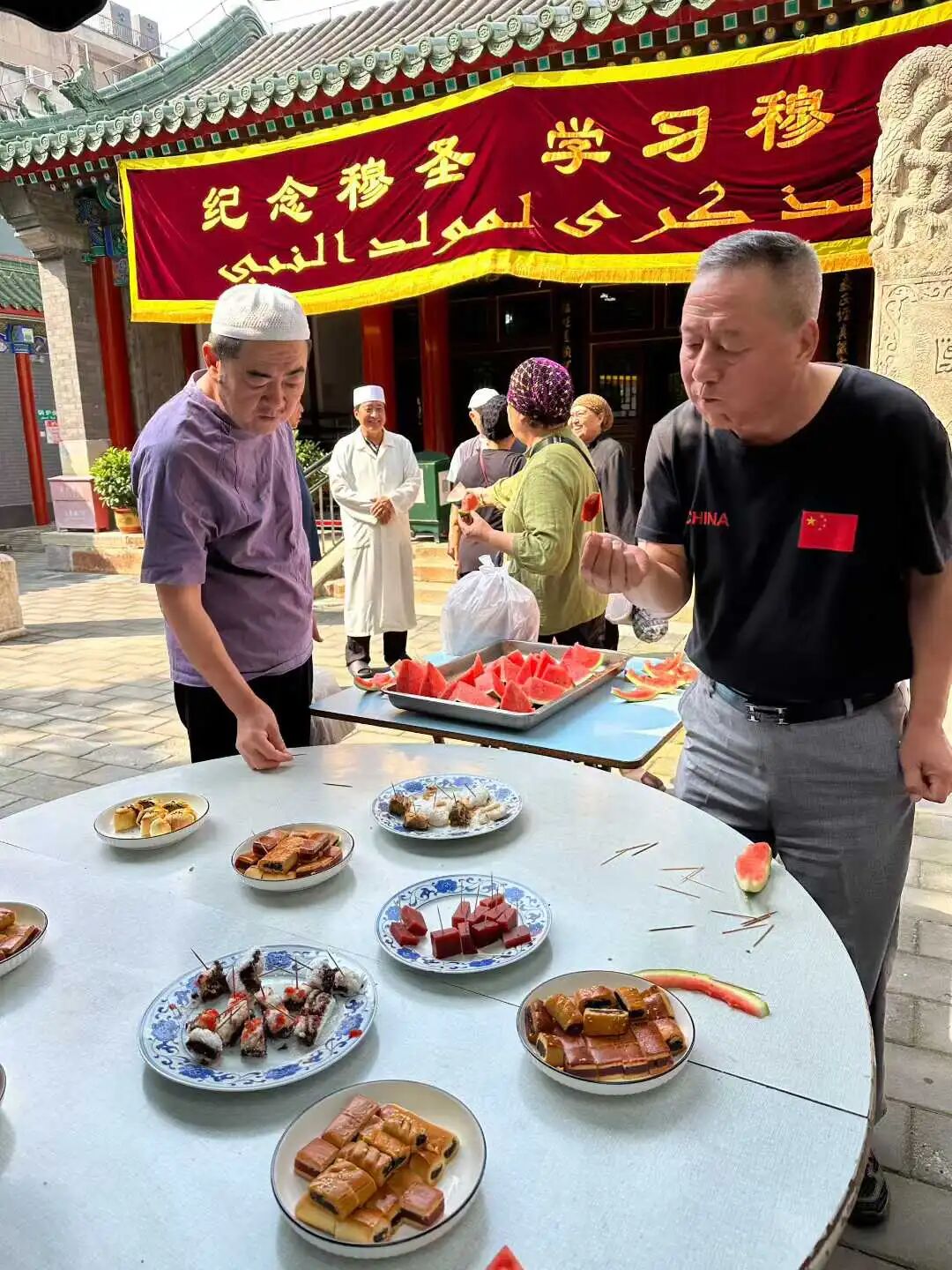
In the afternoon, I stewed some meat portions. Combined with the meat porridge, fried dough, pea flour cake (wandouhuang), and crispy beef distributed by the mosque, it made for a very classic Beijing Hui Muslim feast (nietie).
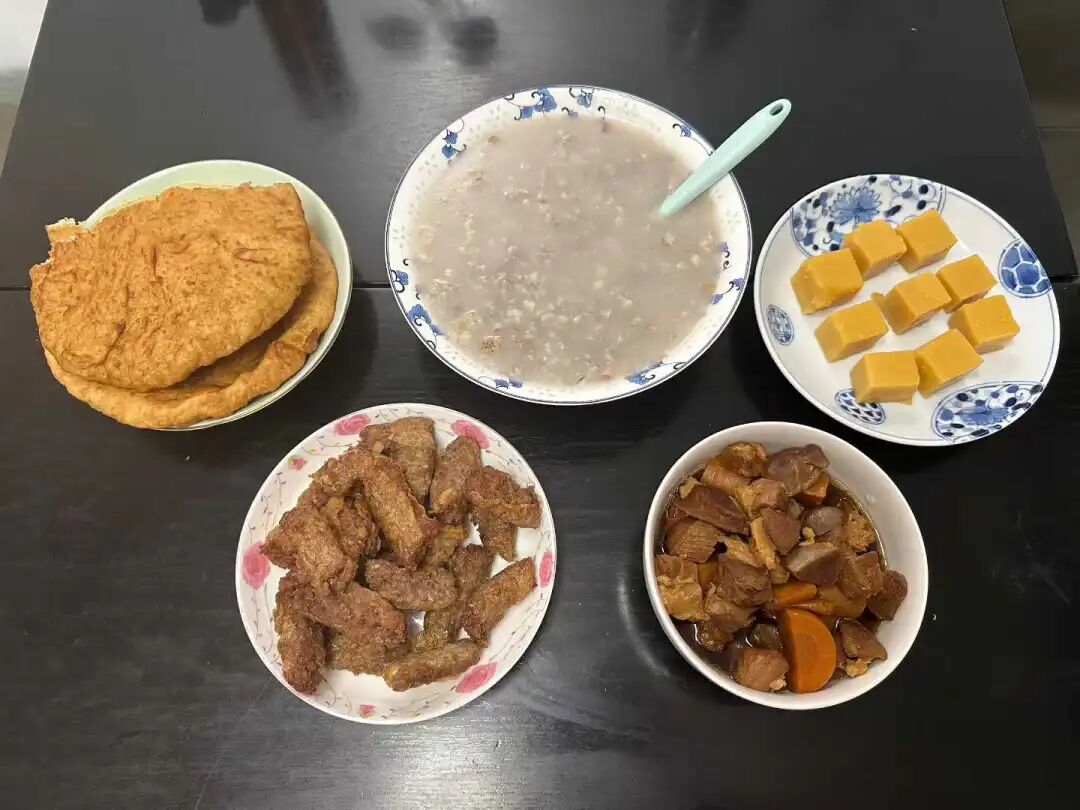
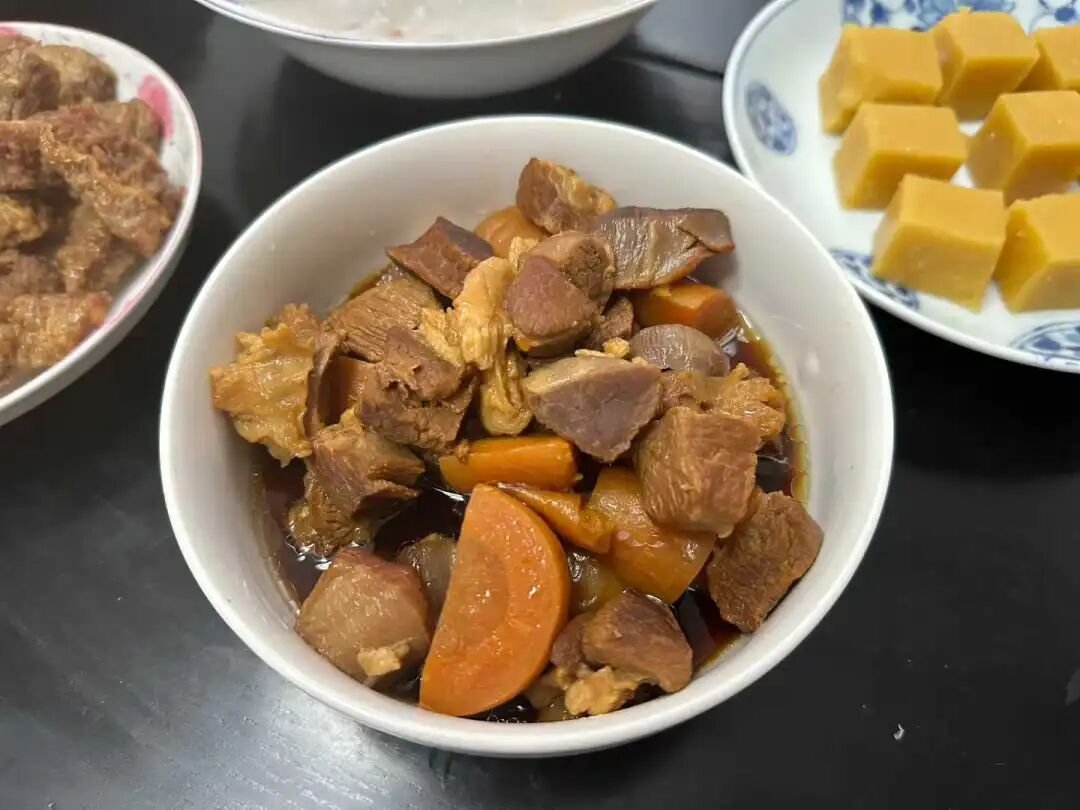
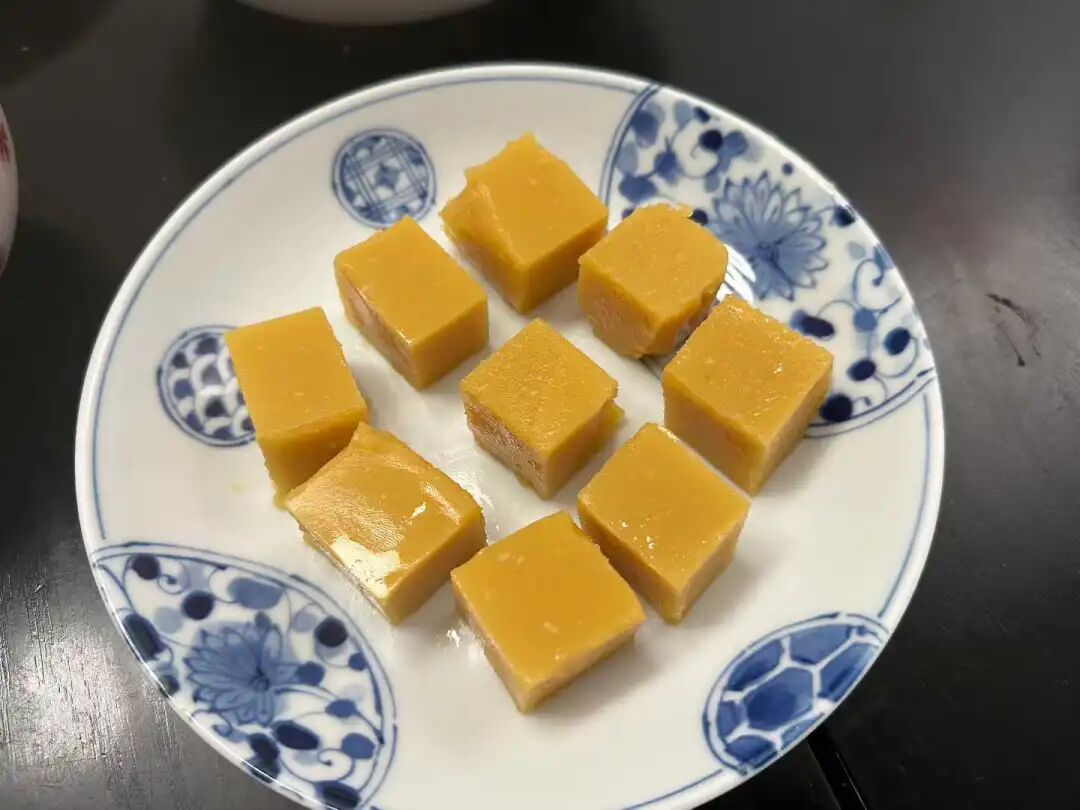
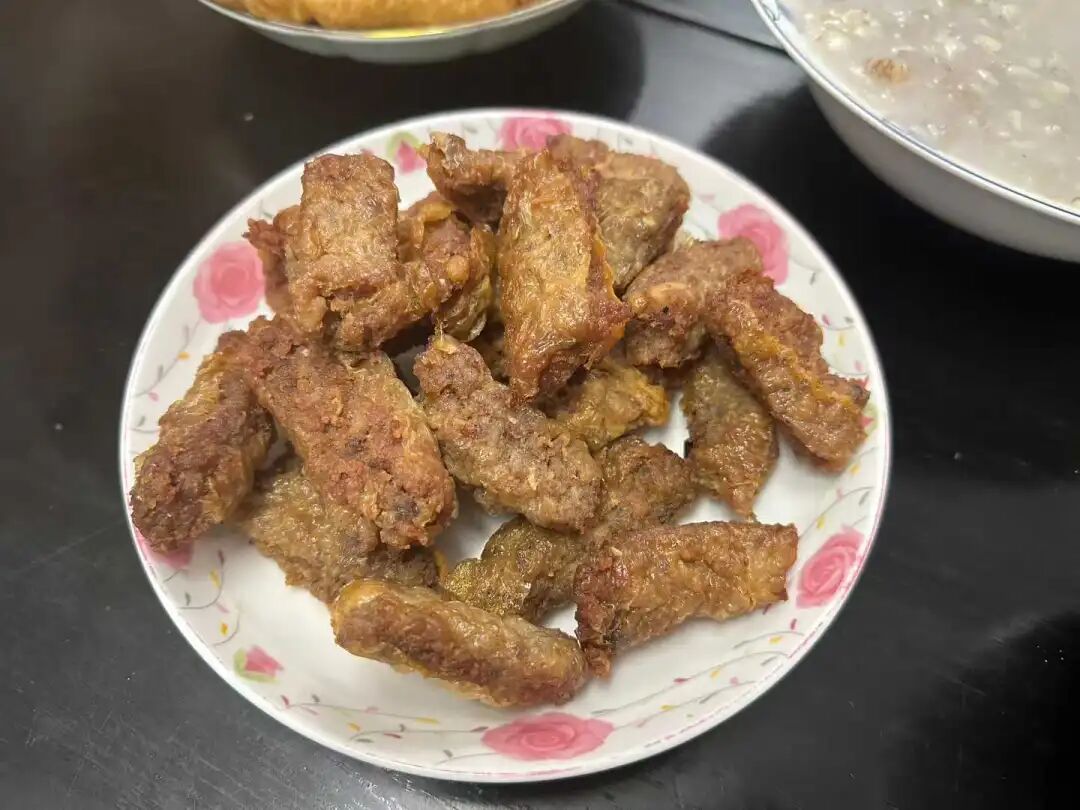

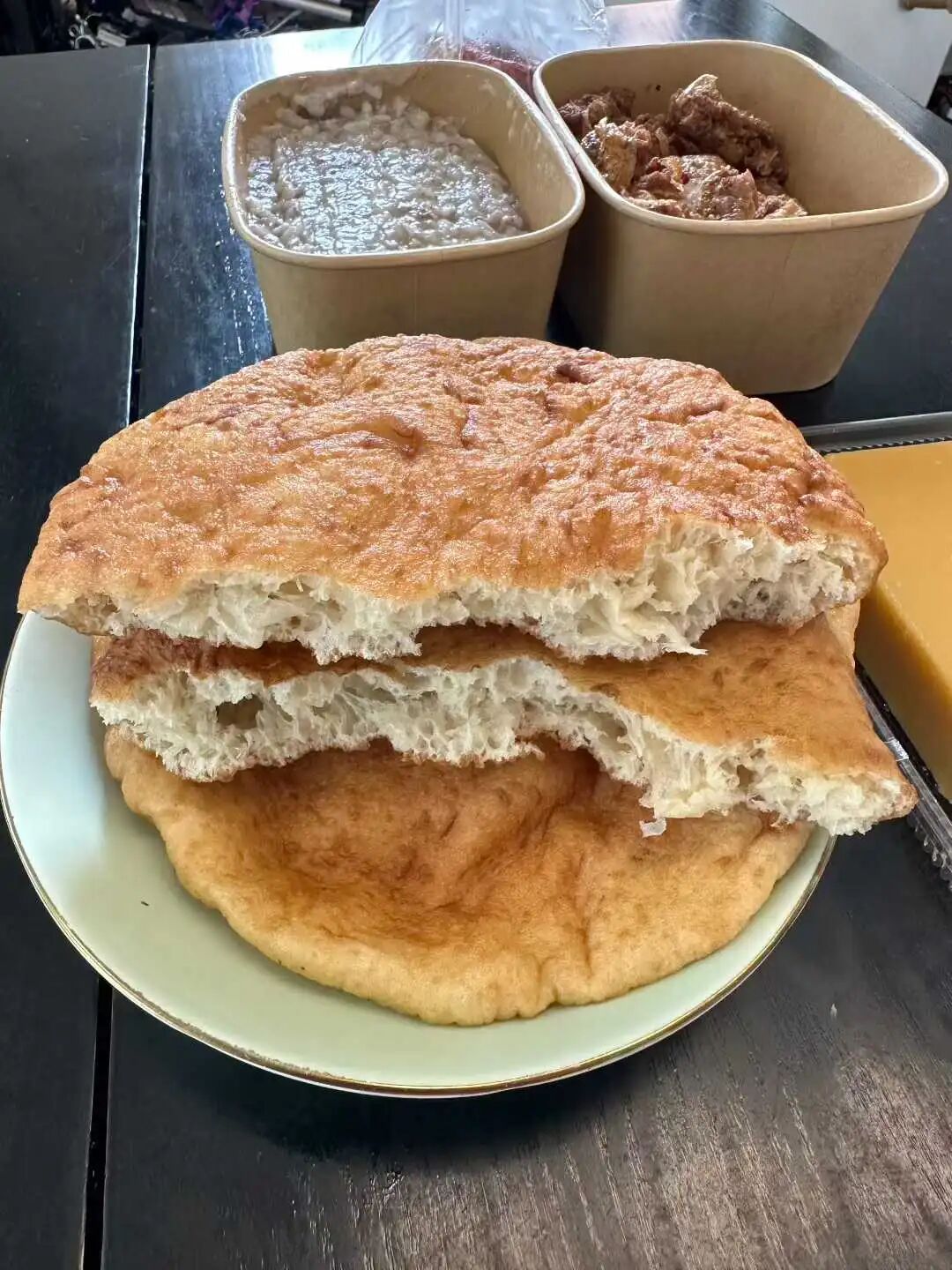
North of Sanlihe is the 'Hongmaogou Residential Area.' It was originally called 'Hongmaogou' (Red Hat Ditch) and was the cemetery for the Uyghur people known as the 'Red Hat Hui' who lived in the Hui camp on West Chang'an Street before the 1950s.
In 1759 (the 24th year of the Qianlong reign), after Emperor Qianlong pacified the Great and Small Khojas of the White Mountain faction, he summoned the surrendered Hui people, led by the 'Eight Hui Nobles,' to Beijing. The ordinary people among them were organized into the 'Hui People's Company' under the Left Wing Fifth Regiment of the Plain White Banner of the Imperial Household Department. In Manchu, this was called 'hoise niru.' They were settled in the Hui camp outside the West Chang'an Gate and chose Hongmaogou as their cemetery.
Besides the Uyghurs, Hongmaogou also contained the grave of Zhuazi Baba, one of the two great sheikh graves in Sanlihe. In the past, every spring, many Beijing Hui Muslims would take their families to visit the grave of Zhuazi Baba to offer dua.
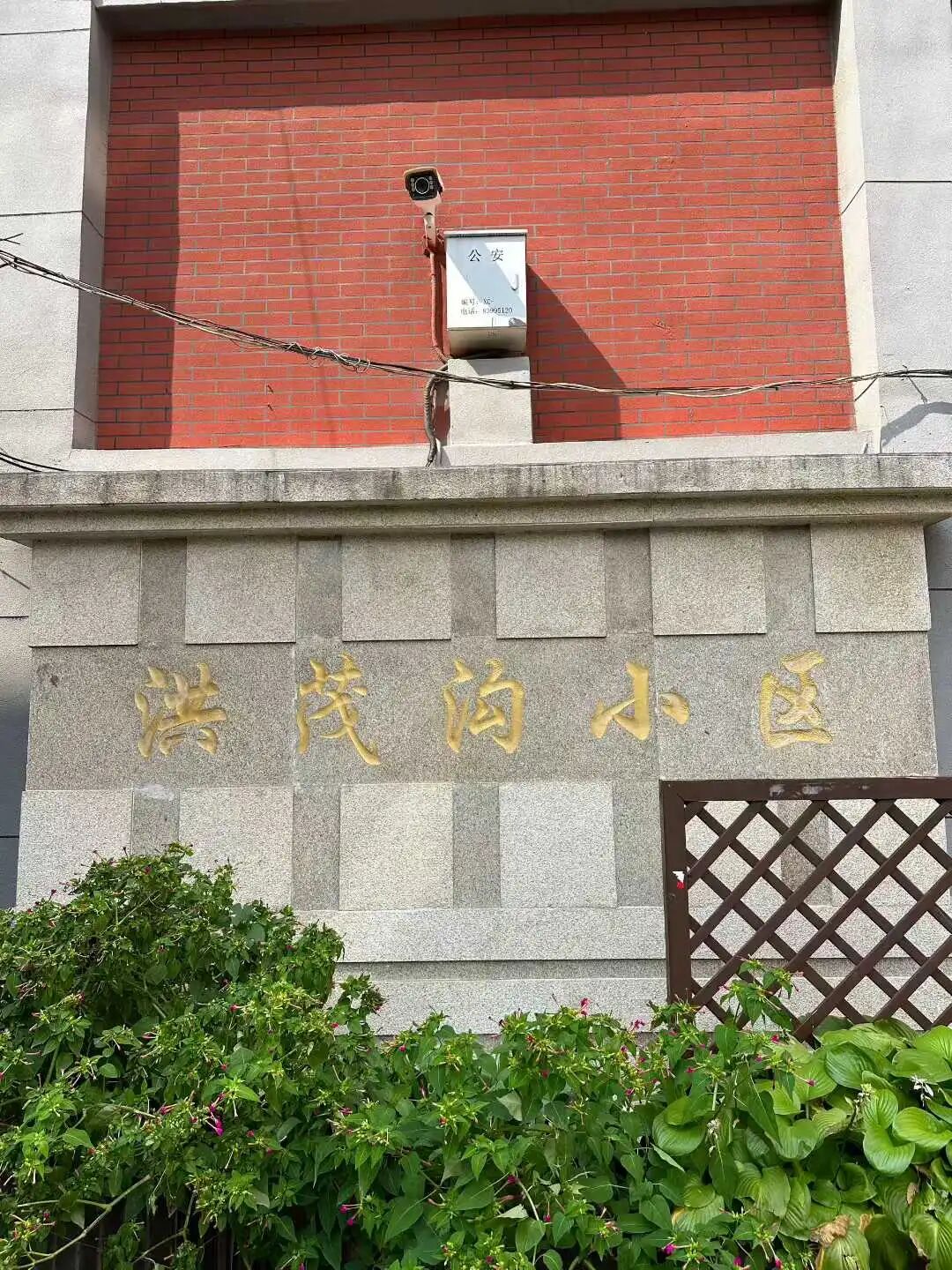
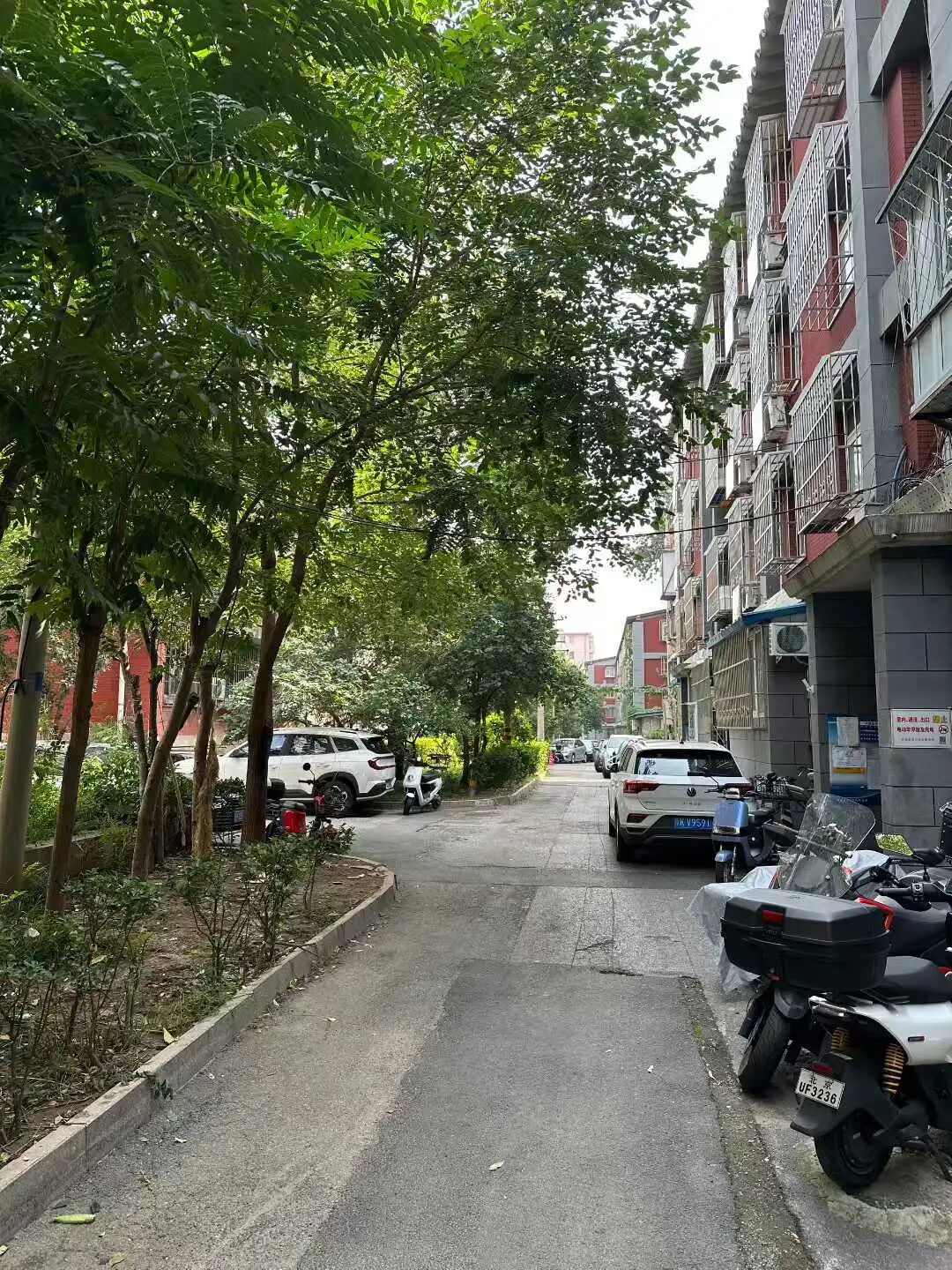

On Sunday morning, I attended the Mawlid at Xihui Mosque. Xihui Mosque is located by the Beijing-Hangzhou Grand Canal. It was built in 1821 (the first year of the Daoguang reign) and is not far from Yangzha Mosque and Guanzhuang Mosque. Although the mosque and the community were separated due to relocation and high-rise development, the new residential area is not far away, so the community still has a strong sense of unity, and the holy gathering was very lively.
Before the Mawlid began, everyone drank meat porridge and ate fruit, chatting with each other to strengthen friendships. After the Mawlid started, the imams from various communities in Chaoyang District led the opening dua, followed by scripture recitations. Then, the local imam gave a sermon to commemorate and learn from the noble Prophet.
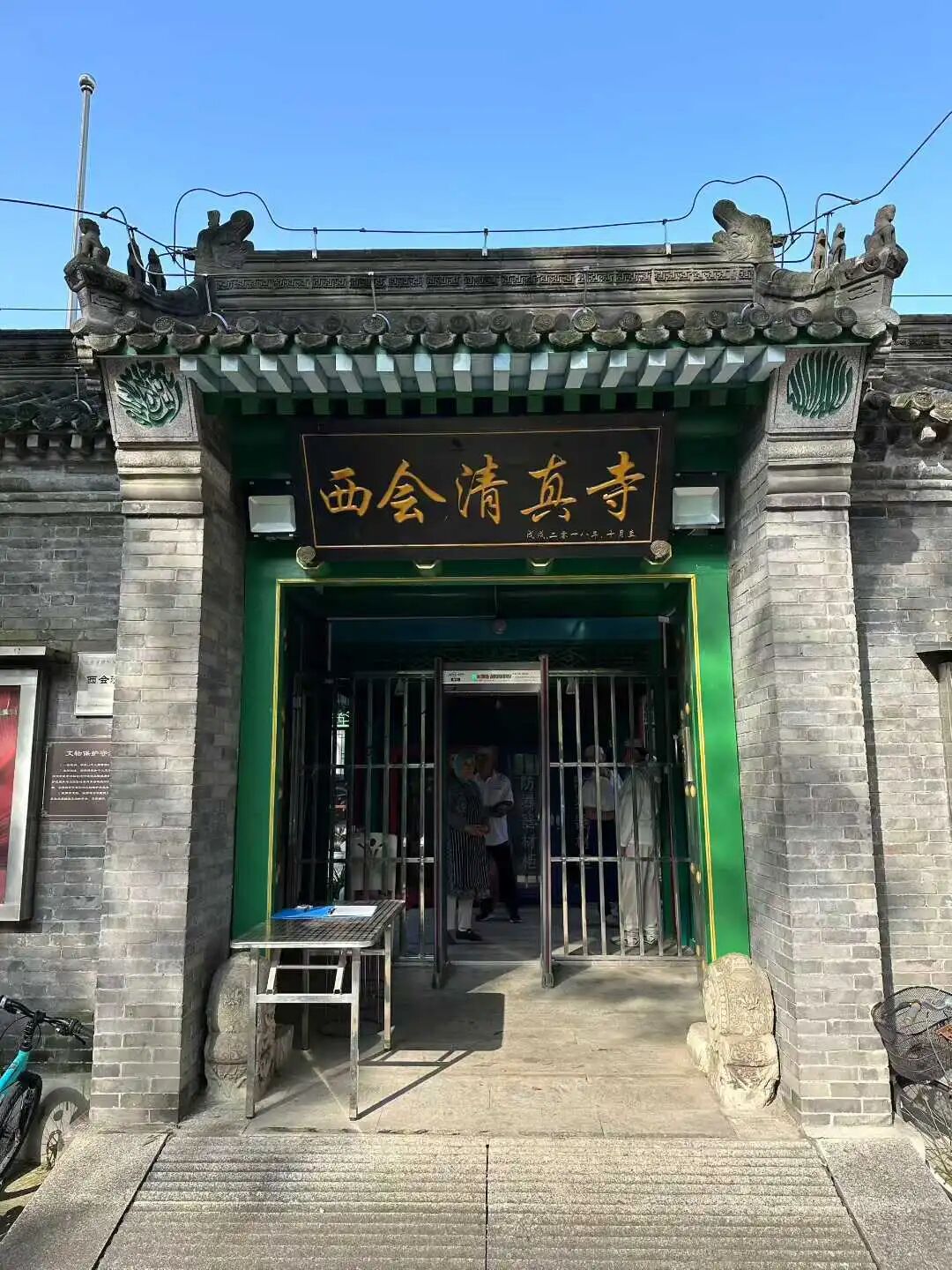
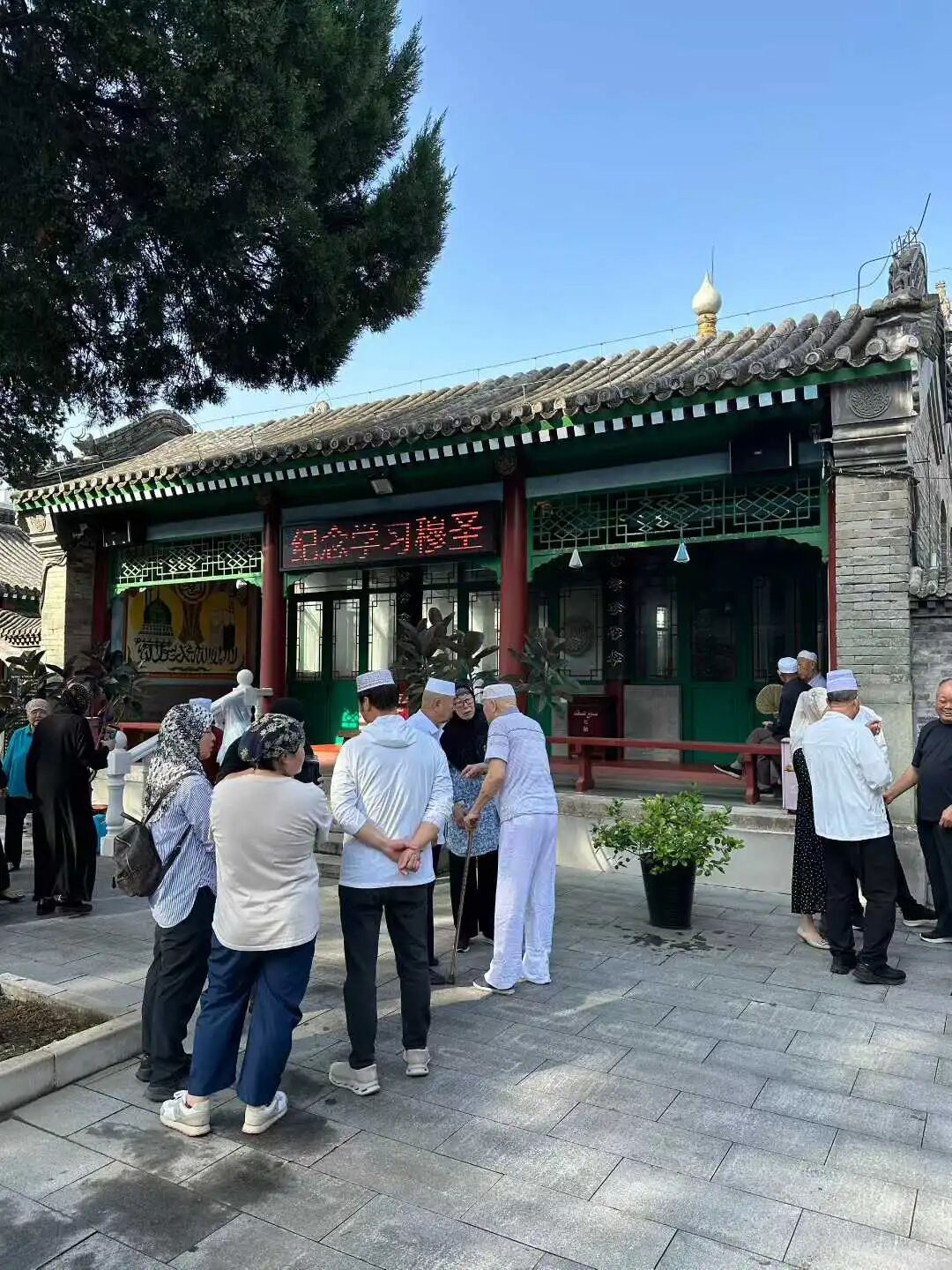
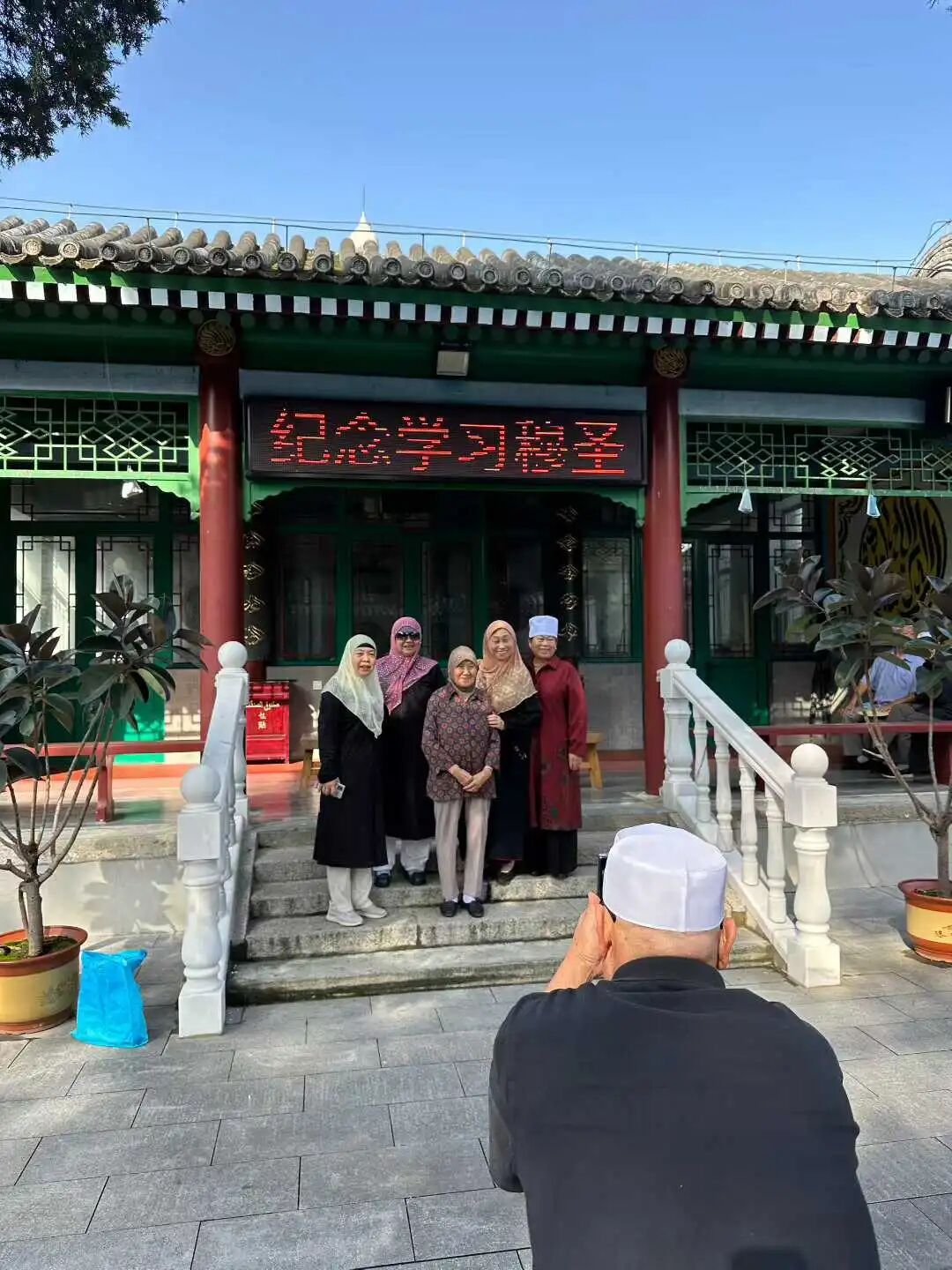
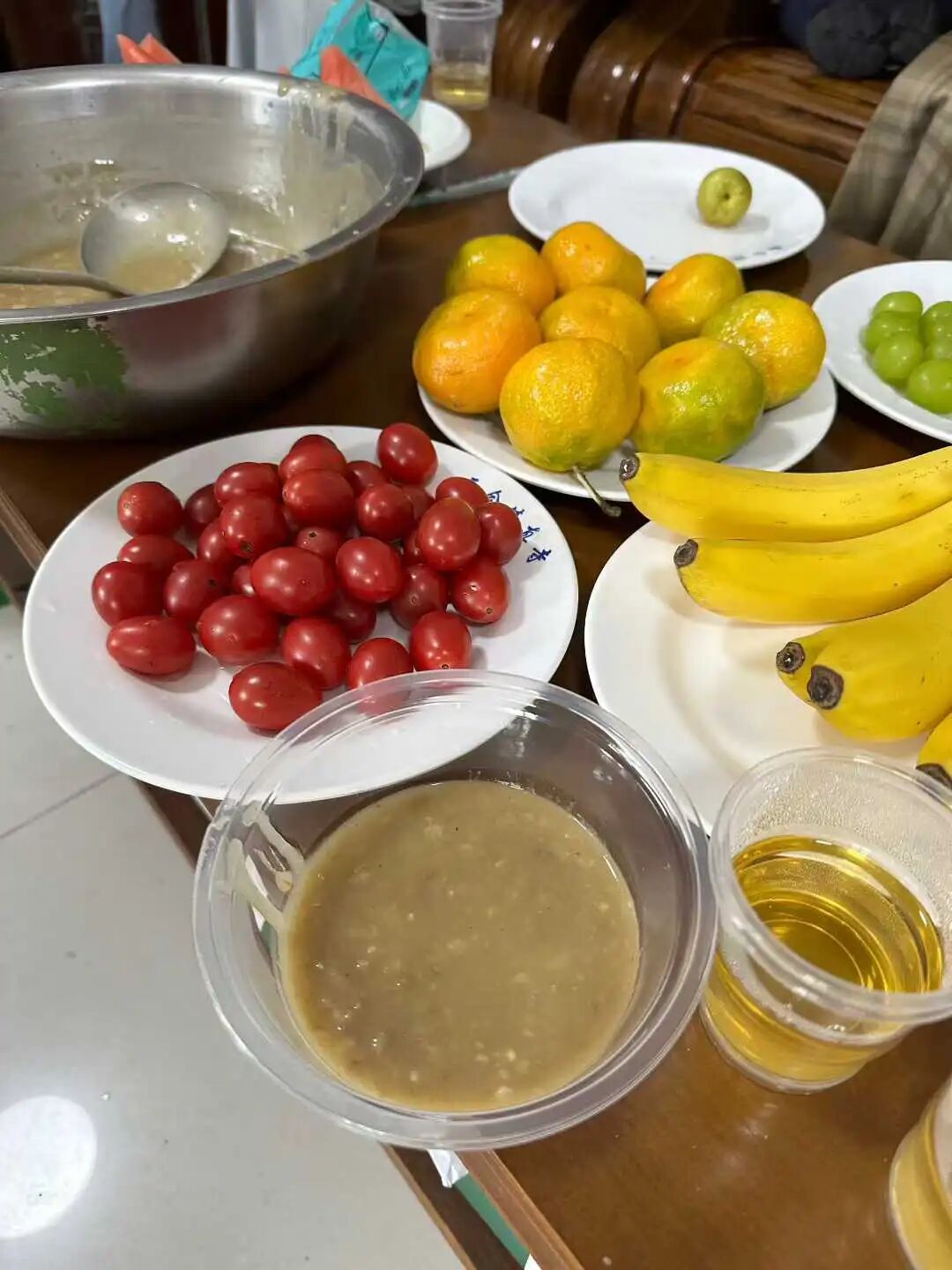
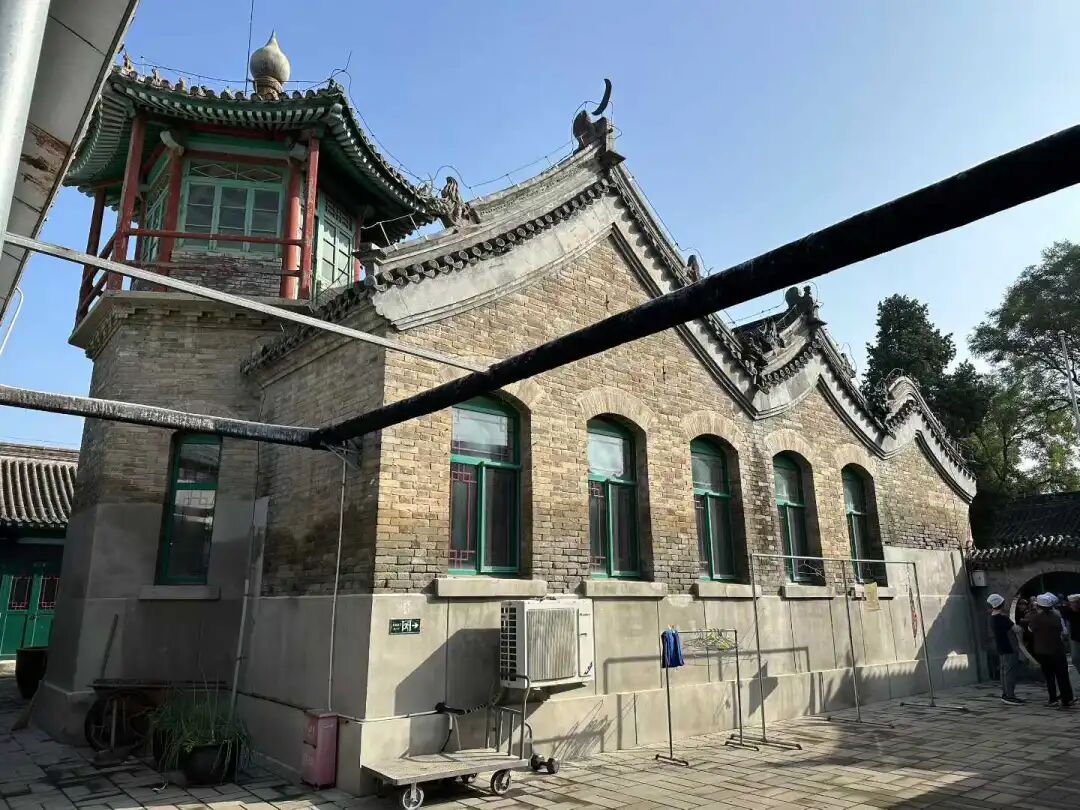
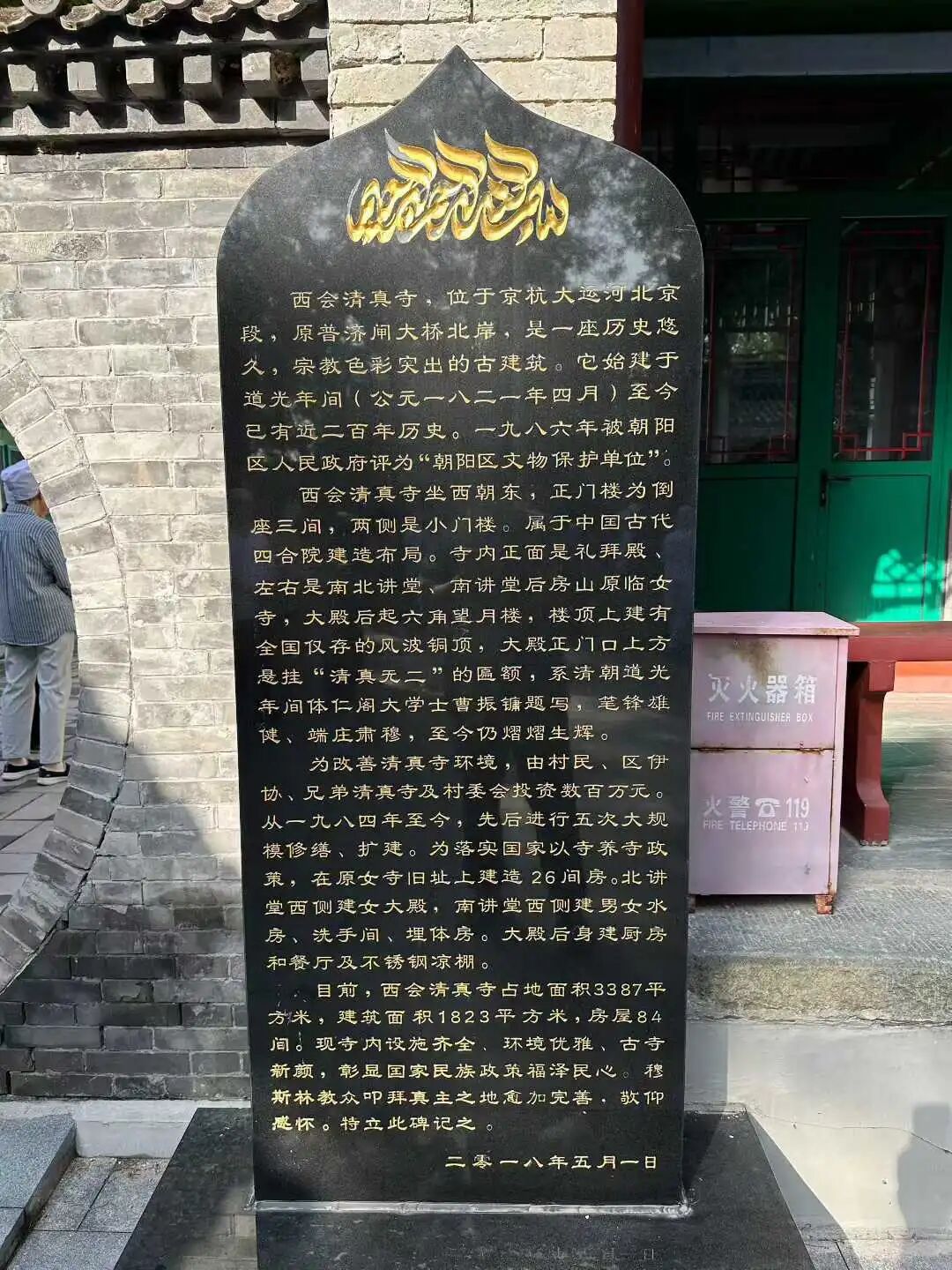
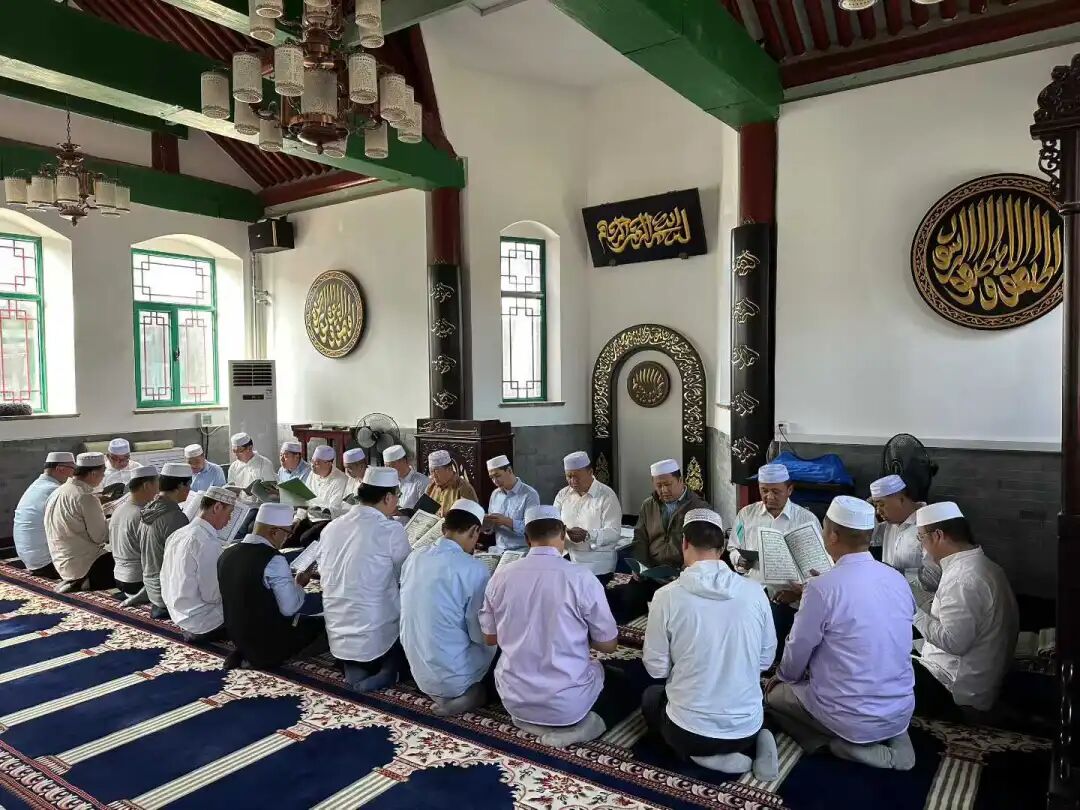
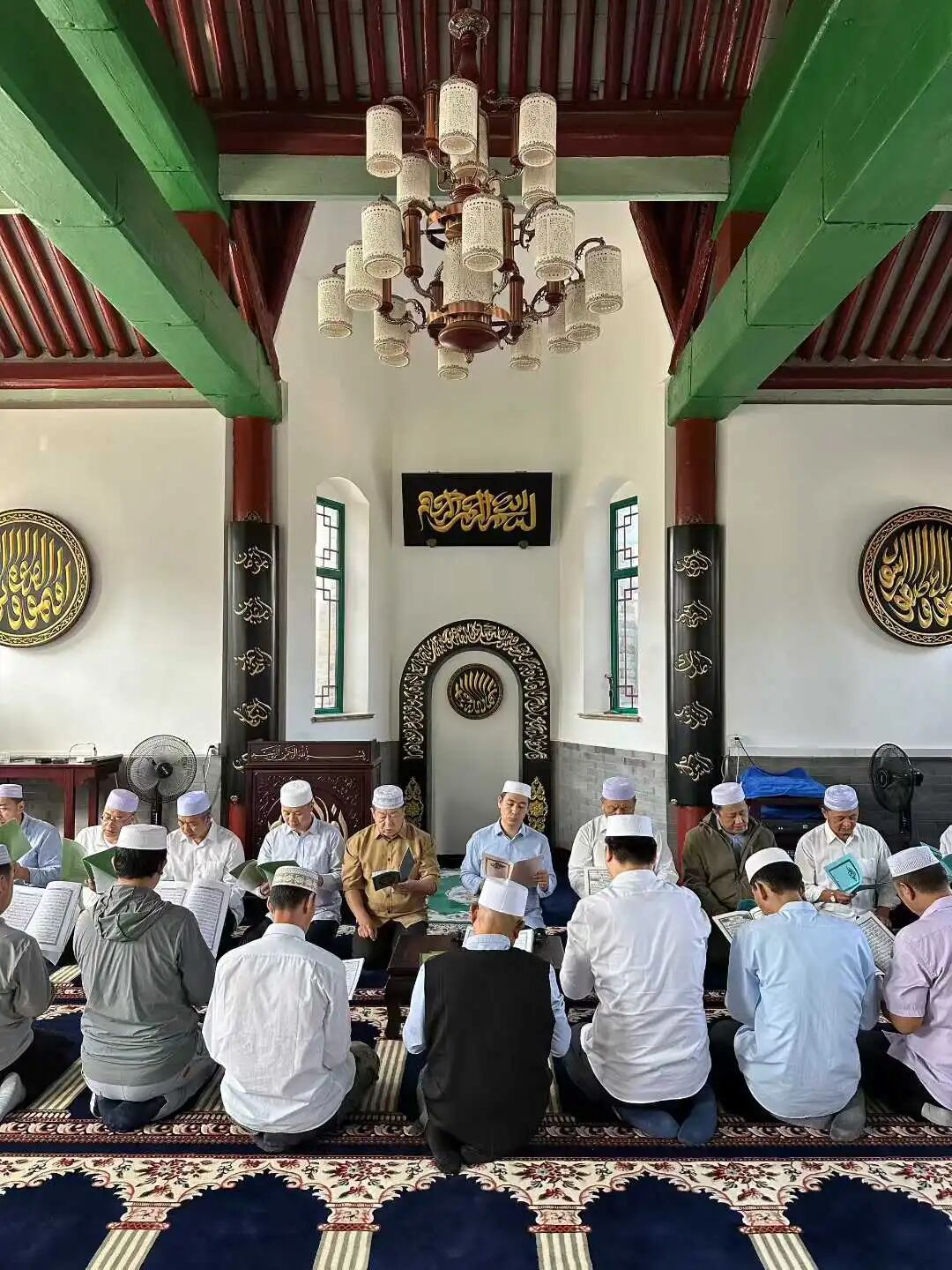
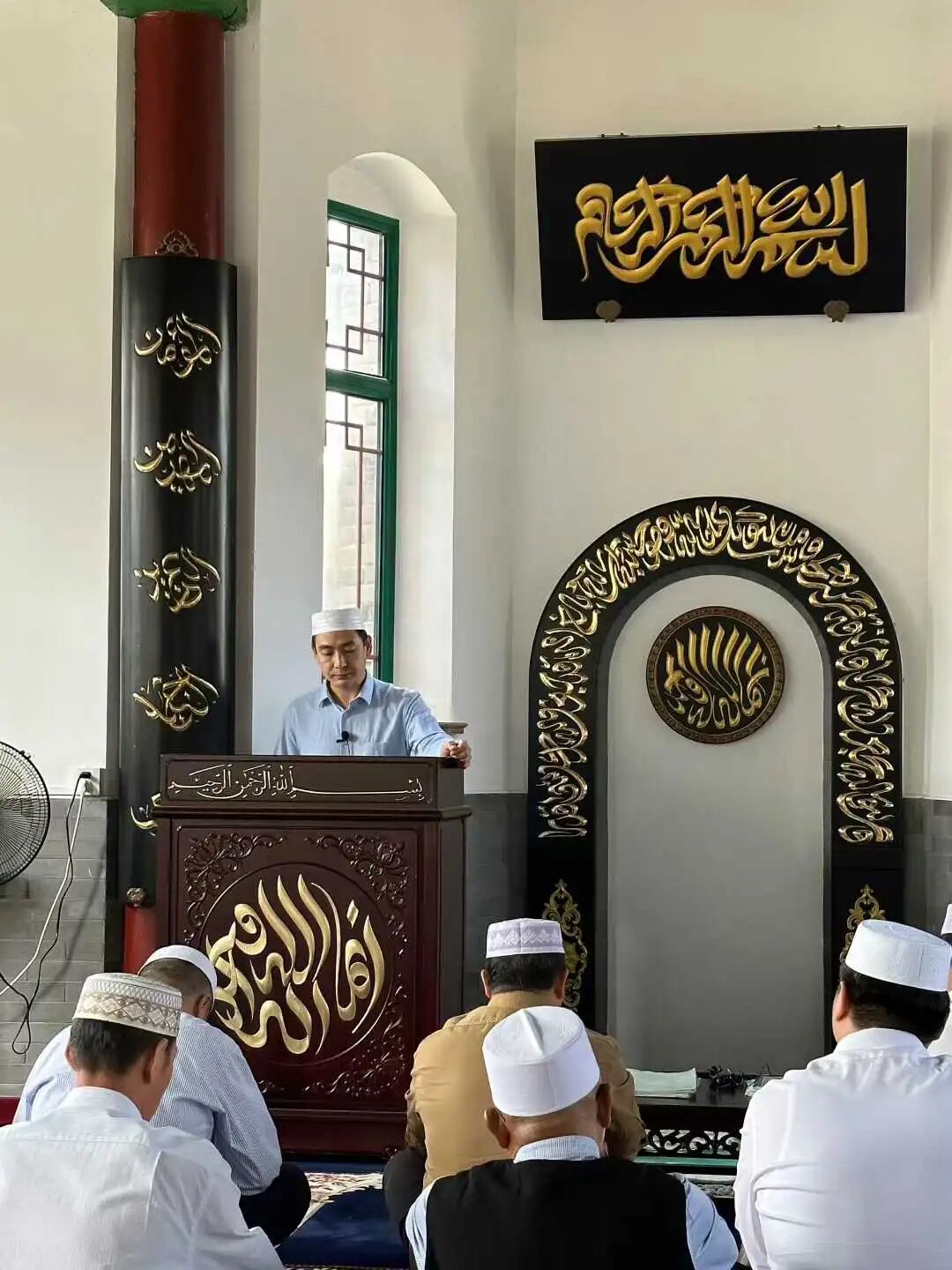
After leaving the prayer hall, everyone went to the feast. Following the tradition of 'guests first, locals later,' the imams, directors, and guests invited by the mosque sat down to eat first, and the local community members took their seats afterward.
The kitchen at Xihui Mosque is a long room where everyone worked in an orderly and organized way. After entering, the first thing you see is the 'eight big bowls' of stewed dishes. Stewed beef, meatballs, crispy beef, lamb offal, kelp, and yam were served as people ate. Next was the frying area, where sugar-filled fried rolls (tangjuanguo) and toothpick meat were fried on the spot. Next is the stir-fry area, where they quickly cook dishes like stir-fried tripe with coriander (yanbao sandan), stir-fried shrimp (qingchao xiarou), diced chicken with cashews (yaoguo jiding), stir-fried lamb with scallions (congbao yangrou), and braised eggplant (hongshao qiezi) over high heat. Finally, there are the steamers, with paper-wrapped fish (zhibaoyu) steaming on one side and rice on the other.
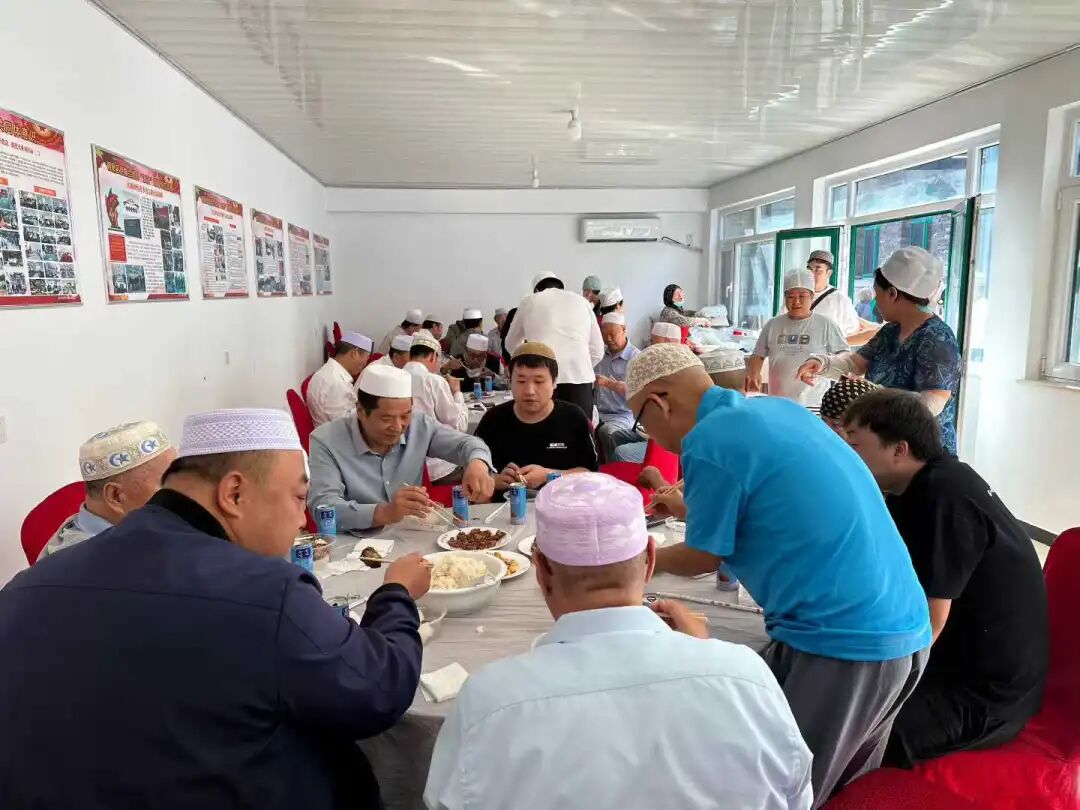
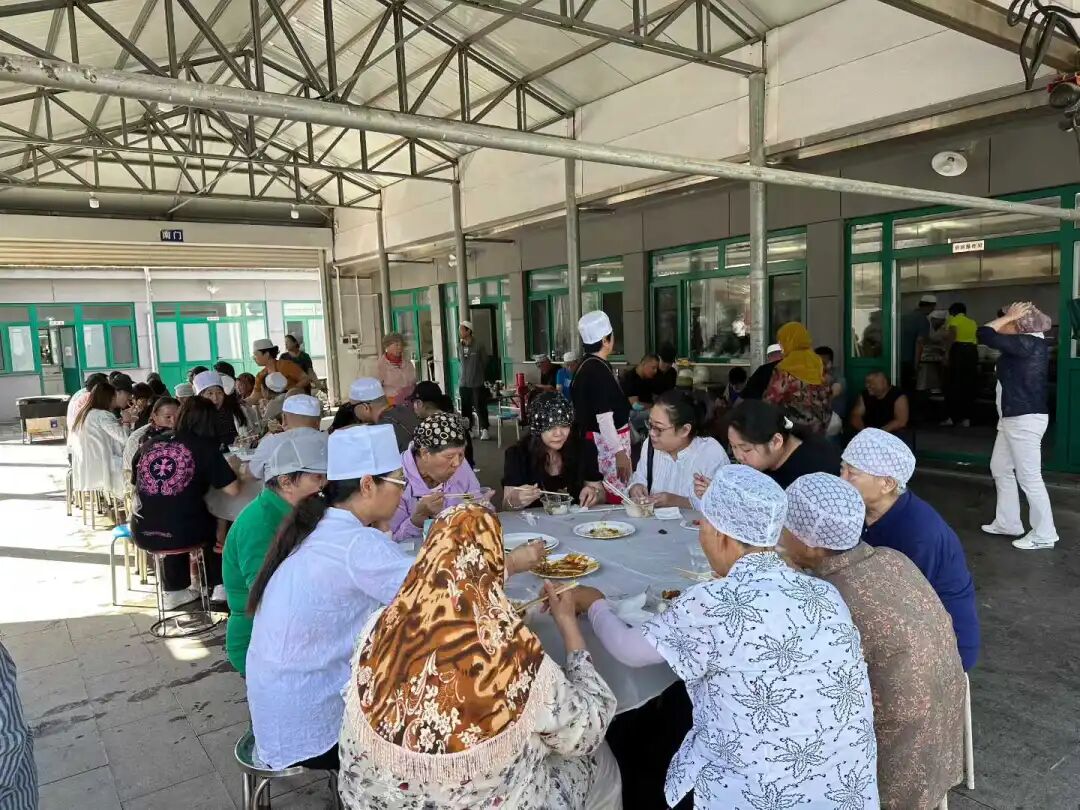
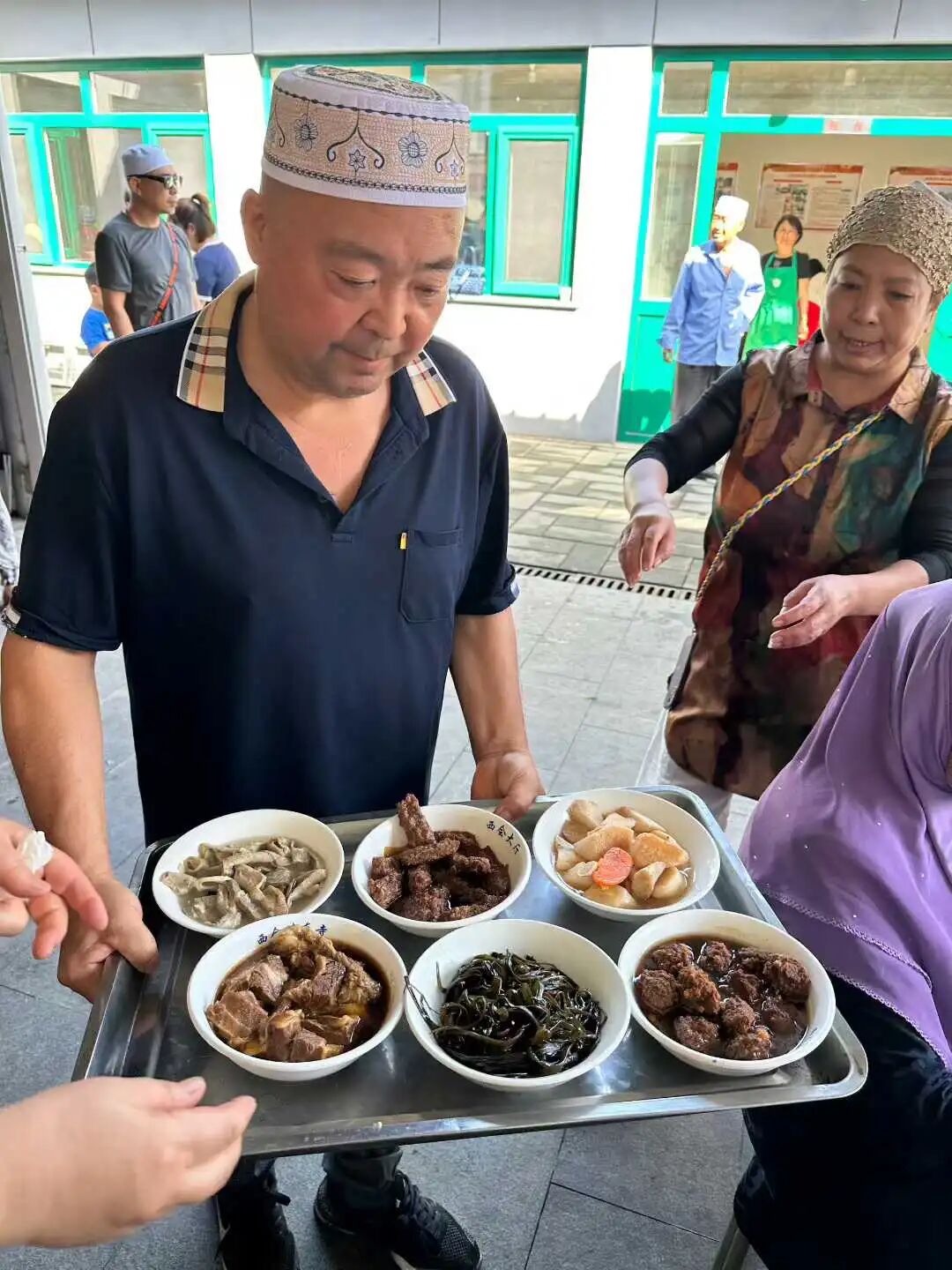
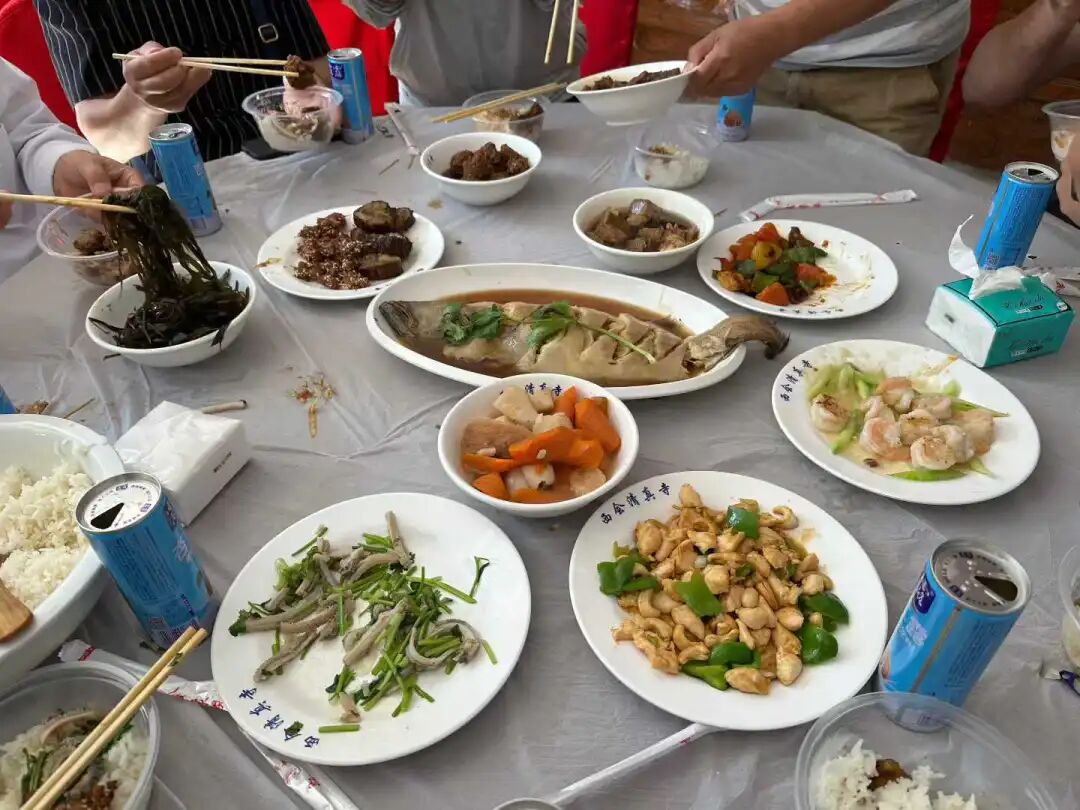
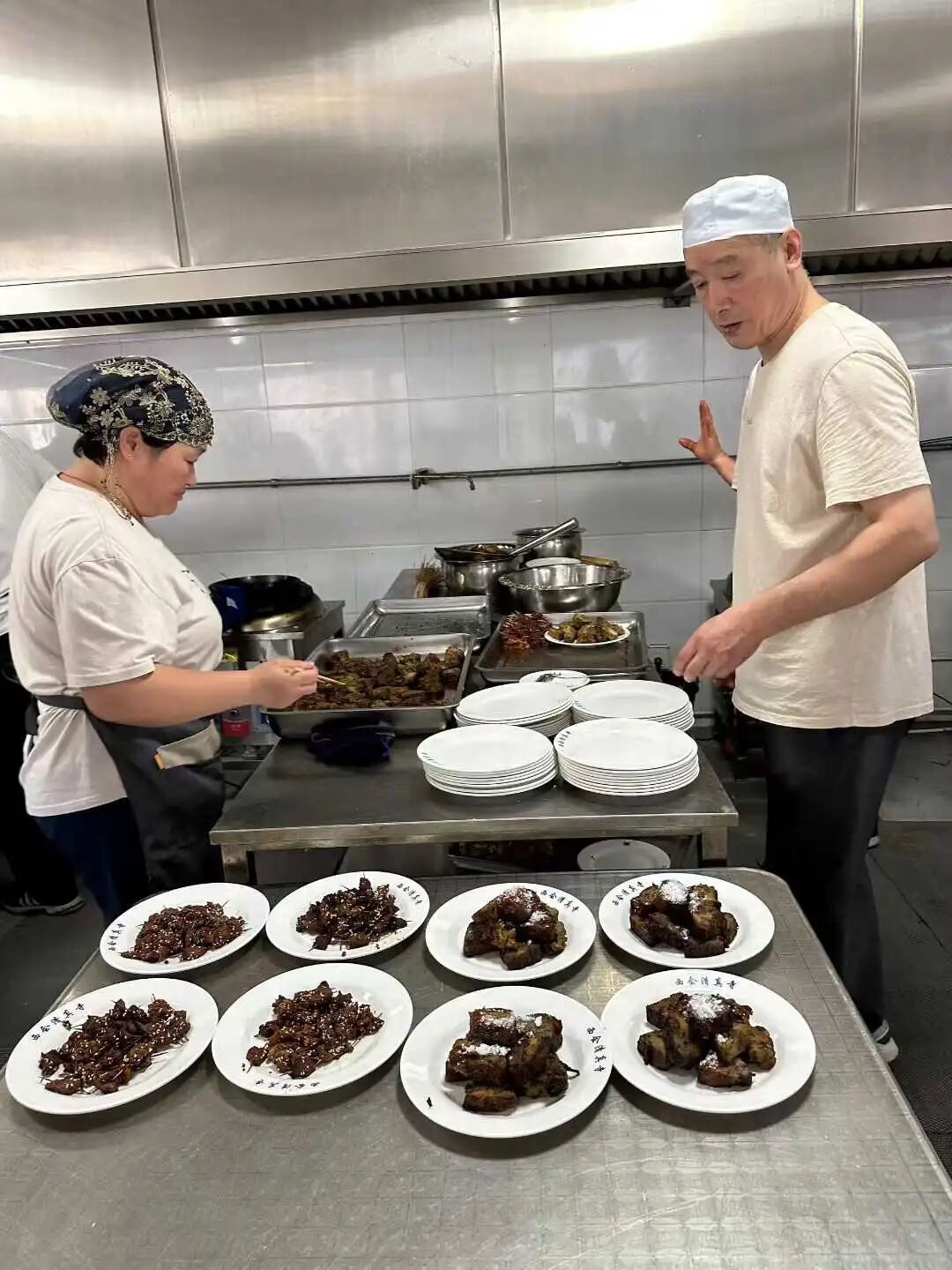
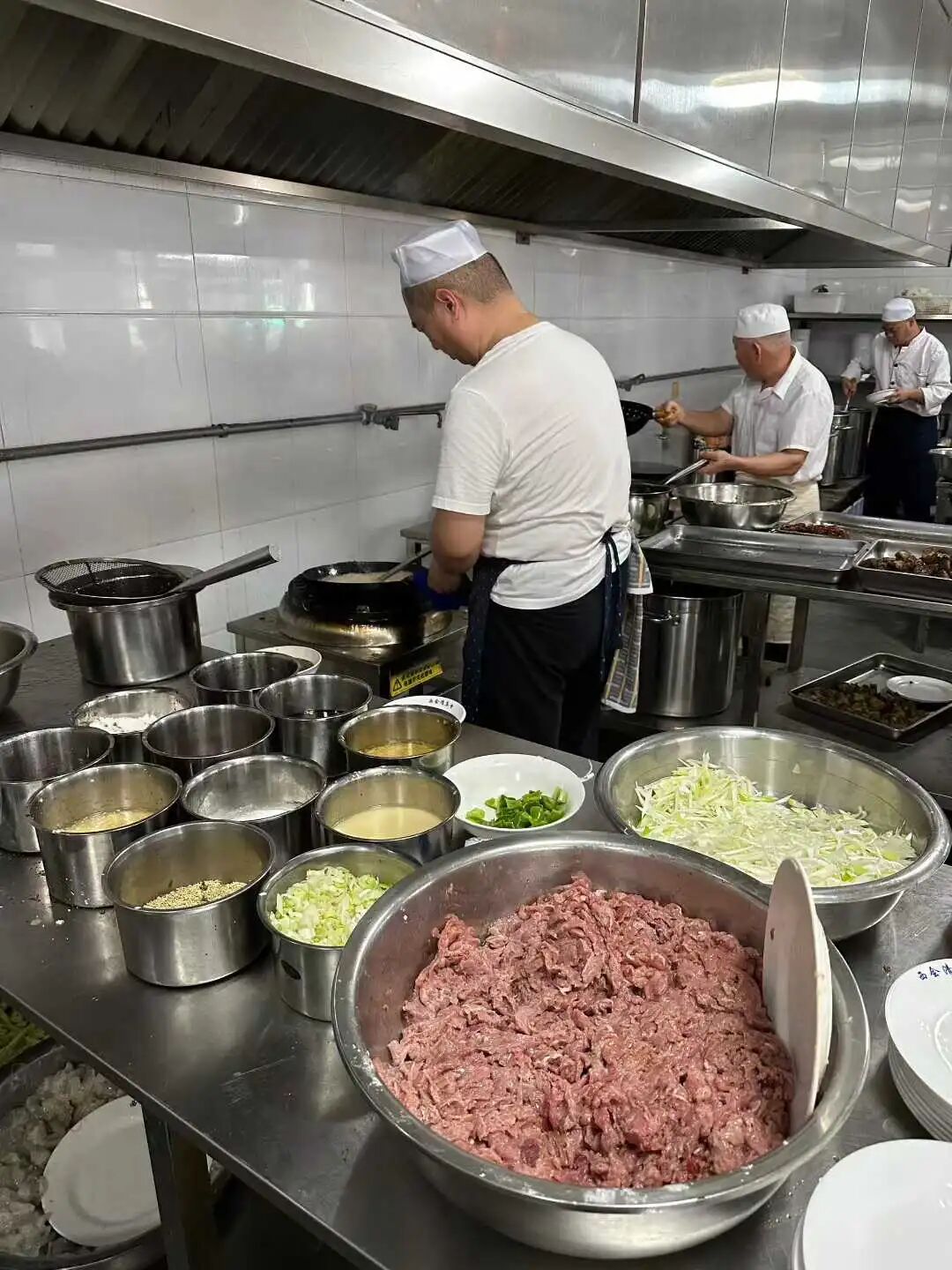
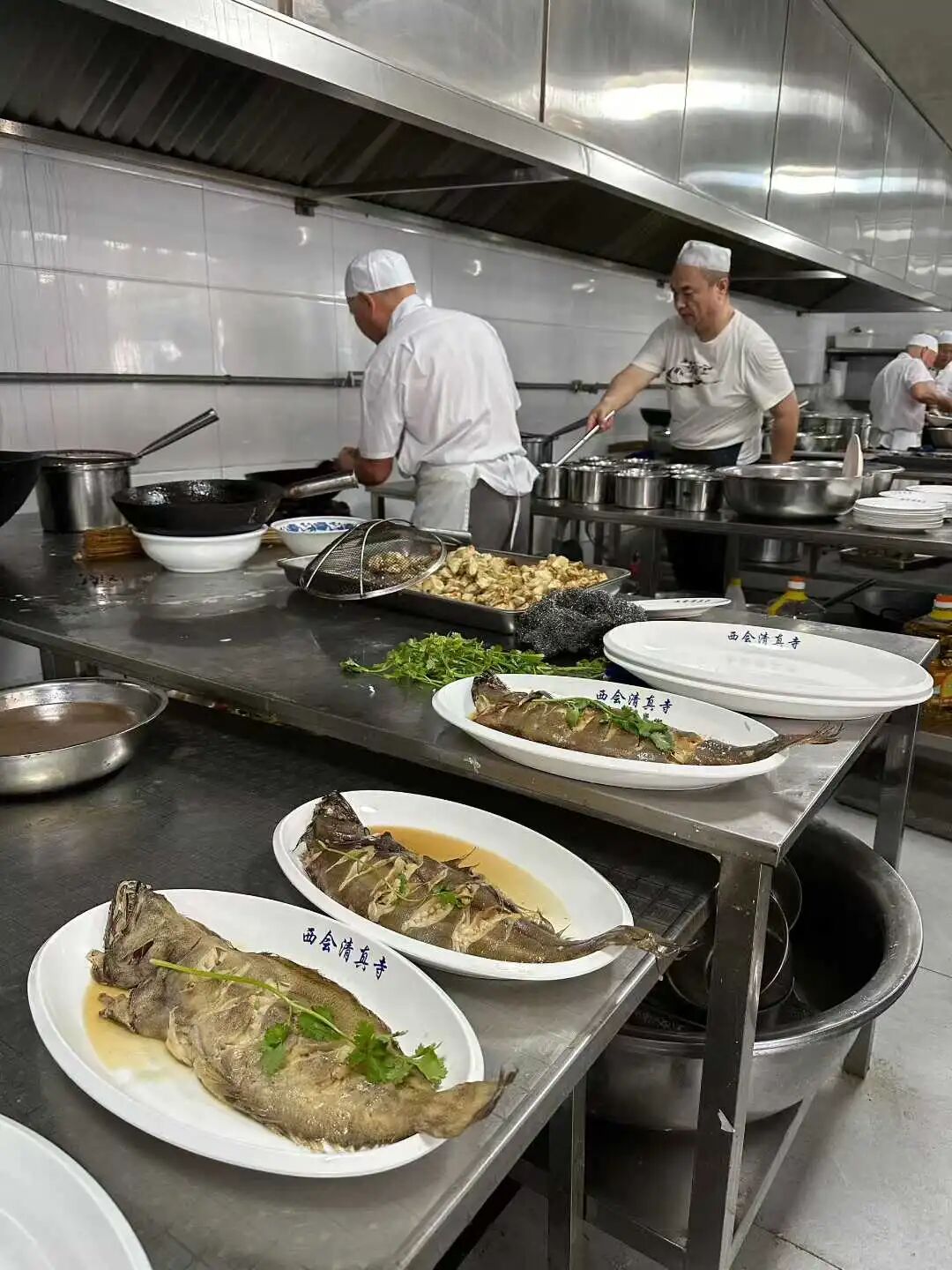
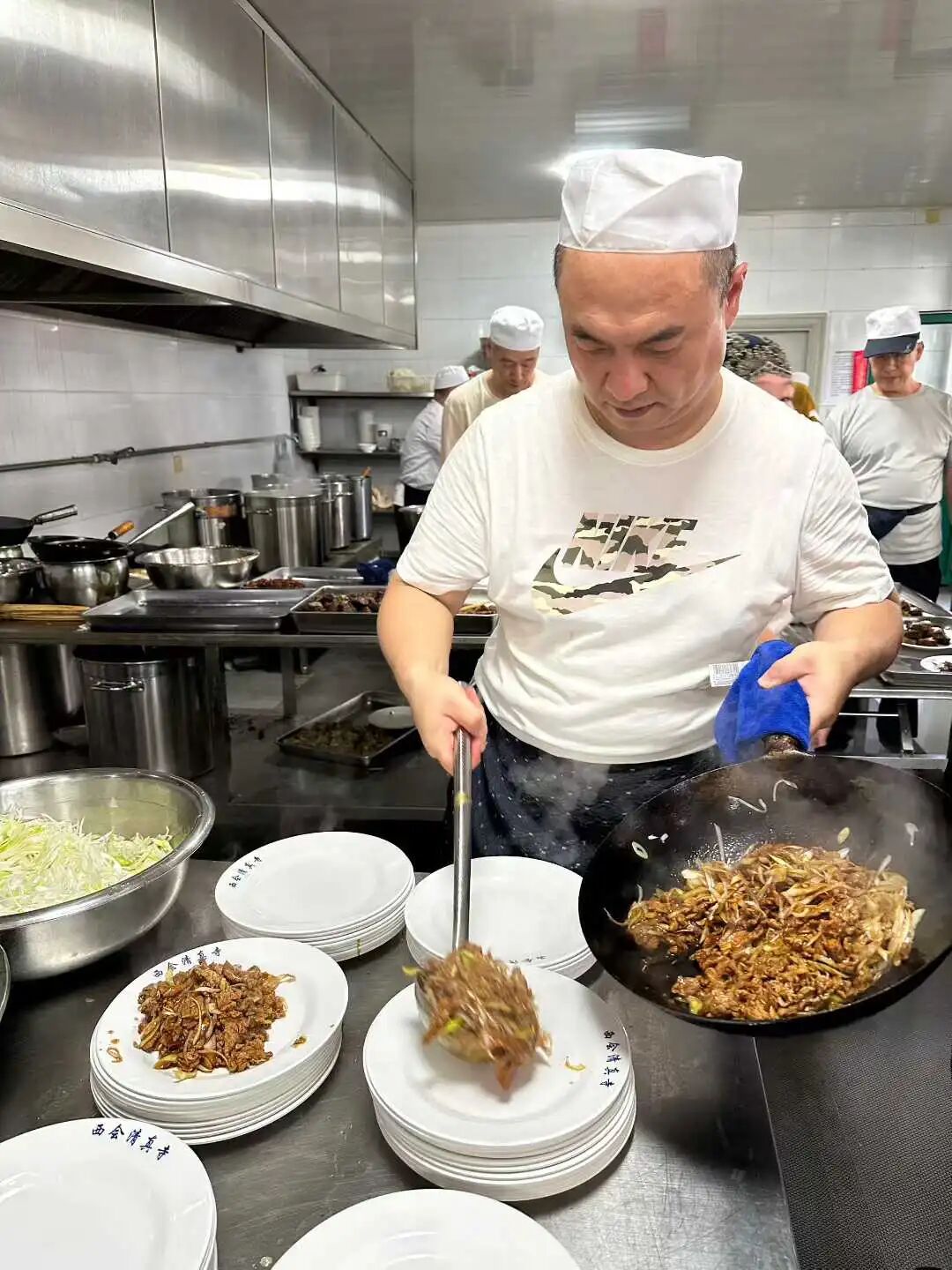
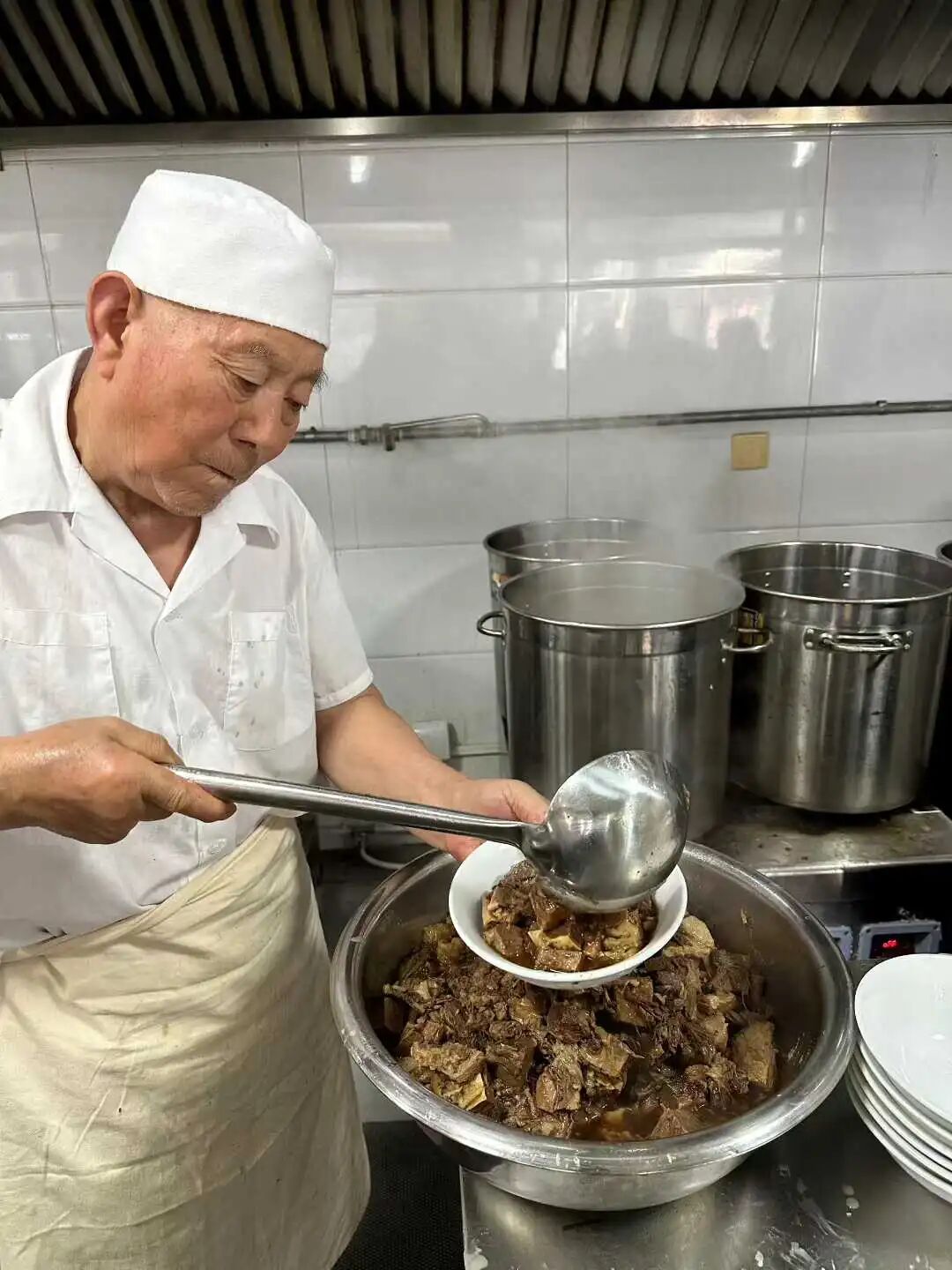
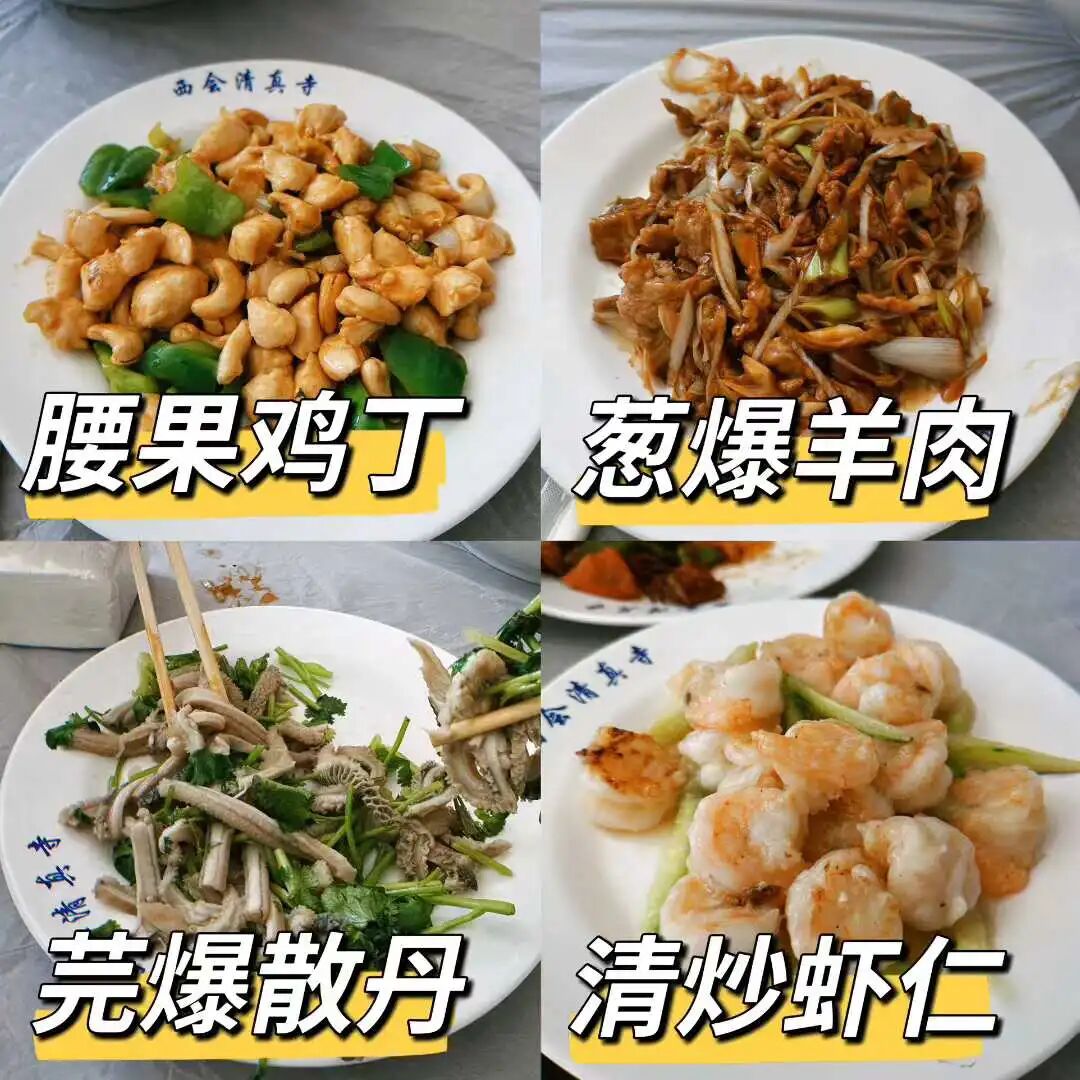
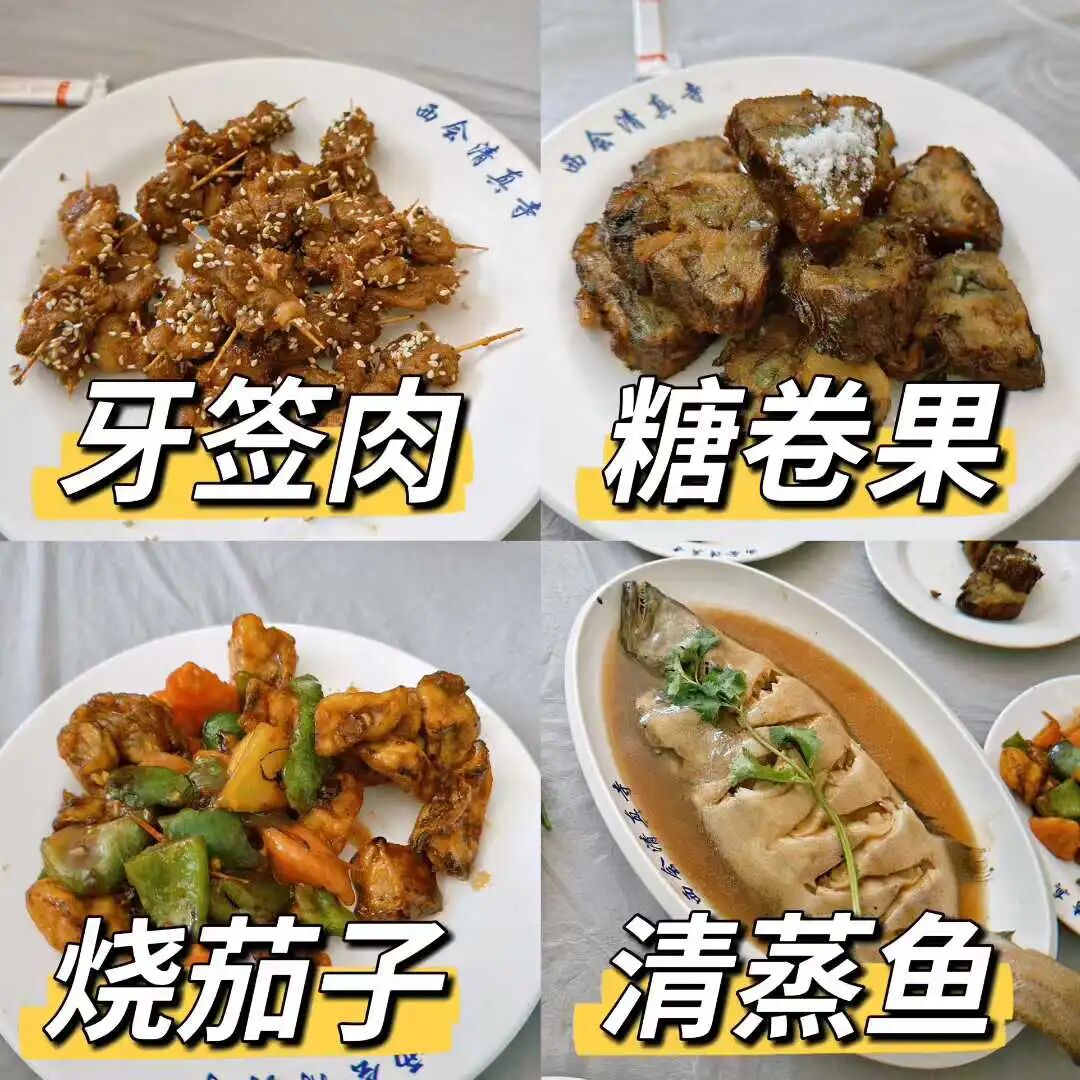
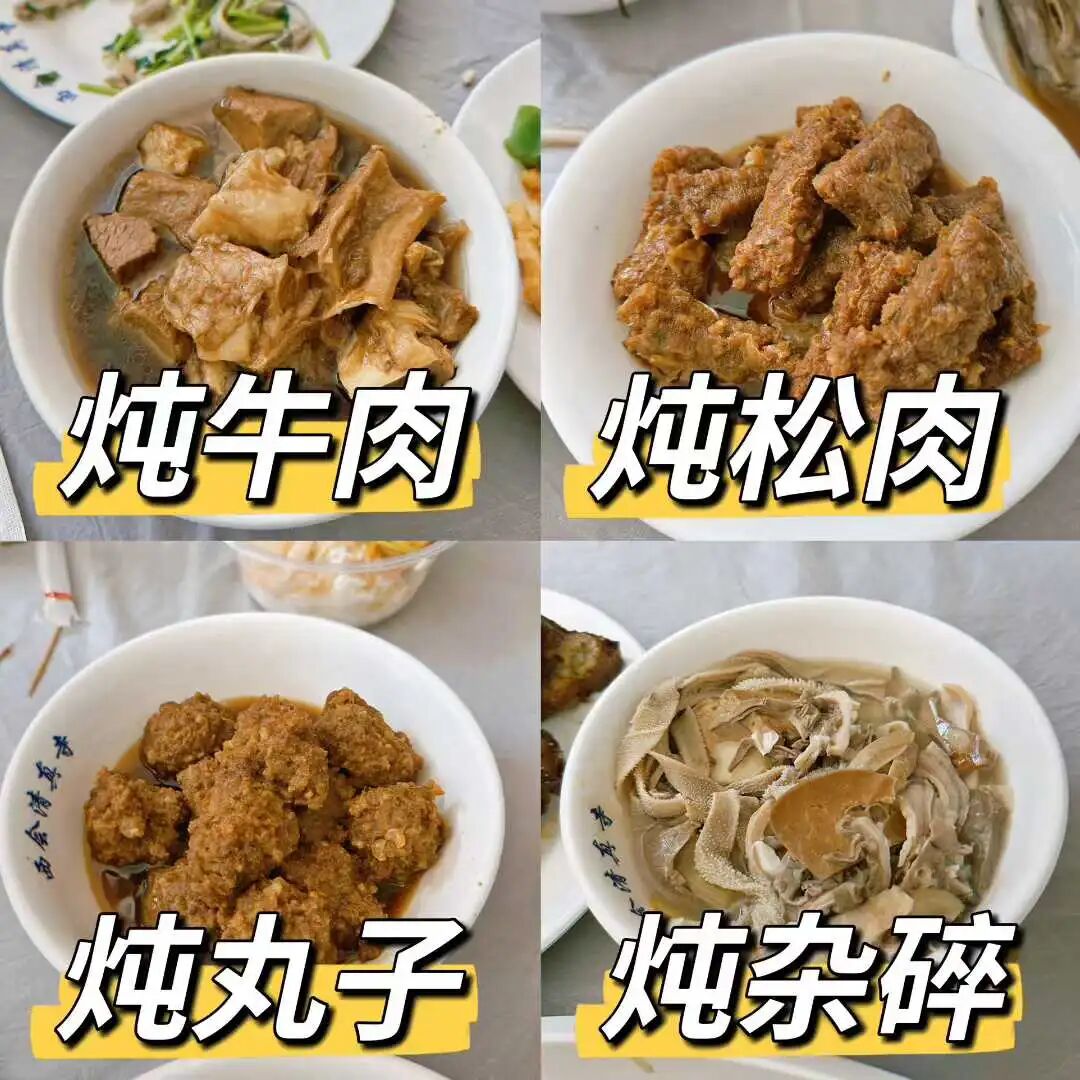

Halal Travel Guide: Beijing - Mawlid Week at Dongsi, Balizhuang and Yangzha
Articles • ali2007fr posted the article • 0 comments • 293 views • 2026-05-20 09:25
Summary: The first week of Beijing's Mawlid month included gatherings at Dongsi Mosque, Balizhuang Mosque, and Yangzha Mosque. The travel note records prayers, Quran recitation, sermons, meat porridge, mosque kitchens, and a traditional Beijing Muslim banquet.
Blessed Mawlid, Mawlid Mubarak. The 12th day of the third month in the Islamic calendar is believed to be the birthday of the noble Prophet. Around this day, friends (dosti) all over the world hold events to commemorate the noble Prophet, known as Mawlid or Eid-e-Milad an-Nabi. In China, these are called Shengji, Sheng-hui, or Shengdan.
Commemorations for the noble Prophet date back to the time of the followers of the companions (Tabi'un), though they were mostly private events in the early days. Large-scale commemorations can be traced back to Egypt during the Fatimid dynasty in the 12th century. In 1207, Saladin's brother-in-law Gökböri first established the Mawlid as a public holiday, which helped the celebration spread. The Ottoman Empire made the Mawlid an official holiday in 1588, calling it Mevlid Kandili, which means the Candle Festival of the Prophet's Birthday.
When the Mawlid begins, mosques across Beijing start holding commemorative gatherings that last for an entire month. Last weekend, I attended three gatherings in Beijing at Dongsi, Balizhuang, and Yangzha, where I enjoyed meat porridge, fried dough (youxiang), and traditional eight-bowl banquet dishes (badawan).
On Friday, the day of Jumu'ah, I spent the Mawlid at Dongsi. Before the Jumu'ah prayer, a sermon (wa'z) explained the significance of remembering the noble Prophet. After the prayer, President Yang Faming and various imams recited the Quran (yuanjing). After leaving the prayer hall, we enjoyed fruits and snacks.
On Saturday, I attended the Mawlid at Balizhuang Mosque. Imams from various mosques in Chaoyang District came to recite the Quran, and local elders took turns reciting as well. Imam Yang gave a sermon (wa'z) about the noble Prophet. After the prayer, everyone enjoyed meat porridge, fried dough (youxiang), and various fruits and pastries. The meat porridge at Balizhuang is only available during Eid al-Fitr and the Mawlid each year. The aroma of the meat and the wheat blends perfectly, making it very blessed.
On Sunday, I attended the Mawlid at Yangzha Mosque, which was the third one I attended that week. After arriving, I had meat porridge, then imams from various mosques in Chaoyang District recited the Quran, and the local imam gave a sermon (wa'z). After the prayer, we had a traditional Beijing Muslim banquet, which is now rare in the city center.
The kitchen at Yangzha Mosque is very large. They were stewing the eight-bowl dishes in pots, stir-frying, and steaming fish, with everyone working together in an orderly way to serve the food.
The traditional Beijing mosque banquet includes stir-fried dishes, steamed fish, and the eight-bowl dishes: vinegar-sauce stir-fried egg and meat (culiu muxu), sesame lamb (zhima yangrou), steamed fish (qingzheng yu), braised eggplant (shao qiezi), stewed beef (dun niurou), stewed meat patties (dun songrou), stewed winter melon (dun donggua), stewed fried tofu puffs (dun doupao), stewed lamb offal (dun yangza), stewed yam (dun shanyao), stewed meatballs (dun wanzi), and stewed kelp (dun haidai). view all
Summary: The first week of Beijing's Mawlid month included gatherings at Dongsi Mosque, Balizhuang Mosque, and Yangzha Mosque. The travel note records prayers, Quran recitation, sermons, meat porridge, mosque kitchens, and a traditional Beijing Muslim banquet.
Blessed Mawlid, Mawlid Mubarak. The 12th day of the third month in the Islamic calendar is believed to be the birthday of the noble Prophet. Around this day, friends (dosti) all over the world hold events to commemorate the noble Prophet, known as Mawlid or Eid-e-Milad an-Nabi. In China, these are called Shengji, Sheng-hui, or Shengdan.
Commemorations for the noble Prophet date back to the time of the followers of the companions (Tabi'un), though they were mostly private events in the early days. Large-scale commemorations can be traced back to Egypt during the Fatimid dynasty in the 12th century. In 1207, Saladin's brother-in-law Gökböri first established the Mawlid as a public holiday, which helped the celebration spread. The Ottoman Empire made the Mawlid an official holiday in 1588, calling it Mevlid Kandili, which means the Candle Festival of the Prophet's Birthday.
When the Mawlid begins, mosques across Beijing start holding commemorative gatherings that last for an entire month. Last weekend, I attended three gatherings in Beijing at Dongsi, Balizhuang, and Yangzha, where I enjoyed meat porridge, fried dough (youxiang), and traditional eight-bowl banquet dishes (badawan).
On Friday, the day of Jumu'ah, I spent the Mawlid at Dongsi. Before the Jumu'ah prayer, a sermon (wa'z) explained the significance of remembering the noble Prophet. After the prayer, President Yang Faming and various imams recited the Quran (yuanjing). After leaving the prayer hall, we enjoyed fruits and snacks.
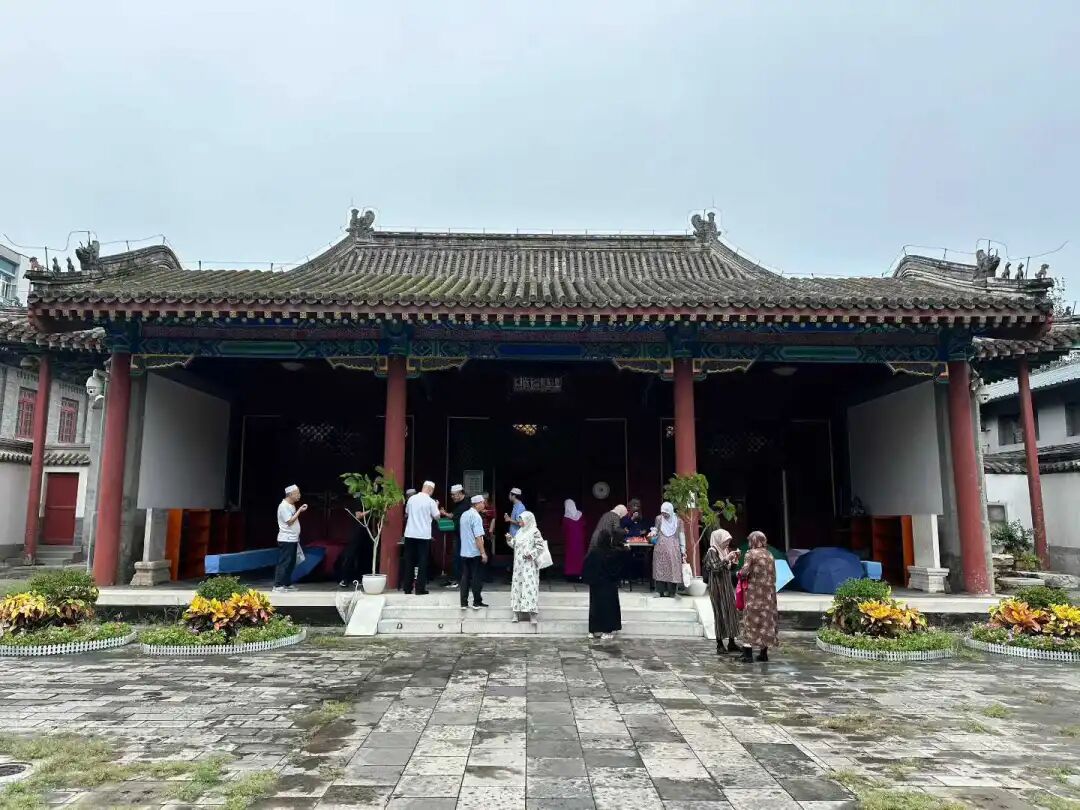
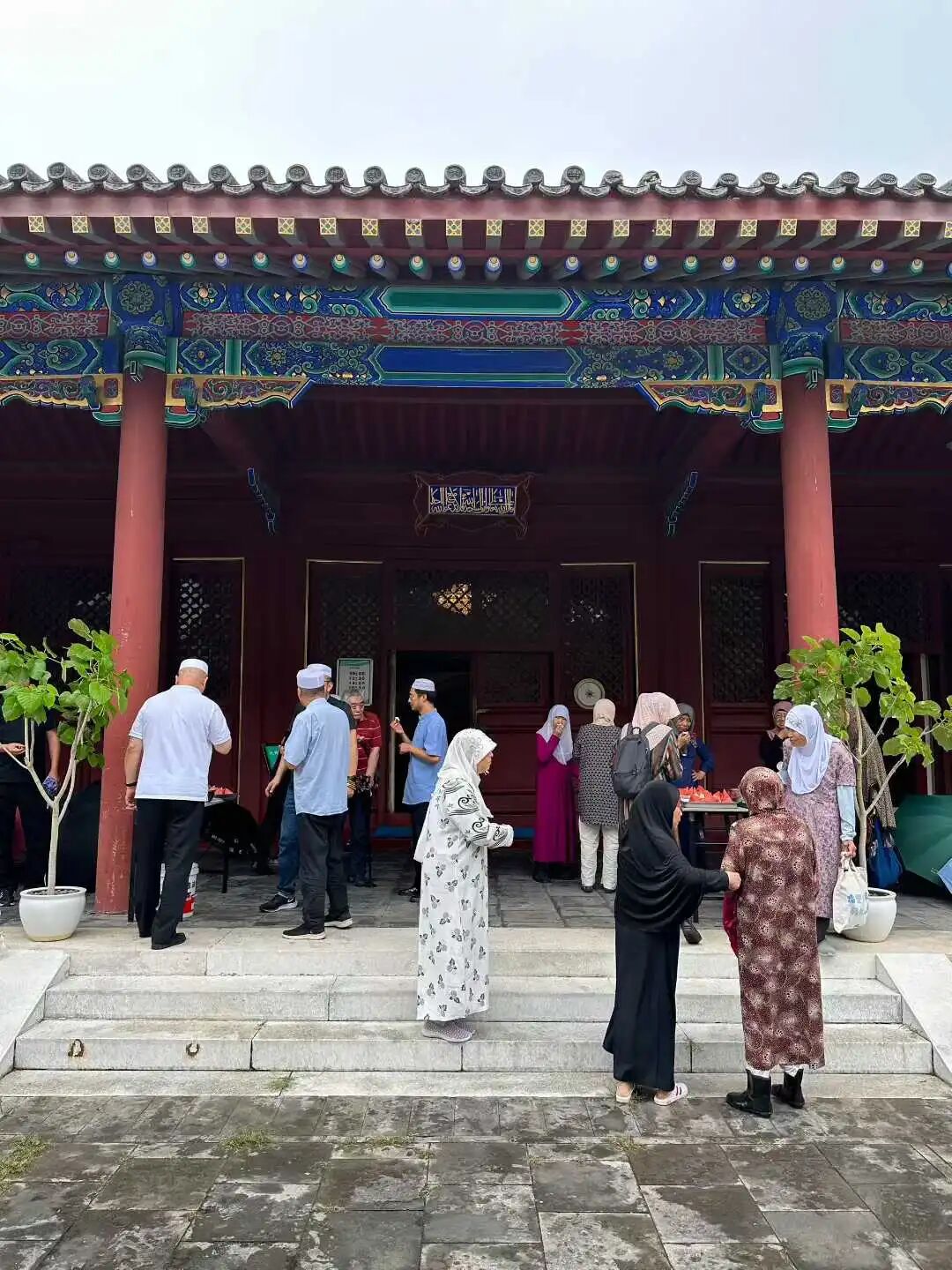
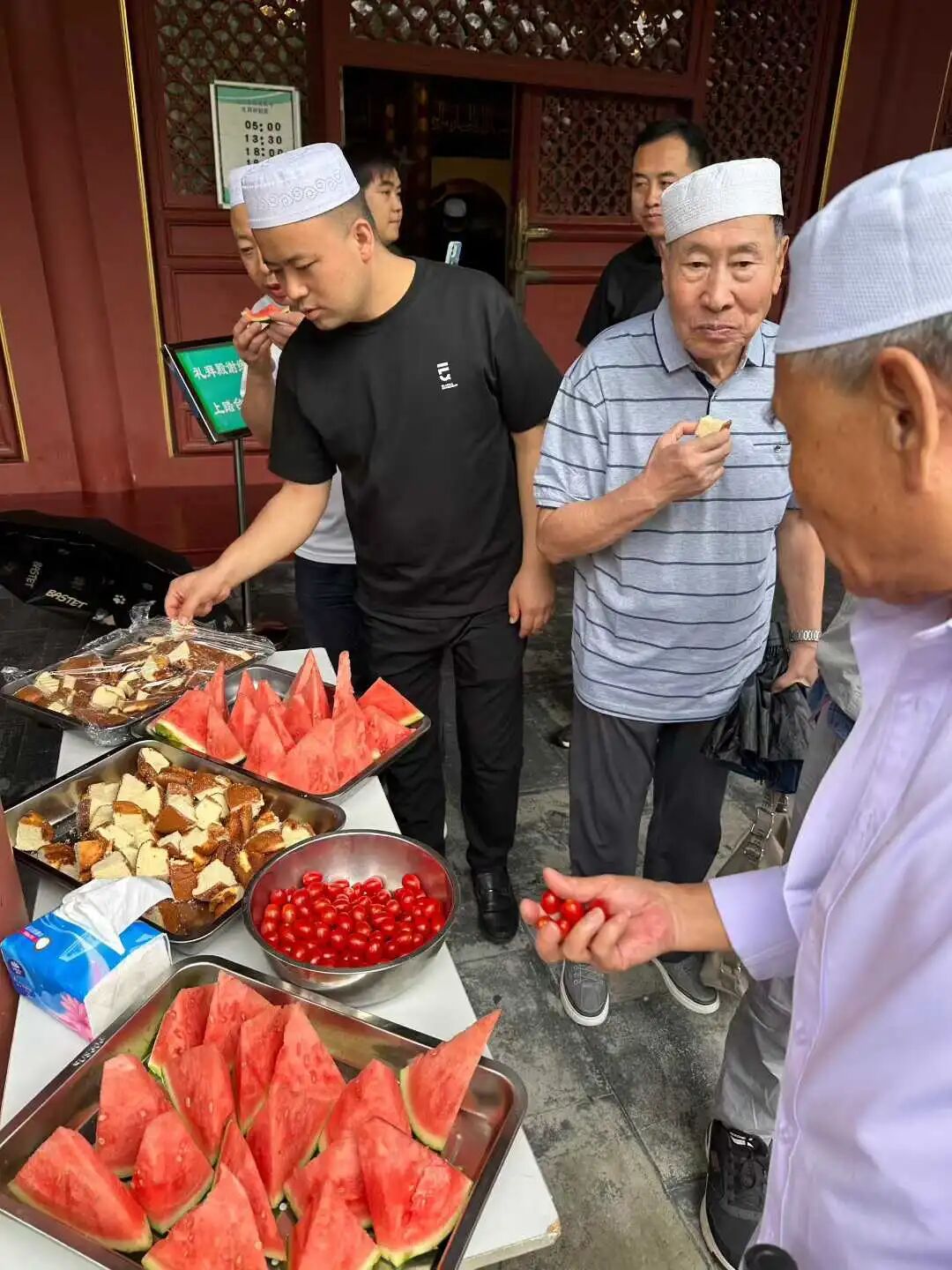
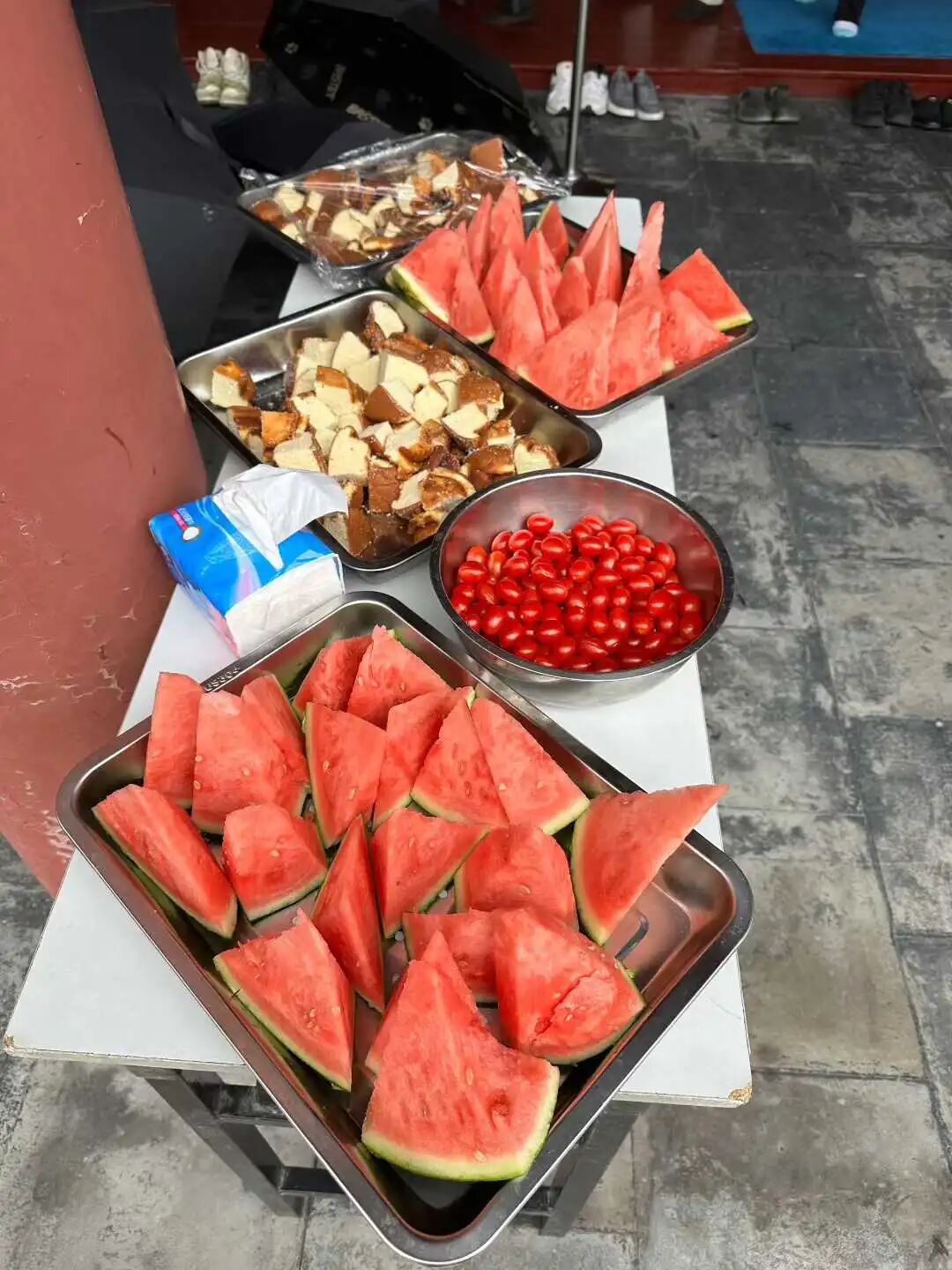
On Saturday, I attended the Mawlid at Balizhuang Mosque. Imams from various mosques in Chaoyang District came to recite the Quran, and local elders took turns reciting as well. Imam Yang gave a sermon (wa'z) about the noble Prophet. After the prayer, everyone enjoyed meat porridge, fried dough (youxiang), and various fruits and pastries. The meat porridge at Balizhuang is only available during Eid al-Fitr and the Mawlid each year. The aroma of the meat and the wheat blends perfectly, making it very blessed.
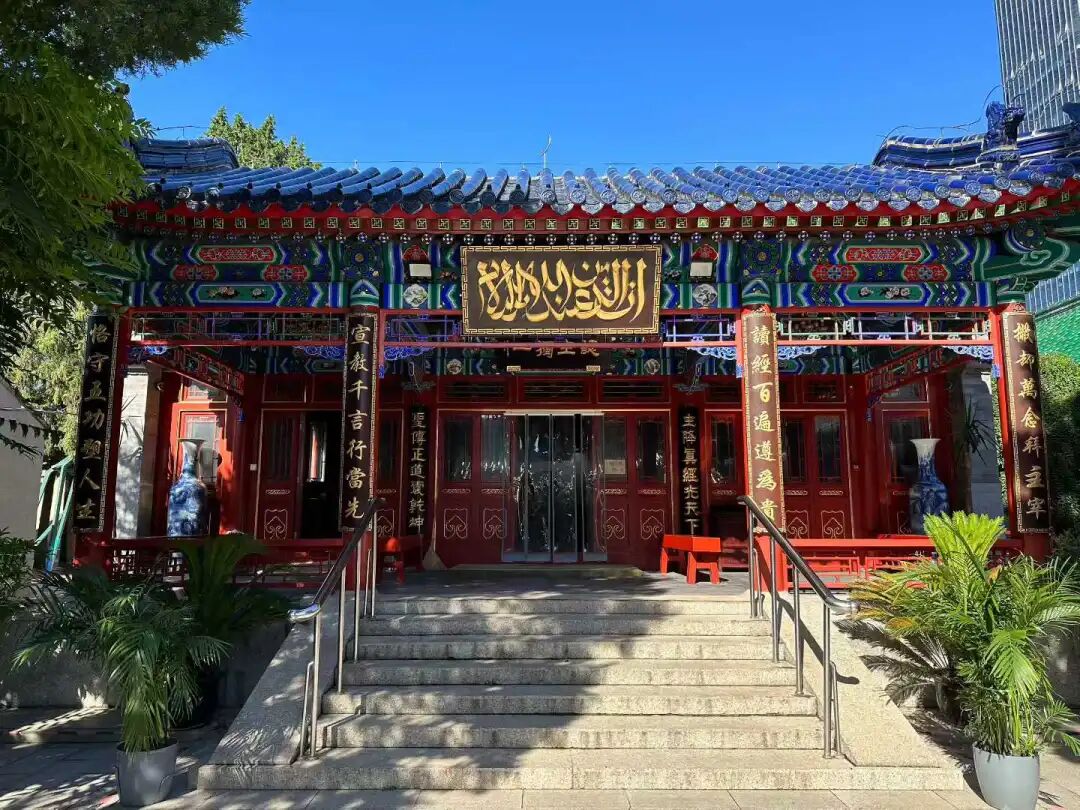
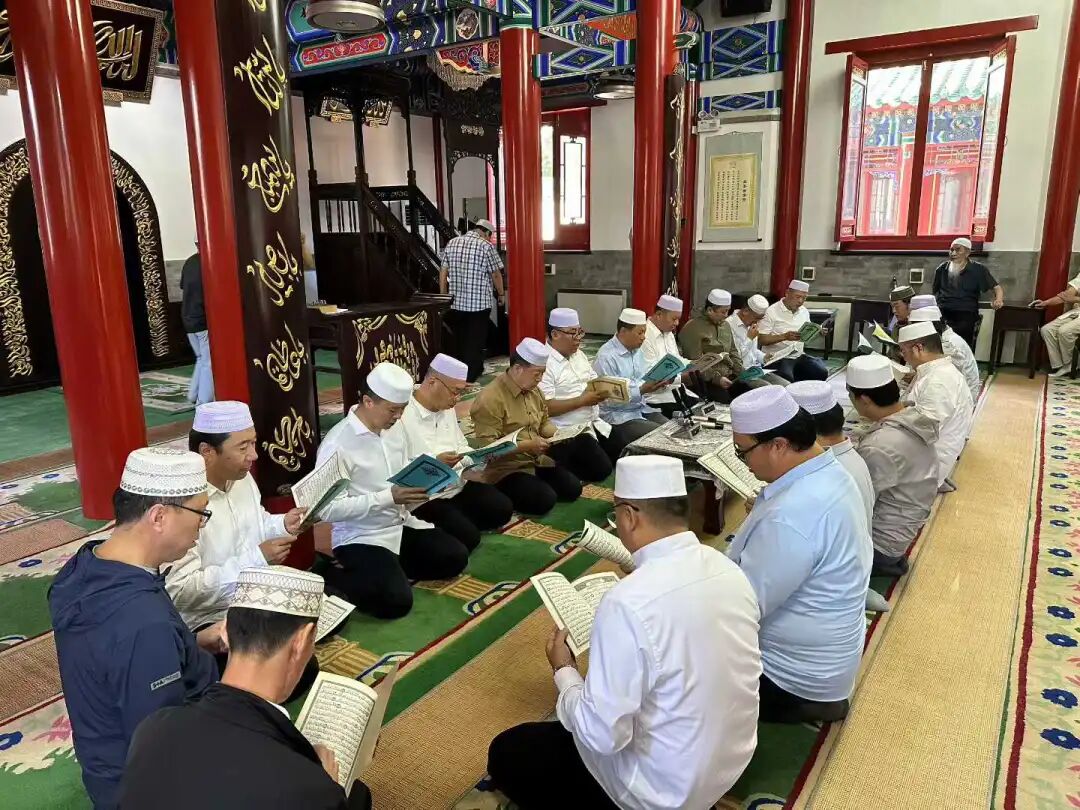
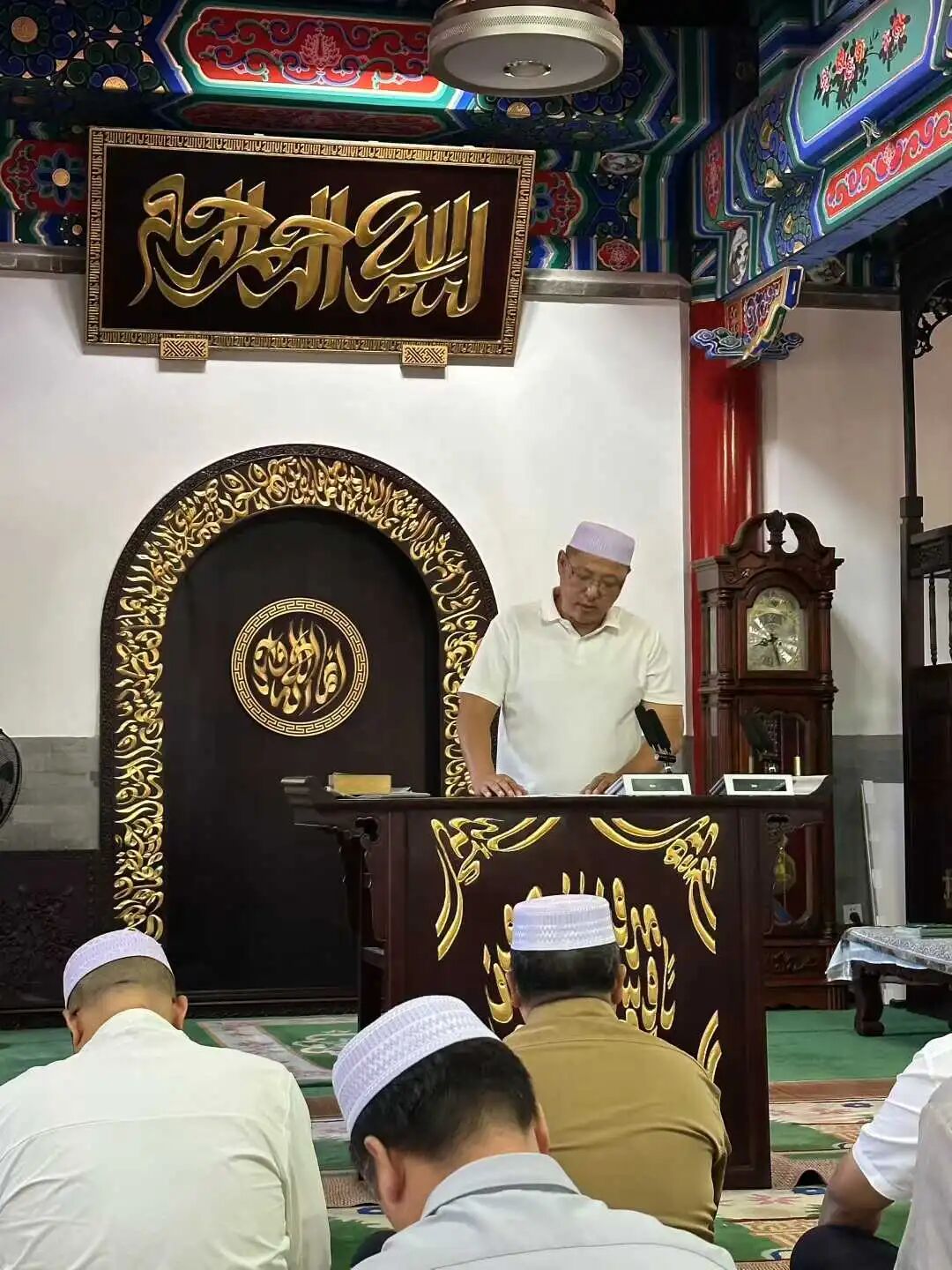
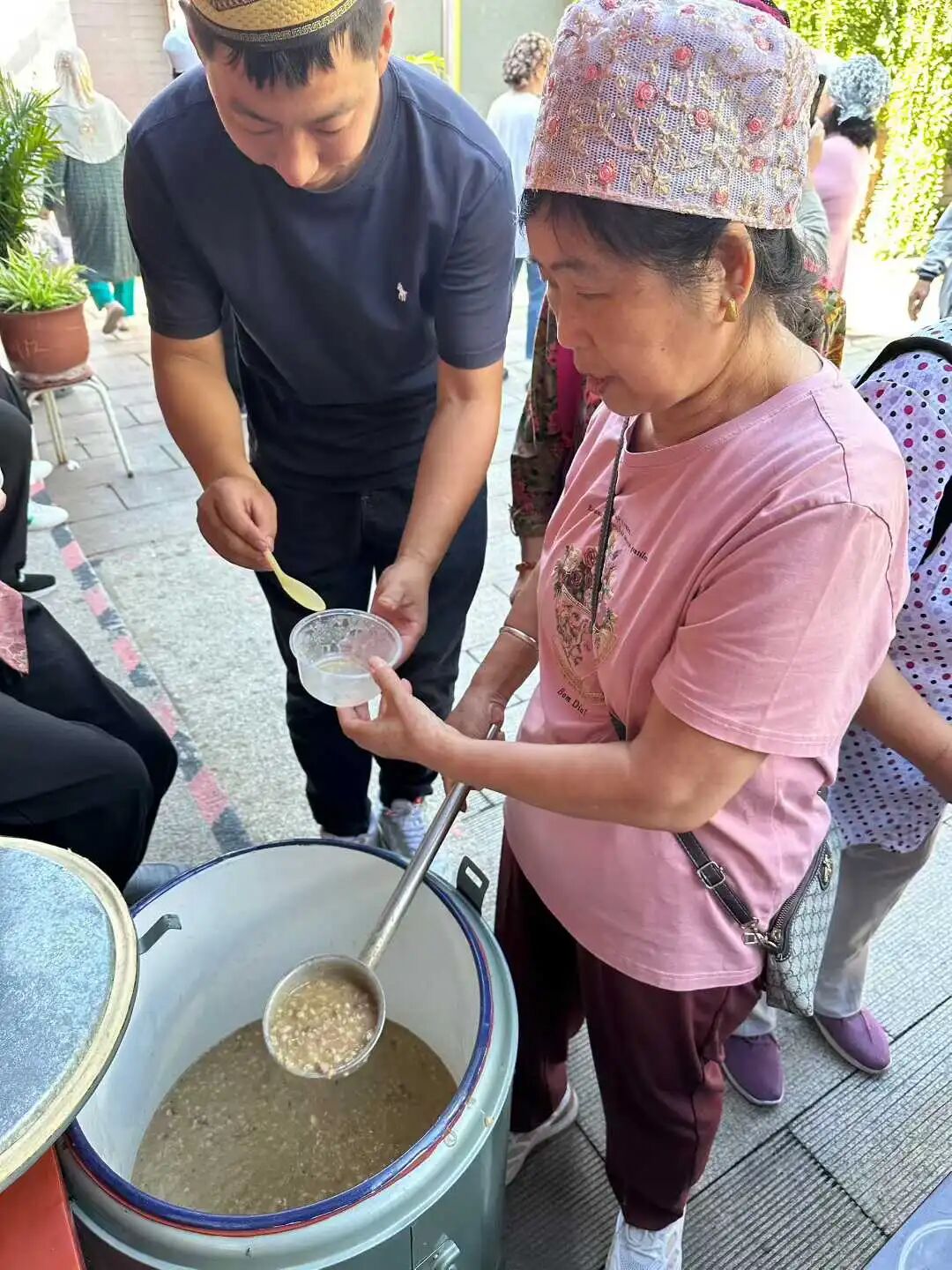
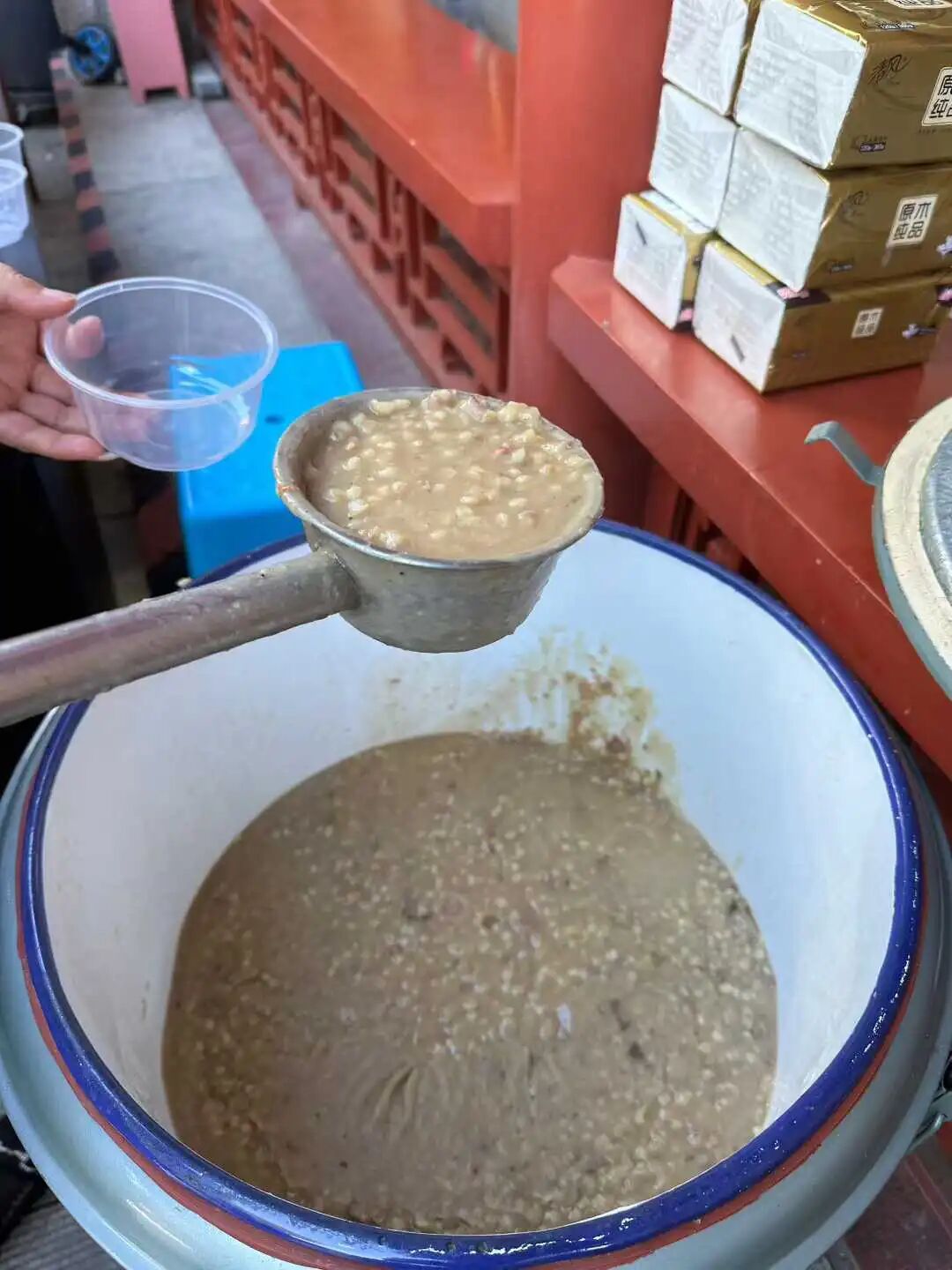
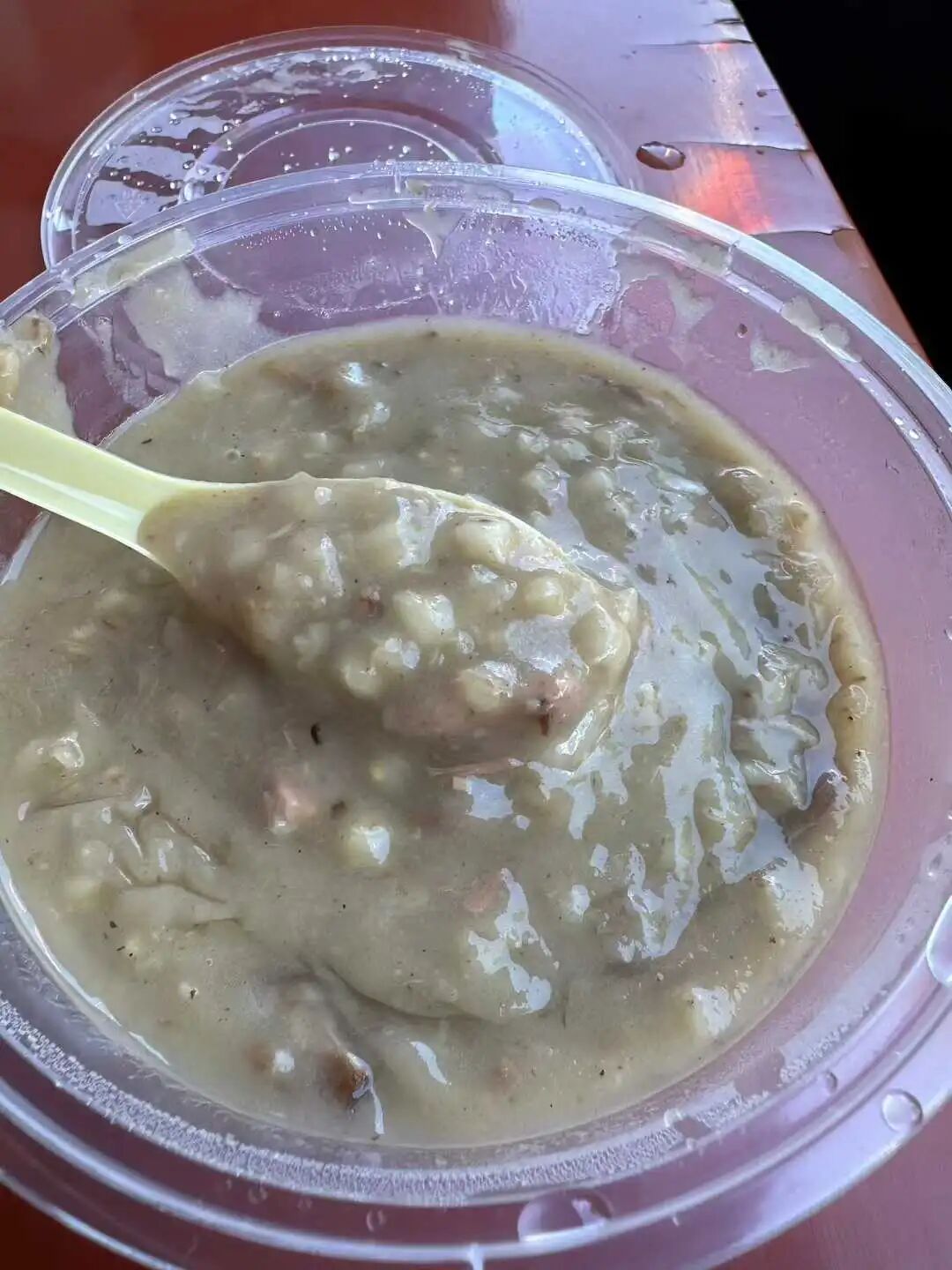
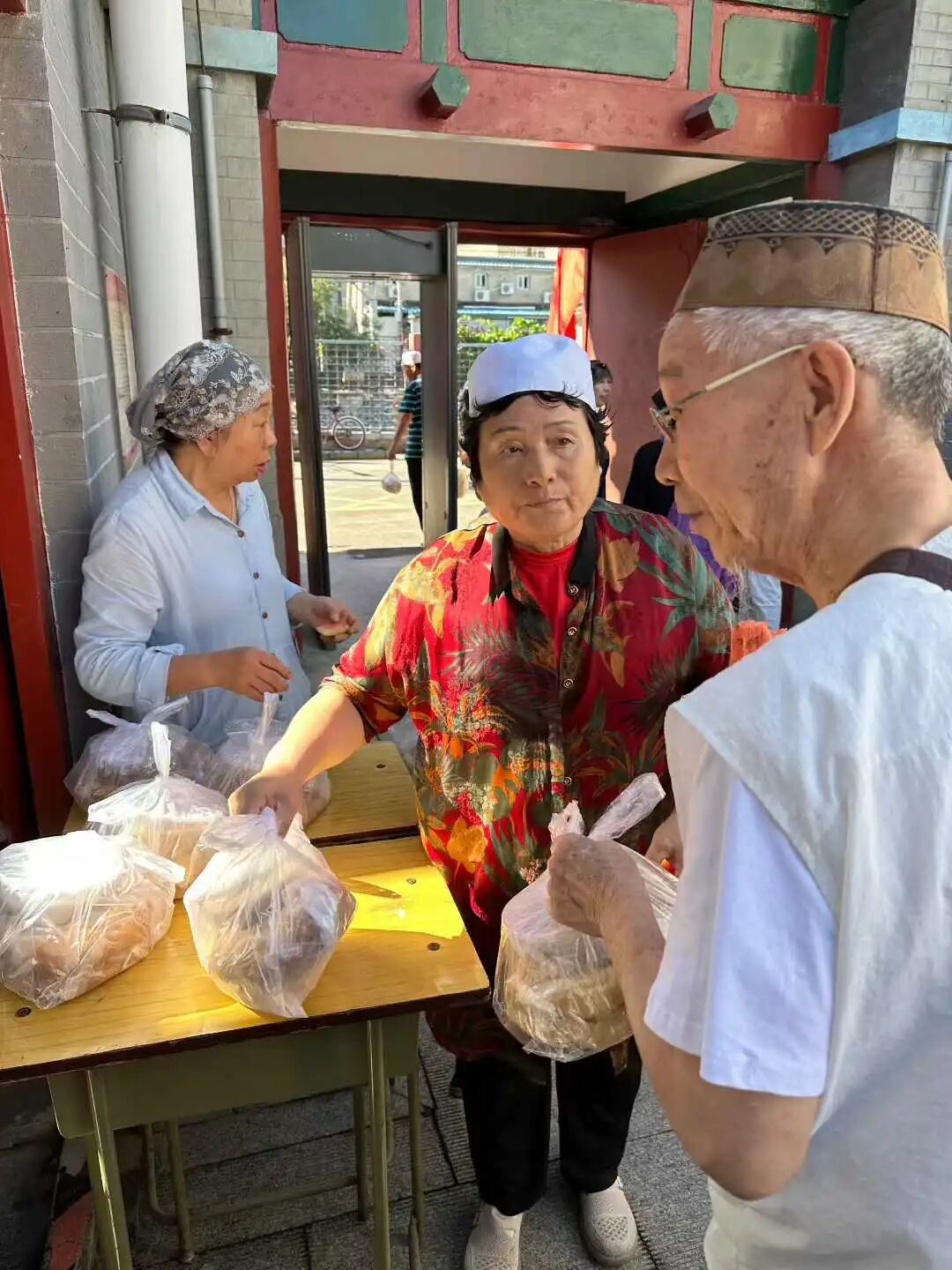
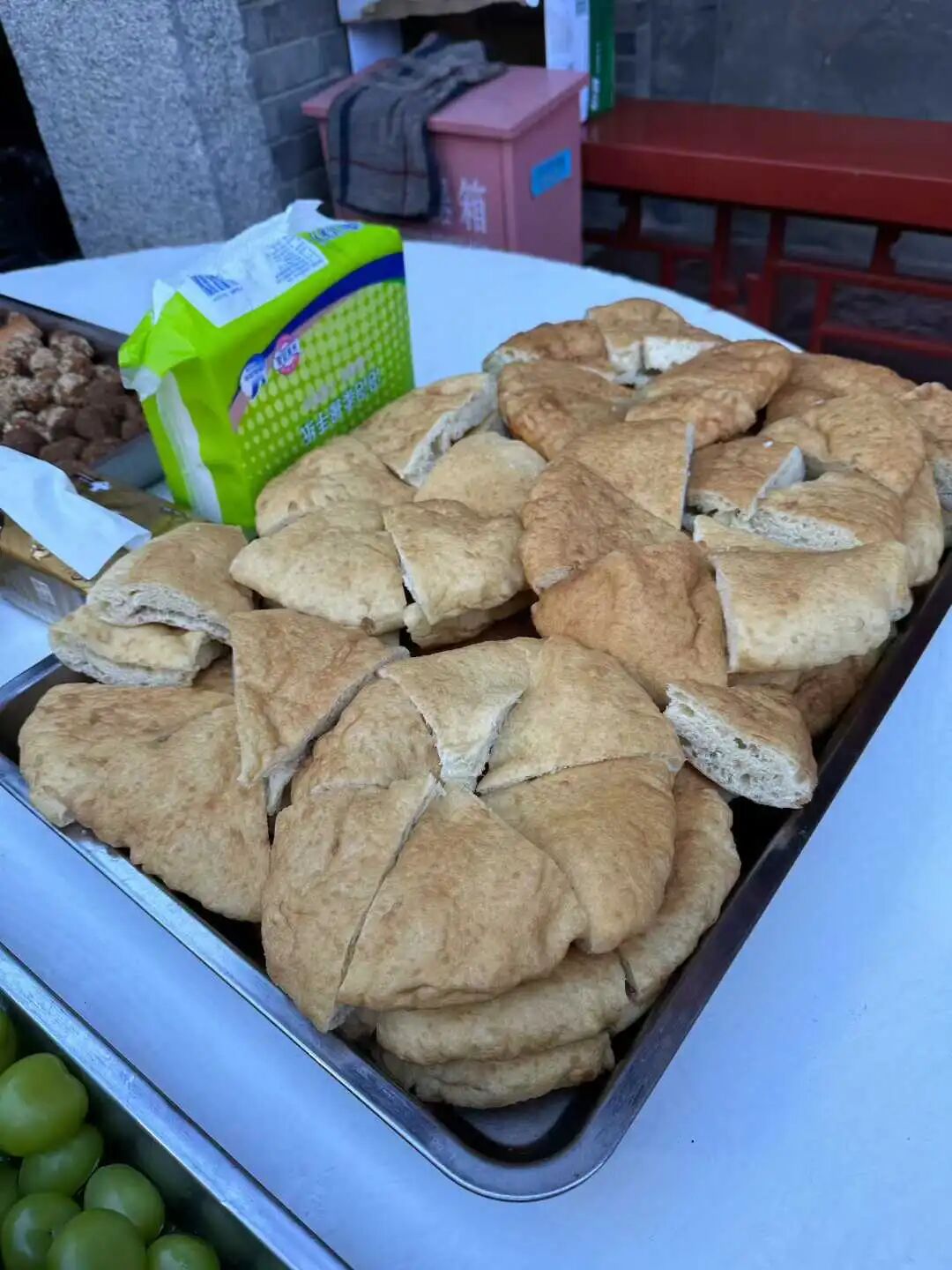
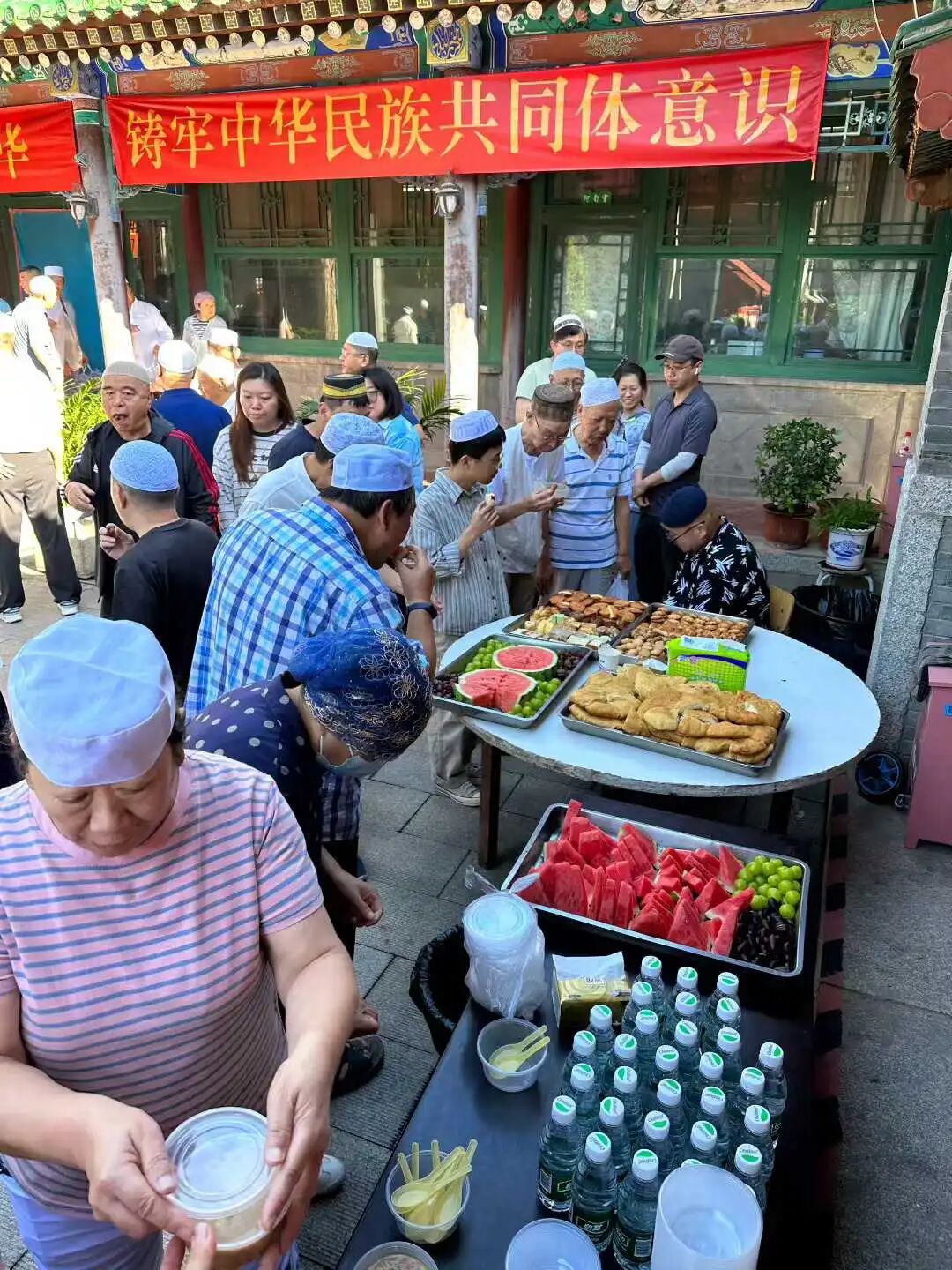
On Sunday, I attended the Mawlid at Yangzha Mosque, which was the third one I attended that week. After arriving, I had meat porridge, then imams from various mosques in Chaoyang District recited the Quran, and the local imam gave a sermon (wa'z). After the prayer, we had a traditional Beijing Muslim banquet, which is now rare in the city center.
The kitchen at Yangzha Mosque is very large. They were stewing the eight-bowl dishes in pots, stir-frying, and steaming fish, with everyone working together in an orderly way to serve the food.
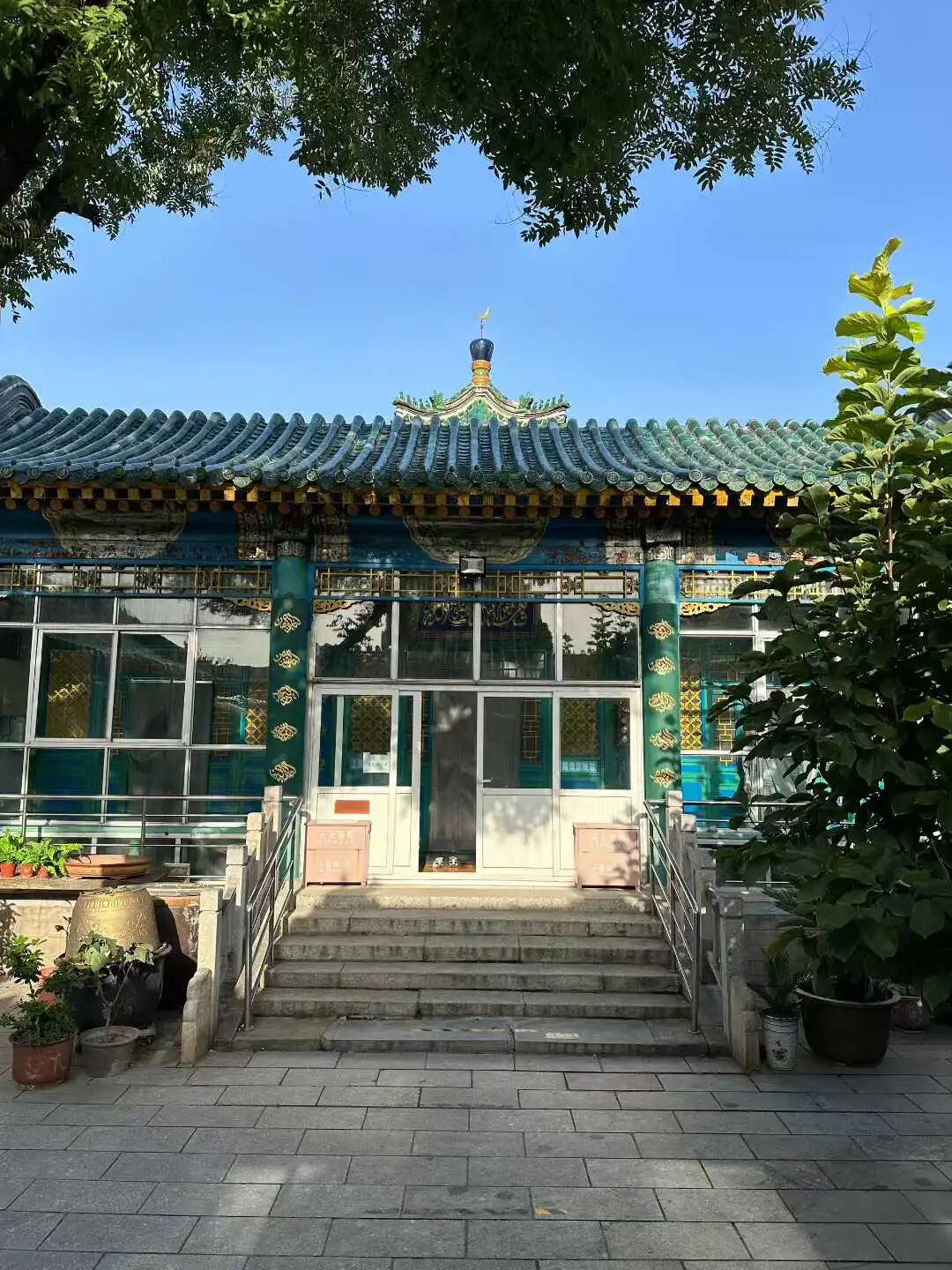
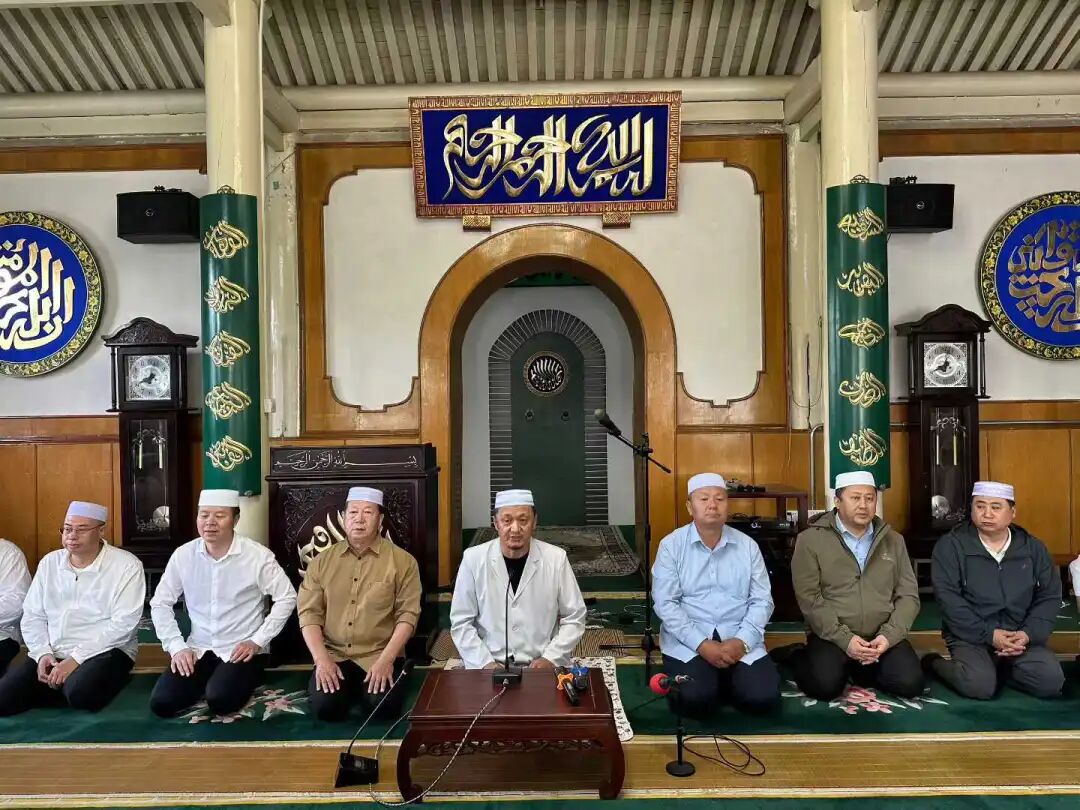
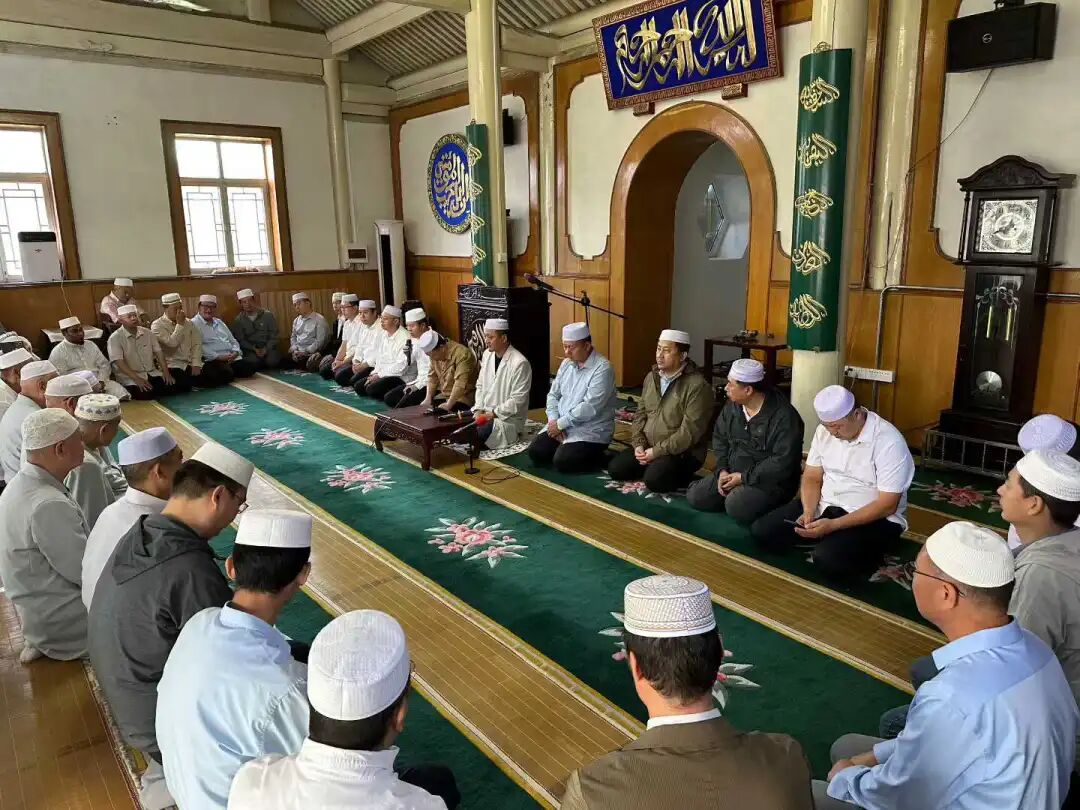
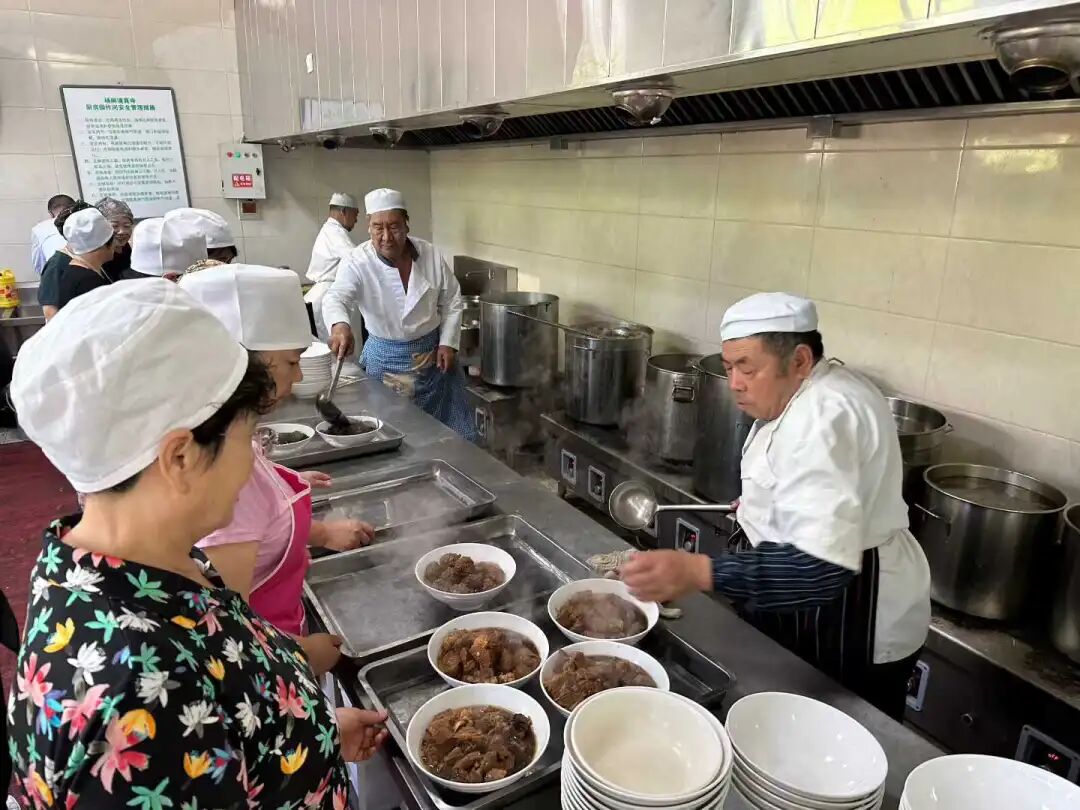
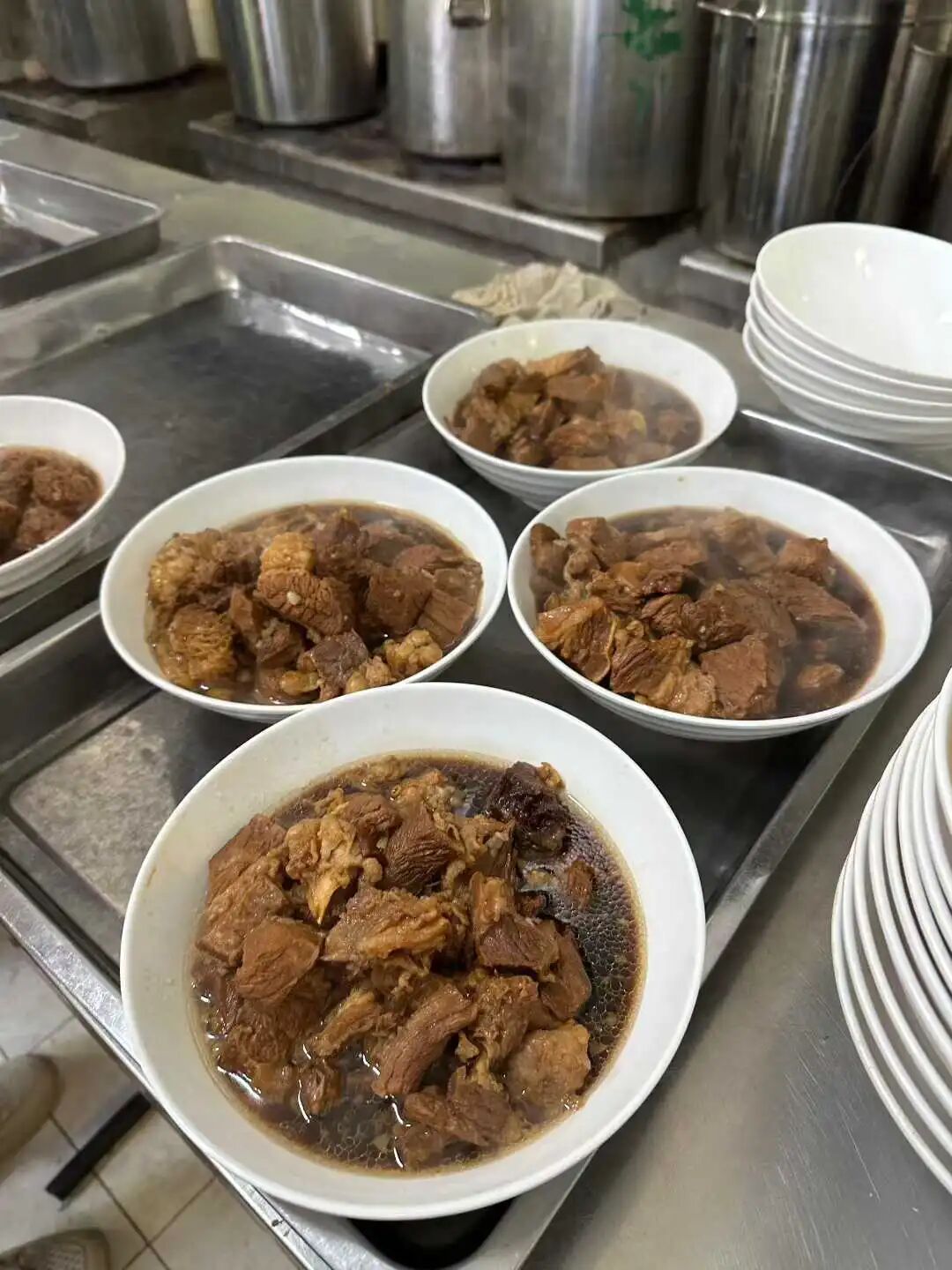
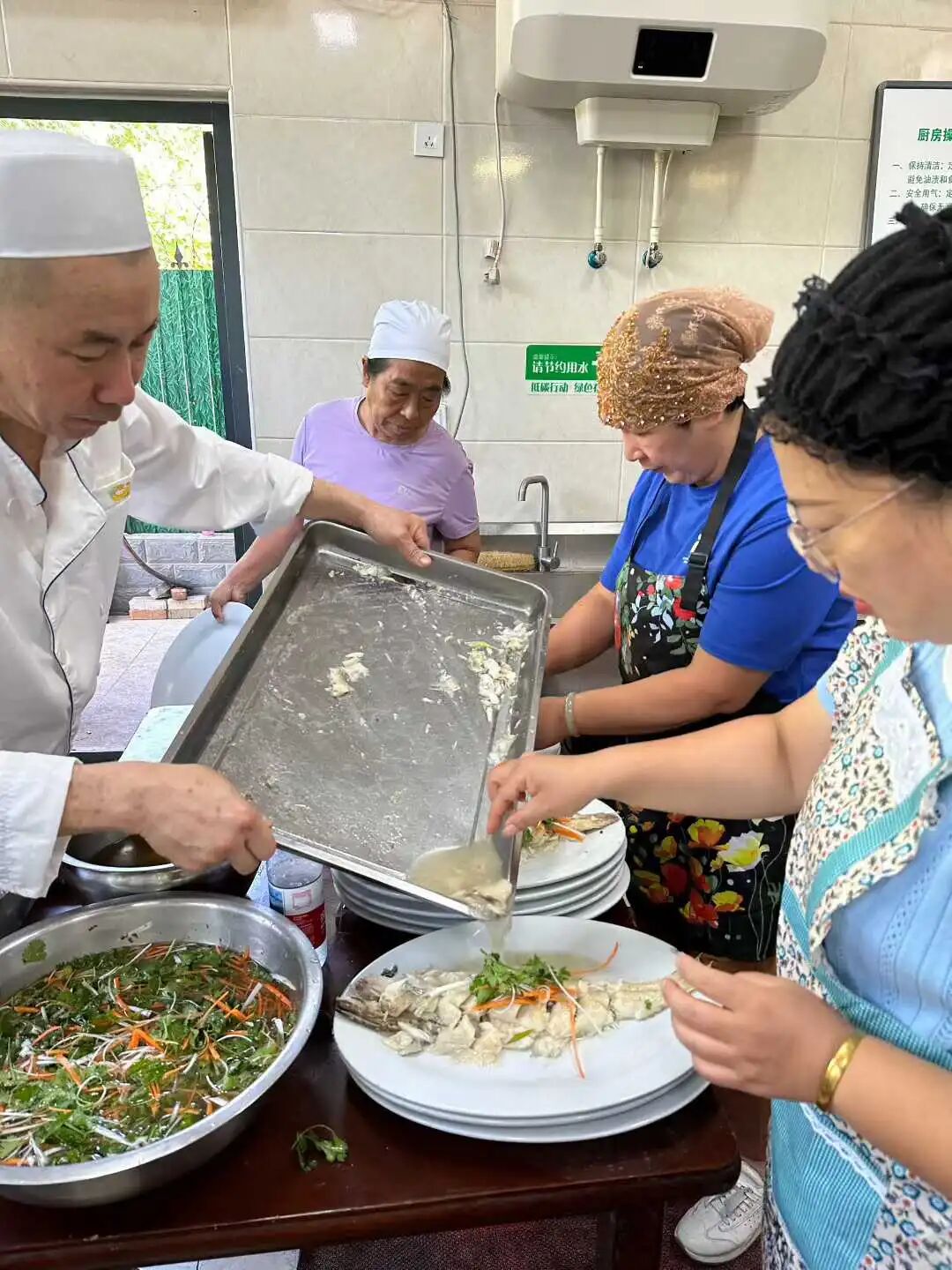
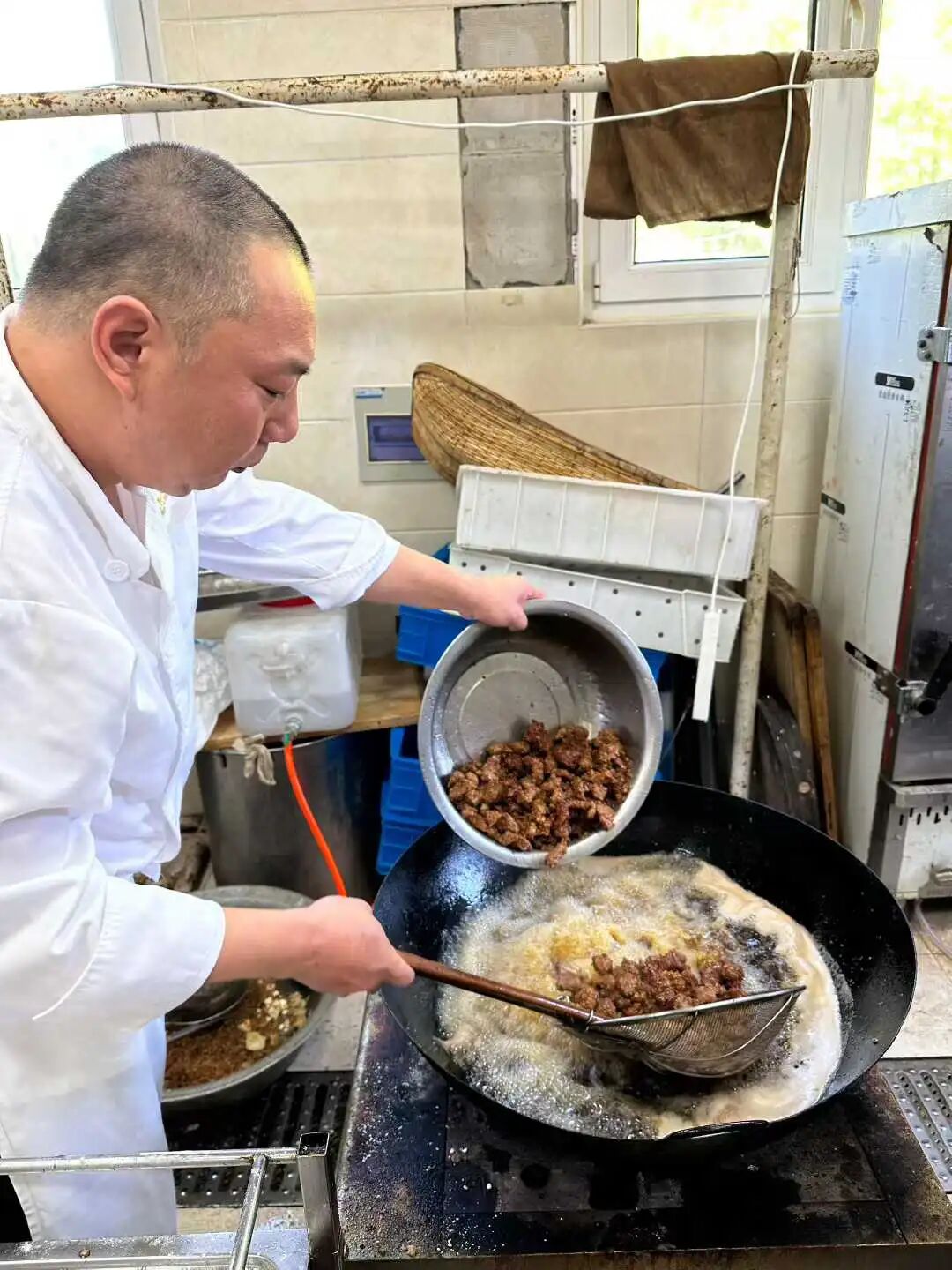
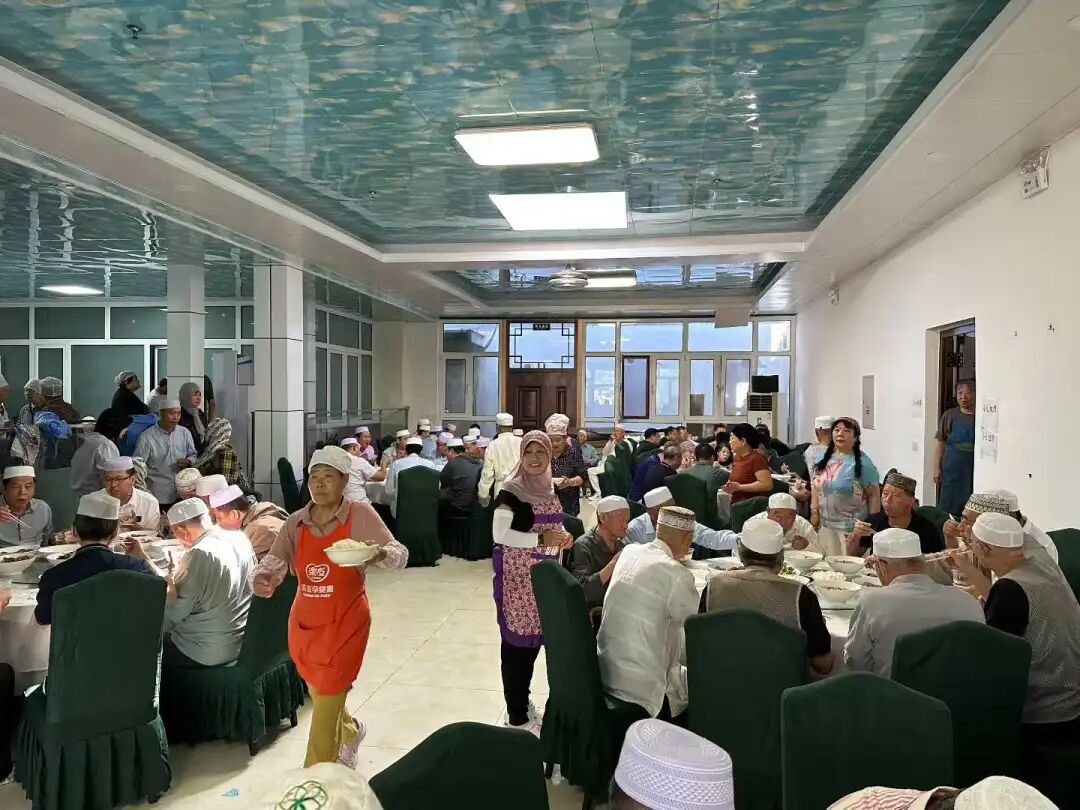
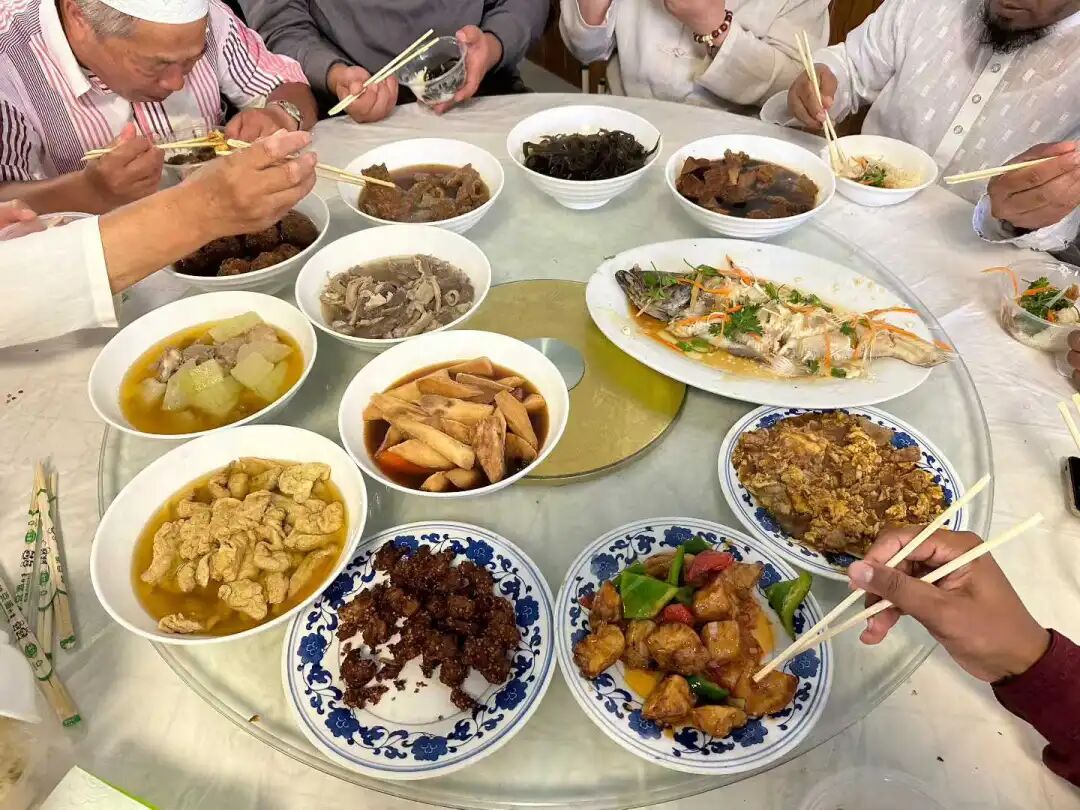
The traditional Beijing mosque banquet includes stir-fried dishes, steamed fish, and the eight-bowl dishes: vinegar-sauce stir-fried egg and meat (culiu muxu), sesame lamb (zhima yangrou), steamed fish (qingzheng yu), braised eggplant (shao qiezi), stewed beef (dun niurou), stewed meat patties (dun songrou), stewed winter melon (dun donggua), stewed fried tofu puffs (dun doupao), stewed lamb offal (dun yangza), stewed yam (dun shanyao), stewed meatballs (dun wanzi), and stewed kelp (dun haidai).

Muslim Culture Guide: Pakistan Embassy School International Culture Day
Articles • ali2007fr posted the article • 0 comments • 195 views • 2026-05-19 22:19
Summary: This article records a visit to International Culture Day at the Pakistan Embassy School, with food, performances, students, and community life at the center. It keeps the original event details, photographs, names, and cultural observations for readers interested in Pakistan and Muslim community events in Beijing.
On November 2, 2024, I attended the annual International Cultural Day at the Pakistan Embassy College in China.
The Commercial Counselor of the Palestinian Embassy in China was there to introduce Palestinian culture, and everyone wrote messages of support for Palestine on postcards.
The first booth inside was Azerbaijan. We started by eating the famous Ottoman dessert baklava (Paxlavası), which is a classic treat for major occasions like Nowruz. Different ethnic groups in Azerbaijan, such as Azerbaijanis, Lezgins, and Tats, all have their own style of making baklava. We ate a version made with walnuts, vanilla sugar, honey, and saffron, which was delicious.
They also had classic Azerbaijani dishes like rice pilaf (Plov), stuffed grape leaves (Dolma), stuffed chicken (Levengi), grilled vegetable salad (Mangal), herb-filled flatbread (Qutab), and vegetable yogurt soup (Dovga). Levengi is made by stuffing a chicken with walnuts, onions, and various spices before roasting it. Dovga is a classic drink served at Azerbaijani weddings, made by mixing yogurt with cilantro, dill, mint, spinach, and other vegetables.
The second booth was Yemen, where we drank Yemeni coffee and had some special desserts. Although coffee is now a popular drink everywhere, it actually originated in Yemeni Sufi lodges. According to current records, Yemeni Sufi lodges had already introduced coffee beans from Ethiopia to Yemen for cultivation by the 15th century. They were the first to roast the beans to make coffee, which helped them stay awake during night prayers (namaz). Mocha is an important Yemeni port on the Red Sea. From the 15th to the 17th century, it was the world's largest coffee trading center and even held a monopoly. Before the 20th century, Mocha referred to Yemeni coffee; it was only later that the term began to describe coffee mixed with chocolate.
Moving forward, we reached the Bangladesh booth, where we drank masala tea and ate a traditional Bangladeshi dessert called vermicelli pudding (Lachcha Shemai). This snack consists of thin noodles layered together and soaked in sweet milk, and it is a classic wedding dessert in Bangladesh.
Further inside were the Malaysia and Indonesia booths. At the Malaysia booth, we bought coconut rice (Nasi Lemak) and curry puffs (Karipap). At the Indonesia booth, we bought savory sticky rice rolls (Lemper) and shaved ice dessert (Cendol).
The coconut rice sold here was the most traditional and simple version, consisting of white rice with chili paste (sambal), dried anchovies, peanuts, and a boiled egg.
Karipap is a flaky curry puff that appeared in Malaysia during the 19th-century British colonial era, influenced by British pasties and Indian samosas, and later spread throughout Southeast Asia.
Lemper is a savory sticky rice roll filled with shredded chicken or fish floss, wrapped in a banana leaf.
Next were the Uzbekistan, Tajikistan, and Xinjiang booths.
Uzbekistan had flaky baked buns (samsa) and freshly cooked rice pilaf (plov), which my mother-in-law thought tasted very good.
The Tajikistan booth was probably the most impressive this time, with a huge pot full of chicken stew!
The man at the Xinjiang booth is from Hotan, though he was born in Pakistan. The fried dough twists (sanzi) at the booth were delicious, and Suleiman couldn't stop eating them.
Booths for three North African countries. I ate dates at the Libya booth, dried fruit at the Morocco booth, and the classic street food Koshary at the Egypt booth.
Koshary is a mix of pasta, macaroni, Egyptian rice, and lentils, topped with tomato sauce, garlic sauce, chickpeas, and fried onions. As early as ancient Egypt, people ate a dish called Koshir made from lentils, wheat, chickpeas, garlic, and onions cooked in clay pots. It only evolved into the modern Koshary after the introduction of pasta and tomatoes in the 19th century. This snack is vegan and very cheap, making it a typical Egyptian comfort food for the common people.
Moving further in, we found Turkey and Turkmenistan, where we kept trying all kinds of snacks.
The innermost area was the Pakistan section, featuring various foods and clothing displays, including famous Beijing Pakistani restaurants Khan Baba and Zamzam. We bought freshly grilled chicken skewers and a large pot of chicken biryani at Zamzam. Suleiman also ate a few chicken skewers; it seems he adapts quite well to Pakistani food.
We performed namaz at the embassy school. Pakistanis also mostly follow the Hanafi school of thought, so their movements are basically the same as ours. There was even a basket of caps at the entrance, which matches our custom of wearing a cap for namaz, unlike Arabs or Iranians who do not have this practice.
Children from all over the world showed off their traditional clothing.
I attended several foreign events in Beijing this year; you can often join different embassy activities in Beijing to experience cultures from around the world.
The Saudi Tourism Festival held by the Saudi Tourism Authority at the Temple of Heaven Park: Experience Arab culture at the Temple of Heaven Park.
The Rasa Malaysia festival held at Sanlitun Taikoo Li: Taste Malaysian food in Beijing—2024 Beijing Malaysia Festival.
The International Neighborhood Festival held at the Jianguomen Diplomatic Residence Compound: Taste food from Iran, Azerbaijan, and the Maldives at the International Neighborhood Festival.
Cultural exchange activities hosted by Saudi Arabia, the guest of honor at the Beijing International Book Fair in the China National Convention Center: Experience Saudi culture at the Beijing International Book Fair.
The Indonesian Cultural Festival held at the Indonesian Embassy: Attend the 2024 Indonesian Cultural Festival. view all
Summary: This article records a visit to International Culture Day at the Pakistan Embassy School, with food, performances, students, and community life at the center. It keeps the original event details, photographs, names, and cultural observations for readers interested in Pakistan and Muslim community events in Beijing.
On November 2, 2024, I attended the annual International Cultural Day at the Pakistan Embassy College in China.
The Commercial Counselor of the Palestinian Embassy in China was there to introduce Palestinian culture, and everyone wrote messages of support for Palestine on postcards.
The first booth inside was Azerbaijan. We started by eating the famous Ottoman dessert baklava (Paxlavası), which is a classic treat for major occasions like Nowruz. Different ethnic groups in Azerbaijan, such as Azerbaijanis, Lezgins, and Tats, all have their own style of making baklava. We ate a version made with walnuts, vanilla sugar, honey, and saffron, which was delicious.
They also had classic Azerbaijani dishes like rice pilaf (Plov), stuffed grape leaves (Dolma), stuffed chicken (Levengi), grilled vegetable salad (Mangal), herb-filled flatbread (Qutab), and vegetable yogurt soup (Dovga). Levengi is made by stuffing a chicken with walnuts, onions, and various spices before roasting it. Dovga is a classic drink served at Azerbaijani weddings, made by mixing yogurt with cilantro, dill, mint, spinach, and other vegetables.
The second booth was Yemen, where we drank Yemeni coffee and had some special desserts. Although coffee is now a popular drink everywhere, it actually originated in Yemeni Sufi lodges. According to current records, Yemeni Sufi lodges had already introduced coffee beans from Ethiopia to Yemen for cultivation by the 15th century. They were the first to roast the beans to make coffee, which helped them stay awake during night prayers (namaz). Mocha is an important Yemeni port on the Red Sea. From the 15th to the 17th century, it was the world's largest coffee trading center and even held a monopoly. Before the 20th century, Mocha referred to Yemeni coffee; it was only later that the term began to describe coffee mixed with chocolate.
Moving forward, we reached the Bangladesh booth, where we drank masala tea and ate a traditional Bangladeshi dessert called vermicelli pudding (Lachcha Shemai). This snack consists of thin noodles layered together and soaked in sweet milk, and it is a classic wedding dessert in Bangladesh.
Further inside were the Malaysia and Indonesia booths. At the Malaysia booth, we bought coconut rice (Nasi Lemak) and curry puffs (Karipap). At the Indonesia booth, we bought savory sticky rice rolls (Lemper) and shaved ice dessert (Cendol).
The coconut rice sold here was the most traditional and simple version, consisting of white rice with chili paste (sambal), dried anchovies, peanuts, and a boiled egg.
Karipap is a flaky curry puff that appeared in Malaysia during the 19th-century British colonial era, influenced by British pasties and Indian samosas, and later spread throughout Southeast Asia.
Lemper is a savory sticky rice roll filled with shredded chicken or fish floss, wrapped in a banana leaf.
Next were the Uzbekistan, Tajikistan, and Xinjiang booths.
Uzbekistan had flaky baked buns (samsa) and freshly cooked rice pilaf (plov), which my mother-in-law thought tasted very good.
The Tajikistan booth was probably the most impressive this time, with a huge pot full of chicken stew!
The man at the Xinjiang booth is from Hotan, though he was born in Pakistan. The fried dough twists (sanzi) at the booth were delicious, and Suleiman couldn't stop eating them.
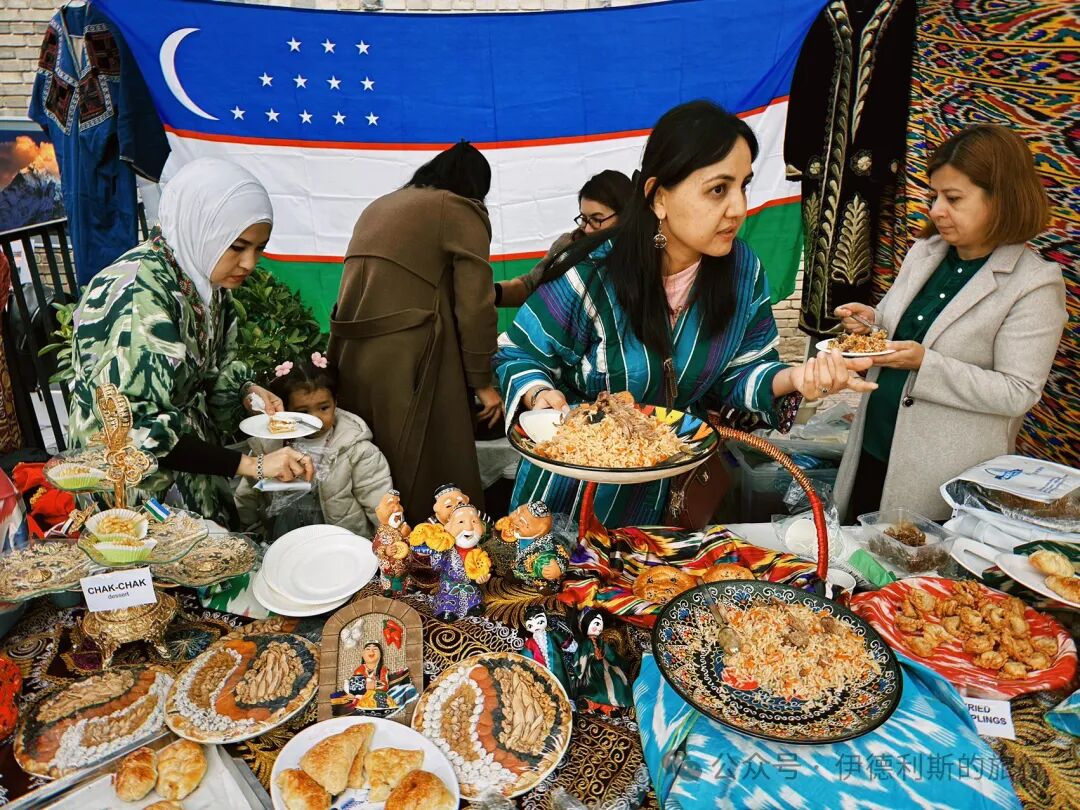
Booths for three North African countries. I ate dates at the Libya booth, dried fruit at the Morocco booth, and the classic street food Koshary at the Egypt booth.
Koshary is a mix of pasta, macaroni, Egyptian rice, and lentils, topped with tomato sauce, garlic sauce, chickpeas, and fried onions. As early as ancient Egypt, people ate a dish called Koshir made from lentils, wheat, chickpeas, garlic, and onions cooked in clay pots. It only evolved into the modern Koshary after the introduction of pasta and tomatoes in the 19th century. This snack is vegan and very cheap, making it a typical Egyptian comfort food for the common people.
Moving further in, we found Turkey and Turkmenistan, where we kept trying all kinds of snacks.
The innermost area was the Pakistan section, featuring various foods and clothing displays, including famous Beijing Pakistani restaurants Khan Baba and Zamzam. We bought freshly grilled chicken skewers and a large pot of chicken biryani at Zamzam. Suleiman also ate a few chicken skewers; it seems he adapts quite well to Pakistani food.
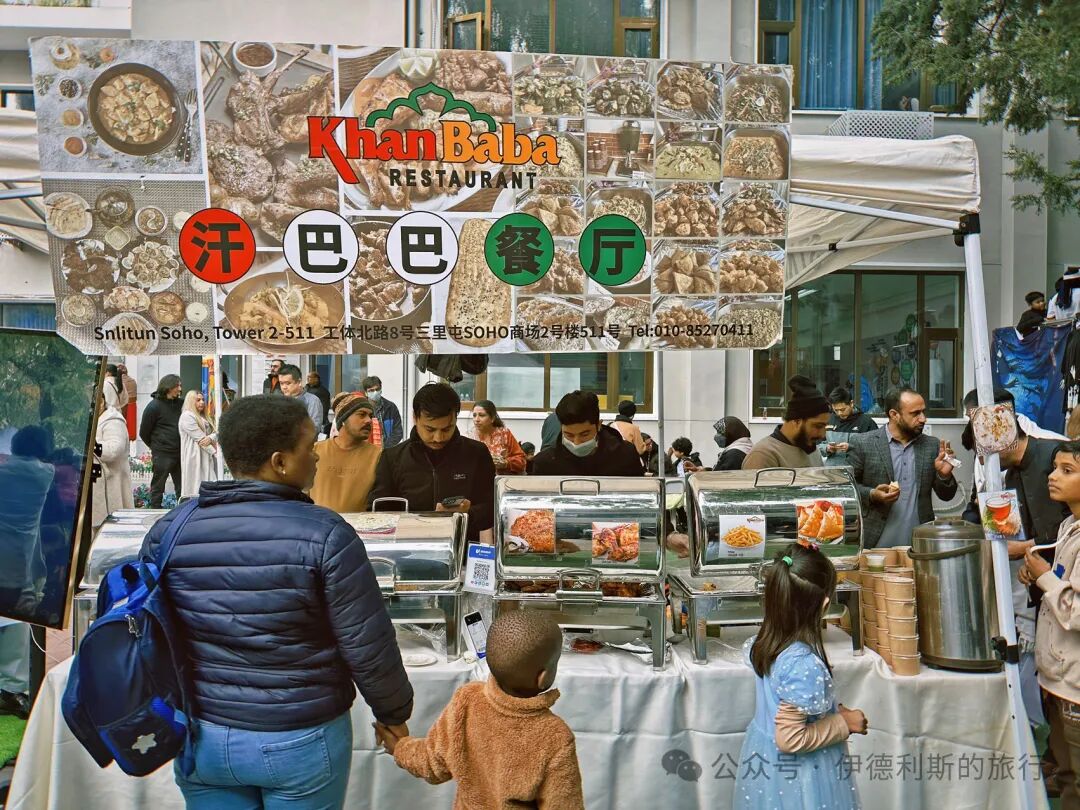
We performed namaz at the embassy school. Pakistanis also mostly follow the Hanafi school of thought, so their movements are basically the same as ours. There was even a basket of caps at the entrance, which matches our custom of wearing a cap for namaz, unlike Arabs or Iranians who do not have this practice.
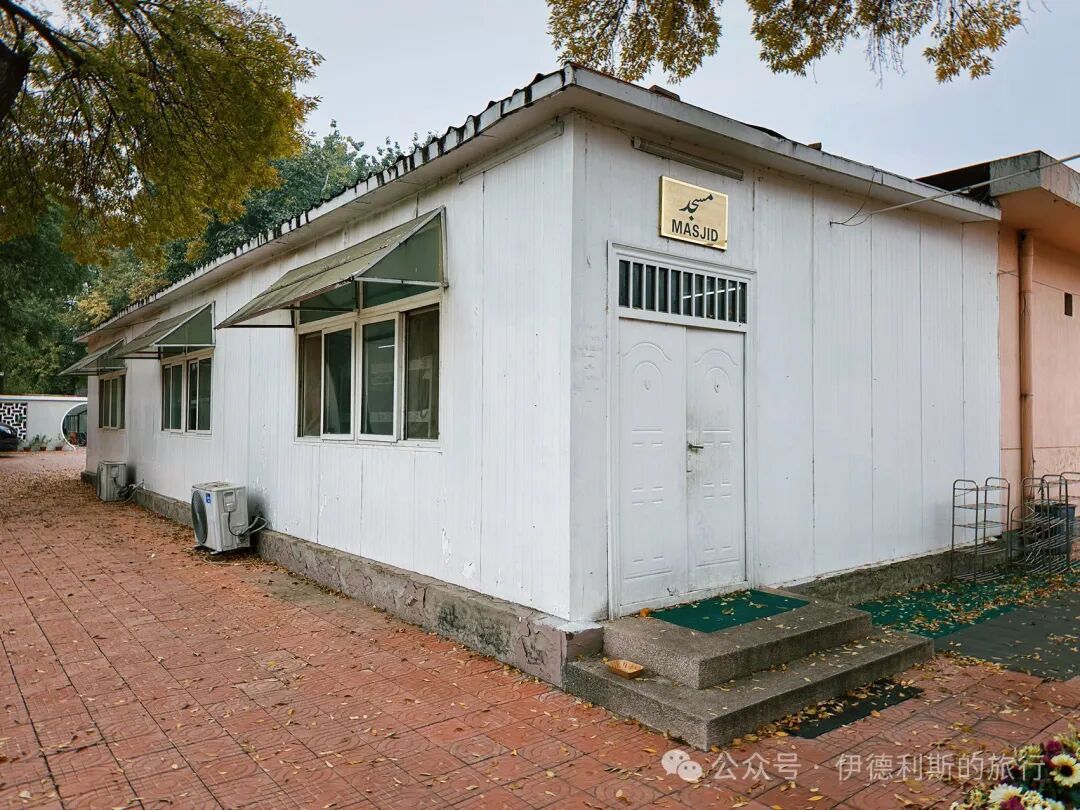
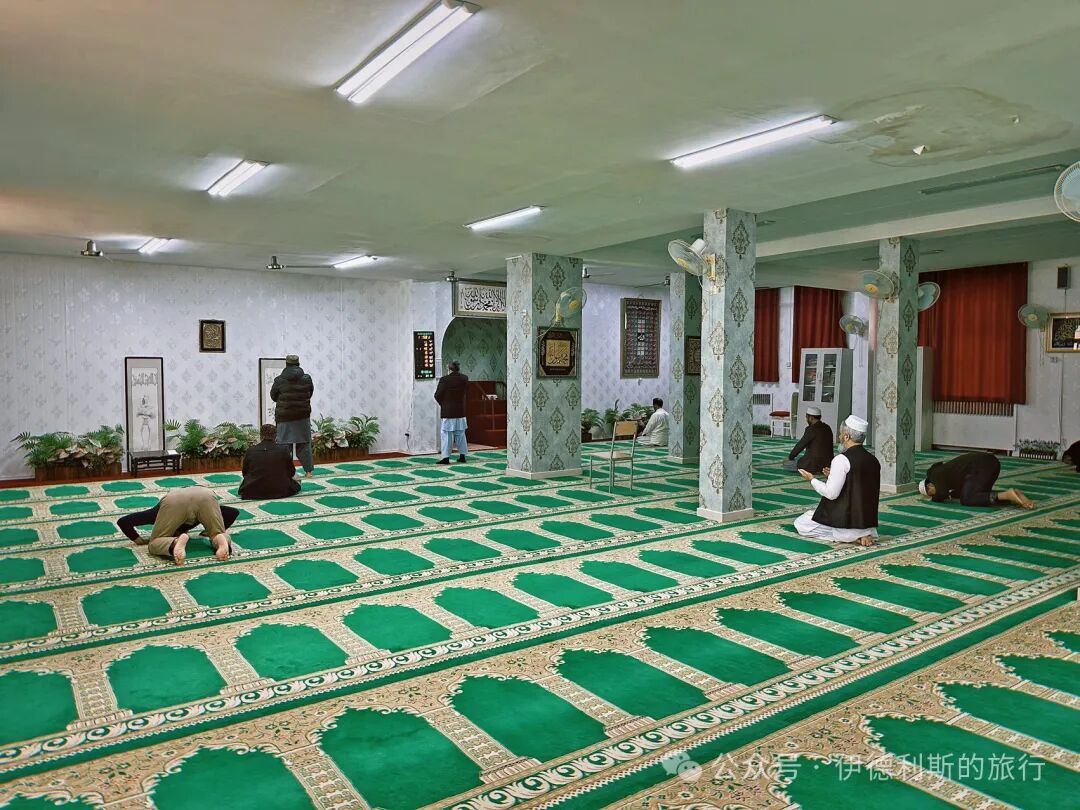
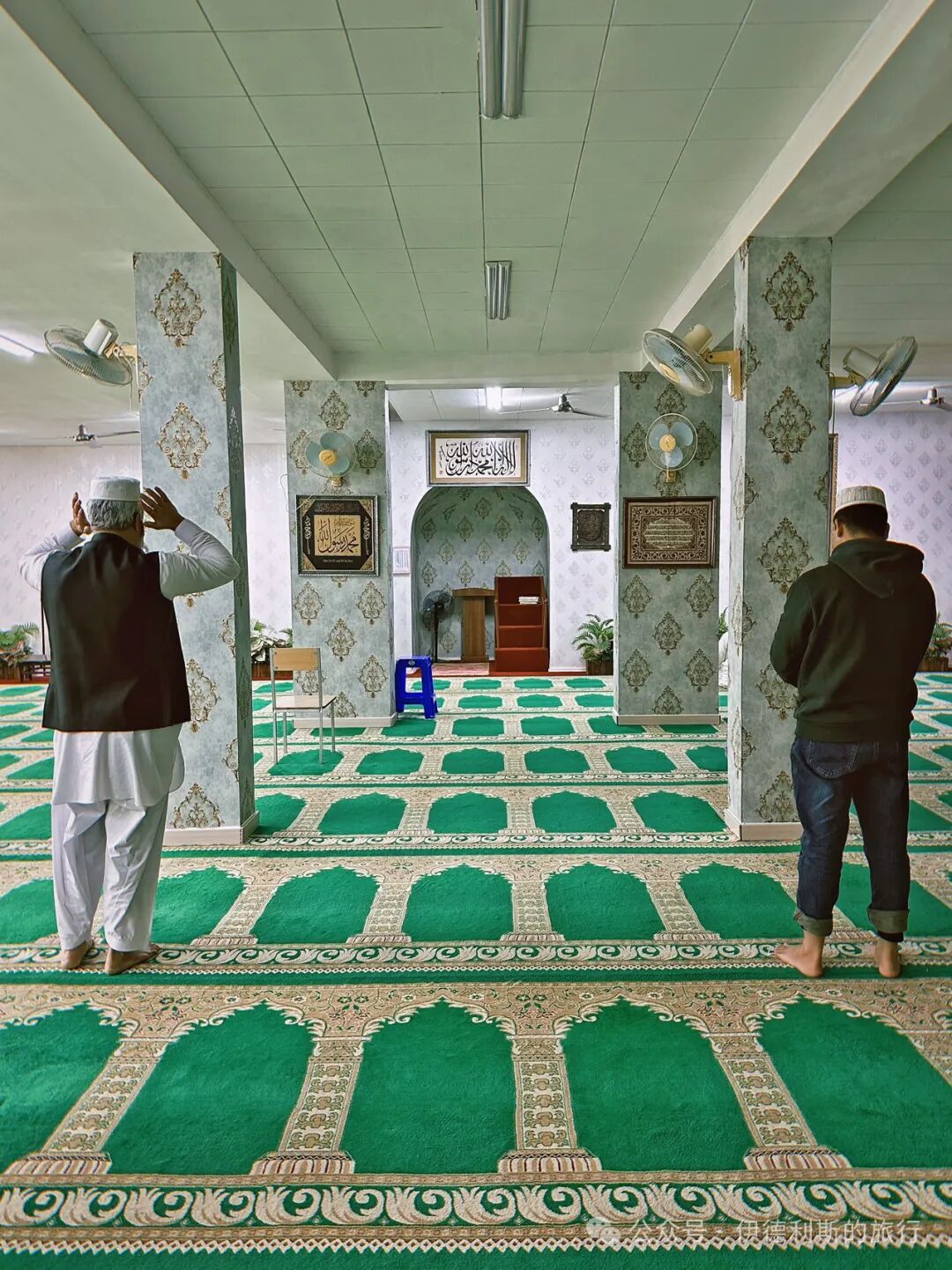
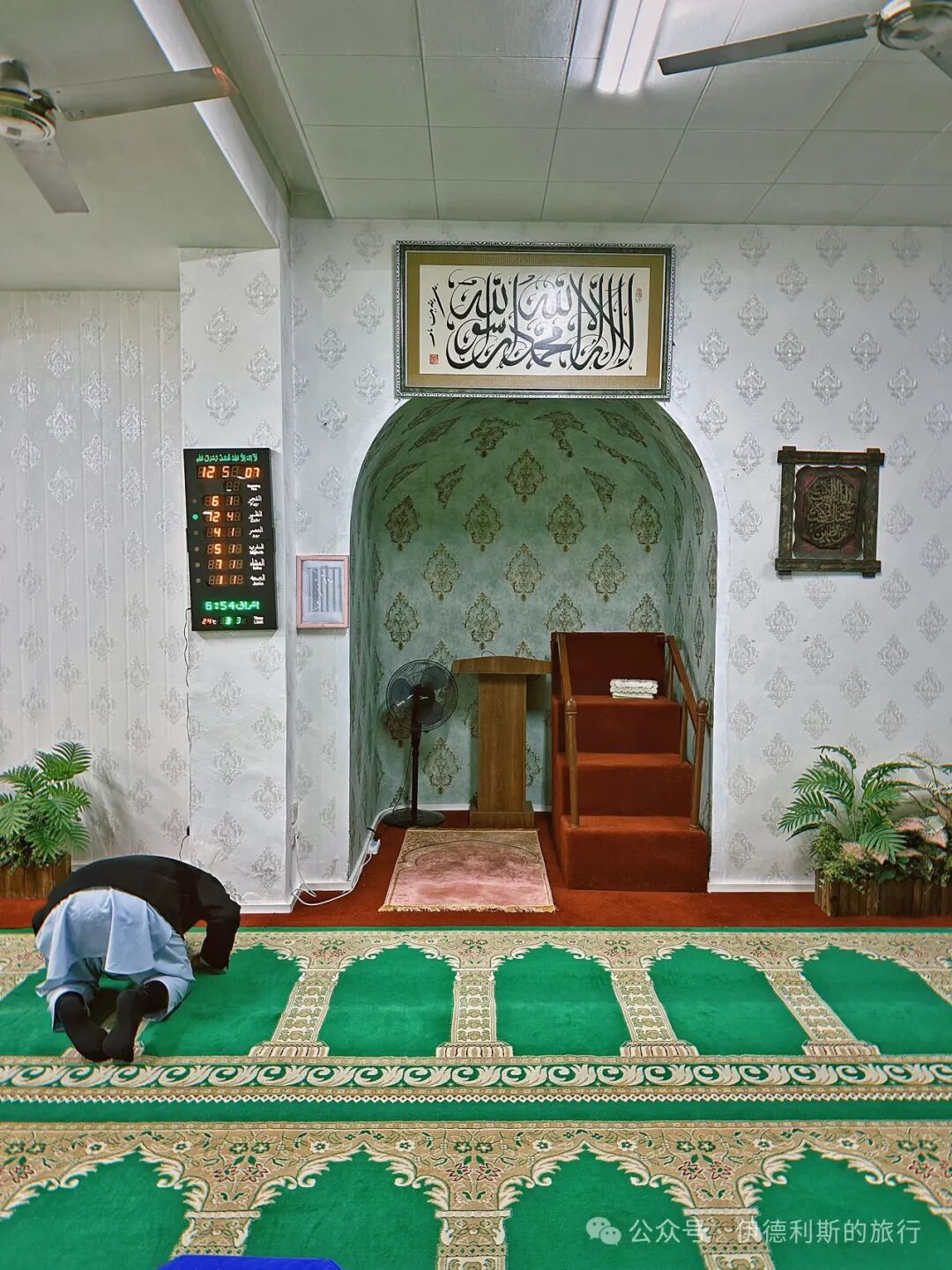
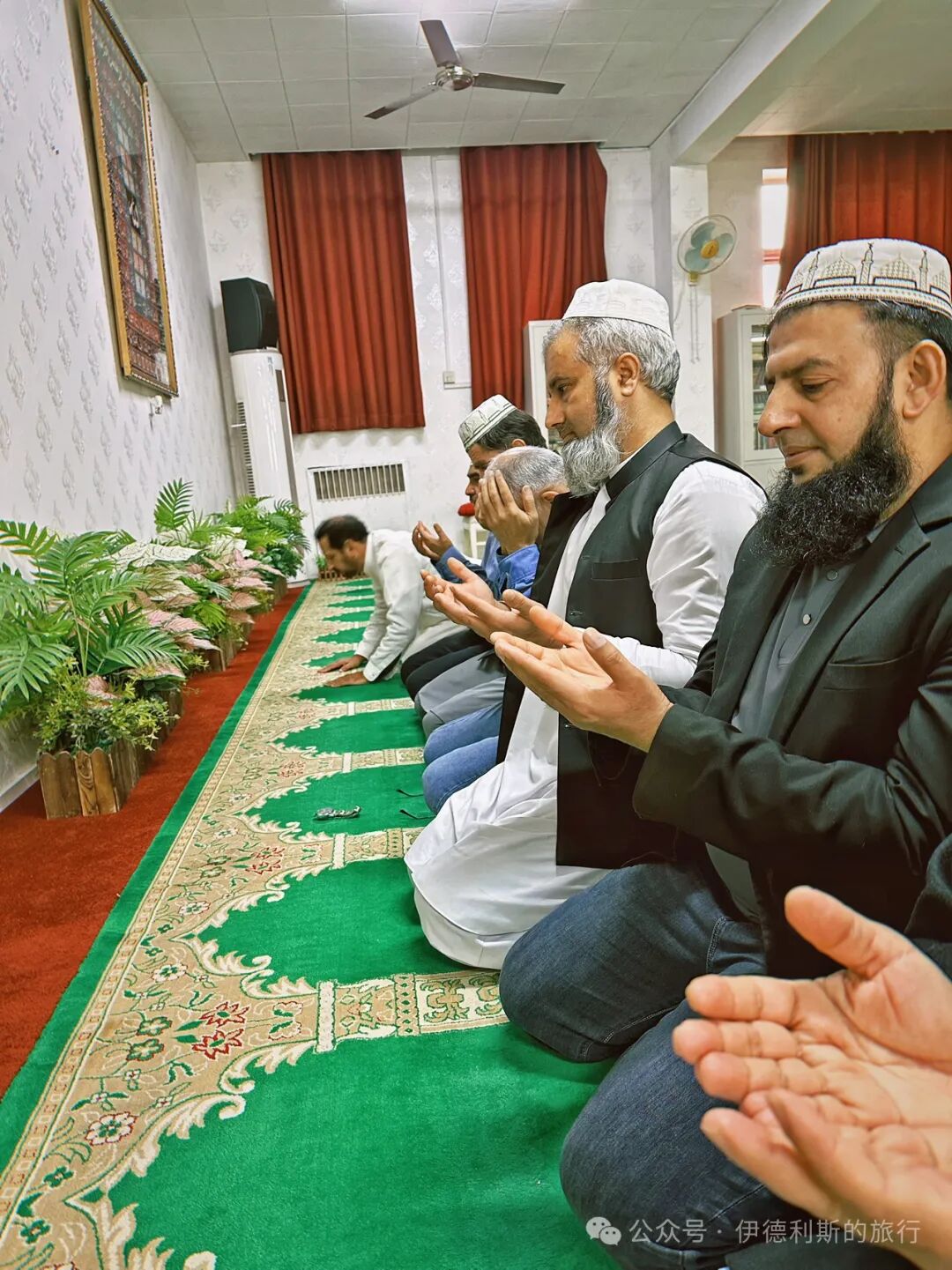
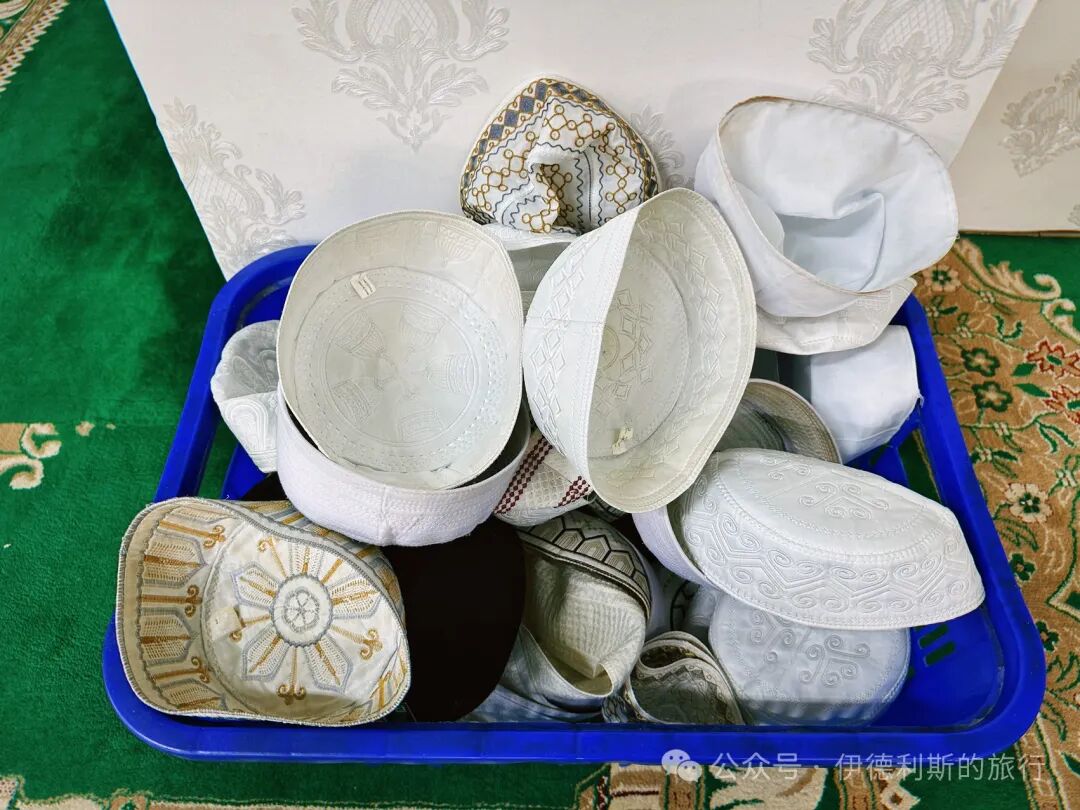
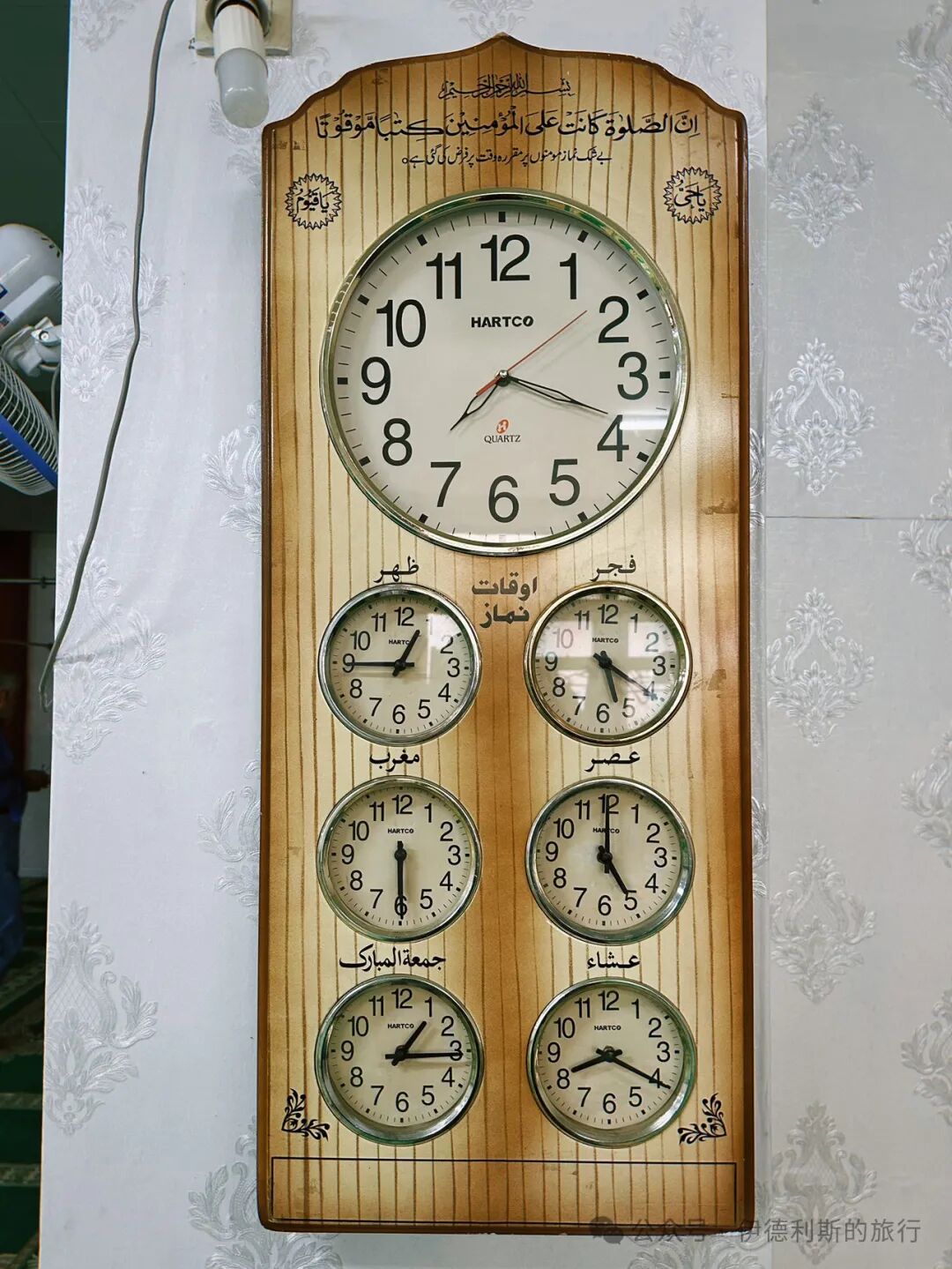
Children from all over the world showed off their traditional clothing.
I attended several foreign events in Beijing this year; you can often join different embassy activities in Beijing to experience cultures from around the world.
The Saudi Tourism Festival held by the Saudi Tourism Authority at the Temple of Heaven Park: Experience Arab culture at the Temple of Heaven Park.
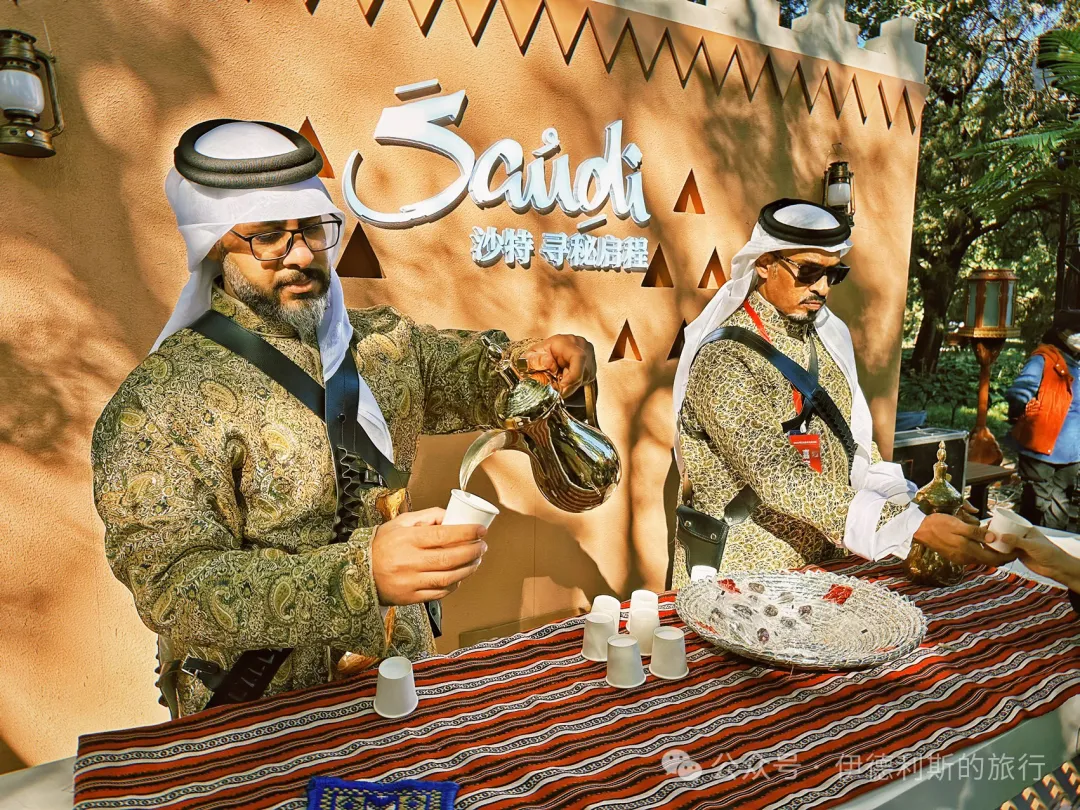
The Rasa Malaysia festival held at Sanlitun Taikoo Li: Taste Malaysian food in Beijing—2024 Beijing Malaysia Festival.
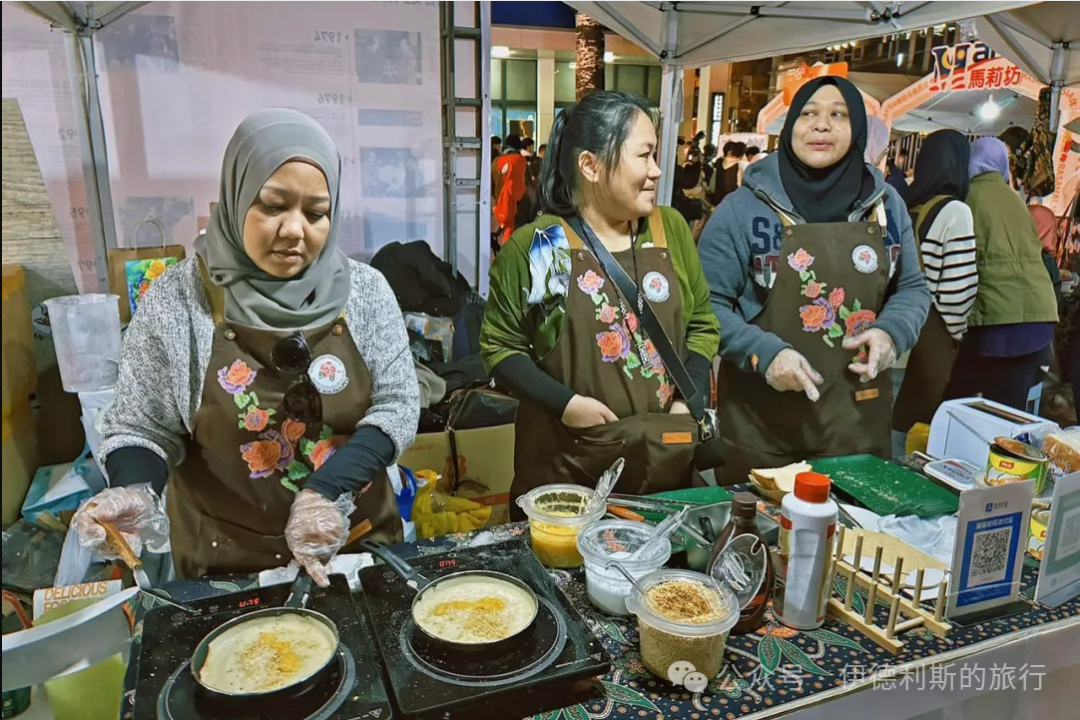
The International Neighborhood Festival held at the Jianguomen Diplomatic Residence Compound: Taste food from Iran, Azerbaijan, and the Maldives at the International Neighborhood Festival.
Cultural exchange activities hosted by Saudi Arabia, the guest of honor at the Beijing International Book Fair in the China National Convention Center: Experience Saudi culture at the Beijing International Book Fair.
The Indonesian Cultural Festival held at the Indonesian Embassy: Attend the 2024 Indonesian Cultural Festival.
Pakistan Cultural Night: Halal Food, Kathak Dance and Muslim Community
Articles • ali2007fr posted the article • 0 comments • 164 views • 2026-05-18 09:01
Summary: Pakistan Cultural Night: Halal Food, Kathak Dance and Muslim Community is presented here as a firsthand travel account in clear English, beginning with this scene: On November 1, I attended the Pakistan Cultural Night held by the SCOLAR youth platform at ZamZam Pakistani Restaurant in Beijing. The account keeps its focus on Pakistan Culture, Halal Food, Muslim Community while preserving the names, places, food, and historical details from the Chinese source.
On November 1, I attended the Pakistan Cultural Night held by the SCOLAR youth platform at ZamZam Pakistani Restaurant in Beijing. All profits from the event were donated to flood relief efforts in Pakistan. I met many friends (dostani) at the event, including both old friends and new ones, and the atmosphere was wonderful. We enjoyed Pakistani food together, held a cultural trivia contest, and watched and learned the traditional Pakistani Kathak dance.
Kathak is the only South Asian classical dance with Persian influences. It was first performed by wandering poets and later entered the royal courts during the Mughal Empire, becoming an elegant and highly stylized dance. During the Mughal period, many Persian and Central Asian elements were added to Kathak, including spinning movements similar to those in Sufi rituals. Today, Kathak holds an important place in South Asian Muslim society and is known as a blend of Hindu and Muslim cultures.
I had the buffet at ZamZam, which included lamb curry, chickpea masala (chana masala), chicken skewers (tikka), butter chicken, chicken biryani rice, fried vegetable fritters (pakora), fried curry pastries (samosa), and various desserts, along with my favorite lemon mint water. view all
Summary: Pakistan Cultural Night: Halal Food, Kathak Dance and Muslim Community is presented here as a firsthand travel account in clear English, beginning with this scene: On November 1, I attended the Pakistan Cultural Night held by the SCOLAR youth platform at ZamZam Pakistani Restaurant in Beijing. The account keeps its focus on Pakistan Culture, Halal Food, Muslim Community while preserving the names, places, food, and historical details from the Chinese source.
On November 1, I attended the Pakistan Cultural Night held by the SCOLAR youth platform at ZamZam Pakistani Restaurant in Beijing. All profits from the event were donated to flood relief efforts in Pakistan. I met many friends (dostani) at the event, including both old friends and new ones, and the atmosphere was wonderful. We enjoyed Pakistani food together, held a cultural trivia contest, and watched and learned the traditional Pakistani Kathak dance.
Kathak is the only South Asian classical dance with Persian influences. It was first performed by wandering poets and later entered the royal courts during the Mughal Empire, becoming an elegant and highly stylized dance. During the Mughal period, many Persian and Central Asian elements were added to Kathak, including spinning movements similar to those in Sufi rituals. Today, Kathak holds an important place in South Asian Muslim society and is known as a blend of Hindu and Muslim cultures.
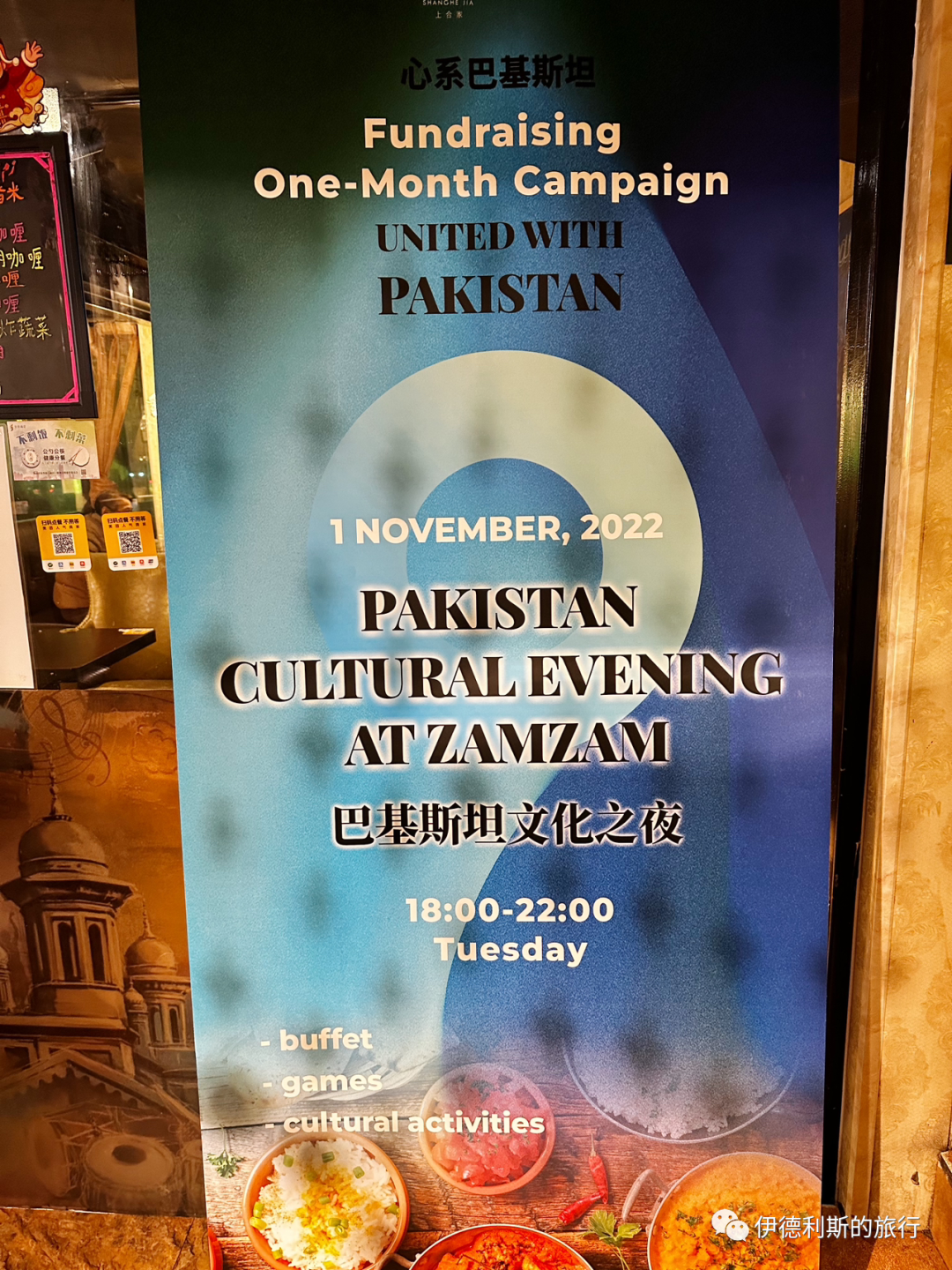
I had the buffet at ZamZam, which included lamb curry, chickpea masala (chana masala), chicken skewers (tikka), butter chicken, chicken biryani rice, fried vegetable fritters (pakora), fried curry pastries (samosa), and various desserts, along with my favorite lemon mint water.
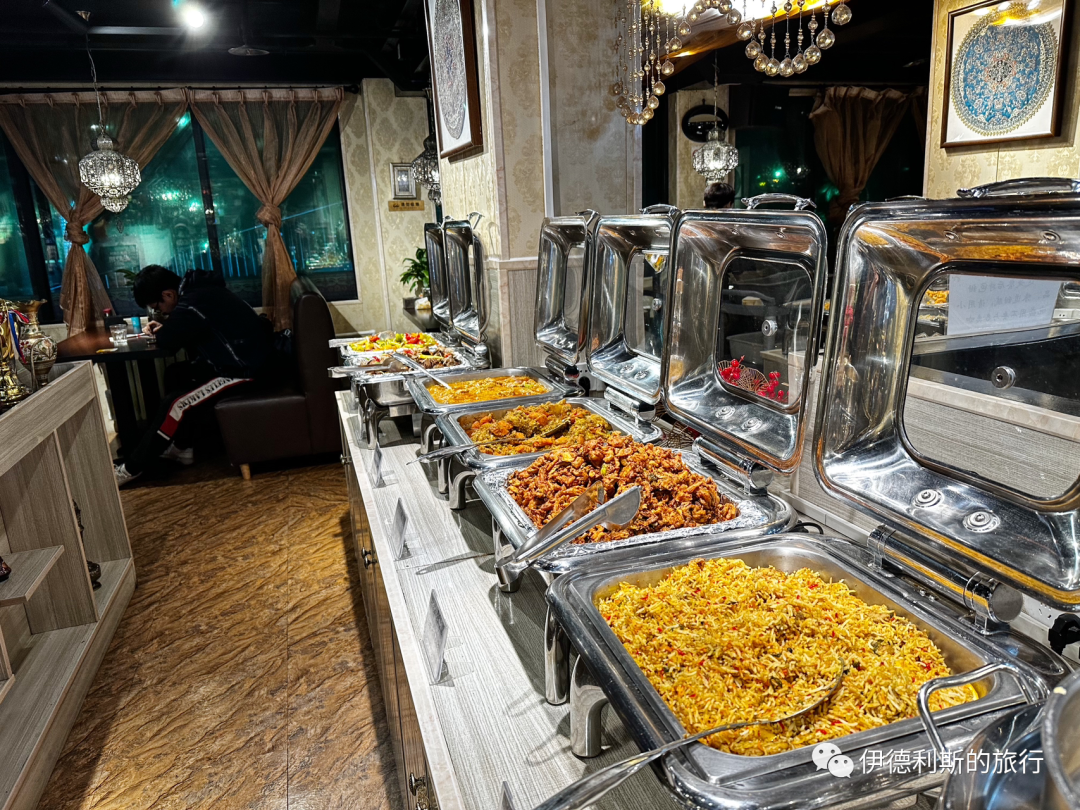
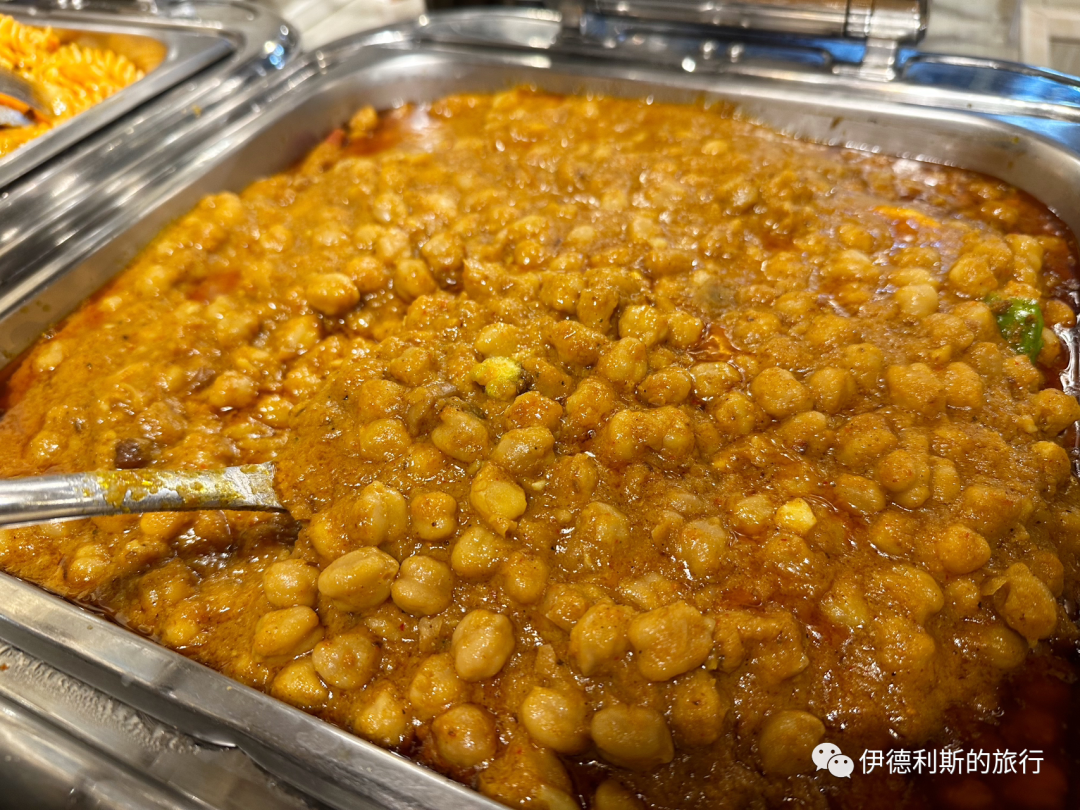
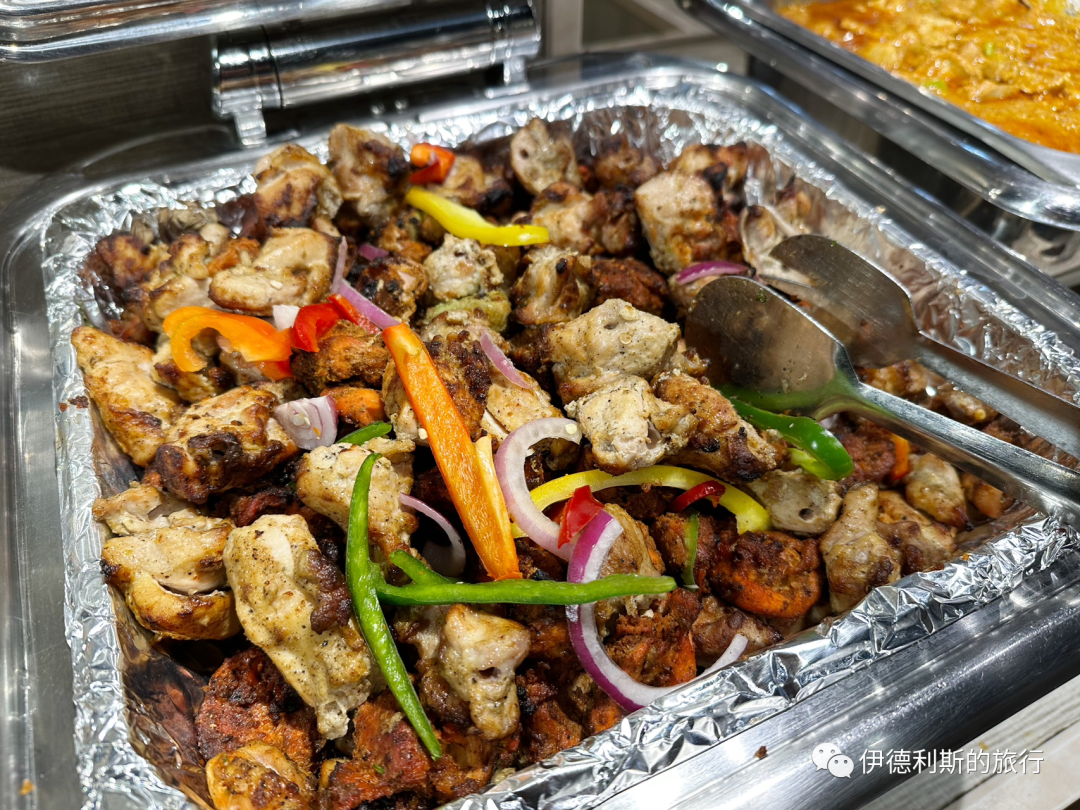
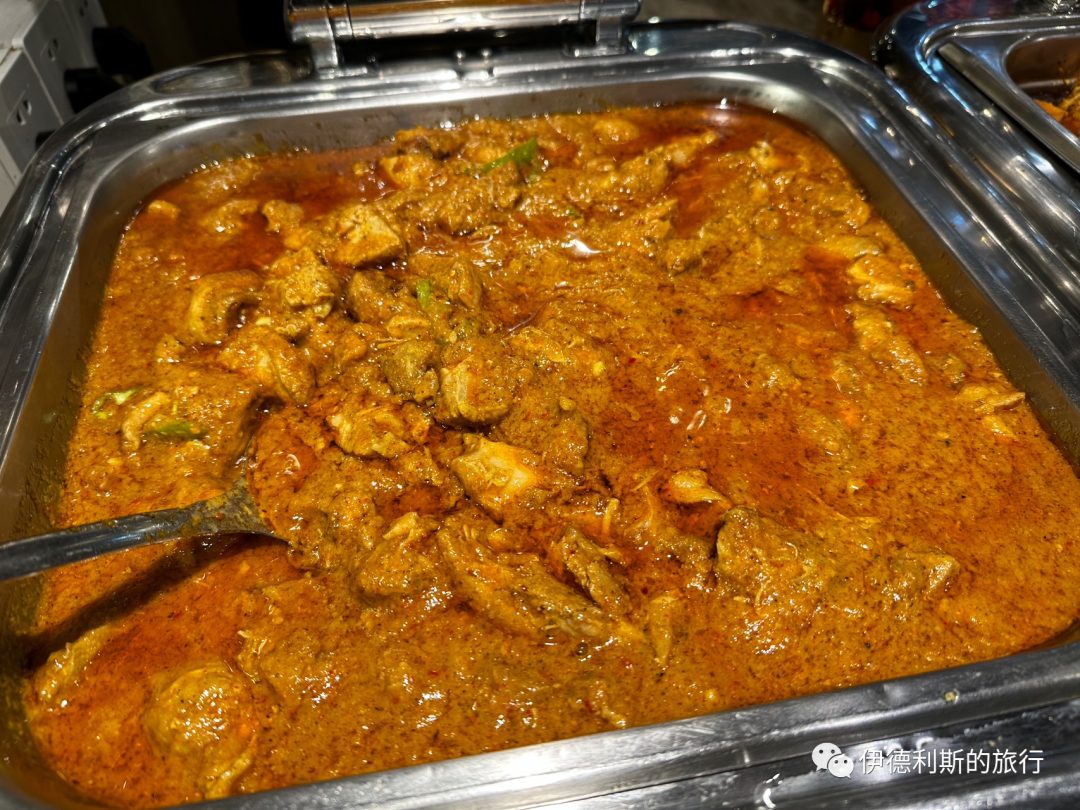
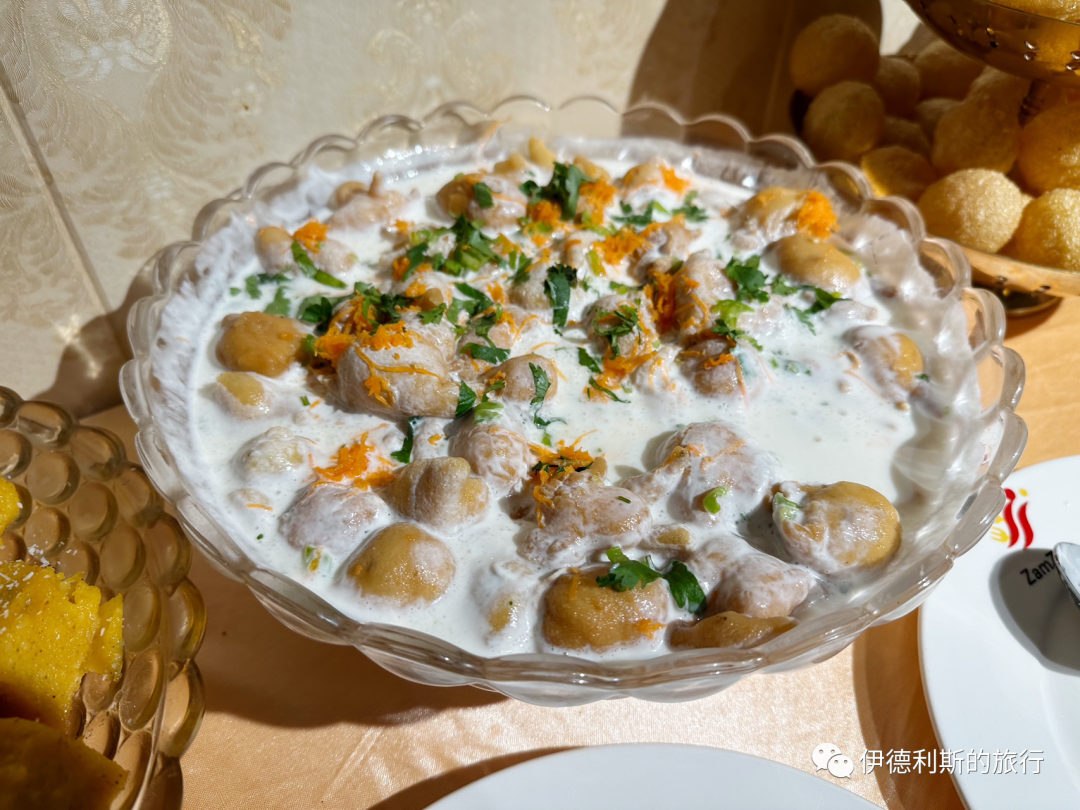
Halal Travel Guide: Delhi Sufi Sites — Shrines, Mosques and Muslim Communities (Part 1)
Articles • ali2007fr posted the article • 0 comments • 252 views • 2026-05-17 21:10
Summary: Delhi Sufi Sites — Shrines, Mosques and Muslim Communities is presented here as a firsthand travel account in clear English, beginning with this scene: Delhi has two important Muslim communities. One is inside Old Delhi, centered around the Mughal-era. The account keeps its focus on Delhi Sufi Sites, Sufi Heritage, Muslim Community while preserving the names, places, food, and historical details from the Chinese source.
Delhi has two important Muslim communities. One is inside Old Delhi, centered around the Mughal-era
Friday Mosque (Jama Masjid). The other is in the southeastern suburbs of Delhi, the Nizamuddin community, which is centered around the Nizamuddin Dargah complex.
Nizamuddin is the most important Sufi holy site in Delhi. Every year during Ramadan, hundreds or thousands of believers gather here, and the shrine provides free meals for suhoor and iftar to everyone. The area is busy even on normal days. Sometimes at night, there are performances of Qawwali, a type of South Asian Sufi music, which is very moving.
Table of Contents
Chapter 1: Eating and Exploring
Chapter 2: The Core Area of the Shrine of Nizamuddin (Nisangmuding Shengling)
1. North Gate: Built in the 15th century
2. Entering the shrine from the North Gate
3. Water tank: 1321
4. Jamaat Khana mosque: 14th century
5. Nizamuddin shrine (gongbei): 19th century
6. Tomb of Amir Khusrau: 1605
7. South Asian Sufi music (Qawwali)
1. Praise songs (nasheed) at the shrine of Nizamuddin.
2. Qawwali performance inside the mosque.
3. Sufi music at the music festival.
8. Tomb of Princess Jahanara: 1681.
9. Tomb of Muhammad Shah: 1748.
10. Tomb of Prince Mirza Jahangir: 1821
11. East Gate Bazaar
Chapter 3: The area around the shrine of Nizamuddin
1. Tomb of Ataga Khan: 1566
2. Chausath Khamba: 1624
3. Tomb of the poet Ghalib: 1869.
4. Barah Khamba: 14th-15th century.
5. Gol Gumbad: 15th century
6. Tomb of Malik Maqbul: 1388
7. Kali Mosque: 1370
Chapter 1: Eating and Exploring
Before we look at the architecture of Nisamuding, let's wander around the neighborhood and grab something to eat. The Nisamuding neighborhood is very lively, especially outside the north and east gates where vendors sell all sorts of things. Many of them sell religious supplies, including fresh flowers and prayer headscarves (shanbu).
If you turn from the busy market into the small alleys, you can see a quieter side of the area.
The tailor
These branches are used for brushing teeth.
At a stall selling religious items, I bought a photo of the shrine of Nizamuddin.
Eating food.
You can find many snacks in Nizamuddin.
Papayas on the street.
Lassi is a popular yogurt drink in South Asia. It is usually made by mixing yogurt with water, fruit, and various spices, and it comes in both sweet and salty versions.
Oily flatbread (you nang)
Chicken rice (biryani) is perhaps the most popular way to cook rice in South Asia. Biryani comes from South Asian Muslims. The word is a Persian loanword in Urdu, generally believed to come from the Persian word for rice, birinj.
According to historian Lizzie Collingham, modern biryani likely originated in the royal kitchens of the Mughal Empire. It was created when chefs combined spicy Indian rice with Persian pilaf. However, some believe that biryani existed even before the Mughal Empire. Documents from the 16th-century Mughal Empire mention both biryanis and pulao, but the two terms were interchangeable back then. Another historian, Pratibha Karan, believes that biryani formed after Arab traders brought Middle Eastern pilaf to South India.
People generally agree that there are three main differences between biryani and Indian pilaf:
1. Biryani is mixed with more spices and has a stronger curry flavor, while Indian pilaf uses almost no spices.
Biryani usually has two layers of rice with meat hidden in the middle, while Indian pilaf (pulao) is generally not layered.
Biryani is usually made by cooking the rice and meat separately, while Indian pilaf (pulao) is cooked all together.
A classic Indian samosa uses a dough made from vegetable oil, melted butter, warm water, salt, and wheat flour. The filling is a mix of mashed potatoes, onions, green peas, spices, and green chilies, which is then fried until golden brown.
The South Asian samosa, the Arab sanbusak, the Afghan sambosa, the Tajik samboosa, the Turkic samsa, and the Somali and Ethiopian sambusa all come from the Persian word sanbosag.
Persian poetry praised the samosa as early as the 10th century. This snack was very popular in Iran until the 16th century, but today it is only found in a few areas. In the 13th or 14th century, Muslim merchants from Central Asia brought the samosa to South Asia, where it became a favorite of the Delhi Sultanate royalty. A scholar from the Delhi Sultanate wrote in 1300 that princes and nobles enjoyed samosas made with meat, ghee, and onions. "
The famous 14th-century traveler Ibn Battuta visited the court of the Tughlaq dynasty in the Delhi Sultanate. In his travelogue, The Rihla, he wrote about eating a pastry called sambusak at the Sultan's court, which was filled with minced meat, almonds, pistachios, walnuts, and spices.
I still do not know the name of this fried food.
You can also buy many South Asian-style prayer caps in Nizamuddin.
I bought this Sindhi cap, which comes from the Sindh region and is often seen at Indian Sufi music performances.
Chapter 2: The Core Area of the Shrine of Nizamuddin (Nisangmuding Shengling)
Next, we will enter the core area of the Nizamuddin shrine (Dargah). The core area centers on the shrine (Shrine) and includes a series of historical buildings from the 14th to the 19th centuries. I have marked a diagram here.
Next, we will enter through the north gate and exit through the east gate to take a detailed look at the historical buildings in the core area of the Nisamuding Gongbei.
1. North Gate: Built in the 15th century
First, enter the core area of the shrine from the north gate. You must take off your shoes from this point on. The local vendors nearby will be very eager for you to store your shoes in their shops, but I chose to put my shoes in my own backpack.
2. Entering the shrine from the North Gate
The route is as follows:
3. Water tank: 1321
After entering from the north gate, the first thing you see is a water tank (baoli) built in 1321. It is the oldest surviving structure in the core area of the Nizamuddin shrine. There is a legendary story about the construction of this water tank:
In 1321, more and more people came to visit Nizamuddin Auliya (1238-1325). Many chose to stay there permanently, so Nizamuddin began building a water tank near his home. At the same time, Ghiyasuddin Tughlaq, the founder of the Tughlaq dynasty of the Delhi Sultanate, started building a massive fortress called Tughlaqabad in Delhi. He ordered all laborers in Delhi to work on the fortress, including the workers building a water tank for Nizamuddin. These workers preferred to work for Nizamuddin, so they built the fortress during the day and snuck back at night to work on the water tank.
When Ghiyasuddin found out, he banned the workers from working for Nizamuddin. Nizamuddin then made a prophecy: "Ya rahey ujjar, ya basey gujjar". It roughly means, "Either it will become a wasteland, or it will be inhabited by the Gujjar people." After the sultanate fell, the nomadic Gurjar (gujjar) people took over this castle and it turned into a wilderness.
Legend says Nizamuddin made many prophecies about Ghiyas. Another famous one is 'Hunuz Dilli dur ast'. It means 'Delhi is still far away'. Ghiyas led a successful expedition to Bengal in 1324. In February 1325, while he was on his way back, a wooden pavilion collapsed and crushed him to death before he could reach Delhi.
After the pool was finished, Nizamuddin said a dua for it. People believe this pool has magical powers and can cure skin diseases.
Right next to the pool are two women's graves. Persian inscriptions on them show they were built in 1563. One woman was shown mercy and forgiveness, while the other died in deep sorrow.
Follow the path south from the pool to reach the true heart of the Nizamuddin shrine. Many people are buying fresh flowers where the path meets the courtyard to offer to the saint.
4. Jamaat Khana mosque: 14th century
The Jamaat Khana mosque is the most important building in the heart of Nizamuddin. There are many different stories about its history, but it is likely the second mosque built in Delhi after the Qutb mosque.
One story says that Sultan Alauddin Khalji (reigned 1296-1316) of the Khalji dynasty built this mosque because Nizamuddin once refused a large sum of money offered by the Sultan. Because it has been restored, this mosque looks very different from the Alai Darwaza, the southern gate of the Qutb mosque built by Alauddin Khalji. However, if you look closely, the proportions and decorations of the two buildings are actually very similar.
Another story says the main hall of this building was originally built by Alauddin Khalji's son, Khizr Khan, as a tomb for Nizamuddin. Nizamuddin did not want to be buried in a tomb, so the building became a mosque and side rooms were added to both sides. But looking at the existing structure, the main hall and the side chambers seem to be built together perfectly, with no signs that they were constructed at different times.
A third theory says Nizamuddin was buried in the wilderness according to his final wishes, and this mosque was built for believers by Sultan Firuz Shah Tughlaq (reigned 1351-1388). Overall, the building's style is still very close to the architectural style of the Khalji dynasty.
The hall on the north side of the mosque is currently undergoing repairs.
5. Nizamuddin shrine (gongbei): 19th century
The Shrine of Nizamuddin (Shrine) sits right in front of the Jamaat Khana mosque. It is impossible to know what the original shrine looked like. The first shrine was built in the late 14th century by Firoz Shah Tughlak, who was the Sultan of the Delhi Sultanate from 1351 to 1388.
In 1562, a noble serving under the Mughal Emperor Akbar added marble screens around the shrine.
Starting in 1608, the governor of Delhi at the time, Sheikh Farid Bukhari, added several new features to the shrine, including a wooden canopy inlaid with mother-of-pearl.
In 1652, a red sandstone corridor was built around the shrine, but it was replaced in 1809 by the marble columns we see today.
The shrine's canopy was rebuilt in 1820, and a dome was added in 1839, giving it the appearance it has now.
Muhammad Nizamuddin Auliya (1238-1325), also known as Hazrat Nizamuddin, was a key figure in the Sufi Chishti Order and is considered one of the most important Sufis in South Asia.
Nizamuddin was born in 1238 in Badayun, near the Ganges River in Uttar Pradesh. His father died when he was five, and his mother brought him to Delhi to make a living. At age 20, Nizamuddin traveled to Ajodhan (now in the Punjab region of Pakistan) to follow the famous Sufi master Fariduddin Ganjshakar, who was also one of the founders of the Sufi Chishti Order. After that, Nizamuddin spent three consecutive Ramadans traveling from Delhi to Ajodhan to be with Fariduddin Ganjshakar. During the third Ramadan, Fariduddin Ganjshakar named Nizamuddin as his successor. Not long after, Nizamuddin received news in Delhi that his teacher had passed away.
Nizamuddin lived in many parts of Delhi. In his later years, he moved to a place outside the city called Ghiyaspur to escape the noise. There, he built his own Sufi lodge (khanqah). A lodge is usually part of a complex that includes a school, a mosque, and a tomb (gongbei). Inside the prayer hall (daotang), Nizamuddin generously shared his knowledge with everyone who came to ask him for guidance. Soon, more and more people gathered around him, from the poor to the wealthy, and even court poets from the Delhi Sultanate came to learn from his teachings.
Nizamuddin did not focus much on Sufi theory, choosing instead to put his energy into practice. His key principles included helping those in need, providing food for the hungry, and showing compassion to the oppressed. He strongly opposed mixing with the Sultan and the royal nobility. He urged the wealthy to stay in close contact with the poor and the oppressed. He took an uncompromising stance against all forms of political and social oppression.
Nizamuddin was also a strong supporter of the Sufi Sama ceremony, which some people at the time considered un-Islamic. Sama is a Sufi ritual centered on remembrance (Dhikr) that includes singing, playing musical instruments, dancing, and reciting poetry. The famous Sufi whirling dance is one part of Sama.
Music and dance have always been an important part of various religious rituals in India. Nizamuddin hoped to use music and dance to make it easier for ordinary believers to participate in Sufism. Influenced by Nizamuddin, his famous student Amir Khusrow invented Qawwali, the most well-known form of Sufi music in South Asia.
6. Tomb of Amir Khusrau: 1605
The tomb of Nizamuddin's student Amir Khusro (1253-1325) sits south of the shrine and is the second most important tomb in the core area after Nizamuddin's own.
In 1310, 57-year-old Khusro met Nizamuddin and eventually became his student. In 1319, Khusro wrote a prose work called Afzal ul-Fawaid (The Greatest Blessings) that explains the teachings of Nizamuddin. Nizamuddin passed away on April 3, 1325, and Khusrau died just six months later. His tomb, like the shrine of Nizamuddin, was rebuilt many times. During the reign of Humayun (1530-1560), a surrounding wall was added, which makes it difficult to see the original appearance of the tomb.
Amir Khusrau holds a high status in India and is known as an iconic figure in Indian cultural history. He is called the father of Urdu literature and the father of Indian Sufi music, among many other titles. He was a Sufi musician who invented Qawwali, the most important form of Sufi music in South Asia, and he was also a great Persian poet. Ghazal was a very important form in his poetry. Khusrau made great contributions to the ghazal style of poetry and was the first to introduce ghazal-style songs to India, where they became an important musical form in South Asia.
A portrait of Khusrau teaching his students, painted in the Bukhara region between the late 17th and early 18th centuries.
1. Exiled Turks
Khusrau's father came from the Lachin tribe of the Turks. He was born and raised near Samarkand under the rule of the Western Liao dynasty. In 1218, Genghis Khan's army destroyed the Western Liao dynasty and devastated Central Asia. Many Turks fled in all directions, and Khusrau's father escaped to what is now northern Afghanistan.
At that time, Sultan Shams ud-Din Iltutmish of the Delhi Sultanate also came from a Turkic tribe in Central Asia. He welcomed these Turkic refugees to settle in the Delhi Sultanate and provided significant support and many positions in the sultan's court to exiled Turkic nobles, craftsmen, and scholars.
In 1230, the Sultan gave Khusrau's father a piece of land, and he married the daughter of an Indian Rajput noble.
2. Receive an Indian education
In 1260, when Khusrau was only 7 years old, his father passed away. His mother then took the whole family back to live at her parents' home in Delhi. So, in reality, Khusrau grew up in the home of his maternal grandfather, Rawat Arz.
Khusrau's maternal grandfather was a highly cultured, high-ranking official in the court of the Delhi Sultan Ghiyas ud din Balban (1266-1286). Khusrau started his formal education at his grandfather's house when he was eight, and he also began learning how to write poetry.
In 1271, Khusrau finished his first poetry collection, Tuhfat us-Sighr (Gift of Childhood), which included poems he wrote between the ages of 16 and 18.
3. Gaining recognition from the Mamluk dynasty
Khusrau's grandfather passed away when he was 20, and after that, Khusrau joined the army of the Mamluk dynasty in the Delhi Sultanate. By then, his poetry had already made a big impression on the Sultan's court, and Sultan Balban's second son, Bughra Khan, was his biggest fan. In 1276, Bughra Khan became a patron of Khusrau.
Bughra Khan left the Sultan's court in 1277 to rule Bengal. In 1279, Khusrau visited him in Bengal and finished his second poetry collection there, Wast ul-Hayat (The Middle of Life).
After this, the Sultan's eldest son, Khan Muhammad, visited Delhi from Multan. He also loved Khusrau's poetry and invited him to come live in Multan. In 1281, Khusrau traveled to Multan with Khan Muhammad. At that time, Multan was the gateway from India to Arabia and Persia. It was an important cultural center in India that brought together brilliant scholars from Persia, India, and other places, and Khusrau learned a great deal there.
In 1285, Khan Muhammad died in battle while fighting the Mongol army. Sultan Balban died in 1287. His grandson, Muiz ud din Qaiqabad, who was the son of his second son Bughra Khan, took the throne as the final sultan of the Mamluk dynasty of the Delhi Sultanate.
Between 1287 and 1288, Khusrau became a court poet for the sultan. In 1288, he finished his first long poem (Mathnawi) titled Qiran us-Sa'dain (The Meeting of the Two Auspicious Stars). It tells the story of Bughra Khan, who had been hostile toward his son for a long time, finally meeting with Sultan Qaiqabad.
4. Gaining respect from the Khalji dynasty
In 1290, the military officer Jalal ud din Firuz Khalji led a coup to overthrow the Mamluk dynasty and established the Khalji dynasty.
Firuz Khalji also greatly admired Khusrau's poetry, so Khusrau was invited back to be the court poet and was treated with great respect. In the court of the Khalji dynasty, Khusrau was able to focus on his literary work. His ghazal poems were turned into songs, and the Sultan had female singers perform them for him every night.
Khusrau once wrote about this experience: The King of the World, Firuz Khalji, gave me unimaginable treasures to reward me for the endless pain I suffered while writing poetry.
In 1290, Khusrow finished his second long poem (masnavi), Miftah ul-Futuh (Key to Victories), which praised the victories of Firuz Khalji. In 1294, he completed his third poetry collection, Ghurrat ul-Kamaal (The Pinnacle of Perfection), which includes poems he wrote between the ages of 34 and 41.
In 1296, Alauddin Khalji became the new Sultan of Delhi. Khusrow wrote Khaza'in ul-Futuh (Treasures of Victories) for Sultan Alauddin Khalji, recording the Sultan's achievements in various areas. In 1298, Khusrow finished a set of five long poems (khamsa) known as Khamsa-e-Khusrow (Khusrow's Quintet). These two works brought Khusrau great fame and status. Sultan Alauddin Khalji was very pleased and rewarded him generously.
Illustrations for the Quintet (Khamsa)
7. South Asian Sufi music, Qawwali
Legend says that in the late 13th century, Khusrau blended Persian, Indian, Turkic, and Arabic music to create the local Indian Sufi music known as Qawwali.
The word Qawwali comes from the Arabic term Qaul, which means the saying of the Prophet. A Qawwal is someone who frequently chants the Qaul, and the act of chanting it is called Qawwali.
During the Mughal Empire, Qawwali was mostly sung in Persian. As it spread across South Asia, it began to be performed in many other languages, including Urdu, Hindi, Bengali, and Punjabi. Today, besides Delhi, Qawwali is popular in the Punjab and Sindh regions of Pakistan, North India, Hyderabad, and Muslim-populated areas in Bangladesh like Dhaka, Chittagong, and Sylhet. The performance style in each place is influenced by local traditional music, giving each one its own unique character.
1. Praise songs (nasheed) at the shrine of Nizamuddin.
The Nizamuddin Dargah hosts Qawwali performances two nights a week, but I didn't plan well enough and missed them. At the shrine, I was lucky to see an old man singing a song of praise for the Prophet, and it was very moving.
2. Qawwali performance inside the mosque.
I was very lucky to catch a Qawwali performance at a small mosque in the northeast of the Nizamuddin neighborhood, which was one of the most memorable parts of my trip to Delhi.
A Qawwali group usually has 8 to 9 people. This includes one lead singer, one or two backup singers, one or two harmonium players (who can also be the lead or backup singers), and one or two drummers playing the tabla and dholak drums. There are also 4 to 5 chorus members who repeat key verses and clap to keep the beat. During the performance, everyone sits cross-legged on the floor, with the lead singer, backup singers, and harmonium player in front, and the drummers and chorus members behind them.
Before the harmonium was introduced, qawwali usually used the sarangi, a stringed instrument similar to a violin.
Qawwali themes are love, devotion, and longing, and they are divided into seven types based on their content:
The first type is called hamd, which means praise. It is a song praising Allah and usually starts the qawwali.
The second type is called na'at, which means description. It is a song praising the Prophet Muhammad and is usually the second song in a qawwali.
The third type is called manqabat, which means virtue. It is a song praising Imam Ali or one of the Sufi saints and is usually the third song in a qawwali.
The fourth type is called marsiya, which means elegy. It tells the story of how Imam Hussain, the son of Imam Ali, and his family were all martyred in the Battle of Karbala. This type is usually only performed during Shia rituals.
The fifth type is called ghazal, meaning love song. This is a song that seems very secular on the surface, usually singing about the joy of drinking wine and the pain of being separated from a lover. In South Asia, ghazal is an independent musical genre on its own and usually does not have a deeper meaning. However, in the context of Sufi Qawwali rituals, these secular metaphors are used to express the longing for the soul to unite with the divine and a love for the sacred. In songs about being drunk, wine represents divine knowledge, the wine glass is Allah or a spiritual guide, the tavern is considered the spiritual background where the soul exists, and being drunk means having gained divine knowledge or being filled with the joy of loving Allah. Songs that seem to describe a longing for a lover are actually singing about the pain of the soul being separated from Allah and the desire to be reunited.
The sixth type is called kafi, a unique form of poetry in Punjabi, Sindhi, and Seraiki.
The seventh type is called munajaat, which means monologue. The singer uses various forms to express praise to Allah, usually singing in Persian.
3. Sufi music at the music festival.
For the first 600 years, Qawwali was a type of music performed only at Sufi shrines or places of spiritual practice (dargah) in South Asia. Since the 20th century, Qawwali music has gained mainstream attention through major world music labels and the international music scene. It now holds a certain international status, and many bands have started performing Qawwali melodies. I saw a rock band performing Sufi music in front of the Select Citywalk mall in Delhi.
8. Tomb of Princess Jahanara: 1681.
Because of Nizamuddin's important status in India, many significant figures are buried near him. There are several important tombs around the Nizamuddin shrine. The first one, right next to the mosque, is the white marble tomb of Princess Jahanara Begum Sahiba (1614-1681).
Princess Jahanara was the most powerful woman in the Mughal Empire during the mid-17th century. She was also the only female Sufi practitioner in the Mughal court, belonging to the Qadiriyya order, which is known as the Qadiriyya menhuan in Northwest China.
The white marble latticework tomb in the center of the picture is the tomb of Princess Jahanara.
1. Becoming the First Lady of the Empire
Princess Jahanara was the eldest daughter of the Mughal Emperor Shah Jahan (reigned 1628-1658), who built the Taj Mahal. She was educated from a young age by Sati al-Nisa Khanam, the sister of the famous Mughal Empire poet Talib Amuli. Sati al-Nisa Khanam was highly accomplished in the Quran, Persian literature, court etiquette, and medicine. At that time, women in the Mughal royal family could enter the famous Akbar the Great Library to read books in Persian, Turkish, and Indian languages. The young princess became skilled in reading, writing, poetry, and painting, and she also enjoyed hobbies like chess, polo, and hunting.
After her mother died in 1631, the 17-year-old princess became the First Lady of the empire (Padshah Begum) and took charge of court ceremonies. After moving past the grief of losing her mother, the princess hosted the engagement and wedding ceremonies for her brother, Dara Shukoh, to fulfill her mother's final wishes.
The princess became increasingly favored by her father and eventually rose to be the highest-ranking woman in the Mughal Empire, with her father, Shah Jahan, even letting her hold the imperial seal.
In 1644, his younger brother, the future Mughal Emperor Aurangzeb, angered their father. The princess successfully convinced her father to forgive Aurangzeb and restore his military rank.
2. Burned and healed
In March 1644, 30-year-old Princess Jahanara suffered severe burns and was so badly injured that she almost died. To pray for the princess's recovery, Shah Jahan gave large amounts of charity to the poor and released many prisoners. The princess's brothers, including Aurangzeb, also returned to Delhi to visit her.
During her illness, Emperor Shah Jahan stayed in the Red Fort and barely left his daughter's side. The Mughal Empire's royal doctors could not heal her burns, so Shah Jahan brought in Persian doctors, and the princess's condition slowly improved. Finally, after a full year, the princess made a complete recovery.
3. Managing the empire's charity work
In the Mughal court, Princess Jahanara was mainly in charge of charity work, and she was famous for actively caring for the poor and funding the construction of mosques. Whenever a major holiday arrived or a famine struck a region, the princess organized large-scale relief efforts. The princess was also responsible for organizing the pilgrimage to the holy cities of Mecca and Medina.
4. Sufi practice
Princess Jahanara was a student of the Sufi master Mullah Shah Badakhshi. She officially joined the Sufi Qadiriyya order in 1641 and achieved great success in her spiritual practice.
She wrote several books on Sufism. The most famous one is a biography of Moinuddin Chishti, the founder of the Chishti order. At the time, this book was highly praised for its excellent literary quality and accurate judgment. The princess also commissioned the translation and publication of a series of Sufi works, including many commentaries on Rumi's famous Mathnawi, which were very popular in the Mughal Empire.
5. Becoming First Lady again
In 1657, Shah Jahan fell seriously ill, and his four sons began a war of succession. Princess Jahanara supported Shah Jahan's eldest son, Dara Shikoh, but the following year, Dara Shikoh was defeated by his younger brother Aurangzeb and fled to Delhi.
Shah Jahan hoped the princess would use her influence over her brothers to persuade them, but in June 1658, Aurangzeb still besieged his father at Agra Fort. Aurangzeb cut off the water supply to force his father to surrender, then kept his father and the princess under house arrest.
The princess cared for Shah Jahan until he passed away in 1666, after which she reconciled with Aurangzeb and became the First Lady of the Mughal Empire once again.
During Aurangzeb's reign, the princess still held privileges that no other women in the Mughal royal family possessed. She opposed Aurangzeb's conservative religious policies, especially when he strictly regulated public life in 1679 by reinstating the poll tax on non-Muslims, a policy the princess believed would alienate the Hindus within the empire.
An 18th-century portrait of the princess.
6. The Princess's Tomb
Princess Jahanara built her own tomb next to the Nizamuddin shrine while she was still alive. The tomb is made of white marble and features lattice screens. After the princess passed away in 1681, Aurangzeb gave her the title Sahibat-uz-Zamani, which means "Mistress of the Age."
The princess's tomb is in the top right corner.
Inside the circle.
9. Tomb of Muhammad Shah: 1748.
Right next to the tomb of Princess Jahanara is the tomb of the Mughal Emperor Muhammad Shah (reigned 1719-1748), which also features white marble latticework.
During the reign of Muhammad Shah, the Mughal Empire declined rapidly and irreversibly. In the royal court, local Indian culture gradually replaced the influence of Persian and Turkic cultures.
1. Inheriting the throne
Muhammad Shah was born in 1702 in what is now Ghazni, Afghanistan. After his grandfather, Emperor Bahadur Shah I (reigned 1707-1712), died in 1712, his father was killed in a war for the throne. At just 10 years old, Muhammad Shah and his mother were imprisoned by his uncle, Jahandar Shah (reigned 1712-1713). While in prison, Muhammad Shah was raised and educated by his mother, and he was a very diligent student.
Soon after, Jahandar Shah was assassinated by the Sayyid Brothers, who held real power in the empire. They installed Farrukhsiyar (reigned 1713-1719) as a puppet emperor.
In 1719, Farrukhsiyar was killed by the Sayyid brothers. They then installed two puppet rulers, but both died of illness a few months after taking the throne. Finally, the Sayyid brothers chose 17-year-old Muhammad Shah to be emperor. In 1720, Muhammad Shah got rid of the Sayyid brothers one after another, took direct control of the military, and officially ruled the empire.
A portrait of Muhammad Shah with nobles painted in 1730, kept at the Bodleian Library of Oxford University.
2. Developing arts and culture
During the reign of Muhammad Shah, the influence of Persian and Turkic cultures in the Mughal Empire gradually faded, while local Indian cultural influence grew stronger. Muhammad Shah replaced Persian with Urdu as the court language and oversaw the first translation of the Quran into Urdu. In the royal court, the Turkic formal wear worn by nobles from Samarkand was replaced by the local Indian formal coat (Sherwani).
At the same time, Muhammad Shah brought the local Indian Sufi musical performance (Qawwali) back into the court, which caused it to spread quickly across South Asia.
Although the political power of the Mughal Empire declined during the reign of Muhammad Shah, he strongly encouraged literature and the arts. Muhammad Shah hired many great painters to depict various scenes of palace life in their artwork. At the same time, Indian classical music continued to develop and evolve in Muhammad Shah's court.
A portrait of Muhammad Shah and his family painted in 1735, held by the Los Angeles County Museum of Art.
A scene of Muhammad Shah meeting Nader Shah painted in 1740, held by the Guimet Museum in Paris.
3. Died in sorrow
In 1747, the Durrani dynasty of Afghanistan led 30,000 cavalrymen from Peshawar. They defeated 70,000 Mughal troops who tried to stop them, then carried out a massacre in the important Mughal city of Lahore and looted a massive amount of wealth. On March 11, 1748, while on the way to Delhi, the Durrani army was intercepted by Mughal forces sent by Muhammad Shah, and the two sides began a decisive battle. During the fighting, Ahmad Shah's artillery ammunition caused a fire. Many soldiers burned to death, and the Durrani had to retreat back to Afghanistan. During the decisive battle against Afghanistan, the Mughal Empire's prime minister, Qamaruddin Khan, was hit by artillery fire and died. When Muhammad Shah heard the news, he was heartbroken. He eventually died from his overwhelming grief on April 26, 1748, and was buried next to the Nizamuddin shrine.
10. Tomb of Prince Mirza Jahangir: 1821 view all
Summary: Delhi Sufi Sites — Shrines, Mosques and Muslim Communities is presented here as a firsthand travel account in clear English, beginning with this scene: Delhi has two important Muslim communities. One is inside Old Delhi, centered around the Mughal-era. The account keeps its focus on Delhi Sufi Sites, Sufi Heritage, Muslim Community while preserving the names, places, food, and historical details from the Chinese source.
Delhi has two important Muslim communities. One is inside Old Delhi, centered around the Mughal-era
Friday Mosque (Jama Masjid). The other is in the southeastern suburbs of Delhi, the Nizamuddin community, which is centered around the Nizamuddin Dargah complex.
Nizamuddin is the most important Sufi holy site in Delhi. Every year during Ramadan, hundreds or thousands of believers gather here, and the shrine provides free meals for suhoor and iftar to everyone. The area is busy even on normal days. Sometimes at night, there are performances of Qawwali, a type of South Asian Sufi music, which is very moving.
Table of Contents
Chapter 1: Eating and Exploring
Chapter 2: The Core Area of the Shrine of Nizamuddin (Nisangmuding Shengling)
1. North Gate: Built in the 15th century
2. Entering the shrine from the North Gate
3. Water tank: 1321
4. Jamaat Khana mosque: 14th century
5. Nizamuddin shrine (gongbei): 19th century
6. Tomb of Amir Khusrau: 1605
7. South Asian Sufi music (Qawwali)
1. Praise songs (nasheed) at the shrine of Nizamuddin.
2. Qawwali performance inside the mosque.
3. Sufi music at the music festival.
8. Tomb of Princess Jahanara: 1681.
9. Tomb of Muhammad Shah: 1748.
10. Tomb of Prince Mirza Jahangir: 1821
11. East Gate Bazaar
Chapter 3: The area around the shrine of Nizamuddin
1. Tomb of Ataga Khan: 1566
2. Chausath Khamba: 1624
3. Tomb of the poet Ghalib: 1869.
4. Barah Khamba: 14th-15th century.
5. Gol Gumbad: 15th century
6. Tomb of Malik Maqbul: 1388
7. Kali Mosque: 1370
Chapter 1: Eating and Exploring
Before we look at the architecture of Nisamuding, let's wander around the neighborhood and grab something to eat. The Nisamuding neighborhood is very lively, especially outside the north and east gates where vendors sell all sorts of things. Many of them sell religious supplies, including fresh flowers and prayer headscarves (shanbu).
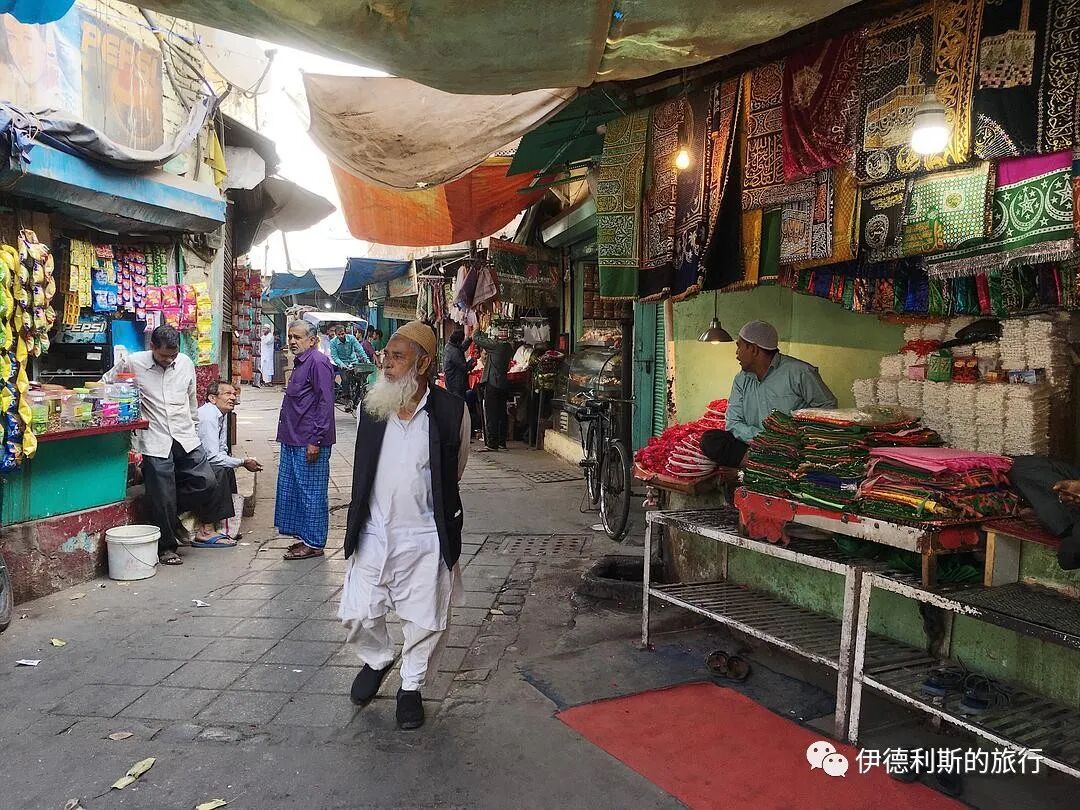
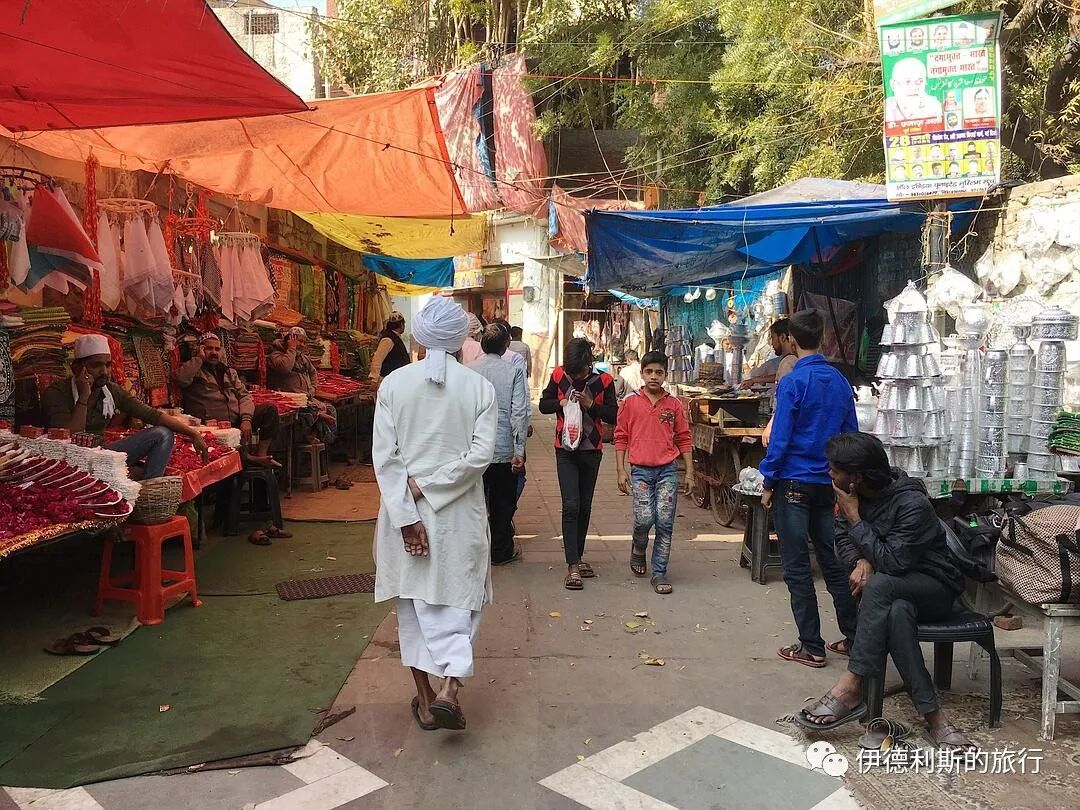
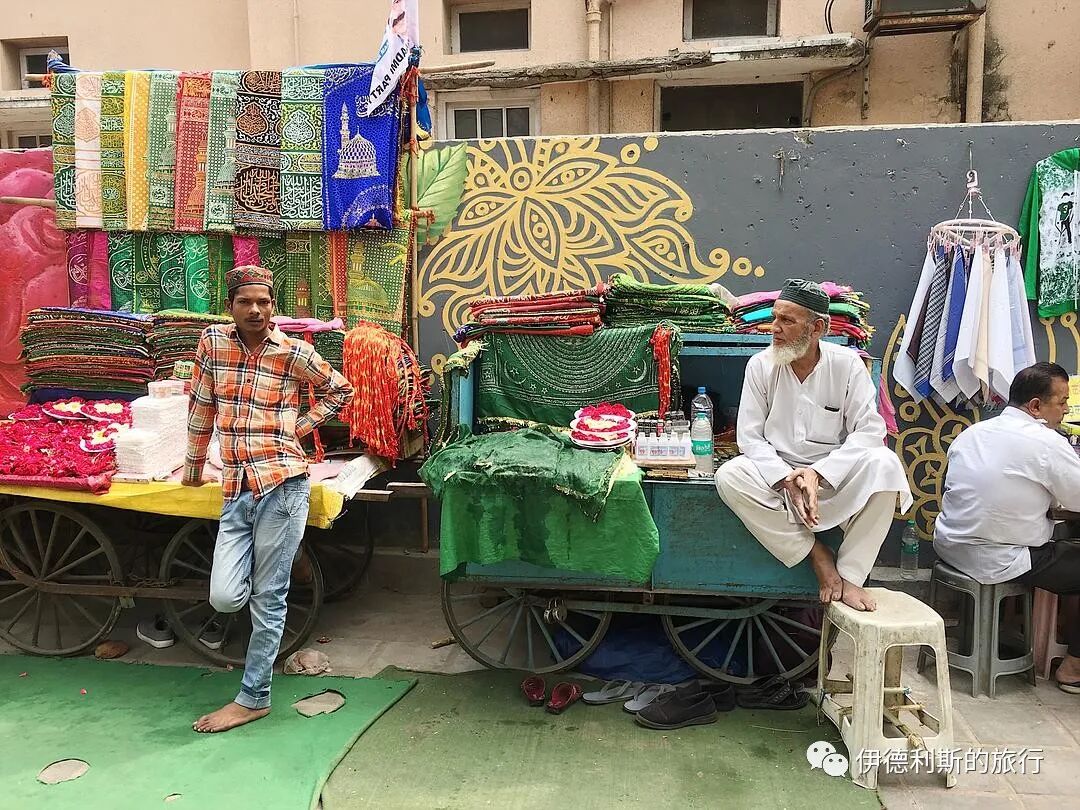
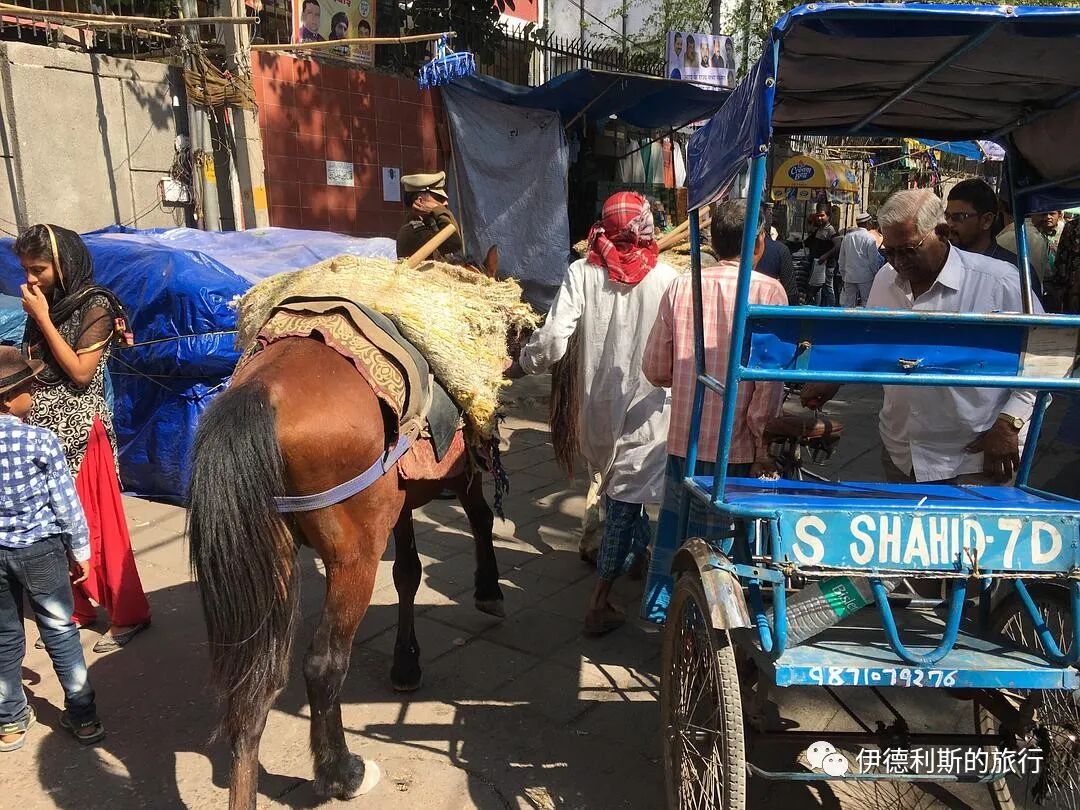
If you turn from the busy market into the small alleys, you can see a quieter side of the area.
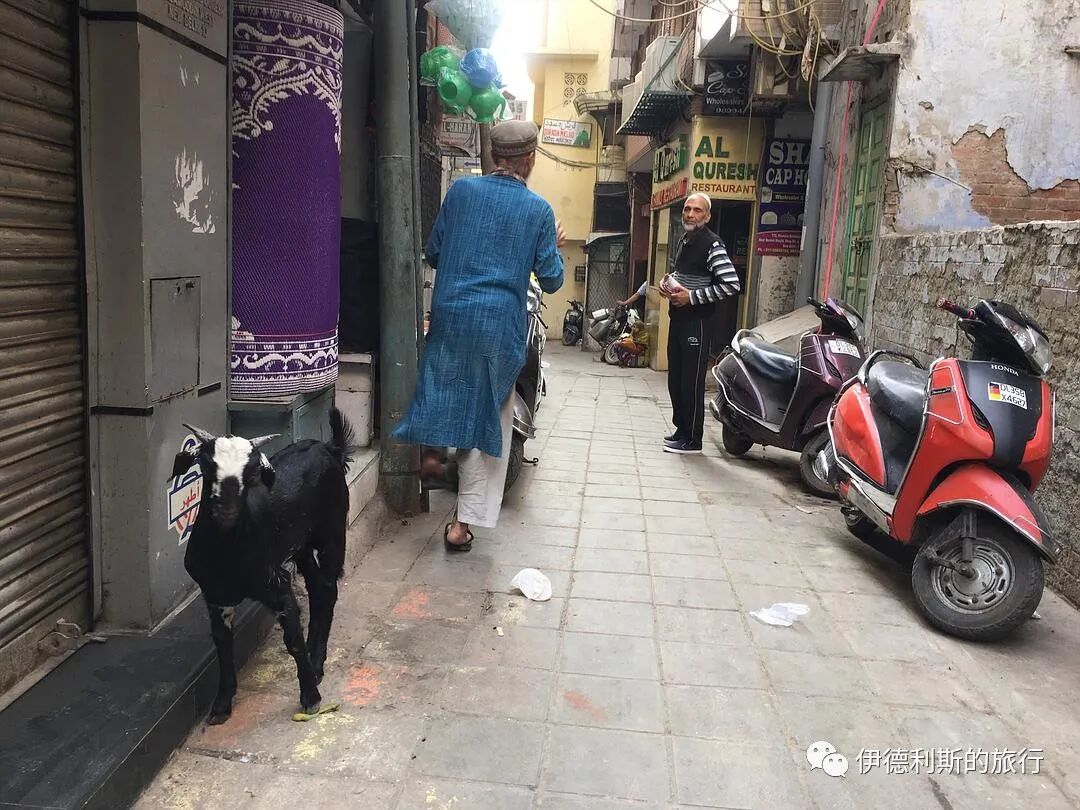
The tailor
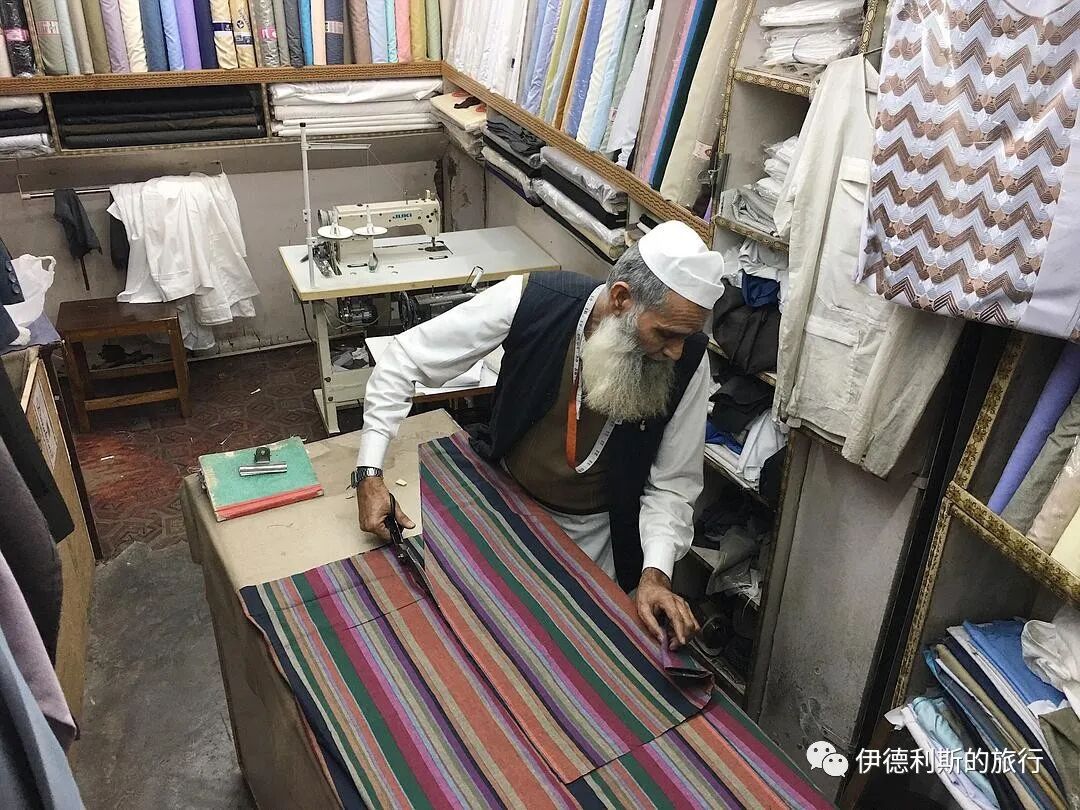
These branches are used for brushing teeth.
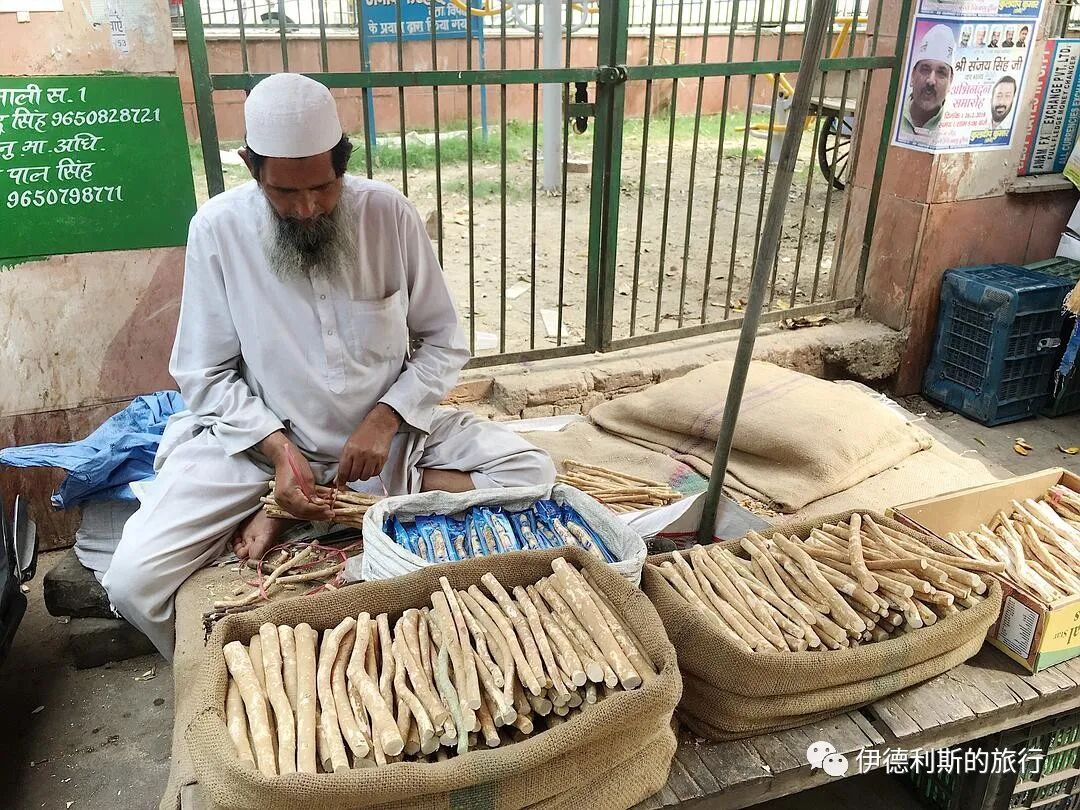
At a stall selling religious items, I bought a photo of the shrine of Nizamuddin.
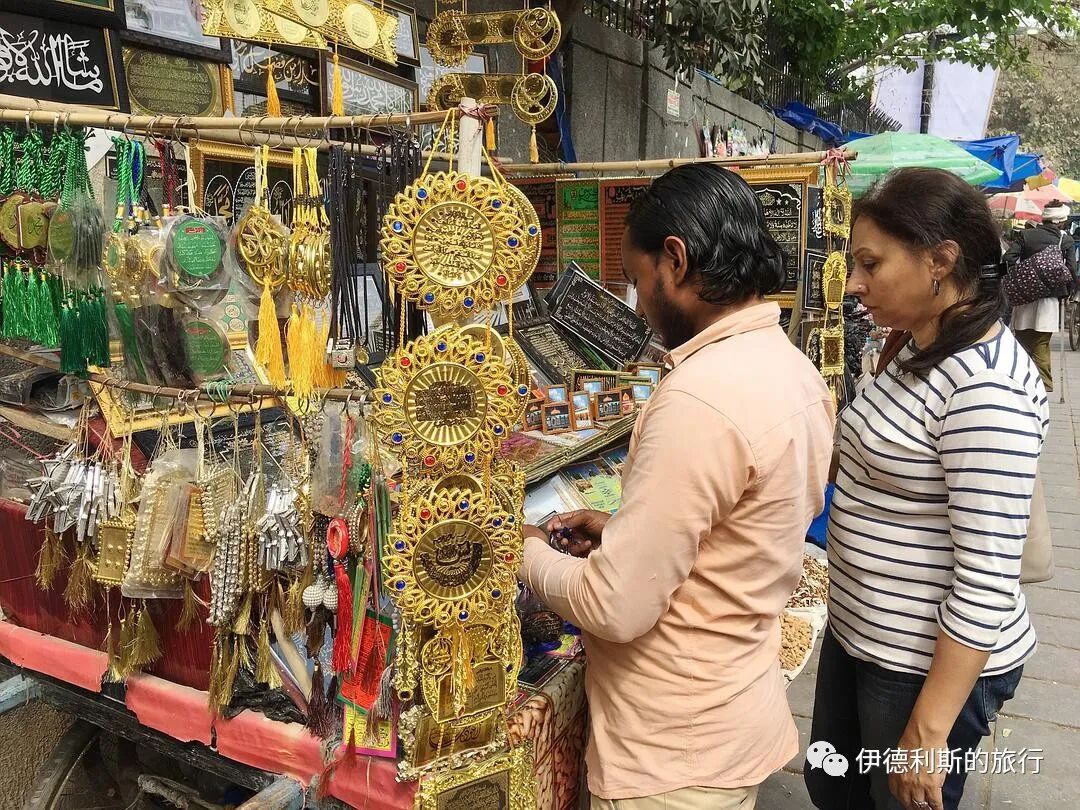
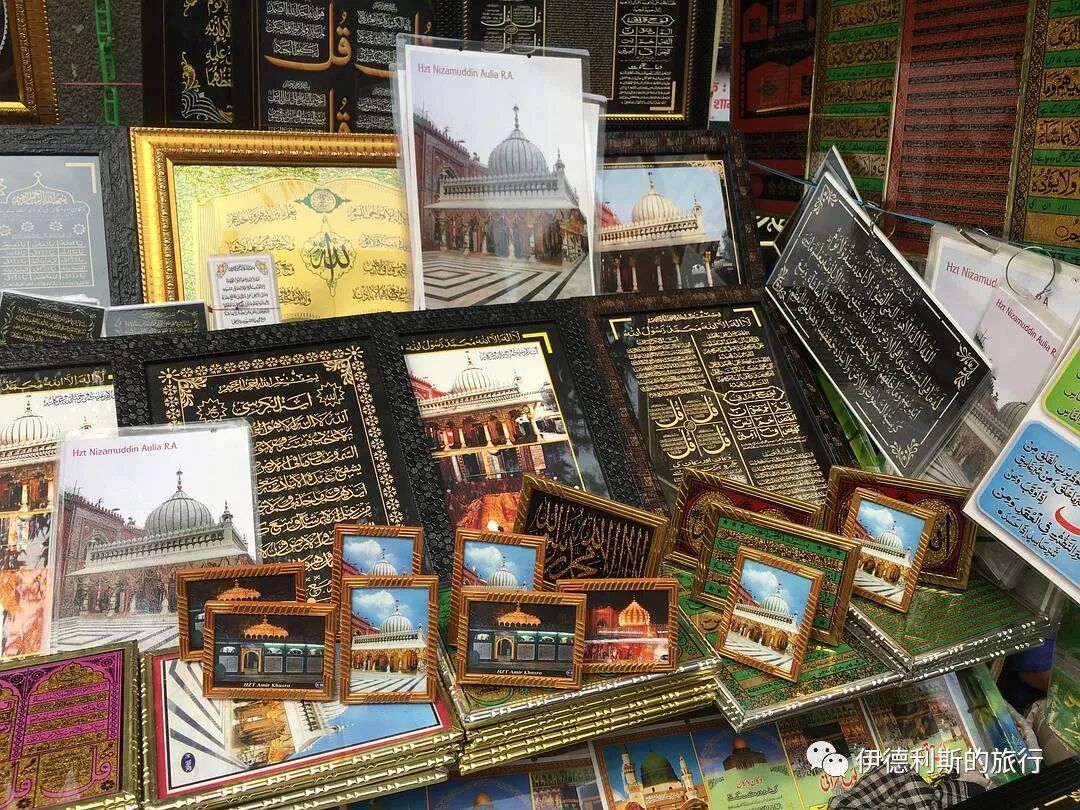
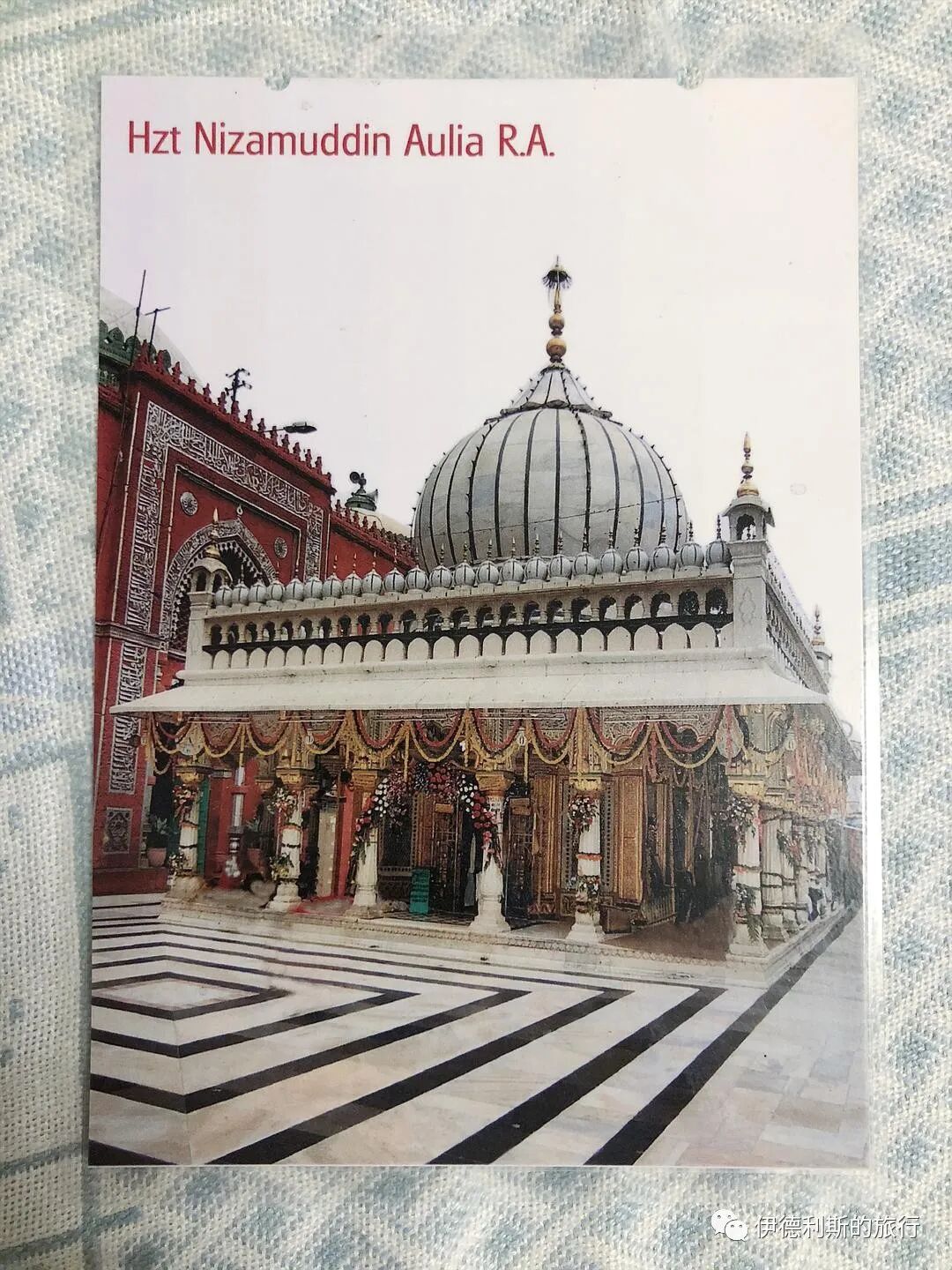
Eating food.
You can find many snacks in Nizamuddin.
Papayas on the street.
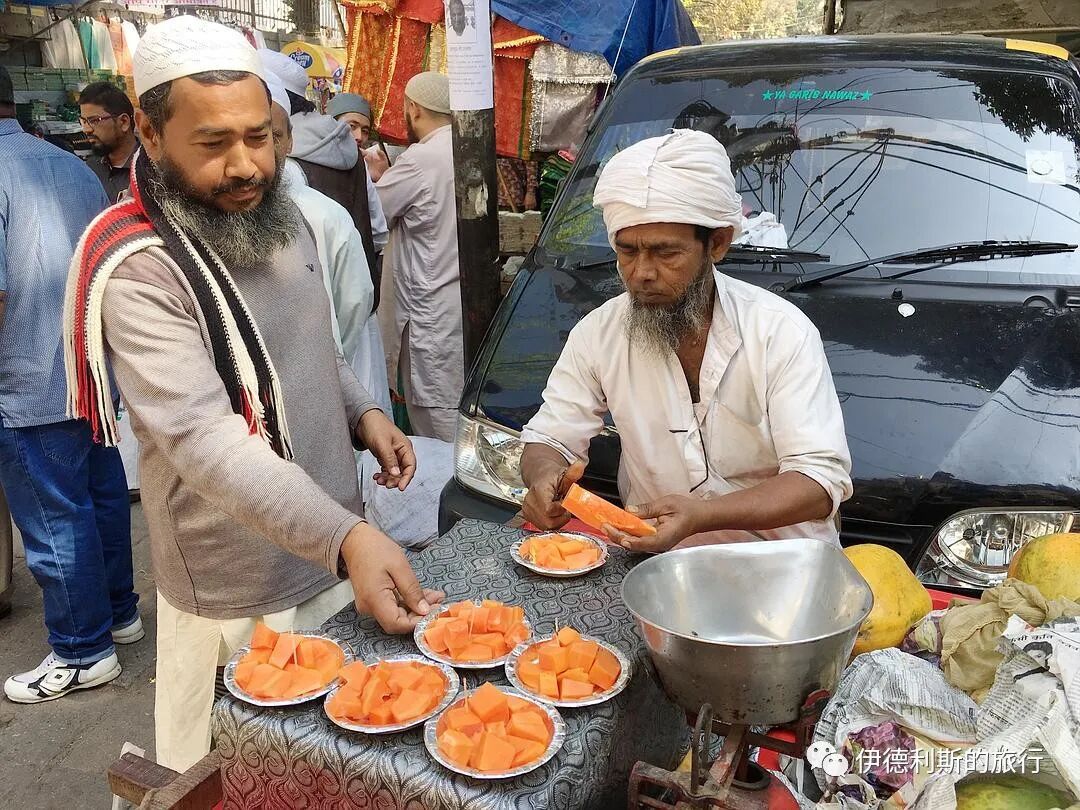
Lassi is a popular yogurt drink in South Asia. It is usually made by mixing yogurt with water, fruit, and various spices, and it comes in both sweet and salty versions.
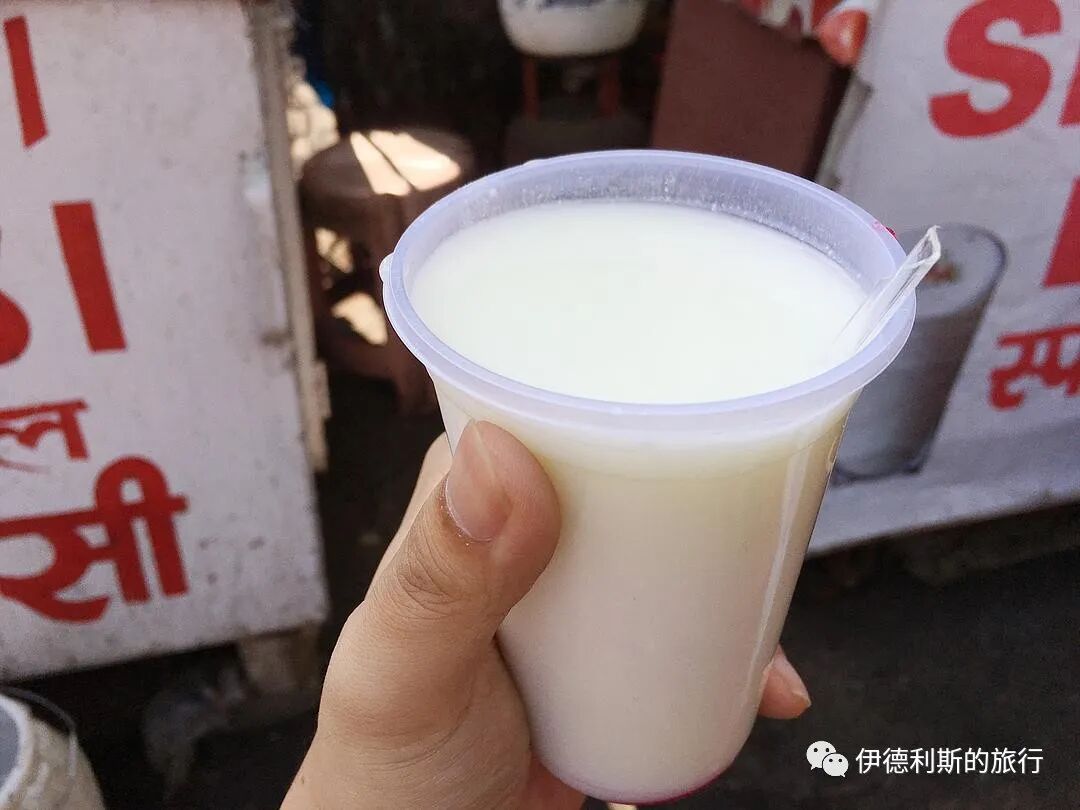
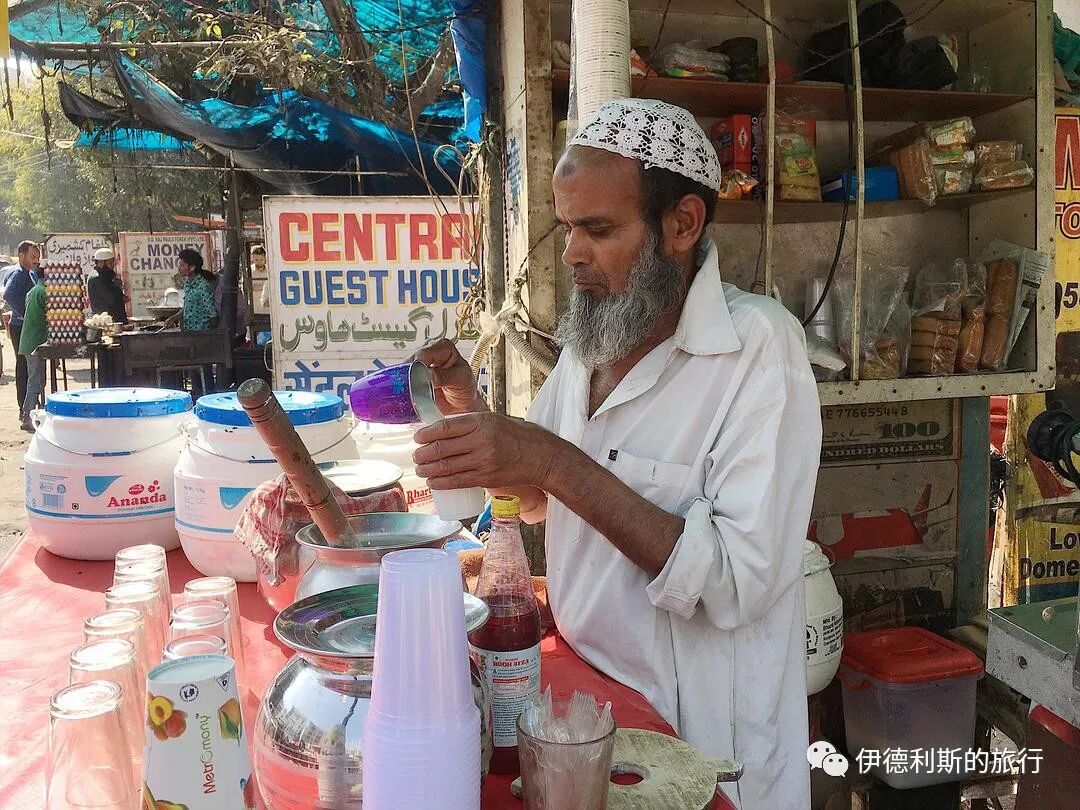
Oily flatbread (you nang)
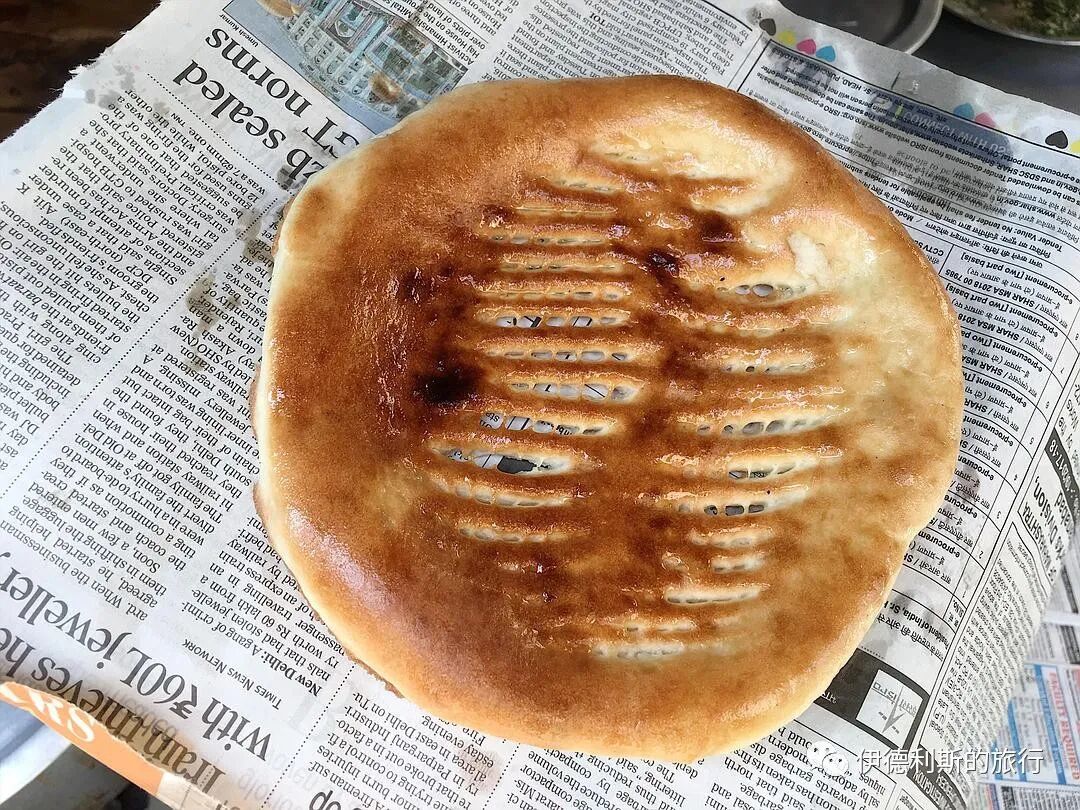
Chicken rice (biryani) is perhaps the most popular way to cook rice in South Asia. Biryani comes from South Asian Muslims. The word is a Persian loanword in Urdu, generally believed to come from the Persian word for rice, birinj.
According to historian Lizzie Collingham, modern biryani likely originated in the royal kitchens of the Mughal Empire. It was created when chefs combined spicy Indian rice with Persian pilaf. However, some believe that biryani existed even before the Mughal Empire. Documents from the 16th-century Mughal Empire mention both biryanis and pulao, but the two terms were interchangeable back then. Another historian, Pratibha Karan, believes that biryani formed after Arab traders brought Middle Eastern pilaf to South India.
People generally agree that there are three main differences between biryani and Indian pilaf:
1. Biryani is mixed with more spices and has a stronger curry flavor, while Indian pilaf uses almost no spices.
Biryani usually has two layers of rice with meat hidden in the middle, while Indian pilaf (pulao) is generally not layered.
Biryani is usually made by cooking the rice and meat separately, while Indian pilaf (pulao) is cooked all together.
A classic Indian samosa uses a dough made from vegetable oil, melted butter, warm water, salt, and wheat flour. The filling is a mix of mashed potatoes, onions, green peas, spices, and green chilies, which is then fried until golden brown.
The South Asian samosa, the Arab sanbusak, the Afghan sambosa, the Tajik samboosa, the Turkic samsa, and the Somali and Ethiopian sambusa all come from the Persian word sanbosag.
Persian poetry praised the samosa as early as the 10th century. This snack was very popular in Iran until the 16th century, but today it is only found in a few areas. In the 13th or 14th century, Muslim merchants from Central Asia brought the samosa to South Asia, where it became a favorite of the Delhi Sultanate royalty. A scholar from the Delhi Sultanate wrote in 1300 that princes and nobles enjoyed samosas made with meat, ghee, and onions. "
The famous 14th-century traveler Ibn Battuta visited the court of the Tughlaq dynasty in the Delhi Sultanate. In his travelogue, The Rihla, he wrote about eating a pastry called sambusak at the Sultan's court, which was filled with minced meat, almonds, pistachios, walnuts, and spices.
I still do not know the name of this fried food.
You can also buy many South Asian-style prayer caps in Nizamuddin.
I bought this Sindhi cap, which comes from the Sindh region and is often seen at Indian Sufi music performances.
Chapter 2: The Core Area of the Shrine of Nizamuddin (Nisangmuding Shengling)
Next, we will enter the core area of the Nizamuddin shrine (Dargah). The core area centers on the shrine (Shrine) and includes a series of historical buildings from the 14th to the 19th centuries. I have marked a diagram here.
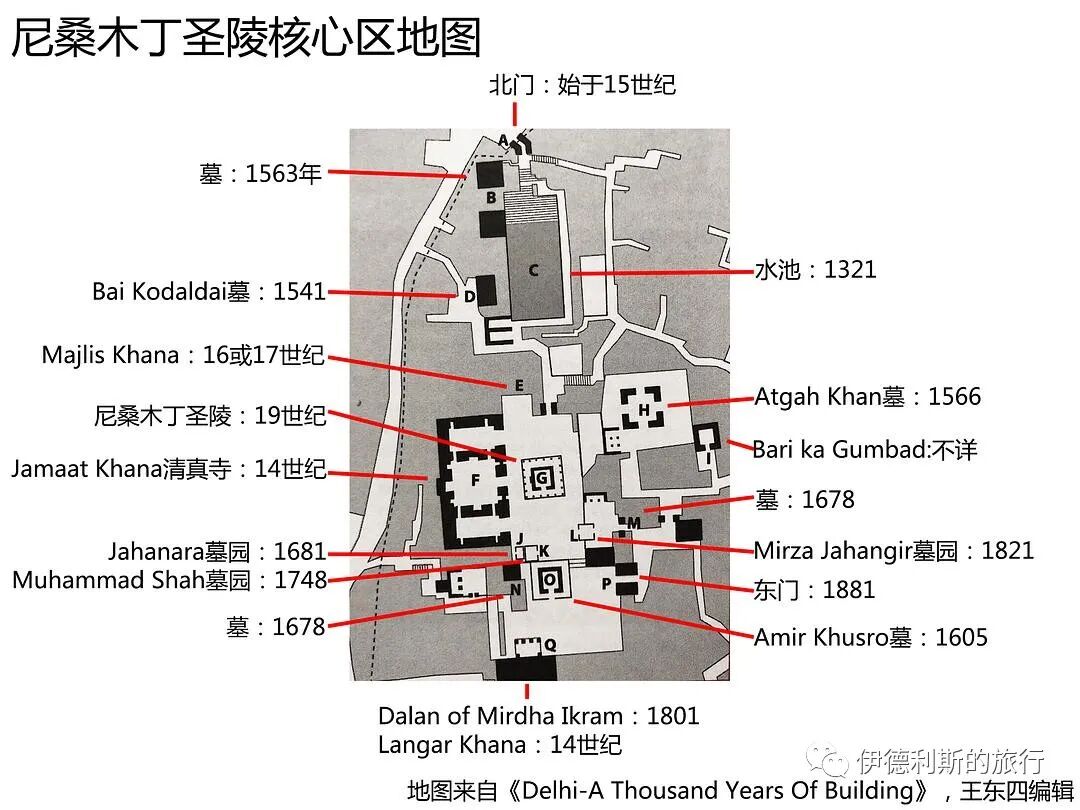
Next, we will enter through the north gate and exit through the east gate to take a detailed look at the historical buildings in the core area of the Nisamuding Gongbei.
1. North Gate: Built in the 15th century
First, enter the core area of the shrine from the north gate. You must take off your shoes from this point on. The local vendors nearby will be very eager for you to store your shoes in their shops, but I chose to put my shoes in my own backpack.
2. Entering the shrine from the North Gate
The route is as follows:
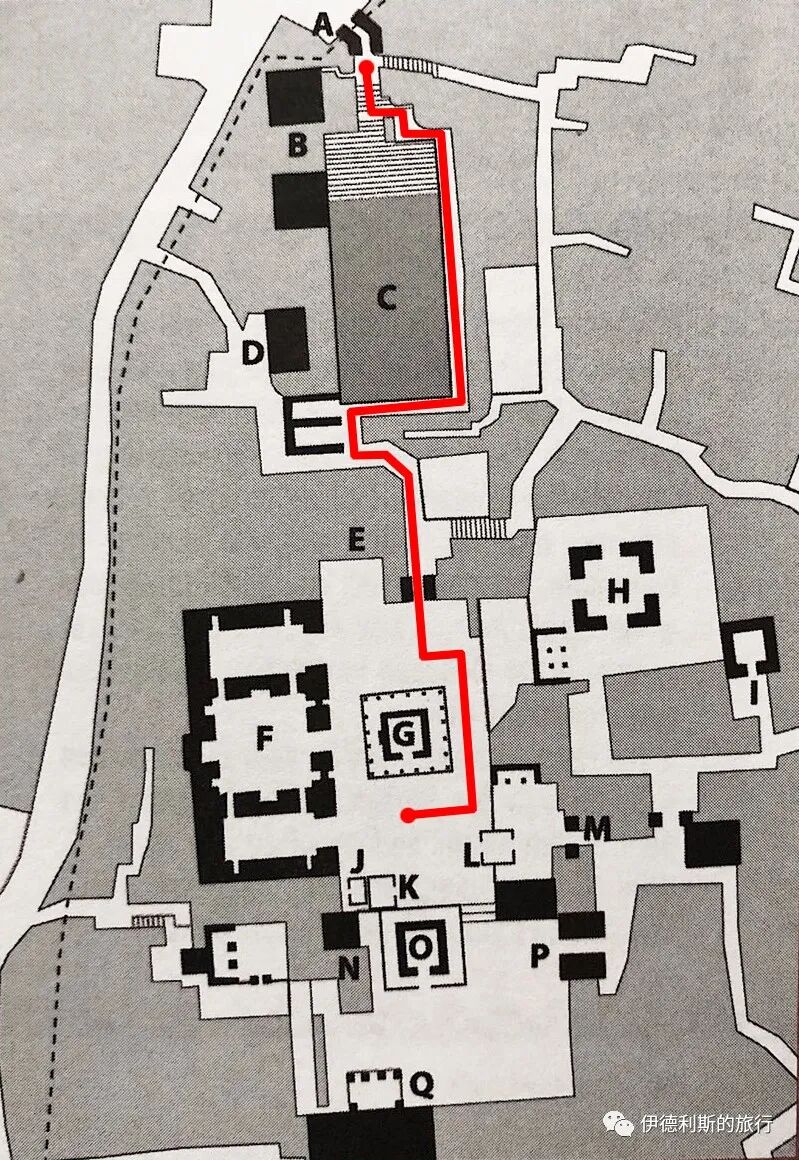
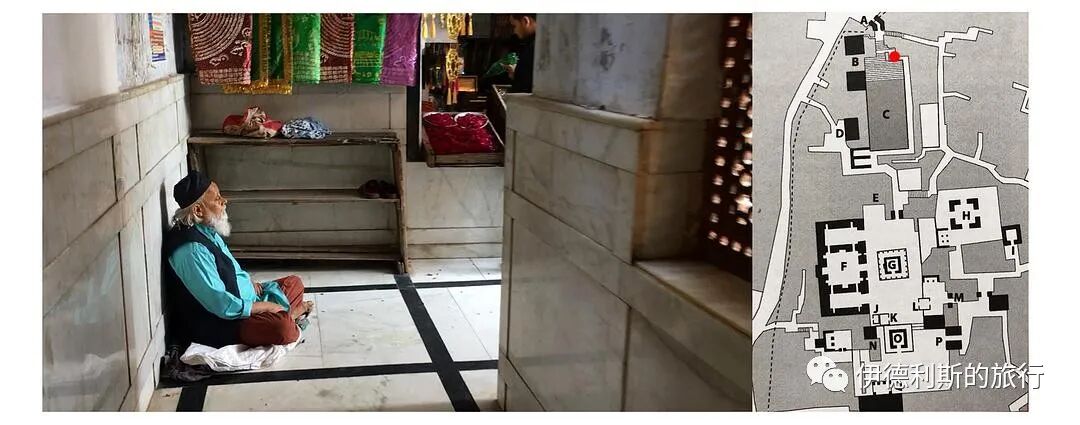
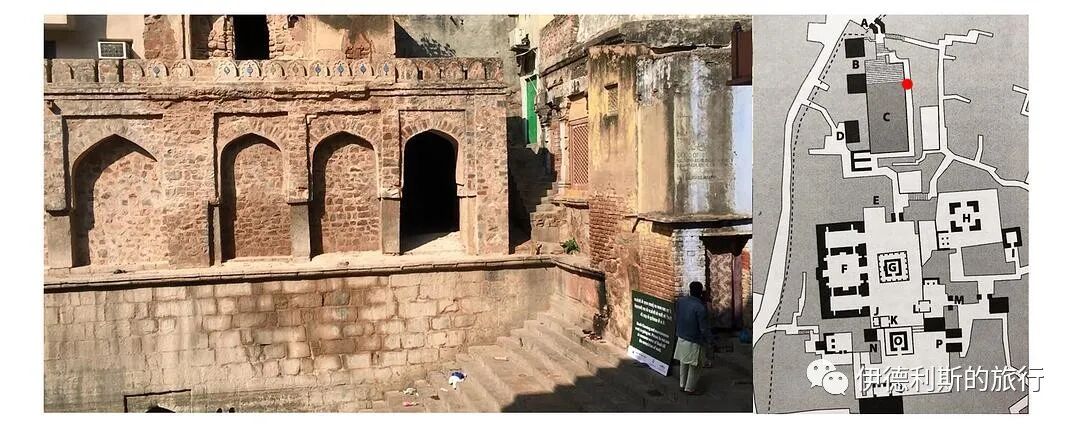
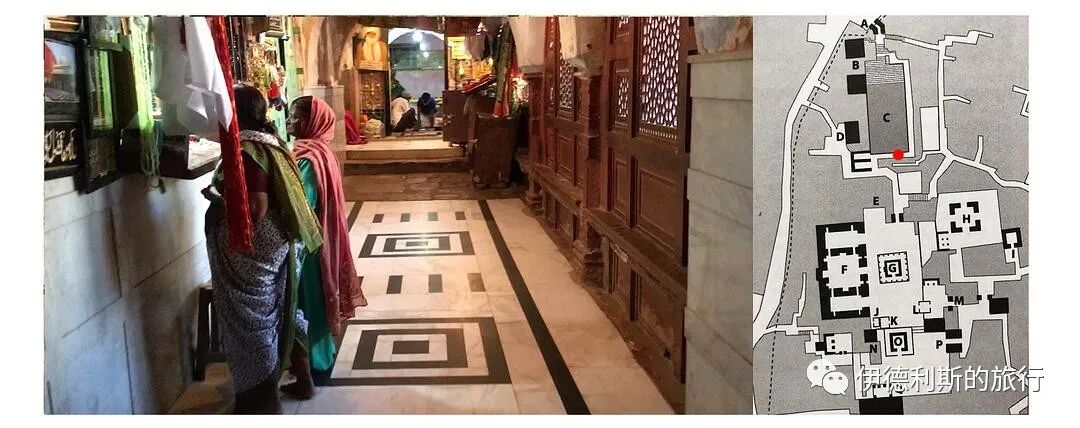
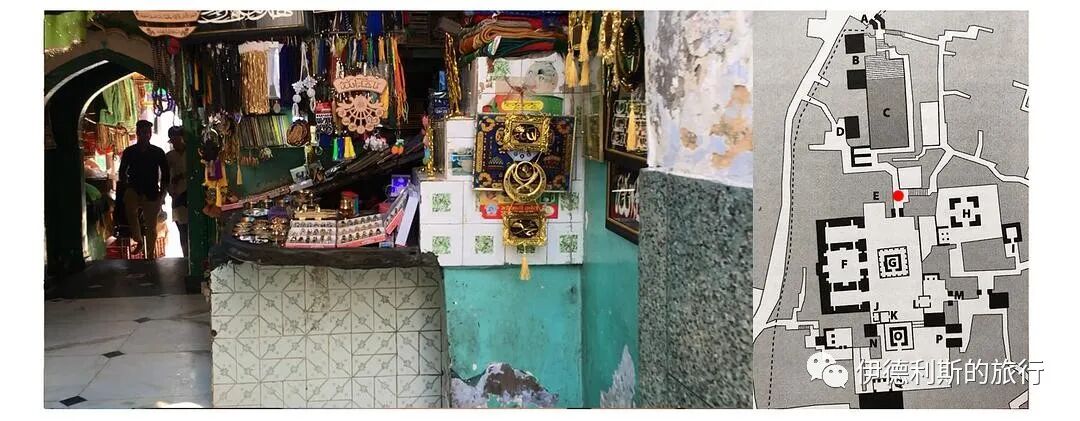
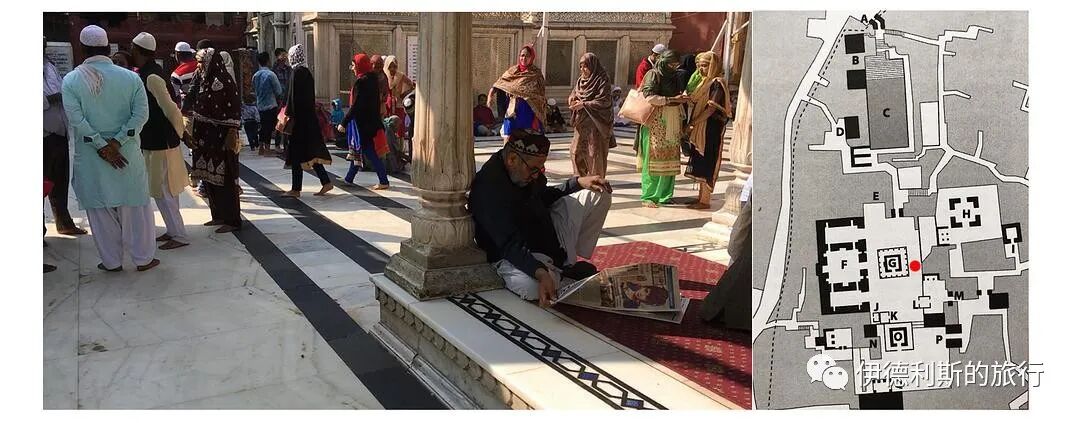
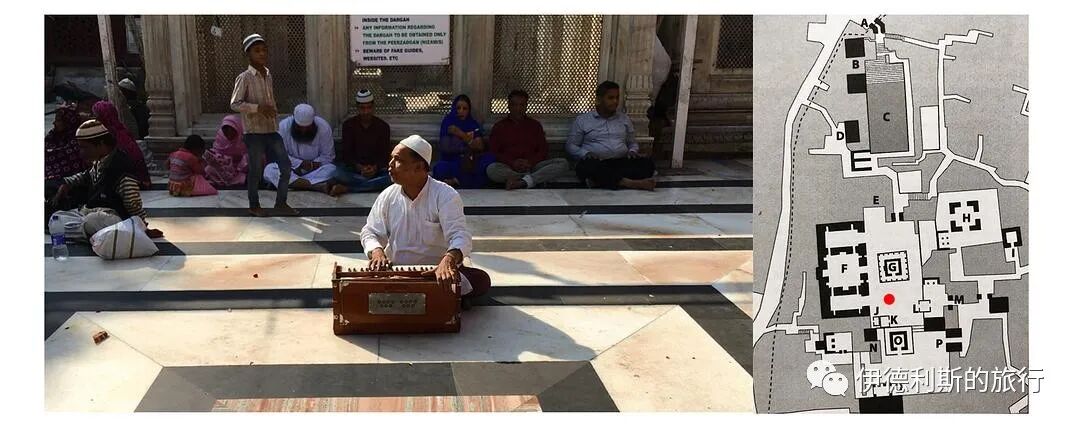
3. Water tank: 1321
After entering from the north gate, the first thing you see is a water tank (baoli) built in 1321. It is the oldest surviving structure in the core area of the Nizamuddin shrine. There is a legendary story about the construction of this water tank:
In 1321, more and more people came to visit Nizamuddin Auliya (1238-1325). Many chose to stay there permanently, so Nizamuddin began building a water tank near his home. At the same time, Ghiyasuddin Tughlaq, the founder of the Tughlaq dynasty of the Delhi Sultanate, started building a massive fortress called Tughlaqabad in Delhi. He ordered all laborers in Delhi to work on the fortress, including the workers building a water tank for Nizamuddin. These workers preferred to work for Nizamuddin, so they built the fortress during the day and snuck back at night to work on the water tank.
When Ghiyasuddin found out, he banned the workers from working for Nizamuddin. Nizamuddin then made a prophecy: "Ya rahey ujjar, ya basey gujjar". It roughly means, "Either it will become a wasteland, or it will be inhabited by the Gujjar people." After the sultanate fell, the nomadic Gurjar (gujjar) people took over this castle and it turned into a wilderness.
Legend says Nizamuddin made many prophecies about Ghiyas. Another famous one is 'Hunuz Dilli dur ast'. It means 'Delhi is still far away'. Ghiyas led a successful expedition to Bengal in 1324. In February 1325, while he was on his way back, a wooden pavilion collapsed and crushed him to death before he could reach Delhi.
After the pool was finished, Nizamuddin said a dua for it. People believe this pool has magical powers and can cure skin diseases.
Right next to the pool are two women's graves. Persian inscriptions on them show they were built in 1563. One woman was shown mercy and forgiveness, while the other died in deep sorrow.
Follow the path south from the pool to reach the true heart of the Nizamuddin shrine. Many people are buying fresh flowers where the path meets the courtyard to offer to the saint.
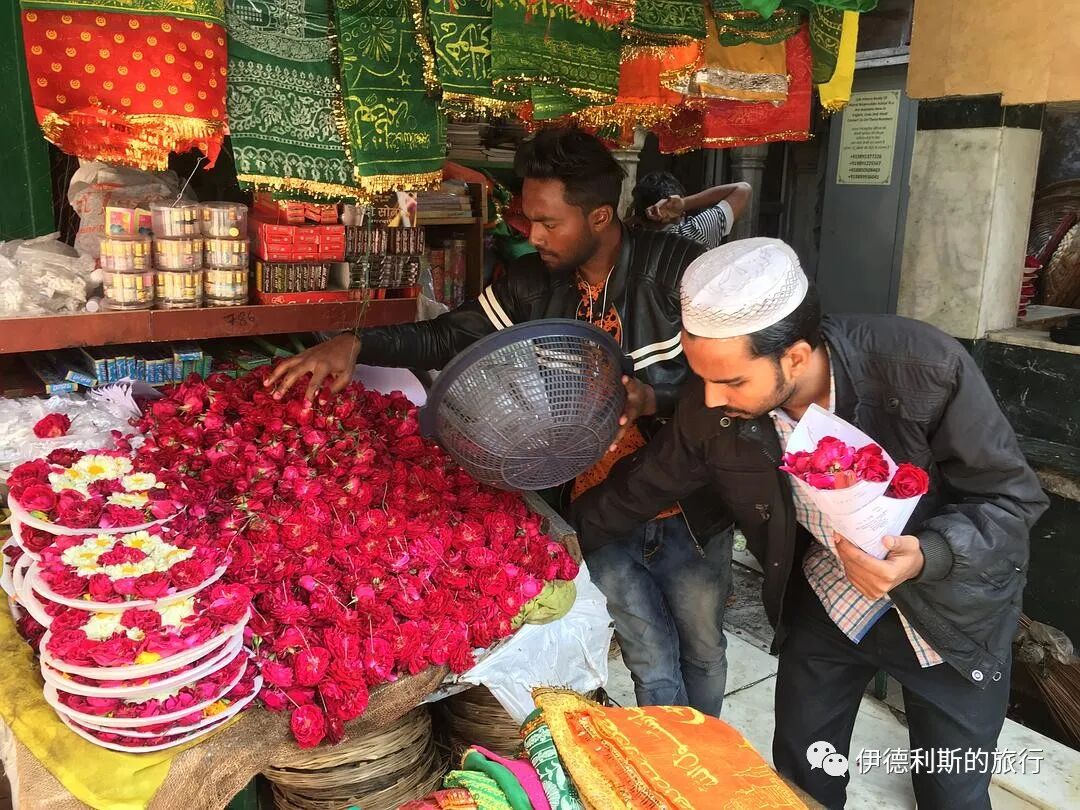
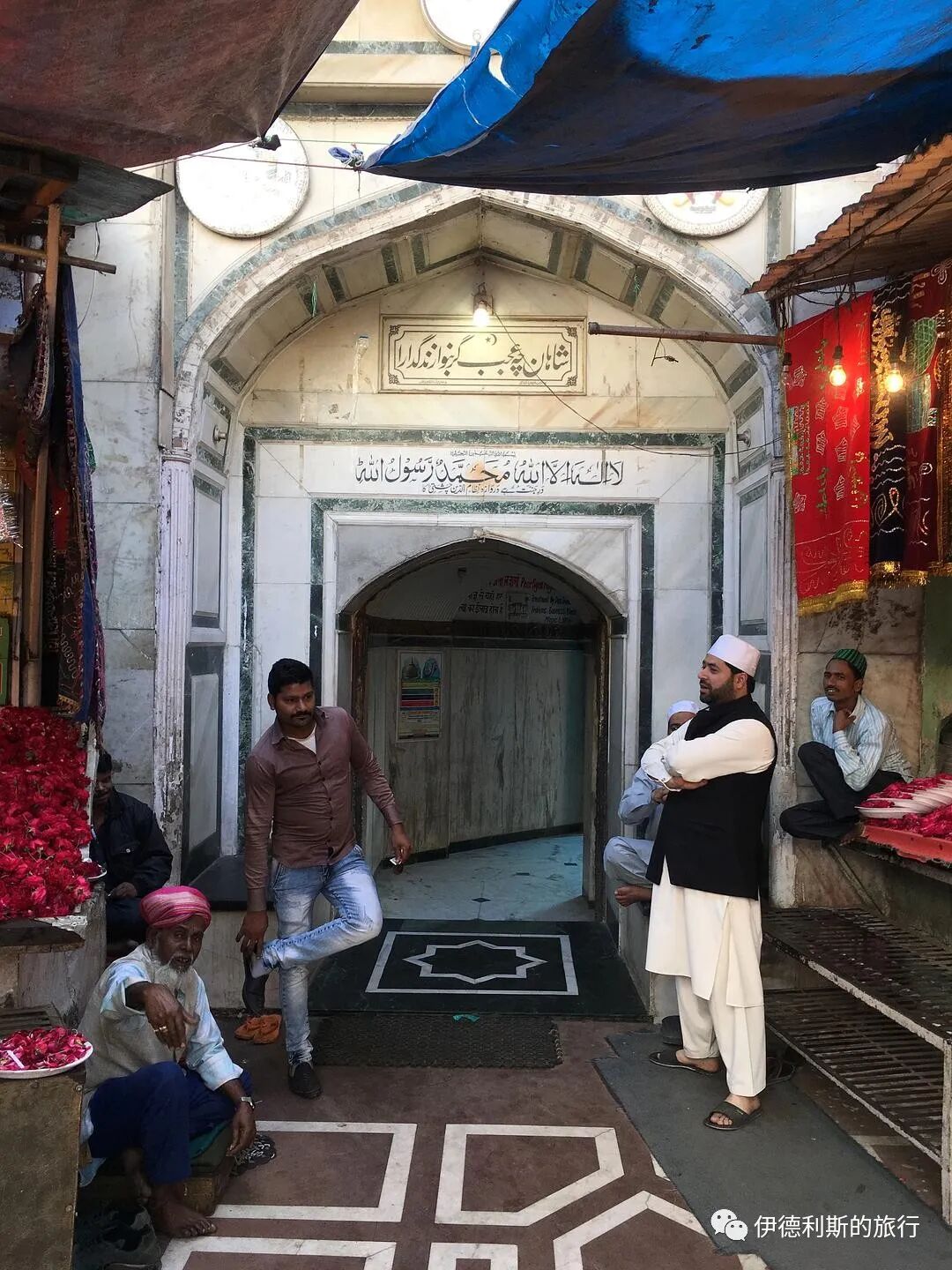
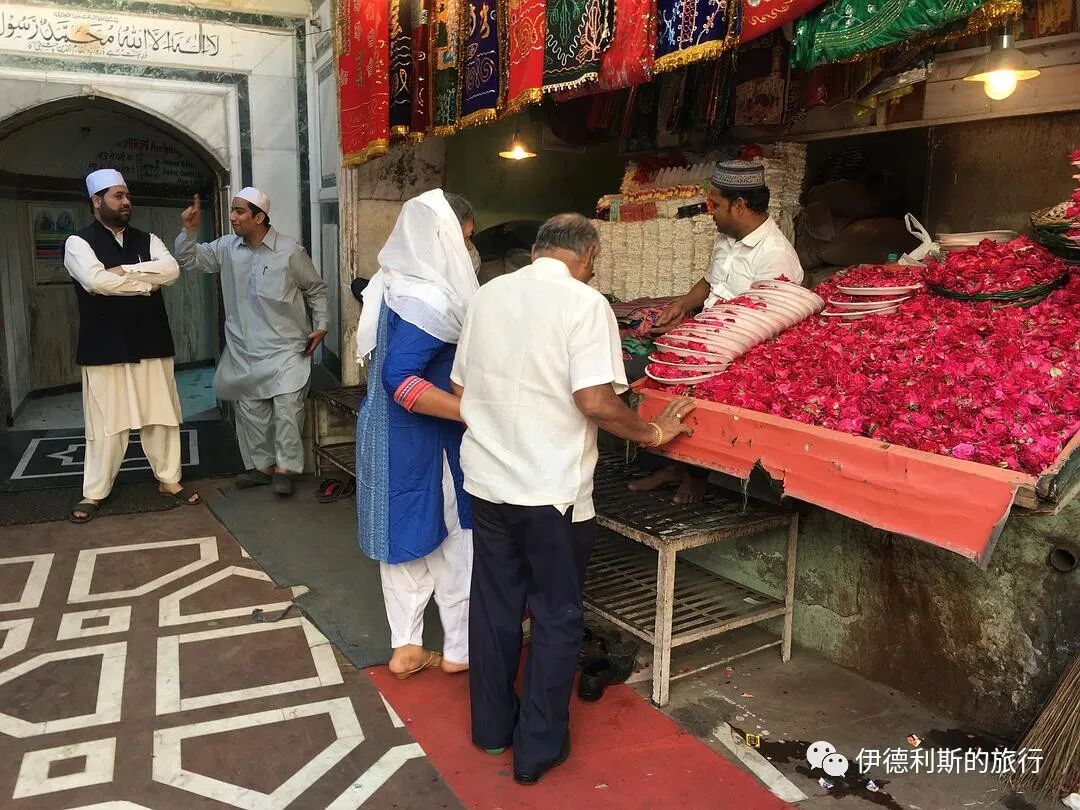
4. Jamaat Khana mosque: 14th century
The Jamaat Khana mosque is the most important building in the heart of Nizamuddin. There are many different stories about its history, but it is likely the second mosque built in Delhi after the Qutb mosque.
One story says that Sultan Alauddin Khalji (reigned 1296-1316) of the Khalji dynasty built this mosque because Nizamuddin once refused a large sum of money offered by the Sultan. Because it has been restored, this mosque looks very different from the Alai Darwaza, the southern gate of the Qutb mosque built by Alauddin Khalji. However, if you look closely, the proportions and decorations of the two buildings are actually very similar.
Another story says the main hall of this building was originally built by Alauddin Khalji's son, Khizr Khan, as a tomb for Nizamuddin. Nizamuddin did not want to be buried in a tomb, so the building became a mosque and side rooms were added to both sides. But looking at the existing structure, the main hall and the side chambers seem to be built together perfectly, with no signs that they were constructed at different times.
A third theory says Nizamuddin was buried in the wilderness according to his final wishes, and this mosque was built for believers by Sultan Firuz Shah Tughlaq (reigned 1351-1388). Overall, the building's style is still very close to the architectural style of the Khalji dynasty.
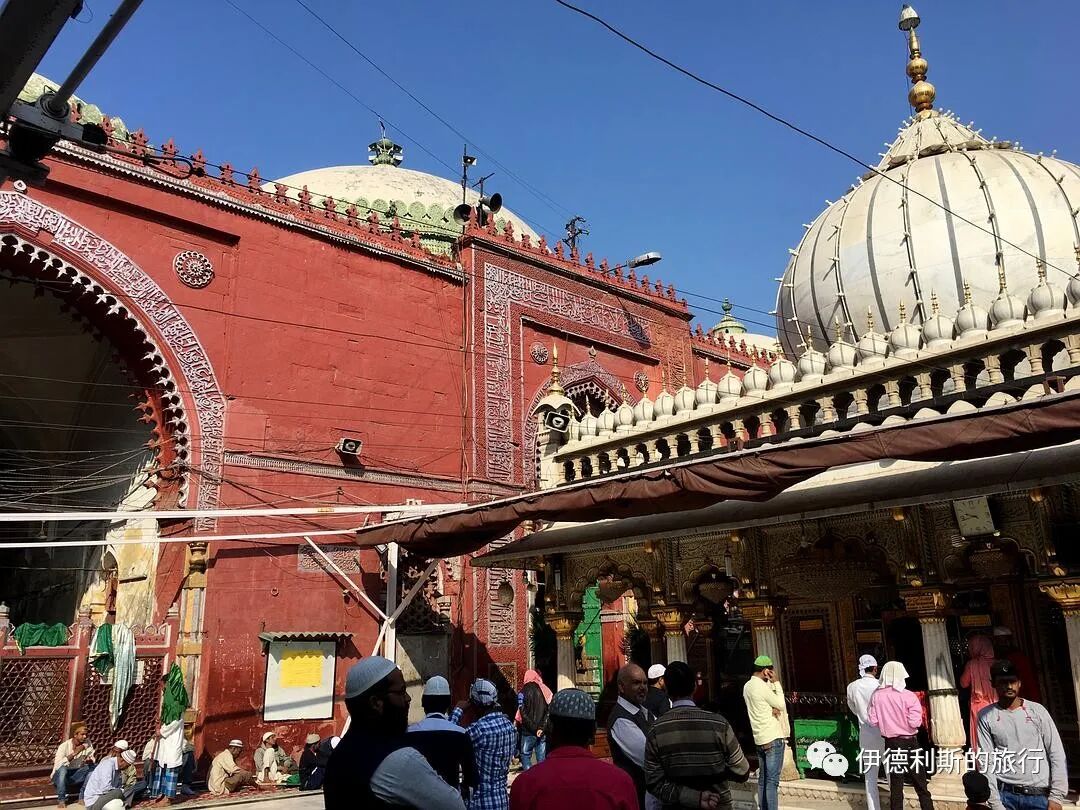
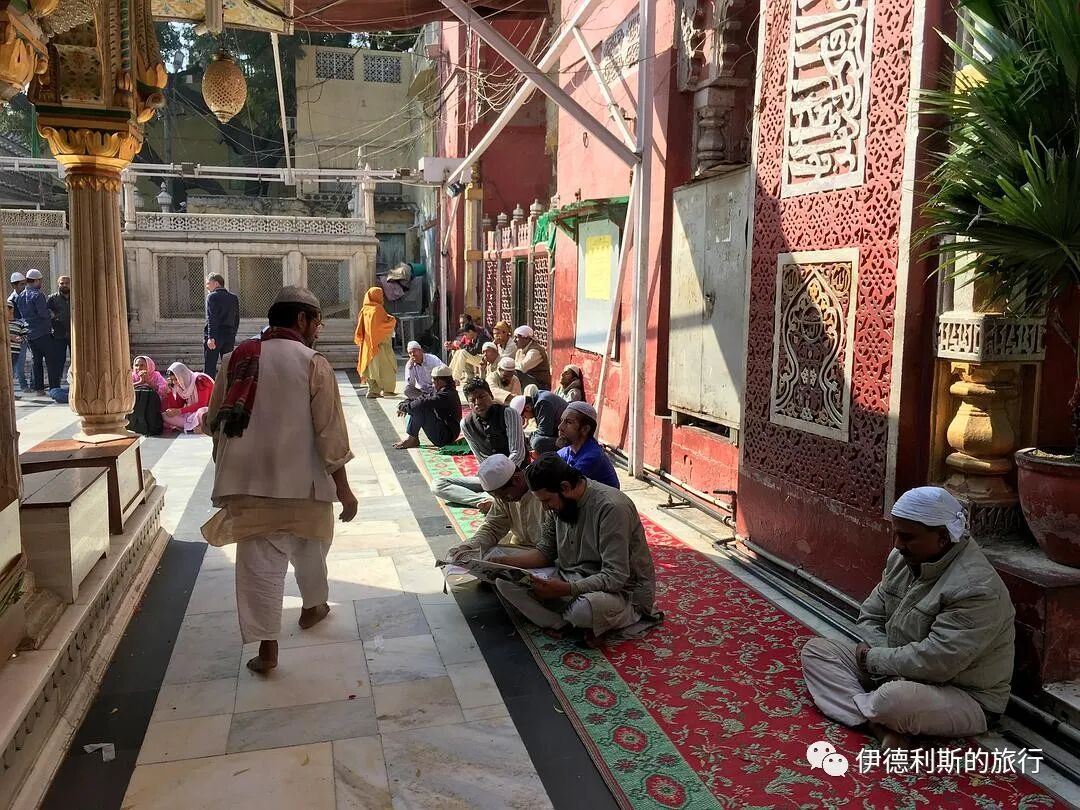
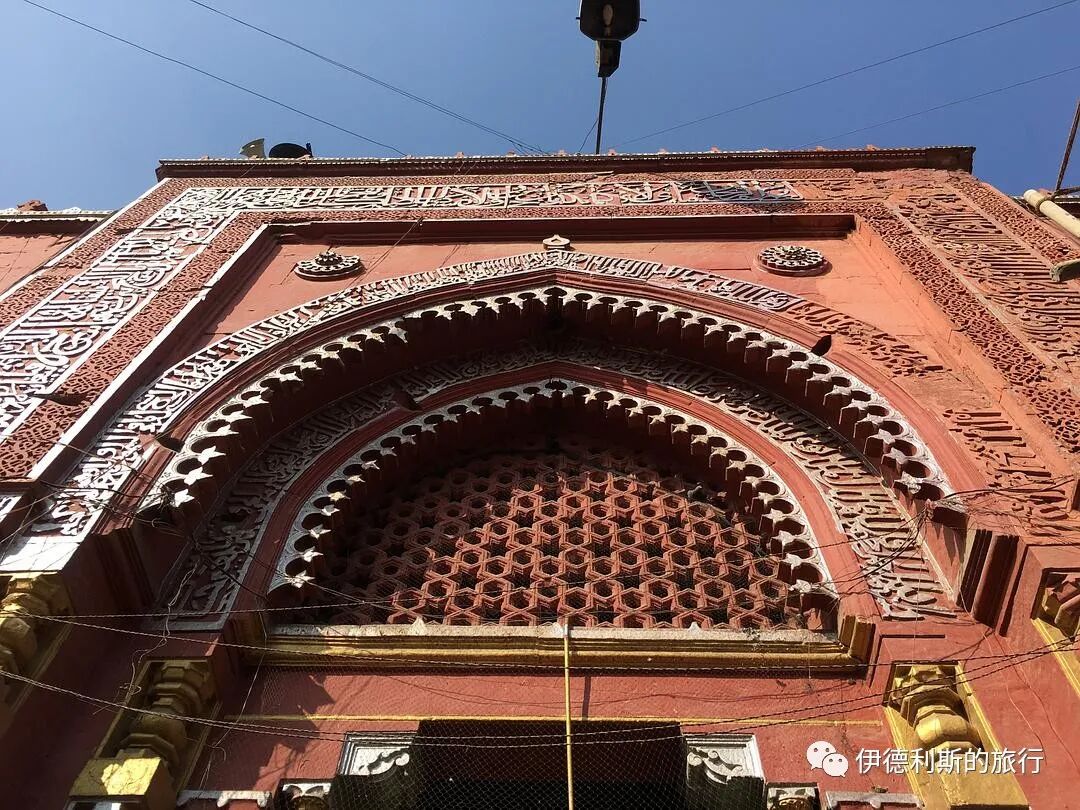
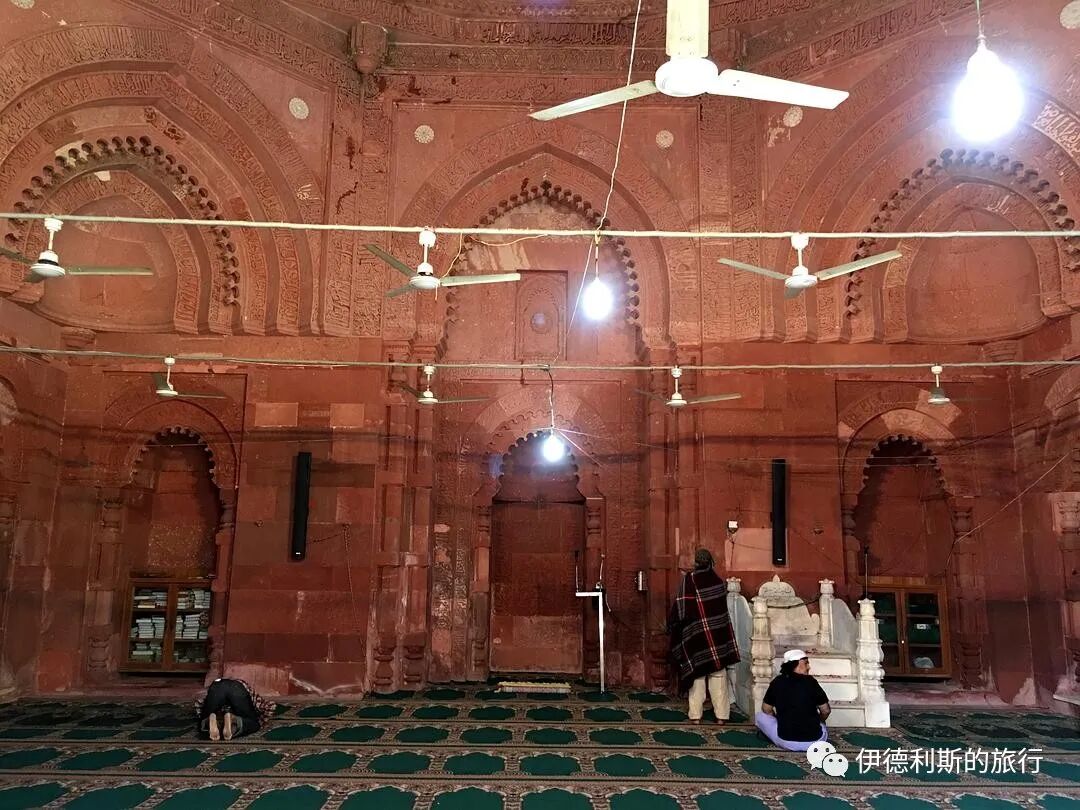
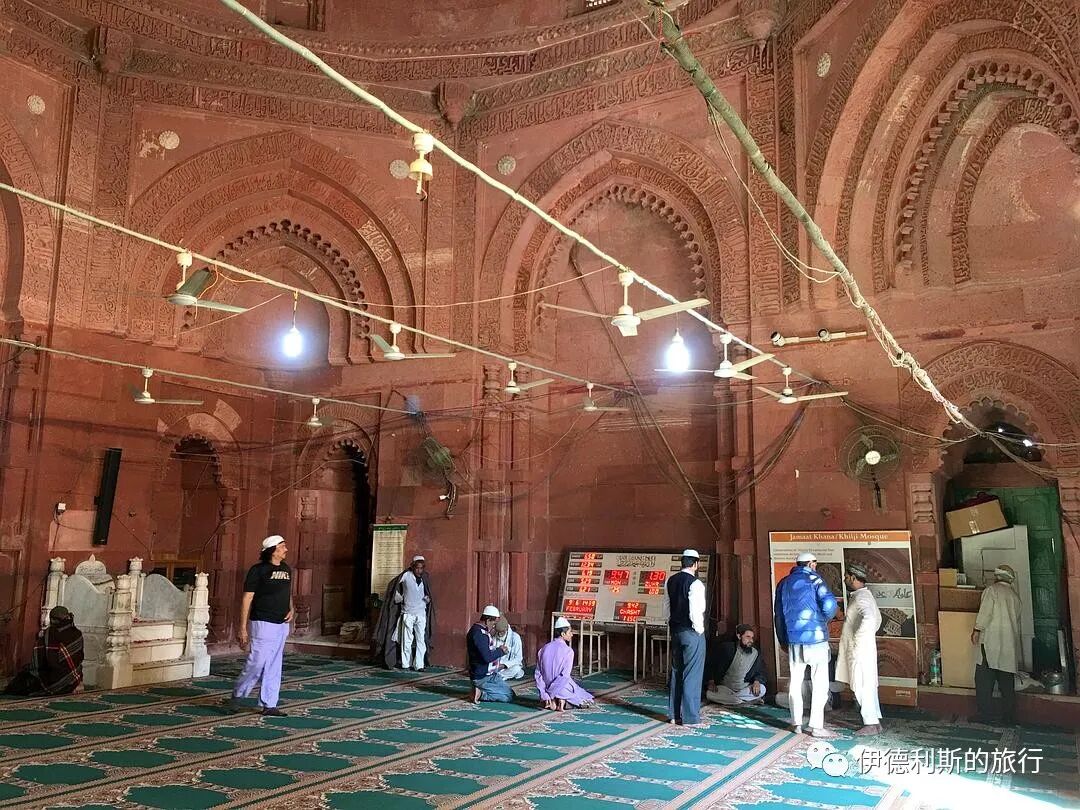
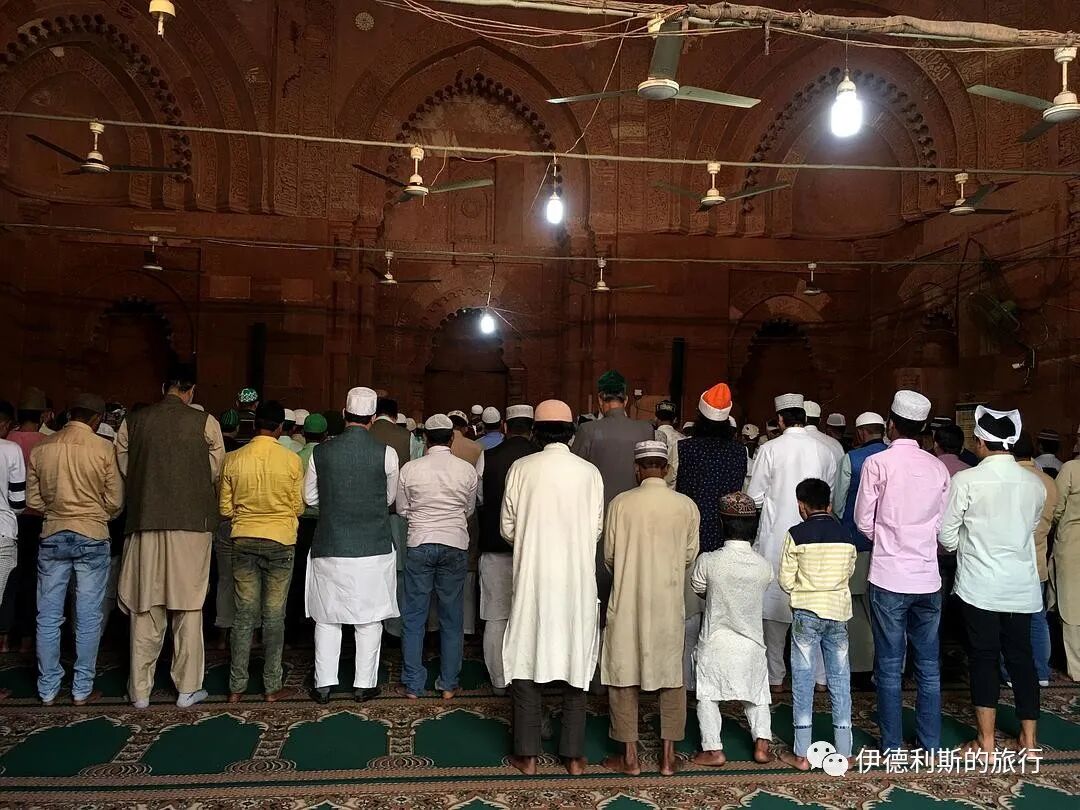
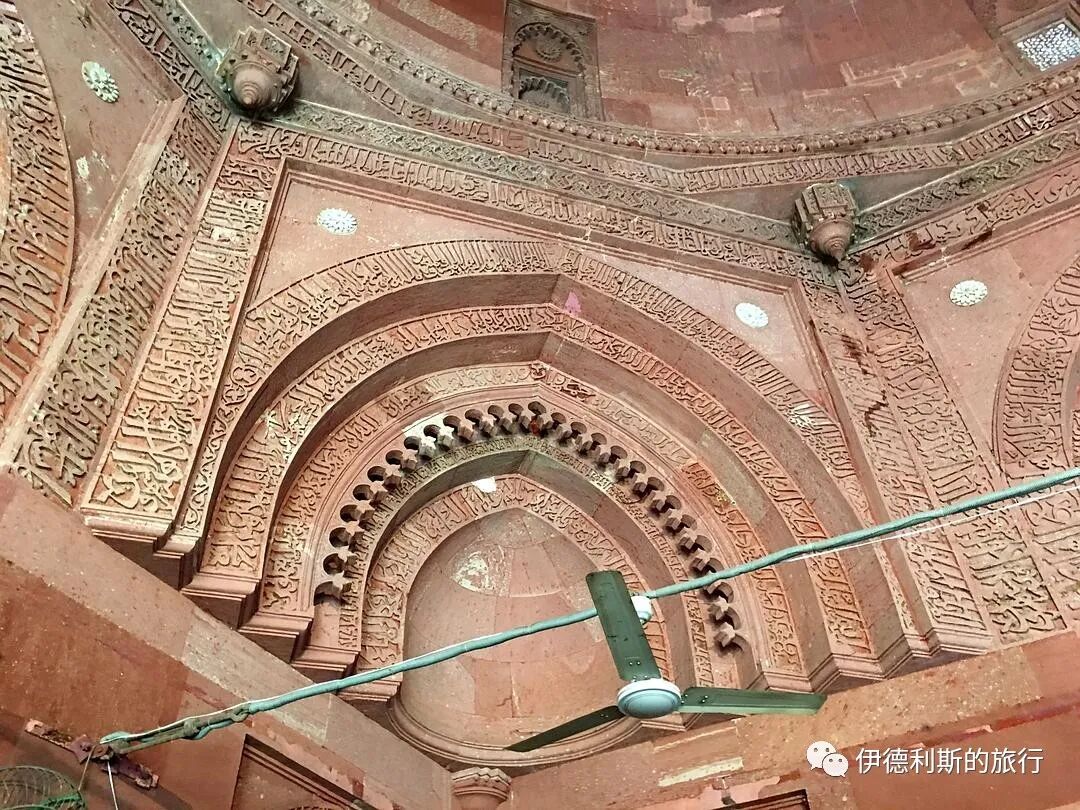
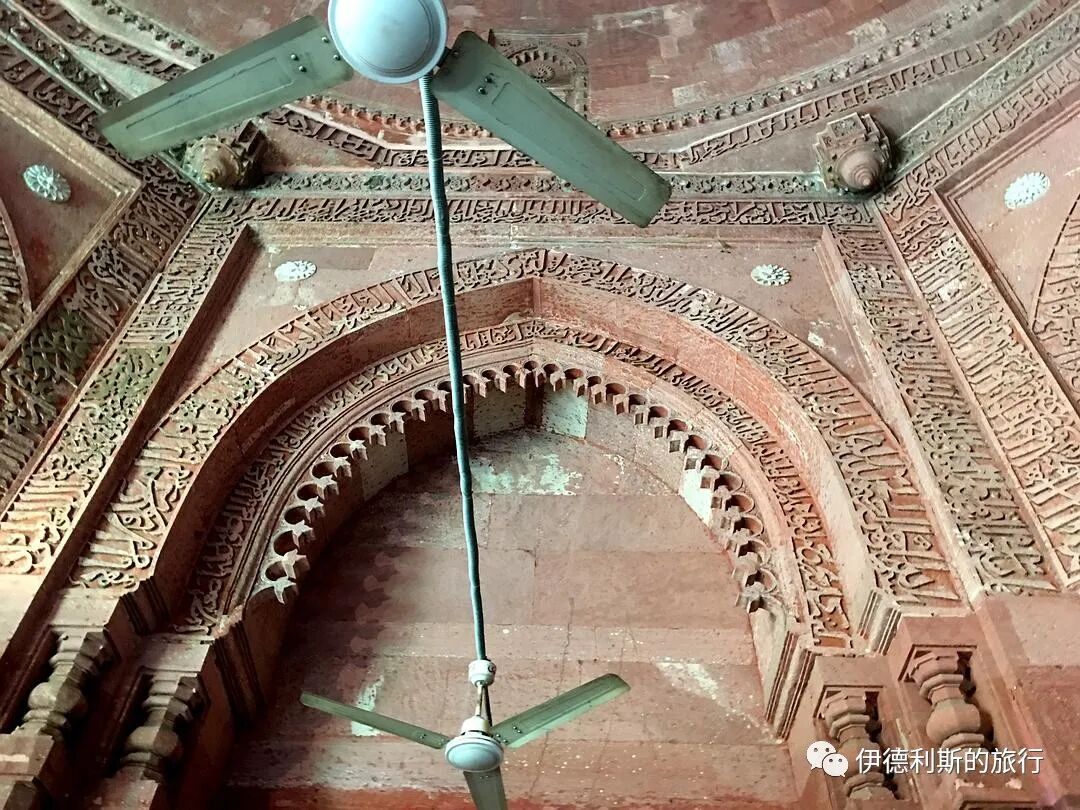
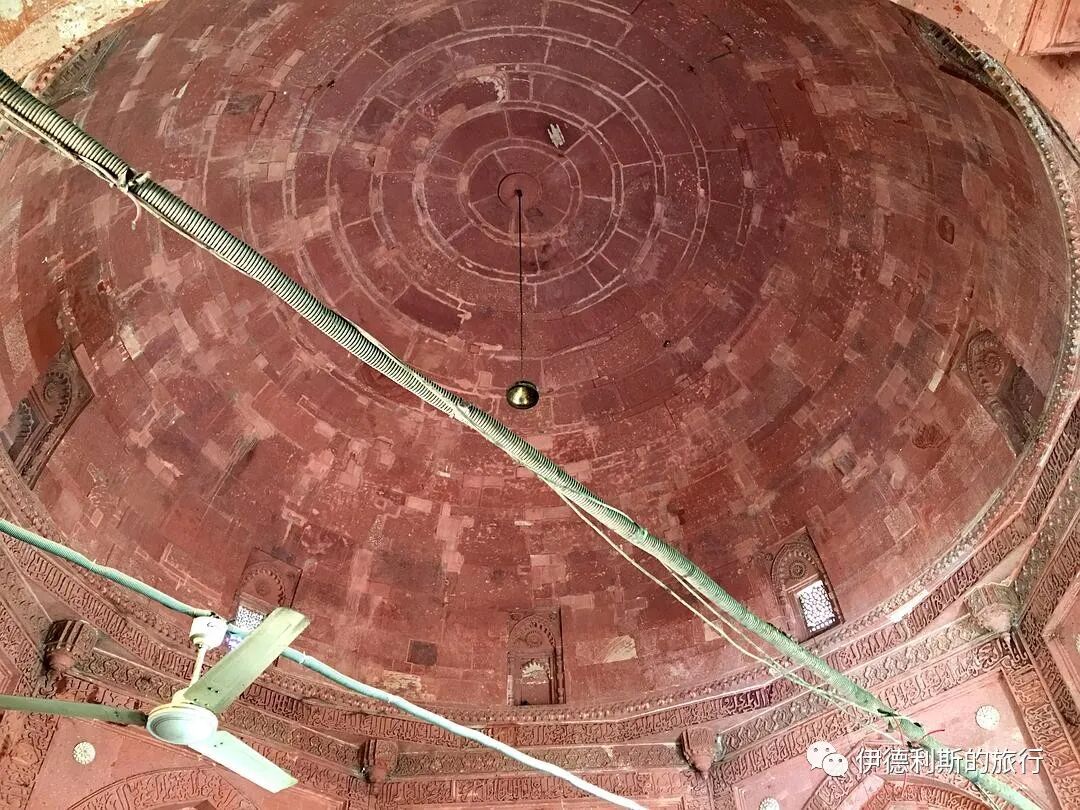
The hall on the north side of the mosque is currently undergoing repairs.
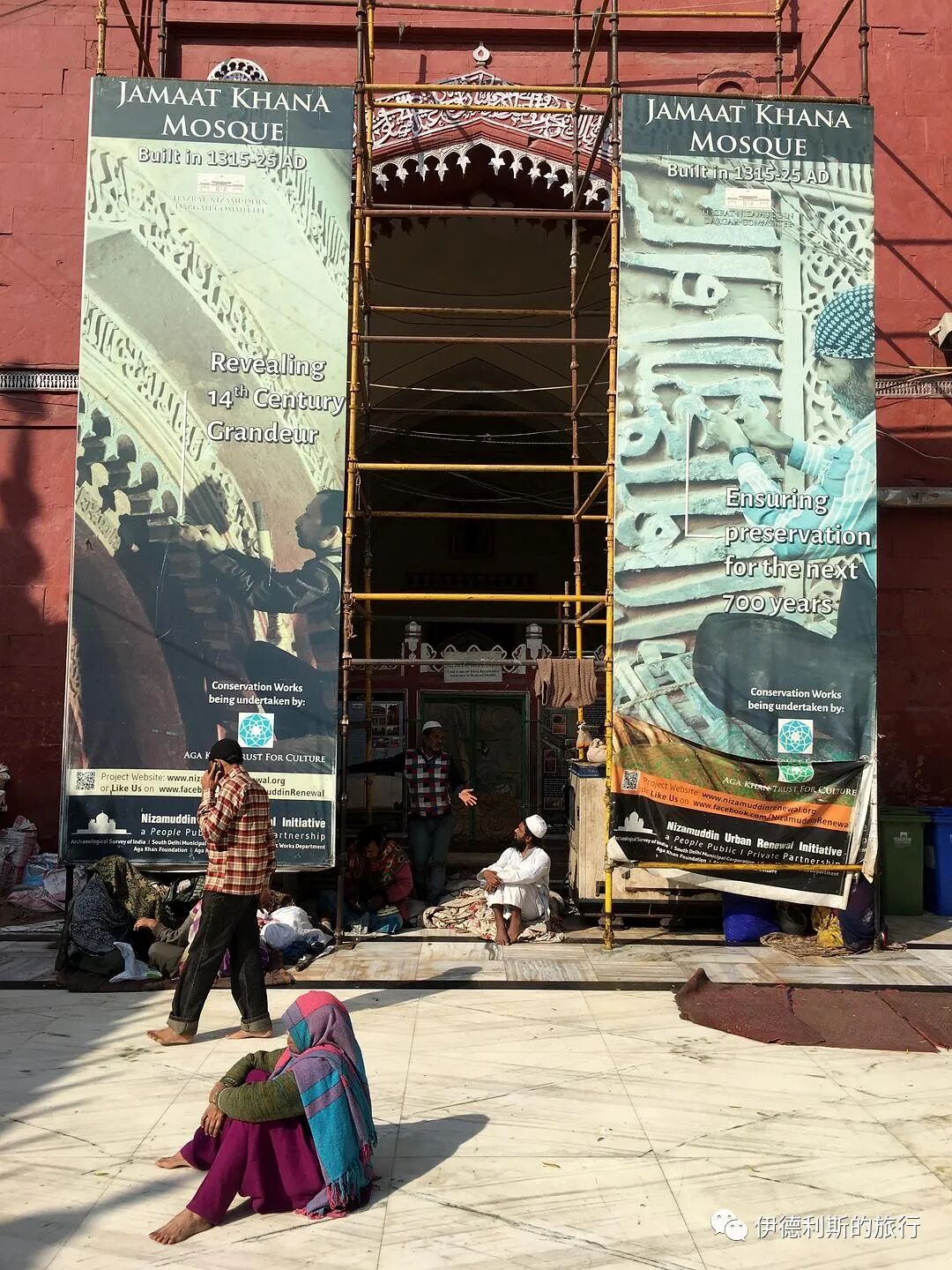
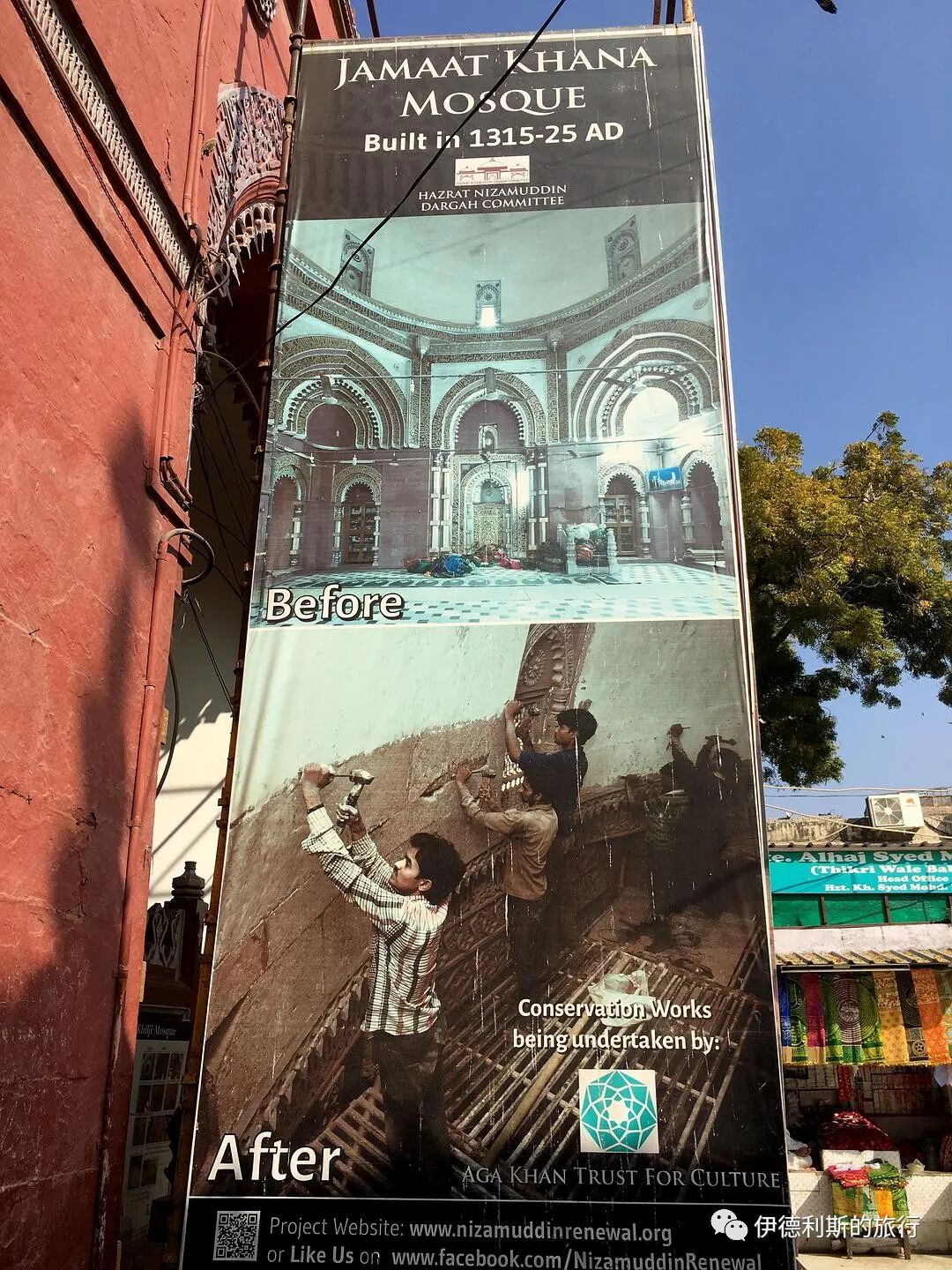
5. Nizamuddin shrine (gongbei): 19th century
The Shrine of Nizamuddin (Shrine) sits right in front of the Jamaat Khana mosque. It is impossible to know what the original shrine looked like. The first shrine was built in the late 14th century by Firoz Shah Tughlak, who was the Sultan of the Delhi Sultanate from 1351 to 1388.
In 1562, a noble serving under the Mughal Emperor Akbar added marble screens around the shrine.
Starting in 1608, the governor of Delhi at the time, Sheikh Farid Bukhari, added several new features to the shrine, including a wooden canopy inlaid with mother-of-pearl.
In 1652, a red sandstone corridor was built around the shrine, but it was replaced in 1809 by the marble columns we see today.
The shrine's canopy was rebuilt in 1820, and a dome was added in 1839, giving it the appearance it has now.
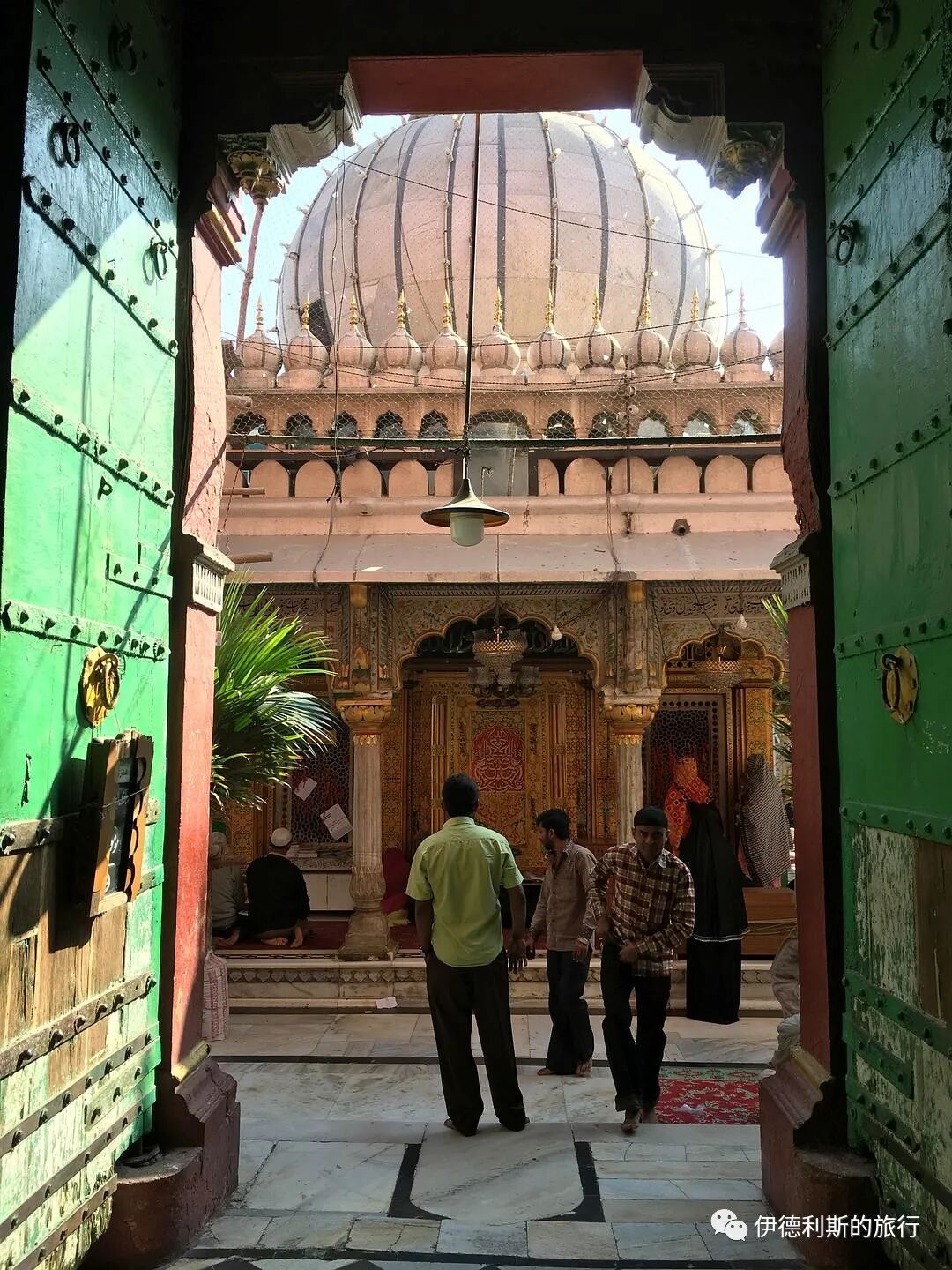
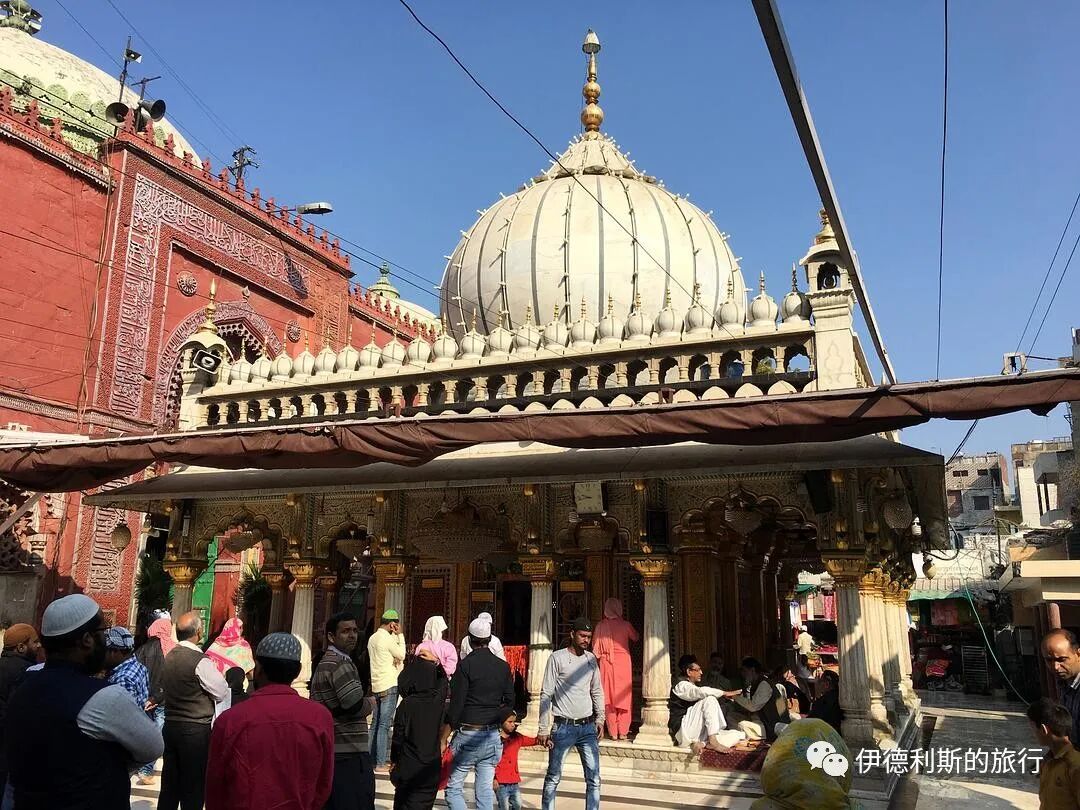
Muhammad Nizamuddin Auliya (1238-1325), also known as Hazrat Nizamuddin, was a key figure in the Sufi Chishti Order and is considered one of the most important Sufis in South Asia.
Nizamuddin was born in 1238 in Badayun, near the Ganges River in Uttar Pradesh. His father died when he was five, and his mother brought him to Delhi to make a living. At age 20, Nizamuddin traveled to Ajodhan (now in the Punjab region of Pakistan) to follow the famous Sufi master Fariduddin Ganjshakar, who was also one of the founders of the Sufi Chishti Order. After that, Nizamuddin spent three consecutive Ramadans traveling from Delhi to Ajodhan to be with Fariduddin Ganjshakar. During the third Ramadan, Fariduddin Ganjshakar named Nizamuddin as his successor. Not long after, Nizamuddin received news in Delhi that his teacher had passed away.
Nizamuddin lived in many parts of Delhi. In his later years, he moved to a place outside the city called Ghiyaspur to escape the noise. There, he built his own Sufi lodge (khanqah). A lodge is usually part of a complex that includes a school, a mosque, and a tomb (gongbei). Inside the prayer hall (daotang), Nizamuddin generously shared his knowledge with everyone who came to ask him for guidance. Soon, more and more people gathered around him, from the poor to the wealthy, and even court poets from the Delhi Sultanate came to learn from his teachings.
Nizamuddin did not focus much on Sufi theory, choosing instead to put his energy into practice. His key principles included helping those in need, providing food for the hungry, and showing compassion to the oppressed. He strongly opposed mixing with the Sultan and the royal nobility. He urged the wealthy to stay in close contact with the poor and the oppressed. He took an uncompromising stance against all forms of political and social oppression.
Nizamuddin was also a strong supporter of the Sufi Sama ceremony, which some people at the time considered un-Islamic. Sama is a Sufi ritual centered on remembrance (Dhikr) that includes singing, playing musical instruments, dancing, and reciting poetry. The famous Sufi whirling dance is one part of Sama.
Music and dance have always been an important part of various religious rituals in India. Nizamuddin hoped to use music and dance to make it easier for ordinary believers to participate in Sufism. Influenced by Nizamuddin, his famous student Amir Khusrow invented Qawwali, the most well-known form of Sufi music in South Asia.
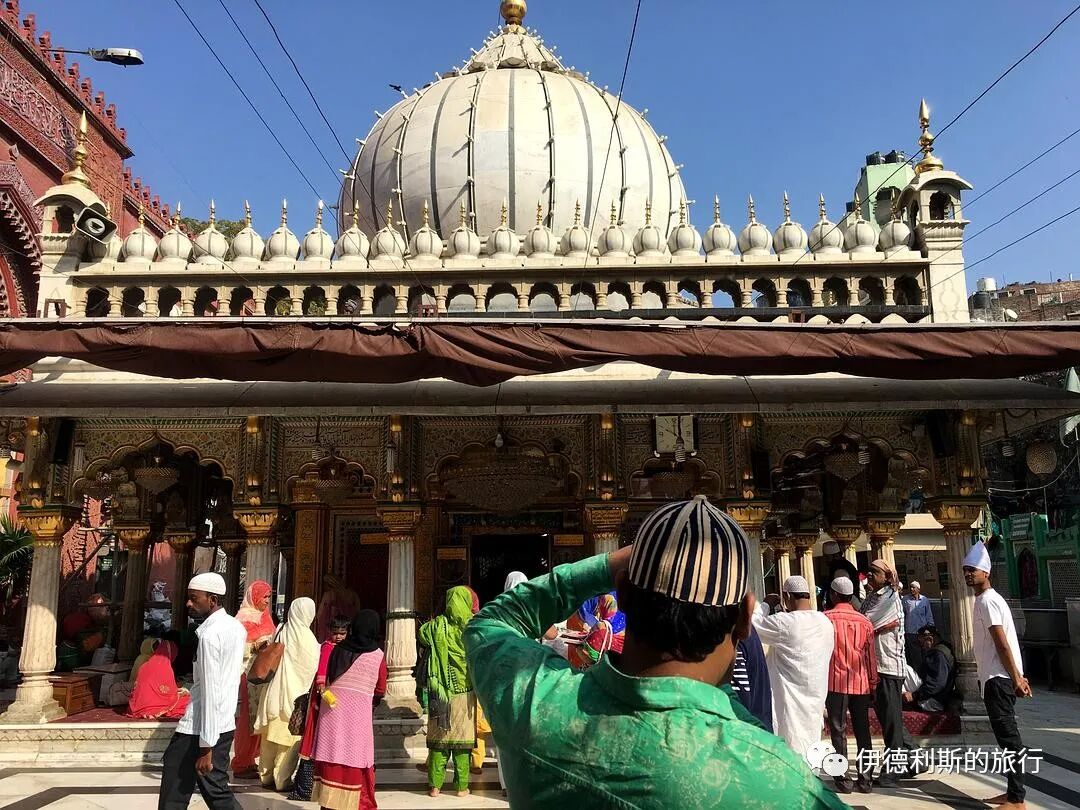
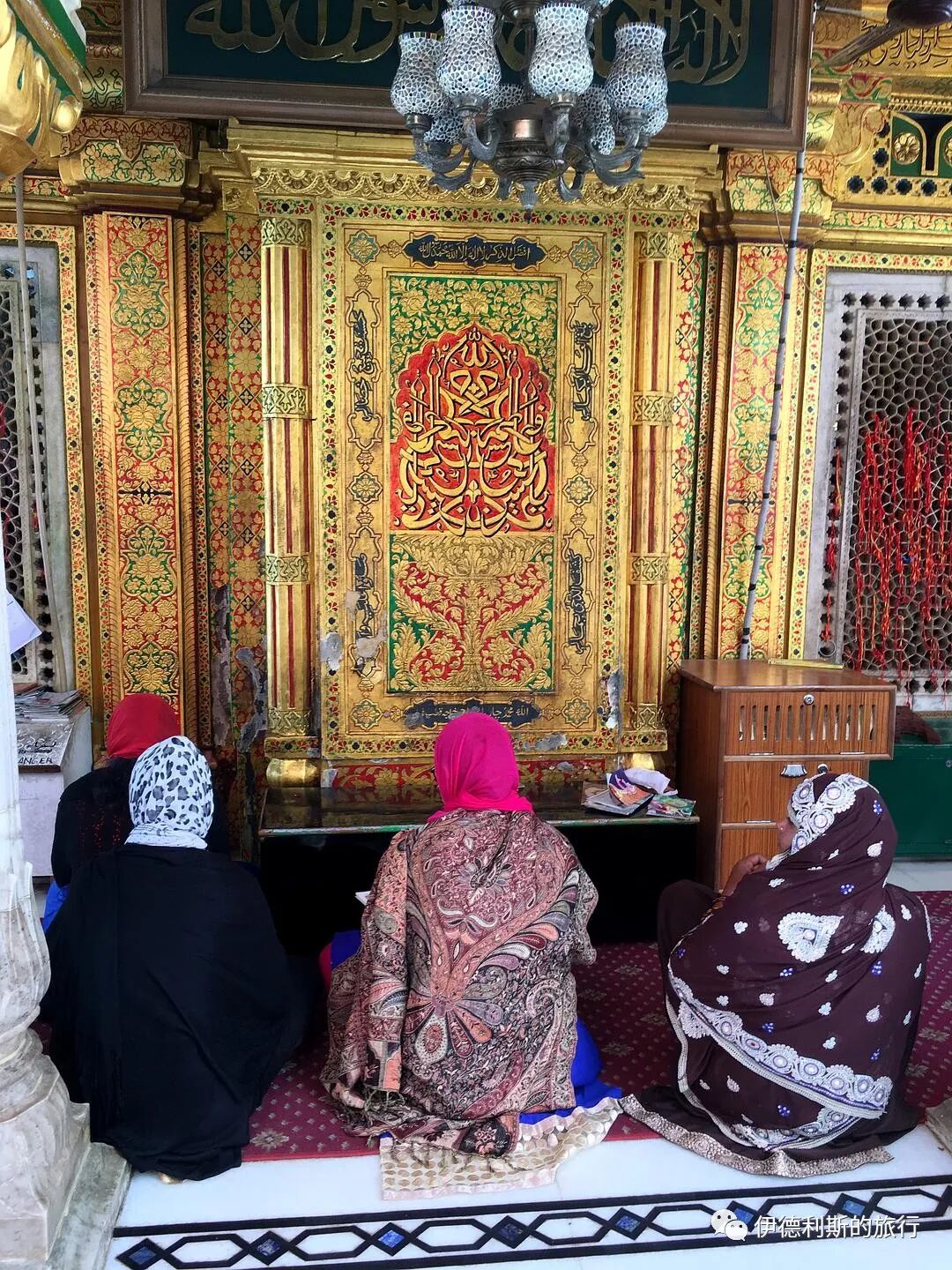
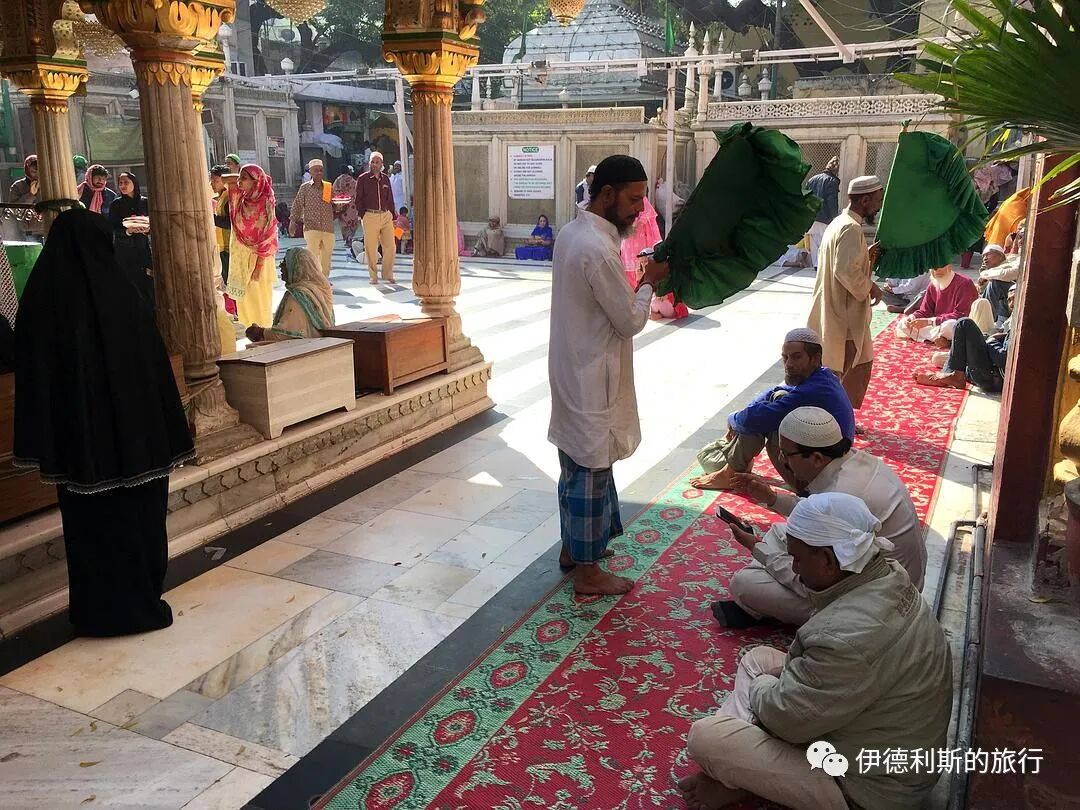
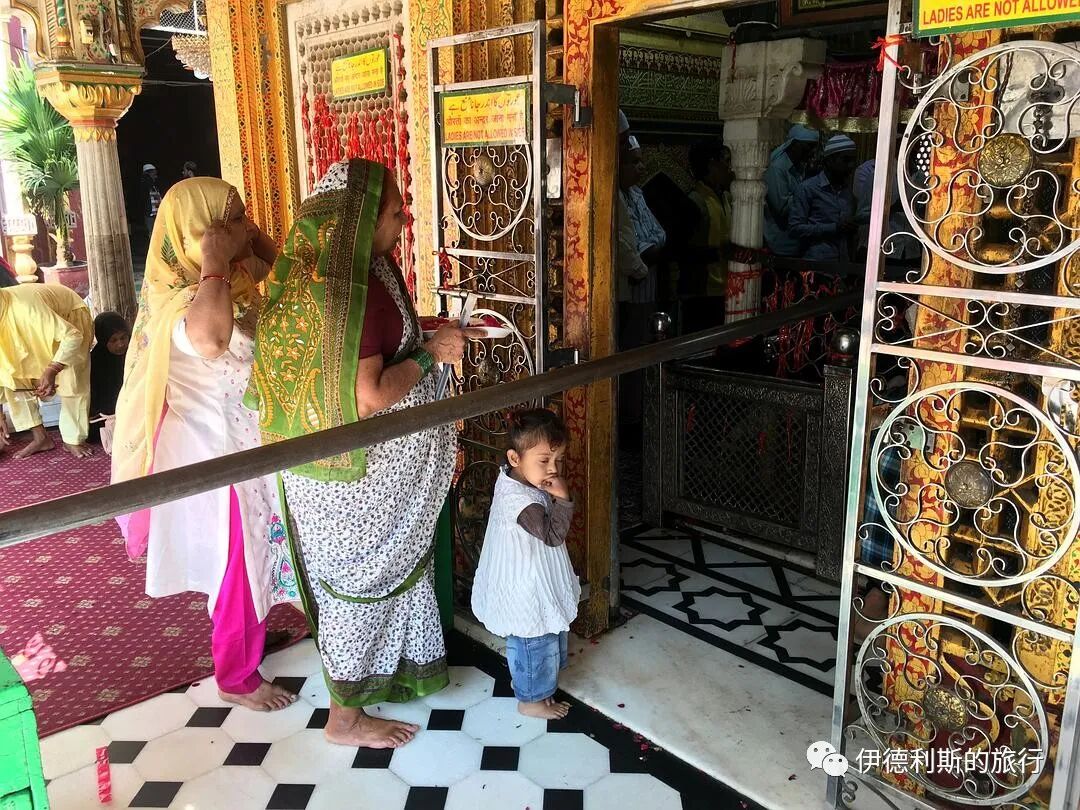
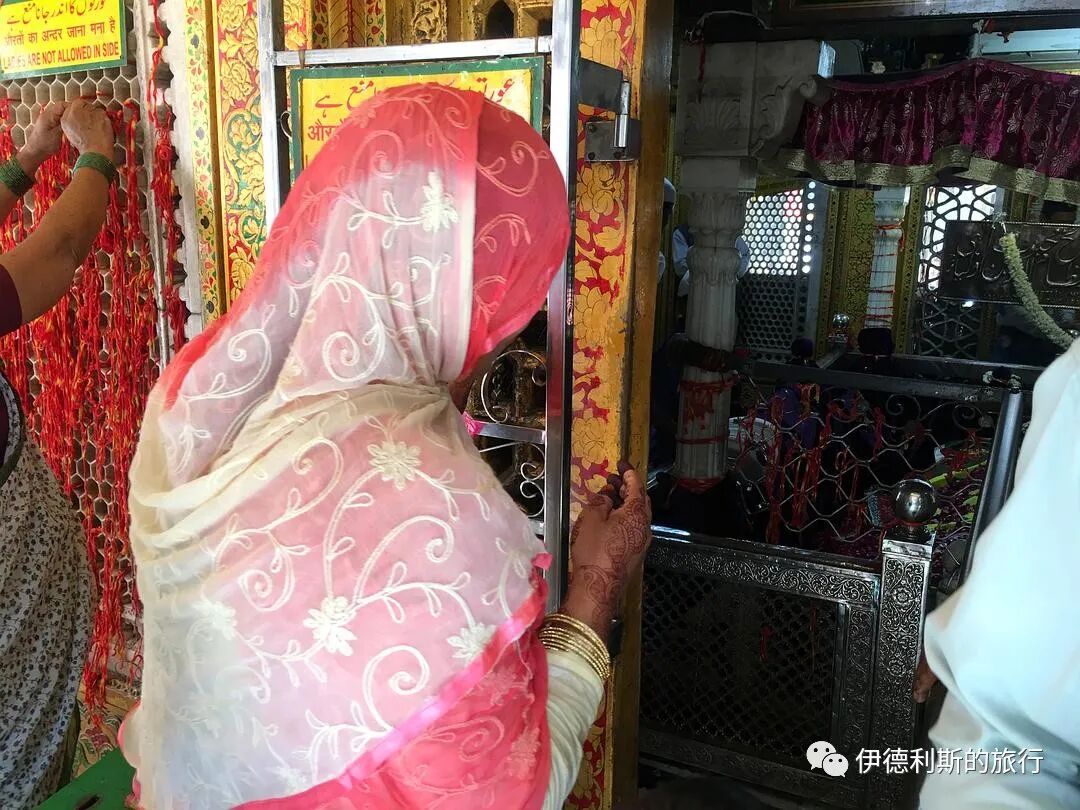
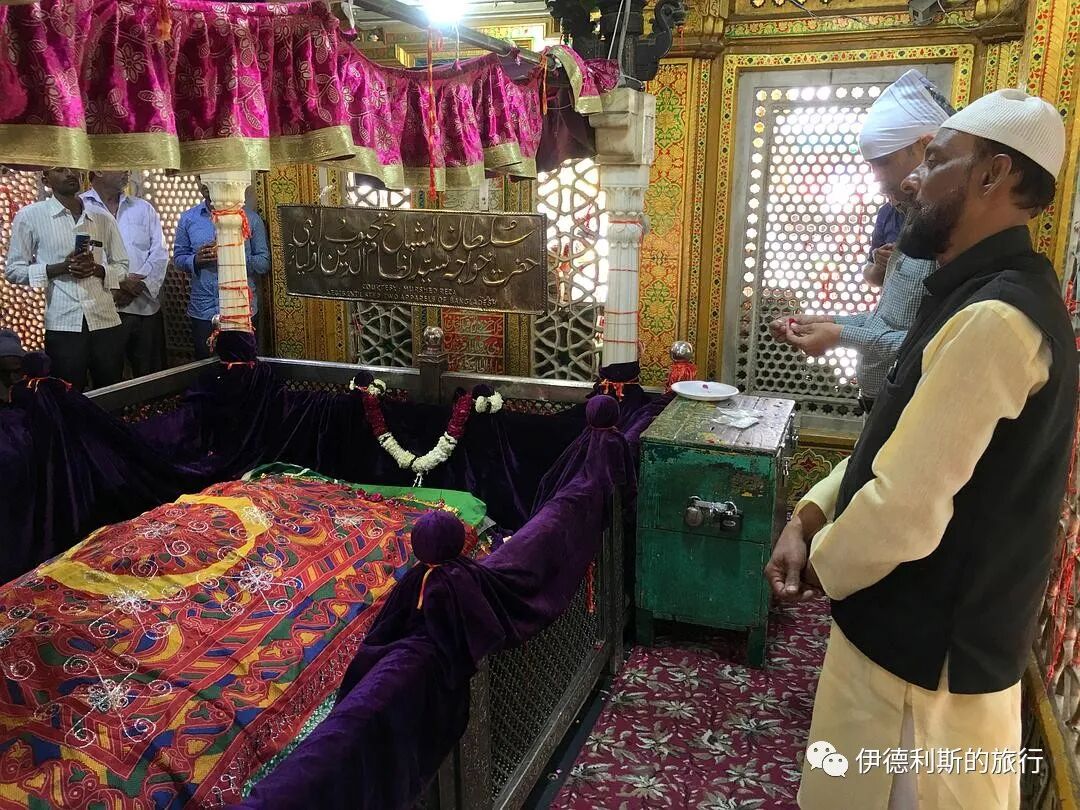
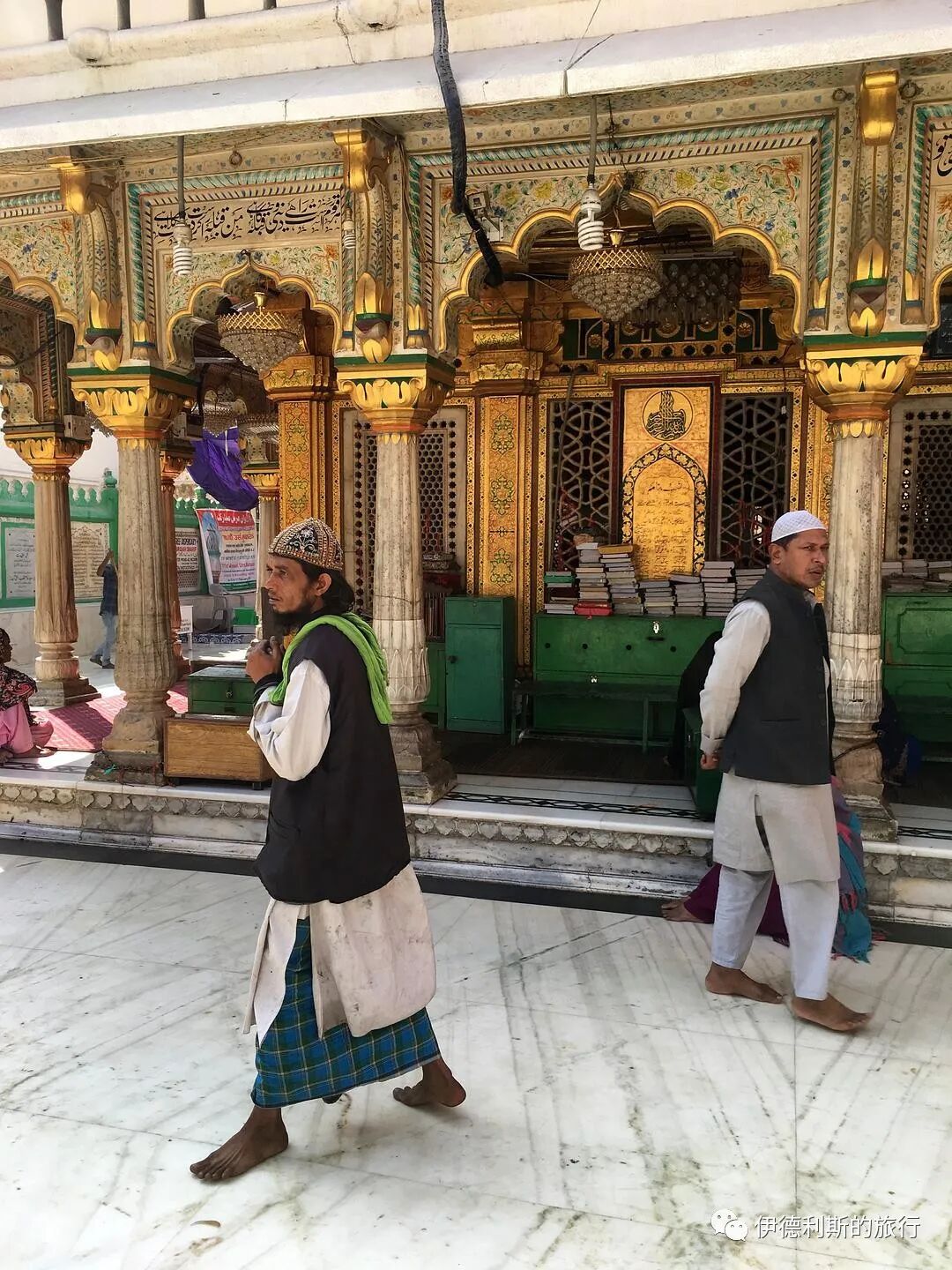
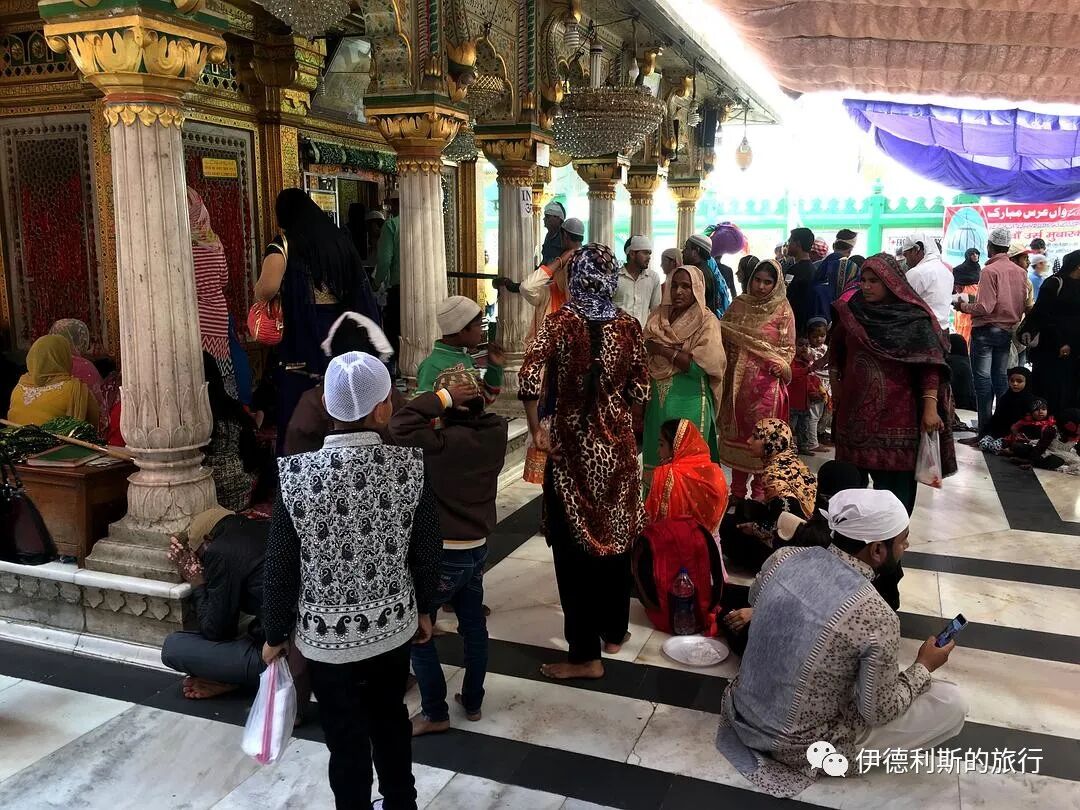
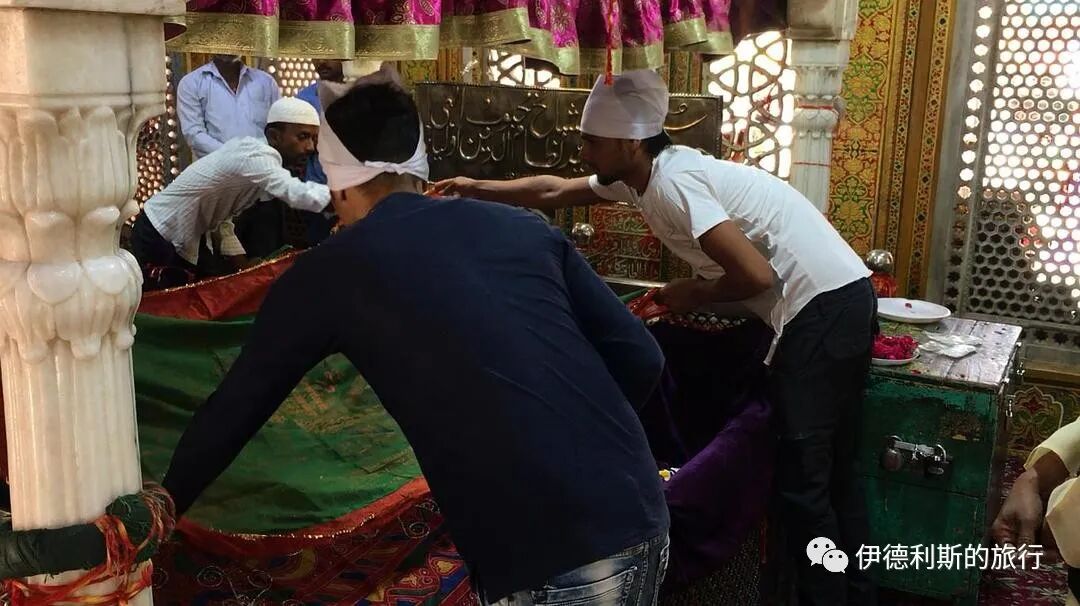
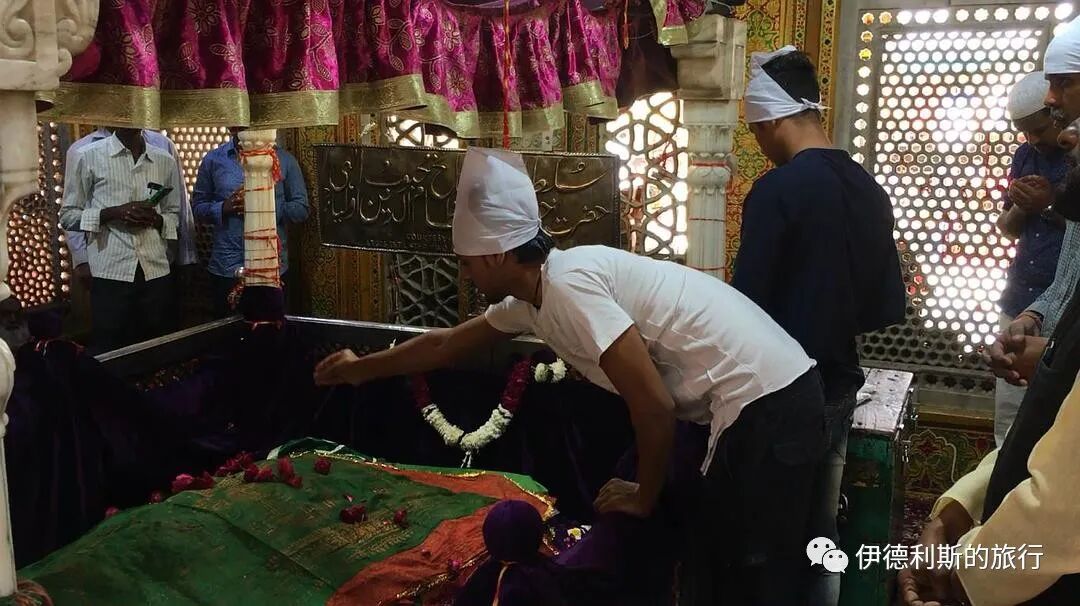
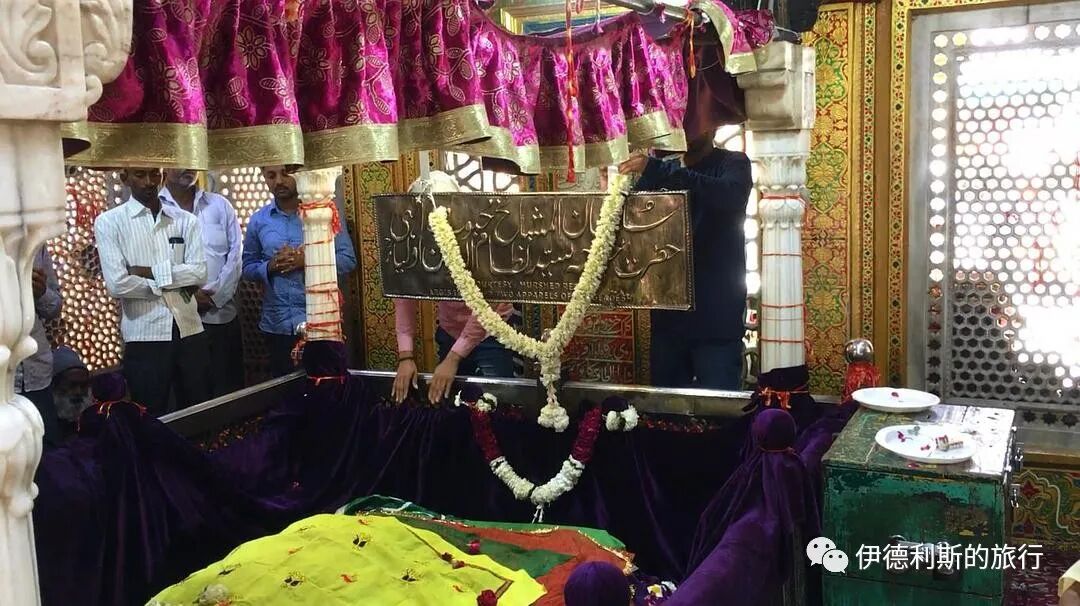
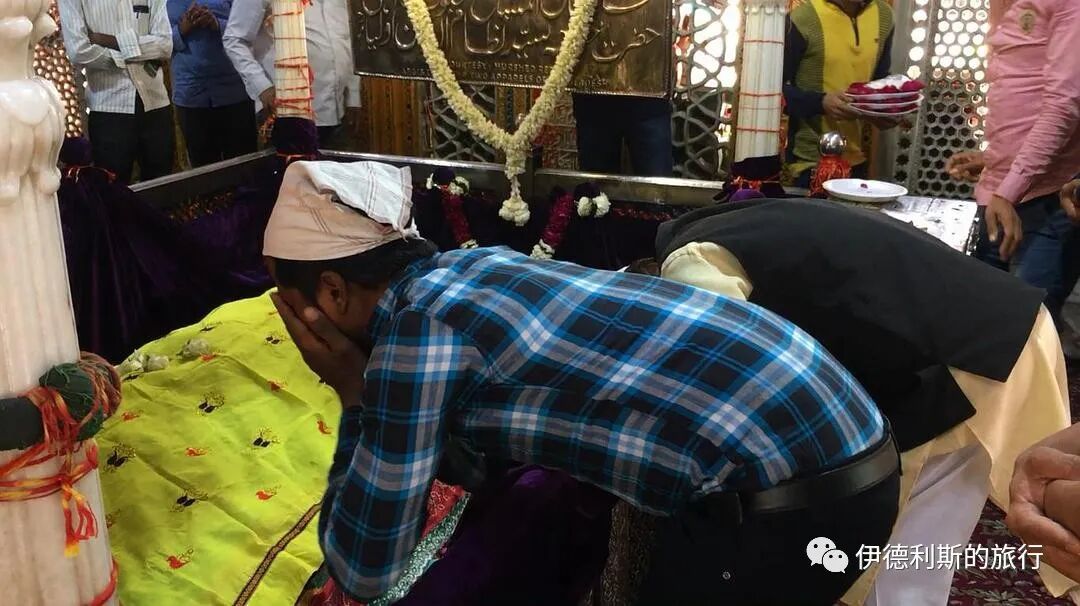
6. Tomb of Amir Khusrau: 1605
The tomb of Nizamuddin's student Amir Khusro (1253-1325) sits south of the shrine and is the second most important tomb in the core area after Nizamuddin's own.
In 1310, 57-year-old Khusro met Nizamuddin and eventually became his student. In 1319, Khusro wrote a prose work called Afzal ul-Fawaid (The Greatest Blessings) that explains the teachings of Nizamuddin. Nizamuddin passed away on April 3, 1325, and Khusrau died just six months later. His tomb, like the shrine of Nizamuddin, was rebuilt many times. During the reign of Humayun (1530-1560), a surrounding wall was added, which makes it difficult to see the original appearance of the tomb.
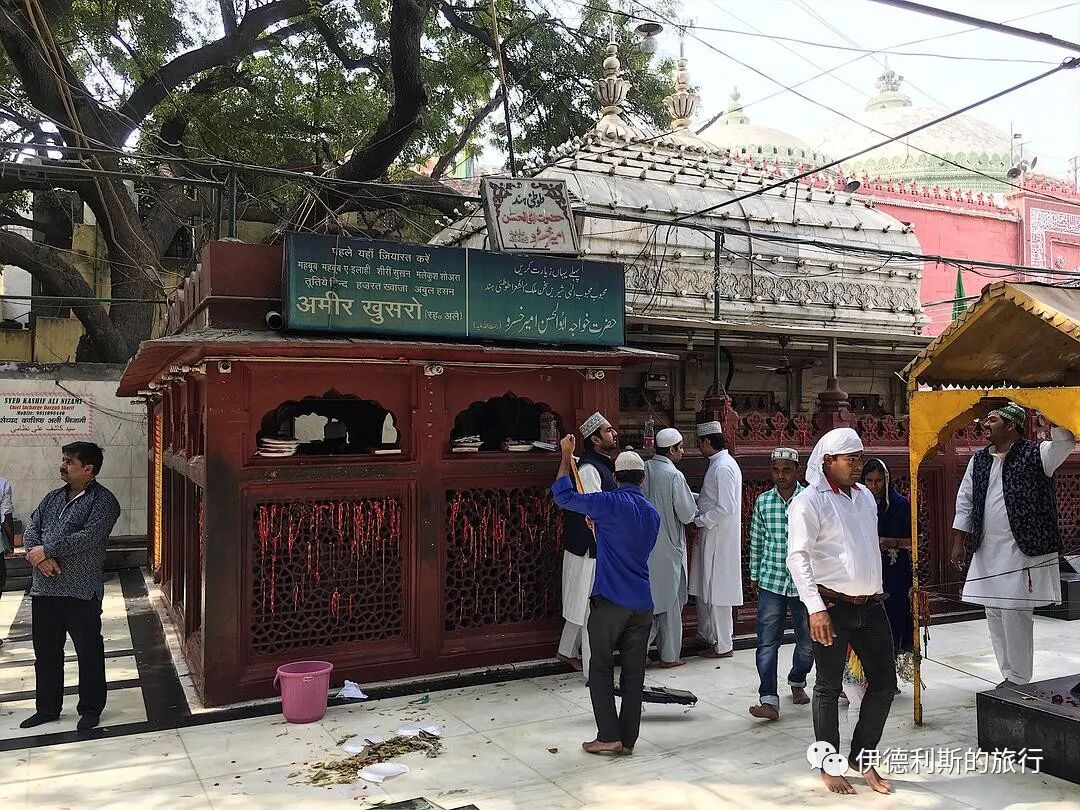
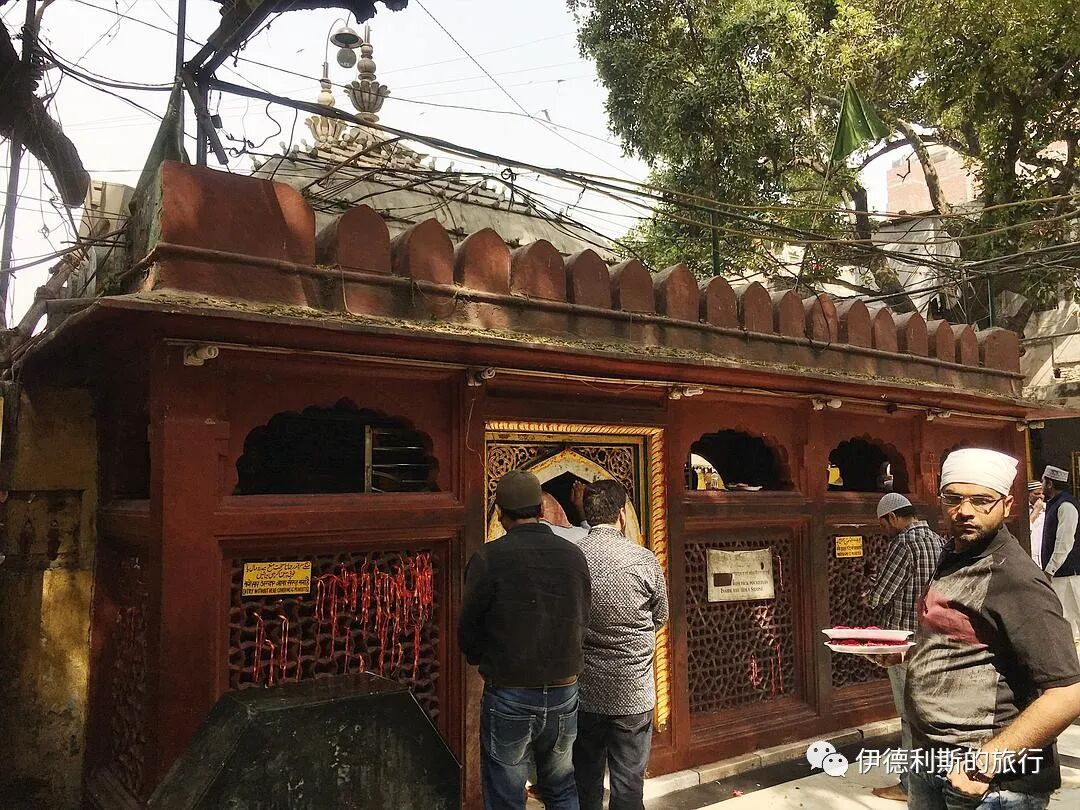
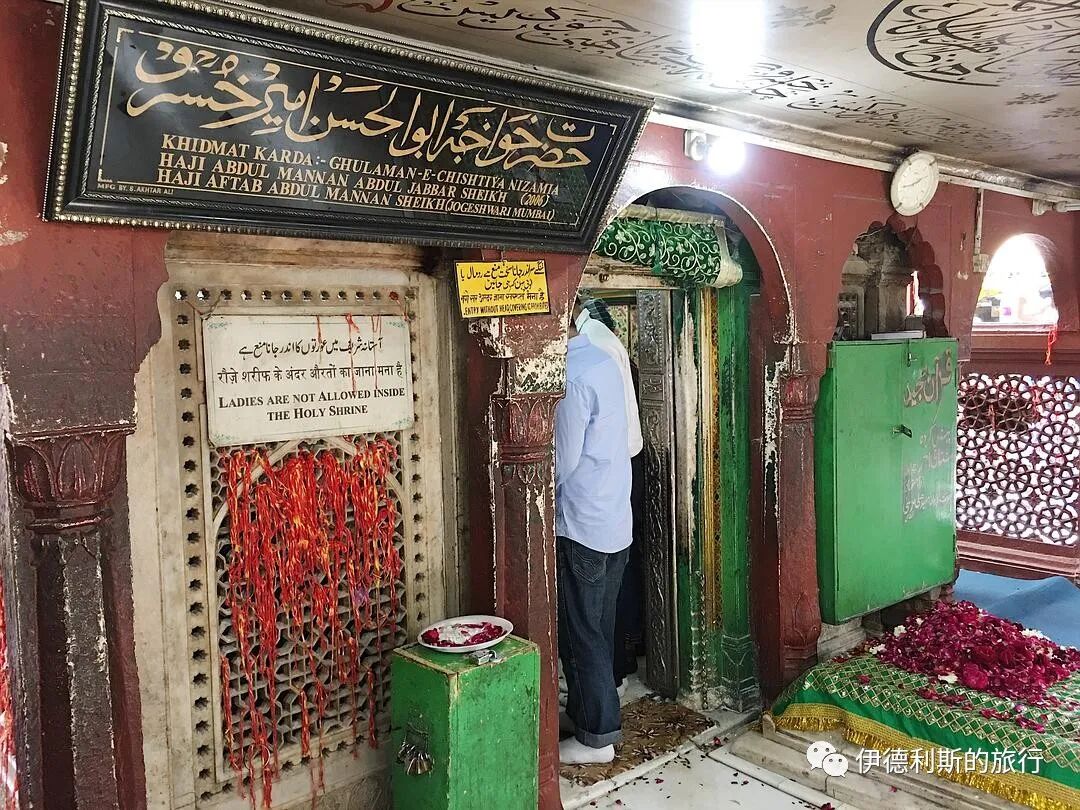
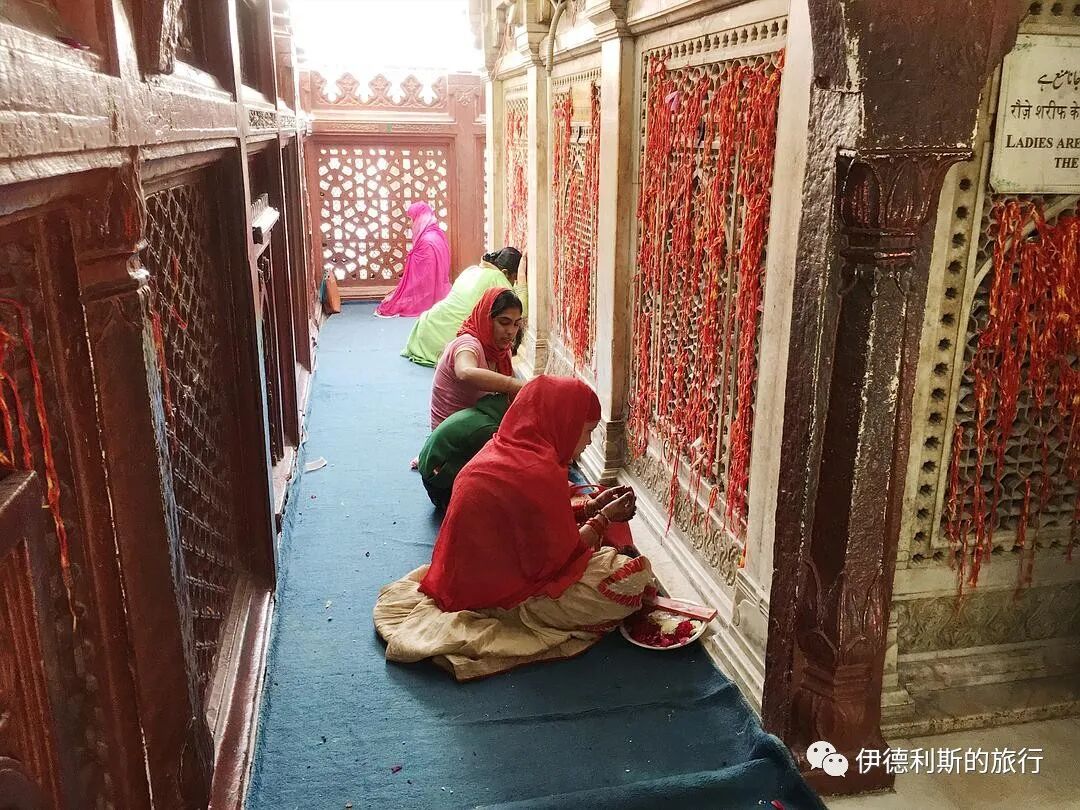
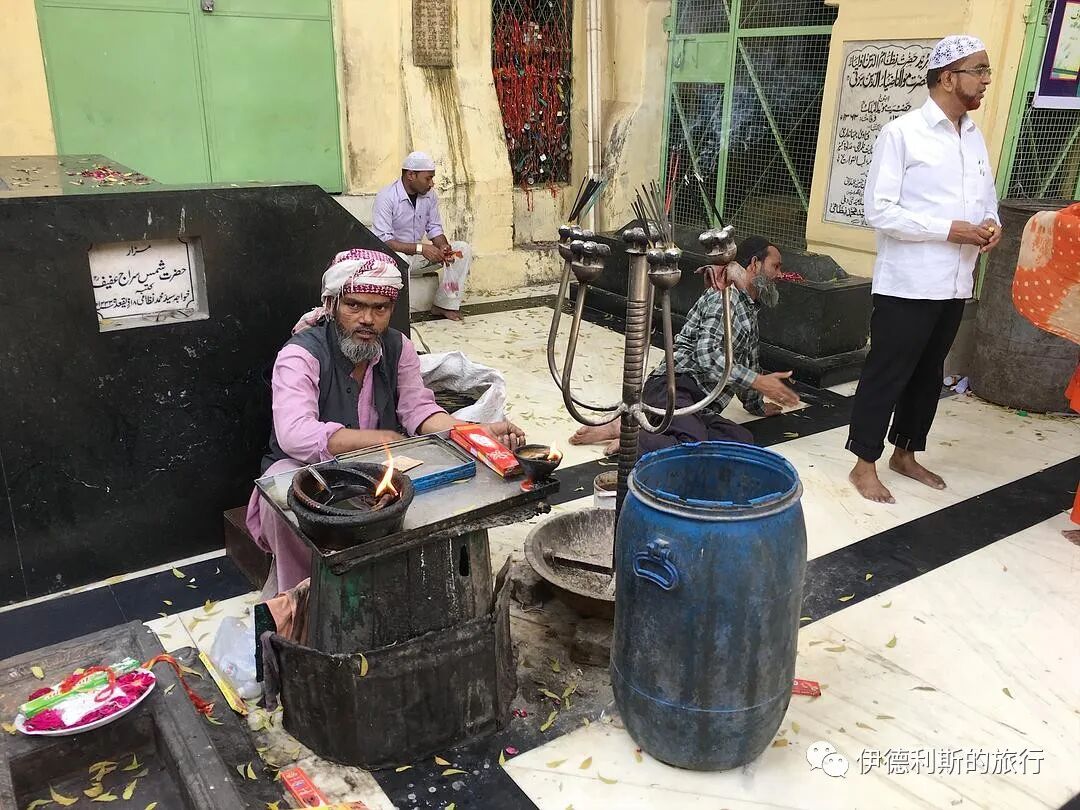
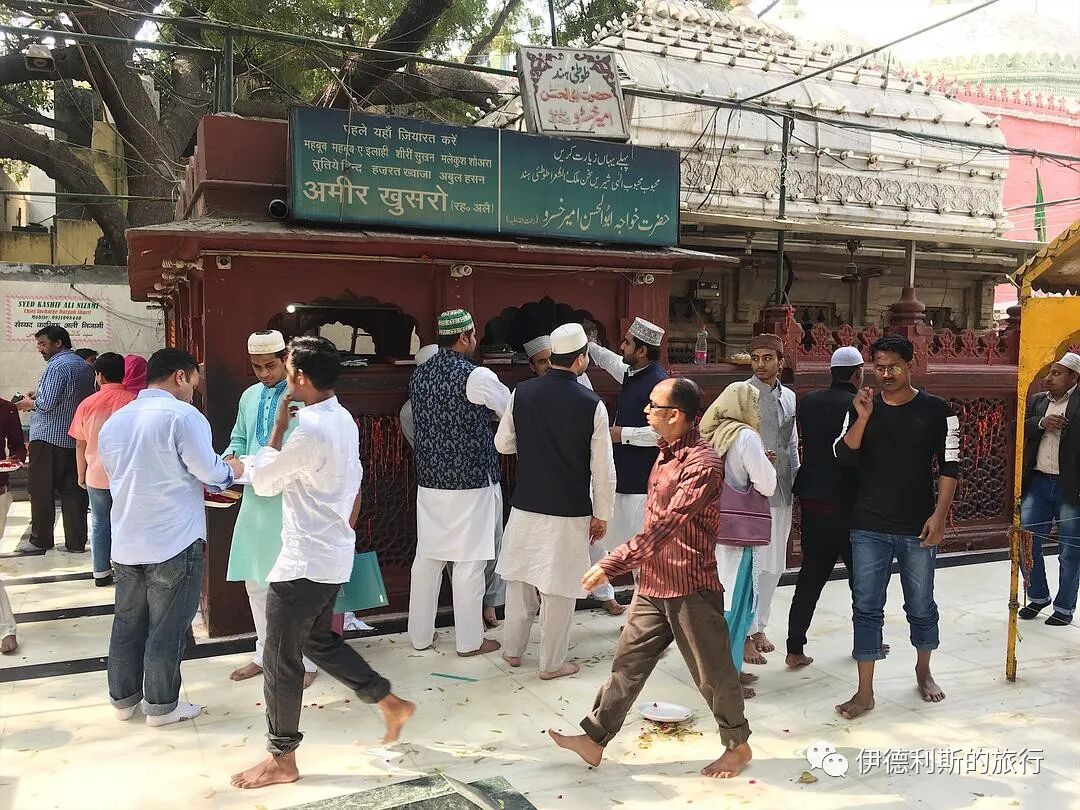
Amir Khusrau holds a high status in India and is known as an iconic figure in Indian cultural history. He is called the father of Urdu literature and the father of Indian Sufi music, among many other titles. He was a Sufi musician who invented Qawwali, the most important form of Sufi music in South Asia, and he was also a great Persian poet. Ghazal was a very important form in his poetry. Khusrau made great contributions to the ghazal style of poetry and was the first to introduce ghazal-style songs to India, where they became an important musical form in South Asia.
A portrait of Khusrau teaching his students, painted in the Bukhara region between the late 17th and early 18th centuries.
1. Exiled Turks
Khusrau's father came from the Lachin tribe of the Turks. He was born and raised near Samarkand under the rule of the Western Liao dynasty. In 1218, Genghis Khan's army destroyed the Western Liao dynasty and devastated Central Asia. Many Turks fled in all directions, and Khusrau's father escaped to what is now northern Afghanistan.
At that time, Sultan Shams ud-Din Iltutmish of the Delhi Sultanate also came from a Turkic tribe in Central Asia. He welcomed these Turkic refugees to settle in the Delhi Sultanate and provided significant support and many positions in the sultan's court to exiled Turkic nobles, craftsmen, and scholars.
In 1230, the Sultan gave Khusrau's father a piece of land, and he married the daughter of an Indian Rajput noble.
2. Receive an Indian education
In 1260, when Khusrau was only 7 years old, his father passed away. His mother then took the whole family back to live at her parents' home in Delhi. So, in reality, Khusrau grew up in the home of his maternal grandfather, Rawat Arz.
Khusrau's maternal grandfather was a highly cultured, high-ranking official in the court of the Delhi Sultan Ghiyas ud din Balban (1266-1286). Khusrau started his formal education at his grandfather's house when he was eight, and he also began learning how to write poetry.
In 1271, Khusrau finished his first poetry collection, Tuhfat us-Sighr (Gift of Childhood), which included poems he wrote between the ages of 16 and 18.
3. Gaining recognition from the Mamluk dynasty
Khusrau's grandfather passed away when he was 20, and after that, Khusrau joined the army of the Mamluk dynasty in the Delhi Sultanate. By then, his poetry had already made a big impression on the Sultan's court, and Sultan Balban's second son, Bughra Khan, was his biggest fan. In 1276, Bughra Khan became a patron of Khusrau.
Bughra Khan left the Sultan's court in 1277 to rule Bengal. In 1279, Khusrau visited him in Bengal and finished his second poetry collection there, Wast ul-Hayat (The Middle of Life).
After this, the Sultan's eldest son, Khan Muhammad, visited Delhi from Multan. He also loved Khusrau's poetry and invited him to come live in Multan. In 1281, Khusrau traveled to Multan with Khan Muhammad. At that time, Multan was the gateway from India to Arabia and Persia. It was an important cultural center in India that brought together brilliant scholars from Persia, India, and other places, and Khusrau learned a great deal there.
In 1285, Khan Muhammad died in battle while fighting the Mongol army. Sultan Balban died in 1287. His grandson, Muiz ud din Qaiqabad, who was the son of his second son Bughra Khan, took the throne as the final sultan of the Mamluk dynasty of the Delhi Sultanate.
Between 1287 and 1288, Khusrau became a court poet for the sultan. In 1288, he finished his first long poem (Mathnawi) titled Qiran us-Sa'dain (The Meeting of the Two Auspicious Stars). It tells the story of Bughra Khan, who had been hostile toward his son for a long time, finally meeting with Sultan Qaiqabad.
4. Gaining respect from the Khalji dynasty
In 1290, the military officer Jalal ud din Firuz Khalji led a coup to overthrow the Mamluk dynasty and established the Khalji dynasty.
Firuz Khalji also greatly admired Khusrau's poetry, so Khusrau was invited back to be the court poet and was treated with great respect. In the court of the Khalji dynasty, Khusrau was able to focus on his literary work. His ghazal poems were turned into songs, and the Sultan had female singers perform them for him every night.
Khusrau once wrote about this experience: The King of the World, Firuz Khalji, gave me unimaginable treasures to reward me for the endless pain I suffered while writing poetry.
In 1290, Khusrow finished his second long poem (masnavi), Miftah ul-Futuh (Key to Victories), which praised the victories of Firuz Khalji. In 1294, he completed his third poetry collection, Ghurrat ul-Kamaal (The Pinnacle of Perfection), which includes poems he wrote between the ages of 34 and 41.
In 1296, Alauddin Khalji became the new Sultan of Delhi. Khusrow wrote Khaza'in ul-Futuh (Treasures of Victories) for Sultan Alauddin Khalji, recording the Sultan's achievements in various areas. In 1298, Khusrow finished a set of five long poems (khamsa) known as Khamsa-e-Khusrow (Khusrow's Quintet). These two works brought Khusrau great fame and status. Sultan Alauddin Khalji was very pleased and rewarded him generously.
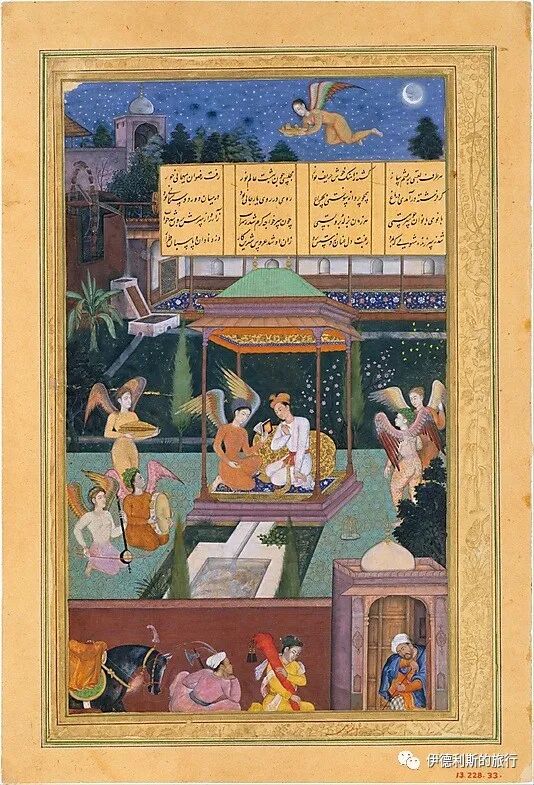
Illustrations for the Quintet (Khamsa)
7. South Asian Sufi music, Qawwali
Legend says that in the late 13th century, Khusrau blended Persian, Indian, Turkic, and Arabic music to create the local Indian Sufi music known as Qawwali.
The word Qawwali comes from the Arabic term Qaul, which means the saying of the Prophet. A Qawwal is someone who frequently chants the Qaul, and the act of chanting it is called Qawwali.
During the Mughal Empire, Qawwali was mostly sung in Persian. As it spread across South Asia, it began to be performed in many other languages, including Urdu, Hindi, Bengali, and Punjabi. Today, besides Delhi, Qawwali is popular in the Punjab and Sindh regions of Pakistan, North India, Hyderabad, and Muslim-populated areas in Bangladesh like Dhaka, Chittagong, and Sylhet. The performance style in each place is influenced by local traditional music, giving each one its own unique character.
1. Praise songs (nasheed) at the shrine of Nizamuddin.
The Nizamuddin Dargah hosts Qawwali performances two nights a week, but I didn't plan well enough and missed them. At the shrine, I was lucky to see an old man singing a song of praise for the Prophet, and it was very moving.
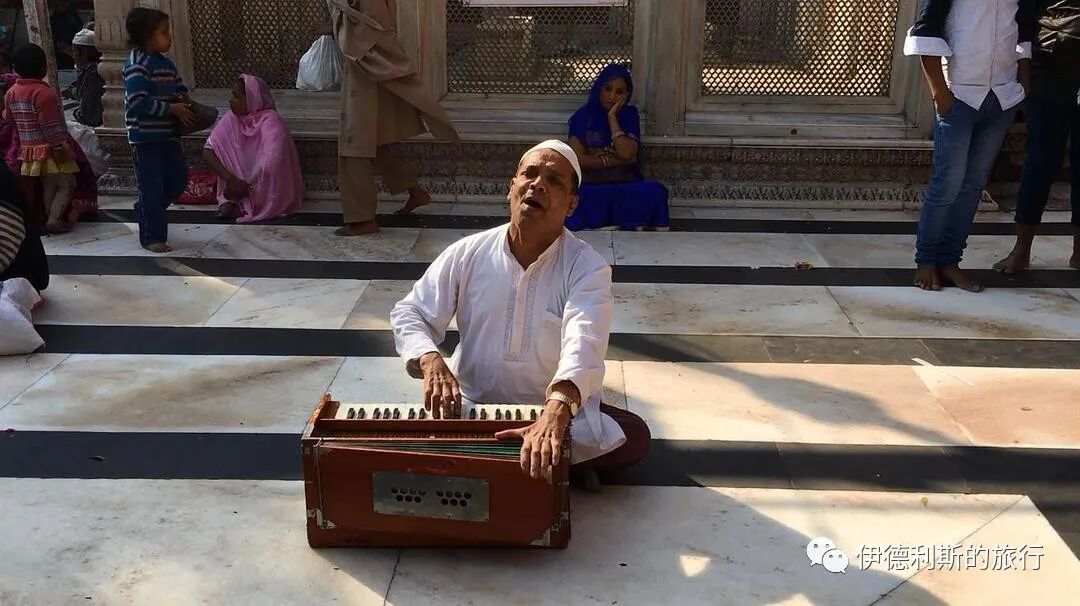
2. Qawwali performance inside the mosque.
I was very lucky to catch a Qawwali performance at a small mosque in the northeast of the Nizamuddin neighborhood, which was one of the most memorable parts of my trip to Delhi.
A Qawwali group usually has 8 to 9 people. This includes one lead singer, one or two backup singers, one or two harmonium players (who can also be the lead or backup singers), and one or two drummers playing the tabla and dholak drums. There are also 4 to 5 chorus members who repeat key verses and clap to keep the beat. During the performance, everyone sits cross-legged on the floor, with the lead singer, backup singers, and harmonium player in front, and the drummers and chorus members behind them.
Before the harmonium was introduced, qawwali usually used the sarangi, a stringed instrument similar to a violin.
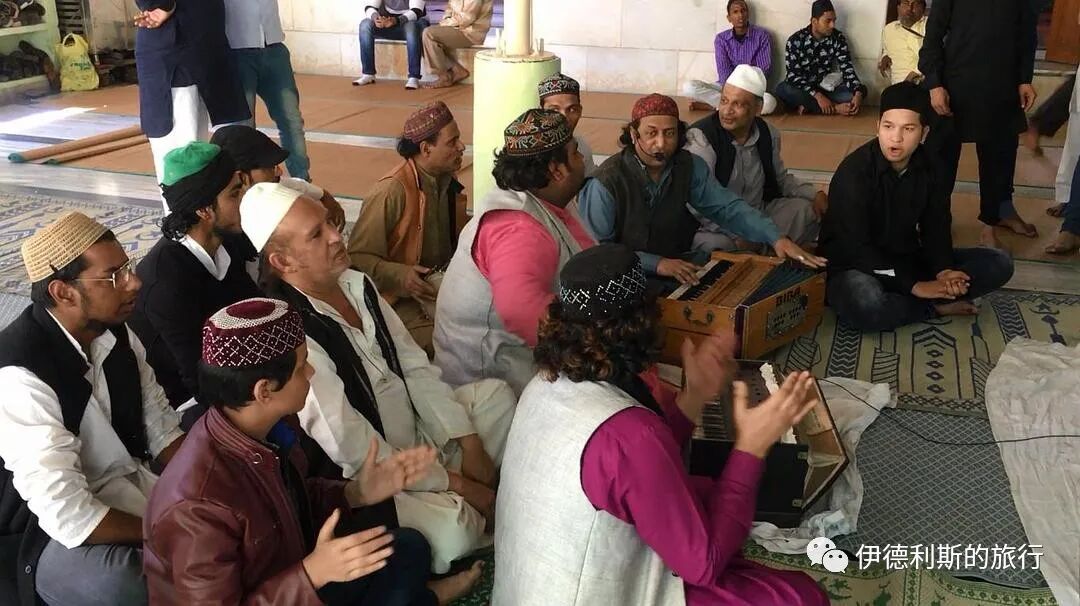
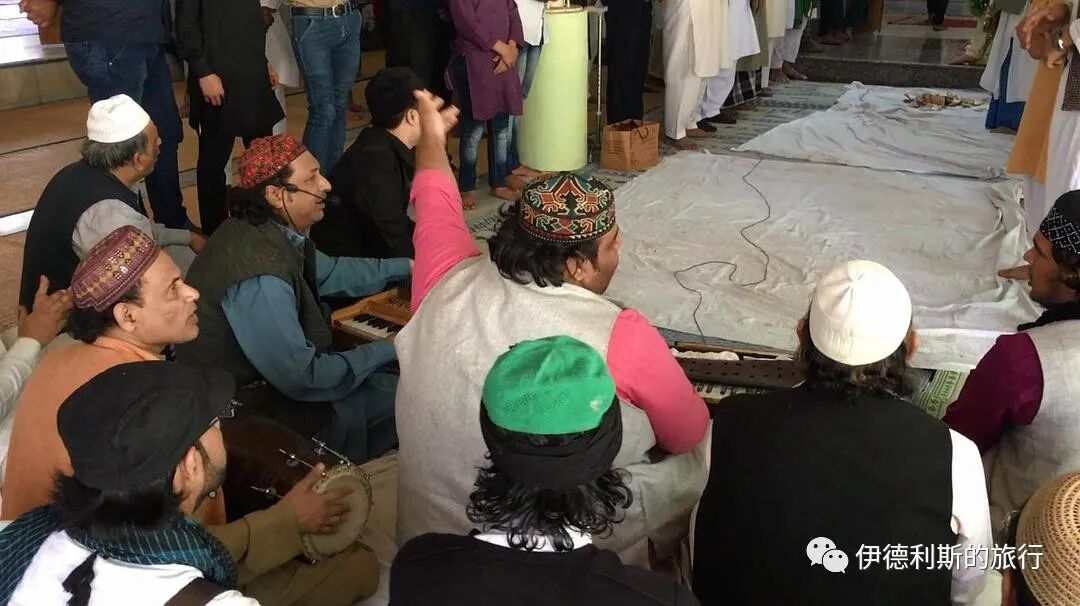
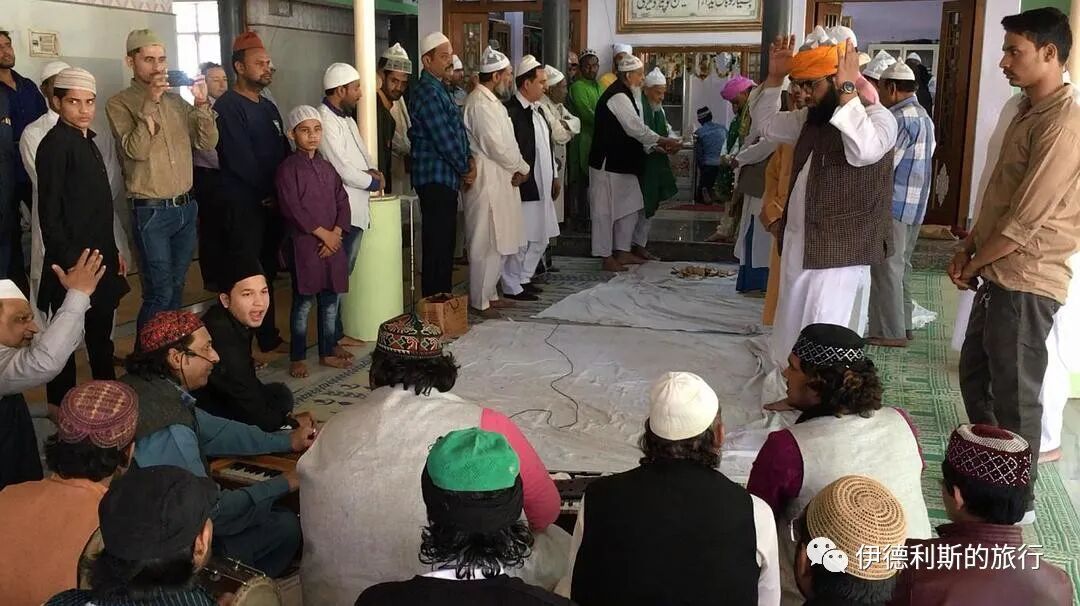
Qawwali themes are love, devotion, and longing, and they are divided into seven types based on their content:
The first type is called hamd, which means praise. It is a song praising Allah and usually starts the qawwali.
The second type is called na'at, which means description. It is a song praising the Prophet Muhammad and is usually the second song in a qawwali.
The third type is called manqabat, which means virtue. It is a song praising Imam Ali or one of the Sufi saints and is usually the third song in a qawwali.
The fourth type is called marsiya, which means elegy. It tells the story of how Imam Hussain, the son of Imam Ali, and his family were all martyred in the Battle of Karbala. This type is usually only performed during Shia rituals.
The fifth type is called ghazal, meaning love song. This is a song that seems very secular on the surface, usually singing about the joy of drinking wine and the pain of being separated from a lover. In South Asia, ghazal is an independent musical genre on its own and usually does not have a deeper meaning. However, in the context of Sufi Qawwali rituals, these secular metaphors are used to express the longing for the soul to unite with the divine and a love for the sacred. In songs about being drunk, wine represents divine knowledge, the wine glass is Allah or a spiritual guide, the tavern is considered the spiritual background where the soul exists, and being drunk means having gained divine knowledge or being filled with the joy of loving Allah. Songs that seem to describe a longing for a lover are actually singing about the pain of the soul being separated from Allah and the desire to be reunited.
The sixth type is called kafi, a unique form of poetry in Punjabi, Sindhi, and Seraiki.
The seventh type is called munajaat, which means monologue. The singer uses various forms to express praise to Allah, usually singing in Persian.
3. Sufi music at the music festival.
For the first 600 years, Qawwali was a type of music performed only at Sufi shrines or places of spiritual practice (dargah) in South Asia. Since the 20th century, Qawwali music has gained mainstream attention through major world music labels and the international music scene. It now holds a certain international status, and many bands have started performing Qawwali melodies. I saw a rock band performing Sufi music in front of the Select Citywalk mall in Delhi.
8. Tomb of Princess Jahanara: 1681.
Because of Nizamuddin's important status in India, many significant figures are buried near him. There are several important tombs around the Nizamuddin shrine. The first one, right next to the mosque, is the white marble tomb of Princess Jahanara Begum Sahiba (1614-1681).
Princess Jahanara was the most powerful woman in the Mughal Empire during the mid-17th century. She was also the only female Sufi practitioner in the Mughal court, belonging to the Qadiriyya order, which is known as the Qadiriyya menhuan in Northwest China.
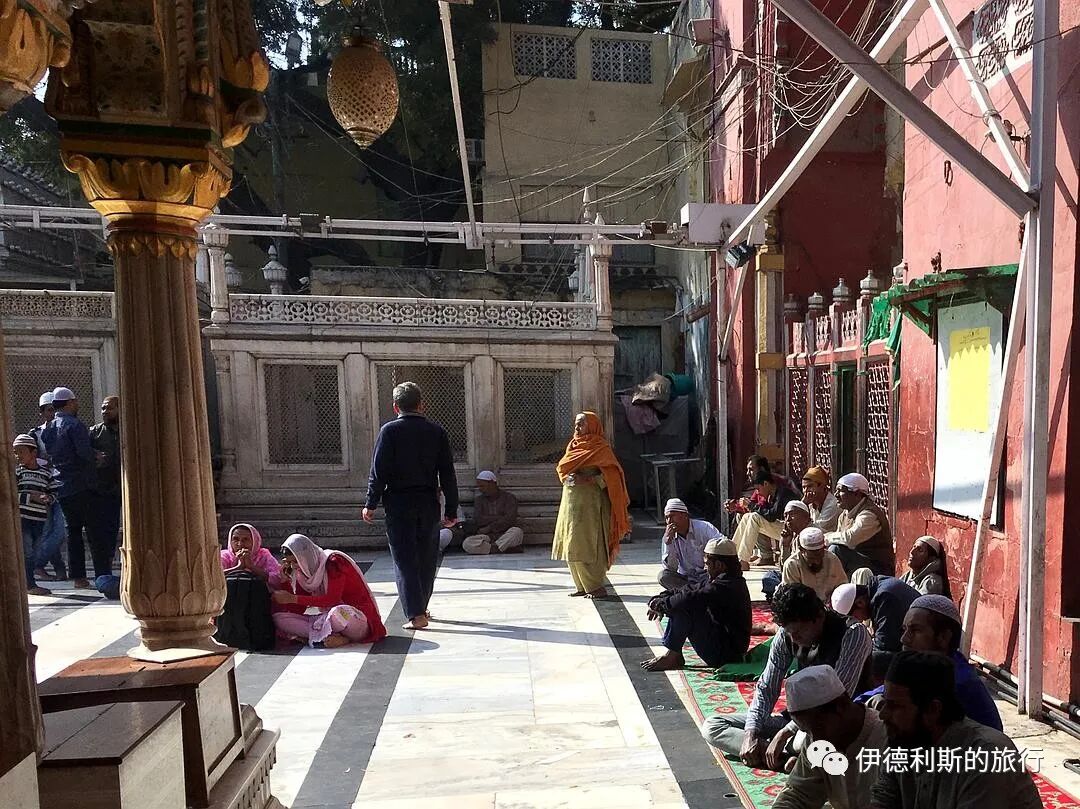
The white marble latticework tomb in the center of the picture is the tomb of Princess Jahanara.
1. Becoming the First Lady of the Empire
Princess Jahanara was the eldest daughter of the Mughal Emperor Shah Jahan (reigned 1628-1658), who built the Taj Mahal. She was educated from a young age by Sati al-Nisa Khanam, the sister of the famous Mughal Empire poet Talib Amuli. Sati al-Nisa Khanam was highly accomplished in the Quran, Persian literature, court etiquette, and medicine. At that time, women in the Mughal royal family could enter the famous Akbar the Great Library to read books in Persian, Turkish, and Indian languages. The young princess became skilled in reading, writing, poetry, and painting, and she also enjoyed hobbies like chess, polo, and hunting.
After her mother died in 1631, the 17-year-old princess became the First Lady of the empire (Padshah Begum) and took charge of court ceremonies. After moving past the grief of losing her mother, the princess hosted the engagement and wedding ceremonies for her brother, Dara Shukoh, to fulfill her mother's final wishes.
The princess became increasingly favored by her father and eventually rose to be the highest-ranking woman in the Mughal Empire, with her father, Shah Jahan, even letting her hold the imperial seal.
In 1644, his younger brother, the future Mughal Emperor Aurangzeb, angered their father. The princess successfully convinced her father to forgive Aurangzeb and restore his military rank.
2. Burned and healed
In March 1644, 30-year-old Princess Jahanara suffered severe burns and was so badly injured that she almost died. To pray for the princess's recovery, Shah Jahan gave large amounts of charity to the poor and released many prisoners. The princess's brothers, including Aurangzeb, also returned to Delhi to visit her.
During her illness, Emperor Shah Jahan stayed in the Red Fort and barely left his daughter's side. The Mughal Empire's royal doctors could not heal her burns, so Shah Jahan brought in Persian doctors, and the princess's condition slowly improved. Finally, after a full year, the princess made a complete recovery.
3. Managing the empire's charity work
In the Mughal court, Princess Jahanara was mainly in charge of charity work, and she was famous for actively caring for the poor and funding the construction of mosques. Whenever a major holiday arrived or a famine struck a region, the princess organized large-scale relief efforts. The princess was also responsible for organizing the pilgrimage to the holy cities of Mecca and Medina.
4. Sufi practice
Princess Jahanara was a student of the Sufi master Mullah Shah Badakhshi. She officially joined the Sufi Qadiriyya order in 1641 and achieved great success in her spiritual practice.
She wrote several books on Sufism. The most famous one is a biography of Moinuddin Chishti, the founder of the Chishti order. At the time, this book was highly praised for its excellent literary quality and accurate judgment. The princess also commissioned the translation and publication of a series of Sufi works, including many commentaries on Rumi's famous Mathnawi, which were very popular in the Mughal Empire.
5. Becoming First Lady again
In 1657, Shah Jahan fell seriously ill, and his four sons began a war of succession. Princess Jahanara supported Shah Jahan's eldest son, Dara Shikoh, but the following year, Dara Shikoh was defeated by his younger brother Aurangzeb and fled to Delhi.
Shah Jahan hoped the princess would use her influence over her brothers to persuade them, but in June 1658, Aurangzeb still besieged his father at Agra Fort. Aurangzeb cut off the water supply to force his father to surrender, then kept his father and the princess under house arrest.
The princess cared for Shah Jahan until he passed away in 1666, after which she reconciled with Aurangzeb and became the First Lady of the Mughal Empire once again.
During Aurangzeb's reign, the princess still held privileges that no other women in the Mughal royal family possessed. She opposed Aurangzeb's conservative religious policies, especially when he strictly regulated public life in 1679 by reinstating the poll tax on non-Muslims, a policy the princess believed would alienate the Hindus within the empire.
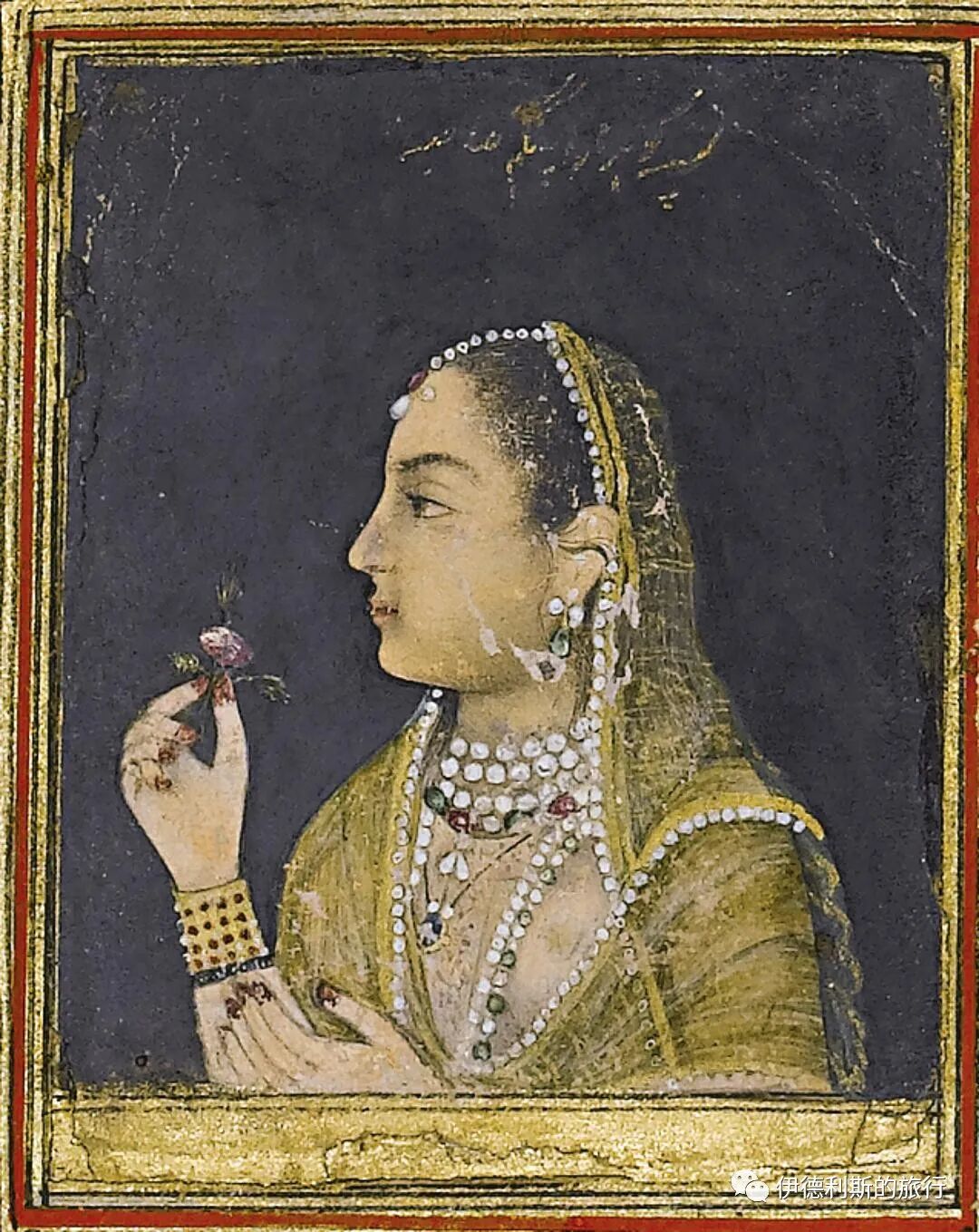
An 18th-century portrait of the princess.
6. The Princess's Tomb
Princess Jahanara built her own tomb next to the Nizamuddin shrine while she was still alive. The tomb is made of white marble and features lattice screens. After the princess passed away in 1681, Aurangzeb gave her the title Sahibat-uz-Zamani, which means "Mistress of the Age."
The princess's tomb is in the top right corner.
Inside the circle.
9. Tomb of Muhammad Shah: 1748.
Right next to the tomb of Princess Jahanara is the tomb of the Mughal Emperor Muhammad Shah (reigned 1719-1748), which also features white marble latticework.
During the reign of Muhammad Shah, the Mughal Empire declined rapidly and irreversibly. In the royal court, local Indian culture gradually replaced the influence of Persian and Turkic cultures.
1. Inheriting the throne
Muhammad Shah was born in 1702 in what is now Ghazni, Afghanistan. After his grandfather, Emperor Bahadur Shah I (reigned 1707-1712), died in 1712, his father was killed in a war for the throne. At just 10 years old, Muhammad Shah and his mother were imprisoned by his uncle, Jahandar Shah (reigned 1712-1713). While in prison, Muhammad Shah was raised and educated by his mother, and he was a very diligent student.
Soon after, Jahandar Shah was assassinated by the Sayyid Brothers, who held real power in the empire. They installed Farrukhsiyar (reigned 1713-1719) as a puppet emperor.
In 1719, Farrukhsiyar was killed by the Sayyid brothers. They then installed two puppet rulers, but both died of illness a few months after taking the throne. Finally, the Sayyid brothers chose 17-year-old Muhammad Shah to be emperor. In 1720, Muhammad Shah got rid of the Sayyid brothers one after another, took direct control of the military, and officially ruled the empire.
A portrait of Muhammad Shah with nobles painted in 1730, kept at the Bodleian Library of Oxford University.
2. Developing arts and culture
During the reign of Muhammad Shah, the influence of Persian and Turkic cultures in the Mughal Empire gradually faded, while local Indian cultural influence grew stronger. Muhammad Shah replaced Persian with Urdu as the court language and oversaw the first translation of the Quran into Urdu. In the royal court, the Turkic formal wear worn by nobles from Samarkand was replaced by the local Indian formal coat (Sherwani).
At the same time, Muhammad Shah brought the local Indian Sufi musical performance (Qawwali) back into the court, which caused it to spread quickly across South Asia.
Although the political power of the Mughal Empire declined during the reign of Muhammad Shah, he strongly encouraged literature and the arts. Muhammad Shah hired many great painters to depict various scenes of palace life in their artwork. At the same time, Indian classical music continued to develop and evolve in Muhammad Shah's court.
A portrait of Muhammad Shah and his family painted in 1735, held by the Los Angeles County Museum of Art.
A scene of Muhammad Shah meeting Nader Shah painted in 1740, held by the Guimet Museum in Paris.
3. Died in sorrow
In 1747, the Durrani dynasty of Afghanistan led 30,000 cavalrymen from Peshawar. They defeated 70,000 Mughal troops who tried to stop them, then carried out a massacre in the important Mughal city of Lahore and looted a massive amount of wealth. On March 11, 1748, while on the way to Delhi, the Durrani army was intercepted by Mughal forces sent by Muhammad Shah, and the two sides began a decisive battle. During the fighting, Ahmad Shah's artillery ammunition caused a fire. Many soldiers burned to death, and the Durrani had to retreat back to Afghanistan. During the decisive battle against Afghanistan, the Mughal Empire's prime minister, Qamaruddin Khan, was hit by artillery fire and died. When Muhammad Shah heard the news, he was heartbroken. He eventually died from his overwhelming grief on April 26, 1748, and was buried next to the Nizamuddin shrine.
10. Tomb of Prince Mirza Jahangir: 1821
Halal Travel Guide: Delhi Sufi Sites — Shrines, Mosques and Muslim Communities (Part 1)
Articles • ali2007fr posted the article • 0 comments • 264 views • 2026-05-17 21:10
Summary: Delhi Sufi Sites — Shrines, Mosques and Muslim Communities is presented here as a firsthand travel account in clear English, beginning with this scene: Delhi has two important Muslim communities. One is inside Old Delhi, centered around the Mughal-era. The account keeps its focus on Delhi Sufi Sites, Sufi Heritage, Muslim Community while preserving the names, places, food, and historical details from the Chinese source.
Delhi has two important Muslim communities. One is inside Old Delhi, centered around the Mughal-era
Friday Mosque (Jama Masjid). The other is in the southeastern suburbs of Delhi, the Nizamuddin community, which is centered around the Nizamuddin Dargah complex.
Nizamuddin is the most important Sufi holy site in Delhi. Every year during Ramadan, hundreds or thousands of believers gather here, and the shrine provides free meals for suhoor and iftar to everyone. The area is busy even on normal days. Sometimes at night, there are performances of Qawwali, a type of South Asian Sufi music, which is very moving.
Table of Contents
Chapter 1: Eating and Exploring
Chapter 2: The Core Area of the Shrine of Nizamuddin (Nisangmuding Shengling)
1. North Gate: Built in the 15th century
2. Entering the shrine from the North Gate
3. Water tank: 1321
4. Jamaat Khana mosque: 14th century
5. Nizamuddin shrine (gongbei): 19th century
6. Tomb of Amir Khusrau: 1605
7. South Asian Sufi music (Qawwali)
1. Praise songs (nasheed) at the shrine of Nizamuddin.
2. Qawwali performance inside the mosque.
3. Sufi music at the music festival.
8. Tomb of Princess Jahanara: 1681.
9. Tomb of Muhammad Shah: 1748.
10. Tomb of Prince Mirza Jahangir: 1821
11. East Gate Bazaar
Chapter 3: The area around the shrine of Nizamuddin
1. Tomb of Ataga Khan: 1566
2. Chausath Khamba: 1624
3. Tomb of the poet Ghalib: 1869.
4. Barah Khamba: 14th-15th century.
5. Gol Gumbad: 15th century
6. Tomb of Malik Maqbul: 1388
7. Kali Mosque: 1370
Chapter 1: Eating and Exploring
Before we look at the architecture of Nisamuding, let's wander around the neighborhood and grab something to eat. The Nisamuding neighborhood is very lively, especially outside the north and east gates where vendors sell all sorts of things. Many of them sell religious supplies, including fresh flowers and prayer headscarves (shanbu).
If you turn from the busy market into the small alleys, you can see a quieter side of the area.
The tailor
These branches are used for brushing teeth.
At a stall selling religious items, I bought a photo of the shrine of Nizamuddin.
Eating food.
You can find many snacks in Nizamuddin.
Papayas on the street.
Lassi is a popular yogurt drink in South Asia. It is usually made by mixing yogurt with water, fruit, and various spices, and it comes in both sweet and salty versions.
Oily flatbread (you nang)
Chicken rice (biryani) is perhaps the most popular way to cook rice in South Asia. Biryani comes from South Asian Muslims. The word is a Persian loanword in Urdu, generally believed to come from the Persian word for rice, birinj.
According to historian Lizzie Collingham, modern biryani likely originated in the royal kitchens of the Mughal Empire. It was created when chefs combined spicy Indian rice with Persian pilaf. However, some believe that biryani existed even before the Mughal Empire. Documents from the 16th-century Mughal Empire mention both biryanis and pulao, but the two terms were interchangeable back then. Another historian, Pratibha Karan, believes that biryani formed after Arab traders brought Middle Eastern pilaf to South India.
People generally agree that there are three main differences between biryani and Indian pilaf:
1. Biryani is mixed with more spices and has a stronger curry flavor, while Indian pilaf uses almost no spices.
Biryani usually has two layers of rice with meat hidden in the middle, while Indian pilaf (pulao) is generally not layered.
Biryani is usually made by cooking the rice and meat separately, while Indian pilaf (pulao) is cooked all together.
A classic Indian samosa uses a dough made from vegetable oil, melted butter, warm water, salt, and wheat flour. The filling is a mix of mashed potatoes, onions, green peas, spices, and green chilies, which is then fried until golden brown.
The South Asian samosa, the Arab sanbusak, the Afghan sambosa, the Tajik samboosa, the Turkic samsa, and the Somali and Ethiopian sambusa all come from the Persian word sanbosag.
Persian poetry praised the samosa as early as the 10th century. This snack was very popular in Iran until the 16th century, but today it is only found in a few areas. In the 13th or 14th century, Muslim merchants from Central Asia brought the samosa to South Asia, where it became a favorite of the Delhi Sultanate royalty. A scholar from the Delhi Sultanate wrote in 1300 that princes and nobles enjoyed samosas made with meat, ghee, and onions. "
The famous 14th-century traveler Ibn Battuta visited the court of the Tughlaq dynasty in the Delhi Sultanate. In his travelogue, The Rihla, he wrote about eating a pastry called sambusak at the Sultan's court, which was filled with minced meat, almonds, pistachios, walnuts, and spices.
I still do not know the name of this fried food.
You can also buy many South Asian-style prayer caps in Nizamuddin.
I bought this Sindhi cap, which comes from the Sindh region and is often seen at Indian Sufi music performances.
Chapter 2: The Core Area of the Shrine of Nizamuddin (Nisangmuding Shengling)
Next, we will enter the core area of the Nizamuddin shrine (Dargah). The core area centers on the shrine (Shrine) and includes a series of historical buildings from the 14th to the 19th centuries. I have marked a diagram here.
Next, we will enter through the north gate and exit through the east gate to take a detailed look at the historical buildings in the core area of the Nisamuding Gongbei.
1. North Gate: Built in the 15th century
First, enter the core area of the shrine from the north gate. You must take off your shoes from this point on. The local vendors nearby will be very eager for you to store your shoes in their shops, but I chose to put my shoes in my own backpack.
2. Entering the shrine from the North Gate
The route is as follows:
3. Water tank: 1321
After entering from the north gate, the first thing you see is a water tank (baoli) built in 1321. It is the oldest surviving structure in the core area of the Nizamuddin shrine. There is a legendary story about the construction of this water tank:
In 1321, more and more people came to visit Nizamuddin Auliya (1238-1325). Many chose to stay there permanently, so Nizamuddin began building a water tank near his home. At the same time, Ghiyasuddin Tughlaq, the founder of the Tughlaq dynasty of the Delhi Sultanate, started building a massive fortress called Tughlaqabad in Delhi. He ordered all laborers in Delhi to work on the fortress, including the workers building a water tank for Nizamuddin. These workers preferred to work for Nizamuddin, so they built the fortress during the day and snuck back at night to work on the water tank.
When Ghiyasuddin found out, he banned the workers from working for Nizamuddin. Nizamuddin then made a prophecy: "Ya rahey ujjar, ya basey gujjar". It roughly means, "Either it will become a wasteland, or it will be inhabited by the Gujjar people." After the sultanate fell, the nomadic Gurjar (gujjar) people took over this castle and it turned into a wilderness.
Legend says Nizamuddin made many prophecies about Ghiyas. Another famous one is 'Hunuz Dilli dur ast'. It means 'Delhi is still far away'. Ghiyas led a successful expedition to Bengal in 1324. In February 1325, while he was on his way back, a wooden pavilion collapsed and crushed him to death before he could reach Delhi.
After the pool was finished, Nizamuddin said a dua for it. People believe this pool has magical powers and can cure skin diseases.
Right next to the pool are two women's graves. Persian inscriptions on them show they were built in 1563. One woman was shown mercy and forgiveness, while the other died in deep sorrow.
Follow the path south from the pool to reach the true heart of the Nizamuddin shrine. Many people are buying fresh flowers where the path meets the courtyard to offer to the saint.
4. Jamaat Khana mosque: 14th century
The Jamaat Khana mosque is the most important building in the heart of Nizamuddin. There are many different stories about its history, but it is likely the second mosque built in Delhi after the Qutb mosque.
One story says that Sultan Alauddin Khalji (reigned 1296-1316) of the Khalji dynasty built this mosque because Nizamuddin once refused a large sum of money offered by the Sultan. Because it has been restored, this mosque looks very different from the Alai Darwaza, the southern gate of the Qutb mosque built by Alauddin Khalji. However, if you look closely, the proportions and decorations of the two buildings are actually very similar.
Another story says the main hall of this building was originally built by Alauddin Khalji's son, Khizr Khan, as a tomb for Nizamuddin. Nizamuddin did not want to be buried in a tomb, so the building became a mosque and side rooms were added to both sides. But looking at the existing structure, the main hall and the side chambers seem to be built together perfectly, with no signs that they were constructed at different times.
A third theory says Nizamuddin was buried in the wilderness according to his final wishes, and this mosque was built for believers by Sultan Firuz Shah Tughlaq (reigned 1351-1388). Overall, the building's style is still very close to the architectural style of the Khalji dynasty.
The hall on the north side of the mosque is currently undergoing repairs.
5. Nizamuddin shrine (gongbei): 19th century
The Shrine of Nizamuddin (Shrine) sits right in front of the Jamaat Khana mosque. It is impossible to know what the original shrine looked like. The first shrine was built in the late 14th century by Firoz Shah Tughlak, who was the Sultan of the Delhi Sultanate from 1351 to 1388.
In 1562, a noble serving under the Mughal Emperor Akbar added marble screens around the shrine.
Starting in 1608, the governor of Delhi at the time, Sheikh Farid Bukhari, added several new features to the shrine, including a wooden canopy inlaid with mother-of-pearl.
In 1652, a red sandstone corridor was built around the shrine, but it was replaced in 1809 by the marble columns we see today.
The shrine's canopy was rebuilt in 1820, and a dome was added in 1839, giving it the appearance it has now.
Muhammad Nizamuddin Auliya (1238-1325), also known as Hazrat Nizamuddin, was a key figure in the Sufi Chishti Order and is considered one of the most important Sufis in South Asia.
Nizamuddin was born in 1238 in Badayun, near the Ganges River in Uttar Pradesh. His father died when he was five, and his mother brought him to Delhi to make a living. At age 20, Nizamuddin traveled to Ajodhan (now in the Punjab region of Pakistan) to follow the famous Sufi master Fariduddin Ganjshakar, who was also one of the founders of the Sufi Chishti Order. After that, Nizamuddin spent three consecutive Ramadans traveling from Delhi to Ajodhan to be with Fariduddin Ganjshakar. During the third Ramadan, Fariduddin Ganjshakar named Nizamuddin as his successor. Not long after, Nizamuddin received news in Delhi that his teacher had passed away.
Nizamuddin lived in many parts of Delhi. In his later years, he moved to a place outside the city called Ghiyaspur to escape the noise. There, he built his own Sufi lodge (khanqah). A lodge is usually part of a complex that includes a school, a mosque, and a tomb (gongbei). Inside the prayer hall (daotang), Nizamuddin generously shared his knowledge with everyone who came to ask him for guidance. Soon, more and more people gathered around him, from the poor to the wealthy, and even court poets from the Delhi Sultanate came to learn from his teachings.
Nizamuddin did not focus much on Sufi theory, choosing instead to put his energy into practice. His key principles included helping those in need, providing food for the hungry, and showing compassion to the oppressed. He strongly opposed mixing with the Sultan and the royal nobility. He urged the wealthy to stay in close contact with the poor and the oppressed. He took an uncompromising stance against all forms of political and social oppression.
Nizamuddin was also a strong supporter of the Sufi Sama ceremony, which some people at the time considered un-Islamic. Sama is a Sufi ritual centered on remembrance (Dhikr) that includes singing, playing musical instruments, dancing, and reciting poetry. The famous Sufi whirling dance is one part of Sama.
Music and dance have always been an important part of various religious rituals in India. Nizamuddin hoped to use music and dance to make it easier for ordinary believers to participate in Sufism. Influenced by Nizamuddin, his famous student Amir Khusrow invented Qawwali, the most well-known form of Sufi music in South Asia.
6. Tomb of Amir Khusrau: 1605
The tomb of Nizamuddin's student Amir Khusro (1253-1325) sits south of the shrine and is the second most important tomb in the core area after Nizamuddin's own.
In 1310, 57-year-old Khusro met Nizamuddin and eventually became his student. In 1319, Khusro wrote a prose work called Afzal ul-Fawaid (The Greatest Blessings) that explains the teachings of Nizamuddin. Nizamuddin passed away on April 3, 1325, and Khusrau died just six months later. His tomb, like the shrine of Nizamuddin, was rebuilt many times. During the reign of Humayun (1530-1560), a surrounding wall was added, which makes it difficult to see the original appearance of the tomb.
Amir Khusrau holds a high status in India and is known as an iconic figure in Indian cultural history. He is called the father of Urdu literature and the father of Indian Sufi music, among many other titles. He was a Sufi musician who invented Qawwali, the most important form of Sufi music in South Asia, and he was also a great Persian poet. Ghazal was a very important form in his poetry. Khusrau made great contributions to the ghazal style of poetry and was the first to introduce ghazal-style songs to India, where they became an important musical form in South Asia.
A portrait of Khusrau teaching his students, painted in the Bukhara region between the late 17th and early 18th centuries.
1. Exiled Turks
Khusrau's father came from the Lachin tribe of the Turks. He was born and raised near Samarkand under the rule of the Western Liao dynasty. In 1218, Genghis Khan's army destroyed the Western Liao dynasty and devastated Central Asia. Many Turks fled in all directions, and Khusrau's father escaped to what is now northern Afghanistan.
At that time, Sultan Shams ud-Din Iltutmish of the Delhi Sultanate also came from a Turkic tribe in Central Asia. He welcomed these Turkic refugees to settle in the Delhi Sultanate and provided significant support and many positions in the sultan's court to exiled Turkic nobles, craftsmen, and scholars.
In 1230, the Sultan gave Khusrau's father a piece of land, and he married the daughter of an Indian Rajput noble.
2. Receive an Indian education
In 1260, when Khusrau was only 7 years old, his father passed away. His mother then took the whole family back to live at her parents' home in Delhi. So, in reality, Khusrau grew up in the home of his maternal grandfather, Rawat Arz.
Khusrau's maternal grandfather was a highly cultured, high-ranking official in the court of the Delhi Sultan Ghiyas ud din Balban (1266-1286). Khusrau started his formal education at his grandfather's house when he was eight, and he also began learning how to write poetry.
In 1271, Khusrau finished his first poetry collection, Tuhfat us-Sighr (Gift of Childhood), which included poems he wrote between the ages of 16 and 18.
3. Gaining recognition from the Mamluk dynasty
Khusrau's grandfather passed away when he was 20, and after that, Khusrau joined the army of the Mamluk dynasty in the Delhi Sultanate. By then, his poetry had already made a big impression on the Sultan's court, and Sultan Balban's second son, Bughra Khan, was his biggest fan. In 1276, Bughra Khan became a patron of Khusrau.
Bughra Khan left the Sultan's court in 1277 to rule Bengal. In 1279, Khusrau visited him in Bengal and finished his second poetry collection there, Wast ul-Hayat (The Middle of Life).
After this, the Sultan's eldest son, Khan Muhammad, visited Delhi from Multan. He also loved Khusrau's poetry and invited him to come live in Multan. In 1281, Khusrau traveled to Multan with Khan Muhammad. At that time, Multan was the gateway from India to Arabia and Persia. It was an important cultural center in India that brought together brilliant scholars from Persia, India, and other places, and Khusrau learned a great deal there.
In 1285, Khan Muhammad died in battle while fighting the Mongol army. Sultan Balban died in 1287. His grandson, Muiz ud din Qaiqabad, who was the son of his second son Bughra Khan, took the throne as the final sultan of the Mamluk dynasty of the Delhi Sultanate.
Between 1287 and 1288, Khusrau became a court poet for the sultan. In 1288, he finished his first long poem (Mathnawi) titled Qiran us-Sa'dain (The Meeting of the Two Auspicious Stars). It tells the story of Bughra Khan, who had been hostile toward his son for a long time, finally meeting with Sultan Qaiqabad.
4. Gaining respect from the Khalji dynasty
In 1290, the military officer Jalal ud din Firuz Khalji led a coup to overthrow the Mamluk dynasty and established the Khalji dynasty.
Firuz Khalji also greatly admired Khusrau's poetry, so Khusrau was invited back to be the court poet and was treated with great respect. In the court of the Khalji dynasty, Khusrau was able to focus on his literary work. His ghazal poems were turned into songs, and the Sultan had female singers perform them for him every night.
Khusrau once wrote about this experience: The King of the World, Firuz Khalji, gave me unimaginable treasures to reward me for the endless pain I suffered while writing poetry.
In 1290, Khusrow finished his second long poem (masnavi), Miftah ul-Futuh (Key to Victories), which praised the victories of Firuz Khalji. In 1294, he completed his third poetry collection, Ghurrat ul-Kamaal (The Pinnacle of Perfection), which includes poems he wrote between the ages of 34 and 41.
In 1296, Alauddin Khalji became the new Sultan of Delhi. Khusrow wrote Khaza'in ul-Futuh (Treasures of Victories) for Sultan Alauddin Khalji, recording the Sultan's achievements in various areas. In 1298, Khusrow finished a set of five long poems (khamsa) known as Khamsa-e-Khusrow (Khusrow's Quintet). These two works brought Khusrau great fame and status. Sultan Alauddin Khalji was very pleased and rewarded him generously.
Illustrations for the Quintet (Khamsa)
7. South Asian Sufi music, Qawwali
Legend says that in the late 13th century, Khusrau blended Persian, Indian, Turkic, and Arabic music to create the local Indian Sufi music known as Qawwali.
The word Qawwali comes from the Arabic term Qaul, which means the saying of the Prophet. A Qawwal is someone who frequently chants the Qaul, and the act of chanting it is called Qawwali.
During the Mughal Empire, Qawwali was mostly sung in Persian. As it spread across South Asia, it began to be performed in many other languages, including Urdu, Hindi, Bengali, and Punjabi. Today, besides Delhi, Qawwali is popular in the Punjab and Sindh regions of Pakistan, North India, Hyderabad, and Muslim-populated areas in Bangladesh like Dhaka, Chittagong, and Sylhet. The performance style in each place is influenced by local traditional music, giving each one its own unique character.
1. Praise songs (nasheed) at the shrine of Nizamuddin.
The Nizamuddin Dargah hosts Qawwali performances two nights a week, but I didn't plan well enough and missed them. At the shrine, I was lucky to see an old man singing a song of praise for the Prophet, and it was very moving.
2. Qawwali performance inside the mosque.
I was very lucky to catch a Qawwali performance at a small mosque in the northeast of the Nizamuddin neighborhood, which was one of the most memorable parts of my trip to Delhi.
A Qawwali group usually has 8 to 9 people. This includes one lead singer, one or two backup singers, one or two harmonium players (who can also be the lead or backup singers), and one or two drummers playing the tabla and dholak drums. There are also 4 to 5 chorus members who repeat key verses and clap to keep the beat. During the performance, everyone sits cross-legged on the floor, with the lead singer, backup singers, and harmonium player in front, and the drummers and chorus members behind them.
Before the harmonium was introduced, qawwali usually used the sarangi, a stringed instrument similar to a violin.
Qawwali themes are love, devotion, and longing, and they are divided into seven types based on their content:
The first type is called hamd, which means praise. It is a song praising Allah and usually starts the qawwali.
The second type is called na'at, which means description. It is a song praising the Prophet Muhammad and is usually the second song in a qawwali.
The third type is called manqabat, which means virtue. It is a song praising Imam Ali or one of the Sufi saints and is usually the third song in a qawwali.
The fourth type is called marsiya, which means elegy. It tells the story of how Imam Hussain, the son of Imam Ali, and his family were all martyred in the Battle of Karbala. This type is usually only performed during Shia rituals.
The fifth type is called ghazal, meaning love song. This is a song that seems very secular on the surface, usually singing about the joy of drinking wine and the pain of being separated from a lover. In South Asia, ghazal is an independent musical genre on its own and usually does not have a deeper meaning. However, in the context of Sufi Qawwali rituals, these secular metaphors are used to express the longing for the soul to unite with the divine and a love for the sacred. In songs about being drunk, wine represents divine knowledge, the wine glass is Allah or a spiritual guide, the tavern is considered the spiritual background where the soul exists, and being drunk means having gained divine knowledge or being filled with the joy of loving Allah. Songs that seem to describe a longing for a lover are actually singing about the pain of the soul being separated from Allah and the desire to be reunited.
The sixth type is called kafi, a unique form of poetry in Punjabi, Sindhi, and Seraiki.
The seventh type is called munajaat, which means monologue. The singer uses various forms to express praise to Allah, usually singing in Persian.
3. Sufi music at the music festival.
For the first 600 years, Qawwali was a type of music performed only at Sufi shrines or places of spiritual practice (dargah) in South Asia. Since the 20th century, Qawwali music has gained mainstream attention through major world music labels and the international music scene. It now holds a certain international status, and many bands have started performing Qawwali melodies. I saw a rock band performing Sufi music in front of the Select Citywalk mall in Delhi.
8. Tomb of Princess Jahanara: 1681.
Because of Nizamuddin's important status in India, many significant figures are buried near him. There are several important tombs around the Nizamuddin shrine. The first one, right next to the mosque, is the white marble tomb of Princess Jahanara Begum Sahiba (1614-1681).
Princess Jahanara was the most powerful woman in the Mughal Empire during the mid-17th century. She was also the only female Sufi practitioner in the Mughal court, belonging to the Qadiriyya order, which is known as the Qadiriyya menhuan in Northwest China.
The white marble latticework tomb in the center of the picture is the tomb of Princess Jahanara.
1. Becoming the First Lady of the Empire
Princess Jahanara was the eldest daughter of the Mughal Emperor Shah Jahan (reigned 1628-1658), who built the Taj Mahal. She was educated from a young age by Sati al-Nisa Khanam, the sister of the famous Mughal Empire poet Talib Amuli. Sati al-Nisa Khanam was highly accomplished in the Quran, Persian literature, court etiquette, and medicine. At that time, women in the Mughal royal family could enter the famous Akbar the Great Library to read books in Persian, Turkish, and Indian languages. The young princess became skilled in reading, writing, poetry, and painting, and she also enjoyed hobbies like chess, polo, and hunting.
After her mother died in 1631, the 17-year-old princess became the First Lady of the empire (Padshah Begum) and took charge of court ceremonies. After moving past the grief of losing her mother, the princess hosted the engagement and wedding ceremonies for her brother, Dara Shukoh, to fulfill her mother's final wishes.
The princess became increasingly favored by her father and eventually rose to be the highest-ranking woman in the Mughal Empire, with her father, Shah Jahan, even letting her hold the imperial seal.
In 1644, his younger brother, the future Mughal Emperor Aurangzeb, angered their father. The princess successfully convinced her father to forgive Aurangzeb and restore his military rank.
2. Burned and healed
In March 1644, 30-year-old Princess Jahanara suffered severe burns and was so badly injured that she almost died. To pray for the princess's recovery, Shah Jahan gave large amounts of charity to the poor and released many prisoners. The princess's brothers, including Aurangzeb, also returned to Delhi to visit her.
During her illness, Emperor Shah Jahan stayed in the Red Fort and barely left his daughter's side. The Mughal Empire's royal doctors could not heal her burns, so Shah Jahan brought in Persian doctors, and the princess's condition slowly improved. Finally, after a full year, the princess made a complete recovery.
3. Managing the empire's charity work
In the Mughal court, Princess Jahanara was mainly in charge of charity work, and she was famous for actively caring for the poor and funding the construction of mosques. Whenever a major holiday arrived or a famine struck a region, the princess organized large-scale relief efforts. The princess was also responsible for organizing the pilgrimage to the holy cities of Mecca and Medina.
4. Sufi practice
Princess Jahanara was a student of the Sufi master Mullah Shah Badakhshi. She officially joined the Sufi Qadiriyya order in 1641 and achieved great success in her spiritual practice.
She wrote several books on Sufism. The most famous one is a biography of Moinuddin Chishti, the founder of the Chishti order. At the time, this book was highly praised for its excellent literary quality and accurate judgment. The princess also commissioned the translation and publication of a series of Sufi works, including many commentaries on Rumi's famous Mathnawi, which were very popular in the Mughal Empire.
5. Becoming First Lady again
In 1657, Shah Jahan fell seriously ill, and his four sons began a war of succession. Princess Jahanara supported Shah Jahan's eldest son, Dara Shikoh, but the following year, Dara Shikoh was defeated by his younger brother Aurangzeb and fled to Delhi.
Shah Jahan hoped the princess would use her influence over her brothers to persuade them, but in June 1658, Aurangzeb still besieged his father at Agra Fort. Aurangzeb cut off the water supply to force his father to surrender, then kept his father and the princess under house arrest.
The princess cared for Shah Jahan until he passed away in 1666, after which she reconciled with Aurangzeb and became the First Lady of the Mughal Empire once again.
During Aurangzeb's reign, the princess still held privileges that no other women in the Mughal royal family possessed. She opposed Aurangzeb's conservative religious policies, especially when he strictly regulated public life in 1679 by reinstating the poll tax on non-Muslims, a policy the princess believed would alienate the Hindus within the empire.
An 18th-century portrait of the princess.
6. The Princess's Tomb
Princess Jahanara built her own tomb next to the Nizamuddin shrine while she was still alive. The tomb is made of white marble and features lattice screens. After the princess passed away in 1681, Aurangzeb gave her the title Sahibat-uz-Zamani, which means "Mistress of the Age."
The princess's tomb is in the top right corner.
Inside the circle.
9. Tomb of Muhammad Shah: 1748.
Right next to the tomb of Princess Jahanara is the tomb of the Mughal Emperor Muhammad Shah (reigned 1719-1748), which also features white marble latticework.
During the reign of Muhammad Shah, the Mughal Empire declined rapidly and irreversibly. In the royal court, local Indian culture gradually replaced the influence of Persian and Turkic cultures.
1. Inheriting the throne
Muhammad Shah was born in 1702 in what is now Ghazni, Afghanistan. After his grandfather, Emperor Bahadur Shah I (reigned 1707-1712), died in 1712, his father was killed in a war for the throne. At just 10 years old, Muhammad Shah and his mother were imprisoned by his uncle, Jahandar Shah (reigned 1712-1713). While in prison, Muhammad Shah was raised and educated by his mother, and he was a very diligent student.
Soon after, Jahandar Shah was assassinated by the Sayyid Brothers, who held real power in the empire. They installed Farrukhsiyar (reigned 1713-1719) as a puppet emperor.
In 1719, Farrukhsiyar was killed by the Sayyid brothers. They then installed two puppet rulers, but both died of illness a few months after taking the throne. Finally, the Sayyid brothers chose 17-year-old Muhammad Shah to be emperor. In 1720, Muhammad Shah got rid of the Sayyid brothers one after another, took direct control of the military, and officially ruled the empire.
A portrait of Muhammad Shah with nobles painted in 1730, kept at the Bodleian Library of Oxford University.
2. Developing arts and culture
During the reign of Muhammad Shah, the influence of Persian and Turkic cultures in the Mughal Empire gradually faded, while local Indian cultural influence grew stronger. Muhammad Shah replaced Persian with Urdu as the court language and oversaw the first translation of the Quran into Urdu. In the royal court, the Turkic formal wear worn by nobles from Samarkand was replaced by the local Indian formal coat (Sherwani).
At the same time, Muhammad Shah brought the local Indian Sufi musical performance (Qawwali) back into the court, which caused it to spread quickly across South Asia.
Although the political power of the Mughal Empire declined during the reign of Muhammad Shah, he strongly encouraged literature and the arts. Muhammad Shah hired many great painters to depict various scenes of palace life in their artwork. At the same time, Indian classical music continued to develop and evolve in Muhammad Shah's court.
A portrait of Muhammad Shah and his family painted in 1735, held by the Los Angeles County Museum of Art.
A scene of Muhammad Shah meeting Nader Shah painted in 1740, held by the Guimet Museum in Paris.
3. Died in sorrow
In 1747, the Durrani dynasty of Afghanistan led 30,000 cavalrymen from Peshawar. They defeated 70,000 Mughal troops who tried to stop them, then carried out a massacre in the important Mughal city of Lahore and looted a massive amount of wealth. On March 11, 1748, while on the way to Delhi, the Durrani army was intercepted by Mughal forces sent by Muhammad Shah, and the two sides began a decisive battle. During the fighting, Ahmad Shah's artillery ammunition caused a fire. Many soldiers burned to death, and the Durrani had to retreat back to Afghanistan. During the decisive battle against Afghanistan, the Mughal Empire's prime minister, Qamaruddin Khan, was hit by artillery fire and died. When Muhammad Shah heard the news, he was heartbroken. He eventually died from his overwhelming grief on April 26, 1748, and was buried next to the Nizamuddin shrine.
10. Tomb of Prince Mirza Jahangir: 1821 view all
Summary: Delhi Sufi Sites — Shrines, Mosques and Muslim Communities is presented here as a firsthand travel account in clear English, beginning with this scene: Delhi has two important Muslim communities. One is inside Old Delhi, centered around the Mughal-era. The account keeps its focus on Delhi Sufi Sites, Sufi Heritage, Muslim Community while preserving the names, places, food, and historical details from the Chinese source.
Delhi has two important Muslim communities. One is inside Old Delhi, centered around the Mughal-era
Friday Mosque (Jama Masjid). The other is in the southeastern suburbs of Delhi, the Nizamuddin community, which is centered around the Nizamuddin Dargah complex.
Nizamuddin is the most important Sufi holy site in Delhi. Every year during Ramadan, hundreds or thousands of believers gather here, and the shrine provides free meals for suhoor and iftar to everyone. The area is busy even on normal days. Sometimes at night, there are performances of Qawwali, a type of South Asian Sufi music, which is very moving.
Table of Contents
Chapter 1: Eating and Exploring
Chapter 2: The Core Area of the Shrine of Nizamuddin (Nisangmuding Shengling)
1. North Gate: Built in the 15th century
2. Entering the shrine from the North Gate
3. Water tank: 1321
4. Jamaat Khana mosque: 14th century
5. Nizamuddin shrine (gongbei): 19th century
6. Tomb of Amir Khusrau: 1605
7. South Asian Sufi music (Qawwali)
1. Praise songs (nasheed) at the shrine of Nizamuddin.
2. Qawwali performance inside the mosque.
3. Sufi music at the music festival.
8. Tomb of Princess Jahanara: 1681.
9. Tomb of Muhammad Shah: 1748.
10. Tomb of Prince Mirza Jahangir: 1821
11. East Gate Bazaar
Chapter 3: The area around the shrine of Nizamuddin
1. Tomb of Ataga Khan: 1566
2. Chausath Khamba: 1624
3. Tomb of the poet Ghalib: 1869.
4. Barah Khamba: 14th-15th century.
5. Gol Gumbad: 15th century
6. Tomb of Malik Maqbul: 1388
7. Kali Mosque: 1370
Chapter 1: Eating and Exploring
Before we look at the architecture of Nisamuding, let's wander around the neighborhood and grab something to eat. The Nisamuding neighborhood is very lively, especially outside the north and east gates where vendors sell all sorts of things. Many of them sell religious supplies, including fresh flowers and prayer headscarves (shanbu).
If you turn from the busy market into the small alleys, you can see a quieter side of the area.
The tailor
These branches are used for brushing teeth.
At a stall selling religious items, I bought a photo of the shrine of Nizamuddin.
Eating food.
You can find many snacks in Nizamuddin.
Papayas on the street.
Lassi is a popular yogurt drink in South Asia. It is usually made by mixing yogurt with water, fruit, and various spices, and it comes in both sweet and salty versions.
Oily flatbread (you nang)
Chicken rice (biryani) is perhaps the most popular way to cook rice in South Asia. Biryani comes from South Asian Muslims. The word is a Persian loanword in Urdu, generally believed to come from the Persian word for rice, birinj.
According to historian Lizzie Collingham, modern biryani likely originated in the royal kitchens of the Mughal Empire. It was created when chefs combined spicy Indian rice with Persian pilaf. However, some believe that biryani existed even before the Mughal Empire. Documents from the 16th-century Mughal Empire mention both biryanis and pulao, but the two terms were interchangeable back then. Another historian, Pratibha Karan, believes that biryani formed after Arab traders brought Middle Eastern pilaf to South India.
People generally agree that there are three main differences between biryani and Indian pilaf:
1. Biryani is mixed with more spices and has a stronger curry flavor, while Indian pilaf uses almost no spices.
Biryani usually has two layers of rice with meat hidden in the middle, while Indian pilaf (pulao) is generally not layered.
Biryani is usually made by cooking the rice and meat separately, while Indian pilaf (pulao) is cooked all together.
A classic Indian samosa uses a dough made from vegetable oil, melted butter, warm water, salt, and wheat flour. The filling is a mix of mashed potatoes, onions, green peas, spices, and green chilies, which is then fried until golden brown.
The South Asian samosa, the Arab sanbusak, the Afghan sambosa, the Tajik samboosa, the Turkic samsa, and the Somali and Ethiopian sambusa all come from the Persian word sanbosag.
Persian poetry praised the samosa as early as the 10th century. This snack was very popular in Iran until the 16th century, but today it is only found in a few areas. In the 13th or 14th century, Muslim merchants from Central Asia brought the samosa to South Asia, where it became a favorite of the Delhi Sultanate royalty. A scholar from the Delhi Sultanate wrote in 1300 that princes and nobles enjoyed samosas made with meat, ghee, and onions. "
The famous 14th-century traveler Ibn Battuta visited the court of the Tughlaq dynasty in the Delhi Sultanate. In his travelogue, The Rihla, he wrote about eating a pastry called sambusak at the Sultan's court, which was filled with minced meat, almonds, pistachios, walnuts, and spices.
I still do not know the name of this fried food.
You can also buy many South Asian-style prayer caps in Nizamuddin.
I bought this Sindhi cap, which comes from the Sindh region and is often seen at Indian Sufi music performances.
Chapter 2: The Core Area of the Shrine of Nizamuddin (Nisangmuding Shengling)
Next, we will enter the core area of the Nizamuddin shrine (Dargah). The core area centers on the shrine (Shrine) and includes a series of historical buildings from the 14th to the 19th centuries. I have marked a diagram here.
Next, we will enter through the north gate and exit through the east gate to take a detailed look at the historical buildings in the core area of the Nisamuding Gongbei.
1. North Gate: Built in the 15th century
First, enter the core area of the shrine from the north gate. You must take off your shoes from this point on. The local vendors nearby will be very eager for you to store your shoes in their shops, but I chose to put my shoes in my own backpack.
2. Entering the shrine from the North Gate
The route is as follows:
3. Water tank: 1321
After entering from the north gate, the first thing you see is a water tank (baoli) built in 1321. It is the oldest surviving structure in the core area of the Nizamuddin shrine. There is a legendary story about the construction of this water tank:
In 1321, more and more people came to visit Nizamuddin Auliya (1238-1325). Many chose to stay there permanently, so Nizamuddin began building a water tank near his home. At the same time, Ghiyasuddin Tughlaq, the founder of the Tughlaq dynasty of the Delhi Sultanate, started building a massive fortress called Tughlaqabad in Delhi. He ordered all laborers in Delhi to work on the fortress, including the workers building a water tank for Nizamuddin. These workers preferred to work for Nizamuddin, so they built the fortress during the day and snuck back at night to work on the water tank.
When Ghiyasuddin found out, he banned the workers from working for Nizamuddin. Nizamuddin then made a prophecy: "Ya rahey ujjar, ya basey gujjar". It roughly means, "Either it will become a wasteland, or it will be inhabited by the Gujjar people." After the sultanate fell, the nomadic Gurjar (gujjar) people took over this castle and it turned into a wilderness.
Legend says Nizamuddin made many prophecies about Ghiyas. Another famous one is 'Hunuz Dilli dur ast'. It means 'Delhi is still far away'. Ghiyas led a successful expedition to Bengal in 1324. In February 1325, while he was on his way back, a wooden pavilion collapsed and crushed him to death before he could reach Delhi.
After the pool was finished, Nizamuddin said a dua for it. People believe this pool has magical powers and can cure skin diseases.
Right next to the pool are two women's graves. Persian inscriptions on them show they were built in 1563. One woman was shown mercy and forgiveness, while the other died in deep sorrow.
Follow the path south from the pool to reach the true heart of the Nizamuddin shrine. Many people are buying fresh flowers where the path meets the courtyard to offer to the saint.
4. Jamaat Khana mosque: 14th century
The Jamaat Khana mosque is the most important building in the heart of Nizamuddin. There are many different stories about its history, but it is likely the second mosque built in Delhi after the Qutb mosque.
One story says that Sultan Alauddin Khalji (reigned 1296-1316) of the Khalji dynasty built this mosque because Nizamuddin once refused a large sum of money offered by the Sultan. Because it has been restored, this mosque looks very different from the Alai Darwaza, the southern gate of the Qutb mosque built by Alauddin Khalji. However, if you look closely, the proportions and decorations of the two buildings are actually very similar.
Another story says the main hall of this building was originally built by Alauddin Khalji's son, Khizr Khan, as a tomb for Nizamuddin. Nizamuddin did not want to be buried in a tomb, so the building became a mosque and side rooms were added to both sides. But looking at the existing structure, the main hall and the side chambers seem to be built together perfectly, with no signs that they were constructed at different times.
A third theory says Nizamuddin was buried in the wilderness according to his final wishes, and this mosque was built for believers by Sultan Firuz Shah Tughlaq (reigned 1351-1388). Overall, the building's style is still very close to the architectural style of the Khalji dynasty.
The hall on the north side of the mosque is currently undergoing repairs.
5. Nizamuddin shrine (gongbei): 19th century
The Shrine of Nizamuddin (Shrine) sits right in front of the Jamaat Khana mosque. It is impossible to know what the original shrine looked like. The first shrine was built in the late 14th century by Firoz Shah Tughlak, who was the Sultan of the Delhi Sultanate from 1351 to 1388.
In 1562, a noble serving under the Mughal Emperor Akbar added marble screens around the shrine.
Starting in 1608, the governor of Delhi at the time, Sheikh Farid Bukhari, added several new features to the shrine, including a wooden canopy inlaid with mother-of-pearl.
In 1652, a red sandstone corridor was built around the shrine, but it was replaced in 1809 by the marble columns we see today.
The shrine's canopy was rebuilt in 1820, and a dome was added in 1839, giving it the appearance it has now.
Muhammad Nizamuddin Auliya (1238-1325), also known as Hazrat Nizamuddin, was a key figure in the Sufi Chishti Order and is considered one of the most important Sufis in South Asia.
Nizamuddin was born in 1238 in Badayun, near the Ganges River in Uttar Pradesh. His father died when he was five, and his mother brought him to Delhi to make a living. At age 20, Nizamuddin traveled to Ajodhan (now in the Punjab region of Pakistan) to follow the famous Sufi master Fariduddin Ganjshakar, who was also one of the founders of the Sufi Chishti Order. After that, Nizamuddin spent three consecutive Ramadans traveling from Delhi to Ajodhan to be with Fariduddin Ganjshakar. During the third Ramadan, Fariduddin Ganjshakar named Nizamuddin as his successor. Not long after, Nizamuddin received news in Delhi that his teacher had passed away.
Nizamuddin lived in many parts of Delhi. In his later years, he moved to a place outside the city called Ghiyaspur to escape the noise. There, he built his own Sufi lodge (khanqah). A lodge is usually part of a complex that includes a school, a mosque, and a tomb (gongbei). Inside the prayer hall (daotang), Nizamuddin generously shared his knowledge with everyone who came to ask him for guidance. Soon, more and more people gathered around him, from the poor to the wealthy, and even court poets from the Delhi Sultanate came to learn from his teachings.
Nizamuddin did not focus much on Sufi theory, choosing instead to put his energy into practice. His key principles included helping those in need, providing food for the hungry, and showing compassion to the oppressed. He strongly opposed mixing with the Sultan and the royal nobility. He urged the wealthy to stay in close contact with the poor and the oppressed. He took an uncompromising stance against all forms of political and social oppression.
Nizamuddin was also a strong supporter of the Sufi Sama ceremony, which some people at the time considered un-Islamic. Sama is a Sufi ritual centered on remembrance (Dhikr) that includes singing, playing musical instruments, dancing, and reciting poetry. The famous Sufi whirling dance is one part of Sama.
Music and dance have always been an important part of various religious rituals in India. Nizamuddin hoped to use music and dance to make it easier for ordinary believers to participate in Sufism. Influenced by Nizamuddin, his famous student Amir Khusrow invented Qawwali, the most well-known form of Sufi music in South Asia.
6. Tomb of Amir Khusrau: 1605
The tomb of Nizamuddin's student Amir Khusro (1253-1325) sits south of the shrine and is the second most important tomb in the core area after Nizamuddin's own.
In 1310, 57-year-old Khusro met Nizamuddin and eventually became his student. In 1319, Khusro wrote a prose work called Afzal ul-Fawaid (The Greatest Blessings) that explains the teachings of Nizamuddin. Nizamuddin passed away on April 3, 1325, and Khusrau died just six months later. His tomb, like the shrine of Nizamuddin, was rebuilt many times. During the reign of Humayun (1530-1560), a surrounding wall was added, which makes it difficult to see the original appearance of the tomb.
Amir Khusrau holds a high status in India and is known as an iconic figure in Indian cultural history. He is called the father of Urdu literature and the father of Indian Sufi music, among many other titles. He was a Sufi musician who invented Qawwali, the most important form of Sufi music in South Asia, and he was also a great Persian poet. Ghazal was a very important form in his poetry. Khusrau made great contributions to the ghazal style of poetry and was the first to introduce ghazal-style songs to India, where they became an important musical form in South Asia.
A portrait of Khusrau teaching his students, painted in the Bukhara region between the late 17th and early 18th centuries.
1. Exiled Turks
Khusrau's father came from the Lachin tribe of the Turks. He was born and raised near Samarkand under the rule of the Western Liao dynasty. In 1218, Genghis Khan's army destroyed the Western Liao dynasty and devastated Central Asia. Many Turks fled in all directions, and Khusrau's father escaped to what is now northern Afghanistan.
At that time, Sultan Shams ud-Din Iltutmish of the Delhi Sultanate also came from a Turkic tribe in Central Asia. He welcomed these Turkic refugees to settle in the Delhi Sultanate and provided significant support and many positions in the sultan's court to exiled Turkic nobles, craftsmen, and scholars.
In 1230, the Sultan gave Khusrau's father a piece of land, and he married the daughter of an Indian Rajput noble.
2. Receive an Indian education
In 1260, when Khusrau was only 7 years old, his father passed away. His mother then took the whole family back to live at her parents' home in Delhi. So, in reality, Khusrau grew up in the home of his maternal grandfather, Rawat Arz.
Khusrau's maternal grandfather was a highly cultured, high-ranking official in the court of the Delhi Sultan Ghiyas ud din Balban (1266-1286). Khusrau started his formal education at his grandfather's house when he was eight, and he also began learning how to write poetry.
In 1271, Khusrau finished his first poetry collection, Tuhfat us-Sighr (Gift of Childhood), which included poems he wrote between the ages of 16 and 18.
3. Gaining recognition from the Mamluk dynasty
Khusrau's grandfather passed away when he was 20, and after that, Khusrau joined the army of the Mamluk dynasty in the Delhi Sultanate. By then, his poetry had already made a big impression on the Sultan's court, and Sultan Balban's second son, Bughra Khan, was his biggest fan. In 1276, Bughra Khan became a patron of Khusrau.
Bughra Khan left the Sultan's court in 1277 to rule Bengal. In 1279, Khusrau visited him in Bengal and finished his second poetry collection there, Wast ul-Hayat (The Middle of Life).
After this, the Sultan's eldest son, Khan Muhammad, visited Delhi from Multan. He also loved Khusrau's poetry and invited him to come live in Multan. In 1281, Khusrau traveled to Multan with Khan Muhammad. At that time, Multan was the gateway from India to Arabia and Persia. It was an important cultural center in India that brought together brilliant scholars from Persia, India, and other places, and Khusrau learned a great deal there.
In 1285, Khan Muhammad died in battle while fighting the Mongol army. Sultan Balban died in 1287. His grandson, Muiz ud din Qaiqabad, who was the son of his second son Bughra Khan, took the throne as the final sultan of the Mamluk dynasty of the Delhi Sultanate.
Between 1287 and 1288, Khusrau became a court poet for the sultan. In 1288, he finished his first long poem (Mathnawi) titled Qiran us-Sa'dain (The Meeting of the Two Auspicious Stars). It tells the story of Bughra Khan, who had been hostile toward his son for a long time, finally meeting with Sultan Qaiqabad.
4. Gaining respect from the Khalji dynasty
In 1290, the military officer Jalal ud din Firuz Khalji led a coup to overthrow the Mamluk dynasty and established the Khalji dynasty.
Firuz Khalji also greatly admired Khusrau's poetry, so Khusrau was invited back to be the court poet and was treated with great respect. In the court of the Khalji dynasty, Khusrau was able to focus on his literary work. His ghazal poems were turned into songs, and the Sultan had female singers perform them for him every night.
Khusrau once wrote about this experience: The King of the World, Firuz Khalji, gave me unimaginable treasures to reward me for the endless pain I suffered while writing poetry.
In 1290, Khusrow finished his second long poem (masnavi), Miftah ul-Futuh (Key to Victories), which praised the victories of Firuz Khalji. In 1294, he completed his third poetry collection, Ghurrat ul-Kamaal (The Pinnacle of Perfection), which includes poems he wrote between the ages of 34 and 41.
In 1296, Alauddin Khalji became the new Sultan of Delhi. Khusrow wrote Khaza'in ul-Futuh (Treasures of Victories) for Sultan Alauddin Khalji, recording the Sultan's achievements in various areas. In 1298, Khusrow finished a set of five long poems (khamsa) known as Khamsa-e-Khusrow (Khusrow's Quintet). These two works brought Khusrau great fame and status. Sultan Alauddin Khalji was very pleased and rewarded him generously.
Illustrations for the Quintet (Khamsa)
7. South Asian Sufi music, Qawwali
Legend says that in the late 13th century, Khusrau blended Persian, Indian, Turkic, and Arabic music to create the local Indian Sufi music known as Qawwali.
The word Qawwali comes from the Arabic term Qaul, which means the saying of the Prophet. A Qawwal is someone who frequently chants the Qaul, and the act of chanting it is called Qawwali.
During the Mughal Empire, Qawwali was mostly sung in Persian. As it spread across South Asia, it began to be performed in many other languages, including Urdu, Hindi, Bengali, and Punjabi. Today, besides Delhi, Qawwali is popular in the Punjab and Sindh regions of Pakistan, North India, Hyderabad, and Muslim-populated areas in Bangladesh like Dhaka, Chittagong, and Sylhet. The performance style in each place is influenced by local traditional music, giving each one its own unique character.
1. Praise songs (nasheed) at the shrine of Nizamuddin.
The Nizamuddin Dargah hosts Qawwali performances two nights a week, but I didn't plan well enough and missed them. At the shrine, I was lucky to see an old man singing a song of praise for the Prophet, and it was very moving.
2. Qawwali performance inside the mosque.
I was very lucky to catch a Qawwali performance at a small mosque in the northeast of the Nizamuddin neighborhood, which was one of the most memorable parts of my trip to Delhi.
A Qawwali group usually has 8 to 9 people. This includes one lead singer, one or two backup singers, one or two harmonium players (who can also be the lead or backup singers), and one or two drummers playing the tabla and dholak drums. There are also 4 to 5 chorus members who repeat key verses and clap to keep the beat. During the performance, everyone sits cross-legged on the floor, with the lead singer, backup singers, and harmonium player in front, and the drummers and chorus members behind them.
Before the harmonium was introduced, qawwali usually used the sarangi, a stringed instrument similar to a violin.
Qawwali themes are love, devotion, and longing, and they are divided into seven types based on their content:
The first type is called hamd, which means praise. It is a song praising Allah and usually starts the qawwali.
The second type is called na'at, which means description. It is a song praising the Prophet Muhammad and is usually the second song in a qawwali.
The third type is called manqabat, which means virtue. It is a song praising Imam Ali or one of the Sufi saints and is usually the third song in a qawwali.
The fourth type is called marsiya, which means elegy. It tells the story of how Imam Hussain, the son of Imam Ali, and his family were all martyred in the Battle of Karbala. This type is usually only performed during Shia rituals.
The fifth type is called ghazal, meaning love song. This is a song that seems very secular on the surface, usually singing about the joy of drinking wine and the pain of being separated from a lover. In South Asia, ghazal is an independent musical genre on its own and usually does not have a deeper meaning. However, in the context of Sufi Qawwali rituals, these secular metaphors are used to express the longing for the soul to unite with the divine and a love for the sacred. In songs about being drunk, wine represents divine knowledge, the wine glass is Allah or a spiritual guide, the tavern is considered the spiritual background where the soul exists, and being drunk means having gained divine knowledge or being filled with the joy of loving Allah. Songs that seem to describe a longing for a lover are actually singing about the pain of the soul being separated from Allah and the desire to be reunited.
The sixth type is called kafi, a unique form of poetry in Punjabi, Sindhi, and Seraiki.
The seventh type is called munajaat, which means monologue. The singer uses various forms to express praise to Allah, usually singing in Persian.
3. Sufi music at the music festival.
For the first 600 years, Qawwali was a type of music performed only at Sufi shrines or places of spiritual practice (dargah) in South Asia. Since the 20th century, Qawwali music has gained mainstream attention through major world music labels and the international music scene. It now holds a certain international status, and many bands have started performing Qawwali melodies. I saw a rock band performing Sufi music in front of the Select Citywalk mall in Delhi.
8. Tomb of Princess Jahanara: 1681.
Because of Nizamuddin's important status in India, many significant figures are buried near him. There are several important tombs around the Nizamuddin shrine. The first one, right next to the mosque, is the white marble tomb of Princess Jahanara Begum Sahiba (1614-1681).
Princess Jahanara was the most powerful woman in the Mughal Empire during the mid-17th century. She was also the only female Sufi practitioner in the Mughal court, belonging to the Qadiriyya order, which is known as the Qadiriyya menhuan in Northwest China.
The white marble latticework tomb in the center of the picture is the tomb of Princess Jahanara.
1. Becoming the First Lady of the Empire
Princess Jahanara was the eldest daughter of the Mughal Emperor Shah Jahan (reigned 1628-1658), who built the Taj Mahal. She was educated from a young age by Sati al-Nisa Khanam, the sister of the famous Mughal Empire poet Talib Amuli. Sati al-Nisa Khanam was highly accomplished in the Quran, Persian literature, court etiquette, and medicine. At that time, women in the Mughal royal family could enter the famous Akbar the Great Library to read books in Persian, Turkish, and Indian languages. The young princess became skilled in reading, writing, poetry, and painting, and she also enjoyed hobbies like chess, polo, and hunting.
After her mother died in 1631, the 17-year-old princess became the First Lady of the empire (Padshah Begum) and took charge of court ceremonies. After moving past the grief of losing her mother, the princess hosted the engagement and wedding ceremonies for her brother, Dara Shukoh, to fulfill her mother's final wishes.
The princess became increasingly favored by her father and eventually rose to be the highest-ranking woman in the Mughal Empire, with her father, Shah Jahan, even letting her hold the imperial seal.
In 1644, his younger brother, the future Mughal Emperor Aurangzeb, angered their father. The princess successfully convinced her father to forgive Aurangzeb and restore his military rank.
2. Burned and healed
In March 1644, 30-year-old Princess Jahanara suffered severe burns and was so badly injured that she almost died. To pray for the princess's recovery, Shah Jahan gave large amounts of charity to the poor and released many prisoners. The princess's brothers, including Aurangzeb, also returned to Delhi to visit her.
During her illness, Emperor Shah Jahan stayed in the Red Fort and barely left his daughter's side. The Mughal Empire's royal doctors could not heal her burns, so Shah Jahan brought in Persian doctors, and the princess's condition slowly improved. Finally, after a full year, the princess made a complete recovery.
3. Managing the empire's charity work
In the Mughal court, Princess Jahanara was mainly in charge of charity work, and she was famous for actively caring for the poor and funding the construction of mosques. Whenever a major holiday arrived or a famine struck a region, the princess organized large-scale relief efforts. The princess was also responsible for organizing the pilgrimage to the holy cities of Mecca and Medina.
4. Sufi practice
Princess Jahanara was a student of the Sufi master Mullah Shah Badakhshi. She officially joined the Sufi Qadiriyya order in 1641 and achieved great success in her spiritual practice.
She wrote several books on Sufism. The most famous one is a biography of Moinuddin Chishti, the founder of the Chishti order. At the time, this book was highly praised for its excellent literary quality and accurate judgment. The princess also commissioned the translation and publication of a series of Sufi works, including many commentaries on Rumi's famous Mathnawi, which were very popular in the Mughal Empire.
5. Becoming First Lady again
In 1657, Shah Jahan fell seriously ill, and his four sons began a war of succession. Princess Jahanara supported Shah Jahan's eldest son, Dara Shikoh, but the following year, Dara Shikoh was defeated by his younger brother Aurangzeb and fled to Delhi.
Shah Jahan hoped the princess would use her influence over her brothers to persuade them, but in June 1658, Aurangzeb still besieged his father at Agra Fort. Aurangzeb cut off the water supply to force his father to surrender, then kept his father and the princess under house arrest.
The princess cared for Shah Jahan until he passed away in 1666, after which she reconciled with Aurangzeb and became the First Lady of the Mughal Empire once again.
During Aurangzeb's reign, the princess still held privileges that no other women in the Mughal royal family possessed. She opposed Aurangzeb's conservative religious policies, especially when he strictly regulated public life in 1679 by reinstating the poll tax on non-Muslims, a policy the princess believed would alienate the Hindus within the empire.
An 18th-century portrait of the princess.
6. The Princess's Tomb
Princess Jahanara built her own tomb next to the Nizamuddin shrine while she was still alive. The tomb is made of white marble and features lattice screens. After the princess passed away in 1681, Aurangzeb gave her the title Sahibat-uz-Zamani, which means "Mistress of the Age."
The princess's tomb is in the top right corner.
Inside the circle.
9. Tomb of Muhammad Shah: 1748.
Right next to the tomb of Princess Jahanara is the tomb of the Mughal Emperor Muhammad Shah (reigned 1719-1748), which also features white marble latticework.
During the reign of Muhammad Shah, the Mughal Empire declined rapidly and irreversibly. In the royal court, local Indian culture gradually replaced the influence of Persian and Turkic cultures.
1. Inheriting the throne
Muhammad Shah was born in 1702 in what is now Ghazni, Afghanistan. After his grandfather, Emperor Bahadur Shah I (reigned 1707-1712), died in 1712, his father was killed in a war for the throne. At just 10 years old, Muhammad Shah and his mother were imprisoned by his uncle, Jahandar Shah (reigned 1712-1713). While in prison, Muhammad Shah was raised and educated by his mother, and he was a very diligent student.
Soon after, Jahandar Shah was assassinated by the Sayyid Brothers, who held real power in the empire. They installed Farrukhsiyar (reigned 1713-1719) as a puppet emperor.
In 1719, Farrukhsiyar was killed by the Sayyid brothers. They then installed two puppet rulers, but both died of illness a few months after taking the throne. Finally, the Sayyid brothers chose 17-year-old Muhammad Shah to be emperor. In 1720, Muhammad Shah got rid of the Sayyid brothers one after another, took direct control of the military, and officially ruled the empire.
A portrait of Muhammad Shah with nobles painted in 1730, kept at the Bodleian Library of Oxford University.
2. Developing arts and culture
During the reign of Muhammad Shah, the influence of Persian and Turkic cultures in the Mughal Empire gradually faded, while local Indian cultural influence grew stronger. Muhammad Shah replaced Persian with Urdu as the court language and oversaw the first translation of the Quran into Urdu. In the royal court, the Turkic formal wear worn by nobles from Samarkand was replaced by the local Indian formal coat (Sherwani).
At the same time, Muhammad Shah brought the local Indian Sufi musical performance (Qawwali) back into the court, which caused it to spread quickly across South Asia.
Although the political power of the Mughal Empire declined during the reign of Muhammad Shah, he strongly encouraged literature and the arts. Muhammad Shah hired many great painters to depict various scenes of palace life in their artwork. At the same time, Indian classical music continued to develop and evolve in Muhammad Shah's court.
A portrait of Muhammad Shah and his family painted in 1735, held by the Los Angeles County Museum of Art.
A scene of Muhammad Shah meeting Nader Shah painted in 1740, held by the Guimet Museum in Paris.
3. Died in sorrow
In 1747, the Durrani dynasty of Afghanistan led 30,000 cavalrymen from Peshawar. They defeated 70,000 Mughal troops who tried to stop them, then carried out a massacre in the important Mughal city of Lahore and looted a massive amount of wealth. On March 11, 1748, while on the way to Delhi, the Durrani army was intercepted by Mughal forces sent by Muhammad Shah, and the two sides began a decisive battle. During the fighting, Ahmad Shah's artillery ammunition caused a fire. Many soldiers burned to death, and the Durrani had to retreat back to Afghanistan. During the decisive battle against Afghanistan, the Mughal Empire's prime minister, Qamaruddin Khan, was hit by artillery fire and died. When Muhammad Shah heard the news, he was heartbroken. He eventually died from his overwhelming grief on April 26, 1748, and was buried next to the Nizamuddin shrine.
10. Tomb of Prince Mirza Jahangir: 1821
Halal Travel Guide: Old Delhi — Muslim Communities, Streets and Food (Part 2)
Articles • ali2007fr posted the article • 0 comments • 219 views • 2026-05-17 21:06
Summary: Old Delhi — Muslim Communities, Streets and Food is presented here as a firsthand travel account in clear English, beginning with this scene: This toasted bread slice is delicious, so I bought some to share with the beggars on the street. The account keeps its focus on Old Delhi, Muslim Community, India Travel while preserving the names, places, food, and historical details from the Chinese source.
spiced tea (Masala chai)
pastry and dessert shop
milk candy (Sandesh)
spicy snack mix (Bombay mix)
This toasted bread slice is delicious, so I bought some to share with the beggars on the street.
Meena Bazaar
Meena Bazaar is on the road from the east gate of Jama Mosque to the Red Fort. During the Mughal Empire, it was a market where the royal court and the upper class bought silk, jewelry, and gemstones. Today, it has become a night market for everyday people, selling all kinds of clothes, fabrics, daily necessities, and religious items.
Both the north and south sides of the main market street are lined with stalls selling fabrics, jewelry, and religious items.
This plate of pilaf (zhua fan) costs the equivalent of 2.9 yuan.
Grilled lamb liver (kao yanggan)
I bought a few hats at this hat stall.
786 is a sign for halal in South Asia and Southeast Asia. You can also see it in southwestern Yunnan and among the Hui Muslims in Lhasa. If you assign a number to each letter of the phrase Bismillāh al-Raḥmān al-Raḥīm (In the name of Allah, the Most Gracious, the Most Merciful) using Arabic numerology, the total sum is 786. view all
Summary: Old Delhi — Muslim Communities, Streets and Food is presented here as a firsthand travel account in clear English, beginning with this scene: This toasted bread slice is delicious, so I bought some to share with the beggars on the street. The account keeps its focus on Old Delhi, Muslim Community, India Travel while preserving the names, places, food, and historical details from the Chinese source.

spiced tea (Masala chai)
pastry and dessert shop
milk candy (Sandesh)
spicy snack mix (Bombay mix)
This toasted bread slice is delicious, so I bought some to share with the beggars on the street.
Meena Bazaar
Meena Bazaar is on the road from the east gate of Jama Mosque to the Red Fort. During the Mughal Empire, it was a market where the royal court and the upper class bought silk, jewelry, and gemstones. Today, it has become a night market for everyday people, selling all kinds of clothes, fabrics, daily necessities, and religious items.
Both the north and south sides of the main market street are lined with stalls selling fabrics, jewelry, and religious items.
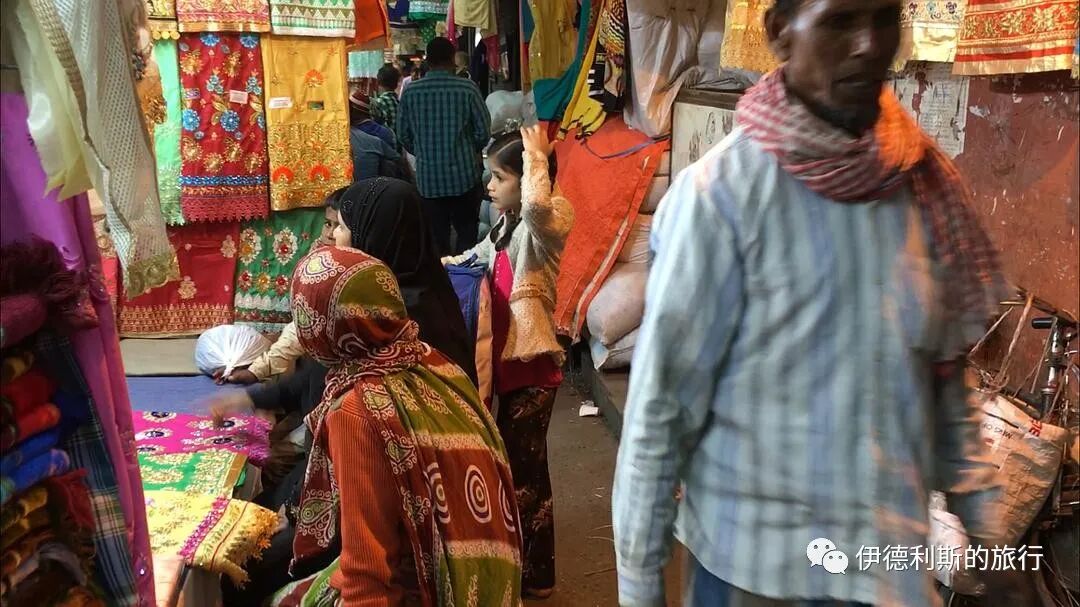
This plate of pilaf (zhua fan) costs the equivalent of 2.9 yuan.
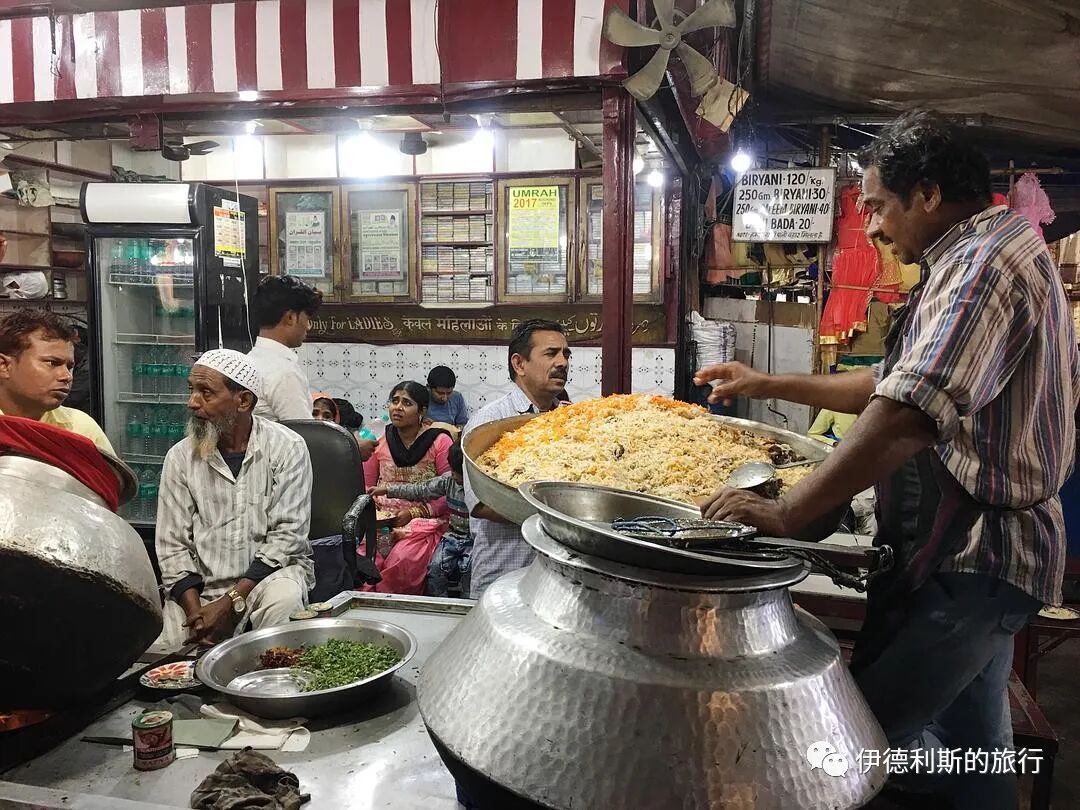
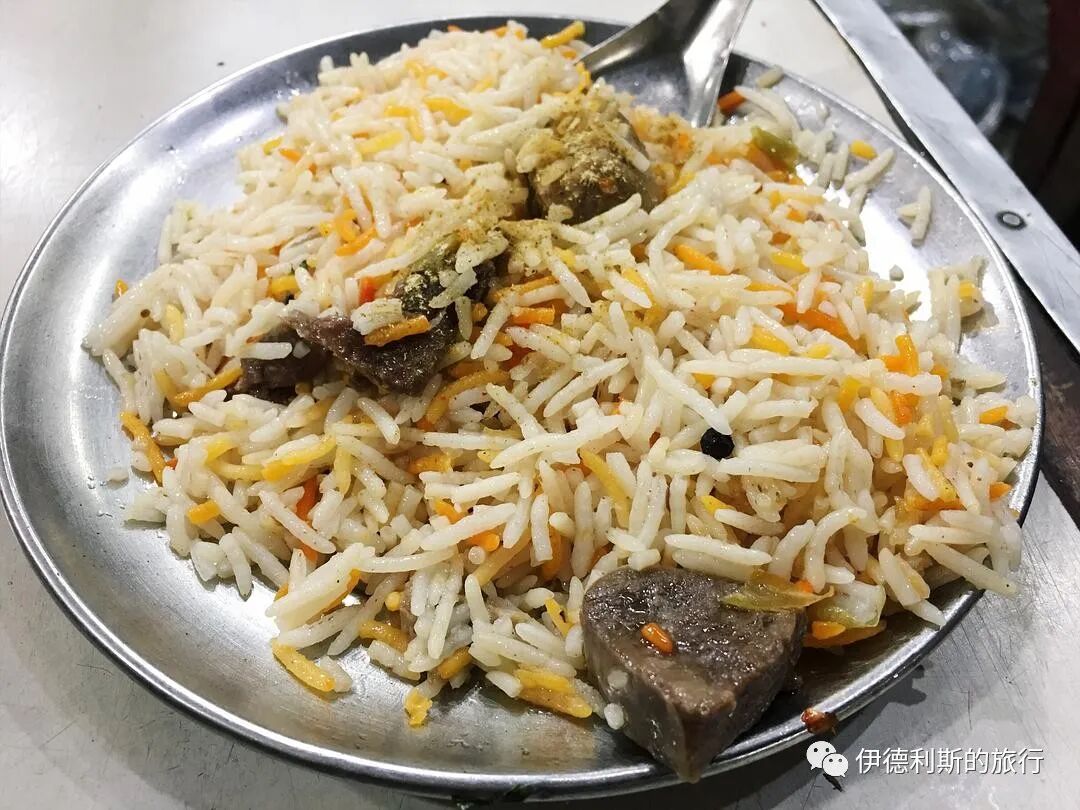
Grilled lamb liver (kao yanggan)
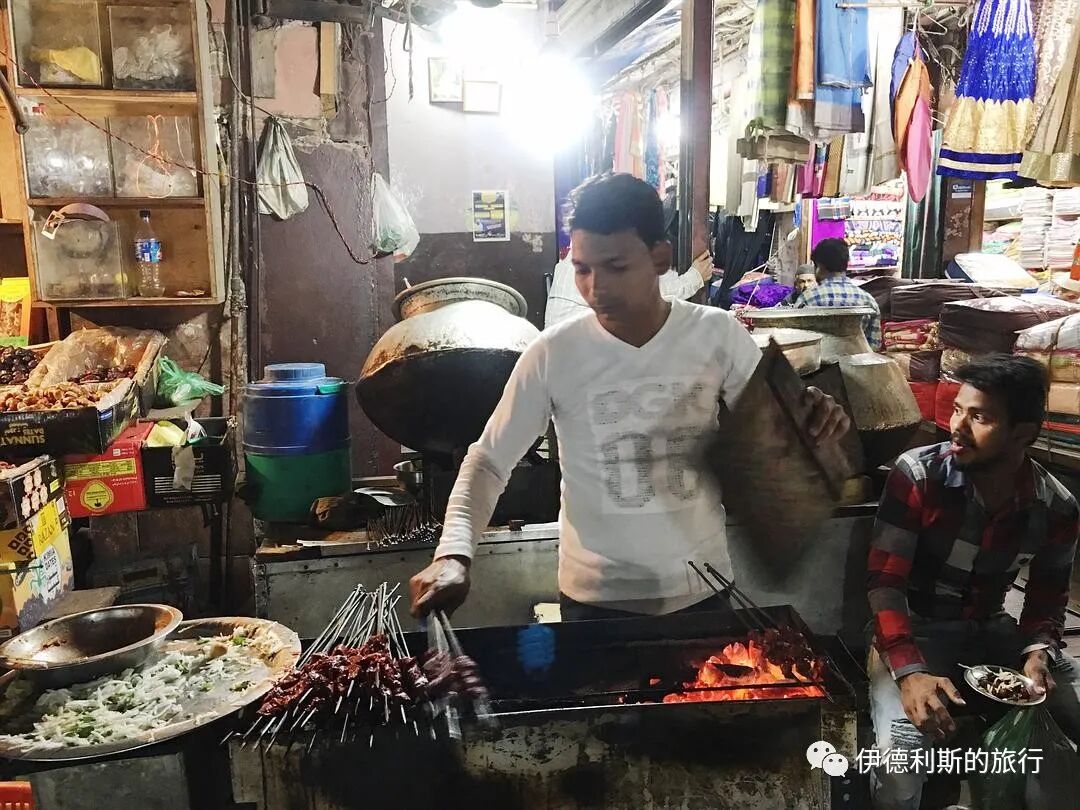
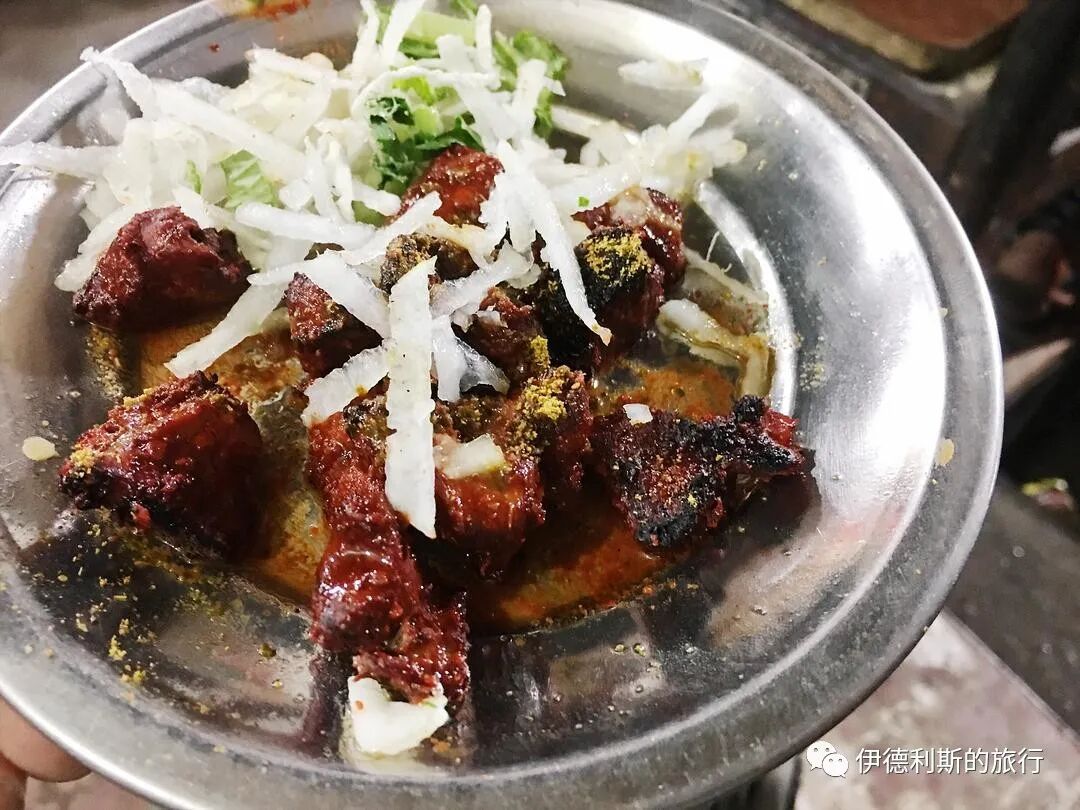
I bought a few hats at this hat stall.
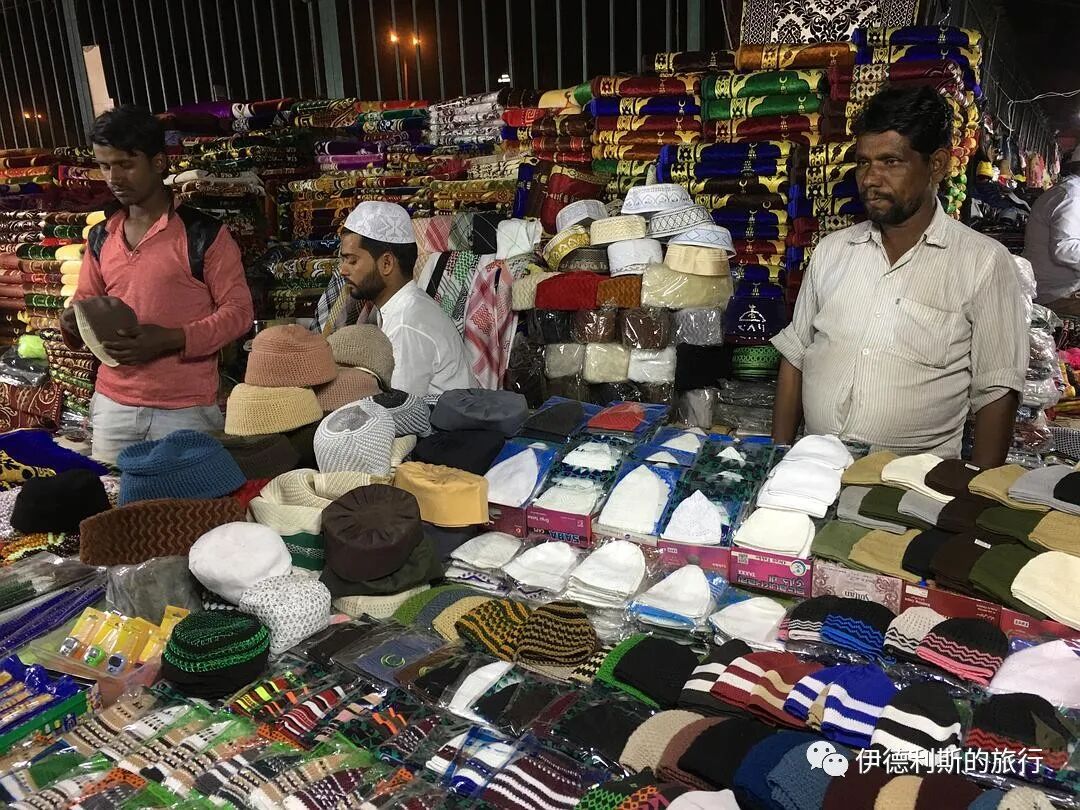

786 is a sign for halal in South Asia and Southeast Asia. You can also see it in southwestern Yunnan and among the Hui Muslims in Lhasa. If you assign a number to each letter of the phrase Bismillāh al-Raḥmān al-Raḥīm (In the name of Allah, the Most Gracious, the Most Merciful) using Arabic numerology, the total sum is 786.
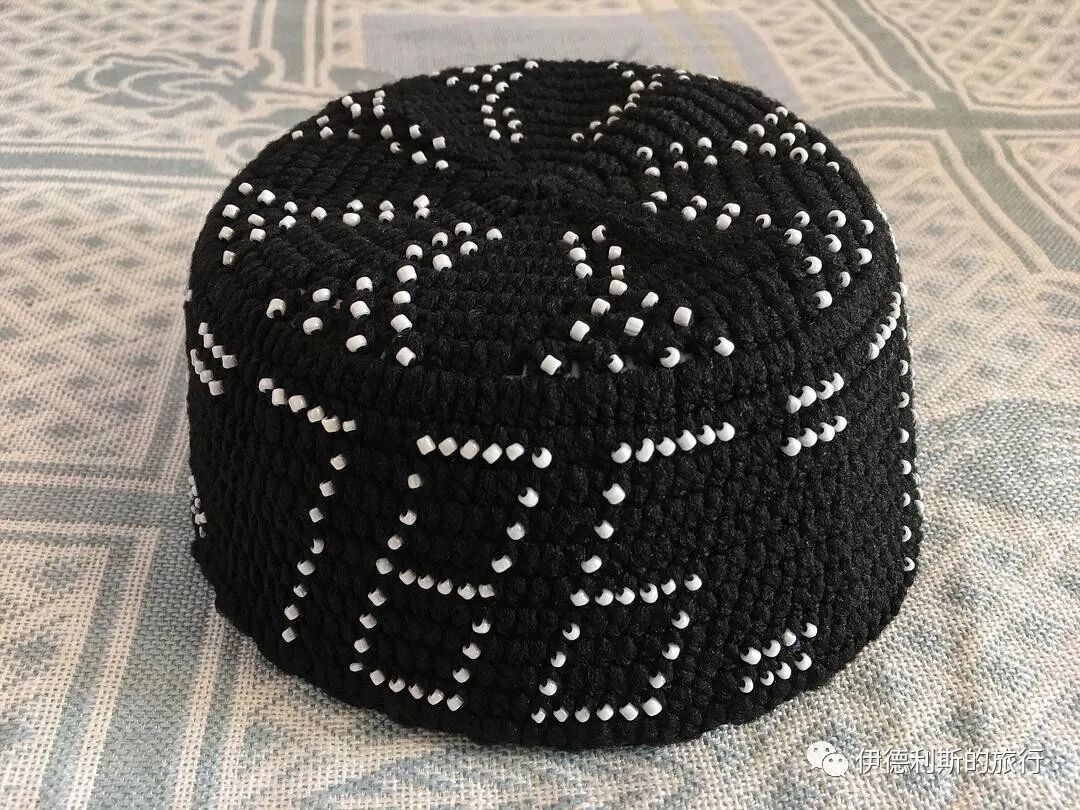
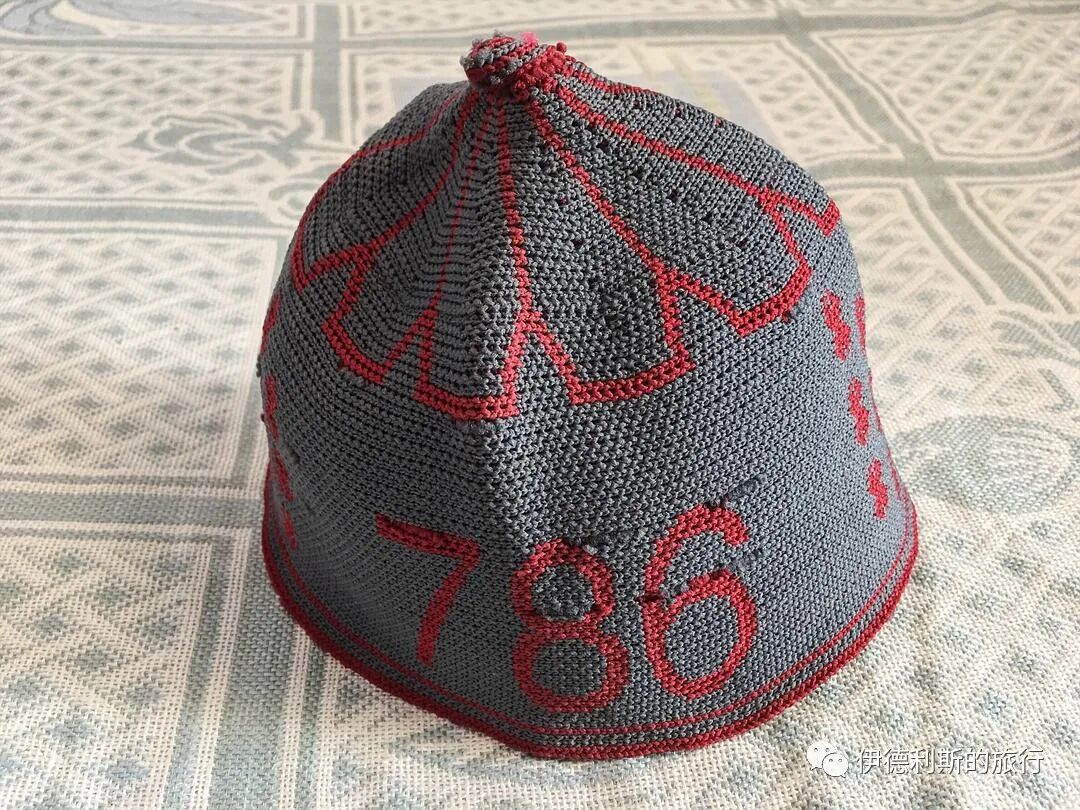
Muslim Travel Guide Singapore: Islamic Religious Council Exhibition, Muslim Community and Heritage
Articles • Hasan09 posted the article • 0 comments • 337 views • 2026-05-24 01:47
Summary: This Singapore Muslim travel guide visits the exhibition area inside the Islamic Religious Council building in the Singapore Islamic Centre complex. It keeps the source notes on the building, displays, and community context.
Inside the Singapore Islamic Centre complex, one building houses the Islamic Religious Council of Singapore. There is an exhibition area on the first floor. However, this exhibition area is actually not open to the public. I explained my purpose to the person in charge after I went in, and they made an exception for me to visit for a few minutes.
The exhibition mainly features items used by Singaporean Muslims in their religious life.
For example, look at the wooden object hanging in the first picture.
This piece of wood is called a beduk. For instance, during Ramadan, when it is time to break the fast, the mosque will strike the beduk to remind everyone. They also strike the beduk on Jumu'ah to call people to prayer. These are common in Malaysia, and you can still see them in some mosques in Singapore today.
If I have the chance to visit Singapore again, I will show you all one.
The belt-like item in the second picture is actually similar to a name tag.
It is an identification badge worn by pilgrims from Singapore during Hajj. The vests issued to Chinese pilgrims feature the Chinese flag and the word China, which serve the same purpose.
The photo in image three shows a mufti named Said, who is focused on using the compass above to find the direction of the Kaaba in Mecca.
Since they were building the Mosque of the Faithful (Qianxinzhe Qingzhensi) at the time, they had to determine the direction of the Kaaba before construction began.
The object in image four looks like a sundial, but it is not for telling time; it is used with a compass to pinpoint the exact direction of the Kaaba in Mecca.
The photos in the image five exhibit record major events in the history of Islam in Singapore by year, such as the founding of the Mosque of the Faithful and the election of the first official president of the Islamic Religious Council.
Images six and seven
show Islamic books published in Singapore over the years in Tamil (a South Indian language from the Dravidian family), Malay, and English. view all
Summary: This Singapore Muslim travel guide visits the exhibition area inside the Islamic Religious Council building in the Singapore Islamic Centre complex. It keeps the source notes on the building, displays, and community context.
Inside the Singapore Islamic Centre complex, one building houses the Islamic Religious Council of Singapore. There is an exhibition area on the first floor. However, this exhibition area is actually not open to the public. I explained my purpose to the person in charge after I went in, and they made an exception for me to visit for a few minutes.
The exhibition mainly features items used by Singaporean Muslims in their religious life.
For example, look at the wooden object hanging in the first picture.
This piece of wood is called a beduk. For instance, during Ramadan, when it is time to break the fast, the mosque will strike the beduk to remind everyone. They also strike the beduk on Jumu'ah to call people to prayer. These are common in Malaysia, and you can still see them in some mosques in Singapore today.
If I have the chance to visit Singapore again, I will show you all one.
The belt-like item in the second picture is actually similar to a name tag.
It is an identification badge worn by pilgrims from Singapore during Hajj. The vests issued to Chinese pilgrims feature the Chinese flag and the word China, which serve the same purpose.
The photo in image three shows a mufti named Said, who is focused on using the compass above to find the direction of the Kaaba in Mecca.
Since they were building the Mosque of the Faithful (Qianxinzhe Qingzhensi) at the time, they had to determine the direction of the Kaaba before construction began.
The object in image four looks like a sundial, but it is not for telling time; it is used with a compass to pinpoint the exact direction of the Kaaba in Mecca.
The photos in the image five exhibit record major events in the history of Islam in Singapore by year, such as the founding of the Mosque of the Faithful and the election of the first official president of the Islamic Religious Council.
Images six and seven
show Islamic books published in Singapore over the years in Tamil (a South Indian language from the Dravidian family), Malay, and English.
Muslim Travel Guide Singapore: Oldest Mosque, Kampong Malacca and Early Muslim Community
Articles • Hasan09 posted the article • 0 comments • 353 views • 2026-05-24 01:46
Summary: This Singapore Muslim travel guide visits the mosque described as the oldest mosque in Singapore, located around Kampong Malacca and built in 1820. It keeps the history, location, and mosque observations from the original account.
This place is not far from the underground mosque I mentioned last time. Located in the Kampong Malacca area of Singapore, it was built in 1820 and is the oldest mosque in Singapore. It is older than other early mosques, such as the South Indian-style Jamae Mosque, which I shared before and was built in 1826.
That is a few years later than this mosque.
Back to the main topic, the roof of this oldest mosque in Singapore (Picture 1) looks very much like a traditional Malay hut.
After entering, you can see the renovation plaque on the back of the prayer hall (Picture 2). The mosque was first built in 1820 and finished its renovation in 1984.
The founder of this mosque was named Syed Omar, and he was an Arab merchant.
Today, members of his family are buried in the tomb next to the mosque's minaret (Picture 4).
Let's look at the mosque's notice board. It says in English, Malay, Bengali, and Tamil that staying overnight without permission is prohibited (Picture 6).
This shows that the people who visit this mosque the most are Malays, Tamils, and Bengalis.
Entering the prayer hall, I feel the architectural style is very beautiful, and the door frames tilt toward the ceiling (Picture 8, Picture 9).
I remember seeing this kind of design in some old Western castles. When I came here last time, I remember the Malay imam was very young and polite. I asked him if he was the imam, and he said the imam was busy these two days, so he was filling in.
He also asked if I had encountered any trouble in Singapore and told me I could contact him anytime if I had any problems.
When I visited again this time, the imam was still very young, but it was not the same person as last time.
After the namaz ended, I went to the courtyard to take a look. There were long benches and tables set up (Photo 14), and next to the tables was a vending machine (Photo 15) selling various types of instant food.
Many of the instant foods in convenience stores here in Singapore have halal labels, so it is quite convenient to find a meal.
There is a microwave (Photo 16) nearby, so you can heat up what you buy and sit at the table to eat.
In the next article, I will take you to continue exploring mosques in Singapore. See you then. view all
Summary: This Singapore Muslim travel guide visits the mosque described as the oldest mosque in Singapore, located around Kampong Malacca and built in 1820. It keeps the history, location, and mosque observations from the original account.
This place is not far from the underground mosque I mentioned last time. Located in the Kampong Malacca area of Singapore, it was built in 1820 and is the oldest mosque in Singapore. It is older than other early mosques, such as the South Indian-style Jamae Mosque, which I shared before and was built in 1826.
That is a few years later than this mosque.
Back to the main topic, the roof of this oldest mosque in Singapore (Picture 1) looks very much like a traditional Malay hut.
After entering, you can see the renovation plaque on the back of the prayer hall (Picture 2). The mosque was first built in 1820 and finished its renovation in 1984.
The founder of this mosque was named Syed Omar, and he was an Arab merchant.
Today, members of his family are buried in the tomb next to the mosque's minaret (Picture 4).
Let's look at the mosque's notice board. It says in English, Malay, Bengali, and Tamil that staying overnight without permission is prohibited (Picture 6).
This shows that the people who visit this mosque the most are Malays, Tamils, and Bengalis.
Entering the prayer hall, I feel the architectural style is very beautiful, and the door frames tilt toward the ceiling (Picture 8, Picture 9).
I remember seeing this kind of design in some old Western castles. When I came here last time, I remember the Malay imam was very young and polite. I asked him if he was the imam, and he said the imam was busy these two days, so he was filling in.
He also asked if I had encountered any trouble in Singapore and told me I could contact him anytime if I had any problems.
When I visited again this time, the imam was still very young, but it was not the same person as last time.
After the namaz ended, I went to the courtyard to take a look. There were long benches and tables set up (Photo 14), and next to the tables was a vending machine (Photo 15) selling various types of instant food.
Many of the instant foods in convenience stores here in Singapore have halal labels, so it is quite convenient to find a meal.
There is a microwave (Photo 16) nearby, so you can heat up what you buy and sit at the table to eat.
In the next article, I will take you to continue exploring mosques in Singapore. See you then.
Muslim Travel Guide Beijing Changying: Hui Township Market, Halal Food and Local Community
Articles • yusuf908 posted the article • 0 comments • 236 views • 2026-05-23 23:30
Summary: Changying Hui Township in Beijing has a lively weekend market with halal food, local snacks, and vendors from the Hui Muslim community. This account keeps the market route, dishes, prices where given, and photographs in the original order.
I went to the big market in Changying on Sunday morning. I worked near Changying for nine years and only changed jobs last year, and then the big market opened there. The market is open every day until noon, and it is busiest on weekends.
In the morning, I first had breakfast at Qingyanfang on Changying Middle Road, where I ordered steamed buns (xiaolongbao), lucky bags (fudai), pumpkin porridge, and purple rice porridge. Lucky bags are similar to egg fritters (jidan guozi), but they are rarely seen in Beijing. There were no halal steamed buns before, but some shops have started making them in recent years.
After breakfast, I walked north along the Changying intersection to reach the big market at the southeast corner of Changying Sports Park. There are many halal shops at the market.
We first bought beef head meat at Chen's to take home for a stir-fry. Their shop's water kettle sign (tangping pai) was made by my friend Dong Yidong, and this traditional style of sign is very rare now.
The market also has crispy fried dough snacks (gezhihe) from Hui Muslims in Tongzhou, and they also sell fermented mung bean milk (douzhier) from Baoji; many people buy it, but it was sold out when we got there.
There is a Huadu chicken stall at the market, and we bought a free-range chicken to take home for a big plate chicken (dapanji) dish. Huadu has a halal chicken slaughter and processing plant in Luanping, Hebei, which supplies the Beijing market and also exports to Japan. They have opened online shops in recent years, and much of the halal chicken you can buy online now comes from them.
The market also has all kinds of beef, mutton, fruits, and vegetables, especially free samples; we tried muskmelon, nectarines, apples, and watermelon, which made my son very happy.
The northernmost row of the market is the snack area, where a noodle shop sells cold noodles, which are perfect for summer.
The two most popular snacks at the market are crispy fried cakes (cuipi zhagao) and freshly baked naan bread (kaonang), both of which have long lines. The naan shop uses a bamboo charcoal oven, and the naan they make is especially fragrant with a texture different from electric-baked ones. We arrived a bit late and missed the freshly baked meat pies (kaobaozi), but if you go earlier, they are surely very fragrant when they come out of the oven.
After visiting the Changying market, we took the bus for three stops to Guanzhuang Road to eat at Bu Hui Qiqihar Barbecue. I haven't been here for several years, and it is very popular on weekend afternoons now; we waited for half an hour to get a table. They now offer a nine-grid set meal with meat and shrimp, which is quite rich, and the set also includes almond tofu, sliced frozen pears, and small sticky bean buns (niandoubao). It was my first time eating Northeast-style sticky bean buns, which are made of yellow rice flour wrapped around a kidney bean filling; they aren't sweet, with a light flavor of yellow rice and kidney beans that everyone liked. For our main course, we ordered stone pot bibimbap, basin bibimbap, and cold noodles. My mother-in-law tried stone pot rice (bibimbap) for the first time and really liked the taste. The side dishes inside were also very nutritious. Cold noodles (lengmian) are the main reason I come to this restaurant. The weather is getting hotter now, and a bowl of these sweet and sour noodles is especially refreshing. view all
Summary: Changying Hui Township in Beijing has a lively weekend market with halal food, local snacks, and vendors from the Hui Muslim community. This account keeps the market route, dishes, prices where given, and photographs in the original order.
I went to the big market in Changying on Sunday morning. I worked near Changying for nine years and only changed jobs last year, and then the big market opened there. The market is open every day until noon, and it is busiest on weekends.
In the morning, I first had breakfast at Qingyanfang on Changying Middle Road, where I ordered steamed buns (xiaolongbao), lucky bags (fudai), pumpkin porridge, and purple rice porridge. Lucky bags are similar to egg fritters (jidan guozi), but they are rarely seen in Beijing. There were no halal steamed buns before, but some shops have started making them in recent years.
After breakfast, I walked north along the Changying intersection to reach the big market at the southeast corner of Changying Sports Park. There are many halal shops at the market.
We first bought beef head meat at Chen's to take home for a stir-fry. Their shop's water kettle sign (tangping pai) was made by my friend Dong Yidong, and this traditional style of sign is very rare now.
The market also has crispy fried dough snacks (gezhihe) from Hui Muslims in Tongzhou, and they also sell fermented mung bean milk (douzhier) from Baoji; many people buy it, but it was sold out when we got there.
There is a Huadu chicken stall at the market, and we bought a free-range chicken to take home for a big plate chicken (dapanji) dish. Huadu has a halal chicken slaughter and processing plant in Luanping, Hebei, which supplies the Beijing market and also exports to Japan. They have opened online shops in recent years, and much of the halal chicken you can buy online now comes from them.
The market also has all kinds of beef, mutton, fruits, and vegetables, especially free samples; we tried muskmelon, nectarines, apples, and watermelon, which made my son very happy.
The northernmost row of the market is the snack area, where a noodle shop sells cold noodles, which are perfect for summer.
The two most popular snacks at the market are crispy fried cakes (cuipi zhagao) and freshly baked naan bread (kaonang), both of which have long lines. The naan shop uses a bamboo charcoal oven, and the naan they make is especially fragrant with a texture different from electric-baked ones. We arrived a bit late and missed the freshly baked meat pies (kaobaozi), but if you go earlier, they are surely very fragrant when they come out of the oven.
After visiting the Changying market, we took the bus for three stops to Guanzhuang Road to eat at Bu Hui Qiqihar Barbecue. I haven't been here for several years, and it is very popular on weekend afternoons now; we waited for half an hour to get a table. They now offer a nine-grid set meal with meat and shrimp, which is quite rich, and the set also includes almond tofu, sliced frozen pears, and small sticky bean buns (niandoubao). It was my first time eating Northeast-style sticky bean buns, which are made of yellow rice flour wrapped around a kidney bean filling; they aren't sweet, with a light flavor of yellow rice and kidney beans that everyone liked. For our main course, we ordered stone pot bibimbap, basin bibimbap, and cold noodles. My mother-in-law tried stone pot rice (bibimbap) for the first time and really liked the taste. The side dishes inside were also very nutritious. Cold noodles (lengmian) are the main reason I come to this restaurant. The weather is getting hotter now, and a bowl of these sweet and sour noodles is especially refreshing.
Muslim Travel Guide Korea Busan: Busan Mosque, Turkish Imam, Friday Prayer and Muslim Community
Articles • yusuf908 posted the article • 0 comments • 233 views • 2026-05-23 22:23
Summary: This Korea Muslim travel guide visits Busan Mosque, describing the quiet neighborhood, Turkish-style interior, TIKA renovation note, conversations with the imam from Turkiye, Friday prayer, Muslims from Uzbekistan, Korean converts, and a later stop by the sea.
After staying in Seoul for about eight days, I planned to visit other places in Korea. I took a train from Seoul Station and arrived in Busan, the second largest city in Korea, in a few hours. Although it is the second largest, there is indeed a lot of difference between the second largest and the first largest.
Busan does not look very big, it can only be said to be a medium-sized city. If Seoul is equivalent to Beijing or Shanghai, then Busan can only be said to be equivalent to Qingdao.
I checked into a hotel in downtown Busan. At the same price, the accommodation environment was much better than in Seoul. After that, I set off to the largest mosque in Busan. This mosque is a little far from the actual city. In fact, there are mosques in Busan city, but they are very small.
After taking the subway for several stops, we almost arrived at the Busan Mosque. The environment here is quiet and quiet, without the hustle and bustle of the city. You can also see Islamic-themed wall paintings around the mosque (picture 2). There is also a kindergarten in the courtyard of the mosque, but I later learned that it has nothing to do with the mosque.
The wudu area and toilet are on the first floor, just below the steps from the mosque into the prayer hall. the prayer hall is also painted in Turkish style. On the door of the prayer hall, it is written in Korean, Turkish and English that "TIKA maintains and updates the interior decoration of the Busan Mosque on behalf of Turkiye."
So what kind of organization is this TIKA? I found out it was the Turkish Cooperation and Coordination Agency, which is Turkiye's overseas aid organization.
The full name of the place is also written on the door of the mosque (Picture 8): Busan Fateh (Beginning) Mosque.
There were not many people in the prayer hall, except for a Korean uncle, and most of them did not have East Asian faces, so I seemed a bit conspicuous. The imam who was born in Turkiye asked me where I was from, and I answered China. After salah he asked me to sit in his office for a while.
When we arrived at the office, we started chatting using translation software. As we chatted about politics, the imam said that there are two big countries in the world, one is the United States and the other is China, and China is gaining the upper hand.
Then the imam asked me some information about China, such as the average salary in Shanghai. He said it turned out to be similar to Turkiye. Maybe he thought the Chinese earned higher wages than the Turks. It was getting late at that time, and we separated after chatting for more than an hour.
The next day was Friday prayer day, and I came to the Busan Mosque again. Because it was a gathering day, there were many people in the prayer hall. The imam said that most of the people who came here were from Uzbekistan and other countries. There are some Koreans who have accepted Islam, but not many.
After the prayer, I left the Busan Mosque and went to the famous Mipo in Busan to watch the sea. view all
Summary: This Korea Muslim travel guide visits Busan Mosque, describing the quiet neighborhood, Turkish-style interior, TIKA renovation note, conversations with the imam from Turkiye, Friday prayer, Muslims from Uzbekistan, Korean converts, and a later stop by the sea.
After staying in Seoul for about eight days, I planned to visit other places in Korea. I took a train from Seoul Station and arrived in Busan, the second largest city in Korea, in a few hours. Although it is the second largest, there is indeed a lot of difference between the second largest and the first largest.
Busan does not look very big, it can only be said to be a medium-sized city. If Seoul is equivalent to Beijing or Shanghai, then Busan can only be said to be equivalent to Qingdao.
I checked into a hotel in downtown Busan. At the same price, the accommodation environment was much better than in Seoul. After that, I set off to the largest mosque in Busan. This mosque is a little far from the actual city. In fact, there are mosques in Busan city, but they are very small.
After taking the subway for several stops, we almost arrived at the Busan Mosque. The environment here is quiet and quiet, without the hustle and bustle of the city. You can also see Islamic-themed wall paintings around the mosque (picture 2). There is also a kindergarten in the courtyard of the mosque, but I later learned that it has nothing to do with the mosque.
The wudu area and toilet are on the first floor, just below the steps from the mosque into the prayer hall. the prayer hall is also painted in Turkish style. On the door of the prayer hall, it is written in Korean, Turkish and English that "TIKA maintains and updates the interior decoration of the Busan Mosque on behalf of Turkiye."
So what kind of organization is this TIKA? I found out it was the Turkish Cooperation and Coordination Agency, which is Turkiye's overseas aid organization.
The full name of the place is also written on the door of the mosque (Picture 8): Busan Fateh (Beginning) Mosque.
There were not many people in the prayer hall, except for a Korean uncle, and most of them did not have East Asian faces, so I seemed a bit conspicuous. The imam who was born in Turkiye asked me where I was from, and I answered China. After salah he asked me to sit in his office for a while.
When we arrived at the office, we started chatting using translation software. As we chatted about politics, the imam said that there are two big countries in the world, one is the United States and the other is China, and China is gaining the upper hand.
Then the imam asked me some information about China, such as the average salary in Shanghai. He said it turned out to be similar to Turkiye. Maybe he thought the Chinese earned higher wages than the Turks. It was getting late at that time, and we separated after chatting for more than an hour.
The next day was Friday prayer day, and I came to the Busan Mosque again. Because it was a gathering day, there were many people in the prayer hall. The imam said that most of the people who came here were from Uzbekistan and other countries. There are some Koreans who have accepted Islam, but not many.
After the prayer, I left the Busan Mosque and went to the famous Mipo in Busan to watch the sea.
Muslim Travel Guide Korea Seoul: Seoul Central Mosque, Friday Prayer, Muslim School and Itaewon Community
Articles • yusuf908 posted the article • 0 comments • 243 views • 2026-05-23 22:22
Summary: This Korea Muslim travel guide visits Seoul Central Mosque in Itaewon, showing its hillside location, Turkish-style prayer hall, Friday prayer lunch boxes, Korean Muslims, mosque classes, a school bus, and the history of the first modern mosque in Korea.
Seoul is a city built on hills. The terrain here is uneven, and you can often see various settlements built on small hills. Seoul Central Mosque is located at the eastern foot of Namsan Mountain. After climbing up the high steps shown in Picture 2, you still have to walk uphill for a while to reach it.
As you can see in Picture 1, there is a set of steps leading to the prayer hall. In fact, there is another set of steps on the other side of the prayer hall.
Picture 3: There are some introductory Islam materials placed next to the steps of the prayer hall, all of which are in Korean. There is no translation in English or Chinese.
Picture 4: Entering the prayer hall, you will find that it is also in Turkish style. This was originally the location of the military camp of the Turkish army stationed in South Korea.
Picture 5: You can overlook the surrounding area from the mosque courtyard, but if you want to see the whole of Seoul, it is recommended to go to Seoul Namsan Tower not far away.
Picture 6: After Friday prayers, free lunch boxes will be distributed in the mosque’s cafeteria, conference room and museum. I tasted it for everyone and it tasted good. There is beef, kimchi, dried fish, and something similar to tofu skin.
In the cafeteria I met some Korean Muslims who had accepted Islam. I briefly communicated with one of them using a translator. He said that he had read about the Hui Muslims in China before in books, and today was the first time he saw them. There is also an old woman who is originally from Jilin and wears a headscarf.
But she only speaks Korean.
Picture 7: There is a school bus parked in the courtyard, and there are several classrooms nearby. It seems that some Korean Muslims (mainly foreigners) will send their children here to receive some basic education.
Picture 8: The canteen just now is also the exhibition room of the mosque. The photos on the wall record the history of this first mosque in modern Korea. view all
Summary: This Korea Muslim travel guide visits Seoul Central Mosque in Itaewon, showing its hillside location, Turkish-style prayer hall, Friday prayer lunch boxes, Korean Muslims, mosque classes, a school bus, and the history of the first modern mosque in Korea.
Seoul is a city built on hills. The terrain here is uneven, and you can often see various settlements built on small hills. Seoul Central Mosque is located at the eastern foot of Namsan Mountain. After climbing up the high steps shown in Picture 2, you still have to walk uphill for a while to reach it.
As you can see in Picture 1, there is a set of steps leading to the prayer hall. In fact, there is another set of steps on the other side of the prayer hall.
Picture 3: There are some introductory Islam materials placed next to the steps of the prayer hall, all of which are in Korean. There is no translation in English or Chinese.
Picture 4: Entering the prayer hall, you will find that it is also in Turkish style. This was originally the location of the military camp of the Turkish army stationed in South Korea.
Picture 5: You can overlook the surrounding area from the mosque courtyard, but if you want to see the whole of Seoul, it is recommended to go to Seoul Namsan Tower not far away.
Picture 6: After Friday prayers, free lunch boxes will be distributed in the mosque’s cafeteria, conference room and museum. I tasted it for everyone and it tasted good. There is beef, kimchi, dried fish, and something similar to tofu skin.
In the cafeteria I met some Korean Muslims who had accepted Islam. I briefly communicated with one of them using a translator. He said that he had read about the Hui Muslims in China before in books, and today was the first time he saw them. There is also an old woman who is originally from Jilin and wears a headscarf.
But she only speaks Korean.
Picture 7: There is a school bus parked in the courtyard, and there are several classrooms nearby. It seems that some Korean Muslims (mainly foreigners) will send their children here to receive some basic education.
Picture 8: The canteen just now is also the exhibition room of the mosque. The photos on the wall record the history of this first mosque in modern Korea.
Muslim Travel Guide Japan Tokyo: Yoyogi Mosque, Friday Prayer, Turkish Market and Muslim Community
Articles • yusuf908 posted the article • 0 comments • 245 views • 2026-05-23 22:22
Summary: This Japan Muslim travel guide follows two visits to Yoyogi Mosque in Tokyo, covering Friday prayer, the Turkish-style prayer hall, the halal supermarket, the small museum, local Muslims, non-Muslim visitors, and a touching scene of people accepting Islam.
The first time I went to Yoyogi Mosque (Tokyo Camii) (Tokyo Camii) (Tokyo Camii) (Tokyo Camii) was the day I first arrived in Japan. The subway line was very complicated, but I still found the place smoothly.
That day was Friday, and many Muslims could be seen near the mosque. When we arrived at the mosque, the terrace on the second floor was already full, and the sun made the marble floor hot, making it impossible to stay. After a while, the insulation cloth was handed over, and I sat on it, but it wasn't hot anymore.
After a while, a piece of paper was handed over, with the general content of the imam's speech that day written on it in Arabic, English and Japanese. This is quite fresh.
After salah, people filed out of the main hall, and I finally had a chance to go in and take a look. The inside is in the Turkish style, with beautiful paintings.
There was a halal food supermarket on the first floor of the mosque. I still remember the people working there, a Japanese woman wearing a headscarf, and two or three Uzbeks. next next next next to the supermarket, there is also an exquisite small fireplace on the first floor.
After salah, I stayed on the terrace on the second floor for a while and met two Chinese people. One was a man from Qinghai. He advised me to develop here. But traveling abroad and working are two different things. The latter has too many things to consider and costs to pay.
The other was an old man. He said that he was a professor at a university here and had written books. If I remember correctly, he seems to be from Beijing. He came to Japan when he was young. Now he is married and has children in Japan and has lived in Japan for many years.
After that I left the mosque and went to Meguro and Shinjuku.
The second time I went to Yoyogi Mosque (Tokyo Camii) (Tokyo Camii) (Tokyo Camii) (Tokyo Camii) was eight days later. I was on a flight back to my country that night, so I took the opportunity to go to Yoyogi while I was last in Tokyo.
I visited the halal supermarket again. The weather was hot at that time, so I bought a box of ice cream to eat. This ice cream is a special kind of ice cream from Turkey. It is very tough and chewy. There are three architectural models placed near the supermarket, which are what Yoyogi Mosque (Tokyo Camii) (Tokyo Camii) (Tokyo Camii) (Tokyo Camii) looked like in history.
The first-generation mosques were no different from traditional Japanese huts from the Edo period. The second generation has a dome and a minaret. Although the configuration is the same as the current mosque, the style is different. Now this building is in typical Turkish style.
There is an elevator on the right side of the model. When I went upstairs, I saw a teacher teaching Qur'an recitation to the children. After that, I went to the museum at the mosque here. To be honest, apart from some old photos, there were no other exhibits in this museum.
Moreover, these photos seem to have no fixed theme and have nothing to do with the mosque.
After leaving the museum, we came to the main hall. Here I saw a scene that touched me very much. At that time, I noticed a young man and woman at the front of the prayer hall, sitting opposite the imam of the mosque.
After listening to their words, I later realized that they were accepting Islam. I had only seen others accepting Islam on the Internet before, but I didn’t expect to see it in person today. This is the first time I have seen someone accept Islam.
Before I left, I saw some non-Muslim visitors coming in and sitting in the main hall. An imam who spoke Japanese was introducing the mosque and Islam to them. I just exchanged a few words with him, so he knew that I was from China.
Seeing that I was about to leave, he pulled me and introduced to the tourists that this person was from China. I sheepishly said hello to the tourists, konnichiwa, and then left. view all
Summary: This Japan Muslim travel guide follows two visits to Yoyogi Mosque in Tokyo, covering Friday prayer, the Turkish-style prayer hall, the halal supermarket, the small museum, local Muslims, non-Muslim visitors, and a touching scene of people accepting Islam.
The first time I went to Yoyogi Mosque (Tokyo Camii) (Tokyo Camii) (Tokyo Camii) (Tokyo Camii) was the day I first arrived in Japan. The subway line was very complicated, but I still found the place smoothly.
That day was Friday, and many Muslims could be seen near the mosque. When we arrived at the mosque, the terrace on the second floor was already full, and the sun made the marble floor hot, making it impossible to stay. After a while, the insulation cloth was handed over, and I sat on it, but it wasn't hot anymore.
After a while, a piece of paper was handed over, with the general content of the imam's speech that day written on it in Arabic, English and Japanese. This is quite fresh.
After salah, people filed out of the main hall, and I finally had a chance to go in and take a look. The inside is in the Turkish style, with beautiful paintings.
There was a halal food supermarket on the first floor of the mosque. I still remember the people working there, a Japanese woman wearing a headscarf, and two or three Uzbeks. next next next next to the supermarket, there is also an exquisite small fireplace on the first floor.
After salah, I stayed on the terrace on the second floor for a while and met two Chinese people. One was a man from Qinghai. He advised me to develop here. But traveling abroad and working are two different things. The latter has too many things to consider and costs to pay.
The other was an old man. He said that he was a professor at a university here and had written books. If I remember correctly, he seems to be from Beijing. He came to Japan when he was young. Now he is married and has children in Japan and has lived in Japan for many years.
After that I left the mosque and went to Meguro and Shinjuku.
The second time I went to Yoyogi Mosque (Tokyo Camii) (Tokyo Camii) (Tokyo Camii) (Tokyo Camii) was eight days later. I was on a flight back to my country that night, so I took the opportunity to go to Yoyogi while I was last in Tokyo.
I visited the halal supermarket again. The weather was hot at that time, so I bought a box of ice cream to eat. This ice cream is a special kind of ice cream from Turkey. It is very tough and chewy. There are three architectural models placed near the supermarket, which are what Yoyogi Mosque (Tokyo Camii) (Tokyo Camii) (Tokyo Camii) (Tokyo Camii) looked like in history.
The first-generation mosques were no different from traditional Japanese huts from the Edo period. The second generation has a dome and a minaret. Although the configuration is the same as the current mosque, the style is different. Now this building is in typical Turkish style.
There is an elevator on the right side of the model. When I went upstairs, I saw a teacher teaching Qur'an recitation to the children. After that, I went to the museum at the mosque here. To be honest, apart from some old photos, there were no other exhibits in this museum.
Moreover, these photos seem to have no fixed theme and have nothing to do with the mosque.
After leaving the museum, we came to the main hall. Here I saw a scene that touched me very much. At that time, I noticed a young man and woman at the front of the prayer hall, sitting opposite the imam of the mosque.
After listening to their words, I later realized that they were accepting Islam. I had only seen others accepting Islam on the Internet before, but I didn’t expect to see it in person today. This is the first time I have seen someone accept Islam.
Before I left, I saw some non-Muslim visitors coming in and sitting in the main hall. An imam who spoke Japanese was introducing the mosque and Islam to them. I just exchanged a few words with him, so he knew that I was from China.
Seeing that I was about to leave, he pulled me and introduced to the tourists that this person was from China. I sheepishly said hello to the tourists, konnichiwa, and then left.
Halal Food in China: Halal Rules, Shrimp Debate, Anti-Muslim Hate Speech and Muslim Community Unity
Articles • yusuf908 posted the article • 0 comments • 214 views • 2026-05-23 22:05
Summary: This essay contrasts heated internal arguments over whether shrimp is halal with more serious anti-Muslim hate speech online, urging Muslims to stay alert to real threats, protect community unity, and avoid wasting energy on hostile infighting.
Originally I didn't plan to write this tweet. Firstly, it's because I'm too busy at home, and secondly, I think people nowadays always pretend to be asleep no matter how loud you scream. Not only will you not be able to wake them up, they will actually think you are disturbing their nap!
"Can shrimp be eaten?" This topic in domestic Muslim circles always has endless topics, endless questions, unsolvable knots and unavoidable ups and downs. Today we won’t talk about whether shrimps can be eaten, because it’s not a big deal at all. If you want to eat it, just eat it. If you don’t want to eat it, don’t eat it. It’s not a big deal. The evidence is there, you can just check it out for yourself. In other words, when you ask this question, you actually know better than the person who answers the question whether you can eat it!
Today I will show you some screenshots from Weibo to let you know what kind of public opinion environment we are facing today. Stop clinging to those miserable "shrimps". Whether you eat them or not will not have any substantial impact on you. However, if these remarks are implemented by extreme people, they will have an immeasurable impact on our group and even the peace and stability of the entire country.
Scary, right? This is just the first one. Also, do you still think "shrimp" is important? unimportant! Not important at all! It's nothing compared to this. Seeing this, I guess there are still many people who don’t understand the purpose of my tweet today. In fact, the purpose of my tweet today is to let everyone stop those insignificant "controversies", return to the great mission of "unity" taught by revelation and precepts, and abandon all prejudices to truly realize the call of "all believers are brothers".
Of course, another purpose of my tweet is that when we meet such people on the Internet or in real life, we don’t have to defend ourselves with them, because these people have twisted psychology. If you encounter such a person, call the police if you are able. The police will punish such people accordingly, and they will also receive the punishment they deserve for their arrogance! However, if you are unable to do anything, then just click on a complaint on the online platform where you encountered such remarks, and I believe that the online platform will handle them accordingly.
"Shrimp" is not a big problem. The big problem of our group now is the insensitivity of the vast majority of people, the carping of some "self-appointed self-appointed self-appointed religious police", and the carnival of some young people. This is the fundamental problem. Are you afraid of eating a shrimp when someone dares to break many serious laws? You sing and dance every day and still care about whether crabs are legal? Let's put aside these insignificant controversies and let's work together to fight against anti-Muslim hate accounts. Don't let another "shrimp" make our group fall apart and become a mess! view all
Summary: This essay contrasts heated internal arguments over whether shrimp is halal with more serious anti-Muslim hate speech online, urging Muslims to stay alert to real threats, protect community unity, and avoid wasting energy on hostile infighting.
Originally I didn't plan to write this tweet. Firstly, it's because I'm too busy at home, and secondly, I think people nowadays always pretend to be asleep no matter how loud you scream. Not only will you not be able to wake them up, they will actually think you are disturbing their nap!
"Can shrimp be eaten?" This topic in domestic Muslim circles always has endless topics, endless questions, unsolvable knots and unavoidable ups and downs. Today we won’t talk about whether shrimps can be eaten, because it’s not a big deal at all. If you want to eat it, just eat it. If you don’t want to eat it, don’t eat it. It’s not a big deal. The evidence is there, you can just check it out for yourself. In other words, when you ask this question, you actually know better than the person who answers the question whether you can eat it!
Today I will show you some screenshots from Weibo to let you know what kind of public opinion environment we are facing today. Stop clinging to those miserable "shrimps". Whether you eat them or not will not have any substantial impact on you. However, if these remarks are implemented by extreme people, they will have an immeasurable impact on our group and even the peace and stability of the entire country.
Scary, right? This is just the first one. Also, do you still think "shrimp" is important? unimportant! Not important at all! It's nothing compared to this. Seeing this, I guess there are still many people who don’t understand the purpose of my tweet today. In fact, the purpose of my tweet today is to let everyone stop those insignificant "controversies", return to the great mission of "unity" taught by revelation and precepts, and abandon all prejudices to truly realize the call of "all believers are brothers".
Of course, another purpose of my tweet is that when we meet such people on the Internet or in real life, we don’t have to defend ourselves with them, because these people have twisted psychology. If you encounter such a person, call the police if you are able. The police will punish such people accordingly, and they will also receive the punishment they deserve for their arrogance! However, if you are unable to do anything, then just click on a complaint on the online platform where you encountered such remarks, and I believe that the online platform will handle them accordingly.
"Shrimp" is not a big problem. The big problem of our group now is the insensitivity of the vast majority of people, the carping of some "self-appointed self-appointed self-appointed religious police", and the carnival of some young people. This is the fundamental problem. Are you afraid of eating a shrimp when someone dares to break many serious laws? You sing and dance every day and still care about whether crabs are legal? Let's put aside these insignificant controversies and let's work together to fight against anti-Muslim hate accounts. Don't let another "shrimp" make our group fall apart and become a mess!
Halal Food in China Shanghai: Pork Bun Incident, Halal Restaurant Respect and Muslim Community Rights
Articles • yusuf908 posted the article • 0 comments • 236 views • 2026-05-23 21:55
Summary: This article responds to a Shanghai halal restaurant pork bun incident and an influencer's comments, arguing that halal food spaces, Muslim dignity, national symbols, legal boundaries, and ethnic unity should not be turned into tools for provocation.
I haven’t written a book in a long, long time. It’s been so long that I almost forgot that I had registered this account. Actually, it’s not that I’m lazy, it’s mainly because I have too many things to do this year. The rice I grow at home is about to mature, and I’m also building a small shelter to protect myself from the wind and rain, so I haven’t had time to write.
A lot of things have happened on the Internet during this period, such as the renaming of the halal canteens of Tsinghua University and Peking University some time ago, and the incident in the past two days where a certain blogger [Vaccine and Science] ate his own pork buns in a halal restaurant in Xuhui District, Shanghai, made a video and uploaded it to the Internet. These things have caused a great psychological contrast among the Hui Muslim compatriots in China, especially the behavior of this extremely royal V. Typical of this is deliberately provoking trouble, and then if there is any physical conflict with him in the restaurant, he will pretend to be a victim and exaggerate the publicity. When someone pointed out his immoral behavior, he said I can eat whatever I want! What I eat is my freedom!
This certain influencer can be regarded as an extremely royal man who has been famous for a long time. He has repeatedly worn his own clothes with words printed with hostility to halal food in Tiananmen Square and other solemn occasions. He is also suspected of tampering with the national anthem of the People's Republic of China. Any citizen of the People's Republic of China should have an attitude of respect and awe when facing the national anthem, national flag, and national emblem. Playing and playing when the national anthem is played or sung is absolutely not allowed, and our country also has a special corresponding " The laws and regulations of the National Flag Law, National Anthem Law, and National Emblem Law, and once suspected insults to the national flag, national emblem, or suspected tampering of the national anthem are confirmed, the highest level of personnel can be dealt with in accordance with Article 299 of the Criminal Law of the People's Republic of China. The influencer’s deliberate provocation of trouble clearly violated the crime of “picking quarrels and provoking troubles.” Refer to Article 293 of the Criminal Law. Anyone who commits one of the following acts of provoking troubles is punishable by up to five years in prison, criminal detention, or surveillance.
This influencer was originally an angel in white, and it was his job to treat illnesses and save people. For some unknown reason, he embarked on the path of being extremely imperial and extremely hostile to Muslim compatriots. I guess he was stimulated by something, maybe there was something wrong with his brain, and then he set up "imaginary enemies" among the compatriots around him.
The influencer’s highly publicized incident of eating pork buns in a Shanghai halal restaurant revealed the influencer’s distorted humanity and absurd behavior of extreme hatred of the Muslim community and halal food. People like them claim to be "opposing extremism" but at the same time engage in the dirty behavior of extreme Han nationalists, and then they also pretend to be "victims" and make irresponsible remarks from the moral high ground.
The Constitution guarantees citizens' freedom of speech, but no freedom is absolute and must not harm national, social, collective interests or the legitimate freedoms and rights of other citizens. Uploading such provocative videos online with the intention of expanding the negative impact is an abuse of freedom of speech and cyberspace. This kind of behavior destroys social harmony and stability, may trigger antagonism between social groups, and interfere with the country's normal ethnic work order.
Through this incident, we hope that relevant departments or organizations such as the Shanghai Municipal Religious Committee, the Shanghai Islamic Association, and the restaurant concerned will hold the influencer accountable for the corresponding legal responsibilities, and that the behavior of illegal criminals will not be allowed to undermine the country's national policy of "national unity"! Of course, every one of us citizens of the People's Republic of China should abide by the laws and regulations of the country, be able to "know the law", "understand the law" and use the law to protect our legitimate rights and interests, so that we can become a qualified and law-abiding good citizen! If you encounter illegal criminals, you must report and report them to the relevant departments as soon as possible. Let us work together to build a solid Chinese dream and complete the sacred mission of the great rejuvenation of the Chinese nation! view all
Summary: This article responds to a Shanghai halal restaurant pork bun incident and an influencer's comments, arguing that halal food spaces, Muslim dignity, national symbols, legal boundaries, and ethnic unity should not be turned into tools for provocation.
I haven’t written a book in a long, long time. It’s been so long that I almost forgot that I had registered this account. Actually, it’s not that I’m lazy, it’s mainly because I have too many things to do this year. The rice I grow at home is about to mature, and I’m also building a small shelter to protect myself from the wind and rain, so I haven’t had time to write.
A lot of things have happened on the Internet during this period, such as the renaming of the halal canteens of Tsinghua University and Peking University some time ago, and the incident in the past two days where a certain blogger [Vaccine and Science] ate his own pork buns in a halal restaurant in Xuhui District, Shanghai, made a video and uploaded it to the Internet. These things have caused a great psychological contrast among the Hui Muslim compatriots in China, especially the behavior of this extremely royal V. Typical of this is deliberately provoking trouble, and then if there is any physical conflict with him in the restaurant, he will pretend to be a victim and exaggerate the publicity. When someone pointed out his immoral behavior, he said I can eat whatever I want! What I eat is my freedom!
This certain influencer can be regarded as an extremely royal man who has been famous for a long time. He has repeatedly worn his own clothes with words printed with hostility to halal food in Tiananmen Square and other solemn occasions. He is also suspected of tampering with the national anthem of the People's Republic of China. Any citizen of the People's Republic of China should have an attitude of respect and awe when facing the national anthem, national flag, and national emblem. Playing and playing when the national anthem is played or sung is absolutely not allowed, and our country also has a special corresponding " The laws and regulations of the National Flag Law, National Anthem Law, and National Emblem Law, and once suspected insults to the national flag, national emblem, or suspected tampering of the national anthem are confirmed, the highest level of personnel can be dealt with in accordance with Article 299 of the Criminal Law of the People's Republic of China. The influencer’s deliberate provocation of trouble clearly violated the crime of “picking quarrels and provoking troubles.” Refer to Article 293 of the Criminal Law. Anyone who commits one of the following acts of provoking troubles is punishable by up to five years in prison, criminal detention, or surveillance.
This influencer was originally an angel in white, and it was his job to treat illnesses and save people. For some unknown reason, he embarked on the path of being extremely imperial and extremely hostile to Muslim compatriots. I guess he was stimulated by something, maybe there was something wrong with his brain, and then he set up "imaginary enemies" among the compatriots around him.
The influencer’s highly publicized incident of eating pork buns in a Shanghai halal restaurant revealed the influencer’s distorted humanity and absurd behavior of extreme hatred of the Muslim community and halal food. People like them claim to be "opposing extremism" but at the same time engage in the dirty behavior of extreme Han nationalists, and then they also pretend to be "victims" and make irresponsible remarks from the moral high ground.
The Constitution guarantees citizens' freedom of speech, but no freedom is absolute and must not harm national, social, collective interests or the legitimate freedoms and rights of other citizens. Uploading such provocative videos online with the intention of expanding the negative impact is an abuse of freedom of speech and cyberspace. This kind of behavior destroys social harmony and stability, may trigger antagonism between social groups, and interfere with the country's normal ethnic work order.
Through this incident, we hope that relevant departments or organizations such as the Shanghai Municipal Religious Committee, the Shanghai Islamic Association, and the restaurant concerned will hold the influencer accountable for the corresponding legal responsibilities, and that the behavior of illegal criminals will not be allowed to undermine the country's national policy of "national unity"! Of course, every one of us citizens of the People's Republic of China should abide by the laws and regulations of the country, be able to "know the law", "understand the law" and use the law to protect our legitimate rights and interests, so that we can become a qualified and law-abiding good citizen! If you encounter illegal criminals, you must report and report them to the relevant departments as soon as possible. Let us work together to build a solid Chinese dream and complete the sacred mission of the great rejuvenation of the Chinese nation!
China Muslim Travel Tips: Anti-Muslim Online Hate, Hui Muslim Safety and Community Awareness
Articles • yusuf908 posted the article • 0 comments • 228 views • 2026-05-23 21:55
Summary: This analysis explains why anti-Muslim online hate is dangerous, arguing that it damages ethnic unity, distorts Islam, increases social tension, stigmatizes Hui Muslims and other Muslim groups, and can be used by hostile forces to divide society.
In a contemporary society where globalization and informatization are intertwined, the concept of "anti-Muslim hate", which is obviously discriminatory and inflammatory, is quietly spreading through the Internet. The so-called "anti-Muslim hate" mainly refers to remarks and behaviors that stigmatize and demonize Islam and the Muslim community. On the surface, such remarks are made under the banner of "maintaining national security" and "exposing religious extremism". In fact, they directly link specific religions to terrorism and social conflicts by confusing concepts and overgeneralizing, posing a deep threat to the unity of a multi-ethnic country, social stability and national unity. This article will systematically analyze the harmfulness of "anti-Muslim hate account's" remarks from three aspects: national unity, social stability, and national unity.
1. Destroying national unity: dissolving the identity of the national community
The foundation of national unity lies in the identification of all ethnic groups with the "Chinese nation community". As a multi-ethnic country with 56 ethnic groups, China has a Muslim population of more than 20 million, and 10 ethnic minorities including the Hui and Uyghurs have Islam as their main belief. Historically, after Islam was introduced to China in the Tang Dynasty, it completed its localization transformation through methods such as "interpreting revelation through Confucianism" and formed a tradition of patriotism and religion. For example, Qing Dynasty scholar Liu Zhi interpreted Islamic classics through Confucianism, which promoted the deep integration of the two civilizations; After the founding of New China, national leaders visited mosques many times to emphasize equality and unity of all ethnic groups.
However, the "anti-Muslim hate account" remarks deliberately sever this historical bond, and its core logic contains four major misunderstandings: first, equating extremism with religion itself, ignoring differences within Islam and the reality that moderate Muslims are the mainstream in China; The second is to use individual extreme cases to generalize the whole situation and confuse terrorist organizations with ordinary believers; The third is to promote racist thinking and incite opposition with the idea that "those who are not of my group must have different motives"; The fourth is to transplant conflicts from other countries, copy religious conflicts in the Middle East and Europe to China, and fabricate the "Islamic threat theory." If such remarks are widely disseminated, they will shake the sense of belonging of ethnic minorities to the country, and may even be used by foreign forces as a tool to split China. For example, some politicians in the United States use the so-called "human rights issues in Xinjiang" as an excuse to try to undermine the stability of Xinjiang by stigmatizing China's Muslim groups, thereby curbing China's development.
2. Threaten social stability: intensify contradictions and induce conflicts
Social stability requires rational dialogue and inclusive coexistence among different groups. At present, the proliferation of "anti-Muslim hate account" remarks is closely related to the lack of supervision of social media and the irrational voices of some scholars. For example, the controversy over the "generalization of halal" on online platforms has expanded religious symbols to the realm of public life (such as "halal aisles" and "halal tissues"), exaggerating the anxiety of "special group privileges" and causing non-Muslim groups to feel excluded. Once this oppositional sentiment is extreme, it may trigger mass incidents. Egypt's lesson is particularly profound: after the Morsi government was overthrown by the military in 2013, the suppression of the Muslim Brotherhood led to severe social divisions and frequent violent conflicts. The death toll in Port Said alone reached 25 people in a single day. Looking at China, if the "anti-Muslim hate account" rhetoric is allowed to spread, it may repeat the tragedy of religious confrontation similar to Egypt.
What is even more alarming is that “anti-Muslim hate” remarks are often intertwined with regional discrimination. For example, Muslim-inhabited areas in Ningxia, Henan and other places are stigmatized as "so-and-so-stan", implying that there is a "separatist tendency" in these areas. Such labeling narratives not only ignore the reality of harmonious coexistence of local ethnic groups (such as the prevalence of Hui-Han intermarriage and frequent economic mutual assistance), but also exacerbate regional barriers and provide extremists with an excuse to incite violence. In recent years, gang-related cases heard by the Huating Court have shown that criminal organizations often carry out violence under the guise of religion or national identity. If the "anti-Muslim hate" rhetoric encourages social prejudice against specific groups, it may provide a breeding ground for gangs and evil forces.
3. Disintegration of national unity: splitting the cultural foundation of diversity and unity
National unity is the lifeline of a multi-ethnic country. The "harmony without difference" relationship that has been established between Chinese Muslims and non-Muslims for thousands of years is a reflection of the inclusiveness of Chinese culture. For example, the Shadian Hui Muslims in Yunnan and the Han people jointly develop the economy, and the Hui Han people in Linxia, Gansu cooperate to promote poverty alleviation projects, both of which show examples of ethnic mutual assistance. The "anti-Muslim hate" rhetoric destroys this symbiotic relationship by creating cultural opposition. Typical manifestations include:
1. Strengthening religious boundaries: Misinterpreting Muslims’ daily religious practices (such as worshiping and fasting) as “refusal to integrate into mainstream society” and ignoring the fact that most Muslims also practice traditional Chinese culture.
2. Stigmatizing national customs: stigmatizing halal dietary norms as "economic privileges" and ignoring its basic right attribute of freedom of religious belief.
3. Inciting historical nihilism: One-sidedly citing ethnic conflicts in history and tampering with historical facts to reflect the present, such as distorting the reasons for the transformation of Shaanxi-Gansu in the Qing Dynasty and covering up the nature of its socio-economic contradictions.
Once this narrative becomes mainstream, it will lead to the collapse of trust among ethnic groups. India’s post-independence lessons are worth warning: the differences between the Congress Party and the Muslim League eventually led to the partition of India and Pakistan, tens of millions of people were displaced, and the Kashmir issue remains unresolved. If China allows the "anti-Muslim hate account" ideological trend to spread, it may repeat the same mistakes and plunge ethnic relations into a "self-fulfilling prophecy" trap.
4. Response path: Rule of law and civilization go hand in hand
To curb the harm of "anti-Muslim hate account", it is necessary to build a double line of defense of the rule of law and civilization. At the legal level, laws such as the Constitution and Regulations on Religious Affairs should be strictly followed to protect legitimate religious activities and combat extremism and illegal speech. For example, we need to strengthen supervision over the dissemination of discriminatory content on social media platforms, and hold accounts that deliberately create ethnic antagonism accountable in accordance with the law. At the civilization level, it is necessary to strengthen the education of "Chinese nation community", explore historical cases of exchanges and integration of various ethnic groups (such as the cultural integration of Hui Confucianism in the Yuan Dynasty, and the Hui Han Dynasty to jointly resist foreign aggression during the Anti-Japanese War), and eliminate prejudice through cultural identity.
International experience is also worth learning from: after Germany accepted Syrian refugees, it failed to effectively deal with religious and cultural conflicts, which led to the intensification of social conflicts; China's policy of guiding Islam to adapt to Chinese society has successfully avoided similar dilemmas by guiding religion to adapt to socialist society. This practice shows that only by adhering to ethnic relations of equality, unity, and mutual assistance can we build a solid foundation for long-term peace and stability in the country.
The harm of "anti-Muslim hate account" remarks is by no means limited to quarrels in cyberspace, but is related to core issues related to national unity, social stability and national unity. History has repeatedly proven that stigmatizing a specific religion or ethnic group will eventually tear apart society and breed violence. Within the framework of a pluralistic and integrated Chinese civilization, only by settling disputes under the rule of law and building consensus through culture can we completely eradicate the breeding ground for "anti-Muslim hate" and protect the prosperity and dignity of the Chinese nation. view all
Summary: This analysis explains why anti-Muslim online hate is dangerous, arguing that it damages ethnic unity, distorts Islam, increases social tension, stigmatizes Hui Muslims and other Muslim groups, and can be used by hostile forces to divide society.
In a contemporary society where globalization and informatization are intertwined, the concept of "anti-Muslim hate", which is obviously discriminatory and inflammatory, is quietly spreading through the Internet. The so-called "anti-Muslim hate" mainly refers to remarks and behaviors that stigmatize and demonize Islam and the Muslim community. On the surface, such remarks are made under the banner of "maintaining national security" and "exposing religious extremism". In fact, they directly link specific religions to terrorism and social conflicts by confusing concepts and overgeneralizing, posing a deep threat to the unity of a multi-ethnic country, social stability and national unity. This article will systematically analyze the harmfulness of "anti-Muslim hate account's" remarks from three aspects: national unity, social stability, and national unity.
1. Destroying national unity: dissolving the identity of the national community
The foundation of national unity lies in the identification of all ethnic groups with the "Chinese nation community". As a multi-ethnic country with 56 ethnic groups, China has a Muslim population of more than 20 million, and 10 ethnic minorities including the Hui and Uyghurs have Islam as their main belief. Historically, after Islam was introduced to China in the Tang Dynasty, it completed its localization transformation through methods such as "interpreting revelation through Confucianism" and formed a tradition of patriotism and religion. For example, Qing Dynasty scholar Liu Zhi interpreted Islamic classics through Confucianism, which promoted the deep integration of the two civilizations; After the founding of New China, national leaders visited mosques many times to emphasize equality and unity of all ethnic groups.
However, the "anti-Muslim hate account" remarks deliberately sever this historical bond, and its core logic contains four major misunderstandings: first, equating extremism with religion itself, ignoring differences within Islam and the reality that moderate Muslims are the mainstream in China; The second is to use individual extreme cases to generalize the whole situation and confuse terrorist organizations with ordinary believers; The third is to promote racist thinking and incite opposition with the idea that "those who are not of my group must have different motives"; The fourth is to transplant conflicts from other countries, copy religious conflicts in the Middle East and Europe to China, and fabricate the "Islamic threat theory." If such remarks are widely disseminated, they will shake the sense of belonging of ethnic minorities to the country, and may even be used by foreign forces as a tool to split China. For example, some politicians in the United States use the so-called "human rights issues in Xinjiang" as an excuse to try to undermine the stability of Xinjiang by stigmatizing China's Muslim groups, thereby curbing China's development.
2. Threaten social stability: intensify contradictions and induce conflicts
Social stability requires rational dialogue and inclusive coexistence among different groups. At present, the proliferation of "anti-Muslim hate account" remarks is closely related to the lack of supervision of social media and the irrational voices of some scholars. For example, the controversy over the "generalization of halal" on online platforms has expanded religious symbols to the realm of public life (such as "halal aisles" and "halal tissues"), exaggerating the anxiety of "special group privileges" and causing non-Muslim groups to feel excluded. Once this oppositional sentiment is extreme, it may trigger mass incidents. Egypt's lesson is particularly profound: after the Morsi government was overthrown by the military in 2013, the suppression of the Muslim Brotherhood led to severe social divisions and frequent violent conflicts. The death toll in Port Said alone reached 25 people in a single day. Looking at China, if the "anti-Muslim hate account" rhetoric is allowed to spread, it may repeat the tragedy of religious confrontation similar to Egypt.
What is even more alarming is that “anti-Muslim hate” remarks are often intertwined with regional discrimination. For example, Muslim-inhabited areas in Ningxia, Henan and other places are stigmatized as "so-and-so-stan", implying that there is a "separatist tendency" in these areas. Such labeling narratives not only ignore the reality of harmonious coexistence of local ethnic groups (such as the prevalence of Hui-Han intermarriage and frequent economic mutual assistance), but also exacerbate regional barriers and provide extremists with an excuse to incite violence. In recent years, gang-related cases heard by the Huating Court have shown that criminal organizations often carry out violence under the guise of religion or national identity. If the "anti-Muslim hate" rhetoric encourages social prejudice against specific groups, it may provide a breeding ground for gangs and evil forces.
3. Disintegration of national unity: splitting the cultural foundation of diversity and unity
National unity is the lifeline of a multi-ethnic country. The "harmony without difference" relationship that has been established between Chinese Muslims and non-Muslims for thousands of years is a reflection of the inclusiveness of Chinese culture. For example, the Shadian Hui Muslims in Yunnan and the Han people jointly develop the economy, and the Hui Han people in Linxia, Gansu cooperate to promote poverty alleviation projects, both of which show examples of ethnic mutual assistance. The "anti-Muslim hate" rhetoric destroys this symbiotic relationship by creating cultural opposition. Typical manifestations include:
1. Strengthening religious boundaries: Misinterpreting Muslims’ daily religious practices (such as worshiping and fasting) as “refusal to integrate into mainstream society” and ignoring the fact that most Muslims also practice traditional Chinese culture.
2. Stigmatizing national customs: stigmatizing halal dietary norms as "economic privileges" and ignoring its basic right attribute of freedom of religious belief.
3. Inciting historical nihilism: One-sidedly citing ethnic conflicts in history and tampering with historical facts to reflect the present, such as distorting the reasons for the transformation of Shaanxi-Gansu in the Qing Dynasty and covering up the nature of its socio-economic contradictions.
Once this narrative becomes mainstream, it will lead to the collapse of trust among ethnic groups. India’s post-independence lessons are worth warning: the differences between the Congress Party and the Muslim League eventually led to the partition of India and Pakistan, tens of millions of people were displaced, and the Kashmir issue remains unresolved. If China allows the "anti-Muslim hate account" ideological trend to spread, it may repeat the same mistakes and plunge ethnic relations into a "self-fulfilling prophecy" trap.
4. Response path: Rule of law and civilization go hand in hand
To curb the harm of "anti-Muslim hate account", it is necessary to build a double line of defense of the rule of law and civilization. At the legal level, laws such as the Constitution and Regulations on Religious Affairs should be strictly followed to protect legitimate religious activities and combat extremism and illegal speech. For example, we need to strengthen supervision over the dissemination of discriminatory content on social media platforms, and hold accounts that deliberately create ethnic antagonism accountable in accordance with the law. At the civilization level, it is necessary to strengthen the education of "Chinese nation community", explore historical cases of exchanges and integration of various ethnic groups (such as the cultural integration of Hui Confucianism in the Yuan Dynasty, and the Hui Han Dynasty to jointly resist foreign aggression during the Anti-Japanese War), and eliminate prejudice through cultural identity.
International experience is also worth learning from: after Germany accepted Syrian refugees, it failed to effectively deal with religious and cultural conflicts, which led to the intensification of social conflicts; China's policy of guiding Islam to adapt to Chinese society has successfully avoided similar dilemmas by guiding religion to adapt to socialist society. This practice shows that only by adhering to ethnic relations of equality, unity, and mutual assistance can we build a solid foundation for long-term peace and stability in the country.
The harm of "anti-Muslim hate account" remarks is by no means limited to quarrels in cyberspace, but is related to core issues related to national unity, social stability and national unity. History has repeatedly proven that stigmatizing a specific religion or ethnic group will eventually tear apart society and breed violence. Within the framework of a pluralistic and integrated Chinese civilization, only by settling disputes under the rule of law and building consensus through culture can we completely eradicate the breeding ground for "anti-Muslim hate" and protect the prosperity and dignity of the Chinese nation.
China Muslim Travel Tips Ramadan: Hadith, Eid Moon Sighting and Local Imam Unity
Articles • yusuf908 posted the article • 0 comments • 231 views • 2026-05-23 21:31
Summary: This Ramadan reflection discusses recurring disputes about moon sighting, starting and ending the fast, following the local imam, and protecting unity in Muslim communities even when people hold different fiqh views.
This year's Ramadan has mostly passed. Some people have already ended the fast today, and some will end it tomorrow, but the hostile arguments on Moments have not stopped with the end of Ramadan. On the contrary, those who continue to fast today mock those who have already broken their fast today as radicals. In China, they blindly follow the trend of breaking the fast without seeing the moon. Those who continue to fast today mock those who continue to fast today as old-fashioned. Obviously, there is accurate information about the moon sighting abroad, so why not accept a distant moon sighting?
Every year, our group always quarrels and slanders each other over the issue of fasting and breaking fast. The root of all this is the famous hadith: “Fast when you see the new moon, and break your fast when you see the new moon. But if the sky is cloudy, then you have enough for the thirty days of Sha'ban (calculation based on this)! ". [the two Sahih collections], the differences in each Ramadan basically appear here, and there is also the situation of receiving the new moon from a distant place. There is also a hadith: Narrated by Qurayb ibn Abu Muslim Umm al-Fadl bint al-Harith sent me to Sham to meet Mu'awiya. I was in Sham when the crescent moon of Ramadan appeared after I arrived in Sham to complete her mission. We saw the new moon on the Friday night. When I returned to Medina at the end of the month, Ibn Abbas mentioned the new moon when he asked me, "When did you see the new moon?" "I said: "We saw the new moon on the Friday night. He asked: "Did you see it too?" "I said: "Yes, everyone has seen it. They all fasted, and Mu'awiya also fasted. "Ibn Abbas said: "We saw the new moon on Saturday night. So, we will continue to fast until we are thirty days old or until we see the new moon. "I said: "Aren't you satisfied with Mu'awiya's sight of the moon and his fasting? "Ibn Abbas said: "No, this is what the Messenger of Allah ordered us to do. "Muslim Collection of Hadith." Today we are in the era of the "global village" with the explosion of information. People in the Western Hemisphere will know about the new moon one minute after seeing it in the Eastern Hemisphere, so people who see the new moon will naturally start or end the fast. However, those who refuse to accept a distant moon sighting believe that there is a time difference of several hours between the new moon seen by people in the Eastern Hemisphere and those in the Western Hemisphere, and the distance is far away, so they do not need to accept a distant moon sighting, so they delay starting or ending the fast.
Do the above two hadiths contradict each other? Not contradictory at all! On the contrary, there is strong complementarity, and it also reflects the inclusiveness of Islam in seeking common ground while reserving differences, and Islam is a religion that makes it easy for people and not difficult for others. On the contrary, it is our partial understanding or complete misinterpretation of these two hadiths that led to this situation of blaming each other. In the end, we all used these two hadiths to say that the other party was mistaken. In fact, similar and seemingly contradictory hadiths include "My disciples will be divided into seventy-three groups, only one group will enter heaven, and the others will enter hell." This group of saved people are believers who follow me, and they follow my disciples as examples. "Ibn Majah" and another passage "Whoever dies by reciting that there is no god but Allah will surely enter paradise, even if he steals and commits adultery." "[the two Sahih collections], these two hadiths seem to be contradictory and conflicting with each other. In fact, as long as these two hadiths are combined and understood, they encourage everyone to actively do good deeds and work hard to complete various meritorious deeds. Even if you are originally a person who has committed serious sins, as long as you work hard to improve, actively repent to Allah, and promise not to do it again, you will belong to the residents of heaven.
The same is true for the above two hadiths about the new moon. They must be combined to understand each other in order to truly understand their meaning. Otherwise, if we only understand a certain hadith alone, we will end up in today's situation of mutual accusations. If the two hadiths are combined and understood, then we can easily solve this problem. The choice of whether to accept a distant moon sighting from another place depends on the imam of our community. If the imam of our community chooses to accept a distant moon sighting, then we will follow the fast or break the fast. If the imam of our community chooses to not accept the distant moon sighting, then we will follow the imam and choose to postpone the fast or delay the fast. Because the Messenger of Allah said, "Fear Allah and obey the [Imam] among you, even if it is an Abyssinian black servant with a head like a raisin as your Imam." "Ibn Majah". The imam of this community will consider all factors and finally make the most correct choice. We can just follow him. Don't mess up the atmosphere of unity in this community or even surrounding communities for our own reasons. If we do this, we will violate the great mission of "Muslims should unite with each other" commanded by Allah.
Having said so much, I can only say one thing: Those who choose to accept a distant moon sighting and fast or break their fast, or those who choose to not accept a distant moon sighting and delay fasting and break the fast, both are fine. As for whether to choose to accept a distant moon sighting or not, it depends on the imam of the community! As for who is right and who is wrong, we just have to be ourselves. In the days to come, Allah will reward every servant according to their intention. Finally, I would like to end today’s tweet with a Hadith: “All work depends on intention, and everyone has the [reward] of his intention” [the two Sahih collections]! view all
Summary: This Ramadan reflection discusses recurring disputes about moon sighting, starting and ending the fast, following the local imam, and protecting unity in Muslim communities even when people hold different fiqh views.
This year's Ramadan has mostly passed. Some people have already ended the fast today, and some will end it tomorrow, but the hostile arguments on Moments have not stopped with the end of Ramadan. On the contrary, those who continue to fast today mock those who have already broken their fast today as radicals. In China, they blindly follow the trend of breaking the fast without seeing the moon. Those who continue to fast today mock those who continue to fast today as old-fashioned. Obviously, there is accurate information about the moon sighting abroad, so why not accept a distant moon sighting?
Every year, our group always quarrels and slanders each other over the issue of fasting and breaking fast. The root of all this is the famous hadith: “Fast when you see the new moon, and break your fast when you see the new moon. But if the sky is cloudy, then you have enough for the thirty days of Sha'ban (calculation based on this)! ". [the two Sahih collections], the differences in each Ramadan basically appear here, and there is also the situation of receiving the new moon from a distant place. There is also a hadith: Narrated by Qurayb ibn Abu Muslim Umm al-Fadl bint al-Harith sent me to Sham to meet Mu'awiya. I was in Sham when the crescent moon of Ramadan appeared after I arrived in Sham to complete her mission. We saw the new moon on the Friday night. When I returned to Medina at the end of the month, Ibn Abbas mentioned the new moon when he asked me, "When did you see the new moon?" "I said: "We saw the new moon on the Friday night. He asked: "Did you see it too?" "I said: "Yes, everyone has seen it. They all fasted, and Mu'awiya also fasted. "Ibn Abbas said: "We saw the new moon on Saturday night. So, we will continue to fast until we are thirty days old or until we see the new moon. "I said: "Aren't you satisfied with Mu'awiya's sight of the moon and his fasting? "Ibn Abbas said: "No, this is what the Messenger of Allah ordered us to do. "Muslim Collection of Hadith." Today we are in the era of the "global village" with the explosion of information. People in the Western Hemisphere will know about the new moon one minute after seeing it in the Eastern Hemisphere, so people who see the new moon will naturally start or end the fast. However, those who refuse to accept a distant moon sighting believe that there is a time difference of several hours between the new moon seen by people in the Eastern Hemisphere and those in the Western Hemisphere, and the distance is far away, so they do not need to accept a distant moon sighting, so they delay starting or ending the fast.
Do the above two hadiths contradict each other? Not contradictory at all! On the contrary, there is strong complementarity, and it also reflects the inclusiveness of Islam in seeking common ground while reserving differences, and Islam is a religion that makes it easy for people and not difficult for others. On the contrary, it is our partial understanding or complete misinterpretation of these two hadiths that led to this situation of blaming each other. In the end, we all used these two hadiths to say that the other party was mistaken. In fact, similar and seemingly contradictory hadiths include "My disciples will be divided into seventy-three groups, only one group will enter heaven, and the others will enter hell." This group of saved people are believers who follow me, and they follow my disciples as examples. "Ibn Majah" and another passage "Whoever dies by reciting that there is no god but Allah will surely enter paradise, even if he steals and commits adultery." "[the two Sahih collections], these two hadiths seem to be contradictory and conflicting with each other. In fact, as long as these two hadiths are combined and understood, they encourage everyone to actively do good deeds and work hard to complete various meritorious deeds. Even if you are originally a person who has committed serious sins, as long as you work hard to improve, actively repent to Allah, and promise not to do it again, you will belong to the residents of heaven.
The same is true for the above two hadiths about the new moon. They must be combined to understand each other in order to truly understand their meaning. Otherwise, if we only understand a certain hadith alone, we will end up in today's situation of mutual accusations. If the two hadiths are combined and understood, then we can easily solve this problem. The choice of whether to accept a distant moon sighting from another place depends on the imam of our community. If the imam of our community chooses to accept a distant moon sighting, then we will follow the fast or break the fast. If the imam of our community chooses to not accept the distant moon sighting, then we will follow the imam and choose to postpone the fast or delay the fast. Because the Messenger of Allah said, "Fear Allah and obey the [Imam] among you, even if it is an Abyssinian black servant with a head like a raisin as your Imam." "Ibn Majah". The imam of this community will consider all factors and finally make the most correct choice. We can just follow him. Don't mess up the atmosphere of unity in this community or even surrounding communities for our own reasons. If we do this, we will violate the great mission of "Muslims should unite with each other" commanded by Allah.
Having said so much, I can only say one thing: Those who choose to accept a distant moon sighting and fast or break their fast, or those who choose to not accept a distant moon sighting and delay fasting and break the fast, both are fine. As for whether to choose to accept a distant moon sighting or not, it depends on the imam of the community! As for who is right and who is wrong, we just have to be ourselves. In the days to come, Allah will reward every servant according to their intention. Finally, I would like to end today’s tweet with a Hadith: “All work depends on intention, and everyone has the [reward] of his intention” [the two Sahih collections]!
Muslim Travel Guide Vancouver: Ahmadiyya Mosque, Muslim Community and Canada City Story
Articles • yusuf908 posted the article • 0 comments • 165 views • 2026-05-23 01:19
Summary: This Vancouver Muslim travel guide continues the journey with an Ahmadiyya mosque visit, conversations with Pakistani-Canadian worshippers, Quran reflections, local hospitality, airport trouble, and the author's final move toward Calgary after a colorful Canada trip.
The Ahmadiyya movement started in the Punjab region of India in the 19th century. Its founder, Mirza Ghulam Ahmad (1835-1908), claimed to be the savior Mahdi. Although this group claims to follow all the scriptures and laws brought by the Prophet Muhammad, mainstream Islam today still considers them heretical. The Al-Azhar Fatwa Committee spent over a year studying them and concluded that Ahmadiyya are not Muslims, mainly because they believe there are prophets after the Prophet Muhammad.
Mirza Ghulam Ahmad
Ahmad believed that after Jesus was crucified, he did not ascend to heaven. Instead, he woke up in the tomb, traveled to Roza Bal in Kashmir, India, to find the lost tribes of Israel, and lived there until he died.
Everyone I met at this mosque that day was a Pakistani-Canadian. Their prayer rituals were no different from traditional Islam. After talking to them, I learned that their ancestors had accepted Ahmadiyya, which has a history of over a hundred years since its founding.
Regarding the Five Pillars, Ahmadiyya also follow the Quran and Sunnah. Ten years ago at the Beijing International Book Fair, I picked up some of their books, including a Chinese version of a Quran commentary by Zhou Zhongxi, 'Basic Questions and Answers about Islam,' and a Chinese translation of 'The Philosophy of the Teachings of Islam' by Ahmad. I have also visited their website and have some understanding of their basic claims.
The people in the mosque were very excited. They did not expect that I, a Chinese person from Beijing, would know anything about them. I had planned to leave, but they invited me into their office, served me tea and desserts, and brought out some Chinese materials to give to me.
I listened to them talk about their experiences. Because they are an illegal organization in Pakistan, they faced persecution and came to Canada as refugees. They now hold Canadian passports. They are usually afraid of meeting fellow Pakistanis abroad because most Pakistanis do not recognize them. As soon as Pakistanis hear they are Ahmadiyya, they turn around and leave, unwilling to say a single word.
But they say Ahmadiyya is exactly the same as Islam, yet the world just does not understand. Currently, there are over 10 million Ahmadiyya followers worldwide. About 4 million are in Pakistan, and the rest are mainly distributed across Africa, Europe, America, and Southeast Asia. Most of the followers are of South Asian descent.
Ahmadiyya believe the Prophet Muhammad is the Seal of the Prophets, meaning he validates all previous prophets. They believe that after the Prophet Muhammad, while no new scripture would be revealed, people would still receive revelations from Allah. The Prophet Muhammad once prophesied that the Mahdi would come to lead all Muslims to unity and victory. They believe this person has already arrived, has the character of Jesus, and is the Indian man, Ahmad.
Hakeem Noor-ud-Din (1834-1914), the first successor of Ahmadiyya
The first caliph oversaw the translation of the Quran into English. During his lifetime, many famous people studied under him, including the Egyptian leader Muhammad Ali. This English translation later reached China, where people who did not know the full story used it as a reference for writing Quranic commentaries.
To be honest, after reading their work, I am impressed by their academic skills. These Ahmadiyya followers are not ignorant people. On the contrary, they are well-read in scriptures, good at citing sources, quick-thinking, and very persuasive.
I understand their way of thinking, but I cannot accept their claims. I also know that faith is not always rational. You cannot always use logic to explain right and wrong between religions. Whether you believe or not often comes down to a single thought.
If I have to give a reason for not believing, the main point is that over more than a hundred years of missionary work and five generations of caliphs, the Ahmadiyya movement has had very little influence on the world, almost to the point of being negligible. Even though they claim to have millions of followers in over two hundred countries, they have not influenced our politics or daily lives. They are not even as well-known as political leaders like the American Founding Fathers or Marx. How can a savior have less influence on the world than some thinkers and political leaders?
As for the minor details this group argues about, I do not think they are worth debating. You cannot even change the ideas of one Sufi order (menhuan) to another through debate. Every sect has descriptions of its own spiritual masters that outsiders cannot understand. If you understand how various Sufi groups developed, you will not be surprised by the rise of the Ahmadiyya.
The rise of the Ahmadiyya has a historical context. In 19th-century India, it was a time of political turmoil, followed by the partition of India and Pakistan. People were suffering and felt the end of the world was coming. It was just like when the Mongol army marched west in earlier times; people then also thought the end had arrived. In such a social environment, many were unhappy with the world and hoped for a savior to appear.
At the same time, someone in Africa also claimed to be the Mahdi, but he was wiped out shortly after. Do not simply think of these people as scammers. Some self-proclaimed religious leaders truly believe they are special and do not think they are lying. If a person lives in isolation for a long time and is malnourished, they might have hallucinations. They might believe they really heard revelations from Allah. Then, through rumors spread by people who do not know the truth, it eventually ferments into a new religious group.
So the problem is not what they said or did, but what their appearance brought to this world. At least for now, most Chinese Muslims have never heard of this Mahdi. He has had no influence on our lives. He has been gone for over a hundred years, and our world has not become a better place because of the arrival of a savior.
In fact, since the Prophet Muhammad, no new religious group has reached world-class influence. Most only spread within specific regions or groups. The world does not run or develop under the leadership of a new religious leader. If their god only intended to save that small group of people who think they have the truth, that would be too narrow-minded.
Even in India and Pakistan, where the Ahmadiyya began, the region did not become more prosperous or united because of the savior's arrival. Instead, his arrival led to even more conflict.
Ahmadiyya Quran translations in various languages, including the Chinese version.
The person on the right in the photo above is the fifth and current Caliph, Mirza Masroor Ahmad (1950-). Born in Pakistan, he is the nephew of the fourth Caliph (left), Mirza Tahir Ahmad, as his mother was the fourth Caliph's sister. He now lives in the UK and has visited Vancouver many times, where members of the mosque have met him often.
The second and third Caliphs.
The Ahmadiyya community restored the Caliphate system. They choose successors through internal nomination rather than hereditary succession or public election, and there is no requirement for the Caliph to be from the Hashim family.
Congratulatory messages sent by various Canadian government officials for the 50th anniversary of the Ahmadiyya community.
The Ahmadiyya motto: Love for all, hatred for none.
Kitchen.
I asked them about their dietary rules, which are the same as ours, so they do not eat just anything. They also introduced me to some reliable halal chain restaurants in Canada.
Saying dua before and after meals.
Abdus Salam.
He is likely the most famous Ahmadiyya follower. Abdus Salam was Pakistani and won the Nobel Prize in Physics in 1979. He was the first Pakistani Nobel laureate and served as the head of the Pakistani delegation to the International Atomic Energy Agency. Because his faith was not officially recognized, he later chose to leave Pakistan. He passed away in Oxford in 1996, and his body was returned to Pakistan. His grave is in Rabwah, Pakistan. The tombstone originally stated he was the first Muslim to win a Nobel Prize, but the word Muslim was later covered up.
However, as far as I know, Egyptian President Sadat won the Nobel Peace Prize in 1978, a year before Salam. Does that mean the Peace Prize does not count as a Nobel Prize? Or does Sadat not count as a Muslim?
The tombstone of Abdus Salam.
Salam meeting with Kennedy.
Salam said: The Quran tells us to reflect on the laws of nature created by Allah. Our generation is lucky to have caught a glimpse of a part of Allah's design. This is a blessing, and I express my gratitude with a humble heart.
When reading his Nobel Prize in Physics acceptance speech, he quoted the Quran: He created seven heavens in layers. You cannot see any flaw in the creation of the Most Merciful. Look again! What kind of flaws can you actually see? Then look twice more, and your eyes will return to you, dazzled and weary! (67:3-4) In fact, this is the belief of all physicists. The deeper we explore, the more we are amazed, and the more dazzled we become.
The current Caliph once attended the groundbreaking ceremony for this mosque.
The Ahmadiyya movement repeatedly emphasizes that the meaning of jihad is not aggression or starting a war, but rather inner spiritual practice. Force may not be used unless it is to resist oppression.
A small incident happened when I left Vancouver to head to my next stop, Calgary. People at the Ahmadiyya mosque learned I was going to the airport and immediately offered to drive me. They told me not to rush and that we could chat a bit more. Later, an uncle drove me. I reminded him several times on the road that the airport I was going to was not Vancouver Airport, but another one. He said he understood, but he still took me to the wrong place. He then called another person from the mosque and asked him to wait for us there. This person was a taxi driver. We returned and switched to his car so he could take me to the airport, which was faster. I switched to the taxi to continue to the new airport. On the way, the driver said I needed to pay. I said no problem. For the 50-kilometer trip, the meter showed over 120 dollars. I asked him for a discount, and he finally charged me 100 dollars and did not ask for a tip.
Luckily, my flight was delayed by another hour, so I didn't miss it. If I had taken the bus to the airport myself, I wouldn't have spent 100 dollars. I wanted to save some money, but ended up losing a lot instead. I believe the man didn't mean to lead me the wrong way, but maybe this experience was a little warning for me?
My next stop is Calgary, the most affordable city in Canada. I am going to see Banff National Park, which is just like a copy of northern Xinjiang. view all
Summary: This Vancouver Muslim travel guide continues the journey with an Ahmadiyya mosque visit, conversations with Pakistani-Canadian worshippers, Quran reflections, local hospitality, airport trouble, and the author's final move toward Calgary after a colorful Canada trip.
The Ahmadiyya movement started in the Punjab region of India in the 19th century. Its founder, Mirza Ghulam Ahmad (1835-1908), claimed to be the savior Mahdi. Although this group claims to follow all the scriptures and laws brought by the Prophet Muhammad, mainstream Islam today still considers them heretical. The Al-Azhar Fatwa Committee spent over a year studying them and concluded that Ahmadiyya are not Muslims, mainly because they believe there are prophets after the Prophet Muhammad.
Mirza Ghulam Ahmad
Ahmad believed that after Jesus was crucified, he did not ascend to heaven. Instead, he woke up in the tomb, traveled to Roza Bal in Kashmir, India, to find the lost tribes of Israel, and lived there until he died.
Everyone I met at this mosque that day was a Pakistani-Canadian. Their prayer rituals were no different from traditional Islam. After talking to them, I learned that their ancestors had accepted Ahmadiyya, which has a history of over a hundred years since its founding.
Regarding the Five Pillars, Ahmadiyya also follow the Quran and Sunnah. Ten years ago at the Beijing International Book Fair, I picked up some of their books, including a Chinese version of a Quran commentary by Zhou Zhongxi, 'Basic Questions and Answers about Islam,' and a Chinese translation of 'The Philosophy of the Teachings of Islam' by Ahmad. I have also visited their website and have some understanding of their basic claims.
The people in the mosque were very excited. They did not expect that I, a Chinese person from Beijing, would know anything about them. I had planned to leave, but they invited me into their office, served me tea and desserts, and brought out some Chinese materials to give to me.
I listened to them talk about their experiences. Because they are an illegal organization in Pakistan, they faced persecution and came to Canada as refugees. They now hold Canadian passports. They are usually afraid of meeting fellow Pakistanis abroad because most Pakistanis do not recognize them. As soon as Pakistanis hear they are Ahmadiyya, they turn around and leave, unwilling to say a single word.
But they say Ahmadiyya is exactly the same as Islam, yet the world just does not understand. Currently, there are over 10 million Ahmadiyya followers worldwide. About 4 million are in Pakistan, and the rest are mainly distributed across Africa, Europe, America, and Southeast Asia. Most of the followers are of South Asian descent.
Ahmadiyya believe the Prophet Muhammad is the Seal of the Prophets, meaning he validates all previous prophets. They believe that after the Prophet Muhammad, while no new scripture would be revealed, people would still receive revelations from Allah. The Prophet Muhammad once prophesied that the Mahdi would come to lead all Muslims to unity and victory. They believe this person has already arrived, has the character of Jesus, and is the Indian man, Ahmad.
Hakeem Noor-ud-Din (1834-1914), the first successor of Ahmadiyya
The first caliph oversaw the translation of the Quran into English. During his lifetime, many famous people studied under him, including the Egyptian leader Muhammad Ali. This English translation later reached China, where people who did not know the full story used it as a reference for writing Quranic commentaries.
To be honest, after reading their work, I am impressed by their academic skills. These Ahmadiyya followers are not ignorant people. On the contrary, they are well-read in scriptures, good at citing sources, quick-thinking, and very persuasive.
I understand their way of thinking, but I cannot accept their claims. I also know that faith is not always rational. You cannot always use logic to explain right and wrong between religions. Whether you believe or not often comes down to a single thought.
If I have to give a reason for not believing, the main point is that over more than a hundred years of missionary work and five generations of caliphs, the Ahmadiyya movement has had very little influence on the world, almost to the point of being negligible. Even though they claim to have millions of followers in over two hundred countries, they have not influenced our politics or daily lives. They are not even as well-known as political leaders like the American Founding Fathers or Marx. How can a savior have less influence on the world than some thinkers and political leaders?
As for the minor details this group argues about, I do not think they are worth debating. You cannot even change the ideas of one Sufi order (menhuan) to another through debate. Every sect has descriptions of its own spiritual masters that outsiders cannot understand. If you understand how various Sufi groups developed, you will not be surprised by the rise of the Ahmadiyya.
The rise of the Ahmadiyya has a historical context. In 19th-century India, it was a time of political turmoil, followed by the partition of India and Pakistan. People were suffering and felt the end of the world was coming. It was just like when the Mongol army marched west in earlier times; people then also thought the end had arrived. In such a social environment, many were unhappy with the world and hoped for a savior to appear.
At the same time, someone in Africa also claimed to be the Mahdi, but he was wiped out shortly after. Do not simply think of these people as scammers. Some self-proclaimed religious leaders truly believe they are special and do not think they are lying. If a person lives in isolation for a long time and is malnourished, they might have hallucinations. They might believe they really heard revelations from Allah. Then, through rumors spread by people who do not know the truth, it eventually ferments into a new religious group.
So the problem is not what they said or did, but what their appearance brought to this world. At least for now, most Chinese Muslims have never heard of this Mahdi. He has had no influence on our lives. He has been gone for over a hundred years, and our world has not become a better place because of the arrival of a savior.
In fact, since the Prophet Muhammad, no new religious group has reached world-class influence. Most only spread within specific regions or groups. The world does not run or develop under the leadership of a new religious leader. If their god only intended to save that small group of people who think they have the truth, that would be too narrow-minded.
Even in India and Pakistan, where the Ahmadiyya began, the region did not become more prosperous or united because of the savior's arrival. Instead, his arrival led to even more conflict.
Ahmadiyya Quran translations in various languages, including the Chinese version.
The person on the right in the photo above is the fifth and current Caliph, Mirza Masroor Ahmad (1950-). Born in Pakistan, he is the nephew of the fourth Caliph (left), Mirza Tahir Ahmad, as his mother was the fourth Caliph's sister. He now lives in the UK and has visited Vancouver many times, where members of the mosque have met him often.
The second and third Caliphs.
The Ahmadiyya community restored the Caliphate system. They choose successors through internal nomination rather than hereditary succession or public election, and there is no requirement for the Caliph to be from the Hashim family.
Congratulatory messages sent by various Canadian government officials for the 50th anniversary of the Ahmadiyya community.
The Ahmadiyya motto: Love for all, hatred for none.
Kitchen.
I asked them about their dietary rules, which are the same as ours, so they do not eat just anything. They also introduced me to some reliable halal chain restaurants in Canada.
Saying dua before and after meals.
Abdus Salam.
He is likely the most famous Ahmadiyya follower. Abdus Salam was Pakistani and won the Nobel Prize in Physics in 1979. He was the first Pakistani Nobel laureate and served as the head of the Pakistani delegation to the International Atomic Energy Agency. Because his faith was not officially recognized, he later chose to leave Pakistan. He passed away in Oxford in 1996, and his body was returned to Pakistan. His grave is in Rabwah, Pakistan. The tombstone originally stated he was the first Muslim to win a Nobel Prize, but the word Muslim was later covered up.
However, as far as I know, Egyptian President Sadat won the Nobel Peace Prize in 1978, a year before Salam. Does that mean the Peace Prize does not count as a Nobel Prize? Or does Sadat not count as a Muslim?
The tombstone of Abdus Salam.
Salam meeting with Kennedy.
Salam said: The Quran tells us to reflect on the laws of nature created by Allah. Our generation is lucky to have caught a glimpse of a part of Allah's design. This is a blessing, and I express my gratitude with a humble heart.
When reading his Nobel Prize in Physics acceptance speech, he quoted the Quran: He created seven heavens in layers. You cannot see any flaw in the creation of the Most Merciful. Look again! What kind of flaws can you actually see? Then look twice more, and your eyes will return to you, dazzled and weary! (67:3-4) In fact, this is the belief of all physicists. The deeper we explore, the more we are amazed, and the more dazzled we become.
The current Caliph once attended the groundbreaking ceremony for this mosque.
The Ahmadiyya movement repeatedly emphasizes that the meaning of jihad is not aggression or starting a war, but rather inner spiritual practice. Force may not be used unless it is to resist oppression.
A small incident happened when I left Vancouver to head to my next stop, Calgary. People at the Ahmadiyya mosque learned I was going to the airport and immediately offered to drive me. They told me not to rush and that we could chat a bit more. Later, an uncle drove me. I reminded him several times on the road that the airport I was going to was not Vancouver Airport, but another one. He said he understood, but he still took me to the wrong place. He then called another person from the mosque and asked him to wait for us there. This person was a taxi driver. We returned and switched to his car so he could take me to the airport, which was faster. I switched to the taxi to continue to the new airport. On the way, the driver said I needed to pay. I said no problem. For the 50-kilometer trip, the meter showed over 120 dollars. I asked him for a discount, and he finally charged me 100 dollars and did not ask for a tip.
Luckily, my flight was delayed by another hour, so I didn't miss it. If I had taken the bus to the airport myself, I wouldn't have spent 100 dollars. I wanted to save some money, but ended up losing a lot instead. I believe the man didn't mean to lead me the wrong way, but maybe this experience was a little warning for me?
My next stop is Calgary, the most affordable city in Canada. I am going to see Banff National Park, which is just like a copy of northern Xinjiang.
Halal Travel Guide: Beijing - Mawlid Week Two at Sanlihe and Xihui
Articles • ali2007fr posted the article • 0 comments • 236 views • 2026-05-20 09:37
Summary: The second week of Beijing Mawlid gatherings covered Sanlihe Mosque and Xihui Mosque, with Quran recitation, sermons, meat porridge, fried dough, and community meals. The article preserves the mosque histories, food details, prayer scenes, and local Muslim community memories.
The Mawlid (Prophet's birthday) celebrations in Beijing have been going on for two weeks. I visited Dongsi, Balizhuang, and Yangzha during the first week, and I went to Sanlihe and Xihui for the holy gatherings on the weekend of the second week.
On Saturday, I attended the Mawlid at Yongshou Mosque in Sanlihe. After the scripture recitation and sermon (wa'erzi), we had watermelon, pastries, and snacks. I also received fried dough (youxiang), meat porridge, crispy beef (songrou), and meat portions (roufen).
Yongshou Mosque was first built in 1605 (the 30th year of the Wanli reign). It has been renovated many times and is now a cultural heritage site in the Xicheng District. Historically, Sanlihe was the largest cemetery for Hui Muslims in the Beijing suburbs. As early as 1456 (the 7th year of the Jingtai reign of the Ming Dynasty), the Samarkand envoy Muhammad Sheriban petitioned the Ming court to visit and offer sacrifices at his ancestral graves in the public cemetery outside Fuchengmen, which Emperor Yingzong of Ming granted. In 1605 (the 30th year of the Wanli reign), the ceremonial eunuch Li Shou, the imperial guard Dong Yingyuan, and others initiated a fundraising campaign to purchase the 'Wengseng Huangtang' in Sanlihe to officially build Yongshou Mosque.
The Sanlihe Hui Muslim cemetery historically held the graves of various sages, sheikhs, imams, scholars, and generals. The sages include Wang Daiyu; the sheikhs include Zhuazi Baba and Shadeng Baba; the imams include Imam Wang Yousan, Imam Wang Haoran, Imam Ma Meizhai, Lao Hong Wuba, and Lada Li; the scholar is Ma Linyi; and the generals include Ma Fulu, Ma Longbiao, and Ma Fuxiang. more than a hundred Hui Muslim heroes who died in Beijing while fighting the Eight-Nation Alliance with Ma Fulu during the Gengzi year (1900) were all buried here.
In the afternoon, I stewed some meat portions. Combined with the meat porridge, fried dough, pea flour cake (wandouhuang), and crispy beef distributed by the mosque, it made for a very classic Beijing Hui Muslim feast (nietie).
North of Sanlihe is the 'Hongmaogou Residential Area.' It was originally called 'Hongmaogou' (Red Hat Ditch) and was the cemetery for the Uyghur people known as the 'Red Hat Hui' who lived in the Hui camp on West Chang'an Street before the 1950s.
In 1759 (the 24th year of the Qianlong reign), after Emperor Qianlong pacified the Great and Small Khojas of the White Mountain faction, he summoned the surrendered Hui people, led by the 'Eight Hui Nobles,' to Beijing. The ordinary people among them were organized into the 'Hui People's Company' under the Left Wing Fifth Regiment of the Plain White Banner of the Imperial Household Department. In Manchu, this was called 'hoise niru.' They were settled in the Hui camp outside the West Chang'an Gate and chose Hongmaogou as their cemetery.
Besides the Uyghurs, Hongmaogou also contained the grave of Zhuazi Baba, one of the two great sheikh graves in Sanlihe. In the past, every spring, many Beijing Hui Muslims would take their families to visit the grave of Zhuazi Baba to offer dua.
On Sunday morning, I attended the Mawlid at Xihui Mosque. Xihui Mosque is located by the Beijing-Hangzhou Grand Canal. It was built in 1821 (the first year of the Daoguang reign) and is not far from Yangzha Mosque and Guanzhuang Mosque. Although the mosque and the community were separated due to relocation and high-rise development, the new residential area is not far away, so the community still has a strong sense of unity, and the holy gathering was very lively.
Before the Mawlid began, everyone drank meat porridge and ate fruit, chatting with each other to strengthen friendships. After the Mawlid started, the imams from various communities in Chaoyang District led the opening dua, followed by scripture recitations. Then, the local imam gave a sermon to commemorate and learn from the noble Prophet.
After leaving the prayer hall, everyone went to the feast. Following the tradition of 'guests first, locals later,' the imams, directors, and guests invited by the mosque sat down to eat first, and the local community members took their seats afterward.
The kitchen at Xihui Mosque is a long room where everyone worked in an orderly and organized way. After entering, the first thing you see is the 'eight big bowls' of stewed dishes. Stewed beef, meatballs, crispy beef, lamb offal, kelp, and yam were served as people ate. Next was the frying area, where sugar-filled fried rolls (tangjuanguo) and toothpick meat were fried on the spot. Next is the stir-fry area, where they quickly cook dishes like stir-fried tripe with coriander (yanbao sandan), stir-fried shrimp (qingchao xiarou), diced chicken with cashews (yaoguo jiding), stir-fried lamb with scallions (congbao yangrou), and braised eggplant (hongshao qiezi) over high heat. Finally, there are the steamers, with paper-wrapped fish (zhibaoyu) steaming on one side and rice on the other. view all
Summary: The second week of Beijing Mawlid gatherings covered Sanlihe Mosque and Xihui Mosque, with Quran recitation, sermons, meat porridge, fried dough, and community meals. The article preserves the mosque histories, food details, prayer scenes, and local Muslim community memories.
The Mawlid (Prophet's birthday) celebrations in Beijing have been going on for two weeks. I visited Dongsi, Balizhuang, and Yangzha during the first week, and I went to Sanlihe and Xihui for the holy gatherings on the weekend of the second week.
On Saturday, I attended the Mawlid at Yongshou Mosque in Sanlihe. After the scripture recitation and sermon (wa'erzi), we had watermelon, pastries, and snacks. I also received fried dough (youxiang), meat porridge, crispy beef (songrou), and meat portions (roufen).
Yongshou Mosque was first built in 1605 (the 30th year of the Wanli reign). It has been renovated many times and is now a cultural heritage site in the Xicheng District. Historically, Sanlihe was the largest cemetery for Hui Muslims in the Beijing suburbs. As early as 1456 (the 7th year of the Jingtai reign of the Ming Dynasty), the Samarkand envoy Muhammad Sheriban petitioned the Ming court to visit and offer sacrifices at his ancestral graves in the public cemetery outside Fuchengmen, which Emperor Yingzong of Ming granted. In 1605 (the 30th year of the Wanli reign), the ceremonial eunuch Li Shou, the imperial guard Dong Yingyuan, and others initiated a fundraising campaign to purchase the 'Wengseng Huangtang' in Sanlihe to officially build Yongshou Mosque.
The Sanlihe Hui Muslim cemetery historically held the graves of various sages, sheikhs, imams, scholars, and generals. The sages include Wang Daiyu; the sheikhs include Zhuazi Baba and Shadeng Baba; the imams include Imam Wang Yousan, Imam Wang Haoran, Imam Ma Meizhai, Lao Hong Wuba, and Lada Li; the scholar is Ma Linyi; and the generals include Ma Fulu, Ma Longbiao, and Ma Fuxiang. more than a hundred Hui Muslim heroes who died in Beijing while fighting the Eight-Nation Alliance with Ma Fulu during the Gengzi year (1900) were all buried here.
In the afternoon, I stewed some meat portions. Combined with the meat porridge, fried dough, pea flour cake (wandouhuang), and crispy beef distributed by the mosque, it made for a very classic Beijing Hui Muslim feast (nietie).
North of Sanlihe is the 'Hongmaogou Residential Area.' It was originally called 'Hongmaogou' (Red Hat Ditch) and was the cemetery for the Uyghur people known as the 'Red Hat Hui' who lived in the Hui camp on West Chang'an Street before the 1950s.
In 1759 (the 24th year of the Qianlong reign), after Emperor Qianlong pacified the Great and Small Khojas of the White Mountain faction, he summoned the surrendered Hui people, led by the 'Eight Hui Nobles,' to Beijing. The ordinary people among them were organized into the 'Hui People's Company' under the Left Wing Fifth Regiment of the Plain White Banner of the Imperial Household Department. In Manchu, this was called 'hoise niru.' They were settled in the Hui camp outside the West Chang'an Gate and chose Hongmaogou as their cemetery.
Besides the Uyghurs, Hongmaogou also contained the grave of Zhuazi Baba, one of the two great sheikh graves in Sanlihe. In the past, every spring, many Beijing Hui Muslims would take their families to visit the grave of Zhuazi Baba to offer dua.
On Sunday morning, I attended the Mawlid at Xihui Mosque. Xihui Mosque is located by the Beijing-Hangzhou Grand Canal. It was built in 1821 (the first year of the Daoguang reign) and is not far from Yangzha Mosque and Guanzhuang Mosque. Although the mosque and the community were separated due to relocation and high-rise development, the new residential area is not far away, so the community still has a strong sense of unity, and the holy gathering was very lively.
Before the Mawlid began, everyone drank meat porridge and ate fruit, chatting with each other to strengthen friendships. After the Mawlid started, the imams from various communities in Chaoyang District led the opening dua, followed by scripture recitations. Then, the local imam gave a sermon to commemorate and learn from the noble Prophet.
After leaving the prayer hall, everyone went to the feast. Following the tradition of 'guests first, locals later,' the imams, directors, and guests invited by the mosque sat down to eat first, and the local community members took their seats afterward.
The kitchen at Xihui Mosque is a long room where everyone worked in an orderly and organized way. After entering, the first thing you see is the 'eight big bowls' of stewed dishes. Stewed beef, meatballs, crispy beef, lamb offal, kelp, and yam were served as people ate. Next was the frying area, where sugar-filled fried rolls (tangjuanguo) and toothpick meat were fried on the spot. Next is the stir-fry area, where they quickly cook dishes like stir-fried tripe with coriander (yanbao sandan), stir-fried shrimp (qingchao xiarou), diced chicken with cashews (yaoguo jiding), stir-fried lamb with scallions (congbao yangrou), and braised eggplant (hongshao qiezi) over high heat. Finally, there are the steamers, with paper-wrapped fish (zhibaoyu) steaming on one side and rice on the other.
Halal Travel Guide: Beijing - Mawlid Week at Dongsi, Balizhuang and Yangzha
Articles • ali2007fr posted the article • 0 comments • 293 views • 2026-05-20 09:25
Summary: The first week of Beijing's Mawlid month included gatherings at Dongsi Mosque, Balizhuang Mosque, and Yangzha Mosque. The travel note records prayers, Quran recitation, sermons, meat porridge, mosque kitchens, and a traditional Beijing Muslim banquet.
Blessed Mawlid, Mawlid Mubarak. The 12th day of the third month in the Islamic calendar is believed to be the birthday of the noble Prophet. Around this day, friends (dosti) all over the world hold events to commemorate the noble Prophet, known as Mawlid or Eid-e-Milad an-Nabi. In China, these are called Shengji, Sheng-hui, or Shengdan.
Commemorations for the noble Prophet date back to the time of the followers of the companions (Tabi'un), though they were mostly private events in the early days. Large-scale commemorations can be traced back to Egypt during the Fatimid dynasty in the 12th century. In 1207, Saladin's brother-in-law Gökböri first established the Mawlid as a public holiday, which helped the celebration spread. The Ottoman Empire made the Mawlid an official holiday in 1588, calling it Mevlid Kandili, which means the Candle Festival of the Prophet's Birthday.
When the Mawlid begins, mosques across Beijing start holding commemorative gatherings that last for an entire month. Last weekend, I attended three gatherings in Beijing at Dongsi, Balizhuang, and Yangzha, where I enjoyed meat porridge, fried dough (youxiang), and traditional eight-bowl banquet dishes (badawan).
On Friday, the day of Jumu'ah, I spent the Mawlid at Dongsi. Before the Jumu'ah prayer, a sermon (wa'z) explained the significance of remembering the noble Prophet. After the prayer, President Yang Faming and various imams recited the Quran (yuanjing). After leaving the prayer hall, we enjoyed fruits and snacks.
On Saturday, I attended the Mawlid at Balizhuang Mosque. Imams from various mosques in Chaoyang District came to recite the Quran, and local elders took turns reciting as well. Imam Yang gave a sermon (wa'z) about the noble Prophet. After the prayer, everyone enjoyed meat porridge, fried dough (youxiang), and various fruits and pastries. The meat porridge at Balizhuang is only available during Eid al-Fitr and the Mawlid each year. The aroma of the meat and the wheat blends perfectly, making it very blessed.
On Sunday, I attended the Mawlid at Yangzha Mosque, which was the third one I attended that week. After arriving, I had meat porridge, then imams from various mosques in Chaoyang District recited the Quran, and the local imam gave a sermon (wa'z). After the prayer, we had a traditional Beijing Muslim banquet, which is now rare in the city center.
The kitchen at Yangzha Mosque is very large. They were stewing the eight-bowl dishes in pots, stir-frying, and steaming fish, with everyone working together in an orderly way to serve the food.
The traditional Beijing mosque banquet includes stir-fried dishes, steamed fish, and the eight-bowl dishes: vinegar-sauce stir-fried egg and meat (culiu muxu), sesame lamb (zhima yangrou), steamed fish (qingzheng yu), braised eggplant (shao qiezi), stewed beef (dun niurou), stewed meat patties (dun songrou), stewed winter melon (dun donggua), stewed fried tofu puffs (dun doupao), stewed lamb offal (dun yangza), stewed yam (dun shanyao), stewed meatballs (dun wanzi), and stewed kelp (dun haidai). view all
Summary: The first week of Beijing's Mawlid month included gatherings at Dongsi Mosque, Balizhuang Mosque, and Yangzha Mosque. The travel note records prayers, Quran recitation, sermons, meat porridge, mosque kitchens, and a traditional Beijing Muslim banquet.
Blessed Mawlid, Mawlid Mubarak. The 12th day of the third month in the Islamic calendar is believed to be the birthday of the noble Prophet. Around this day, friends (dosti) all over the world hold events to commemorate the noble Prophet, known as Mawlid or Eid-e-Milad an-Nabi. In China, these are called Shengji, Sheng-hui, or Shengdan.
Commemorations for the noble Prophet date back to the time of the followers of the companions (Tabi'un), though they were mostly private events in the early days. Large-scale commemorations can be traced back to Egypt during the Fatimid dynasty in the 12th century. In 1207, Saladin's brother-in-law Gökböri first established the Mawlid as a public holiday, which helped the celebration spread. The Ottoman Empire made the Mawlid an official holiday in 1588, calling it Mevlid Kandili, which means the Candle Festival of the Prophet's Birthday.
When the Mawlid begins, mosques across Beijing start holding commemorative gatherings that last for an entire month. Last weekend, I attended three gatherings in Beijing at Dongsi, Balizhuang, and Yangzha, where I enjoyed meat porridge, fried dough (youxiang), and traditional eight-bowl banquet dishes (badawan).
On Friday, the day of Jumu'ah, I spent the Mawlid at Dongsi. Before the Jumu'ah prayer, a sermon (wa'z) explained the significance of remembering the noble Prophet. After the prayer, President Yang Faming and various imams recited the Quran (yuanjing). After leaving the prayer hall, we enjoyed fruits and snacks.
On Saturday, I attended the Mawlid at Balizhuang Mosque. Imams from various mosques in Chaoyang District came to recite the Quran, and local elders took turns reciting as well. Imam Yang gave a sermon (wa'z) about the noble Prophet. After the prayer, everyone enjoyed meat porridge, fried dough (youxiang), and various fruits and pastries. The meat porridge at Balizhuang is only available during Eid al-Fitr and the Mawlid each year. The aroma of the meat and the wheat blends perfectly, making it very blessed.
On Sunday, I attended the Mawlid at Yangzha Mosque, which was the third one I attended that week. After arriving, I had meat porridge, then imams from various mosques in Chaoyang District recited the Quran, and the local imam gave a sermon (wa'z). After the prayer, we had a traditional Beijing Muslim banquet, which is now rare in the city center.
The kitchen at Yangzha Mosque is very large. They were stewing the eight-bowl dishes in pots, stir-frying, and steaming fish, with everyone working together in an orderly way to serve the food.
The traditional Beijing mosque banquet includes stir-fried dishes, steamed fish, and the eight-bowl dishes: vinegar-sauce stir-fried egg and meat (culiu muxu), sesame lamb (zhima yangrou), steamed fish (qingzheng yu), braised eggplant (shao qiezi), stewed beef (dun niurou), stewed meat patties (dun songrou), stewed winter melon (dun donggua), stewed fried tofu puffs (dun doupao), stewed lamb offal (dun yangza), stewed yam (dun shanyao), stewed meatballs (dun wanzi), and stewed kelp (dun haidai).
Muslim Culture Guide: Pakistan Embassy School International Culture Day
Articles • ali2007fr posted the article • 0 comments • 195 views • 2026-05-19 22:19
Summary: This article records a visit to International Culture Day at the Pakistan Embassy School, with food, performances, students, and community life at the center. It keeps the original event details, photographs, names, and cultural observations for readers interested in Pakistan and Muslim community events in Beijing.
On November 2, 2024, I attended the annual International Cultural Day at the Pakistan Embassy College in China.
The Commercial Counselor of the Palestinian Embassy in China was there to introduce Palestinian culture, and everyone wrote messages of support for Palestine on postcards.
The first booth inside was Azerbaijan. We started by eating the famous Ottoman dessert baklava (Paxlavası), which is a classic treat for major occasions like Nowruz. Different ethnic groups in Azerbaijan, such as Azerbaijanis, Lezgins, and Tats, all have their own style of making baklava. We ate a version made with walnuts, vanilla sugar, honey, and saffron, which was delicious.
They also had classic Azerbaijani dishes like rice pilaf (Plov), stuffed grape leaves (Dolma), stuffed chicken (Levengi), grilled vegetable salad (Mangal), herb-filled flatbread (Qutab), and vegetable yogurt soup (Dovga). Levengi is made by stuffing a chicken with walnuts, onions, and various spices before roasting it. Dovga is a classic drink served at Azerbaijani weddings, made by mixing yogurt with cilantro, dill, mint, spinach, and other vegetables.
The second booth was Yemen, where we drank Yemeni coffee and had some special desserts. Although coffee is now a popular drink everywhere, it actually originated in Yemeni Sufi lodges. According to current records, Yemeni Sufi lodges had already introduced coffee beans from Ethiopia to Yemen for cultivation by the 15th century. They were the first to roast the beans to make coffee, which helped them stay awake during night prayers (namaz). Mocha is an important Yemeni port on the Red Sea. From the 15th to the 17th century, it was the world's largest coffee trading center and even held a monopoly. Before the 20th century, Mocha referred to Yemeni coffee; it was only later that the term began to describe coffee mixed with chocolate.
Moving forward, we reached the Bangladesh booth, where we drank masala tea and ate a traditional Bangladeshi dessert called vermicelli pudding (Lachcha Shemai). This snack consists of thin noodles layered together and soaked in sweet milk, and it is a classic wedding dessert in Bangladesh.
Further inside were the Malaysia and Indonesia booths. At the Malaysia booth, we bought coconut rice (Nasi Lemak) and curry puffs (Karipap). At the Indonesia booth, we bought savory sticky rice rolls (Lemper) and shaved ice dessert (Cendol).
The coconut rice sold here was the most traditional and simple version, consisting of white rice with chili paste (sambal), dried anchovies, peanuts, and a boiled egg.
Karipap is a flaky curry puff that appeared in Malaysia during the 19th-century British colonial era, influenced by British pasties and Indian samosas, and later spread throughout Southeast Asia.
Lemper is a savory sticky rice roll filled with shredded chicken or fish floss, wrapped in a banana leaf.
Next were the Uzbekistan, Tajikistan, and Xinjiang booths.
Uzbekistan had flaky baked buns (samsa) and freshly cooked rice pilaf (plov), which my mother-in-law thought tasted very good.
The Tajikistan booth was probably the most impressive this time, with a huge pot full of chicken stew!
The man at the Xinjiang booth is from Hotan, though he was born in Pakistan. The fried dough twists (sanzi) at the booth were delicious, and Suleiman couldn't stop eating them.
Booths for three North African countries. I ate dates at the Libya booth, dried fruit at the Morocco booth, and the classic street food Koshary at the Egypt booth.
Koshary is a mix of pasta, macaroni, Egyptian rice, and lentils, topped with tomato sauce, garlic sauce, chickpeas, and fried onions. As early as ancient Egypt, people ate a dish called Koshir made from lentils, wheat, chickpeas, garlic, and onions cooked in clay pots. It only evolved into the modern Koshary after the introduction of pasta and tomatoes in the 19th century. This snack is vegan and very cheap, making it a typical Egyptian comfort food for the common people.
Moving further in, we found Turkey and Turkmenistan, where we kept trying all kinds of snacks.
The innermost area was the Pakistan section, featuring various foods and clothing displays, including famous Beijing Pakistani restaurants Khan Baba and Zamzam. We bought freshly grilled chicken skewers and a large pot of chicken biryani at Zamzam. Suleiman also ate a few chicken skewers; it seems he adapts quite well to Pakistani food.
We performed namaz at the embassy school. Pakistanis also mostly follow the Hanafi school of thought, so their movements are basically the same as ours. There was even a basket of caps at the entrance, which matches our custom of wearing a cap for namaz, unlike Arabs or Iranians who do not have this practice.
Children from all over the world showed off their traditional clothing.
I attended several foreign events in Beijing this year; you can often join different embassy activities in Beijing to experience cultures from around the world.
The Saudi Tourism Festival held by the Saudi Tourism Authority at the Temple of Heaven Park: Experience Arab culture at the Temple of Heaven Park.
The Rasa Malaysia festival held at Sanlitun Taikoo Li: Taste Malaysian food in Beijing—2024 Beijing Malaysia Festival.
The International Neighborhood Festival held at the Jianguomen Diplomatic Residence Compound: Taste food from Iran, Azerbaijan, and the Maldives at the International Neighborhood Festival.
Cultural exchange activities hosted by Saudi Arabia, the guest of honor at the Beijing International Book Fair in the China National Convention Center: Experience Saudi culture at the Beijing International Book Fair.
The Indonesian Cultural Festival held at the Indonesian Embassy: Attend the 2024 Indonesian Cultural Festival. view all
Summary: This article records a visit to International Culture Day at the Pakistan Embassy School, with food, performances, students, and community life at the center. It keeps the original event details, photographs, names, and cultural observations for readers interested in Pakistan and Muslim community events in Beijing.
On November 2, 2024, I attended the annual International Cultural Day at the Pakistan Embassy College in China.
The Commercial Counselor of the Palestinian Embassy in China was there to introduce Palestinian culture, and everyone wrote messages of support for Palestine on postcards.
The first booth inside was Azerbaijan. We started by eating the famous Ottoman dessert baklava (Paxlavası), which is a classic treat for major occasions like Nowruz. Different ethnic groups in Azerbaijan, such as Azerbaijanis, Lezgins, and Tats, all have their own style of making baklava. We ate a version made with walnuts, vanilla sugar, honey, and saffron, which was delicious.
They also had classic Azerbaijani dishes like rice pilaf (Plov), stuffed grape leaves (Dolma), stuffed chicken (Levengi), grilled vegetable salad (Mangal), herb-filled flatbread (Qutab), and vegetable yogurt soup (Dovga). Levengi is made by stuffing a chicken with walnuts, onions, and various spices before roasting it. Dovga is a classic drink served at Azerbaijani weddings, made by mixing yogurt with cilantro, dill, mint, spinach, and other vegetables.
The second booth was Yemen, where we drank Yemeni coffee and had some special desserts. Although coffee is now a popular drink everywhere, it actually originated in Yemeni Sufi lodges. According to current records, Yemeni Sufi lodges had already introduced coffee beans from Ethiopia to Yemen for cultivation by the 15th century. They were the first to roast the beans to make coffee, which helped them stay awake during night prayers (namaz). Mocha is an important Yemeni port on the Red Sea. From the 15th to the 17th century, it was the world's largest coffee trading center and even held a monopoly. Before the 20th century, Mocha referred to Yemeni coffee; it was only later that the term began to describe coffee mixed with chocolate.
Moving forward, we reached the Bangladesh booth, where we drank masala tea and ate a traditional Bangladeshi dessert called vermicelli pudding (Lachcha Shemai). This snack consists of thin noodles layered together and soaked in sweet milk, and it is a classic wedding dessert in Bangladesh.
Further inside were the Malaysia and Indonesia booths. At the Malaysia booth, we bought coconut rice (Nasi Lemak) and curry puffs (Karipap). At the Indonesia booth, we bought savory sticky rice rolls (Lemper) and shaved ice dessert (Cendol).
The coconut rice sold here was the most traditional and simple version, consisting of white rice with chili paste (sambal), dried anchovies, peanuts, and a boiled egg.
Karipap is a flaky curry puff that appeared in Malaysia during the 19th-century British colonial era, influenced by British pasties and Indian samosas, and later spread throughout Southeast Asia.
Lemper is a savory sticky rice roll filled with shredded chicken or fish floss, wrapped in a banana leaf.
Next were the Uzbekistan, Tajikistan, and Xinjiang booths.
Uzbekistan had flaky baked buns (samsa) and freshly cooked rice pilaf (plov), which my mother-in-law thought tasted very good.
The Tajikistan booth was probably the most impressive this time, with a huge pot full of chicken stew!
The man at the Xinjiang booth is from Hotan, though he was born in Pakistan. The fried dough twists (sanzi) at the booth were delicious, and Suleiman couldn't stop eating them.
Booths for three North African countries. I ate dates at the Libya booth, dried fruit at the Morocco booth, and the classic street food Koshary at the Egypt booth.
Koshary is a mix of pasta, macaroni, Egyptian rice, and lentils, topped with tomato sauce, garlic sauce, chickpeas, and fried onions. As early as ancient Egypt, people ate a dish called Koshir made from lentils, wheat, chickpeas, garlic, and onions cooked in clay pots. It only evolved into the modern Koshary after the introduction of pasta and tomatoes in the 19th century. This snack is vegan and very cheap, making it a typical Egyptian comfort food for the common people.
Moving further in, we found Turkey and Turkmenistan, where we kept trying all kinds of snacks.
The innermost area was the Pakistan section, featuring various foods and clothing displays, including famous Beijing Pakistani restaurants Khan Baba and Zamzam. We bought freshly grilled chicken skewers and a large pot of chicken biryani at Zamzam. Suleiman also ate a few chicken skewers; it seems he adapts quite well to Pakistani food.
We performed namaz at the embassy school. Pakistanis also mostly follow the Hanafi school of thought, so their movements are basically the same as ours. There was even a basket of caps at the entrance, which matches our custom of wearing a cap for namaz, unlike Arabs or Iranians who do not have this practice.
Children from all over the world showed off their traditional clothing.
I attended several foreign events in Beijing this year; you can often join different embassy activities in Beijing to experience cultures from around the world.
The Saudi Tourism Festival held by the Saudi Tourism Authority at the Temple of Heaven Park: Experience Arab culture at the Temple of Heaven Park.
The Rasa Malaysia festival held at Sanlitun Taikoo Li: Taste Malaysian food in Beijing—2024 Beijing Malaysia Festival.
The International Neighborhood Festival held at the Jianguomen Diplomatic Residence Compound: Taste food from Iran, Azerbaijan, and the Maldives at the International Neighborhood Festival.
Cultural exchange activities hosted by Saudi Arabia, the guest of honor at the Beijing International Book Fair in the China National Convention Center: Experience Saudi culture at the Beijing International Book Fair.
The Indonesian Cultural Festival held at the Indonesian Embassy: Attend the 2024 Indonesian Cultural Festival.
Pakistan Cultural Night: Halal Food, Kathak Dance and Muslim Community
Articles • ali2007fr posted the article • 0 comments • 164 views • 2026-05-18 09:01
Summary: Pakistan Cultural Night: Halal Food, Kathak Dance and Muslim Community is presented here as a firsthand travel account in clear English, beginning with this scene: On November 1, I attended the Pakistan Cultural Night held by the SCOLAR youth platform at ZamZam Pakistani Restaurant in Beijing. The account keeps its focus on Pakistan Culture, Halal Food, Muslim Community while preserving the names, places, food, and historical details from the Chinese source.
On November 1, I attended the Pakistan Cultural Night held by the SCOLAR youth platform at ZamZam Pakistani Restaurant in Beijing. All profits from the event were donated to flood relief efforts in Pakistan. I met many friends (dostani) at the event, including both old friends and new ones, and the atmosphere was wonderful. We enjoyed Pakistani food together, held a cultural trivia contest, and watched and learned the traditional Pakistani Kathak dance.
Kathak is the only South Asian classical dance with Persian influences. It was first performed by wandering poets and later entered the royal courts during the Mughal Empire, becoming an elegant and highly stylized dance. During the Mughal period, many Persian and Central Asian elements were added to Kathak, including spinning movements similar to those in Sufi rituals. Today, Kathak holds an important place in South Asian Muslim society and is known as a blend of Hindu and Muslim cultures.
I had the buffet at ZamZam, which included lamb curry, chickpea masala (chana masala), chicken skewers (tikka), butter chicken, chicken biryani rice, fried vegetable fritters (pakora), fried curry pastries (samosa), and various desserts, along with my favorite lemon mint water. view all
Summary: Pakistan Cultural Night: Halal Food, Kathak Dance and Muslim Community is presented here as a firsthand travel account in clear English, beginning with this scene: On November 1, I attended the Pakistan Cultural Night held by the SCOLAR youth platform at ZamZam Pakistani Restaurant in Beijing. The account keeps its focus on Pakistan Culture, Halal Food, Muslim Community while preserving the names, places, food, and historical details from the Chinese source.
On November 1, I attended the Pakistan Cultural Night held by the SCOLAR youth platform at ZamZam Pakistani Restaurant in Beijing. All profits from the event were donated to flood relief efforts in Pakistan. I met many friends (dostani) at the event, including both old friends and new ones, and the atmosphere was wonderful. We enjoyed Pakistani food together, held a cultural trivia contest, and watched and learned the traditional Pakistani Kathak dance.
Kathak is the only South Asian classical dance with Persian influences. It was first performed by wandering poets and later entered the royal courts during the Mughal Empire, becoming an elegant and highly stylized dance. During the Mughal period, many Persian and Central Asian elements were added to Kathak, including spinning movements similar to those in Sufi rituals. Today, Kathak holds an important place in South Asian Muslim society and is known as a blend of Hindu and Muslim cultures.
I had the buffet at ZamZam, which included lamb curry, chickpea masala (chana masala), chicken skewers (tikka), butter chicken, chicken biryani rice, fried vegetable fritters (pakora), fried curry pastries (samosa), and various desserts, along with my favorite lemon mint water.
Halal Travel Guide: Delhi Sufi Sites — Shrines, Mosques and Muslim Communities (Part 1)
Articles • ali2007fr posted the article • 0 comments • 252 views • 2026-05-17 21:10
Summary: Delhi Sufi Sites — Shrines, Mosques and Muslim Communities is presented here as a firsthand travel account in clear English, beginning with this scene: Delhi has two important Muslim communities. One is inside Old Delhi, centered around the Mughal-era. The account keeps its focus on Delhi Sufi Sites, Sufi Heritage, Muslim Community while preserving the names, places, food, and historical details from the Chinese source.
Delhi has two important Muslim communities. One is inside Old Delhi, centered around the Mughal-era
Friday Mosque (Jama Masjid). The other is in the southeastern suburbs of Delhi, the Nizamuddin community, which is centered around the Nizamuddin Dargah complex.
Nizamuddin is the most important Sufi holy site in Delhi. Every year during Ramadan, hundreds or thousands of believers gather here, and the shrine provides free meals for suhoor and iftar to everyone. The area is busy even on normal days. Sometimes at night, there are performances of Qawwali, a type of South Asian Sufi music, which is very moving.
Table of Contents
Chapter 1: Eating and Exploring
Chapter 2: The Core Area of the Shrine of Nizamuddin (Nisangmuding Shengling)
1. North Gate: Built in the 15th century
2. Entering the shrine from the North Gate
3. Water tank: 1321
4. Jamaat Khana mosque: 14th century
5. Nizamuddin shrine (gongbei): 19th century
6. Tomb of Amir Khusrau: 1605
7. South Asian Sufi music (Qawwali)
1. Praise songs (nasheed) at the shrine of Nizamuddin.
2. Qawwali performance inside the mosque.
3. Sufi music at the music festival.
8. Tomb of Princess Jahanara: 1681.
9. Tomb of Muhammad Shah: 1748.
10. Tomb of Prince Mirza Jahangir: 1821
11. East Gate Bazaar
Chapter 3: The area around the shrine of Nizamuddin
1. Tomb of Ataga Khan: 1566
2. Chausath Khamba: 1624
3. Tomb of the poet Ghalib: 1869.
4. Barah Khamba: 14th-15th century.
5. Gol Gumbad: 15th century
6. Tomb of Malik Maqbul: 1388
7. Kali Mosque: 1370
Chapter 1: Eating and Exploring
Before we look at the architecture of Nisamuding, let's wander around the neighborhood and grab something to eat. The Nisamuding neighborhood is very lively, especially outside the north and east gates where vendors sell all sorts of things. Many of them sell religious supplies, including fresh flowers and prayer headscarves (shanbu).
If you turn from the busy market into the small alleys, you can see a quieter side of the area.
The tailor
These branches are used for brushing teeth.
At a stall selling religious items, I bought a photo of the shrine of Nizamuddin.
Eating food.
You can find many snacks in Nizamuddin.
Papayas on the street.
Lassi is a popular yogurt drink in South Asia. It is usually made by mixing yogurt with water, fruit, and various spices, and it comes in both sweet and salty versions.
Oily flatbread (you nang)
Chicken rice (biryani) is perhaps the most popular way to cook rice in South Asia. Biryani comes from South Asian Muslims. The word is a Persian loanword in Urdu, generally believed to come from the Persian word for rice, birinj.
According to historian Lizzie Collingham, modern biryani likely originated in the royal kitchens of the Mughal Empire. It was created when chefs combined spicy Indian rice with Persian pilaf. However, some believe that biryani existed even before the Mughal Empire. Documents from the 16th-century Mughal Empire mention both biryanis and pulao, but the two terms were interchangeable back then. Another historian, Pratibha Karan, believes that biryani formed after Arab traders brought Middle Eastern pilaf to South India.
People generally agree that there are three main differences between biryani and Indian pilaf:
1. Biryani is mixed with more spices and has a stronger curry flavor, while Indian pilaf uses almost no spices.
Biryani usually has two layers of rice with meat hidden in the middle, while Indian pilaf (pulao) is generally not layered.
Biryani is usually made by cooking the rice and meat separately, while Indian pilaf (pulao) is cooked all together.
A classic Indian samosa uses a dough made from vegetable oil, melted butter, warm water, salt, and wheat flour. The filling is a mix of mashed potatoes, onions, green peas, spices, and green chilies, which is then fried until golden brown.
The South Asian samosa, the Arab sanbusak, the Afghan sambosa, the Tajik samboosa, the Turkic samsa, and the Somali and Ethiopian sambusa all come from the Persian word sanbosag.
Persian poetry praised the samosa as early as the 10th century. This snack was very popular in Iran until the 16th century, but today it is only found in a few areas. In the 13th or 14th century, Muslim merchants from Central Asia brought the samosa to South Asia, where it became a favorite of the Delhi Sultanate royalty. A scholar from the Delhi Sultanate wrote in 1300 that princes and nobles enjoyed samosas made with meat, ghee, and onions. "
The famous 14th-century traveler Ibn Battuta visited the court of the Tughlaq dynasty in the Delhi Sultanate. In his travelogue, The Rihla, he wrote about eating a pastry called sambusak at the Sultan's court, which was filled with minced meat, almonds, pistachios, walnuts, and spices.
I still do not know the name of this fried food.
You can also buy many South Asian-style prayer caps in Nizamuddin.
I bought this Sindhi cap, which comes from the Sindh region and is often seen at Indian Sufi music performances.
Chapter 2: The Core Area of the Shrine of Nizamuddin (Nisangmuding Shengling)
Next, we will enter the core area of the Nizamuddin shrine (Dargah). The core area centers on the shrine (Shrine) and includes a series of historical buildings from the 14th to the 19th centuries. I have marked a diagram here.
Next, we will enter through the north gate and exit through the east gate to take a detailed look at the historical buildings in the core area of the Nisamuding Gongbei.
1. North Gate: Built in the 15th century
First, enter the core area of the shrine from the north gate. You must take off your shoes from this point on. The local vendors nearby will be very eager for you to store your shoes in their shops, but I chose to put my shoes in my own backpack.
2. Entering the shrine from the North Gate
The route is as follows:
3. Water tank: 1321
After entering from the north gate, the first thing you see is a water tank (baoli) built in 1321. It is the oldest surviving structure in the core area of the Nizamuddin shrine. There is a legendary story about the construction of this water tank:
In 1321, more and more people came to visit Nizamuddin Auliya (1238-1325). Many chose to stay there permanently, so Nizamuddin began building a water tank near his home. At the same time, Ghiyasuddin Tughlaq, the founder of the Tughlaq dynasty of the Delhi Sultanate, started building a massive fortress called Tughlaqabad in Delhi. He ordered all laborers in Delhi to work on the fortress, including the workers building a water tank for Nizamuddin. These workers preferred to work for Nizamuddin, so they built the fortress during the day and snuck back at night to work on the water tank.
When Ghiyasuddin found out, he banned the workers from working for Nizamuddin. Nizamuddin then made a prophecy: "Ya rahey ujjar, ya basey gujjar". It roughly means, "Either it will become a wasteland, or it will be inhabited by the Gujjar people." After the sultanate fell, the nomadic Gurjar (gujjar) people took over this castle and it turned into a wilderness.
Legend says Nizamuddin made many prophecies about Ghiyas. Another famous one is 'Hunuz Dilli dur ast'. It means 'Delhi is still far away'. Ghiyas led a successful expedition to Bengal in 1324. In February 1325, while he was on his way back, a wooden pavilion collapsed and crushed him to death before he could reach Delhi.
After the pool was finished, Nizamuddin said a dua for it. People believe this pool has magical powers and can cure skin diseases.
Right next to the pool are two women's graves. Persian inscriptions on them show they were built in 1563. One woman was shown mercy and forgiveness, while the other died in deep sorrow.
Follow the path south from the pool to reach the true heart of the Nizamuddin shrine. Many people are buying fresh flowers where the path meets the courtyard to offer to the saint.
4. Jamaat Khana mosque: 14th century
The Jamaat Khana mosque is the most important building in the heart of Nizamuddin. There are many different stories about its history, but it is likely the second mosque built in Delhi after the Qutb mosque.
One story says that Sultan Alauddin Khalji (reigned 1296-1316) of the Khalji dynasty built this mosque because Nizamuddin once refused a large sum of money offered by the Sultan. Because it has been restored, this mosque looks very different from the Alai Darwaza, the southern gate of the Qutb mosque built by Alauddin Khalji. However, if you look closely, the proportions and decorations of the two buildings are actually very similar.
Another story says the main hall of this building was originally built by Alauddin Khalji's son, Khizr Khan, as a tomb for Nizamuddin. Nizamuddin did not want to be buried in a tomb, so the building became a mosque and side rooms were added to both sides. But looking at the existing structure, the main hall and the side chambers seem to be built together perfectly, with no signs that they were constructed at different times.
A third theory says Nizamuddin was buried in the wilderness according to his final wishes, and this mosque was built for believers by Sultan Firuz Shah Tughlaq (reigned 1351-1388). Overall, the building's style is still very close to the architectural style of the Khalji dynasty.
The hall on the north side of the mosque is currently undergoing repairs.
5. Nizamuddin shrine (gongbei): 19th century
The Shrine of Nizamuddin (Shrine) sits right in front of the Jamaat Khana mosque. It is impossible to know what the original shrine looked like. The first shrine was built in the late 14th century by Firoz Shah Tughlak, who was the Sultan of the Delhi Sultanate from 1351 to 1388.
In 1562, a noble serving under the Mughal Emperor Akbar added marble screens around the shrine.
Starting in 1608, the governor of Delhi at the time, Sheikh Farid Bukhari, added several new features to the shrine, including a wooden canopy inlaid with mother-of-pearl.
In 1652, a red sandstone corridor was built around the shrine, but it was replaced in 1809 by the marble columns we see today.
The shrine's canopy was rebuilt in 1820, and a dome was added in 1839, giving it the appearance it has now.
Muhammad Nizamuddin Auliya (1238-1325), also known as Hazrat Nizamuddin, was a key figure in the Sufi Chishti Order and is considered one of the most important Sufis in South Asia.
Nizamuddin was born in 1238 in Badayun, near the Ganges River in Uttar Pradesh. His father died when he was five, and his mother brought him to Delhi to make a living. At age 20, Nizamuddin traveled to Ajodhan (now in the Punjab region of Pakistan) to follow the famous Sufi master Fariduddin Ganjshakar, who was also one of the founders of the Sufi Chishti Order. After that, Nizamuddin spent three consecutive Ramadans traveling from Delhi to Ajodhan to be with Fariduddin Ganjshakar. During the third Ramadan, Fariduddin Ganjshakar named Nizamuddin as his successor. Not long after, Nizamuddin received news in Delhi that his teacher had passed away.
Nizamuddin lived in many parts of Delhi. In his later years, he moved to a place outside the city called Ghiyaspur to escape the noise. There, he built his own Sufi lodge (khanqah). A lodge is usually part of a complex that includes a school, a mosque, and a tomb (gongbei). Inside the prayer hall (daotang), Nizamuddin generously shared his knowledge with everyone who came to ask him for guidance. Soon, more and more people gathered around him, from the poor to the wealthy, and even court poets from the Delhi Sultanate came to learn from his teachings.
Nizamuddin did not focus much on Sufi theory, choosing instead to put his energy into practice. His key principles included helping those in need, providing food for the hungry, and showing compassion to the oppressed. He strongly opposed mixing with the Sultan and the royal nobility. He urged the wealthy to stay in close contact with the poor and the oppressed. He took an uncompromising stance against all forms of political and social oppression.
Nizamuddin was also a strong supporter of the Sufi Sama ceremony, which some people at the time considered un-Islamic. Sama is a Sufi ritual centered on remembrance (Dhikr) that includes singing, playing musical instruments, dancing, and reciting poetry. The famous Sufi whirling dance is one part of Sama.
Music and dance have always been an important part of various religious rituals in India. Nizamuddin hoped to use music and dance to make it easier for ordinary believers to participate in Sufism. Influenced by Nizamuddin, his famous student Amir Khusrow invented Qawwali, the most well-known form of Sufi music in South Asia.
6. Tomb of Amir Khusrau: 1605
The tomb of Nizamuddin's student Amir Khusro (1253-1325) sits south of the shrine and is the second most important tomb in the core area after Nizamuddin's own.
In 1310, 57-year-old Khusro met Nizamuddin and eventually became his student. In 1319, Khusro wrote a prose work called Afzal ul-Fawaid (The Greatest Blessings) that explains the teachings of Nizamuddin. Nizamuddin passed away on April 3, 1325, and Khusrau died just six months later. His tomb, like the shrine of Nizamuddin, was rebuilt many times. During the reign of Humayun (1530-1560), a surrounding wall was added, which makes it difficult to see the original appearance of the tomb.
Amir Khusrau holds a high status in India and is known as an iconic figure in Indian cultural history. He is called the father of Urdu literature and the father of Indian Sufi music, among many other titles. He was a Sufi musician who invented Qawwali, the most important form of Sufi music in South Asia, and he was also a great Persian poet. Ghazal was a very important form in his poetry. Khusrau made great contributions to the ghazal style of poetry and was the first to introduce ghazal-style songs to India, where they became an important musical form in South Asia.
A portrait of Khusrau teaching his students, painted in the Bukhara region between the late 17th and early 18th centuries.
1. Exiled Turks
Khusrau's father came from the Lachin tribe of the Turks. He was born and raised near Samarkand under the rule of the Western Liao dynasty. In 1218, Genghis Khan's army destroyed the Western Liao dynasty and devastated Central Asia. Many Turks fled in all directions, and Khusrau's father escaped to what is now northern Afghanistan.
At that time, Sultan Shams ud-Din Iltutmish of the Delhi Sultanate also came from a Turkic tribe in Central Asia. He welcomed these Turkic refugees to settle in the Delhi Sultanate and provided significant support and many positions in the sultan's court to exiled Turkic nobles, craftsmen, and scholars.
In 1230, the Sultan gave Khusrau's father a piece of land, and he married the daughter of an Indian Rajput noble.
2. Receive an Indian education
In 1260, when Khusrau was only 7 years old, his father passed away. His mother then took the whole family back to live at her parents' home in Delhi. So, in reality, Khusrau grew up in the home of his maternal grandfather, Rawat Arz.
Khusrau's maternal grandfather was a highly cultured, high-ranking official in the court of the Delhi Sultan Ghiyas ud din Balban (1266-1286). Khusrau started his formal education at his grandfather's house when he was eight, and he also began learning how to write poetry.
In 1271, Khusrau finished his first poetry collection, Tuhfat us-Sighr (Gift of Childhood), which included poems he wrote between the ages of 16 and 18.
3. Gaining recognition from the Mamluk dynasty
Khusrau's grandfather passed away when he was 20, and after that, Khusrau joined the army of the Mamluk dynasty in the Delhi Sultanate. By then, his poetry had already made a big impression on the Sultan's court, and Sultan Balban's second son, Bughra Khan, was his biggest fan. In 1276, Bughra Khan became a patron of Khusrau.
Bughra Khan left the Sultan's court in 1277 to rule Bengal. In 1279, Khusrau visited him in Bengal and finished his second poetry collection there, Wast ul-Hayat (The Middle of Life).
After this, the Sultan's eldest son, Khan Muhammad, visited Delhi from Multan. He also loved Khusrau's poetry and invited him to come live in Multan. In 1281, Khusrau traveled to Multan with Khan Muhammad. At that time, Multan was the gateway from India to Arabia and Persia. It was an important cultural center in India that brought together brilliant scholars from Persia, India, and other places, and Khusrau learned a great deal there.
In 1285, Khan Muhammad died in battle while fighting the Mongol army. Sultan Balban died in 1287. His grandson, Muiz ud din Qaiqabad, who was the son of his second son Bughra Khan, took the throne as the final sultan of the Mamluk dynasty of the Delhi Sultanate.
Between 1287 and 1288, Khusrau became a court poet for the sultan. In 1288, he finished his first long poem (Mathnawi) titled Qiran us-Sa'dain (The Meeting of the Two Auspicious Stars). It tells the story of Bughra Khan, who had been hostile toward his son for a long time, finally meeting with Sultan Qaiqabad.
4. Gaining respect from the Khalji dynasty
In 1290, the military officer Jalal ud din Firuz Khalji led a coup to overthrow the Mamluk dynasty and established the Khalji dynasty.
Firuz Khalji also greatly admired Khusrau's poetry, so Khusrau was invited back to be the court poet and was treated with great respect. In the court of the Khalji dynasty, Khusrau was able to focus on his literary work. His ghazal poems were turned into songs, and the Sultan had female singers perform them for him every night.
Khusrau once wrote about this experience: The King of the World, Firuz Khalji, gave me unimaginable treasures to reward me for the endless pain I suffered while writing poetry.
In 1290, Khusrow finished his second long poem (masnavi), Miftah ul-Futuh (Key to Victories), which praised the victories of Firuz Khalji. In 1294, he completed his third poetry collection, Ghurrat ul-Kamaal (The Pinnacle of Perfection), which includes poems he wrote between the ages of 34 and 41.
In 1296, Alauddin Khalji became the new Sultan of Delhi. Khusrow wrote Khaza'in ul-Futuh (Treasures of Victories) for Sultan Alauddin Khalji, recording the Sultan's achievements in various areas. In 1298, Khusrow finished a set of five long poems (khamsa) known as Khamsa-e-Khusrow (Khusrow's Quintet). These two works brought Khusrau great fame and status. Sultan Alauddin Khalji was very pleased and rewarded him generously.
Illustrations for the Quintet (Khamsa)
7. South Asian Sufi music, Qawwali
Legend says that in the late 13th century, Khusrau blended Persian, Indian, Turkic, and Arabic music to create the local Indian Sufi music known as Qawwali.
The word Qawwali comes from the Arabic term Qaul, which means the saying of the Prophet. A Qawwal is someone who frequently chants the Qaul, and the act of chanting it is called Qawwali.
During the Mughal Empire, Qawwali was mostly sung in Persian. As it spread across South Asia, it began to be performed in many other languages, including Urdu, Hindi, Bengali, and Punjabi. Today, besides Delhi, Qawwali is popular in the Punjab and Sindh regions of Pakistan, North India, Hyderabad, and Muslim-populated areas in Bangladesh like Dhaka, Chittagong, and Sylhet. The performance style in each place is influenced by local traditional music, giving each one its own unique character.
1. Praise songs (nasheed) at the shrine of Nizamuddin.
The Nizamuddin Dargah hosts Qawwali performances two nights a week, but I didn't plan well enough and missed them. At the shrine, I was lucky to see an old man singing a song of praise for the Prophet, and it was very moving.
2. Qawwali performance inside the mosque.
I was very lucky to catch a Qawwali performance at a small mosque in the northeast of the Nizamuddin neighborhood, which was one of the most memorable parts of my trip to Delhi.
A Qawwali group usually has 8 to 9 people. This includes one lead singer, one or two backup singers, one or two harmonium players (who can also be the lead or backup singers), and one or two drummers playing the tabla and dholak drums. There are also 4 to 5 chorus members who repeat key verses and clap to keep the beat. During the performance, everyone sits cross-legged on the floor, with the lead singer, backup singers, and harmonium player in front, and the drummers and chorus members behind them.
Before the harmonium was introduced, qawwali usually used the sarangi, a stringed instrument similar to a violin.
Qawwali themes are love, devotion, and longing, and they are divided into seven types based on their content:
The first type is called hamd, which means praise. It is a song praising Allah and usually starts the qawwali.
The second type is called na'at, which means description. It is a song praising the Prophet Muhammad and is usually the second song in a qawwali.
The third type is called manqabat, which means virtue. It is a song praising Imam Ali or one of the Sufi saints and is usually the third song in a qawwali.
The fourth type is called marsiya, which means elegy. It tells the story of how Imam Hussain, the son of Imam Ali, and his family were all martyred in the Battle of Karbala. This type is usually only performed during Shia rituals.
The fifth type is called ghazal, meaning love song. This is a song that seems very secular on the surface, usually singing about the joy of drinking wine and the pain of being separated from a lover. In South Asia, ghazal is an independent musical genre on its own and usually does not have a deeper meaning. However, in the context of Sufi Qawwali rituals, these secular metaphors are used to express the longing for the soul to unite with the divine and a love for the sacred. In songs about being drunk, wine represents divine knowledge, the wine glass is Allah or a spiritual guide, the tavern is considered the spiritual background where the soul exists, and being drunk means having gained divine knowledge or being filled with the joy of loving Allah. Songs that seem to describe a longing for a lover are actually singing about the pain of the soul being separated from Allah and the desire to be reunited.
The sixth type is called kafi, a unique form of poetry in Punjabi, Sindhi, and Seraiki.
The seventh type is called munajaat, which means monologue. The singer uses various forms to express praise to Allah, usually singing in Persian.
3. Sufi music at the music festival.
For the first 600 years, Qawwali was a type of music performed only at Sufi shrines or places of spiritual practice (dargah) in South Asia. Since the 20th century, Qawwali music has gained mainstream attention through major world music labels and the international music scene. It now holds a certain international status, and many bands have started performing Qawwali melodies. I saw a rock band performing Sufi music in front of the Select Citywalk mall in Delhi.
8. Tomb of Princess Jahanara: 1681.
Because of Nizamuddin's important status in India, many significant figures are buried near him. There are several important tombs around the Nizamuddin shrine. The first one, right next to the mosque, is the white marble tomb of Princess Jahanara Begum Sahiba (1614-1681).
Princess Jahanara was the most powerful woman in the Mughal Empire during the mid-17th century. She was also the only female Sufi practitioner in the Mughal court, belonging to the Qadiriyya order, which is known as the Qadiriyya menhuan in Northwest China.
The white marble latticework tomb in the center of the picture is the tomb of Princess Jahanara.
1. Becoming the First Lady of the Empire
Princess Jahanara was the eldest daughter of the Mughal Emperor Shah Jahan (reigned 1628-1658), who built the Taj Mahal. She was educated from a young age by Sati al-Nisa Khanam, the sister of the famous Mughal Empire poet Talib Amuli. Sati al-Nisa Khanam was highly accomplished in the Quran, Persian literature, court etiquette, and medicine. At that time, women in the Mughal royal family could enter the famous Akbar the Great Library to read books in Persian, Turkish, and Indian languages. The young princess became skilled in reading, writing, poetry, and painting, and she also enjoyed hobbies like chess, polo, and hunting.
After her mother died in 1631, the 17-year-old princess became the First Lady of the empire (Padshah Begum) and took charge of court ceremonies. After moving past the grief of losing her mother, the princess hosted the engagement and wedding ceremonies for her brother, Dara Shukoh, to fulfill her mother's final wishes.
The princess became increasingly favored by her father and eventually rose to be the highest-ranking woman in the Mughal Empire, with her father, Shah Jahan, even letting her hold the imperial seal.
In 1644, his younger brother, the future Mughal Emperor Aurangzeb, angered their father. The princess successfully convinced her father to forgive Aurangzeb and restore his military rank.
2. Burned and healed
In March 1644, 30-year-old Princess Jahanara suffered severe burns and was so badly injured that she almost died. To pray for the princess's recovery, Shah Jahan gave large amounts of charity to the poor and released many prisoners. The princess's brothers, including Aurangzeb, also returned to Delhi to visit her.
During her illness, Emperor Shah Jahan stayed in the Red Fort and barely left his daughter's side. The Mughal Empire's royal doctors could not heal her burns, so Shah Jahan brought in Persian doctors, and the princess's condition slowly improved. Finally, after a full year, the princess made a complete recovery.
3. Managing the empire's charity work
In the Mughal court, Princess Jahanara was mainly in charge of charity work, and she was famous for actively caring for the poor and funding the construction of mosques. Whenever a major holiday arrived or a famine struck a region, the princess organized large-scale relief efforts. The princess was also responsible for organizing the pilgrimage to the holy cities of Mecca and Medina.
4. Sufi practice
Princess Jahanara was a student of the Sufi master Mullah Shah Badakhshi. She officially joined the Sufi Qadiriyya order in 1641 and achieved great success in her spiritual practice.
She wrote several books on Sufism. The most famous one is a biography of Moinuddin Chishti, the founder of the Chishti order. At the time, this book was highly praised for its excellent literary quality and accurate judgment. The princess also commissioned the translation and publication of a series of Sufi works, including many commentaries on Rumi's famous Mathnawi, which were very popular in the Mughal Empire.
5. Becoming First Lady again
In 1657, Shah Jahan fell seriously ill, and his four sons began a war of succession. Princess Jahanara supported Shah Jahan's eldest son, Dara Shikoh, but the following year, Dara Shikoh was defeated by his younger brother Aurangzeb and fled to Delhi.
Shah Jahan hoped the princess would use her influence over her brothers to persuade them, but in June 1658, Aurangzeb still besieged his father at Agra Fort. Aurangzeb cut off the water supply to force his father to surrender, then kept his father and the princess under house arrest.
The princess cared for Shah Jahan until he passed away in 1666, after which she reconciled with Aurangzeb and became the First Lady of the Mughal Empire once again.
During Aurangzeb's reign, the princess still held privileges that no other women in the Mughal royal family possessed. She opposed Aurangzeb's conservative religious policies, especially when he strictly regulated public life in 1679 by reinstating the poll tax on non-Muslims, a policy the princess believed would alienate the Hindus within the empire.
An 18th-century portrait of the princess.
6. The Princess's Tomb
Princess Jahanara built her own tomb next to the Nizamuddin shrine while she was still alive. The tomb is made of white marble and features lattice screens. After the princess passed away in 1681, Aurangzeb gave her the title Sahibat-uz-Zamani, which means "Mistress of the Age."
The princess's tomb is in the top right corner.
Inside the circle.
9. Tomb of Muhammad Shah: 1748.
Right next to the tomb of Princess Jahanara is the tomb of the Mughal Emperor Muhammad Shah (reigned 1719-1748), which also features white marble latticework.
During the reign of Muhammad Shah, the Mughal Empire declined rapidly and irreversibly. In the royal court, local Indian culture gradually replaced the influence of Persian and Turkic cultures.
1. Inheriting the throne
Muhammad Shah was born in 1702 in what is now Ghazni, Afghanistan. After his grandfather, Emperor Bahadur Shah I (reigned 1707-1712), died in 1712, his father was killed in a war for the throne. At just 10 years old, Muhammad Shah and his mother were imprisoned by his uncle, Jahandar Shah (reigned 1712-1713). While in prison, Muhammad Shah was raised and educated by his mother, and he was a very diligent student.
Soon after, Jahandar Shah was assassinated by the Sayyid Brothers, who held real power in the empire. They installed Farrukhsiyar (reigned 1713-1719) as a puppet emperor.
In 1719, Farrukhsiyar was killed by the Sayyid brothers. They then installed two puppet rulers, but both died of illness a few months after taking the throne. Finally, the Sayyid brothers chose 17-year-old Muhammad Shah to be emperor. In 1720, Muhammad Shah got rid of the Sayyid brothers one after another, took direct control of the military, and officially ruled the empire.
A portrait of Muhammad Shah with nobles painted in 1730, kept at the Bodleian Library of Oxford University.
2. Developing arts and culture
During the reign of Muhammad Shah, the influence of Persian and Turkic cultures in the Mughal Empire gradually faded, while local Indian cultural influence grew stronger. Muhammad Shah replaced Persian with Urdu as the court language and oversaw the first translation of the Quran into Urdu. In the royal court, the Turkic formal wear worn by nobles from Samarkand was replaced by the local Indian formal coat (Sherwani).
At the same time, Muhammad Shah brought the local Indian Sufi musical performance (Qawwali) back into the court, which caused it to spread quickly across South Asia.
Although the political power of the Mughal Empire declined during the reign of Muhammad Shah, he strongly encouraged literature and the arts. Muhammad Shah hired many great painters to depict various scenes of palace life in their artwork. At the same time, Indian classical music continued to develop and evolve in Muhammad Shah's court.
A portrait of Muhammad Shah and his family painted in 1735, held by the Los Angeles County Museum of Art.
A scene of Muhammad Shah meeting Nader Shah painted in 1740, held by the Guimet Museum in Paris.
3. Died in sorrow
In 1747, the Durrani dynasty of Afghanistan led 30,000 cavalrymen from Peshawar. They defeated 70,000 Mughal troops who tried to stop them, then carried out a massacre in the important Mughal city of Lahore and looted a massive amount of wealth. On March 11, 1748, while on the way to Delhi, the Durrani army was intercepted by Mughal forces sent by Muhammad Shah, and the two sides began a decisive battle. During the fighting, Ahmad Shah's artillery ammunition caused a fire. Many soldiers burned to death, and the Durrani had to retreat back to Afghanistan. During the decisive battle against Afghanistan, the Mughal Empire's prime minister, Qamaruddin Khan, was hit by artillery fire and died. When Muhammad Shah heard the news, he was heartbroken. He eventually died from his overwhelming grief on April 26, 1748, and was buried next to the Nizamuddin shrine.
10. Tomb of Prince Mirza Jahangir: 1821 view all
Summary: Delhi Sufi Sites — Shrines, Mosques and Muslim Communities is presented here as a firsthand travel account in clear English, beginning with this scene: Delhi has two important Muslim communities. One is inside Old Delhi, centered around the Mughal-era. The account keeps its focus on Delhi Sufi Sites, Sufi Heritage, Muslim Community while preserving the names, places, food, and historical details from the Chinese source.
Delhi has two important Muslim communities. One is inside Old Delhi, centered around the Mughal-era
Friday Mosque (Jama Masjid). The other is in the southeastern suburbs of Delhi, the Nizamuddin community, which is centered around the Nizamuddin Dargah complex.
Nizamuddin is the most important Sufi holy site in Delhi. Every year during Ramadan, hundreds or thousands of believers gather here, and the shrine provides free meals for suhoor and iftar to everyone. The area is busy even on normal days. Sometimes at night, there are performances of Qawwali, a type of South Asian Sufi music, which is very moving.
Table of Contents
Chapter 1: Eating and Exploring
Chapter 2: The Core Area of the Shrine of Nizamuddin (Nisangmuding Shengling)
1. North Gate: Built in the 15th century
2. Entering the shrine from the North Gate
3. Water tank: 1321
4. Jamaat Khana mosque: 14th century
5. Nizamuddin shrine (gongbei): 19th century
6. Tomb of Amir Khusrau: 1605
7. South Asian Sufi music (Qawwali)
1. Praise songs (nasheed) at the shrine of Nizamuddin.
2. Qawwali performance inside the mosque.
3. Sufi music at the music festival.
8. Tomb of Princess Jahanara: 1681.
9. Tomb of Muhammad Shah: 1748.
10. Tomb of Prince Mirza Jahangir: 1821
11. East Gate Bazaar
Chapter 3: The area around the shrine of Nizamuddin
1. Tomb of Ataga Khan: 1566
2. Chausath Khamba: 1624
3. Tomb of the poet Ghalib: 1869.
4. Barah Khamba: 14th-15th century.
5. Gol Gumbad: 15th century
6. Tomb of Malik Maqbul: 1388
7. Kali Mosque: 1370
Chapter 1: Eating and Exploring
Before we look at the architecture of Nisamuding, let's wander around the neighborhood and grab something to eat. The Nisamuding neighborhood is very lively, especially outside the north and east gates where vendors sell all sorts of things. Many of them sell religious supplies, including fresh flowers and prayer headscarves (shanbu).
If you turn from the busy market into the small alleys, you can see a quieter side of the area.
The tailor
These branches are used for brushing teeth.
At a stall selling religious items, I bought a photo of the shrine of Nizamuddin.
Eating food.
You can find many snacks in Nizamuddin.
Papayas on the street.
Lassi is a popular yogurt drink in South Asia. It is usually made by mixing yogurt with water, fruit, and various spices, and it comes in both sweet and salty versions.
Oily flatbread (you nang)
Chicken rice (biryani) is perhaps the most popular way to cook rice in South Asia. Biryani comes from South Asian Muslims. The word is a Persian loanword in Urdu, generally believed to come from the Persian word for rice, birinj.
According to historian Lizzie Collingham, modern biryani likely originated in the royal kitchens of the Mughal Empire. It was created when chefs combined spicy Indian rice with Persian pilaf. However, some believe that biryani existed even before the Mughal Empire. Documents from the 16th-century Mughal Empire mention both biryanis and pulao, but the two terms were interchangeable back then. Another historian, Pratibha Karan, believes that biryani formed after Arab traders brought Middle Eastern pilaf to South India.
People generally agree that there are three main differences between biryani and Indian pilaf:
1. Biryani is mixed with more spices and has a stronger curry flavor, while Indian pilaf uses almost no spices.
Biryani usually has two layers of rice with meat hidden in the middle, while Indian pilaf (pulao) is generally not layered.
Biryani is usually made by cooking the rice and meat separately, while Indian pilaf (pulao) is cooked all together.
A classic Indian samosa uses a dough made from vegetable oil, melted butter, warm water, salt, and wheat flour. The filling is a mix of mashed potatoes, onions, green peas, spices, and green chilies, which is then fried until golden brown.
The South Asian samosa, the Arab sanbusak, the Afghan sambosa, the Tajik samboosa, the Turkic samsa, and the Somali and Ethiopian sambusa all come from the Persian word sanbosag.
Persian poetry praised the samosa as early as the 10th century. This snack was very popular in Iran until the 16th century, but today it is only found in a few areas. In the 13th or 14th century, Muslim merchants from Central Asia brought the samosa to South Asia, where it became a favorite of the Delhi Sultanate royalty. A scholar from the Delhi Sultanate wrote in 1300 that princes and nobles enjoyed samosas made with meat, ghee, and onions. "
The famous 14th-century traveler Ibn Battuta visited the court of the Tughlaq dynasty in the Delhi Sultanate. In his travelogue, The Rihla, he wrote about eating a pastry called sambusak at the Sultan's court, which was filled with minced meat, almonds, pistachios, walnuts, and spices.
I still do not know the name of this fried food.
You can also buy many South Asian-style prayer caps in Nizamuddin.
I bought this Sindhi cap, which comes from the Sindh region and is often seen at Indian Sufi music performances.
Chapter 2: The Core Area of the Shrine of Nizamuddin (Nisangmuding Shengling)
Next, we will enter the core area of the Nizamuddin shrine (Dargah). The core area centers on the shrine (Shrine) and includes a series of historical buildings from the 14th to the 19th centuries. I have marked a diagram here.
Next, we will enter through the north gate and exit through the east gate to take a detailed look at the historical buildings in the core area of the Nisamuding Gongbei.
1. North Gate: Built in the 15th century
First, enter the core area of the shrine from the north gate. You must take off your shoes from this point on. The local vendors nearby will be very eager for you to store your shoes in their shops, but I chose to put my shoes in my own backpack.
2. Entering the shrine from the North Gate
The route is as follows:
3. Water tank: 1321
After entering from the north gate, the first thing you see is a water tank (baoli) built in 1321. It is the oldest surviving structure in the core area of the Nizamuddin shrine. There is a legendary story about the construction of this water tank:
In 1321, more and more people came to visit Nizamuddin Auliya (1238-1325). Many chose to stay there permanently, so Nizamuddin began building a water tank near his home. At the same time, Ghiyasuddin Tughlaq, the founder of the Tughlaq dynasty of the Delhi Sultanate, started building a massive fortress called Tughlaqabad in Delhi. He ordered all laborers in Delhi to work on the fortress, including the workers building a water tank for Nizamuddin. These workers preferred to work for Nizamuddin, so they built the fortress during the day and snuck back at night to work on the water tank.
When Ghiyasuddin found out, he banned the workers from working for Nizamuddin. Nizamuddin then made a prophecy: "Ya rahey ujjar, ya basey gujjar". It roughly means, "Either it will become a wasteland, or it will be inhabited by the Gujjar people." After the sultanate fell, the nomadic Gurjar (gujjar) people took over this castle and it turned into a wilderness.
Legend says Nizamuddin made many prophecies about Ghiyas. Another famous one is 'Hunuz Dilli dur ast'. It means 'Delhi is still far away'. Ghiyas led a successful expedition to Bengal in 1324. In February 1325, while he was on his way back, a wooden pavilion collapsed and crushed him to death before he could reach Delhi.
After the pool was finished, Nizamuddin said a dua for it. People believe this pool has magical powers and can cure skin diseases.
Right next to the pool are two women's graves. Persian inscriptions on them show they were built in 1563. One woman was shown mercy and forgiveness, while the other died in deep sorrow.
Follow the path south from the pool to reach the true heart of the Nizamuddin shrine. Many people are buying fresh flowers where the path meets the courtyard to offer to the saint.
4. Jamaat Khana mosque: 14th century
The Jamaat Khana mosque is the most important building in the heart of Nizamuddin. There are many different stories about its history, but it is likely the second mosque built in Delhi after the Qutb mosque.
One story says that Sultan Alauddin Khalji (reigned 1296-1316) of the Khalji dynasty built this mosque because Nizamuddin once refused a large sum of money offered by the Sultan. Because it has been restored, this mosque looks very different from the Alai Darwaza, the southern gate of the Qutb mosque built by Alauddin Khalji. However, if you look closely, the proportions and decorations of the two buildings are actually very similar.
Another story says the main hall of this building was originally built by Alauddin Khalji's son, Khizr Khan, as a tomb for Nizamuddin. Nizamuddin did not want to be buried in a tomb, so the building became a mosque and side rooms were added to both sides. But looking at the existing structure, the main hall and the side chambers seem to be built together perfectly, with no signs that they were constructed at different times.
A third theory says Nizamuddin was buried in the wilderness according to his final wishes, and this mosque was built for believers by Sultan Firuz Shah Tughlaq (reigned 1351-1388). Overall, the building's style is still very close to the architectural style of the Khalji dynasty.
The hall on the north side of the mosque is currently undergoing repairs.
5. Nizamuddin shrine (gongbei): 19th century
The Shrine of Nizamuddin (Shrine) sits right in front of the Jamaat Khana mosque. It is impossible to know what the original shrine looked like. The first shrine was built in the late 14th century by Firoz Shah Tughlak, who was the Sultan of the Delhi Sultanate from 1351 to 1388.
In 1562, a noble serving under the Mughal Emperor Akbar added marble screens around the shrine.
Starting in 1608, the governor of Delhi at the time, Sheikh Farid Bukhari, added several new features to the shrine, including a wooden canopy inlaid with mother-of-pearl.
In 1652, a red sandstone corridor was built around the shrine, but it was replaced in 1809 by the marble columns we see today.
The shrine's canopy was rebuilt in 1820, and a dome was added in 1839, giving it the appearance it has now.
Muhammad Nizamuddin Auliya (1238-1325), also known as Hazrat Nizamuddin, was a key figure in the Sufi Chishti Order and is considered one of the most important Sufis in South Asia.
Nizamuddin was born in 1238 in Badayun, near the Ganges River in Uttar Pradesh. His father died when he was five, and his mother brought him to Delhi to make a living. At age 20, Nizamuddin traveled to Ajodhan (now in the Punjab region of Pakistan) to follow the famous Sufi master Fariduddin Ganjshakar, who was also one of the founders of the Sufi Chishti Order. After that, Nizamuddin spent three consecutive Ramadans traveling from Delhi to Ajodhan to be with Fariduddin Ganjshakar. During the third Ramadan, Fariduddin Ganjshakar named Nizamuddin as his successor. Not long after, Nizamuddin received news in Delhi that his teacher had passed away.
Nizamuddin lived in many parts of Delhi. In his later years, he moved to a place outside the city called Ghiyaspur to escape the noise. There, he built his own Sufi lodge (khanqah). A lodge is usually part of a complex that includes a school, a mosque, and a tomb (gongbei). Inside the prayer hall (daotang), Nizamuddin generously shared his knowledge with everyone who came to ask him for guidance. Soon, more and more people gathered around him, from the poor to the wealthy, and even court poets from the Delhi Sultanate came to learn from his teachings.
Nizamuddin did not focus much on Sufi theory, choosing instead to put his energy into practice. His key principles included helping those in need, providing food for the hungry, and showing compassion to the oppressed. He strongly opposed mixing with the Sultan and the royal nobility. He urged the wealthy to stay in close contact with the poor and the oppressed. He took an uncompromising stance against all forms of political and social oppression.
Nizamuddin was also a strong supporter of the Sufi Sama ceremony, which some people at the time considered un-Islamic. Sama is a Sufi ritual centered on remembrance (Dhikr) that includes singing, playing musical instruments, dancing, and reciting poetry. The famous Sufi whirling dance is one part of Sama.
Music and dance have always been an important part of various religious rituals in India. Nizamuddin hoped to use music and dance to make it easier for ordinary believers to participate in Sufism. Influenced by Nizamuddin, his famous student Amir Khusrow invented Qawwali, the most well-known form of Sufi music in South Asia.
6. Tomb of Amir Khusrau: 1605
The tomb of Nizamuddin's student Amir Khusro (1253-1325) sits south of the shrine and is the second most important tomb in the core area after Nizamuddin's own.
In 1310, 57-year-old Khusro met Nizamuddin and eventually became his student. In 1319, Khusro wrote a prose work called Afzal ul-Fawaid (The Greatest Blessings) that explains the teachings of Nizamuddin. Nizamuddin passed away on April 3, 1325, and Khusrau died just six months later. His tomb, like the shrine of Nizamuddin, was rebuilt many times. During the reign of Humayun (1530-1560), a surrounding wall was added, which makes it difficult to see the original appearance of the tomb.
Amir Khusrau holds a high status in India and is known as an iconic figure in Indian cultural history. He is called the father of Urdu literature and the father of Indian Sufi music, among many other titles. He was a Sufi musician who invented Qawwali, the most important form of Sufi music in South Asia, and he was also a great Persian poet. Ghazal was a very important form in his poetry. Khusrau made great contributions to the ghazal style of poetry and was the first to introduce ghazal-style songs to India, where they became an important musical form in South Asia.
A portrait of Khusrau teaching his students, painted in the Bukhara region between the late 17th and early 18th centuries.
1. Exiled Turks
Khusrau's father came from the Lachin tribe of the Turks. He was born and raised near Samarkand under the rule of the Western Liao dynasty. In 1218, Genghis Khan's army destroyed the Western Liao dynasty and devastated Central Asia. Many Turks fled in all directions, and Khusrau's father escaped to what is now northern Afghanistan.
At that time, Sultan Shams ud-Din Iltutmish of the Delhi Sultanate also came from a Turkic tribe in Central Asia. He welcomed these Turkic refugees to settle in the Delhi Sultanate and provided significant support and many positions in the sultan's court to exiled Turkic nobles, craftsmen, and scholars.
In 1230, the Sultan gave Khusrau's father a piece of land, and he married the daughter of an Indian Rajput noble.
2. Receive an Indian education
In 1260, when Khusrau was only 7 years old, his father passed away. His mother then took the whole family back to live at her parents' home in Delhi. So, in reality, Khusrau grew up in the home of his maternal grandfather, Rawat Arz.
Khusrau's maternal grandfather was a highly cultured, high-ranking official in the court of the Delhi Sultan Ghiyas ud din Balban (1266-1286). Khusrau started his formal education at his grandfather's house when he was eight, and he also began learning how to write poetry.
In 1271, Khusrau finished his first poetry collection, Tuhfat us-Sighr (Gift of Childhood), which included poems he wrote between the ages of 16 and 18.
3. Gaining recognition from the Mamluk dynasty
Khusrau's grandfather passed away when he was 20, and after that, Khusrau joined the army of the Mamluk dynasty in the Delhi Sultanate. By then, his poetry had already made a big impression on the Sultan's court, and Sultan Balban's second son, Bughra Khan, was his biggest fan. In 1276, Bughra Khan became a patron of Khusrau.
Bughra Khan left the Sultan's court in 1277 to rule Bengal. In 1279, Khusrau visited him in Bengal and finished his second poetry collection there, Wast ul-Hayat (The Middle of Life).
After this, the Sultan's eldest son, Khan Muhammad, visited Delhi from Multan. He also loved Khusrau's poetry and invited him to come live in Multan. In 1281, Khusrau traveled to Multan with Khan Muhammad. At that time, Multan was the gateway from India to Arabia and Persia. It was an important cultural center in India that brought together brilliant scholars from Persia, India, and other places, and Khusrau learned a great deal there.
In 1285, Khan Muhammad died in battle while fighting the Mongol army. Sultan Balban died in 1287. His grandson, Muiz ud din Qaiqabad, who was the son of his second son Bughra Khan, took the throne as the final sultan of the Mamluk dynasty of the Delhi Sultanate.
Between 1287 and 1288, Khusrau became a court poet for the sultan. In 1288, he finished his first long poem (Mathnawi) titled Qiran us-Sa'dain (The Meeting of the Two Auspicious Stars). It tells the story of Bughra Khan, who had been hostile toward his son for a long time, finally meeting with Sultan Qaiqabad.
4. Gaining respect from the Khalji dynasty
In 1290, the military officer Jalal ud din Firuz Khalji led a coup to overthrow the Mamluk dynasty and established the Khalji dynasty.
Firuz Khalji also greatly admired Khusrau's poetry, so Khusrau was invited back to be the court poet and was treated with great respect. In the court of the Khalji dynasty, Khusrau was able to focus on his literary work. His ghazal poems were turned into songs, and the Sultan had female singers perform them for him every night.
Khusrau once wrote about this experience: The King of the World, Firuz Khalji, gave me unimaginable treasures to reward me for the endless pain I suffered while writing poetry.
In 1290, Khusrow finished his second long poem (masnavi), Miftah ul-Futuh (Key to Victories), which praised the victories of Firuz Khalji. In 1294, he completed his third poetry collection, Ghurrat ul-Kamaal (The Pinnacle of Perfection), which includes poems he wrote between the ages of 34 and 41.
In 1296, Alauddin Khalji became the new Sultan of Delhi. Khusrow wrote Khaza'in ul-Futuh (Treasures of Victories) for Sultan Alauddin Khalji, recording the Sultan's achievements in various areas. In 1298, Khusrow finished a set of five long poems (khamsa) known as Khamsa-e-Khusrow (Khusrow's Quintet). These two works brought Khusrau great fame and status. Sultan Alauddin Khalji was very pleased and rewarded him generously.
Illustrations for the Quintet (Khamsa)
7. South Asian Sufi music, Qawwali
Legend says that in the late 13th century, Khusrau blended Persian, Indian, Turkic, and Arabic music to create the local Indian Sufi music known as Qawwali.
The word Qawwali comes from the Arabic term Qaul, which means the saying of the Prophet. A Qawwal is someone who frequently chants the Qaul, and the act of chanting it is called Qawwali.
During the Mughal Empire, Qawwali was mostly sung in Persian. As it spread across South Asia, it began to be performed in many other languages, including Urdu, Hindi, Bengali, and Punjabi. Today, besides Delhi, Qawwali is popular in the Punjab and Sindh regions of Pakistan, North India, Hyderabad, and Muslim-populated areas in Bangladesh like Dhaka, Chittagong, and Sylhet. The performance style in each place is influenced by local traditional music, giving each one its own unique character.
1. Praise songs (nasheed) at the shrine of Nizamuddin.
The Nizamuddin Dargah hosts Qawwali performances two nights a week, but I didn't plan well enough and missed them. At the shrine, I was lucky to see an old man singing a song of praise for the Prophet, and it was very moving.
2. Qawwali performance inside the mosque.
I was very lucky to catch a Qawwali performance at a small mosque in the northeast of the Nizamuddin neighborhood, which was one of the most memorable parts of my trip to Delhi.
A Qawwali group usually has 8 to 9 people. This includes one lead singer, one or two backup singers, one or two harmonium players (who can also be the lead or backup singers), and one or two drummers playing the tabla and dholak drums. There are also 4 to 5 chorus members who repeat key verses and clap to keep the beat. During the performance, everyone sits cross-legged on the floor, with the lead singer, backup singers, and harmonium player in front, and the drummers and chorus members behind them.
Before the harmonium was introduced, qawwali usually used the sarangi, a stringed instrument similar to a violin.
Qawwali themes are love, devotion, and longing, and they are divided into seven types based on their content:
The first type is called hamd, which means praise. It is a song praising Allah and usually starts the qawwali.
The second type is called na'at, which means description. It is a song praising the Prophet Muhammad and is usually the second song in a qawwali.
The third type is called manqabat, which means virtue. It is a song praising Imam Ali or one of the Sufi saints and is usually the third song in a qawwali.
The fourth type is called marsiya, which means elegy. It tells the story of how Imam Hussain, the son of Imam Ali, and his family were all martyred in the Battle of Karbala. This type is usually only performed during Shia rituals.
The fifth type is called ghazal, meaning love song. This is a song that seems very secular on the surface, usually singing about the joy of drinking wine and the pain of being separated from a lover. In South Asia, ghazal is an independent musical genre on its own and usually does not have a deeper meaning. However, in the context of Sufi Qawwali rituals, these secular metaphors are used to express the longing for the soul to unite with the divine and a love for the sacred. In songs about being drunk, wine represents divine knowledge, the wine glass is Allah or a spiritual guide, the tavern is considered the spiritual background where the soul exists, and being drunk means having gained divine knowledge or being filled with the joy of loving Allah. Songs that seem to describe a longing for a lover are actually singing about the pain of the soul being separated from Allah and the desire to be reunited.
The sixth type is called kafi, a unique form of poetry in Punjabi, Sindhi, and Seraiki.
The seventh type is called munajaat, which means monologue. The singer uses various forms to express praise to Allah, usually singing in Persian.
3. Sufi music at the music festival.
For the first 600 years, Qawwali was a type of music performed only at Sufi shrines or places of spiritual practice (dargah) in South Asia. Since the 20th century, Qawwali music has gained mainstream attention through major world music labels and the international music scene. It now holds a certain international status, and many bands have started performing Qawwali melodies. I saw a rock band performing Sufi music in front of the Select Citywalk mall in Delhi.
8. Tomb of Princess Jahanara: 1681.
Because of Nizamuddin's important status in India, many significant figures are buried near him. There are several important tombs around the Nizamuddin shrine. The first one, right next to the mosque, is the white marble tomb of Princess Jahanara Begum Sahiba (1614-1681).
Princess Jahanara was the most powerful woman in the Mughal Empire during the mid-17th century. She was also the only female Sufi practitioner in the Mughal court, belonging to the Qadiriyya order, which is known as the Qadiriyya menhuan in Northwest China.
The white marble latticework tomb in the center of the picture is the tomb of Princess Jahanara.
1. Becoming the First Lady of the Empire
Princess Jahanara was the eldest daughter of the Mughal Emperor Shah Jahan (reigned 1628-1658), who built the Taj Mahal. She was educated from a young age by Sati al-Nisa Khanam, the sister of the famous Mughal Empire poet Talib Amuli. Sati al-Nisa Khanam was highly accomplished in the Quran, Persian literature, court etiquette, and medicine. At that time, women in the Mughal royal family could enter the famous Akbar the Great Library to read books in Persian, Turkish, and Indian languages. The young princess became skilled in reading, writing, poetry, and painting, and she also enjoyed hobbies like chess, polo, and hunting.
After her mother died in 1631, the 17-year-old princess became the First Lady of the empire (Padshah Begum) and took charge of court ceremonies. After moving past the grief of losing her mother, the princess hosted the engagement and wedding ceremonies for her brother, Dara Shukoh, to fulfill her mother's final wishes.
The princess became increasingly favored by her father and eventually rose to be the highest-ranking woman in the Mughal Empire, with her father, Shah Jahan, even letting her hold the imperial seal.
In 1644, his younger brother, the future Mughal Emperor Aurangzeb, angered their father. The princess successfully convinced her father to forgive Aurangzeb and restore his military rank.
2. Burned and healed
In March 1644, 30-year-old Princess Jahanara suffered severe burns and was so badly injured that she almost died. To pray for the princess's recovery, Shah Jahan gave large amounts of charity to the poor and released many prisoners. The princess's brothers, including Aurangzeb, also returned to Delhi to visit her.
During her illness, Emperor Shah Jahan stayed in the Red Fort and barely left his daughter's side. The Mughal Empire's royal doctors could not heal her burns, so Shah Jahan brought in Persian doctors, and the princess's condition slowly improved. Finally, after a full year, the princess made a complete recovery.
3. Managing the empire's charity work
In the Mughal court, Princess Jahanara was mainly in charge of charity work, and she was famous for actively caring for the poor and funding the construction of mosques. Whenever a major holiday arrived or a famine struck a region, the princess organized large-scale relief efforts. The princess was also responsible for organizing the pilgrimage to the holy cities of Mecca and Medina.
4. Sufi practice
Princess Jahanara was a student of the Sufi master Mullah Shah Badakhshi. She officially joined the Sufi Qadiriyya order in 1641 and achieved great success in her spiritual practice.
She wrote several books on Sufism. The most famous one is a biography of Moinuddin Chishti, the founder of the Chishti order. At the time, this book was highly praised for its excellent literary quality and accurate judgment. The princess also commissioned the translation and publication of a series of Sufi works, including many commentaries on Rumi's famous Mathnawi, which were very popular in the Mughal Empire.
5. Becoming First Lady again
In 1657, Shah Jahan fell seriously ill, and his four sons began a war of succession. Princess Jahanara supported Shah Jahan's eldest son, Dara Shikoh, but the following year, Dara Shikoh was defeated by his younger brother Aurangzeb and fled to Delhi.
Shah Jahan hoped the princess would use her influence over her brothers to persuade them, but in June 1658, Aurangzeb still besieged his father at Agra Fort. Aurangzeb cut off the water supply to force his father to surrender, then kept his father and the princess under house arrest.
The princess cared for Shah Jahan until he passed away in 1666, after which she reconciled with Aurangzeb and became the First Lady of the Mughal Empire once again.
During Aurangzeb's reign, the princess still held privileges that no other women in the Mughal royal family possessed. She opposed Aurangzeb's conservative religious policies, especially when he strictly regulated public life in 1679 by reinstating the poll tax on non-Muslims, a policy the princess believed would alienate the Hindus within the empire.
An 18th-century portrait of the princess.
6. The Princess's Tomb
Princess Jahanara built her own tomb next to the Nizamuddin shrine while she was still alive. The tomb is made of white marble and features lattice screens. After the princess passed away in 1681, Aurangzeb gave her the title Sahibat-uz-Zamani, which means "Mistress of the Age."
The princess's tomb is in the top right corner.
Inside the circle.
9. Tomb of Muhammad Shah: 1748.
Right next to the tomb of Princess Jahanara is the tomb of the Mughal Emperor Muhammad Shah (reigned 1719-1748), which also features white marble latticework.
During the reign of Muhammad Shah, the Mughal Empire declined rapidly and irreversibly. In the royal court, local Indian culture gradually replaced the influence of Persian and Turkic cultures.
1. Inheriting the throne
Muhammad Shah was born in 1702 in what is now Ghazni, Afghanistan. After his grandfather, Emperor Bahadur Shah I (reigned 1707-1712), died in 1712, his father was killed in a war for the throne. At just 10 years old, Muhammad Shah and his mother were imprisoned by his uncle, Jahandar Shah (reigned 1712-1713). While in prison, Muhammad Shah was raised and educated by his mother, and he was a very diligent student.
Soon after, Jahandar Shah was assassinated by the Sayyid Brothers, who held real power in the empire. They installed Farrukhsiyar (reigned 1713-1719) as a puppet emperor.
In 1719, Farrukhsiyar was killed by the Sayyid brothers. They then installed two puppet rulers, but both died of illness a few months after taking the throne. Finally, the Sayyid brothers chose 17-year-old Muhammad Shah to be emperor. In 1720, Muhammad Shah got rid of the Sayyid brothers one after another, took direct control of the military, and officially ruled the empire.
A portrait of Muhammad Shah with nobles painted in 1730, kept at the Bodleian Library of Oxford University.
2. Developing arts and culture
During the reign of Muhammad Shah, the influence of Persian and Turkic cultures in the Mughal Empire gradually faded, while local Indian cultural influence grew stronger. Muhammad Shah replaced Persian with Urdu as the court language and oversaw the first translation of the Quran into Urdu. In the royal court, the Turkic formal wear worn by nobles from Samarkand was replaced by the local Indian formal coat (Sherwani).
At the same time, Muhammad Shah brought the local Indian Sufi musical performance (Qawwali) back into the court, which caused it to spread quickly across South Asia.
Although the political power of the Mughal Empire declined during the reign of Muhammad Shah, he strongly encouraged literature and the arts. Muhammad Shah hired many great painters to depict various scenes of palace life in their artwork. At the same time, Indian classical music continued to develop and evolve in Muhammad Shah's court.
A portrait of Muhammad Shah and his family painted in 1735, held by the Los Angeles County Museum of Art.
A scene of Muhammad Shah meeting Nader Shah painted in 1740, held by the Guimet Museum in Paris.
3. Died in sorrow
In 1747, the Durrani dynasty of Afghanistan led 30,000 cavalrymen from Peshawar. They defeated 70,000 Mughal troops who tried to stop them, then carried out a massacre in the important Mughal city of Lahore and looted a massive amount of wealth. On March 11, 1748, while on the way to Delhi, the Durrani army was intercepted by Mughal forces sent by Muhammad Shah, and the two sides began a decisive battle. During the fighting, Ahmad Shah's artillery ammunition caused a fire. Many soldiers burned to death, and the Durrani had to retreat back to Afghanistan. During the decisive battle against Afghanistan, the Mughal Empire's prime minister, Qamaruddin Khan, was hit by artillery fire and died. When Muhammad Shah heard the news, he was heartbroken. He eventually died from his overwhelming grief on April 26, 1748, and was buried next to the Nizamuddin shrine.
10. Tomb of Prince Mirza Jahangir: 1821
Halal Travel Guide: Delhi Sufi Sites — Shrines, Mosques and Muslim Communities (Part 1)
Articles • ali2007fr posted the article • 0 comments • 264 views • 2026-05-17 21:10
Summary: Delhi Sufi Sites — Shrines, Mosques and Muslim Communities is presented here as a firsthand travel account in clear English, beginning with this scene: Delhi has two important Muslim communities. One is inside Old Delhi, centered around the Mughal-era. The account keeps its focus on Delhi Sufi Sites, Sufi Heritage, Muslim Community while preserving the names, places, food, and historical details from the Chinese source.
Delhi has two important Muslim communities. One is inside Old Delhi, centered around the Mughal-era
Friday Mosque (Jama Masjid). The other is in the southeastern suburbs of Delhi, the Nizamuddin community, which is centered around the Nizamuddin Dargah complex.
Nizamuddin is the most important Sufi holy site in Delhi. Every year during Ramadan, hundreds or thousands of believers gather here, and the shrine provides free meals for suhoor and iftar to everyone. The area is busy even on normal days. Sometimes at night, there are performances of Qawwali, a type of South Asian Sufi music, which is very moving.
Table of Contents
Chapter 1: Eating and Exploring
Chapter 2: The Core Area of the Shrine of Nizamuddin (Nisangmuding Shengling)
1. North Gate: Built in the 15th century
2. Entering the shrine from the North Gate
3. Water tank: 1321
4. Jamaat Khana mosque: 14th century
5. Nizamuddin shrine (gongbei): 19th century
6. Tomb of Amir Khusrau: 1605
7. South Asian Sufi music (Qawwali)
1. Praise songs (nasheed) at the shrine of Nizamuddin.
2. Qawwali performance inside the mosque.
3. Sufi music at the music festival.
8. Tomb of Princess Jahanara: 1681.
9. Tomb of Muhammad Shah: 1748.
10. Tomb of Prince Mirza Jahangir: 1821
11. East Gate Bazaar
Chapter 3: The area around the shrine of Nizamuddin
1. Tomb of Ataga Khan: 1566
2. Chausath Khamba: 1624
3. Tomb of the poet Ghalib: 1869.
4. Barah Khamba: 14th-15th century.
5. Gol Gumbad: 15th century
6. Tomb of Malik Maqbul: 1388
7. Kali Mosque: 1370
Chapter 1: Eating and Exploring
Before we look at the architecture of Nisamuding, let's wander around the neighborhood and grab something to eat. The Nisamuding neighborhood is very lively, especially outside the north and east gates where vendors sell all sorts of things. Many of them sell religious supplies, including fresh flowers and prayer headscarves (shanbu).
If you turn from the busy market into the small alleys, you can see a quieter side of the area.
The tailor
These branches are used for brushing teeth.
At a stall selling religious items, I bought a photo of the shrine of Nizamuddin.
Eating food.
You can find many snacks in Nizamuddin.
Papayas on the street.
Lassi is a popular yogurt drink in South Asia. It is usually made by mixing yogurt with water, fruit, and various spices, and it comes in both sweet and salty versions.
Oily flatbread (you nang)
Chicken rice (biryani) is perhaps the most popular way to cook rice in South Asia. Biryani comes from South Asian Muslims. The word is a Persian loanword in Urdu, generally believed to come from the Persian word for rice, birinj.
According to historian Lizzie Collingham, modern biryani likely originated in the royal kitchens of the Mughal Empire. It was created when chefs combined spicy Indian rice with Persian pilaf. However, some believe that biryani existed even before the Mughal Empire. Documents from the 16th-century Mughal Empire mention both biryanis and pulao, but the two terms were interchangeable back then. Another historian, Pratibha Karan, believes that biryani formed after Arab traders brought Middle Eastern pilaf to South India.
People generally agree that there are three main differences between biryani and Indian pilaf:
1. Biryani is mixed with more spices and has a stronger curry flavor, while Indian pilaf uses almost no spices.
Biryani usually has two layers of rice with meat hidden in the middle, while Indian pilaf (pulao) is generally not layered.
Biryani is usually made by cooking the rice and meat separately, while Indian pilaf (pulao) is cooked all together.
A classic Indian samosa uses a dough made from vegetable oil, melted butter, warm water, salt, and wheat flour. The filling is a mix of mashed potatoes, onions, green peas, spices, and green chilies, which is then fried until golden brown.
The South Asian samosa, the Arab sanbusak, the Afghan sambosa, the Tajik samboosa, the Turkic samsa, and the Somali and Ethiopian sambusa all come from the Persian word sanbosag.
Persian poetry praised the samosa as early as the 10th century. This snack was very popular in Iran until the 16th century, but today it is only found in a few areas. In the 13th or 14th century, Muslim merchants from Central Asia brought the samosa to South Asia, where it became a favorite of the Delhi Sultanate royalty. A scholar from the Delhi Sultanate wrote in 1300 that princes and nobles enjoyed samosas made with meat, ghee, and onions. "
The famous 14th-century traveler Ibn Battuta visited the court of the Tughlaq dynasty in the Delhi Sultanate. In his travelogue, The Rihla, he wrote about eating a pastry called sambusak at the Sultan's court, which was filled with minced meat, almonds, pistachios, walnuts, and spices.
I still do not know the name of this fried food.
You can also buy many South Asian-style prayer caps in Nizamuddin.
I bought this Sindhi cap, which comes from the Sindh region and is often seen at Indian Sufi music performances.
Chapter 2: The Core Area of the Shrine of Nizamuddin (Nisangmuding Shengling)
Next, we will enter the core area of the Nizamuddin shrine (Dargah). The core area centers on the shrine (Shrine) and includes a series of historical buildings from the 14th to the 19th centuries. I have marked a diagram here.
Next, we will enter through the north gate and exit through the east gate to take a detailed look at the historical buildings in the core area of the Nisamuding Gongbei.
1. North Gate: Built in the 15th century
First, enter the core area of the shrine from the north gate. You must take off your shoes from this point on. The local vendors nearby will be very eager for you to store your shoes in their shops, but I chose to put my shoes in my own backpack.
2. Entering the shrine from the North Gate
The route is as follows:
3. Water tank: 1321
After entering from the north gate, the first thing you see is a water tank (baoli) built in 1321. It is the oldest surviving structure in the core area of the Nizamuddin shrine. There is a legendary story about the construction of this water tank:
In 1321, more and more people came to visit Nizamuddin Auliya (1238-1325). Many chose to stay there permanently, so Nizamuddin began building a water tank near his home. At the same time, Ghiyasuddin Tughlaq, the founder of the Tughlaq dynasty of the Delhi Sultanate, started building a massive fortress called Tughlaqabad in Delhi. He ordered all laborers in Delhi to work on the fortress, including the workers building a water tank for Nizamuddin. These workers preferred to work for Nizamuddin, so they built the fortress during the day and snuck back at night to work on the water tank.
When Ghiyasuddin found out, he banned the workers from working for Nizamuddin. Nizamuddin then made a prophecy: "Ya rahey ujjar, ya basey gujjar". It roughly means, "Either it will become a wasteland, or it will be inhabited by the Gujjar people." After the sultanate fell, the nomadic Gurjar (gujjar) people took over this castle and it turned into a wilderness.
Legend says Nizamuddin made many prophecies about Ghiyas. Another famous one is 'Hunuz Dilli dur ast'. It means 'Delhi is still far away'. Ghiyas led a successful expedition to Bengal in 1324. In February 1325, while he was on his way back, a wooden pavilion collapsed and crushed him to death before he could reach Delhi.
After the pool was finished, Nizamuddin said a dua for it. People believe this pool has magical powers and can cure skin diseases.
Right next to the pool are two women's graves. Persian inscriptions on them show they were built in 1563. One woman was shown mercy and forgiveness, while the other died in deep sorrow.
Follow the path south from the pool to reach the true heart of the Nizamuddin shrine. Many people are buying fresh flowers where the path meets the courtyard to offer to the saint.
4. Jamaat Khana mosque: 14th century
The Jamaat Khana mosque is the most important building in the heart of Nizamuddin. There are many different stories about its history, but it is likely the second mosque built in Delhi after the Qutb mosque.
One story says that Sultan Alauddin Khalji (reigned 1296-1316) of the Khalji dynasty built this mosque because Nizamuddin once refused a large sum of money offered by the Sultan. Because it has been restored, this mosque looks very different from the Alai Darwaza, the southern gate of the Qutb mosque built by Alauddin Khalji. However, if you look closely, the proportions and decorations of the two buildings are actually very similar.
Another story says the main hall of this building was originally built by Alauddin Khalji's son, Khizr Khan, as a tomb for Nizamuddin. Nizamuddin did not want to be buried in a tomb, so the building became a mosque and side rooms were added to both sides. But looking at the existing structure, the main hall and the side chambers seem to be built together perfectly, with no signs that they were constructed at different times.
A third theory says Nizamuddin was buried in the wilderness according to his final wishes, and this mosque was built for believers by Sultan Firuz Shah Tughlaq (reigned 1351-1388). Overall, the building's style is still very close to the architectural style of the Khalji dynasty.
The hall on the north side of the mosque is currently undergoing repairs.
5. Nizamuddin shrine (gongbei): 19th century
The Shrine of Nizamuddin (Shrine) sits right in front of the Jamaat Khana mosque. It is impossible to know what the original shrine looked like. The first shrine was built in the late 14th century by Firoz Shah Tughlak, who was the Sultan of the Delhi Sultanate from 1351 to 1388.
In 1562, a noble serving under the Mughal Emperor Akbar added marble screens around the shrine.
Starting in 1608, the governor of Delhi at the time, Sheikh Farid Bukhari, added several new features to the shrine, including a wooden canopy inlaid with mother-of-pearl.
In 1652, a red sandstone corridor was built around the shrine, but it was replaced in 1809 by the marble columns we see today.
The shrine's canopy was rebuilt in 1820, and a dome was added in 1839, giving it the appearance it has now.
Muhammad Nizamuddin Auliya (1238-1325), also known as Hazrat Nizamuddin, was a key figure in the Sufi Chishti Order and is considered one of the most important Sufis in South Asia.
Nizamuddin was born in 1238 in Badayun, near the Ganges River in Uttar Pradesh. His father died when he was five, and his mother brought him to Delhi to make a living. At age 20, Nizamuddin traveled to Ajodhan (now in the Punjab region of Pakistan) to follow the famous Sufi master Fariduddin Ganjshakar, who was also one of the founders of the Sufi Chishti Order. After that, Nizamuddin spent three consecutive Ramadans traveling from Delhi to Ajodhan to be with Fariduddin Ganjshakar. During the third Ramadan, Fariduddin Ganjshakar named Nizamuddin as his successor. Not long after, Nizamuddin received news in Delhi that his teacher had passed away.
Nizamuddin lived in many parts of Delhi. In his later years, he moved to a place outside the city called Ghiyaspur to escape the noise. There, he built his own Sufi lodge (khanqah). A lodge is usually part of a complex that includes a school, a mosque, and a tomb (gongbei). Inside the prayer hall (daotang), Nizamuddin generously shared his knowledge with everyone who came to ask him for guidance. Soon, more and more people gathered around him, from the poor to the wealthy, and even court poets from the Delhi Sultanate came to learn from his teachings.
Nizamuddin did not focus much on Sufi theory, choosing instead to put his energy into practice. His key principles included helping those in need, providing food for the hungry, and showing compassion to the oppressed. He strongly opposed mixing with the Sultan and the royal nobility. He urged the wealthy to stay in close contact with the poor and the oppressed. He took an uncompromising stance against all forms of political and social oppression.
Nizamuddin was also a strong supporter of the Sufi Sama ceremony, which some people at the time considered un-Islamic. Sama is a Sufi ritual centered on remembrance (Dhikr) that includes singing, playing musical instruments, dancing, and reciting poetry. The famous Sufi whirling dance is one part of Sama.
Music and dance have always been an important part of various religious rituals in India. Nizamuddin hoped to use music and dance to make it easier for ordinary believers to participate in Sufism. Influenced by Nizamuddin, his famous student Amir Khusrow invented Qawwali, the most well-known form of Sufi music in South Asia.
6. Tomb of Amir Khusrau: 1605
The tomb of Nizamuddin's student Amir Khusro (1253-1325) sits south of the shrine and is the second most important tomb in the core area after Nizamuddin's own.
In 1310, 57-year-old Khusro met Nizamuddin and eventually became his student. In 1319, Khusro wrote a prose work called Afzal ul-Fawaid (The Greatest Blessings) that explains the teachings of Nizamuddin. Nizamuddin passed away on April 3, 1325, and Khusrau died just six months later. His tomb, like the shrine of Nizamuddin, was rebuilt many times. During the reign of Humayun (1530-1560), a surrounding wall was added, which makes it difficult to see the original appearance of the tomb.
Amir Khusrau holds a high status in India and is known as an iconic figure in Indian cultural history. He is called the father of Urdu literature and the father of Indian Sufi music, among many other titles. He was a Sufi musician who invented Qawwali, the most important form of Sufi music in South Asia, and he was also a great Persian poet. Ghazal was a very important form in his poetry. Khusrau made great contributions to the ghazal style of poetry and was the first to introduce ghazal-style songs to India, where they became an important musical form in South Asia.
A portrait of Khusrau teaching his students, painted in the Bukhara region between the late 17th and early 18th centuries.
1. Exiled Turks
Khusrau's father came from the Lachin tribe of the Turks. He was born and raised near Samarkand under the rule of the Western Liao dynasty. In 1218, Genghis Khan's army destroyed the Western Liao dynasty and devastated Central Asia. Many Turks fled in all directions, and Khusrau's father escaped to what is now northern Afghanistan.
At that time, Sultan Shams ud-Din Iltutmish of the Delhi Sultanate also came from a Turkic tribe in Central Asia. He welcomed these Turkic refugees to settle in the Delhi Sultanate and provided significant support and many positions in the sultan's court to exiled Turkic nobles, craftsmen, and scholars.
In 1230, the Sultan gave Khusrau's father a piece of land, and he married the daughter of an Indian Rajput noble.
2. Receive an Indian education
In 1260, when Khusrau was only 7 years old, his father passed away. His mother then took the whole family back to live at her parents' home in Delhi. So, in reality, Khusrau grew up in the home of his maternal grandfather, Rawat Arz.
Khusrau's maternal grandfather was a highly cultured, high-ranking official in the court of the Delhi Sultan Ghiyas ud din Balban (1266-1286). Khusrau started his formal education at his grandfather's house when he was eight, and he also began learning how to write poetry.
In 1271, Khusrau finished his first poetry collection, Tuhfat us-Sighr (Gift of Childhood), which included poems he wrote between the ages of 16 and 18.
3. Gaining recognition from the Mamluk dynasty
Khusrau's grandfather passed away when he was 20, and after that, Khusrau joined the army of the Mamluk dynasty in the Delhi Sultanate. By then, his poetry had already made a big impression on the Sultan's court, and Sultan Balban's second son, Bughra Khan, was his biggest fan. In 1276, Bughra Khan became a patron of Khusrau.
Bughra Khan left the Sultan's court in 1277 to rule Bengal. In 1279, Khusrau visited him in Bengal and finished his second poetry collection there, Wast ul-Hayat (The Middle of Life).
After this, the Sultan's eldest son, Khan Muhammad, visited Delhi from Multan. He also loved Khusrau's poetry and invited him to come live in Multan. In 1281, Khusrau traveled to Multan with Khan Muhammad. At that time, Multan was the gateway from India to Arabia and Persia. It was an important cultural center in India that brought together brilliant scholars from Persia, India, and other places, and Khusrau learned a great deal there.
In 1285, Khan Muhammad died in battle while fighting the Mongol army. Sultan Balban died in 1287. His grandson, Muiz ud din Qaiqabad, who was the son of his second son Bughra Khan, took the throne as the final sultan of the Mamluk dynasty of the Delhi Sultanate.
Between 1287 and 1288, Khusrau became a court poet for the sultan. In 1288, he finished his first long poem (Mathnawi) titled Qiran us-Sa'dain (The Meeting of the Two Auspicious Stars). It tells the story of Bughra Khan, who had been hostile toward his son for a long time, finally meeting with Sultan Qaiqabad.
4. Gaining respect from the Khalji dynasty
In 1290, the military officer Jalal ud din Firuz Khalji led a coup to overthrow the Mamluk dynasty and established the Khalji dynasty.
Firuz Khalji also greatly admired Khusrau's poetry, so Khusrau was invited back to be the court poet and was treated with great respect. In the court of the Khalji dynasty, Khusrau was able to focus on his literary work. His ghazal poems were turned into songs, and the Sultan had female singers perform them for him every night.
Khusrau once wrote about this experience: The King of the World, Firuz Khalji, gave me unimaginable treasures to reward me for the endless pain I suffered while writing poetry.
In 1290, Khusrow finished his second long poem (masnavi), Miftah ul-Futuh (Key to Victories), which praised the victories of Firuz Khalji. In 1294, he completed his third poetry collection, Ghurrat ul-Kamaal (The Pinnacle of Perfection), which includes poems he wrote between the ages of 34 and 41.
In 1296, Alauddin Khalji became the new Sultan of Delhi. Khusrow wrote Khaza'in ul-Futuh (Treasures of Victories) for Sultan Alauddin Khalji, recording the Sultan's achievements in various areas. In 1298, Khusrow finished a set of five long poems (khamsa) known as Khamsa-e-Khusrow (Khusrow's Quintet). These two works brought Khusrau great fame and status. Sultan Alauddin Khalji was very pleased and rewarded him generously.
Illustrations for the Quintet (Khamsa)
7. South Asian Sufi music, Qawwali
Legend says that in the late 13th century, Khusrau blended Persian, Indian, Turkic, and Arabic music to create the local Indian Sufi music known as Qawwali.
The word Qawwali comes from the Arabic term Qaul, which means the saying of the Prophet. A Qawwal is someone who frequently chants the Qaul, and the act of chanting it is called Qawwali.
During the Mughal Empire, Qawwali was mostly sung in Persian. As it spread across South Asia, it began to be performed in many other languages, including Urdu, Hindi, Bengali, and Punjabi. Today, besides Delhi, Qawwali is popular in the Punjab and Sindh regions of Pakistan, North India, Hyderabad, and Muslim-populated areas in Bangladesh like Dhaka, Chittagong, and Sylhet. The performance style in each place is influenced by local traditional music, giving each one its own unique character.
1. Praise songs (nasheed) at the shrine of Nizamuddin.
The Nizamuddin Dargah hosts Qawwali performances two nights a week, but I didn't plan well enough and missed them. At the shrine, I was lucky to see an old man singing a song of praise for the Prophet, and it was very moving.
2. Qawwali performance inside the mosque.
I was very lucky to catch a Qawwali performance at a small mosque in the northeast of the Nizamuddin neighborhood, which was one of the most memorable parts of my trip to Delhi.
A Qawwali group usually has 8 to 9 people. This includes one lead singer, one or two backup singers, one or two harmonium players (who can also be the lead or backup singers), and one or two drummers playing the tabla and dholak drums. There are also 4 to 5 chorus members who repeat key verses and clap to keep the beat. During the performance, everyone sits cross-legged on the floor, with the lead singer, backup singers, and harmonium player in front, and the drummers and chorus members behind them.
Before the harmonium was introduced, qawwali usually used the sarangi, a stringed instrument similar to a violin.
Qawwali themes are love, devotion, and longing, and they are divided into seven types based on their content:
The first type is called hamd, which means praise. It is a song praising Allah and usually starts the qawwali.
The second type is called na'at, which means description. It is a song praising the Prophet Muhammad and is usually the second song in a qawwali.
The third type is called manqabat, which means virtue. It is a song praising Imam Ali or one of the Sufi saints and is usually the third song in a qawwali.
The fourth type is called marsiya, which means elegy. It tells the story of how Imam Hussain, the son of Imam Ali, and his family were all martyred in the Battle of Karbala. This type is usually only performed during Shia rituals.
The fifth type is called ghazal, meaning love song. This is a song that seems very secular on the surface, usually singing about the joy of drinking wine and the pain of being separated from a lover. In South Asia, ghazal is an independent musical genre on its own and usually does not have a deeper meaning. However, in the context of Sufi Qawwali rituals, these secular metaphors are used to express the longing for the soul to unite with the divine and a love for the sacred. In songs about being drunk, wine represents divine knowledge, the wine glass is Allah or a spiritual guide, the tavern is considered the spiritual background where the soul exists, and being drunk means having gained divine knowledge or being filled with the joy of loving Allah. Songs that seem to describe a longing for a lover are actually singing about the pain of the soul being separated from Allah and the desire to be reunited.
The sixth type is called kafi, a unique form of poetry in Punjabi, Sindhi, and Seraiki.
The seventh type is called munajaat, which means monologue. The singer uses various forms to express praise to Allah, usually singing in Persian.
3. Sufi music at the music festival.
For the first 600 years, Qawwali was a type of music performed only at Sufi shrines or places of spiritual practice (dargah) in South Asia. Since the 20th century, Qawwali music has gained mainstream attention through major world music labels and the international music scene. It now holds a certain international status, and many bands have started performing Qawwali melodies. I saw a rock band performing Sufi music in front of the Select Citywalk mall in Delhi.
8. Tomb of Princess Jahanara: 1681.
Because of Nizamuddin's important status in India, many significant figures are buried near him. There are several important tombs around the Nizamuddin shrine. The first one, right next to the mosque, is the white marble tomb of Princess Jahanara Begum Sahiba (1614-1681).
Princess Jahanara was the most powerful woman in the Mughal Empire during the mid-17th century. She was also the only female Sufi practitioner in the Mughal court, belonging to the Qadiriyya order, which is known as the Qadiriyya menhuan in Northwest China.
The white marble latticework tomb in the center of the picture is the tomb of Princess Jahanara.
1. Becoming the First Lady of the Empire
Princess Jahanara was the eldest daughter of the Mughal Emperor Shah Jahan (reigned 1628-1658), who built the Taj Mahal. She was educated from a young age by Sati al-Nisa Khanam, the sister of the famous Mughal Empire poet Talib Amuli. Sati al-Nisa Khanam was highly accomplished in the Quran, Persian literature, court etiquette, and medicine. At that time, women in the Mughal royal family could enter the famous Akbar the Great Library to read books in Persian, Turkish, and Indian languages. The young princess became skilled in reading, writing, poetry, and painting, and she also enjoyed hobbies like chess, polo, and hunting.
After her mother died in 1631, the 17-year-old princess became the First Lady of the empire (Padshah Begum) and took charge of court ceremonies. After moving past the grief of losing her mother, the princess hosted the engagement and wedding ceremonies for her brother, Dara Shukoh, to fulfill her mother's final wishes.
The princess became increasingly favored by her father and eventually rose to be the highest-ranking woman in the Mughal Empire, with her father, Shah Jahan, even letting her hold the imperial seal.
In 1644, his younger brother, the future Mughal Emperor Aurangzeb, angered their father. The princess successfully convinced her father to forgive Aurangzeb and restore his military rank.
2. Burned and healed
In March 1644, 30-year-old Princess Jahanara suffered severe burns and was so badly injured that she almost died. To pray for the princess's recovery, Shah Jahan gave large amounts of charity to the poor and released many prisoners. The princess's brothers, including Aurangzeb, also returned to Delhi to visit her.
During her illness, Emperor Shah Jahan stayed in the Red Fort and barely left his daughter's side. The Mughal Empire's royal doctors could not heal her burns, so Shah Jahan brought in Persian doctors, and the princess's condition slowly improved. Finally, after a full year, the princess made a complete recovery.
3. Managing the empire's charity work
In the Mughal court, Princess Jahanara was mainly in charge of charity work, and she was famous for actively caring for the poor and funding the construction of mosques. Whenever a major holiday arrived or a famine struck a region, the princess organized large-scale relief efforts. The princess was also responsible for organizing the pilgrimage to the holy cities of Mecca and Medina.
4. Sufi practice
Princess Jahanara was a student of the Sufi master Mullah Shah Badakhshi. She officially joined the Sufi Qadiriyya order in 1641 and achieved great success in her spiritual practice.
She wrote several books on Sufism. The most famous one is a biography of Moinuddin Chishti, the founder of the Chishti order. At the time, this book was highly praised for its excellent literary quality and accurate judgment. The princess also commissioned the translation and publication of a series of Sufi works, including many commentaries on Rumi's famous Mathnawi, which were very popular in the Mughal Empire.
5. Becoming First Lady again
In 1657, Shah Jahan fell seriously ill, and his four sons began a war of succession. Princess Jahanara supported Shah Jahan's eldest son, Dara Shikoh, but the following year, Dara Shikoh was defeated by his younger brother Aurangzeb and fled to Delhi.
Shah Jahan hoped the princess would use her influence over her brothers to persuade them, but in June 1658, Aurangzeb still besieged his father at Agra Fort. Aurangzeb cut off the water supply to force his father to surrender, then kept his father and the princess under house arrest.
The princess cared for Shah Jahan until he passed away in 1666, after which she reconciled with Aurangzeb and became the First Lady of the Mughal Empire once again.
During Aurangzeb's reign, the princess still held privileges that no other women in the Mughal royal family possessed. She opposed Aurangzeb's conservative religious policies, especially when he strictly regulated public life in 1679 by reinstating the poll tax on non-Muslims, a policy the princess believed would alienate the Hindus within the empire.
An 18th-century portrait of the princess.
6. The Princess's Tomb
Princess Jahanara built her own tomb next to the Nizamuddin shrine while she was still alive. The tomb is made of white marble and features lattice screens. After the princess passed away in 1681, Aurangzeb gave her the title Sahibat-uz-Zamani, which means "Mistress of the Age."
The princess's tomb is in the top right corner.
Inside the circle.
9. Tomb of Muhammad Shah: 1748.
Right next to the tomb of Princess Jahanara is the tomb of the Mughal Emperor Muhammad Shah (reigned 1719-1748), which also features white marble latticework.
During the reign of Muhammad Shah, the Mughal Empire declined rapidly and irreversibly. In the royal court, local Indian culture gradually replaced the influence of Persian and Turkic cultures.
1. Inheriting the throne
Muhammad Shah was born in 1702 in what is now Ghazni, Afghanistan. After his grandfather, Emperor Bahadur Shah I (reigned 1707-1712), died in 1712, his father was killed in a war for the throne. At just 10 years old, Muhammad Shah and his mother were imprisoned by his uncle, Jahandar Shah (reigned 1712-1713). While in prison, Muhammad Shah was raised and educated by his mother, and he was a very diligent student.
Soon after, Jahandar Shah was assassinated by the Sayyid Brothers, who held real power in the empire. They installed Farrukhsiyar (reigned 1713-1719) as a puppet emperor.
In 1719, Farrukhsiyar was killed by the Sayyid brothers. They then installed two puppet rulers, but both died of illness a few months after taking the throne. Finally, the Sayyid brothers chose 17-year-old Muhammad Shah to be emperor. In 1720, Muhammad Shah got rid of the Sayyid brothers one after another, took direct control of the military, and officially ruled the empire.
A portrait of Muhammad Shah with nobles painted in 1730, kept at the Bodleian Library of Oxford University.
2. Developing arts and culture
During the reign of Muhammad Shah, the influence of Persian and Turkic cultures in the Mughal Empire gradually faded, while local Indian cultural influence grew stronger. Muhammad Shah replaced Persian with Urdu as the court language and oversaw the first translation of the Quran into Urdu. In the royal court, the Turkic formal wear worn by nobles from Samarkand was replaced by the local Indian formal coat (Sherwani).
At the same time, Muhammad Shah brought the local Indian Sufi musical performance (Qawwali) back into the court, which caused it to spread quickly across South Asia.
Although the political power of the Mughal Empire declined during the reign of Muhammad Shah, he strongly encouraged literature and the arts. Muhammad Shah hired many great painters to depict various scenes of palace life in their artwork. At the same time, Indian classical music continued to develop and evolve in Muhammad Shah's court.
A portrait of Muhammad Shah and his family painted in 1735, held by the Los Angeles County Museum of Art.
A scene of Muhammad Shah meeting Nader Shah painted in 1740, held by the Guimet Museum in Paris.
3. Died in sorrow
In 1747, the Durrani dynasty of Afghanistan led 30,000 cavalrymen from Peshawar. They defeated 70,000 Mughal troops who tried to stop them, then carried out a massacre in the important Mughal city of Lahore and looted a massive amount of wealth. On March 11, 1748, while on the way to Delhi, the Durrani army was intercepted by Mughal forces sent by Muhammad Shah, and the two sides began a decisive battle. During the fighting, Ahmad Shah's artillery ammunition caused a fire. Many soldiers burned to death, and the Durrani had to retreat back to Afghanistan. During the decisive battle against Afghanistan, the Mughal Empire's prime minister, Qamaruddin Khan, was hit by artillery fire and died. When Muhammad Shah heard the news, he was heartbroken. He eventually died from his overwhelming grief on April 26, 1748, and was buried next to the Nizamuddin shrine.
10. Tomb of Prince Mirza Jahangir: 1821 view all
Summary: Delhi Sufi Sites — Shrines, Mosques and Muslim Communities is presented here as a firsthand travel account in clear English, beginning with this scene: Delhi has two important Muslim communities. One is inside Old Delhi, centered around the Mughal-era. The account keeps its focus on Delhi Sufi Sites, Sufi Heritage, Muslim Community while preserving the names, places, food, and historical details from the Chinese source.
Delhi has two important Muslim communities. One is inside Old Delhi, centered around the Mughal-era
Friday Mosque (Jama Masjid). The other is in the southeastern suburbs of Delhi, the Nizamuddin community, which is centered around the Nizamuddin Dargah complex.
Nizamuddin is the most important Sufi holy site in Delhi. Every year during Ramadan, hundreds or thousands of believers gather here, and the shrine provides free meals for suhoor and iftar to everyone. The area is busy even on normal days. Sometimes at night, there are performances of Qawwali, a type of South Asian Sufi music, which is very moving.
Table of Contents
Chapter 1: Eating and Exploring
Chapter 2: The Core Area of the Shrine of Nizamuddin (Nisangmuding Shengling)
1. North Gate: Built in the 15th century
2. Entering the shrine from the North Gate
3. Water tank: 1321
4. Jamaat Khana mosque: 14th century
5. Nizamuddin shrine (gongbei): 19th century
6. Tomb of Amir Khusrau: 1605
7. South Asian Sufi music (Qawwali)
1. Praise songs (nasheed) at the shrine of Nizamuddin.
2. Qawwali performance inside the mosque.
3. Sufi music at the music festival.
8. Tomb of Princess Jahanara: 1681.
9. Tomb of Muhammad Shah: 1748.
10. Tomb of Prince Mirza Jahangir: 1821
11. East Gate Bazaar
Chapter 3: The area around the shrine of Nizamuddin
1. Tomb of Ataga Khan: 1566
2. Chausath Khamba: 1624
3. Tomb of the poet Ghalib: 1869.
4. Barah Khamba: 14th-15th century.
5. Gol Gumbad: 15th century
6. Tomb of Malik Maqbul: 1388
7. Kali Mosque: 1370
Chapter 1: Eating and Exploring
Before we look at the architecture of Nisamuding, let's wander around the neighborhood and grab something to eat. The Nisamuding neighborhood is very lively, especially outside the north and east gates where vendors sell all sorts of things. Many of them sell religious supplies, including fresh flowers and prayer headscarves (shanbu).
If you turn from the busy market into the small alleys, you can see a quieter side of the area.
The tailor
These branches are used for brushing teeth.
At a stall selling religious items, I bought a photo of the shrine of Nizamuddin.
Eating food.
You can find many snacks in Nizamuddin.
Papayas on the street.
Lassi is a popular yogurt drink in South Asia. It is usually made by mixing yogurt with water, fruit, and various spices, and it comes in both sweet and salty versions.
Oily flatbread (you nang)
Chicken rice (biryani) is perhaps the most popular way to cook rice in South Asia. Biryani comes from South Asian Muslims. The word is a Persian loanword in Urdu, generally believed to come from the Persian word for rice, birinj.
According to historian Lizzie Collingham, modern biryani likely originated in the royal kitchens of the Mughal Empire. It was created when chefs combined spicy Indian rice with Persian pilaf. However, some believe that biryani existed even before the Mughal Empire. Documents from the 16th-century Mughal Empire mention both biryanis and pulao, but the two terms were interchangeable back then. Another historian, Pratibha Karan, believes that biryani formed after Arab traders brought Middle Eastern pilaf to South India.
People generally agree that there are three main differences between biryani and Indian pilaf:
1. Biryani is mixed with more spices and has a stronger curry flavor, while Indian pilaf uses almost no spices.
Biryani usually has two layers of rice with meat hidden in the middle, while Indian pilaf (pulao) is generally not layered.
Biryani is usually made by cooking the rice and meat separately, while Indian pilaf (pulao) is cooked all together.
A classic Indian samosa uses a dough made from vegetable oil, melted butter, warm water, salt, and wheat flour. The filling is a mix of mashed potatoes, onions, green peas, spices, and green chilies, which is then fried until golden brown.
The South Asian samosa, the Arab sanbusak, the Afghan sambosa, the Tajik samboosa, the Turkic samsa, and the Somali and Ethiopian sambusa all come from the Persian word sanbosag.
Persian poetry praised the samosa as early as the 10th century. This snack was very popular in Iran until the 16th century, but today it is only found in a few areas. In the 13th or 14th century, Muslim merchants from Central Asia brought the samosa to South Asia, where it became a favorite of the Delhi Sultanate royalty. A scholar from the Delhi Sultanate wrote in 1300 that princes and nobles enjoyed samosas made with meat, ghee, and onions. "
The famous 14th-century traveler Ibn Battuta visited the court of the Tughlaq dynasty in the Delhi Sultanate. In his travelogue, The Rihla, he wrote about eating a pastry called sambusak at the Sultan's court, which was filled with minced meat, almonds, pistachios, walnuts, and spices.
I still do not know the name of this fried food.
You can also buy many South Asian-style prayer caps in Nizamuddin.
I bought this Sindhi cap, which comes from the Sindh region and is often seen at Indian Sufi music performances.
Chapter 2: The Core Area of the Shrine of Nizamuddin (Nisangmuding Shengling)
Next, we will enter the core area of the Nizamuddin shrine (Dargah). The core area centers on the shrine (Shrine) and includes a series of historical buildings from the 14th to the 19th centuries. I have marked a diagram here.
Next, we will enter through the north gate and exit through the east gate to take a detailed look at the historical buildings in the core area of the Nisamuding Gongbei.
1. North Gate: Built in the 15th century
First, enter the core area of the shrine from the north gate. You must take off your shoes from this point on. The local vendors nearby will be very eager for you to store your shoes in their shops, but I chose to put my shoes in my own backpack.
2. Entering the shrine from the North Gate
The route is as follows:
3. Water tank: 1321
After entering from the north gate, the first thing you see is a water tank (baoli) built in 1321. It is the oldest surviving structure in the core area of the Nizamuddin shrine. There is a legendary story about the construction of this water tank:
In 1321, more and more people came to visit Nizamuddin Auliya (1238-1325). Many chose to stay there permanently, so Nizamuddin began building a water tank near his home. At the same time, Ghiyasuddin Tughlaq, the founder of the Tughlaq dynasty of the Delhi Sultanate, started building a massive fortress called Tughlaqabad in Delhi. He ordered all laborers in Delhi to work on the fortress, including the workers building a water tank for Nizamuddin. These workers preferred to work for Nizamuddin, so they built the fortress during the day and snuck back at night to work on the water tank.
When Ghiyasuddin found out, he banned the workers from working for Nizamuddin. Nizamuddin then made a prophecy: "Ya rahey ujjar, ya basey gujjar". It roughly means, "Either it will become a wasteland, or it will be inhabited by the Gujjar people." After the sultanate fell, the nomadic Gurjar (gujjar) people took over this castle and it turned into a wilderness.
Legend says Nizamuddin made many prophecies about Ghiyas. Another famous one is 'Hunuz Dilli dur ast'. It means 'Delhi is still far away'. Ghiyas led a successful expedition to Bengal in 1324. In February 1325, while he was on his way back, a wooden pavilion collapsed and crushed him to death before he could reach Delhi.
After the pool was finished, Nizamuddin said a dua for it. People believe this pool has magical powers and can cure skin diseases.
Right next to the pool are two women's graves. Persian inscriptions on them show they were built in 1563. One woman was shown mercy and forgiveness, while the other died in deep sorrow.
Follow the path south from the pool to reach the true heart of the Nizamuddin shrine. Many people are buying fresh flowers where the path meets the courtyard to offer to the saint.
4. Jamaat Khana mosque: 14th century
The Jamaat Khana mosque is the most important building in the heart of Nizamuddin. There are many different stories about its history, but it is likely the second mosque built in Delhi after the Qutb mosque.
One story says that Sultan Alauddin Khalji (reigned 1296-1316) of the Khalji dynasty built this mosque because Nizamuddin once refused a large sum of money offered by the Sultan. Because it has been restored, this mosque looks very different from the Alai Darwaza, the southern gate of the Qutb mosque built by Alauddin Khalji. However, if you look closely, the proportions and decorations of the two buildings are actually very similar.
Another story says the main hall of this building was originally built by Alauddin Khalji's son, Khizr Khan, as a tomb for Nizamuddin. Nizamuddin did not want to be buried in a tomb, so the building became a mosque and side rooms were added to both sides. But looking at the existing structure, the main hall and the side chambers seem to be built together perfectly, with no signs that they were constructed at different times.
A third theory says Nizamuddin was buried in the wilderness according to his final wishes, and this mosque was built for believers by Sultan Firuz Shah Tughlaq (reigned 1351-1388). Overall, the building's style is still very close to the architectural style of the Khalji dynasty.
The hall on the north side of the mosque is currently undergoing repairs.
5. Nizamuddin shrine (gongbei): 19th century
The Shrine of Nizamuddin (Shrine) sits right in front of the Jamaat Khana mosque. It is impossible to know what the original shrine looked like. The first shrine was built in the late 14th century by Firoz Shah Tughlak, who was the Sultan of the Delhi Sultanate from 1351 to 1388.
In 1562, a noble serving under the Mughal Emperor Akbar added marble screens around the shrine.
Starting in 1608, the governor of Delhi at the time, Sheikh Farid Bukhari, added several new features to the shrine, including a wooden canopy inlaid with mother-of-pearl.
In 1652, a red sandstone corridor was built around the shrine, but it was replaced in 1809 by the marble columns we see today.
The shrine's canopy was rebuilt in 1820, and a dome was added in 1839, giving it the appearance it has now.
Muhammad Nizamuddin Auliya (1238-1325), also known as Hazrat Nizamuddin, was a key figure in the Sufi Chishti Order and is considered one of the most important Sufis in South Asia.
Nizamuddin was born in 1238 in Badayun, near the Ganges River in Uttar Pradesh. His father died when he was five, and his mother brought him to Delhi to make a living. At age 20, Nizamuddin traveled to Ajodhan (now in the Punjab region of Pakistan) to follow the famous Sufi master Fariduddin Ganjshakar, who was also one of the founders of the Sufi Chishti Order. After that, Nizamuddin spent three consecutive Ramadans traveling from Delhi to Ajodhan to be with Fariduddin Ganjshakar. During the third Ramadan, Fariduddin Ganjshakar named Nizamuddin as his successor. Not long after, Nizamuddin received news in Delhi that his teacher had passed away.
Nizamuddin lived in many parts of Delhi. In his later years, he moved to a place outside the city called Ghiyaspur to escape the noise. There, he built his own Sufi lodge (khanqah). A lodge is usually part of a complex that includes a school, a mosque, and a tomb (gongbei). Inside the prayer hall (daotang), Nizamuddin generously shared his knowledge with everyone who came to ask him for guidance. Soon, more and more people gathered around him, from the poor to the wealthy, and even court poets from the Delhi Sultanate came to learn from his teachings.
Nizamuddin did not focus much on Sufi theory, choosing instead to put his energy into practice. His key principles included helping those in need, providing food for the hungry, and showing compassion to the oppressed. He strongly opposed mixing with the Sultan and the royal nobility. He urged the wealthy to stay in close contact with the poor and the oppressed. He took an uncompromising stance against all forms of political and social oppression.
Nizamuddin was also a strong supporter of the Sufi Sama ceremony, which some people at the time considered un-Islamic. Sama is a Sufi ritual centered on remembrance (Dhikr) that includes singing, playing musical instruments, dancing, and reciting poetry. The famous Sufi whirling dance is one part of Sama.
Music and dance have always been an important part of various religious rituals in India. Nizamuddin hoped to use music and dance to make it easier for ordinary believers to participate in Sufism. Influenced by Nizamuddin, his famous student Amir Khusrow invented Qawwali, the most well-known form of Sufi music in South Asia.
6. Tomb of Amir Khusrau: 1605
The tomb of Nizamuddin's student Amir Khusro (1253-1325) sits south of the shrine and is the second most important tomb in the core area after Nizamuddin's own.
In 1310, 57-year-old Khusro met Nizamuddin and eventually became his student. In 1319, Khusro wrote a prose work called Afzal ul-Fawaid (The Greatest Blessings) that explains the teachings of Nizamuddin. Nizamuddin passed away on April 3, 1325, and Khusrau died just six months later. His tomb, like the shrine of Nizamuddin, was rebuilt many times. During the reign of Humayun (1530-1560), a surrounding wall was added, which makes it difficult to see the original appearance of the tomb.
Amir Khusrau holds a high status in India and is known as an iconic figure in Indian cultural history. He is called the father of Urdu literature and the father of Indian Sufi music, among many other titles. He was a Sufi musician who invented Qawwali, the most important form of Sufi music in South Asia, and he was also a great Persian poet. Ghazal was a very important form in his poetry. Khusrau made great contributions to the ghazal style of poetry and was the first to introduce ghazal-style songs to India, where they became an important musical form in South Asia.
A portrait of Khusrau teaching his students, painted in the Bukhara region between the late 17th and early 18th centuries.
1. Exiled Turks
Khusrau's father came from the Lachin tribe of the Turks. He was born and raised near Samarkand under the rule of the Western Liao dynasty. In 1218, Genghis Khan's army destroyed the Western Liao dynasty and devastated Central Asia. Many Turks fled in all directions, and Khusrau's father escaped to what is now northern Afghanistan.
At that time, Sultan Shams ud-Din Iltutmish of the Delhi Sultanate also came from a Turkic tribe in Central Asia. He welcomed these Turkic refugees to settle in the Delhi Sultanate and provided significant support and many positions in the sultan's court to exiled Turkic nobles, craftsmen, and scholars.
In 1230, the Sultan gave Khusrau's father a piece of land, and he married the daughter of an Indian Rajput noble.
2. Receive an Indian education
In 1260, when Khusrau was only 7 years old, his father passed away. His mother then took the whole family back to live at her parents' home in Delhi. So, in reality, Khusrau grew up in the home of his maternal grandfather, Rawat Arz.
Khusrau's maternal grandfather was a highly cultured, high-ranking official in the court of the Delhi Sultan Ghiyas ud din Balban (1266-1286). Khusrau started his formal education at his grandfather's house when he was eight, and he also began learning how to write poetry.
In 1271, Khusrau finished his first poetry collection, Tuhfat us-Sighr (Gift of Childhood), which included poems he wrote between the ages of 16 and 18.
3. Gaining recognition from the Mamluk dynasty
Khusrau's grandfather passed away when he was 20, and after that, Khusrau joined the army of the Mamluk dynasty in the Delhi Sultanate. By then, his poetry had already made a big impression on the Sultan's court, and Sultan Balban's second son, Bughra Khan, was his biggest fan. In 1276, Bughra Khan became a patron of Khusrau.
Bughra Khan left the Sultan's court in 1277 to rule Bengal. In 1279, Khusrau visited him in Bengal and finished his second poetry collection there, Wast ul-Hayat (The Middle of Life).
After this, the Sultan's eldest son, Khan Muhammad, visited Delhi from Multan. He also loved Khusrau's poetry and invited him to come live in Multan. In 1281, Khusrau traveled to Multan with Khan Muhammad. At that time, Multan was the gateway from India to Arabia and Persia. It was an important cultural center in India that brought together brilliant scholars from Persia, India, and other places, and Khusrau learned a great deal there.
In 1285, Khan Muhammad died in battle while fighting the Mongol army. Sultan Balban died in 1287. His grandson, Muiz ud din Qaiqabad, who was the son of his second son Bughra Khan, took the throne as the final sultan of the Mamluk dynasty of the Delhi Sultanate.
Between 1287 and 1288, Khusrau became a court poet for the sultan. In 1288, he finished his first long poem (Mathnawi) titled Qiran us-Sa'dain (The Meeting of the Two Auspicious Stars). It tells the story of Bughra Khan, who had been hostile toward his son for a long time, finally meeting with Sultan Qaiqabad.
4. Gaining respect from the Khalji dynasty
In 1290, the military officer Jalal ud din Firuz Khalji led a coup to overthrow the Mamluk dynasty and established the Khalji dynasty.
Firuz Khalji also greatly admired Khusrau's poetry, so Khusrau was invited back to be the court poet and was treated with great respect. In the court of the Khalji dynasty, Khusrau was able to focus on his literary work. His ghazal poems were turned into songs, and the Sultan had female singers perform them for him every night.
Khusrau once wrote about this experience: The King of the World, Firuz Khalji, gave me unimaginable treasures to reward me for the endless pain I suffered while writing poetry.
In 1290, Khusrow finished his second long poem (masnavi), Miftah ul-Futuh (Key to Victories), which praised the victories of Firuz Khalji. In 1294, he completed his third poetry collection, Ghurrat ul-Kamaal (The Pinnacle of Perfection), which includes poems he wrote between the ages of 34 and 41.
In 1296, Alauddin Khalji became the new Sultan of Delhi. Khusrow wrote Khaza'in ul-Futuh (Treasures of Victories) for Sultan Alauddin Khalji, recording the Sultan's achievements in various areas. In 1298, Khusrow finished a set of five long poems (khamsa) known as Khamsa-e-Khusrow (Khusrow's Quintet). These two works brought Khusrau great fame and status. Sultan Alauddin Khalji was very pleased and rewarded him generously.
Illustrations for the Quintet (Khamsa)
7. South Asian Sufi music, Qawwali
Legend says that in the late 13th century, Khusrau blended Persian, Indian, Turkic, and Arabic music to create the local Indian Sufi music known as Qawwali.
The word Qawwali comes from the Arabic term Qaul, which means the saying of the Prophet. A Qawwal is someone who frequently chants the Qaul, and the act of chanting it is called Qawwali.
During the Mughal Empire, Qawwali was mostly sung in Persian. As it spread across South Asia, it began to be performed in many other languages, including Urdu, Hindi, Bengali, and Punjabi. Today, besides Delhi, Qawwali is popular in the Punjab and Sindh regions of Pakistan, North India, Hyderabad, and Muslim-populated areas in Bangladesh like Dhaka, Chittagong, and Sylhet. The performance style in each place is influenced by local traditional music, giving each one its own unique character.
1. Praise songs (nasheed) at the shrine of Nizamuddin.
The Nizamuddin Dargah hosts Qawwali performances two nights a week, but I didn't plan well enough and missed them. At the shrine, I was lucky to see an old man singing a song of praise for the Prophet, and it was very moving.
2. Qawwali performance inside the mosque.
I was very lucky to catch a Qawwali performance at a small mosque in the northeast of the Nizamuddin neighborhood, which was one of the most memorable parts of my trip to Delhi.
A Qawwali group usually has 8 to 9 people. This includes one lead singer, one or two backup singers, one or two harmonium players (who can also be the lead or backup singers), and one or two drummers playing the tabla and dholak drums. There are also 4 to 5 chorus members who repeat key verses and clap to keep the beat. During the performance, everyone sits cross-legged on the floor, with the lead singer, backup singers, and harmonium player in front, and the drummers and chorus members behind them.
Before the harmonium was introduced, qawwali usually used the sarangi, a stringed instrument similar to a violin.
Qawwali themes are love, devotion, and longing, and they are divided into seven types based on their content:
The first type is called hamd, which means praise. It is a song praising Allah and usually starts the qawwali.
The second type is called na'at, which means description. It is a song praising the Prophet Muhammad and is usually the second song in a qawwali.
The third type is called manqabat, which means virtue. It is a song praising Imam Ali or one of the Sufi saints and is usually the third song in a qawwali.
The fourth type is called marsiya, which means elegy. It tells the story of how Imam Hussain, the son of Imam Ali, and his family were all martyred in the Battle of Karbala. This type is usually only performed during Shia rituals.
The fifth type is called ghazal, meaning love song. This is a song that seems very secular on the surface, usually singing about the joy of drinking wine and the pain of being separated from a lover. In South Asia, ghazal is an independent musical genre on its own and usually does not have a deeper meaning. However, in the context of Sufi Qawwali rituals, these secular metaphors are used to express the longing for the soul to unite with the divine and a love for the sacred. In songs about being drunk, wine represents divine knowledge, the wine glass is Allah or a spiritual guide, the tavern is considered the spiritual background where the soul exists, and being drunk means having gained divine knowledge or being filled with the joy of loving Allah. Songs that seem to describe a longing for a lover are actually singing about the pain of the soul being separated from Allah and the desire to be reunited.
The sixth type is called kafi, a unique form of poetry in Punjabi, Sindhi, and Seraiki.
The seventh type is called munajaat, which means monologue. The singer uses various forms to express praise to Allah, usually singing in Persian.
3. Sufi music at the music festival.
For the first 600 years, Qawwali was a type of music performed only at Sufi shrines or places of spiritual practice (dargah) in South Asia. Since the 20th century, Qawwali music has gained mainstream attention through major world music labels and the international music scene. It now holds a certain international status, and many bands have started performing Qawwali melodies. I saw a rock band performing Sufi music in front of the Select Citywalk mall in Delhi.
8. Tomb of Princess Jahanara: 1681.
Because of Nizamuddin's important status in India, many significant figures are buried near him. There are several important tombs around the Nizamuddin shrine. The first one, right next to the mosque, is the white marble tomb of Princess Jahanara Begum Sahiba (1614-1681).
Princess Jahanara was the most powerful woman in the Mughal Empire during the mid-17th century. She was also the only female Sufi practitioner in the Mughal court, belonging to the Qadiriyya order, which is known as the Qadiriyya menhuan in Northwest China.
The white marble latticework tomb in the center of the picture is the tomb of Princess Jahanara.
1. Becoming the First Lady of the Empire
Princess Jahanara was the eldest daughter of the Mughal Emperor Shah Jahan (reigned 1628-1658), who built the Taj Mahal. She was educated from a young age by Sati al-Nisa Khanam, the sister of the famous Mughal Empire poet Talib Amuli. Sati al-Nisa Khanam was highly accomplished in the Quran, Persian literature, court etiquette, and medicine. At that time, women in the Mughal royal family could enter the famous Akbar the Great Library to read books in Persian, Turkish, and Indian languages. The young princess became skilled in reading, writing, poetry, and painting, and she also enjoyed hobbies like chess, polo, and hunting.
After her mother died in 1631, the 17-year-old princess became the First Lady of the empire (Padshah Begum) and took charge of court ceremonies. After moving past the grief of losing her mother, the princess hosted the engagement and wedding ceremonies for her brother, Dara Shukoh, to fulfill her mother's final wishes.
The princess became increasingly favored by her father and eventually rose to be the highest-ranking woman in the Mughal Empire, with her father, Shah Jahan, even letting her hold the imperial seal.
In 1644, his younger brother, the future Mughal Emperor Aurangzeb, angered their father. The princess successfully convinced her father to forgive Aurangzeb and restore his military rank.
2. Burned and healed
In March 1644, 30-year-old Princess Jahanara suffered severe burns and was so badly injured that she almost died. To pray for the princess's recovery, Shah Jahan gave large amounts of charity to the poor and released many prisoners. The princess's brothers, including Aurangzeb, also returned to Delhi to visit her.
During her illness, Emperor Shah Jahan stayed in the Red Fort and barely left his daughter's side. The Mughal Empire's royal doctors could not heal her burns, so Shah Jahan brought in Persian doctors, and the princess's condition slowly improved. Finally, after a full year, the princess made a complete recovery.
3. Managing the empire's charity work
In the Mughal court, Princess Jahanara was mainly in charge of charity work, and she was famous for actively caring for the poor and funding the construction of mosques. Whenever a major holiday arrived or a famine struck a region, the princess organized large-scale relief efforts. The princess was also responsible for organizing the pilgrimage to the holy cities of Mecca and Medina.
4. Sufi practice
Princess Jahanara was a student of the Sufi master Mullah Shah Badakhshi. She officially joined the Sufi Qadiriyya order in 1641 and achieved great success in her spiritual practice.
She wrote several books on Sufism. The most famous one is a biography of Moinuddin Chishti, the founder of the Chishti order. At the time, this book was highly praised for its excellent literary quality and accurate judgment. The princess also commissioned the translation and publication of a series of Sufi works, including many commentaries on Rumi's famous Mathnawi, which were very popular in the Mughal Empire.
5. Becoming First Lady again
In 1657, Shah Jahan fell seriously ill, and his four sons began a war of succession. Princess Jahanara supported Shah Jahan's eldest son, Dara Shikoh, but the following year, Dara Shikoh was defeated by his younger brother Aurangzeb and fled to Delhi.
Shah Jahan hoped the princess would use her influence over her brothers to persuade them, but in June 1658, Aurangzeb still besieged his father at Agra Fort. Aurangzeb cut off the water supply to force his father to surrender, then kept his father and the princess under house arrest.
The princess cared for Shah Jahan until he passed away in 1666, after which she reconciled with Aurangzeb and became the First Lady of the Mughal Empire once again.
During Aurangzeb's reign, the princess still held privileges that no other women in the Mughal royal family possessed. She opposed Aurangzeb's conservative religious policies, especially when he strictly regulated public life in 1679 by reinstating the poll tax on non-Muslims, a policy the princess believed would alienate the Hindus within the empire.
An 18th-century portrait of the princess.
6. The Princess's Tomb
Princess Jahanara built her own tomb next to the Nizamuddin shrine while she was still alive. The tomb is made of white marble and features lattice screens. After the princess passed away in 1681, Aurangzeb gave her the title Sahibat-uz-Zamani, which means "Mistress of the Age."
The princess's tomb is in the top right corner.
Inside the circle.
9. Tomb of Muhammad Shah: 1748.
Right next to the tomb of Princess Jahanara is the tomb of the Mughal Emperor Muhammad Shah (reigned 1719-1748), which also features white marble latticework.
During the reign of Muhammad Shah, the Mughal Empire declined rapidly and irreversibly. In the royal court, local Indian culture gradually replaced the influence of Persian and Turkic cultures.
1. Inheriting the throne
Muhammad Shah was born in 1702 in what is now Ghazni, Afghanistan. After his grandfather, Emperor Bahadur Shah I (reigned 1707-1712), died in 1712, his father was killed in a war for the throne. At just 10 years old, Muhammad Shah and his mother were imprisoned by his uncle, Jahandar Shah (reigned 1712-1713). While in prison, Muhammad Shah was raised and educated by his mother, and he was a very diligent student.
Soon after, Jahandar Shah was assassinated by the Sayyid Brothers, who held real power in the empire. They installed Farrukhsiyar (reigned 1713-1719) as a puppet emperor.
In 1719, Farrukhsiyar was killed by the Sayyid brothers. They then installed two puppet rulers, but both died of illness a few months after taking the throne. Finally, the Sayyid brothers chose 17-year-old Muhammad Shah to be emperor. In 1720, Muhammad Shah got rid of the Sayyid brothers one after another, took direct control of the military, and officially ruled the empire.
A portrait of Muhammad Shah with nobles painted in 1730, kept at the Bodleian Library of Oxford University.
2. Developing arts and culture
During the reign of Muhammad Shah, the influence of Persian and Turkic cultures in the Mughal Empire gradually faded, while local Indian cultural influence grew stronger. Muhammad Shah replaced Persian with Urdu as the court language and oversaw the first translation of the Quran into Urdu. In the royal court, the Turkic formal wear worn by nobles from Samarkand was replaced by the local Indian formal coat (Sherwani).
At the same time, Muhammad Shah brought the local Indian Sufi musical performance (Qawwali) back into the court, which caused it to spread quickly across South Asia.
Although the political power of the Mughal Empire declined during the reign of Muhammad Shah, he strongly encouraged literature and the arts. Muhammad Shah hired many great painters to depict various scenes of palace life in their artwork. At the same time, Indian classical music continued to develop and evolve in Muhammad Shah's court.
A portrait of Muhammad Shah and his family painted in 1735, held by the Los Angeles County Museum of Art.
A scene of Muhammad Shah meeting Nader Shah painted in 1740, held by the Guimet Museum in Paris.
3. Died in sorrow
In 1747, the Durrani dynasty of Afghanistan led 30,000 cavalrymen from Peshawar. They defeated 70,000 Mughal troops who tried to stop them, then carried out a massacre in the important Mughal city of Lahore and looted a massive amount of wealth. On March 11, 1748, while on the way to Delhi, the Durrani army was intercepted by Mughal forces sent by Muhammad Shah, and the two sides began a decisive battle. During the fighting, Ahmad Shah's artillery ammunition caused a fire. Many soldiers burned to death, and the Durrani had to retreat back to Afghanistan. During the decisive battle against Afghanistan, the Mughal Empire's prime minister, Qamaruddin Khan, was hit by artillery fire and died. When Muhammad Shah heard the news, he was heartbroken. He eventually died from his overwhelming grief on April 26, 1748, and was buried next to the Nizamuddin shrine.
10. Tomb of Prince Mirza Jahangir: 1821
Halal Travel Guide: Old Delhi — Muslim Communities, Streets and Food (Part 2)
Articles • ali2007fr posted the article • 0 comments • 219 views • 2026-05-17 21:06
Summary: Old Delhi — Muslim Communities, Streets and Food is presented here as a firsthand travel account in clear English, beginning with this scene: This toasted bread slice is delicious, so I bought some to share with the beggars on the street. The account keeps its focus on Old Delhi, Muslim Community, India Travel while preserving the names, places, food, and historical details from the Chinese source.
spiced tea (Masala chai)
pastry and dessert shop
milk candy (Sandesh)
spicy snack mix (Bombay mix)
This toasted bread slice is delicious, so I bought some to share with the beggars on the street.
Meena Bazaar
Meena Bazaar is on the road from the east gate of Jama Mosque to the Red Fort. During the Mughal Empire, it was a market where the royal court and the upper class bought silk, jewelry, and gemstones. Today, it has become a night market for everyday people, selling all kinds of clothes, fabrics, daily necessities, and religious items.
Both the north and south sides of the main market street are lined with stalls selling fabrics, jewelry, and religious items.
This plate of pilaf (zhua fan) costs the equivalent of 2.9 yuan.
Grilled lamb liver (kao yanggan)
I bought a few hats at this hat stall.
786 is a sign for halal in South Asia and Southeast Asia. You can also see it in southwestern Yunnan and among the Hui Muslims in Lhasa. If you assign a number to each letter of the phrase Bismillāh al-Raḥmān al-Raḥīm (In the name of Allah, the Most Gracious, the Most Merciful) using Arabic numerology, the total sum is 786. view all
Summary: Old Delhi — Muslim Communities, Streets and Food is presented here as a firsthand travel account in clear English, beginning with this scene: This toasted bread slice is delicious, so I bought some to share with the beggars on the street. The account keeps its focus on Old Delhi, Muslim Community, India Travel while preserving the names, places, food, and historical details from the Chinese source.
spiced tea (Masala chai)
pastry and dessert shop
milk candy (Sandesh)
spicy snack mix (Bombay mix)
This toasted bread slice is delicious, so I bought some to share with the beggars on the street.
Meena Bazaar
Meena Bazaar is on the road from the east gate of Jama Mosque to the Red Fort. During the Mughal Empire, it was a market where the royal court and the upper class bought silk, jewelry, and gemstones. Today, it has become a night market for everyday people, selling all kinds of clothes, fabrics, daily necessities, and religious items.
Both the north and south sides of the main market street are lined with stalls selling fabrics, jewelry, and religious items.
This plate of pilaf (zhua fan) costs the equivalent of 2.9 yuan.
Grilled lamb liver (kao yanggan)
I bought a few hats at this hat stall.
786 is a sign for halal in South Asia and Southeast Asia. You can also see it in southwestern Yunnan and among the Hui Muslims in Lhasa. If you assign a number to each letter of the phrase Bismillāh al-Raḥmān al-Raḥīm (In the name of Allah, the Most Gracious, the Most Merciful) using Arabic numerology, the total sum is 786.