

Sichuan Travel
Hidden Mosques in Guangyuan Qingchuan: Qingxi Ancient Town and Sichuan Hui Muslim History
Articles • ali2007fr posted the article • 0 comments • 254 views • 2026-05-21 08:03
Summary: This Sichuan road trip reaches Qingxi Ancient Town in Qingchuan County, Guangyuan, recording the old town, local Muslim history, route details, and mosque-related travel notes.
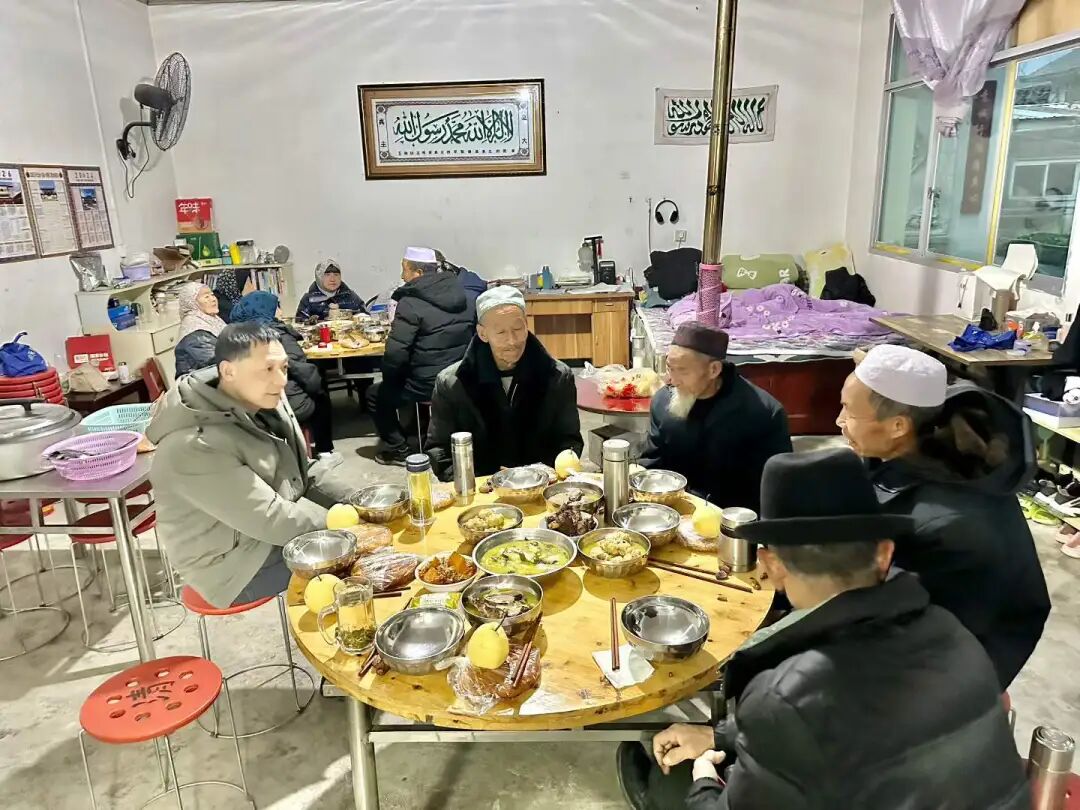
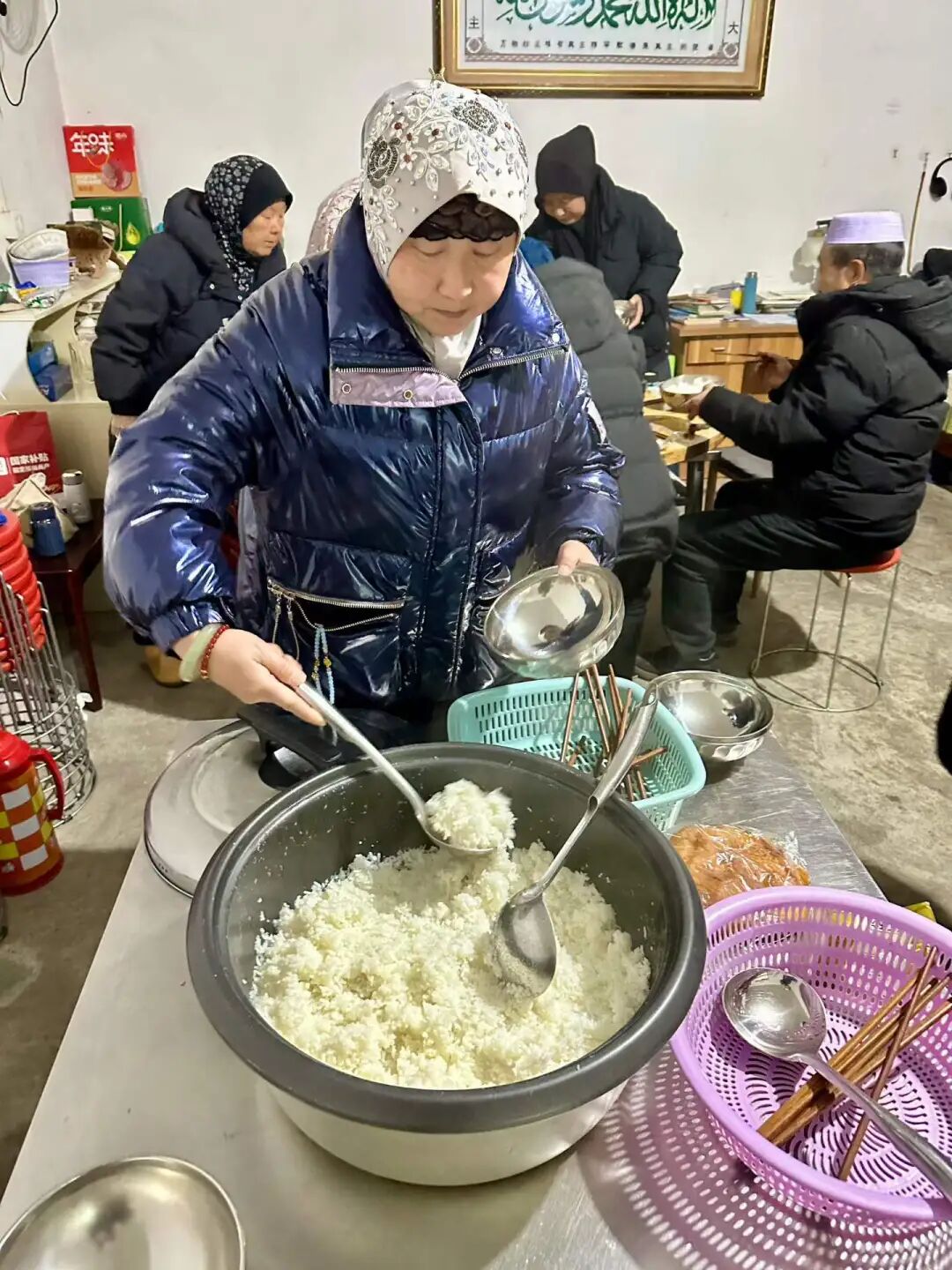
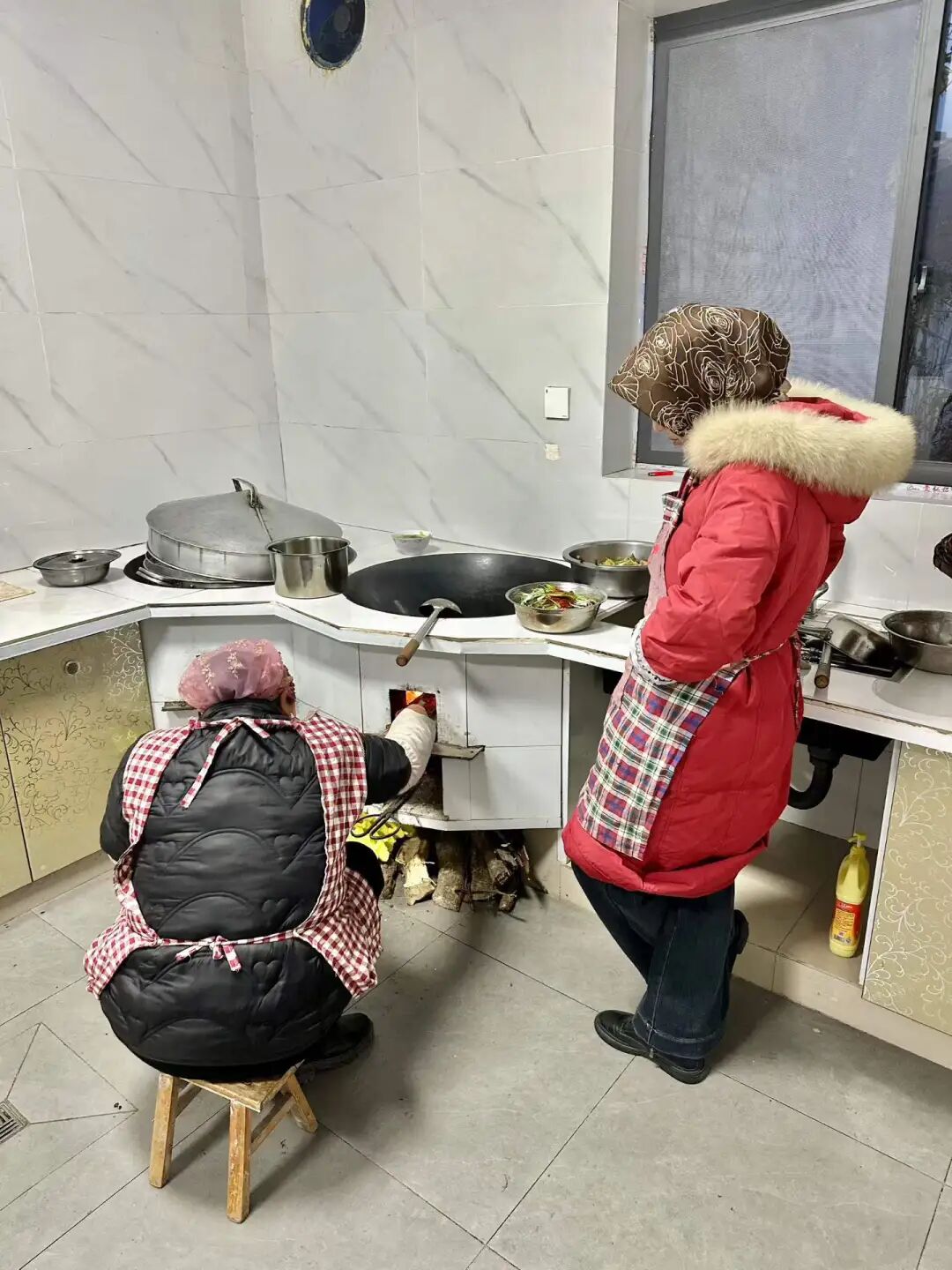
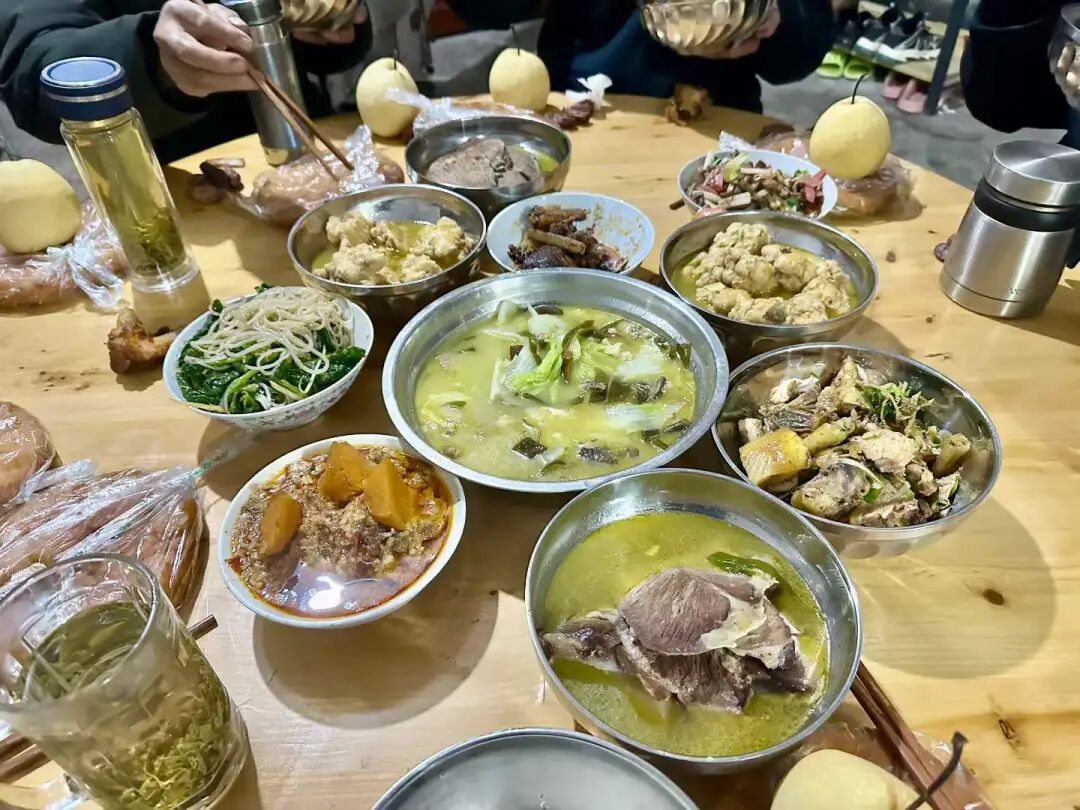
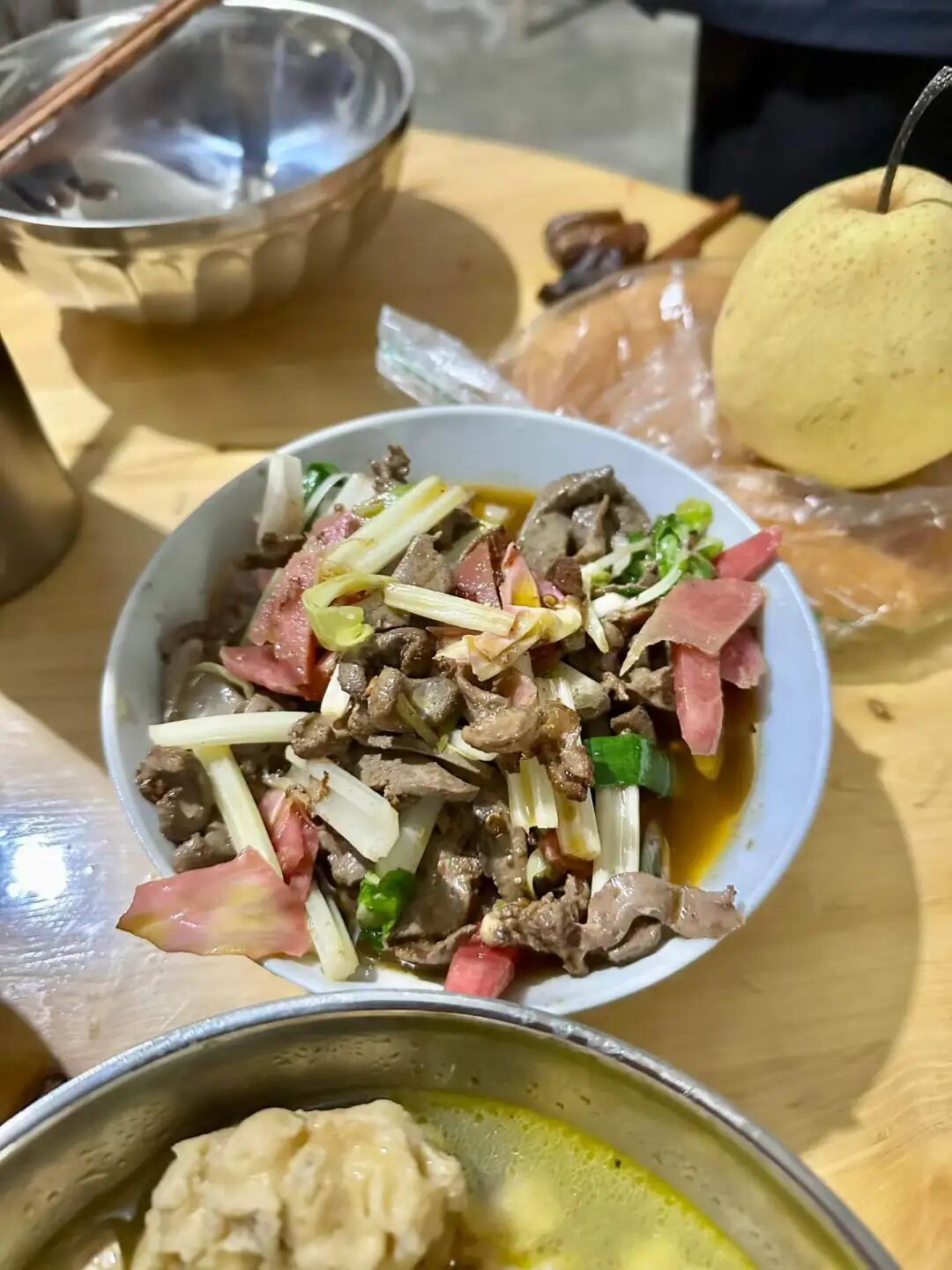
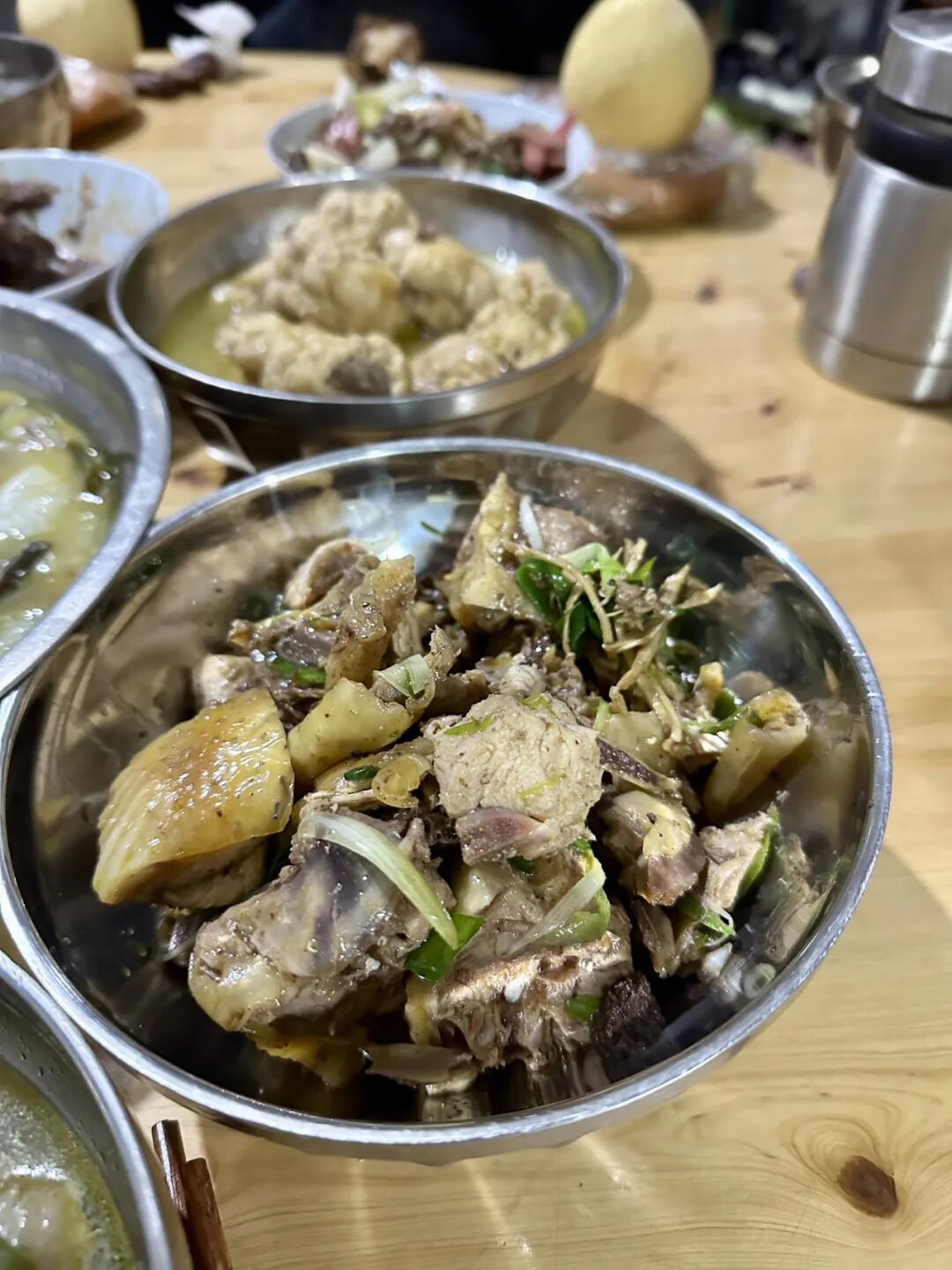
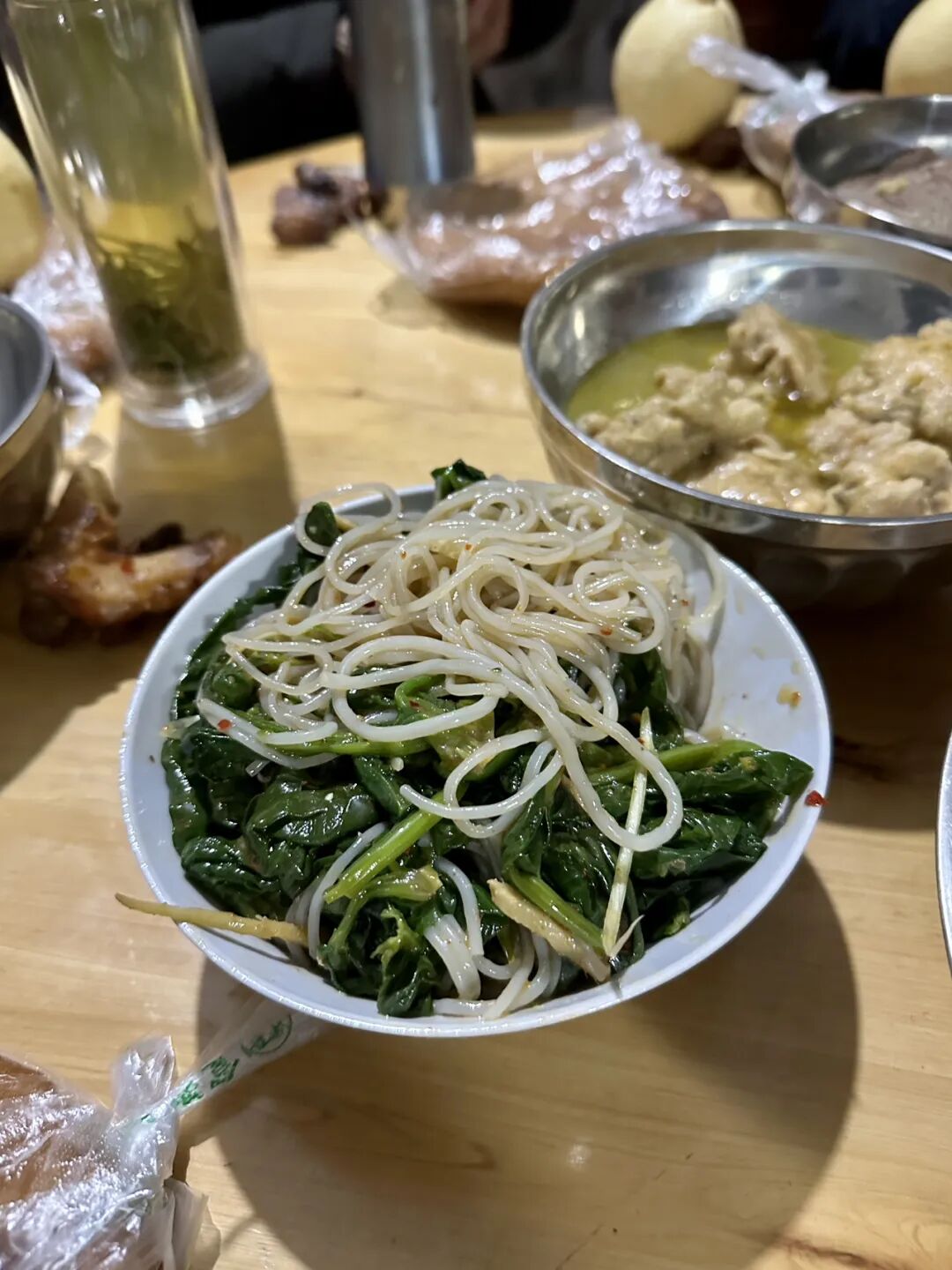
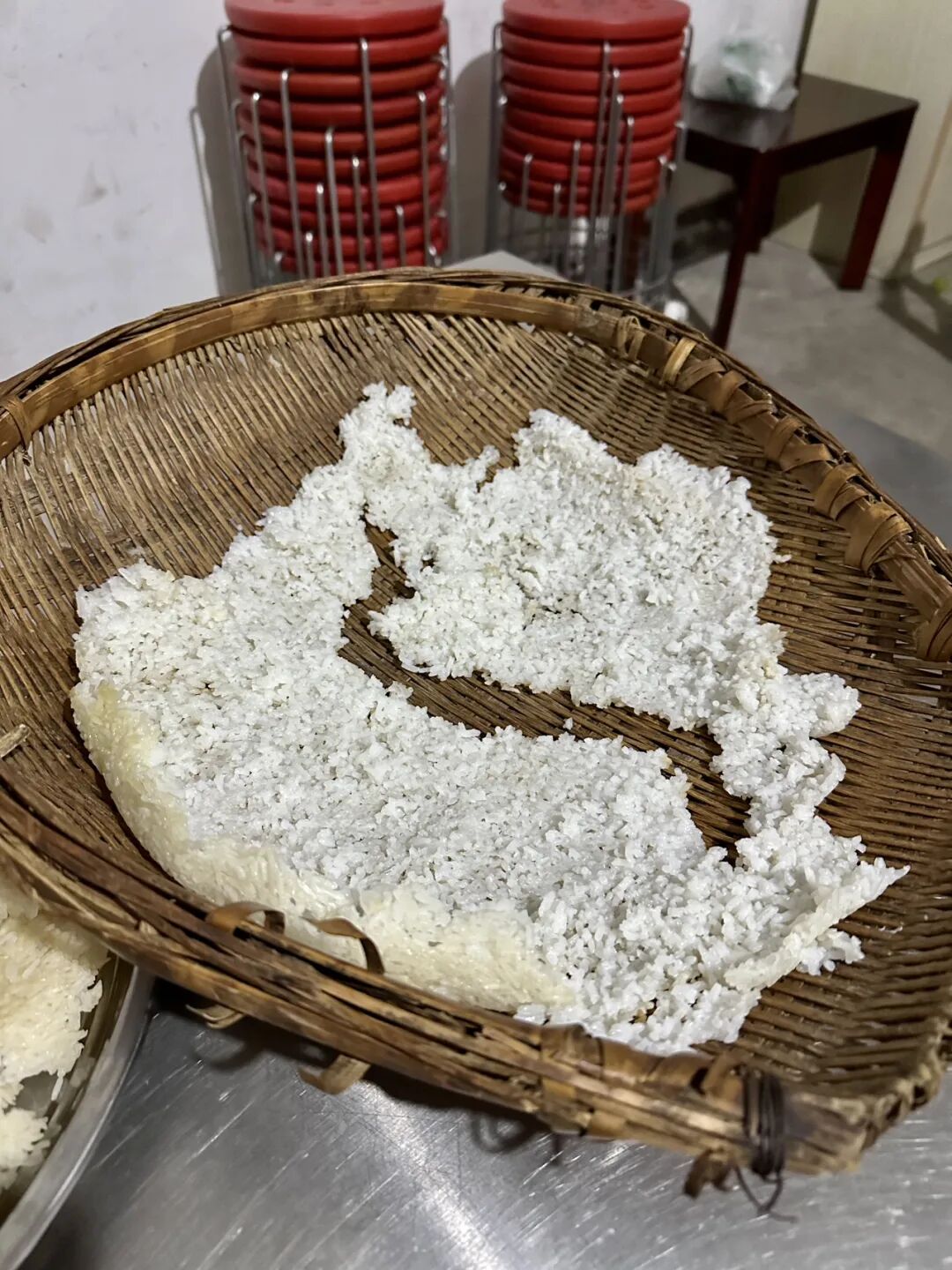
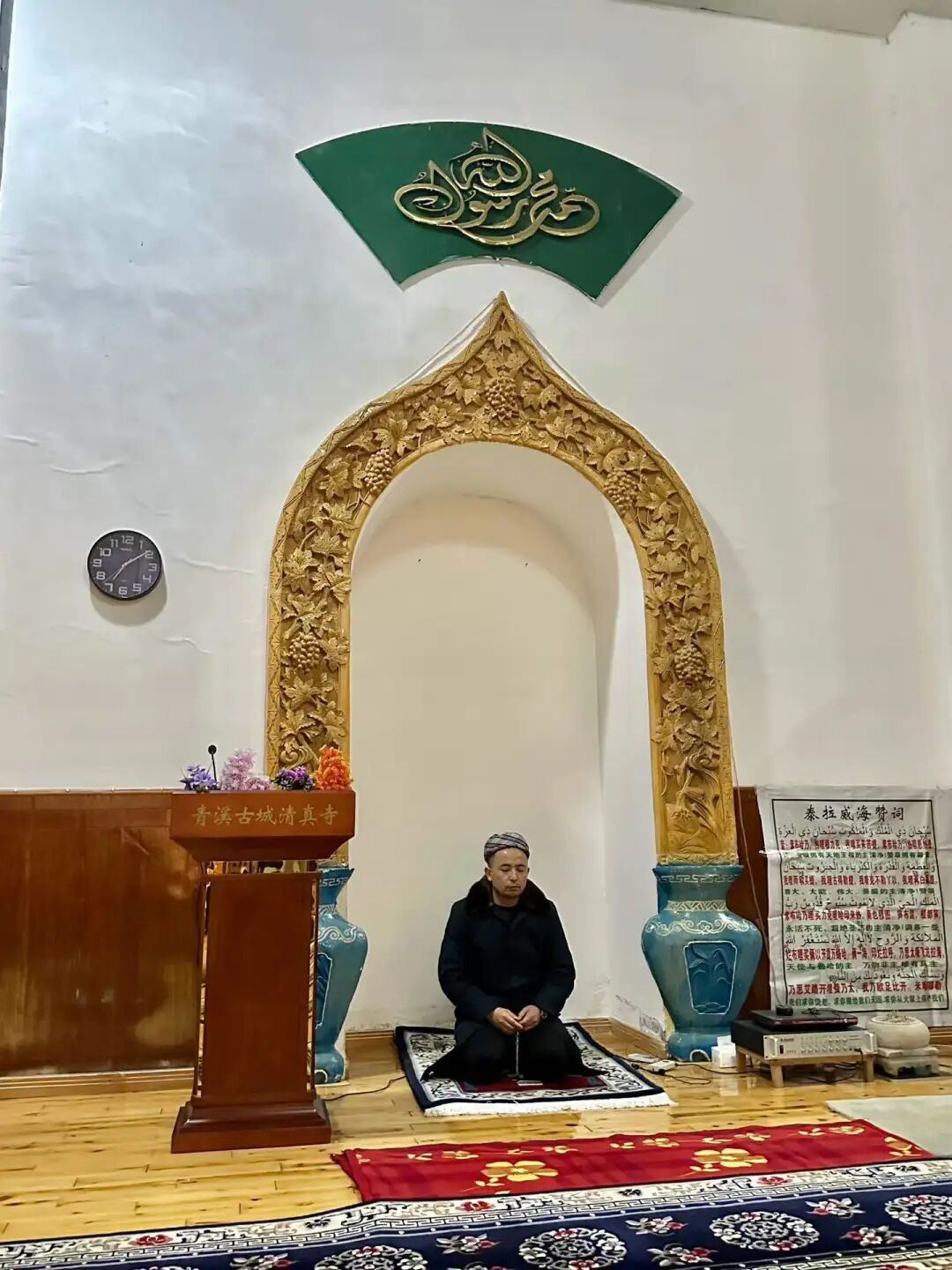
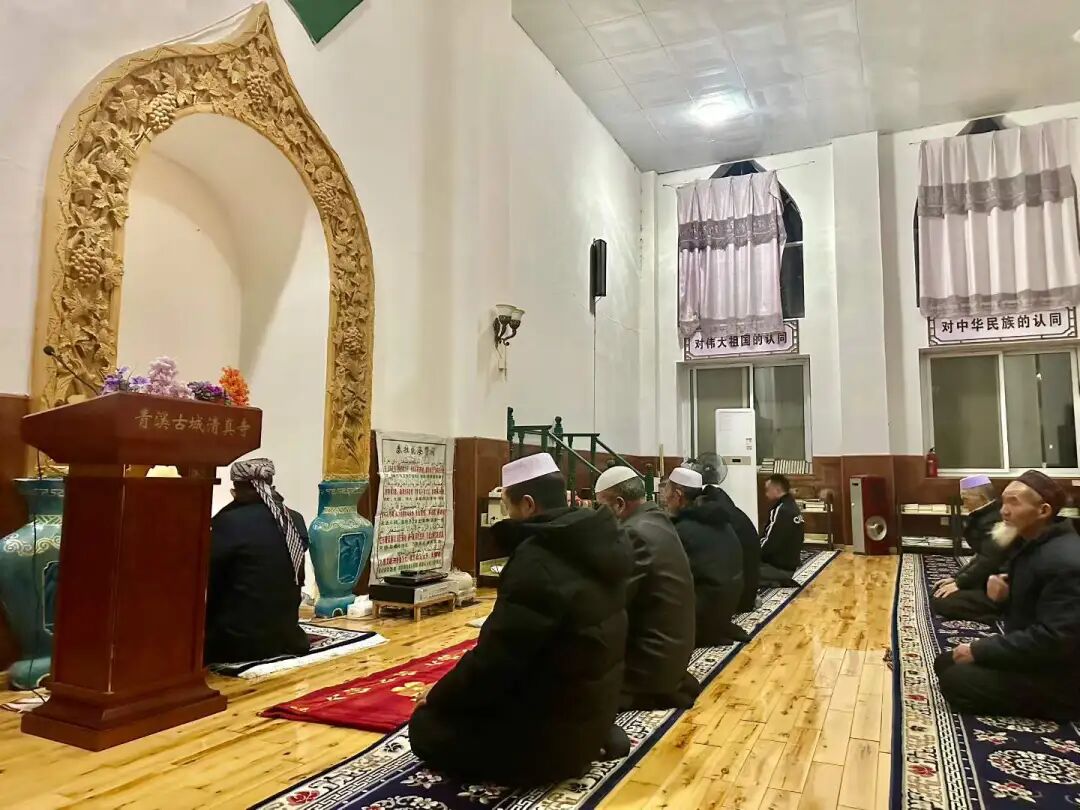
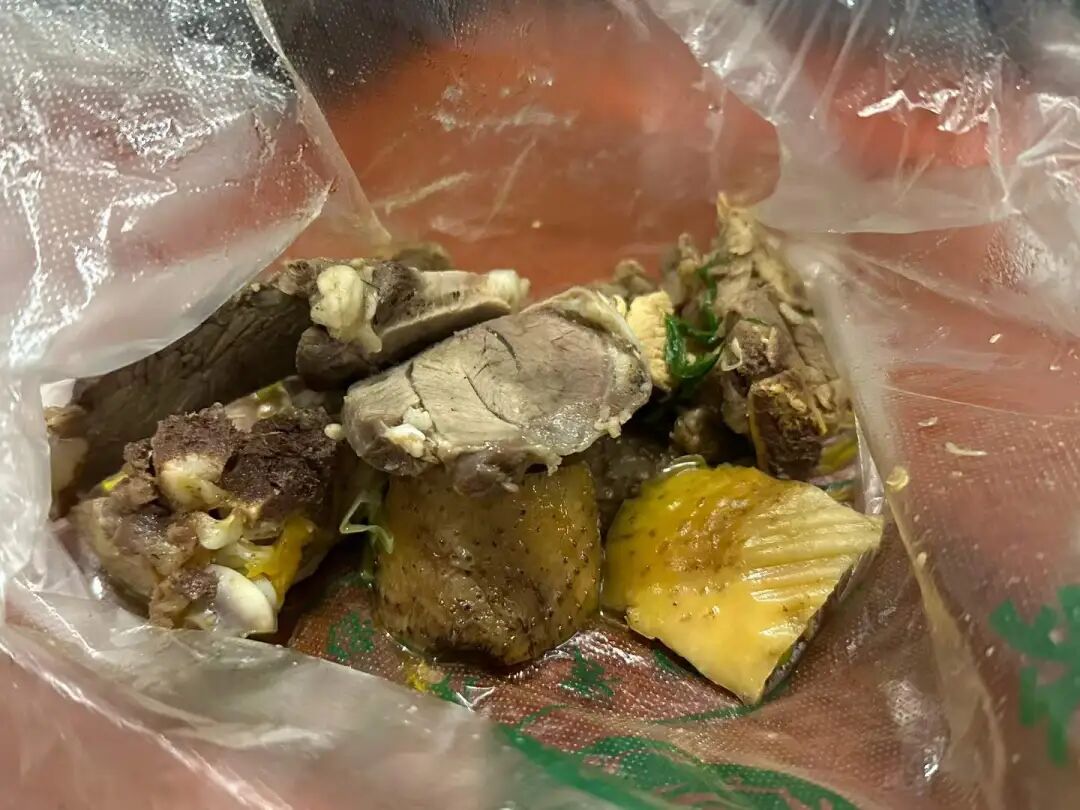
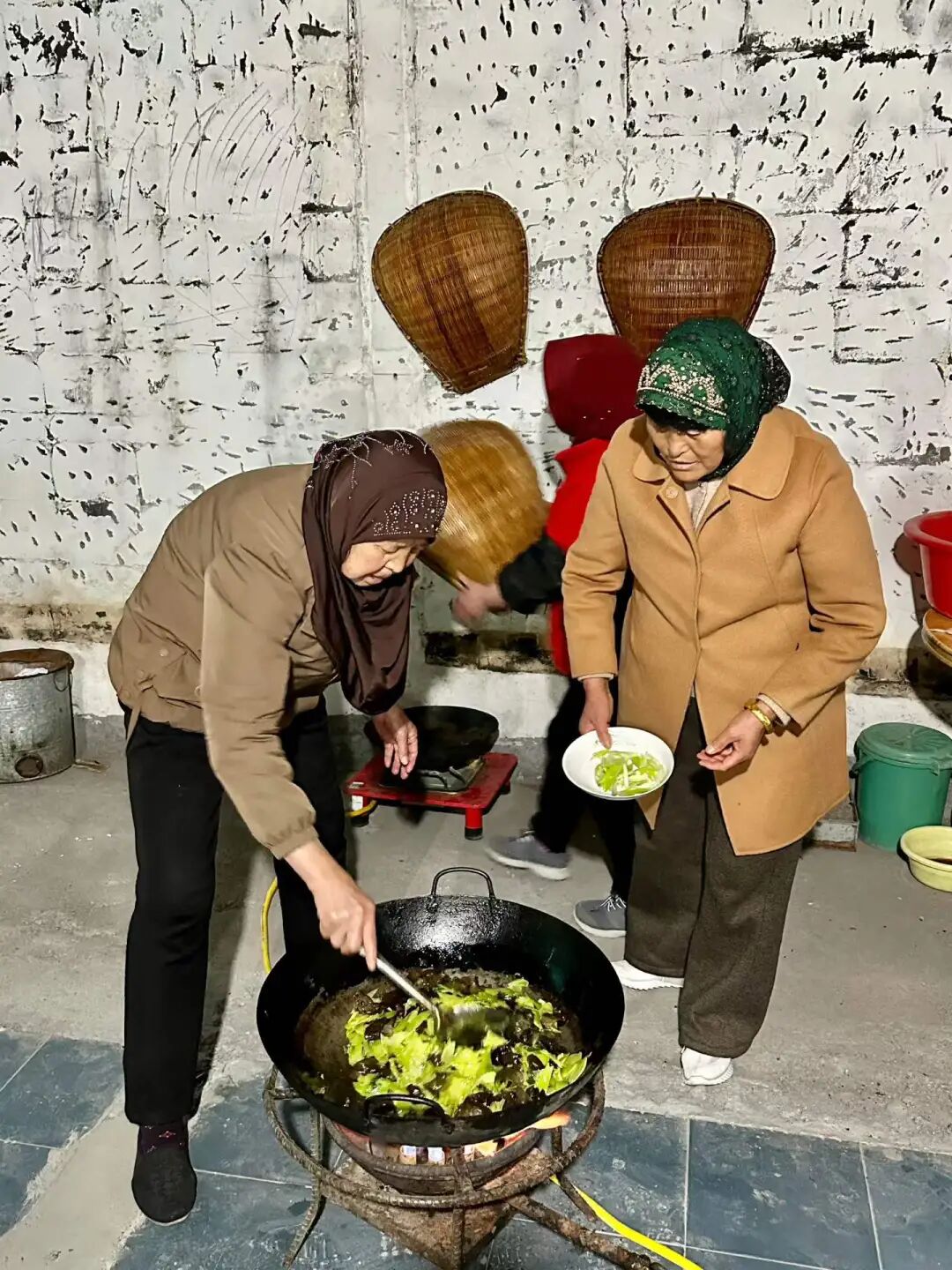
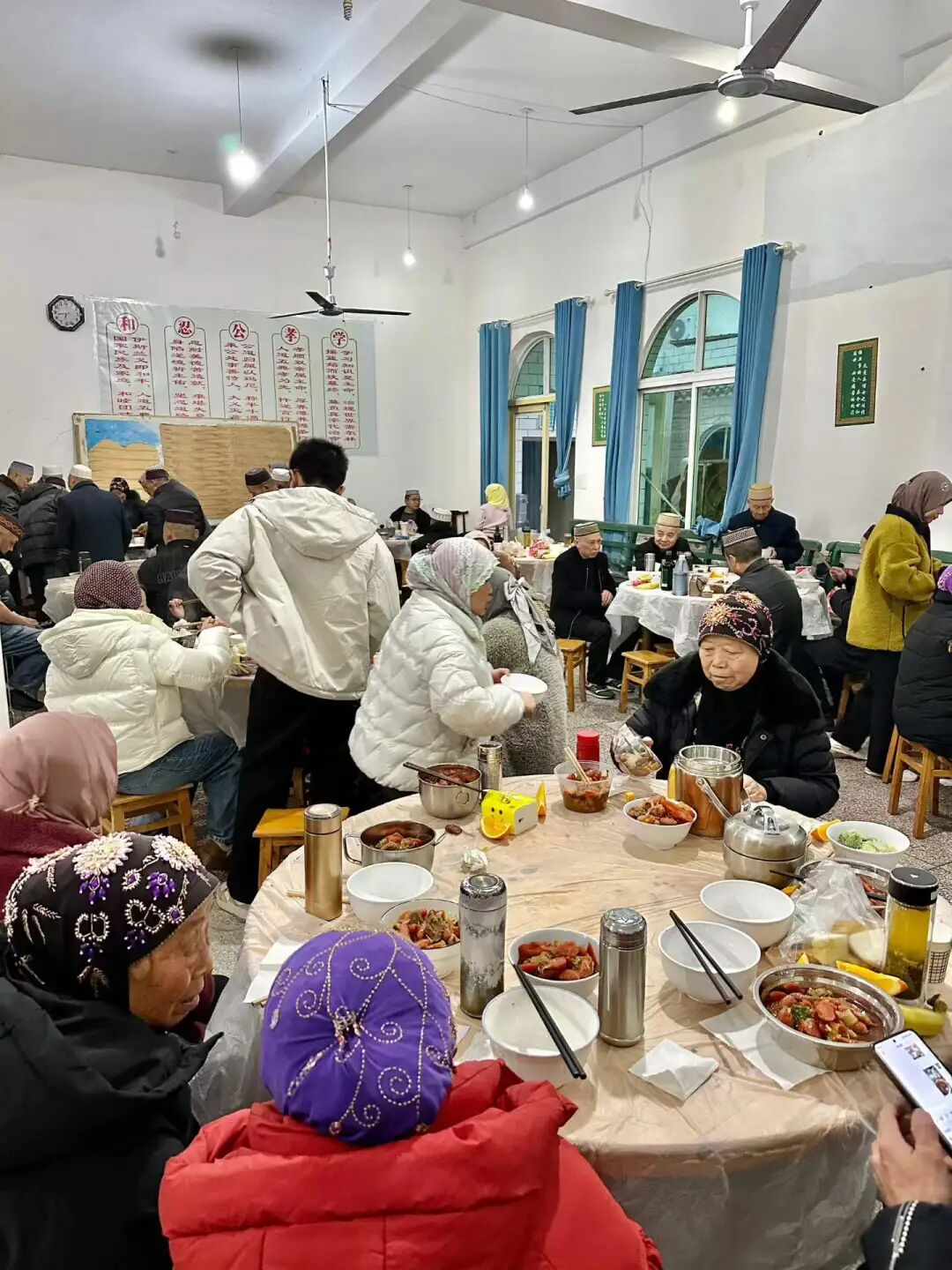
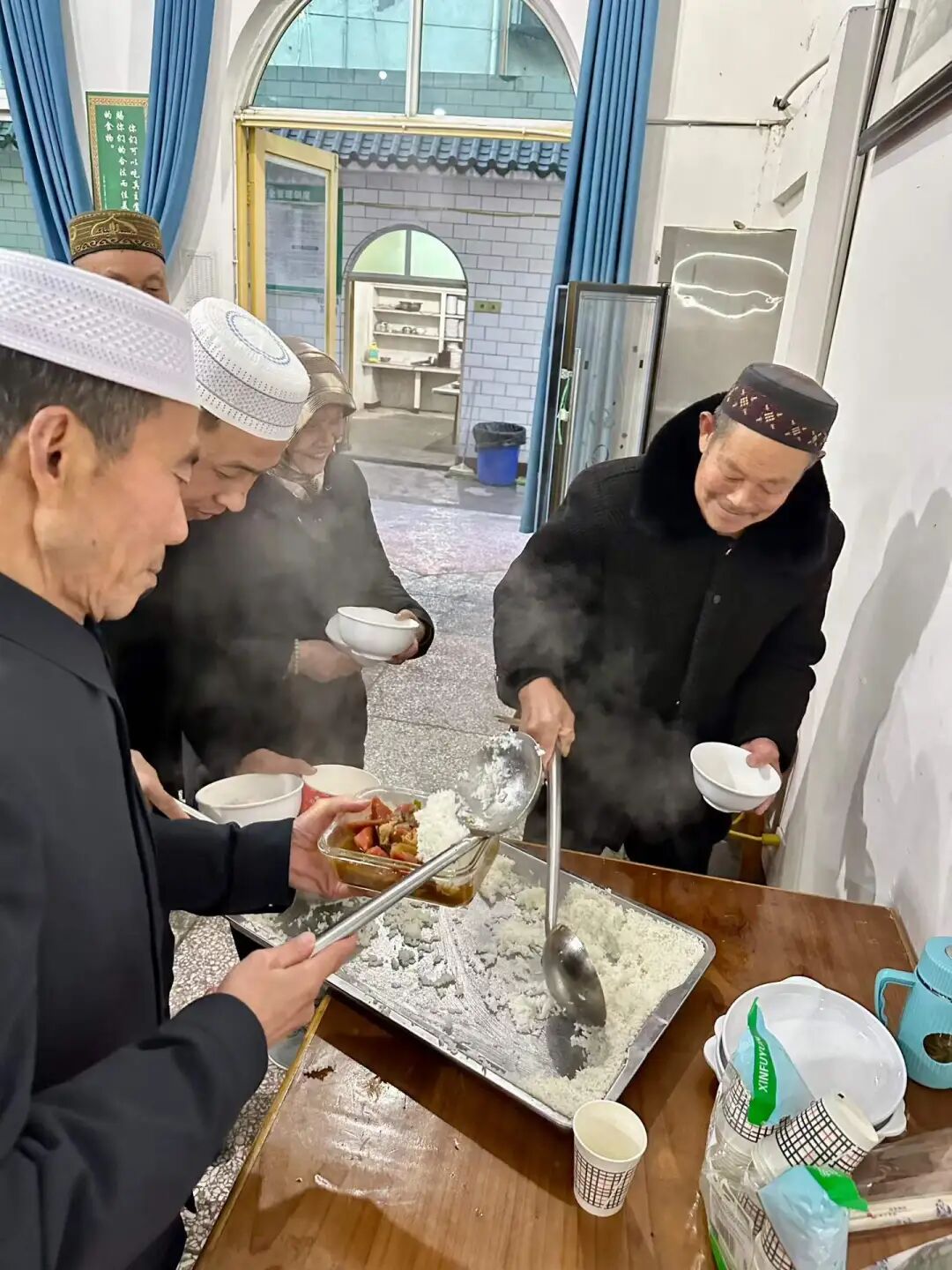
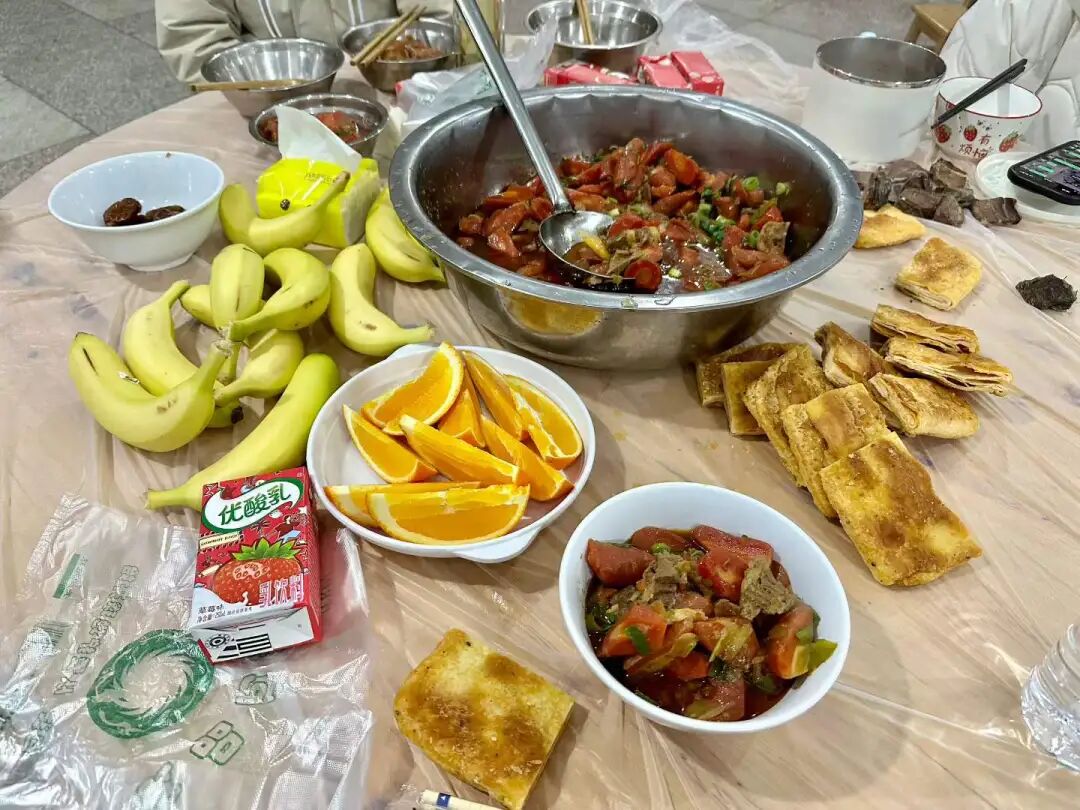
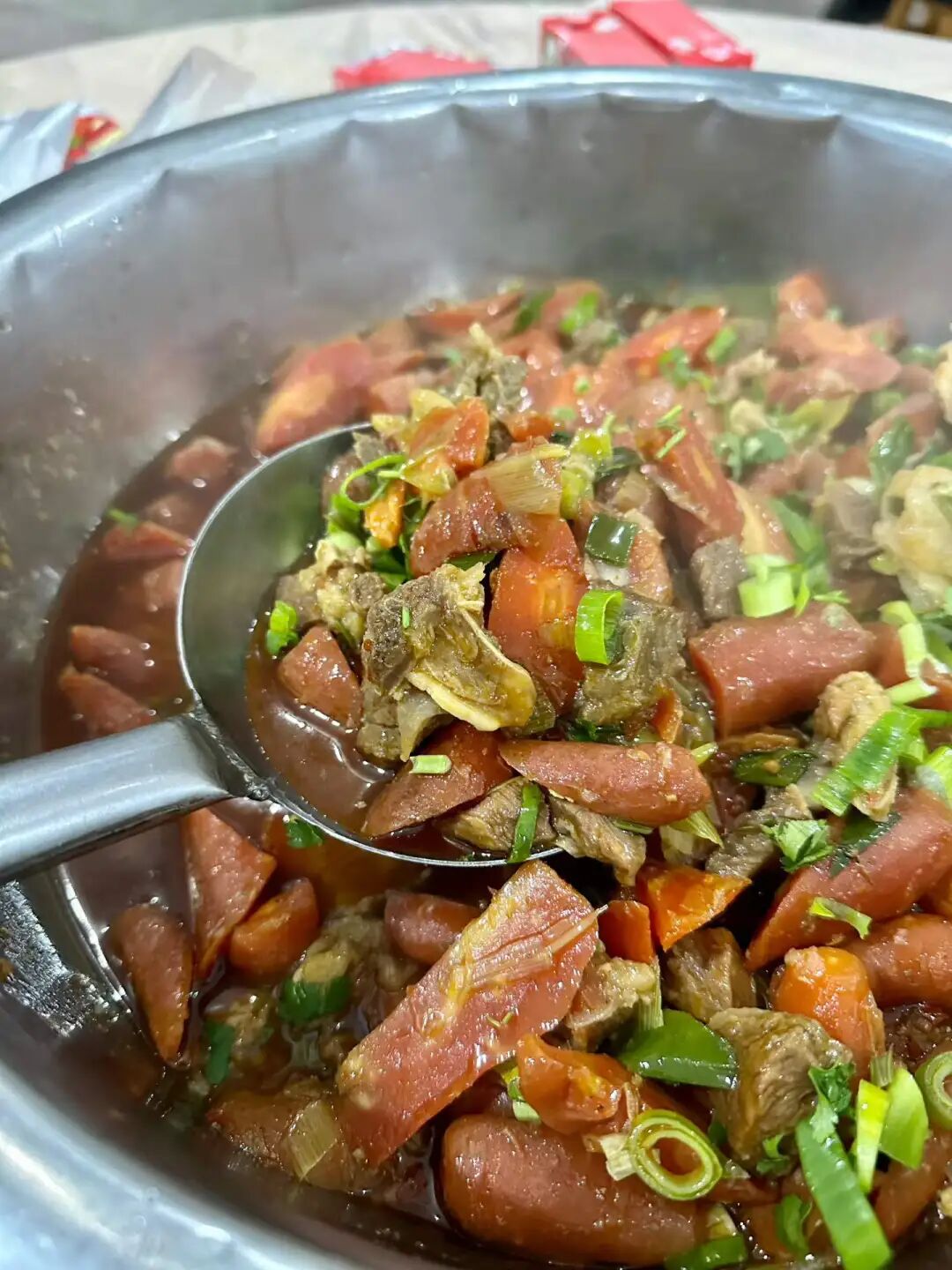
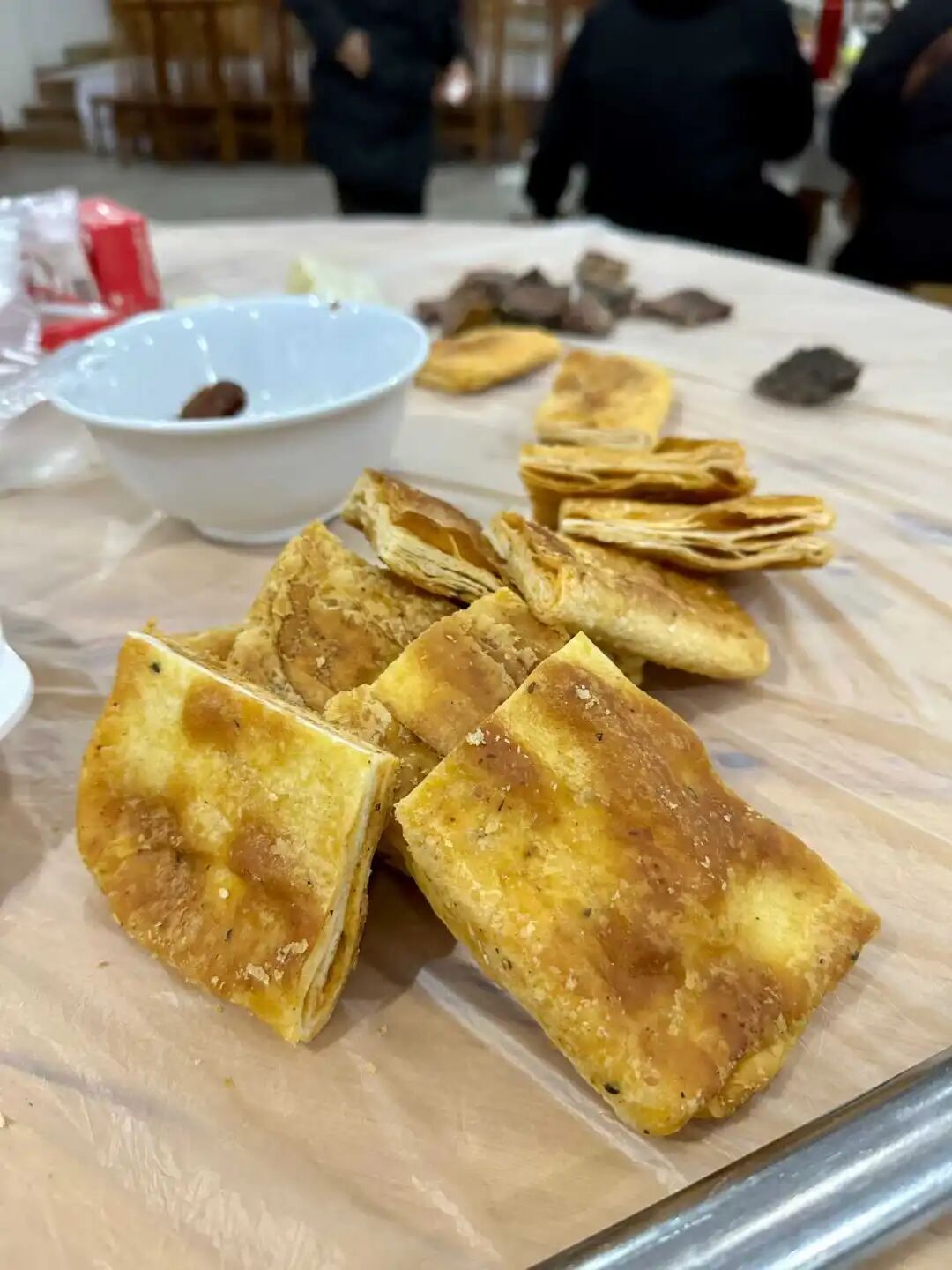
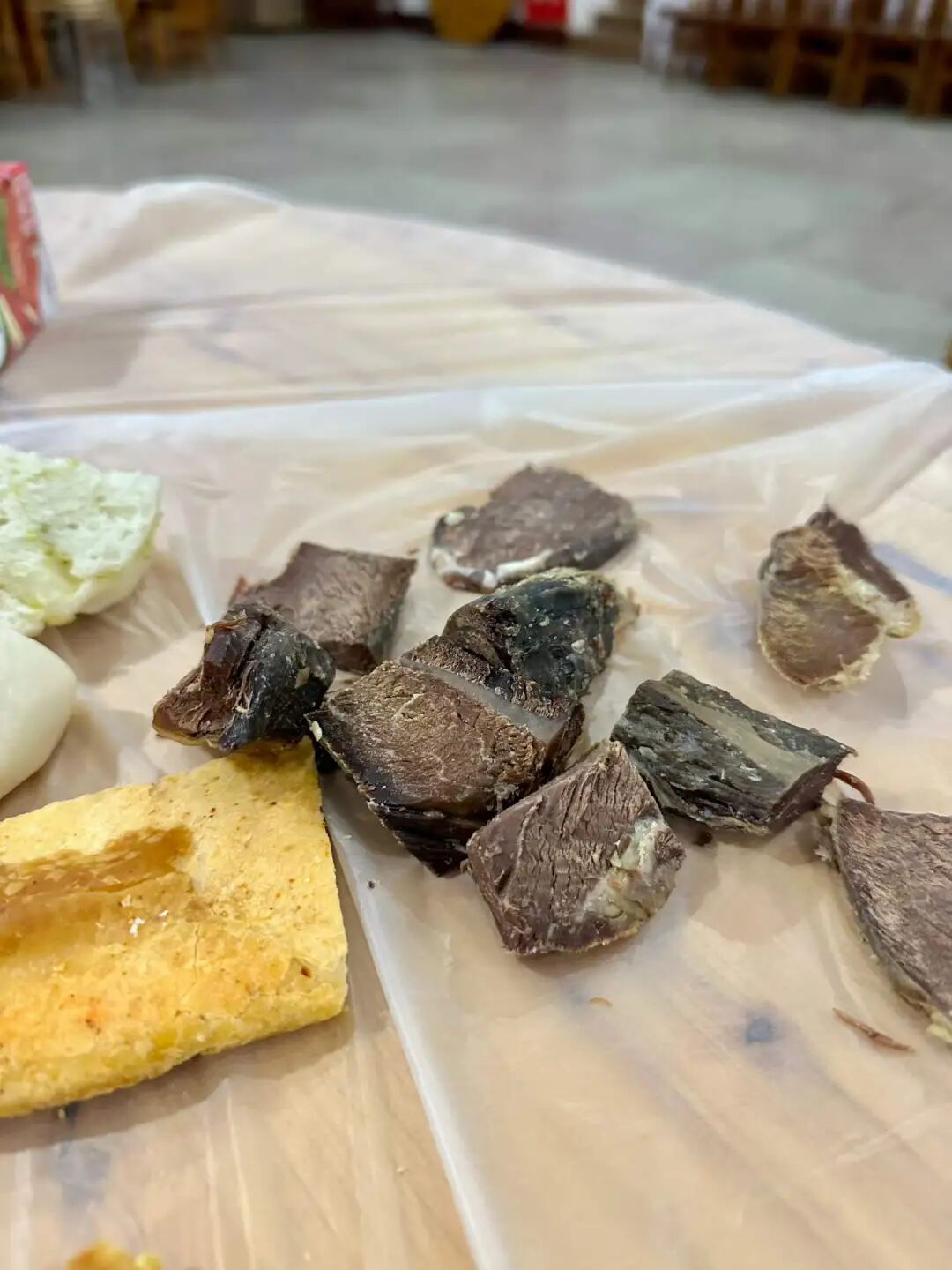
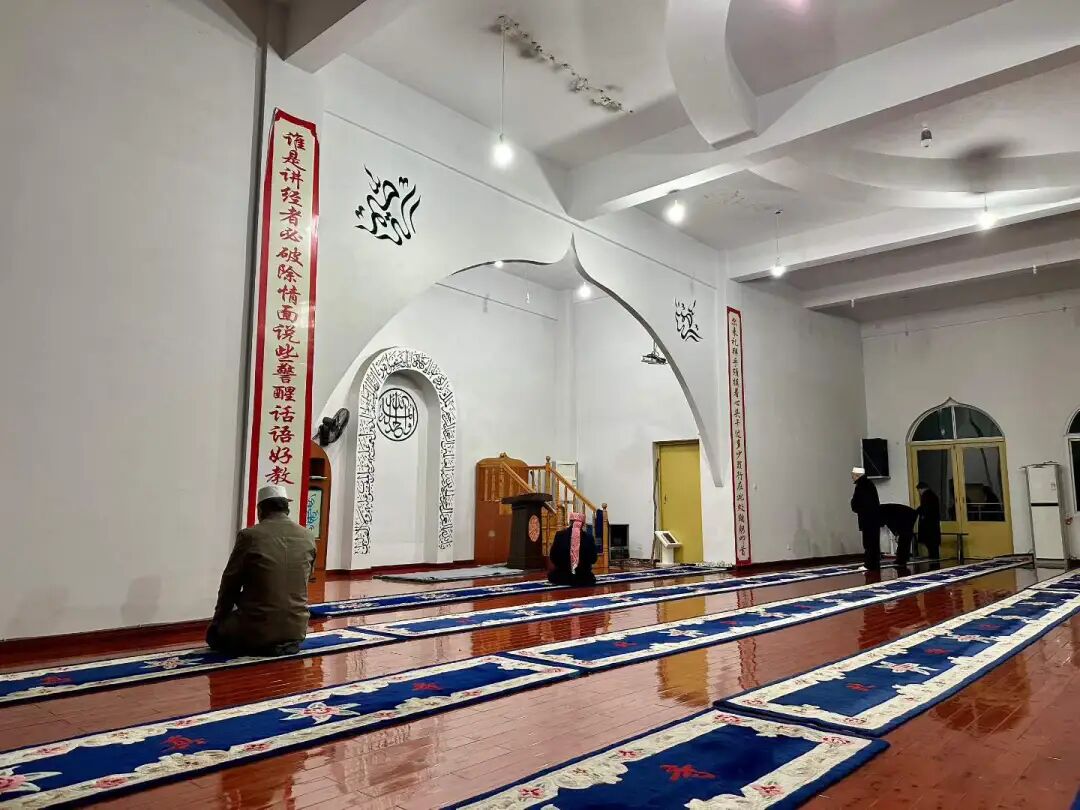
I drove from Dayuan Hui Muslim Township in Qingchuan County, Guangyuan, to Qingxi Ancient City for iftar. Although there were only two tables and ten people at Qingxi Mosque, the atmosphere was wonderful and felt just like being at home. Aunties cooked dishes on-site at the mosque, and elders brought food from their homes, making it very heartwarming. We ate the Qingxi Hui Muslim nine-bowl feast (jiudawan), which is a standard banquet meal. It included clear-stewed meat, crispy fried meat (xiao su rou), steamed meat with flour (fen zheng rou), braised chicken, and cabbage with kelp. It was a mix of meat and vegetables, all very home-style. After the meal, the elders and the imam kindly gave me some stewed meat, fried dough (youxiang), and fruit to eat for suhoor.
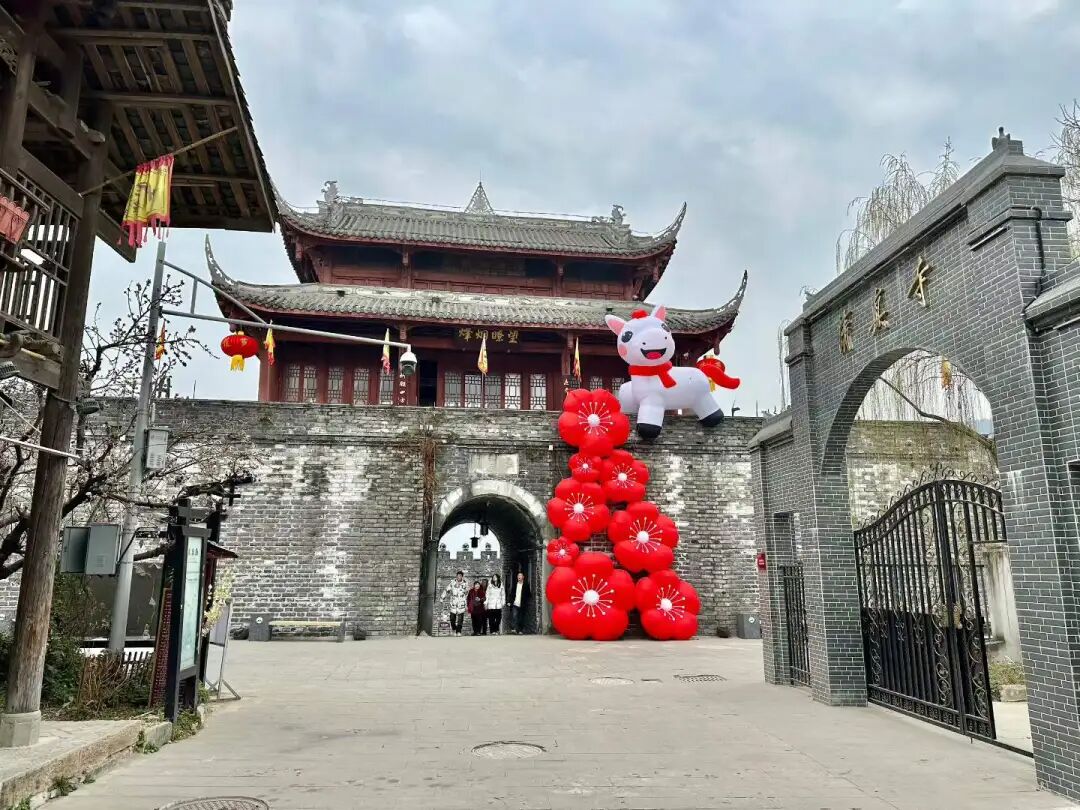
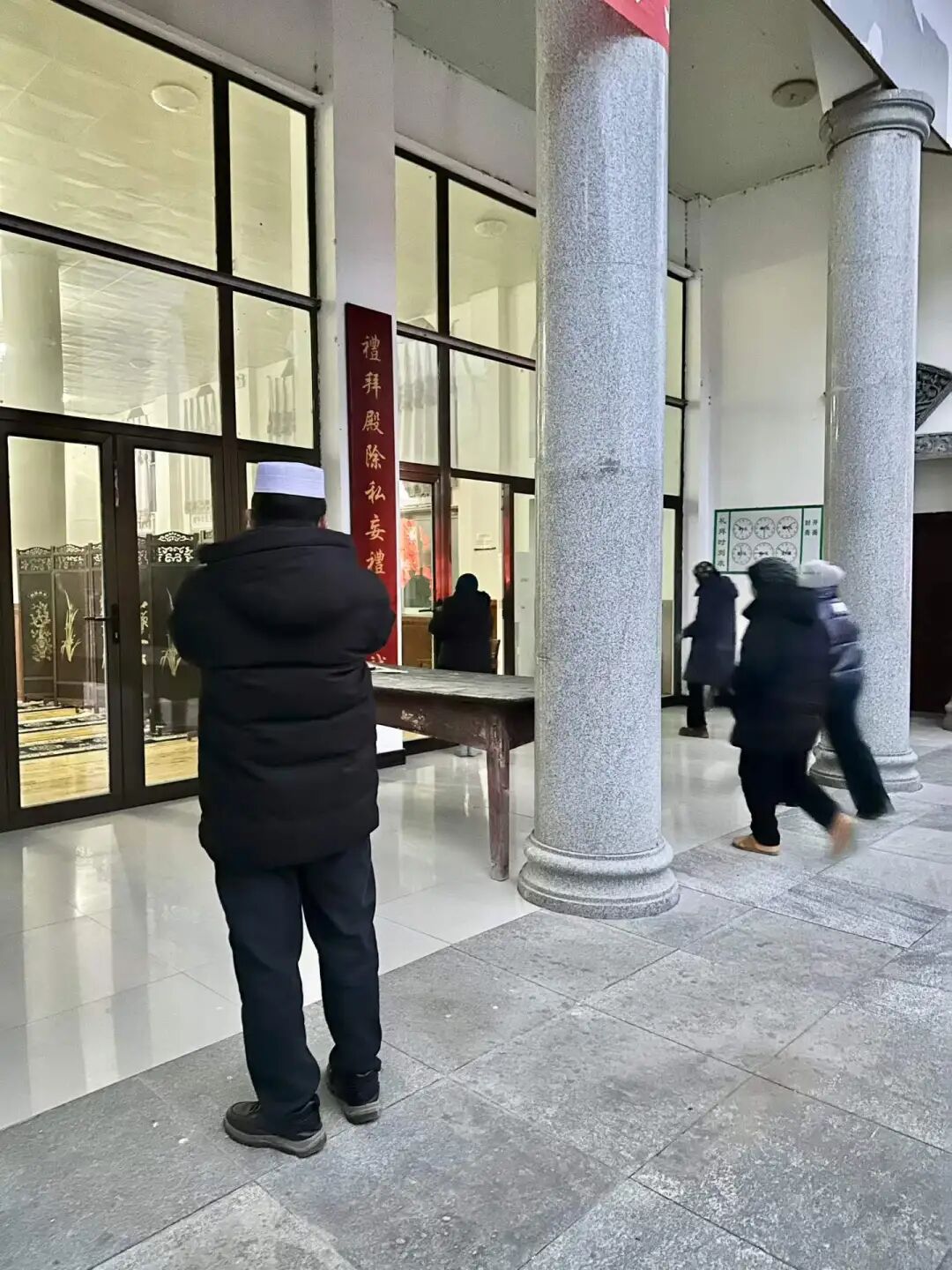
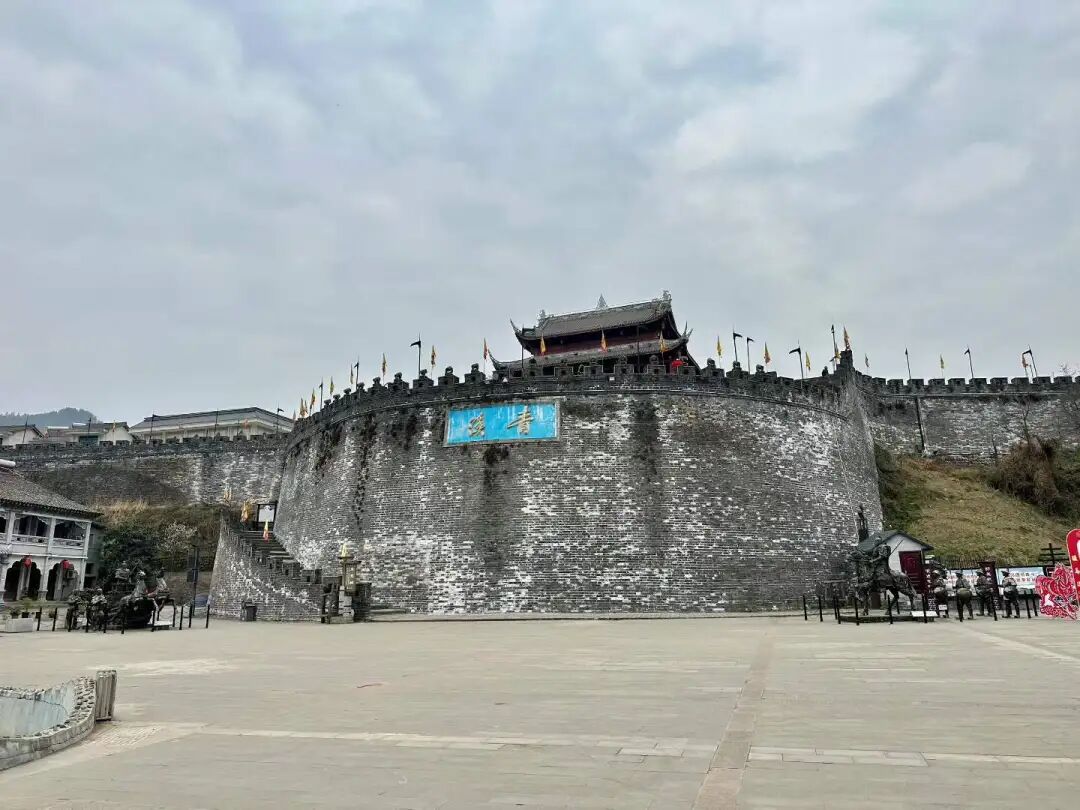
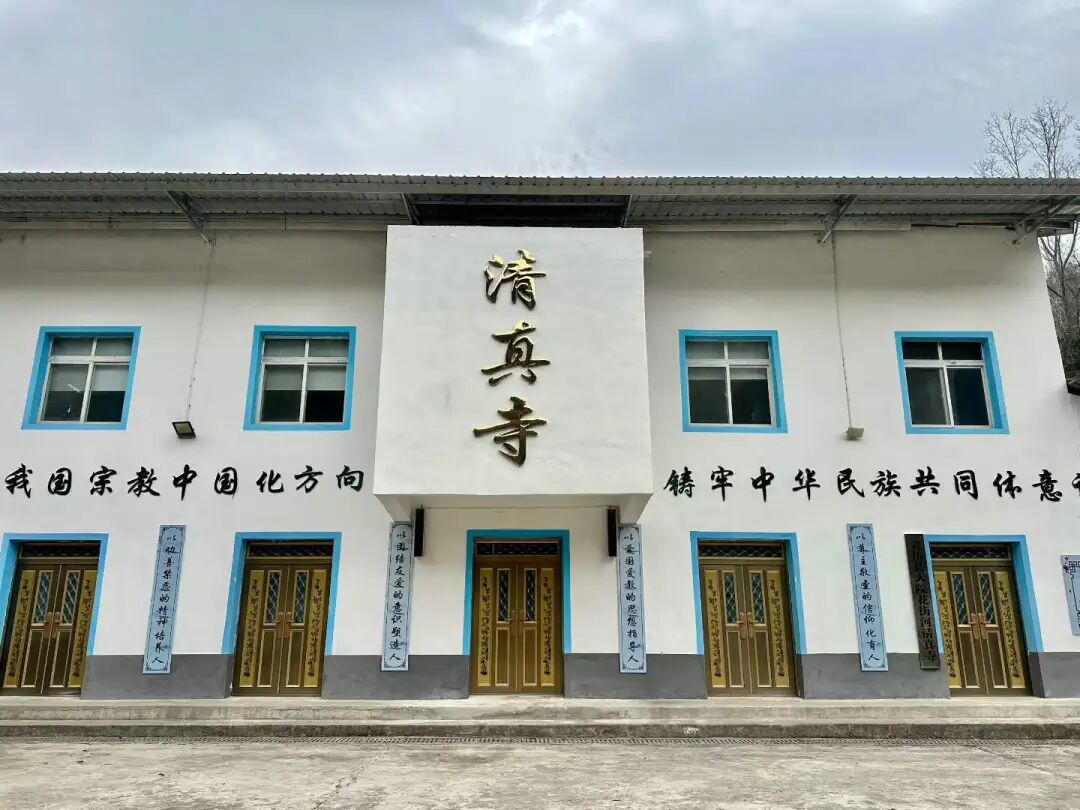
Qingxi Ancient City was an important pass on the Yinping Road. It is known as the gateway to northern Sichuan and the throat of western Shu, and it has always been a place where merchants gathered and armies fought for control. Since the Ming Dynasty, Hui Muslims from Shaanxi and Gansu settled in Qingxi along the ancient Yinping Road, and Qingxi Mosque was officially built in 1546, the 25th year of the Jiajing reign of the Ming Dynasty. The current mosque buildings were rebuilt in 1982.
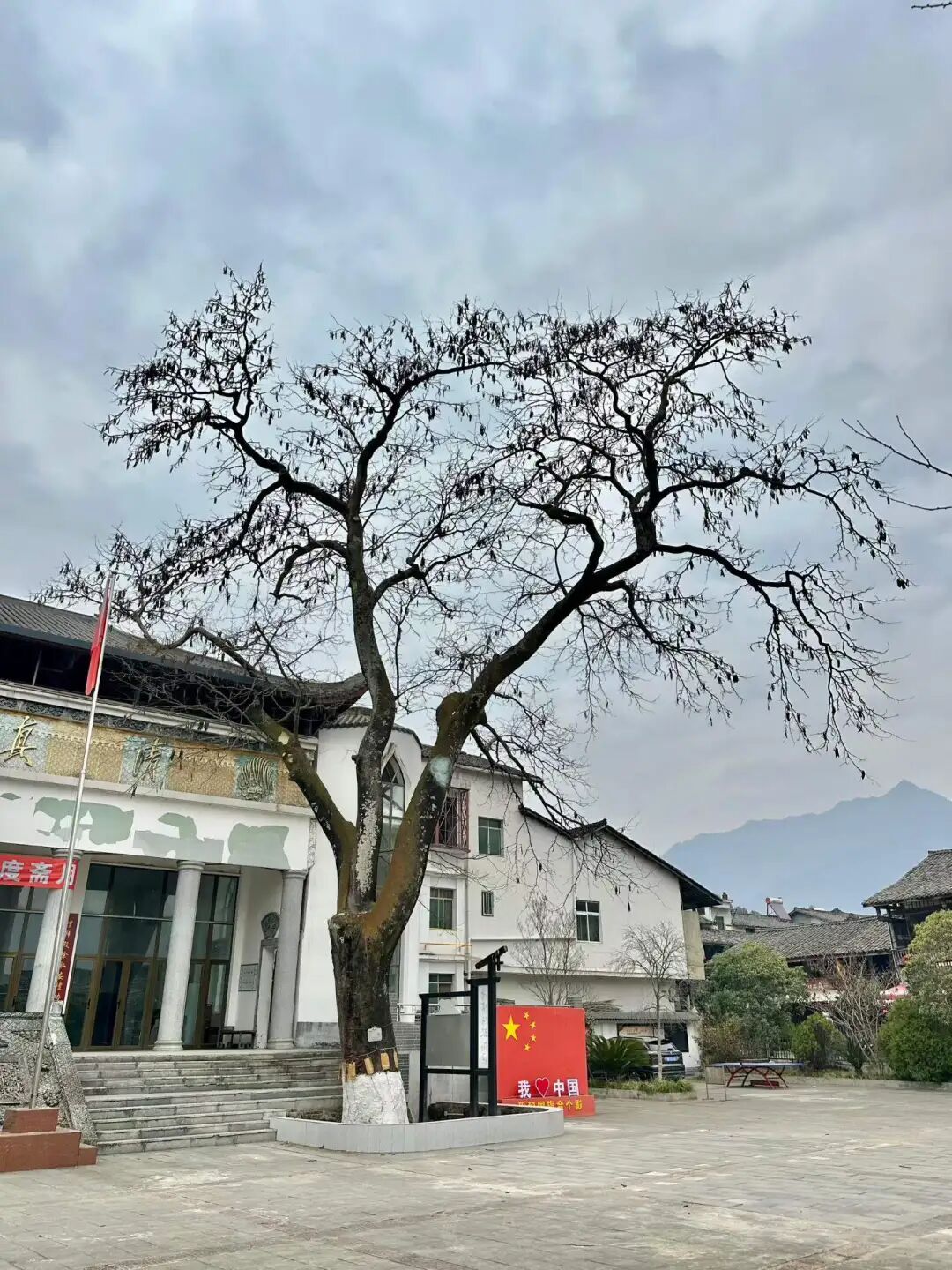
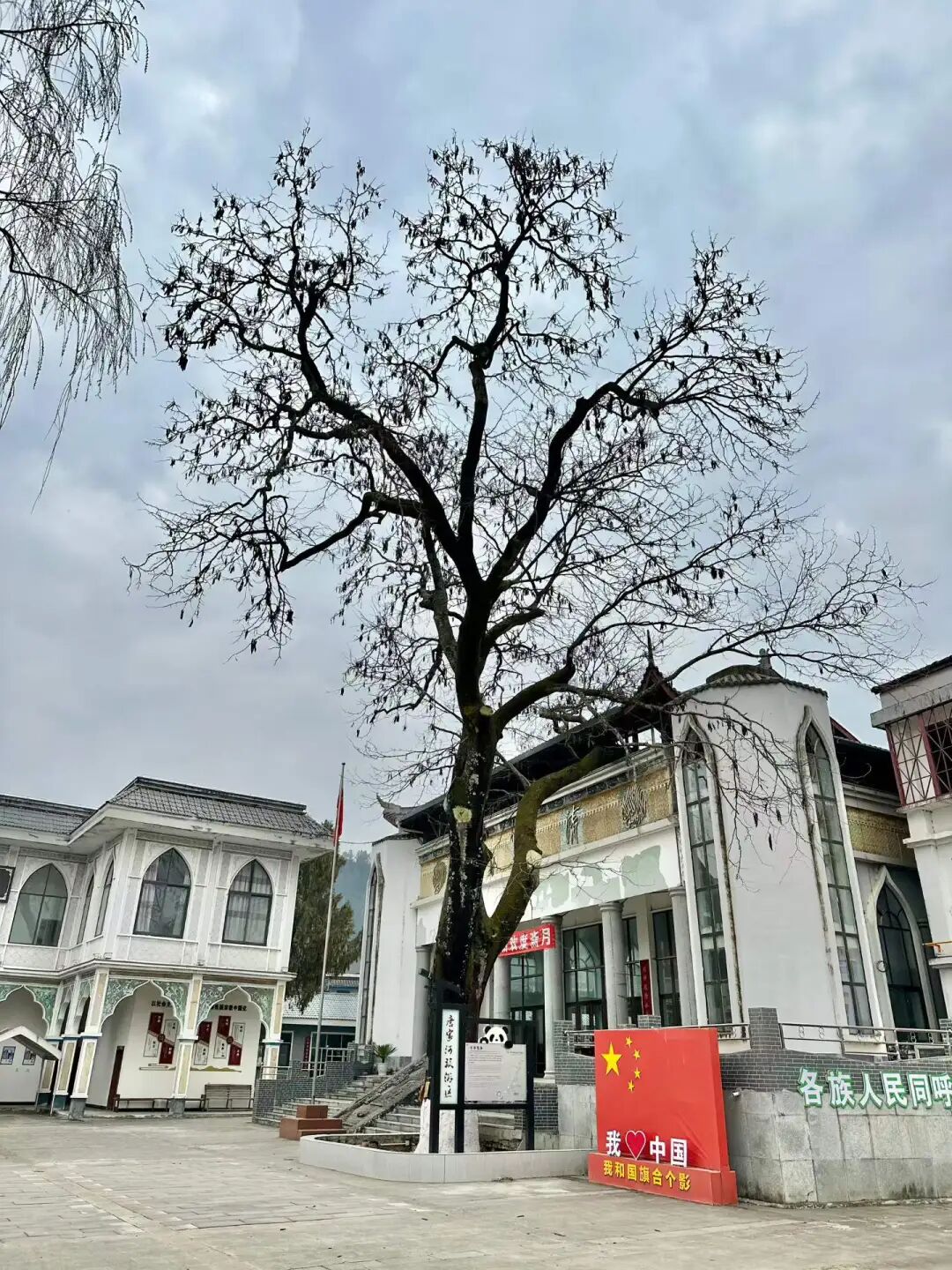
There is a 400-year-old honey locust tree in the mosque, which is an important witness to the ancient site.
Fried dough (youxiang) and chicken for suhoor.
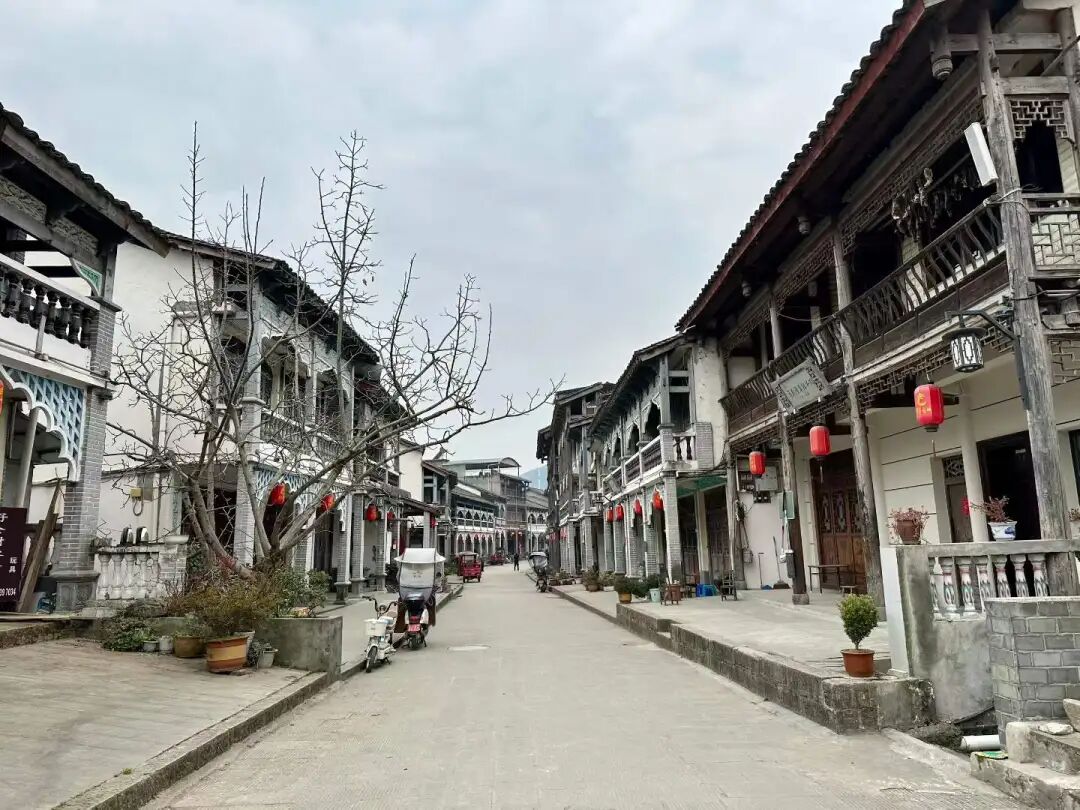
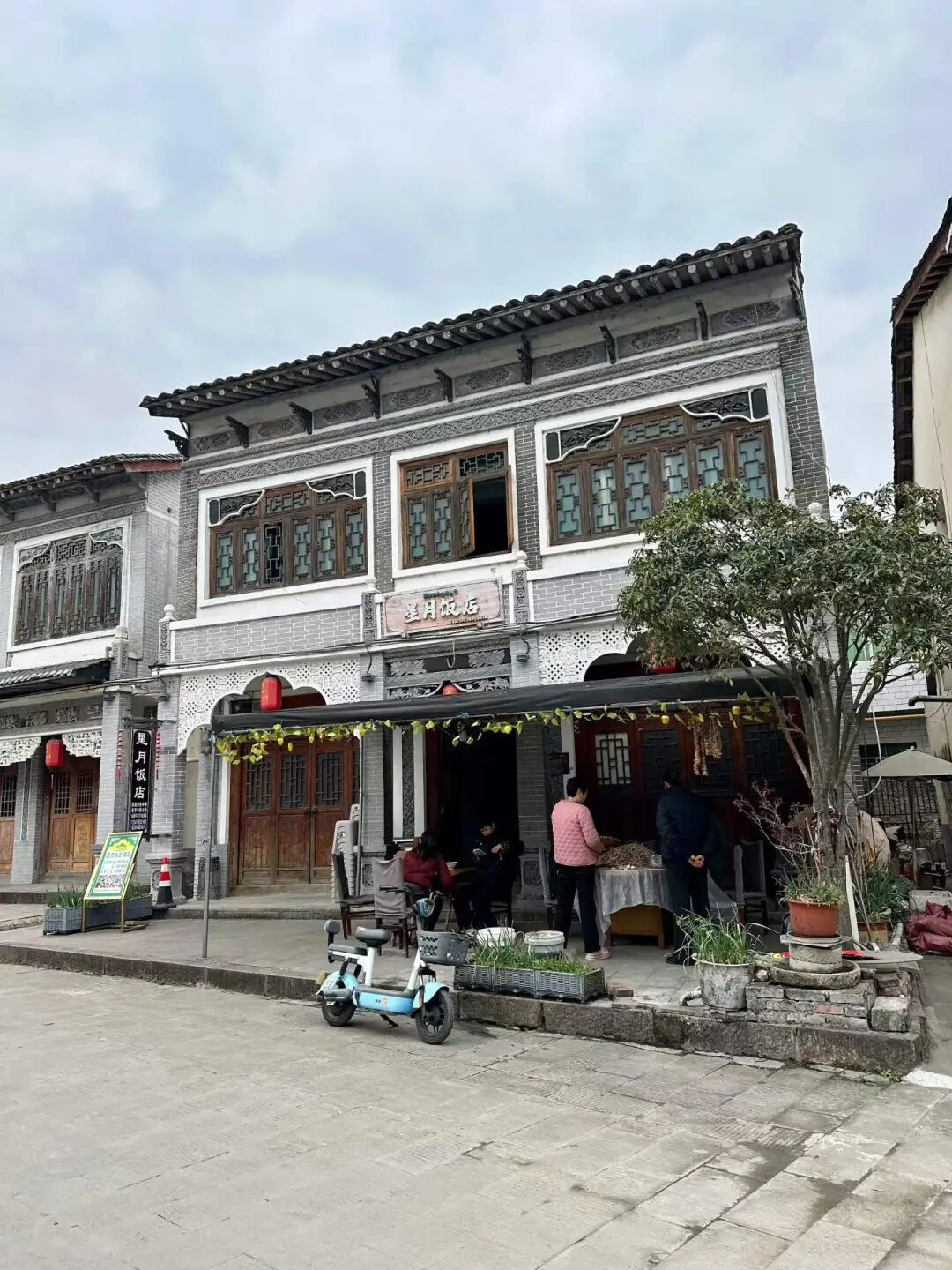
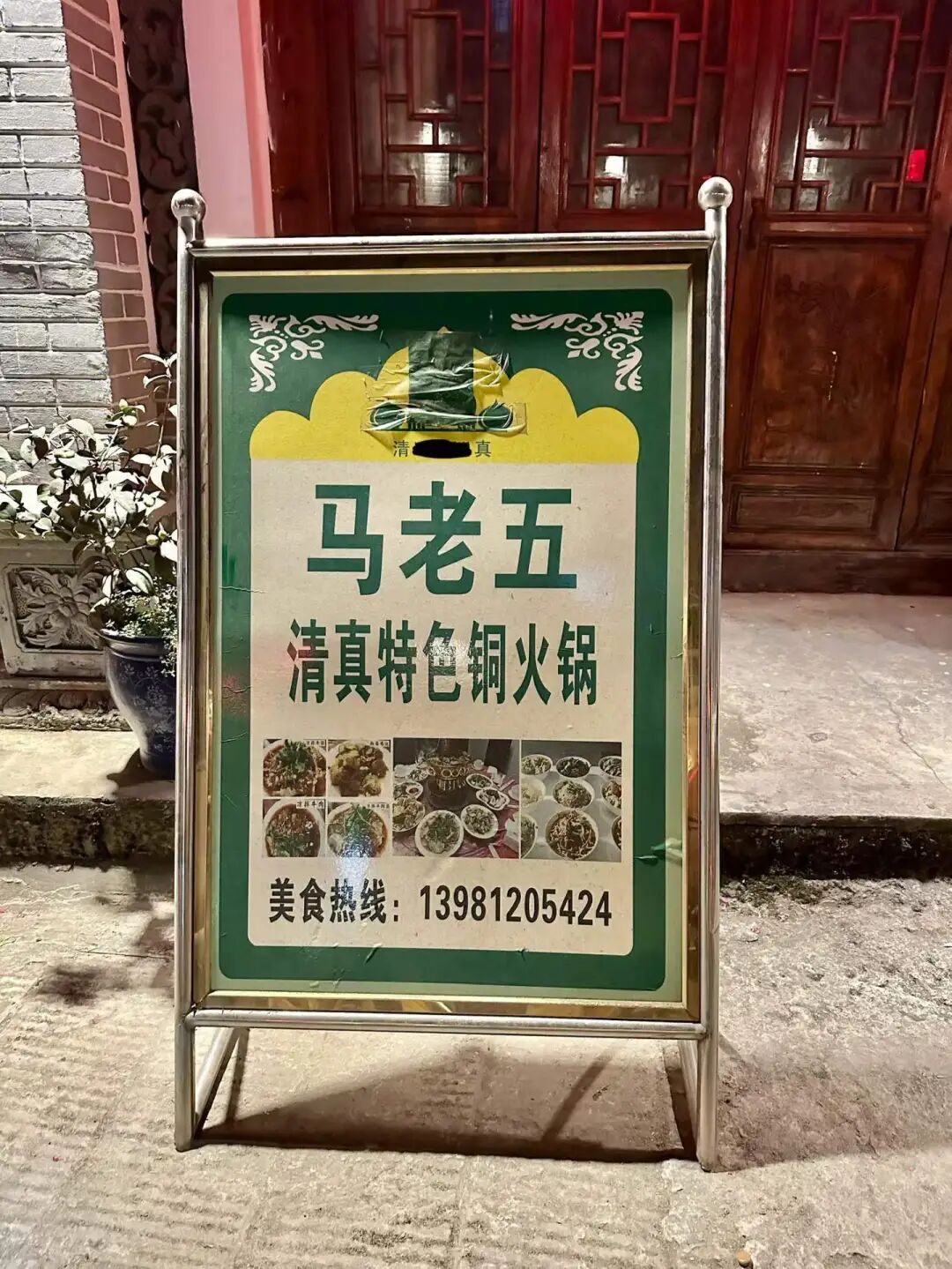
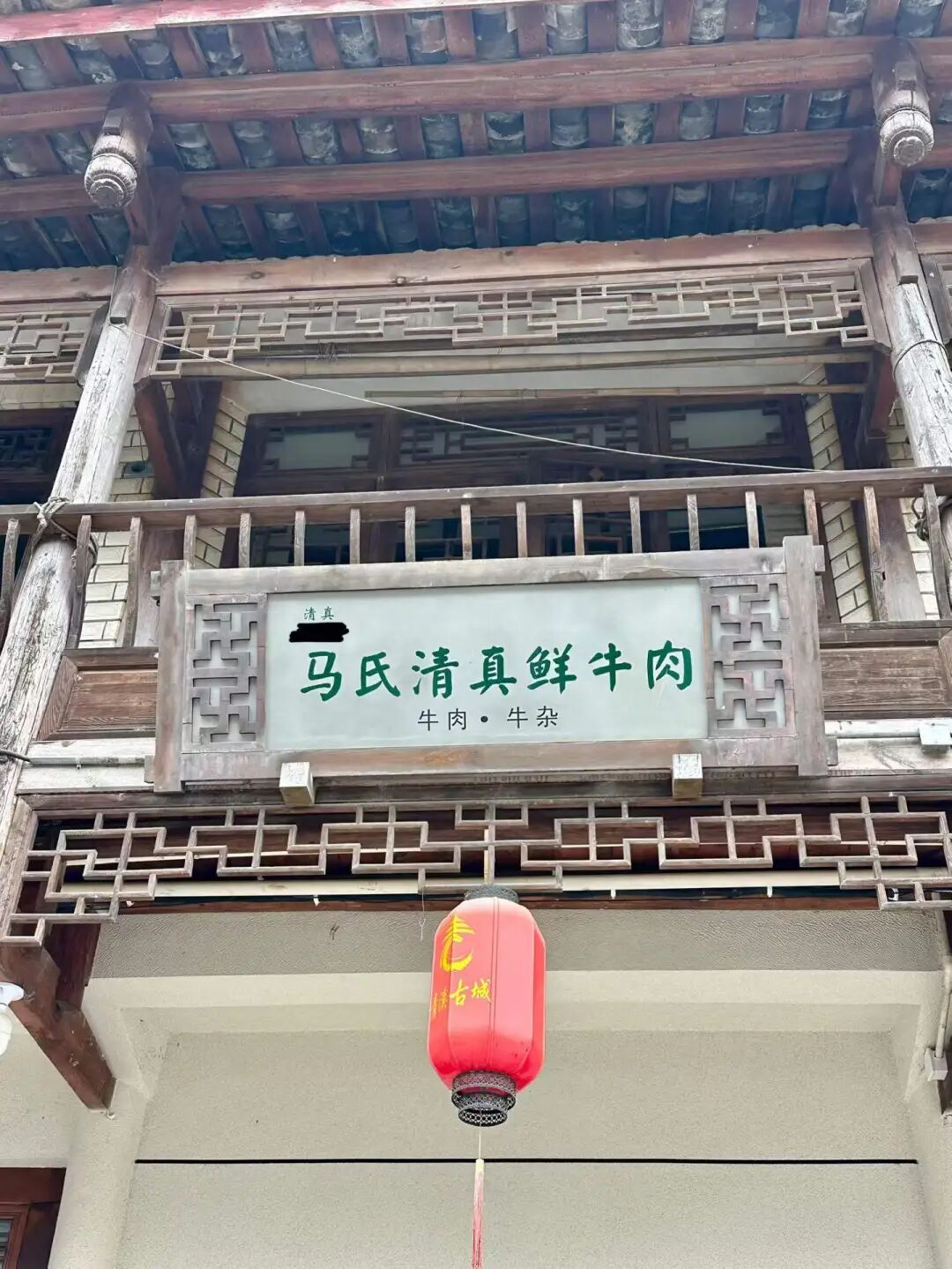
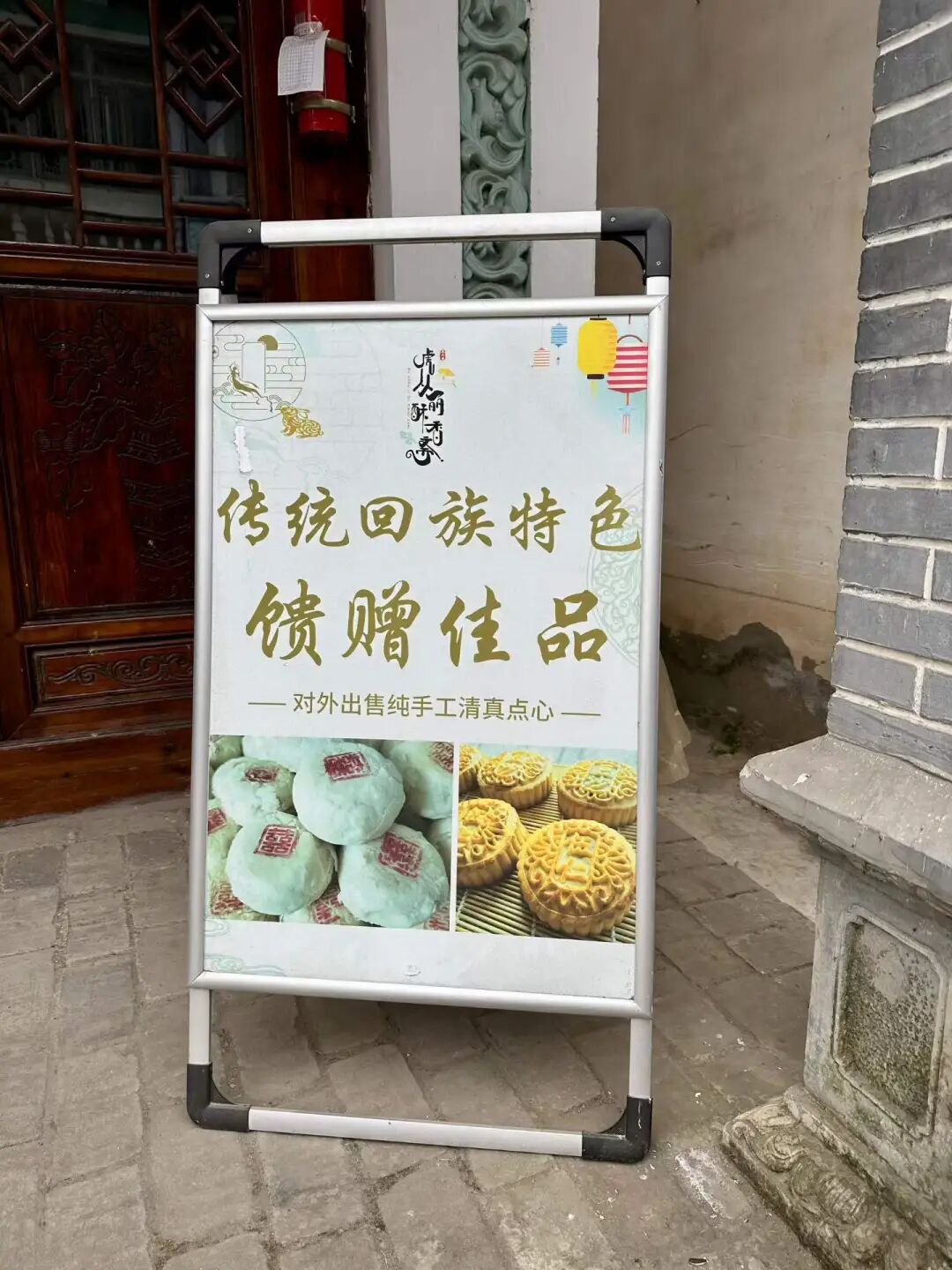
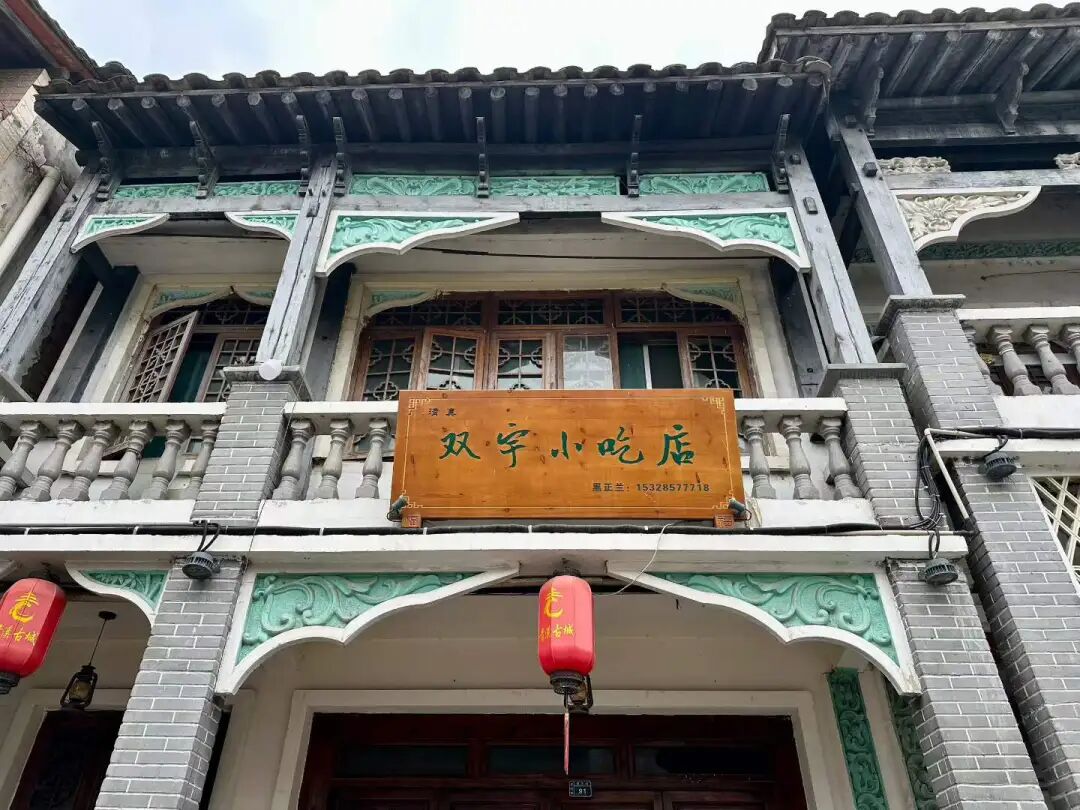
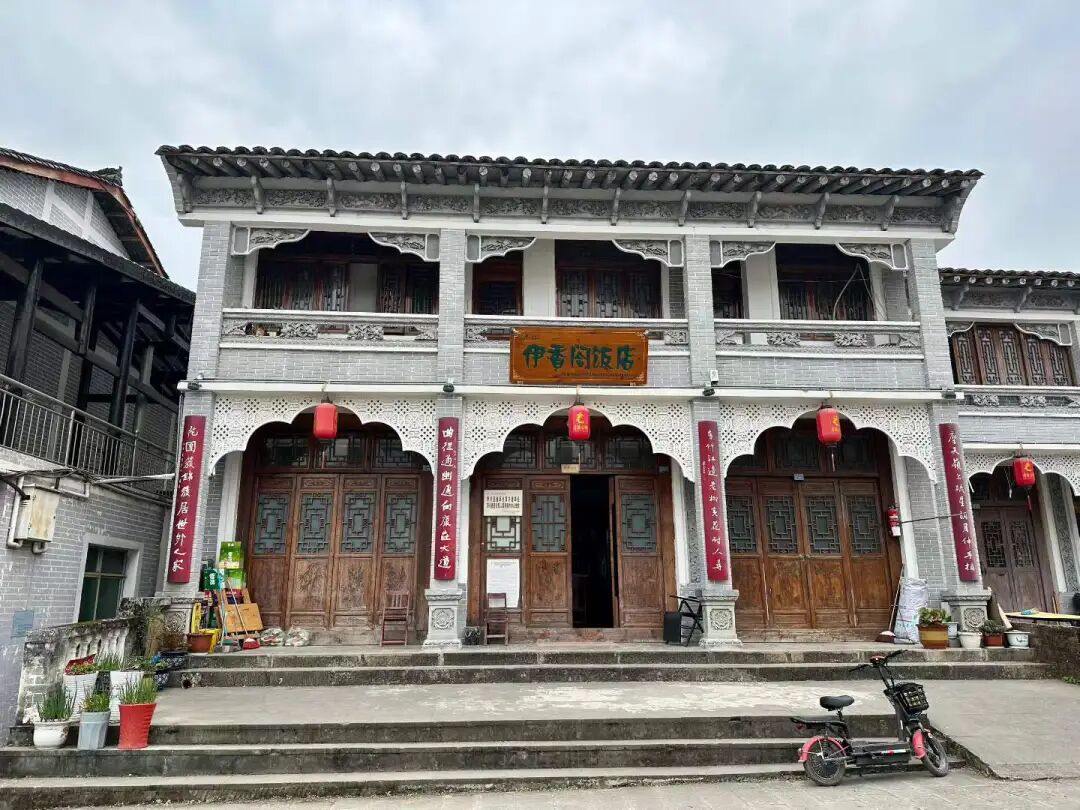
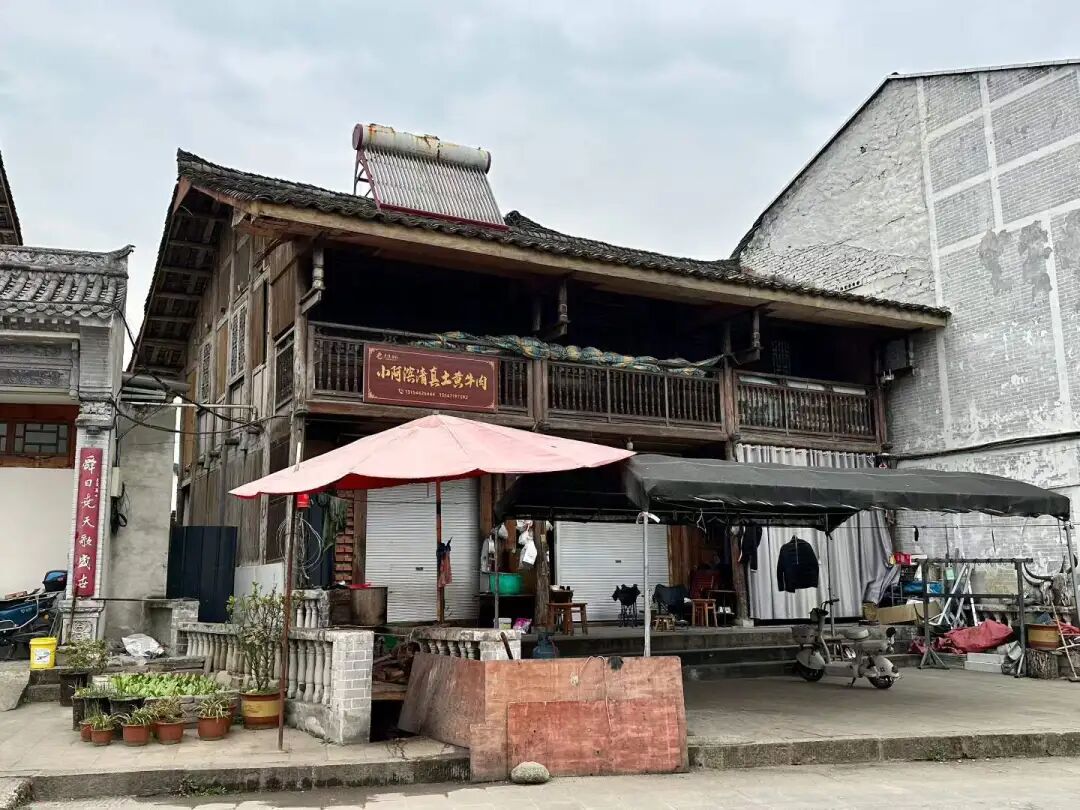
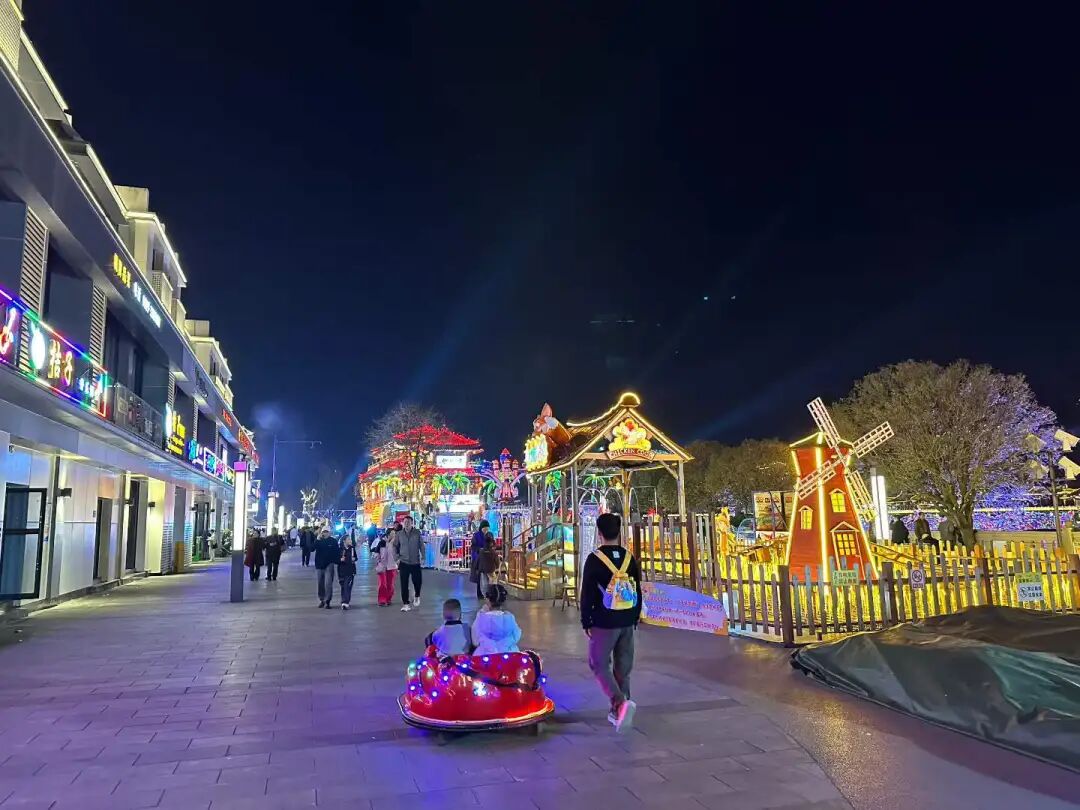
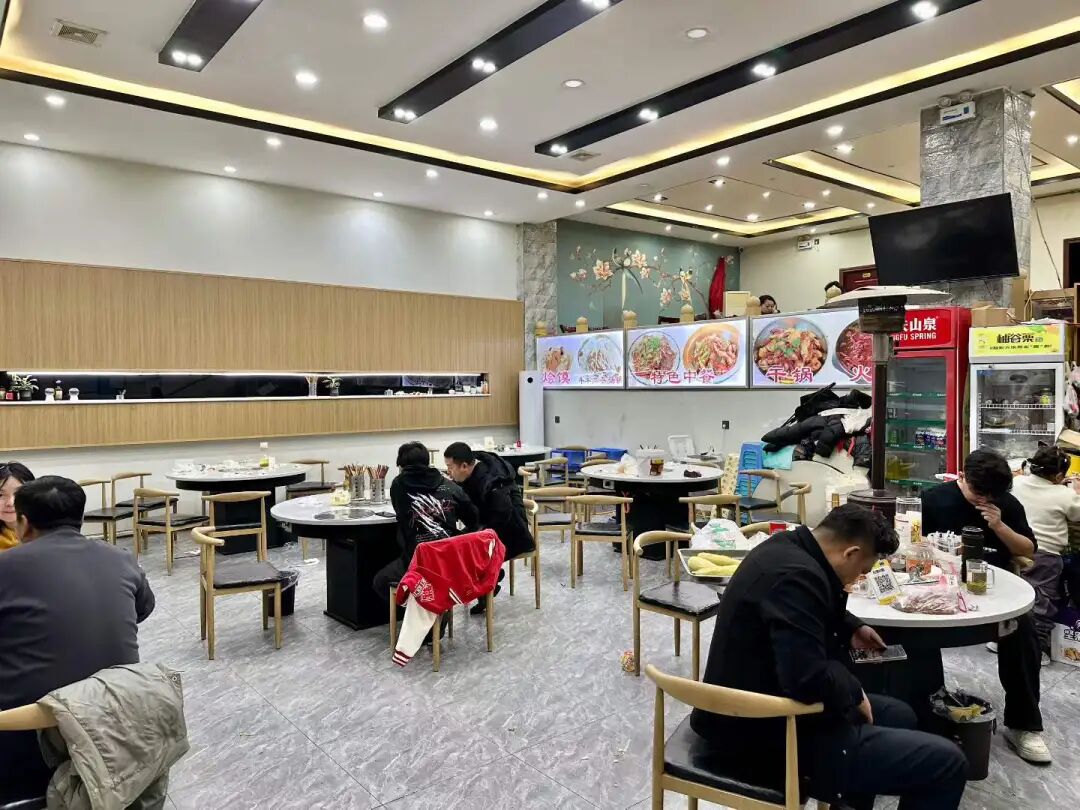
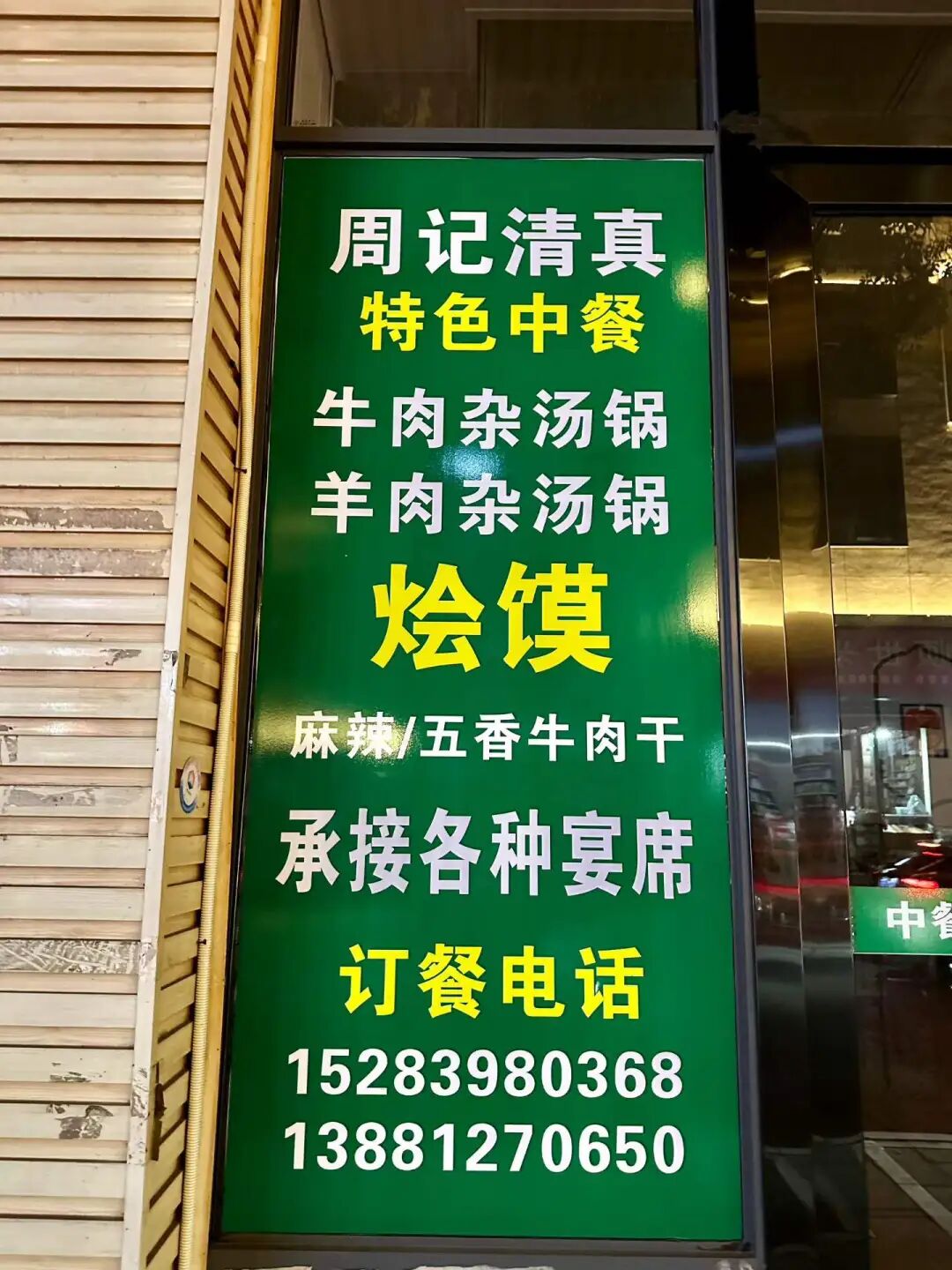
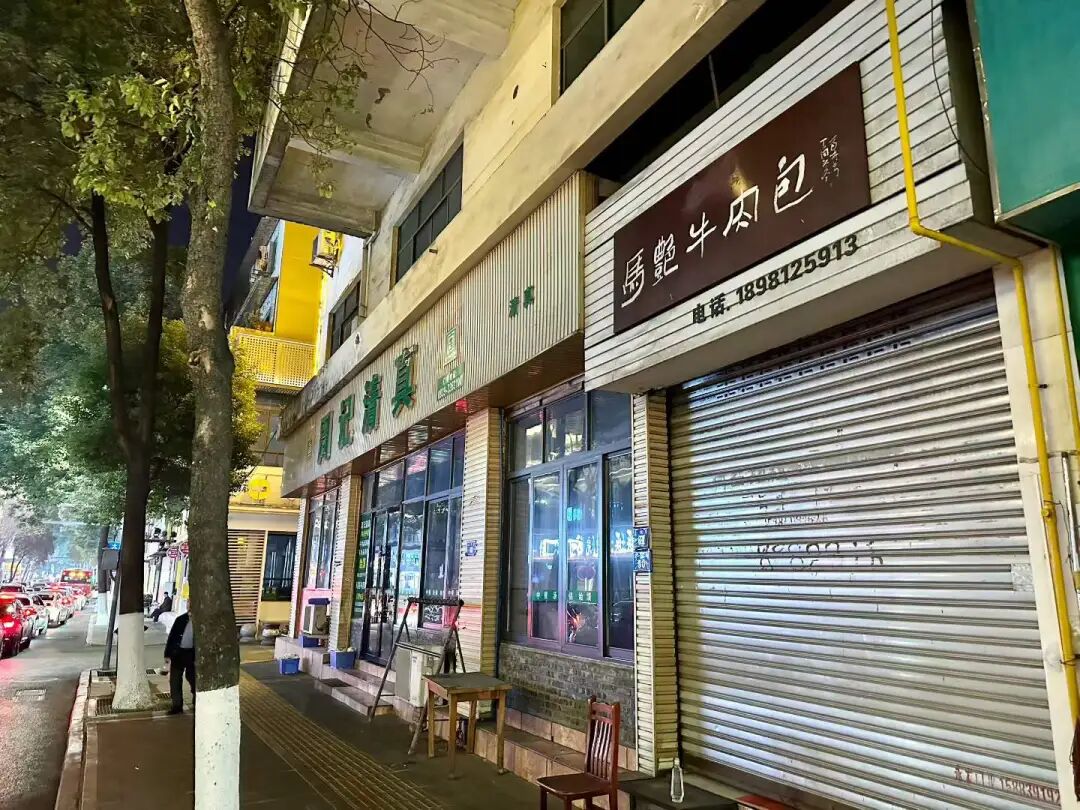
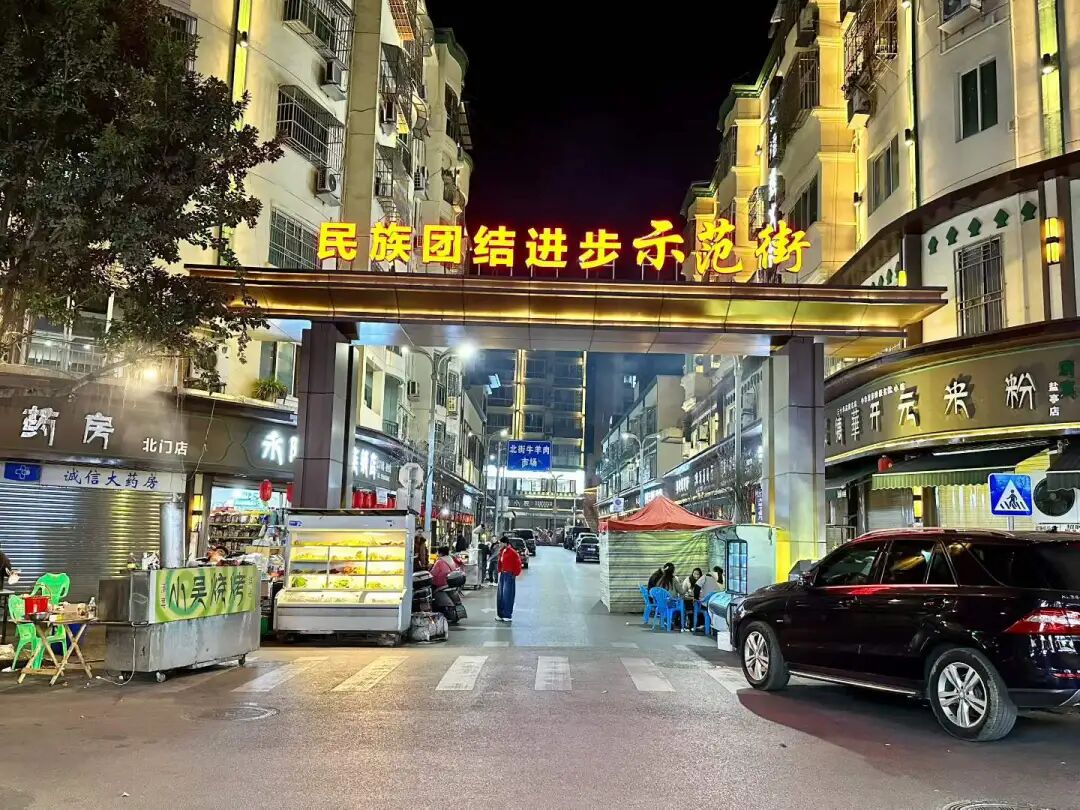
Qingxi Ancient City at night. There are many Hui Muslim eateries on the street. You can find fried cakes (yougao), crispy biscuits (cuisubing), stir-fry restaurants serving braised meat, steamed meat with flour (fen zheng rou), and twice-cooked meat (huiguorou), snack shops selling beef stewed with flatbread (niurou huimo) and wontons (chaoshou), and restaurants serving copper hot pot. The variety is very rich. Some ancient towns and cities in Sichuan with rich Hui Muslim food, such as Dujiangyan, Songpan, and Langzhong, are especially worth visiting. I think Qingxi Ancient Town has fewer tourists, and it is a great place to escape the summer heat deep in the Qinba Mountains.
The area outside the east gate of Qingxi Ancient City is where most Hui Muslims live. It has now been unified into a Hui Muslim cultural area with many Hui Muslim restaurants and snack shops where you can eat beef copper hot pot and the Hui Muslim nine-bowl feast (jiudawan). view all
Summary: This Sichuan road trip reaches Qingxi Ancient Town in Qingchuan County, Guangyuan, recording the old town, local Muslim history, route details, and mosque-related travel notes.
I drove from Dayuan Hui Muslim Township in Qingchuan County, Guangyuan, to Qingxi Ancient City for iftar. Although there were only two tables and ten people at Qingxi Mosque, the atmosphere was wonderful and felt just like being at home. Aunties cooked dishes on-site at the mosque, and elders brought food from their homes, making it very heartwarming. We ate the Qingxi Hui Muslim nine-bowl feast (jiudawan), which is a standard banquet meal. It included clear-stewed meat, crispy fried meat (xiao su rou), steamed meat with flour (fen zheng rou), braised chicken, and cabbage with kelp. It was a mix of meat and vegetables, all very home-style. After the meal, the elders and the imam kindly gave me some stewed meat, fried dough (youxiang), and fruit to eat for suhoor.
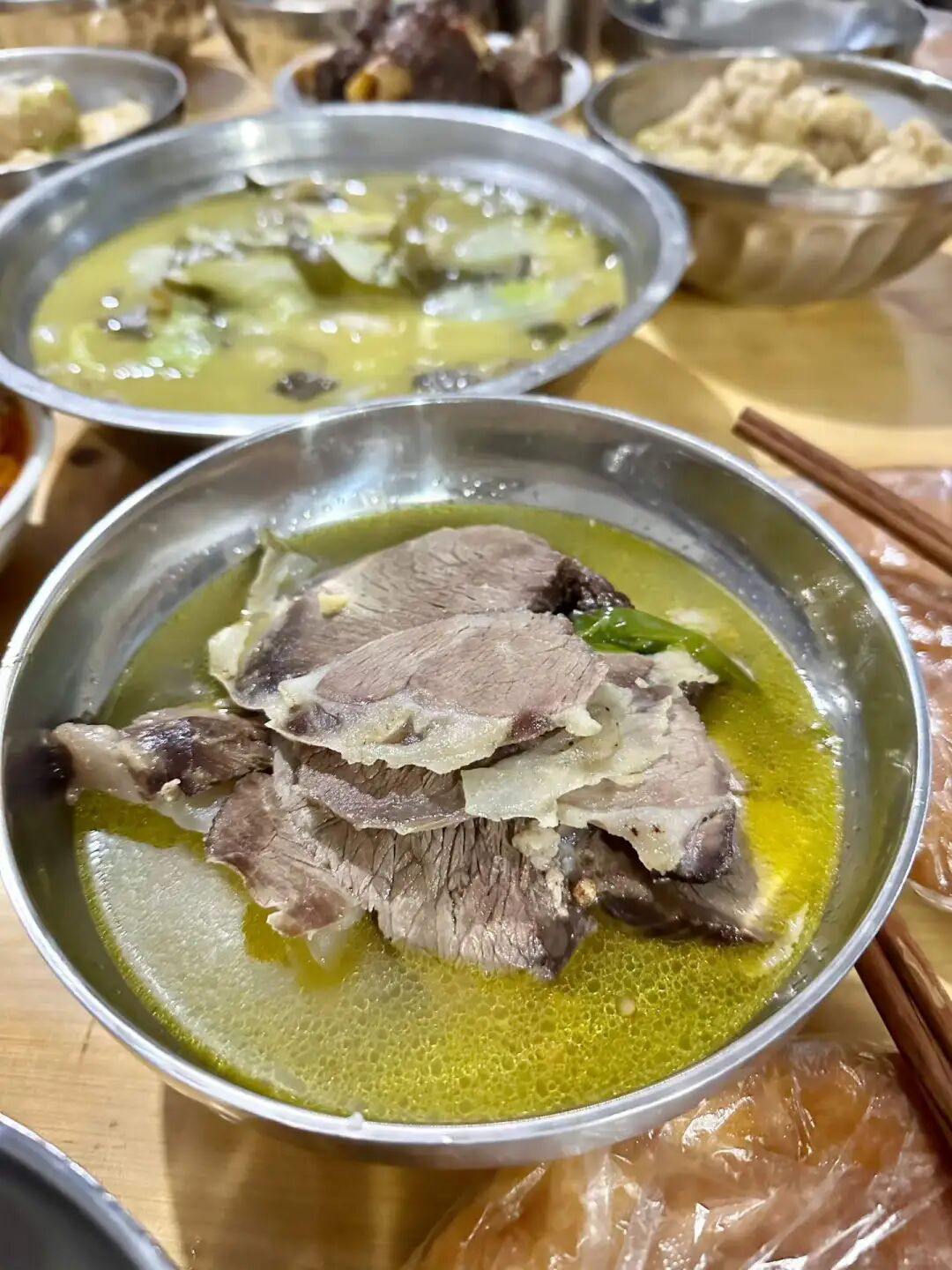
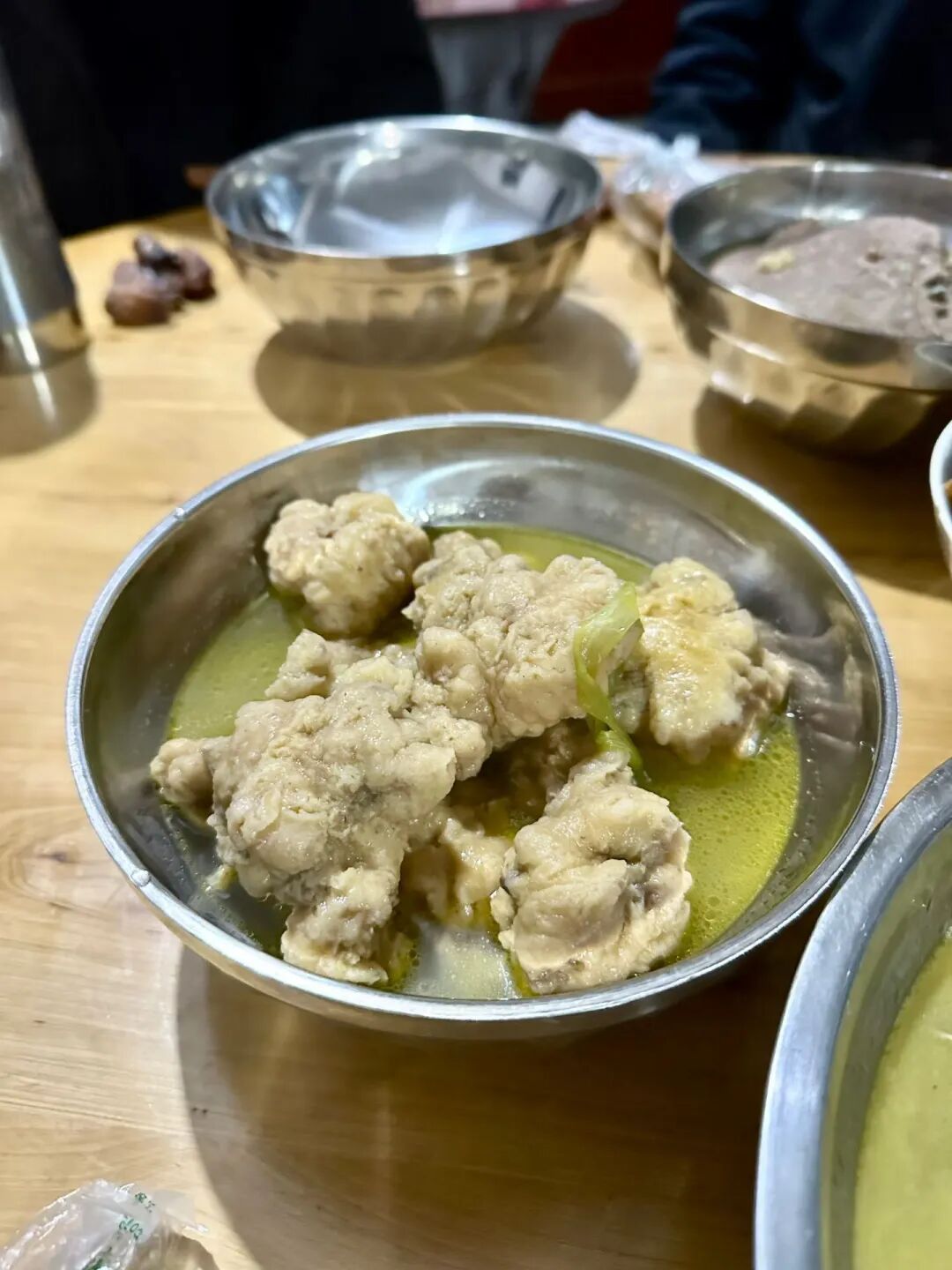
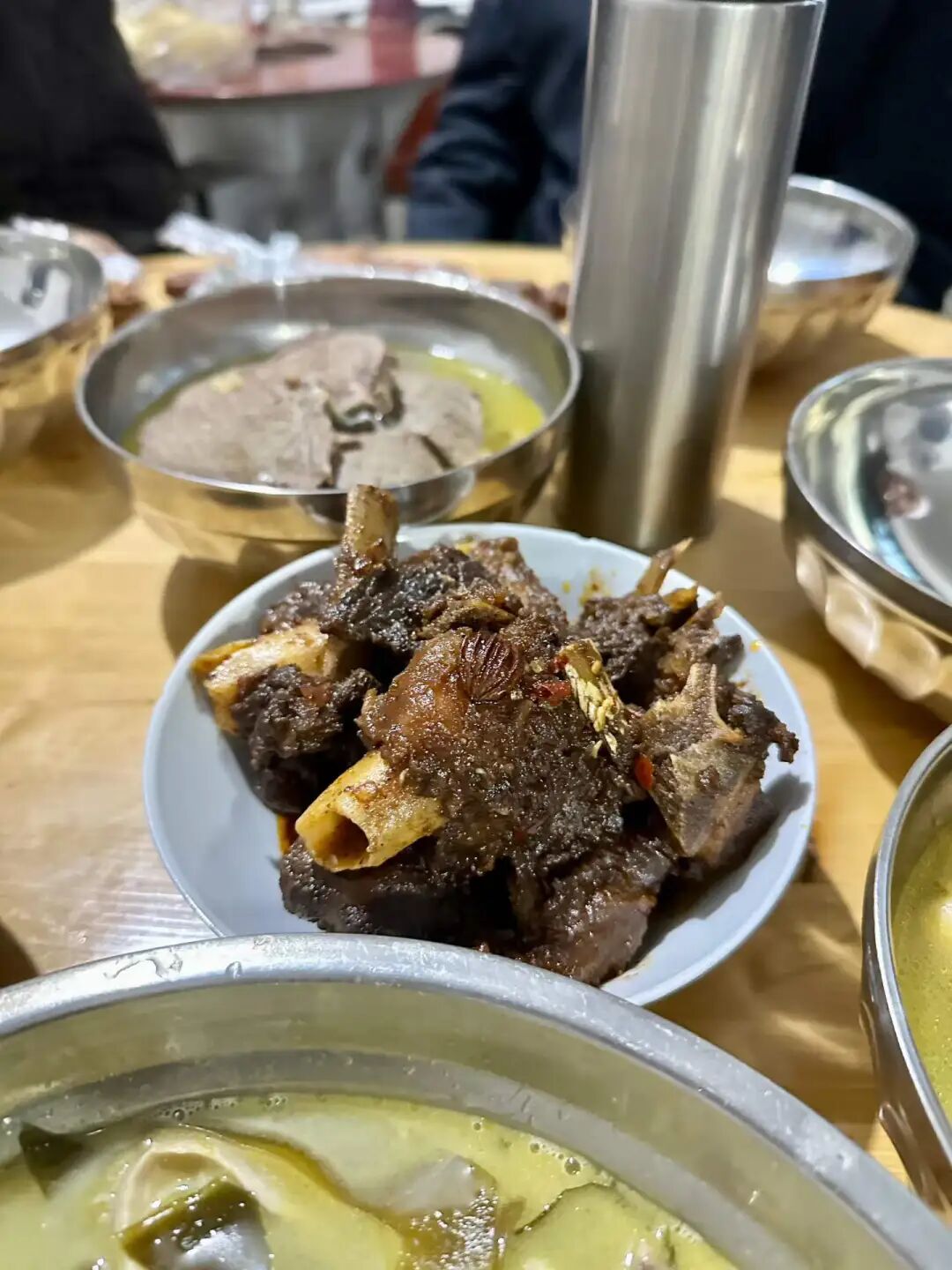
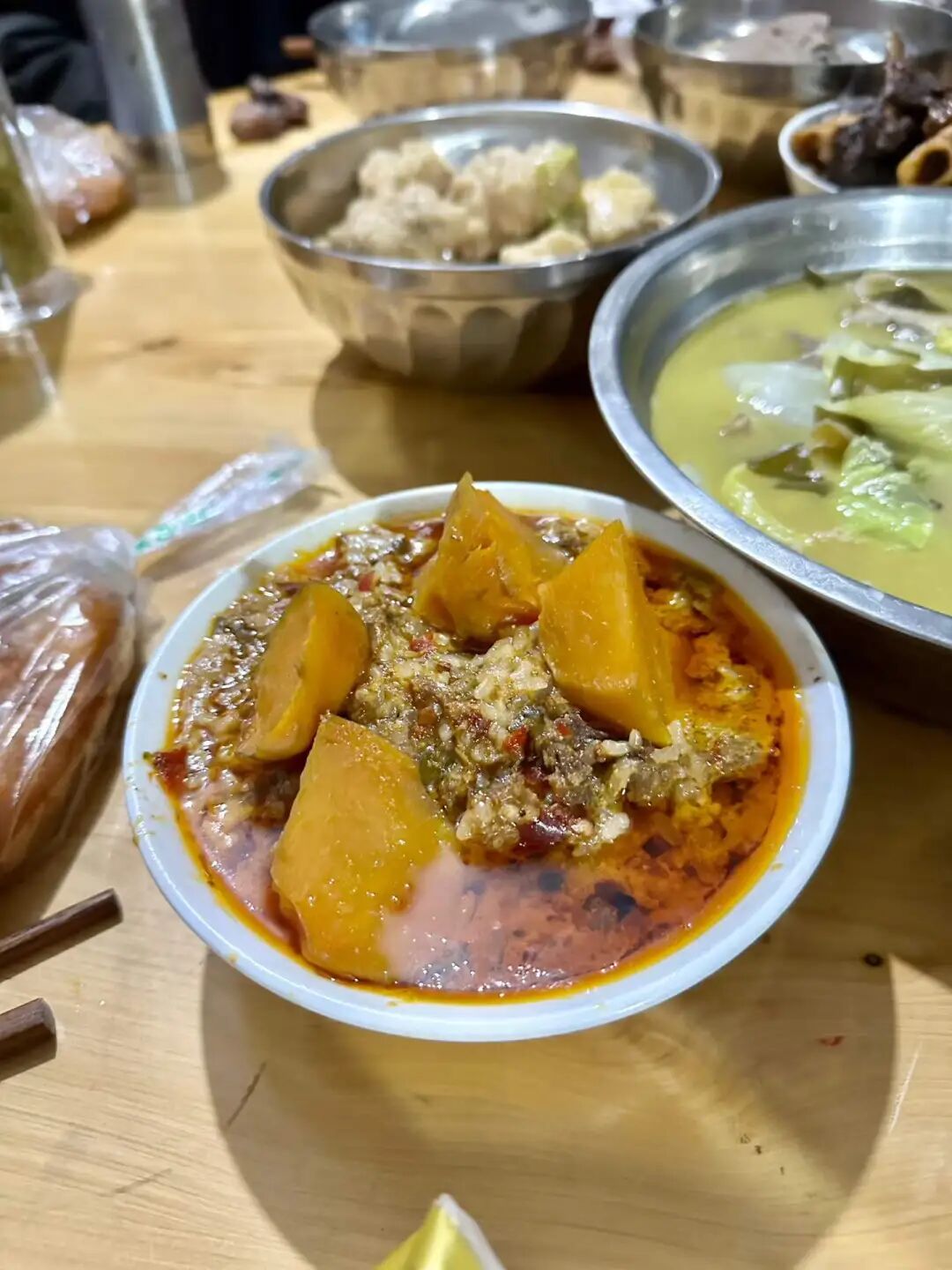
Qingxi Ancient City was an important pass on the Yinping Road. It is known as the gateway to northern Sichuan and the throat of western Shu, and it has always been a place where merchants gathered and armies fought for control. Since the Ming Dynasty, Hui Muslims from Shaanxi and Gansu settled in Qingxi along the ancient Yinping Road, and Qingxi Mosque was officially built in 1546, the 25th year of the Jiajing reign of the Ming Dynasty. The current mosque buildings were rebuilt in 1982.
There is a 400-year-old honey locust tree in the mosque, which is an important witness to the ancient site.
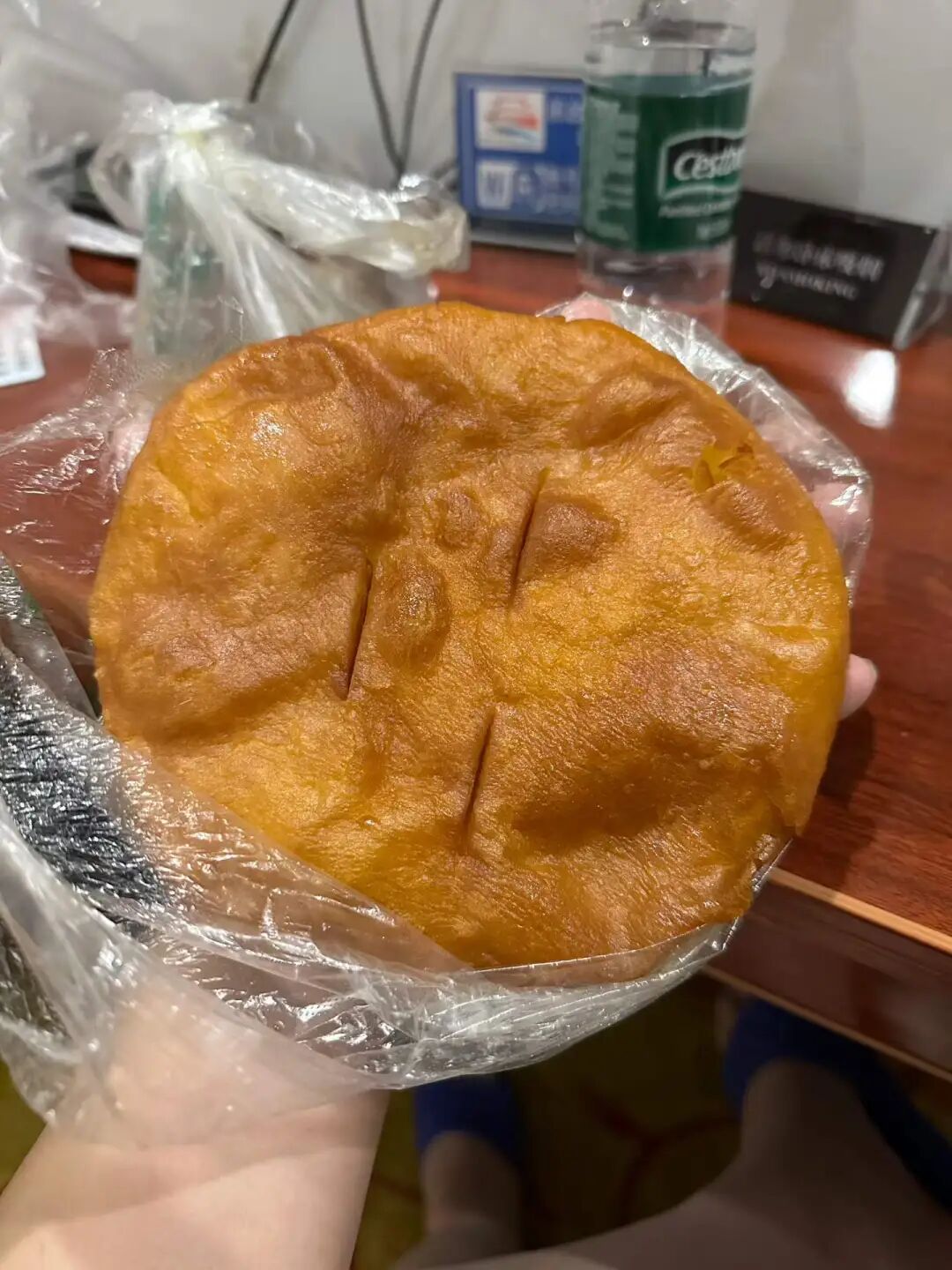
Fried dough (youxiang) and chicken for suhoor.
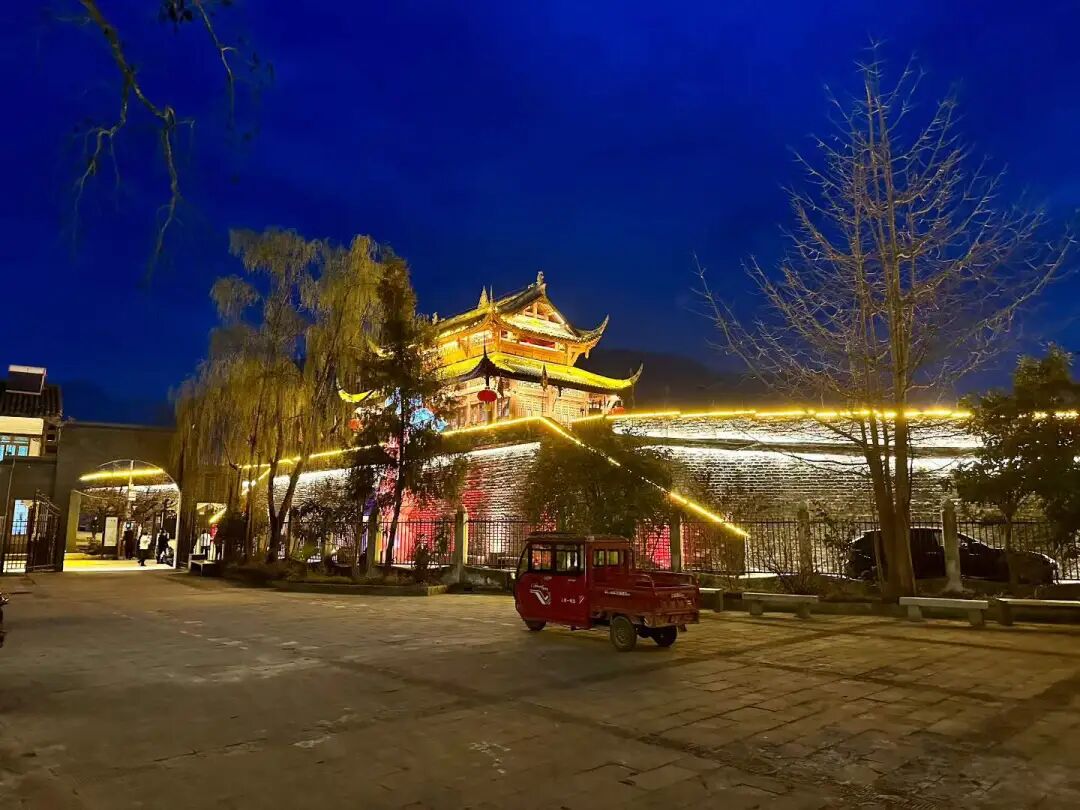
Qingxi Ancient City at night. There are many Hui Muslim eateries on the street. You can find fried cakes (yougao), crispy biscuits (cuisubing), stir-fry restaurants serving braised meat, steamed meat with flour (fen zheng rou), and twice-cooked meat (huiguorou), snack shops selling beef stewed with flatbread (niurou huimo) and wontons (chaoshou), and restaurants serving copper hot pot. The variety is very rich. Some ancient towns and cities in Sichuan with rich Hui Muslim food, such as Dujiangyan, Songpan, and Langzhong, are especially worth visiting. I think Qingxi Ancient Town has fewer tourists, and it is a great place to escape the summer heat deep in the Qinba Mountains.
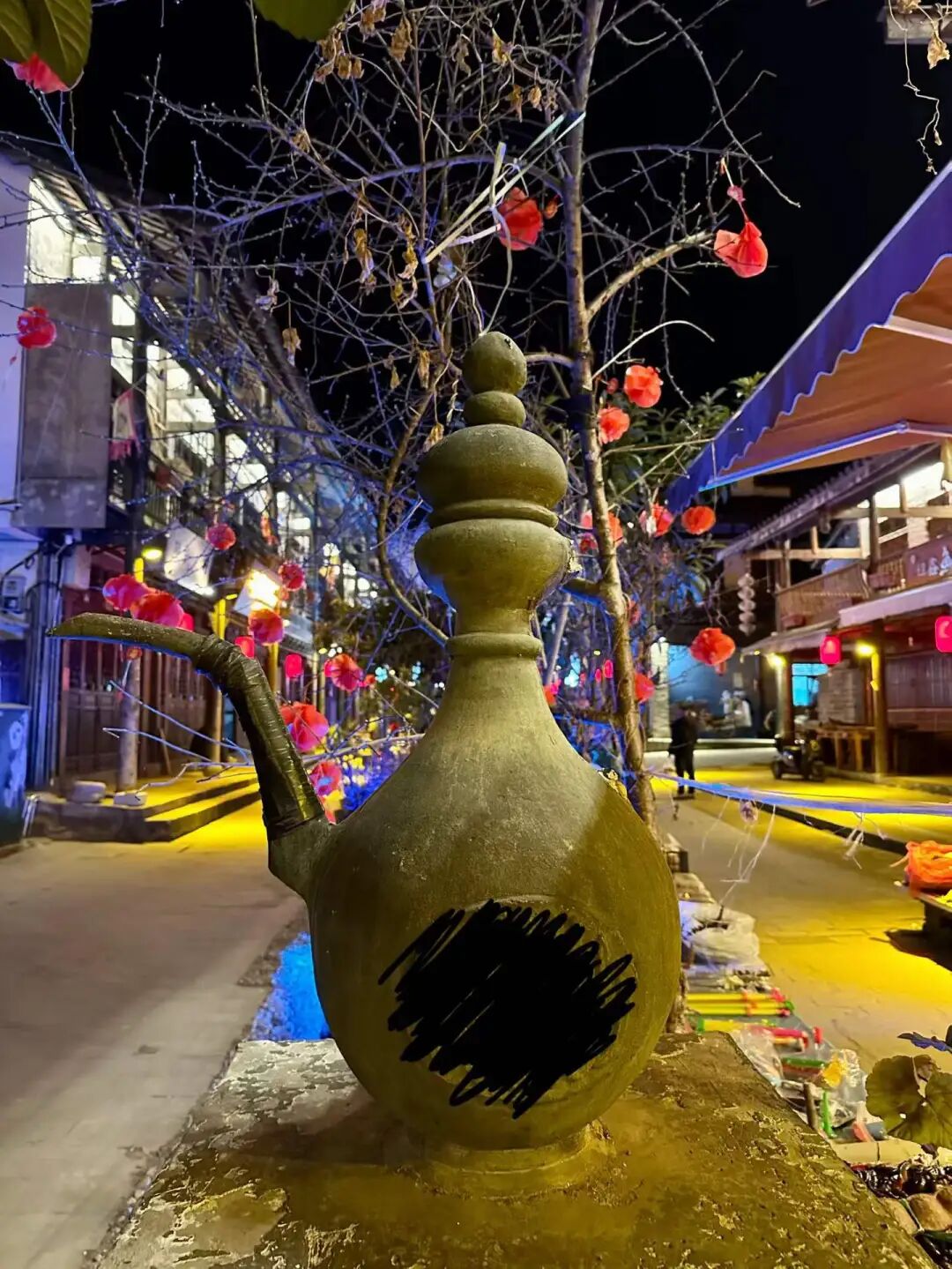
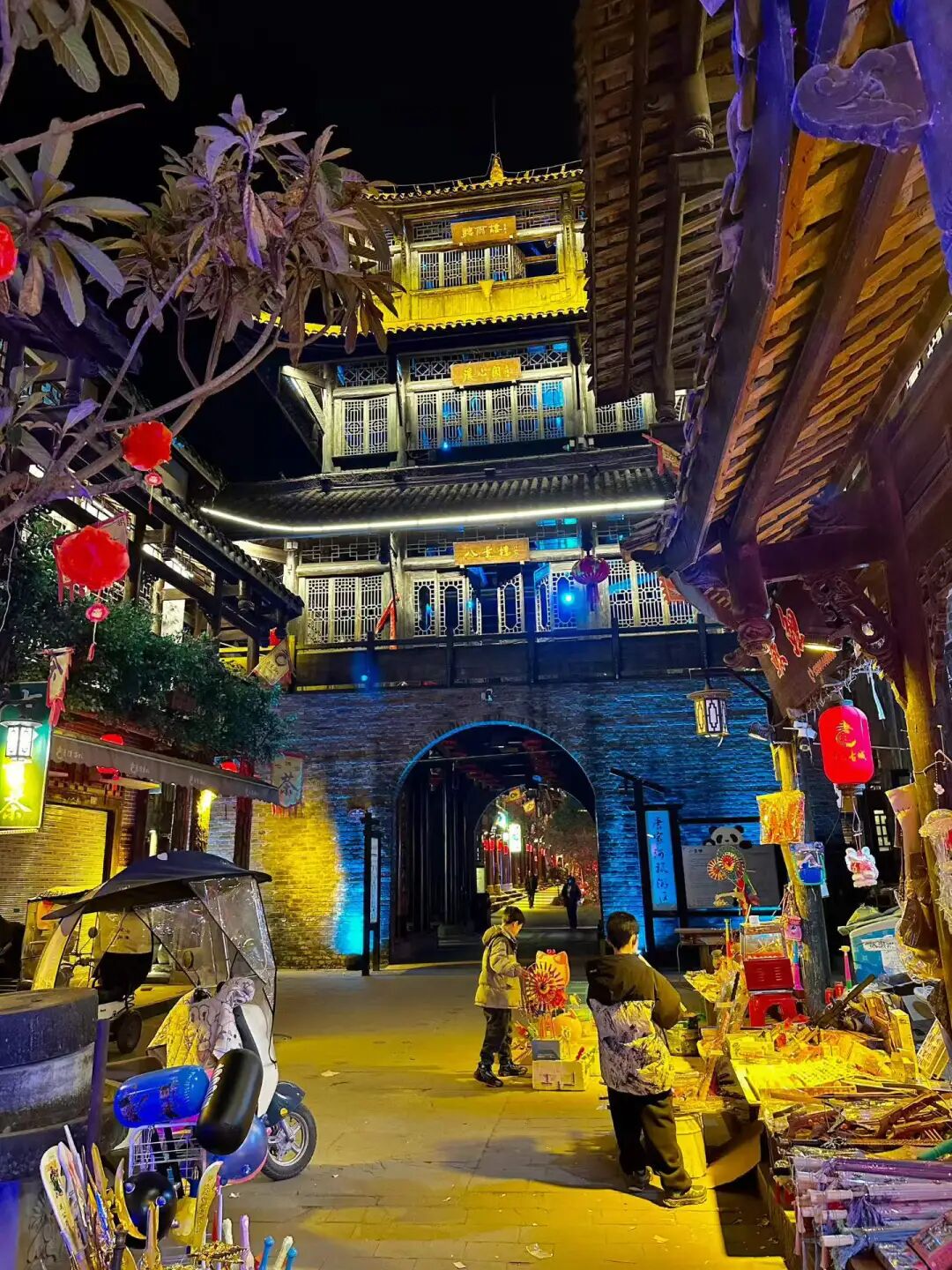
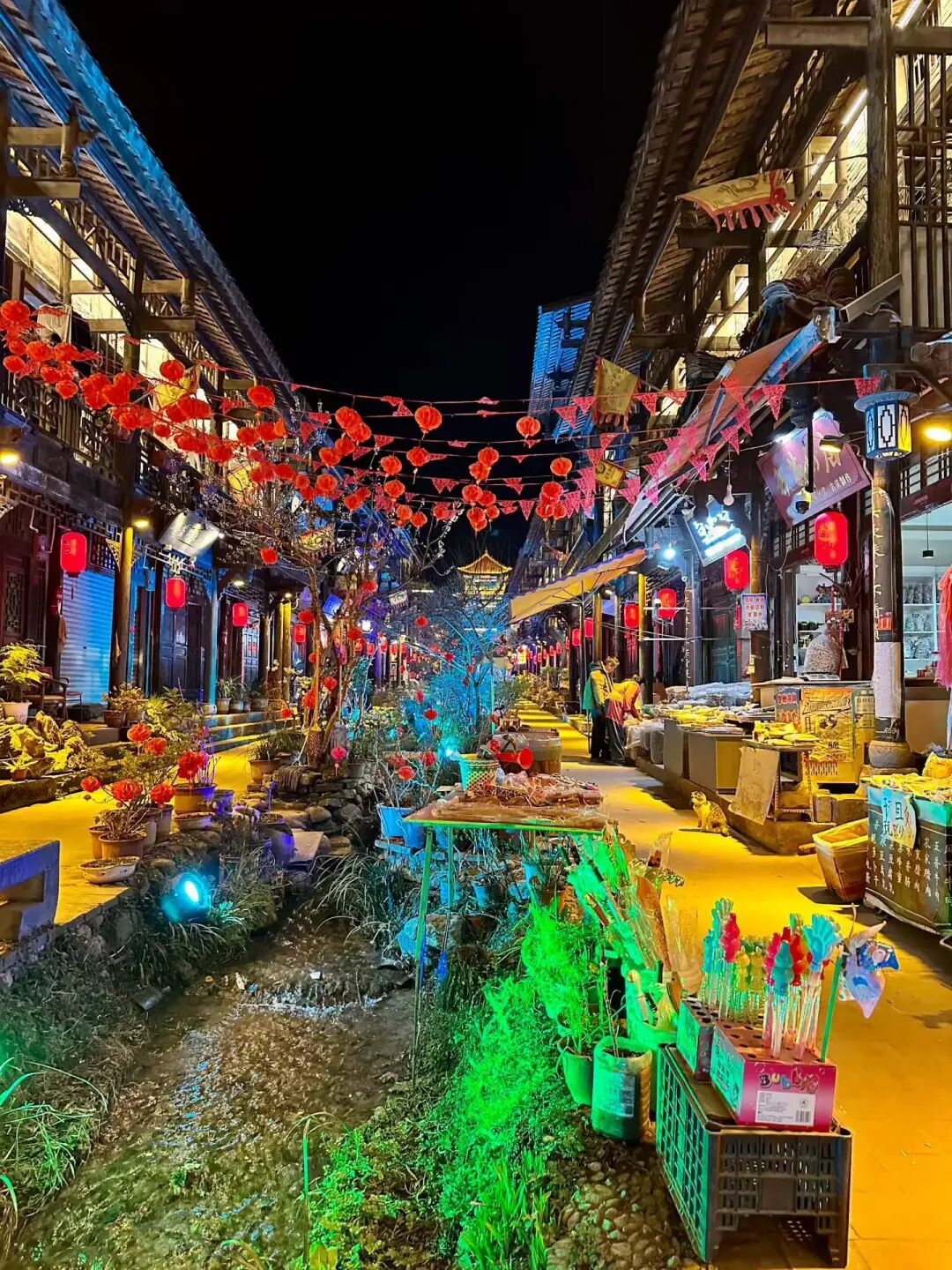
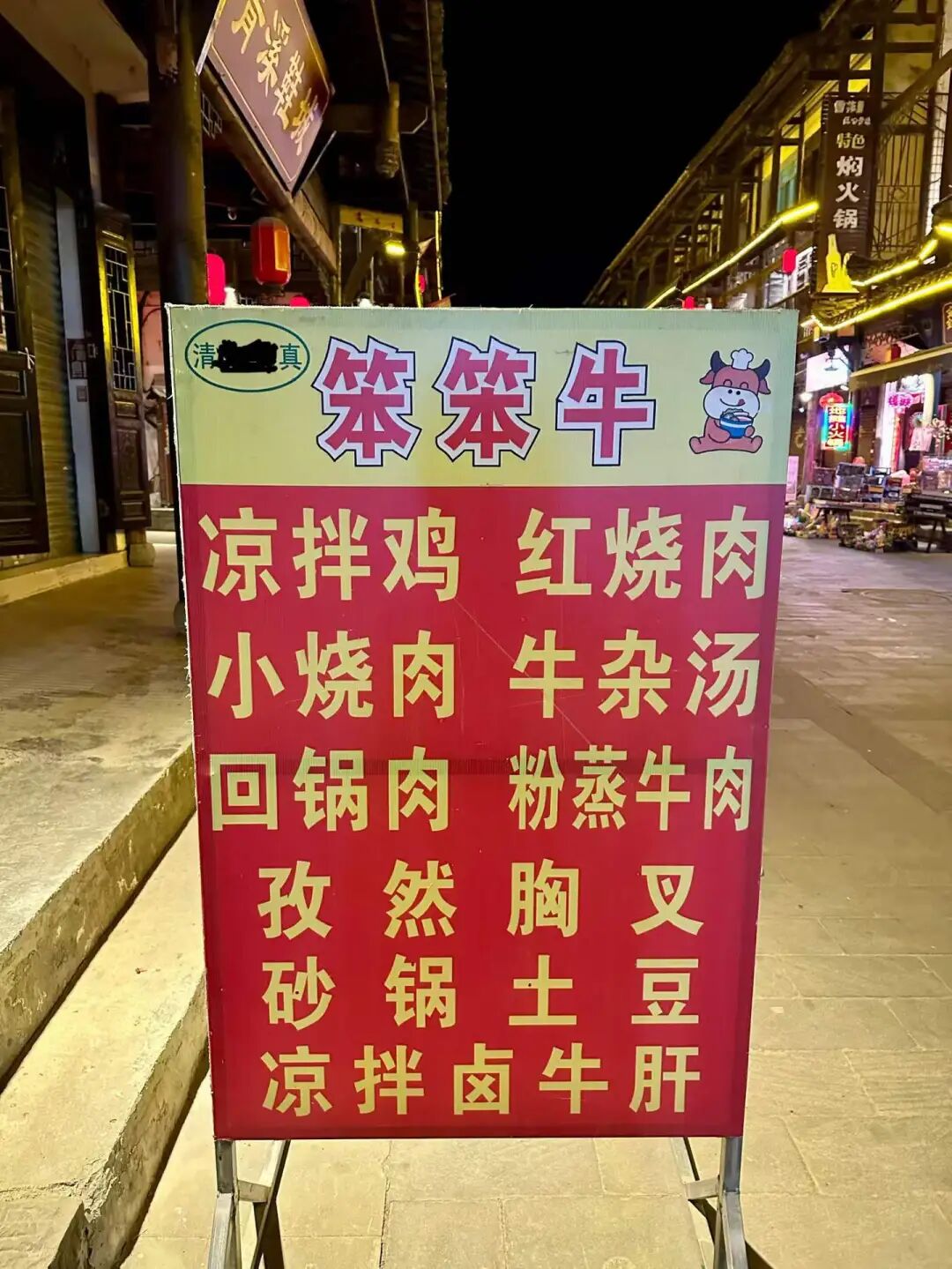
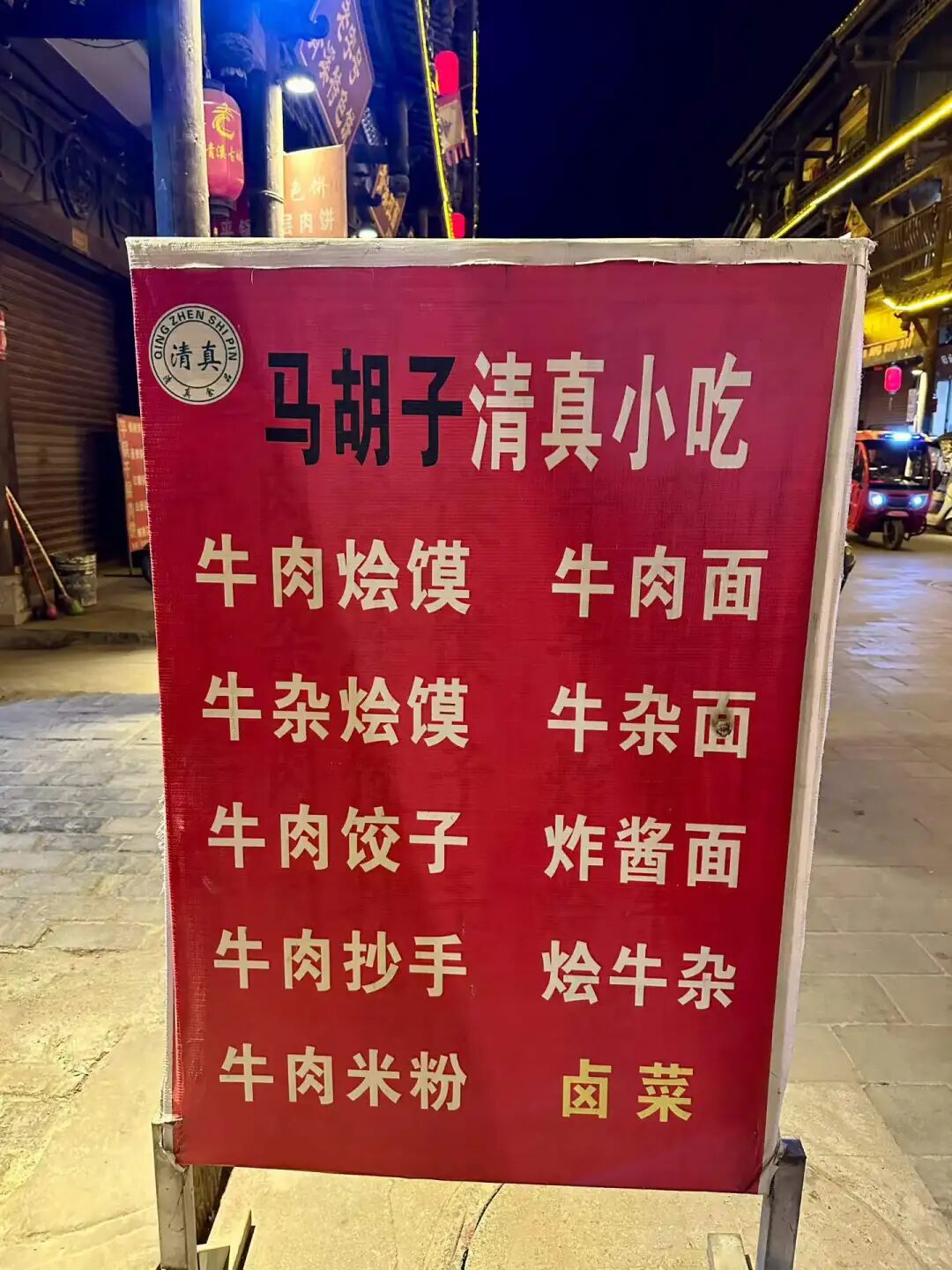
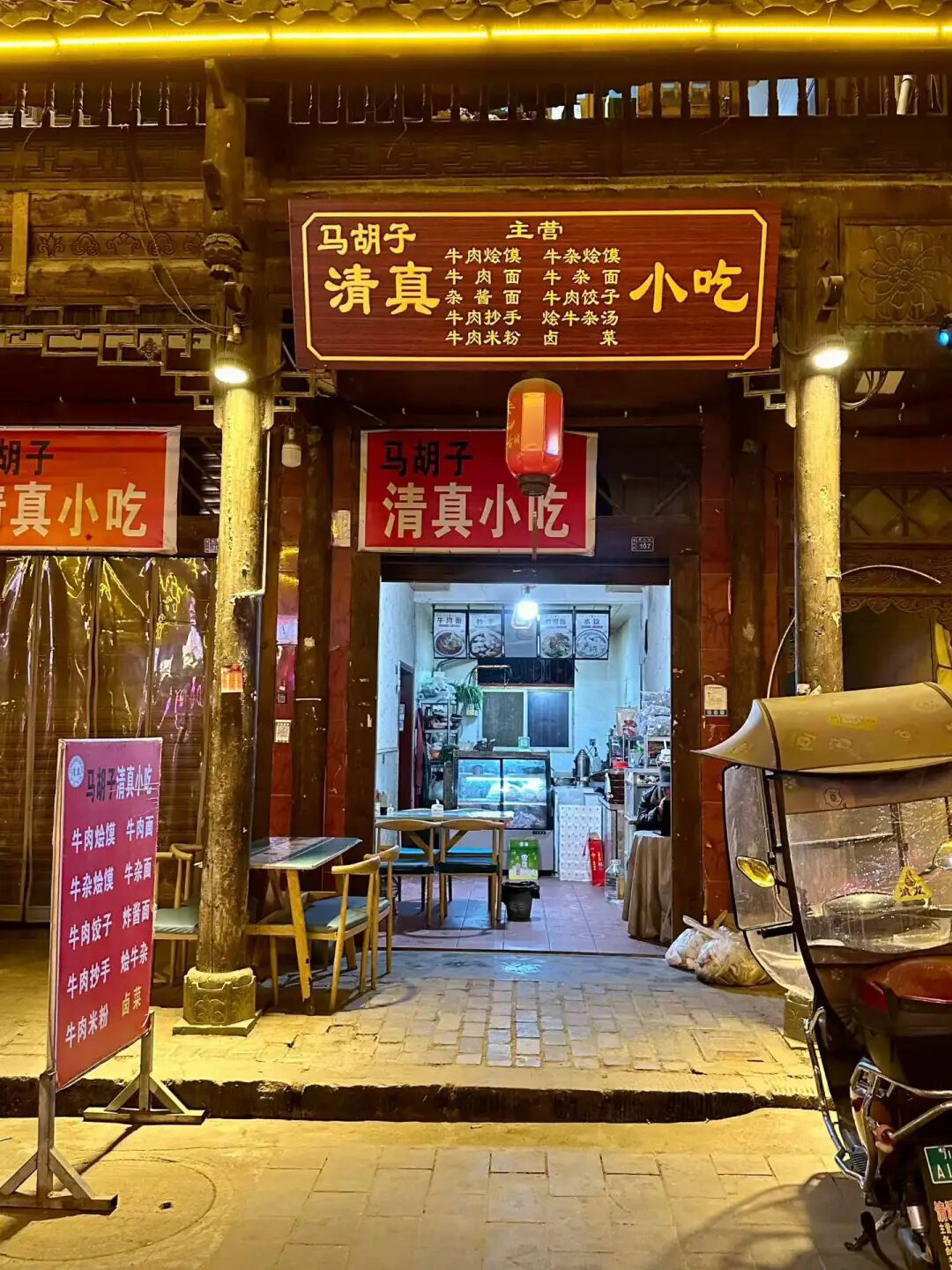
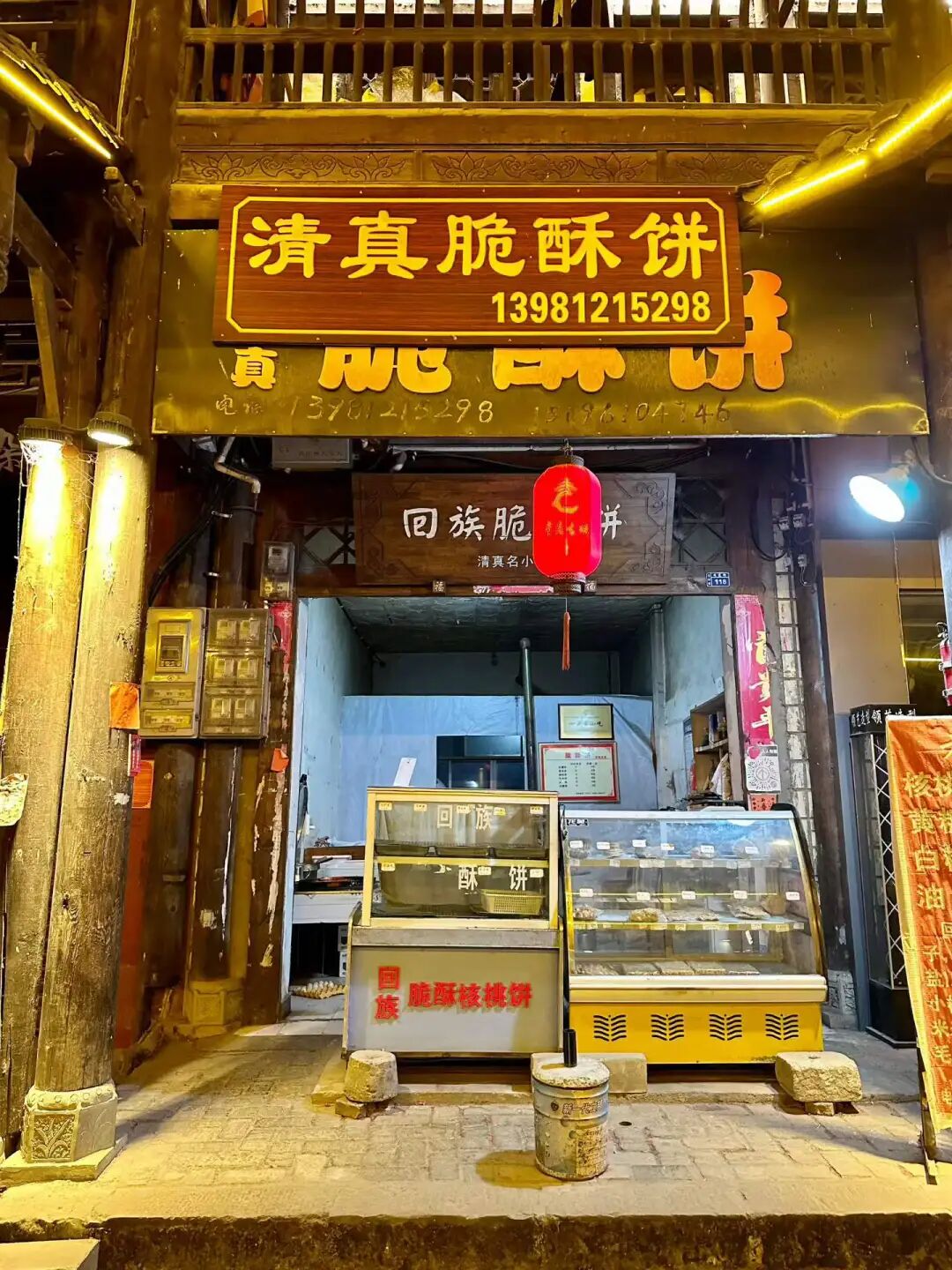
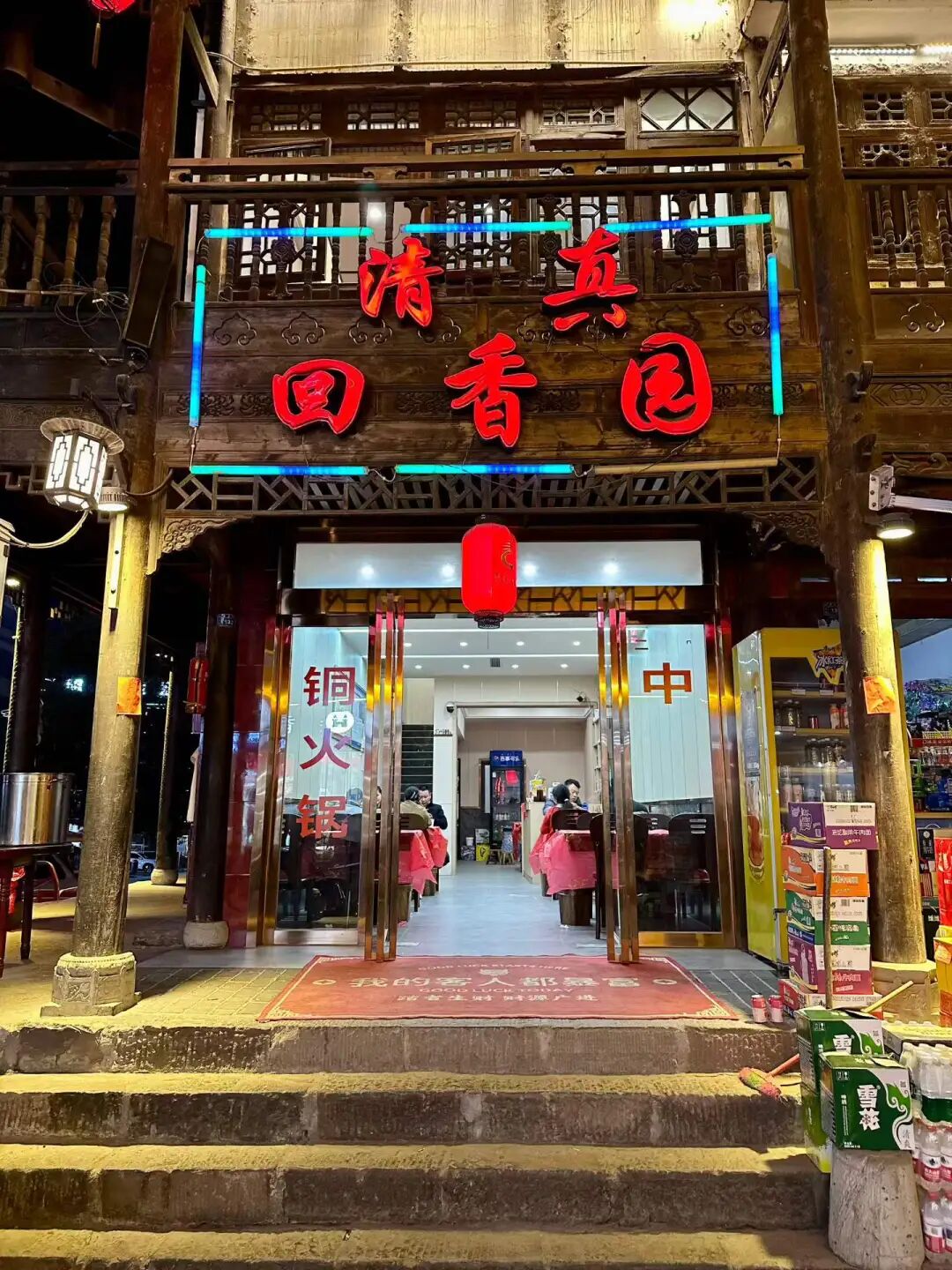
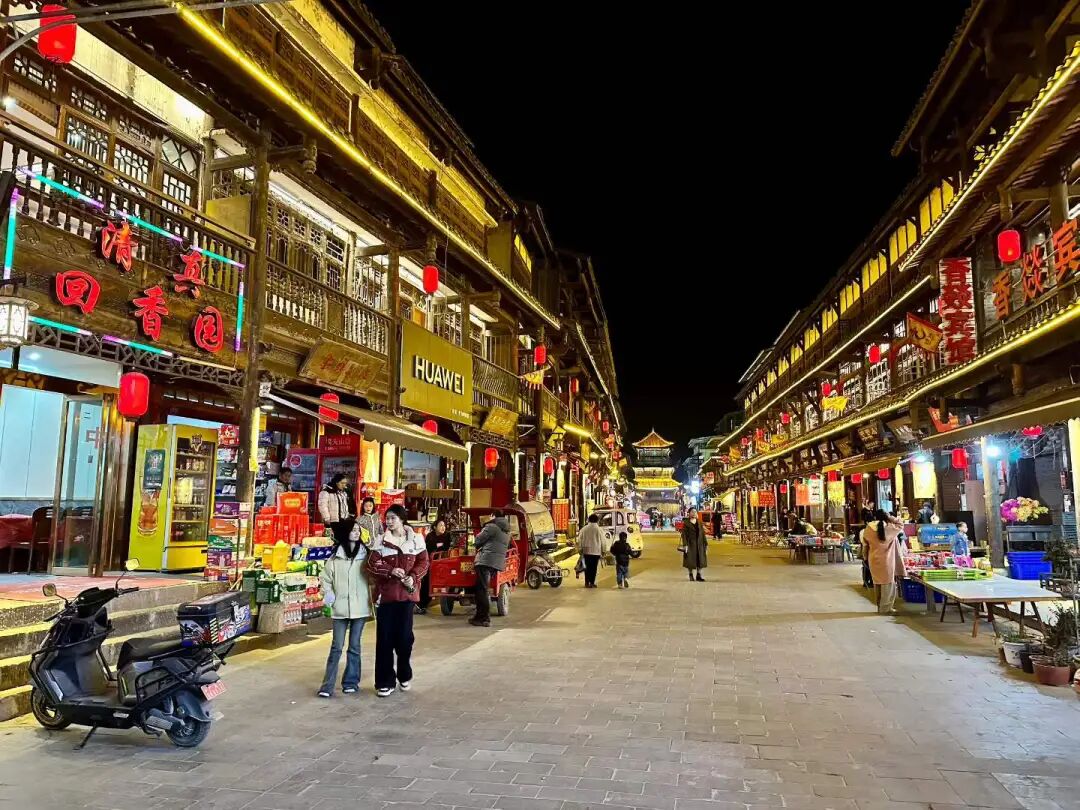
The area outside the east gate of Qingxi Ancient City is where most Hui Muslims live. It has now been unified into a Hui Muslim cultural area with many Hui Muslim restaurants and snack shops where you can eat beef copper hot pot and the Hui Muslim nine-bowl feast (jiudawan).
Hidden Gongbei in Qingchuan: Dayuan Hui Township and Wulongshan Sufi Shrine in Guangyuan
Articles • ali2007fr posted the article • 0 comments • 165 views • 2026-05-21 07:08
Summary: This northern Sichuan travelogue visits Dayuan Hui Muslim Township in Qingchuan County and Wulongshan gongbei (Sufi shrine), preserving the route, people, and local Muslim heritage.
I left downtown Guangyuan in the morning and reached Dayuan Hui Ethnic Township, deep in the Qinba Mountains, after a trip of nearly two hours. I followed the Huaguo River up the valley and first arrived at Huaguo Village to visit the Huaguo Mosque (Huaguo Si). The mosque was closed, so I could only look around the courtyard.
Huaguo Mosque is a century-old site. It was built in 1925 at Majiakou in Huaguo Village, moved to its current location in Chenjiayuan in 1940, and rebuilt after the 2008 earthquake. You can still see the old stone column bases in the courtyard today.
Continuing up the Huaguo River, I reached Suojia Village, another Hui Muslim village. It is the oldest Hui village in all of Qingchuan, with a history of over 400 years. According to a tombstone in the village, Ma Jiyuan invited the Suo and Zhao families to move from Jingyang County, Shanxi, to settle by the Huagai River in 1580 (the eighth year of the Wanli reign of the Ming Dynasty). The Qingchuan County Annals record that in 1586 (the fourteenth year of the Wanli reign of the Ming Dynasty), three Hui Muslim families named Ma, Suo, and Hei from Ta'er Mosque in Jingyang County, Shanxi, moved to settle by the Huagai River in Dayuan Township, marking the arrival of Hui Muslims in the county.
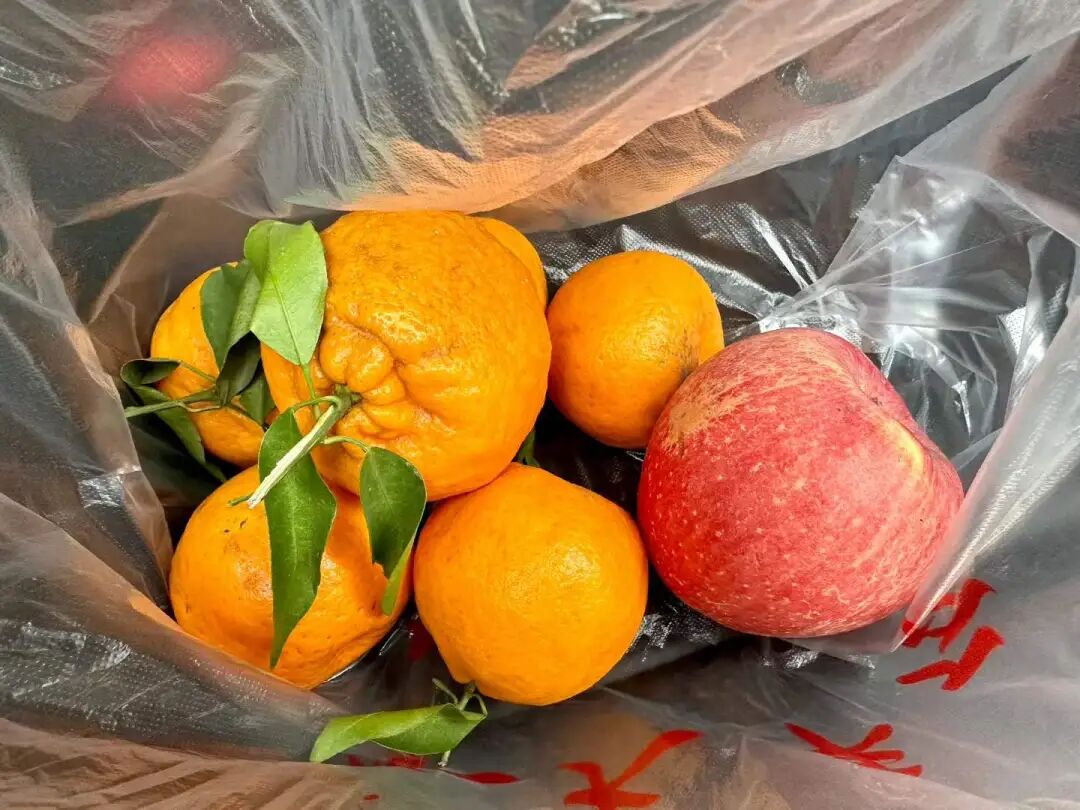
At Suojia Mosque, the imam and village elders welcomed me warmly. I offered a donation (nietie), but they returned it to me, saying it was for travelers, and gave me oranges and apples instead. Suojia Mosque was built in the late Ming Dynasty, occupied in 1952, and torn down in 1967. Led by fellow Muslims Suo Fushou and Ma Minghuai, and through the efforts of Suo Jinming, Suo Wenjin, Ma Qinggao, Suo Jinzhu, Suo Fuguo, and Ma Wancai, the current Suojia Mosque was finally completed after four years of work from 2007 to 2011.
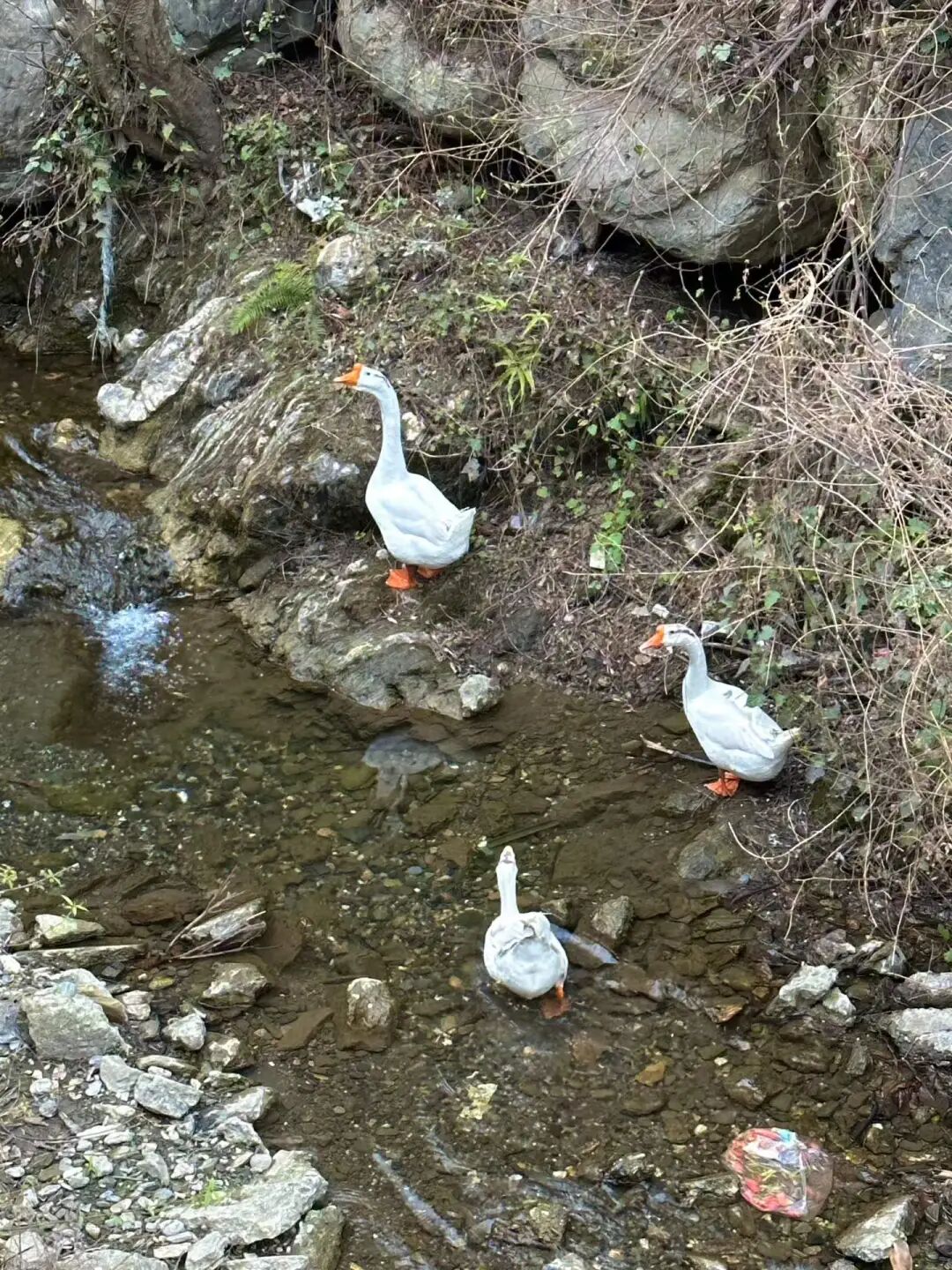
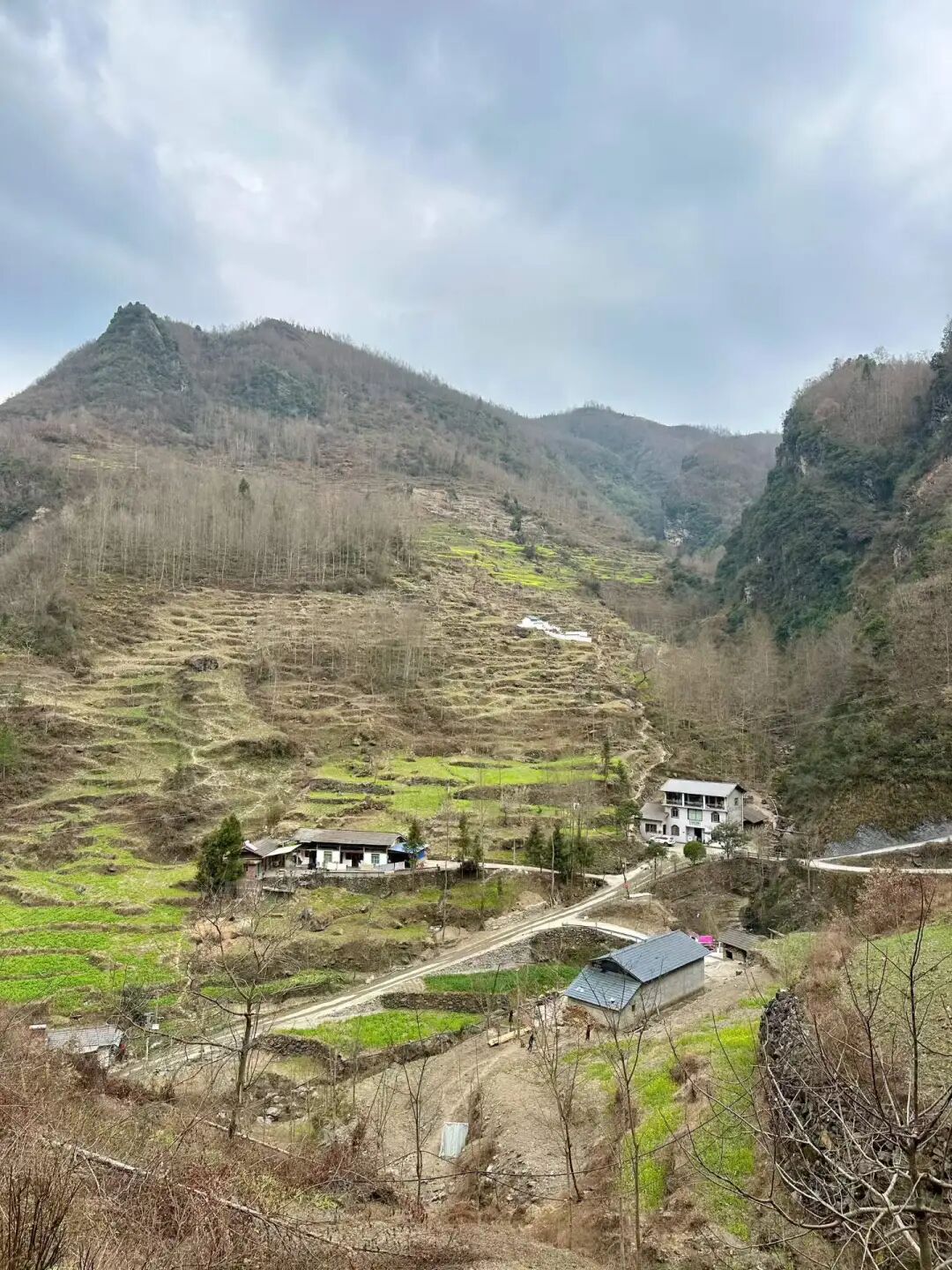
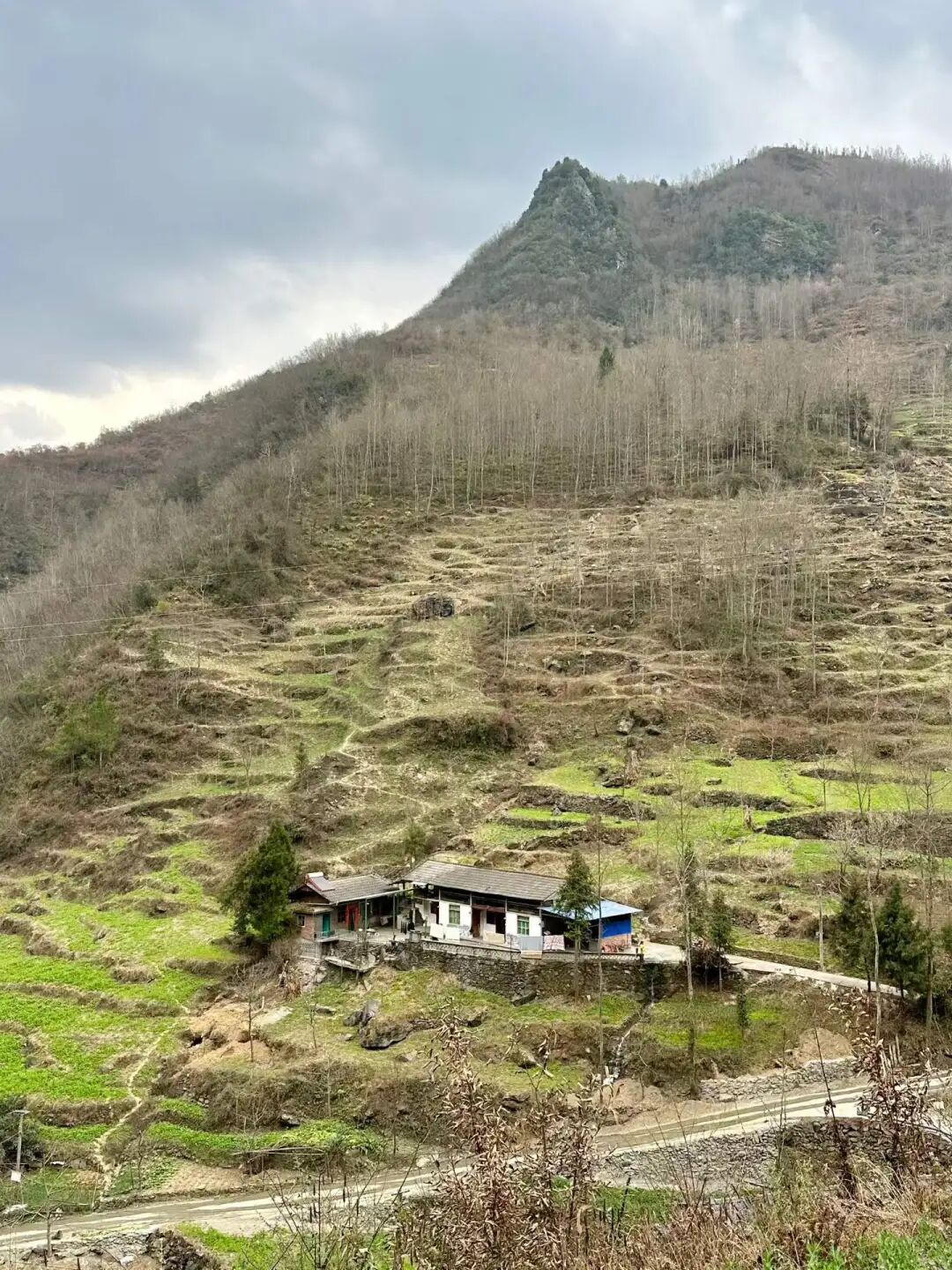
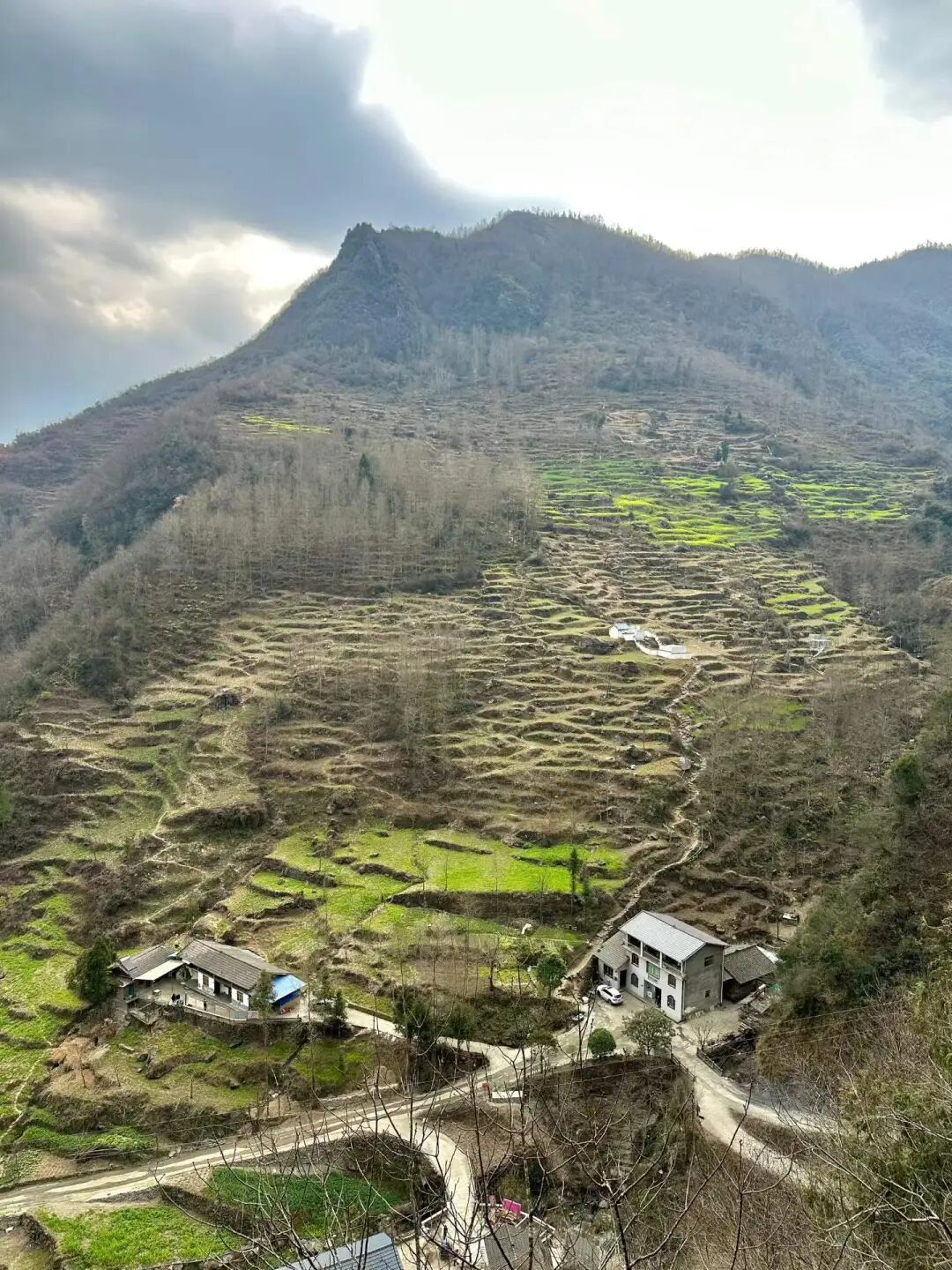
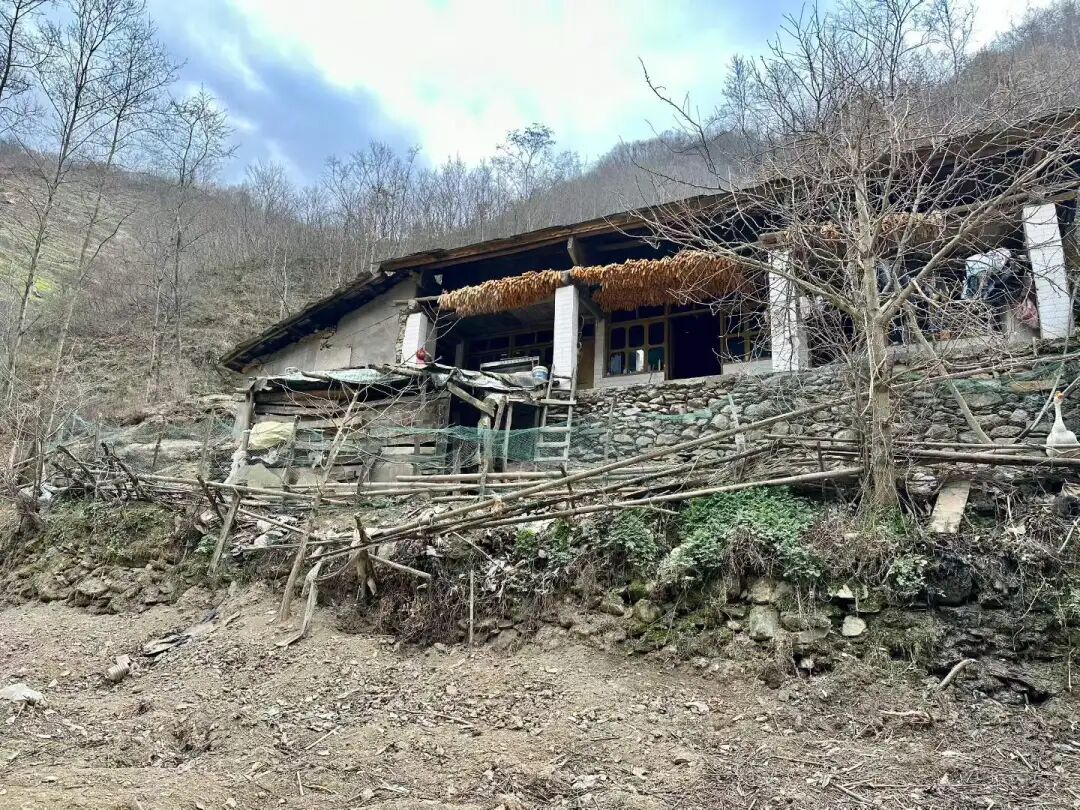
In Suojia Village, I clearly saw many people wearing white caps. Everyone was very friendly and smiled at me. Suojia Village sits deep in Wulong Mountain. With ducks and geese in the stream and fellow Muslims plowing the terraced fields with oxen, it is a peaceful scene, like a hidden paradise.
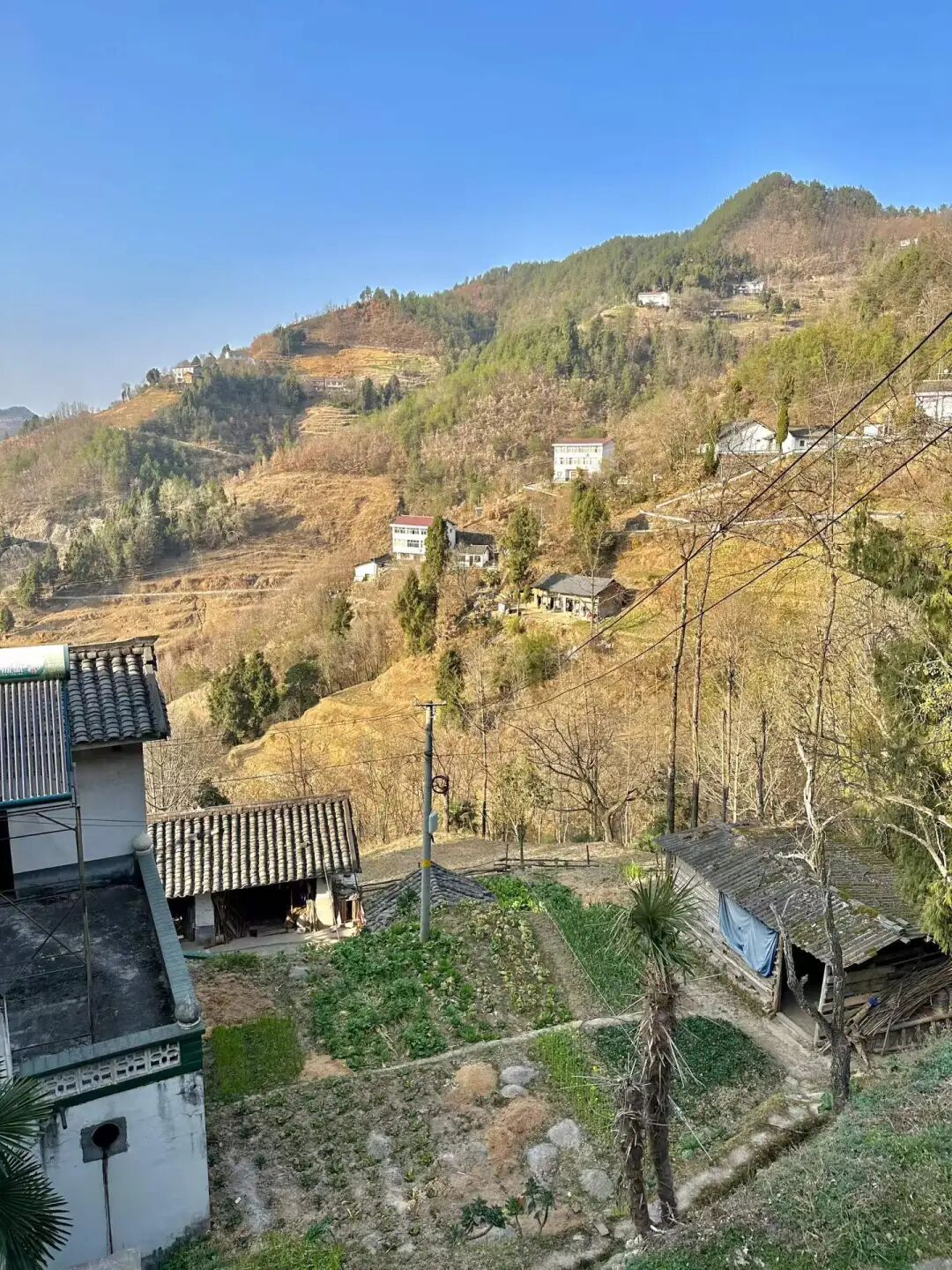
Suojia Village is definitely the most beautiful Hui Muslim village I have visited in Sichuan. I slowly climbed Wulong Mountain and looked out from the railing. Rolling green mountains stretched out, the quiet Huaguo River valley lay between them, and houses were scattered along the slopes. White walls and dark tiles dotted the landscape, while terraced fields formed a lush green pattern. The fresh mountain air hit my face, and everything I saw felt like a healing pastoral poem.
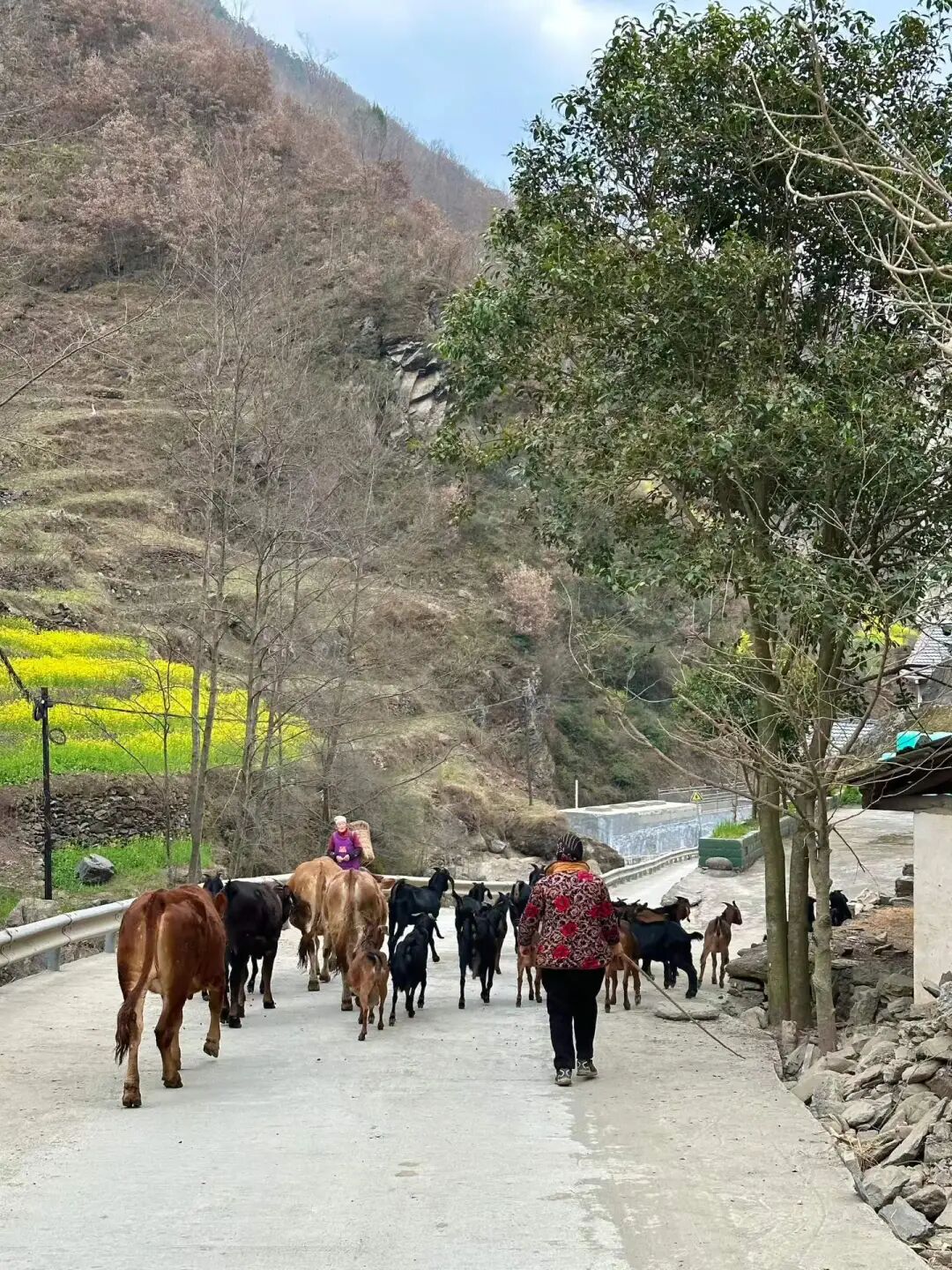
The village specializes in organic green tea, mountain delicacies, eco-friendly beef and lamb, and medicinal herbs grown in the forest. While walking through the village, I happened to meet a simple Hui Muslim grandmother driving her cattle and sheep into the deep mountains to graze, looking very relaxed. When she is not grazing them, she feeds the cattle and sheep pure corn cobs. Cattle and sheep raised on mountain spring water, wild mushrooms, and corn must taste great. I want to try some next time I have the chance.
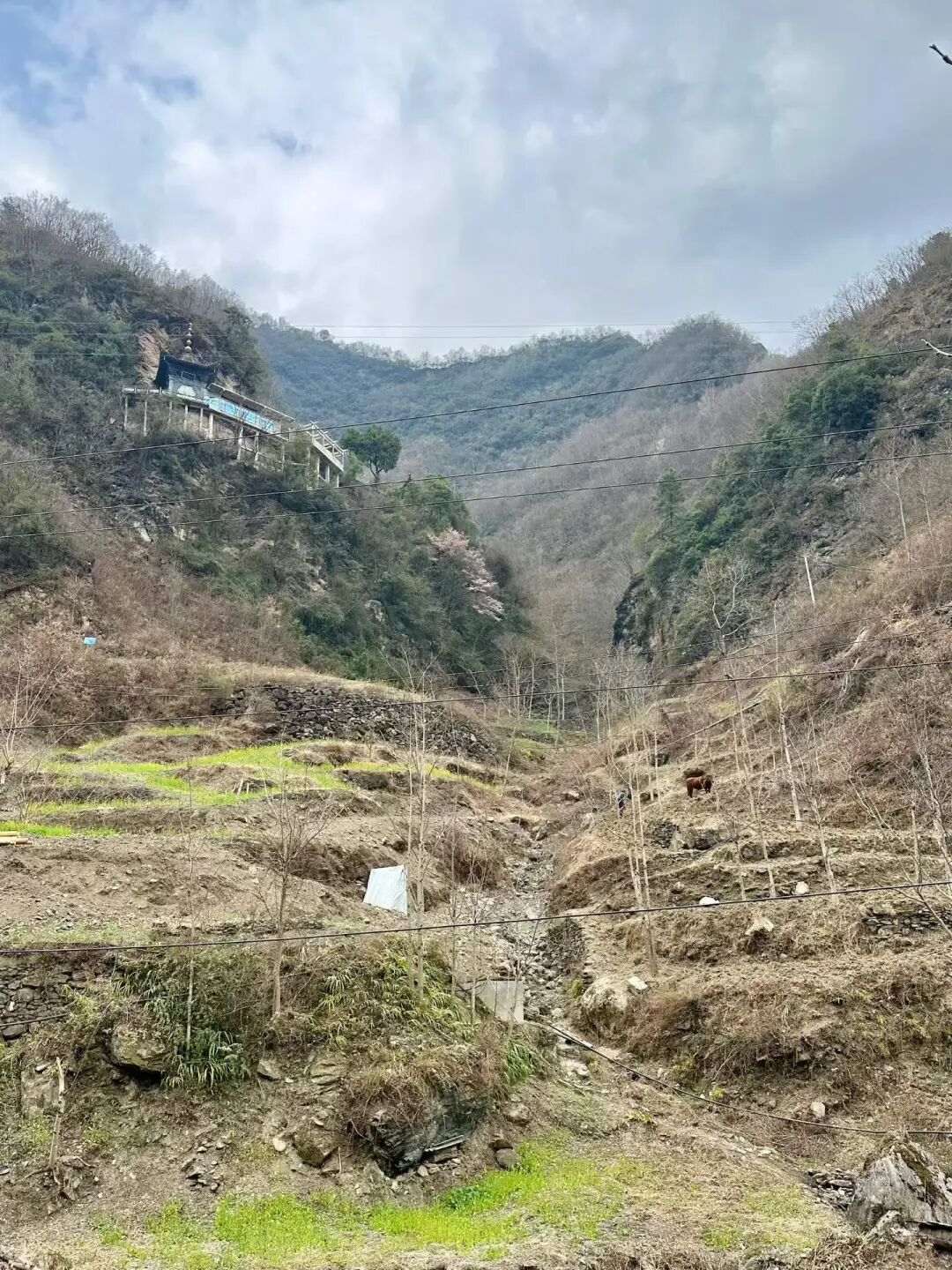
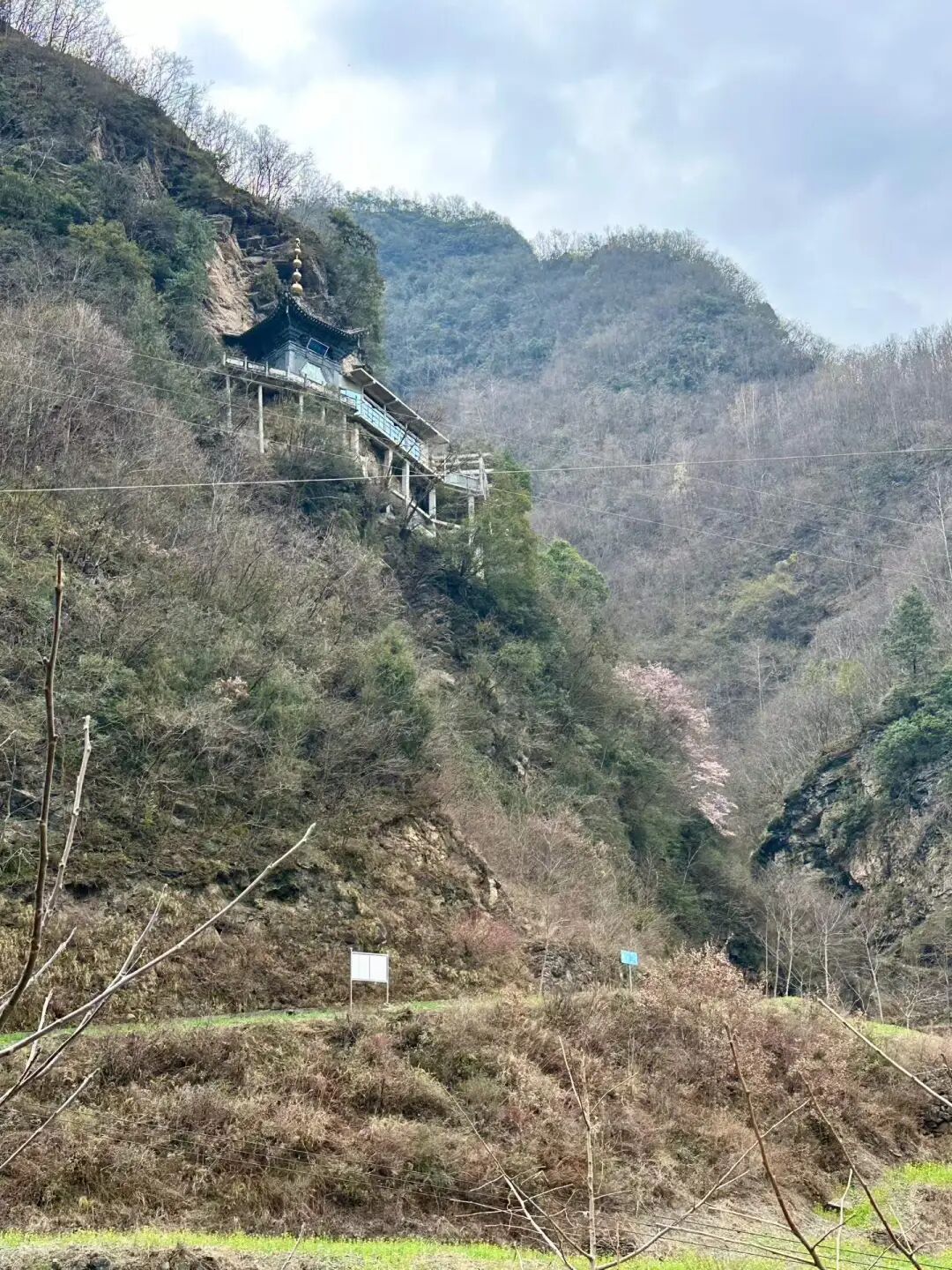
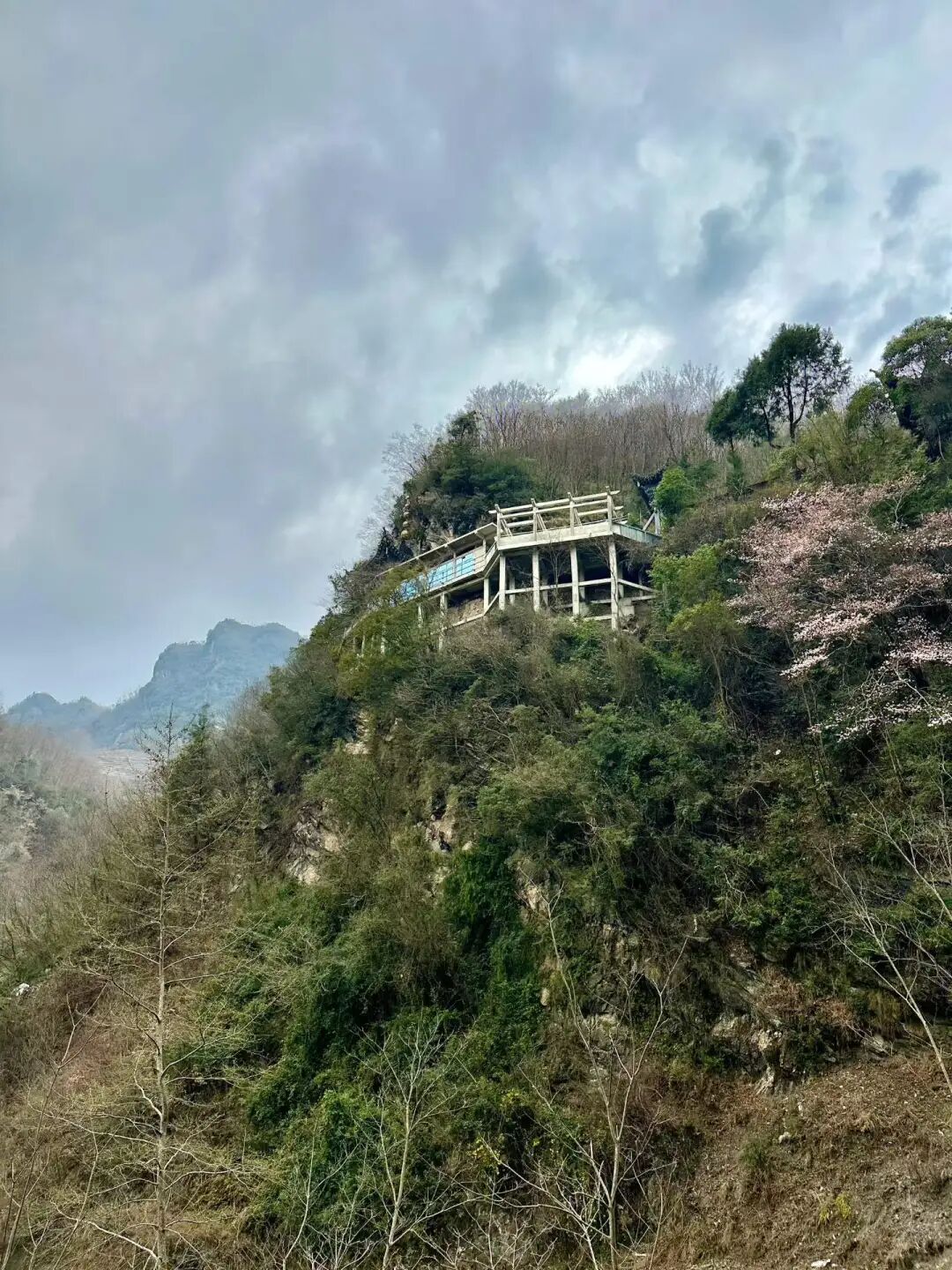
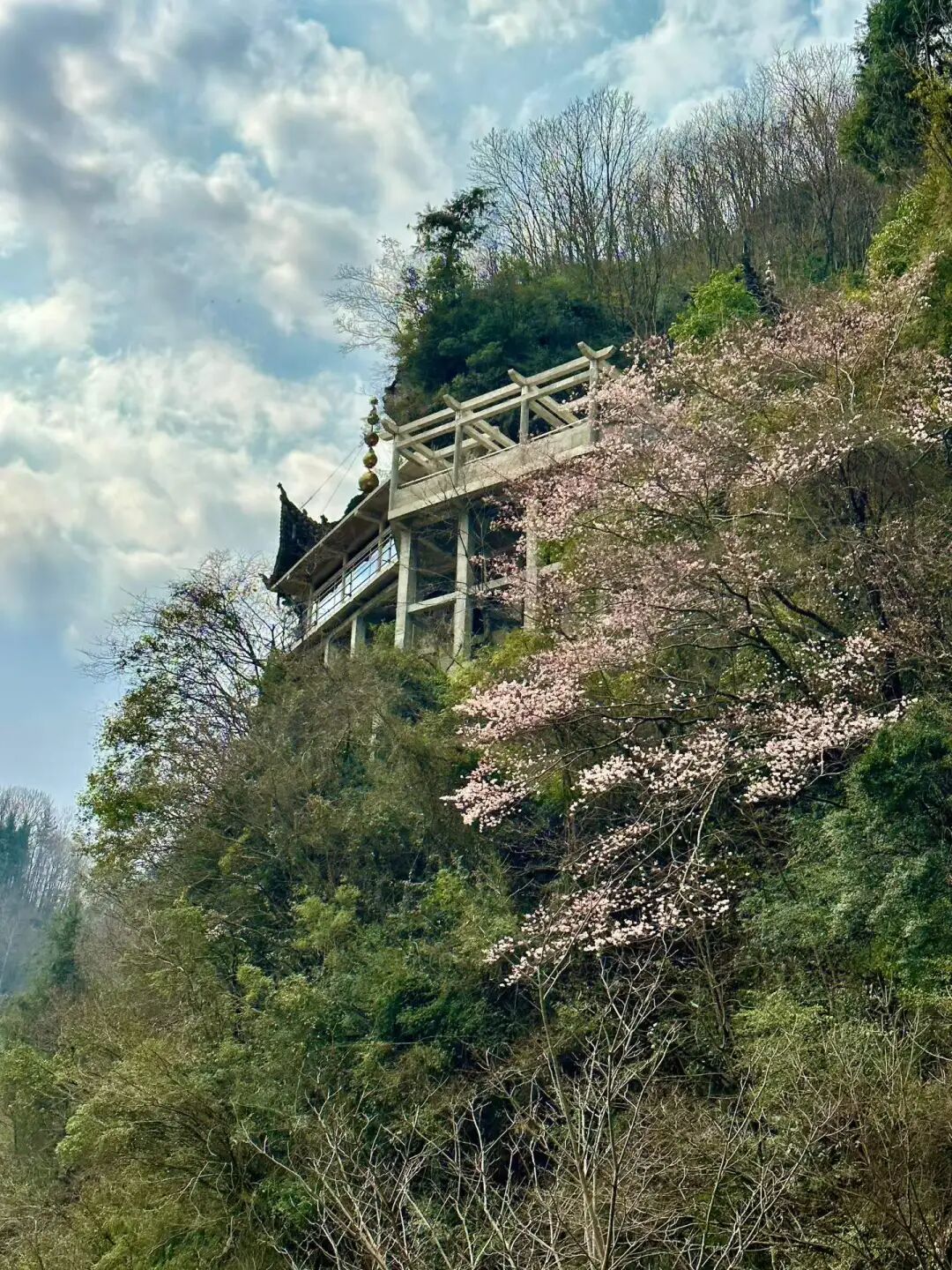
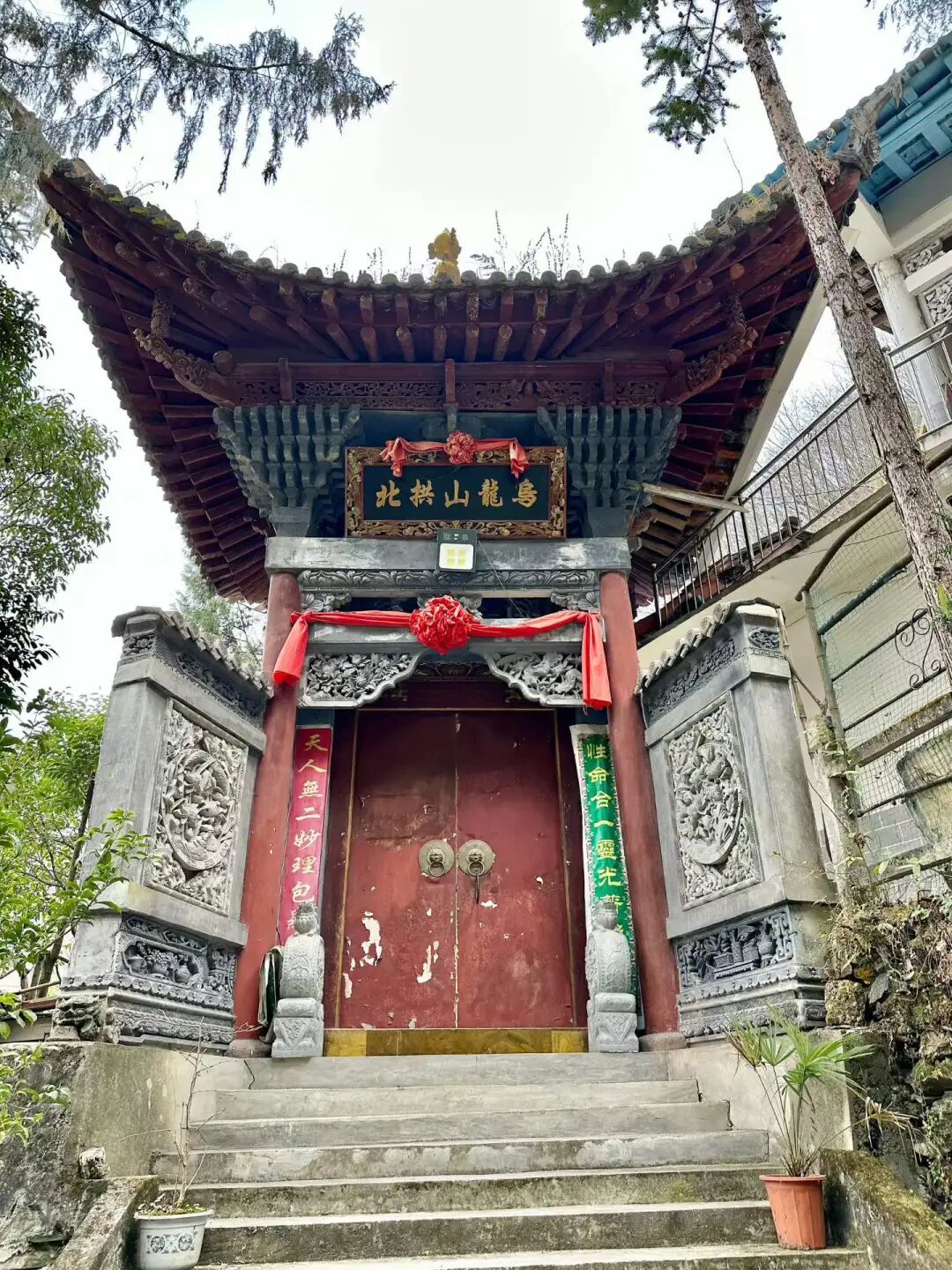
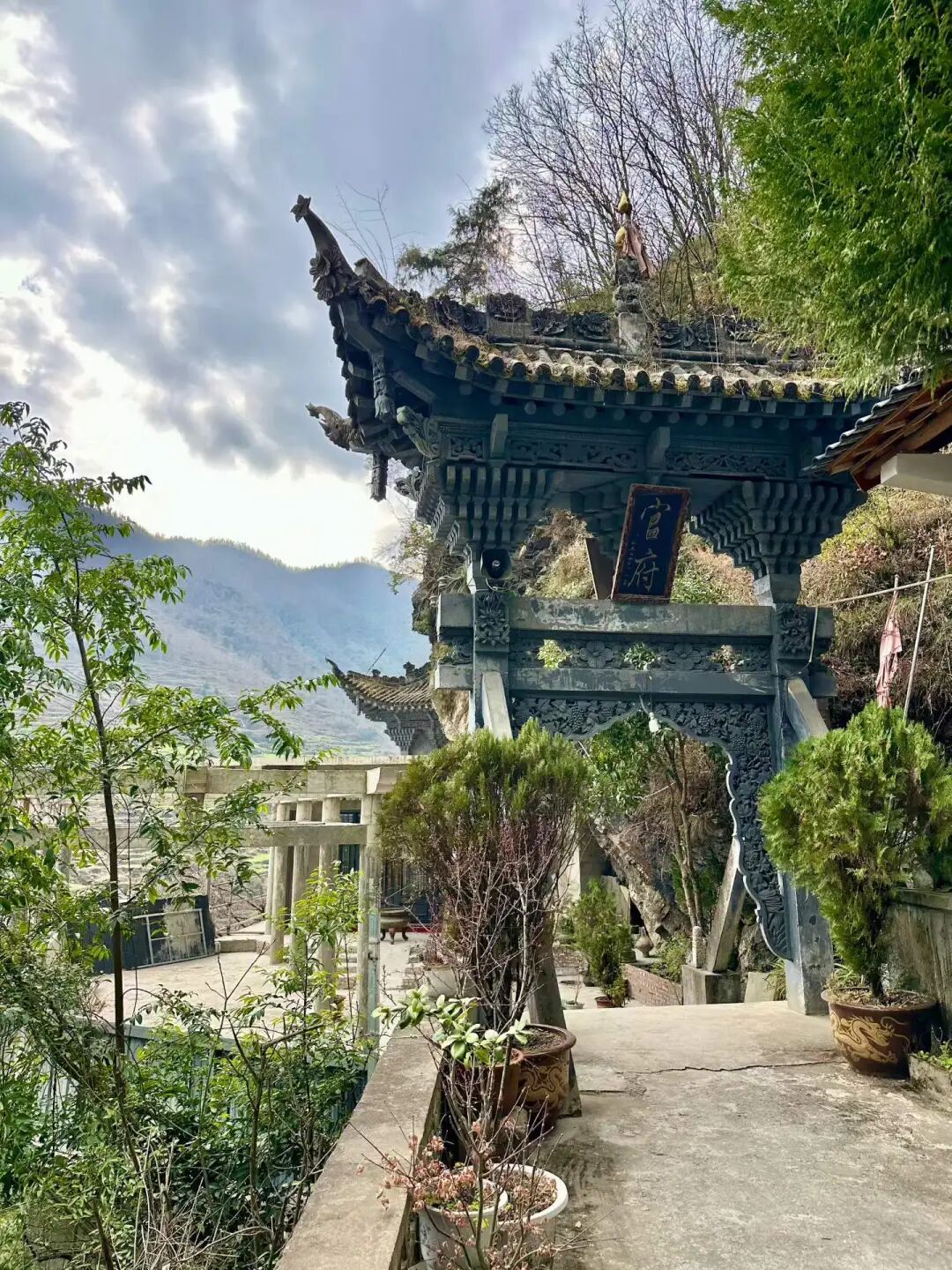
On a cliff at the end of the Huaguo River valley sits the Wulong Mountain Gongbei, also called the Wulong Mountain Mosque (Qingzhen Ting), which belongs to the Jahriyya Sufi order (Gaderenye Menhuan). This cliffside shrine is comparable in scale to the Jiujing Gongbei.
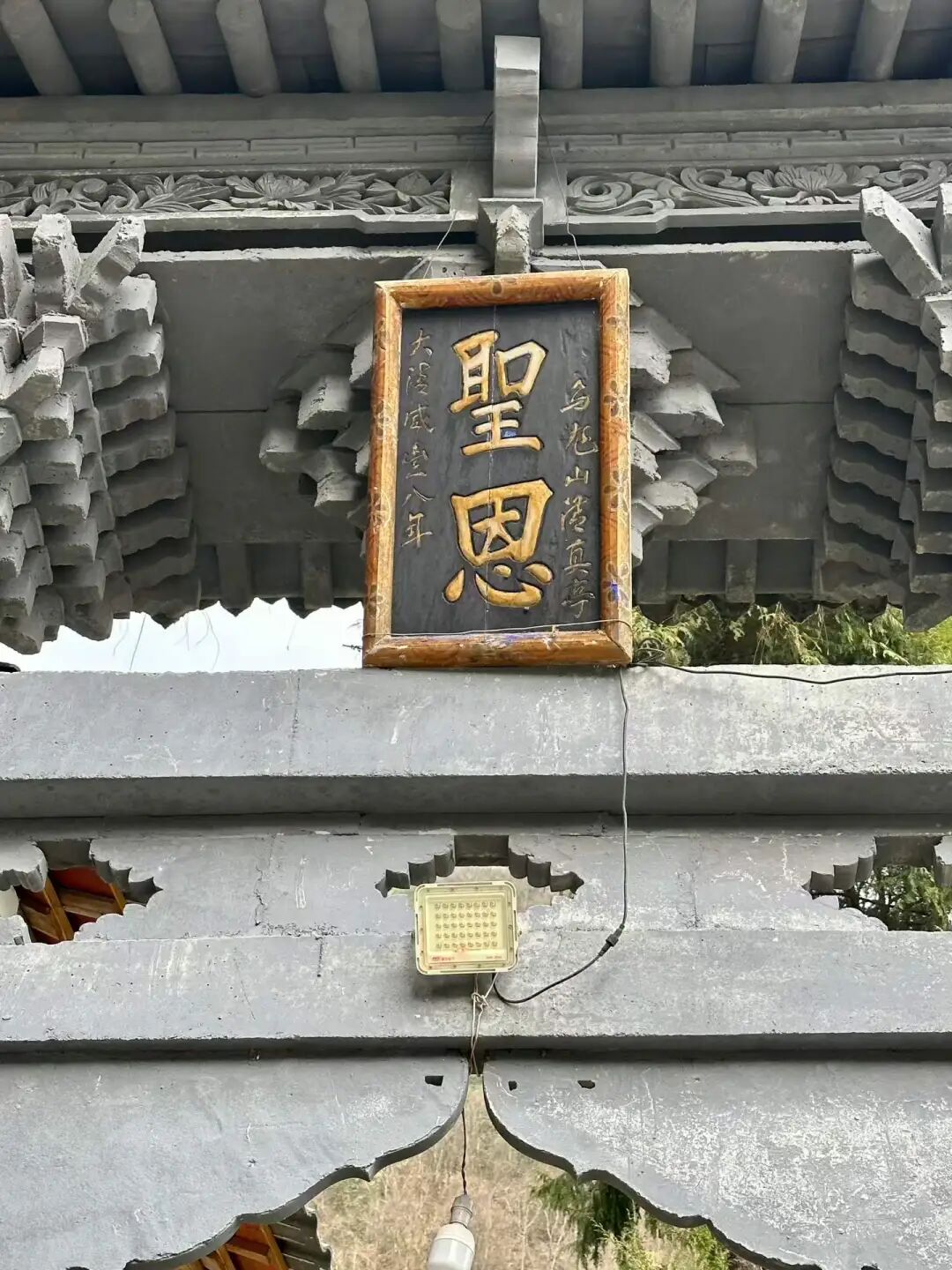
Wulong Mountain Gongbei is where 'Grandpa An' (An Taiye) from Ding'an River practiced during his lifetime. Grandpa An was originally a Han Chinese from Anhui. During the Kangxi reign, he served as a magistrate in Langzhong County. Inspired by Qi Jingyi, the founder of the Jahriyya order, he resigned from his post to join the faith. Later, he went to Wulong Mountain to practice in a cave. After he passed away (gui zhen) in 1708 (the forty-seventh year of the Kangxi reign), the Wulong Mountain Gongbei was built. Inside the Gongbei, there is a plaque from the eighth year of the Xianfeng reign that reads 'Imperial Grace' (Sheng En). view all
Summary: This northern Sichuan travelogue visits Dayuan Hui Muslim Township in Qingchuan County and Wulongshan gongbei (Sufi shrine), preserving the route, people, and local Muslim heritage.
I left downtown Guangyuan in the morning and reached Dayuan Hui Ethnic Township, deep in the Qinba Mountains, after a trip of nearly two hours. I followed the Huaguo River up the valley and first arrived at Huaguo Village to visit the Huaguo Mosque (Huaguo Si). The mosque was closed, so I could only look around the courtyard.
Huaguo Mosque is a century-old site. It was built in 1925 at Majiakou in Huaguo Village, moved to its current location in Chenjiayuan in 1940, and rebuilt after the 2008 earthquake. You can still see the old stone column bases in the courtyard today.
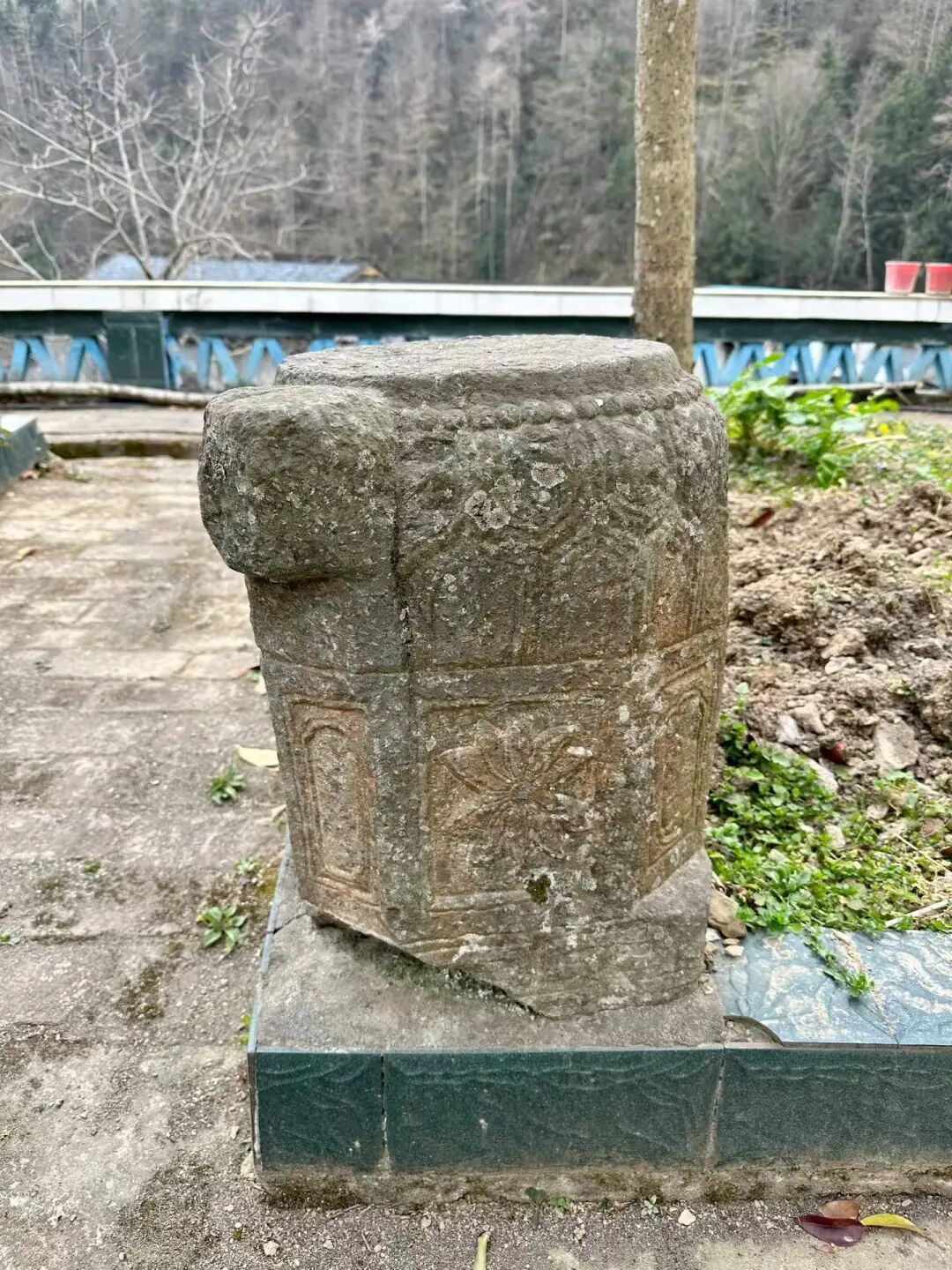
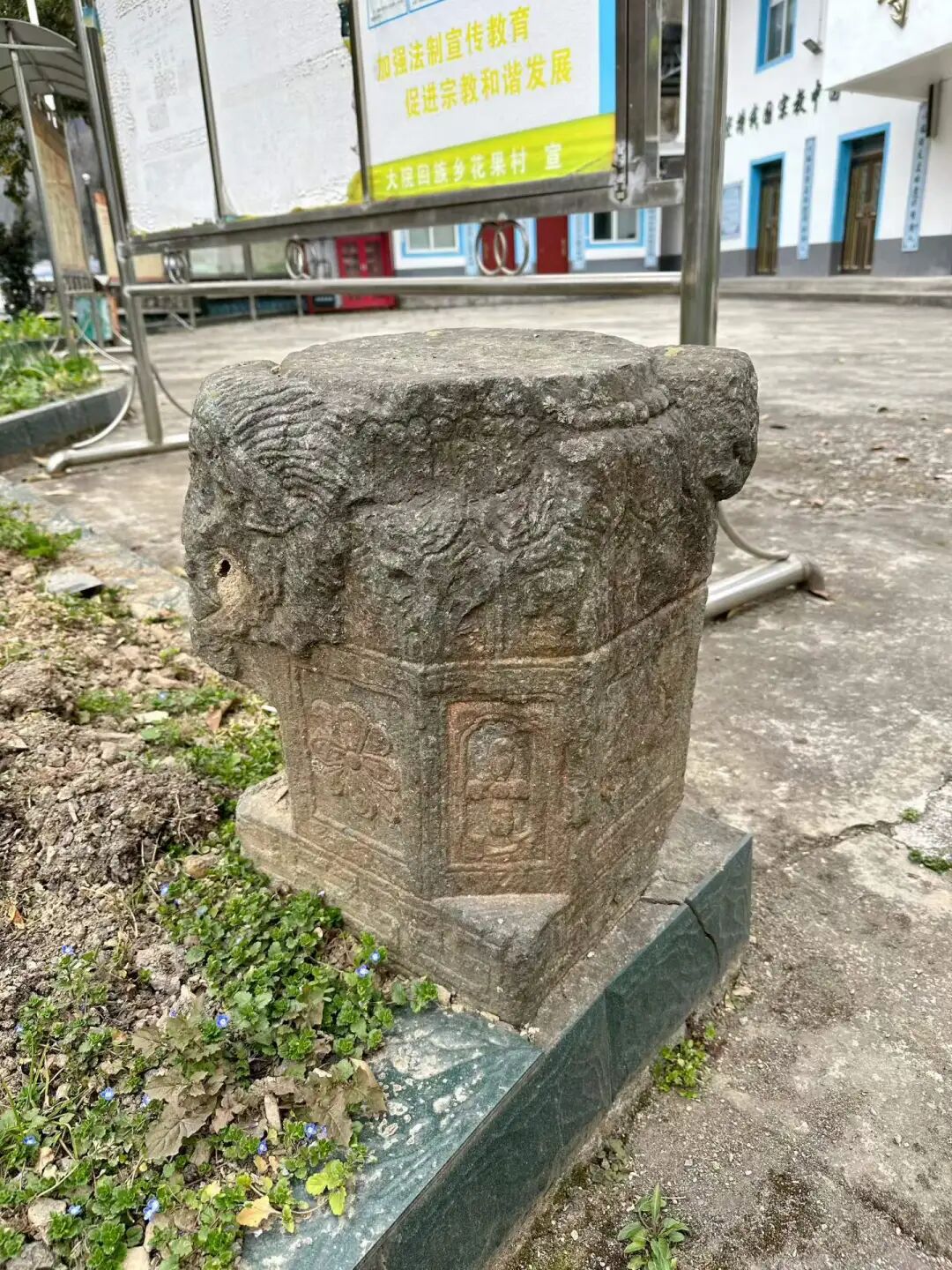
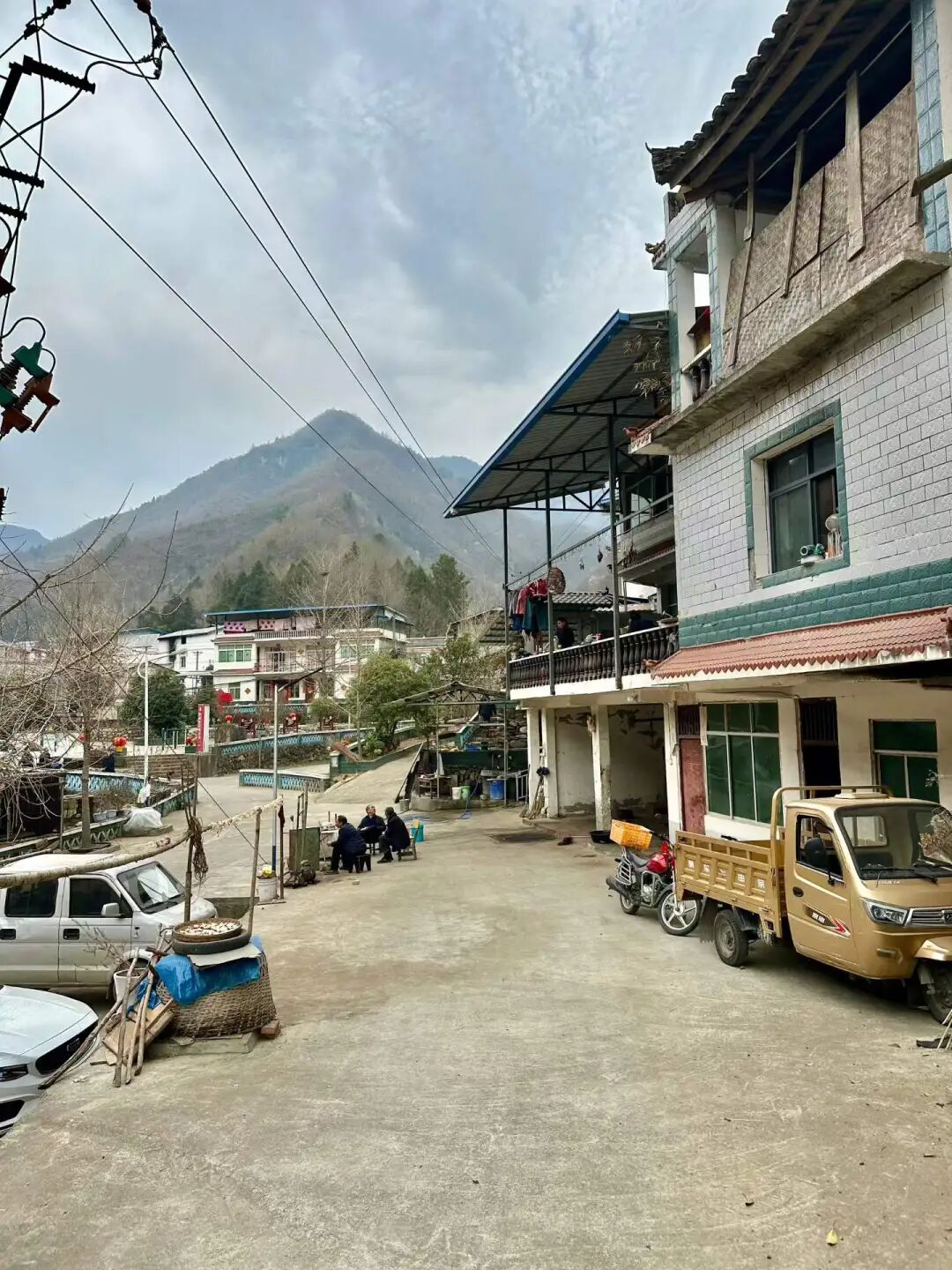
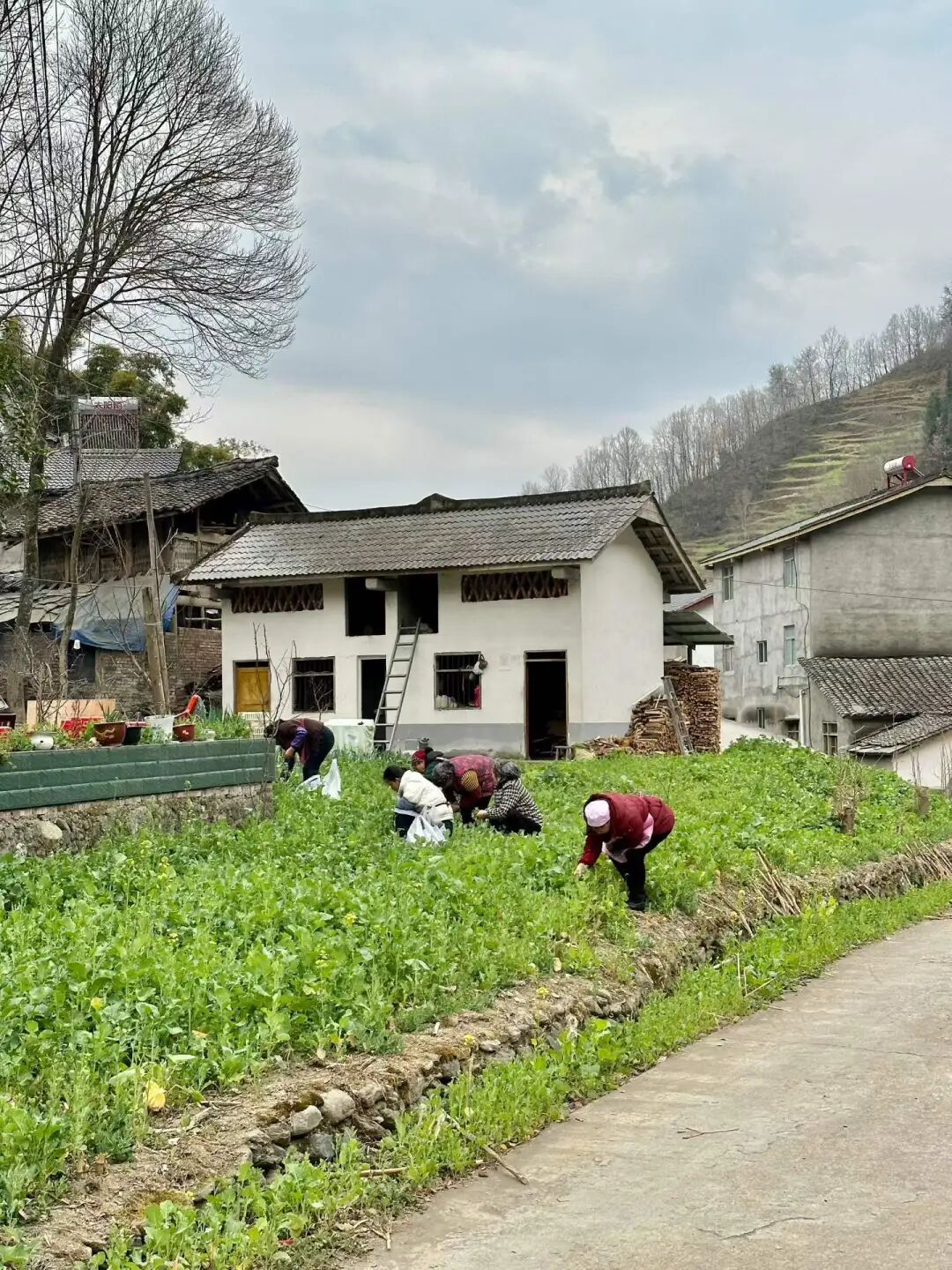
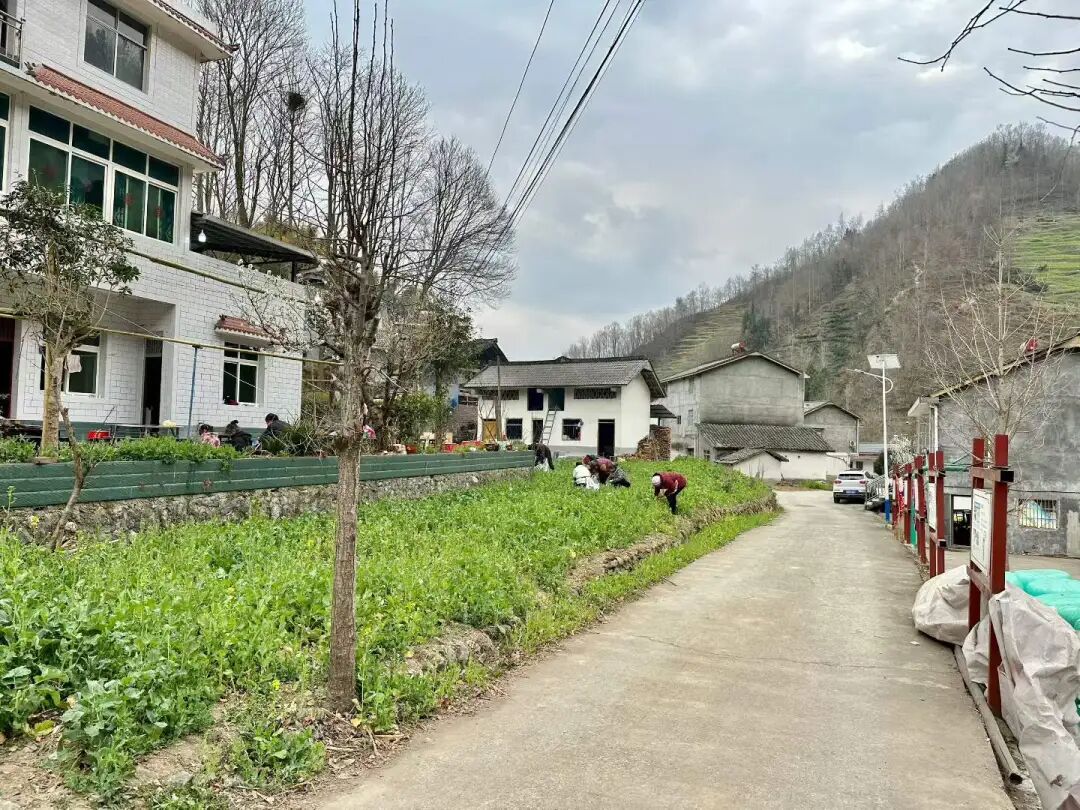
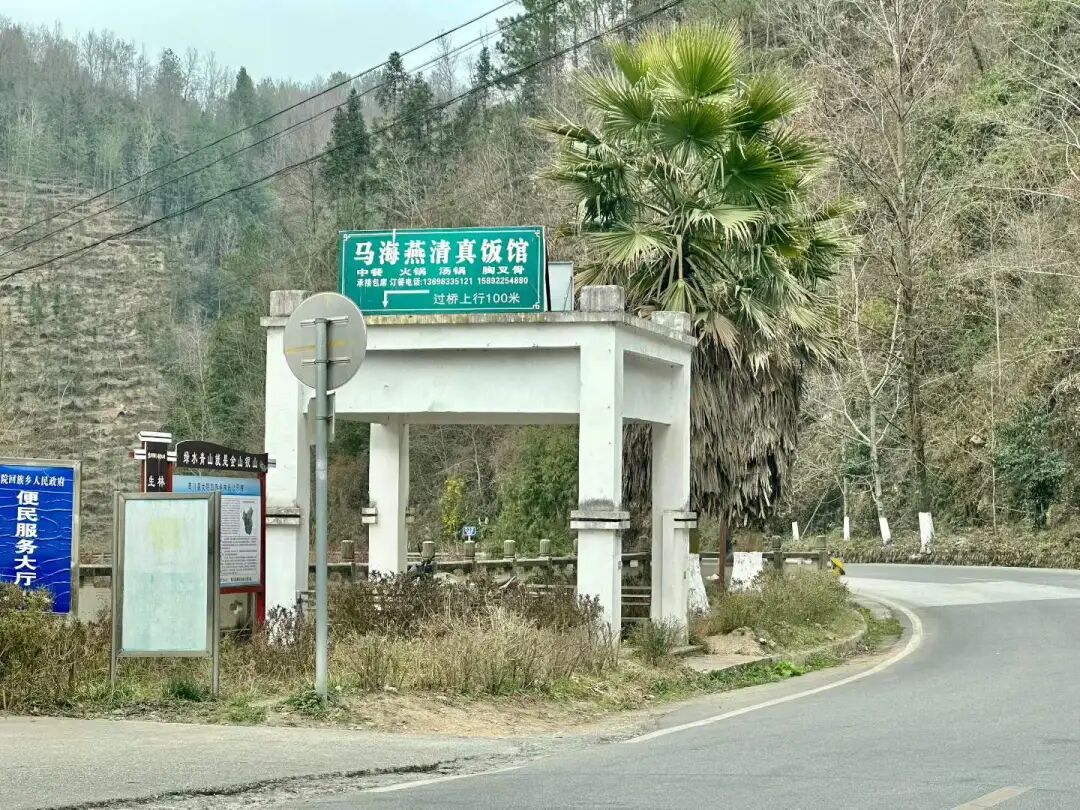
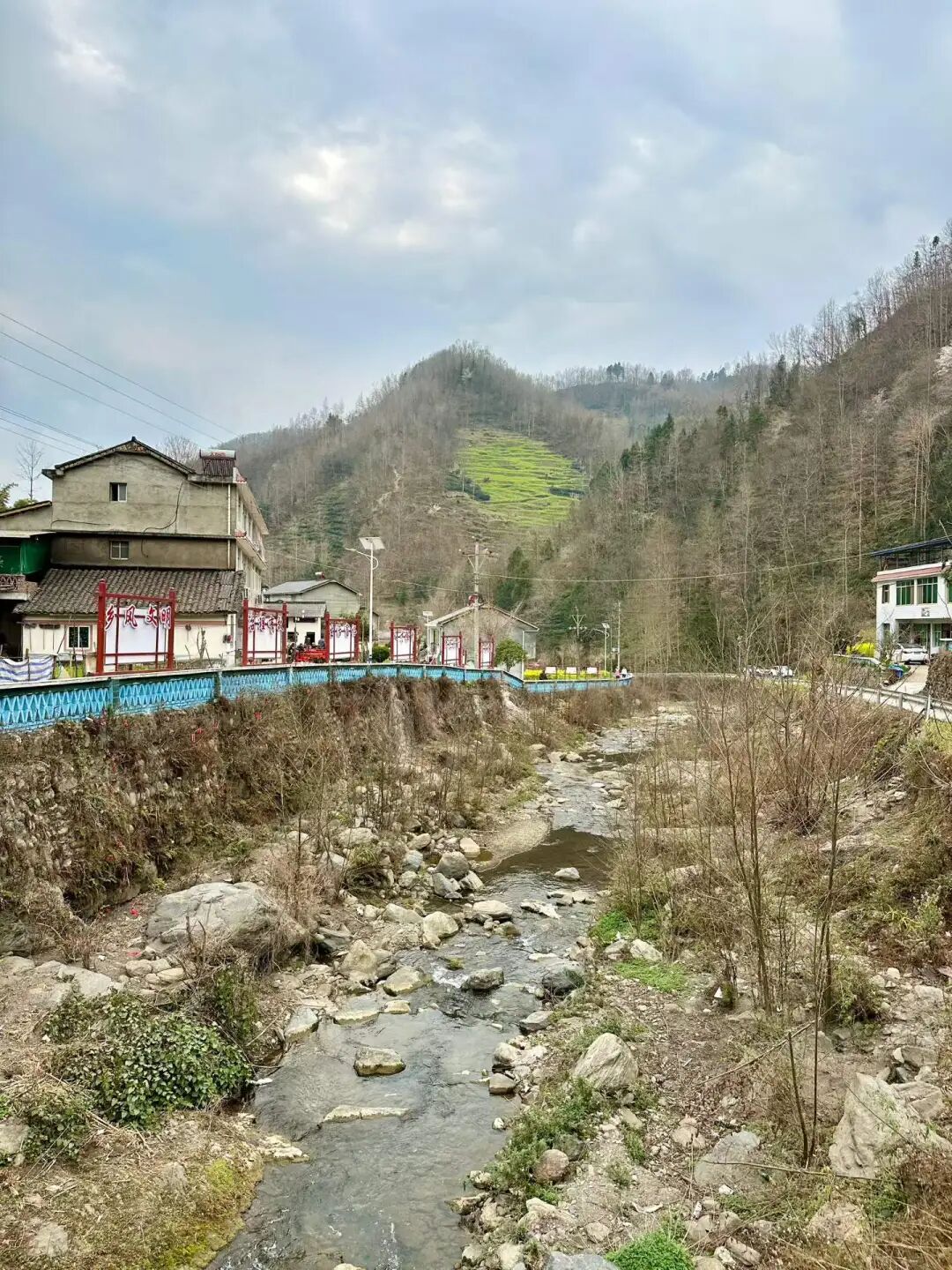
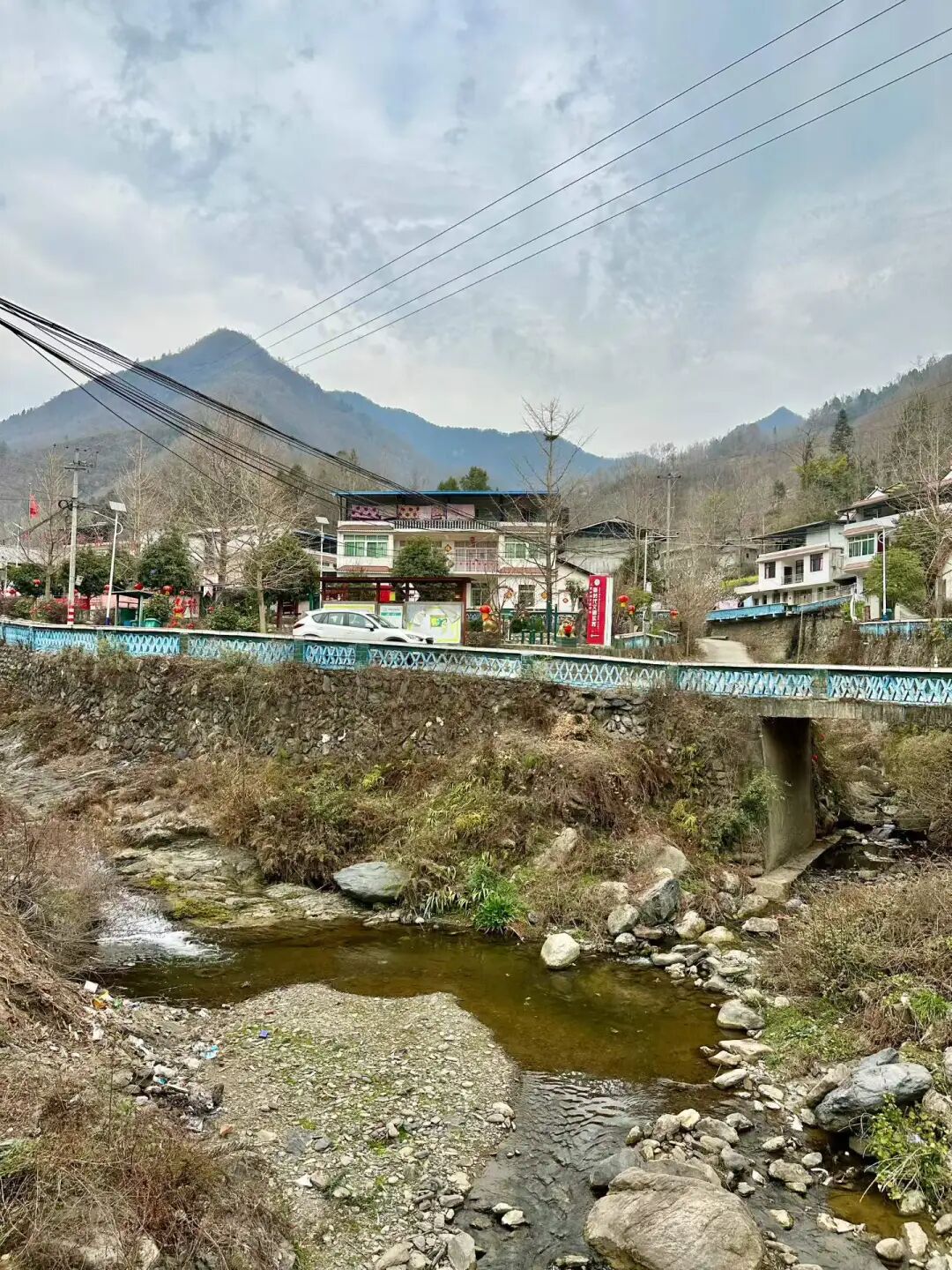
Continuing up the Huaguo River, I reached Suojia Village, another Hui Muslim village. It is the oldest Hui village in all of Qingchuan, with a history of over 400 years. According to a tombstone in the village, Ma Jiyuan invited the Suo and Zhao families to move from Jingyang County, Shanxi, to settle by the Huagai River in 1580 (the eighth year of the Wanli reign of the Ming Dynasty). The Qingchuan County Annals record that in 1586 (the fourteenth year of the Wanli reign of the Ming Dynasty), three Hui Muslim families named Ma, Suo, and Hei from Ta'er Mosque in Jingyang County, Shanxi, moved to settle by the Huagai River in Dayuan Township, marking the arrival of Hui Muslims in the county.
At Suojia Mosque, the imam and village elders welcomed me warmly. I offered a donation (nietie), but they returned it to me, saying it was for travelers, and gave me oranges and apples instead. Suojia Mosque was built in the late Ming Dynasty, occupied in 1952, and torn down in 1967. Led by fellow Muslims Suo Fushou and Ma Minghuai, and through the efforts of Suo Jinming, Suo Wenjin, Ma Qinggao, Suo Jinzhu, Suo Fuguo, and Ma Wancai, the current Suojia Mosque was finally completed after four years of work from 2007 to 2011.
In Suojia Village, I clearly saw many people wearing white caps. Everyone was very friendly and smiled at me. Suojia Village sits deep in Wulong Mountain. With ducks and geese in the stream and fellow Muslims plowing the terraced fields with oxen, it is a peaceful scene, like a hidden paradise.
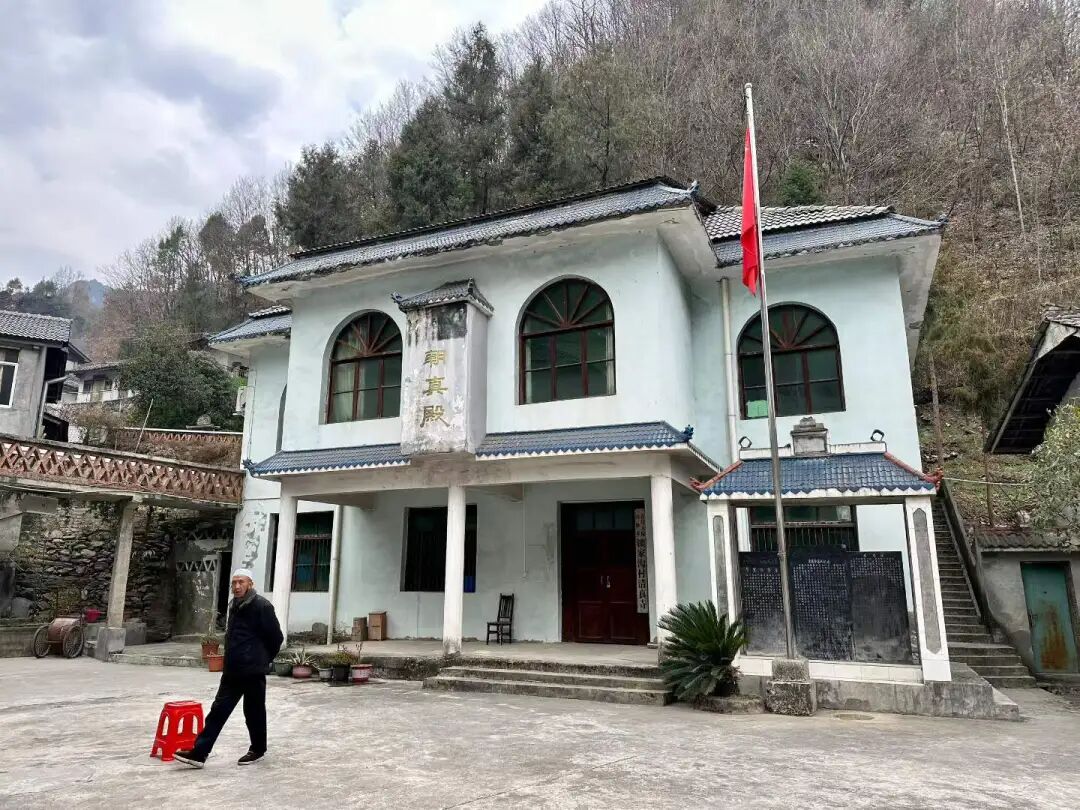
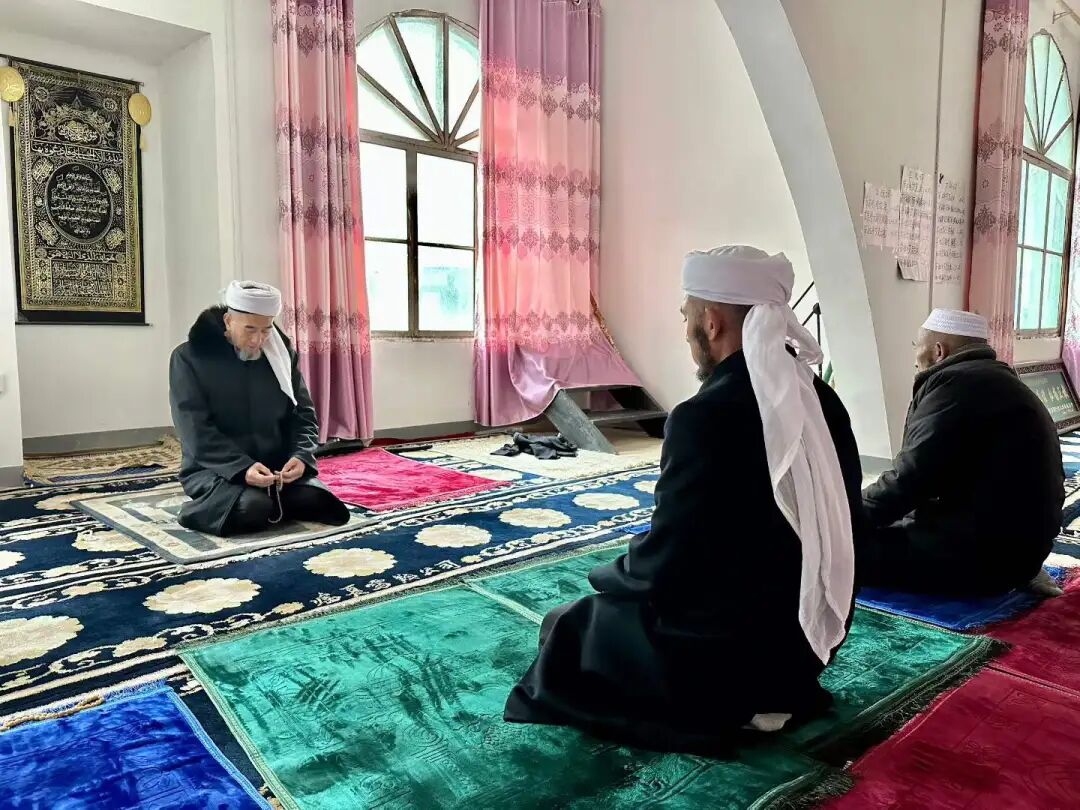
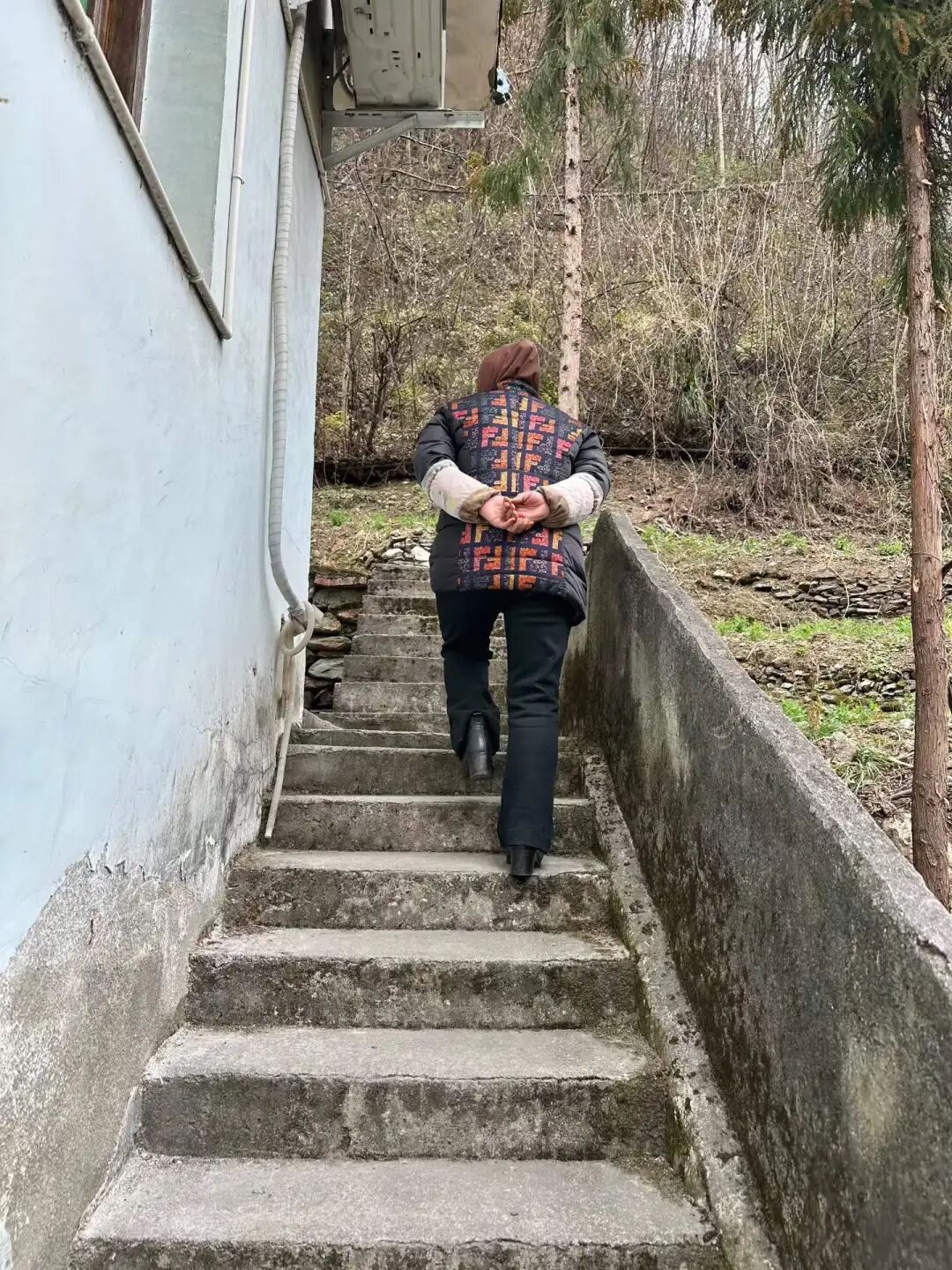
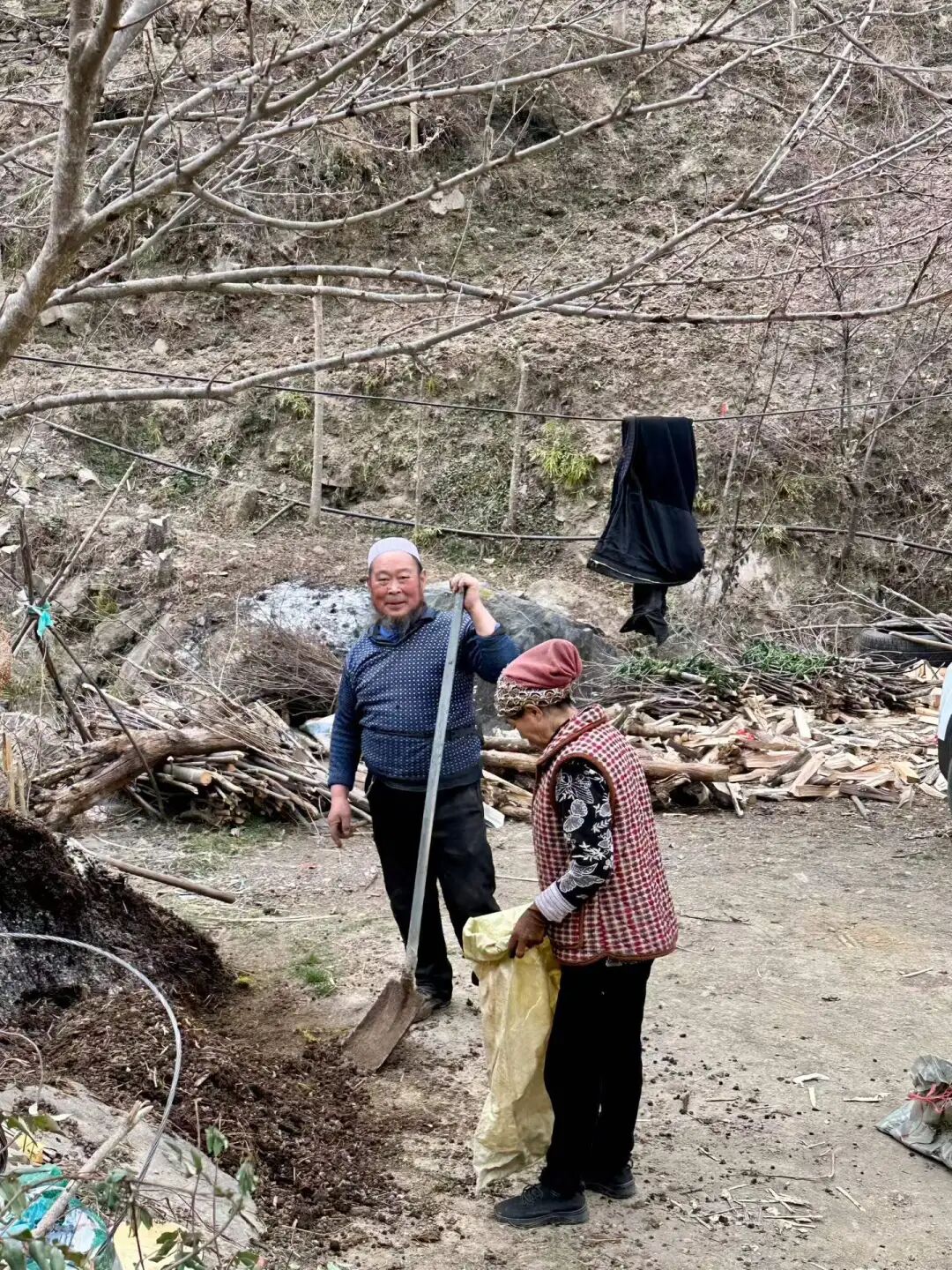
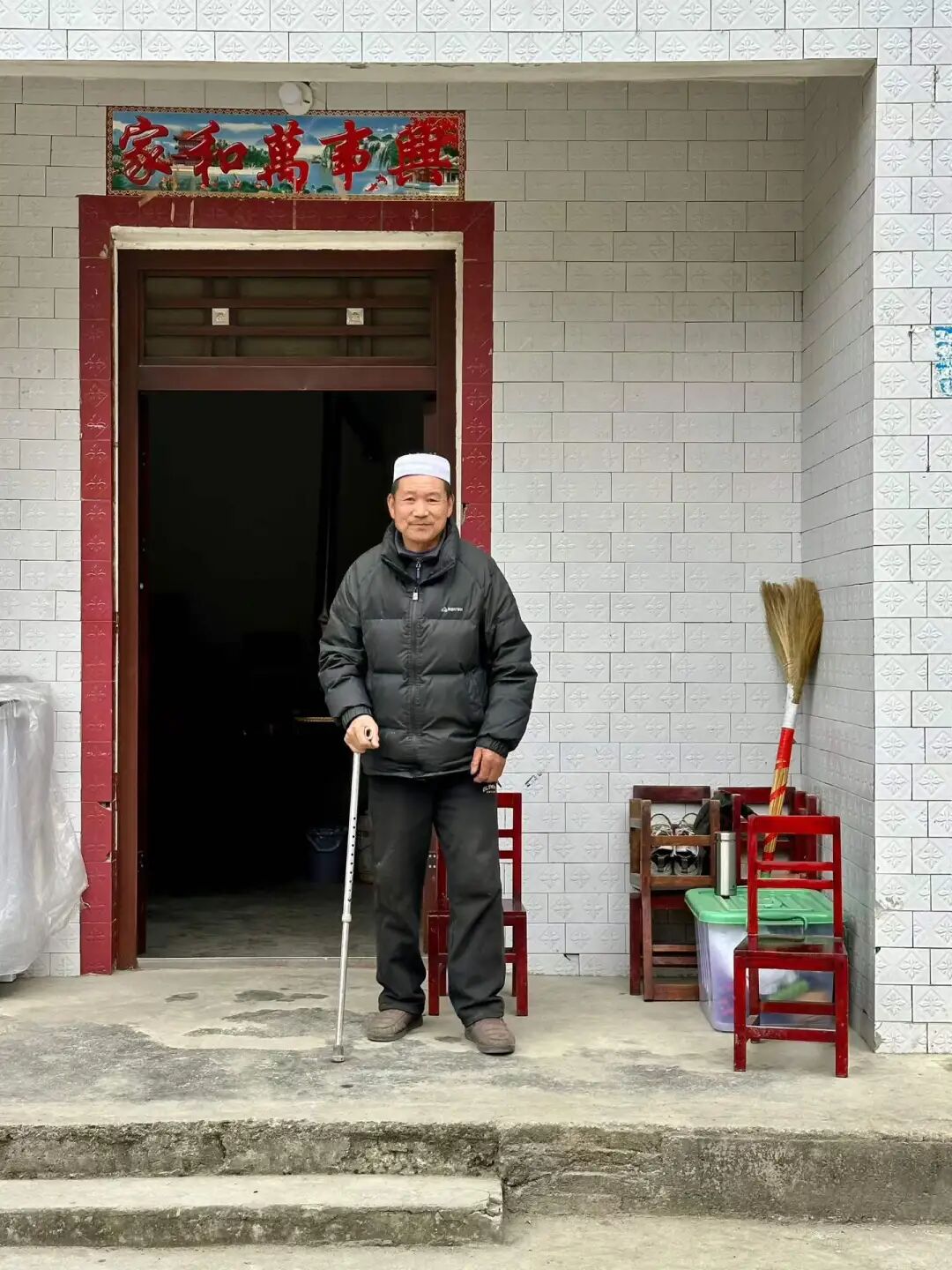
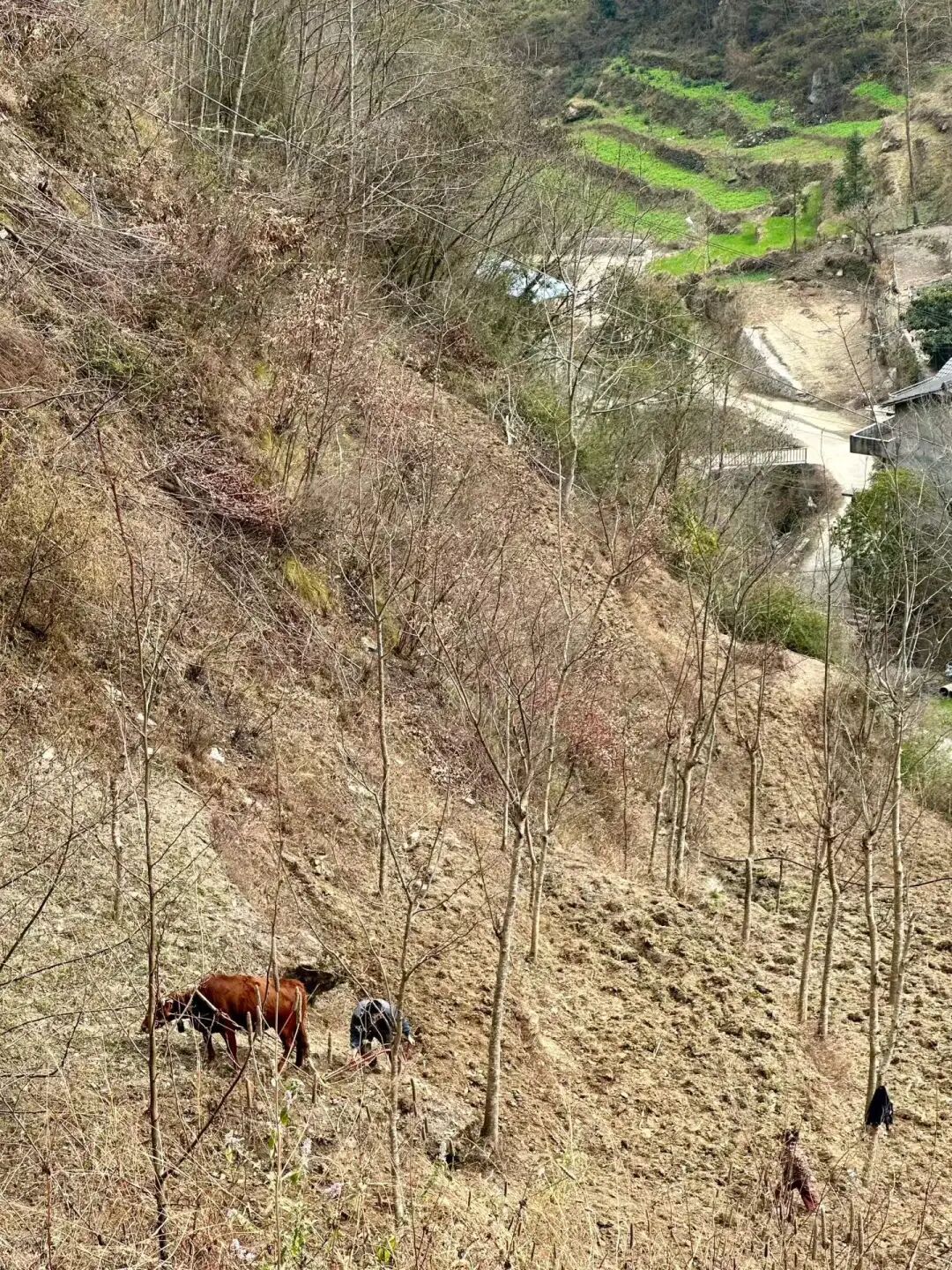
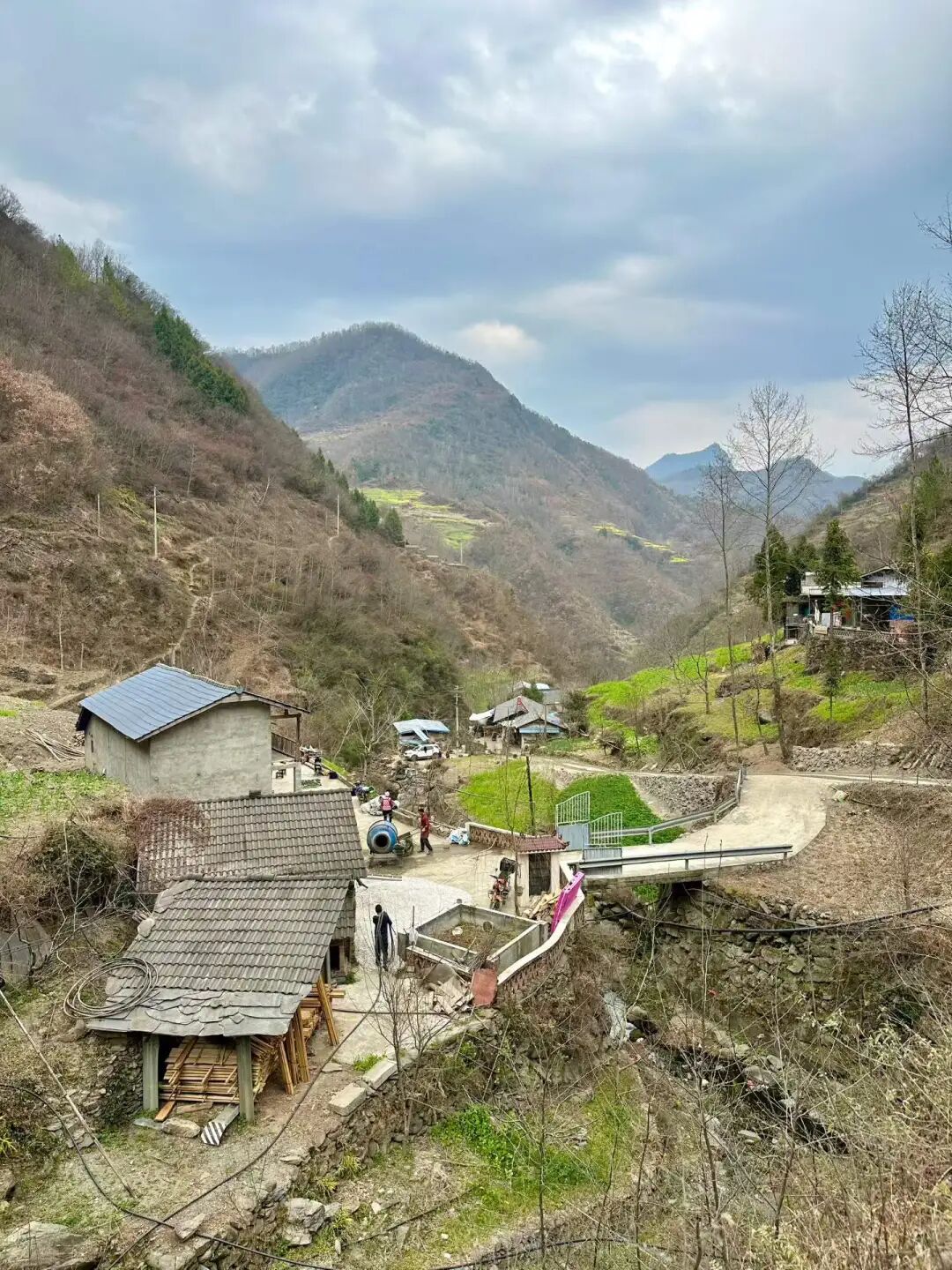
Suojia Village is definitely the most beautiful Hui Muslim village I have visited in Sichuan. I slowly climbed Wulong Mountain and looked out from the railing. Rolling green mountains stretched out, the quiet Huaguo River valley lay between them, and houses were scattered along the slopes. White walls and dark tiles dotted the landscape, while terraced fields formed a lush green pattern. The fresh mountain air hit my face, and everything I saw felt like a healing pastoral poem.
The village specializes in organic green tea, mountain delicacies, eco-friendly beef and lamb, and medicinal herbs grown in the forest. While walking through the village, I happened to meet a simple Hui Muslim grandmother driving her cattle and sheep into the deep mountains to graze, looking very relaxed. When she is not grazing them, she feeds the cattle and sheep pure corn cobs. Cattle and sheep raised on mountain spring water, wild mushrooms, and corn must taste great. I want to try some next time I have the chance.
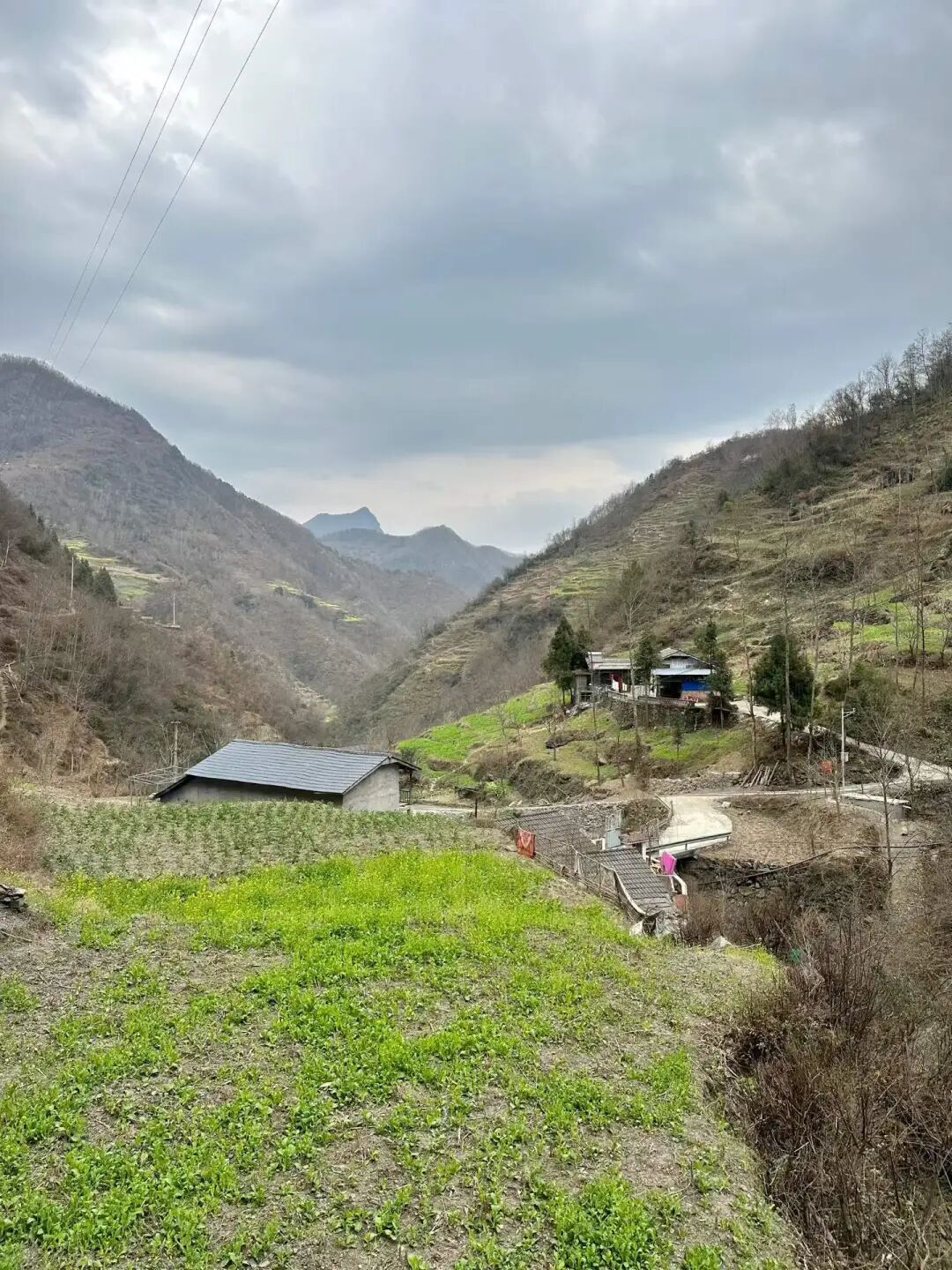
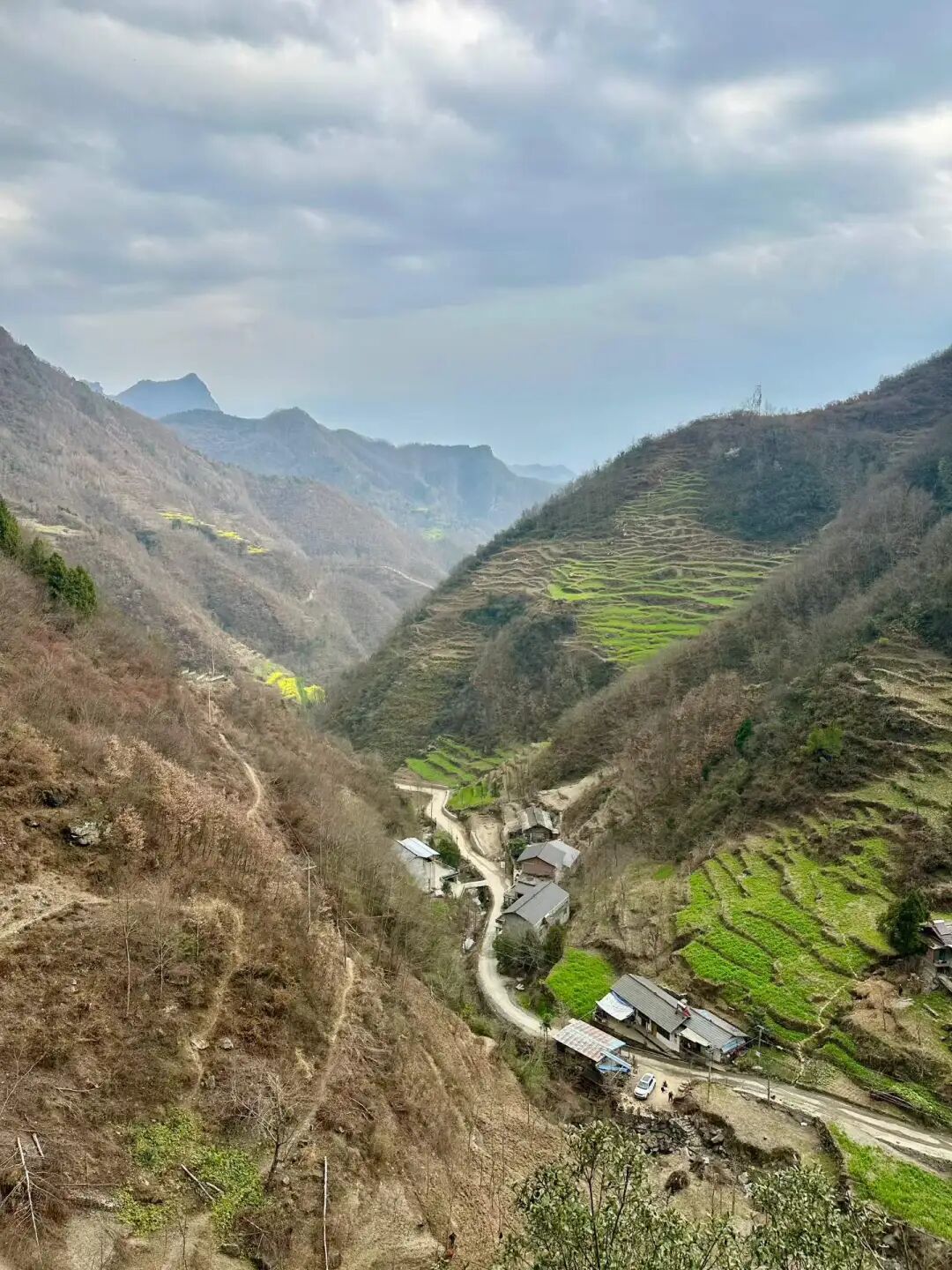
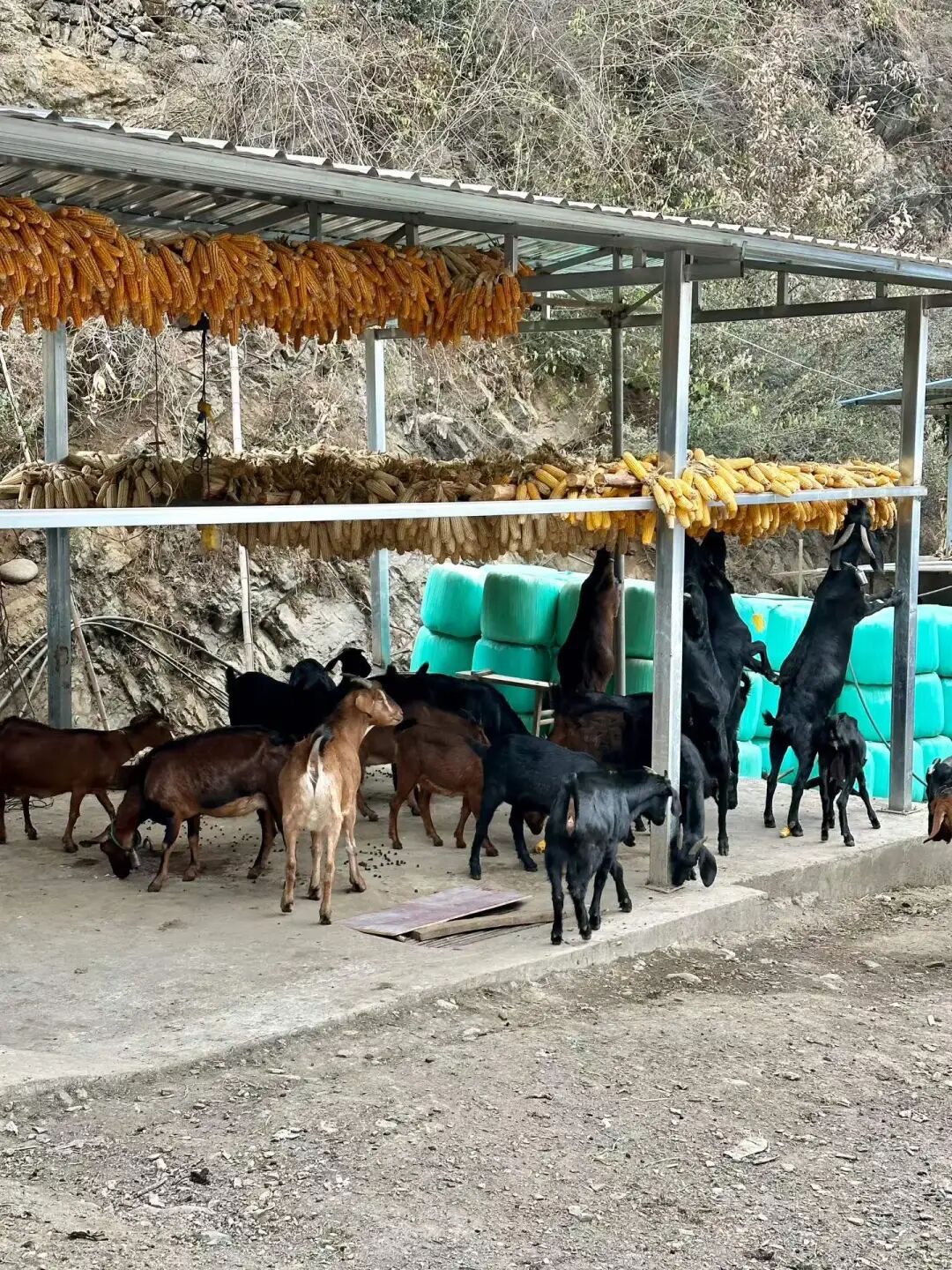
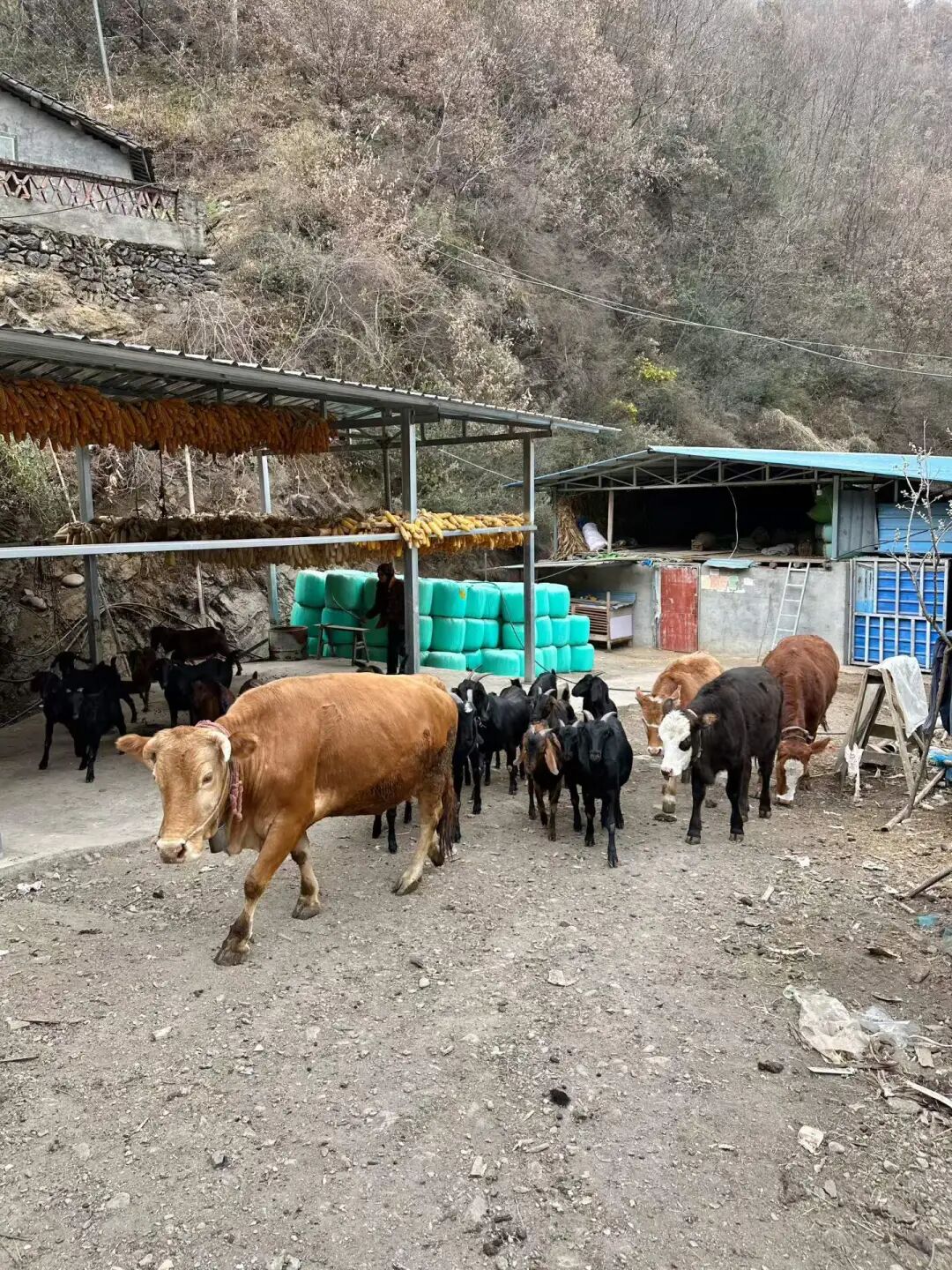
On a cliff at the end of the Huaguo River valley sits the Wulong Mountain Gongbei, also called the Wulong Mountain Mosque (Qingzhen Ting), which belongs to the Jahriyya Sufi order (Gaderenye Menhuan). This cliffside shrine is comparable in scale to the Jiujing Gongbei.
Wulong Mountain Gongbei is where 'Grandpa An' (An Taiye) from Ding'an River practiced during his lifetime. Grandpa An was originally a Han Chinese from Anhui. During the Kangxi reign, he served as a magistrate in Langzhong County. Inspired by Qi Jingyi, the founder of the Jahriyya order, he resigned from his post to join the faith. Later, he went to Wulong Mountain to practice in a cave. After he passed away (gui zhen) in 1708 (the forty-seventh year of the Kangxi reign), the Wulong Mountain Gongbei was built. Inside the Gongbei, there is a plaque from the eighth year of the Xianfeng reign that reads 'Imperial Grace' (Sheng En).
Hidden Mosques in Guangyuan: Shanghe Street, Jialing River and Sichuan Hui Muslim History
Articles • ali2007fr posted the article • 0 comments • 165 views • 2026-05-21 07:08
Summary: This Guangyuan stop follows Shanghe Street by the Jialing River, old mosque history, Hui Muslim community details, and the next stage of a Spring Festival road trip through Sichuan.
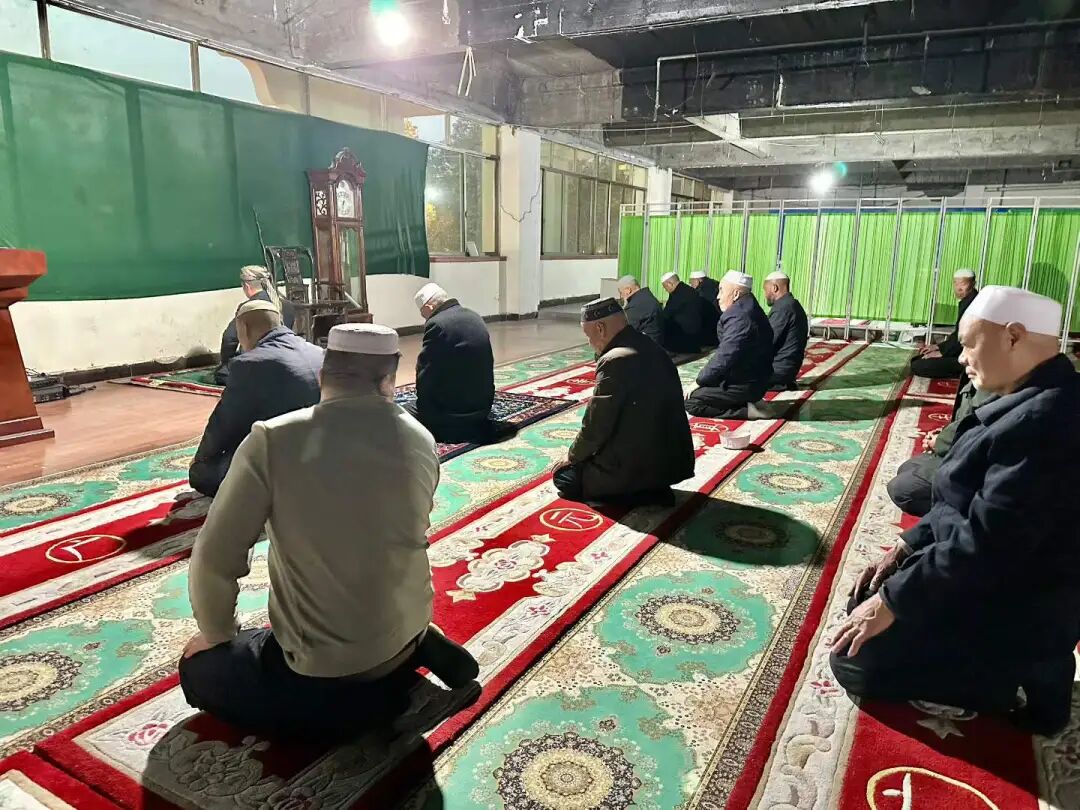
I traveled back along the Jialing River gorge from the Nine Wells, with river breezes and mountain shadows for company, and arrived at the Shanghe Street Mosque in Guangyuan just in time for iftar. The mosque was undergoing repairs during my visit, so prayers and iftar were held on the second floor. The layout was simple, but the atmosphere was incredibly quiet and solemn.
Guangyuan sits at the junction of Sichuan, Shaanxi, and Gansu provinces, serving as a key hub for water and land transport. The worshippers here are diverse, including friends (dost) from the northwest, international students studying here, and local elders who have lived here for generations. Their shared devotion creates a peaceful and inclusive environment.
The iftar meal was simple and home-style: warm and flavorful beef stewed with carrots (huluobo dun niurou), refreshing stir-fried wood ear mushrooms with asparagus lettuce (wosun chao mu'er), light and soothing kelp stewed with white radish (bailuobo dun haidai), plus cold glass noodles (liangban fensi) and pickled radish. It was simple, solid, steady, and healing.
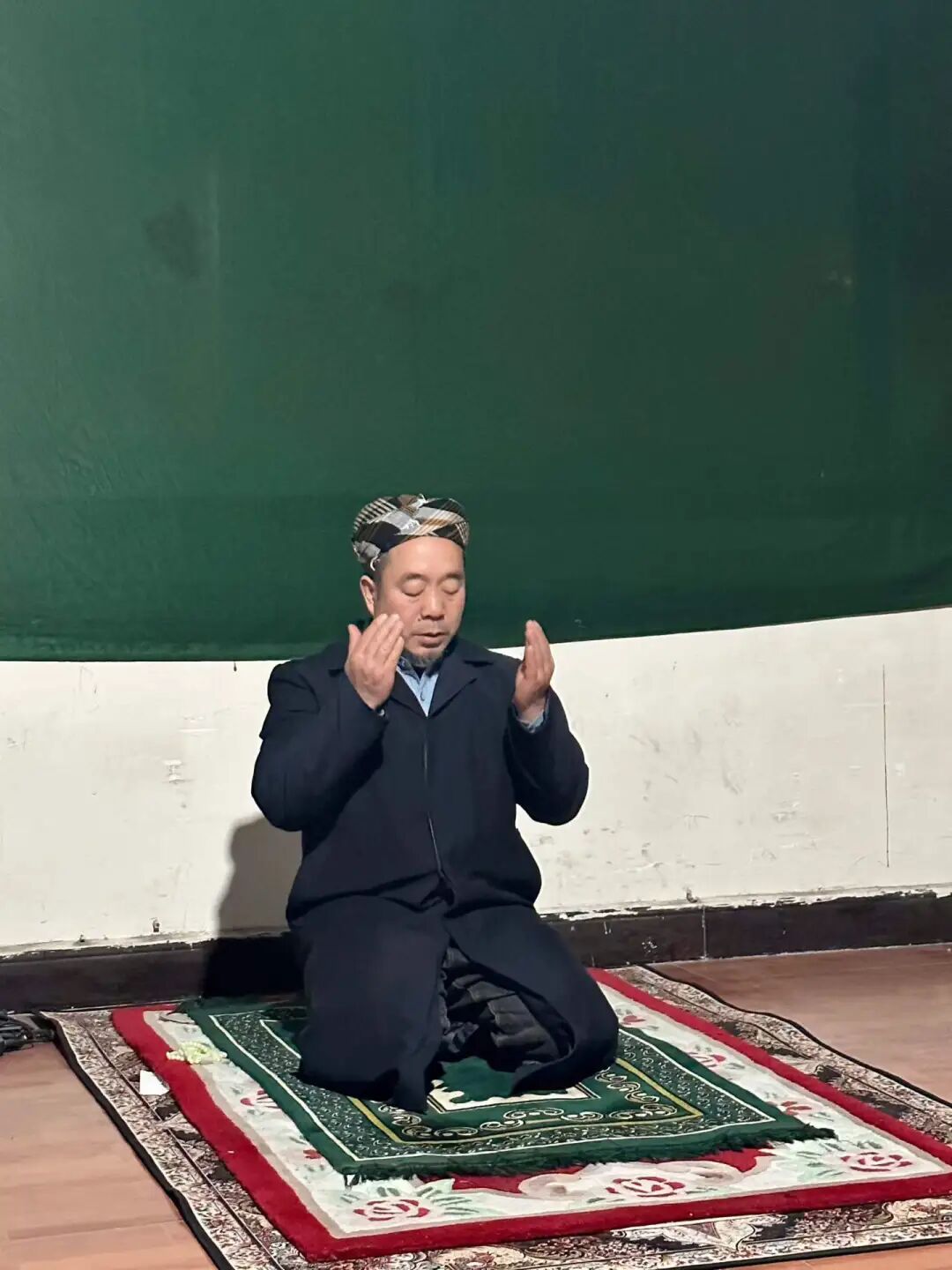
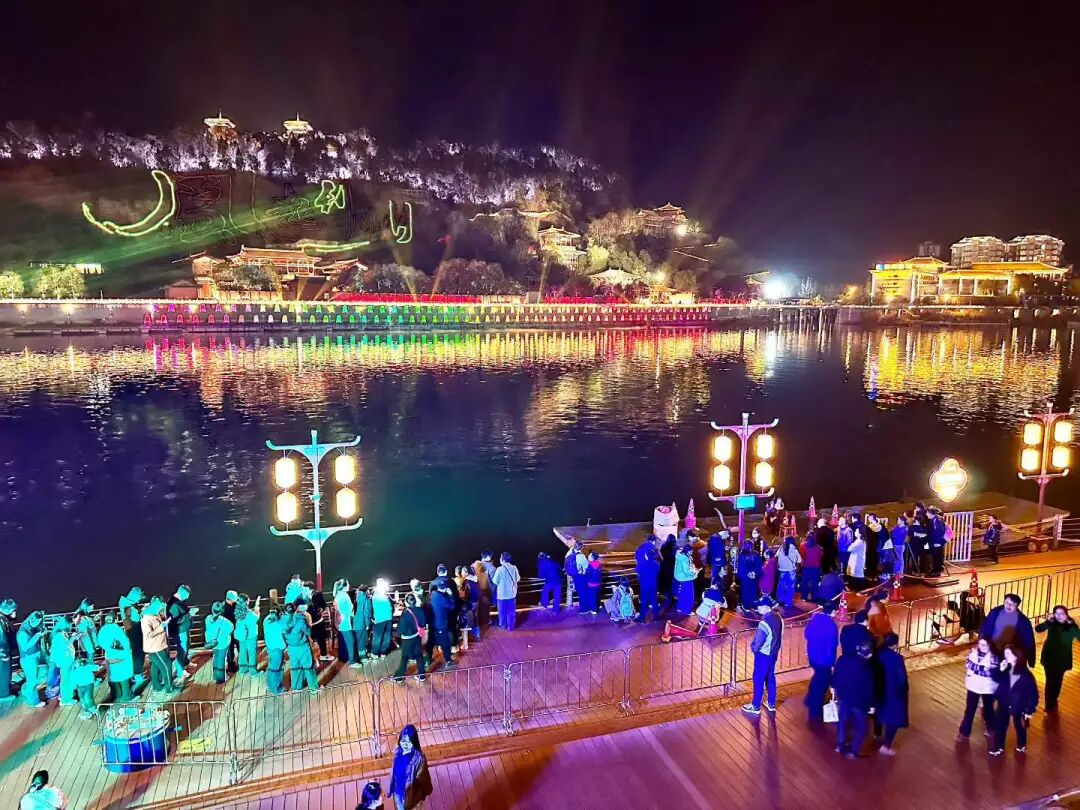
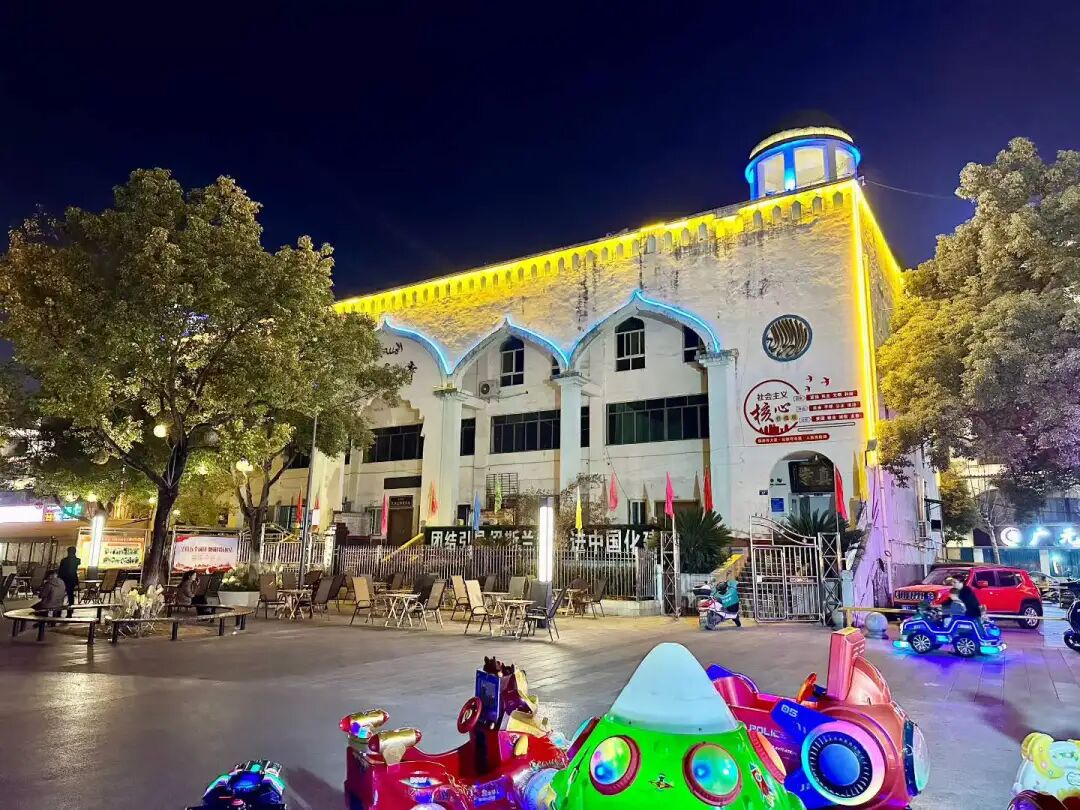
The Shanghe Street Mosque in Guangyuan stands quietly by the Jialing River, right outside the bustling Jialing River Pedestrian Street. River breezes blow gently, and tourist boats shuttle back and forth at the pier in a constant stream, full of the lively noise of the city. Stepping into the mosque to quietly perform Taraweeh prayers, I felt deeply moved. Just one window away, the world outside is filled with the hustle and bustle of traffic and the busy, worldly life. Inside the window is a clean and peaceful place for spiritual practice, a quiet harbor to rest one's heart. The noise of the world and the peace of the ancient mosque blend together, creating a moment of stillness and a spiritual home by the busy river.
Guangyuan had a mosque built on East Street in the old city as early as the Yuan and Ming dynasties, but it was destroyed at the end of the Ming Dynasty. After the Qing Dynasty, the commercial center of Guangyuan gradually moved from East Street to the banks of the Jialing River. Therefore, local Hui Muslims built the Shanghe Street Mosque in 1721 (the 60th year of the Kangxi reign), though some say it started in 1674, and it was expanded in 1777 (the 42nd year of the Qianlong reign).
The mosque now houses nine precious plaques from the Qing Dynasty and the Republic of China era. In the 1960s and 1970s, these plaques were covered with layers of paper and painted red with slogans about national unity, which is how they survived. These nine plaques are now hung on the walls of the stairs and corridors inside the mosque.
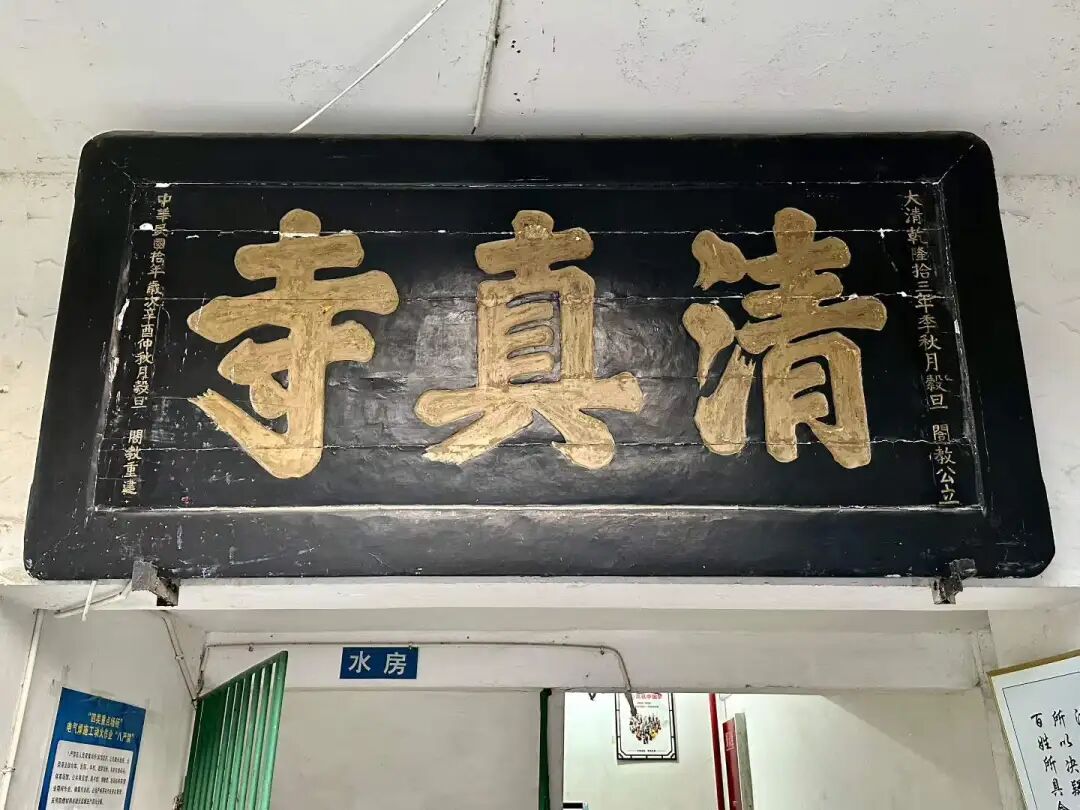
The 'Mosque' (Qingzhensi) plaque from 1748 (the 13th year of the Qianlong reign) was rebuilt by the community in the 10th year of the Republic of China.
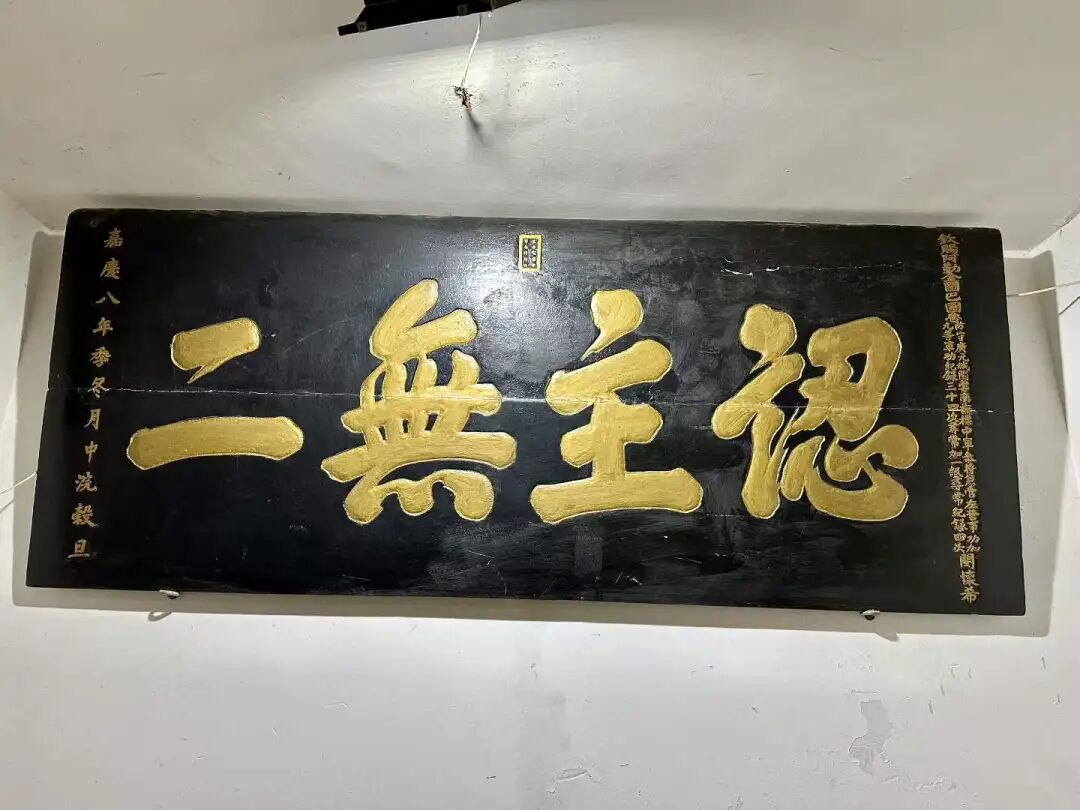
The 'Recognize Allah as One' (Renzhu Wu'er) plaque from 1803 (the 8th year of the Jiaqing reign) was presented by the imperial-appointed Baturu Min Huaixi.
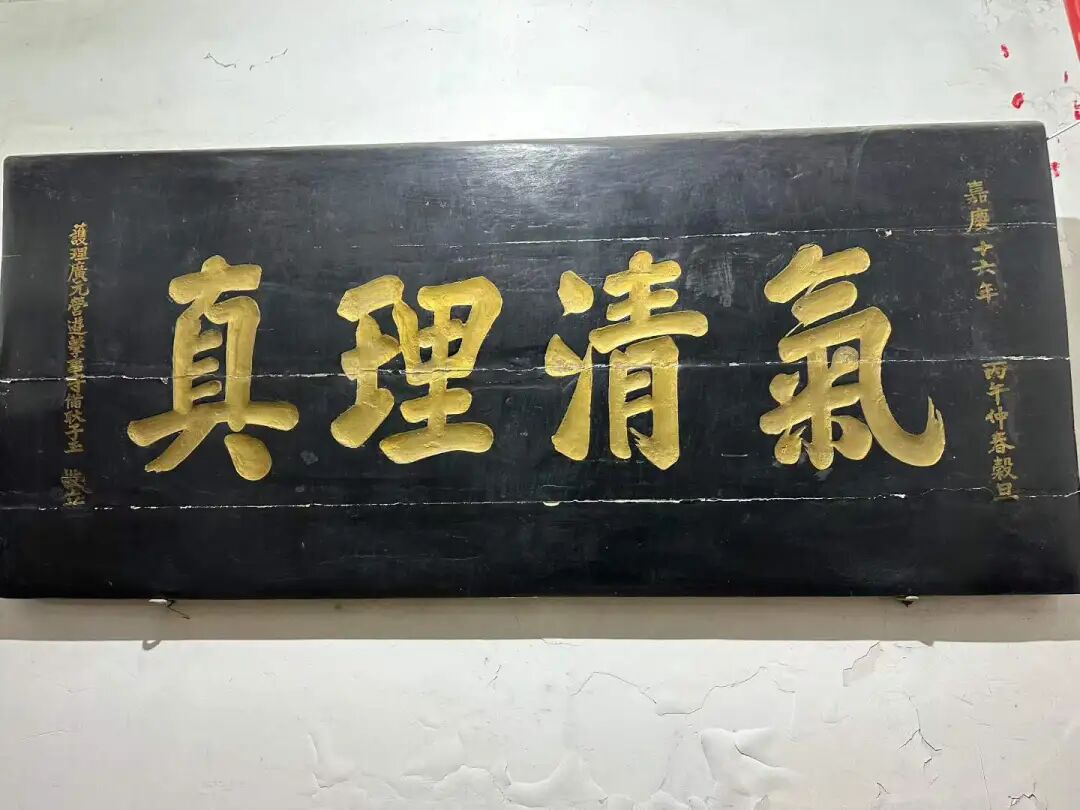
The 'Pure and True' (Qi Qing Li Zhen) plaque from 1811 (the 16th year of the Jiaqing reign) was set up by Geng Ziyu, a garrison commander in Guangyuan.
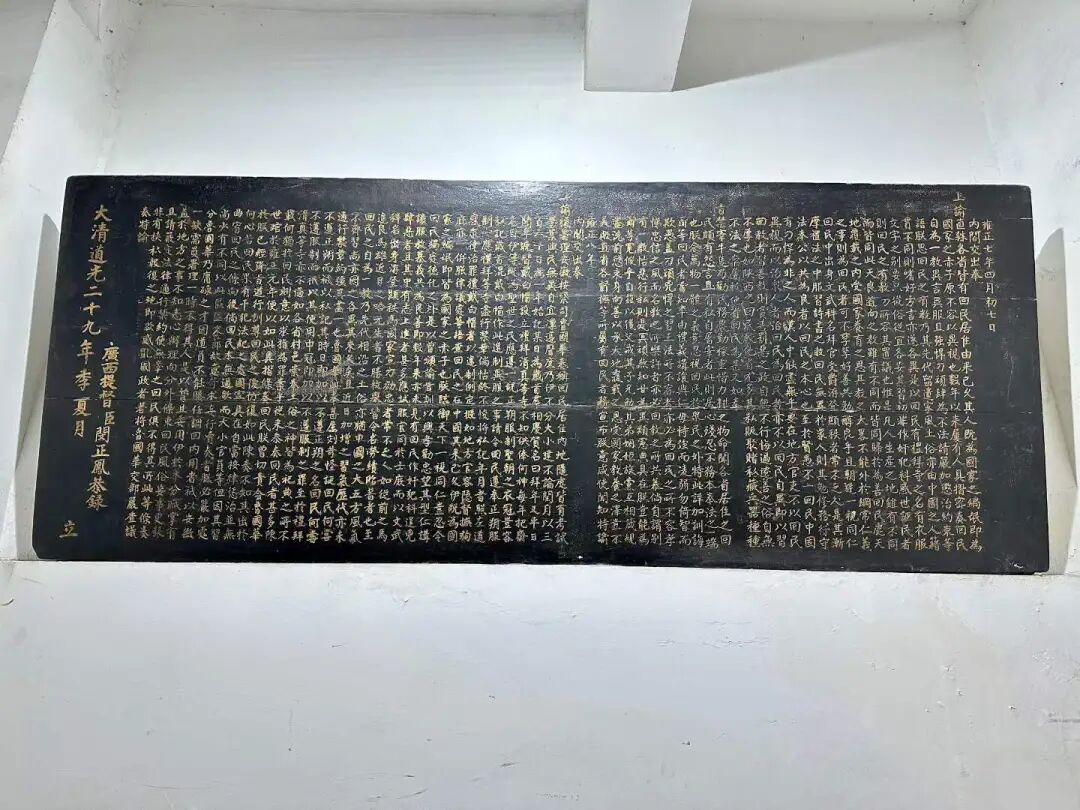
The small-character stone plaque from 1849 (the 29th year of the Daoguang reign) was written by Min Zhengfeng, the Governor of Guangxi, and records the historical facts of religious policy disputes regarding Hui Muslims during the Yongzheng reign and the imperial court's protection of Islam.
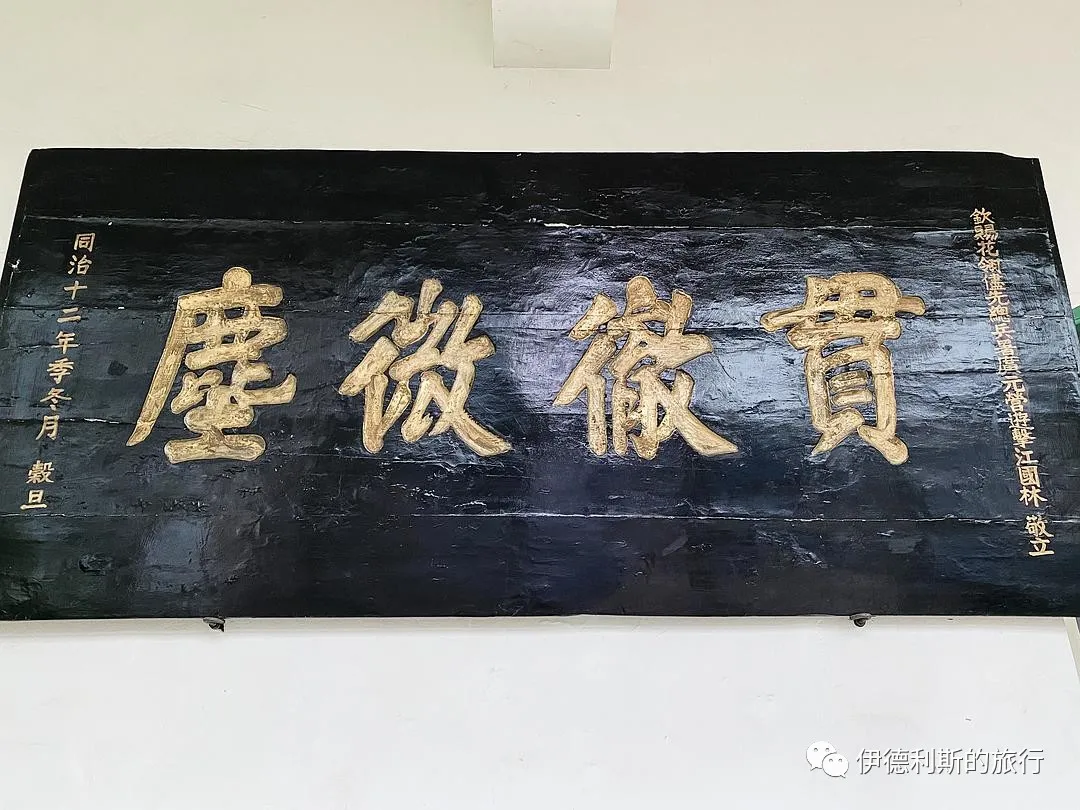
The 'Penetrating the Dust' (Guanche Weichen) plaque from 1873 (the 12th year of the Tongzhi reign) was set up by Jiang Guolin, an imperial-appointed garrison commander in Guangyuan.
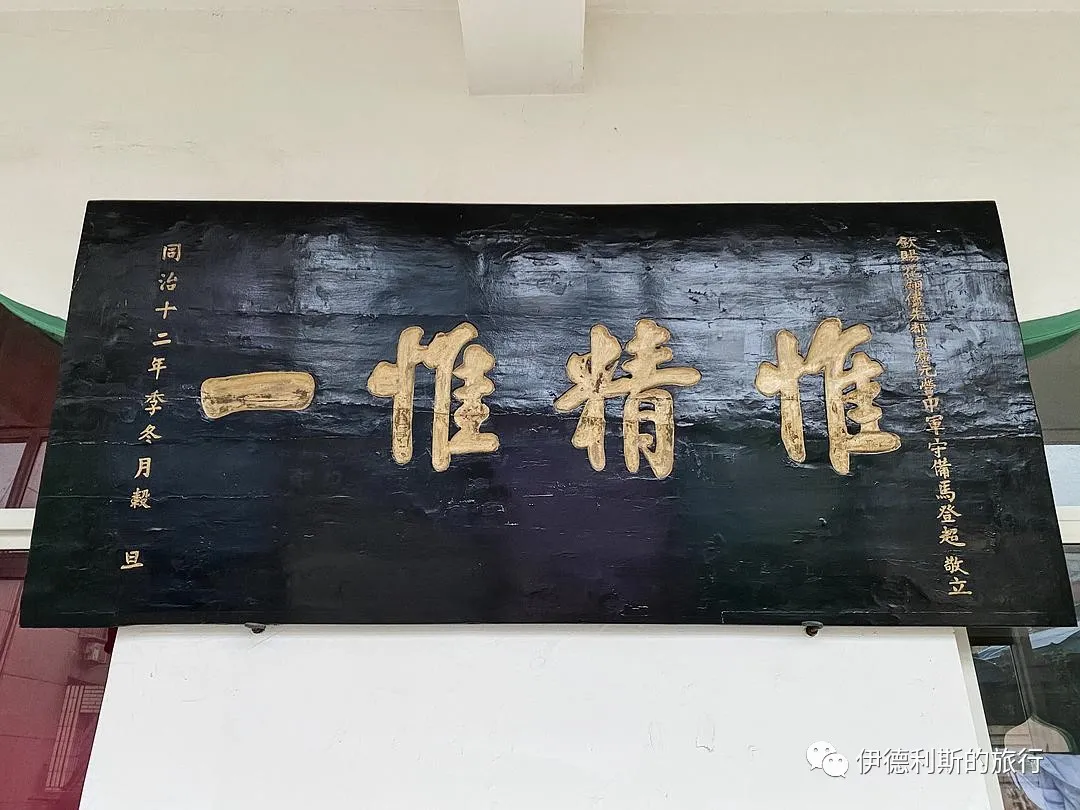
The 'Only Pure and Only One' (Wei Jing Wei Yi) plaque from 1873 (the 12th year of the Tongzhi reign) was set up by Ma Dengchao, an imperial-appointed garrison officer in Guangyuan.
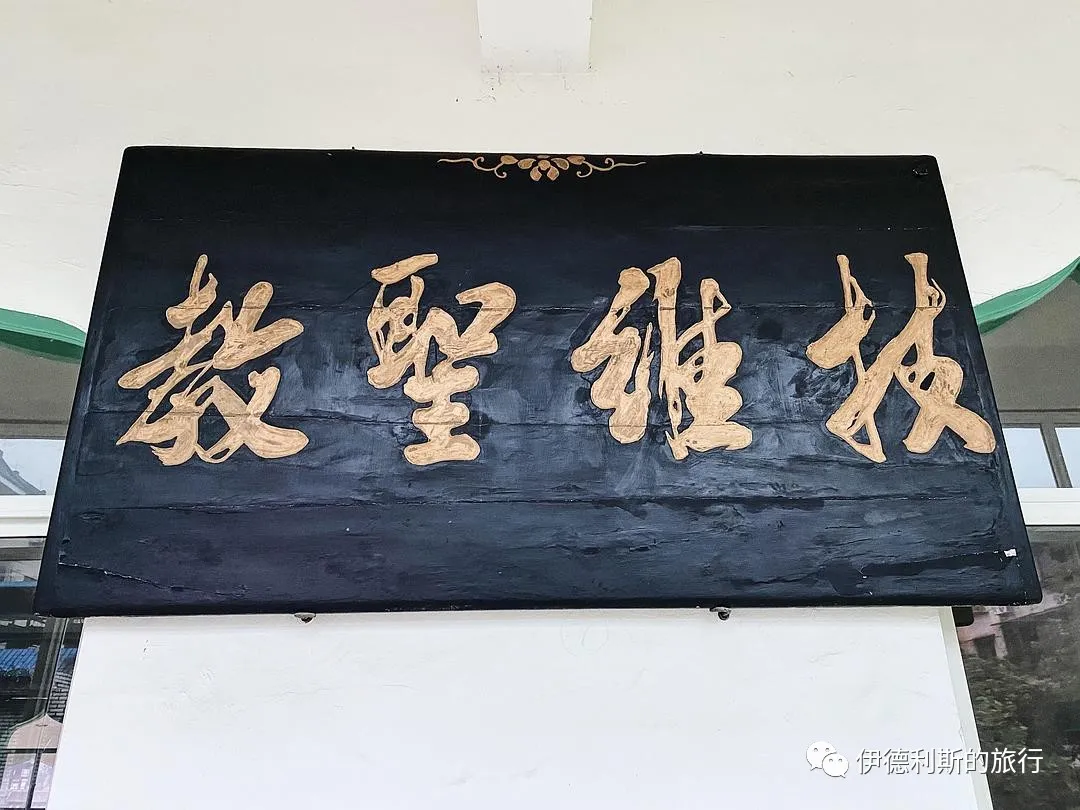
The 'Branch of the Holy Religion' (Zhi Wei Sheng Jiao) plaque from the Guangxu reign was presented by Mu Xiangfu, a garrison commander in Guangyuan.
The 'Spreading the Faith' (Dao Chan Tian Fang) plaque from 1925 was inscribed by Liu Cunhou, the Commissioner of Sichuan-Shaanxi Border Defense and Inspector of the Sichuan Army.
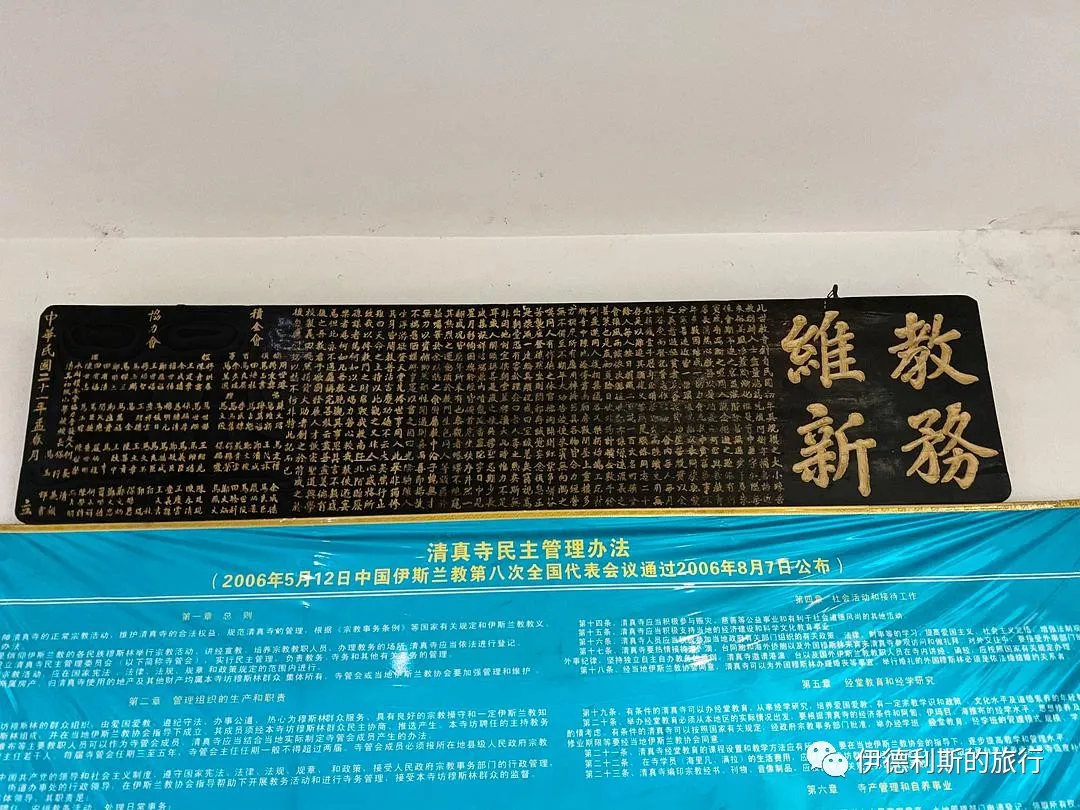
The 'Renewing Religious Affairs' (Jiaowu Weixin) plaque from 1932 was set up by the Guangyuan Hui Muslim Funeral Assistance Association.
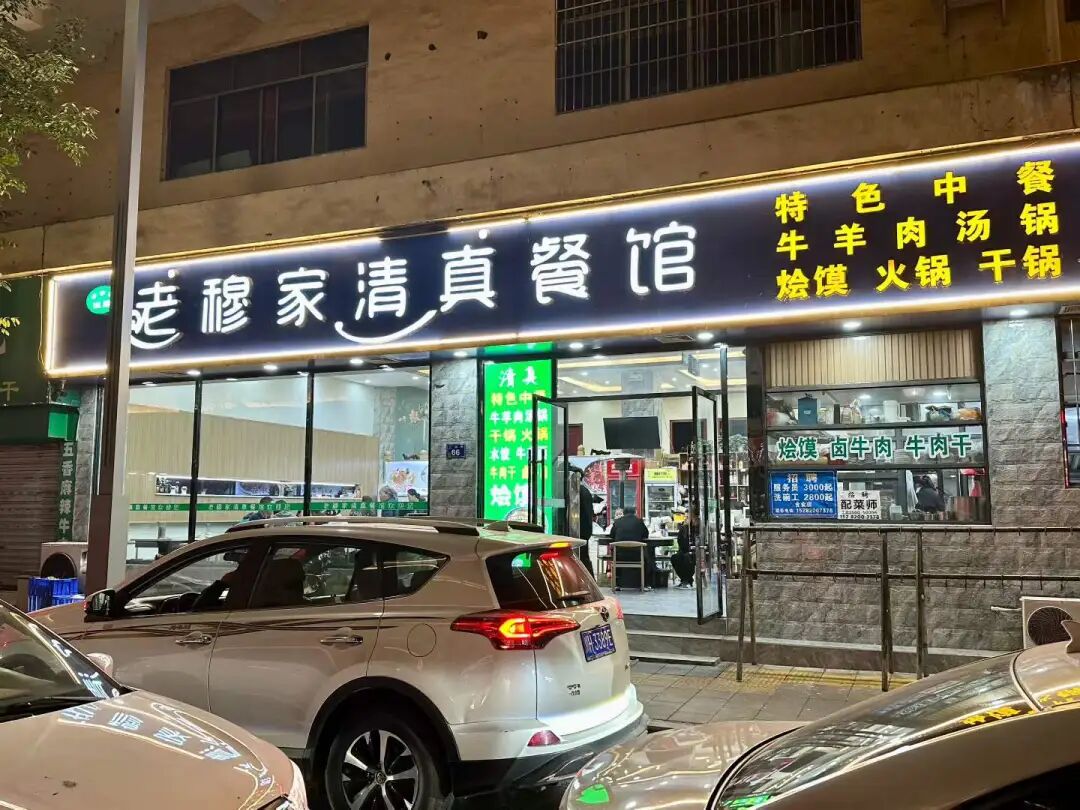
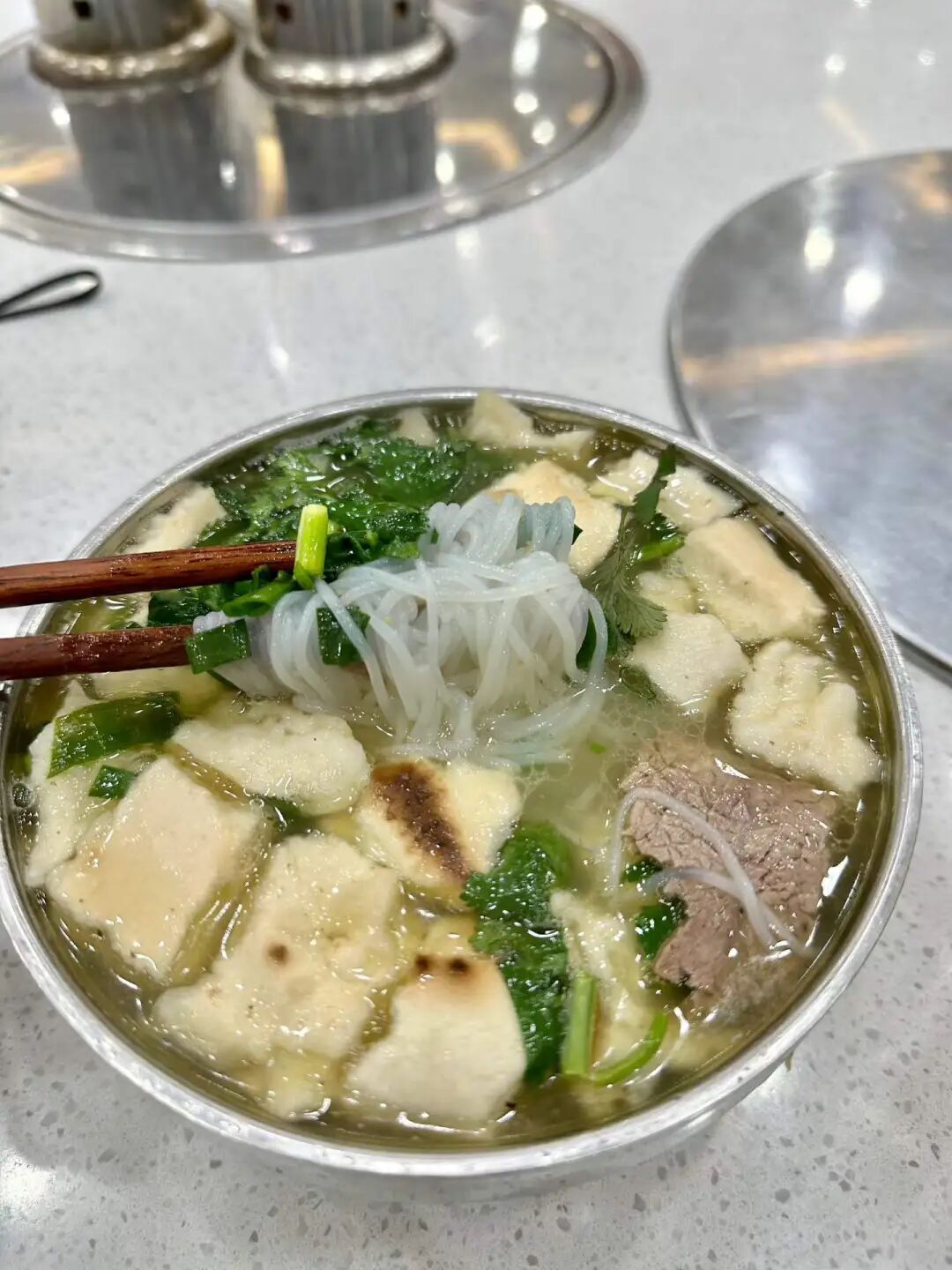
After finishing the Taraweeh prayers, I went behind the mosque to have some beef stew with flatbread (huimo). Because Guangyuan is close to Shaanxi and Gansu, the locals love eating huimo, which makes their food different from the rest of Sichuan. Guangyuan huimo is very different from Shaanxi-style soaked flatbread (paomo) because the bread is served in large, soft chunks that do not fall apart. The broth is made from beef bones and includes plenty of glass noodles. It is popular to eat huimo for breakfast in Guangyuan, but restaurants actually sell it all day long. Zhouji and Lao Mu Jia on Shanghe Street both serve huimo, and Lao Mu Jia stays open later.
The Mu-surname Hui Muslims in Guangyuan migrated from Shaanxi and Gansu along the Jialing River during the mid-Qing Dynasty. Most live in Mujiapo in Datian Town, and they run restaurants in places like the Guangyuan city center and Jiange County where you can taste local Hui Muslim specialties. view all
Summary: This Guangyuan stop follows Shanghe Street by the Jialing River, old mosque history, Hui Muslim community details, and the next stage of a Spring Festival road trip through Sichuan.
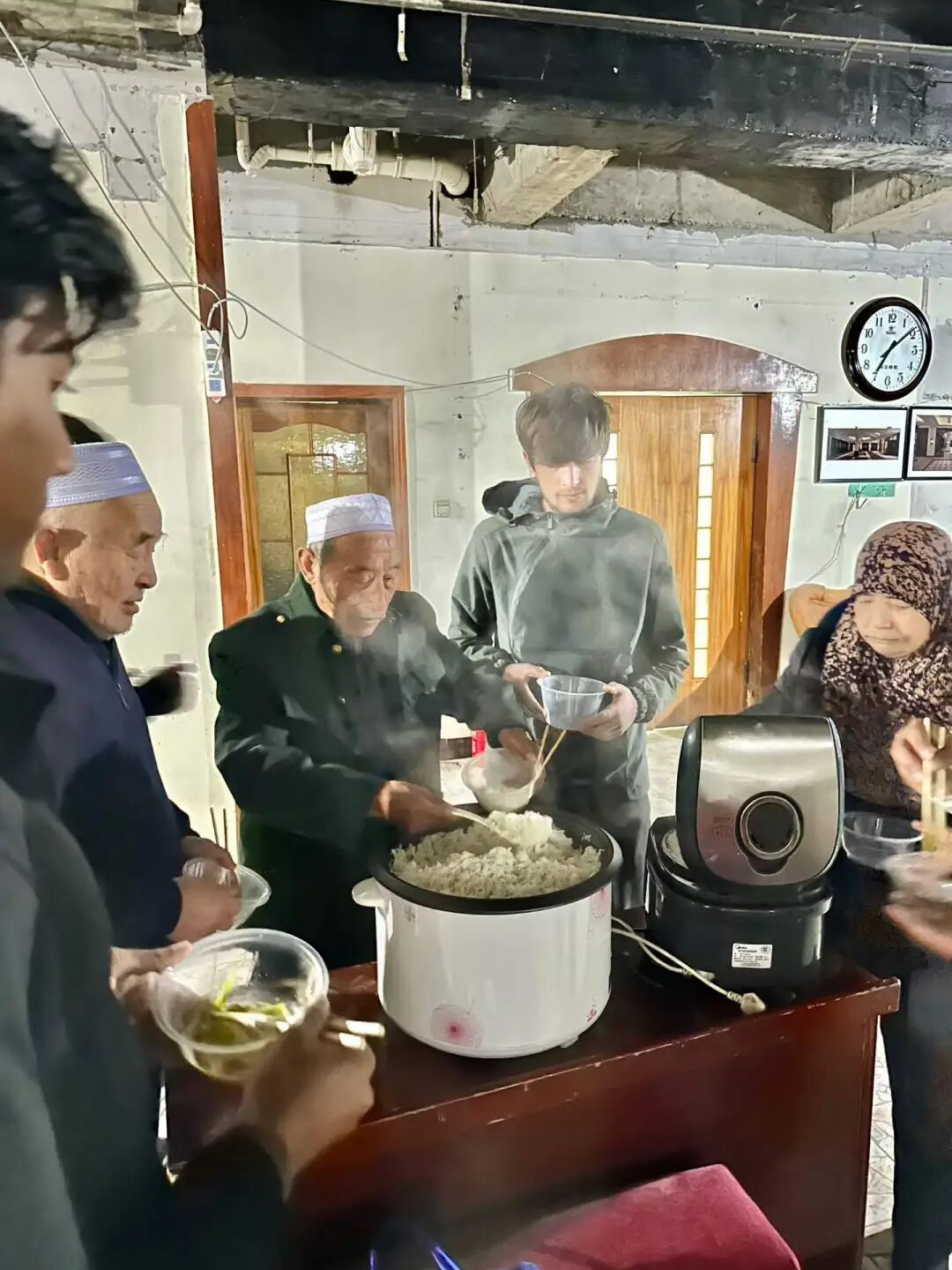
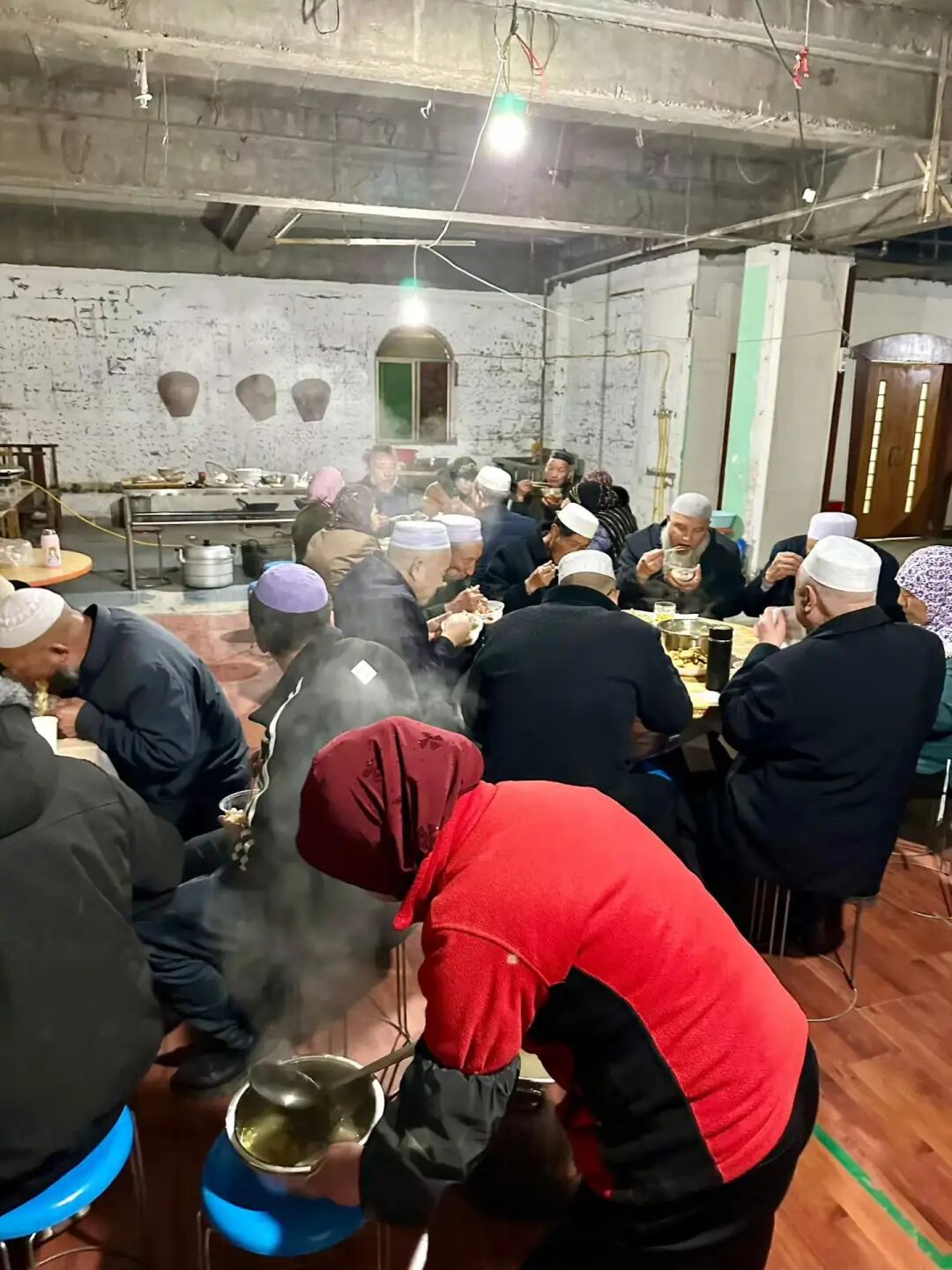
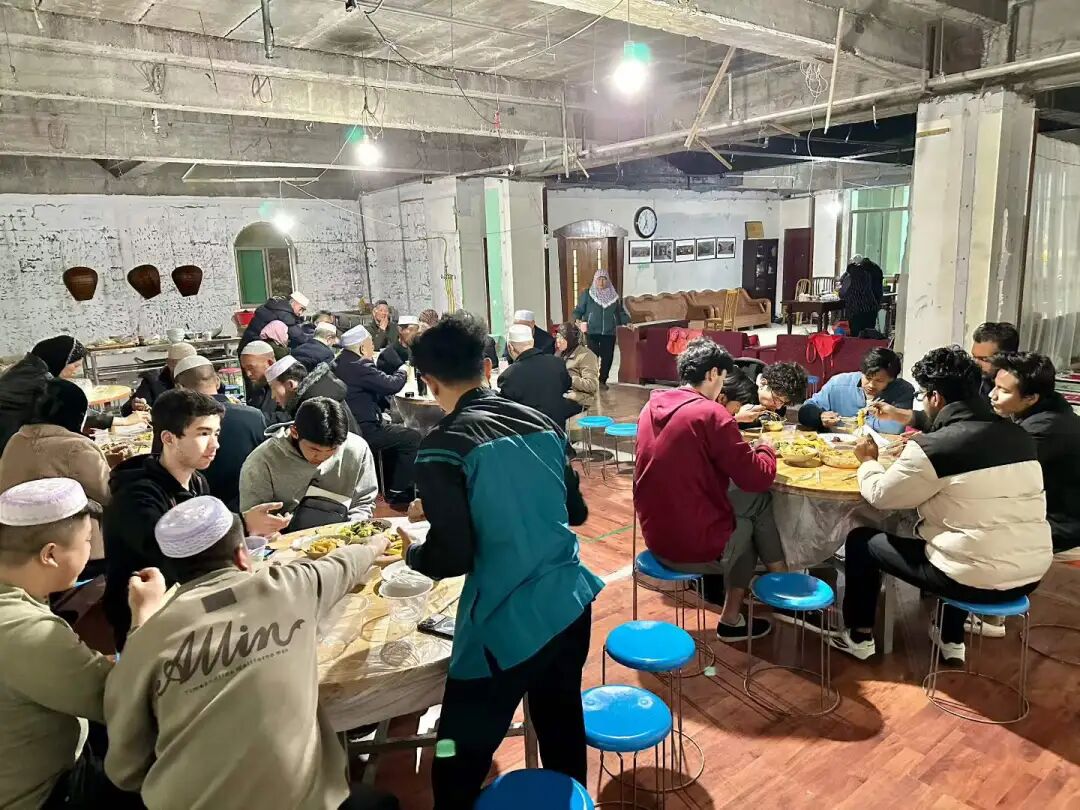
I traveled back along the Jialing River gorge from the Nine Wells, with river breezes and mountain shadows for company, and arrived at the Shanghe Street Mosque in Guangyuan just in time for iftar. The mosque was undergoing repairs during my visit, so prayers and iftar were held on the second floor. The layout was simple, but the atmosphere was incredibly quiet and solemn.
Guangyuan sits at the junction of Sichuan, Shaanxi, and Gansu provinces, serving as a key hub for water and land transport. The worshippers here are diverse, including friends (dost) from the northwest, international students studying here, and local elders who have lived here for generations. Their shared devotion creates a peaceful and inclusive environment.
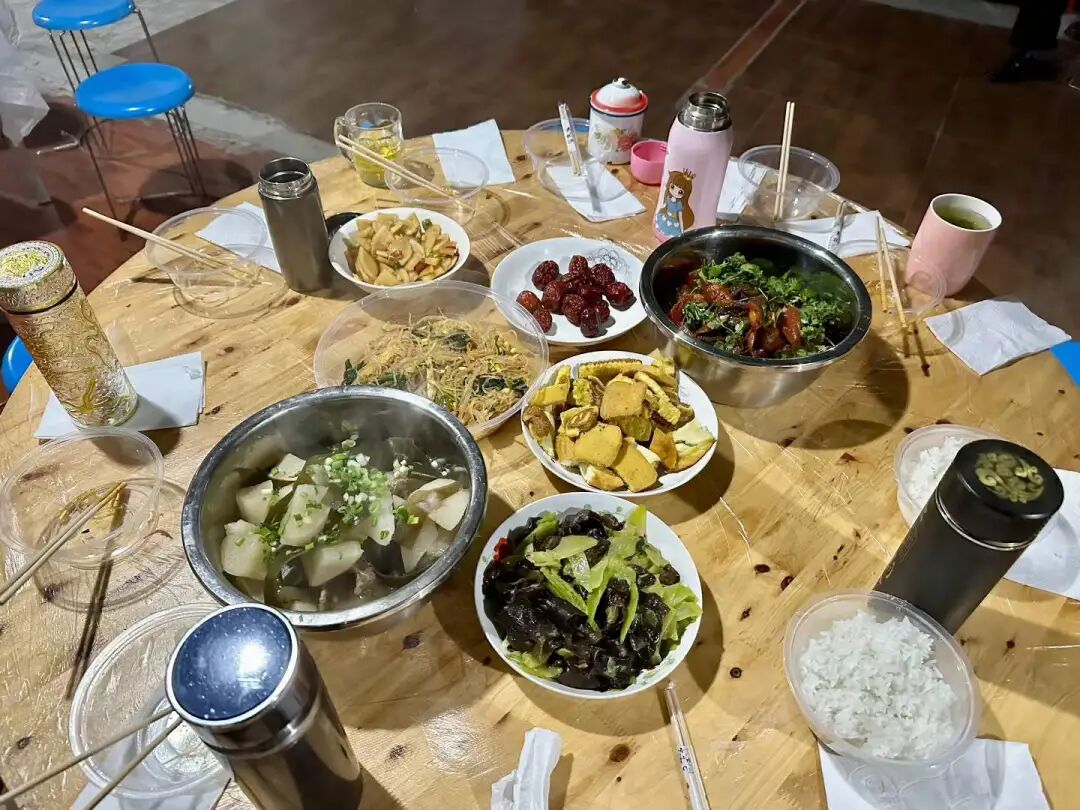
The iftar meal was simple and home-style: warm and flavorful beef stewed with carrots (huluobo dun niurou), refreshing stir-fried wood ear mushrooms with asparagus lettuce (wosun chao mu'er), light and soothing kelp stewed with white radish (bailuobo dun haidai), plus cold glass noodles (liangban fensi) and pickled radish. It was simple, solid, steady, and healing.
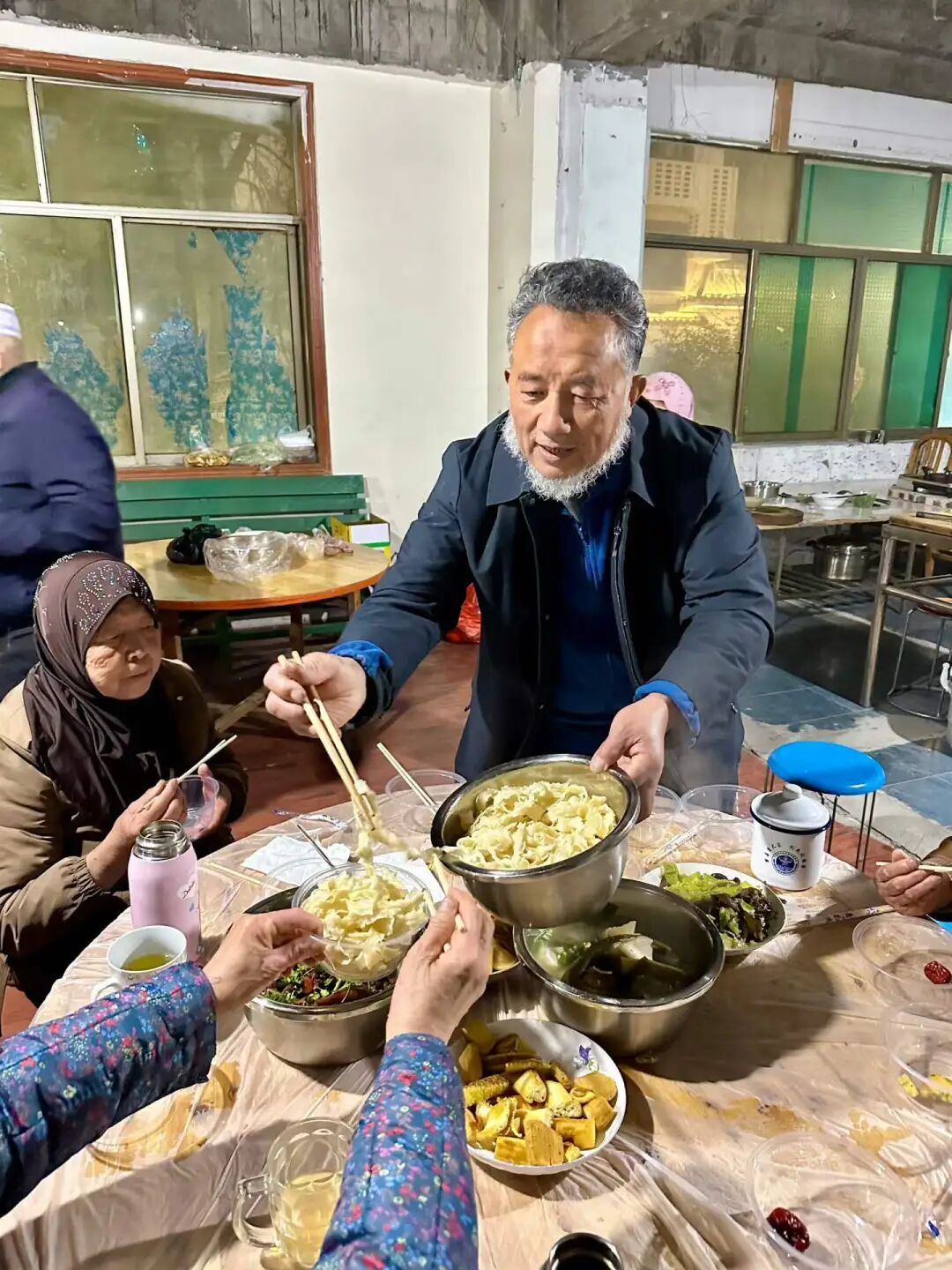
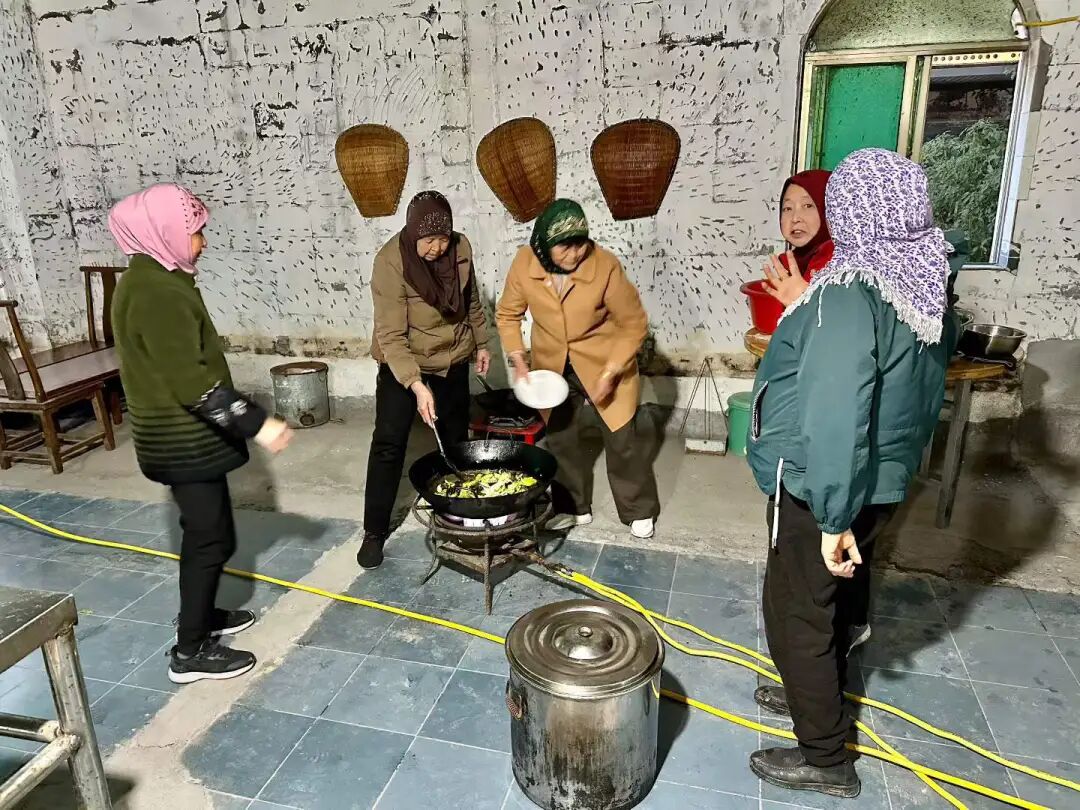
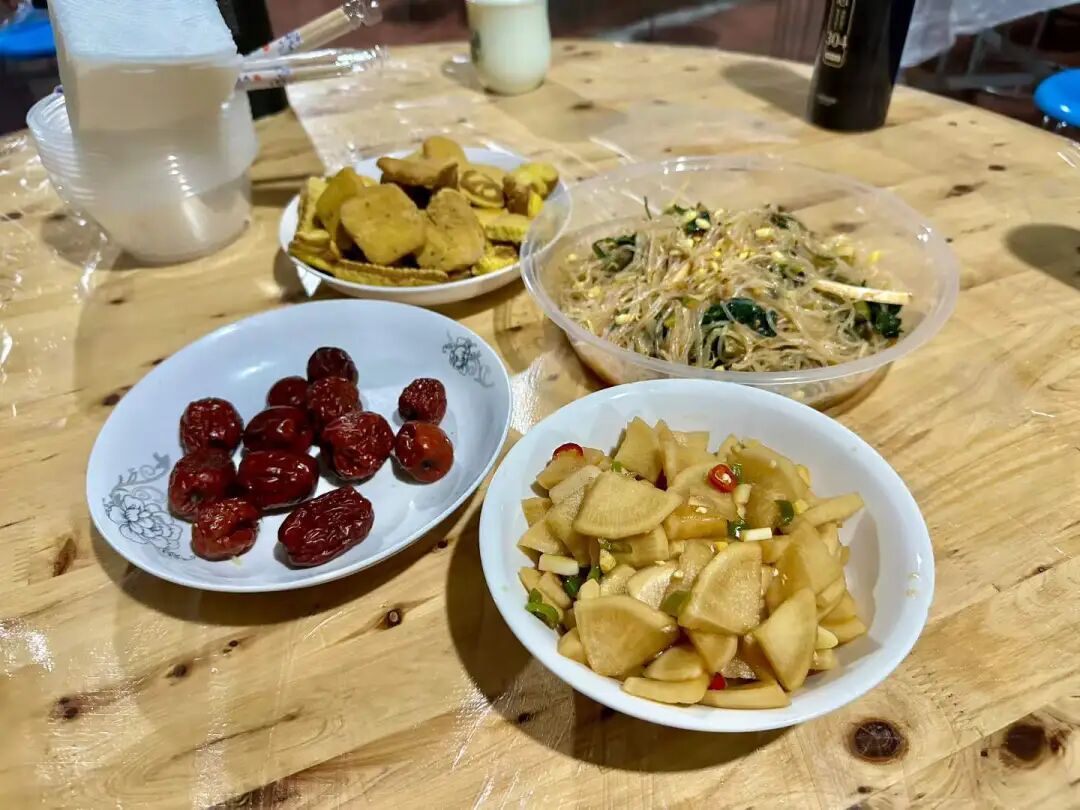
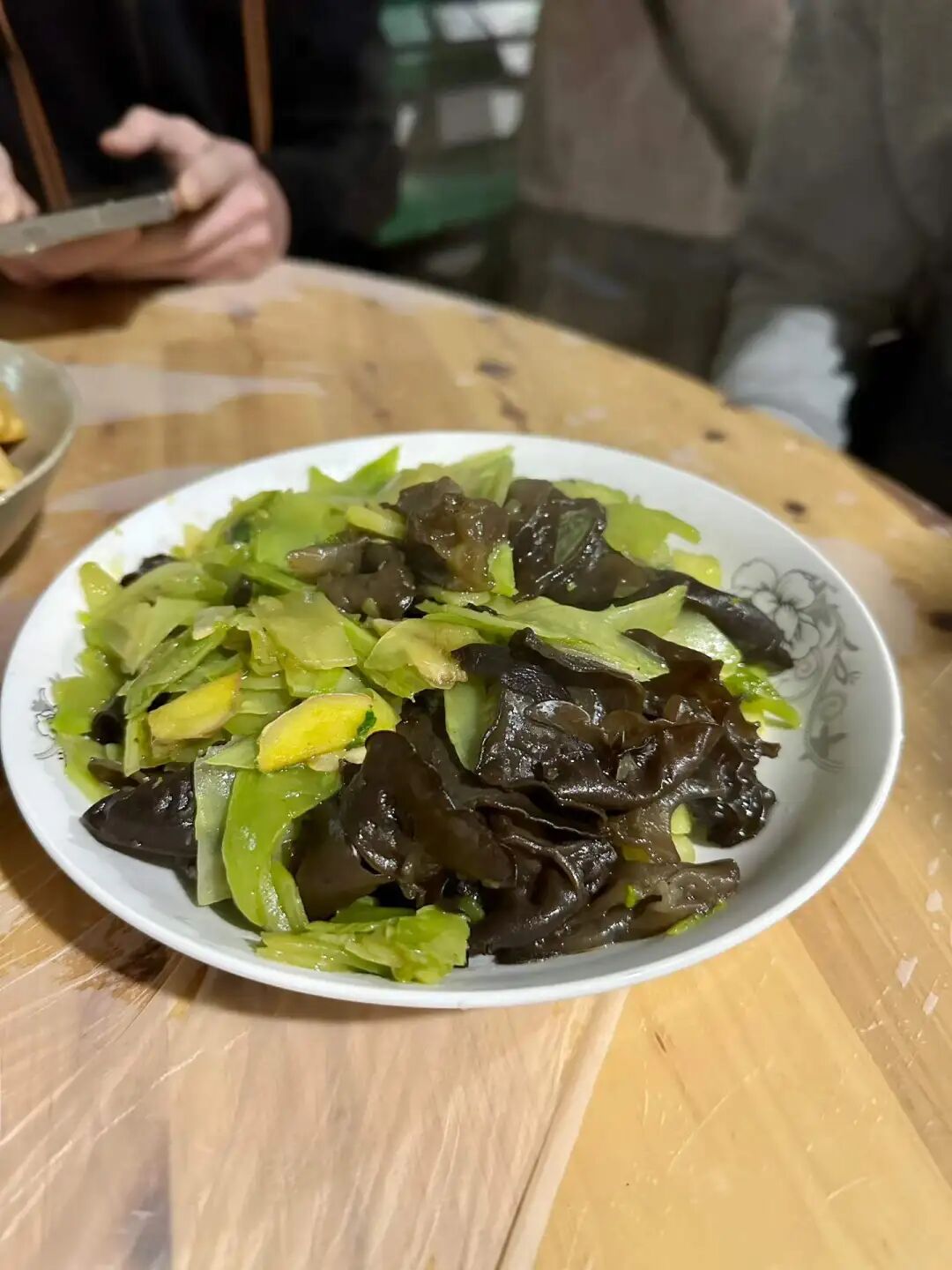
The Shanghe Street Mosque in Guangyuan stands quietly by the Jialing River, right outside the bustling Jialing River Pedestrian Street. River breezes blow gently, and tourist boats shuttle back and forth at the pier in a constant stream, full of the lively noise of the city. Stepping into the mosque to quietly perform Taraweeh prayers, I felt deeply moved. Just one window away, the world outside is filled with the hustle and bustle of traffic and the busy, worldly life. Inside the window is a clean and peaceful place for spiritual practice, a quiet harbor to rest one's heart. The noise of the world and the peace of the ancient mosque blend together, creating a moment of stillness and a spiritual home by the busy river.
Guangyuan had a mosque built on East Street in the old city as early as the Yuan and Ming dynasties, but it was destroyed at the end of the Ming Dynasty. After the Qing Dynasty, the commercial center of Guangyuan gradually moved from East Street to the banks of the Jialing River. Therefore, local Hui Muslims built the Shanghe Street Mosque in 1721 (the 60th year of the Kangxi reign), though some say it started in 1674, and it was expanded in 1777 (the 42nd year of the Qianlong reign).
The mosque now houses nine precious plaques from the Qing Dynasty and the Republic of China era. In the 1960s and 1970s, these plaques were covered with layers of paper and painted red with slogans about national unity, which is how they survived. These nine plaques are now hung on the walls of the stairs and corridors inside the mosque.
The 'Mosque' (Qingzhensi) plaque from 1748 (the 13th year of the Qianlong reign) was rebuilt by the community in the 10th year of the Republic of China.
The 'Recognize Allah as One' (Renzhu Wu'er) plaque from 1803 (the 8th year of the Jiaqing reign) was presented by the imperial-appointed Baturu Min Huaixi.
The 'Pure and True' (Qi Qing Li Zhen) plaque from 1811 (the 16th year of the Jiaqing reign) was set up by Geng Ziyu, a garrison commander in Guangyuan.
The small-character stone plaque from 1849 (the 29th year of the Daoguang reign) was written by Min Zhengfeng, the Governor of Guangxi, and records the historical facts of religious policy disputes regarding Hui Muslims during the Yongzheng reign and the imperial court's protection of Islam.
The 'Penetrating the Dust' (Guanche Weichen) plaque from 1873 (the 12th year of the Tongzhi reign) was set up by Jiang Guolin, an imperial-appointed garrison commander in Guangyuan.
The 'Only Pure and Only One' (Wei Jing Wei Yi) plaque from 1873 (the 12th year of the Tongzhi reign) was set up by Ma Dengchao, an imperial-appointed garrison officer in Guangyuan.
The 'Branch of the Holy Religion' (Zhi Wei Sheng Jiao) plaque from the Guangxu reign was presented by Mu Xiangfu, a garrison commander in Guangyuan.
The 'Spreading the Faith' (Dao Chan Tian Fang) plaque from 1925 was inscribed by Liu Cunhou, the Commissioner of Sichuan-Shaanxi Border Defense and Inspector of the Sichuan Army.
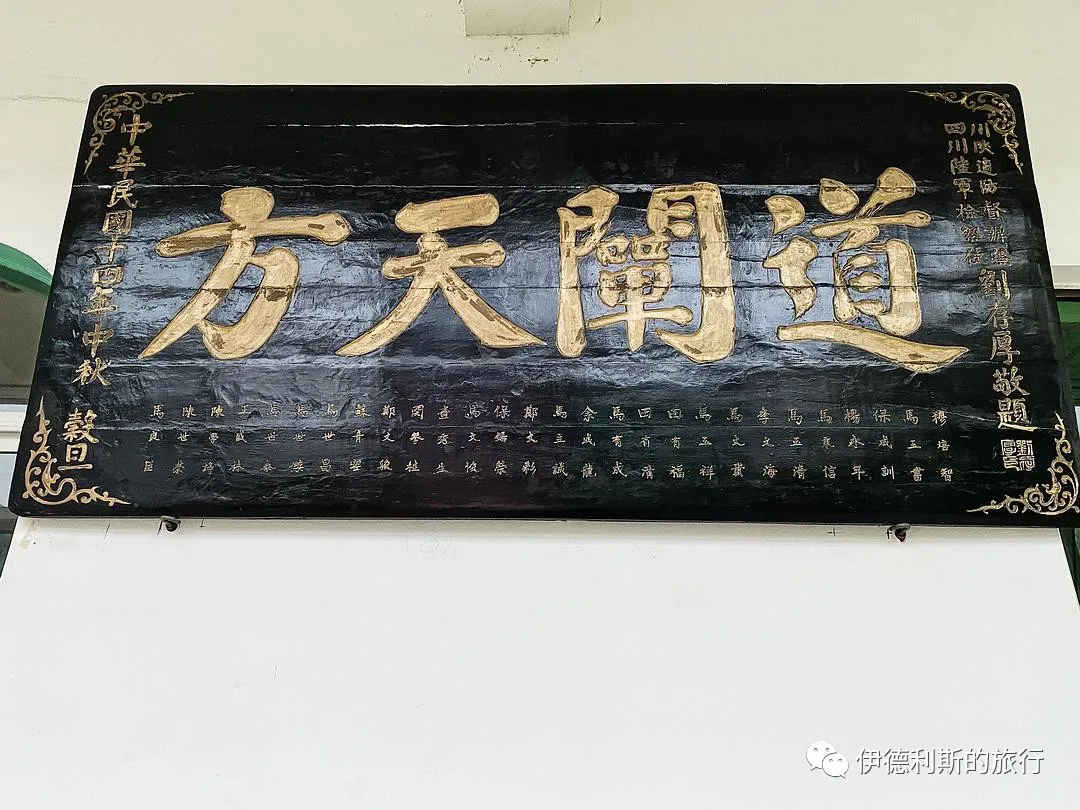
The 'Renewing Religious Affairs' (Jiaowu Weixin) plaque from 1932 was set up by the Guangyuan Hui Muslim Funeral Assistance Association.
After finishing the Taraweeh prayers, I went behind the mosque to have some beef stew with flatbread (huimo). Because Guangyuan is close to Shaanxi and Gansu, the locals love eating huimo, which makes their food different from the rest of Sichuan. Guangyuan huimo is very different from Shaanxi-style soaked flatbread (paomo) because the bread is served in large, soft chunks that do not fall apart. The broth is made from beef bones and includes plenty of glass noodles. It is popular to eat huimo for breakfast in Guangyuan, but restaurants actually sell it all day long. Zhouji and Lao Mu Jia on Shanghe Street both serve huimo, and Lao Mu Jia stays open later.
The Mu-surname Hui Muslims in Guangyuan migrated from Shaanxi and Gansu along the Jialing River during the mid-Qing Dynasty. Most live in Mujiapo in Datian Town, and they run restaurants in places like the Guangyuan city center and Jiange County where you can taste local Hui Muslim specialties.
Hidden Gongbei in Guangyuan: Jiujing Sufi Shrine, Mujiapo Hui Village and Sichuan Mosque Road Trip
Articles • ali2007fr posted the article • 0 comments • 205 views • 2026-05-21 06:45
Summary: This Guangyuan finale follows Jiujing gongbei (Sufi shrine), Mujiapo Hui Muslim village, rural mosque history, and the last stretch of the Sichuan Spring Festival road trip.
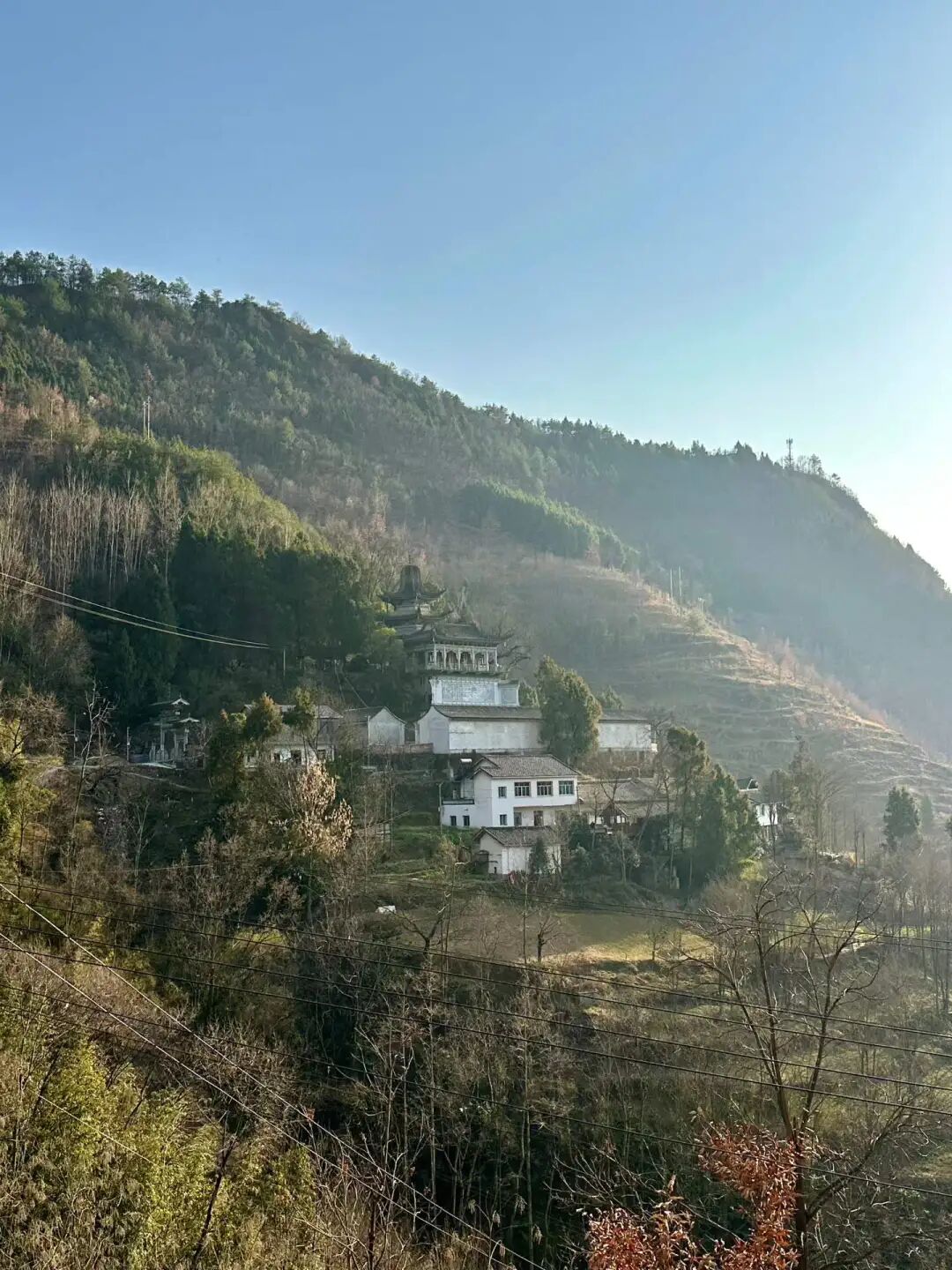
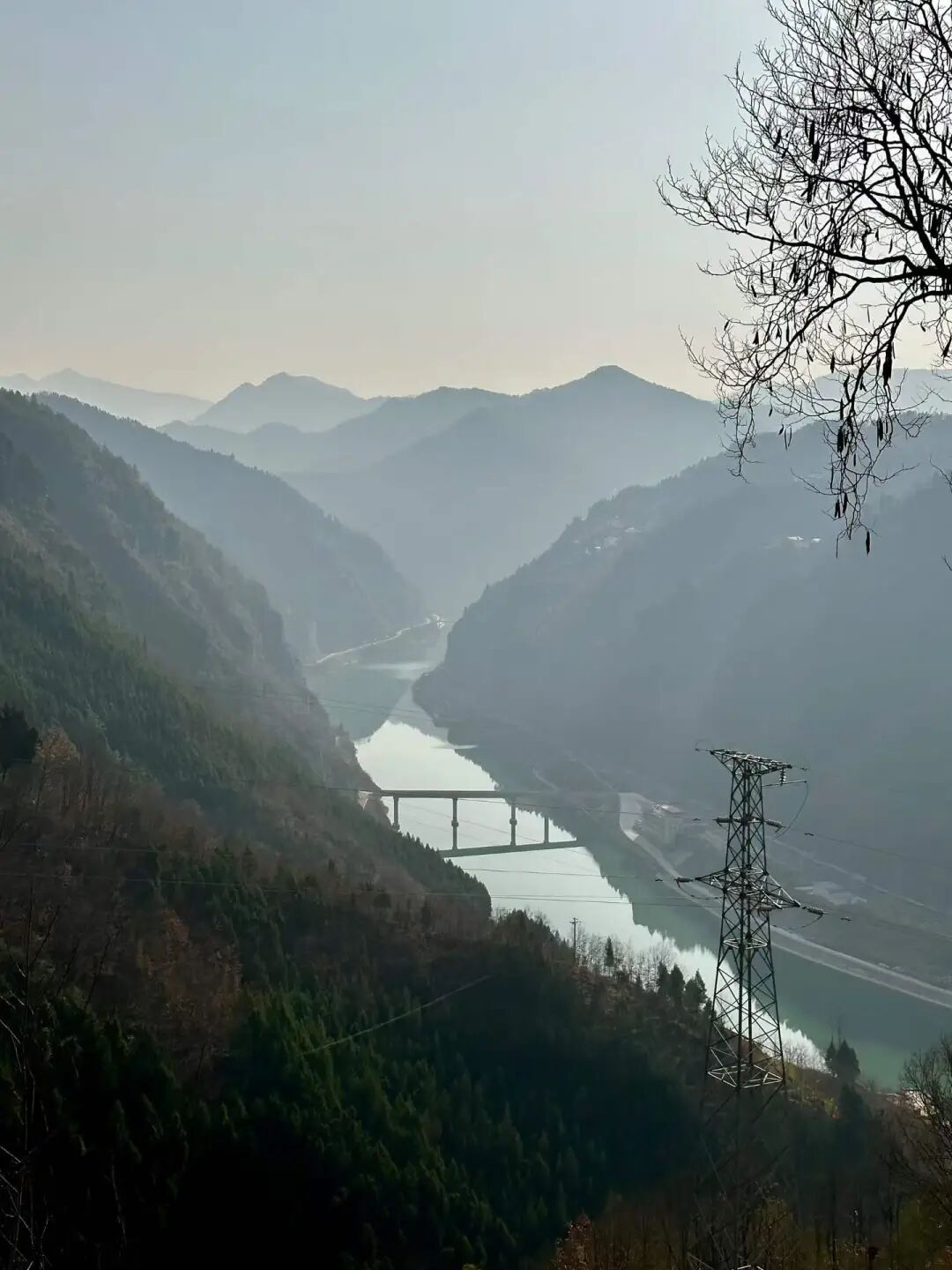
I traveled north from Nanshan in Guangyuan, crossed the city center, and followed the Jialing River Grand Canyon deep into the mountains until I reached the border of Sichuan and Shaanxi, where the Jiujing Gongbei sits on a hillside next to the canyon. I personally consider this the most remarkable Gongbei in all of Sichuan.
Jiujing Gongbei, also known as Jingjue Pavilion (Jingjue Ting), was first built in 1702 (the 41st year of the Kangxi reign). It holds the tomb of Ma Xunyi, a disciple of Huazhe Abudonglaxi, who was a leader of the Qadiriyya Sufi order (menhuan). In 1721 (the 60th year of the Kangxi reign), the tomb also became the final resting place for Ma Yongqing and Mu Zaiqing, who were disciples of Ma Xunyi's fellow student, Qi Jingyi.
The 1702 tombstone for Ma Xunyi reads: 'Regarding the Ma family of the pure faith from Lintao, Hezhou, who traveled to teach in Jiujing, Guangyuan, and passed away here, this monument is erected.' The tomb of the late, respected Master Ma of the Qing dynasty. The landowners were Mu Zhixian and Mu Zhilin. Erected on an auspicious day, the 15th day of the ninth lunar month in the 41st year of the Kangxi reign, by his student Ha Chengyu.
The 'Stele Record for the Reconstruction of Jingjue Pavilion' dates to the 55th year of the Qianlong reign. The inscription mentions that Ma Xunyi began studying under Huazhe Abudonglaxi in the 25th year of the Kangxi reign. The text was written by Ma Gui, the great-grandson of Ma Xunyi and the caretaker of Jiujing Gongbei.
The 'Jingjue Pavilion' plaque from the 7th year of the Guangxu reign was gifted by Liu, a Jinshi degree holder specially appointed as the Magistrate of Guangyuan County, who received five promotions and ten commendations for his service. It was also erected by Ma Dengchao, who was specially appointed as the Garrison Commander of Guangyuan and granted the imperial peacock feather. These were Magistrate Liu of Guangyuan County and Garrison Commander Ma Dengchao.
Historical records confirm that the Guangyuan Magistrate in the 7th year of the Guangxu reign was Liu Xian. Liu Xian was from Qian County, Shaanxi. He was a diligent student from a young age. During his time as Magistrate of Guangyuan, he provided disaster relief, built bridges and roads, and improved irrigation, helping the people live comfortably. He was honest and upright, and people called him 'Blue Sky Liu' (Liu Qingtian).
Ma Dengchao was a local from Sichuan. During the Tongzhi and Guangxu reigns, he served as a fifth-rank military officer in the Green Standard Army, overseeing city defense, military affairs, and provisions in Guangyuan County. In the 12th year of the Tongzhi reign, he inscribed the words 'Only Pure, Only One' (Wei Jing Wei Yi) for the Shanghe Street Mosque in Guangyuan, which is still kept inside the mosque today.
Inside the Gongbei, there are several Chinese pistache trees (huanglianmu) over 300 years old, planted when the site was first built.
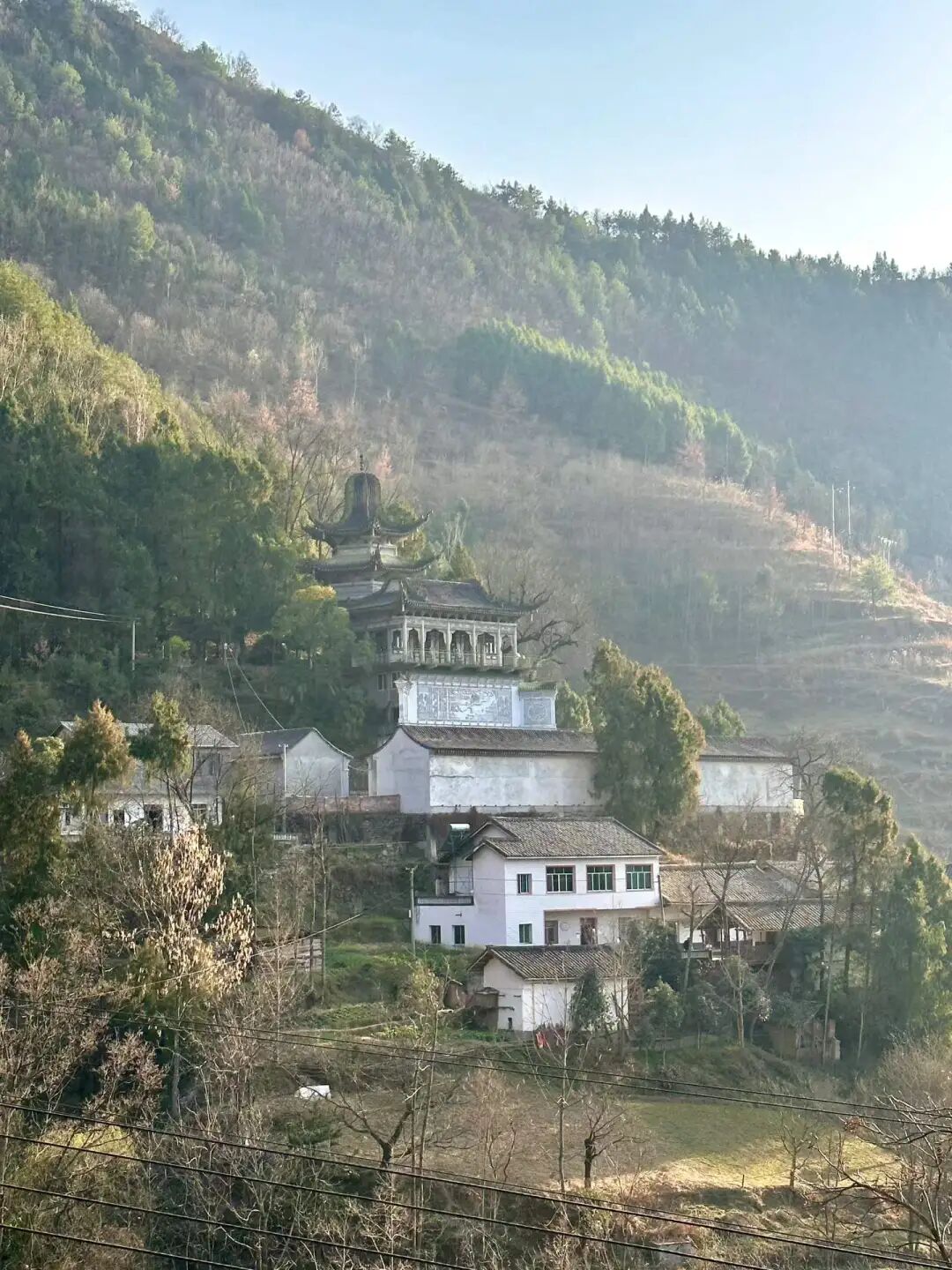
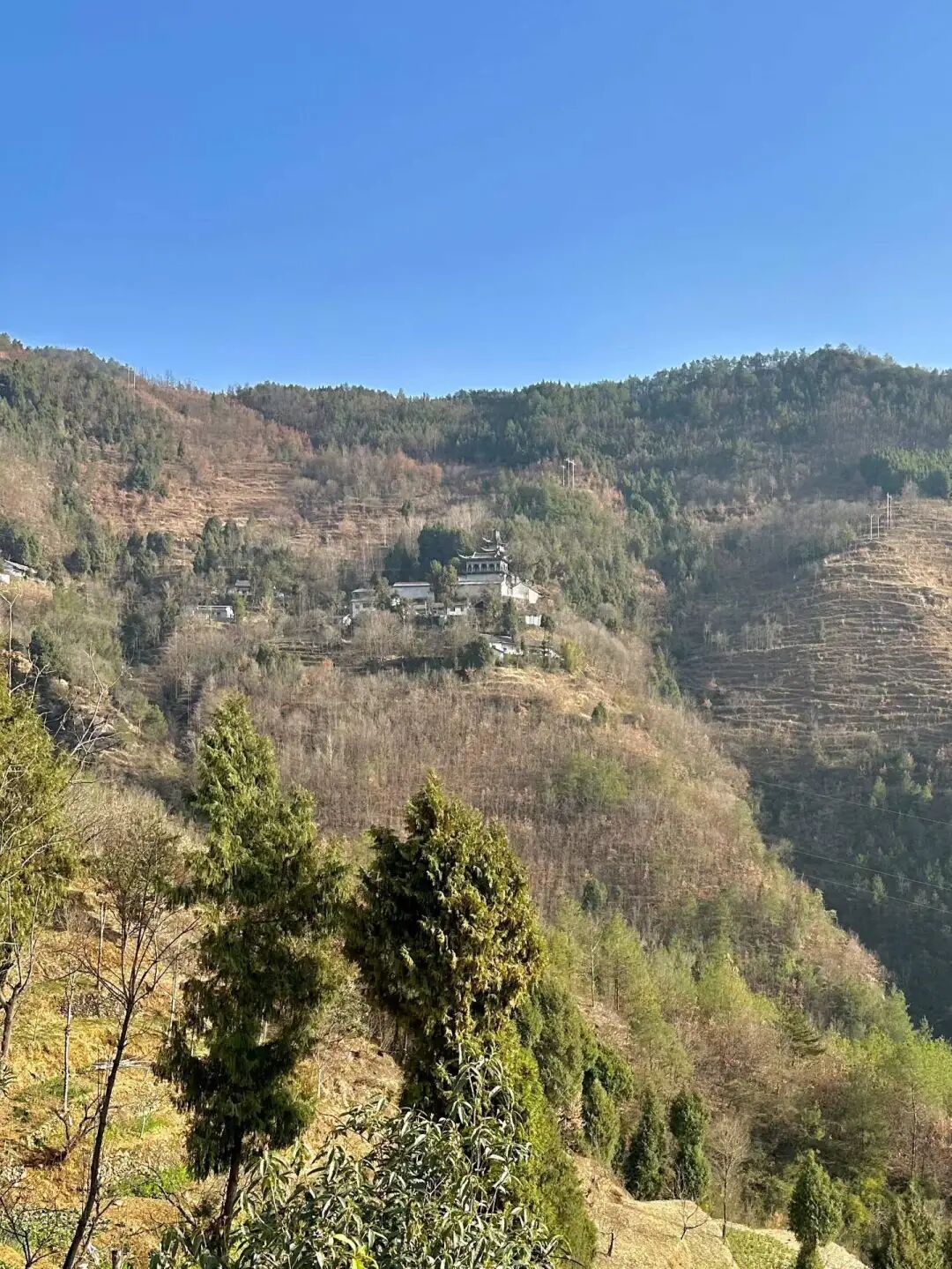
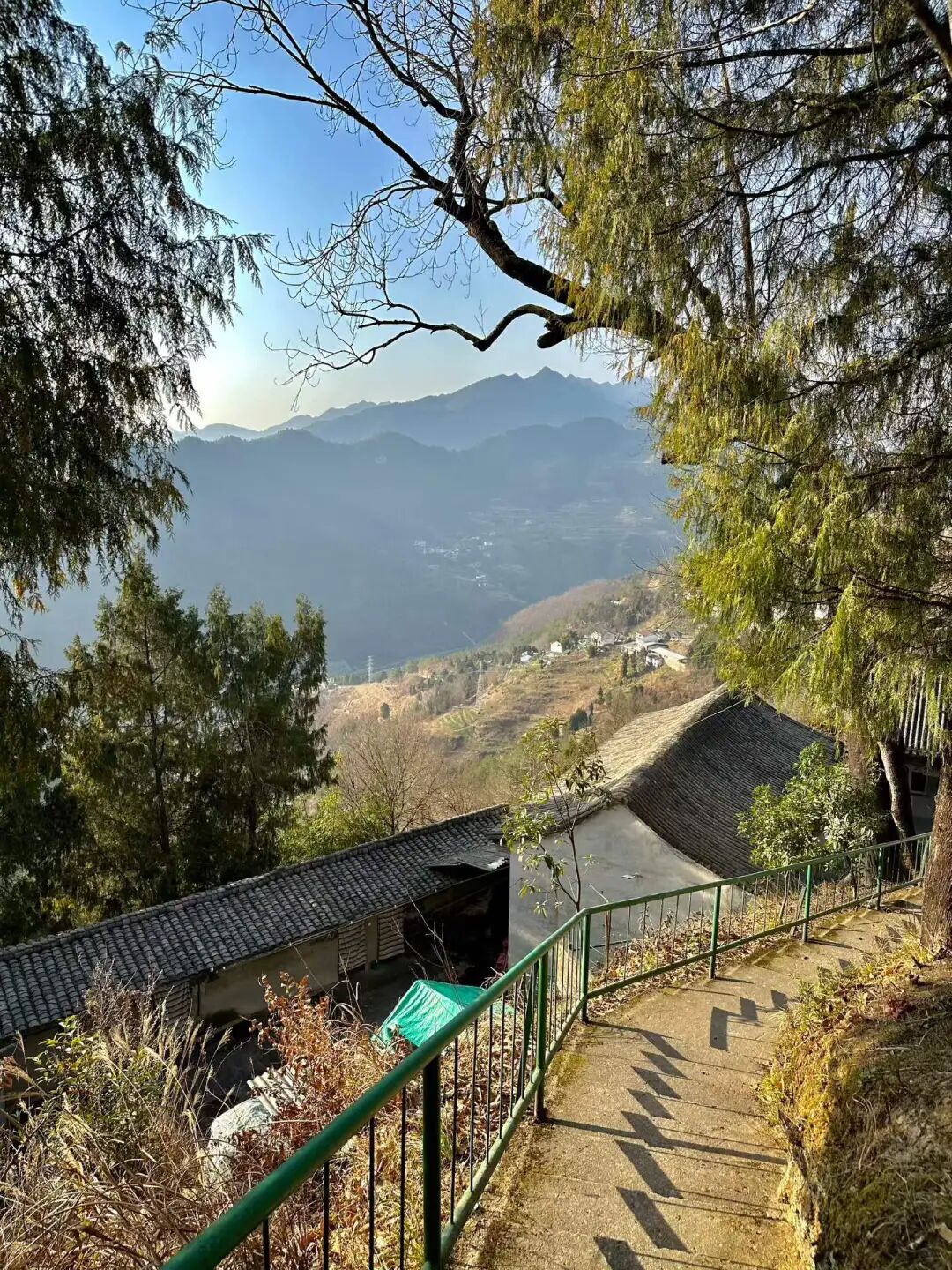
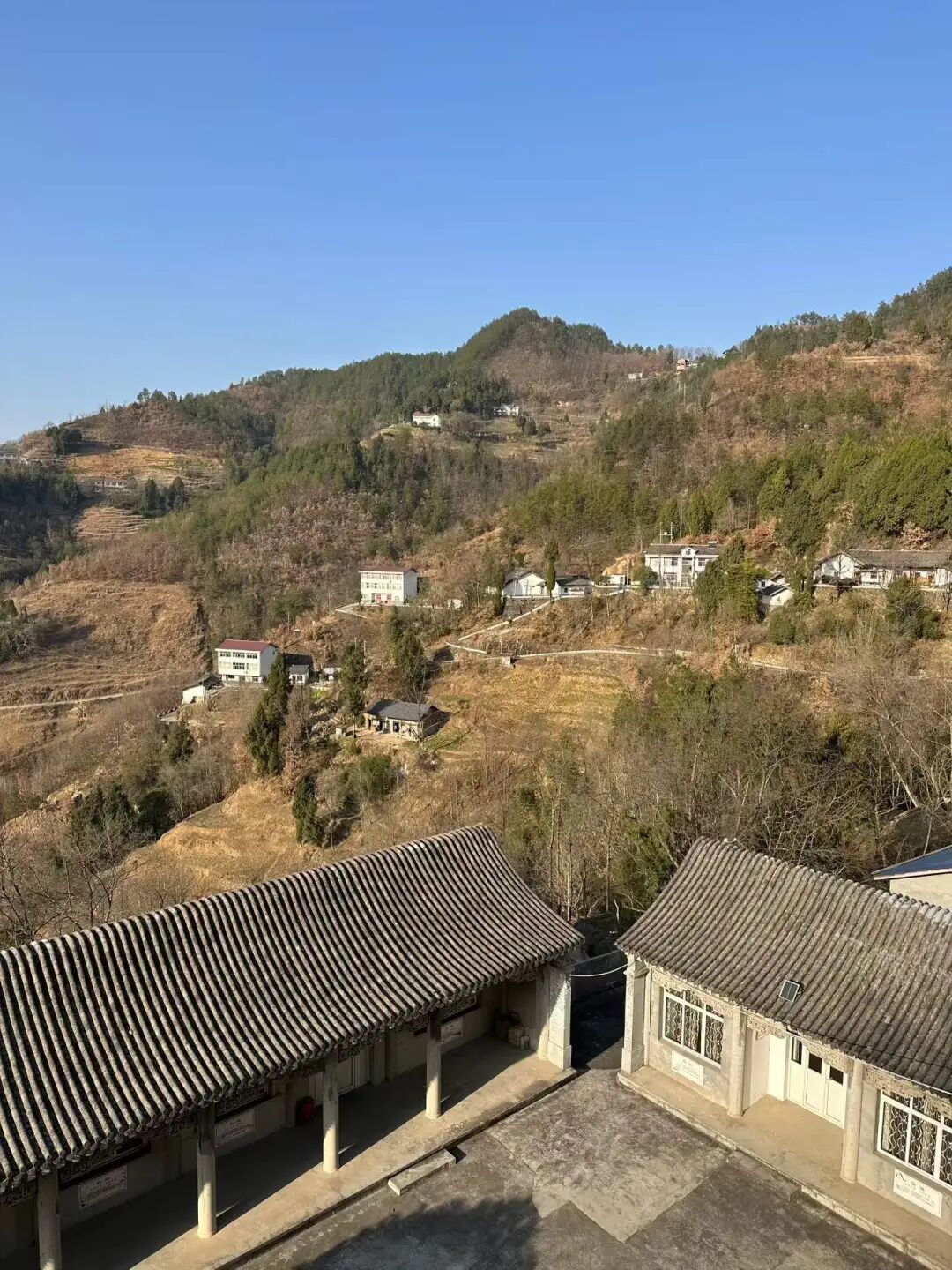
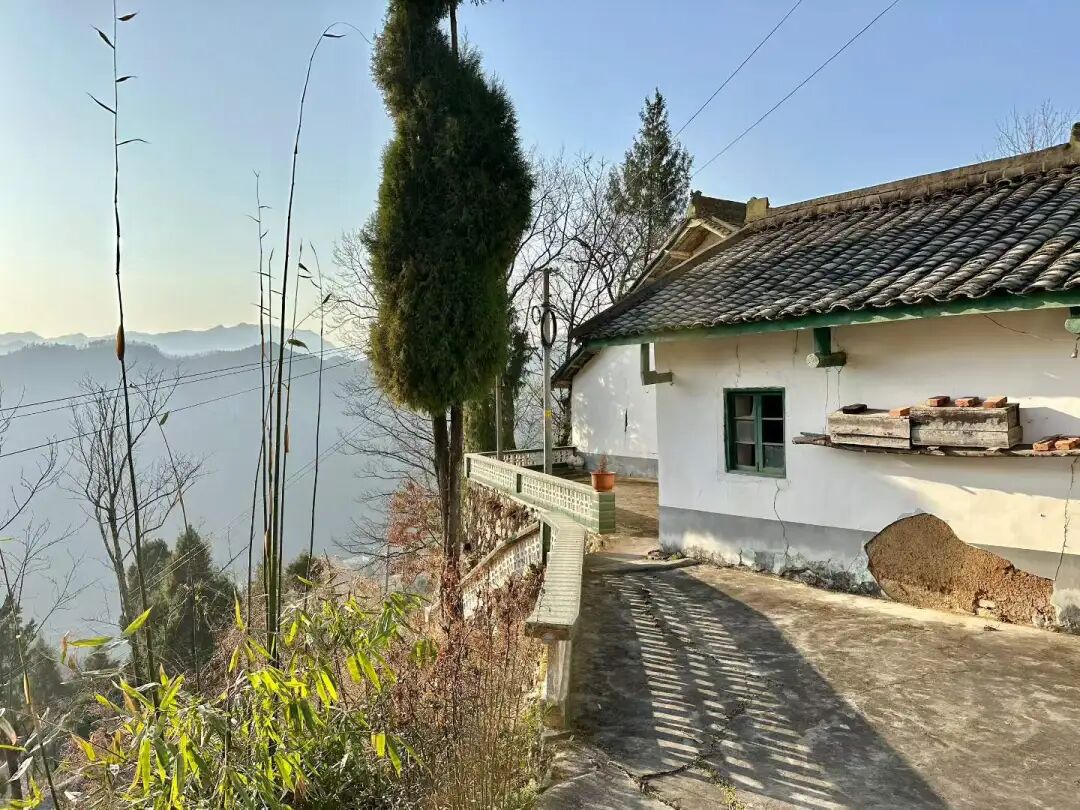
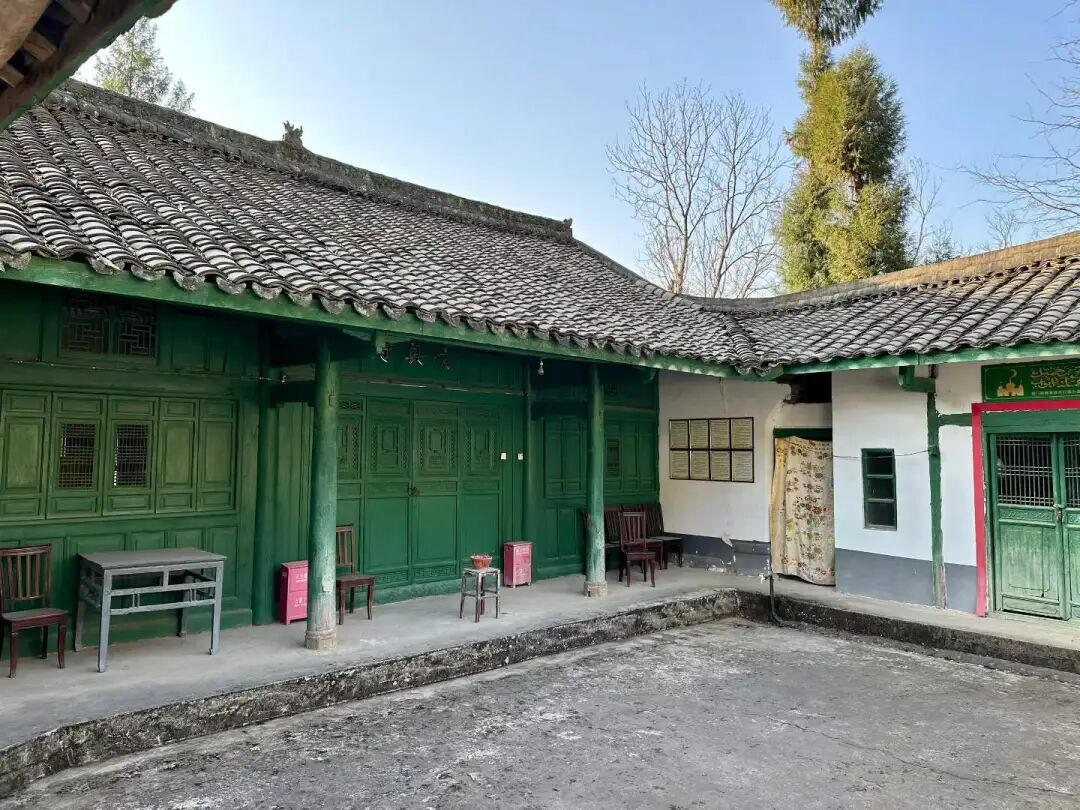
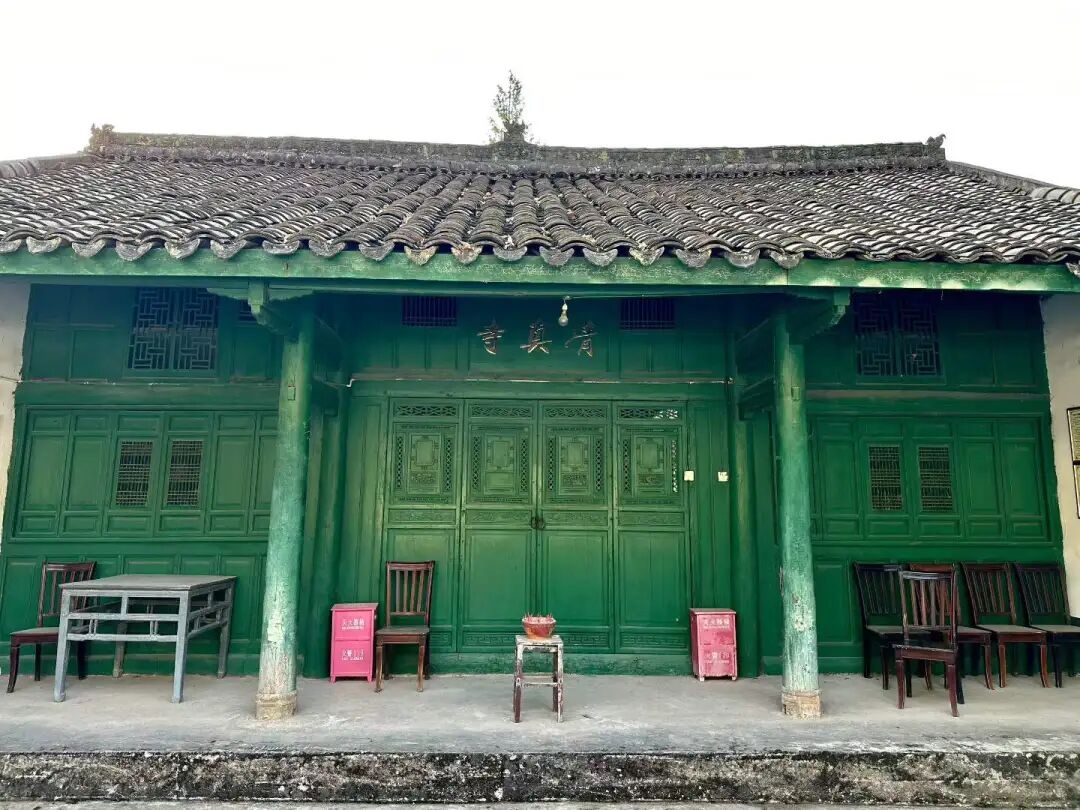
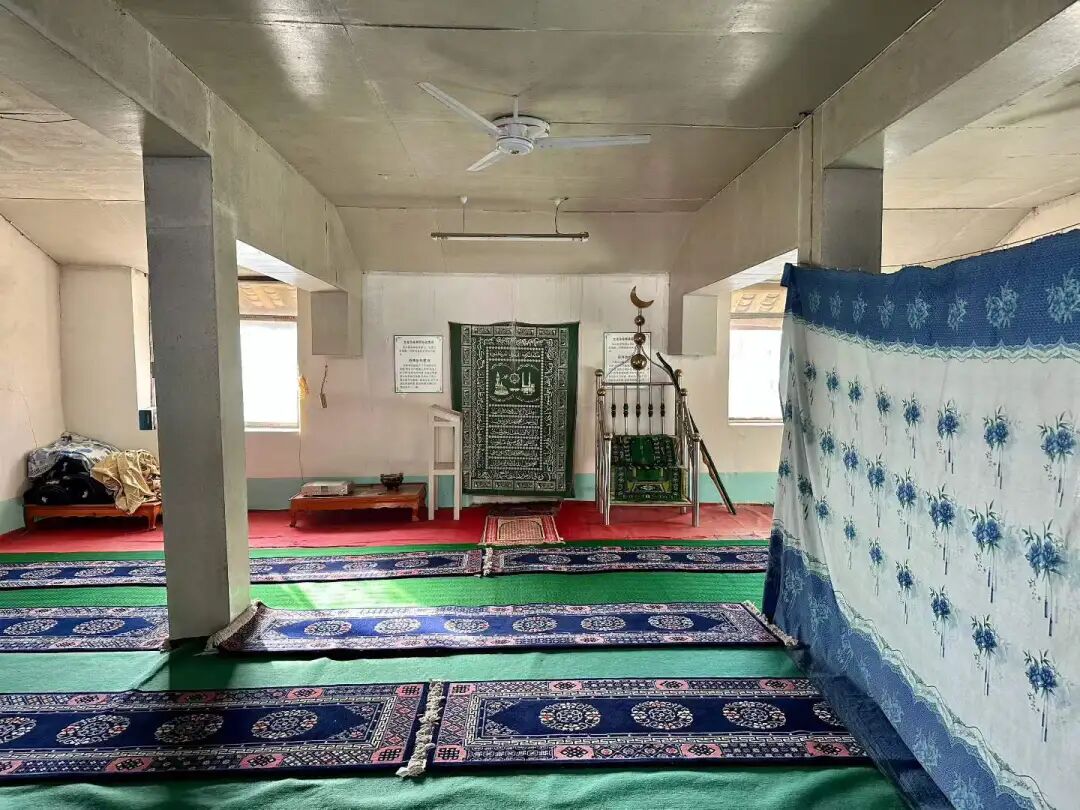
On the hillside near the Jiujing Gongbei is a Hui Muslim village called Mujiapo in Jiujingwan, and halfway up the mountain sits the Jiujing Mosque, which was first built during the Kangxi reign. The various Gongbei in Guangyuan are all built near Hui Muslim villages, where the Qadiriyya Sufi order and the Gedimu villagers live together in harmony.
Since the Ming dynasty, Jiujingwan has been an important land and water station for travelers moving from Hanzhong, Shaanxi, along the Jialing River to Chongqing. In the early Qing dynasty, Hui Muslim families named Mu, Ha, Ma, and Li moved here from Gansu and Shaanxi. It was named Mujiapo because the Mu family was the largest group, and today there are over 400 Hui Muslims living there. Because Mujiapo is located entirely on the slopes of the Jialing River canyon, the Hui Muslims mainly raise cattle and sheep, grow forage grass, and farm walnuts. 'Mujiapo' beef and mutton have become a famous brand in the northern Sichuan meat market.
There is a folk culture park on the mountain at Jiujing Mujiapo, and a restaurant serving Hui Muslim food by the Jialing River at the foot of the mountain. I could not try the food because it was Ramadan, so I will have to wait for another chance. view all
Summary: This Guangyuan finale follows Jiujing gongbei (Sufi shrine), Mujiapo Hui Muslim village, rural mosque history, and the last stretch of the Sichuan Spring Festival road trip.
I traveled north from Nanshan in Guangyuan, crossed the city center, and followed the Jialing River Grand Canyon deep into the mountains until I reached the border of Sichuan and Shaanxi, where the Jiujing Gongbei sits on a hillside next to the canyon. I personally consider this the most remarkable Gongbei in all of Sichuan.
Jiujing Gongbei, also known as Jingjue Pavilion (Jingjue Ting), was first built in 1702 (the 41st year of the Kangxi reign). It holds the tomb of Ma Xunyi, a disciple of Huazhe Abudonglaxi, who was a leader of the Qadiriyya Sufi order (menhuan). In 1721 (the 60th year of the Kangxi reign), the tomb also became the final resting place for Ma Yongqing and Mu Zaiqing, who were disciples of Ma Xunyi's fellow student, Qi Jingyi.
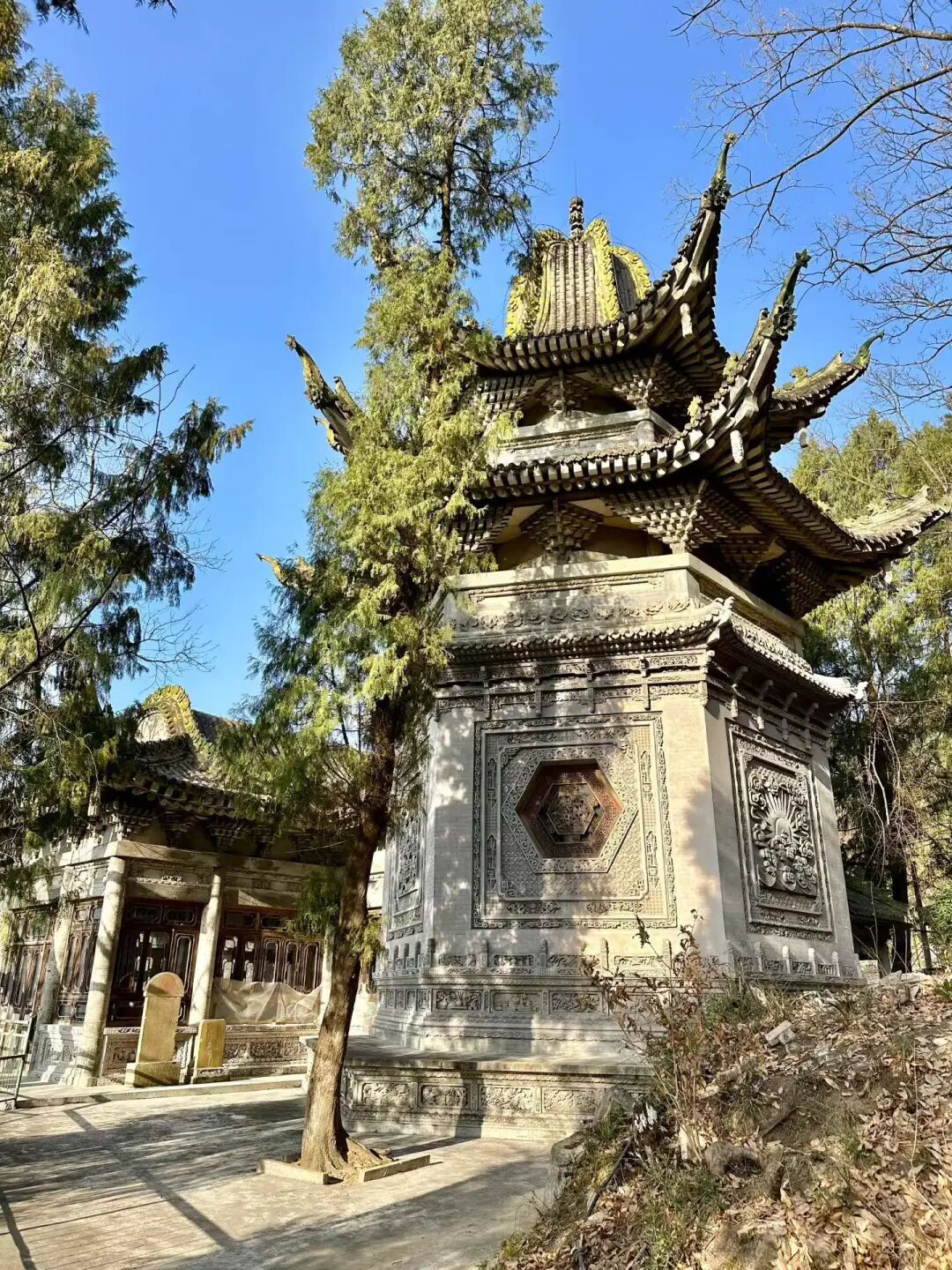
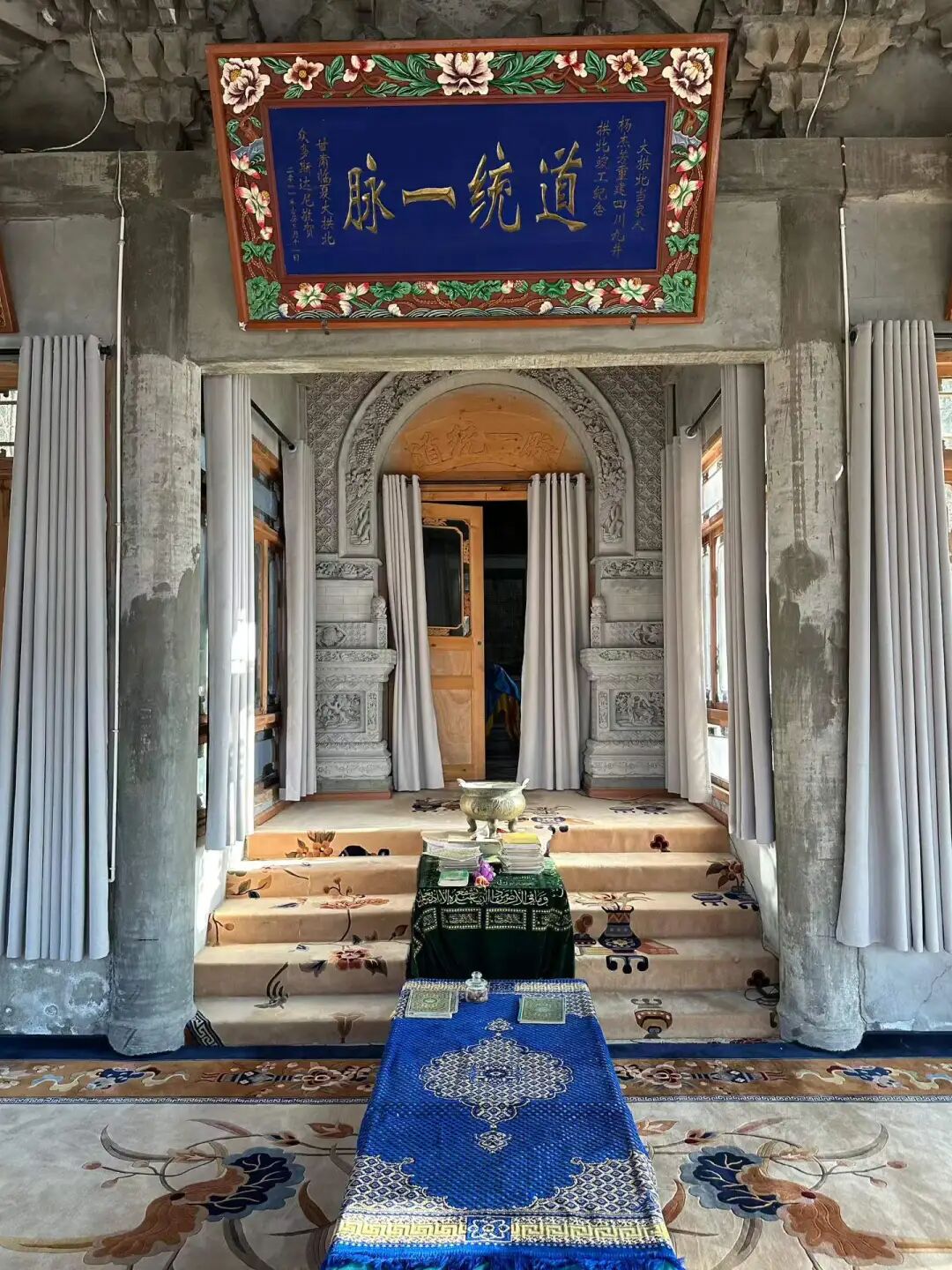
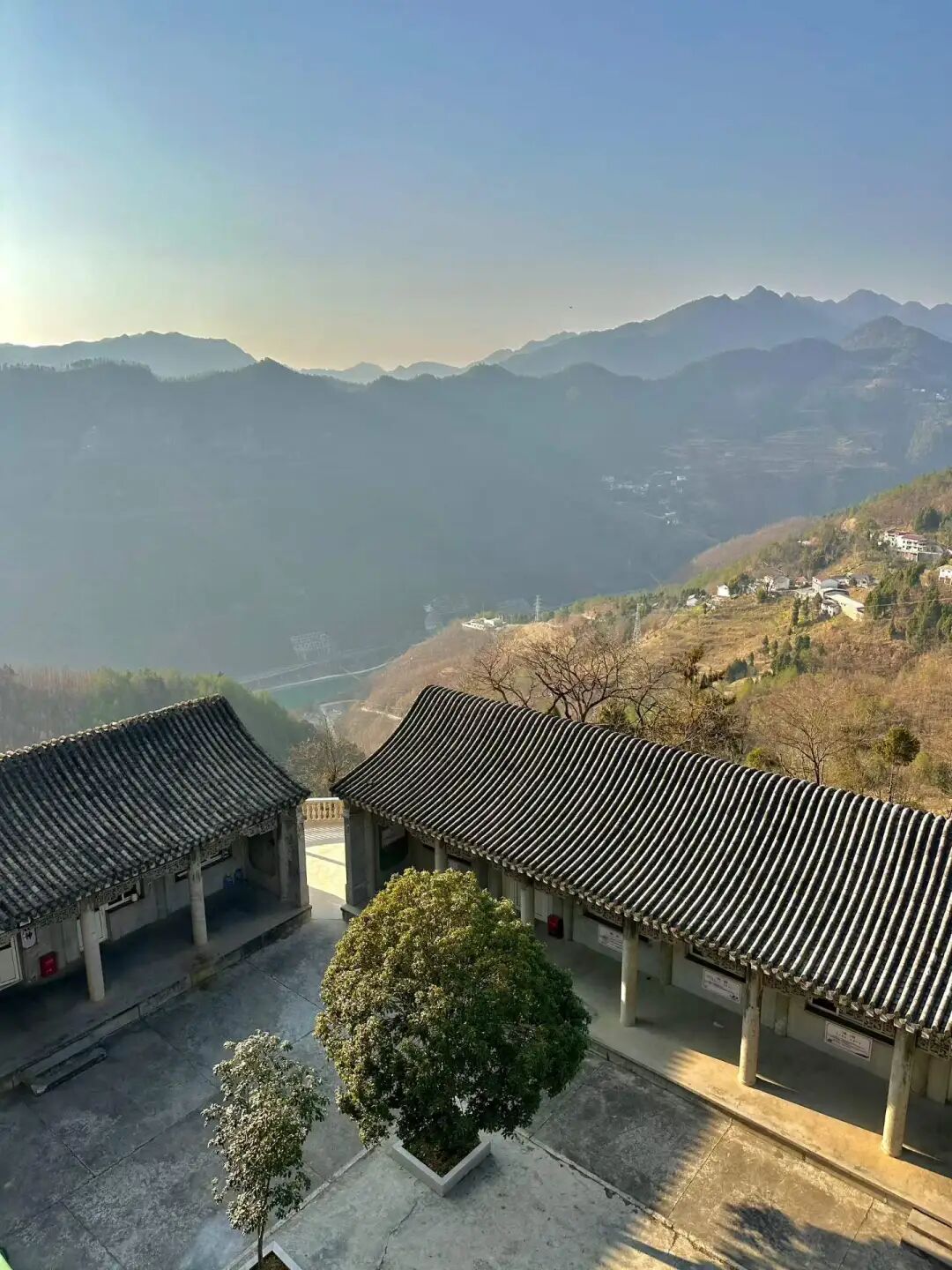
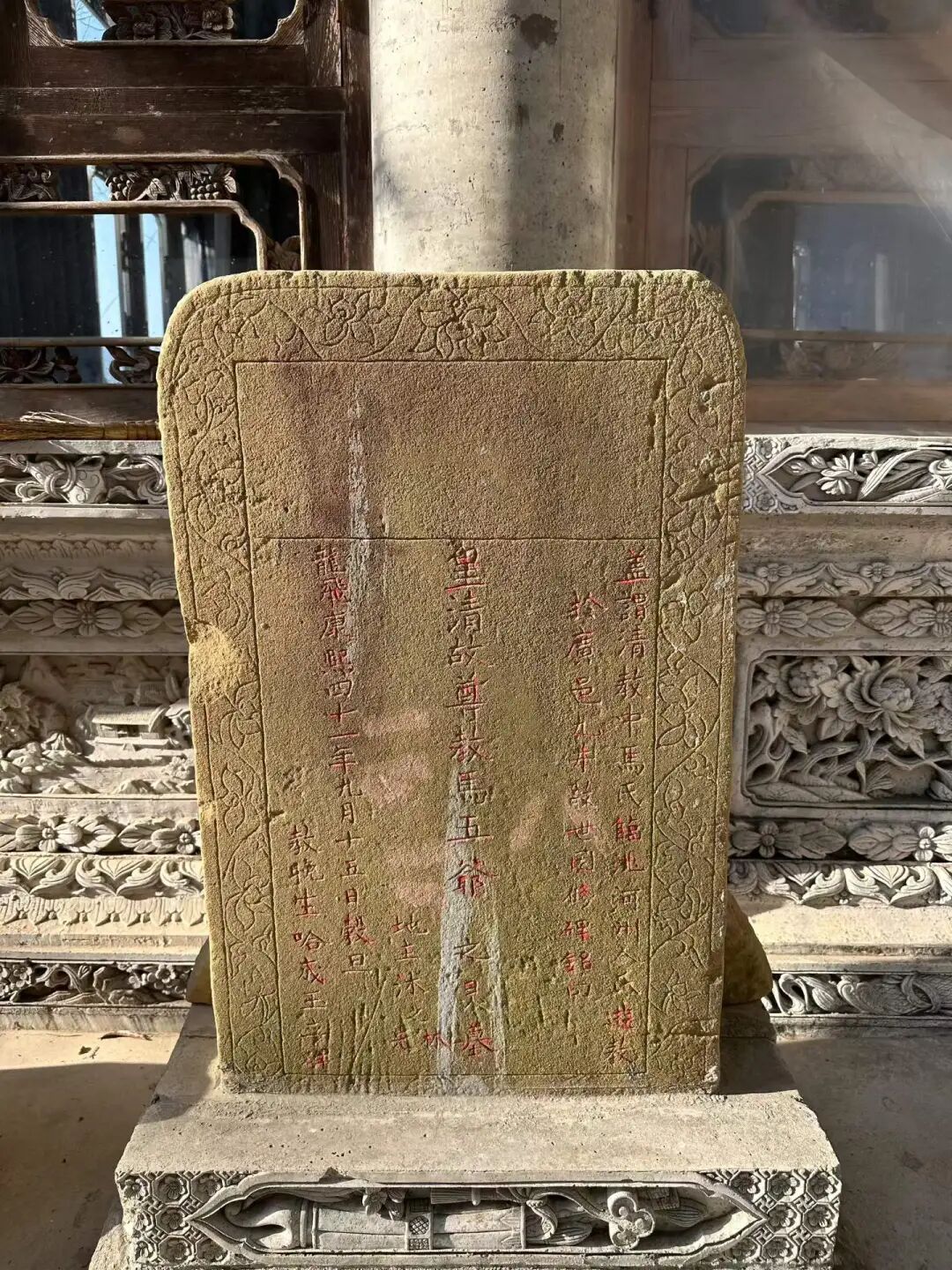
The 1702 tombstone for Ma Xunyi reads: 'Regarding the Ma family of the pure faith from Lintao, Hezhou, who traveled to teach in Jiujing, Guangyuan, and passed away here, this monument is erected.' The tomb of the late, respected Master Ma of the Qing dynasty. The landowners were Mu Zhixian and Mu Zhilin. Erected on an auspicious day, the 15th day of the ninth lunar month in the 41st year of the Kangxi reign, by his student Ha Chengyu.
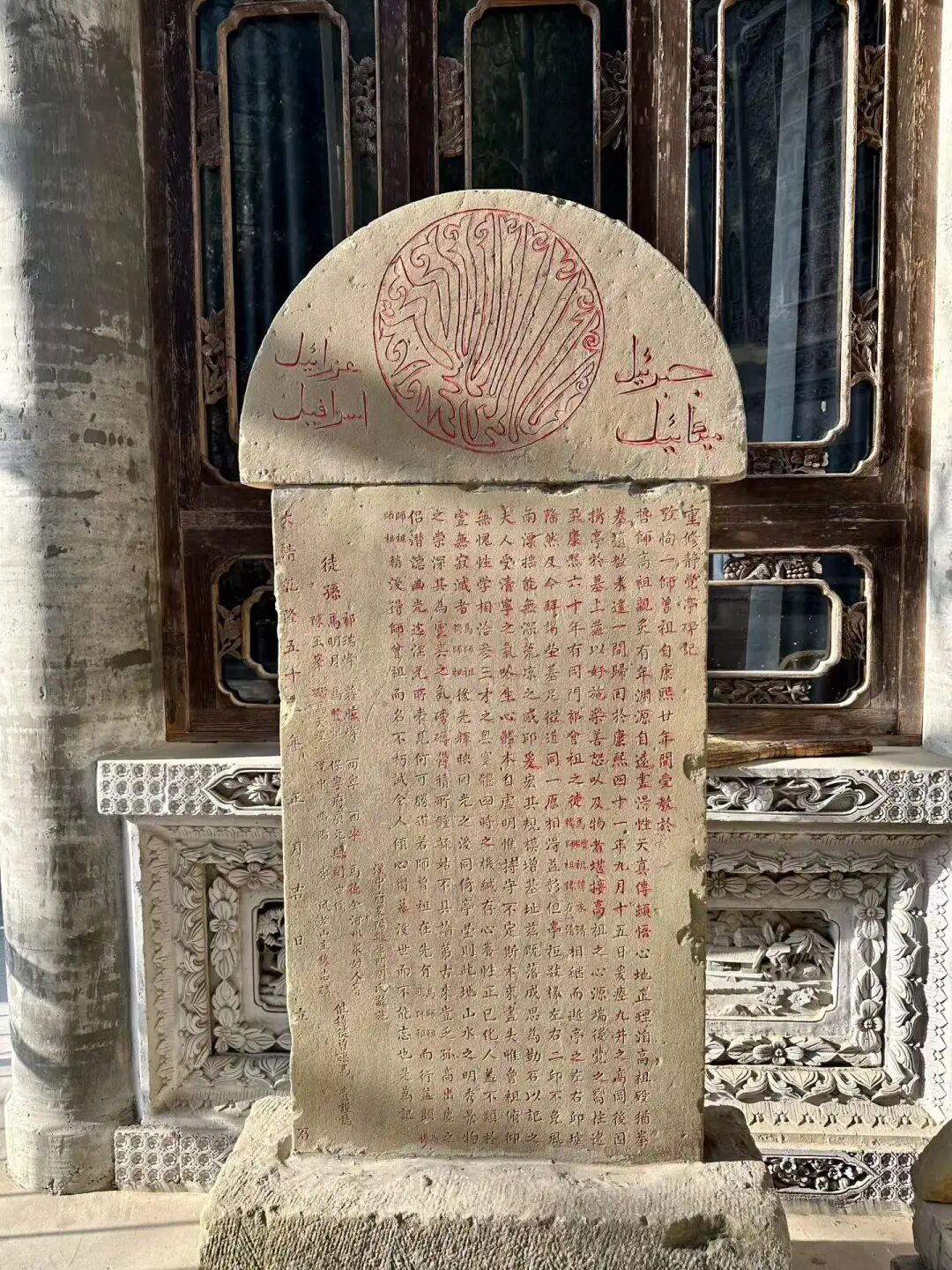
The 'Stele Record for the Reconstruction of Jingjue Pavilion' dates to the 55th year of the Qianlong reign. The inscription mentions that Ma Xunyi began studying under Huazhe Abudonglaxi in the 25th year of the Kangxi reign. The text was written by Ma Gui, the great-grandson of Ma Xunyi and the caretaker of Jiujing Gongbei.
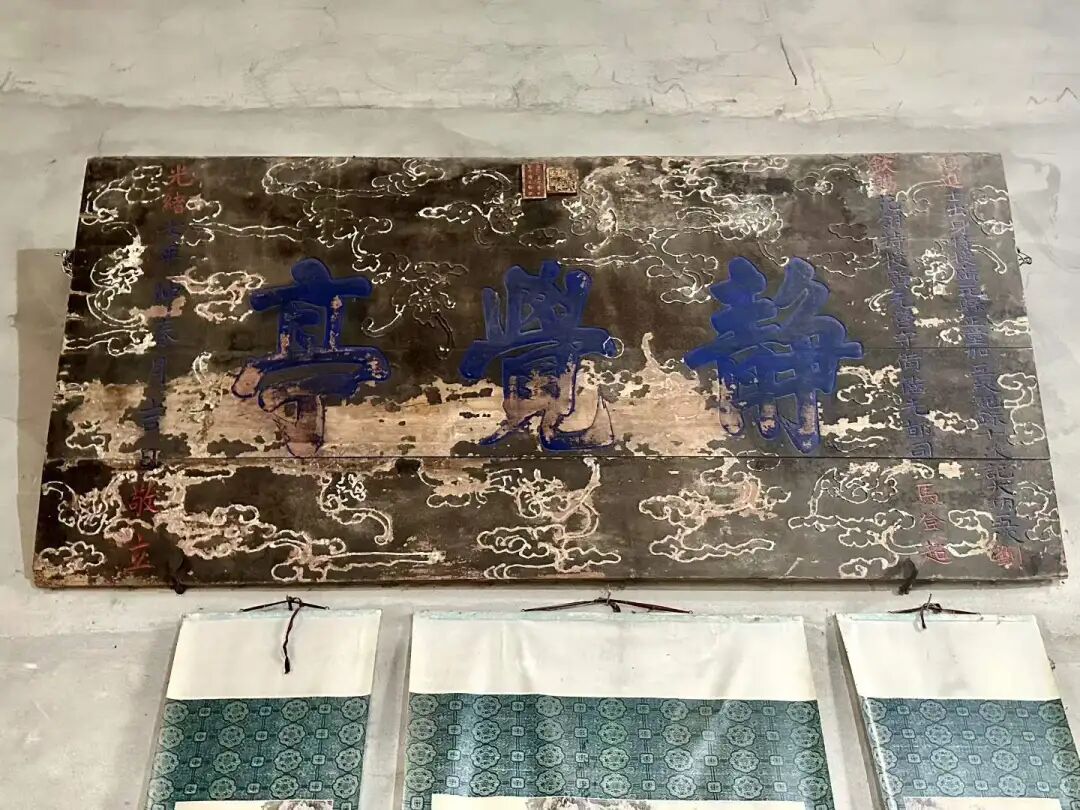
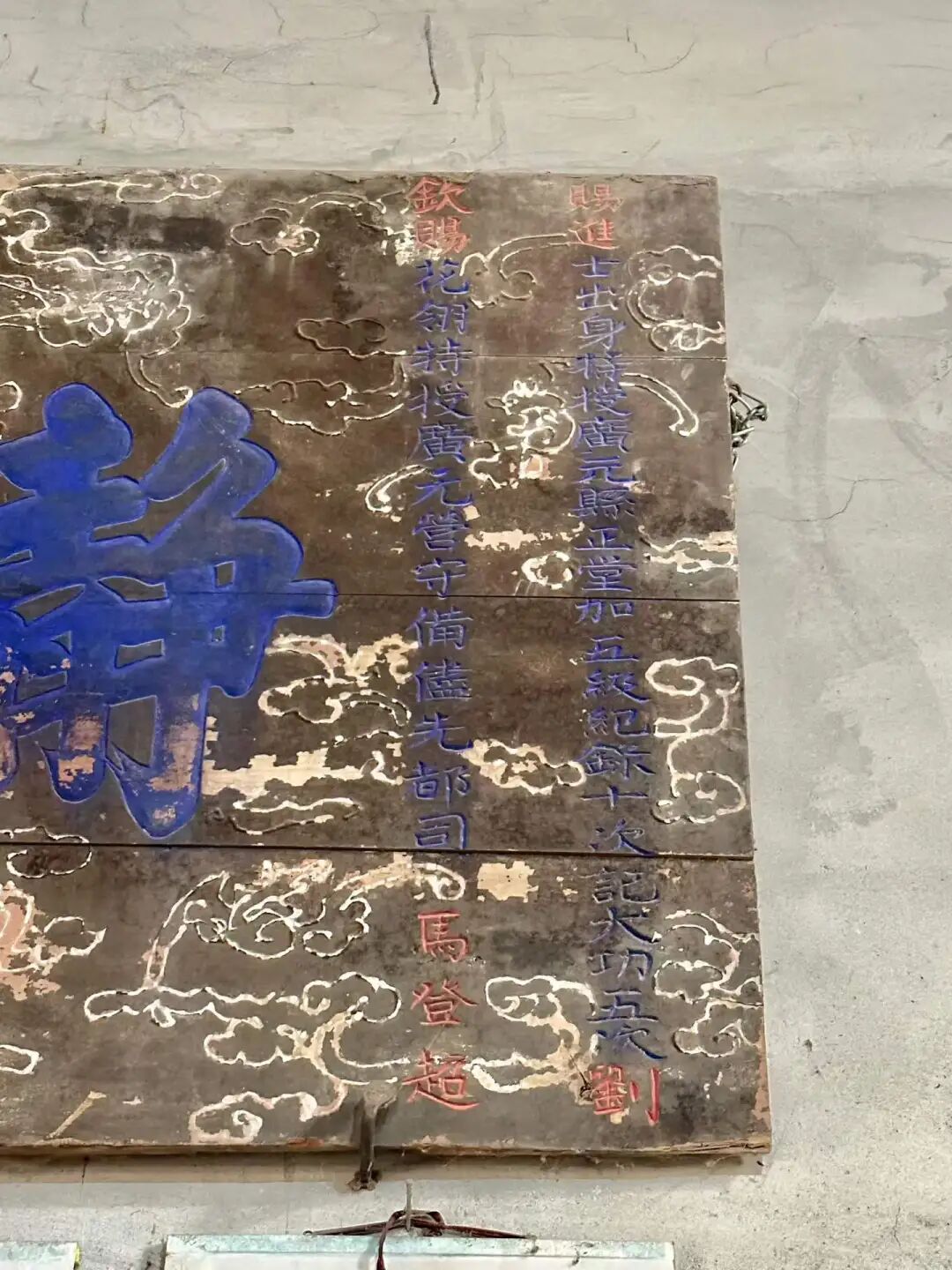
The 'Jingjue Pavilion' plaque from the 7th year of the Guangxu reign was gifted by Liu, a Jinshi degree holder specially appointed as the Magistrate of Guangyuan County, who received five promotions and ten commendations for his service. It was also erected by Ma Dengchao, who was specially appointed as the Garrison Commander of Guangyuan and granted the imperial peacock feather. These were Magistrate Liu of Guangyuan County and Garrison Commander Ma Dengchao.
Historical records confirm that the Guangyuan Magistrate in the 7th year of the Guangxu reign was Liu Xian. Liu Xian was from Qian County, Shaanxi. He was a diligent student from a young age. During his time as Magistrate of Guangyuan, he provided disaster relief, built bridges and roads, and improved irrigation, helping the people live comfortably. He was honest and upright, and people called him 'Blue Sky Liu' (Liu Qingtian).
Ma Dengchao was a local from Sichuan. During the Tongzhi and Guangxu reigns, he served as a fifth-rank military officer in the Green Standard Army, overseeing city defense, military affairs, and provisions in Guangyuan County. In the 12th year of the Tongzhi reign, he inscribed the words 'Only Pure, Only One' (Wei Jing Wei Yi) for the Shanghe Street Mosque in Guangyuan, which is still kept inside the mosque today.
Inside the Gongbei, there are several Chinese pistache trees (huanglianmu) over 300 years old, planted when the site was first built.
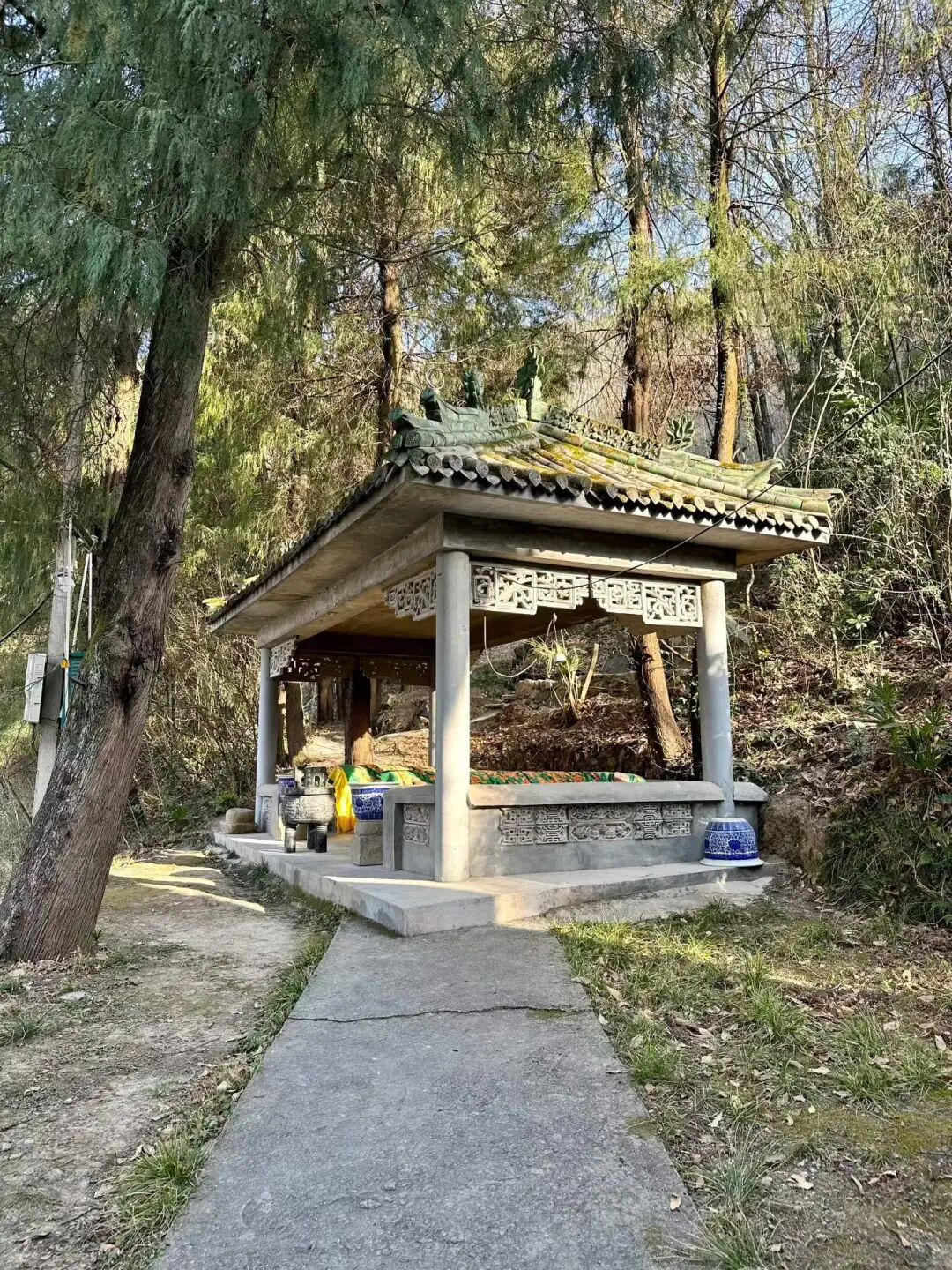
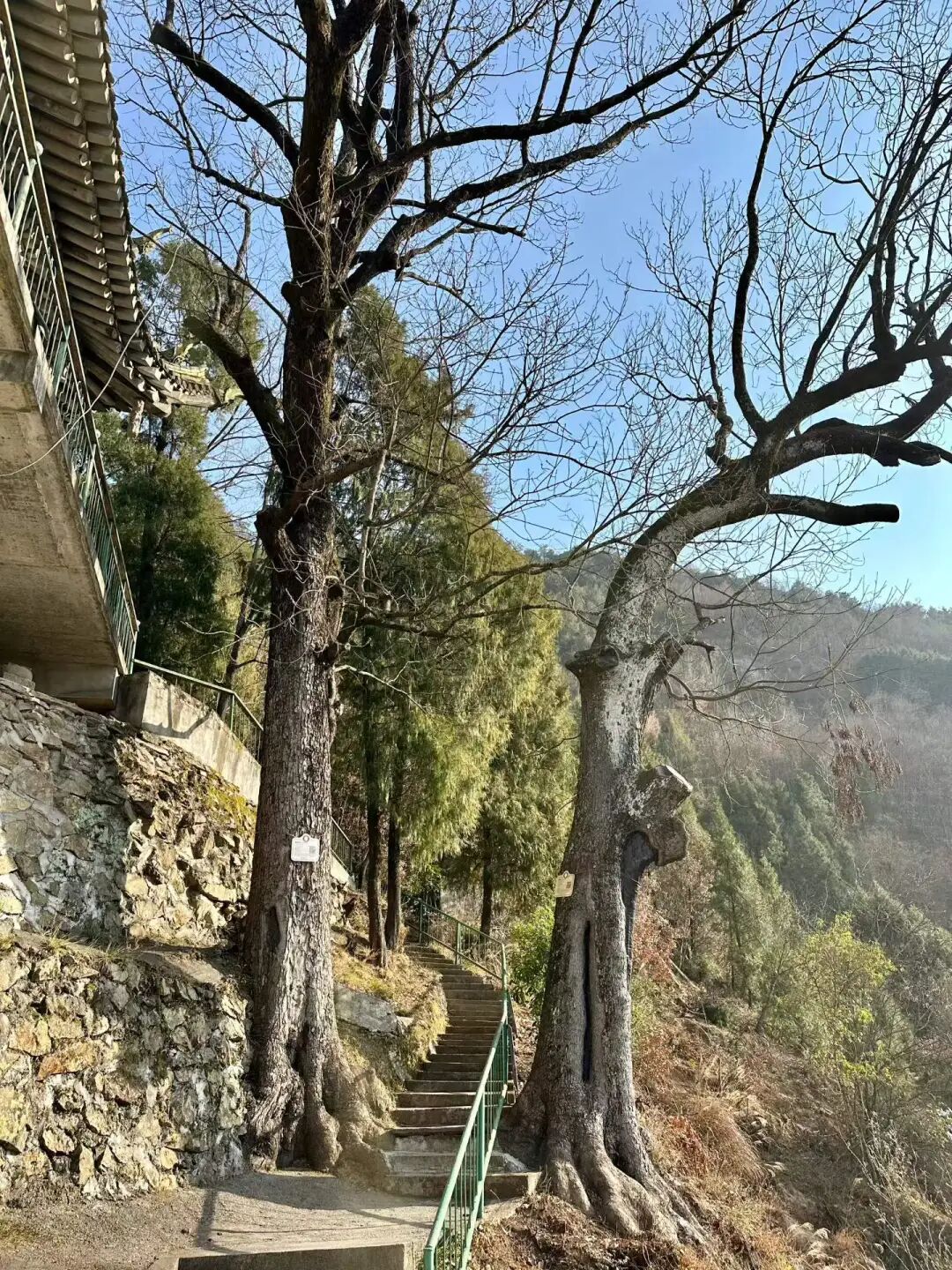
On the hillside near the Jiujing Gongbei is a Hui Muslim village called Mujiapo in Jiujingwan, and halfway up the mountain sits the Jiujing Mosque, which was first built during the Kangxi reign. The various Gongbei in Guangyuan are all built near Hui Muslim villages, where the Qadiriyya Sufi order and the Gedimu villagers live together in harmony.
Since the Ming dynasty, Jiujingwan has been an important land and water station for travelers moving from Hanzhong, Shaanxi, along the Jialing River to Chongqing. In the early Qing dynasty, Hui Muslim families named Mu, Ha, Ma, and Li moved here from Gansu and Shaanxi. It was named Mujiapo because the Mu family was the largest group, and today there are over 400 Hui Muslims living there. Because Mujiapo is located entirely on the slopes of the Jialing River canyon, the Hui Muslims mainly raise cattle and sheep, grow forage grass, and farm walnuts. 'Mujiapo' beef and mutton have become a famous brand in the northern Sichuan meat market.
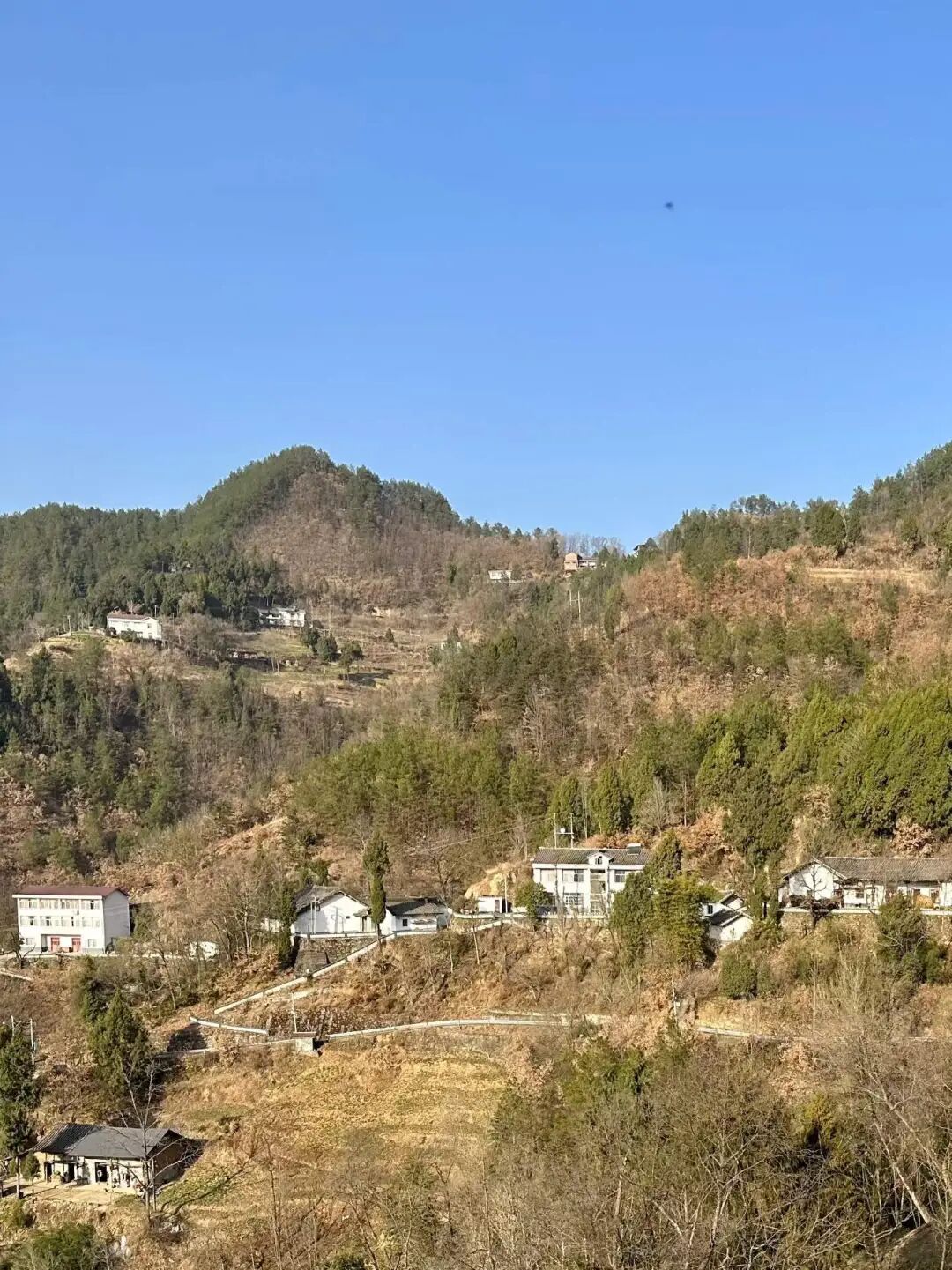
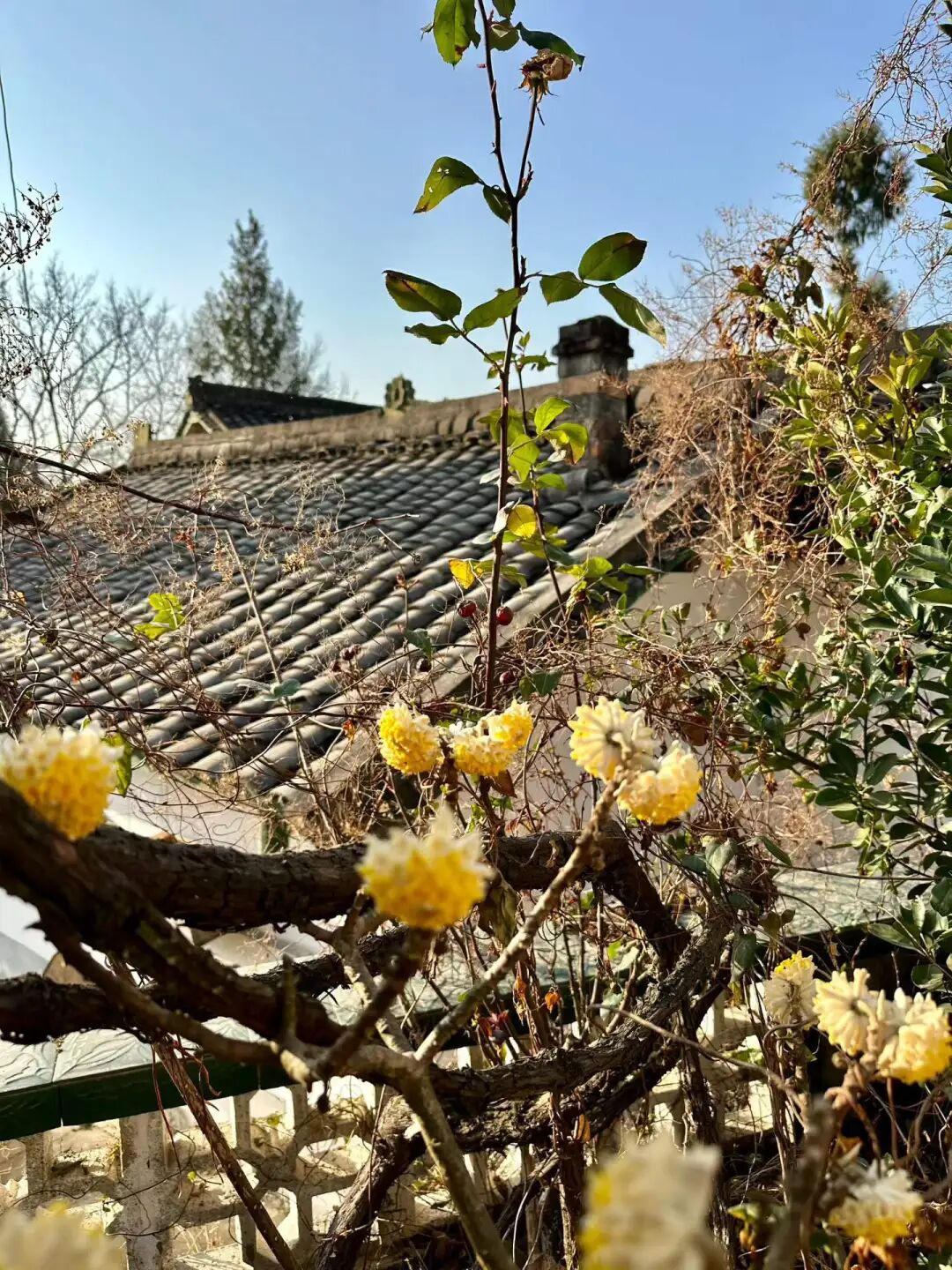
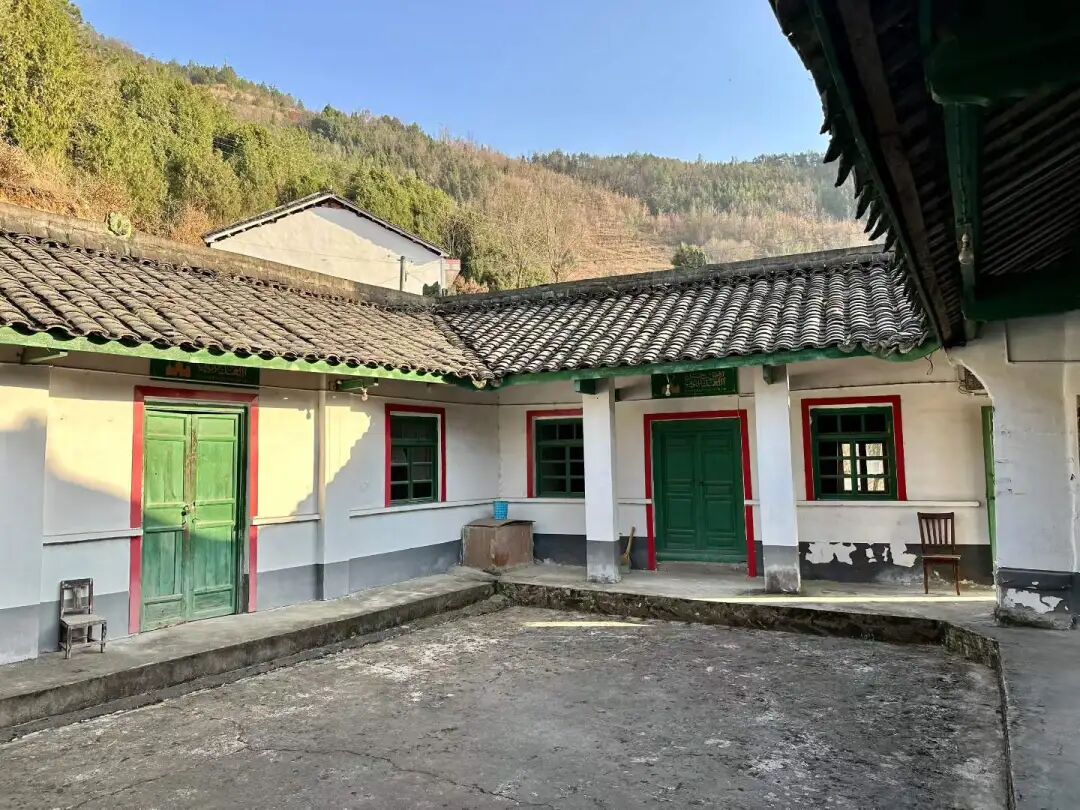
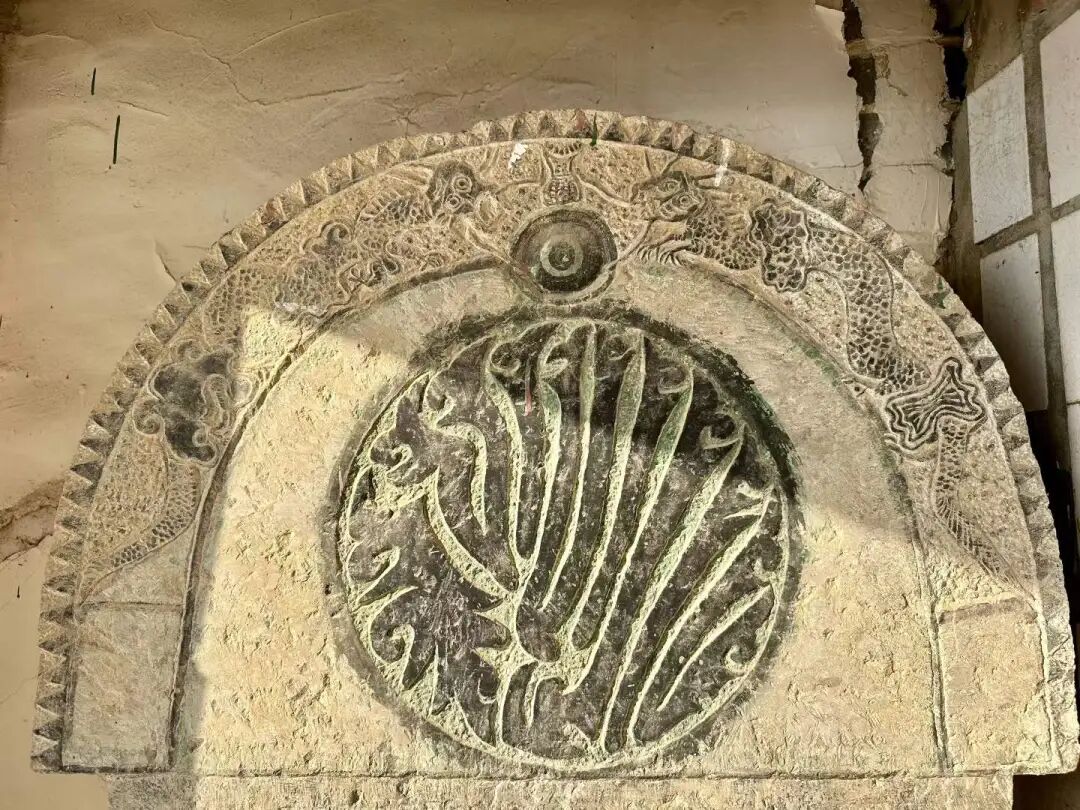
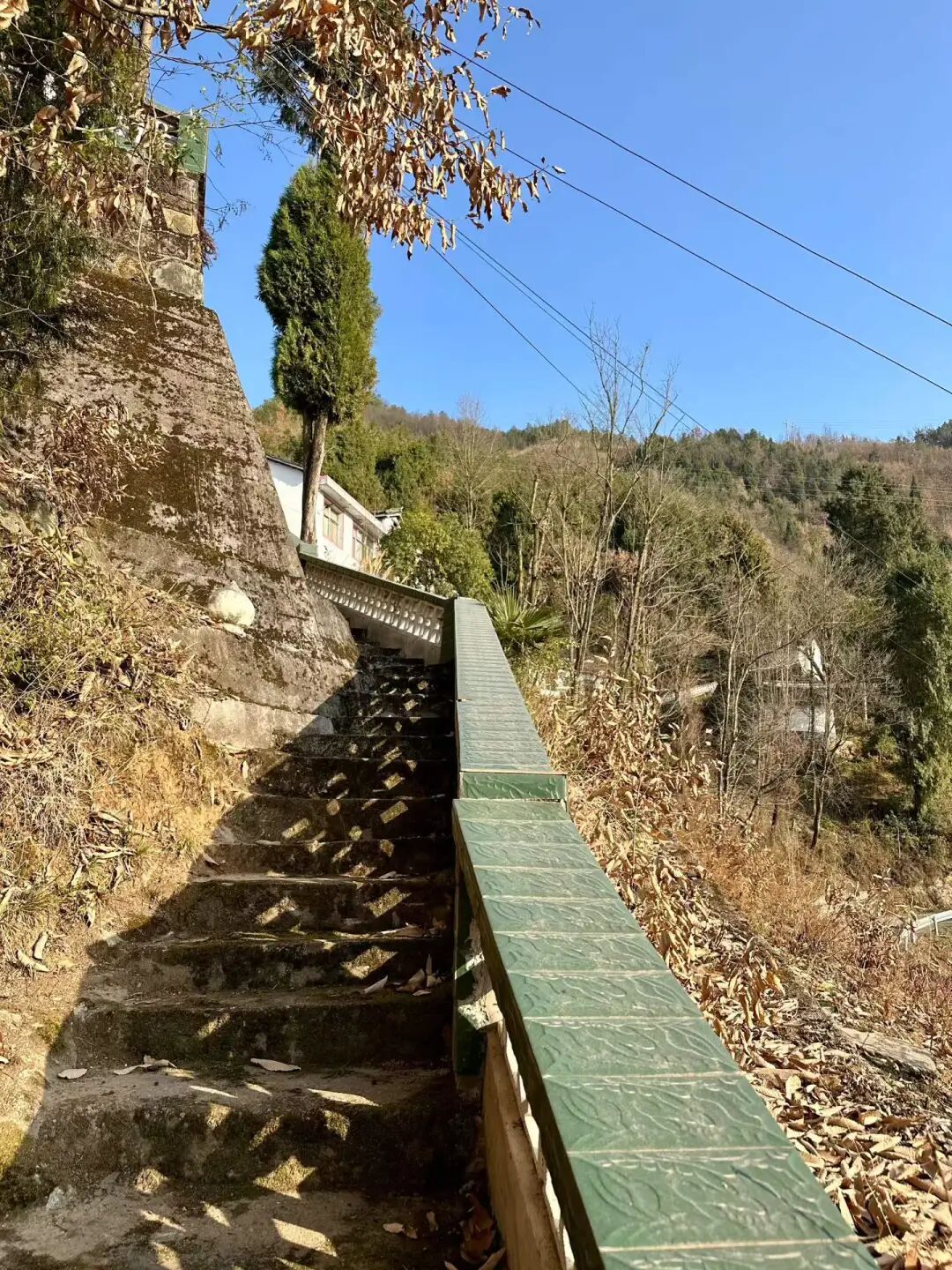
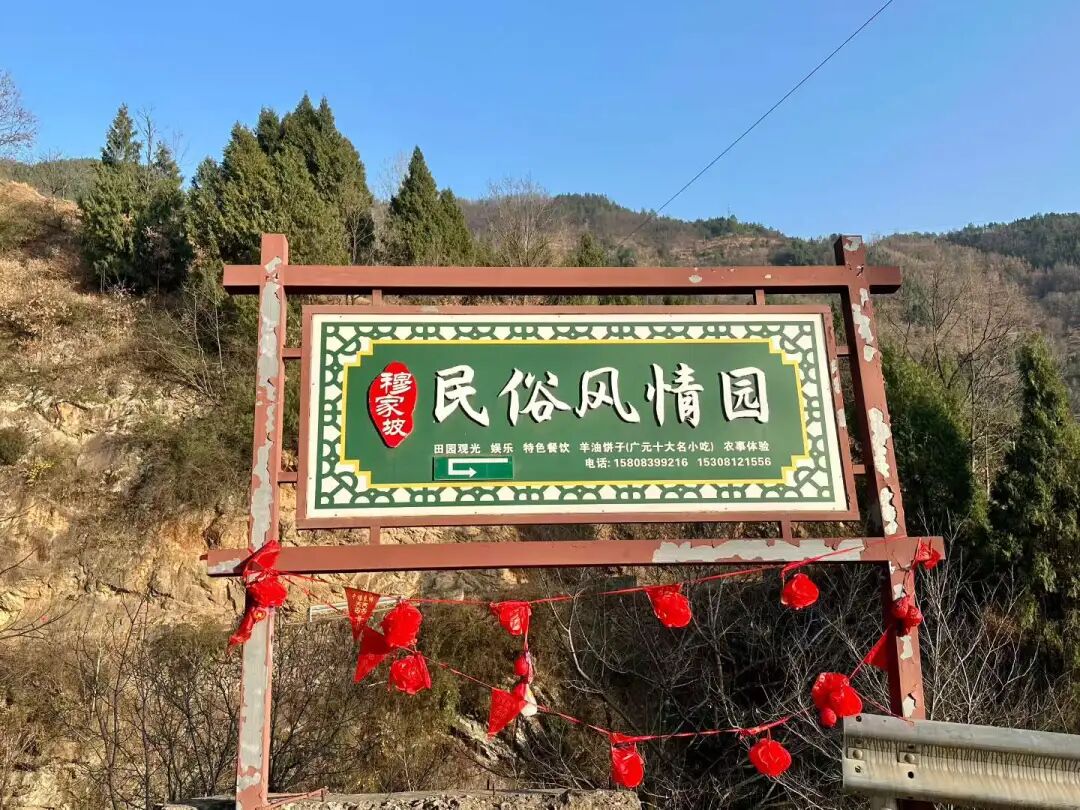
There is a folk culture park on the mountain at Jiujing Mujiapo, and a restaurant serving Hui Muslim food by the Jialing River at the foot of the mountain. I could not try the food because it was Ramadan, so I will have to wait for another chance.
Hidden Gongbei in Guangyuan: Nanshan Sufi Shrine and Sichuan Hui Muslim Village
Articles • ali2007fr posted the article • 0 comments • 164 views • 2026-05-21 06:45
Summary: This Guangyuan road trip visits Nanshan gongbei (Sufi shrine), a Hui Muslim village, local religious history, and the mountain routes that shaped this stop in northern Sichuan.
On February 21, I headed north from Yanting, passed through Langzhong, and arrived at Nanshan in Guangyuan to visit the Langzhaoting gongbei and the Nanshan Hui Muslim village.
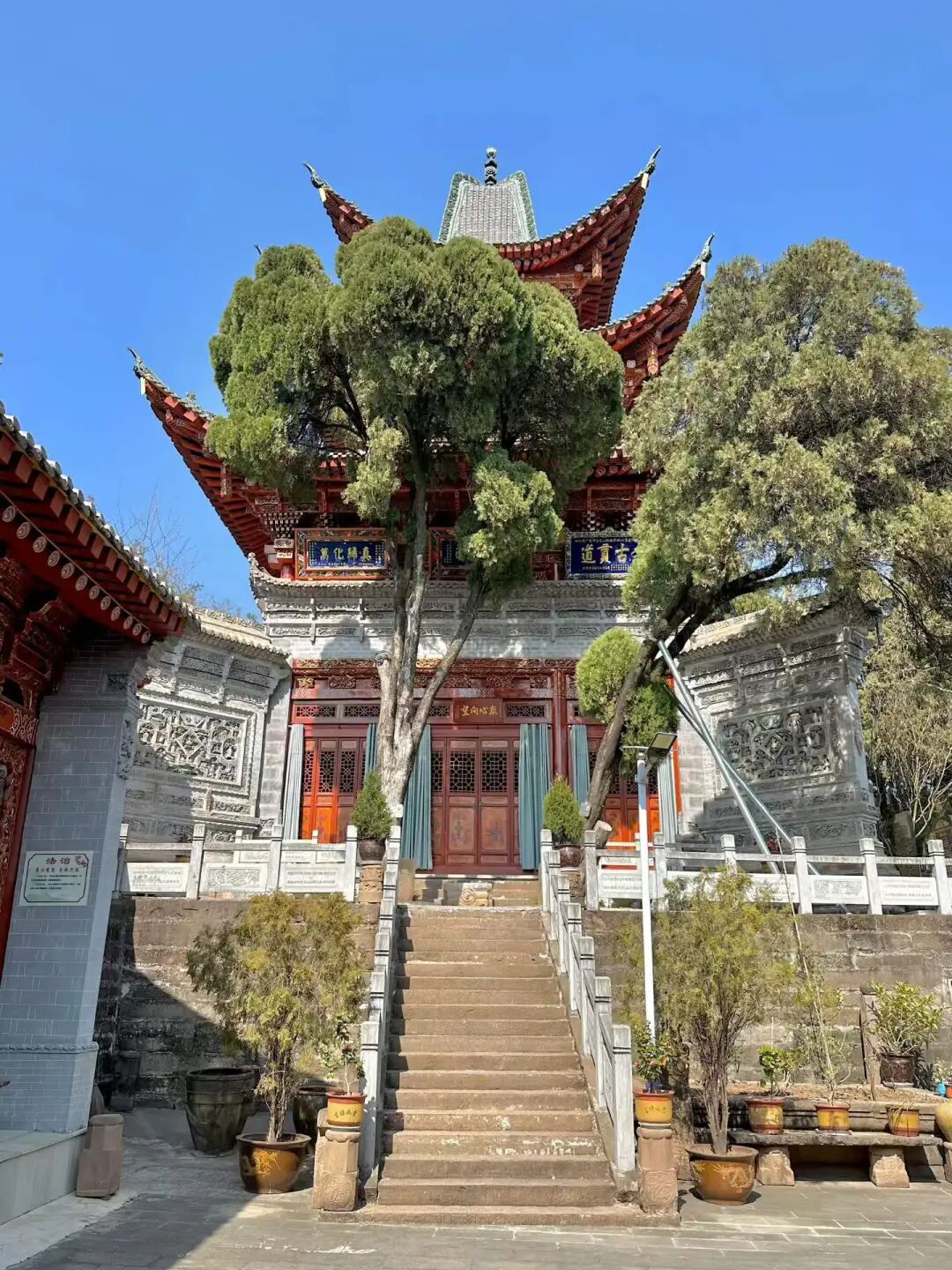
The Langzhaoting gongbei in Nanshan, Guangyuan, was originally called Yulongshan gongbei. It is a shrine built to honor the third-generation master, Master Ma, of the Qadiriyya Sufi order's Great Gongbei menhuan. Master Ma (1693-1778) was from Dongxiang, Linxia, Gansu. He studied religious texts from a young age and later, by chance, became a student of Master Ma Tengyi at the Taizi gongbei. Master Ma Tengyi explained the secrets of the religious, mystical, and ultimate truths to him, and Master Ma achieved a deep, sudden enlightenment. At age 24, Master Ma followed Master Ma Tengyi's instructions to go to Nanshan in Guangyuan for quiet, secluded practice. He built a thatched hut and spent over 60 years in deep meditation. Outside of his spiritual practice, he guided the local people, and many stories of his miracles have been passed down to this day. Because of his great virtue and the miracles he performed, many local people converted to the faith. After Master Ma passed away, the Guangyuan magistrate Ma Jialiang initiated the construction of the Langzhaoting gongbei. Later, generations of military and government officials in Guangyuan helped maintain it, leaving behind many stone inscriptions and plaques.
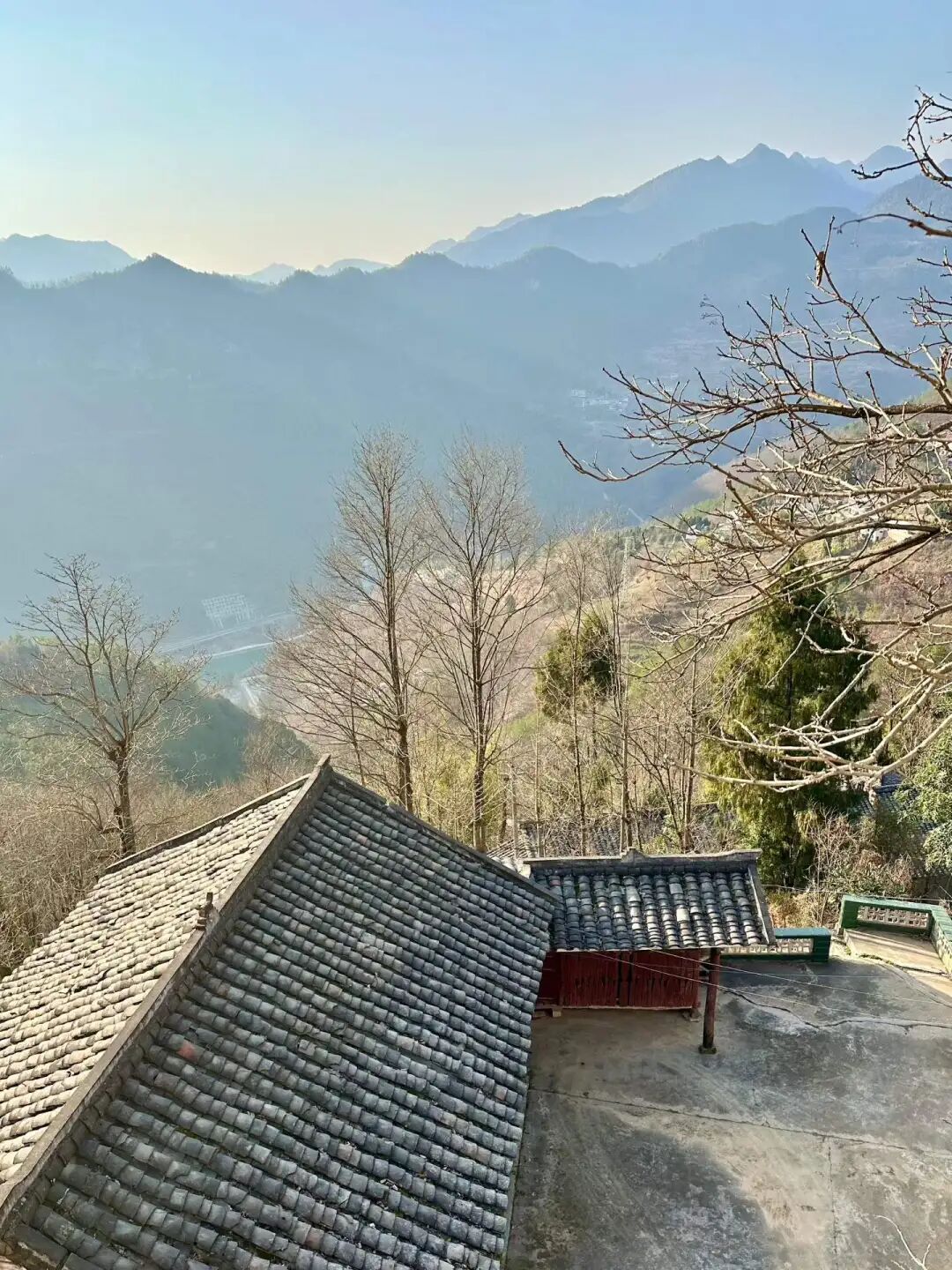
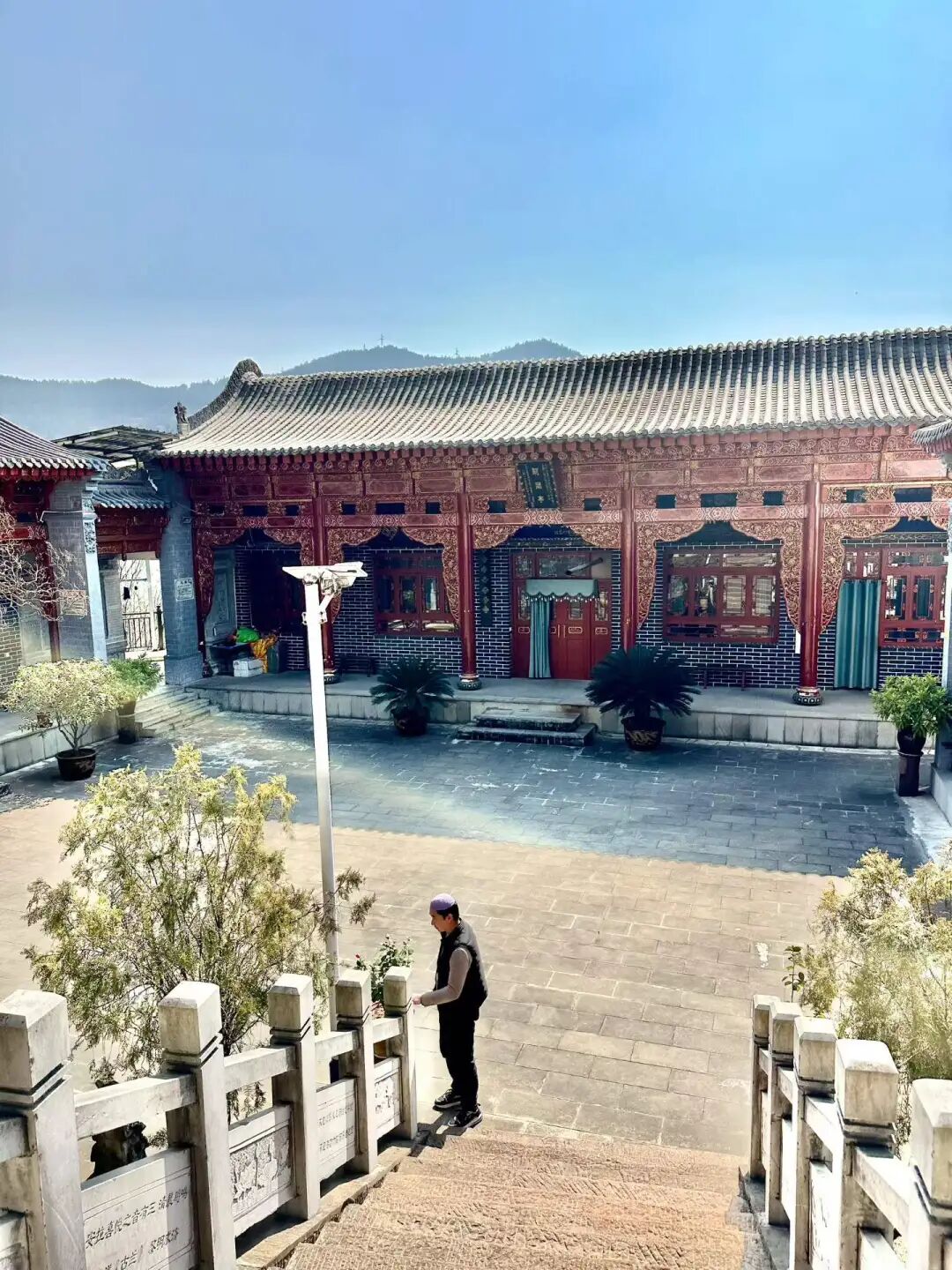
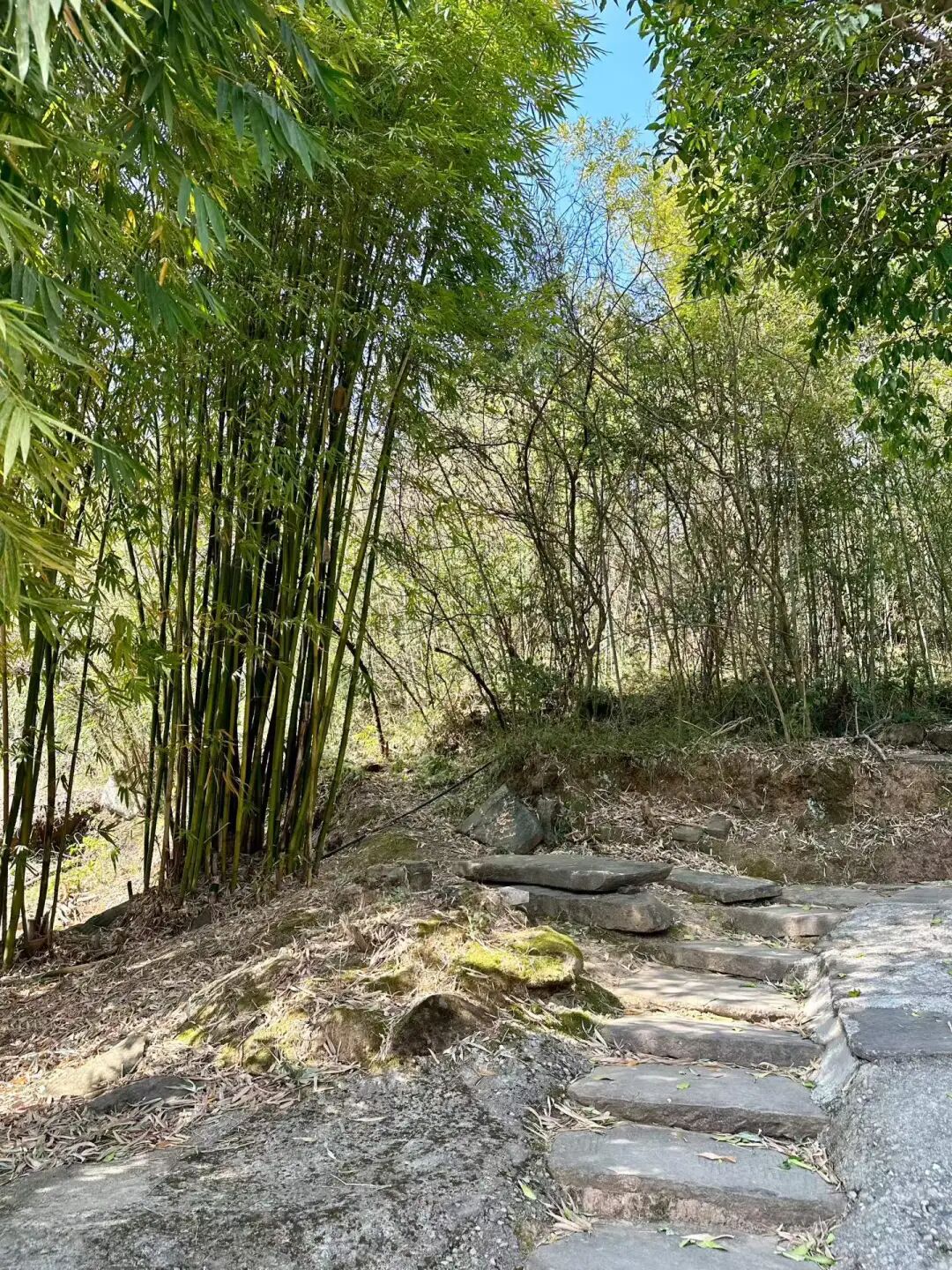
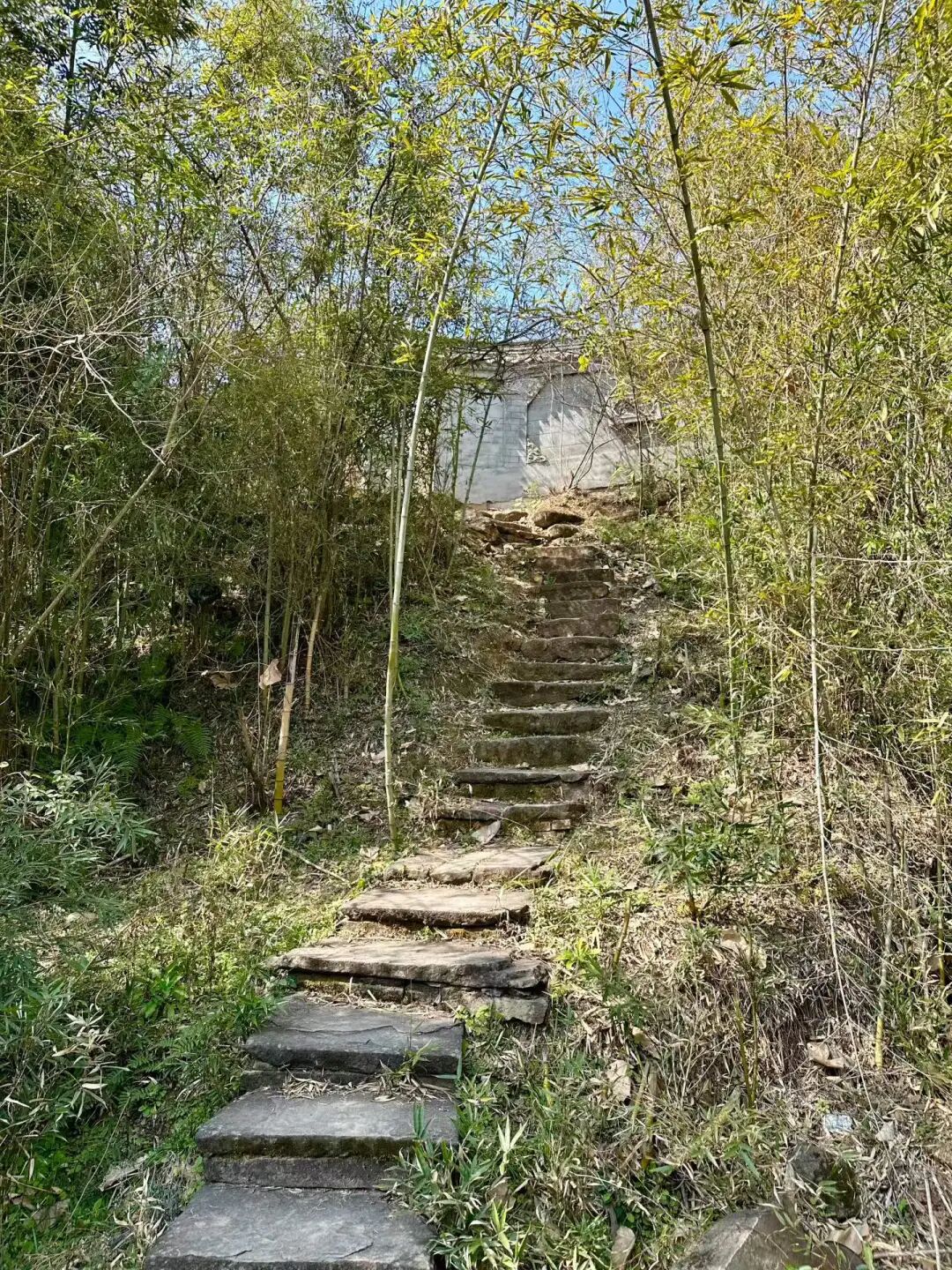
After 1996, the Taizi gongbei in Linxia gradually expanded the Langzhaoting site. In 2010, they rebuilt the main hall and side rooms, giving it the layout it has today. Behind the gongbei is a bamboo forest, and in front are terraced fields, making the scenery very beautiful.
The main hall of Langzhaoting features a mihrab in the style of Hezhou.
Inside the courtyard hangs a plaque titled "Embodying the Truth" (Ti Dao Gui Zhen), which was donated by military officers and soldiers of the Guangyuan garrison in the 12th year of the Daoguang reign.
The courtyard also preserves many stone carvings from the Qing Dynasty. The carvings feature traditional auspicious themes like "Peace and Prosperity," "Cranes and Pines for Longevity," and "Mastery of Both Literature and Martial Arts."
Many of the Qing Dynasty stone column bases were destroyed after 1958. This pair of stone lions still has column bases on them, which may have originally served as the base for a memorial archway.
The various stone inscriptions at Langzhaoting.
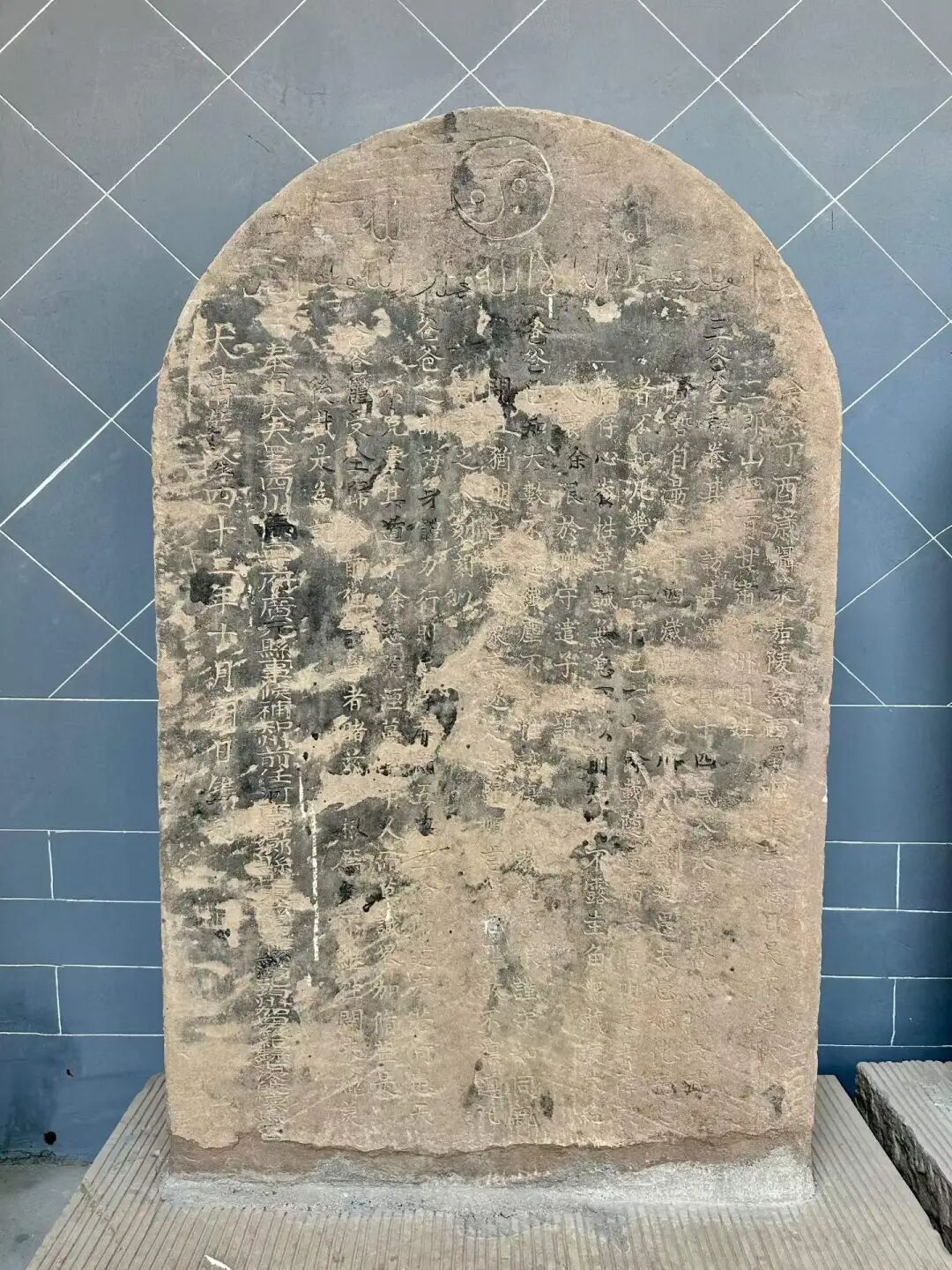
The oldest inscription dates back to the 42nd year of the Qianlong reign, which is the year Master Ma passed away and the gongbei was built. The top of the tablet is carved with a taiji symbol, which is very unique.
The inscription records that "Master Ma" began his studies at 14, traveled from Shaanxi to Sichuan at 24, and practiced in seclusion for over 60 years. It expresses deep respect for him. The signature belongs to a high-ranking official named Ma X from Anhui, who held titles including Fengzhi Dafu and acting magistrate of Guangyuan County.
Research shows the person who set up the tablet was Ma Jialiang, a Hui Muslim from Anqing, Anhui, and the builder of Langzhaoting. Ma Jialiang, whose courtesy name was Zhongheng, was the son of the famous Qing Dynasty Hui Muslim general and martial arts scholar Ma Dayong. He passed the imperial examinations in the 12th year of the Qianlong reign and served as a high official in several provinces. He rose from county magistrate to prefect, working in Henan, Shandong, Hubei, and Sichuan. He was once dismissed in Shandong for failing to notice the White Lotus Sect, but was later reappointed as the prefect of Huili, Sichuan, eventually ending his career as an acting magistrate in Guangyuan.
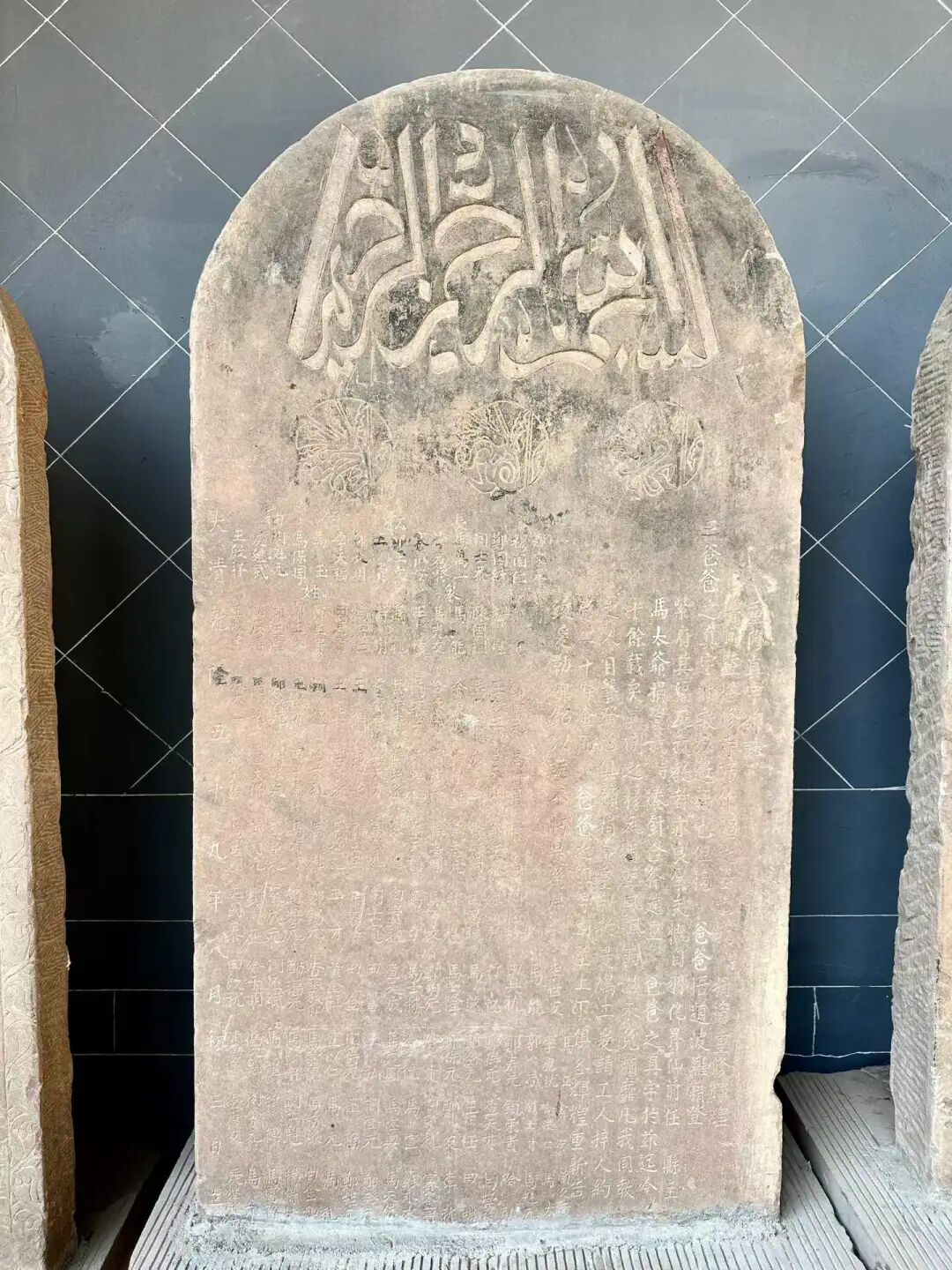
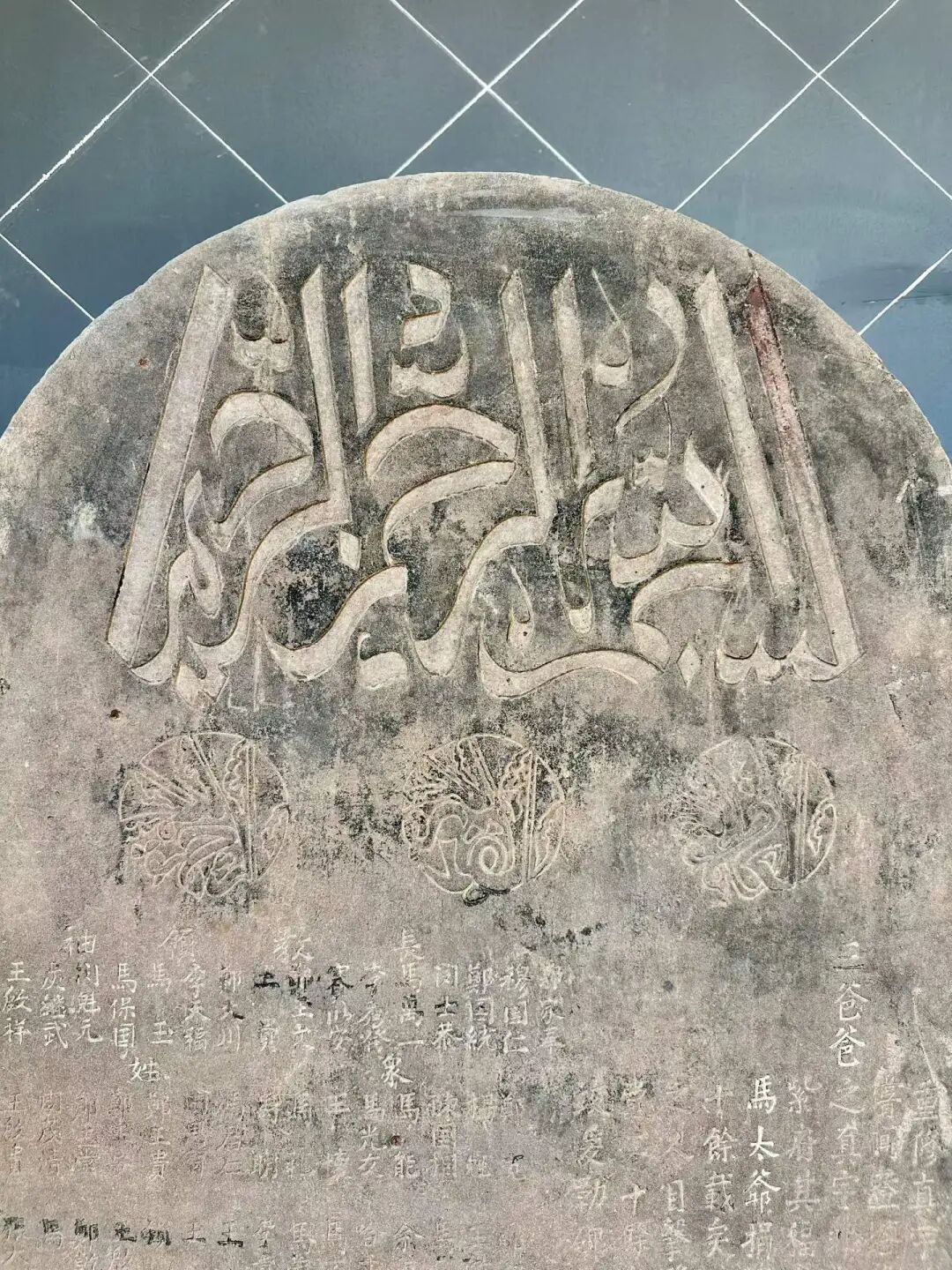
The second tablet is the "Record of Rebuilding the True Shrine" from the 59th year of the Qianlong reign. It mentions that in the 42nd year of Qianlong, the former magistrate Master Ma donated funds to build the shrine for the Master, and it was renovated again in the 59th year. The back of the tablet lists 16 religious leaders with the surnames Guo, Mu, Zheng, Min, Ma, Li, Sai, and Wang, along with 135 followers who donated funds.
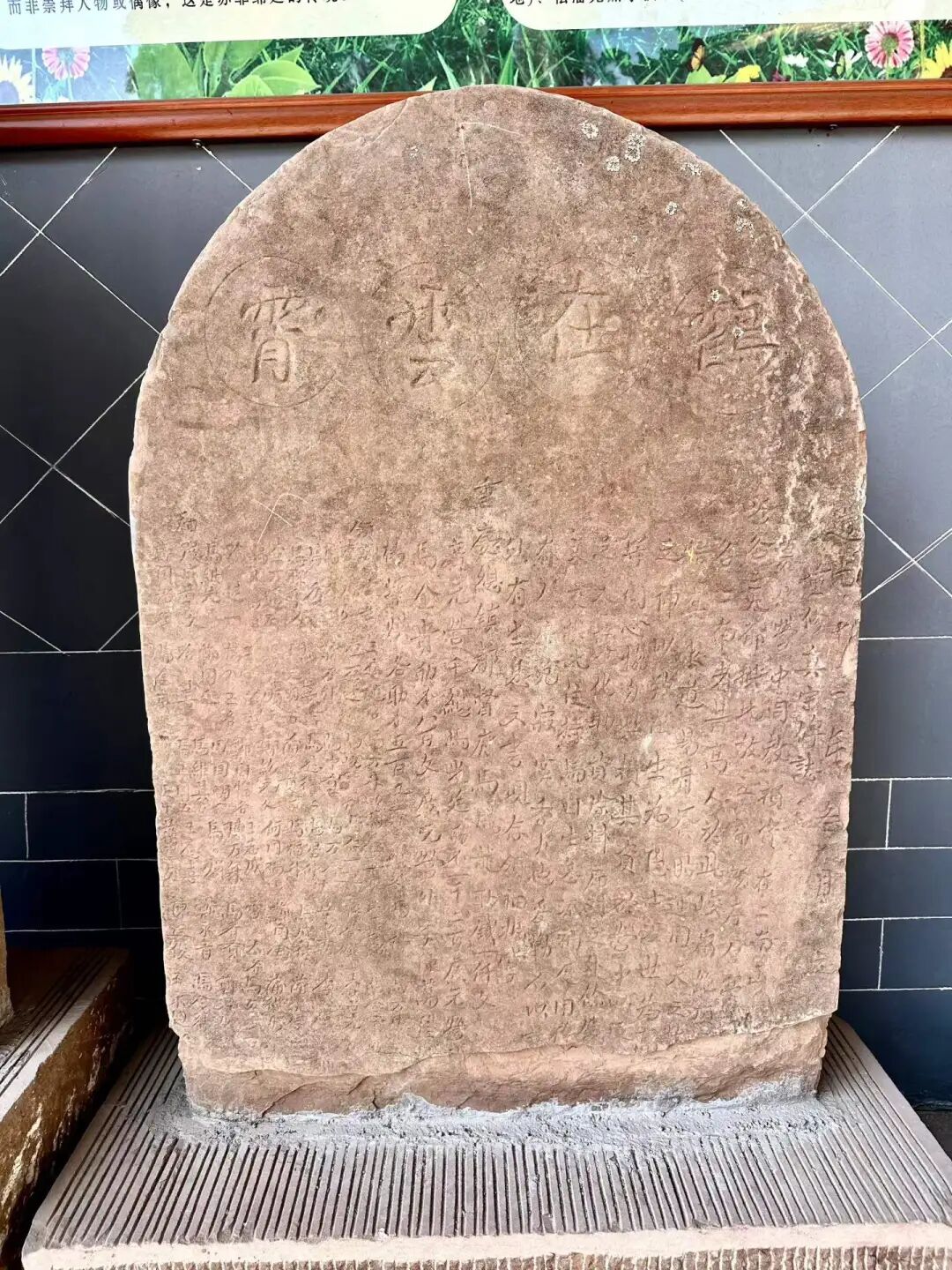
The "Record of Rebuilding the True Shrine" from the 11th year of the Daoguang reign has the title "Crane in the Clouds" at the top. It refers to the gongbei as the "Nanshan Master Ma Gongbei." The first donor listed is Ma Tenglong, a commander from Chongqing, followed by Guangyuan garrison officer Ma Guangting and others. Ma Tenglong was a military general with many achievements during the middle and late Qing Dynasty. According to the Records of Chongqing Prefecture in the Daoguang Era, Ma Tenglong was from Chengdu, Sichuan, and joined the army in the 58th year of the Qianlong reign. In the 60th year of the Qianlong reign, he was ordered to lead troops to Guizhou and Hunan to help suppress the Miao uprising. In the 2nd year of the Jiaqing reign, he was transferred to the Hubei and Sichuan-Shaanxi regions to suppress the White Lotus Rebellion. In the 1st year of the Daoguang reign, he was promoted to commander-in-chief of the Gansu garrison. In the 3rd year of the Daoguang reign, he was transferred to be the commander-in-chief of the Shaanxi-Gansu garrison. In the 8th year of the Daoguang reign, he was appointed commander-in-chief of the Chongqing garrison to guard Chongqing.
The "Merits Last Forever" (Gongde Yongchui) stele from the 20th year of the Daoguang reign.
The Basmala (Tasimi) stele from the 11th year of the Daoguang reign also features the name of Ma Guangting, a captain (qianzong) of the Guangyuan Battalion.
The "Immortal Forever" (Yongchui Buxiu) stele from the 10th year of the Guangxu reign.
The "Forever Solid" (Yongyuan Weigu) stele from the 13th year of the Daoguang reign shows that the person in charge of the gongbei at that time was named Ma Yingkui.
After leaving the Nanshan gongbei, I went to the nearby Nanshan Mosque. This is a village of Hui Muslims deep in the Nanshan mountains of Guangyuan, and there has likely been very little written about it before.
Centered around the Hui Muslim village, Nanshan in Guangyuan is home to over 120 Hui Muslim households with the surnames Wang, Ma, Li, Tian, Zhou, Cha, and Zhao, with the Wang surname being the most common. Most of the Hui Muslims in Nanshan moved here from Xiaogan in Hubei and areas in Shaanxi and Gansu during the "Huguang Fills Sichuan" migration period of the Qing Dynasty, and they have been farming in the Nanshan mountains ever since. Due to wars, disasters, and economic reasons, the Nanshan Hui Muslims did not build a mosque for a long time. They had to hire an imam to conduct religious services in private homes, and at one point, they even had to travel to the Hejie Mosque in downtown Guangyuan, which was very inconvenient. In 2002, led by Wang Zhanrong, with the support of Imam Ma Wanquan from the Hejie Mosque in Guangyuan and the advocacy of Haji Ma Jianzhong, they raised funds and finally built the Nanshan Mosque in 2003.
The six main doors of the Nanshan Mosque are the original doors from the Qianlong era of the Hejie Mosque in Guangyuan, which are very precious. They feature very exquisite wood carvings.
There is a relaxed, slow life in the Nanshan Hui Muslim village. Next to the mosque are clean and tidy houses. The aunties sit around chatting and drying radishes, lettuce, and rapeseed that they couldn't finish eating. One auntie said that dried rapeseed is especially delicious when stir-fried with beef. Sitting here away from the hustle and bustle, it feels like time has slowed down.
The Hui Muslim cemetery in Nanshan has excellent scenery nearby and is very refreshing. There are bees kept near the houses, and the beehives are right by the road. I didn't feel scared even when standing close, and the honey from here must taste very good. view all
Summary: This Guangyuan road trip visits Nanshan gongbei (Sufi shrine), a Hui Muslim village, local religious history, and the mountain routes that shaped this stop in northern Sichuan.
On February 21, I headed north from Yanting, passed through Langzhong, and arrived at Nanshan in Guangyuan to visit the Langzhaoting gongbei and the Nanshan Hui Muslim village.
The Langzhaoting gongbei in Nanshan, Guangyuan, was originally called Yulongshan gongbei. It is a shrine built to honor the third-generation master, Master Ma, of the Qadiriyya Sufi order's Great Gongbei menhuan. Master Ma (1693-1778) was from Dongxiang, Linxia, Gansu. He studied religious texts from a young age and later, by chance, became a student of Master Ma Tengyi at the Taizi gongbei. Master Ma Tengyi explained the secrets of the religious, mystical, and ultimate truths to him, and Master Ma achieved a deep, sudden enlightenment. At age 24, Master Ma followed Master Ma Tengyi's instructions to go to Nanshan in Guangyuan for quiet, secluded practice. He built a thatched hut and spent over 60 years in deep meditation. Outside of his spiritual practice, he guided the local people, and many stories of his miracles have been passed down to this day. Because of his great virtue and the miracles he performed, many local people converted to the faith. After Master Ma passed away, the Guangyuan magistrate Ma Jialiang initiated the construction of the Langzhaoting gongbei. Later, generations of military and government officials in Guangyuan helped maintain it, leaving behind many stone inscriptions and plaques.
After 1996, the Taizi gongbei in Linxia gradually expanded the Langzhaoting site. In 2010, they rebuilt the main hall and side rooms, giving it the layout it has today. Behind the gongbei is a bamboo forest, and in front are terraced fields, making the scenery very beautiful.
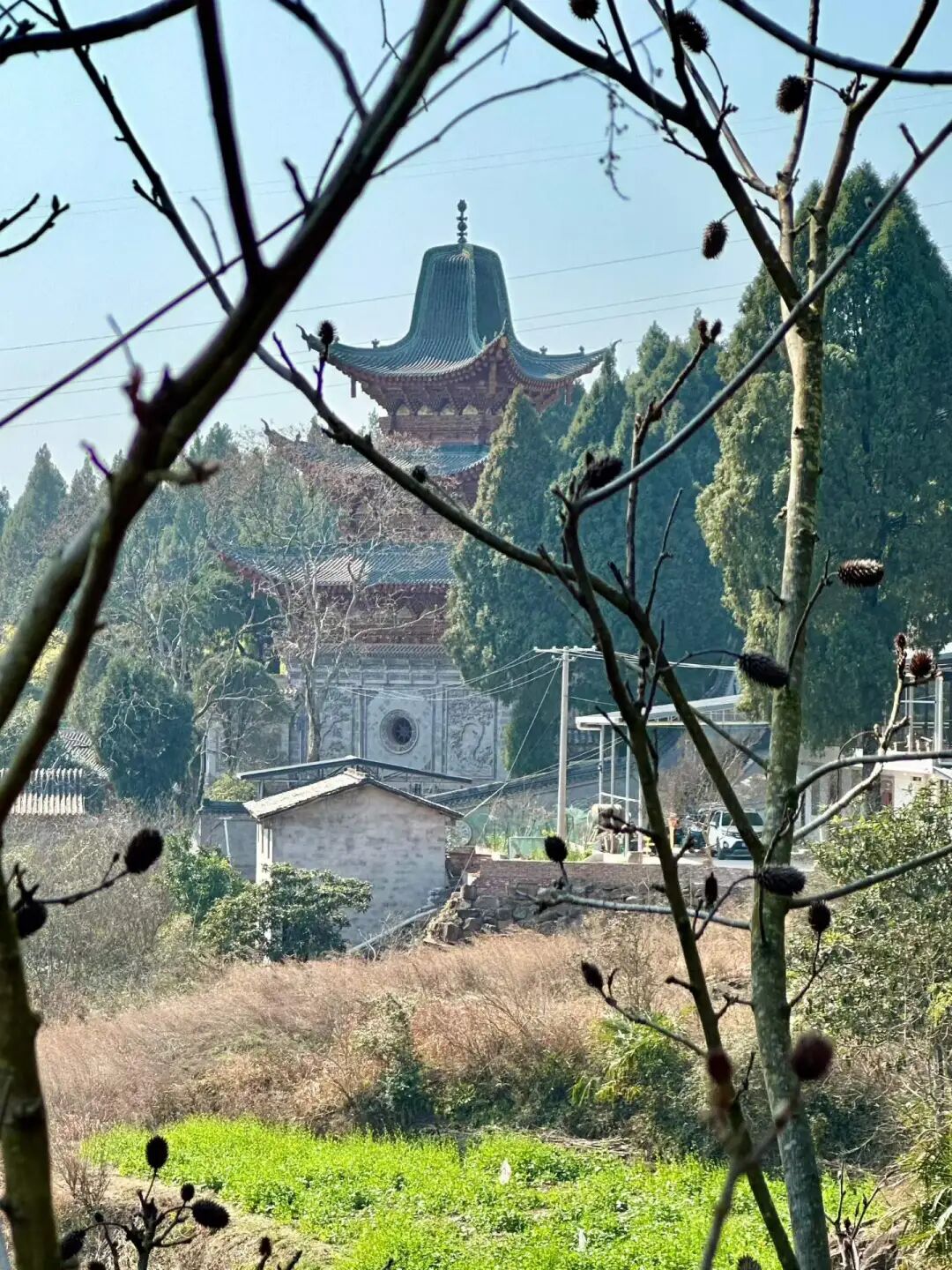
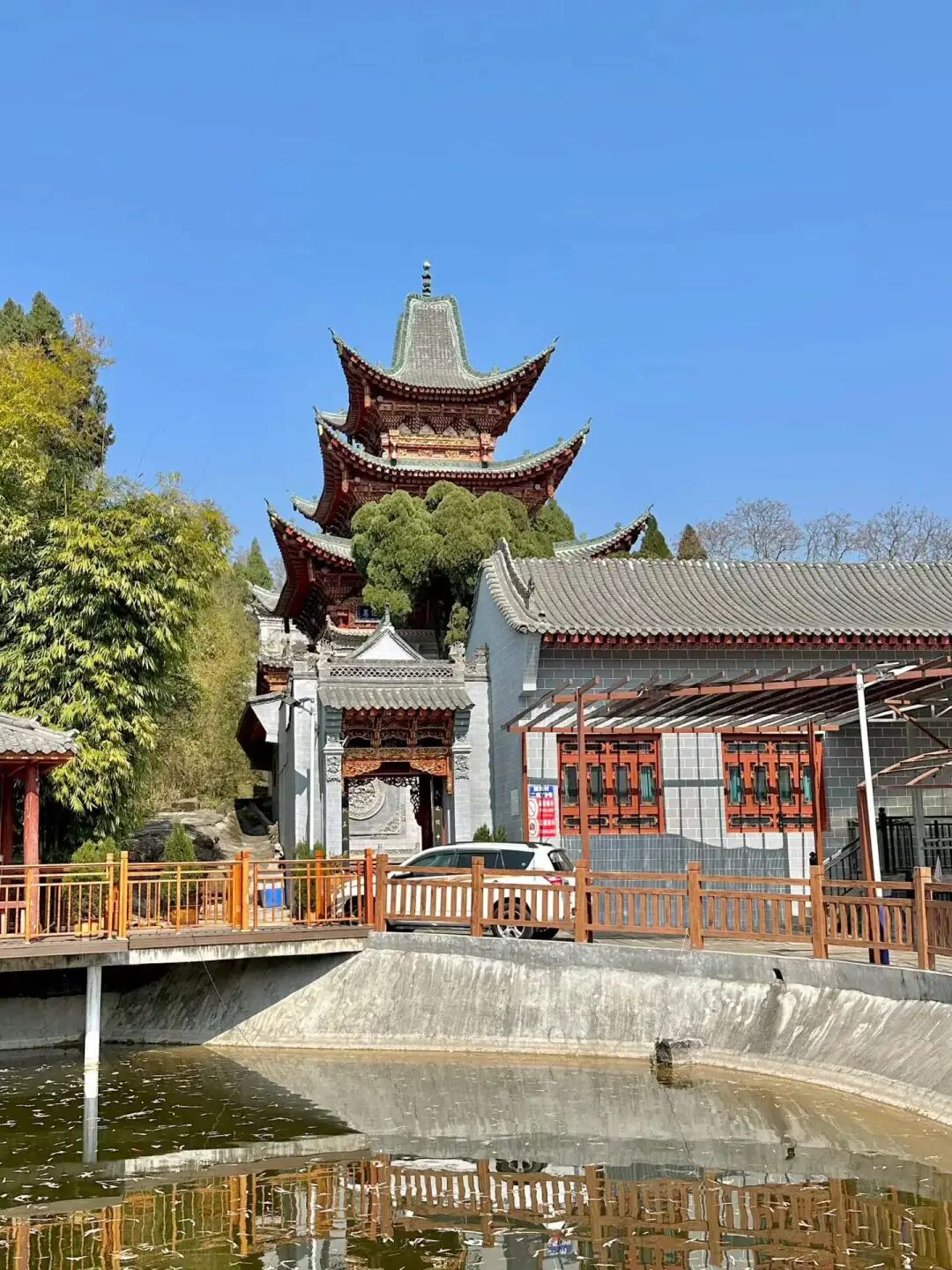
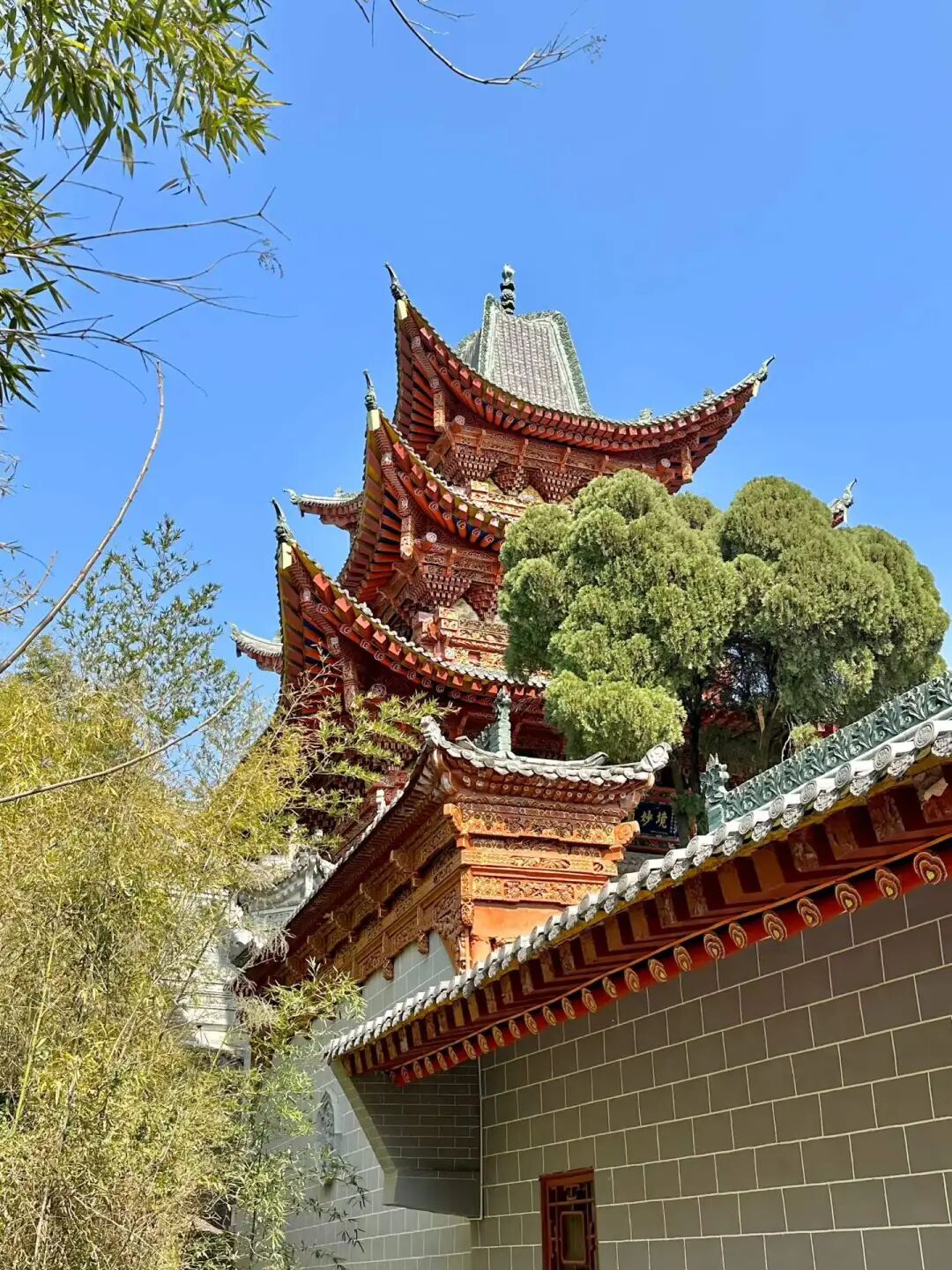
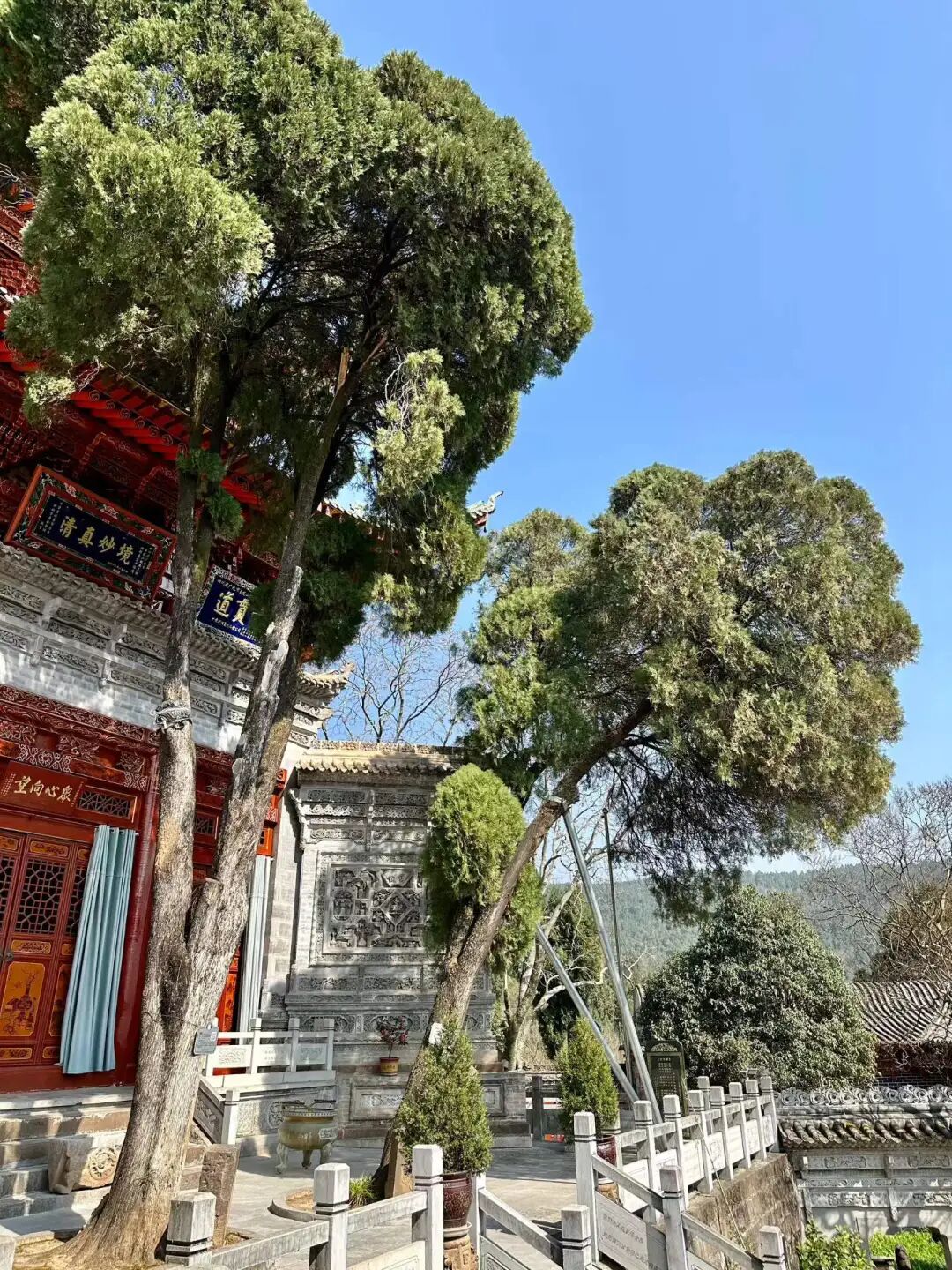
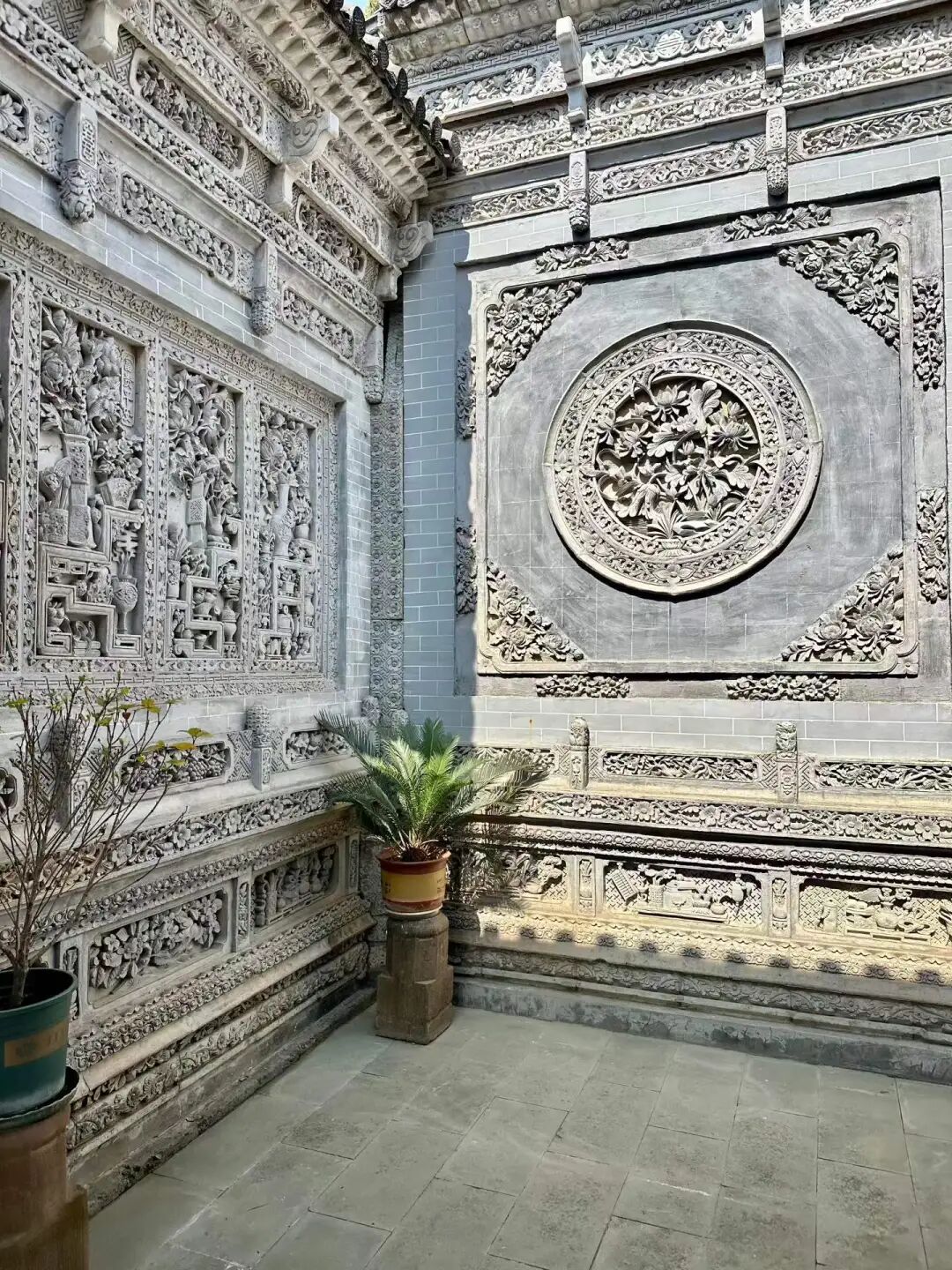
The main hall of Langzhaoting features a mihrab in the style of Hezhou.
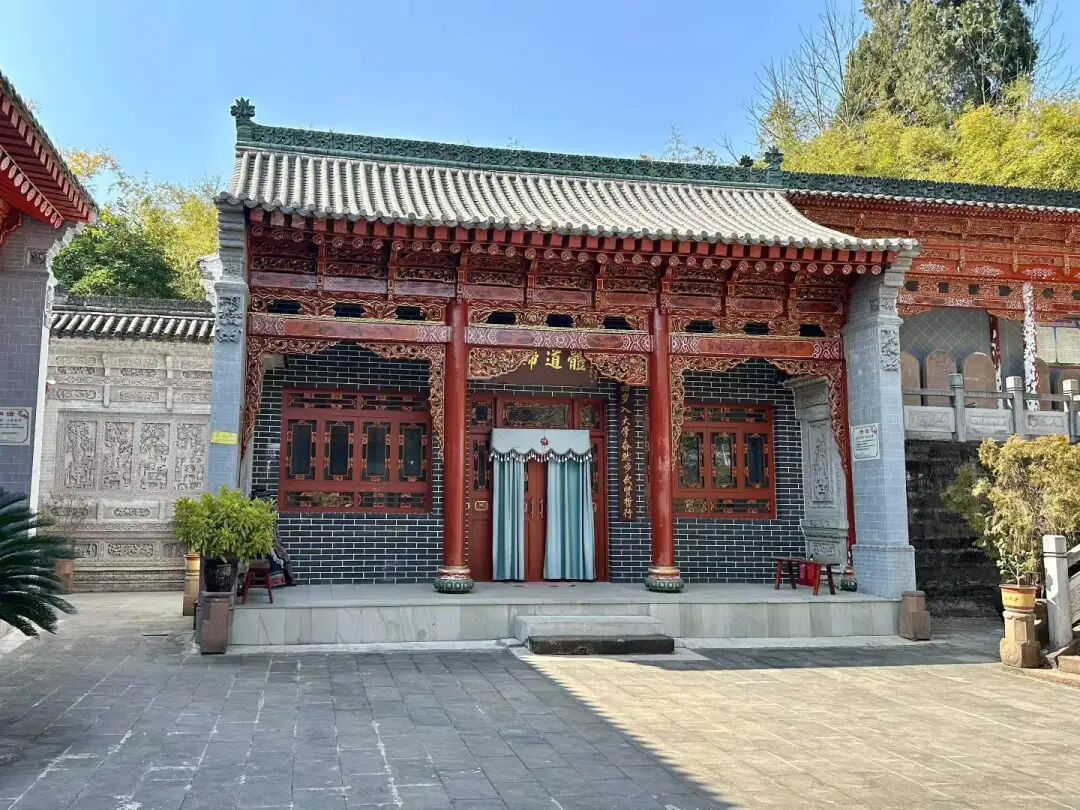
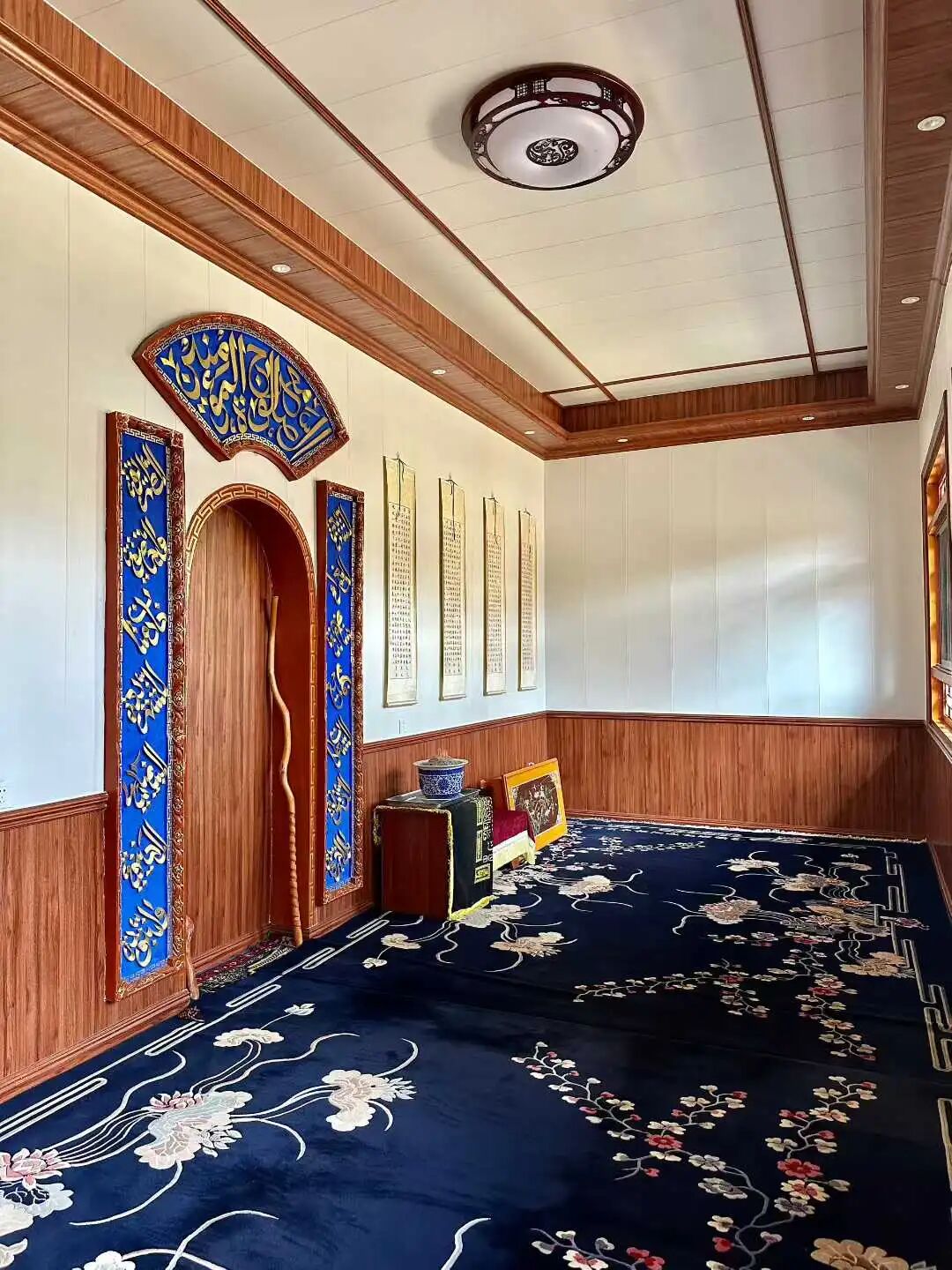
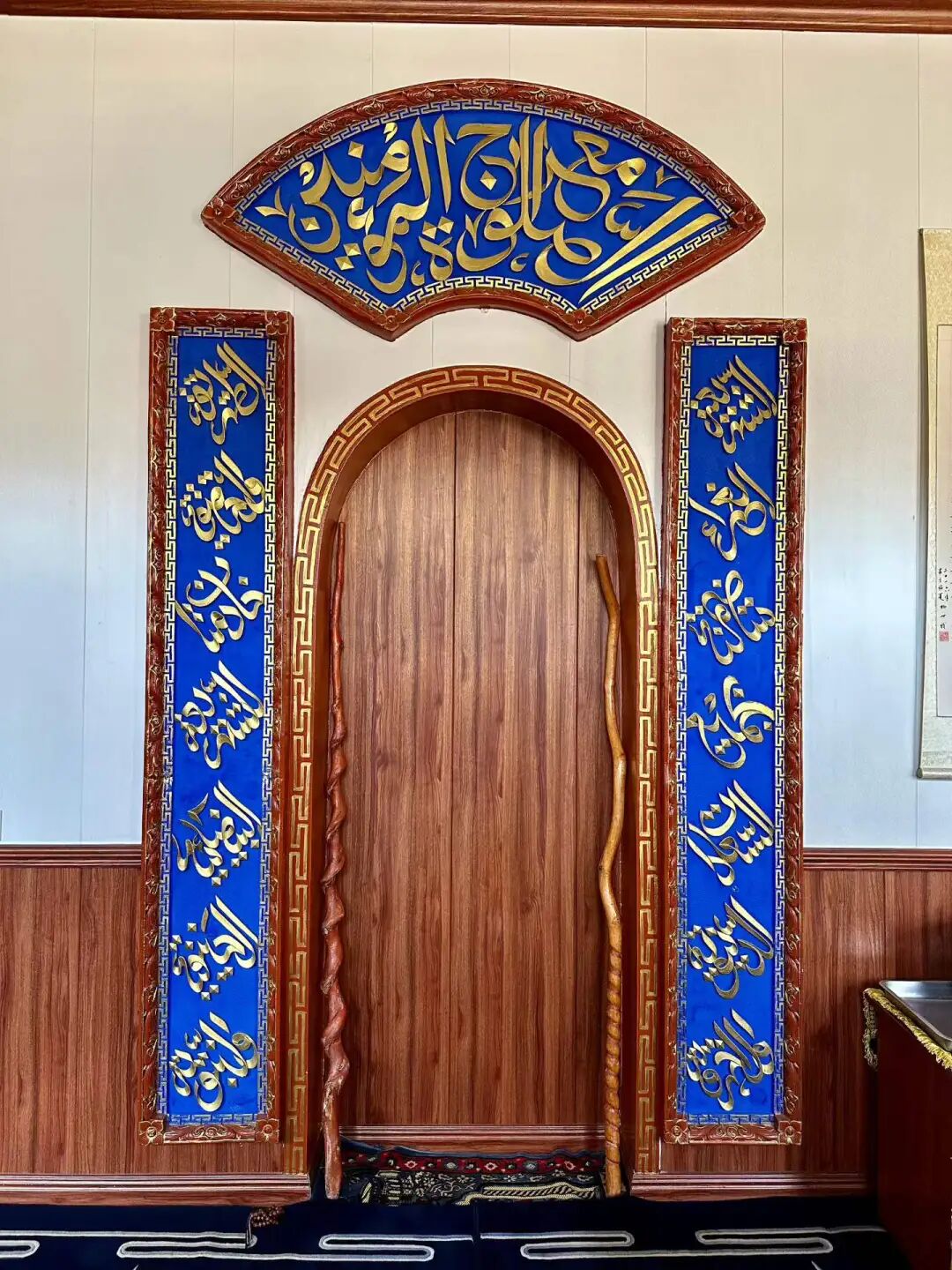
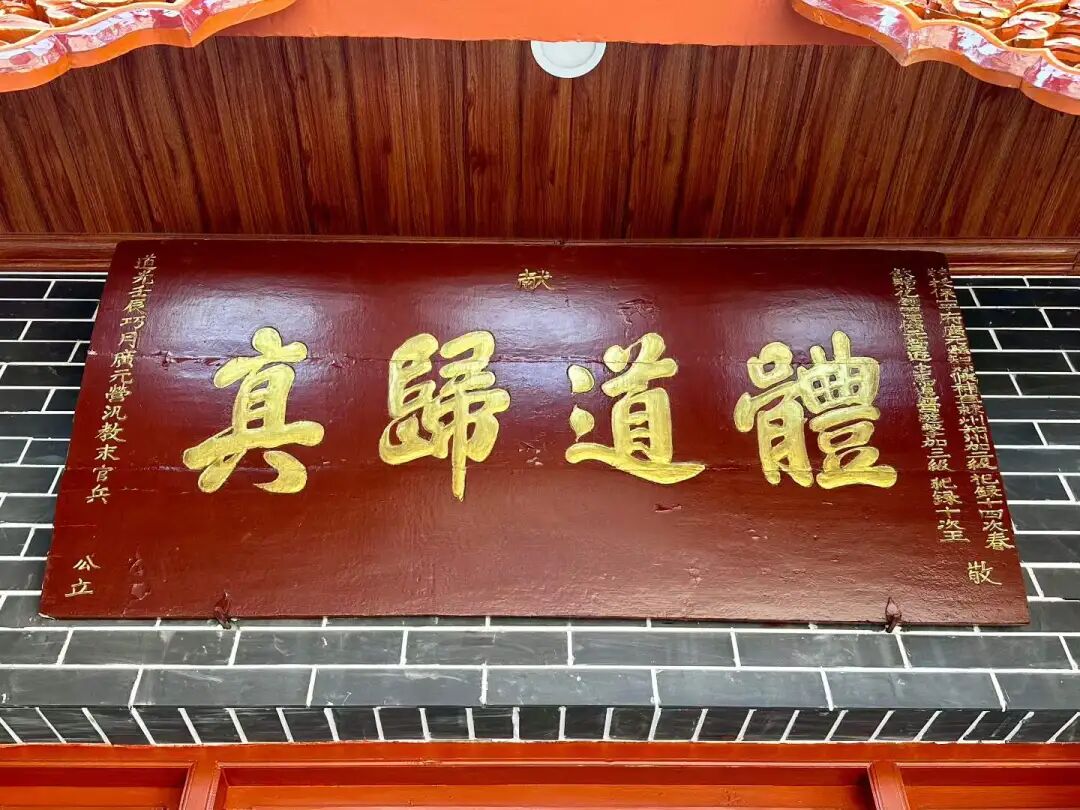
Inside the courtyard hangs a plaque titled "Embodying the Truth" (Ti Dao Gui Zhen), which was donated by military officers and soldiers of the Guangyuan garrison in the 12th year of the Daoguang reign.
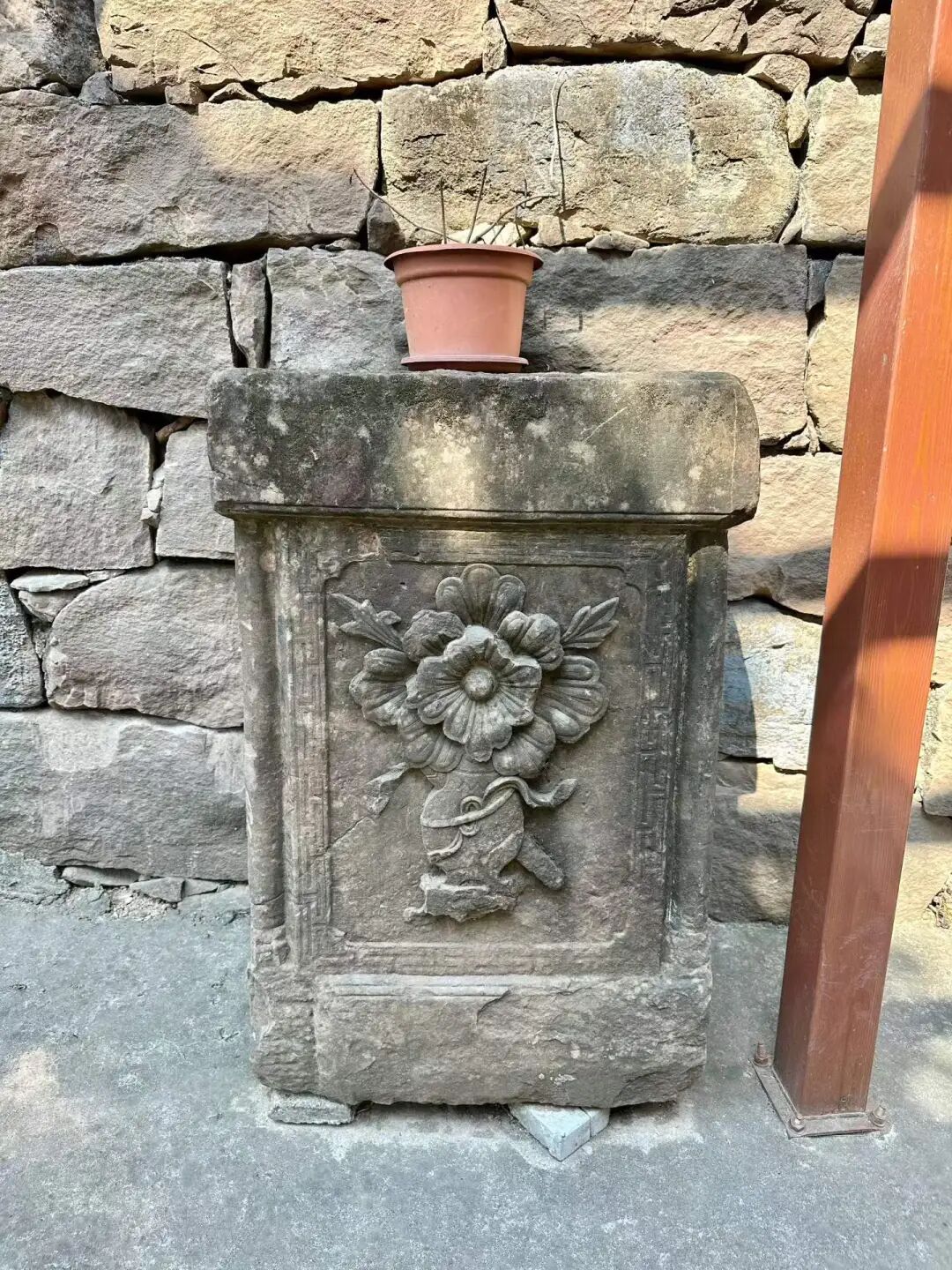
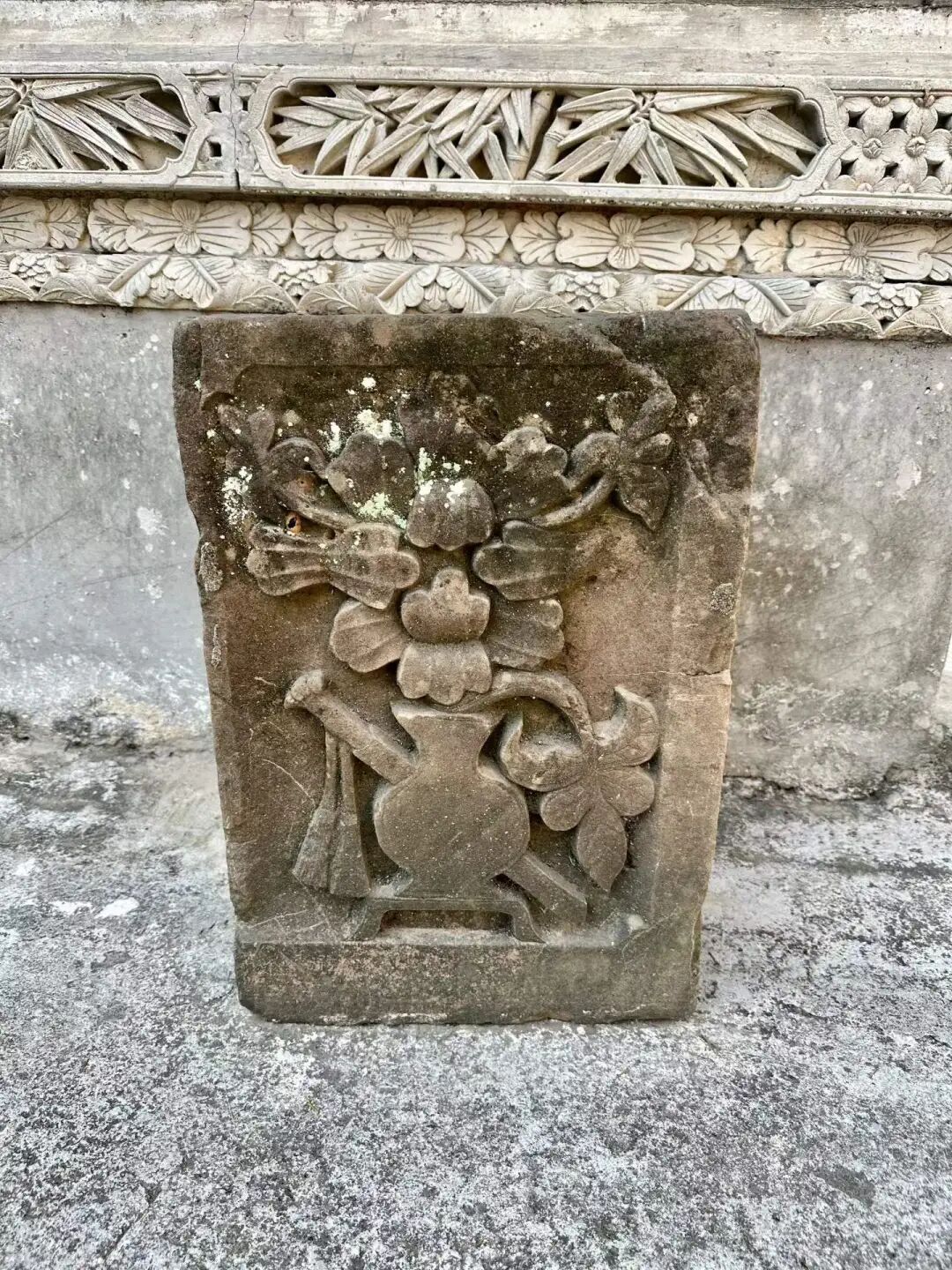
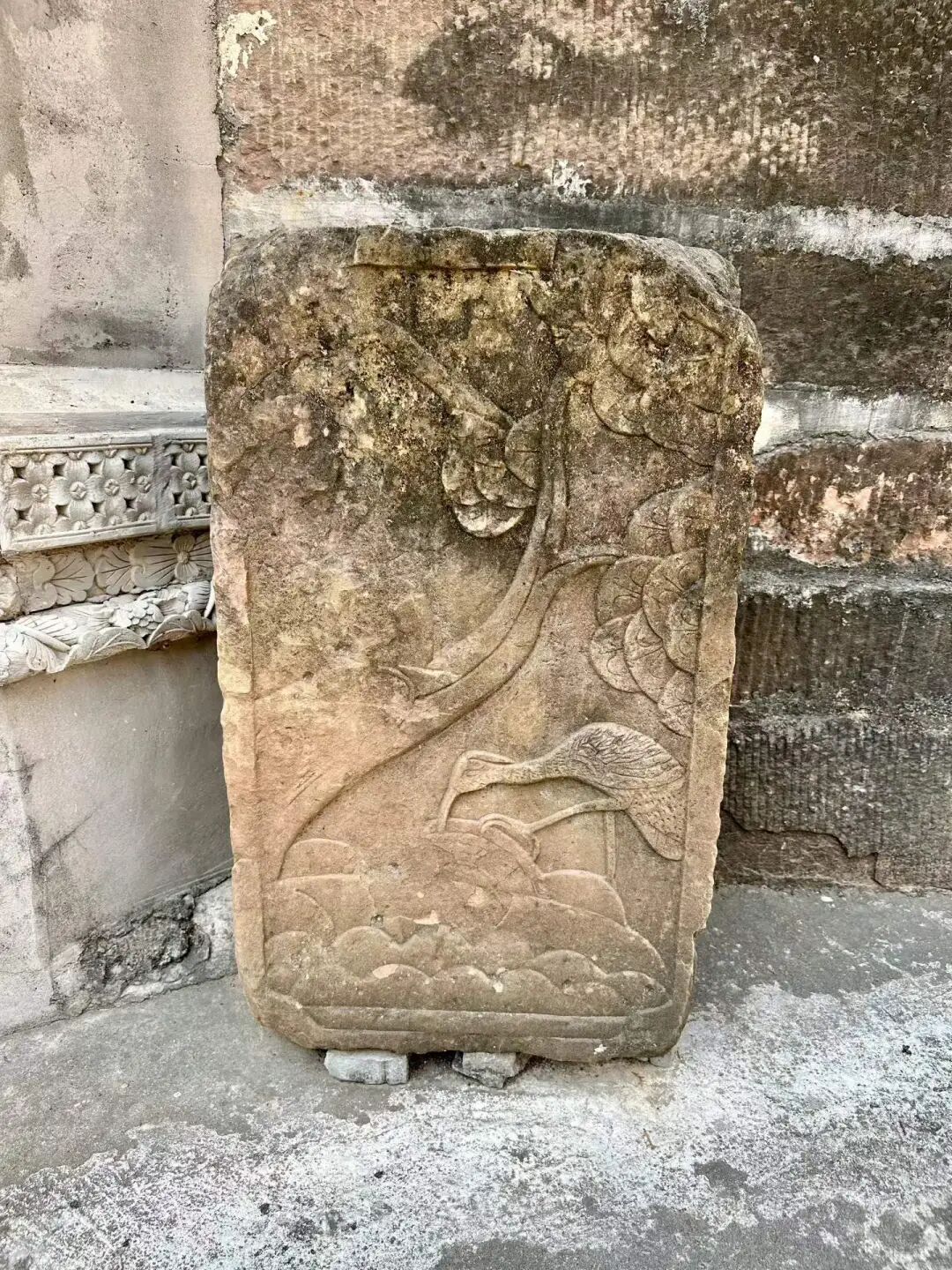
The courtyard also preserves many stone carvings from the Qing Dynasty. The carvings feature traditional auspicious themes like "Peace and Prosperity," "Cranes and Pines for Longevity," and "Mastery of Both Literature and Martial Arts."
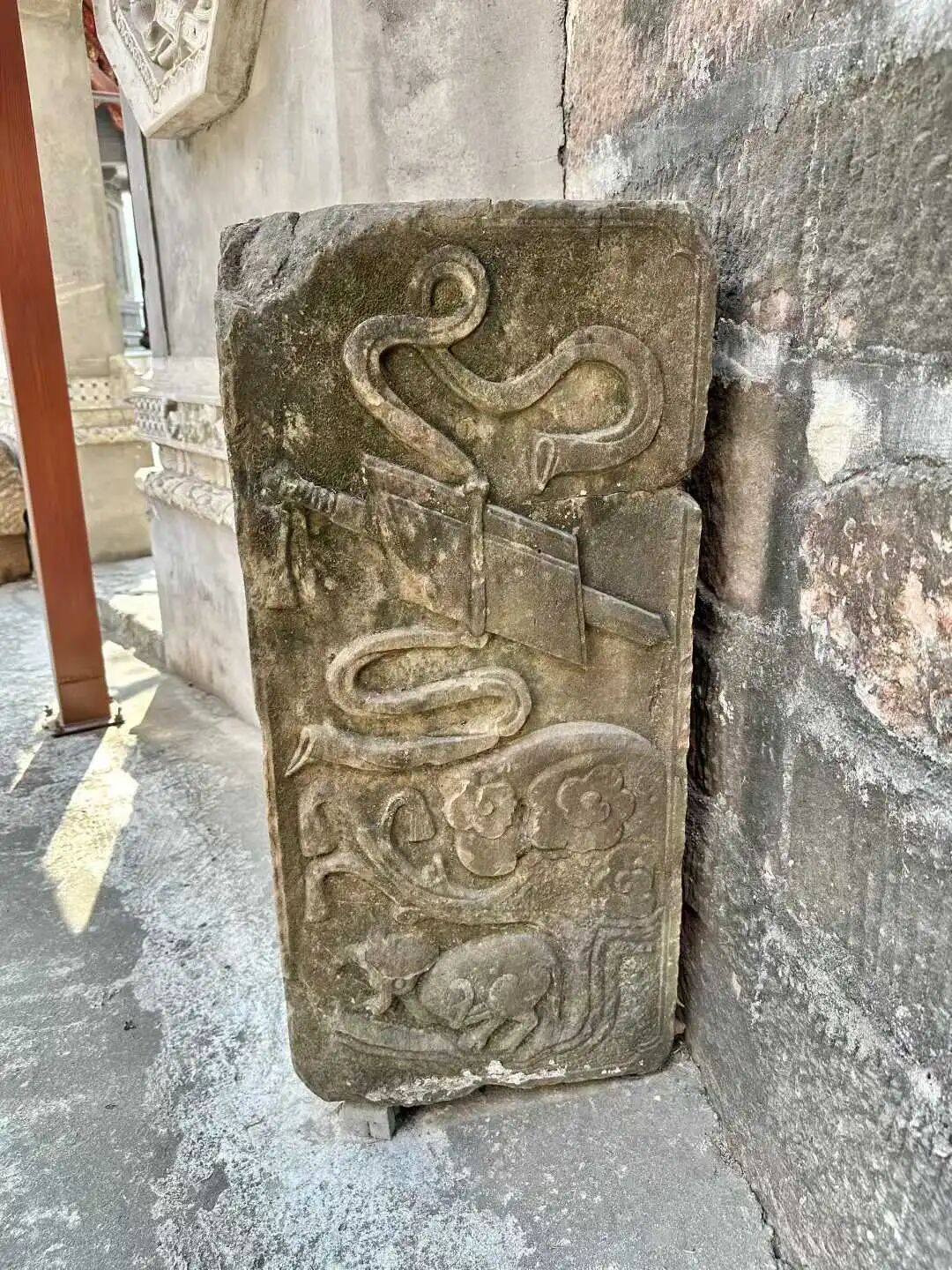
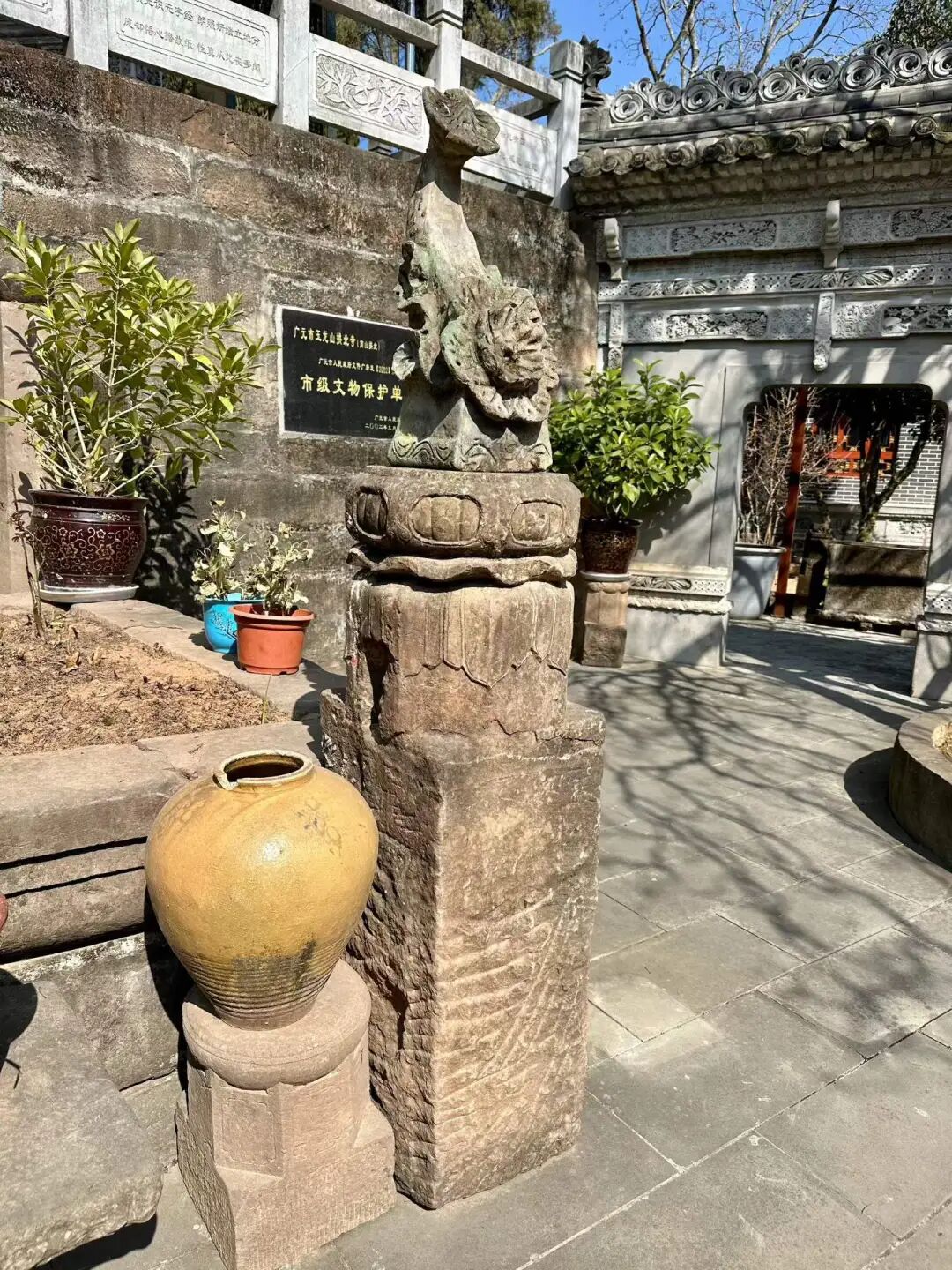
Many of the Qing Dynasty stone column bases were destroyed after 1958. This pair of stone lions still has column bases on them, which may have originally served as the base for a memorial archway.
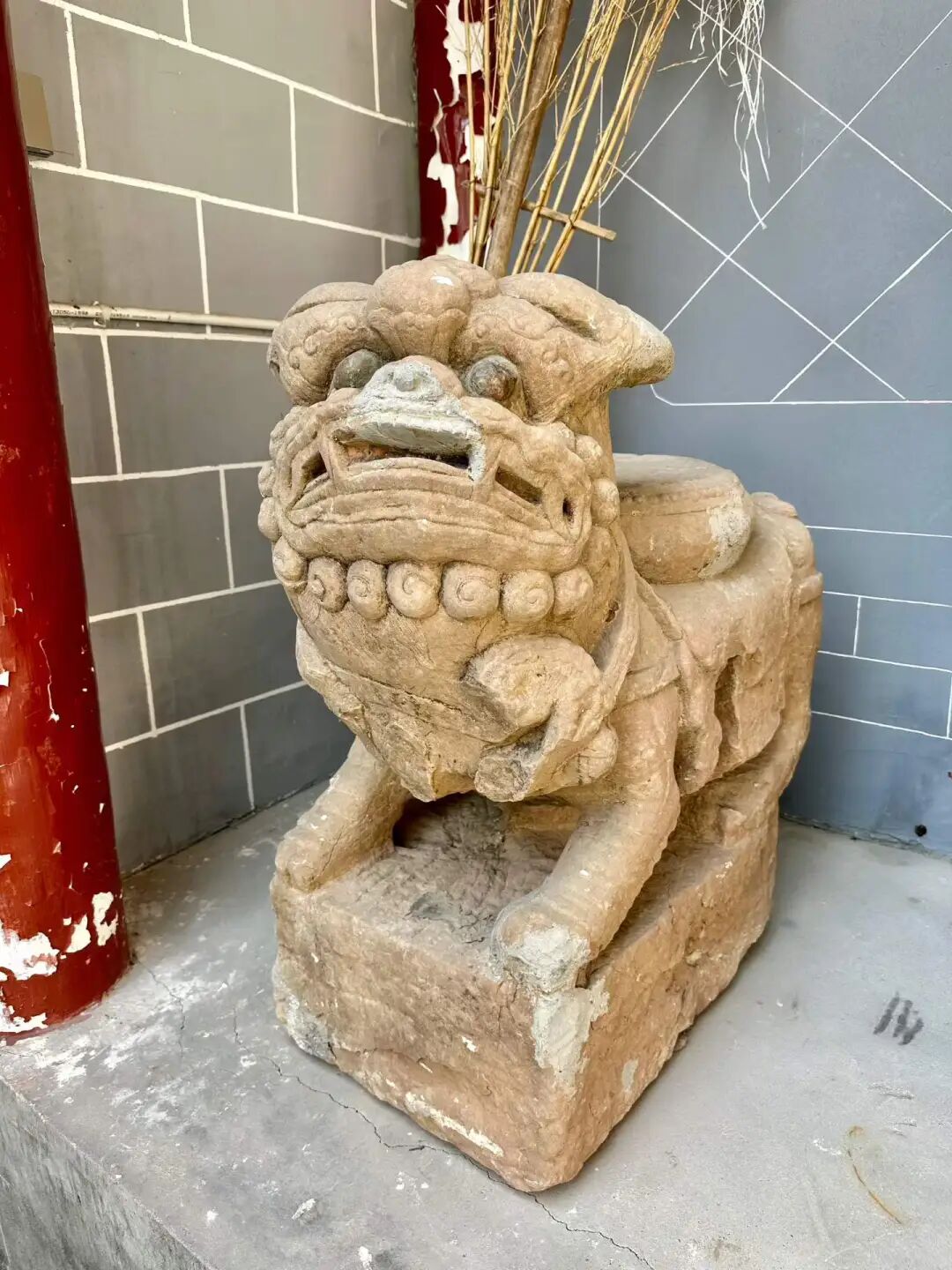
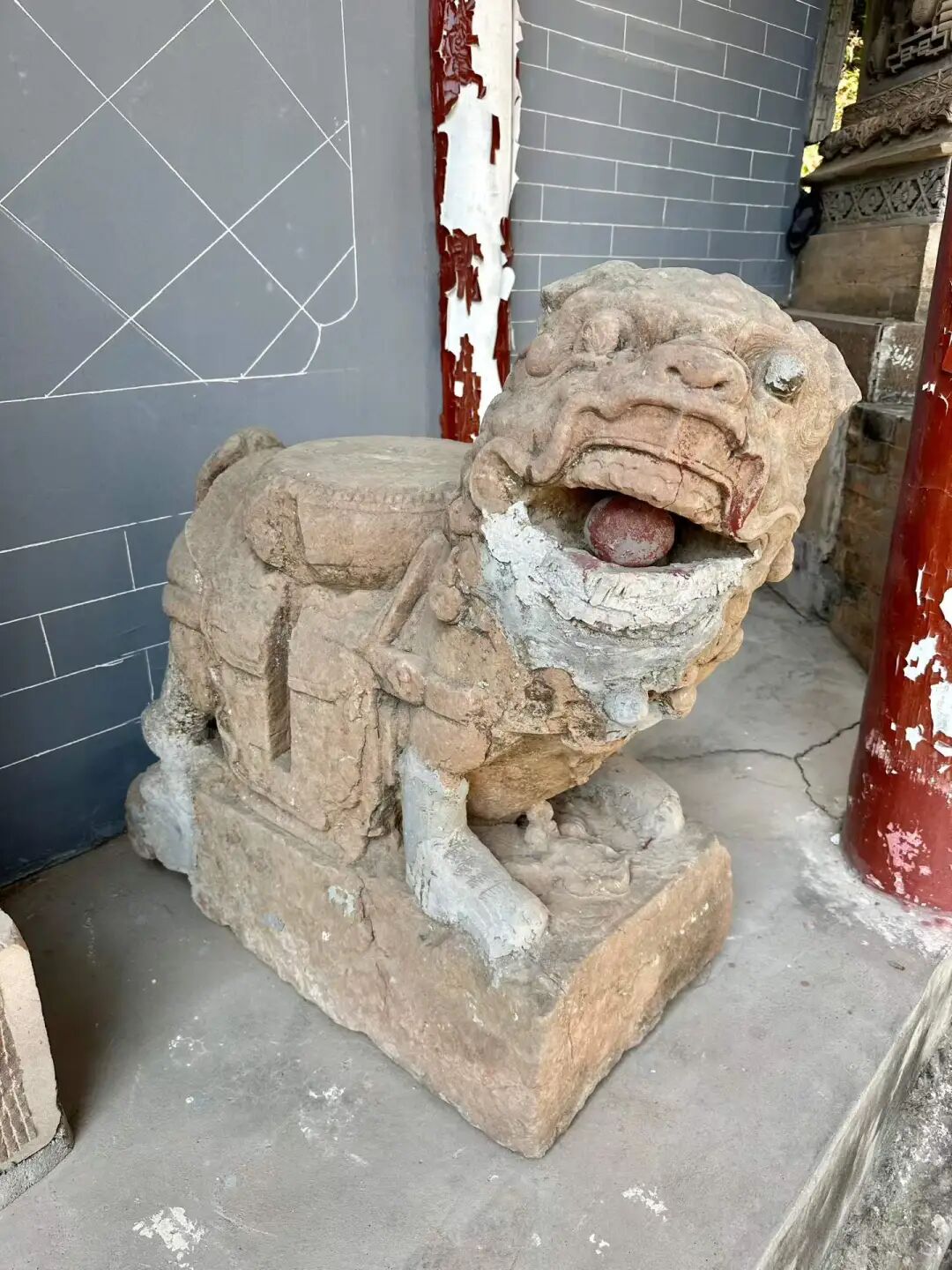
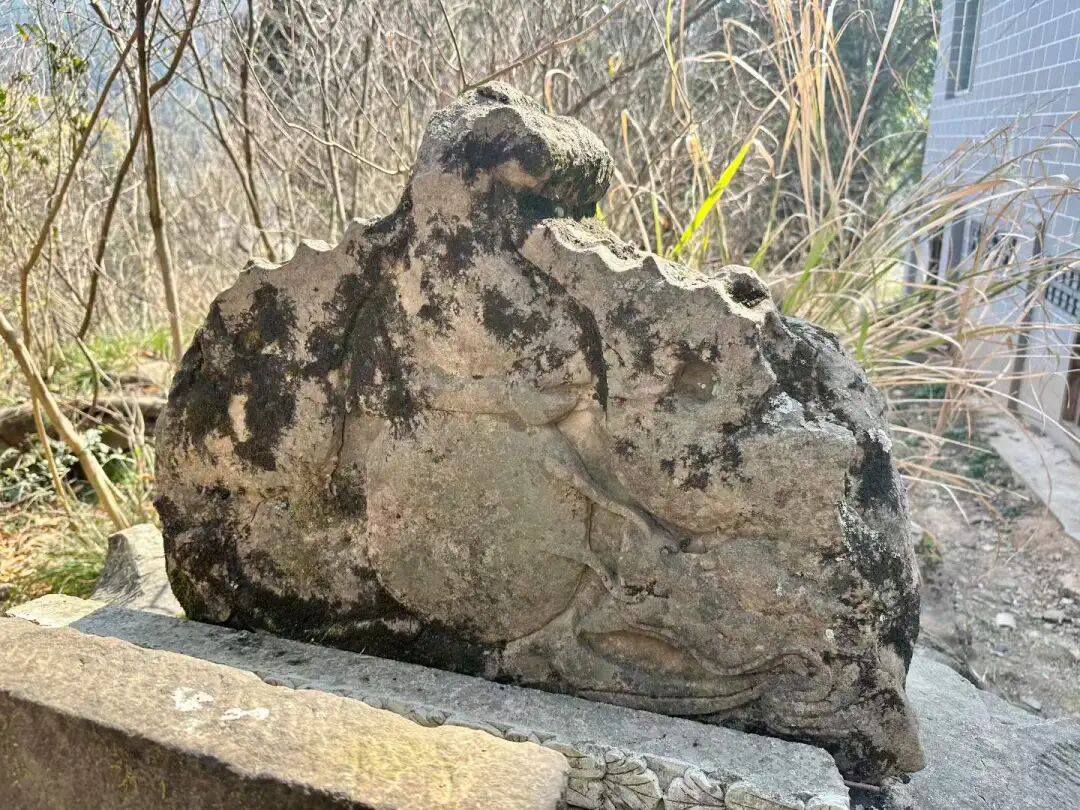
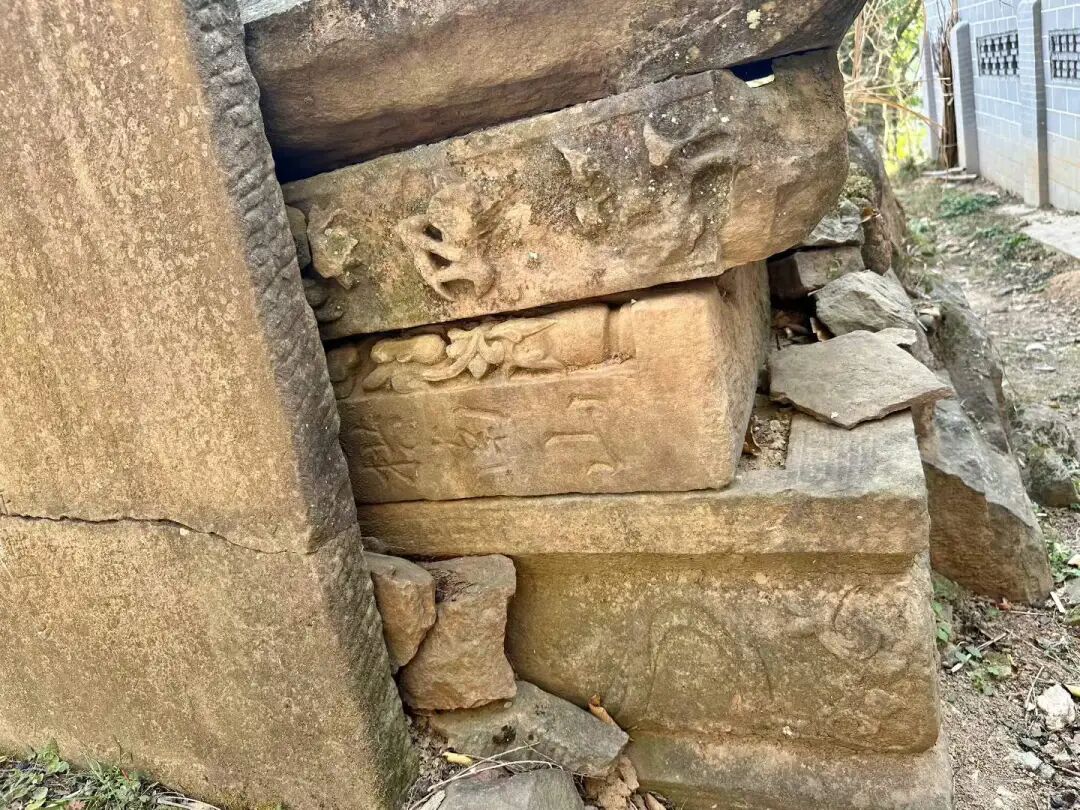
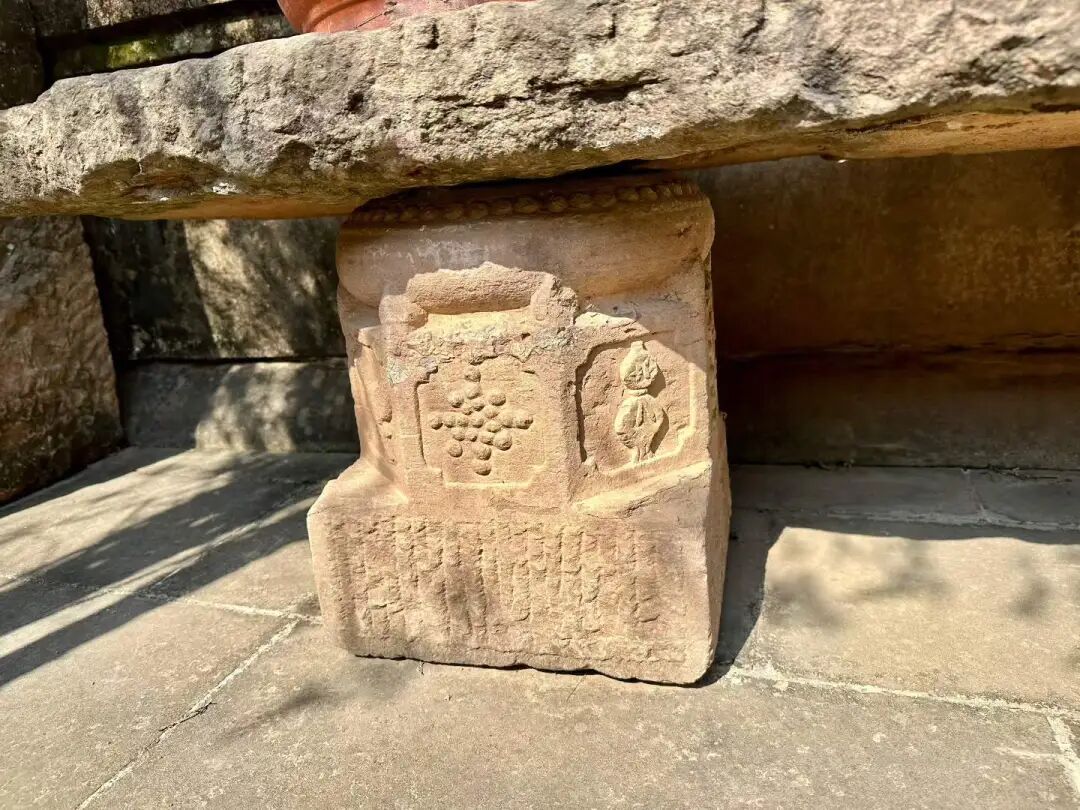
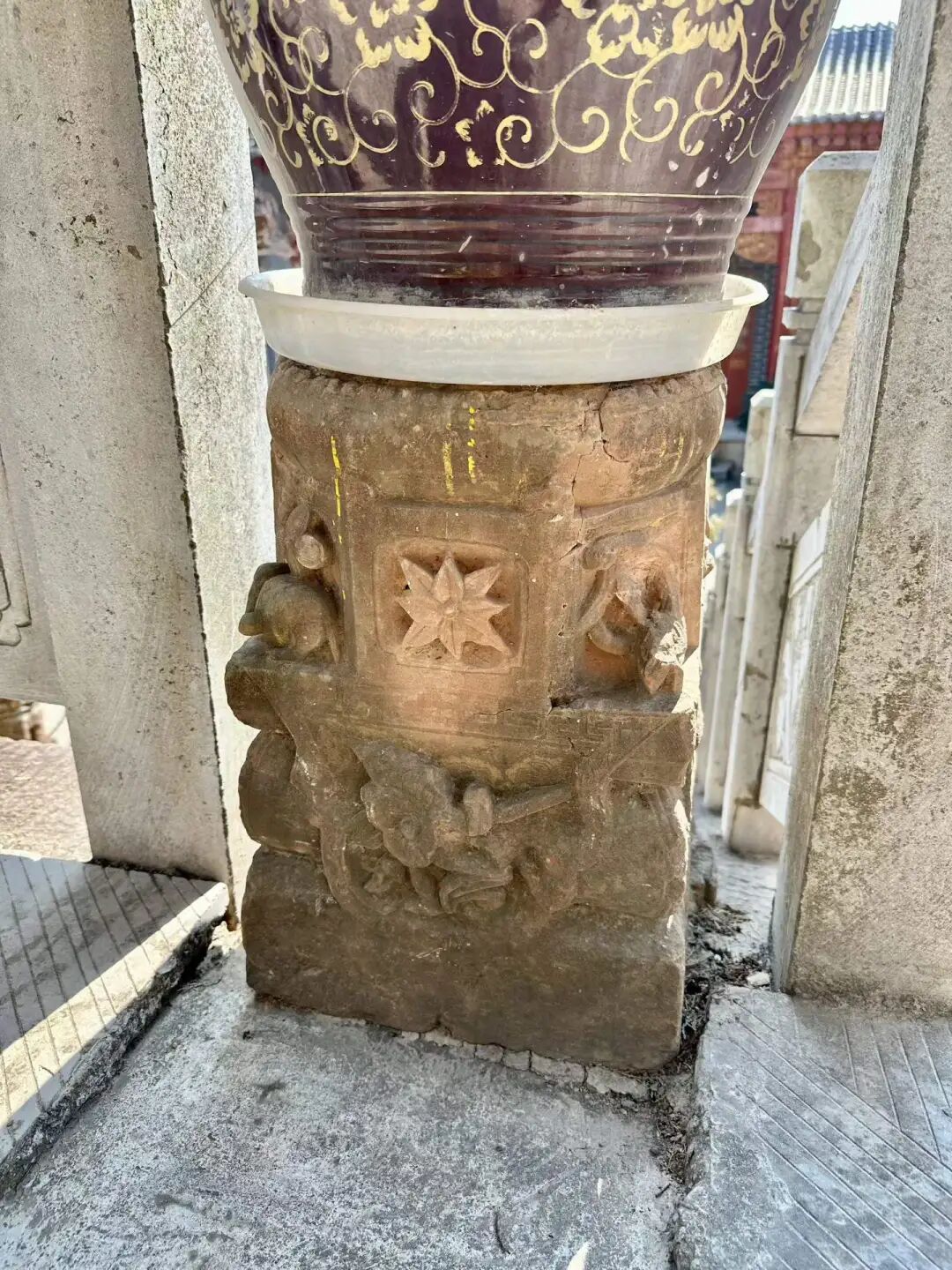
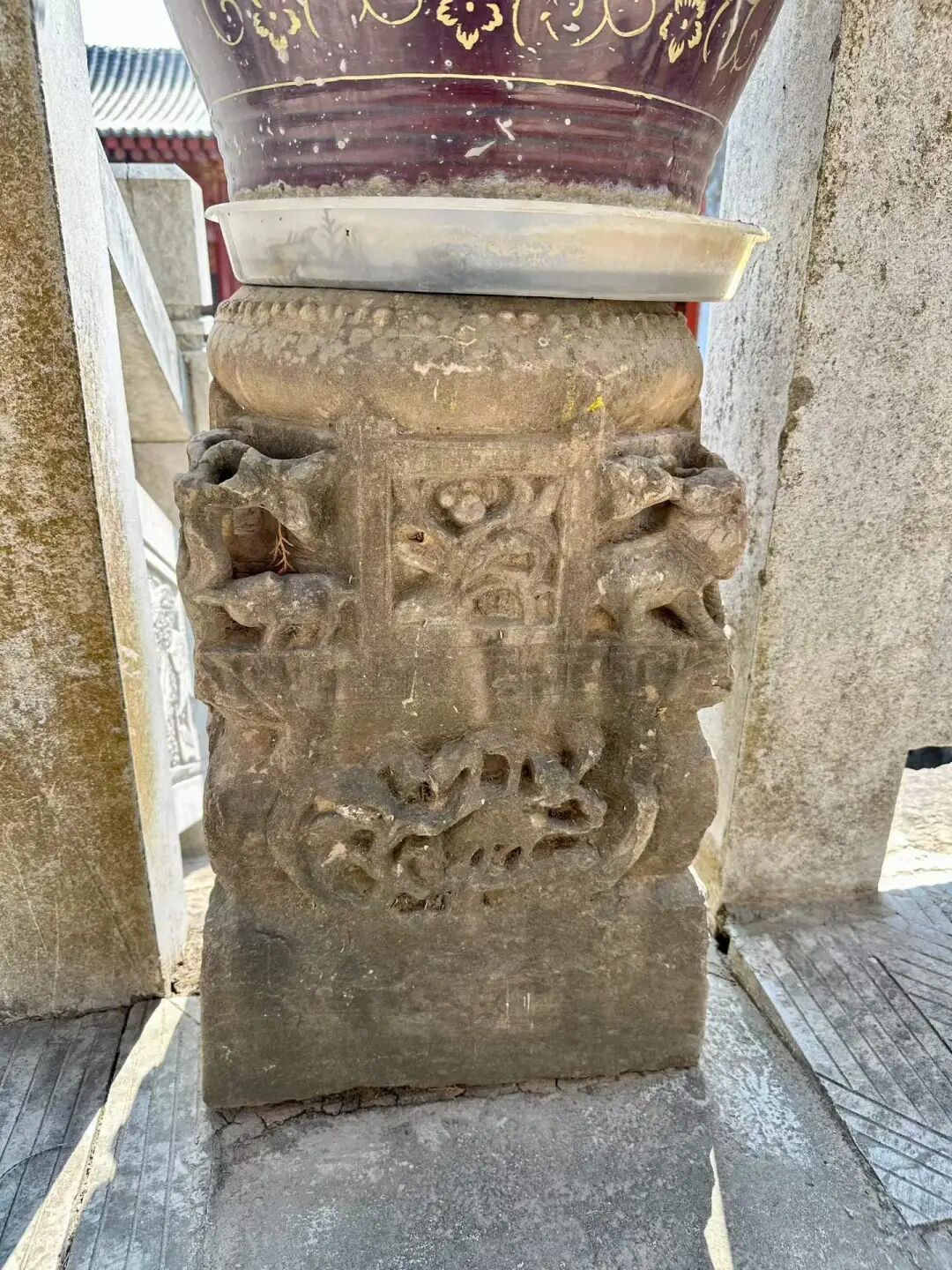
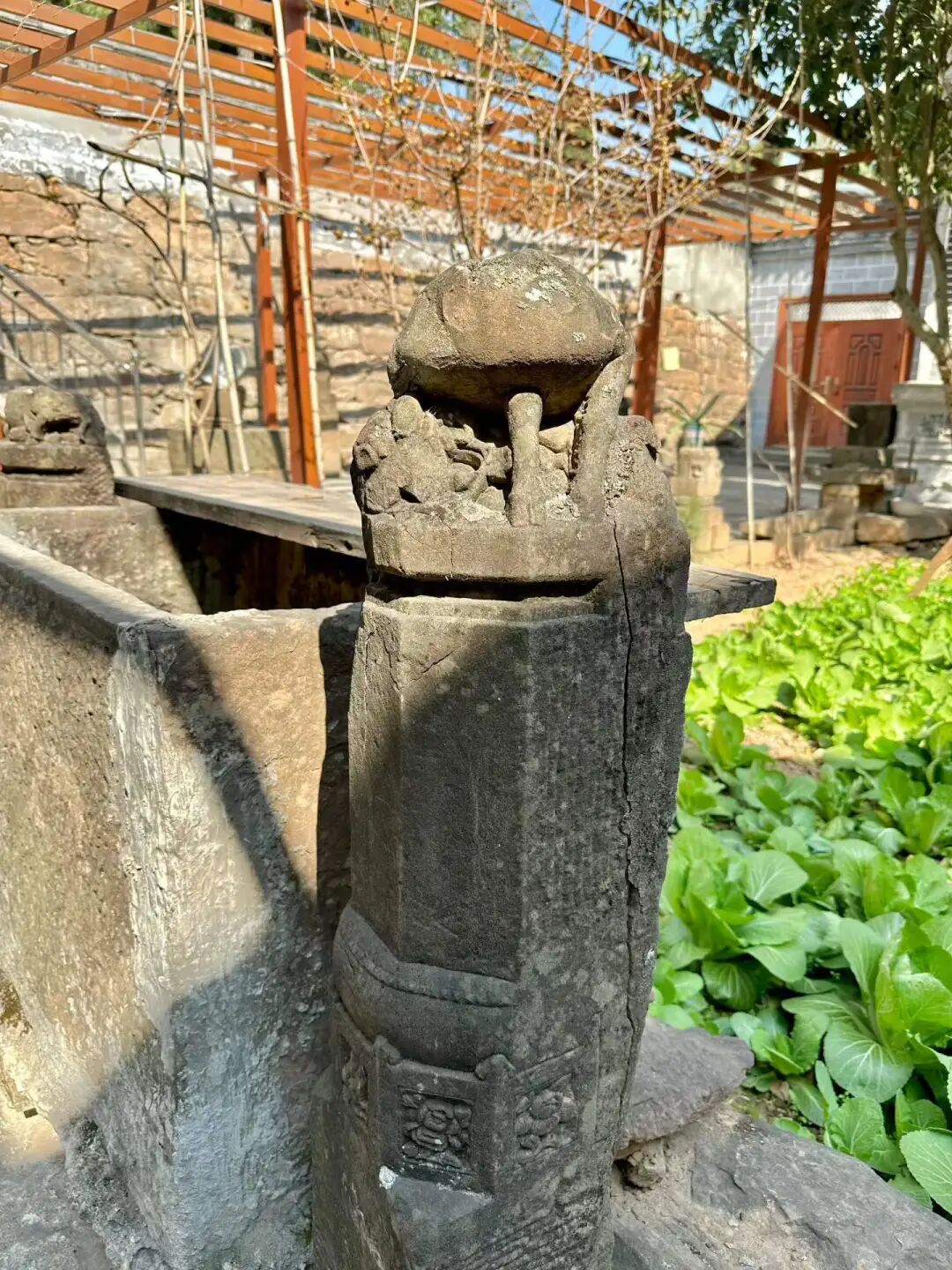
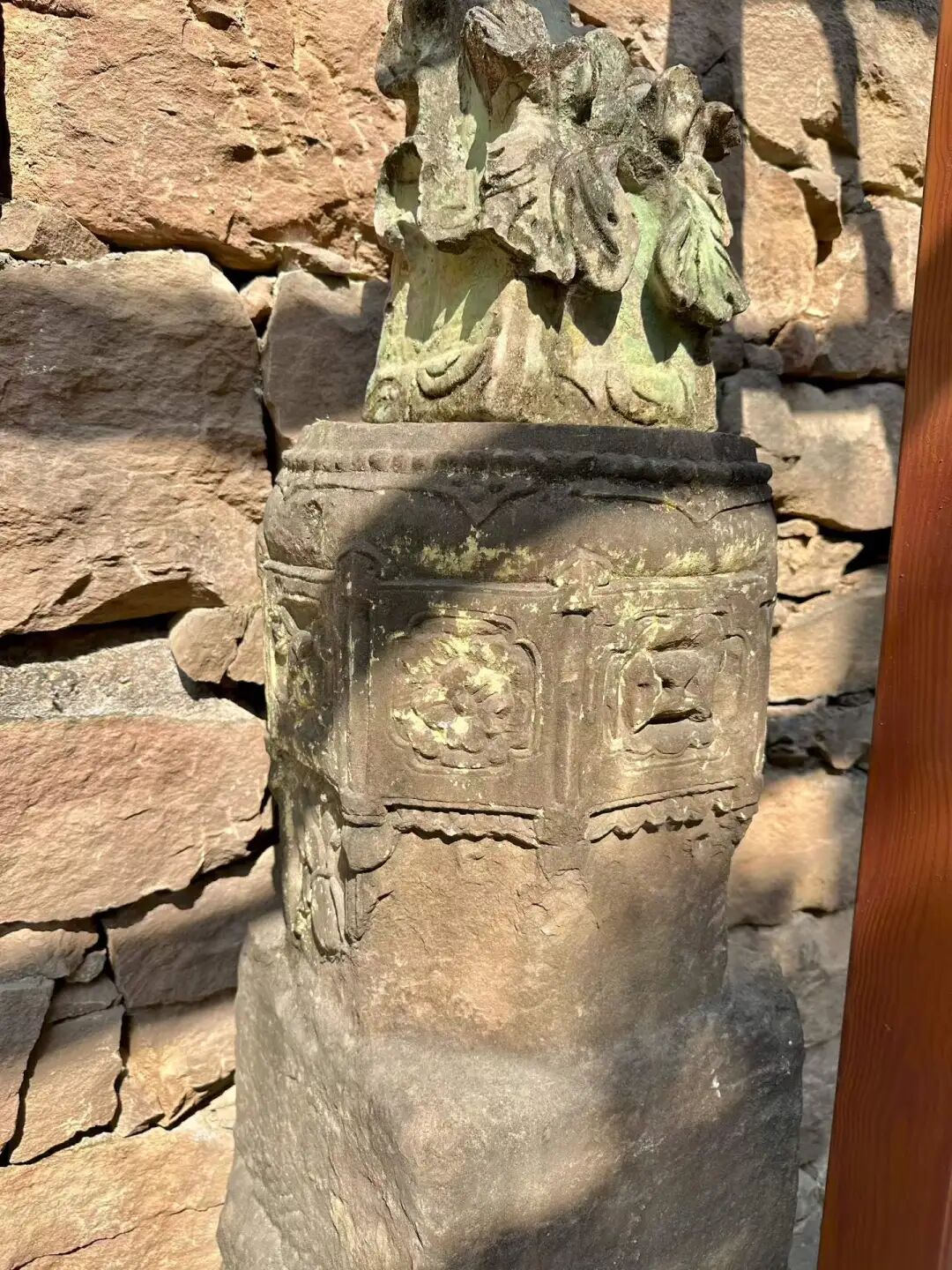
The various stone inscriptions at Langzhaoting.
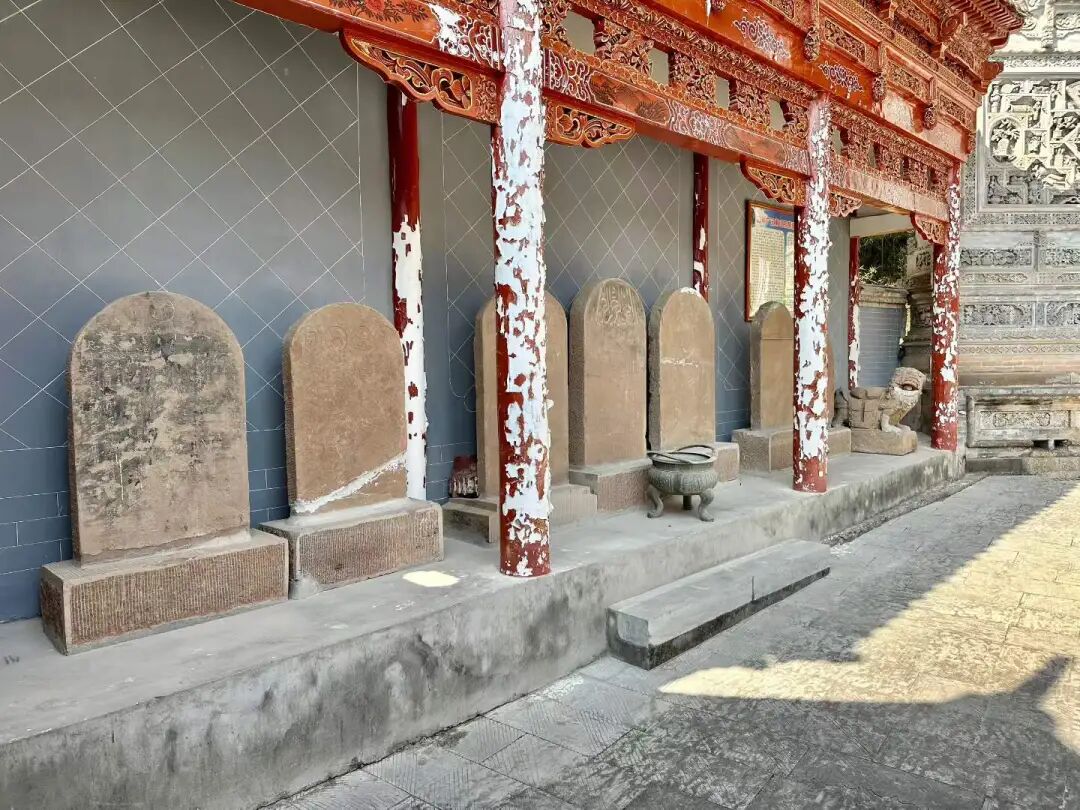
The oldest inscription dates back to the 42nd year of the Qianlong reign, which is the year Master Ma passed away and the gongbei was built. The top of the tablet is carved with a taiji symbol, which is very unique.
The inscription records that "Master Ma" began his studies at 14, traveled from Shaanxi to Sichuan at 24, and practiced in seclusion for over 60 years. It expresses deep respect for him. The signature belongs to a high-ranking official named Ma X from Anhui, who held titles including Fengzhi Dafu and acting magistrate of Guangyuan County.
Research shows the person who set up the tablet was Ma Jialiang, a Hui Muslim from Anqing, Anhui, and the builder of Langzhaoting. Ma Jialiang, whose courtesy name was Zhongheng, was the son of the famous Qing Dynasty Hui Muslim general and martial arts scholar Ma Dayong. He passed the imperial examinations in the 12th year of the Qianlong reign and served as a high official in several provinces. He rose from county magistrate to prefect, working in Henan, Shandong, Hubei, and Sichuan. He was once dismissed in Shandong for failing to notice the White Lotus Sect, but was later reappointed as the prefect of Huili, Sichuan, eventually ending his career as an acting magistrate in Guangyuan.
The second tablet is the "Record of Rebuilding the True Shrine" from the 59th year of the Qianlong reign. It mentions that in the 42nd year of Qianlong, the former magistrate Master Ma donated funds to build the shrine for the Master, and it was renovated again in the 59th year. The back of the tablet lists 16 religious leaders with the surnames Guo, Mu, Zheng, Min, Ma, Li, Sai, and Wang, along with 135 followers who donated funds.
The "Record of Rebuilding the True Shrine" from the 11th year of the Daoguang reign has the title "Crane in the Clouds" at the top. It refers to the gongbei as the "Nanshan Master Ma Gongbei." The first donor listed is Ma Tenglong, a commander from Chongqing, followed by Guangyuan garrison officer Ma Guangting and others. Ma Tenglong was a military general with many achievements during the middle and late Qing Dynasty. According to the Records of Chongqing Prefecture in the Daoguang Era, Ma Tenglong was from Chengdu, Sichuan, and joined the army in the 58th year of the Qianlong reign. In the 60th year of the Qianlong reign, he was ordered to lead troops to Guizhou and Hunan to help suppress the Miao uprising. In the 2nd year of the Jiaqing reign, he was transferred to the Hubei and Sichuan-Shaanxi regions to suppress the White Lotus Rebellion. In the 1st year of the Daoguang reign, he was promoted to commander-in-chief of the Gansu garrison. In the 3rd year of the Daoguang reign, he was transferred to be the commander-in-chief of the Shaanxi-Gansu garrison. In the 8th year of the Daoguang reign, he was appointed commander-in-chief of the Chongqing garrison to guard Chongqing.
The "Merits Last Forever" (Gongde Yongchui) stele from the 20th year of the Daoguang reign.
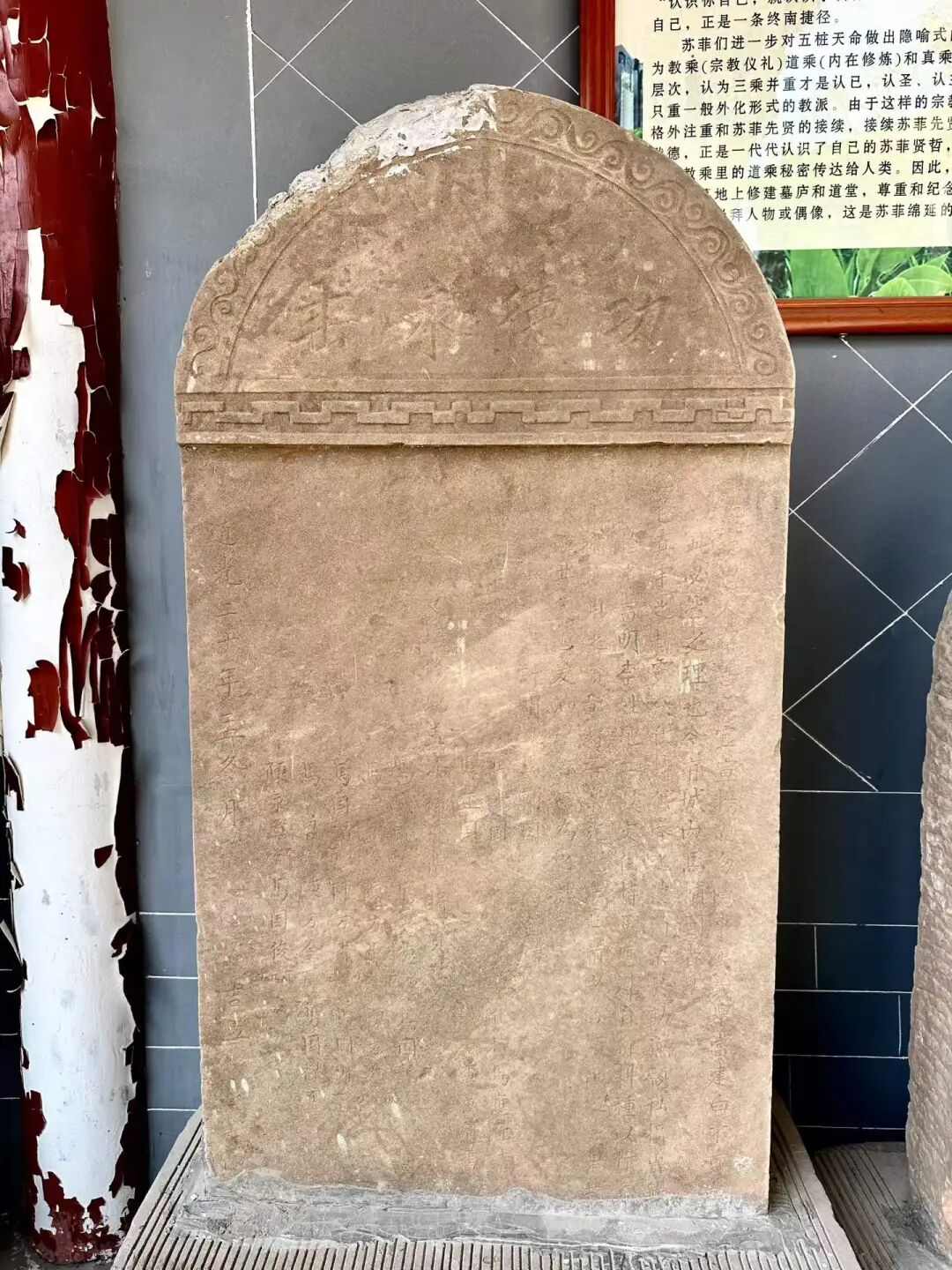
The Basmala (Tasimi) stele from the 11th year of the Daoguang reign also features the name of Ma Guangting, a captain (qianzong) of the Guangyuan Battalion.
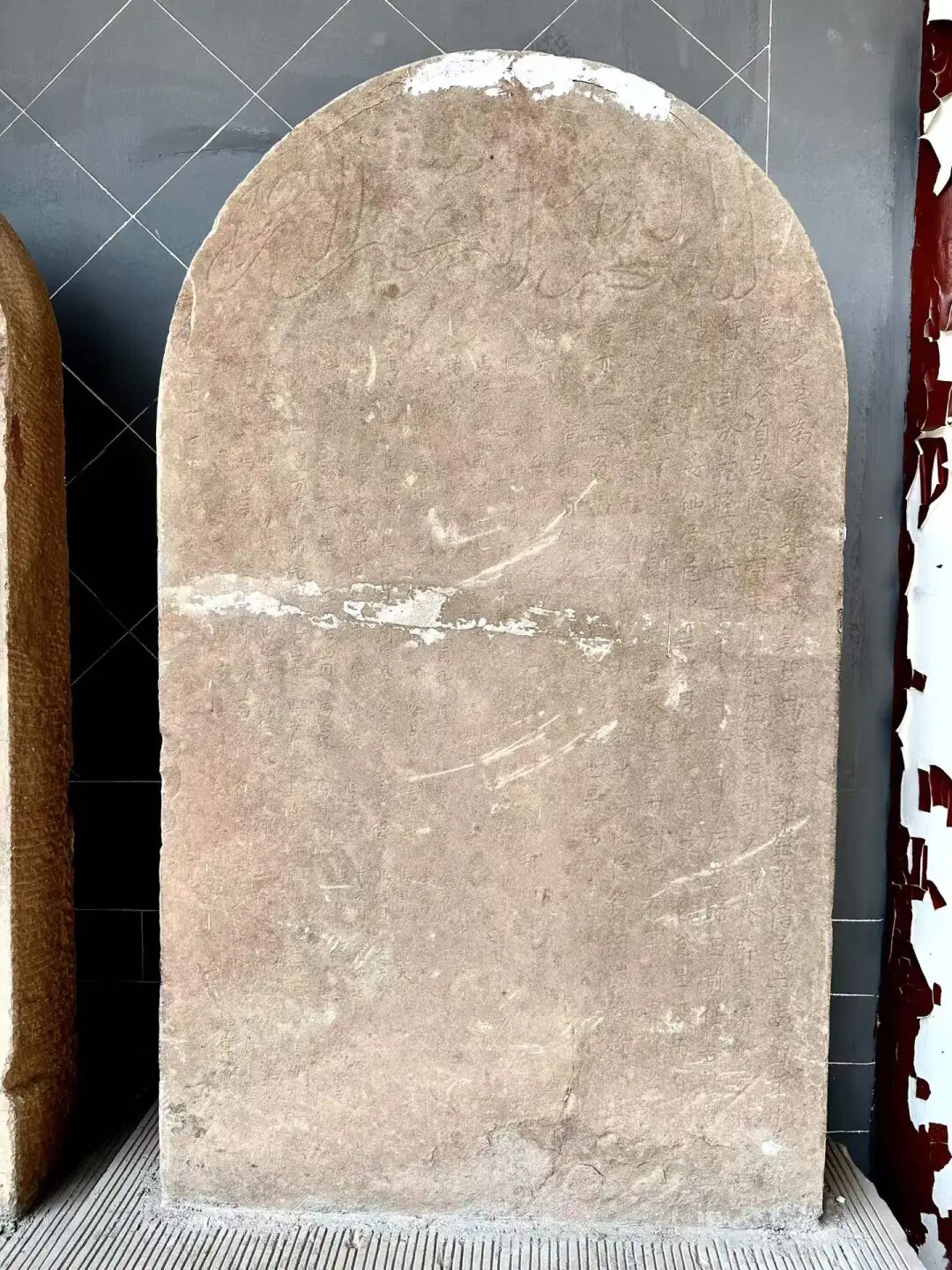
The "Immortal Forever" (Yongchui Buxiu) stele from the 10th year of the Guangxu reign.
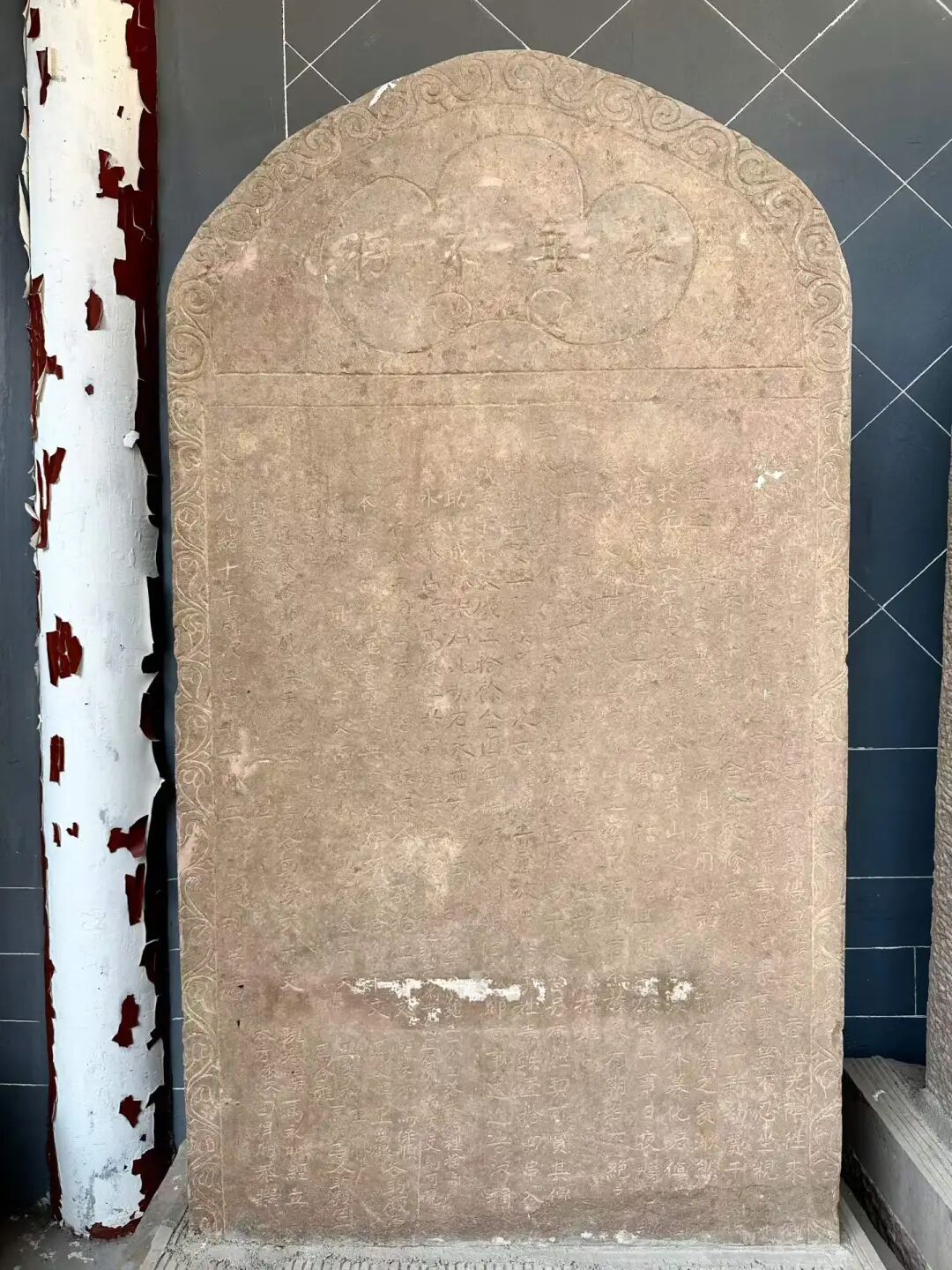
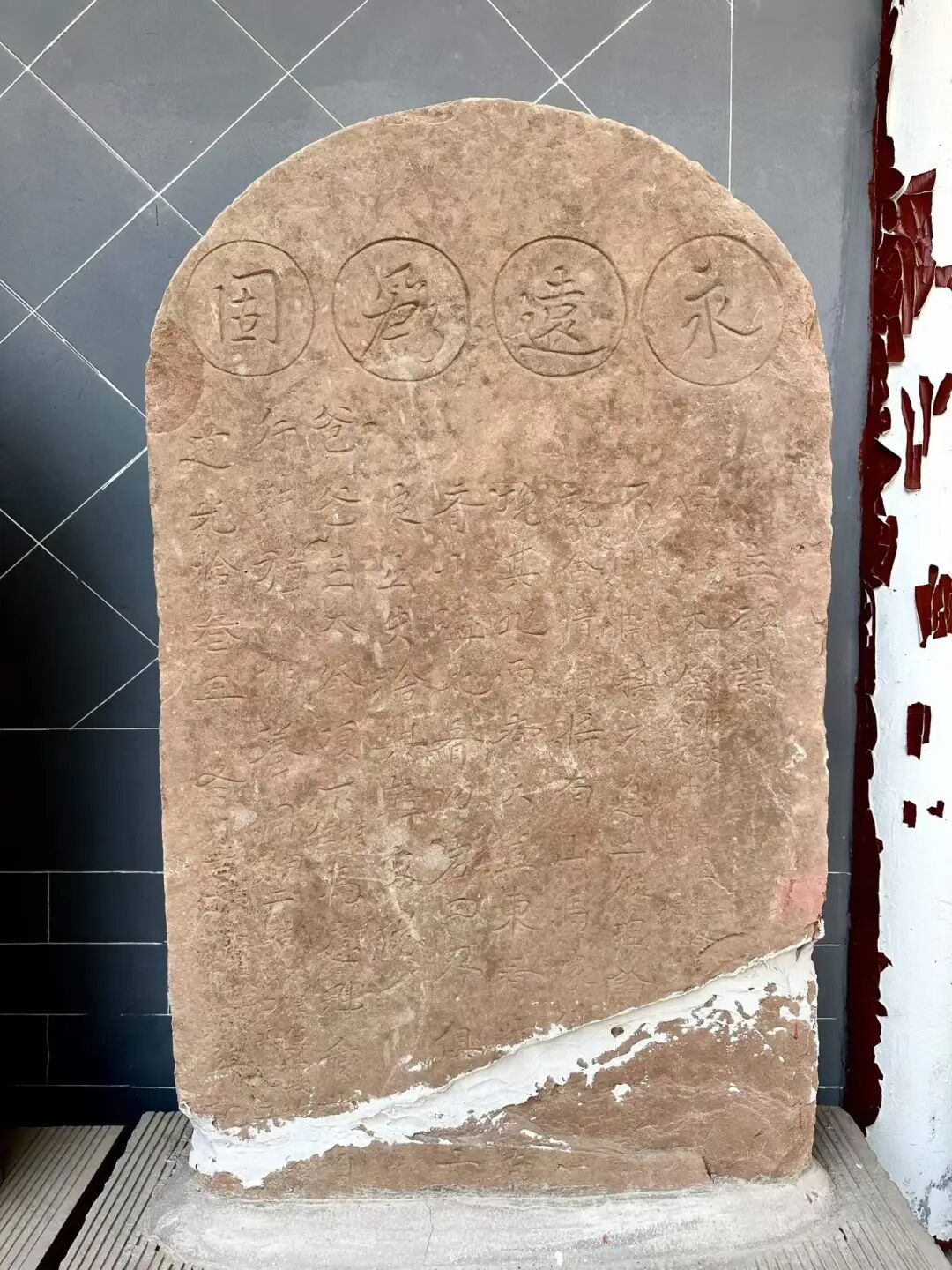
The "Forever Solid" (Yongyuan Weigu) stele from the 13th year of the Daoguang reign shows that the person in charge of the gongbei at that time was named Ma Yingkui.
After leaving the Nanshan gongbei, I went to the nearby Nanshan Mosque. This is a village of Hui Muslims deep in the Nanshan mountains of Guangyuan, and there has likely been very little written about it before.
Centered around the Hui Muslim village, Nanshan in Guangyuan is home to over 120 Hui Muslim households with the surnames Wang, Ma, Li, Tian, Zhou, Cha, and Zhao, with the Wang surname being the most common. Most of the Hui Muslims in Nanshan moved here from Xiaogan in Hubei and areas in Shaanxi and Gansu during the "Huguang Fills Sichuan" migration period of the Qing Dynasty, and they have been farming in the Nanshan mountains ever since. Due to wars, disasters, and economic reasons, the Nanshan Hui Muslims did not build a mosque for a long time. They had to hire an imam to conduct religious services in private homes, and at one point, they even had to travel to the Hejie Mosque in downtown Guangyuan, which was very inconvenient. In 2002, led by Wang Zhanrong, with the support of Imam Ma Wanquan from the Hejie Mosque in Guangyuan and the advocacy of Haji Ma Jianzhong, they raised funds and finally built the Nanshan Mosque in 2003.
The six main doors of the Nanshan Mosque are the original doors from the Qianlong era of the Hejie Mosque in Guangyuan, which are very precious. They feature very exquisite wood carvings.
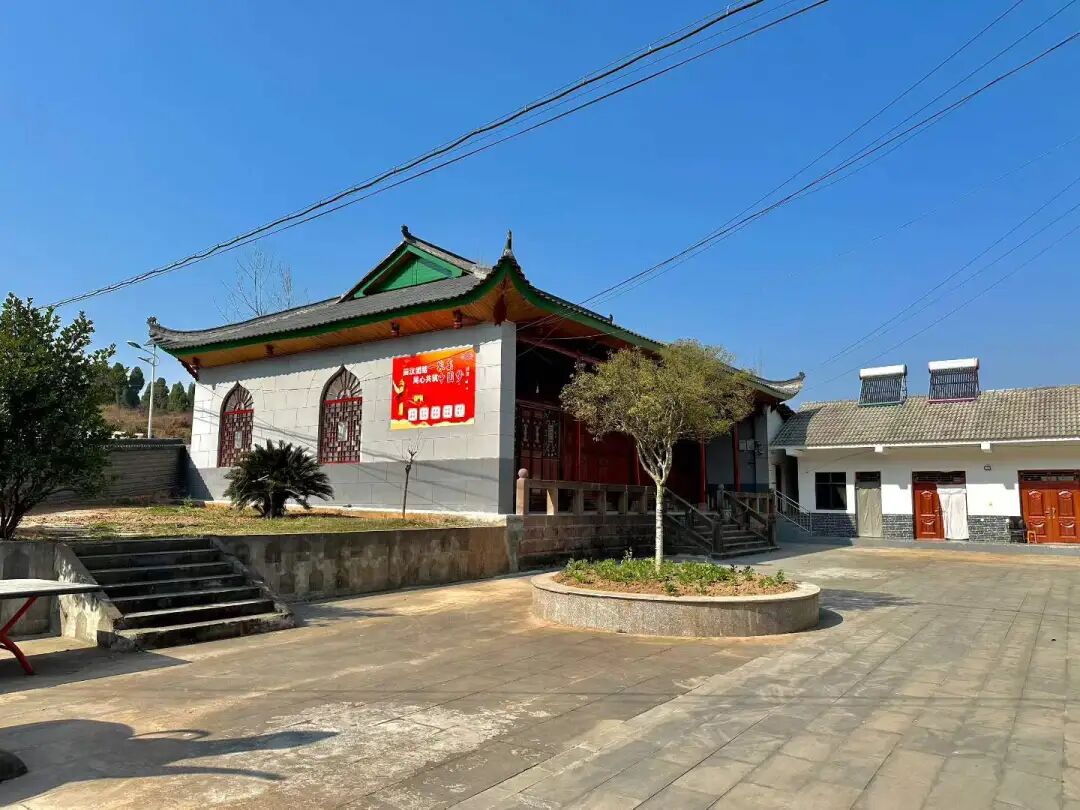
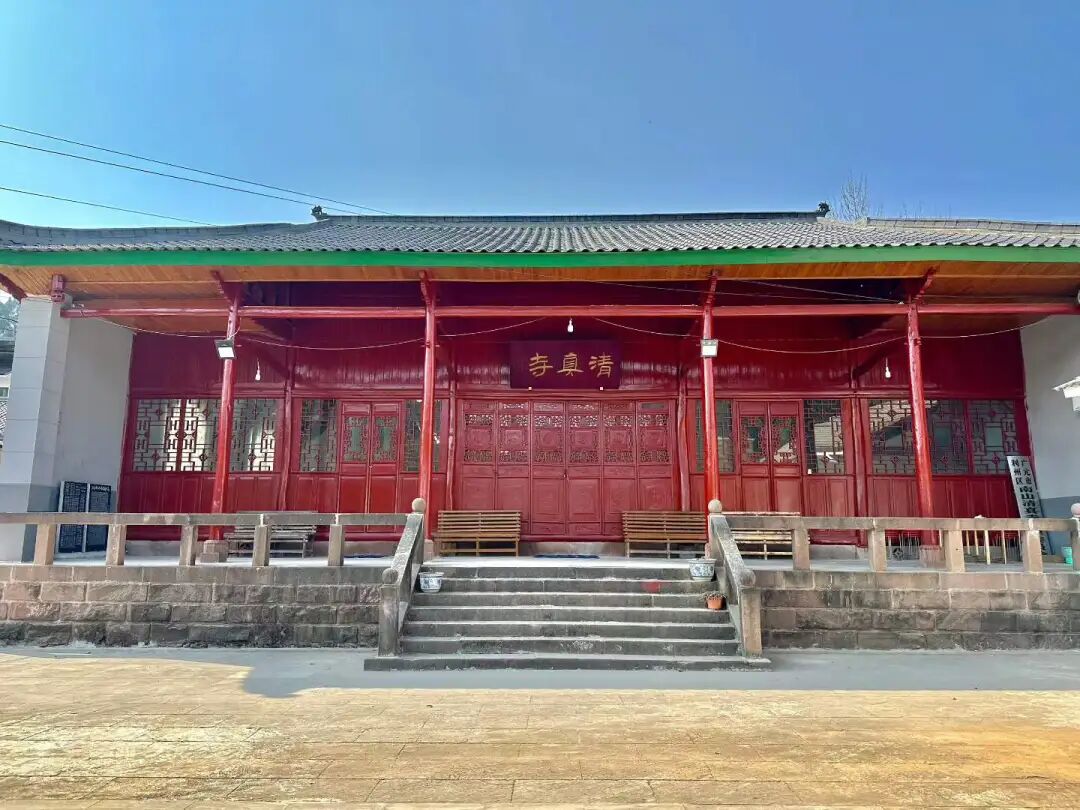
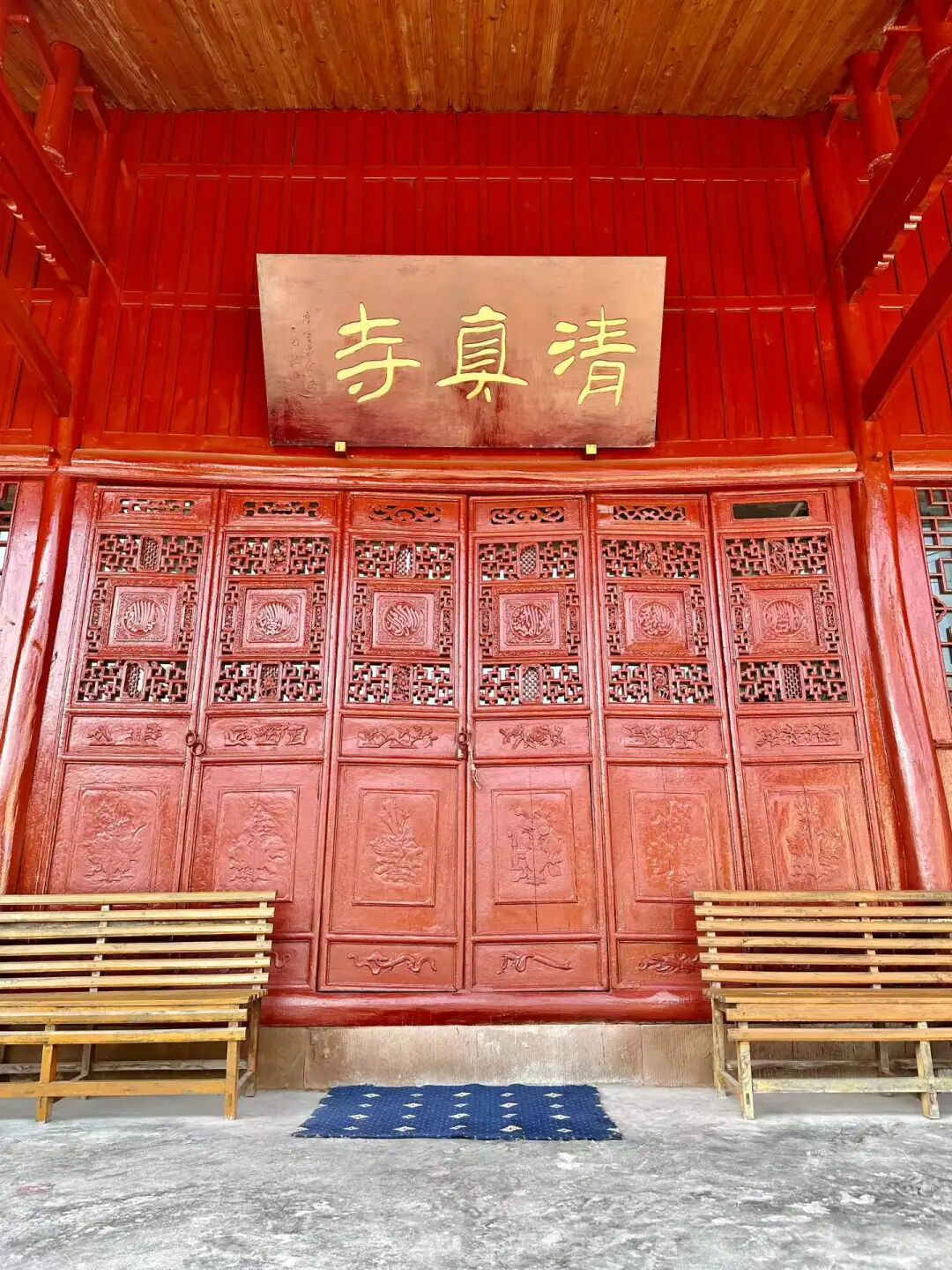
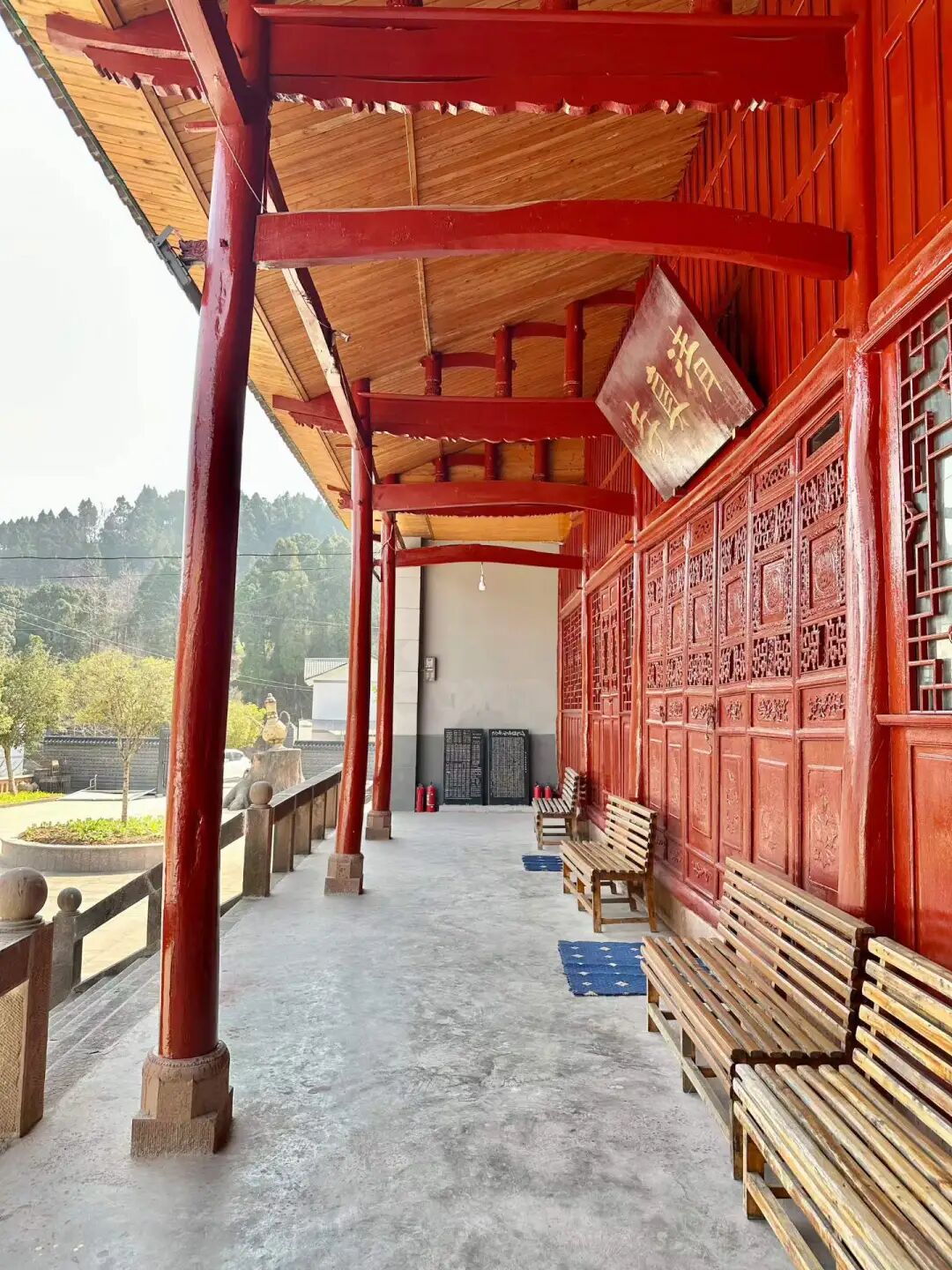
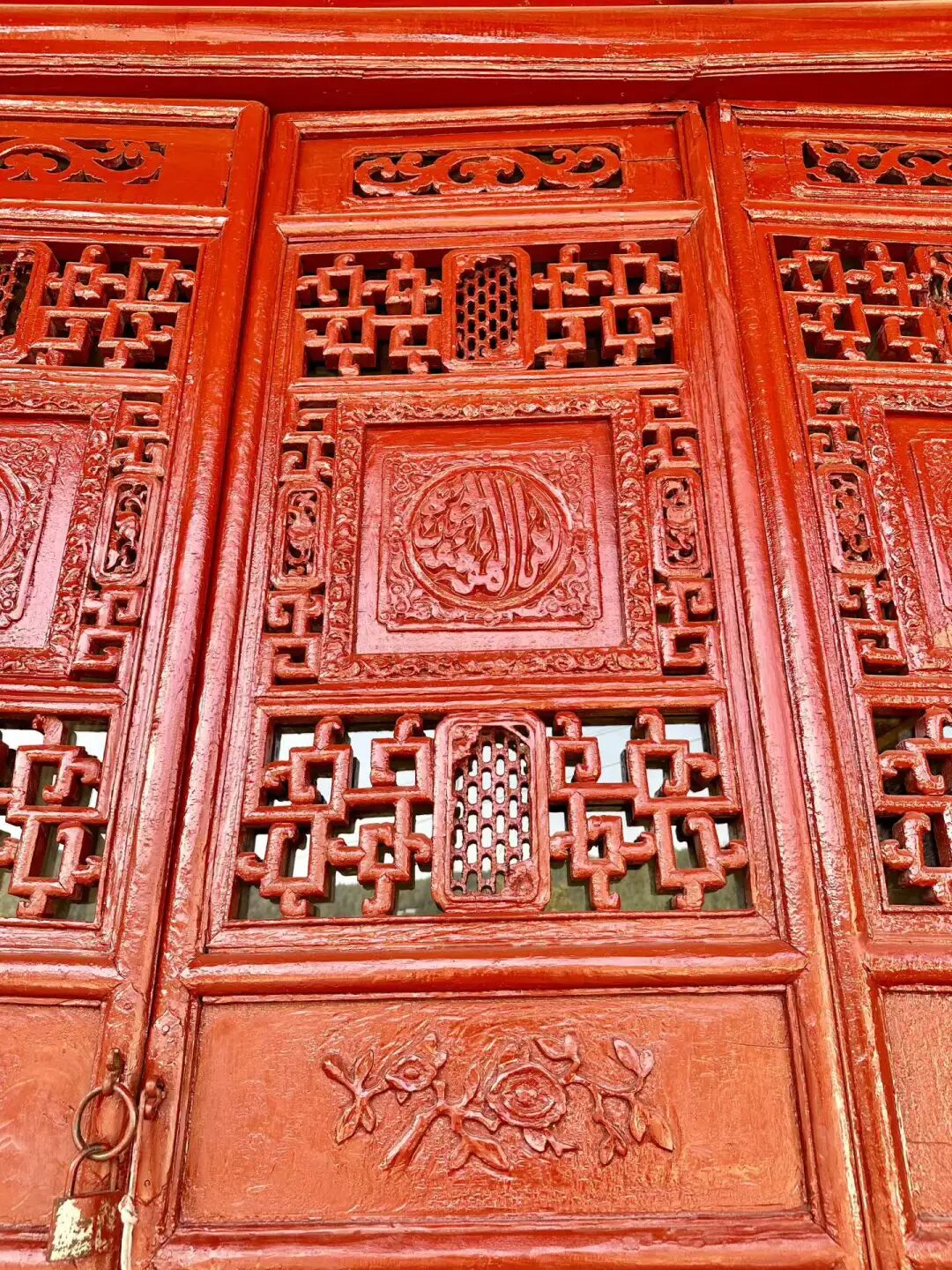
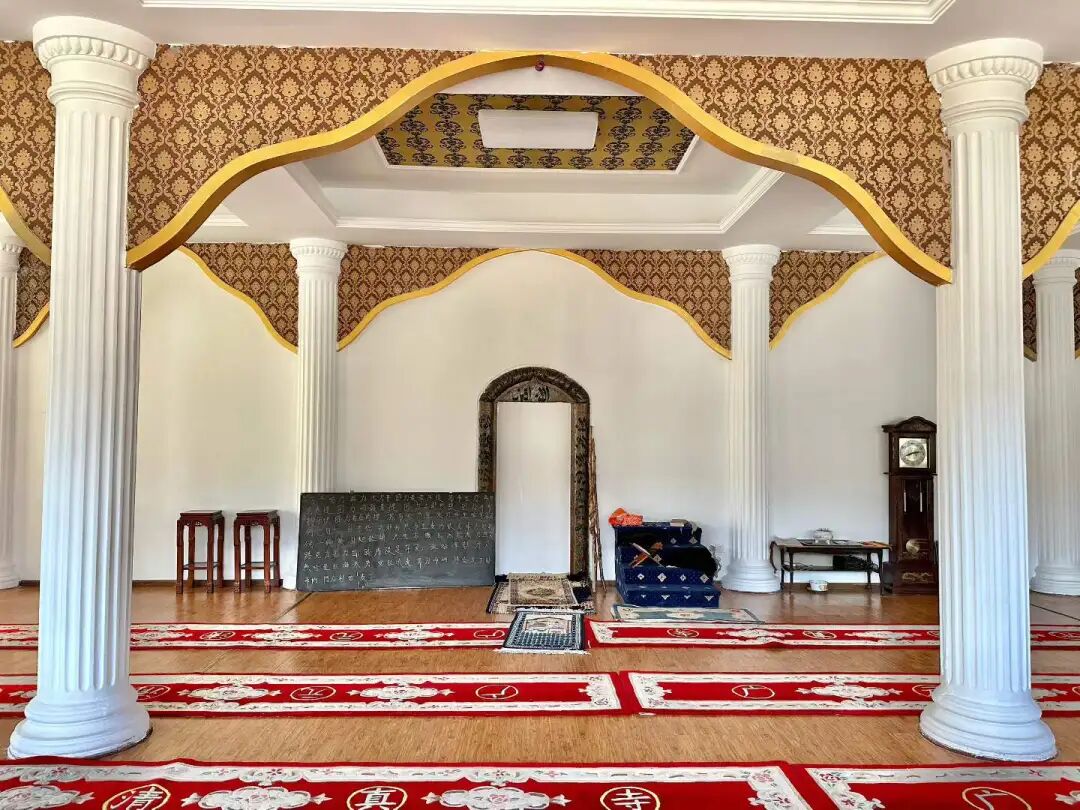
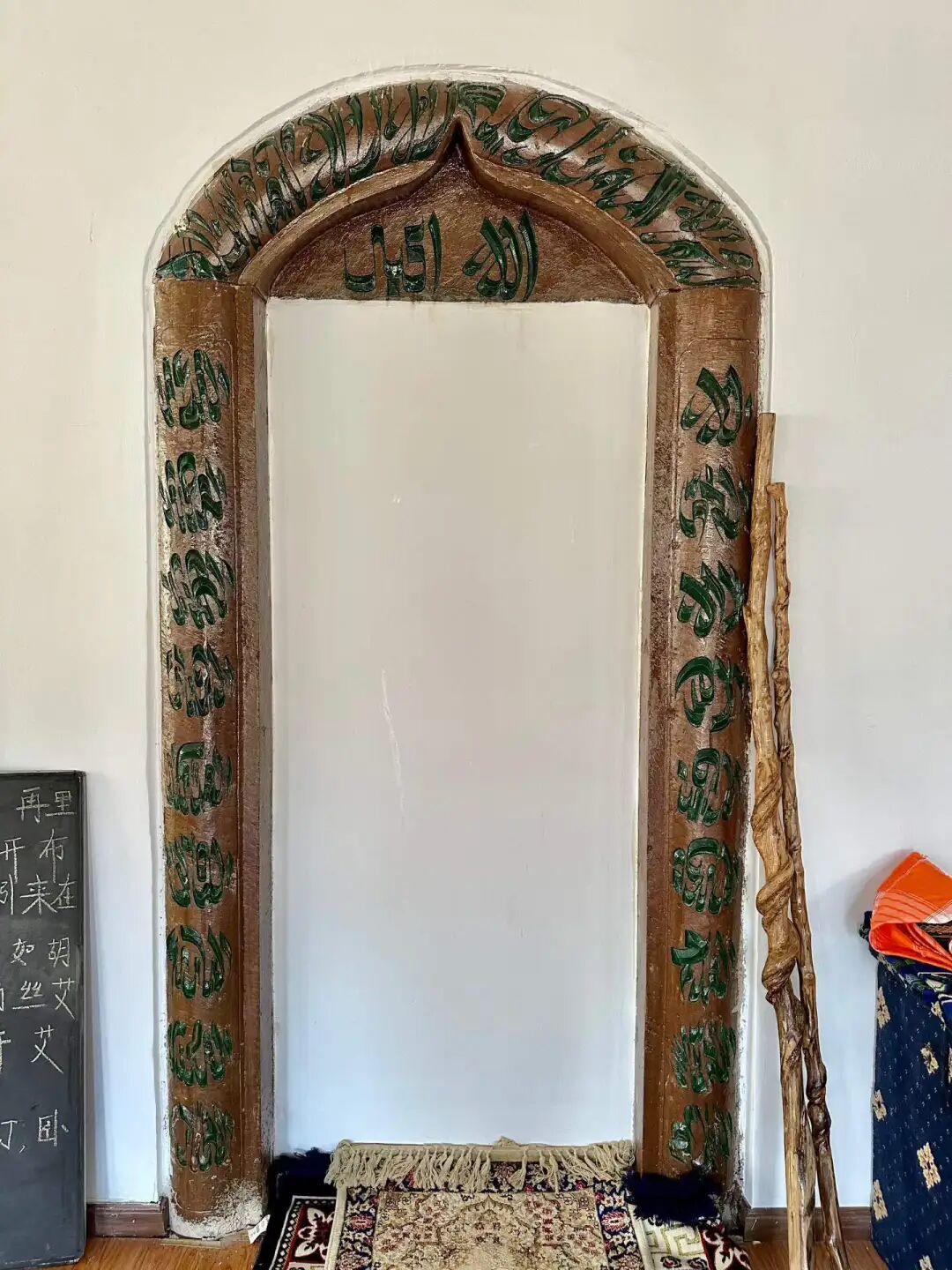
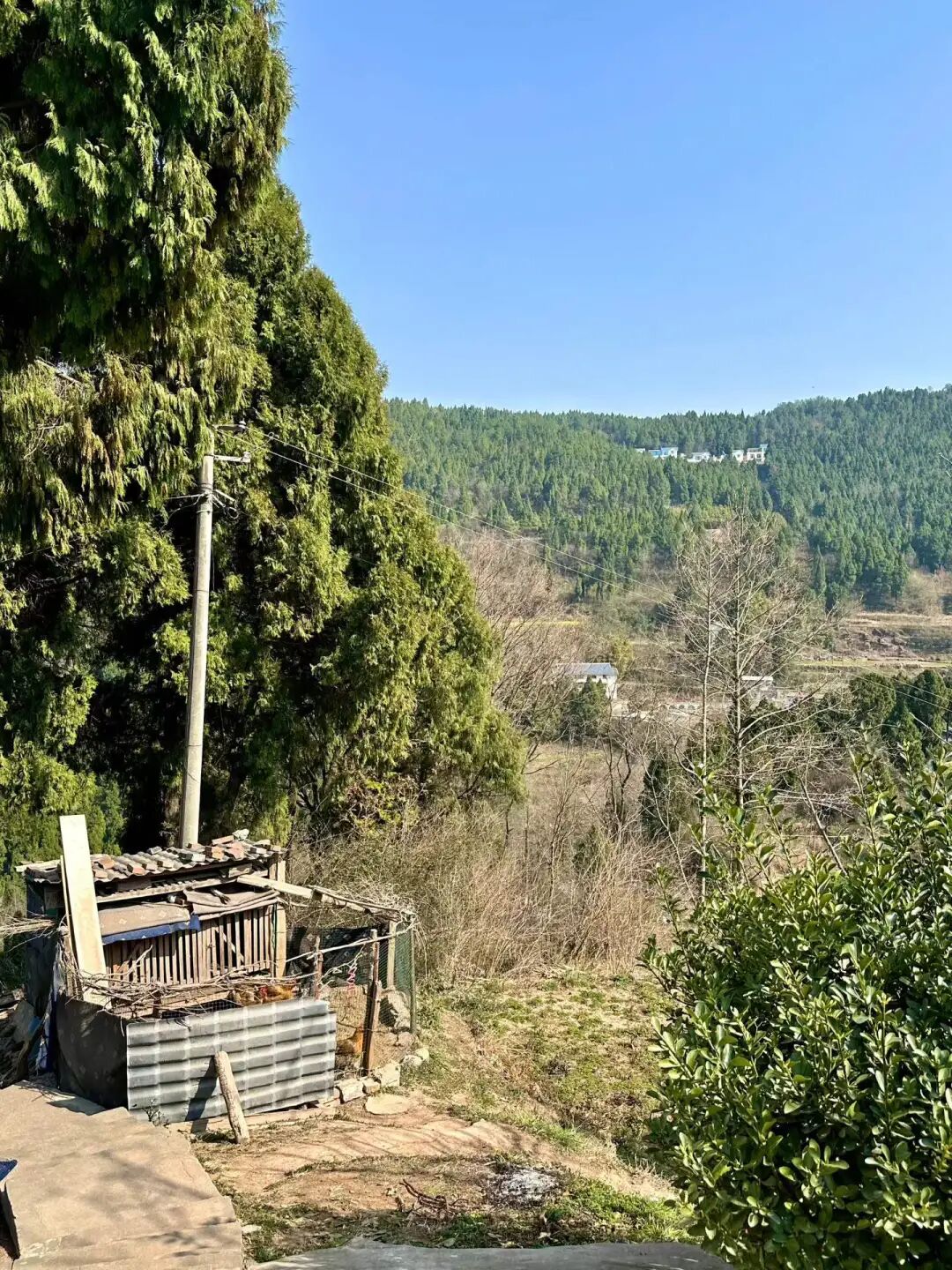
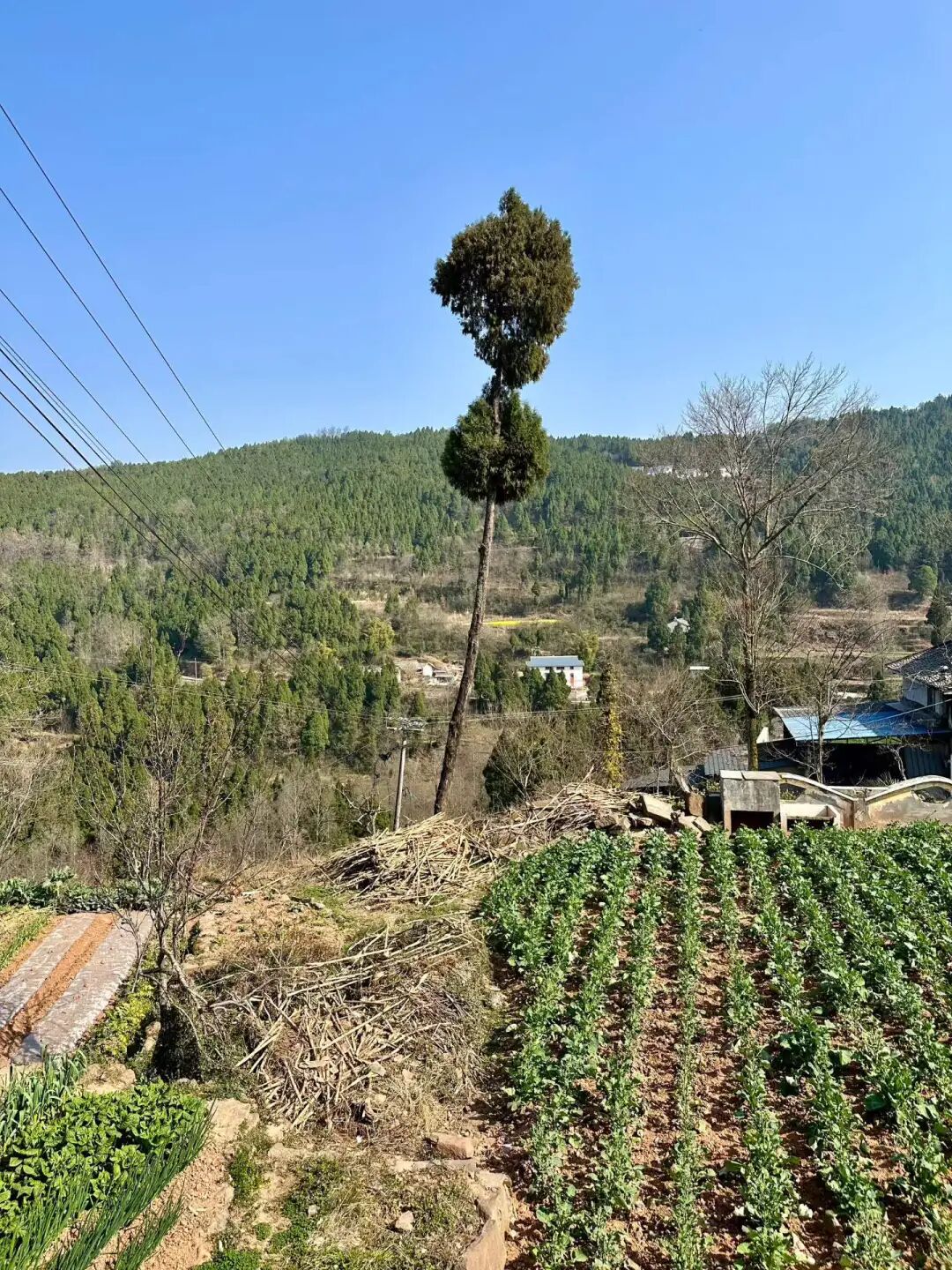
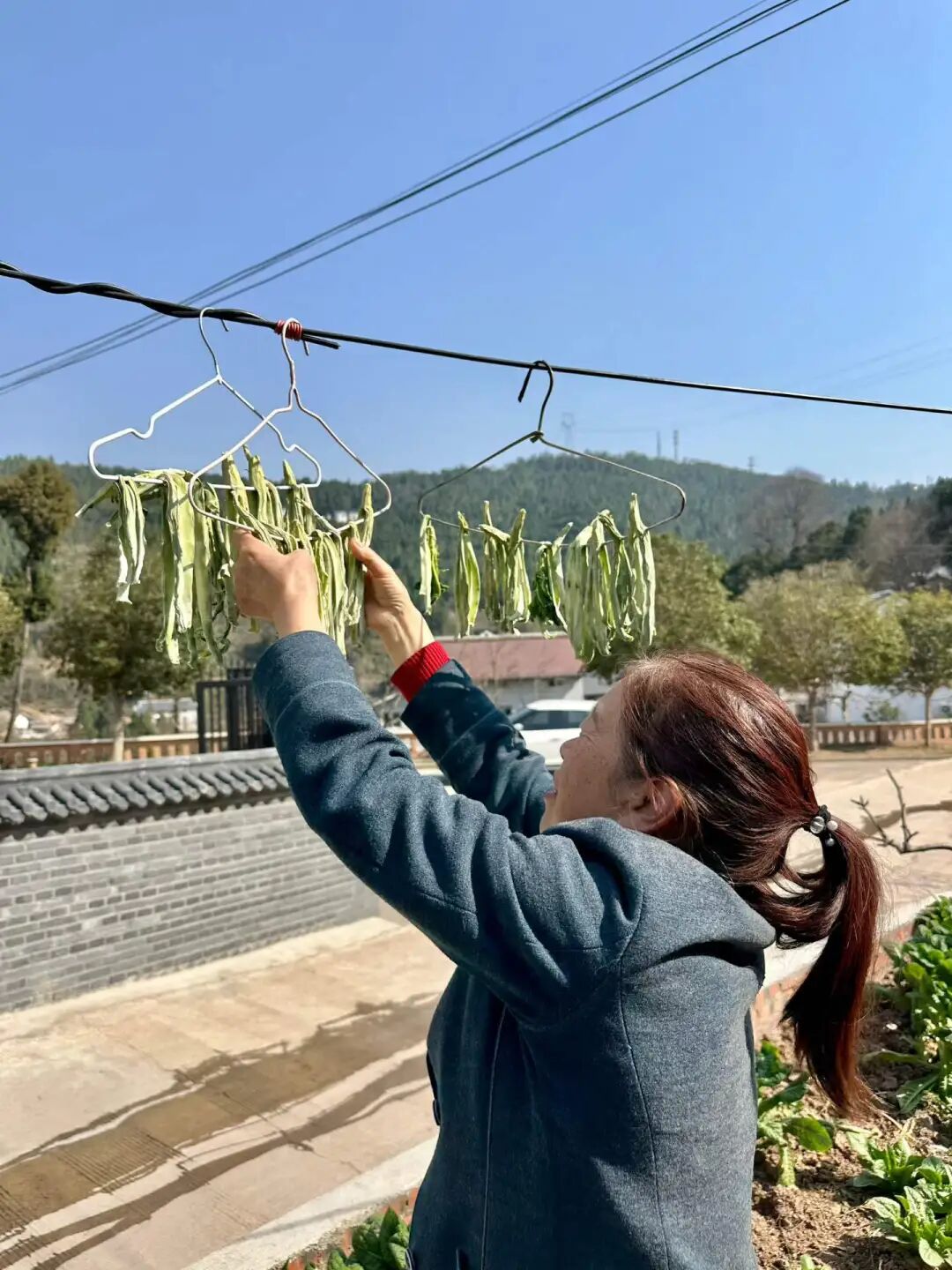
There is a relaxed, slow life in the Nanshan Hui Muslim village. Next to the mosque are clean and tidy houses. The aunties sit around chatting and drying radishes, lettuce, and rapeseed that they couldn't finish eating. One auntie said that dried rapeseed is especially delicious when stir-fried with beef. Sitting here away from the hustle and bustle, it feels like time has slowed down.
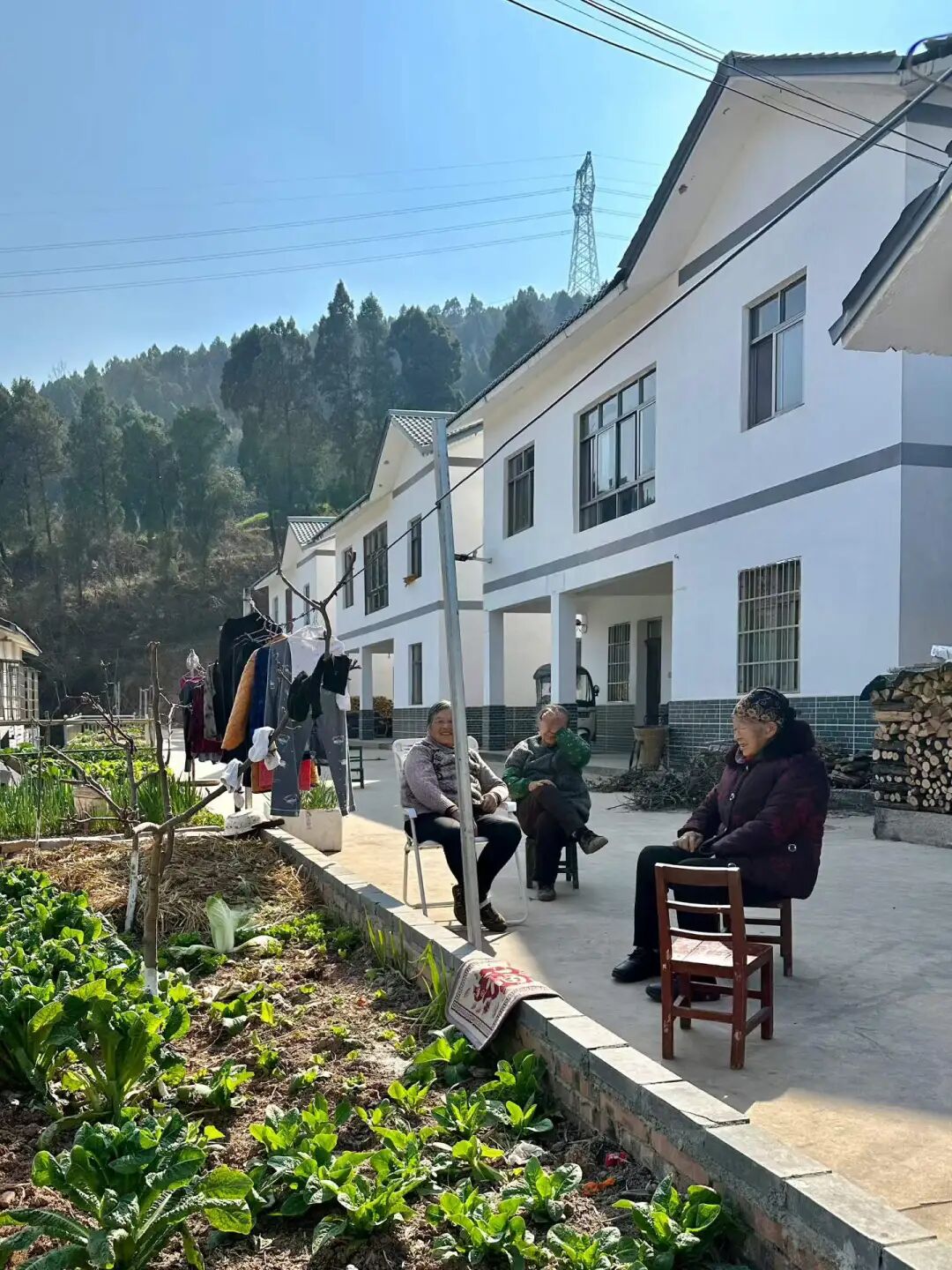
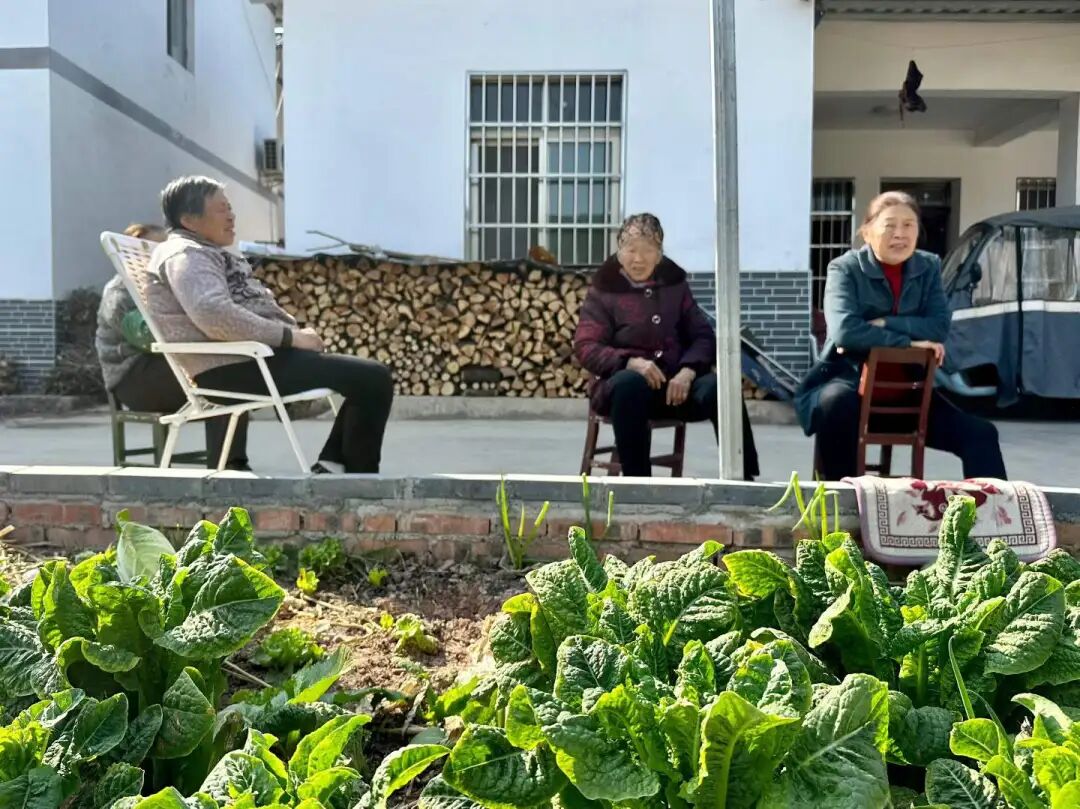
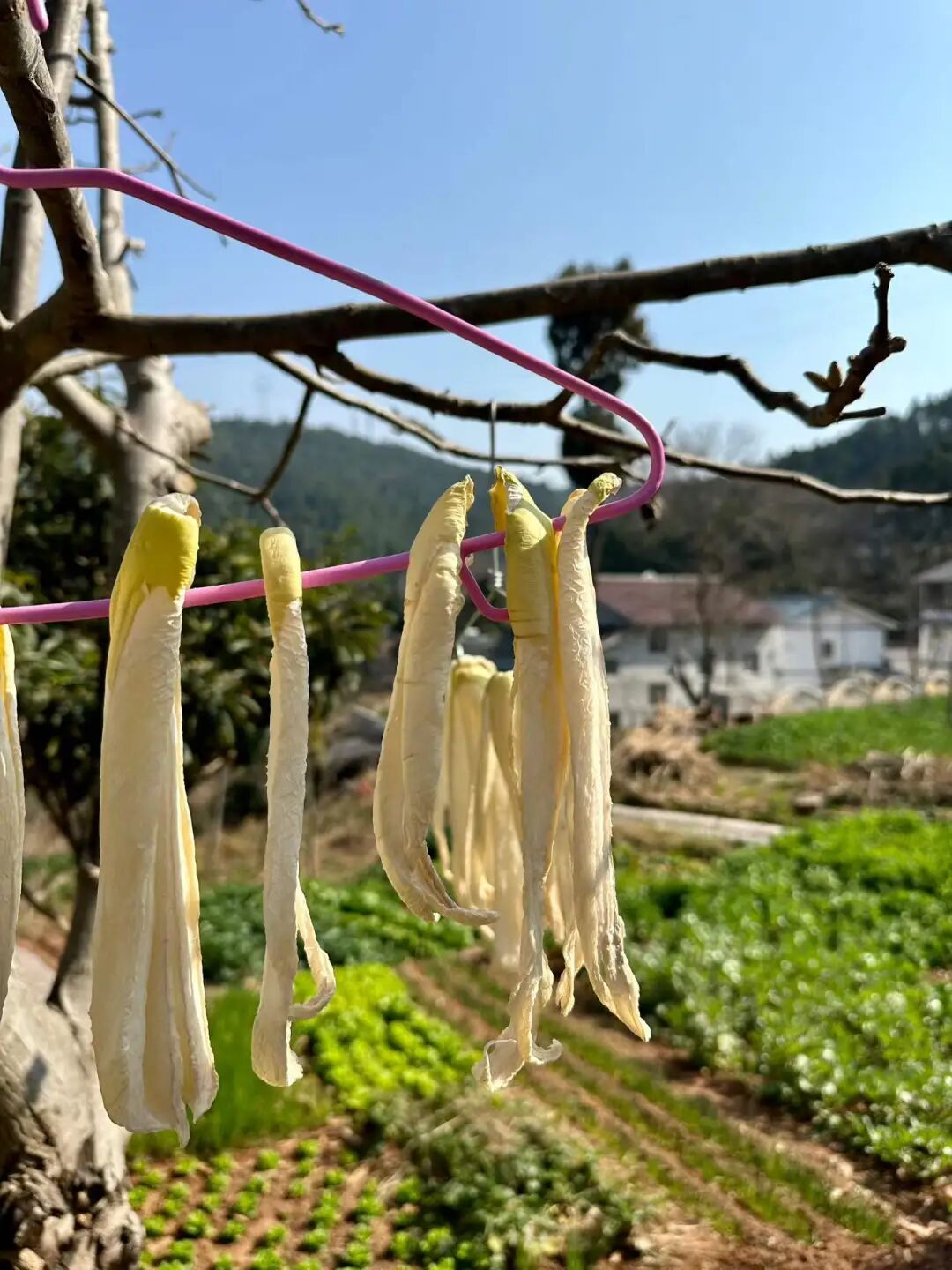
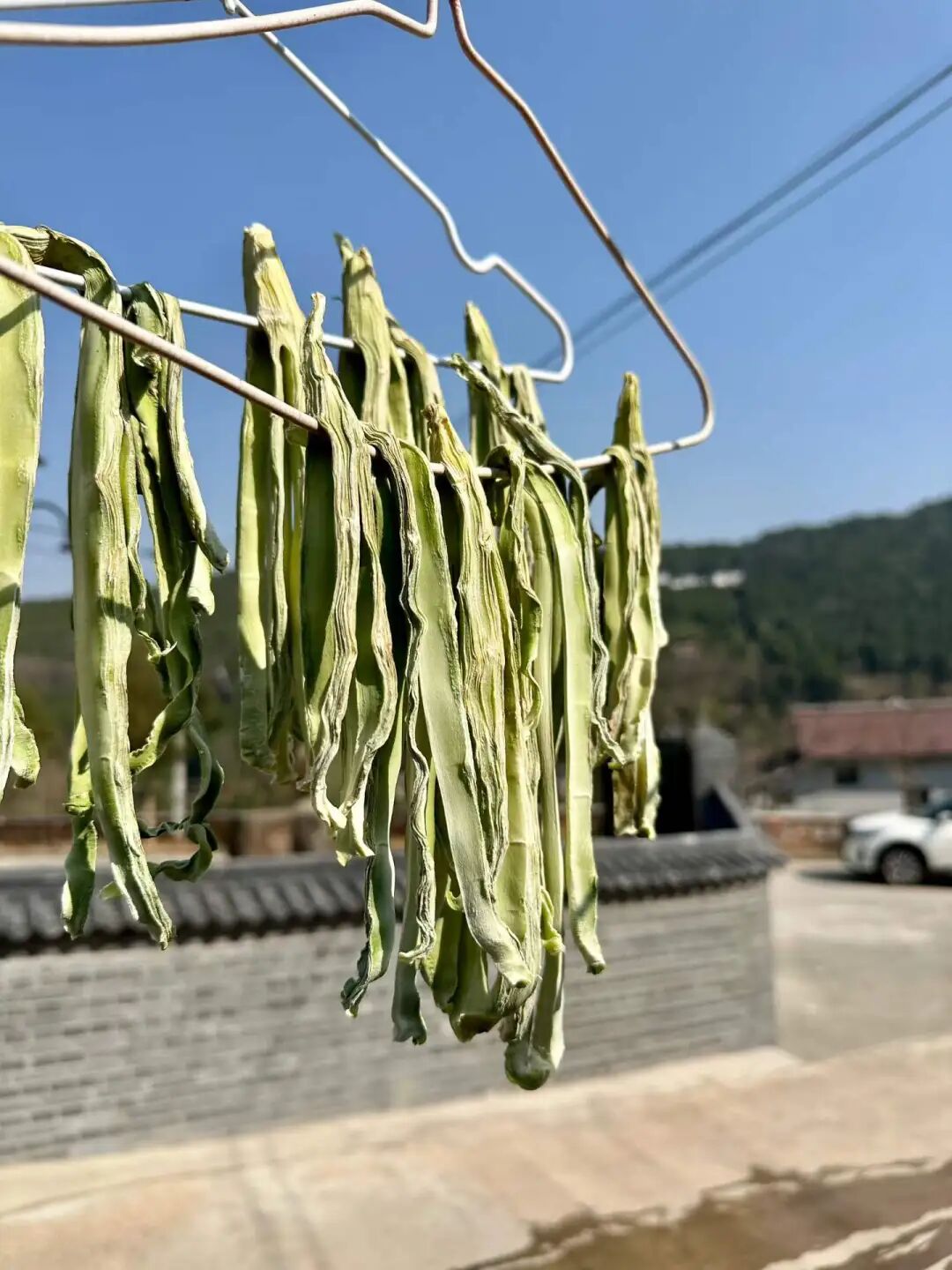
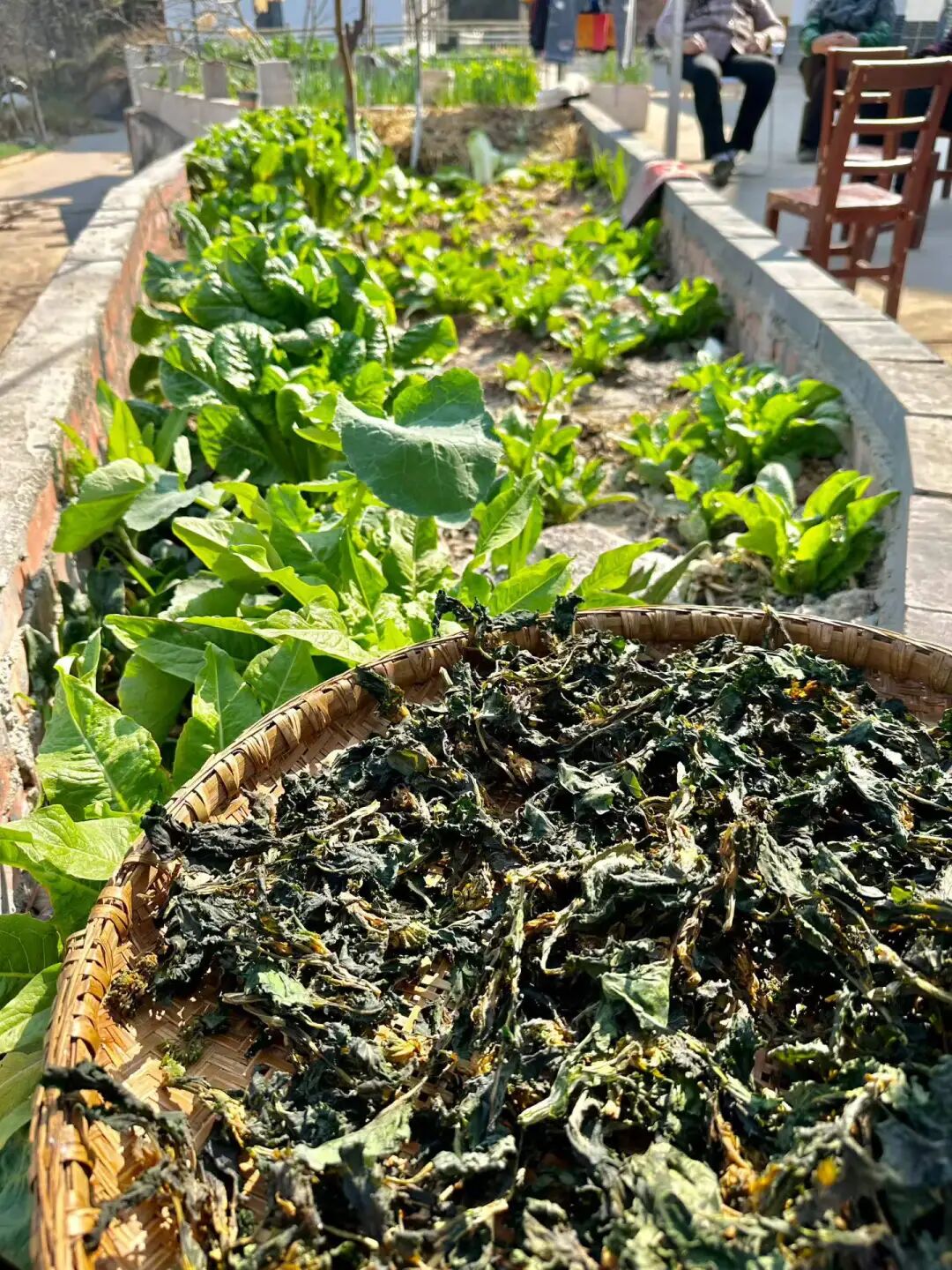
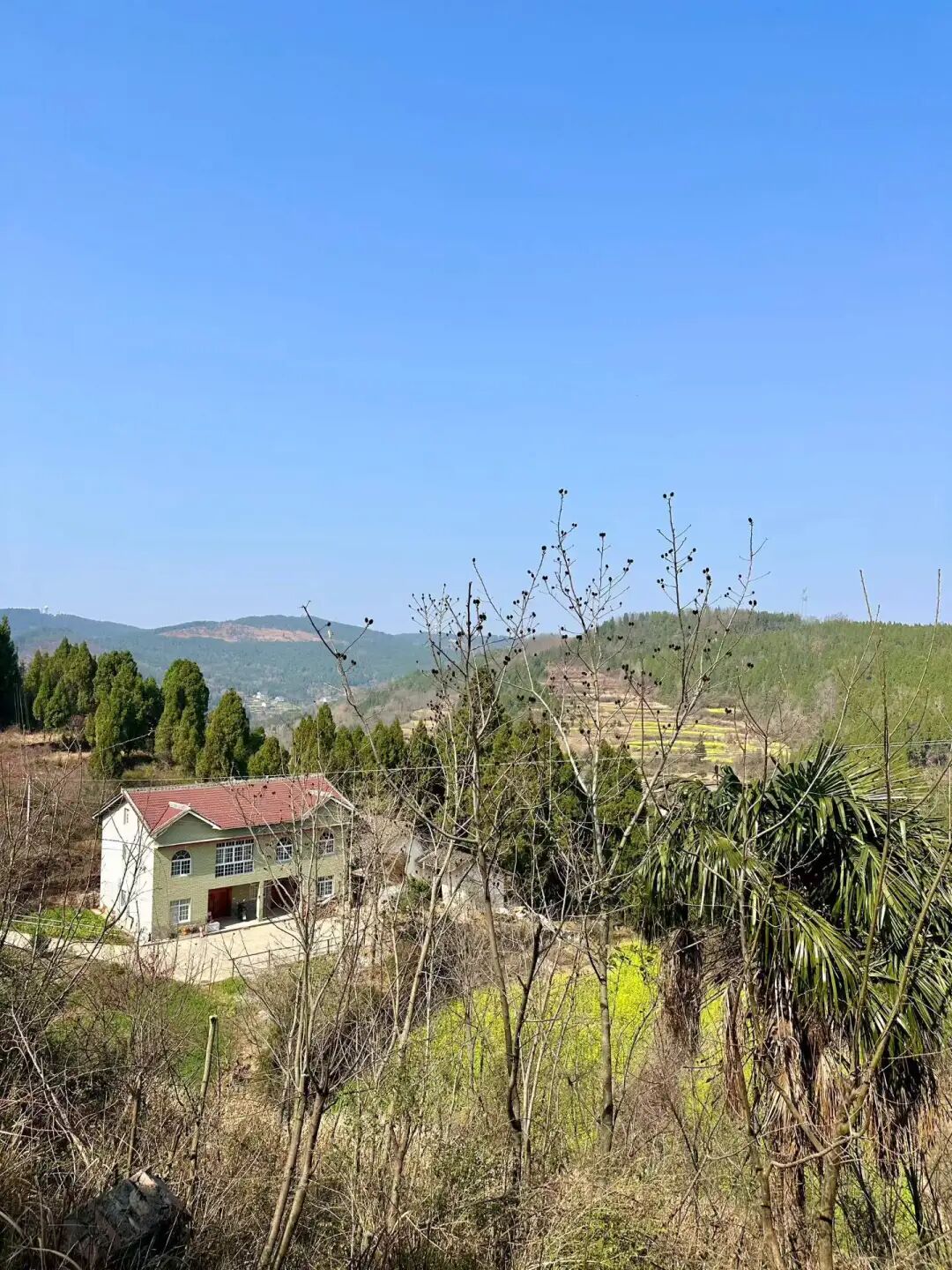
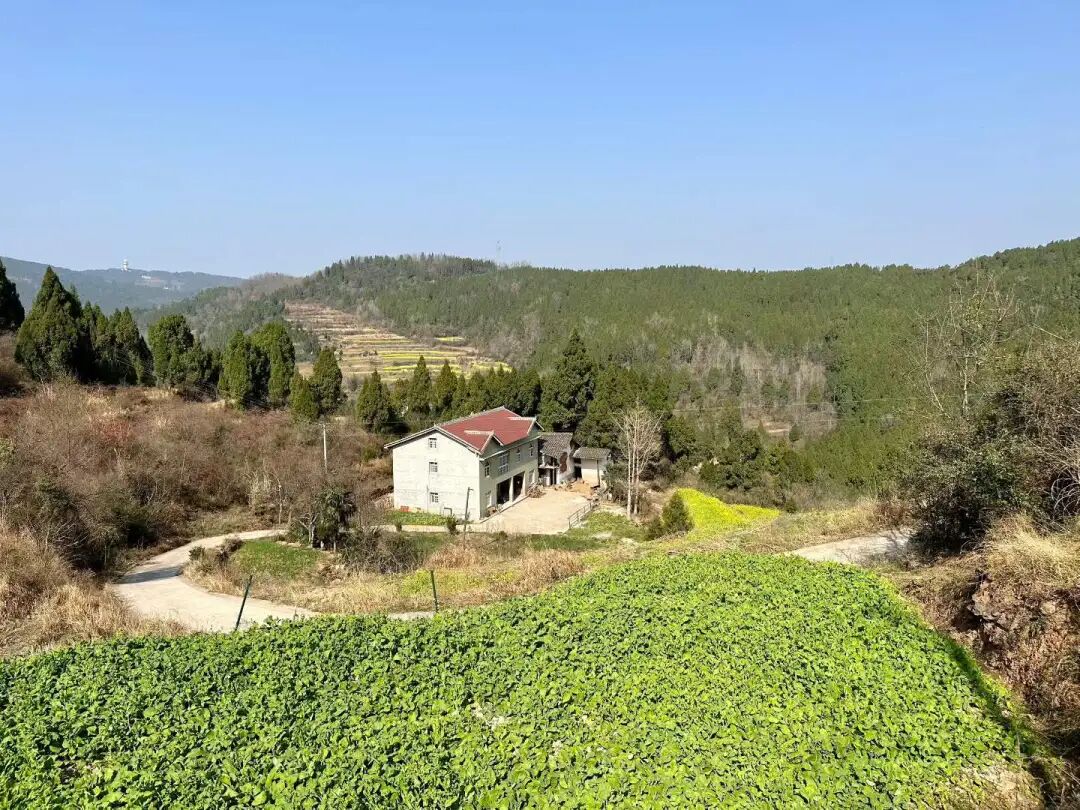
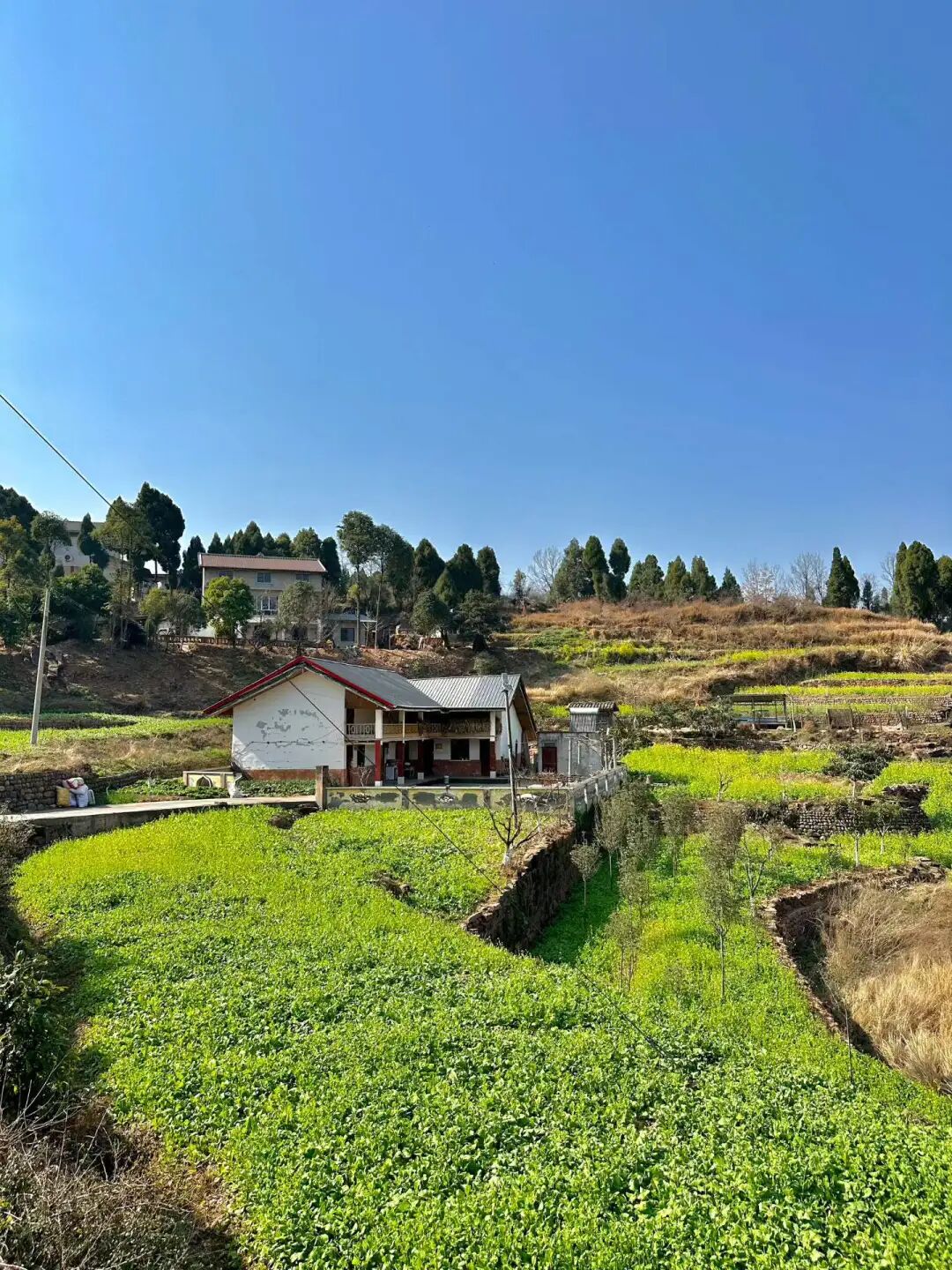
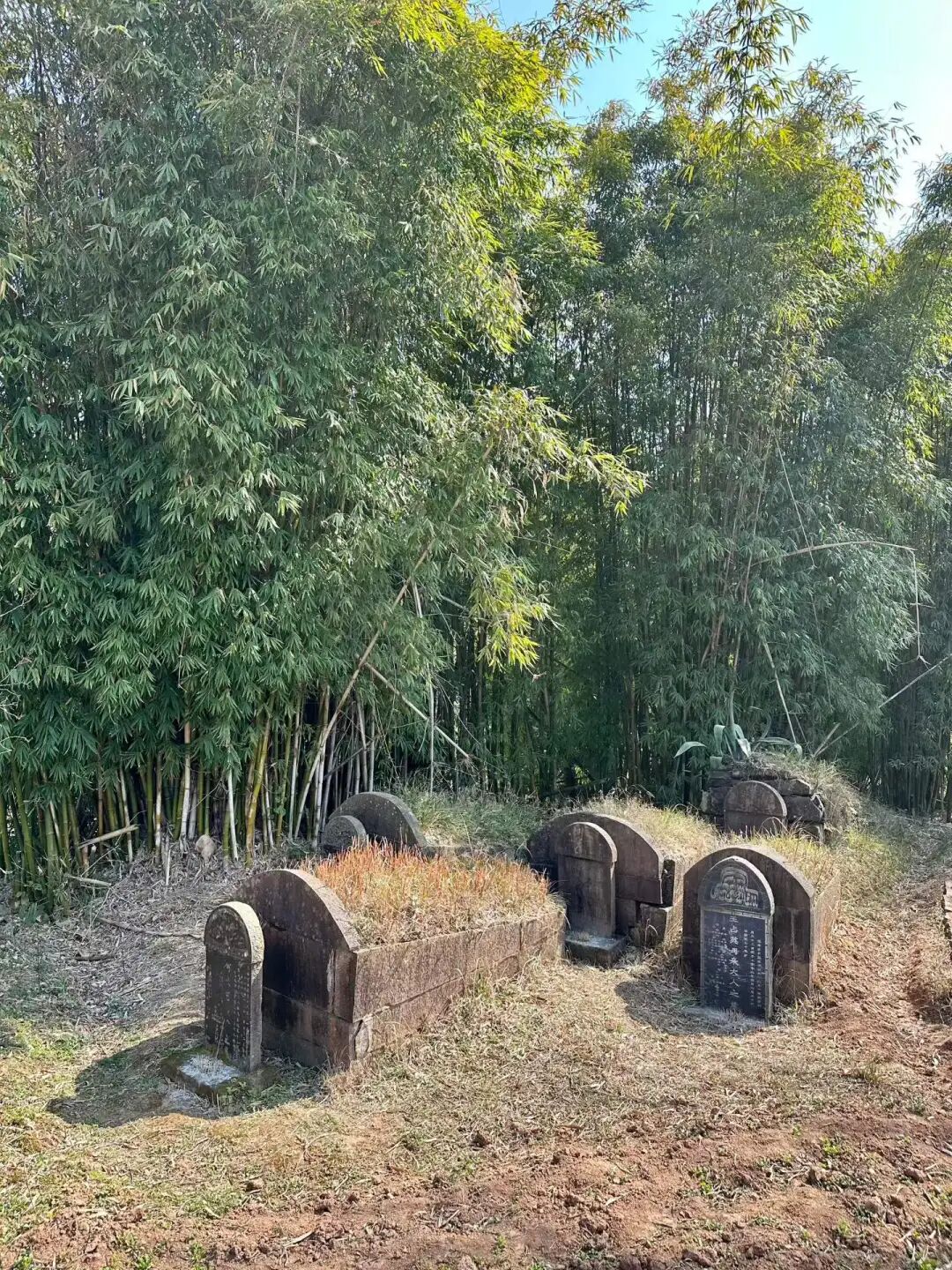
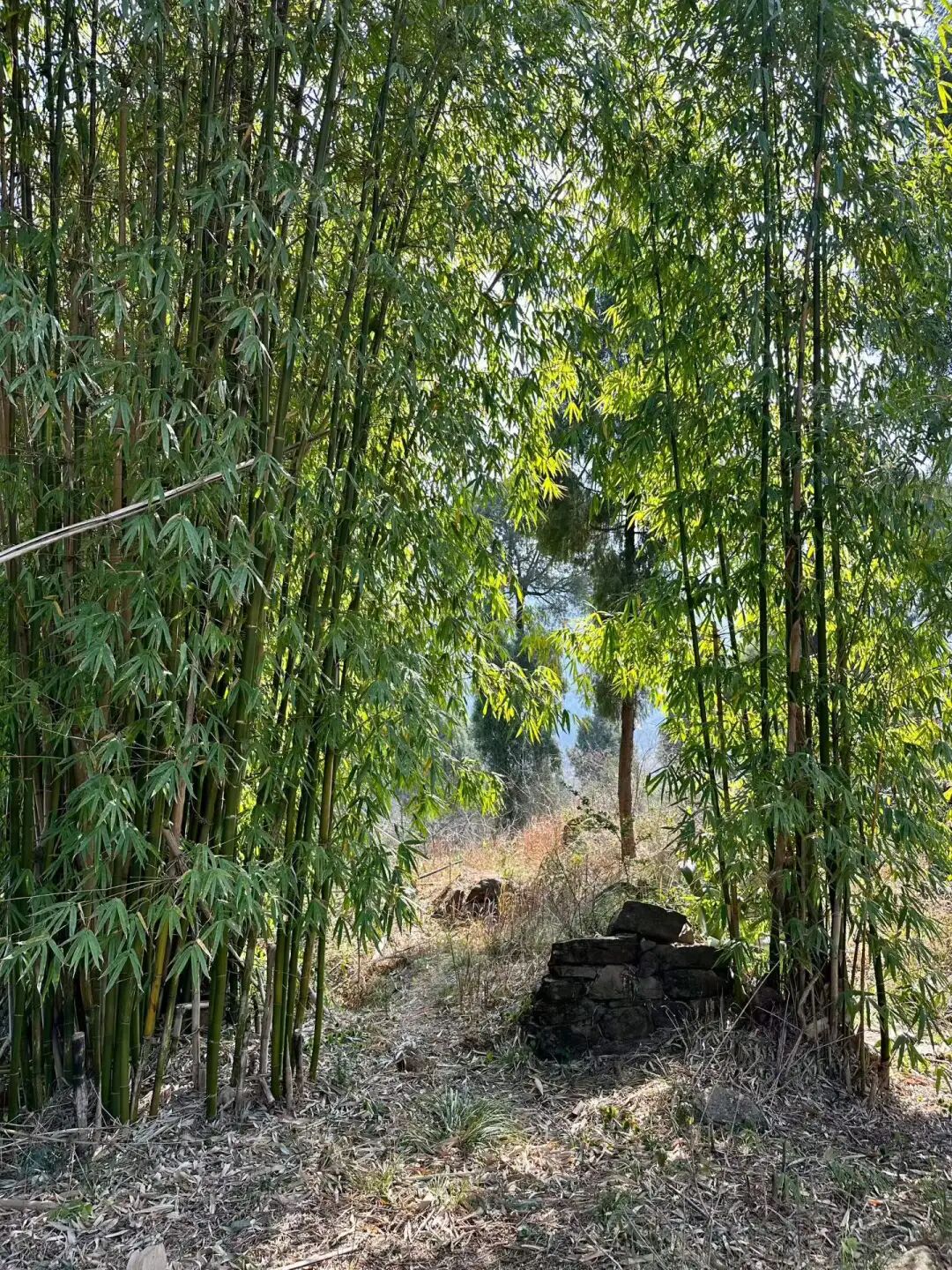
The Hui Muslim cemetery in Nanshan has excellent scenery nearby and is very refreshing. There are bees kept near the houses, and the beehives are right by the road. I didn't feel scared even when standing close, and the honey from here must taste very good.
Hidden Mosques in Mianyang Yanting: Sichuan Hui Muslim Villages and Old Mosque History
Articles • ali2007fr posted the article • 0 comments • 179 views • 2026-05-21 06:45
Summary: This Yanting County travelogue explores old mosques, Hui Muslim villages, family histories, and mountain roads around Mianyang during a Spring Festival drive through Sichuan.
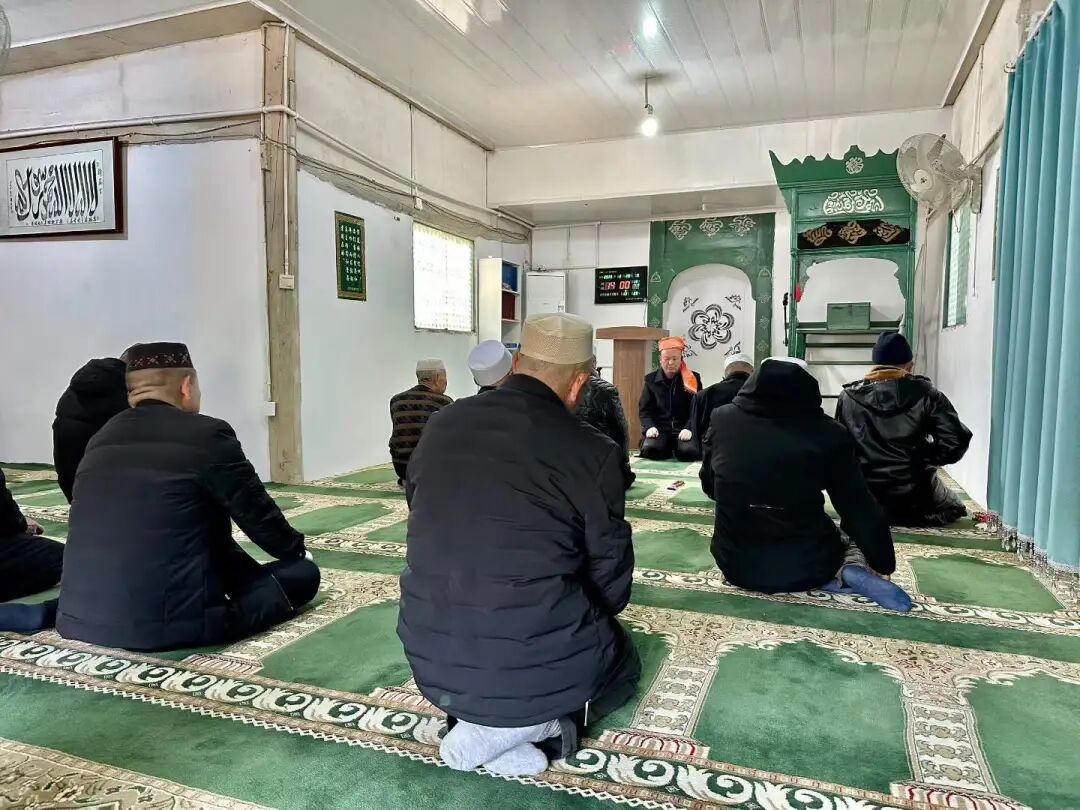
On February 20, I drove for one hour and 20 minutes from Nanchong at noon to reach Dajiaping Mosque in Yanting County, Mianyang City, for Jumu'ah prayer. The mosque was very crowded, and everyone there was a local Hui Muslim.
Yanting is the county with the most Hui Muslims in Mianyang, with ten major surnames: Jiang, Jin, Mu, Da, Ma, Yang, Wu, Ha, Ran, and Sa. The ancestor of the Da surname was a man from the Western Regions during the Yuan Dynasty named Wubalesha. Research shows he belonged to the Kipchak Yuliboli tribe and served as a Darughachi in Zhenjiang Road before passing away in Zhenjiang. His sixth-generation descendant, Da Shanyu, moved from Zhenjiang to Liuhe, Nanjing, in the early Ming Dynasty to serve as a county assistant. He settled in Liuhe, making this the oldest Western Regions Hui Muslim family in Liuhe, Nanjing. In 1644 (the first year of the Shunzhi reign), Da Chengzong was ordered to move from Liuhe to Sichuan. He settled at the foot of Jianzi Mountain in Fenghe, Yanting, which established the Da surname Hui Muslim community in Yanting.
Dajiaping Mosque was originally located on a small hill behind the current kiln hall and was quite small. It was later moved to its current location below the hill. In 1812 (the 17th year of the Jiaqing reign), it was rebuilt into the current courtyard style with donations from Sichuan Baoning Prefecture military officials Da Tengchao, Da Tengrui, Da Tianheng, and Da Guankui. It was renovated in 1908 (the 34th year of the Guangxu reign), and the main gate and side schools were expanded in 1928.
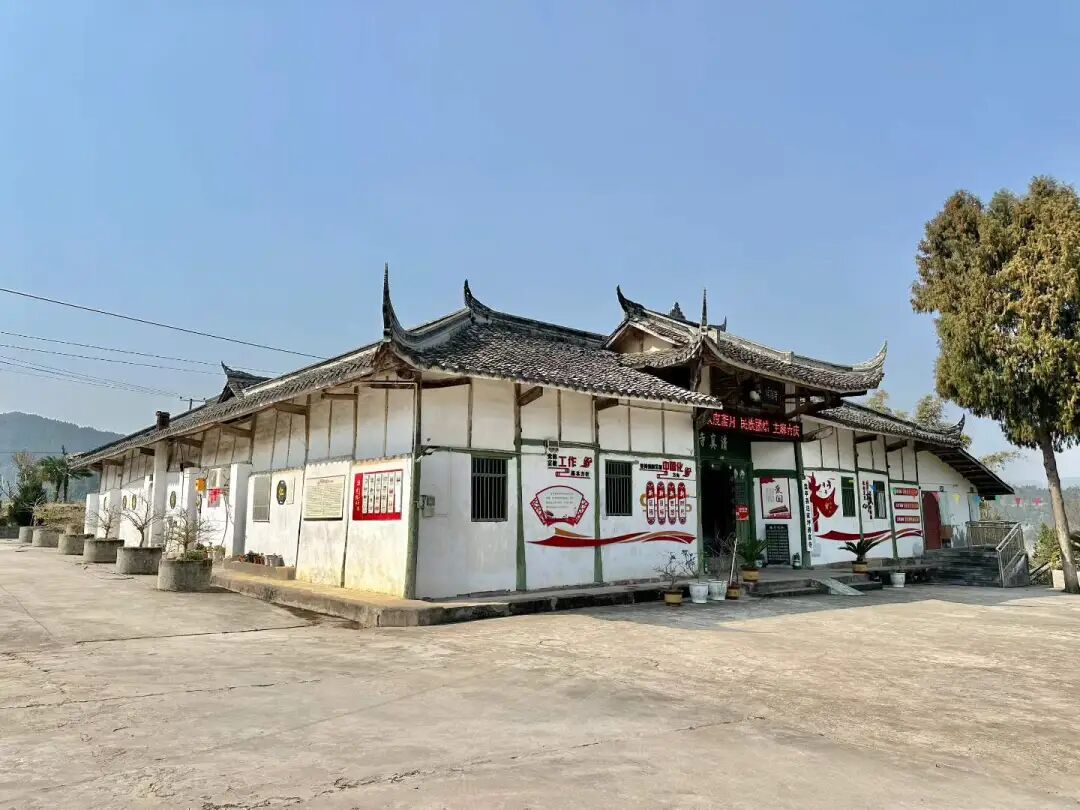
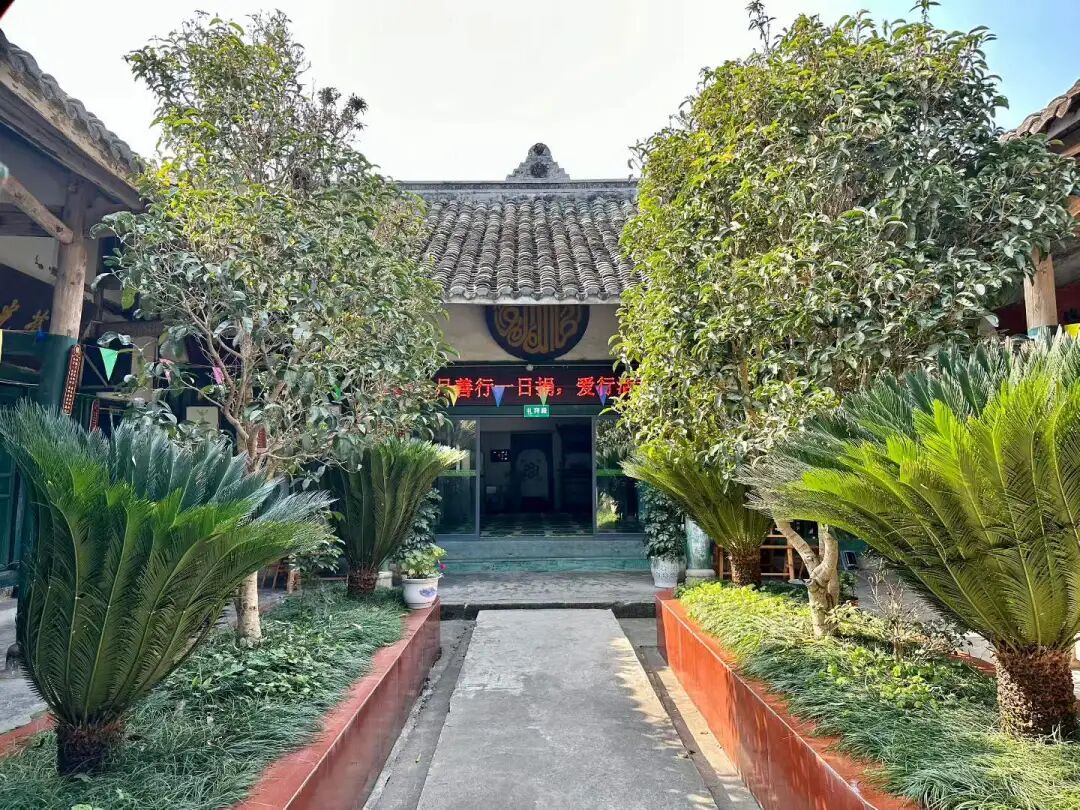
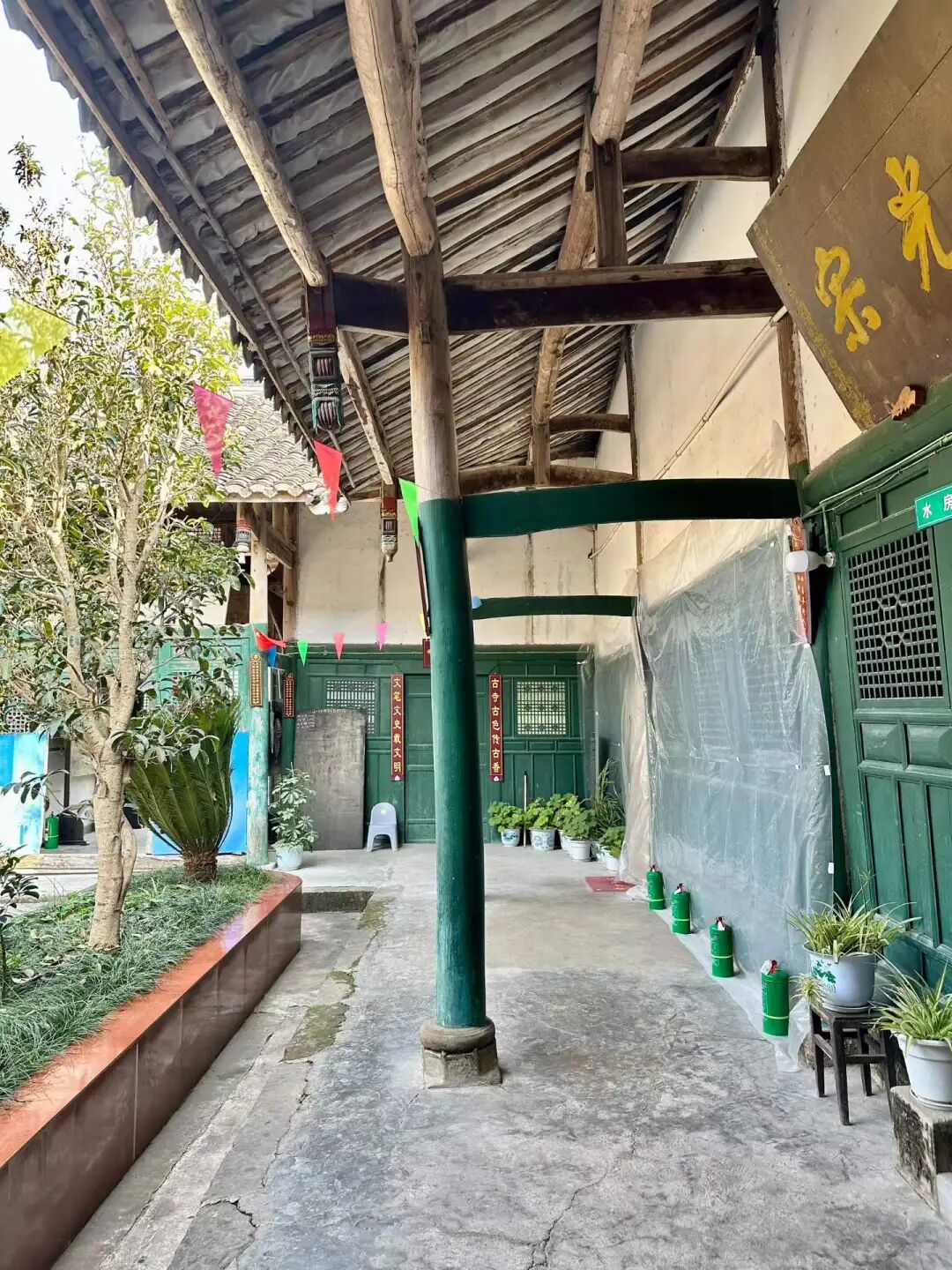
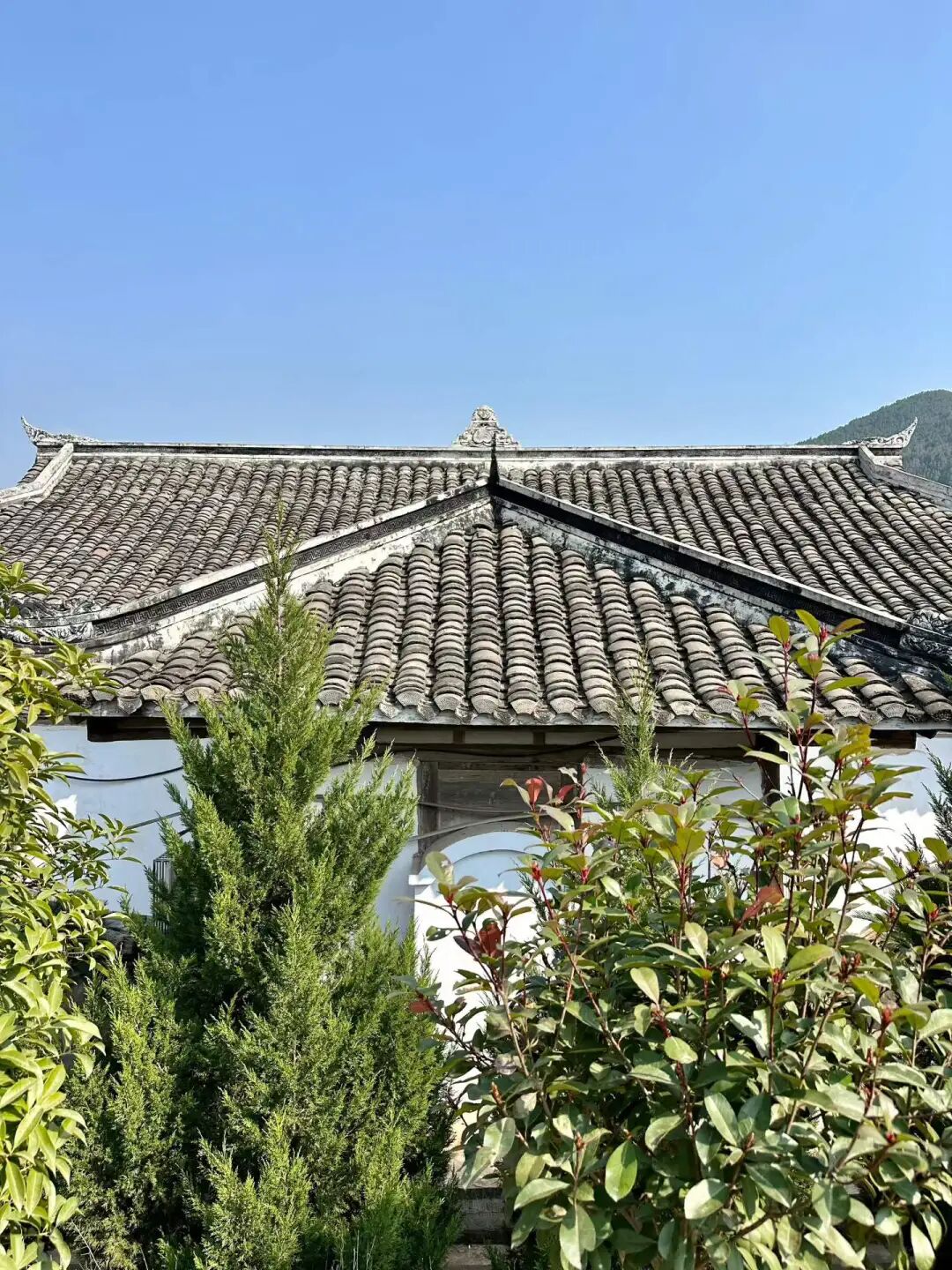
Dajiaping Mosque features the traditional Sichuan courtyard structure known as "four waters flowing into the hall" (si shui dao tang), with elegant, unique bracket sets and flying eaves. There is a path platform in the courtyard's central patio and gardens on both sides.
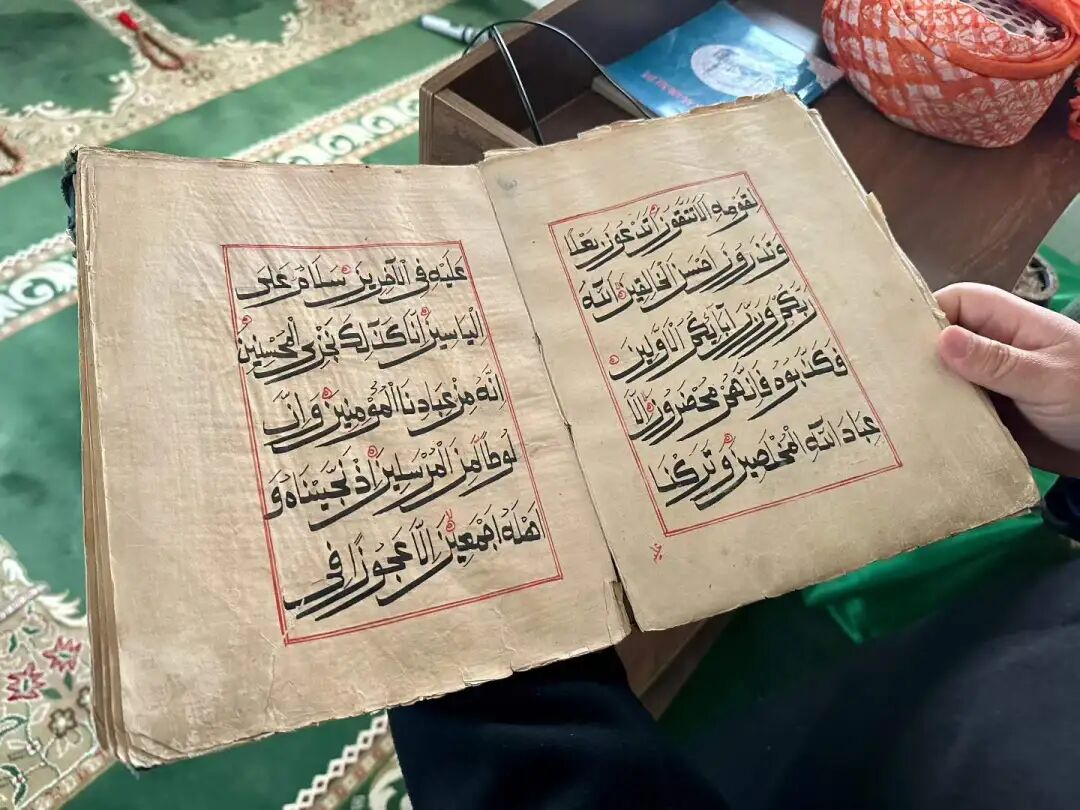
Dajiaping Mosque houses 30 volumes of scriptures hand-copied by Jin Wanx in the ninth year of the Guangxu reign.
The mosque also preserves three plaques from the Qing Dynasty and two from the Republic of China era:
The "Jiao Long Zhen Yi" plaque from the fourth year of the Daoguang reign: Respectfully erected by Da Tianheng, a specially appointed military official of the Jianzhou garrison in Guangyuan, Sichuan, who was promoted to the rank of thousand-man commander (qian zong) and received honors five times.
Da Tianheng passed the military examination in 1801 (the sixth year of the Jiaqing reign) and was immediately appointed as a thousand-man commander (qian zong) in the Chuanbei Town garrison. He was promoted several times, eventually reaching the rank of regional commander (zong bing) of Chuanbei Town, stationed in Baoning Prefecture, Sichuan. Locals respectfully called him "Commander-in-Chief" (zong zhen du du). In 1854 (the fourth year of the Xianfeng reign), the imperial court ordered him to lead troops to suppress the Taiping Rebellion. Because he did not act immediately, he was falsely accused of "colluding with the enemy and rebelling." The Xianfeng Emperor recalled him to Beijing and had him beheaded in public.
The "Yu Yin Guang Zong" plaque from the ninth year of the Tongzhi reign: Erected by his descendants Da Yuguan, Yu Chun, and Yu Sheng, along with their sons Fenggang, Fengge, and Fengzhu. The plaque honors their ancestor, a military official of the Tongchuan garrison in Chuanbei, Sichuan, who held a fifth-rank blue feather and served as a garrison commander (ba zong) in Tibet and an acting official in Sanchuan County.
The "Du Yi Zhu Zai" plaque from the 21st year of the Guangxu reign: Respectfully inscribed by Bao Daosheng, a specially appointed inspector of Fucun Station in Nanbu County, Baoning Prefecture.
The Arabic plaque from the second year of the Republic of China reading "I created the jinn and mankind only to worship Me": Erected by local imam Ma Huaifang, Da Pengju, Ran Mingli, Ran Minglun, Ran Mingyao, Ha Mayu, Ha Huaide, Huang Anju, Da Yugao, Da Yuliang, Da Yude, Da Yulin, Da Yulong, Da Fengwu, Da Fengzhi, Da Fengwen, Da Fengwu, Da Fengtai, Da Fengyou, Da Fengyuan, Da Fenghao, Da Fengge, Da Fengdou, Da Fengkui, Da Fengxian, Da Fengyi, Da Pengshun, Da Pengqian, Da Penglin, Da Pengshan, Da Pengyun, Da Fengchun, Da Yugang, and Da Yuyin.
Ma Huaifang, also known as Ma Nanxuan, was originally from Lanzhou, Gansu. He fled to Yanting during the early years of the Republic of China and settled there, serving successively as the imam of Dajiaping Mosque and the mosque in Yanting county town. He was a master of martial arts, possessed extraordinary strength, stood up against evil, and was known for helping those in need, earning him high prestige. In 1913, when the Sichuan Army's Zhong Tidao unit was forcibly conscripting men at Lingshan Market, Imam Ma protected the people by driving away an entire squad of soldiers with his bare hands. In 1916, Imam Ma again drove away chaotic soldiers who were forcibly conscripting men at Daxing Market. From 1921 to 1934, Imam Ma opened the "Shou'an Martial Arts Academy" at the Yanting county town mosque, training hundreds of martial arts students. In 1933 and 1934, Imam Ma participated in martial arts competitions in Langzhong and Santai counties, winning silver medals both times. His martial arts style gradually formed into one that was "short, powerful, full of energy, quick to strike, simple, clear, versatile, and focused on winning through strength." In 1932, Imam Ma opened a "Hui Language School" (huiwen xuexiao), training a group of excellent students who were skilled in both literature and martial arts.
The 1943 plaque titled 'Leader of the Community': We honor Imam (imam) Pengju, courtesy name Yuncheng. A man of virtue, he was a true scholar, a fifth-rank official, and the son of Master Tong. He was upright and righteous, setting a standard for Hui Muslims. He served as imam, managed the Yannan district, and led the Progressive Association. Elected by the people as director-general, he was firm and honest, working hard to remove corruption and starting schools to teach both Arabic and Chinese. The old mosque was renovated with Chinese-style architecture. Its scale is grand, reflecting the prosperity of the community. His virtue will be remembered by descendants forever. We carve this plaque to honor the great Master Da, whose reputation will last for generations. Respectfully dedicated by the family members.
Imam Da Pengju studied religious texts in Chengdu from 1885 to 1891. He became the imam of Dajiaping Mosque in 1912 and taught himself veterinary medicine. In 1914, Imam Da founded an Arabic-Chinese bilingual school in Dajiaping. After the Yanting County Hui Progressive Association was established in 1925, he served as its first president. He also served as president of the Yanting Islamic Association after its founding in 1942. After 1930, Imam Da served as the imam of the Fuyi County Mosque, and after 1951, he served as the imam of the Yanting County Mosque. He was an upright man who helped those in need. He also worked as a veterinarian with excellent skills, saving many sick cattle and earning the respect of everyone.
There are many inscriptions on the wooden structures inside the courtyard:
Craftsmen Li Changshou and Li Changkai from Anle Township, Tongchuan Prefecture, Yanting County, are masters of their art. The family of Imam Ma Hong and others rebuilt this, respectfully inscribed by the prominent members.
Craftsmen Li Jiong, Zhang Shifu, and Li Jianming from Anle Township, Tongchuan Prefecture, Yanting County, are masters of their art. Da Tianqu, a Confucian scholar from Yanting County, Tongchuan Prefecture, Sichuan, respectfully washed his hands and wrote this, inscribed by the successful candidates.
Donors: Da Tianhui, Tianwei, Tianci, Tianyou, Tianchang, Tianzi, Tianxiang, Tianli, and Tianbang. Founding donors: Da Tianjianzhao, Tianfu, Tiande, Tianxing, Tianshun, Tianzhen, Tiancai, and Tianming.
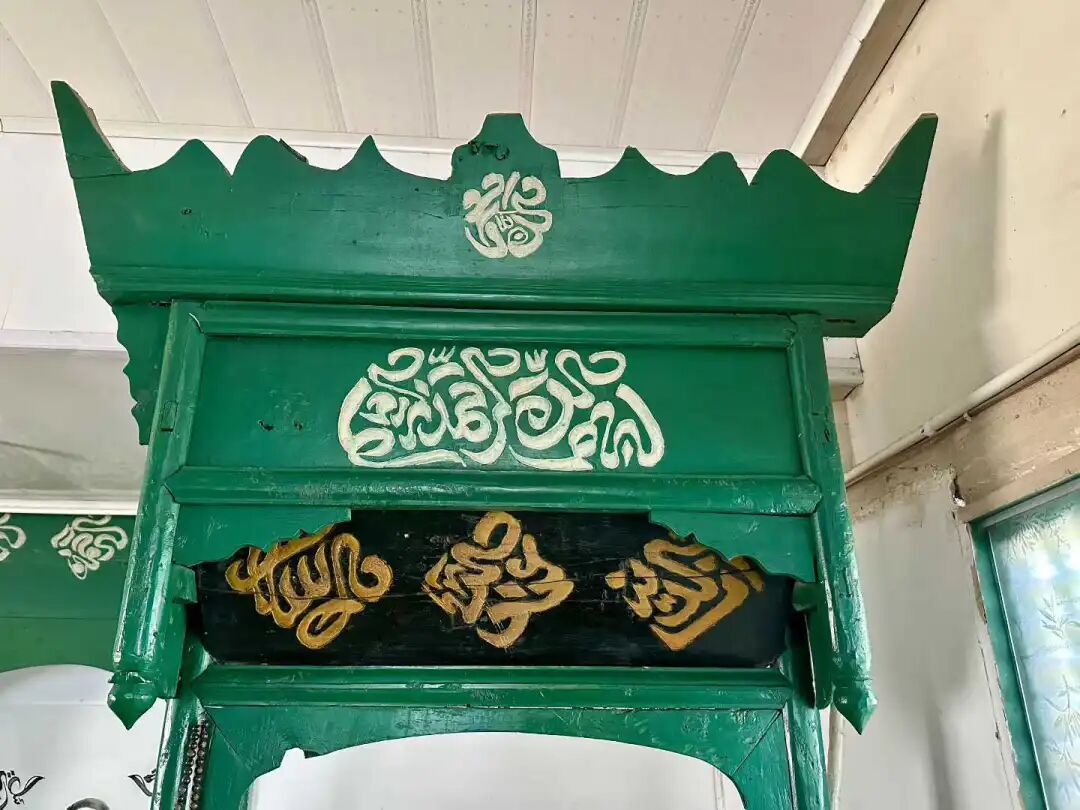
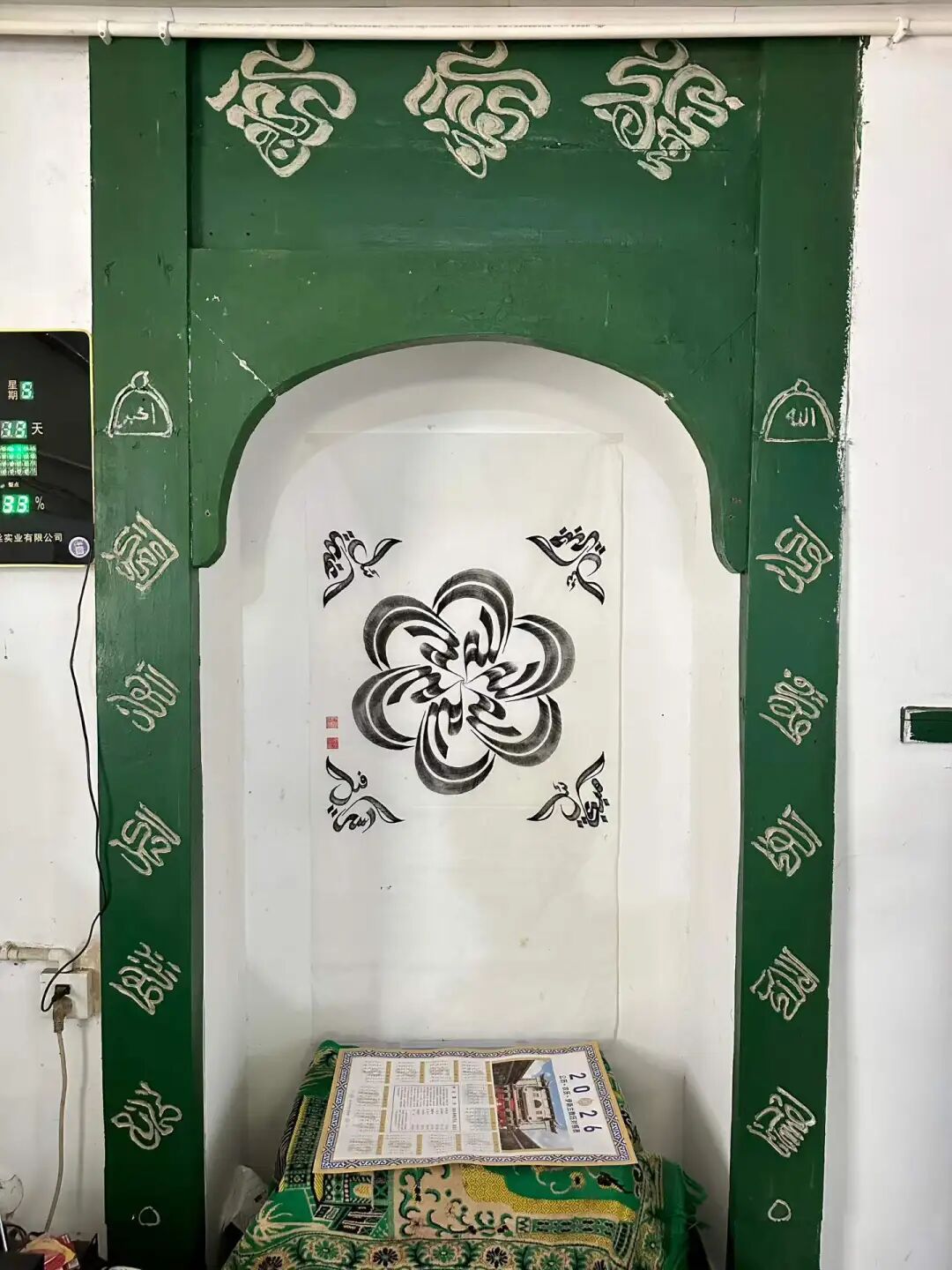
Arabic calligraphy in the main hall of Dajiaping Mosque, and the view looking down from the small hill behind the mosque.
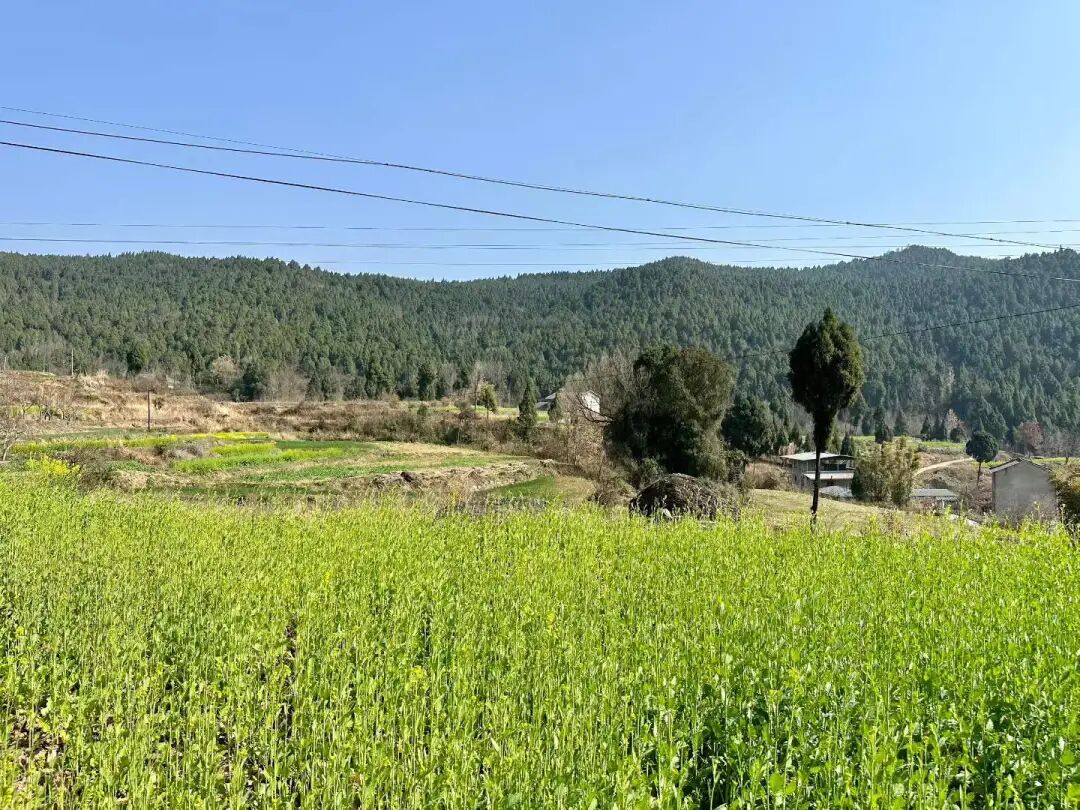
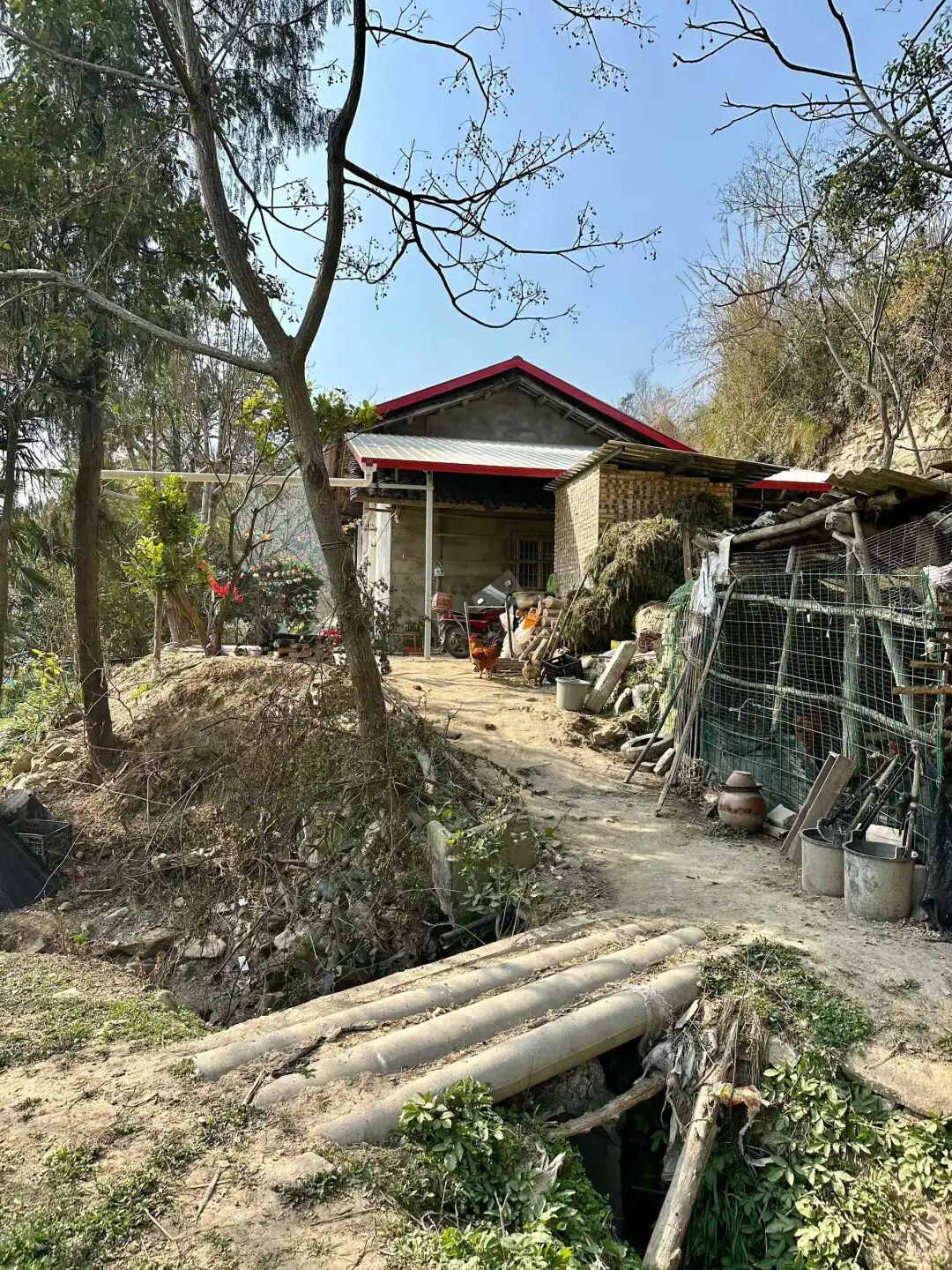
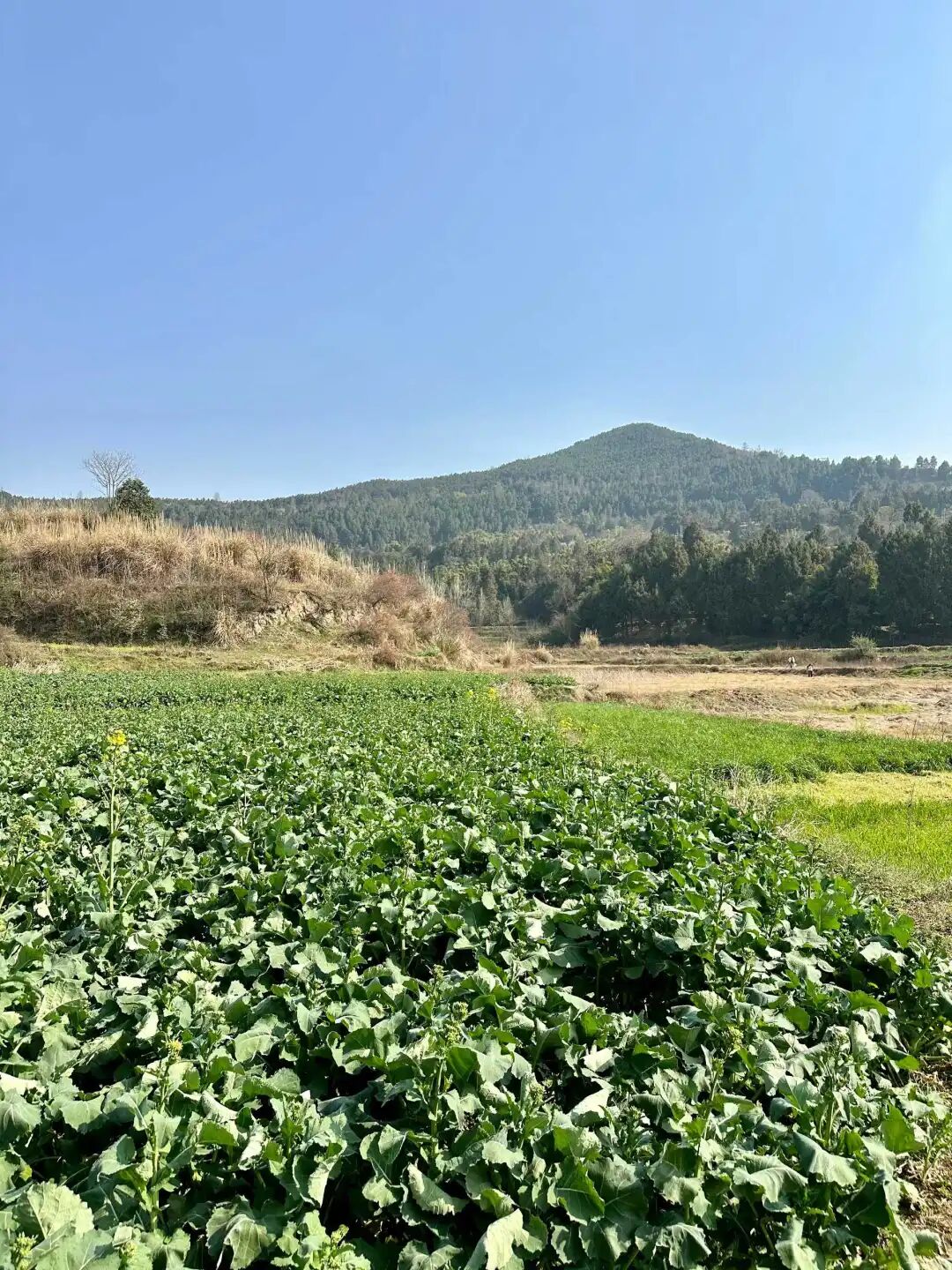
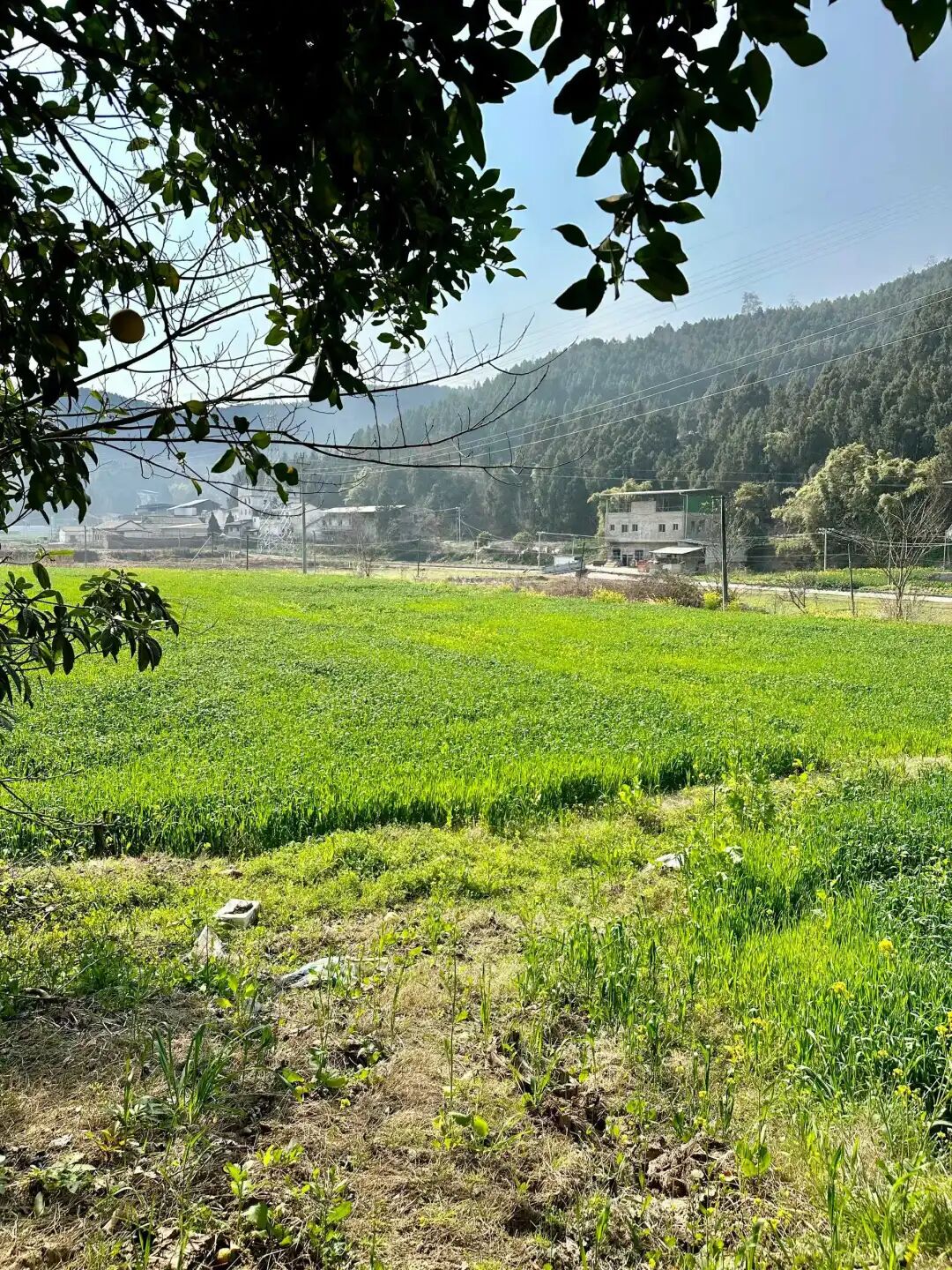
The countryside around Dajiaping is peaceful and quiet. A clear pond reflects the sky, and fields spread out between the hills. It is quiet all around, with only the crisp chirping of birds and the relaxed sounds of cattle and sheep, creating a moving pastoral scene.
Returning from Dajiaping Mosque to Yanting County, I broke my fast at the North Street Mosque. In the evening, hundreds of people came to the mosque to break their fast. Men, women, old, and young gathered together, showing the prosperity of the faith in Yanting. We had radish beef stew, served with crispy flatbread (subing) and rice. Although it was simple, the atmosphere was exceptionally warm and harmonious.
Yanting County Mosque was first built in 1738 (the third year of the Qianlong reign). It was originally located on Xinxie Street next to the Sanbu Liangdong Bridge. In 1796 (the first year of the Jiaqing reign), it moved to its current location at the city gate on Shangbei Street. It was expanded in 1898 and 1947, and rebuilt into its current form in 2006.
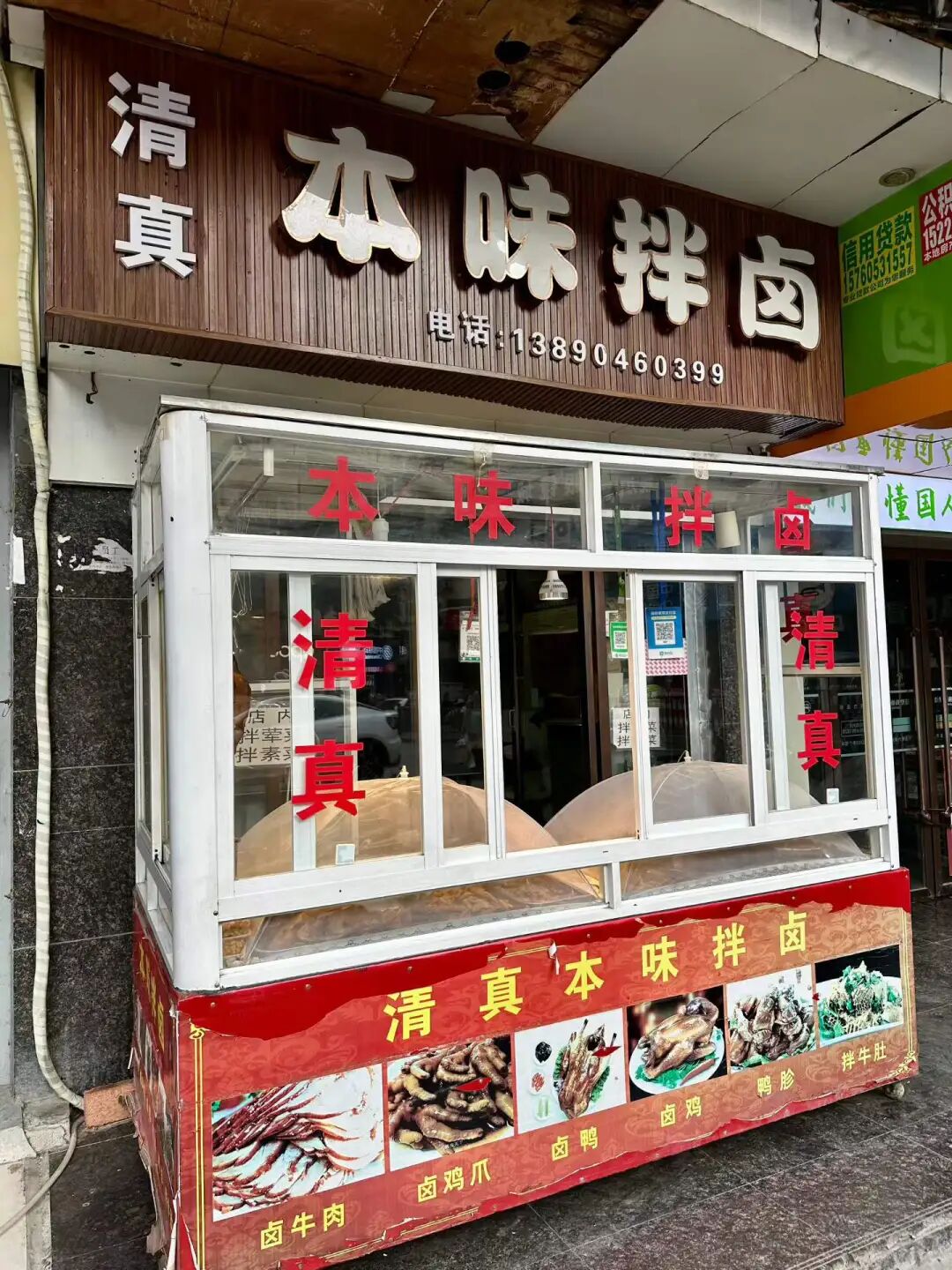
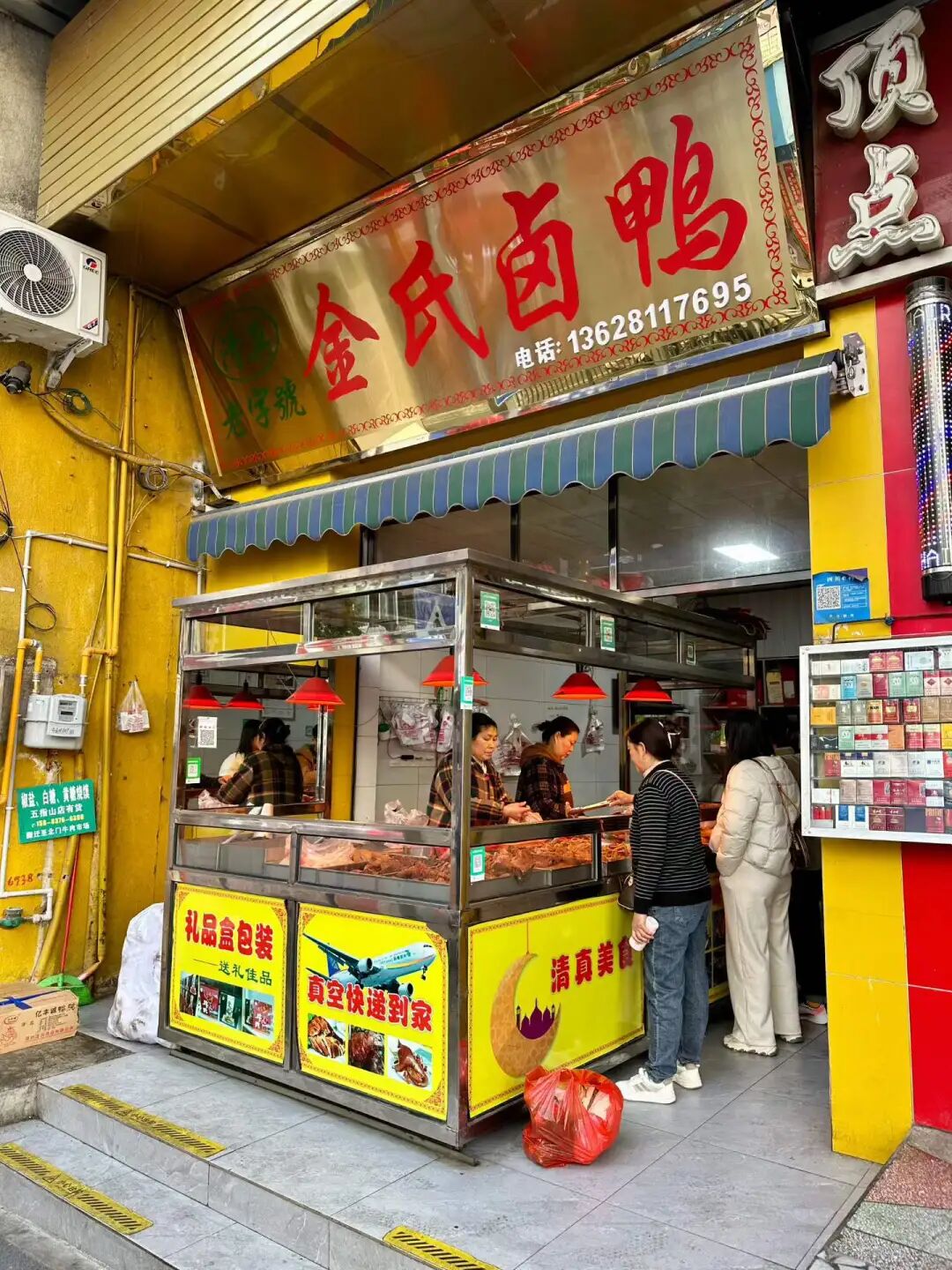
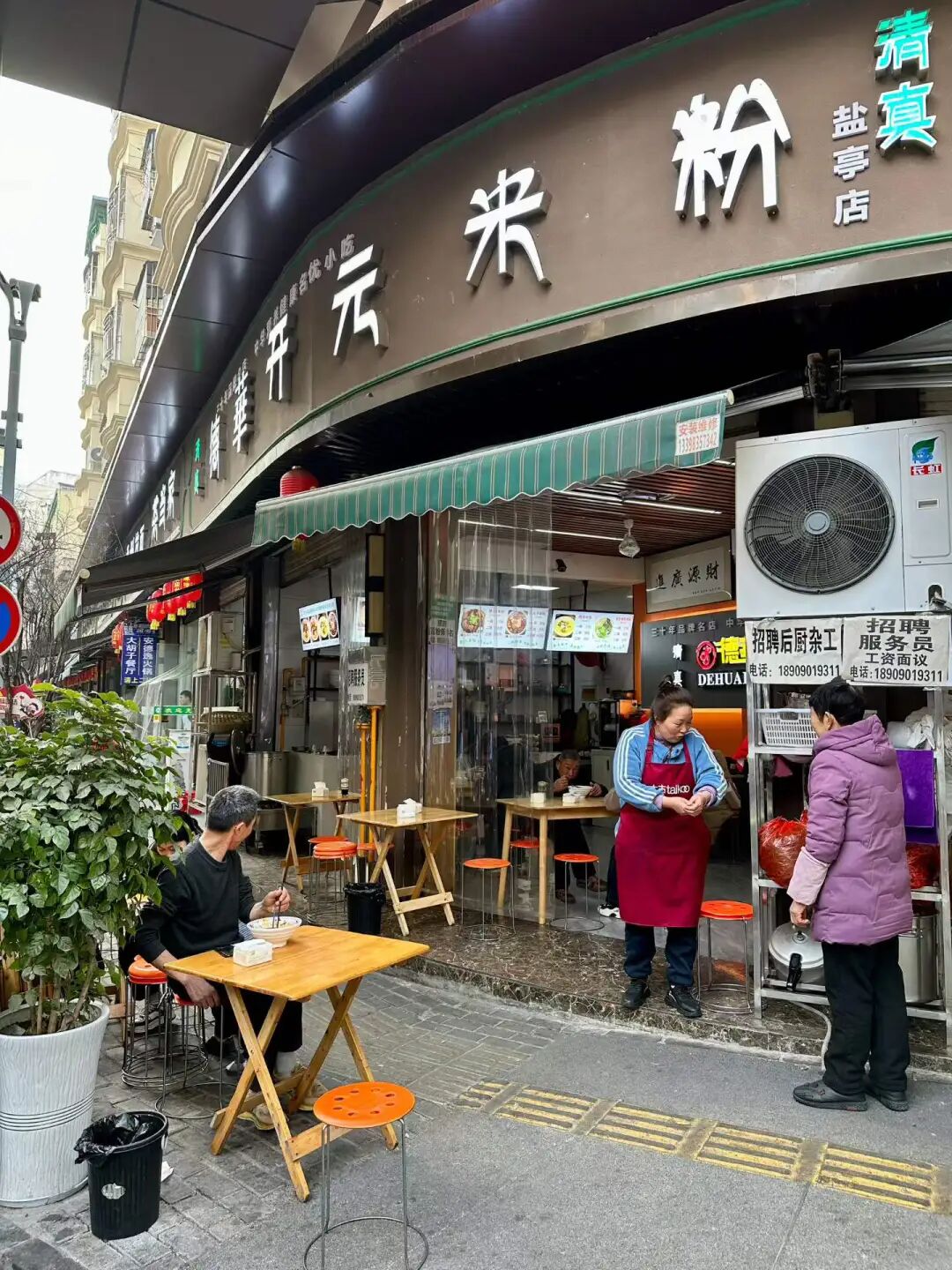
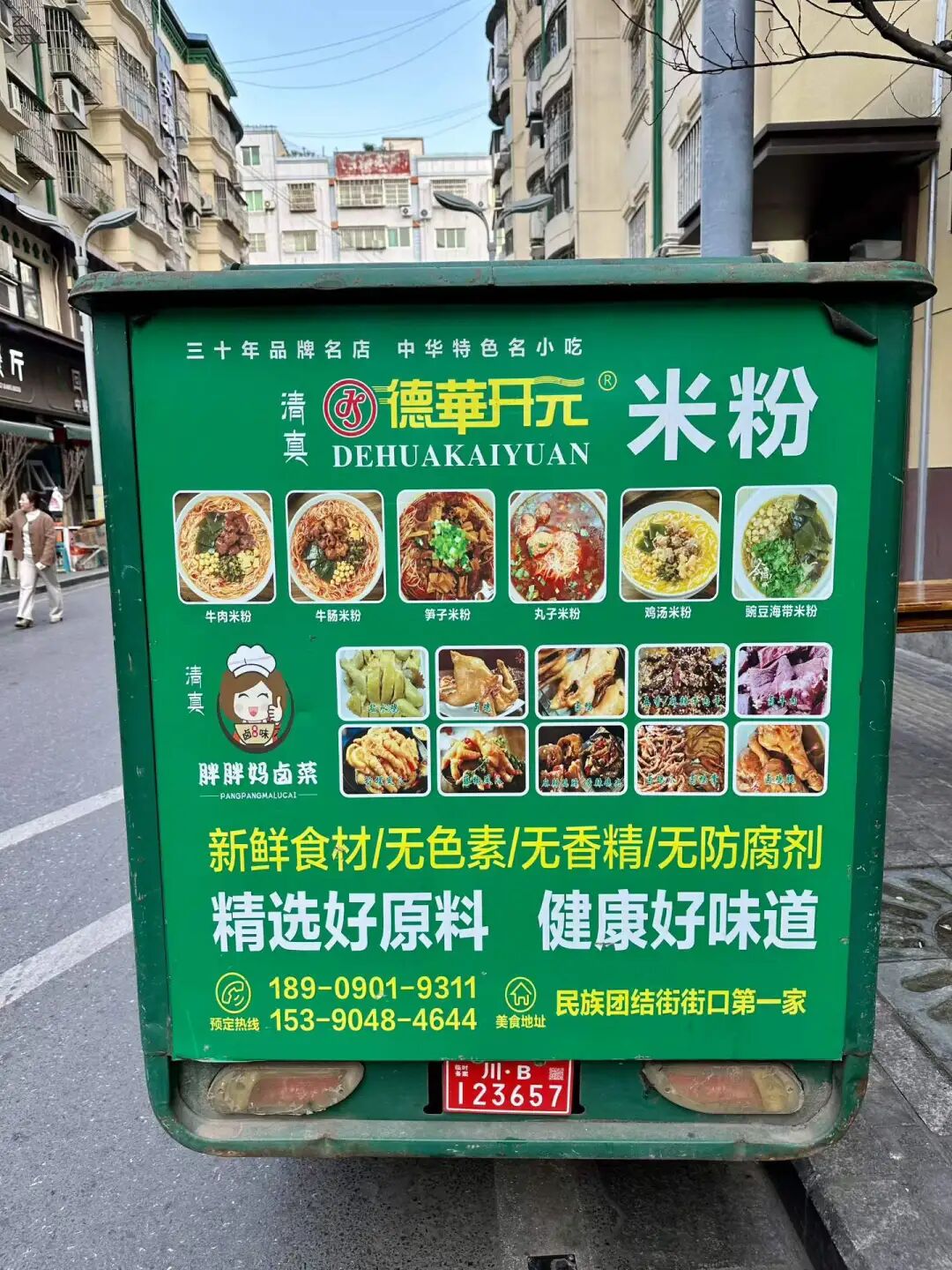
There are many Hui Muslim restaurants near the North Street Mosque in Yanting, especially on Tuanjie Road, which is a 'Hui Muslim food street'. In northern Sichuan, besides Songpan, Yanting is the most convenient place to eat. Even Langzhong does not have as many options as Yanting. Opposite the mosque gate is a shop called 'Benwei Banlu', which sells braised beef, braised chicken feet, and braised duck. The 'Jin's Braised Duck' next door is also very popular. Walking a little further, you reach Tuanjie Road. 'Dehua Kaiyuan Rice Noodles' at the intersection has been open for thirty years. They specialize in bamboo shoot rice noodles, meatball rice noodles, chicken soup rice noodles, and pea and kelp rice noodles. Many people eat there, and they are open early in the morning. Walking into Tuanjie Road, you find many halal restaurants with names like Huixiang Renjia, Huihuixiang, Huiweiju, and Xiaohuimin. They specialize in Sichuan-style braised dishes, stews, stir-fries, steamed beef with rice flour (fenzheng niurou), and beef and mutton hot pots.
After finishing the Taraweeh prayers, I stopped by Muji Noodle Shop on Tuanjie Road in Yanting for a bowl of spicy hot pot (maocai) to get some vegetables.
Near the North Street Mosque in Yanting, you can find restaurants owned by families named Jin, Mu, and Ma. The Jin family seems especially common, with places like Jin Family All-Beef and Mutton Soup House (Jin Jia Quan Niuyang Tangguan), Jincuiyuan Restaurant, and Little Jin Beef (Xiao Jin Niu). Among the Hui Muslims in Yanting, the main family names are Jiang, Mu, Da, Jin, Ma, and Yang, based on when they first arrived in Sichuan. The Jiang family's ancestral home is Qili Village in Penglai, Shandong. They moved to Sichuan in 1465 (the first year of the Chenghua reign of the Ming Dynasty) when an ancestor became the magistrate of Leshan, and they settled in Yanting after he left office. The Mu family's ancestral home is Mujiaping in Hanzhong, Shaanxi. They moved to Yanting in 1615 (the 43rd year of the Wanli reign). The Da family's ancestral home is Liuhe in Nanjing, Jiangsu. They moved to Yanting in 1644 (the first year of the Shunzhi reign of the Qing Dynasty). The Jin family's ancestral home is Wangjiao Village in Dali, Tongchuan, Shaanxi. They moved to Yanting in 1690 (the 29th year of the Kangxi reign). The Ma family's ancestral home is Weinan, Shaanxi. Their ancestor came to Sichuan during the Revolt of the Three Feudatories, and the family moved to Yanting in 1691 (the 30th year of the Kangxi reign). The Yang family's ancestral home is Shaanxi. They moved to Yanting in 1723 (the first year of the Yongzheng reign).
Breakfast starts after 5:00 a.m. near the North Street Mosque in Yanting, which is perfect for eating suhoor. Breakfast here includes steamed buns (baozi), rice porridge (xifan), rice noodles (mifen), and tea-oil porridge (youtiao). I ordered a bowl of rice noodles and a steamed bun. Yanting rice noodles are quite thin. They have a soft, smooth, and slightly chewy texture. They are quickly blanched in boiling water using a bamboo strainer. After draining the water, they are put into a bowl and topped with beef sauce (niurou saozi). The Hui Muslims' beef sauce is made by stir-frying rapeseed oil mixed with beef fat until fragrant, then adding bean paste (doubanjiang) to create a red oil. The beef is firm, flavorful, tender, and not dry. When you eat it, it is spicy, numbing, and rich with a fresh aroma. It is spicy without being harsh, numbing without being bitter, and fresh without being greasy. view all
Summary: This Yanting County travelogue explores old mosques, Hui Muslim villages, family histories, and mountain roads around Mianyang during a Spring Festival drive through Sichuan.
On February 20, I drove for one hour and 20 minutes from Nanchong at noon to reach Dajiaping Mosque in Yanting County, Mianyang City, for Jumu'ah prayer. The mosque was very crowded, and everyone there was a local Hui Muslim.
Yanting is the county with the most Hui Muslims in Mianyang, with ten major surnames: Jiang, Jin, Mu, Da, Ma, Yang, Wu, Ha, Ran, and Sa. The ancestor of the Da surname was a man from the Western Regions during the Yuan Dynasty named Wubalesha. Research shows he belonged to the Kipchak Yuliboli tribe and served as a Darughachi in Zhenjiang Road before passing away in Zhenjiang. His sixth-generation descendant, Da Shanyu, moved from Zhenjiang to Liuhe, Nanjing, in the early Ming Dynasty to serve as a county assistant. He settled in Liuhe, making this the oldest Western Regions Hui Muslim family in Liuhe, Nanjing. In 1644 (the first year of the Shunzhi reign), Da Chengzong was ordered to move from Liuhe to Sichuan. He settled at the foot of Jianzi Mountain in Fenghe, Yanting, which established the Da surname Hui Muslim community in Yanting.
Dajiaping Mosque was originally located on a small hill behind the current kiln hall and was quite small. It was later moved to its current location below the hill. In 1812 (the 17th year of the Jiaqing reign), it was rebuilt into the current courtyard style with donations from Sichuan Baoning Prefecture military officials Da Tengchao, Da Tengrui, Da Tianheng, and Da Guankui. It was renovated in 1908 (the 34th year of the Guangxu reign), and the main gate and side schools were expanded in 1928.
Dajiaping Mosque features the traditional Sichuan courtyard structure known as "four waters flowing into the hall" (si shui dao tang), with elegant, unique bracket sets and flying eaves. There is a path platform in the courtyard's central patio and gardens on both sides.
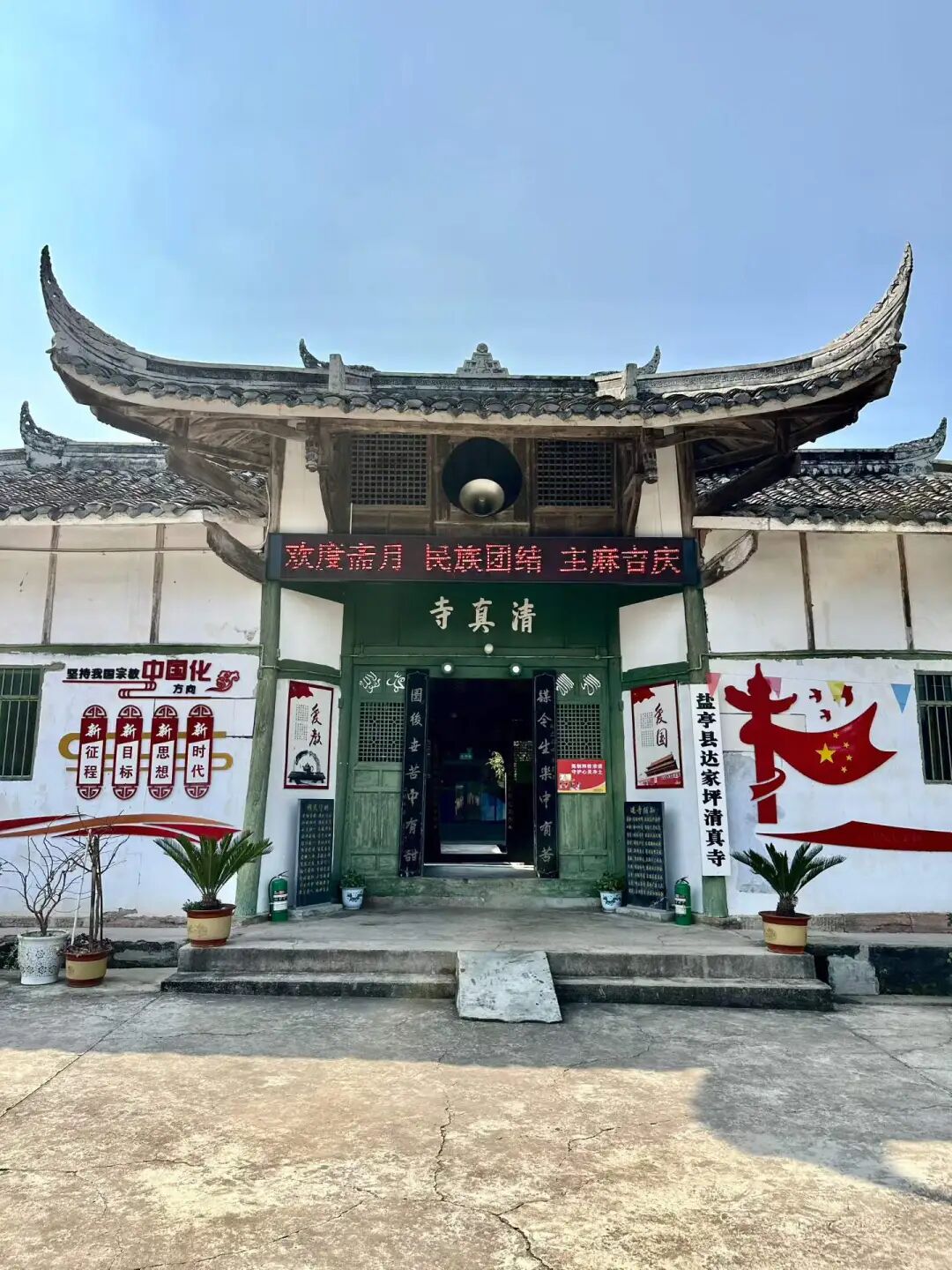
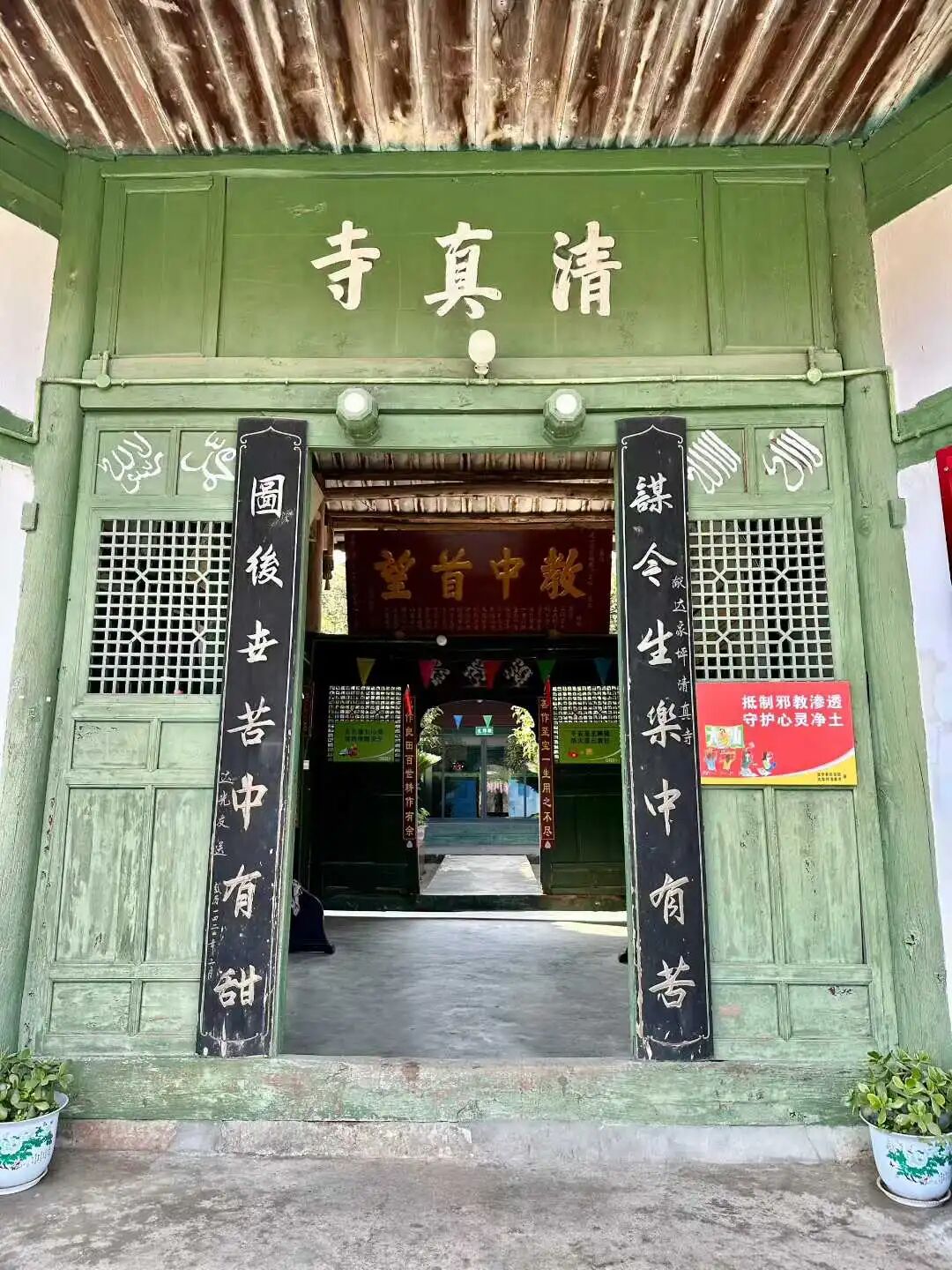
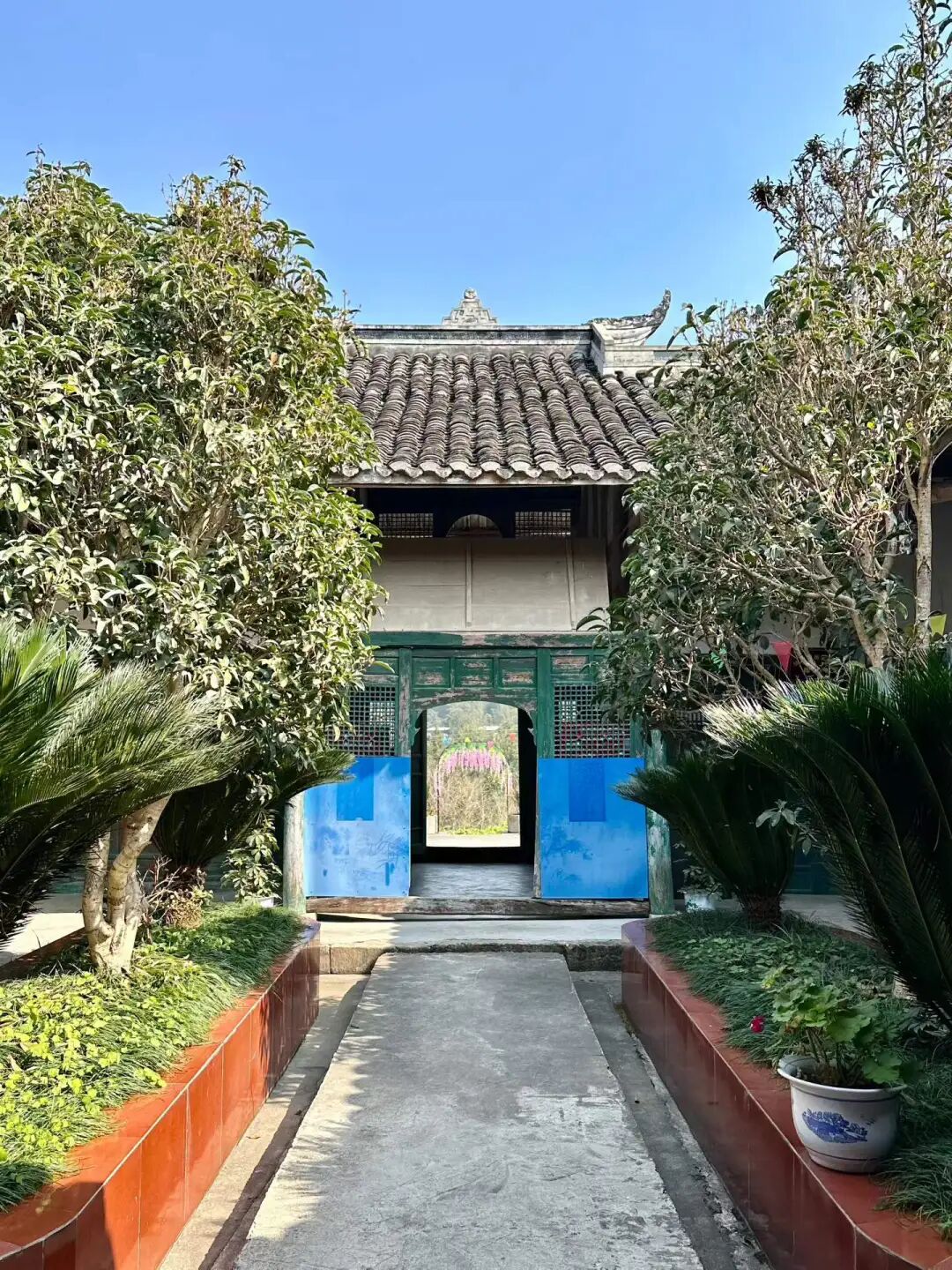
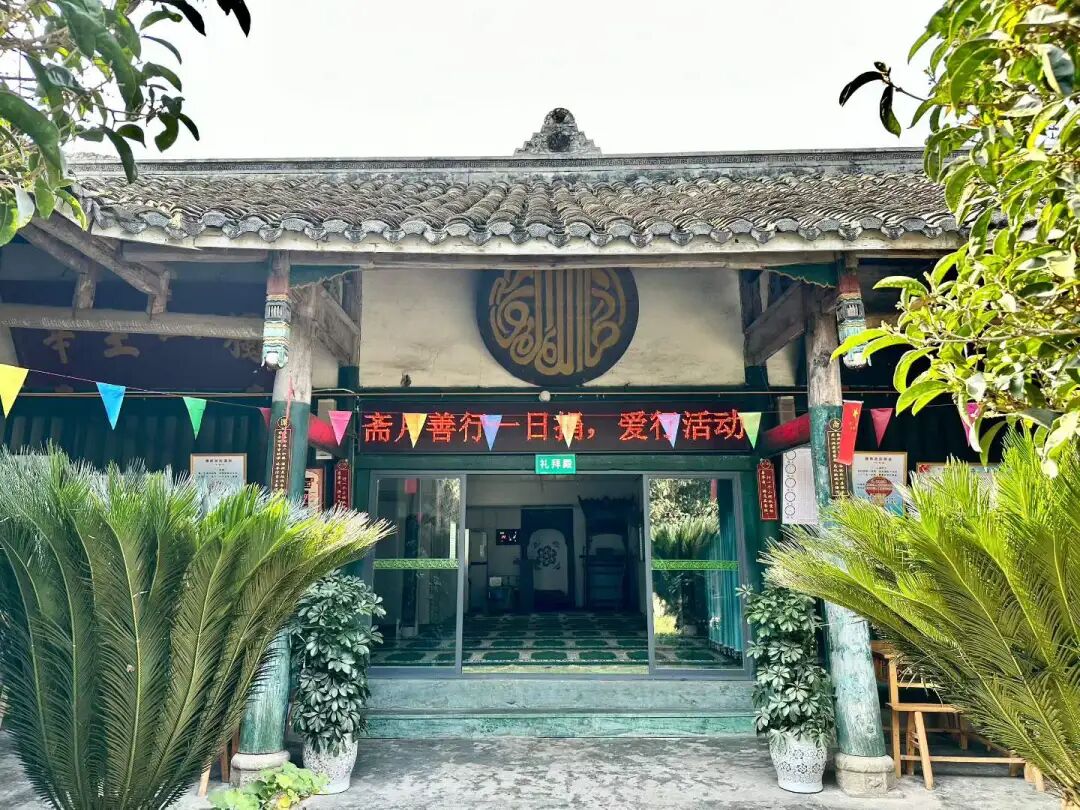
Dajiaping Mosque houses 30 volumes of scriptures hand-copied by Jin Wanx in the ninth year of the Guangxu reign.
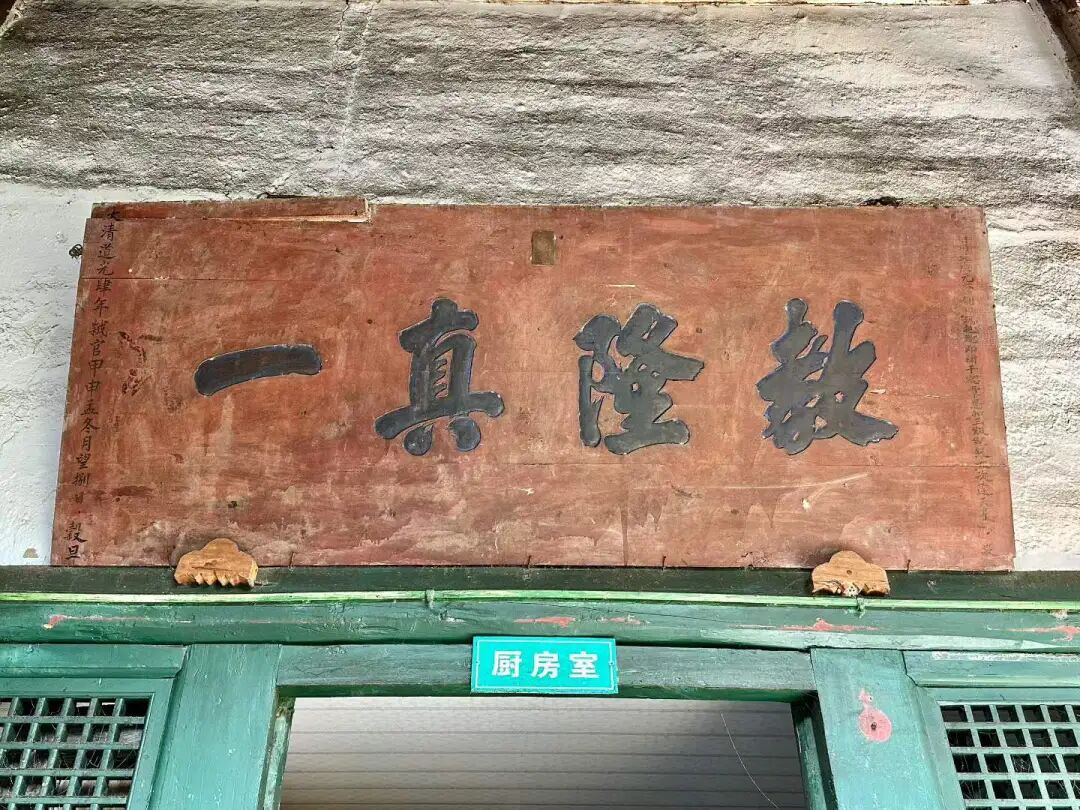
The mosque also preserves three plaques from the Qing Dynasty and two from the Republic of China era:
The "Jiao Long Zhen Yi" plaque from the fourth year of the Daoguang reign: Respectfully erected by Da Tianheng, a specially appointed military official of the Jianzhou garrison in Guangyuan, Sichuan, who was promoted to the rank of thousand-man commander (qian zong) and received honors five times.
Da Tianheng passed the military examination in 1801 (the sixth year of the Jiaqing reign) and was immediately appointed as a thousand-man commander (qian zong) in the Chuanbei Town garrison. He was promoted several times, eventually reaching the rank of regional commander (zong bing) of Chuanbei Town, stationed in Baoning Prefecture, Sichuan. Locals respectfully called him "Commander-in-Chief" (zong zhen du du). In 1854 (the fourth year of the Xianfeng reign), the imperial court ordered him to lead troops to suppress the Taiping Rebellion. Because he did not act immediately, he was falsely accused of "colluding with the enemy and rebelling." The Xianfeng Emperor recalled him to Beijing and had him beheaded in public.
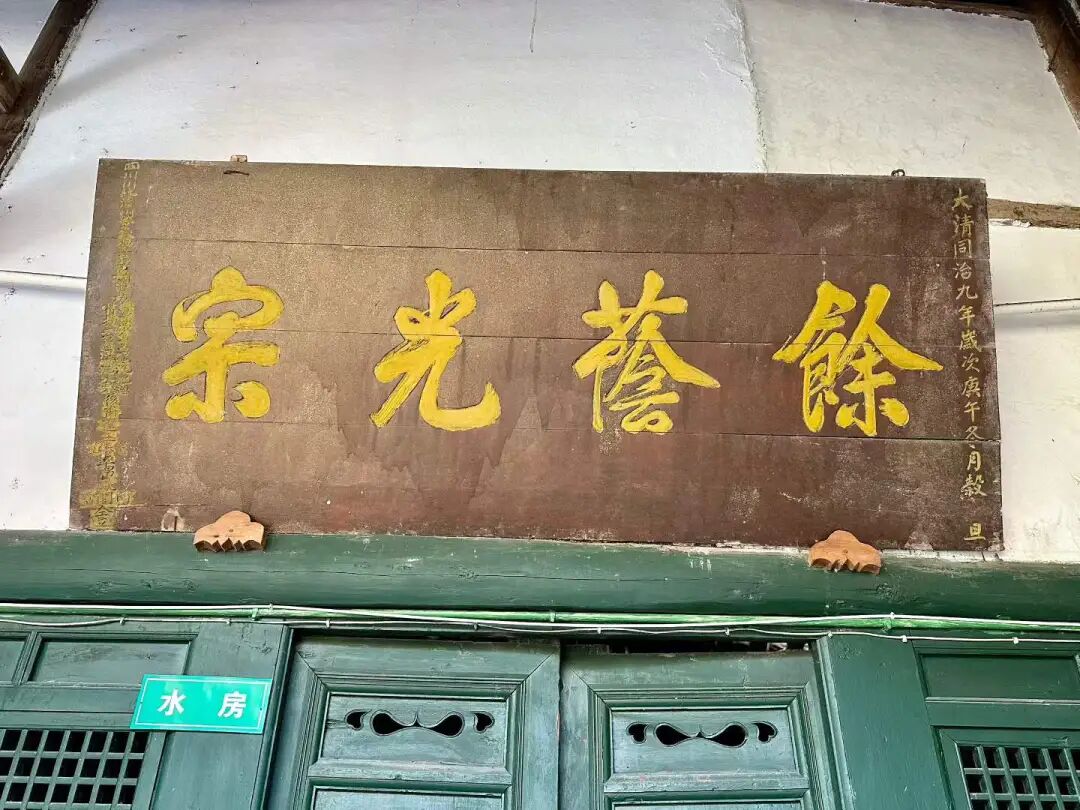
The "Yu Yin Guang Zong" plaque from the ninth year of the Tongzhi reign: Erected by his descendants Da Yuguan, Yu Chun, and Yu Sheng, along with their sons Fenggang, Fengge, and Fengzhu. The plaque honors their ancestor, a military official of the Tongchuan garrison in Chuanbei, Sichuan, who held a fifth-rank blue feather and served as a garrison commander (ba zong) in Tibet and an acting official in Sanchuan County.
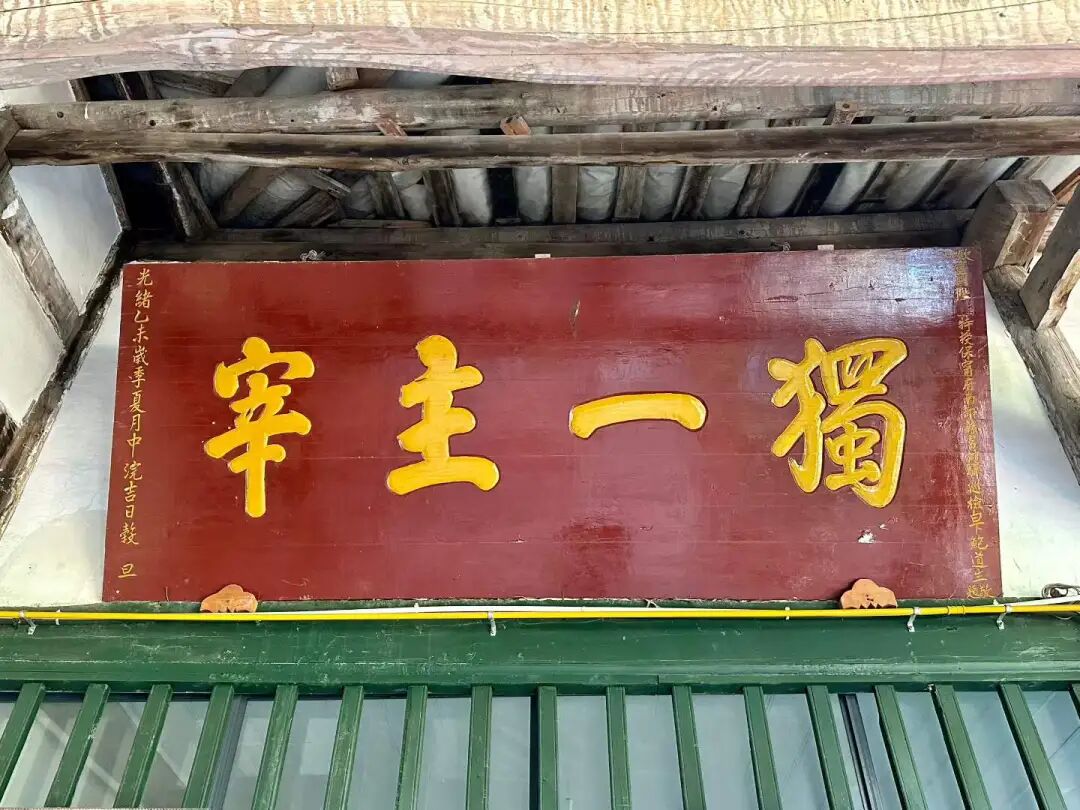
The "Du Yi Zhu Zai" plaque from the 21st year of the Guangxu reign: Respectfully inscribed by Bao Daosheng, a specially appointed inspector of Fucun Station in Nanbu County, Baoning Prefecture.
The Arabic plaque from the second year of the Republic of China reading "I created the jinn and mankind only to worship Me": Erected by local imam Ma Huaifang, Da Pengju, Ran Mingli, Ran Minglun, Ran Mingyao, Ha Mayu, Ha Huaide, Huang Anju, Da Yugao, Da Yuliang, Da Yude, Da Yulin, Da Yulong, Da Fengwu, Da Fengzhi, Da Fengwen, Da Fengwu, Da Fengtai, Da Fengyou, Da Fengyuan, Da Fenghao, Da Fengge, Da Fengdou, Da Fengkui, Da Fengxian, Da Fengyi, Da Pengshun, Da Pengqian, Da Penglin, Da Pengshan, Da Pengyun, Da Fengchun, Da Yugang, and Da Yuyin.
Ma Huaifang, also known as Ma Nanxuan, was originally from Lanzhou, Gansu. He fled to Yanting during the early years of the Republic of China and settled there, serving successively as the imam of Dajiaping Mosque and the mosque in Yanting county town. He was a master of martial arts, possessed extraordinary strength, stood up against evil, and was known for helping those in need, earning him high prestige. In 1913, when the Sichuan Army's Zhong Tidao unit was forcibly conscripting men at Lingshan Market, Imam Ma protected the people by driving away an entire squad of soldiers with his bare hands. In 1916, Imam Ma again drove away chaotic soldiers who were forcibly conscripting men at Daxing Market. From 1921 to 1934, Imam Ma opened the "Shou'an Martial Arts Academy" at the Yanting county town mosque, training hundreds of martial arts students. In 1933 and 1934, Imam Ma participated in martial arts competitions in Langzhong and Santai counties, winning silver medals both times. His martial arts style gradually formed into one that was "short, powerful, full of energy, quick to strike, simple, clear, versatile, and focused on winning through strength." In 1932, Imam Ma opened a "Hui Language School" (huiwen xuexiao), training a group of excellent students who were skilled in both literature and martial arts.
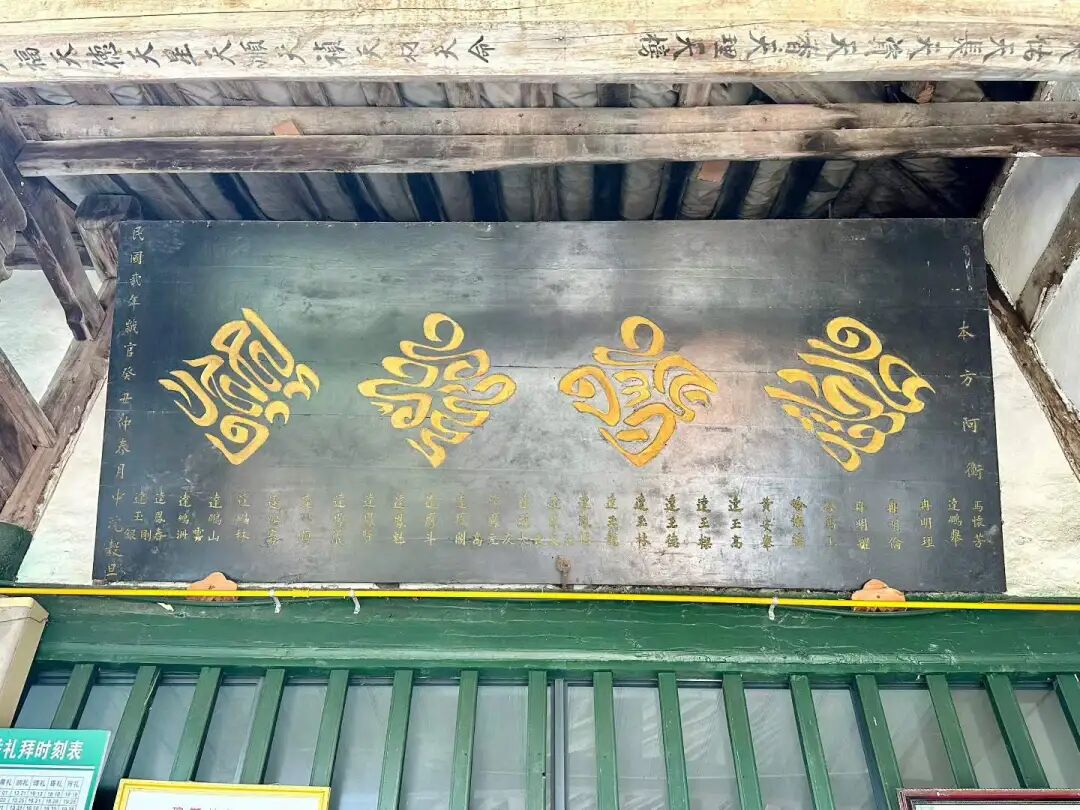
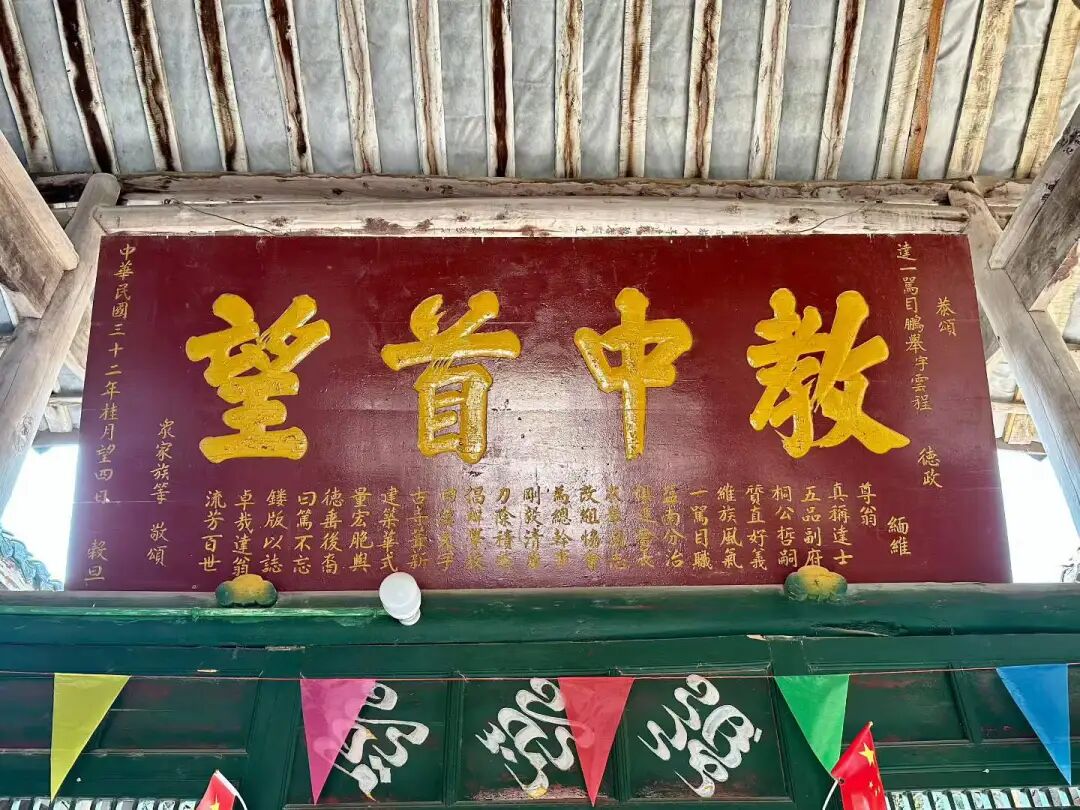
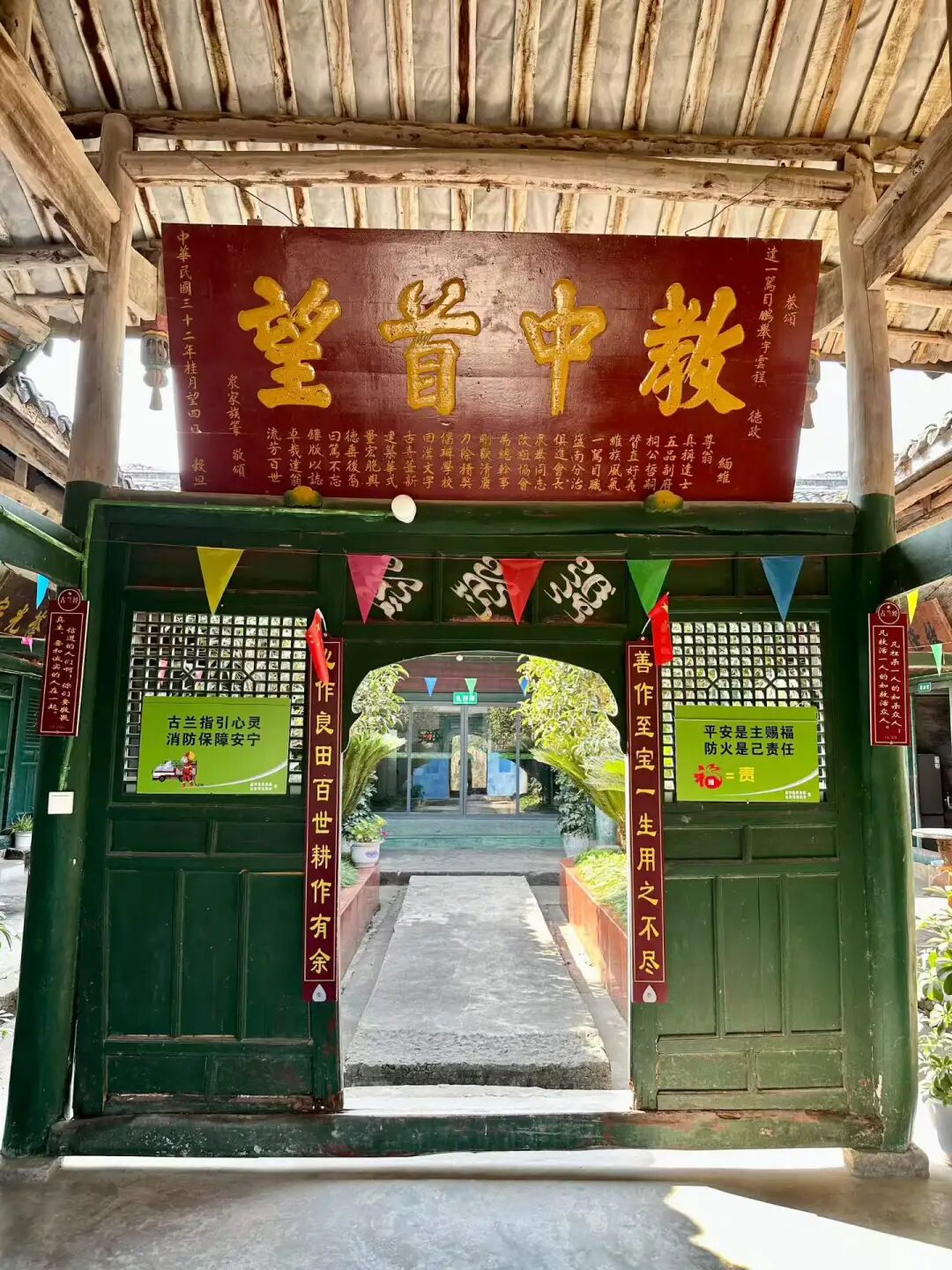
The 1943 plaque titled 'Leader of the Community': We honor Imam (imam) Pengju, courtesy name Yuncheng. A man of virtue, he was a true scholar, a fifth-rank official, and the son of Master Tong. He was upright and righteous, setting a standard for Hui Muslims. He served as imam, managed the Yannan district, and led the Progressive Association. Elected by the people as director-general, he was firm and honest, working hard to remove corruption and starting schools to teach both Arabic and Chinese. The old mosque was renovated with Chinese-style architecture. Its scale is grand, reflecting the prosperity of the community. His virtue will be remembered by descendants forever. We carve this plaque to honor the great Master Da, whose reputation will last for generations. Respectfully dedicated by the family members.
Imam Da Pengju studied religious texts in Chengdu from 1885 to 1891. He became the imam of Dajiaping Mosque in 1912 and taught himself veterinary medicine. In 1914, Imam Da founded an Arabic-Chinese bilingual school in Dajiaping. After the Yanting County Hui Progressive Association was established in 1925, he served as its first president. He also served as president of the Yanting Islamic Association after its founding in 1942. After 1930, Imam Da served as the imam of the Fuyi County Mosque, and after 1951, he served as the imam of the Yanting County Mosque. He was an upright man who helped those in need. He also worked as a veterinarian with excellent skills, saving many sick cattle and earning the respect of everyone.
There are many inscriptions on the wooden structures inside the courtyard:
Craftsmen Li Changshou and Li Changkai from Anle Township, Tongchuan Prefecture, Yanting County, are masters of their art. The family of Imam Ma Hong and others rebuilt this, respectfully inscribed by the prominent members.
Craftsmen Li Jiong, Zhang Shifu, and Li Jianming from Anle Township, Tongchuan Prefecture, Yanting County, are masters of their art. Da Tianqu, a Confucian scholar from Yanting County, Tongchuan Prefecture, Sichuan, respectfully washed his hands and wrote this, inscribed by the successful candidates.
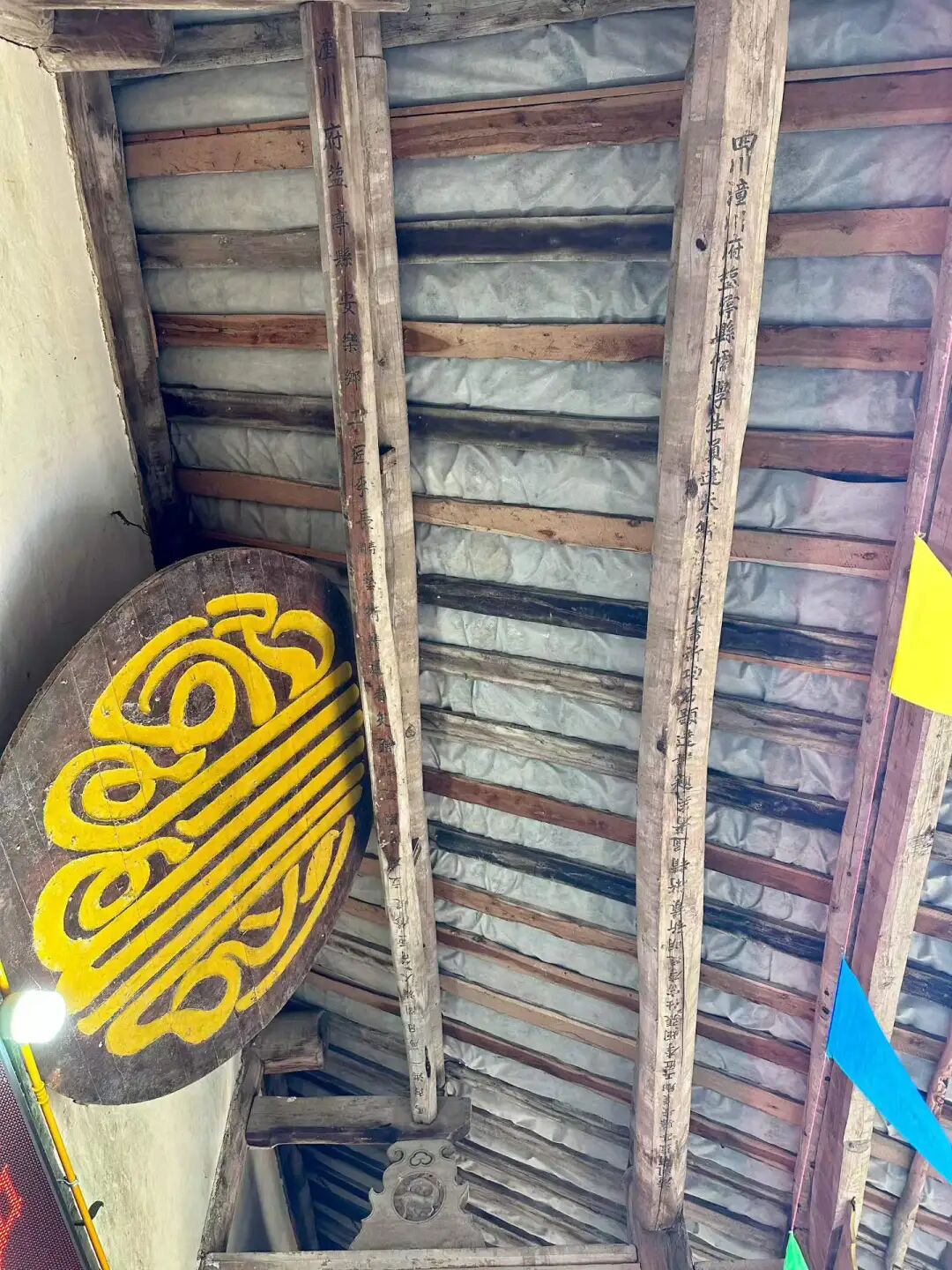
Donors: Da Tianhui, Tianwei, Tianci, Tianyou, Tianchang, Tianzi, Tianxiang, Tianli, and Tianbang. Founding donors: Da Tianjianzhao, Tianfu, Tiande, Tianxing, Tianshun, Tianzhen, Tiancai, and Tianming.
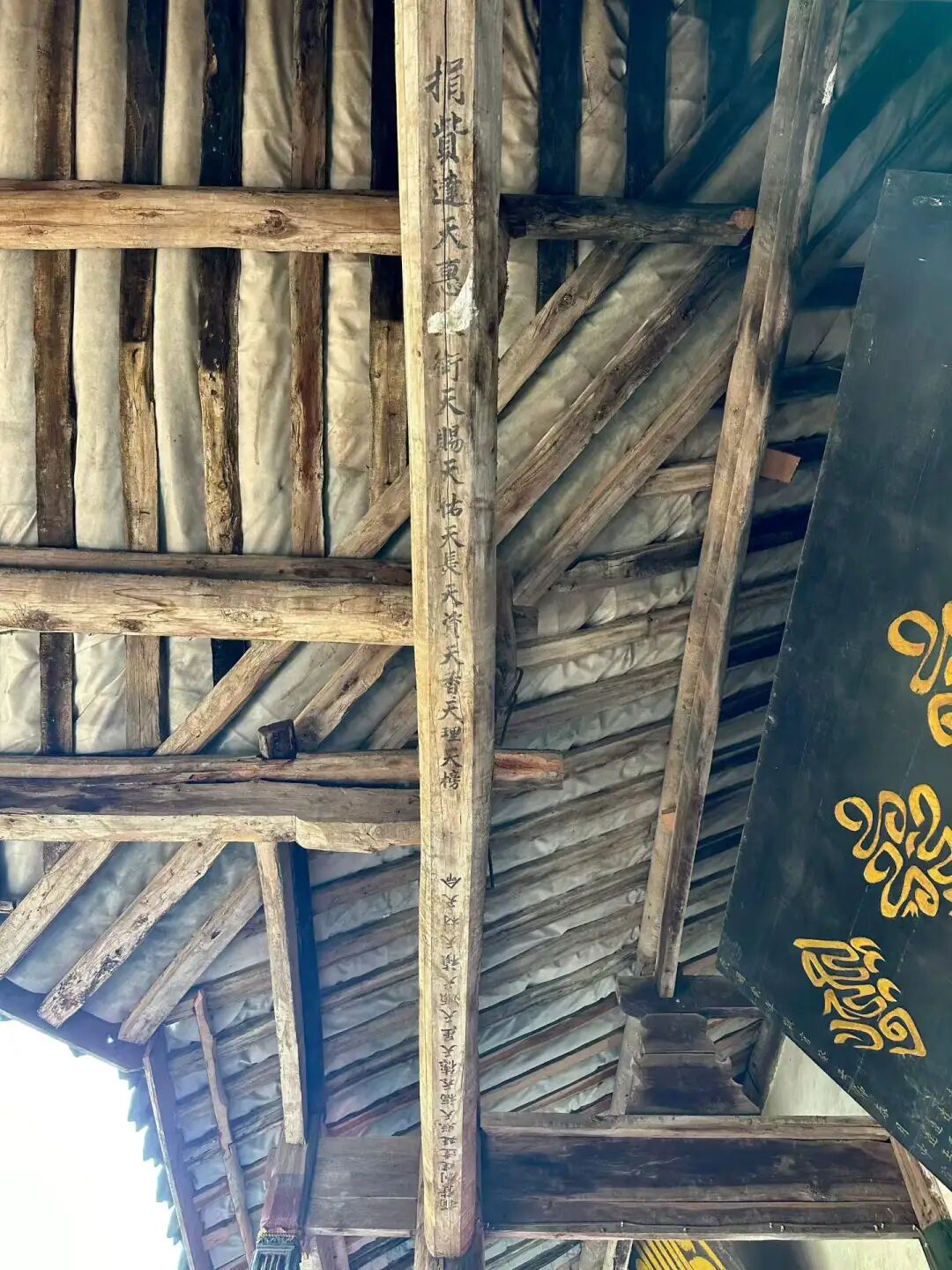
Arabic calligraphy in the main hall of Dajiaping Mosque, and the view looking down from the small hill behind the mosque.
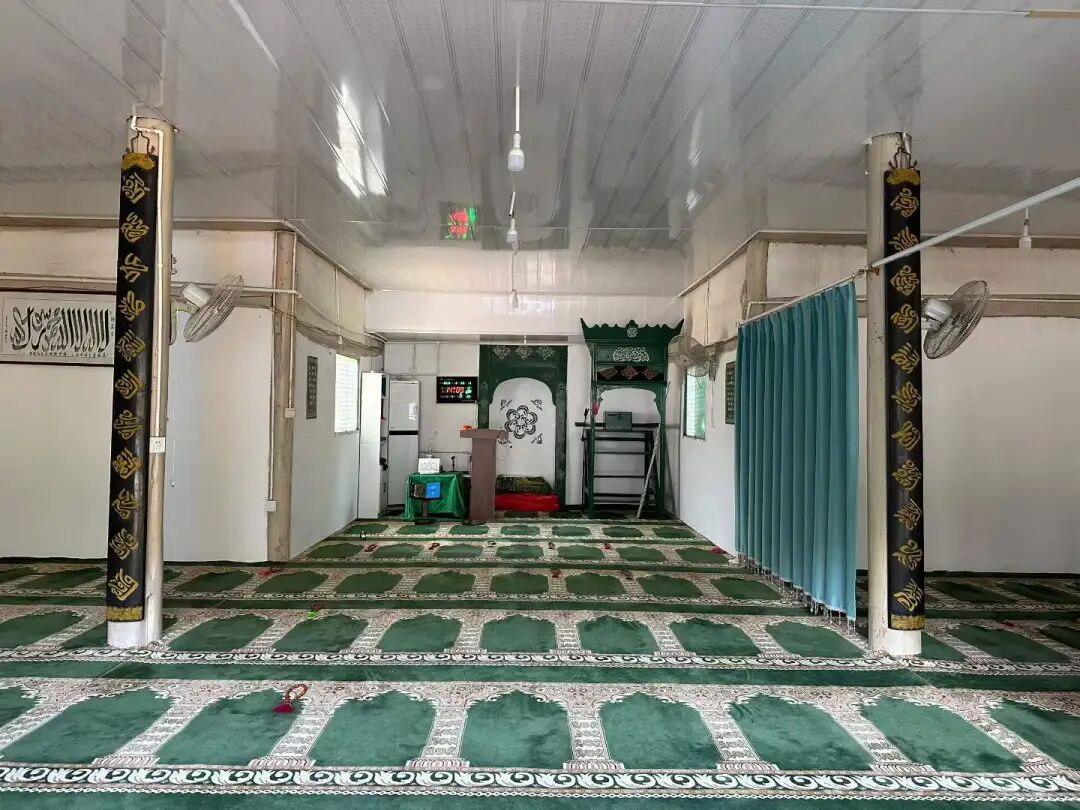
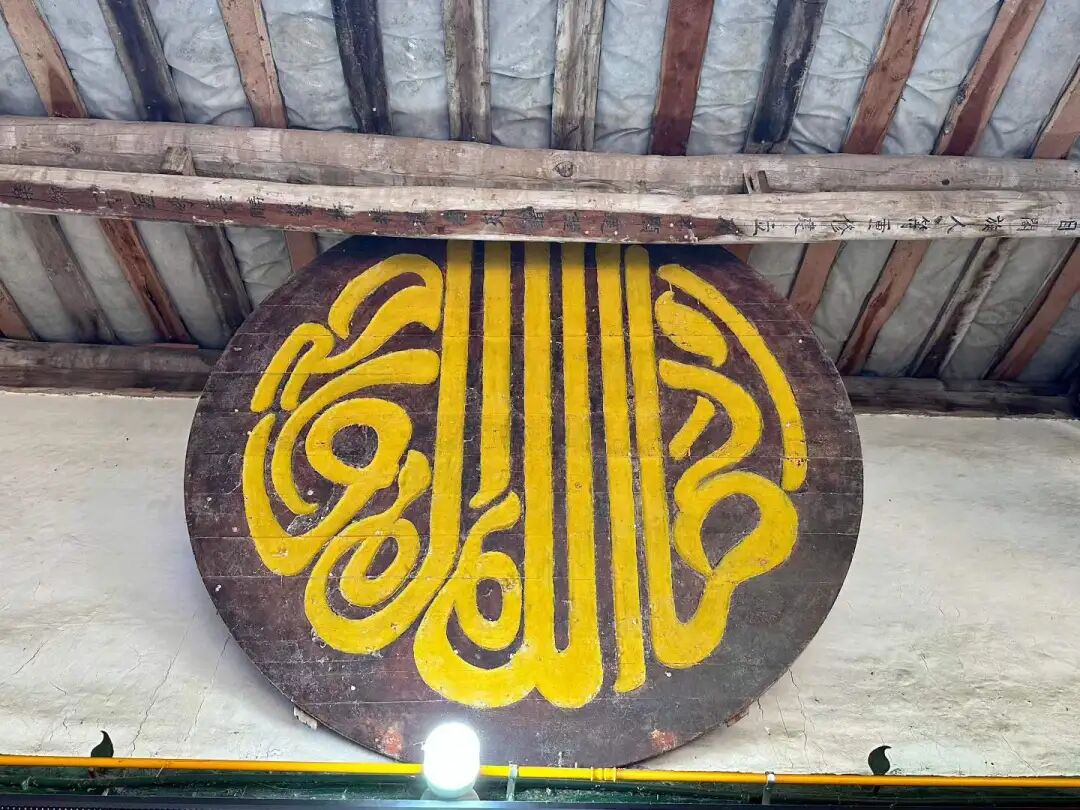
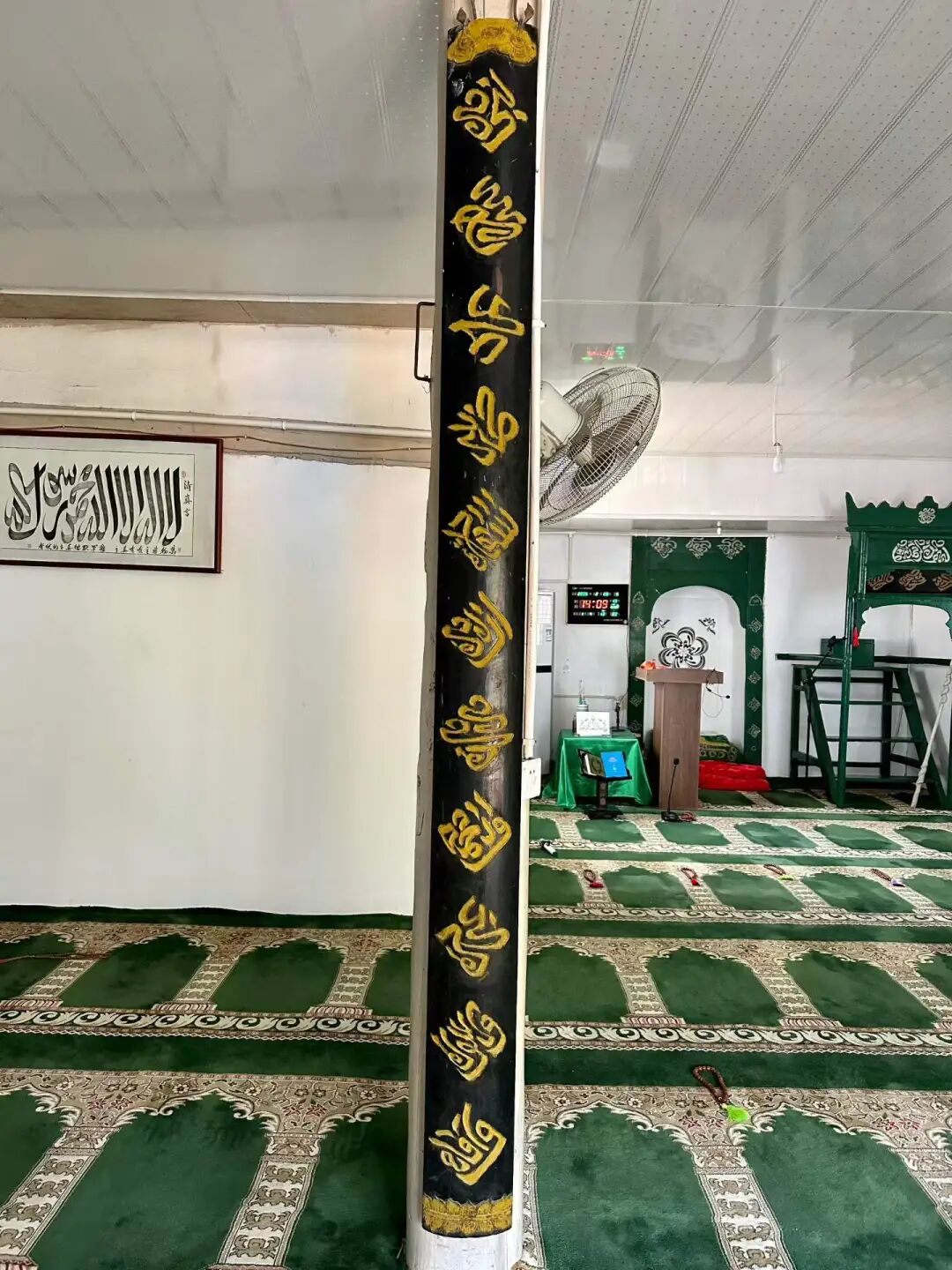
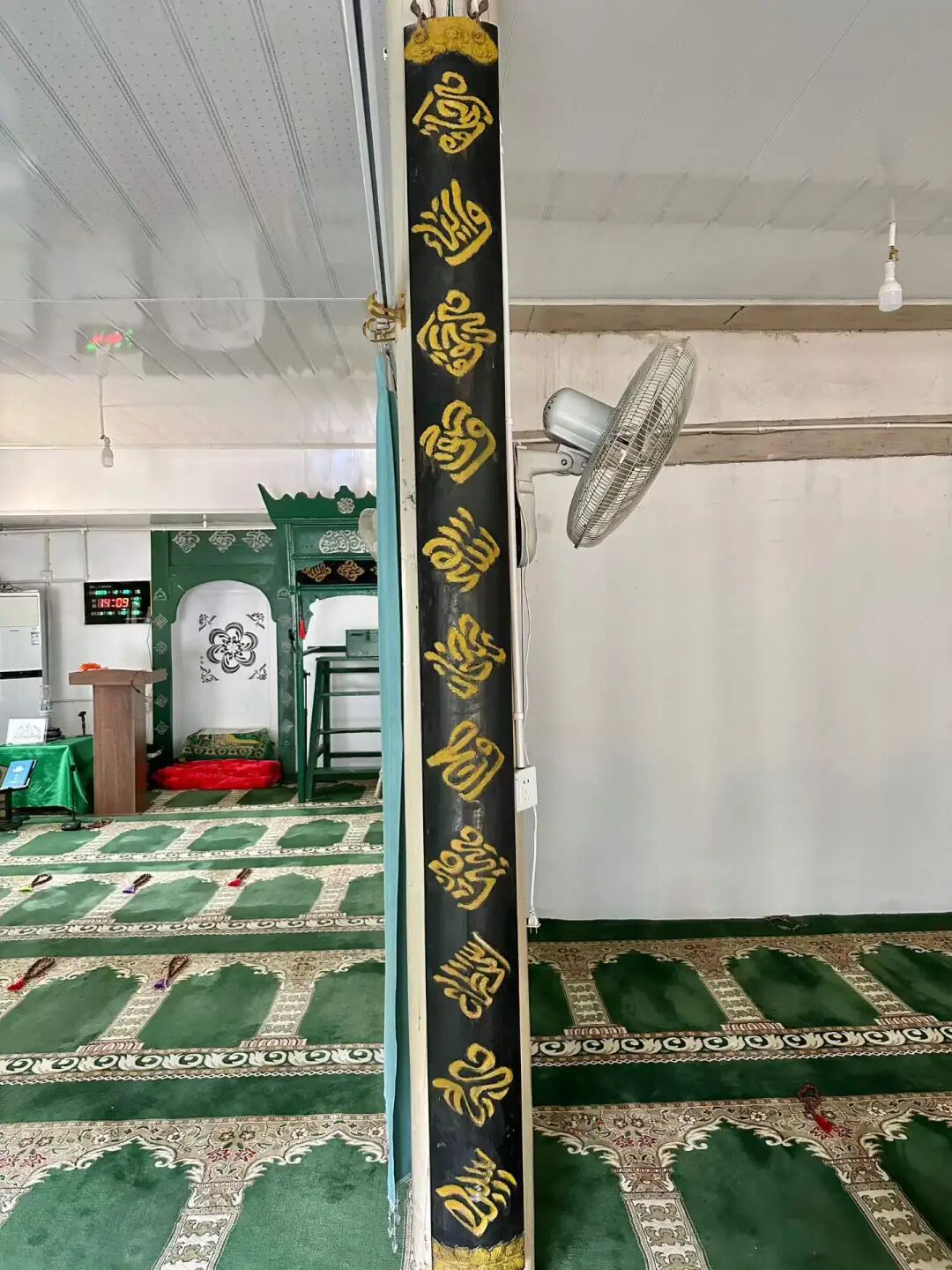
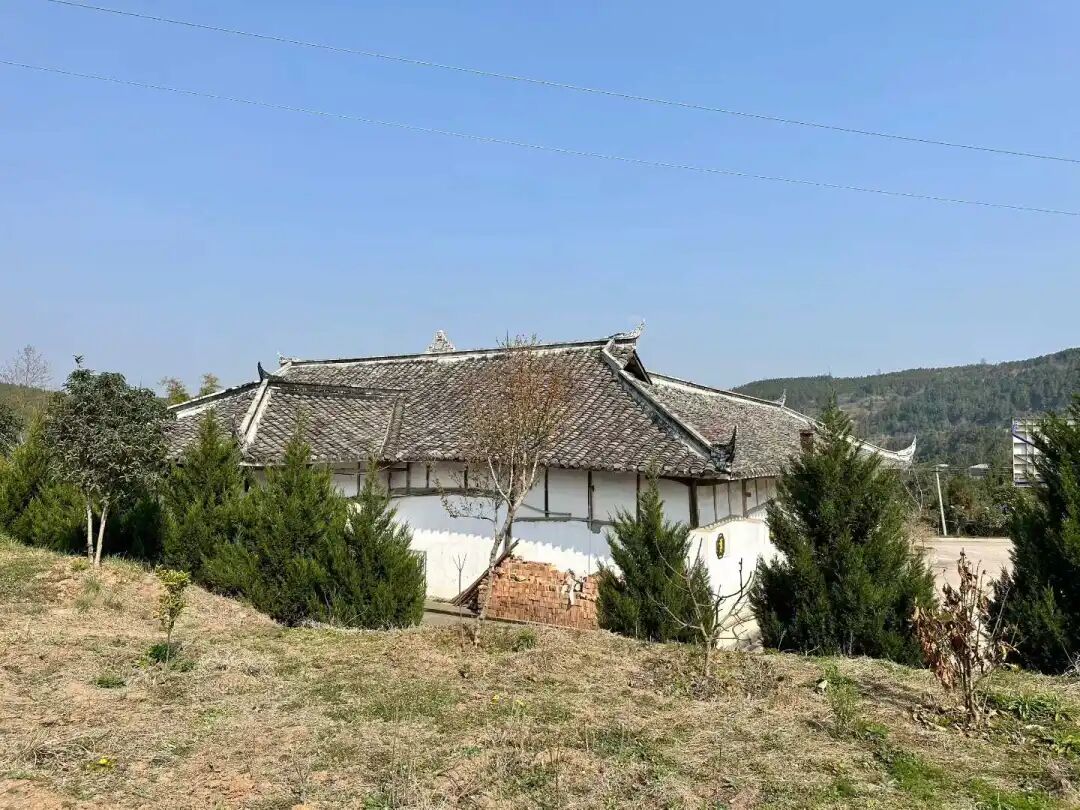
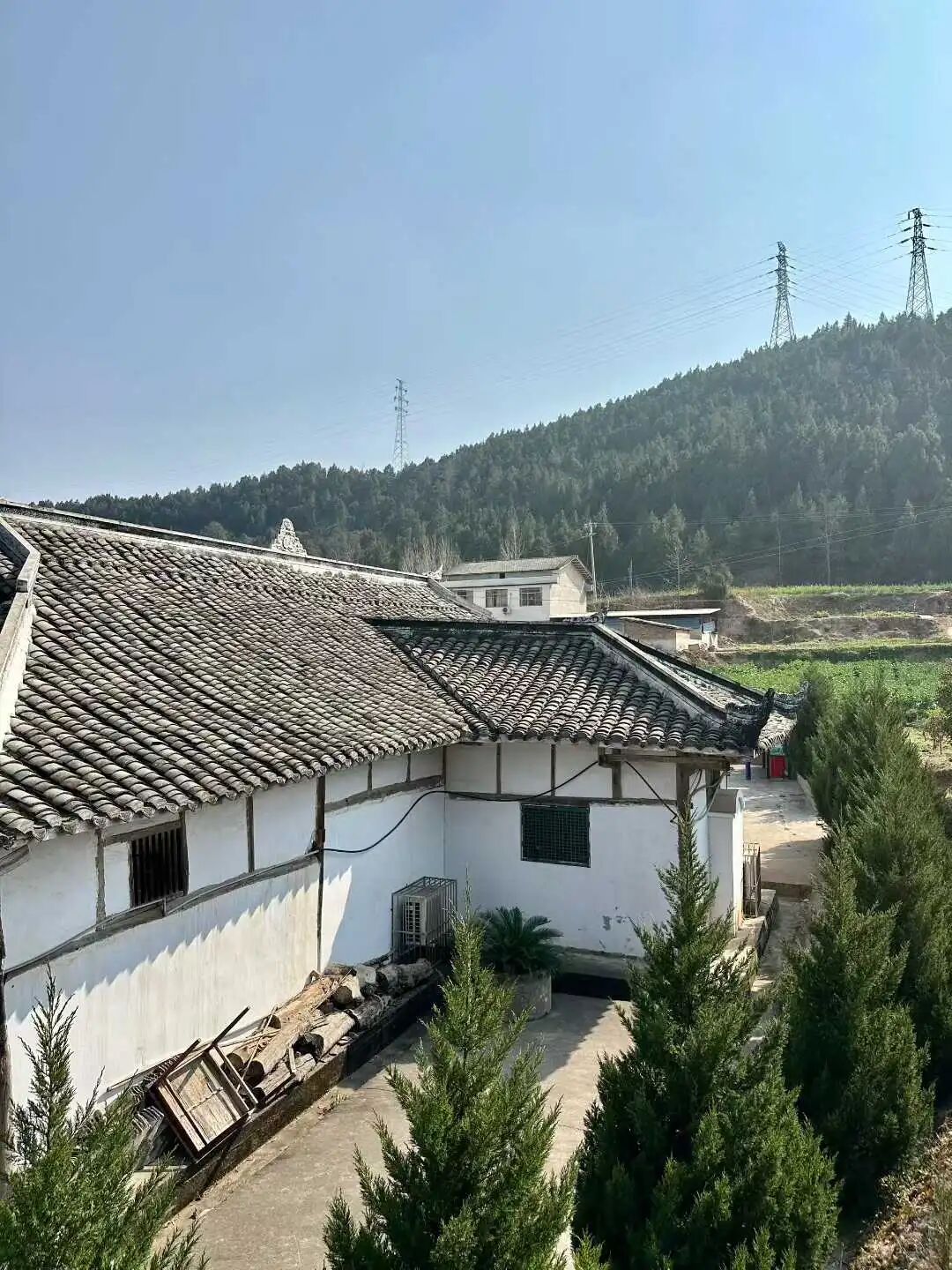
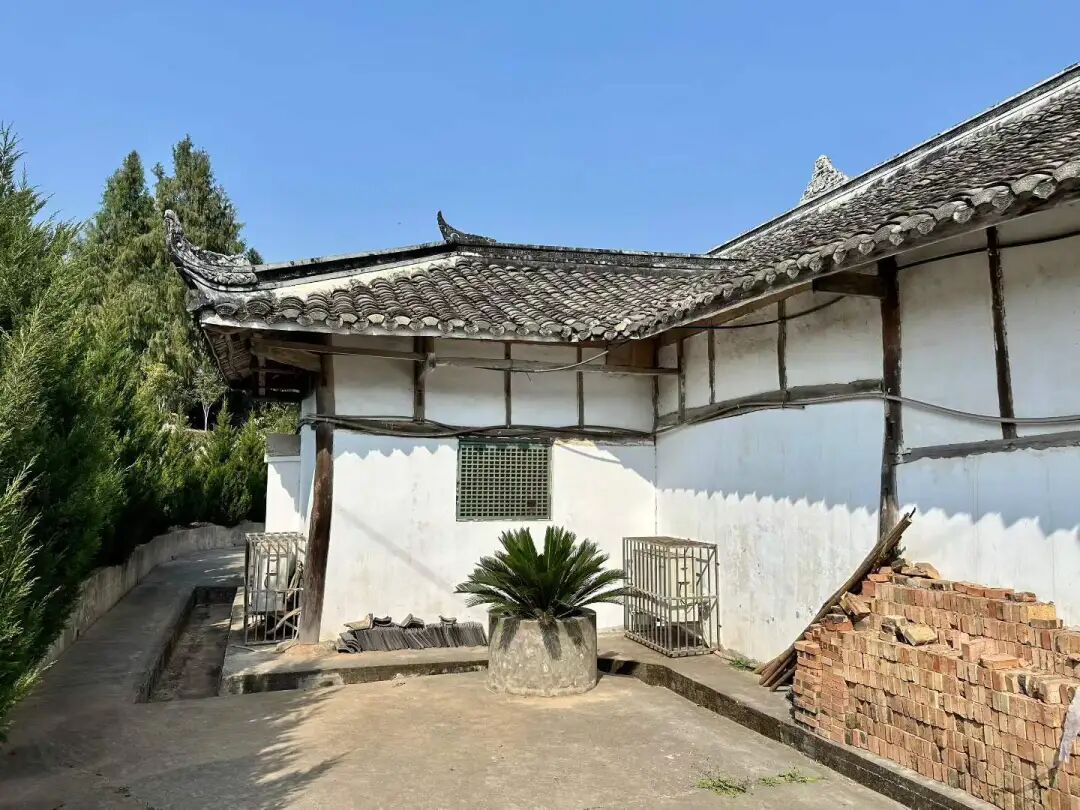
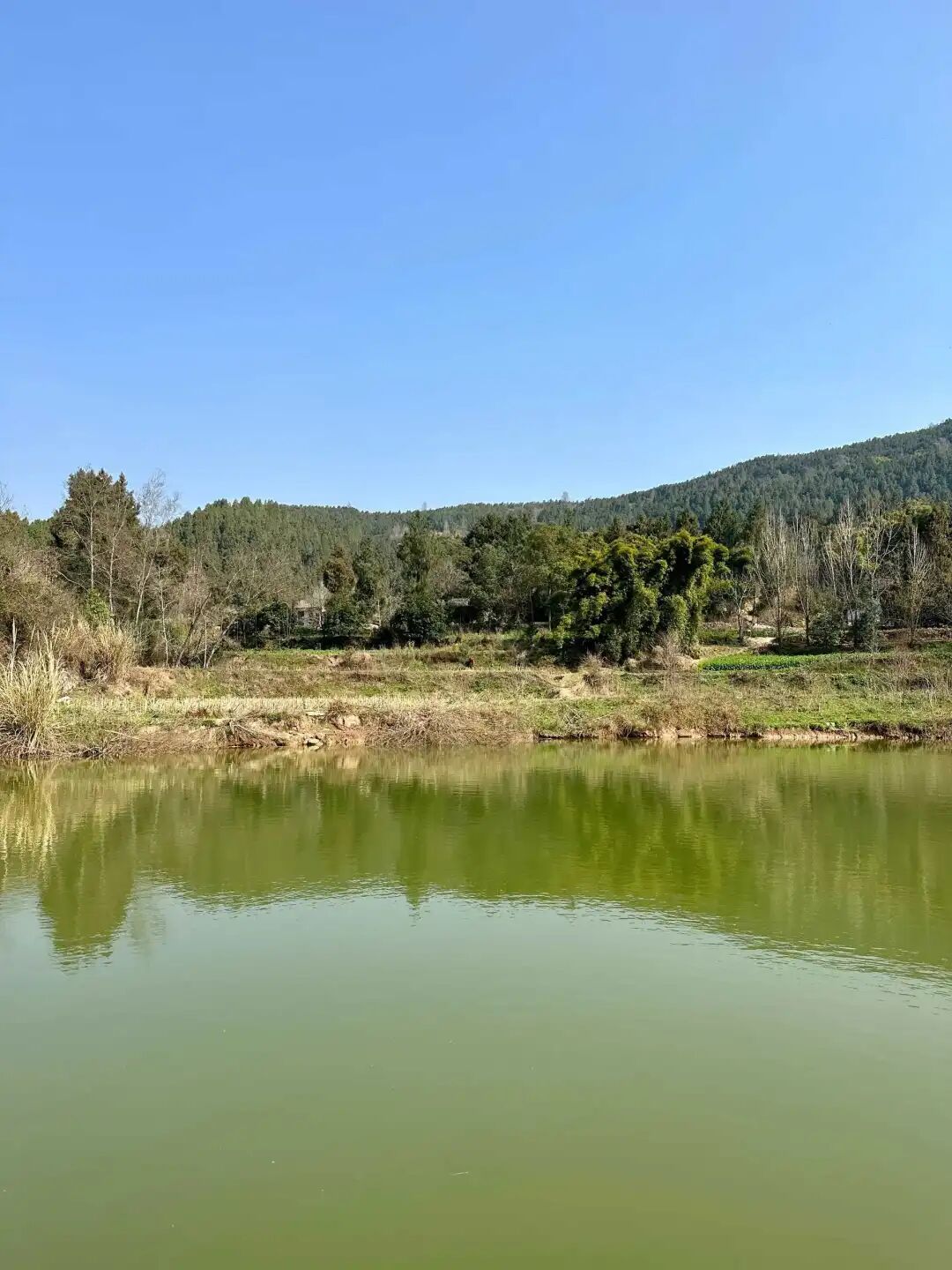
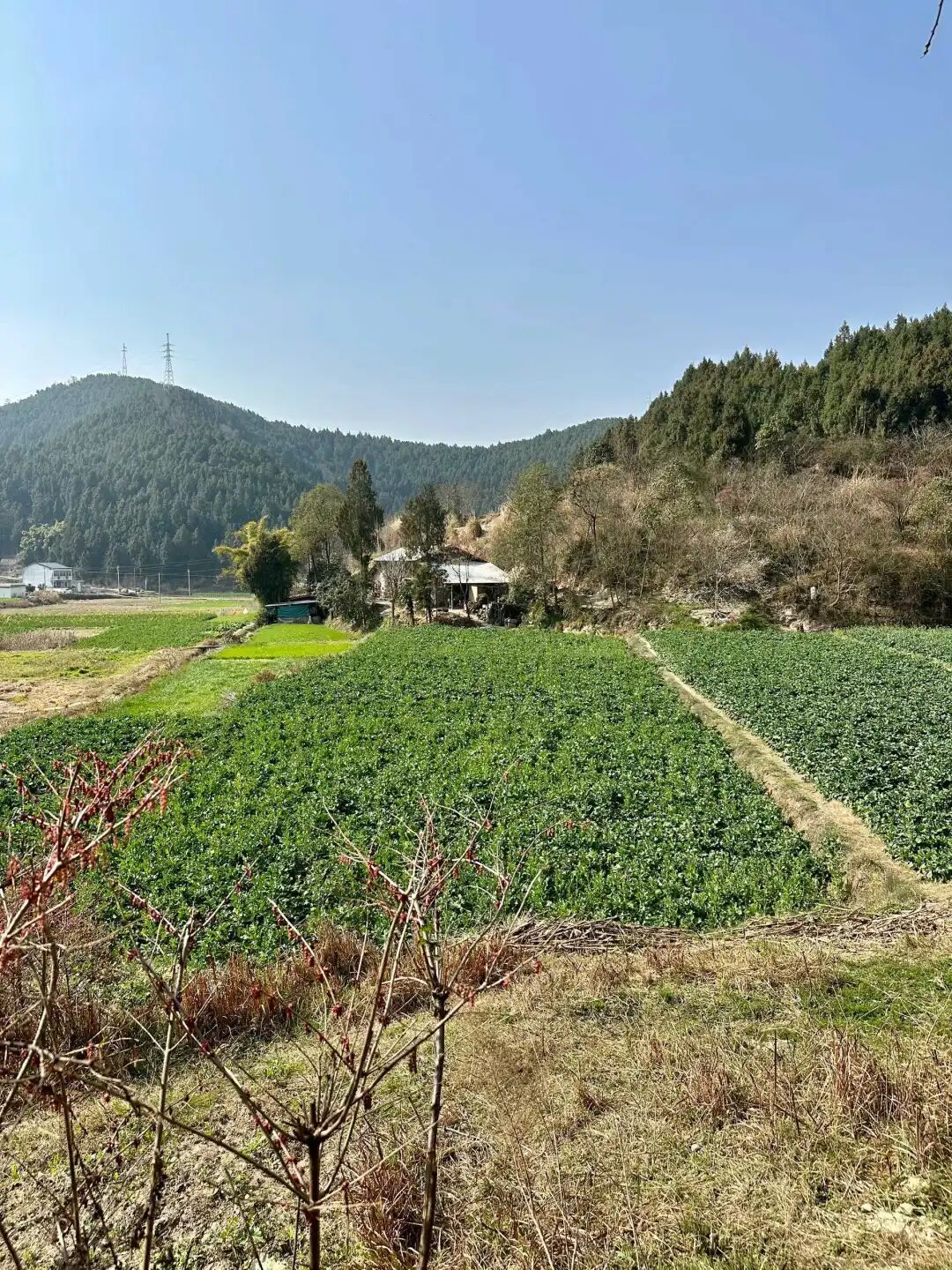
The countryside around Dajiaping is peaceful and quiet. A clear pond reflects the sky, and fields spread out between the hills. It is quiet all around, with only the crisp chirping of birds and the relaxed sounds of cattle and sheep, creating a moving pastoral scene.
Returning from Dajiaping Mosque to Yanting County, I broke my fast at the North Street Mosque. In the evening, hundreds of people came to the mosque to break their fast. Men, women, old, and young gathered together, showing the prosperity of the faith in Yanting. We had radish beef stew, served with crispy flatbread (subing) and rice. Although it was simple, the atmosphere was exceptionally warm and harmonious.
Yanting County Mosque was first built in 1738 (the third year of the Qianlong reign). It was originally located on Xinxie Street next to the Sanbu Liangdong Bridge. In 1796 (the first year of the Jiaqing reign), it moved to its current location at the city gate on Shangbei Street. It was expanded in 1898 and 1947, and rebuilt into its current form in 2006.
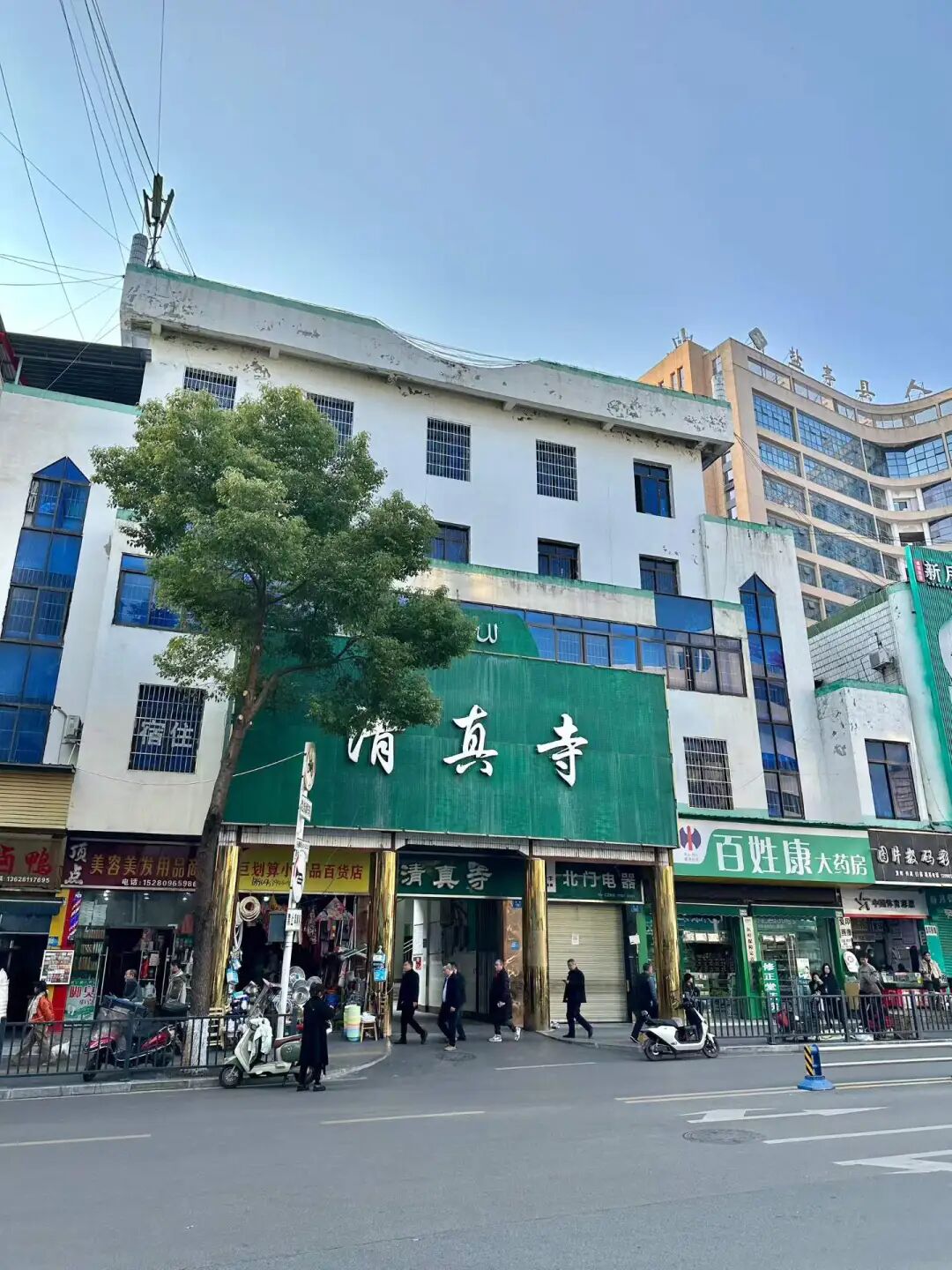
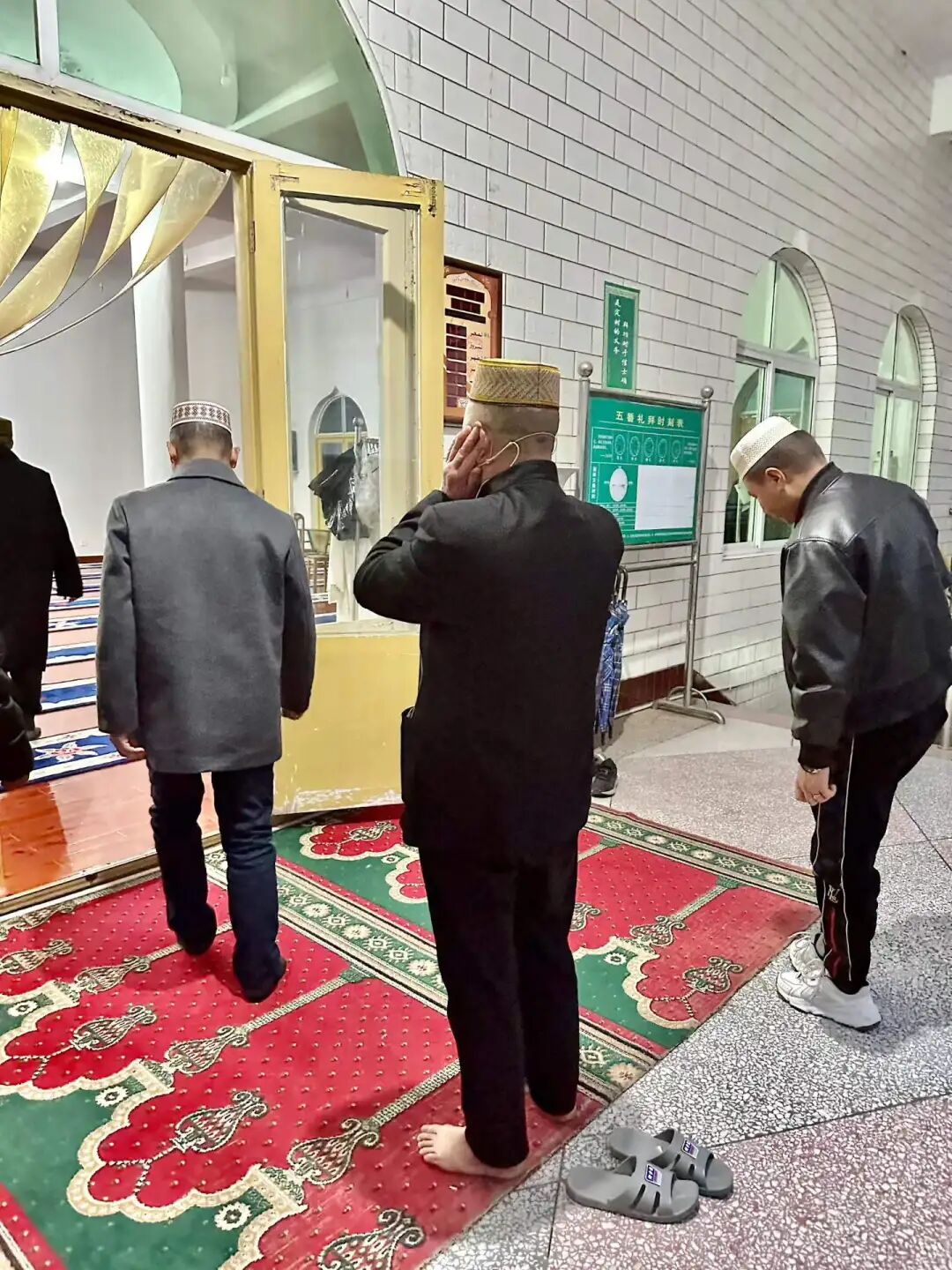
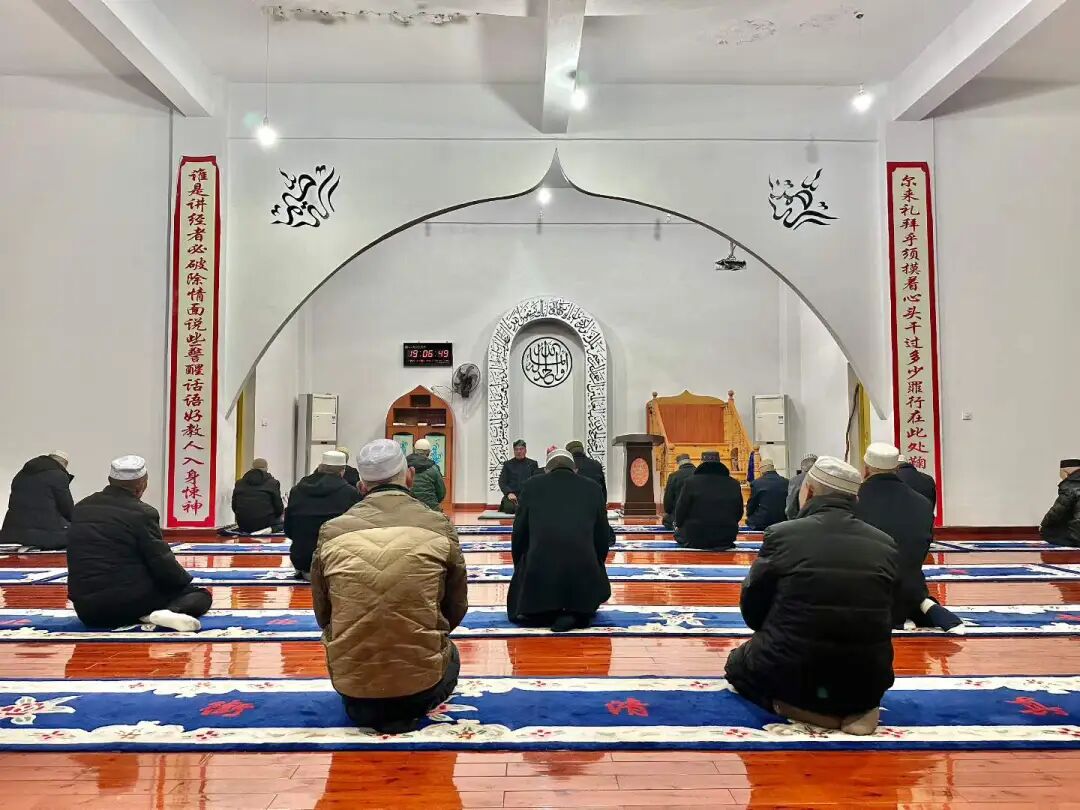
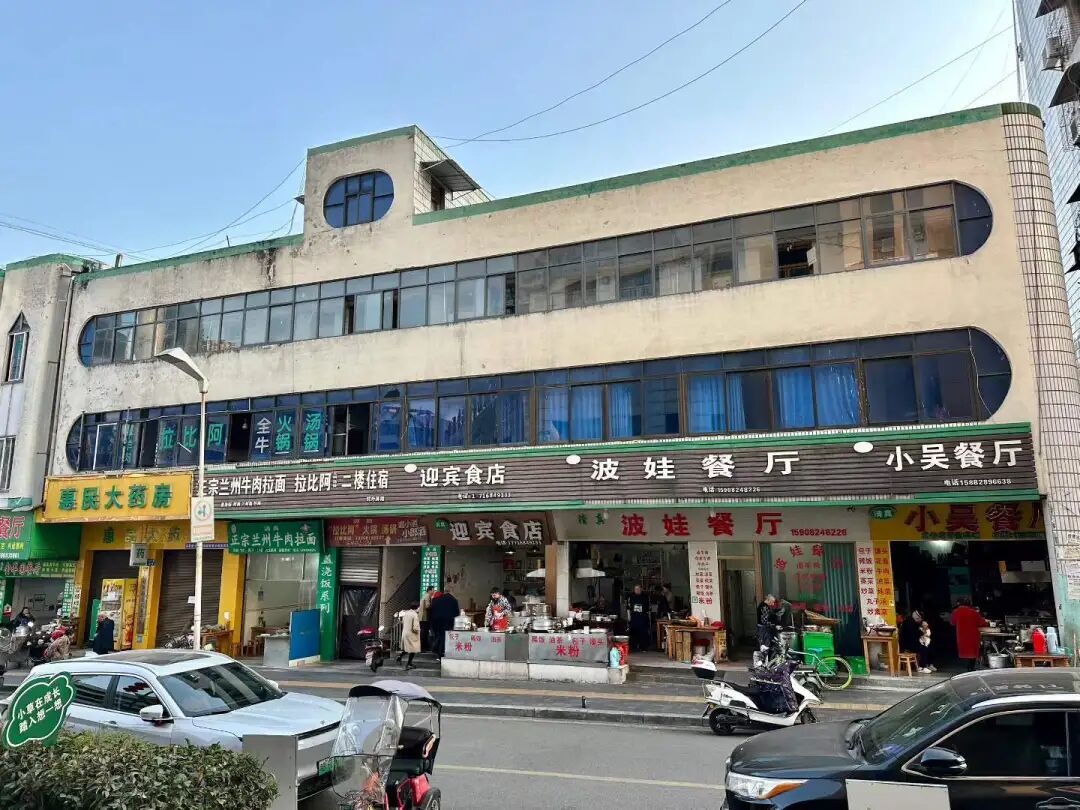
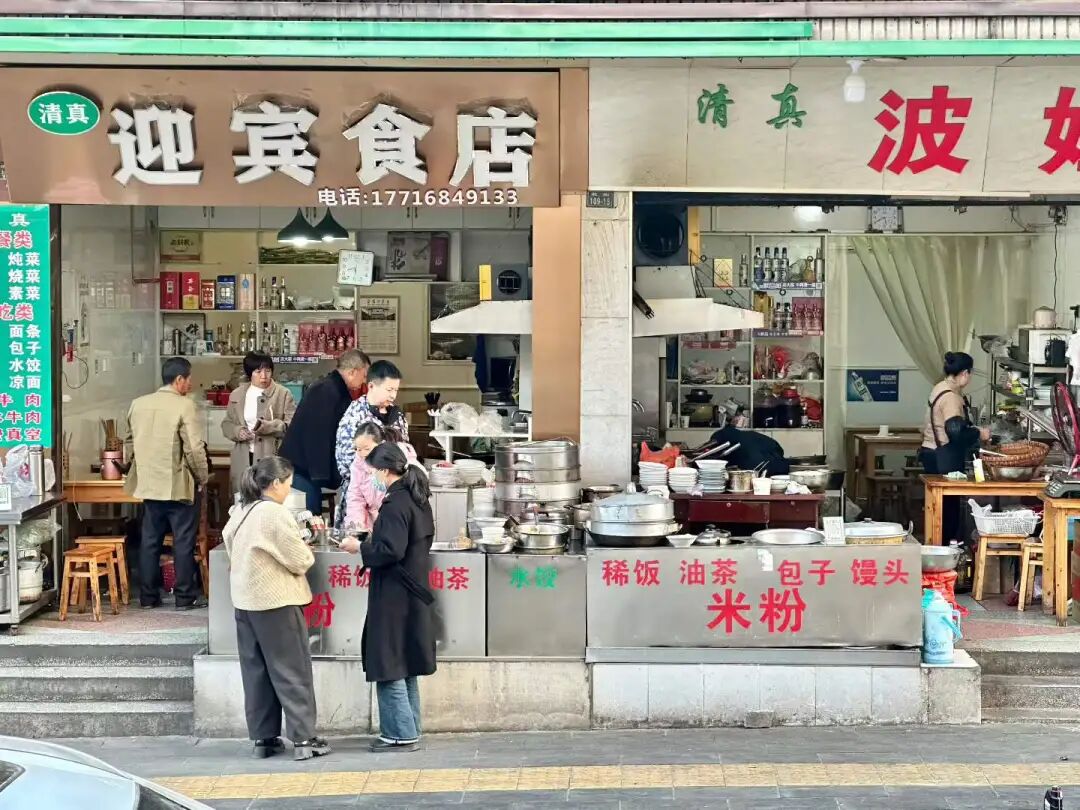
There are many Hui Muslim restaurants near the North Street Mosque in Yanting, especially on Tuanjie Road, which is a 'Hui Muslim food street'. In northern Sichuan, besides Songpan, Yanting is the most convenient place to eat. Even Langzhong does not have as many options as Yanting. Opposite the mosque gate is a shop called 'Benwei Banlu', which sells braised beef, braised chicken feet, and braised duck. The 'Jin's Braised Duck' next door is also very popular. Walking a little further, you reach Tuanjie Road. 'Dehua Kaiyuan Rice Noodles' at the intersection has been open for thirty years. They specialize in bamboo shoot rice noodles, meatball rice noodles, chicken soup rice noodles, and pea and kelp rice noodles. Many people eat there, and they are open early in the morning. Walking into Tuanjie Road, you find many halal restaurants with names like Huixiang Renjia, Huihuixiang, Huiweiju, and Xiaohuimin. They specialize in Sichuan-style braised dishes, stews, stir-fries, steamed beef with rice flour (fenzheng niurou), and beef and mutton hot pots.
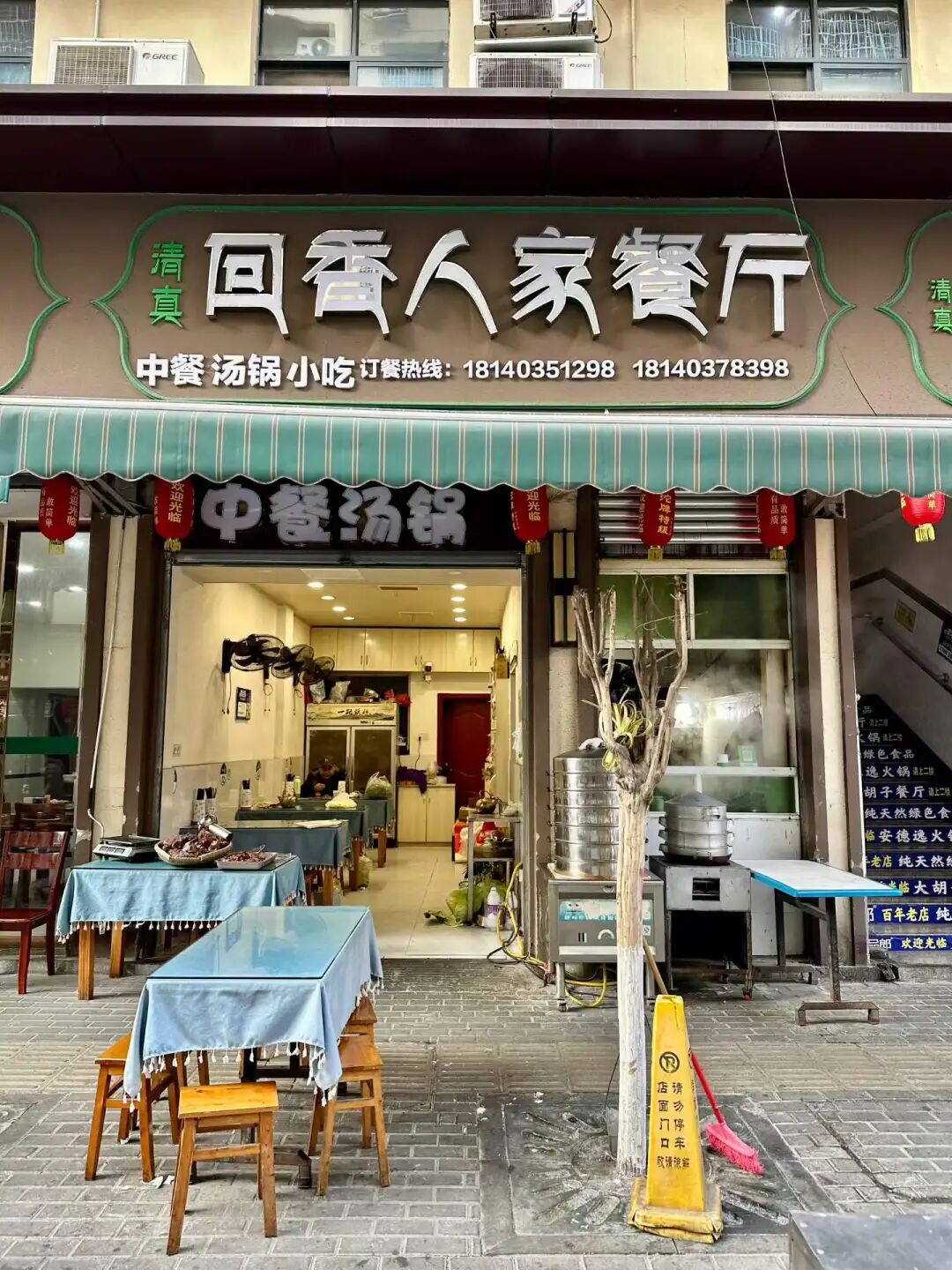
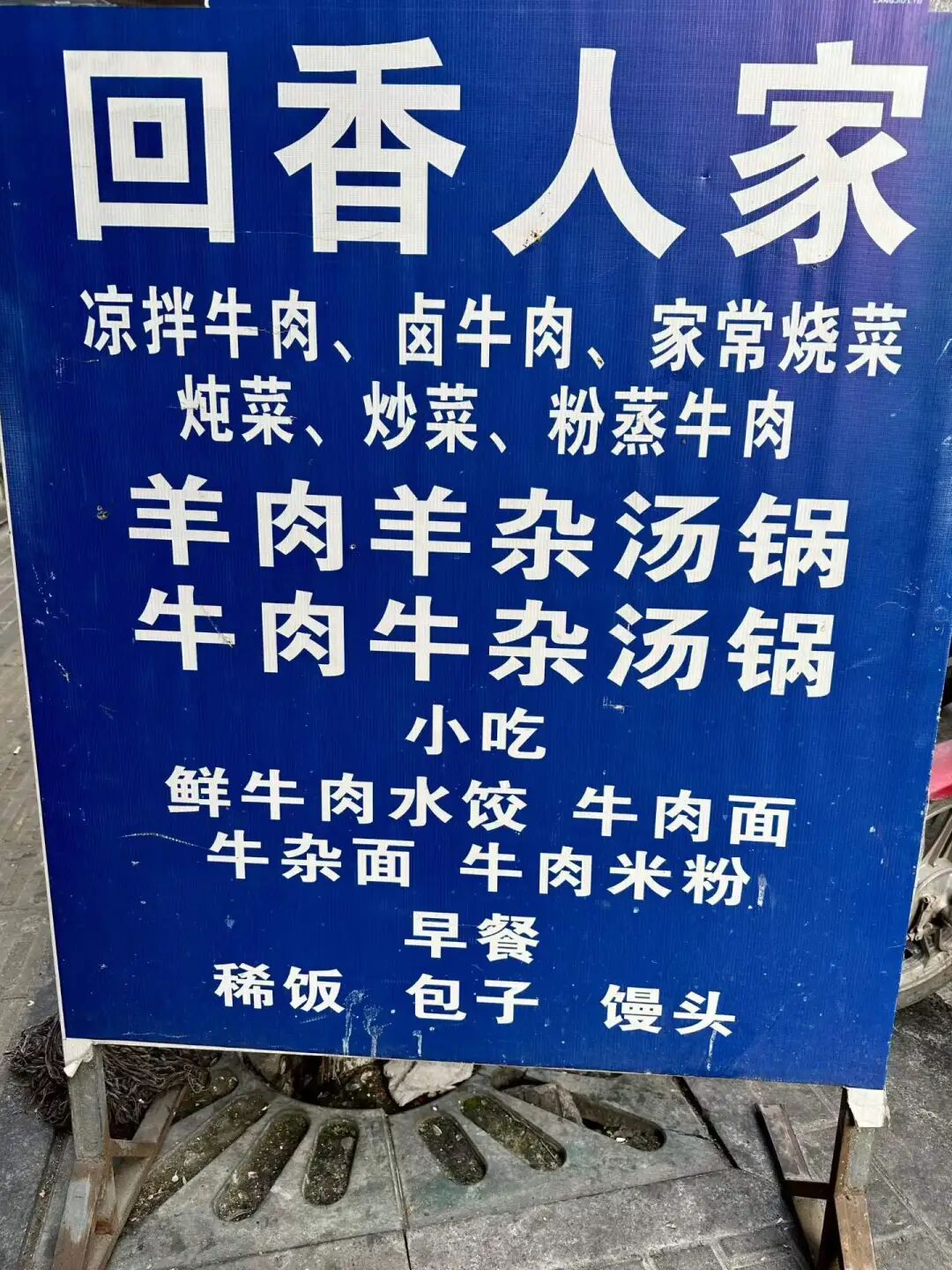
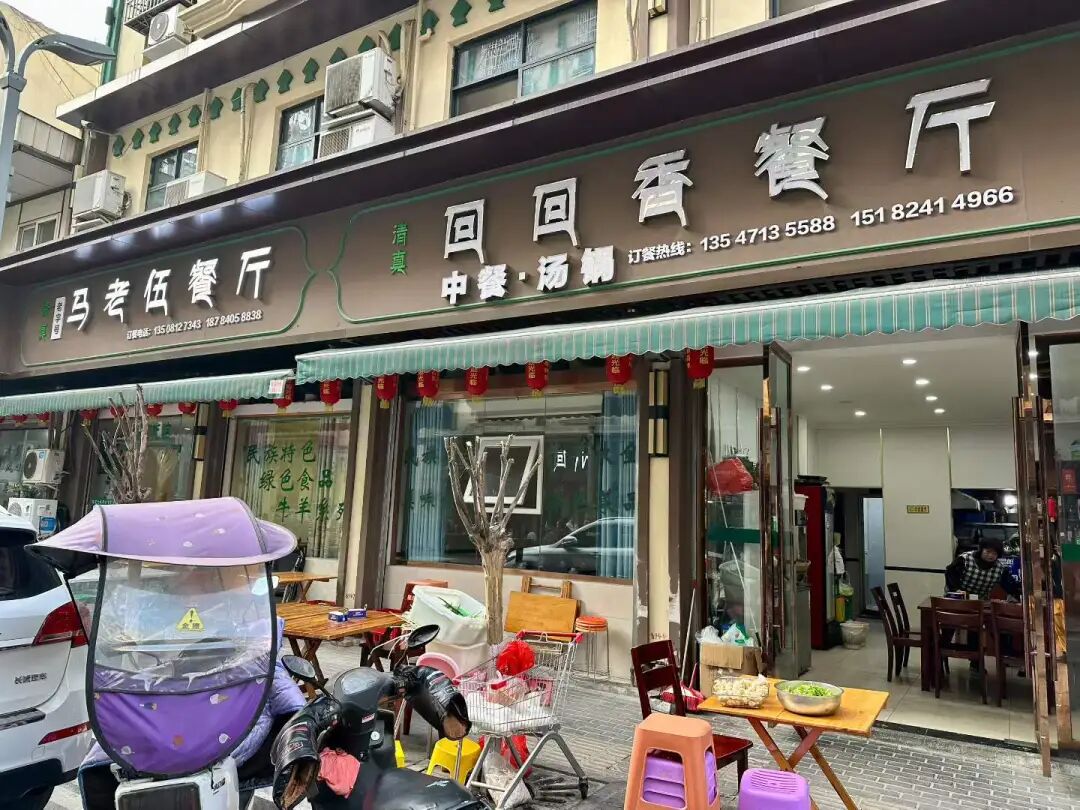
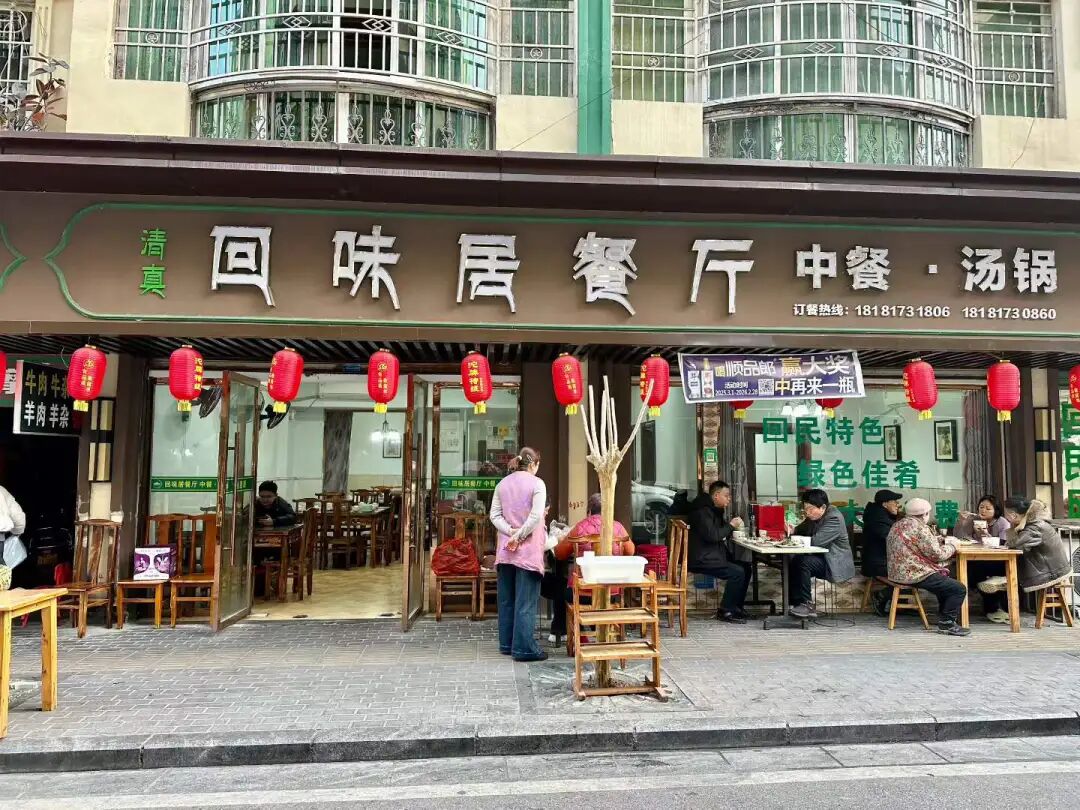
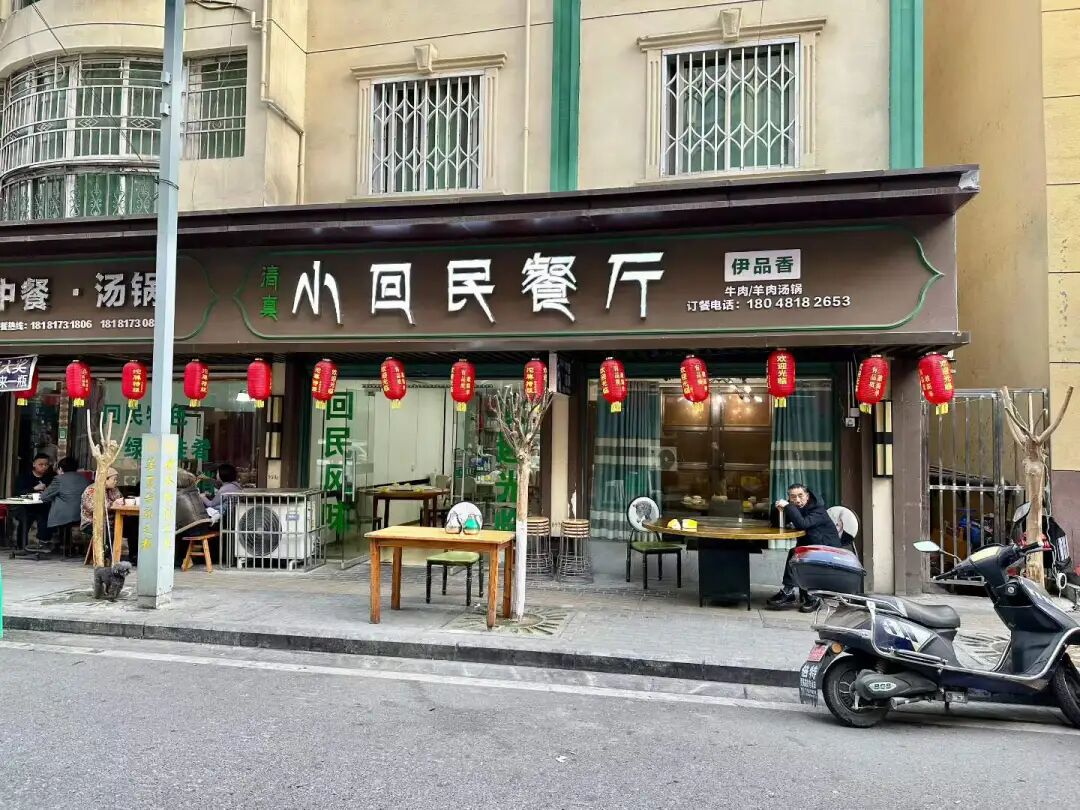
After finishing the Taraweeh prayers, I stopped by Muji Noodle Shop on Tuanjie Road in Yanting for a bowl of spicy hot pot (maocai) to get some vegetables.
Near the North Street Mosque in Yanting, you can find restaurants owned by families named Jin, Mu, and Ma. The Jin family seems especially common, with places like Jin Family All-Beef and Mutton Soup House (Jin Jia Quan Niuyang Tangguan), Jincuiyuan Restaurant, and Little Jin Beef (Xiao Jin Niu). Among the Hui Muslims in Yanting, the main family names are Jiang, Mu, Da, Jin, Ma, and Yang, based on when they first arrived in Sichuan. The Jiang family's ancestral home is Qili Village in Penglai, Shandong. They moved to Sichuan in 1465 (the first year of the Chenghua reign of the Ming Dynasty) when an ancestor became the magistrate of Leshan, and they settled in Yanting after he left office. The Mu family's ancestral home is Mujiaping in Hanzhong, Shaanxi. They moved to Yanting in 1615 (the 43rd year of the Wanli reign). The Da family's ancestral home is Liuhe in Nanjing, Jiangsu. They moved to Yanting in 1644 (the first year of the Shunzhi reign of the Qing Dynasty). The Jin family's ancestral home is Wangjiao Village in Dali, Tongchuan, Shaanxi. They moved to Yanting in 1690 (the 29th year of the Kangxi reign). The Ma family's ancestral home is Weinan, Shaanxi. Their ancestor came to Sichuan during the Revolt of the Three Feudatories, and the family moved to Yanting in 1691 (the 30th year of the Kangxi reign). The Yang family's ancestral home is Shaanxi. They moved to Yanting in 1723 (the first year of the Yongzheng reign).
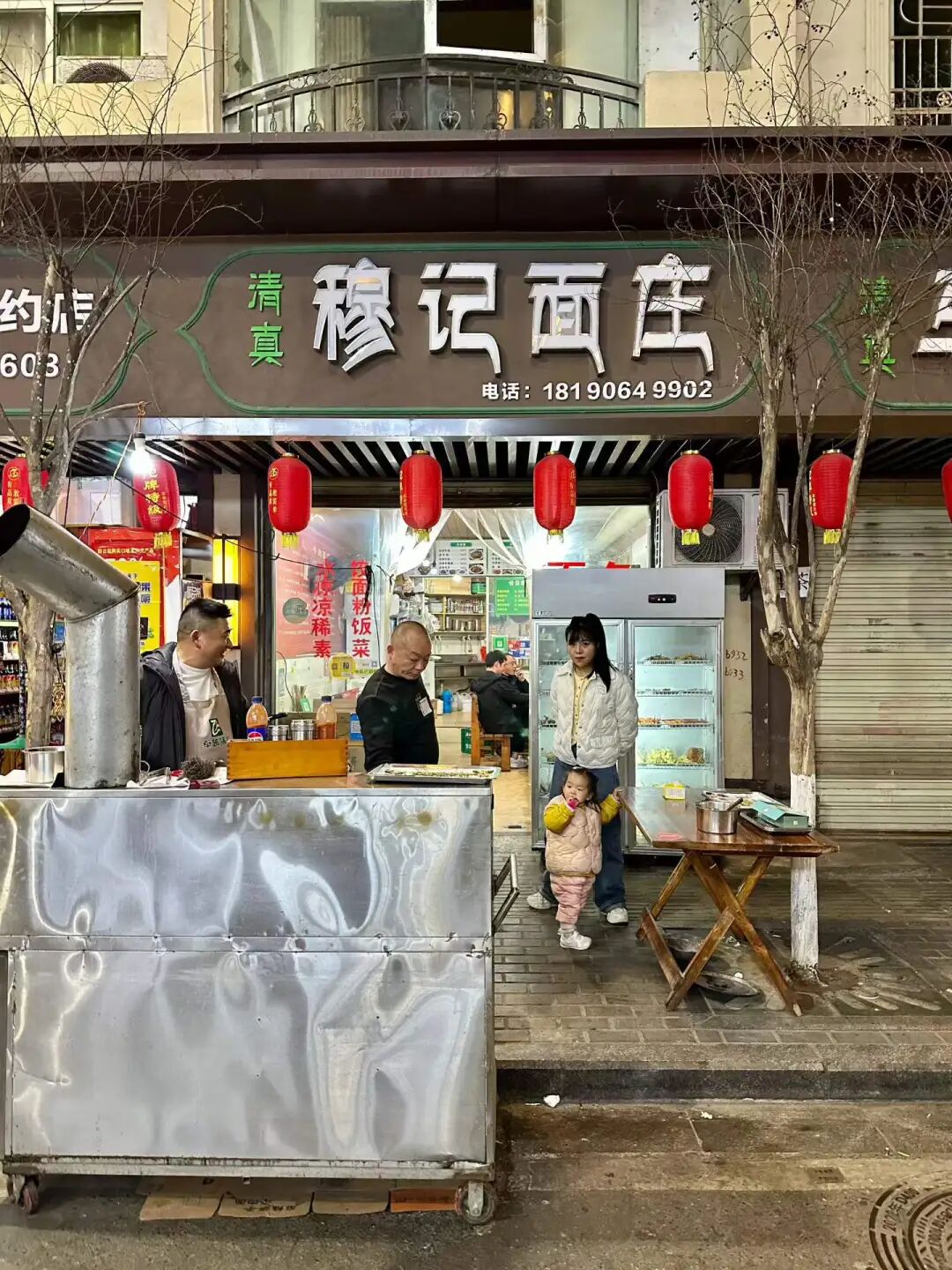
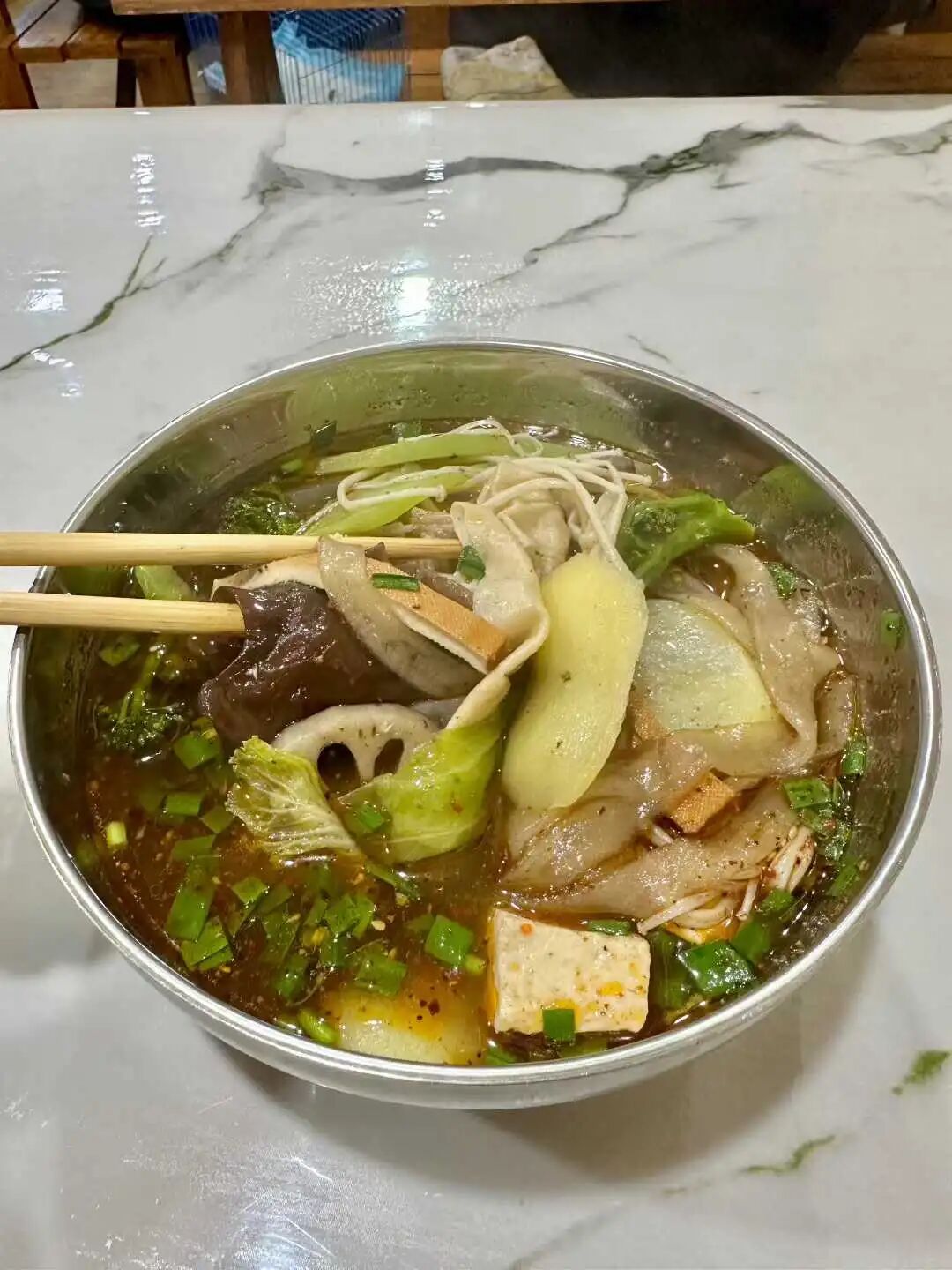
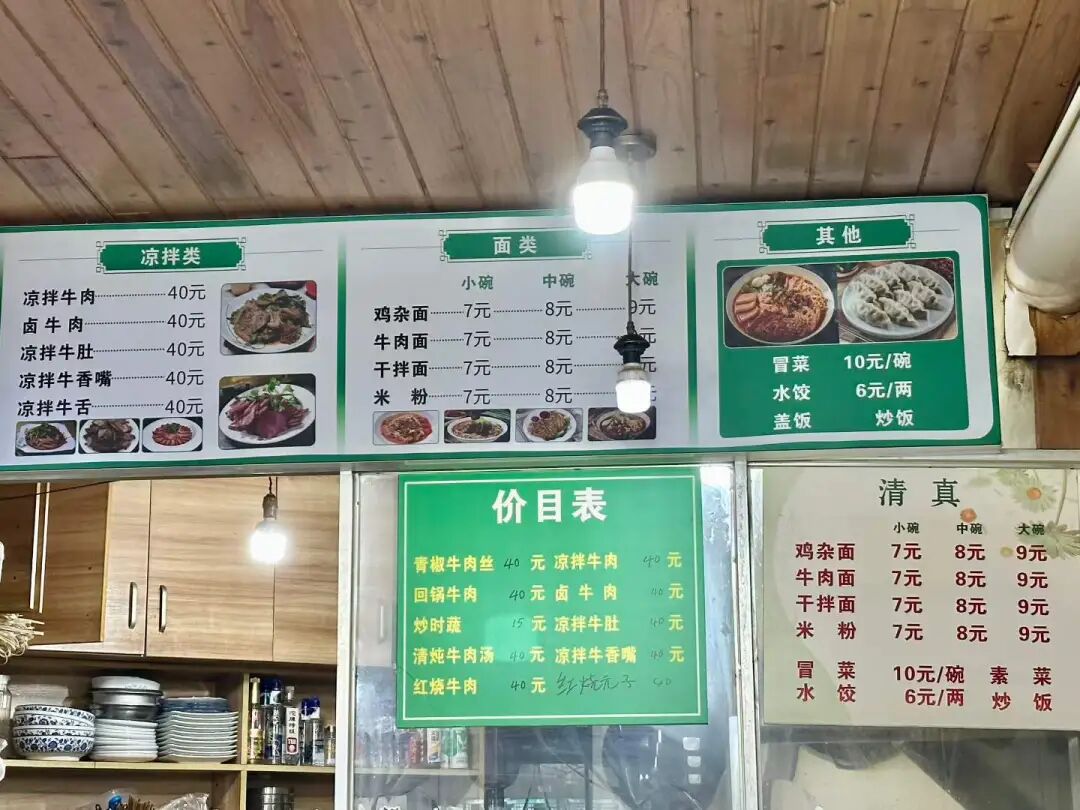
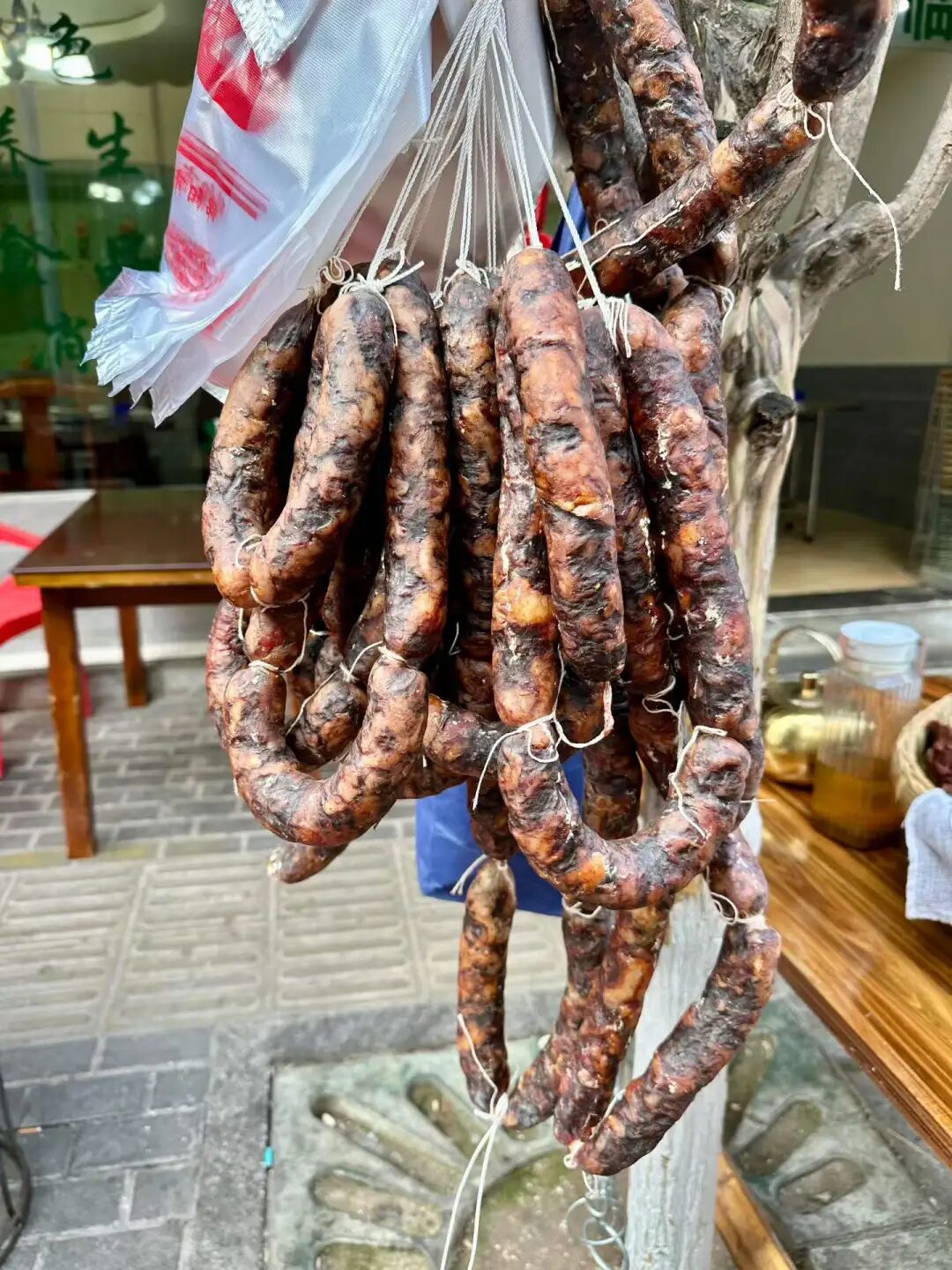
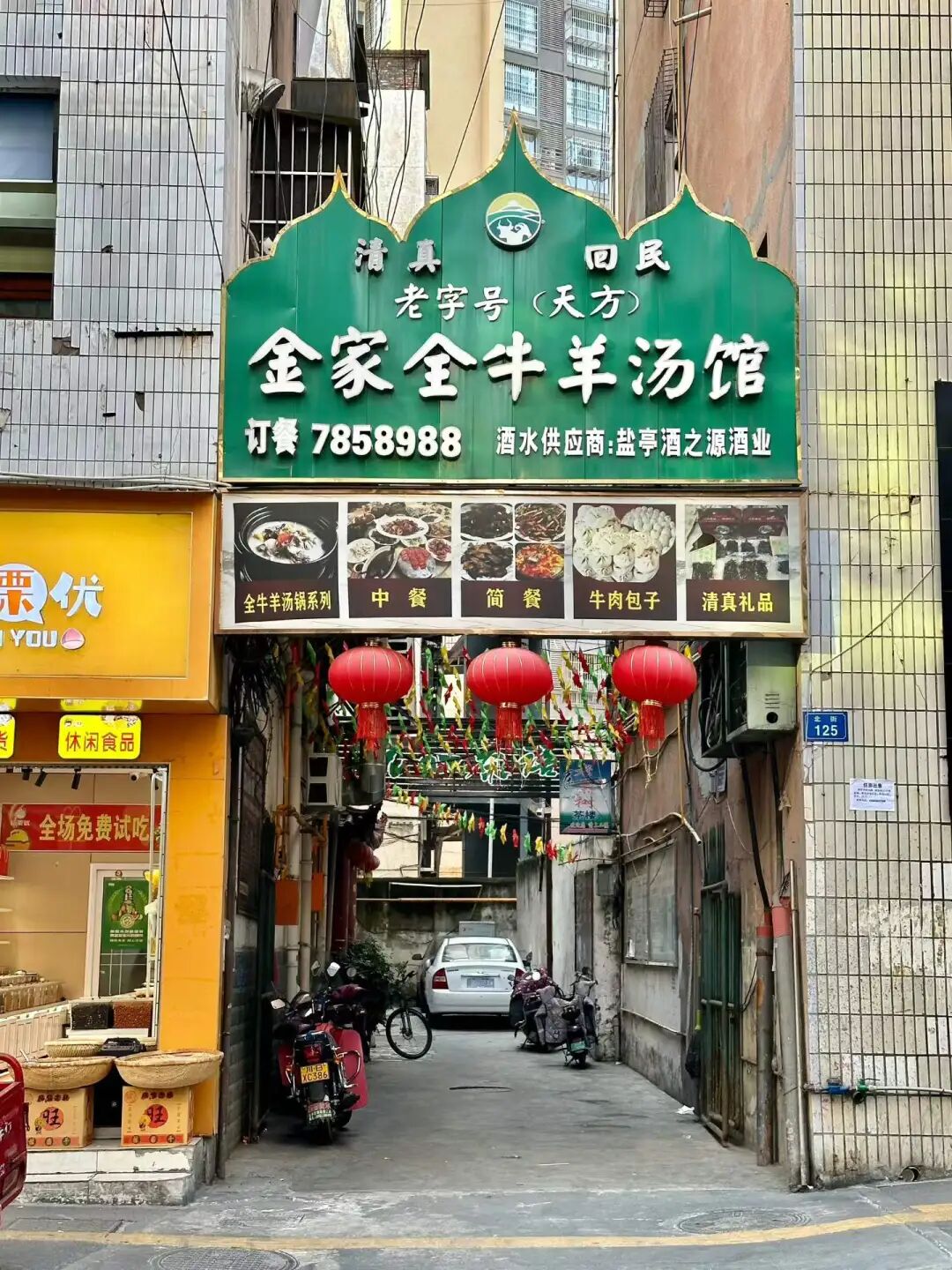
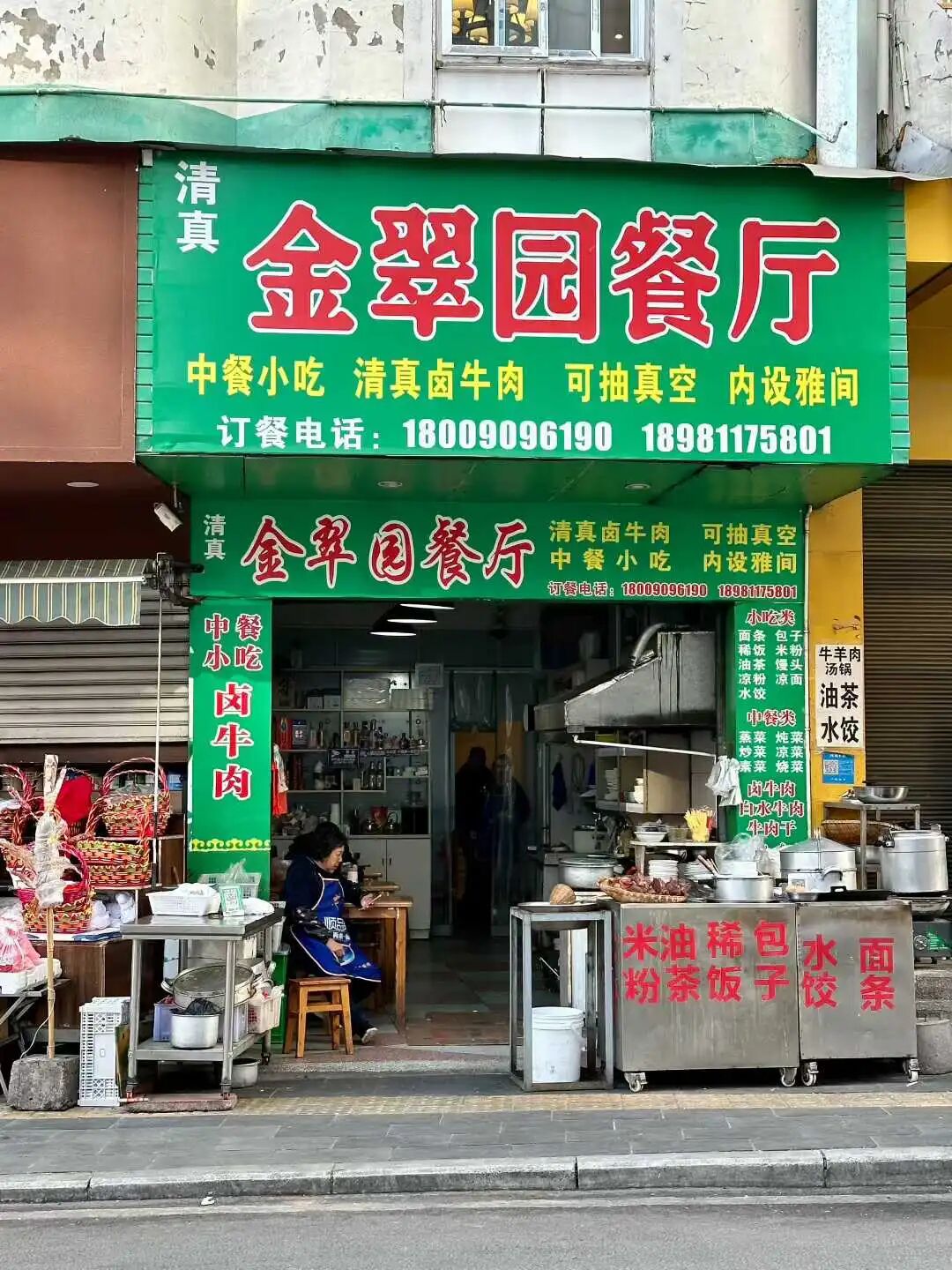
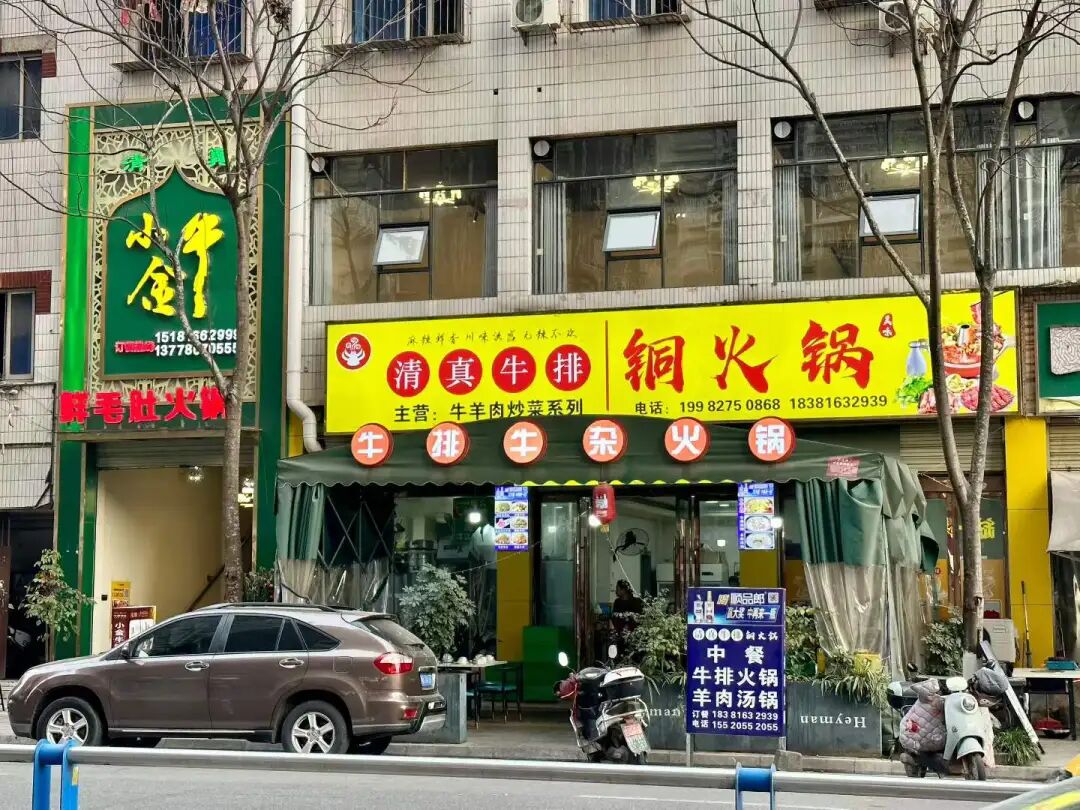
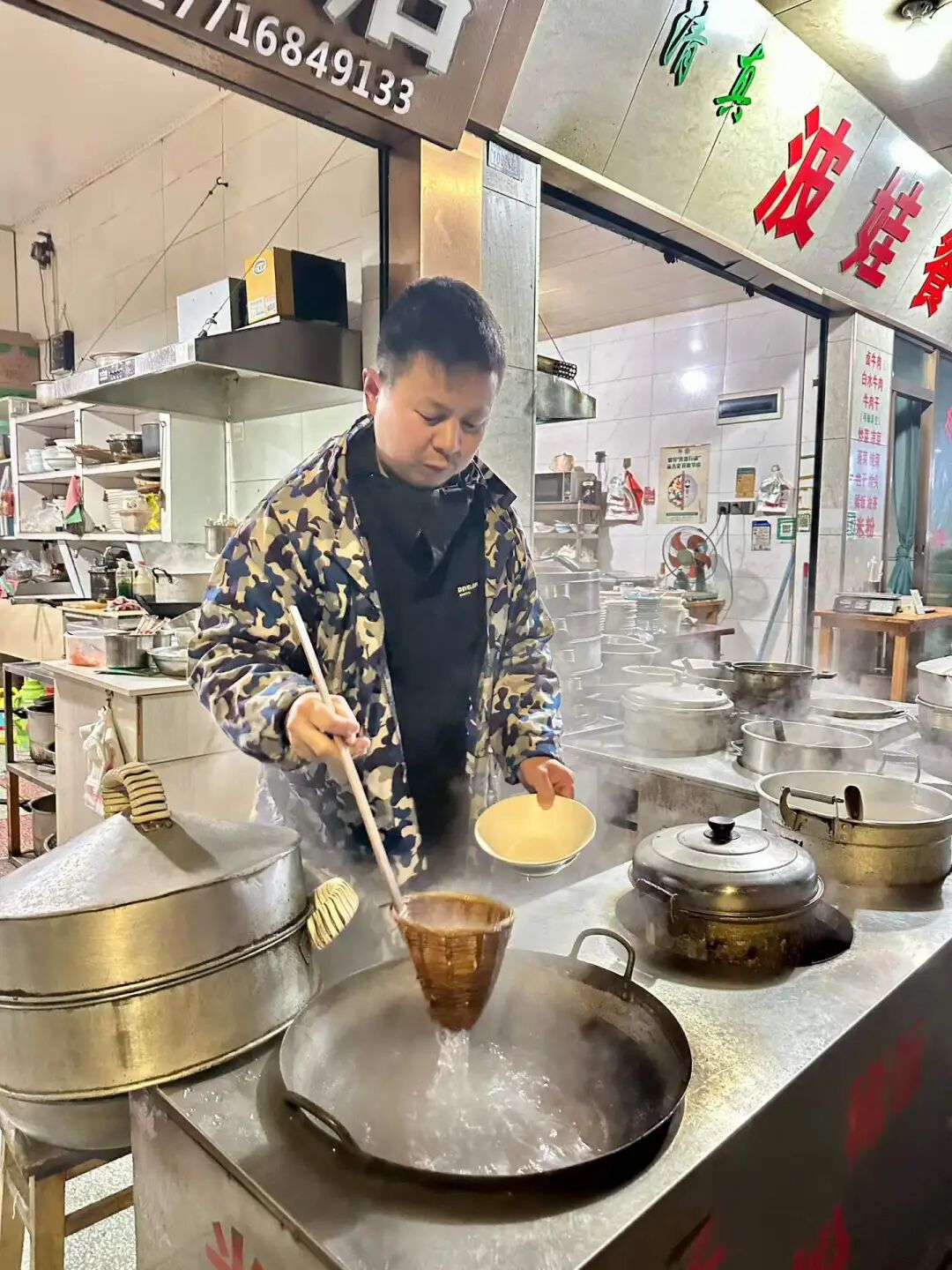
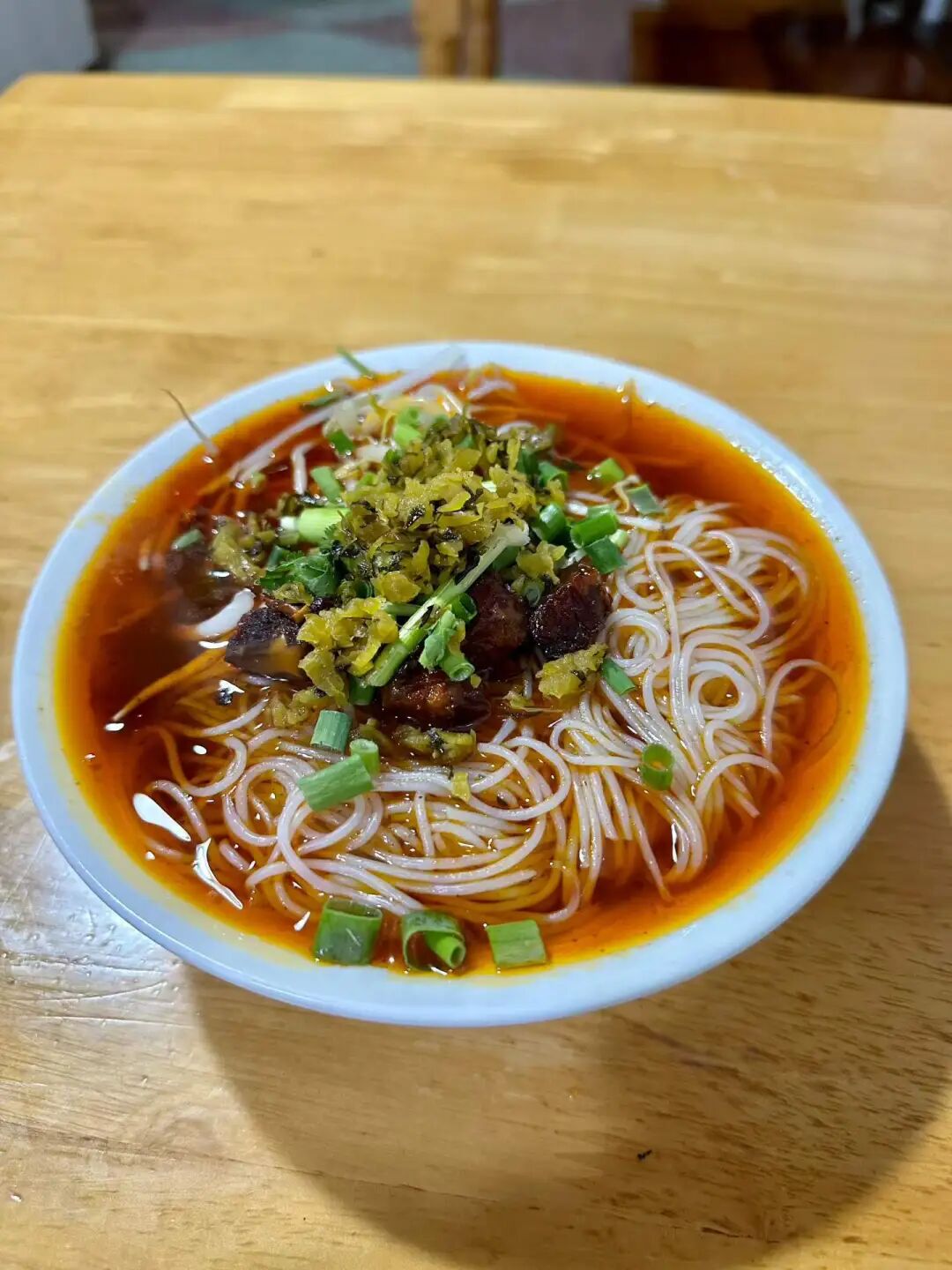
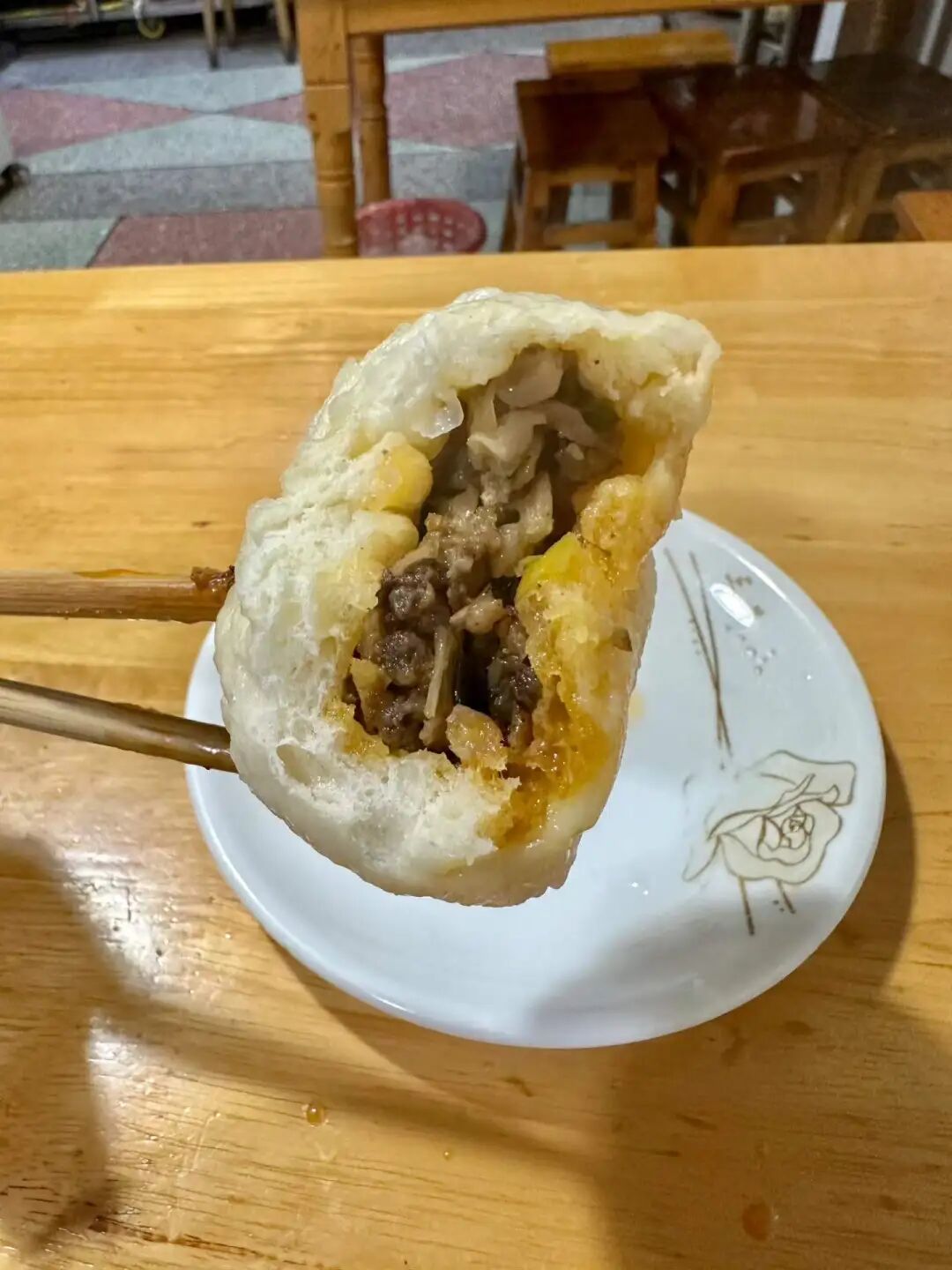
Breakfast starts after 5:00 a.m. near the North Street Mosque in Yanting, which is perfect for eating suhoor. Breakfast here includes steamed buns (baozi), rice porridge (xifan), rice noodles (mifen), and tea-oil porridge (youtiao). I ordered a bowl of rice noodles and a steamed bun. Yanting rice noodles are quite thin. They have a soft, smooth, and slightly chewy texture. They are quickly blanched in boiling water using a bamboo strainer. After draining the water, they are put into a bowl and topped with beef sauce (niurou saozi). The Hui Muslims' beef sauce is made by stir-frying rapeseed oil mixed with beef fat until fragrant, then adding bean paste (doubanjiang) to create a red oil. The beef is firm, flavorful, tender, and not dry. When you eat it, it is spicy, numbing, and rich with a fresh aroma. It is spicy without being harsh, numbing without being bitter, and fresh without being greasy.
Hidden Mosques in Longchang: Neijiang Hui Muslim Community and Sichuan Road Trip
Articles • ali2007fr posted the article • 0 comments • 183 views • 2026-05-21 06:45
Summary: This Longchang stop near Neijiang follows the author into a local mosque and Hui Muslim community, keeping the route, dates, places, and road trip details from the Chinese original.
On February 18, I drove 50 minutes from Fushun to Longchang City, which is almost at the border of Chongqing. There are five mosques (si-fang) for Hui Muslims spread across Longchang City and Rongchang District, right on the border of Sichuan and Chongqing. This area has the strongest religious community in the region. The Hui Muslims in Longchang and Rongchang mainly have the surnames Su, Ma, Cai, Yang, and Hai. Most of their ancestors moved here from Macheng in Hubei and Shaoyang in Hunan during the Kangxi reign of the Qing Dynasty as part of the 'Huguang fills Sichuan' migration. They first settled in Yinjia Dam in Longchang, then gradually spread to Longchang's city center, Jieshi Town, Shunhe Town in the Dongxing District of Neijiang City, and Qingliu Town in the Rongchang District of Chongqing.
Longchang Mosque is located at the south end of the bridge in Jine Town in the city center. It was built in 1878 (the fourth year of the Guangxu reign) after Yang Dachang and Ye Shaosheng raised funds to buy the land. The main hall was expanded in 1957, and it was rebuilt into the current building between 1995 and 1996. The imam (ahong) at the mosque is from Xichang. It turns out he is a relative of the imam at Qinggang Mosque in Renshou, whom I visited just two days ago. The imams from Xichang play a vital role in keeping the faith alive in Sichuan.
I prayed my first Tarawih of Ramadan at Longchang Mosque. This was the first time I had met so many local elders since I started visiting mosques in southern Sichuan. The names of the elders who will provide the iftar meals each day are already listed on the blackboard in the mosque, which shows that the community spirit here is quite good.
On February 19, the imam at Longchang Mosque in Sichuan invited me to have my first suhoor of Ramadan. We had pressed duck (banya), sour soup fish, stir-fried beef with two types of peppers, pea shoots, and baby bok choy. It was a delicious mix of meat and vegetables. The skin of the pressed duck was fragrant and the meat was firm. It was salty, flavorful, and tasted better the more you chewed. The sour soup fish was clean and refreshing. The stir-fried beef with two types of peppers was a classic Sichuan-style dish, and the shredded beef was very tender. Pea shoots are a seasonal vegetable in Sichuan during winter, and they were sweet and crisp. I chatted with the imam's family at the time. After I got back, I found out that the imam's daughter and I had actually known each other on Douban a long time ago. It really is a small world.
There are several Hui Muslim restaurants next to Longchang Mosque that serve stir-fried dishes, beef offal hot pot, and beef soup. I will definitely try them if I come back. view all
Summary: This Longchang stop near Neijiang follows the author into a local mosque and Hui Muslim community, keeping the route, dates, places, and road trip details from the Chinese original.
On February 18, I drove 50 minutes from Fushun to Longchang City, which is almost at the border of Chongqing. There are five mosques (si-fang) for Hui Muslims spread across Longchang City and Rongchang District, right on the border of Sichuan and Chongqing. This area has the strongest religious community in the region. The Hui Muslims in Longchang and Rongchang mainly have the surnames Su, Ma, Cai, Yang, and Hai. Most of their ancestors moved here from Macheng in Hubei and Shaoyang in Hunan during the Kangxi reign of the Qing Dynasty as part of the 'Huguang fills Sichuan' migration. They first settled in Yinjia Dam in Longchang, then gradually spread to Longchang's city center, Jieshi Town, Shunhe Town in the Dongxing District of Neijiang City, and Qingliu Town in the Rongchang District of Chongqing.
Longchang Mosque is located at the south end of the bridge in Jine Town in the city center. It was built in 1878 (the fourth year of the Guangxu reign) after Yang Dachang and Ye Shaosheng raised funds to buy the land. The main hall was expanded in 1957, and it was rebuilt into the current building between 1995 and 1996. The imam (ahong) at the mosque is from Xichang. It turns out he is a relative of the imam at Qinggang Mosque in Renshou, whom I visited just two days ago. The imams from Xichang play a vital role in keeping the faith alive in Sichuan.
I prayed my first Tarawih of Ramadan at Longchang Mosque. This was the first time I had met so many local elders since I started visiting mosques in southern Sichuan. The names of the elders who will provide the iftar meals each day are already listed on the blackboard in the mosque, which shows that the community spirit here is quite good.
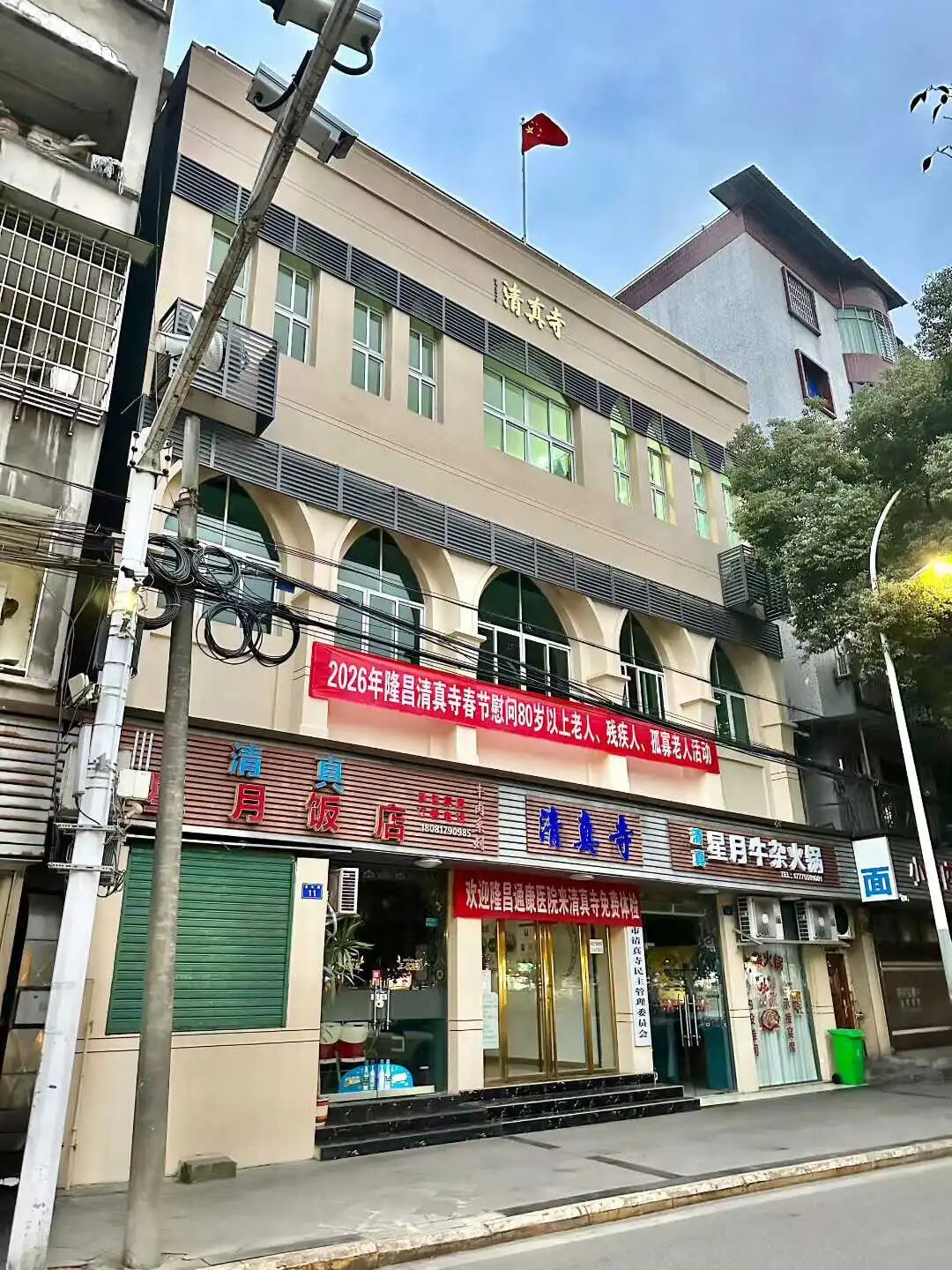
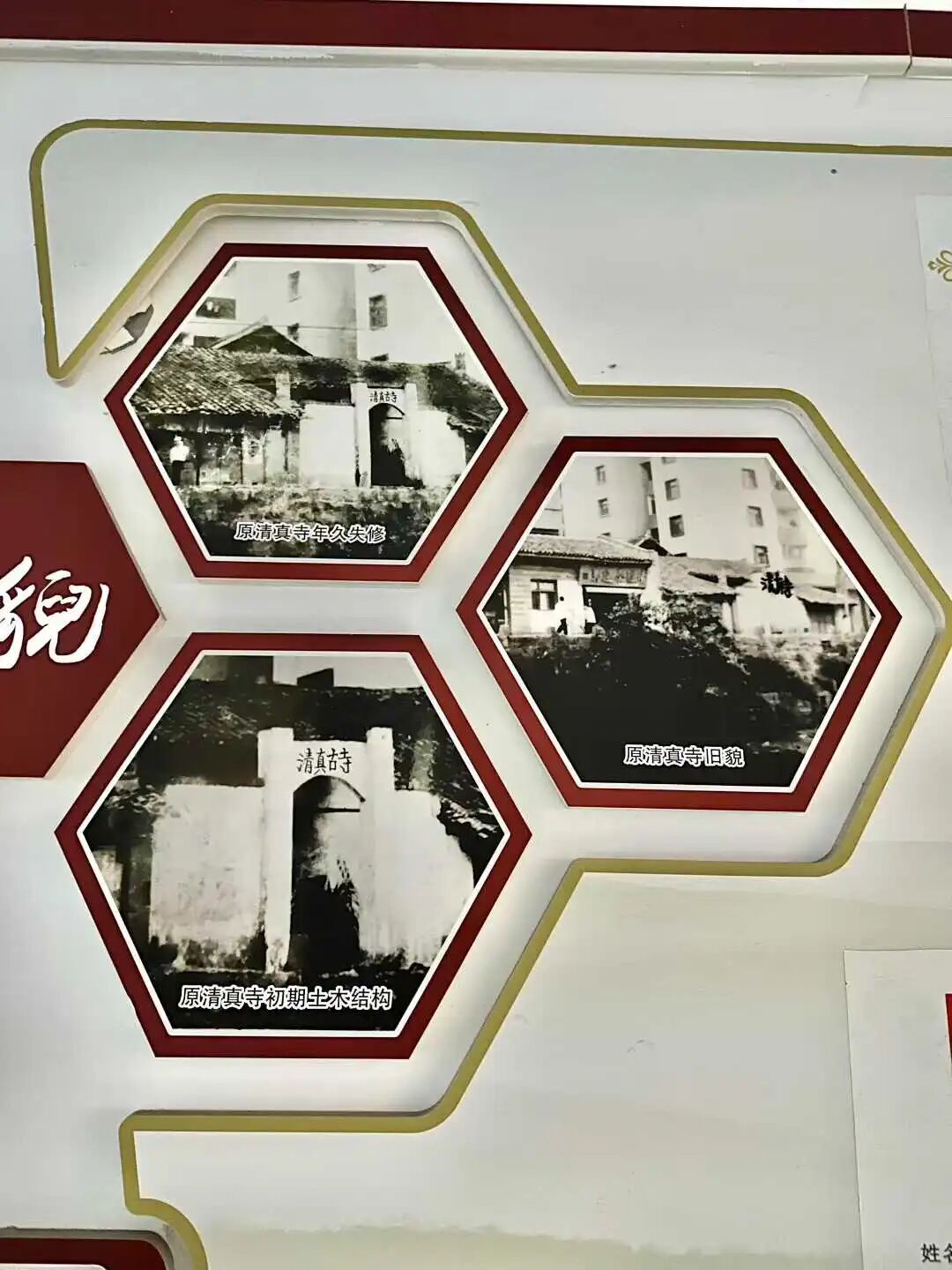
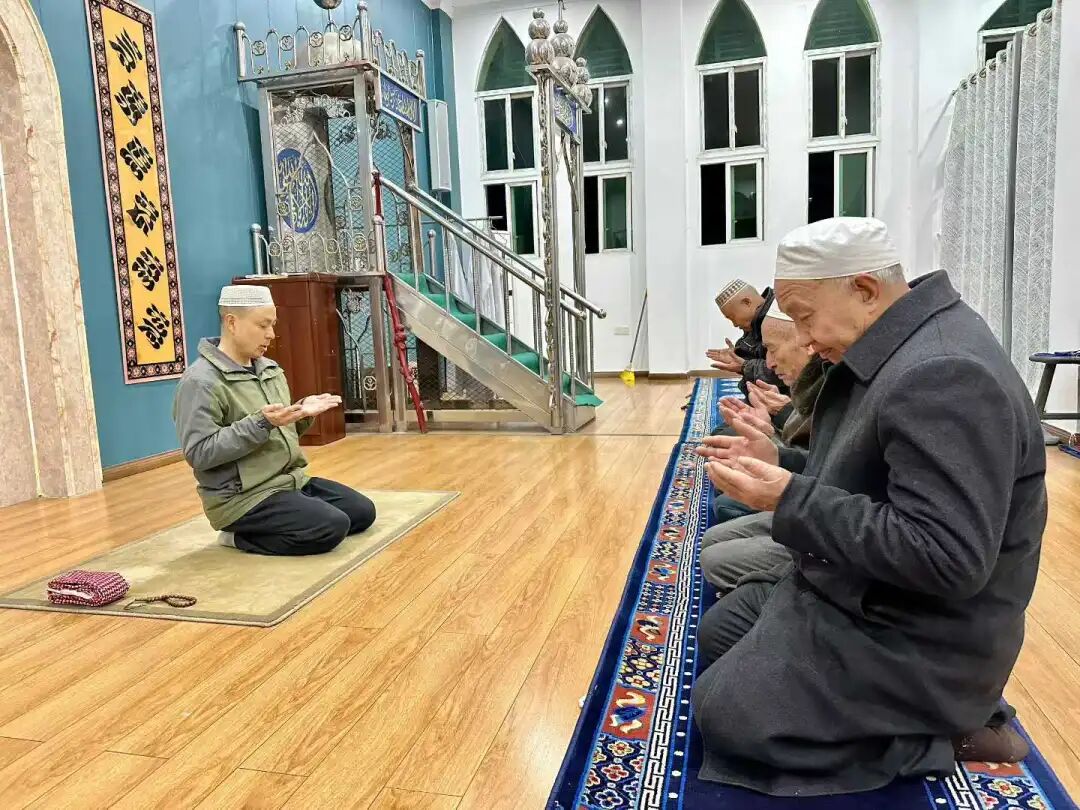
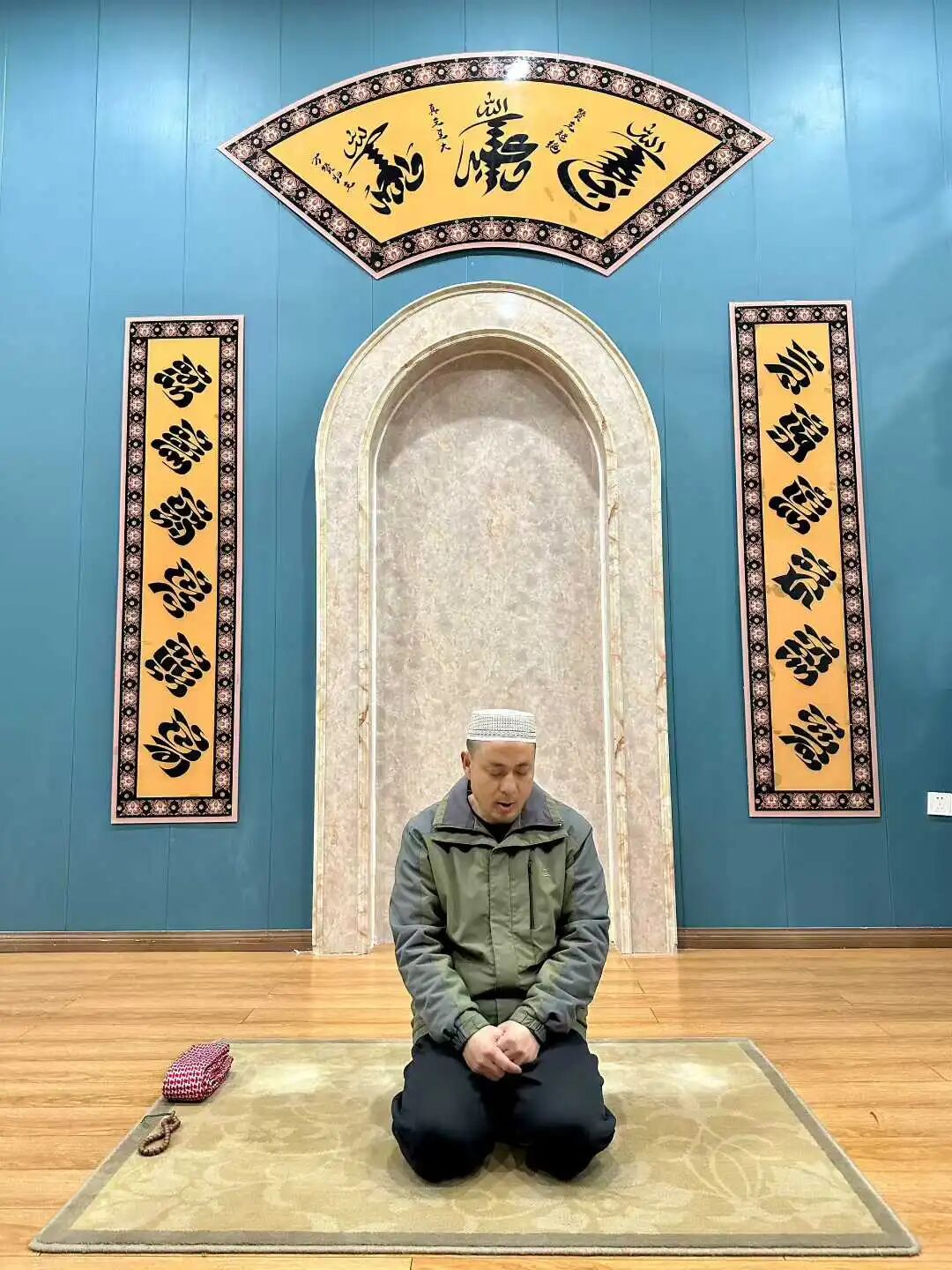
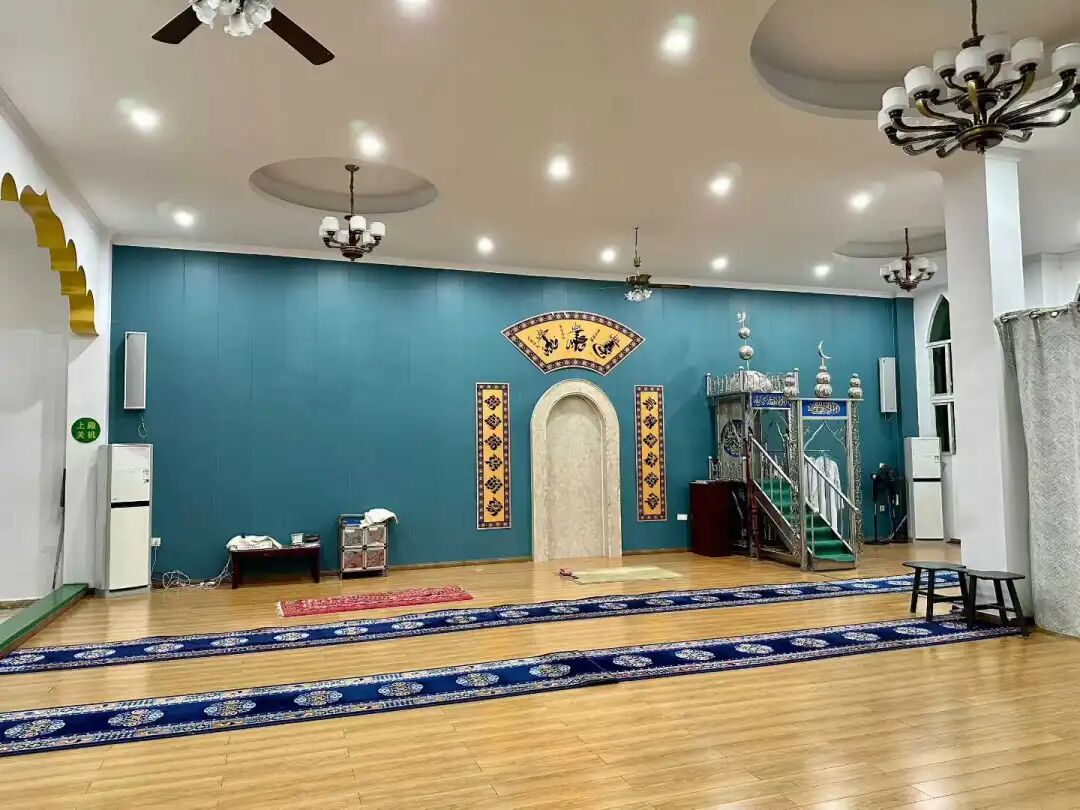
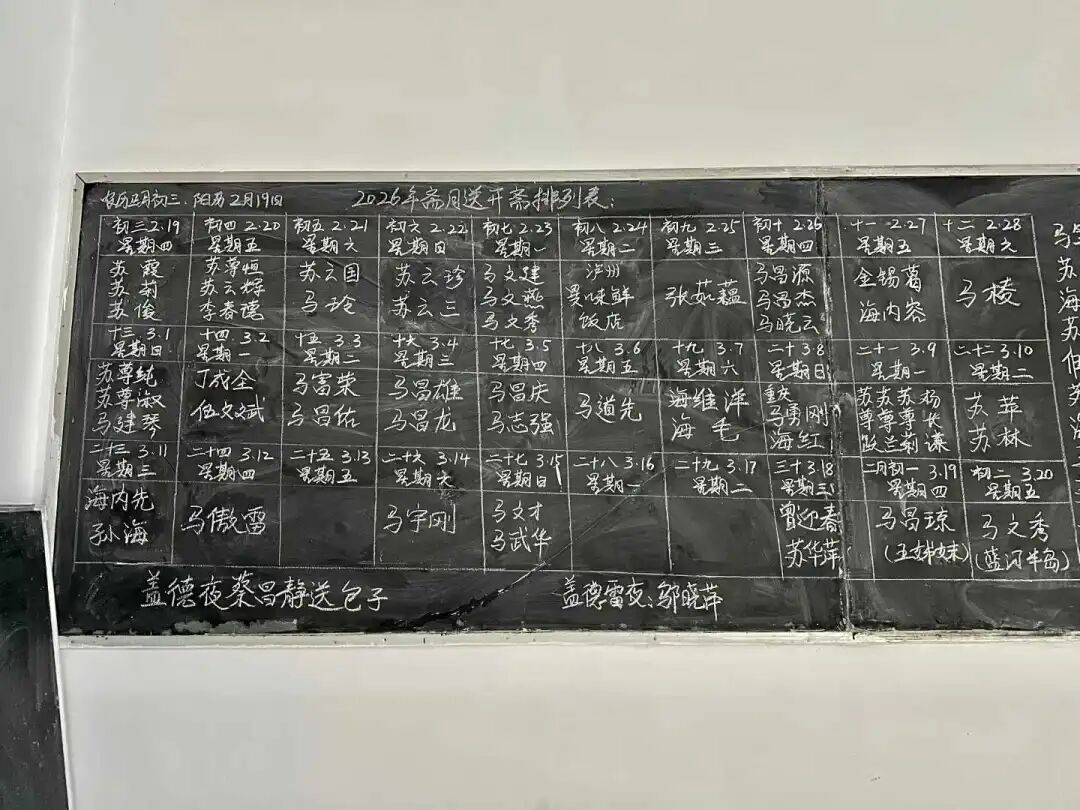
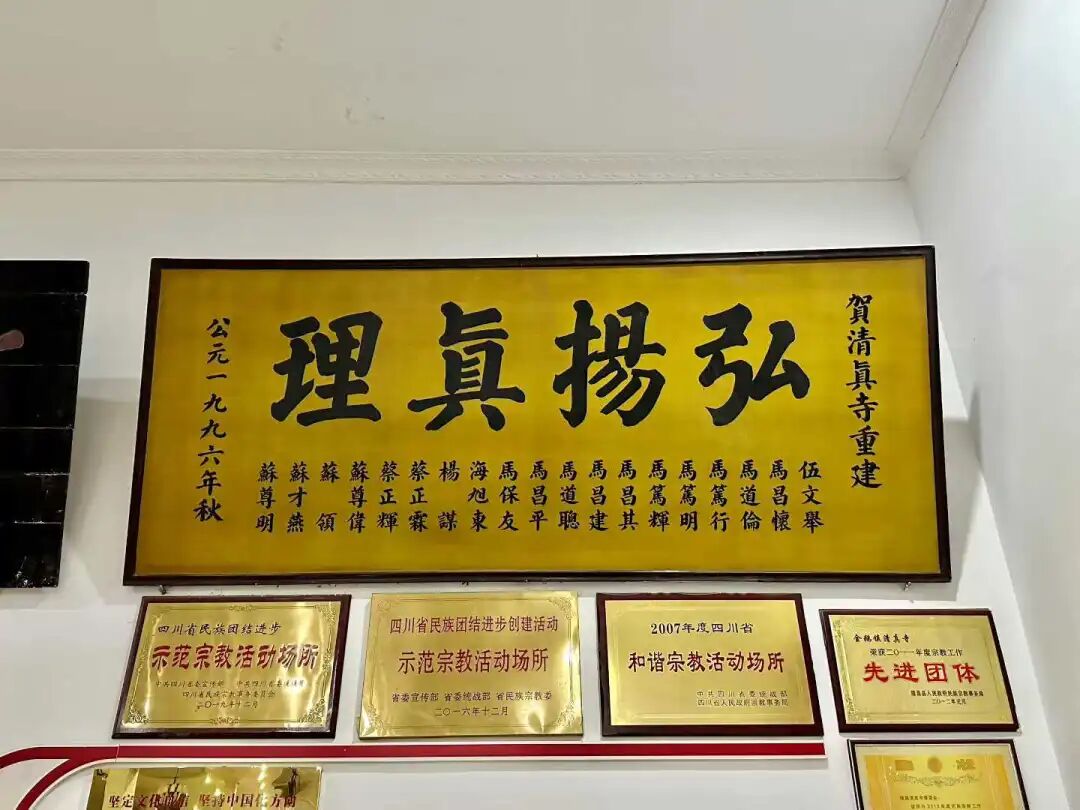
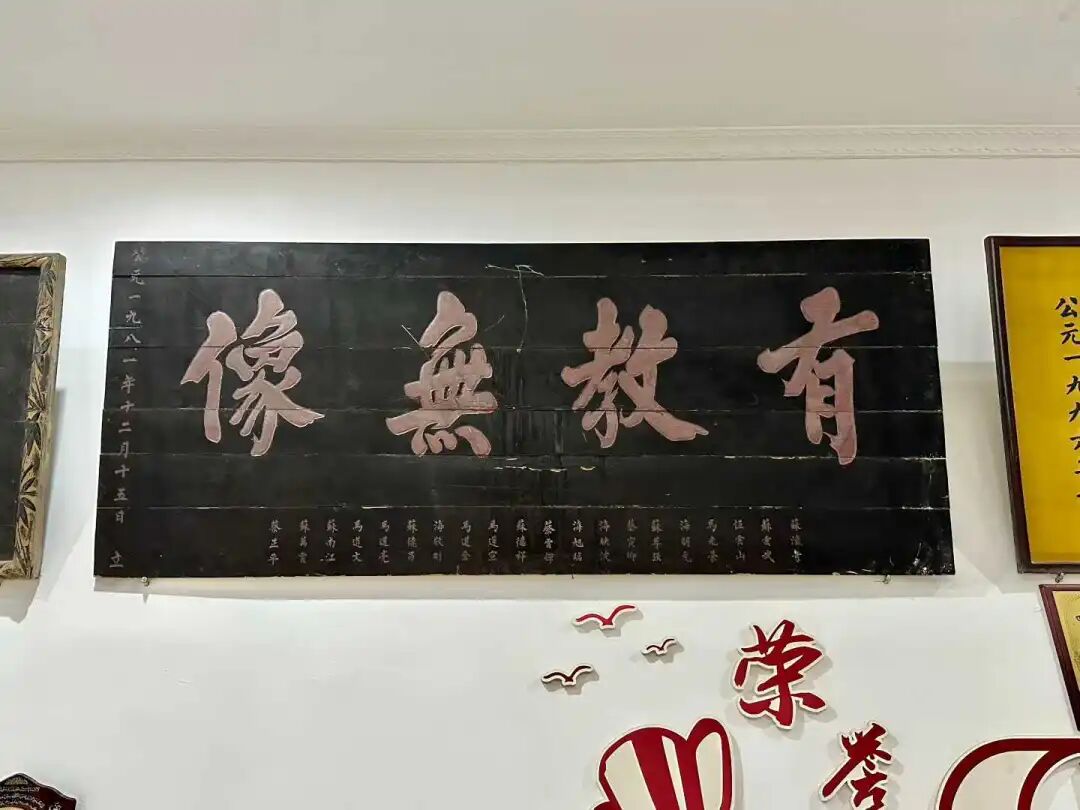
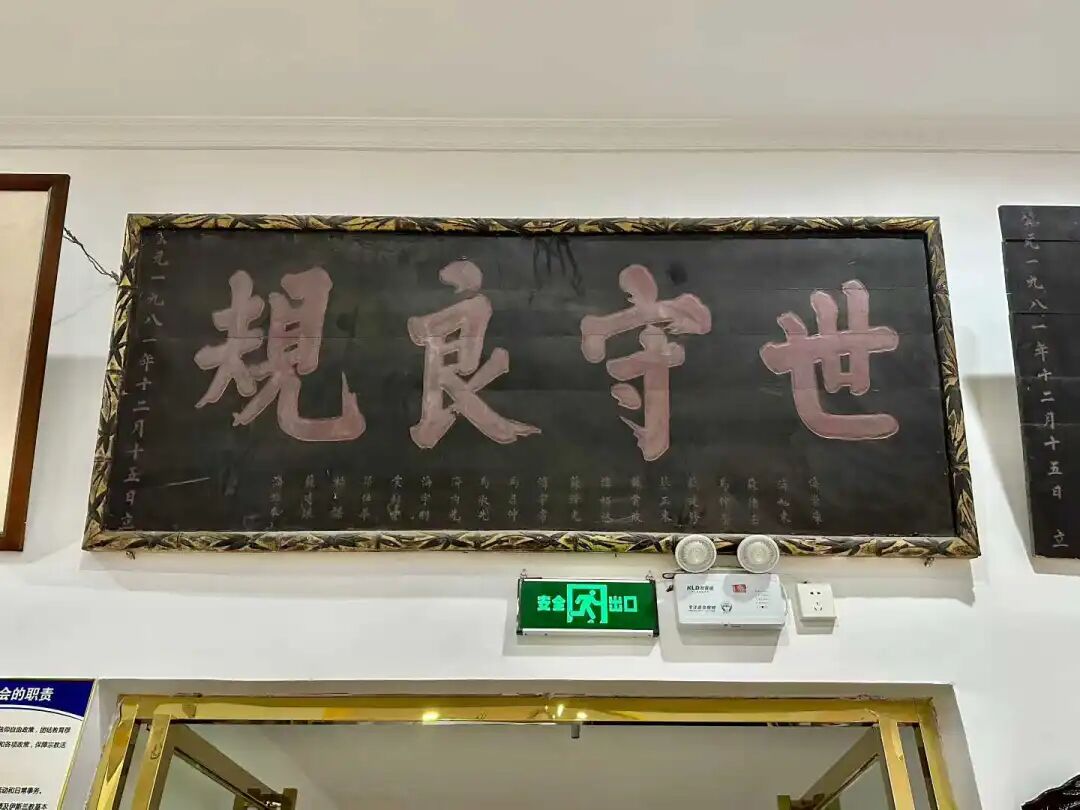
On February 19, the imam at Longchang Mosque in Sichuan invited me to have my first suhoor of Ramadan. We had pressed duck (banya), sour soup fish, stir-fried beef with two types of peppers, pea shoots, and baby bok choy. It was a delicious mix of meat and vegetables. The skin of the pressed duck was fragrant and the meat was firm. It was salty, flavorful, and tasted better the more you chewed. The sour soup fish was clean and refreshing. The stir-fried beef with two types of peppers was a classic Sichuan-style dish, and the shredded beef was very tender. Pea shoots are a seasonal vegetable in Sichuan during winter, and they were sweet and crisp. I chatted with the imam's family at the time. After I got back, I found out that the imam's daughter and I had actually known each other on Douban a long time ago. It really is a small world.
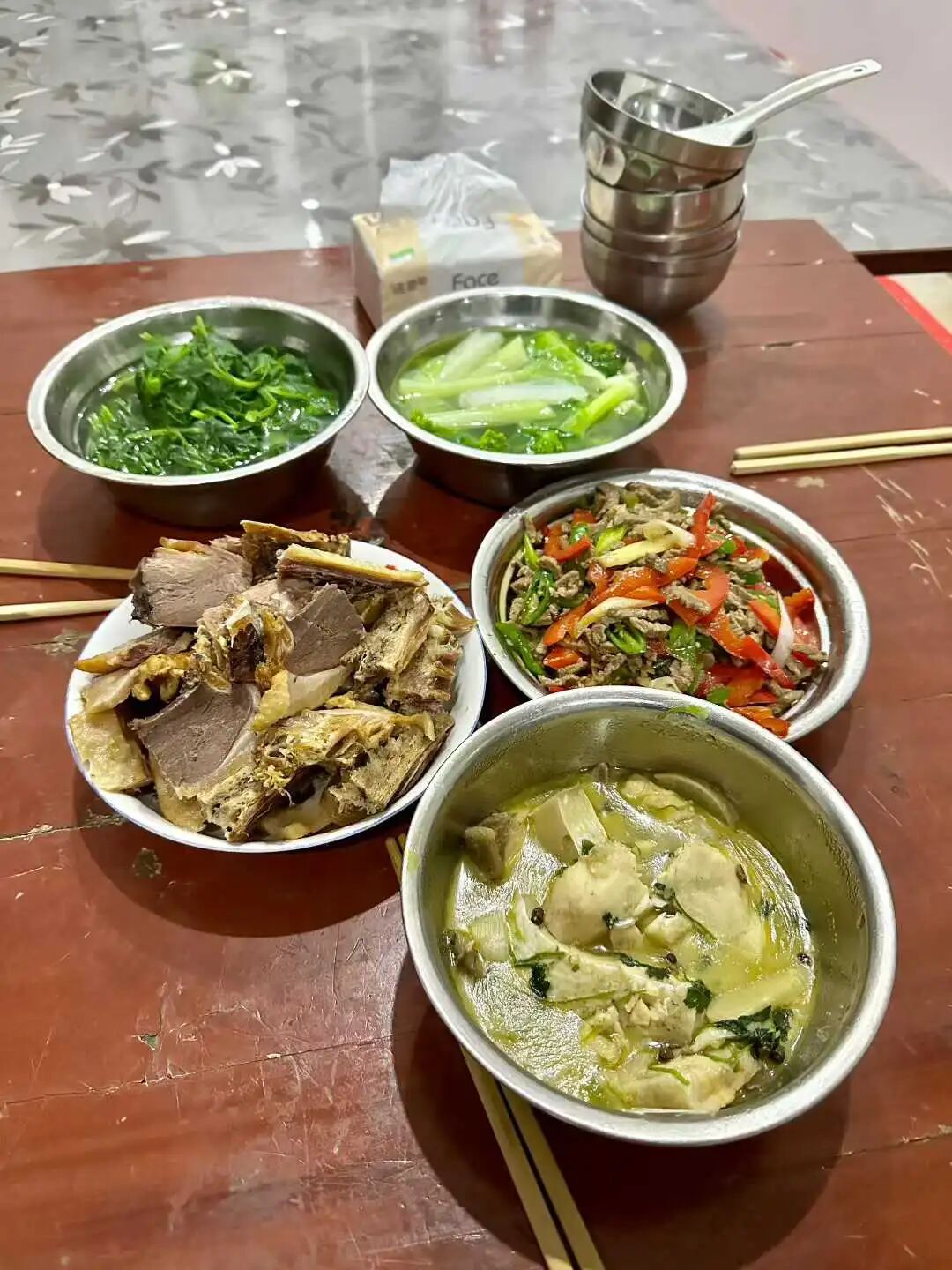
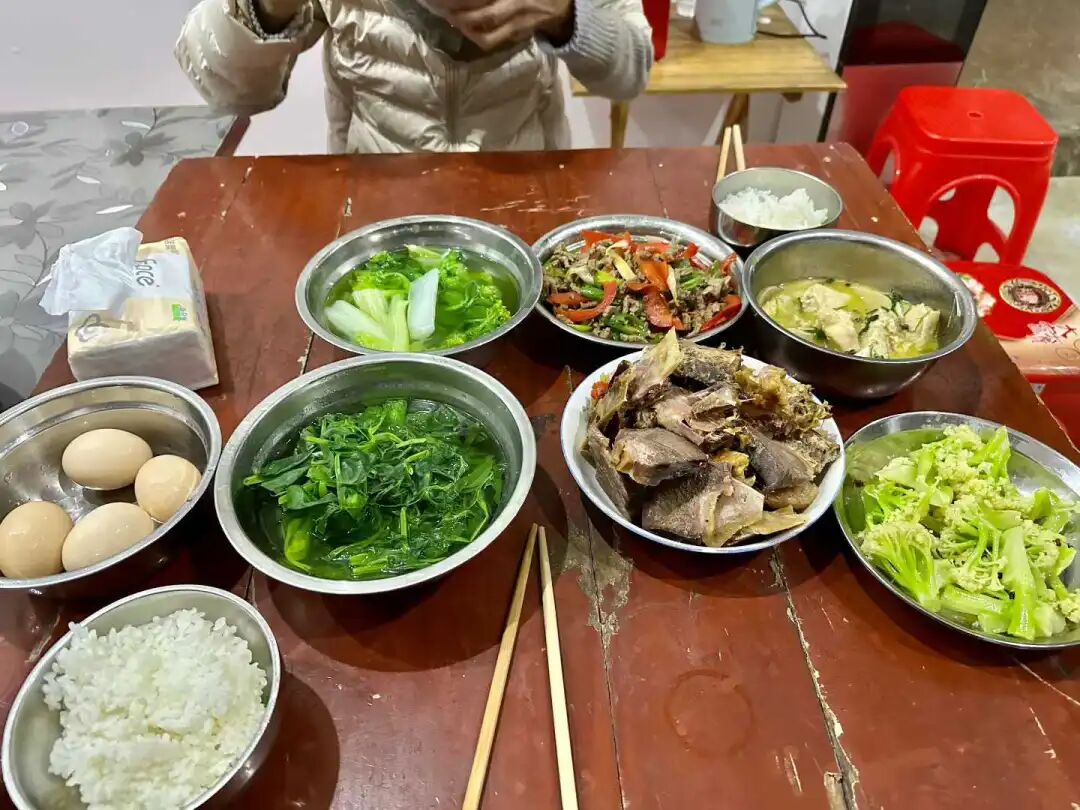
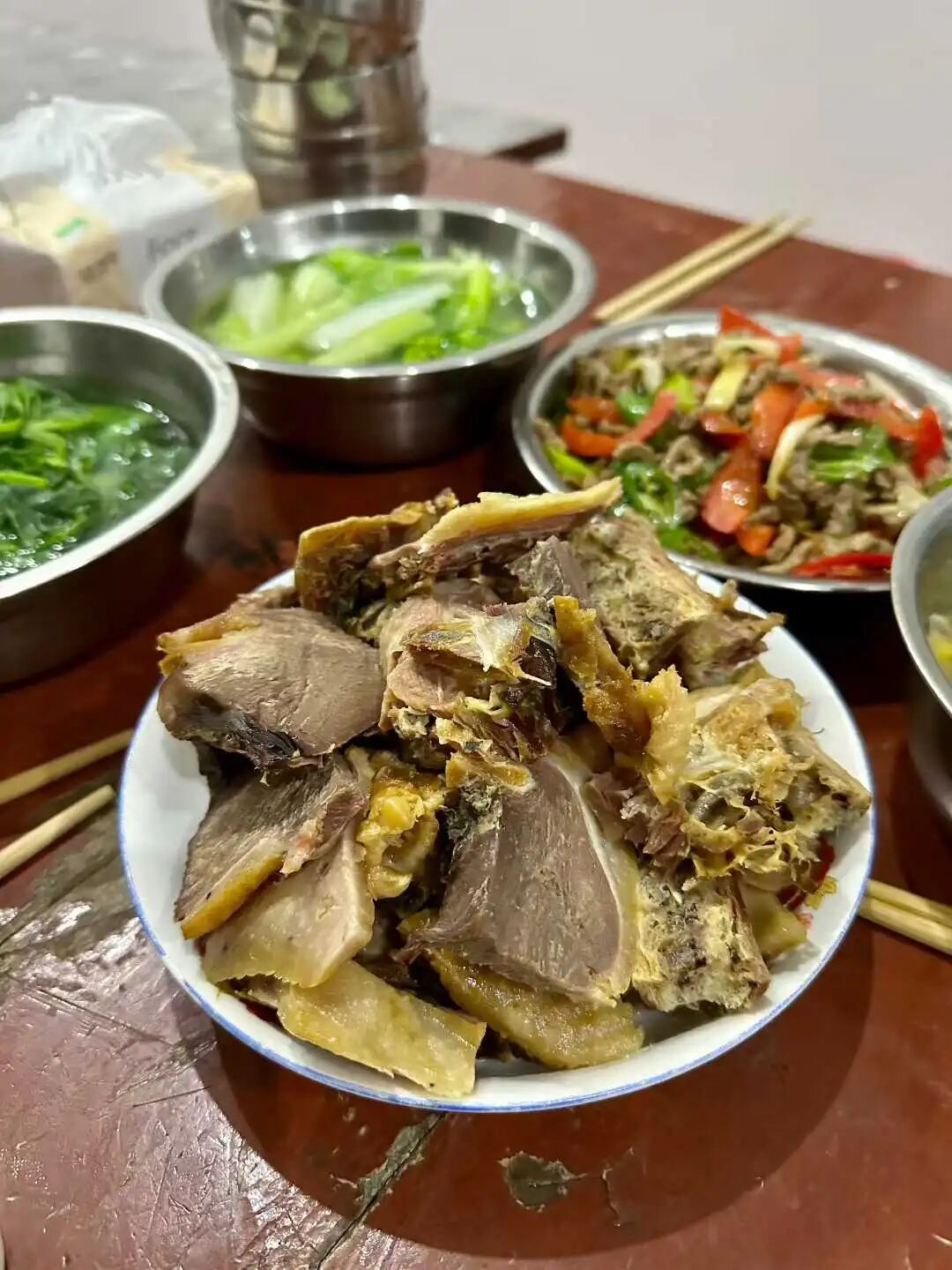
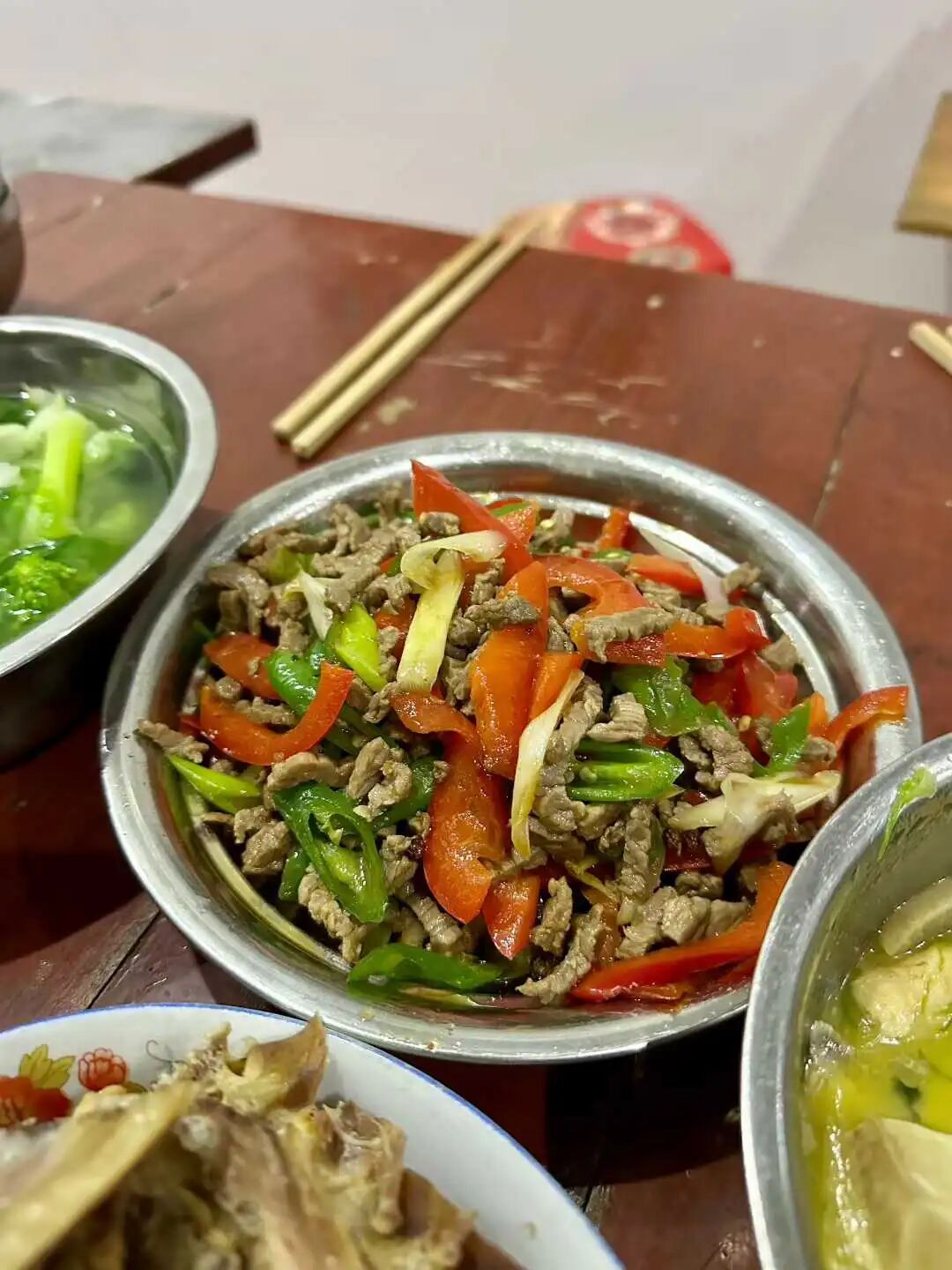
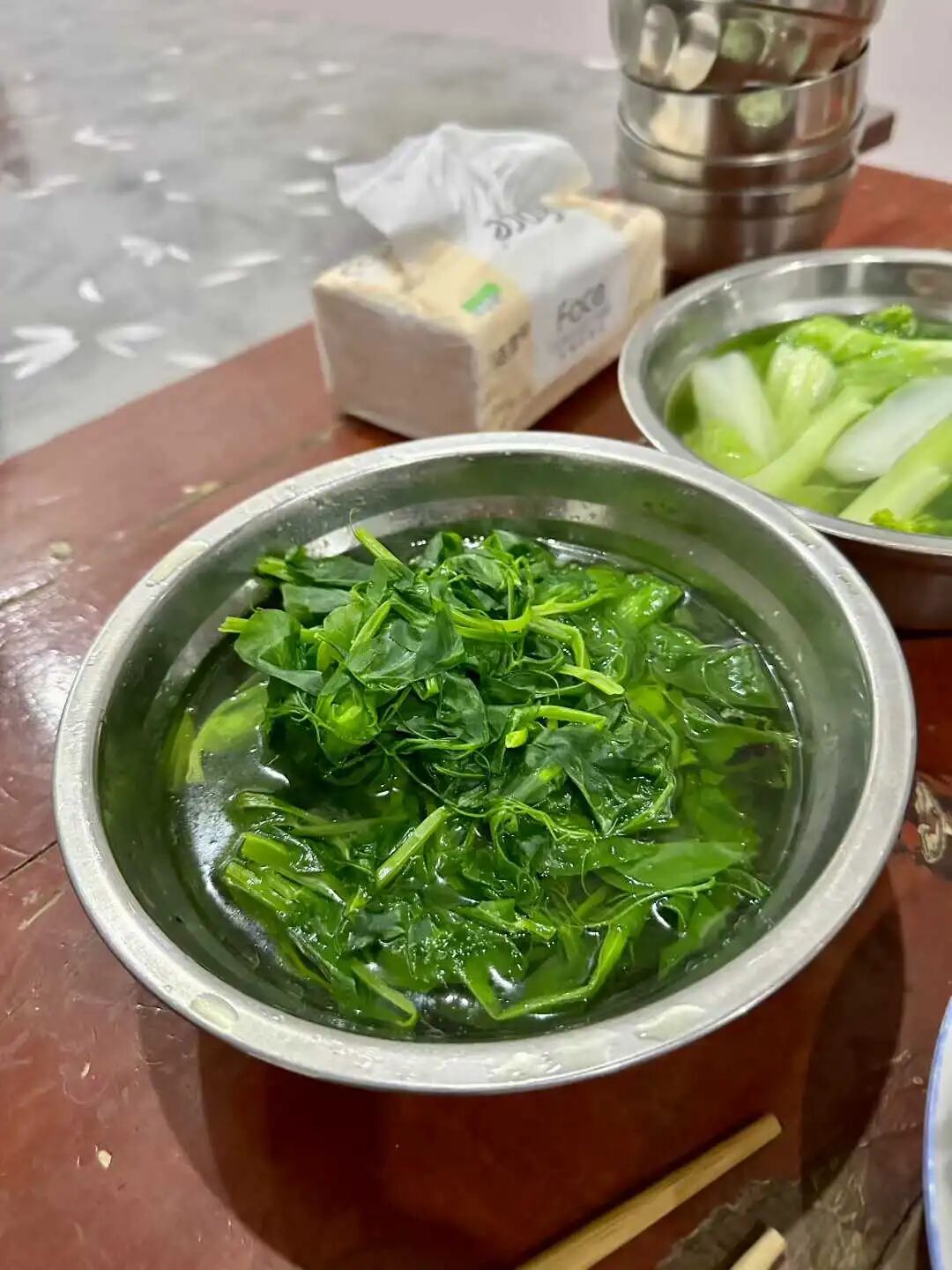
There are several Hui Muslim restaurants next to Longchang Mosque that serve stir-fried dishes, beef offal hot pot, and beef soup. I will definitely try them if I come back.
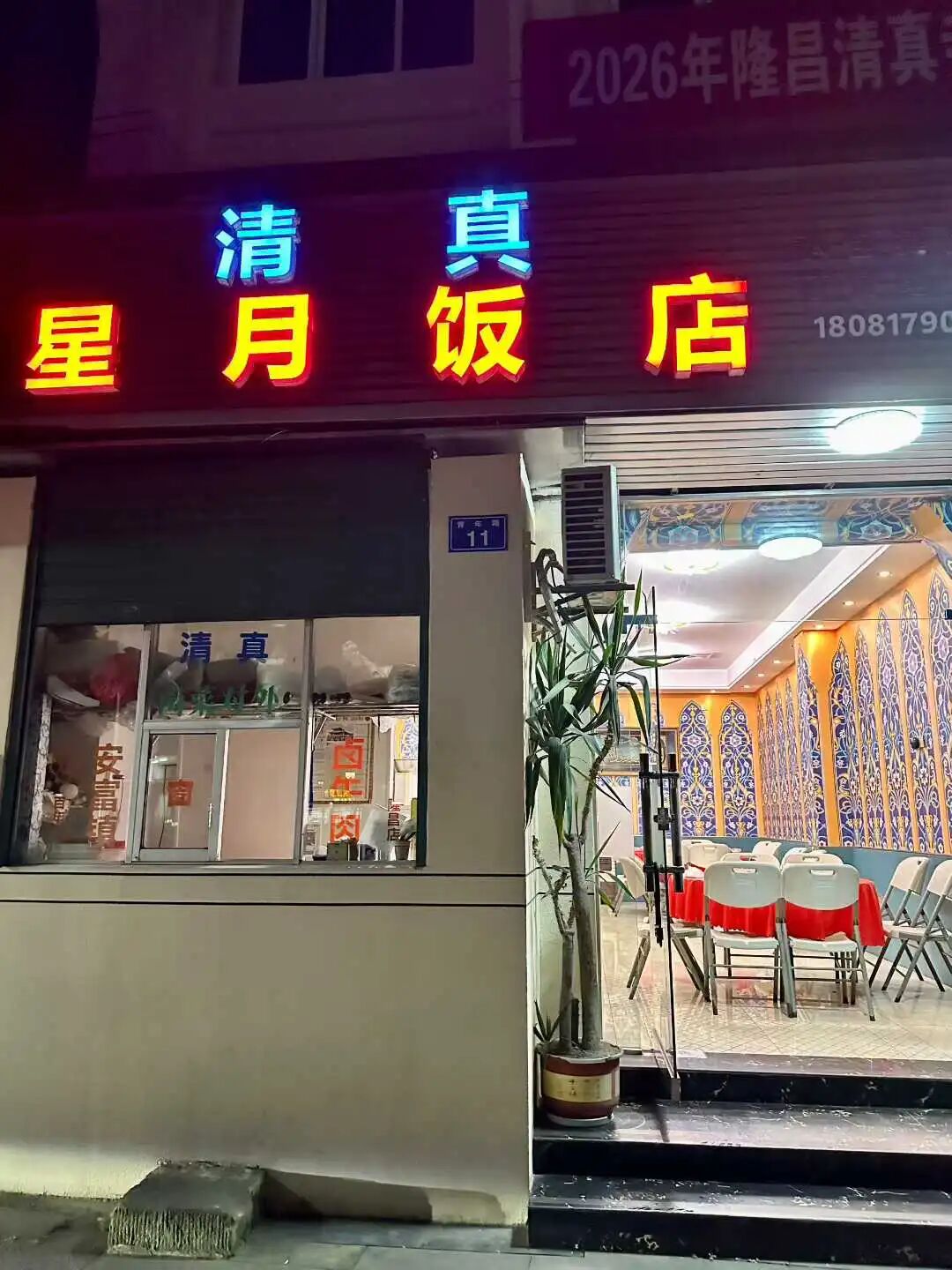
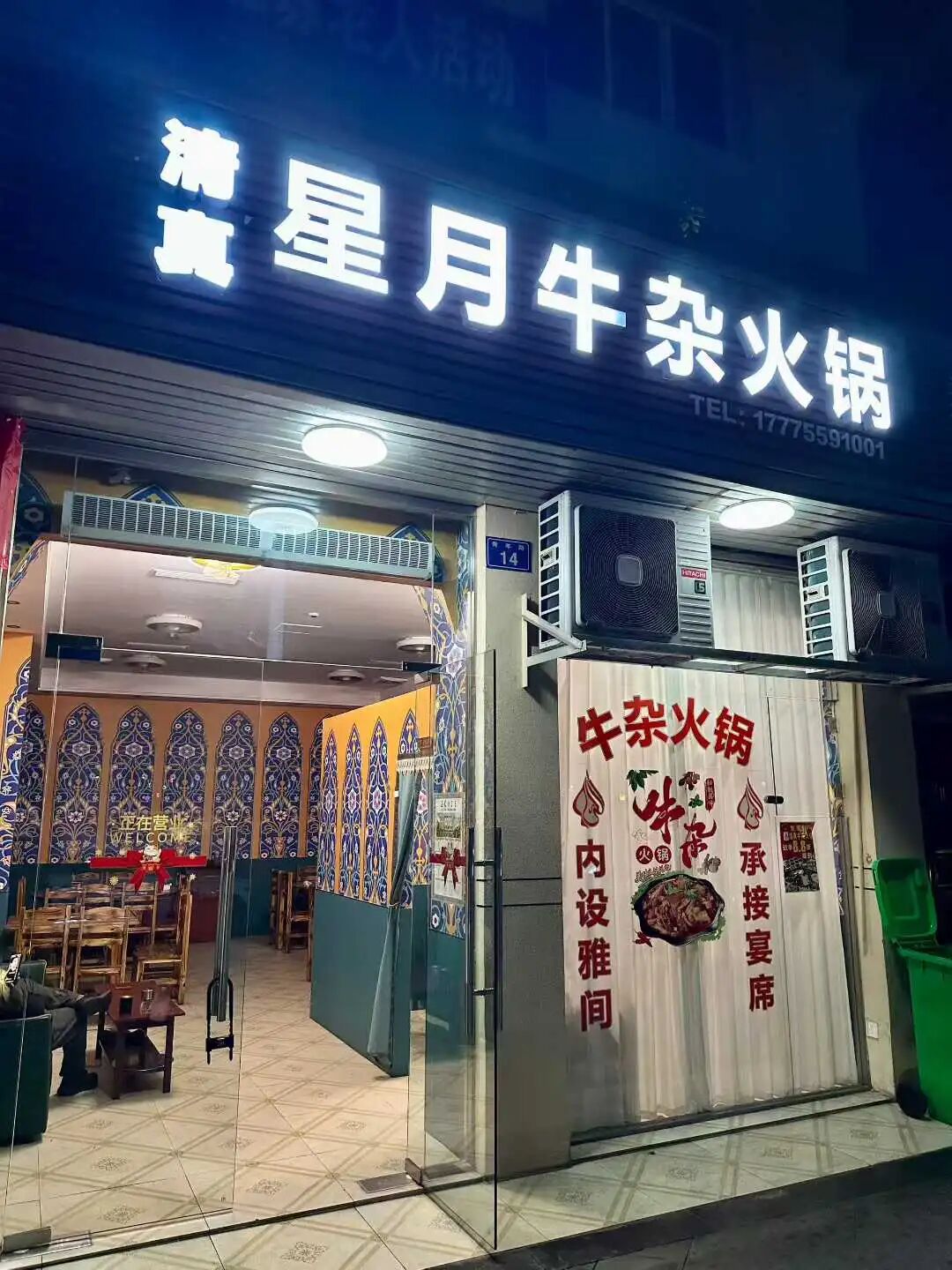
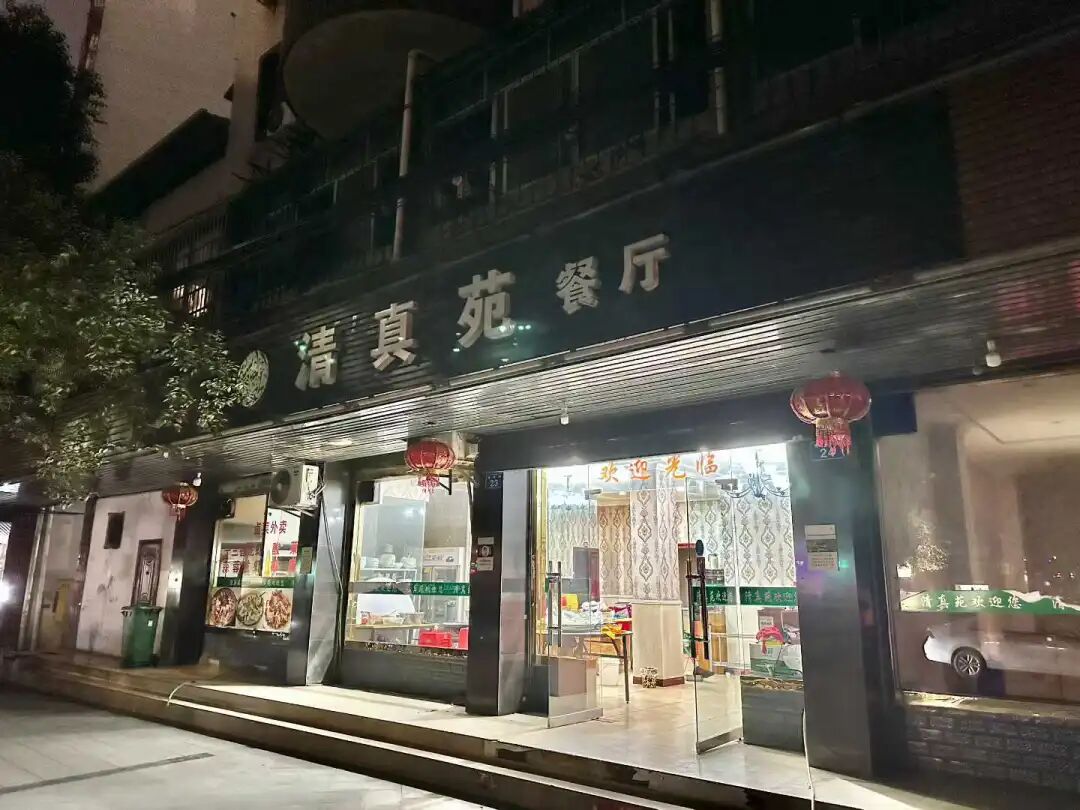
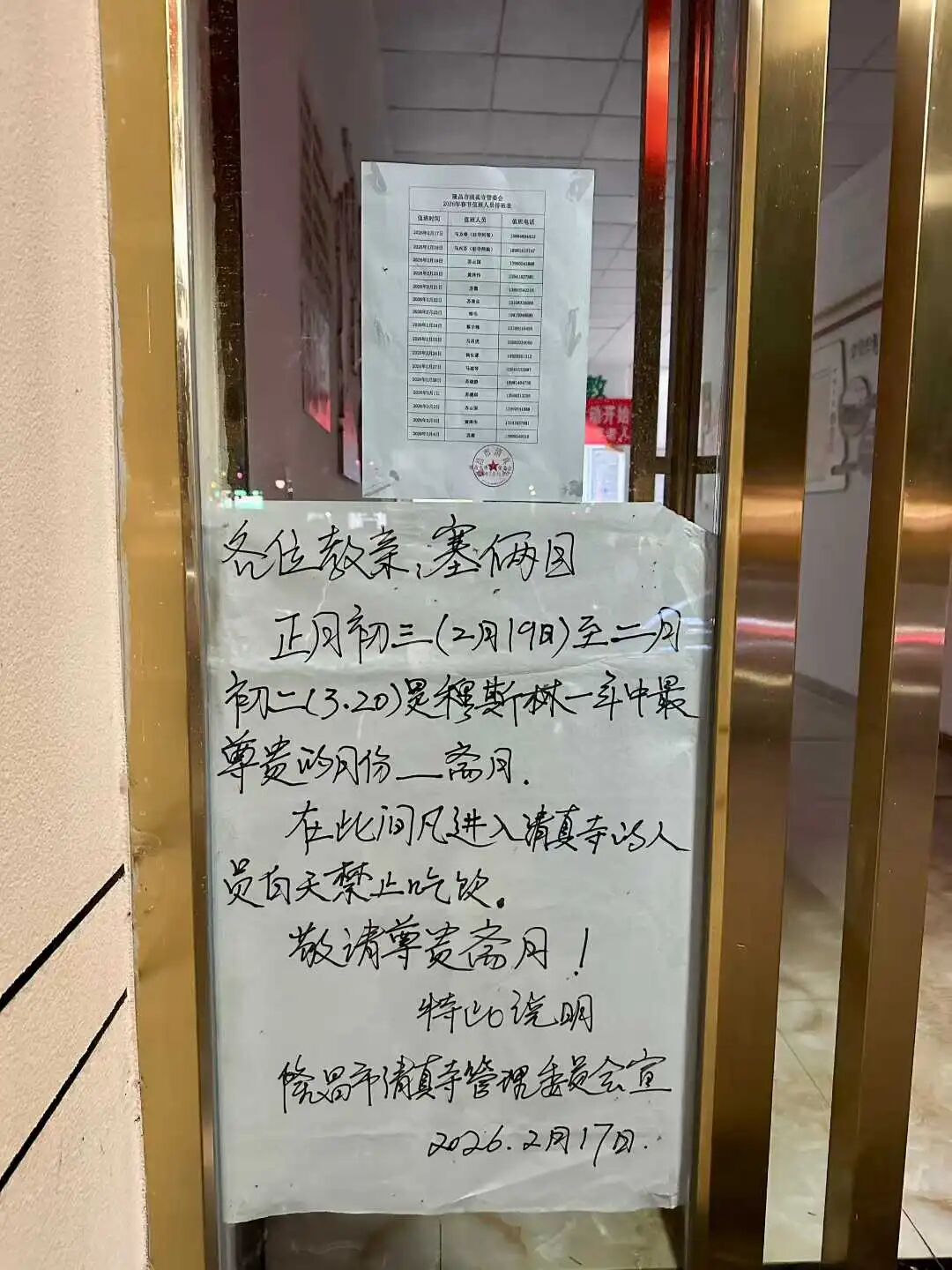
Hidden Mosques in Zigong Fushun: Sichuan Hui Muslim Heritage and Road Trip Notes
Articles • ali2007fr posted the article • 0 comments • 159 views • 2026-05-21 06:45
Summary: This short stop in Fushun County, Zigong, records a Sichuan mosque visit with local Hui Muslim heritage, county history, and the details preserved from the original road trip.
It takes a 2-hour drive north from Sujiaqiao Mosque in Yibin to reach Fushun County in Zigong City. Fushun Mosque is located on Fujiang Lane in the old town of Fushun. I contacted Imam Hai at the mosque beforehand, and he gave me a warm welcome.
Fushun Mosque is the only mosque in Zigong. During the late Qing Dynasty, Hui Muslims with the surnames Ma, Feng, Su, Zhang, and Cai moved here from places like Longchang, Neijiang, and Rongchang to settle down. At first, the Hui Muslims in Fushun did not have a mosque. They held their annual Eid prayers in the living room of a Ma family home at No. 1 Bo'ai Road. A local Hui Muslim named Ma Xutang once ran a small salt industry bank called Furonghao in Ziliujing. After his business failed, he moved his funds back to Fushun to buy land. He set aside 45 shi of rental grain under the name 'Ma Siyi Tang' to cover the costs of building a mosque and hiring an imam. In 1929, led by Ma Renpei, they used the Ma Siyi Tang funds to buy a house next to the Yaowang Mosque from Chen Tongxing and others of the Yongji Association. After renovations, it became the current Fushun Mosque, which was rebuilt into its present form between 1986 and 1987.
After Fushun Mosque was established, they hired Ma Huiting as the imam, who served for nearly 50 years until 1975. During the 1930s and 1940s, Imam Ma used the summer breaks to teach Islamic classics. One of his students, Master Su Xueliang, later led the ritual slaughter (xiadao) and worked at the religious school around the time of liberation. After the 1986 reconstruction, they hired Imam Hai Weijun from Rongchang, Chongqing, who has been there for 40 years. When Imam Hai first arrived at the mosque, he was only in his early 20s. He relied on Master Su Xueliang to visit Hui Muslim households each month to collect donations (nietie) for his living expenses. Three months later, Imam Hai decided to support himself. He started working part-time performing ritual slaughter (xiadao) at a Hui Muslim restaurant, and later sold fruit and ran a restaurant, which allowed Fushun Mosque to keep running for the past 40 years.
According to Imam Hai, the only local Hui Muslim restaurant in Zigong right now is Cai's Lamb Soup (Cai shi yangrou tang) near Beihuan Road, though it is not very easy to reach by public transport since it is outside the city center. Luckily, Imam Hai invited me to try the bamboo shoot stewed lamb with skin and stir-fried lamb that had been donated (chusai) to the mosque from Cai's Lamb Soup, allowing me to experience the unique Sichuan-style cuisine of Zigong's Hui Muslims. Their bamboo shoot lamb with skin had tender meat and soft skin. The bamboo shoots were fresh and slightly sweet, their fragrance cutting through the richness of the meat, which was mellow and savory. The stir-fried lamb was cooked quickly over high heat to lock in the juices. The fresh ginger added a spicy kick, the small chili peppers provided a great flavor, and the dish had that distinct 'wok hei' (guoqie) that gives Zigong Hui Muslim stir-fries their authentic, home-cooked feel. Any friends (dost) passing through Zigong next time should go and have a meal there. view all
Summary: This short stop in Fushun County, Zigong, records a Sichuan mosque visit with local Hui Muslim heritage, county history, and the details preserved from the original road trip.
It takes a 2-hour drive north from Sujiaqiao Mosque in Yibin to reach Fushun County in Zigong City. Fushun Mosque is located on Fujiang Lane in the old town of Fushun. I contacted Imam Hai at the mosque beforehand, and he gave me a warm welcome.
Fushun Mosque is the only mosque in Zigong. During the late Qing Dynasty, Hui Muslims with the surnames Ma, Feng, Su, Zhang, and Cai moved here from places like Longchang, Neijiang, and Rongchang to settle down. At first, the Hui Muslims in Fushun did not have a mosque. They held their annual Eid prayers in the living room of a Ma family home at No. 1 Bo'ai Road. A local Hui Muslim named Ma Xutang once ran a small salt industry bank called Furonghao in Ziliujing. After his business failed, he moved his funds back to Fushun to buy land. He set aside 45 shi of rental grain under the name 'Ma Siyi Tang' to cover the costs of building a mosque and hiring an imam. In 1929, led by Ma Renpei, they used the Ma Siyi Tang funds to buy a house next to the Yaowang Mosque from Chen Tongxing and others of the Yongji Association. After renovations, it became the current Fushun Mosque, which was rebuilt into its present form between 1986 and 1987.
After Fushun Mosque was established, they hired Ma Huiting as the imam, who served for nearly 50 years until 1975. During the 1930s and 1940s, Imam Ma used the summer breaks to teach Islamic classics. One of his students, Master Su Xueliang, later led the ritual slaughter (xiadao) and worked at the religious school around the time of liberation. After the 1986 reconstruction, they hired Imam Hai Weijun from Rongchang, Chongqing, who has been there for 40 years. When Imam Hai first arrived at the mosque, he was only in his early 20s. He relied on Master Su Xueliang to visit Hui Muslim households each month to collect donations (nietie) for his living expenses. Three months later, Imam Hai decided to support himself. He started working part-time performing ritual slaughter (xiadao) at a Hui Muslim restaurant, and later sold fruit and ran a restaurant, which allowed Fushun Mosque to keep running for the past 40 years.
According to Imam Hai, the only local Hui Muslim restaurant in Zigong right now is Cai's Lamb Soup (Cai shi yangrou tang) near Beihuan Road, though it is not very easy to reach by public transport since it is outside the city center. Luckily, Imam Hai invited me to try the bamboo shoot stewed lamb with skin and stir-fried lamb that had been donated (chusai) to the mosque from Cai's Lamb Soup, allowing me to experience the unique Sichuan-style cuisine of Zigong's Hui Muslims. Their bamboo shoot lamb with skin had tender meat and soft skin. The bamboo shoots were fresh and slightly sweet, their fragrance cutting through the richness of the meat, which was mellow and savory. The stir-fried lamb was cooked quickly over high heat to lock in the juices. The fresh ginger added a spicy kick, the small chili peppers provided a great flavor, and the dish had that distinct 'wok hei' (guoqie) that gives Zigong Hui Muslim stir-fries their authentic, home-cooked feel. Any friends (dost) passing through Zigong next time should go and have a meal there.
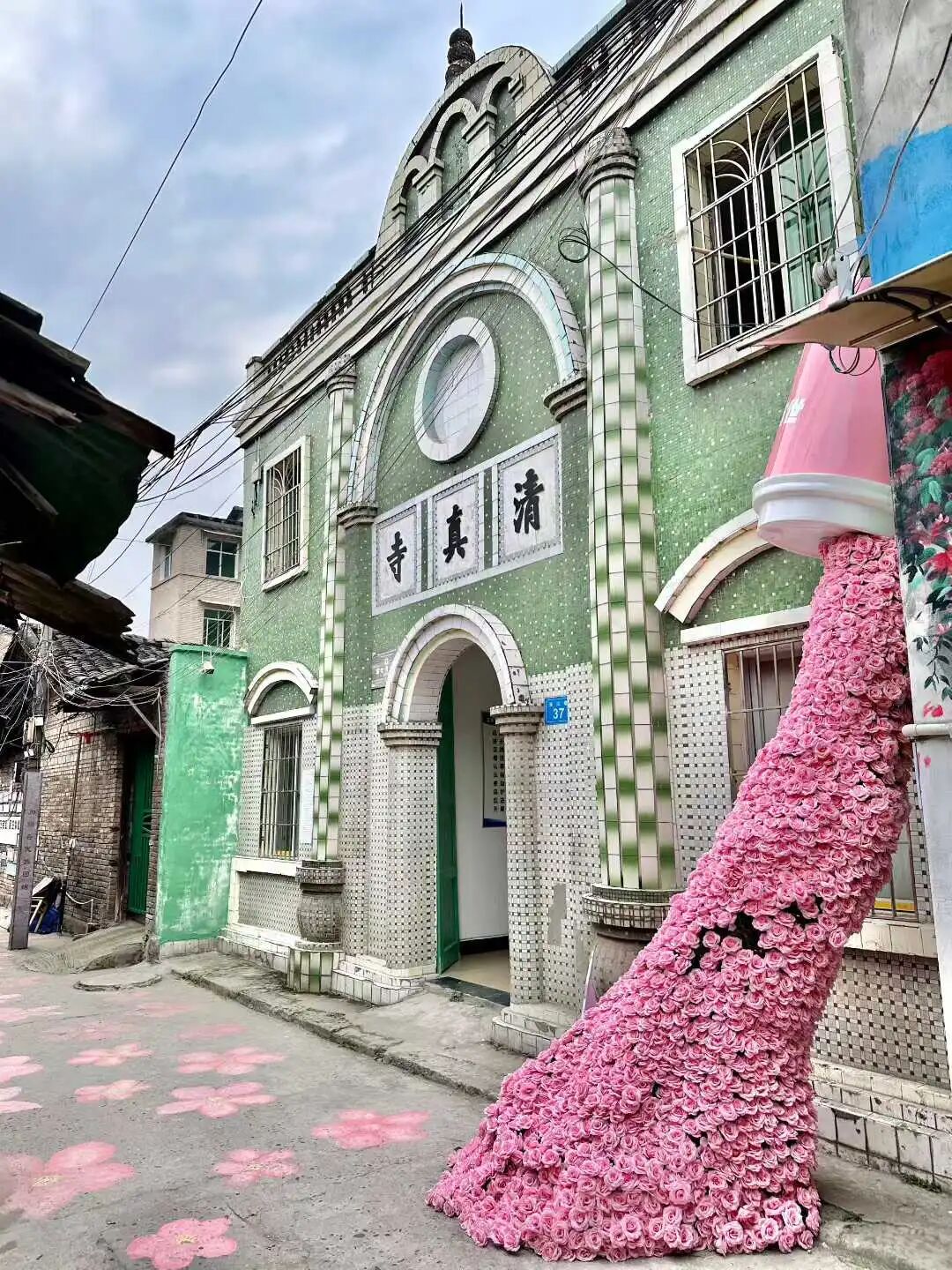
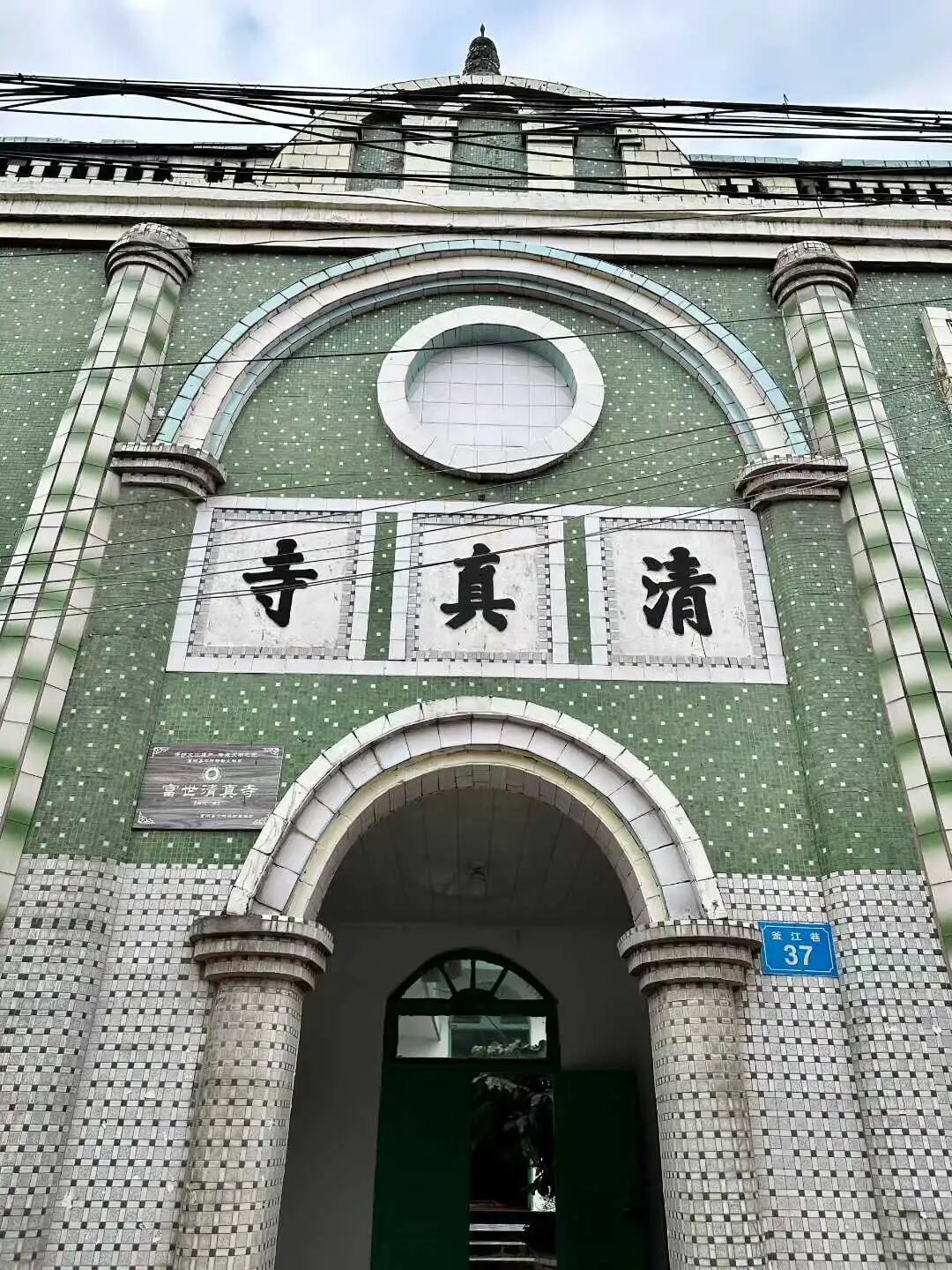
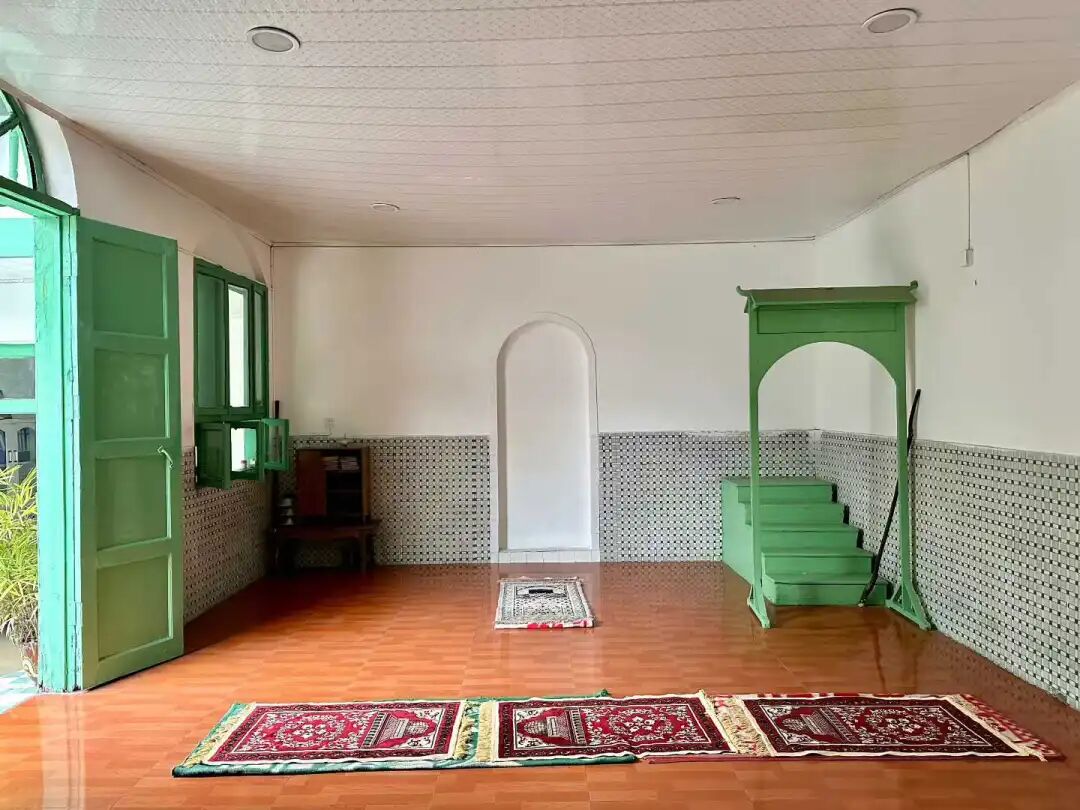
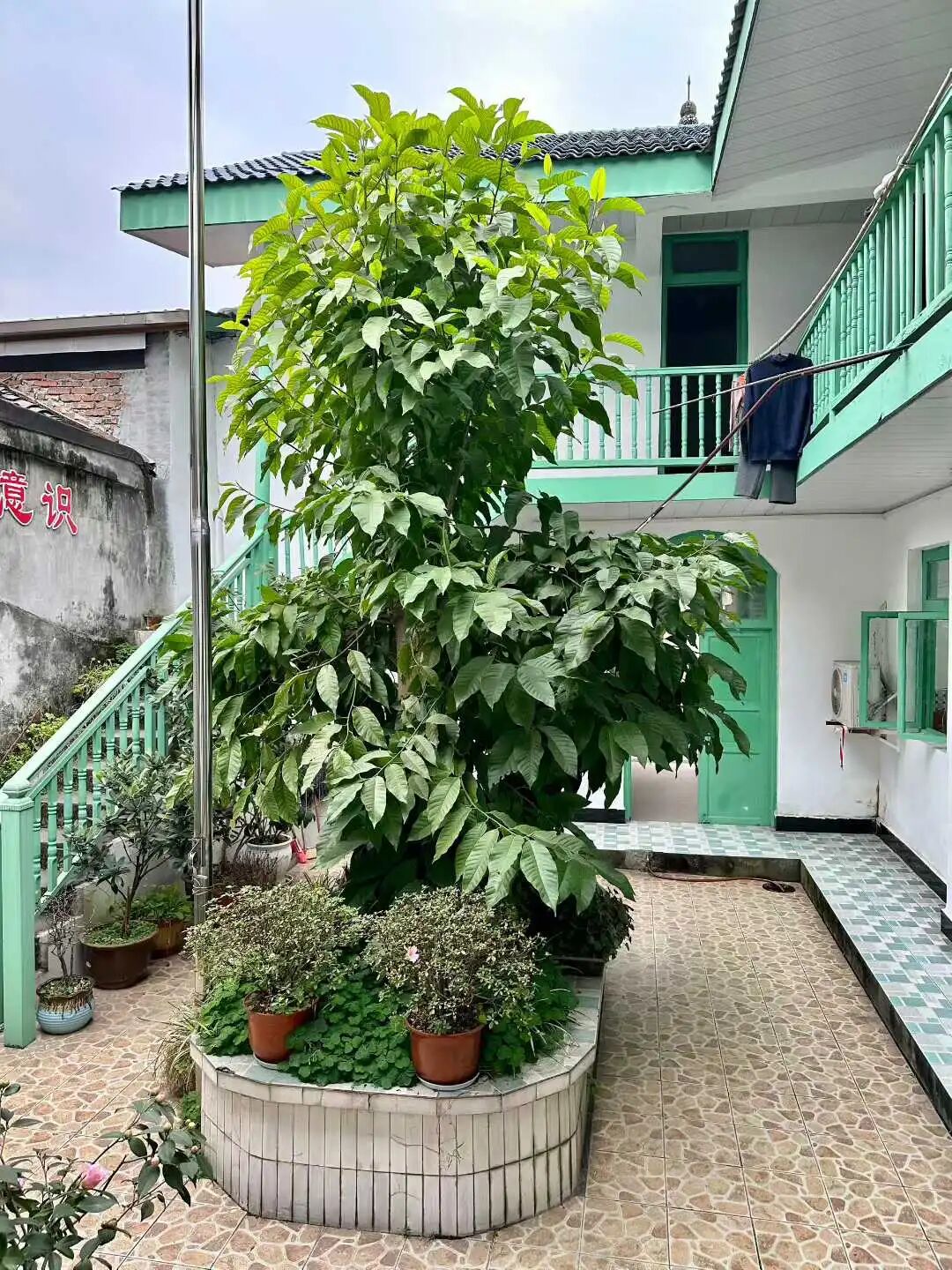
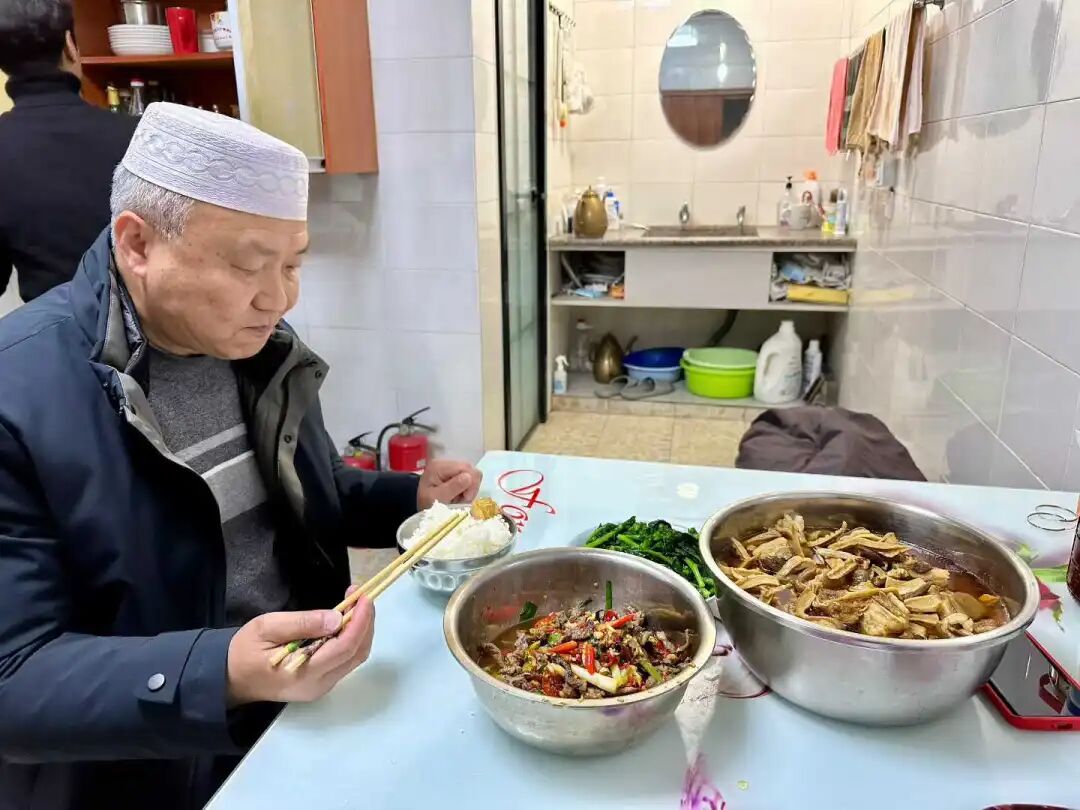
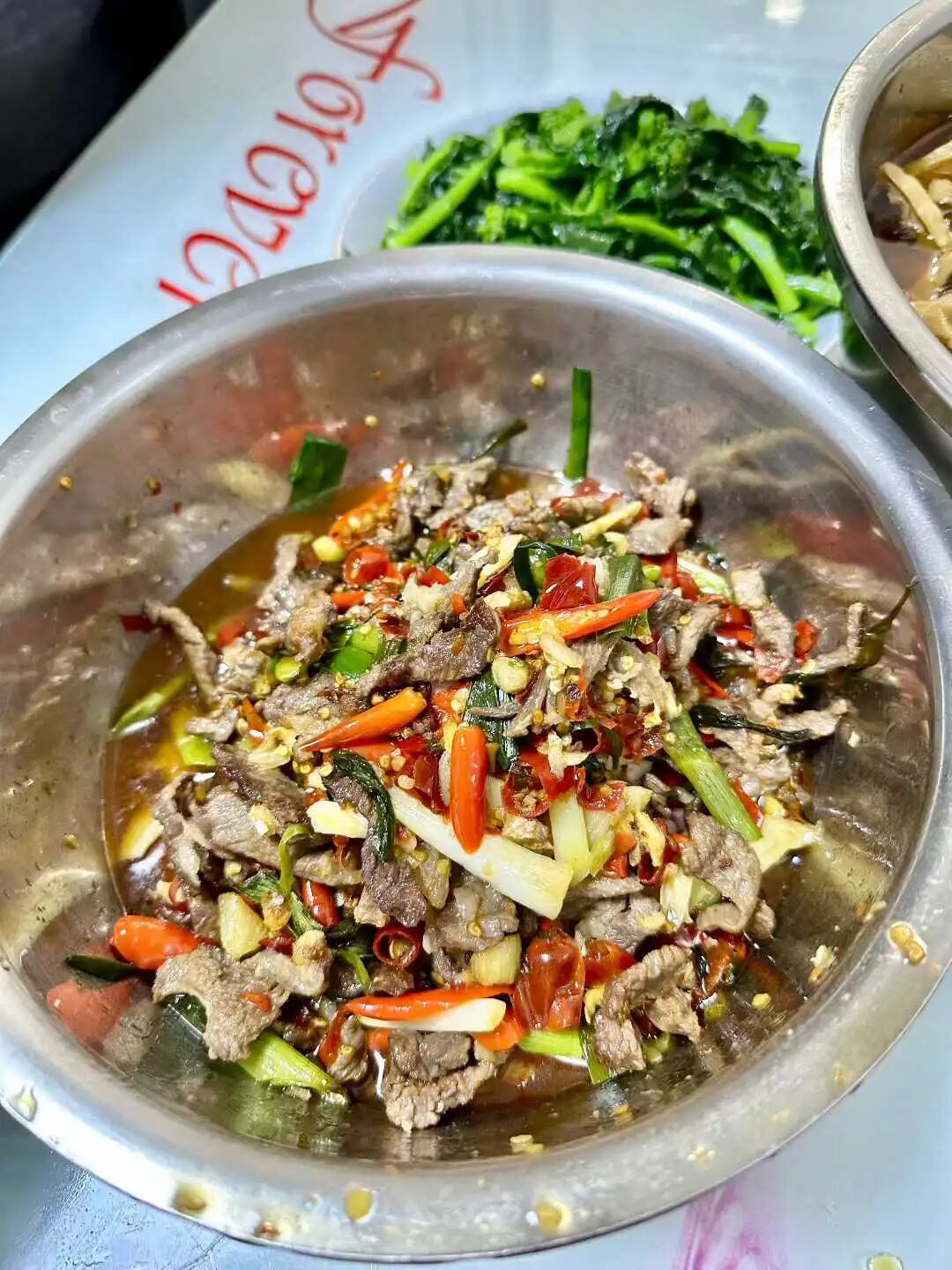
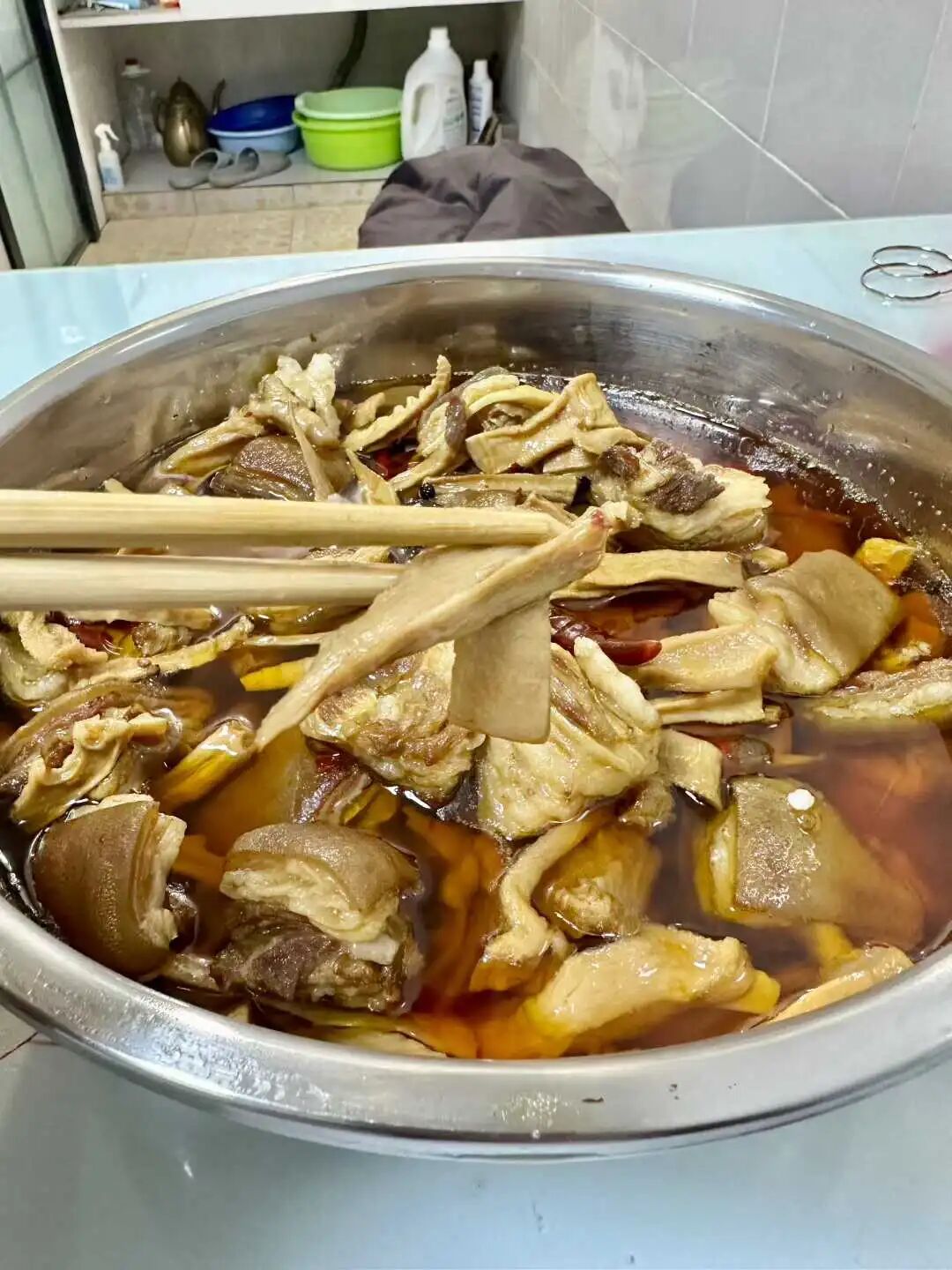
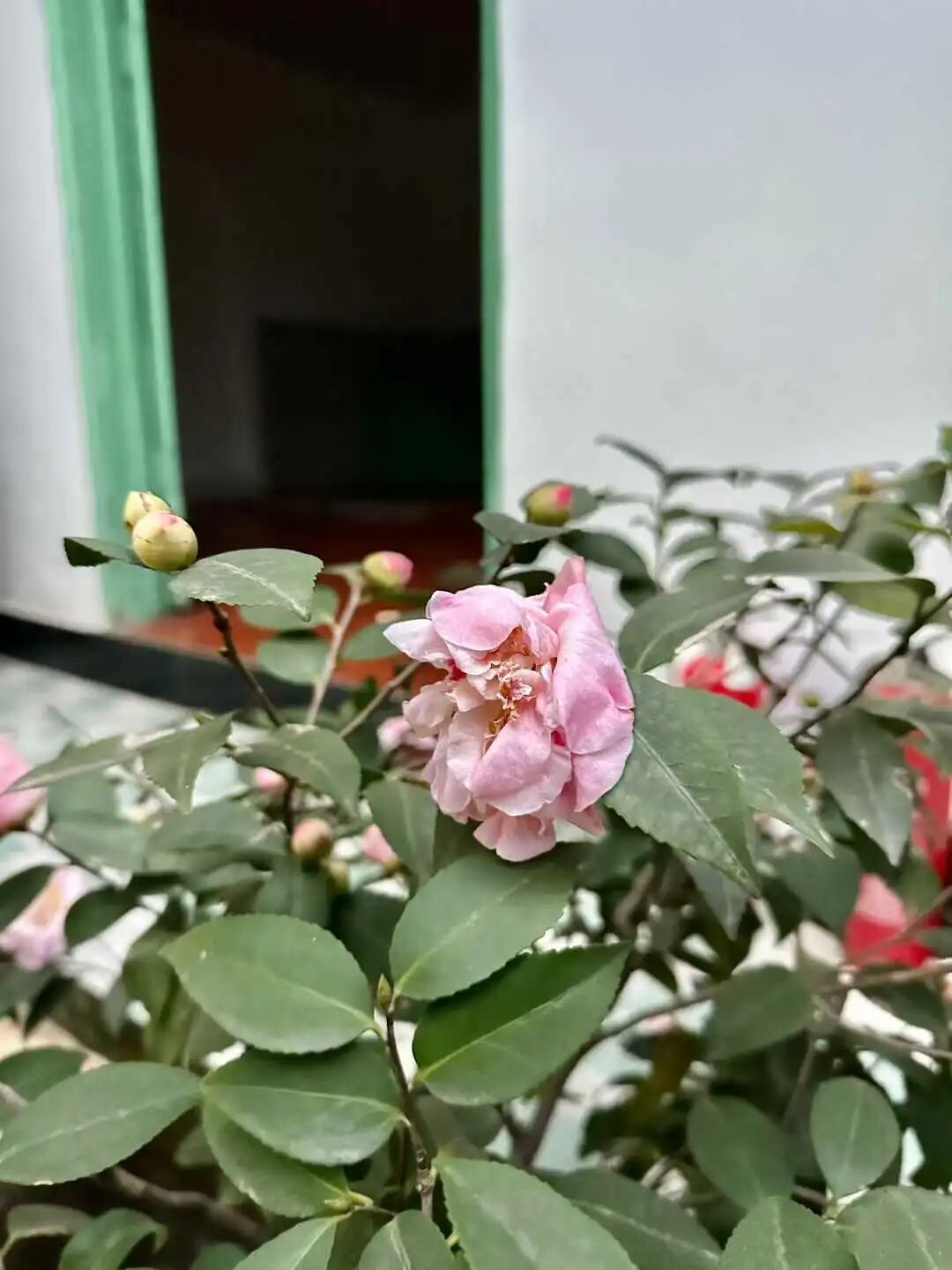
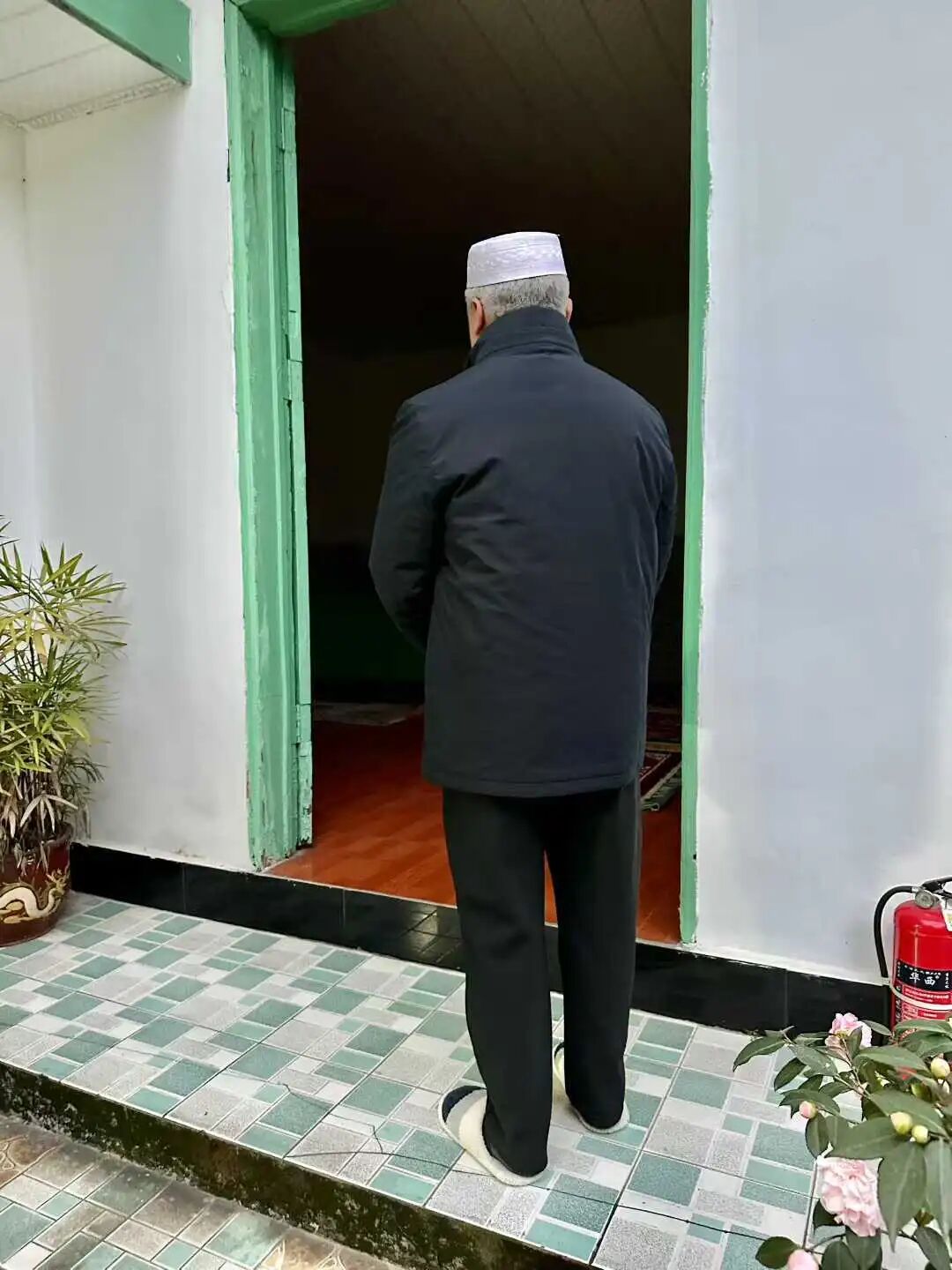
Hidden Mosques in Yibin: Sichuan Hui Muslim History, Old Streets and Local Food
Articles • ali2007fr posted the article • 0 comments • 197 views • 2026-05-21 06:45
Summary: This Yibin travel account follows old mosques, riverside streets, Hui Muslim history, and local halal food notes from the next stop on a Spring Festival road trip through Sichuan.
On the afternoon of February 17, I drove south from Luocheng for an hour and a half and arrived at the old town in the Cuiping District of Yibin, right by the Yangtze River. Parking in Yibin's old town is very difficult during the Spring Festival. I found a spot on the side of the road near the Dabeixiang Mosque, but unfortunately, the imam, Imam Su, was not there at the time. I went to Yao's Beef Restaurant (Yaoji Niurouguan) on nearby Xuesheng Street for dinner instead. Yao's Beef Restaurant was packed that night. I waited nearly an hour after ordering before I could eat. They ran out of ingredients several times, and the owner said they hadn't prepared enough. I didn't expect business to be this good on the first day of the Lunar New Year.
Yao's has been open for 30 years. Since the 1990s, they have been selling steamed beef with rice flour (fenzheng niurou), clear-stewed beef (qingdun niurou), and braised beef (hongshao niurou) on Xuesheng Street, standing out for their commitment to never using overnight meat. They serve the most authentic Yibin-style Sichuan cuisine, focusing on various stir-fried (huobao), minced meat topping (saozi), and water-boiled (shuizhu) dishes. I ordered stir-fried beef tripe (huobao taihua), minced meat with spinal cord (saozi jisu), and red oil greens (hongyoucai).
This was my first time hearing of taihua. I asked the server, and they said it is a type of beef tripe that is very crispy, bouncy, and chewy. It requires high heat and fast cooking to get that perfect wok aroma.
The minced meat with spinal cord melts in your mouth and is soft and creamy. The minced meat topping (saozi) is salty, fresh, spicy, and rich in sauce, making it perfect with rice.
Red oil greens are red vegetable stalks (hongcaitai), a classic vegetable dish in Yibin from autumn through early spring. They are stir-fried over high heat with garlic slices until just cooked, making them crispy, tender, slightly sweet, and fragrant. In Hui Muslim banquets, this is usually the final vegetable dish, balancing out the spicy stir-fried beef dishes.
The Dabeixiang Mosque in Yibin was first built in 1821 (the first year of the Daoguang reign). It was originally a traditional courtyard house in southern Sichuan, but after being demolished in 1993, it became a multi-story building. As early as the Qianlong reign, Hui Muslims with the surnames Su, Ma, Hai, Zhang, and Cai from Shaoyang, Hunan, moved to Yibin due to the 'Huguang fills Sichuan' migration. During the Jiaqing reign, a Hui Muslim named Li became wealthy running a money shop in Yibin, so he donated money to build the mosque on Dabeixiang in the first year of the Daoguang reign. During the Guangxu reign, a military official named Ma Chaoxuan retired from his post as a provincial commander and settled in Yibin, where he built a mosque on Shuijing Street in the north of the city. During the late Qing Dynasty and the Republic of China era, Ma Chaoxuan's descendant, Ma Pinsan, became the manager of the Dabeixiang Mosque and merged the northern city mosque into the Dabeixiang Mosque.
That night, I drove from the Cuiping District in Yibin's old town to Nanxi District, stayed the night, and planned to try the Yibin Hui Muslim-style meat-topped spicy noodles (hunranmian) the next morning. The most authentic Hui Muslim noodle shop in Nanxi is Su's Huihui Fragrance (Suji Huihuixiang) on Xiazheng Street. The meat they use is personally butchered by Imam Su from the Sujiaqiao Mosque. Unfortunately, Huihui Fragrance was closed when I arrived, so I went to another Su's Beef Noodle shop nearby, which is also run by local Hui Muslims surnamed Su.
Beef hunranmian is a classic breakfast for Yibin Hui Muslims. It uses local Yibin flat, thin alkaline noodles (shuiezi jianshuimian) made from high-gluten flour and alkaline water. They are boiled until 80% cooked, drained, and tossed with cooked rapeseed oil to keep them separate and dry—this is the key to the 'ran' (burning/oily) style. The beef topping (saozi) is made by mincing beef and stir-frying it slowly in rapeseed oil with various spices until dry and fragrant. Then, they add secret red oil, Yibin preserved mustard greens (suimi yacai), freshly crushed peanuts, toasted sesame seeds, Sichuan peppercorn oil, and chopped green onions. When eating, you mix it quickly to use the residual heat to bring out all the aromas. Once you take a bite, the noodles are chewy and bouncy, the beef topping is dry and rich, the mustard greens are salty and fresh, the peanuts are crunchy, the red oil is spicy, and the peppercorn oil adds a slight numbing sensation. It is very dry and refreshing.
After breakfast, I drove for 1 hour and 10 minutes from Nanxi District to the Yunding Mosque in Liduan Town, deep in the mountains of Shu. The Yunding Mosque is surrounded by big mountains. The Hui Muslim village where the mosque is located sits on a high piece of land, as if it were above the clouds, which is how it got the name Yunding (Cloud Top) Mosque.
Yunding Mosque was first built during the Xianfeng era. The local Ma family, who are Hui Muslims, moved here from Shaoyang, Hunan, during the Qing Dynasty migration known as 'Huguang filling Sichuan'. Yunding Mosque was originally a traditional courtyard in the southern Sichuan style, but it was later rebuilt as a concrete building. I took photos of some old pictures of the mosque before its reconstruction from Imam Su at Dabeixiang Mosque. Because of building renovations, traditional mosque architecture in Sichuan is disappearing rapidly.
After the reconstruction of Yunding Mosque, only the Qing Dynasty mihrab and stone column bases remain. The mihrab has a very distinct southern Sichuan style and features many floral patterns.
In early spring at Yunding Mosque, I walked through the front gate and straight into a sea of bamboo. The leaves were layered thick, and the wind made them rustle. The mosque is surrounded by fields of blooming rapeseed flowers. The golden waves of flowers spread along the gentle slopes, reaching the foot of the distant mountains and the edges of the fields, full of rural peace and vitality. In a nearby pond, the water is clear and bright, with little ducks playing on the surface from time to time. As I was driving away, I happened to see the ducks lining up to cross the road. They waddled along, looking very cute and charming.
Driving for another 50 minutes from Yunding Mosque, I arrived at Sujiaqiao Mosque in the Nanxi District. This area is now part of the Sanjiang New Area in Yibin. There are large industrial parks in the nearby Songjia Town, but Sujiaqiao remains hidden deep in the mountains.
Sujiaqiao Mosque is the only traditional Hui mosque in Yibin that has been preserved to this day. The local Hui Muslims are mainly from the Su family, who moved here from Shaoyang, Hunan, during the 'Huguang filling Sichuan' migration in the Qianlong era. Sujiaqiao Mosque was first built in 1789 (the 54th year of the Qianlong reign) after Su Tianqi and others bought land in Qinjiagou. In 1799 (the 4th year of the Jiaqing reign), the community gave grain to Su Xinhan to manage for ten years. With the profits, they bought land from the Yin family and moved the mosque to its current site. In 1822 (the 2nd year of the Daoguang reign), two corridors were added. It was renovated in 1837 (the 17th year of the Daoguang reign). In 1864 (the 3rd year of the Tongzhi reign), Imam Su Liangchun led the effort, and with donations from Su Shunfang and other community members, the main hall was expanded. In 1944, Su Cailun led another renovation of the main hall.
The main hall of Sujiaqiao Mosque also preserves a precious Qing Dynasty mihrab, and there is an inscription from 1866 (the 5th year of the Tongzhi reign) on the main beam of the entrance hall. I met two Imams named Su from Sujiaqiao Mosque and Dabeixiang Mosque, and I learned a lot about the local religious situation in Yibin from them. The two Imams showed me the stone tablet from the Daoguang renovation kept in the mosque. Unfortunately, it was damaged during a difficult period, and only the last part of the donor list remains. You can still see the surnames Su, Ma, Jin, and Cai, as well as a business named Renhetai.
Behind Sujiaqiao Mosque is a cemetery for Hui Muslims. When I arrived, Imam Su was leading the local Hui Muslims in visiting the graves. The Sujiaqiao Hui Muslim whole-cow feast was named a Nanxi District intangible cultural heritage in 2018. However, because of the remote location, there are no restaurants run by Hui Muslims here. If you want to experience the local food, it is best to come to the mosque during holidays. view all
Summary: This Yibin travel account follows old mosques, riverside streets, Hui Muslim history, and local halal food notes from the next stop on a Spring Festival road trip through Sichuan.
On the afternoon of February 17, I drove south from Luocheng for an hour and a half and arrived at the old town in the Cuiping District of Yibin, right by the Yangtze River. Parking in Yibin's old town is very difficult during the Spring Festival. I found a spot on the side of the road near the Dabeixiang Mosque, but unfortunately, the imam, Imam Su, was not there at the time. I went to Yao's Beef Restaurant (Yaoji Niurouguan) on nearby Xuesheng Street for dinner instead. Yao's Beef Restaurant was packed that night. I waited nearly an hour after ordering before I could eat. They ran out of ingredients several times, and the owner said they hadn't prepared enough. I didn't expect business to be this good on the first day of the Lunar New Year.
Yao's has been open for 30 years. Since the 1990s, they have been selling steamed beef with rice flour (fenzheng niurou), clear-stewed beef (qingdun niurou), and braised beef (hongshao niurou) on Xuesheng Street, standing out for their commitment to never using overnight meat. They serve the most authentic Yibin-style Sichuan cuisine, focusing on various stir-fried (huobao), minced meat topping (saozi), and water-boiled (shuizhu) dishes. I ordered stir-fried beef tripe (huobao taihua), minced meat with spinal cord (saozi jisu), and red oil greens (hongyoucai).
This was my first time hearing of taihua. I asked the server, and they said it is a type of beef tripe that is very crispy, bouncy, and chewy. It requires high heat and fast cooking to get that perfect wok aroma.
The minced meat with spinal cord melts in your mouth and is soft and creamy. The minced meat topping (saozi) is salty, fresh, spicy, and rich in sauce, making it perfect with rice.
Red oil greens are red vegetable stalks (hongcaitai), a classic vegetable dish in Yibin from autumn through early spring. They are stir-fried over high heat with garlic slices until just cooked, making them crispy, tender, slightly sweet, and fragrant. In Hui Muslim banquets, this is usually the final vegetable dish, balancing out the spicy stir-fried beef dishes.
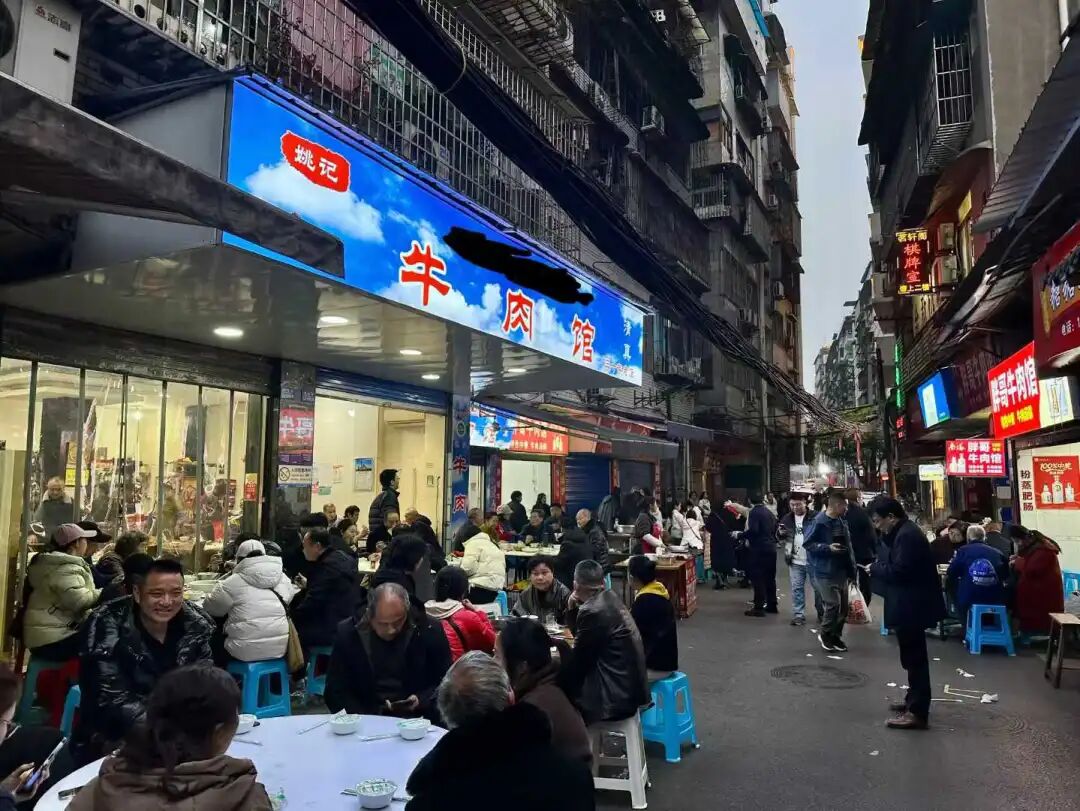
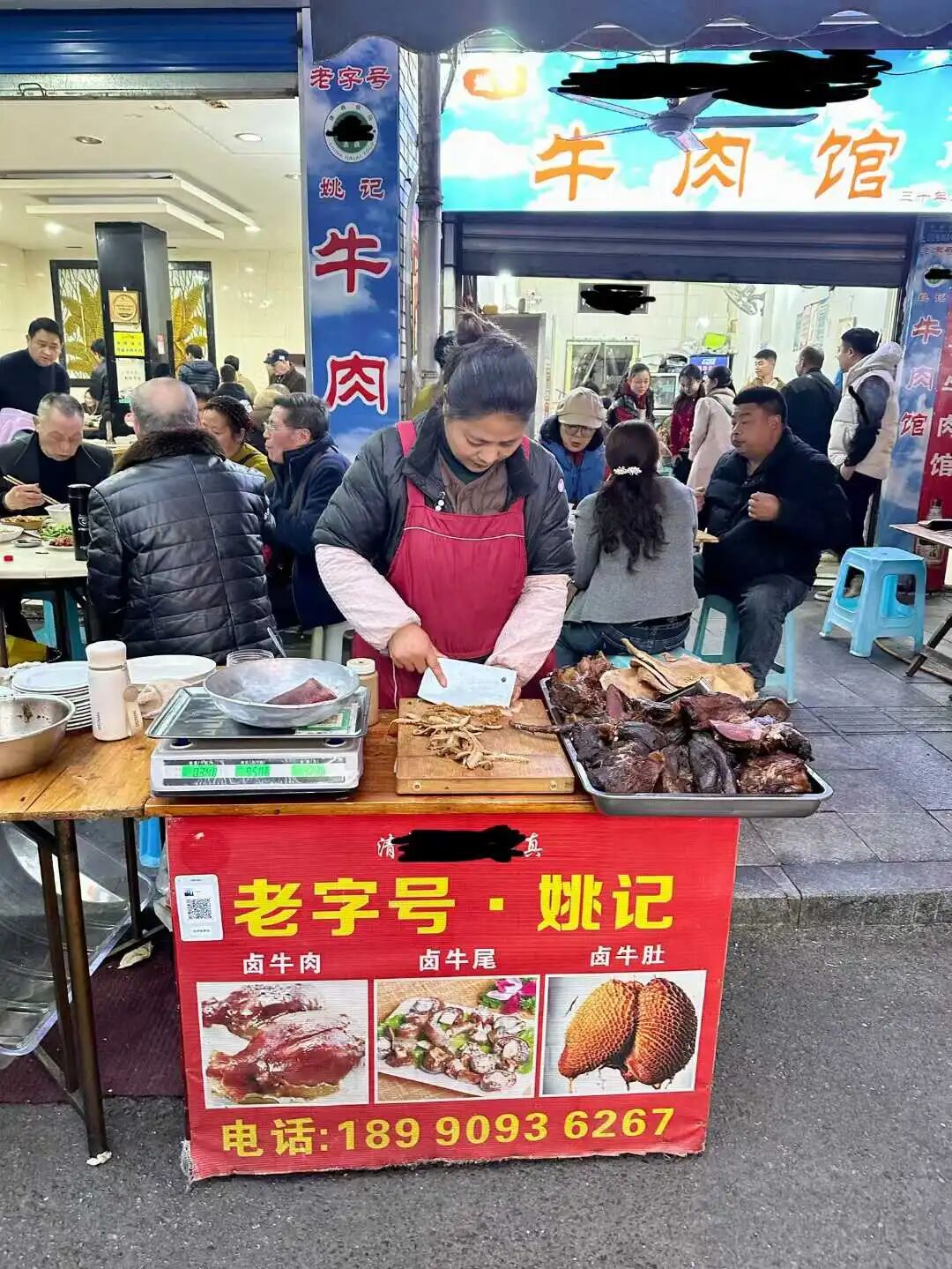
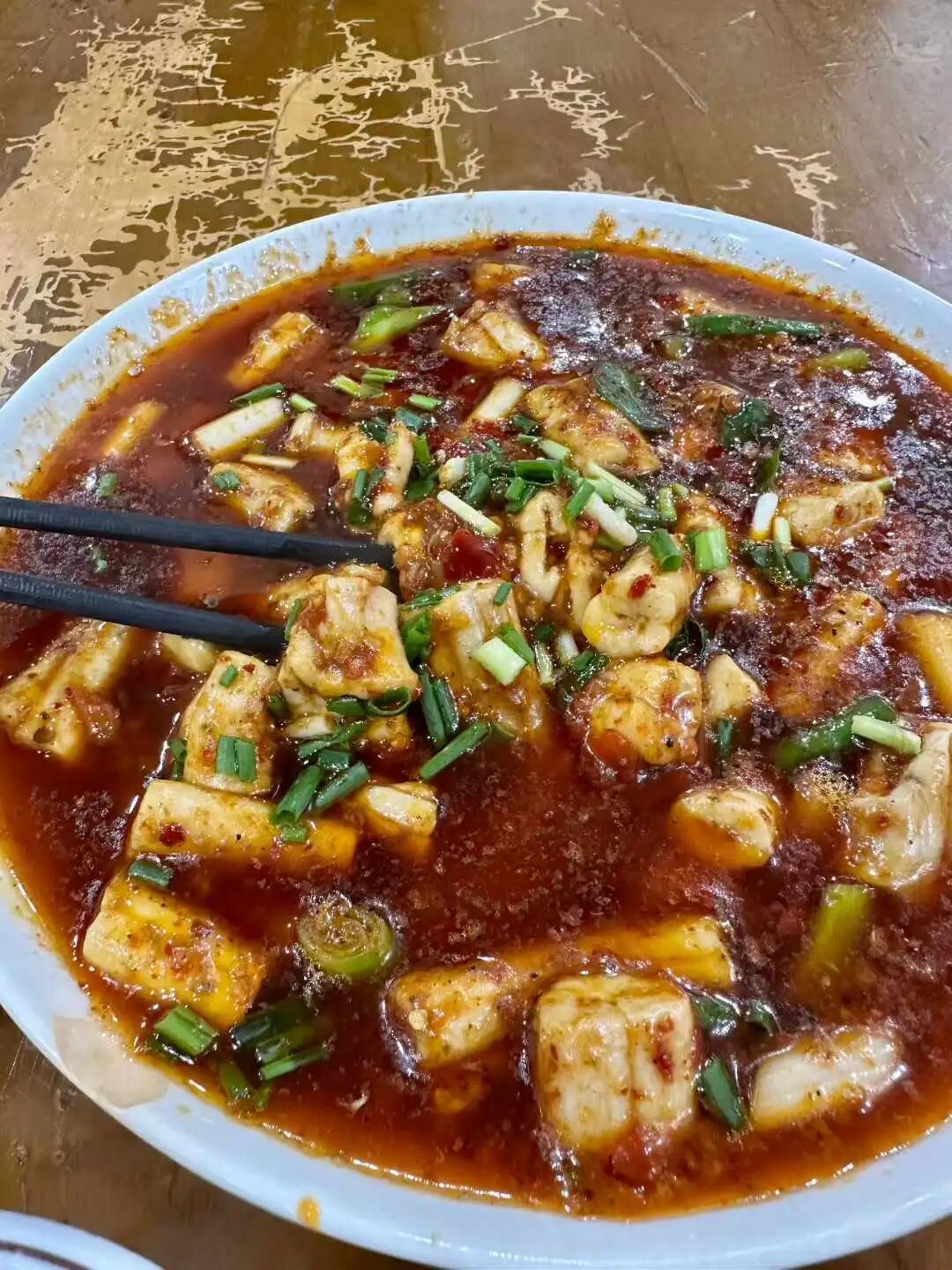
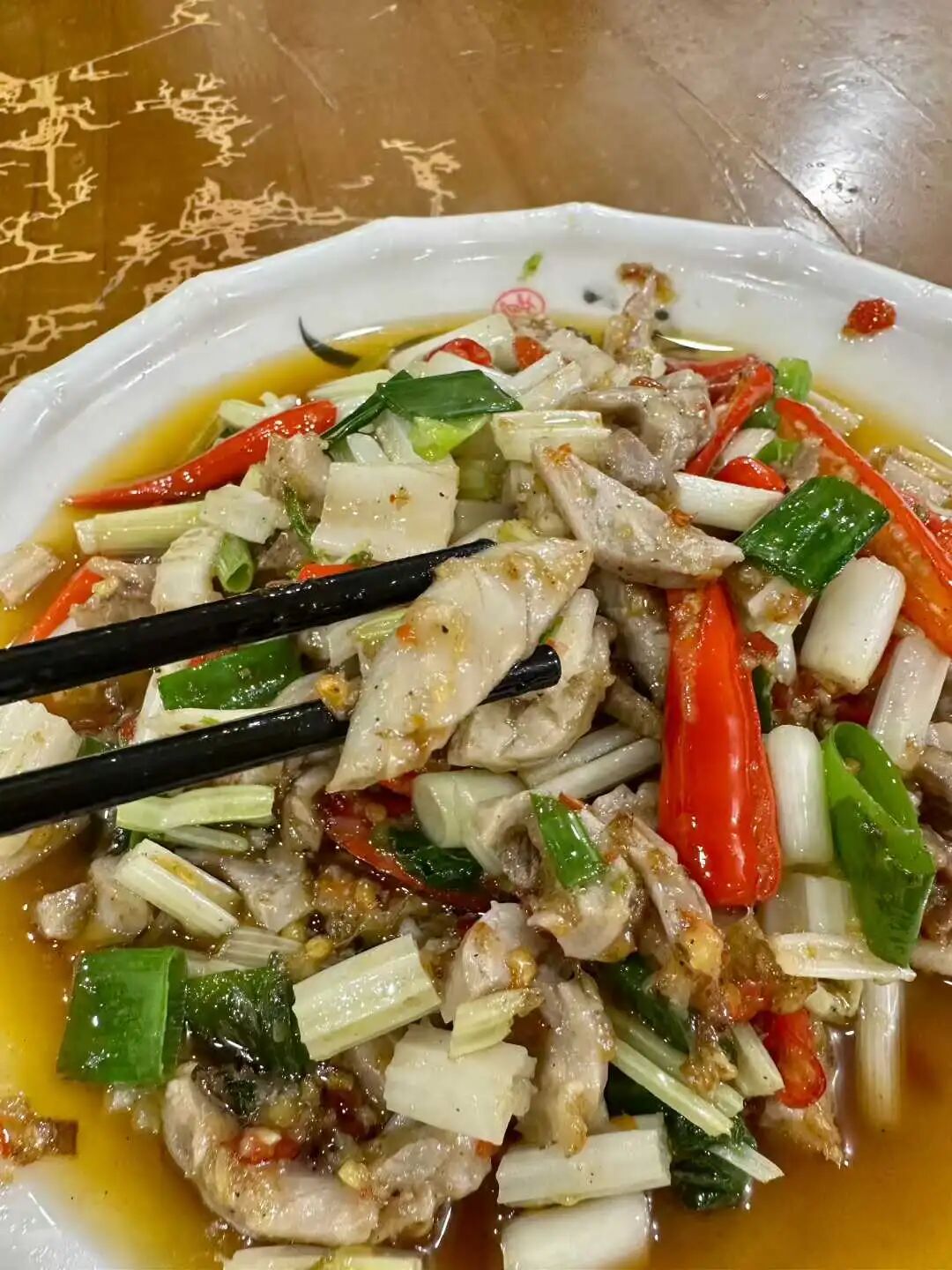
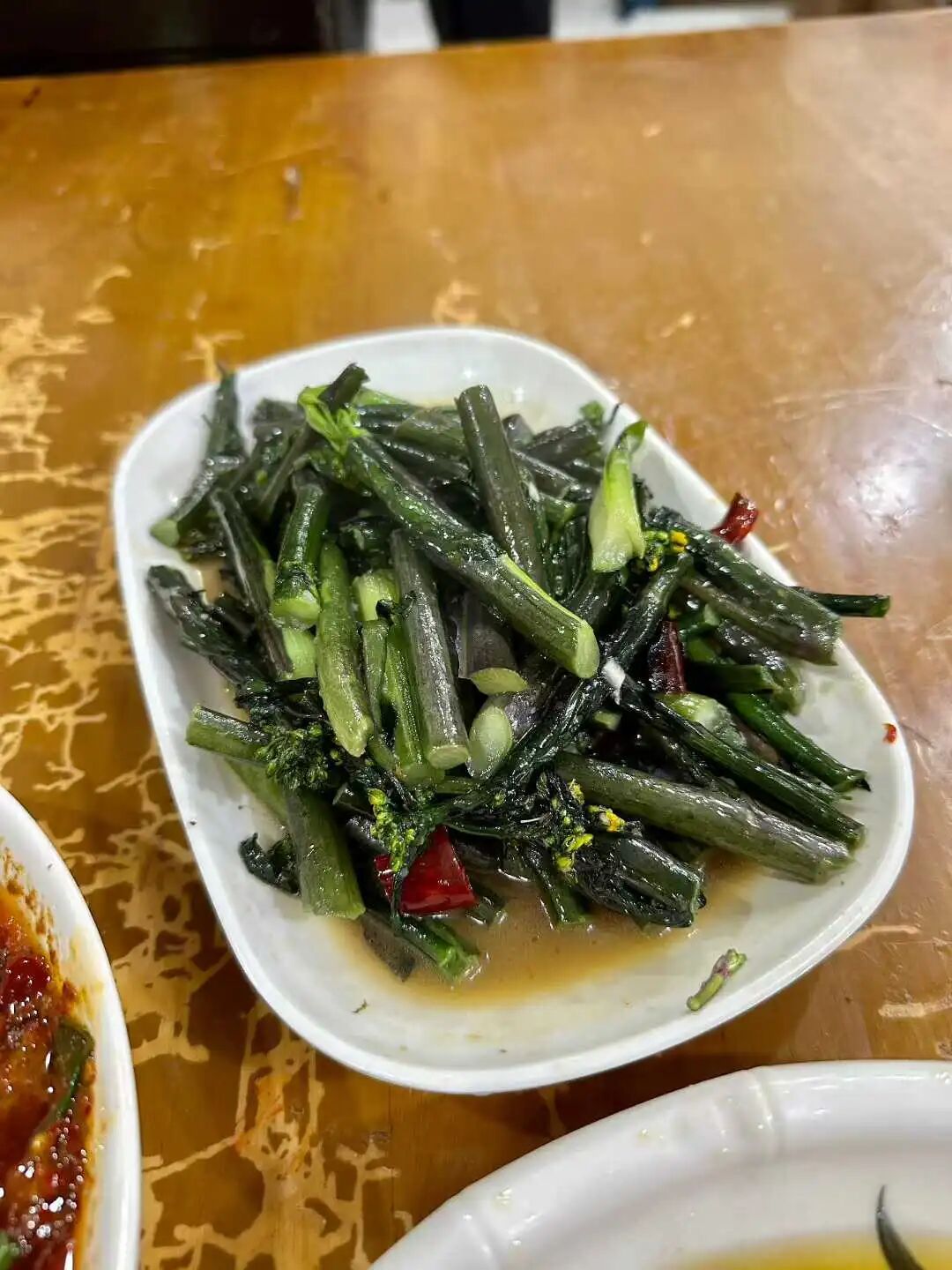
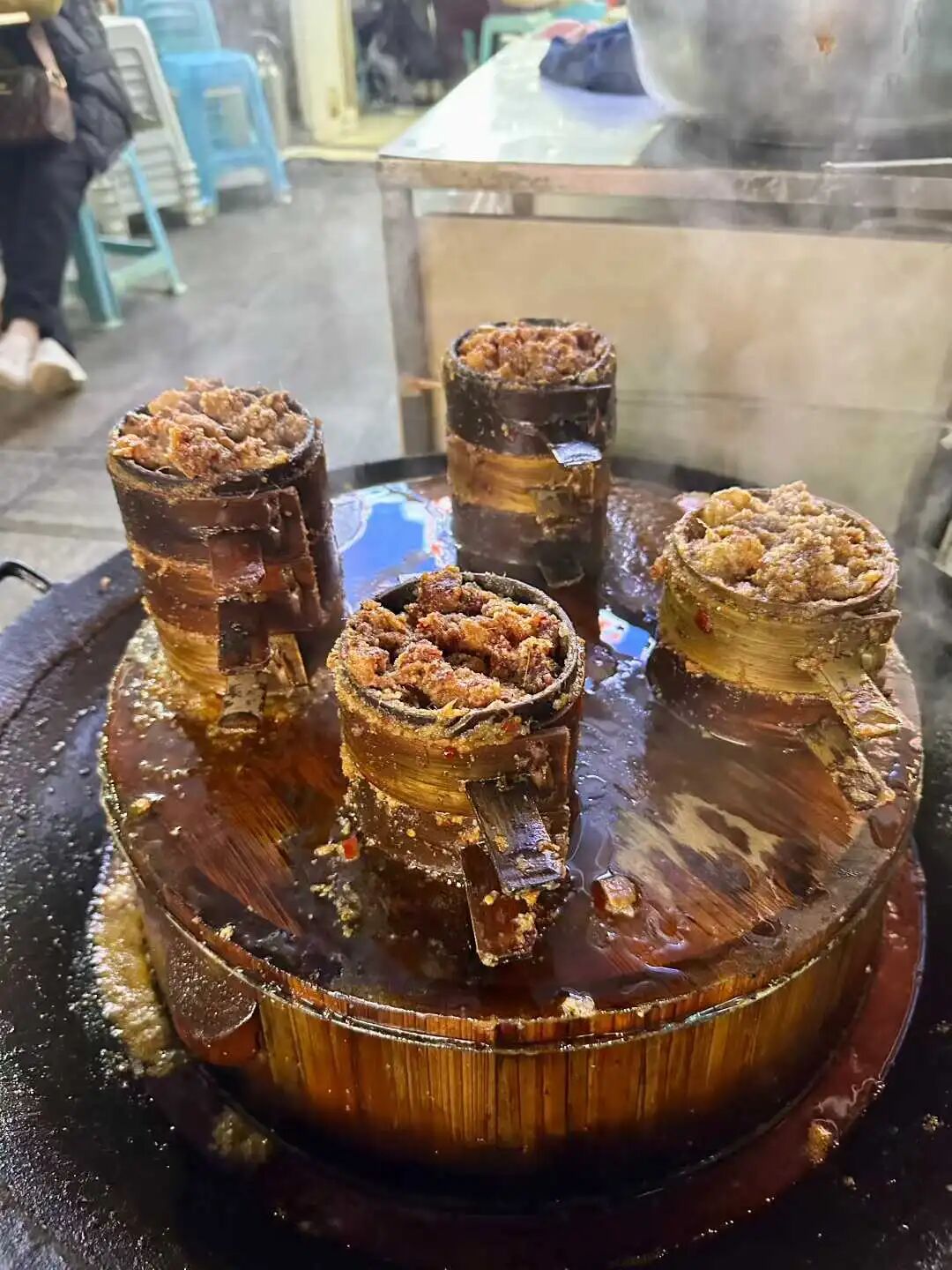
The Dabeixiang Mosque in Yibin was first built in 1821 (the first year of the Daoguang reign). It was originally a traditional courtyard house in southern Sichuan, but after being demolished in 1993, it became a multi-story building. As early as the Qianlong reign, Hui Muslims with the surnames Su, Ma, Hai, Zhang, and Cai from Shaoyang, Hunan, moved to Yibin due to the 'Huguang fills Sichuan' migration. During the Jiaqing reign, a Hui Muslim named Li became wealthy running a money shop in Yibin, so he donated money to build the mosque on Dabeixiang in the first year of the Daoguang reign. During the Guangxu reign, a military official named Ma Chaoxuan retired from his post as a provincial commander and settled in Yibin, where he built a mosque on Shuijing Street in the north of the city. During the late Qing Dynasty and the Republic of China era, Ma Chaoxuan's descendant, Ma Pinsan, became the manager of the Dabeixiang Mosque and merged the northern city mosque into the Dabeixiang Mosque.
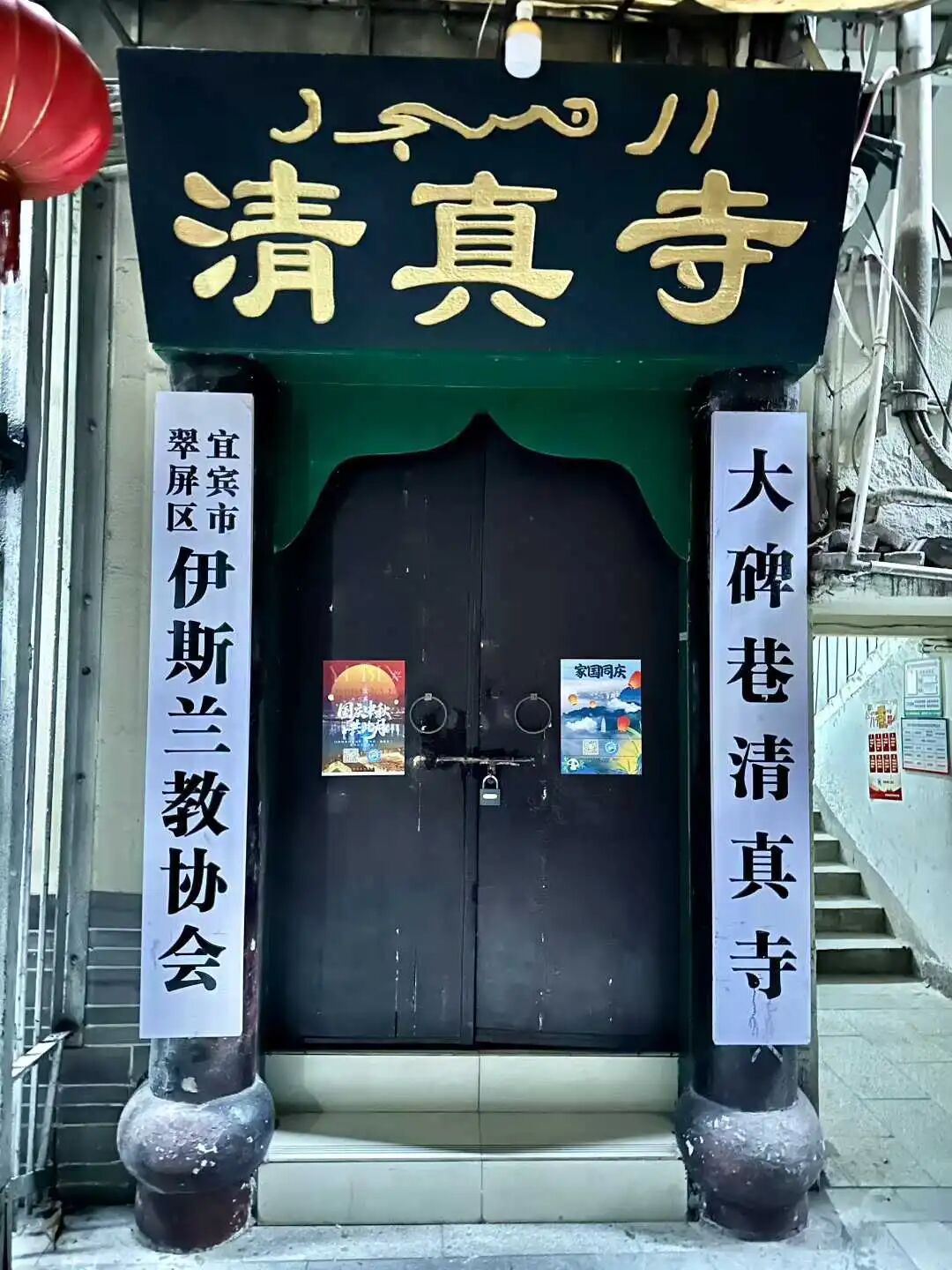
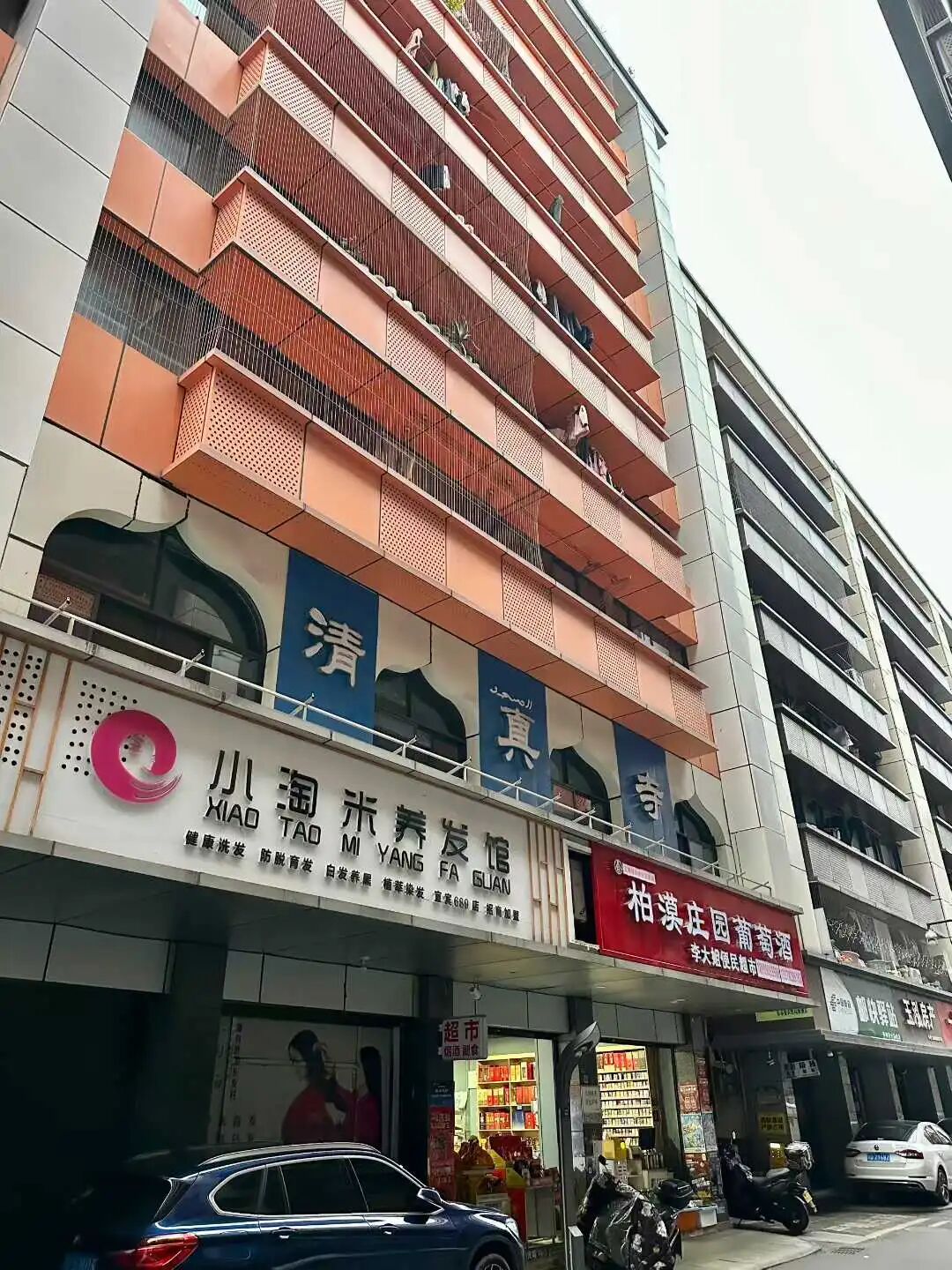
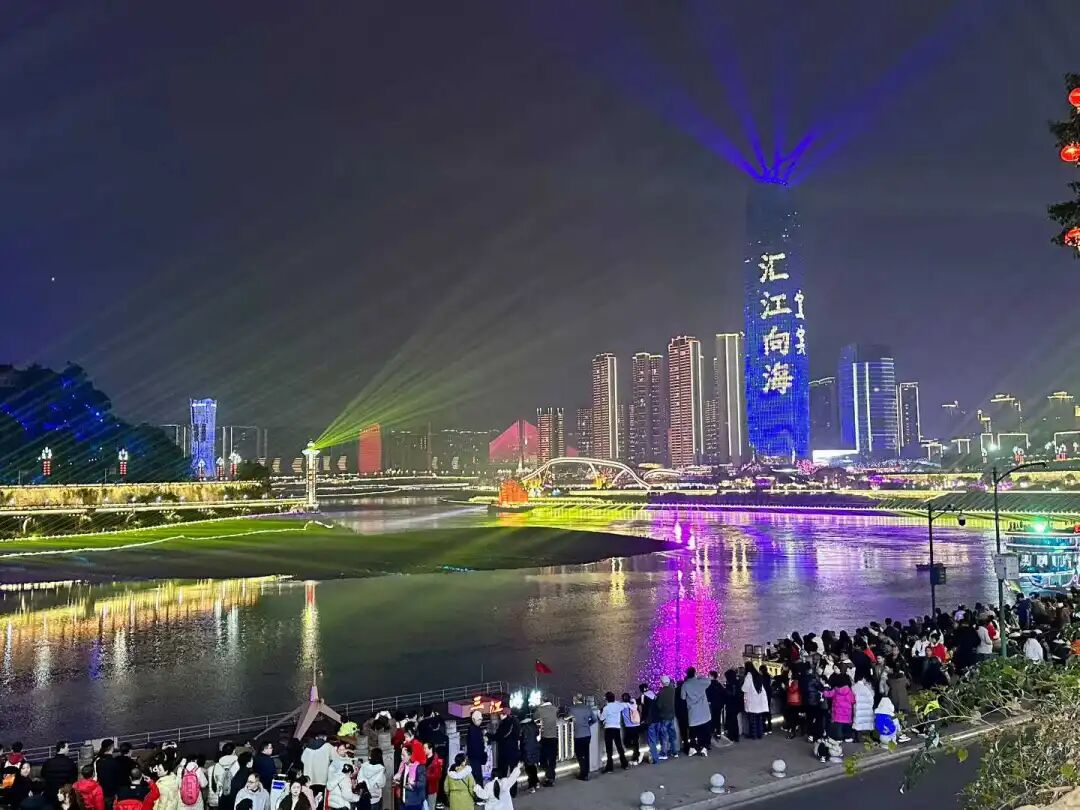
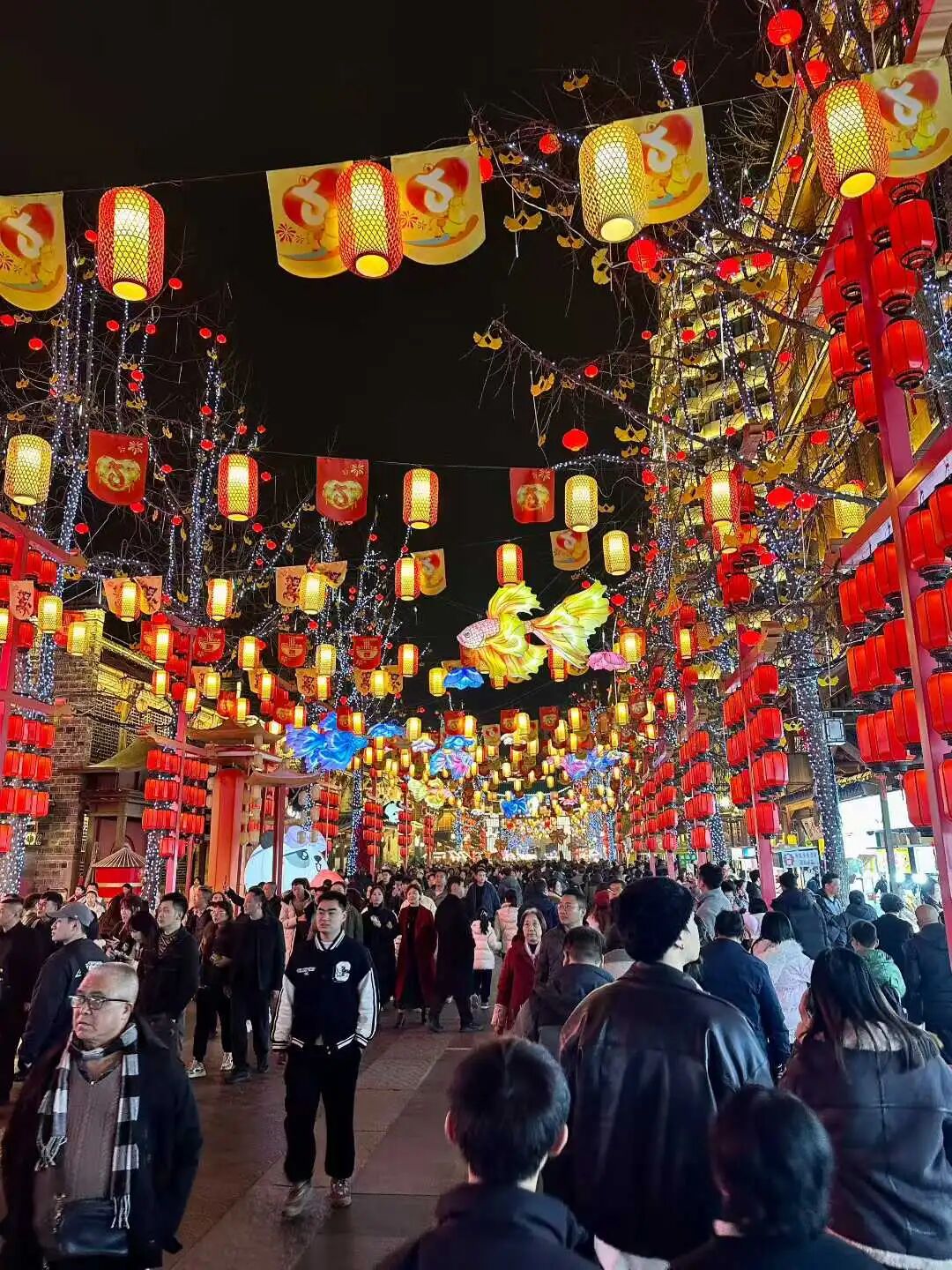
That night, I drove from the Cuiping District in Yibin's old town to Nanxi District, stayed the night, and planned to try the Yibin Hui Muslim-style meat-topped spicy noodles (hunranmian) the next morning. The most authentic Hui Muslim noodle shop in Nanxi is Su's Huihui Fragrance (Suji Huihuixiang) on Xiazheng Street. The meat they use is personally butchered by Imam Su from the Sujiaqiao Mosque. Unfortunately, Huihui Fragrance was closed when I arrived, so I went to another Su's Beef Noodle shop nearby, which is also run by local Hui Muslims surnamed Su.
Beef hunranmian is a classic breakfast for Yibin Hui Muslims. It uses local Yibin flat, thin alkaline noodles (shuiezi jianshuimian) made from high-gluten flour and alkaline water. They are boiled until 80% cooked, drained, and tossed with cooked rapeseed oil to keep them separate and dry—this is the key to the 'ran' (burning/oily) style. The beef topping (saozi) is made by mincing beef and stir-frying it slowly in rapeseed oil with various spices until dry and fragrant. Then, they add secret red oil, Yibin preserved mustard greens (suimi yacai), freshly crushed peanuts, toasted sesame seeds, Sichuan peppercorn oil, and chopped green onions. When eating, you mix it quickly to use the residual heat to bring out all the aromas. Once you take a bite, the noodles are chewy and bouncy, the beef topping is dry and rich, the mustard greens are salty and fresh, the peanuts are crunchy, the red oil is spicy, and the peppercorn oil adds a slight numbing sensation. It is very dry and refreshing.
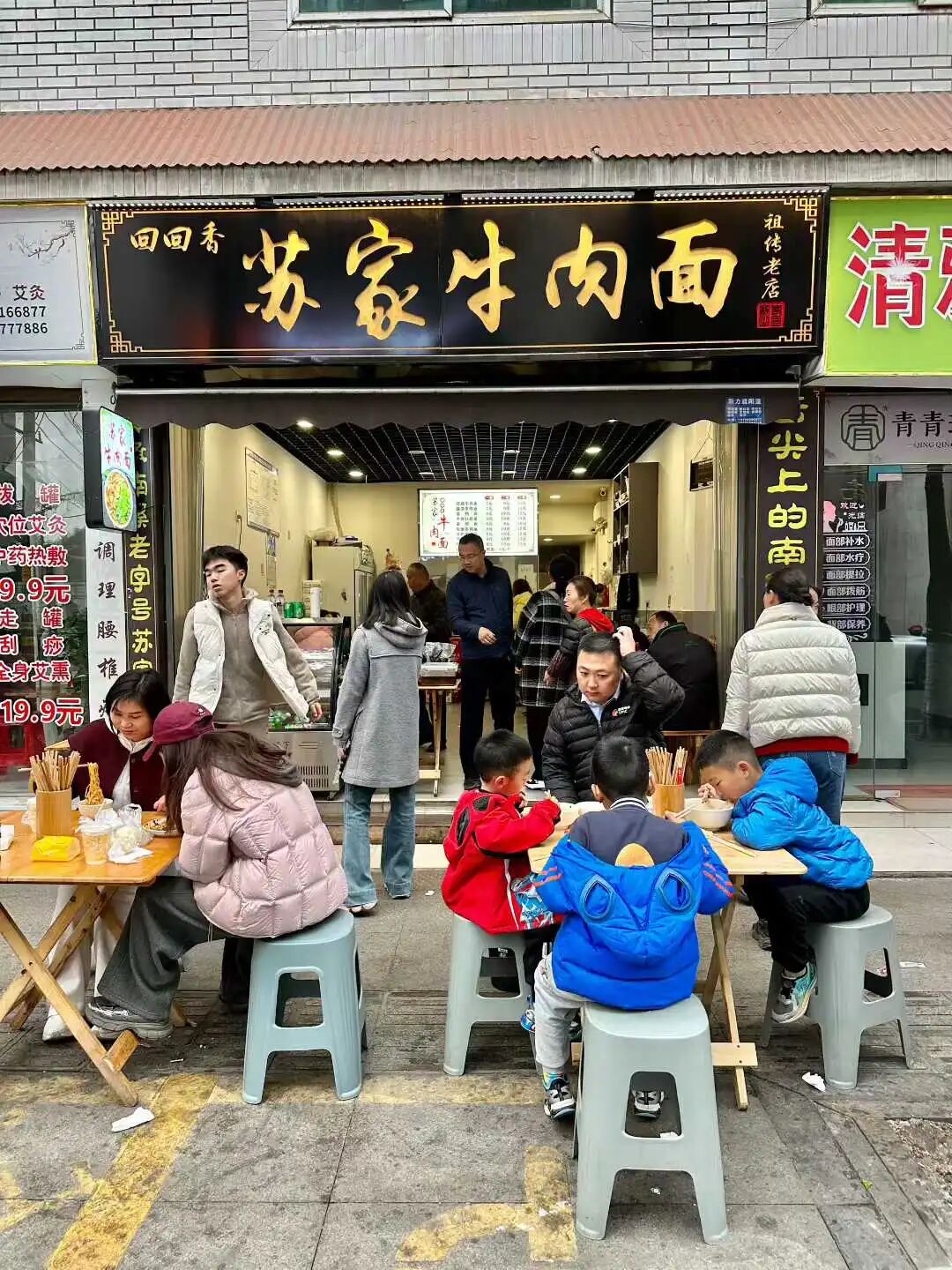
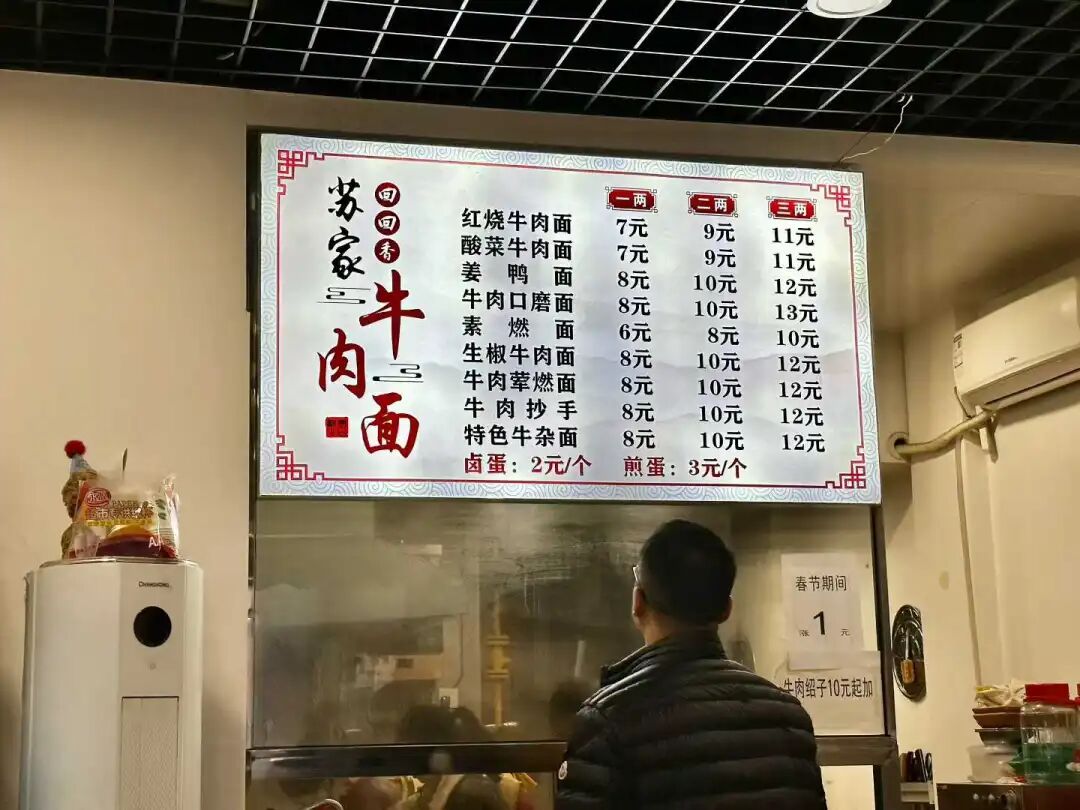
After breakfast, I drove for 1 hour and 10 minutes from Nanxi District to the Yunding Mosque in Liduan Town, deep in the mountains of Shu. The Yunding Mosque is surrounded by big mountains. The Hui Muslim village where the mosque is located sits on a high piece of land, as if it were above the clouds, which is how it got the name Yunding (Cloud Top) Mosque.
Yunding Mosque was first built during the Xianfeng era. The local Ma family, who are Hui Muslims, moved here from Shaoyang, Hunan, during the Qing Dynasty migration known as 'Huguang filling Sichuan'. Yunding Mosque was originally a traditional courtyard in the southern Sichuan style, but it was later rebuilt as a concrete building. I took photos of some old pictures of the mosque before its reconstruction from Imam Su at Dabeixiang Mosque. Because of building renovations, traditional mosque architecture in Sichuan is disappearing rapidly.
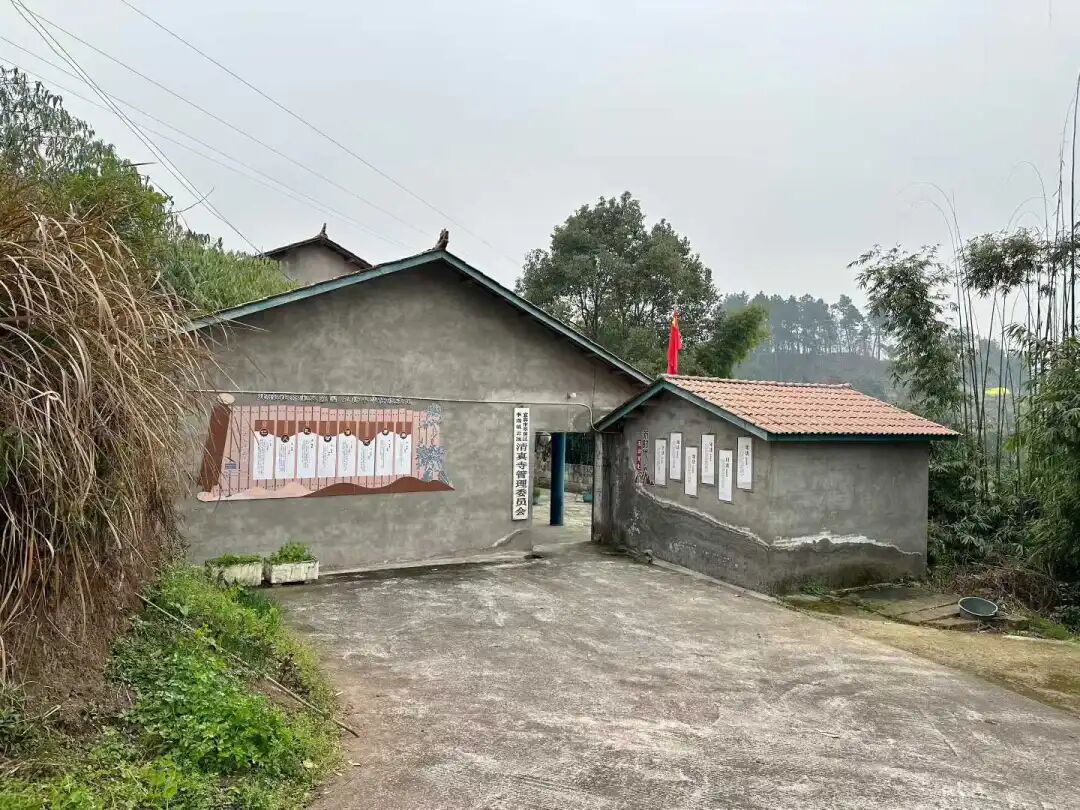
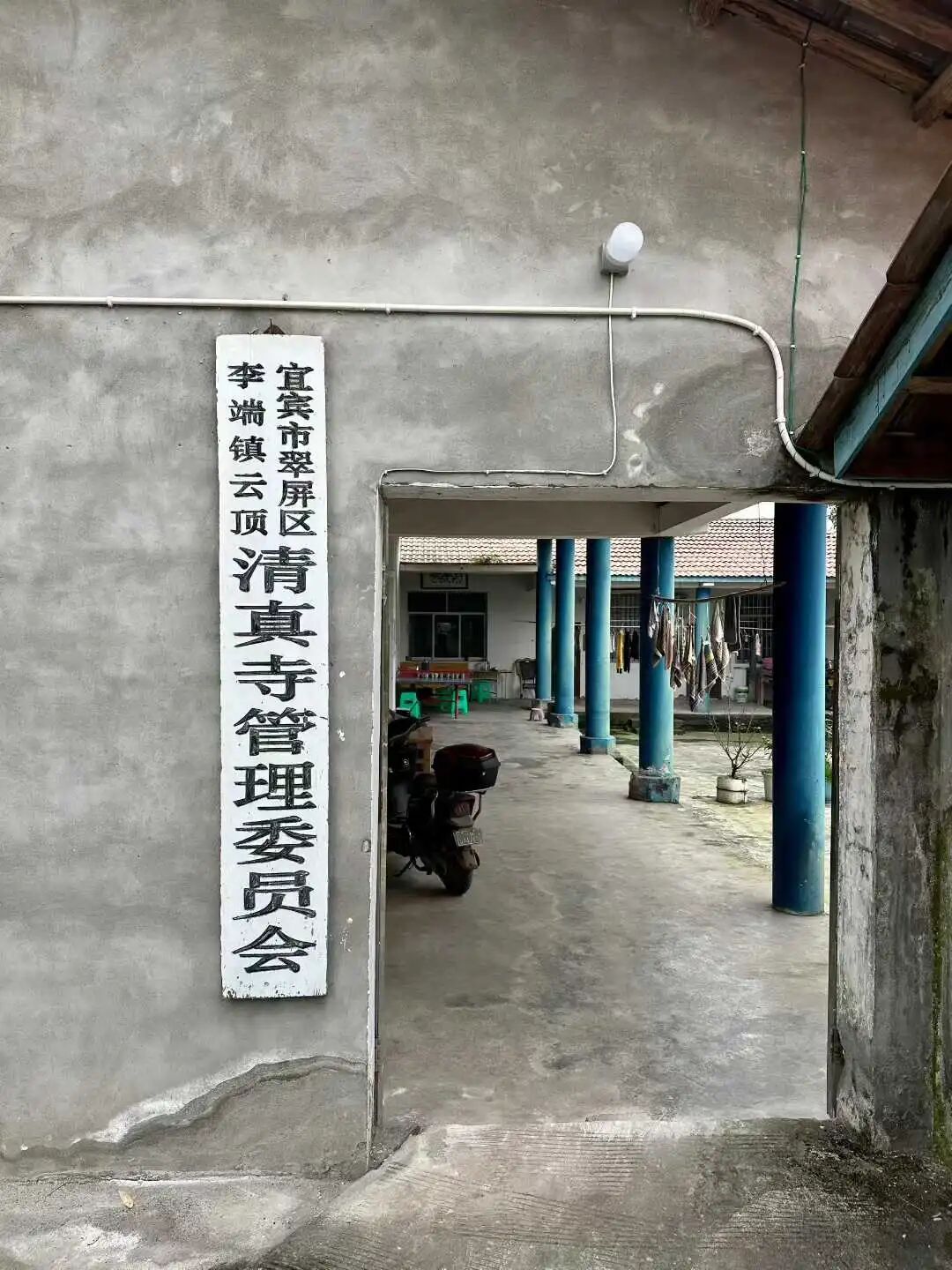
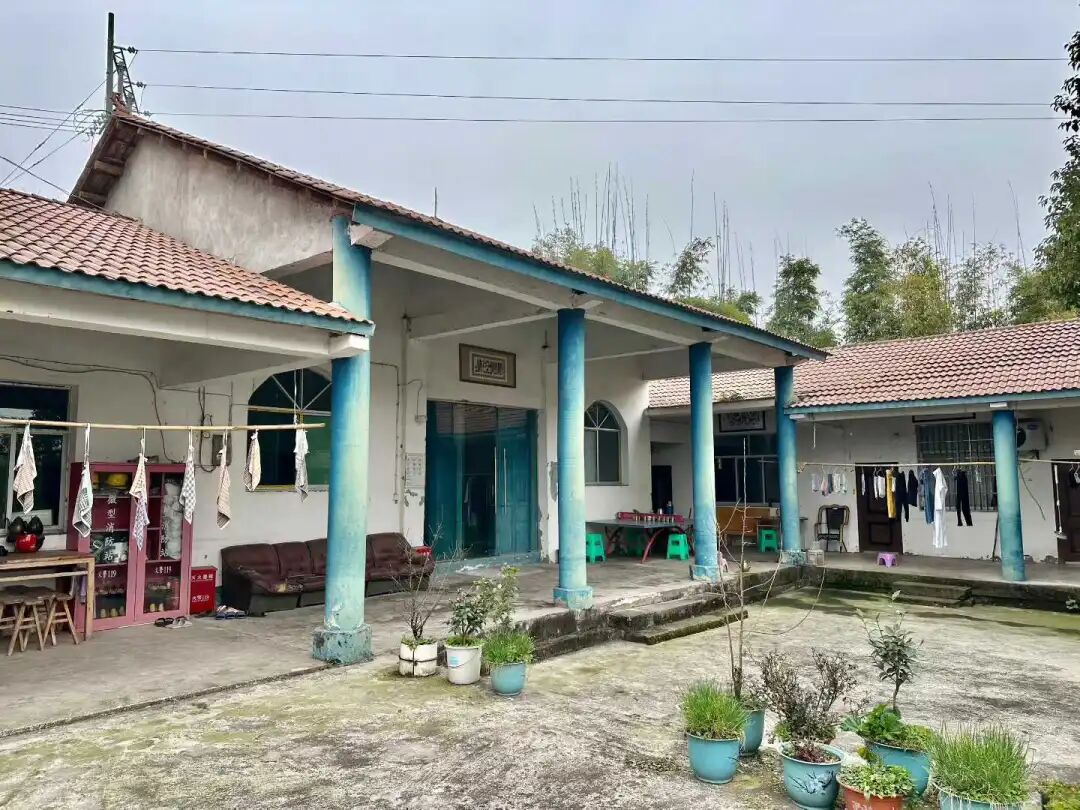
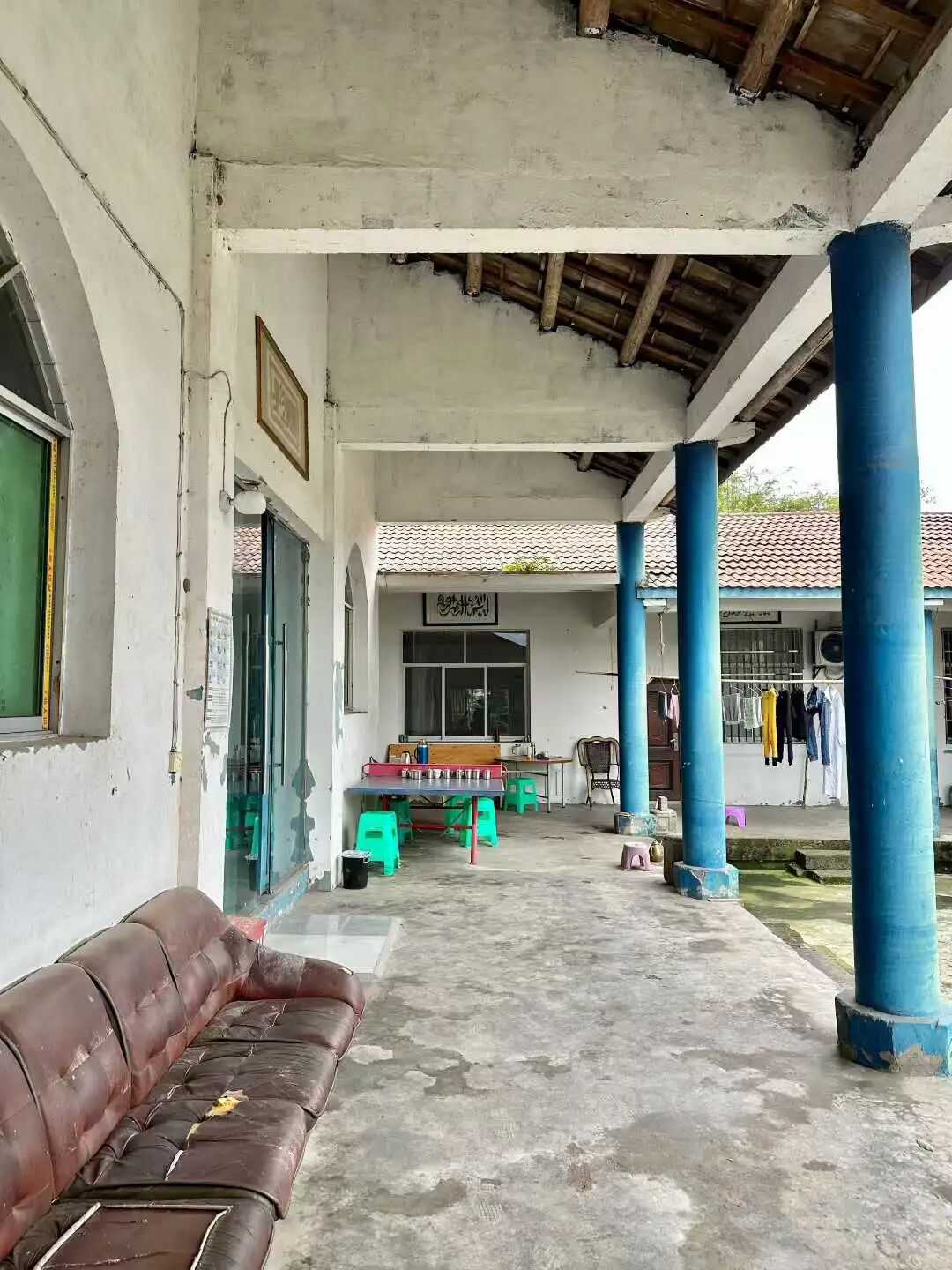
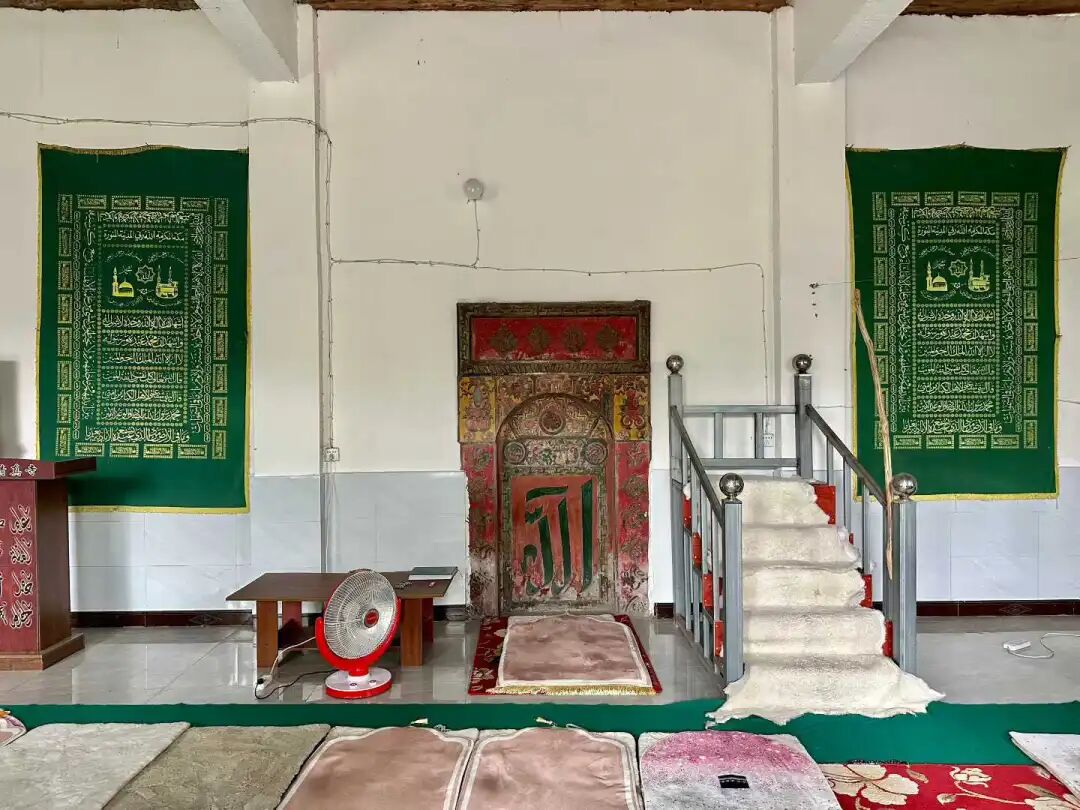
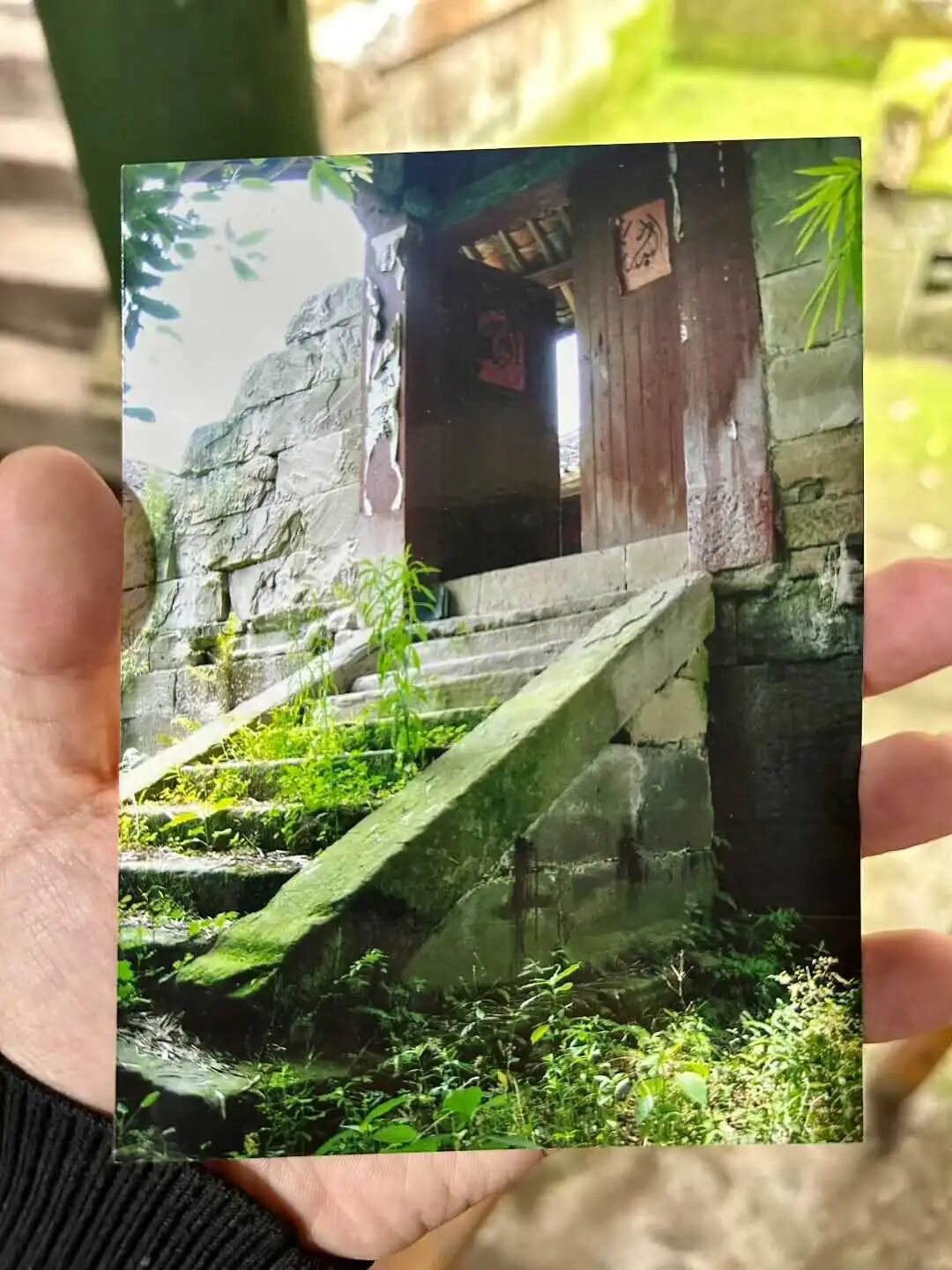
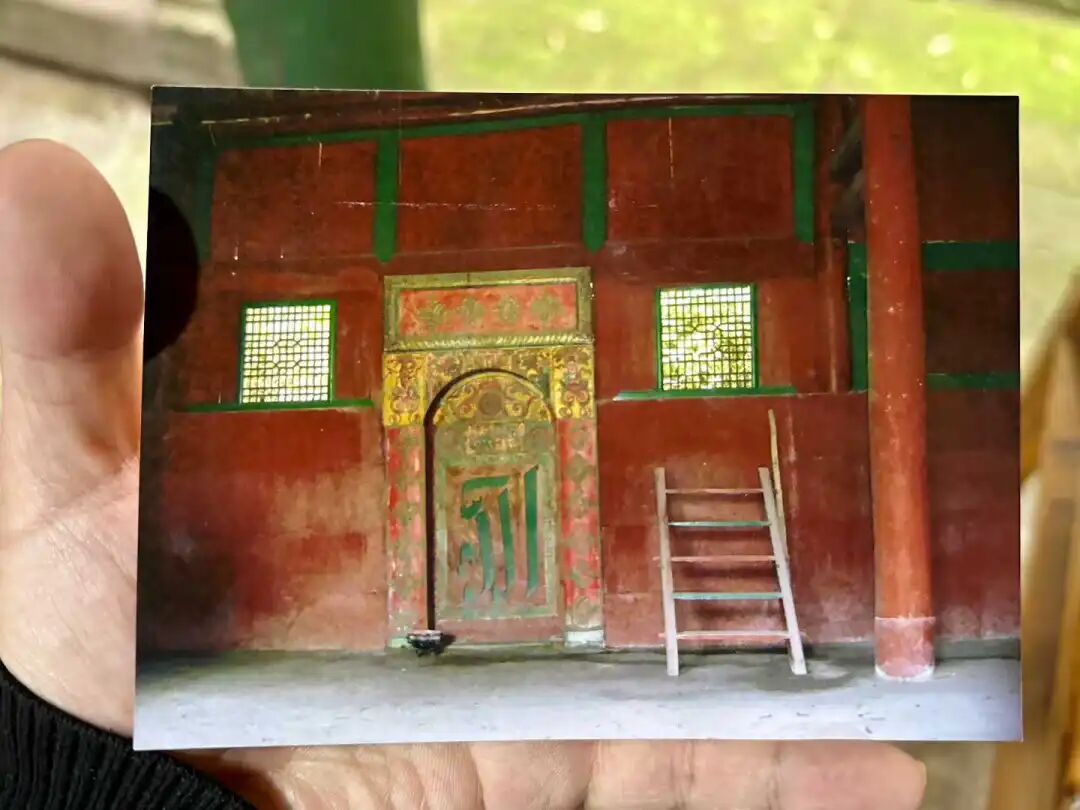
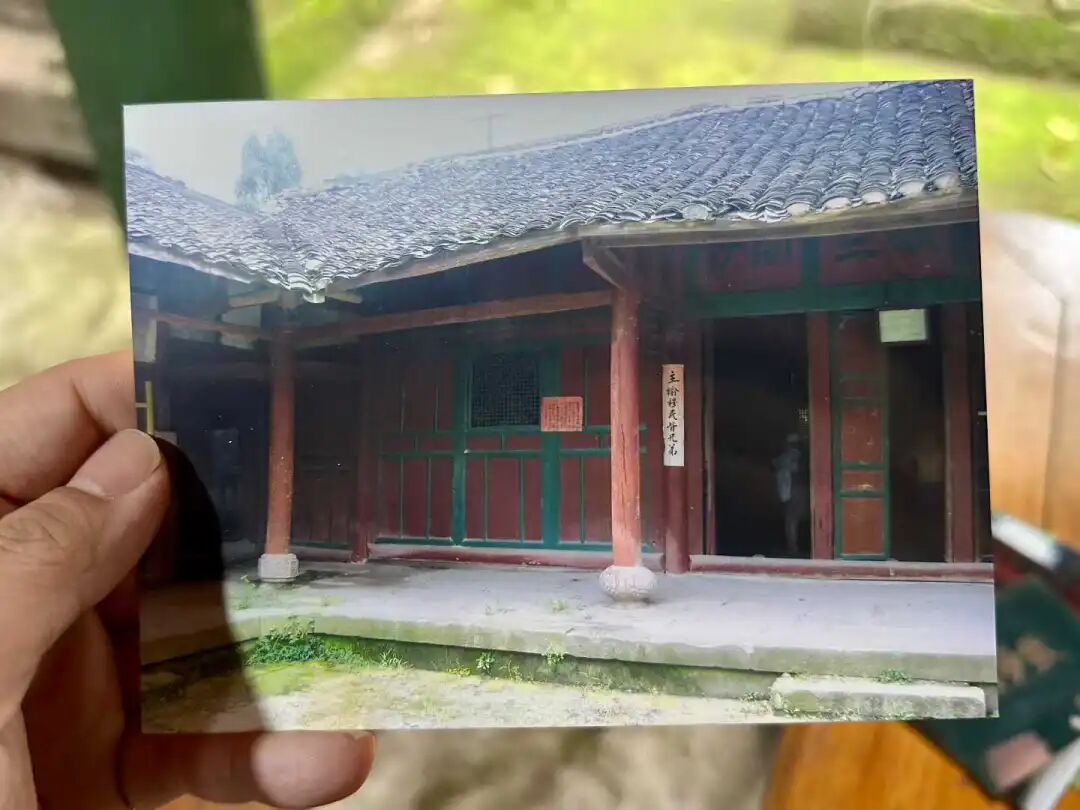
After the reconstruction of Yunding Mosque, only the Qing Dynasty mihrab and stone column bases remain. The mihrab has a very distinct southern Sichuan style and features many floral patterns.
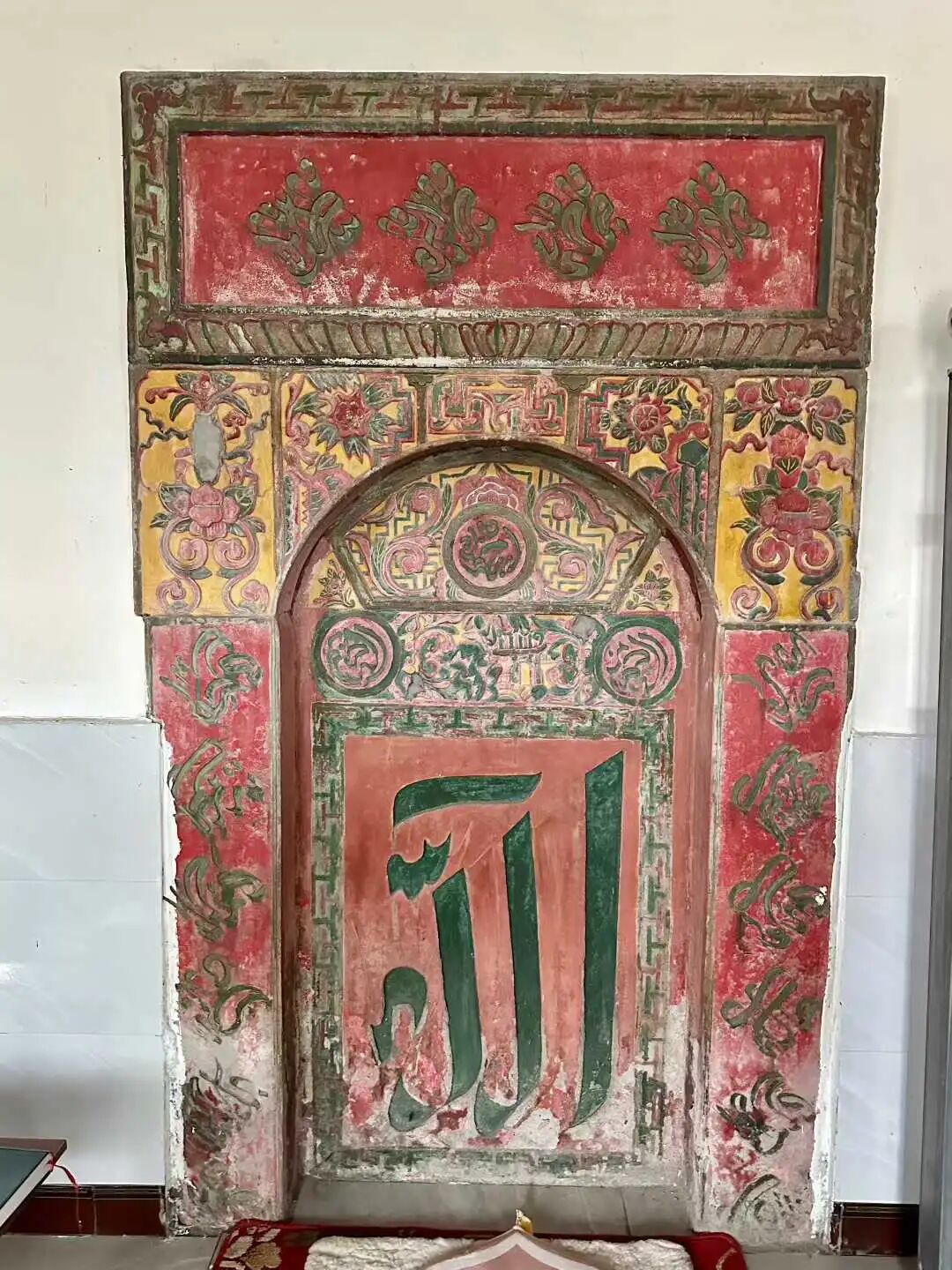
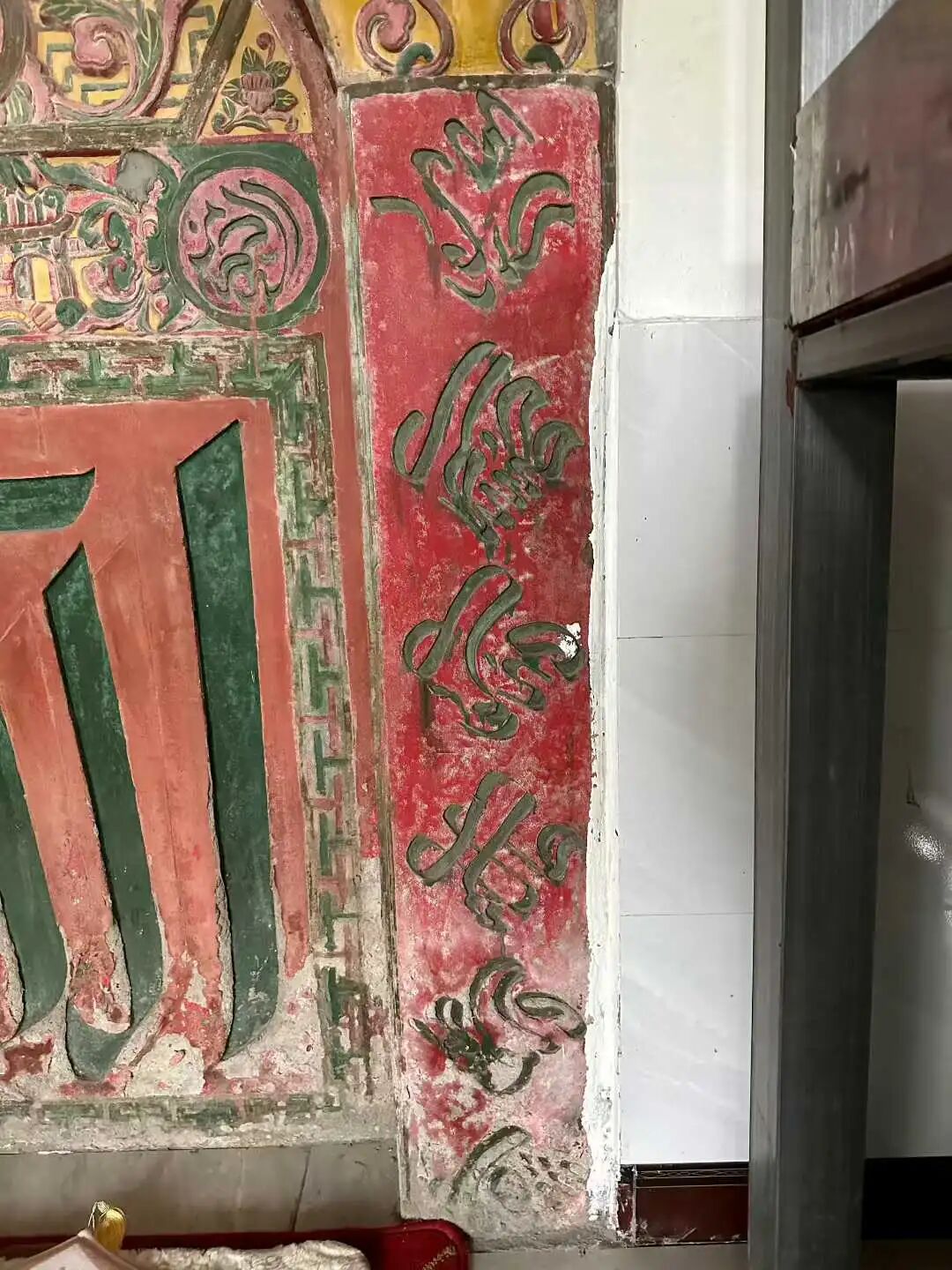
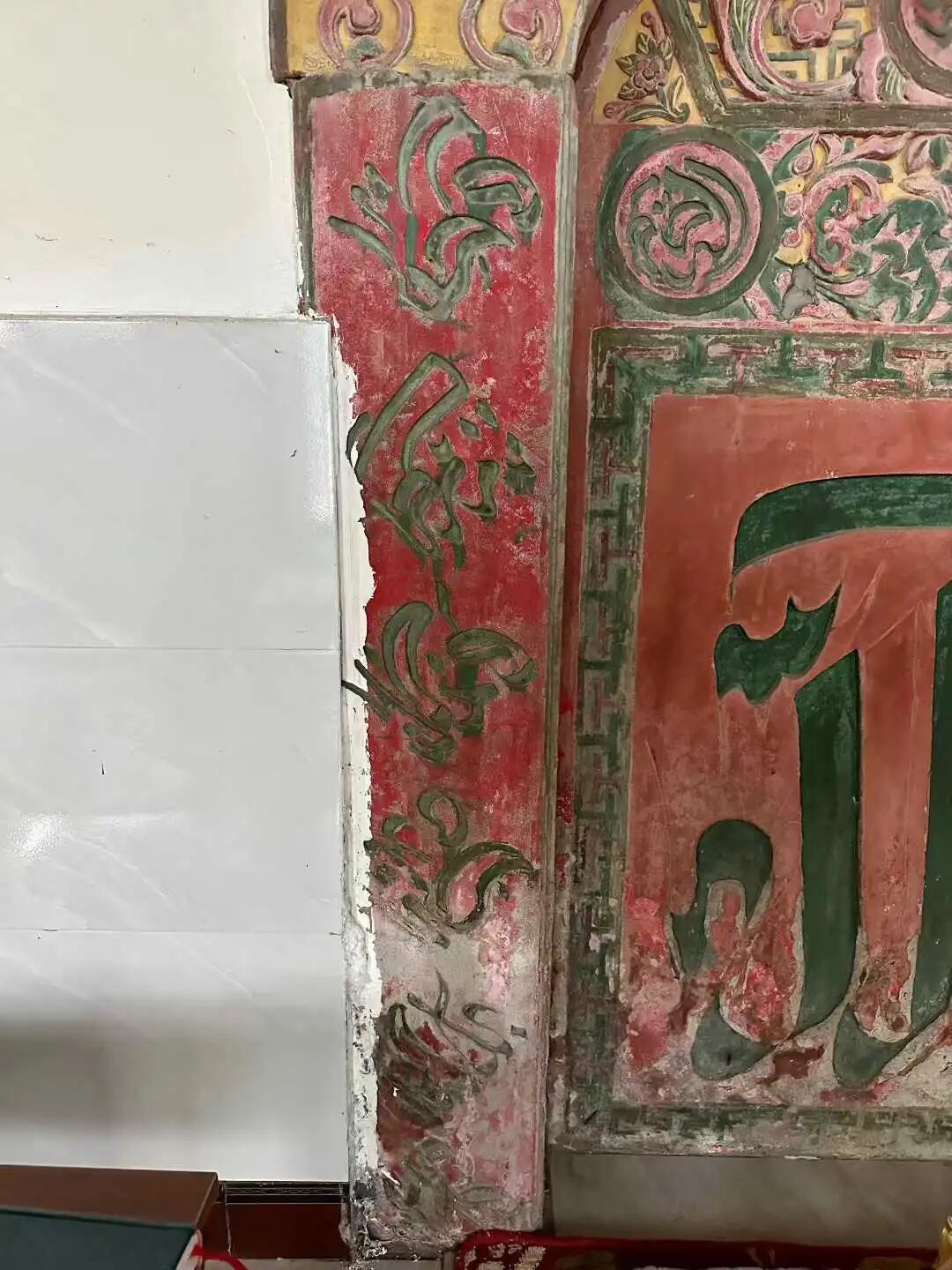
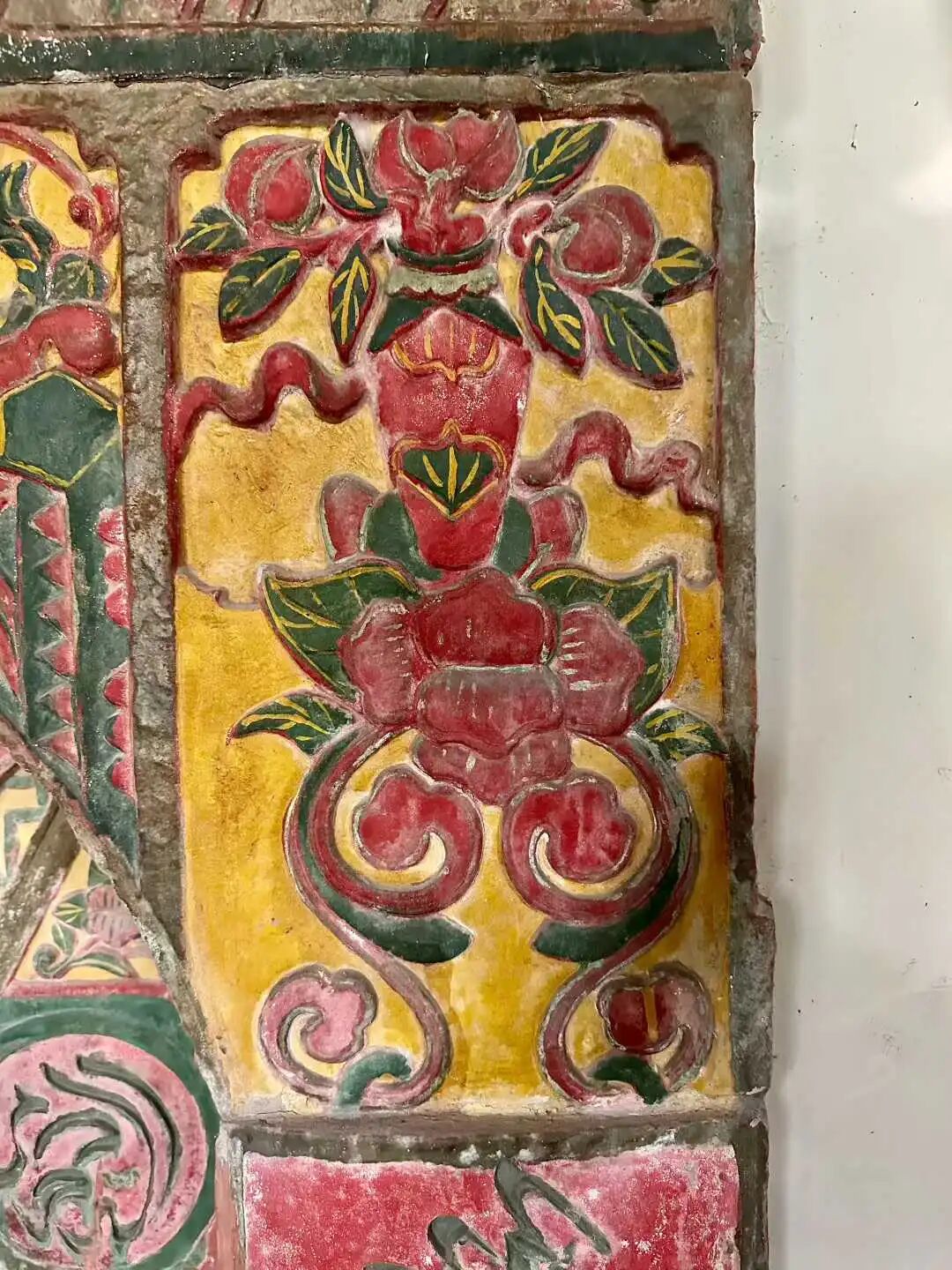
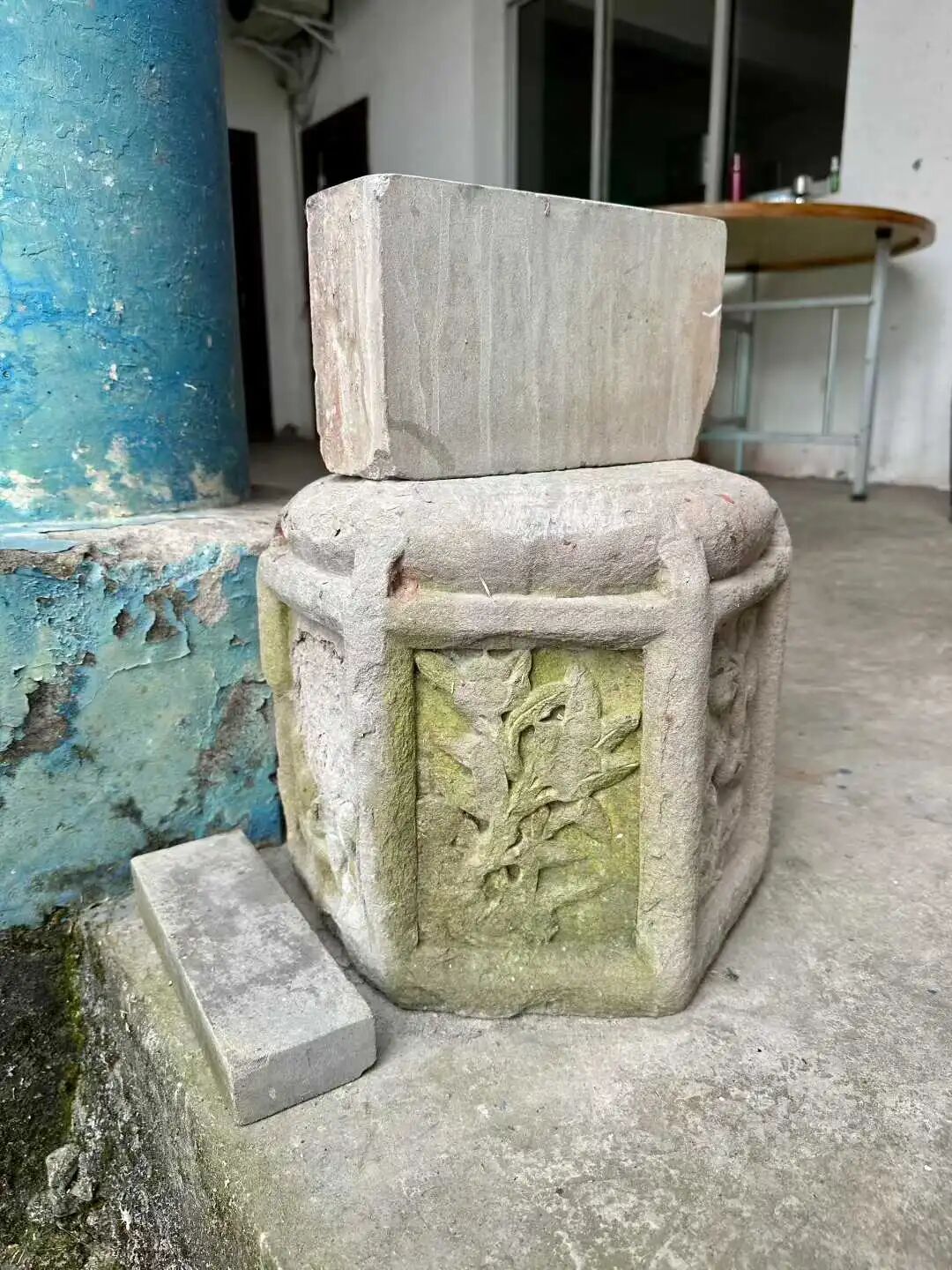
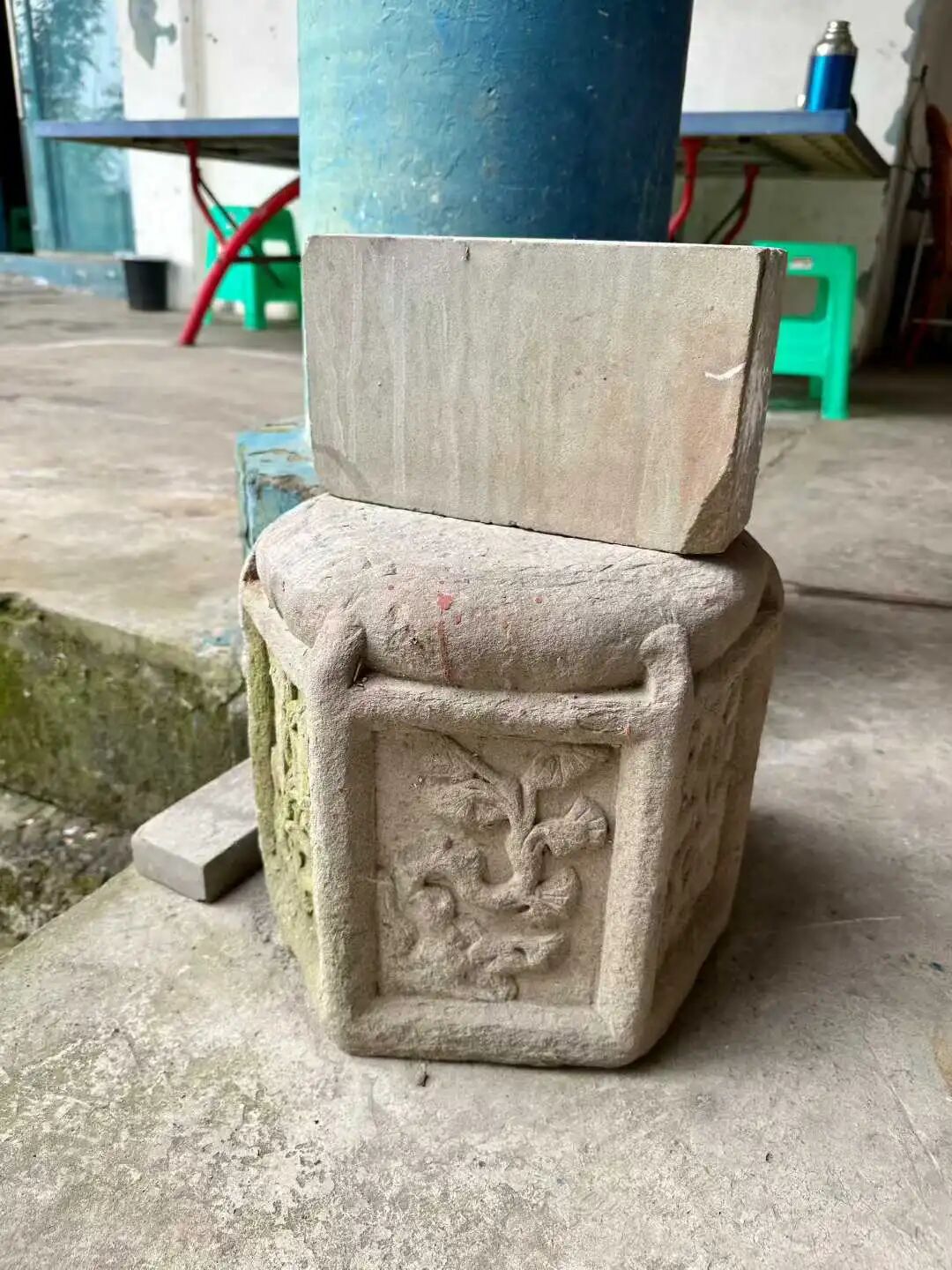
In early spring at Yunding Mosque, I walked through the front gate and straight into a sea of bamboo. The leaves were layered thick, and the wind made them rustle. The mosque is surrounded by fields of blooming rapeseed flowers. The golden waves of flowers spread along the gentle slopes, reaching the foot of the distant mountains and the edges of the fields, full of rural peace and vitality. In a nearby pond, the water is clear and bright, with little ducks playing on the surface from time to time. As I was driving away, I happened to see the ducks lining up to cross the road. They waddled along, looking very cute and charming.
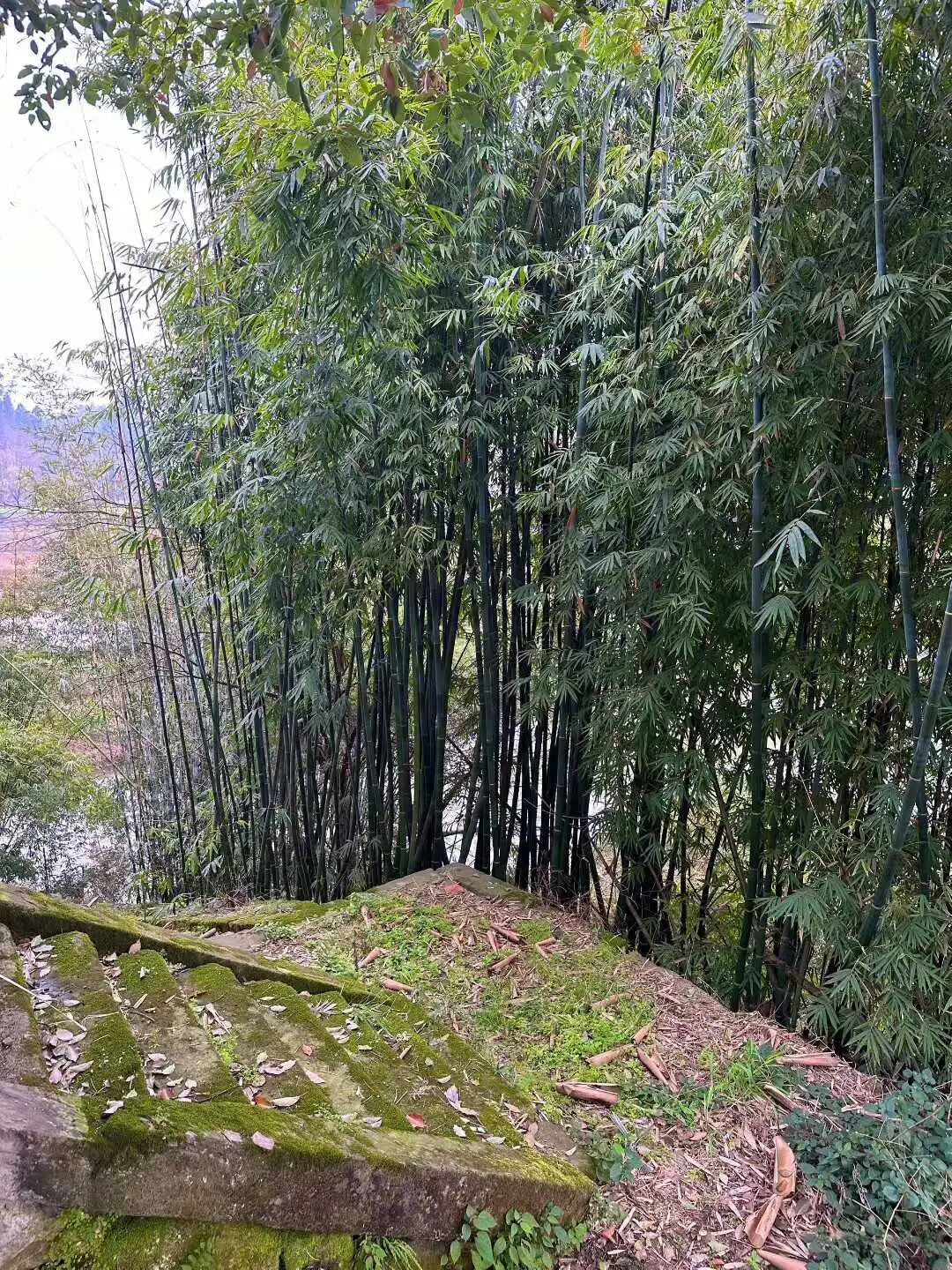
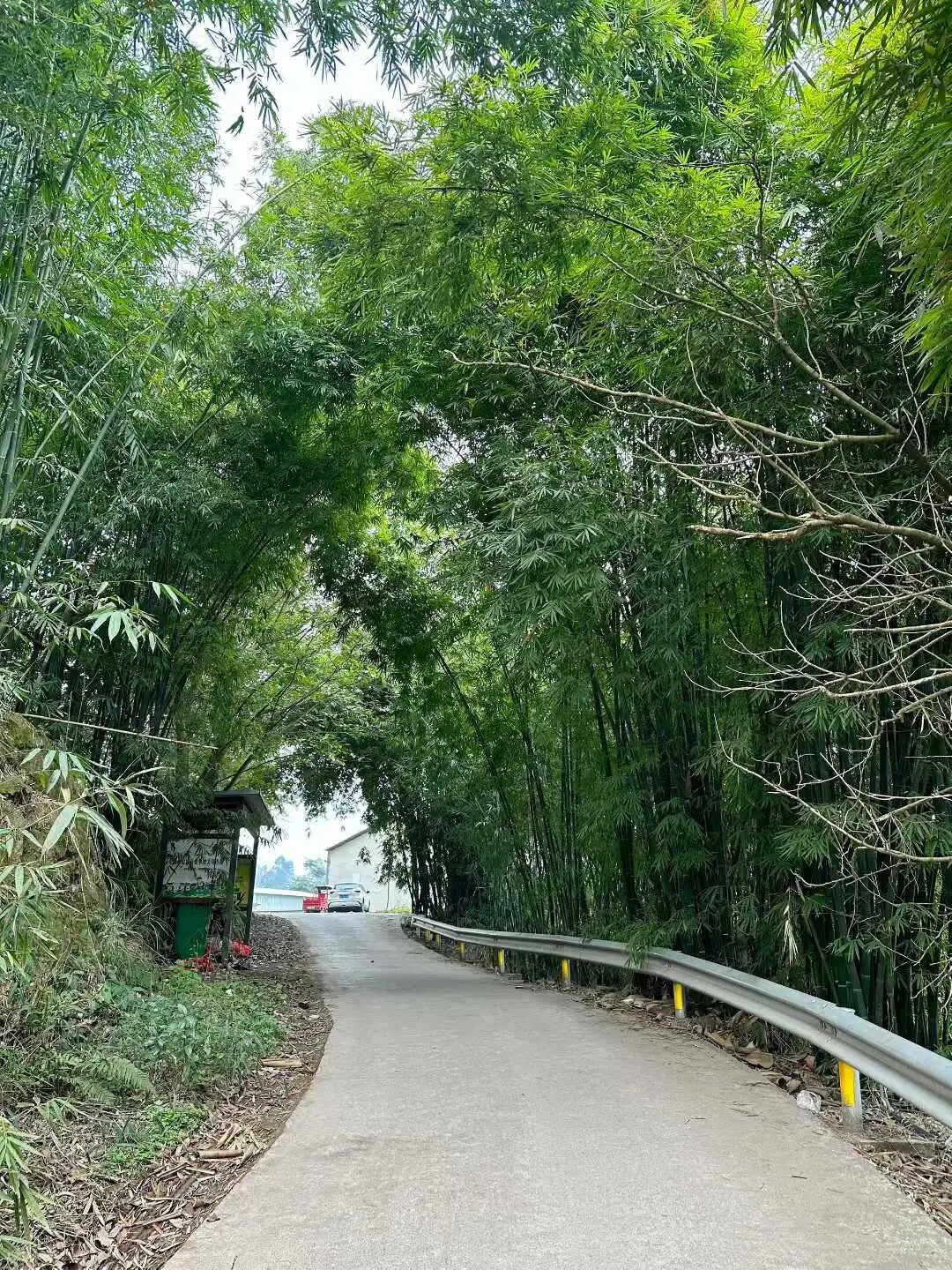
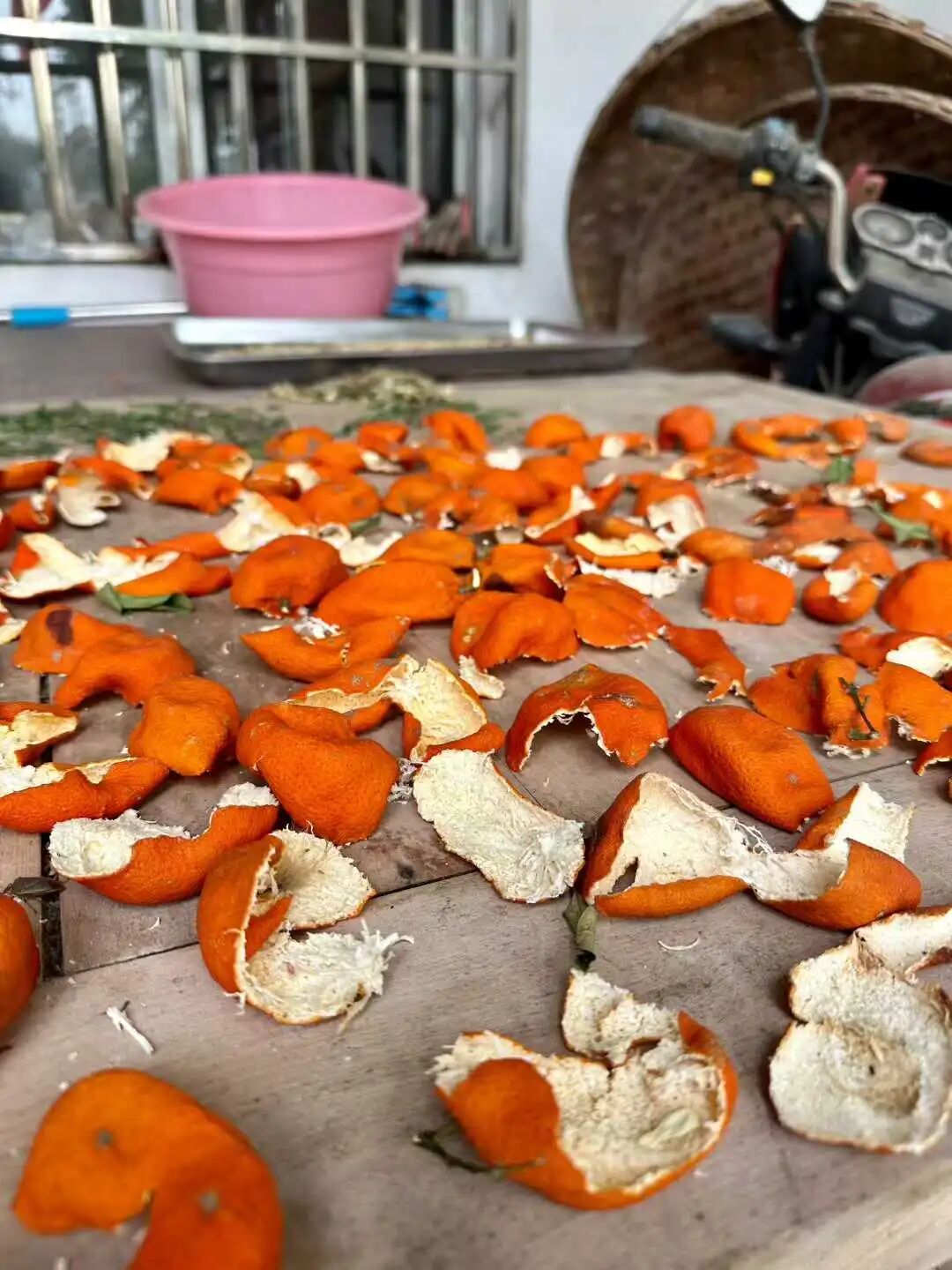
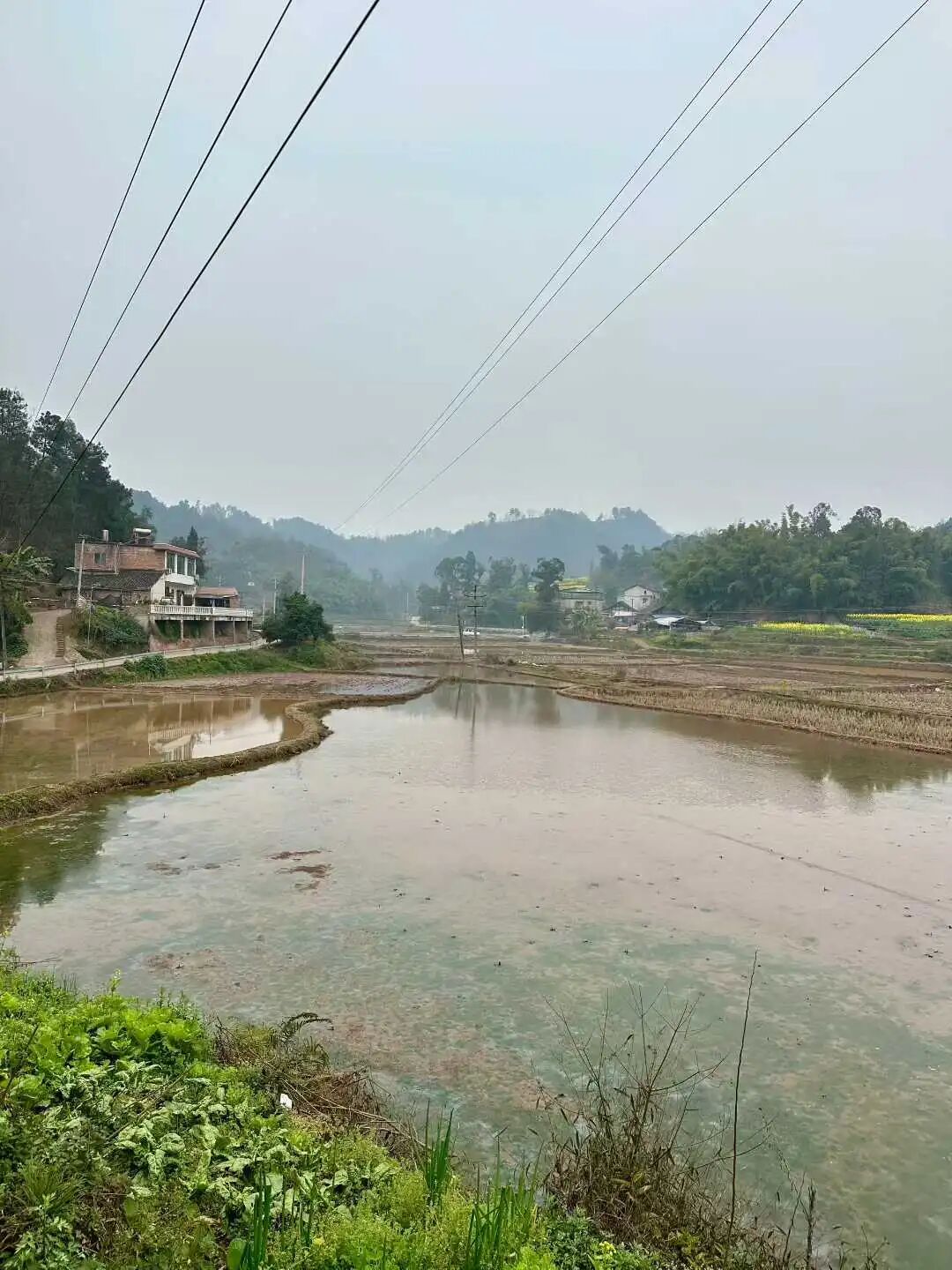
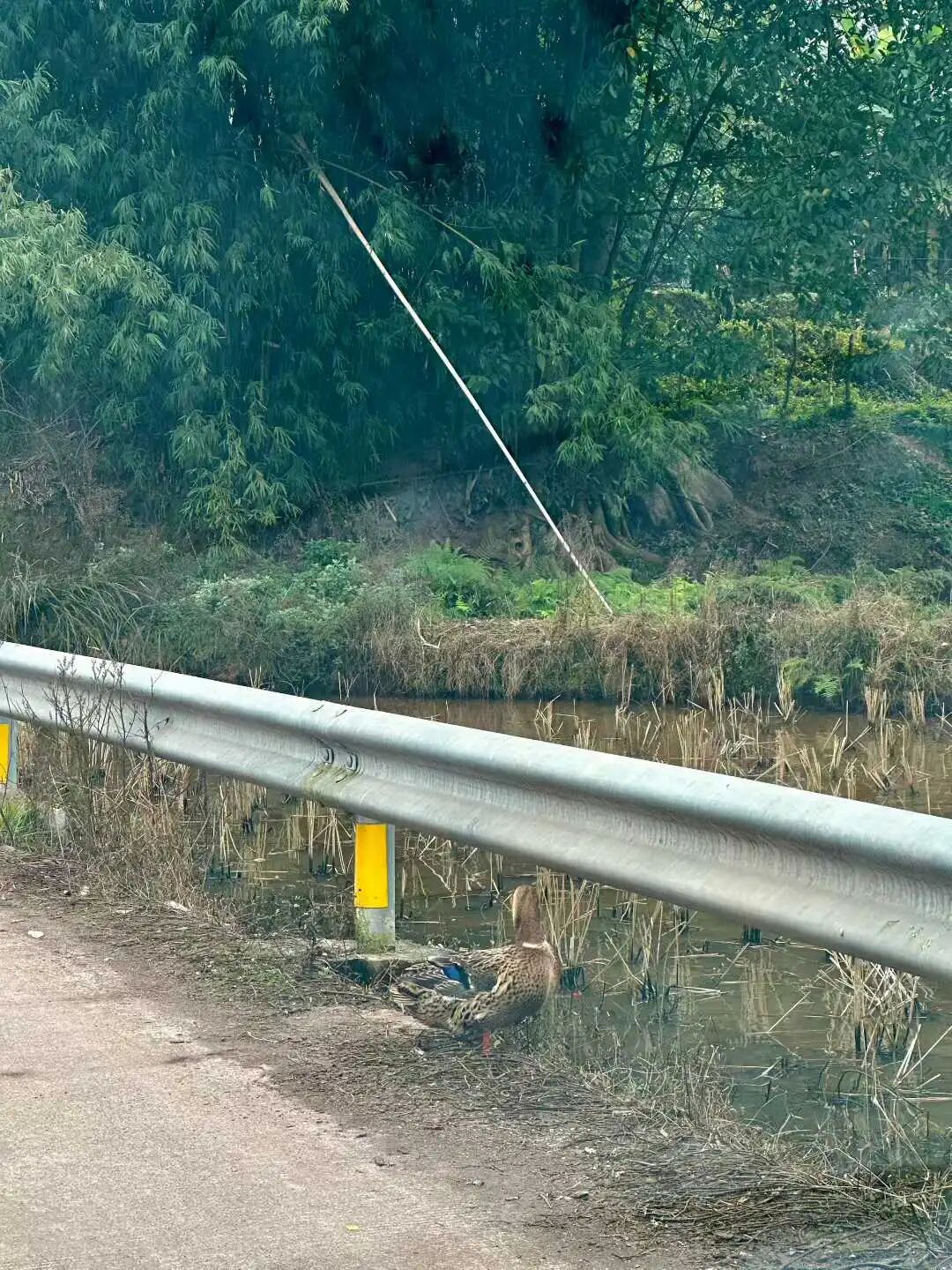
Driving for another 50 minutes from Yunding Mosque, I arrived at Sujiaqiao Mosque in the Nanxi District. This area is now part of the Sanjiang New Area in Yibin. There are large industrial parks in the nearby Songjia Town, but Sujiaqiao remains hidden deep in the mountains.
Sujiaqiao Mosque is the only traditional Hui mosque in Yibin that has been preserved to this day. The local Hui Muslims are mainly from the Su family, who moved here from Shaoyang, Hunan, during the 'Huguang filling Sichuan' migration in the Qianlong era. Sujiaqiao Mosque was first built in 1789 (the 54th year of the Qianlong reign) after Su Tianqi and others bought land in Qinjiagou. In 1799 (the 4th year of the Jiaqing reign), the community gave grain to Su Xinhan to manage for ten years. With the profits, they bought land from the Yin family and moved the mosque to its current site. In 1822 (the 2nd year of the Daoguang reign), two corridors were added. It was renovated in 1837 (the 17th year of the Daoguang reign). In 1864 (the 3rd year of the Tongzhi reign), Imam Su Liangchun led the effort, and with donations from Su Shunfang and other community members, the main hall was expanded. In 1944, Su Cailun led another renovation of the main hall.
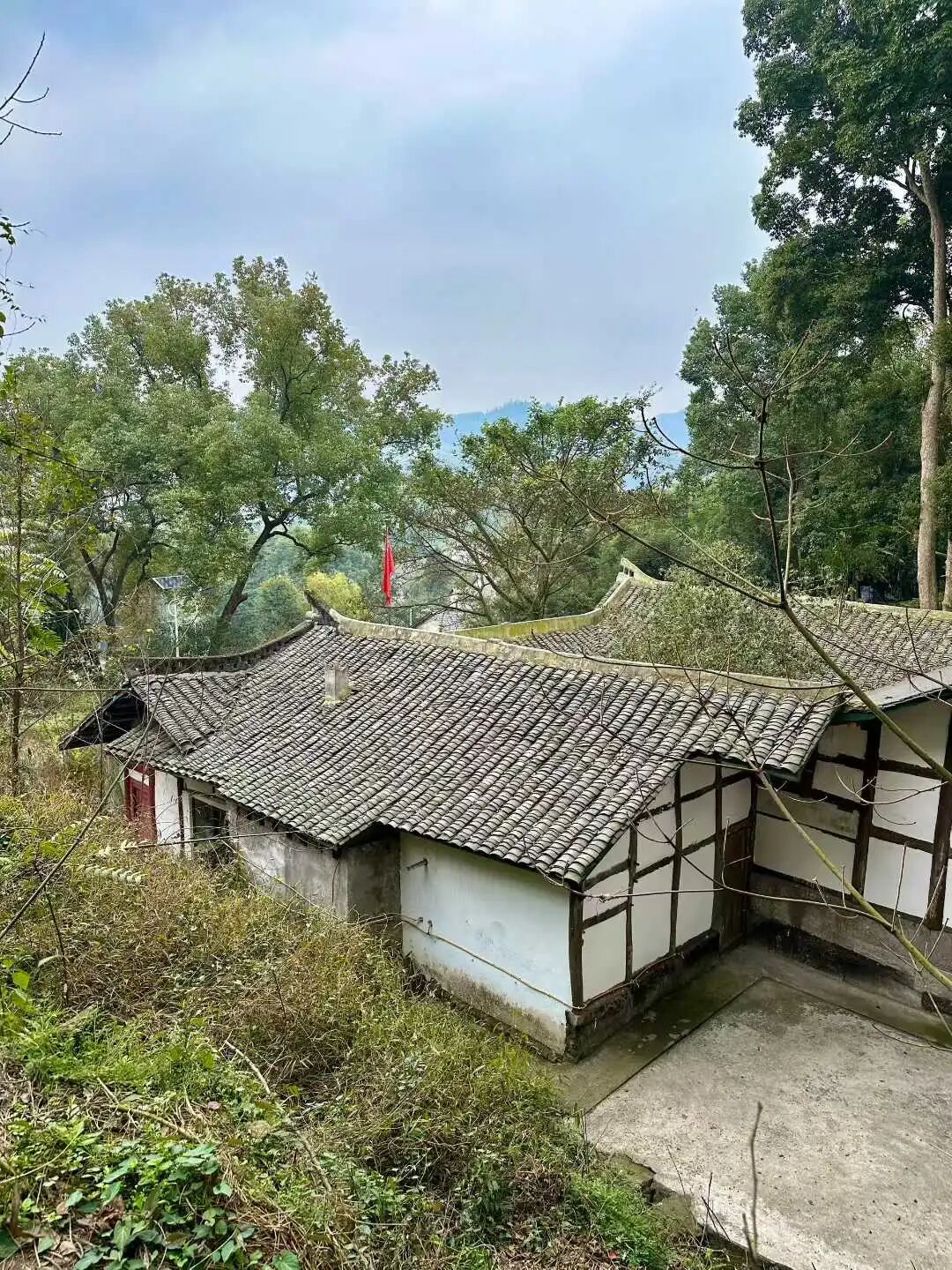
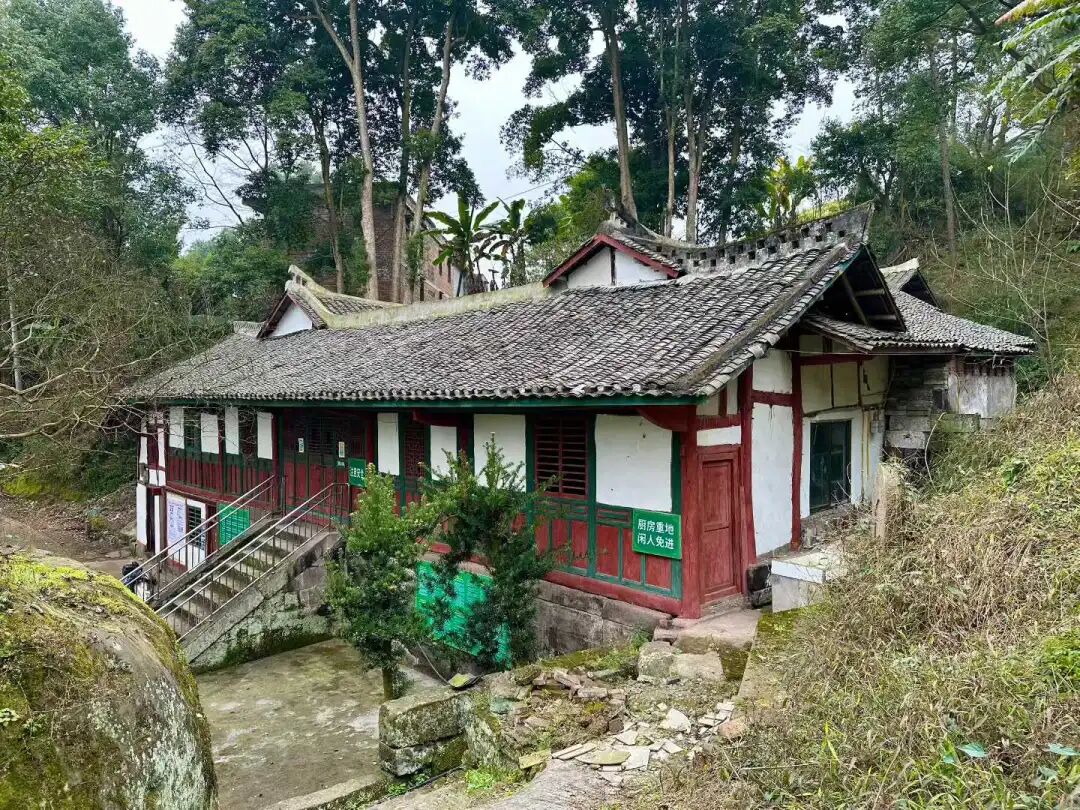
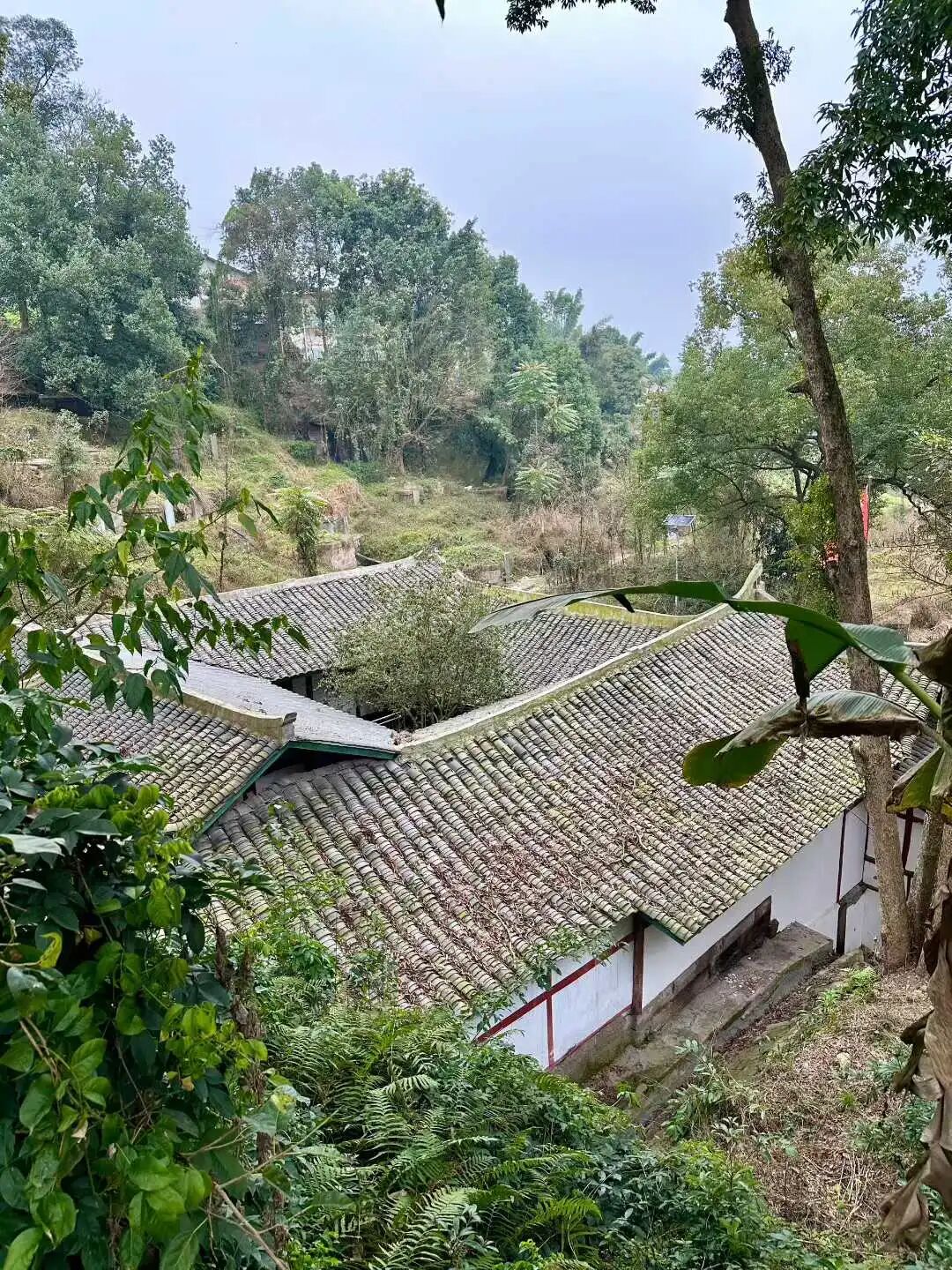
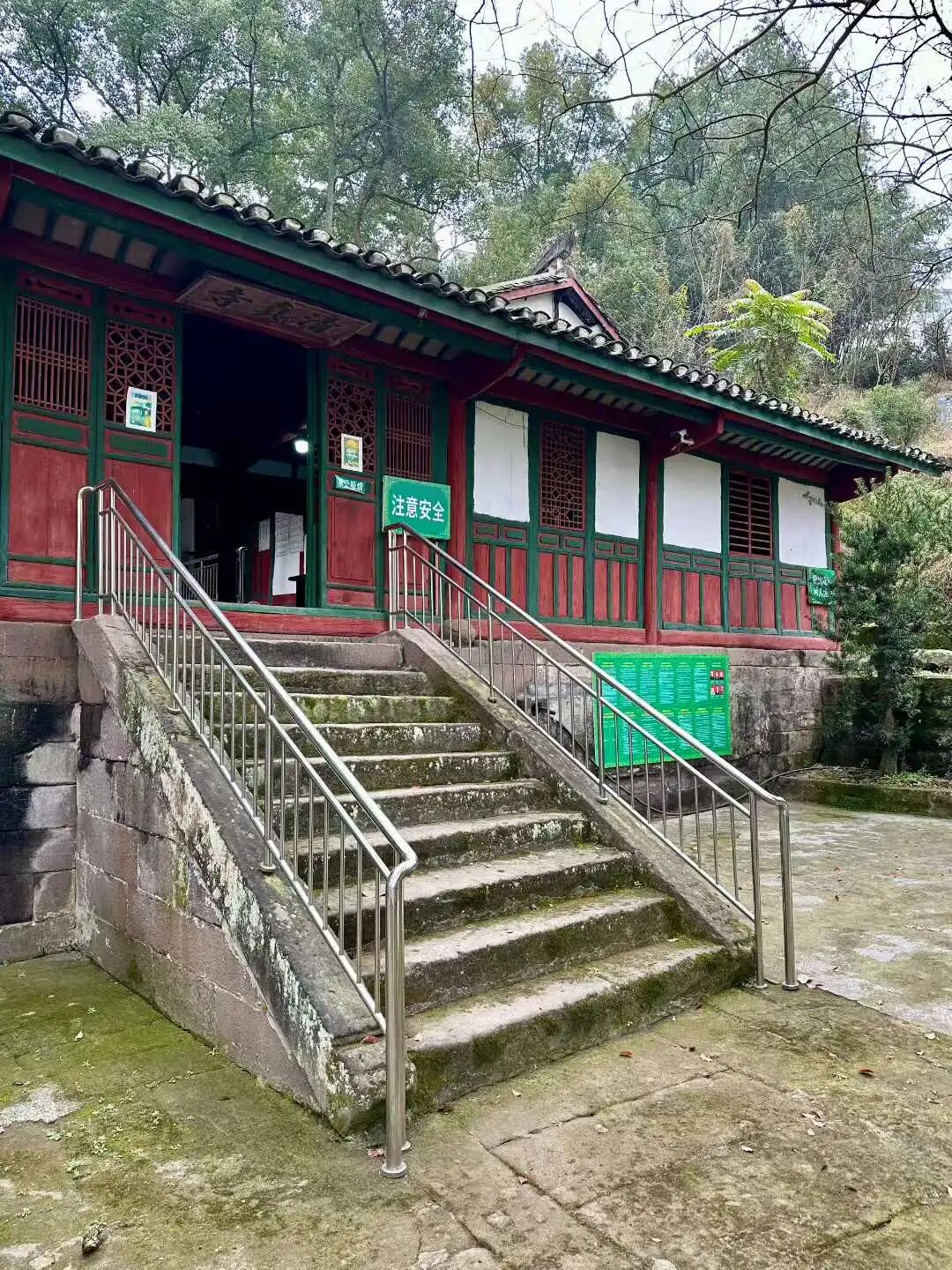
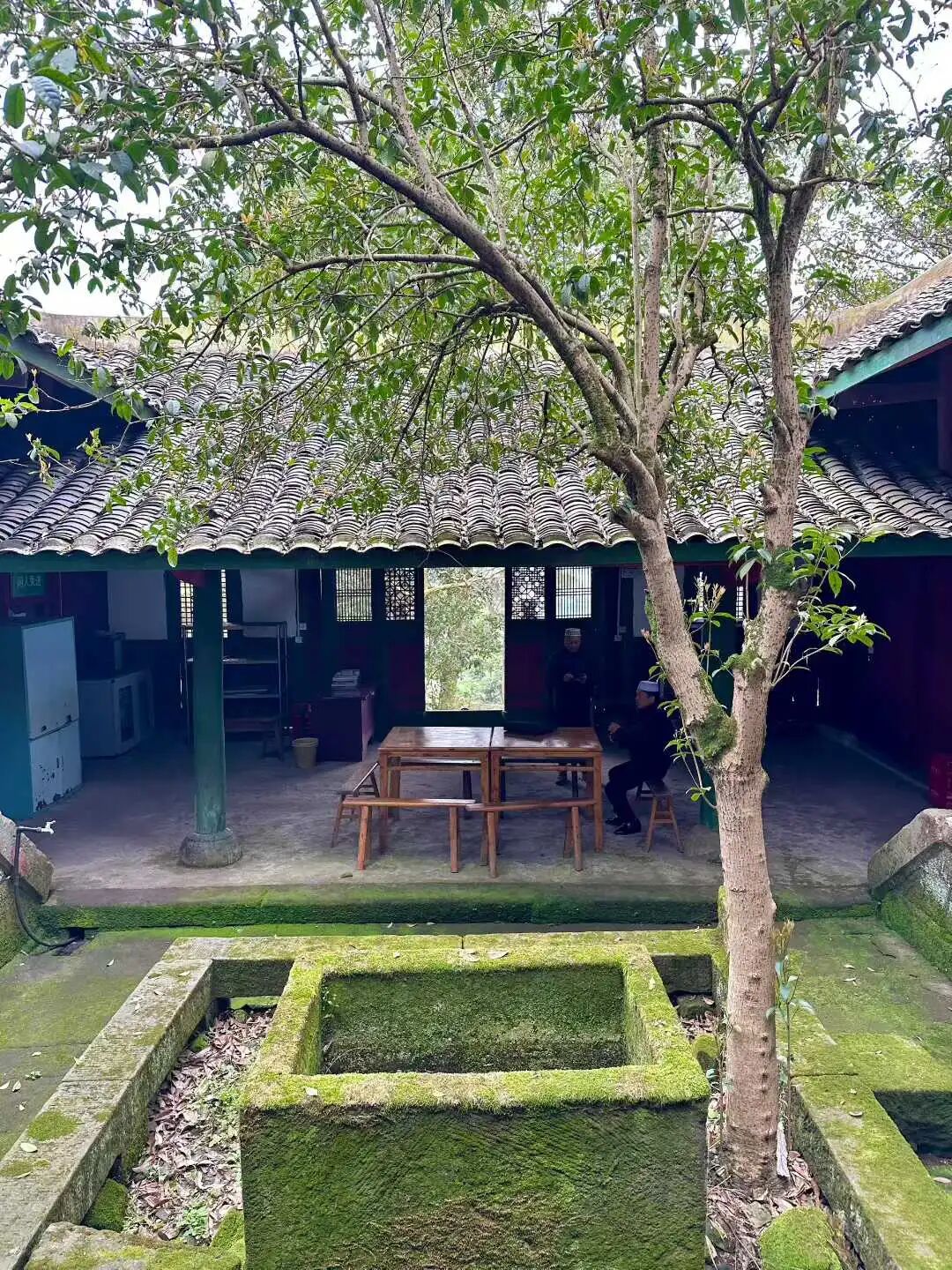
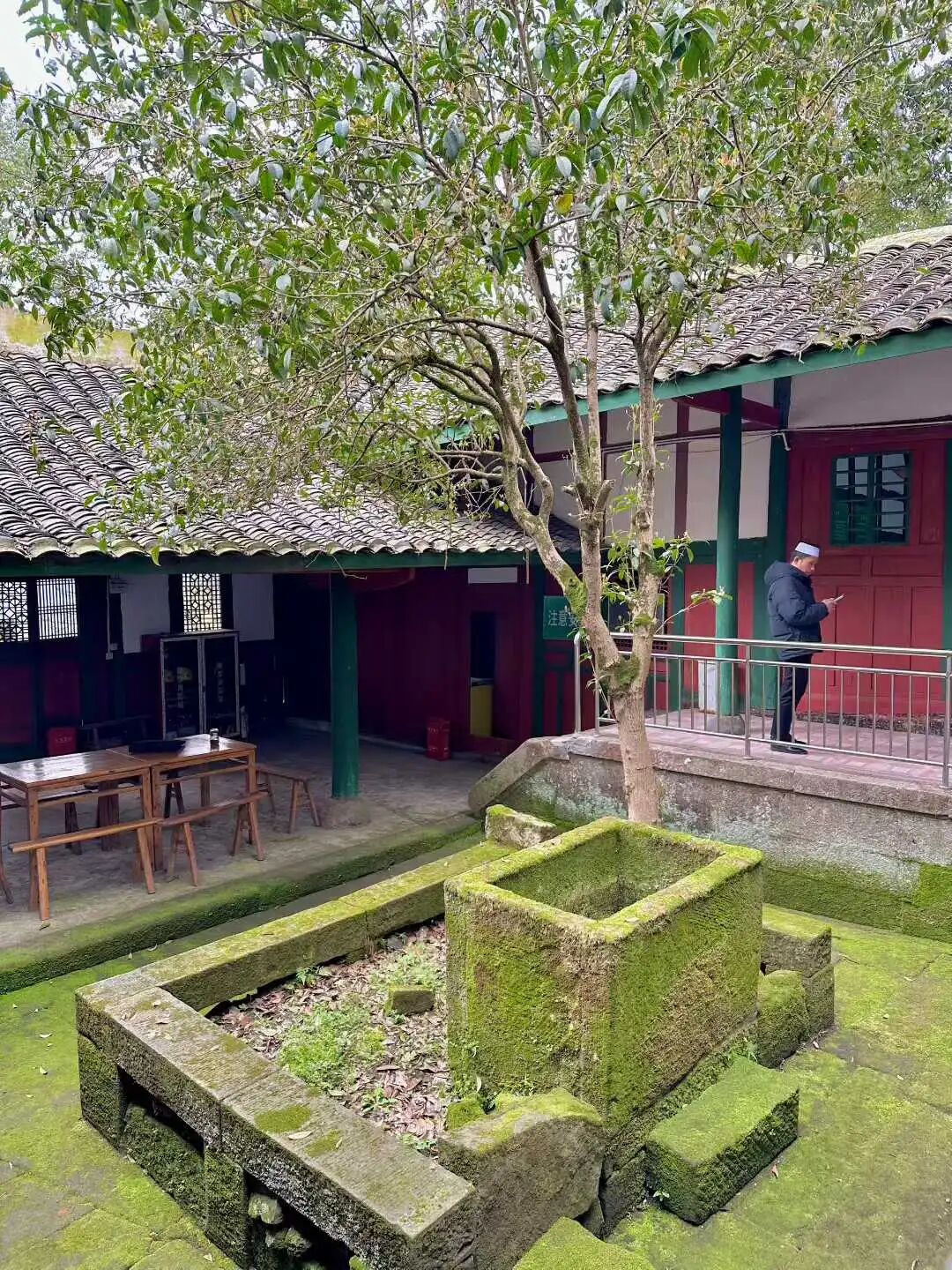
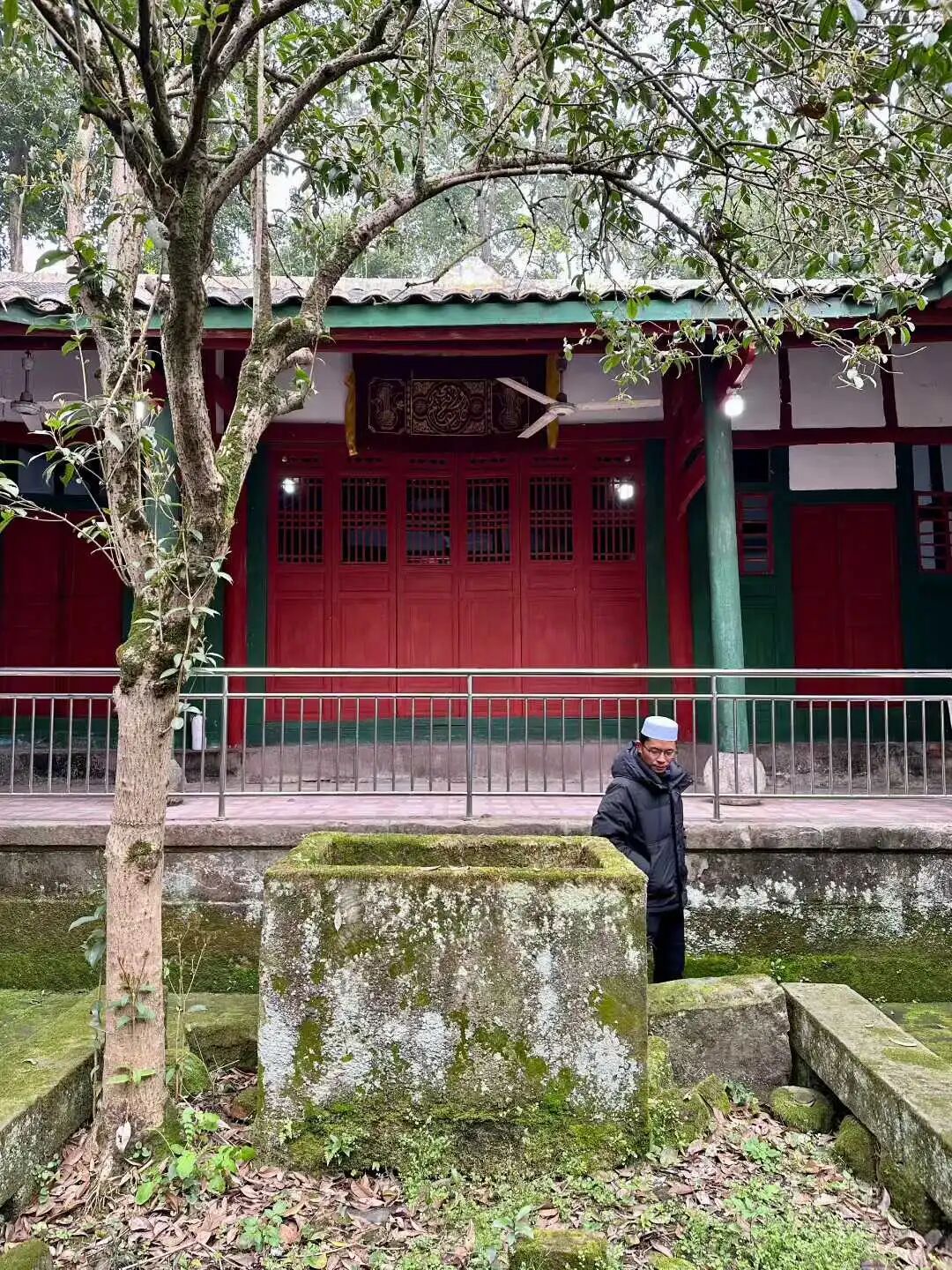
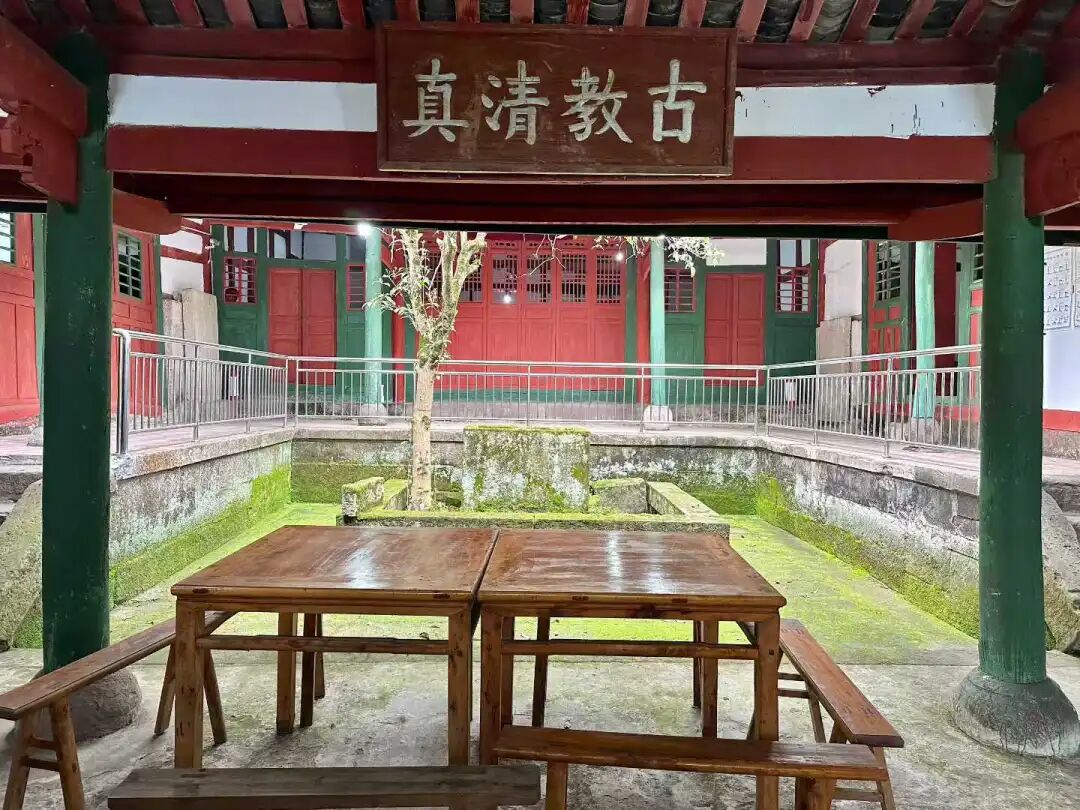
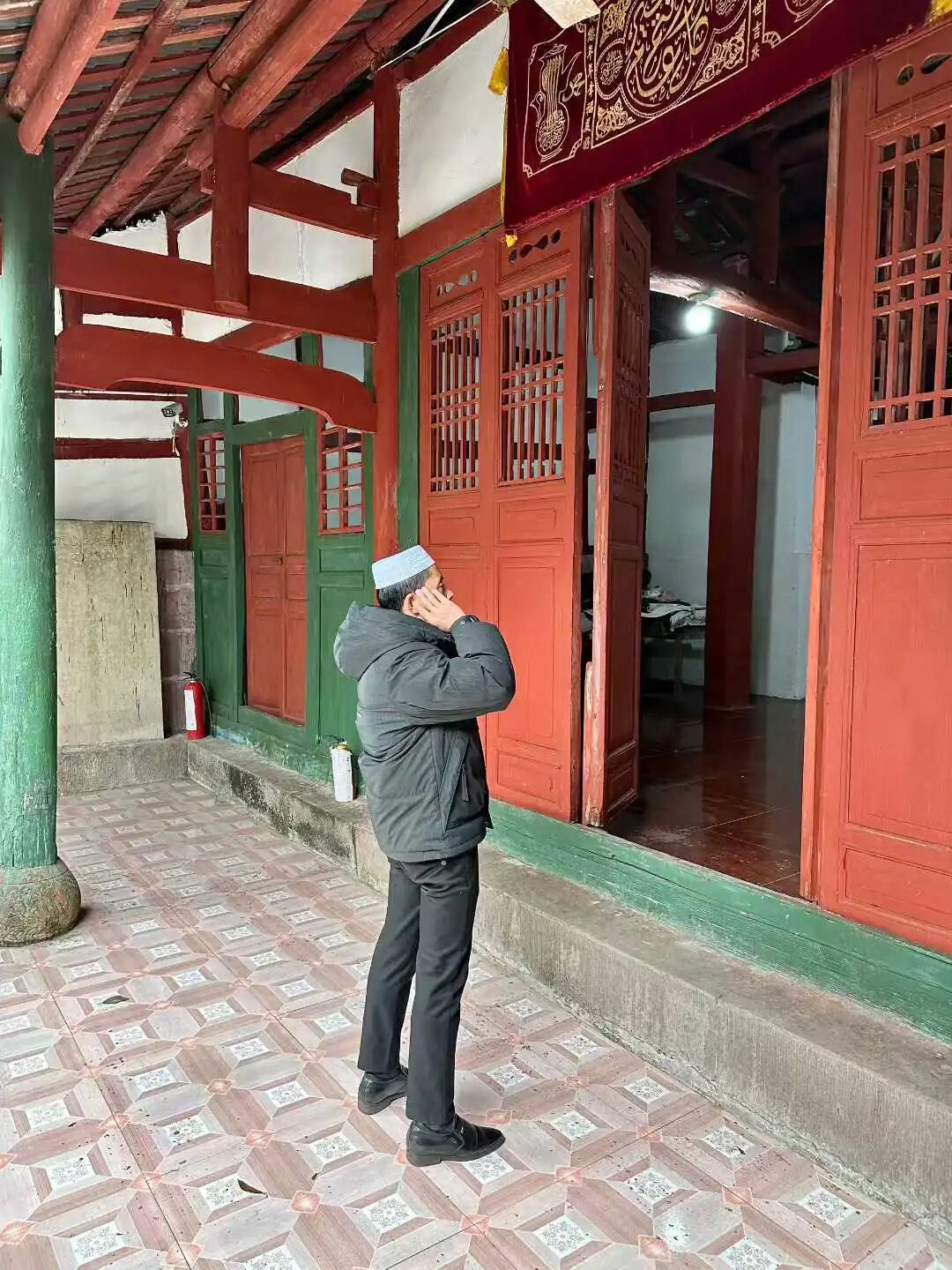
The main hall of Sujiaqiao Mosque also preserves a precious Qing Dynasty mihrab, and there is an inscription from 1866 (the 5th year of the Tongzhi reign) on the main beam of the entrance hall. I met two Imams named Su from Sujiaqiao Mosque and Dabeixiang Mosque, and I learned a lot about the local religious situation in Yibin from them. The two Imams showed me the stone tablet from the Daoguang renovation kept in the mosque. Unfortunately, it was damaged during a difficult period, and only the last part of the donor list remains. You can still see the surnames Su, Ma, Jin, and Cai, as well as a business named Renhetai.
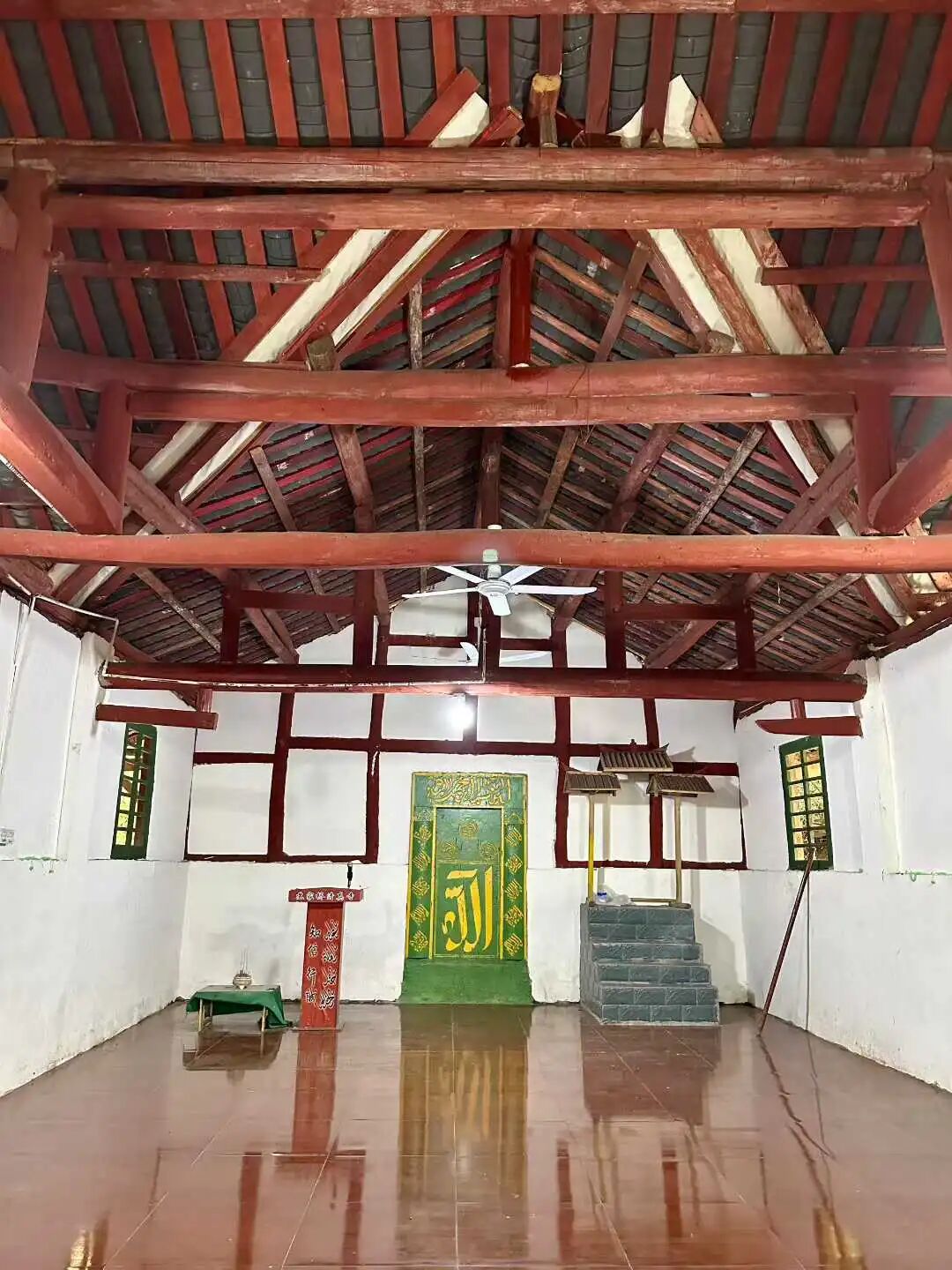
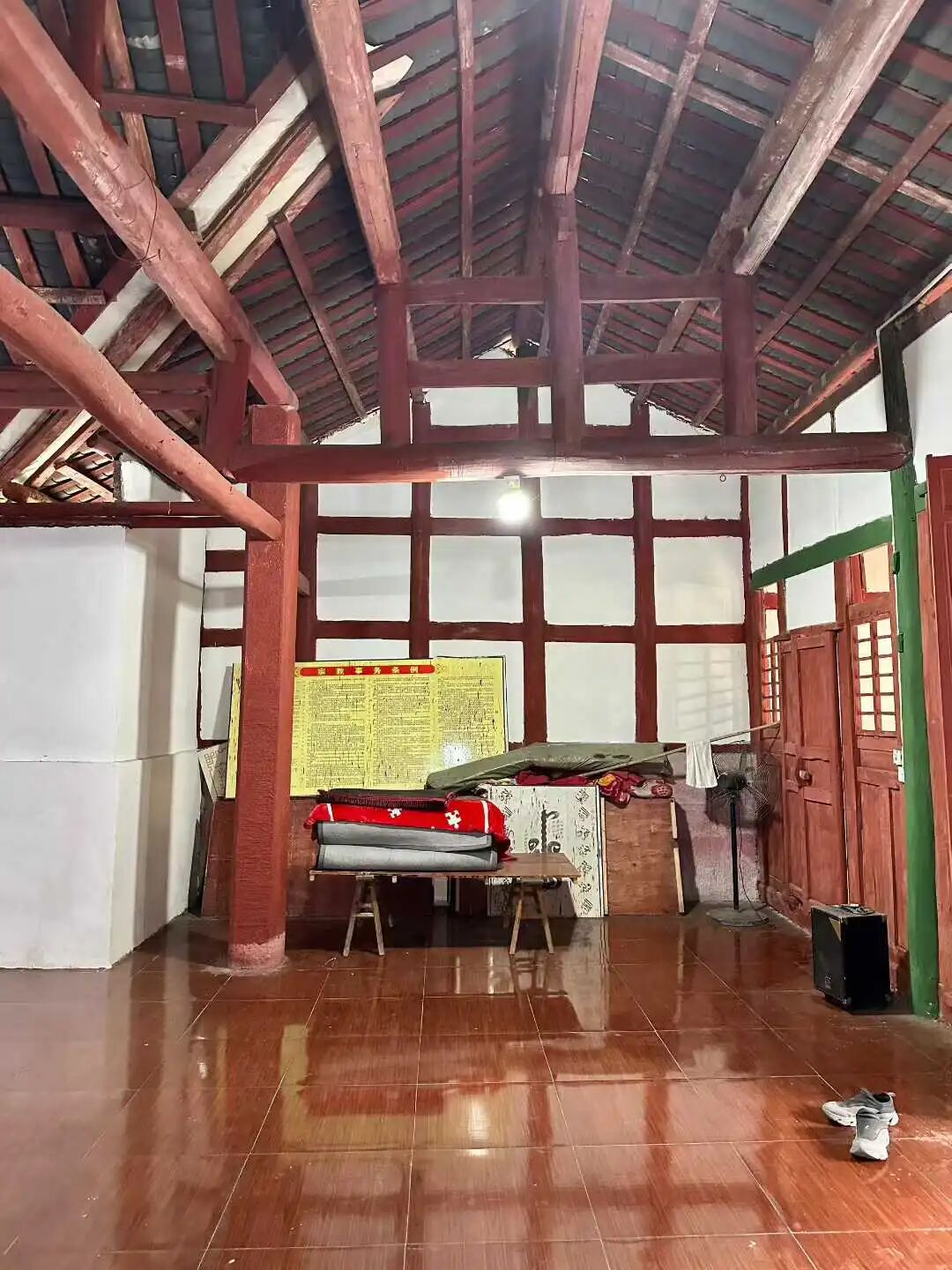
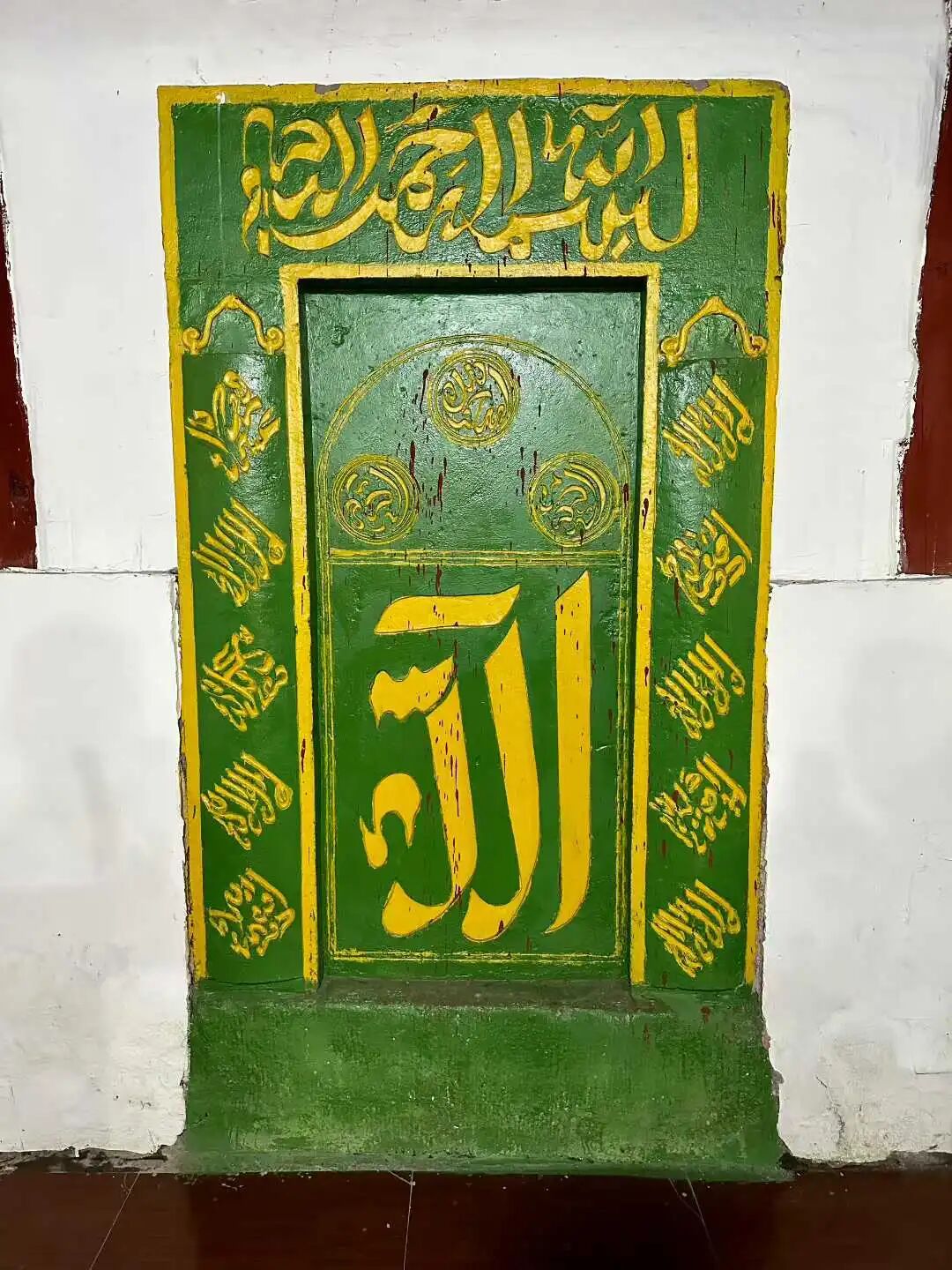
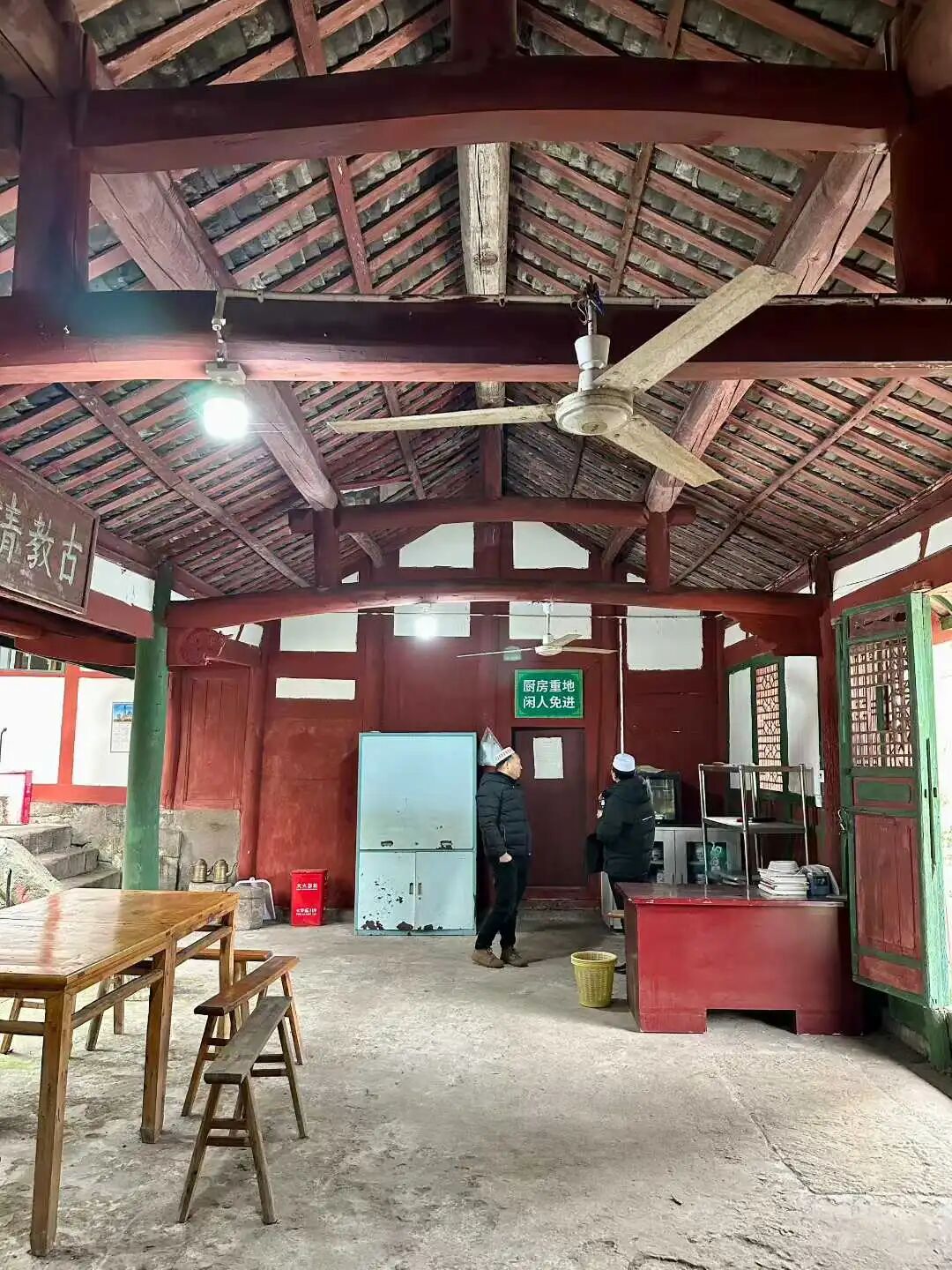
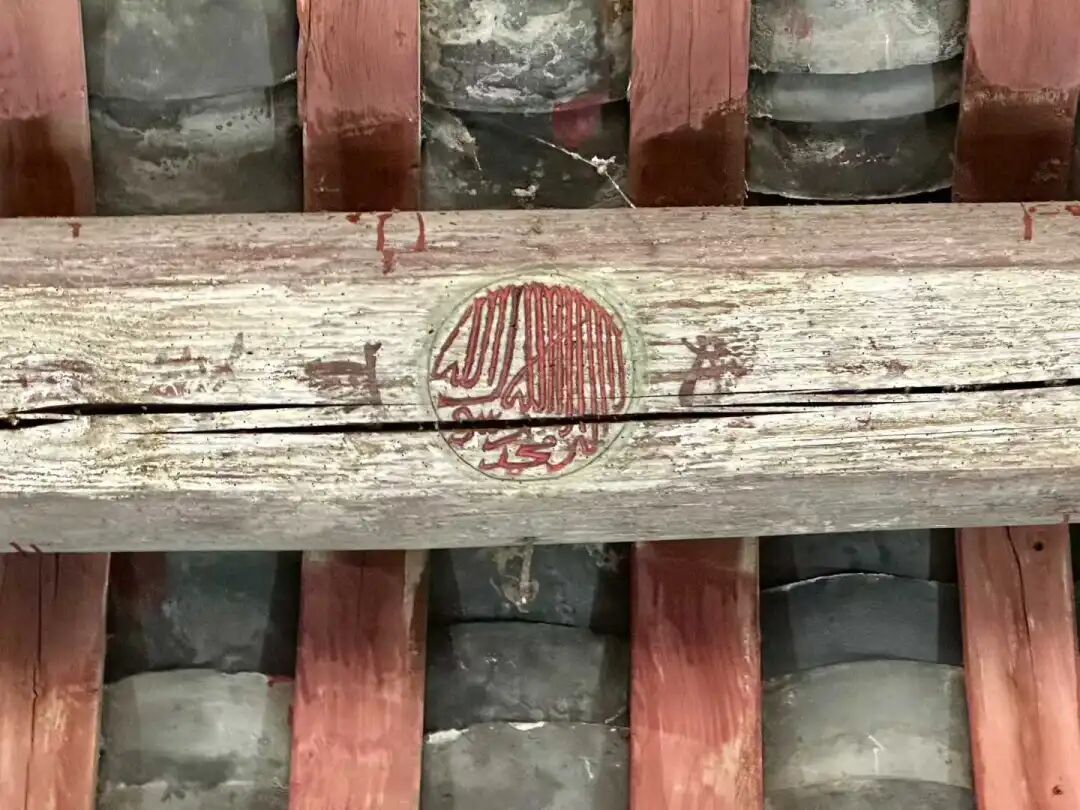
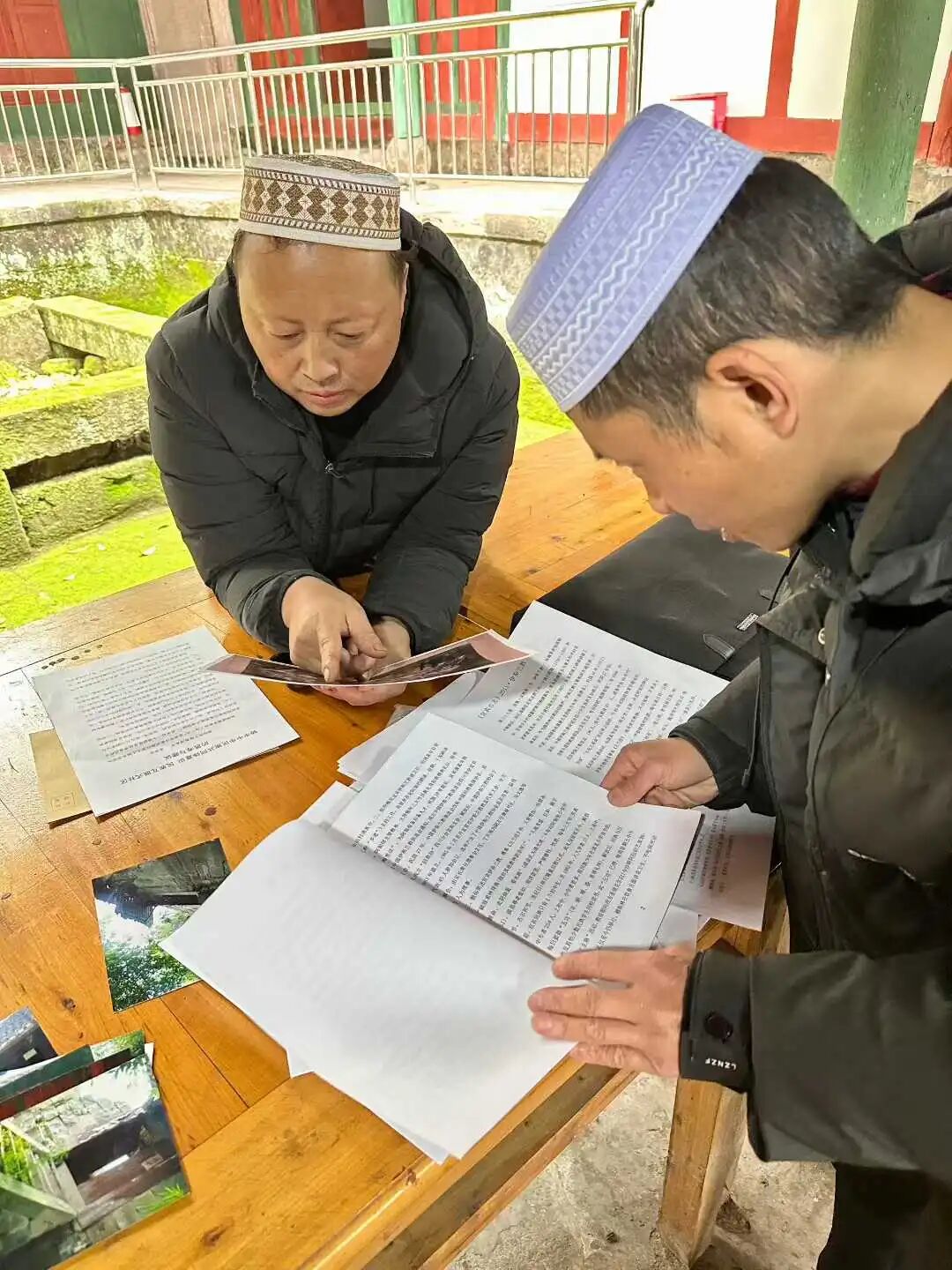
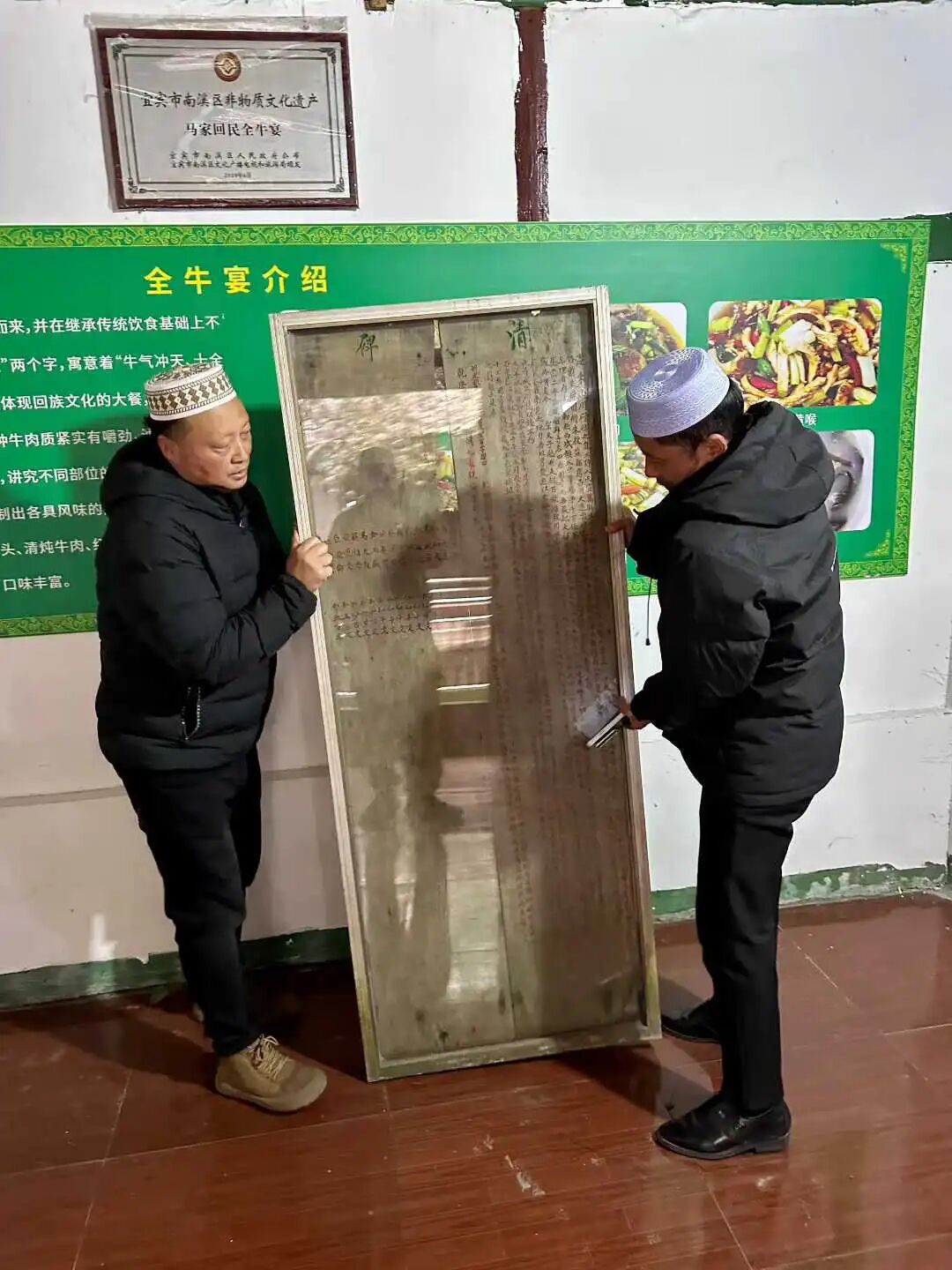
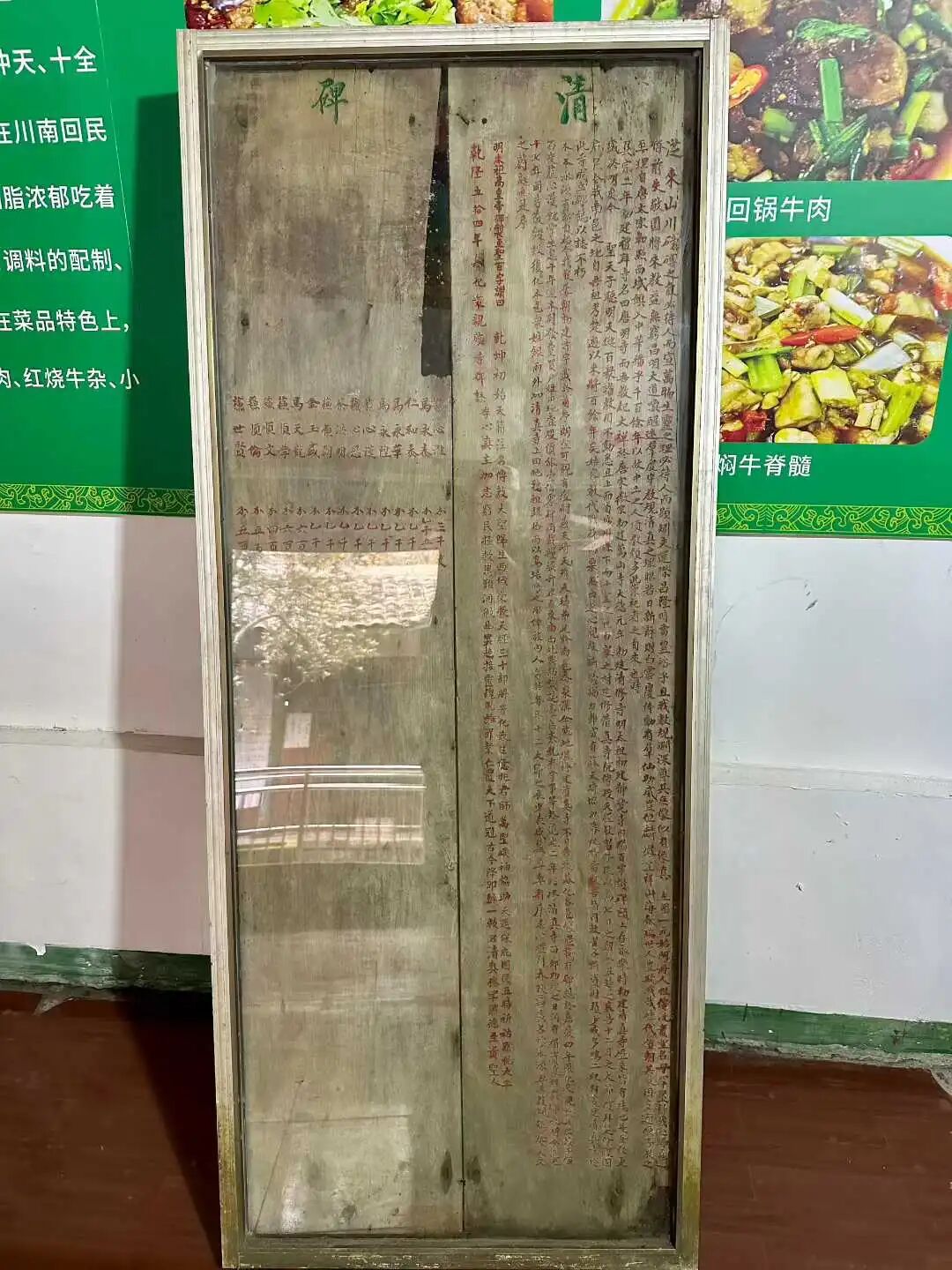
Behind Sujiaqiao Mosque is a cemetery for Hui Muslims. When I arrived, Imam Su was leading the local Hui Muslims in visiting the graves. The Sujiaqiao Hui Muslim whole-cow feast was named a Nanxi District intangible cultural heritage in 2018. However, because of the remote location, there are no restaurants run by Hui Muslims here. If you want to experience the local food, it is best to come to the mosque during holidays.
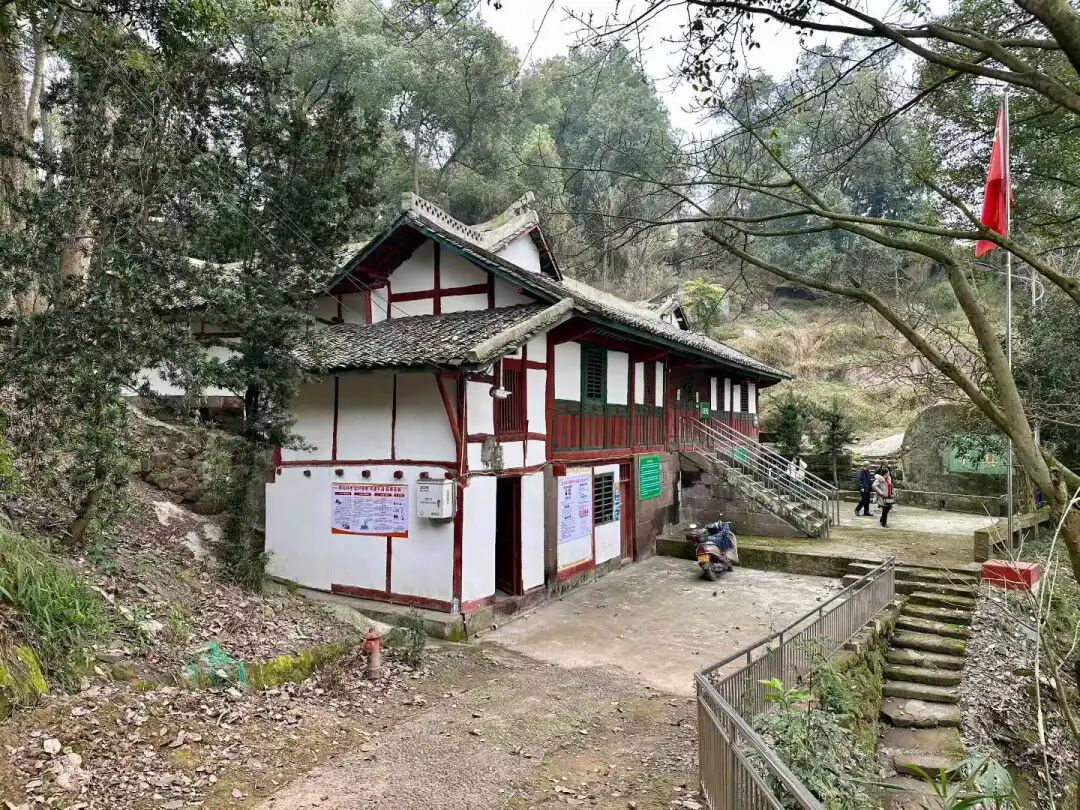
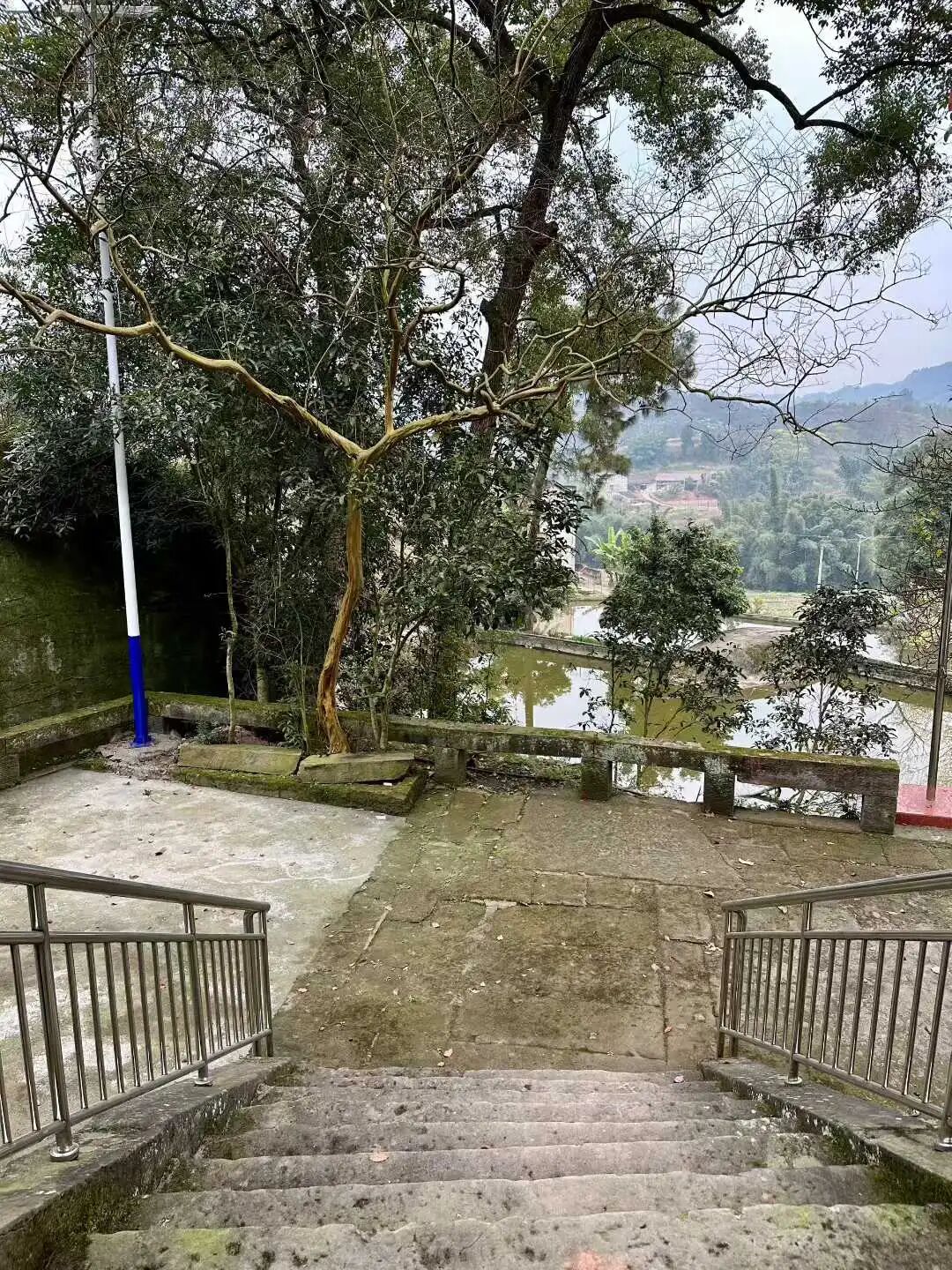
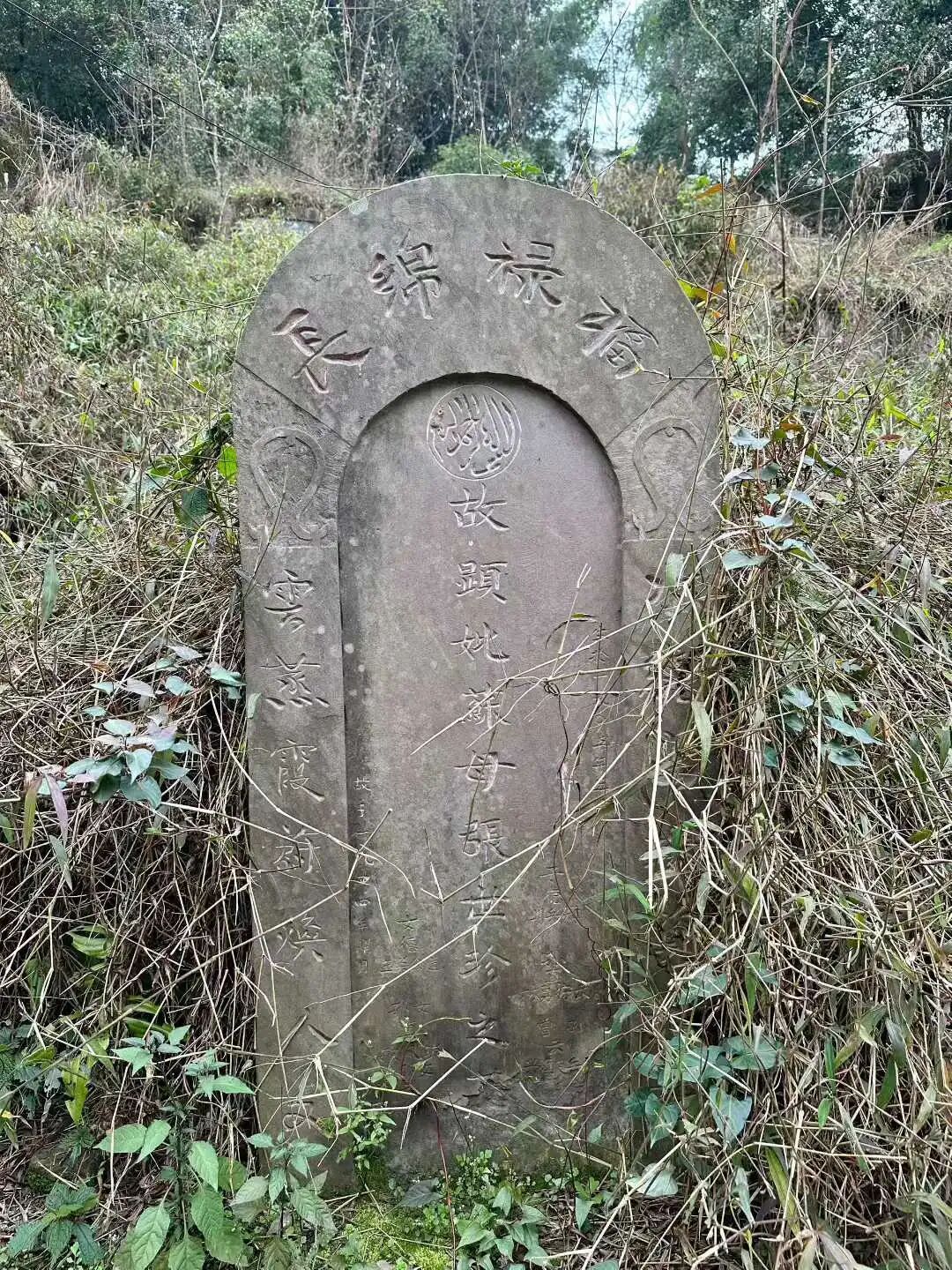
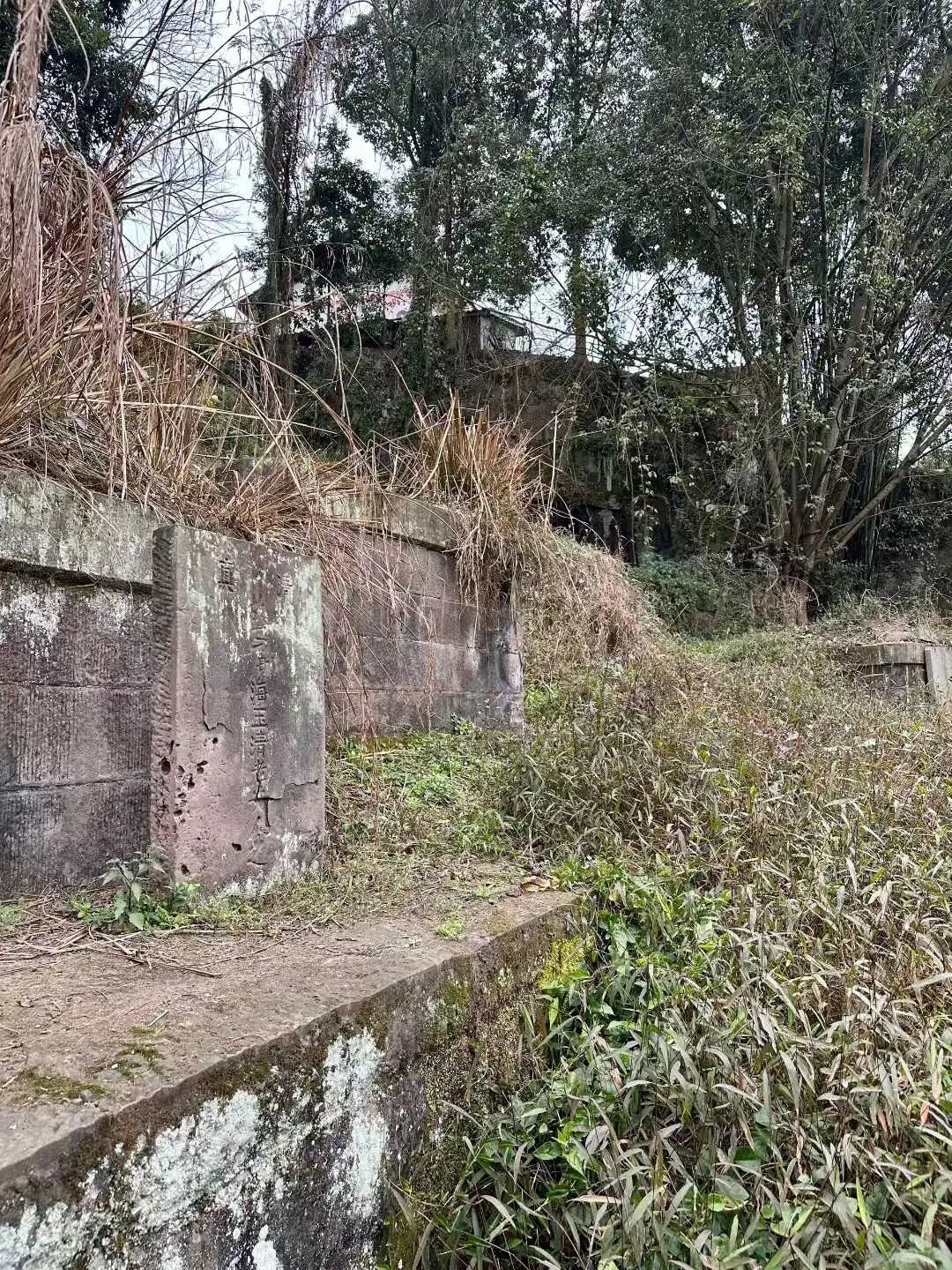
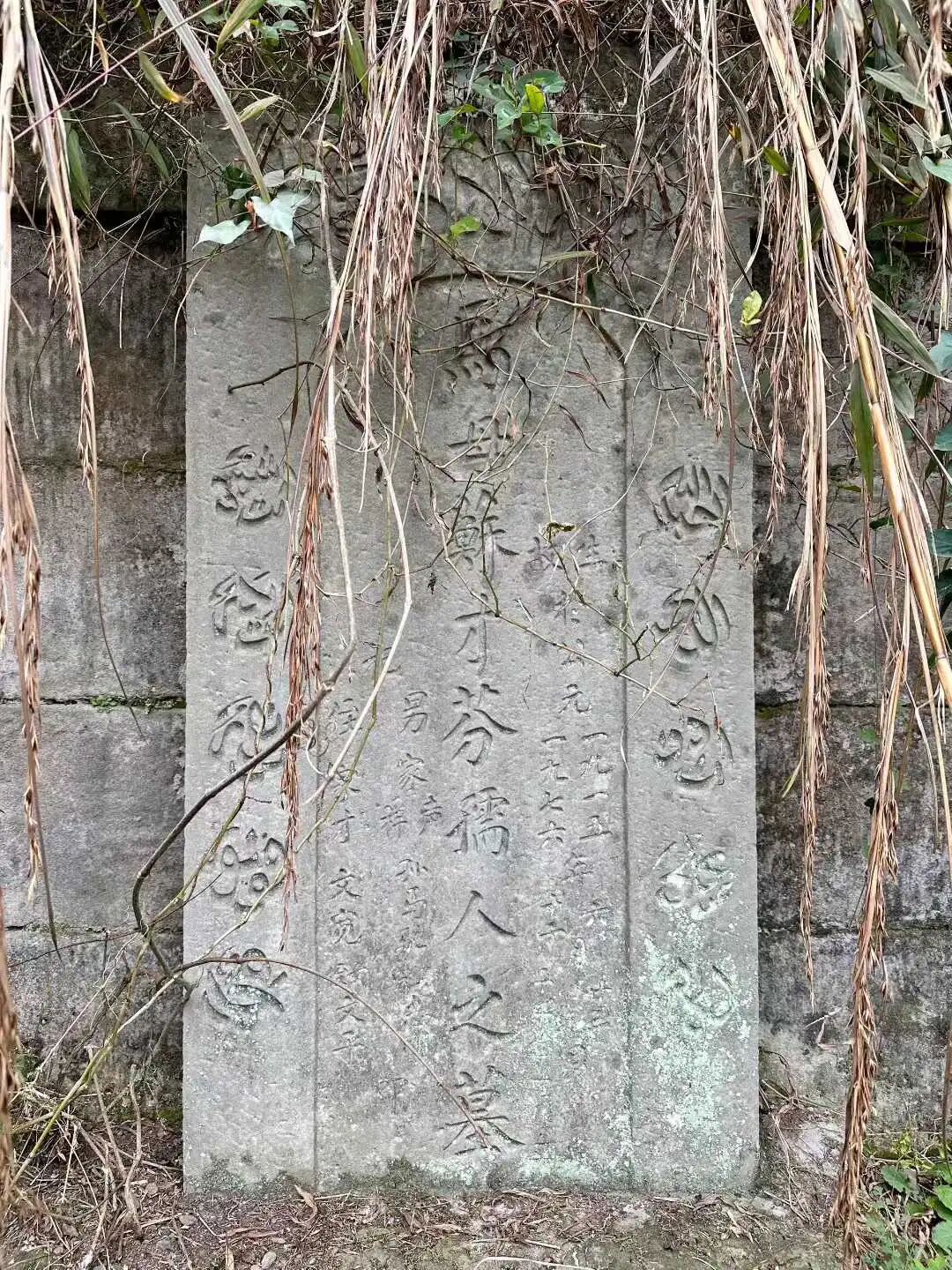
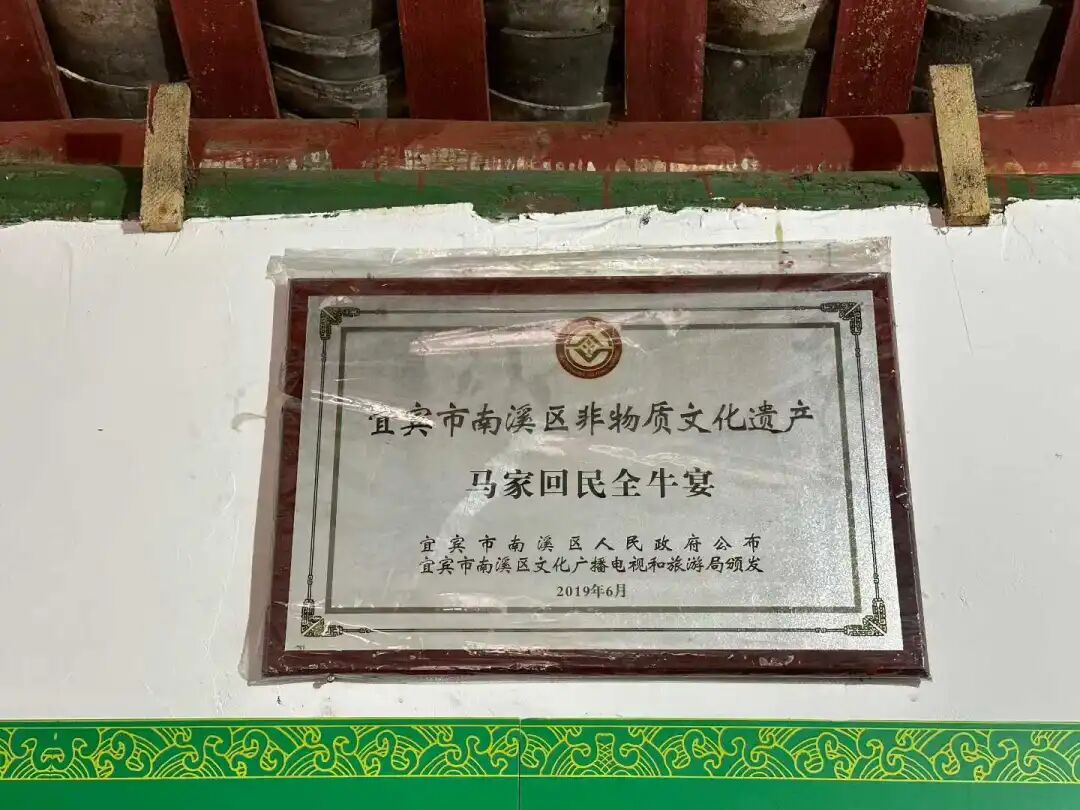
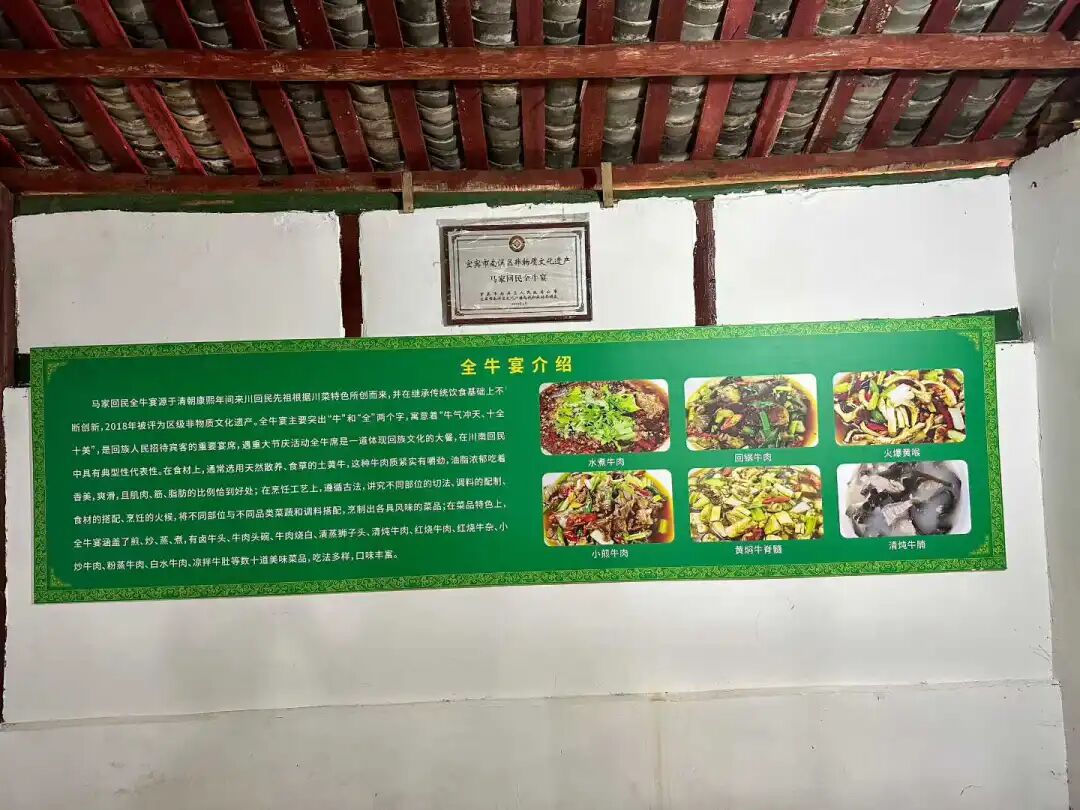
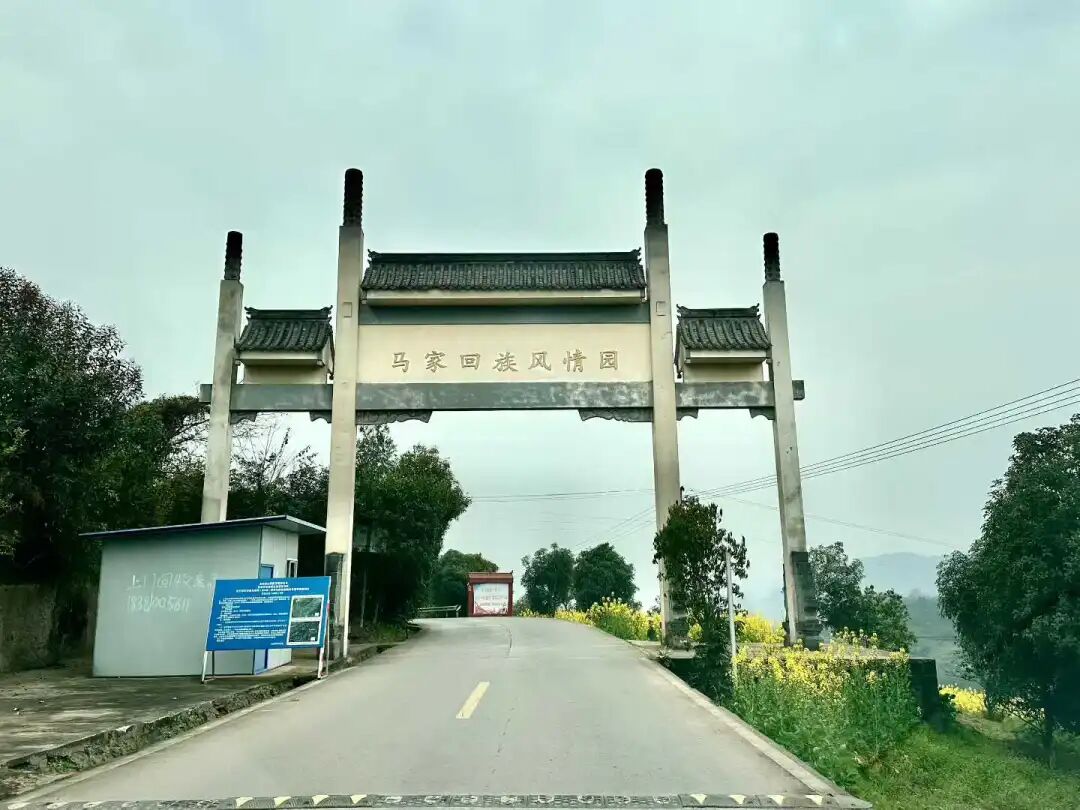
Hidden Mosques in Leshan: Luocheng Ancient Town, Hui Muslim Families and Sichuan History
Articles • ali2007fr posted the article • 0 comments • 160 views • 2026-05-21 06:45
Summary: This Sichuan mosque road trip reaches Luocheng Ancient Town in Leshan, where Luocheng Mosque, local Hui Muslim family histories, and old-town streets show a deeper side of Muslim life in southwest China.
It takes an hour to drive south from Renshou Mosque to reach Luocheng Ancient Town in Qianwei County, Leshan. The ancient town was first built in 1628 (the first year of the Chongzhen reign of the Ming Dynasty) and gradually took its final shape during the Qing Dynasty. It served as a land port and a frontier military hub for Sichuan, Yunnan, and Guizhou.
The town's parking lot is at the West Gate. Once you park and enter the town, you can see Luocheng Mosque (Luocheng Si) on the far west side. The first time I visited, the imam was away, so I had to go back a second time to get inside. Imam Su at Luocheng Mosque is a local Hui Muslim. During the Spring Festival, the mosque is crowded with visitors. Imam Su patiently explains things to everyone, answering questions about the faith and Hui Muslim customs. It is very rare to see someone so dedicated to helping more people understand the faith. According to Imam Su, there were still a few Hui Muslim restaurants in Luocheng Ancient Town a few years ago, but they have all closed down. The mosque now hosts a grand Mawlid (Shengji) celebration every year, which is the best time to taste local Hui Muslim food in Luocheng.
The Hui Muslims in Luocheng are mainly from the Su, Cai, Zhang, Ma, Hai, Chen, and Li families. The Su and Cai families moved here from Shaoyang, Hunan, in 1671 (the tenth year of the Kangxi reign) during the 'Huguang fills Sichuan' migration. The Zhang family moved from Qinggang Township in Renshou during the Jiaqing reign, and the Ma family moved from Hunan during the same period, with another branch arriving from Neijiang and Rong County. The Hai family moved from Yinjia Ba in Longchang during the Guangxu reign, the Chen family moved from Xichengge in Yibin during the Guangxu reign, and the Li family moved from Longchang during the Republic of China era.
Luocheng Ancient Town once had four ancient mosques. In 1744 (the ninth year of the Qianlong reign), Su Tianshi, Su Tianming, and Cai Hongshan led a fundraising effort to build the Luocheng North Mosque at Xiajiapo, north of Luocheng. It was the first mosque in the town. In 1807 (the twelfth year of the Jiaqing reign), as the economic situation of the Hui Muslims in Luocheng improved and the North Mosque was relatively far from the town, the mosque was moved to Ganjiyuan on the east side of Luocheng, becoming known as the Luocheng East Mosque. In 1808 (the thirteenth year of the Jiaqing reign), Hui Muslim families living on the south side of Luocheng—the Ma, Su, Zhang, and Luo families—led by Su Hengtai, raised funds together to build the Luocheng South Mosque at Daping in the south of the town.
The current Luocheng Mosque, also called the West Mosque, was actually the last of the four mosques to be built. In 1876 (the second year of the Guangxu reign), Cai Chunfang, Cai Mingde, Hai Fengwan, Cai Yunxiang, Cai Yunlian, Cai Yunchang, Ma Youzhen, Su Minghai, Ma Chaokai, Ma Shenglu, and others funded the construction of the Luocheng West Mosque on the west side of the town entrance. The West Mosque is a small blue-tiled courtyard structure with a three-bay main hall. In 1995, the entrance hall was converted into a two-story building, resulting in its current form.
In modern times, Luocheng produced two famous local imams: Su Dexun and Zhang Xueqing. Su Dexun served as the imam at Luocheng Mosque for 40 years, from 1949 to 1952 and from 1960 to 1997. In 1954, he attended a Sichuan minority delegation to study in various places. He was very open-minded and held in high regard by the Hui Muslims in Luocheng. In his later years, he insisted on serving as the imam at his local mosque until he passed away (gui zhen) in 1997 at the age of 86. Zhang Xueqing served as the imam at Luocheng Mosque from 1941 to 1949, then moved to Kangding Mosque to serve as imam until he passed away (gui zhen) in 1984. He studied Arabic, Persian, and Chinese. During the War of Resistance Against Japan, he founded the Hui Muslim Anti-Japanese National Salvation Association. He was deeply respected by the people in Kangding and made great contributions to maintaining ethnic unity and social stability.
Exquisite wood carvings on the front porch of the main hall.
In the mosque's exhibition hall, you can see various handwritten scriptures: 'Su Yushui and Zhang Shaonan of the South Mosque invited Liang'an Ma Ahong to respectfully copy the entire Heavenly Scripture, bound in the 33rd year of Guangxu' and 'Respectfully invited Diannan Shaoxuan Sa Ahong to copy this in the auspicious mid-spring of the Wuxu year of Guangxu, noted by the owner of Jiuxian Hall.'
The only plaque at Luocheng Mosque with a specific date is the 'Ti Yong Hun Ran' plaque at the South Mosque. It is inscribed: 'In celebration of the completion of the South Mosque, respectfully presented by the fellow believers of Ganziyuan, on a lucky day in the second month of summer, in the year of Xinsi, the seventh year of the Guangxu reign.' There are four other plaques—'Zui Chu Wu Cheng,' 'Wu Sheng Wu Chou,' 'Shi Shou Liang Gui,' and 'You Jiao Wu Lei'—that were likely inscribed during the Qing Dynasty. However, their inscriptions were cut off during a turbulent period, so the specific details are unknown.
The front courtyard of Luocheng Mosque has 58 nanmu trees (zhennan), and the back courtyard has 36 pine trees. They are so lush and green that it feels like being in a forest. In 1969, Luocheng Mosque donated 32 century-old nanmu trees to help build the Chengdu Mao Zedong Thought Exhibition Hall. In 1984, the mosque management committee bought new nanmu saplings from the Forestry Bureau. The Su Zunyao family raised the seedlings, and Zhang Zemin carried water to irrigate them. In 1985, Su Dekui and others replanted them in the mosque, restoring the grounds to a thriving scene full of lush leaves, flowers, birdsong, and butterflies. view all
Summary: This Sichuan mosque road trip reaches Luocheng Ancient Town in Leshan, where Luocheng Mosque, local Hui Muslim family histories, and old-town streets show a deeper side of Muslim life in southwest China.
It takes an hour to drive south from Renshou Mosque to reach Luocheng Ancient Town in Qianwei County, Leshan. The ancient town was first built in 1628 (the first year of the Chongzhen reign of the Ming Dynasty) and gradually took its final shape during the Qing Dynasty. It served as a land port and a frontier military hub for Sichuan, Yunnan, and Guizhou.
The town's parking lot is at the West Gate. Once you park and enter the town, you can see Luocheng Mosque (Luocheng Si) on the far west side. The first time I visited, the imam was away, so I had to go back a second time to get inside. Imam Su at Luocheng Mosque is a local Hui Muslim. During the Spring Festival, the mosque is crowded with visitors. Imam Su patiently explains things to everyone, answering questions about the faith and Hui Muslim customs. It is very rare to see someone so dedicated to helping more people understand the faith. According to Imam Su, there were still a few Hui Muslim restaurants in Luocheng Ancient Town a few years ago, but they have all closed down. The mosque now hosts a grand Mawlid (Shengji) celebration every year, which is the best time to taste local Hui Muslim food in Luocheng.
The Hui Muslims in Luocheng are mainly from the Su, Cai, Zhang, Ma, Hai, Chen, and Li families. The Su and Cai families moved here from Shaoyang, Hunan, in 1671 (the tenth year of the Kangxi reign) during the 'Huguang fills Sichuan' migration. The Zhang family moved from Qinggang Township in Renshou during the Jiaqing reign, and the Ma family moved from Hunan during the same period, with another branch arriving from Neijiang and Rong County. The Hai family moved from Yinjia Ba in Longchang during the Guangxu reign, the Chen family moved from Xichengge in Yibin during the Guangxu reign, and the Li family moved from Longchang during the Republic of China era.
Luocheng Ancient Town once had four ancient mosques. In 1744 (the ninth year of the Qianlong reign), Su Tianshi, Su Tianming, and Cai Hongshan led a fundraising effort to build the Luocheng North Mosque at Xiajiapo, north of Luocheng. It was the first mosque in the town. In 1807 (the twelfth year of the Jiaqing reign), as the economic situation of the Hui Muslims in Luocheng improved and the North Mosque was relatively far from the town, the mosque was moved to Ganjiyuan on the east side of Luocheng, becoming known as the Luocheng East Mosque. In 1808 (the thirteenth year of the Jiaqing reign), Hui Muslim families living on the south side of Luocheng—the Ma, Su, Zhang, and Luo families—led by Su Hengtai, raised funds together to build the Luocheng South Mosque at Daping in the south of the town.
The current Luocheng Mosque, also called the West Mosque, was actually the last of the four mosques to be built. In 1876 (the second year of the Guangxu reign), Cai Chunfang, Cai Mingde, Hai Fengwan, Cai Yunxiang, Cai Yunlian, Cai Yunchang, Ma Youzhen, Su Minghai, Ma Chaokai, Ma Shenglu, and others funded the construction of the Luocheng West Mosque on the west side of the town entrance. The West Mosque is a small blue-tiled courtyard structure with a three-bay main hall. In 1995, the entrance hall was converted into a two-story building, resulting in its current form.
In modern times, Luocheng produced two famous local imams: Su Dexun and Zhang Xueqing. Su Dexun served as the imam at Luocheng Mosque for 40 years, from 1949 to 1952 and from 1960 to 1997. In 1954, he attended a Sichuan minority delegation to study in various places. He was very open-minded and held in high regard by the Hui Muslims in Luocheng. In his later years, he insisted on serving as the imam at his local mosque until he passed away (gui zhen) in 1997 at the age of 86. Zhang Xueqing served as the imam at Luocheng Mosque from 1941 to 1949, then moved to Kangding Mosque to serve as imam until he passed away (gui zhen) in 1984. He studied Arabic, Persian, and Chinese. During the War of Resistance Against Japan, he founded the Hui Muslim Anti-Japanese National Salvation Association. He was deeply respected by the people in Kangding and made great contributions to maintaining ethnic unity and social stability.
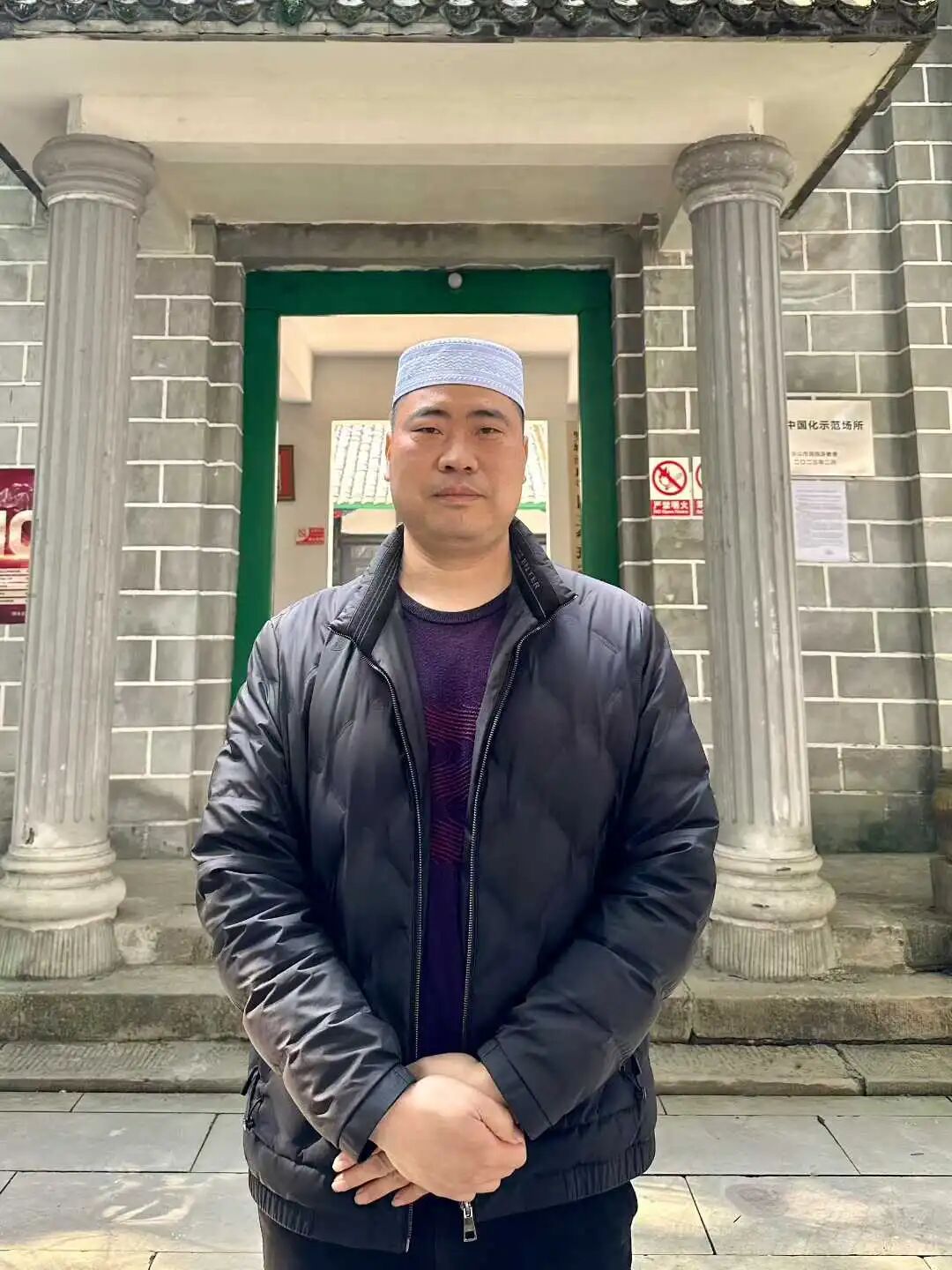
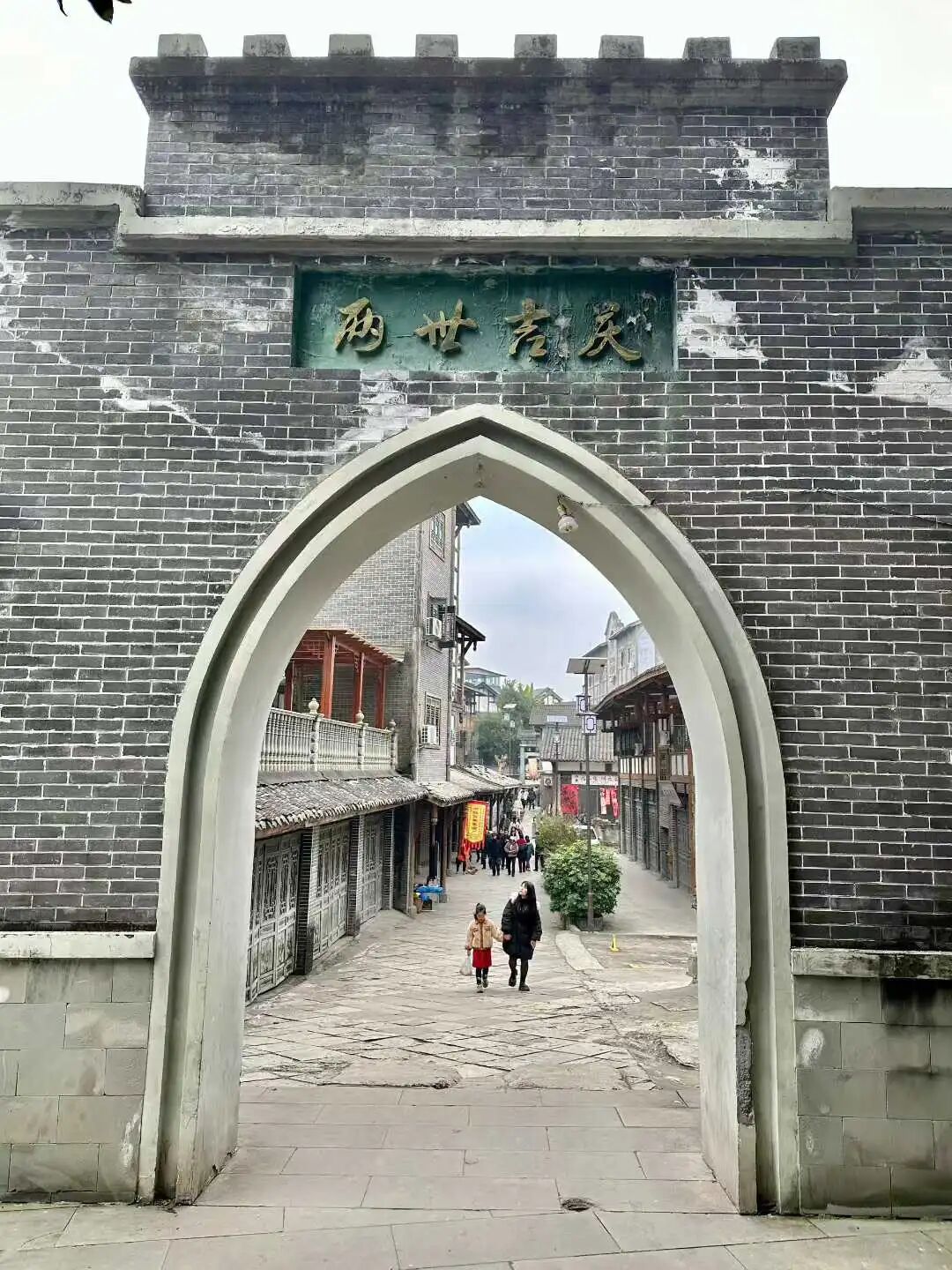
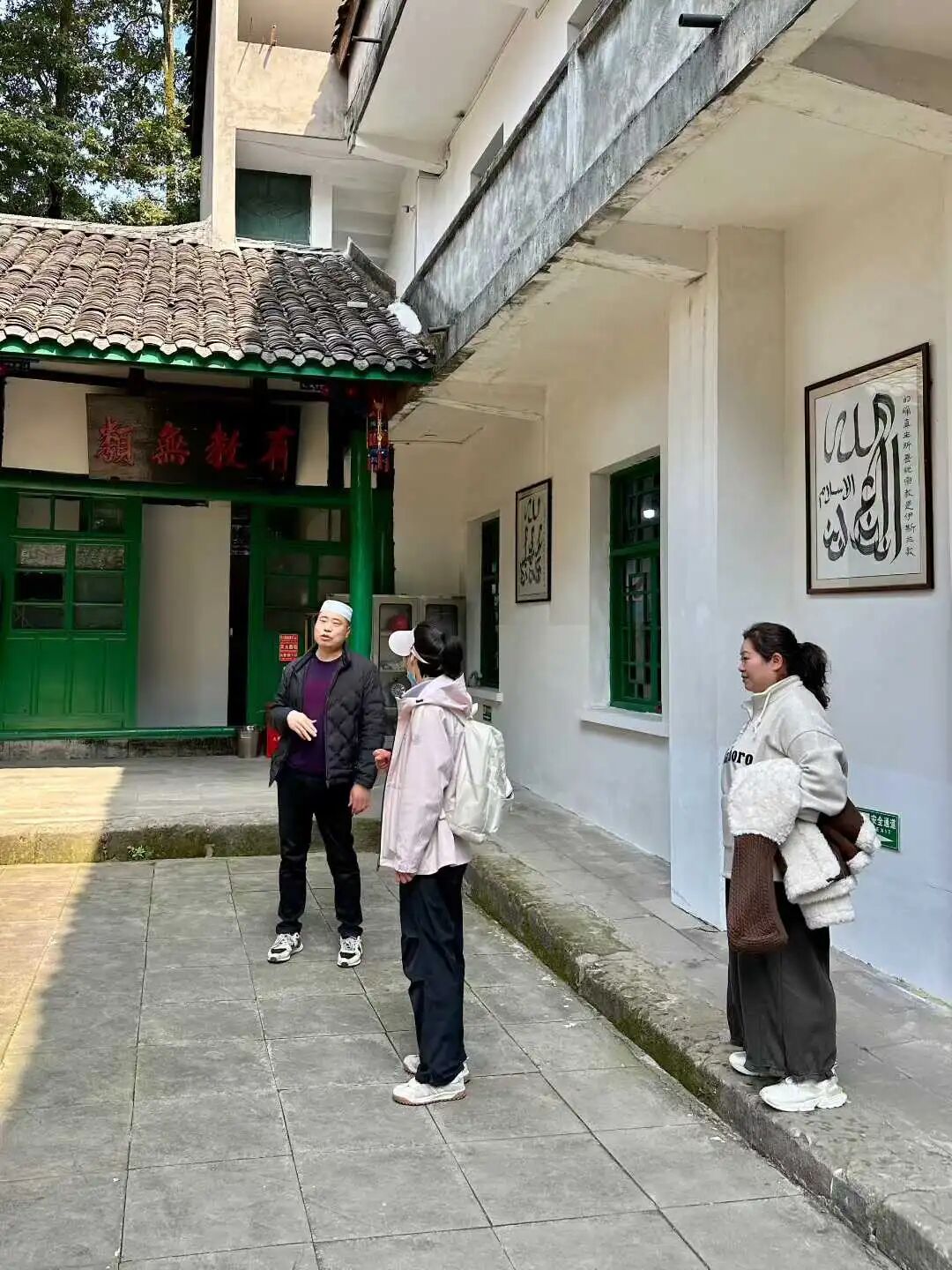
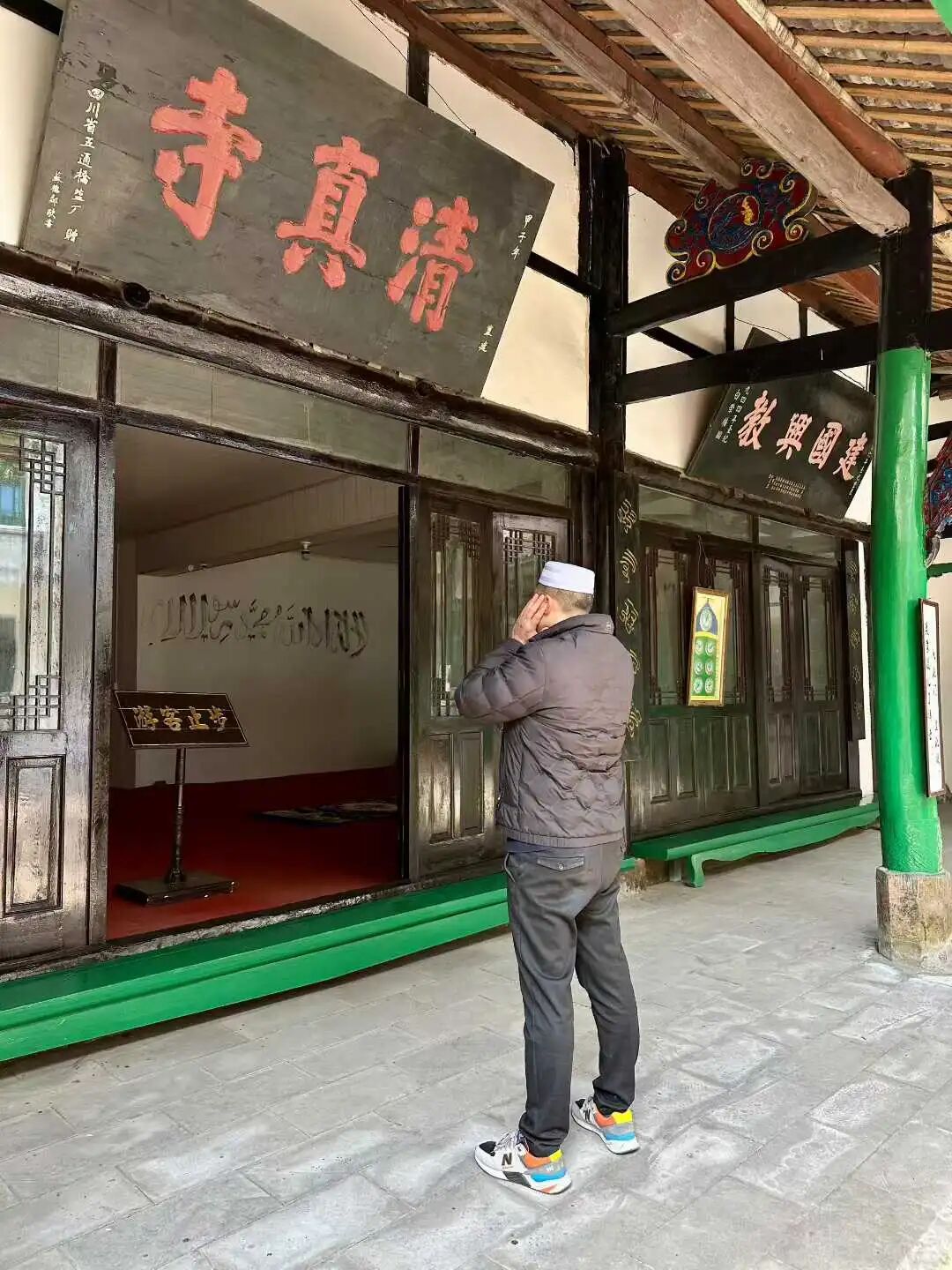
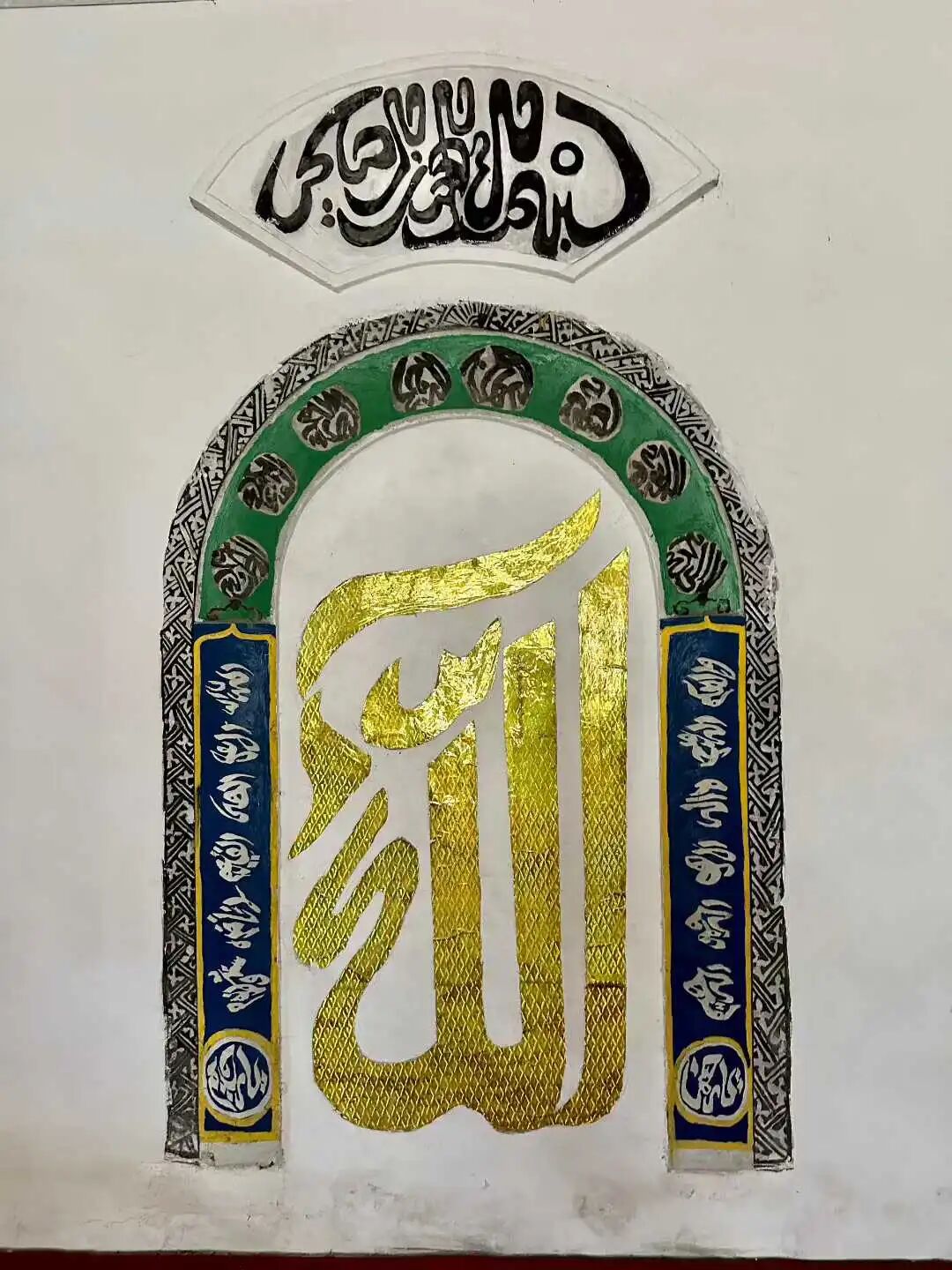
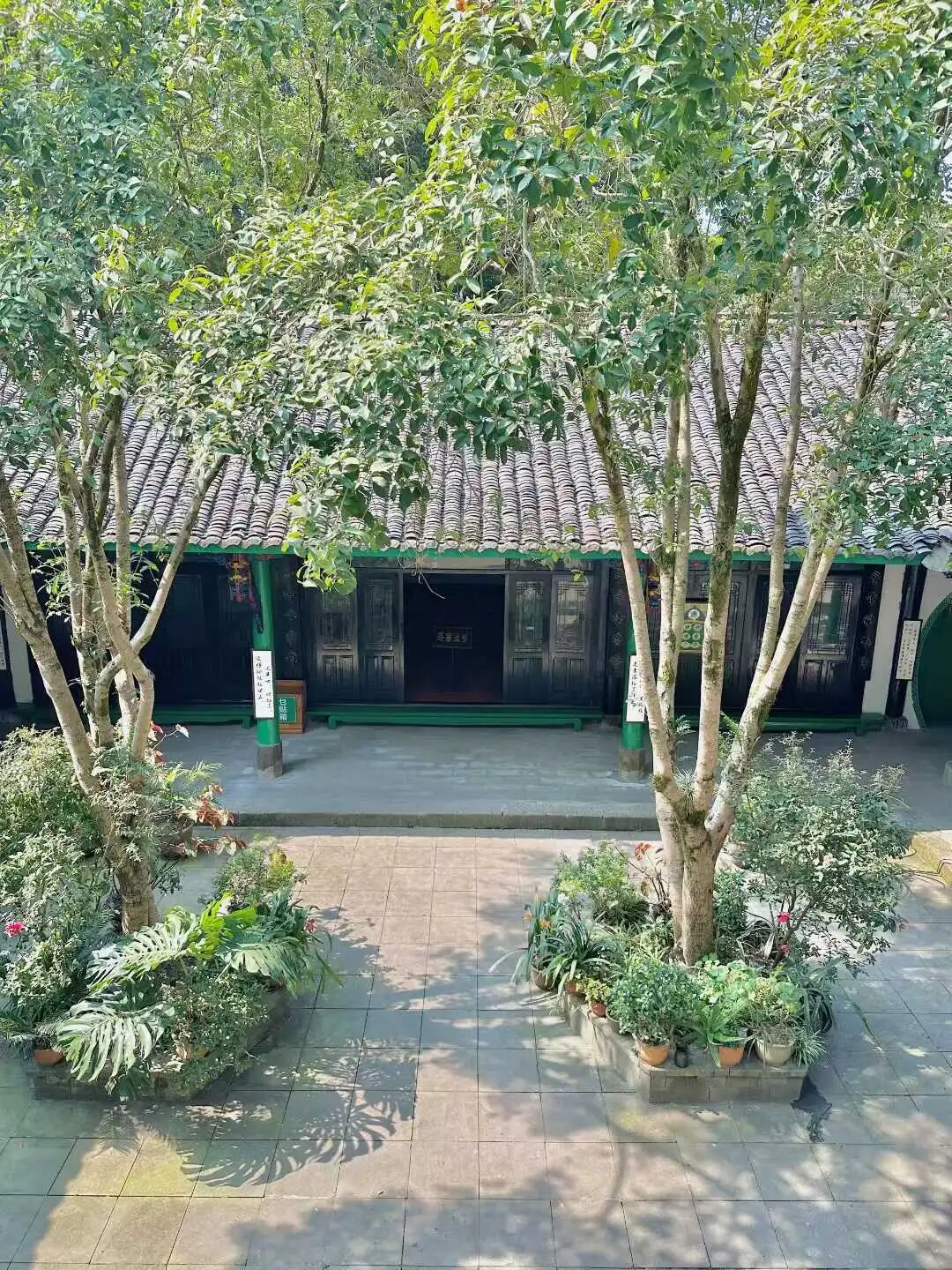
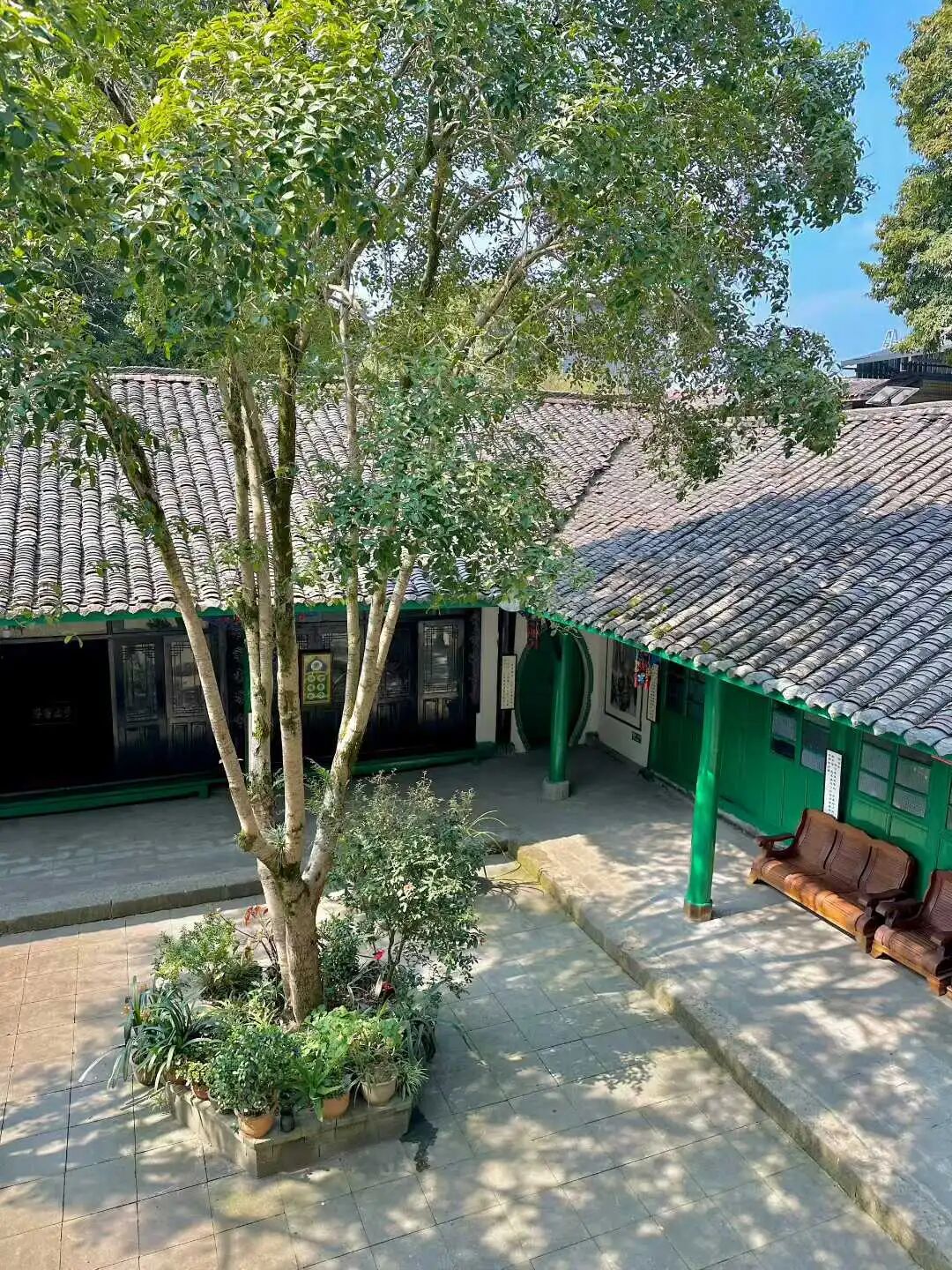
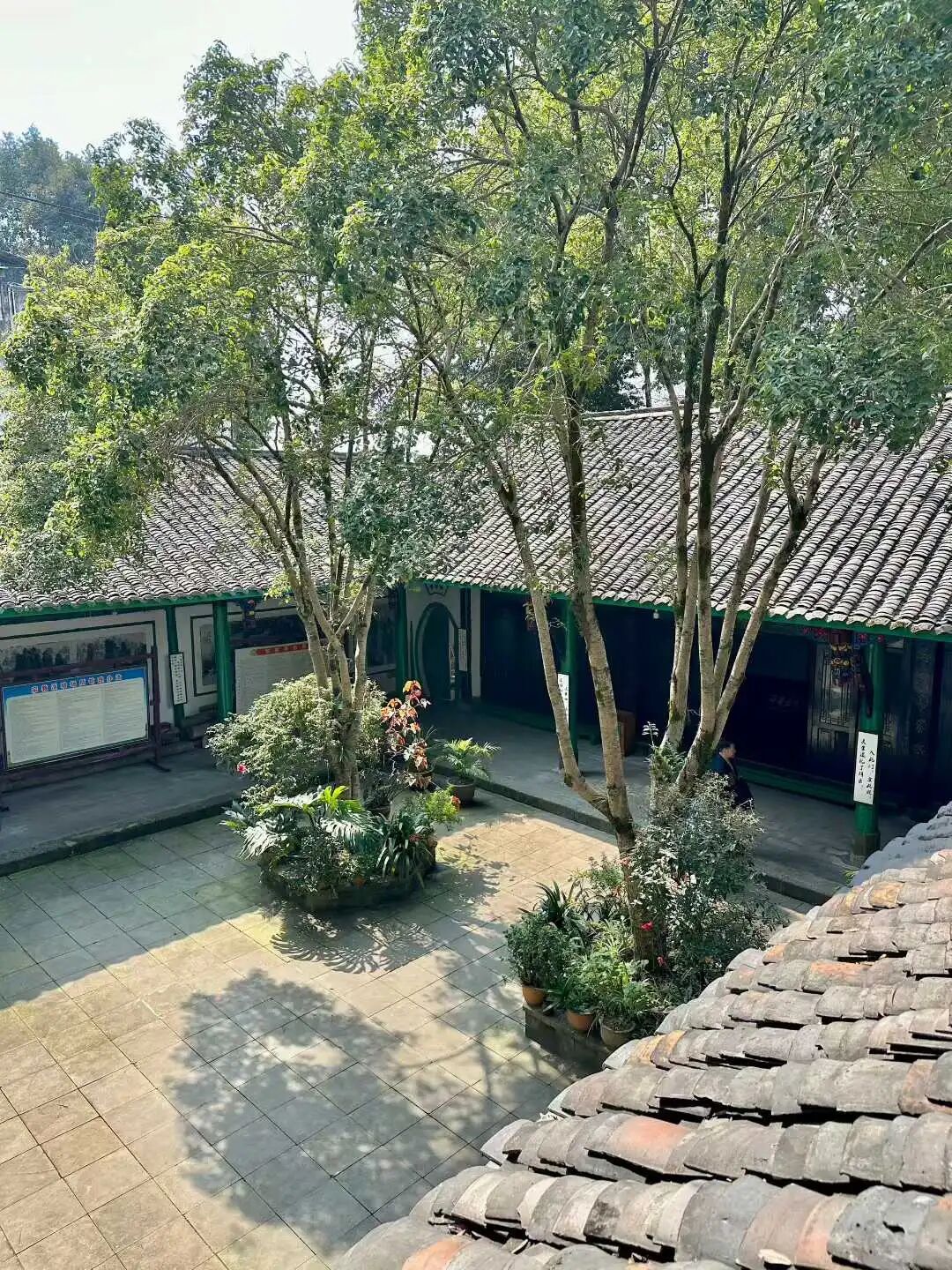
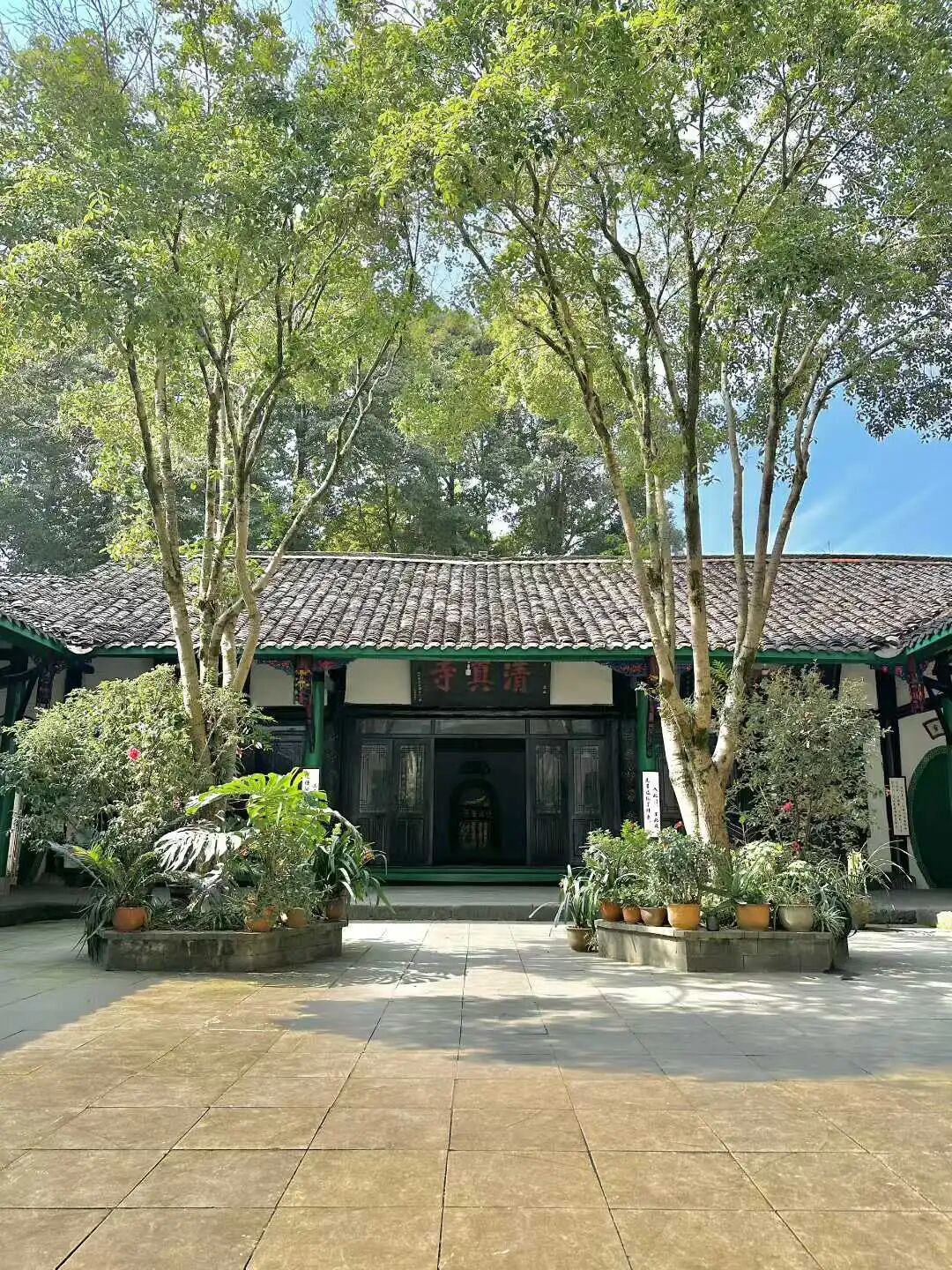
Exquisite wood carvings on the front porch of the main hall.
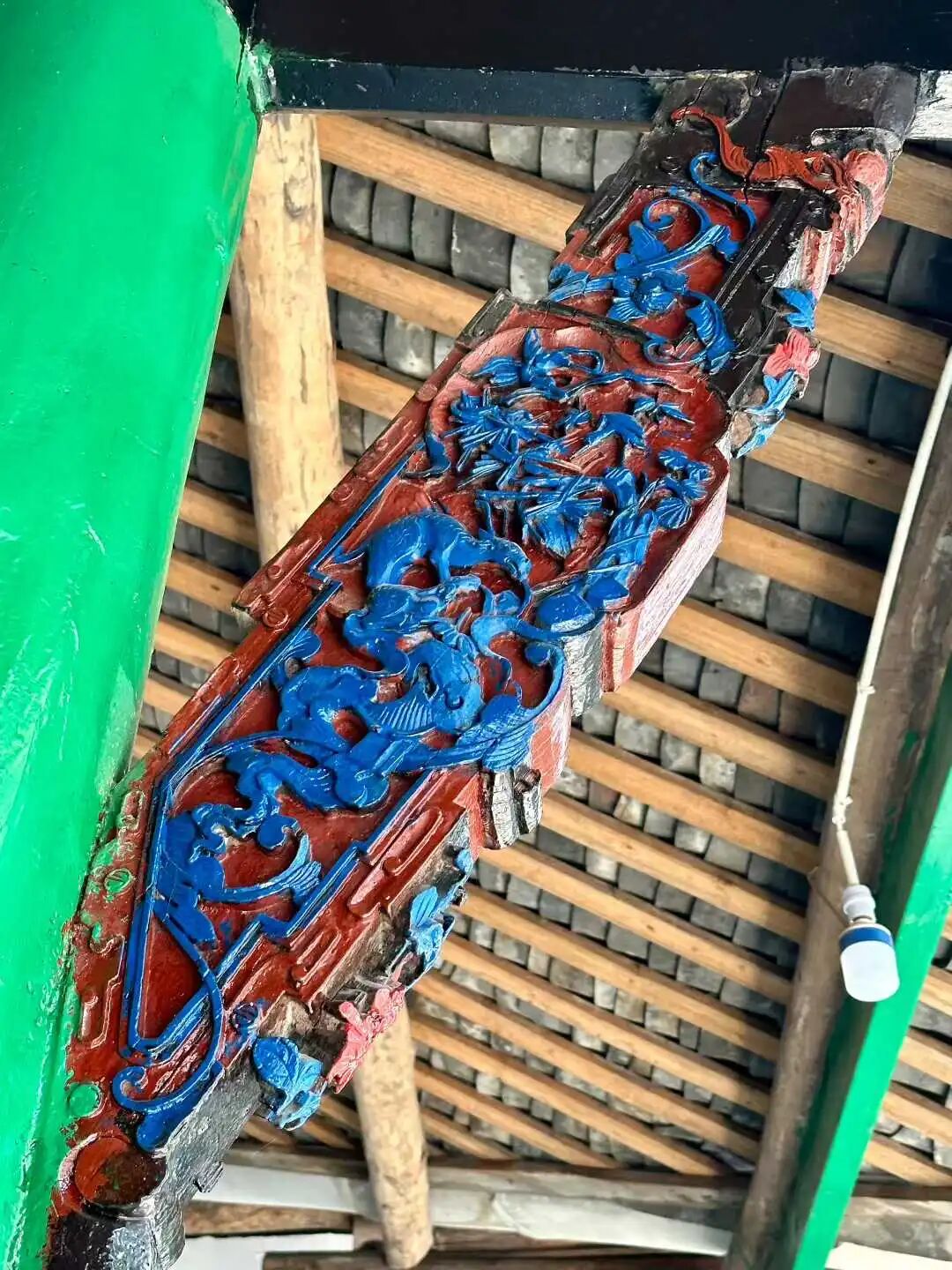
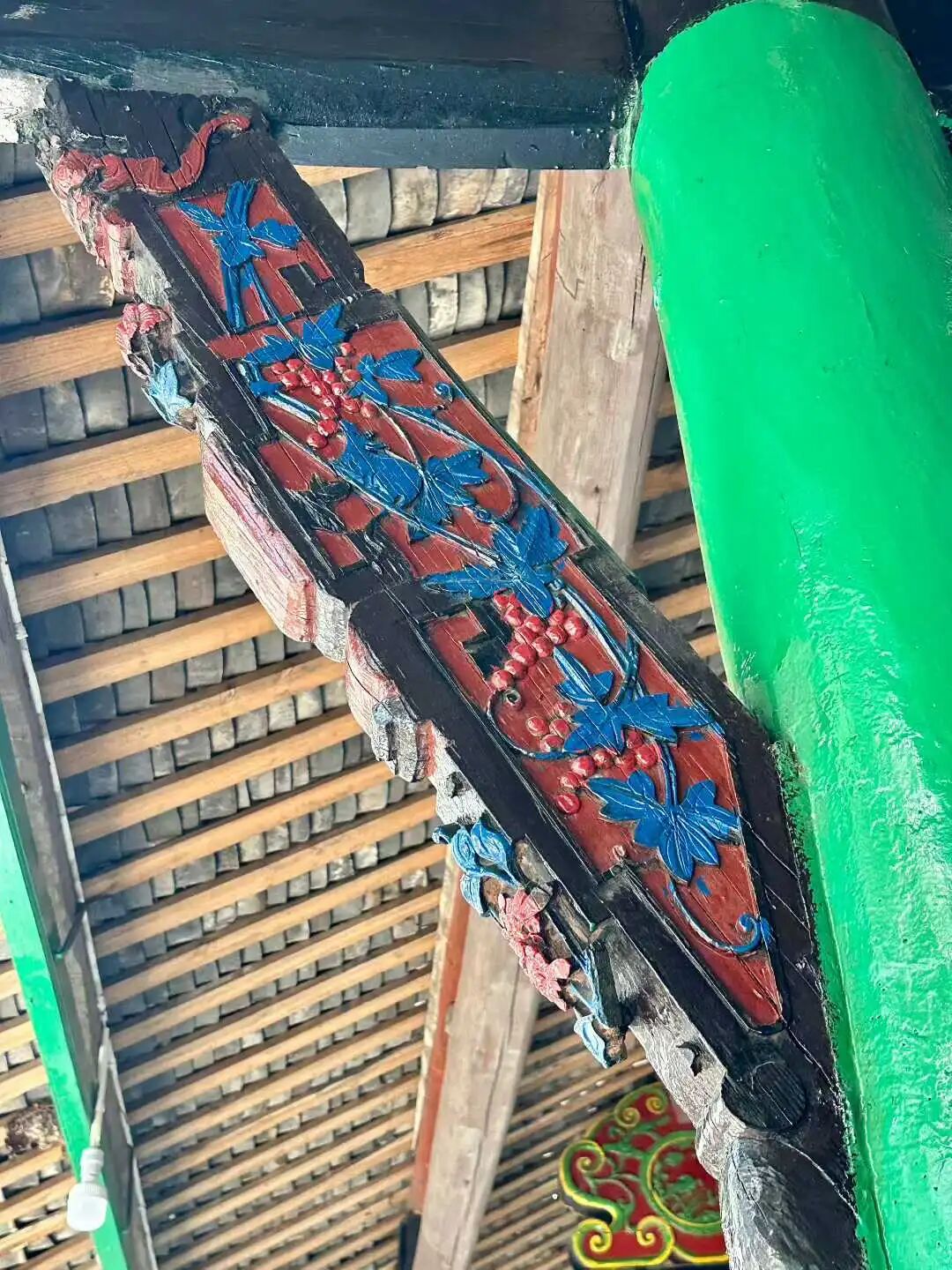
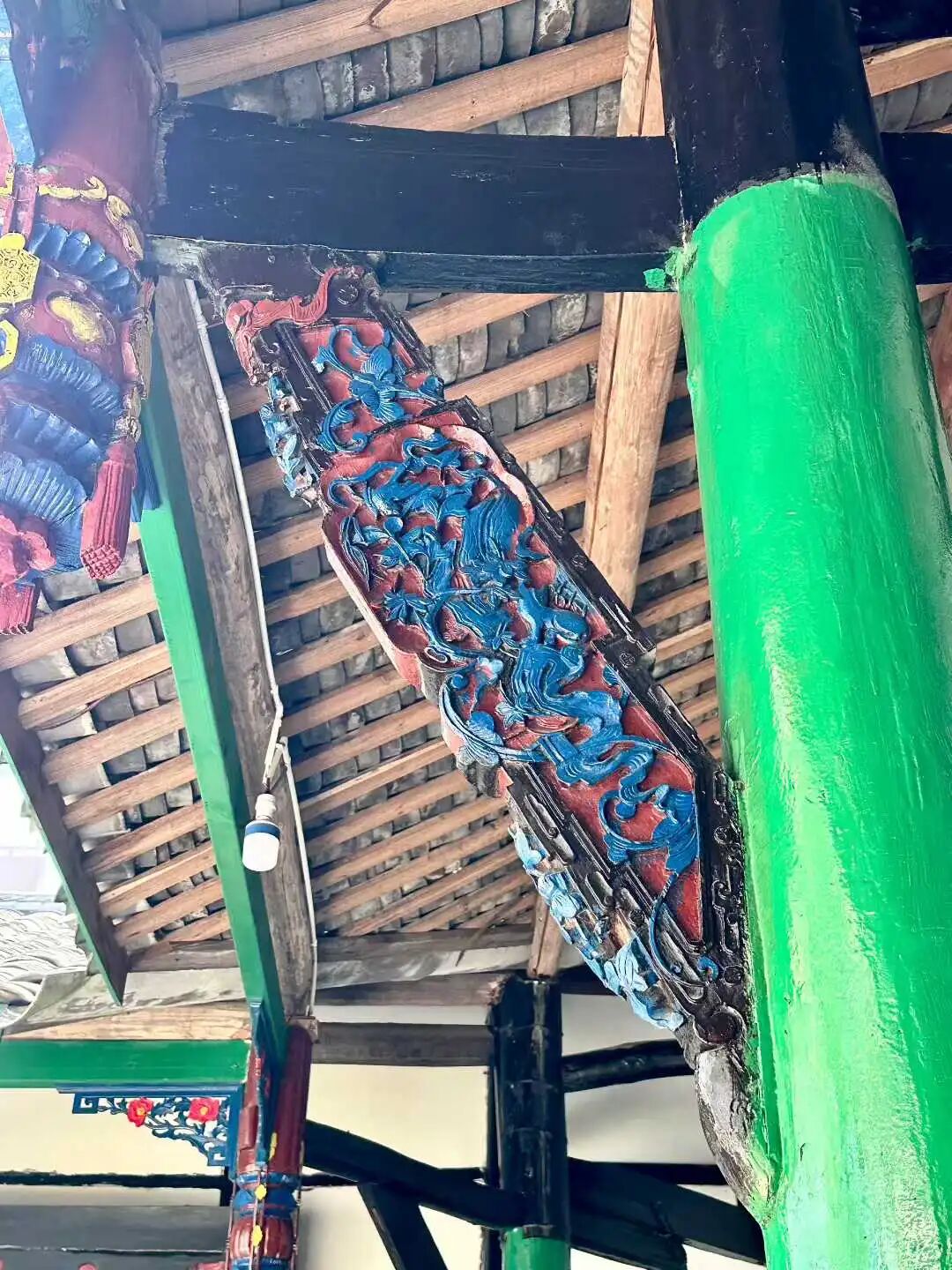
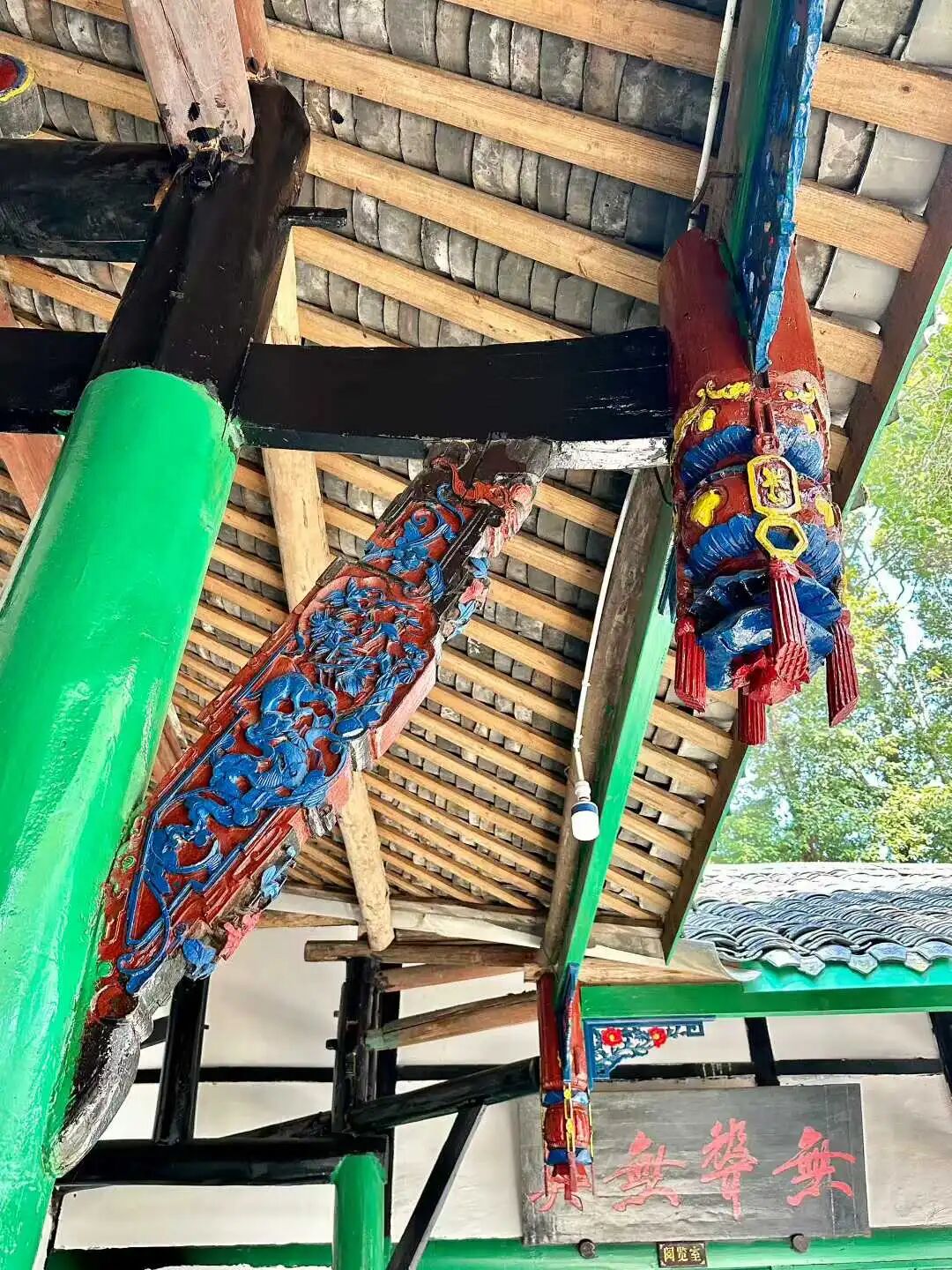
In the mosque's exhibition hall, you can see various handwritten scriptures: 'Su Yushui and Zhang Shaonan of the South Mosque invited Liang'an Ma Ahong to respectfully copy the entire Heavenly Scripture, bound in the 33rd year of Guangxu' and 'Respectfully invited Diannan Shaoxuan Sa Ahong to copy this in the auspicious mid-spring of the Wuxu year of Guangxu, noted by the owner of Jiuxian Hall.'
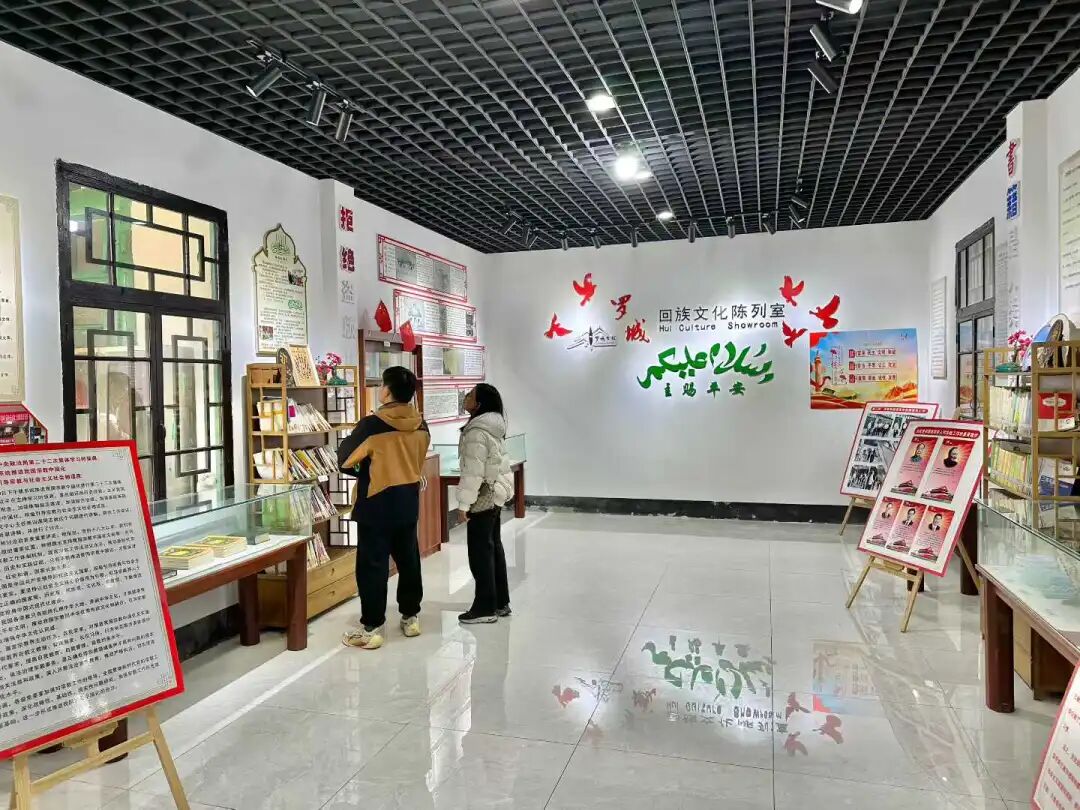
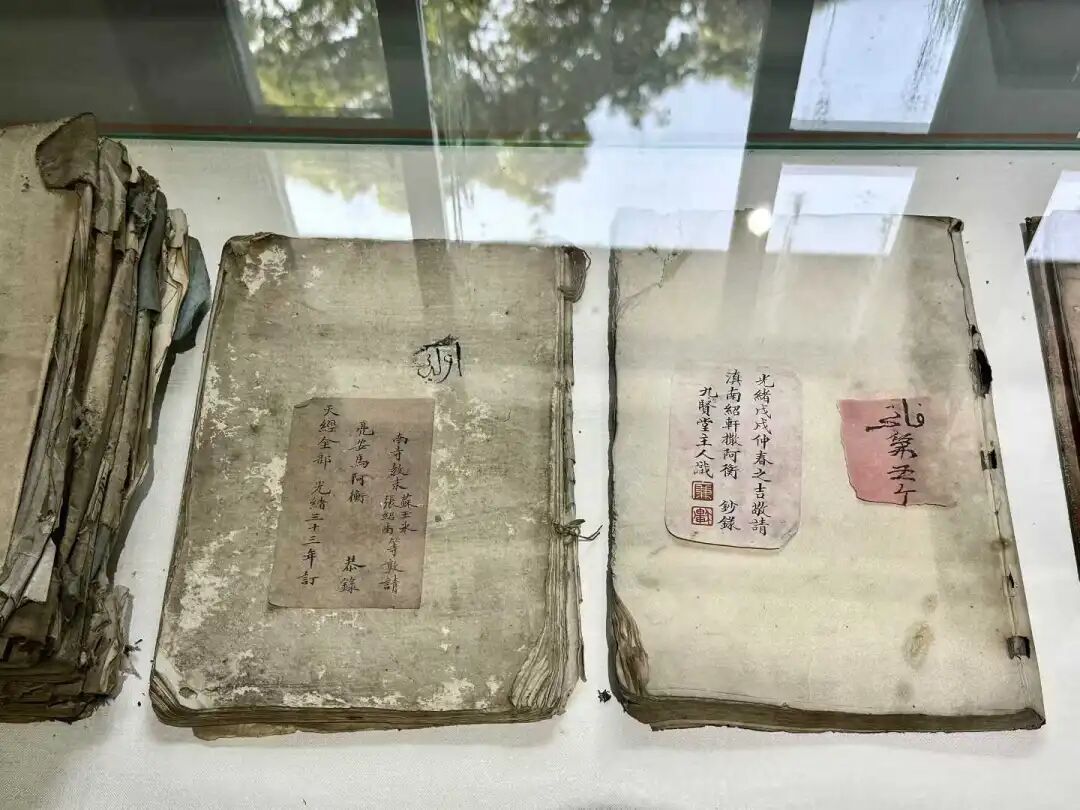
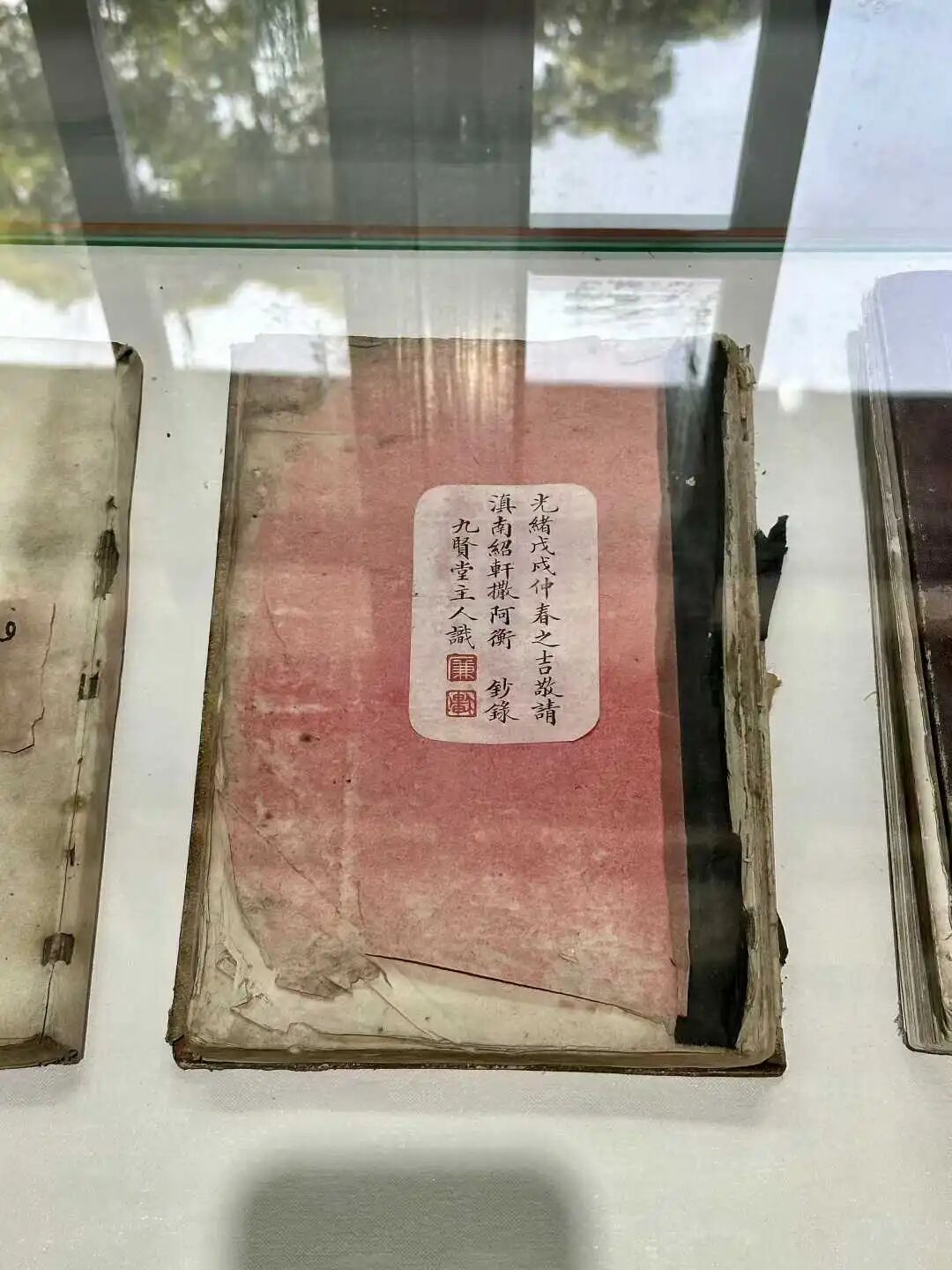
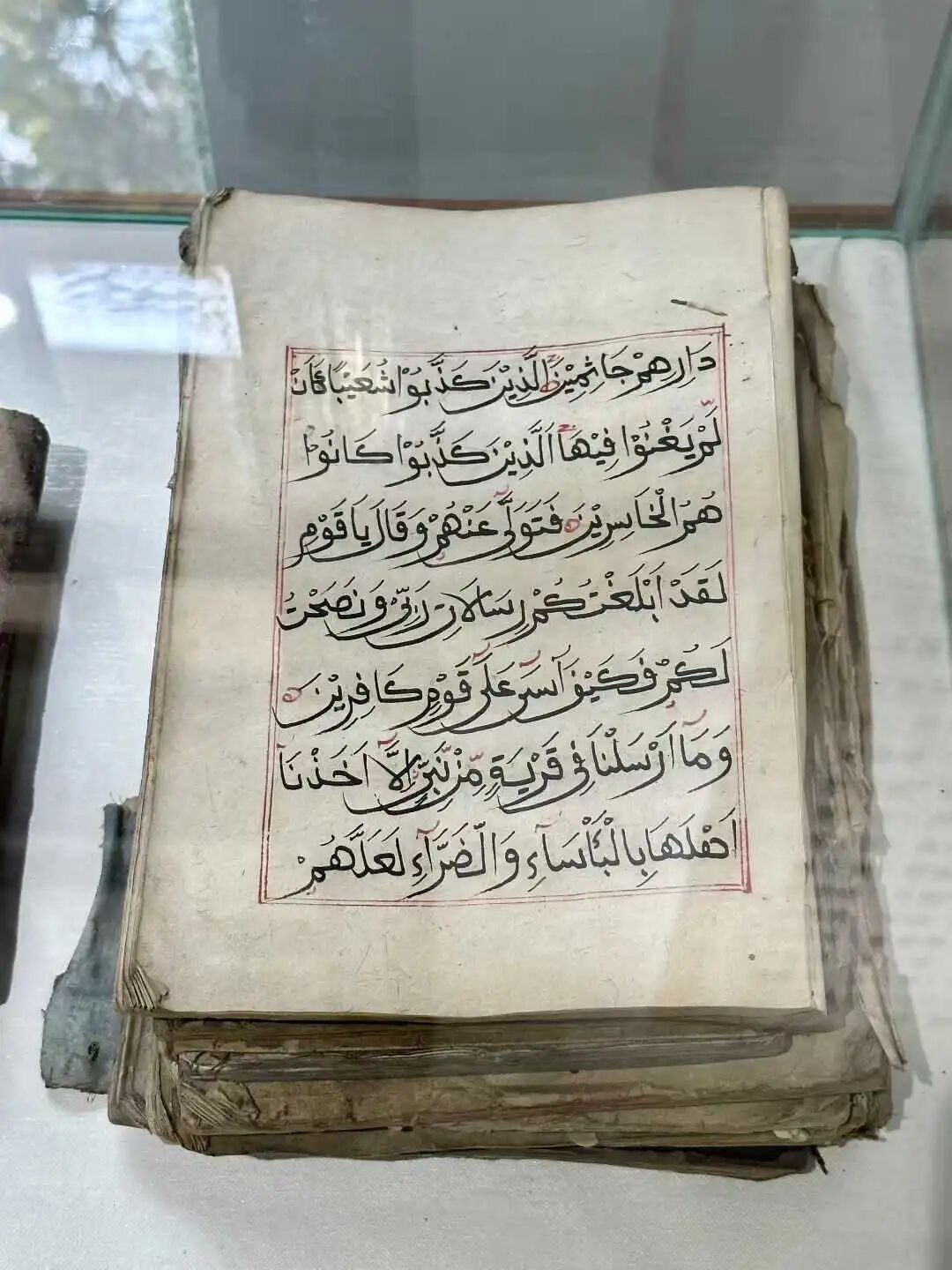
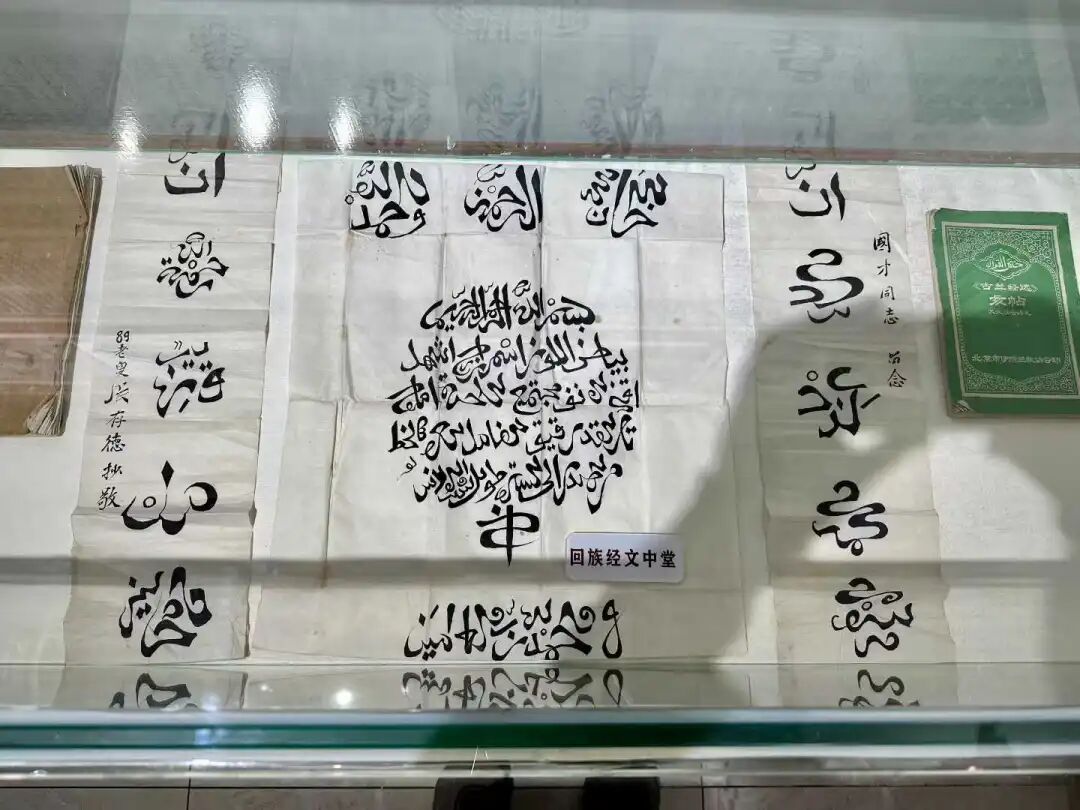
The only plaque at Luocheng Mosque with a specific date is the 'Ti Yong Hun Ran' plaque at the South Mosque. It is inscribed: 'In celebration of the completion of the South Mosque, respectfully presented by the fellow believers of Ganziyuan, on a lucky day in the second month of summer, in the year of Xinsi, the seventh year of the Guangxu reign.' There are four other plaques—'Zui Chu Wu Cheng,' 'Wu Sheng Wu Chou,' 'Shi Shou Liang Gui,' and 'You Jiao Wu Lei'—that were likely inscribed during the Qing Dynasty. However, their inscriptions were cut off during a turbulent period, so the specific details are unknown.
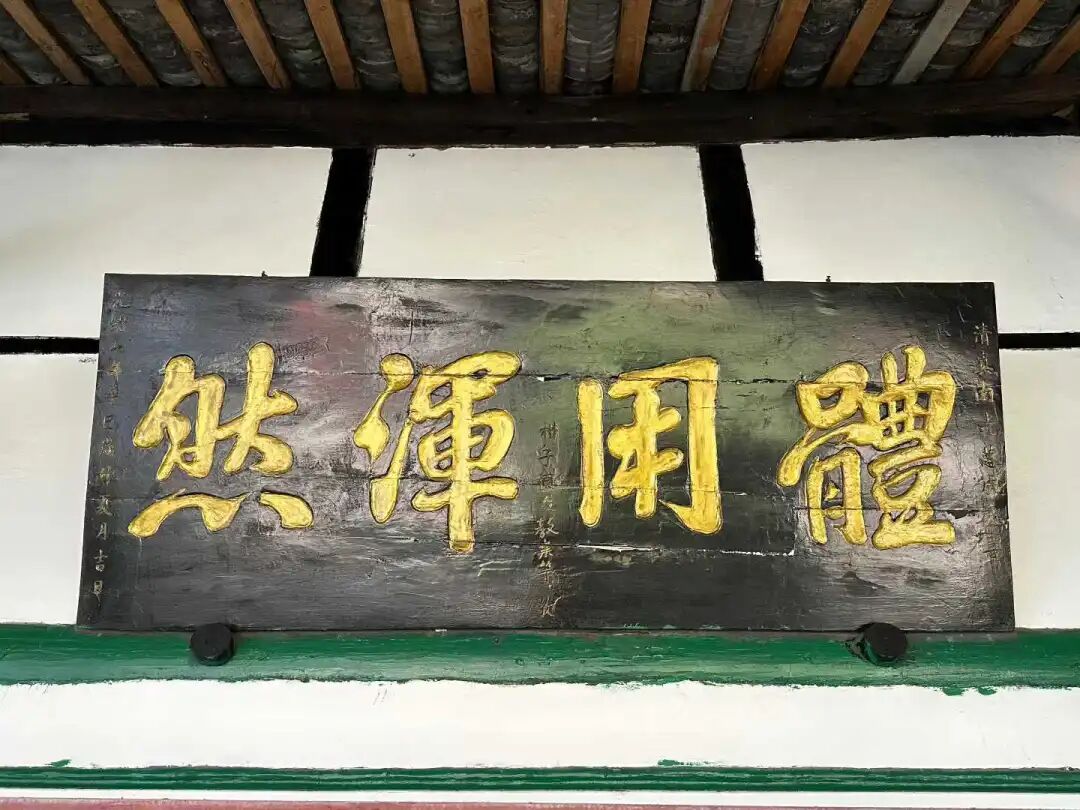
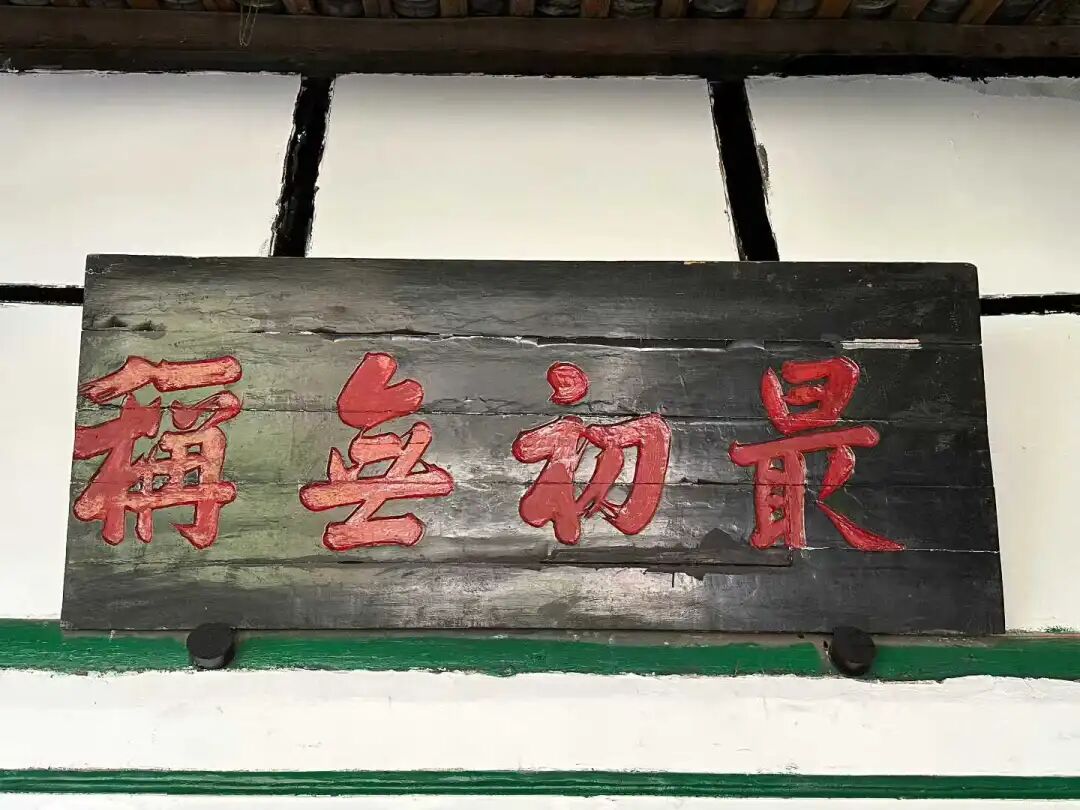
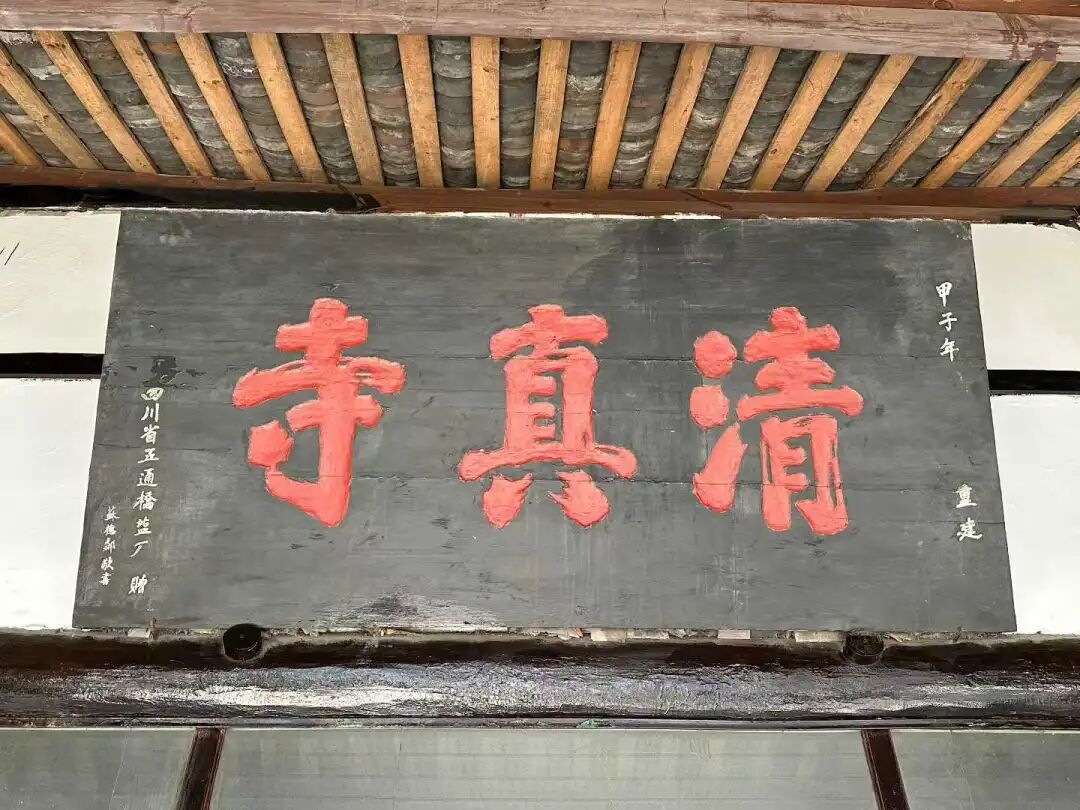
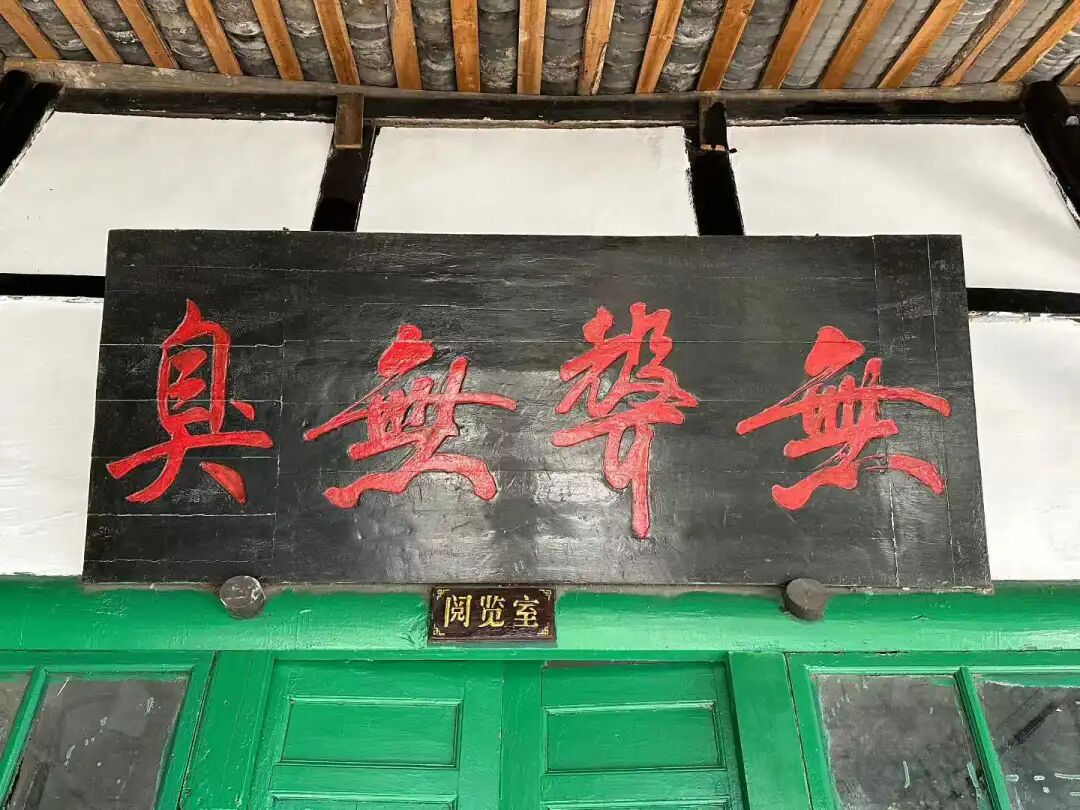
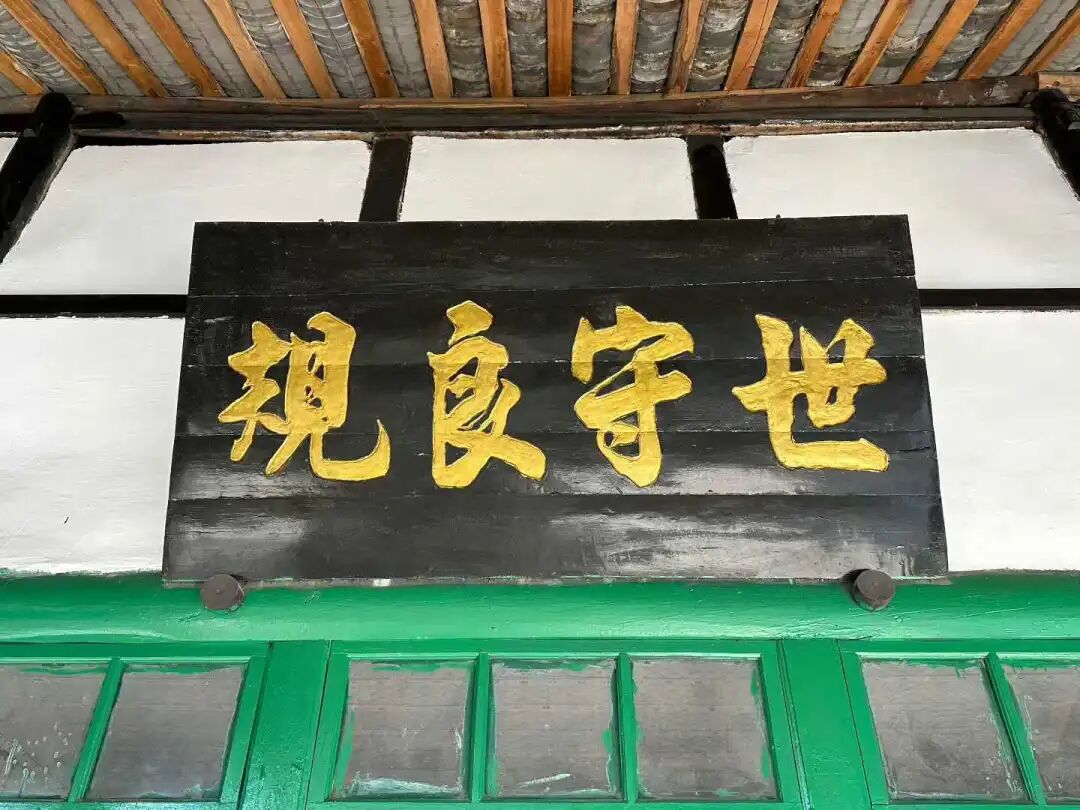
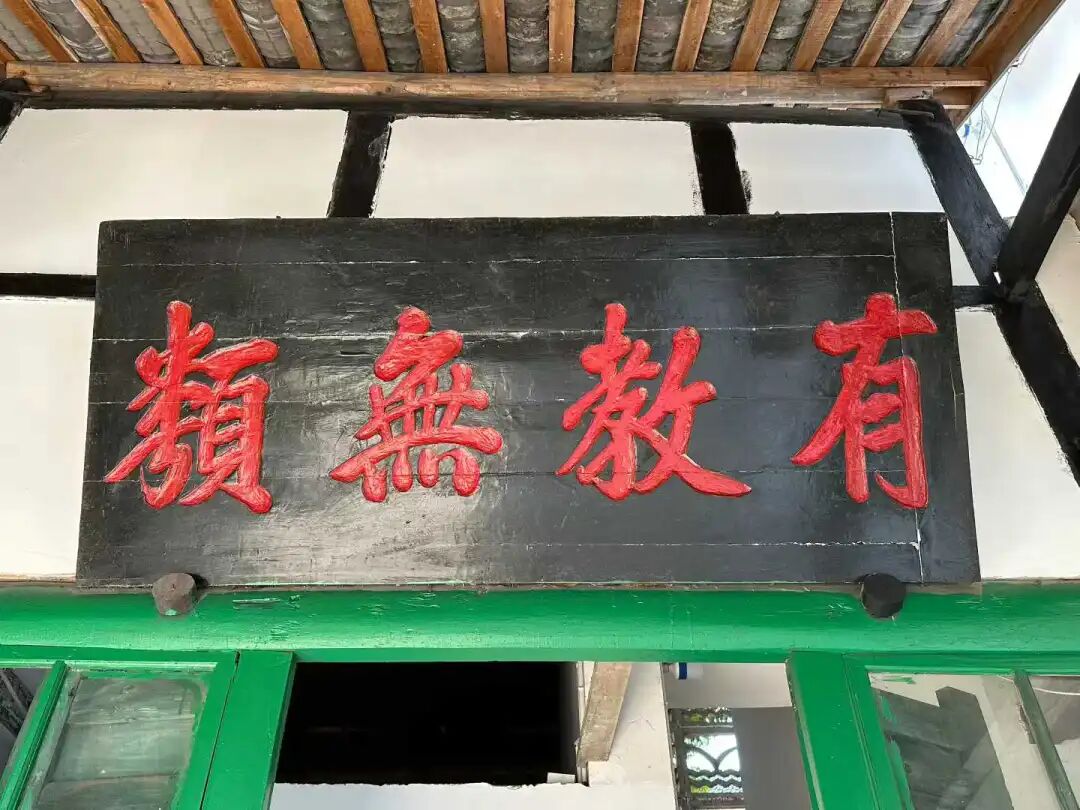
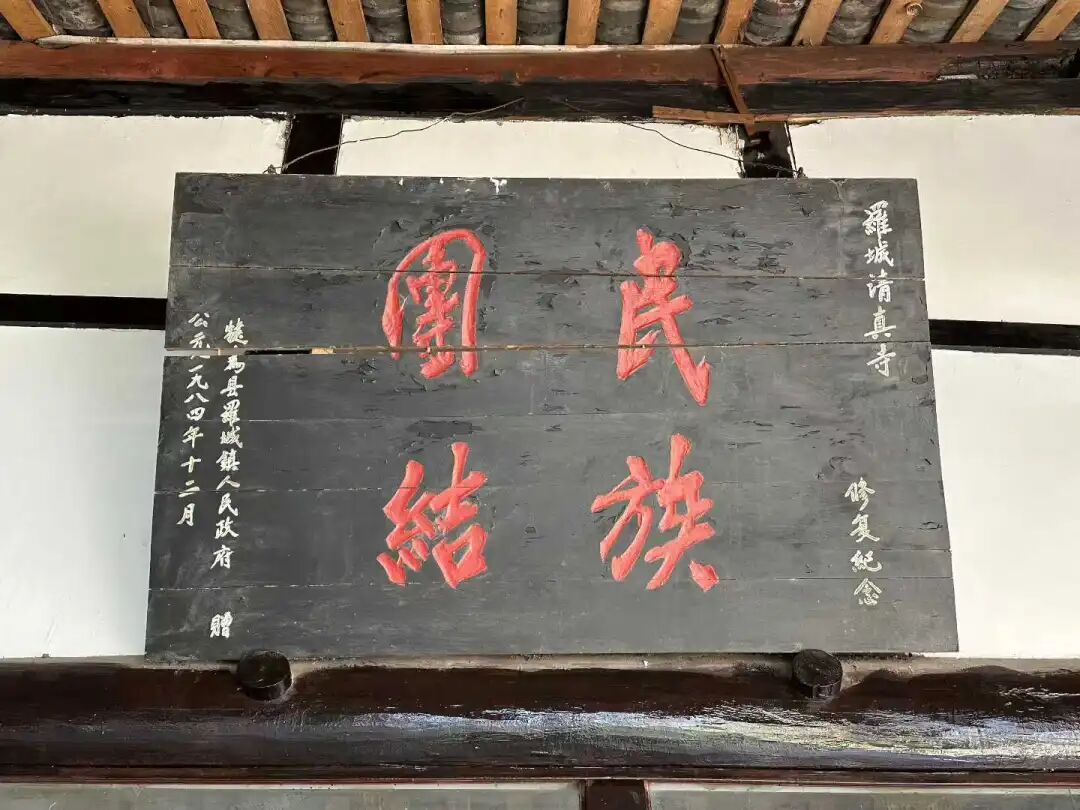
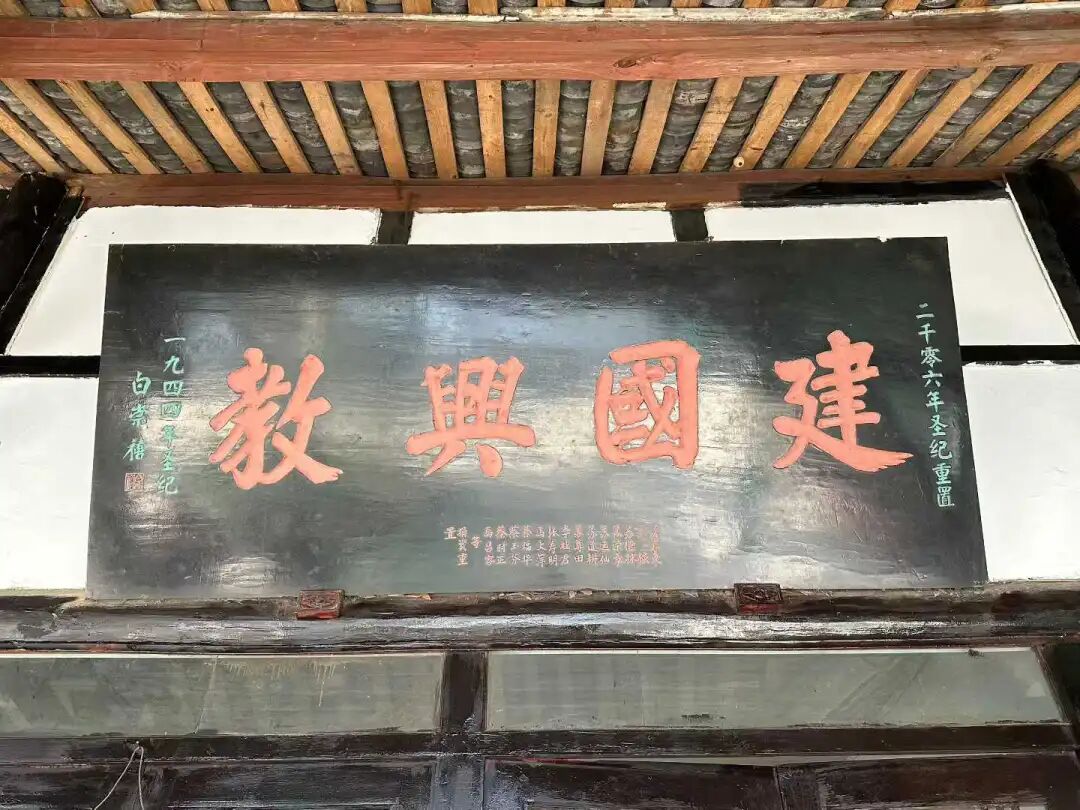
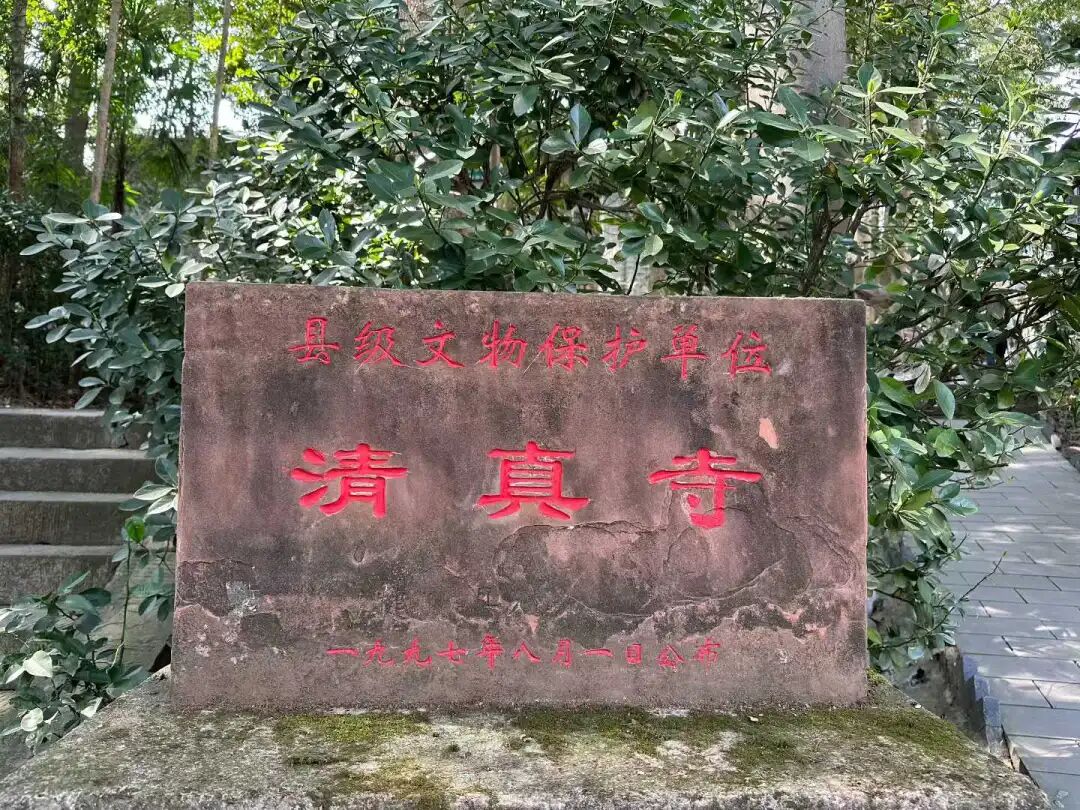
The front courtyard of Luocheng Mosque has 58 nanmu trees (zhennan), and the back courtyard has 36 pine trees. They are so lush and green that it feels like being in a forest. In 1969, Luocheng Mosque donated 32 century-old nanmu trees to help build the Chengdu Mao Zedong Thought Exhibition Hall. In 1984, the mosque management committee bought new nanmu saplings from the Forestry Bureau. The Su Zunyao family raised the seedlings, and Zhang Zemin carried water to irrigate them. In 1985, Su Dekui and others replanted them in the mosque, restoring the grounds to a thriving scene full of lush leaves, flowers, birdsong, and butterflies.
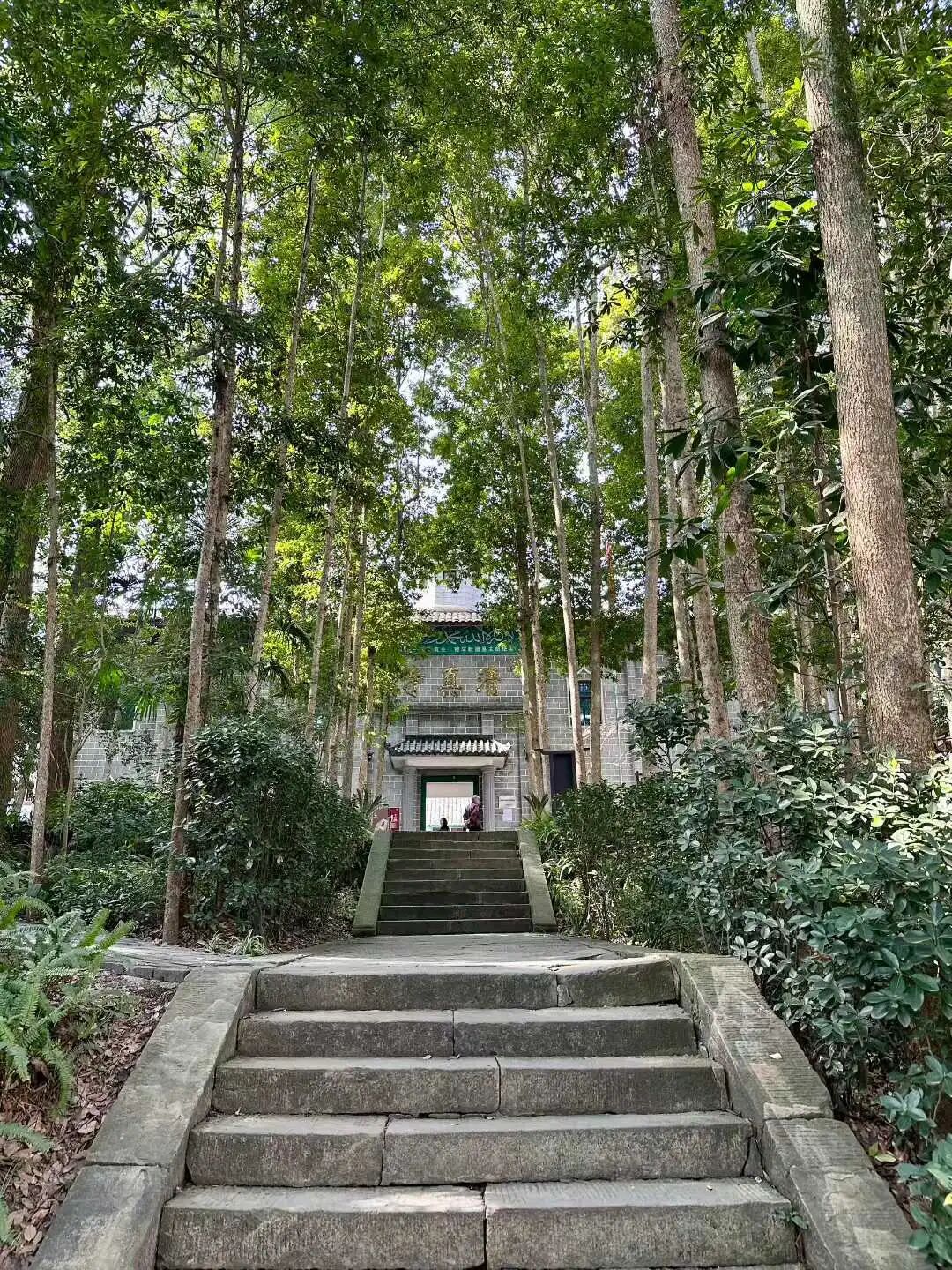
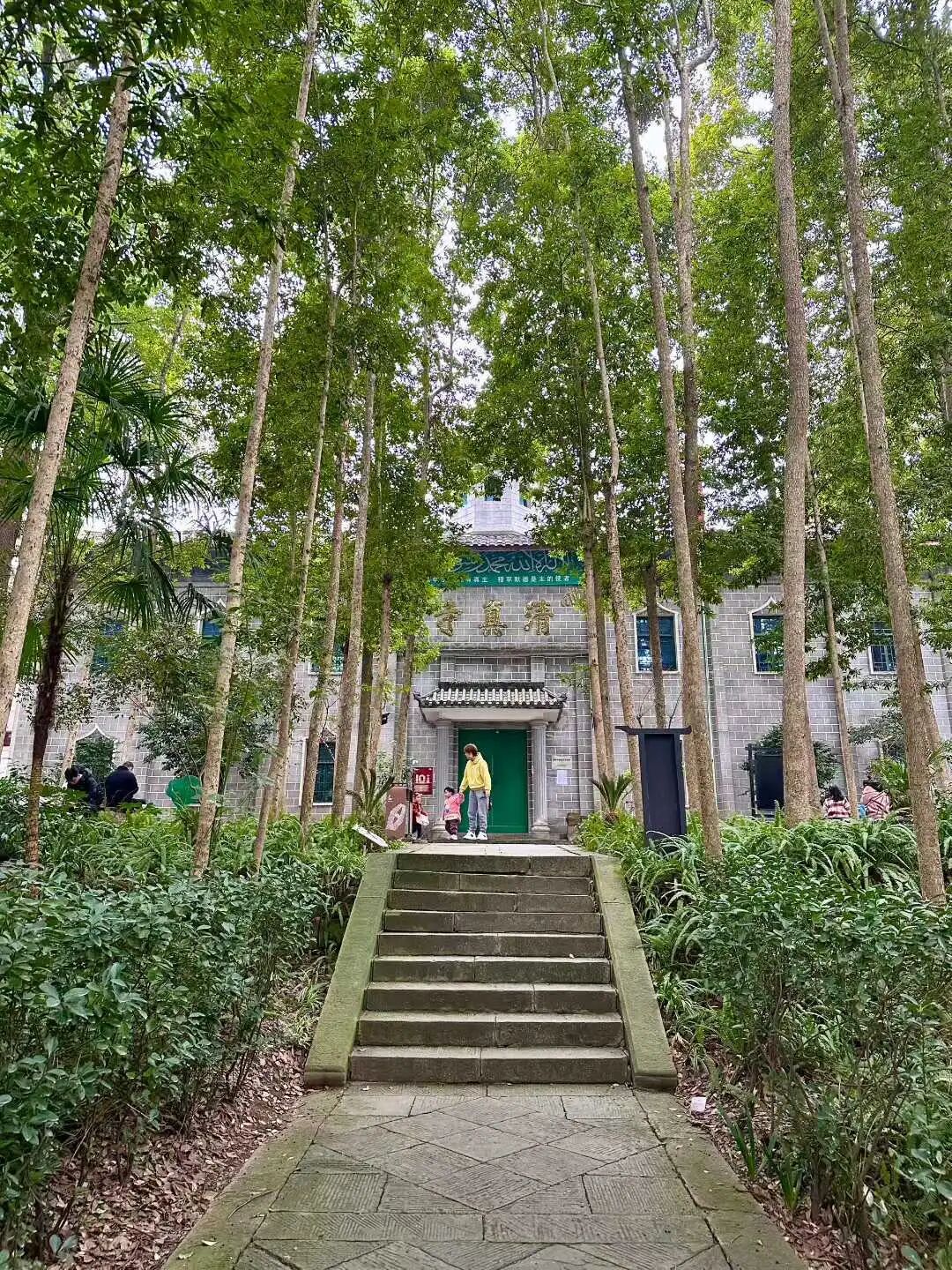
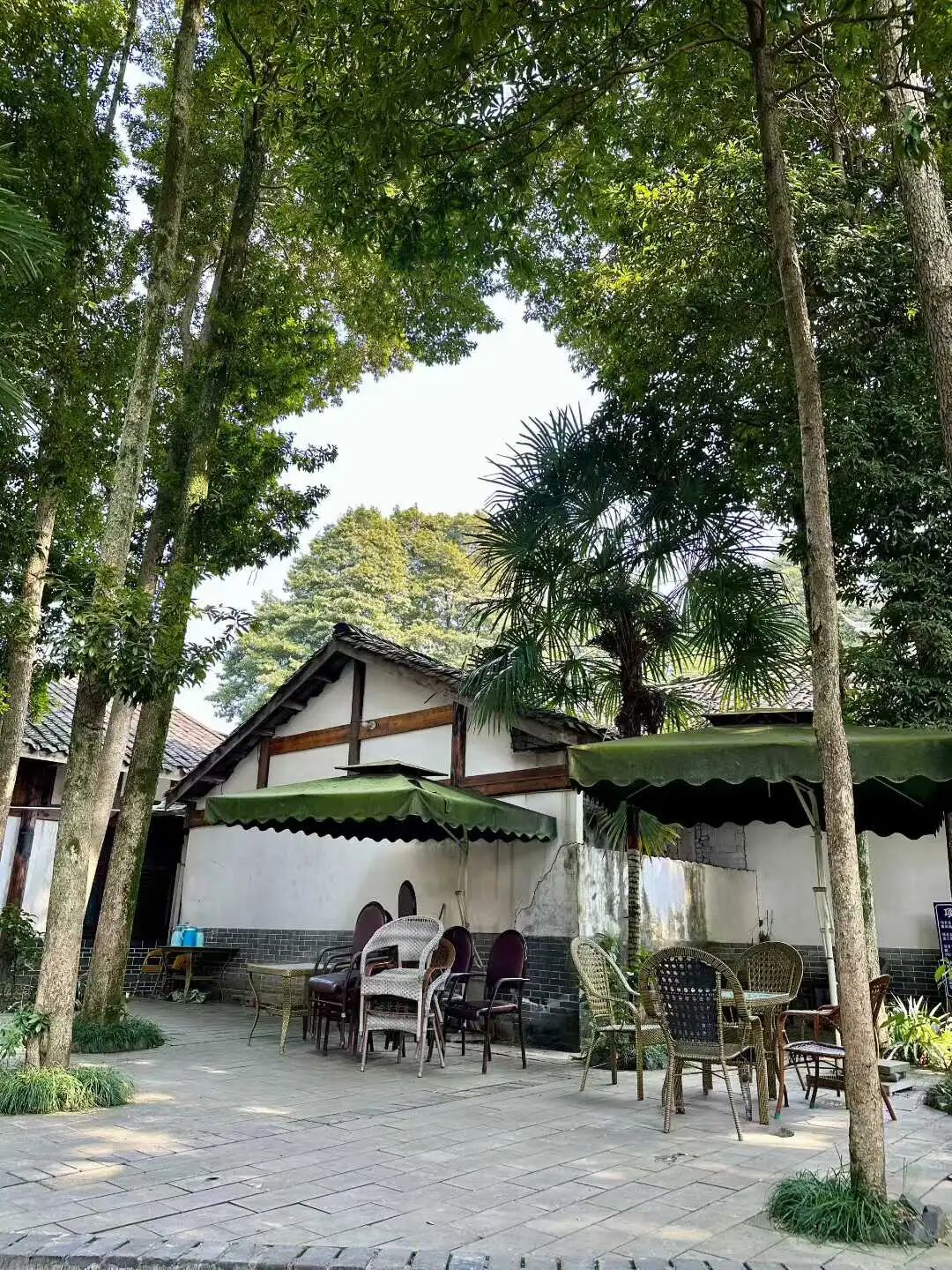
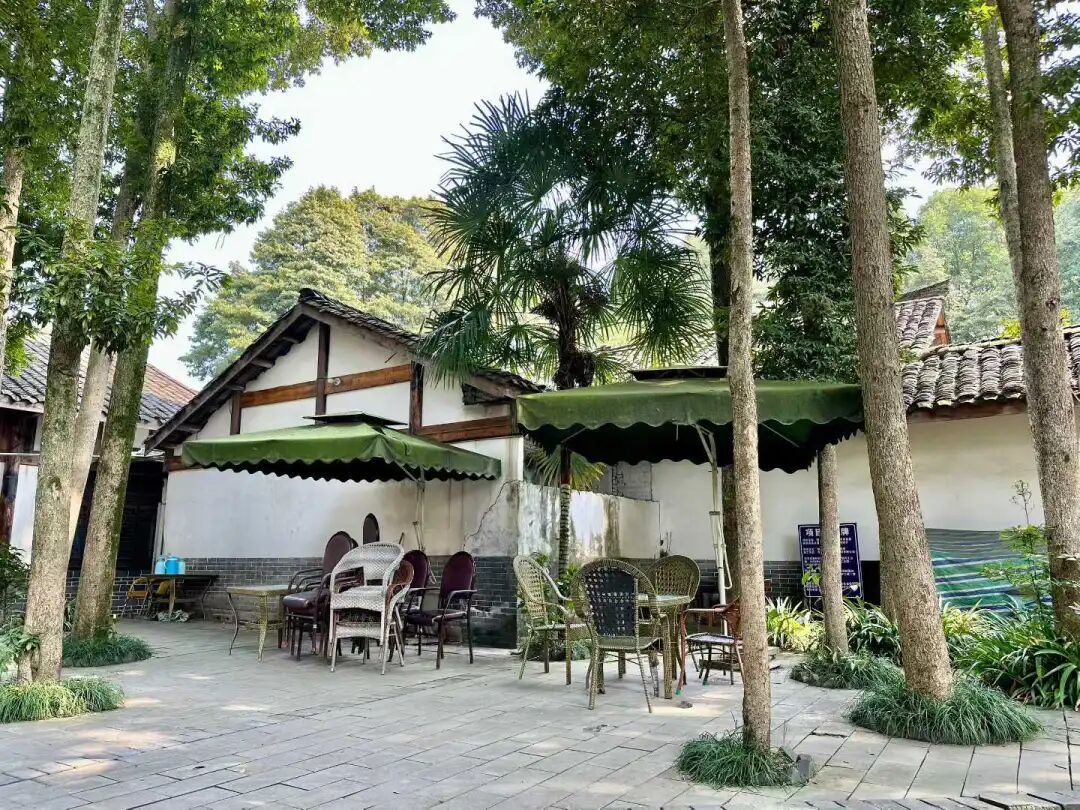
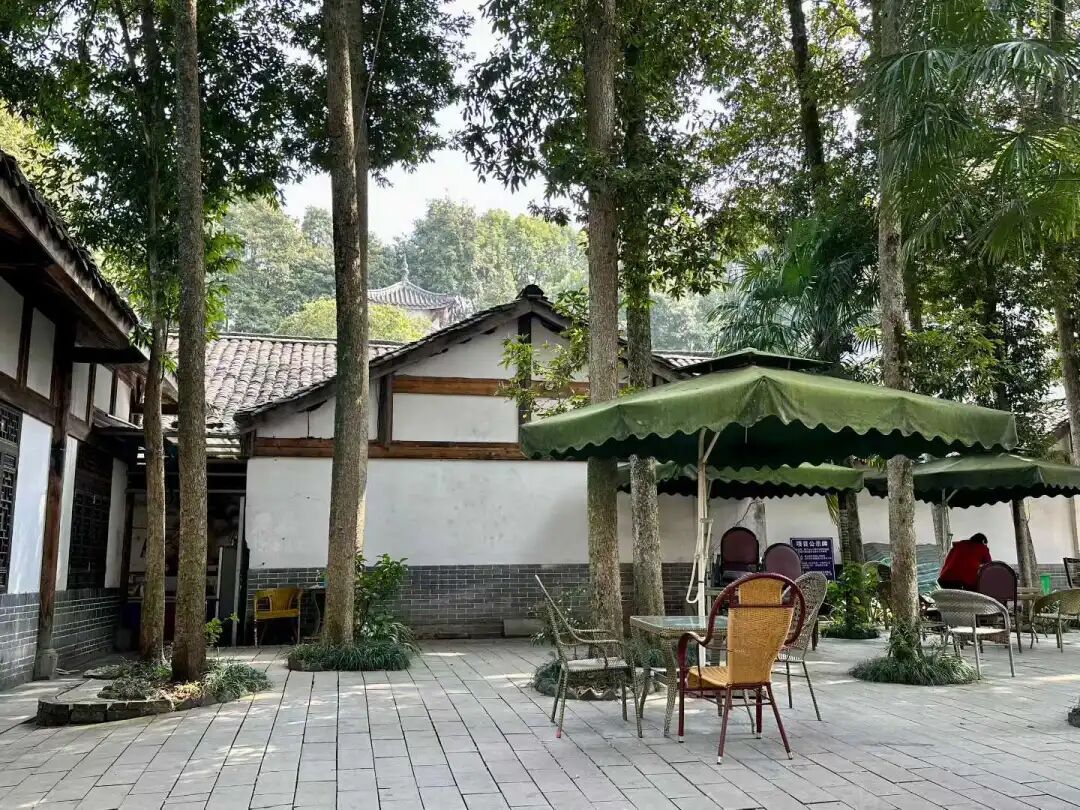
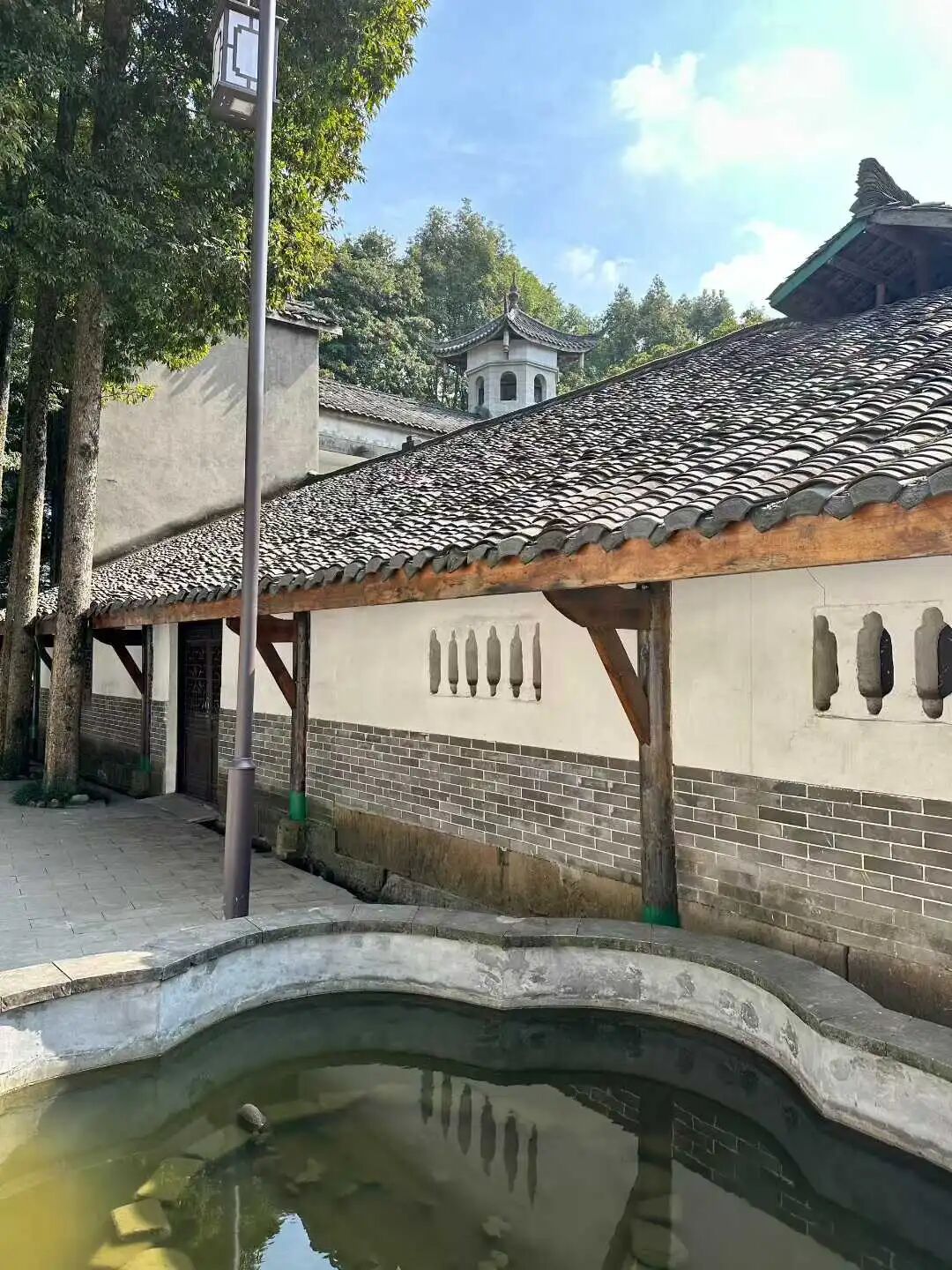
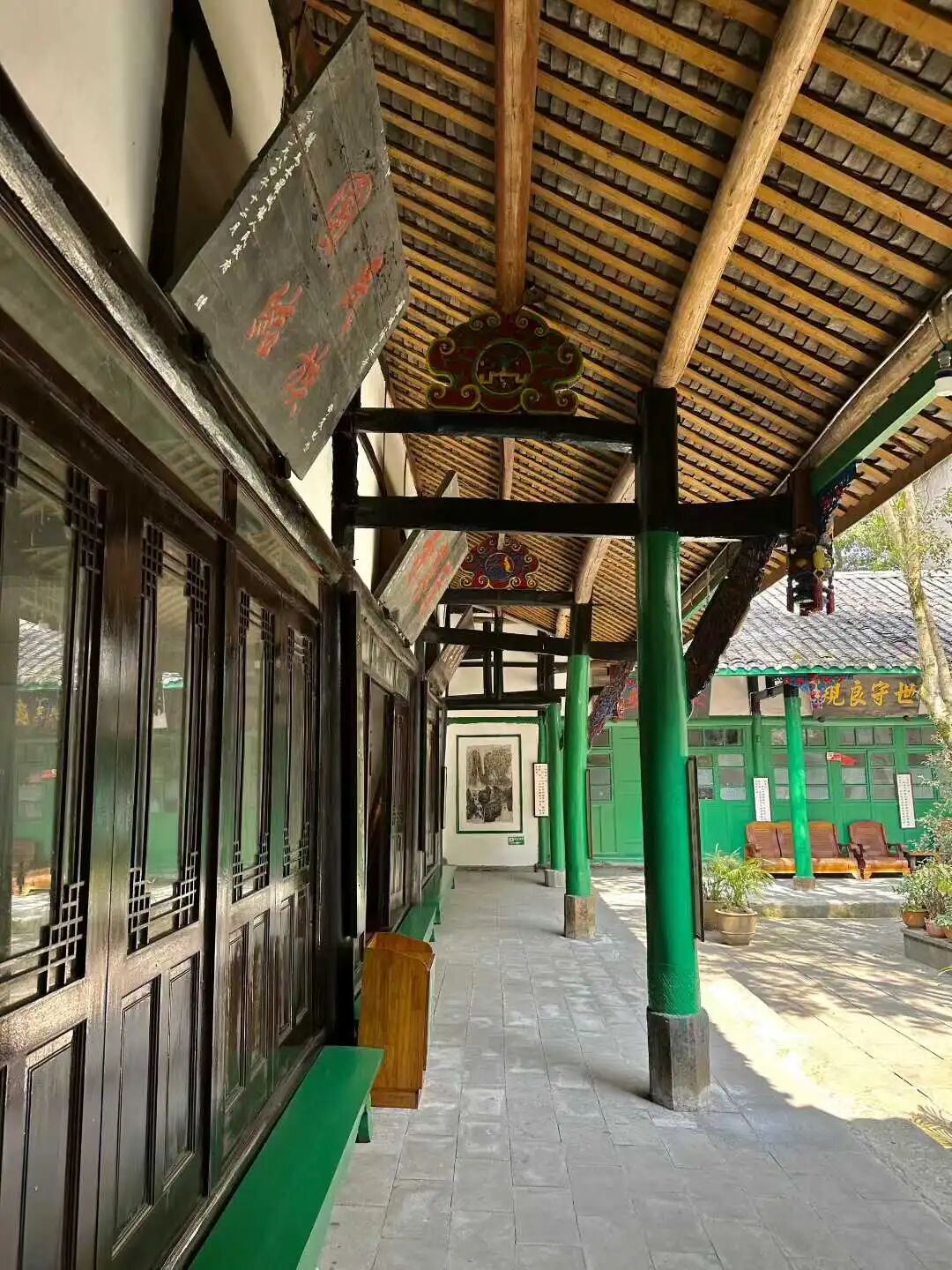
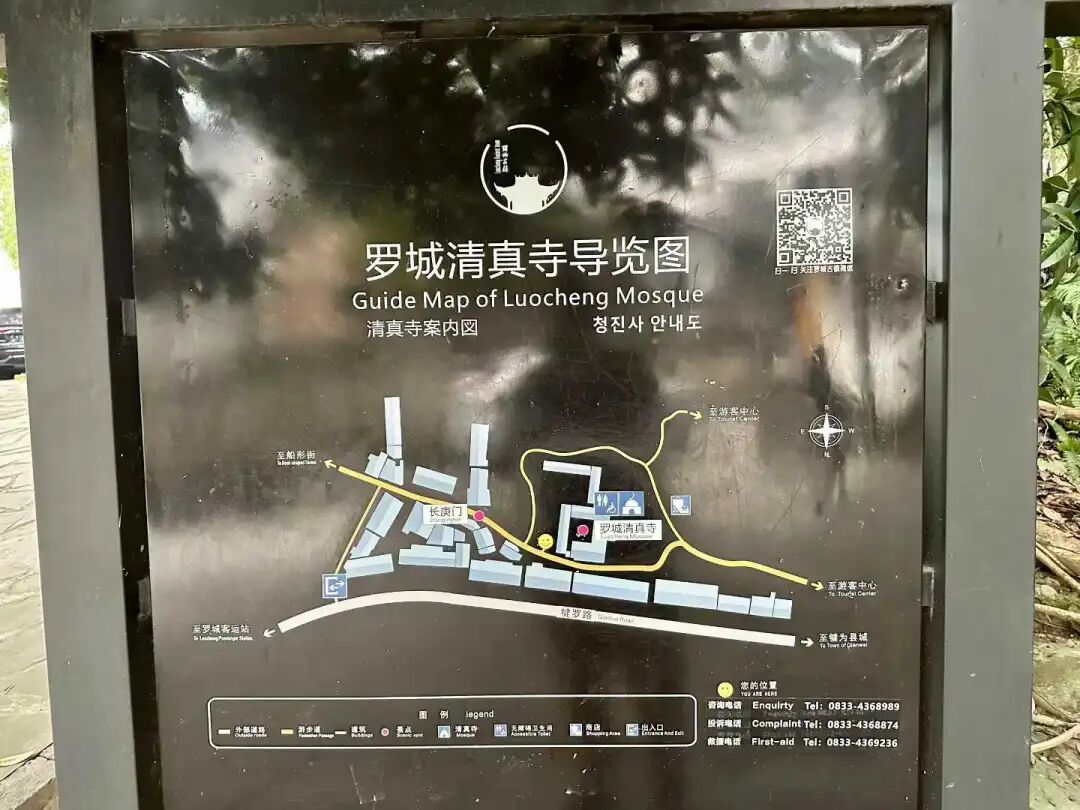
Halal Travel Guide: Xiaoquan, Sichuan - Hui Muslim Street and Old Town
Articles • ali2007fr posted the article • 0 comments • 249 views • 2026-05-20 09:24
Summary: Xiaoquan Ancient Town in Sichuan has a Hui Muslim community centered on Banbian Street and Xiaoquan Mosque, with roots traced to early Qing migration and military settlement. This travel account follows the town halal food, Deng family history, mosque architecture, Qing-era inscriptions, and Xiaoquan juice beef.
I took the high-speed train from Songpan, Sichuan, to Mianzhu South Station, then took a 20-minute taxi ride to the ancient town of Xiaoquan. The ancient town is quite quiet, and most shops were closed by eight o'clock. I caught the Dengji Restaurant at the gate of Xiaoquan Mosque just in time to get some braised beef (shao niurou). My altitude sickness from Songpan had completely disappeared by then, so I ate a big bowl of rice with the beef and pickled radishes, and my appetite was huge.
Passing by Dengji Restaurant the next day, I saw many flat geese (ban'e) hanging at their door, which is a specialty of the Hui Muslims in Sichuan.
The Deng family is the earliest Hui Muslim family in Xiaoquan ancient town, arriving during the early Qing Dynasty when people moved from Hubei and Hunan to Sichuan. Legend has it that after the Three Feudatories were suppressed during the Kangxi era of the Qing Dynasty, the Sichuan governor asked the Ministry of War to strengthen the Mianzhu garrison. At that time, Hui Muslims surnamed Deng from Cangzhou, Hebei, led their troops to rest at the Hui camp in Liujiaji, Macheng, Hubei, before moving along the Yangtze River to station in Xiaoquan. This is the earliest origin of the Hui Muslims in Xiaoquan.
On the morning at Banbian Street in Xiaoquan, Sichuan, the street was full of various marinated meats made by Hui Muslims, including beef tongue, flat goose (ban'e), and beef sausage, which are very popular. I had a bowl of beef steak rice noodles at a place called Qingfangge. It was very spicy and numbing, and they added blanched pea tips on top. Then I had a freshly baked beef bun (niurou baozi) at another shop, and it tasted delicious.
Most Hui Muslims in Xiaoquan came during the Qing Dynasty migration from Hubei and Hunan. The four major surnames are Deng, Ma, Liu, and Huang, along with others like Zhang, Bao, Ding, La, Li, and Sha. Most of the Hui Muslims in Xiaoquan live in the Banbian Street area near the gate of the Xiaoquan Mosque. Although many people later moved to Chengdu, Deyang, and Mianyang, there are still over a hundred households there today.
The Xiaoquan Mosque was built during the Kangxi era of the Qing Dynasty next to the Lingu Mosque on Guihua Street, and it was quite small at first. As the number of Hui Muslims grew in the mid-Qing Dynasty, the Deng and Ma families led a fundraising effort in 1840 (the 20th year of the Daoguang reign) to buy the Feng family ancestral hall on Banbian Street. They rebuilt it into the current Xiaoquan Mosque and renovated it again during the Guangxu era, creating the traditional four-sided water courtyard (si shui gui tang) architectural style. The four-sided water courtyard means the four sloping roofs tilt toward the central courtyard, collecting rainwater into the center to create a layout where water from all directions gathers in the bright hall.
The couplet on the main gate was written by Huang Menghui, a local Hui Muslim calligrapher from Xiaoquan. Huang is a retired employee of the Xiaoquan Supply and Marketing Cooperative and is now a committee member of the Xiaoquan Mosque management board. He has loved calligraphy since he was a child and is now a famous Hui Muslim calligrapher in Xiaoquan.
The Xiaoquan Mosque was severely damaged during the Wenchuan earthquake, but it was later restored, and the Qing Dynasty wood carvings were preserved.
There are 15 hand-copied scriptures from the Daoguang era currently preserved at the Xiaoquan Mosque.
The Qing Dynasty stone tablets at the Xiaoquan Mosque include one from the 23rd year of the Daoguang reign. It records how a Hui Muslim named Zhang Zongfa honored his parents and, after they passed away, sincerely donated to the Xiaoquan Mosque by buying a vegetable garden, dry land, and building foundations from the Deng family and donating them to the mosque. After Zhang Zongfa passed away, members of the community carved his deeds into stone under the corridor of the mosque to honor his name.
Before leaving, I bought some specialty juice beef (guozhi niurou) on Banbian Street. Xiaoquan juice beef comes from traditional Sichuan braised beef. During the Republic of China era, a Hui Muslim named Ma Daoyong used a method of frying the beef first and then adding flavor to solve the problem of braised beef molding easily. He created a beef that is juicy and flavorful, which eventually developed into the current Xiaoquan juice beef. When Ma Daoyong first sold juice beef, he used the brand name of his eldest son, Ma Changheng. After the public-private partnership in 1956, Ma Daoyong founded the Xiaoquan Supply and Marketing Cooperative Halal Food Factory. His youngest son, Ma Changmeng, took over in 1977 and became the factory director in 1993. In 1995, the organization arranged for Ma Changmeng to work at a hardware company. He later applied for unpaid leave to start his own food factory and began producing Ma Changmeng Juice Beef.
There are many beef juice shops on Banbian Street now, and after walking around, I saw the prices are all about the same. The clerk at this Ma Changbin shop wears a headscarf, and since there were quite a few customers, I decided to buy from them. It actually tastes a bit like shadow beef (dengying niurou), very fragrant and perfect as a snack when you are out and about. view all
Summary: Xiaoquan Ancient Town in Sichuan has a Hui Muslim community centered on Banbian Street and Xiaoquan Mosque, with roots traced to early Qing migration and military settlement. This travel account follows the town halal food, Deng family history, mosque architecture, Qing-era inscriptions, and Xiaoquan juice beef.
I took the high-speed train from Songpan, Sichuan, to Mianzhu South Station, then took a 20-minute taxi ride to the ancient town of Xiaoquan. The ancient town is quite quiet, and most shops were closed by eight o'clock. I caught the Dengji Restaurant at the gate of Xiaoquan Mosque just in time to get some braised beef (shao niurou). My altitude sickness from Songpan had completely disappeared by then, so I ate a big bowl of rice with the beef and pickled radishes, and my appetite was huge.
Passing by Dengji Restaurant the next day, I saw many flat geese (ban'e) hanging at their door, which is a specialty of the Hui Muslims in Sichuan.
The Deng family is the earliest Hui Muslim family in Xiaoquan ancient town, arriving during the early Qing Dynasty when people moved from Hubei and Hunan to Sichuan. Legend has it that after the Three Feudatories were suppressed during the Kangxi era of the Qing Dynasty, the Sichuan governor asked the Ministry of War to strengthen the Mianzhu garrison. At that time, Hui Muslims surnamed Deng from Cangzhou, Hebei, led their troops to rest at the Hui camp in Liujiaji, Macheng, Hubei, before moving along the Yangtze River to station in Xiaoquan. This is the earliest origin of the Hui Muslims in Xiaoquan.
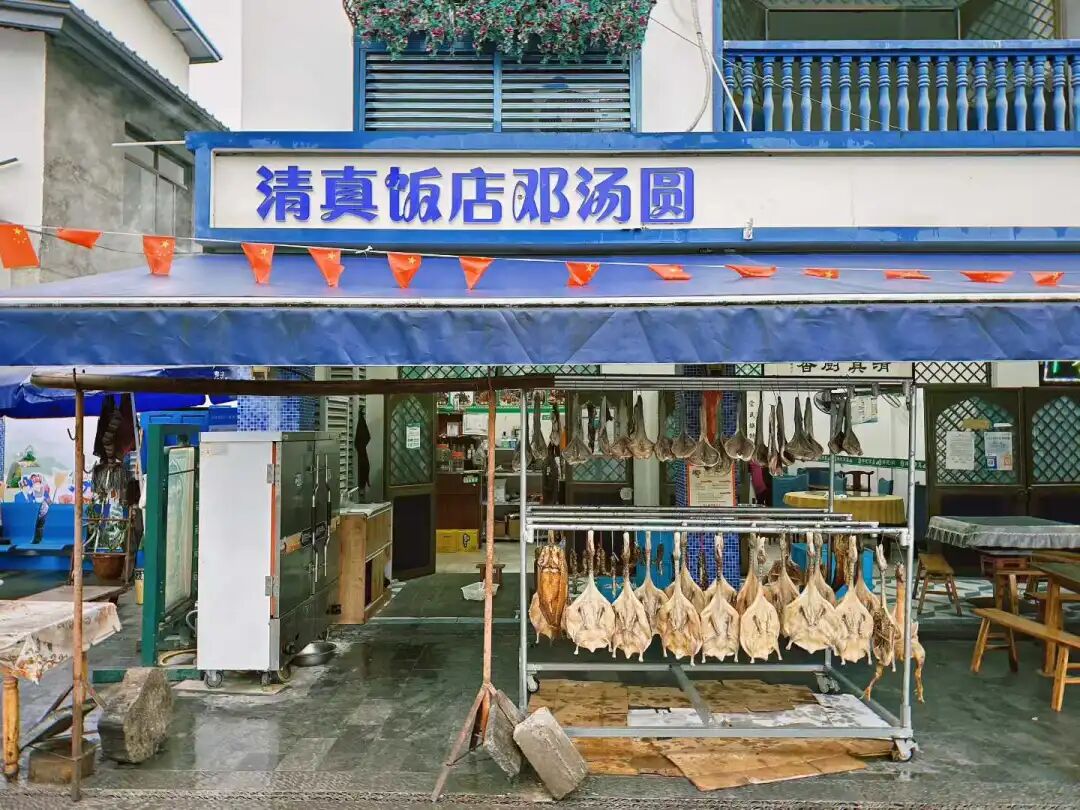
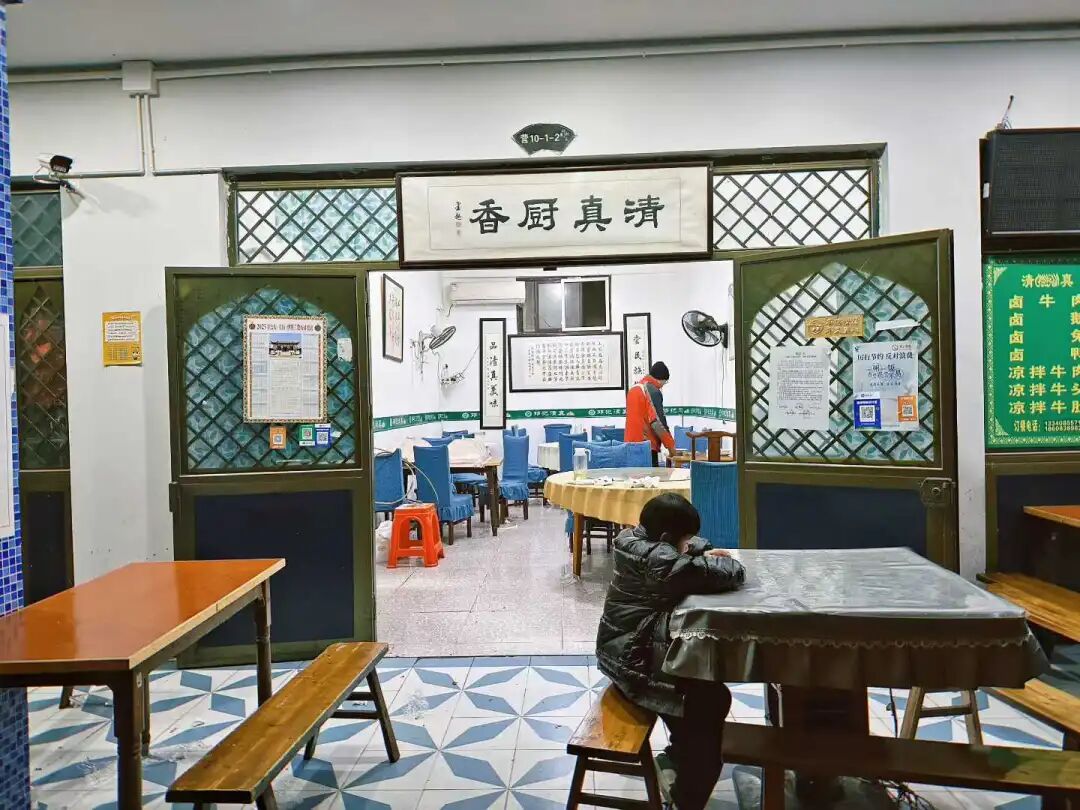
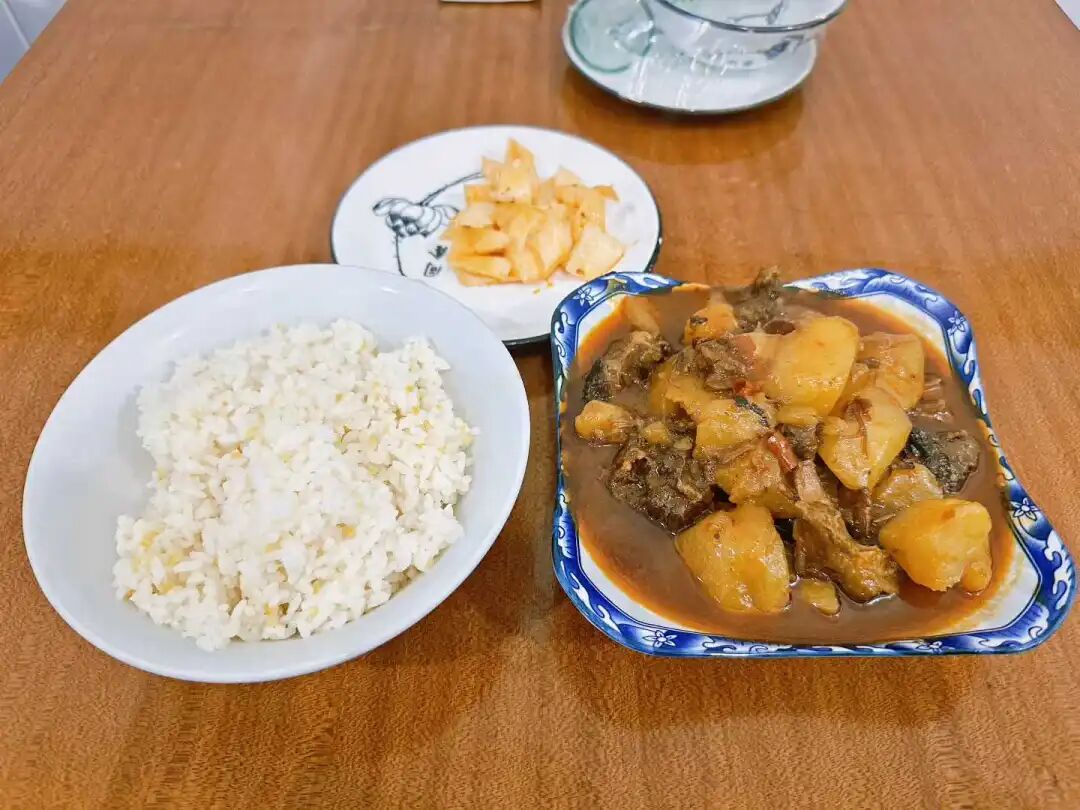
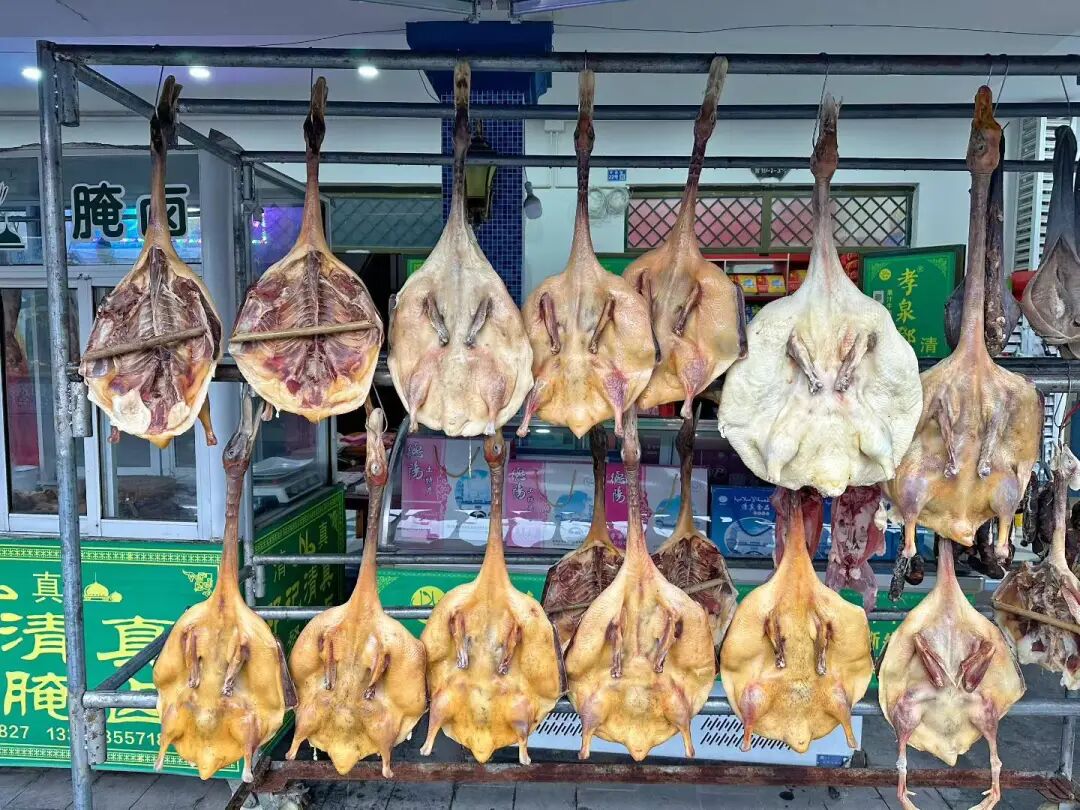
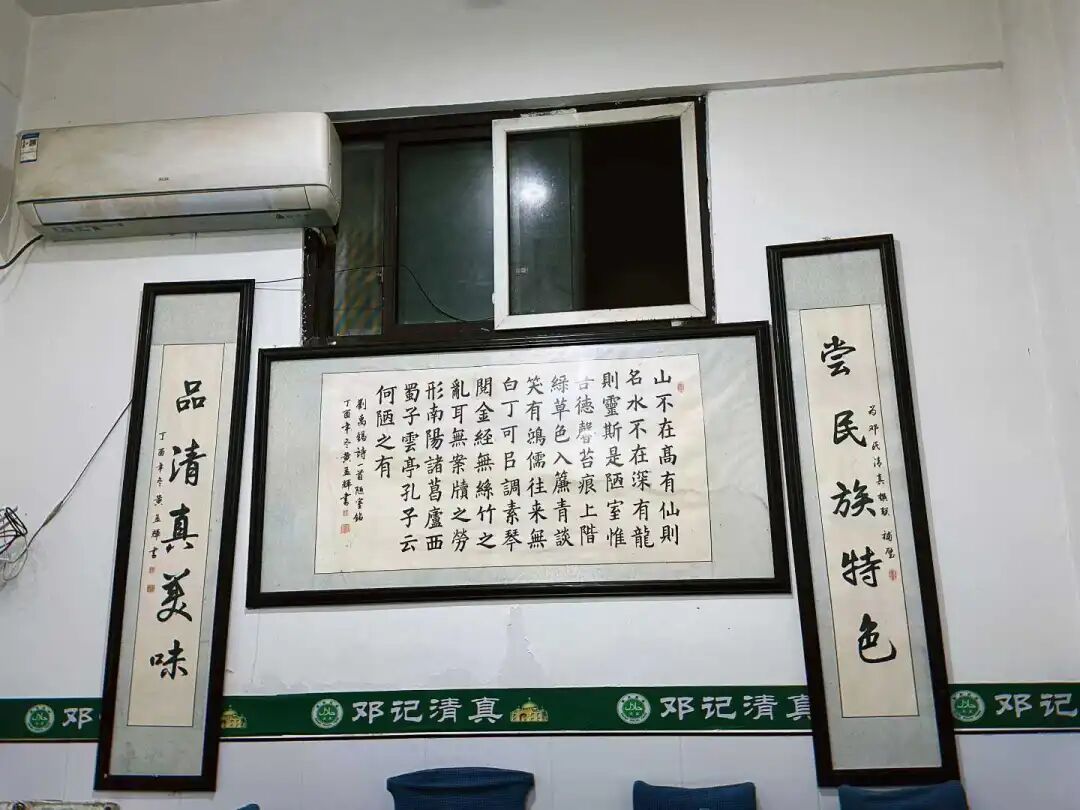
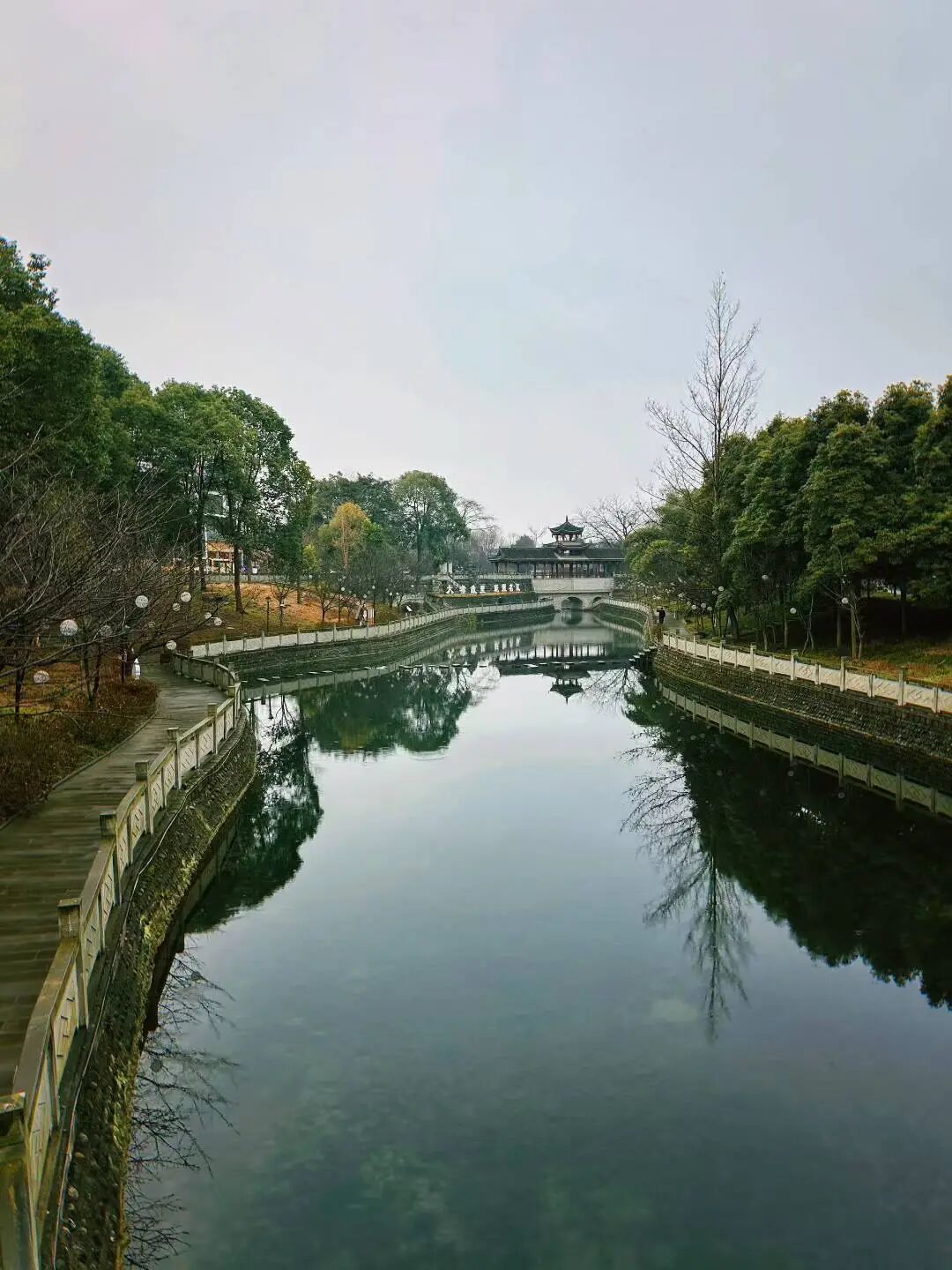
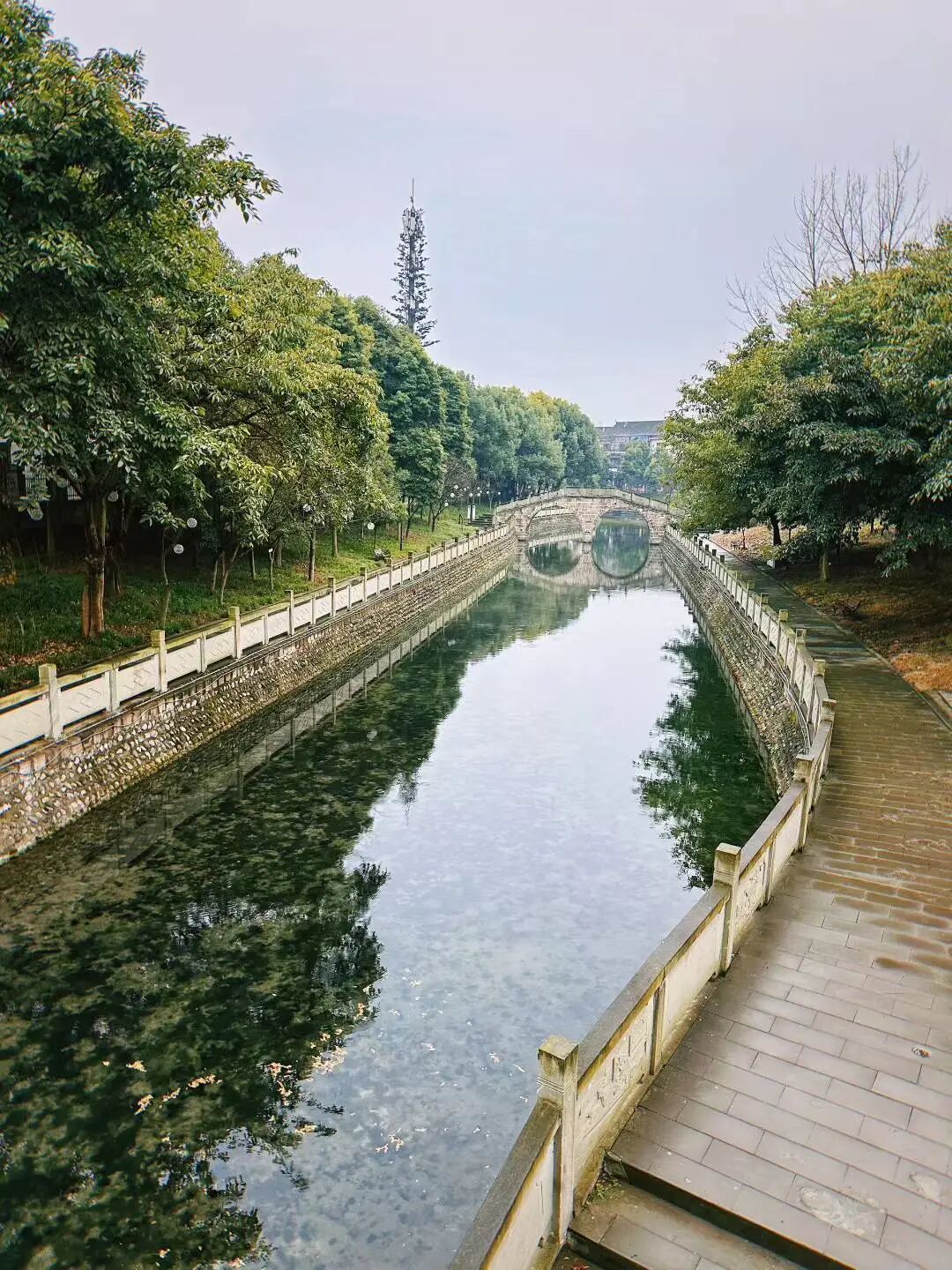
On the morning at Banbian Street in Xiaoquan, Sichuan, the street was full of various marinated meats made by Hui Muslims, including beef tongue, flat goose (ban'e), and beef sausage, which are very popular. I had a bowl of beef steak rice noodles at a place called Qingfangge. It was very spicy and numbing, and they added blanched pea tips on top. Then I had a freshly baked beef bun (niurou baozi) at another shop, and it tasted delicious.
Most Hui Muslims in Xiaoquan came during the Qing Dynasty migration from Hubei and Hunan. The four major surnames are Deng, Ma, Liu, and Huang, along with others like Zhang, Bao, Ding, La, Li, and Sha. Most of the Hui Muslims in Xiaoquan live in the Banbian Street area near the gate of the Xiaoquan Mosque. Although many people later moved to Chengdu, Deyang, and Mianyang, there are still over a hundred households there today.
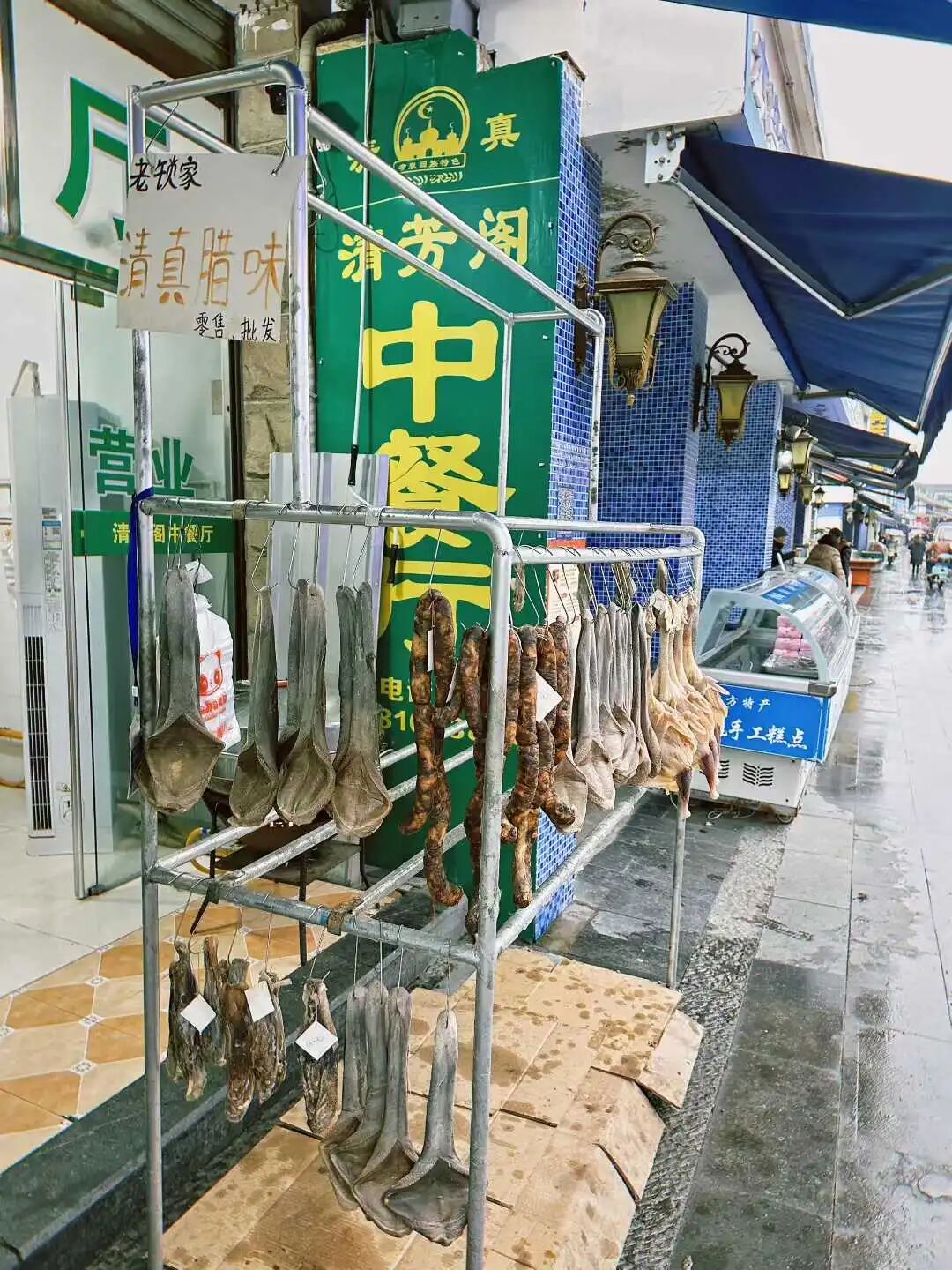
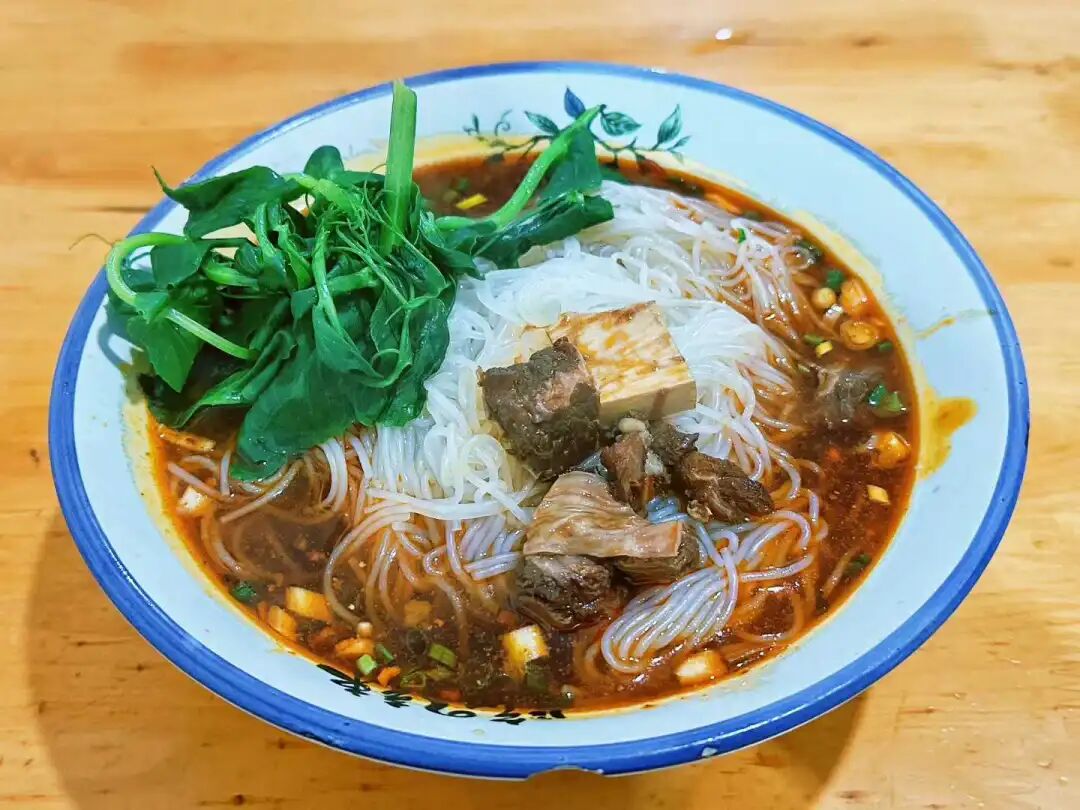
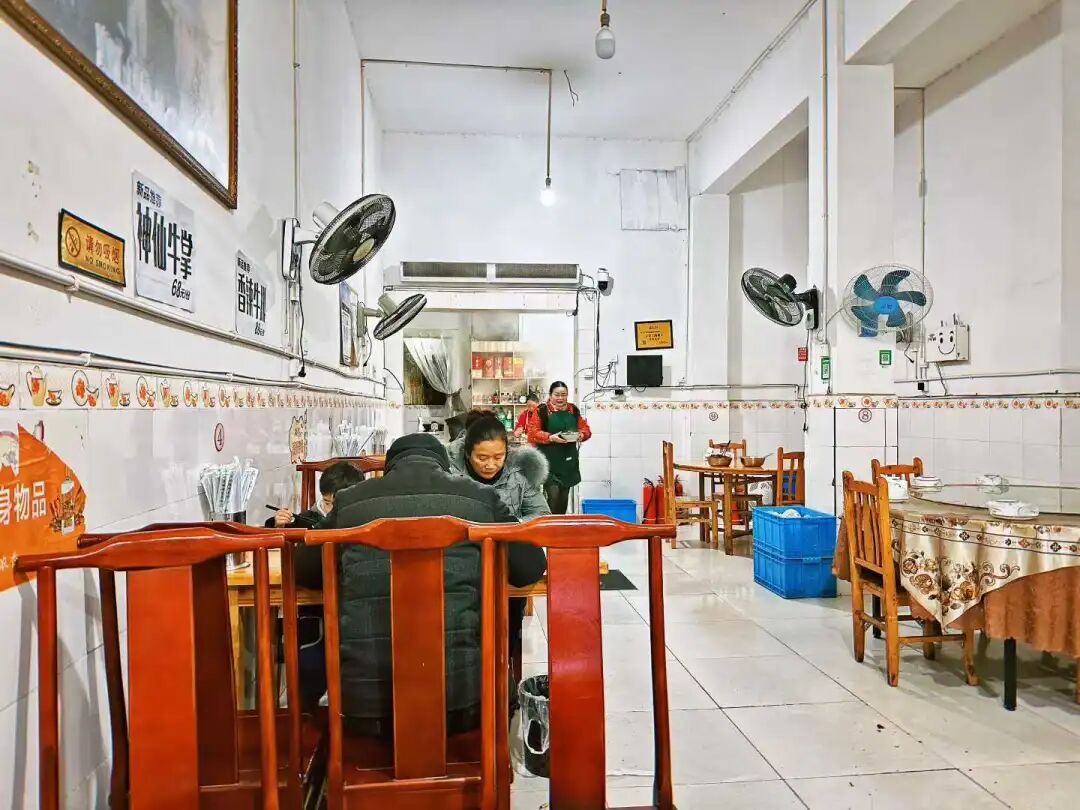
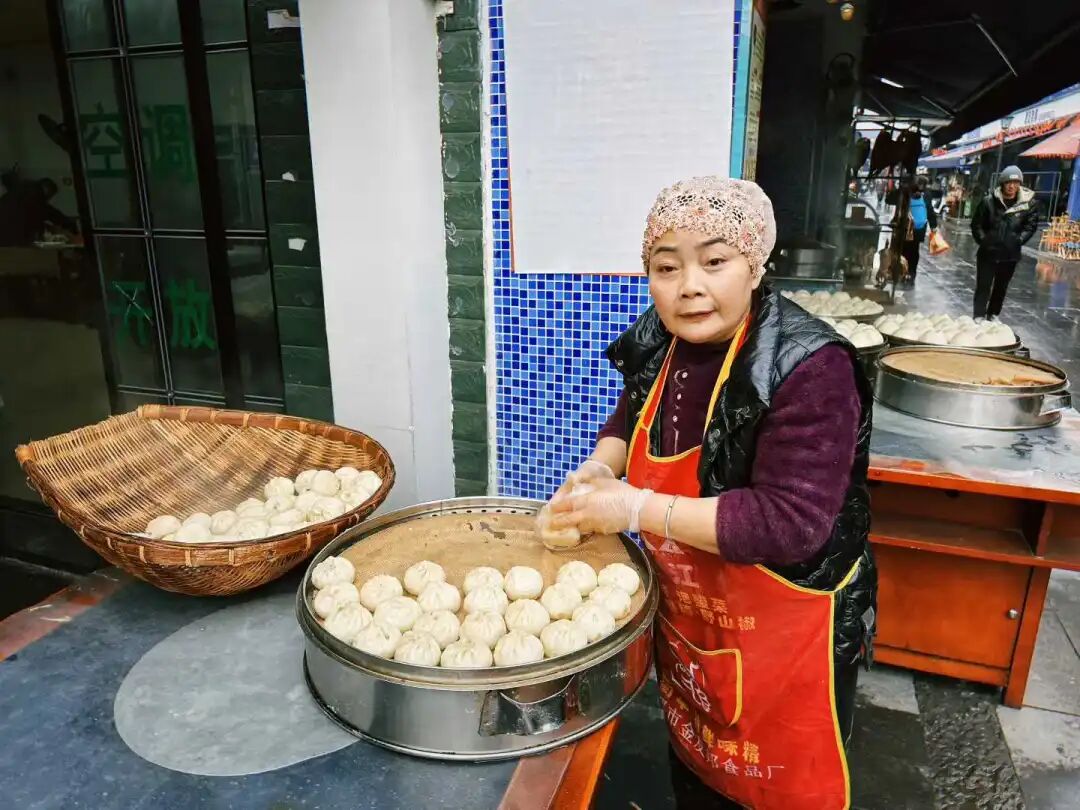
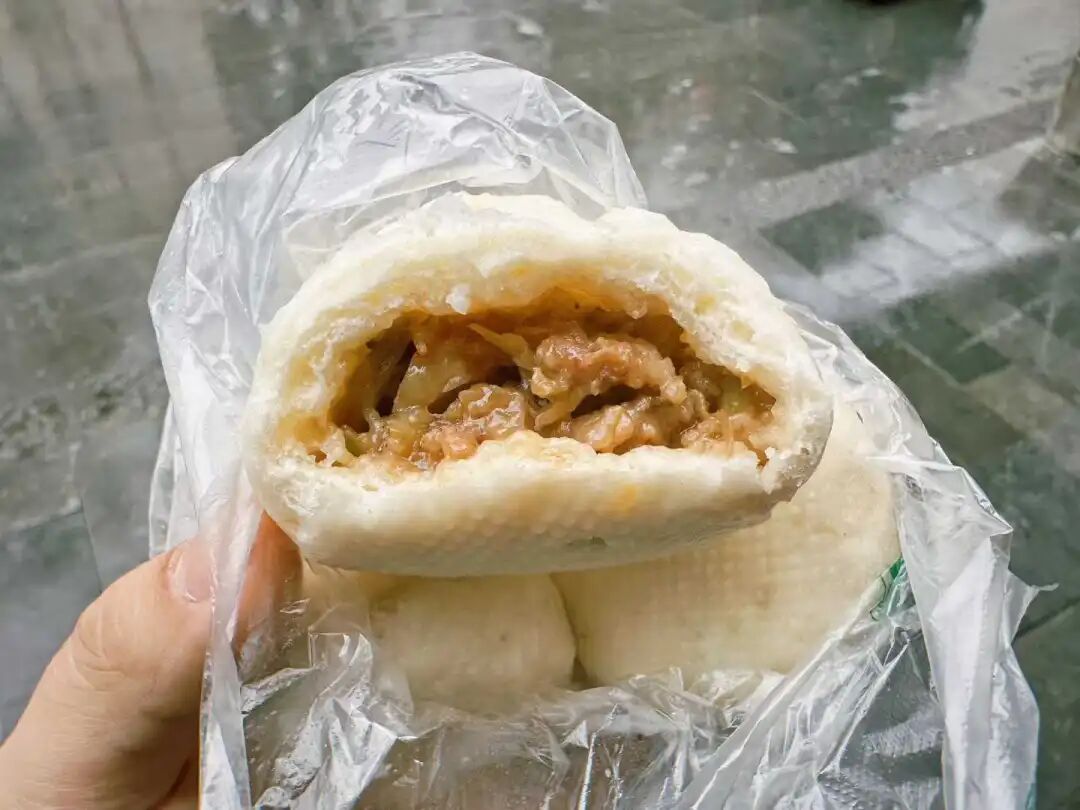
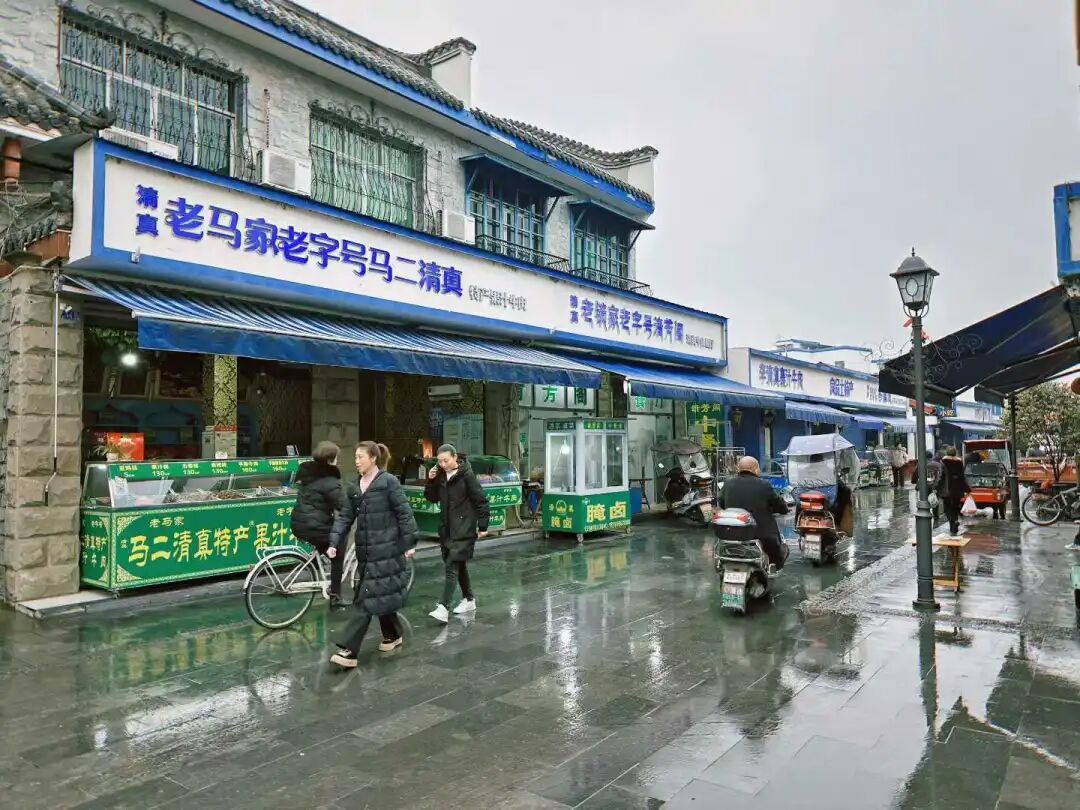
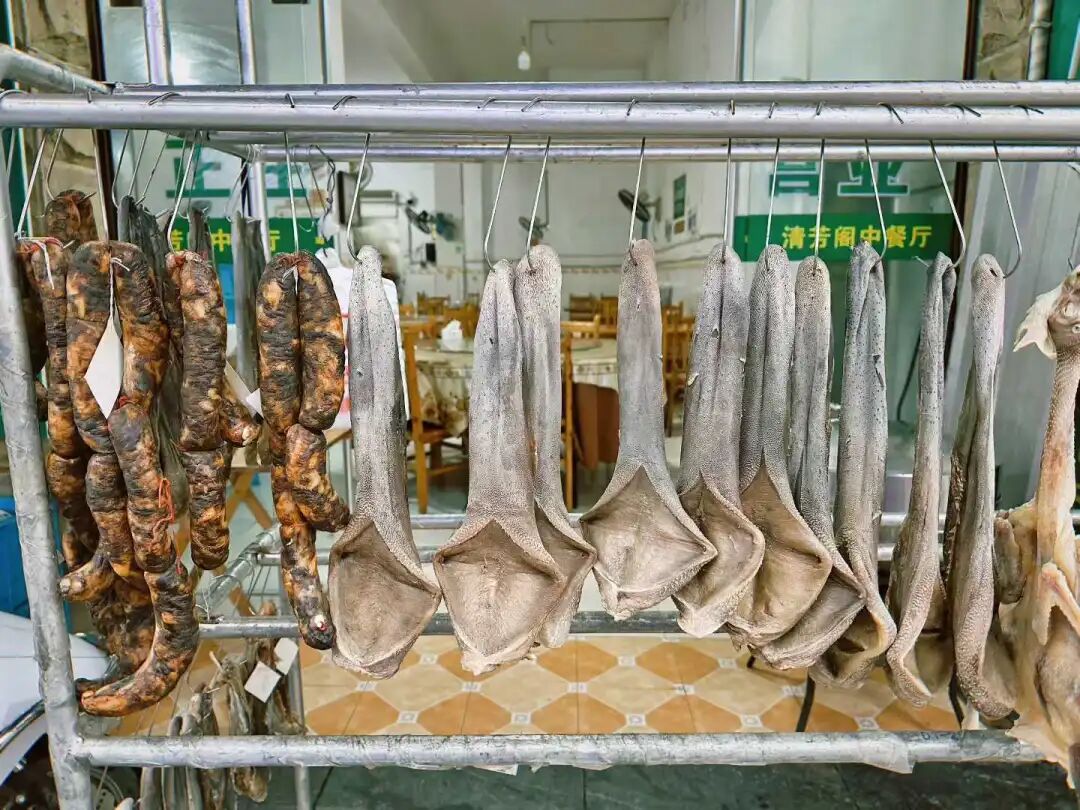
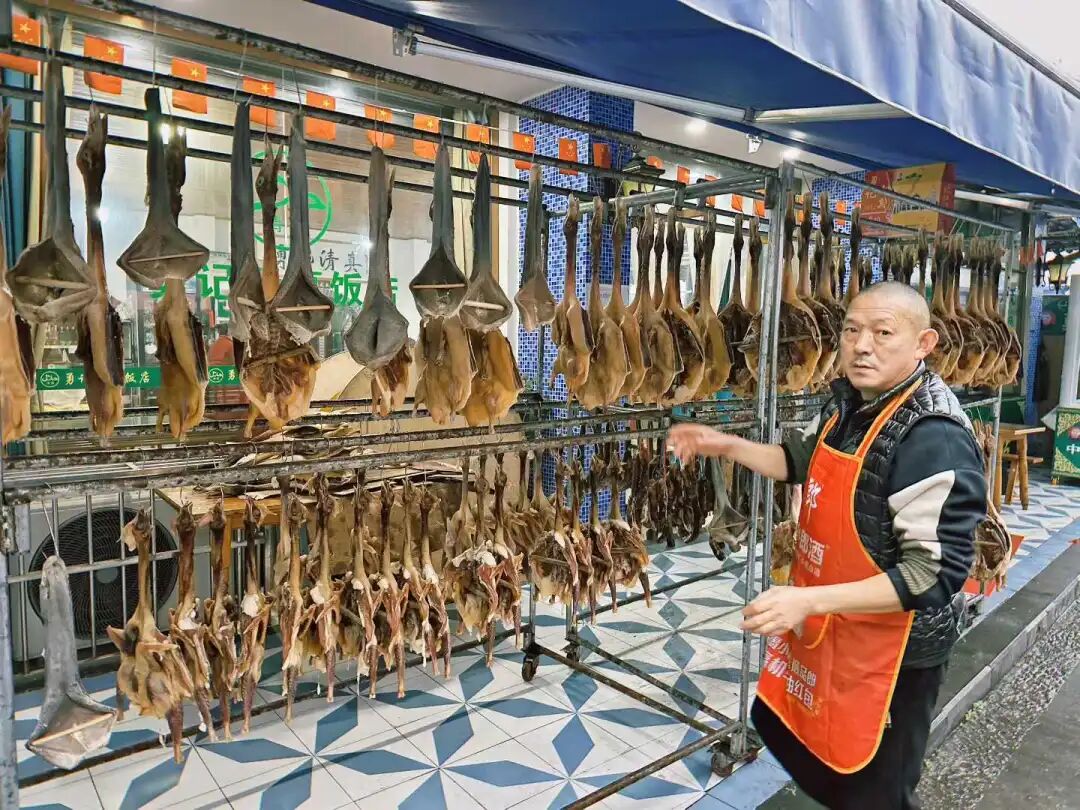
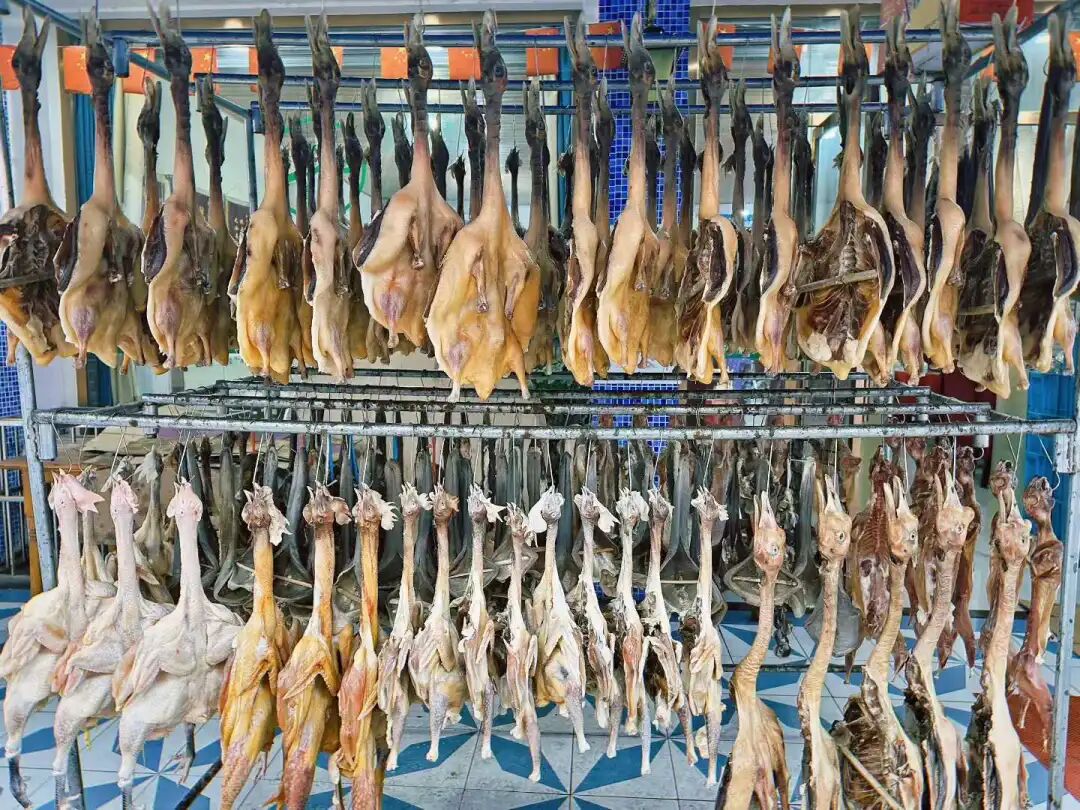
The Xiaoquan Mosque was built during the Kangxi era of the Qing Dynasty next to the Lingu Mosque on Guihua Street, and it was quite small at first. As the number of Hui Muslims grew in the mid-Qing Dynasty, the Deng and Ma families led a fundraising effort in 1840 (the 20th year of the Daoguang reign) to buy the Feng family ancestral hall on Banbian Street. They rebuilt it into the current Xiaoquan Mosque and renovated it again during the Guangxu era, creating the traditional four-sided water courtyard (si shui gui tang) architectural style. The four-sided water courtyard means the four sloping roofs tilt toward the central courtyard, collecting rainwater into the center to create a layout where water from all directions gathers in the bright hall.
The couplet on the main gate was written by Huang Menghui, a local Hui Muslim calligrapher from Xiaoquan. Huang is a retired employee of the Xiaoquan Supply and Marketing Cooperative and is now a committee member of the Xiaoquan Mosque management board. He has loved calligraphy since he was a child and is now a famous Hui Muslim calligrapher in Xiaoquan.
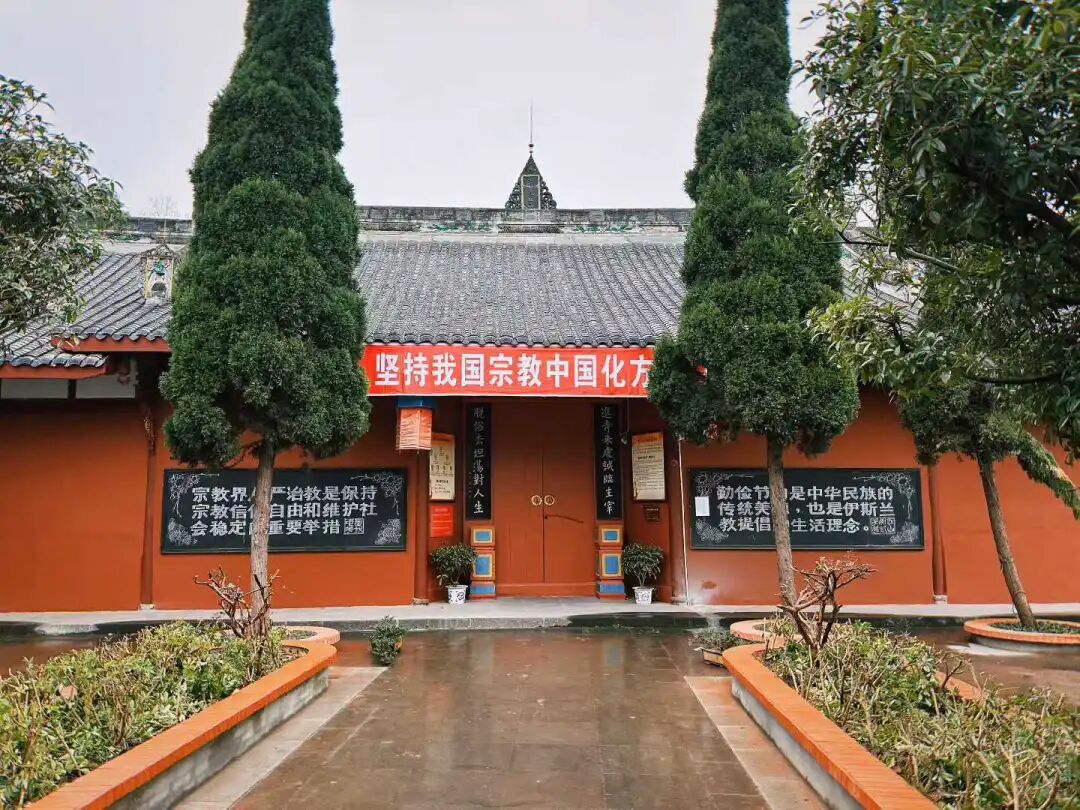
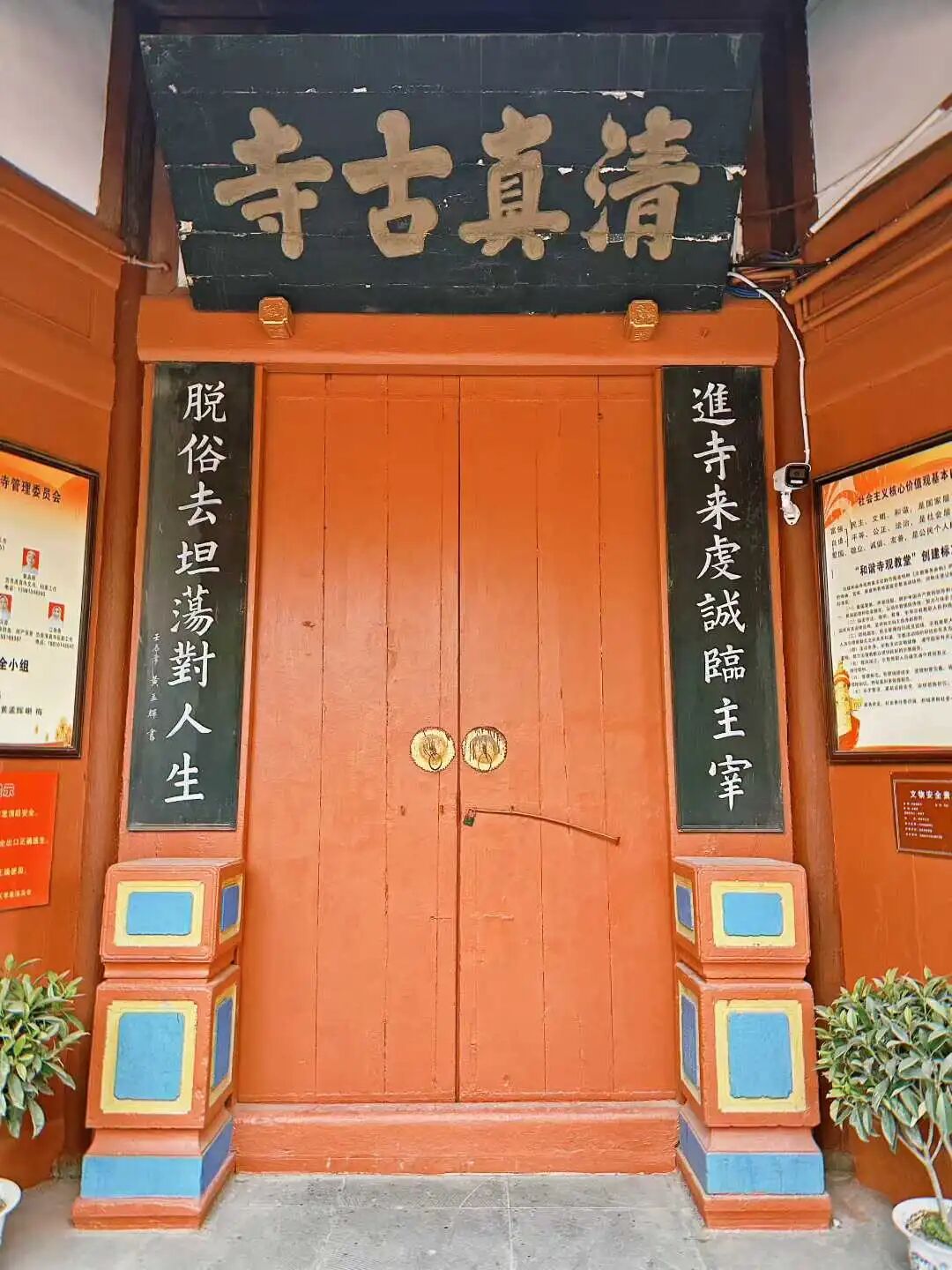
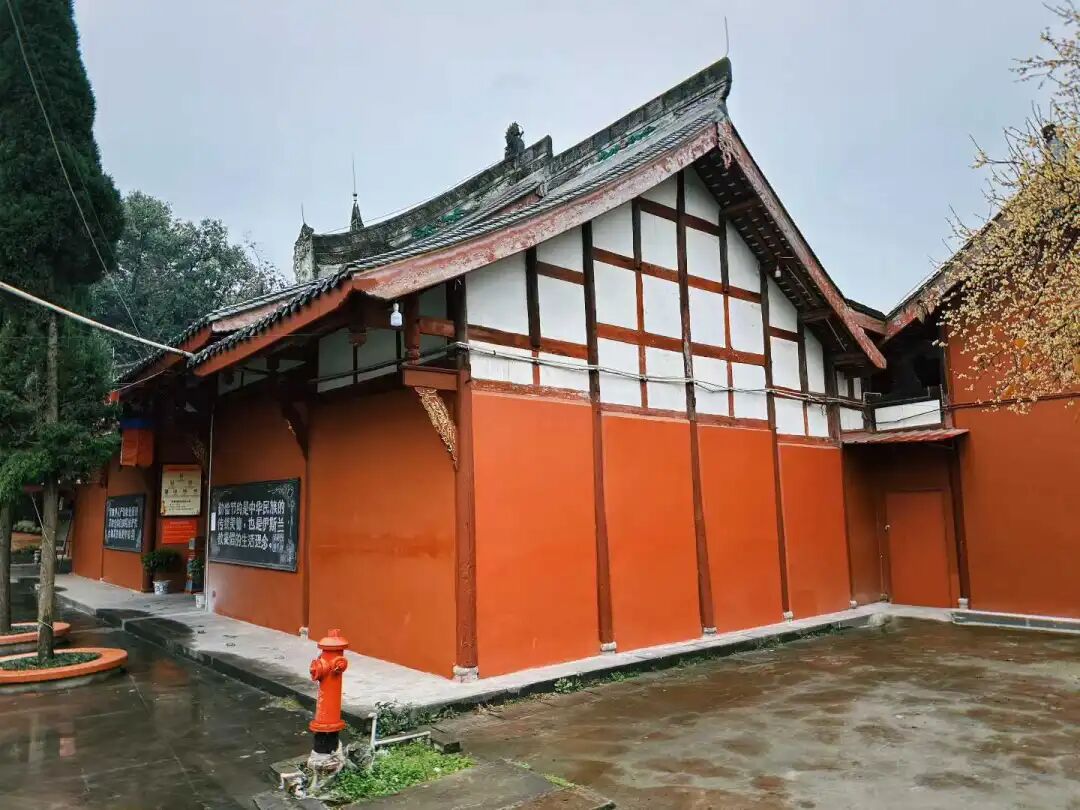
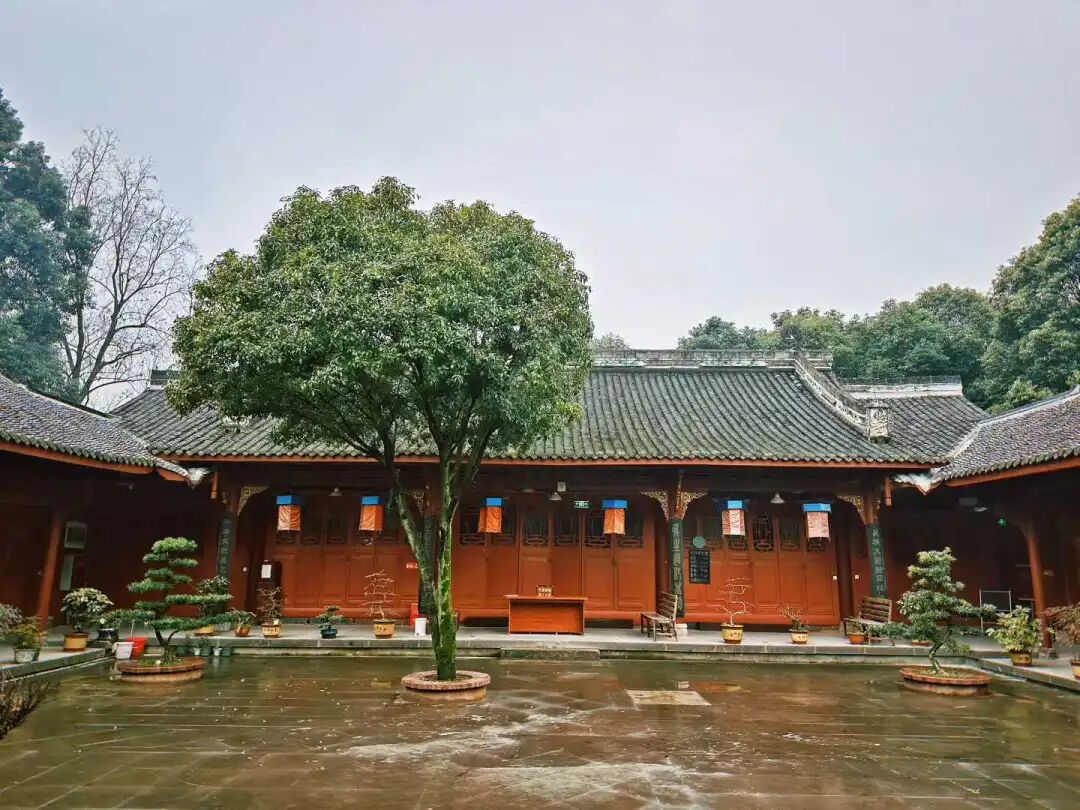
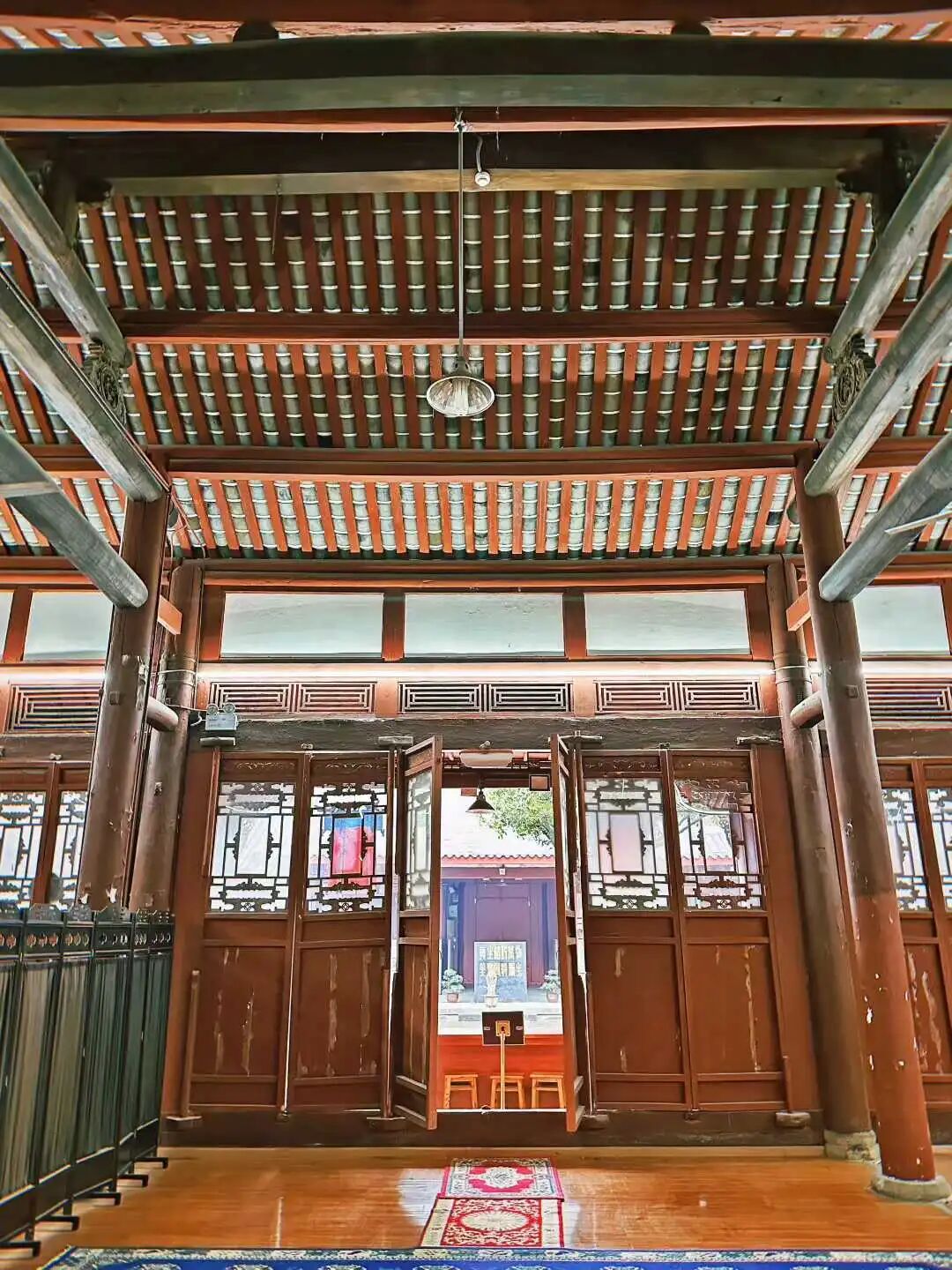
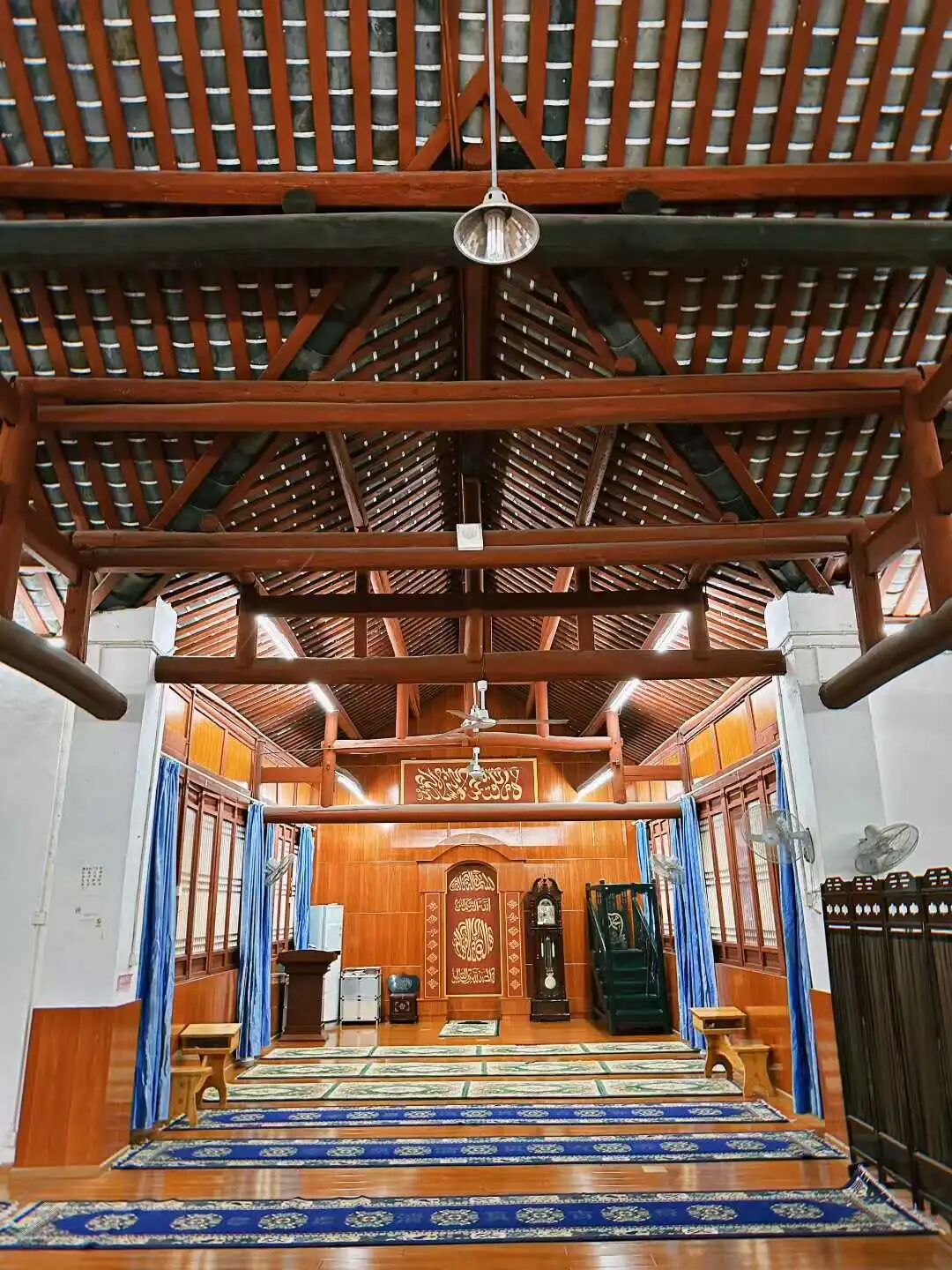
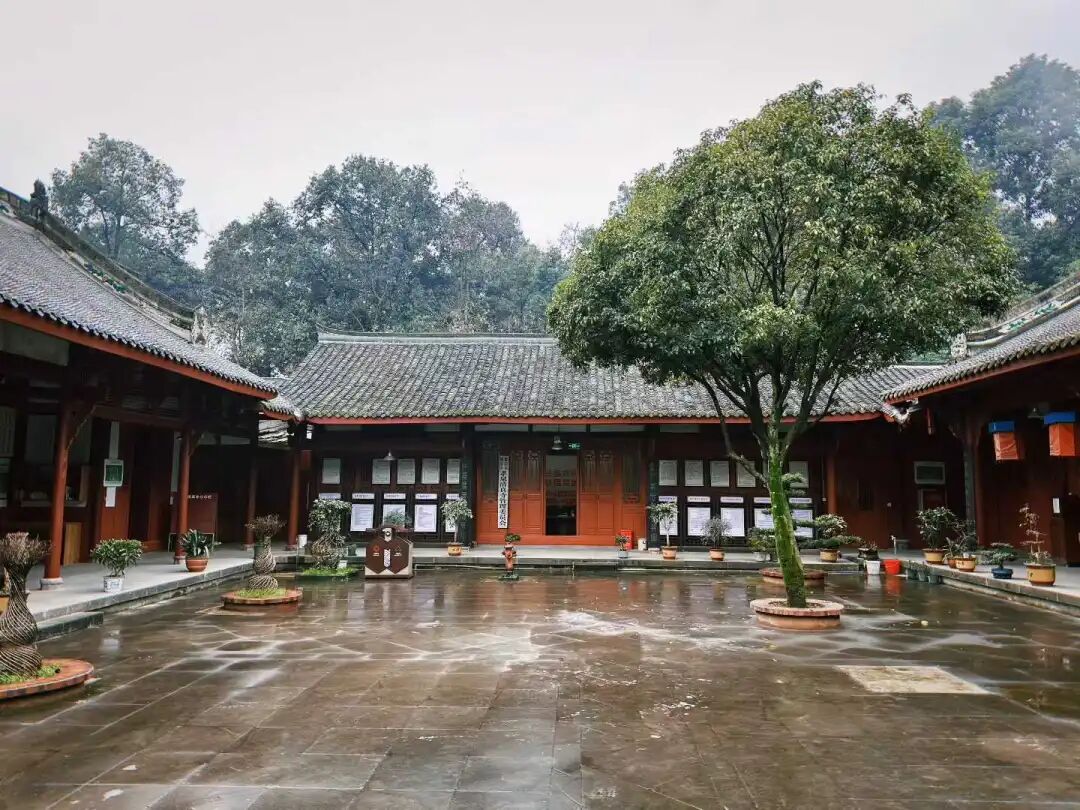
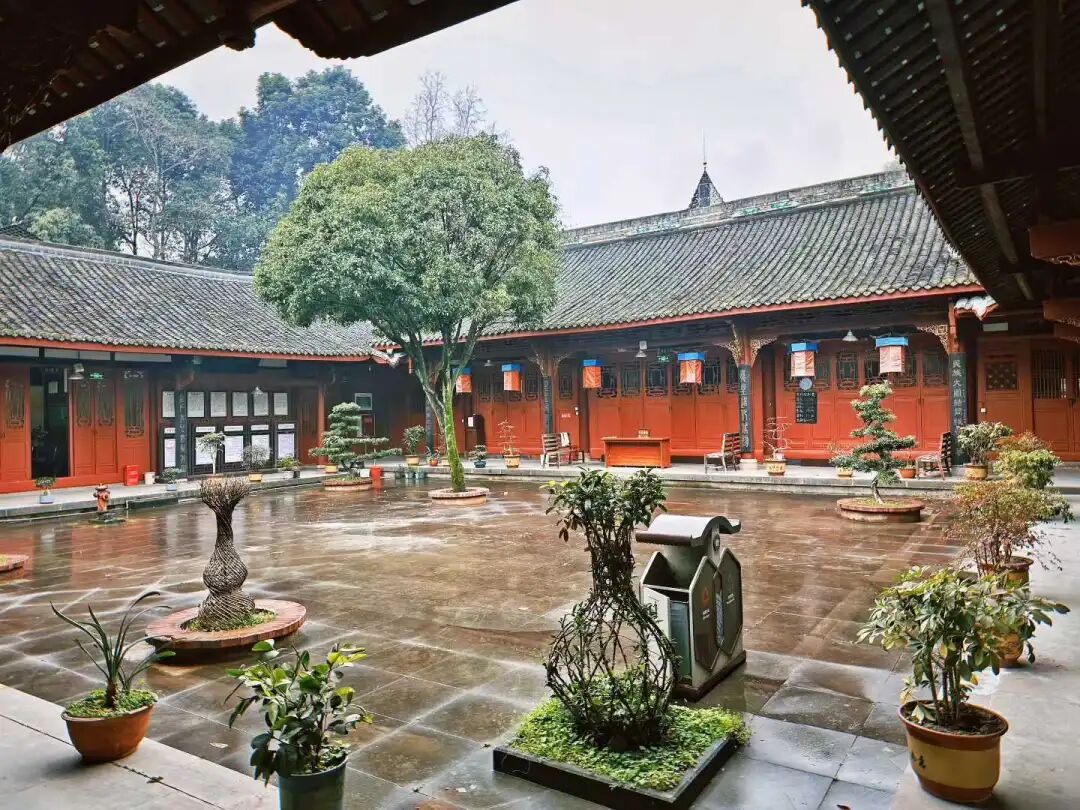
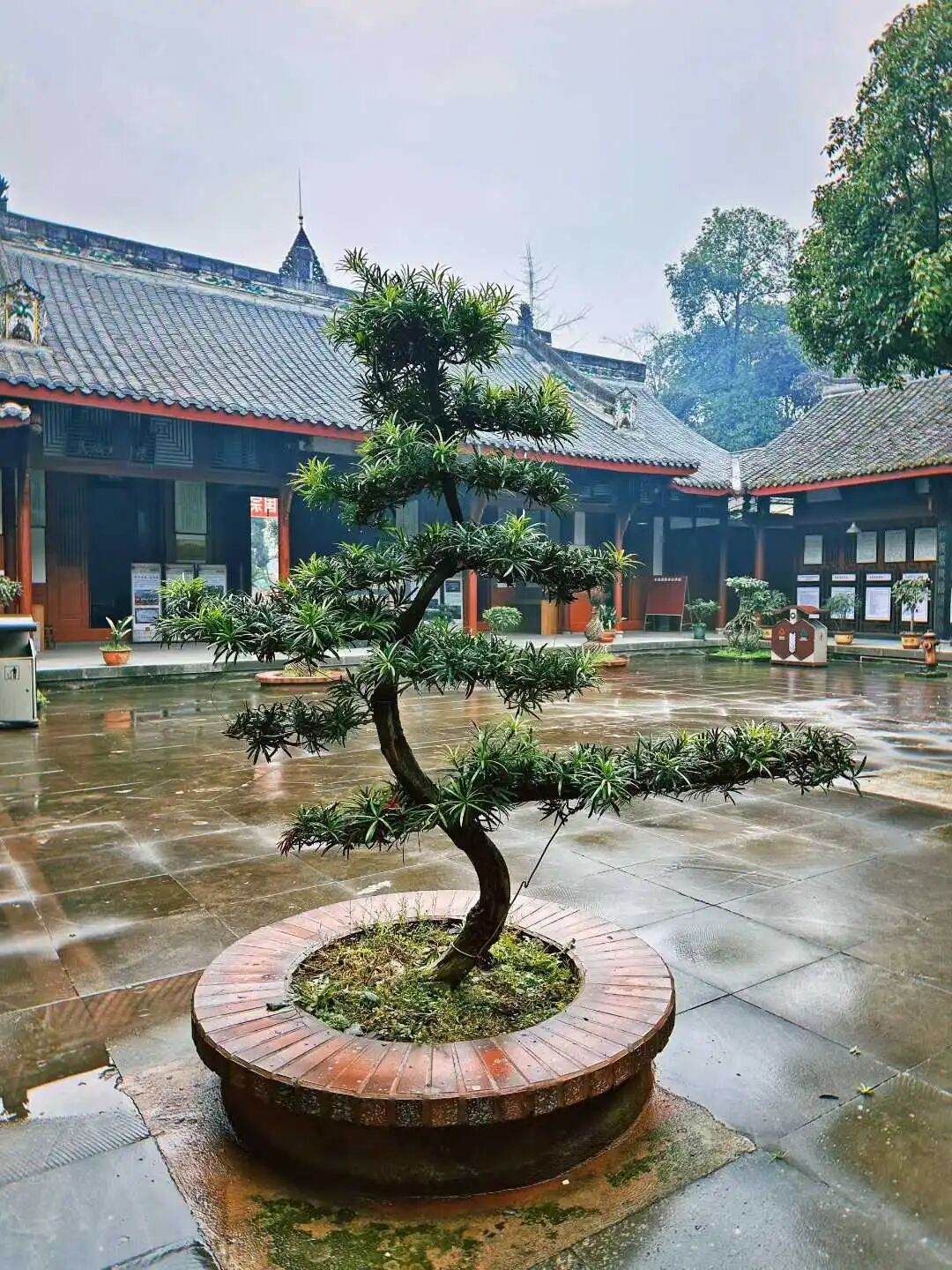
The Xiaoquan Mosque was severely damaged during the Wenchuan earthquake, but it was later restored, and the Qing Dynasty wood carvings were preserved.
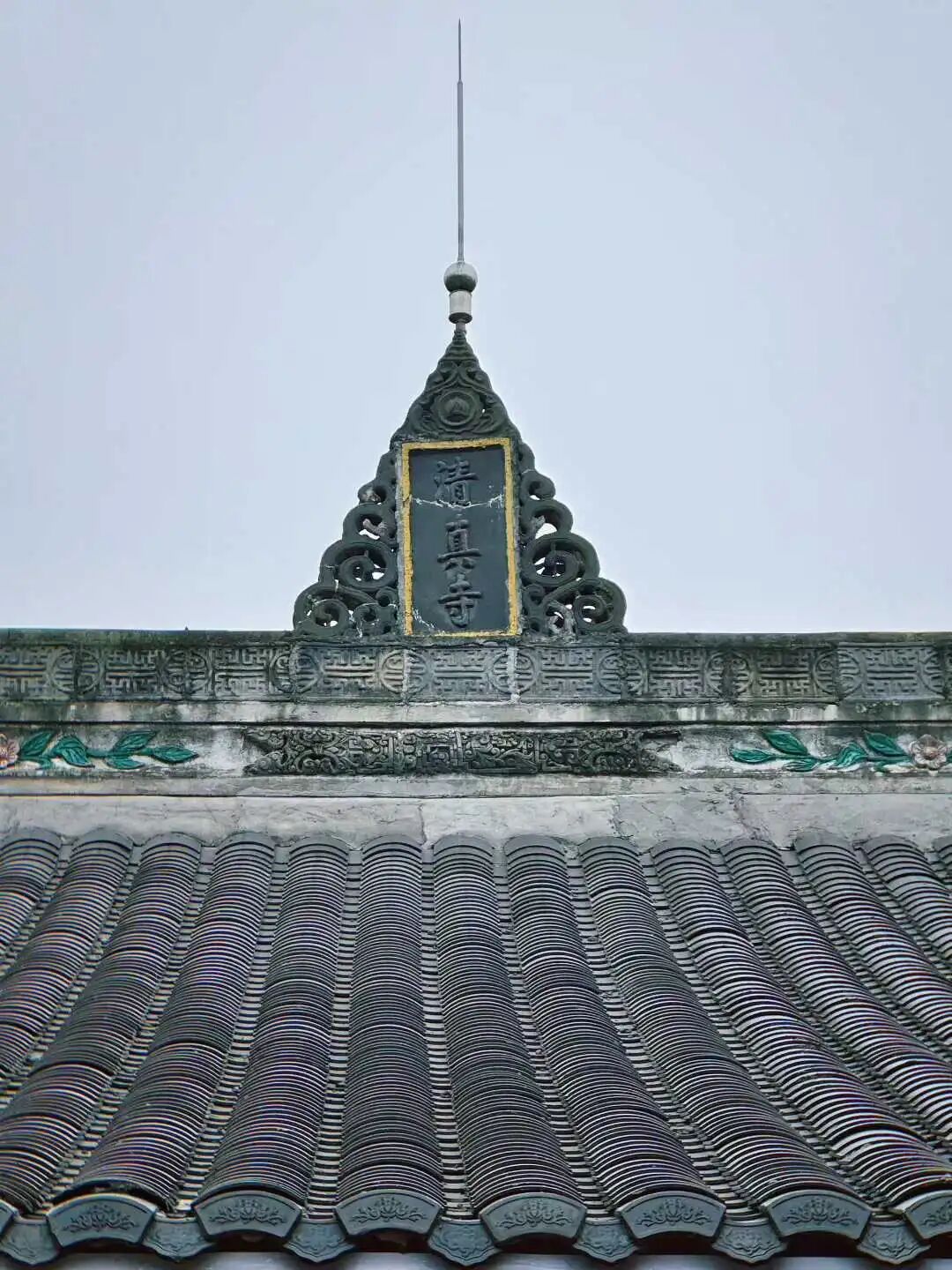
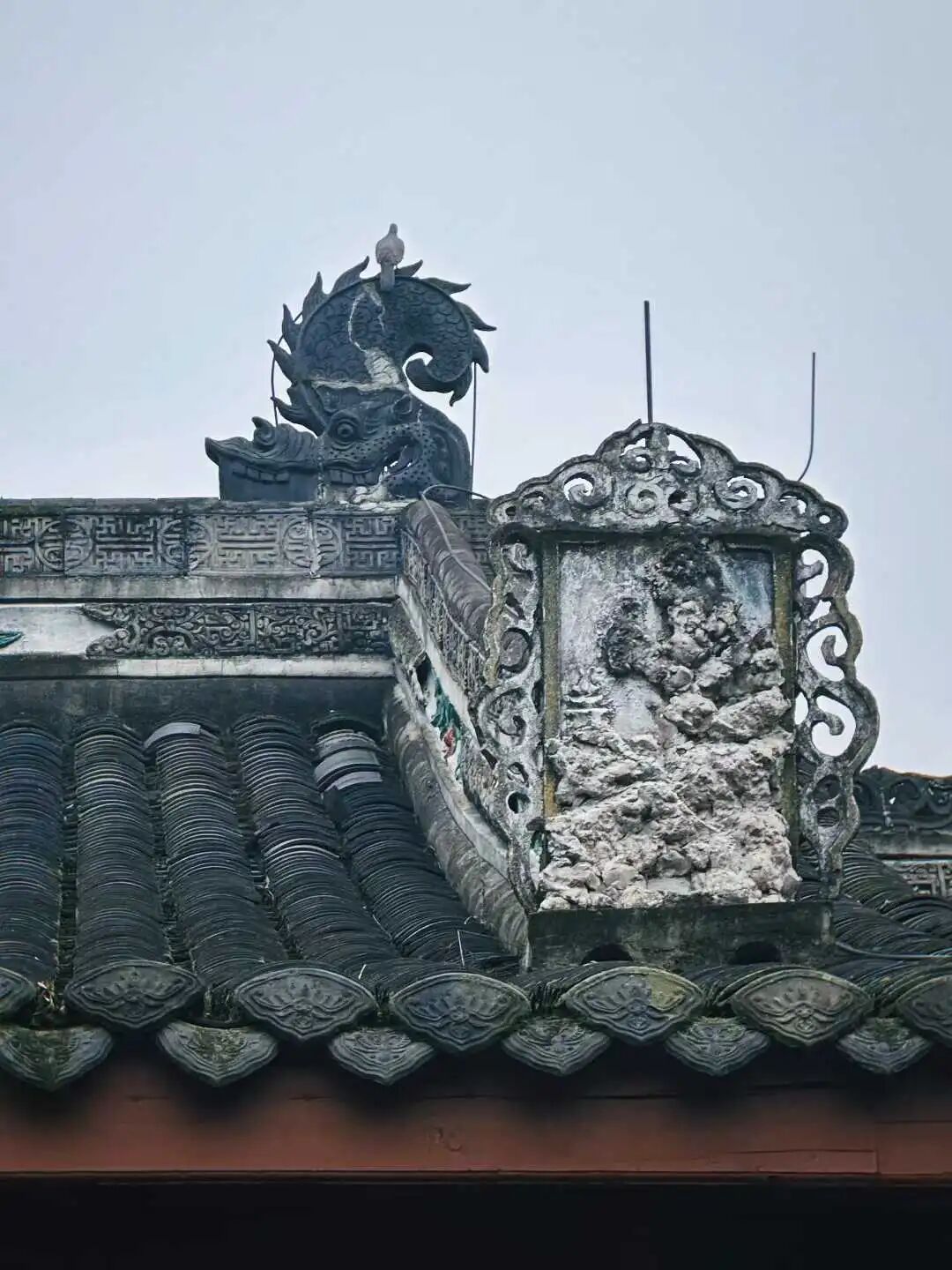
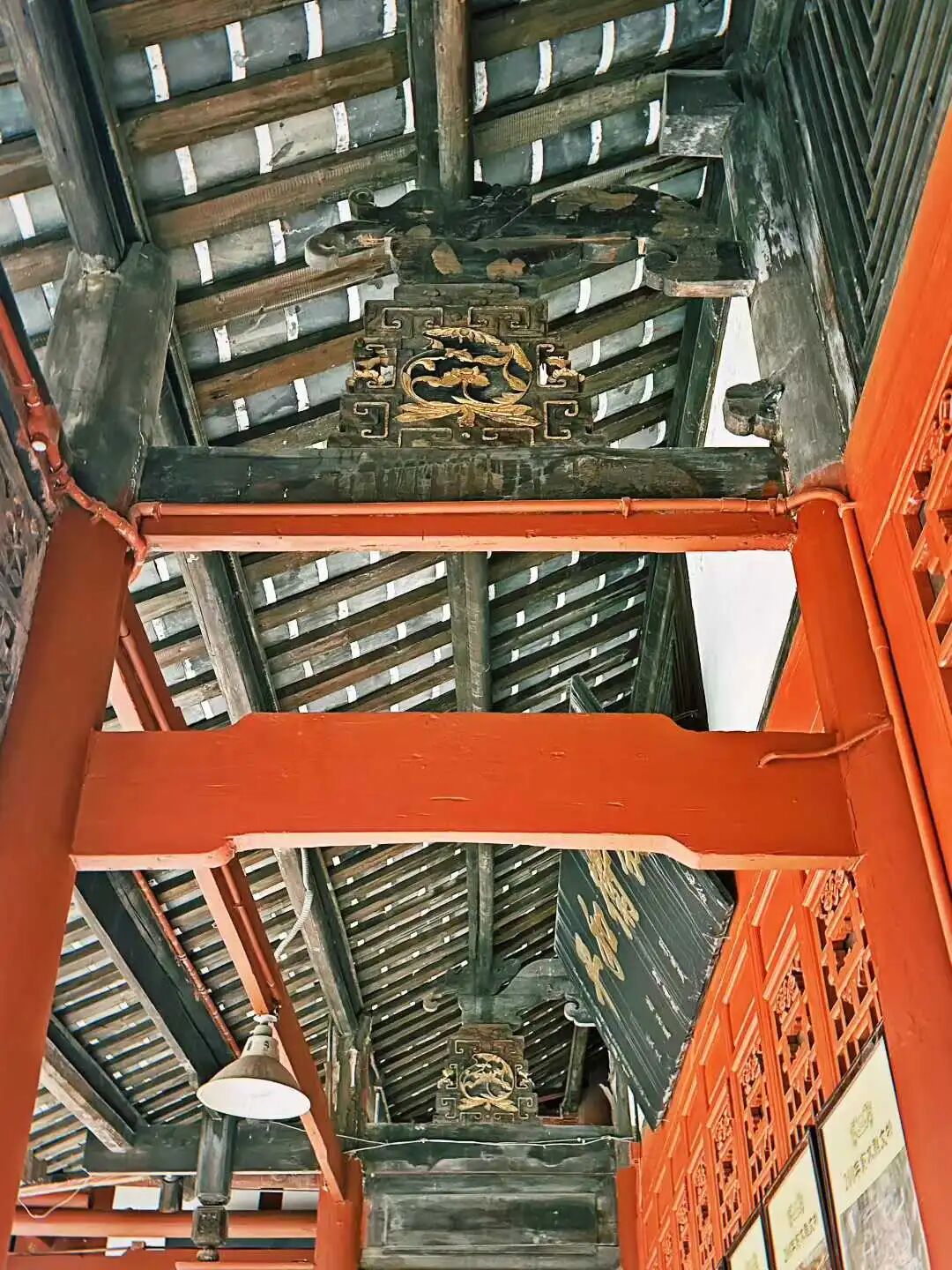
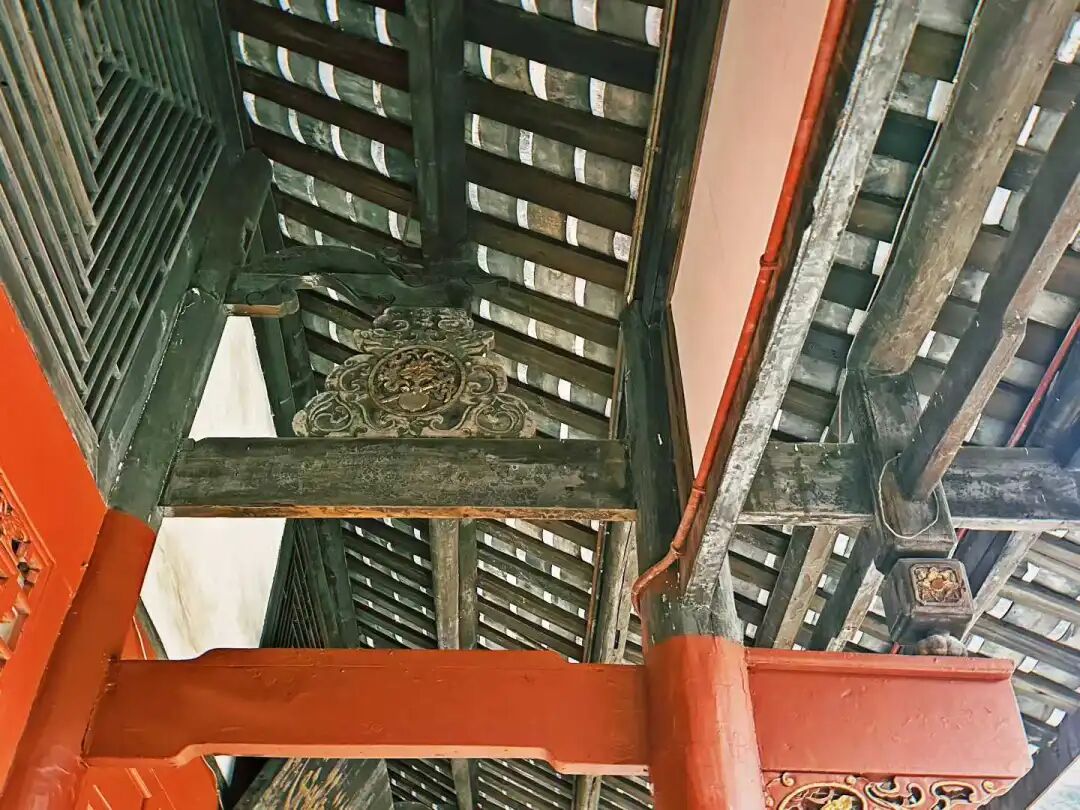
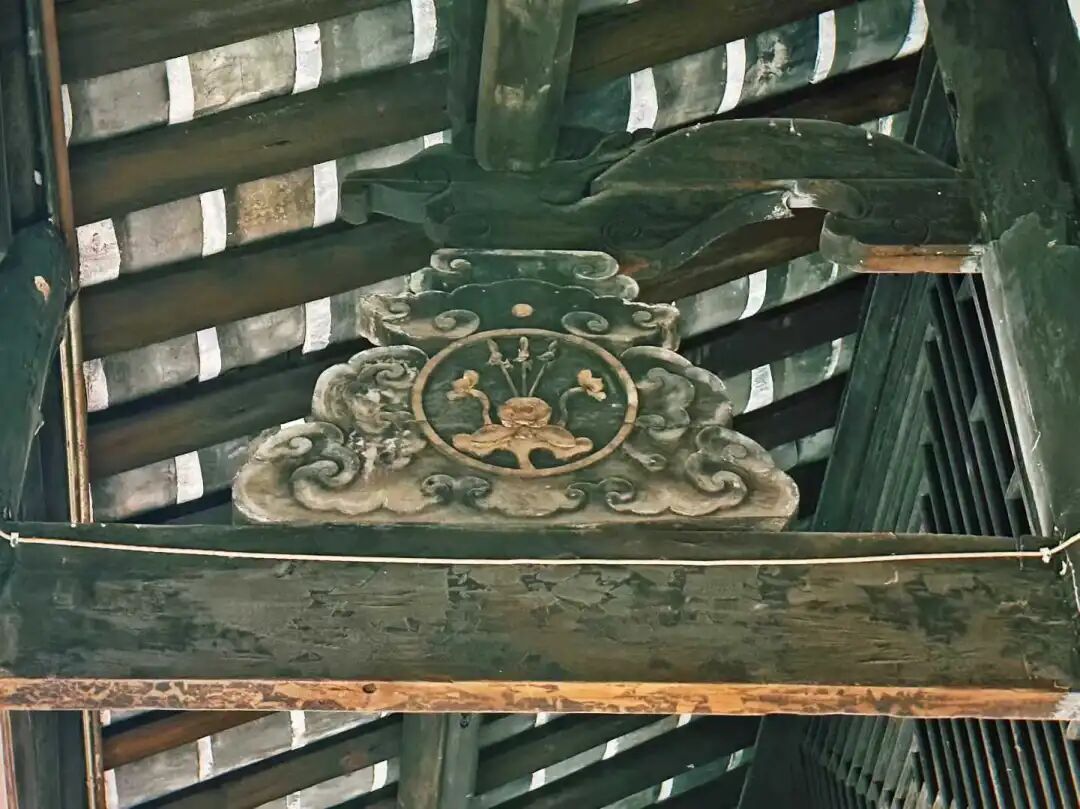
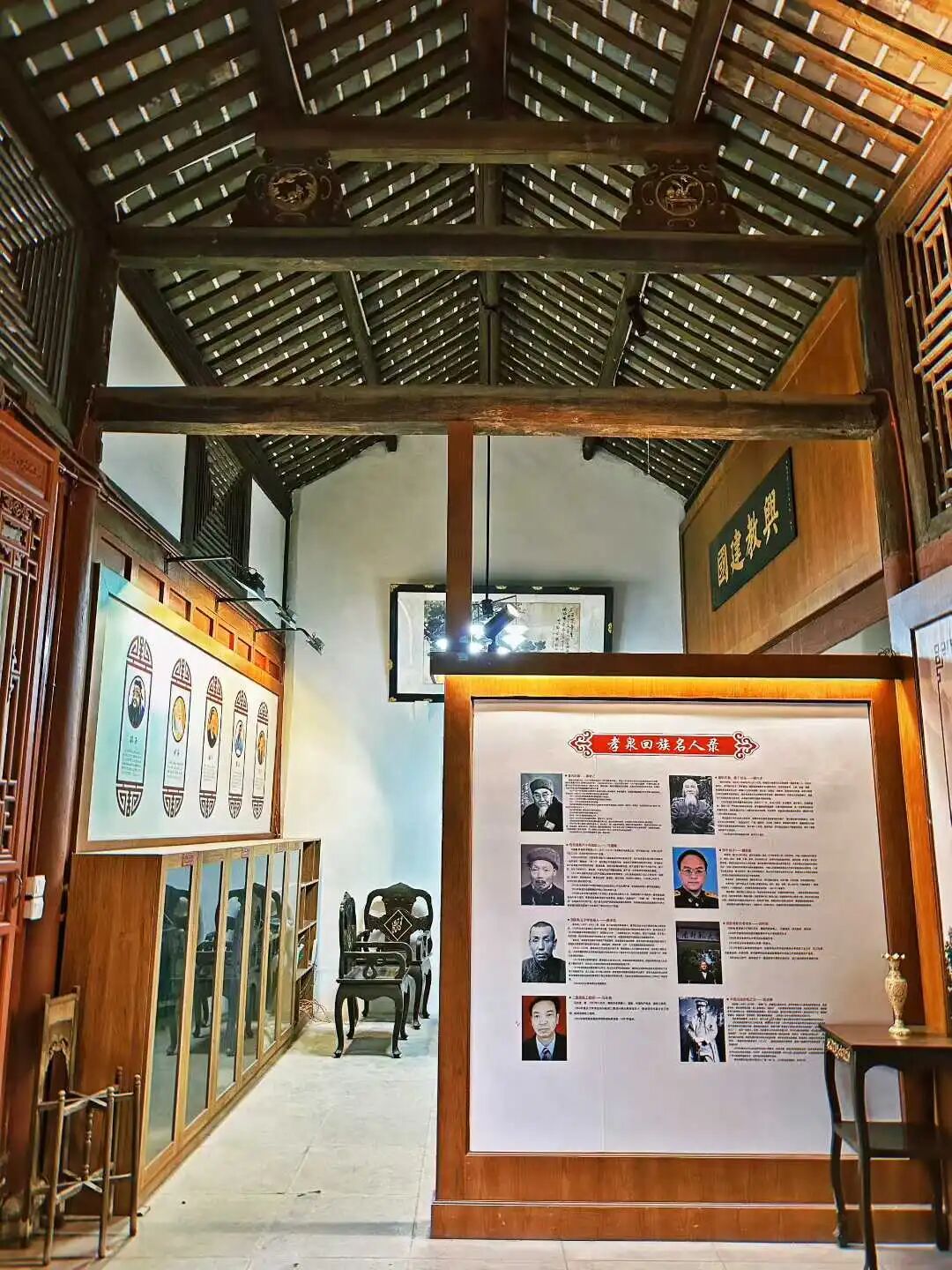
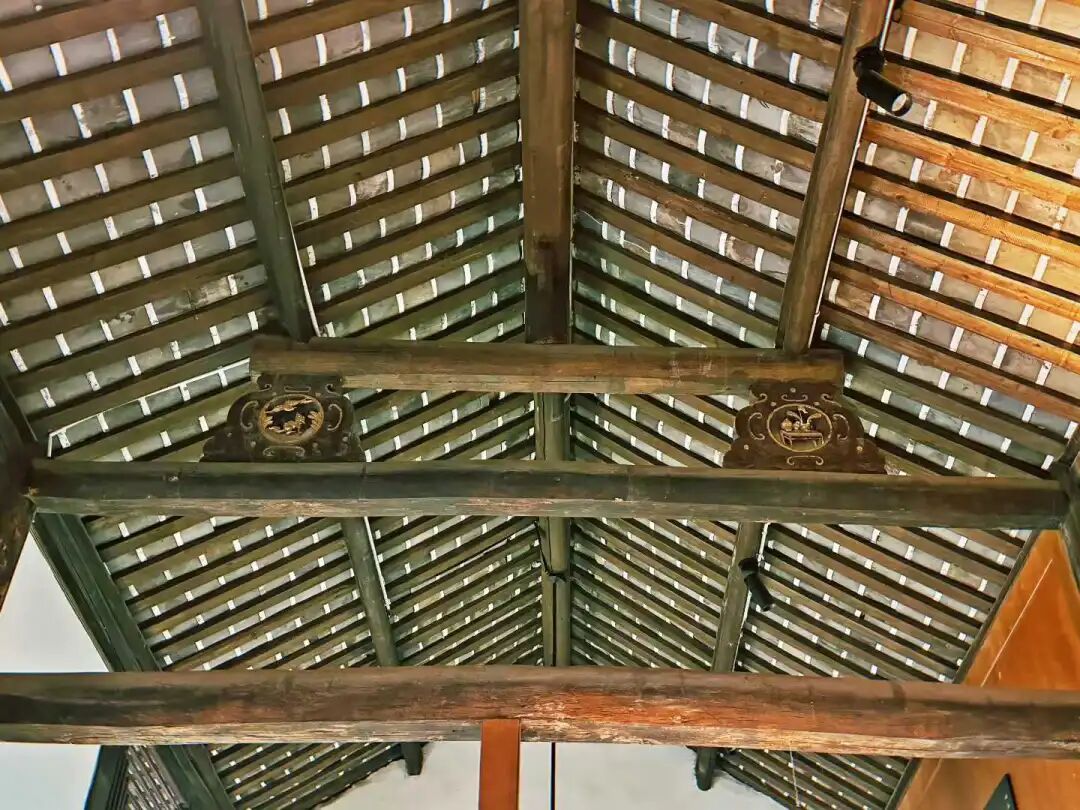
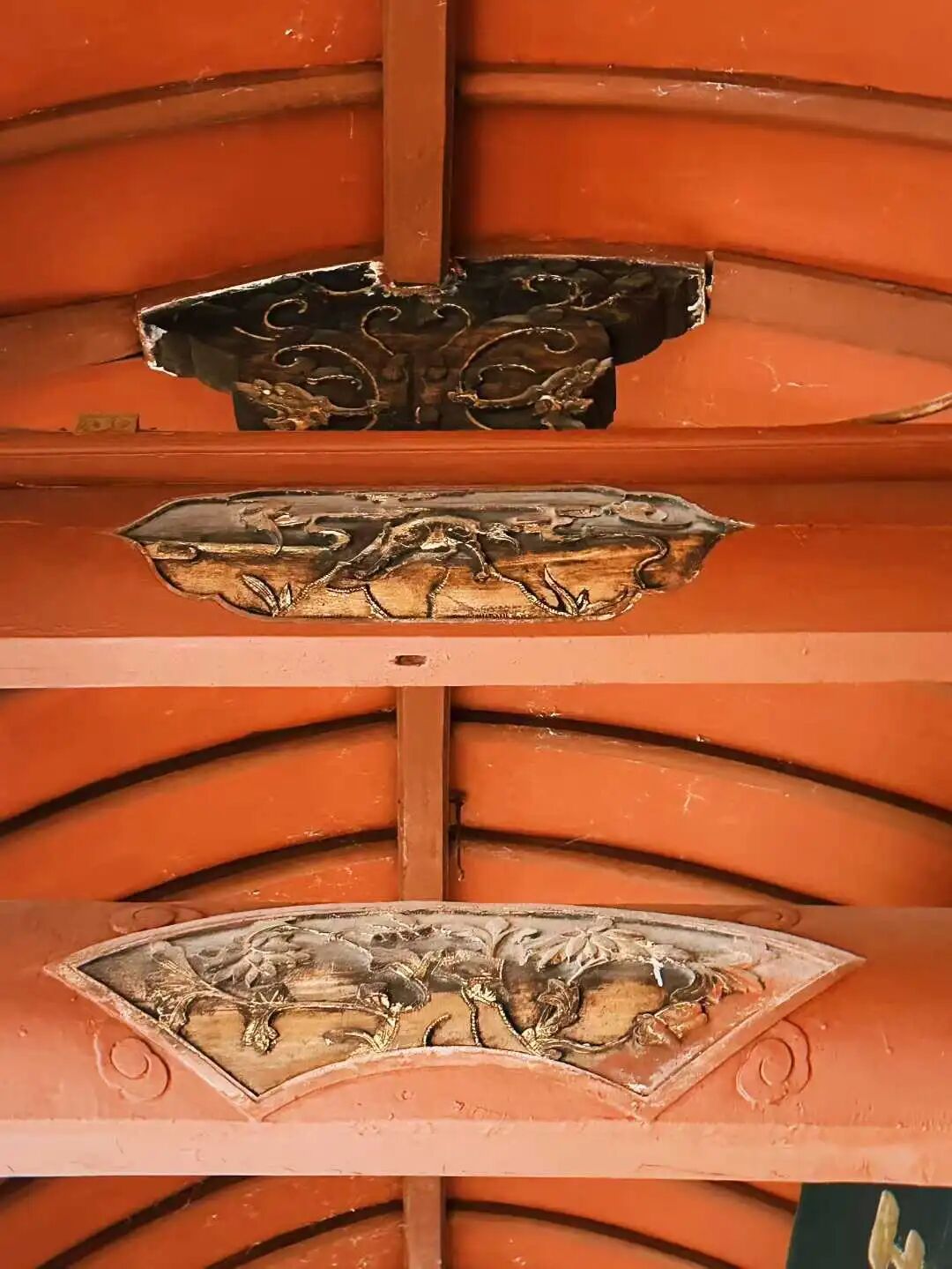
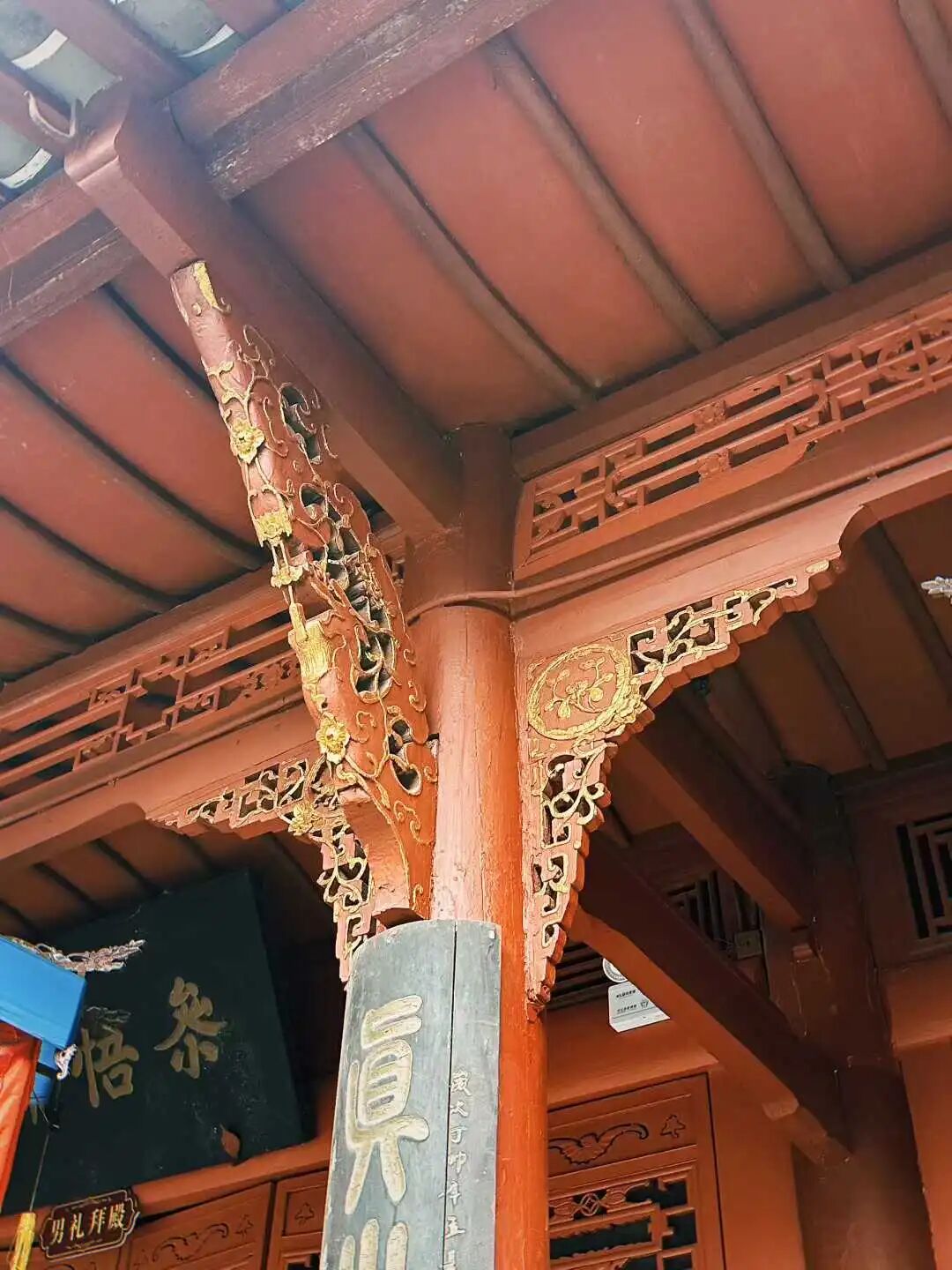
There are 15 hand-copied scriptures from the Daoguang era currently preserved at the Xiaoquan Mosque.
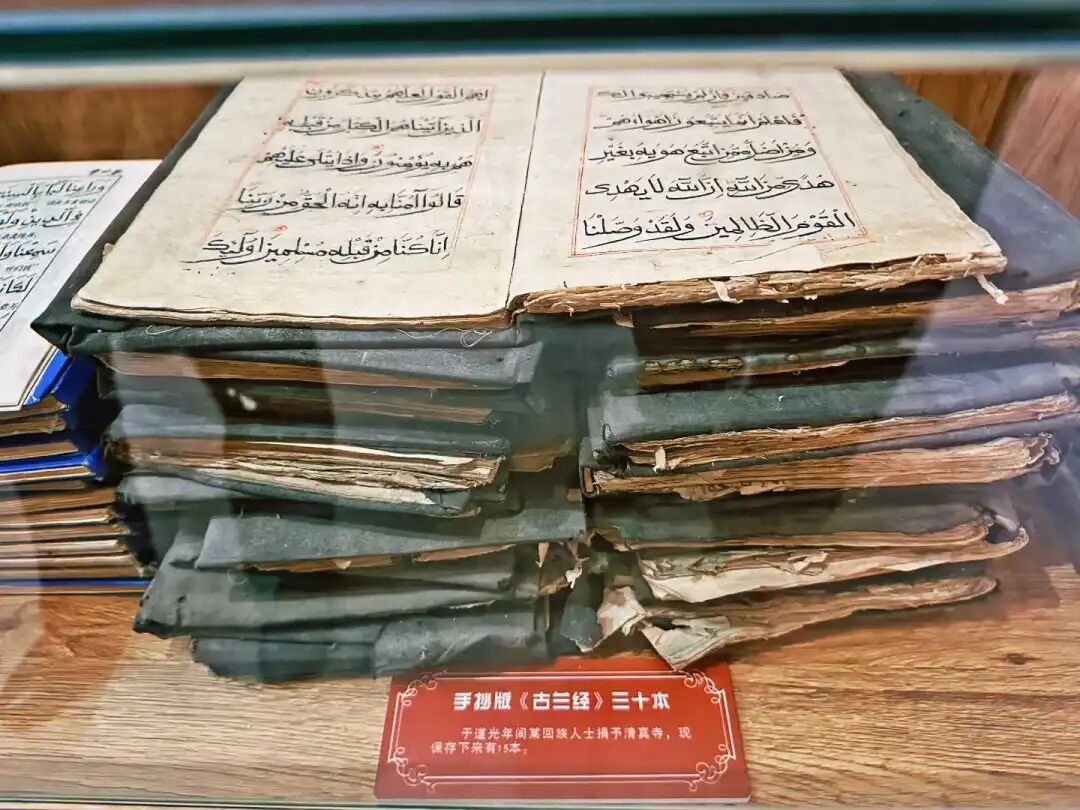
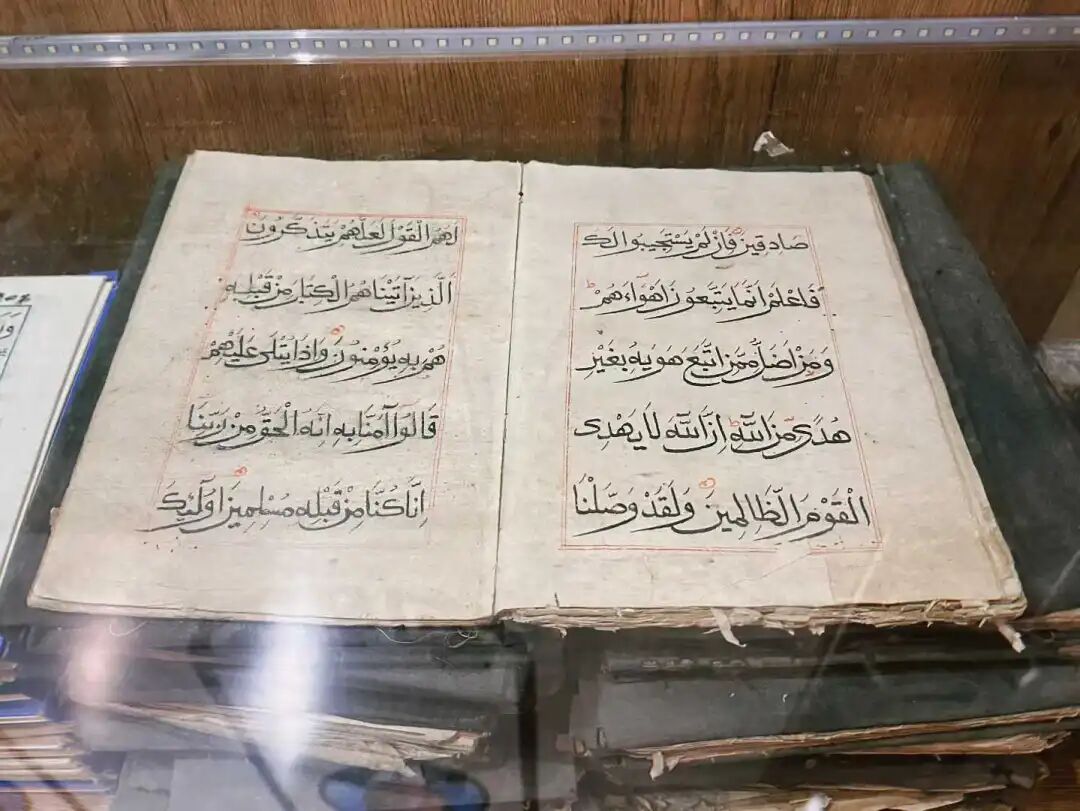
The Qing Dynasty stone tablets at the Xiaoquan Mosque include one from the 23rd year of the Daoguang reign. It records how a Hui Muslim named Zhang Zongfa honored his parents and, after they passed away, sincerely donated to the Xiaoquan Mosque by buying a vegetable garden, dry land, and building foundations from the Deng family and donating them to the mosque. After Zhang Zongfa passed away, members of the community carved his deeds into stone under the corridor of the mosque to honor his name.
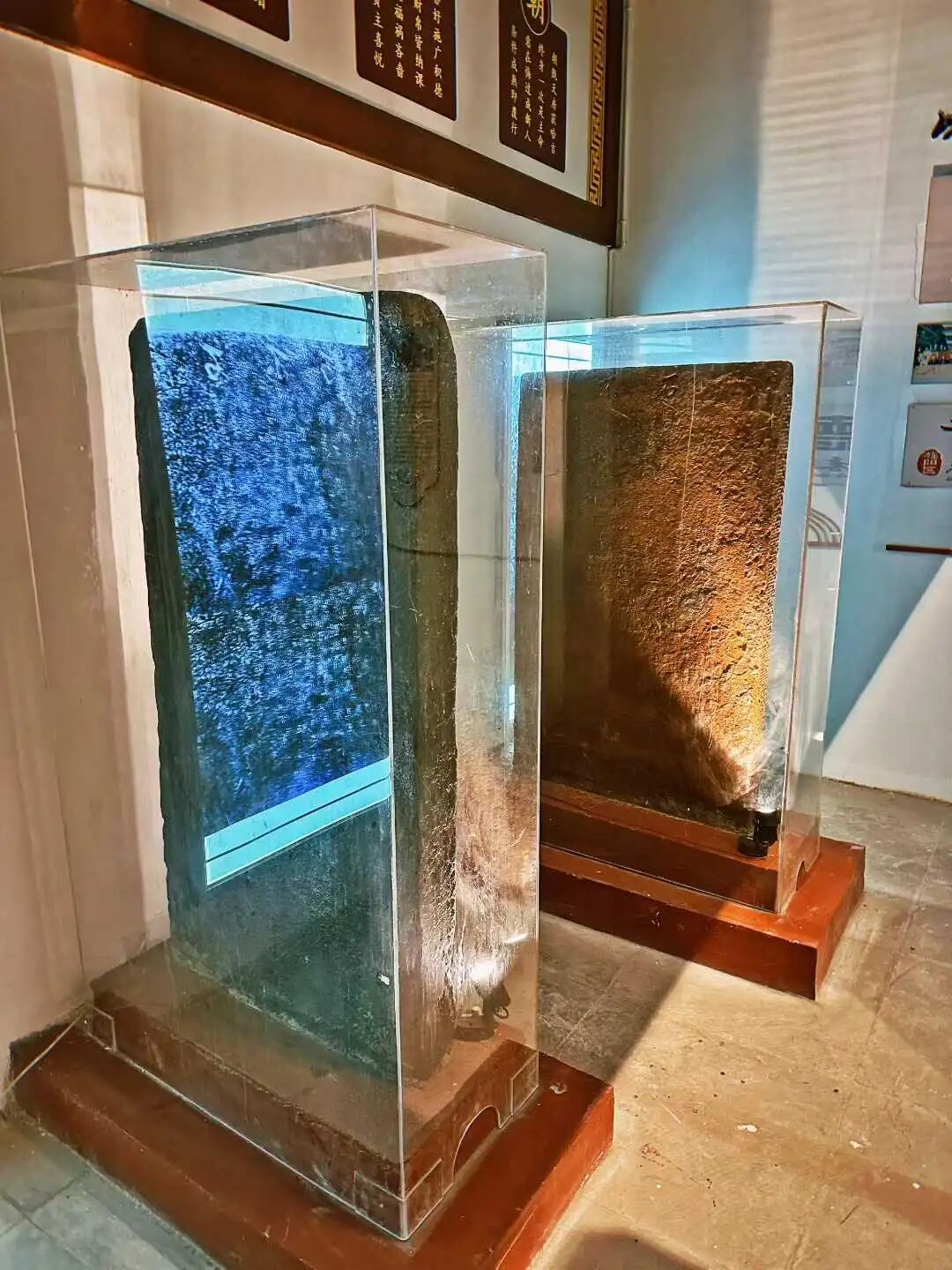
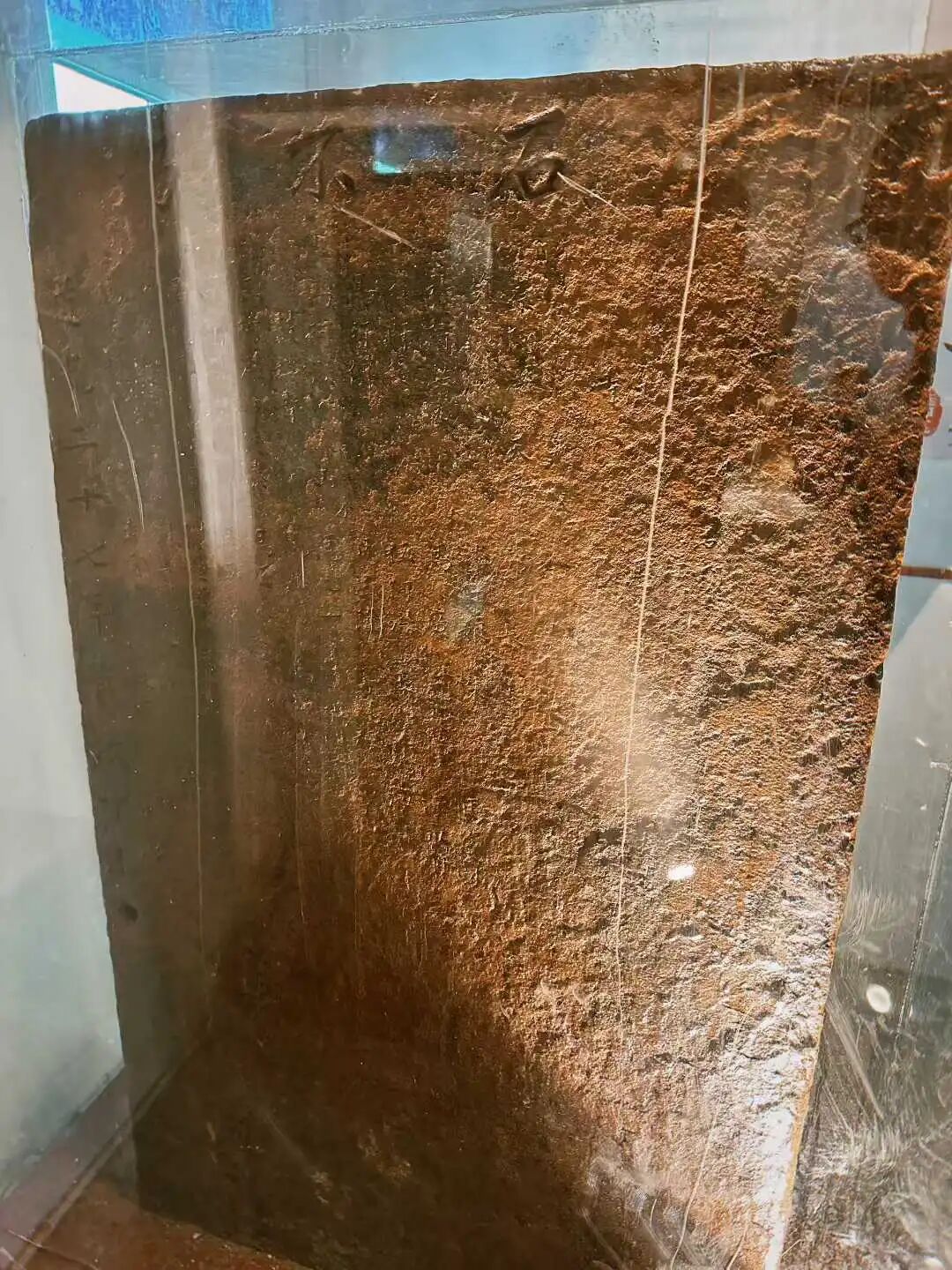
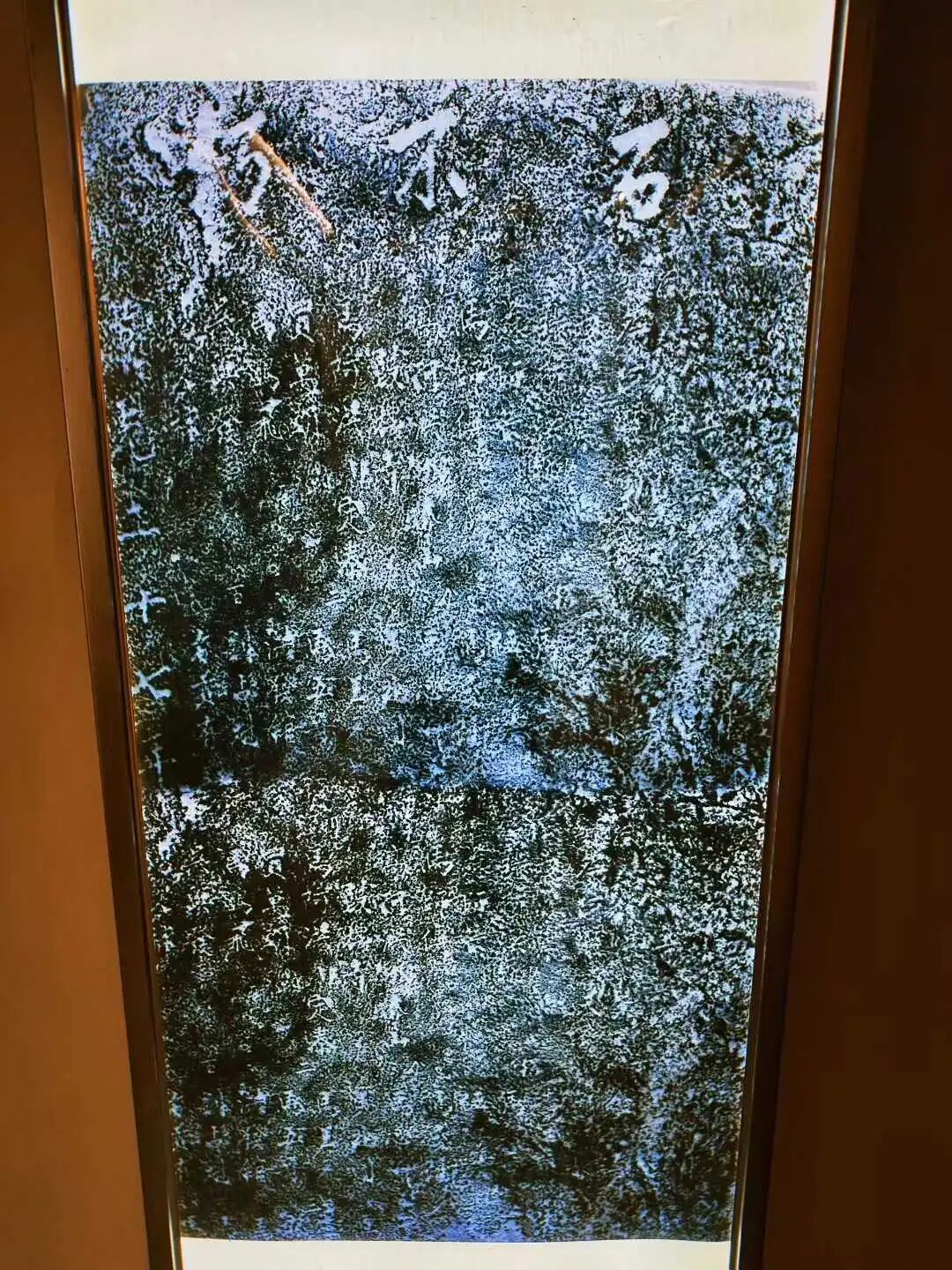
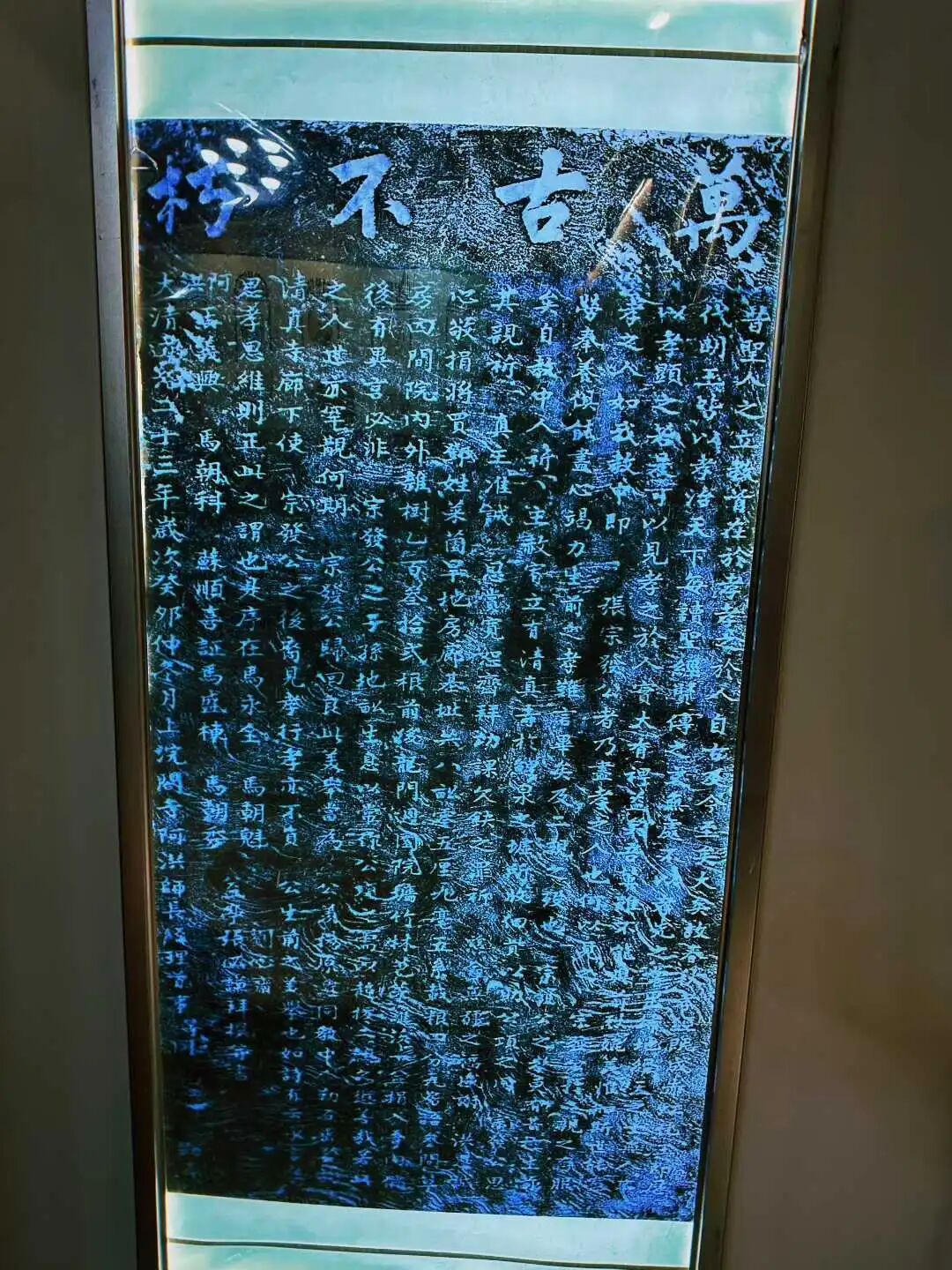
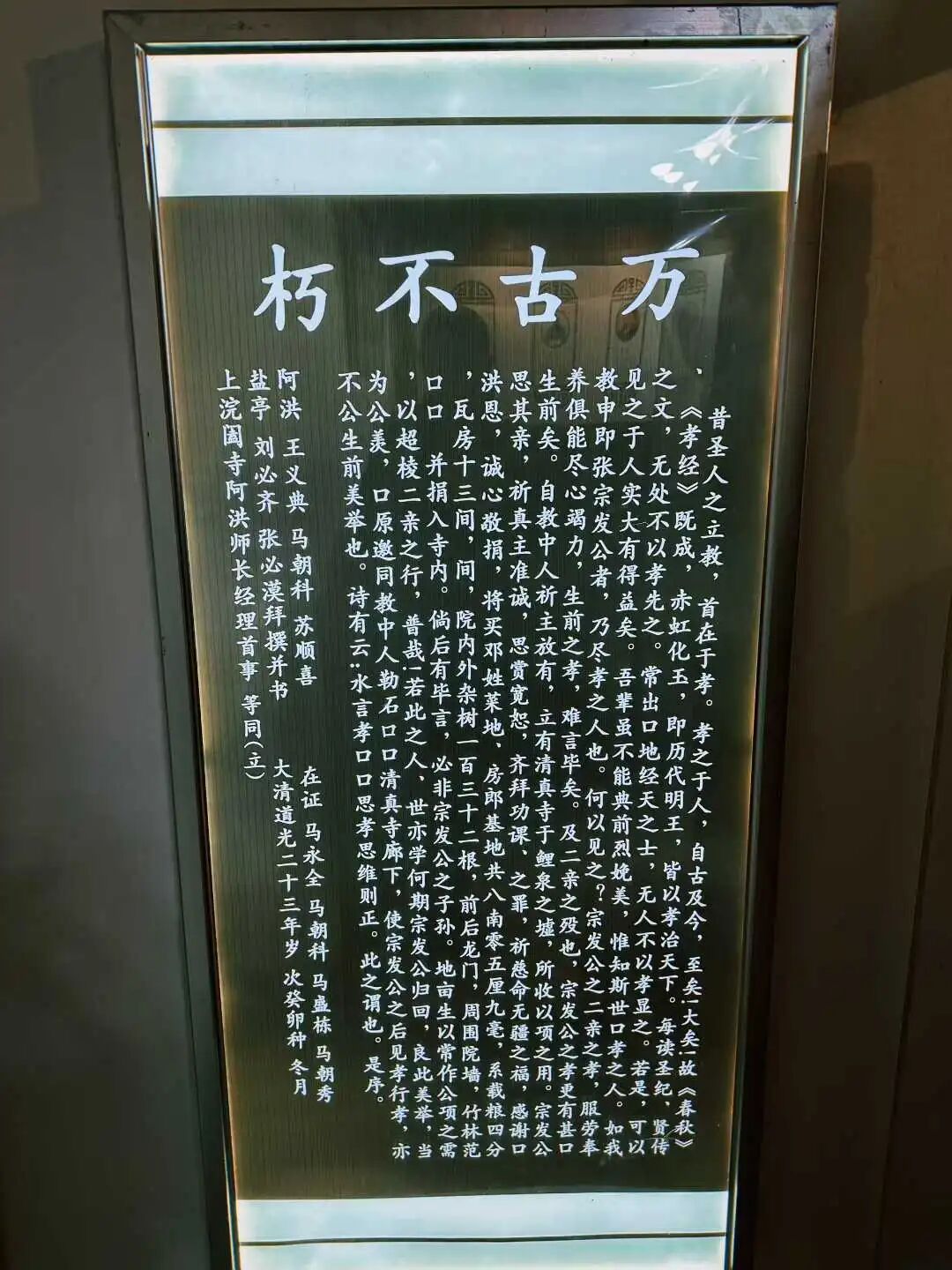
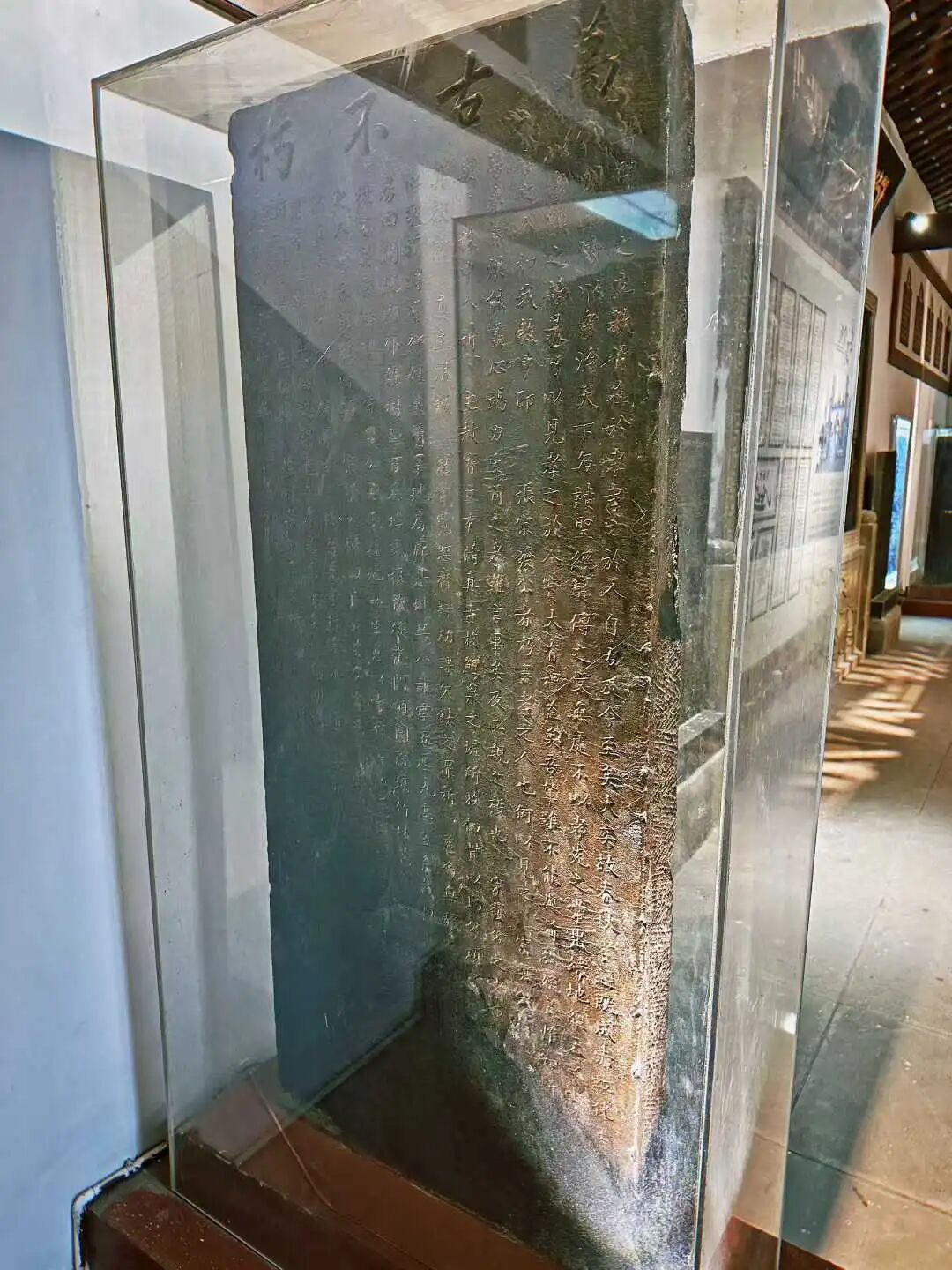
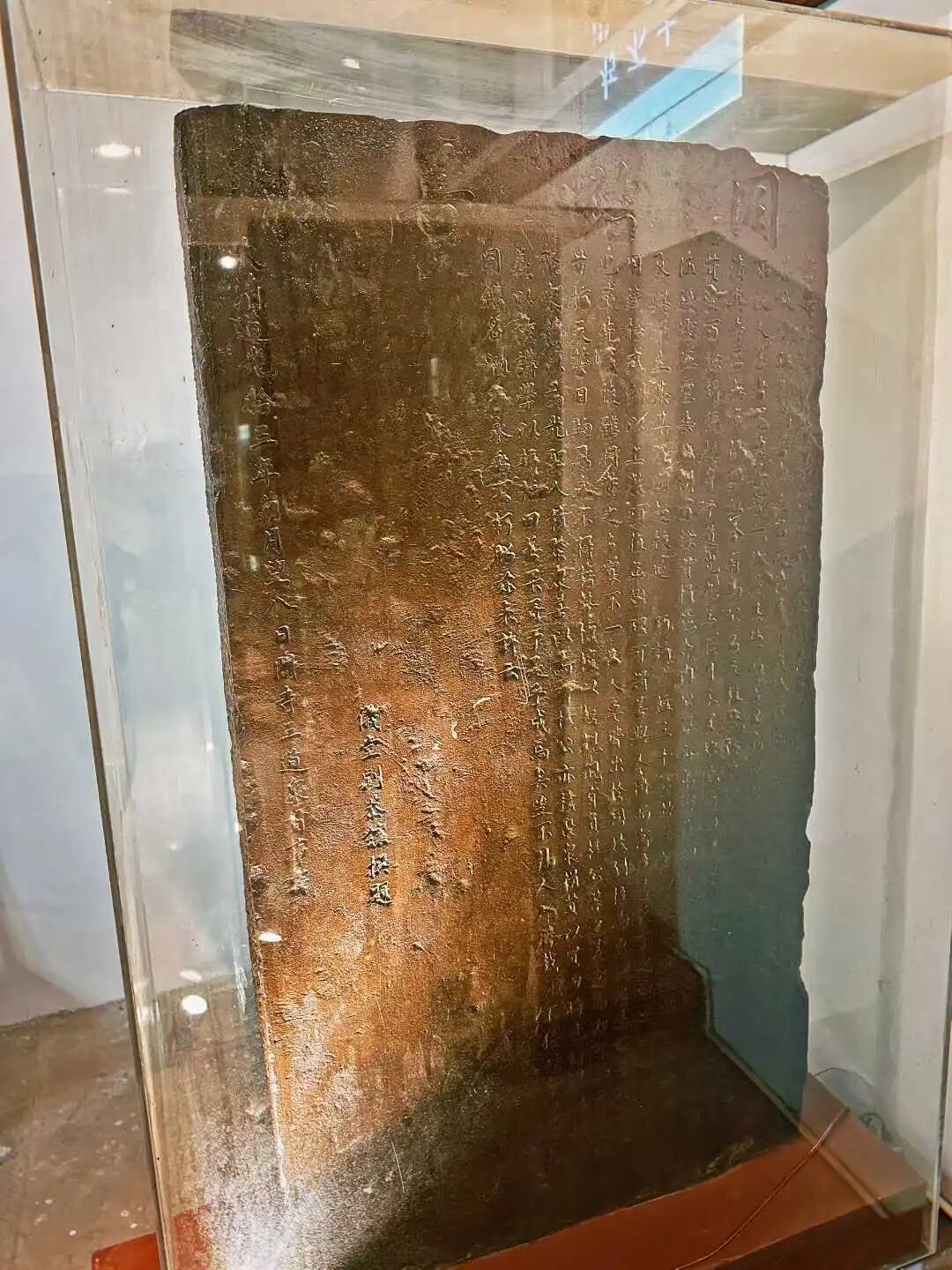
Before leaving, I bought some specialty juice beef (guozhi niurou) on Banbian Street. Xiaoquan juice beef comes from traditional Sichuan braised beef. During the Republic of China era, a Hui Muslim named Ma Daoyong used a method of frying the beef first and then adding flavor to solve the problem of braised beef molding easily. He created a beef that is juicy and flavorful, which eventually developed into the current Xiaoquan juice beef. When Ma Daoyong first sold juice beef, he used the brand name of his eldest son, Ma Changheng. After the public-private partnership in 1956, Ma Daoyong founded the Xiaoquan Supply and Marketing Cooperative Halal Food Factory. His youngest son, Ma Changmeng, took over in 1977 and became the factory director in 1993. In 1995, the organization arranged for Ma Changmeng to work at a hardware company. He later applied for unpaid leave to start his own food factory and began producing Ma Changmeng Juice Beef.
There are many beef juice shops on Banbian Street now, and after walking around, I saw the prices are all about the same. The clerk at this Ma Changbin shop wears a headscarf, and since there were quite a few customers, I decided to buy from them. It actually tastes a bit like shadow beef (dengying niurou), very fragrant and perfect as a snack when you are out and about.
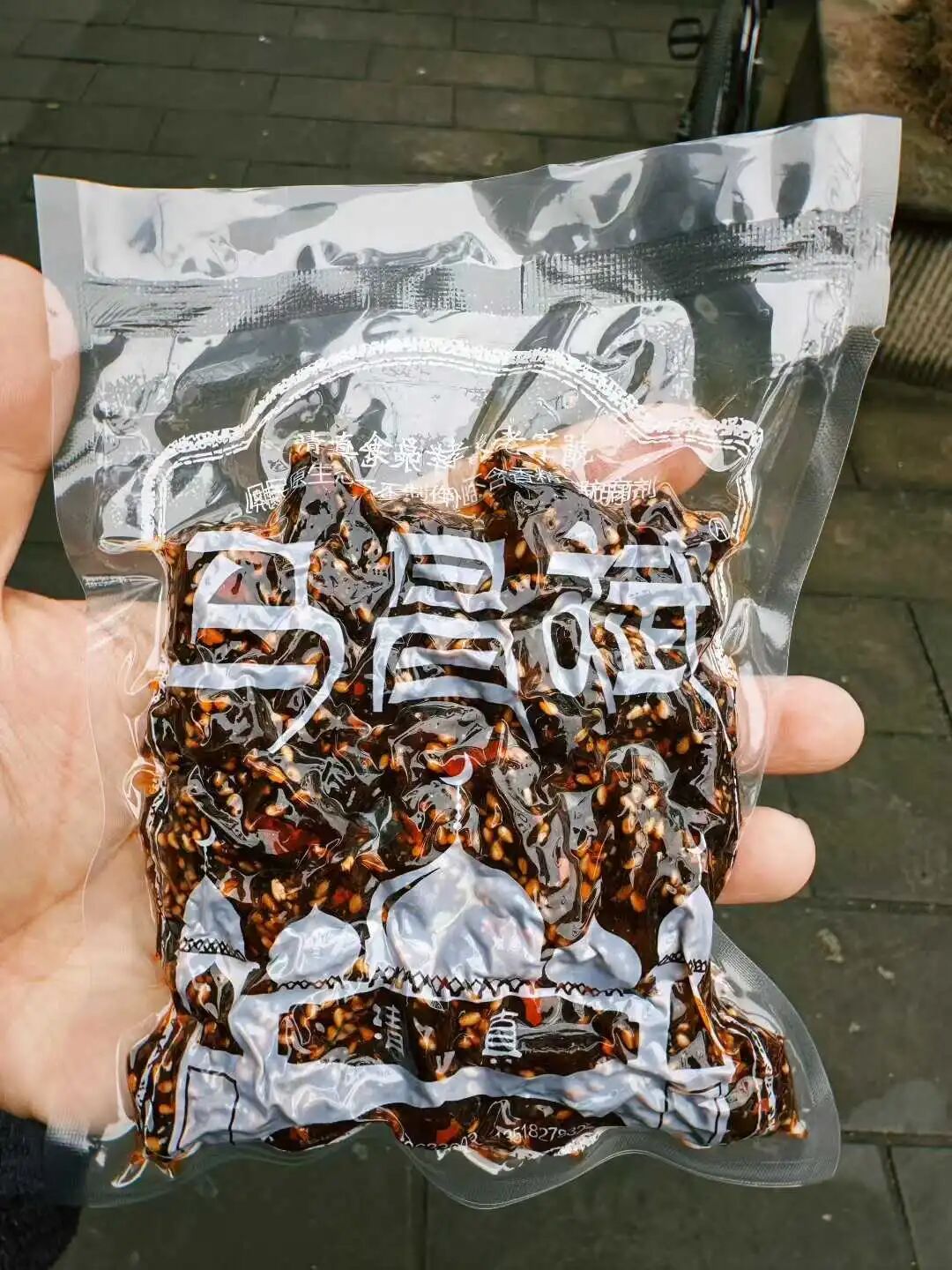
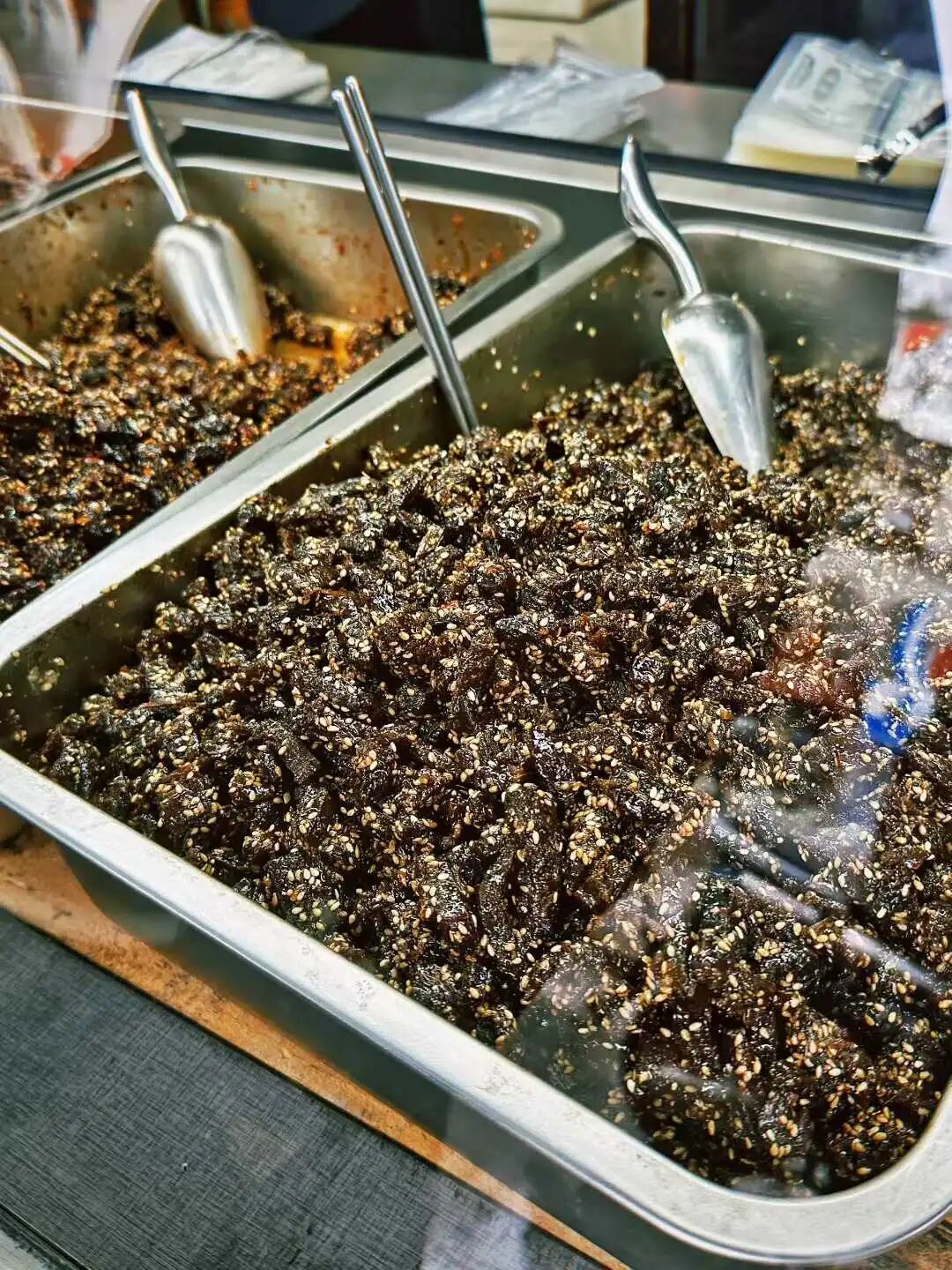
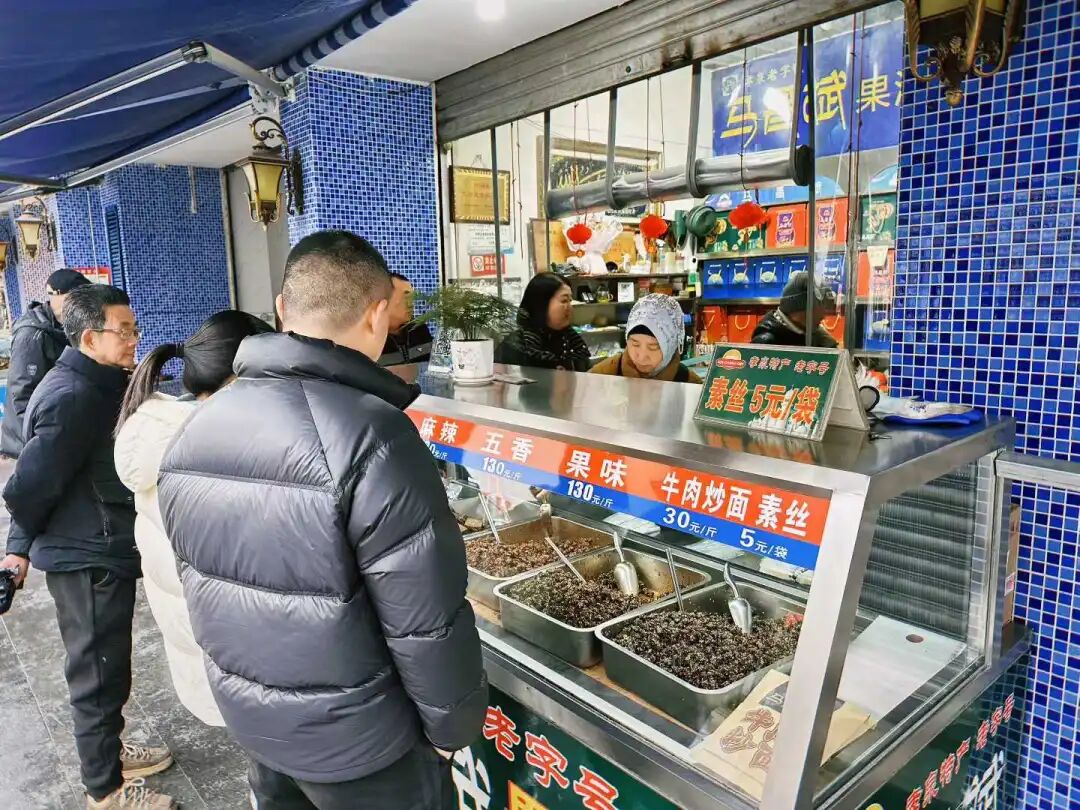
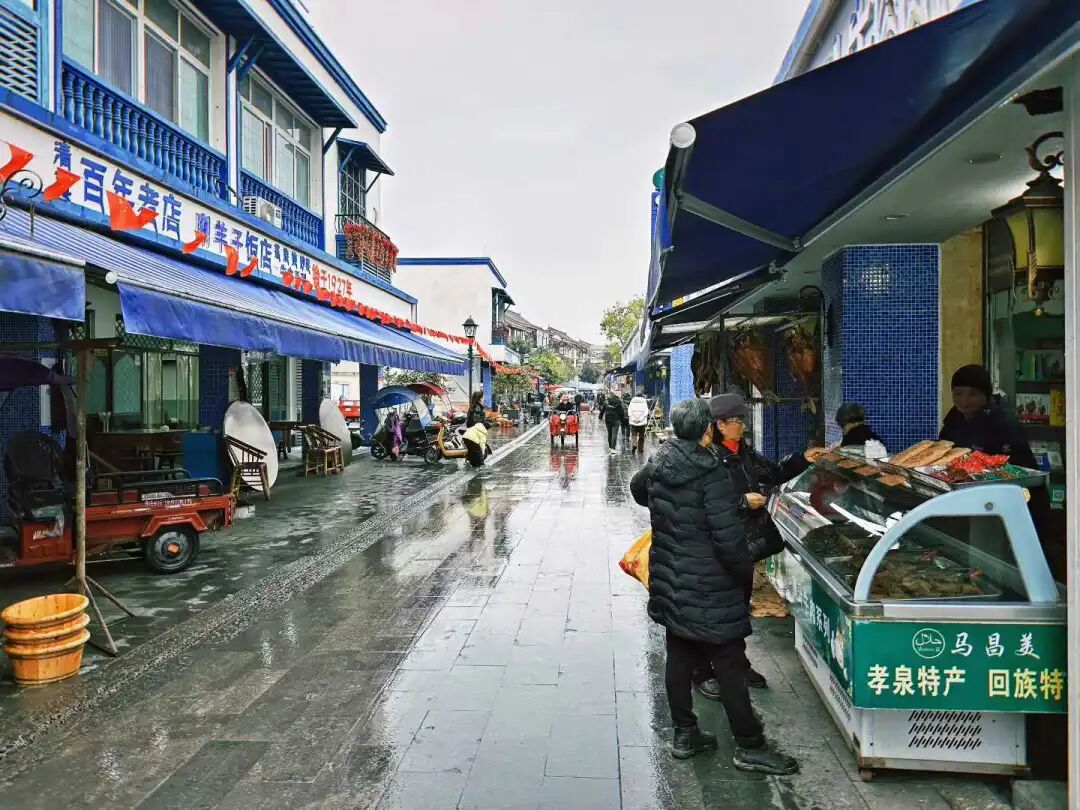
Halal Travel Guide: Jiangyou, Sichuan — Zhongba Mosque and Hui Muslim History
Articles • ali2007fr posted the article • 0 comments • 178 views • 2026-05-20 00:58
Summary: Zhongba Mosque in Jiangyou, Sichuan, is tied to local Hui Muslim history, architecture, and community life. This visit keeps the original mosque details, photos, place names, and historical context from the Chinese source.
On January 25, I took a high-speed train from Deyang, Sichuan, in the morning. It took just over half an hour to reach Jiangyou Station. Then, I took a three-wheeled taxi (sanbengzi) to Zhongba Mosque. There is a beef restaurant in the alley next to the mosque where you can eat authentic Jiangyou-style Sichuan stir-fry. I ordered steamed beef with rice flour (fenzheng niurou) and mapo tofu. The rice had corn mixed in. I prefer ordering dishes in small restaurants over eating hot pot. Everything I order here goes perfectly with rice. The restaurant also sells fruit-flavored beef jerky and spicy beef jerky, which are specialties of the Hui Muslims in Sichuan.
The area outside the mosque is full of beef and braised meat shops. With the Spring Festival approaching, it is the time to buy various cured meats, pressed duck (banya), pressed goose (bane), and beef sausages. Sichuan people love eating these in winter.
Zhongba Mosque is located outside the North Gate of Zhongba in Jiangyou, Sichuan. During the Qing Dynasty and the Republic of China, this was a distribution center for medicinal herbs and mountain goods in the Sichuan-Shaanxi-Gansu region. It was also an important passage connecting the Songmao area to the Chengdu Plain, once serving as a busy market with many pharmacies and inns. Zhongba Mosque was reportedly built in 1861 (the 11th year of the Xianfeng reign). In 1884 (the 10th year of the Guangxu reign), Ma Dingyuan, the owner of the Dingliyuan Tea House, and others donated funds to expand it into its current appearance.
In 1935, the mosque's imam, Xiao Fuzhen, joined the Red Army. He worked among Hui Muslims in places like Maoxian, Dajin, and Jinchuan in Sichuan. He led the formation of a Red Army Hui independent company made up of Sichuan Hui Muslims. In 1936, he went north with the Red Army and died heroically while fighting the enemy in Ma'erkang.
In 1944, Imam Hui Tianxiang from Lueyang, Shaanxi, became the head of Zhongba Mosque. He promoted the Yihewani movement of "respecting the scriptures and reforming customs," making Zhongba Mosque one of only two Yihewani mosques in Sichuan province (the other is on Shanghe Street in Guangyuan).
Qing Dynasty plaques inside Zhongba Mosque:
The Essence of the Two and Five
Respectfully presented by the religious community of Pingyi
An auspicious day in the first ten days of the second lunar month, the 11th year of the Guangxu reign
Pingyi here likely refers to Pingwu County in Mianyang, Sichuan.
Vast, Subtle, and Refined
An auspicious day in the first ten days of the sixth lunar month, the 10th year of the Guangxu reign of the Great Qing Dynasty
Ma Wenmeng, a Jinshi degree holder from the Jiwei year, appointed member of the Hanlin Academy, and former magistrate of Fengyang Prefecture, Anhui
Xu Cheng'ao, a hereditary second-class earl, commander of the provincial ten-battalion elite troops, and director of the Changsheng Army camp
Ma Zhonglong, an official with the third-rank title and peacock feather, former magistrate of Zhenfeng Prefecture, Guizhou, and current magistrate of Tongren Prefecture
Pure, Truthful, Elegant, and Correct
An auspicious day in the first ten days of the sixth lunar month, the 10th year of the Guangxu reign of the Great Qing Dynasty
Respectfully inscribed by the scholar Lianquan Jushi Rouchizi after ritual cleansing
Vast and boundless.
Presented by the religious leaders (jiaomu) of Huajie Town in Anyi.
Erected in the second month of the eleventh year of the Guangxu reign.
Anyi here likely refers to the present-day Anzhou District of Mianyang, Sichuan.
True spirit is lively.
Imperial-appointed Commander-in-Chief of the Sichuan Songpan Garrison, Liyong Baturu...
Acting Prefect of the Songpan Independent Prefecture in Sichuan, responsible for civil administration and pacifying the border tribes...
The second month of spring in the eleventh year of the Guangxu reign.
It is estimated that the Commander-in-Chief of the Sichuan Songpan Garrison, Liyong Baturu, was Xia Yuxiu from Kunming, Yunnan. He became the Songpan Brigade General in the seventh year of the Guangxu reign, guarded Songpan for ten years, and was later promoted to Commander-in-Chief of Sichuan. view all
Summary: Zhongba Mosque in Jiangyou, Sichuan, is tied to local Hui Muslim history, architecture, and community life. This visit keeps the original mosque details, photos, place names, and historical context from the Chinese source.
On January 25, I took a high-speed train from Deyang, Sichuan, in the morning. It took just over half an hour to reach Jiangyou Station. Then, I took a three-wheeled taxi (sanbengzi) to Zhongba Mosque. There is a beef restaurant in the alley next to the mosque where you can eat authentic Jiangyou-style Sichuan stir-fry. I ordered steamed beef with rice flour (fenzheng niurou) and mapo tofu. The rice had corn mixed in. I prefer ordering dishes in small restaurants over eating hot pot. Everything I order here goes perfectly with rice. The restaurant also sells fruit-flavored beef jerky and spicy beef jerky, which are specialties of the Hui Muslims in Sichuan.
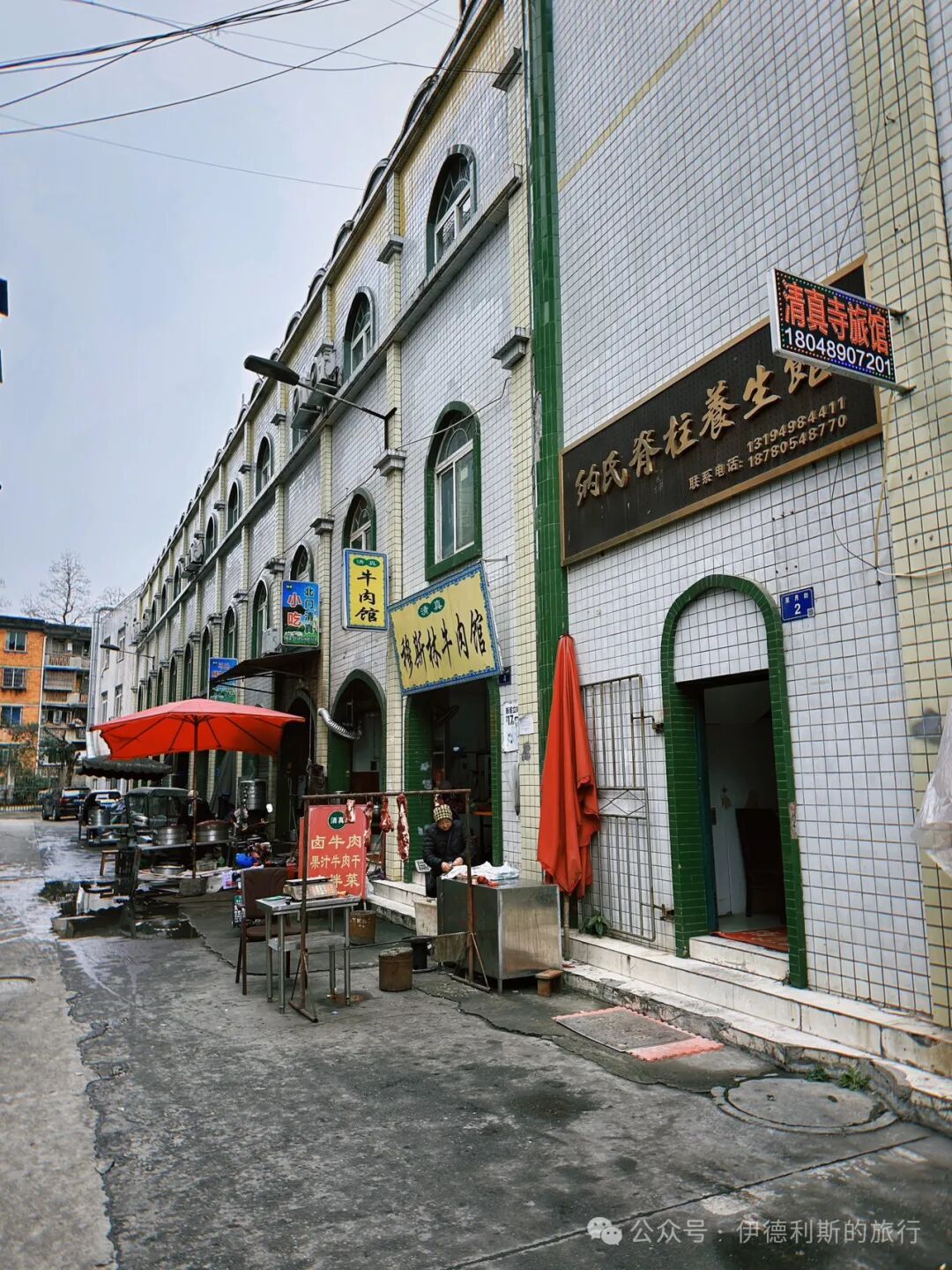
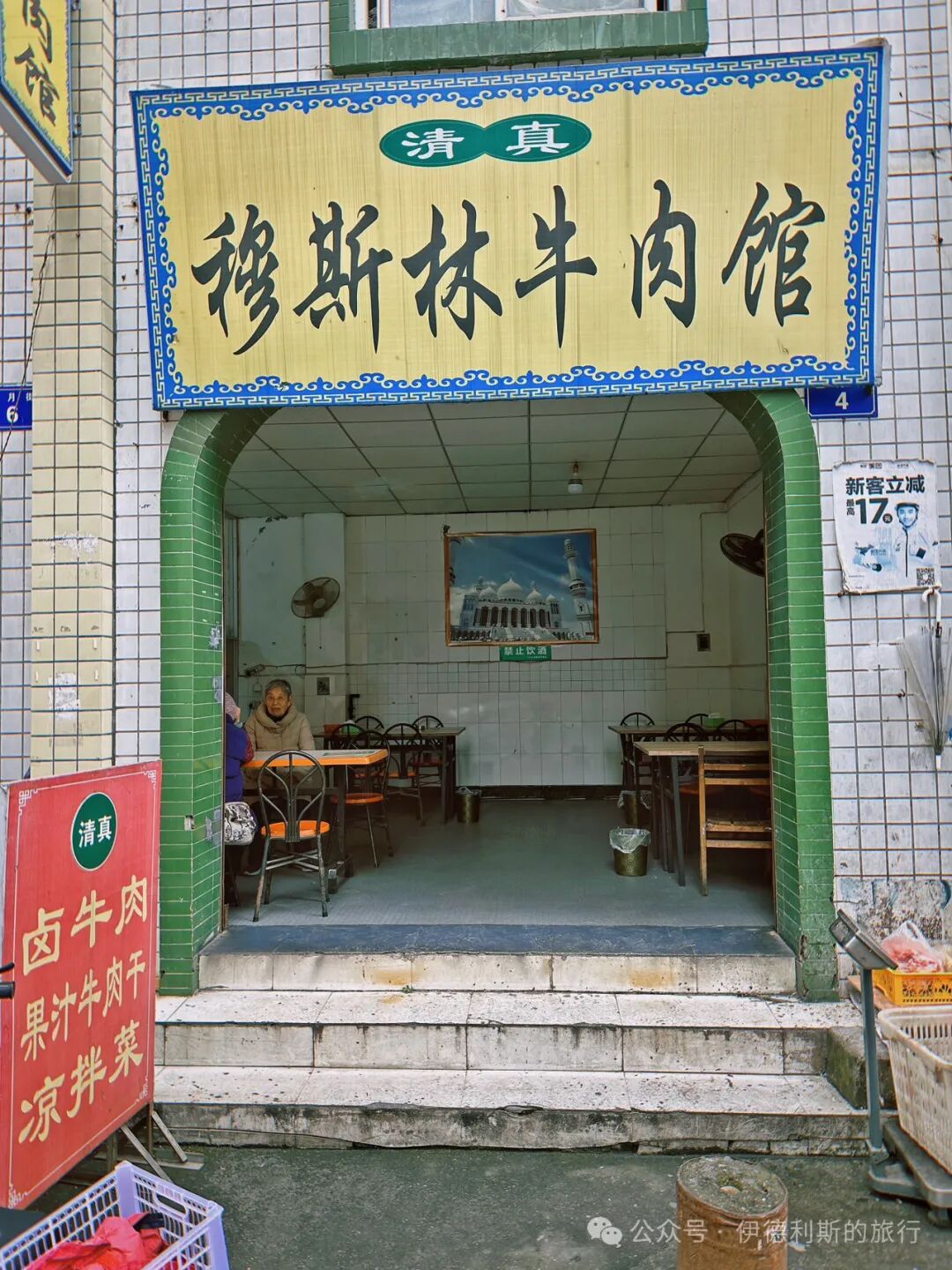
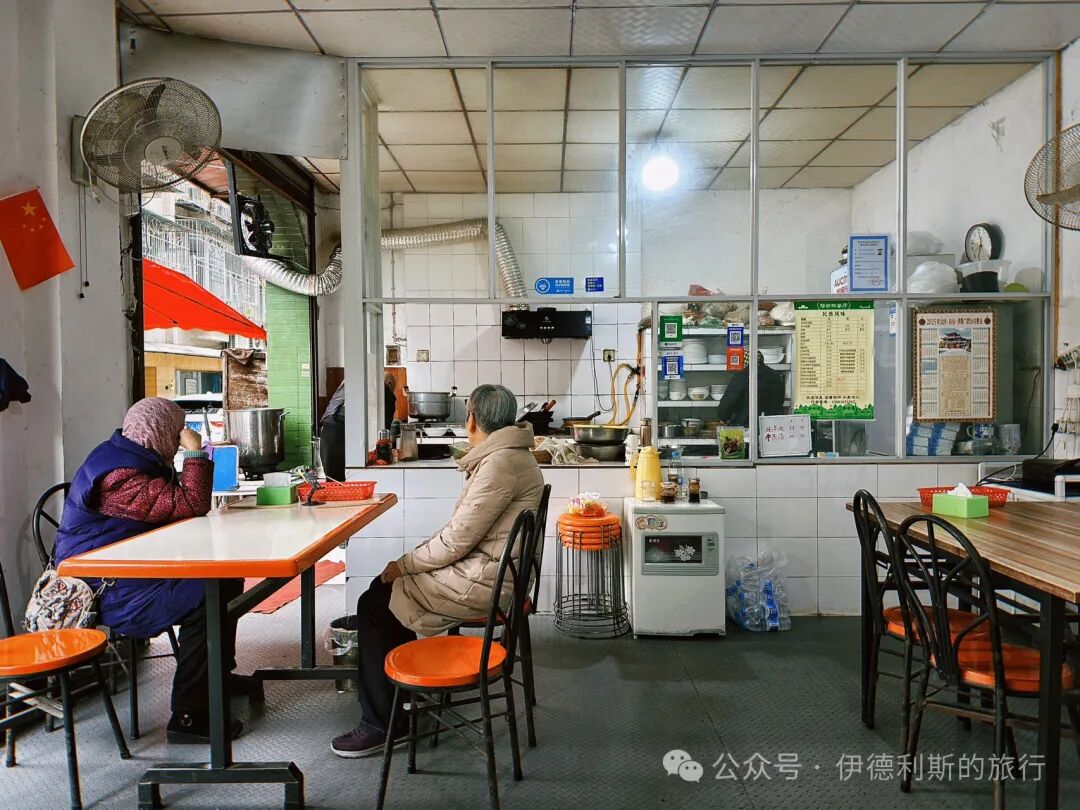
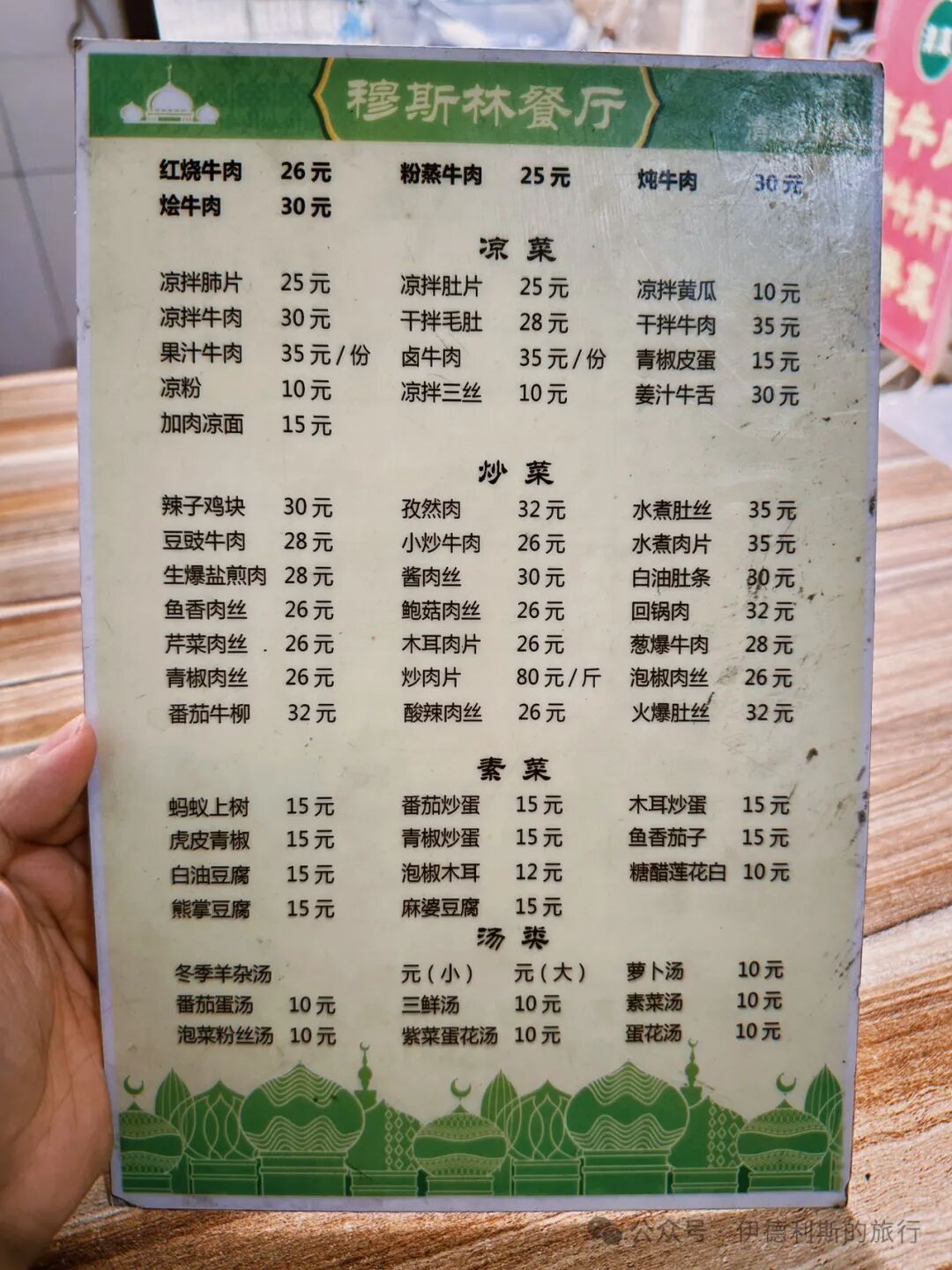
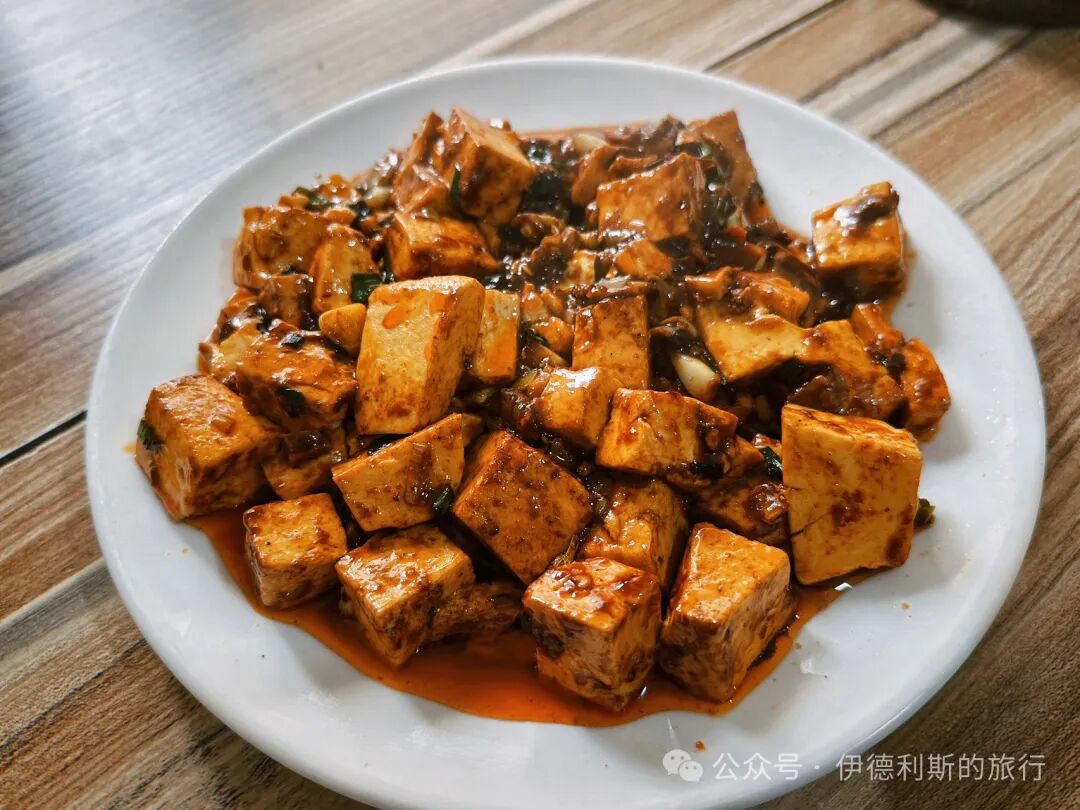
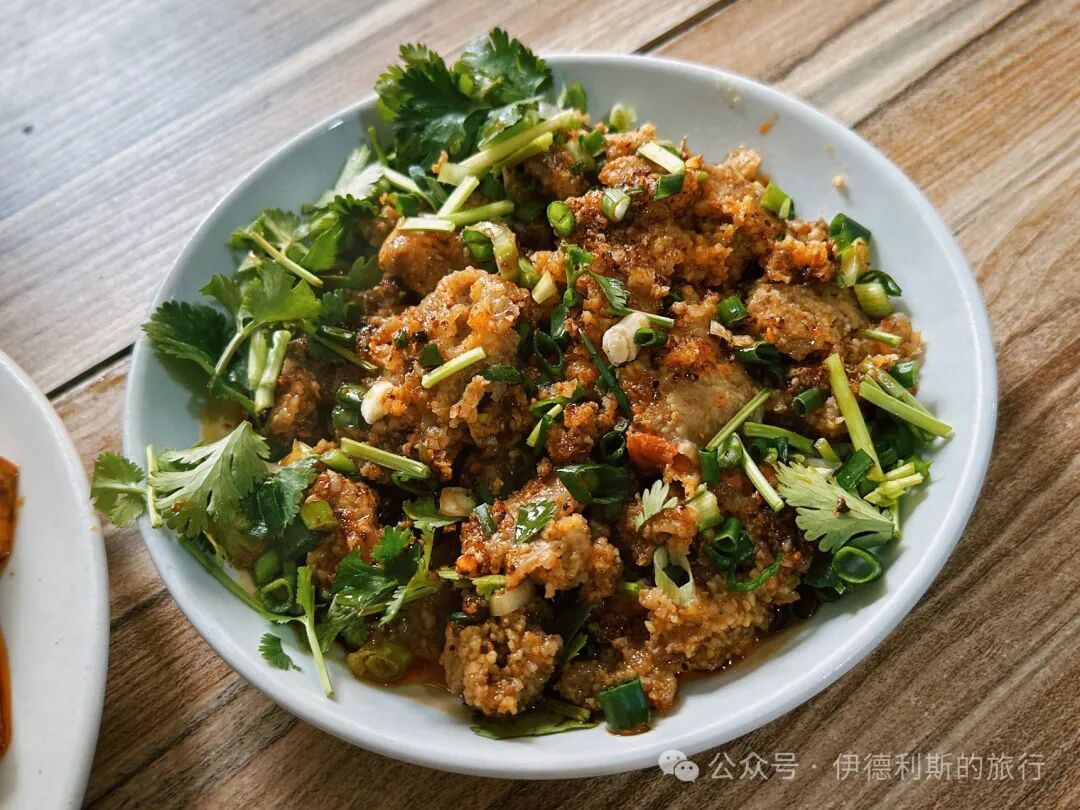
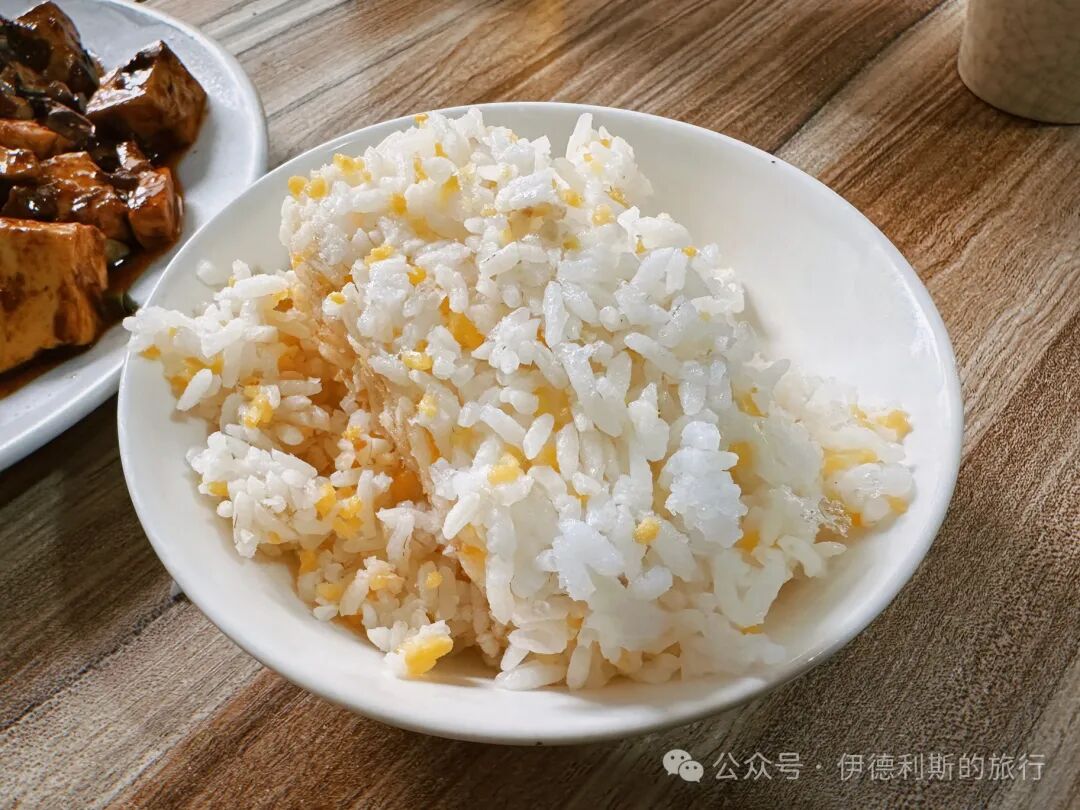
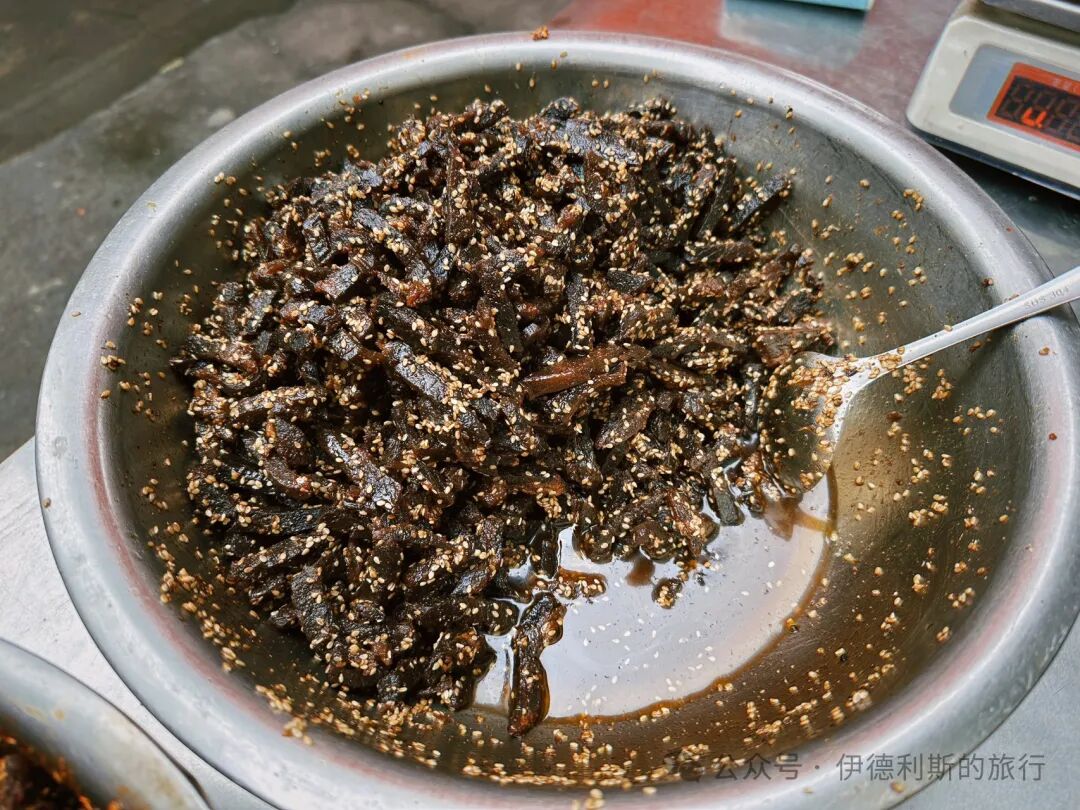
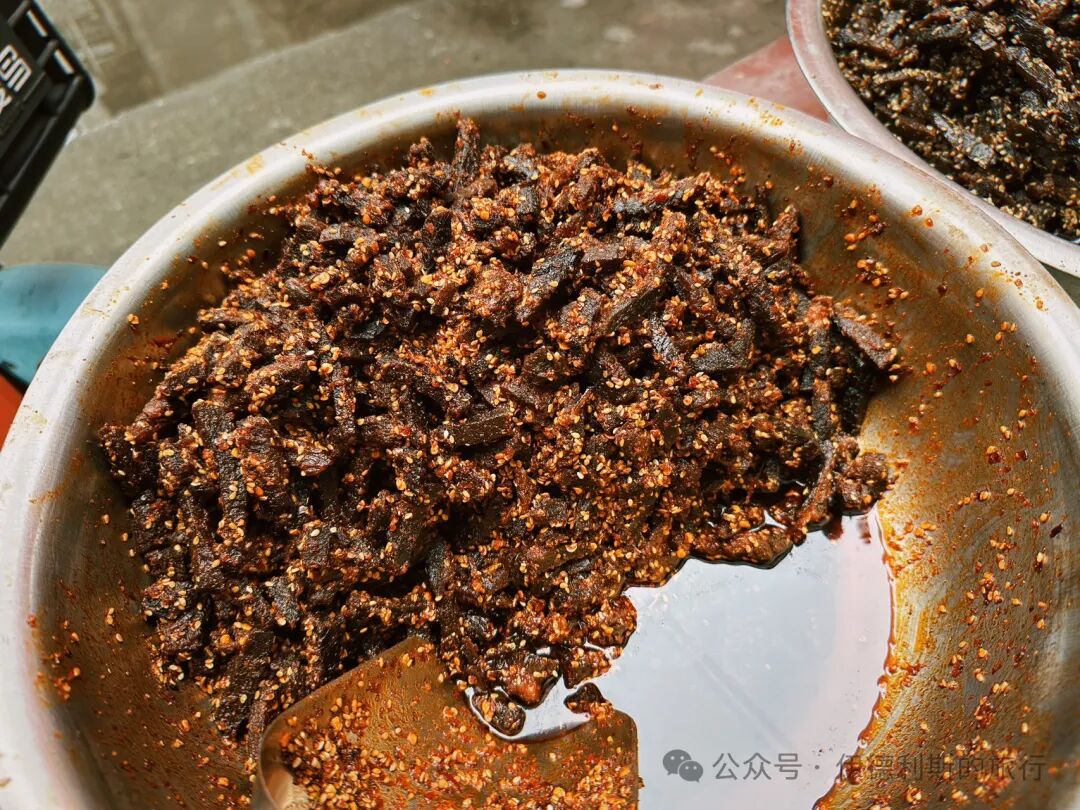
The area outside the mosque is full of beef and braised meat shops. With the Spring Festival approaching, it is the time to buy various cured meats, pressed duck (banya), pressed goose (bane), and beef sausages. Sichuan people love eating these in winter.
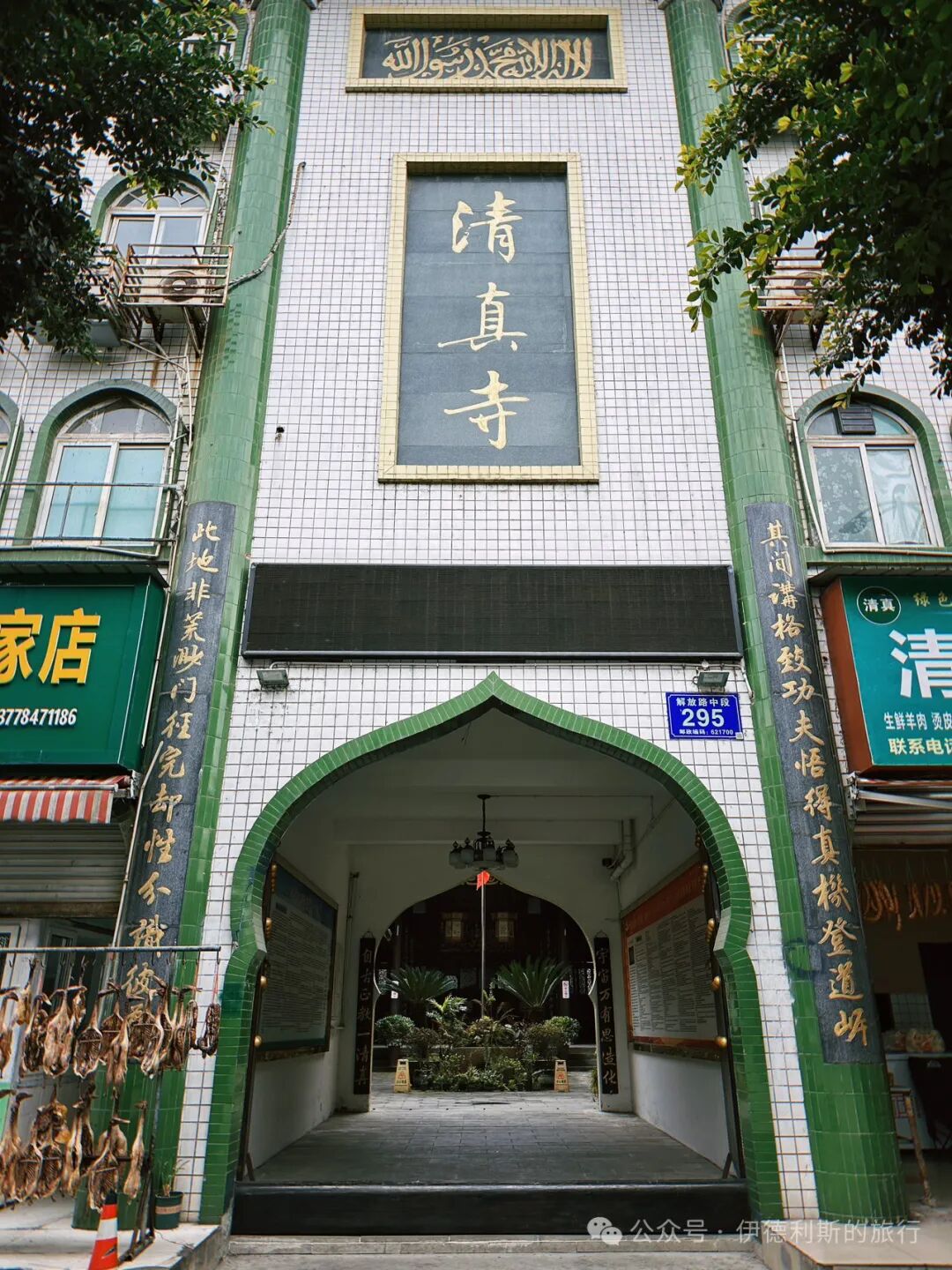
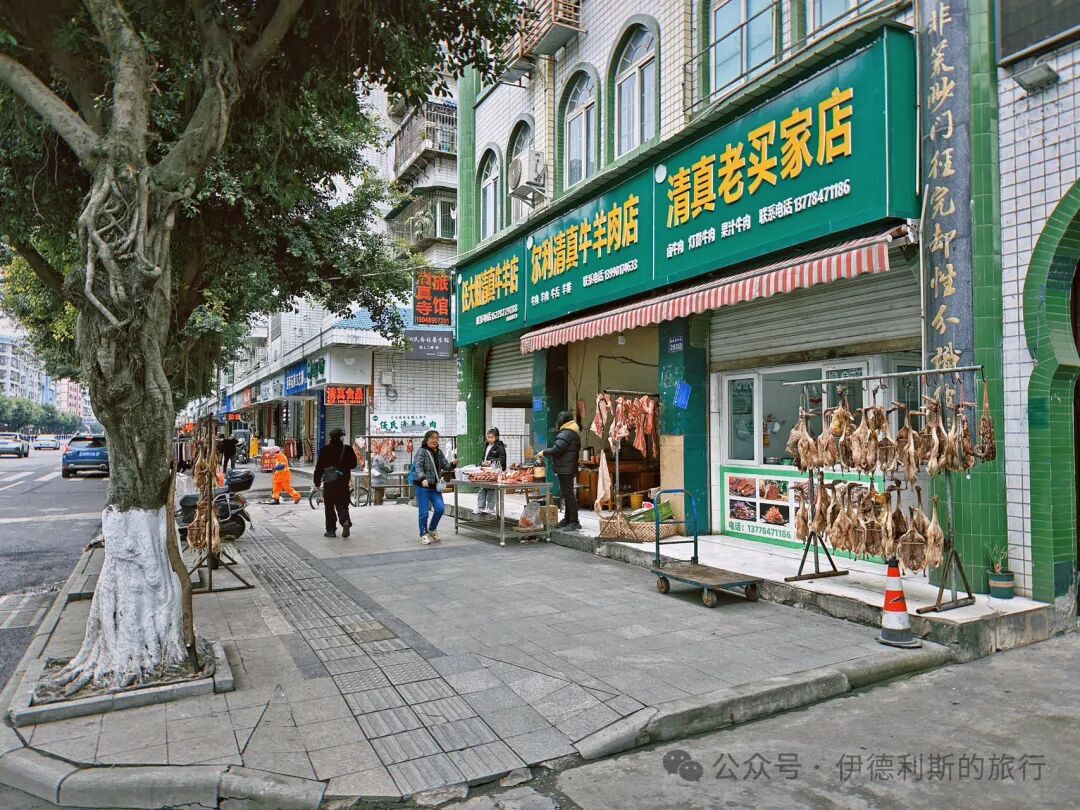
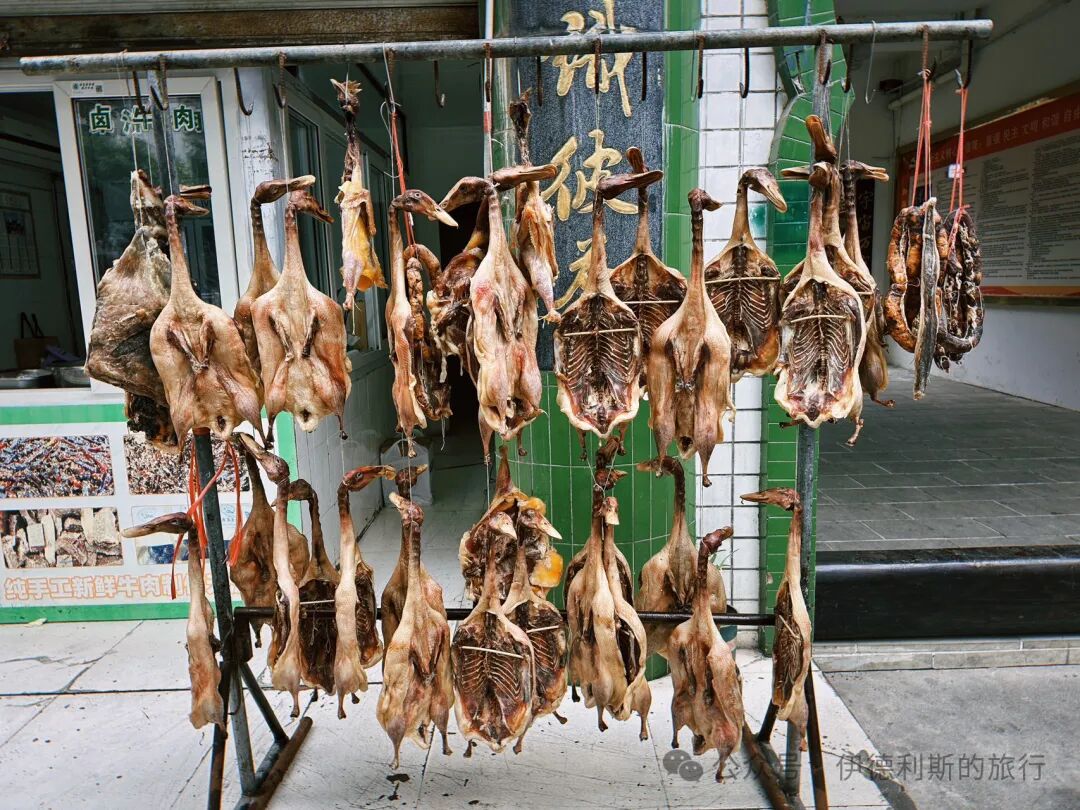
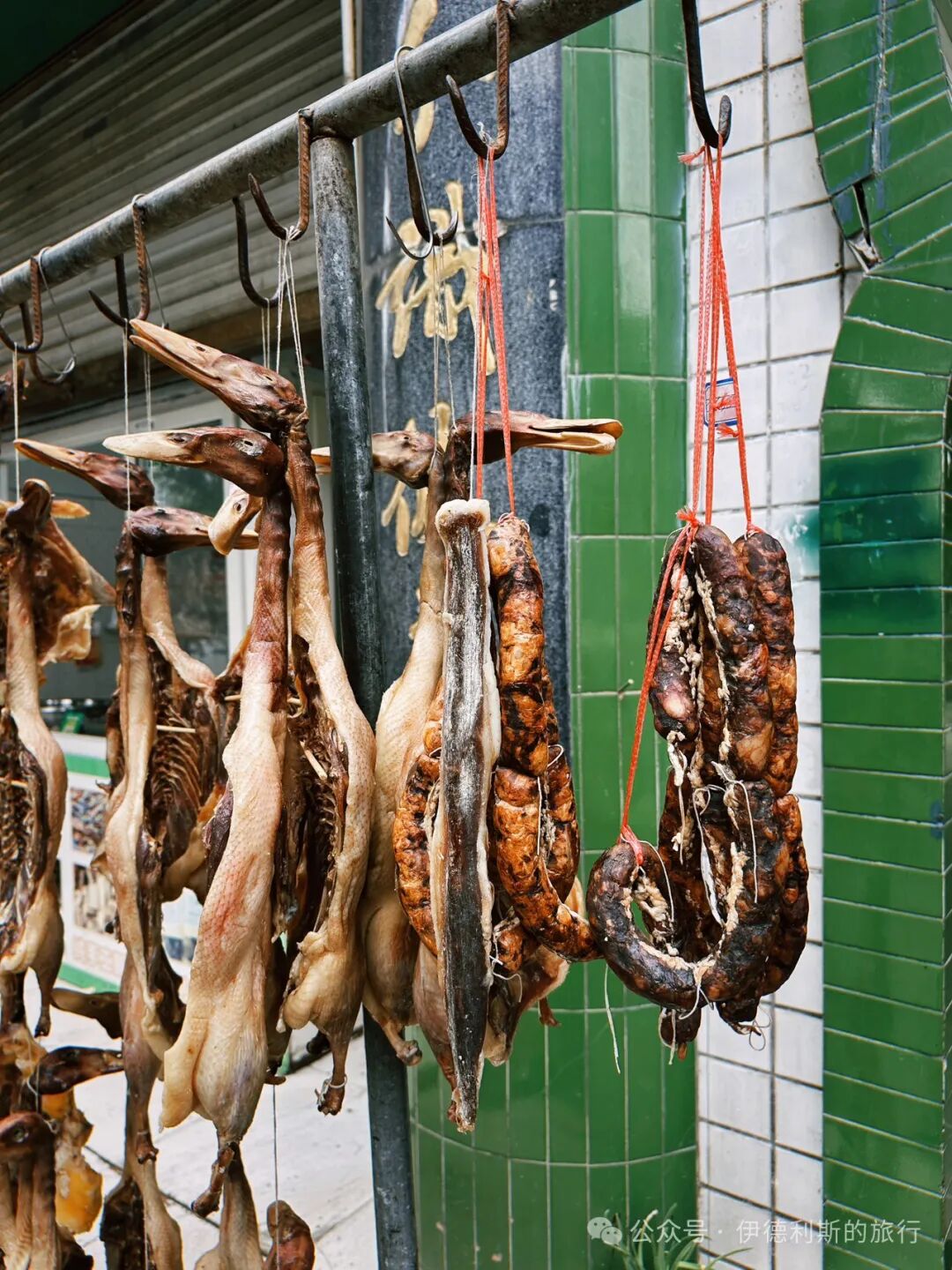
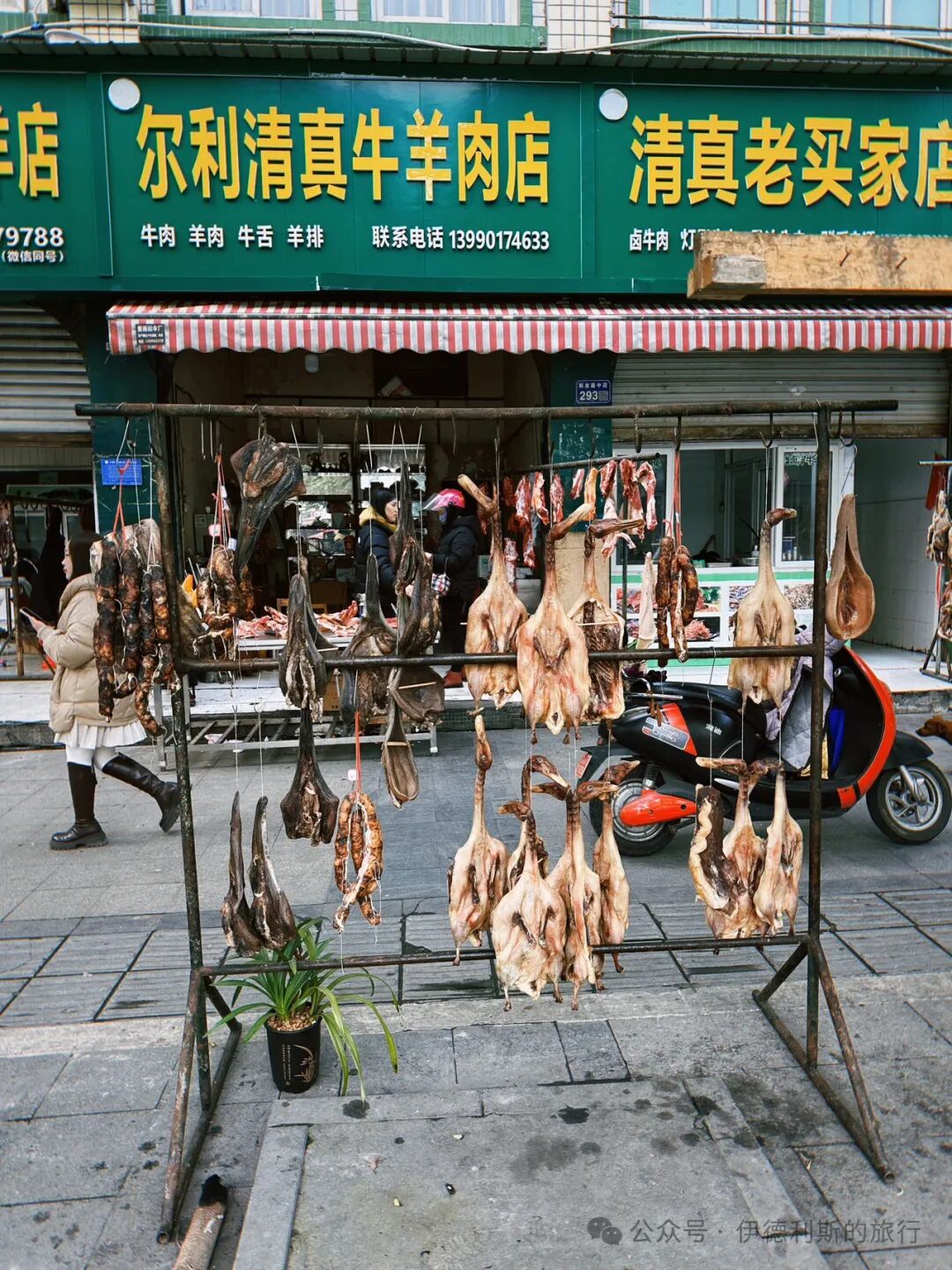
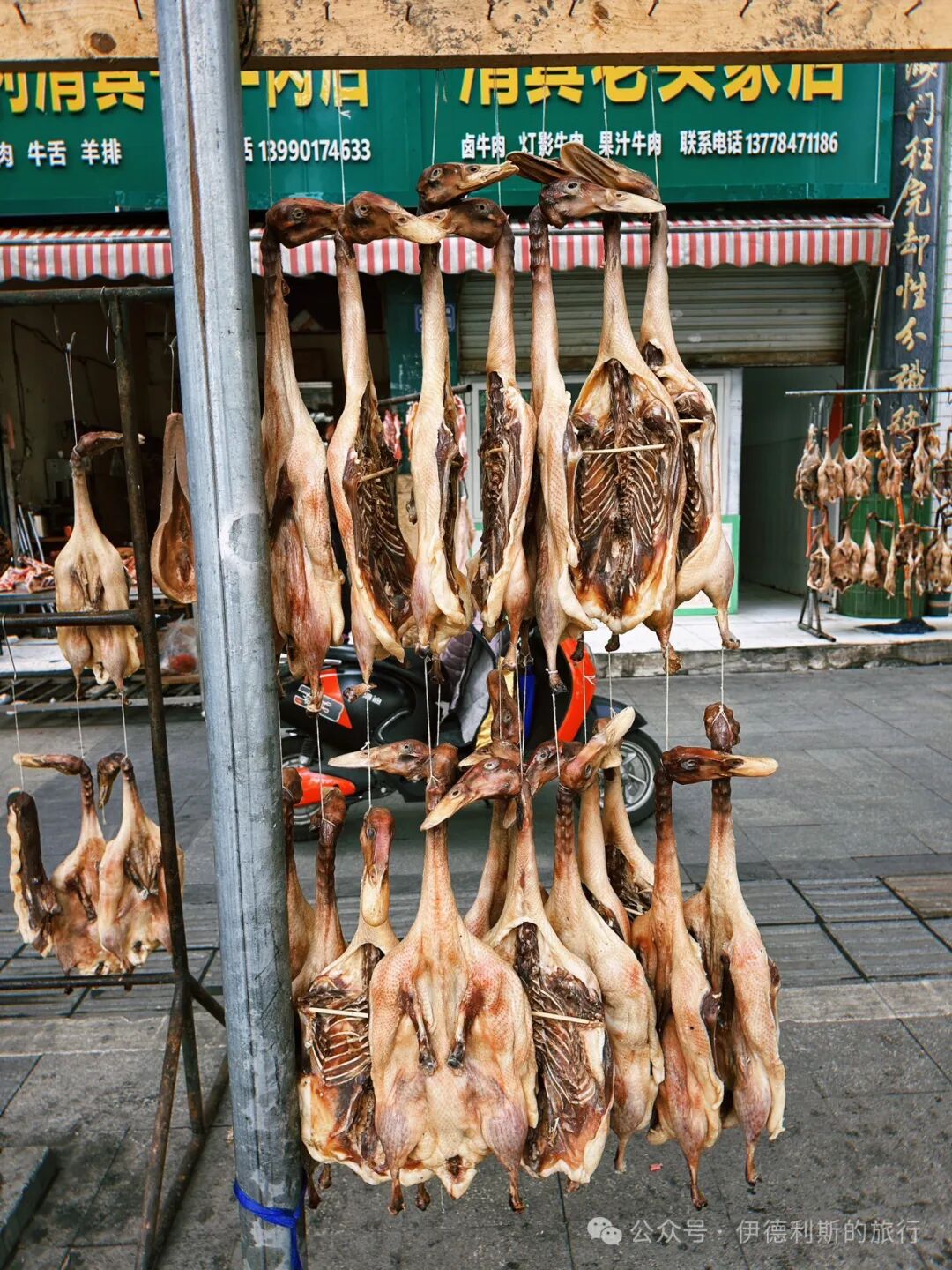
Zhongba Mosque is located outside the North Gate of Zhongba in Jiangyou, Sichuan. During the Qing Dynasty and the Republic of China, this was a distribution center for medicinal herbs and mountain goods in the Sichuan-Shaanxi-Gansu region. It was also an important passage connecting the Songmao area to the Chengdu Plain, once serving as a busy market with many pharmacies and inns. Zhongba Mosque was reportedly built in 1861 (the 11th year of the Xianfeng reign). In 1884 (the 10th year of the Guangxu reign), Ma Dingyuan, the owner of the Dingliyuan Tea House, and others donated funds to expand it into its current appearance.
In 1935, the mosque's imam, Xiao Fuzhen, joined the Red Army. He worked among Hui Muslims in places like Maoxian, Dajin, and Jinchuan in Sichuan. He led the formation of a Red Army Hui independent company made up of Sichuan Hui Muslims. In 1936, he went north with the Red Army and died heroically while fighting the enemy in Ma'erkang.
In 1944, Imam Hui Tianxiang from Lueyang, Shaanxi, became the head of Zhongba Mosque. He promoted the Yihewani movement of "respecting the scriptures and reforming customs," making Zhongba Mosque one of only two Yihewani mosques in Sichuan province (the other is on Shanghe Street in Guangyuan).
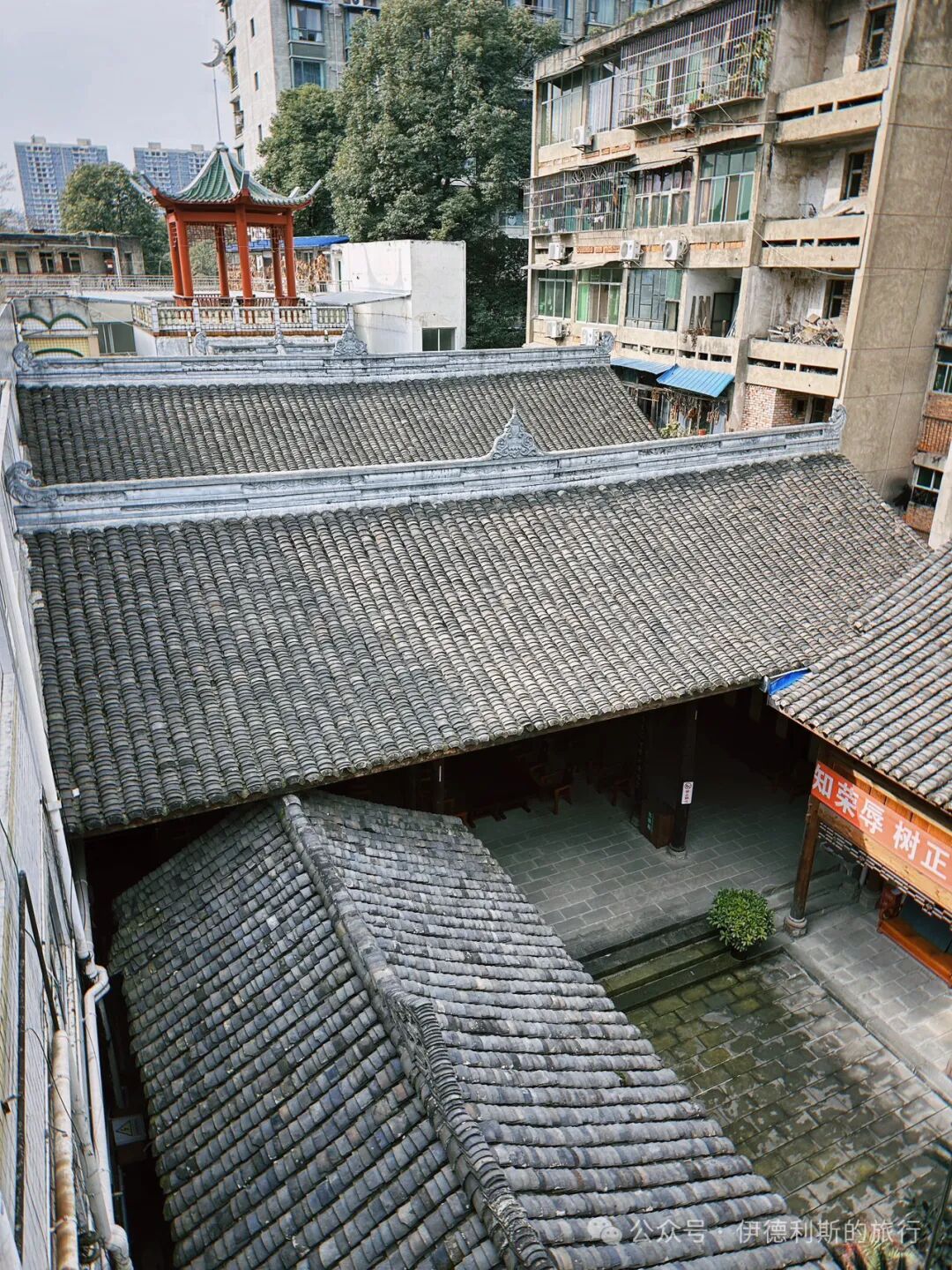
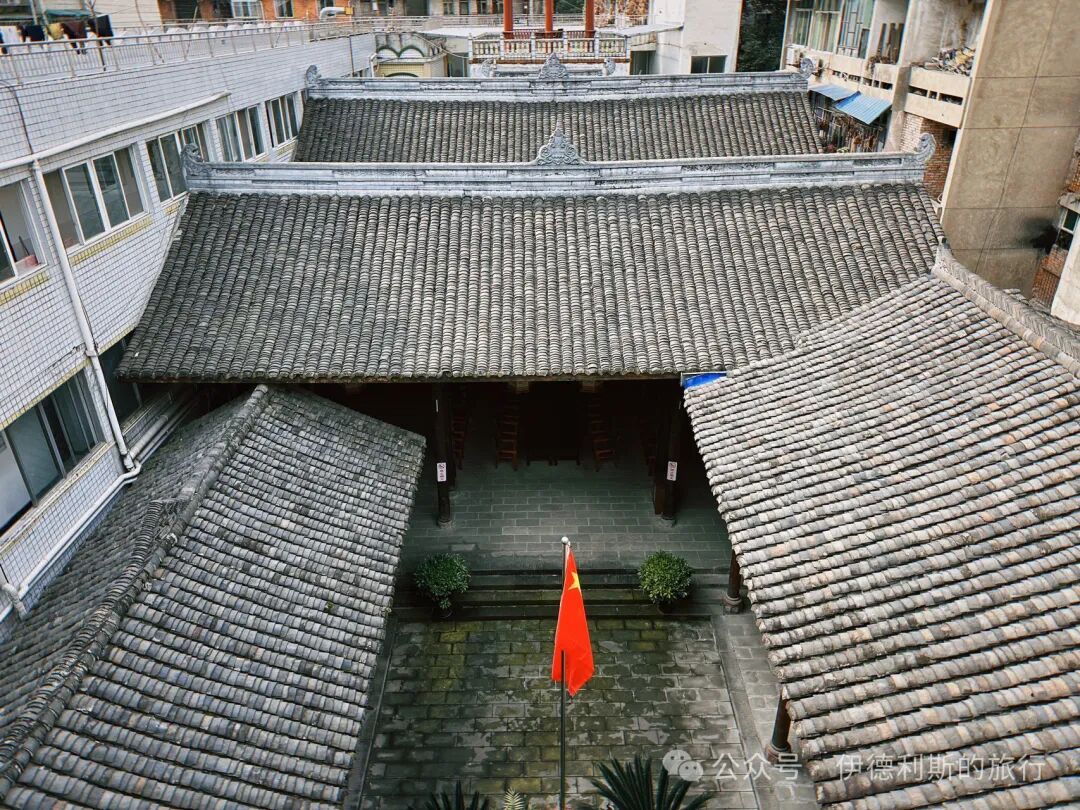
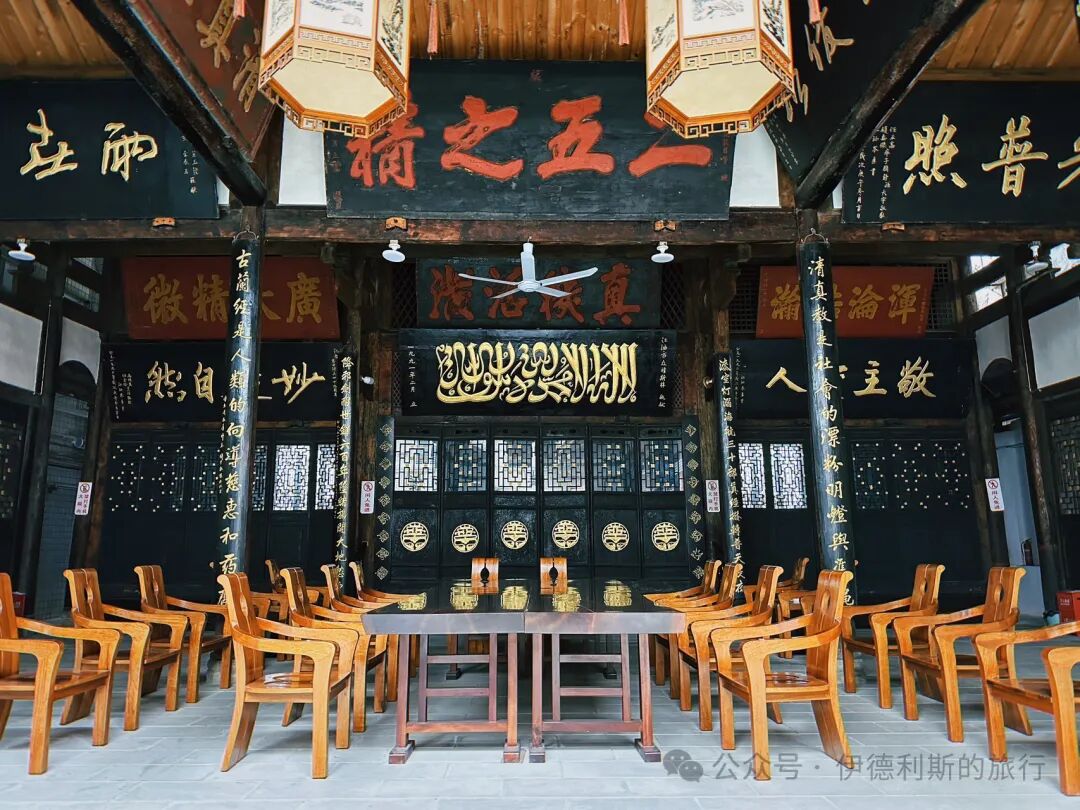
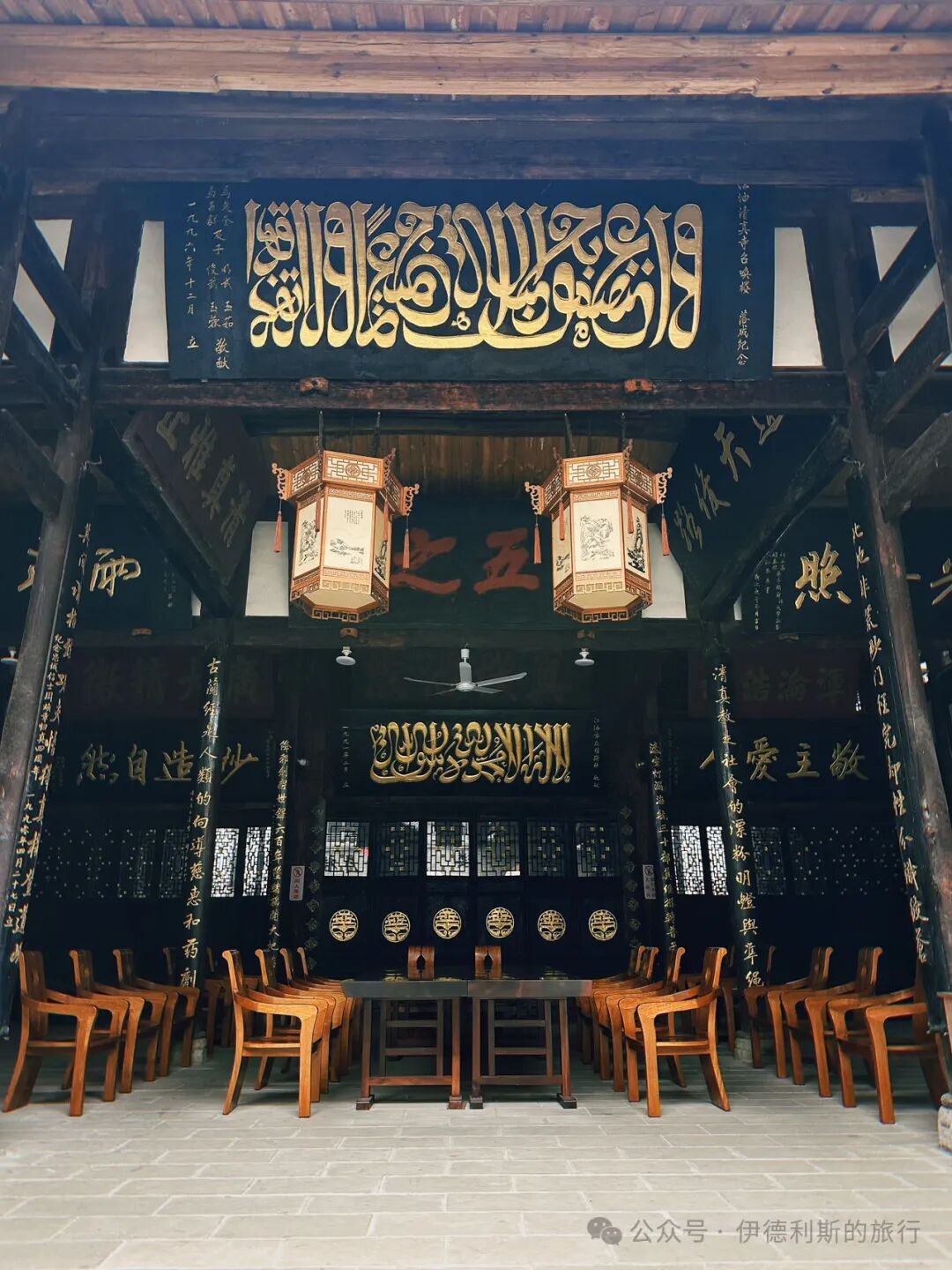
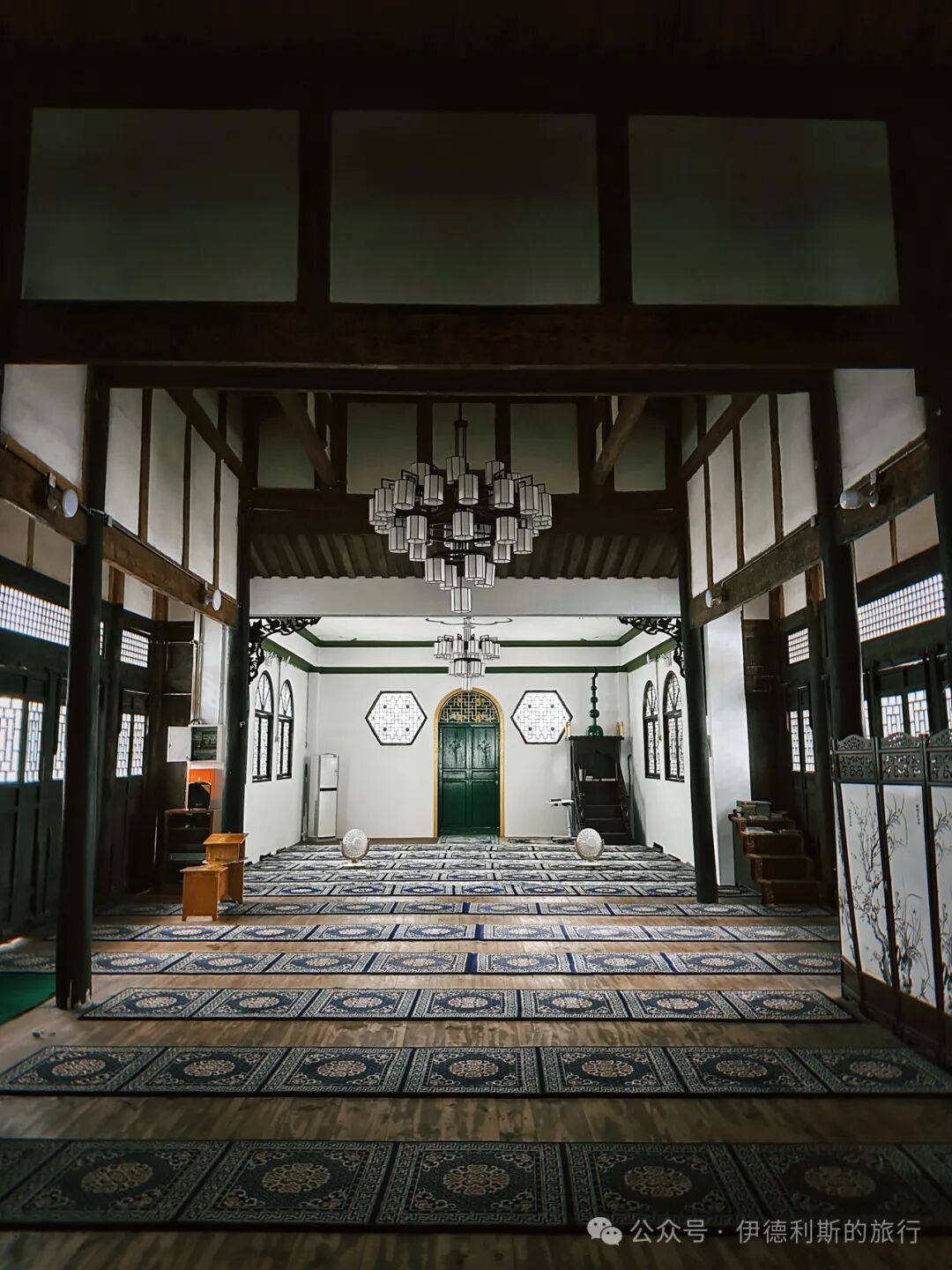
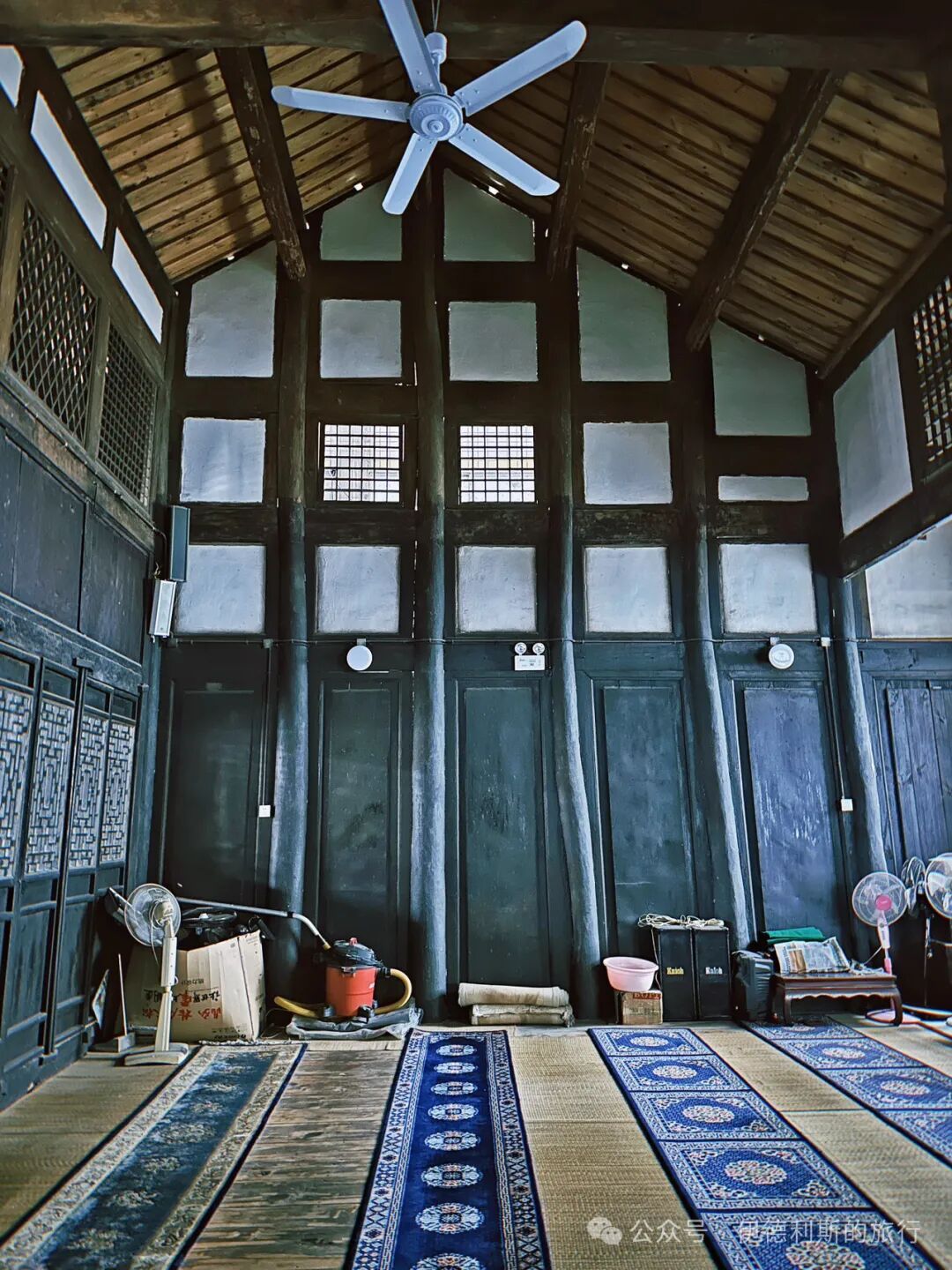
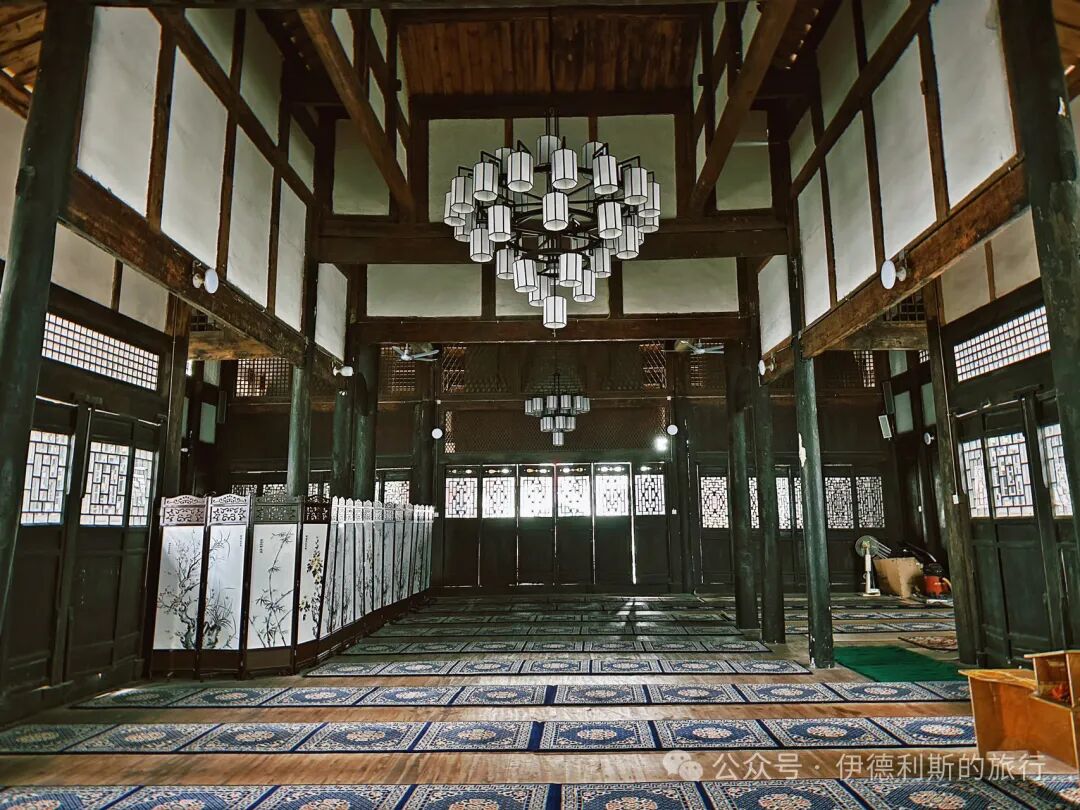
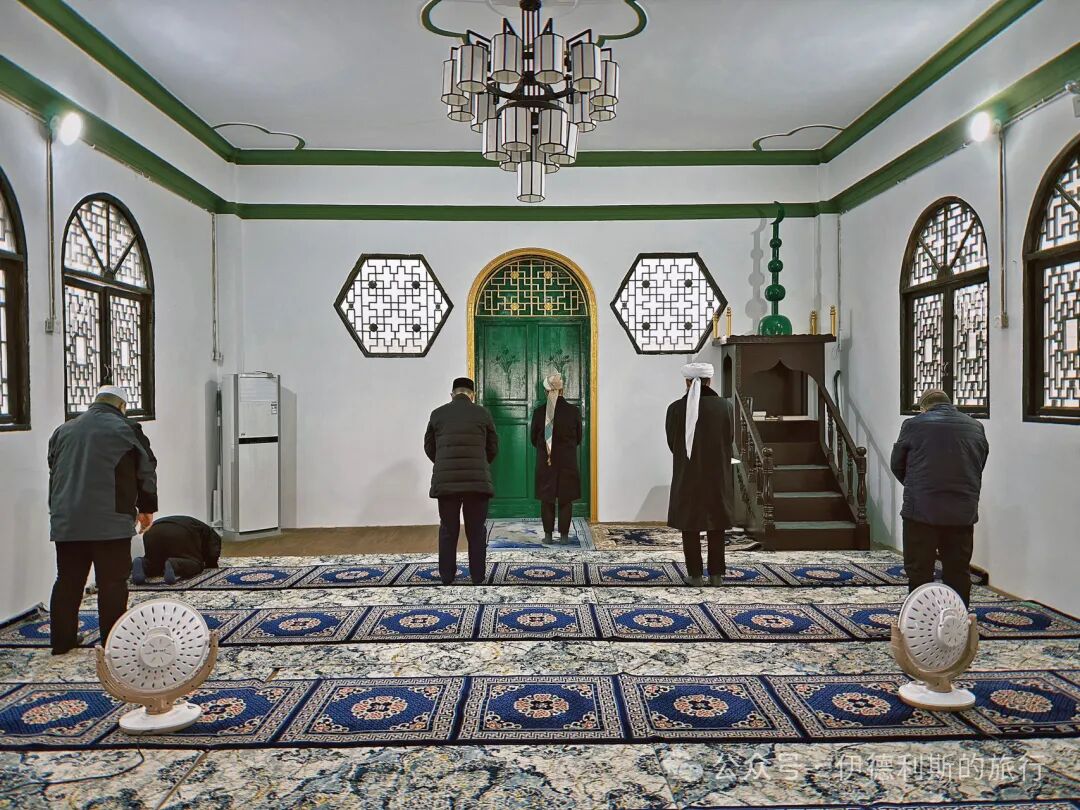
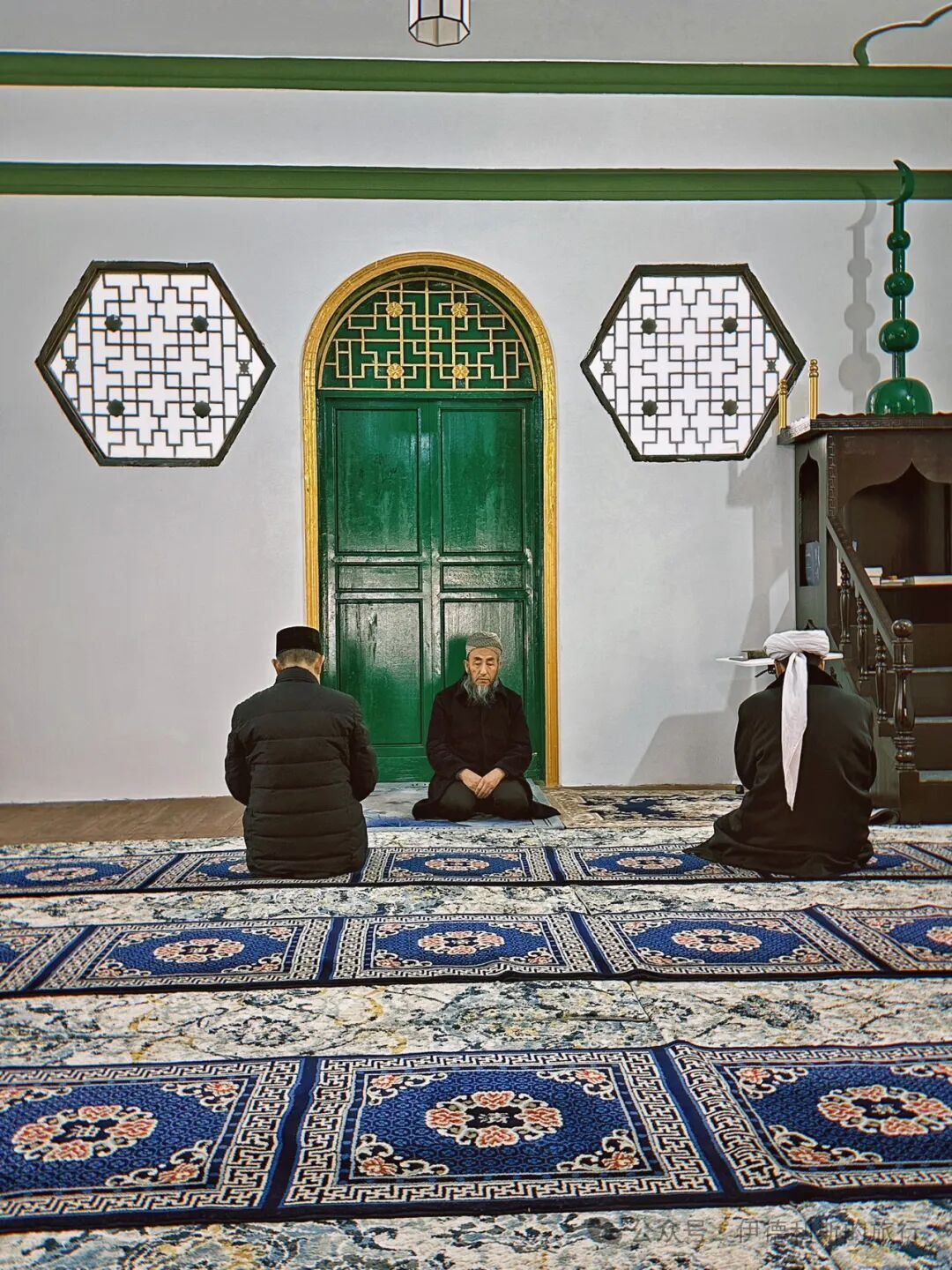
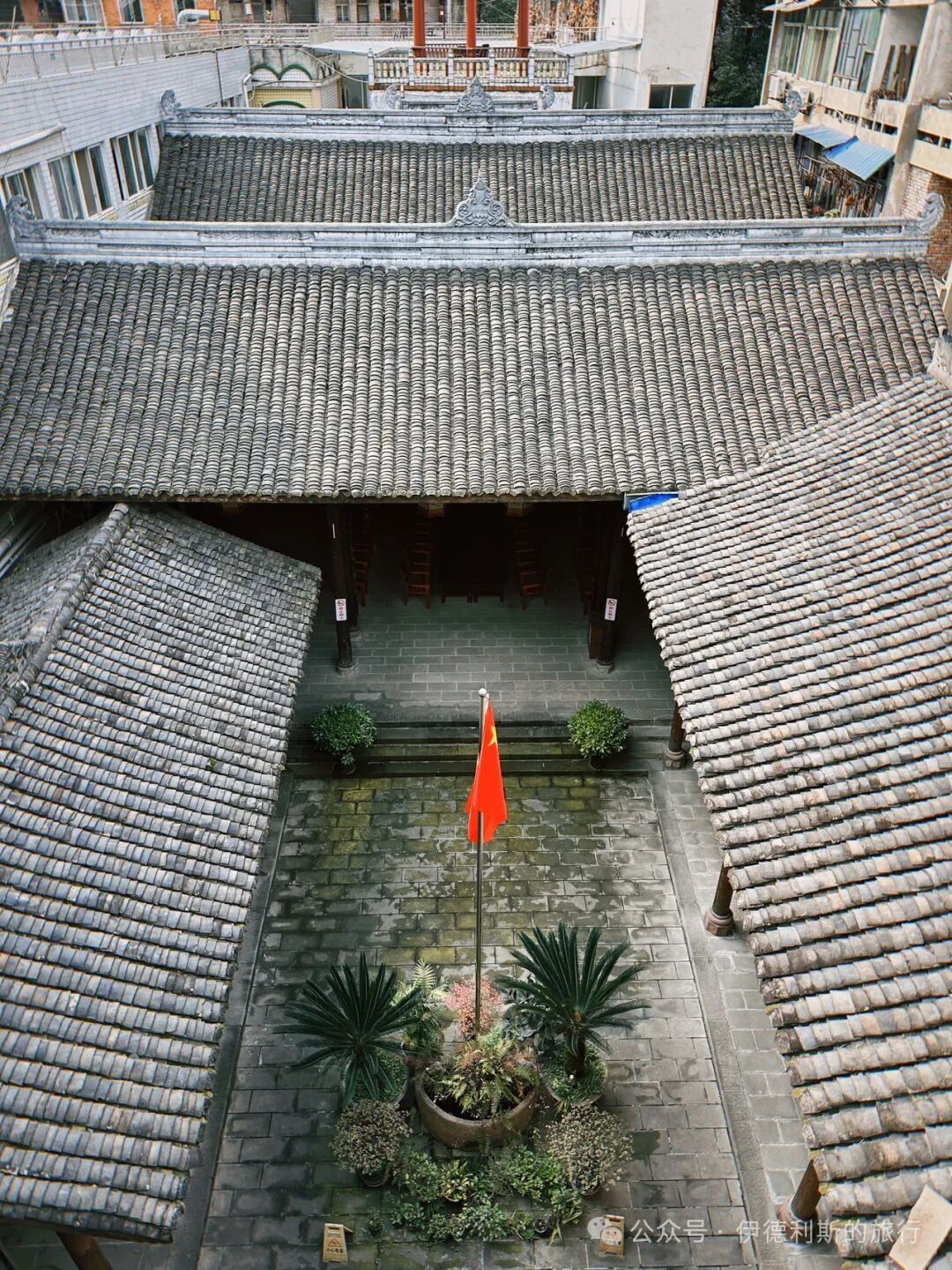
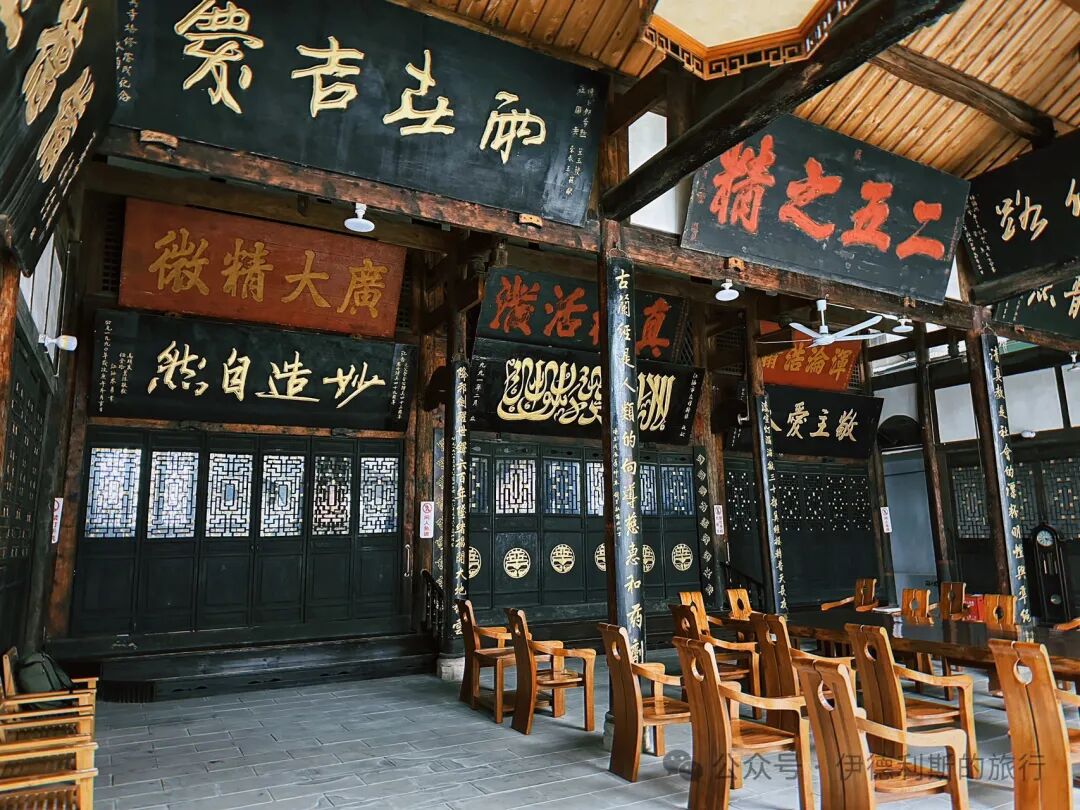
Qing Dynasty plaques inside Zhongba Mosque:
The Essence of the Two and Five
Respectfully presented by the religious community of Pingyi
An auspicious day in the first ten days of the second lunar month, the 11th year of the Guangxu reign
Pingyi here likely refers to Pingwu County in Mianyang, Sichuan.
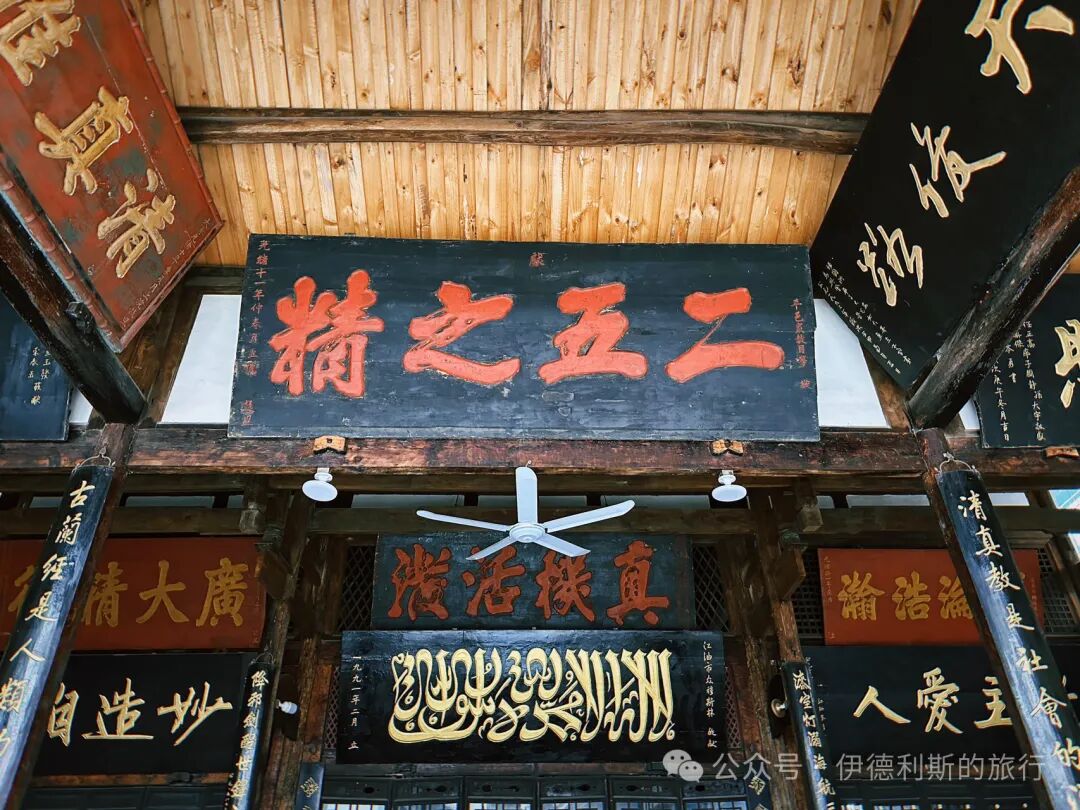
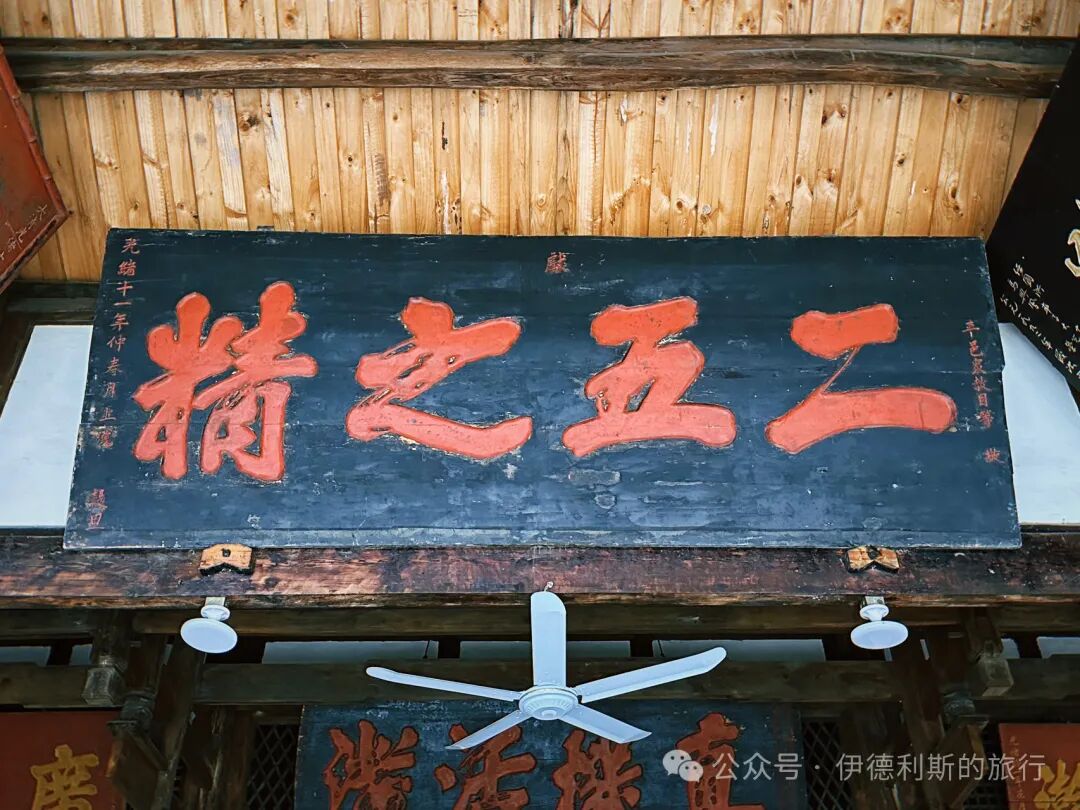
Vast, Subtle, and Refined
An auspicious day in the first ten days of the sixth lunar month, the 10th year of the Guangxu reign of the Great Qing Dynasty
Ma Wenmeng, a Jinshi degree holder from the Jiwei year, appointed member of the Hanlin Academy, and former magistrate of Fengyang Prefecture, Anhui
Xu Cheng'ao, a hereditary second-class earl, commander of the provincial ten-battalion elite troops, and director of the Changsheng Army camp
Ma Zhonglong, an official with the third-rank title and peacock feather, former magistrate of Zhenfeng Prefecture, Guizhou, and current magistrate of Tongren Prefecture
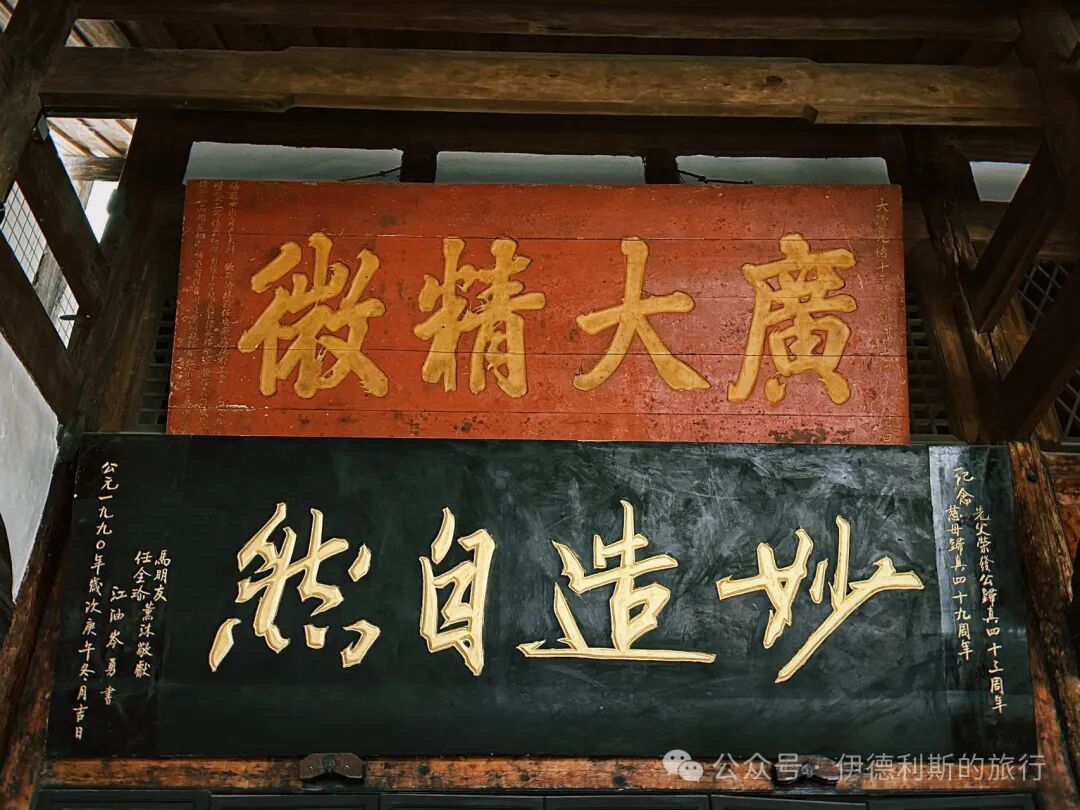
Pure, Truthful, Elegant, and Correct
An auspicious day in the first ten days of the sixth lunar month, the 10th year of the Guangxu reign of the Great Qing Dynasty
Respectfully inscribed by the scholar Lianquan Jushi Rouchizi after ritual cleansing
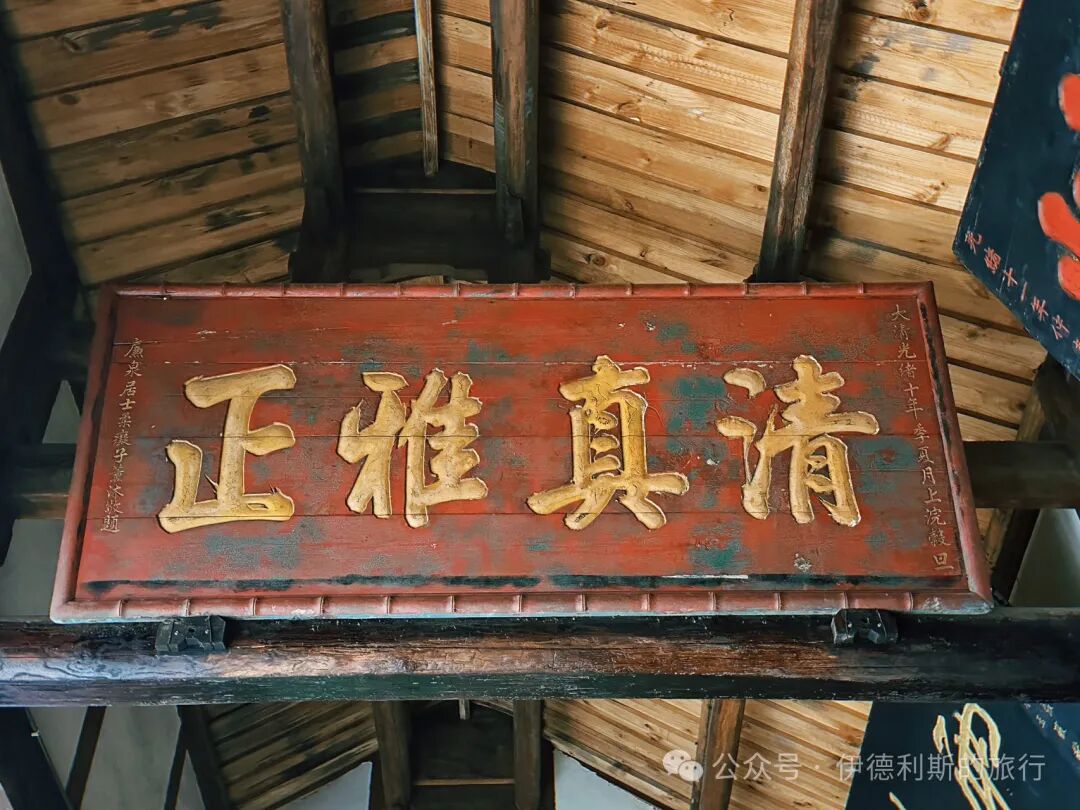
Vast and boundless.
Presented by the religious leaders (jiaomu) of Huajie Town in Anyi.
Erected in the second month of the eleventh year of the Guangxu reign.
Anyi here likely refers to the present-day Anzhou District of Mianyang, Sichuan.
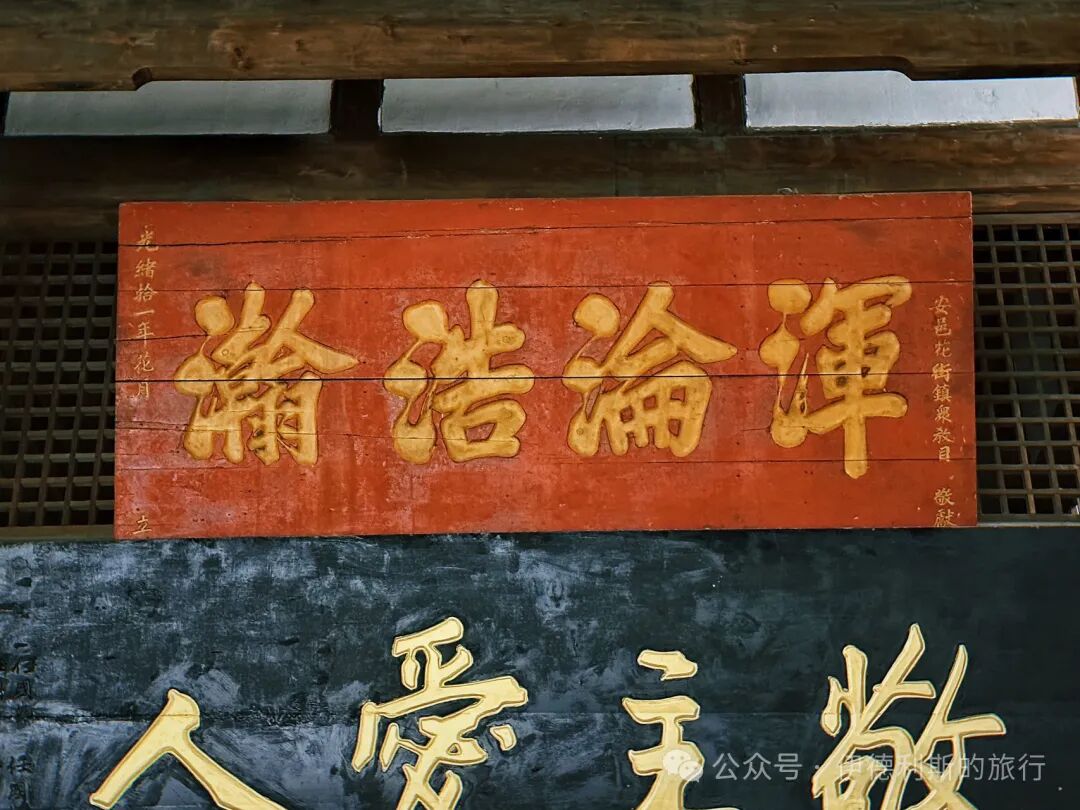
True spirit is lively.
Imperial-appointed Commander-in-Chief of the Sichuan Songpan Garrison, Liyong Baturu...
Acting Prefect of the Songpan Independent Prefecture in Sichuan, responsible for civil administration and pacifying the border tribes...
The second month of spring in the eleventh year of the Guangxu reign.
It is estimated that the Commander-in-Chief of the Sichuan Songpan Garrison, Liyong Baturu, was Xia Yuxiu from Kunming, Yunnan. He became the Songpan Brigade General in the seventh year of the Guangxu reign, guarded Songpan for ten years, and was later promoted to Commander-in-Chief of Sichuan.
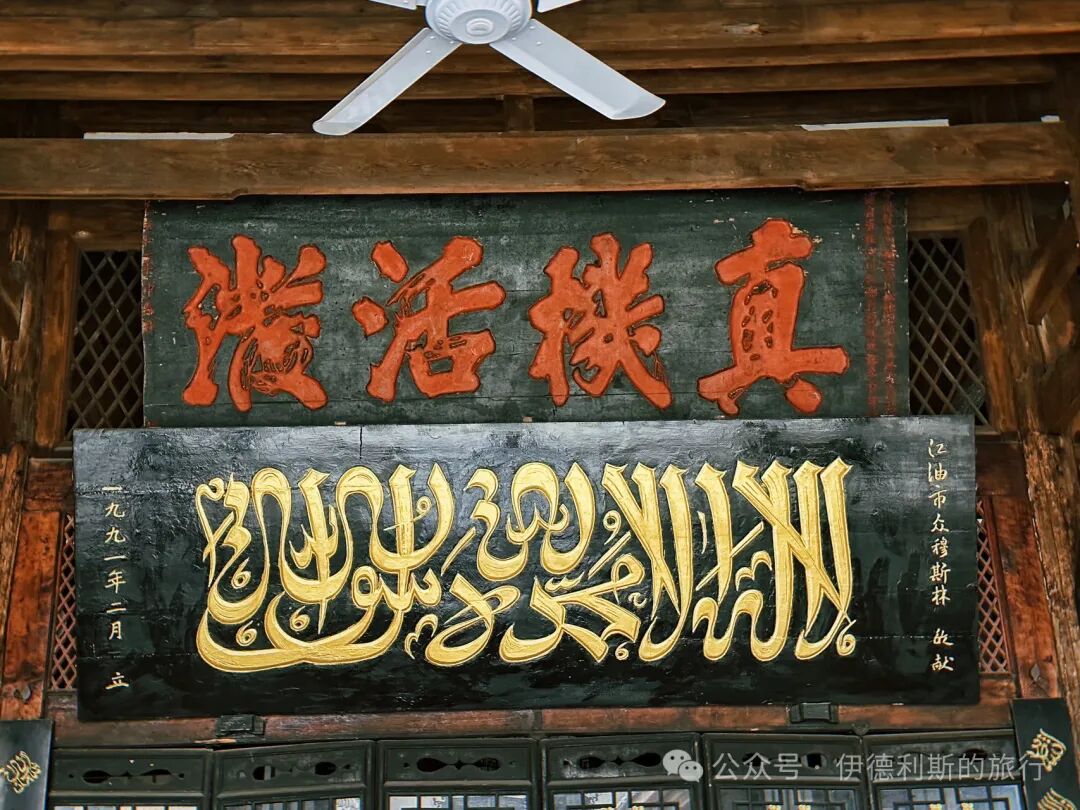
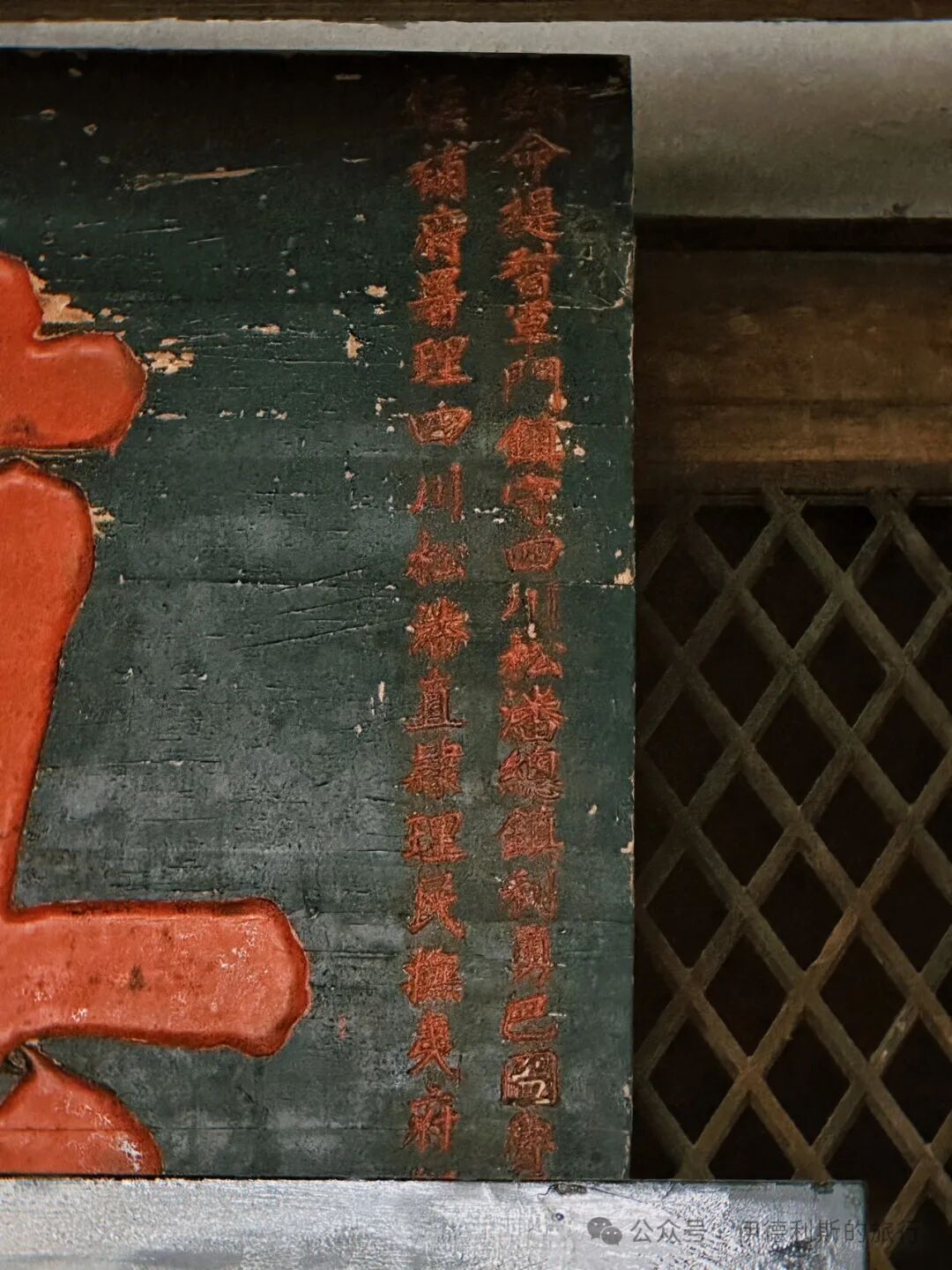
Halal Travel Guide: Miyi Tianba — Hui Muslim Village in Sichuan Mountains
Articles • ali2007fr posted the article • 0 comments • 193 views • 2026-05-18 20:36
Summary: Miyi Tianba — Hui Muslim Village in Sichuan Mountains is presented here as a firsthand travel account in clear English, beginning with this scene: On the morning of January 28, I took a high-speed train from Xichang to Miyi County, located at the southwestern tip of Sichuan. From there, I took a taxi to Tianba Hui Muslim village. The account keeps its focus on Miyi Tianba, Hui Muslim Village, Sichuan Travel while preserving the names, places, food, and historical details from the Chinese source.
On the morning of January 28, I took a high-speed train from Xichang to Miyi County, located at the southwestern tip of Sichuan. From there, I took a taxi to Tianba Hui Muslim village.
Tianba Village is a very beautiful Hui Muslim village. Besides the Tianba Mosque, which is listed as a Sichuan provincial cultural heritage site and is well worth a visit, the village is a peaceful place to wander. It feels like a quiet, rural paradise where you can hear chickens and dogs in the distance.
Tianba Village sits in a dry, hot subtropical valley. It is warm in winter and cool in summer, feeling like spring all year round with flowers blooming in every season. In 2019, the village was named one of the most beautiful villages in Sichuan. The streets are clean and tidy, and the local Hui Muslims greet you with smiles.
Although it is deep in the mountains and used to be very difficult to reach, the high-speed train has made it much easier. Many trains between Chengdu and Kunming stop at Miyi East Station. After exiting the station, you can hire a car or wave down a local bus heading from Miyi to Guabang to get there.
An elderly man (baba) saw me and immediately told his grandson to give up his stool for me. I tried to refuse for a long time before the grandson finally sat back down.
I first performed namaz at Tianba Mosque. Tianba Mosque was first built in 1702 during the 11th year of the Kangxi reign of the Qing Dynasty. It was renovated and expanded several times during the Qianlong, Jiaqing, and Daoguang periods, and it was named a provincial cultural heritage site in 1991.
Tianba Mosque has a traditional courtyard layout. The main gate features a moon-viewing tower (wangyuelou) with a double-eaved hexagonal roof, similar in style to traditional mosques in nearby Zhaotong, Yunnan. The main prayer hall has a T-shaped structure with a single-eaved, ridge-roofed design. Since the population of Tianba Village is small, the hall is not large, but it is elegant, simple, and beautiful.
The mihrab was eaten by termites, so a replica was made. You can see it is in a typical Yunnan style, almost identical to the Dazhuang Mosque in Kaiyuan and very similar to the Huihuiying Mosque in Chenggong.
The mihrab of Dazhuang Mosque in Kaiyuan.
The mihrab of Huihuiying Mosque in Chenggong.
I received a warm welcome from Director Sa Fanghui at the mosque and learned many stories about the mosque and Tianba Village.
The mosque is filled with various flowers and plants, and the small pineapples look very cute.
Date palms (yezao) from the Arab region also grow very well here. During Ramadan, everyone breaks their fast at the mosque. People spit the date pits into the flower beds, and they grow into strong trees.
The most interesting thing is that they even grow coffee beans in the mosque. This was my first time seeing that. I heard the imam usually picks some to roast for coffee, and it tastes quite good.
The south wing of Tianba Mosque has been turned into an exhibition hall. It displays old items from the local Hui Muslim families as a memory of life in the past, which I think is very meaningful.
After leaving the mosque, a friend (dost) from Gansu who prayed namaz with me invited me to eat at the Yiqingyuan farmhouse restaurant in the village. The owner is the brother of Director Sa, and he is a very kind and welcoming person. The restaurant has been open for 10 years and strictly does not sell alcohol.
We ate stir-fried beef with chili, cured duck (banya), stir-fried cabbage, and bitter vegetable soup. The beef was tender and went well with rice, and the cured duck was salty and delicious. Overall, it was tasty and affordable. The way they eat bitter vegetable soup here is the same as in Yunnan: you first scoop a spoonful of the vegetable soup into your dipping sauce.
The atmosphere at the restaurant is really nice. When there are no customers, they keep the doors open, and the village children play inside.
Leaving Tianba Village, Baima Town is not far away. At the town's farmers' market, a Hui Muslim auntie from Tianba Village sells pea jelly noodles (wandou liangfen). After saying salaam, the auntie refused to take my money, so I paid her secretly. Because Miyi is at the southern end of Sichuan and very close to Yunnan, the halal food culture is quite similar.
There are a few other halal restaurants in the town.
The scenery in the town is also very beautiful.
After walking around, I took a bus from the town back to the high-speed train station and headed to Dali for the next leg of my trip.
Spring travels in 2023:
On January 23, I left Macau and visited the Macau mosque known as the Moor Garden (Moluoyuan), where I ate delicious Indonesian Javanese food (see "Moor Garden and Indonesian Food in Macau"). On January 25, I arrived in Guangzhou, visited friends (dost), and ate various halal foods (see "Hui Muslim Oil Cakes and Yemeni Food in Guangzhou").
At noon, I performed namaz at the Huaisheng Mosque, then went to visit the Ancient Tombs of the Worthies (see "Huaisheng Mosque and the Ancient Tombs of the Worthies in Guangzhou").
In the afternoon, I prayed the afternoon prayer (asr) at Haopan Mosque and the sunset prayer (maghrib) at Xiaodongying Mosque (see "Visiting Haopan Mosque and Xiaodongying Mosque in Guangzhou").
On the morning of January 26, I took a train from Guangzhou to Zhaoqing, visited two mosques, and ate halal Cantonese food (see "Halal Roast Goose and Starfruit at the Mosque in Zhaoqing, Guangdong").
On the morning of January 27, I flew from Guangzhou to Xichang, Sichuan. I performed Jumu'ah at the Xichang city mosque, visited the West Mosque and the East Mosque, and ate Xichang rice noodles (see "Performing Jumu'ah and Eating Rice Noodles in Xichang, Sichuan"). view all
Summary: Miyi Tianba — Hui Muslim Village in Sichuan Mountains is presented here as a firsthand travel account in clear English, beginning with this scene: On the morning of January 28, I took a high-speed train from Xichang to Miyi County, located at the southwestern tip of Sichuan. From there, I took a taxi to Tianba Hui Muslim village. The account keeps its focus on Miyi Tianba, Hui Muslim Village, Sichuan Travel while preserving the names, places, food, and historical details from the Chinese source.
On the morning of January 28, I took a high-speed train from Xichang to Miyi County, located at the southwestern tip of Sichuan. From there, I took a taxi to Tianba Hui Muslim village.
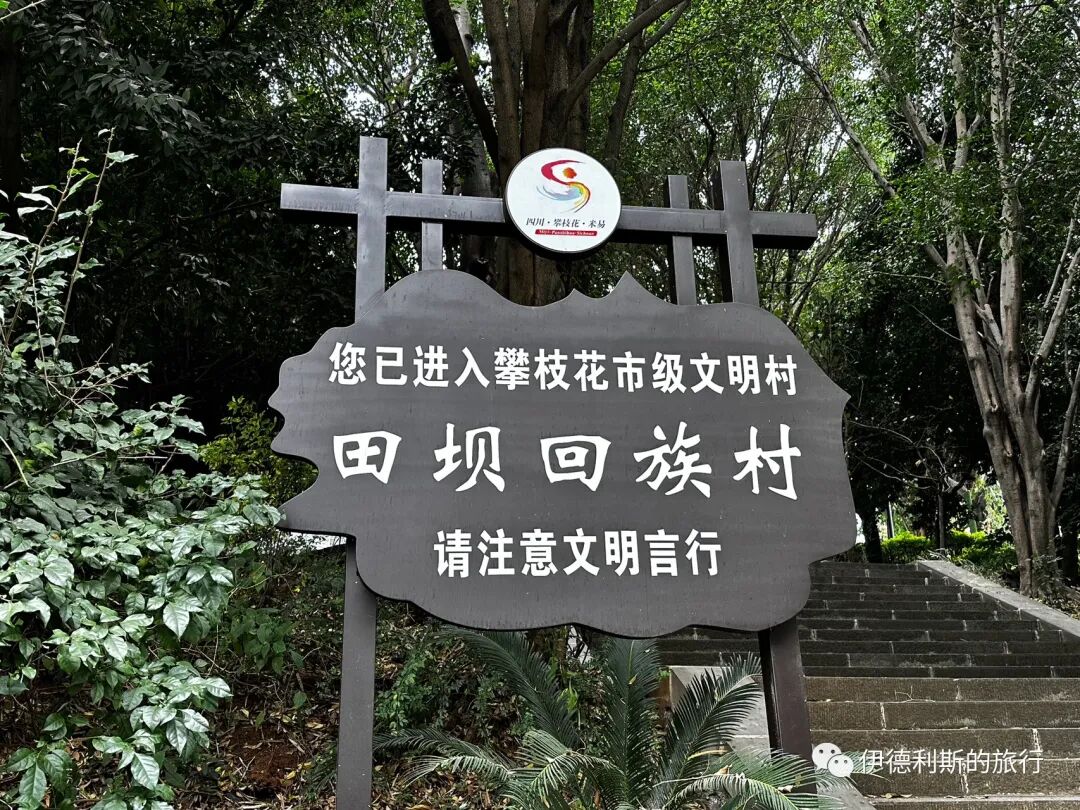
Tianba Village is a very beautiful Hui Muslim village. Besides the Tianba Mosque, which is listed as a Sichuan provincial cultural heritage site and is well worth a visit, the village is a peaceful place to wander. It feels like a quiet, rural paradise where you can hear chickens and dogs in the distance.
Tianba Village sits in a dry, hot subtropical valley. It is warm in winter and cool in summer, feeling like spring all year round with flowers blooming in every season. In 2019, the village was named one of the most beautiful villages in Sichuan. The streets are clean and tidy, and the local Hui Muslims greet you with smiles.
Although it is deep in the mountains and used to be very difficult to reach, the high-speed train has made it much easier. Many trains between Chengdu and Kunming stop at Miyi East Station. After exiting the station, you can hire a car or wave down a local bus heading from Miyi to Guabang to get there.
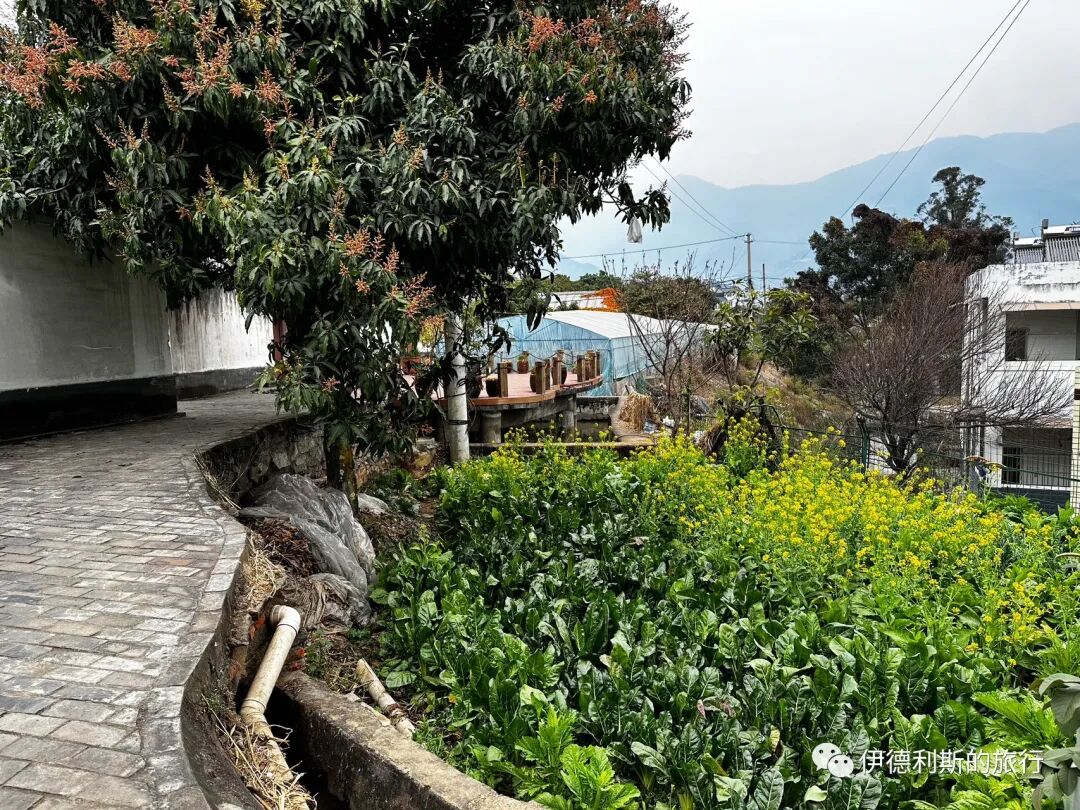
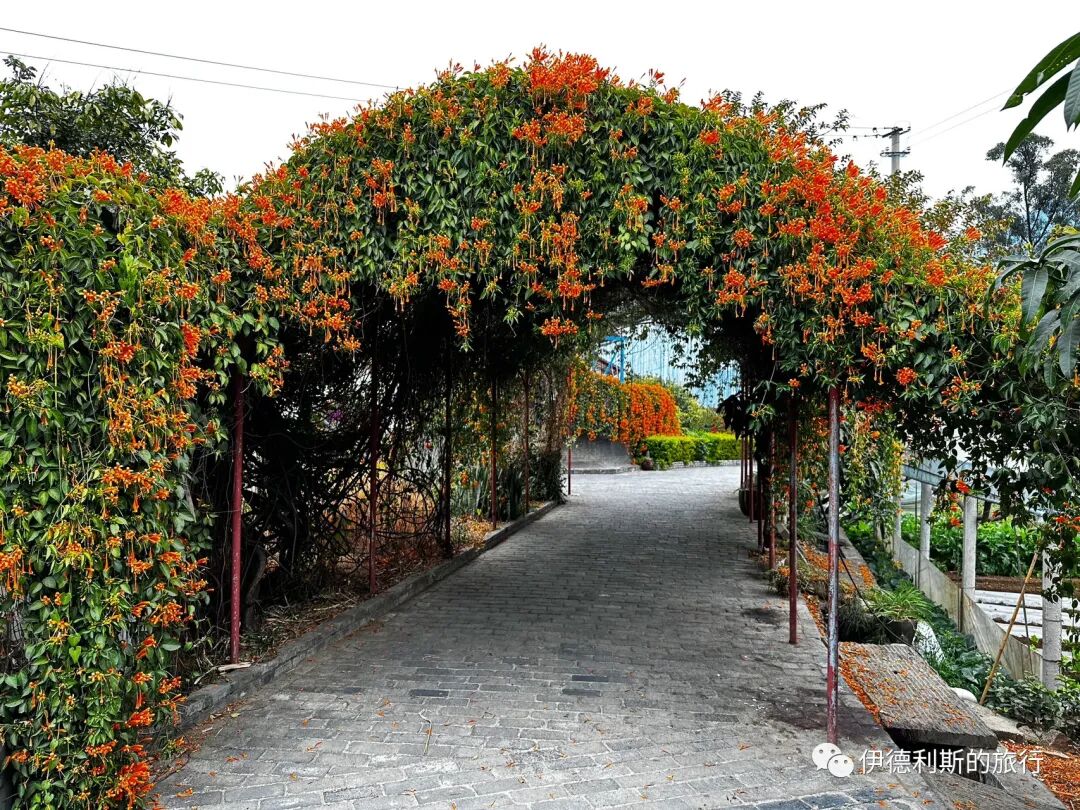
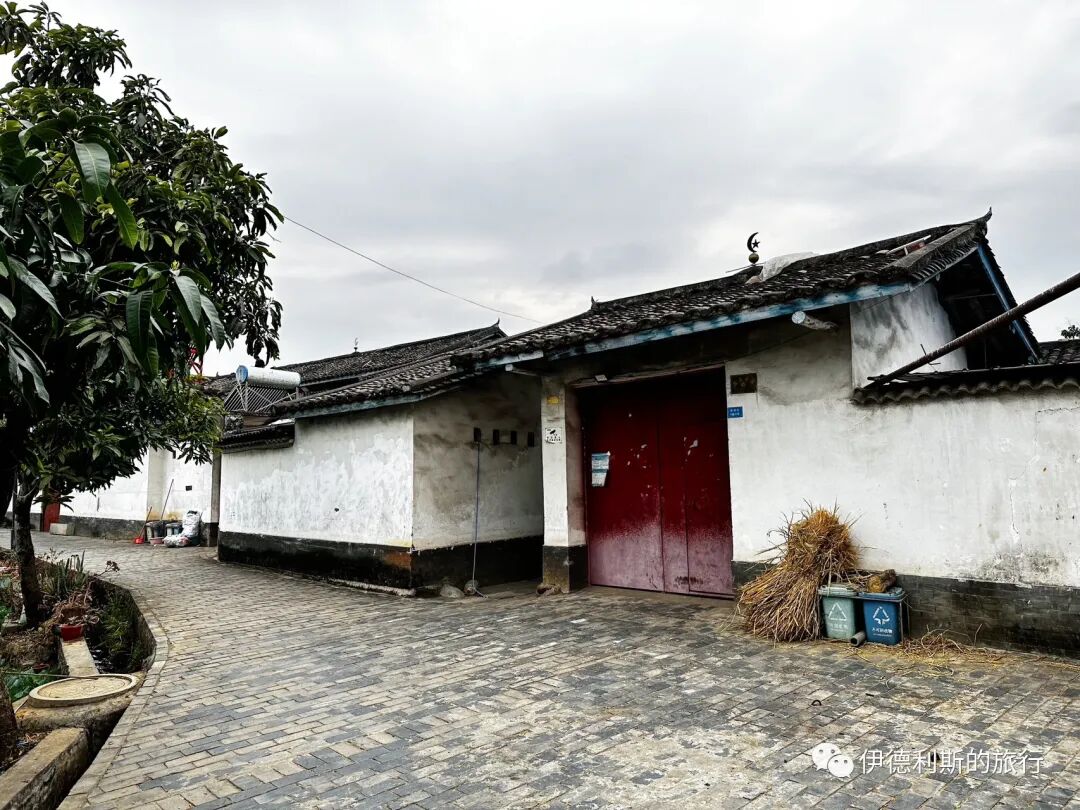
An elderly man (baba) saw me and immediately told his grandson to give up his stool for me. I tried to refuse for a long time before the grandson finally sat back down.
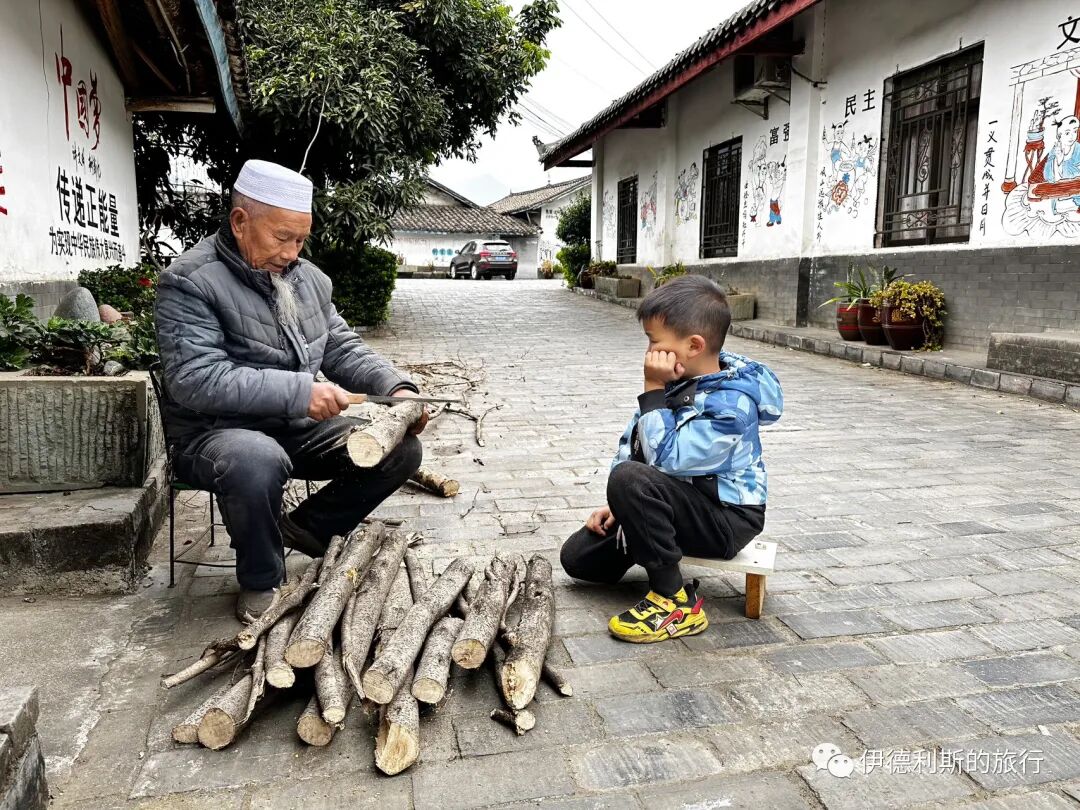
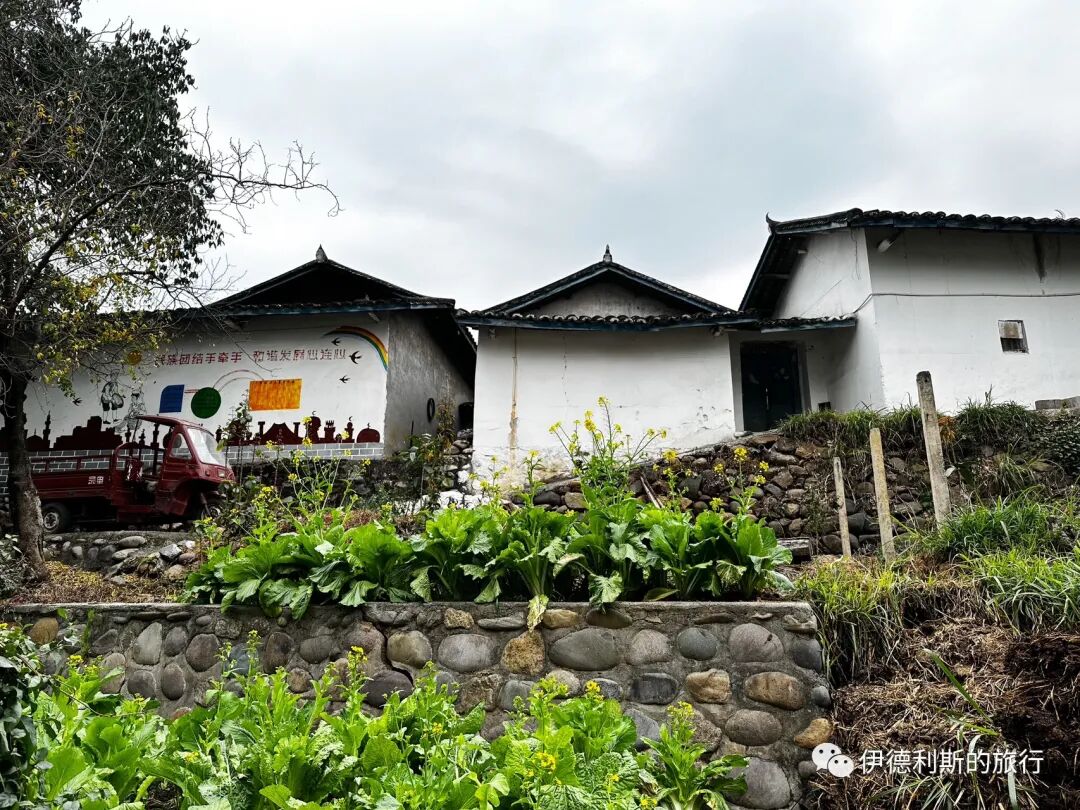
I first performed namaz at Tianba Mosque. Tianba Mosque was first built in 1702 during the 11th year of the Kangxi reign of the Qing Dynasty. It was renovated and expanded several times during the Qianlong, Jiaqing, and Daoguang periods, and it was named a provincial cultural heritage site in 1991.
Tianba Mosque has a traditional courtyard layout. The main gate features a moon-viewing tower (wangyuelou) with a double-eaved hexagonal roof, similar in style to traditional mosques in nearby Zhaotong, Yunnan. The main prayer hall has a T-shaped structure with a single-eaved, ridge-roofed design. Since the population of Tianba Village is small, the hall is not large, but it is elegant, simple, and beautiful.
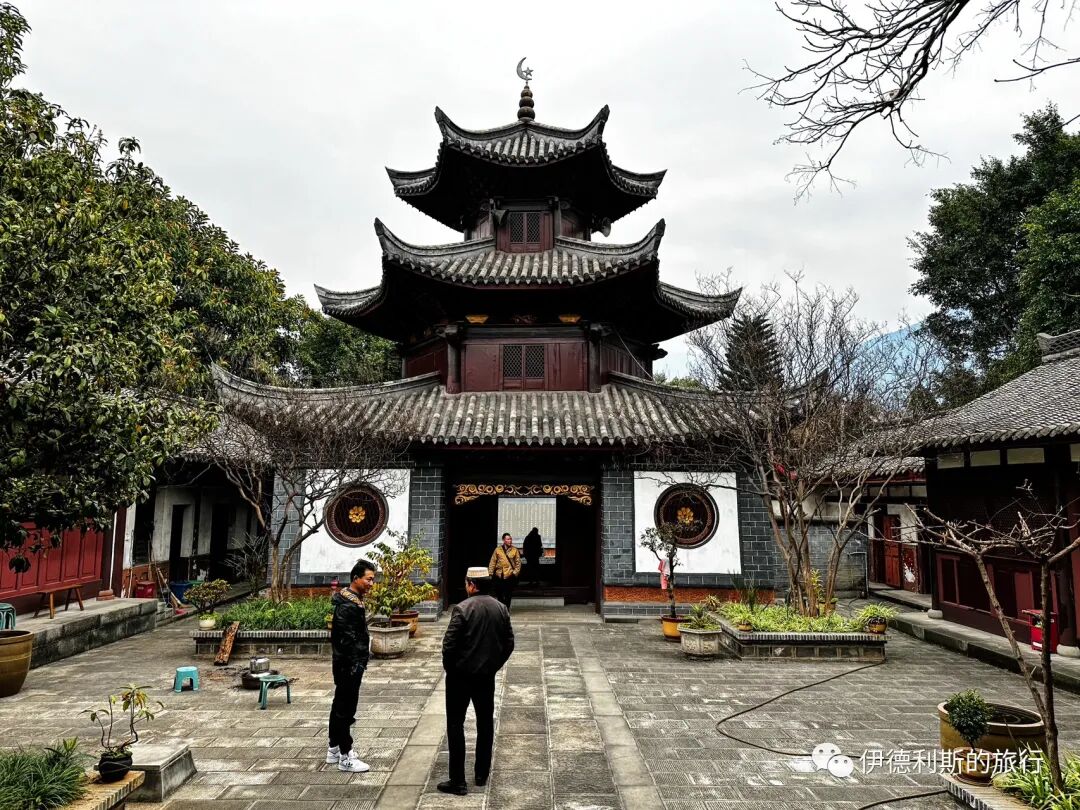
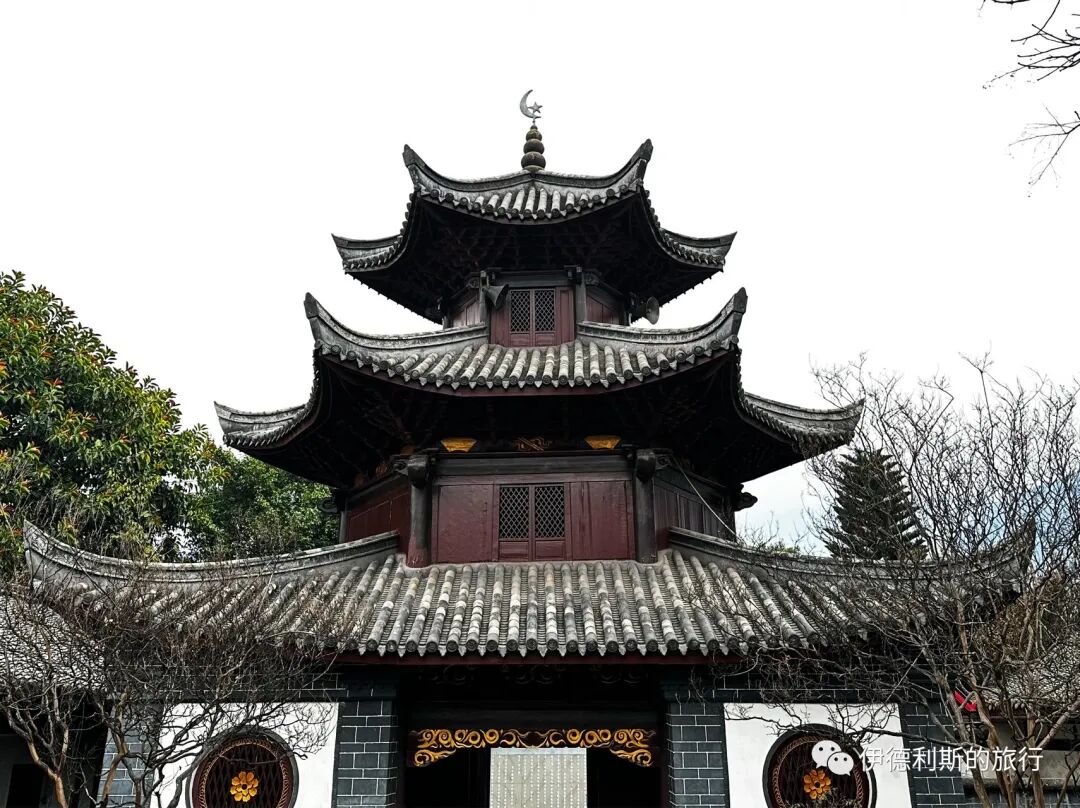
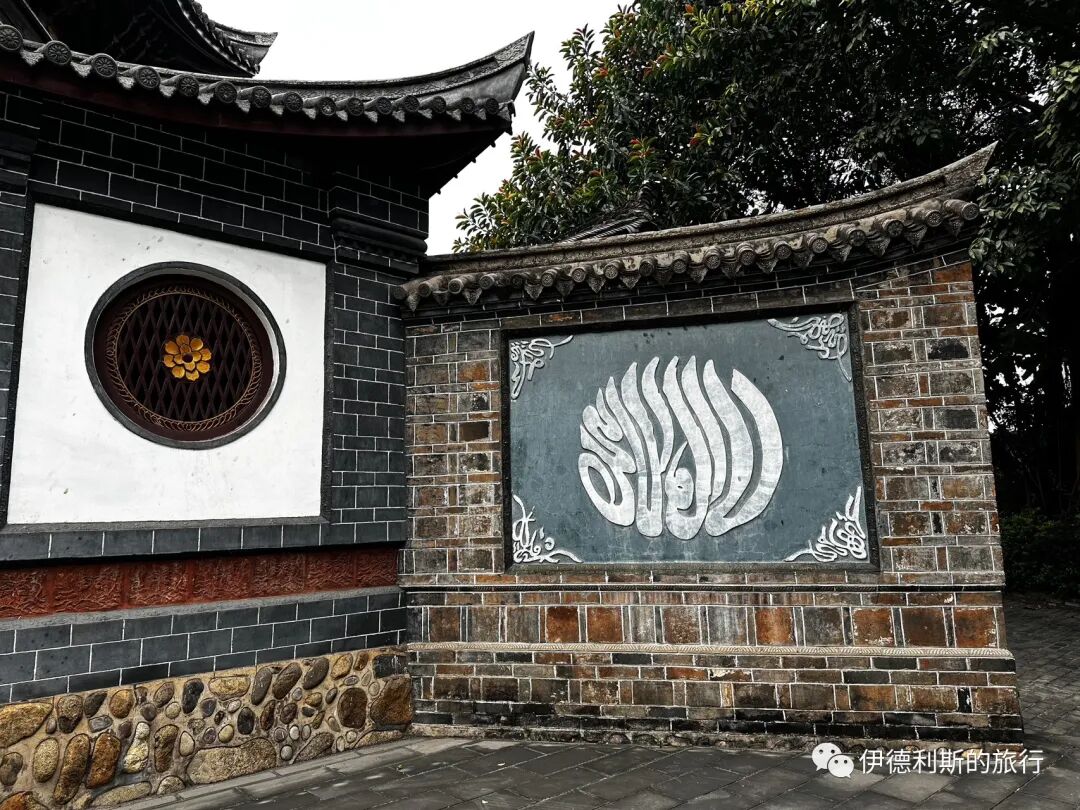
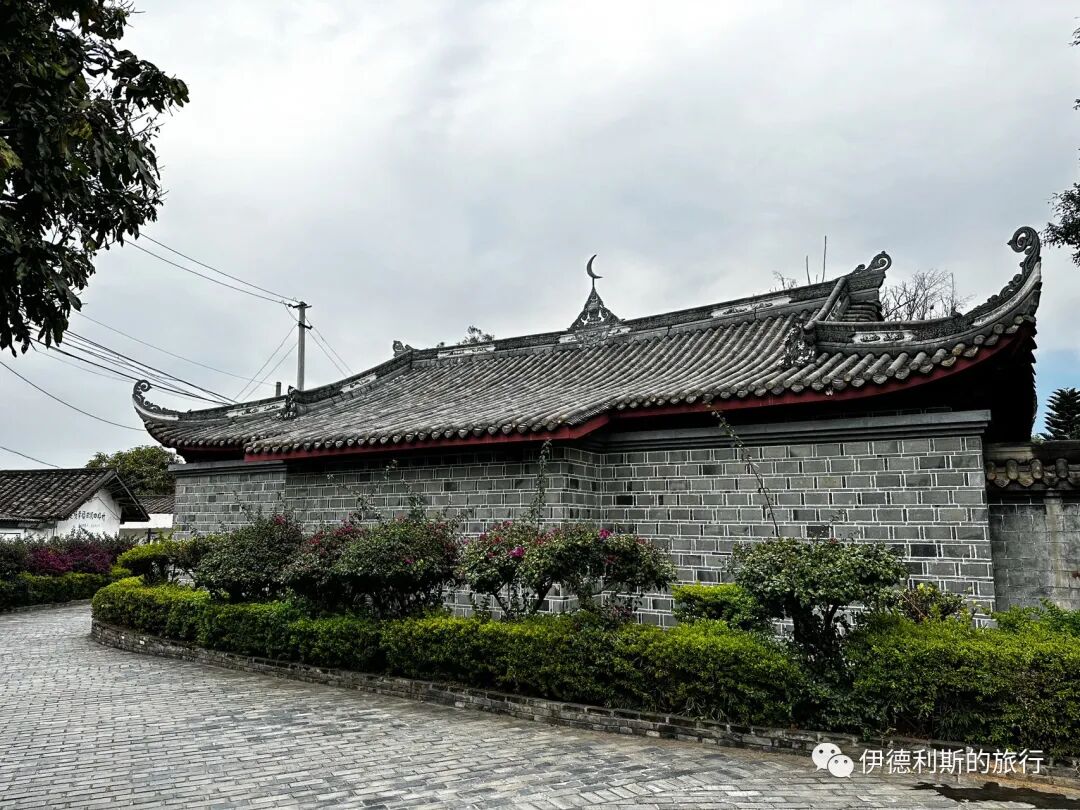
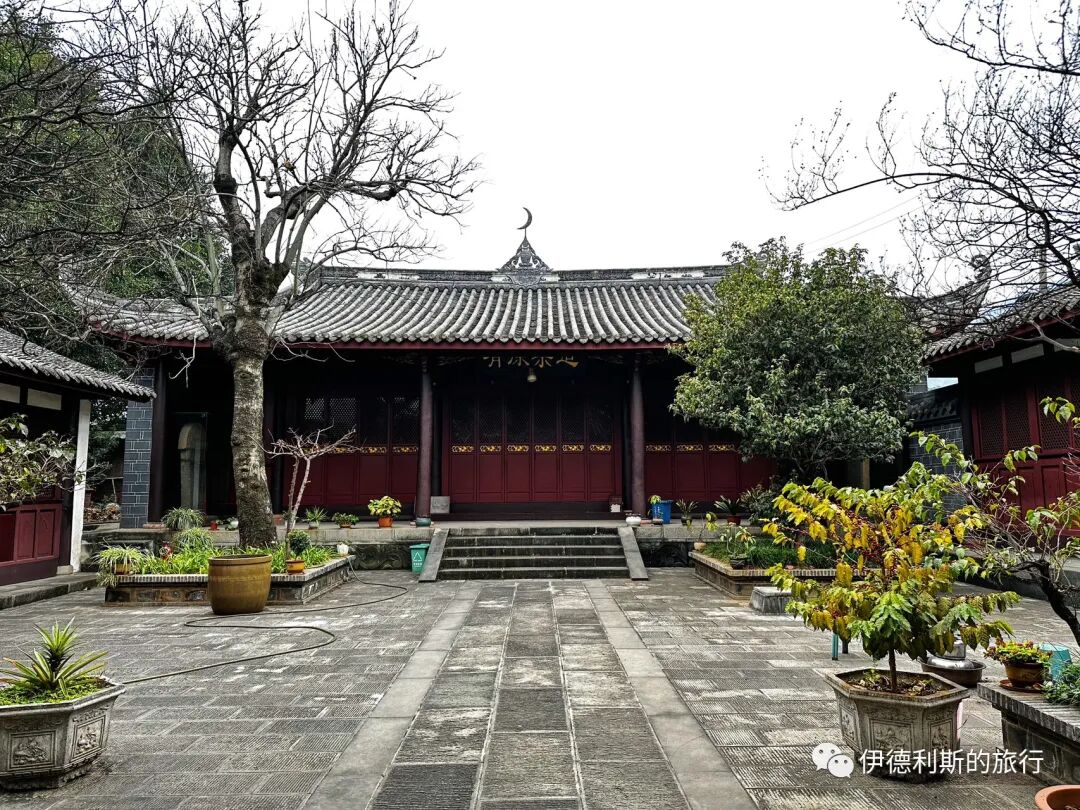
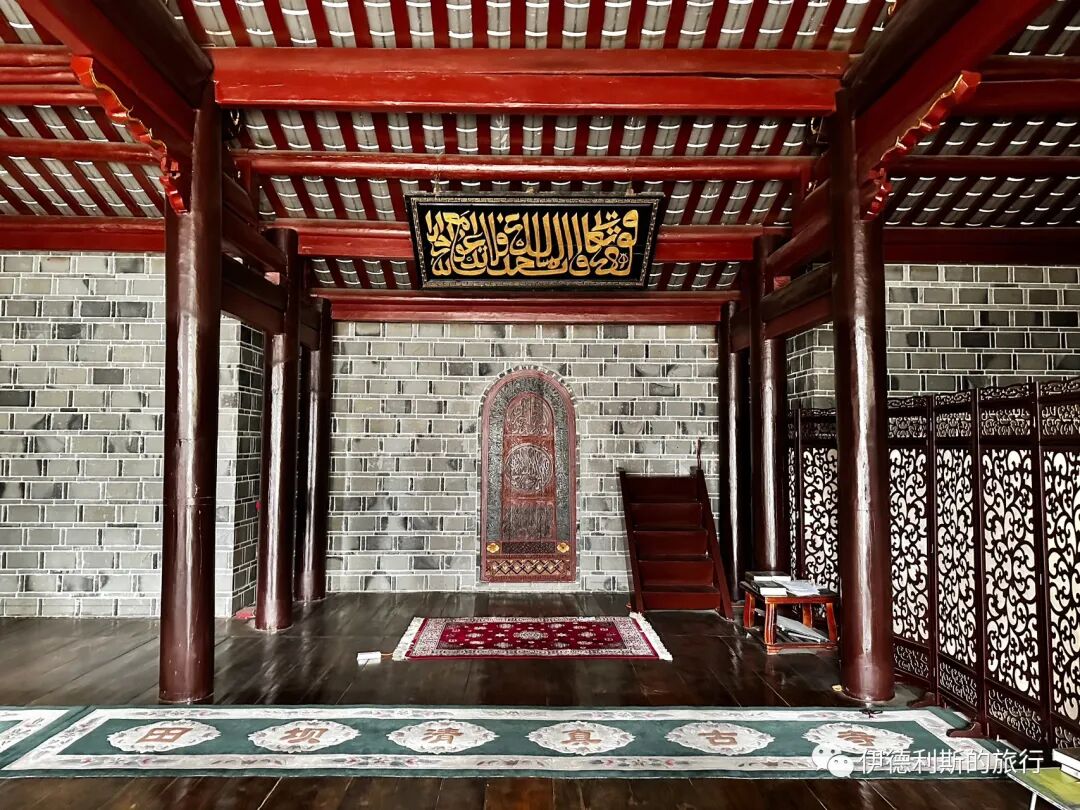
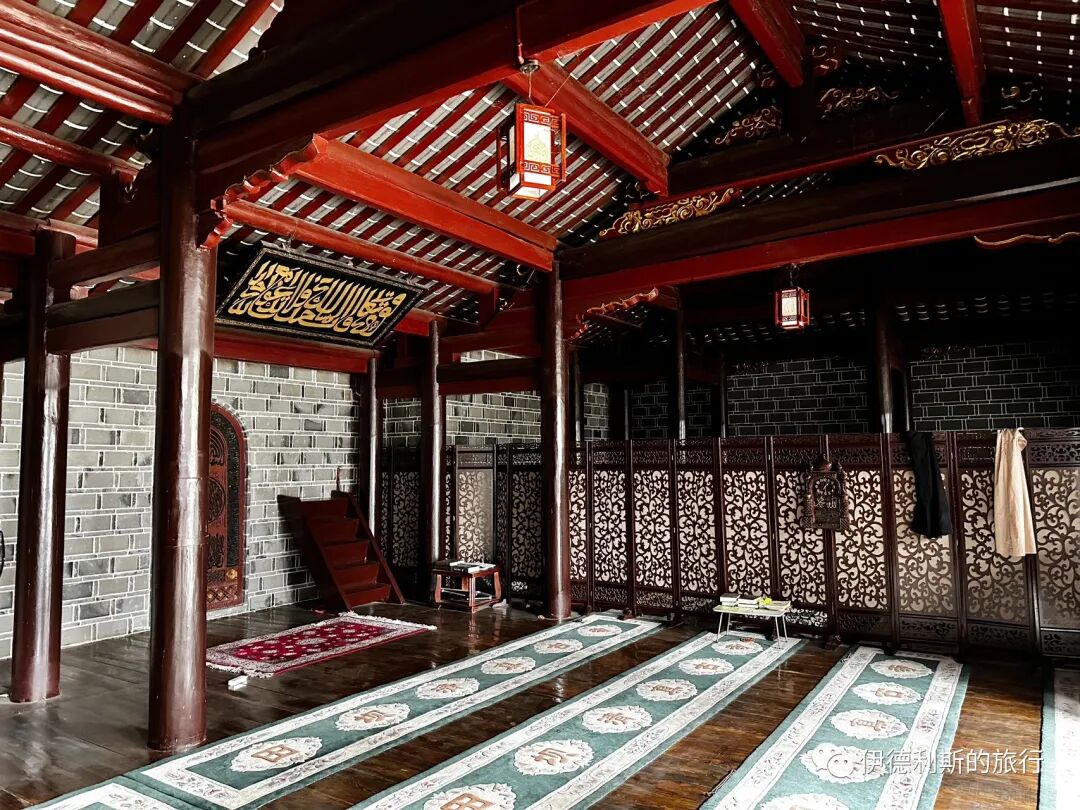
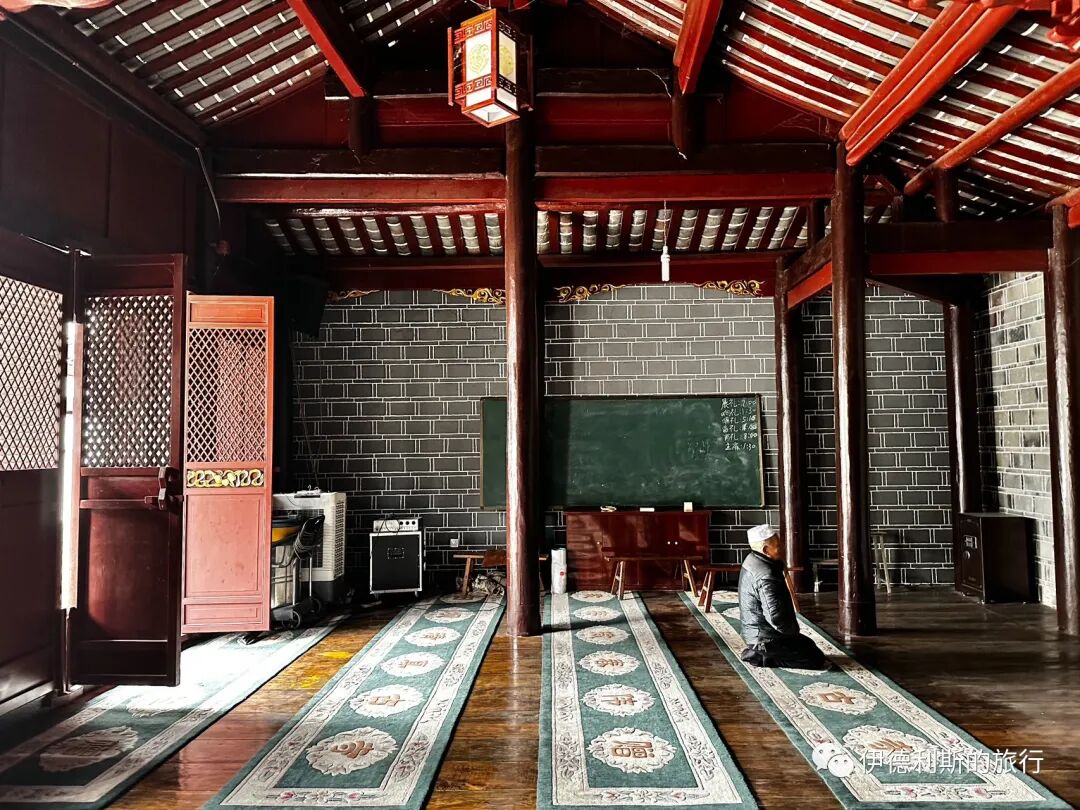
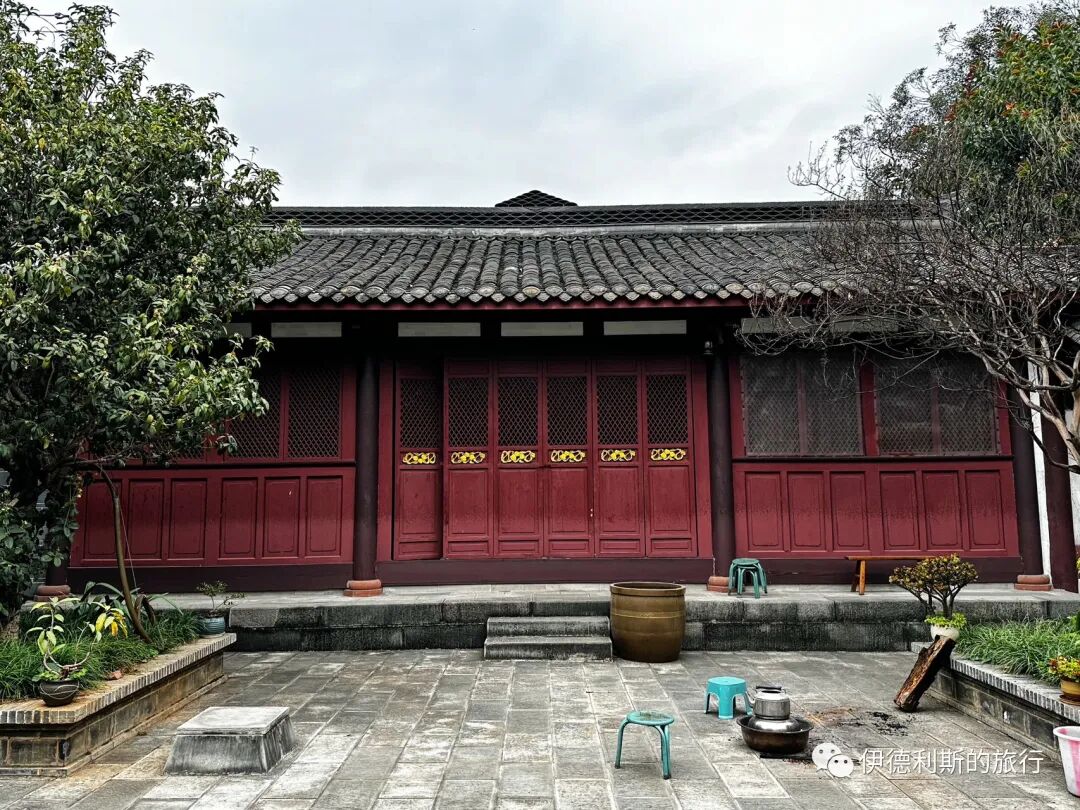
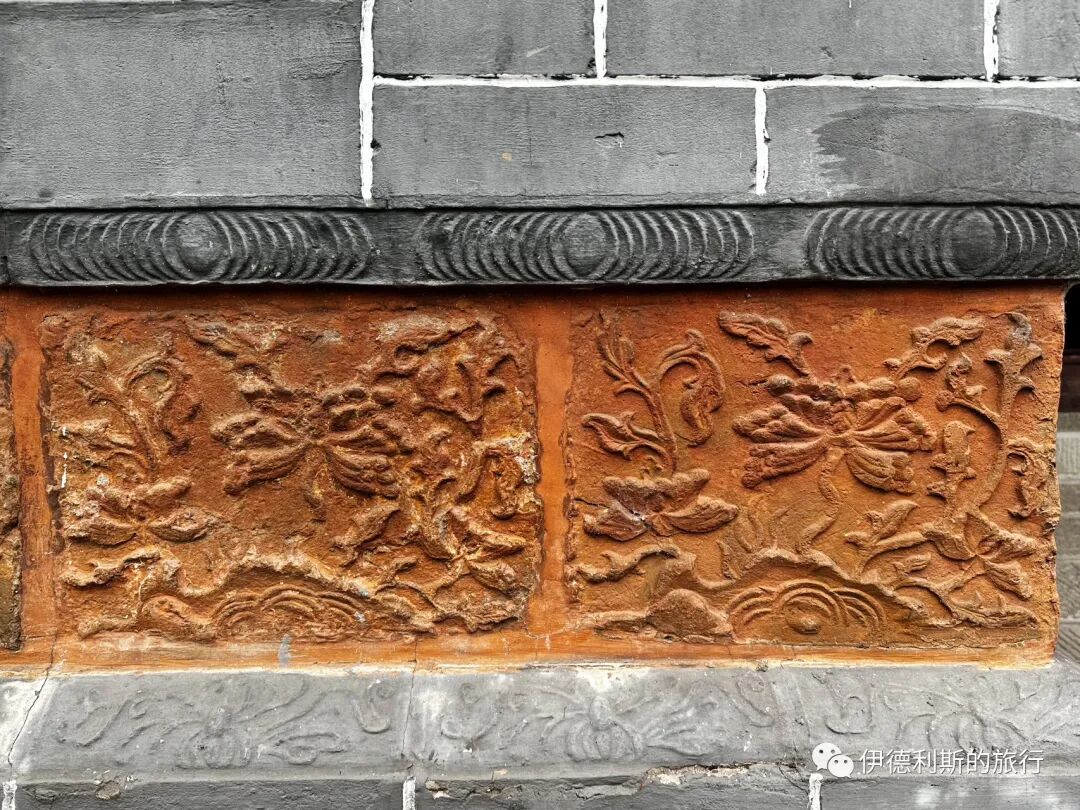
The mihrab was eaten by termites, so a replica was made. You can see it is in a typical Yunnan style, almost identical to the Dazhuang Mosque in Kaiyuan and very similar to the Huihuiying Mosque in Chenggong.
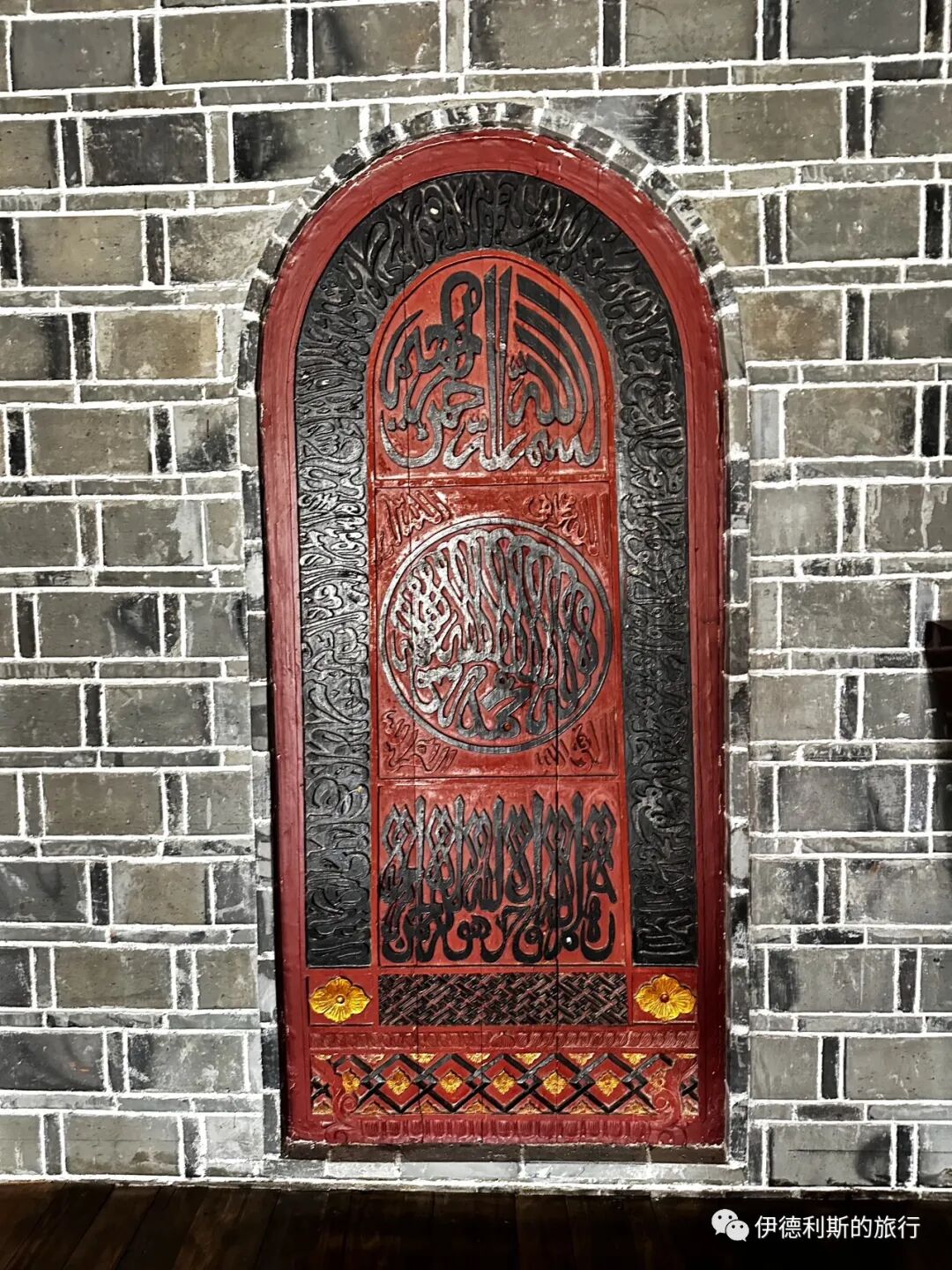
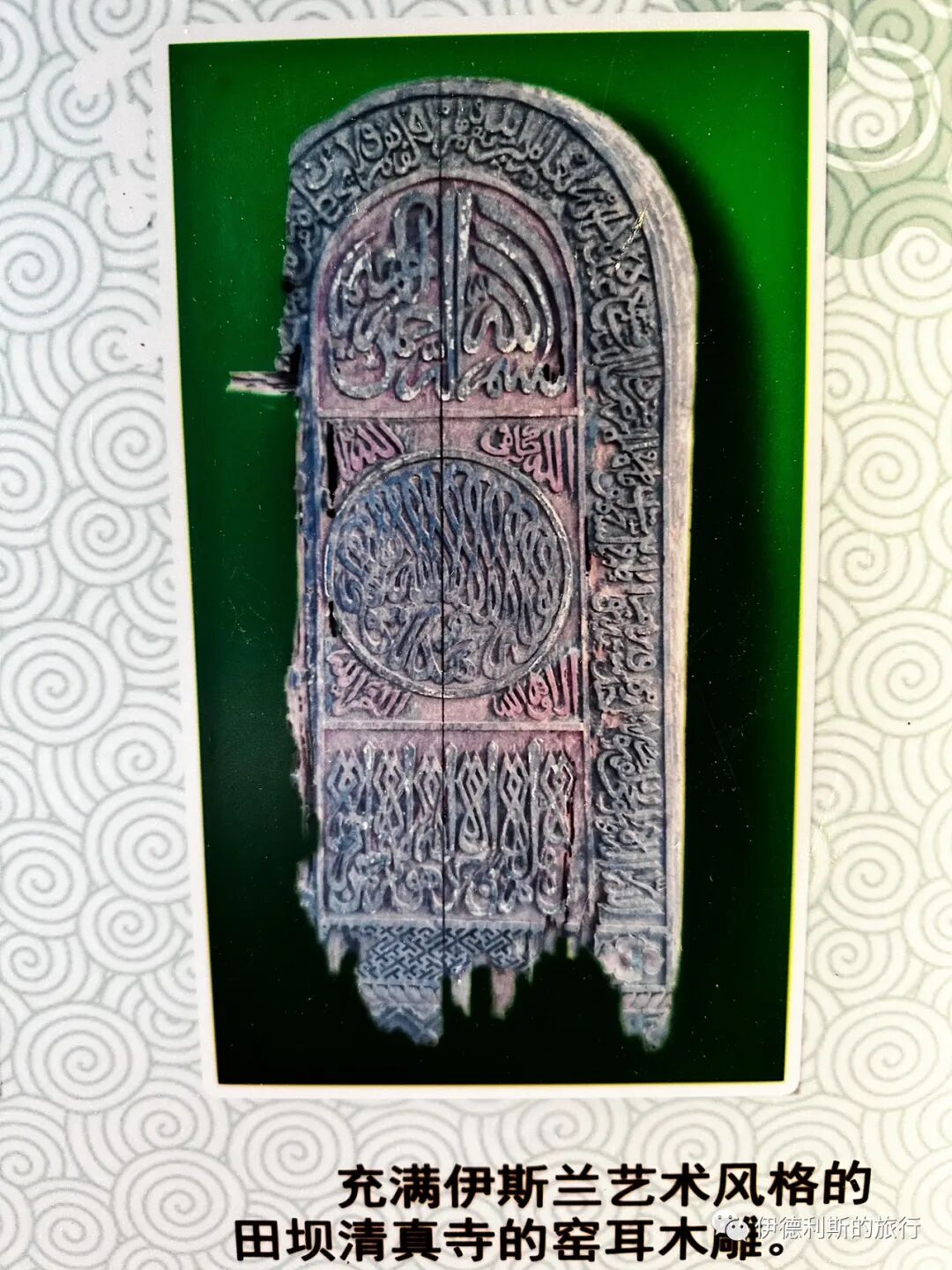
The mihrab of Dazhuang Mosque in Kaiyuan.
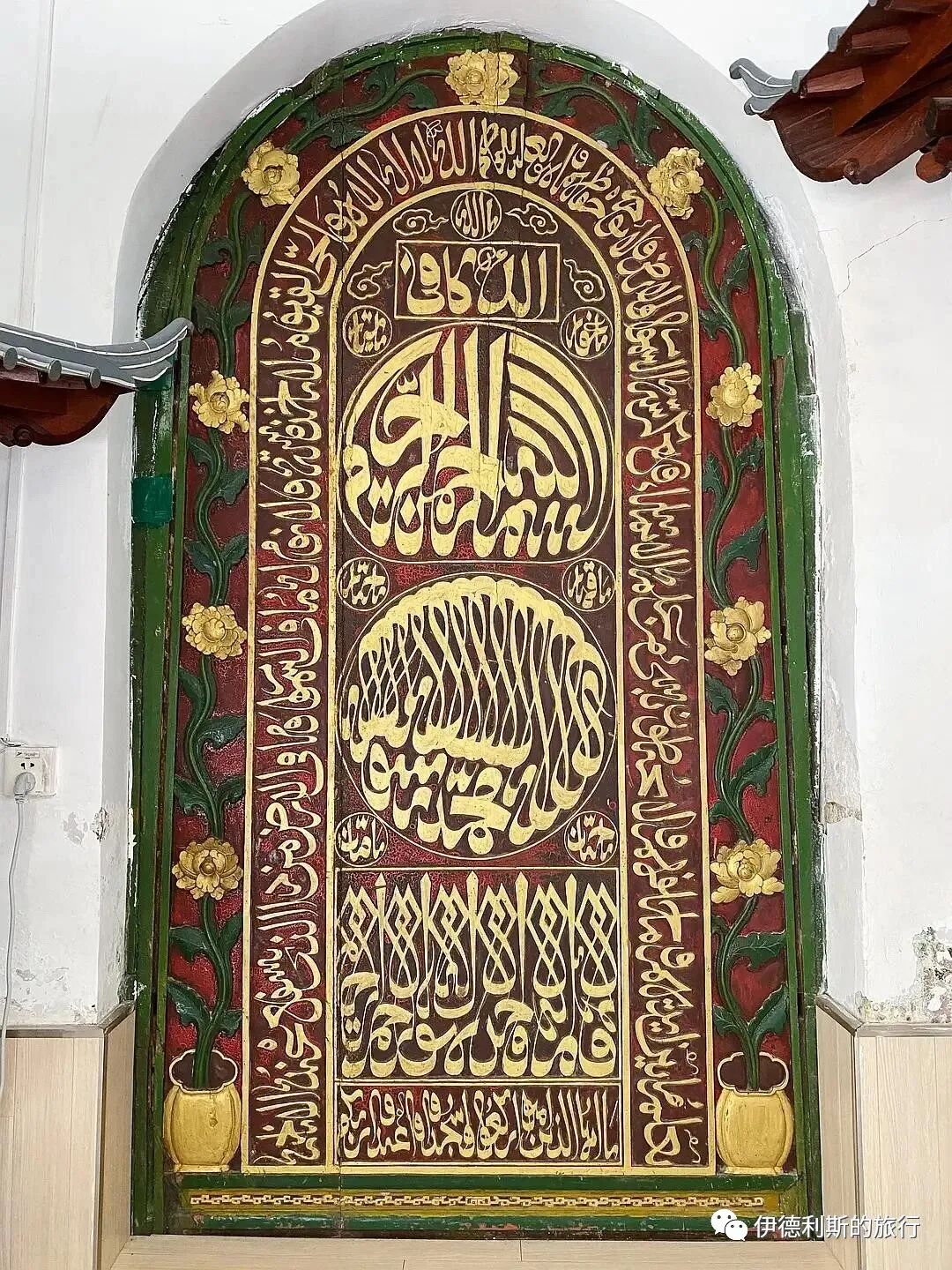
The mihrab of Huihuiying Mosque in Chenggong.
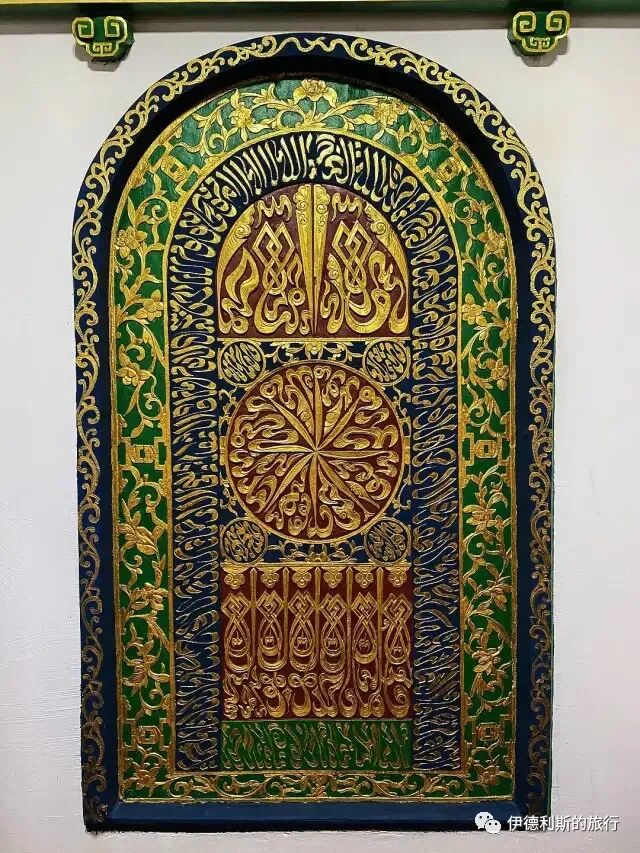
I received a warm welcome from Director Sa Fanghui at the mosque and learned many stories about the mosque and Tianba Village.
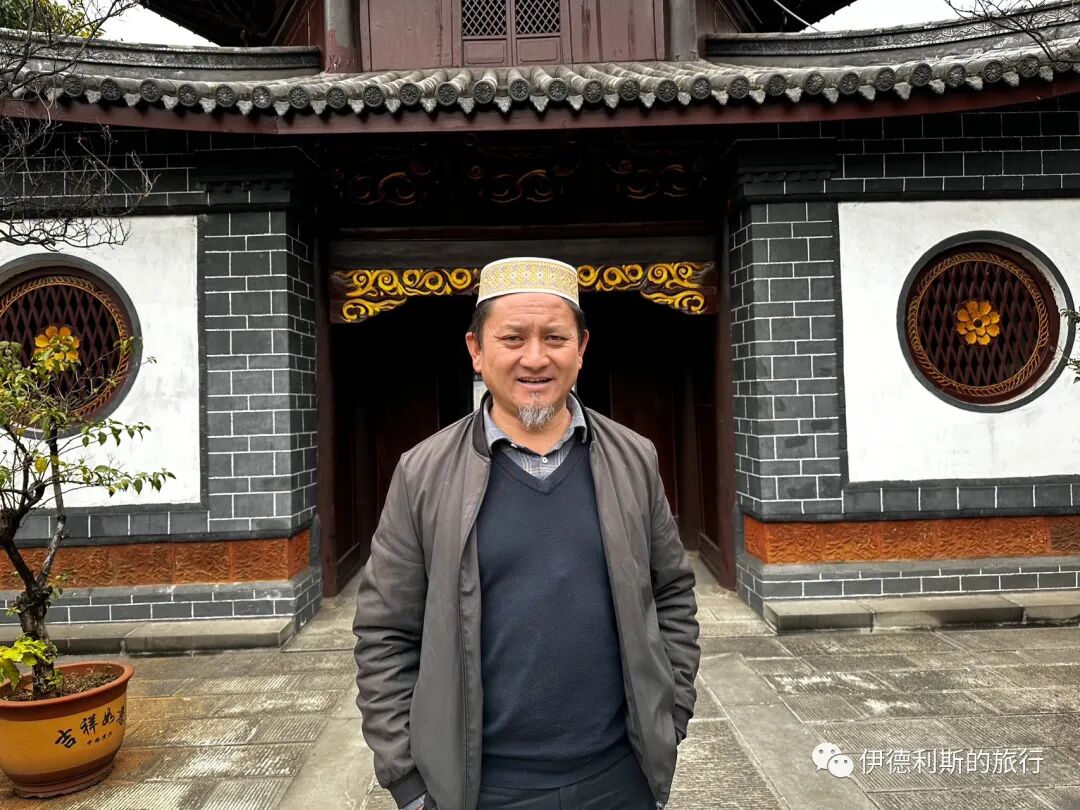
The mosque is filled with various flowers and plants, and the small pineapples look very cute.
Date palms (yezao) from the Arab region also grow very well here. During Ramadan, everyone breaks their fast at the mosque. People spit the date pits into the flower beds, and they grow into strong trees.
The most interesting thing is that they even grow coffee beans in the mosque. This was my first time seeing that. I heard the imam usually picks some to roast for coffee, and it tastes quite good.
The south wing of Tianba Mosque has been turned into an exhibition hall. It displays old items from the local Hui Muslim families as a memory of life in the past, which I think is very meaningful.
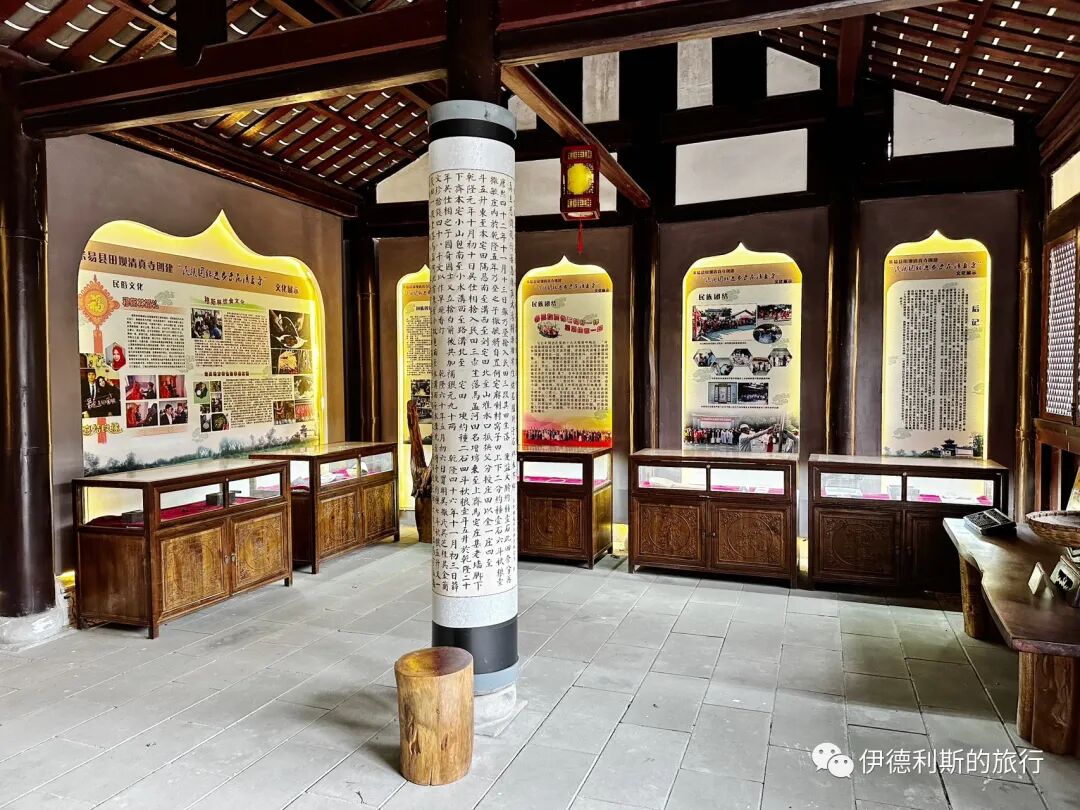
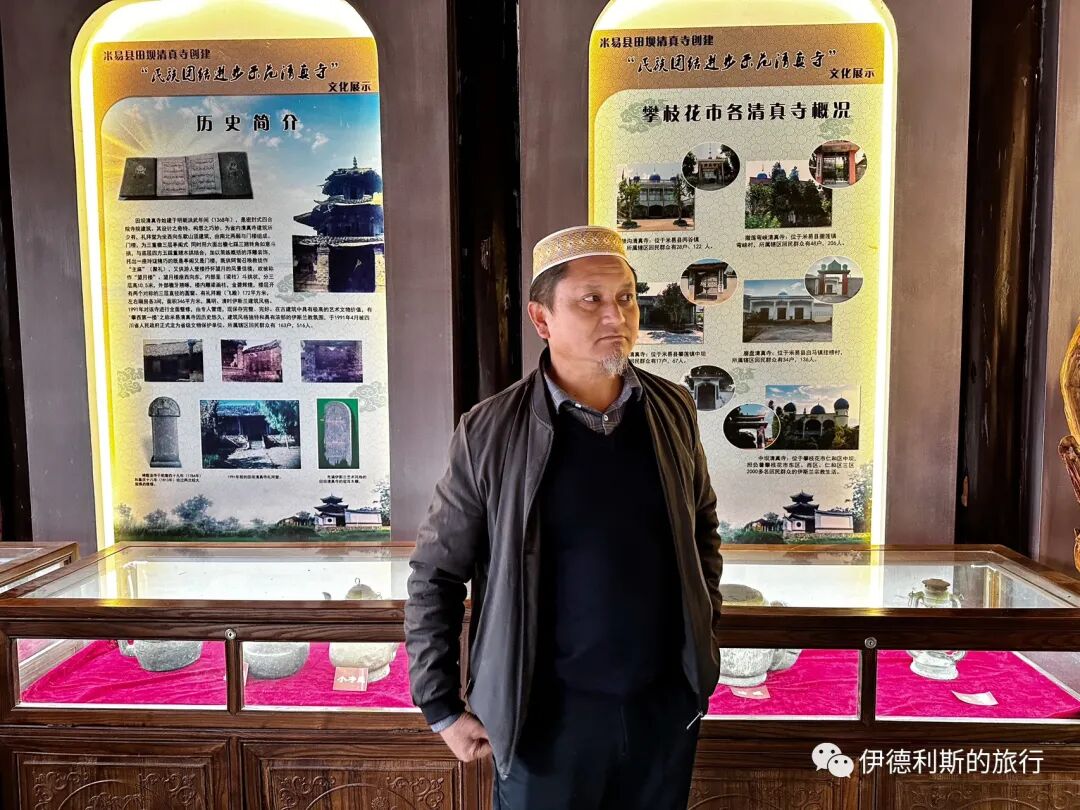
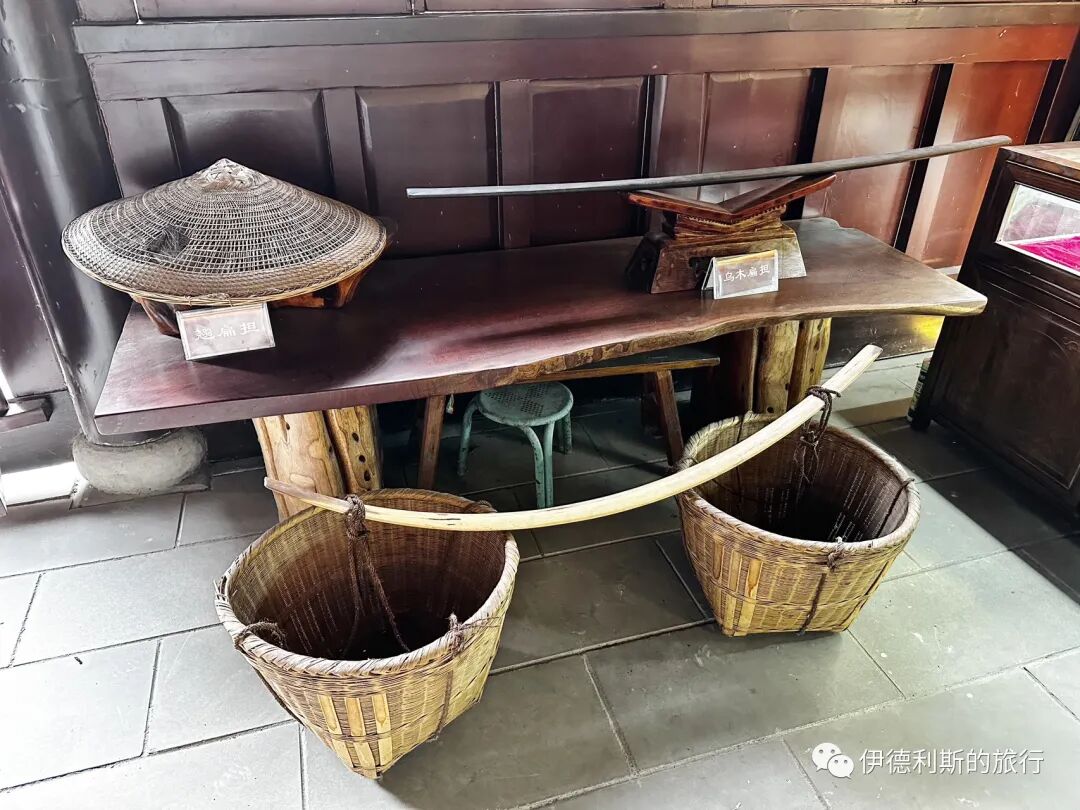
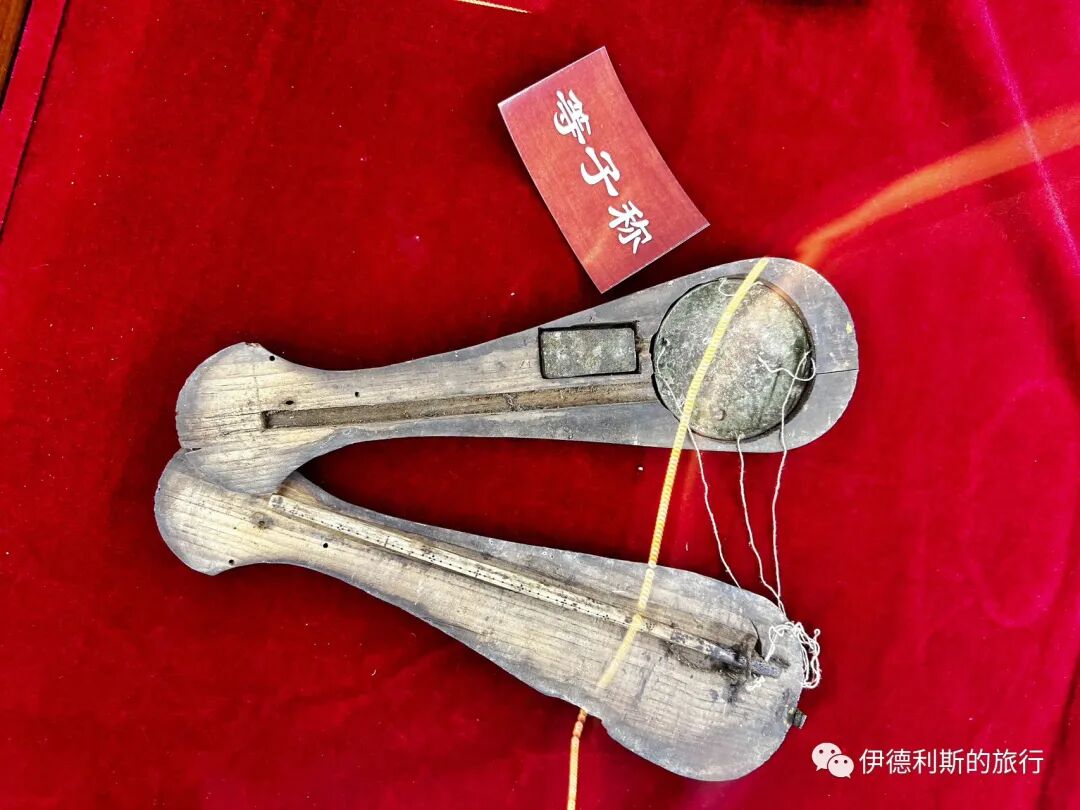
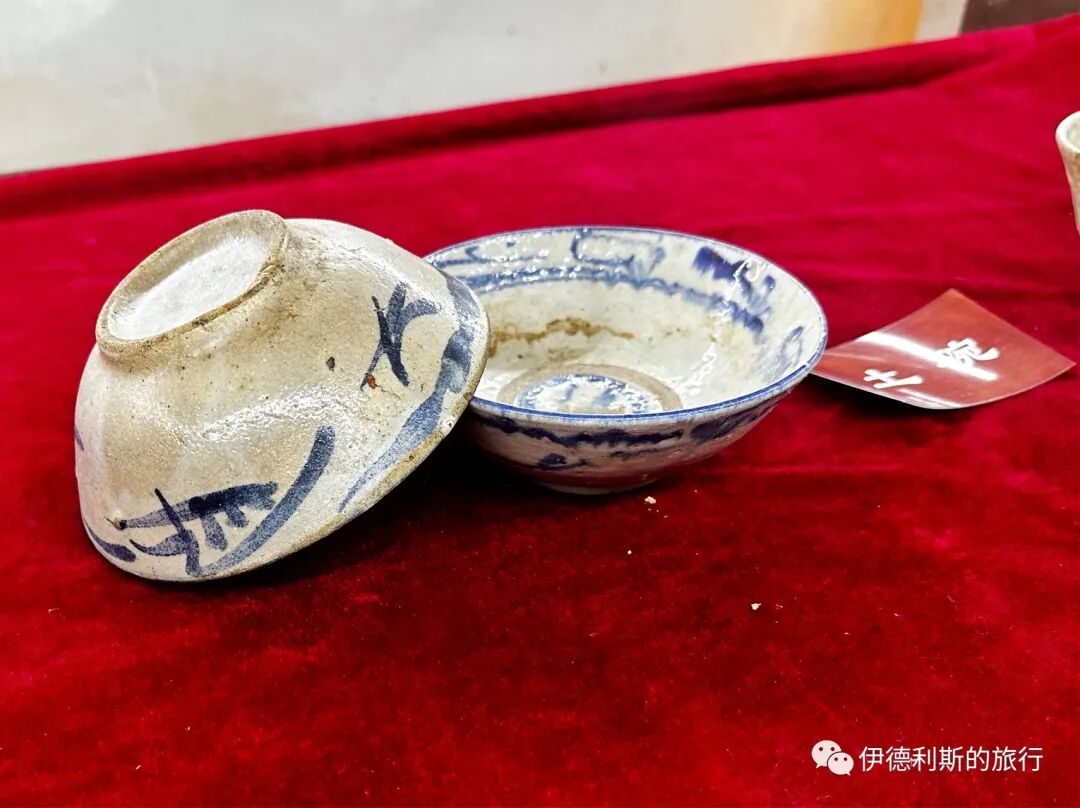
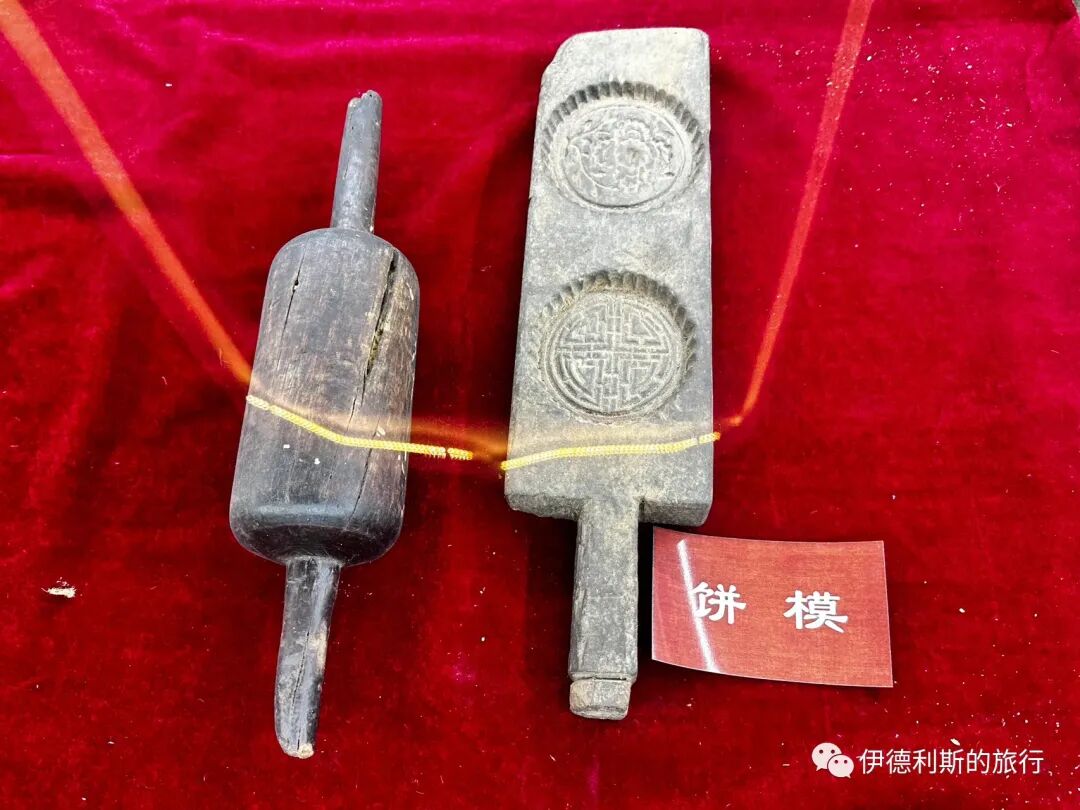
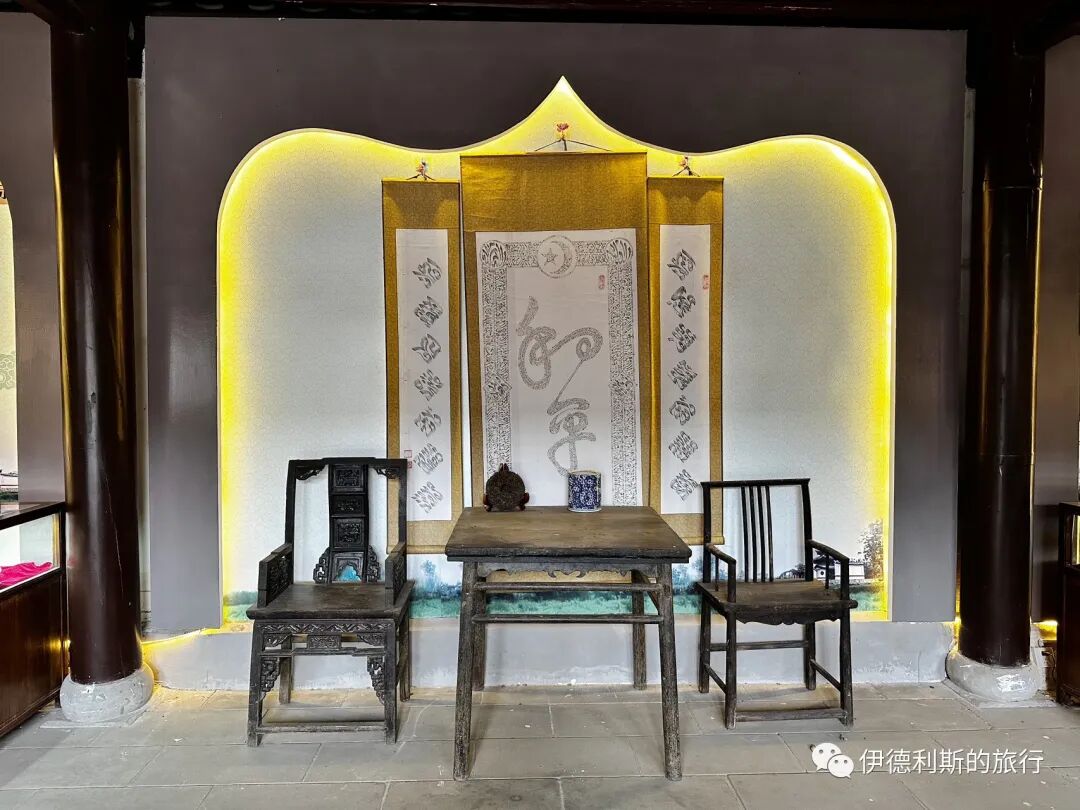
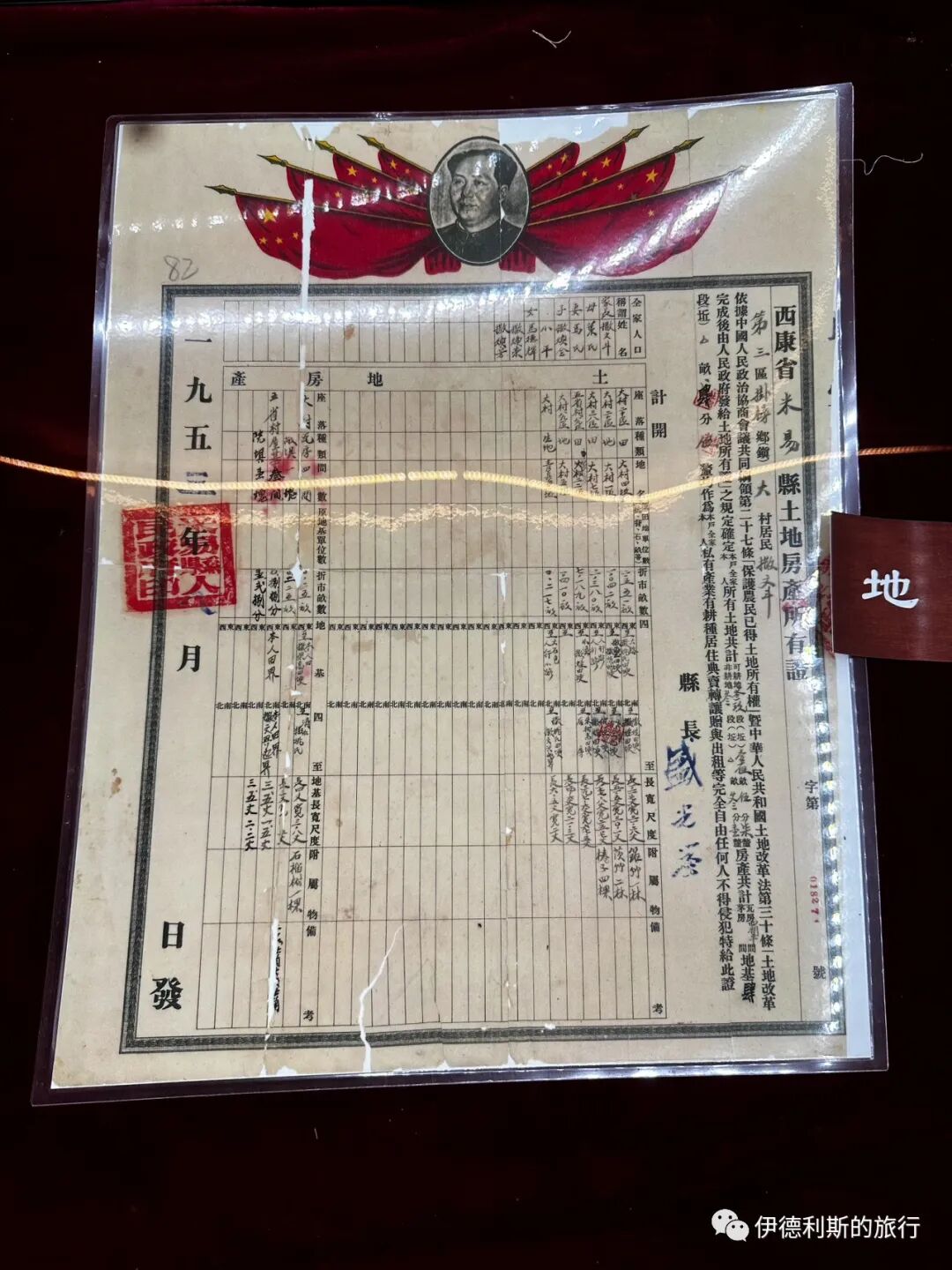
After leaving the mosque, a friend (dost) from Gansu who prayed namaz with me invited me to eat at the Yiqingyuan farmhouse restaurant in the village. The owner is the brother of Director Sa, and he is a very kind and welcoming person. The restaurant has been open for 10 years and strictly does not sell alcohol.
We ate stir-fried beef with chili, cured duck (banya), stir-fried cabbage, and bitter vegetable soup. The beef was tender and went well with rice, and the cured duck was salty and delicious. Overall, it was tasty and affordable. The way they eat bitter vegetable soup here is the same as in Yunnan: you first scoop a spoonful of the vegetable soup into your dipping sauce.
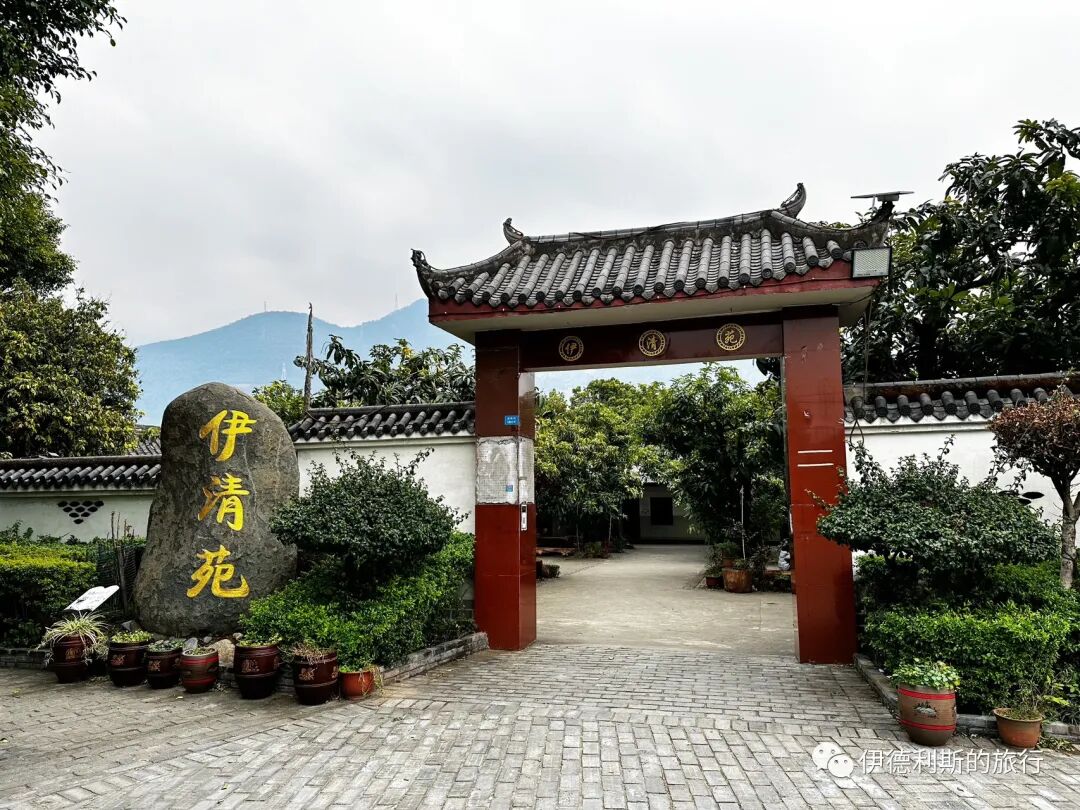
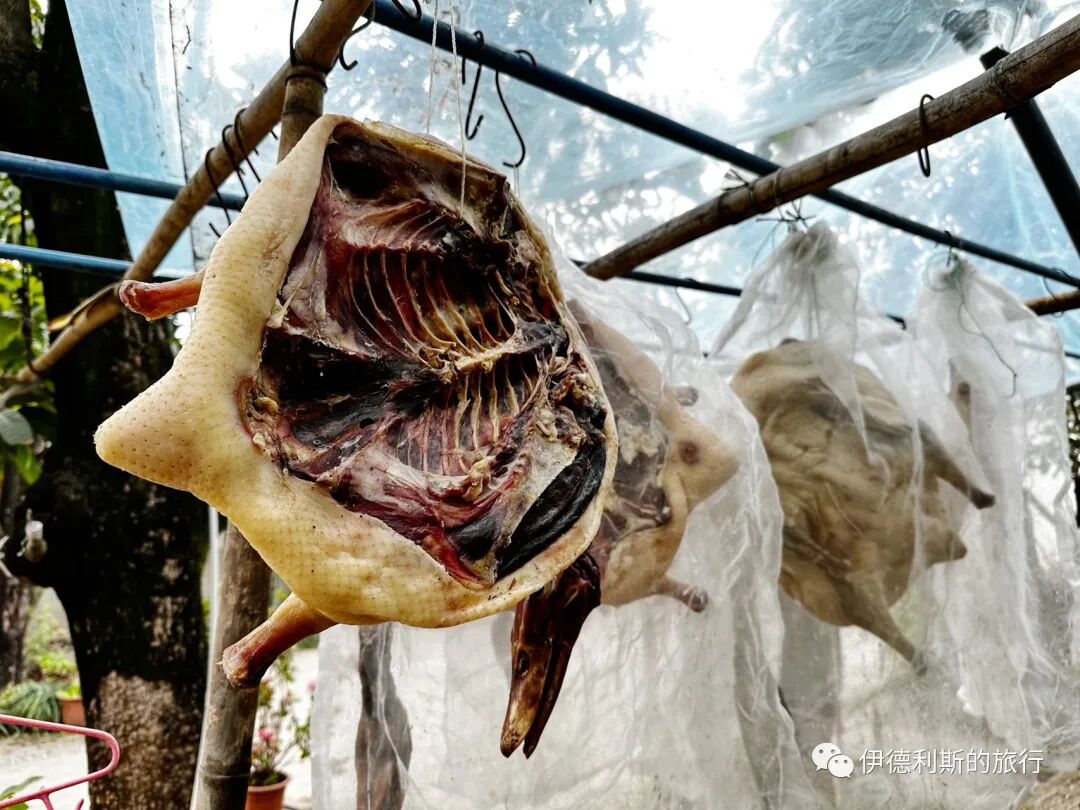
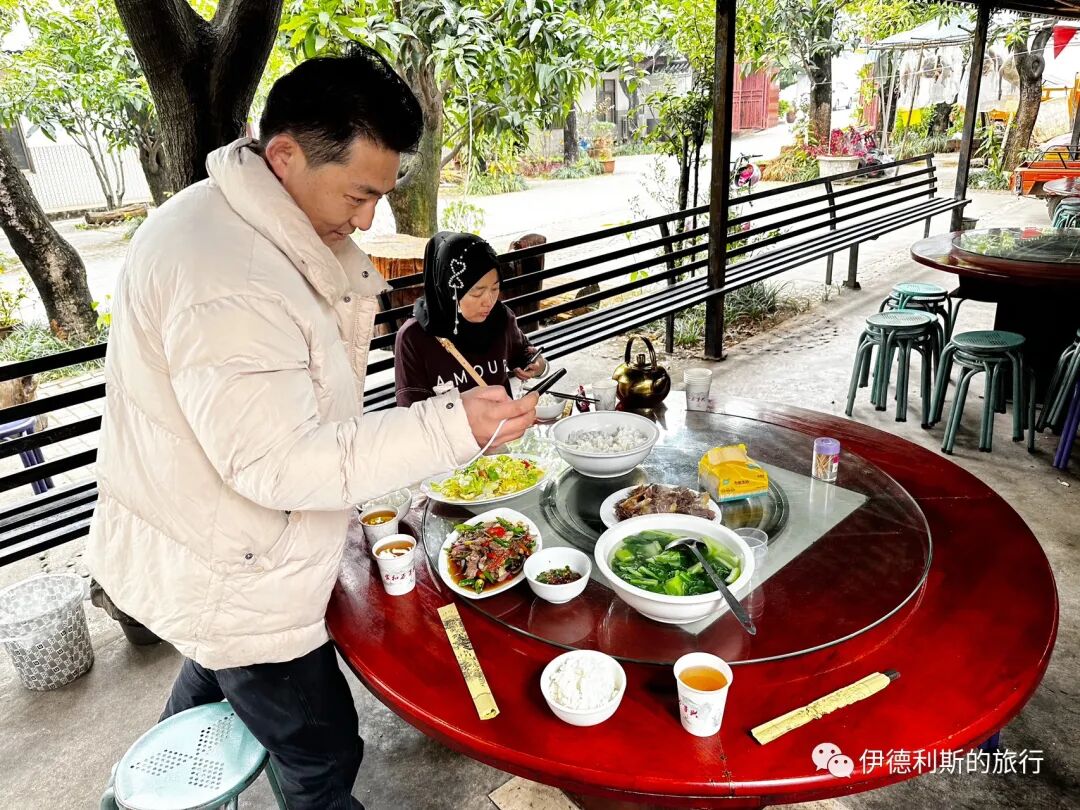
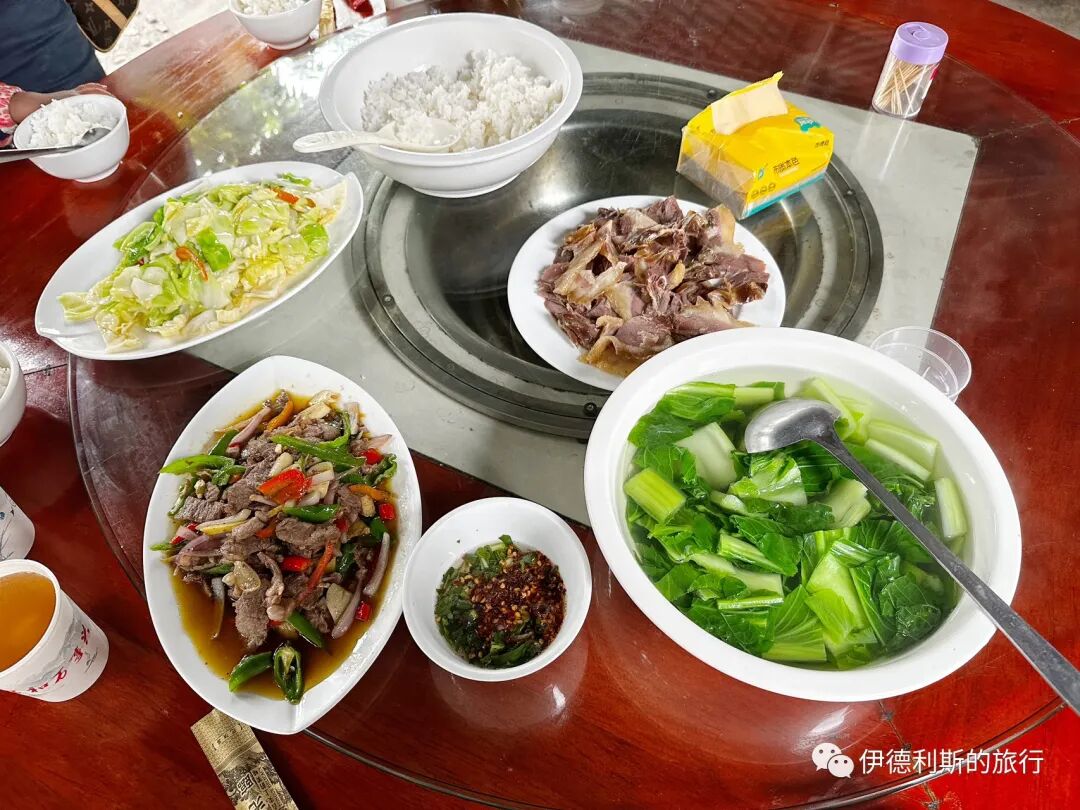
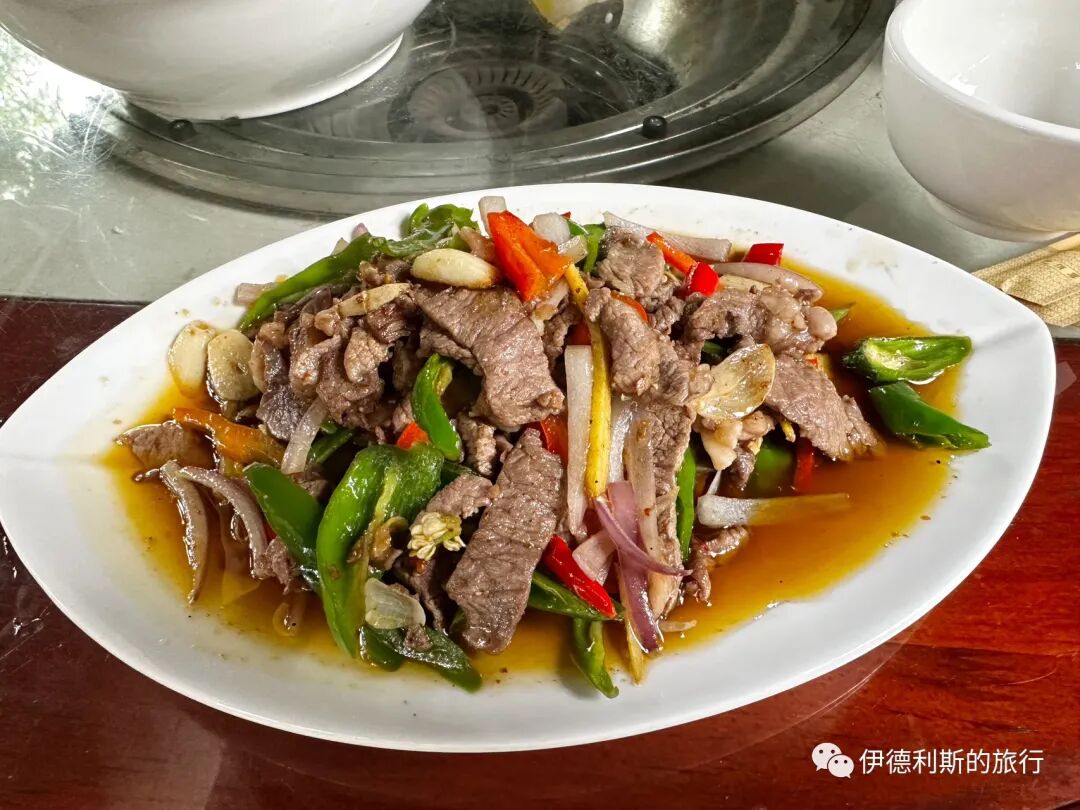
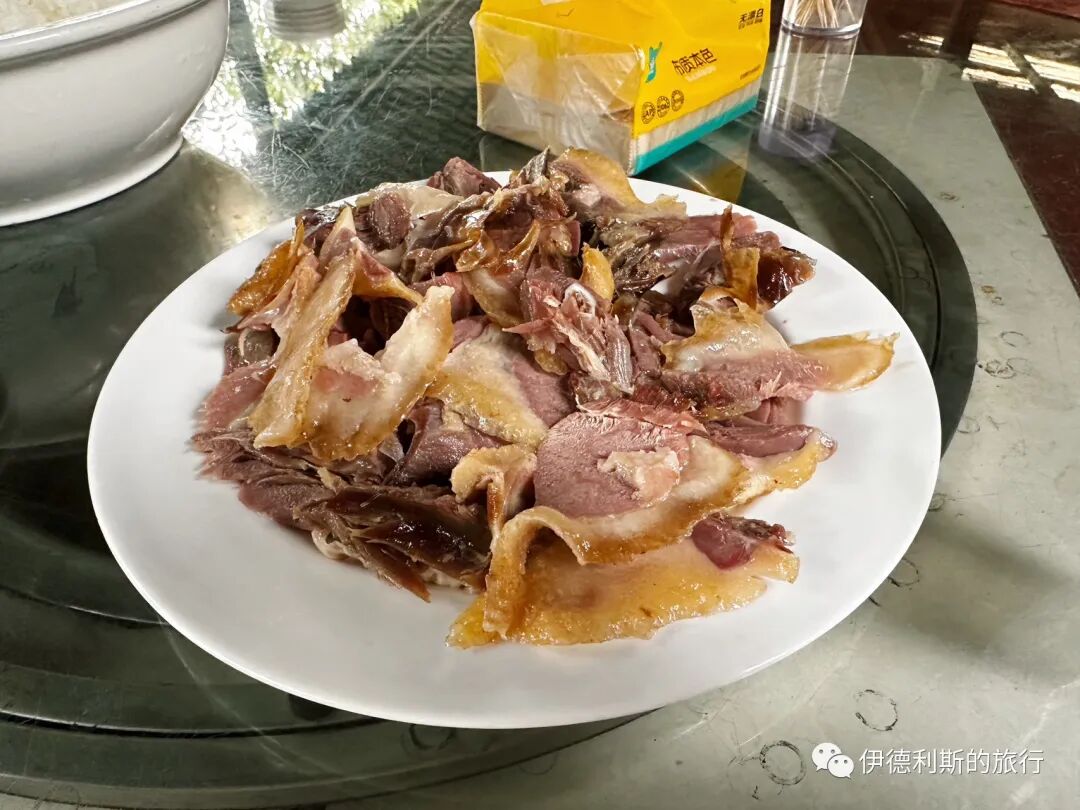
The atmosphere at the restaurant is really nice. When there are no customers, they keep the doors open, and the village children play inside.
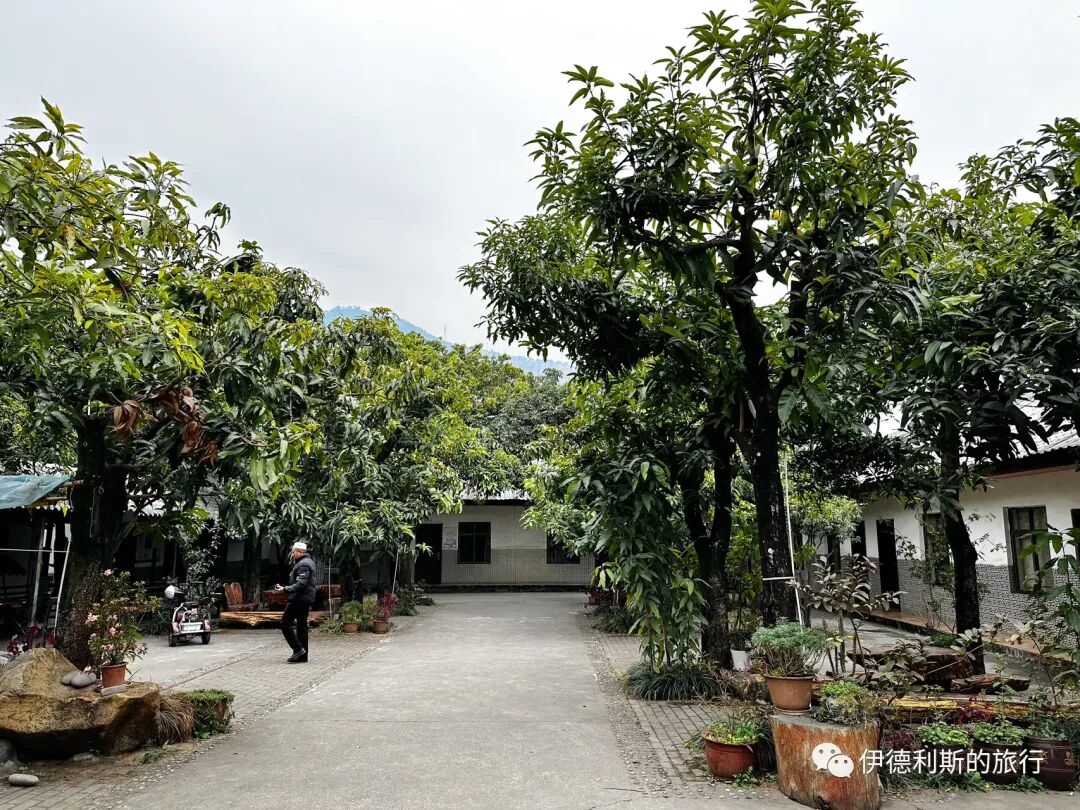
Leaving Tianba Village, Baima Town is not far away. At the town's farmers' market, a Hui Muslim auntie from Tianba Village sells pea jelly noodles (wandou liangfen). After saying salaam, the auntie refused to take my money, so I paid her secretly. Because Miyi is at the southern end of Sichuan and very close to Yunnan, the halal food culture is quite similar.
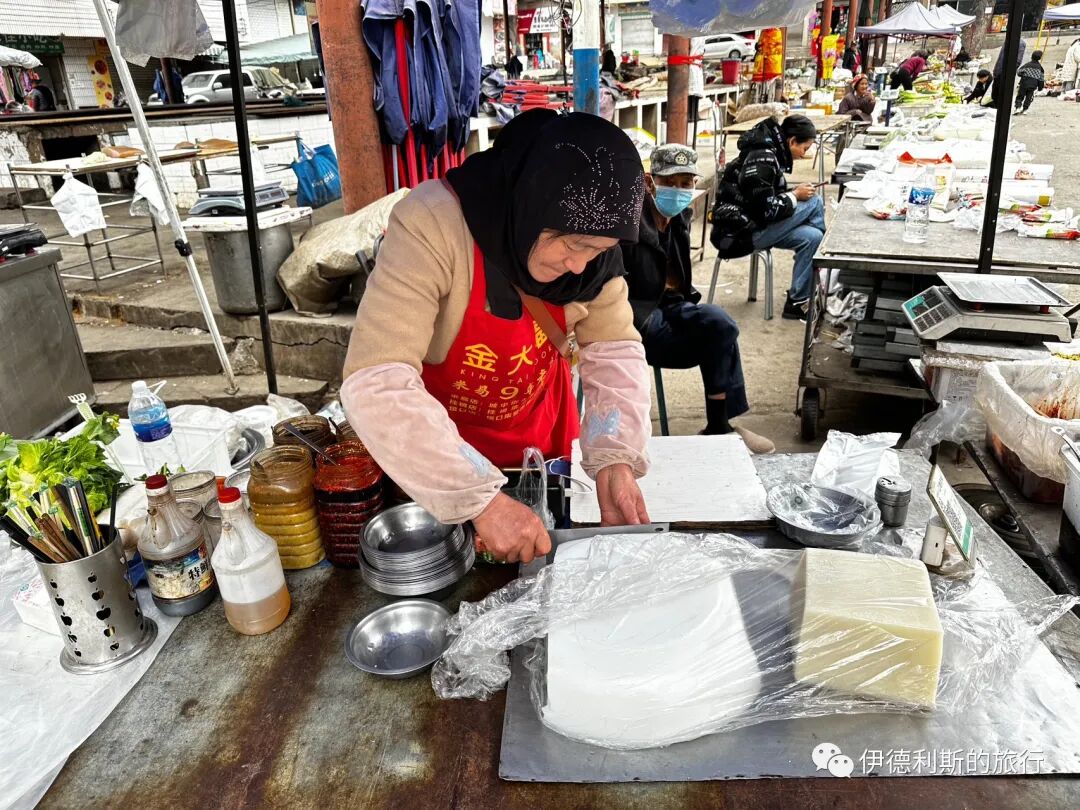
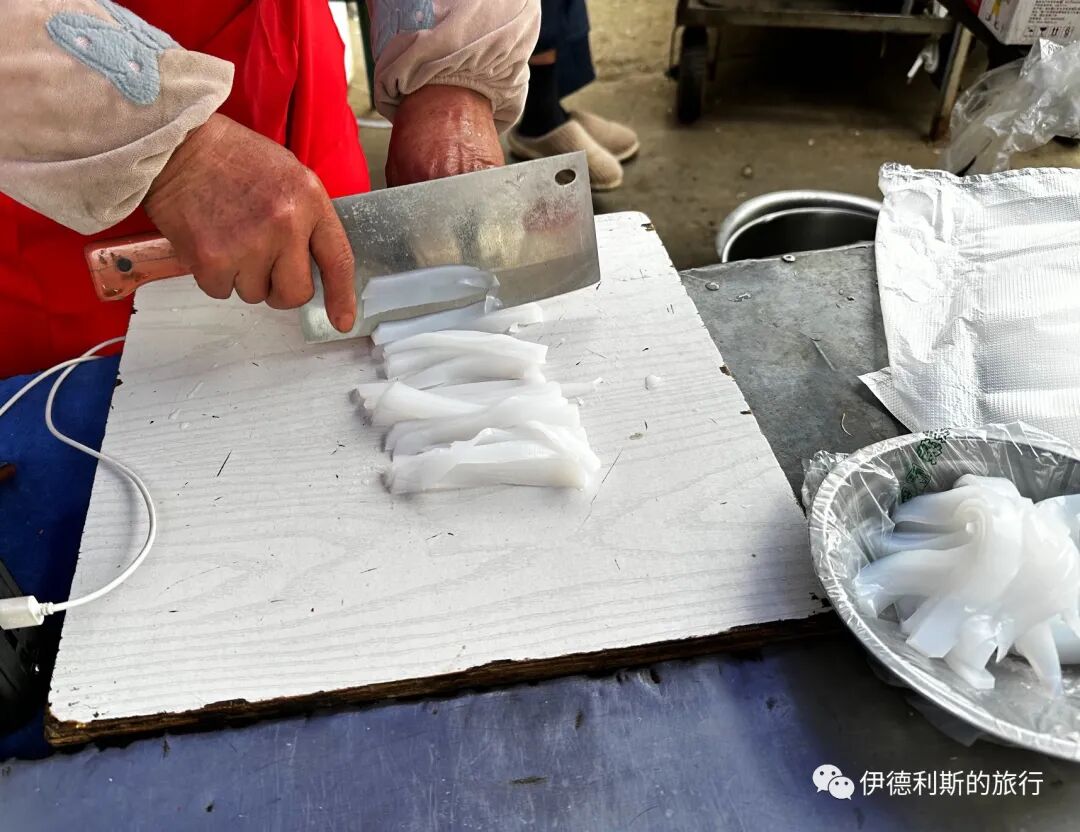
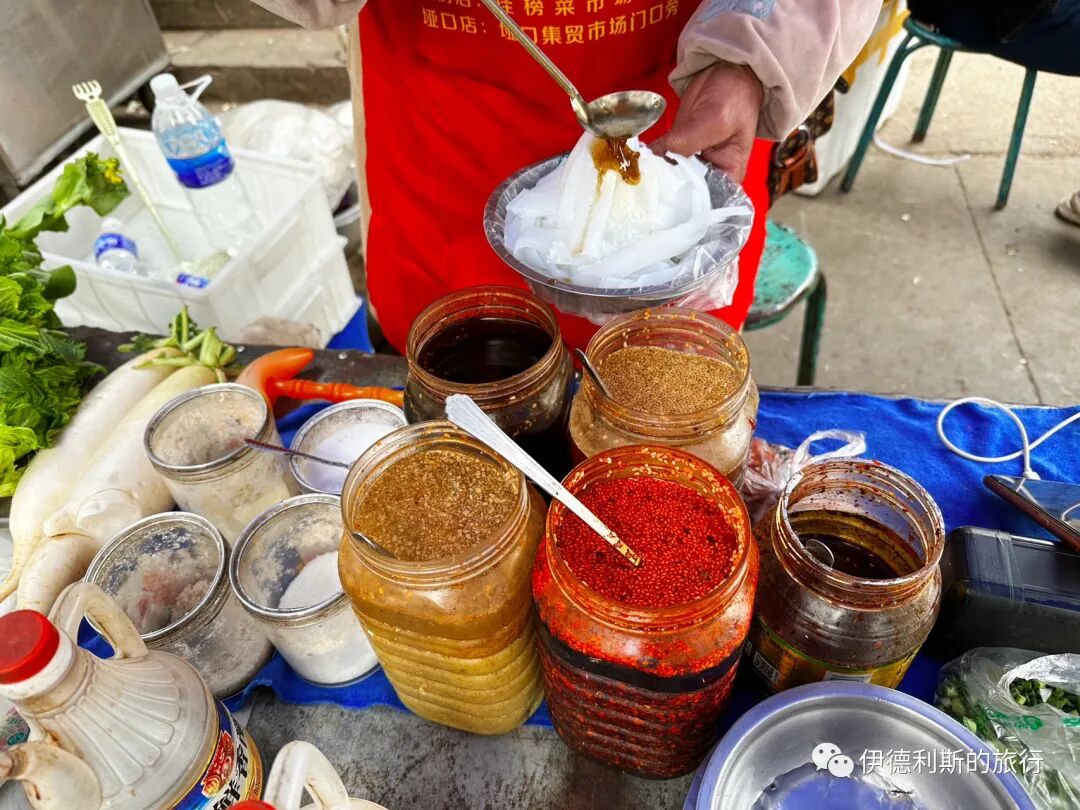
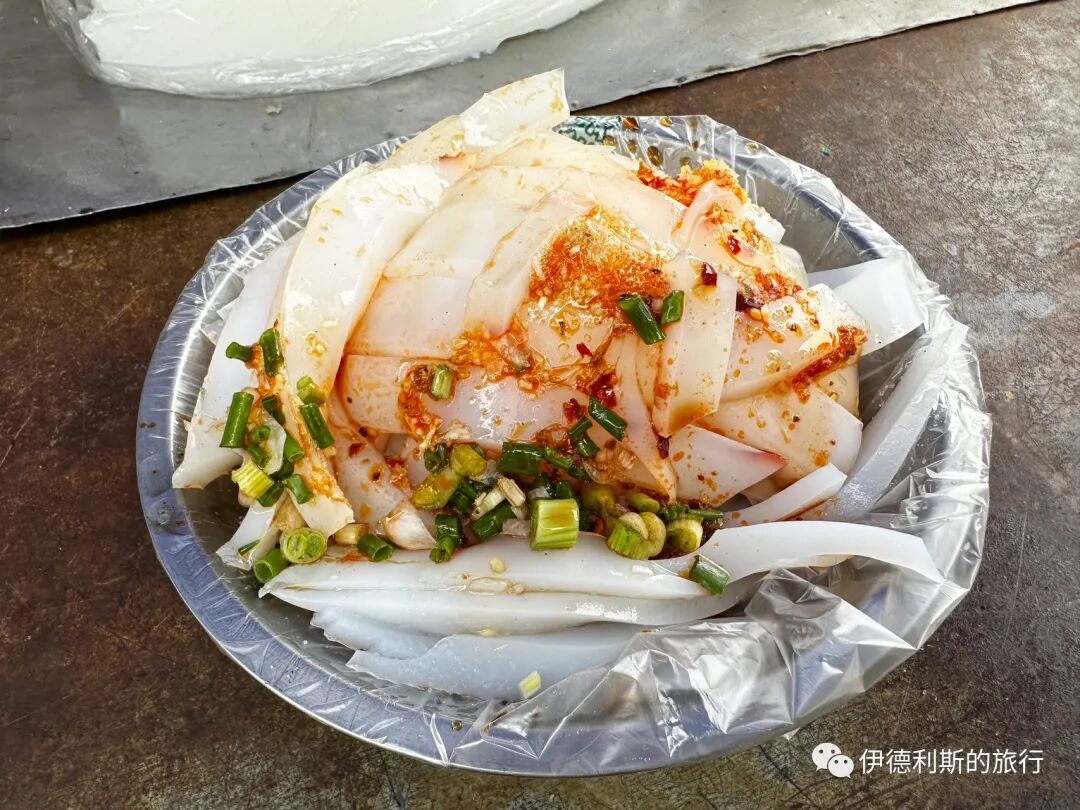
There are a few other halal restaurants in the town.
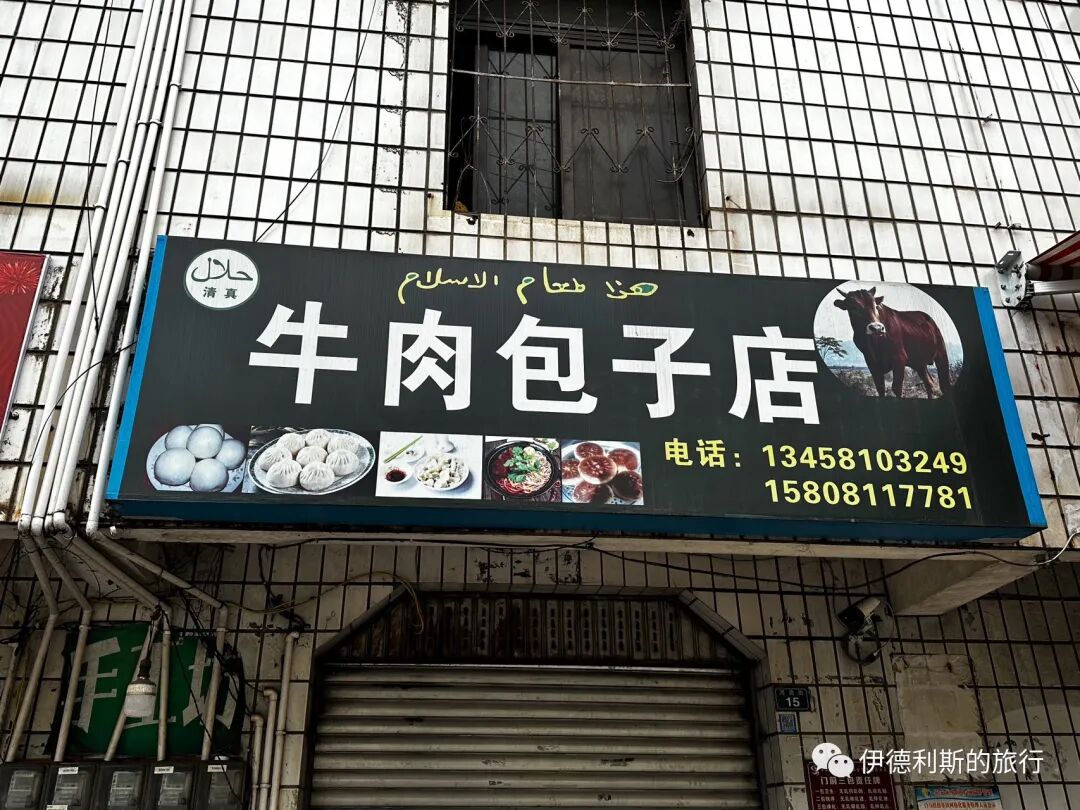
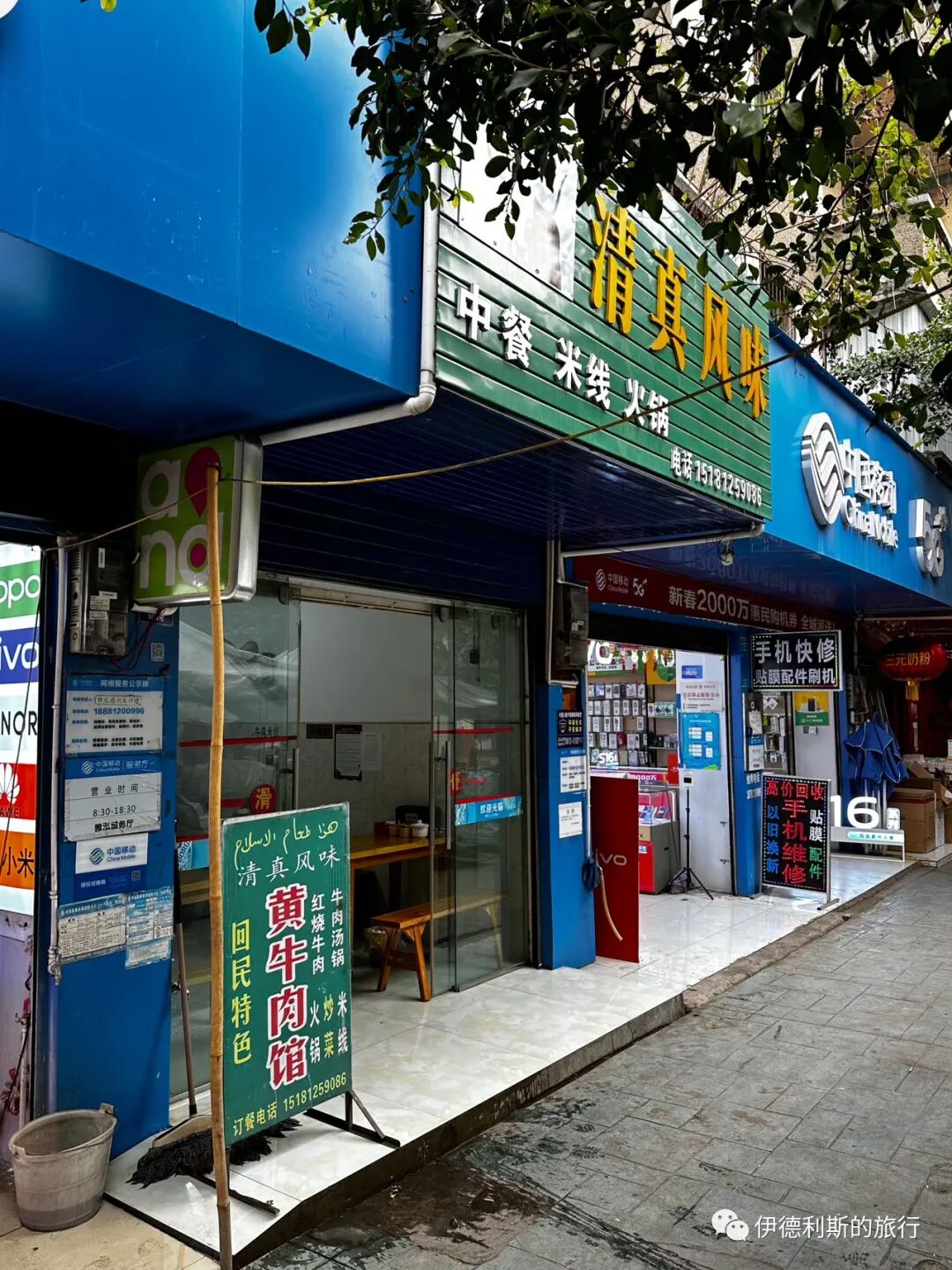
The scenery in the town is also very beautiful.
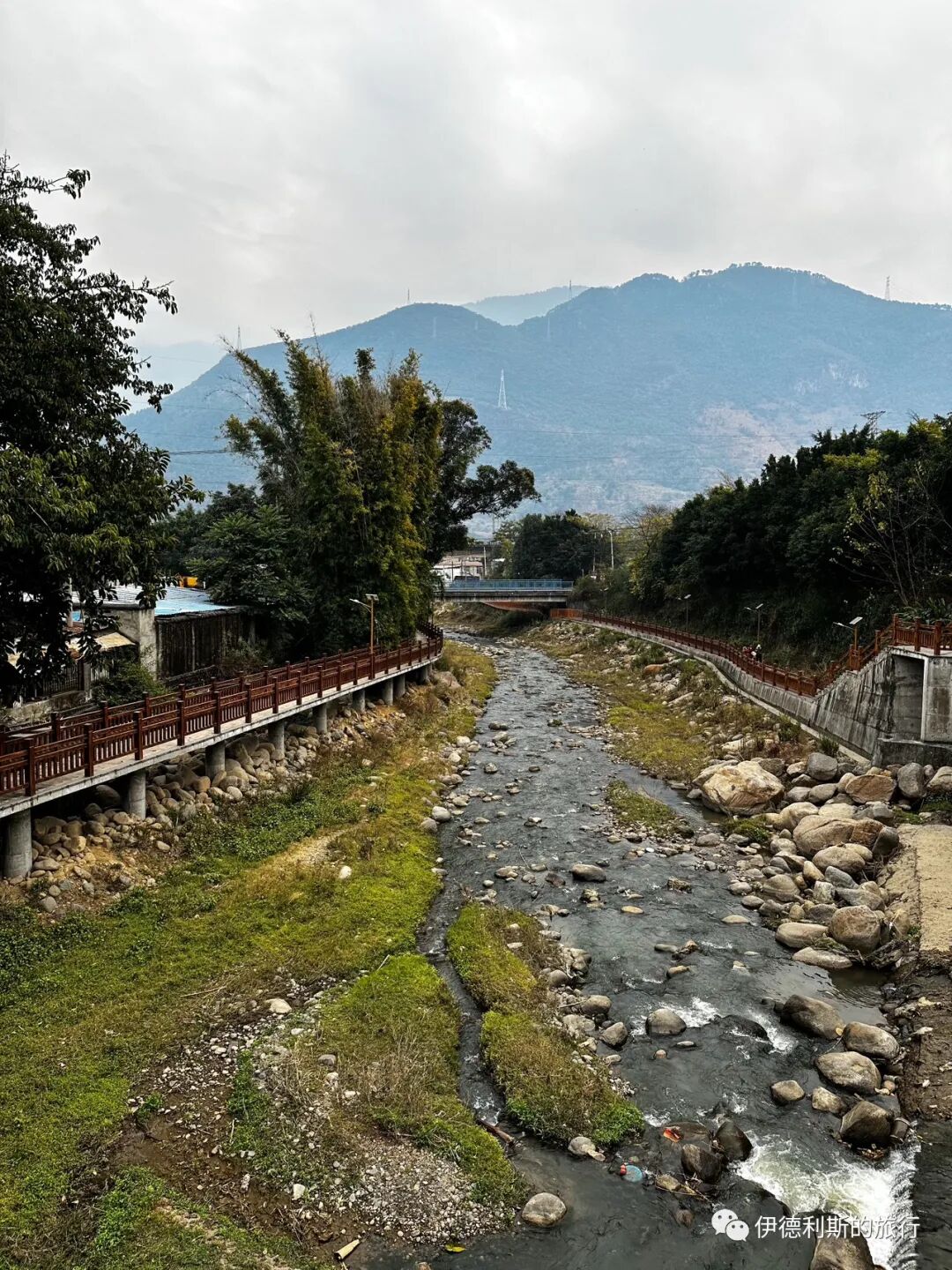
After walking around, I took a bus from the town back to the high-speed train station and headed to Dali for the next leg of my trip.
Spring travels in 2023:
On January 23, I left Macau and visited the Macau mosque known as the Moor Garden (Moluoyuan), where I ate delicious Indonesian Javanese food (see "Moor Garden and Indonesian Food in Macau"). On January 25, I arrived in Guangzhou, visited friends (dost), and ate various halal foods (see "Hui Muslim Oil Cakes and Yemeni Food in Guangzhou").
At noon, I performed namaz at the Huaisheng Mosque, then went to visit the Ancient Tombs of the Worthies (see "Huaisheng Mosque and the Ancient Tombs of the Worthies in Guangzhou").
In the afternoon, I prayed the afternoon prayer (asr) at Haopan Mosque and the sunset prayer (maghrib) at Xiaodongying Mosque (see "Visiting Haopan Mosque and Xiaodongying Mosque in Guangzhou").
On the morning of January 26, I took a train from Guangzhou to Zhaoqing, visited two mosques, and ate halal Cantonese food (see "Halal Roast Goose and Starfruit at the Mosque in Zhaoqing, Guangdong").
On the morning of January 27, I flew from Guangzhou to Xichang, Sichuan. I performed Jumu'ah at the Xichang city mosque, visited the West Mosque and the East Mosque, and ate Xichang rice noodles (see "Performing Jumu'ah and Eating Rice Noodles in Xichang, Sichuan").
Guangyuan Shanghe Street Mosque Guide: Sichuan Muslim Heritage and Halal Travel
Articles • ali2007fr posted the article • 0 comments • 171 views • 2026-05-17 07:13
Summary: This travel note introduces Guangyuan Shanghe Street Mosque Guide: Sichuan Muslim Heritage and Halal Travel. On August 15, 2020, I traveled from Nanchong to Guangyuan and visited the Shanghe Street Mosque. It is useful for readers interested in Guangyuan Mosque, Sichuan Travel, Muslim Heritage.
On August 15, 2020, I traveled from Nanchong to Guangyuan and visited the Shanghe Street Mosque. The mosque is located in a bustling downtown area by the Jialing River. It was first built in 1721 and expanded in 1777. None of the original historical structures remain, and the current building was constructed in 2004.
Looking at the Jialing River from the roof of the mosque.
The mosque currently houses nine precious plaques from the Qing Dynasty and the Republican era. In the 1960s and 1970s, these nine plaques were covered with layers of paper and painted over with red lacquer to display the 'highest instructions' regarding ethnic unity, which ultimately saved them from destruction. These nine plaques are now hung on the walls of the mosque's staircases and corridors, which are:
1. The 1748 'Qingzhensi' (Mosque) plaque.
2. The 1803 'Renzhu Wu'er' (Recognize that there is no god but Allah) plaque, presented by the imperial-appointed Baturu Min Huaixi.
3. The 1811 'Qiqing Lizhen' (Pure spirit and true principle) plaque, erected by Geng Ziyu, the garrison commander of the Guangyuan Battalion.
4. The 1849 small-character plaque inscribed by Min Zhengfeng, the Provincial Commander-in-Chief of Guangxi.
5. The 1873 'Guanche Weichen' (Thoroughly penetrating the subtle truth) plaque, erected by Jiang Guolin, an imperial-appointed commander of the Guangyuan Battalion.
6. The 1873 'Weijing Weiyi' (Focusing on the essence and the oneness) plaque, erected by Ma Dengchao, an imperial-appointed garrison commander of the Guangyuan Battalion.
7. The 'Zhiwei Shengjiao' (Supporting the holy religion) plaque, presented by Mu Xiangfu, a garrison commander in Guangyuan during the Guangxu reign.
8. The 1932 'Daochan Tianfang' (Spreading the way of the Islamic faith) plaque, inscribed by Liu Cunhou, the Border Defense Commissioner of Sichuan and Shaanxi and the Inspection Commissioner of the Sichuan Army.
9. The 1932 'Jiaowu Weixin' (Innovating religious affairs) plaque, erected by the Guangyuan Muslim Funeral Association.
When I arrived, it was raining heavily. During Namaz (prayer), I only met one elderly gentleman, who very warmly invited me to eat beef huimo (stewed flatbread). I later learned that he was Haji Ma Jianzhong, the teacher of Imam Feng Yong from the Nanchong Mosque.
Behind the Shanghe Street Mosque, there are many local halal restaurants specializing in beef soup pots and huimo. Compared to those in Sichuan, the halal food here is closer to that of Hanzhong, Shaanxi.
The next morning, I had beef baozi (steamed stuffed buns) with congee and pickles next to the mosque, and there was also a shop selling lu-ji (braised chicken) across the street.
The Hui Muslims with the surname Ma in downtown Guangyuan originally came from Yi County, Hebei. They arrived in Guangyuan for business during the Qianlong reign, settled in Xiahe Street, and established commercial firms such as 'Chunshengxiang,' 'Yushungong,' and 'Songbaitang'.
Jialing River plank road.
Night view of the Jialing River. view all
Summary: This travel note introduces Guangyuan Shanghe Street Mosque Guide: Sichuan Muslim Heritage and Halal Travel. On August 15, 2020, I traveled from Nanchong to Guangyuan and visited the Shanghe Street Mosque. It is useful for readers interested in Guangyuan Mosque, Sichuan Travel, Muslim Heritage.
On August 15, 2020, I traveled from Nanchong to Guangyuan and visited the Shanghe Street Mosque. The mosque is located in a bustling downtown area by the Jialing River. It was first built in 1721 and expanded in 1777. None of the original historical structures remain, and the current building was constructed in 2004.
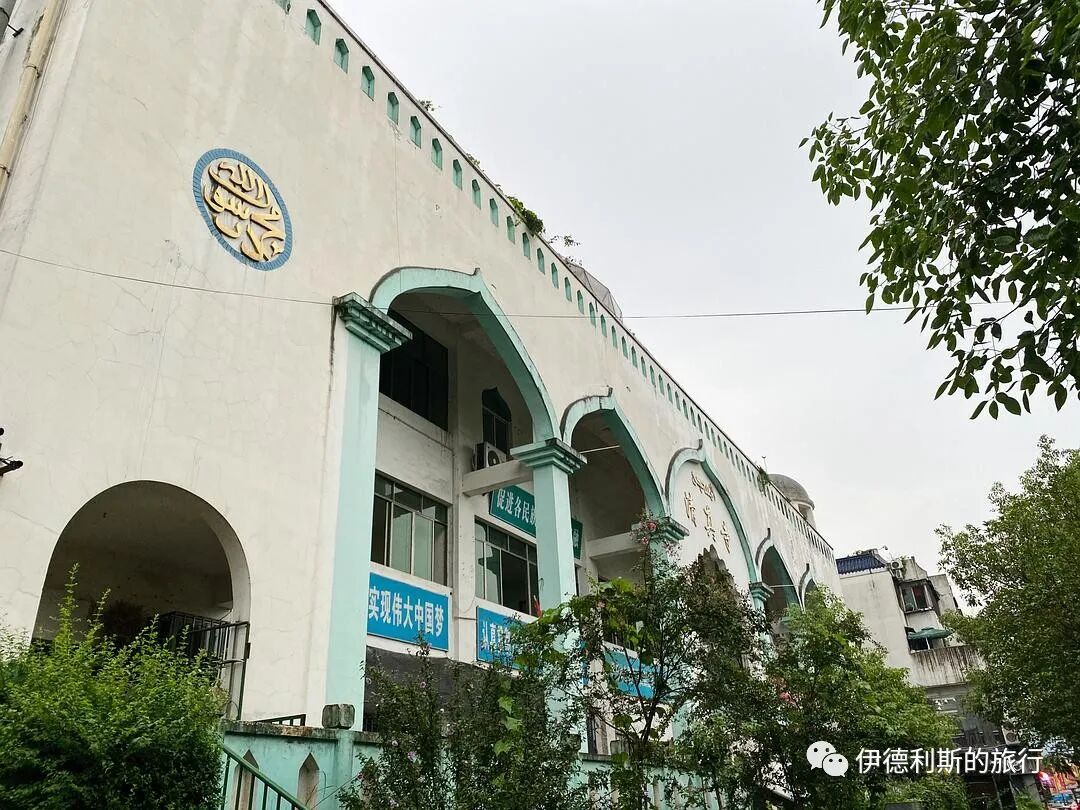
Looking at the Jialing River from the roof of the mosque.
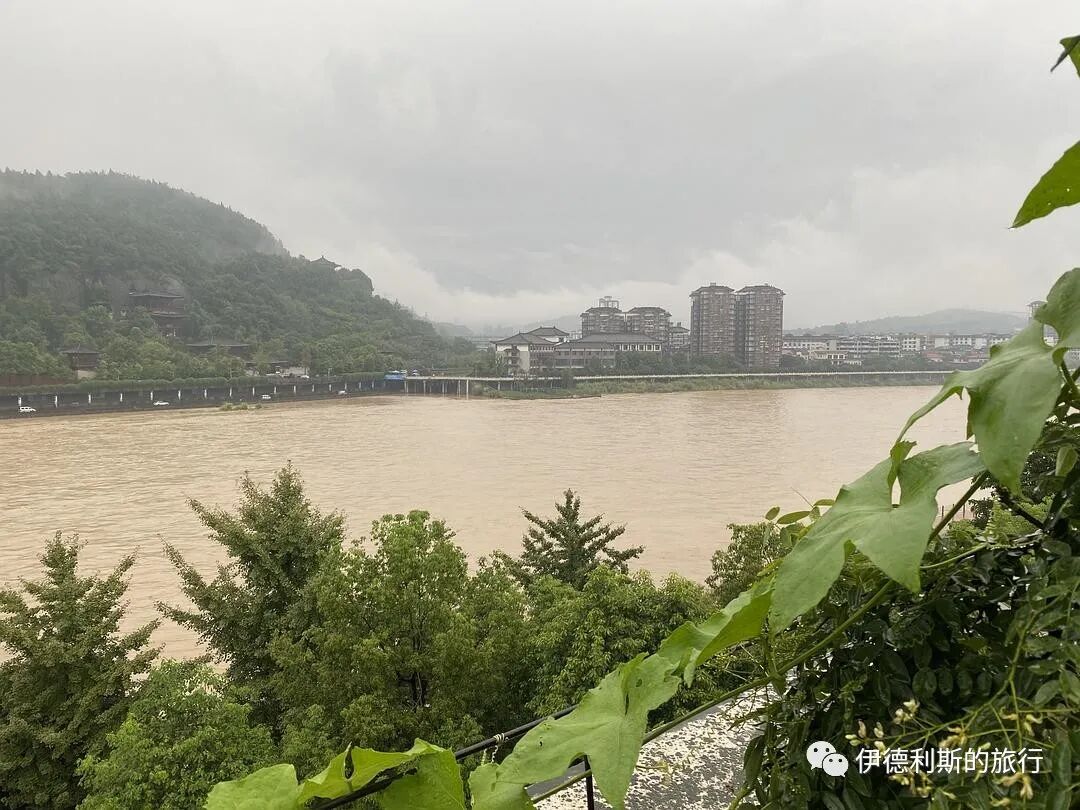
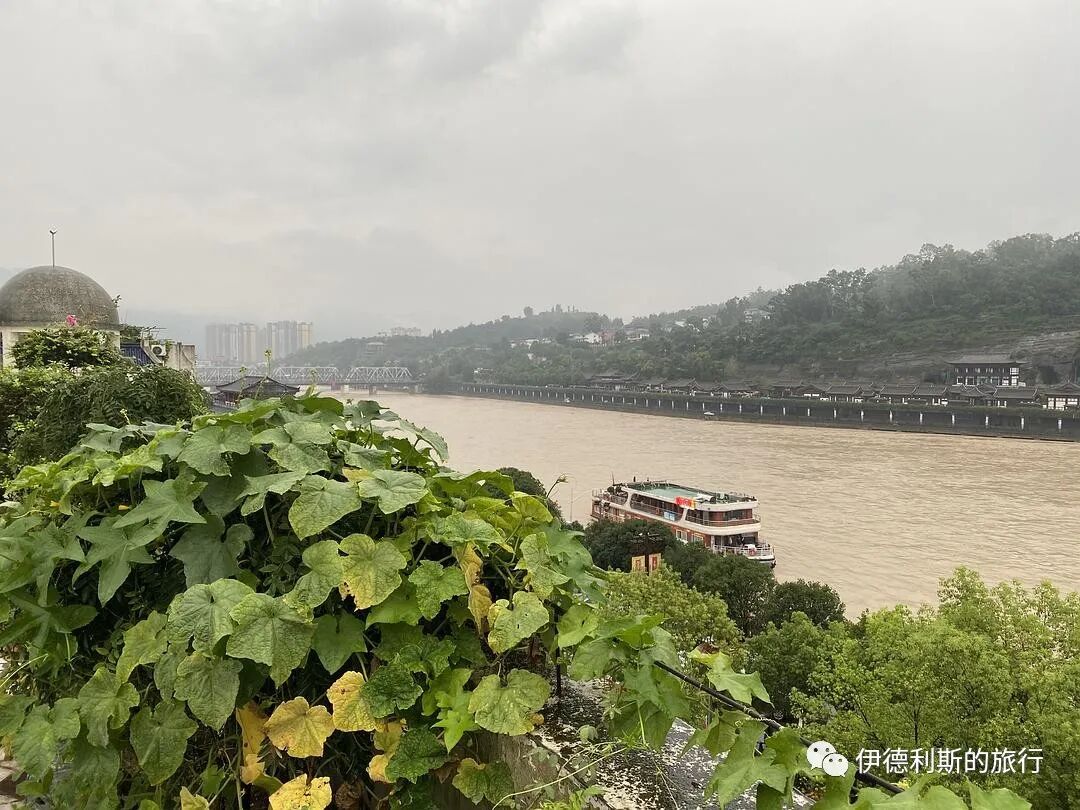
The mosque currently houses nine precious plaques from the Qing Dynasty and the Republican era. In the 1960s and 1970s, these nine plaques were covered with layers of paper and painted over with red lacquer to display the 'highest instructions' regarding ethnic unity, which ultimately saved them from destruction. These nine plaques are now hung on the walls of the mosque's staircases and corridors, which are:
1. The 1748 'Qingzhensi' (Mosque) plaque.
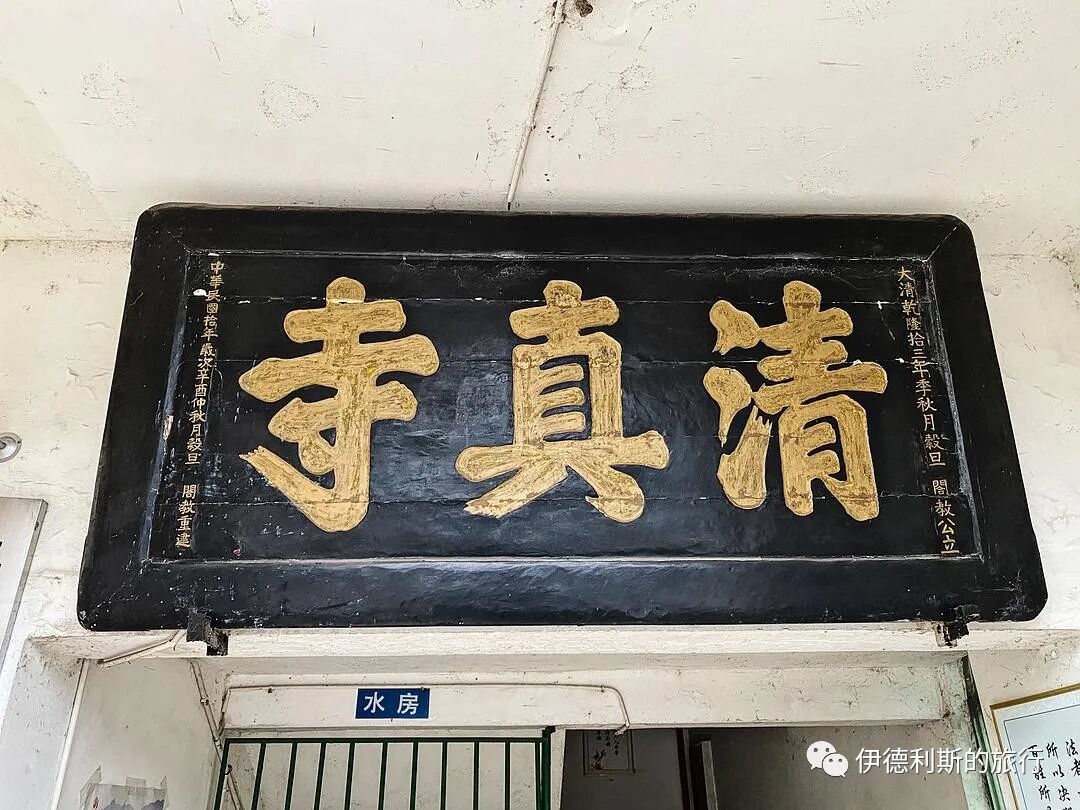
2. The 1803 'Renzhu Wu'er' (Recognize that there is no god but Allah) plaque, presented by the imperial-appointed Baturu Min Huaixi.
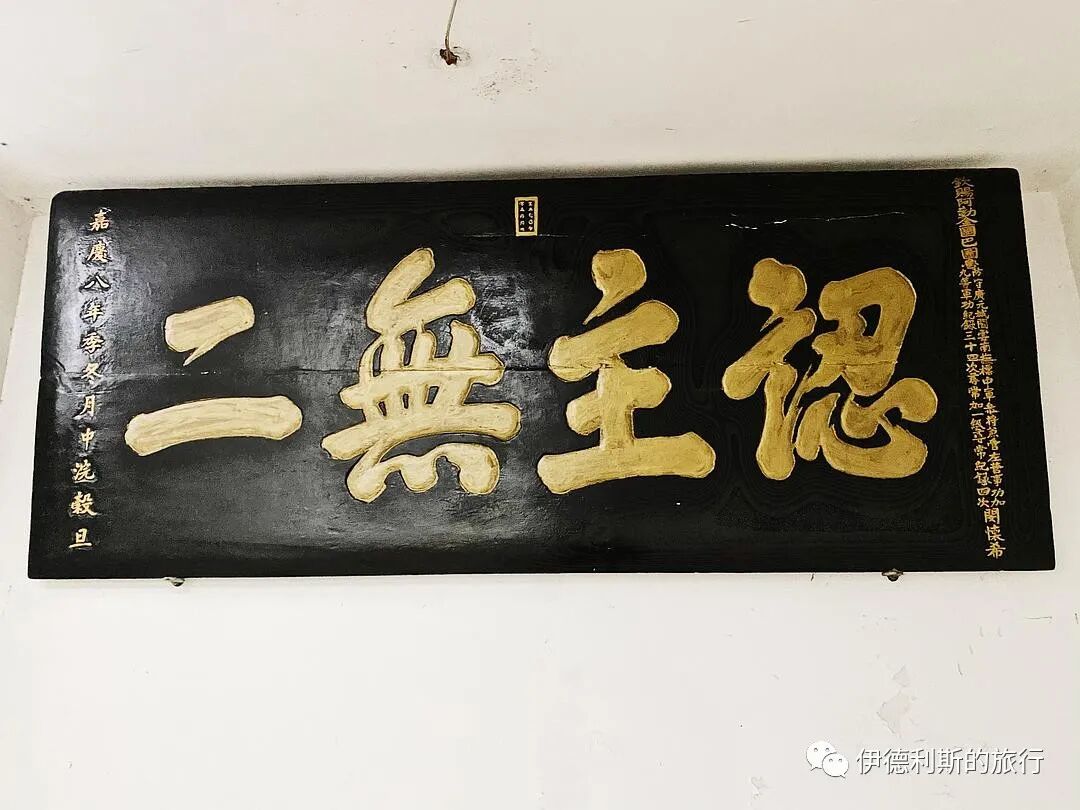
3. The 1811 'Qiqing Lizhen' (Pure spirit and true principle) plaque, erected by Geng Ziyu, the garrison commander of the Guangyuan Battalion.
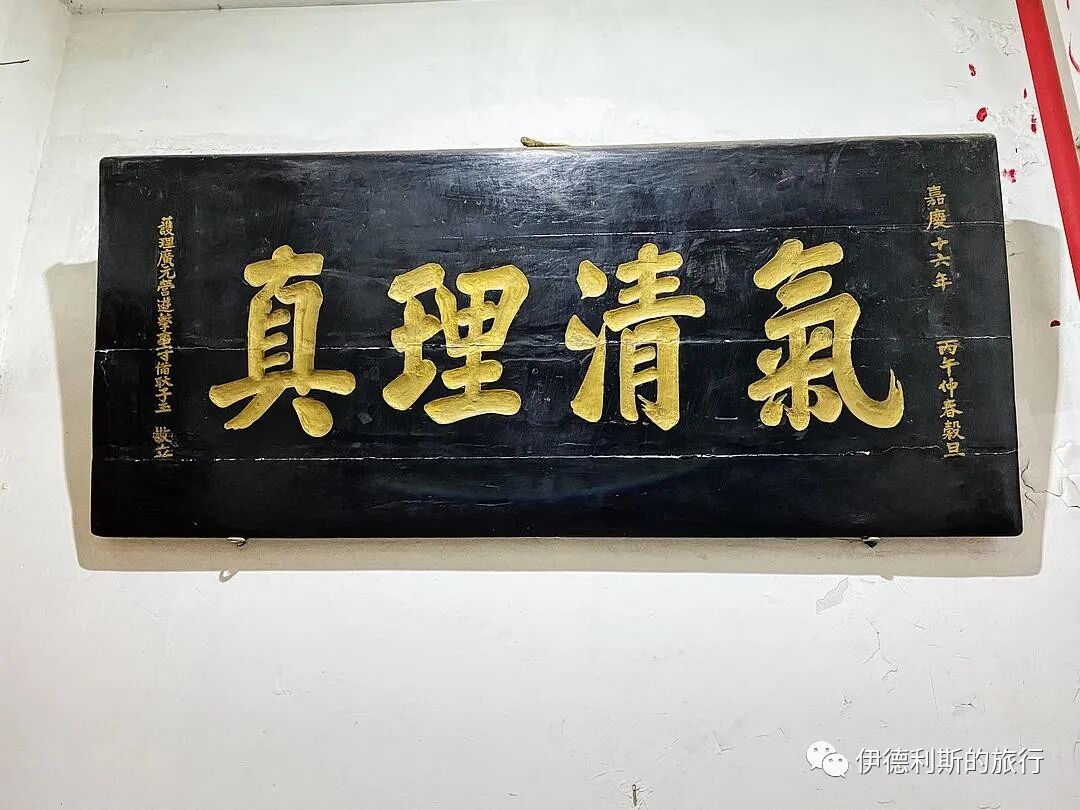
4. The 1849 small-character plaque inscribed by Min Zhengfeng, the Provincial Commander-in-Chief of Guangxi.
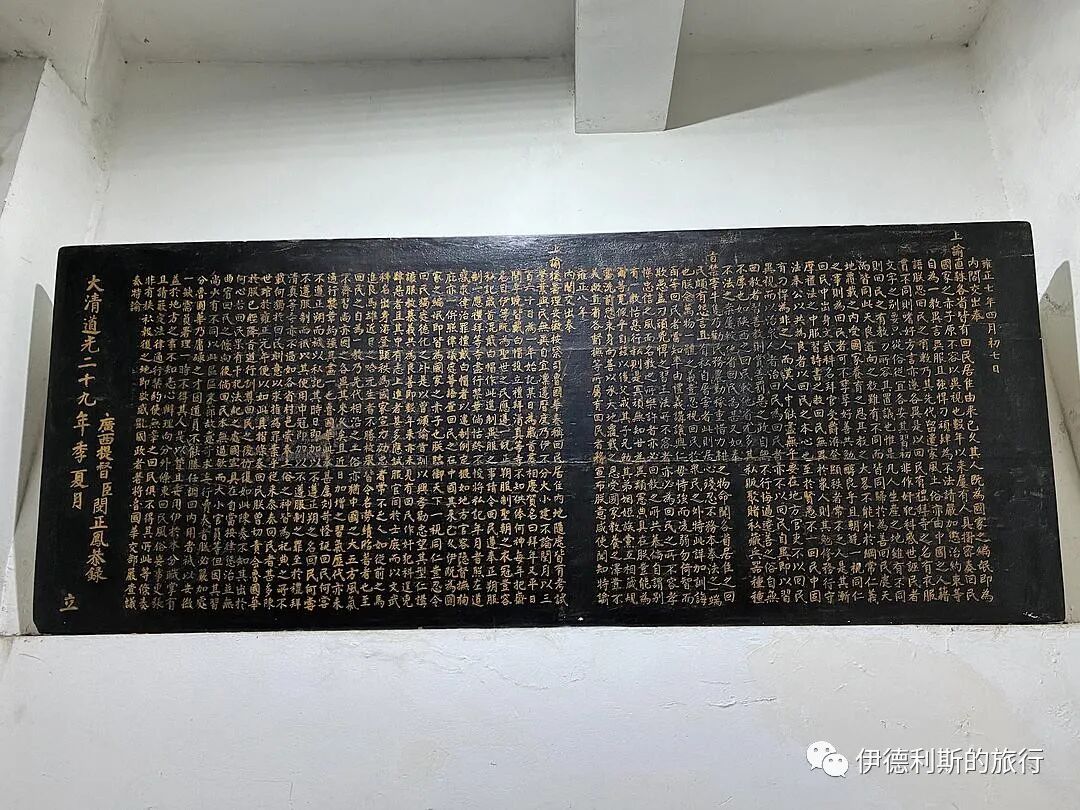
5. The 1873 'Guanche Weichen' (Thoroughly penetrating the subtle truth) plaque, erected by Jiang Guolin, an imperial-appointed commander of the Guangyuan Battalion.
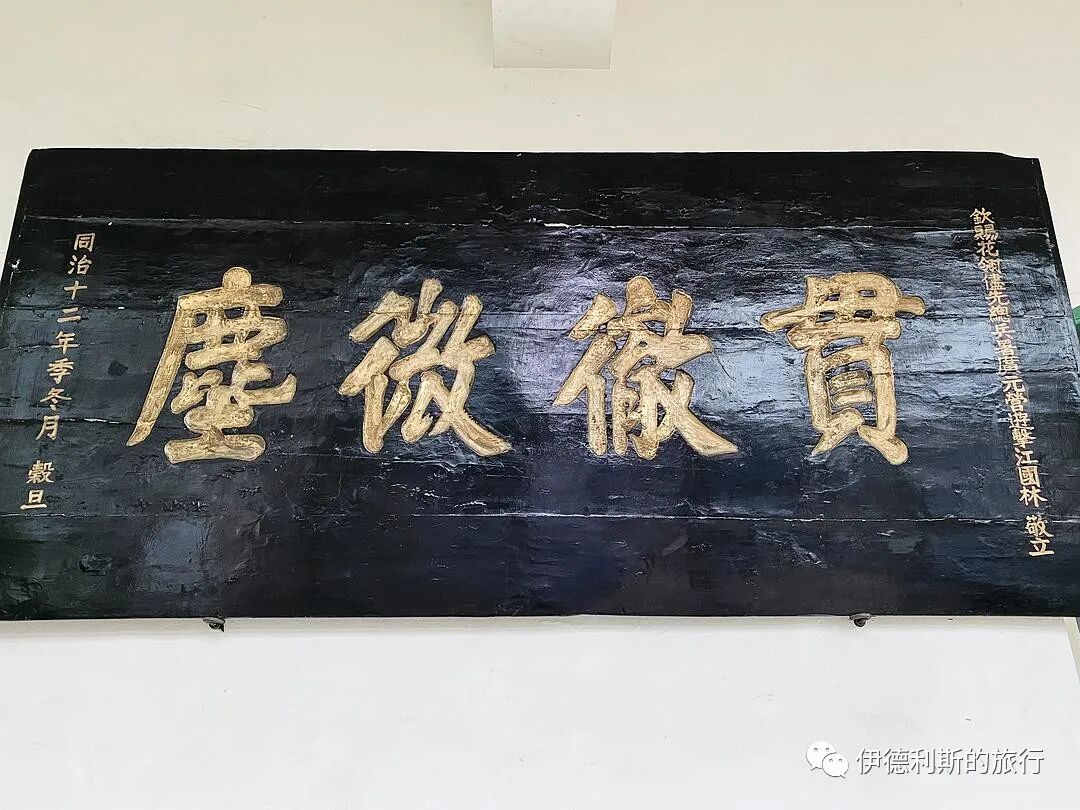
6. The 1873 'Weijing Weiyi' (Focusing on the essence and the oneness) plaque, erected by Ma Dengchao, an imperial-appointed garrison commander of the Guangyuan Battalion.
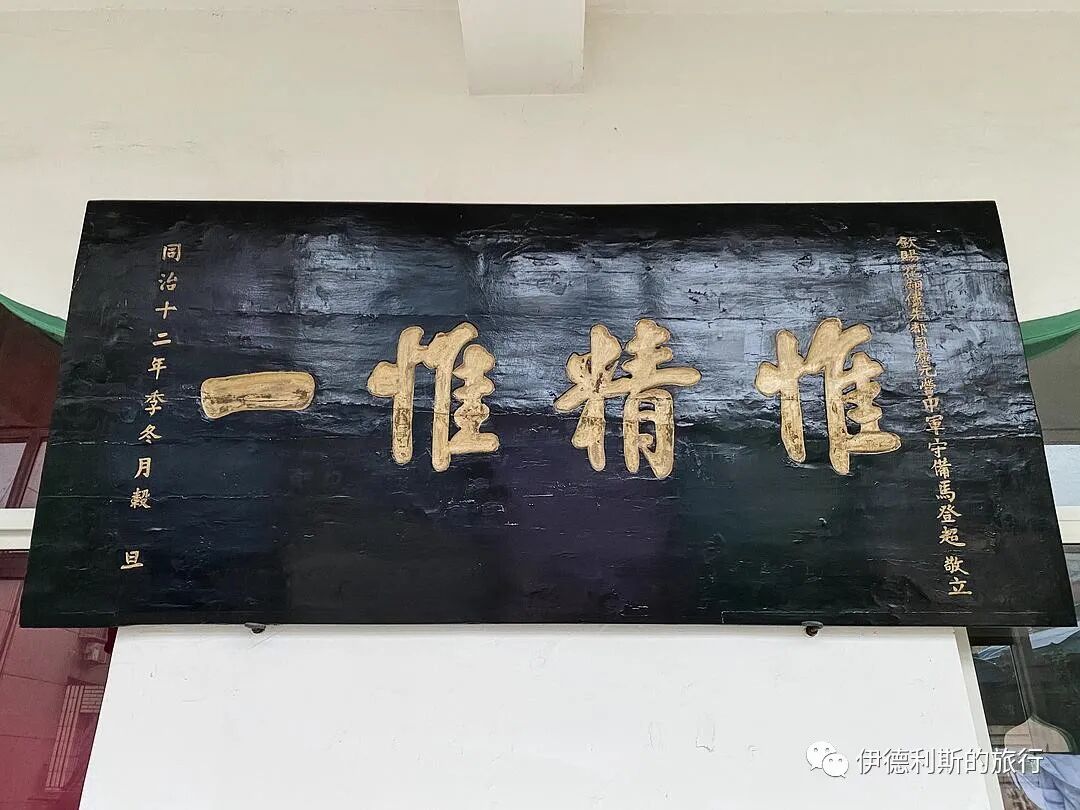
7. The 'Zhiwei Shengjiao' (Supporting the holy religion) plaque, presented by Mu Xiangfu, a garrison commander in Guangyuan during the Guangxu reign.
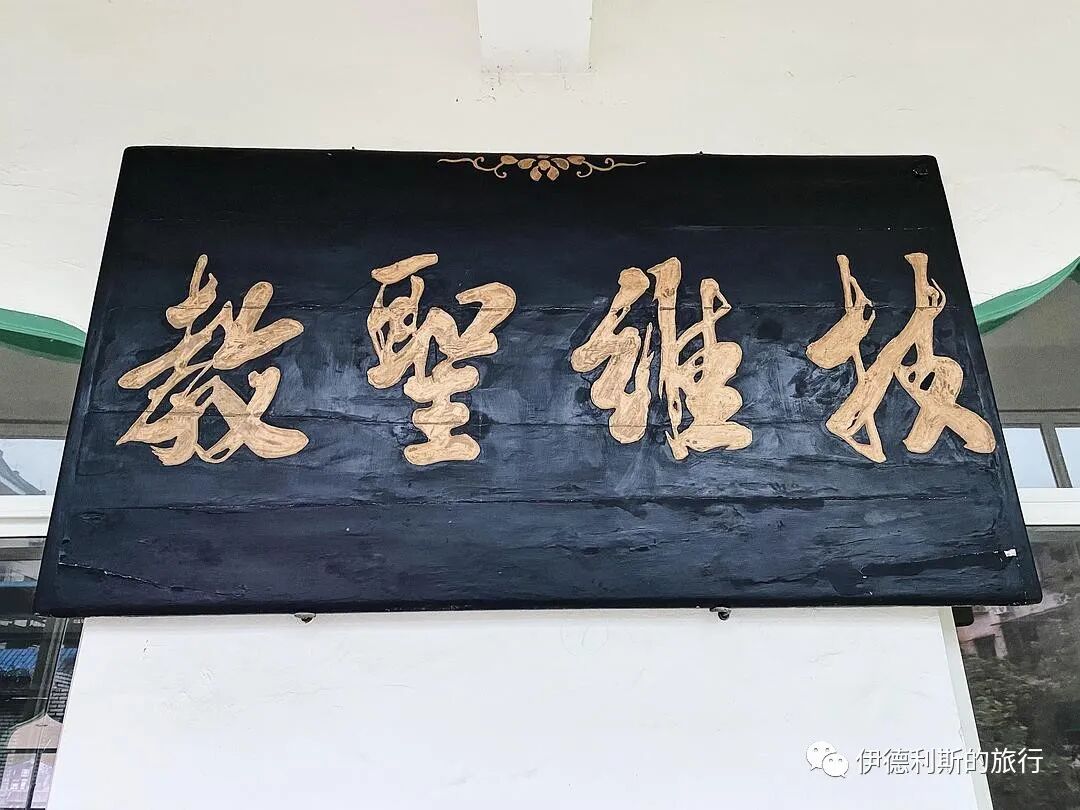
8. The 1932 'Daochan Tianfang' (Spreading the way of the Islamic faith) plaque, inscribed by Liu Cunhou, the Border Defense Commissioner of Sichuan and Shaanxi and the Inspection Commissioner of the Sichuan Army.
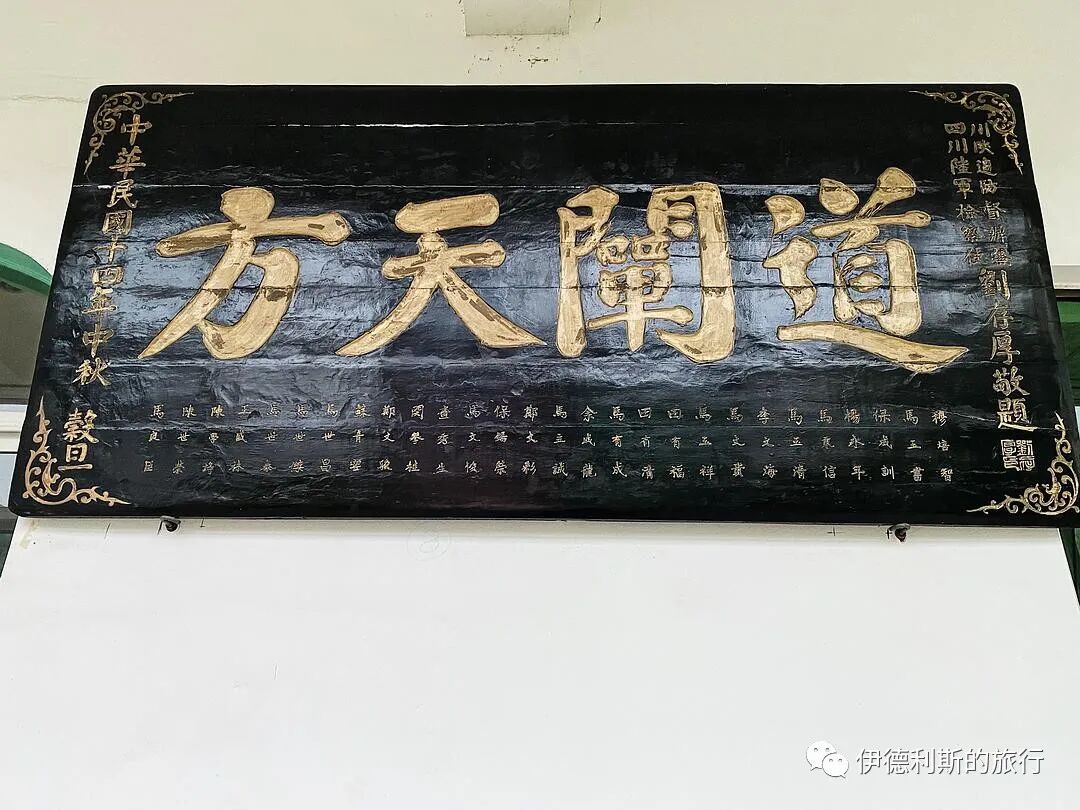
9. The 1932 'Jiaowu Weixin' (Innovating religious affairs) plaque, erected by the Guangyuan Muslim Funeral Association.
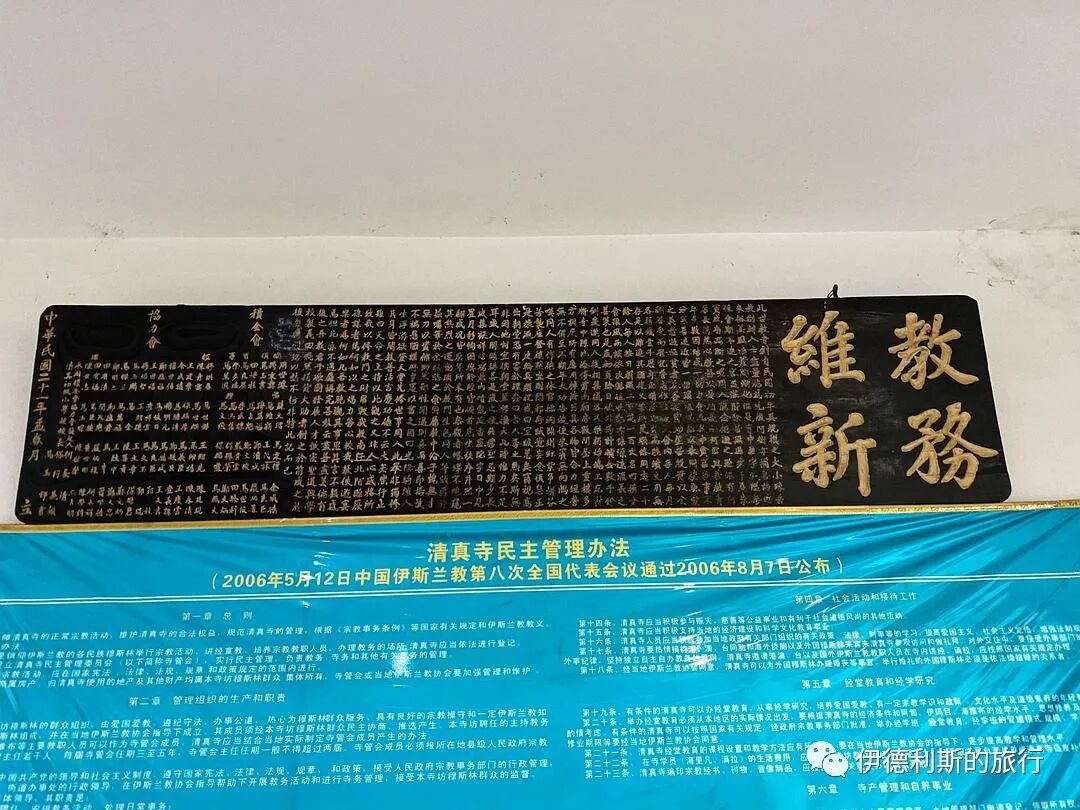
When I arrived, it was raining heavily. During Namaz (prayer), I only met one elderly gentleman, who very warmly invited me to eat beef huimo (stewed flatbread). I later learned that he was Haji Ma Jianzhong, the teacher of Imam Feng Yong from the Nanchong Mosque.
Behind the Shanghe Street Mosque, there are many local halal restaurants specializing in beef soup pots and huimo. Compared to those in Sichuan, the halal food here is closer to that of Hanzhong, Shaanxi.
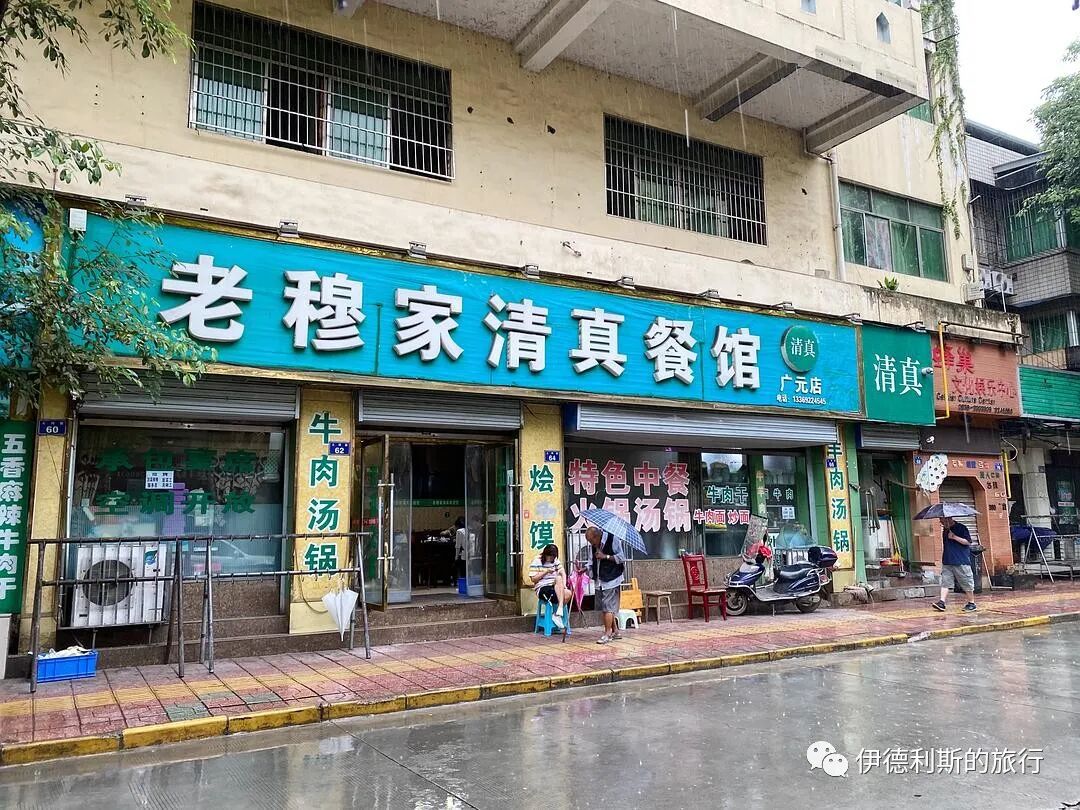
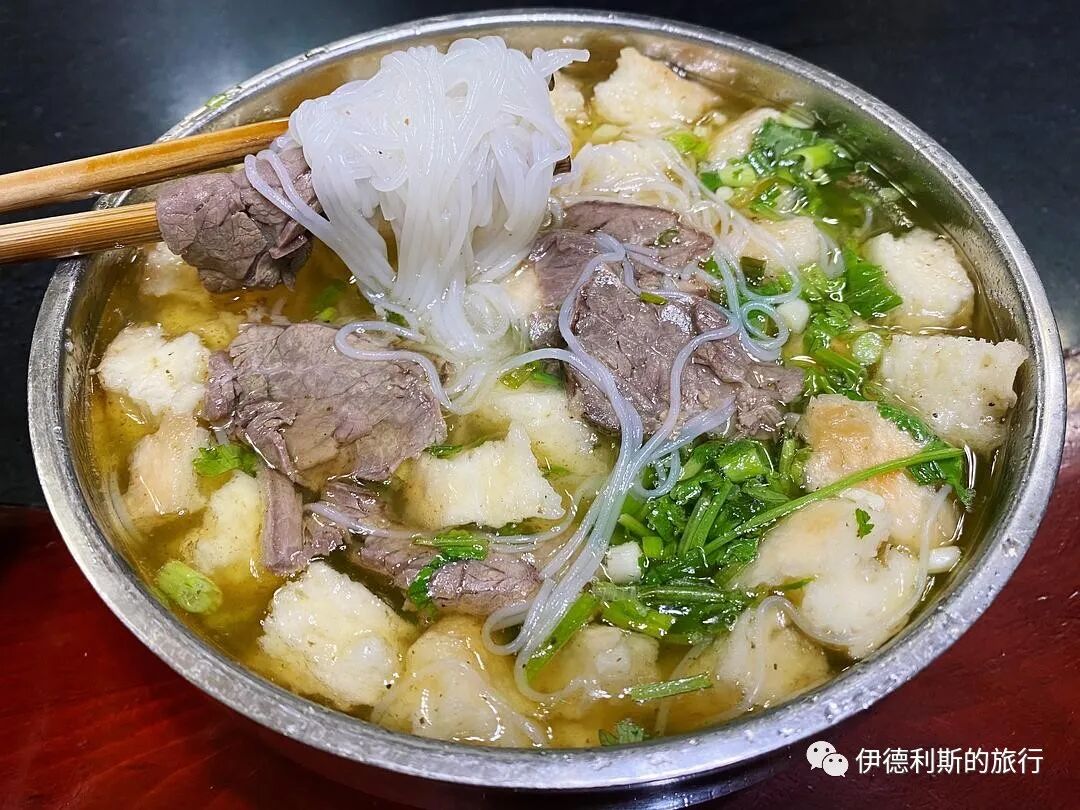
The next morning, I had beef baozi (steamed stuffed buns) with congee and pickles next to the mosque, and there was also a shop selling lu-ji (braised chicken) across the street.
The Hui Muslims with the surname Ma in downtown Guangyuan originally came from Yi County, Hebei. They arrived in Guangyuan for business during the Qianlong reign, settled in Xiahe Street, and established commercial firms such as 'Chunshengxiang,' 'Yushungong,' and 'Songbaitang'.
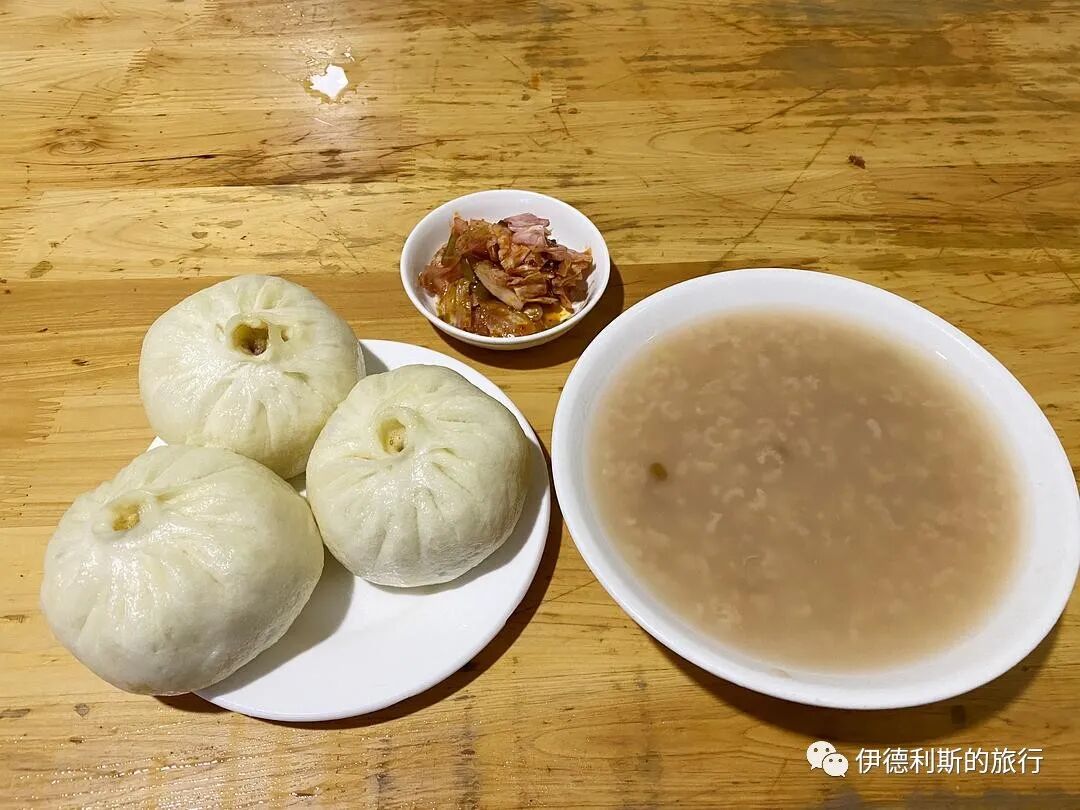
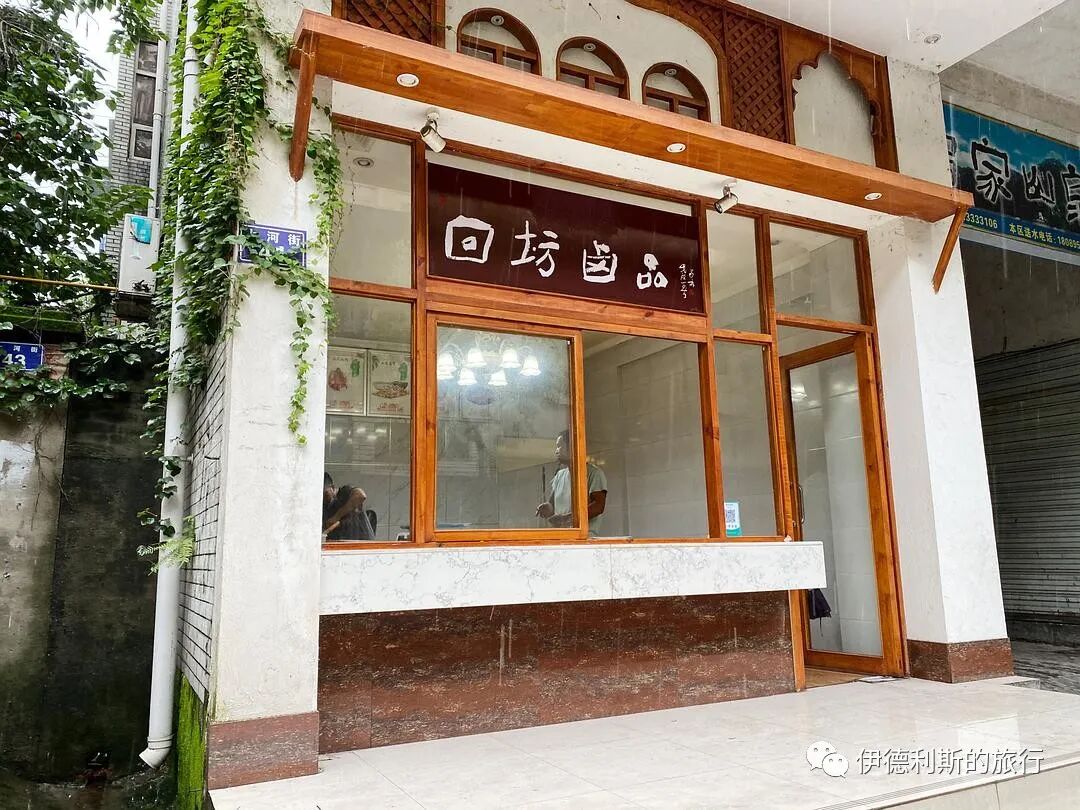
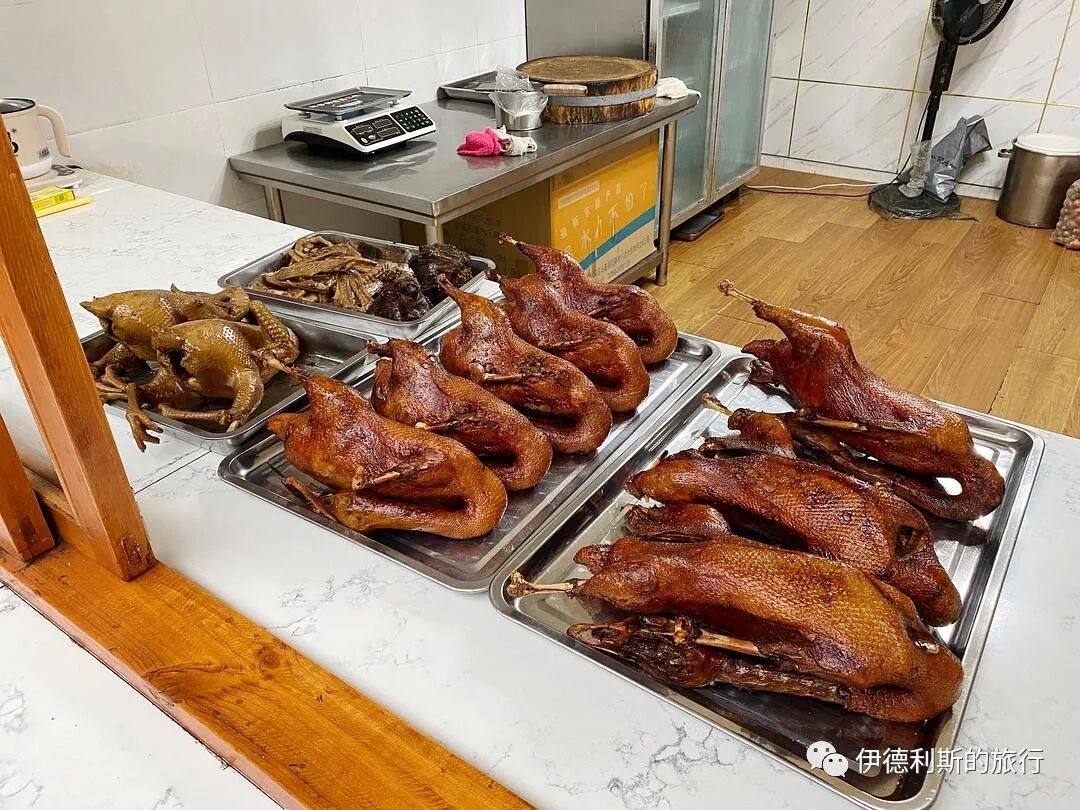
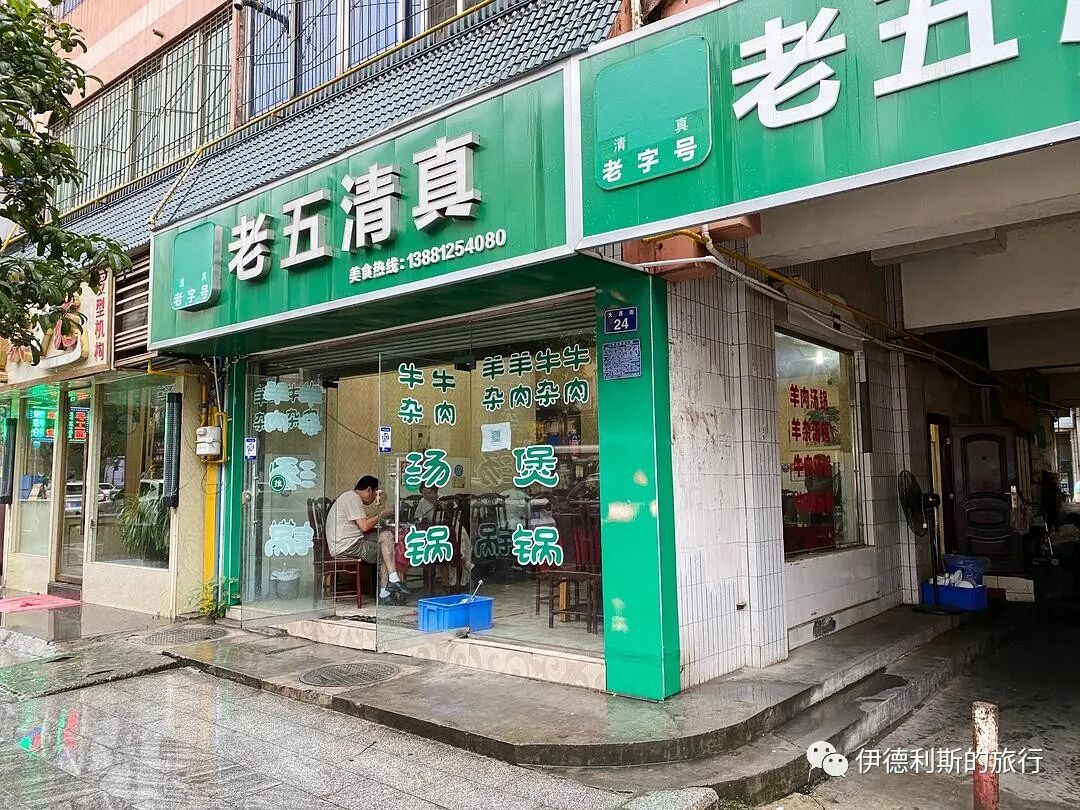
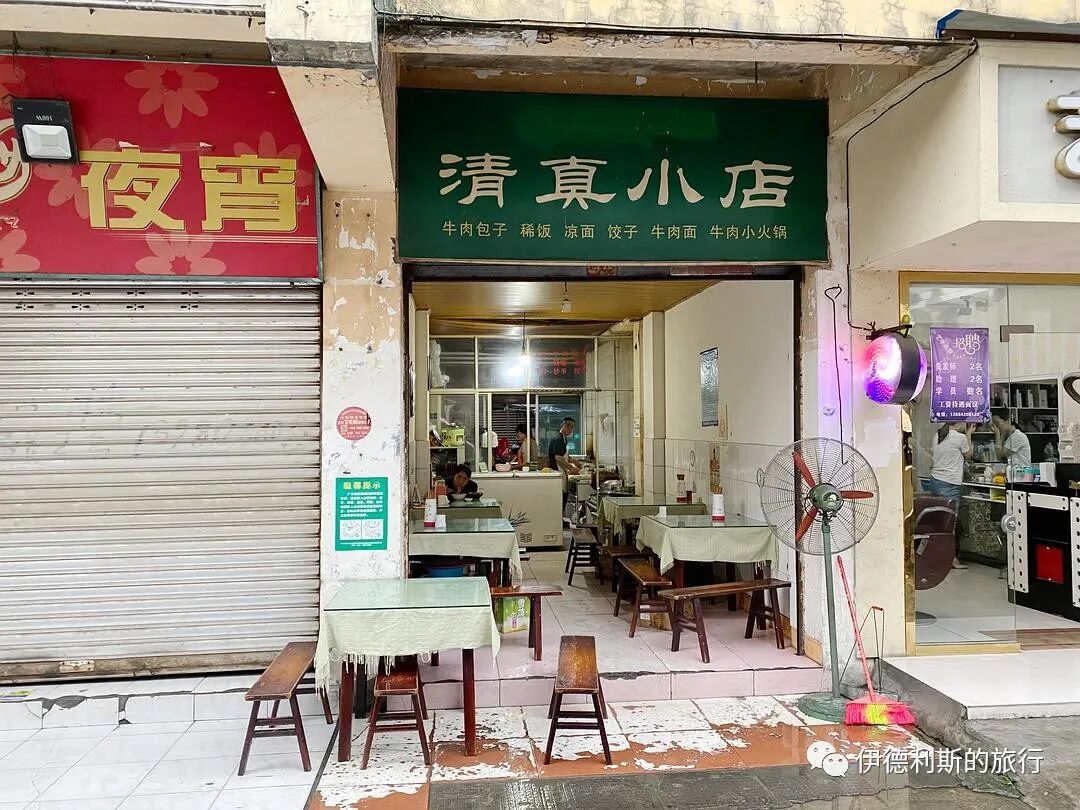
Jialing River plank road.
Night view of the Jialing River.
Hidden Mosques in Guangyuan Qingchuan: Qingxi Ancient Town and Sichuan Hui Muslim History
Articles • ali2007fr posted the article • 0 comments • 254 views • 2026-05-21 08:03
Summary: This Sichuan road trip reaches Qingxi Ancient Town in Qingchuan County, Guangyuan, recording the old town, local Muslim history, route details, and mosque-related travel notes.
I drove from Dayuan Hui Muslim Township in Qingchuan County, Guangyuan, to Qingxi Ancient City for iftar. Although there were only two tables and ten people at Qingxi Mosque, the atmosphere was wonderful and felt just like being at home. Aunties cooked dishes on-site at the mosque, and elders brought food from their homes, making it very heartwarming. We ate the Qingxi Hui Muslim nine-bowl feast (jiudawan), which is a standard banquet meal. It included clear-stewed meat, crispy fried meat (xiao su rou), steamed meat with flour (fen zheng rou), braised chicken, and cabbage with kelp. It was a mix of meat and vegetables, all very home-style. After the meal, the elders and the imam kindly gave me some stewed meat, fried dough (youxiang), and fruit to eat for suhoor.
Qingxi Ancient City was an important pass on the Yinping Road. It is known as the gateway to northern Sichuan and the throat of western Shu, and it has always been a place where merchants gathered and armies fought for control. Since the Ming Dynasty, Hui Muslims from Shaanxi and Gansu settled in Qingxi along the ancient Yinping Road, and Qingxi Mosque was officially built in 1546, the 25th year of the Jiajing reign of the Ming Dynasty. The current mosque buildings were rebuilt in 1982.
There is a 400-year-old honey locust tree in the mosque, which is an important witness to the ancient site.
Fried dough (youxiang) and chicken for suhoor.
Qingxi Ancient City at night. There are many Hui Muslim eateries on the street. You can find fried cakes (yougao), crispy biscuits (cuisubing), stir-fry restaurants serving braised meat, steamed meat with flour (fen zheng rou), and twice-cooked meat (huiguorou), snack shops selling beef stewed with flatbread (niurou huimo) and wontons (chaoshou), and restaurants serving copper hot pot. The variety is very rich. Some ancient towns and cities in Sichuan with rich Hui Muslim food, such as Dujiangyan, Songpan, and Langzhong, are especially worth visiting. I think Qingxi Ancient Town has fewer tourists, and it is a great place to escape the summer heat deep in the Qinba Mountains.
The area outside the east gate of Qingxi Ancient City is where most Hui Muslims live. It has now been unified into a Hui Muslim cultural area with many Hui Muslim restaurants and snack shops where you can eat beef copper hot pot and the Hui Muslim nine-bowl feast (jiudawan). view all
Summary: This Sichuan road trip reaches Qingxi Ancient Town in Qingchuan County, Guangyuan, recording the old town, local Muslim history, route details, and mosque-related travel notes.
I drove from Dayuan Hui Muslim Township in Qingchuan County, Guangyuan, to Qingxi Ancient City for iftar. Although there were only two tables and ten people at Qingxi Mosque, the atmosphere was wonderful and felt just like being at home. Aunties cooked dishes on-site at the mosque, and elders brought food from their homes, making it very heartwarming. We ate the Qingxi Hui Muslim nine-bowl feast (jiudawan), which is a standard banquet meal. It included clear-stewed meat, crispy fried meat (xiao su rou), steamed meat with flour (fen zheng rou), braised chicken, and cabbage with kelp. It was a mix of meat and vegetables, all very home-style. After the meal, the elders and the imam kindly gave me some stewed meat, fried dough (youxiang), and fruit to eat for suhoor.
Qingxi Ancient City was an important pass on the Yinping Road. It is known as the gateway to northern Sichuan and the throat of western Shu, and it has always been a place where merchants gathered and armies fought for control. Since the Ming Dynasty, Hui Muslims from Shaanxi and Gansu settled in Qingxi along the ancient Yinping Road, and Qingxi Mosque was officially built in 1546, the 25th year of the Jiajing reign of the Ming Dynasty. The current mosque buildings were rebuilt in 1982.
There is a 400-year-old honey locust tree in the mosque, which is an important witness to the ancient site.
Fried dough (youxiang) and chicken for suhoor.
Qingxi Ancient City at night. There are many Hui Muslim eateries on the street. You can find fried cakes (yougao), crispy biscuits (cuisubing), stir-fry restaurants serving braised meat, steamed meat with flour (fen zheng rou), and twice-cooked meat (huiguorou), snack shops selling beef stewed with flatbread (niurou huimo) and wontons (chaoshou), and restaurants serving copper hot pot. The variety is very rich. Some ancient towns and cities in Sichuan with rich Hui Muslim food, such as Dujiangyan, Songpan, and Langzhong, are especially worth visiting. I think Qingxi Ancient Town has fewer tourists, and it is a great place to escape the summer heat deep in the Qinba Mountains.
The area outside the east gate of Qingxi Ancient City is where most Hui Muslims live. It has now been unified into a Hui Muslim cultural area with many Hui Muslim restaurants and snack shops where you can eat beef copper hot pot and the Hui Muslim nine-bowl feast (jiudawan).
Hidden Gongbei in Qingchuan: Dayuan Hui Township and Wulongshan Sufi Shrine in Guangyuan
Articles • ali2007fr posted the article • 0 comments • 165 views • 2026-05-21 07:08
Summary: This northern Sichuan travelogue visits Dayuan Hui Muslim Township in Qingchuan County and Wulongshan gongbei (Sufi shrine), preserving the route, people, and local Muslim heritage.
I left downtown Guangyuan in the morning and reached Dayuan Hui Ethnic Township, deep in the Qinba Mountains, after a trip of nearly two hours. I followed the Huaguo River up the valley and first arrived at Huaguo Village to visit the Huaguo Mosque (Huaguo Si). The mosque was closed, so I could only look around the courtyard.
Huaguo Mosque is a century-old site. It was built in 1925 at Majiakou in Huaguo Village, moved to its current location in Chenjiayuan in 1940, and rebuilt after the 2008 earthquake. You can still see the old stone column bases in the courtyard today.
Continuing up the Huaguo River, I reached Suojia Village, another Hui Muslim village. It is the oldest Hui village in all of Qingchuan, with a history of over 400 years. According to a tombstone in the village, Ma Jiyuan invited the Suo and Zhao families to move from Jingyang County, Shanxi, to settle by the Huagai River in 1580 (the eighth year of the Wanli reign of the Ming Dynasty). The Qingchuan County Annals record that in 1586 (the fourteenth year of the Wanli reign of the Ming Dynasty), three Hui Muslim families named Ma, Suo, and Hei from Ta'er Mosque in Jingyang County, Shanxi, moved to settle by the Huagai River in Dayuan Township, marking the arrival of Hui Muslims in the county.
At Suojia Mosque, the imam and village elders welcomed me warmly. I offered a donation (nietie), but they returned it to me, saying it was for travelers, and gave me oranges and apples instead. Suojia Mosque was built in the late Ming Dynasty, occupied in 1952, and torn down in 1967. Led by fellow Muslims Suo Fushou and Ma Minghuai, and through the efforts of Suo Jinming, Suo Wenjin, Ma Qinggao, Suo Jinzhu, Suo Fuguo, and Ma Wancai, the current Suojia Mosque was finally completed after four years of work from 2007 to 2011.
In Suojia Village, I clearly saw many people wearing white caps. Everyone was very friendly and smiled at me. Suojia Village sits deep in Wulong Mountain. With ducks and geese in the stream and fellow Muslims plowing the terraced fields with oxen, it is a peaceful scene, like a hidden paradise.
Suojia Village is definitely the most beautiful Hui Muslim village I have visited in Sichuan. I slowly climbed Wulong Mountain and looked out from the railing. Rolling green mountains stretched out, the quiet Huaguo River valley lay between them, and houses were scattered along the slopes. White walls and dark tiles dotted the landscape, while terraced fields formed a lush green pattern. The fresh mountain air hit my face, and everything I saw felt like a healing pastoral poem.
The village specializes in organic green tea, mountain delicacies, eco-friendly beef and lamb, and medicinal herbs grown in the forest. While walking through the village, I happened to meet a simple Hui Muslim grandmother driving her cattle and sheep into the deep mountains to graze, looking very relaxed. When she is not grazing them, she feeds the cattle and sheep pure corn cobs. Cattle and sheep raised on mountain spring water, wild mushrooms, and corn must taste great. I want to try some next time I have the chance.
On a cliff at the end of the Huaguo River valley sits the Wulong Mountain Gongbei, also called the Wulong Mountain Mosque (Qingzhen Ting), which belongs to the Jahriyya Sufi order (Gaderenye Menhuan). This cliffside shrine is comparable in scale to the Jiujing Gongbei.
Wulong Mountain Gongbei is where 'Grandpa An' (An Taiye) from Ding'an River practiced during his lifetime. Grandpa An was originally a Han Chinese from Anhui. During the Kangxi reign, he served as a magistrate in Langzhong County. Inspired by Qi Jingyi, the founder of the Jahriyya order, he resigned from his post to join the faith. Later, he went to Wulong Mountain to practice in a cave. After he passed away (gui zhen) in 1708 (the forty-seventh year of the Kangxi reign), the Wulong Mountain Gongbei was built. Inside the Gongbei, there is a plaque from the eighth year of the Xianfeng reign that reads 'Imperial Grace' (Sheng En). view all
Summary: This northern Sichuan travelogue visits Dayuan Hui Muslim Township in Qingchuan County and Wulongshan gongbei (Sufi shrine), preserving the route, people, and local Muslim heritage.
I left downtown Guangyuan in the morning and reached Dayuan Hui Ethnic Township, deep in the Qinba Mountains, after a trip of nearly two hours. I followed the Huaguo River up the valley and first arrived at Huaguo Village to visit the Huaguo Mosque (Huaguo Si). The mosque was closed, so I could only look around the courtyard.
Huaguo Mosque is a century-old site. It was built in 1925 at Majiakou in Huaguo Village, moved to its current location in Chenjiayuan in 1940, and rebuilt after the 2008 earthquake. You can still see the old stone column bases in the courtyard today.
Continuing up the Huaguo River, I reached Suojia Village, another Hui Muslim village. It is the oldest Hui village in all of Qingchuan, with a history of over 400 years. According to a tombstone in the village, Ma Jiyuan invited the Suo and Zhao families to move from Jingyang County, Shanxi, to settle by the Huagai River in 1580 (the eighth year of the Wanli reign of the Ming Dynasty). The Qingchuan County Annals record that in 1586 (the fourteenth year of the Wanli reign of the Ming Dynasty), three Hui Muslim families named Ma, Suo, and Hei from Ta'er Mosque in Jingyang County, Shanxi, moved to settle by the Huagai River in Dayuan Township, marking the arrival of Hui Muslims in the county.
At Suojia Mosque, the imam and village elders welcomed me warmly. I offered a donation (nietie), but they returned it to me, saying it was for travelers, and gave me oranges and apples instead. Suojia Mosque was built in the late Ming Dynasty, occupied in 1952, and torn down in 1967. Led by fellow Muslims Suo Fushou and Ma Minghuai, and through the efforts of Suo Jinming, Suo Wenjin, Ma Qinggao, Suo Jinzhu, Suo Fuguo, and Ma Wancai, the current Suojia Mosque was finally completed after four years of work from 2007 to 2011.
In Suojia Village, I clearly saw many people wearing white caps. Everyone was very friendly and smiled at me. Suojia Village sits deep in Wulong Mountain. With ducks and geese in the stream and fellow Muslims plowing the terraced fields with oxen, it is a peaceful scene, like a hidden paradise.
Suojia Village is definitely the most beautiful Hui Muslim village I have visited in Sichuan. I slowly climbed Wulong Mountain and looked out from the railing. Rolling green mountains stretched out, the quiet Huaguo River valley lay between them, and houses were scattered along the slopes. White walls and dark tiles dotted the landscape, while terraced fields formed a lush green pattern. The fresh mountain air hit my face, and everything I saw felt like a healing pastoral poem.
The village specializes in organic green tea, mountain delicacies, eco-friendly beef and lamb, and medicinal herbs grown in the forest. While walking through the village, I happened to meet a simple Hui Muslim grandmother driving her cattle and sheep into the deep mountains to graze, looking very relaxed. When she is not grazing them, she feeds the cattle and sheep pure corn cobs. Cattle and sheep raised on mountain spring water, wild mushrooms, and corn must taste great. I want to try some next time I have the chance.
On a cliff at the end of the Huaguo River valley sits the Wulong Mountain Gongbei, also called the Wulong Mountain Mosque (Qingzhen Ting), which belongs to the Jahriyya Sufi order (Gaderenye Menhuan). This cliffside shrine is comparable in scale to the Jiujing Gongbei.
Wulong Mountain Gongbei is where 'Grandpa An' (An Taiye) from Ding'an River practiced during his lifetime. Grandpa An was originally a Han Chinese from Anhui. During the Kangxi reign, he served as a magistrate in Langzhong County. Inspired by Qi Jingyi, the founder of the Jahriyya order, he resigned from his post to join the faith. Later, he went to Wulong Mountain to practice in a cave. After he passed away (gui zhen) in 1708 (the forty-seventh year of the Kangxi reign), the Wulong Mountain Gongbei was built. Inside the Gongbei, there is a plaque from the eighth year of the Xianfeng reign that reads 'Imperial Grace' (Sheng En).
Hidden Mosques in Guangyuan: Shanghe Street, Jialing River and Sichuan Hui Muslim History
Articles • ali2007fr posted the article • 0 comments • 165 views • 2026-05-21 07:08
Summary: This Guangyuan stop follows Shanghe Street by the Jialing River, old mosque history, Hui Muslim community details, and the next stage of a Spring Festival road trip through Sichuan.
I traveled back along the Jialing River gorge from the Nine Wells, with river breezes and mountain shadows for company, and arrived at the Shanghe Street Mosque in Guangyuan just in time for iftar. The mosque was undergoing repairs during my visit, so prayers and iftar were held on the second floor. The layout was simple, but the atmosphere was incredibly quiet and solemn.
Guangyuan sits at the junction of Sichuan, Shaanxi, and Gansu provinces, serving as a key hub for water and land transport. The worshippers here are diverse, including friends (dost) from the northwest, international students studying here, and local elders who have lived here for generations. Their shared devotion creates a peaceful and inclusive environment.
The iftar meal was simple and home-style: warm and flavorful beef stewed with carrots (huluobo dun niurou), refreshing stir-fried wood ear mushrooms with asparagus lettuce (wosun chao mu'er), light and soothing kelp stewed with white radish (bailuobo dun haidai), plus cold glass noodles (liangban fensi) and pickled radish. It was simple, solid, steady, and healing.
The Shanghe Street Mosque in Guangyuan stands quietly by the Jialing River, right outside the bustling Jialing River Pedestrian Street. River breezes blow gently, and tourist boats shuttle back and forth at the pier in a constant stream, full of the lively noise of the city. Stepping into the mosque to quietly perform Taraweeh prayers, I felt deeply moved. Just one window away, the world outside is filled with the hustle and bustle of traffic and the busy, worldly life. Inside the window is a clean and peaceful place for spiritual practice, a quiet harbor to rest one's heart. The noise of the world and the peace of the ancient mosque blend together, creating a moment of stillness and a spiritual home by the busy river.
Guangyuan had a mosque built on East Street in the old city as early as the Yuan and Ming dynasties, but it was destroyed at the end of the Ming Dynasty. After the Qing Dynasty, the commercial center of Guangyuan gradually moved from East Street to the banks of the Jialing River. Therefore, local Hui Muslims built the Shanghe Street Mosque in 1721 (the 60th year of the Kangxi reign), though some say it started in 1674, and it was expanded in 1777 (the 42nd year of the Qianlong reign).
The mosque now houses nine precious plaques from the Qing Dynasty and the Republic of China era. In the 1960s and 1970s, these plaques were covered with layers of paper and painted red with slogans about national unity, which is how they survived. These nine plaques are now hung on the walls of the stairs and corridors inside the mosque.
The 'Mosque' (Qingzhensi) plaque from 1748 (the 13th year of the Qianlong reign) was rebuilt by the community in the 10th year of the Republic of China.
The 'Recognize Allah as One' (Renzhu Wu'er) plaque from 1803 (the 8th year of the Jiaqing reign) was presented by the imperial-appointed Baturu Min Huaixi.
The 'Pure and True' (Qi Qing Li Zhen) plaque from 1811 (the 16th year of the Jiaqing reign) was set up by Geng Ziyu, a garrison commander in Guangyuan.
The small-character stone plaque from 1849 (the 29th year of the Daoguang reign) was written by Min Zhengfeng, the Governor of Guangxi, and records the historical facts of religious policy disputes regarding Hui Muslims during the Yongzheng reign and the imperial court's protection of Islam.
The 'Penetrating the Dust' (Guanche Weichen) plaque from 1873 (the 12th year of the Tongzhi reign) was set up by Jiang Guolin, an imperial-appointed garrison commander in Guangyuan.
The 'Only Pure and Only One' (Wei Jing Wei Yi) plaque from 1873 (the 12th year of the Tongzhi reign) was set up by Ma Dengchao, an imperial-appointed garrison officer in Guangyuan.
The 'Branch of the Holy Religion' (Zhi Wei Sheng Jiao) plaque from the Guangxu reign was presented by Mu Xiangfu, a garrison commander in Guangyuan.
The 'Spreading the Faith' (Dao Chan Tian Fang) plaque from 1925 was inscribed by Liu Cunhou, the Commissioner of Sichuan-Shaanxi Border Defense and Inspector of the Sichuan Army.
The 'Renewing Religious Affairs' (Jiaowu Weixin) plaque from 1932 was set up by the Guangyuan Hui Muslim Funeral Assistance Association.
After finishing the Taraweeh prayers, I went behind the mosque to have some beef stew with flatbread (huimo). Because Guangyuan is close to Shaanxi and Gansu, the locals love eating huimo, which makes their food different from the rest of Sichuan. Guangyuan huimo is very different from Shaanxi-style soaked flatbread (paomo) because the bread is served in large, soft chunks that do not fall apart. The broth is made from beef bones and includes plenty of glass noodles. It is popular to eat huimo for breakfast in Guangyuan, but restaurants actually sell it all day long. Zhouji and Lao Mu Jia on Shanghe Street both serve huimo, and Lao Mu Jia stays open later.
The Mu-surname Hui Muslims in Guangyuan migrated from Shaanxi and Gansu along the Jialing River during the mid-Qing Dynasty. Most live in Mujiapo in Datian Town, and they run restaurants in places like the Guangyuan city center and Jiange County where you can taste local Hui Muslim specialties. view all
Summary: This Guangyuan stop follows Shanghe Street by the Jialing River, old mosque history, Hui Muslim community details, and the next stage of a Spring Festival road trip through Sichuan.
I traveled back along the Jialing River gorge from the Nine Wells, with river breezes and mountain shadows for company, and arrived at the Shanghe Street Mosque in Guangyuan just in time for iftar. The mosque was undergoing repairs during my visit, so prayers and iftar were held on the second floor. The layout was simple, but the atmosphere was incredibly quiet and solemn.
Guangyuan sits at the junction of Sichuan, Shaanxi, and Gansu provinces, serving as a key hub for water and land transport. The worshippers here are diverse, including friends (dost) from the northwest, international students studying here, and local elders who have lived here for generations. Their shared devotion creates a peaceful and inclusive environment.
The iftar meal was simple and home-style: warm and flavorful beef stewed with carrots (huluobo dun niurou), refreshing stir-fried wood ear mushrooms with asparagus lettuce (wosun chao mu'er), light and soothing kelp stewed with white radish (bailuobo dun haidai), plus cold glass noodles (liangban fensi) and pickled radish. It was simple, solid, steady, and healing.
The Shanghe Street Mosque in Guangyuan stands quietly by the Jialing River, right outside the bustling Jialing River Pedestrian Street. River breezes blow gently, and tourist boats shuttle back and forth at the pier in a constant stream, full of the lively noise of the city. Stepping into the mosque to quietly perform Taraweeh prayers, I felt deeply moved. Just one window away, the world outside is filled with the hustle and bustle of traffic and the busy, worldly life. Inside the window is a clean and peaceful place for spiritual practice, a quiet harbor to rest one's heart. The noise of the world and the peace of the ancient mosque blend together, creating a moment of stillness and a spiritual home by the busy river.
Guangyuan had a mosque built on East Street in the old city as early as the Yuan and Ming dynasties, but it was destroyed at the end of the Ming Dynasty. After the Qing Dynasty, the commercial center of Guangyuan gradually moved from East Street to the banks of the Jialing River. Therefore, local Hui Muslims built the Shanghe Street Mosque in 1721 (the 60th year of the Kangxi reign), though some say it started in 1674, and it was expanded in 1777 (the 42nd year of the Qianlong reign).
The mosque now houses nine precious plaques from the Qing Dynasty and the Republic of China era. In the 1960s and 1970s, these plaques were covered with layers of paper and painted red with slogans about national unity, which is how they survived. These nine plaques are now hung on the walls of the stairs and corridors inside the mosque.
The 'Mosque' (Qingzhensi) plaque from 1748 (the 13th year of the Qianlong reign) was rebuilt by the community in the 10th year of the Republic of China.
The 'Recognize Allah as One' (Renzhu Wu'er) plaque from 1803 (the 8th year of the Jiaqing reign) was presented by the imperial-appointed Baturu Min Huaixi.
The 'Pure and True' (Qi Qing Li Zhen) plaque from 1811 (the 16th year of the Jiaqing reign) was set up by Geng Ziyu, a garrison commander in Guangyuan.
The small-character stone plaque from 1849 (the 29th year of the Daoguang reign) was written by Min Zhengfeng, the Governor of Guangxi, and records the historical facts of religious policy disputes regarding Hui Muslims during the Yongzheng reign and the imperial court's protection of Islam.
The 'Penetrating the Dust' (Guanche Weichen) plaque from 1873 (the 12th year of the Tongzhi reign) was set up by Jiang Guolin, an imperial-appointed garrison commander in Guangyuan.
The 'Only Pure and Only One' (Wei Jing Wei Yi) plaque from 1873 (the 12th year of the Tongzhi reign) was set up by Ma Dengchao, an imperial-appointed garrison officer in Guangyuan.
The 'Branch of the Holy Religion' (Zhi Wei Sheng Jiao) plaque from the Guangxu reign was presented by Mu Xiangfu, a garrison commander in Guangyuan.
The 'Spreading the Faith' (Dao Chan Tian Fang) plaque from 1925 was inscribed by Liu Cunhou, the Commissioner of Sichuan-Shaanxi Border Defense and Inspector of the Sichuan Army.
The 'Renewing Religious Affairs' (Jiaowu Weixin) plaque from 1932 was set up by the Guangyuan Hui Muslim Funeral Assistance Association.
After finishing the Taraweeh prayers, I went behind the mosque to have some beef stew with flatbread (huimo). Because Guangyuan is close to Shaanxi and Gansu, the locals love eating huimo, which makes their food different from the rest of Sichuan. Guangyuan huimo is very different from Shaanxi-style soaked flatbread (paomo) because the bread is served in large, soft chunks that do not fall apart. The broth is made from beef bones and includes plenty of glass noodles. It is popular to eat huimo for breakfast in Guangyuan, but restaurants actually sell it all day long. Zhouji and Lao Mu Jia on Shanghe Street both serve huimo, and Lao Mu Jia stays open later.
The Mu-surname Hui Muslims in Guangyuan migrated from Shaanxi and Gansu along the Jialing River during the mid-Qing Dynasty. Most live in Mujiapo in Datian Town, and they run restaurants in places like the Guangyuan city center and Jiange County where you can taste local Hui Muslim specialties.
Hidden Gongbei in Guangyuan: Jiujing Sufi Shrine, Mujiapo Hui Village and Sichuan Mosque Road Trip
Articles • ali2007fr posted the article • 0 comments • 205 views • 2026-05-21 06:45
Summary: This Guangyuan finale follows Jiujing gongbei (Sufi shrine), Mujiapo Hui Muslim village, rural mosque history, and the last stretch of the Sichuan Spring Festival road trip.
I traveled north from Nanshan in Guangyuan, crossed the city center, and followed the Jialing River Grand Canyon deep into the mountains until I reached the border of Sichuan and Shaanxi, where the Jiujing Gongbei sits on a hillside next to the canyon. I personally consider this the most remarkable Gongbei in all of Sichuan.
Jiujing Gongbei, also known as Jingjue Pavilion (Jingjue Ting), was first built in 1702 (the 41st year of the Kangxi reign). It holds the tomb of Ma Xunyi, a disciple of Huazhe Abudonglaxi, who was a leader of the Qadiriyya Sufi order (menhuan). In 1721 (the 60th year of the Kangxi reign), the tomb also became the final resting place for Ma Yongqing and Mu Zaiqing, who were disciples of Ma Xunyi's fellow student, Qi Jingyi.
The 1702 tombstone for Ma Xunyi reads: 'Regarding the Ma family of the pure faith from Lintao, Hezhou, who traveled to teach in Jiujing, Guangyuan, and passed away here, this monument is erected.' The tomb of the late, respected Master Ma of the Qing dynasty. The landowners were Mu Zhixian and Mu Zhilin. Erected on an auspicious day, the 15th day of the ninth lunar month in the 41st year of the Kangxi reign, by his student Ha Chengyu.
The 'Stele Record for the Reconstruction of Jingjue Pavilion' dates to the 55th year of the Qianlong reign. The inscription mentions that Ma Xunyi began studying under Huazhe Abudonglaxi in the 25th year of the Kangxi reign. The text was written by Ma Gui, the great-grandson of Ma Xunyi and the caretaker of Jiujing Gongbei.
The 'Jingjue Pavilion' plaque from the 7th year of the Guangxu reign was gifted by Liu, a Jinshi degree holder specially appointed as the Magistrate of Guangyuan County, who received five promotions and ten commendations for his service. It was also erected by Ma Dengchao, who was specially appointed as the Garrison Commander of Guangyuan and granted the imperial peacock feather. These were Magistrate Liu of Guangyuan County and Garrison Commander Ma Dengchao.
Historical records confirm that the Guangyuan Magistrate in the 7th year of the Guangxu reign was Liu Xian. Liu Xian was from Qian County, Shaanxi. He was a diligent student from a young age. During his time as Magistrate of Guangyuan, he provided disaster relief, built bridges and roads, and improved irrigation, helping the people live comfortably. He was honest and upright, and people called him 'Blue Sky Liu' (Liu Qingtian).
Ma Dengchao was a local from Sichuan. During the Tongzhi and Guangxu reigns, he served as a fifth-rank military officer in the Green Standard Army, overseeing city defense, military affairs, and provisions in Guangyuan County. In the 12th year of the Tongzhi reign, he inscribed the words 'Only Pure, Only One' (Wei Jing Wei Yi) for the Shanghe Street Mosque in Guangyuan, which is still kept inside the mosque today.
Inside the Gongbei, there are several Chinese pistache trees (huanglianmu) over 300 years old, planted when the site was first built.
On the hillside near the Jiujing Gongbei is a Hui Muslim village called Mujiapo in Jiujingwan, and halfway up the mountain sits the Jiujing Mosque, which was first built during the Kangxi reign. The various Gongbei in Guangyuan are all built near Hui Muslim villages, where the Qadiriyya Sufi order and the Gedimu villagers live together in harmony.
Since the Ming dynasty, Jiujingwan has been an important land and water station for travelers moving from Hanzhong, Shaanxi, along the Jialing River to Chongqing. In the early Qing dynasty, Hui Muslim families named Mu, Ha, Ma, and Li moved here from Gansu and Shaanxi. It was named Mujiapo because the Mu family was the largest group, and today there are over 400 Hui Muslims living there. Because Mujiapo is located entirely on the slopes of the Jialing River canyon, the Hui Muslims mainly raise cattle and sheep, grow forage grass, and farm walnuts. 'Mujiapo' beef and mutton have become a famous brand in the northern Sichuan meat market.
There is a folk culture park on the mountain at Jiujing Mujiapo, and a restaurant serving Hui Muslim food by the Jialing River at the foot of the mountain. I could not try the food because it was Ramadan, so I will have to wait for another chance. view all
Summary: This Guangyuan finale follows Jiujing gongbei (Sufi shrine), Mujiapo Hui Muslim village, rural mosque history, and the last stretch of the Sichuan Spring Festival road trip.
I traveled north from Nanshan in Guangyuan, crossed the city center, and followed the Jialing River Grand Canyon deep into the mountains until I reached the border of Sichuan and Shaanxi, where the Jiujing Gongbei sits on a hillside next to the canyon. I personally consider this the most remarkable Gongbei in all of Sichuan.
Jiujing Gongbei, also known as Jingjue Pavilion (Jingjue Ting), was first built in 1702 (the 41st year of the Kangxi reign). It holds the tomb of Ma Xunyi, a disciple of Huazhe Abudonglaxi, who was a leader of the Qadiriyya Sufi order (menhuan). In 1721 (the 60th year of the Kangxi reign), the tomb also became the final resting place for Ma Yongqing and Mu Zaiqing, who were disciples of Ma Xunyi's fellow student, Qi Jingyi.
The 1702 tombstone for Ma Xunyi reads: 'Regarding the Ma family of the pure faith from Lintao, Hezhou, who traveled to teach in Jiujing, Guangyuan, and passed away here, this monument is erected.' The tomb of the late, respected Master Ma of the Qing dynasty. The landowners were Mu Zhixian and Mu Zhilin. Erected on an auspicious day, the 15th day of the ninth lunar month in the 41st year of the Kangxi reign, by his student Ha Chengyu.
The 'Stele Record for the Reconstruction of Jingjue Pavilion' dates to the 55th year of the Qianlong reign. The inscription mentions that Ma Xunyi began studying under Huazhe Abudonglaxi in the 25th year of the Kangxi reign. The text was written by Ma Gui, the great-grandson of Ma Xunyi and the caretaker of Jiujing Gongbei.
The 'Jingjue Pavilion' plaque from the 7th year of the Guangxu reign was gifted by Liu, a Jinshi degree holder specially appointed as the Magistrate of Guangyuan County, who received five promotions and ten commendations for his service. It was also erected by Ma Dengchao, who was specially appointed as the Garrison Commander of Guangyuan and granted the imperial peacock feather. These were Magistrate Liu of Guangyuan County and Garrison Commander Ma Dengchao.
Historical records confirm that the Guangyuan Magistrate in the 7th year of the Guangxu reign was Liu Xian. Liu Xian was from Qian County, Shaanxi. He was a diligent student from a young age. During his time as Magistrate of Guangyuan, he provided disaster relief, built bridges and roads, and improved irrigation, helping the people live comfortably. He was honest and upright, and people called him 'Blue Sky Liu' (Liu Qingtian).
Ma Dengchao was a local from Sichuan. During the Tongzhi and Guangxu reigns, he served as a fifth-rank military officer in the Green Standard Army, overseeing city defense, military affairs, and provisions in Guangyuan County. In the 12th year of the Tongzhi reign, he inscribed the words 'Only Pure, Only One' (Wei Jing Wei Yi) for the Shanghe Street Mosque in Guangyuan, which is still kept inside the mosque today.
Inside the Gongbei, there are several Chinese pistache trees (huanglianmu) over 300 years old, planted when the site was first built.
On the hillside near the Jiujing Gongbei is a Hui Muslim village called Mujiapo in Jiujingwan, and halfway up the mountain sits the Jiujing Mosque, which was first built during the Kangxi reign. The various Gongbei in Guangyuan are all built near Hui Muslim villages, where the Qadiriyya Sufi order and the Gedimu villagers live together in harmony.
Since the Ming dynasty, Jiujingwan has been an important land and water station for travelers moving from Hanzhong, Shaanxi, along the Jialing River to Chongqing. In the early Qing dynasty, Hui Muslim families named Mu, Ha, Ma, and Li moved here from Gansu and Shaanxi. It was named Mujiapo because the Mu family was the largest group, and today there are over 400 Hui Muslims living there. Because Mujiapo is located entirely on the slopes of the Jialing River canyon, the Hui Muslims mainly raise cattle and sheep, grow forage grass, and farm walnuts. 'Mujiapo' beef and mutton have become a famous brand in the northern Sichuan meat market.
There is a folk culture park on the mountain at Jiujing Mujiapo, and a restaurant serving Hui Muslim food by the Jialing River at the foot of the mountain. I could not try the food because it was Ramadan, so I will have to wait for another chance.
Hidden Gongbei in Guangyuan: Nanshan Sufi Shrine and Sichuan Hui Muslim Village
Articles • ali2007fr posted the article • 0 comments • 164 views • 2026-05-21 06:45
Summary: This Guangyuan road trip visits Nanshan gongbei (Sufi shrine), a Hui Muslim village, local religious history, and the mountain routes that shaped this stop in northern Sichuan.
On February 21, I headed north from Yanting, passed through Langzhong, and arrived at Nanshan in Guangyuan to visit the Langzhaoting gongbei and the Nanshan Hui Muslim village.
The Langzhaoting gongbei in Nanshan, Guangyuan, was originally called Yulongshan gongbei. It is a shrine built to honor the third-generation master, Master Ma, of the Qadiriyya Sufi order's Great Gongbei menhuan. Master Ma (1693-1778) was from Dongxiang, Linxia, Gansu. He studied religious texts from a young age and later, by chance, became a student of Master Ma Tengyi at the Taizi gongbei. Master Ma Tengyi explained the secrets of the religious, mystical, and ultimate truths to him, and Master Ma achieved a deep, sudden enlightenment. At age 24, Master Ma followed Master Ma Tengyi's instructions to go to Nanshan in Guangyuan for quiet, secluded practice. He built a thatched hut and spent over 60 years in deep meditation. Outside of his spiritual practice, he guided the local people, and many stories of his miracles have been passed down to this day. Because of his great virtue and the miracles he performed, many local people converted to the faith. After Master Ma passed away, the Guangyuan magistrate Ma Jialiang initiated the construction of the Langzhaoting gongbei. Later, generations of military and government officials in Guangyuan helped maintain it, leaving behind many stone inscriptions and plaques.
After 1996, the Taizi gongbei in Linxia gradually expanded the Langzhaoting site. In 2010, they rebuilt the main hall and side rooms, giving it the layout it has today. Behind the gongbei is a bamboo forest, and in front are terraced fields, making the scenery very beautiful.
The main hall of Langzhaoting features a mihrab in the style of Hezhou.
Inside the courtyard hangs a plaque titled "Embodying the Truth" (Ti Dao Gui Zhen), which was donated by military officers and soldiers of the Guangyuan garrison in the 12th year of the Daoguang reign.
The courtyard also preserves many stone carvings from the Qing Dynasty. The carvings feature traditional auspicious themes like "Peace and Prosperity," "Cranes and Pines for Longevity," and "Mastery of Both Literature and Martial Arts."
Many of the Qing Dynasty stone column bases were destroyed after 1958. This pair of stone lions still has column bases on them, which may have originally served as the base for a memorial archway.
The various stone inscriptions at Langzhaoting.
The oldest inscription dates back to the 42nd year of the Qianlong reign, which is the year Master Ma passed away and the gongbei was built. The top of the tablet is carved with a taiji symbol, which is very unique.
The inscription records that "Master Ma" began his studies at 14, traveled from Shaanxi to Sichuan at 24, and practiced in seclusion for over 60 years. It expresses deep respect for him. The signature belongs to a high-ranking official named Ma X from Anhui, who held titles including Fengzhi Dafu and acting magistrate of Guangyuan County.
Research shows the person who set up the tablet was Ma Jialiang, a Hui Muslim from Anqing, Anhui, and the builder of Langzhaoting. Ma Jialiang, whose courtesy name was Zhongheng, was the son of the famous Qing Dynasty Hui Muslim general and martial arts scholar Ma Dayong. He passed the imperial examinations in the 12th year of the Qianlong reign and served as a high official in several provinces. He rose from county magistrate to prefect, working in Henan, Shandong, Hubei, and Sichuan. He was once dismissed in Shandong for failing to notice the White Lotus Sect, but was later reappointed as the prefect of Huili, Sichuan, eventually ending his career as an acting magistrate in Guangyuan.
The second tablet is the "Record of Rebuilding the True Shrine" from the 59th year of the Qianlong reign. It mentions that in the 42nd year of Qianlong, the former magistrate Master Ma donated funds to build the shrine for the Master, and it was renovated again in the 59th year. The back of the tablet lists 16 religious leaders with the surnames Guo, Mu, Zheng, Min, Ma, Li, Sai, and Wang, along with 135 followers who donated funds.
The "Record of Rebuilding the True Shrine" from the 11th year of the Daoguang reign has the title "Crane in the Clouds" at the top. It refers to the gongbei as the "Nanshan Master Ma Gongbei." The first donor listed is Ma Tenglong, a commander from Chongqing, followed by Guangyuan garrison officer Ma Guangting and others. Ma Tenglong was a military general with many achievements during the middle and late Qing Dynasty. According to the Records of Chongqing Prefecture in the Daoguang Era, Ma Tenglong was from Chengdu, Sichuan, and joined the army in the 58th year of the Qianlong reign. In the 60th year of the Qianlong reign, he was ordered to lead troops to Guizhou and Hunan to help suppress the Miao uprising. In the 2nd year of the Jiaqing reign, he was transferred to the Hubei and Sichuan-Shaanxi regions to suppress the White Lotus Rebellion. In the 1st year of the Daoguang reign, he was promoted to commander-in-chief of the Gansu garrison. In the 3rd year of the Daoguang reign, he was transferred to be the commander-in-chief of the Shaanxi-Gansu garrison. In the 8th year of the Daoguang reign, he was appointed commander-in-chief of the Chongqing garrison to guard Chongqing.
The "Merits Last Forever" (Gongde Yongchui) stele from the 20th year of the Daoguang reign.
The Basmala (Tasimi) stele from the 11th year of the Daoguang reign also features the name of Ma Guangting, a captain (qianzong) of the Guangyuan Battalion.
The "Immortal Forever" (Yongchui Buxiu) stele from the 10th year of the Guangxu reign.
The "Forever Solid" (Yongyuan Weigu) stele from the 13th year of the Daoguang reign shows that the person in charge of the gongbei at that time was named Ma Yingkui.
After leaving the Nanshan gongbei, I went to the nearby Nanshan Mosque. This is a village of Hui Muslims deep in the Nanshan mountains of Guangyuan, and there has likely been very little written about it before.
Centered around the Hui Muslim village, Nanshan in Guangyuan is home to over 120 Hui Muslim households with the surnames Wang, Ma, Li, Tian, Zhou, Cha, and Zhao, with the Wang surname being the most common. Most of the Hui Muslims in Nanshan moved here from Xiaogan in Hubei and areas in Shaanxi and Gansu during the "Huguang Fills Sichuan" migration period of the Qing Dynasty, and they have been farming in the Nanshan mountains ever since. Due to wars, disasters, and economic reasons, the Nanshan Hui Muslims did not build a mosque for a long time. They had to hire an imam to conduct religious services in private homes, and at one point, they even had to travel to the Hejie Mosque in downtown Guangyuan, which was very inconvenient. In 2002, led by Wang Zhanrong, with the support of Imam Ma Wanquan from the Hejie Mosque in Guangyuan and the advocacy of Haji Ma Jianzhong, they raised funds and finally built the Nanshan Mosque in 2003.
The six main doors of the Nanshan Mosque are the original doors from the Qianlong era of the Hejie Mosque in Guangyuan, which are very precious. They feature very exquisite wood carvings.
There is a relaxed, slow life in the Nanshan Hui Muslim village. Next to the mosque are clean and tidy houses. The aunties sit around chatting and drying radishes, lettuce, and rapeseed that they couldn't finish eating. One auntie said that dried rapeseed is especially delicious when stir-fried with beef. Sitting here away from the hustle and bustle, it feels like time has slowed down.
The Hui Muslim cemetery in Nanshan has excellent scenery nearby and is very refreshing. There are bees kept near the houses, and the beehives are right by the road. I didn't feel scared even when standing close, and the honey from here must taste very good. view all
Summary: This Guangyuan road trip visits Nanshan gongbei (Sufi shrine), a Hui Muslim village, local religious history, and the mountain routes that shaped this stop in northern Sichuan.
On February 21, I headed north from Yanting, passed through Langzhong, and arrived at Nanshan in Guangyuan to visit the Langzhaoting gongbei and the Nanshan Hui Muslim village.
The Langzhaoting gongbei in Nanshan, Guangyuan, was originally called Yulongshan gongbei. It is a shrine built to honor the third-generation master, Master Ma, of the Qadiriyya Sufi order's Great Gongbei menhuan. Master Ma (1693-1778) was from Dongxiang, Linxia, Gansu. He studied religious texts from a young age and later, by chance, became a student of Master Ma Tengyi at the Taizi gongbei. Master Ma Tengyi explained the secrets of the religious, mystical, and ultimate truths to him, and Master Ma achieved a deep, sudden enlightenment. At age 24, Master Ma followed Master Ma Tengyi's instructions to go to Nanshan in Guangyuan for quiet, secluded practice. He built a thatched hut and spent over 60 years in deep meditation. Outside of his spiritual practice, he guided the local people, and many stories of his miracles have been passed down to this day. Because of his great virtue and the miracles he performed, many local people converted to the faith. After Master Ma passed away, the Guangyuan magistrate Ma Jialiang initiated the construction of the Langzhaoting gongbei. Later, generations of military and government officials in Guangyuan helped maintain it, leaving behind many stone inscriptions and plaques.
After 1996, the Taizi gongbei in Linxia gradually expanded the Langzhaoting site. In 2010, they rebuilt the main hall and side rooms, giving it the layout it has today. Behind the gongbei is a bamboo forest, and in front are terraced fields, making the scenery very beautiful.
The main hall of Langzhaoting features a mihrab in the style of Hezhou.
Inside the courtyard hangs a plaque titled "Embodying the Truth" (Ti Dao Gui Zhen), which was donated by military officers and soldiers of the Guangyuan garrison in the 12th year of the Daoguang reign.
The courtyard also preserves many stone carvings from the Qing Dynasty. The carvings feature traditional auspicious themes like "Peace and Prosperity," "Cranes and Pines for Longevity," and "Mastery of Both Literature and Martial Arts."
Many of the Qing Dynasty stone column bases were destroyed after 1958. This pair of stone lions still has column bases on them, which may have originally served as the base for a memorial archway.
The various stone inscriptions at Langzhaoting.
The oldest inscription dates back to the 42nd year of the Qianlong reign, which is the year Master Ma passed away and the gongbei was built. The top of the tablet is carved with a taiji symbol, which is very unique.
The inscription records that "Master Ma" began his studies at 14, traveled from Shaanxi to Sichuan at 24, and practiced in seclusion for over 60 years. It expresses deep respect for him. The signature belongs to a high-ranking official named Ma X from Anhui, who held titles including Fengzhi Dafu and acting magistrate of Guangyuan County.
Research shows the person who set up the tablet was Ma Jialiang, a Hui Muslim from Anqing, Anhui, and the builder of Langzhaoting. Ma Jialiang, whose courtesy name was Zhongheng, was the son of the famous Qing Dynasty Hui Muslim general and martial arts scholar Ma Dayong. He passed the imperial examinations in the 12th year of the Qianlong reign and served as a high official in several provinces. He rose from county magistrate to prefect, working in Henan, Shandong, Hubei, and Sichuan. He was once dismissed in Shandong for failing to notice the White Lotus Sect, but was later reappointed as the prefect of Huili, Sichuan, eventually ending his career as an acting magistrate in Guangyuan.
The second tablet is the "Record of Rebuilding the True Shrine" from the 59th year of the Qianlong reign. It mentions that in the 42nd year of Qianlong, the former magistrate Master Ma donated funds to build the shrine for the Master, and it was renovated again in the 59th year. The back of the tablet lists 16 religious leaders with the surnames Guo, Mu, Zheng, Min, Ma, Li, Sai, and Wang, along with 135 followers who donated funds.
The "Record of Rebuilding the True Shrine" from the 11th year of the Daoguang reign has the title "Crane in the Clouds" at the top. It refers to the gongbei as the "Nanshan Master Ma Gongbei." The first donor listed is Ma Tenglong, a commander from Chongqing, followed by Guangyuan garrison officer Ma Guangting and others. Ma Tenglong was a military general with many achievements during the middle and late Qing Dynasty. According to the Records of Chongqing Prefecture in the Daoguang Era, Ma Tenglong was from Chengdu, Sichuan, and joined the army in the 58th year of the Qianlong reign. In the 60th year of the Qianlong reign, he was ordered to lead troops to Guizhou and Hunan to help suppress the Miao uprising. In the 2nd year of the Jiaqing reign, he was transferred to the Hubei and Sichuan-Shaanxi regions to suppress the White Lotus Rebellion. In the 1st year of the Daoguang reign, he was promoted to commander-in-chief of the Gansu garrison. In the 3rd year of the Daoguang reign, he was transferred to be the commander-in-chief of the Shaanxi-Gansu garrison. In the 8th year of the Daoguang reign, he was appointed commander-in-chief of the Chongqing garrison to guard Chongqing.
The "Merits Last Forever" (Gongde Yongchui) stele from the 20th year of the Daoguang reign.
The Basmala (Tasimi) stele from the 11th year of the Daoguang reign also features the name of Ma Guangting, a captain (qianzong) of the Guangyuan Battalion.
The "Immortal Forever" (Yongchui Buxiu) stele from the 10th year of the Guangxu reign.
The "Forever Solid" (Yongyuan Weigu) stele from the 13th year of the Daoguang reign shows that the person in charge of the gongbei at that time was named Ma Yingkui.
After leaving the Nanshan gongbei, I went to the nearby Nanshan Mosque. This is a village of Hui Muslims deep in the Nanshan mountains of Guangyuan, and there has likely been very little written about it before.
Centered around the Hui Muslim village, Nanshan in Guangyuan is home to over 120 Hui Muslim households with the surnames Wang, Ma, Li, Tian, Zhou, Cha, and Zhao, with the Wang surname being the most common. Most of the Hui Muslims in Nanshan moved here from Xiaogan in Hubei and areas in Shaanxi and Gansu during the "Huguang Fills Sichuan" migration period of the Qing Dynasty, and they have been farming in the Nanshan mountains ever since. Due to wars, disasters, and economic reasons, the Nanshan Hui Muslims did not build a mosque for a long time. They had to hire an imam to conduct religious services in private homes, and at one point, they even had to travel to the Hejie Mosque in downtown Guangyuan, which was very inconvenient. In 2002, led by Wang Zhanrong, with the support of Imam Ma Wanquan from the Hejie Mosque in Guangyuan and the advocacy of Haji Ma Jianzhong, they raised funds and finally built the Nanshan Mosque in 2003.
The six main doors of the Nanshan Mosque are the original doors from the Qianlong era of the Hejie Mosque in Guangyuan, which are very precious. They feature very exquisite wood carvings.
There is a relaxed, slow life in the Nanshan Hui Muslim village. Next to the mosque are clean and tidy houses. The aunties sit around chatting and drying radishes, lettuce, and rapeseed that they couldn't finish eating. One auntie said that dried rapeseed is especially delicious when stir-fried with beef. Sitting here away from the hustle and bustle, it feels like time has slowed down.
The Hui Muslim cemetery in Nanshan has excellent scenery nearby and is very refreshing. There are bees kept near the houses, and the beehives are right by the road. I didn't feel scared even when standing close, and the honey from here must taste very good.
Hidden Mosques in Mianyang Yanting: Sichuan Hui Muslim Villages and Old Mosque History
Articles • ali2007fr posted the article • 0 comments • 179 views • 2026-05-21 06:45
Summary: This Yanting County travelogue explores old mosques, Hui Muslim villages, family histories, and mountain roads around Mianyang during a Spring Festival drive through Sichuan.
On February 20, I drove for one hour and 20 minutes from Nanchong at noon to reach Dajiaping Mosque in Yanting County, Mianyang City, for Jumu'ah prayer. The mosque was very crowded, and everyone there was a local Hui Muslim.
Yanting is the county with the most Hui Muslims in Mianyang, with ten major surnames: Jiang, Jin, Mu, Da, Ma, Yang, Wu, Ha, Ran, and Sa. The ancestor of the Da surname was a man from the Western Regions during the Yuan Dynasty named Wubalesha. Research shows he belonged to the Kipchak Yuliboli tribe and served as a Darughachi in Zhenjiang Road before passing away in Zhenjiang. His sixth-generation descendant, Da Shanyu, moved from Zhenjiang to Liuhe, Nanjing, in the early Ming Dynasty to serve as a county assistant. He settled in Liuhe, making this the oldest Western Regions Hui Muslim family in Liuhe, Nanjing. In 1644 (the first year of the Shunzhi reign), Da Chengzong was ordered to move from Liuhe to Sichuan. He settled at the foot of Jianzi Mountain in Fenghe, Yanting, which established the Da surname Hui Muslim community in Yanting.
Dajiaping Mosque was originally located on a small hill behind the current kiln hall and was quite small. It was later moved to its current location below the hill. In 1812 (the 17th year of the Jiaqing reign), it was rebuilt into the current courtyard style with donations from Sichuan Baoning Prefecture military officials Da Tengchao, Da Tengrui, Da Tianheng, and Da Guankui. It was renovated in 1908 (the 34th year of the Guangxu reign), and the main gate and side schools were expanded in 1928.
Dajiaping Mosque features the traditional Sichuan courtyard structure known as "four waters flowing into the hall" (si shui dao tang), with elegant, unique bracket sets and flying eaves. There is a path platform in the courtyard's central patio and gardens on both sides.
Dajiaping Mosque houses 30 volumes of scriptures hand-copied by Jin Wanx in the ninth year of the Guangxu reign.
The mosque also preserves three plaques from the Qing Dynasty and two from the Republic of China era:
The "Jiao Long Zhen Yi" plaque from the fourth year of the Daoguang reign: Respectfully erected by Da Tianheng, a specially appointed military official of the Jianzhou garrison in Guangyuan, Sichuan, who was promoted to the rank of thousand-man commander (qian zong) and received honors five times.
Da Tianheng passed the military examination in 1801 (the sixth year of the Jiaqing reign) and was immediately appointed as a thousand-man commander (qian zong) in the Chuanbei Town garrison. He was promoted several times, eventually reaching the rank of regional commander (zong bing) of Chuanbei Town, stationed in Baoning Prefecture, Sichuan. Locals respectfully called him "Commander-in-Chief" (zong zhen du du). In 1854 (the fourth year of the Xianfeng reign), the imperial court ordered him to lead troops to suppress the Taiping Rebellion. Because he did not act immediately, he was falsely accused of "colluding with the enemy and rebelling." The Xianfeng Emperor recalled him to Beijing and had him beheaded in public.
The "Yu Yin Guang Zong" plaque from the ninth year of the Tongzhi reign: Erected by his descendants Da Yuguan, Yu Chun, and Yu Sheng, along with their sons Fenggang, Fengge, and Fengzhu. The plaque honors their ancestor, a military official of the Tongchuan garrison in Chuanbei, Sichuan, who held a fifth-rank blue feather and served as a garrison commander (ba zong) in Tibet and an acting official in Sanchuan County.
The "Du Yi Zhu Zai" plaque from the 21st year of the Guangxu reign: Respectfully inscribed by Bao Daosheng, a specially appointed inspector of Fucun Station in Nanbu County, Baoning Prefecture.
The Arabic plaque from the second year of the Republic of China reading "I created the jinn and mankind only to worship Me": Erected by local imam Ma Huaifang, Da Pengju, Ran Mingli, Ran Minglun, Ran Mingyao, Ha Mayu, Ha Huaide, Huang Anju, Da Yugao, Da Yuliang, Da Yude, Da Yulin, Da Yulong, Da Fengwu, Da Fengzhi, Da Fengwen, Da Fengwu, Da Fengtai, Da Fengyou, Da Fengyuan, Da Fenghao, Da Fengge, Da Fengdou, Da Fengkui, Da Fengxian, Da Fengyi, Da Pengshun, Da Pengqian, Da Penglin, Da Pengshan, Da Pengyun, Da Fengchun, Da Yugang, and Da Yuyin.
Ma Huaifang, also known as Ma Nanxuan, was originally from Lanzhou, Gansu. He fled to Yanting during the early years of the Republic of China and settled there, serving successively as the imam of Dajiaping Mosque and the mosque in Yanting county town. He was a master of martial arts, possessed extraordinary strength, stood up against evil, and was known for helping those in need, earning him high prestige. In 1913, when the Sichuan Army's Zhong Tidao unit was forcibly conscripting men at Lingshan Market, Imam Ma protected the people by driving away an entire squad of soldiers with his bare hands. In 1916, Imam Ma again drove away chaotic soldiers who were forcibly conscripting men at Daxing Market. From 1921 to 1934, Imam Ma opened the "Shou'an Martial Arts Academy" at the Yanting county town mosque, training hundreds of martial arts students. In 1933 and 1934, Imam Ma participated in martial arts competitions in Langzhong and Santai counties, winning silver medals both times. His martial arts style gradually formed into one that was "short, powerful, full of energy, quick to strike, simple, clear, versatile, and focused on winning through strength." In 1932, Imam Ma opened a "Hui Language School" (huiwen xuexiao), training a group of excellent students who were skilled in both literature and martial arts.
The 1943 plaque titled 'Leader of the Community': We honor Imam (imam) Pengju, courtesy name Yuncheng. A man of virtue, he was a true scholar, a fifth-rank official, and the son of Master Tong. He was upright and righteous, setting a standard for Hui Muslims. He served as imam, managed the Yannan district, and led the Progressive Association. Elected by the people as director-general, he was firm and honest, working hard to remove corruption and starting schools to teach both Arabic and Chinese. The old mosque was renovated with Chinese-style architecture. Its scale is grand, reflecting the prosperity of the community. His virtue will be remembered by descendants forever. We carve this plaque to honor the great Master Da, whose reputation will last for generations. Respectfully dedicated by the family members.
Imam Da Pengju studied religious texts in Chengdu from 1885 to 1891. He became the imam of Dajiaping Mosque in 1912 and taught himself veterinary medicine. In 1914, Imam Da founded an Arabic-Chinese bilingual school in Dajiaping. After the Yanting County Hui Progressive Association was established in 1925, he served as its first president. He also served as president of the Yanting Islamic Association after its founding in 1942. After 1930, Imam Da served as the imam of the Fuyi County Mosque, and after 1951, he served as the imam of the Yanting County Mosque. He was an upright man who helped those in need. He also worked as a veterinarian with excellent skills, saving many sick cattle and earning the respect of everyone.
There are many inscriptions on the wooden structures inside the courtyard:
Craftsmen Li Changshou and Li Changkai from Anle Township, Tongchuan Prefecture, Yanting County, are masters of their art. The family of Imam Ma Hong and others rebuilt this, respectfully inscribed by the prominent members.
Craftsmen Li Jiong, Zhang Shifu, and Li Jianming from Anle Township, Tongchuan Prefecture, Yanting County, are masters of their art. Da Tianqu, a Confucian scholar from Yanting County, Tongchuan Prefecture, Sichuan, respectfully washed his hands and wrote this, inscribed by the successful candidates.
Donors: Da Tianhui, Tianwei, Tianci, Tianyou, Tianchang, Tianzi, Tianxiang, Tianli, and Tianbang. Founding donors: Da Tianjianzhao, Tianfu, Tiande, Tianxing, Tianshun, Tianzhen, Tiancai, and Tianming.
Arabic calligraphy in the main hall of Dajiaping Mosque, and the view looking down from the small hill behind the mosque.
The countryside around Dajiaping is peaceful and quiet. A clear pond reflects the sky, and fields spread out between the hills. It is quiet all around, with only the crisp chirping of birds and the relaxed sounds of cattle and sheep, creating a moving pastoral scene.
Returning from Dajiaping Mosque to Yanting County, I broke my fast at the North Street Mosque. In the evening, hundreds of people came to the mosque to break their fast. Men, women, old, and young gathered together, showing the prosperity of the faith in Yanting. We had radish beef stew, served with crispy flatbread (subing) and rice. Although it was simple, the atmosphere was exceptionally warm and harmonious.
Yanting County Mosque was first built in 1738 (the third year of the Qianlong reign). It was originally located on Xinxie Street next to the Sanbu Liangdong Bridge. In 1796 (the first year of the Jiaqing reign), it moved to its current location at the city gate on Shangbei Street. It was expanded in 1898 and 1947, and rebuilt into its current form in 2006.
There are many Hui Muslim restaurants near the North Street Mosque in Yanting, especially on Tuanjie Road, which is a 'Hui Muslim food street'. In northern Sichuan, besides Songpan, Yanting is the most convenient place to eat. Even Langzhong does not have as many options as Yanting. Opposite the mosque gate is a shop called 'Benwei Banlu', which sells braised beef, braised chicken feet, and braised duck. The 'Jin's Braised Duck' next door is also very popular. Walking a little further, you reach Tuanjie Road. 'Dehua Kaiyuan Rice Noodles' at the intersection has been open for thirty years. They specialize in bamboo shoot rice noodles, meatball rice noodles, chicken soup rice noodles, and pea and kelp rice noodles. Many people eat there, and they are open early in the morning. Walking into Tuanjie Road, you find many halal restaurants with names like Huixiang Renjia, Huihuixiang, Huiweiju, and Xiaohuimin. They specialize in Sichuan-style braised dishes, stews, stir-fries, steamed beef with rice flour (fenzheng niurou), and beef and mutton hot pots.
After finishing the Taraweeh prayers, I stopped by Muji Noodle Shop on Tuanjie Road in Yanting for a bowl of spicy hot pot (maocai) to get some vegetables.
Near the North Street Mosque in Yanting, you can find restaurants owned by families named Jin, Mu, and Ma. The Jin family seems especially common, with places like Jin Family All-Beef and Mutton Soup House (Jin Jia Quan Niuyang Tangguan), Jincuiyuan Restaurant, and Little Jin Beef (Xiao Jin Niu). Among the Hui Muslims in Yanting, the main family names are Jiang, Mu, Da, Jin, Ma, and Yang, based on when they first arrived in Sichuan. The Jiang family's ancestral home is Qili Village in Penglai, Shandong. They moved to Sichuan in 1465 (the first year of the Chenghua reign of the Ming Dynasty) when an ancestor became the magistrate of Leshan, and they settled in Yanting after he left office. The Mu family's ancestral home is Mujiaping in Hanzhong, Shaanxi. They moved to Yanting in 1615 (the 43rd year of the Wanli reign). The Da family's ancestral home is Liuhe in Nanjing, Jiangsu. They moved to Yanting in 1644 (the first year of the Shunzhi reign of the Qing Dynasty). The Jin family's ancestral home is Wangjiao Village in Dali, Tongchuan, Shaanxi. They moved to Yanting in 1690 (the 29th year of the Kangxi reign). The Ma family's ancestral home is Weinan, Shaanxi. Their ancestor came to Sichuan during the Revolt of the Three Feudatories, and the family moved to Yanting in 1691 (the 30th year of the Kangxi reign). The Yang family's ancestral home is Shaanxi. They moved to Yanting in 1723 (the first year of the Yongzheng reign).
Breakfast starts after 5:00 a.m. near the North Street Mosque in Yanting, which is perfect for eating suhoor. Breakfast here includes steamed buns (baozi), rice porridge (xifan), rice noodles (mifen), and tea-oil porridge (youtiao). I ordered a bowl of rice noodles and a steamed bun. Yanting rice noodles are quite thin. They have a soft, smooth, and slightly chewy texture. They are quickly blanched in boiling water using a bamboo strainer. After draining the water, they are put into a bowl and topped with beef sauce (niurou saozi). The Hui Muslims' beef sauce is made by stir-frying rapeseed oil mixed with beef fat until fragrant, then adding bean paste (doubanjiang) to create a red oil. The beef is firm, flavorful, tender, and not dry. When you eat it, it is spicy, numbing, and rich with a fresh aroma. It is spicy without being harsh, numbing without being bitter, and fresh without being greasy. view all
Summary: This Yanting County travelogue explores old mosques, Hui Muslim villages, family histories, and mountain roads around Mianyang during a Spring Festival drive through Sichuan.
On February 20, I drove for one hour and 20 minutes from Nanchong at noon to reach Dajiaping Mosque in Yanting County, Mianyang City, for Jumu'ah prayer. The mosque was very crowded, and everyone there was a local Hui Muslim.
Yanting is the county with the most Hui Muslims in Mianyang, with ten major surnames: Jiang, Jin, Mu, Da, Ma, Yang, Wu, Ha, Ran, and Sa. The ancestor of the Da surname was a man from the Western Regions during the Yuan Dynasty named Wubalesha. Research shows he belonged to the Kipchak Yuliboli tribe and served as a Darughachi in Zhenjiang Road before passing away in Zhenjiang. His sixth-generation descendant, Da Shanyu, moved from Zhenjiang to Liuhe, Nanjing, in the early Ming Dynasty to serve as a county assistant. He settled in Liuhe, making this the oldest Western Regions Hui Muslim family in Liuhe, Nanjing. In 1644 (the first year of the Shunzhi reign), Da Chengzong was ordered to move from Liuhe to Sichuan. He settled at the foot of Jianzi Mountain in Fenghe, Yanting, which established the Da surname Hui Muslim community in Yanting.
Dajiaping Mosque was originally located on a small hill behind the current kiln hall and was quite small. It was later moved to its current location below the hill. In 1812 (the 17th year of the Jiaqing reign), it was rebuilt into the current courtyard style with donations from Sichuan Baoning Prefecture military officials Da Tengchao, Da Tengrui, Da Tianheng, and Da Guankui. It was renovated in 1908 (the 34th year of the Guangxu reign), and the main gate and side schools were expanded in 1928.
Dajiaping Mosque features the traditional Sichuan courtyard structure known as "four waters flowing into the hall" (si shui dao tang), with elegant, unique bracket sets and flying eaves. There is a path platform in the courtyard's central patio and gardens on both sides.
Dajiaping Mosque houses 30 volumes of scriptures hand-copied by Jin Wanx in the ninth year of the Guangxu reign.
The mosque also preserves three plaques from the Qing Dynasty and two from the Republic of China era:
The "Jiao Long Zhen Yi" plaque from the fourth year of the Daoguang reign: Respectfully erected by Da Tianheng, a specially appointed military official of the Jianzhou garrison in Guangyuan, Sichuan, who was promoted to the rank of thousand-man commander (qian zong) and received honors five times.
Da Tianheng passed the military examination in 1801 (the sixth year of the Jiaqing reign) and was immediately appointed as a thousand-man commander (qian zong) in the Chuanbei Town garrison. He was promoted several times, eventually reaching the rank of regional commander (zong bing) of Chuanbei Town, stationed in Baoning Prefecture, Sichuan. Locals respectfully called him "Commander-in-Chief" (zong zhen du du). In 1854 (the fourth year of the Xianfeng reign), the imperial court ordered him to lead troops to suppress the Taiping Rebellion. Because he did not act immediately, he was falsely accused of "colluding with the enemy and rebelling." The Xianfeng Emperor recalled him to Beijing and had him beheaded in public.
The "Yu Yin Guang Zong" plaque from the ninth year of the Tongzhi reign: Erected by his descendants Da Yuguan, Yu Chun, and Yu Sheng, along with their sons Fenggang, Fengge, and Fengzhu. The plaque honors their ancestor, a military official of the Tongchuan garrison in Chuanbei, Sichuan, who held a fifth-rank blue feather and served as a garrison commander (ba zong) in Tibet and an acting official in Sanchuan County.
The "Du Yi Zhu Zai" plaque from the 21st year of the Guangxu reign: Respectfully inscribed by Bao Daosheng, a specially appointed inspector of Fucun Station in Nanbu County, Baoning Prefecture.
The Arabic plaque from the second year of the Republic of China reading "I created the jinn and mankind only to worship Me": Erected by local imam Ma Huaifang, Da Pengju, Ran Mingli, Ran Minglun, Ran Mingyao, Ha Mayu, Ha Huaide, Huang Anju, Da Yugao, Da Yuliang, Da Yude, Da Yulin, Da Yulong, Da Fengwu, Da Fengzhi, Da Fengwen, Da Fengwu, Da Fengtai, Da Fengyou, Da Fengyuan, Da Fenghao, Da Fengge, Da Fengdou, Da Fengkui, Da Fengxian, Da Fengyi, Da Pengshun, Da Pengqian, Da Penglin, Da Pengshan, Da Pengyun, Da Fengchun, Da Yugang, and Da Yuyin.
Ma Huaifang, also known as Ma Nanxuan, was originally from Lanzhou, Gansu. He fled to Yanting during the early years of the Republic of China and settled there, serving successively as the imam of Dajiaping Mosque and the mosque in Yanting county town. He was a master of martial arts, possessed extraordinary strength, stood up against evil, and was known for helping those in need, earning him high prestige. In 1913, when the Sichuan Army's Zhong Tidao unit was forcibly conscripting men at Lingshan Market, Imam Ma protected the people by driving away an entire squad of soldiers with his bare hands. In 1916, Imam Ma again drove away chaotic soldiers who were forcibly conscripting men at Daxing Market. From 1921 to 1934, Imam Ma opened the "Shou'an Martial Arts Academy" at the Yanting county town mosque, training hundreds of martial arts students. In 1933 and 1934, Imam Ma participated in martial arts competitions in Langzhong and Santai counties, winning silver medals both times. His martial arts style gradually formed into one that was "short, powerful, full of energy, quick to strike, simple, clear, versatile, and focused on winning through strength." In 1932, Imam Ma opened a "Hui Language School" (huiwen xuexiao), training a group of excellent students who were skilled in both literature and martial arts.
The 1943 plaque titled 'Leader of the Community': We honor Imam (imam) Pengju, courtesy name Yuncheng. A man of virtue, he was a true scholar, a fifth-rank official, and the son of Master Tong. He was upright and righteous, setting a standard for Hui Muslims. He served as imam, managed the Yannan district, and led the Progressive Association. Elected by the people as director-general, he was firm and honest, working hard to remove corruption and starting schools to teach both Arabic and Chinese. The old mosque was renovated with Chinese-style architecture. Its scale is grand, reflecting the prosperity of the community. His virtue will be remembered by descendants forever. We carve this plaque to honor the great Master Da, whose reputation will last for generations. Respectfully dedicated by the family members.
Imam Da Pengju studied religious texts in Chengdu from 1885 to 1891. He became the imam of Dajiaping Mosque in 1912 and taught himself veterinary medicine. In 1914, Imam Da founded an Arabic-Chinese bilingual school in Dajiaping. After the Yanting County Hui Progressive Association was established in 1925, he served as its first president. He also served as president of the Yanting Islamic Association after its founding in 1942. After 1930, Imam Da served as the imam of the Fuyi County Mosque, and after 1951, he served as the imam of the Yanting County Mosque. He was an upright man who helped those in need. He also worked as a veterinarian with excellent skills, saving many sick cattle and earning the respect of everyone.
There are many inscriptions on the wooden structures inside the courtyard:
Craftsmen Li Changshou and Li Changkai from Anle Township, Tongchuan Prefecture, Yanting County, are masters of their art. The family of Imam Ma Hong and others rebuilt this, respectfully inscribed by the prominent members.
Craftsmen Li Jiong, Zhang Shifu, and Li Jianming from Anle Township, Tongchuan Prefecture, Yanting County, are masters of their art. Da Tianqu, a Confucian scholar from Yanting County, Tongchuan Prefecture, Sichuan, respectfully washed his hands and wrote this, inscribed by the successful candidates.
Donors: Da Tianhui, Tianwei, Tianci, Tianyou, Tianchang, Tianzi, Tianxiang, Tianli, and Tianbang. Founding donors: Da Tianjianzhao, Tianfu, Tiande, Tianxing, Tianshun, Tianzhen, Tiancai, and Tianming.
Arabic calligraphy in the main hall of Dajiaping Mosque, and the view looking down from the small hill behind the mosque.
The countryside around Dajiaping is peaceful and quiet. A clear pond reflects the sky, and fields spread out between the hills. It is quiet all around, with only the crisp chirping of birds and the relaxed sounds of cattle and sheep, creating a moving pastoral scene.
Returning from Dajiaping Mosque to Yanting County, I broke my fast at the North Street Mosque. In the evening, hundreds of people came to the mosque to break their fast. Men, women, old, and young gathered together, showing the prosperity of the faith in Yanting. We had radish beef stew, served with crispy flatbread (subing) and rice. Although it was simple, the atmosphere was exceptionally warm and harmonious.
Yanting County Mosque was first built in 1738 (the third year of the Qianlong reign). It was originally located on Xinxie Street next to the Sanbu Liangdong Bridge. In 1796 (the first year of the Jiaqing reign), it moved to its current location at the city gate on Shangbei Street. It was expanded in 1898 and 1947, and rebuilt into its current form in 2006.
There are many Hui Muslim restaurants near the North Street Mosque in Yanting, especially on Tuanjie Road, which is a 'Hui Muslim food street'. In northern Sichuan, besides Songpan, Yanting is the most convenient place to eat. Even Langzhong does not have as many options as Yanting. Opposite the mosque gate is a shop called 'Benwei Banlu', which sells braised beef, braised chicken feet, and braised duck. The 'Jin's Braised Duck' next door is also very popular. Walking a little further, you reach Tuanjie Road. 'Dehua Kaiyuan Rice Noodles' at the intersection has been open for thirty years. They specialize in bamboo shoot rice noodles, meatball rice noodles, chicken soup rice noodles, and pea and kelp rice noodles. Many people eat there, and they are open early in the morning. Walking into Tuanjie Road, you find many halal restaurants with names like Huixiang Renjia, Huihuixiang, Huiweiju, and Xiaohuimin. They specialize in Sichuan-style braised dishes, stews, stir-fries, steamed beef with rice flour (fenzheng niurou), and beef and mutton hot pots.
After finishing the Taraweeh prayers, I stopped by Muji Noodle Shop on Tuanjie Road in Yanting for a bowl of spicy hot pot (maocai) to get some vegetables.
Near the North Street Mosque in Yanting, you can find restaurants owned by families named Jin, Mu, and Ma. The Jin family seems especially common, with places like Jin Family All-Beef and Mutton Soup House (Jin Jia Quan Niuyang Tangguan), Jincuiyuan Restaurant, and Little Jin Beef (Xiao Jin Niu). Among the Hui Muslims in Yanting, the main family names are Jiang, Mu, Da, Jin, Ma, and Yang, based on when they first arrived in Sichuan. The Jiang family's ancestral home is Qili Village in Penglai, Shandong. They moved to Sichuan in 1465 (the first year of the Chenghua reign of the Ming Dynasty) when an ancestor became the magistrate of Leshan, and they settled in Yanting after he left office. The Mu family's ancestral home is Mujiaping in Hanzhong, Shaanxi. They moved to Yanting in 1615 (the 43rd year of the Wanli reign). The Da family's ancestral home is Liuhe in Nanjing, Jiangsu. They moved to Yanting in 1644 (the first year of the Shunzhi reign of the Qing Dynasty). The Jin family's ancestral home is Wangjiao Village in Dali, Tongchuan, Shaanxi. They moved to Yanting in 1690 (the 29th year of the Kangxi reign). The Ma family's ancestral home is Weinan, Shaanxi. Their ancestor came to Sichuan during the Revolt of the Three Feudatories, and the family moved to Yanting in 1691 (the 30th year of the Kangxi reign). The Yang family's ancestral home is Shaanxi. They moved to Yanting in 1723 (the first year of the Yongzheng reign).
Breakfast starts after 5:00 a.m. near the North Street Mosque in Yanting, which is perfect for eating suhoor. Breakfast here includes steamed buns (baozi), rice porridge (xifan), rice noodles (mifen), and tea-oil porridge (youtiao). I ordered a bowl of rice noodles and a steamed bun. Yanting rice noodles are quite thin. They have a soft, smooth, and slightly chewy texture. They are quickly blanched in boiling water using a bamboo strainer. After draining the water, they are put into a bowl and topped with beef sauce (niurou saozi). The Hui Muslims' beef sauce is made by stir-frying rapeseed oil mixed with beef fat until fragrant, then adding bean paste (doubanjiang) to create a red oil. The beef is firm, flavorful, tender, and not dry. When you eat it, it is spicy, numbing, and rich with a fresh aroma. It is spicy without being harsh, numbing without being bitter, and fresh without being greasy.
Hidden Mosques in Longchang: Neijiang Hui Muslim Community and Sichuan Road Trip
Articles • ali2007fr posted the article • 0 comments • 183 views • 2026-05-21 06:45
Summary: This Longchang stop near Neijiang follows the author into a local mosque and Hui Muslim community, keeping the route, dates, places, and road trip details from the Chinese original.
On February 18, I drove 50 minutes from Fushun to Longchang City, which is almost at the border of Chongqing. There are five mosques (si-fang) for Hui Muslims spread across Longchang City and Rongchang District, right on the border of Sichuan and Chongqing. This area has the strongest religious community in the region. The Hui Muslims in Longchang and Rongchang mainly have the surnames Su, Ma, Cai, Yang, and Hai. Most of their ancestors moved here from Macheng in Hubei and Shaoyang in Hunan during the Kangxi reign of the Qing Dynasty as part of the 'Huguang fills Sichuan' migration. They first settled in Yinjia Dam in Longchang, then gradually spread to Longchang's city center, Jieshi Town, Shunhe Town in the Dongxing District of Neijiang City, and Qingliu Town in the Rongchang District of Chongqing.
Longchang Mosque is located at the south end of the bridge in Jine Town in the city center. It was built in 1878 (the fourth year of the Guangxu reign) after Yang Dachang and Ye Shaosheng raised funds to buy the land. The main hall was expanded in 1957, and it was rebuilt into the current building between 1995 and 1996. The imam (ahong) at the mosque is from Xichang. It turns out he is a relative of the imam at Qinggang Mosque in Renshou, whom I visited just two days ago. The imams from Xichang play a vital role in keeping the faith alive in Sichuan.
I prayed my first Tarawih of Ramadan at Longchang Mosque. This was the first time I had met so many local elders since I started visiting mosques in southern Sichuan. The names of the elders who will provide the iftar meals each day are already listed on the blackboard in the mosque, which shows that the community spirit here is quite good.
On February 19, the imam at Longchang Mosque in Sichuan invited me to have my first suhoor of Ramadan. We had pressed duck (banya), sour soup fish, stir-fried beef with two types of peppers, pea shoots, and baby bok choy. It was a delicious mix of meat and vegetables. The skin of the pressed duck was fragrant and the meat was firm. It was salty, flavorful, and tasted better the more you chewed. The sour soup fish was clean and refreshing. The stir-fried beef with two types of peppers was a classic Sichuan-style dish, and the shredded beef was very tender. Pea shoots are a seasonal vegetable in Sichuan during winter, and they were sweet and crisp. I chatted with the imam's family at the time. After I got back, I found out that the imam's daughter and I had actually known each other on Douban a long time ago. It really is a small world.
There are several Hui Muslim restaurants next to Longchang Mosque that serve stir-fried dishes, beef offal hot pot, and beef soup. I will definitely try them if I come back. view all
Summary: This Longchang stop near Neijiang follows the author into a local mosque and Hui Muslim community, keeping the route, dates, places, and road trip details from the Chinese original.
On February 18, I drove 50 minutes from Fushun to Longchang City, which is almost at the border of Chongqing. There are five mosques (si-fang) for Hui Muslims spread across Longchang City and Rongchang District, right on the border of Sichuan and Chongqing. This area has the strongest religious community in the region. The Hui Muslims in Longchang and Rongchang mainly have the surnames Su, Ma, Cai, Yang, and Hai. Most of their ancestors moved here from Macheng in Hubei and Shaoyang in Hunan during the Kangxi reign of the Qing Dynasty as part of the 'Huguang fills Sichuan' migration. They first settled in Yinjia Dam in Longchang, then gradually spread to Longchang's city center, Jieshi Town, Shunhe Town in the Dongxing District of Neijiang City, and Qingliu Town in the Rongchang District of Chongqing.
Longchang Mosque is located at the south end of the bridge in Jine Town in the city center. It was built in 1878 (the fourth year of the Guangxu reign) after Yang Dachang and Ye Shaosheng raised funds to buy the land. The main hall was expanded in 1957, and it was rebuilt into the current building between 1995 and 1996. The imam (ahong) at the mosque is from Xichang. It turns out he is a relative of the imam at Qinggang Mosque in Renshou, whom I visited just two days ago. The imams from Xichang play a vital role in keeping the faith alive in Sichuan.
I prayed my first Tarawih of Ramadan at Longchang Mosque. This was the first time I had met so many local elders since I started visiting mosques in southern Sichuan. The names of the elders who will provide the iftar meals each day are already listed on the blackboard in the mosque, which shows that the community spirit here is quite good.
On February 19, the imam at Longchang Mosque in Sichuan invited me to have my first suhoor of Ramadan. We had pressed duck (banya), sour soup fish, stir-fried beef with two types of peppers, pea shoots, and baby bok choy. It was a delicious mix of meat and vegetables. The skin of the pressed duck was fragrant and the meat was firm. It was salty, flavorful, and tasted better the more you chewed. The sour soup fish was clean and refreshing. The stir-fried beef with two types of peppers was a classic Sichuan-style dish, and the shredded beef was very tender. Pea shoots are a seasonal vegetable in Sichuan during winter, and they were sweet and crisp. I chatted with the imam's family at the time. After I got back, I found out that the imam's daughter and I had actually known each other on Douban a long time ago. It really is a small world.
There are several Hui Muslim restaurants next to Longchang Mosque that serve stir-fried dishes, beef offal hot pot, and beef soup. I will definitely try them if I come back.
Hidden Mosques in Zigong Fushun: Sichuan Hui Muslim Heritage and Road Trip Notes
Articles • ali2007fr posted the article • 0 comments • 159 views • 2026-05-21 06:45
Summary: This short stop in Fushun County, Zigong, records a Sichuan mosque visit with local Hui Muslim heritage, county history, and the details preserved from the original road trip.
It takes a 2-hour drive north from Sujiaqiao Mosque in Yibin to reach Fushun County in Zigong City. Fushun Mosque is located on Fujiang Lane in the old town of Fushun. I contacted Imam Hai at the mosque beforehand, and he gave me a warm welcome.
Fushun Mosque is the only mosque in Zigong. During the late Qing Dynasty, Hui Muslims with the surnames Ma, Feng, Su, Zhang, and Cai moved here from places like Longchang, Neijiang, and Rongchang to settle down. At first, the Hui Muslims in Fushun did not have a mosque. They held their annual Eid prayers in the living room of a Ma family home at No. 1 Bo'ai Road. A local Hui Muslim named Ma Xutang once ran a small salt industry bank called Furonghao in Ziliujing. After his business failed, he moved his funds back to Fushun to buy land. He set aside 45 shi of rental grain under the name 'Ma Siyi Tang' to cover the costs of building a mosque and hiring an imam. In 1929, led by Ma Renpei, they used the Ma Siyi Tang funds to buy a house next to the Yaowang Mosque from Chen Tongxing and others of the Yongji Association. After renovations, it became the current Fushun Mosque, which was rebuilt into its present form between 1986 and 1987.
After Fushun Mosque was established, they hired Ma Huiting as the imam, who served for nearly 50 years until 1975. During the 1930s and 1940s, Imam Ma used the summer breaks to teach Islamic classics. One of his students, Master Su Xueliang, later led the ritual slaughter (xiadao) and worked at the religious school around the time of liberation. After the 1986 reconstruction, they hired Imam Hai Weijun from Rongchang, Chongqing, who has been there for 40 years. When Imam Hai first arrived at the mosque, he was only in his early 20s. He relied on Master Su Xueliang to visit Hui Muslim households each month to collect donations (nietie) for his living expenses. Three months later, Imam Hai decided to support himself. He started working part-time performing ritual slaughter (xiadao) at a Hui Muslim restaurant, and later sold fruit and ran a restaurant, which allowed Fushun Mosque to keep running for the past 40 years.
According to Imam Hai, the only local Hui Muslim restaurant in Zigong right now is Cai's Lamb Soup (Cai shi yangrou tang) near Beihuan Road, though it is not very easy to reach by public transport since it is outside the city center. Luckily, Imam Hai invited me to try the bamboo shoot stewed lamb with skin and stir-fried lamb that had been donated (chusai) to the mosque from Cai's Lamb Soup, allowing me to experience the unique Sichuan-style cuisine of Zigong's Hui Muslims. Their bamboo shoot lamb with skin had tender meat and soft skin. The bamboo shoots were fresh and slightly sweet, their fragrance cutting through the richness of the meat, which was mellow and savory. The stir-fried lamb was cooked quickly over high heat to lock in the juices. The fresh ginger added a spicy kick, the small chili peppers provided a great flavor, and the dish had that distinct 'wok hei' (guoqie) that gives Zigong Hui Muslim stir-fries their authentic, home-cooked feel. Any friends (dost) passing through Zigong next time should go and have a meal there. view all
Summary: This short stop in Fushun County, Zigong, records a Sichuan mosque visit with local Hui Muslim heritage, county history, and the details preserved from the original road trip.
It takes a 2-hour drive north from Sujiaqiao Mosque in Yibin to reach Fushun County in Zigong City. Fushun Mosque is located on Fujiang Lane in the old town of Fushun. I contacted Imam Hai at the mosque beforehand, and he gave me a warm welcome.
Fushun Mosque is the only mosque in Zigong. During the late Qing Dynasty, Hui Muslims with the surnames Ma, Feng, Su, Zhang, and Cai moved here from places like Longchang, Neijiang, and Rongchang to settle down. At first, the Hui Muslims in Fushun did not have a mosque. They held their annual Eid prayers in the living room of a Ma family home at No. 1 Bo'ai Road. A local Hui Muslim named Ma Xutang once ran a small salt industry bank called Furonghao in Ziliujing. After his business failed, he moved his funds back to Fushun to buy land. He set aside 45 shi of rental grain under the name 'Ma Siyi Tang' to cover the costs of building a mosque and hiring an imam. In 1929, led by Ma Renpei, they used the Ma Siyi Tang funds to buy a house next to the Yaowang Mosque from Chen Tongxing and others of the Yongji Association. After renovations, it became the current Fushun Mosque, which was rebuilt into its present form between 1986 and 1987.
After Fushun Mosque was established, they hired Ma Huiting as the imam, who served for nearly 50 years until 1975. During the 1930s and 1940s, Imam Ma used the summer breaks to teach Islamic classics. One of his students, Master Su Xueliang, later led the ritual slaughter (xiadao) and worked at the religious school around the time of liberation. After the 1986 reconstruction, they hired Imam Hai Weijun from Rongchang, Chongqing, who has been there for 40 years. When Imam Hai first arrived at the mosque, he was only in his early 20s. He relied on Master Su Xueliang to visit Hui Muslim households each month to collect donations (nietie) for his living expenses. Three months later, Imam Hai decided to support himself. He started working part-time performing ritual slaughter (xiadao) at a Hui Muslim restaurant, and later sold fruit and ran a restaurant, which allowed Fushun Mosque to keep running for the past 40 years.
According to Imam Hai, the only local Hui Muslim restaurant in Zigong right now is Cai's Lamb Soup (Cai shi yangrou tang) near Beihuan Road, though it is not very easy to reach by public transport since it is outside the city center. Luckily, Imam Hai invited me to try the bamboo shoot stewed lamb with skin and stir-fried lamb that had been donated (chusai) to the mosque from Cai's Lamb Soup, allowing me to experience the unique Sichuan-style cuisine of Zigong's Hui Muslims. Their bamboo shoot lamb with skin had tender meat and soft skin. The bamboo shoots were fresh and slightly sweet, their fragrance cutting through the richness of the meat, which was mellow and savory. The stir-fried lamb was cooked quickly over high heat to lock in the juices. The fresh ginger added a spicy kick, the small chili peppers provided a great flavor, and the dish had that distinct 'wok hei' (guoqie) that gives Zigong Hui Muslim stir-fries their authentic, home-cooked feel. Any friends (dost) passing through Zigong next time should go and have a meal there.
Hidden Mosques in Yibin: Sichuan Hui Muslim History, Old Streets and Local Food
Articles • ali2007fr posted the article • 0 comments • 197 views • 2026-05-21 06:45
Summary: This Yibin travel account follows old mosques, riverside streets, Hui Muslim history, and local halal food notes from the next stop on a Spring Festival road trip through Sichuan.
On the afternoon of February 17, I drove south from Luocheng for an hour and a half and arrived at the old town in the Cuiping District of Yibin, right by the Yangtze River. Parking in Yibin's old town is very difficult during the Spring Festival. I found a spot on the side of the road near the Dabeixiang Mosque, but unfortunately, the imam, Imam Su, was not there at the time. I went to Yao's Beef Restaurant (Yaoji Niurouguan) on nearby Xuesheng Street for dinner instead. Yao's Beef Restaurant was packed that night. I waited nearly an hour after ordering before I could eat. They ran out of ingredients several times, and the owner said they hadn't prepared enough. I didn't expect business to be this good on the first day of the Lunar New Year.
Yao's has been open for 30 years. Since the 1990s, they have been selling steamed beef with rice flour (fenzheng niurou), clear-stewed beef (qingdun niurou), and braised beef (hongshao niurou) on Xuesheng Street, standing out for their commitment to never using overnight meat. They serve the most authentic Yibin-style Sichuan cuisine, focusing on various stir-fried (huobao), minced meat topping (saozi), and water-boiled (shuizhu) dishes. I ordered stir-fried beef tripe (huobao taihua), minced meat with spinal cord (saozi jisu), and red oil greens (hongyoucai).
This was my first time hearing of taihua. I asked the server, and they said it is a type of beef tripe that is very crispy, bouncy, and chewy. It requires high heat and fast cooking to get that perfect wok aroma.
The minced meat with spinal cord melts in your mouth and is soft and creamy. The minced meat topping (saozi) is salty, fresh, spicy, and rich in sauce, making it perfect with rice.
Red oil greens are red vegetable stalks (hongcaitai), a classic vegetable dish in Yibin from autumn through early spring. They are stir-fried over high heat with garlic slices until just cooked, making them crispy, tender, slightly sweet, and fragrant. In Hui Muslim banquets, this is usually the final vegetable dish, balancing out the spicy stir-fried beef dishes.
The Dabeixiang Mosque in Yibin was first built in 1821 (the first year of the Daoguang reign). It was originally a traditional courtyard house in southern Sichuan, but after being demolished in 1993, it became a multi-story building. As early as the Qianlong reign, Hui Muslims with the surnames Su, Ma, Hai, Zhang, and Cai from Shaoyang, Hunan, moved to Yibin due to the 'Huguang fills Sichuan' migration. During the Jiaqing reign, a Hui Muslim named Li became wealthy running a money shop in Yibin, so he donated money to build the mosque on Dabeixiang in the first year of the Daoguang reign. During the Guangxu reign, a military official named Ma Chaoxuan retired from his post as a provincial commander and settled in Yibin, where he built a mosque on Shuijing Street in the north of the city. During the late Qing Dynasty and the Republic of China era, Ma Chaoxuan's descendant, Ma Pinsan, became the manager of the Dabeixiang Mosque and merged the northern city mosque into the Dabeixiang Mosque.
That night, I drove from the Cuiping District in Yibin's old town to Nanxi District, stayed the night, and planned to try the Yibin Hui Muslim-style meat-topped spicy noodles (hunranmian) the next morning. The most authentic Hui Muslim noodle shop in Nanxi is Su's Huihui Fragrance (Suji Huihuixiang) on Xiazheng Street. The meat they use is personally butchered by Imam Su from the Sujiaqiao Mosque. Unfortunately, Huihui Fragrance was closed when I arrived, so I went to another Su's Beef Noodle shop nearby, which is also run by local Hui Muslims surnamed Su.
Beef hunranmian is a classic breakfast for Yibin Hui Muslims. It uses local Yibin flat, thin alkaline noodles (shuiezi jianshuimian) made from high-gluten flour and alkaline water. They are boiled until 80% cooked, drained, and tossed with cooked rapeseed oil to keep them separate and dry—this is the key to the 'ran' (burning/oily) style. The beef topping (saozi) is made by mincing beef and stir-frying it slowly in rapeseed oil with various spices until dry and fragrant. Then, they add secret red oil, Yibin preserved mustard greens (suimi yacai), freshly crushed peanuts, toasted sesame seeds, Sichuan peppercorn oil, and chopped green onions. When eating, you mix it quickly to use the residual heat to bring out all the aromas. Once you take a bite, the noodles are chewy and bouncy, the beef topping is dry and rich, the mustard greens are salty and fresh, the peanuts are crunchy, the red oil is spicy, and the peppercorn oil adds a slight numbing sensation. It is very dry and refreshing.
After breakfast, I drove for 1 hour and 10 minutes from Nanxi District to the Yunding Mosque in Liduan Town, deep in the mountains of Shu. The Yunding Mosque is surrounded by big mountains. The Hui Muslim village where the mosque is located sits on a high piece of land, as if it were above the clouds, which is how it got the name Yunding (Cloud Top) Mosque.
Yunding Mosque was first built during the Xianfeng era. The local Ma family, who are Hui Muslims, moved here from Shaoyang, Hunan, during the Qing Dynasty migration known as 'Huguang filling Sichuan'. Yunding Mosque was originally a traditional courtyard in the southern Sichuan style, but it was later rebuilt as a concrete building. I took photos of some old pictures of the mosque before its reconstruction from Imam Su at Dabeixiang Mosque. Because of building renovations, traditional mosque architecture in Sichuan is disappearing rapidly.
After the reconstruction of Yunding Mosque, only the Qing Dynasty mihrab and stone column bases remain. The mihrab has a very distinct southern Sichuan style and features many floral patterns.
In early spring at Yunding Mosque, I walked through the front gate and straight into a sea of bamboo. The leaves were layered thick, and the wind made them rustle. The mosque is surrounded by fields of blooming rapeseed flowers. The golden waves of flowers spread along the gentle slopes, reaching the foot of the distant mountains and the edges of the fields, full of rural peace and vitality. In a nearby pond, the water is clear and bright, with little ducks playing on the surface from time to time. As I was driving away, I happened to see the ducks lining up to cross the road. They waddled along, looking very cute and charming.
Driving for another 50 minutes from Yunding Mosque, I arrived at Sujiaqiao Mosque in the Nanxi District. This area is now part of the Sanjiang New Area in Yibin. There are large industrial parks in the nearby Songjia Town, but Sujiaqiao remains hidden deep in the mountains.
Sujiaqiao Mosque is the only traditional Hui mosque in Yibin that has been preserved to this day. The local Hui Muslims are mainly from the Su family, who moved here from Shaoyang, Hunan, during the 'Huguang filling Sichuan' migration in the Qianlong era. Sujiaqiao Mosque was first built in 1789 (the 54th year of the Qianlong reign) after Su Tianqi and others bought land in Qinjiagou. In 1799 (the 4th year of the Jiaqing reign), the community gave grain to Su Xinhan to manage for ten years. With the profits, they bought land from the Yin family and moved the mosque to its current site. In 1822 (the 2nd year of the Daoguang reign), two corridors were added. It was renovated in 1837 (the 17th year of the Daoguang reign). In 1864 (the 3rd year of the Tongzhi reign), Imam Su Liangchun led the effort, and with donations from Su Shunfang and other community members, the main hall was expanded. In 1944, Su Cailun led another renovation of the main hall.
The main hall of Sujiaqiao Mosque also preserves a precious Qing Dynasty mihrab, and there is an inscription from 1866 (the 5th year of the Tongzhi reign) on the main beam of the entrance hall. I met two Imams named Su from Sujiaqiao Mosque and Dabeixiang Mosque, and I learned a lot about the local religious situation in Yibin from them. The two Imams showed me the stone tablet from the Daoguang renovation kept in the mosque. Unfortunately, it was damaged during a difficult period, and only the last part of the donor list remains. You can still see the surnames Su, Ma, Jin, and Cai, as well as a business named Renhetai.
Behind Sujiaqiao Mosque is a cemetery for Hui Muslims. When I arrived, Imam Su was leading the local Hui Muslims in visiting the graves. The Sujiaqiao Hui Muslim whole-cow feast was named a Nanxi District intangible cultural heritage in 2018. However, because of the remote location, there are no restaurants run by Hui Muslims here. If you want to experience the local food, it is best to come to the mosque during holidays. view all
Summary: This Yibin travel account follows old mosques, riverside streets, Hui Muslim history, and local halal food notes from the next stop on a Spring Festival road trip through Sichuan.
On the afternoon of February 17, I drove south from Luocheng for an hour and a half and arrived at the old town in the Cuiping District of Yibin, right by the Yangtze River. Parking in Yibin's old town is very difficult during the Spring Festival. I found a spot on the side of the road near the Dabeixiang Mosque, but unfortunately, the imam, Imam Su, was not there at the time. I went to Yao's Beef Restaurant (Yaoji Niurouguan) on nearby Xuesheng Street for dinner instead. Yao's Beef Restaurant was packed that night. I waited nearly an hour after ordering before I could eat. They ran out of ingredients several times, and the owner said they hadn't prepared enough. I didn't expect business to be this good on the first day of the Lunar New Year.
Yao's has been open for 30 years. Since the 1990s, they have been selling steamed beef with rice flour (fenzheng niurou), clear-stewed beef (qingdun niurou), and braised beef (hongshao niurou) on Xuesheng Street, standing out for their commitment to never using overnight meat. They serve the most authentic Yibin-style Sichuan cuisine, focusing on various stir-fried (huobao), minced meat topping (saozi), and water-boiled (shuizhu) dishes. I ordered stir-fried beef tripe (huobao taihua), minced meat with spinal cord (saozi jisu), and red oil greens (hongyoucai).
This was my first time hearing of taihua. I asked the server, and they said it is a type of beef tripe that is very crispy, bouncy, and chewy. It requires high heat and fast cooking to get that perfect wok aroma.
The minced meat with spinal cord melts in your mouth and is soft and creamy. The minced meat topping (saozi) is salty, fresh, spicy, and rich in sauce, making it perfect with rice.
Red oil greens are red vegetable stalks (hongcaitai), a classic vegetable dish in Yibin from autumn through early spring. They are stir-fried over high heat with garlic slices until just cooked, making them crispy, tender, slightly sweet, and fragrant. In Hui Muslim banquets, this is usually the final vegetable dish, balancing out the spicy stir-fried beef dishes.
The Dabeixiang Mosque in Yibin was first built in 1821 (the first year of the Daoguang reign). It was originally a traditional courtyard house in southern Sichuan, but after being demolished in 1993, it became a multi-story building. As early as the Qianlong reign, Hui Muslims with the surnames Su, Ma, Hai, Zhang, and Cai from Shaoyang, Hunan, moved to Yibin due to the 'Huguang fills Sichuan' migration. During the Jiaqing reign, a Hui Muslim named Li became wealthy running a money shop in Yibin, so he donated money to build the mosque on Dabeixiang in the first year of the Daoguang reign. During the Guangxu reign, a military official named Ma Chaoxuan retired from his post as a provincial commander and settled in Yibin, where he built a mosque on Shuijing Street in the north of the city. During the late Qing Dynasty and the Republic of China era, Ma Chaoxuan's descendant, Ma Pinsan, became the manager of the Dabeixiang Mosque and merged the northern city mosque into the Dabeixiang Mosque.
That night, I drove from the Cuiping District in Yibin's old town to Nanxi District, stayed the night, and planned to try the Yibin Hui Muslim-style meat-topped spicy noodles (hunranmian) the next morning. The most authentic Hui Muslim noodle shop in Nanxi is Su's Huihui Fragrance (Suji Huihuixiang) on Xiazheng Street. The meat they use is personally butchered by Imam Su from the Sujiaqiao Mosque. Unfortunately, Huihui Fragrance was closed when I arrived, so I went to another Su's Beef Noodle shop nearby, which is also run by local Hui Muslims surnamed Su.
Beef hunranmian is a classic breakfast for Yibin Hui Muslims. It uses local Yibin flat, thin alkaline noodles (shuiezi jianshuimian) made from high-gluten flour and alkaline water. They are boiled until 80% cooked, drained, and tossed with cooked rapeseed oil to keep them separate and dry—this is the key to the 'ran' (burning/oily) style. The beef topping (saozi) is made by mincing beef and stir-frying it slowly in rapeseed oil with various spices until dry and fragrant. Then, they add secret red oil, Yibin preserved mustard greens (suimi yacai), freshly crushed peanuts, toasted sesame seeds, Sichuan peppercorn oil, and chopped green onions. When eating, you mix it quickly to use the residual heat to bring out all the aromas. Once you take a bite, the noodles are chewy and bouncy, the beef topping is dry and rich, the mustard greens are salty and fresh, the peanuts are crunchy, the red oil is spicy, and the peppercorn oil adds a slight numbing sensation. It is very dry and refreshing.
After breakfast, I drove for 1 hour and 10 minutes from Nanxi District to the Yunding Mosque in Liduan Town, deep in the mountains of Shu. The Yunding Mosque is surrounded by big mountains. The Hui Muslim village where the mosque is located sits on a high piece of land, as if it were above the clouds, which is how it got the name Yunding (Cloud Top) Mosque.
Yunding Mosque was first built during the Xianfeng era. The local Ma family, who are Hui Muslims, moved here from Shaoyang, Hunan, during the Qing Dynasty migration known as 'Huguang filling Sichuan'. Yunding Mosque was originally a traditional courtyard in the southern Sichuan style, but it was later rebuilt as a concrete building. I took photos of some old pictures of the mosque before its reconstruction from Imam Su at Dabeixiang Mosque. Because of building renovations, traditional mosque architecture in Sichuan is disappearing rapidly.
After the reconstruction of Yunding Mosque, only the Qing Dynasty mihrab and stone column bases remain. The mihrab has a very distinct southern Sichuan style and features many floral patterns.
In early spring at Yunding Mosque, I walked through the front gate and straight into a sea of bamboo. The leaves were layered thick, and the wind made them rustle. The mosque is surrounded by fields of blooming rapeseed flowers. The golden waves of flowers spread along the gentle slopes, reaching the foot of the distant mountains and the edges of the fields, full of rural peace and vitality. In a nearby pond, the water is clear and bright, with little ducks playing on the surface from time to time. As I was driving away, I happened to see the ducks lining up to cross the road. They waddled along, looking very cute and charming.
Driving for another 50 minutes from Yunding Mosque, I arrived at Sujiaqiao Mosque in the Nanxi District. This area is now part of the Sanjiang New Area in Yibin. There are large industrial parks in the nearby Songjia Town, but Sujiaqiao remains hidden deep in the mountains.
Sujiaqiao Mosque is the only traditional Hui mosque in Yibin that has been preserved to this day. The local Hui Muslims are mainly from the Su family, who moved here from Shaoyang, Hunan, during the 'Huguang filling Sichuan' migration in the Qianlong era. Sujiaqiao Mosque was first built in 1789 (the 54th year of the Qianlong reign) after Su Tianqi and others bought land in Qinjiagou. In 1799 (the 4th year of the Jiaqing reign), the community gave grain to Su Xinhan to manage for ten years. With the profits, they bought land from the Yin family and moved the mosque to its current site. In 1822 (the 2nd year of the Daoguang reign), two corridors were added. It was renovated in 1837 (the 17th year of the Daoguang reign). In 1864 (the 3rd year of the Tongzhi reign), Imam Su Liangchun led the effort, and with donations from Su Shunfang and other community members, the main hall was expanded. In 1944, Su Cailun led another renovation of the main hall.
The main hall of Sujiaqiao Mosque also preserves a precious Qing Dynasty mihrab, and there is an inscription from 1866 (the 5th year of the Tongzhi reign) on the main beam of the entrance hall. I met two Imams named Su from Sujiaqiao Mosque and Dabeixiang Mosque, and I learned a lot about the local religious situation in Yibin from them. The two Imams showed me the stone tablet from the Daoguang renovation kept in the mosque. Unfortunately, it was damaged during a difficult period, and only the last part of the donor list remains. You can still see the surnames Su, Ma, Jin, and Cai, as well as a business named Renhetai.
Behind Sujiaqiao Mosque is a cemetery for Hui Muslims. When I arrived, Imam Su was leading the local Hui Muslims in visiting the graves. The Sujiaqiao Hui Muslim whole-cow feast was named a Nanxi District intangible cultural heritage in 2018. However, because of the remote location, there are no restaurants run by Hui Muslims here. If you want to experience the local food, it is best to come to the mosque during holidays.
Hidden Mosques in Leshan: Luocheng Ancient Town, Hui Muslim Families and Sichuan History
Articles • ali2007fr posted the article • 0 comments • 160 views • 2026-05-21 06:45
Summary: This Sichuan mosque road trip reaches Luocheng Ancient Town in Leshan, where Luocheng Mosque, local Hui Muslim family histories, and old-town streets show a deeper side of Muslim life in southwest China.
It takes an hour to drive south from Renshou Mosque to reach Luocheng Ancient Town in Qianwei County, Leshan. The ancient town was first built in 1628 (the first year of the Chongzhen reign of the Ming Dynasty) and gradually took its final shape during the Qing Dynasty. It served as a land port and a frontier military hub for Sichuan, Yunnan, and Guizhou.
The town's parking lot is at the West Gate. Once you park and enter the town, you can see Luocheng Mosque (Luocheng Si) on the far west side. The first time I visited, the imam was away, so I had to go back a second time to get inside. Imam Su at Luocheng Mosque is a local Hui Muslim. During the Spring Festival, the mosque is crowded with visitors. Imam Su patiently explains things to everyone, answering questions about the faith and Hui Muslim customs. It is very rare to see someone so dedicated to helping more people understand the faith. According to Imam Su, there were still a few Hui Muslim restaurants in Luocheng Ancient Town a few years ago, but they have all closed down. The mosque now hosts a grand Mawlid (Shengji) celebration every year, which is the best time to taste local Hui Muslim food in Luocheng.
The Hui Muslims in Luocheng are mainly from the Su, Cai, Zhang, Ma, Hai, Chen, and Li families. The Su and Cai families moved here from Shaoyang, Hunan, in 1671 (the tenth year of the Kangxi reign) during the 'Huguang fills Sichuan' migration. The Zhang family moved from Qinggang Township in Renshou during the Jiaqing reign, and the Ma family moved from Hunan during the same period, with another branch arriving from Neijiang and Rong County. The Hai family moved from Yinjia Ba in Longchang during the Guangxu reign, the Chen family moved from Xichengge in Yibin during the Guangxu reign, and the Li family moved from Longchang during the Republic of China era.
Luocheng Ancient Town once had four ancient mosques. In 1744 (the ninth year of the Qianlong reign), Su Tianshi, Su Tianming, and Cai Hongshan led a fundraising effort to build the Luocheng North Mosque at Xiajiapo, north of Luocheng. It was the first mosque in the town. In 1807 (the twelfth year of the Jiaqing reign), as the economic situation of the Hui Muslims in Luocheng improved and the North Mosque was relatively far from the town, the mosque was moved to Ganjiyuan on the east side of Luocheng, becoming known as the Luocheng East Mosque. In 1808 (the thirteenth year of the Jiaqing reign), Hui Muslim families living on the south side of Luocheng—the Ma, Su, Zhang, and Luo families—led by Su Hengtai, raised funds together to build the Luocheng South Mosque at Daping in the south of the town.
The current Luocheng Mosque, also called the West Mosque, was actually the last of the four mosques to be built. In 1876 (the second year of the Guangxu reign), Cai Chunfang, Cai Mingde, Hai Fengwan, Cai Yunxiang, Cai Yunlian, Cai Yunchang, Ma Youzhen, Su Minghai, Ma Chaokai, Ma Shenglu, and others funded the construction of the Luocheng West Mosque on the west side of the town entrance. The West Mosque is a small blue-tiled courtyard structure with a three-bay main hall. In 1995, the entrance hall was converted into a two-story building, resulting in its current form.
In modern times, Luocheng produced two famous local imams: Su Dexun and Zhang Xueqing. Su Dexun served as the imam at Luocheng Mosque for 40 years, from 1949 to 1952 and from 1960 to 1997. In 1954, he attended a Sichuan minority delegation to study in various places. He was very open-minded and held in high regard by the Hui Muslims in Luocheng. In his later years, he insisted on serving as the imam at his local mosque until he passed away (gui zhen) in 1997 at the age of 86. Zhang Xueqing served as the imam at Luocheng Mosque from 1941 to 1949, then moved to Kangding Mosque to serve as imam until he passed away (gui zhen) in 1984. He studied Arabic, Persian, and Chinese. During the War of Resistance Against Japan, he founded the Hui Muslim Anti-Japanese National Salvation Association. He was deeply respected by the people in Kangding and made great contributions to maintaining ethnic unity and social stability.
Exquisite wood carvings on the front porch of the main hall.
In the mosque's exhibition hall, you can see various handwritten scriptures: 'Su Yushui and Zhang Shaonan of the South Mosque invited Liang'an Ma Ahong to respectfully copy the entire Heavenly Scripture, bound in the 33rd year of Guangxu' and 'Respectfully invited Diannan Shaoxuan Sa Ahong to copy this in the auspicious mid-spring of the Wuxu year of Guangxu, noted by the owner of Jiuxian Hall.'
The only plaque at Luocheng Mosque with a specific date is the 'Ti Yong Hun Ran' plaque at the South Mosque. It is inscribed: 'In celebration of the completion of the South Mosque, respectfully presented by the fellow believers of Ganziyuan, on a lucky day in the second month of summer, in the year of Xinsi, the seventh year of the Guangxu reign.' There are four other plaques—'Zui Chu Wu Cheng,' 'Wu Sheng Wu Chou,' 'Shi Shou Liang Gui,' and 'You Jiao Wu Lei'—that were likely inscribed during the Qing Dynasty. However, their inscriptions were cut off during a turbulent period, so the specific details are unknown.
The front courtyard of Luocheng Mosque has 58 nanmu trees (zhennan), and the back courtyard has 36 pine trees. They are so lush and green that it feels like being in a forest. In 1969, Luocheng Mosque donated 32 century-old nanmu trees to help build the Chengdu Mao Zedong Thought Exhibition Hall. In 1984, the mosque management committee bought new nanmu saplings from the Forestry Bureau. The Su Zunyao family raised the seedlings, and Zhang Zemin carried water to irrigate them. In 1985, Su Dekui and others replanted them in the mosque, restoring the grounds to a thriving scene full of lush leaves, flowers, birdsong, and butterflies. view all
Summary: This Sichuan mosque road trip reaches Luocheng Ancient Town in Leshan, where Luocheng Mosque, local Hui Muslim family histories, and old-town streets show a deeper side of Muslim life in southwest China.
It takes an hour to drive south from Renshou Mosque to reach Luocheng Ancient Town in Qianwei County, Leshan. The ancient town was first built in 1628 (the first year of the Chongzhen reign of the Ming Dynasty) and gradually took its final shape during the Qing Dynasty. It served as a land port and a frontier military hub for Sichuan, Yunnan, and Guizhou.
The town's parking lot is at the West Gate. Once you park and enter the town, you can see Luocheng Mosque (Luocheng Si) on the far west side. The first time I visited, the imam was away, so I had to go back a second time to get inside. Imam Su at Luocheng Mosque is a local Hui Muslim. During the Spring Festival, the mosque is crowded with visitors. Imam Su patiently explains things to everyone, answering questions about the faith and Hui Muslim customs. It is very rare to see someone so dedicated to helping more people understand the faith. According to Imam Su, there were still a few Hui Muslim restaurants in Luocheng Ancient Town a few years ago, but they have all closed down. The mosque now hosts a grand Mawlid (Shengji) celebration every year, which is the best time to taste local Hui Muslim food in Luocheng.
The Hui Muslims in Luocheng are mainly from the Su, Cai, Zhang, Ma, Hai, Chen, and Li families. The Su and Cai families moved here from Shaoyang, Hunan, in 1671 (the tenth year of the Kangxi reign) during the 'Huguang fills Sichuan' migration. The Zhang family moved from Qinggang Township in Renshou during the Jiaqing reign, and the Ma family moved from Hunan during the same period, with another branch arriving from Neijiang and Rong County. The Hai family moved from Yinjia Ba in Longchang during the Guangxu reign, the Chen family moved from Xichengge in Yibin during the Guangxu reign, and the Li family moved from Longchang during the Republic of China era.
Luocheng Ancient Town once had four ancient mosques. In 1744 (the ninth year of the Qianlong reign), Su Tianshi, Su Tianming, and Cai Hongshan led a fundraising effort to build the Luocheng North Mosque at Xiajiapo, north of Luocheng. It was the first mosque in the town. In 1807 (the twelfth year of the Jiaqing reign), as the economic situation of the Hui Muslims in Luocheng improved and the North Mosque was relatively far from the town, the mosque was moved to Ganjiyuan on the east side of Luocheng, becoming known as the Luocheng East Mosque. In 1808 (the thirteenth year of the Jiaqing reign), Hui Muslim families living on the south side of Luocheng—the Ma, Su, Zhang, and Luo families—led by Su Hengtai, raised funds together to build the Luocheng South Mosque at Daping in the south of the town.
The current Luocheng Mosque, also called the West Mosque, was actually the last of the four mosques to be built. In 1876 (the second year of the Guangxu reign), Cai Chunfang, Cai Mingde, Hai Fengwan, Cai Yunxiang, Cai Yunlian, Cai Yunchang, Ma Youzhen, Su Minghai, Ma Chaokai, Ma Shenglu, and others funded the construction of the Luocheng West Mosque on the west side of the town entrance. The West Mosque is a small blue-tiled courtyard structure with a three-bay main hall. In 1995, the entrance hall was converted into a two-story building, resulting in its current form.
In modern times, Luocheng produced two famous local imams: Su Dexun and Zhang Xueqing. Su Dexun served as the imam at Luocheng Mosque for 40 years, from 1949 to 1952 and from 1960 to 1997. In 1954, he attended a Sichuan minority delegation to study in various places. He was very open-minded and held in high regard by the Hui Muslims in Luocheng. In his later years, he insisted on serving as the imam at his local mosque until he passed away (gui zhen) in 1997 at the age of 86. Zhang Xueqing served as the imam at Luocheng Mosque from 1941 to 1949, then moved to Kangding Mosque to serve as imam until he passed away (gui zhen) in 1984. He studied Arabic, Persian, and Chinese. During the War of Resistance Against Japan, he founded the Hui Muslim Anti-Japanese National Salvation Association. He was deeply respected by the people in Kangding and made great contributions to maintaining ethnic unity and social stability.
Exquisite wood carvings on the front porch of the main hall.
In the mosque's exhibition hall, you can see various handwritten scriptures: 'Su Yushui and Zhang Shaonan of the South Mosque invited Liang'an Ma Ahong to respectfully copy the entire Heavenly Scripture, bound in the 33rd year of Guangxu' and 'Respectfully invited Diannan Shaoxuan Sa Ahong to copy this in the auspicious mid-spring of the Wuxu year of Guangxu, noted by the owner of Jiuxian Hall.'
The only plaque at Luocheng Mosque with a specific date is the 'Ti Yong Hun Ran' plaque at the South Mosque. It is inscribed: 'In celebration of the completion of the South Mosque, respectfully presented by the fellow believers of Ganziyuan, on a lucky day in the second month of summer, in the year of Xinsi, the seventh year of the Guangxu reign.' There are four other plaques—'Zui Chu Wu Cheng,' 'Wu Sheng Wu Chou,' 'Shi Shou Liang Gui,' and 'You Jiao Wu Lei'—that were likely inscribed during the Qing Dynasty. However, their inscriptions were cut off during a turbulent period, so the specific details are unknown.
The front courtyard of Luocheng Mosque has 58 nanmu trees (zhennan), and the back courtyard has 36 pine trees. They are so lush and green that it feels like being in a forest. In 1969, Luocheng Mosque donated 32 century-old nanmu trees to help build the Chengdu Mao Zedong Thought Exhibition Hall. In 1984, the mosque management committee bought new nanmu saplings from the Forestry Bureau. The Su Zunyao family raised the seedlings, and Zhang Zemin carried water to irrigate them. In 1985, Su Dekui and others replanted them in the mosque, restoring the grounds to a thriving scene full of lush leaves, flowers, birdsong, and butterflies.
Halal Travel Guide: Xiaoquan, Sichuan - Hui Muslim Street and Old Town
Articles • ali2007fr posted the article • 0 comments • 249 views • 2026-05-20 09:24
Summary: Xiaoquan Ancient Town in Sichuan has a Hui Muslim community centered on Banbian Street and Xiaoquan Mosque, with roots traced to early Qing migration and military settlement. This travel account follows the town halal food, Deng family history, mosque architecture, Qing-era inscriptions, and Xiaoquan juice beef.
I took the high-speed train from Songpan, Sichuan, to Mianzhu South Station, then took a 20-minute taxi ride to the ancient town of Xiaoquan. The ancient town is quite quiet, and most shops were closed by eight o'clock. I caught the Dengji Restaurant at the gate of Xiaoquan Mosque just in time to get some braised beef (shao niurou). My altitude sickness from Songpan had completely disappeared by then, so I ate a big bowl of rice with the beef and pickled radishes, and my appetite was huge.
Passing by Dengji Restaurant the next day, I saw many flat geese (ban'e) hanging at their door, which is a specialty of the Hui Muslims in Sichuan.
The Deng family is the earliest Hui Muslim family in Xiaoquan ancient town, arriving during the early Qing Dynasty when people moved from Hubei and Hunan to Sichuan. Legend has it that after the Three Feudatories were suppressed during the Kangxi era of the Qing Dynasty, the Sichuan governor asked the Ministry of War to strengthen the Mianzhu garrison. At that time, Hui Muslims surnamed Deng from Cangzhou, Hebei, led their troops to rest at the Hui camp in Liujiaji, Macheng, Hubei, before moving along the Yangtze River to station in Xiaoquan. This is the earliest origin of the Hui Muslims in Xiaoquan.
On the morning at Banbian Street in Xiaoquan, Sichuan, the street was full of various marinated meats made by Hui Muslims, including beef tongue, flat goose (ban'e), and beef sausage, which are very popular. I had a bowl of beef steak rice noodles at a place called Qingfangge. It was very spicy and numbing, and they added blanched pea tips on top. Then I had a freshly baked beef bun (niurou baozi) at another shop, and it tasted delicious.
Most Hui Muslims in Xiaoquan came during the Qing Dynasty migration from Hubei and Hunan. The four major surnames are Deng, Ma, Liu, and Huang, along with others like Zhang, Bao, Ding, La, Li, and Sha. Most of the Hui Muslims in Xiaoquan live in the Banbian Street area near the gate of the Xiaoquan Mosque. Although many people later moved to Chengdu, Deyang, and Mianyang, there are still over a hundred households there today.
The Xiaoquan Mosque was built during the Kangxi era of the Qing Dynasty next to the Lingu Mosque on Guihua Street, and it was quite small at first. As the number of Hui Muslims grew in the mid-Qing Dynasty, the Deng and Ma families led a fundraising effort in 1840 (the 20th year of the Daoguang reign) to buy the Feng family ancestral hall on Banbian Street. They rebuilt it into the current Xiaoquan Mosque and renovated it again during the Guangxu era, creating the traditional four-sided water courtyard (si shui gui tang) architectural style. The four-sided water courtyard means the four sloping roofs tilt toward the central courtyard, collecting rainwater into the center to create a layout where water from all directions gathers in the bright hall.
The couplet on the main gate was written by Huang Menghui, a local Hui Muslim calligrapher from Xiaoquan. Huang is a retired employee of the Xiaoquan Supply and Marketing Cooperative and is now a committee member of the Xiaoquan Mosque management board. He has loved calligraphy since he was a child and is now a famous Hui Muslim calligrapher in Xiaoquan.
The Xiaoquan Mosque was severely damaged during the Wenchuan earthquake, but it was later restored, and the Qing Dynasty wood carvings were preserved.
There are 15 hand-copied scriptures from the Daoguang era currently preserved at the Xiaoquan Mosque.
The Qing Dynasty stone tablets at the Xiaoquan Mosque include one from the 23rd year of the Daoguang reign. It records how a Hui Muslim named Zhang Zongfa honored his parents and, after they passed away, sincerely donated to the Xiaoquan Mosque by buying a vegetable garden, dry land, and building foundations from the Deng family and donating them to the mosque. After Zhang Zongfa passed away, members of the community carved his deeds into stone under the corridor of the mosque to honor his name.
Before leaving, I bought some specialty juice beef (guozhi niurou) on Banbian Street. Xiaoquan juice beef comes from traditional Sichuan braised beef. During the Republic of China era, a Hui Muslim named Ma Daoyong used a method of frying the beef first and then adding flavor to solve the problem of braised beef molding easily. He created a beef that is juicy and flavorful, which eventually developed into the current Xiaoquan juice beef. When Ma Daoyong first sold juice beef, he used the brand name of his eldest son, Ma Changheng. After the public-private partnership in 1956, Ma Daoyong founded the Xiaoquan Supply and Marketing Cooperative Halal Food Factory. His youngest son, Ma Changmeng, took over in 1977 and became the factory director in 1993. In 1995, the organization arranged for Ma Changmeng to work at a hardware company. He later applied for unpaid leave to start his own food factory and began producing Ma Changmeng Juice Beef.
There are many beef juice shops on Banbian Street now, and after walking around, I saw the prices are all about the same. The clerk at this Ma Changbin shop wears a headscarf, and since there were quite a few customers, I decided to buy from them. It actually tastes a bit like shadow beef (dengying niurou), very fragrant and perfect as a snack when you are out and about. view all
Summary: Xiaoquan Ancient Town in Sichuan has a Hui Muslim community centered on Banbian Street and Xiaoquan Mosque, with roots traced to early Qing migration and military settlement. This travel account follows the town halal food, Deng family history, mosque architecture, Qing-era inscriptions, and Xiaoquan juice beef.
I took the high-speed train from Songpan, Sichuan, to Mianzhu South Station, then took a 20-minute taxi ride to the ancient town of Xiaoquan. The ancient town is quite quiet, and most shops were closed by eight o'clock. I caught the Dengji Restaurant at the gate of Xiaoquan Mosque just in time to get some braised beef (shao niurou). My altitude sickness from Songpan had completely disappeared by then, so I ate a big bowl of rice with the beef and pickled radishes, and my appetite was huge.
Passing by Dengji Restaurant the next day, I saw many flat geese (ban'e) hanging at their door, which is a specialty of the Hui Muslims in Sichuan.
The Deng family is the earliest Hui Muslim family in Xiaoquan ancient town, arriving during the early Qing Dynasty when people moved from Hubei and Hunan to Sichuan. Legend has it that after the Three Feudatories were suppressed during the Kangxi era of the Qing Dynasty, the Sichuan governor asked the Ministry of War to strengthen the Mianzhu garrison. At that time, Hui Muslims surnamed Deng from Cangzhou, Hebei, led their troops to rest at the Hui camp in Liujiaji, Macheng, Hubei, before moving along the Yangtze River to station in Xiaoquan. This is the earliest origin of the Hui Muslims in Xiaoquan.
On the morning at Banbian Street in Xiaoquan, Sichuan, the street was full of various marinated meats made by Hui Muslims, including beef tongue, flat goose (ban'e), and beef sausage, which are very popular. I had a bowl of beef steak rice noodles at a place called Qingfangge. It was very spicy and numbing, and they added blanched pea tips on top. Then I had a freshly baked beef bun (niurou baozi) at another shop, and it tasted delicious.
Most Hui Muslims in Xiaoquan came during the Qing Dynasty migration from Hubei and Hunan. The four major surnames are Deng, Ma, Liu, and Huang, along with others like Zhang, Bao, Ding, La, Li, and Sha. Most of the Hui Muslims in Xiaoquan live in the Banbian Street area near the gate of the Xiaoquan Mosque. Although many people later moved to Chengdu, Deyang, and Mianyang, there are still over a hundred households there today.
The Xiaoquan Mosque was built during the Kangxi era of the Qing Dynasty next to the Lingu Mosque on Guihua Street, and it was quite small at first. As the number of Hui Muslims grew in the mid-Qing Dynasty, the Deng and Ma families led a fundraising effort in 1840 (the 20th year of the Daoguang reign) to buy the Feng family ancestral hall on Banbian Street. They rebuilt it into the current Xiaoquan Mosque and renovated it again during the Guangxu era, creating the traditional four-sided water courtyard (si shui gui tang) architectural style. The four-sided water courtyard means the four sloping roofs tilt toward the central courtyard, collecting rainwater into the center to create a layout where water from all directions gathers in the bright hall.
The couplet on the main gate was written by Huang Menghui, a local Hui Muslim calligrapher from Xiaoquan. Huang is a retired employee of the Xiaoquan Supply and Marketing Cooperative and is now a committee member of the Xiaoquan Mosque management board. He has loved calligraphy since he was a child and is now a famous Hui Muslim calligrapher in Xiaoquan.
The Xiaoquan Mosque was severely damaged during the Wenchuan earthquake, but it was later restored, and the Qing Dynasty wood carvings were preserved.
There are 15 hand-copied scriptures from the Daoguang era currently preserved at the Xiaoquan Mosque.
The Qing Dynasty stone tablets at the Xiaoquan Mosque include one from the 23rd year of the Daoguang reign. It records how a Hui Muslim named Zhang Zongfa honored his parents and, after they passed away, sincerely donated to the Xiaoquan Mosque by buying a vegetable garden, dry land, and building foundations from the Deng family and donating them to the mosque. After Zhang Zongfa passed away, members of the community carved his deeds into stone under the corridor of the mosque to honor his name.
Before leaving, I bought some specialty juice beef (guozhi niurou) on Banbian Street. Xiaoquan juice beef comes from traditional Sichuan braised beef. During the Republic of China era, a Hui Muslim named Ma Daoyong used a method of frying the beef first and then adding flavor to solve the problem of braised beef molding easily. He created a beef that is juicy and flavorful, which eventually developed into the current Xiaoquan juice beef. When Ma Daoyong first sold juice beef, he used the brand name of his eldest son, Ma Changheng. After the public-private partnership in 1956, Ma Daoyong founded the Xiaoquan Supply and Marketing Cooperative Halal Food Factory. His youngest son, Ma Changmeng, took over in 1977 and became the factory director in 1993. In 1995, the organization arranged for Ma Changmeng to work at a hardware company. He later applied for unpaid leave to start his own food factory and began producing Ma Changmeng Juice Beef.
There are many beef juice shops on Banbian Street now, and after walking around, I saw the prices are all about the same. The clerk at this Ma Changbin shop wears a headscarf, and since there were quite a few customers, I decided to buy from them. It actually tastes a bit like shadow beef (dengying niurou), very fragrant and perfect as a snack when you are out and about.
Halal Travel Guide: Jiangyou, Sichuan — Zhongba Mosque and Hui Muslim History
Articles • ali2007fr posted the article • 0 comments • 178 views • 2026-05-20 00:58
Summary: Zhongba Mosque in Jiangyou, Sichuan, is tied to local Hui Muslim history, architecture, and community life. This visit keeps the original mosque details, photos, place names, and historical context from the Chinese source.
On January 25, I took a high-speed train from Deyang, Sichuan, in the morning. It took just over half an hour to reach Jiangyou Station. Then, I took a three-wheeled taxi (sanbengzi) to Zhongba Mosque. There is a beef restaurant in the alley next to the mosque where you can eat authentic Jiangyou-style Sichuan stir-fry. I ordered steamed beef with rice flour (fenzheng niurou) and mapo tofu. The rice had corn mixed in. I prefer ordering dishes in small restaurants over eating hot pot. Everything I order here goes perfectly with rice. The restaurant also sells fruit-flavored beef jerky and spicy beef jerky, which are specialties of the Hui Muslims in Sichuan.
The area outside the mosque is full of beef and braised meat shops. With the Spring Festival approaching, it is the time to buy various cured meats, pressed duck (banya), pressed goose (bane), and beef sausages. Sichuan people love eating these in winter.
Zhongba Mosque is located outside the North Gate of Zhongba in Jiangyou, Sichuan. During the Qing Dynasty and the Republic of China, this was a distribution center for medicinal herbs and mountain goods in the Sichuan-Shaanxi-Gansu region. It was also an important passage connecting the Songmao area to the Chengdu Plain, once serving as a busy market with many pharmacies and inns. Zhongba Mosque was reportedly built in 1861 (the 11th year of the Xianfeng reign). In 1884 (the 10th year of the Guangxu reign), Ma Dingyuan, the owner of the Dingliyuan Tea House, and others donated funds to expand it into its current appearance.
In 1935, the mosque's imam, Xiao Fuzhen, joined the Red Army. He worked among Hui Muslims in places like Maoxian, Dajin, and Jinchuan in Sichuan. He led the formation of a Red Army Hui independent company made up of Sichuan Hui Muslims. In 1936, he went north with the Red Army and died heroically while fighting the enemy in Ma'erkang.
In 1944, Imam Hui Tianxiang from Lueyang, Shaanxi, became the head of Zhongba Mosque. He promoted the Yihewani movement of "respecting the scriptures and reforming customs," making Zhongba Mosque one of only two Yihewani mosques in Sichuan province (the other is on Shanghe Street in Guangyuan).
Qing Dynasty plaques inside Zhongba Mosque:
The Essence of the Two and Five
Respectfully presented by the religious community of Pingyi
An auspicious day in the first ten days of the second lunar month, the 11th year of the Guangxu reign
Pingyi here likely refers to Pingwu County in Mianyang, Sichuan.
Vast, Subtle, and Refined
An auspicious day in the first ten days of the sixth lunar month, the 10th year of the Guangxu reign of the Great Qing Dynasty
Ma Wenmeng, a Jinshi degree holder from the Jiwei year, appointed member of the Hanlin Academy, and former magistrate of Fengyang Prefecture, Anhui
Xu Cheng'ao, a hereditary second-class earl, commander of the provincial ten-battalion elite troops, and director of the Changsheng Army camp
Ma Zhonglong, an official with the third-rank title and peacock feather, former magistrate of Zhenfeng Prefecture, Guizhou, and current magistrate of Tongren Prefecture
Pure, Truthful, Elegant, and Correct
An auspicious day in the first ten days of the sixth lunar month, the 10th year of the Guangxu reign of the Great Qing Dynasty
Respectfully inscribed by the scholar Lianquan Jushi Rouchizi after ritual cleansing
Vast and boundless.
Presented by the religious leaders (jiaomu) of Huajie Town in Anyi.
Erected in the second month of the eleventh year of the Guangxu reign.
Anyi here likely refers to the present-day Anzhou District of Mianyang, Sichuan.
True spirit is lively.
Imperial-appointed Commander-in-Chief of the Sichuan Songpan Garrison, Liyong Baturu...
Acting Prefect of the Songpan Independent Prefecture in Sichuan, responsible for civil administration and pacifying the border tribes...
The second month of spring in the eleventh year of the Guangxu reign.
It is estimated that the Commander-in-Chief of the Sichuan Songpan Garrison, Liyong Baturu, was Xia Yuxiu from Kunming, Yunnan. He became the Songpan Brigade General in the seventh year of the Guangxu reign, guarded Songpan for ten years, and was later promoted to Commander-in-Chief of Sichuan. view all
Summary: Zhongba Mosque in Jiangyou, Sichuan, is tied to local Hui Muslim history, architecture, and community life. This visit keeps the original mosque details, photos, place names, and historical context from the Chinese source.
On January 25, I took a high-speed train from Deyang, Sichuan, in the morning. It took just over half an hour to reach Jiangyou Station. Then, I took a three-wheeled taxi (sanbengzi) to Zhongba Mosque. There is a beef restaurant in the alley next to the mosque where you can eat authentic Jiangyou-style Sichuan stir-fry. I ordered steamed beef with rice flour (fenzheng niurou) and mapo tofu. The rice had corn mixed in. I prefer ordering dishes in small restaurants over eating hot pot. Everything I order here goes perfectly with rice. The restaurant also sells fruit-flavored beef jerky and spicy beef jerky, which are specialties of the Hui Muslims in Sichuan.
The area outside the mosque is full of beef and braised meat shops. With the Spring Festival approaching, it is the time to buy various cured meats, pressed duck (banya), pressed goose (bane), and beef sausages. Sichuan people love eating these in winter.
Zhongba Mosque is located outside the North Gate of Zhongba in Jiangyou, Sichuan. During the Qing Dynasty and the Republic of China, this was a distribution center for medicinal herbs and mountain goods in the Sichuan-Shaanxi-Gansu region. It was also an important passage connecting the Songmao area to the Chengdu Plain, once serving as a busy market with many pharmacies and inns. Zhongba Mosque was reportedly built in 1861 (the 11th year of the Xianfeng reign). In 1884 (the 10th year of the Guangxu reign), Ma Dingyuan, the owner of the Dingliyuan Tea House, and others donated funds to expand it into its current appearance.
In 1935, the mosque's imam, Xiao Fuzhen, joined the Red Army. He worked among Hui Muslims in places like Maoxian, Dajin, and Jinchuan in Sichuan. He led the formation of a Red Army Hui independent company made up of Sichuan Hui Muslims. In 1936, he went north with the Red Army and died heroically while fighting the enemy in Ma'erkang.
In 1944, Imam Hui Tianxiang from Lueyang, Shaanxi, became the head of Zhongba Mosque. He promoted the Yihewani movement of "respecting the scriptures and reforming customs," making Zhongba Mosque one of only two Yihewani mosques in Sichuan province (the other is on Shanghe Street in Guangyuan).
Qing Dynasty plaques inside Zhongba Mosque:
The Essence of the Two and Five
Respectfully presented by the religious community of Pingyi
An auspicious day in the first ten days of the second lunar month, the 11th year of the Guangxu reign
Pingyi here likely refers to Pingwu County in Mianyang, Sichuan.
Vast, Subtle, and Refined
An auspicious day in the first ten days of the sixth lunar month, the 10th year of the Guangxu reign of the Great Qing Dynasty
Ma Wenmeng, a Jinshi degree holder from the Jiwei year, appointed member of the Hanlin Academy, and former magistrate of Fengyang Prefecture, Anhui
Xu Cheng'ao, a hereditary second-class earl, commander of the provincial ten-battalion elite troops, and director of the Changsheng Army camp
Ma Zhonglong, an official with the third-rank title and peacock feather, former magistrate of Zhenfeng Prefecture, Guizhou, and current magistrate of Tongren Prefecture
Pure, Truthful, Elegant, and Correct
An auspicious day in the first ten days of the sixth lunar month, the 10th year of the Guangxu reign of the Great Qing Dynasty
Respectfully inscribed by the scholar Lianquan Jushi Rouchizi after ritual cleansing
Vast and boundless.
Presented by the religious leaders (jiaomu) of Huajie Town in Anyi.
Erected in the second month of the eleventh year of the Guangxu reign.
Anyi here likely refers to the present-day Anzhou District of Mianyang, Sichuan.
True spirit is lively.
Imperial-appointed Commander-in-Chief of the Sichuan Songpan Garrison, Liyong Baturu...
Acting Prefect of the Songpan Independent Prefecture in Sichuan, responsible for civil administration and pacifying the border tribes...
The second month of spring in the eleventh year of the Guangxu reign.
It is estimated that the Commander-in-Chief of the Sichuan Songpan Garrison, Liyong Baturu, was Xia Yuxiu from Kunming, Yunnan. He became the Songpan Brigade General in the seventh year of the Guangxu reign, guarded Songpan for ten years, and was later promoted to Commander-in-Chief of Sichuan.
Halal Travel Guide: Miyi Tianba — Hui Muslim Village in Sichuan Mountains
Articles • ali2007fr posted the article • 0 comments • 193 views • 2026-05-18 20:36
Summary: Miyi Tianba — Hui Muslim Village in Sichuan Mountains is presented here as a firsthand travel account in clear English, beginning with this scene: On the morning of January 28, I took a high-speed train from Xichang to Miyi County, located at the southwestern tip of Sichuan. From there, I took a taxi to Tianba Hui Muslim village. The account keeps its focus on Miyi Tianba, Hui Muslim Village, Sichuan Travel while preserving the names, places, food, and historical details from the Chinese source.
On the morning of January 28, I took a high-speed train from Xichang to Miyi County, located at the southwestern tip of Sichuan. From there, I took a taxi to Tianba Hui Muslim village.
Tianba Village is a very beautiful Hui Muslim village. Besides the Tianba Mosque, which is listed as a Sichuan provincial cultural heritage site and is well worth a visit, the village is a peaceful place to wander. It feels like a quiet, rural paradise where you can hear chickens and dogs in the distance.
Tianba Village sits in a dry, hot subtropical valley. It is warm in winter and cool in summer, feeling like spring all year round with flowers blooming in every season. In 2019, the village was named one of the most beautiful villages in Sichuan. The streets are clean and tidy, and the local Hui Muslims greet you with smiles.
Although it is deep in the mountains and used to be very difficult to reach, the high-speed train has made it much easier. Many trains between Chengdu and Kunming stop at Miyi East Station. After exiting the station, you can hire a car or wave down a local bus heading from Miyi to Guabang to get there.
An elderly man (baba) saw me and immediately told his grandson to give up his stool for me. I tried to refuse for a long time before the grandson finally sat back down.
I first performed namaz at Tianba Mosque. Tianba Mosque was first built in 1702 during the 11th year of the Kangxi reign of the Qing Dynasty. It was renovated and expanded several times during the Qianlong, Jiaqing, and Daoguang periods, and it was named a provincial cultural heritage site in 1991.
Tianba Mosque has a traditional courtyard layout. The main gate features a moon-viewing tower (wangyuelou) with a double-eaved hexagonal roof, similar in style to traditional mosques in nearby Zhaotong, Yunnan. The main prayer hall has a T-shaped structure with a single-eaved, ridge-roofed design. Since the population of Tianba Village is small, the hall is not large, but it is elegant, simple, and beautiful.
The mihrab was eaten by termites, so a replica was made. You can see it is in a typical Yunnan style, almost identical to the Dazhuang Mosque in Kaiyuan and very similar to the Huihuiying Mosque in Chenggong.
The mihrab of Dazhuang Mosque in Kaiyuan.
The mihrab of Huihuiying Mosque in Chenggong.
I received a warm welcome from Director Sa Fanghui at the mosque and learned many stories about the mosque and Tianba Village.
The mosque is filled with various flowers and plants, and the small pineapples look very cute.
Date palms (yezao) from the Arab region also grow very well here. During Ramadan, everyone breaks their fast at the mosque. People spit the date pits into the flower beds, and they grow into strong trees.
The most interesting thing is that they even grow coffee beans in the mosque. This was my first time seeing that. I heard the imam usually picks some to roast for coffee, and it tastes quite good.
The south wing of Tianba Mosque has been turned into an exhibition hall. It displays old items from the local Hui Muslim families as a memory of life in the past, which I think is very meaningful.
After leaving the mosque, a friend (dost) from Gansu who prayed namaz with me invited me to eat at the Yiqingyuan farmhouse restaurant in the village. The owner is the brother of Director Sa, and he is a very kind and welcoming person. The restaurant has been open for 10 years and strictly does not sell alcohol.
We ate stir-fried beef with chili, cured duck (banya), stir-fried cabbage, and bitter vegetable soup. The beef was tender and went well with rice, and the cured duck was salty and delicious. Overall, it was tasty and affordable. The way they eat bitter vegetable soup here is the same as in Yunnan: you first scoop a spoonful of the vegetable soup into your dipping sauce.
The atmosphere at the restaurant is really nice. When there are no customers, they keep the doors open, and the village children play inside.
Leaving Tianba Village, Baima Town is not far away. At the town's farmers' market, a Hui Muslim auntie from Tianba Village sells pea jelly noodles (wandou liangfen). After saying salaam, the auntie refused to take my money, so I paid her secretly. Because Miyi is at the southern end of Sichuan and very close to Yunnan, the halal food culture is quite similar.
There are a few other halal restaurants in the town.
The scenery in the town is also very beautiful.
After walking around, I took a bus from the town back to the high-speed train station and headed to Dali for the next leg of my trip.
Spring travels in 2023:
On January 23, I left Macau and visited the Macau mosque known as the Moor Garden (Moluoyuan), where I ate delicious Indonesian Javanese food (see "Moor Garden and Indonesian Food in Macau"). On January 25, I arrived in Guangzhou, visited friends (dost), and ate various halal foods (see "Hui Muslim Oil Cakes and Yemeni Food in Guangzhou").
At noon, I performed namaz at the Huaisheng Mosque, then went to visit the Ancient Tombs of the Worthies (see "Huaisheng Mosque and the Ancient Tombs of the Worthies in Guangzhou").
In the afternoon, I prayed the afternoon prayer (asr) at Haopan Mosque and the sunset prayer (maghrib) at Xiaodongying Mosque (see "Visiting Haopan Mosque and Xiaodongying Mosque in Guangzhou").
On the morning of January 26, I took a train from Guangzhou to Zhaoqing, visited two mosques, and ate halal Cantonese food (see "Halal Roast Goose and Starfruit at the Mosque in Zhaoqing, Guangdong").
On the morning of January 27, I flew from Guangzhou to Xichang, Sichuan. I performed Jumu'ah at the Xichang city mosque, visited the West Mosque and the East Mosque, and ate Xichang rice noodles (see "Performing Jumu'ah and Eating Rice Noodles in Xichang, Sichuan"). view all
Summary: Miyi Tianba — Hui Muslim Village in Sichuan Mountains is presented here as a firsthand travel account in clear English, beginning with this scene: On the morning of January 28, I took a high-speed train from Xichang to Miyi County, located at the southwestern tip of Sichuan. From there, I took a taxi to Tianba Hui Muslim village. The account keeps its focus on Miyi Tianba, Hui Muslim Village, Sichuan Travel while preserving the names, places, food, and historical details from the Chinese source.
On the morning of January 28, I took a high-speed train from Xichang to Miyi County, located at the southwestern tip of Sichuan. From there, I took a taxi to Tianba Hui Muslim village.
Tianba Village is a very beautiful Hui Muslim village. Besides the Tianba Mosque, which is listed as a Sichuan provincial cultural heritage site and is well worth a visit, the village is a peaceful place to wander. It feels like a quiet, rural paradise where you can hear chickens and dogs in the distance.
Tianba Village sits in a dry, hot subtropical valley. It is warm in winter and cool in summer, feeling like spring all year round with flowers blooming in every season. In 2019, the village was named one of the most beautiful villages in Sichuan. The streets are clean and tidy, and the local Hui Muslims greet you with smiles.
Although it is deep in the mountains and used to be very difficult to reach, the high-speed train has made it much easier. Many trains between Chengdu and Kunming stop at Miyi East Station. After exiting the station, you can hire a car or wave down a local bus heading from Miyi to Guabang to get there.
An elderly man (baba) saw me and immediately told his grandson to give up his stool for me. I tried to refuse for a long time before the grandson finally sat back down.
I first performed namaz at Tianba Mosque. Tianba Mosque was first built in 1702 during the 11th year of the Kangxi reign of the Qing Dynasty. It was renovated and expanded several times during the Qianlong, Jiaqing, and Daoguang periods, and it was named a provincial cultural heritage site in 1991.
Tianba Mosque has a traditional courtyard layout. The main gate features a moon-viewing tower (wangyuelou) with a double-eaved hexagonal roof, similar in style to traditional mosques in nearby Zhaotong, Yunnan. The main prayer hall has a T-shaped structure with a single-eaved, ridge-roofed design. Since the population of Tianba Village is small, the hall is not large, but it is elegant, simple, and beautiful.
The mihrab was eaten by termites, so a replica was made. You can see it is in a typical Yunnan style, almost identical to the Dazhuang Mosque in Kaiyuan and very similar to the Huihuiying Mosque in Chenggong.
The mihrab of Dazhuang Mosque in Kaiyuan.
The mihrab of Huihuiying Mosque in Chenggong.
I received a warm welcome from Director Sa Fanghui at the mosque and learned many stories about the mosque and Tianba Village.
The mosque is filled with various flowers and plants, and the small pineapples look very cute.
Date palms (yezao) from the Arab region also grow very well here. During Ramadan, everyone breaks their fast at the mosque. People spit the date pits into the flower beds, and they grow into strong trees.
The most interesting thing is that they even grow coffee beans in the mosque. This was my first time seeing that. I heard the imam usually picks some to roast for coffee, and it tastes quite good.
The south wing of Tianba Mosque has been turned into an exhibition hall. It displays old items from the local Hui Muslim families as a memory of life in the past, which I think is very meaningful.
After leaving the mosque, a friend (dost) from Gansu who prayed namaz with me invited me to eat at the Yiqingyuan farmhouse restaurant in the village. The owner is the brother of Director Sa, and he is a very kind and welcoming person. The restaurant has been open for 10 years and strictly does not sell alcohol.
We ate stir-fried beef with chili, cured duck (banya), stir-fried cabbage, and bitter vegetable soup. The beef was tender and went well with rice, and the cured duck was salty and delicious. Overall, it was tasty and affordable. The way they eat bitter vegetable soup here is the same as in Yunnan: you first scoop a spoonful of the vegetable soup into your dipping sauce.
The atmosphere at the restaurant is really nice. When there are no customers, they keep the doors open, and the village children play inside.
Leaving Tianba Village, Baima Town is not far away. At the town's farmers' market, a Hui Muslim auntie from Tianba Village sells pea jelly noodles (wandou liangfen). After saying salaam, the auntie refused to take my money, so I paid her secretly. Because Miyi is at the southern end of Sichuan and very close to Yunnan, the halal food culture is quite similar.
There are a few other halal restaurants in the town.
The scenery in the town is also very beautiful.
After walking around, I took a bus from the town back to the high-speed train station and headed to Dali for the next leg of my trip.
Spring travels in 2023:
On January 23, I left Macau and visited the Macau mosque known as the Moor Garden (Moluoyuan), where I ate delicious Indonesian Javanese food (see "Moor Garden and Indonesian Food in Macau"). On January 25, I arrived in Guangzhou, visited friends (dost), and ate various halal foods (see "Hui Muslim Oil Cakes and Yemeni Food in Guangzhou").
At noon, I performed namaz at the Huaisheng Mosque, then went to visit the Ancient Tombs of the Worthies (see "Huaisheng Mosque and the Ancient Tombs of the Worthies in Guangzhou").
In the afternoon, I prayed the afternoon prayer (asr) at Haopan Mosque and the sunset prayer (maghrib) at Xiaodongying Mosque (see "Visiting Haopan Mosque and Xiaodongying Mosque in Guangzhou").
On the morning of January 26, I took a train from Guangzhou to Zhaoqing, visited two mosques, and ate halal Cantonese food (see "Halal Roast Goose and Starfruit at the Mosque in Zhaoqing, Guangdong").
On the morning of January 27, I flew from Guangzhou to Xichang, Sichuan. I performed Jumu'ah at the Xichang city mosque, visited the West Mosque and the East Mosque, and ate Xichang rice noodles (see "Performing Jumu'ah and Eating Rice Noodles in Xichang, Sichuan").
Guangyuan Shanghe Street Mosque Guide: Sichuan Muslim Heritage and Halal Travel
Articles • ali2007fr posted the article • 0 comments • 171 views • 2026-05-17 07:13
Summary: This travel note introduces Guangyuan Shanghe Street Mosque Guide: Sichuan Muslim Heritage and Halal Travel. On August 15, 2020, I traveled from Nanchong to Guangyuan and visited the Shanghe Street Mosque. It is useful for readers interested in Guangyuan Mosque, Sichuan Travel, Muslim Heritage.
On August 15, 2020, I traveled from Nanchong to Guangyuan and visited the Shanghe Street Mosque. The mosque is located in a bustling downtown area by the Jialing River. It was first built in 1721 and expanded in 1777. None of the original historical structures remain, and the current building was constructed in 2004.
Looking at the Jialing River from the roof of the mosque.
The mosque currently houses nine precious plaques from the Qing Dynasty and the Republican era. In the 1960s and 1970s, these nine plaques were covered with layers of paper and painted over with red lacquer to display the 'highest instructions' regarding ethnic unity, which ultimately saved them from destruction. These nine plaques are now hung on the walls of the mosque's staircases and corridors, which are:
1. The 1748 'Qingzhensi' (Mosque) plaque.
2. The 1803 'Renzhu Wu'er' (Recognize that there is no god but Allah) plaque, presented by the imperial-appointed Baturu Min Huaixi.
3. The 1811 'Qiqing Lizhen' (Pure spirit and true principle) plaque, erected by Geng Ziyu, the garrison commander of the Guangyuan Battalion.
4. The 1849 small-character plaque inscribed by Min Zhengfeng, the Provincial Commander-in-Chief of Guangxi.
5. The 1873 'Guanche Weichen' (Thoroughly penetrating the subtle truth) plaque, erected by Jiang Guolin, an imperial-appointed commander of the Guangyuan Battalion.
6. The 1873 'Weijing Weiyi' (Focusing on the essence and the oneness) plaque, erected by Ma Dengchao, an imperial-appointed garrison commander of the Guangyuan Battalion.
7. The 'Zhiwei Shengjiao' (Supporting the holy religion) plaque, presented by Mu Xiangfu, a garrison commander in Guangyuan during the Guangxu reign.
8. The 1932 'Daochan Tianfang' (Spreading the way of the Islamic faith) plaque, inscribed by Liu Cunhou, the Border Defense Commissioner of Sichuan and Shaanxi and the Inspection Commissioner of the Sichuan Army.
9. The 1932 'Jiaowu Weixin' (Innovating religious affairs) plaque, erected by the Guangyuan Muslim Funeral Association.
When I arrived, it was raining heavily. During Namaz (prayer), I only met one elderly gentleman, who very warmly invited me to eat beef huimo (stewed flatbread). I later learned that he was Haji Ma Jianzhong, the teacher of Imam Feng Yong from the Nanchong Mosque.
Behind the Shanghe Street Mosque, there are many local halal restaurants specializing in beef soup pots and huimo. Compared to those in Sichuan, the halal food here is closer to that of Hanzhong, Shaanxi.
The next morning, I had beef baozi (steamed stuffed buns) with congee and pickles next to the mosque, and there was also a shop selling lu-ji (braised chicken) across the street.
The Hui Muslims with the surname Ma in downtown Guangyuan originally came from Yi County, Hebei. They arrived in Guangyuan for business during the Qianlong reign, settled in Xiahe Street, and established commercial firms such as 'Chunshengxiang,' 'Yushungong,' and 'Songbaitang'.
Jialing River plank road.
Night view of the Jialing River. view all
Summary: This travel note introduces Guangyuan Shanghe Street Mosque Guide: Sichuan Muslim Heritage and Halal Travel. On August 15, 2020, I traveled from Nanchong to Guangyuan and visited the Shanghe Street Mosque. It is useful for readers interested in Guangyuan Mosque, Sichuan Travel, Muslim Heritage.
On August 15, 2020, I traveled from Nanchong to Guangyuan and visited the Shanghe Street Mosque. The mosque is located in a bustling downtown area by the Jialing River. It was first built in 1721 and expanded in 1777. None of the original historical structures remain, and the current building was constructed in 2004.
Looking at the Jialing River from the roof of the mosque.
The mosque currently houses nine precious plaques from the Qing Dynasty and the Republican era. In the 1960s and 1970s, these nine plaques were covered with layers of paper and painted over with red lacquer to display the 'highest instructions' regarding ethnic unity, which ultimately saved them from destruction. These nine plaques are now hung on the walls of the mosque's staircases and corridors, which are:
1. The 1748 'Qingzhensi' (Mosque) plaque.
2. The 1803 'Renzhu Wu'er' (Recognize that there is no god but Allah) plaque, presented by the imperial-appointed Baturu Min Huaixi.
3. The 1811 'Qiqing Lizhen' (Pure spirit and true principle) plaque, erected by Geng Ziyu, the garrison commander of the Guangyuan Battalion.
4. The 1849 small-character plaque inscribed by Min Zhengfeng, the Provincial Commander-in-Chief of Guangxi.
5. The 1873 'Guanche Weichen' (Thoroughly penetrating the subtle truth) plaque, erected by Jiang Guolin, an imperial-appointed commander of the Guangyuan Battalion.
6. The 1873 'Weijing Weiyi' (Focusing on the essence and the oneness) plaque, erected by Ma Dengchao, an imperial-appointed garrison commander of the Guangyuan Battalion.
7. The 'Zhiwei Shengjiao' (Supporting the holy religion) plaque, presented by Mu Xiangfu, a garrison commander in Guangyuan during the Guangxu reign.
8. The 1932 'Daochan Tianfang' (Spreading the way of the Islamic faith) plaque, inscribed by Liu Cunhou, the Border Defense Commissioner of Sichuan and Shaanxi and the Inspection Commissioner of the Sichuan Army.
9. The 1932 'Jiaowu Weixin' (Innovating religious affairs) plaque, erected by the Guangyuan Muslim Funeral Association.
When I arrived, it was raining heavily. During Namaz (prayer), I only met one elderly gentleman, who very warmly invited me to eat beef huimo (stewed flatbread). I later learned that he was Haji Ma Jianzhong, the teacher of Imam Feng Yong from the Nanchong Mosque.
Behind the Shanghe Street Mosque, there are many local halal restaurants specializing in beef soup pots and huimo. Compared to those in Sichuan, the halal food here is closer to that of Hanzhong, Shaanxi.
The next morning, I had beef baozi (steamed stuffed buns) with congee and pickles next to the mosque, and there was also a shop selling lu-ji (braised chicken) across the street.
The Hui Muslims with the surname Ma in downtown Guangyuan originally came from Yi County, Hebei. They arrived in Guangyuan for business during the Qianlong reign, settled in Xiahe Street, and established commercial firms such as 'Chunshengxiang,' 'Yushungong,' and 'Songbaitang'.
Jialing River plank road.
Night view of the Jialing River.