

Summer Diary
Beijing Halal Food Diary: Summer 2022 Muslim Food and Mosques (Part 1)
Articles • ali2007fr posted the article • 0 comments • 150 views • 2026-05-18 08:38
Summary: Beijing Halal Food Diary: Summer 2022 Muslim Food and Mosques is presented here as a firsthand travel account in clear English, beginning with this scene: In the summer of 2022, I still could not leave Beijing. In early June, indoor dining was banned, so I ate barbecue outside the restaurant door. The account keeps its focus on Beijing Halal Food, Summer Diary, Muslim Food while preserving the names, places, food, and historical details from the Chinese source.
In the summer of 2022, I still could not leave Beijing. In early June, indoor dining was banned, so I ate barbecue outside the restaurant door. Then, for the Dragon Boat Festival, I bought special yellow rice sticky rice dumplings (zongzi) and eight-treasure sticky rice dumplings (zongzi) in Changying. I found a new breakfast shop in Changying run by Hui Muslims from Kaifeng that serves spicy soup (hulatang) and pan-fried buns (shuijianbao), and it was delicious.
After indoor dining reopened in June, I visited many restaurants, but I was sad to find that the Japanese restaurant Chidao Yakiniku had already closed. However, I was pleasantly surprised to discover a new Xinjiang restaurant I really like called Hetian Shidang.
In July, I celebrated Eid al-Adha (Qurbani) with a family meal featuring fish and meat, and I stewed some delicious lamb that was slaughtered in Urumqi and shipped to me. Also, the Pingliang restaurant I liked, Longxianghui, had closed by then.
In August, I observed Ashura and made the Urumqi Hui Muslim version of lamb and bean rice (doudoufan). In mid-August, my father-in-law came to Beijing from Urumqi. We stayed home for seven days and ate all kinds of delicious homemade Urumqi Hui Muslim dishes. In late August, we took a road trip to the outskirts of Beijing in Huairou and Miyun. We ate at a Pakistani restaurant in the valley and enjoyed local halal food in Chengguan, Mujiayu, Gubeikou, and Taishitun.
June 1: Big plate chicken (dapanji).
Zainab made big plate chicken (dapanji) and yogurt (suannaizi). It was a blessing (talaodao). Our house felt just like a branch of Luyuan Street in the Saybagh District of Urumqi!
June 3: Ali's barbecue on Shenlu Street.
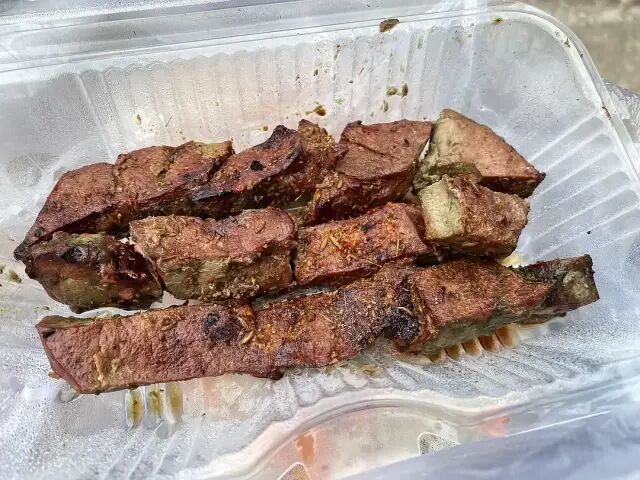
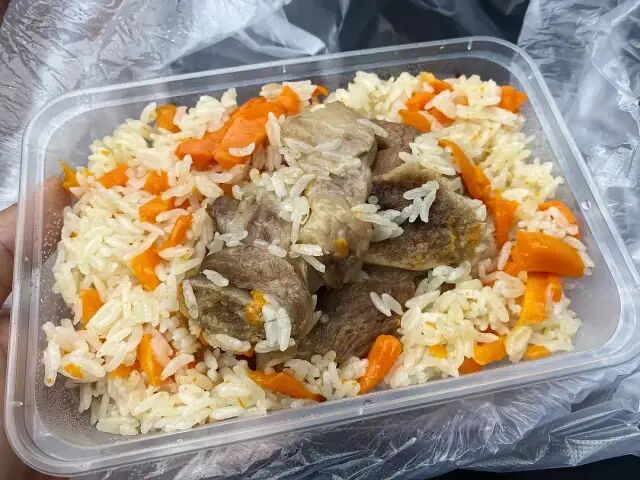
We had Ali's barbecue, liver (ganzi), yogurt drink (ayran), and rice pilaf (zhuafan) on Shenlu Street. I hadn't been to Chaoyang for a month, and their barbecue is arguably the best near our home.
June 6: Changying.
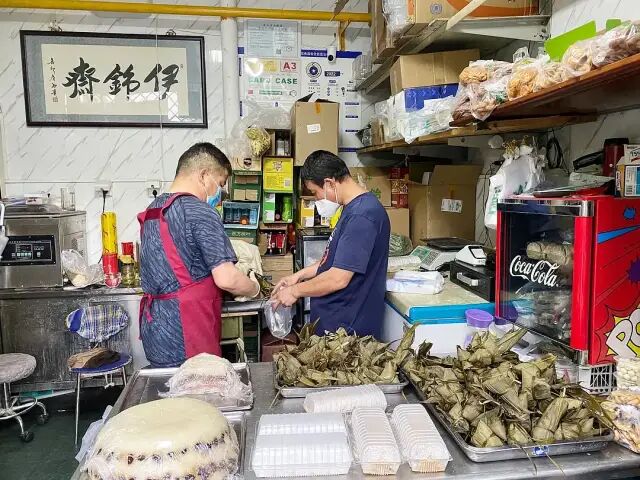
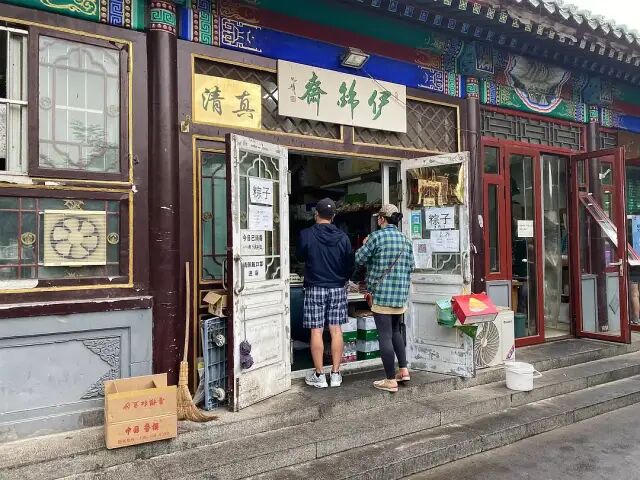
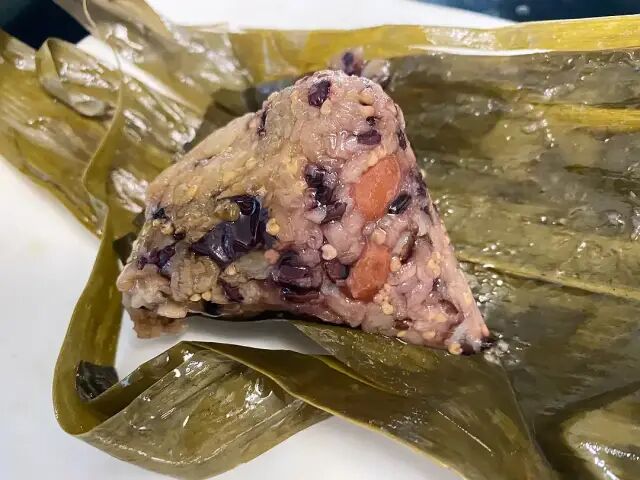
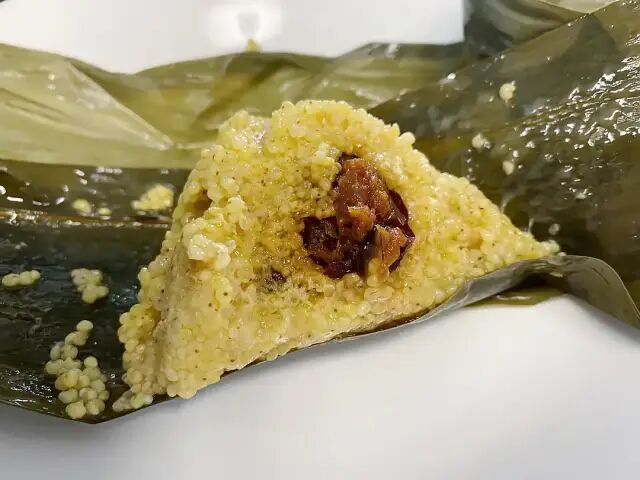
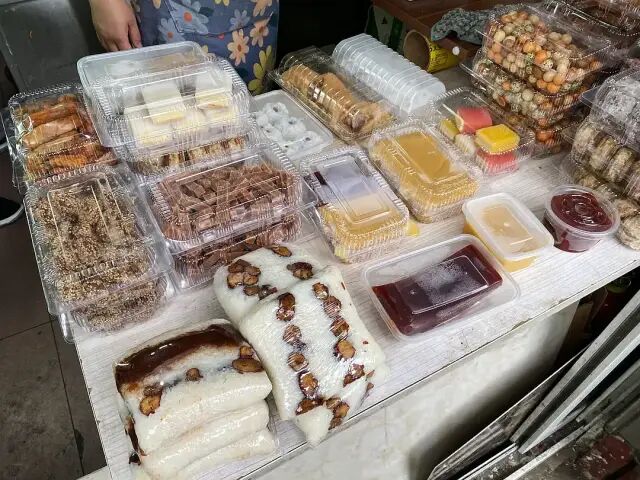
Try the yellow rice sticky rice dumplings (zongzi) and eight-treasure sticky rice dumplings (zongzi) at Changying Yijinzhai, the pea flour cake (wandouhuang) at Kaiyizhai, and the cheese hot dog at Mailian Shiguang.
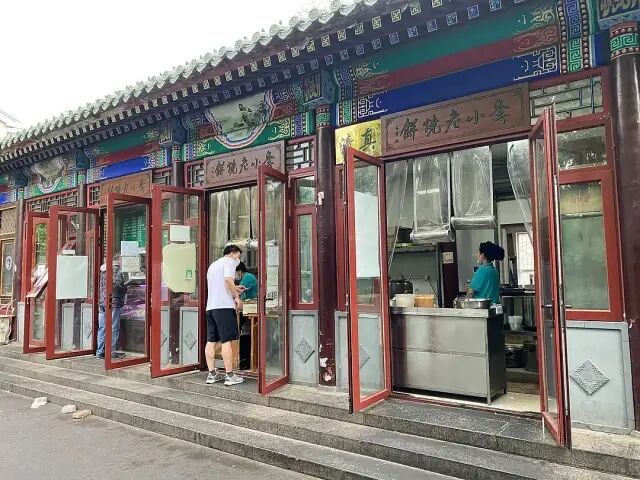
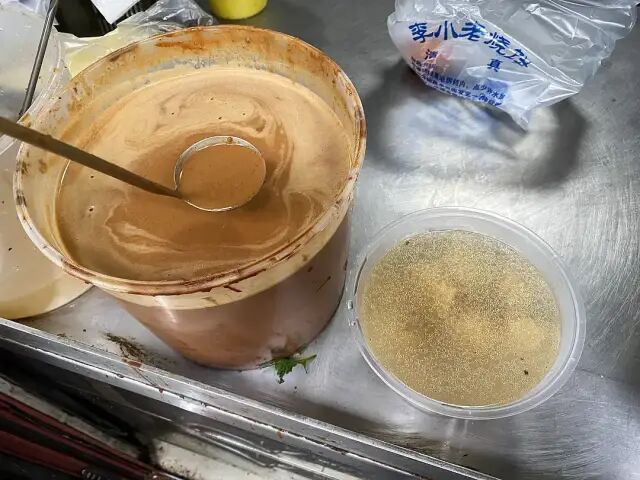
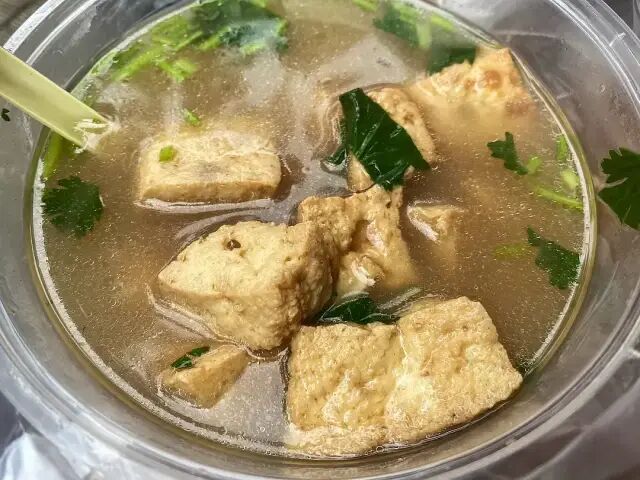
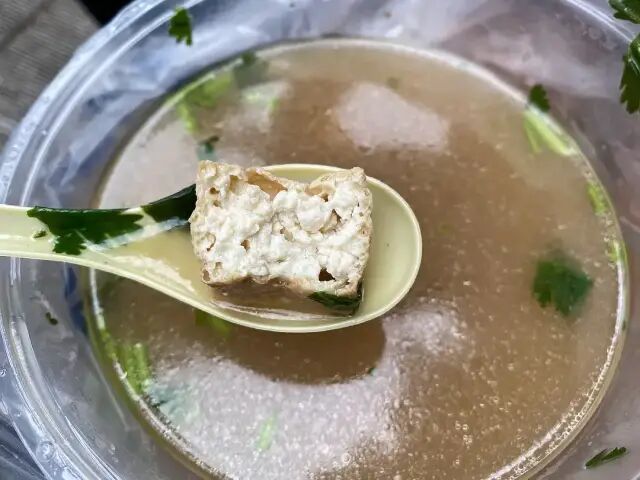
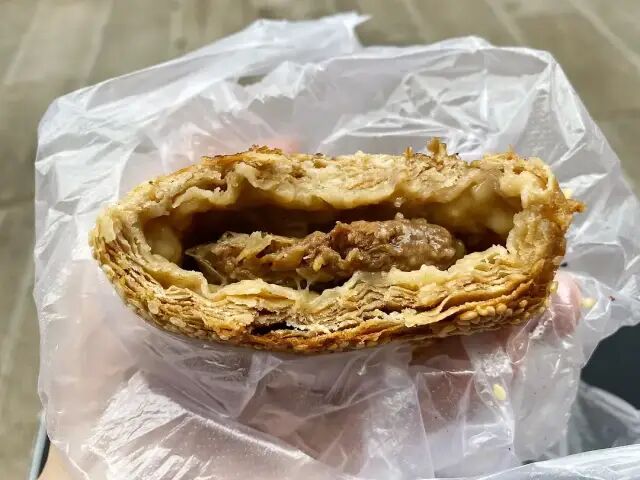
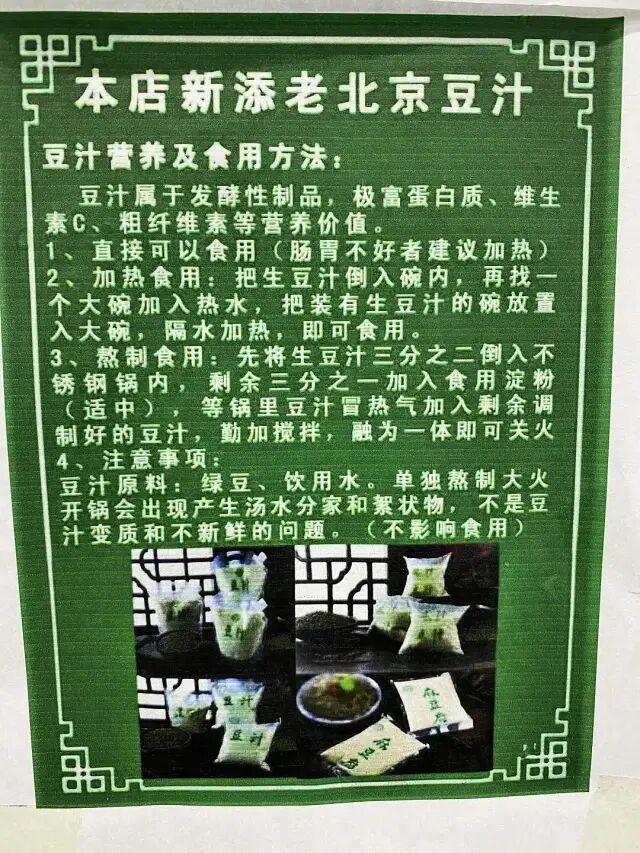
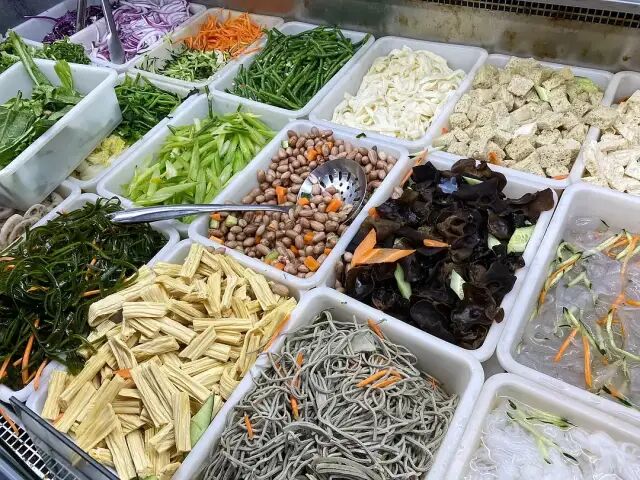
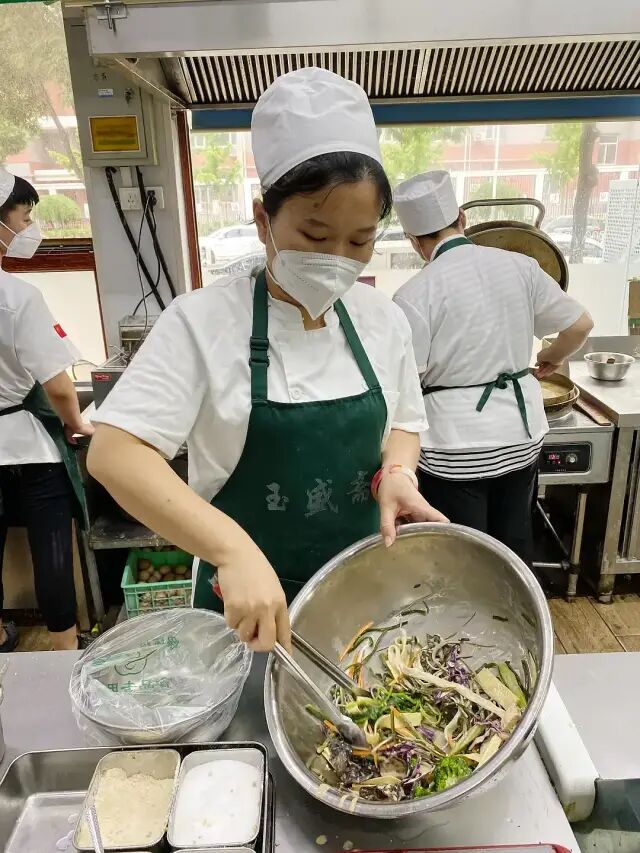
Get the meat flatbread (shaobing) with fried tofu soup (doupao tang) at Lixiaolao, and the mixed vegetable salad (bancai) at Yicheng. You cannot find tofu this tender in the city center!
June 7, Henan-style breakfast at Changying Dahuzi Chuanchuanxiang.
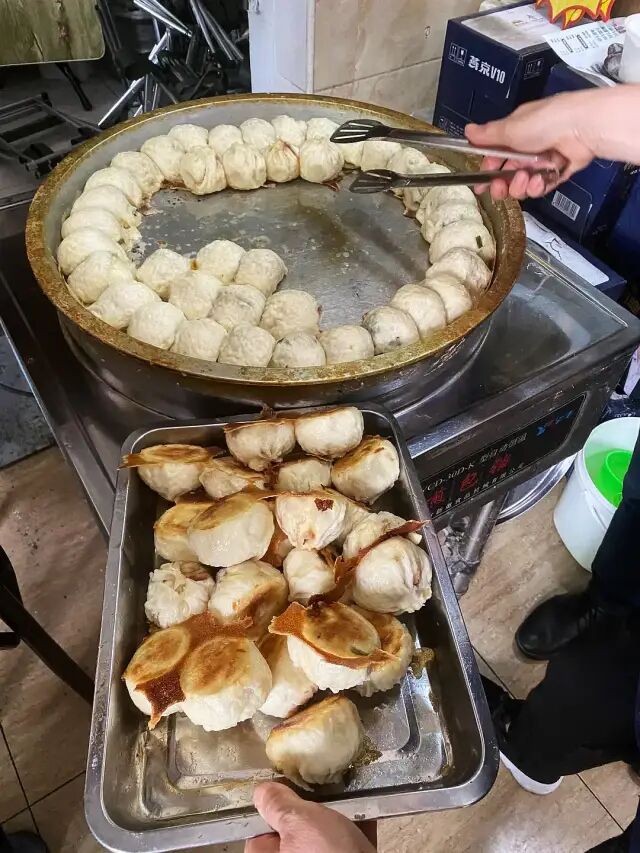
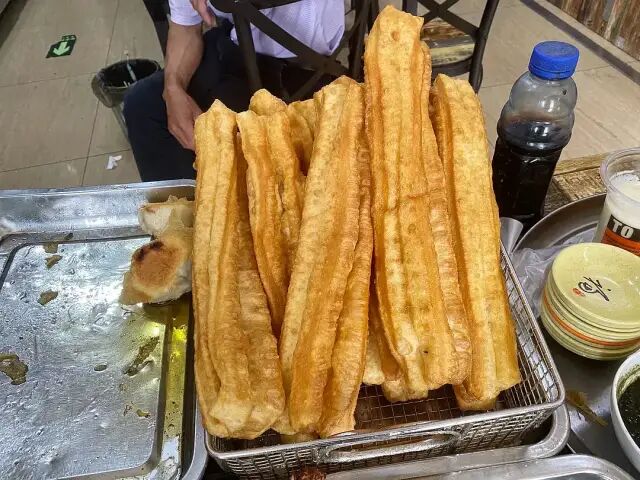
In the morning, Changying Dahuzi Chuanchuanxiang is run by a family from Kaifeng, Henan, selling breakfast items like spicy soup (hulatang), pan-fried buns (shuijianbao), and large fried dough sticks (youtiao). I have been eating Beijing-style breakfast for a month, so today I am switching things up!
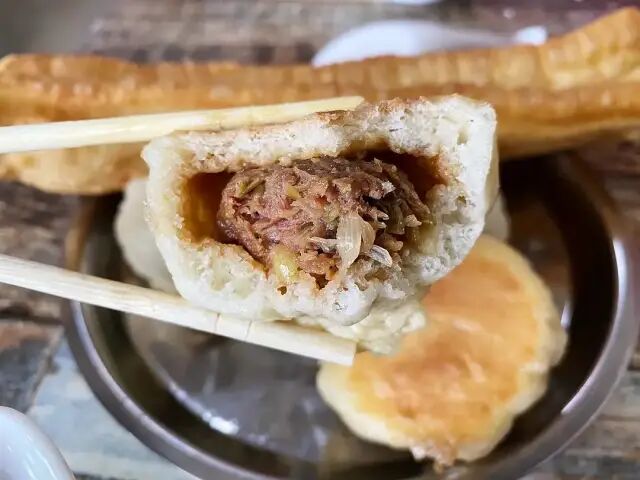
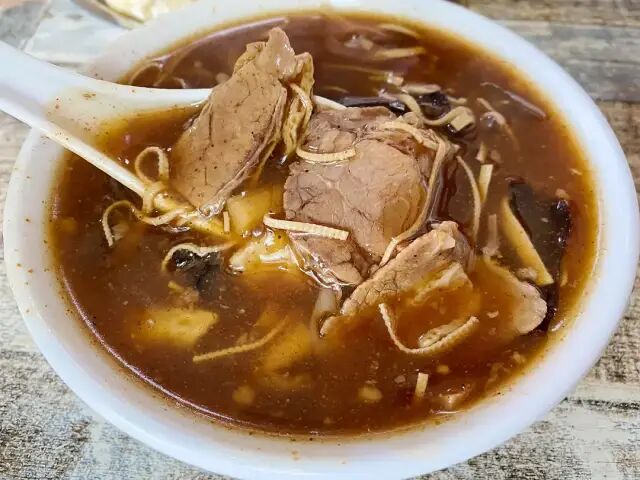
They have three types of pan-fried buns (shuijianbao): beef and green onion, vermicelli, and chive and egg. They fry them fresh, and there is always a long line. They usually sell out as soon as they come out of the pan. I think they taste great and have plenty of meat. The fried dough sticks (youtiao) are huge. They are fried in clear oil, so they have a nice color, and one is enough to keep you full. The spicy soup (hulatang) is very rich, and it tastes great when you break off a piece of the fried dough stick (youtiao) and dip it in. Next time I have to try the mix of tofu pudding (doufunao) and spicy soup (hulatang).
June 9, Palestinian restaurant Zayton.
After dine-in reopened, I spent the evening catching a breeze on the terrace at the Palestinian restaurant Zayton to enjoy life.
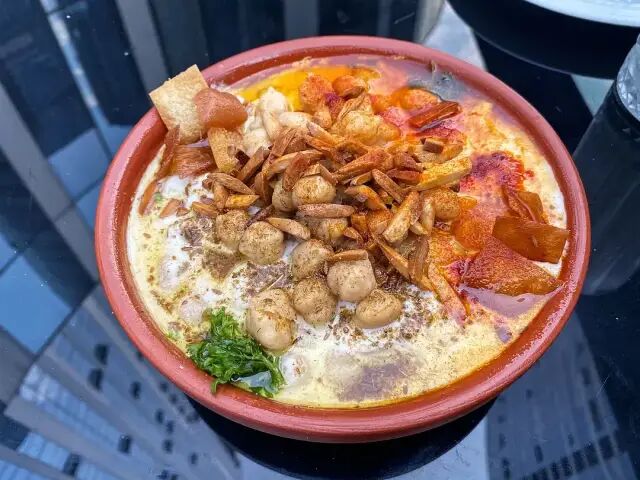
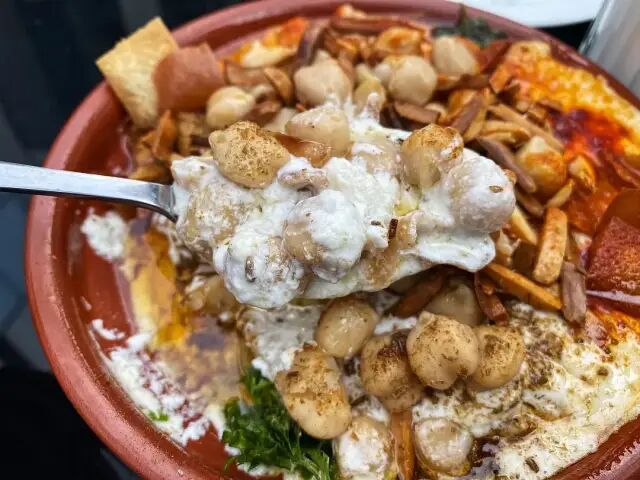
I started by eating Fatteh, a Levantine snack you can only find here in Beijing. Fatteh means "crushed" in Arabic. It is a snack from the southern Levant region, found in Damascus, Beirut, Jordan, and Palestine, but not in the northern Levant. The main ingredient of Fatteh is crushed flatbread (khubz), topped with yogurt, steamed chickpeas, olive oil, and other ingredients, then sprinkled with cumin.
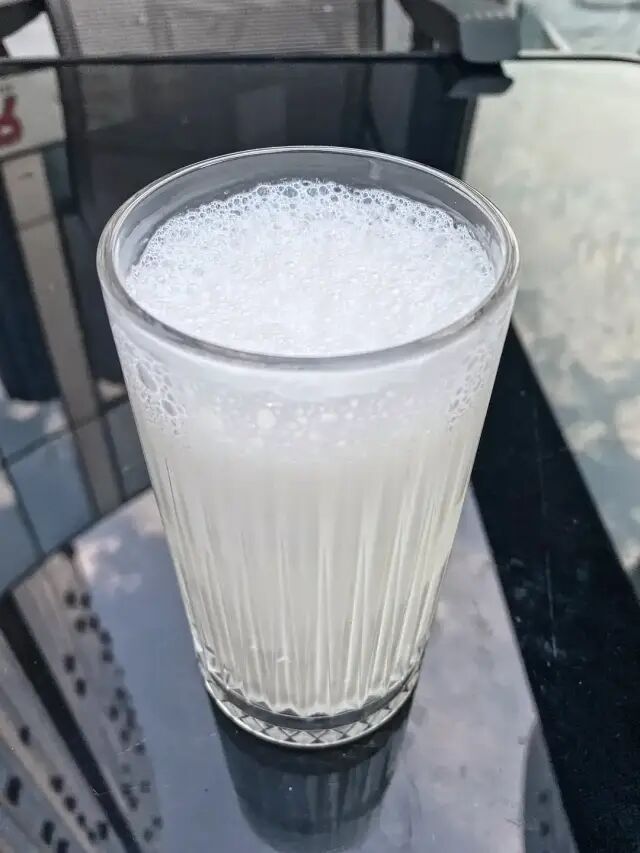
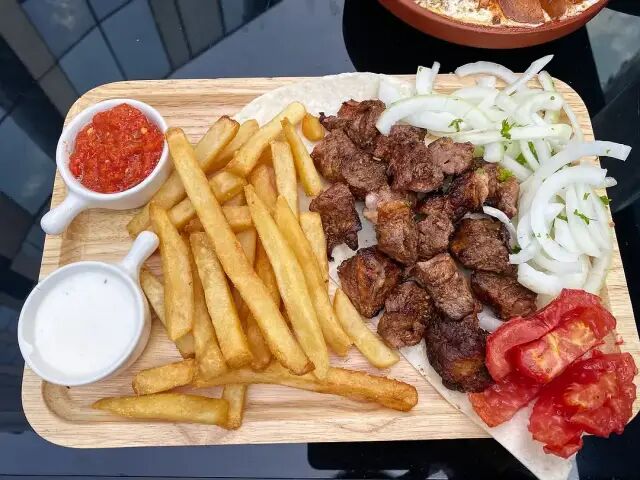
I also ordered salty yogurt drink (ayran), grilled lamb, and veal steak. Among Middle Eastern restaurants in Beijing, this place offers great value for money. The view from this terrace is just amazing.
June 10: Homemade beef jerky (niurougan) from my mother-in-law in Urumqi, made the Hui Muslim way.
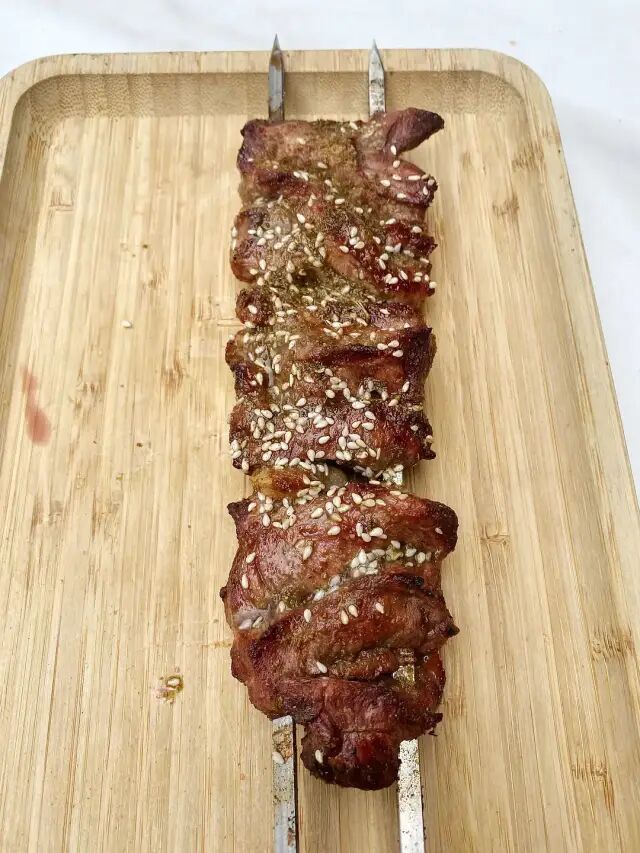
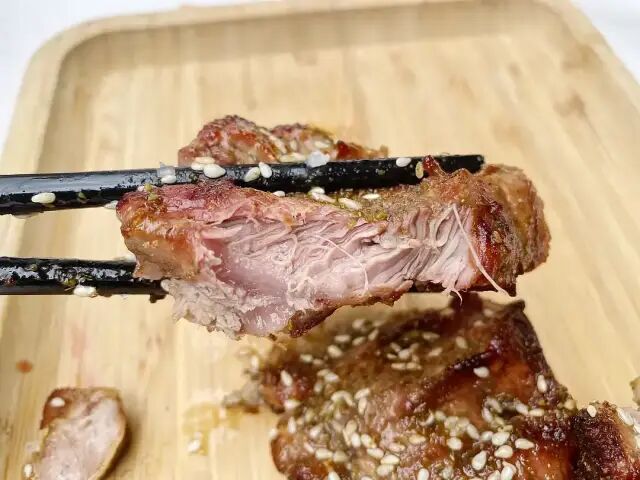
My mother-in-law sent two kinds of homemade Hui Muslim beef jerky (niurougan) from Urumqi. One is a bold flavor, marinated with egg white and starch before being fried. The other is a milder flavor, boiled in water, air-dried for two hours, and then mixed with seasonings until dry. Both are finished with a sprinkle of white sesame seeds. Four kilograms of beef made less than two kilograms of jerky. The kids in Urumqi would cry with envy if they saw this.
June 10: Dastan, an Indian restaurant.
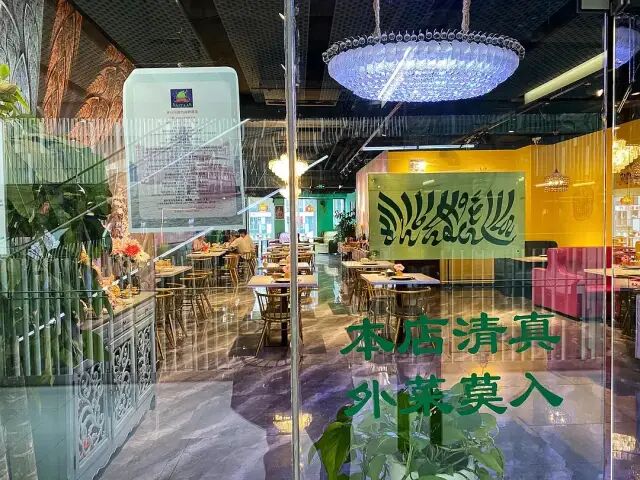
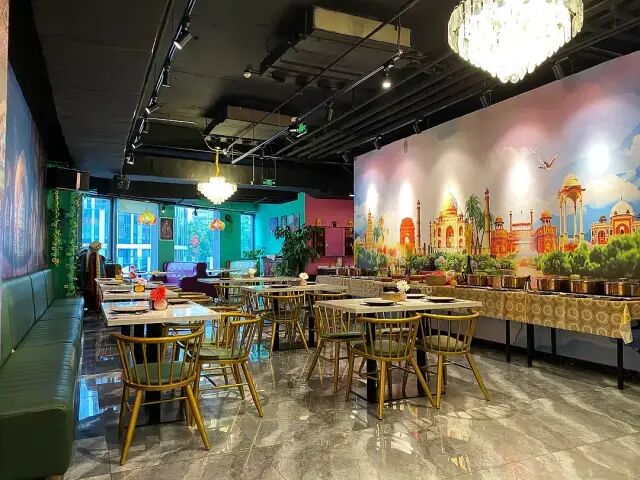
Dastan is a new Indian restaurant that opened this year in Sanlitun SOHO. It sits right next to the Palestinian restaurant Zayton and is a halal spot run by a Hindu owner.
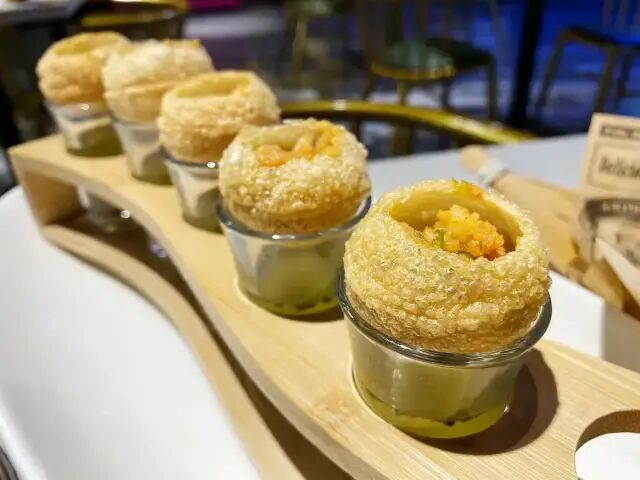
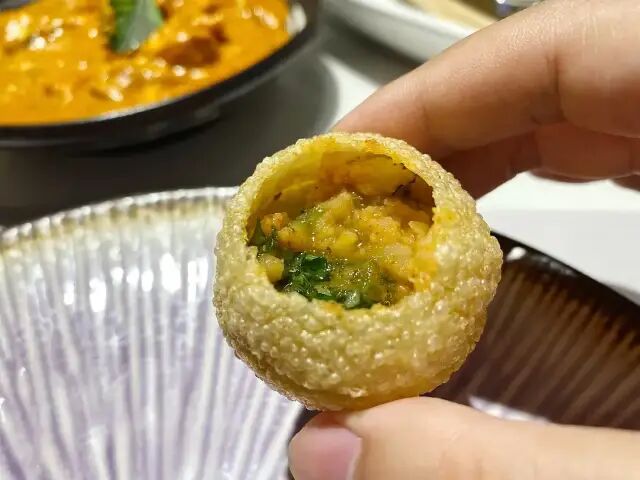
I started with the Indian street snack Panipuri, which became famous because of the movie Dangal. The name of this snack comes from two parts: pani and puri. A puri is a round, hollow, deep-fried crispy bread filled with mashed potatoes, onions, chickpeas, and various spices. Imli pani is a sauce made from cilantro, green chili, ginger, Chaat masala spice, and tamarind chutney. To eat it, just pour the sauce into the filling.
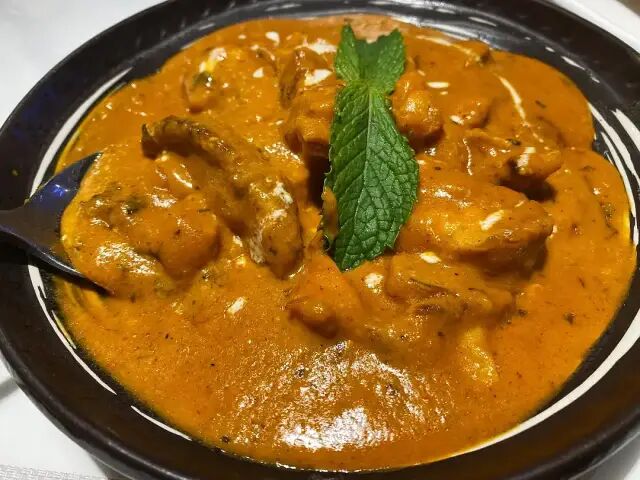
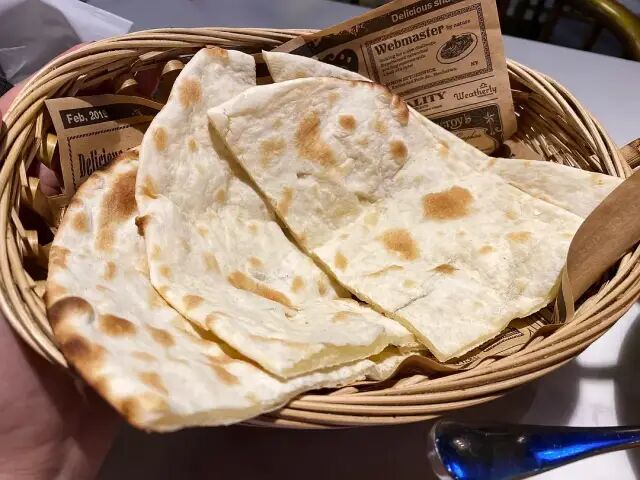
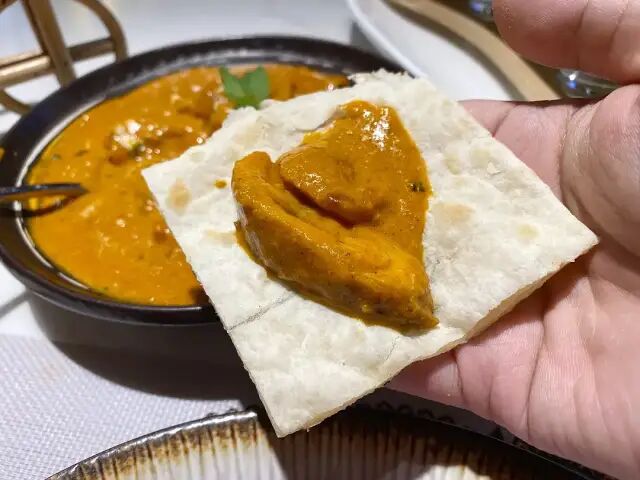
I also ordered the Old Delhi butter chicken (Purani Delhi Wali Murgh Makhani), a dish invented in the 1950s by the famous Punjabi restaurant Moti Mahal in Old Delhi. The story goes that one day near closing time, a group of hungry poor people came to the restaurant. The kitchen used leftover tomatoes, butter, and spices to make a sauce, then added leftover Tandoori roasted chicken. They did not expect it to create such a unique flavor. Today, making this dish starts by marinating the chicken in lemon, yogurt, Kashmiri red chili, salt, Garam Masala spice, ginger, and garlic. It is then roasted in a tandoor oven before being added to a curry made of butter, tomatoes, and various spices.
June 13, Yanlanlou Anzhen branch.
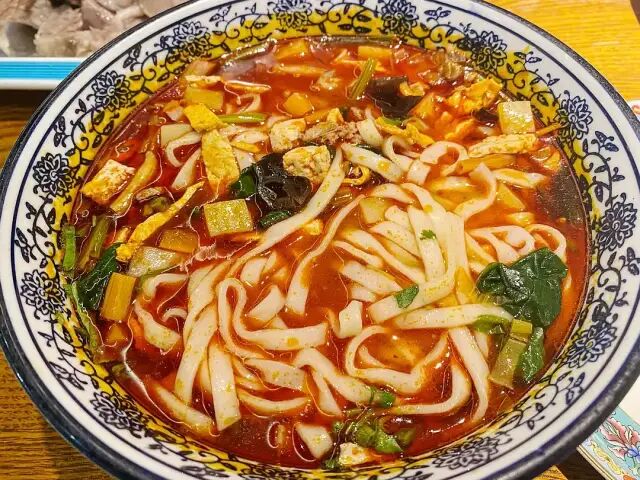
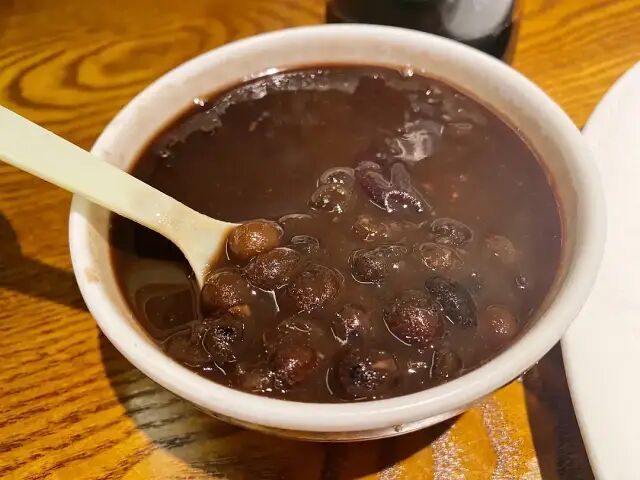
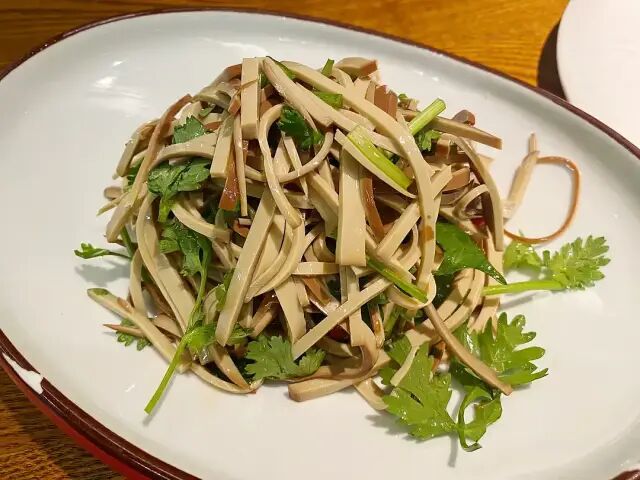
I had lamb neck, minced meat noodles (saozimian), and pea soup (huidouzi) at the Yanlanlou Anzhen branch. I miss the lamb neck I had in Yinchuan; it was so tender.
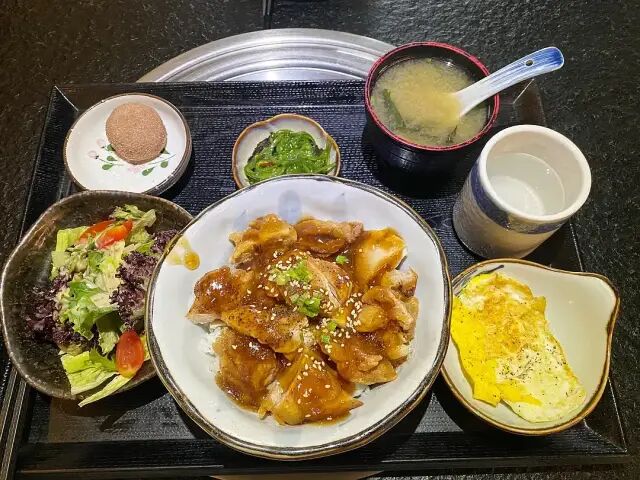
June 16, Chidao Yakiniku lunch set.
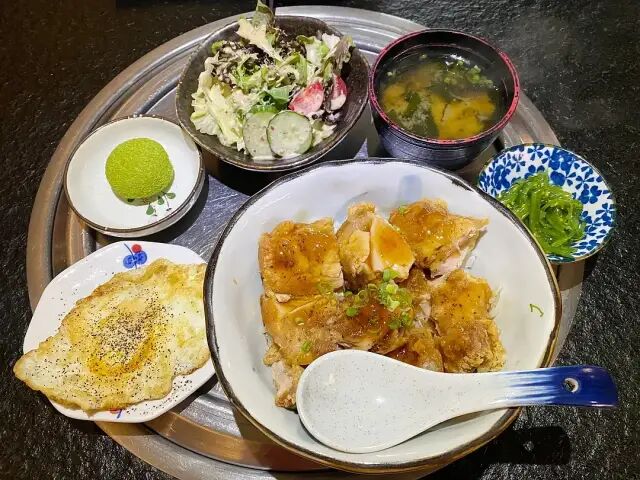
This was my first lunch set at Chidao since returning to work. I had the teriyaki chicken. The restaurant has now changed its name to Changying Sanxiongdi.
June 16, Dachangying Restaurant.
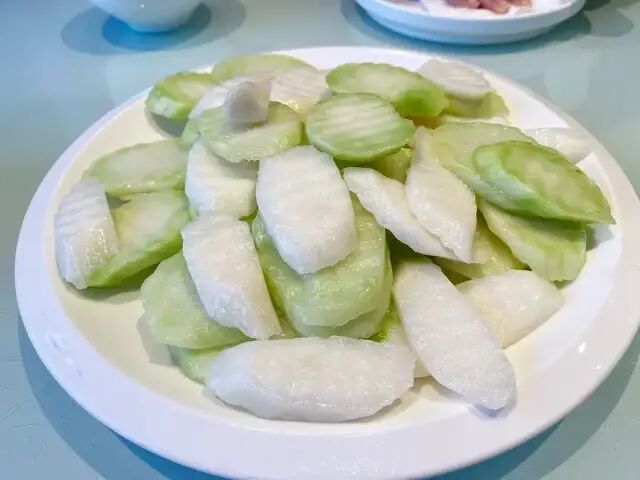
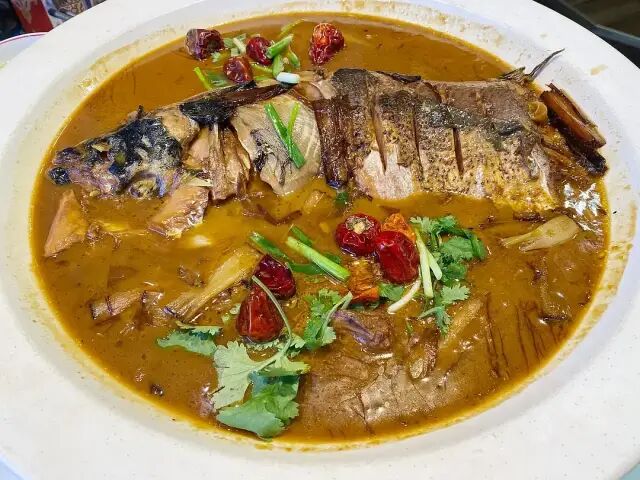
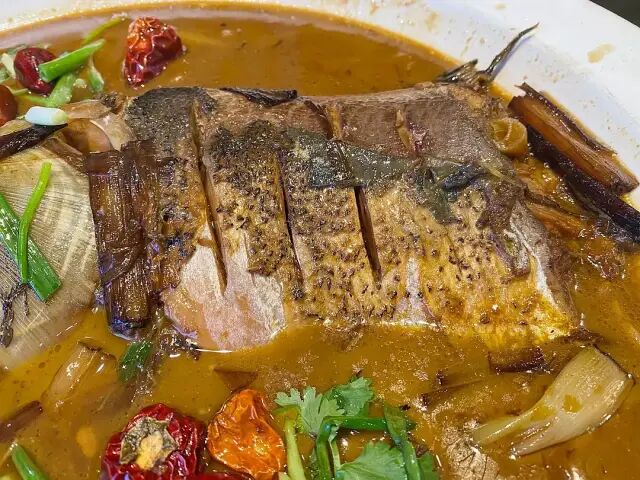
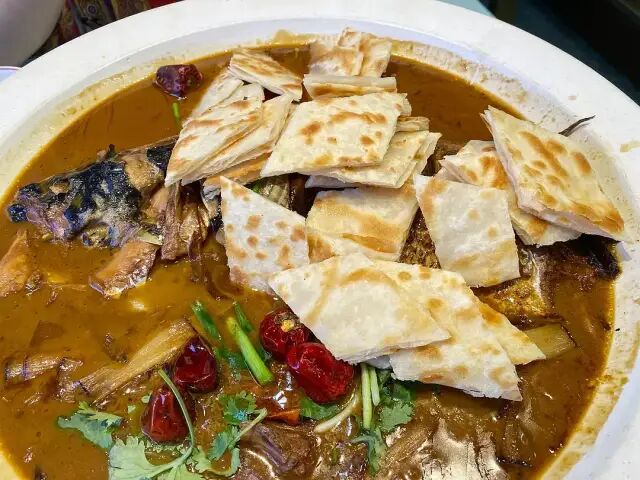
For dinner at Dachangying, I had fish head with flatbread. The mustard-marinated cabbage (jieshudun) was a great appetizer to beat the heat, and the Chinese kale with yam was very crisp. The dish used half a bighead carp and a broth made from beef bones. The freshly baked flatbread was very crispy and delicious, though the fish soup was a bit salty, haha. The server told me they are hosting an ambassador from an African country next week. It seems even ambassadors enjoy Beijing-style flavors.
June 17, Lahore Restaurant
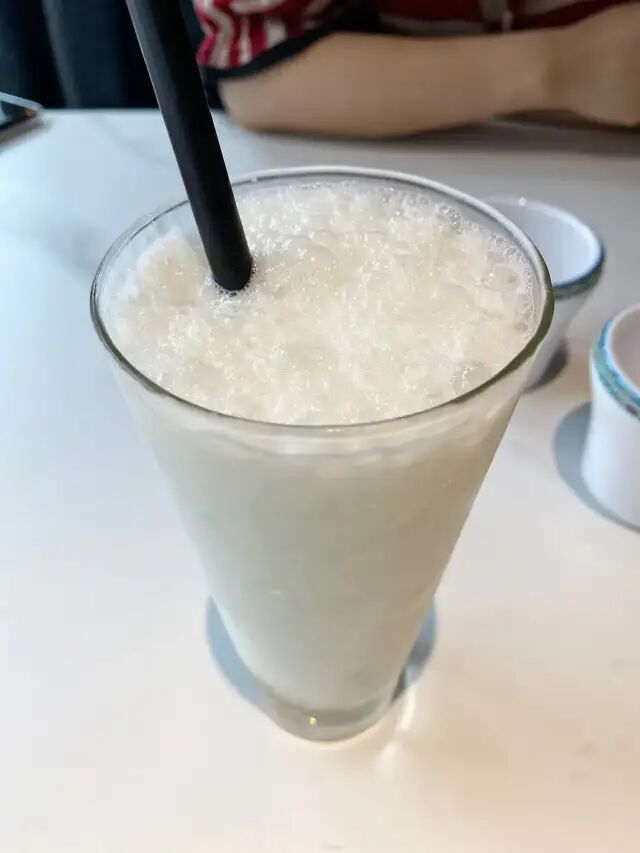
I had a Lahore beef egg burger with lassi at Lahore Restaurant because I was craving a burger. This combination reminds me of the South Asian fast-food shops in Dubai.
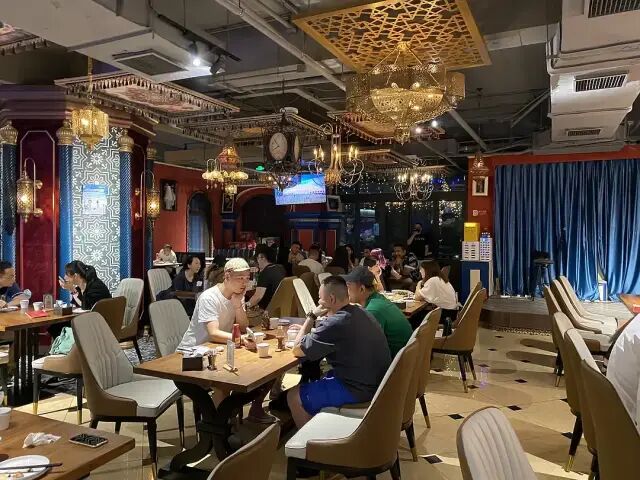
June 19, Hotan Canteen on Ritan Upper Street
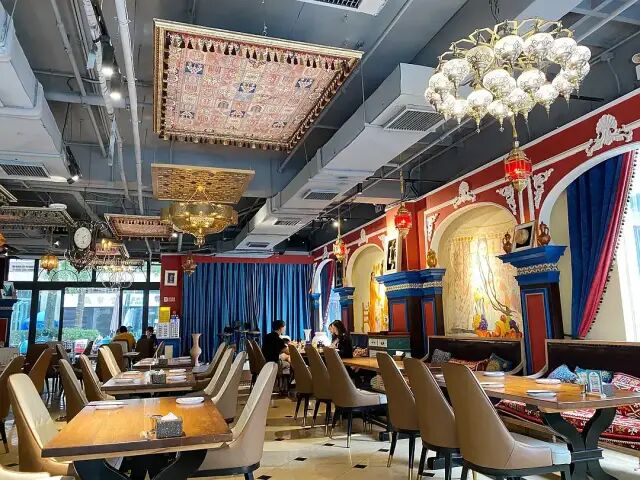
My biggest surprise lately is finding the best Uyghur restaurant in Beijing: Hotan Canteen on Ritan Upper Street! This spot used to be the Uyghur restaurant Red Willow, then it became the Turkish restaurant Rumi's Secret for 20 years. This year, Rumi's Secret moved to Urumqi, and now this new Uyghur restaurant, Hotan Canteen, has opened here.
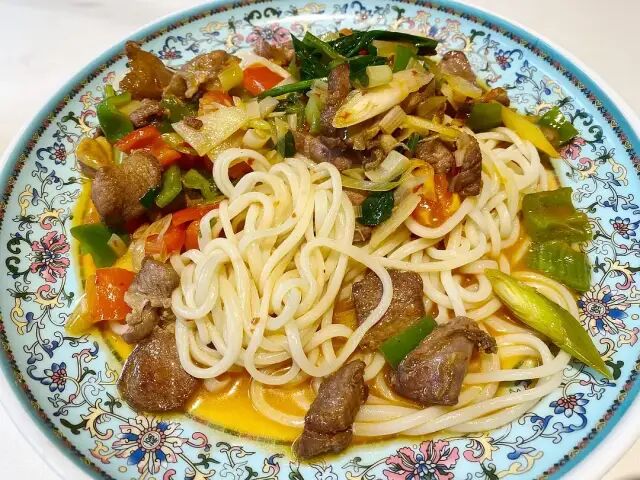
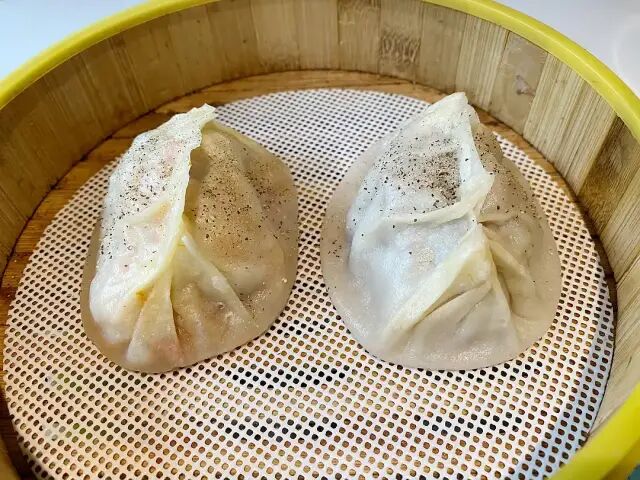
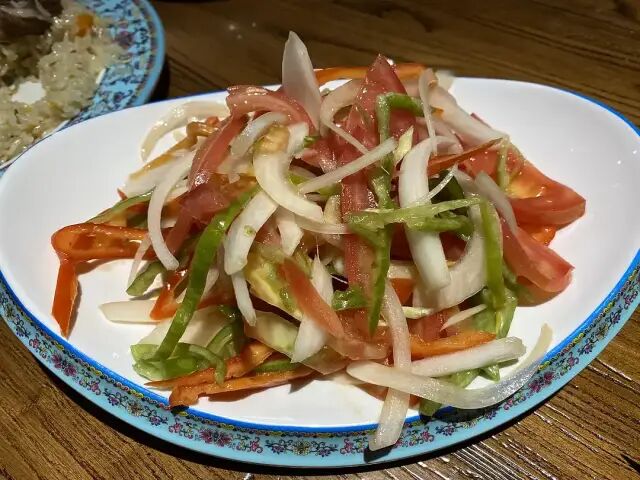
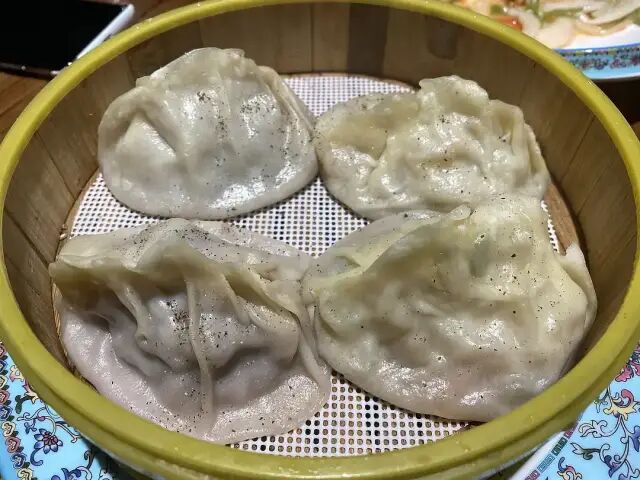
I have to say, their pilaf (zhua fan), hand-pulled noodles (ban mian), and steamed meat dumplings (baopi baozi) are the best I have ever had at a Uyghur restaurant in Beijing. After eating here, the places I previously considered top-tier, like Ali, White Diamond, and Kashgar Mahmut, have all been bumped down to second place. It is no exaggeration to say that even back in Urumqi, you would be hard-pressed to find a restaurant that beats this Hotan eatery.
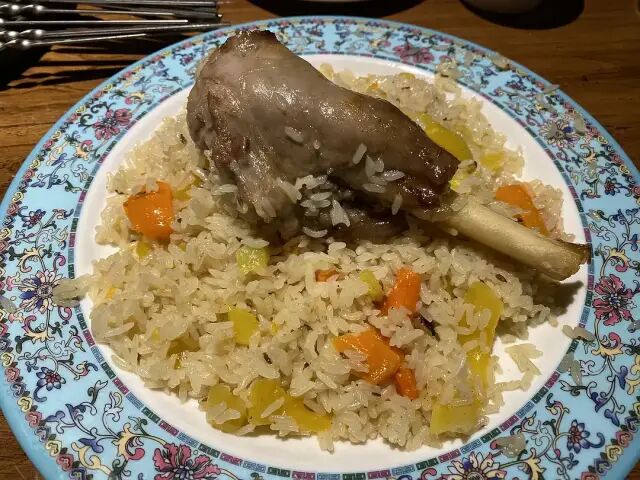
The lamb leg in the pilaf (zhua fan) is so tender that I almost cried after the first bite. I have lived in Beijing for many years and have never eaten such fresh, tender lamb leg in any restaurant here. The hand-pulled noodles (latiaozi) in the mixed noodles are very thin and have a fantastic texture. I finished the whole bowl in one go and could not stop. The skin of the thin-skinned steamed buns (baopi baozi) is the thinnest I have ever eaten in Beijing. The lamb filling is meaty and not too oily, and the pumpkin filling is very rare in Beijing and also tastes great.
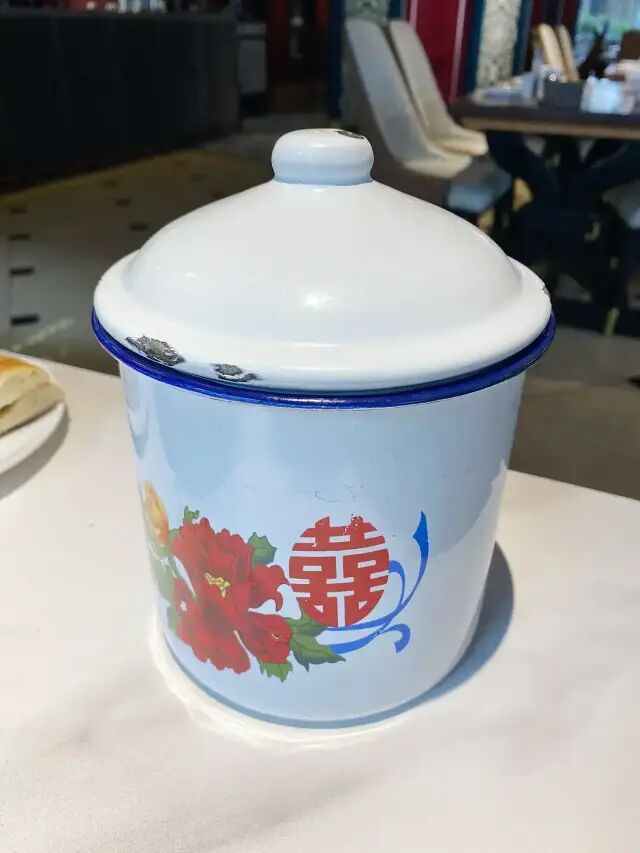
Their mug-stewed lamb (gangzi rou) comes in a huge mug, haha. However, the amount of meat inside is not as much as it looks; it is just the standard portion you get from street vendors in Xinjiang. The lamb broth is very soothing for the stomach.
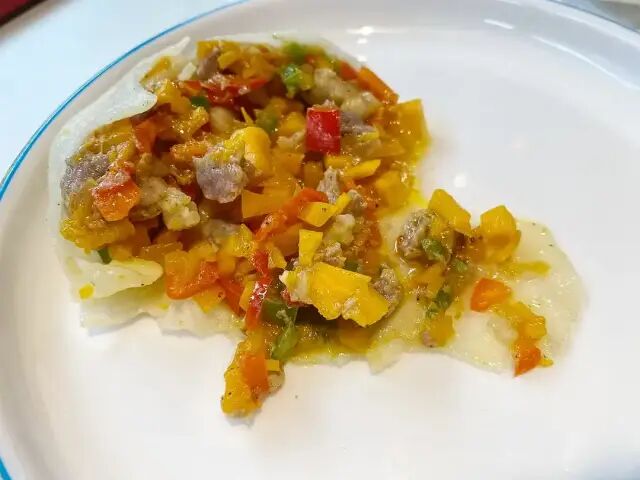
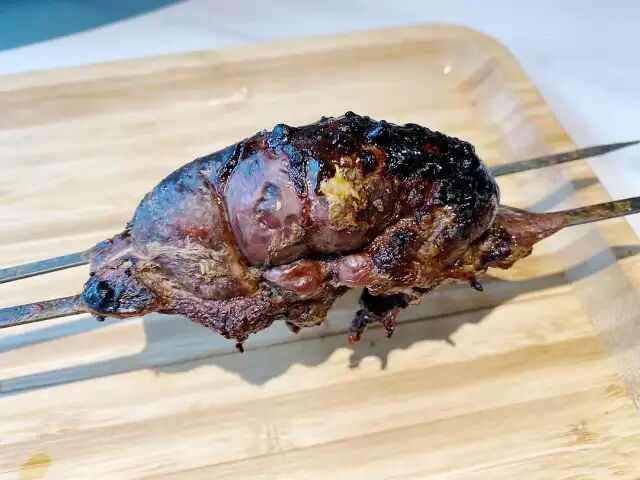
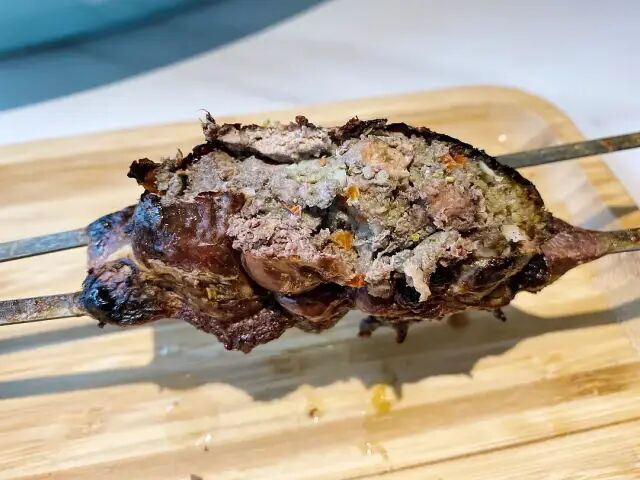
I highly recommend their grilled stuffed spleen (kaoseipi)! I do not know why this classic Xinjiang delicacy is missing from all the Uyghur restaurants in Beijing, but I am glad I finally got to eat it. Grilled stuffed spleen, also known as fake kidney, is made by stuffing lamb spleen with onions (piyazi), minced meat, and liver before grilling it. It has a very rich texture.
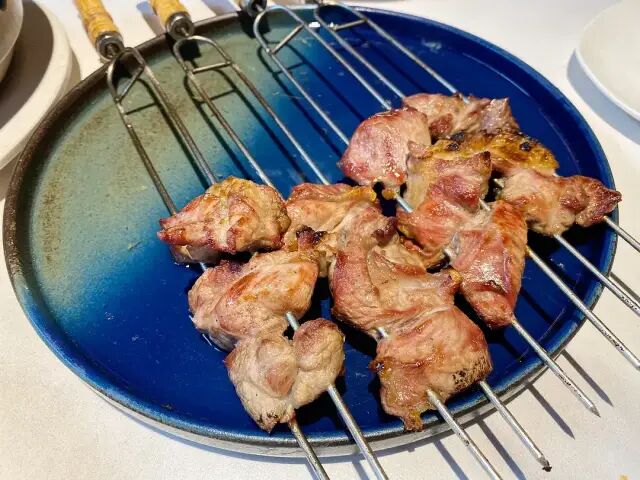
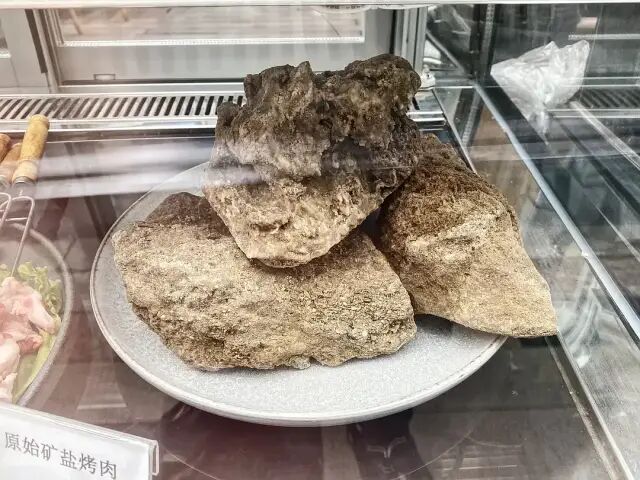
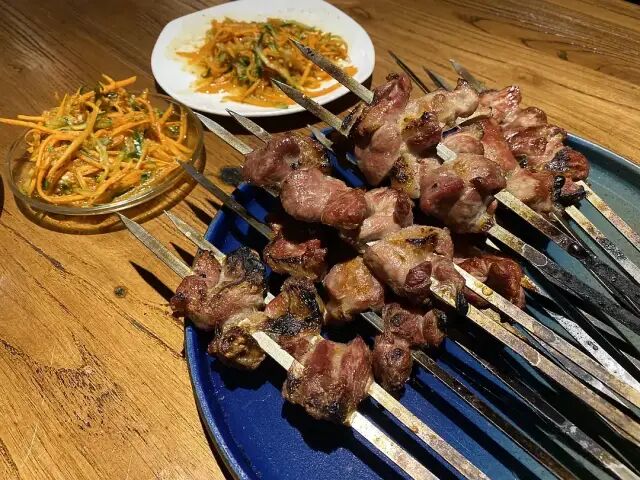
My favorite dish here is the Hotan salt mine barbecue (hetian yankuang kaorou). It is roasted using earth salt and seasoned only with salt water, without any chili or cumin, which is the traditional way to eat it in Hotan. Their salt mine barbecue is so tender and fragrant that it is the kind of food that makes you want to cry after just one bite. I also ordered their grilled tenderloin, which tasted fine, but it was not as amazing as the salt mine barbecue.
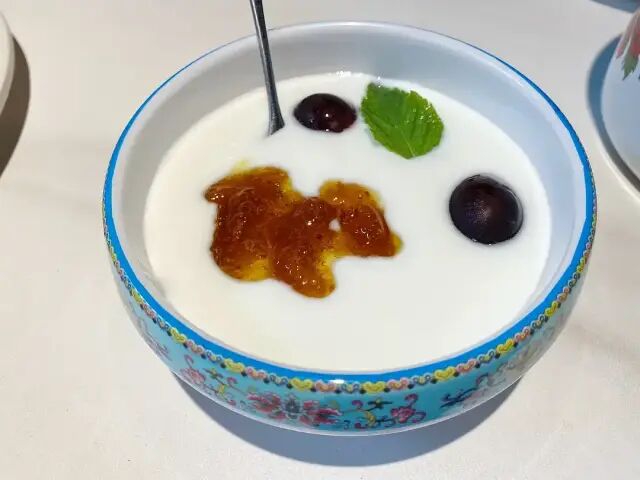
In the summer, I definitely recommend their Kashgar yogurt shaved ice (kashi suannai baobing). The yogurt flavor is very rich and authentic, and it is incredibly refreshing. Also, the fig jam on their Hotan fig jam yogurt rice dumpling (wuhuaguo jiang suannai zongzi) is very fragrant.
Finally, I have to mention that there are some dishes here that do not taste good. First of all, their non-Xinjiang local dishes are not done well; the sweet and sour fish tasted a bit fishy. It is also a pity that their yogurt is not good; it lacks a real yogurt flavor and only tastes sweet. The only truly authentic Xinjiang yogurt I have had in Beijing so far is from Kashe Maihemuti.
June 22, Lahore Restaurant
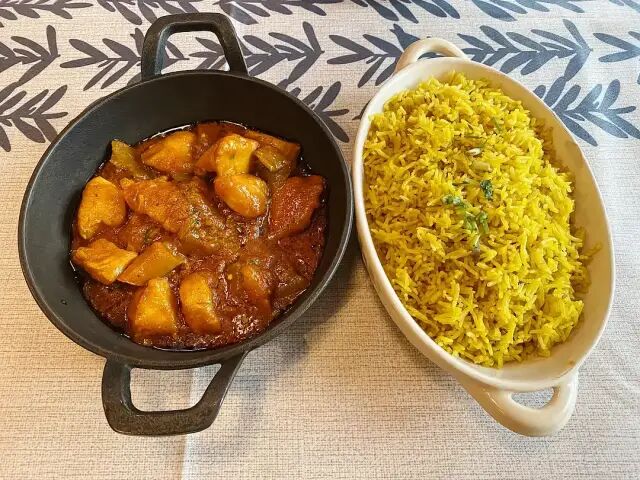
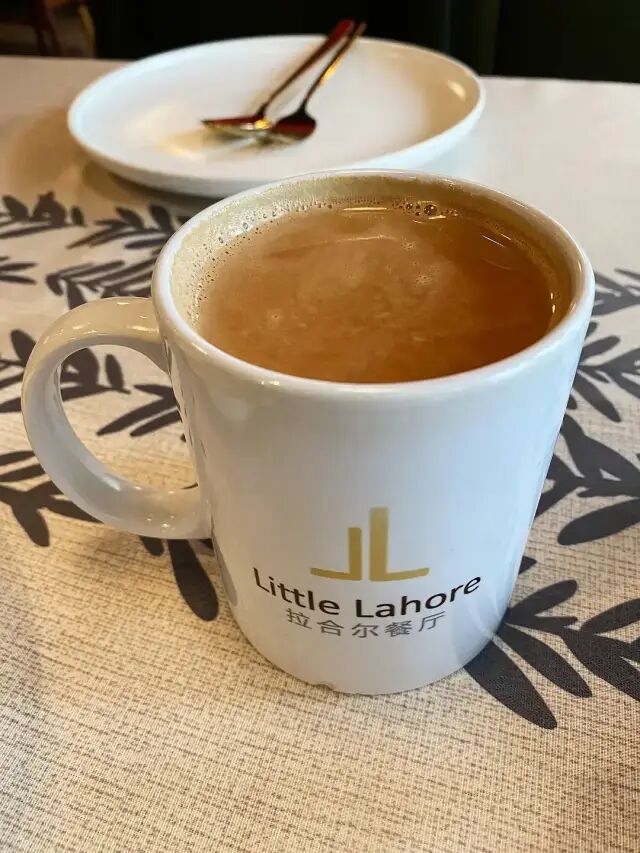
It was unusually cool at noon, so I went to the Pakistani restaurant Lahore Restaurant for a weekday lunch set. There were a few combinations to choose from, and I had the Achari chicken curry with saffron rice and Pakistani curry.
June 25, Family Dinner
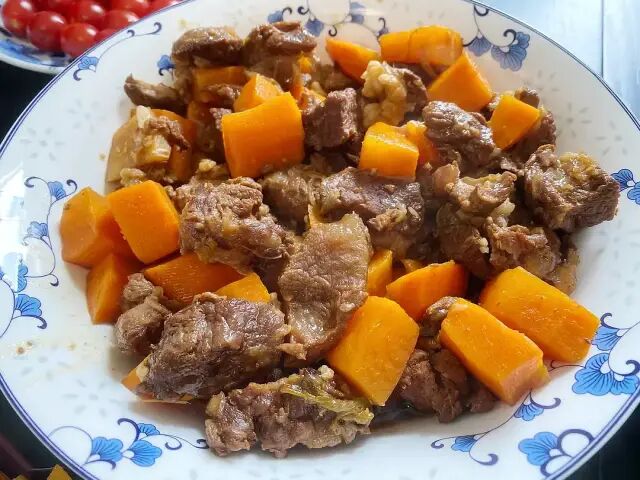
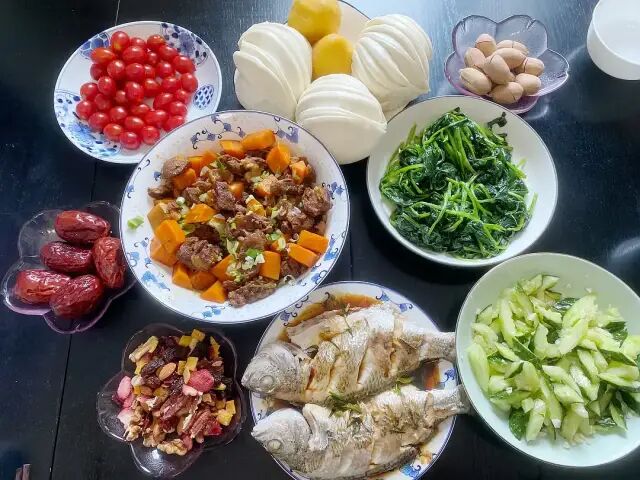
For our family dinner, I made beef brisket stewed with potatoes and minced meat with eggplant served with five types of noodle toppings. Zainabu kneaded the dough, my dad pulled the noodles, and my mom steamed a fish.
June 26, Qingu in Changying
I ate the stone pot bibimbap at Qingu and worked up a real sweat!
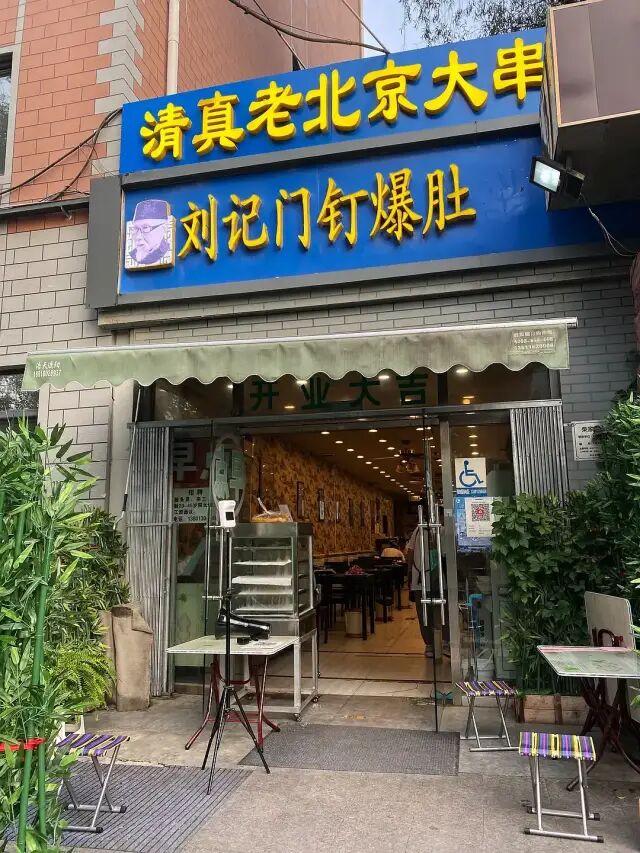
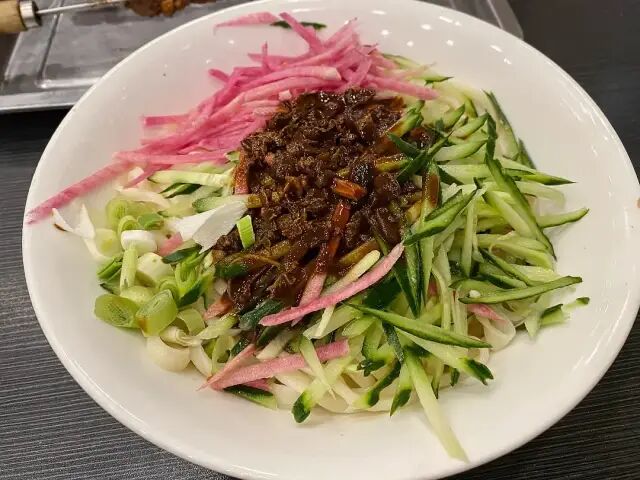
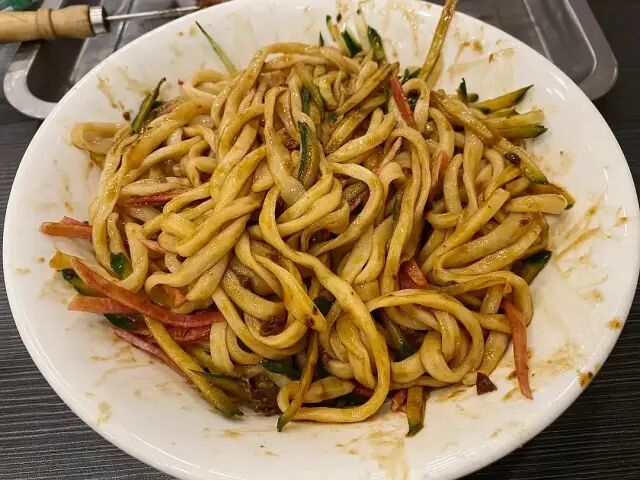
June 30, Liuji Mending Baodu
I have been eating the soybean paste noodles (zhajiangmian) with large meat skewers at Liu's for years.
July 3, Lahore Restaurant
I ate stewed lamb trotters, Punjabi chickpeas, chicken biryani, and yogurt drink (lassi) at Lahore Restaurant on Youth Road (Qingnian Lu). After eating here so many times, I still think their stewed lamb trotters are the best; they are cooked until tender and full of flavor!
July 4, mixed noodles
It is my birthday today, and Zainab made me mixed noodles (banmian).
July 9, Hotan Canteen
Iftar meal for the Day of Arafah at Hotan Canteen.
July 10, Eid al-Adha feast.
Eid Mubarak. Today there are seven sunnah acts: perform ghusl, brush your teeth, wear clean and tidy clothes, use perfume, recite the takbir, eat and drink only after the Eid prayer, and perform the qurbani. Today we are having a sheep slaughtered on our behalf that was raised in the Southern Mountains of Urumqi by Zainab's second uncle. Every year before Eid al-Adha, his family collects a batch of sheep from herders in Altay and Tacheng. view all
Summary: Beijing Halal Food Diary: Summer 2022 Muslim Food and Mosques is presented here as a firsthand travel account in clear English, beginning with this scene: In the summer of 2022, I still could not leave Beijing. In early June, indoor dining was banned, so I ate barbecue outside the restaurant door. The account keeps its focus on Beijing Halal Food, Summer Diary, Muslim Food while preserving the names, places, food, and historical details from the Chinese source.
In the summer of 2022, I still could not leave Beijing. In early June, indoor dining was banned, so I ate barbecue outside the restaurant door. Then, for the Dragon Boat Festival, I bought special yellow rice sticky rice dumplings (zongzi) and eight-treasure sticky rice dumplings (zongzi) in Changying. I found a new breakfast shop in Changying run by Hui Muslims from Kaifeng that serves spicy soup (hulatang) and pan-fried buns (shuijianbao), and it was delicious.
After indoor dining reopened in June, I visited many restaurants, but I was sad to find that the Japanese restaurant Chidao Yakiniku had already closed. However, I was pleasantly surprised to discover a new Xinjiang restaurant I really like called Hetian Shidang.
In July, I celebrated Eid al-Adha (Qurbani) with a family meal featuring fish and meat, and I stewed some delicious lamb that was slaughtered in Urumqi and shipped to me. Also, the Pingliang restaurant I liked, Longxianghui, had closed by then.
In August, I observed Ashura and made the Urumqi Hui Muslim version of lamb and bean rice (doudoufan). In mid-August, my father-in-law came to Beijing from Urumqi. We stayed home for seven days and ate all kinds of delicious homemade Urumqi Hui Muslim dishes. In late August, we took a road trip to the outskirts of Beijing in Huairou and Miyun. We ate at a Pakistani restaurant in the valley and enjoyed local halal food in Chengguan, Mujiayu, Gubeikou, and Taishitun.
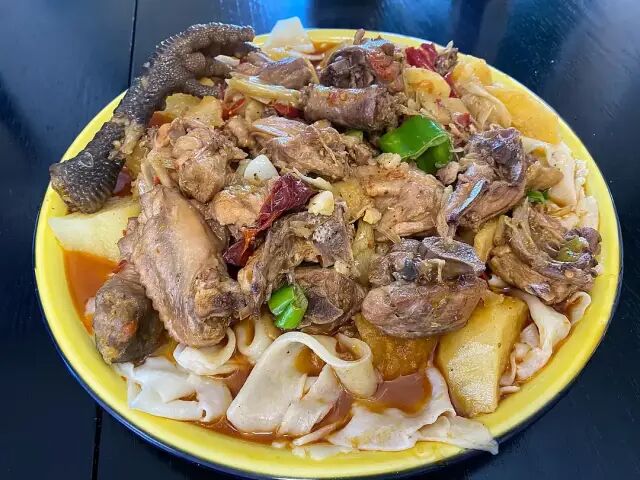
June 1: Big plate chicken (dapanji).
Zainab made big plate chicken (dapanji) and yogurt (suannaizi). It was a blessing (talaodao). Our house felt just like a branch of Luyuan Street in the Saybagh District of Urumqi!

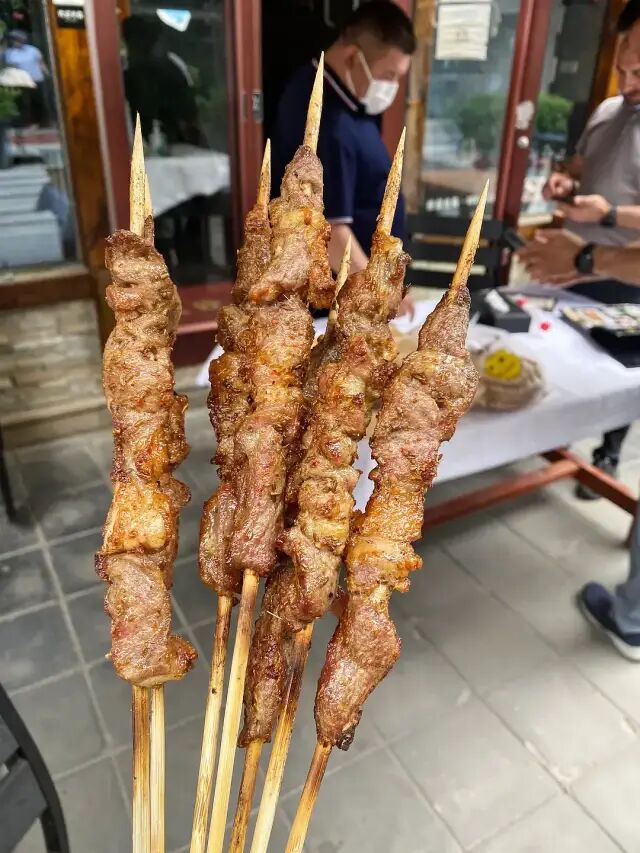
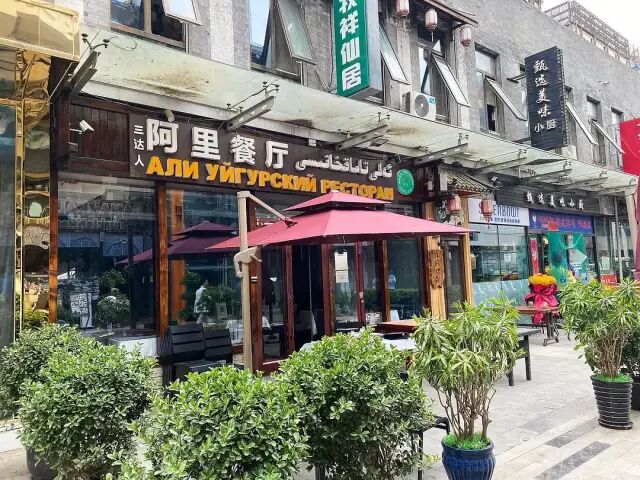
June 3: Ali's barbecue on Shenlu Street.
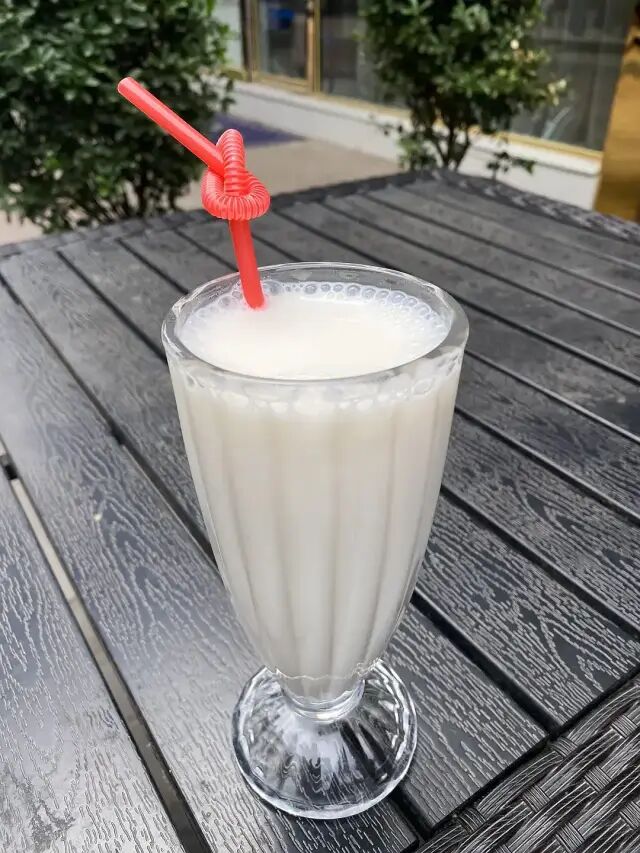
We had Ali's barbecue, liver (ganzi), yogurt drink (ayran), and rice pilaf (zhuafan) on Shenlu Street. I hadn't been to Chaoyang for a month, and their barbecue is arguably the best near our home.
June 6: Changying.
Try the yellow rice sticky rice dumplings (zongzi) and eight-treasure sticky rice dumplings (zongzi) at Changying Yijinzhai, the pea flour cake (wandouhuang) at Kaiyizhai, and the cheese hot dog at Mailian Shiguang.
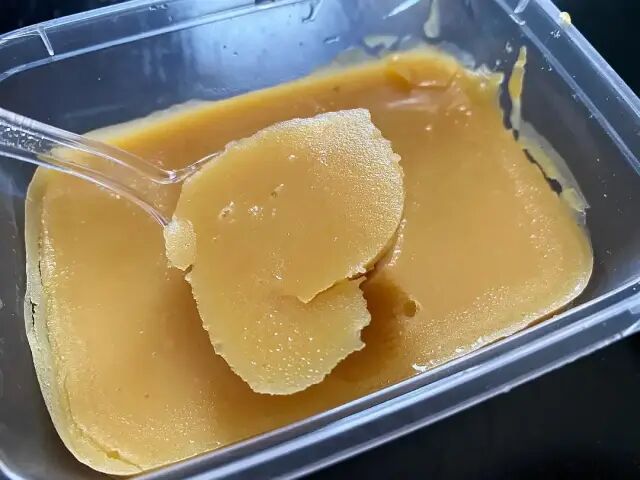
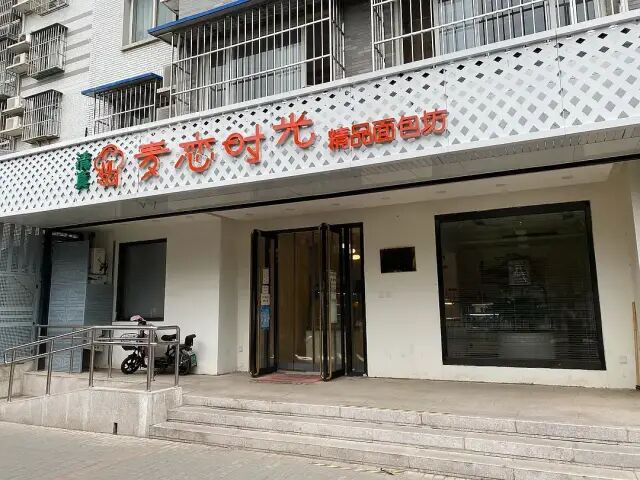
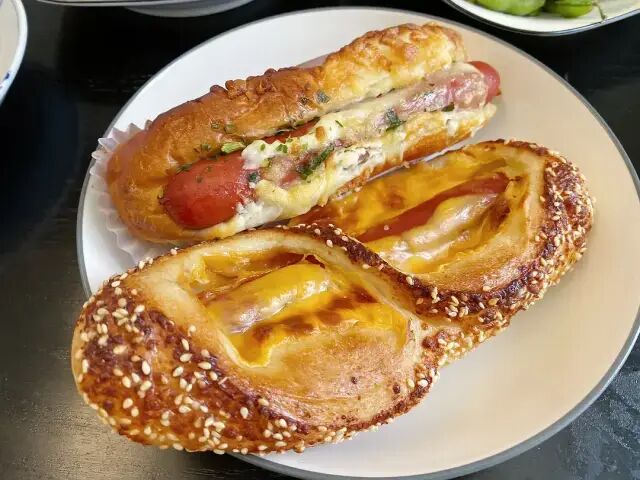
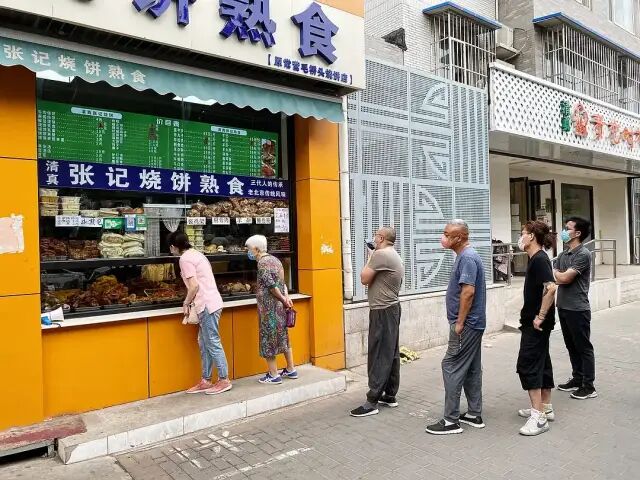
Get the meat flatbread (shaobing) with fried tofu soup (doupao tang) at Lixiaolao, and the mixed vegetable salad (bancai) at Yicheng. You cannot find tofu this tender in the city center!
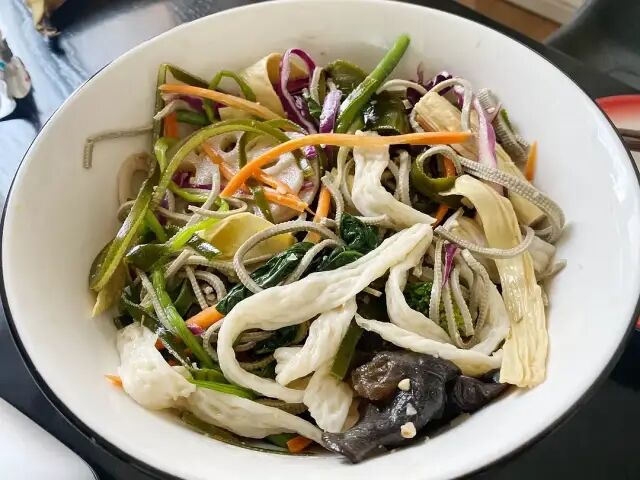
June 7, Henan-style breakfast at Changying Dahuzi Chuanchuanxiang.
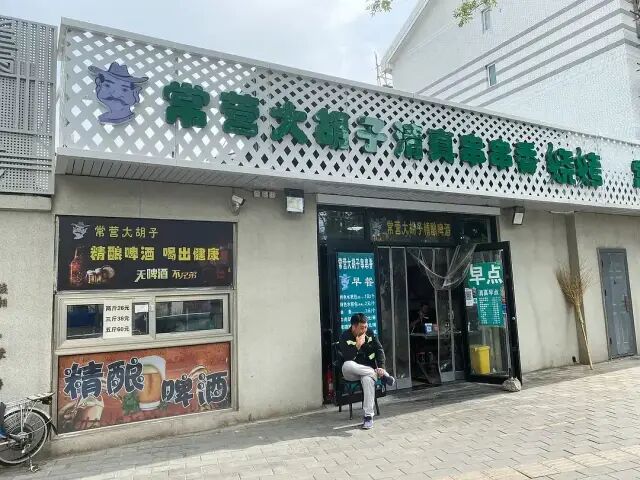
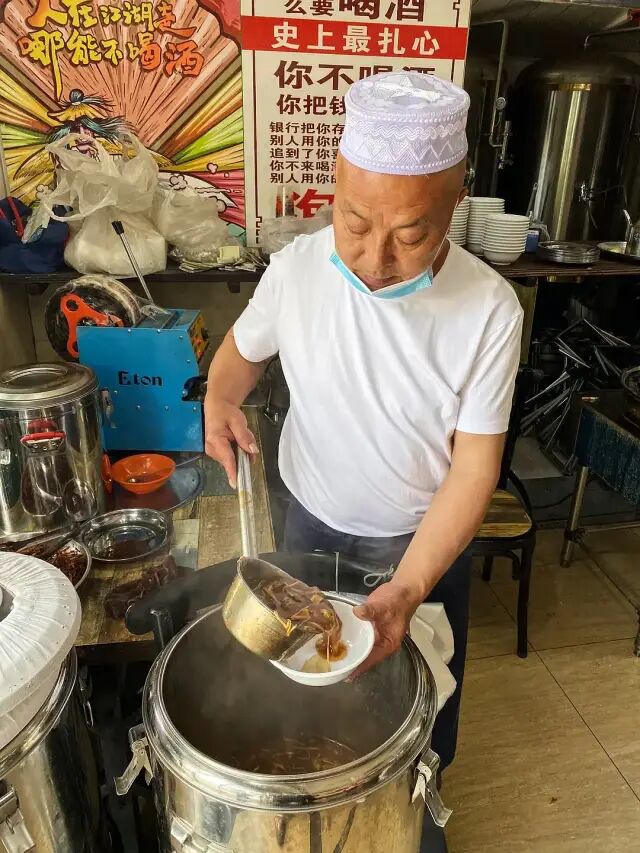
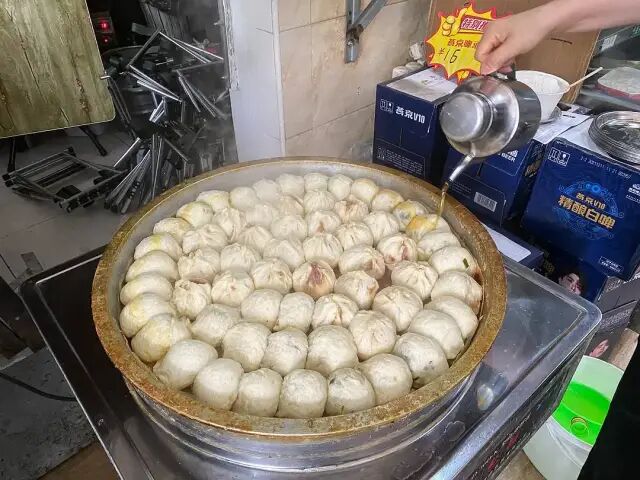
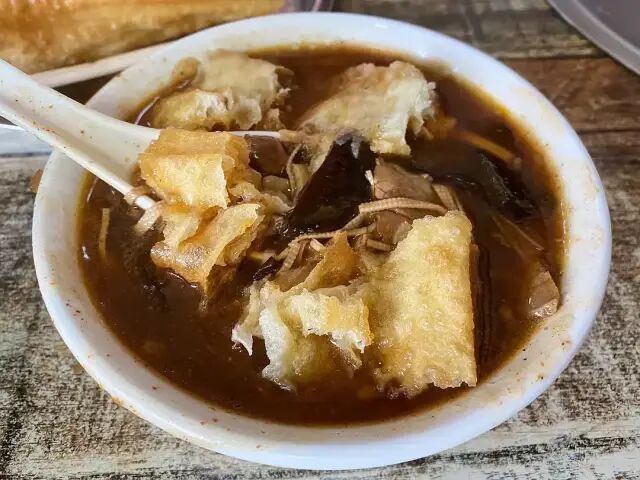
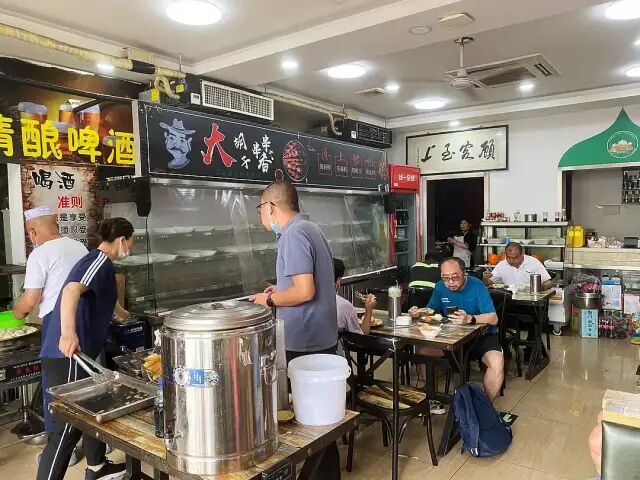
In the morning, Changying Dahuzi Chuanchuanxiang is run by a family from Kaifeng, Henan, selling breakfast items like spicy soup (hulatang), pan-fried buns (shuijianbao), and large fried dough sticks (youtiao). I have been eating Beijing-style breakfast for a month, so today I am switching things up!
They have three types of pan-fried buns (shuijianbao): beef and green onion, vermicelli, and chive and egg. They fry them fresh, and there is always a long line. They usually sell out as soon as they come out of the pan. I think they taste great and have plenty of meat. The fried dough sticks (youtiao) are huge. They are fried in clear oil, so they have a nice color, and one is enough to keep you full. The spicy soup (hulatang) is very rich, and it tastes great when you break off a piece of the fried dough stick (youtiao) and dip it in. Next time I have to try the mix of tofu pudding (doufunao) and spicy soup (hulatang).
June 9, Palestinian restaurant Zayton.
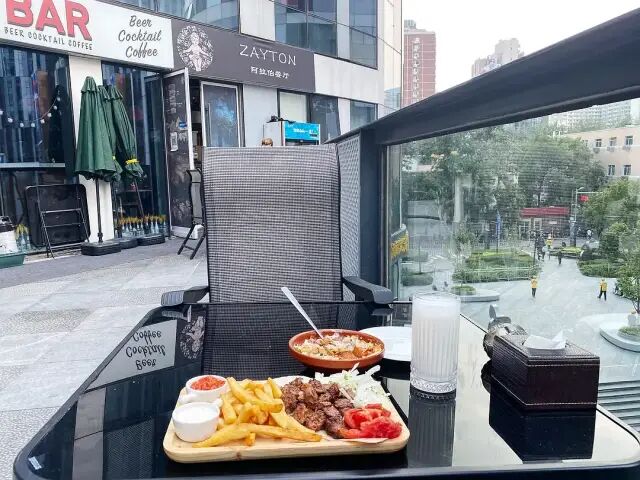
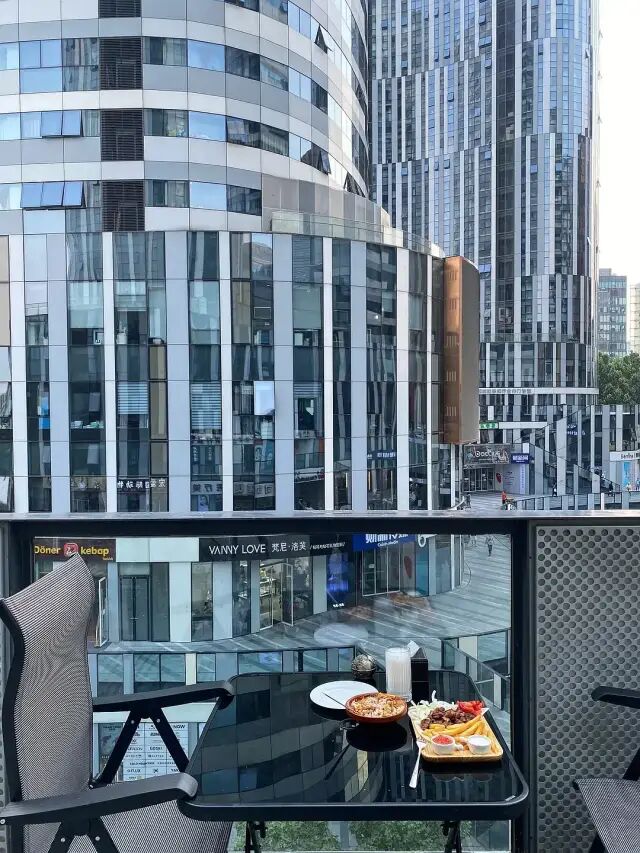
After dine-in reopened, I spent the evening catching a breeze on the terrace at the Palestinian restaurant Zayton to enjoy life.
I started by eating Fatteh, a Levantine snack you can only find here in Beijing. Fatteh means "crushed" in Arabic. It is a snack from the southern Levant region, found in Damascus, Beirut, Jordan, and Palestine, but not in the northern Levant. The main ingredient of Fatteh is crushed flatbread (khubz), topped with yogurt, steamed chickpeas, olive oil, and other ingredients, then sprinkled with cumin.
I also ordered salty yogurt drink (ayran), grilled lamb, and veal steak. Among Middle Eastern restaurants in Beijing, this place offers great value for money. The view from this terrace is just amazing.
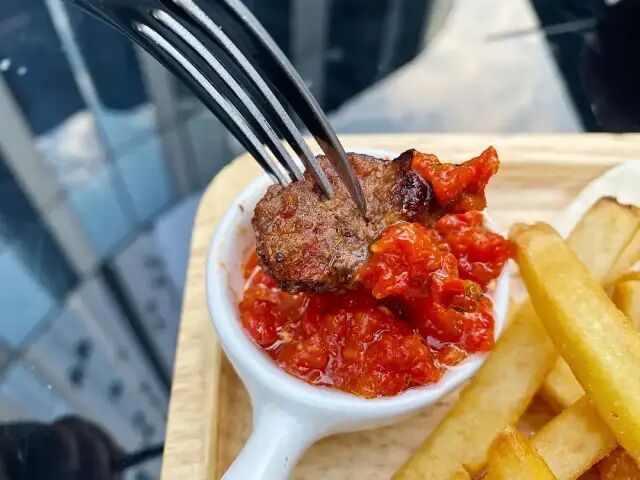
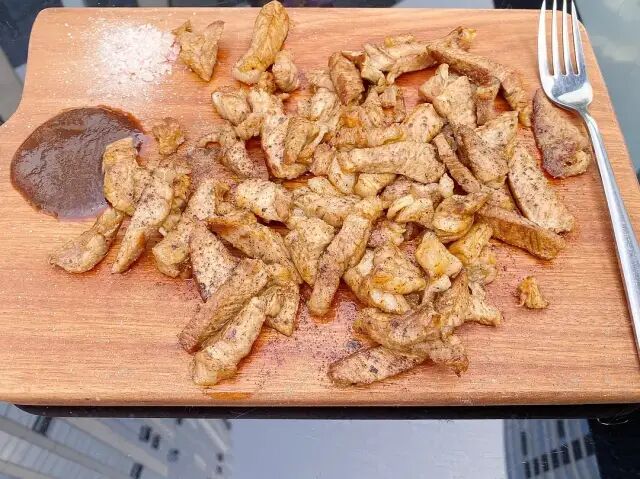
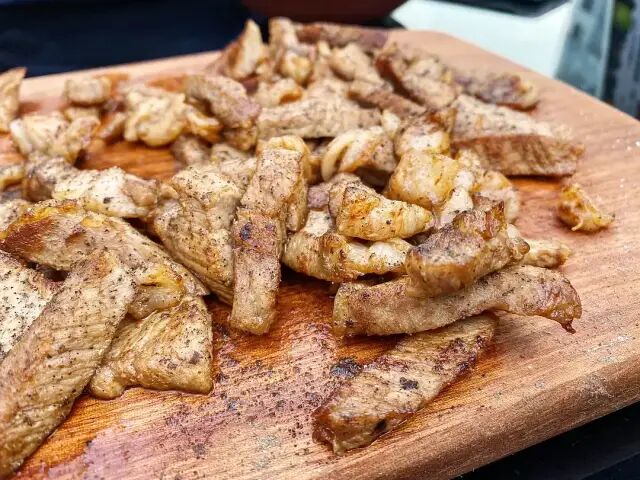
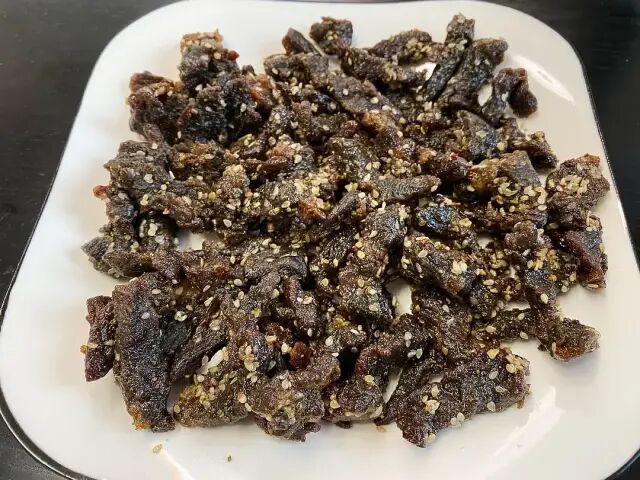
June 10: Homemade beef jerky (niurougan) from my mother-in-law in Urumqi, made the Hui Muslim way.
My mother-in-law sent two kinds of homemade Hui Muslim beef jerky (niurougan) from Urumqi. One is a bold flavor, marinated with egg white and starch before being fried. The other is a milder flavor, boiled in water, air-dried for two hours, and then mixed with seasonings until dry. Both are finished with a sprinkle of white sesame seeds. Four kilograms of beef made less than two kilograms of jerky. The kids in Urumqi would cry with envy if they saw this.
June 10: Dastan, an Indian restaurant.
Dastan is a new Indian restaurant that opened this year in Sanlitun SOHO. It sits right next to the Palestinian restaurant Zayton and is a halal spot run by a Hindu owner.
I started with the Indian street snack Panipuri, which became famous because of the movie Dangal. The name of this snack comes from two parts: pani and puri. A puri is a round, hollow, deep-fried crispy bread filled with mashed potatoes, onions, chickpeas, and various spices. Imli pani is a sauce made from cilantro, green chili, ginger, Chaat masala spice, and tamarind chutney. To eat it, just pour the sauce into the filling.
I also ordered the Old Delhi butter chicken (Purani Delhi Wali Murgh Makhani), a dish invented in the 1950s by the famous Punjabi restaurant Moti Mahal in Old Delhi. The story goes that one day near closing time, a group of hungry poor people came to the restaurant. The kitchen used leftover tomatoes, butter, and spices to make a sauce, then added leftover Tandoori roasted chicken. They did not expect it to create such a unique flavor. Today, making this dish starts by marinating the chicken in lemon, yogurt, Kashmiri red chili, salt, Garam Masala spice, ginger, and garlic. It is then roasted in a tandoor oven before being added to a curry made of butter, tomatoes, and various spices.
June 13, Yanlanlou Anzhen branch.
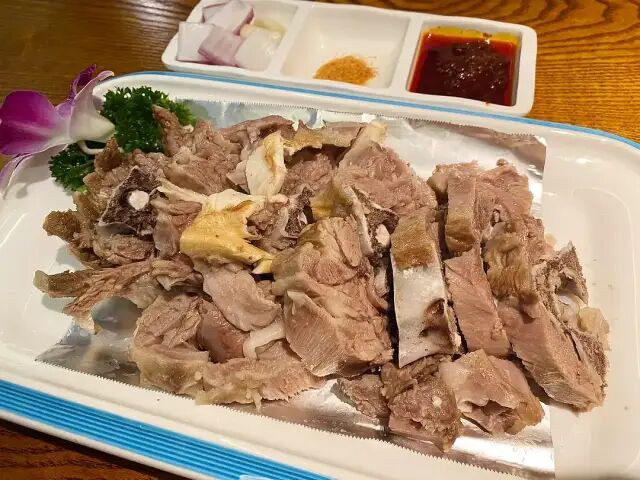
I had lamb neck, minced meat noodles (saozimian), and pea soup (huidouzi) at the Yanlanlou Anzhen branch. I miss the lamb neck I had in Yinchuan; it was so tender.
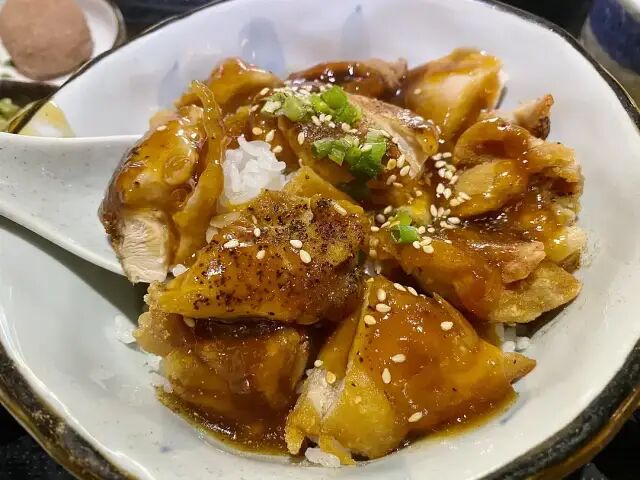
June 16, Chidao Yakiniku lunch set.
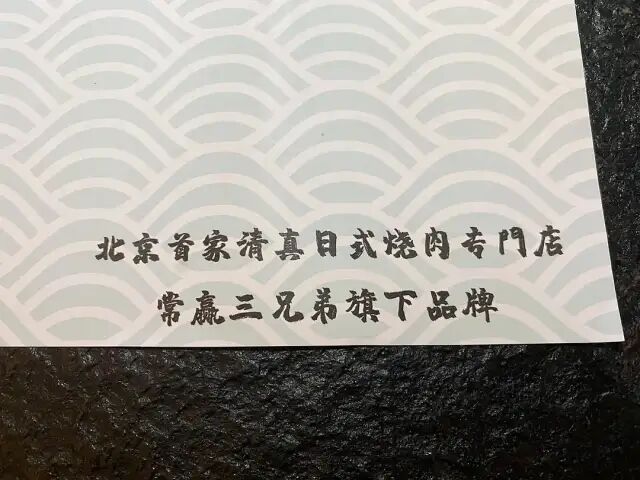
This was my first lunch set at Chidao since returning to work. I had the teriyaki chicken. The restaurant has now changed its name to Changying Sanxiongdi.
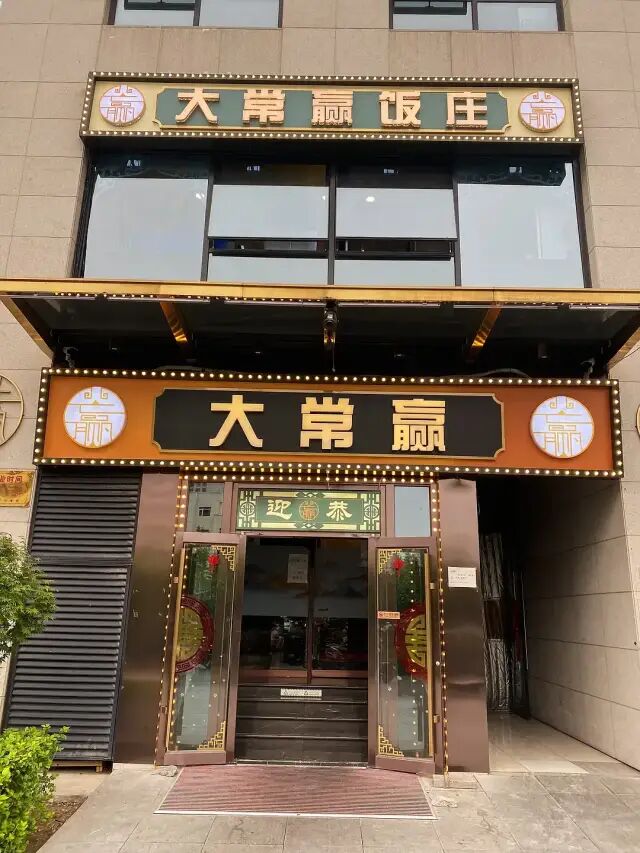
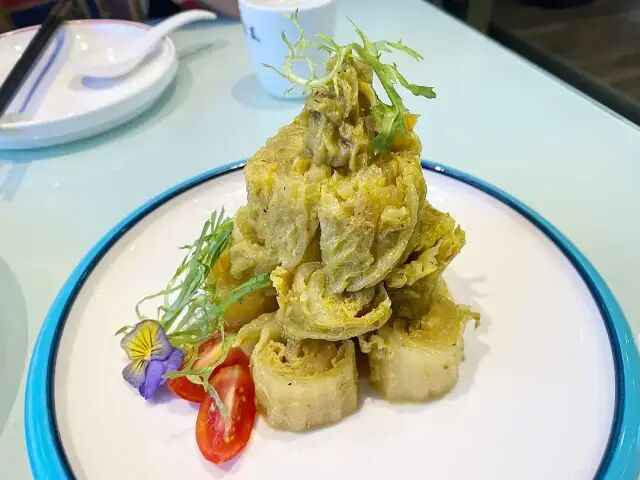
June 16, Dachangying Restaurant.
For dinner at Dachangying, I had fish head with flatbread. The mustard-marinated cabbage (jieshudun) was a great appetizer to beat the heat, and the Chinese kale with yam was very crisp. The dish used half a bighead carp and a broth made from beef bones. The freshly baked flatbread was very crispy and delicious, though the fish soup was a bit salty, haha. The server told me they are hosting an ambassador from an African country next week. It seems even ambassadors enjoy Beijing-style flavors.
June 17, Lahore Restaurant
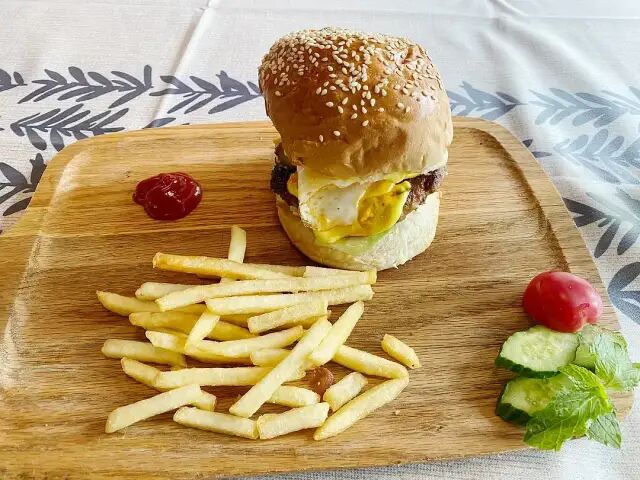
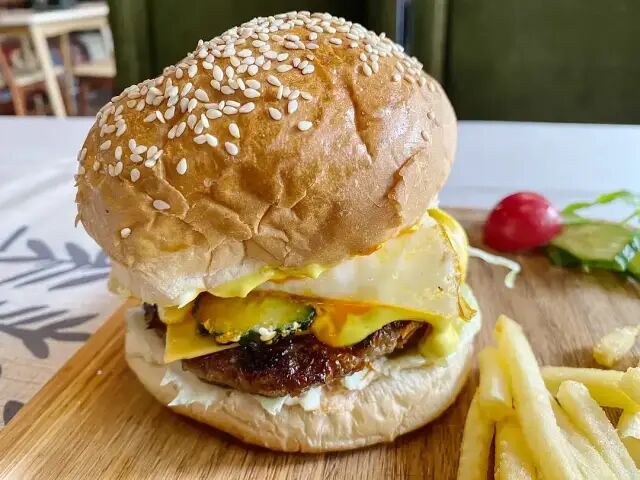
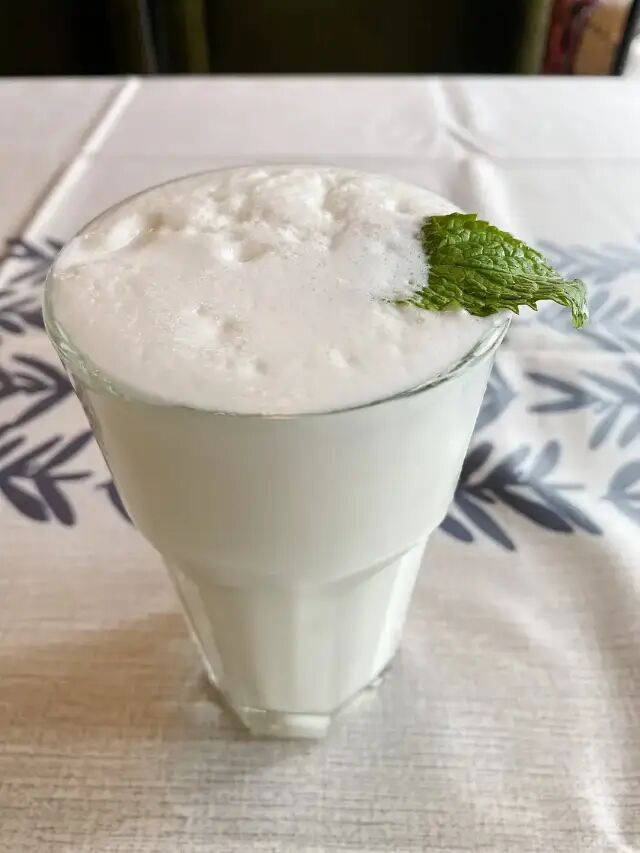
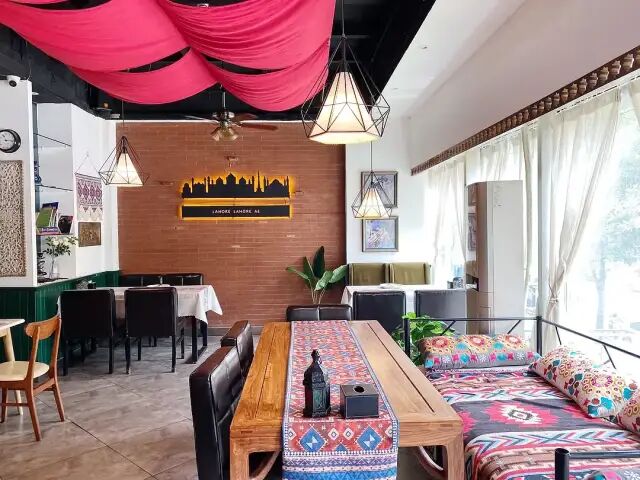
I had a Lahore beef egg burger with lassi at Lahore Restaurant because I was craving a burger. This combination reminds me of the South Asian fast-food shops in Dubai.
June 19, Hotan Canteen on Ritan Upper Street
My biggest surprise lately is finding the best Uyghur restaurant in Beijing: Hotan Canteen on Ritan Upper Street! This spot used to be the Uyghur restaurant Red Willow, then it became the Turkish restaurant Rumi's Secret for 20 years. This year, Rumi's Secret moved to Urumqi, and now this new Uyghur restaurant, Hotan Canteen, has opened here.
I have to say, their pilaf (zhua fan), hand-pulled noodles (ban mian), and steamed meat dumplings (baopi baozi) are the best I have ever had at a Uyghur restaurant in Beijing. After eating here, the places I previously considered top-tier, like Ali, White Diamond, and Kashgar Mahmut, have all been bumped down to second place. It is no exaggeration to say that even back in Urumqi, you would be hard-pressed to find a restaurant that beats this Hotan eatery.
The lamb leg in the pilaf (zhua fan) is so tender that I almost cried after the first bite. I have lived in Beijing for many years and have never eaten such fresh, tender lamb leg in any restaurant here. The hand-pulled noodles (latiaozi) in the mixed noodles are very thin and have a fantastic texture. I finished the whole bowl in one go and could not stop. The skin of the thin-skinned steamed buns (baopi baozi) is the thinnest I have ever eaten in Beijing. The lamb filling is meaty and not too oily, and the pumpkin filling is very rare in Beijing and also tastes great.
Their mug-stewed lamb (gangzi rou) comes in a huge mug, haha. However, the amount of meat inside is not as much as it looks; it is just the standard portion you get from street vendors in Xinjiang. The lamb broth is very soothing for the stomach.
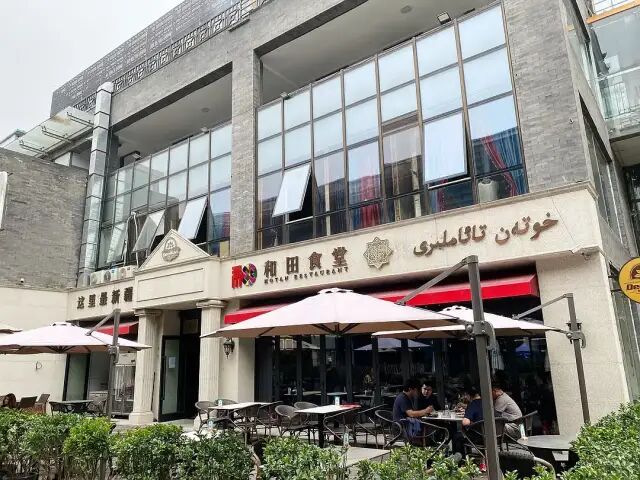
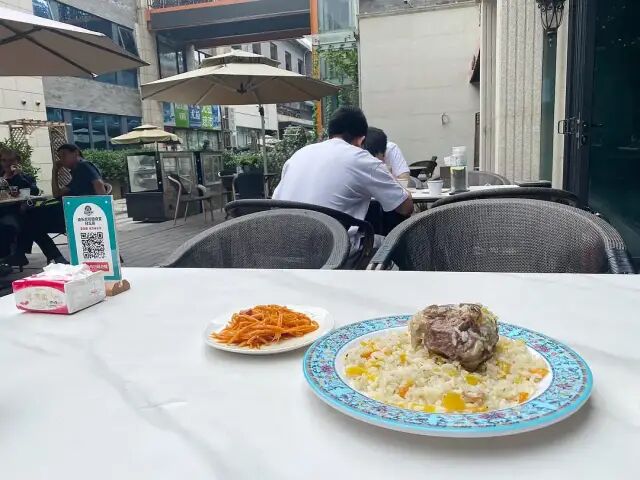
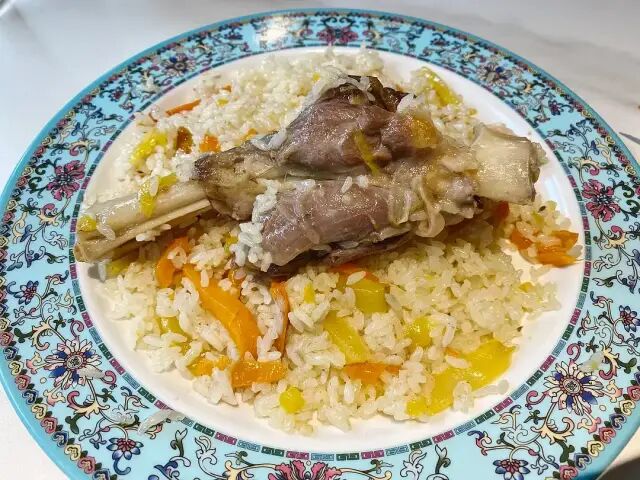
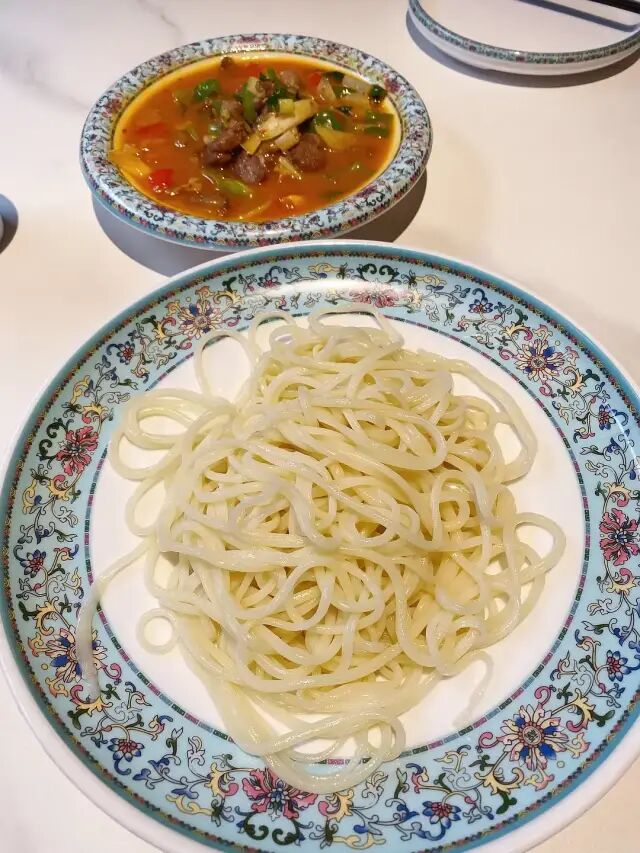
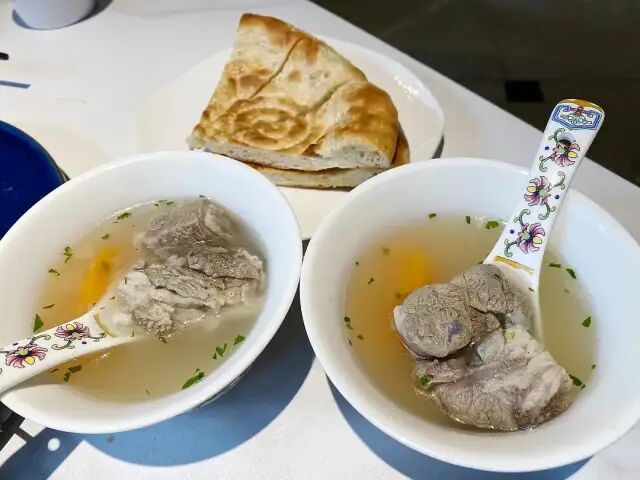
I highly recommend their grilled stuffed spleen (kaoseipi)! I do not know why this classic Xinjiang delicacy is missing from all the Uyghur restaurants in Beijing, but I am glad I finally got to eat it. Grilled stuffed spleen, also known as fake kidney, is made by stuffing lamb spleen with onions (piyazi), minced meat, and liver before grilling it. It has a very rich texture.
My favorite dish here is the Hotan salt mine barbecue (hetian yankuang kaorou). It is roasted using earth salt and seasoned only with salt water, without any chili or cumin, which is the traditional way to eat it in Hotan. Their salt mine barbecue is so tender and fragrant that it is the kind of food that makes you want to cry after just one bite. I also ordered their grilled tenderloin, which tasted fine, but it was not as amazing as the salt mine barbecue.
In the summer, I definitely recommend their Kashgar yogurt shaved ice (kashi suannai baobing). The yogurt flavor is very rich and authentic, and it is incredibly refreshing. Also, the fig jam on their Hotan fig jam yogurt rice dumpling (wuhuaguo jiang suannai zongzi) is very fragrant.
Finally, I have to mention that there are some dishes here that do not taste good. First of all, their non-Xinjiang local dishes are not done well; the sweet and sour fish tasted a bit fishy. It is also a pity that their yogurt is not good; it lacks a real yogurt flavor and only tastes sweet. The only truly authentic Xinjiang yogurt I have had in Beijing so far is from Kashe Maihemuti.
June 22, Lahore Restaurant
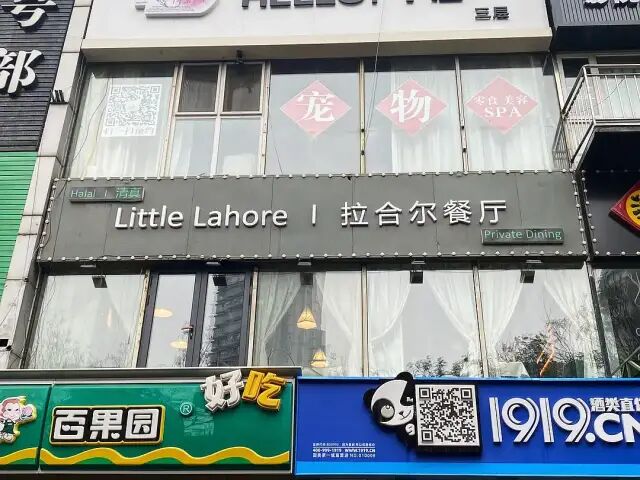
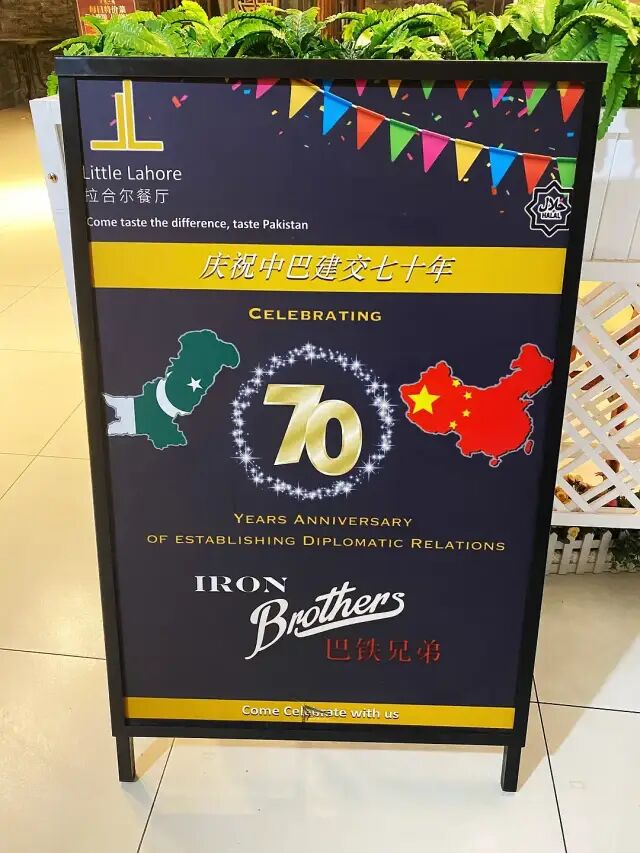
It was unusually cool at noon, so I went to the Pakistani restaurant Lahore Restaurant for a weekday lunch set. There were a few combinations to choose from, and I had the Achari chicken curry with saffron rice and Pakistani curry.
June 25, Family Dinner
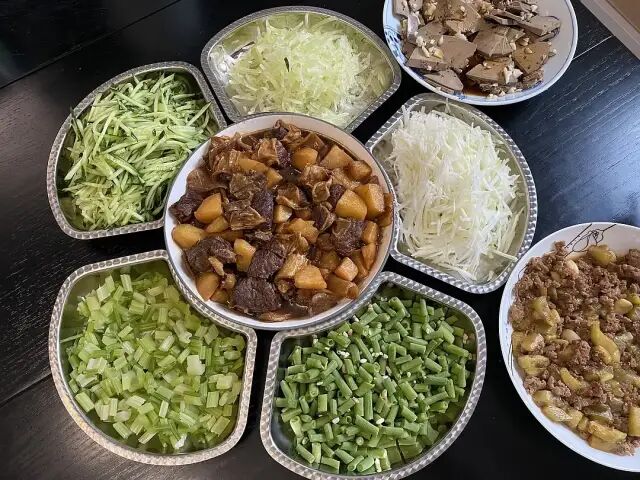
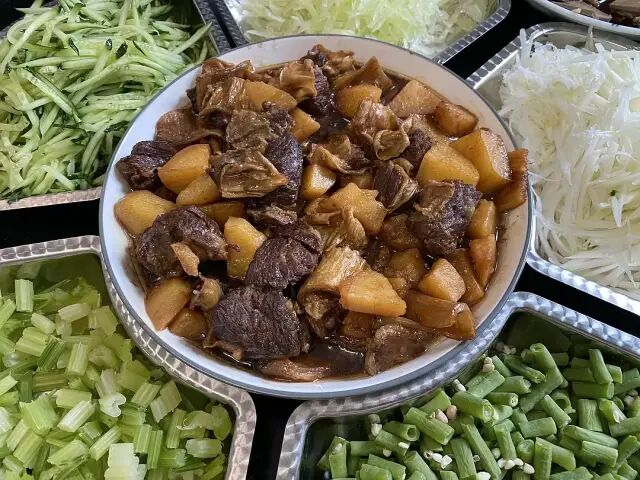
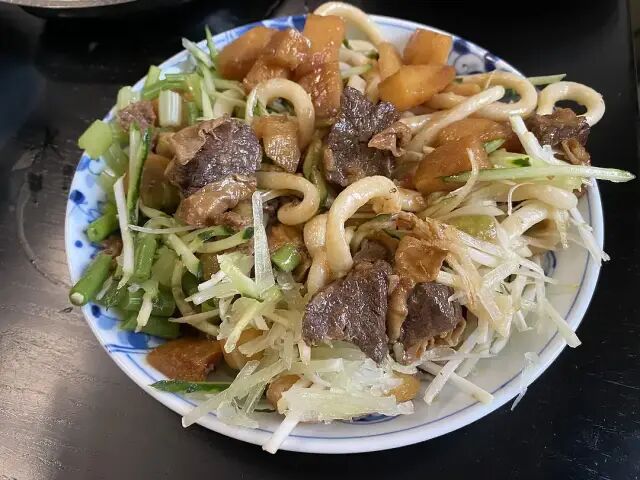
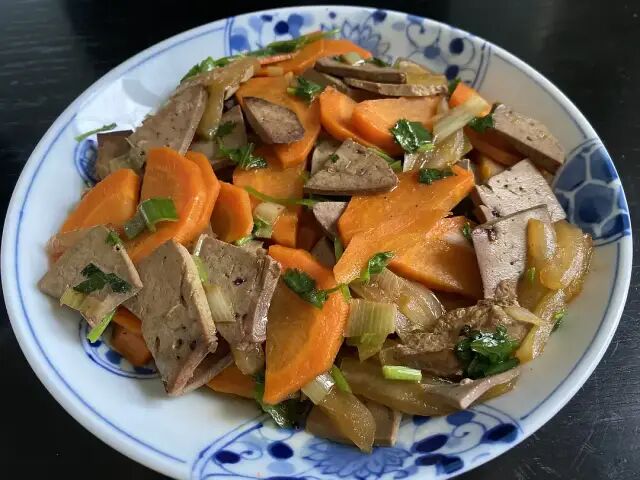
For our family dinner, I made beef brisket stewed with potatoes and minced meat with eggplant served with five types of noodle toppings. Zainabu kneaded the dough, my dad pulled the noodles, and my mom steamed a fish.
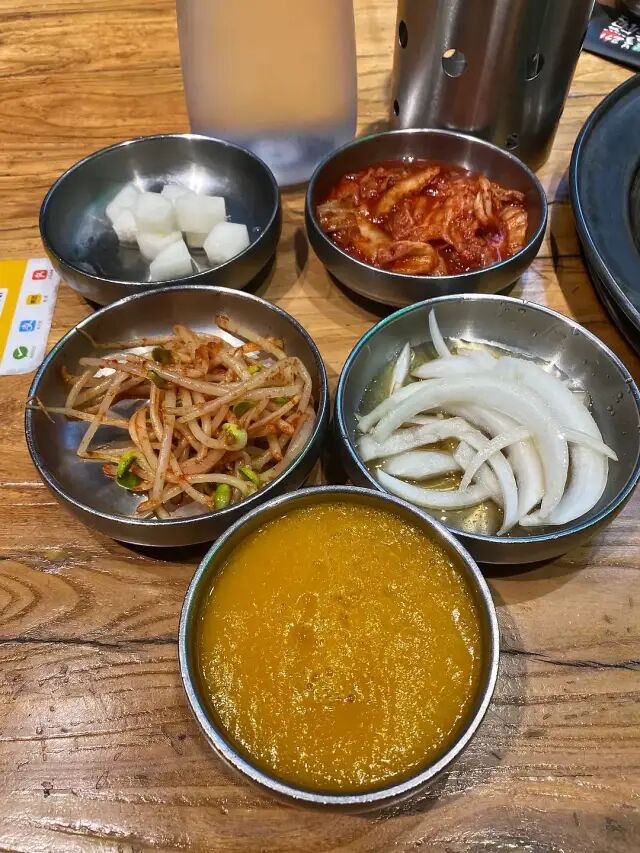
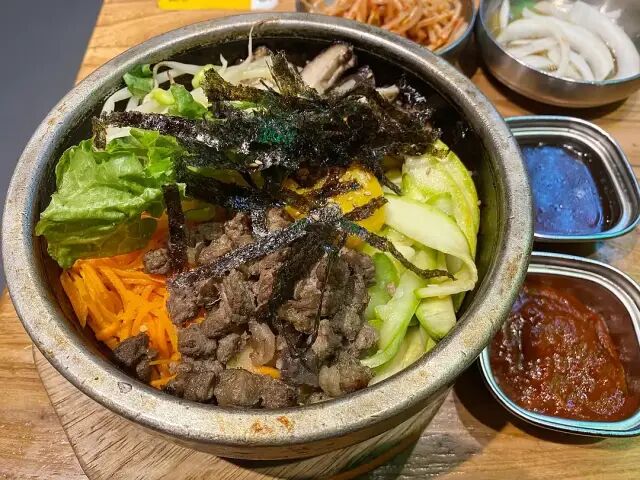
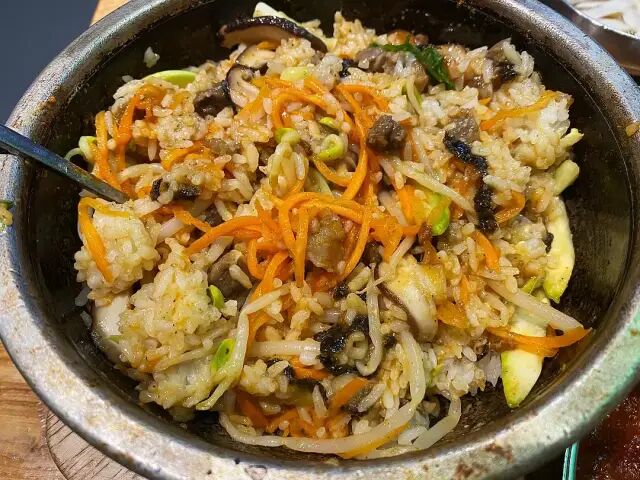
June 26, Qingu in Changying
I ate the stone pot bibimbap at Qingu and worked up a real sweat!
June 30, Liuji Mending Baodu
I have been eating the soybean paste noodles (zhajiangmian) with large meat skewers at Liu's for years.
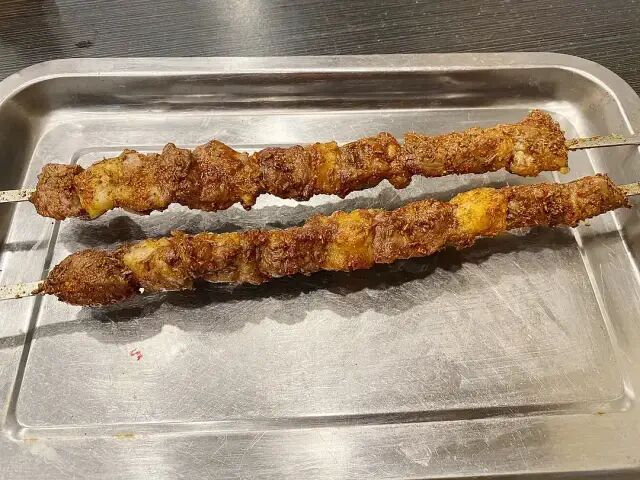
July 3, Lahore Restaurant
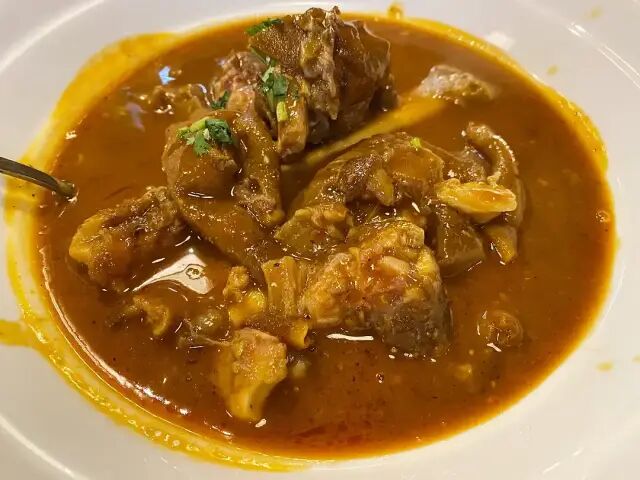
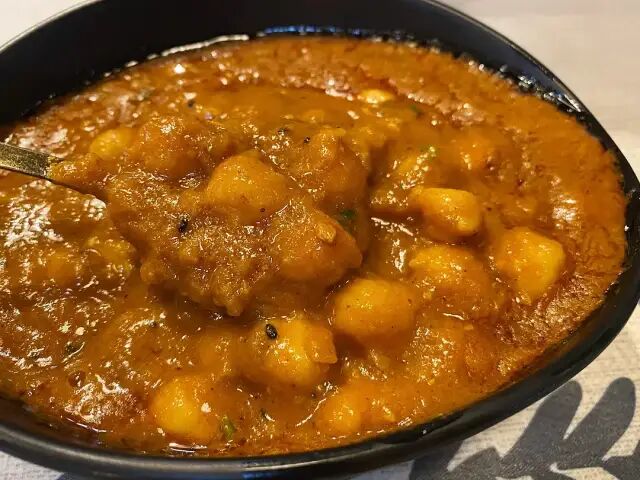
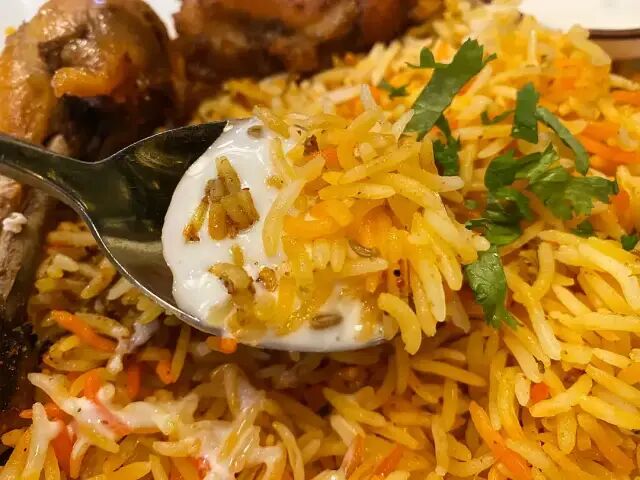
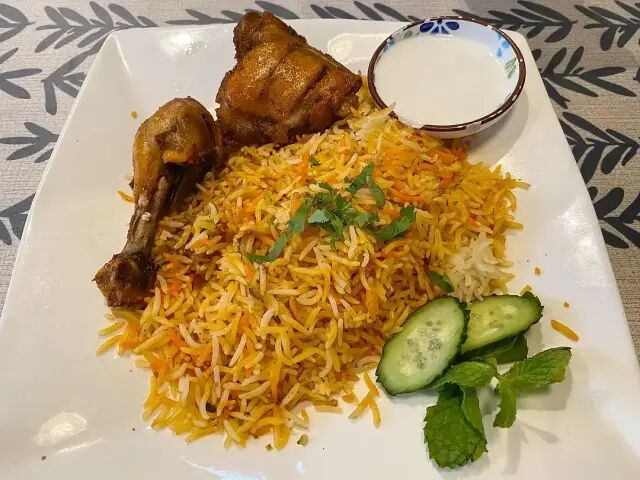
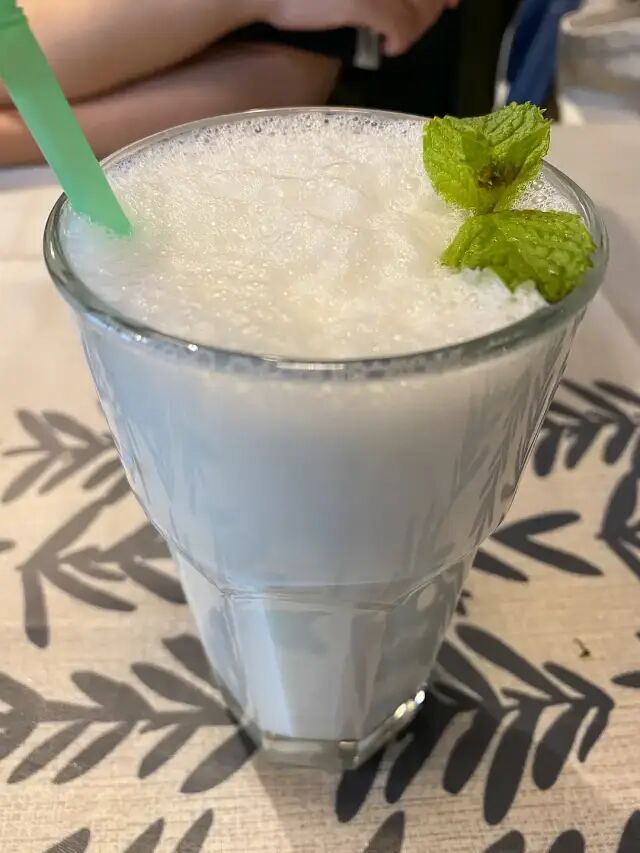
I ate stewed lamb trotters, Punjabi chickpeas, chicken biryani, and yogurt drink (lassi) at Lahore Restaurant on Youth Road (Qingnian Lu). After eating here so many times, I still think their stewed lamb trotters are the best; they are cooked until tender and full of flavor!

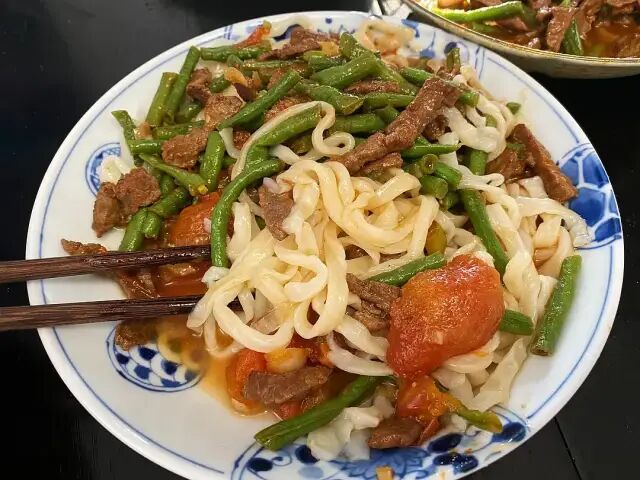
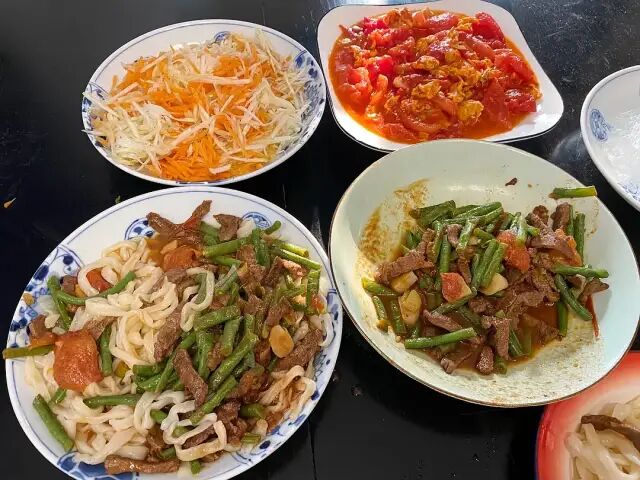
July 4, mixed noodles
It is my birthday today, and Zainab made me mixed noodles (banmian).
July 9, Hotan Canteen
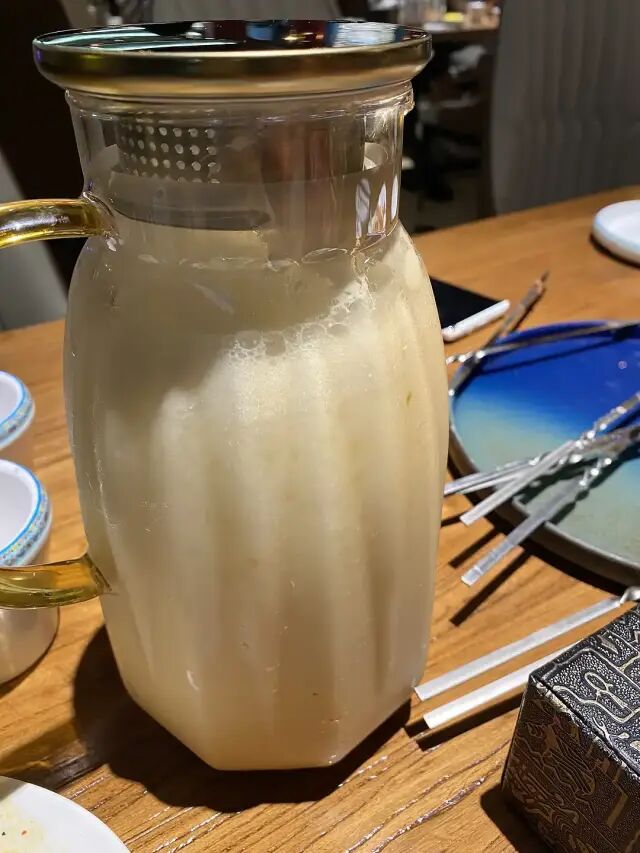
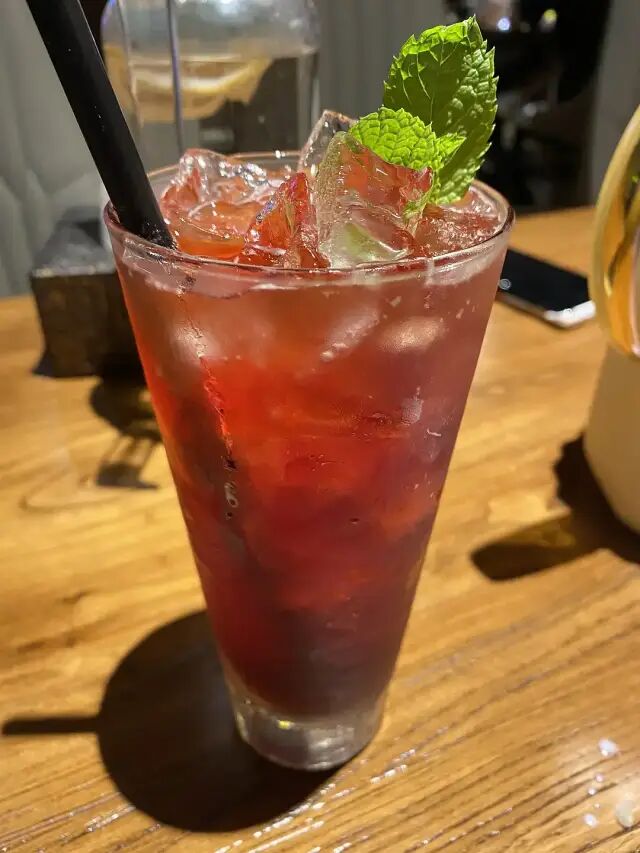
Iftar meal for the Day of Arafah at Hotan Canteen.
July 10, Eid al-Adha feast.
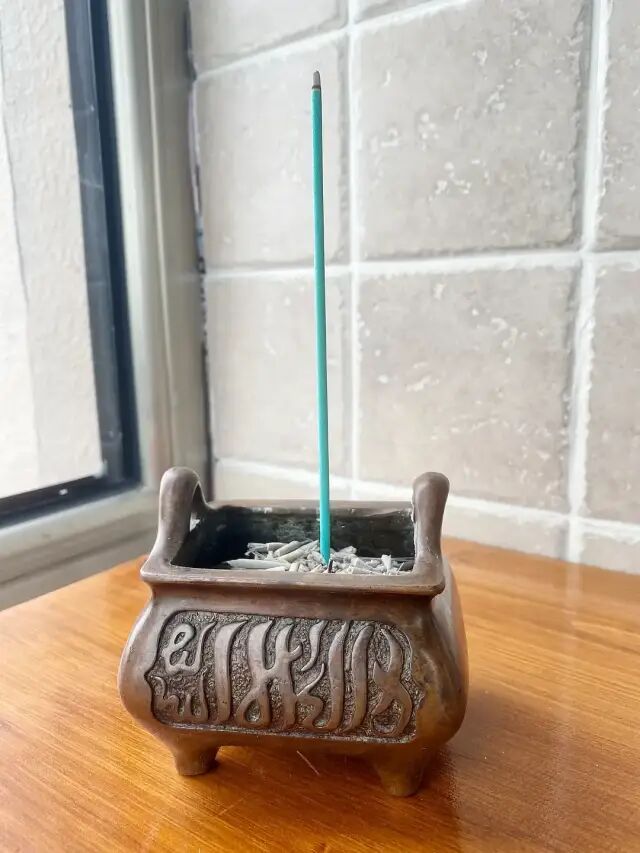
Eid Mubarak. Today there are seven sunnah acts: perform ghusl, brush your teeth, wear clean and tidy clothes, use perfume, recite the takbir, eat and drink only after the Eid prayer, and perform the qurbani. Today we are having a sheep slaughtered on our behalf that was raised in the Southern Mountains of Urumqi by Zainab's second uncle. Every year before Eid al-Adha, his family collects a batch of sheep from herders in Altay and Tacheng.
Beijing Halal Food Diary: Summer 2022 Muslim Food and Mosques (Part 2)
Articles • ali2007fr posted the article • 0 comments • 142 views • 2026-05-18 08:38
Summary: Beijing Halal Food Diary: Summer 2022 Muslim Food and Mosques is presented here as a firsthand travel account in clear English, beginning with this scene: I went to the Indian restaurant Mughal Darbar in the basement food court of Hongqiao Market. The account keeps its focus on Beijing Halal Food, Summer Diary, Muslim Food while preserving the names, places, food, and historical details from the Chinese source.
July 12, Indian restaurant Mughal Darbar.
I went to the Indian restaurant Mughal Darbar in the basement food court of Hongqiao Market. The name translates directly to 'Mughal Court'. The Chinese name is 'Love in Curry' (Ai Zai Gali), which feels a lot less impressive, haha. The owner is a Muslim from Delhi, and the guy at the front desk is also from Delhi. Even though he is not Muslim, he says 'salam' and 'bismillah' very fluently. Many of their dishes really do come from the Mughal Empire.
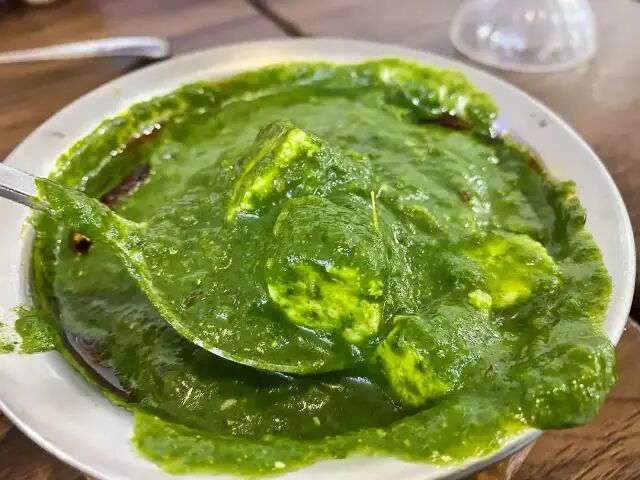
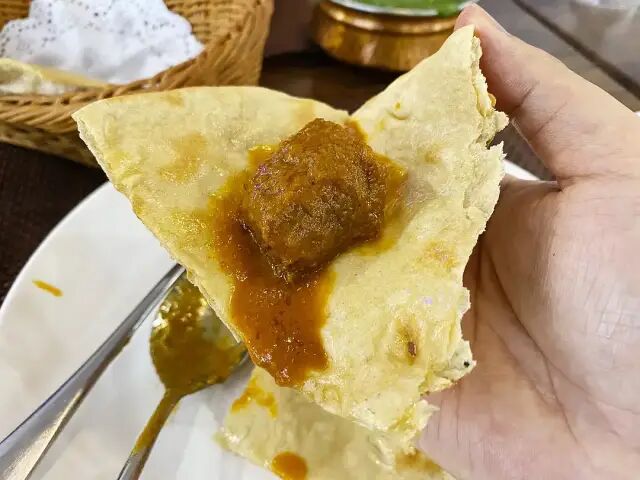
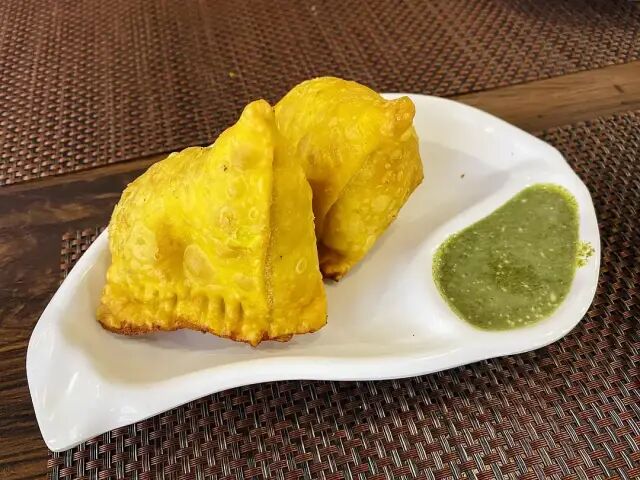
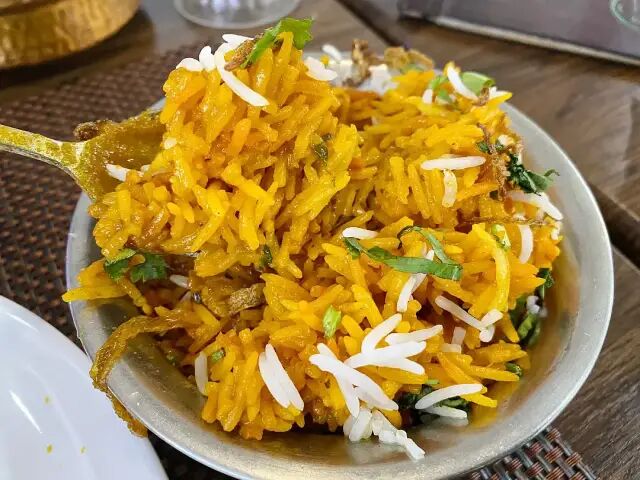
We ate spinach cheese curry (Palak Paneer), lamb curry (Rogan Josh), vegetable fried dumplings (Samosa), spiced yogurt drink (Masala Chach), chicken rice (Biryani), and butter flatbread (Roti).
Rogan Josh is a specialty curry from Kashmir. The Mughals brought it there when they went to Kashmir to escape the summer heat during the Mughal Empire. It mainly uses alkanet root (alkanet) and Kashmiri chili as seasonings. 'Rogan' comes from the Persian word for 'clarified butter' (roughan), and 'josh' is the Persian word for 'stew'.
Palak paneer is a North Indian vegetarian curry made with Indian white soft cheese (paneer, which comes from the Persian word for cheese, panir) and spinach puree. It is a classic home-cooked Indian dish.
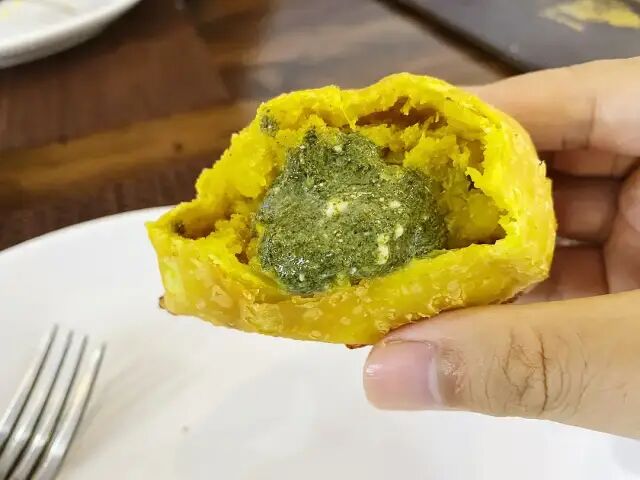
The samosa curry puff comes from the Persian word 'sanbosag'. It is a classic street snack brought to South Asia by Central Asian merchants in the 13th and 14th centuries. This shop's samosas are very large and filled with mashed potatoes.
Biryani also comes from a Persian word. Legend says it was created by Mughal palace chefs who combined spicy Indian rice with Persian pilaf.
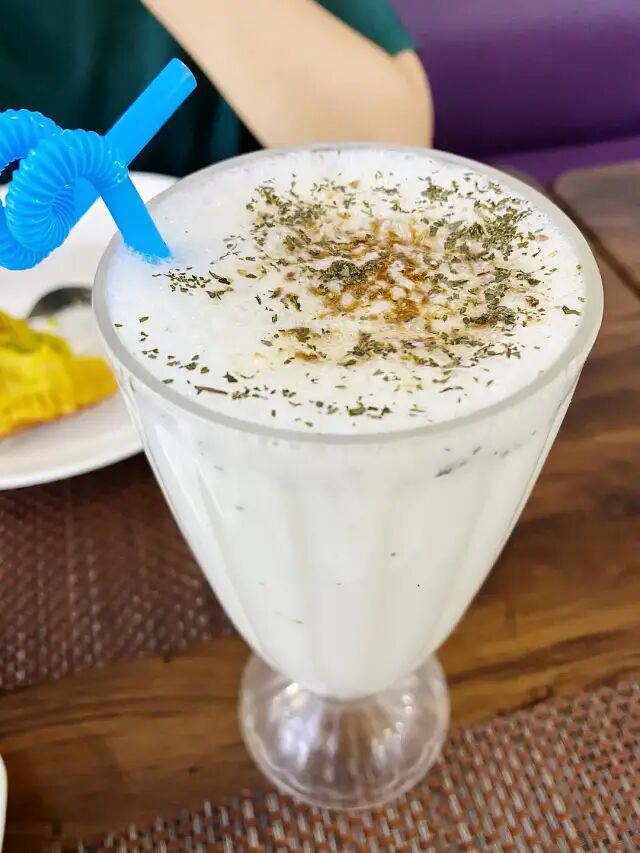
Traditional buttermilk (chach) is made by mixing yogurt and water with a tool called a 'madhani', then seasoning it with spices like masala. Chach is similar to the common Indian yogurt drink (lassi), but chach is thinner and uses spices instead of sugar or fruit jam. Chach is very popular in India's desert regions and the hot areas of South India. People often choose a glass of chach to rehydrate after being out in the sun.
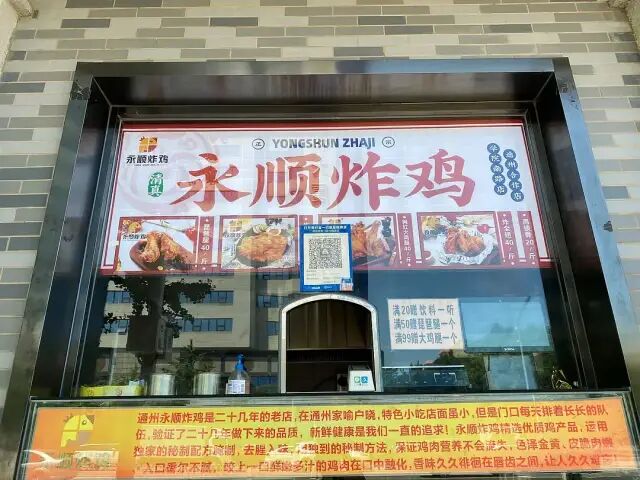
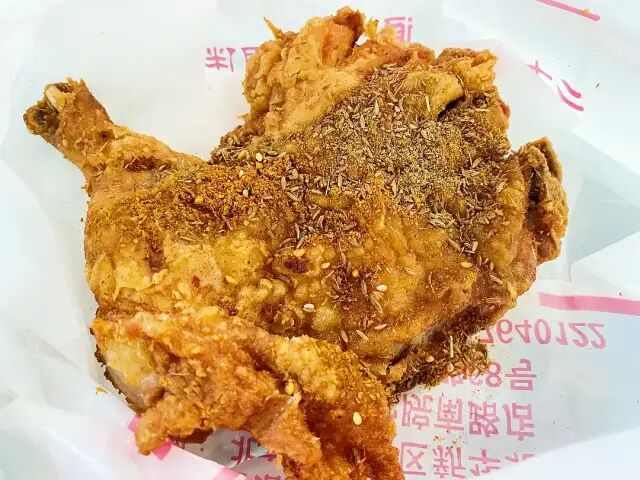
July 14, Yongshun Fried Chicken at the Yiguzhai franchise on Daliushu Road.
Yongshun Fried Chicken at the Yiguzhai franchise on Daliushu Road. You can eat a large chicken leg in the shop, and it comes with a free drink.
July 16, Longxianghui on Dongsi North Street.
I love the stewed flatbread (hubo) at Longxianghui, even though eating it in the summer makes me sweat all over.
July 16, stewed meat with flatbread.
Listening to storytelling made me hungry, so today I stewed beef brisket and bought a griddle-baked flatbread (laobing) from Niujie to make stewed meat with flatbread, a classic dish from the Water Margin!
July 17, Cheese Wei in Niujie.
The original flavor cheese and the yogurt jade rabbit from Cheese Wei in Niujie.
July 16, Xilaishun.
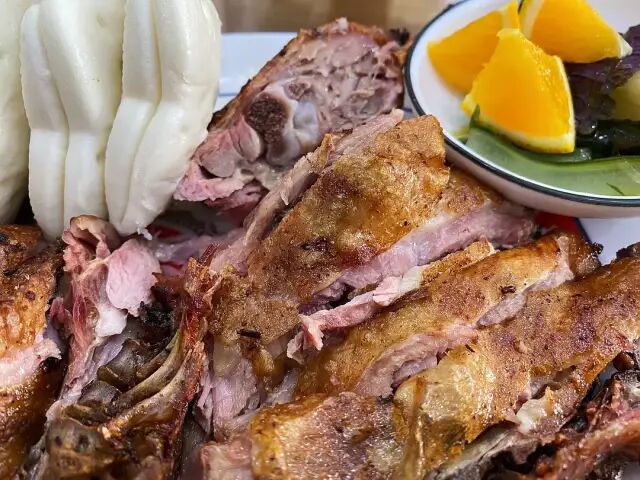
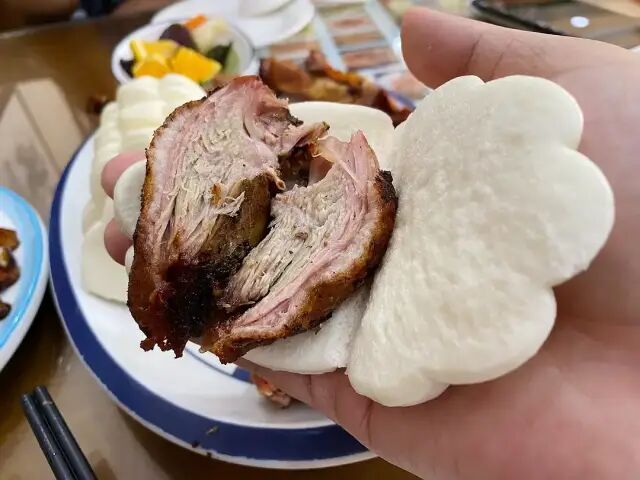
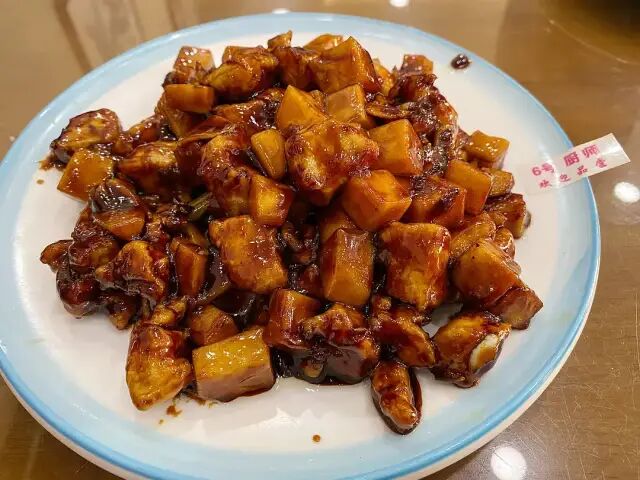
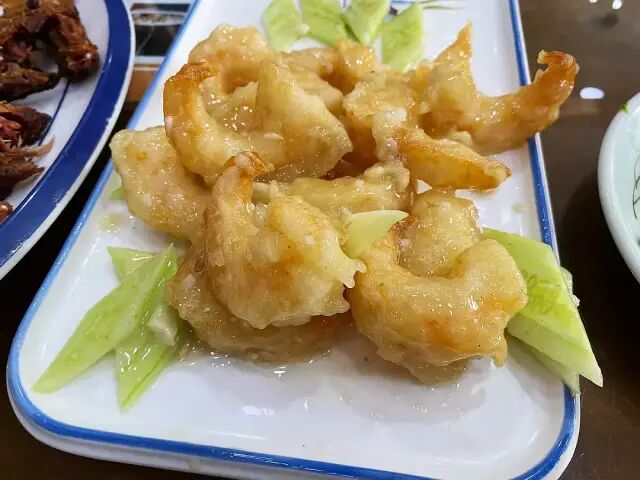
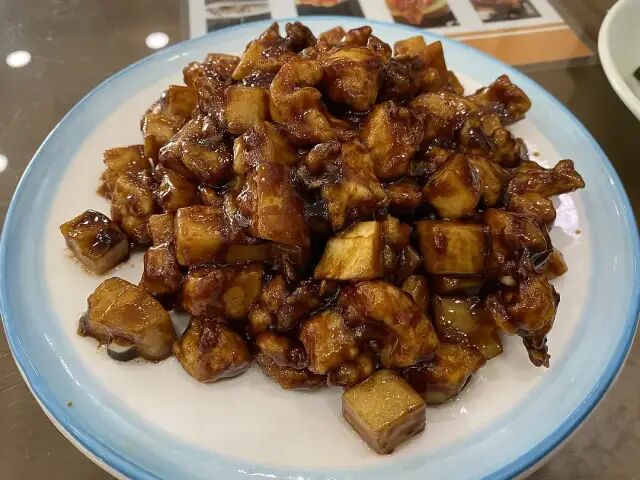
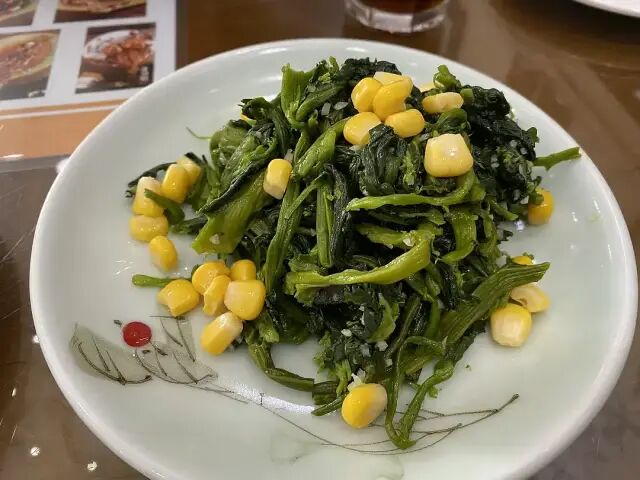
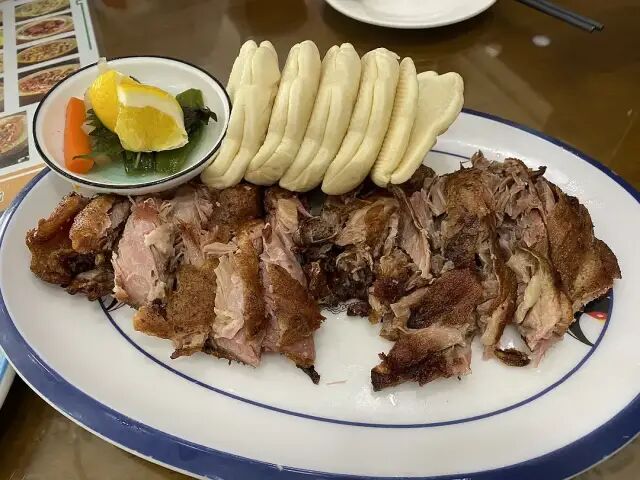
After listening to storytelling, I went to Xilaishun to eat and ordered my favorites: stir-fried chicken cubes in bean sauce (jiangbao jiding), Ma Lianliang duck, deep-fried shrimp, and mixed wild mountain vegetables. Every time I go to their place, I order the stir-fried chicken with soybean paste (jiangbao jiding) and two bowls of rice. I never get tired of it! I have been eating Ma Lianliang duck for many years. For a few years, their duck was a bit fatty, but in the last two years, they have gone back to a leaner style. The meat is fried until tender and the skin is crispy. You can even eat the bones. For the past two years, they have served the duck with flatbread (bing). It tastes even better when you eat it as a sandwich.
I ordered the deep-fried shrimp (zha peng xia) for Zainab. It was my first time trying their version. The batter felt a bit hard, but the shrimp inside was very tender.
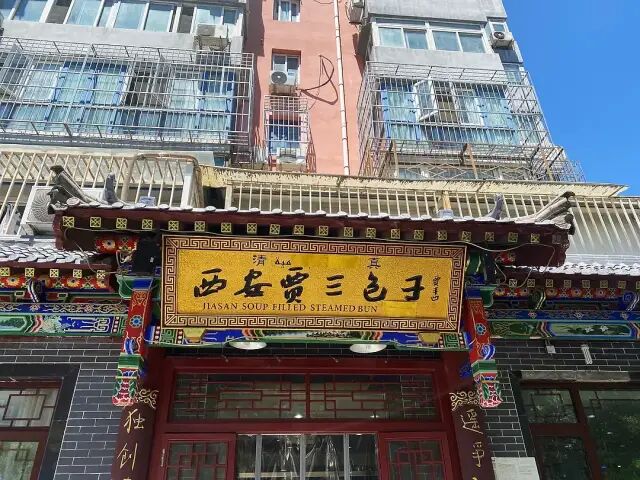
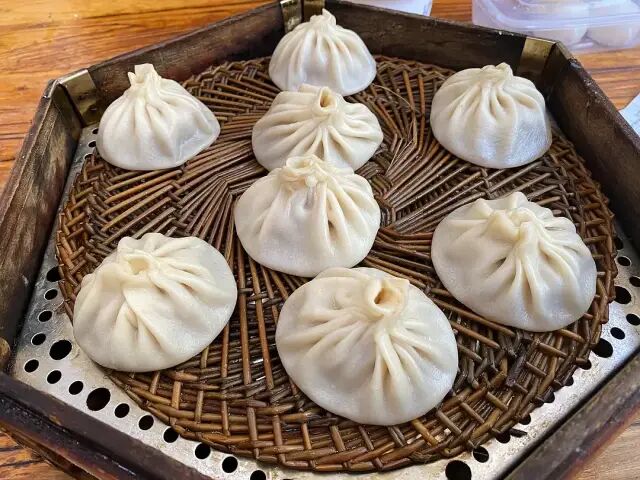
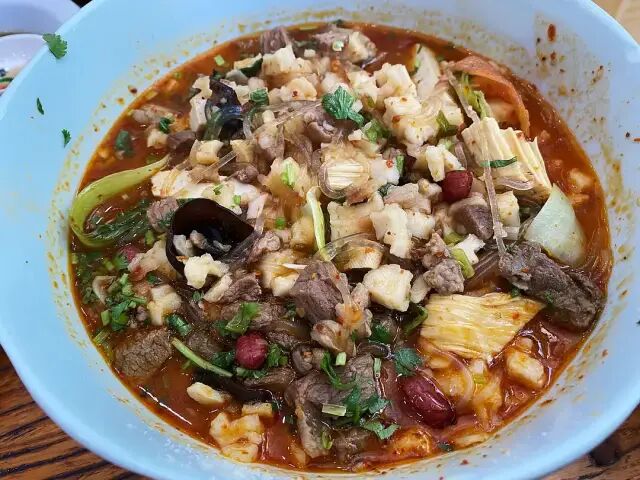
July 17, Jia San Soup Dumplings (Jia San guantangbao).
I had lunch at Jia San on Baiyun Road and enjoyed their soup dumplings (guantangbao). It was delicious. I also had the stir-fried lamb (yangrou xiaochao) and the mixed vegetable stew (huicai). Their stir-fried lamb was a bit too salty compared to the local version in Xi'an. Next time, I will just stick to the regular soaked bread (paomo).
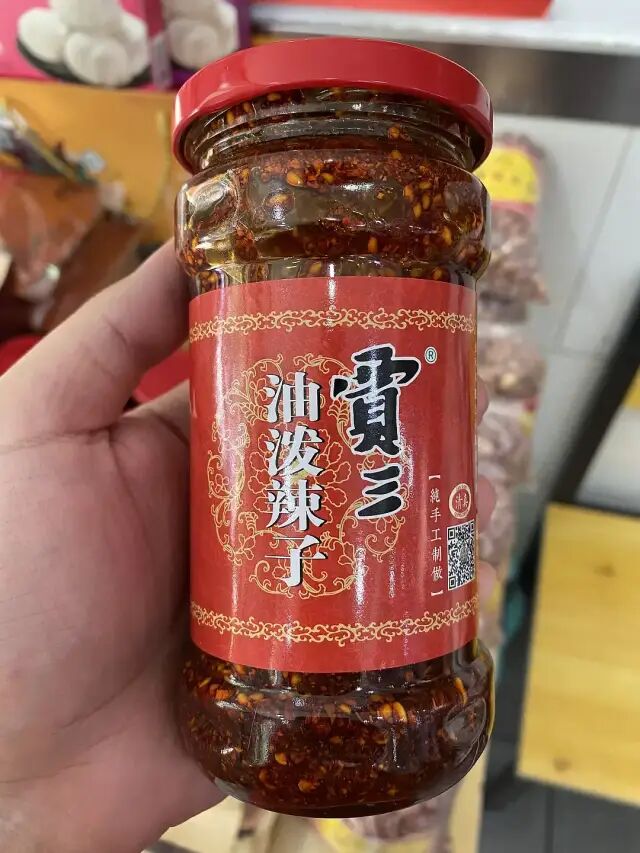
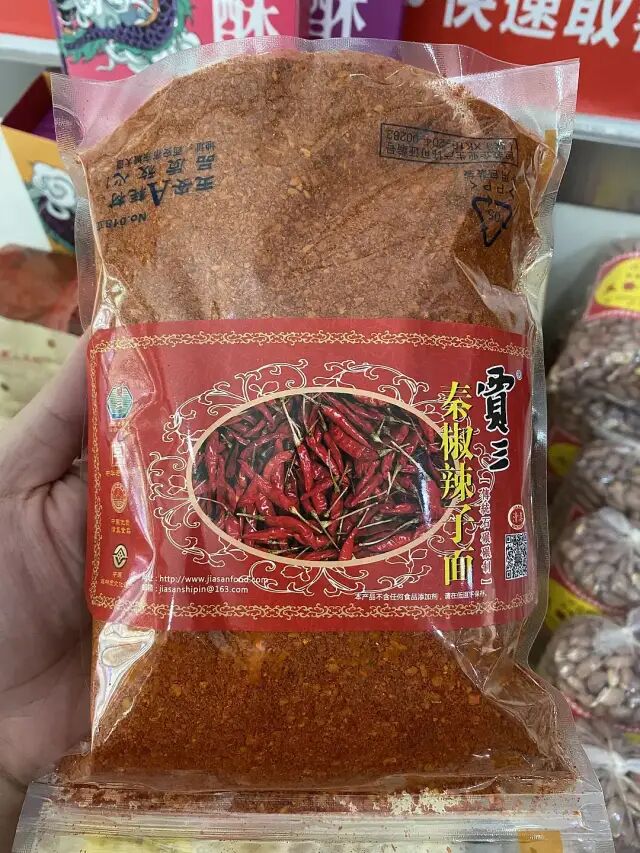
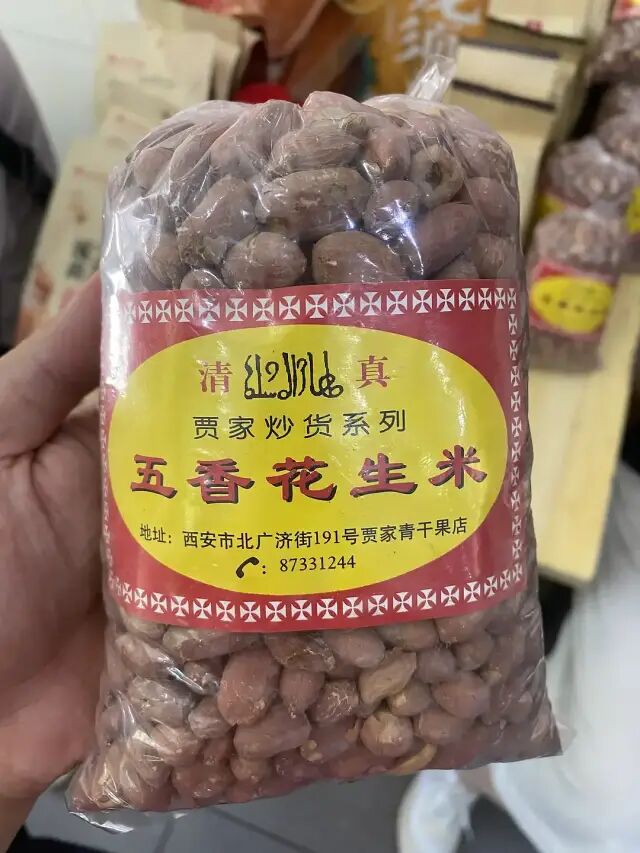
Jia San sells hot chili oil (youpo lazi), chili powder (lamianzi), and peanuts. It feels like I am pretending to be back in the Muslim Quarter (fangshang).
July 19, Qurbani sheep
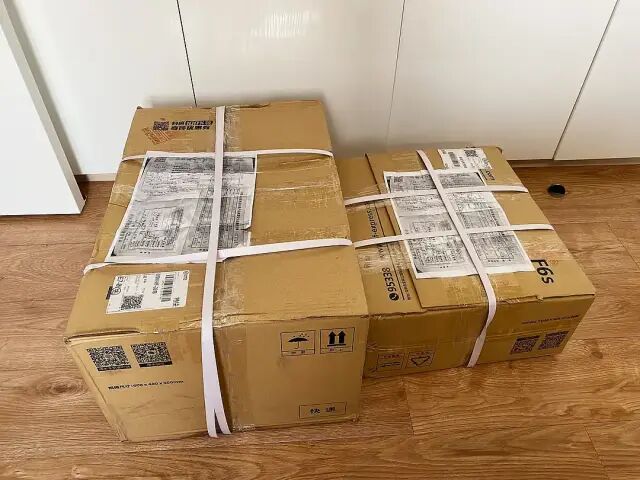
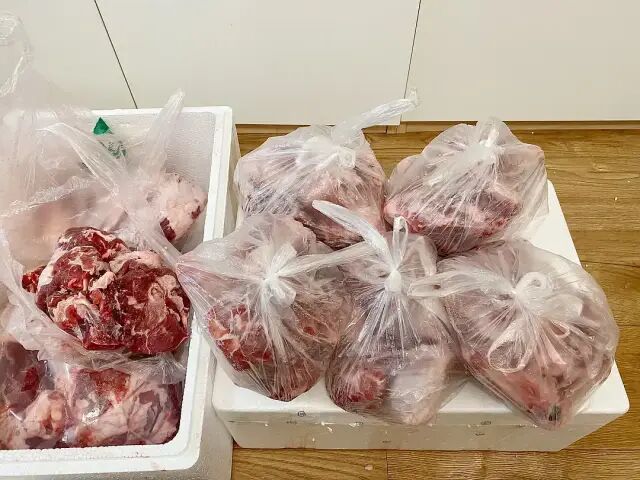
We made the intention for our Qurbani sheep, and Zaynab's uncle had it slaughtered for us in the Nanshan mountains of Urumqi. It arrived in Beijing last Saturday. Zaynab's uncle bought these Kazakh fat-tailed sheep from herders in Yili and Tacheng ahead of time.
On Saturday and Sunday, we gave lamb to a few friends (dosti) and took a trip to Niujie. Sharing is an important part of Qurbani, and it brings many rewards.
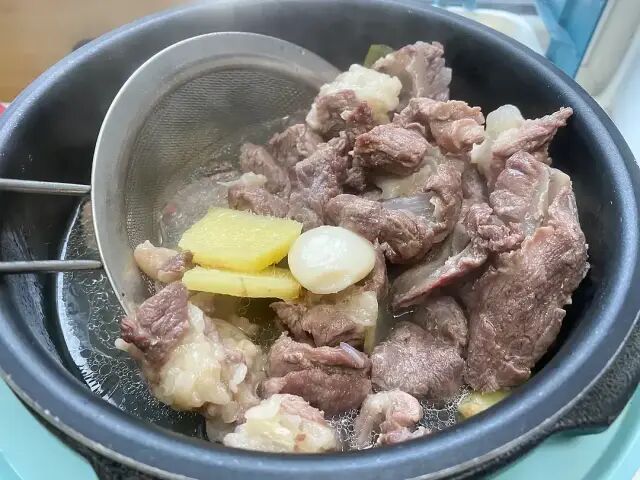
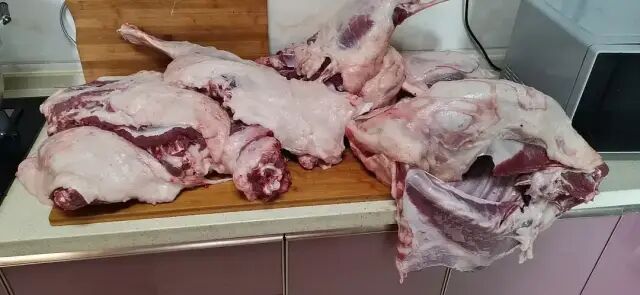
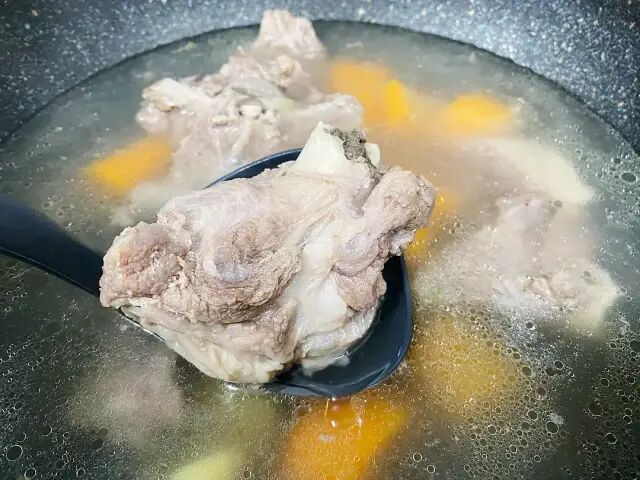
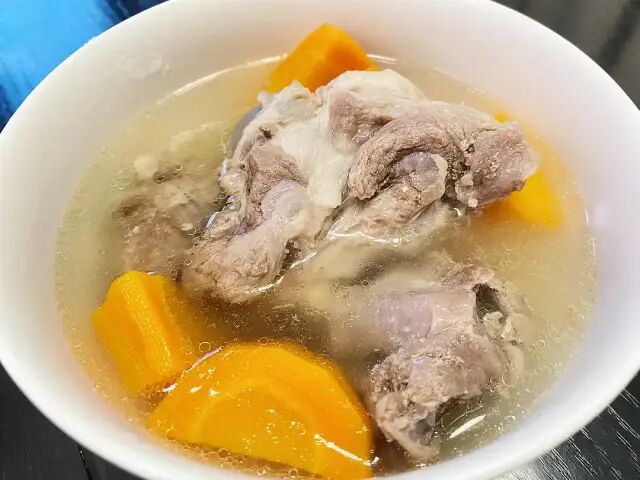
Today I stewed the Qurbani lamb. It is so fragrant when boiled plain; you do not need any seasonings, just a little salt. After stewing the lamb, I added baby bok choy and tofu to the broth, so we had both meat and vegetables.
July 23, Ma's Handmade Dumplings
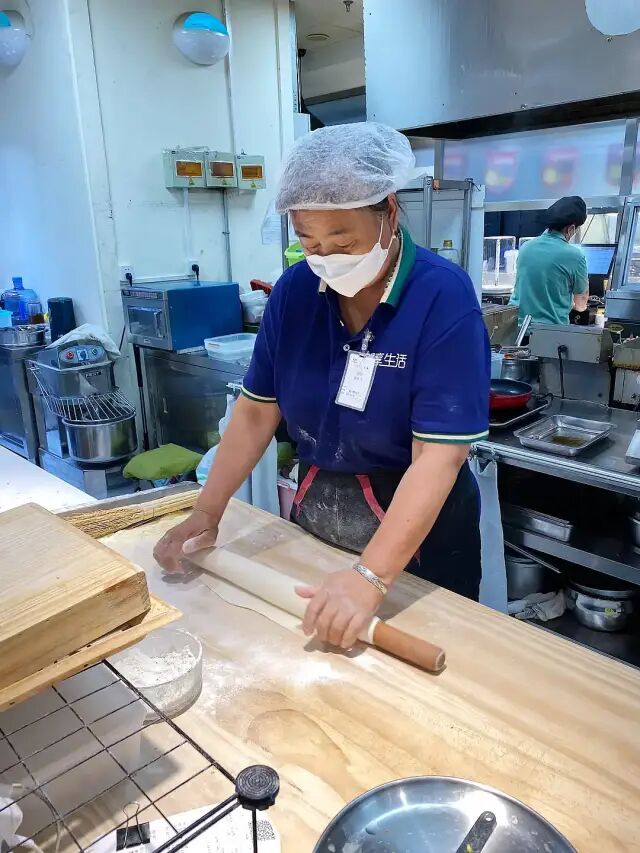
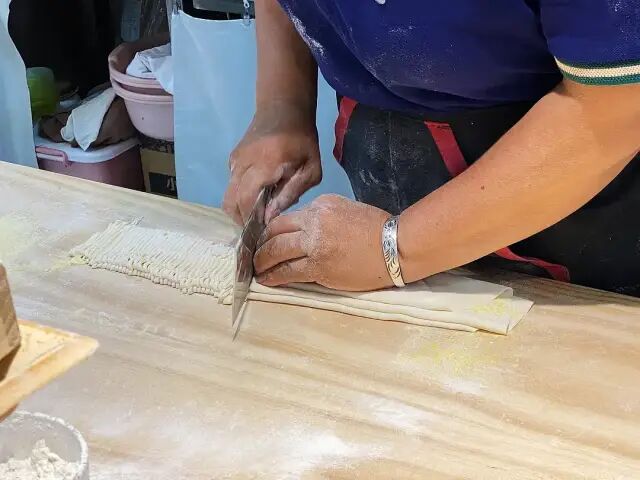
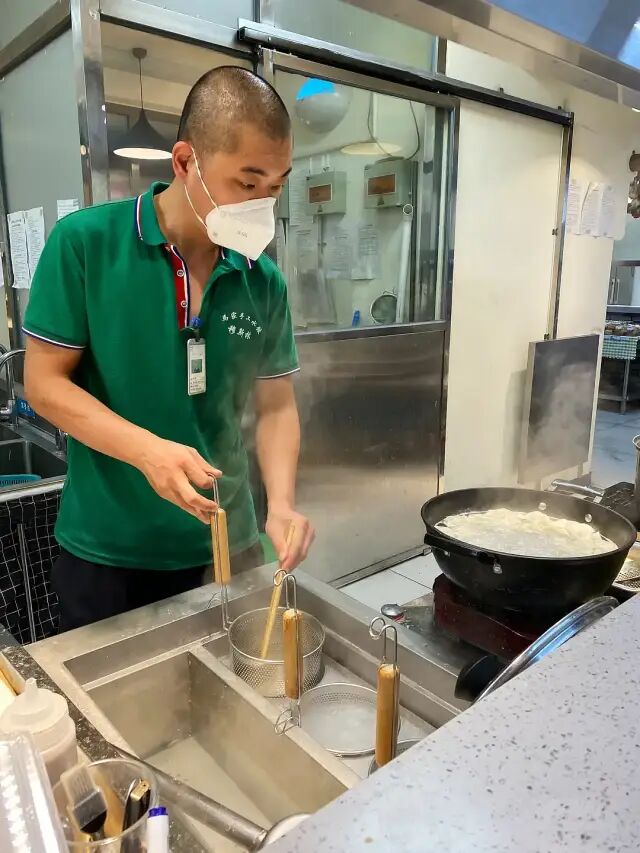
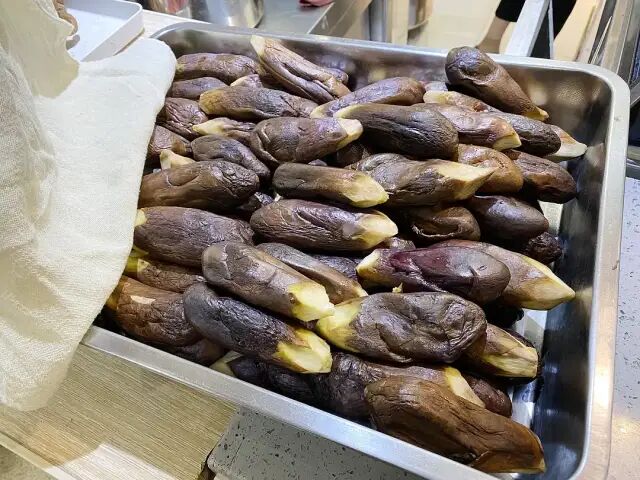
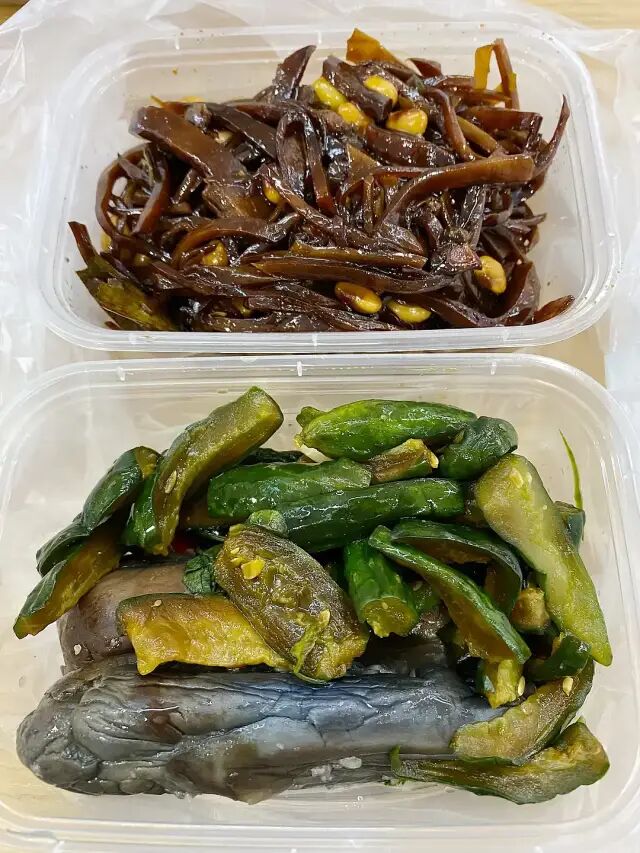
At noon, we ate Northeast-style cold noodles and fresh hand-cut noodles with soybean paste (zhajiangmian) at Ma's Handmade Dumplings in the basement supermarket of the New World mall outside Chongwenmen. The shop is run by Hui Muslims from Fushun, Liaoning. Last time I visited, they didn't offer dine-in, but now you can eat right there. They have also added various braised meats and pickles, like shredded eggplant and pickled cucumbers.
July 23: The newly opened Bangdan'er Meatball Soup inside Xinjiang Mansion.
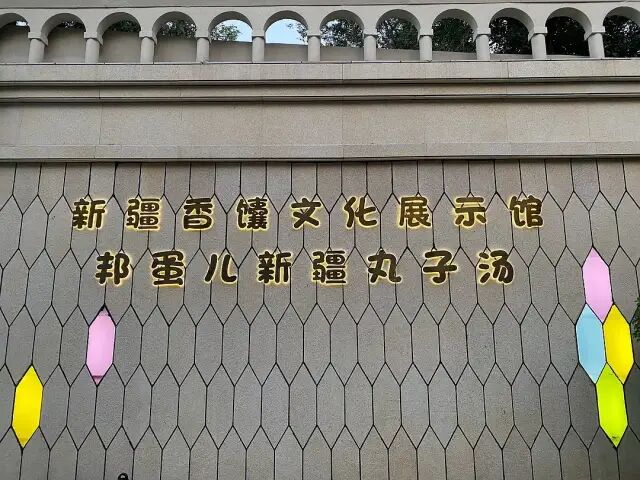
The new Bangdan'er Meatball Soup is inside Xinjiang Mansion, right as you enter the east gate. It is a bit tucked away, so not many people have been there yet. Their specialty is meatball soup served with fried dough (youxiang), which is very authentic. The Changji flavor is excellent. You cannot find these meatballs in typical Beijing restaurants, though they do put a bit too much vermicelli in it. My wife broke the fried dough (youxiang) for me; how happy I am.
Inside Bangdan'er Meatball Soup, there is a naan culture exhibition hall, and there is a Xinjiang specialty shop right across from it.
July 24: Eating breakfast at home.
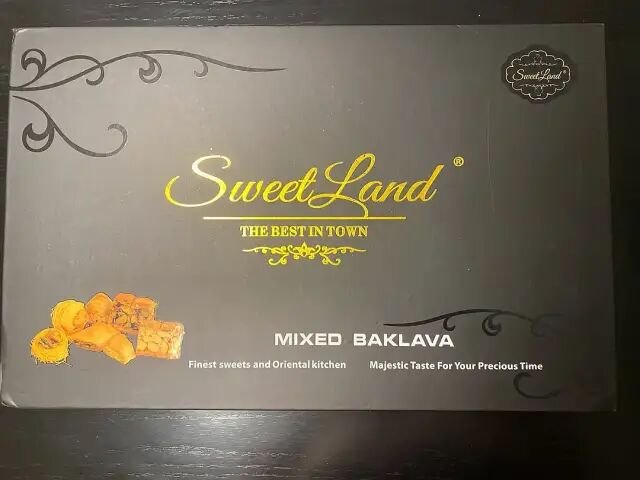
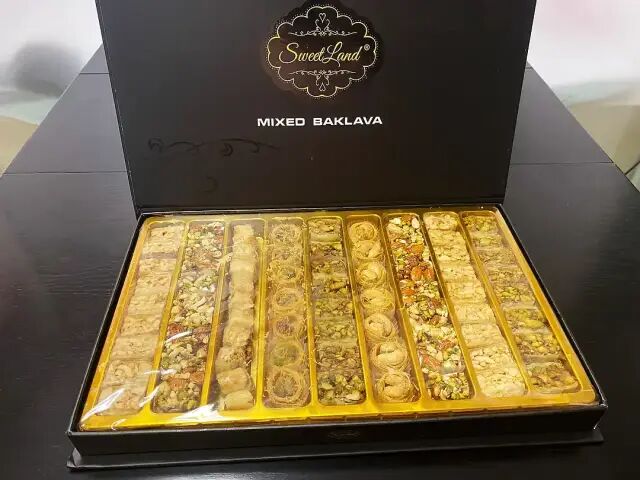
July 26: Syrian baklava.
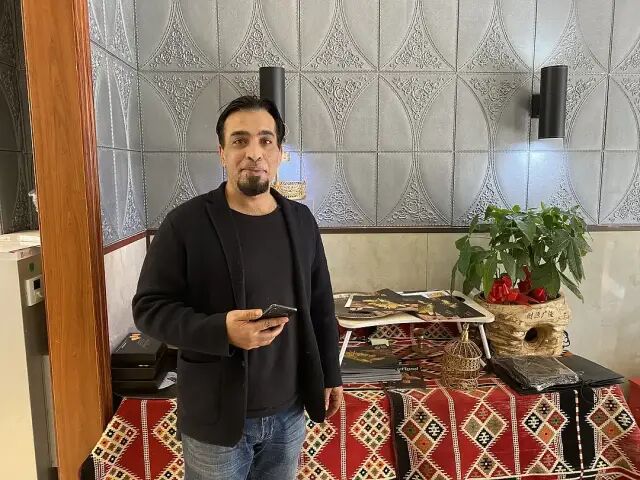
I once took photos at a Syrian pastry shop in Yiwu and posted them on Douban, and many friends went to buy their pastries after seeing them. I later found out the owner, Omar, had been asking around about me and recently had a friend send me some baklava. I sincerely wish their business all the best!
July 30, Yiyuan Restaurant in Xiguan City.
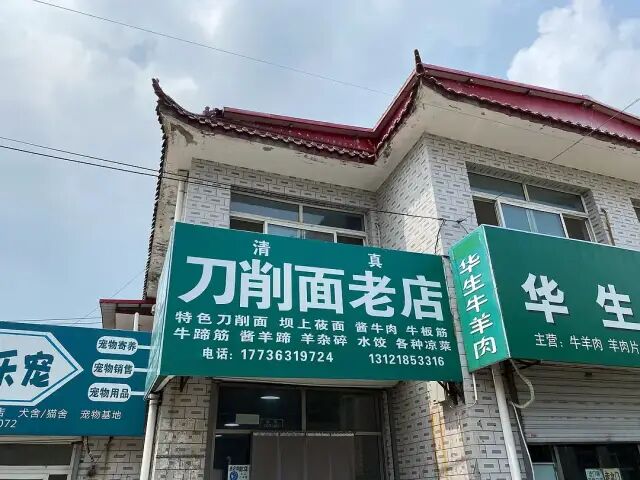
I had knife-cut noodles (daoxiaomian) for lunch at Yiyuan Restaurant in Xiguan City, which also serves corn noodles (helemian) and oat noodles (youmian) from the Bashang region. Because the area was a common route for Qing Dynasty armed escorts, the food in Xiguan City was influenced by the Jin dialect region and is very different from that of Hui Muslims in other parts of Beijing. Eating a bowl of knife-cut noodles from the Hui Muslims in Xiguan City is a way to taste the history of the Qing Dynasty's westward migration culture.
August 2, Liangtaoxuan at the Lama Temple.
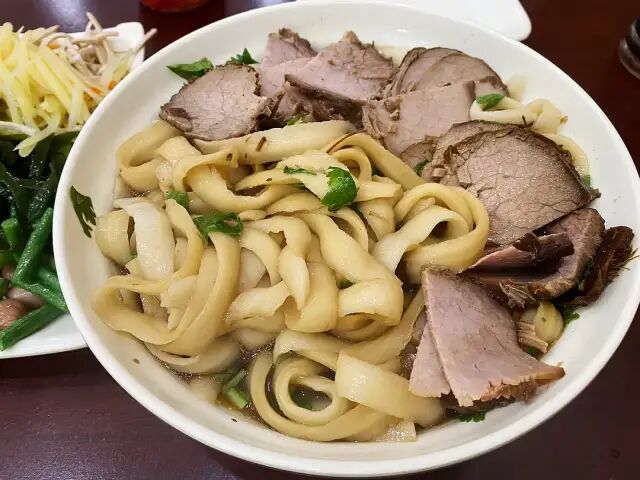
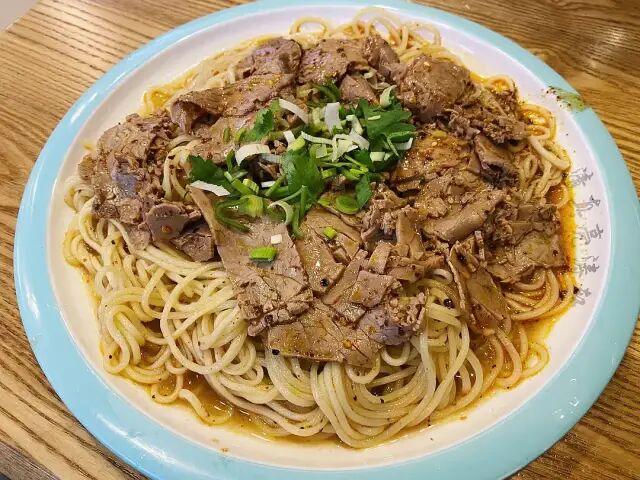
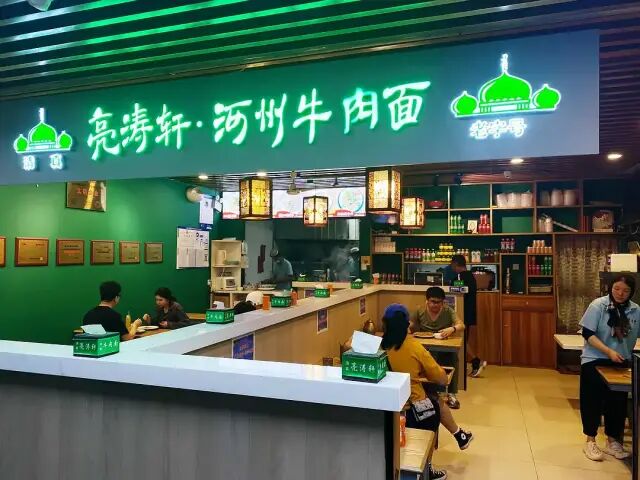
After work, I had Hezhou beef noodles at the Liangtaoxuan Yonghegong branch. I usually eat at the Shilihe branch, but this was my first time at the Yonghegong location. It is inside the basement food court of an office building, and the entrance is very hidden.
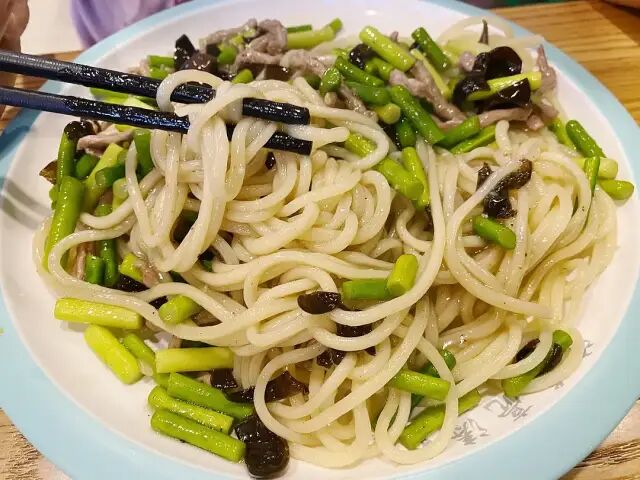
I ordered the classic dry-mixed beef noodles with extra meat, and Zainab ordered the garlic sprout and meat mixed noodles. One noodle type was thin and the other thick, but both were very chewy. In my opinion, these are the best hand-pulled noodles (lamian) in Beijing.
Besides the great noodles, the restaurant has a strong commitment to the faith. They often visit the Bo Hazhi gongbei in Changping for religious gatherings (gan'ermaili). The waiter was also very kind. When he saw that Zainab was pregnant, he took the initiative to ask the kitchen to make a lighter version of the mixed noodles for her.
August 4, Longxianghui on Dongsi North Street.
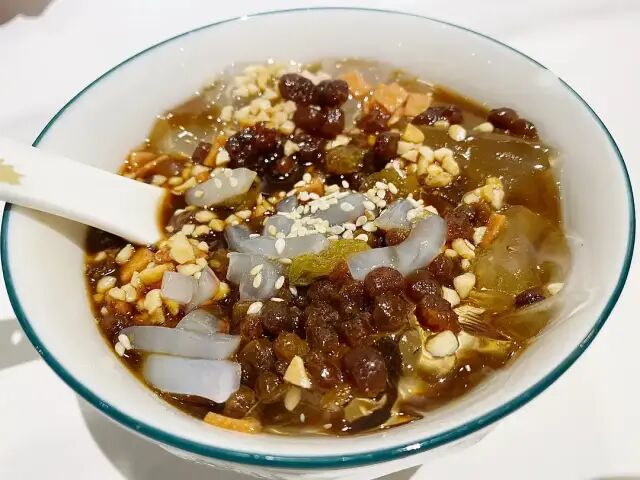
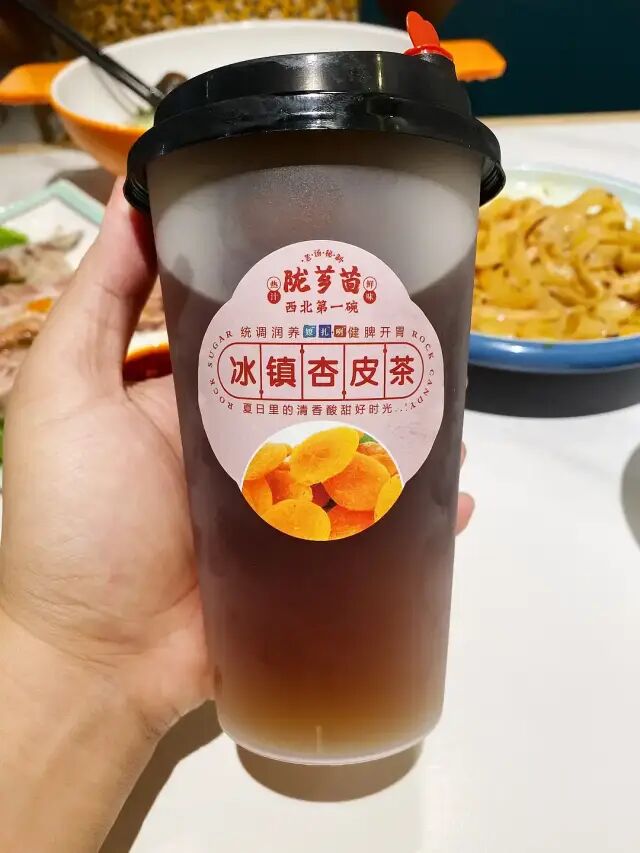
In the evening, I ate a mix of cold noodles and beef tendon noodles, hand-grabbed lamb (shouzhuayangrou), ice jelly (bingfen), and apricot peel tea (xingpicha) at Longxianghui on Dongsi North Street.
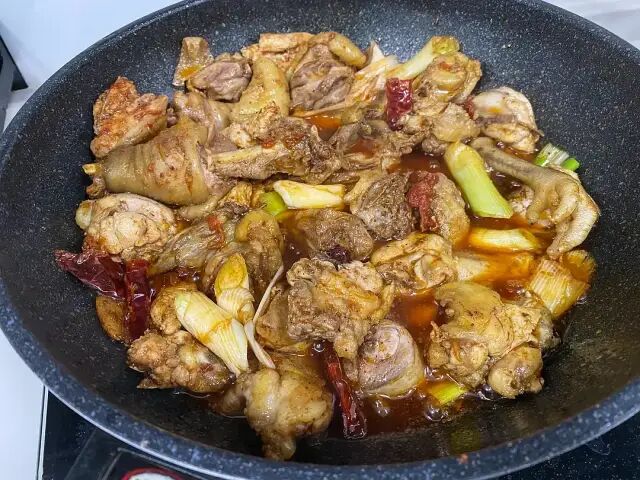
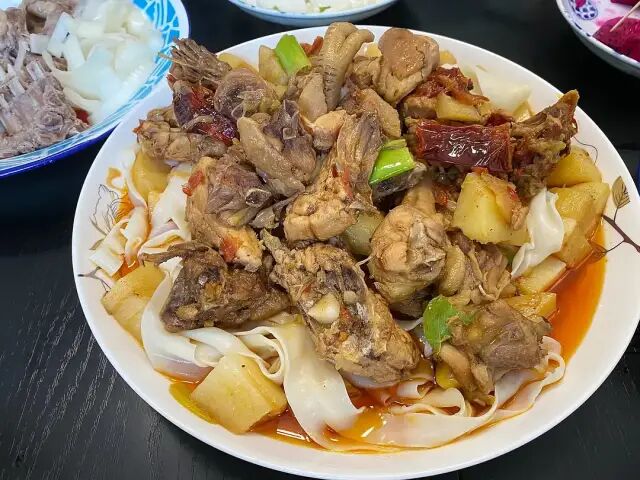
August 6, ate big plate chicken (dapanji) and hand-held lamb (shoubarou) at home.
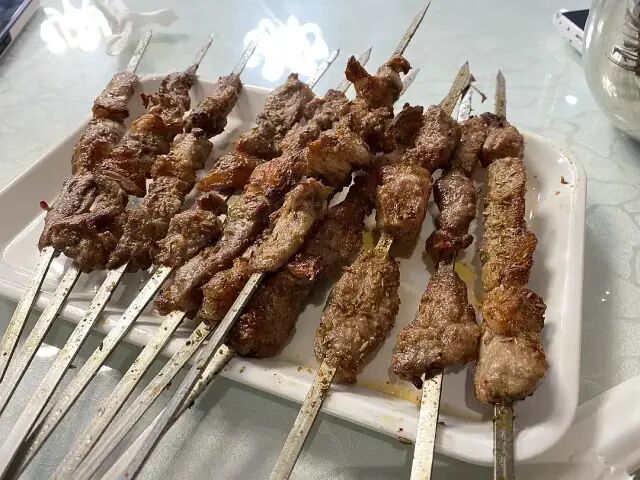
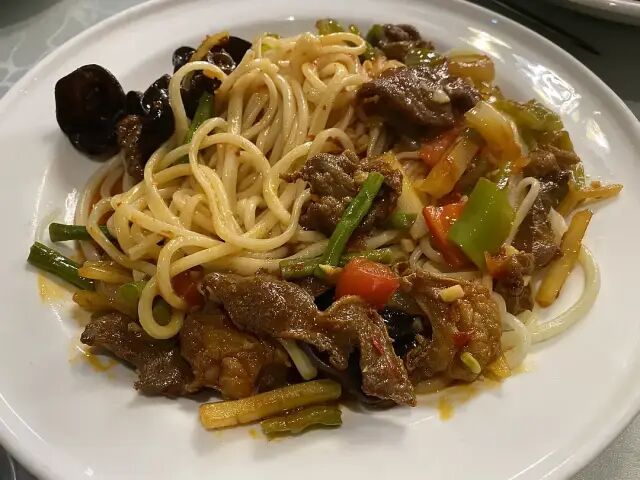
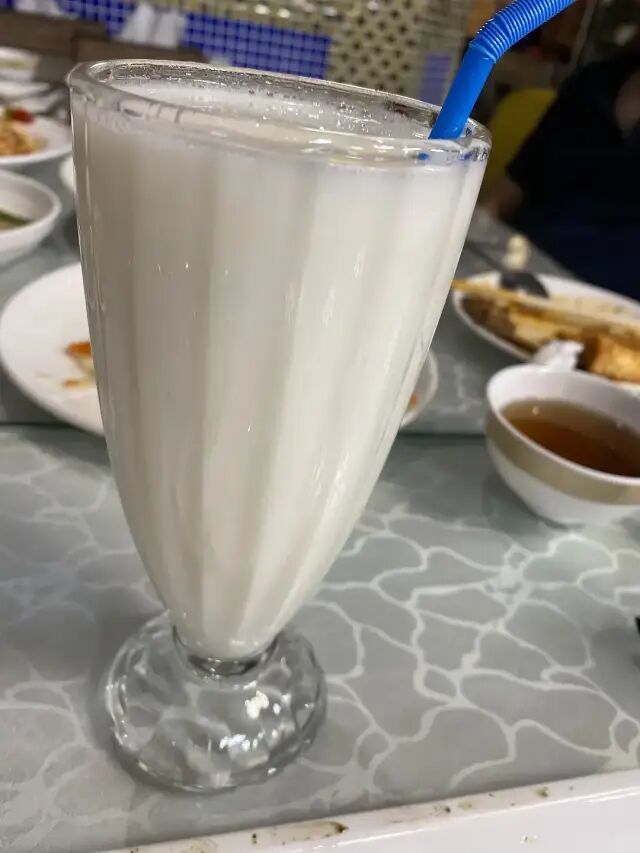
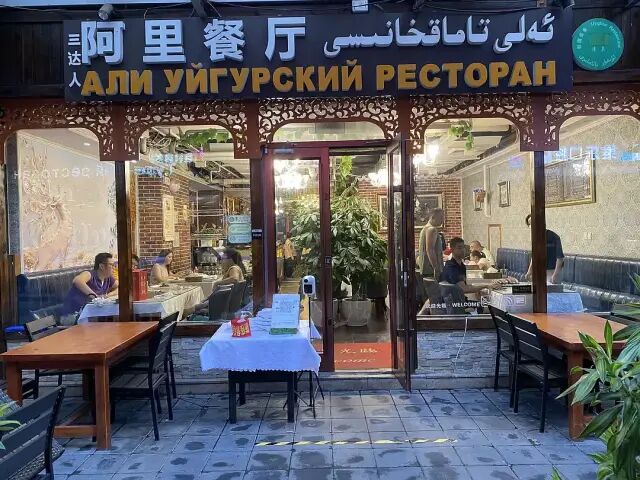
August 7, Ali at Ritan Shangjie.
Ali at Ritan Shangjie, serving rice pilaf (zhuafan), mixed noodles (banmian), barbecue (kaorou), and meat in naan bread (nangbaorou).
August 8, Xilaisun.
Ma Lianliang duck and stir-fried chicken cubes in bean sauce (jiangbao jiding) at Xilaisun.
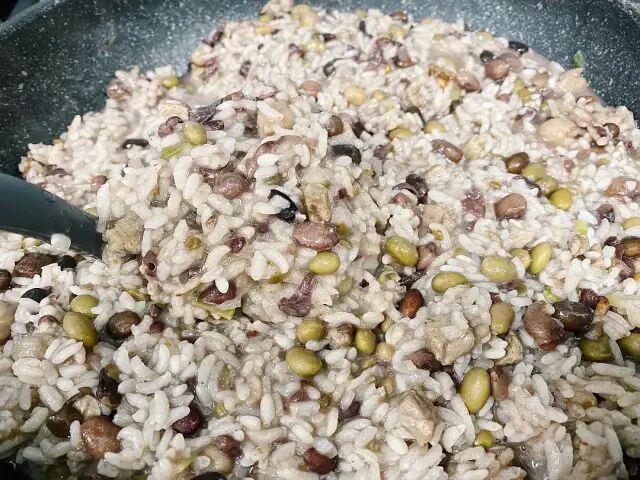
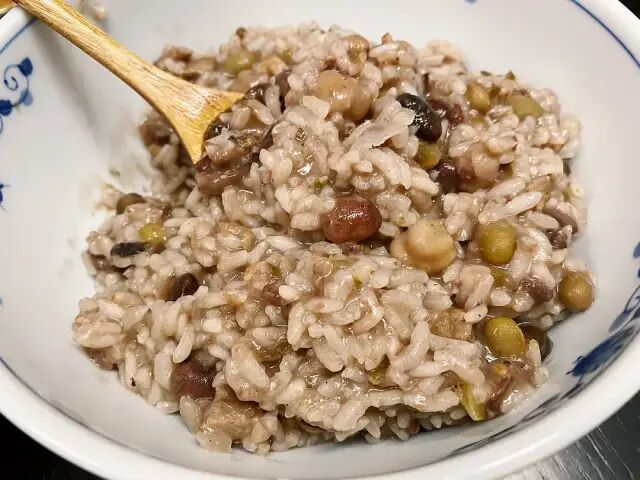
August 8, Ashura lamb and bean rice.
The 10th day of the first month in the Islamic calendar is the honorable Day of Ashura, the first important day after the Islamic New Year. Hui Muslims in China traditionally fast today and make Ashura porridge. After work today, Zainab and I made the Urumqi Hui Muslim version of Ashura lamb and bean rice together.
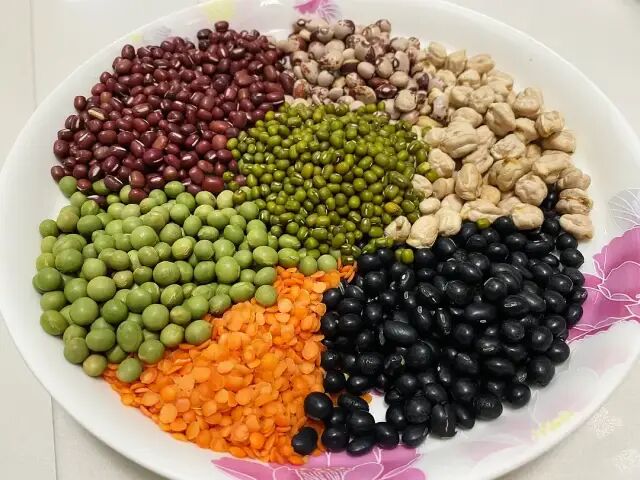
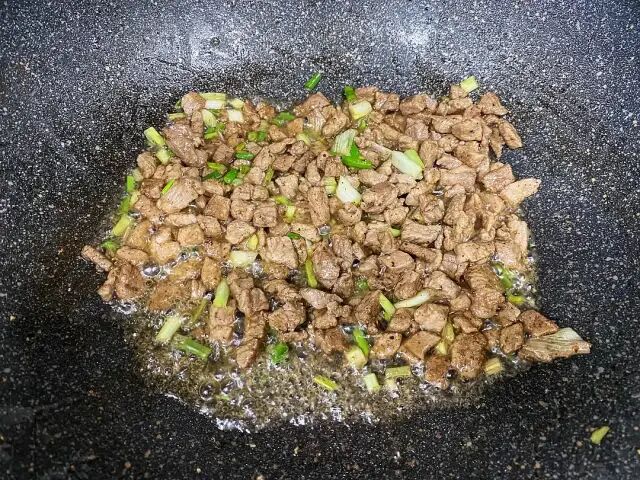
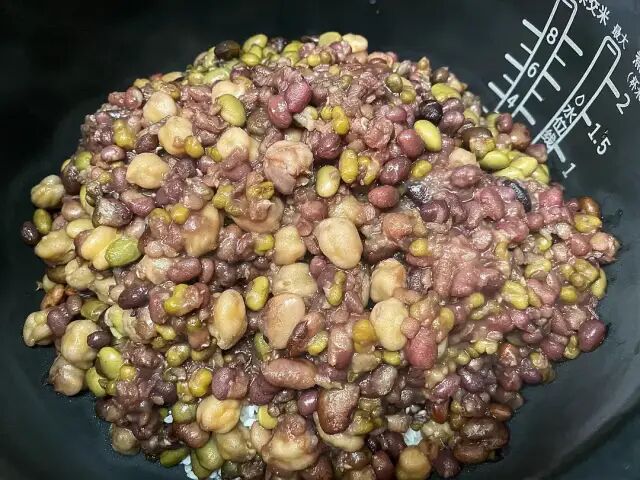
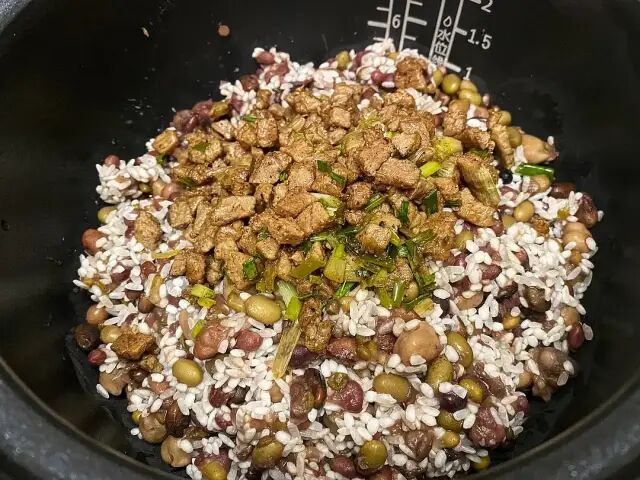
We prepared seven types of beans and cooked them in a pressure cooker. Then, we diced the Qurbani lamb, rendered the lamb fat, and stir-fried it with chopped green onions before adding salt and Sichuan peppercorn powder. Once the beans were cooked, we added rice and glutinous rice, followed by the stir-fried lamb, and simmered everything until the rice was done. The dish has the fresh scent of beans and the savory taste of lamb. I ate two big bowls and still wanted more.
We actually make Ashura bean porridge to commemorate the landing of Nuh's ship, also known as Noah's Ark. I am sharing the origin of Ashura bean porridge as told by Imam An from the Jingjue Mosque in Nanjing: On the Day of Ashura, the Prophet Nuh and his followers stepped off the ship and fasted that day to thank Allah. At that time, they had almost run out of food. One person took out a handful of wheat, another a handful of mung beans, and another a handful of fava beans. After the Prophet Nuh gathered seven types of seeds, he boiled them together so everyone could break their fast. By the will of Allah and the blessing (mu'ezhize) of the Prophet. This small amount of food was enough to feed everyone who got off the boat. This was the first meal cooked on the ground after the floodwaters receded, so people consider it a blessing from the Prophet Nuh. The Prophet Nuh is known as the second ancestor of humanity.
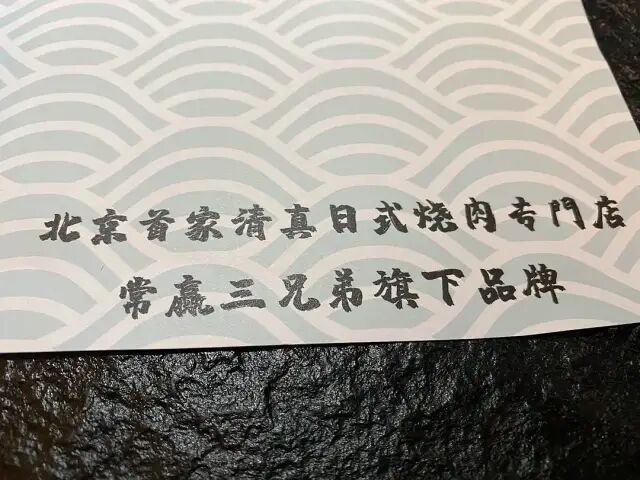
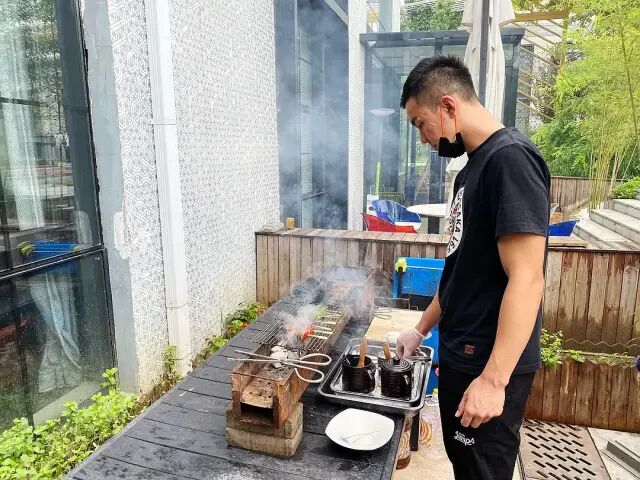
August 9, Changying Chidao Barbecue.
I ate a teriyaki chicken set meal and yakitori skewers at Changying Chidao Barbecue, and ordered wagyu beef, beef tongue, and okra. view all
Summary: Beijing Halal Food Diary: Summer 2022 Muslim Food and Mosques is presented here as a firsthand travel account in clear English, beginning with this scene: I went to the Indian restaurant Mughal Darbar in the basement food court of Hongqiao Market. The account keeps its focus on Beijing Halal Food, Summer Diary, Muslim Food while preserving the names, places, food, and historical details from the Chinese source.
July 12, Indian restaurant Mughal Darbar.
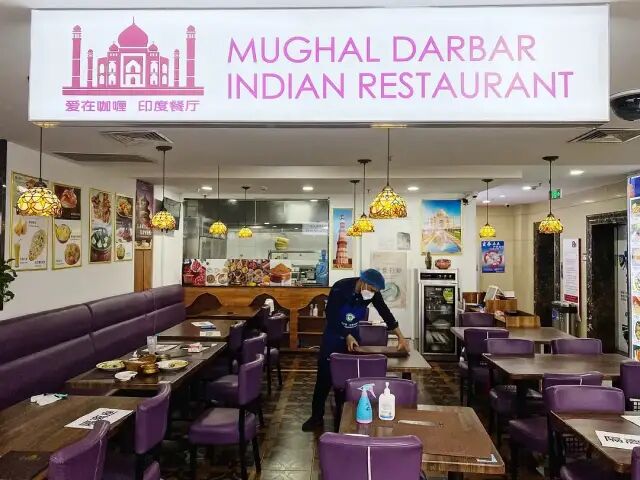
I went to the Indian restaurant Mughal Darbar in the basement food court of Hongqiao Market. The name translates directly to 'Mughal Court'. The Chinese name is 'Love in Curry' (Ai Zai Gali), which feels a lot less impressive, haha. The owner is a Muslim from Delhi, and the guy at the front desk is also from Delhi. Even though he is not Muslim, he says 'salam' and 'bismillah' very fluently. Many of their dishes really do come from the Mughal Empire.
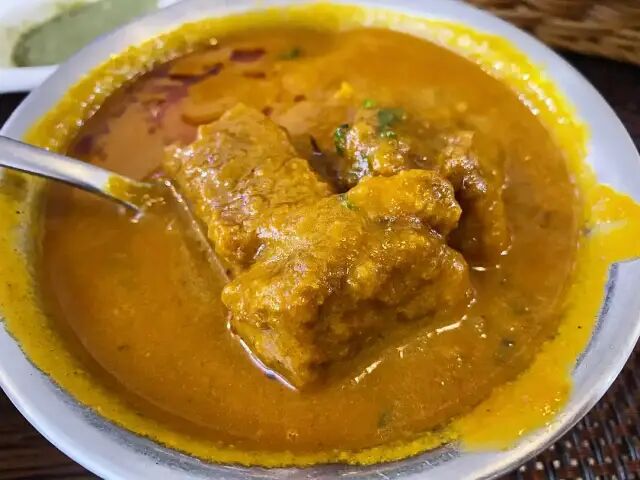
We ate spinach cheese curry (Palak Paneer), lamb curry (Rogan Josh), vegetable fried dumplings (Samosa), spiced yogurt drink (Masala Chach), chicken rice (Biryani), and butter flatbread (Roti).
Rogan Josh is a specialty curry from Kashmir. The Mughals brought it there when they went to Kashmir to escape the summer heat during the Mughal Empire. It mainly uses alkanet root (alkanet) and Kashmiri chili as seasonings. 'Rogan' comes from the Persian word for 'clarified butter' (roughan), and 'josh' is the Persian word for 'stew'.
Palak paneer is a North Indian vegetarian curry made with Indian white soft cheese (paneer, which comes from the Persian word for cheese, panir) and spinach puree. It is a classic home-cooked Indian dish.
The samosa curry puff comes from the Persian word 'sanbosag'. It is a classic street snack brought to South Asia by Central Asian merchants in the 13th and 14th centuries. This shop's samosas are very large and filled with mashed potatoes.
Biryani also comes from a Persian word. Legend says it was created by Mughal palace chefs who combined spicy Indian rice with Persian pilaf.
Traditional buttermilk (chach) is made by mixing yogurt and water with a tool called a 'madhani', then seasoning it with spices like masala. Chach is similar to the common Indian yogurt drink (lassi), but chach is thinner and uses spices instead of sugar or fruit jam. Chach is very popular in India's desert regions and the hot areas of South India. People often choose a glass of chach to rehydrate after being out in the sun.
July 14, Yongshun Fried Chicken at the Yiguzhai franchise on Daliushu Road.
Yongshun Fried Chicken at the Yiguzhai franchise on Daliushu Road. You can eat a large chicken leg in the shop, and it comes with a free drink.
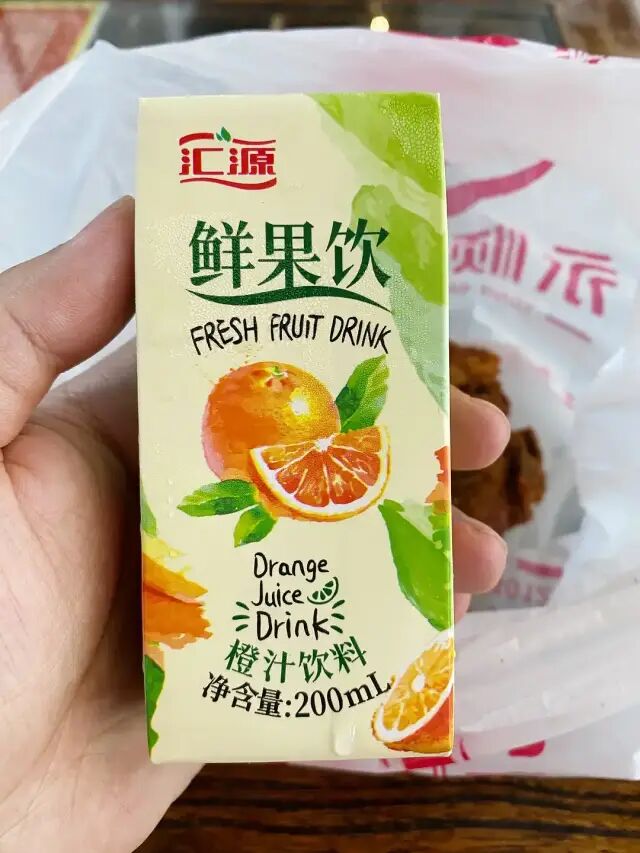
July 16, Longxianghui on Dongsi North Street.
I love the stewed flatbread (hubo) at Longxianghui, even though eating it in the summer makes me sweat all over.
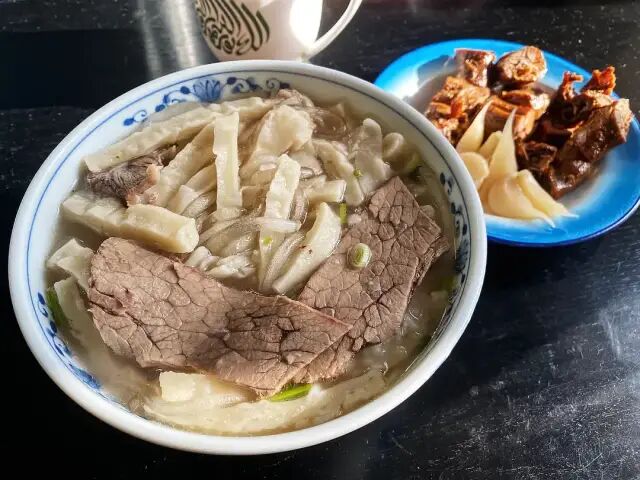
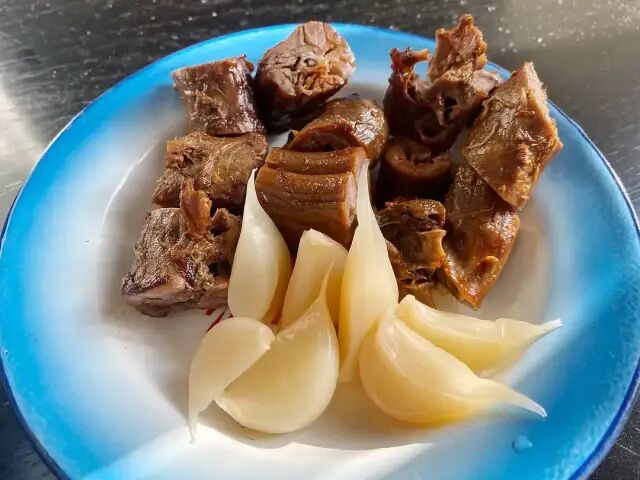
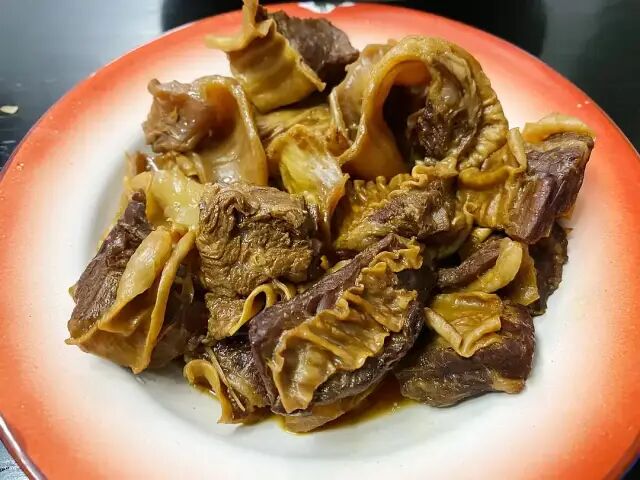
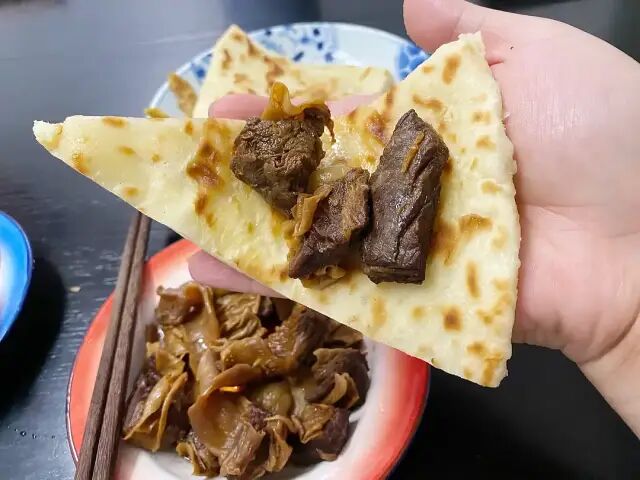
July 16, stewed meat with flatbread.
Listening to storytelling made me hungry, so today I stewed beef brisket and bought a griddle-baked flatbread (laobing) from Niujie to make stewed meat with flatbread, a classic dish from the Water Margin!
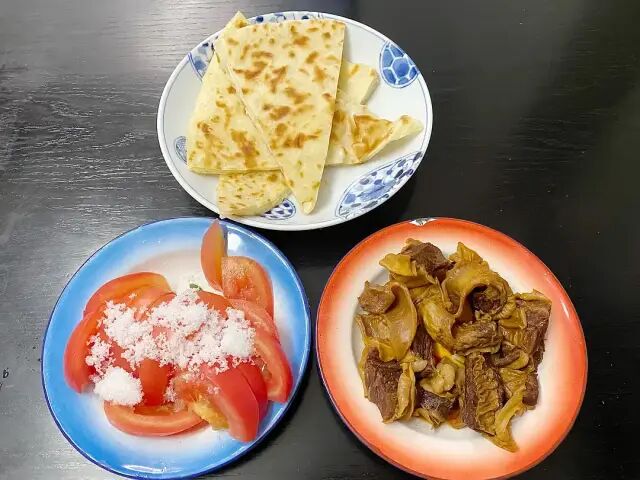
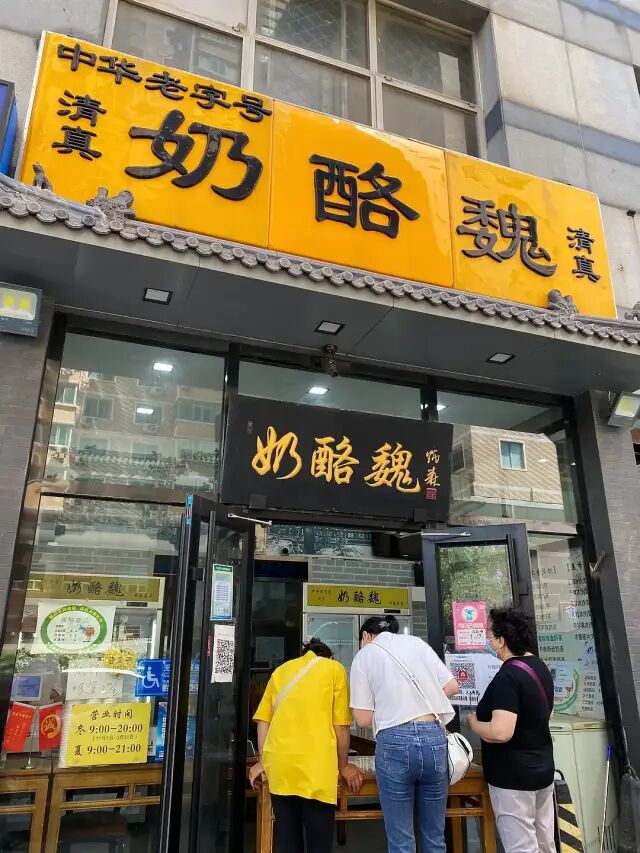
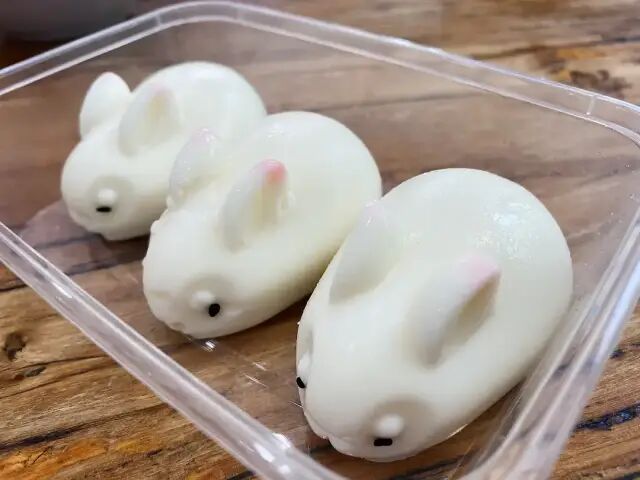
July 17, Cheese Wei in Niujie.
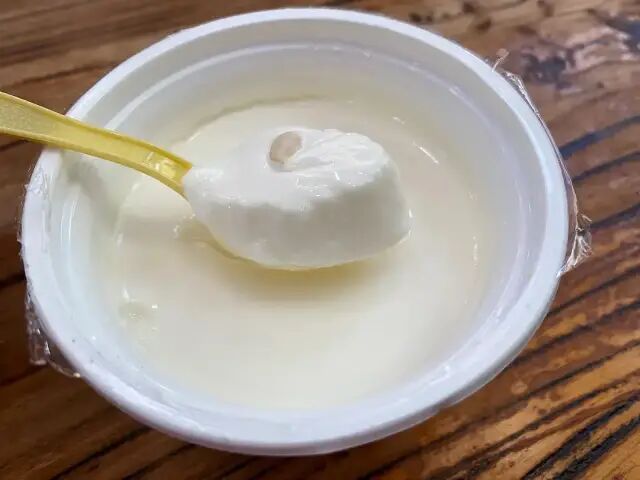
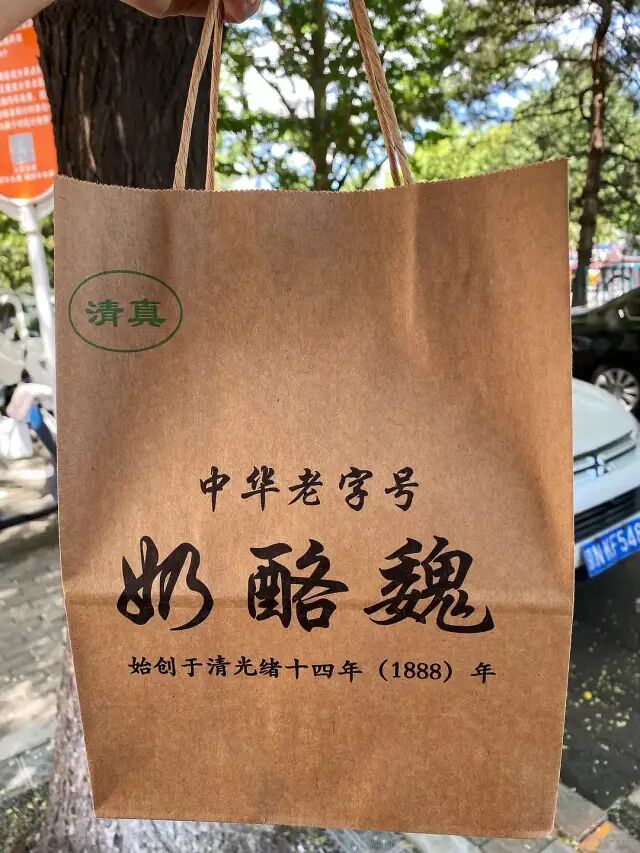
The original flavor cheese and the yogurt jade rabbit from Cheese Wei in Niujie.
July 16, Xilaishun.
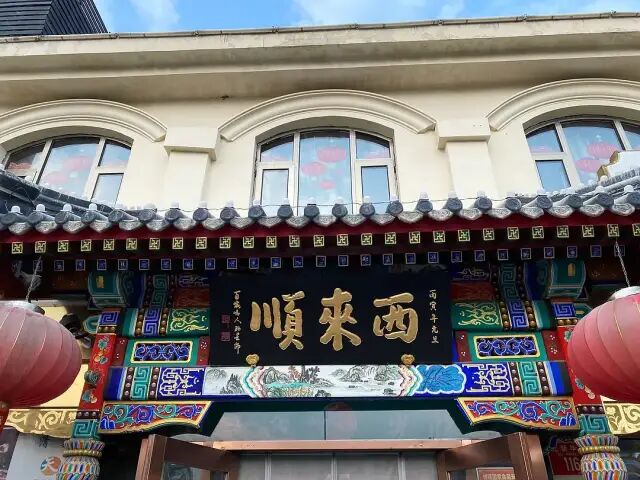
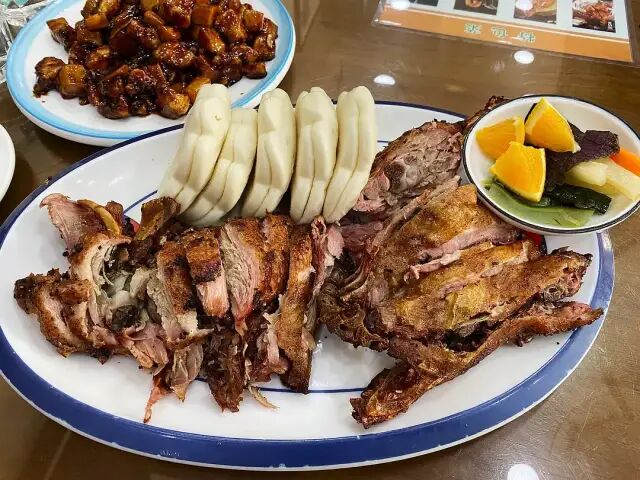
After listening to storytelling, I went to Xilaishun to eat and ordered my favorites: stir-fried chicken cubes in bean sauce (jiangbao jiding), Ma Lianliang duck, deep-fried shrimp, and mixed wild mountain vegetables. Every time I go to their place, I order the stir-fried chicken with soybean paste (jiangbao jiding) and two bowls of rice. I never get tired of it! I have been eating Ma Lianliang duck for many years. For a few years, their duck was a bit fatty, but in the last two years, they have gone back to a leaner style. The meat is fried until tender and the skin is crispy. You can even eat the bones. For the past two years, they have served the duck with flatbread (bing). It tastes even better when you eat it as a sandwich.
I ordered the deep-fried shrimp (zha peng xia) for Zainab. It was my first time trying their version. The batter felt a bit hard, but the shrimp inside was very tender.
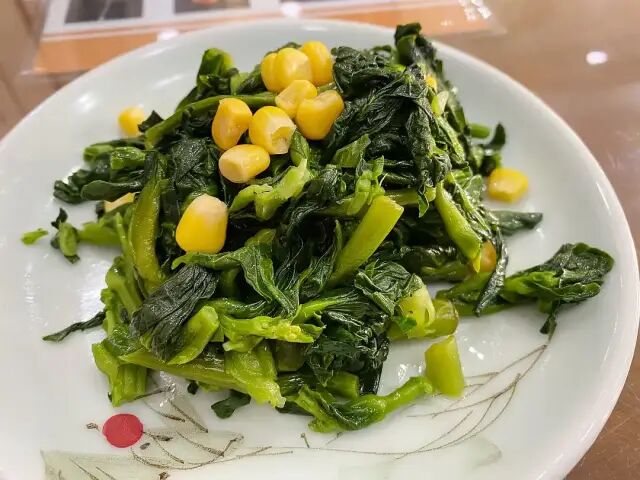
July 17, Jia San Soup Dumplings (Jia San guantangbao).
I had lunch at Jia San on Baiyun Road and enjoyed their soup dumplings (guantangbao). It was delicious. I also had the stir-fried lamb (yangrou xiaochao) and the mixed vegetable stew (huicai). Their stir-fried lamb was a bit too salty compared to the local version in Xi'an. Next time, I will just stick to the regular soaked bread (paomo).
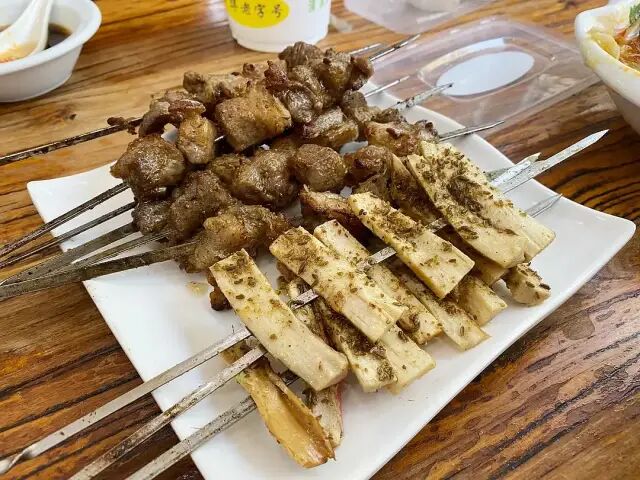
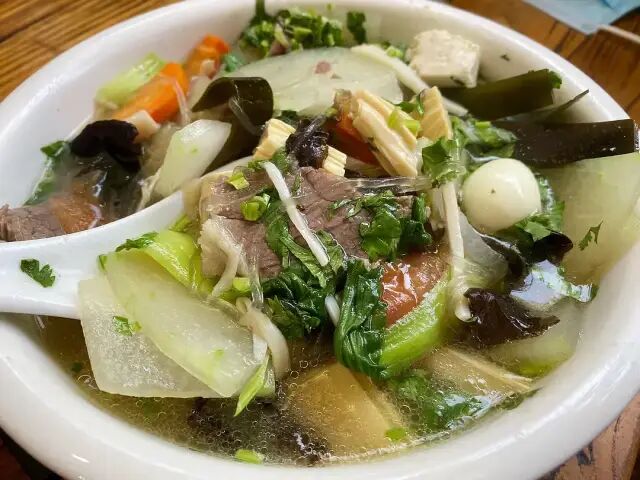
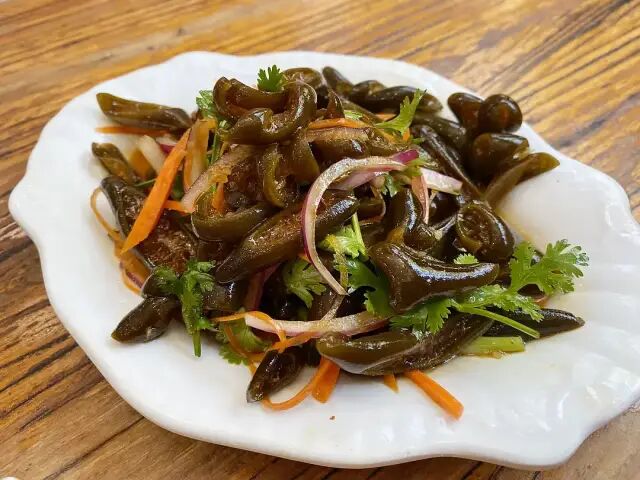
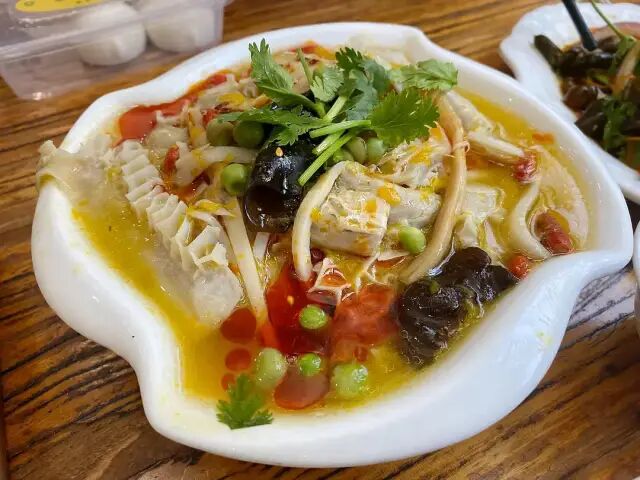
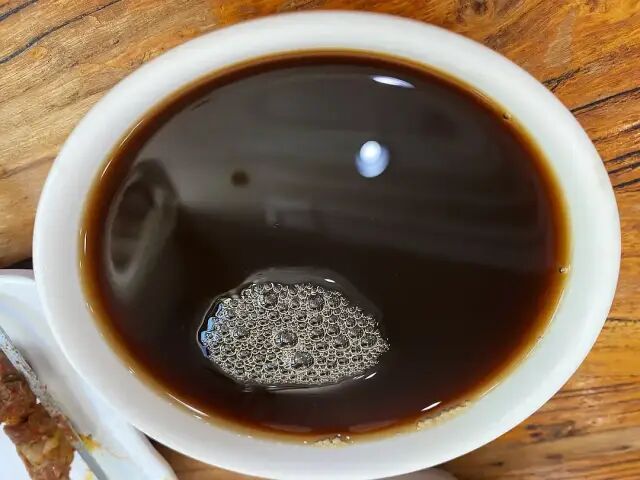
Jia San sells hot chili oil (youpo lazi), chili powder (lamianzi), and peanuts. It feels like I am pretending to be back in the Muslim Quarter (fangshang).
July 19, Qurbani sheep
We made the intention for our Qurbani sheep, and Zaynab's uncle had it slaughtered for us in the Nanshan mountains of Urumqi. It arrived in Beijing last Saturday. Zaynab's uncle bought these Kazakh fat-tailed sheep from herders in Yili and Tacheng ahead of time.
On Saturday and Sunday, we gave lamb to a few friends (dosti) and took a trip to Niujie. Sharing is an important part of Qurbani, and it brings many rewards.
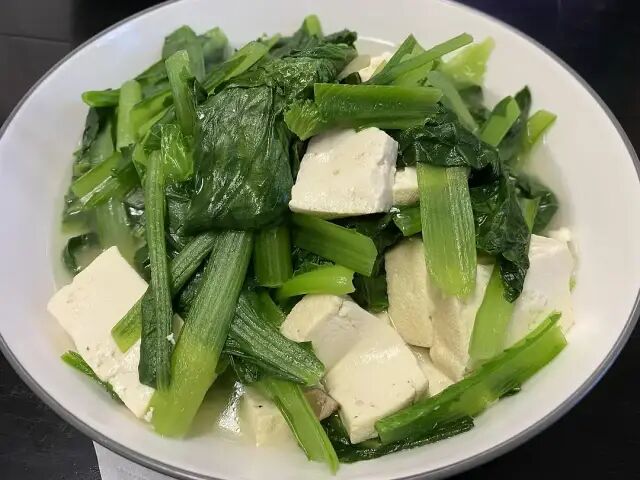
Today I stewed the Qurbani lamb. It is so fragrant when boiled plain; you do not need any seasonings, just a little salt. After stewing the lamb, I added baby bok choy and tofu to the broth, so we had both meat and vegetables.
July 23, Ma's Handmade Dumplings
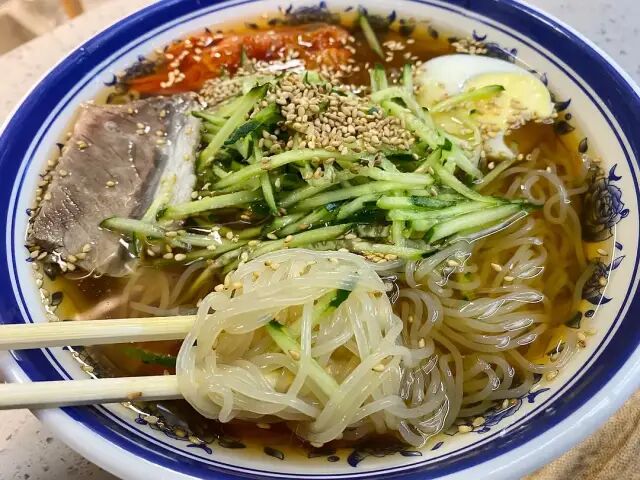
At noon, we ate Northeast-style cold noodles and fresh hand-cut noodles with soybean paste (zhajiangmian) at Ma's Handmade Dumplings in the basement supermarket of the New World mall outside Chongwenmen. The shop is run by Hui Muslims from Fushun, Liaoning. Last time I visited, they didn't offer dine-in, but now you can eat right there. They have also added various braised meats and pickles, like shredded eggplant and pickled cucumbers.
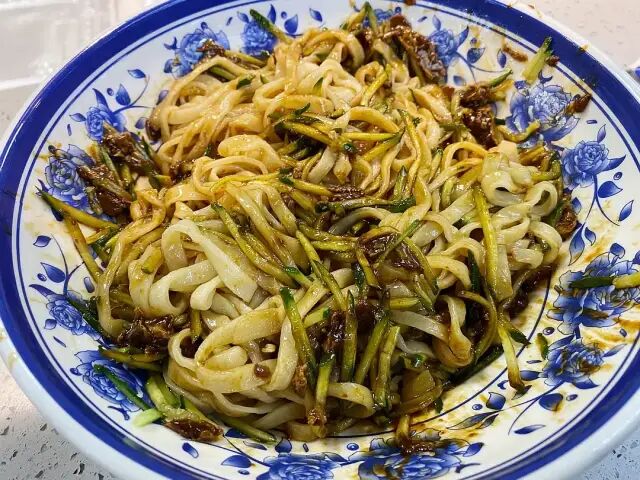
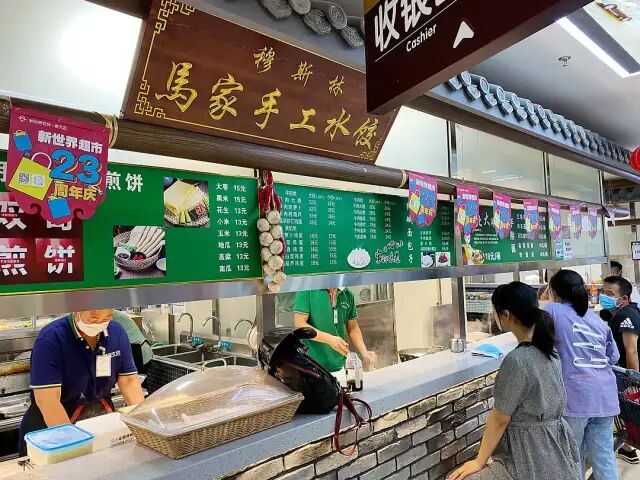
July 23: The newly opened Bangdan'er Meatball Soup inside Xinjiang Mansion.
The new Bangdan'er Meatball Soup is inside Xinjiang Mansion, right as you enter the east gate. It is a bit tucked away, so not many people have been there yet. Their specialty is meatball soup served with fried dough (youxiang), which is very authentic. The Changji flavor is excellent. You cannot find these meatballs in typical Beijing restaurants, though they do put a bit too much vermicelli in it. My wife broke the fried dough (youxiang) for me; how happy I am.
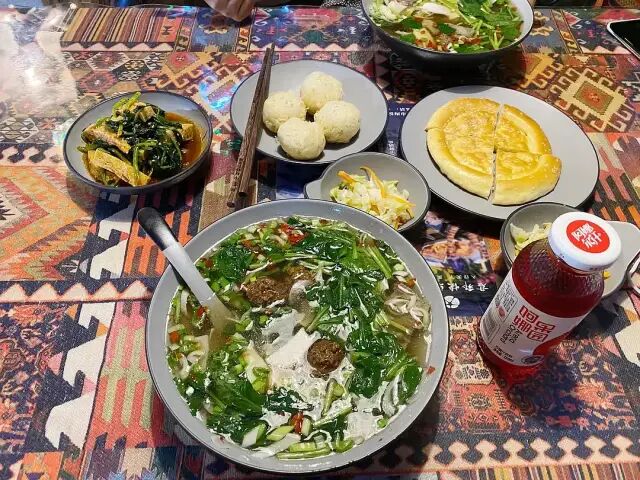
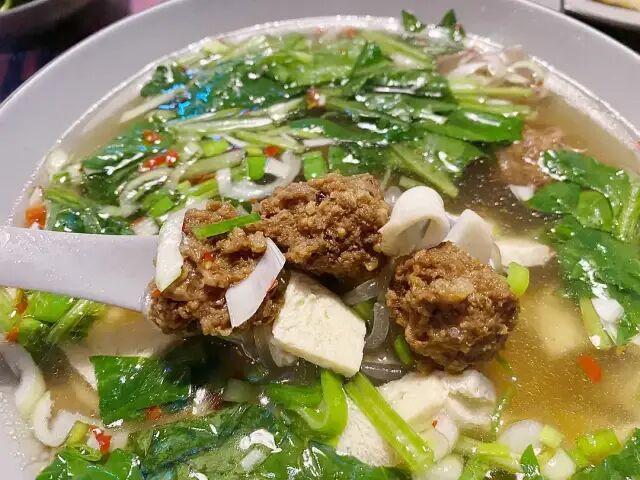
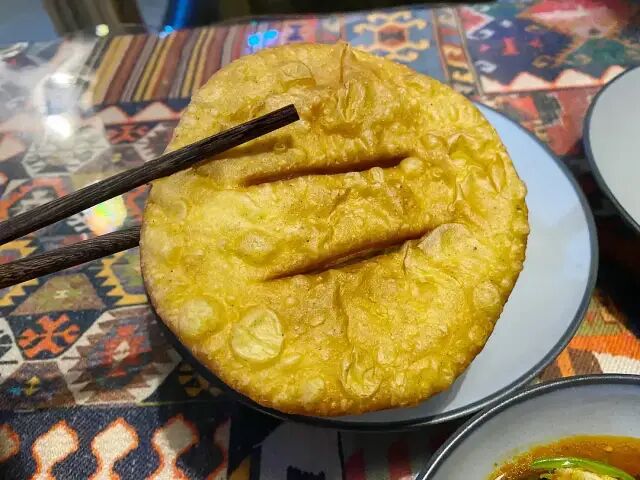
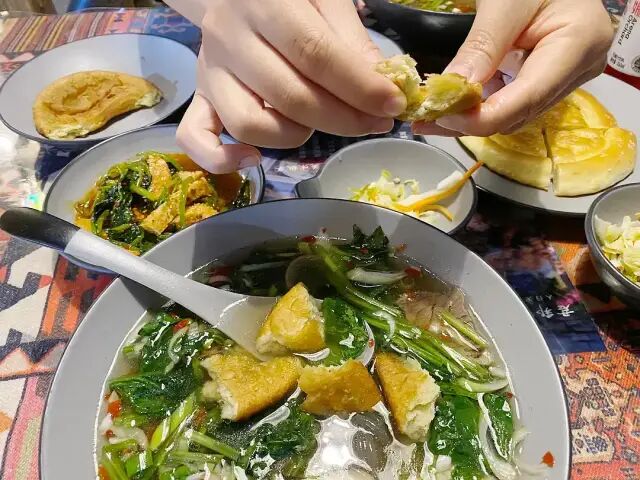
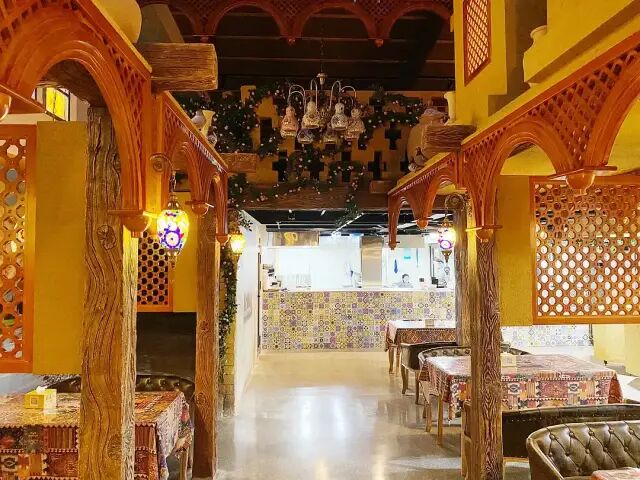
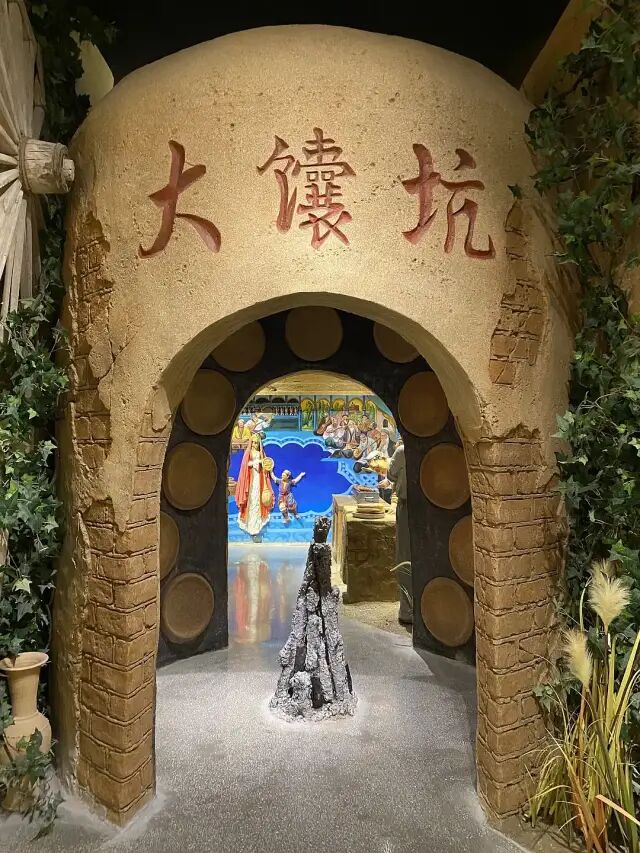
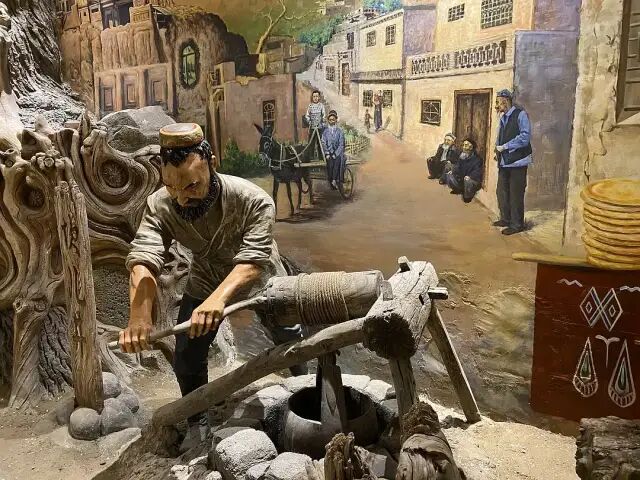
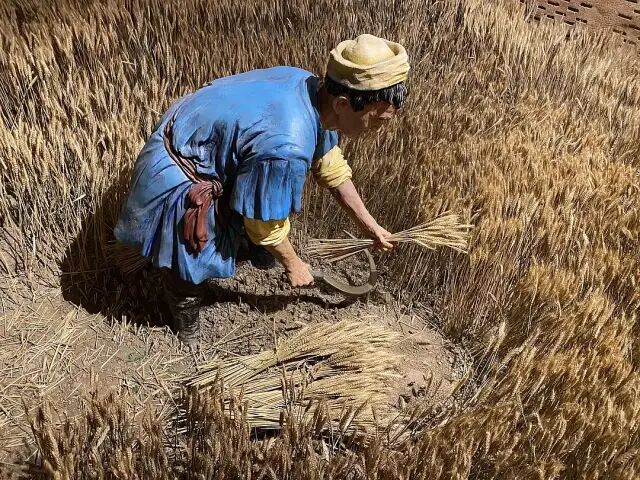
Inside Bangdan'er Meatball Soup, there is a naan culture exhibition hall, and there is a Xinjiang specialty shop right across from it.
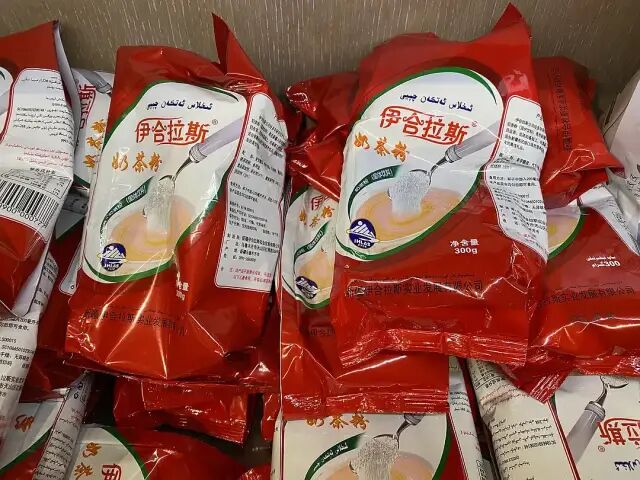
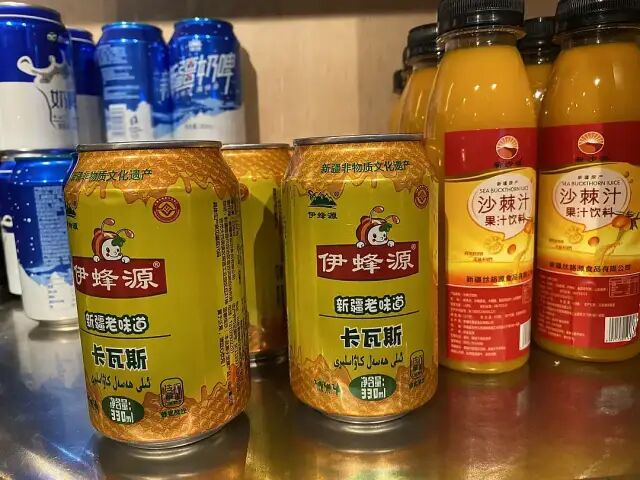
July 24: Eating breakfast at home.
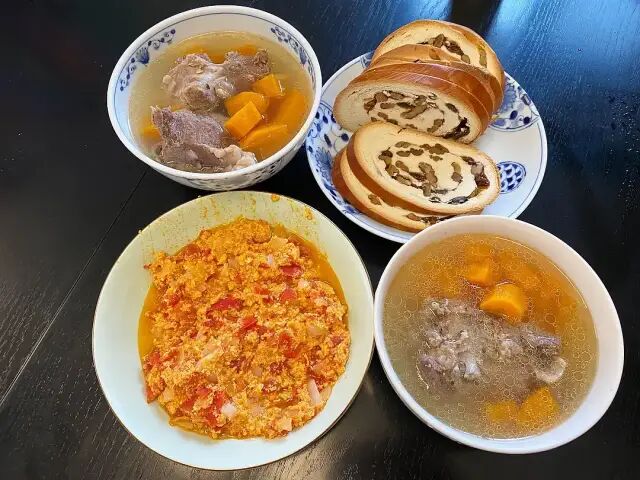
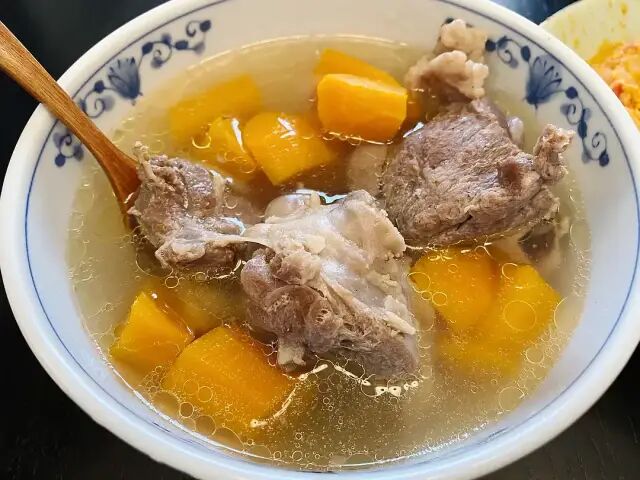
July 26: Syrian baklava.
I once took photos at a Syrian pastry shop in Yiwu and posted them on Douban, and many friends went to buy their pastries after seeing them. I later found out the owner, Omar, had been asking around about me and recently had a friend send me some baklava. I sincerely wish their business all the best!
July 30, Yiyuan Restaurant in Xiguan City.
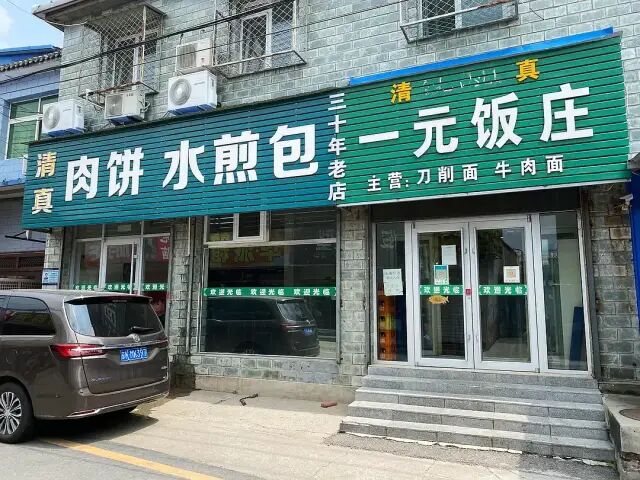
I had knife-cut noodles (daoxiaomian) for lunch at Yiyuan Restaurant in Xiguan City, which also serves corn noodles (helemian) and oat noodles (youmian) from the Bashang region. Because the area was a common route for Qing Dynasty armed escorts, the food in Xiguan City was influenced by the Jin dialect region and is very different from that of Hui Muslims in other parts of Beijing. Eating a bowl of knife-cut noodles from the Hui Muslims in Xiguan City is a way to taste the history of the Qing Dynasty's westward migration culture.
August 2, Liangtaoxuan at the Lama Temple.
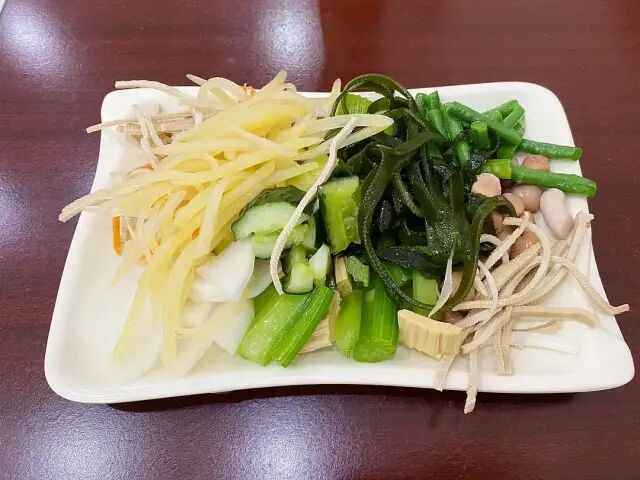
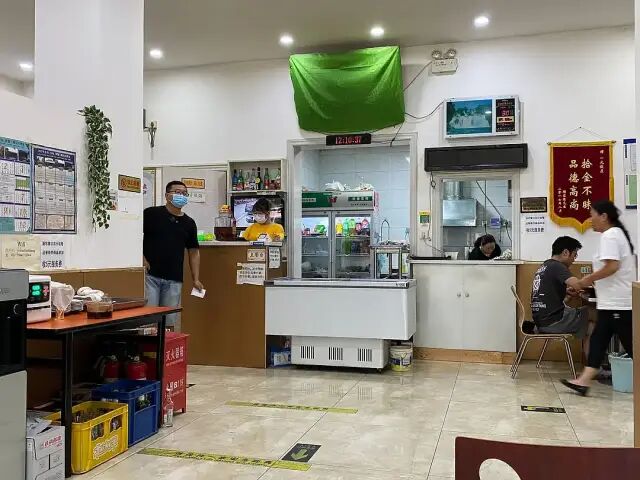
After work, I had Hezhou beef noodles at the Liangtaoxuan Yonghegong branch. I usually eat at the Shilihe branch, but this was my first time at the Yonghegong location. It is inside the basement food court of an office building, and the entrance is very hidden.
I ordered the classic dry-mixed beef noodles with extra meat, and Zainab ordered the garlic sprout and meat mixed noodles. One noodle type was thin and the other thick, but both were very chewy. In my opinion, these are the best hand-pulled noodles (lamian) in Beijing.
Besides the great noodles, the restaurant has a strong commitment to the faith. They often visit the Bo Hazhi gongbei in Changping for religious gatherings (gan'ermaili). The waiter was also very kind. When he saw that Zainab was pregnant, he took the initiative to ask the kitchen to make a lighter version of the mixed noodles for her.
August 4, Longxianghui on Dongsi North Street.
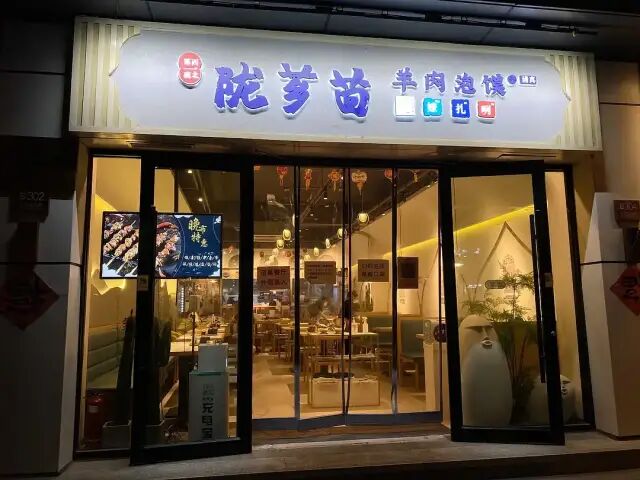
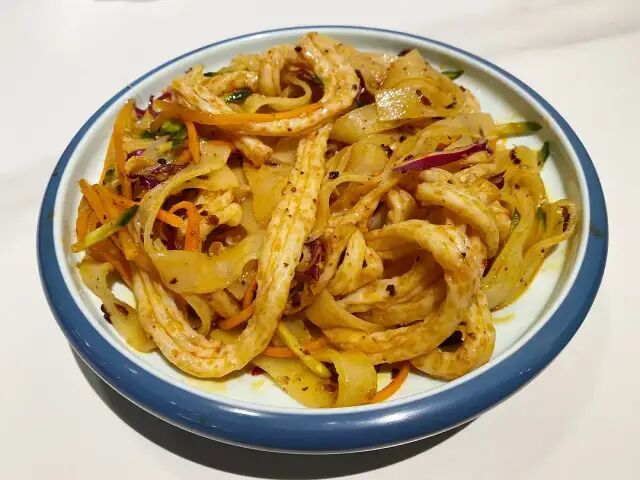
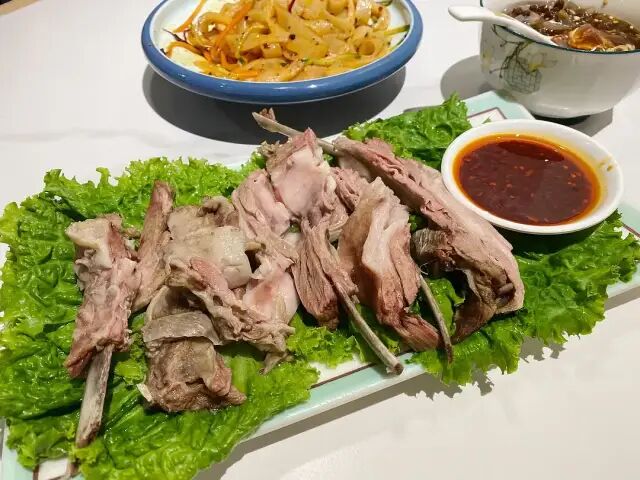
In the evening, I ate a mix of cold noodles and beef tendon noodles, hand-grabbed lamb (shouzhuayangrou), ice jelly (bingfen), and apricot peel tea (xingpicha) at Longxianghui on Dongsi North Street.
August 6, ate big plate chicken (dapanji) and hand-held lamb (shoubarou) at home.
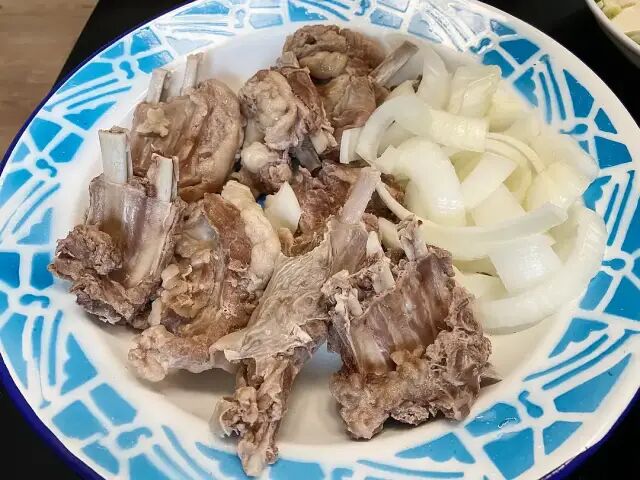
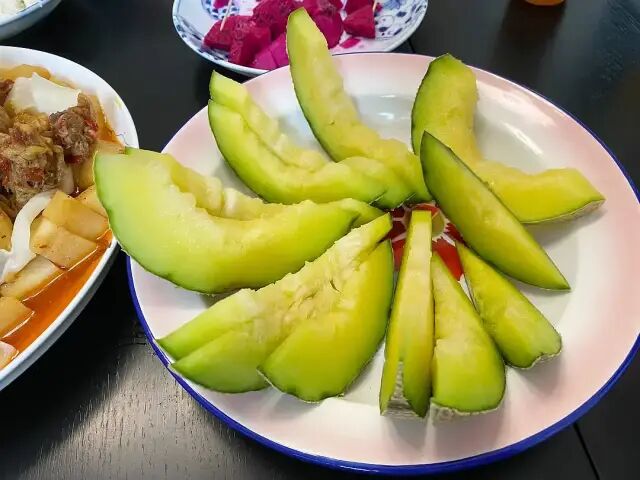
August 7, Ali at Ritan Shangjie.
Ali at Ritan Shangjie, serving rice pilaf (zhuafan), mixed noodles (banmian), barbecue (kaorou), and meat in naan bread (nangbaorou).
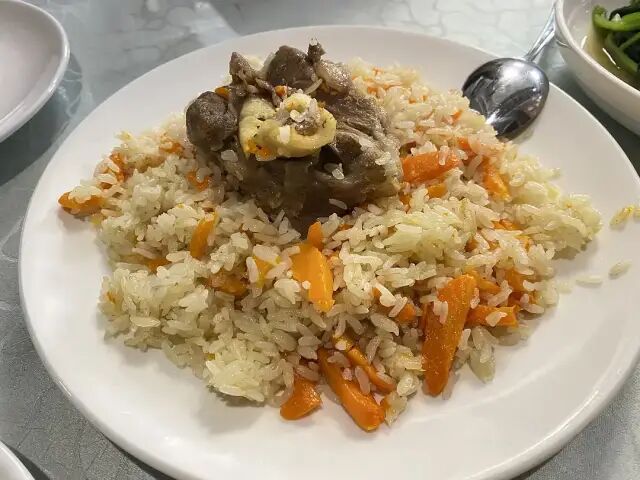
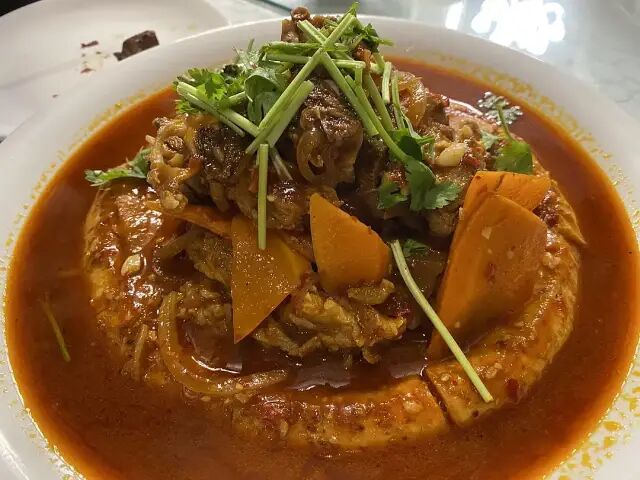
August 8, Xilaisun.
Ma Lianliang duck and stir-fried chicken cubes in bean sauce (jiangbao jiding) at Xilaisun.
August 8, Ashura lamb and bean rice.
The 10th day of the first month in the Islamic calendar is the honorable Day of Ashura, the first important day after the Islamic New Year. Hui Muslims in China traditionally fast today and make Ashura porridge. After work today, Zainab and I made the Urumqi Hui Muslim version of Ashura lamb and bean rice together.
We prepared seven types of beans and cooked them in a pressure cooker. Then, we diced the Qurbani lamb, rendered the lamb fat, and stir-fried it with chopped green onions before adding salt and Sichuan peppercorn powder. Once the beans were cooked, we added rice and glutinous rice, followed by the stir-fried lamb, and simmered everything until the rice was done. The dish has the fresh scent of beans and the savory taste of lamb. I ate two big bowls and still wanted more.
We actually make Ashura bean porridge to commemorate the landing of Nuh's ship, also known as Noah's Ark. I am sharing the origin of Ashura bean porridge as told by Imam An from the Jingjue Mosque in Nanjing: On the Day of Ashura, the Prophet Nuh and his followers stepped off the ship and fasted that day to thank Allah. At that time, they had almost run out of food. One person took out a handful of wheat, another a handful of mung beans, and another a handful of fava beans. After the Prophet Nuh gathered seven types of seeds, he boiled them together so everyone could break their fast. By the will of Allah and the blessing (mu'ezhize) of the Prophet. This small amount of food was enough to feed everyone who got off the boat. This was the first meal cooked on the ground after the floodwaters receded, so people consider it a blessing from the Prophet Nuh. The Prophet Nuh is known as the second ancestor of humanity.
August 9, Changying Chidao Barbecue.
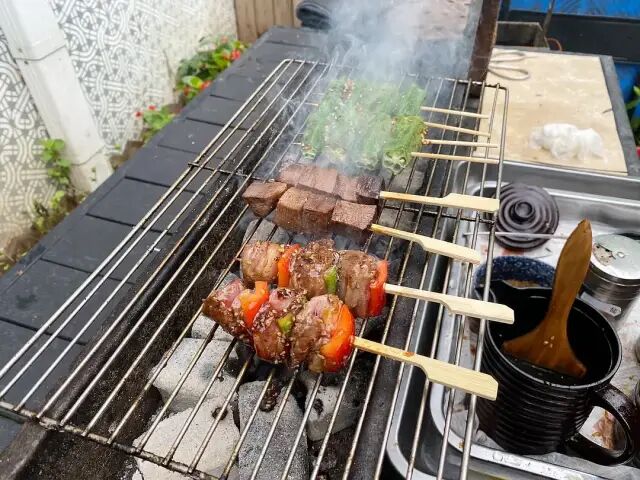
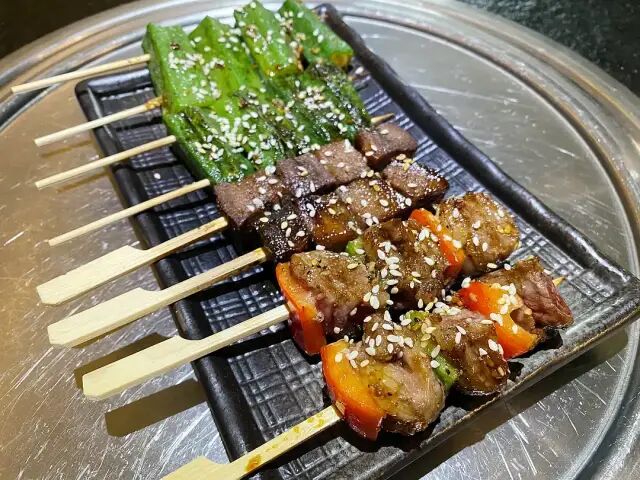
I ate a teriyaki chicken set meal and yakitori skewers at Changying Chidao Barbecue, and ordered wagyu beef, beef tongue, and okra.
Beijing Halal Food Diary: Summer 2022 Muslim Food and Mosques (Part 3)
Articles • ali2007fr posted the article • 0 comments • 140 views • 2026-05-18 08:38
Summary: Beijing Halal Food Diary: Summer 2022 Muslim Food and Mosques is presented here as a firsthand travel account in clear English, beginning with this scene: Lamb for Eid al-Adha (Qurban), bean rice for Ashura, and fried dough (youxiang) for religious gatherings (niansuoer). The account keeps its focus on Beijing Halal Food, Summer Diary, Muslim Food while preserving the names, places, food, and historical details from the Chinese source.
August 9, Faith and Food
Lamb for Eid al-Adha (Qurban), bean rice for Ashura, and fried dough (youxiang) for religious gatherings (niansuoer).
August 10
It was my first day staying at home. I got a call from the community office in the morning and headed home from work. I had some time at noon to shop, so I rushed to the Niuniu market in Changying to buy chicken, meat, and fillings to prepare for big plate chicken (dapanji), meatball soup (wanzi tang), and hand-pulled noodles (latiaozi).
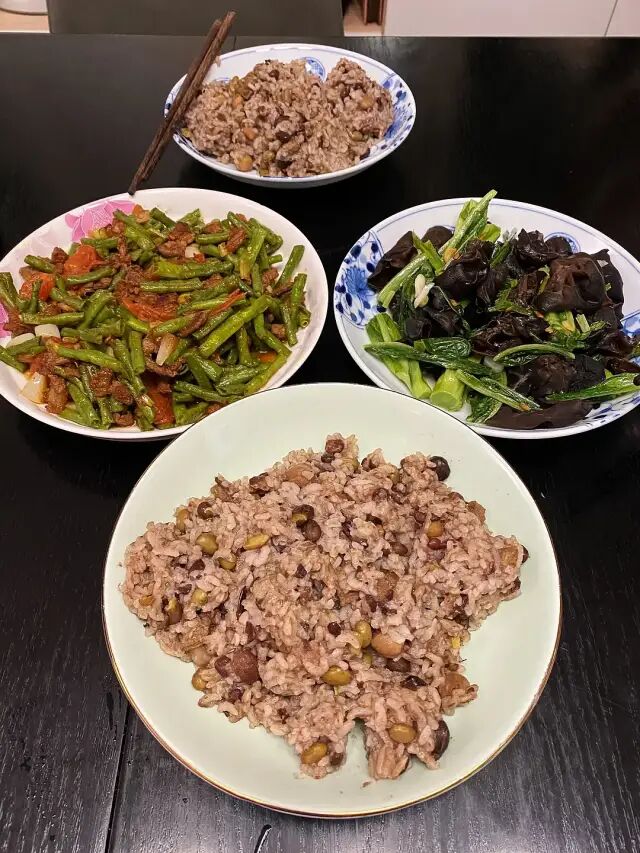
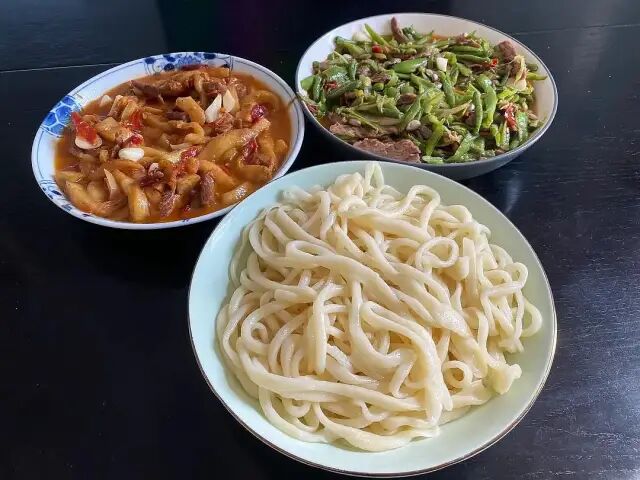
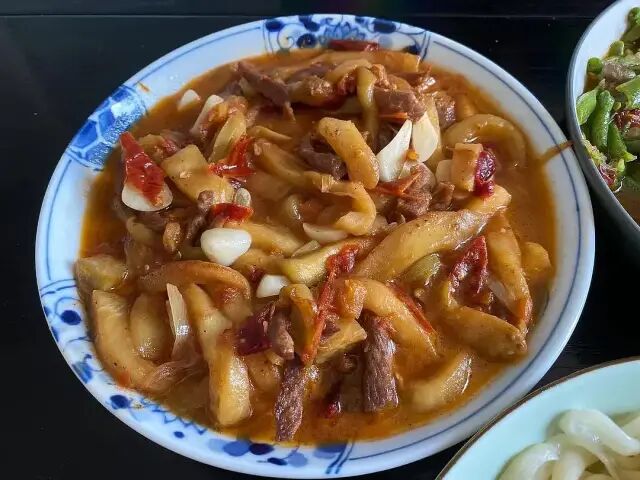
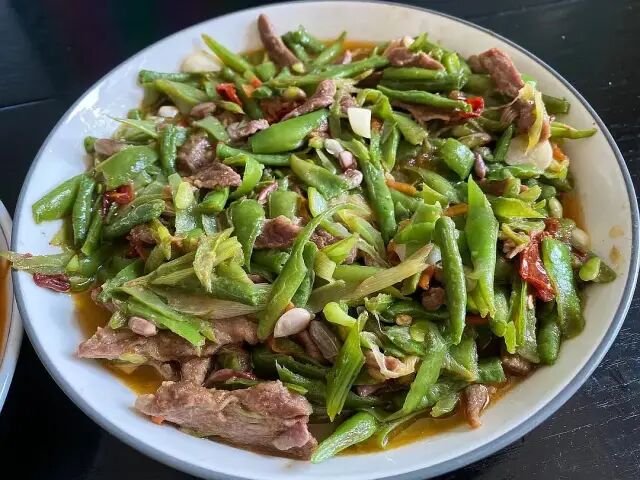
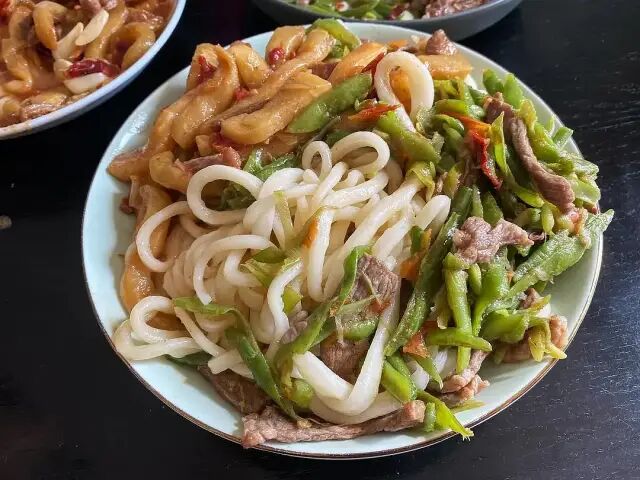
At noon, my father-in-law made green bean and meat stir-fry and yellow chive and meat stir-fry. The secret is to add plenty of green onions, Sichuan peppercorn powder, and dried chili skins (lapizi) so the flavor really pops. My father-in-law said he used half a whole green onion for just one dish.
In the afternoon, my father-in-law made lamb dough-flake soup (jiupianzi), which is a type of soup-based meal.
My father-in-law made steamed fried dough (youxiang) using fenugreek powder (xiangdou fen), a breakfast essential while staying at home.
August 11, meatball soup (wanzi tang).
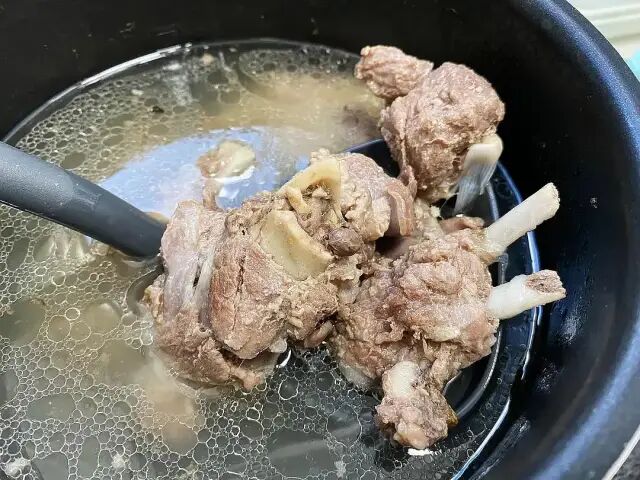
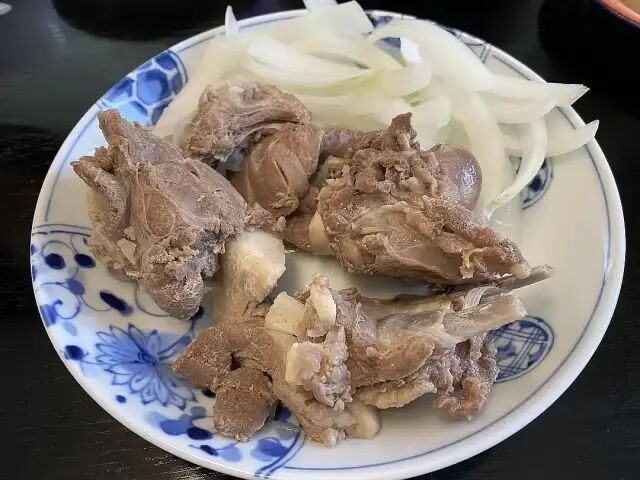
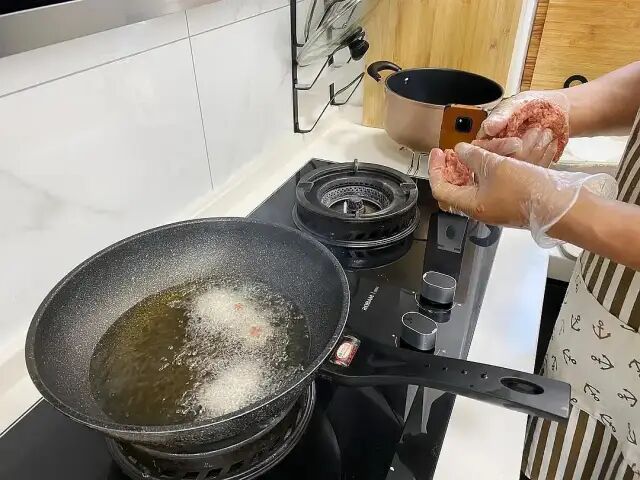
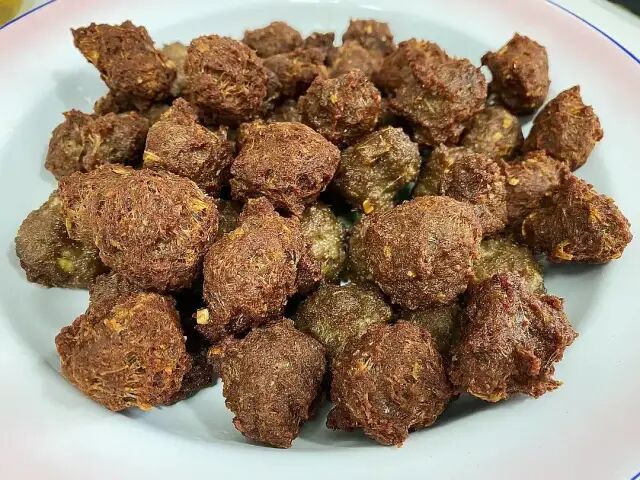
On our second day at home, the whole family made meatball soup together. In the morning, we first simmered a pot of meat broth, then fried the meatballs.
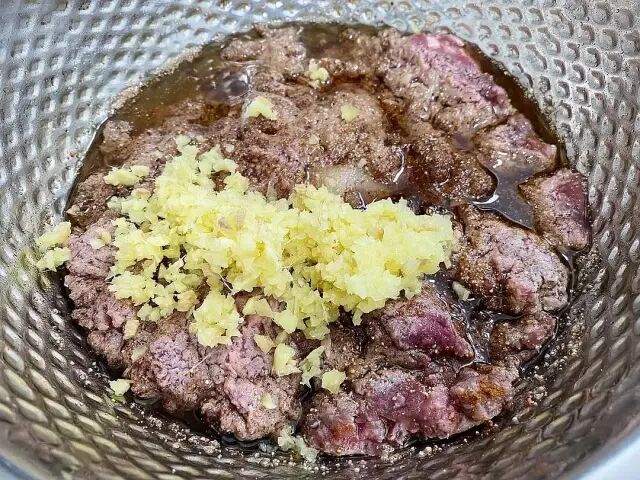
We used one jin (500 grams) of ground beef, one level spoonful of star anise powder, one full spoonful of Sichuan peppercorn powder, one full spoonful of salt, and poured in half a ladle of hot oil.
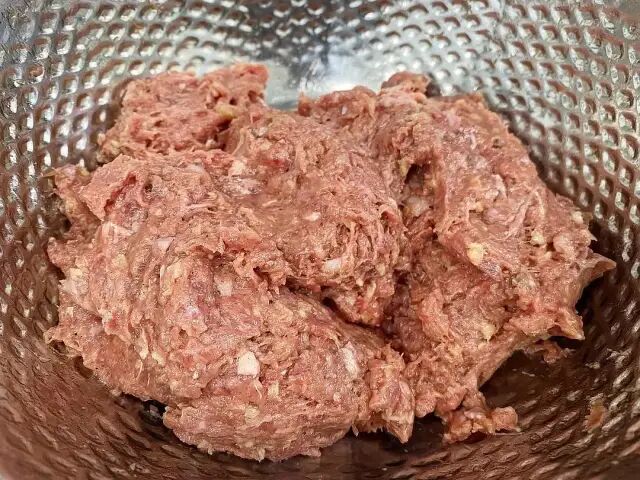
We minced half a piece of ginger into tiny bits, added it to the mix, and stirred it well. We cracked one egg into the mixture and kept mixing. Then we added half a small bowl of dry starch, kneaded the mixture repeatedly, and it was ready to fry.
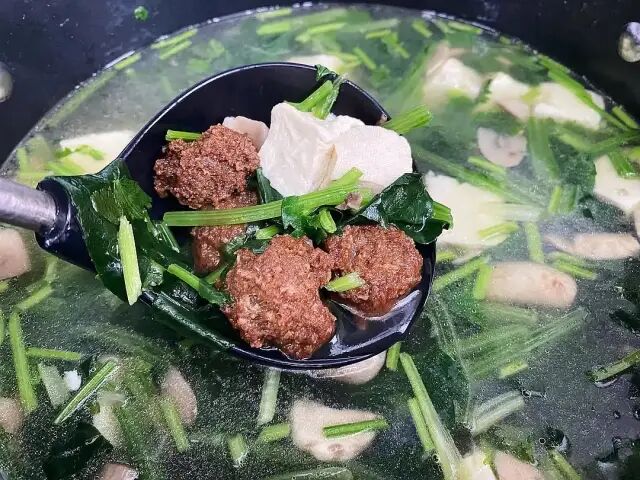
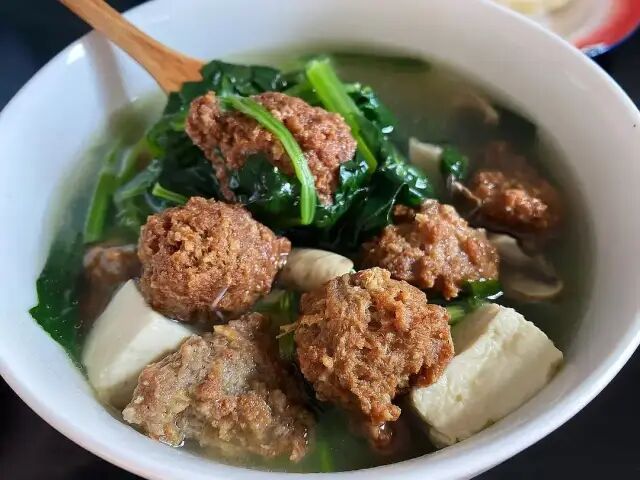
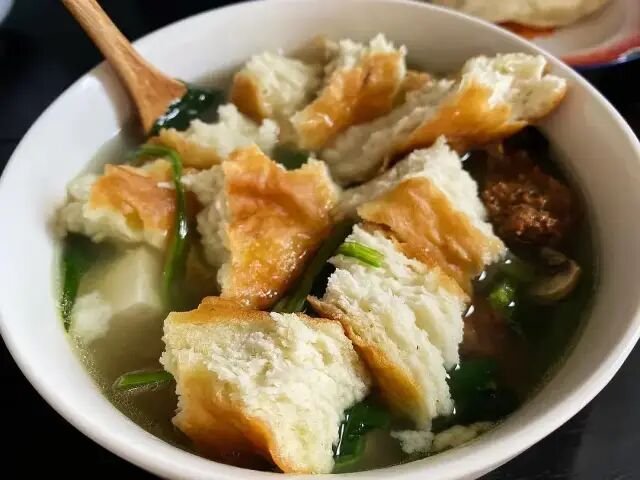
We added frozen tofu, spinach, king oyster mushrooms, cilantro, and the fried meatballs into the meat broth, and the delicious meatball soup was ready. Break the fried dough (youxiang) into pieces and eat it with the meal.
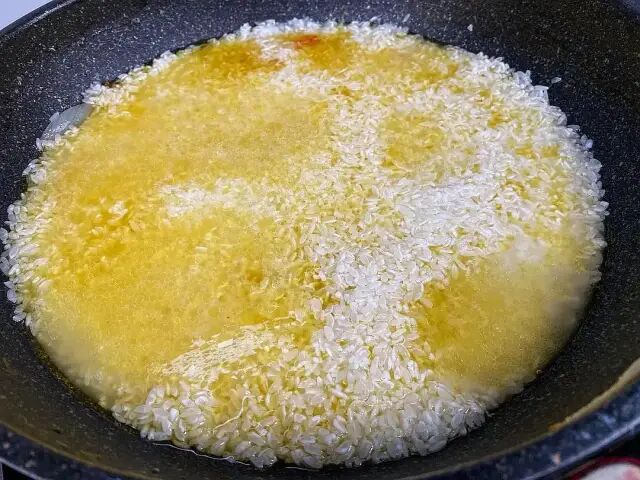
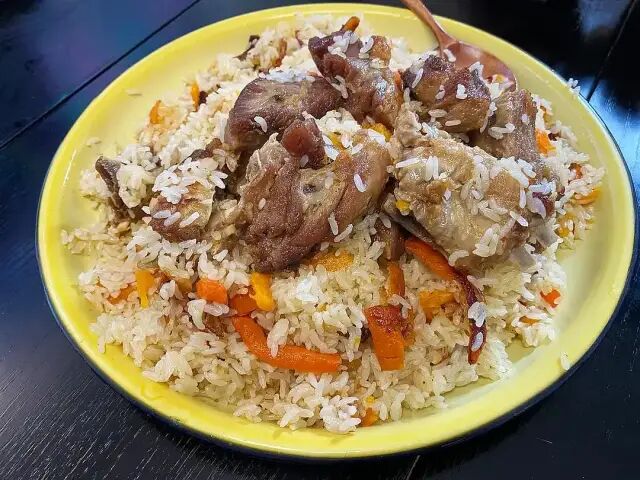
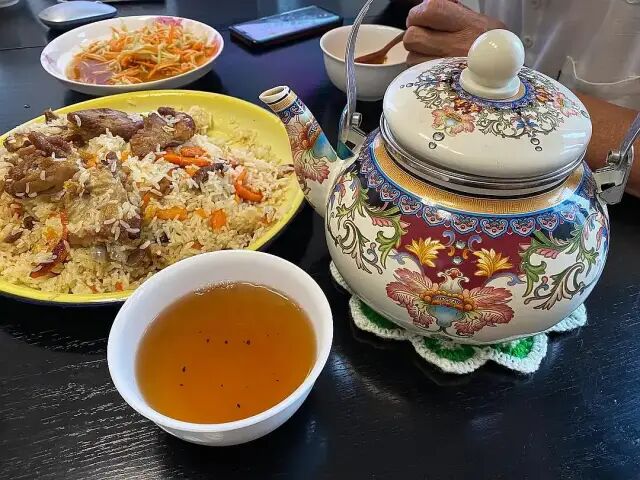
August 12, pilaf (zhuafan).
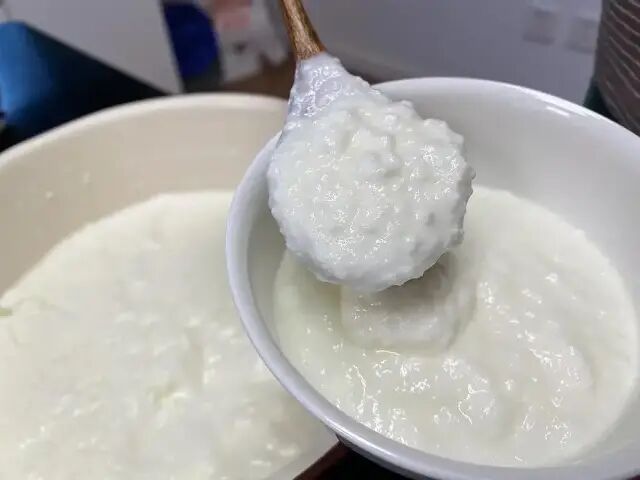
On the third day at home, my father-in-law made pilaf, I brewed brick tea, and Zainab made yogurt.
My father-in-law learned how to make some of the pilaf from the owner of a Uyghur pilaf restaurant near our house.
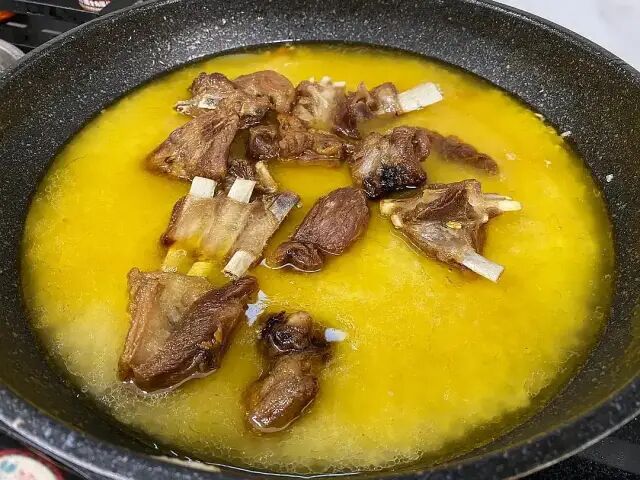
For Eid al-Adha, take one portion of lamb chops and one portion of lamb front leg, soak them for 20 minutes, then add salt, Sichuan peppercorns, and a little ginger to boil for 30 minutes. Take out the cooked lamb, stir-fry it in plenty of oil until dry, and add two spoonfuls of salt. Add carrot strips and onion chunks (piyazi), stir until the carrots shrink and soften, then take out the meat.
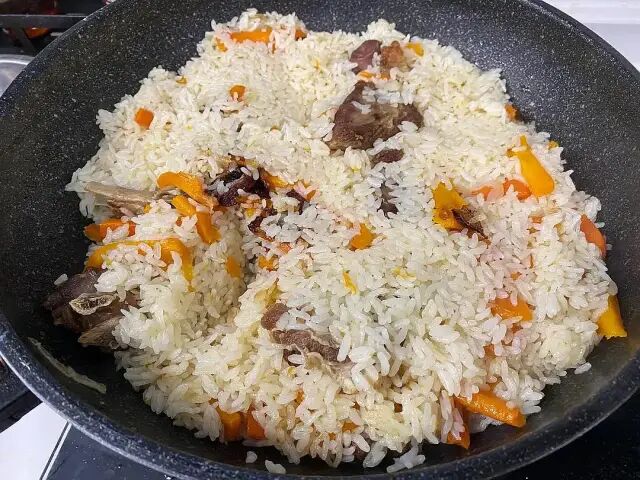
Spread two bowls of rice over the carrots; we used rice from Miquan. Add the lamb stew broth until it covers the rice by about the width of a finger. If you need more liquid, add water. Add two spoonfuls of granulated sugar (shazi tang) and a little cumin powder. Uyghur restaurants usually add a large amount of rock sugar and some whole cumin seeds. Finally, place the meat on top.
Turn the heat to high. Once the water boils, use chopsticks to poke a few holes in the rice. Then, turn the heat to low to steam it. Do not lift the lid during this time, but rotate the pot occasionally so it heats evenly. After steaming for 30 minutes, flip the rice from the top to the bottom, then steam for another 10 minutes and it is ready.
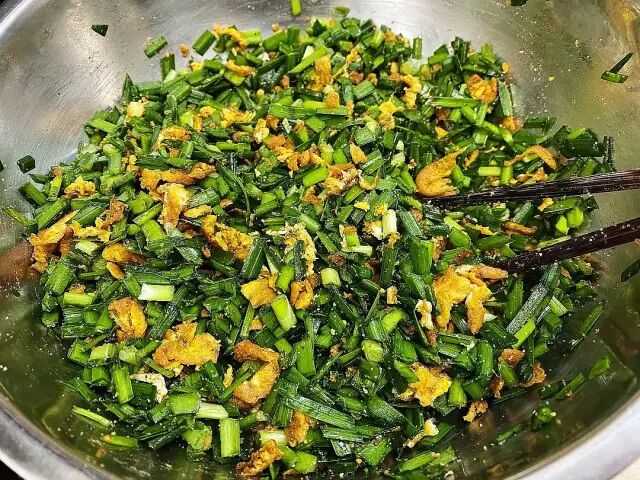
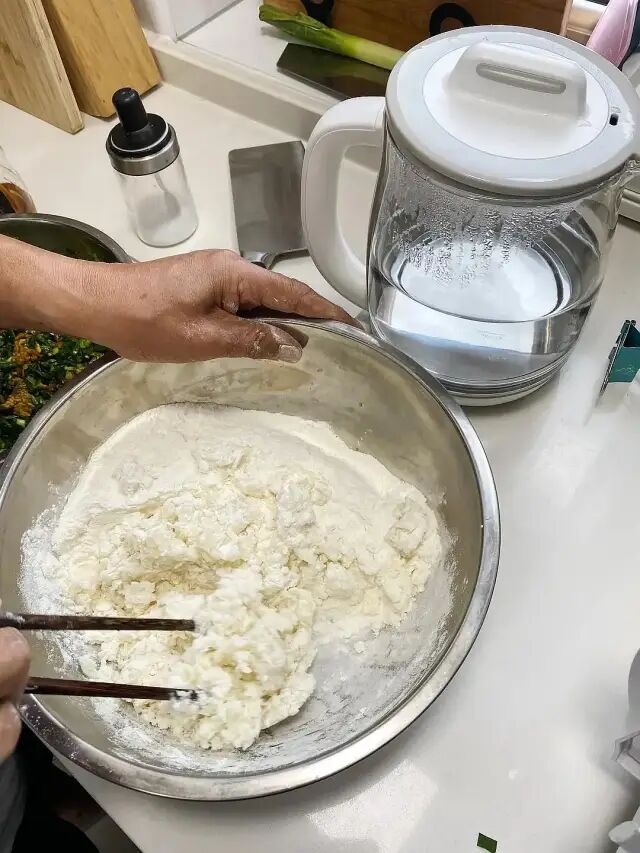
August 13, chive pockets (jiucai hezi).
Day four at home, my father-in-law made chive pockets (jiucai hezi) for me. Scramble the eggs, add the chives, then pour hot oil over them. Add plenty of salt and Sichuan peppercorn powder (huajiao mian). The flour used is from Qitai. Scald it with boiling water before wrapping the pockets.
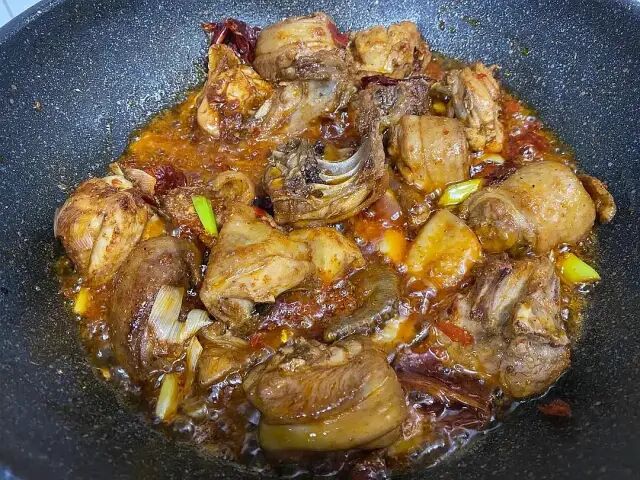
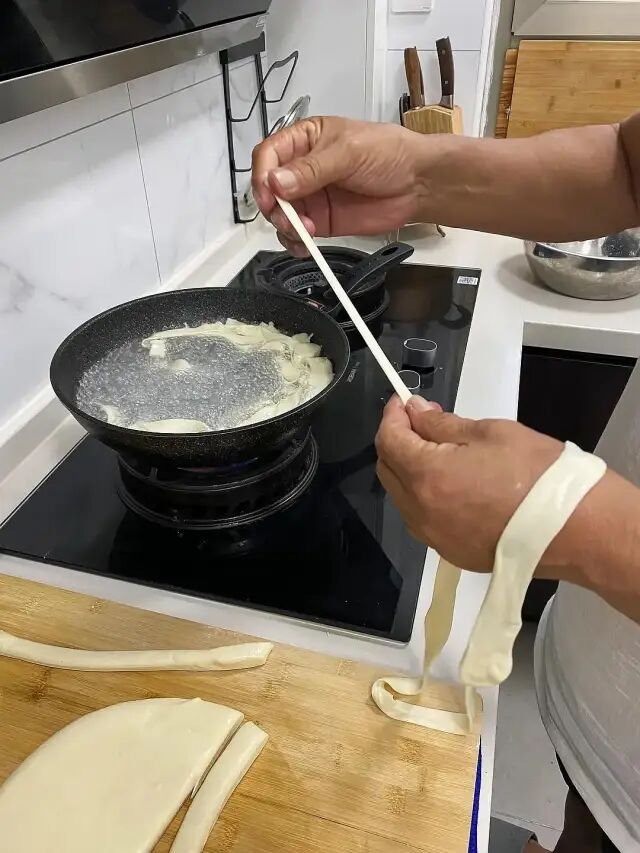
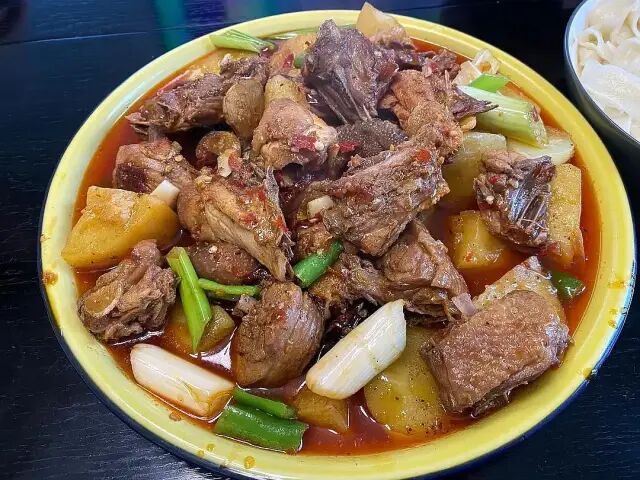
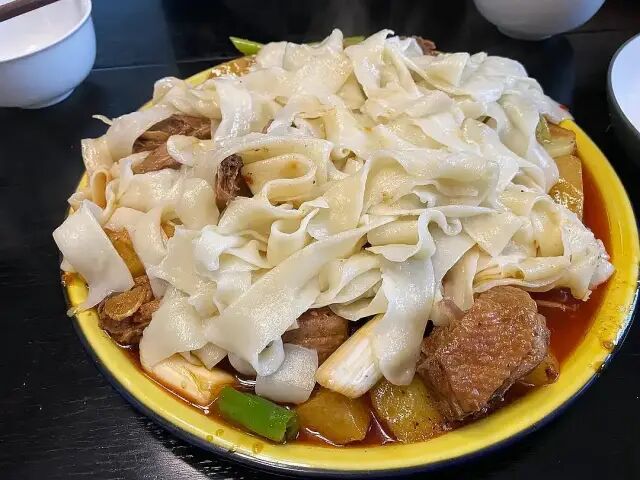
August 14, Big Plate Chicken (dapanji)
On the fifth day of staying home, Zainab stir-fried the Big Plate Chicken (dapanji), and my father-in-law made the belt noodles (pidaimian). We used a free-range chicken with black claws that I bought from Dazhang in Changying. It tastes exactly like the Big Plate Chicken (dapanji) from Urumqi in the 1990s.
In the top right corner is tomato paste and bean paste (doubanjiang), and below that is the special seasoning mix for the Big Plate Chicken (dapanji).
August 15, Braised Meatballs (huiwanzi)
On the fifth day of staying home, I made Braised Meatballs (huiwanzi). They go perfectly with rice.
August 16, Hand-pulled Noodles (latiaozi)
On the seventh day of staying home, I still love eating the romantic meal made by my father-in-law.
August 17, eating flatbread with fried chicken and fried skewers at Yin's in Changying.
I had a flatbread sandwich with fried chicken and fried skewers at Yinji in Changying. It had chicken and a squid skewer inside, and it tasted pretty good. Then I grabbed some cold skin noodles (liangpi) from the supermarket next door.
August 19, Sultan, a Pakistani restaurant in Sanduhe Village, Huairou.
By mid-August, the muggy heat in Beijing eased up, so we drove to Huairou for a halal getaway.
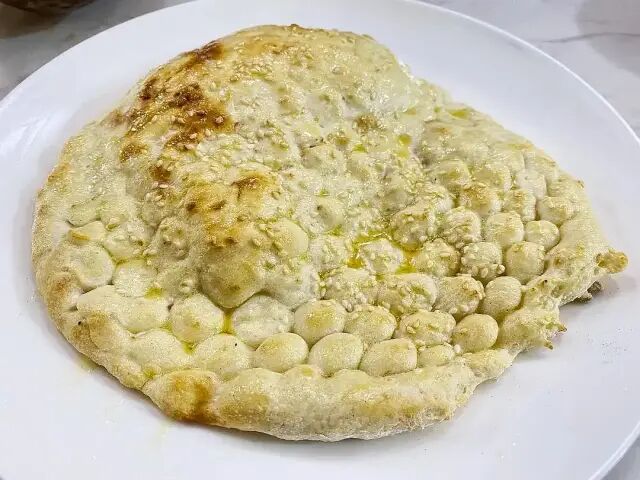
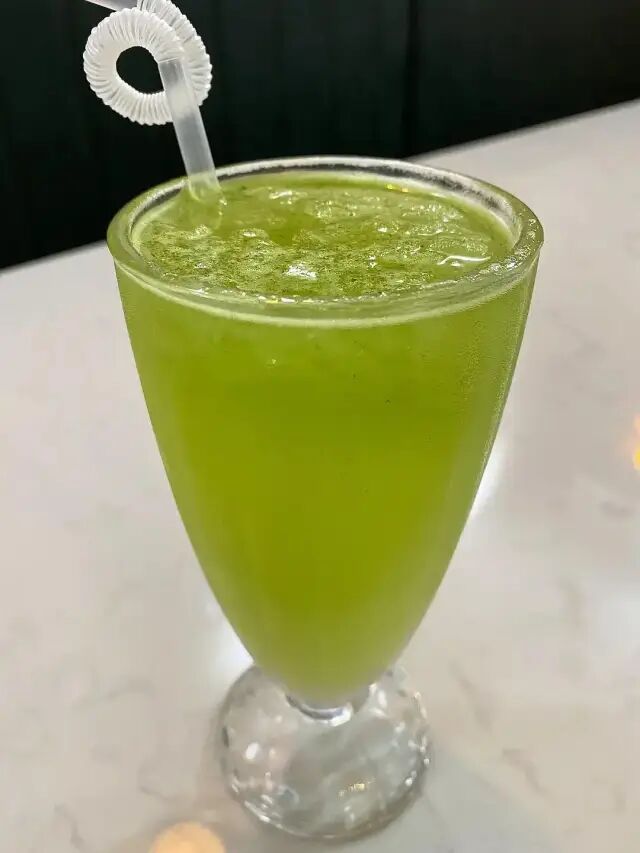
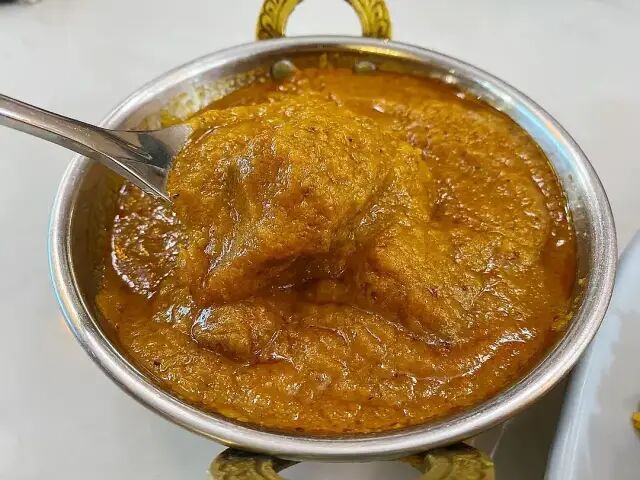
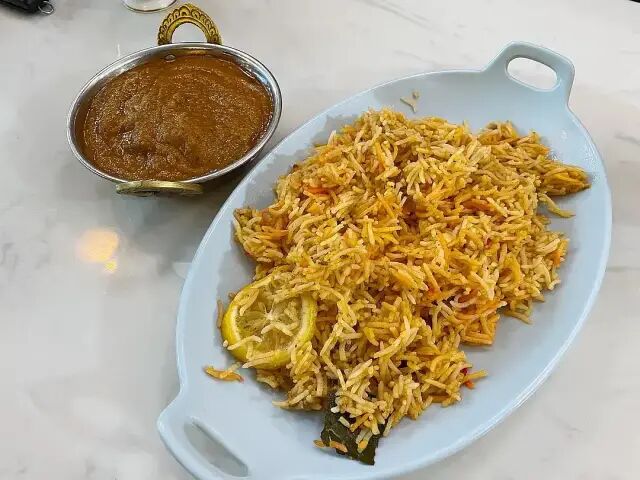
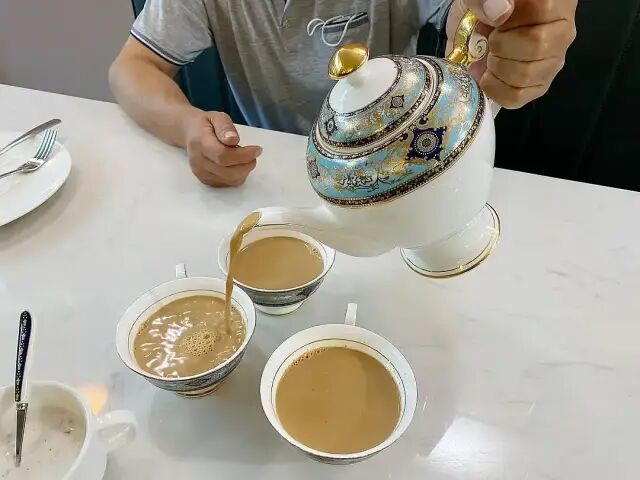
We arrived at Sanduhe Village in Huairou in the evening and started at the Pakistani restaurant Sultan. We had butter naan, spicy yogurt (Raita), rice (Biryani), tandoori chicken legs, beef curry (Kadhi), grilled shrimp, milk tea, and mint lemonade. To be fair, their portions are small and the prices are high, but the food is really delicious. It is better than some of the Pakistani restaurants in the city. Their butter naan is especially good. It comes out of the oven fluffy and smells amazing. The chicken legs and beef taste great. My father-in-law and Zainab especially liked the milk tea, which has a very rich milk and tea flavor. The only downside is that the shrimp probably sat out too long, so the texture was mushy.
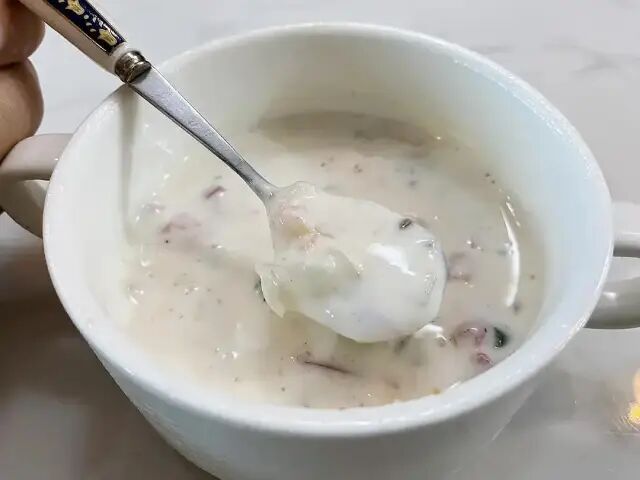
It is rare to find yogurt sauce (raita) made with fresh spicy peppers. It has a strong spicy kick and tastes very unique. Raita is a Hindi word formed by combining the Sanskrit words "rajika" and "tiktaka," which mean "black mustard seeds" and "pungent." To make it, you fry black mustard seeds and cumin, mix them with chopped vegetables, and stir them into yogurt.
Playing in the restaurant at night.
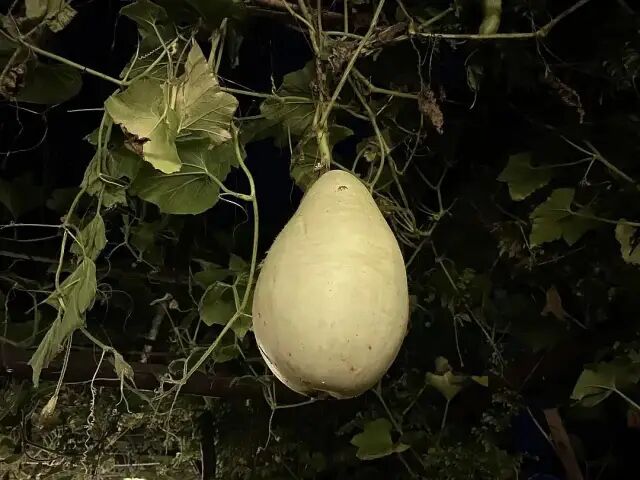
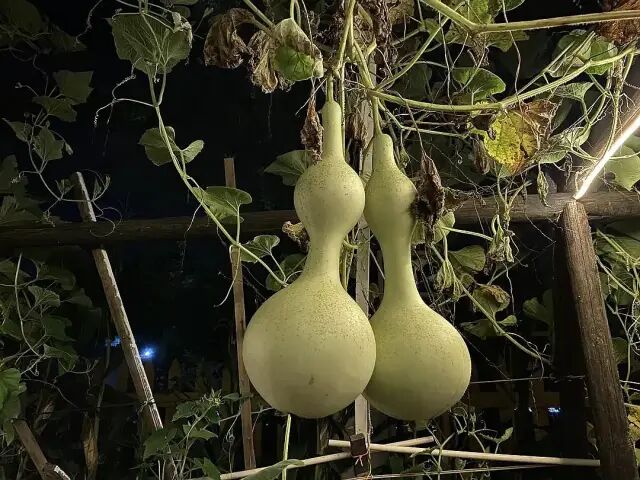
Gourd vines in the restaurant.
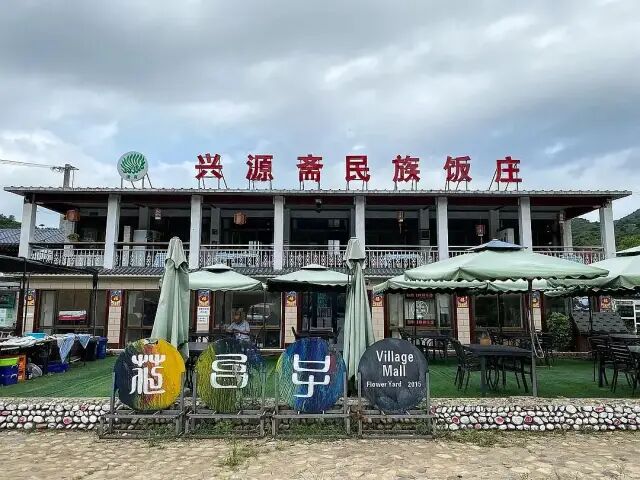
August 20, Xingyuanzhai Ethnic Restaurant in Sanduhe Village, Huairou.
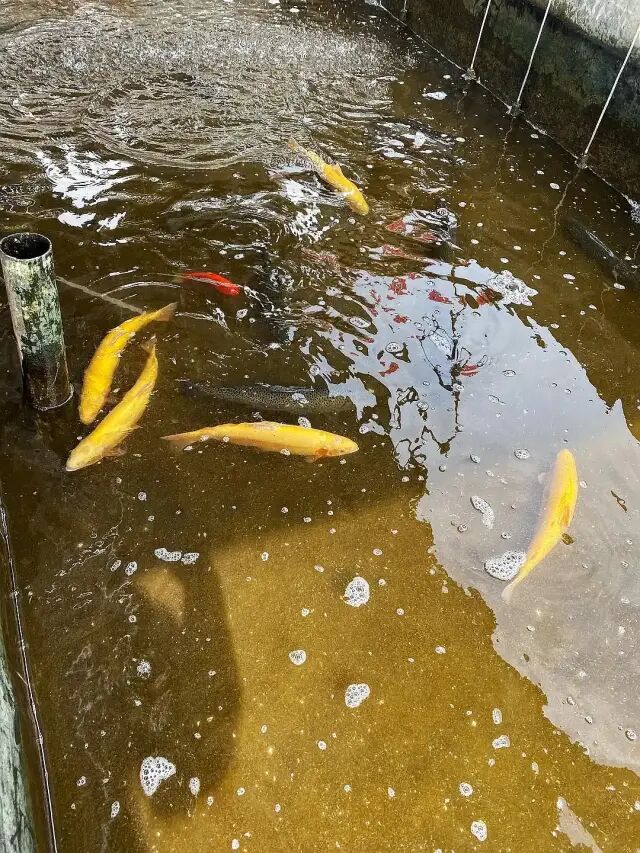
In the morning, we ate grilled golden trout, cornmeal flatbread (hubing), scrambled eggs with green onions, seasonal wild amaranth (yugu cai), and fried fresh river shrimp at Xingyuanzhai Ethnic Restaurant in Sanduhe Village. This place is run by Hui Muslims from the Hui Muslim camp in Shunyi. They specialize in golden trout and rainbow trout. The meat is tender like garlic cloves, and their other dishes are very flavorful. Zaynab especially loved the small river shrimp. If you are visiting the mountains in Huairou, like Mutianyu or Xiangshui Lake, I recommend eating here.
August 20, Masala Pakistani Restaurant in downtown Huairou.
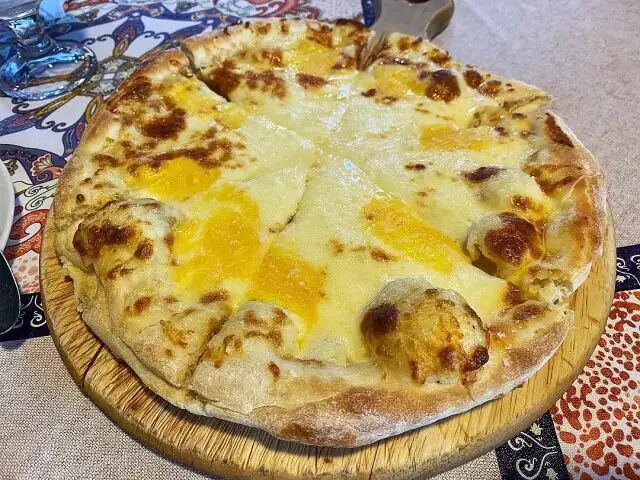
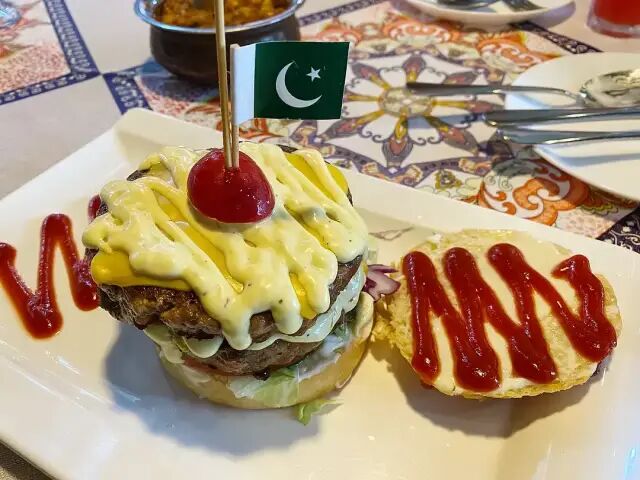
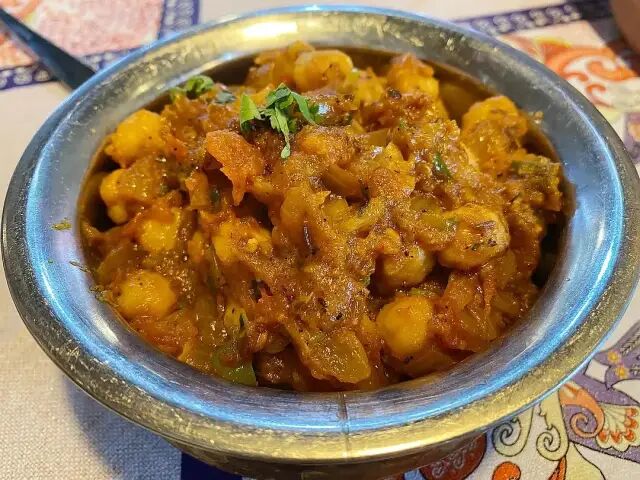
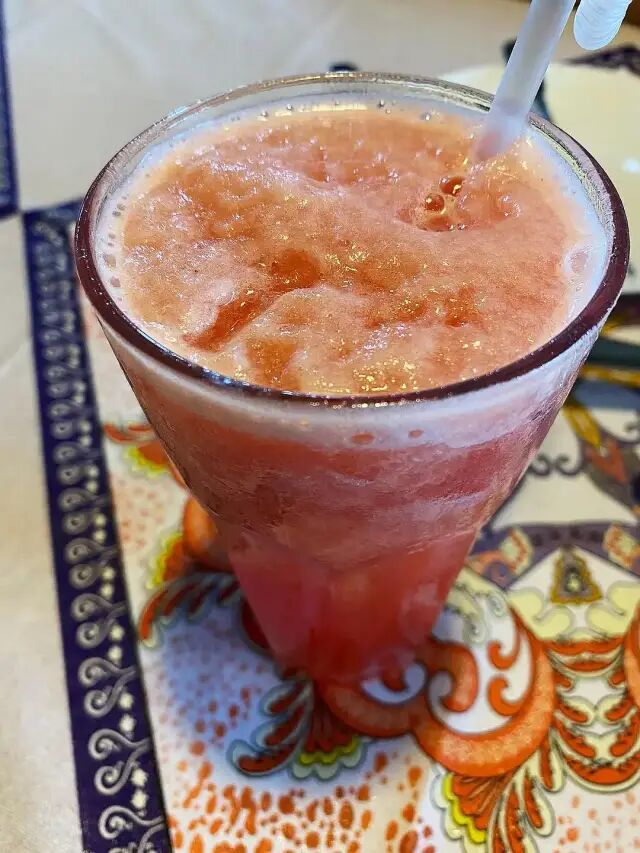
In the afternoon, I had a beef burger, cheese pizza, chickpea curry, and watermelon shaved ice at Masala Pakistani Restaurant in downtown Huairou. This restaurant has the same owner as Sultan up on the mountain, and the menu is about the same. Their cheese pizza is super delicious and very fluffy; I bet they use the same dough as they do for their butter naan. The chickpea curry and watermelon shaved ice were also quite good. Unfortunately, the burger was not great. The bun lacked texture and the beef was too tough, making it uncomfortable to eat.
August 24, Run Gesheng on Gulou South Street in Miyun.
I drove to Miyun city center after work and arrived at Run'gesheng on Drum Tower South Street in the evening. The restaurant was recently renovated this year and the environment is very nice. We ordered steamed tofu (kaibao doufu) and red steamed beef. The steamed tofu is made by steaming the tofu and mixing it with various seasonings. Adding chive flower sauce really makes it flavorful! The red steamed beef has a great texture and is likely one of the eight classic bowls (badawan) of the Hui Muslims, though Zainab and my father-in-law both said it was a bit salty. I guess I will be experiencing the salty taste of traditional Beijing suburban dishes every day for a while, haha.
August 25, Changshunzhai on Nanda Street in Miyun.
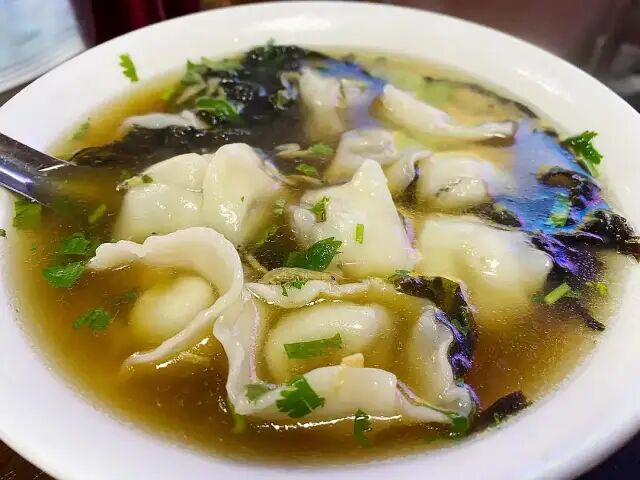
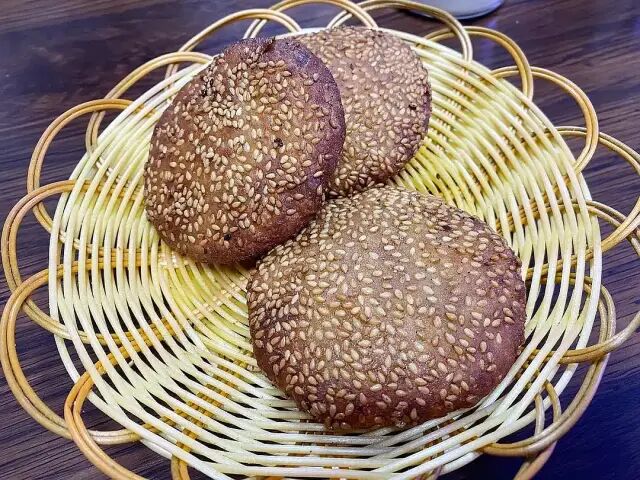
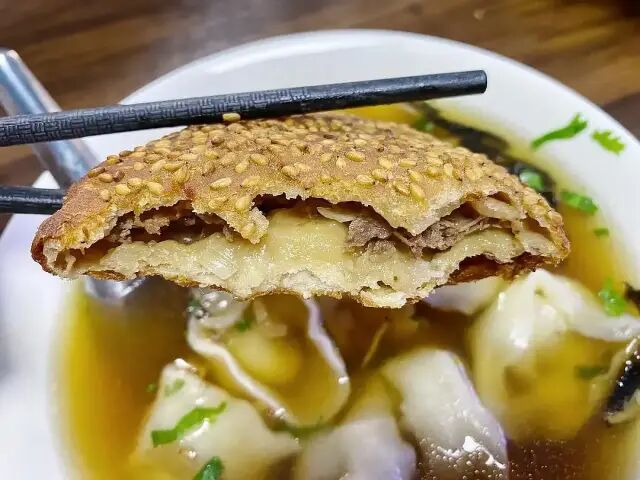
In the morning, we ate old-broth lamb offal soup (laotang yangza), beef ingot soup (niurou yuanbao tang), and freshly fried meat flatbread (shaobing) at Changshunzhai on Nanda Street in Miyun. The lamb offal tasted great, but my father-in-law and Zainab still could not get used to the salty taste of traditional Beijing suburban food. The flatbread was fried until crispy, and the aroma of the sesame really came through. The ingot-shaped dumplings (yuanbaotang) have thin skins and plenty of filling, and they taste great.
August 25, outside the Miyun Mosque.
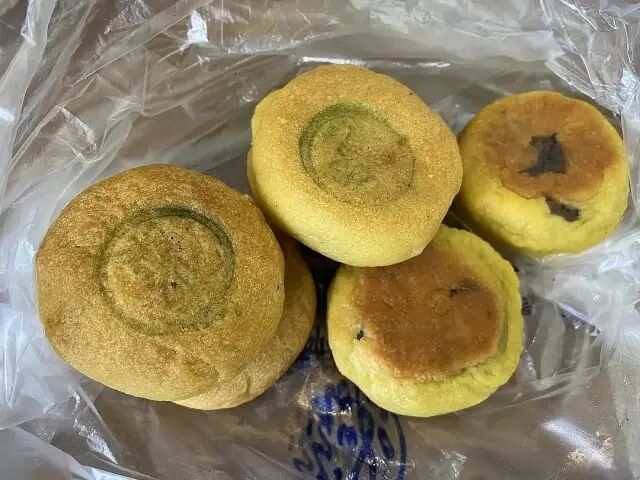
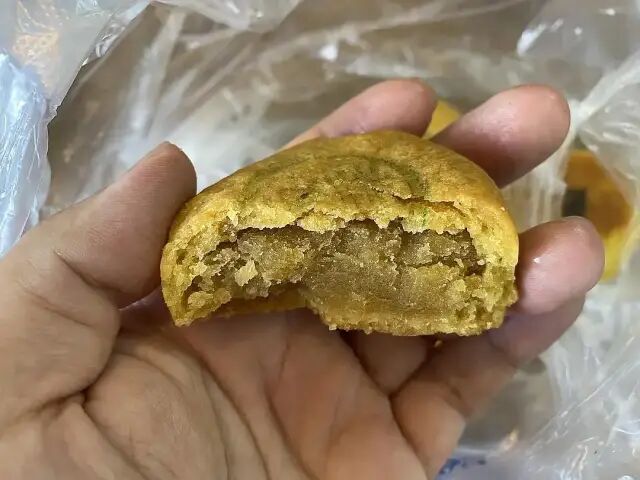
I bought radish-filled buns (xianbobo) at Guangjuzhai outside the Miyun Mosque, and old-fashioned mooncakes with chestnut, five-kernel, and black sesame fillings at Dongfang Zhenshun Bakery. They were all delicious. Most of the halal signs here in Miyun use Persian blue, which matches the style outside the Great Wall.
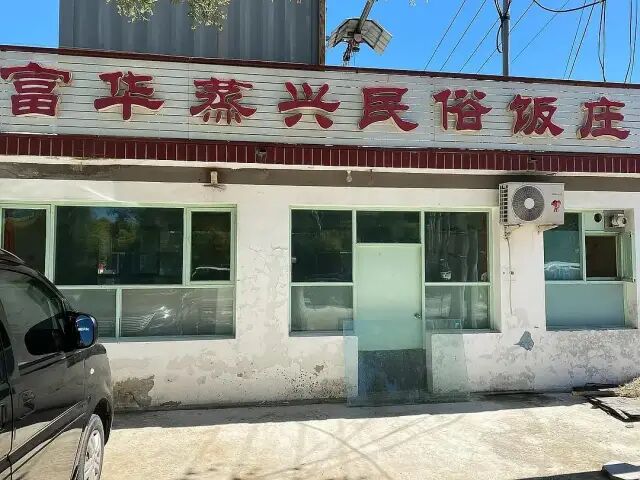
August 25, Fuhua Zhengxing Folk Restaurant in Mujia Yu, Miyun.
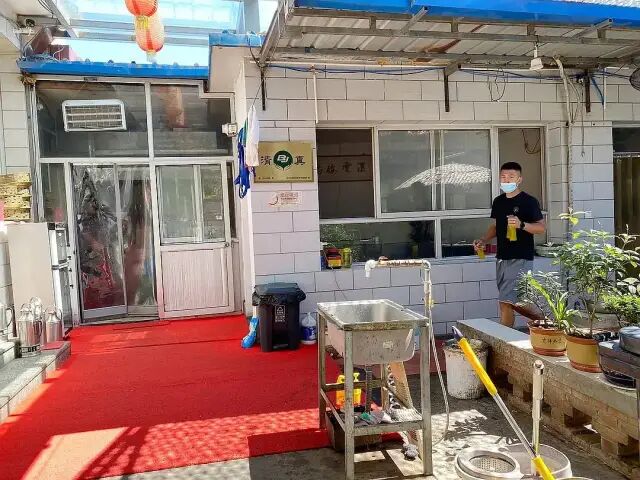
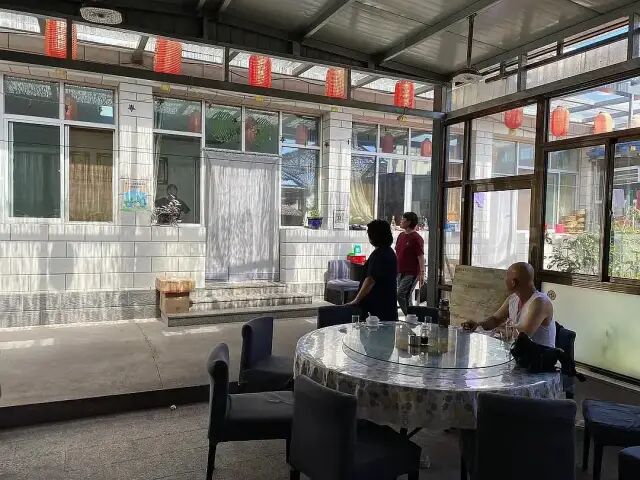
I ate beef pancakes, beef in a clay pot, mixed lamb liver, and stir-fried pumpkin at Fuhua Zhengxing Folk Restaurant in Mujia Yu. It was my first time eating at a farm-style restaurant in Miyun, so I didn't know what to expect and ordered way too much, haha. The flaky beef pancakes are delicious! The mixed lamb liver (ban yanggan) is very flavorful, but the beef has a lot of gristle and fat. It would be better if it were leaner.
The owner is very welcoming. As soon as he saw that Zainab was pregnant, he quickly moved us into a quiet room in the back to eat. view all
Summary: Beijing Halal Food Diary: Summer 2022 Muslim Food and Mosques is presented here as a firsthand travel account in clear English, beginning with this scene: Lamb for Eid al-Adha (Qurban), bean rice for Ashura, and fried dough (youxiang) for religious gatherings (niansuoer). The account keeps its focus on Beijing Halal Food, Summer Diary, Muslim Food while preserving the names, places, food, and historical details from the Chinese source.
August 9, Faith and Food
Lamb for Eid al-Adha (Qurban), bean rice for Ashura, and fried dough (youxiang) for religious gatherings (niansuoer).
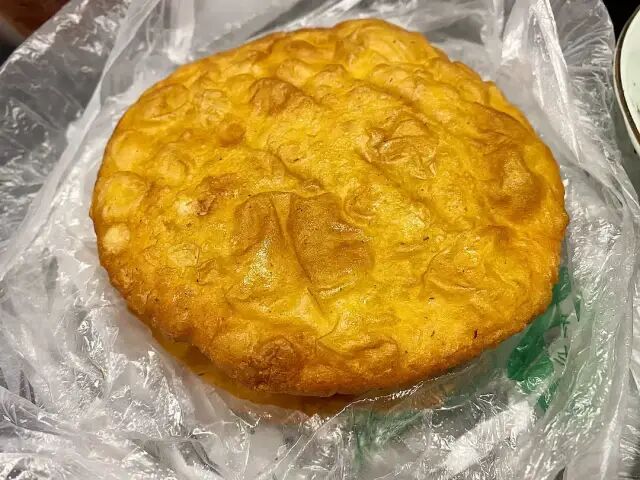
August 10
It was my first day staying at home. I got a call from the community office in the morning and headed home from work. I had some time at noon to shop, so I rushed to the Niuniu market in Changying to buy chicken, meat, and fillings to prepare for big plate chicken (dapanji), meatball soup (wanzi tang), and hand-pulled noodles (latiaozi).
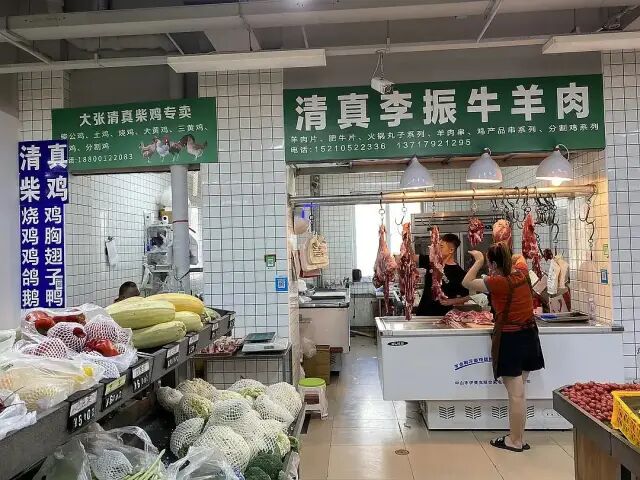
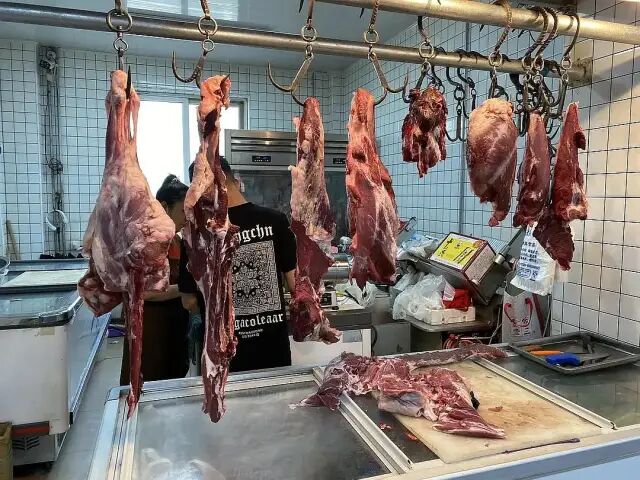
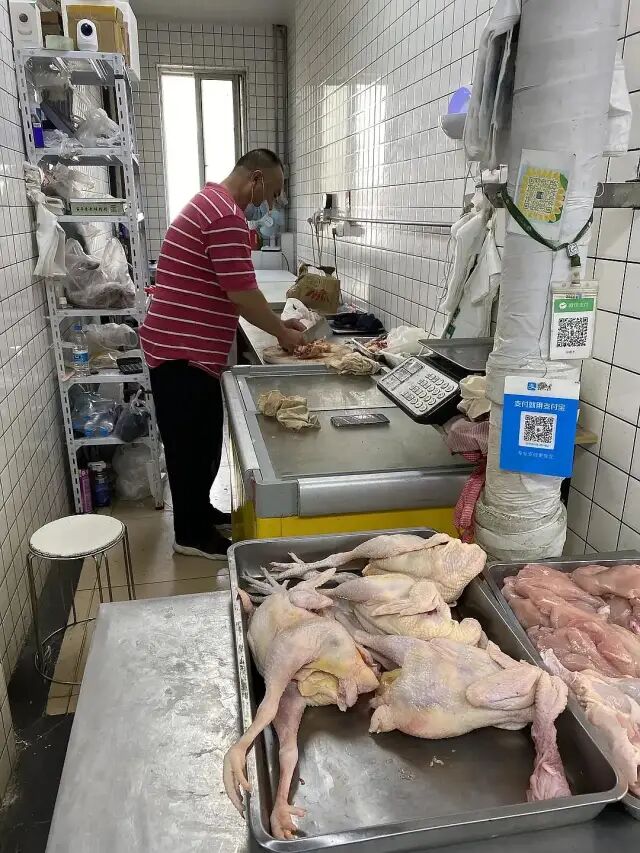
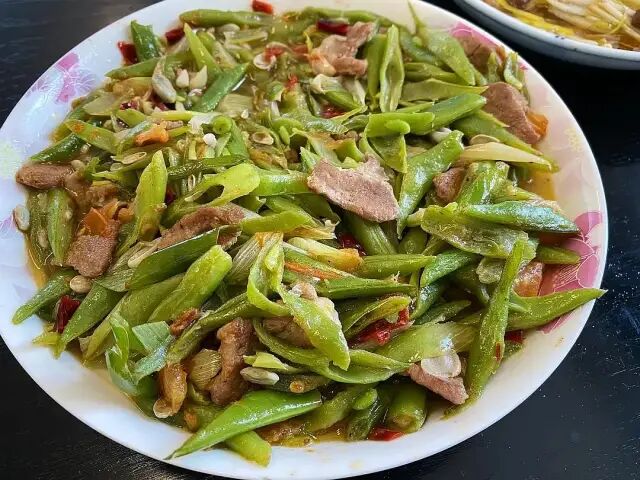
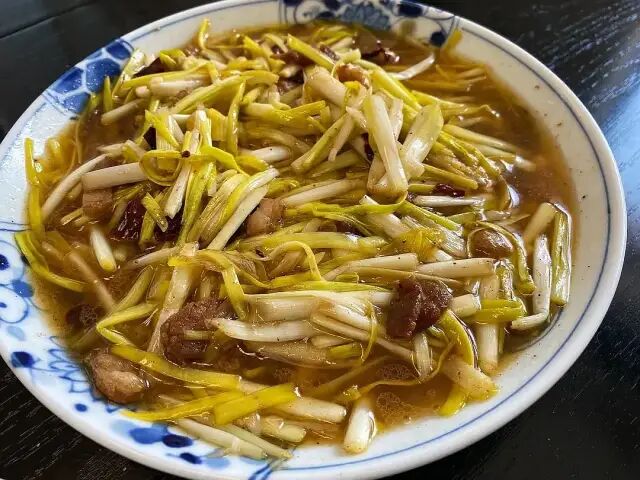
At noon, my father-in-law made green bean and meat stir-fry and yellow chive and meat stir-fry. The secret is to add plenty of green onions, Sichuan peppercorn powder, and dried chili skins (lapizi) so the flavor really pops. My father-in-law said he used half a whole green onion for just one dish.
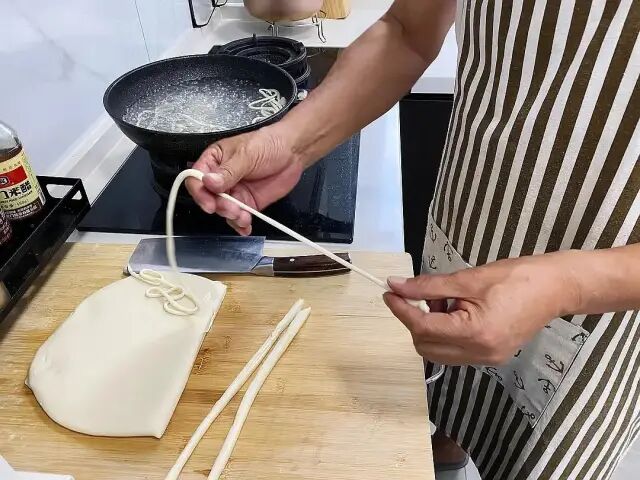
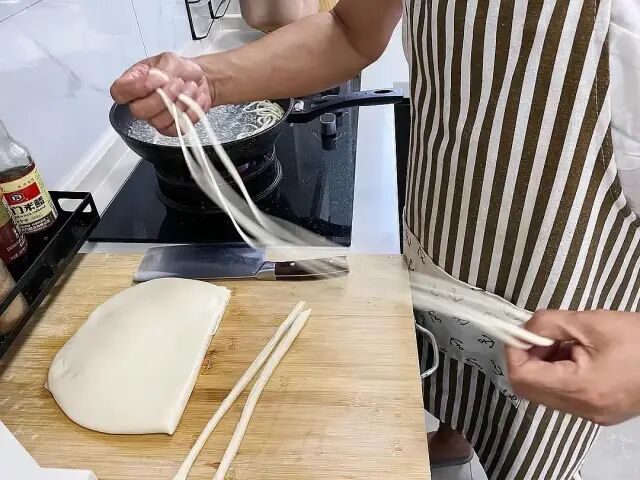
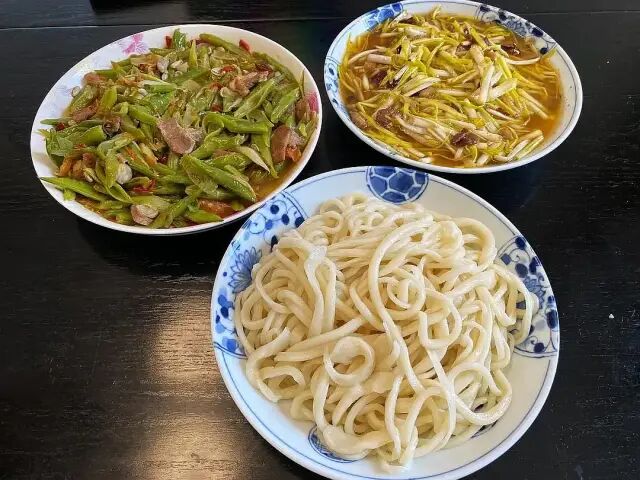
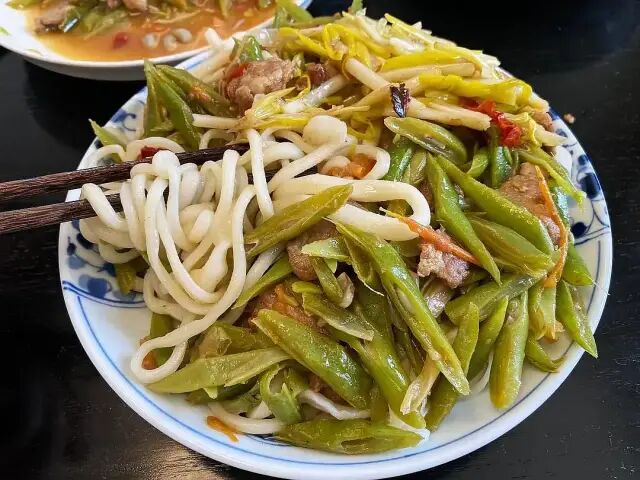
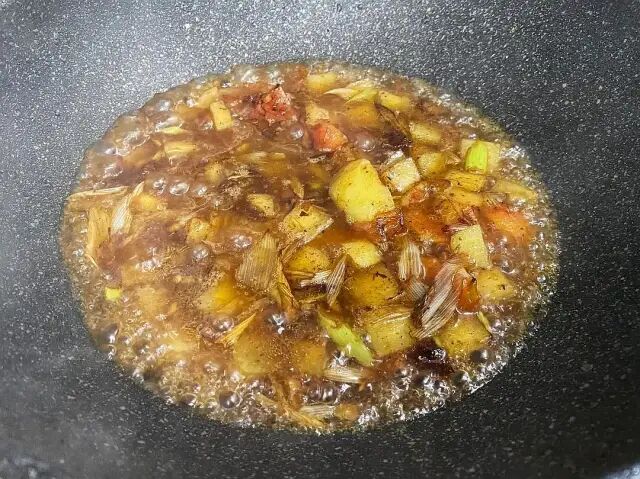
In the afternoon, my father-in-law made lamb dough-flake soup (jiupianzi), which is a type of soup-based meal.
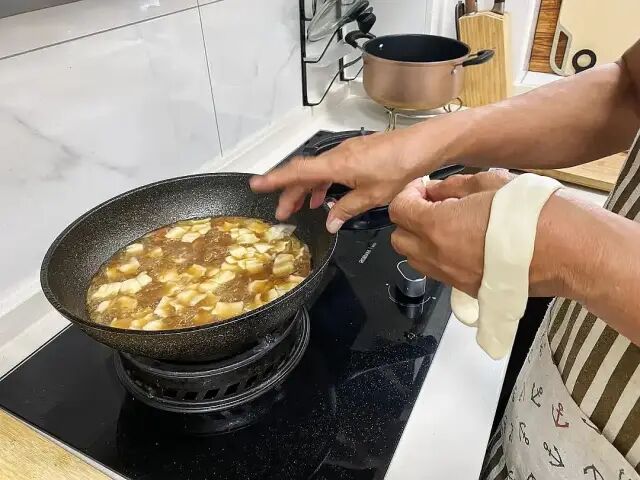
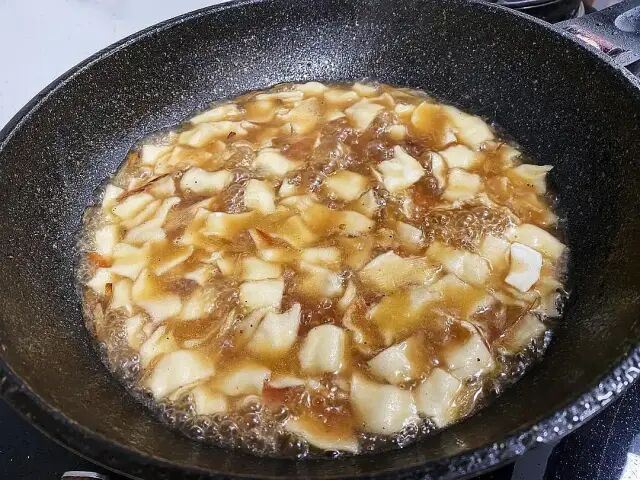
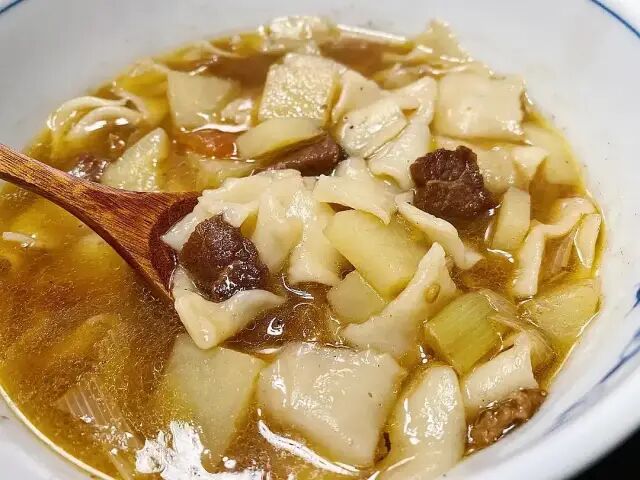
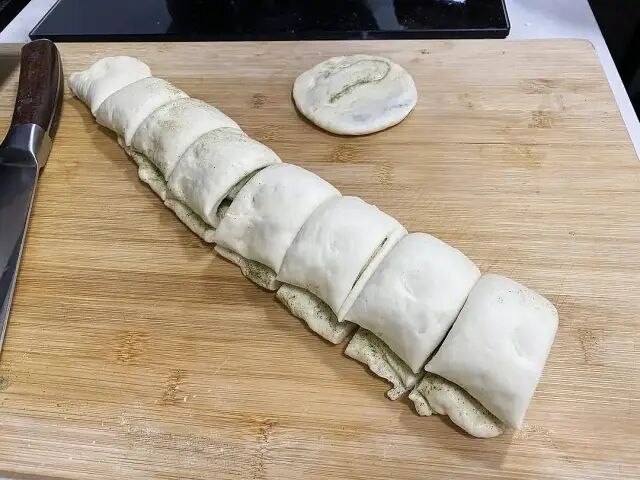
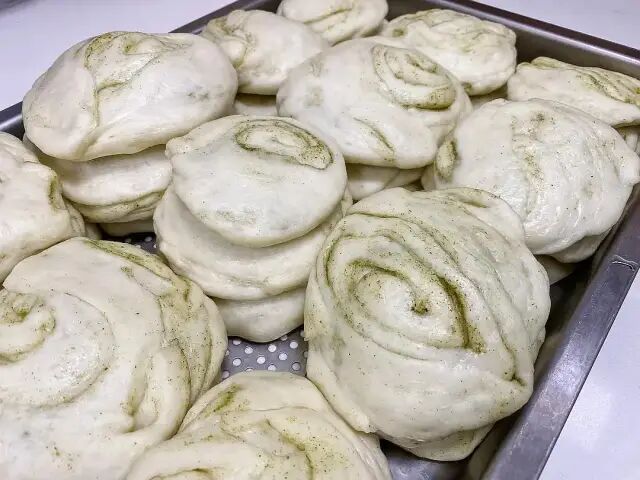
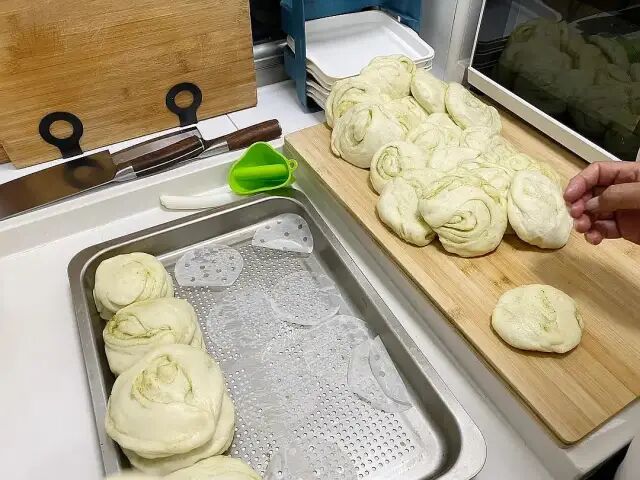
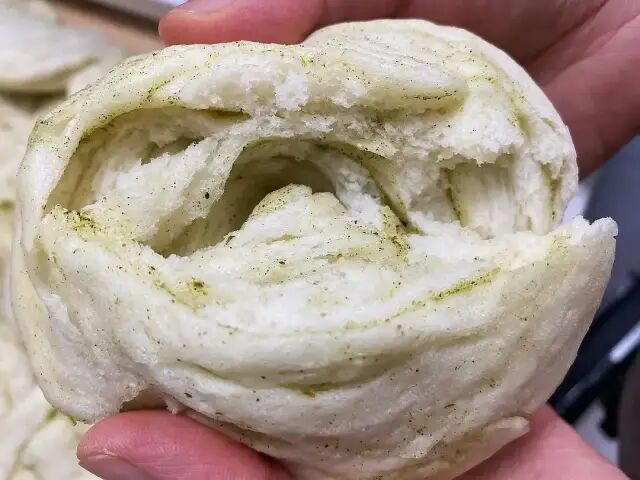
My father-in-law made steamed fried dough (youxiang) using fenugreek powder (xiangdou fen), a breakfast essential while staying at home.
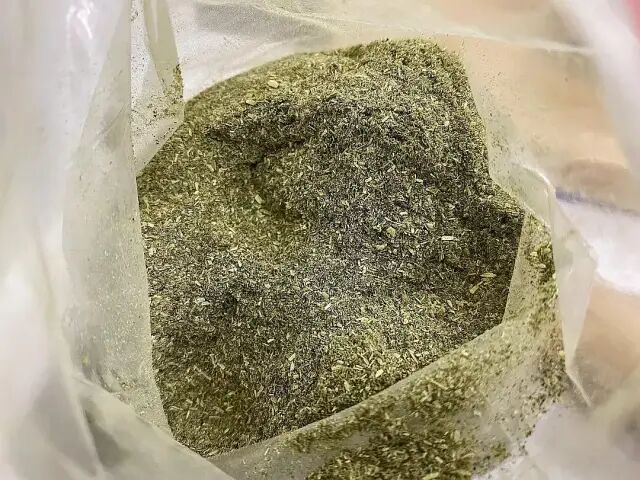
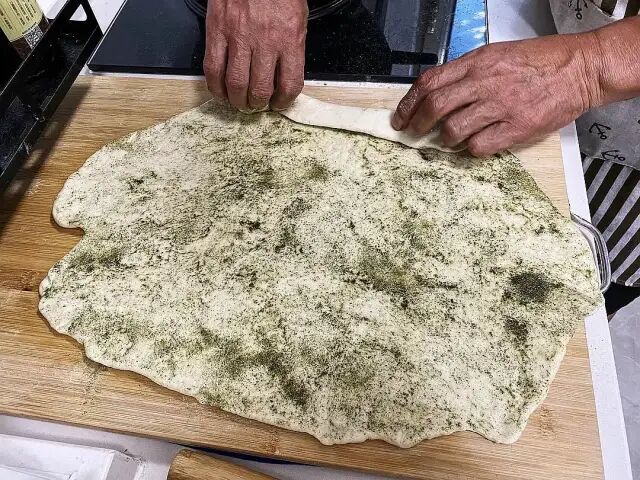
August 11, meatball soup (wanzi tang).
On our second day at home, the whole family made meatball soup together. In the morning, we first simmered a pot of meat broth, then fried the meatballs.
We used one jin (500 grams) of ground beef, one level spoonful of star anise powder, one full spoonful of Sichuan peppercorn powder, one full spoonful of salt, and poured in half a ladle of hot oil.
We minced half a piece of ginger into tiny bits, added it to the mix, and stirred it well. We cracked one egg into the mixture and kept mixing. Then we added half a small bowl of dry starch, kneaded the mixture repeatedly, and it was ready to fry.
We added frozen tofu, spinach, king oyster mushrooms, cilantro, and the fried meatballs into the meat broth, and the delicious meatball soup was ready. Break the fried dough (youxiang) into pieces and eat it with the meal.
August 12, pilaf (zhuafan).
On the third day at home, my father-in-law made pilaf, I brewed brick tea, and Zainab made yogurt.
My father-in-law learned how to make some of the pilaf from the owner of a Uyghur pilaf restaurant near our house.
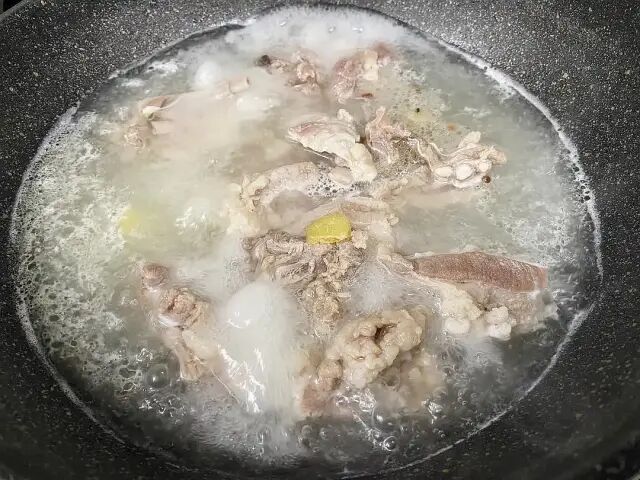
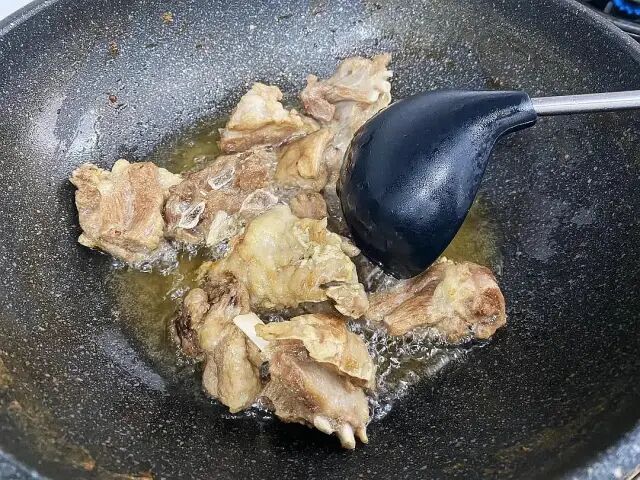
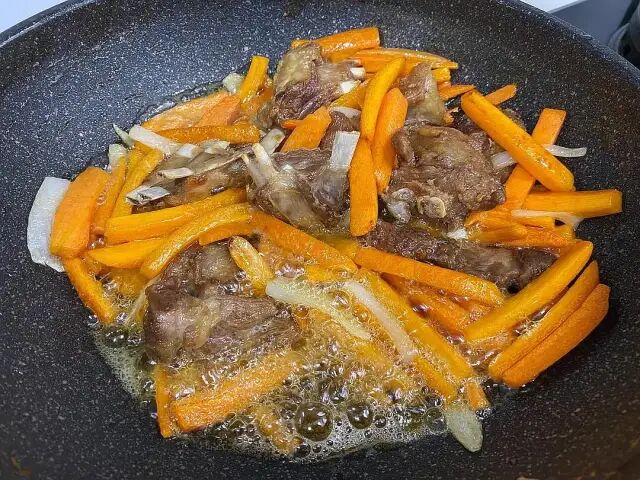
For Eid al-Adha, take one portion of lamb chops and one portion of lamb front leg, soak them for 20 minutes, then add salt, Sichuan peppercorns, and a little ginger to boil for 30 minutes. Take out the cooked lamb, stir-fry it in plenty of oil until dry, and add two spoonfuls of salt. Add carrot strips and onion chunks (piyazi), stir until the carrots shrink and soften, then take out the meat.
Spread two bowls of rice over the carrots; we used rice from Miquan. Add the lamb stew broth until it covers the rice by about the width of a finger. If you need more liquid, add water. Add two spoonfuls of granulated sugar (shazi tang) and a little cumin powder. Uyghur restaurants usually add a large amount of rock sugar and some whole cumin seeds. Finally, place the meat on top.
Turn the heat to high. Once the water boils, use chopsticks to poke a few holes in the rice. Then, turn the heat to low to steam it. Do not lift the lid during this time, but rotate the pot occasionally so it heats evenly. After steaming for 30 minutes, flip the rice from the top to the bottom, then steam for another 10 minutes and it is ready.
August 13, chive pockets (jiucai hezi).
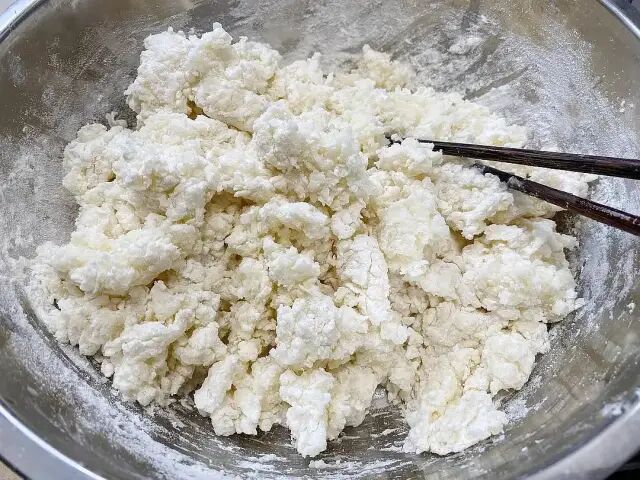
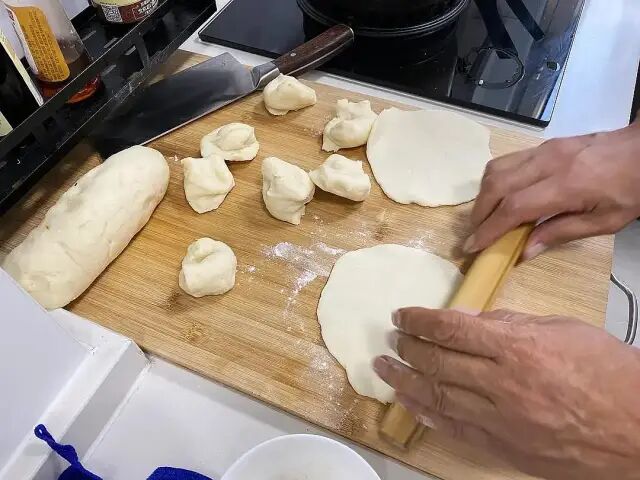
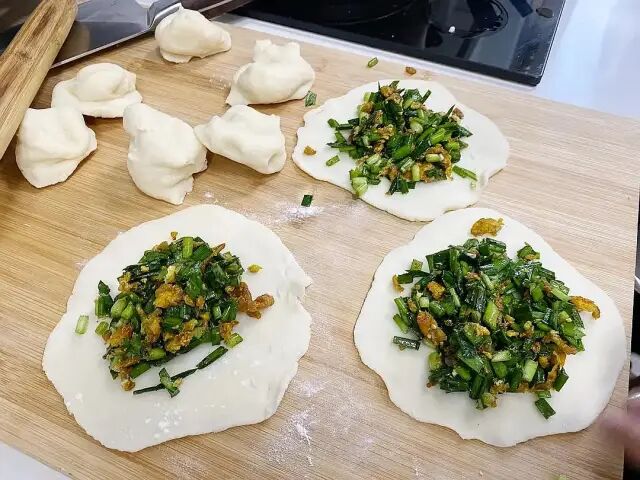
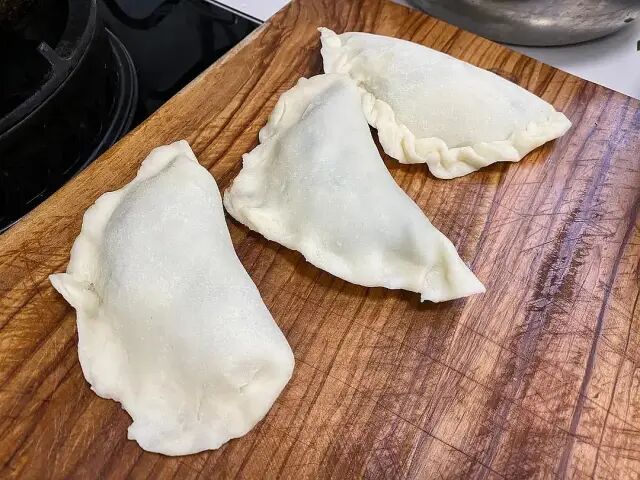
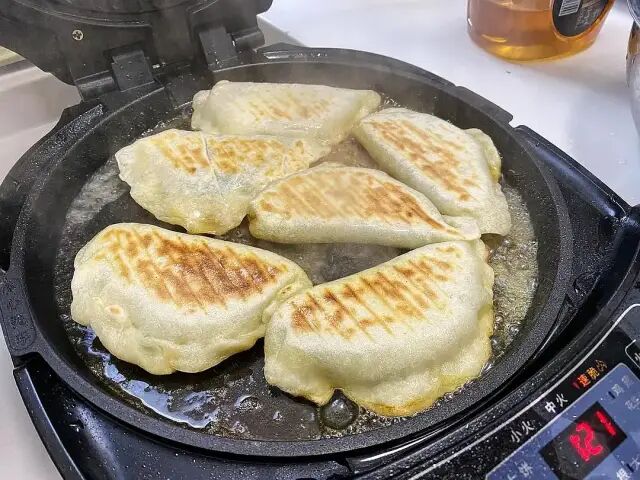
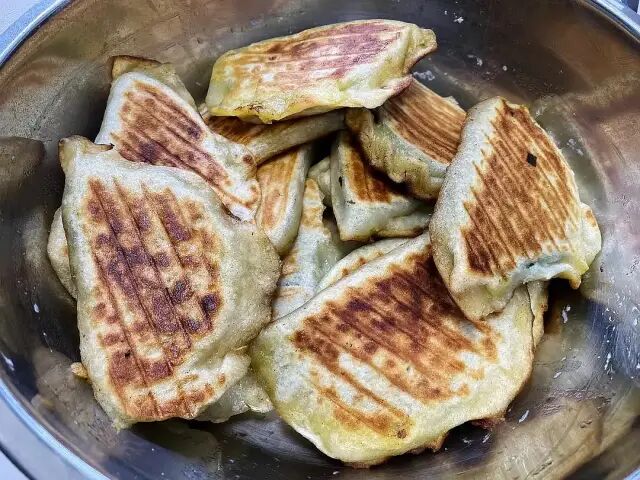
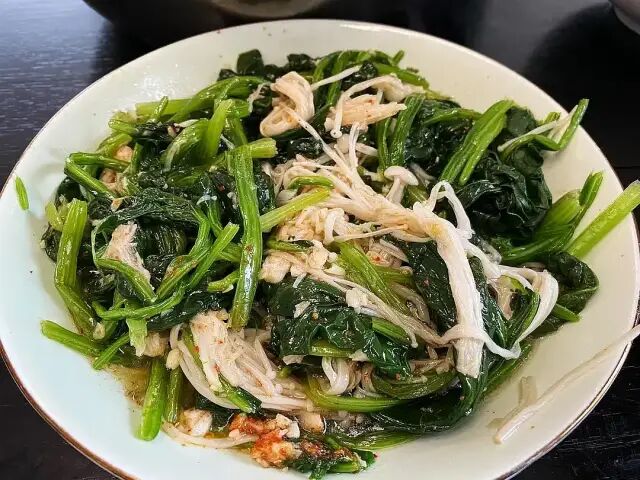
Day four at home, my father-in-law made chive pockets (jiucai hezi) for me. Scramble the eggs, add the chives, then pour hot oil over them. Add plenty of salt and Sichuan peppercorn powder (huajiao mian). The flour used is from Qitai. Scald it with boiling water before wrapping the pockets.
August 14, Big Plate Chicken (dapanji)
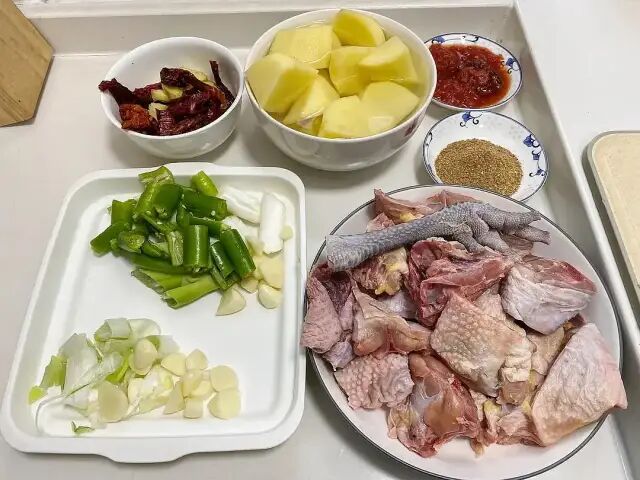
On the fifth day of staying home, Zainab stir-fried the Big Plate Chicken (dapanji), and my father-in-law made the belt noodles (pidaimian). We used a free-range chicken with black claws that I bought from Dazhang in Changying. It tastes exactly like the Big Plate Chicken (dapanji) from Urumqi in the 1990s.
In the top right corner is tomato paste and bean paste (doubanjiang), and below that is the special seasoning mix for the Big Plate Chicken (dapanji).
August 15, Braised Meatballs (huiwanzi)
On the fifth day of staying home, I made Braised Meatballs (huiwanzi). They go perfectly with rice.
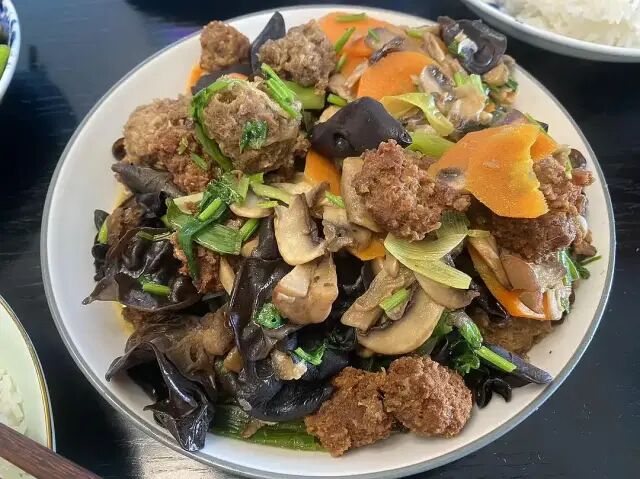
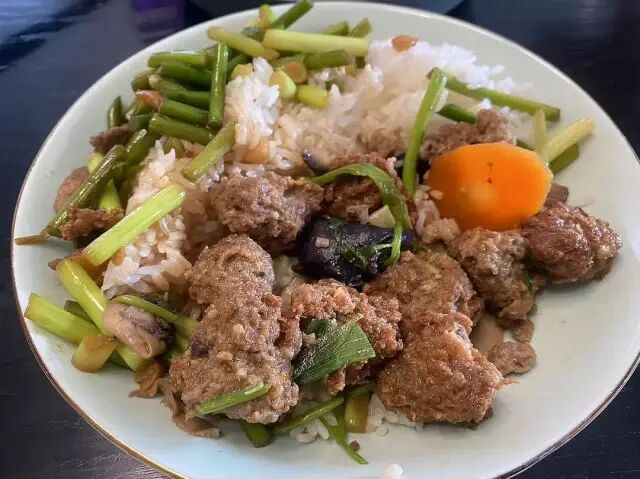
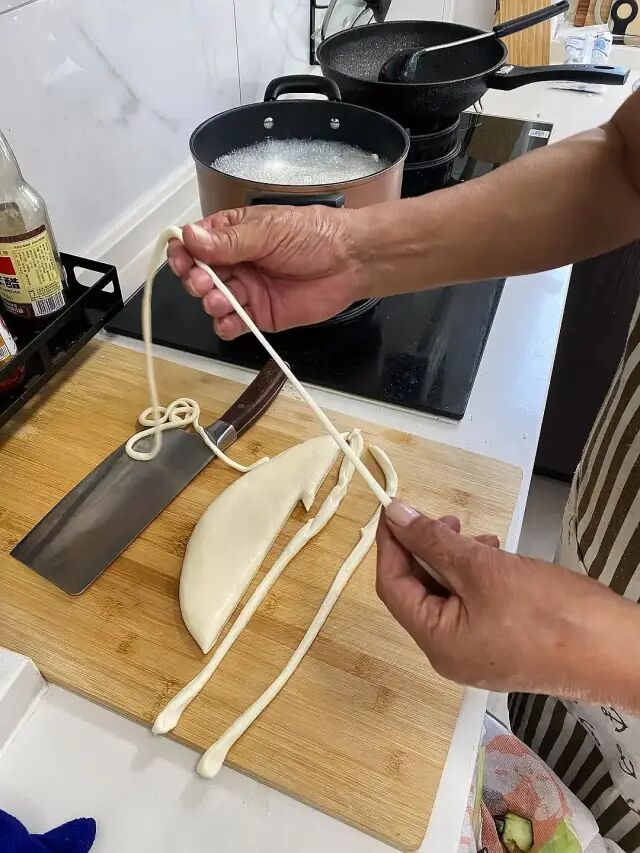
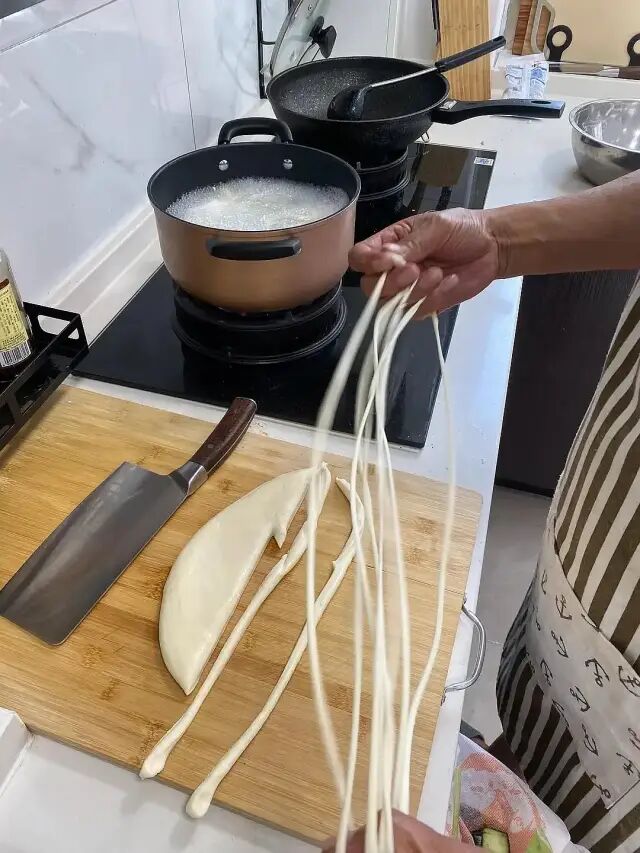
August 16, Hand-pulled Noodles (latiaozi)
On the seventh day of staying home, I still love eating the romantic meal made by my father-in-law.
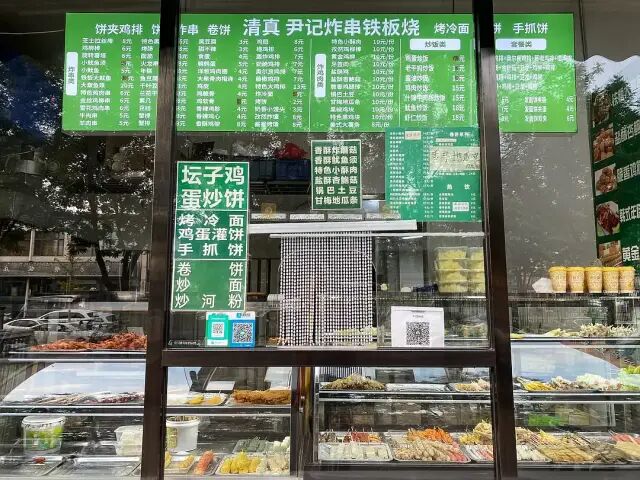
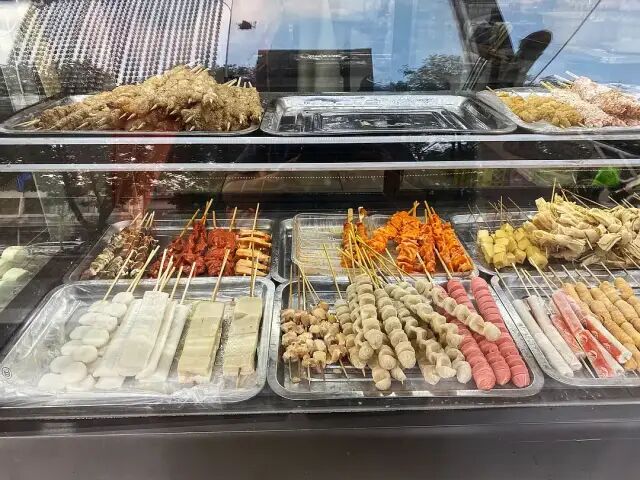
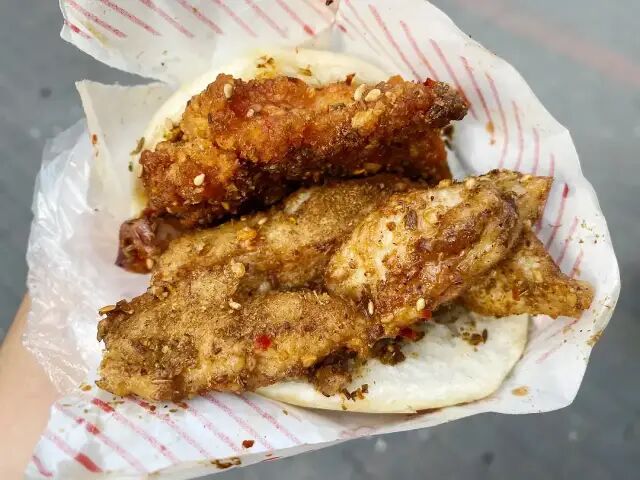
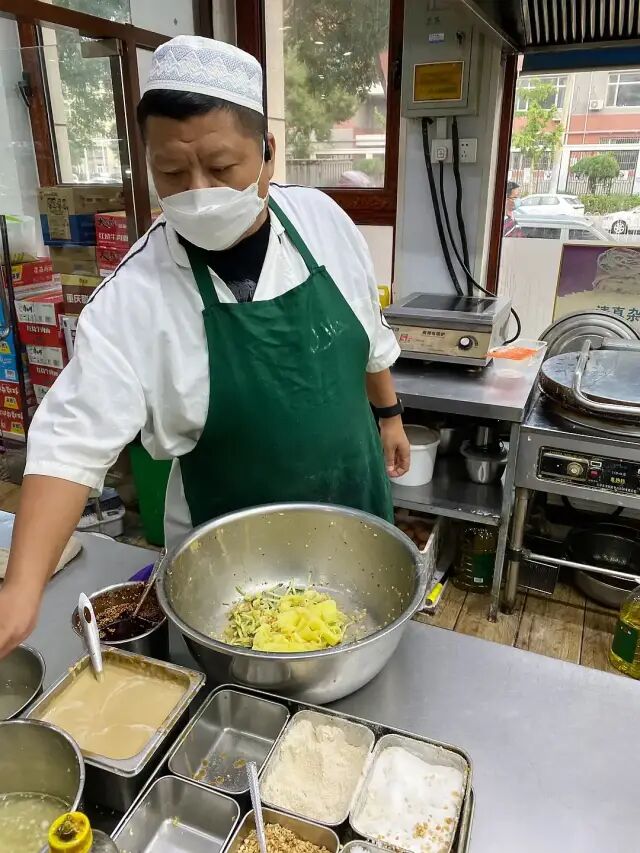
August 17, eating flatbread with fried chicken and fried skewers at Yin's in Changying.
I had a flatbread sandwich with fried chicken and fried skewers at Yinji in Changying. It had chicken and a squid skewer inside, and it tasted pretty good. Then I grabbed some cold skin noodles (liangpi) from the supermarket next door.
August 19, Sultan, a Pakistani restaurant in Sanduhe Village, Huairou.
By mid-August, the muggy heat in Beijing eased up, so we drove to Huairou for a halal getaway.
We arrived at Sanduhe Village in Huairou in the evening and started at the Pakistani restaurant Sultan. We had butter naan, spicy yogurt (Raita), rice (Biryani), tandoori chicken legs, beef curry (Kadhi), grilled shrimp, milk tea, and mint lemonade. To be fair, their portions are small and the prices are high, but the food is really delicious. It is better than some of the Pakistani restaurants in the city. Their butter naan is especially good. It comes out of the oven fluffy and smells amazing. The chicken legs and beef taste great. My father-in-law and Zainab especially liked the milk tea, which has a very rich milk and tea flavor. The only downside is that the shrimp probably sat out too long, so the texture was mushy.
It is rare to find yogurt sauce (raita) made with fresh spicy peppers. It has a strong spicy kick and tastes very unique. Raita is a Hindi word formed by combining the Sanskrit words "rajika" and "tiktaka," which mean "black mustard seeds" and "pungent." To make it, you fry black mustard seeds and cumin, mix them with chopped vegetables, and stir them into yogurt.
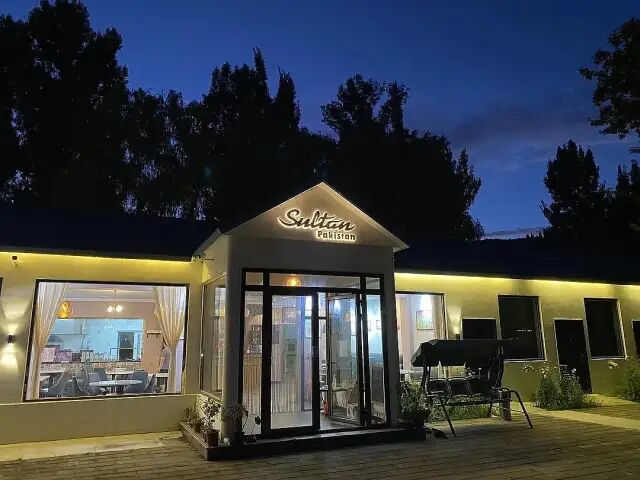
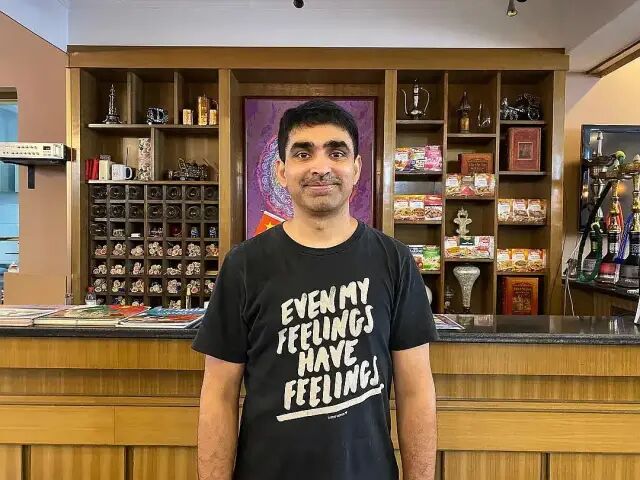
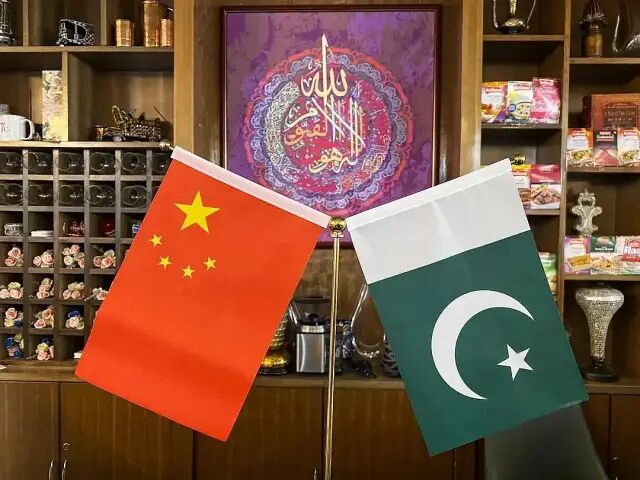
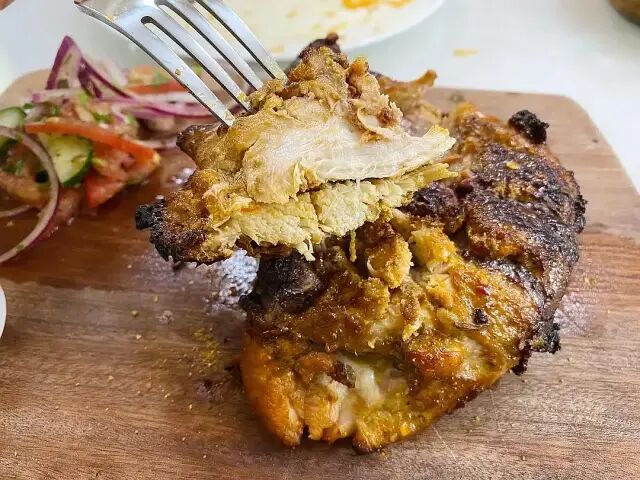
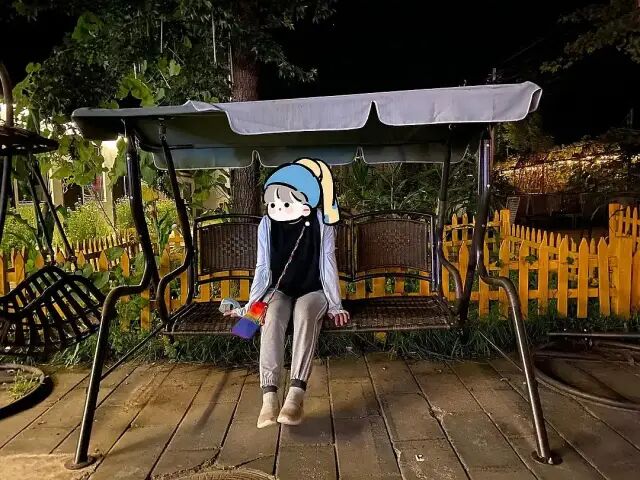
Playing in the restaurant at night.
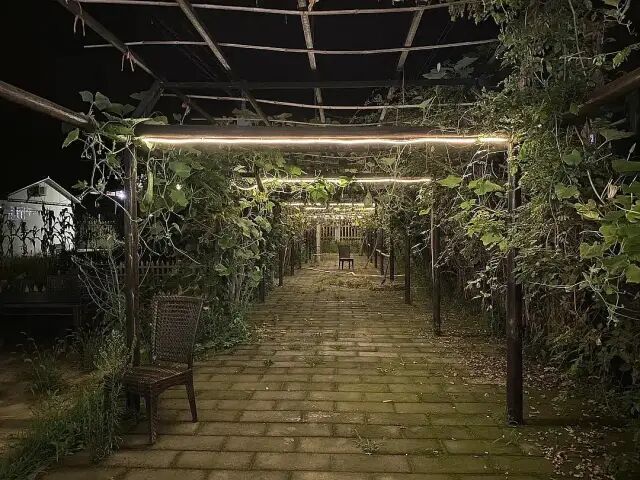
Gourd vines in the restaurant.
August 20, Xingyuanzhai Ethnic Restaurant in Sanduhe Village, Huairou.
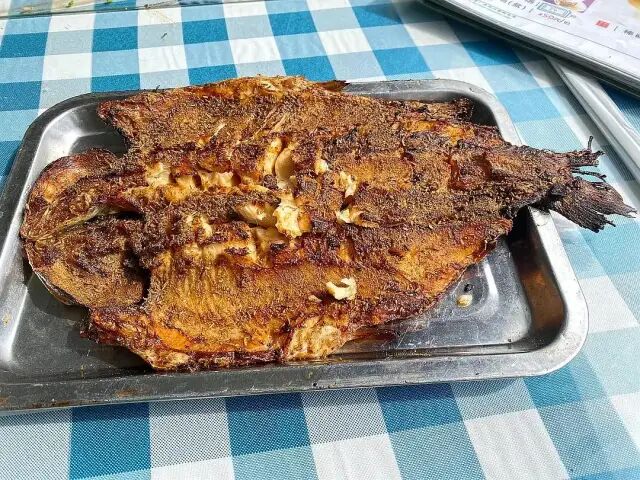
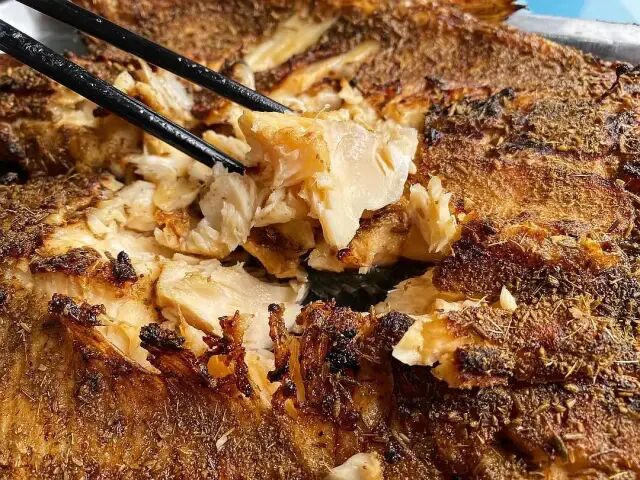
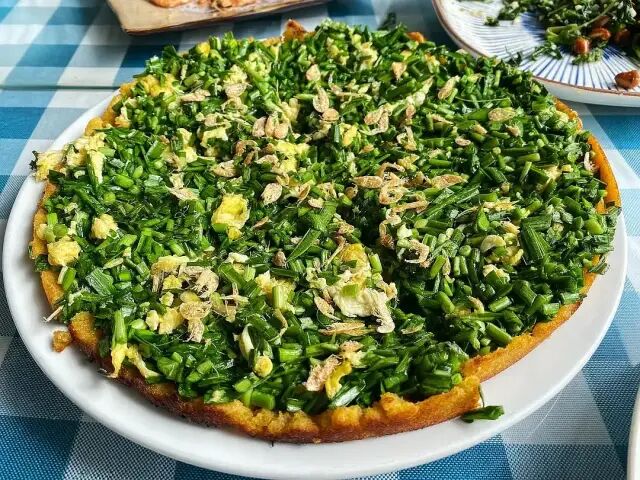
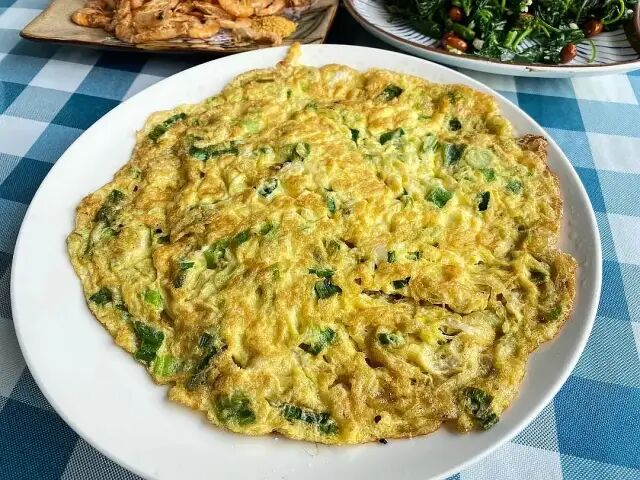
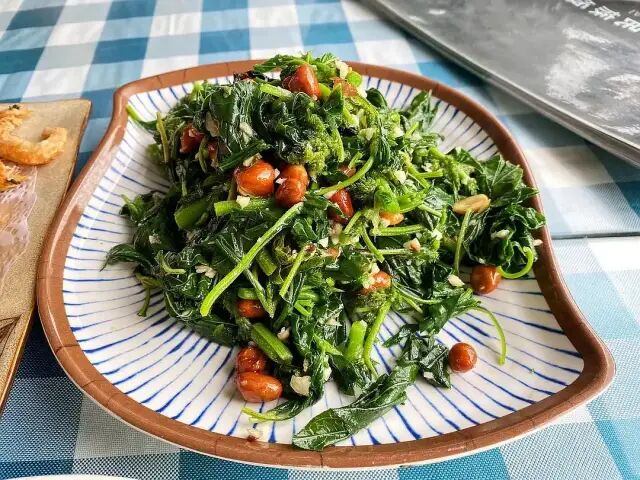
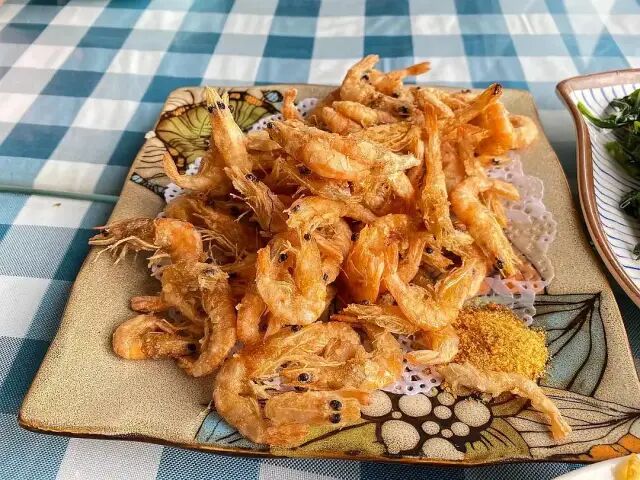
In the morning, we ate grilled golden trout, cornmeal flatbread (hubing), scrambled eggs with green onions, seasonal wild amaranth (yugu cai), and fried fresh river shrimp at Xingyuanzhai Ethnic Restaurant in Sanduhe Village. This place is run by Hui Muslims from the Hui Muslim camp in Shunyi. They specialize in golden trout and rainbow trout. The meat is tender like garlic cloves, and their other dishes are very flavorful. Zaynab especially loved the small river shrimp. If you are visiting the mountains in Huairou, like Mutianyu or Xiangshui Lake, I recommend eating here.
August 20, Masala Pakistani Restaurant in downtown Huairou.
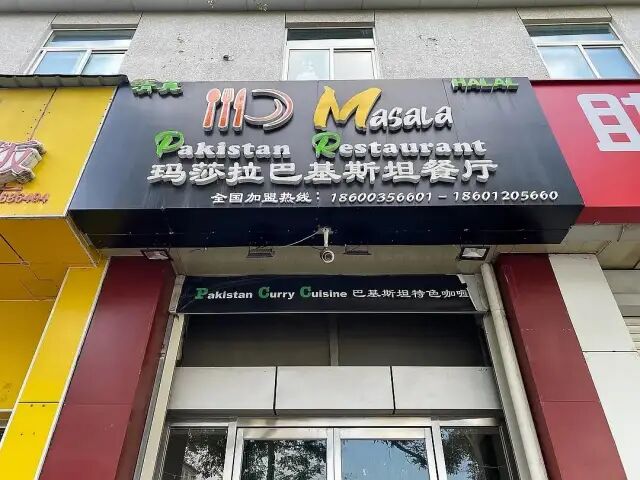
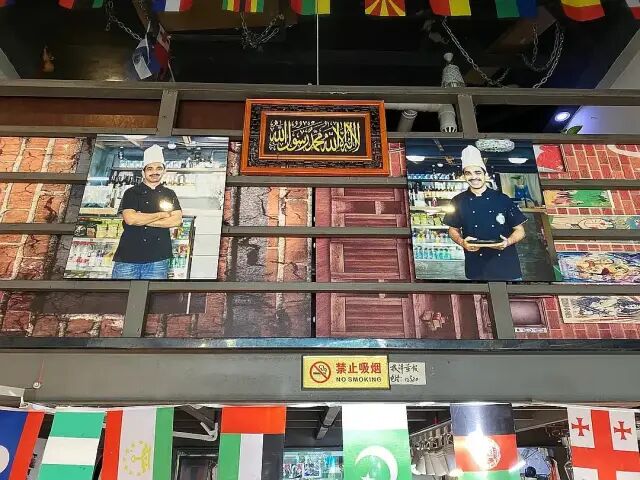
In the afternoon, I had a beef burger, cheese pizza, chickpea curry, and watermelon shaved ice at Masala Pakistani Restaurant in downtown Huairou. This restaurant has the same owner as Sultan up on the mountain, and the menu is about the same. Their cheese pizza is super delicious and very fluffy; I bet they use the same dough as they do for their butter naan. The chickpea curry and watermelon shaved ice were also quite good. Unfortunately, the burger was not great. The bun lacked texture and the beef was too tough, making it uncomfortable to eat.
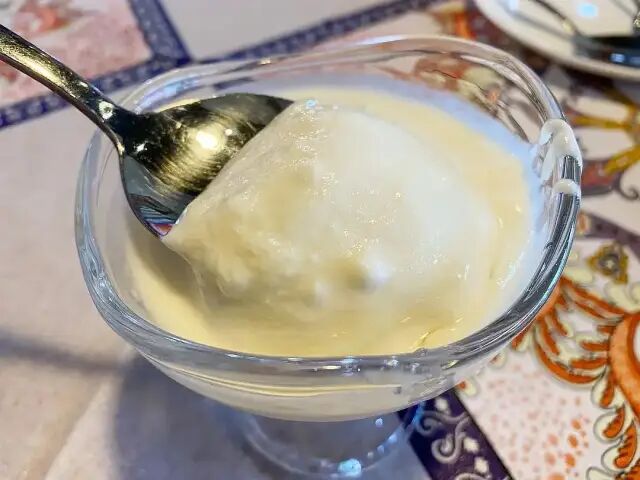
August 24, Run Gesheng on Gulou South Street in Miyun.
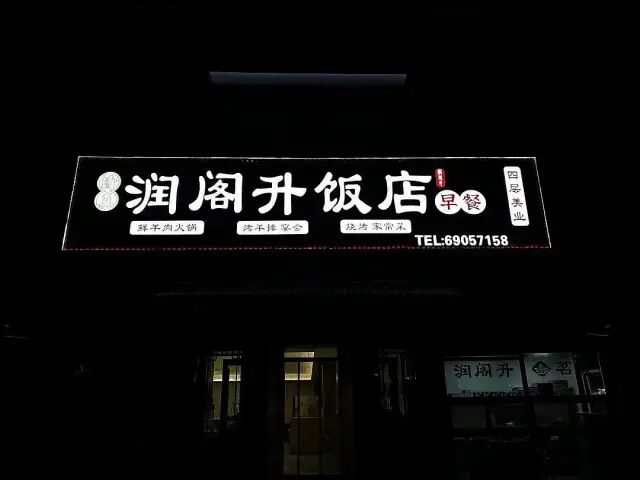
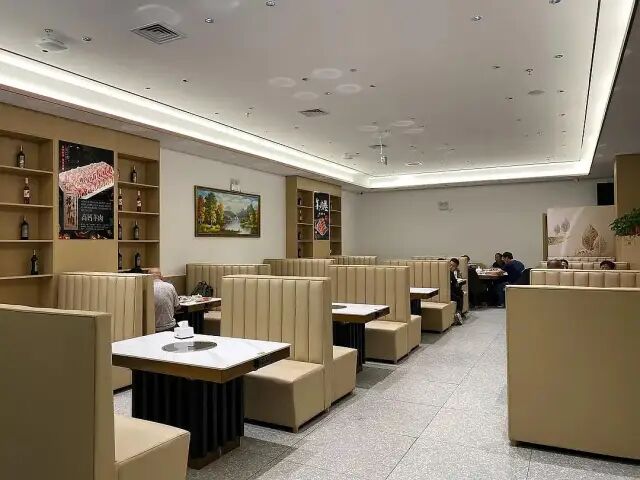
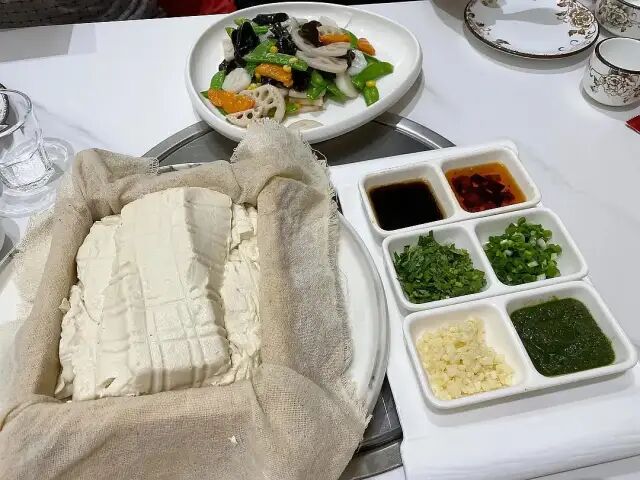
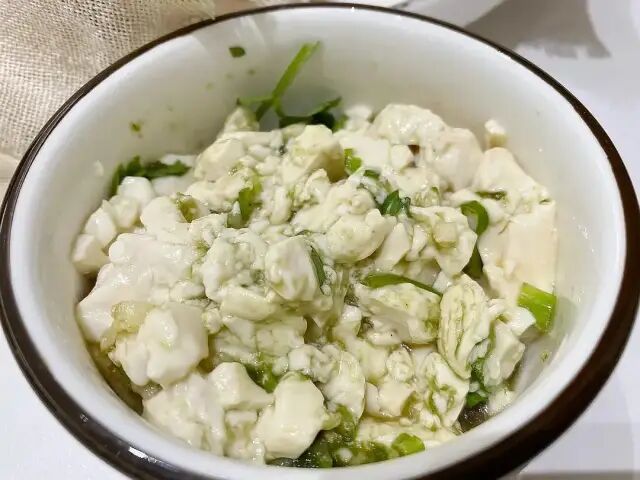
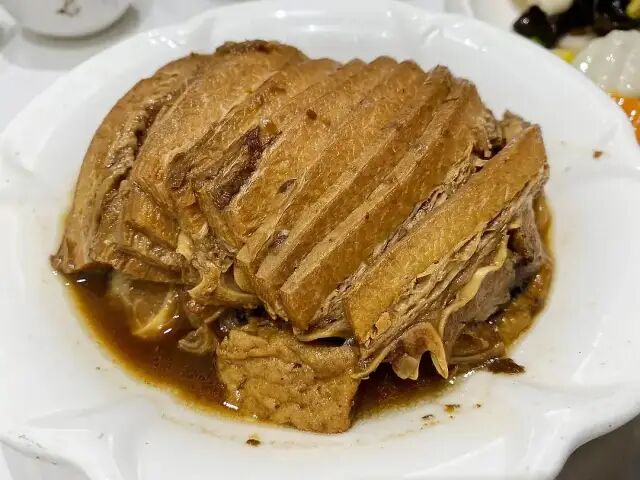
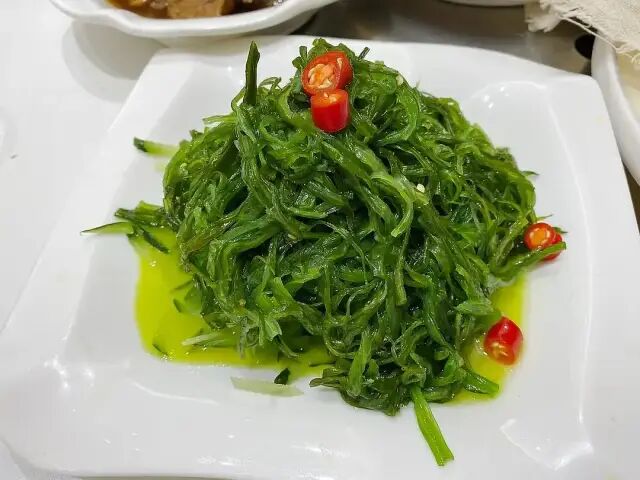
I drove to Miyun city center after work and arrived at Run'gesheng on Drum Tower South Street in the evening. The restaurant was recently renovated this year and the environment is very nice. We ordered steamed tofu (kaibao doufu) and red steamed beef. The steamed tofu is made by steaming the tofu and mixing it with various seasonings. Adding chive flower sauce really makes it flavorful! The red steamed beef has a great texture and is likely one of the eight classic bowls (badawan) of the Hui Muslims, though Zainab and my father-in-law both said it was a bit salty. I guess I will be experiencing the salty taste of traditional Beijing suburban dishes every day for a while, haha.
August 25, Changshunzhai on Nanda Street in Miyun.
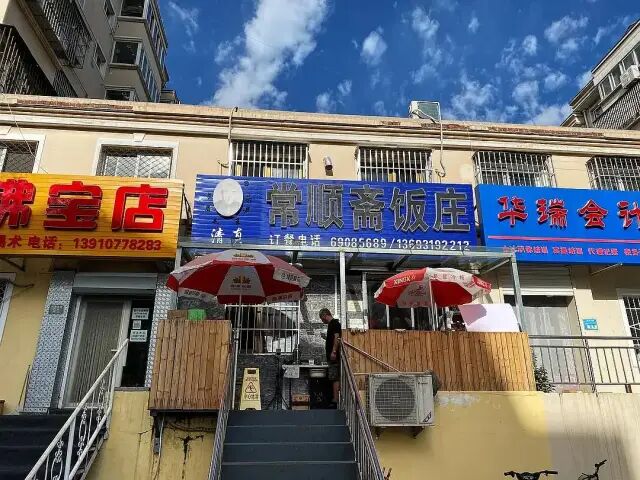
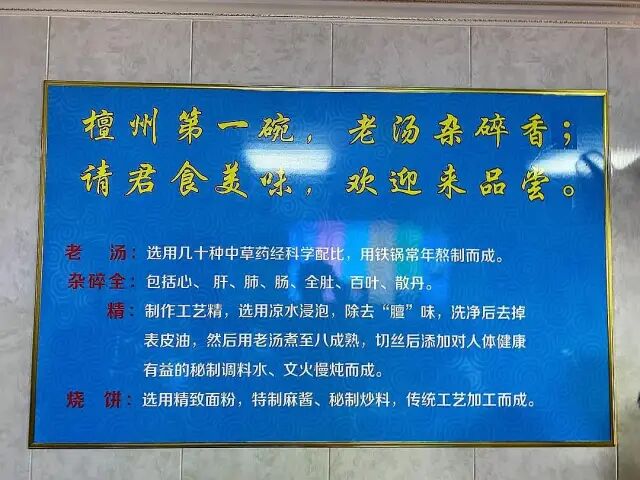
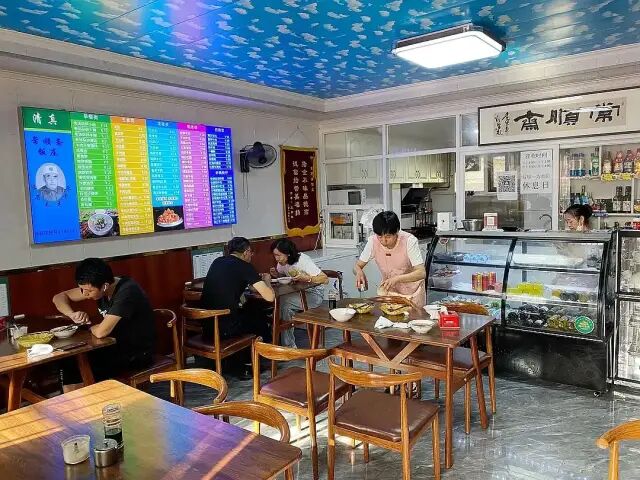
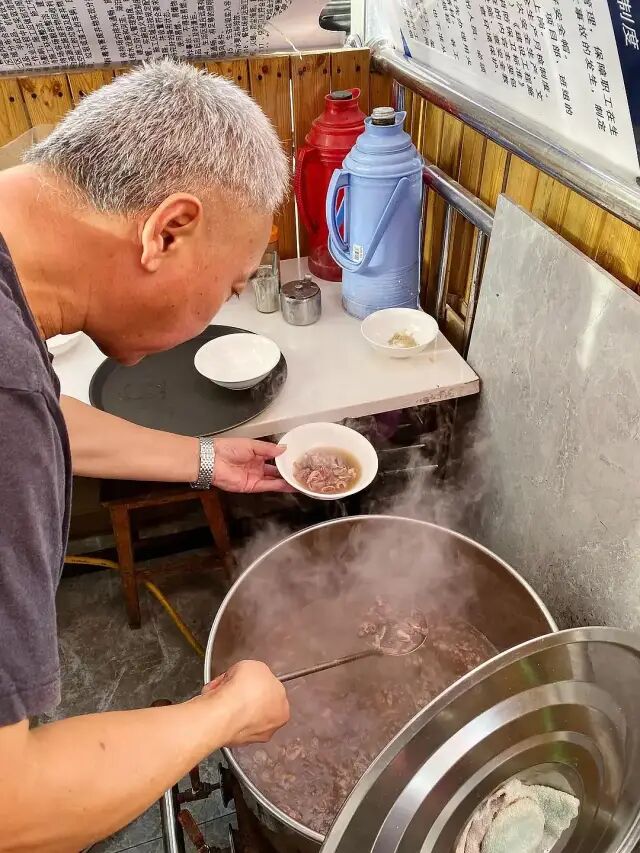
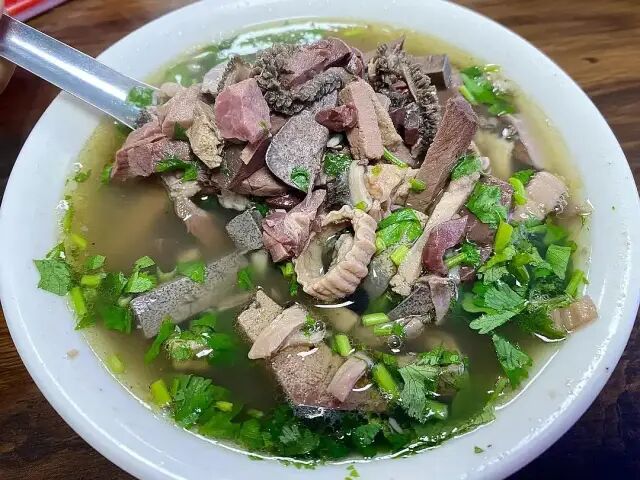
In the morning, we ate old-broth lamb offal soup (laotang yangza), beef ingot soup (niurou yuanbao tang), and freshly fried meat flatbread (shaobing) at Changshunzhai on Nanda Street in Miyun. The lamb offal tasted great, but my father-in-law and Zainab still could not get used to the salty taste of traditional Beijing suburban food. The flatbread was fried until crispy, and the aroma of the sesame really came through. The ingot-shaped dumplings (yuanbaotang) have thin skins and plenty of filling, and they taste great.
August 25, outside the Miyun Mosque.
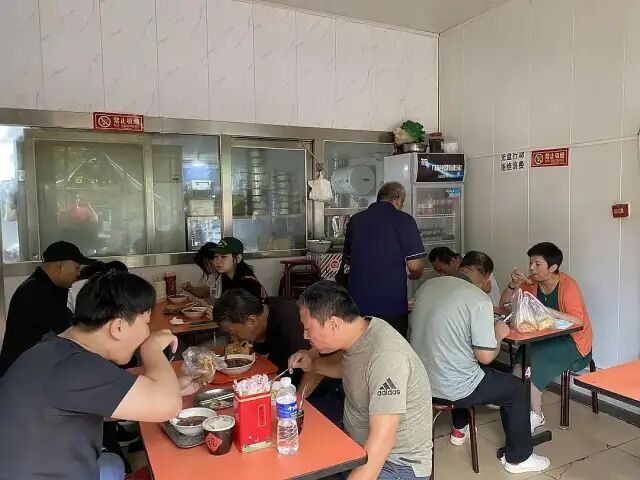
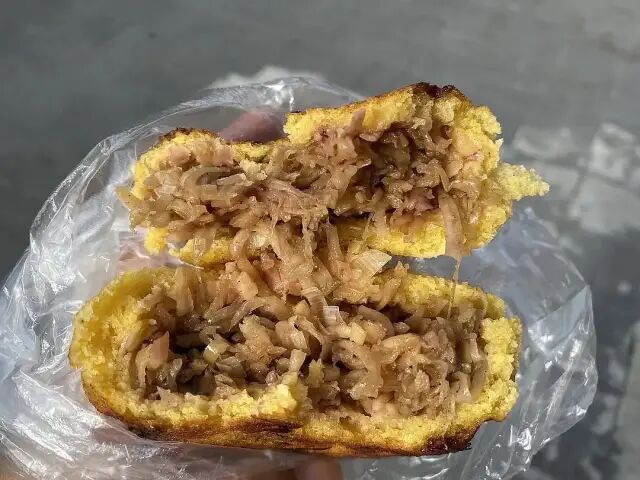
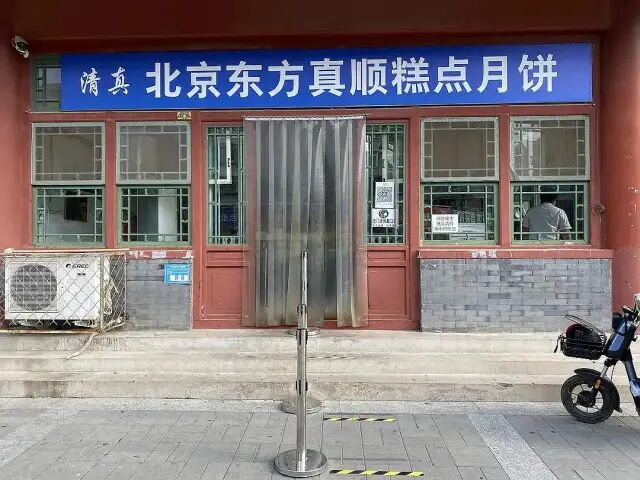
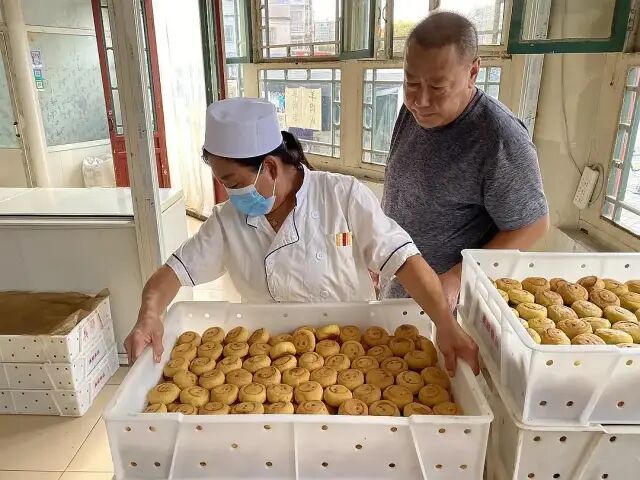
I bought radish-filled buns (xianbobo) at Guangjuzhai outside the Miyun Mosque, and old-fashioned mooncakes with chestnut, five-kernel, and black sesame fillings at Dongfang Zhenshun Bakery. They were all delicious. Most of the halal signs here in Miyun use Persian blue, which matches the style outside the Great Wall.
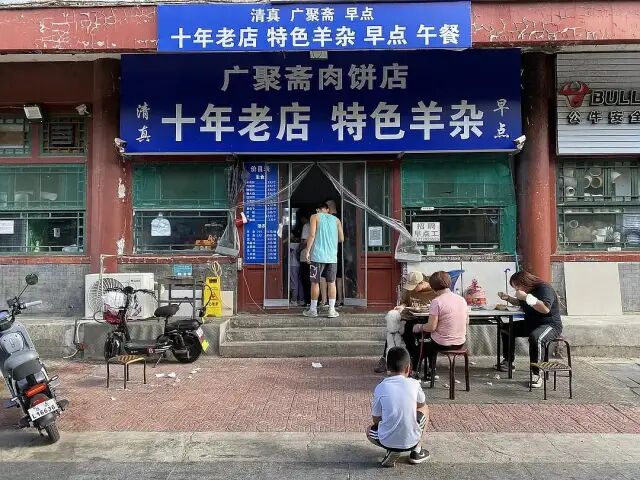
August 25, Fuhua Zhengxing Folk Restaurant in Mujia Yu, Miyun.
I ate beef pancakes, beef in a clay pot, mixed lamb liver, and stir-fried pumpkin at Fuhua Zhengxing Folk Restaurant in Mujia Yu. It was my first time eating at a farm-style restaurant in Miyun, so I didn't know what to expect and ordered way too much, haha. The flaky beef pancakes are delicious! The mixed lamb liver (ban yanggan) is very flavorful, but the beef has a lot of gristle and fat. It would be better if it were leaner.
The owner is very welcoming. As soon as he saw that Zainab was pregnant, he quickly moved us into a quiet room in the back to eat.
Beijing Halal Food Diary: Summer 2022 Muslim Food and Mosques (Part 4)
Articles • ali2007fr posted the article • 0 comments • 145 views • 2026-05-18 08:38
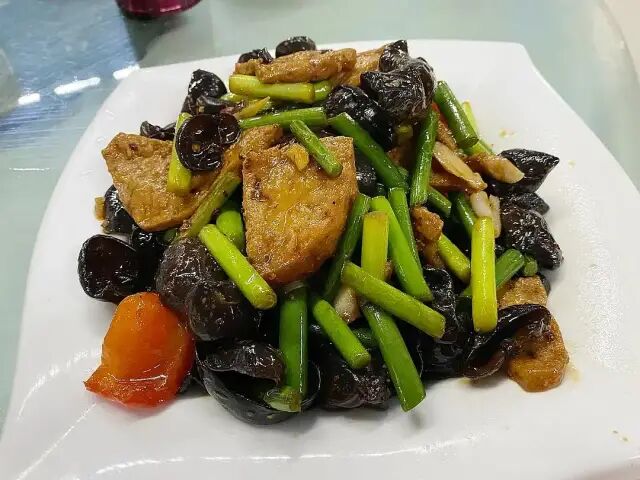
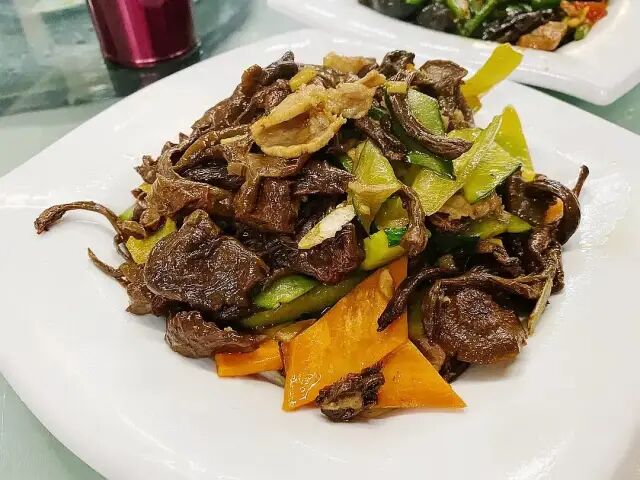
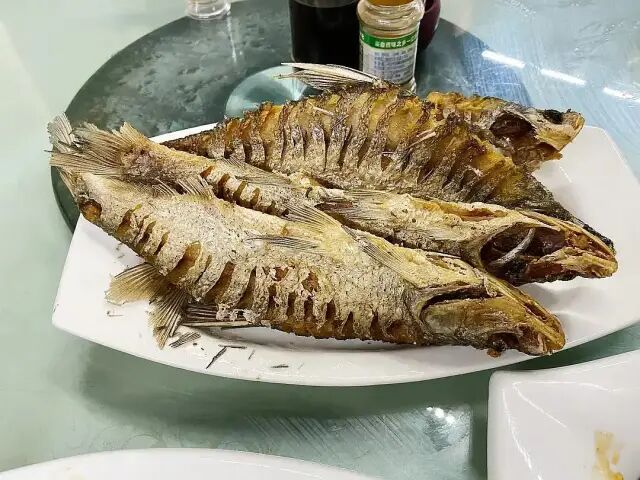
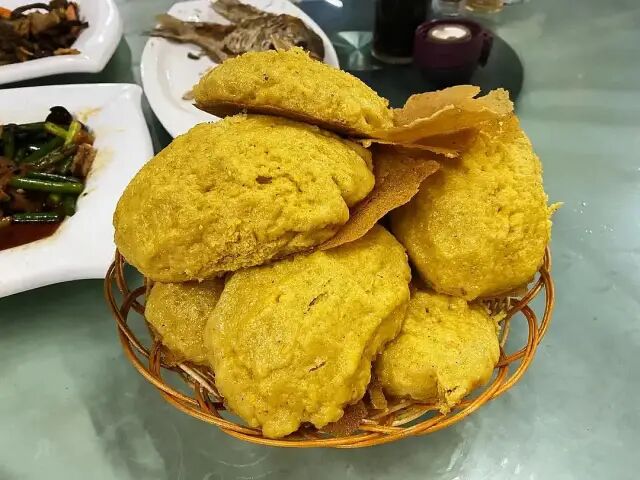
Summary: Beijing Halal Food Diary: Summer 2022 Muslim Food and Mosques is presented here as a firsthand travel account in clear English, beginning with this scene: At Shanshui Tianyuan Ethnic Restaurant in Mujiaoyu, we ate stir-fried beef with wild mushrooms, stir-fried tofu and wood ear mushrooms, deep-fried topmouth culter (qiaozui), and cornmeal flatbreads (tiebingzi). The account keeps its focus on Beijing Halal Food, Summer Diary, Muslim Food while preserving the names, places, food, and historical details from the Chinese source.
August 25, Shanshui Tianyuan Ethnic Restaurant in Mujiaoyu, Miyun.
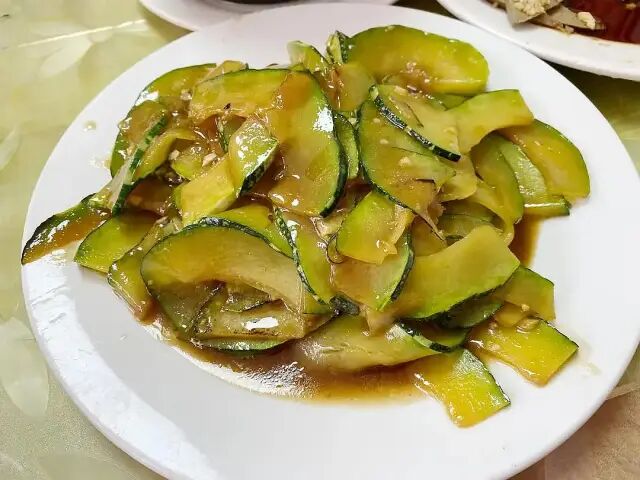
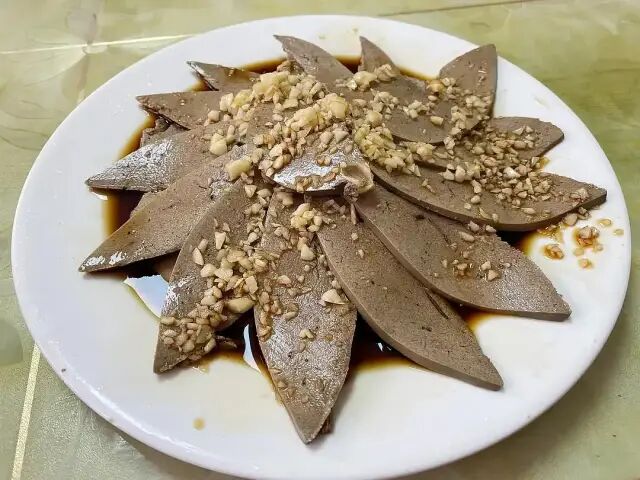
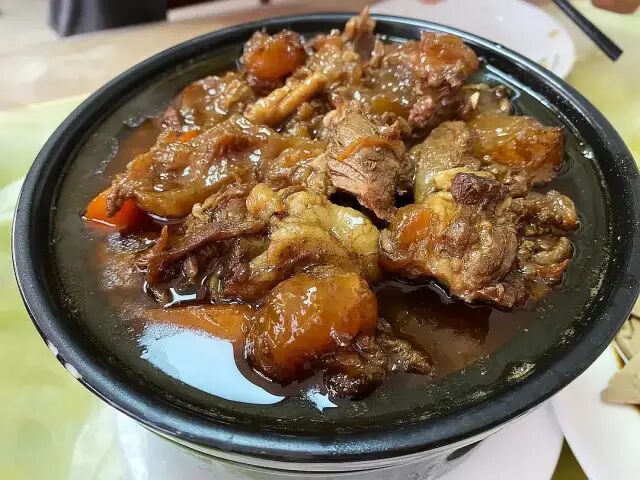
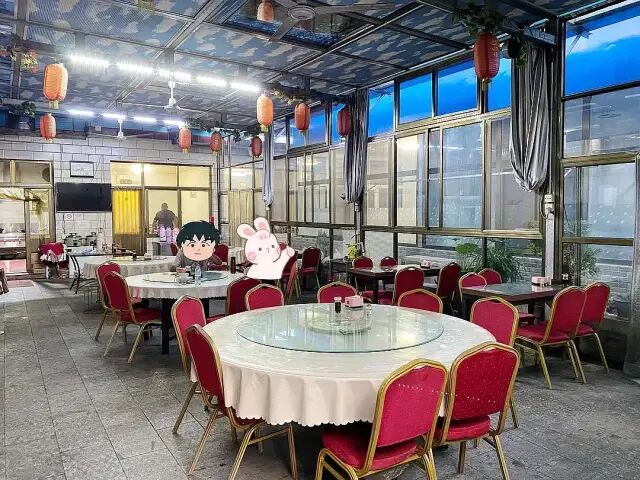
At Shanshui Tianyuan Ethnic Restaurant in Mujiaoyu, we ate stir-fried beef with wild mushrooms, stir-fried tofu and wood ear mushrooms, deep-fried topmouth culter (qiaozui), and cornmeal flatbreads (tiebingzi). A large iron pot of freshly made flatbreads cost only 15 yuan, and we couldn't even finish them. The deep-fried fish was very satisfying, but the portion was huge. Overall, eating at a farmhouse restaurant means big, affordable portions, which reminded me of eating in Northeast China, haha.
Also, the Hui Muslim banquet dish Eight Great Bowls (badawan) in Mujiaoyu has a long history. When the Miyun Reservoir was built in 1958, all residents of the Shixia Ancient City in the flooded area were relocated. A group of Hui Muslims surnamed Li, who were experts at making the Eight Great Bowls, moved to Mujiaoyu, which is how the current Mujiaoyu halal Eight Great Bowls came to be.
August 26, Hexingzhai Halal Restaurant in Mujiaoyu, Miyun.
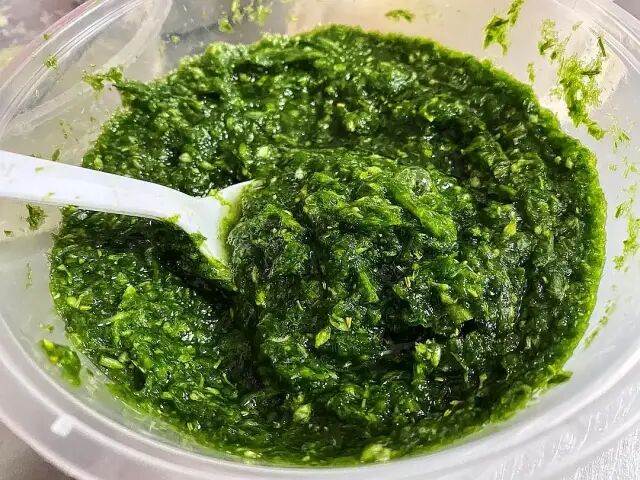
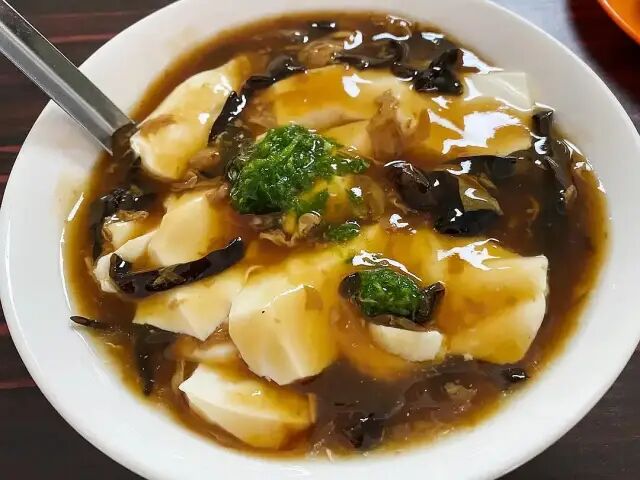
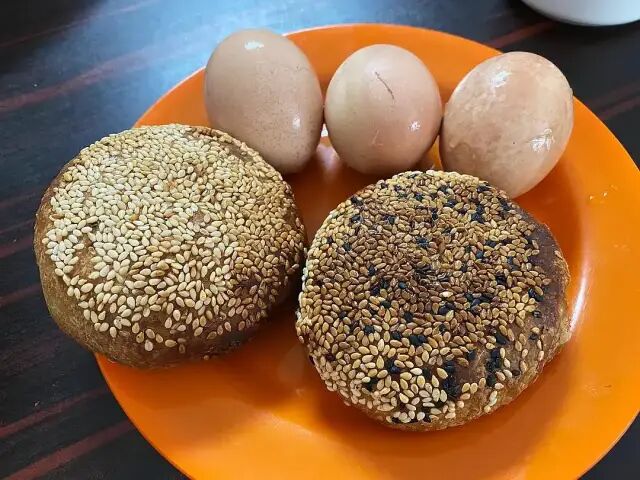
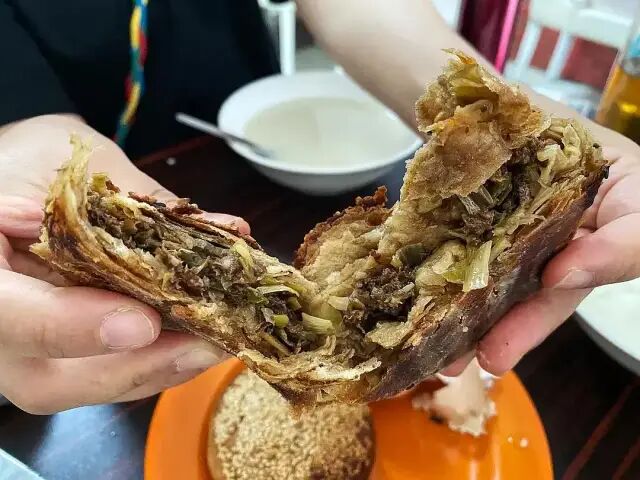
In the morning, I had tofu pudding (doufunao), soy milk (doujiang), fried dough (youbing), and meat flatbread (shaobing) at Hexingzhai Halal Restaurant in Mujiayu. This place seems to be the only breakfast spot in the North Mujiayu Hui Muslim village. Their homemade fresh chive flower sauce is especially delicious, and the meat flatbread is very flavorful.
August 26, Gubeikou Halal Snack Shop, Miyun.
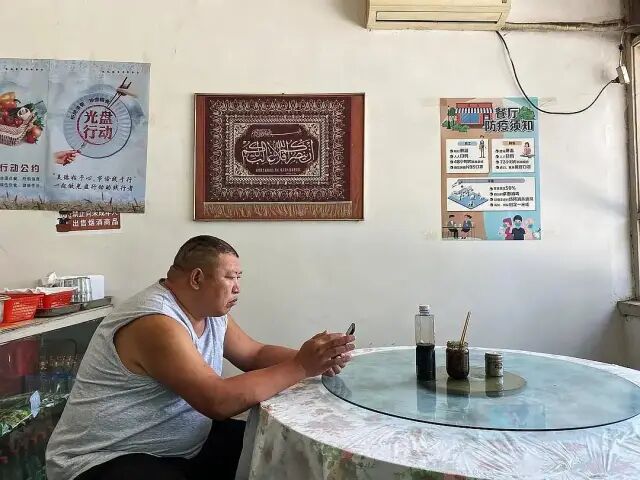
This is the only halal snack shop in Gubeikou Town. The owner's surname is Cao, and he is a local Hui Muslim from Gubeikou. The ancestors of the Cao-surnamed Hui Muslims in North China were originally surnamed Li. They lived in Erlanggang, Nanjing, which research suggests was a station for Semu people who surrendered to the Ming Dynasty. During the Yongle reign, they followed the emperor to Beijing. On the return trip, one ancestor stayed in Cangzhou due to illness, married into the Cao family, and his descendants changed their surname to Cao. The Cao-surnamed Hui Muslims from Cangzhou later spread throughout North China, and one branch settled in Gubeikou during the Qing Dynasty.
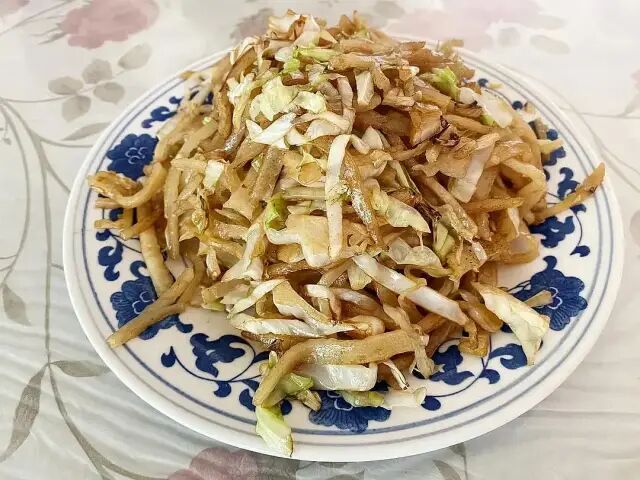
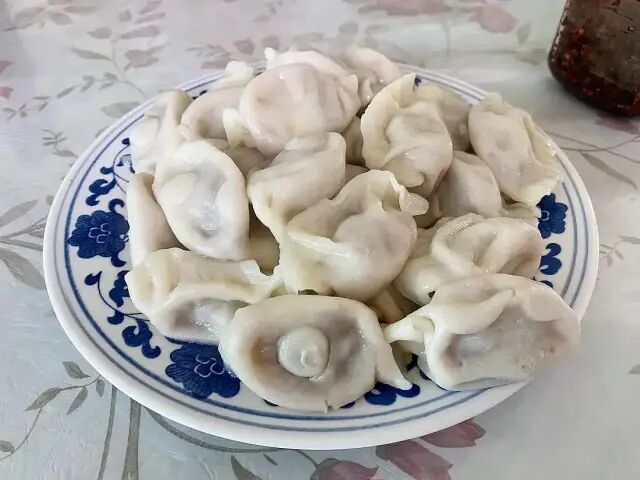
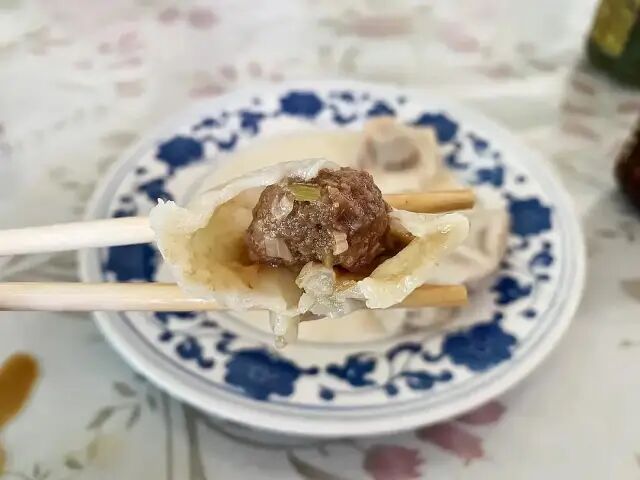
Their shop is famous for selling flatbread (shaobing) and lamb offal soup (yangza) in the morning. At noon, they serve lamb dumplings and stir-fried flatbread (chaobing). It is just a small shop run by a husband and wife. Boss Cao looks a bit stern, but he is actually very friendly. He chatted with me about the situation of the Hui Muslims in Gubeikou. He said that most of the Hui Muslims in Gubeikou have moved away, and some of them have relocated near the Miyun Mosque.
August 26, Tanghe Halal Restaurant in Gubei Water Town, Miyun.
Most Hui Muslims visiting Gubei Water Town stop by this Tanghe Halal Restaurant. The building mimics the Hengchang Ruiji storefront on Dongsi Fourth Alley. It has a classic, antique look and a very nice atmosphere.
Their menu is a mix of styles, with the main dishes being big plate chicken (dapanji) and roasted lamb (shao yangrou). We looked at the big plate chicken other tables ordered. It had too many potatoes and no wide belt noodles (pidaimian), just flatbread (nang) underneath, so we ordered the roasted lamb instead. They serve the roasted lamb like roast duck, with yellow bean sauce for dipping and lotus leaf pancakes (heye bing) for wrapping. It was pretty good. However, the fried coating on the roasted lamb wasn't fragrant enough, and the flavor didn't soak into the meat. This made the fatty parts feel greasy. It is not quite as good as truly delicious roasted lamb, but I am satisfied to find a restaurant like this inside a tourist area.
August 27, Yishun Halal Snack Shop in Taishitun Town, Miyun.
Gubei Water Town has no halal breakfast. The closest option is the sesame flatbread (shaobing) and lamb offal soup (yangza) at the Gubei Kou Town Halal Snack Shop. We wanted something different, so we drove south to the Yishun Halal Snack Shop in Taishitun Town that morning.
This restaurant is run by local Hui Muslims from Taishitun. They are the only Hui Muslim family in Taishitun town. There are dozens more families in Lugezhuang to the south, but this is the only halal restaurant in the area. The restaurant is right on the edge of town. There is a cornfield behind it, which gives it a real countryside feel.
We arrived after nine in the morning and they were already serving their full menu. The dishes are similar to the Hui Muslim farmhouse food in Mujiaoyu, focusing on beef pancakes (niuroubing) and the eight classic Hui Muslim bowls (Hui min ba da wan), along with some home-style stir-fries. We ordered half a jin of beef pancakes, stir-fried eggs with tomatoes (muxu chao shizi), boiled lamb head (baishui yangtou), and tofu in a clay pot (shaguo doufu). Everything tasted great, making for a very hearty breakfast, haha.
August 27, Kunanchun Folk Restaurant in Mujiaoyu, Miyun.
A halal farmhouse restaurant in Mujiaoyu: Kunanchun Folk Restaurant. We ate fish head with flatbread (yutou paobing), which was three jin of bighead carp served with freshly baked home-style flatbread (jiachang bing), and we also ordered a braised three-mushroom dish (hui san jun). I called ahead to ask for less salt and had them start the stew, so it was ready to eat as soon as we arrived. The reservoir fish was not as chewy as the rainbow trout we had last week, but it was delicious in its own way. Everyone was very happy and wanted more, saying we should order a whole five or six-pound fish next time.
August 30, eating dumplings.
My father-in-law made delicious long bean dumplings. They had thin skins and big fillings, looking like small steamed buns (baozi).
August 31, Jia San Steamed Buns (baozi) at Baiyun Temple.
We went to Jia San Steamed Buns (baozi) at Baiyun Temple for lamb pita bread soup (yangrou paomo) and beef tail soup-filled buns (guantang bao), then bought strip flatbread (pitiao nang), yogurt, and barbecue at the nearby Kashgar Mahmut restaurant. I love both of these places and always struggle to choose between them, but this time I finally got to eat at both, haha.
August 31, Kashgar Mahmut Restaurant at Baiyun Temple.
Kashgar Maihemuti's yogurt is the most authentic Xinjiang-style yogurt in all of Beijing; one bite and you feel like you have been transported straight back to Xingxing Gorge. Freshly baked flatbread (nang) has such a strong wheat aroma that the whole bus smells like it on the way home. view all
Summary: Beijing Halal Food Diary: Summer 2022 Muslim Food and Mosques is presented here as a firsthand travel account in clear English, beginning with this scene: At Shanshui Tianyuan Ethnic Restaurant in Mujiaoyu, we ate stir-fried beef with wild mushrooms, stir-fried tofu and wood ear mushrooms, deep-fried topmouth culter (qiaozui), and cornmeal flatbreads (tiebingzi). The account keeps its focus on Beijing Halal Food, Summer Diary, Muslim Food while preserving the names, places, food, and historical details from the Chinese source.
August 25, Shanshui Tianyuan Ethnic Restaurant in Mujiaoyu, Miyun.
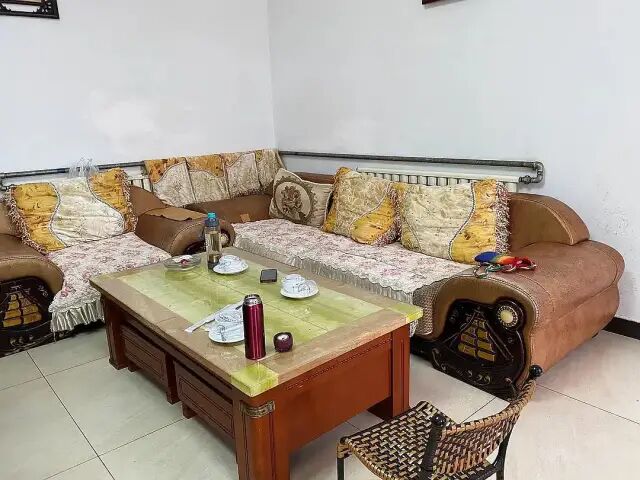
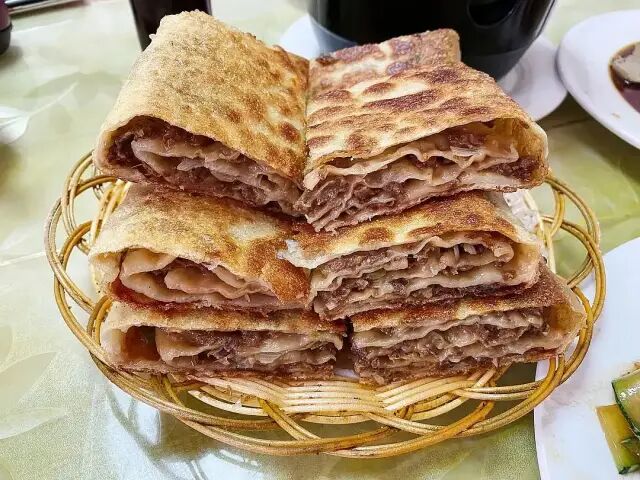
At Shanshui Tianyuan Ethnic Restaurant in Mujiaoyu, we ate stir-fried beef with wild mushrooms, stir-fried tofu and wood ear mushrooms, deep-fried topmouth culter (qiaozui), and cornmeal flatbreads (tiebingzi). A large iron pot of freshly made flatbreads cost only 15 yuan, and we couldn't even finish them. The deep-fried fish was very satisfying, but the portion was huge. Overall, eating at a farmhouse restaurant means big, affordable portions, which reminded me of eating in Northeast China, haha.
Also, the Hui Muslim banquet dish Eight Great Bowls (badawan) in Mujiaoyu has a long history. When the Miyun Reservoir was built in 1958, all residents of the Shixia Ancient City in the flooded area were relocated. A group of Hui Muslims surnamed Li, who were experts at making the Eight Great Bowls, moved to Mujiaoyu, which is how the current Mujiaoyu halal Eight Great Bowls came to be.
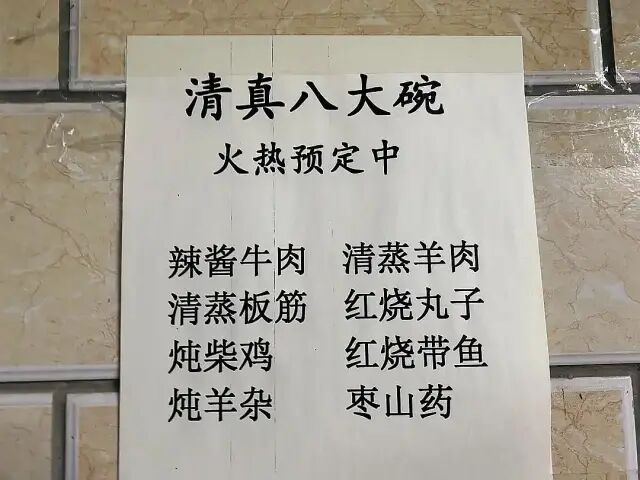
August 26, Hexingzhai Halal Restaurant in Mujiaoyu, Miyun.
In the morning, I had tofu pudding (doufunao), soy milk (doujiang), fried dough (youbing), and meat flatbread (shaobing) at Hexingzhai Halal Restaurant in Mujiayu. This place seems to be the only breakfast spot in the North Mujiayu Hui Muslim village. Their homemade fresh chive flower sauce is especially delicious, and the meat flatbread is very flavorful.
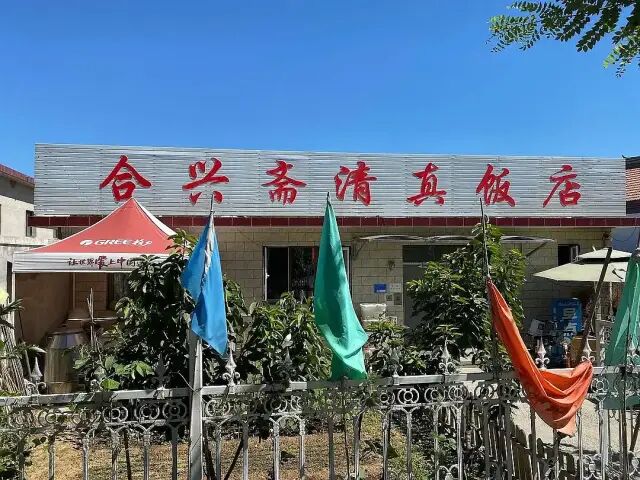
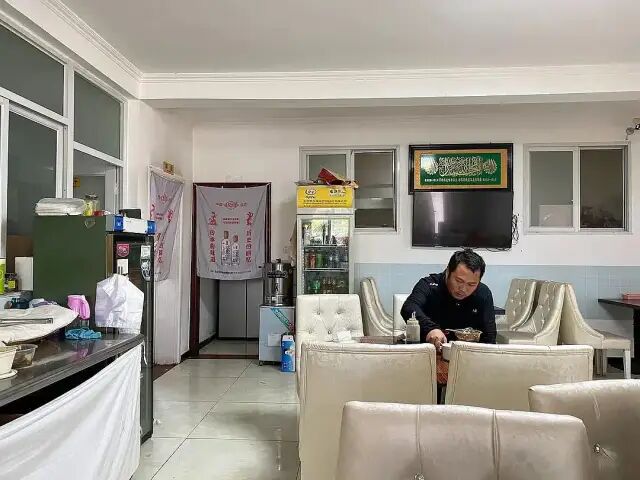
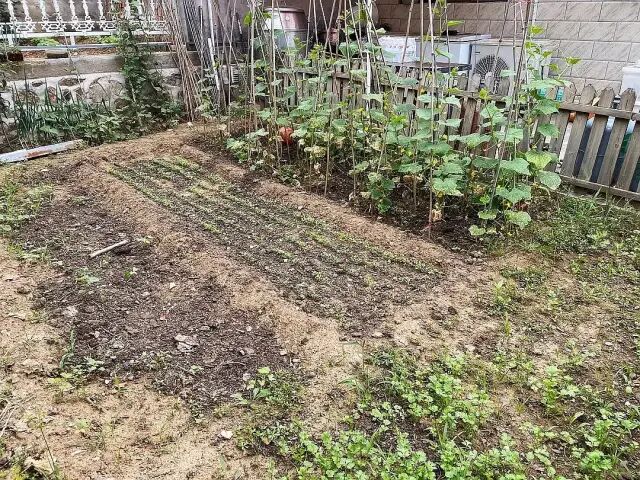
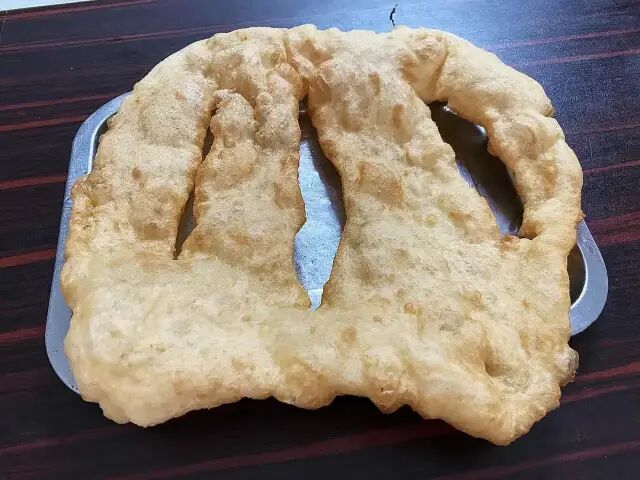
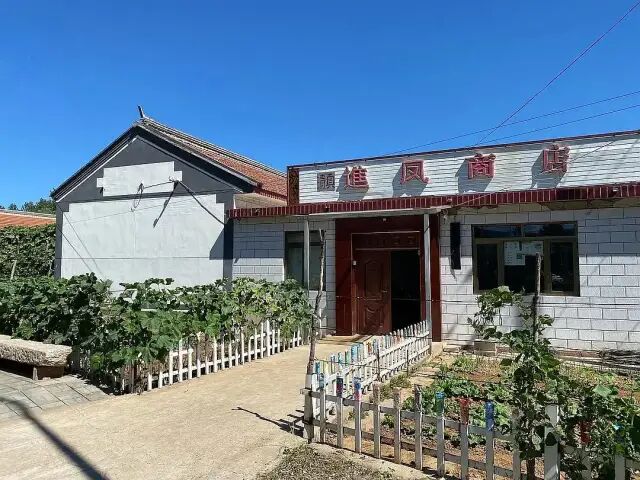
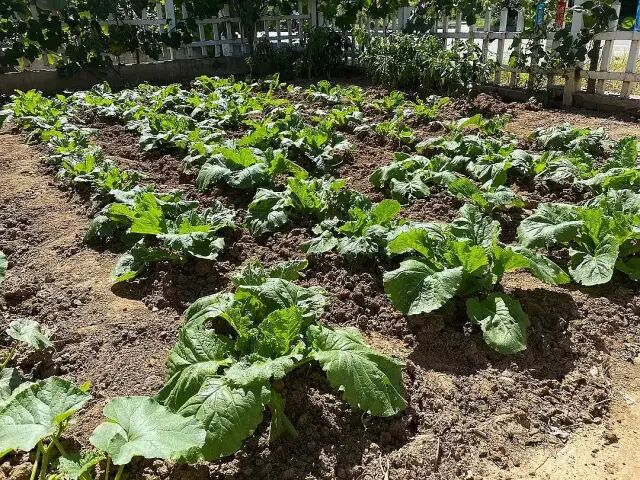
August 26, Gubeikou Halal Snack Shop, Miyun.
This is the only halal snack shop in Gubeikou Town. The owner's surname is Cao, and he is a local Hui Muslim from Gubeikou. The ancestors of the Cao-surnamed Hui Muslims in North China were originally surnamed Li. They lived in Erlanggang, Nanjing, which research suggests was a station for Semu people who surrendered to the Ming Dynasty. During the Yongle reign, they followed the emperor to Beijing. On the return trip, one ancestor stayed in Cangzhou due to illness, married into the Cao family, and his descendants changed their surname to Cao. The Cao-surnamed Hui Muslims from Cangzhou later spread throughout North China, and one branch settled in Gubeikou during the Qing Dynasty.
Their shop is famous for selling flatbread (shaobing) and lamb offal soup (yangza) in the morning. At noon, they serve lamb dumplings and stir-fried flatbread (chaobing). It is just a small shop run by a husband and wife. Boss Cao looks a bit stern, but he is actually very friendly. He chatted with me about the situation of the Hui Muslims in Gubeikou. He said that most of the Hui Muslims in Gubeikou have moved away, and some of them have relocated near the Miyun Mosque.
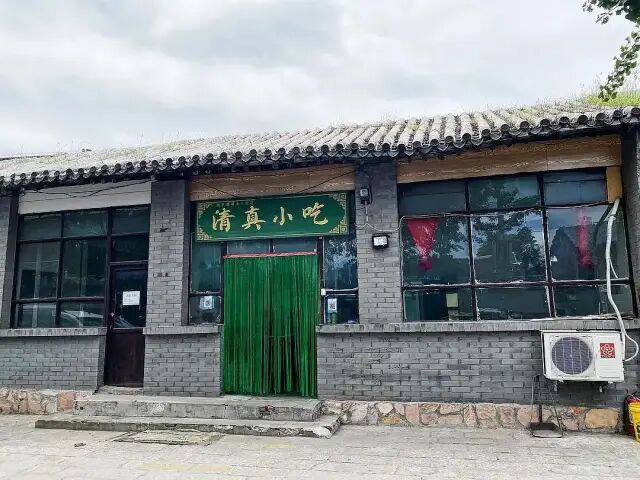
August 26, Tanghe Halal Restaurant in Gubei Water Town, Miyun.
Most Hui Muslims visiting Gubei Water Town stop by this Tanghe Halal Restaurant. The building mimics the Hengchang Ruiji storefront on Dongsi Fourth Alley. It has a classic, antique look and a very nice atmosphere.
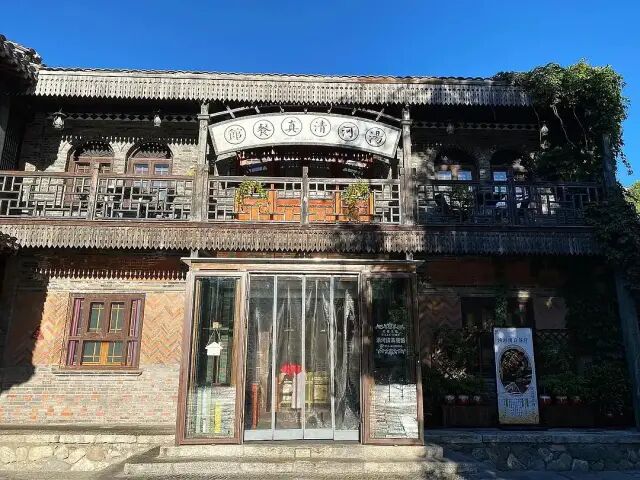
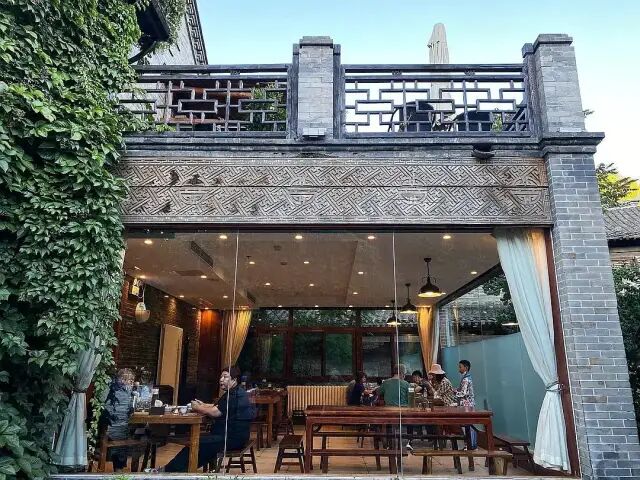
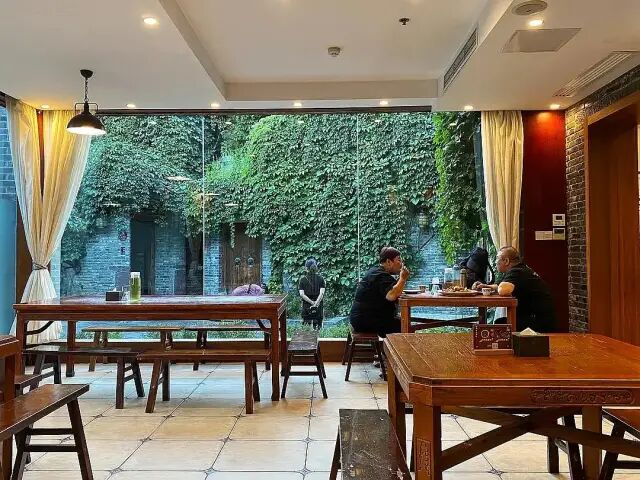
Their menu is a mix of styles, with the main dishes being big plate chicken (dapanji) and roasted lamb (shao yangrou). We looked at the big plate chicken other tables ordered. It had too many potatoes and no wide belt noodles (pidaimian), just flatbread (nang) underneath, so we ordered the roasted lamb instead. They serve the roasted lamb like roast duck, with yellow bean sauce for dipping and lotus leaf pancakes (heye bing) for wrapping. It was pretty good. However, the fried coating on the roasted lamb wasn't fragrant enough, and the flavor didn't soak into the meat. This made the fatty parts feel greasy. It is not quite as good as truly delicious roasted lamb, but I am satisfied to find a restaurant like this inside a tourist area.
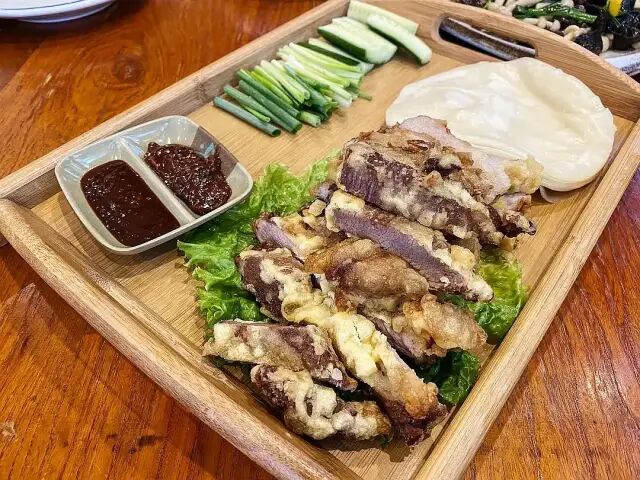
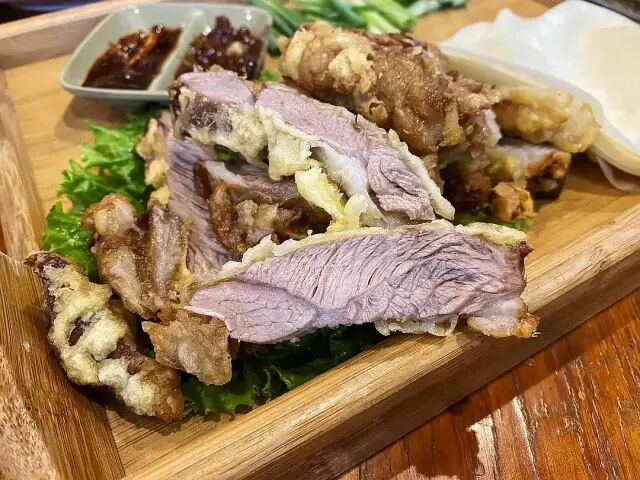
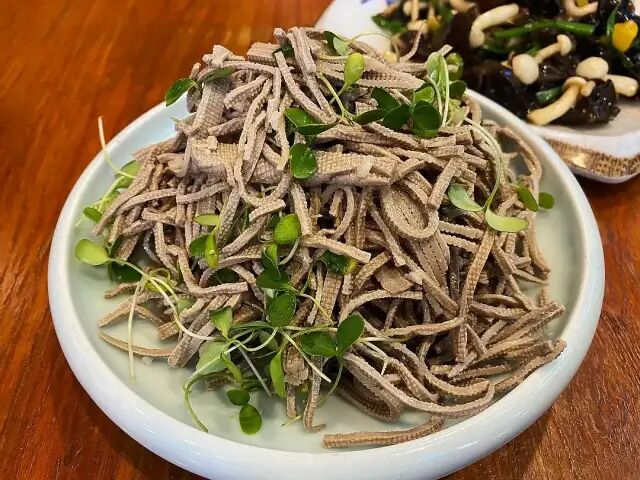
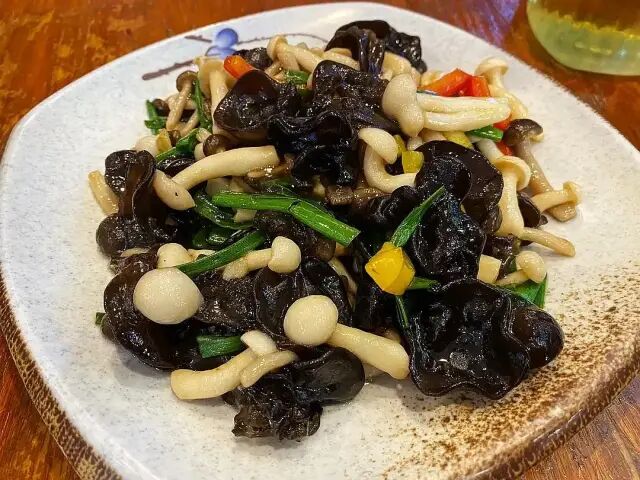
August 27, Yishun Halal Snack Shop in Taishitun Town, Miyun.
Gubei Water Town has no halal breakfast. The closest option is the sesame flatbread (shaobing) and lamb offal soup (yangza) at the Gubei Kou Town Halal Snack Shop. We wanted something different, so we drove south to the Yishun Halal Snack Shop in Taishitun Town that morning.
This restaurant is run by local Hui Muslims from Taishitun. They are the only Hui Muslim family in Taishitun town. There are dozens more families in Lugezhuang to the south, but this is the only halal restaurant in the area. The restaurant is right on the edge of town. There is a cornfield behind it, which gives it a real countryside feel.
We arrived after nine in the morning and they were already serving their full menu. The dishes are similar to the Hui Muslim farmhouse food in Mujiaoyu, focusing on beef pancakes (niuroubing) and the eight classic Hui Muslim bowls (Hui min ba da wan), along with some home-style stir-fries. We ordered half a jin of beef pancakes, stir-fried eggs with tomatoes (muxu chao shizi), boiled lamb head (baishui yangtou), and tofu in a clay pot (shaguo doufu). Everything tasted great, making for a very hearty breakfast, haha.
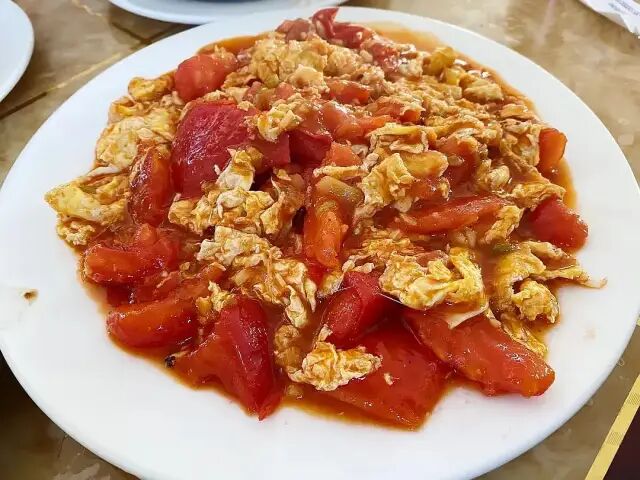
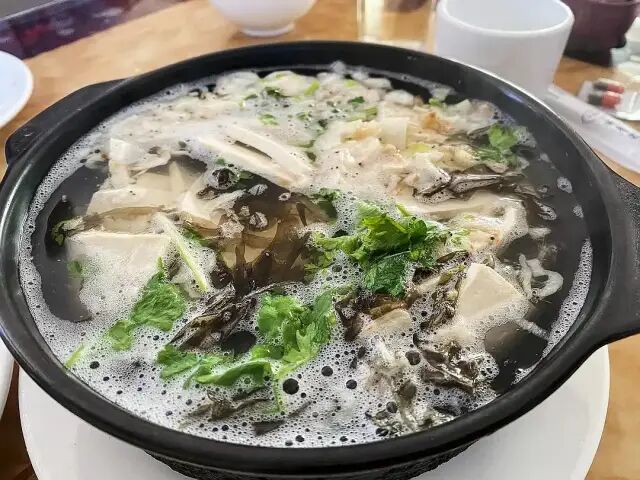
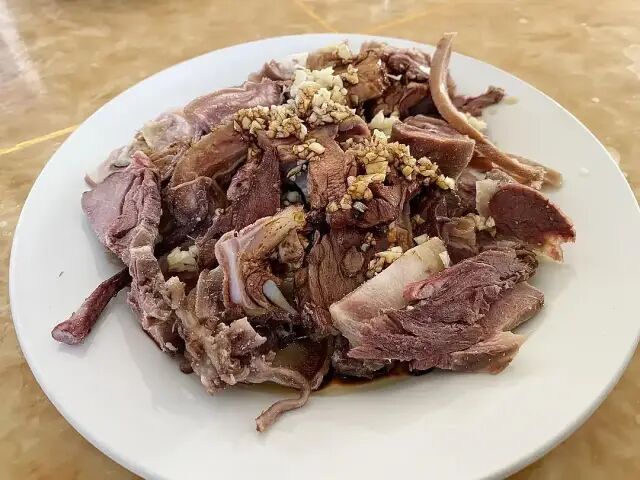
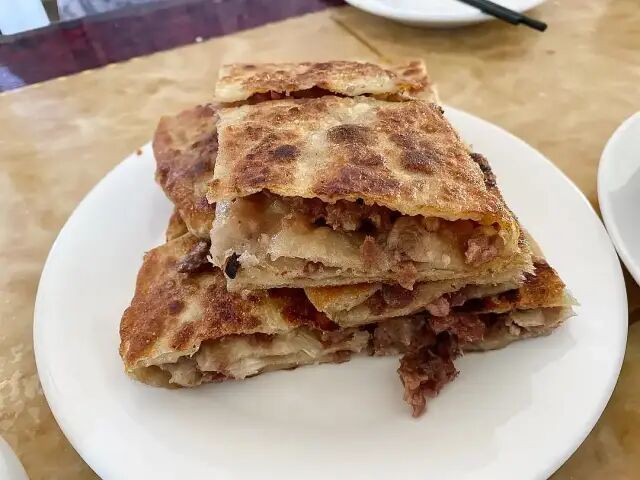
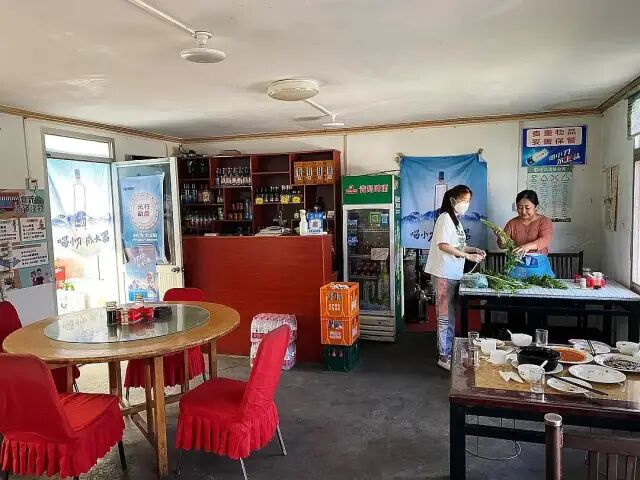

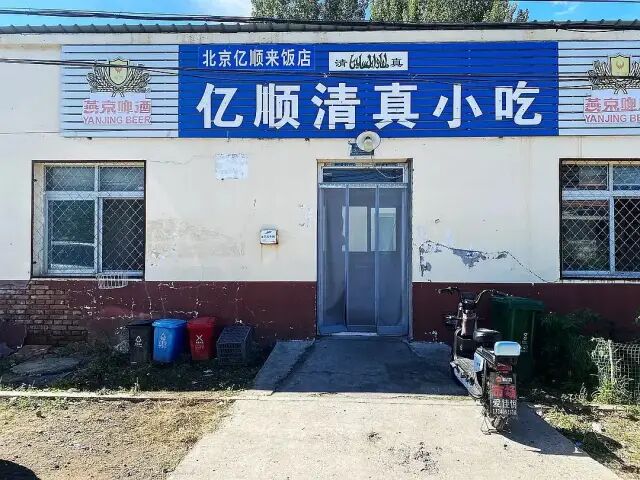
August 27, Kunanchun Folk Restaurant in Mujiaoyu, Miyun.
A halal farmhouse restaurant in Mujiaoyu: Kunanchun Folk Restaurant. We ate fish head with flatbread (yutou paobing), which was three jin of bighead carp served with freshly baked home-style flatbread (jiachang bing), and we also ordered a braised three-mushroom dish (hui san jun). I called ahead to ask for less salt and had them start the stew, so it was ready to eat as soon as we arrived. The reservoir fish was not as chewy as the rainbow trout we had last week, but it was delicious in its own way. Everyone was very happy and wanted more, saying we should order a whole five or six-pound fish next time.
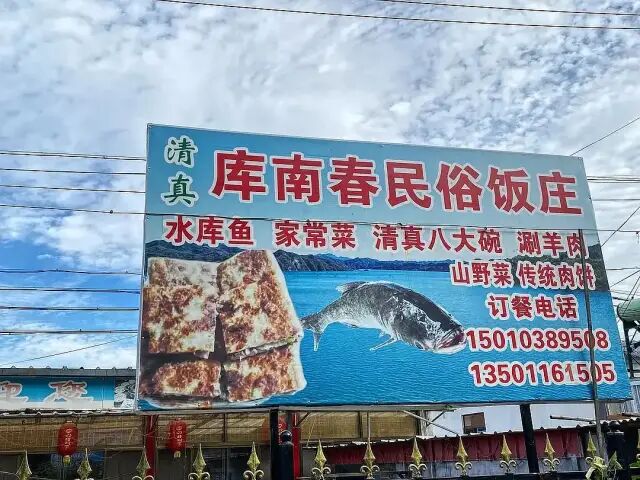
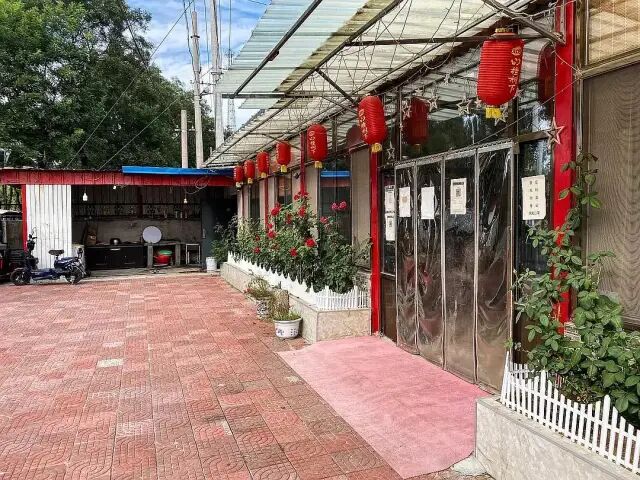
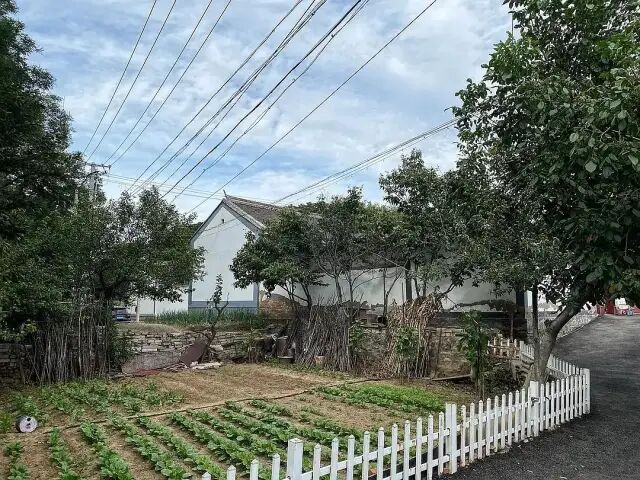
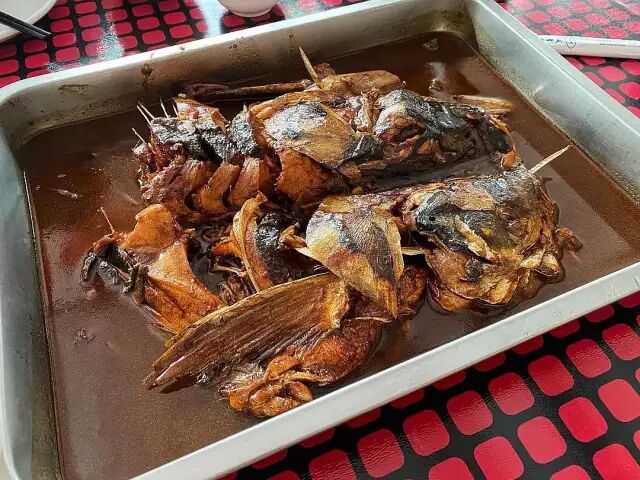
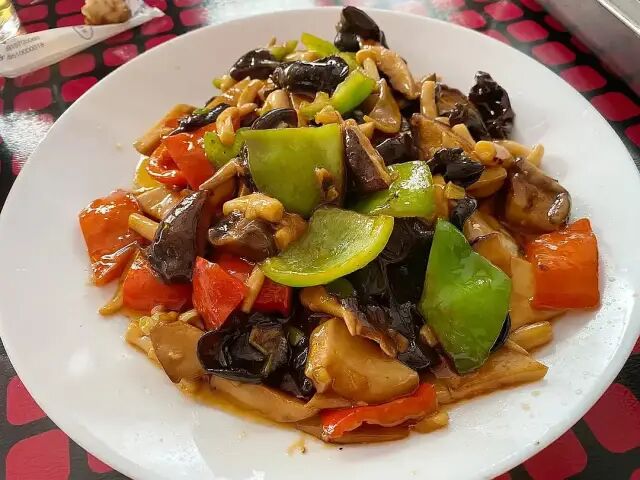
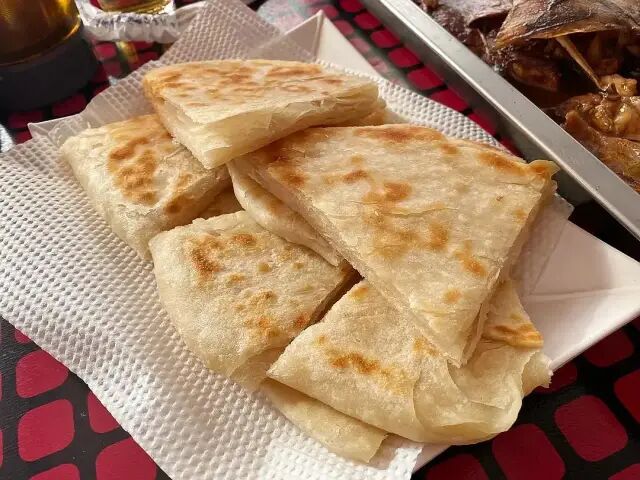
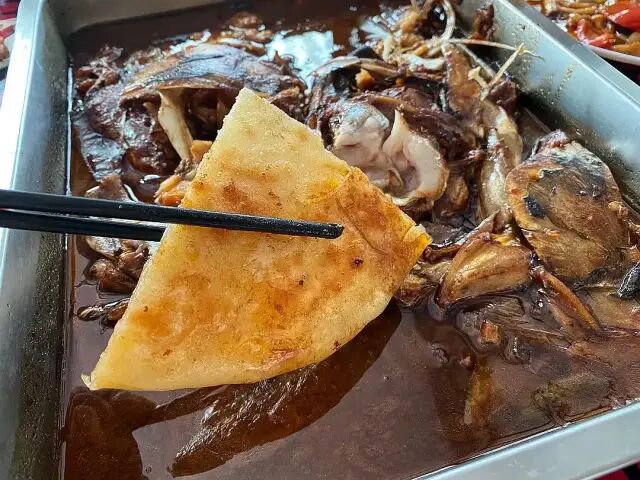
August 30, eating dumplings.
My father-in-law made delicious long bean dumplings. They had thin skins and big fillings, looking like small steamed buns (baozi).
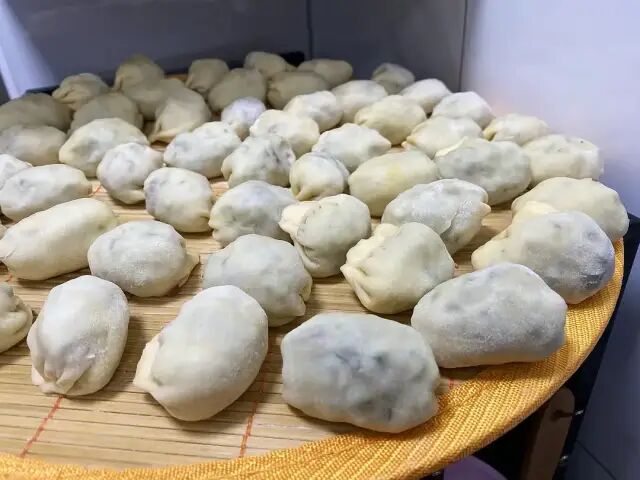
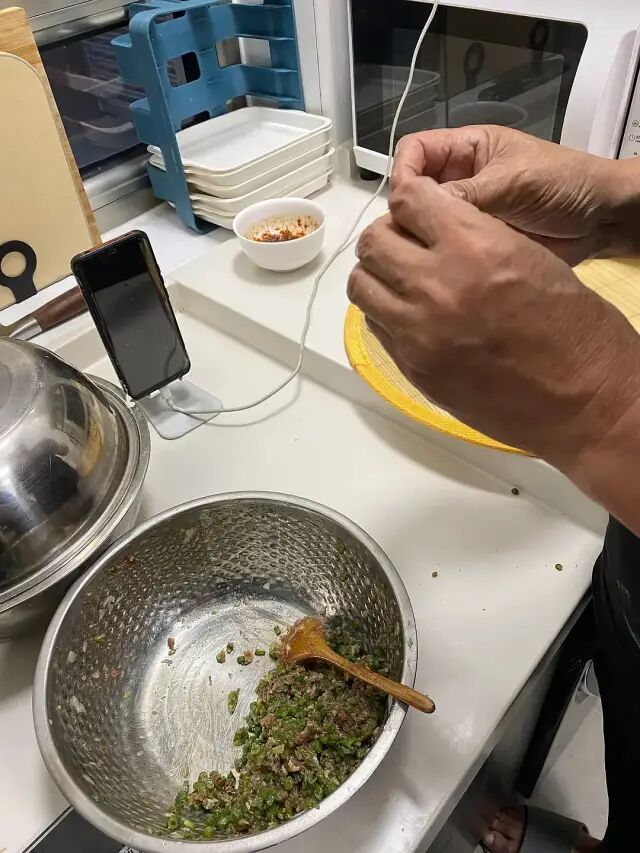
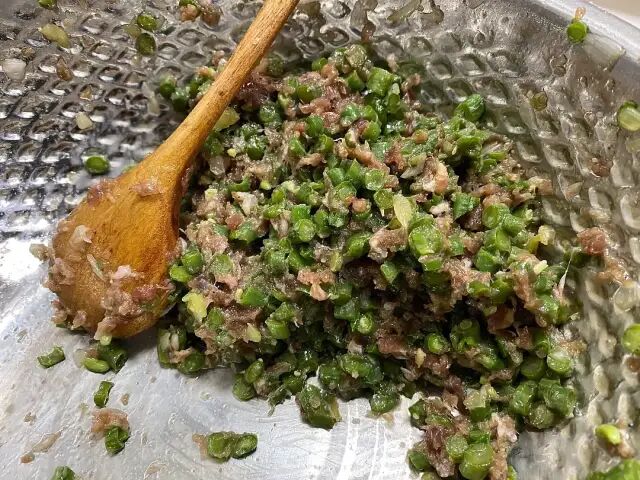
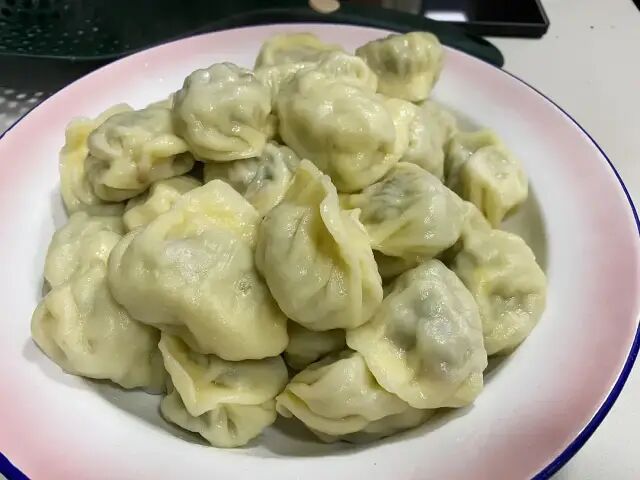
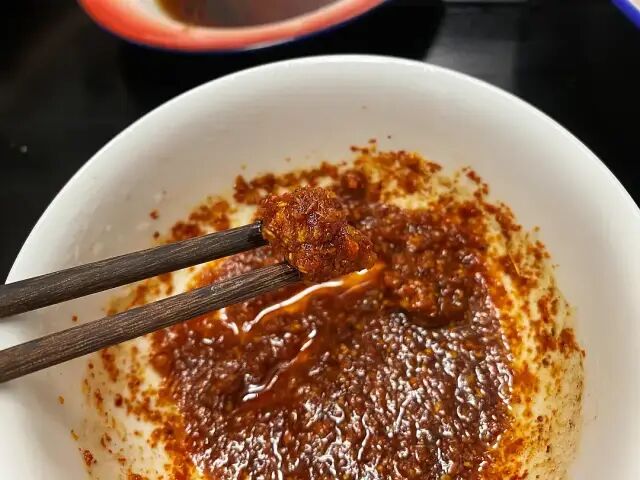
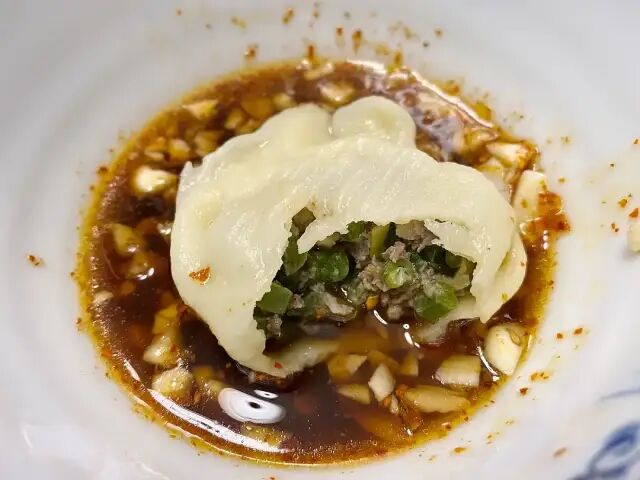
August 31, Jia San Steamed Buns (baozi) at Baiyun Temple.
We went to Jia San Steamed Buns (baozi) at Baiyun Temple for lamb pita bread soup (yangrou paomo) and beef tail soup-filled buns (guantang bao), then bought strip flatbread (pitiao nang), yogurt, and barbecue at the nearby Kashgar Mahmut restaurant. I love both of these places and always struggle to choose between them, but this time I finally got to eat at both, haha.
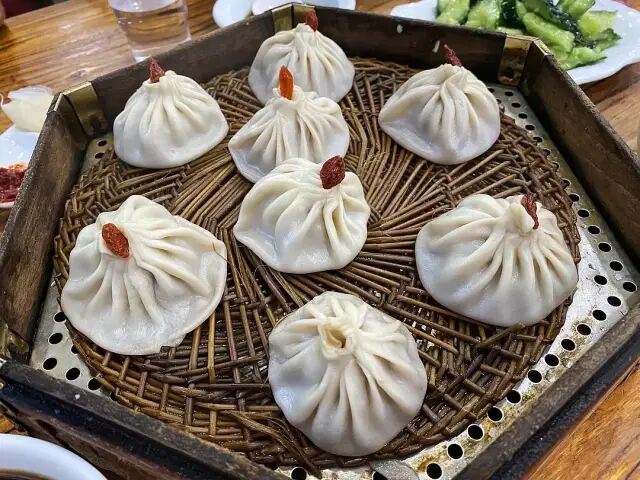
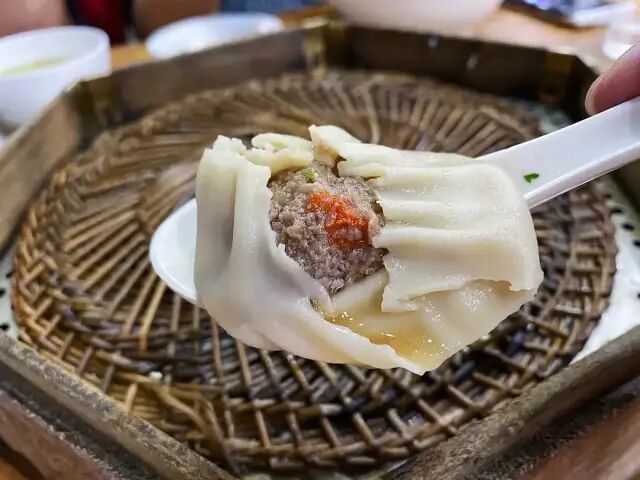
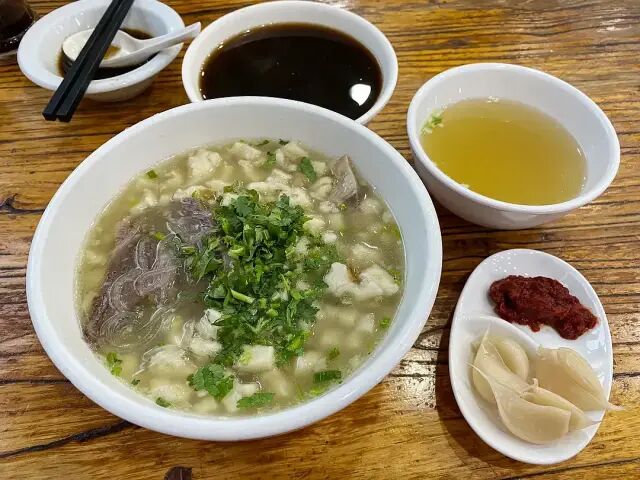
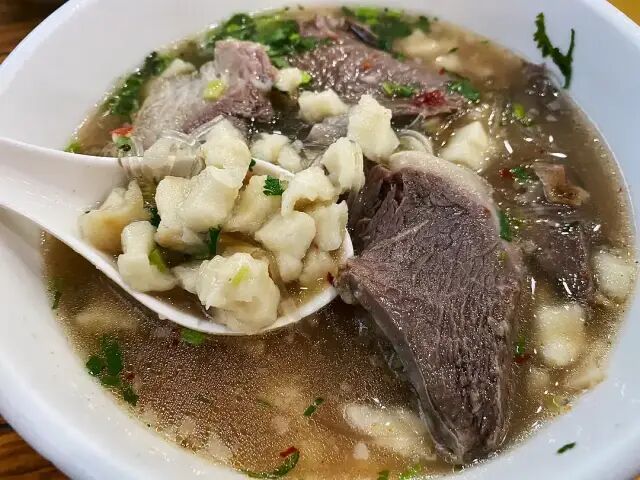
August 31, Kashgar Mahmut Restaurant at Baiyun Temple.
Kashgar Maihemuti's yogurt is the most authentic Xinjiang-style yogurt in all of Beijing; one bite and you feel like you have been transported straight back to Xingxing Gorge. Freshly baked flatbread (nang) has such a strong wheat aroma that the whole bus smells like it on the way home.
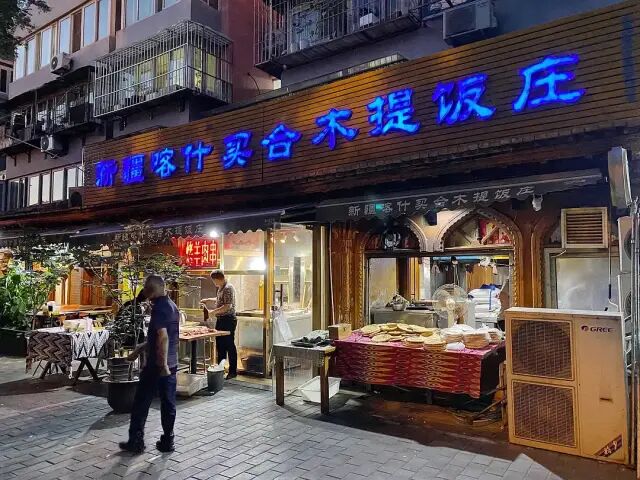
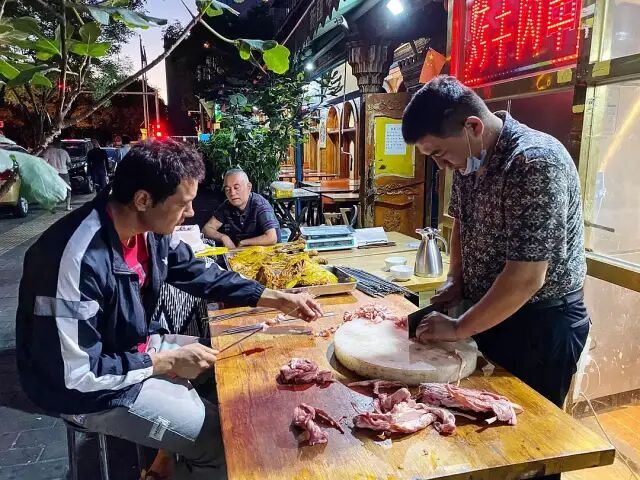
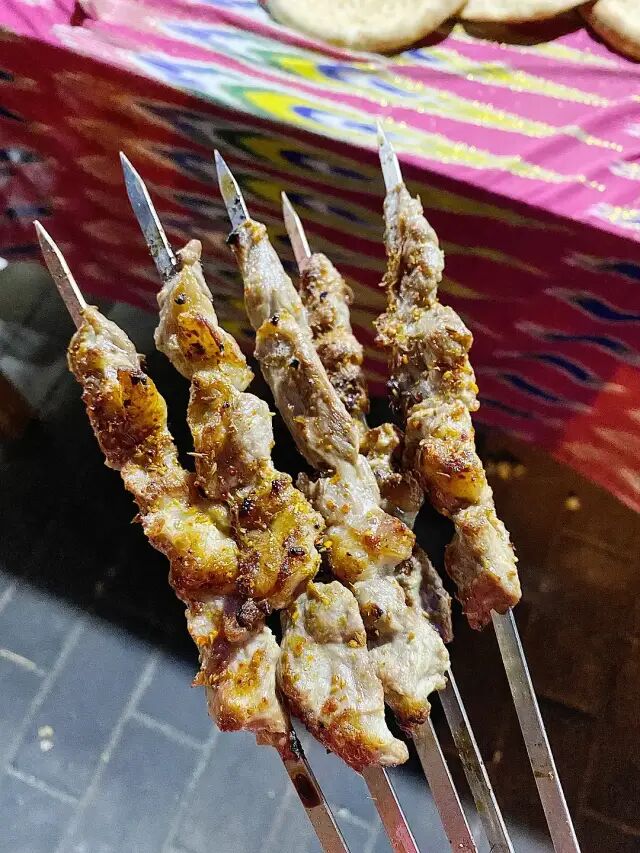
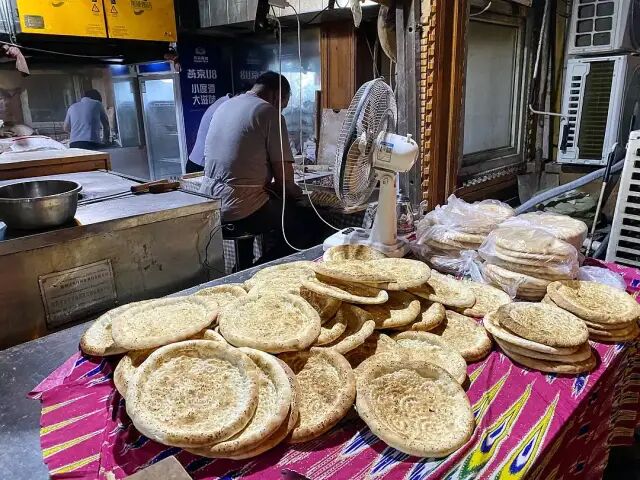
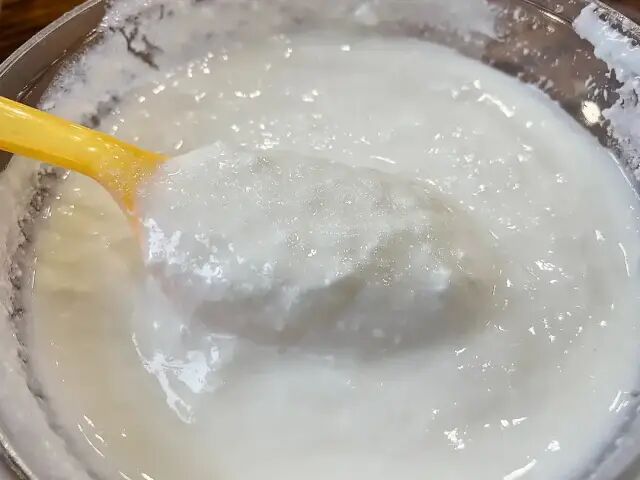
Beijing Halal Food Diary: Summer 2022 Muslim Food and Mosques (Part 1)
Articles • ali2007fr posted the article • 0 comments • 150 views • 2026-05-18 08:38
Summary: Beijing Halal Food Diary: Summer 2022 Muslim Food and Mosques is presented here as a firsthand travel account in clear English, beginning with this scene: In the summer of 2022, I still could not leave Beijing. In early June, indoor dining was banned, so I ate barbecue outside the restaurant door. The account keeps its focus on Beijing Halal Food, Summer Diary, Muslim Food while preserving the names, places, food, and historical details from the Chinese source.
In the summer of 2022, I still could not leave Beijing. In early June, indoor dining was banned, so I ate barbecue outside the restaurant door. Then, for the Dragon Boat Festival, I bought special yellow rice sticky rice dumplings (zongzi) and eight-treasure sticky rice dumplings (zongzi) in Changying. I found a new breakfast shop in Changying run by Hui Muslims from Kaifeng that serves spicy soup (hulatang) and pan-fried buns (shuijianbao), and it was delicious.
After indoor dining reopened in June, I visited many restaurants, but I was sad to find that the Japanese restaurant Chidao Yakiniku had already closed. However, I was pleasantly surprised to discover a new Xinjiang restaurant I really like called Hetian Shidang.
In July, I celebrated Eid al-Adha (Qurbani) with a family meal featuring fish and meat, and I stewed some delicious lamb that was slaughtered in Urumqi and shipped to me. Also, the Pingliang restaurant I liked, Longxianghui, had closed by then.
In August, I observed Ashura and made the Urumqi Hui Muslim version of lamb and bean rice (doudoufan). In mid-August, my father-in-law came to Beijing from Urumqi. We stayed home for seven days and ate all kinds of delicious homemade Urumqi Hui Muslim dishes. In late August, we took a road trip to the outskirts of Beijing in Huairou and Miyun. We ate at a Pakistani restaurant in the valley and enjoyed local halal food in Chengguan, Mujiayu, Gubeikou, and Taishitun.
June 1: Big plate chicken (dapanji).
Zainab made big plate chicken (dapanji) and yogurt (suannaizi). It was a blessing (talaodao). Our house felt just like a branch of Luyuan Street in the Saybagh District of Urumqi!
June 3: Ali's barbecue on Shenlu Street.
We had Ali's barbecue, liver (ganzi), yogurt drink (ayran), and rice pilaf (zhuafan) on Shenlu Street. I hadn't been to Chaoyang for a month, and their barbecue is arguably the best near our home.
June 6: Changying.
Try the yellow rice sticky rice dumplings (zongzi) and eight-treasure sticky rice dumplings (zongzi) at Changying Yijinzhai, the pea flour cake (wandouhuang) at Kaiyizhai, and the cheese hot dog at Mailian Shiguang.
Get the meat flatbread (shaobing) with fried tofu soup (doupao tang) at Lixiaolao, and the mixed vegetable salad (bancai) at Yicheng. You cannot find tofu this tender in the city center!
June 7, Henan-style breakfast at Changying Dahuzi Chuanchuanxiang.
In the morning, Changying Dahuzi Chuanchuanxiang is run by a family from Kaifeng, Henan, selling breakfast items like spicy soup (hulatang), pan-fried buns (shuijianbao), and large fried dough sticks (youtiao). I have been eating Beijing-style breakfast for a month, so today I am switching things up!
They have three types of pan-fried buns (shuijianbao): beef and green onion, vermicelli, and chive and egg. They fry them fresh, and there is always a long line. They usually sell out as soon as they come out of the pan. I think they taste great and have plenty of meat. The fried dough sticks (youtiao) are huge. They are fried in clear oil, so they have a nice color, and one is enough to keep you full. The spicy soup (hulatang) is very rich, and it tastes great when you break off a piece of the fried dough stick (youtiao) and dip it in. Next time I have to try the mix of tofu pudding (doufunao) and spicy soup (hulatang).
June 9, Palestinian restaurant Zayton.
After dine-in reopened, I spent the evening catching a breeze on the terrace at the Palestinian restaurant Zayton to enjoy life.
I started by eating Fatteh, a Levantine snack you can only find here in Beijing. Fatteh means "crushed" in Arabic. It is a snack from the southern Levant region, found in Damascus, Beirut, Jordan, and Palestine, but not in the northern Levant. The main ingredient of Fatteh is crushed flatbread (khubz), topped with yogurt, steamed chickpeas, olive oil, and other ingredients, then sprinkled with cumin.
I also ordered salty yogurt drink (ayran), grilled lamb, and veal steak. Among Middle Eastern restaurants in Beijing, this place offers great value for money. The view from this terrace is just amazing.
June 10: Homemade beef jerky (niurougan) from my mother-in-law in Urumqi, made the Hui Muslim way.
My mother-in-law sent two kinds of homemade Hui Muslim beef jerky (niurougan) from Urumqi. One is a bold flavor, marinated with egg white and starch before being fried. The other is a milder flavor, boiled in water, air-dried for two hours, and then mixed with seasonings until dry. Both are finished with a sprinkle of white sesame seeds. Four kilograms of beef made less than two kilograms of jerky. The kids in Urumqi would cry with envy if they saw this.
June 10: Dastan, an Indian restaurant.
Dastan is a new Indian restaurant that opened this year in Sanlitun SOHO. It sits right next to the Palestinian restaurant Zayton and is a halal spot run by a Hindu owner.
I started with the Indian street snack Panipuri, which became famous because of the movie Dangal. The name of this snack comes from two parts: pani and puri. A puri is a round, hollow, deep-fried crispy bread filled with mashed potatoes, onions, chickpeas, and various spices. Imli pani is a sauce made from cilantro, green chili, ginger, Chaat masala spice, and tamarind chutney. To eat it, just pour the sauce into the filling.
I also ordered the Old Delhi butter chicken (Purani Delhi Wali Murgh Makhani), a dish invented in the 1950s by the famous Punjabi restaurant Moti Mahal in Old Delhi. The story goes that one day near closing time, a group of hungry poor people came to the restaurant. The kitchen used leftover tomatoes, butter, and spices to make a sauce, then added leftover Tandoori roasted chicken. They did not expect it to create such a unique flavor. Today, making this dish starts by marinating the chicken in lemon, yogurt, Kashmiri red chili, salt, Garam Masala spice, ginger, and garlic. It is then roasted in a tandoor oven before being added to a curry made of butter, tomatoes, and various spices.
June 13, Yanlanlou Anzhen branch.
I had lamb neck, minced meat noodles (saozimian), and pea soup (huidouzi) at the Yanlanlou Anzhen branch. I miss the lamb neck I had in Yinchuan; it was so tender.
June 16, Chidao Yakiniku lunch set.
This was my first lunch set at Chidao since returning to work. I had the teriyaki chicken. The restaurant has now changed its name to Changying Sanxiongdi.
June 16, Dachangying Restaurant.
For dinner at Dachangying, I had fish head with flatbread. The mustard-marinated cabbage (jieshudun) was a great appetizer to beat the heat, and the Chinese kale with yam was very crisp. The dish used half a bighead carp and a broth made from beef bones. The freshly baked flatbread was very crispy and delicious, though the fish soup was a bit salty, haha. The server told me they are hosting an ambassador from an African country next week. It seems even ambassadors enjoy Beijing-style flavors.
June 17, Lahore Restaurant
I had a Lahore beef egg burger with lassi at Lahore Restaurant because I was craving a burger. This combination reminds me of the South Asian fast-food shops in Dubai.
June 19, Hotan Canteen on Ritan Upper Street
My biggest surprise lately is finding the best Uyghur restaurant in Beijing: Hotan Canteen on Ritan Upper Street! This spot used to be the Uyghur restaurant Red Willow, then it became the Turkish restaurant Rumi's Secret for 20 years. This year, Rumi's Secret moved to Urumqi, and now this new Uyghur restaurant, Hotan Canteen, has opened here.
I have to say, their pilaf (zhua fan), hand-pulled noodles (ban mian), and steamed meat dumplings (baopi baozi) are the best I have ever had at a Uyghur restaurant in Beijing. After eating here, the places I previously considered top-tier, like Ali, White Diamond, and Kashgar Mahmut, have all been bumped down to second place. It is no exaggeration to say that even back in Urumqi, you would be hard-pressed to find a restaurant that beats this Hotan eatery.
The lamb leg in the pilaf (zhua fan) is so tender that I almost cried after the first bite. I have lived in Beijing for many years and have never eaten such fresh, tender lamb leg in any restaurant here. The hand-pulled noodles (latiaozi) in the mixed noodles are very thin and have a fantastic texture. I finished the whole bowl in one go and could not stop. The skin of the thin-skinned steamed buns (baopi baozi) is the thinnest I have ever eaten in Beijing. The lamb filling is meaty and not too oily, and the pumpkin filling is very rare in Beijing and also tastes great.
Their mug-stewed lamb (gangzi rou) comes in a huge mug, haha. However, the amount of meat inside is not as much as it looks; it is just the standard portion you get from street vendors in Xinjiang. The lamb broth is very soothing for the stomach.
I highly recommend their grilled stuffed spleen (kaoseipi)! I do not know why this classic Xinjiang delicacy is missing from all the Uyghur restaurants in Beijing, but I am glad I finally got to eat it. Grilled stuffed spleen, also known as fake kidney, is made by stuffing lamb spleen with onions (piyazi), minced meat, and liver before grilling it. It has a very rich texture.
My favorite dish here is the Hotan salt mine barbecue (hetian yankuang kaorou). It is roasted using earth salt and seasoned only with salt water, without any chili or cumin, which is the traditional way to eat it in Hotan. Their salt mine barbecue is so tender and fragrant that it is the kind of food that makes you want to cry after just one bite. I also ordered their grilled tenderloin, which tasted fine, but it was not as amazing as the salt mine barbecue.
In the summer, I definitely recommend their Kashgar yogurt shaved ice (kashi suannai baobing). The yogurt flavor is very rich and authentic, and it is incredibly refreshing. Also, the fig jam on their Hotan fig jam yogurt rice dumpling (wuhuaguo jiang suannai zongzi) is very fragrant.
Finally, I have to mention that there are some dishes here that do not taste good. First of all, their non-Xinjiang local dishes are not done well; the sweet and sour fish tasted a bit fishy. It is also a pity that their yogurt is not good; it lacks a real yogurt flavor and only tastes sweet. The only truly authentic Xinjiang yogurt I have had in Beijing so far is from Kashe Maihemuti.
June 22, Lahore Restaurant
It was unusually cool at noon, so I went to the Pakistani restaurant Lahore Restaurant for a weekday lunch set. There were a few combinations to choose from, and I had the Achari chicken curry with saffron rice and Pakistani curry.
June 25, Family Dinner
For our family dinner, I made beef brisket stewed with potatoes and minced meat with eggplant served with five types of noodle toppings. Zainabu kneaded the dough, my dad pulled the noodles, and my mom steamed a fish.
June 26, Qingu in Changying
I ate the stone pot bibimbap at Qingu and worked up a real sweat!
June 30, Liuji Mending Baodu
I have been eating the soybean paste noodles (zhajiangmian) with large meat skewers at Liu's for years.
July 3, Lahore Restaurant
I ate stewed lamb trotters, Punjabi chickpeas, chicken biryani, and yogurt drink (lassi) at Lahore Restaurant on Youth Road (Qingnian Lu). After eating here so many times, I still think their stewed lamb trotters are the best; they are cooked until tender and full of flavor!
July 4, mixed noodles
It is my birthday today, and Zainab made me mixed noodles (banmian).
July 9, Hotan Canteen
Iftar meal for the Day of Arafah at Hotan Canteen.
July 10, Eid al-Adha feast.
Eid Mubarak. Today there are seven sunnah acts: perform ghusl, brush your teeth, wear clean and tidy clothes, use perfume, recite the takbir, eat and drink only after the Eid prayer, and perform the qurbani. Today we are having a sheep slaughtered on our behalf that was raised in the Southern Mountains of Urumqi by Zainab's second uncle. Every year before Eid al-Adha, his family collects a batch of sheep from herders in Altay and Tacheng. view all
Summary: Beijing Halal Food Diary: Summer 2022 Muslim Food and Mosques is presented here as a firsthand travel account in clear English, beginning with this scene: In the summer of 2022, I still could not leave Beijing. In early June, indoor dining was banned, so I ate barbecue outside the restaurant door. The account keeps its focus on Beijing Halal Food, Summer Diary, Muslim Food while preserving the names, places, food, and historical details from the Chinese source.
In the summer of 2022, I still could not leave Beijing. In early June, indoor dining was banned, so I ate barbecue outside the restaurant door. Then, for the Dragon Boat Festival, I bought special yellow rice sticky rice dumplings (zongzi) and eight-treasure sticky rice dumplings (zongzi) in Changying. I found a new breakfast shop in Changying run by Hui Muslims from Kaifeng that serves spicy soup (hulatang) and pan-fried buns (shuijianbao), and it was delicious.
After indoor dining reopened in June, I visited many restaurants, but I was sad to find that the Japanese restaurant Chidao Yakiniku had already closed. However, I was pleasantly surprised to discover a new Xinjiang restaurant I really like called Hetian Shidang.
In July, I celebrated Eid al-Adha (Qurbani) with a family meal featuring fish and meat, and I stewed some delicious lamb that was slaughtered in Urumqi and shipped to me. Also, the Pingliang restaurant I liked, Longxianghui, had closed by then.
In August, I observed Ashura and made the Urumqi Hui Muslim version of lamb and bean rice (doudoufan). In mid-August, my father-in-law came to Beijing from Urumqi. We stayed home for seven days and ate all kinds of delicious homemade Urumqi Hui Muslim dishes. In late August, we took a road trip to the outskirts of Beijing in Huairou and Miyun. We ate at a Pakistani restaurant in the valley and enjoyed local halal food in Chengguan, Mujiayu, Gubeikou, and Taishitun.
June 1: Big plate chicken (dapanji).
Zainab made big plate chicken (dapanji) and yogurt (suannaizi). It was a blessing (talaodao). Our house felt just like a branch of Luyuan Street in the Saybagh District of Urumqi!
June 3: Ali's barbecue on Shenlu Street.
We had Ali's barbecue, liver (ganzi), yogurt drink (ayran), and rice pilaf (zhuafan) on Shenlu Street. I hadn't been to Chaoyang for a month, and their barbecue is arguably the best near our home.
June 6: Changying.
Try the yellow rice sticky rice dumplings (zongzi) and eight-treasure sticky rice dumplings (zongzi) at Changying Yijinzhai, the pea flour cake (wandouhuang) at Kaiyizhai, and the cheese hot dog at Mailian Shiguang.
Get the meat flatbread (shaobing) with fried tofu soup (doupao tang) at Lixiaolao, and the mixed vegetable salad (bancai) at Yicheng. You cannot find tofu this tender in the city center!
June 7, Henan-style breakfast at Changying Dahuzi Chuanchuanxiang.
In the morning, Changying Dahuzi Chuanchuanxiang is run by a family from Kaifeng, Henan, selling breakfast items like spicy soup (hulatang), pan-fried buns (shuijianbao), and large fried dough sticks (youtiao). I have been eating Beijing-style breakfast for a month, so today I am switching things up!
They have three types of pan-fried buns (shuijianbao): beef and green onion, vermicelli, and chive and egg. They fry them fresh, and there is always a long line. They usually sell out as soon as they come out of the pan. I think they taste great and have plenty of meat. The fried dough sticks (youtiao) are huge. They are fried in clear oil, so they have a nice color, and one is enough to keep you full. The spicy soup (hulatang) is very rich, and it tastes great when you break off a piece of the fried dough stick (youtiao) and dip it in. Next time I have to try the mix of tofu pudding (doufunao) and spicy soup (hulatang).
June 9, Palestinian restaurant Zayton.
After dine-in reopened, I spent the evening catching a breeze on the terrace at the Palestinian restaurant Zayton to enjoy life.
I started by eating Fatteh, a Levantine snack you can only find here in Beijing. Fatteh means "crushed" in Arabic. It is a snack from the southern Levant region, found in Damascus, Beirut, Jordan, and Palestine, but not in the northern Levant. The main ingredient of Fatteh is crushed flatbread (khubz), topped with yogurt, steamed chickpeas, olive oil, and other ingredients, then sprinkled with cumin.
I also ordered salty yogurt drink (ayran), grilled lamb, and veal steak. Among Middle Eastern restaurants in Beijing, this place offers great value for money. The view from this terrace is just amazing.
June 10: Homemade beef jerky (niurougan) from my mother-in-law in Urumqi, made the Hui Muslim way.
My mother-in-law sent two kinds of homemade Hui Muslim beef jerky (niurougan) from Urumqi. One is a bold flavor, marinated with egg white and starch before being fried. The other is a milder flavor, boiled in water, air-dried for two hours, and then mixed with seasonings until dry. Both are finished with a sprinkle of white sesame seeds. Four kilograms of beef made less than two kilograms of jerky. The kids in Urumqi would cry with envy if they saw this.
June 10: Dastan, an Indian restaurant.
Dastan is a new Indian restaurant that opened this year in Sanlitun SOHO. It sits right next to the Palestinian restaurant Zayton and is a halal spot run by a Hindu owner.
I started with the Indian street snack Panipuri, which became famous because of the movie Dangal. The name of this snack comes from two parts: pani and puri. A puri is a round, hollow, deep-fried crispy bread filled with mashed potatoes, onions, chickpeas, and various spices. Imli pani is a sauce made from cilantro, green chili, ginger, Chaat masala spice, and tamarind chutney. To eat it, just pour the sauce into the filling.
I also ordered the Old Delhi butter chicken (Purani Delhi Wali Murgh Makhani), a dish invented in the 1950s by the famous Punjabi restaurant Moti Mahal in Old Delhi. The story goes that one day near closing time, a group of hungry poor people came to the restaurant. The kitchen used leftover tomatoes, butter, and spices to make a sauce, then added leftover Tandoori roasted chicken. They did not expect it to create such a unique flavor. Today, making this dish starts by marinating the chicken in lemon, yogurt, Kashmiri red chili, salt, Garam Masala spice, ginger, and garlic. It is then roasted in a tandoor oven before being added to a curry made of butter, tomatoes, and various spices.
June 13, Yanlanlou Anzhen branch.
I had lamb neck, minced meat noodles (saozimian), and pea soup (huidouzi) at the Yanlanlou Anzhen branch. I miss the lamb neck I had in Yinchuan; it was so tender.
June 16, Chidao Yakiniku lunch set.
This was my first lunch set at Chidao since returning to work. I had the teriyaki chicken. The restaurant has now changed its name to Changying Sanxiongdi.
June 16, Dachangying Restaurant.
For dinner at Dachangying, I had fish head with flatbread. The mustard-marinated cabbage (jieshudun) was a great appetizer to beat the heat, and the Chinese kale with yam was very crisp. The dish used half a bighead carp and a broth made from beef bones. The freshly baked flatbread was very crispy and delicious, though the fish soup was a bit salty, haha. The server told me they are hosting an ambassador from an African country next week. It seems even ambassadors enjoy Beijing-style flavors.
June 17, Lahore Restaurant
I had a Lahore beef egg burger with lassi at Lahore Restaurant because I was craving a burger. This combination reminds me of the South Asian fast-food shops in Dubai.
June 19, Hotan Canteen on Ritan Upper Street
My biggest surprise lately is finding the best Uyghur restaurant in Beijing: Hotan Canteen on Ritan Upper Street! This spot used to be the Uyghur restaurant Red Willow, then it became the Turkish restaurant Rumi's Secret for 20 years. This year, Rumi's Secret moved to Urumqi, and now this new Uyghur restaurant, Hotan Canteen, has opened here.
I have to say, their pilaf (zhua fan), hand-pulled noodles (ban mian), and steamed meat dumplings (baopi baozi) are the best I have ever had at a Uyghur restaurant in Beijing. After eating here, the places I previously considered top-tier, like Ali, White Diamond, and Kashgar Mahmut, have all been bumped down to second place. It is no exaggeration to say that even back in Urumqi, you would be hard-pressed to find a restaurant that beats this Hotan eatery.
The lamb leg in the pilaf (zhua fan) is so tender that I almost cried after the first bite. I have lived in Beijing for many years and have never eaten such fresh, tender lamb leg in any restaurant here. The hand-pulled noodles (latiaozi) in the mixed noodles are very thin and have a fantastic texture. I finished the whole bowl in one go and could not stop. The skin of the thin-skinned steamed buns (baopi baozi) is the thinnest I have ever eaten in Beijing. The lamb filling is meaty and not too oily, and the pumpkin filling is very rare in Beijing and also tastes great.
Their mug-stewed lamb (gangzi rou) comes in a huge mug, haha. However, the amount of meat inside is not as much as it looks; it is just the standard portion you get from street vendors in Xinjiang. The lamb broth is very soothing for the stomach.
I highly recommend their grilled stuffed spleen (kaoseipi)! I do not know why this classic Xinjiang delicacy is missing from all the Uyghur restaurants in Beijing, but I am glad I finally got to eat it. Grilled stuffed spleen, also known as fake kidney, is made by stuffing lamb spleen with onions (piyazi), minced meat, and liver before grilling it. It has a very rich texture.
My favorite dish here is the Hotan salt mine barbecue (hetian yankuang kaorou). It is roasted using earth salt and seasoned only with salt water, without any chili or cumin, which is the traditional way to eat it in Hotan. Their salt mine barbecue is so tender and fragrant that it is the kind of food that makes you want to cry after just one bite. I also ordered their grilled tenderloin, which tasted fine, but it was not as amazing as the salt mine barbecue.
In the summer, I definitely recommend their Kashgar yogurt shaved ice (kashi suannai baobing). The yogurt flavor is very rich and authentic, and it is incredibly refreshing. Also, the fig jam on their Hotan fig jam yogurt rice dumpling (wuhuaguo jiang suannai zongzi) is very fragrant.
Finally, I have to mention that there are some dishes here that do not taste good. First of all, their non-Xinjiang local dishes are not done well; the sweet and sour fish tasted a bit fishy. It is also a pity that their yogurt is not good; it lacks a real yogurt flavor and only tastes sweet. The only truly authentic Xinjiang yogurt I have had in Beijing so far is from Kashe Maihemuti.
June 22, Lahore Restaurant
It was unusually cool at noon, so I went to the Pakistani restaurant Lahore Restaurant for a weekday lunch set. There were a few combinations to choose from, and I had the Achari chicken curry with saffron rice and Pakistani curry.
June 25, Family Dinner
For our family dinner, I made beef brisket stewed with potatoes and minced meat with eggplant served with five types of noodle toppings. Zainabu kneaded the dough, my dad pulled the noodles, and my mom steamed a fish.
June 26, Qingu in Changying
I ate the stone pot bibimbap at Qingu and worked up a real sweat!
June 30, Liuji Mending Baodu
I have been eating the soybean paste noodles (zhajiangmian) with large meat skewers at Liu's for years.
July 3, Lahore Restaurant
I ate stewed lamb trotters, Punjabi chickpeas, chicken biryani, and yogurt drink (lassi) at Lahore Restaurant on Youth Road (Qingnian Lu). After eating here so many times, I still think their stewed lamb trotters are the best; they are cooked until tender and full of flavor!
July 4, mixed noodles
It is my birthday today, and Zainab made me mixed noodles (banmian).
July 9, Hotan Canteen
Iftar meal for the Day of Arafah at Hotan Canteen.
July 10, Eid al-Adha feast.
Eid Mubarak. Today there are seven sunnah acts: perform ghusl, brush your teeth, wear clean and tidy clothes, use perfume, recite the takbir, eat and drink only after the Eid prayer, and perform the qurbani. Today we are having a sheep slaughtered on our behalf that was raised in the Southern Mountains of Urumqi by Zainab's second uncle. Every year before Eid al-Adha, his family collects a batch of sheep from herders in Altay and Tacheng.
Beijing Halal Food Diary: Summer 2022 Muslim Food and Mosques (Part 2)
Articles • ali2007fr posted the article • 0 comments • 142 views • 2026-05-18 08:38
Summary: Beijing Halal Food Diary: Summer 2022 Muslim Food and Mosques is presented here as a firsthand travel account in clear English, beginning with this scene: I went to the Indian restaurant Mughal Darbar in the basement food court of Hongqiao Market. The account keeps its focus on Beijing Halal Food, Summer Diary, Muslim Food while preserving the names, places, food, and historical details from the Chinese source.
July 12, Indian restaurant Mughal Darbar.
I went to the Indian restaurant Mughal Darbar in the basement food court of Hongqiao Market. The name translates directly to 'Mughal Court'. The Chinese name is 'Love in Curry' (Ai Zai Gali), which feels a lot less impressive, haha. The owner is a Muslim from Delhi, and the guy at the front desk is also from Delhi. Even though he is not Muslim, he says 'salam' and 'bismillah' very fluently. Many of their dishes really do come from the Mughal Empire.
We ate spinach cheese curry (Palak Paneer), lamb curry (Rogan Josh), vegetable fried dumplings (Samosa), spiced yogurt drink (Masala Chach), chicken rice (Biryani), and butter flatbread (Roti).
Rogan Josh is a specialty curry from Kashmir. The Mughals brought it there when they went to Kashmir to escape the summer heat during the Mughal Empire. It mainly uses alkanet root (alkanet) and Kashmiri chili as seasonings. 'Rogan' comes from the Persian word for 'clarified butter' (roughan), and 'josh' is the Persian word for 'stew'.
Palak paneer is a North Indian vegetarian curry made with Indian white soft cheese (paneer, which comes from the Persian word for cheese, panir) and spinach puree. It is a classic home-cooked Indian dish.
The samosa curry puff comes from the Persian word 'sanbosag'. It is a classic street snack brought to South Asia by Central Asian merchants in the 13th and 14th centuries. This shop's samosas are very large and filled with mashed potatoes.
Biryani also comes from a Persian word. Legend says it was created by Mughal palace chefs who combined spicy Indian rice with Persian pilaf.
Traditional buttermilk (chach) is made by mixing yogurt and water with a tool called a 'madhani', then seasoning it with spices like masala. Chach is similar to the common Indian yogurt drink (lassi), but chach is thinner and uses spices instead of sugar or fruit jam. Chach is very popular in India's desert regions and the hot areas of South India. People often choose a glass of chach to rehydrate after being out in the sun.
July 14, Yongshun Fried Chicken at the Yiguzhai franchise on Daliushu Road.
Yongshun Fried Chicken at the Yiguzhai franchise on Daliushu Road. You can eat a large chicken leg in the shop, and it comes with a free drink.
July 16, Longxianghui on Dongsi North Street.
I love the stewed flatbread (hubo) at Longxianghui, even though eating it in the summer makes me sweat all over.
July 16, stewed meat with flatbread.
Listening to storytelling made me hungry, so today I stewed beef brisket and bought a griddle-baked flatbread (laobing) from Niujie to make stewed meat with flatbread, a classic dish from the Water Margin!
July 17, Cheese Wei in Niujie.
The original flavor cheese and the yogurt jade rabbit from Cheese Wei in Niujie.
July 16, Xilaishun.
After listening to storytelling, I went to Xilaishun to eat and ordered my favorites: stir-fried chicken cubes in bean sauce (jiangbao jiding), Ma Lianliang duck, deep-fried shrimp, and mixed wild mountain vegetables. Every time I go to their place, I order the stir-fried chicken with soybean paste (jiangbao jiding) and two bowls of rice. I never get tired of it! I have been eating Ma Lianliang duck for many years. For a few years, their duck was a bit fatty, but in the last two years, they have gone back to a leaner style. The meat is fried until tender and the skin is crispy. You can even eat the bones. For the past two years, they have served the duck with flatbread (bing). It tastes even better when you eat it as a sandwich.
I ordered the deep-fried shrimp (zha peng xia) for Zainab. It was my first time trying their version. The batter felt a bit hard, but the shrimp inside was very tender.
July 17, Jia San Soup Dumplings (Jia San guantangbao).
I had lunch at Jia San on Baiyun Road and enjoyed their soup dumplings (guantangbao). It was delicious. I also had the stir-fried lamb (yangrou xiaochao) and the mixed vegetable stew (huicai). Their stir-fried lamb was a bit too salty compared to the local version in Xi'an. Next time, I will just stick to the regular soaked bread (paomo).
Jia San sells hot chili oil (youpo lazi), chili powder (lamianzi), and peanuts. It feels like I am pretending to be back in the Muslim Quarter (fangshang).
July 19, Qurbani sheep
We made the intention for our Qurbani sheep, and Zaynab's uncle had it slaughtered for us in the Nanshan mountains of Urumqi. It arrived in Beijing last Saturday. Zaynab's uncle bought these Kazakh fat-tailed sheep from herders in Yili and Tacheng ahead of time.
On Saturday and Sunday, we gave lamb to a few friends (dosti) and took a trip to Niujie. Sharing is an important part of Qurbani, and it brings many rewards.
Today I stewed the Qurbani lamb. It is so fragrant when boiled plain; you do not need any seasonings, just a little salt. After stewing the lamb, I added baby bok choy and tofu to the broth, so we had both meat and vegetables.
July 23, Ma's Handmade Dumplings
At noon, we ate Northeast-style cold noodles and fresh hand-cut noodles with soybean paste (zhajiangmian) at Ma's Handmade Dumplings in the basement supermarket of the New World mall outside Chongwenmen. The shop is run by Hui Muslims from Fushun, Liaoning. Last time I visited, they didn't offer dine-in, but now you can eat right there. They have also added various braised meats and pickles, like shredded eggplant and pickled cucumbers.
July 23: The newly opened Bangdan'er Meatball Soup inside Xinjiang Mansion.
The new Bangdan'er Meatball Soup is inside Xinjiang Mansion, right as you enter the east gate. It is a bit tucked away, so not many people have been there yet. Their specialty is meatball soup served with fried dough (youxiang), which is very authentic. The Changji flavor is excellent. You cannot find these meatballs in typical Beijing restaurants, though they do put a bit too much vermicelli in it. My wife broke the fried dough (youxiang) for me; how happy I am.
Inside Bangdan'er Meatball Soup, there is a naan culture exhibition hall, and there is a Xinjiang specialty shop right across from it.
July 24: Eating breakfast at home.
July 26: Syrian baklava.
I once took photos at a Syrian pastry shop in Yiwu and posted them on Douban, and many friends went to buy their pastries after seeing them. I later found out the owner, Omar, had been asking around about me and recently had a friend send me some baklava. I sincerely wish their business all the best!
July 30, Yiyuan Restaurant in Xiguan City.
I had knife-cut noodles (daoxiaomian) for lunch at Yiyuan Restaurant in Xiguan City, which also serves corn noodles (helemian) and oat noodles (youmian) from the Bashang region. Because the area was a common route for Qing Dynasty armed escorts, the food in Xiguan City was influenced by the Jin dialect region and is very different from that of Hui Muslims in other parts of Beijing. Eating a bowl of knife-cut noodles from the Hui Muslims in Xiguan City is a way to taste the history of the Qing Dynasty's westward migration culture.
August 2, Liangtaoxuan at the Lama Temple.
After work, I had Hezhou beef noodles at the Liangtaoxuan Yonghegong branch. I usually eat at the Shilihe branch, but this was my first time at the Yonghegong location. It is inside the basement food court of an office building, and the entrance is very hidden.
I ordered the classic dry-mixed beef noodles with extra meat, and Zainab ordered the garlic sprout and meat mixed noodles. One noodle type was thin and the other thick, but both were very chewy. In my opinion, these are the best hand-pulled noodles (lamian) in Beijing.
Besides the great noodles, the restaurant has a strong commitment to the faith. They often visit the Bo Hazhi gongbei in Changping for religious gatherings (gan'ermaili). The waiter was also very kind. When he saw that Zainab was pregnant, he took the initiative to ask the kitchen to make a lighter version of the mixed noodles for her.
August 4, Longxianghui on Dongsi North Street.
In the evening, I ate a mix of cold noodles and beef tendon noodles, hand-grabbed lamb (shouzhuayangrou), ice jelly (bingfen), and apricot peel tea (xingpicha) at Longxianghui on Dongsi North Street.
August 6, ate big plate chicken (dapanji) and hand-held lamb (shoubarou) at home.
August 7, Ali at Ritan Shangjie.
Ali at Ritan Shangjie, serving rice pilaf (zhuafan), mixed noodles (banmian), barbecue (kaorou), and meat in naan bread (nangbaorou).
August 8, Xilaisun.
Ma Lianliang duck and stir-fried chicken cubes in bean sauce (jiangbao jiding) at Xilaisun.
August 8, Ashura lamb and bean rice.
The 10th day of the first month in the Islamic calendar is the honorable Day of Ashura, the first important day after the Islamic New Year. Hui Muslims in China traditionally fast today and make Ashura porridge. After work today, Zainab and I made the Urumqi Hui Muslim version of Ashura lamb and bean rice together.
We prepared seven types of beans and cooked them in a pressure cooker. Then, we diced the Qurbani lamb, rendered the lamb fat, and stir-fried it with chopped green onions before adding salt and Sichuan peppercorn powder. Once the beans were cooked, we added rice and glutinous rice, followed by the stir-fried lamb, and simmered everything until the rice was done. The dish has the fresh scent of beans and the savory taste of lamb. I ate two big bowls and still wanted more.
We actually make Ashura bean porridge to commemorate the landing of Nuh's ship, also known as Noah's Ark. I am sharing the origin of Ashura bean porridge as told by Imam An from the Jingjue Mosque in Nanjing: On the Day of Ashura, the Prophet Nuh and his followers stepped off the ship and fasted that day to thank Allah. At that time, they had almost run out of food. One person took out a handful of wheat, another a handful of mung beans, and another a handful of fava beans. After the Prophet Nuh gathered seven types of seeds, he boiled them together so everyone could break their fast. By the will of Allah and the blessing (mu'ezhize) of the Prophet. This small amount of food was enough to feed everyone who got off the boat. This was the first meal cooked on the ground after the floodwaters receded, so people consider it a blessing from the Prophet Nuh. The Prophet Nuh is known as the second ancestor of humanity.
August 9, Changying Chidao Barbecue.
I ate a teriyaki chicken set meal and yakitori skewers at Changying Chidao Barbecue, and ordered wagyu beef, beef tongue, and okra. view all
Summary: Beijing Halal Food Diary: Summer 2022 Muslim Food and Mosques is presented here as a firsthand travel account in clear English, beginning with this scene: I went to the Indian restaurant Mughal Darbar in the basement food court of Hongqiao Market. The account keeps its focus on Beijing Halal Food, Summer Diary, Muslim Food while preserving the names, places, food, and historical details from the Chinese source.
July 12, Indian restaurant Mughal Darbar.
I went to the Indian restaurant Mughal Darbar in the basement food court of Hongqiao Market. The name translates directly to 'Mughal Court'. The Chinese name is 'Love in Curry' (Ai Zai Gali), which feels a lot less impressive, haha. The owner is a Muslim from Delhi, and the guy at the front desk is also from Delhi. Even though he is not Muslim, he says 'salam' and 'bismillah' very fluently. Many of their dishes really do come from the Mughal Empire.
We ate spinach cheese curry (Palak Paneer), lamb curry (Rogan Josh), vegetable fried dumplings (Samosa), spiced yogurt drink (Masala Chach), chicken rice (Biryani), and butter flatbread (Roti).
Rogan Josh is a specialty curry from Kashmir. The Mughals brought it there when they went to Kashmir to escape the summer heat during the Mughal Empire. It mainly uses alkanet root (alkanet) and Kashmiri chili as seasonings. 'Rogan' comes from the Persian word for 'clarified butter' (roughan), and 'josh' is the Persian word for 'stew'.
Palak paneer is a North Indian vegetarian curry made with Indian white soft cheese (paneer, which comes from the Persian word for cheese, panir) and spinach puree. It is a classic home-cooked Indian dish.
The samosa curry puff comes from the Persian word 'sanbosag'. It is a classic street snack brought to South Asia by Central Asian merchants in the 13th and 14th centuries. This shop's samosas are very large and filled with mashed potatoes.
Biryani also comes from a Persian word. Legend says it was created by Mughal palace chefs who combined spicy Indian rice with Persian pilaf.
Traditional buttermilk (chach) is made by mixing yogurt and water with a tool called a 'madhani', then seasoning it with spices like masala. Chach is similar to the common Indian yogurt drink (lassi), but chach is thinner and uses spices instead of sugar or fruit jam. Chach is very popular in India's desert regions and the hot areas of South India. People often choose a glass of chach to rehydrate after being out in the sun.
July 14, Yongshun Fried Chicken at the Yiguzhai franchise on Daliushu Road.
Yongshun Fried Chicken at the Yiguzhai franchise on Daliushu Road. You can eat a large chicken leg in the shop, and it comes with a free drink.
July 16, Longxianghui on Dongsi North Street.
I love the stewed flatbread (hubo) at Longxianghui, even though eating it in the summer makes me sweat all over.
July 16, stewed meat with flatbread.
Listening to storytelling made me hungry, so today I stewed beef brisket and bought a griddle-baked flatbread (laobing) from Niujie to make stewed meat with flatbread, a classic dish from the Water Margin!
July 17, Cheese Wei in Niujie.
The original flavor cheese and the yogurt jade rabbit from Cheese Wei in Niujie.
July 16, Xilaishun.
After listening to storytelling, I went to Xilaishun to eat and ordered my favorites: stir-fried chicken cubes in bean sauce (jiangbao jiding), Ma Lianliang duck, deep-fried shrimp, and mixed wild mountain vegetables. Every time I go to their place, I order the stir-fried chicken with soybean paste (jiangbao jiding) and two bowls of rice. I never get tired of it! I have been eating Ma Lianliang duck for many years. For a few years, their duck was a bit fatty, but in the last two years, they have gone back to a leaner style. The meat is fried until tender and the skin is crispy. You can even eat the bones. For the past two years, they have served the duck with flatbread (bing). It tastes even better when you eat it as a sandwich.
I ordered the deep-fried shrimp (zha peng xia) for Zainab. It was my first time trying their version. The batter felt a bit hard, but the shrimp inside was very tender.
July 17, Jia San Soup Dumplings (Jia San guantangbao).
I had lunch at Jia San on Baiyun Road and enjoyed their soup dumplings (guantangbao). It was delicious. I also had the stir-fried lamb (yangrou xiaochao) and the mixed vegetable stew (huicai). Their stir-fried lamb was a bit too salty compared to the local version in Xi'an. Next time, I will just stick to the regular soaked bread (paomo).
Jia San sells hot chili oil (youpo lazi), chili powder (lamianzi), and peanuts. It feels like I am pretending to be back in the Muslim Quarter (fangshang).
July 19, Qurbani sheep
We made the intention for our Qurbani sheep, and Zaynab's uncle had it slaughtered for us in the Nanshan mountains of Urumqi. It arrived in Beijing last Saturday. Zaynab's uncle bought these Kazakh fat-tailed sheep from herders in Yili and Tacheng ahead of time.
On Saturday and Sunday, we gave lamb to a few friends (dosti) and took a trip to Niujie. Sharing is an important part of Qurbani, and it brings many rewards.
Today I stewed the Qurbani lamb. It is so fragrant when boiled plain; you do not need any seasonings, just a little salt. After stewing the lamb, I added baby bok choy and tofu to the broth, so we had both meat and vegetables.
July 23, Ma's Handmade Dumplings
At noon, we ate Northeast-style cold noodles and fresh hand-cut noodles with soybean paste (zhajiangmian) at Ma's Handmade Dumplings in the basement supermarket of the New World mall outside Chongwenmen. The shop is run by Hui Muslims from Fushun, Liaoning. Last time I visited, they didn't offer dine-in, but now you can eat right there. They have also added various braised meats and pickles, like shredded eggplant and pickled cucumbers.
July 23: The newly opened Bangdan'er Meatball Soup inside Xinjiang Mansion.
The new Bangdan'er Meatball Soup is inside Xinjiang Mansion, right as you enter the east gate. It is a bit tucked away, so not many people have been there yet. Their specialty is meatball soup served with fried dough (youxiang), which is very authentic. The Changji flavor is excellent. You cannot find these meatballs in typical Beijing restaurants, though they do put a bit too much vermicelli in it. My wife broke the fried dough (youxiang) for me; how happy I am.
Inside Bangdan'er Meatball Soup, there is a naan culture exhibition hall, and there is a Xinjiang specialty shop right across from it.
July 24: Eating breakfast at home.
July 26: Syrian baklava.
I once took photos at a Syrian pastry shop in Yiwu and posted them on Douban, and many friends went to buy their pastries after seeing them. I later found out the owner, Omar, had been asking around about me and recently had a friend send me some baklava. I sincerely wish their business all the best!
July 30, Yiyuan Restaurant in Xiguan City.
I had knife-cut noodles (daoxiaomian) for lunch at Yiyuan Restaurant in Xiguan City, which also serves corn noodles (helemian) and oat noodles (youmian) from the Bashang region. Because the area was a common route for Qing Dynasty armed escorts, the food in Xiguan City was influenced by the Jin dialect region and is very different from that of Hui Muslims in other parts of Beijing. Eating a bowl of knife-cut noodles from the Hui Muslims in Xiguan City is a way to taste the history of the Qing Dynasty's westward migration culture.
August 2, Liangtaoxuan at the Lama Temple.
After work, I had Hezhou beef noodles at the Liangtaoxuan Yonghegong branch. I usually eat at the Shilihe branch, but this was my first time at the Yonghegong location. It is inside the basement food court of an office building, and the entrance is very hidden.
I ordered the classic dry-mixed beef noodles with extra meat, and Zainab ordered the garlic sprout and meat mixed noodles. One noodle type was thin and the other thick, but both were very chewy. In my opinion, these are the best hand-pulled noodles (lamian) in Beijing.
Besides the great noodles, the restaurant has a strong commitment to the faith. They often visit the Bo Hazhi gongbei in Changping for religious gatherings (gan'ermaili). The waiter was also very kind. When he saw that Zainab was pregnant, he took the initiative to ask the kitchen to make a lighter version of the mixed noodles for her.
August 4, Longxianghui on Dongsi North Street.
In the evening, I ate a mix of cold noodles and beef tendon noodles, hand-grabbed lamb (shouzhuayangrou), ice jelly (bingfen), and apricot peel tea (xingpicha) at Longxianghui on Dongsi North Street.
August 6, ate big plate chicken (dapanji) and hand-held lamb (shoubarou) at home.
August 7, Ali at Ritan Shangjie.
Ali at Ritan Shangjie, serving rice pilaf (zhuafan), mixed noodles (banmian), barbecue (kaorou), and meat in naan bread (nangbaorou).
August 8, Xilaisun.
Ma Lianliang duck and stir-fried chicken cubes in bean sauce (jiangbao jiding) at Xilaisun.
August 8, Ashura lamb and bean rice.
The 10th day of the first month in the Islamic calendar is the honorable Day of Ashura, the first important day after the Islamic New Year. Hui Muslims in China traditionally fast today and make Ashura porridge. After work today, Zainab and I made the Urumqi Hui Muslim version of Ashura lamb and bean rice together.
We prepared seven types of beans and cooked them in a pressure cooker. Then, we diced the Qurbani lamb, rendered the lamb fat, and stir-fried it with chopped green onions before adding salt and Sichuan peppercorn powder. Once the beans were cooked, we added rice and glutinous rice, followed by the stir-fried lamb, and simmered everything until the rice was done. The dish has the fresh scent of beans and the savory taste of lamb. I ate two big bowls and still wanted more.
We actually make Ashura bean porridge to commemorate the landing of Nuh's ship, also known as Noah's Ark. I am sharing the origin of Ashura bean porridge as told by Imam An from the Jingjue Mosque in Nanjing: On the Day of Ashura, the Prophet Nuh and his followers stepped off the ship and fasted that day to thank Allah. At that time, they had almost run out of food. One person took out a handful of wheat, another a handful of mung beans, and another a handful of fava beans. After the Prophet Nuh gathered seven types of seeds, he boiled them together so everyone could break their fast. By the will of Allah and the blessing (mu'ezhize) of the Prophet. This small amount of food was enough to feed everyone who got off the boat. This was the first meal cooked on the ground after the floodwaters receded, so people consider it a blessing from the Prophet Nuh. The Prophet Nuh is known as the second ancestor of humanity.
August 9, Changying Chidao Barbecue.
I ate a teriyaki chicken set meal and yakitori skewers at Changying Chidao Barbecue, and ordered wagyu beef, beef tongue, and okra.
Beijing Halal Food Diary: Summer 2022 Muslim Food and Mosques (Part 3)
Articles • ali2007fr posted the article • 0 comments • 140 views • 2026-05-18 08:38
Summary: Beijing Halal Food Diary: Summer 2022 Muslim Food and Mosques is presented here as a firsthand travel account in clear English, beginning with this scene: Lamb for Eid al-Adha (Qurban), bean rice for Ashura, and fried dough (youxiang) for religious gatherings (niansuoer). The account keeps its focus on Beijing Halal Food, Summer Diary, Muslim Food while preserving the names, places, food, and historical details from the Chinese source.
August 9, Faith and Food
Lamb for Eid al-Adha (Qurban), bean rice for Ashura, and fried dough (youxiang) for religious gatherings (niansuoer).
August 10
It was my first day staying at home. I got a call from the community office in the morning and headed home from work. I had some time at noon to shop, so I rushed to the Niuniu market in Changying to buy chicken, meat, and fillings to prepare for big plate chicken (dapanji), meatball soup (wanzi tang), and hand-pulled noodles (latiaozi).
At noon, my father-in-law made green bean and meat stir-fry and yellow chive and meat stir-fry. The secret is to add plenty of green onions, Sichuan peppercorn powder, and dried chili skins (lapizi) so the flavor really pops. My father-in-law said he used half a whole green onion for just one dish.
In the afternoon, my father-in-law made lamb dough-flake soup (jiupianzi), which is a type of soup-based meal.
My father-in-law made steamed fried dough (youxiang) using fenugreek powder (xiangdou fen), a breakfast essential while staying at home.
August 11, meatball soup (wanzi tang).
On our second day at home, the whole family made meatball soup together. In the morning, we first simmered a pot of meat broth, then fried the meatballs.
We used one jin (500 grams) of ground beef, one level spoonful of star anise powder, one full spoonful of Sichuan peppercorn powder, one full spoonful of salt, and poured in half a ladle of hot oil.
We minced half a piece of ginger into tiny bits, added it to the mix, and stirred it well. We cracked one egg into the mixture and kept mixing. Then we added half a small bowl of dry starch, kneaded the mixture repeatedly, and it was ready to fry.
We added frozen tofu, spinach, king oyster mushrooms, cilantro, and the fried meatballs into the meat broth, and the delicious meatball soup was ready. Break the fried dough (youxiang) into pieces and eat it with the meal.
August 12, pilaf (zhuafan).
On the third day at home, my father-in-law made pilaf, I brewed brick tea, and Zainab made yogurt.
My father-in-law learned how to make some of the pilaf from the owner of a Uyghur pilaf restaurant near our house.
For Eid al-Adha, take one portion of lamb chops and one portion of lamb front leg, soak them for 20 minutes, then add salt, Sichuan peppercorns, and a little ginger to boil for 30 minutes. Take out the cooked lamb, stir-fry it in plenty of oil until dry, and add two spoonfuls of salt. Add carrot strips and onion chunks (piyazi), stir until the carrots shrink and soften, then take out the meat.
Spread two bowls of rice over the carrots; we used rice from Miquan. Add the lamb stew broth until it covers the rice by about the width of a finger. If you need more liquid, add water. Add two spoonfuls of granulated sugar (shazi tang) and a little cumin powder. Uyghur restaurants usually add a large amount of rock sugar and some whole cumin seeds. Finally, place the meat on top.
Turn the heat to high. Once the water boils, use chopsticks to poke a few holes in the rice. Then, turn the heat to low to steam it. Do not lift the lid during this time, but rotate the pot occasionally so it heats evenly. After steaming for 30 minutes, flip the rice from the top to the bottom, then steam for another 10 minutes and it is ready.
August 13, chive pockets (jiucai hezi).
Day four at home, my father-in-law made chive pockets (jiucai hezi) for me. Scramble the eggs, add the chives, then pour hot oil over them. Add plenty of salt and Sichuan peppercorn powder (huajiao mian). The flour used is from Qitai. Scald it with boiling water before wrapping the pockets.
August 14, Big Plate Chicken (dapanji)
On the fifth day of staying home, Zainab stir-fried the Big Plate Chicken (dapanji), and my father-in-law made the belt noodles (pidaimian). We used a free-range chicken with black claws that I bought from Dazhang in Changying. It tastes exactly like the Big Plate Chicken (dapanji) from Urumqi in the 1990s.
In the top right corner is tomato paste and bean paste (doubanjiang), and below that is the special seasoning mix for the Big Plate Chicken (dapanji).
August 15, Braised Meatballs (huiwanzi)
On the fifth day of staying home, I made Braised Meatballs (huiwanzi). They go perfectly with rice.
August 16, Hand-pulled Noodles (latiaozi)
On the seventh day of staying home, I still love eating the romantic meal made by my father-in-law.
August 17, eating flatbread with fried chicken and fried skewers at Yin's in Changying.
I had a flatbread sandwich with fried chicken and fried skewers at Yinji in Changying. It had chicken and a squid skewer inside, and it tasted pretty good. Then I grabbed some cold skin noodles (liangpi) from the supermarket next door.
August 19, Sultan, a Pakistani restaurant in Sanduhe Village, Huairou.
By mid-August, the muggy heat in Beijing eased up, so we drove to Huairou for a halal getaway.
We arrived at Sanduhe Village in Huairou in the evening and started at the Pakistani restaurant Sultan. We had butter naan, spicy yogurt (Raita), rice (Biryani), tandoori chicken legs, beef curry (Kadhi), grilled shrimp, milk tea, and mint lemonade. To be fair, their portions are small and the prices are high, but the food is really delicious. It is better than some of the Pakistani restaurants in the city. Their butter naan is especially good. It comes out of the oven fluffy and smells amazing. The chicken legs and beef taste great. My father-in-law and Zainab especially liked the milk tea, which has a very rich milk and tea flavor. The only downside is that the shrimp probably sat out too long, so the texture was mushy.
It is rare to find yogurt sauce (raita) made with fresh spicy peppers. It has a strong spicy kick and tastes very unique. Raita is a Hindi word formed by combining the Sanskrit words "rajika" and "tiktaka," which mean "black mustard seeds" and "pungent." To make it, you fry black mustard seeds and cumin, mix them with chopped vegetables, and stir them into yogurt.
Playing in the restaurant at night.
Gourd vines in the restaurant.
August 20, Xingyuanzhai Ethnic Restaurant in Sanduhe Village, Huairou.
In the morning, we ate grilled golden trout, cornmeal flatbread (hubing), scrambled eggs with green onions, seasonal wild amaranth (yugu cai), and fried fresh river shrimp at Xingyuanzhai Ethnic Restaurant in Sanduhe Village. This place is run by Hui Muslims from the Hui Muslim camp in Shunyi. They specialize in golden trout and rainbow trout. The meat is tender like garlic cloves, and their other dishes are very flavorful. Zaynab especially loved the small river shrimp. If you are visiting the mountains in Huairou, like Mutianyu or Xiangshui Lake, I recommend eating here.
August 20, Masala Pakistani Restaurant in downtown Huairou.
In the afternoon, I had a beef burger, cheese pizza, chickpea curry, and watermelon shaved ice at Masala Pakistani Restaurant in downtown Huairou. This restaurant has the same owner as Sultan up on the mountain, and the menu is about the same. Their cheese pizza is super delicious and very fluffy; I bet they use the same dough as they do for their butter naan. The chickpea curry and watermelon shaved ice were also quite good. Unfortunately, the burger was not great. The bun lacked texture and the beef was too tough, making it uncomfortable to eat.
August 24, Run Gesheng on Gulou South Street in Miyun.
I drove to Miyun city center after work and arrived at Run'gesheng on Drum Tower South Street in the evening. The restaurant was recently renovated this year and the environment is very nice. We ordered steamed tofu (kaibao doufu) and red steamed beef. The steamed tofu is made by steaming the tofu and mixing it with various seasonings. Adding chive flower sauce really makes it flavorful! The red steamed beef has a great texture and is likely one of the eight classic bowls (badawan) of the Hui Muslims, though Zainab and my father-in-law both said it was a bit salty. I guess I will be experiencing the salty taste of traditional Beijing suburban dishes every day for a while, haha.
August 25, Changshunzhai on Nanda Street in Miyun.
In the morning, we ate old-broth lamb offal soup (laotang yangza), beef ingot soup (niurou yuanbao tang), and freshly fried meat flatbread (shaobing) at Changshunzhai on Nanda Street in Miyun. The lamb offal tasted great, but my father-in-law and Zainab still could not get used to the salty taste of traditional Beijing suburban food. The flatbread was fried until crispy, and the aroma of the sesame really came through. The ingot-shaped dumplings (yuanbaotang) have thin skins and plenty of filling, and they taste great.
August 25, outside the Miyun Mosque.
I bought radish-filled buns (xianbobo) at Guangjuzhai outside the Miyun Mosque, and old-fashioned mooncakes with chestnut, five-kernel, and black sesame fillings at Dongfang Zhenshun Bakery. They were all delicious. Most of the halal signs here in Miyun use Persian blue, which matches the style outside the Great Wall.
August 25, Fuhua Zhengxing Folk Restaurant in Mujia Yu, Miyun.
I ate beef pancakes, beef in a clay pot, mixed lamb liver, and stir-fried pumpkin at Fuhua Zhengxing Folk Restaurant in Mujia Yu. It was my first time eating at a farm-style restaurant in Miyun, so I didn't know what to expect and ordered way too much, haha. The flaky beef pancakes are delicious! The mixed lamb liver (ban yanggan) is very flavorful, but the beef has a lot of gristle and fat. It would be better if it were leaner.
The owner is very welcoming. As soon as he saw that Zainab was pregnant, he quickly moved us into a quiet room in the back to eat. view all
Summary: Beijing Halal Food Diary: Summer 2022 Muslim Food and Mosques is presented here as a firsthand travel account in clear English, beginning with this scene: Lamb for Eid al-Adha (Qurban), bean rice for Ashura, and fried dough (youxiang) for religious gatherings (niansuoer). The account keeps its focus on Beijing Halal Food, Summer Diary, Muslim Food while preserving the names, places, food, and historical details from the Chinese source.
August 9, Faith and Food
Lamb for Eid al-Adha (Qurban), bean rice for Ashura, and fried dough (youxiang) for religious gatherings (niansuoer).
August 10
It was my first day staying at home. I got a call from the community office in the morning and headed home from work. I had some time at noon to shop, so I rushed to the Niuniu market in Changying to buy chicken, meat, and fillings to prepare for big plate chicken (dapanji), meatball soup (wanzi tang), and hand-pulled noodles (latiaozi).
At noon, my father-in-law made green bean and meat stir-fry and yellow chive and meat stir-fry. The secret is to add plenty of green onions, Sichuan peppercorn powder, and dried chili skins (lapizi) so the flavor really pops. My father-in-law said he used half a whole green onion for just one dish.
In the afternoon, my father-in-law made lamb dough-flake soup (jiupianzi), which is a type of soup-based meal.
My father-in-law made steamed fried dough (youxiang) using fenugreek powder (xiangdou fen), a breakfast essential while staying at home.
August 11, meatball soup (wanzi tang).
On our second day at home, the whole family made meatball soup together. In the morning, we first simmered a pot of meat broth, then fried the meatballs.
We used one jin (500 grams) of ground beef, one level spoonful of star anise powder, one full spoonful of Sichuan peppercorn powder, one full spoonful of salt, and poured in half a ladle of hot oil.
We minced half a piece of ginger into tiny bits, added it to the mix, and stirred it well. We cracked one egg into the mixture and kept mixing. Then we added half a small bowl of dry starch, kneaded the mixture repeatedly, and it was ready to fry.
We added frozen tofu, spinach, king oyster mushrooms, cilantro, and the fried meatballs into the meat broth, and the delicious meatball soup was ready. Break the fried dough (youxiang) into pieces and eat it with the meal.
August 12, pilaf (zhuafan).
On the third day at home, my father-in-law made pilaf, I brewed brick tea, and Zainab made yogurt.
My father-in-law learned how to make some of the pilaf from the owner of a Uyghur pilaf restaurant near our house.
For Eid al-Adha, take one portion of lamb chops and one portion of lamb front leg, soak them for 20 minutes, then add salt, Sichuan peppercorns, and a little ginger to boil for 30 minutes. Take out the cooked lamb, stir-fry it in plenty of oil until dry, and add two spoonfuls of salt. Add carrot strips and onion chunks (piyazi), stir until the carrots shrink and soften, then take out the meat.
Spread two bowls of rice over the carrots; we used rice from Miquan. Add the lamb stew broth until it covers the rice by about the width of a finger. If you need more liquid, add water. Add two spoonfuls of granulated sugar (shazi tang) and a little cumin powder. Uyghur restaurants usually add a large amount of rock sugar and some whole cumin seeds. Finally, place the meat on top.
Turn the heat to high. Once the water boils, use chopsticks to poke a few holes in the rice. Then, turn the heat to low to steam it. Do not lift the lid during this time, but rotate the pot occasionally so it heats evenly. After steaming for 30 minutes, flip the rice from the top to the bottom, then steam for another 10 minutes and it is ready.
August 13, chive pockets (jiucai hezi).
Day four at home, my father-in-law made chive pockets (jiucai hezi) for me. Scramble the eggs, add the chives, then pour hot oil over them. Add plenty of salt and Sichuan peppercorn powder (huajiao mian). The flour used is from Qitai. Scald it with boiling water before wrapping the pockets.
August 14, Big Plate Chicken (dapanji)
On the fifth day of staying home, Zainab stir-fried the Big Plate Chicken (dapanji), and my father-in-law made the belt noodles (pidaimian). We used a free-range chicken with black claws that I bought from Dazhang in Changying. It tastes exactly like the Big Plate Chicken (dapanji) from Urumqi in the 1990s.
In the top right corner is tomato paste and bean paste (doubanjiang), and below that is the special seasoning mix for the Big Plate Chicken (dapanji).
August 15, Braised Meatballs (huiwanzi)
On the fifth day of staying home, I made Braised Meatballs (huiwanzi). They go perfectly with rice.
August 16, Hand-pulled Noodles (latiaozi)
On the seventh day of staying home, I still love eating the romantic meal made by my father-in-law.
August 17, eating flatbread with fried chicken and fried skewers at Yin's in Changying.
I had a flatbread sandwich with fried chicken and fried skewers at Yinji in Changying. It had chicken and a squid skewer inside, and it tasted pretty good. Then I grabbed some cold skin noodles (liangpi) from the supermarket next door.
August 19, Sultan, a Pakistani restaurant in Sanduhe Village, Huairou.
By mid-August, the muggy heat in Beijing eased up, so we drove to Huairou for a halal getaway.
We arrived at Sanduhe Village in Huairou in the evening and started at the Pakistani restaurant Sultan. We had butter naan, spicy yogurt (Raita), rice (Biryani), tandoori chicken legs, beef curry (Kadhi), grilled shrimp, milk tea, and mint lemonade. To be fair, their portions are small and the prices are high, but the food is really delicious. It is better than some of the Pakistani restaurants in the city. Their butter naan is especially good. It comes out of the oven fluffy and smells amazing. The chicken legs and beef taste great. My father-in-law and Zainab especially liked the milk tea, which has a very rich milk and tea flavor. The only downside is that the shrimp probably sat out too long, so the texture was mushy.
It is rare to find yogurt sauce (raita) made with fresh spicy peppers. It has a strong spicy kick and tastes very unique. Raita is a Hindi word formed by combining the Sanskrit words "rajika" and "tiktaka," which mean "black mustard seeds" and "pungent." To make it, you fry black mustard seeds and cumin, mix them with chopped vegetables, and stir them into yogurt.
Playing in the restaurant at night.
Gourd vines in the restaurant.
August 20, Xingyuanzhai Ethnic Restaurant in Sanduhe Village, Huairou.
In the morning, we ate grilled golden trout, cornmeal flatbread (hubing), scrambled eggs with green onions, seasonal wild amaranth (yugu cai), and fried fresh river shrimp at Xingyuanzhai Ethnic Restaurant in Sanduhe Village. This place is run by Hui Muslims from the Hui Muslim camp in Shunyi. They specialize in golden trout and rainbow trout. The meat is tender like garlic cloves, and their other dishes are very flavorful. Zaynab especially loved the small river shrimp. If you are visiting the mountains in Huairou, like Mutianyu or Xiangshui Lake, I recommend eating here.
August 20, Masala Pakistani Restaurant in downtown Huairou.
In the afternoon, I had a beef burger, cheese pizza, chickpea curry, and watermelon shaved ice at Masala Pakistani Restaurant in downtown Huairou. This restaurant has the same owner as Sultan up on the mountain, and the menu is about the same. Their cheese pizza is super delicious and very fluffy; I bet they use the same dough as they do for their butter naan. The chickpea curry and watermelon shaved ice were also quite good. Unfortunately, the burger was not great. The bun lacked texture and the beef was too tough, making it uncomfortable to eat.
August 24, Run Gesheng on Gulou South Street in Miyun.
I drove to Miyun city center after work and arrived at Run'gesheng on Drum Tower South Street in the evening. The restaurant was recently renovated this year and the environment is very nice. We ordered steamed tofu (kaibao doufu) and red steamed beef. The steamed tofu is made by steaming the tofu and mixing it with various seasonings. Adding chive flower sauce really makes it flavorful! The red steamed beef has a great texture and is likely one of the eight classic bowls (badawan) of the Hui Muslims, though Zainab and my father-in-law both said it was a bit salty. I guess I will be experiencing the salty taste of traditional Beijing suburban dishes every day for a while, haha.
August 25, Changshunzhai on Nanda Street in Miyun.
In the morning, we ate old-broth lamb offal soup (laotang yangza), beef ingot soup (niurou yuanbao tang), and freshly fried meat flatbread (shaobing) at Changshunzhai on Nanda Street in Miyun. The lamb offal tasted great, but my father-in-law and Zainab still could not get used to the salty taste of traditional Beijing suburban food. The flatbread was fried until crispy, and the aroma of the sesame really came through. The ingot-shaped dumplings (yuanbaotang) have thin skins and plenty of filling, and they taste great.
August 25, outside the Miyun Mosque.
I bought radish-filled buns (xianbobo) at Guangjuzhai outside the Miyun Mosque, and old-fashioned mooncakes with chestnut, five-kernel, and black sesame fillings at Dongfang Zhenshun Bakery. They were all delicious. Most of the halal signs here in Miyun use Persian blue, which matches the style outside the Great Wall.
August 25, Fuhua Zhengxing Folk Restaurant in Mujia Yu, Miyun.
I ate beef pancakes, beef in a clay pot, mixed lamb liver, and stir-fried pumpkin at Fuhua Zhengxing Folk Restaurant in Mujia Yu. It was my first time eating at a farm-style restaurant in Miyun, so I didn't know what to expect and ordered way too much, haha. The flaky beef pancakes are delicious! The mixed lamb liver (ban yanggan) is very flavorful, but the beef has a lot of gristle and fat. It would be better if it were leaner.
The owner is very welcoming. As soon as he saw that Zainab was pregnant, he quickly moved us into a quiet room in the back to eat.
Beijing Halal Food Diary: Summer 2022 Muslim Food and Mosques (Part 4)
Articles • ali2007fr posted the article • 0 comments • 145 views • 2026-05-18 08:38
Summary: Beijing Halal Food Diary: Summer 2022 Muslim Food and Mosques is presented here as a firsthand travel account in clear English, beginning with this scene: At Shanshui Tianyuan Ethnic Restaurant in Mujiaoyu, we ate stir-fried beef with wild mushrooms, stir-fried tofu and wood ear mushrooms, deep-fried topmouth culter (qiaozui), and cornmeal flatbreads (tiebingzi). The account keeps its focus on Beijing Halal Food, Summer Diary, Muslim Food while preserving the names, places, food, and historical details from the Chinese source.
August 25, Shanshui Tianyuan Ethnic Restaurant in Mujiaoyu, Miyun.
At Shanshui Tianyuan Ethnic Restaurant in Mujiaoyu, we ate stir-fried beef with wild mushrooms, stir-fried tofu and wood ear mushrooms, deep-fried topmouth culter (qiaozui), and cornmeal flatbreads (tiebingzi). A large iron pot of freshly made flatbreads cost only 15 yuan, and we couldn't even finish them. The deep-fried fish was very satisfying, but the portion was huge. Overall, eating at a farmhouse restaurant means big, affordable portions, which reminded me of eating in Northeast China, haha.
Also, the Hui Muslim banquet dish Eight Great Bowls (badawan) in Mujiaoyu has a long history. When the Miyun Reservoir was built in 1958, all residents of the Shixia Ancient City in the flooded area were relocated. A group of Hui Muslims surnamed Li, who were experts at making the Eight Great Bowls, moved to Mujiaoyu, which is how the current Mujiaoyu halal Eight Great Bowls came to be.
August 26, Hexingzhai Halal Restaurant in Mujiaoyu, Miyun.
In the morning, I had tofu pudding (doufunao), soy milk (doujiang), fried dough (youbing), and meat flatbread (shaobing) at Hexingzhai Halal Restaurant in Mujiayu. This place seems to be the only breakfast spot in the North Mujiayu Hui Muslim village. Their homemade fresh chive flower sauce is especially delicious, and the meat flatbread is very flavorful.
August 26, Gubeikou Halal Snack Shop, Miyun.
This is the only halal snack shop in Gubeikou Town. The owner's surname is Cao, and he is a local Hui Muslim from Gubeikou. The ancestors of the Cao-surnamed Hui Muslims in North China were originally surnamed Li. They lived in Erlanggang, Nanjing, which research suggests was a station for Semu people who surrendered to the Ming Dynasty. During the Yongle reign, they followed the emperor to Beijing. On the return trip, one ancestor stayed in Cangzhou due to illness, married into the Cao family, and his descendants changed their surname to Cao. The Cao-surnamed Hui Muslims from Cangzhou later spread throughout North China, and one branch settled in Gubeikou during the Qing Dynasty.
Their shop is famous for selling flatbread (shaobing) and lamb offal soup (yangza) in the morning. At noon, they serve lamb dumplings and stir-fried flatbread (chaobing). It is just a small shop run by a husband and wife. Boss Cao looks a bit stern, but he is actually very friendly. He chatted with me about the situation of the Hui Muslims in Gubeikou. He said that most of the Hui Muslims in Gubeikou have moved away, and some of them have relocated near the Miyun Mosque.
August 26, Tanghe Halal Restaurant in Gubei Water Town, Miyun.
Most Hui Muslims visiting Gubei Water Town stop by this Tanghe Halal Restaurant. The building mimics the Hengchang Ruiji storefront on Dongsi Fourth Alley. It has a classic, antique look and a very nice atmosphere.
Their menu is a mix of styles, with the main dishes being big plate chicken (dapanji) and roasted lamb (shao yangrou). We looked at the big plate chicken other tables ordered. It had too many potatoes and no wide belt noodles (pidaimian), just flatbread (nang) underneath, so we ordered the roasted lamb instead. They serve the roasted lamb like roast duck, with yellow bean sauce for dipping and lotus leaf pancakes (heye bing) for wrapping. It was pretty good. However, the fried coating on the roasted lamb wasn't fragrant enough, and the flavor didn't soak into the meat. This made the fatty parts feel greasy. It is not quite as good as truly delicious roasted lamb, but I am satisfied to find a restaurant like this inside a tourist area.
August 27, Yishun Halal Snack Shop in Taishitun Town, Miyun.
Gubei Water Town has no halal breakfast. The closest option is the sesame flatbread (shaobing) and lamb offal soup (yangza) at the Gubei Kou Town Halal Snack Shop. We wanted something different, so we drove south to the Yishun Halal Snack Shop in Taishitun Town that morning.
This restaurant is run by local Hui Muslims from Taishitun. They are the only Hui Muslim family in Taishitun town. There are dozens more families in Lugezhuang to the south, but this is the only halal restaurant in the area. The restaurant is right on the edge of town. There is a cornfield behind it, which gives it a real countryside feel.
We arrived after nine in the morning and they were already serving their full menu. The dishes are similar to the Hui Muslim farmhouse food in Mujiaoyu, focusing on beef pancakes (niuroubing) and the eight classic Hui Muslim bowls (Hui min ba da wan), along with some home-style stir-fries. We ordered half a jin of beef pancakes, stir-fried eggs with tomatoes (muxu chao shizi), boiled lamb head (baishui yangtou), and tofu in a clay pot (shaguo doufu). Everything tasted great, making for a very hearty breakfast, haha.
August 27, Kunanchun Folk Restaurant in Mujiaoyu, Miyun.
A halal farmhouse restaurant in Mujiaoyu: Kunanchun Folk Restaurant. We ate fish head with flatbread (yutou paobing), which was three jin of bighead carp served with freshly baked home-style flatbread (jiachang bing), and we also ordered a braised three-mushroom dish (hui san jun). I called ahead to ask for less salt and had them start the stew, so it was ready to eat as soon as we arrived. The reservoir fish was not as chewy as the rainbow trout we had last week, but it was delicious in its own way. Everyone was very happy and wanted more, saying we should order a whole five or six-pound fish next time.
August 30, eating dumplings.
My father-in-law made delicious long bean dumplings. They had thin skins and big fillings, looking like small steamed buns (baozi).
August 31, Jia San Steamed Buns (baozi) at Baiyun Temple.
We went to Jia San Steamed Buns (baozi) at Baiyun Temple for lamb pita bread soup (yangrou paomo) and beef tail soup-filled buns (guantang bao), then bought strip flatbread (pitiao nang), yogurt, and barbecue at the nearby Kashgar Mahmut restaurant. I love both of these places and always struggle to choose between them, but this time I finally got to eat at both, haha.
August 31, Kashgar Mahmut Restaurant at Baiyun Temple.
Kashgar Maihemuti's yogurt is the most authentic Xinjiang-style yogurt in all of Beijing; one bite and you feel like you have been transported straight back to Xingxing Gorge. Freshly baked flatbread (nang) has such a strong wheat aroma that the whole bus smells like it on the way home. view all
Summary: Beijing Halal Food Diary: Summer 2022 Muslim Food and Mosques is presented here as a firsthand travel account in clear English, beginning with this scene: At Shanshui Tianyuan Ethnic Restaurant in Mujiaoyu, we ate stir-fried beef with wild mushrooms, stir-fried tofu and wood ear mushrooms, deep-fried topmouth culter (qiaozui), and cornmeal flatbreads (tiebingzi). The account keeps its focus on Beijing Halal Food, Summer Diary, Muslim Food while preserving the names, places, food, and historical details from the Chinese source.
August 25, Shanshui Tianyuan Ethnic Restaurant in Mujiaoyu, Miyun.
At Shanshui Tianyuan Ethnic Restaurant in Mujiaoyu, we ate stir-fried beef with wild mushrooms, stir-fried tofu and wood ear mushrooms, deep-fried topmouth culter (qiaozui), and cornmeal flatbreads (tiebingzi). A large iron pot of freshly made flatbreads cost only 15 yuan, and we couldn't even finish them. The deep-fried fish was very satisfying, but the portion was huge. Overall, eating at a farmhouse restaurant means big, affordable portions, which reminded me of eating in Northeast China, haha.
Also, the Hui Muslim banquet dish Eight Great Bowls (badawan) in Mujiaoyu has a long history. When the Miyun Reservoir was built in 1958, all residents of the Shixia Ancient City in the flooded area were relocated. A group of Hui Muslims surnamed Li, who were experts at making the Eight Great Bowls, moved to Mujiaoyu, which is how the current Mujiaoyu halal Eight Great Bowls came to be.
August 26, Hexingzhai Halal Restaurant in Mujiaoyu, Miyun.
In the morning, I had tofu pudding (doufunao), soy milk (doujiang), fried dough (youbing), and meat flatbread (shaobing) at Hexingzhai Halal Restaurant in Mujiayu. This place seems to be the only breakfast spot in the North Mujiayu Hui Muslim village. Their homemade fresh chive flower sauce is especially delicious, and the meat flatbread is very flavorful.
August 26, Gubeikou Halal Snack Shop, Miyun.
This is the only halal snack shop in Gubeikou Town. The owner's surname is Cao, and he is a local Hui Muslim from Gubeikou. The ancestors of the Cao-surnamed Hui Muslims in North China were originally surnamed Li. They lived in Erlanggang, Nanjing, which research suggests was a station for Semu people who surrendered to the Ming Dynasty. During the Yongle reign, they followed the emperor to Beijing. On the return trip, one ancestor stayed in Cangzhou due to illness, married into the Cao family, and his descendants changed their surname to Cao. The Cao-surnamed Hui Muslims from Cangzhou later spread throughout North China, and one branch settled in Gubeikou during the Qing Dynasty.
Their shop is famous for selling flatbread (shaobing) and lamb offal soup (yangza) in the morning. At noon, they serve lamb dumplings and stir-fried flatbread (chaobing). It is just a small shop run by a husband and wife. Boss Cao looks a bit stern, but he is actually very friendly. He chatted with me about the situation of the Hui Muslims in Gubeikou. He said that most of the Hui Muslims in Gubeikou have moved away, and some of them have relocated near the Miyun Mosque.
August 26, Tanghe Halal Restaurant in Gubei Water Town, Miyun.
Most Hui Muslims visiting Gubei Water Town stop by this Tanghe Halal Restaurant. The building mimics the Hengchang Ruiji storefront on Dongsi Fourth Alley. It has a classic, antique look and a very nice atmosphere.
Their menu is a mix of styles, with the main dishes being big plate chicken (dapanji) and roasted lamb (shao yangrou). We looked at the big plate chicken other tables ordered. It had too many potatoes and no wide belt noodles (pidaimian), just flatbread (nang) underneath, so we ordered the roasted lamb instead. They serve the roasted lamb like roast duck, with yellow bean sauce for dipping and lotus leaf pancakes (heye bing) for wrapping. It was pretty good. However, the fried coating on the roasted lamb wasn't fragrant enough, and the flavor didn't soak into the meat. This made the fatty parts feel greasy. It is not quite as good as truly delicious roasted lamb, but I am satisfied to find a restaurant like this inside a tourist area.
August 27, Yishun Halal Snack Shop in Taishitun Town, Miyun.
Gubei Water Town has no halal breakfast. The closest option is the sesame flatbread (shaobing) and lamb offal soup (yangza) at the Gubei Kou Town Halal Snack Shop. We wanted something different, so we drove south to the Yishun Halal Snack Shop in Taishitun Town that morning.
This restaurant is run by local Hui Muslims from Taishitun. They are the only Hui Muslim family in Taishitun town. There are dozens more families in Lugezhuang to the south, but this is the only halal restaurant in the area. The restaurant is right on the edge of town. There is a cornfield behind it, which gives it a real countryside feel.
We arrived after nine in the morning and they were already serving their full menu. The dishes are similar to the Hui Muslim farmhouse food in Mujiaoyu, focusing on beef pancakes (niuroubing) and the eight classic Hui Muslim bowls (Hui min ba da wan), along with some home-style stir-fries. We ordered half a jin of beef pancakes, stir-fried eggs with tomatoes (muxu chao shizi), boiled lamb head (baishui yangtou), and tofu in a clay pot (shaguo doufu). Everything tasted great, making for a very hearty breakfast, haha.
August 27, Kunanchun Folk Restaurant in Mujiaoyu, Miyun.
A halal farmhouse restaurant in Mujiaoyu: Kunanchun Folk Restaurant. We ate fish head with flatbread (yutou paobing), which was three jin of bighead carp served with freshly baked home-style flatbread (jiachang bing), and we also ordered a braised three-mushroom dish (hui san jun). I called ahead to ask for less salt and had them start the stew, so it was ready to eat as soon as we arrived. The reservoir fish was not as chewy as the rainbow trout we had last week, but it was delicious in its own way. Everyone was very happy and wanted more, saying we should order a whole five or six-pound fish next time.
August 30, eating dumplings.
My father-in-law made delicious long bean dumplings. They had thin skins and big fillings, looking like small steamed buns (baozi).
August 31, Jia San Steamed Buns (baozi) at Baiyun Temple.
We went to Jia San Steamed Buns (baozi) at Baiyun Temple for lamb pita bread soup (yangrou paomo) and beef tail soup-filled buns (guantang bao), then bought strip flatbread (pitiao nang), yogurt, and barbecue at the nearby Kashgar Mahmut restaurant. I love both of these places and always struggle to choose between them, but this time I finally got to eat at both, haha.
August 31, Kashgar Mahmut Restaurant at Baiyun Temple.
Kashgar Maihemuti's yogurt is the most authentic Xinjiang-style yogurt in all of Beijing; one bite and you feel like you have been transported straight back to Xingxing Gorge. Freshly baked flatbread (nang) has such a strong wheat aroma that the whole bus smells like it on the way home.