

Cities
Halal Travel Guide: Cairo - 22 Ancient Mosques, Part One
Articles • ali2007fr posted the article • 0 comments • 231 views • 2026-05-21 02:26
Summary: This first part of the Cairo mosque journey begins with early landmarks such as Al-Hakim Mosque and Al-Aqmar Mosque. It preserves the source's mosque names, founding years, dynastic context, street route, architectural details, and photographs.
Al-Hakim Mosque: 1013
Al-Aqmar Mosque: 1125
Al-Ashraf Mosque: 1424
Al-Azhar Mosque: 972
Al-Hussein Mosque: built in 1154, rebuilt in 1874
Abu al-Dhahab Mosque: 1774
Al-Muayyad Mosque: 1415
Al-Salih Tala'i Mosque: 1160
Mahmud al-Kurdi Mosque: 1395
Qijmas al-Ishaqi Mosque: 1480
Mosque of Ahmad al-Mihmandar: 1324
Mosque of Amir Altinbugha al-Mardani: 1338
Mosque of Umm al-Sultan Sha'ban: 1368
Blue Mosque: 1347
Sayyida Fatima Mosque: 18th-century expansion
Khayrbak Mosque: 1519
Sultan Hasan Mosque: 1356
Rifa'i Mosque: 1869.
Ibn Tulun Mosque: 876.
Taghribirdi Mosque: 1440
Shaykhu Mosque: 1349
Qanibay al-Muhammadi Mosque: 1413
Al-Hakim Mosque: 1013
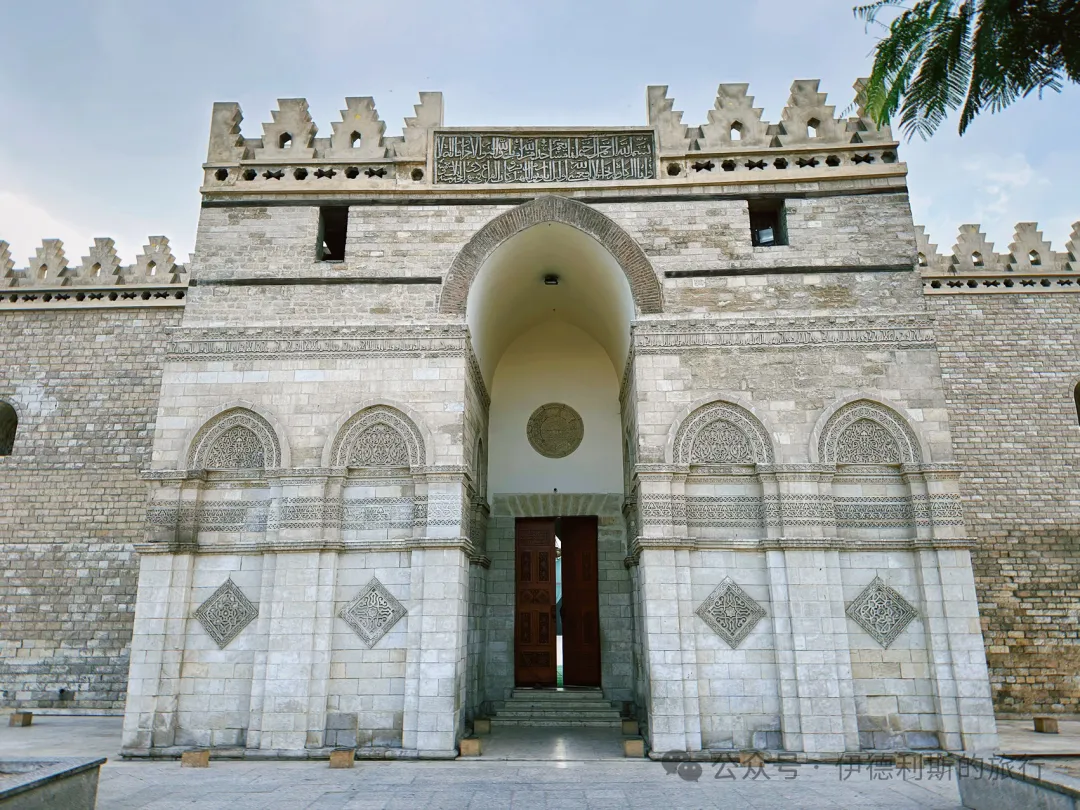
Right next to the north wall of Old Cairo is the Al-Hakim Mosque. It is named after the sixth caliph of the Fatimid dynasty, who was also the 16th imam of the Ismaili branch of Shia Islam, Al-Hakim bi-Amr Allah (reigned 996-1021). The Al-Hakim Mosque was started in 990 by the fifth Fatimid Caliph, al-Aziz Billah (reigned 975-996), and finished in 1013 by Caliph al-Hakim. It is now 1,012 years old.
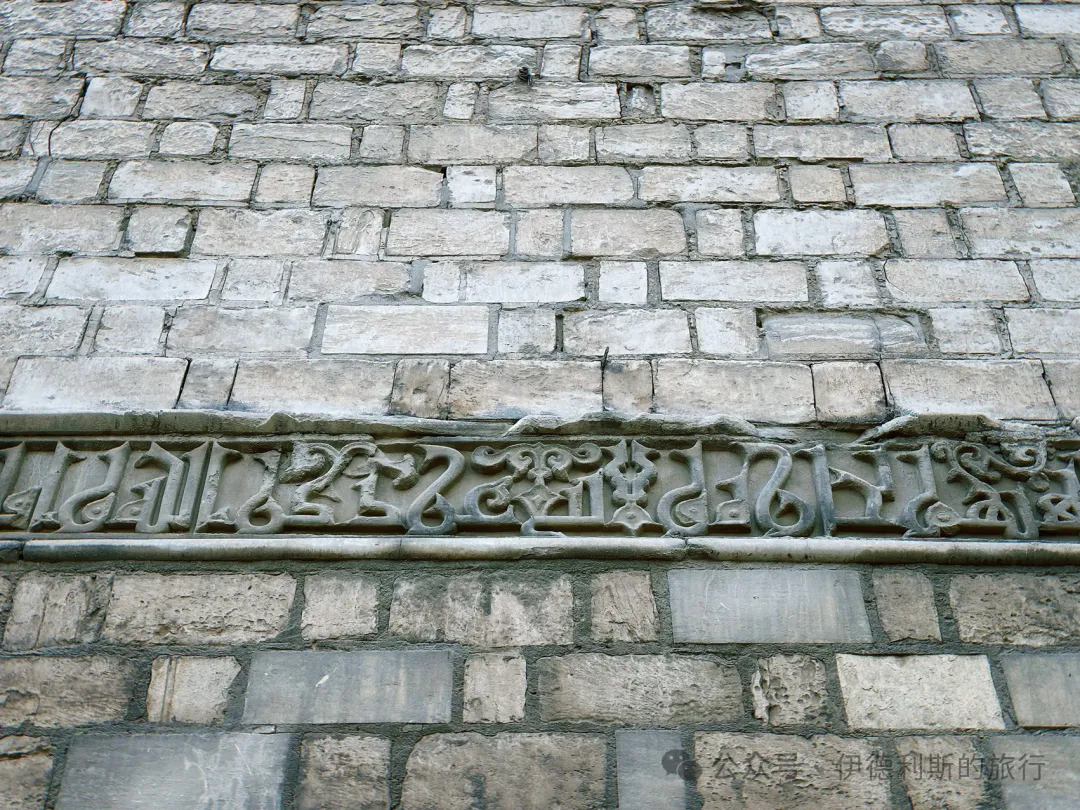
The mosque originally sat outside the Cairo city walls, but it was brought inside after the walls were rebuilt in 1087. Its architectural style is similar to the Al-Azhar Mosque, but it is twice as large. The most striking features are the two minarets built on square brick bases. When the minarets were first built in 1003, they were separate structures. They were not encased in brick until 1010. Some scholars suggest this change relates to 1010, when the ruler of Mecca rejected Fatimid authority, weakening the dynasty's power. The outer wall of the southern brick base has Fatimid-era marble carvings in Kufic script. Because the northern base was incorporated into the northern wall of Old Cairo in 1087, its Kufic carvings were moved to the outside of the city wall.
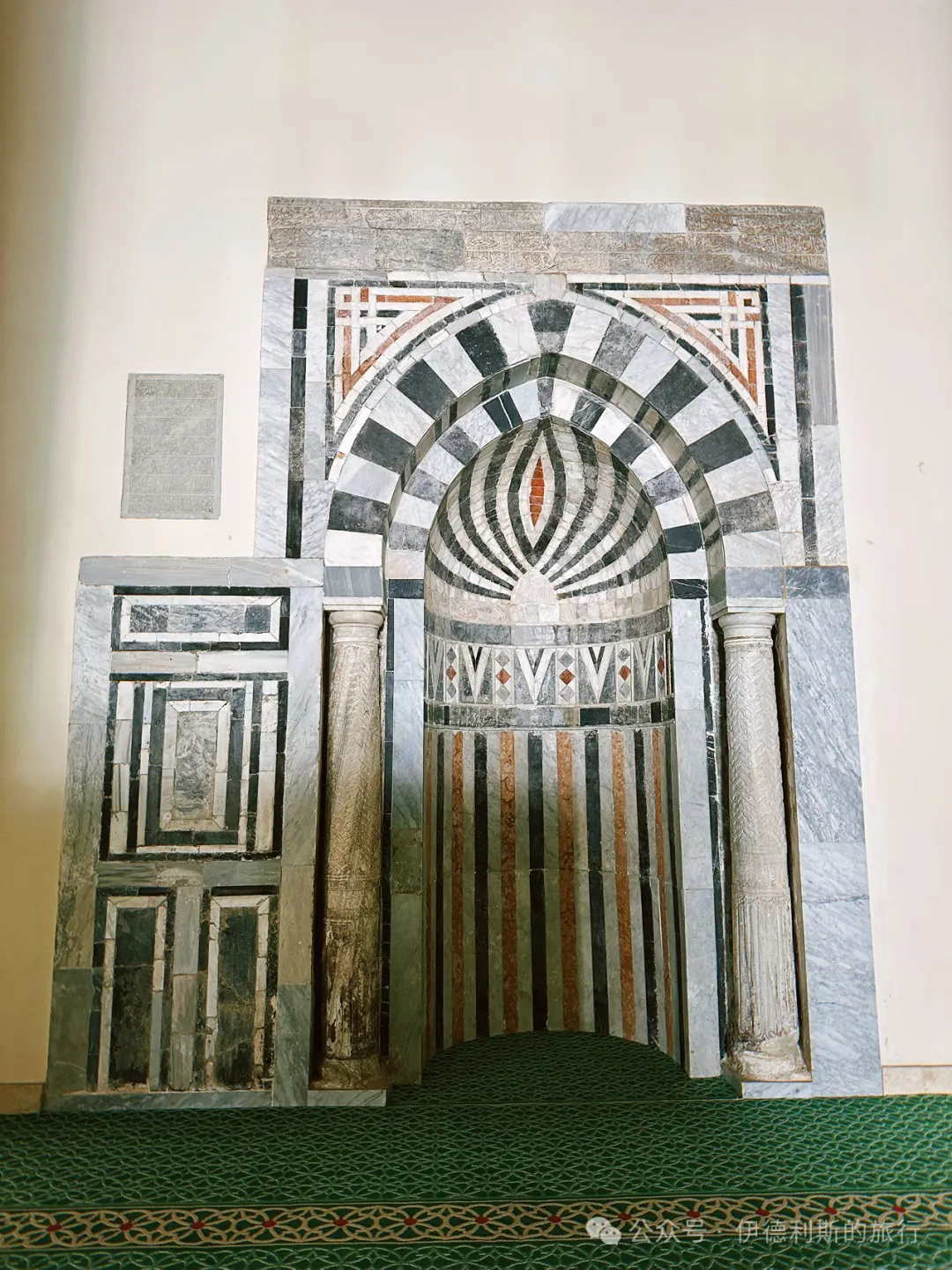
During the Crusades, the Franks used the mosque as a prison. Later, Saladin used it as a stable. It was repaired during the Mamluk period in the 14th century, but it eventually fell into ruin for a long time. The mosque was repaired in 1808, and a small, colorful marble mihrab added during that time still exists today.
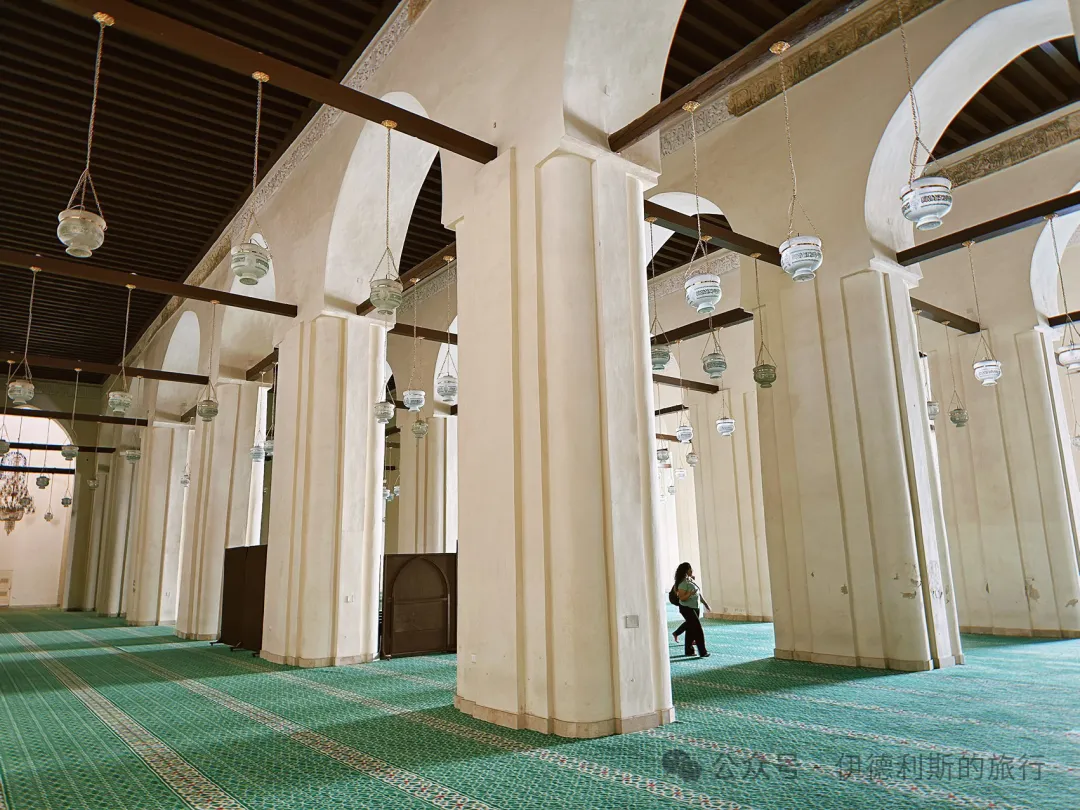
In the 20th century, the mosque served as a school until 1980, when the Dawoodi Bohra branch of Shia Islam carried out a massive reconstruction and renovation using white marble. Inside the main hall after the reconstruction, only the original plaster carvings, wooden beams, and scripture remained. This restoration was criticized by scholars for being 'inauthentic' and sparked widespread debate. In 2017, the Dawoodi Bohra community and the Egyptian Ministry of Tourism and Antiquities launched a new round of repairs, and the mosque did not reopen until February 2023.
Al-Aqmar Mosque: 1125
Walking south from the Al-Hakim Mosque along Al-Mu'izz Street, the main road of Old Cairo, you can see the famous Fatimid-era Aqmar Mosque. The Aqmar Mosque was built in 1125-1126 by order of the Fatimid vizier Al-Ma'mun al-Bata'ihi. It sat at the northeast corner of the Fatimid Eastern Palace, right next to the palace grounds.
The Aqmar Mosque is a landmark in Egyptian architectural history. It was the first mosque with a main entrance aligned with the street rather than the qibla wall, meaning it was the first planned according to Cairo's street layout. It was also the first to feature complex stone carvings. The facade of the Aqmar Mosque is very luxurious. Above the entrance is a medallion surrounded by a grille, with the names of the Prophet and Ali in the center and scripture around it—a unique decoration in Cairo.
At the top of the left facade are carvings of doors and windows. The window on the left symbolizes the ceremonial grille the Fatimids took back from the palace of their rivals, the Abbasids in Baghdad, representing victory. Inside the window are a lamp and a six-pointed star, based on the Shia hadith: 'The star is a promise to the world, and it will not be submerged.' Below the window are carvings of plants growing from a flower pot, referencing the Prophet's words about Hasan and Husayn: 'My two fragrant herbs in the world.' The door in the upper right corner comes from the famous Shia hadith: 'I am the city of knowledge, and Ali is its gate.'
Because it was near the Fatimid palace, the Aqmar Mosque originally had no minaret. One was added by the Mamluk dynasty at the end of the 14th century, and the cylindrical top was rebuilt during the Ottoman period.
In 1993, the Dawoodi Bohras branch of Shia Islam carried out a large-scale renovation of the Aqmar Mosque. Most of the historical elements inside the main hall were not preserved, which led to criticism.
Al-Ashraf Mosque: 1424
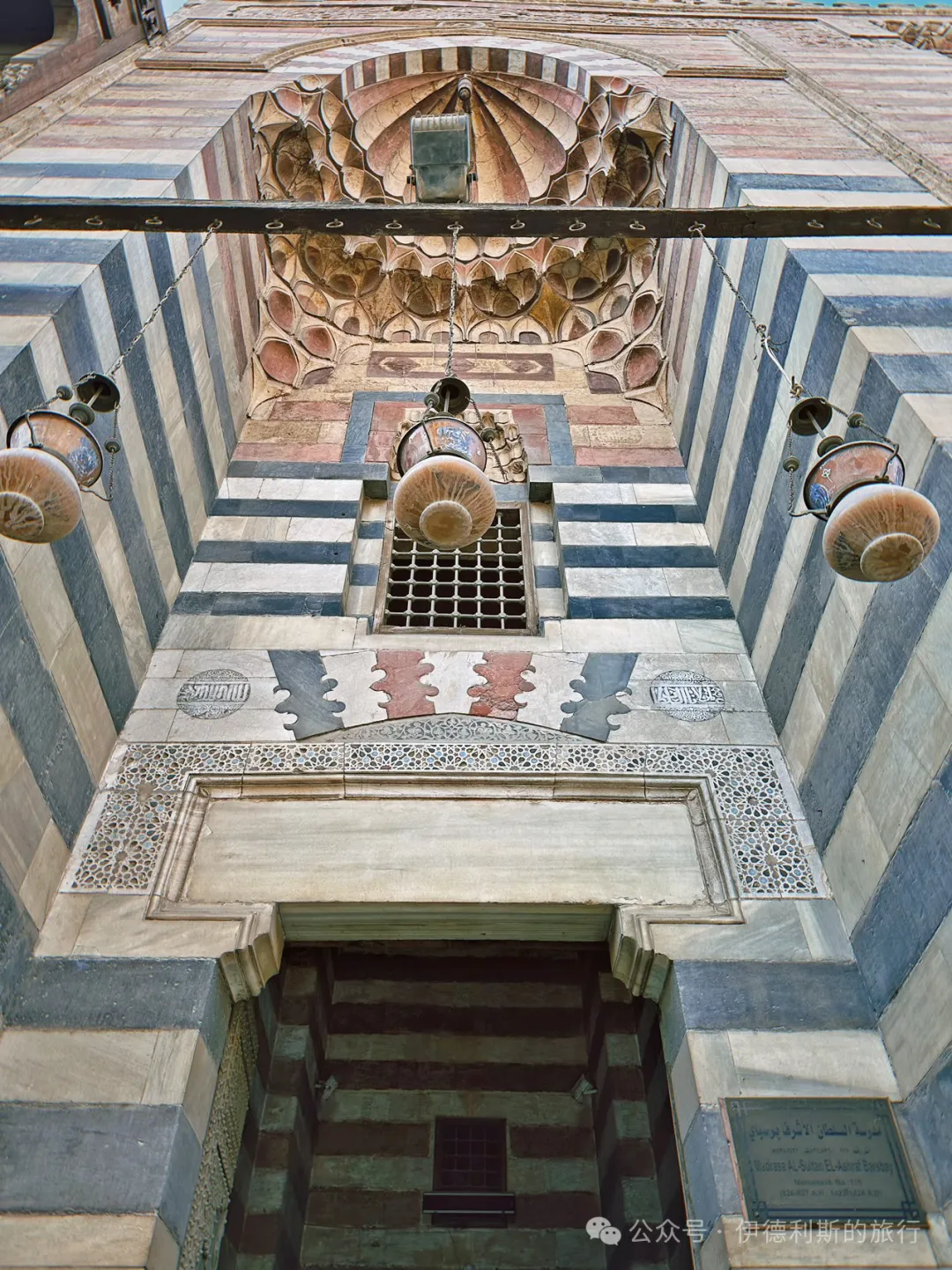
The Ashraf Mosque (Al-Ashraf Mosque) was built in 1424 by the Mamluk Sultan Al-Ashraf Barsbay, who reigned from 1422 to 1438. The complex includes a main prayer hall, a school, a tomb, and a Sufi lodge (khanqah). It features a dome with geometric carvings, which is an early example of decorative dome carving.
Barsbay was once a Mamluk slave of Sultan Barquq and later served as a tutor to the young Sultan Muhammad. With support from the governor of Damascus and other emirs, Barsbay deposed the young sultan in 1422 and took the throne himself.
Barsbay’s 16-year reign was a time of relative safety and stability for the Mamluk Sultanate, with almost no wars. He was very generous to the poor and to Sufis, and he carried out a series of administrative reforms.
People called Barsbay the Merchant Sultan because he placed great importance on trade. He took steps to strengthen control over the Mediterranean and Red Seas, diverted Indian Ocean trade routes through Jeddah, and created state monopolies on sugar and pepper. He lowered tariffs to attract merchants and monopolized most of the trade from the East, which angered many European powers.
Al-Azhar Mosque: 972
In 969 AD, the Shia Ismaili Fatimid dynasty conquered Egypt and began building their new capital, Cairo. At that time, the densely populated Sunni city of Fustat already existed south of Cairo, so the new city became the center for the Shia Ismaili faith.
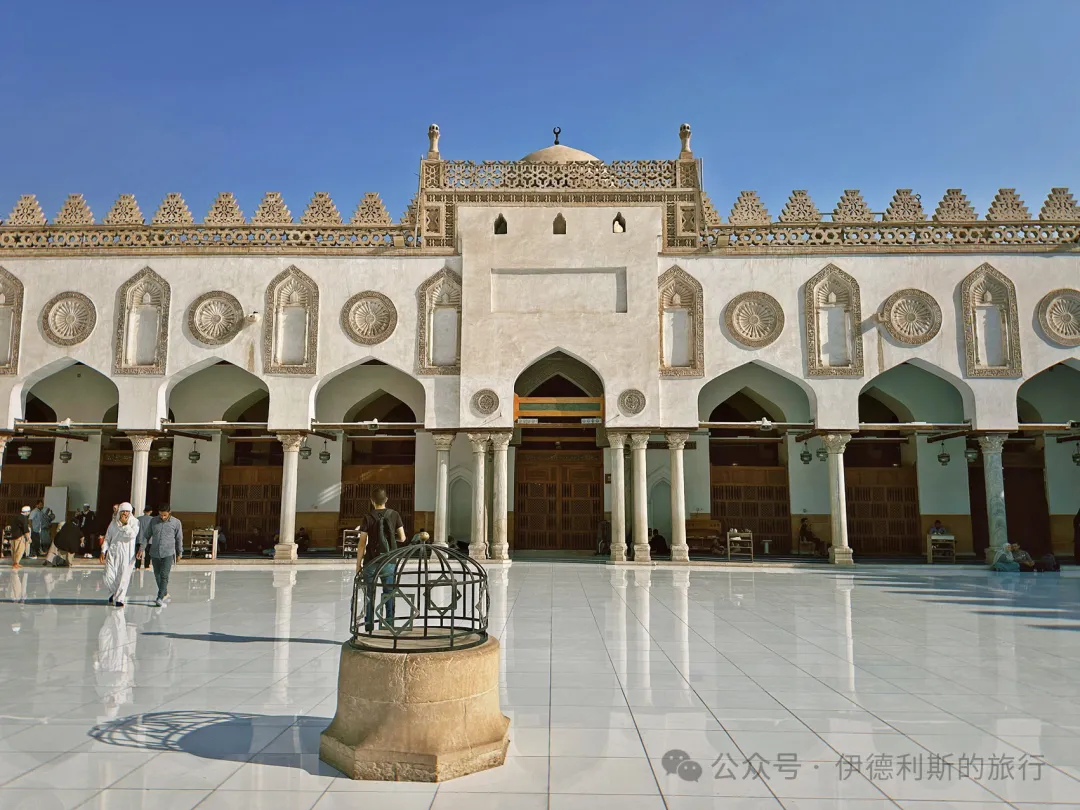
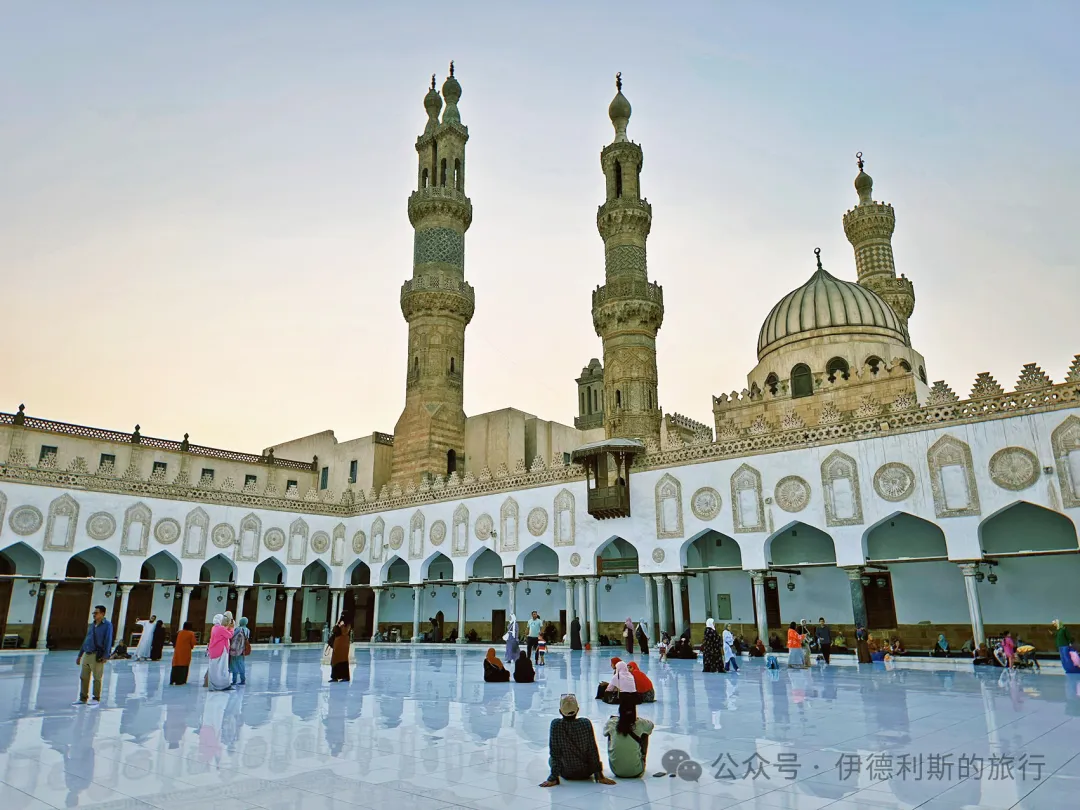
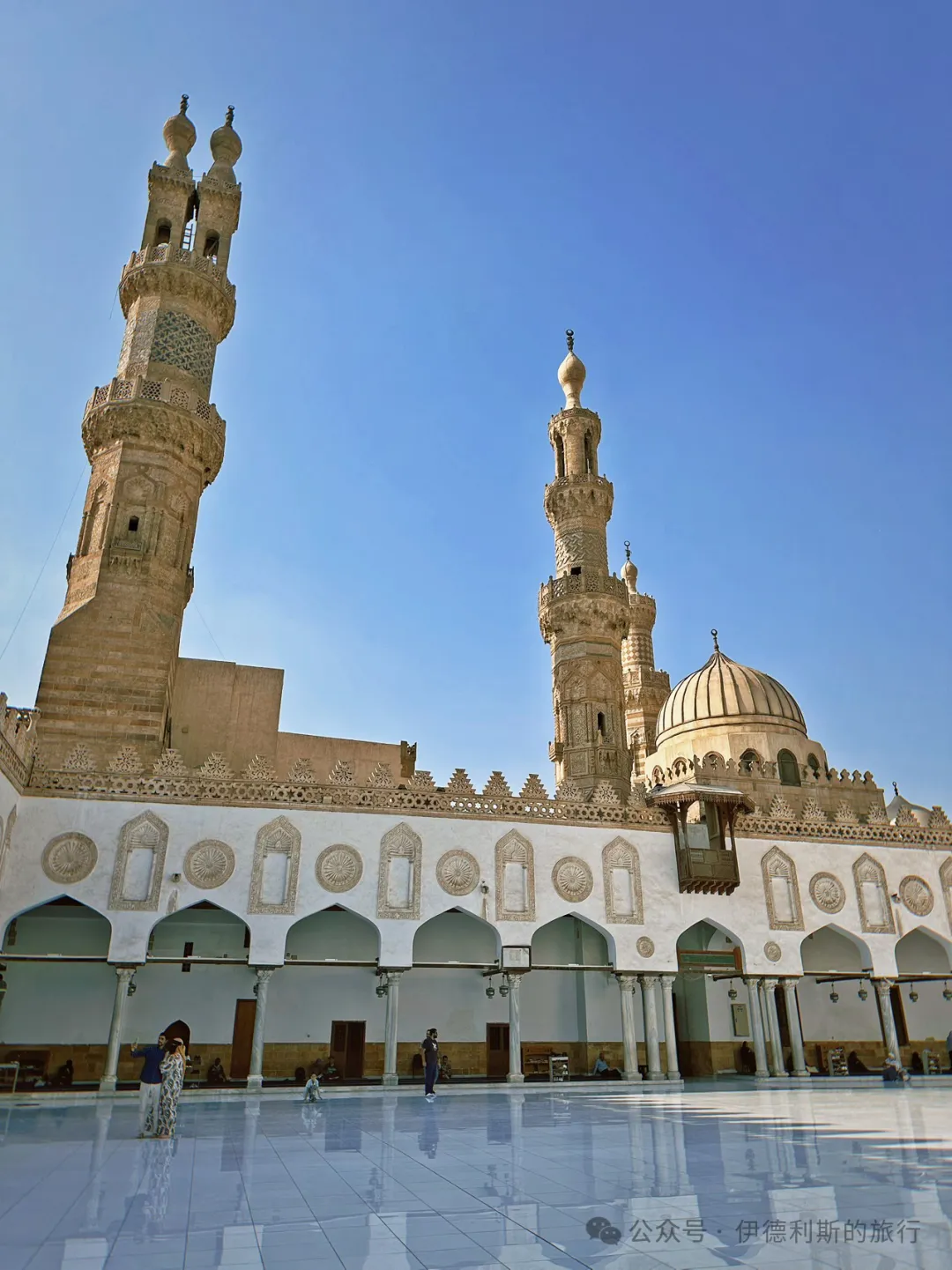
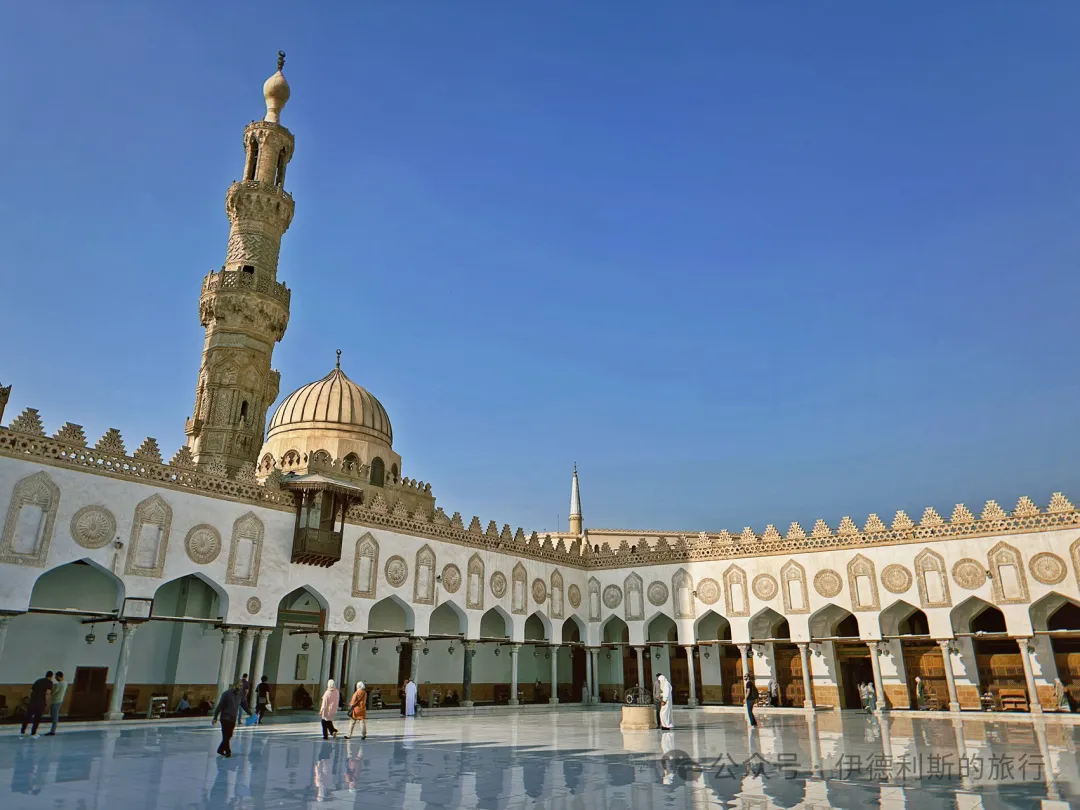
After two years of construction, the first Friday mosque (Jami) in Cairo opened in 972 and was named the Cairo Mosque (Jami al-Qahira) after the city. The Cairo Mosque was later renamed the Al-Azhar Mosque (al-Jami al-Azhar), with Al-Azhar meaning the Radiant.
After the Al-Azhar Mosque opened, the Ismailis moved from secret to public preaching. The mosque's first chief judge, Qadi al-Numan, became the founder of Ismaili law and the author of the authoritative Ismaili text, The Pillars of Islam (Kitab da'a'im al-Islam).
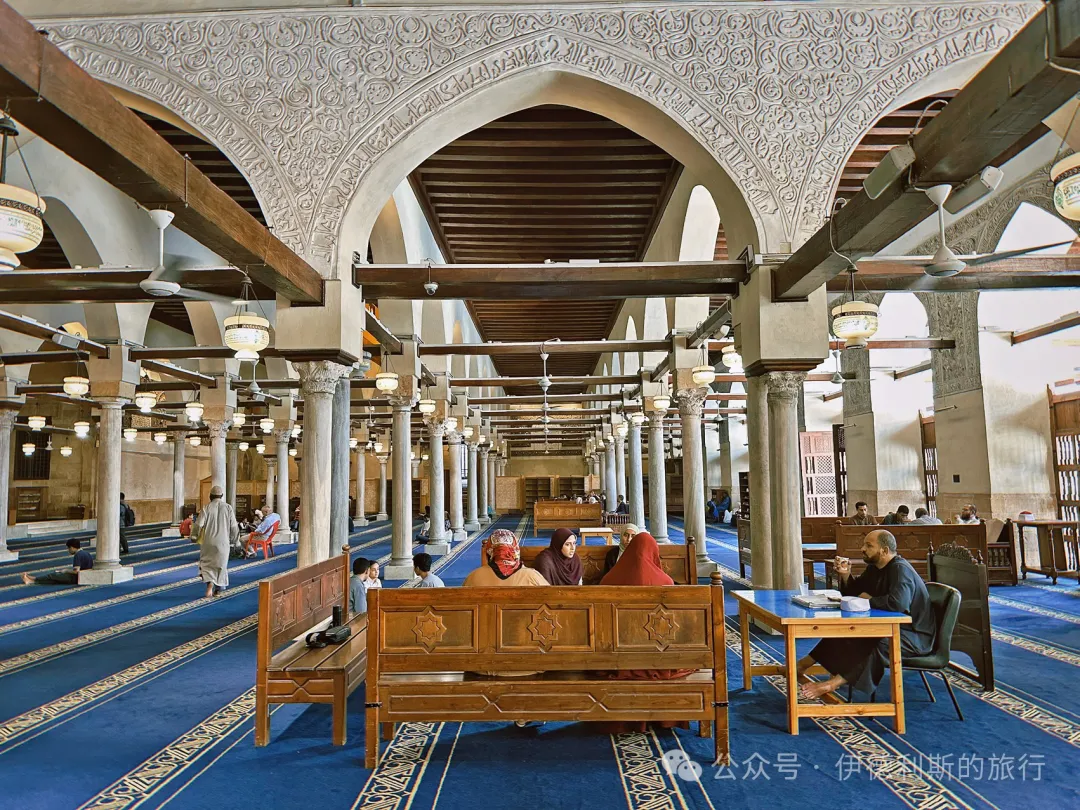
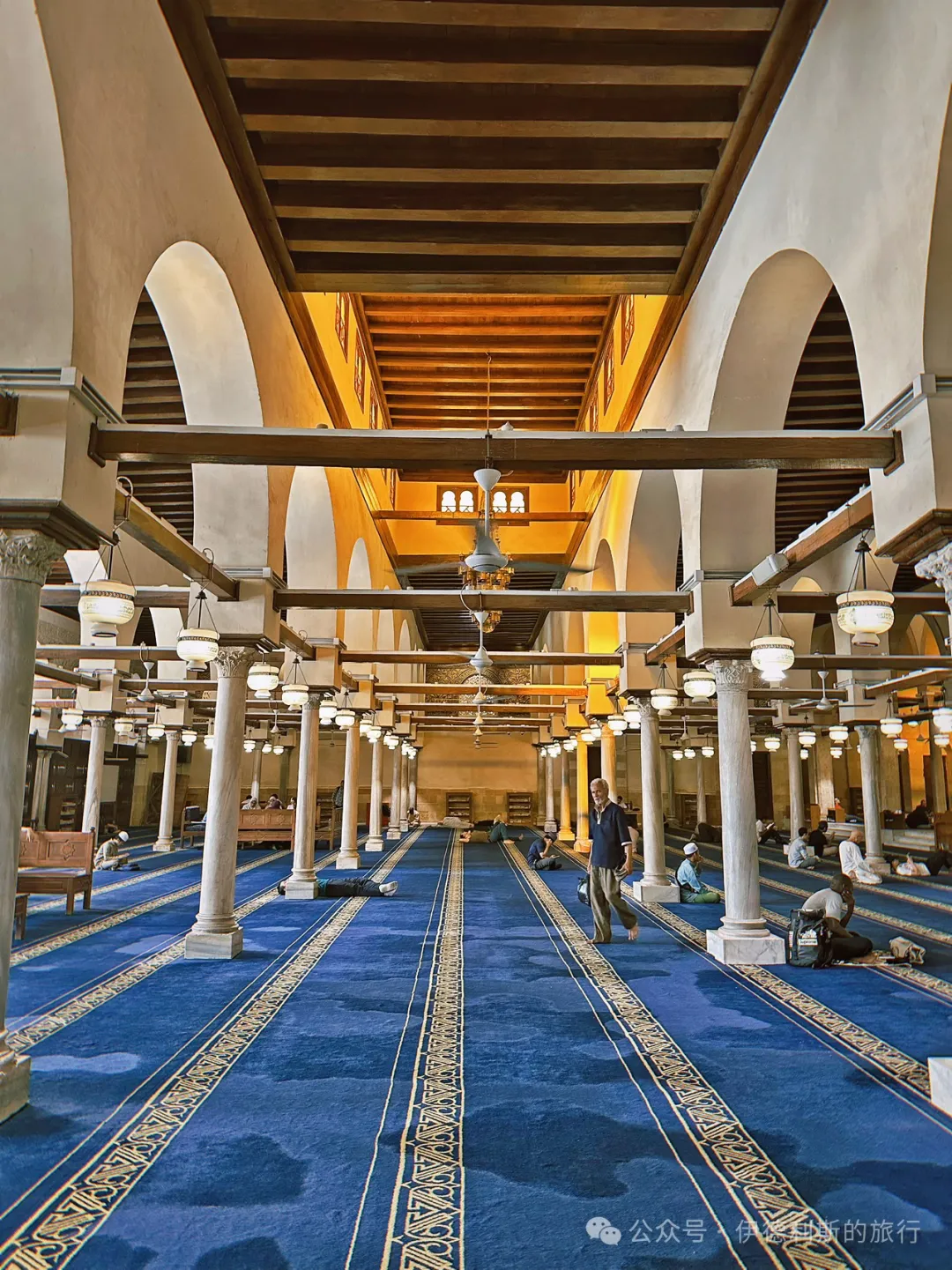
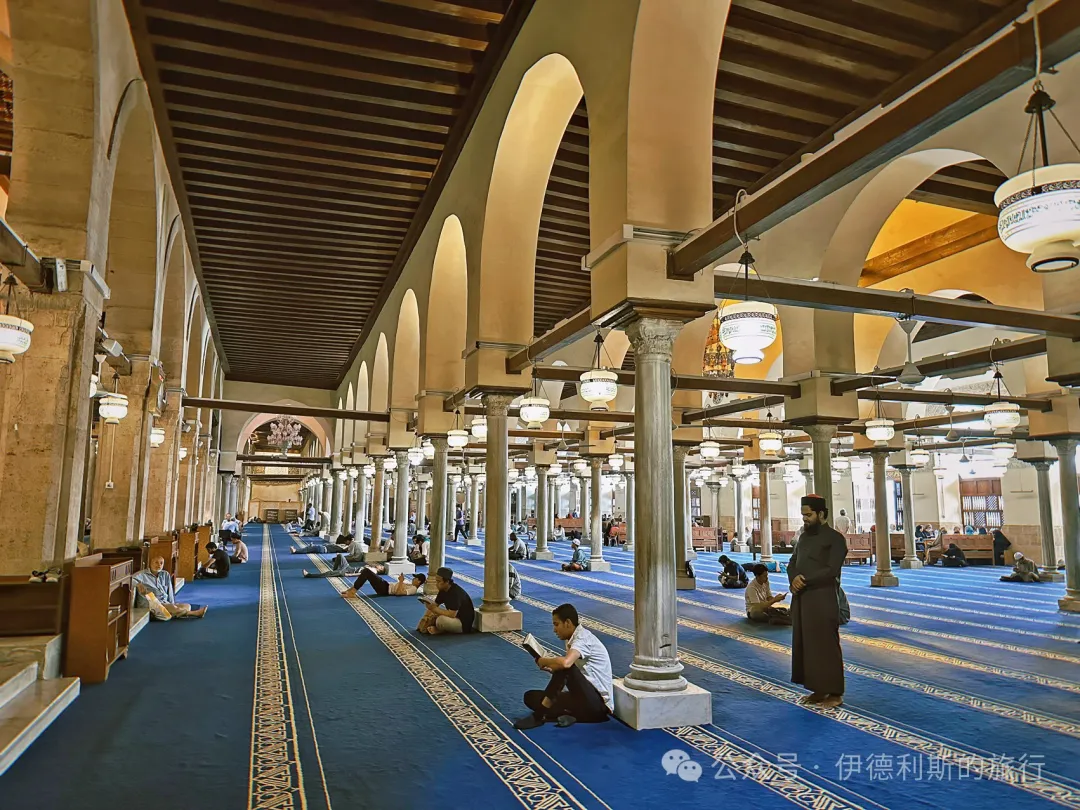
The main hall of the Al-Azhar Mosque is a columned hall. The marble columns in the four rows of arcades came from ruins of the Pharaohs, ancient Rome, and the Copts, and they were leveled using bases of different heights.
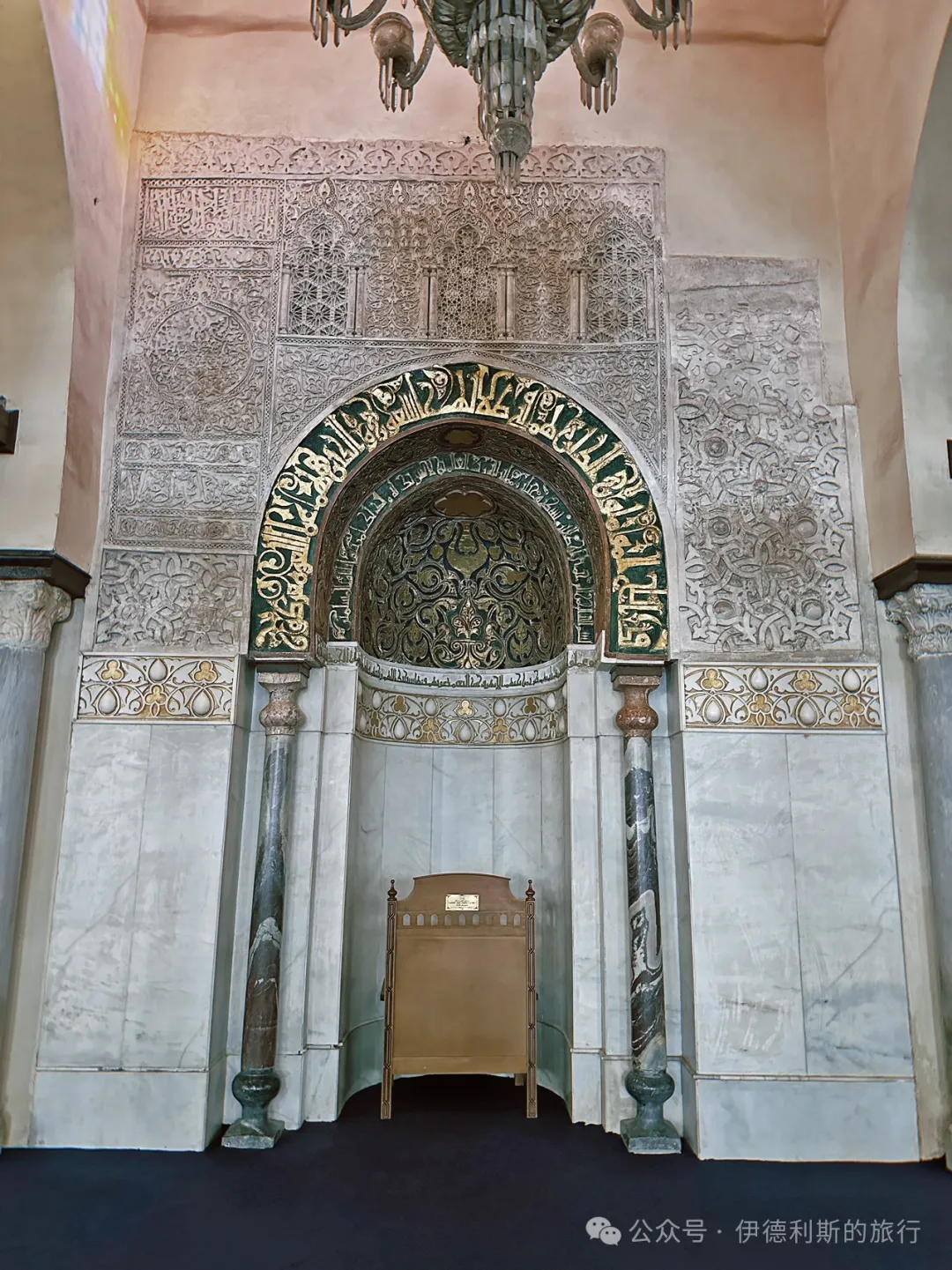
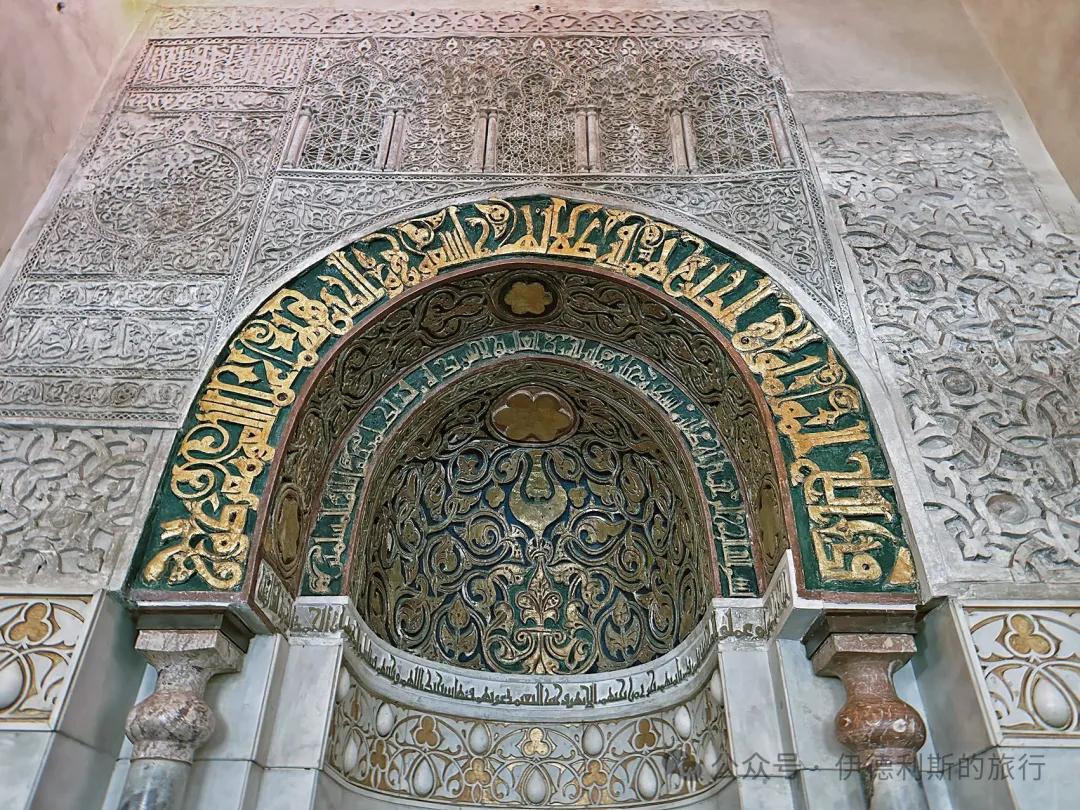
The roof of the main hall originally had three domes, but none survived later renovations. The original mihrab was rediscovered in 1933, and the niche still preserves ornate stucco carvings from the Fatimid period.
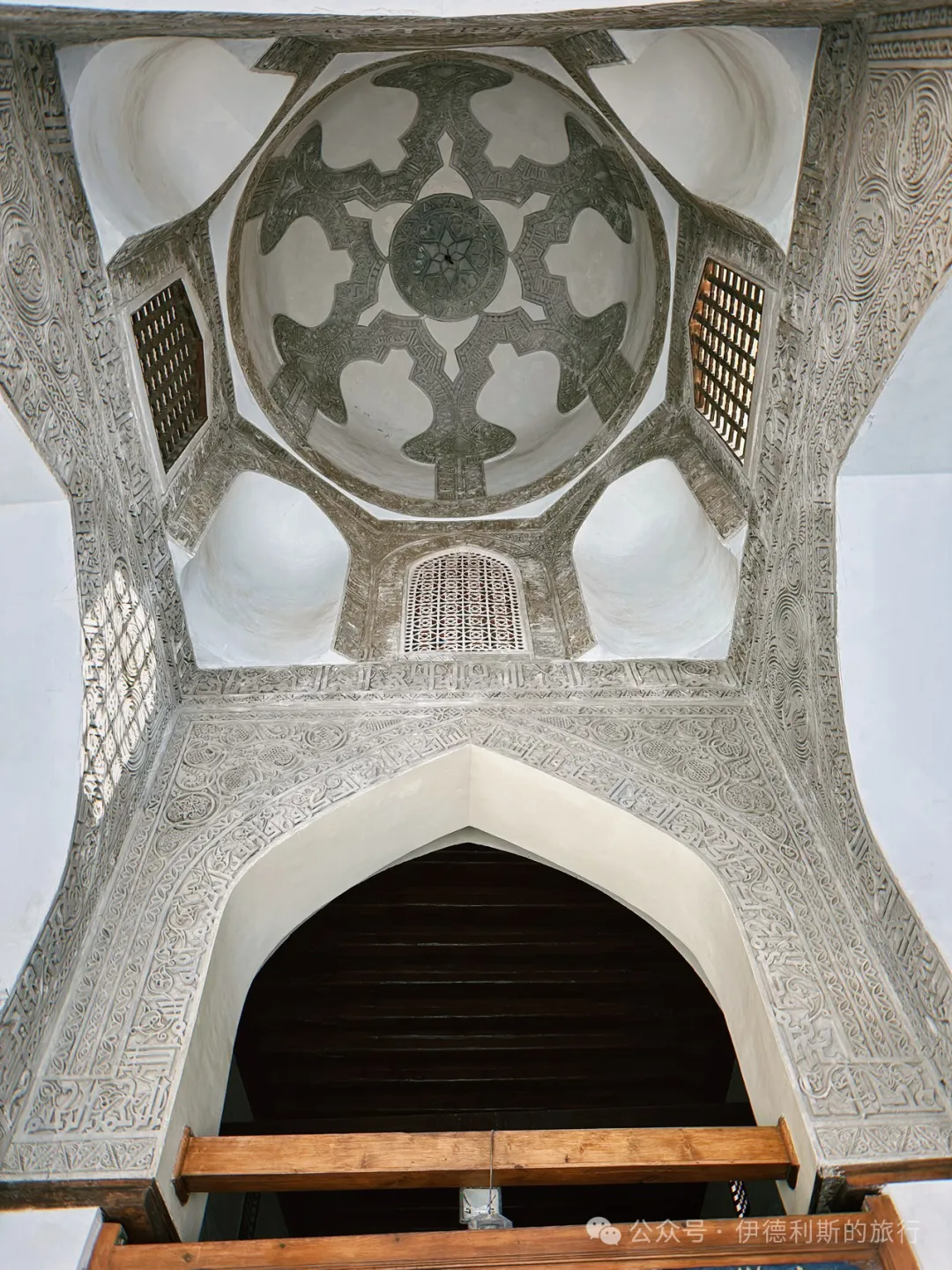
Several Fatimid caliphs expanded and renovated the Al-Azhar Mosque. Caliph al-Hafiz, who reigned from 1132 to 1149, carried out a major renovation in 1138. The four-centered arches in the courtyard and the dome at the entrance to the main hall date from this time. The stucco carvings in the courtyard also come from this period, though they were renovated again in 1891.
In 1171, Saladin overthrew the Fatimid dynasty and established the Sunni Ayyubid dynasty. The Friday prayers for Cairo moved to the Hakim Mosque in the north of the city, and the Al-Azhar Mosque was neglected because it had been the center of the Ismaili faith. Saladin removed the silver bands from the mihrab niche of the Al-Azhar Mosque that bore the names of the Fatimid caliphs and destroyed all the Ismaili manuscripts kept in the mosque.
It was not until 1266 that the Mamluk Sultan Baybars, who reigned from 1260 to 1277, restored Friday prayers at the Al-Azhar Mosque and repaired the building. The Ayyubid dynasty followed the Shafi'i school of law, which held that a community should have only one main Friday mosque. The Mamluk dynasty followed the Hanafi school, which did not have this rule.
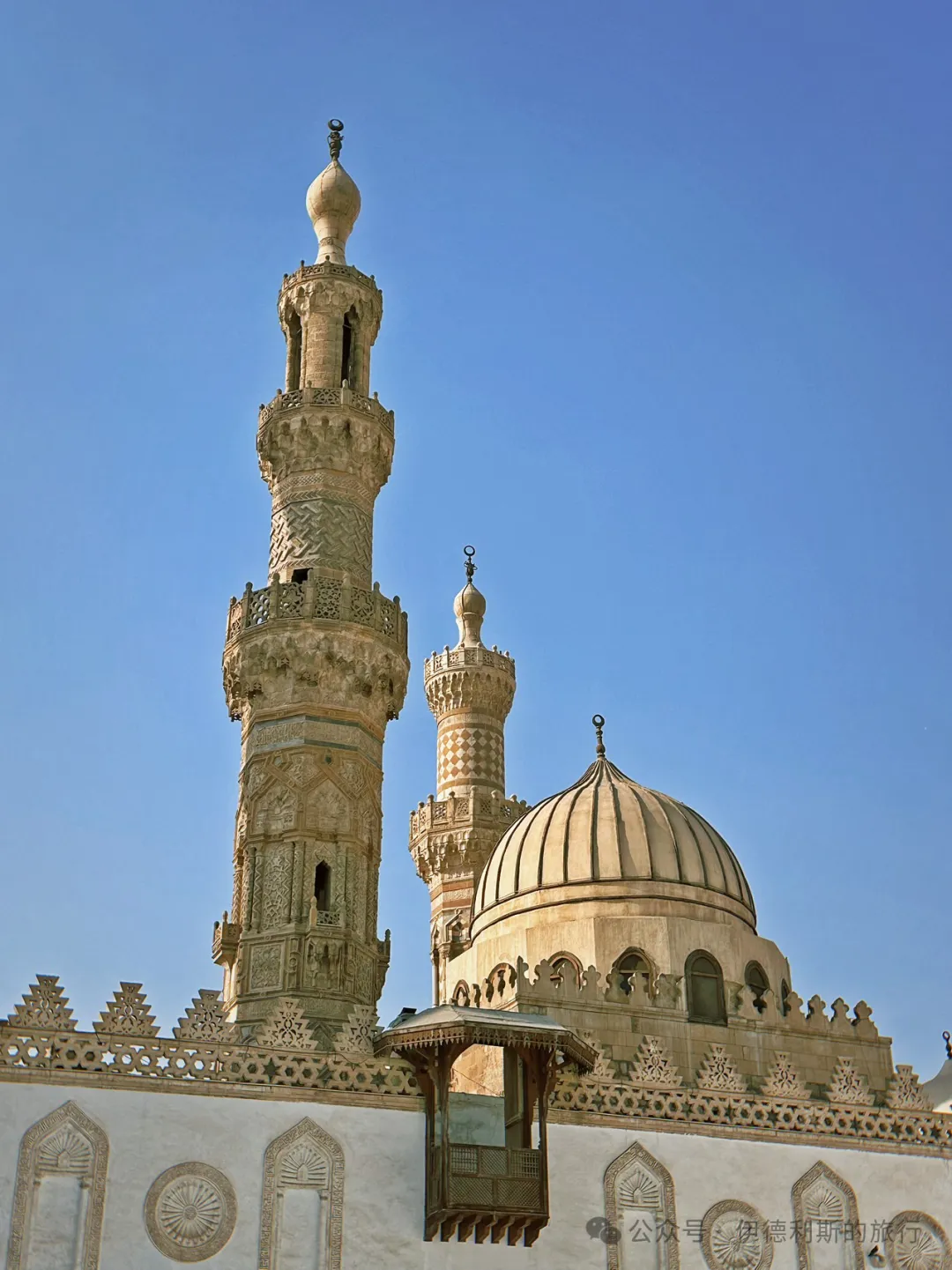
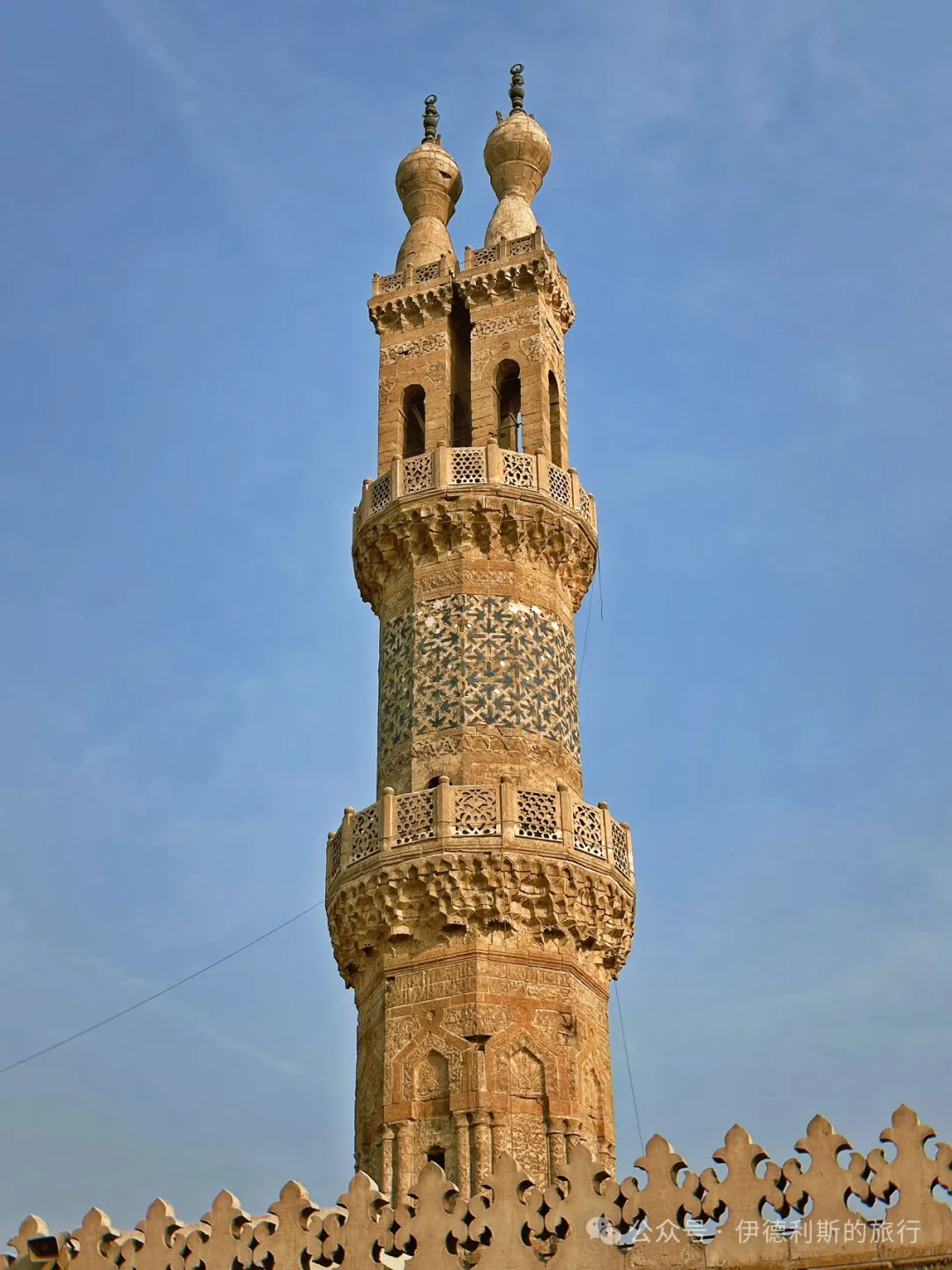
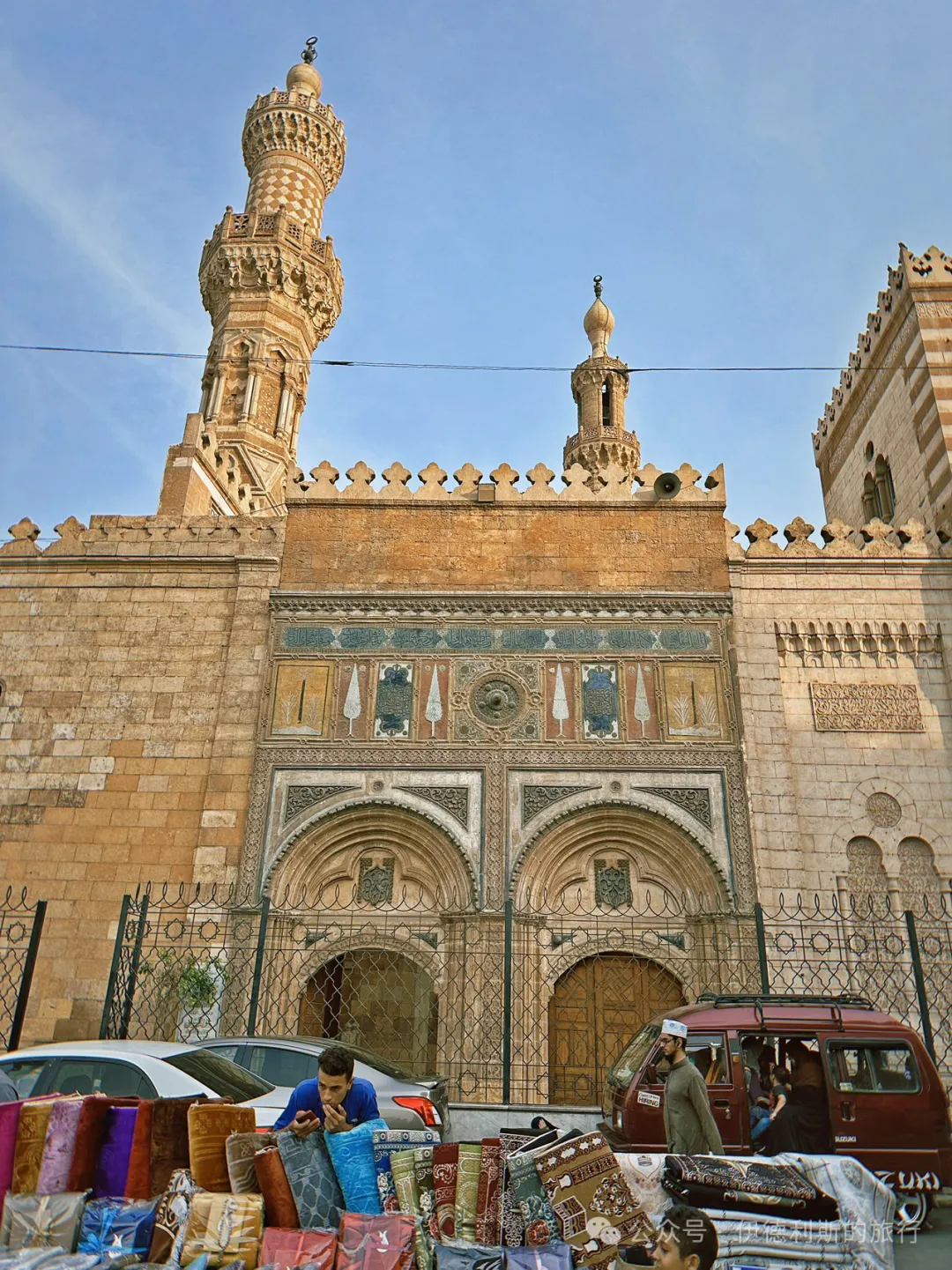
The Mamluk dynasty left two grand minarets at Al-Azhar Mosque: the Qaytbay minaret and the twin minarets of Al-Ghuri, along with the Qaytbay Gate. The Qaytbay minaret was built in 1483 or 1495 and features three balconies decorated with ornate carvings. The Qaytbay Gate was built in 1495 and leads directly into the courtyard. Both are exquisite examples of late Mamluk architecture. During the reign of Sultan Qaytbay (1468-96), the Mamluk dynasty was politically and economically stable and won several military victories against the Ottoman Empire. The Sultan was very interested in art and architecture and sponsored as many as 230 buildings.
In 1509, the Mamluk Sultan Al-Ashraf Qansuh al-Ghuri (reigned 1501-16) built the twin minarets of Al-Ghuri. Al-Ghuri was the last powerful ruler of the Mamluk dynasty. He was eventually defeated by the Ottoman Empire and fell on the battlefield in Syria.
In 1517, the Ottoman Empire conquered the Mamluk dynasty and occupied Egypt, causing the status of Al-Azhar Mosque to decline once again. It was not until after the 18th century, when the Mamluk elite regained influence in Egypt, that renovations and expansions of Al-Azhar Mosque continued.
In 1749, Abd al-Rahman was appointed as the head of the guards (Katkhuda). In 1753, he oversaw the construction of three Ottoman-style gates for Al-Azhar Mosque: the Barbers' Gate (Bab al-Muzayinīn), the Gate of the Upper Egyptians (Bab al-Sa'ayida), and the Soup Gate (Bab al-Shurba). Outside the Barbers' Gate was where students got their hair cut, 'Sa'ayida' means people from Upper Egypt, and the Soup Gate was where students went to get soup. From then on, the Barbers' Gate became the main entrance to Al-Azhar Mosque.
Abd al-Rahman also doubled the size of the main prayer hall of Al-Azhar Mosque to the south and added a new mihrab, giving the hall its current shape. After Abd al-Rahman died in 1776, he was buried inside Al-Azhar Mosque, becoming the last person in history to be buried there.
After the 18th century, Al-Azhar Mosque became the most influential educational institution in Egypt, and the ulama (scholars) could report to the Pasha (governor) as official advisors.
Napoleon occupied Cairo on July 22, 1798. On October 21, an uprising against the French broke out at Al-Azhar Mosque. Napoleon shelled the mosque directly from the Cairo Citadel, resulting in over 3,000 Egyptian casualties and the death of six Al-Azhar ulama. Napoleon's troops tied their horses to the mihrab of Al-Azhar Mosque and ransacked the student dormitories and the library. In 1800, the commander-in-chief of the French expeditionary force was assassinated by an Al-Azhar student, after which Napoleon ordered the closure of Al-Azhar Mosque. In June 1801, Cairo was recaptured by the British and the Ottoman Empire, and Al-Azhar Mosque reopened.
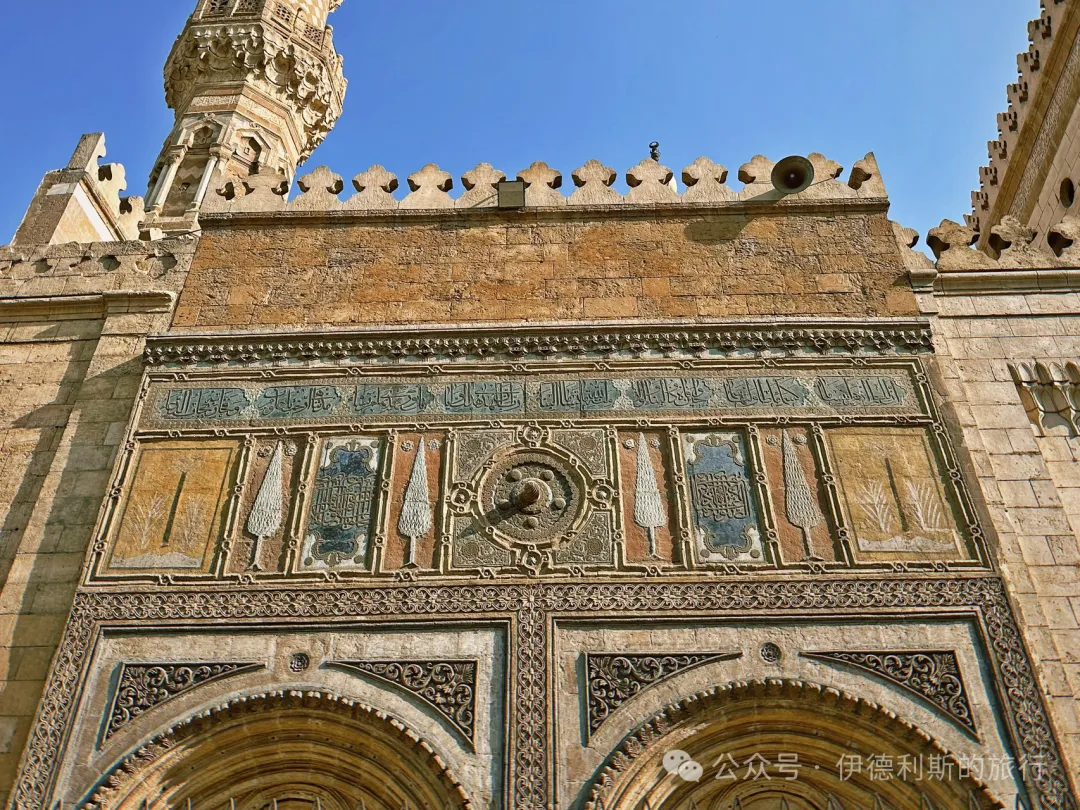
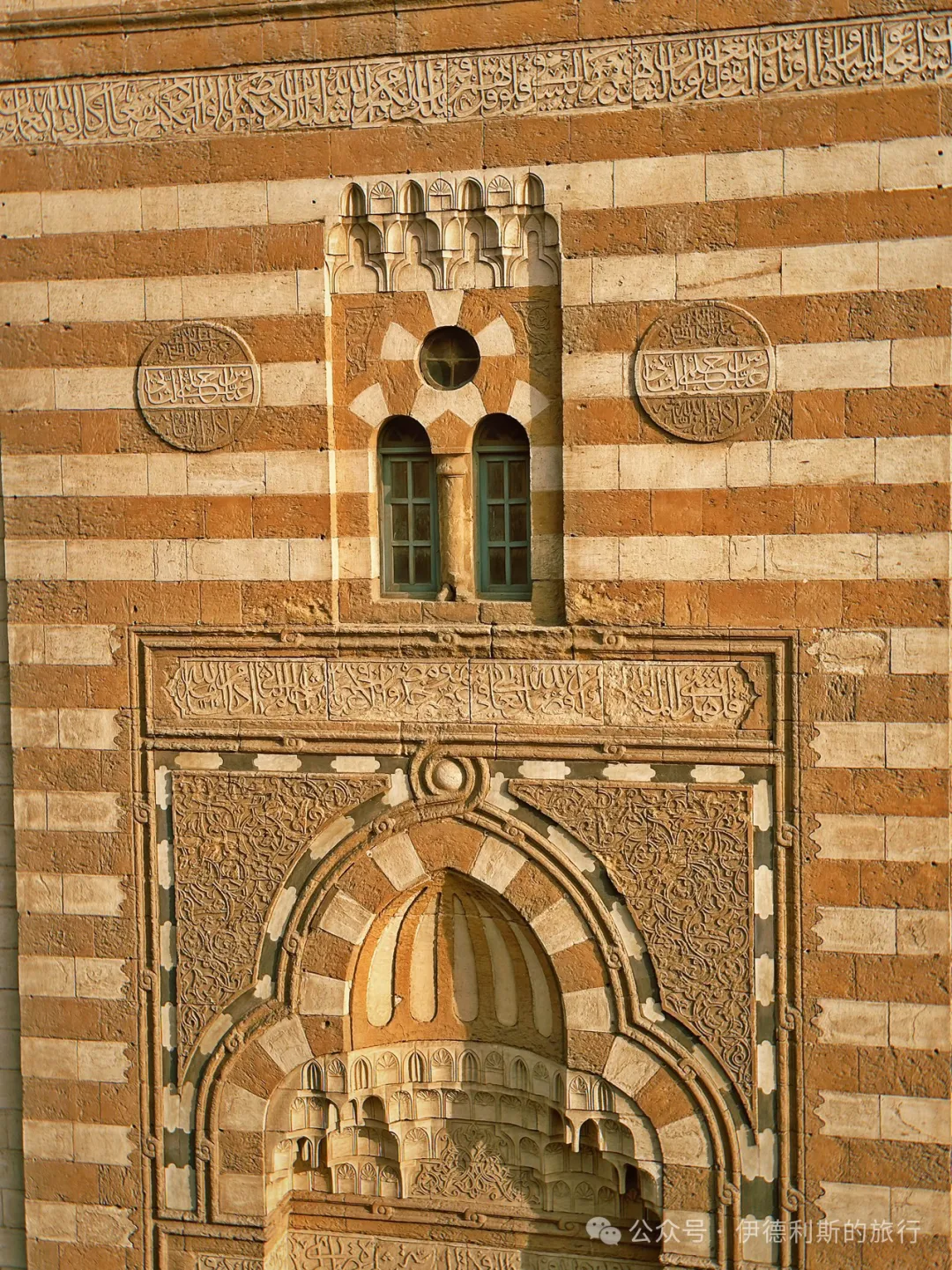
Between 1892 and 1901, the last Khedive (viceroy) of Ottoman Egypt, Abbas II Hilmi Pasha, rebuilt the facade of Al-Azhar Mosque as part of a wave of modernization in British-occupied Egypt. At the same time, Al-Azhar University also carried out educational reforms to oppose fundamentalism. To mitigate the impact of the Saudi Wahhabi movement, many students from Indonesia and other parts of Southeast Asia came to study at Al-Azhar University during this period.
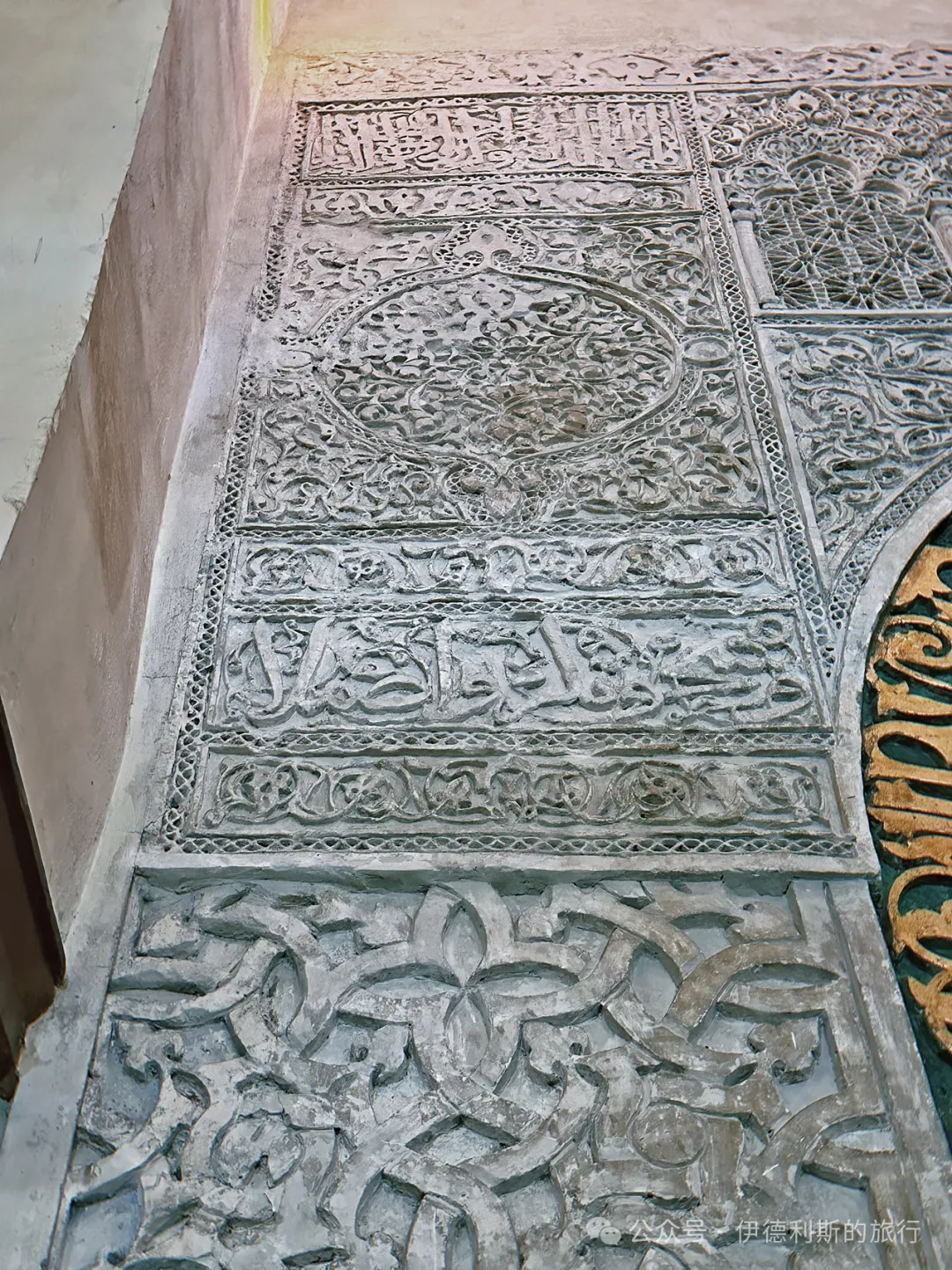
The last two pictures show the Fatimid dynasty stucco carvings restored by the Committee for the Preservation of Arab Art Monuments during the reign of Abbas II Hilmi Pasha.
Al-Hussein Mosque: built in 1154, rebuilt in 1874
Across from Al-Azhar Mosque is Al-Hussein Mosque, where Shia Muslims believe the head of Imam Hussein is buried. The mosque was first built in 1154, but its current appearance dates to a reconstruction in 1874.
The Fatimid dynasty believed the Abbasid dynasty secretly moved Imam Hussein's head from the Umayyad Mosque cemetery in Damascus. The Fatimids rediscovered it in 1091 and built a shrine for it in Ashkelon, Palestine.
In 1153, the Fatimid dynasty ordered the head of Hussein moved to Cairo to be buried with past Fatimid caliphs, and they built Al-Hussein Mosque in 1154. The lower part of the south gate of Al-Hussein Mosque still keeps its original Fatimid structure.
Al-Hussein Mosque was rebuilt by the Ayyubid dynasty in 1237, but it later burned down, leaving only one Ayyubid minaret today.
In 1874, Isma'il Pasha (reigned 1863-79), the ruler of the Muhammad Ali dynasty, rebuilt Al-Hussein Mosque in a Gothic Revival style and added a minaret blending Gothic and Ottoman styles. During his rule, Isma'il Pasha modernized Egypt on a large scale, trying to align Egypt with Europe, and the renovation of Al-Hussein Mosque was part of this effort.
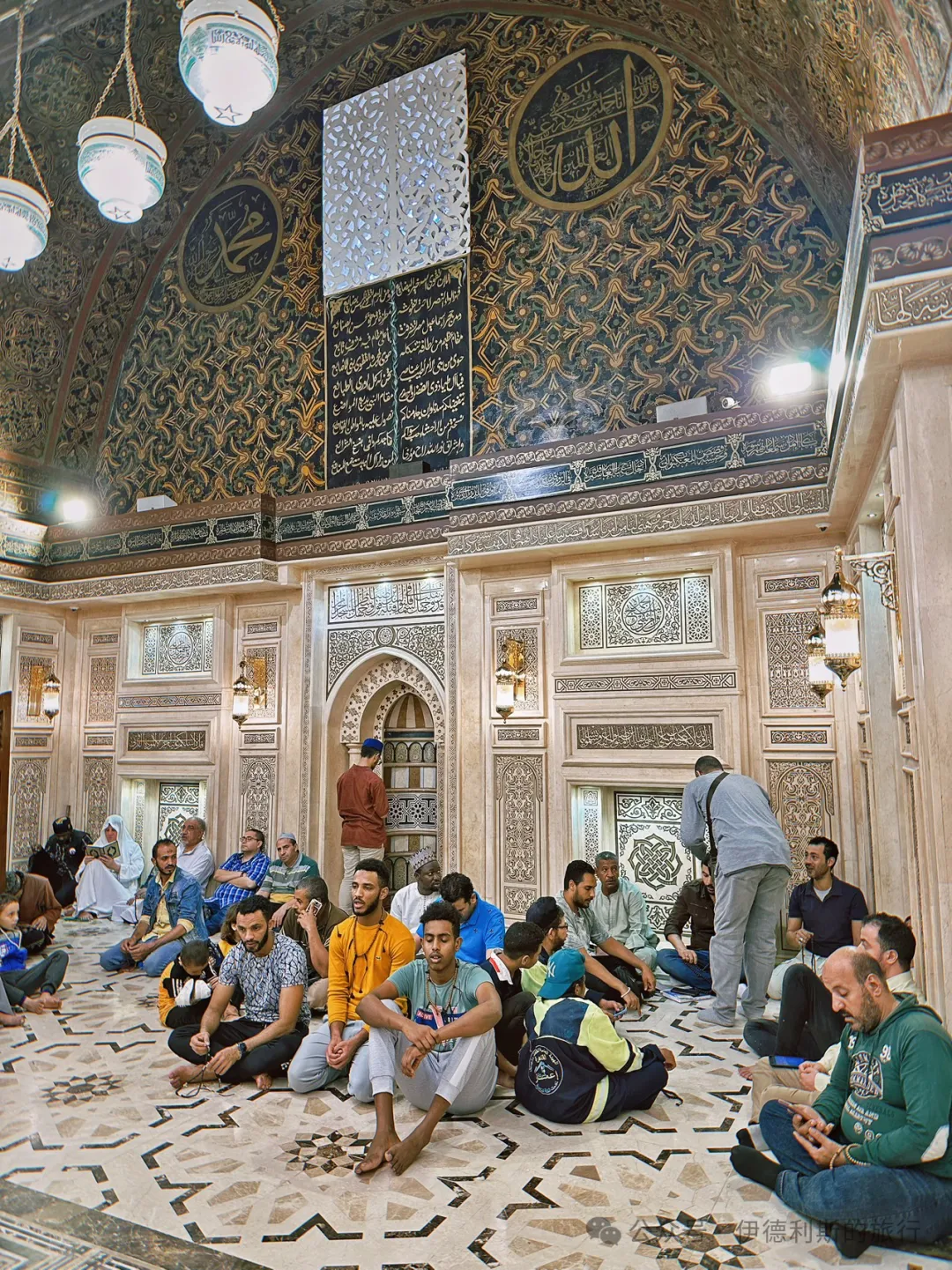
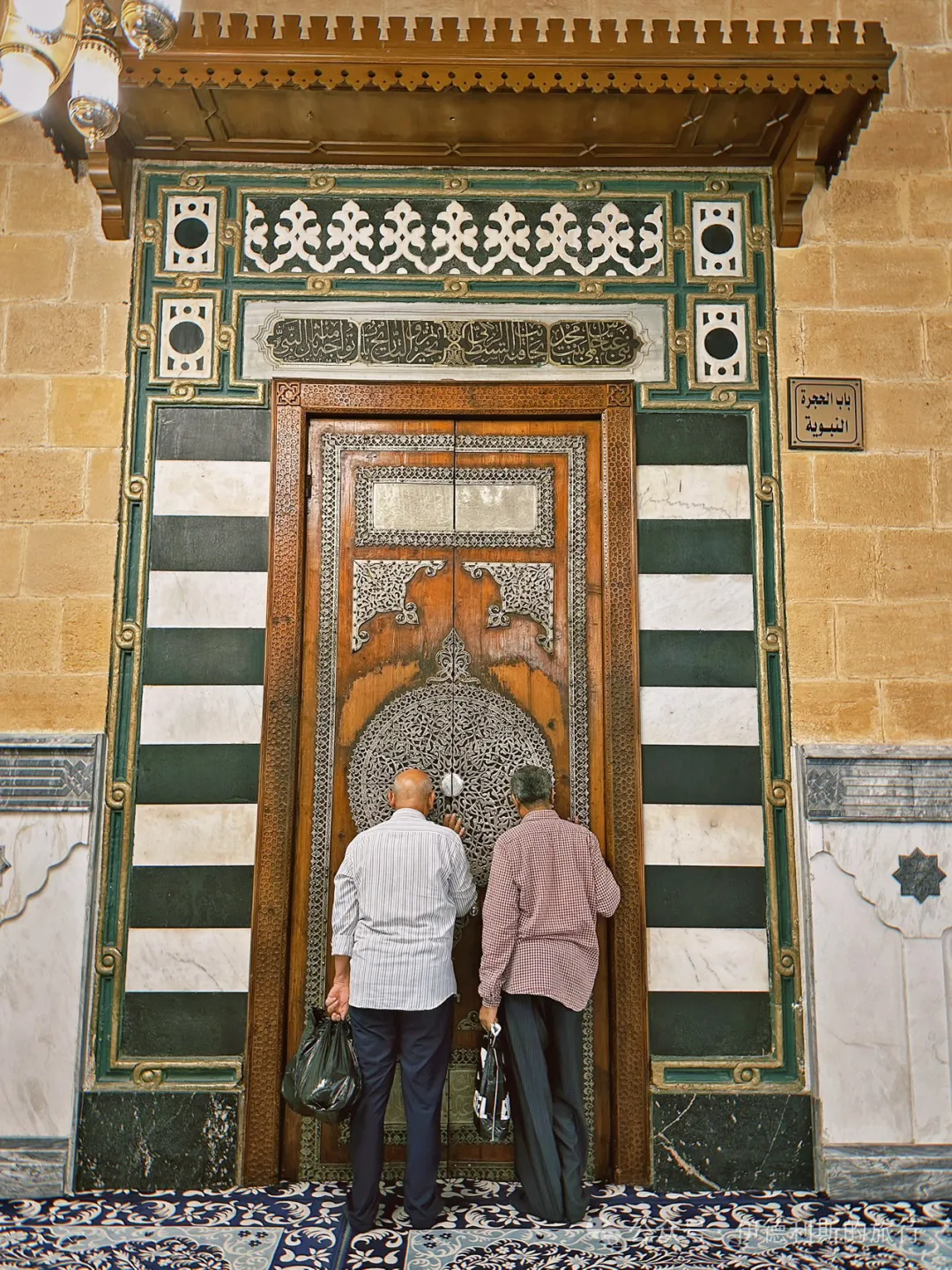
In 1893, a room for Prophet Muhammad's relics (Bab al-Mukhallafat al-Nabawiyya) was added next to the shrine. It holds four strands of the Prophet's hair, a linen cloak he wore, a lantern, a copper kohl applicator, a staff, and a sword given to him by a companion.
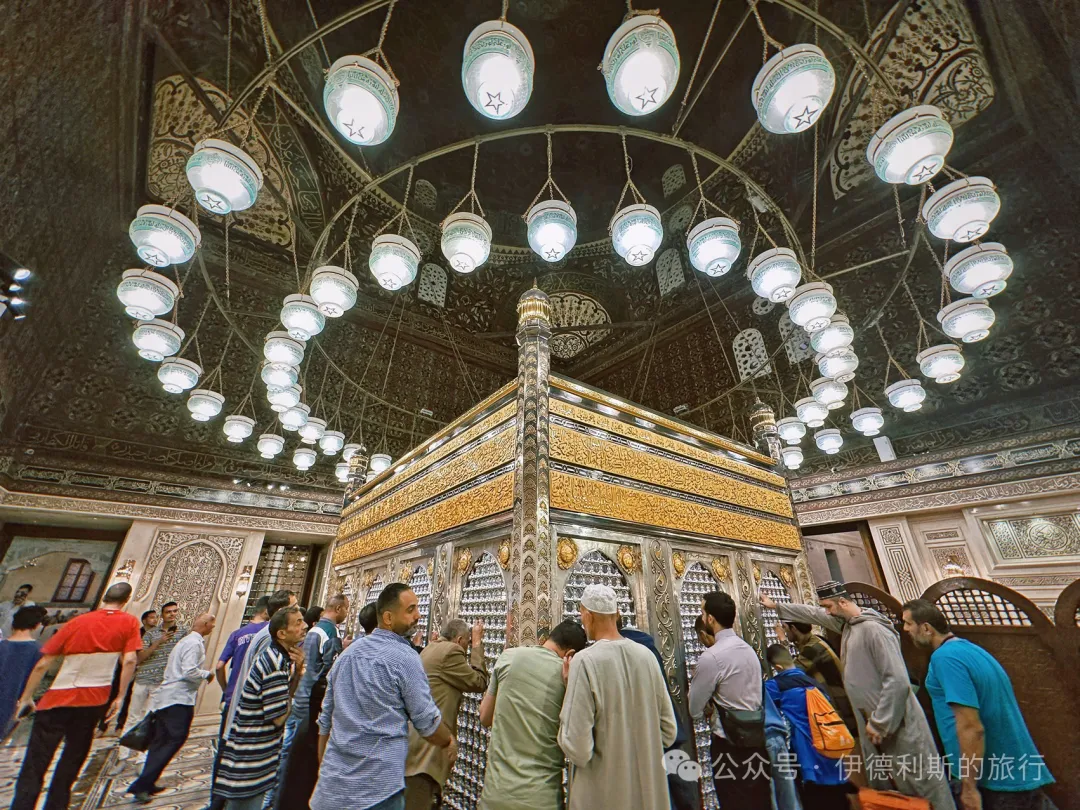
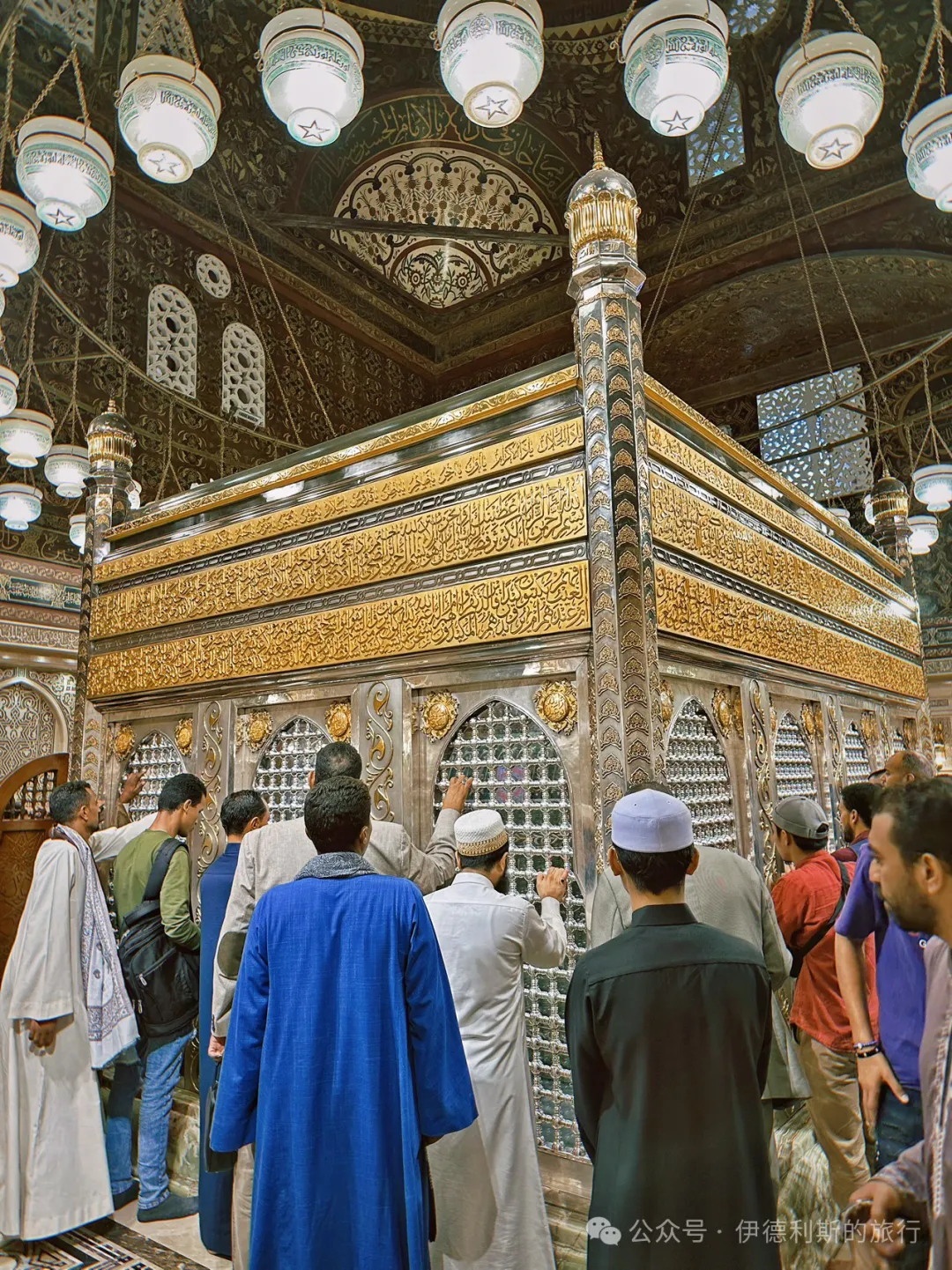
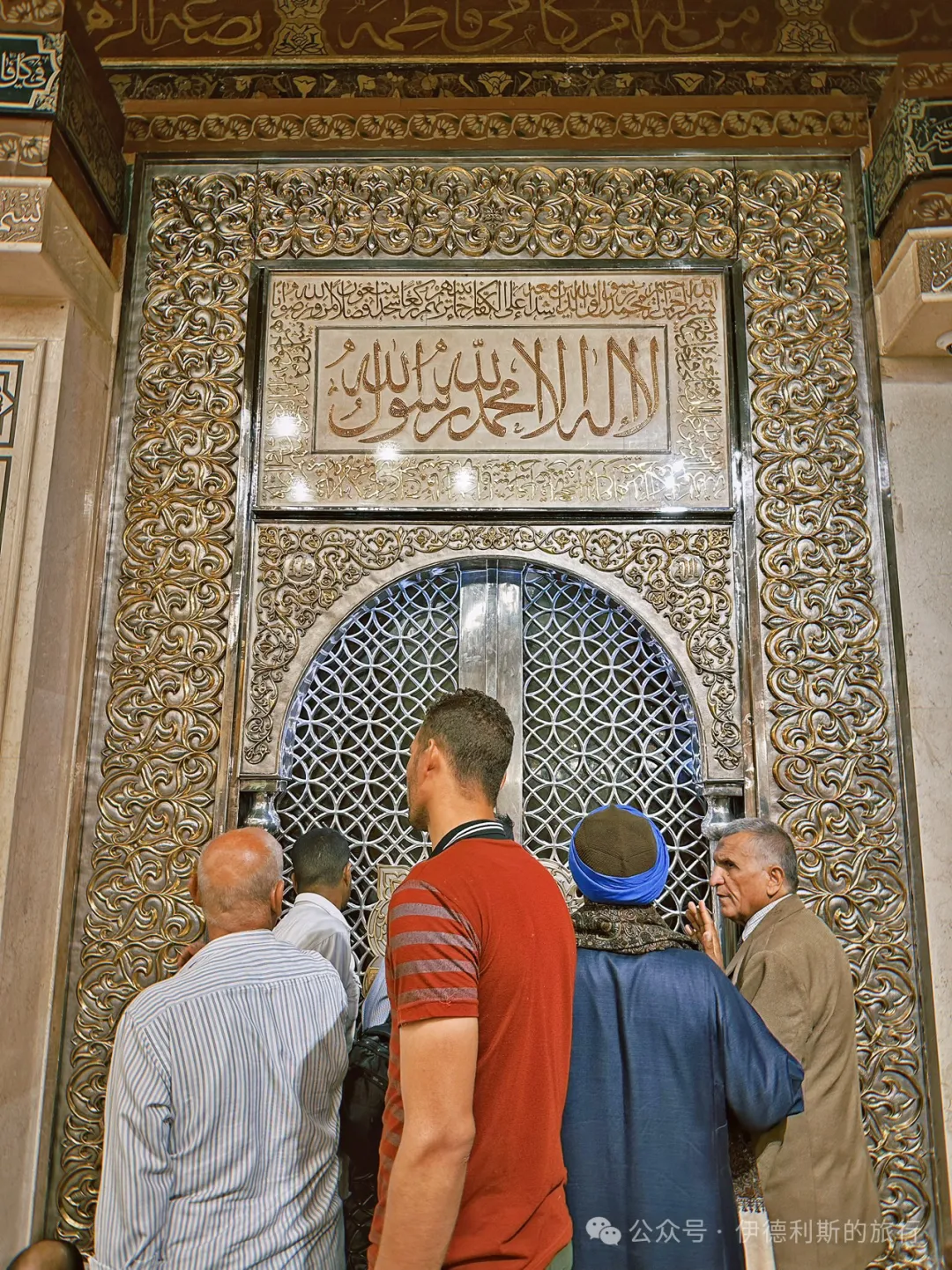
The center of the shrine today is a metal grille (Zarih) made in Mumbai in 1965 by Taher Saifuddin, the leader of the Dawoodi Bohras. It is said this Zarih was originally designed for the shrine of Abbas ibn Ali in Karbala, but it could not be installed there. Taher Saifuddin believed this was guided by Allah, so he had the Zarih flown to Cairo and installed in Al-Hussein Mosque.
Abu al-Dhahab Mosque: 1774
Right next to the west wall of Al-Azhar Mosque is the Abu al-Dhahab Mosque, built in 1774 by the Egyptian Mamluk ruler Abu al-Dhahab. This was the last large building complex the Mamluks built in Egypt, but only the mosque remains today.
Abu al-Dhahab means 'Father of Gold,' and he was a wealthy and generous Mamluk emir. During the Russo-Turkish War, the Egyptian Mamluk emir Ali Bey declared independence from the Ottoman Empire, and Abu al-Dhahab led troops to conquer most of the Hejaz and Syria. After taking Damascus in 1772, Abu al-Dhahab turned his army to occupy Cairo, becoming the actual ruler of Egypt until he died suddenly of the plague in 1775 while conquering Palestine.
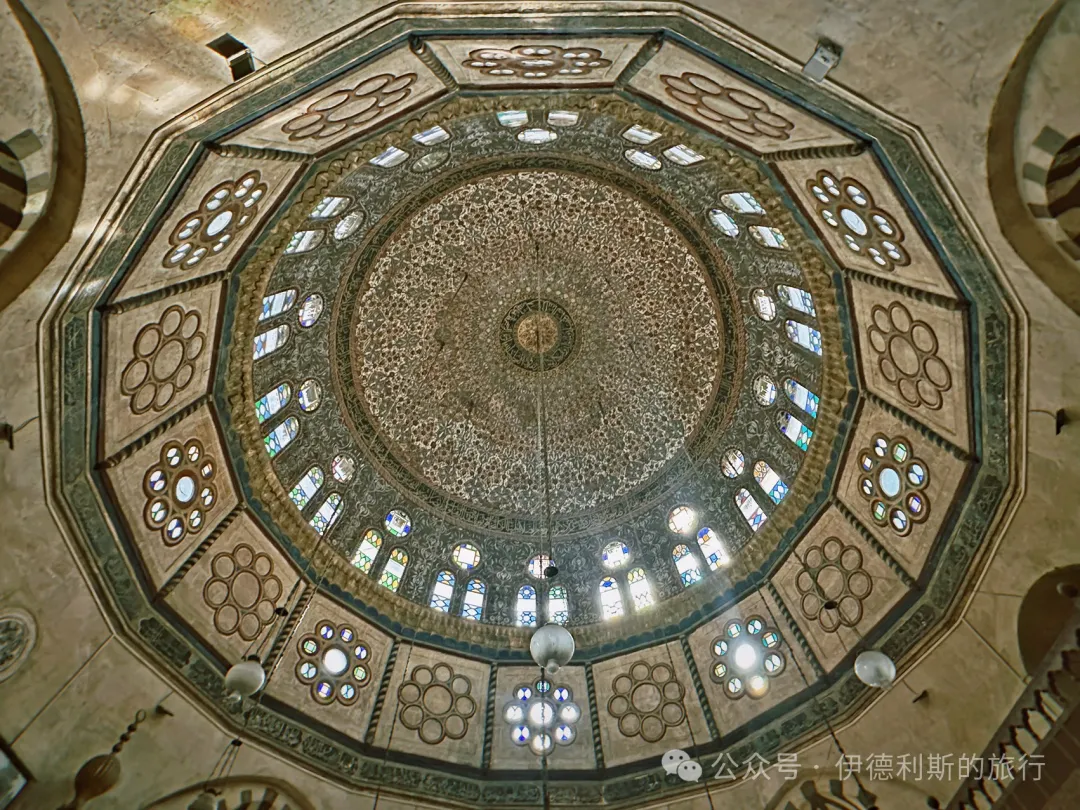
The architecture of Abu al-Dhahab Mosque mixes different elements, including Mamluk-style outer walls, Ottoman-style domes, and a minaret inspired by the early 16th-century minaret of the nearby Sultan Qaytbay complex.
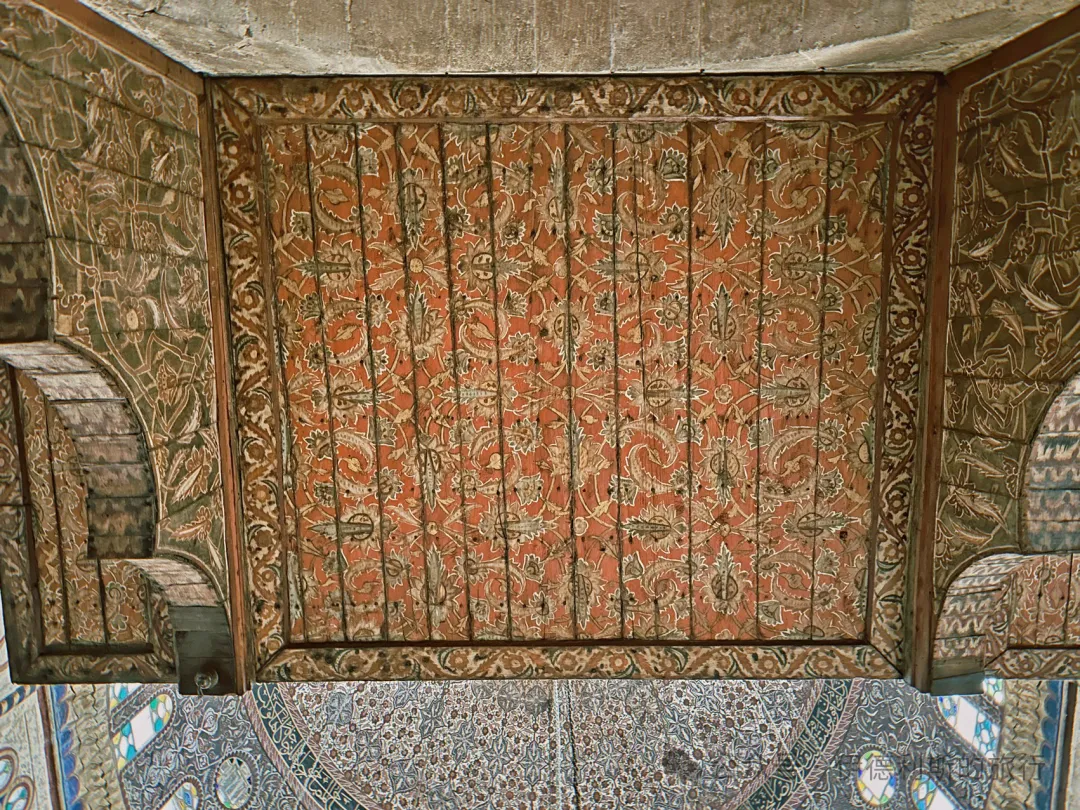
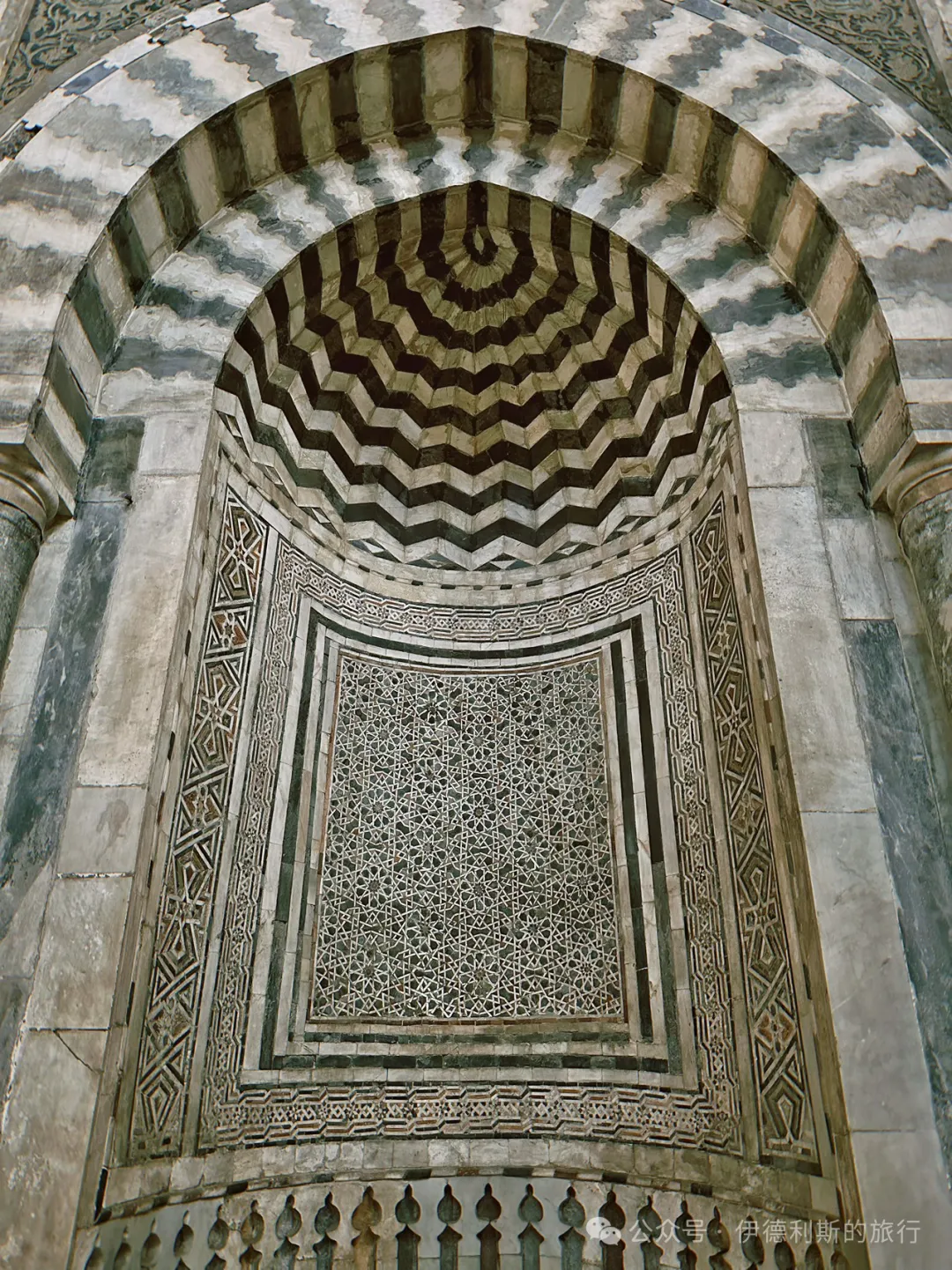
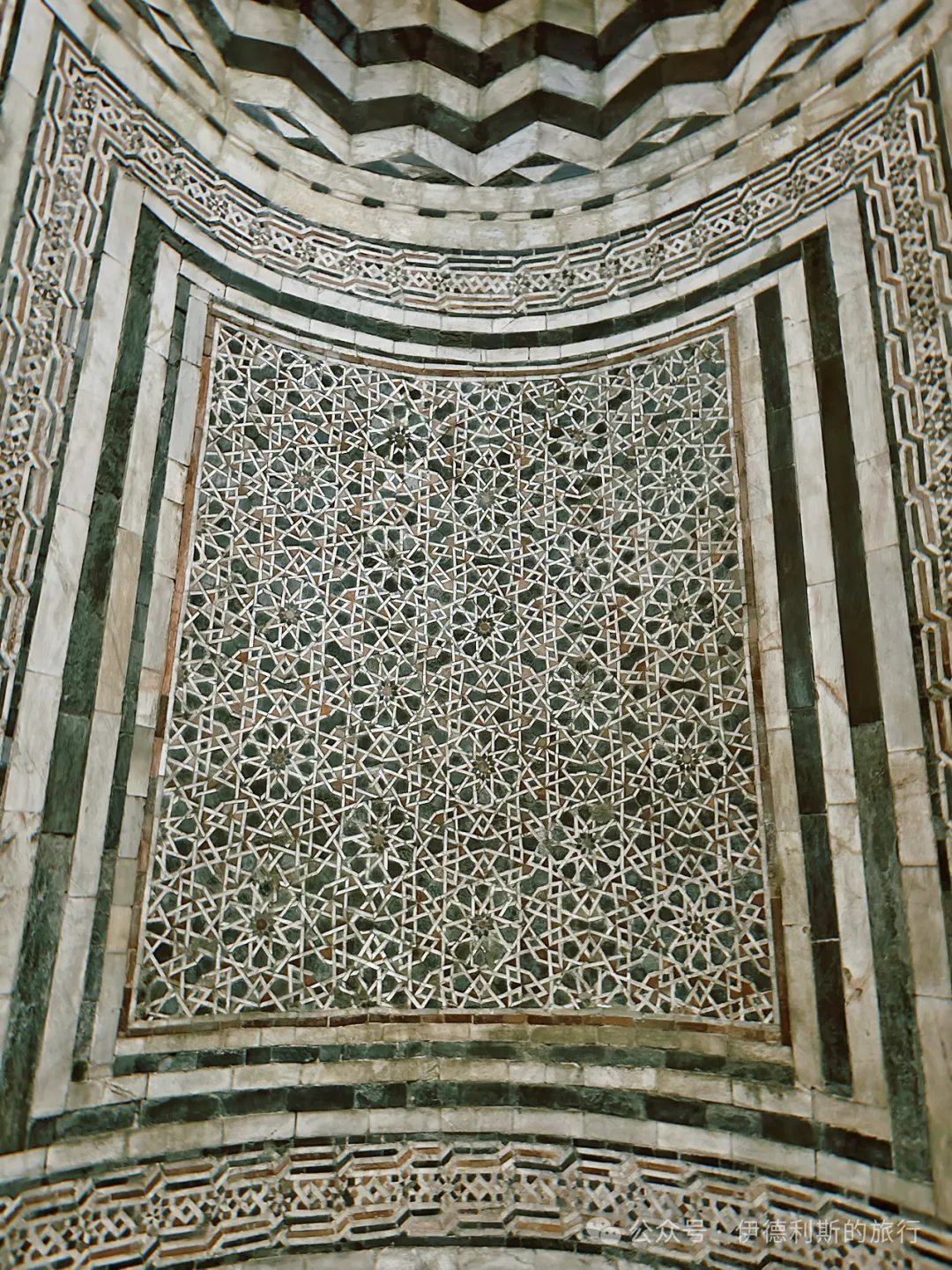
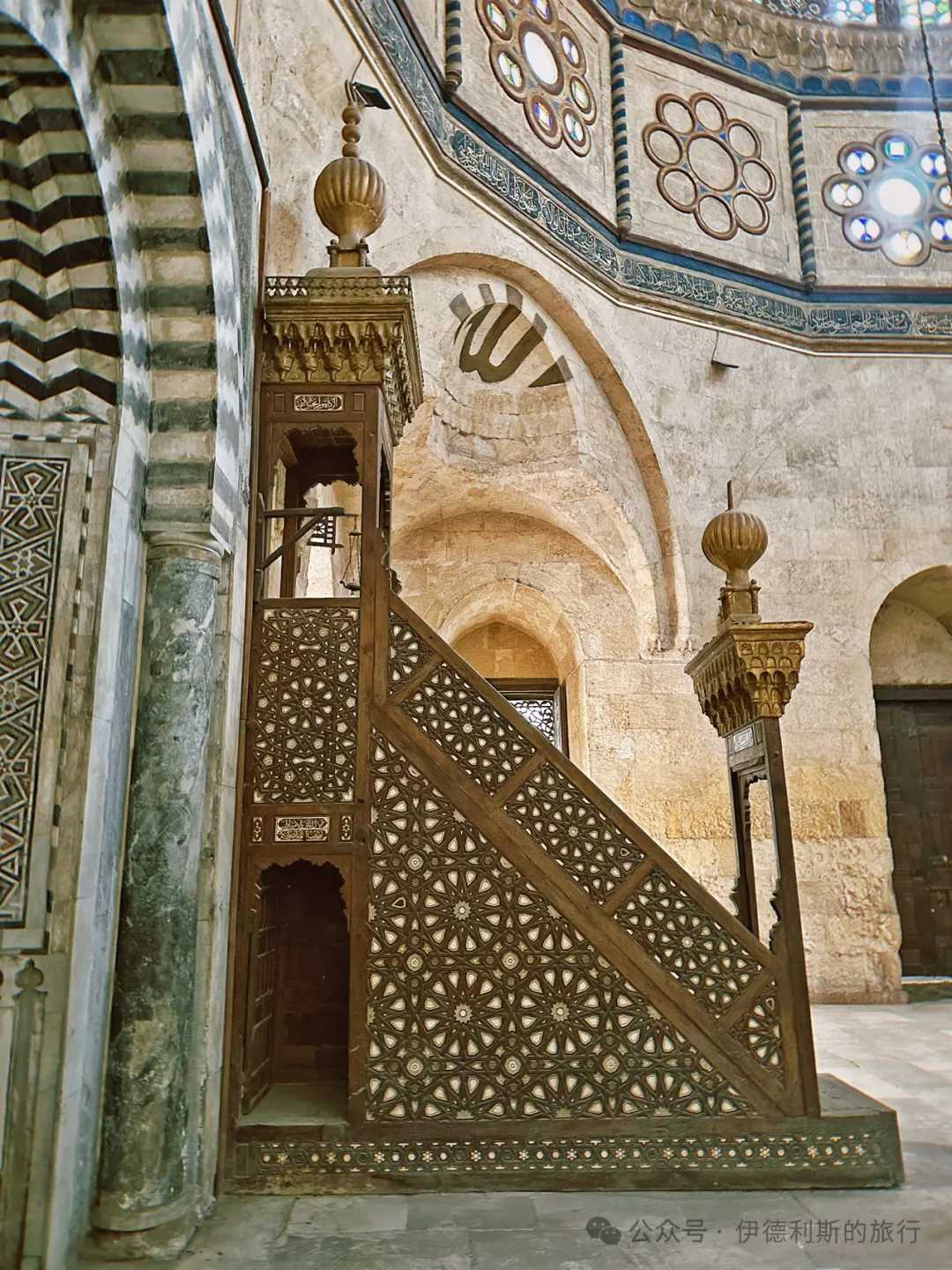
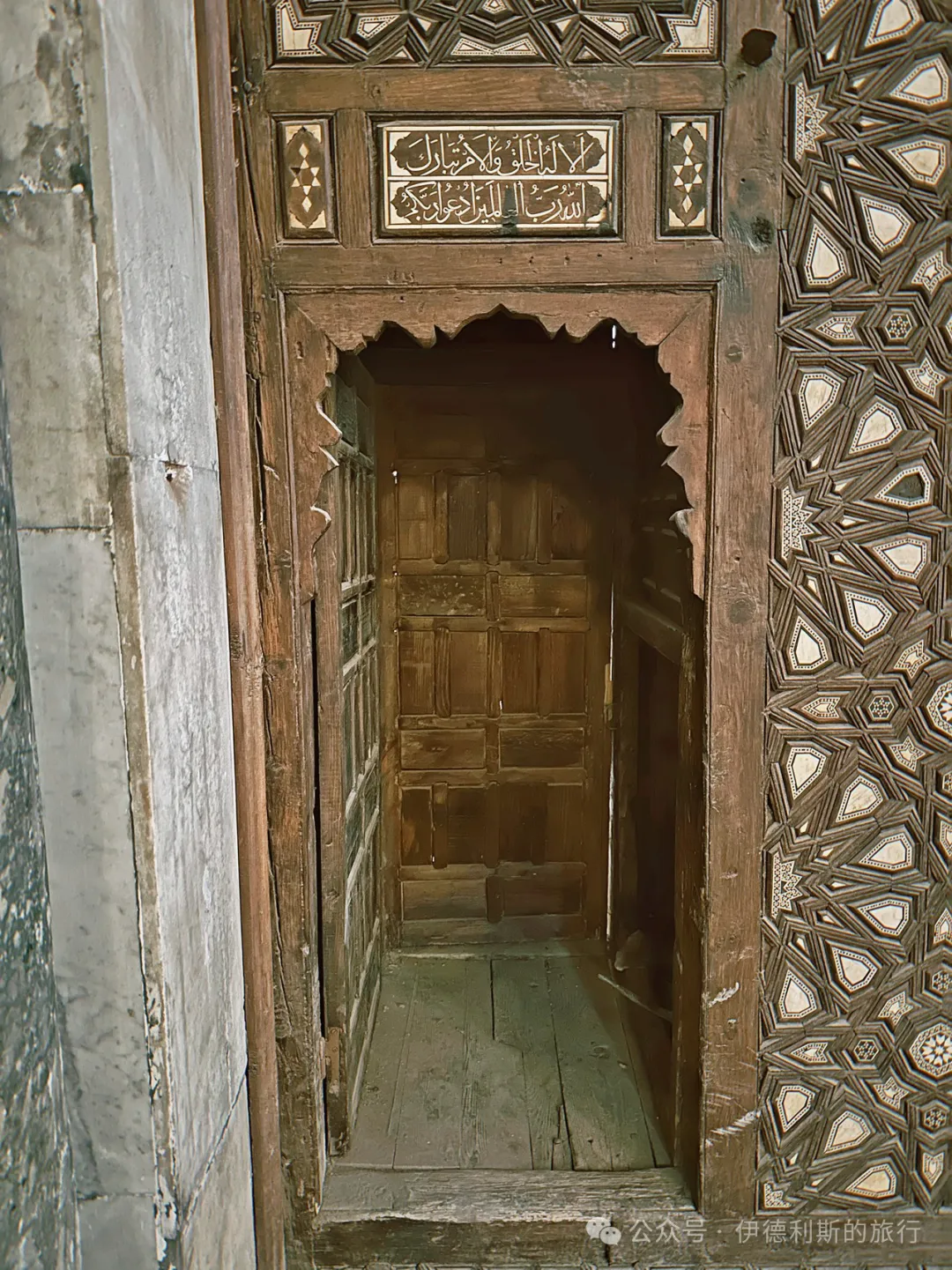
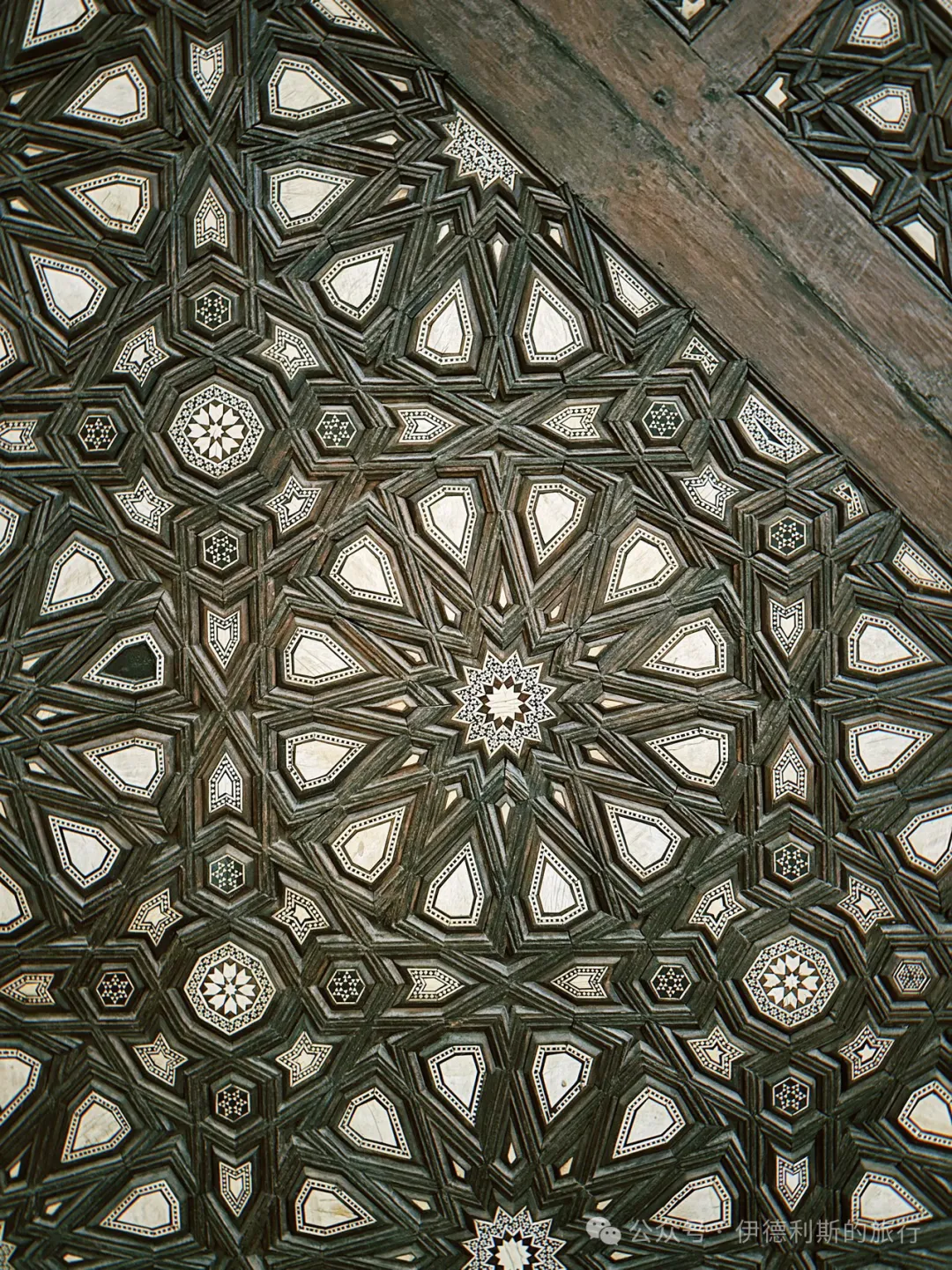
The prayer niche (mihrab) and the pulpit (minbar) of Abu al-Dhahab Mosque feature Mamluk-style decorations inlaid with mother-of-pearl and marble.
Al-Muayyad Mosque: 1415
Right next to the south gate of the old city of Cairo is the Sultan Al-Mu'ayyad Mosque, built between 1415 and 1421 by the Mamluk Sultan Al-Mu'ayyad Shaykh (reigned 1412-1421). This site was originally a prison, and legend says Sultan Al-Mu'ayyad was held here when he was young. At the time, he suffered greatly from fleas and lice, so he made a dua that if he ever became Sultan, he would turn the site into a place for teaching and learning. This wish later came true.
With the Sultan's funding, the madrasa inside the Sultan al-Mu'ayyad Mosque became one of Cairo's most famous academic institutions in the 15th century. The large endowment left after the Sultan passed away allowed the school to hire the most brilliant scholars of the time. Ibn Hajar 'Asqalani, the most famous authority on Islamic jurisprudence in Egypt, taught Shafi'i law here.
The madrasa at the Sultan al-Mu'ayyad Mosque taught the four schools of Islamic law: Hanafi, Shafi'i, Maliki, and Hanbali. According to mosque records, the school could accommodate 50 Hanafi students, 40 Shafi'i students, 15 Maliki students, and 10 Hanbali students, along with their teachers and imams. There were also two classes with 20 students each dedicated to studying Quranic exegesis and Hadith.
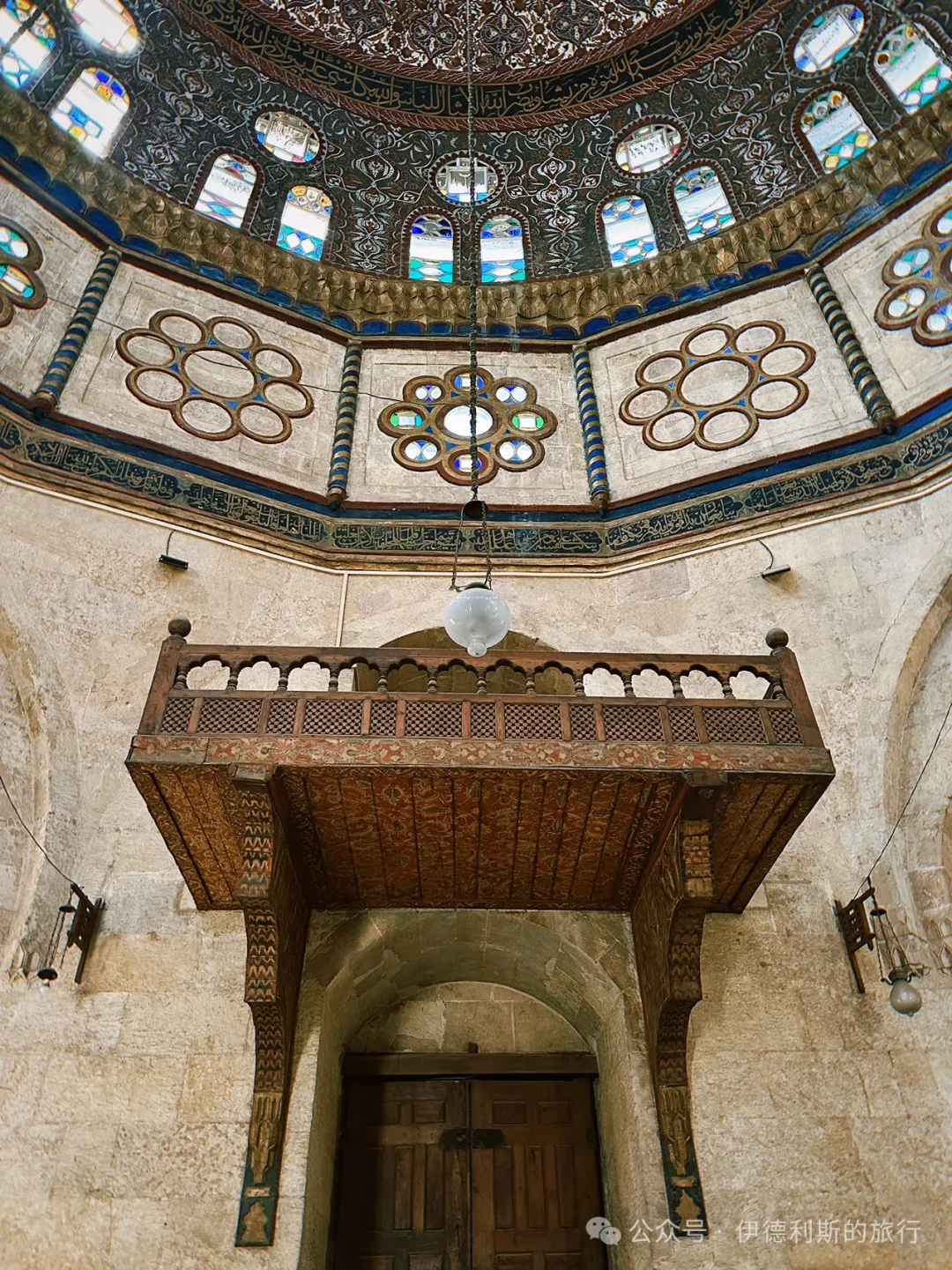
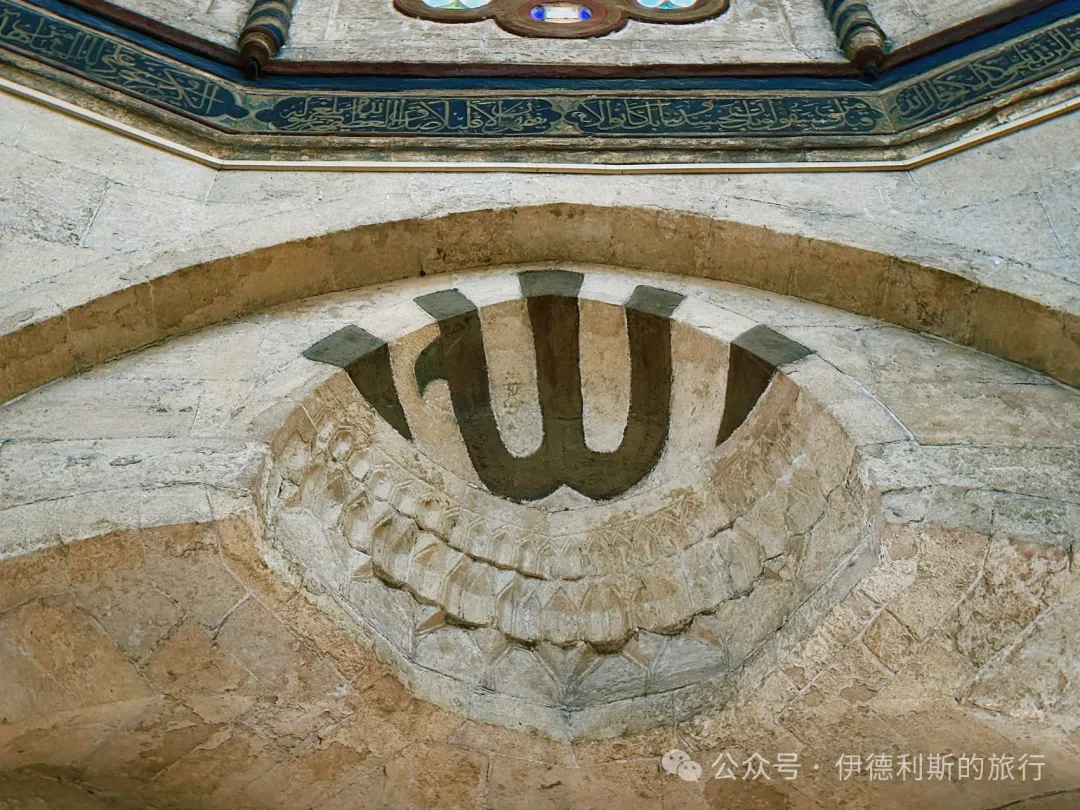
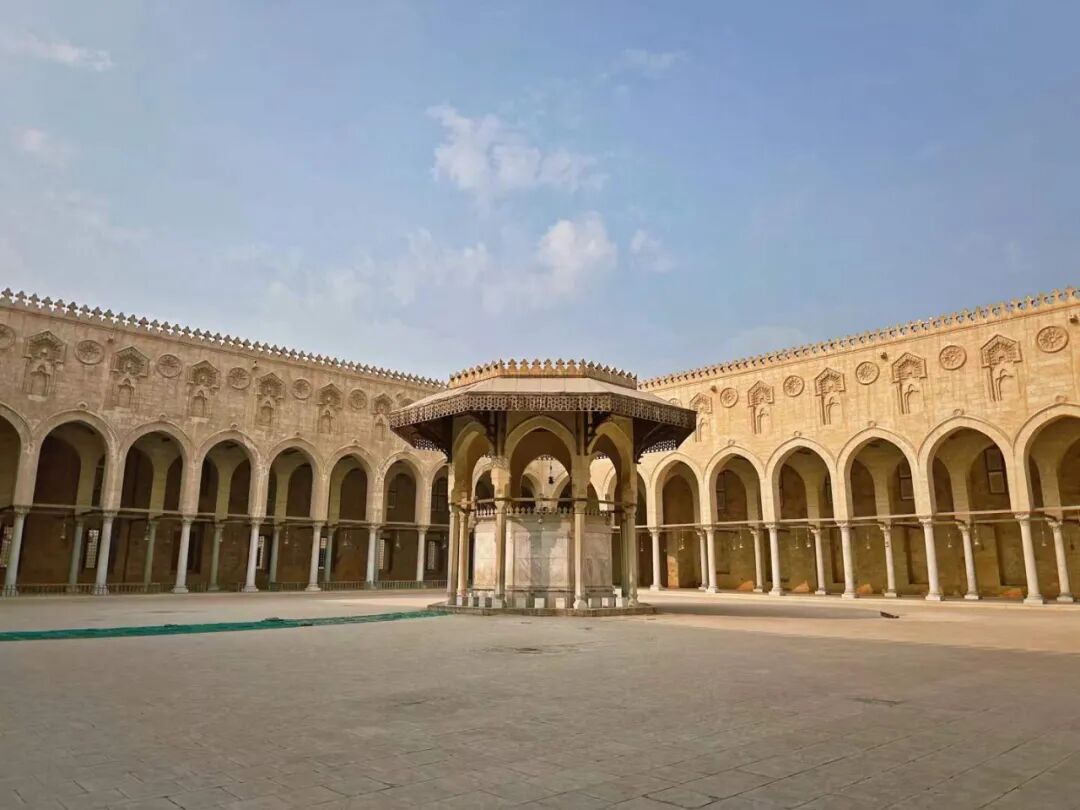
The Sultan al-Mu'ayyad Mosque is the last large hypostyle mosque in Cairo. It originally had four facades, but today only the east side and the main prayer hall remain from the original structure. The mosque's main gate is known as the last grand gate of the Mamluk dynasty. It is decorated with beautiful geometric marble patterns, Kufic calligraphy, and complex stucco carvings.
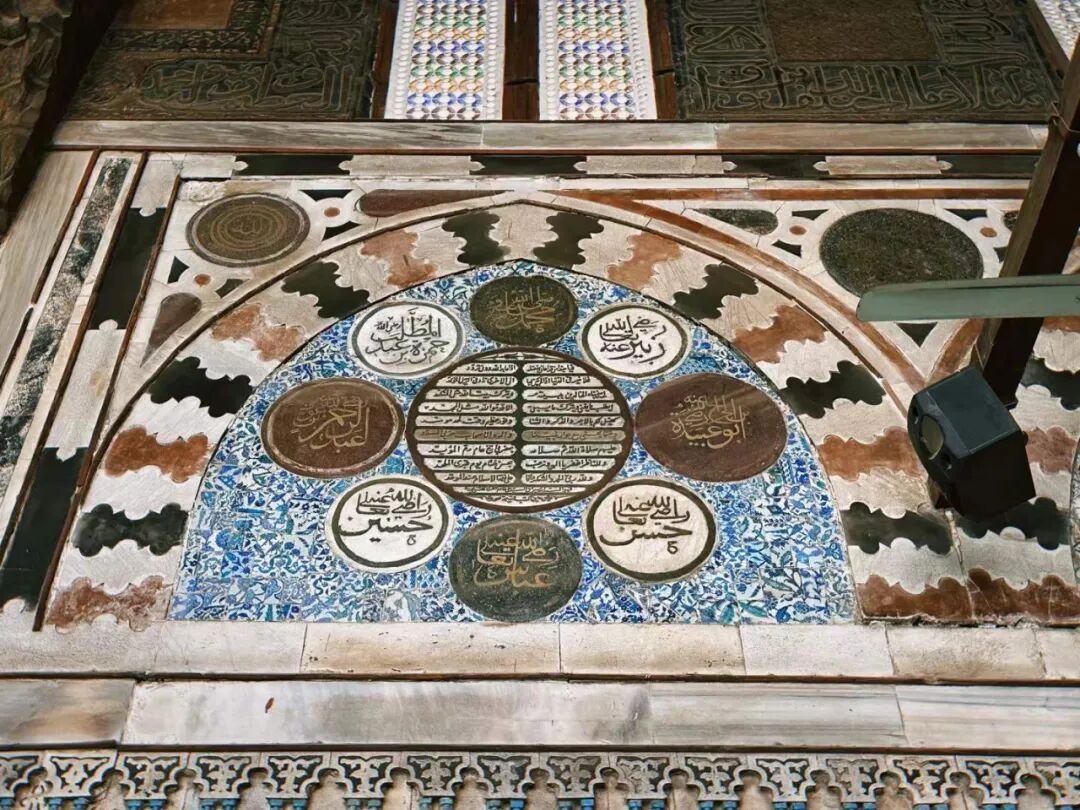
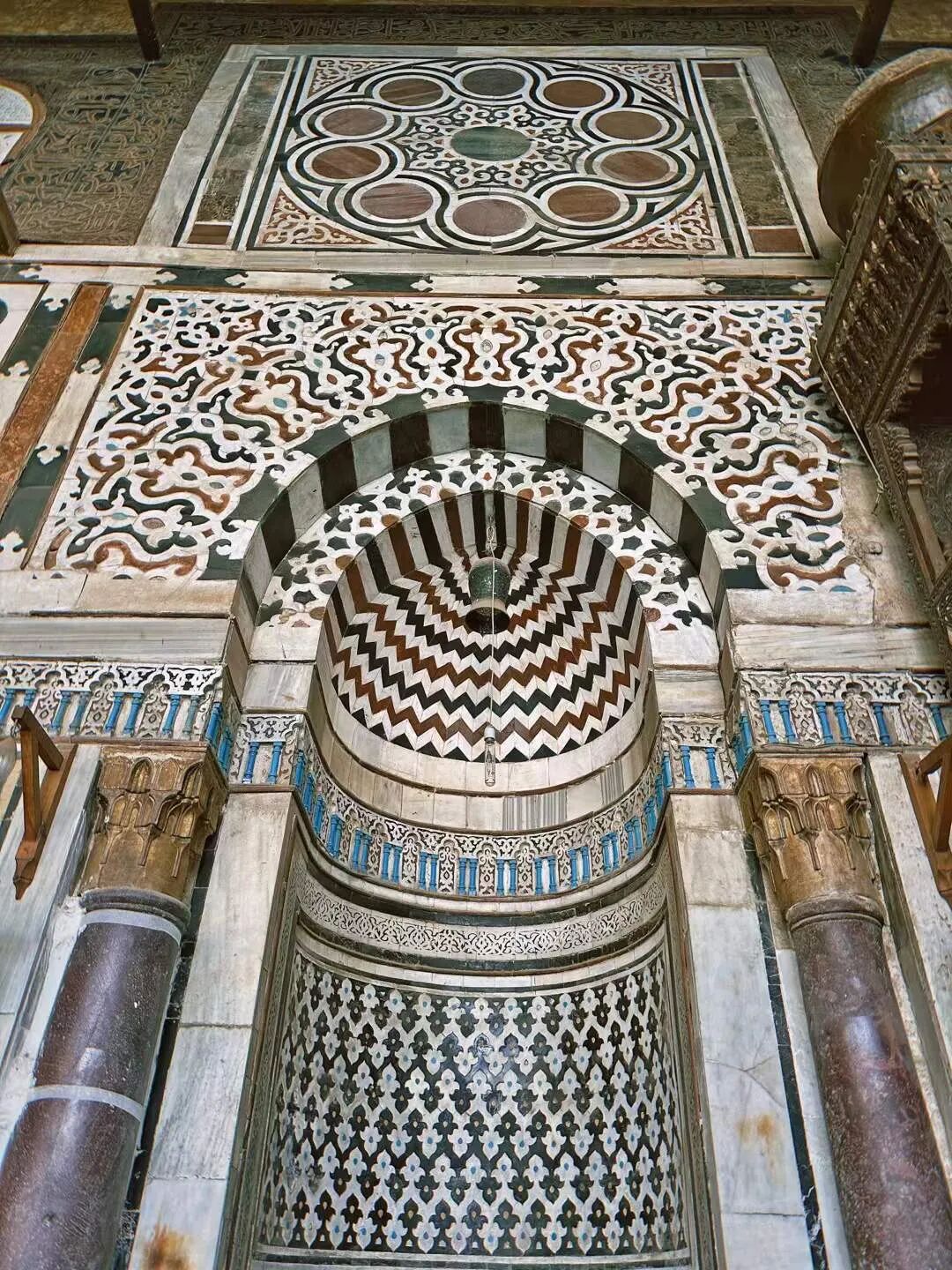
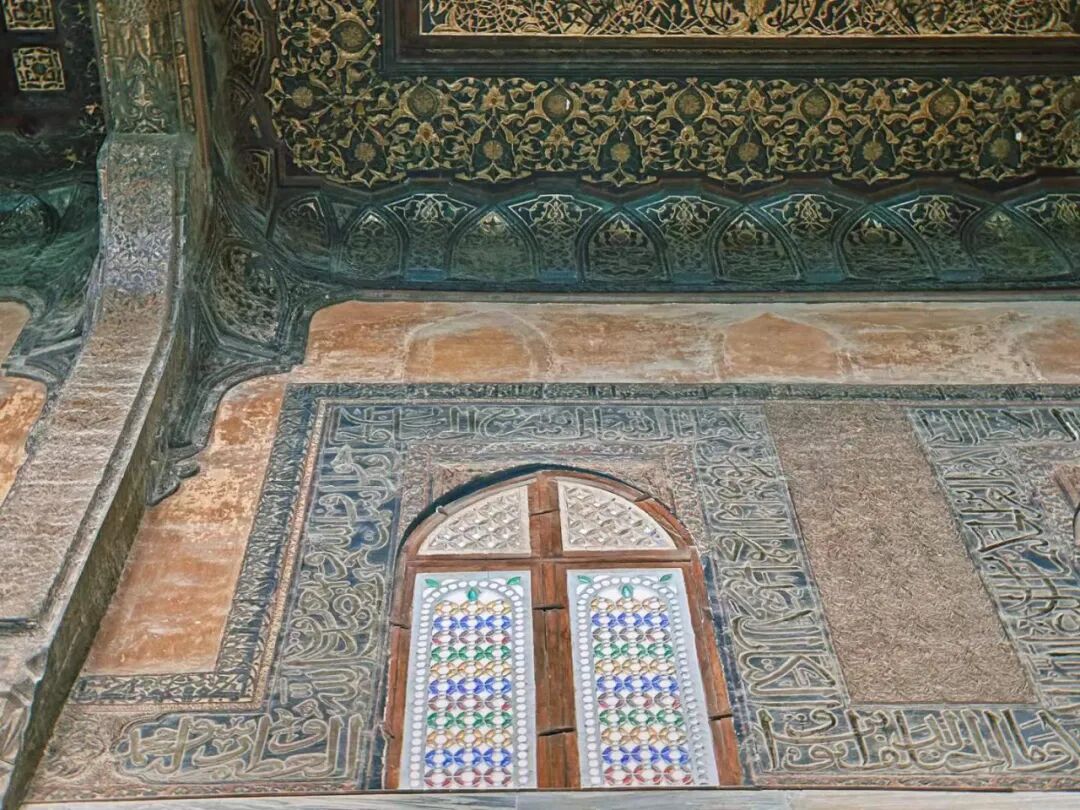
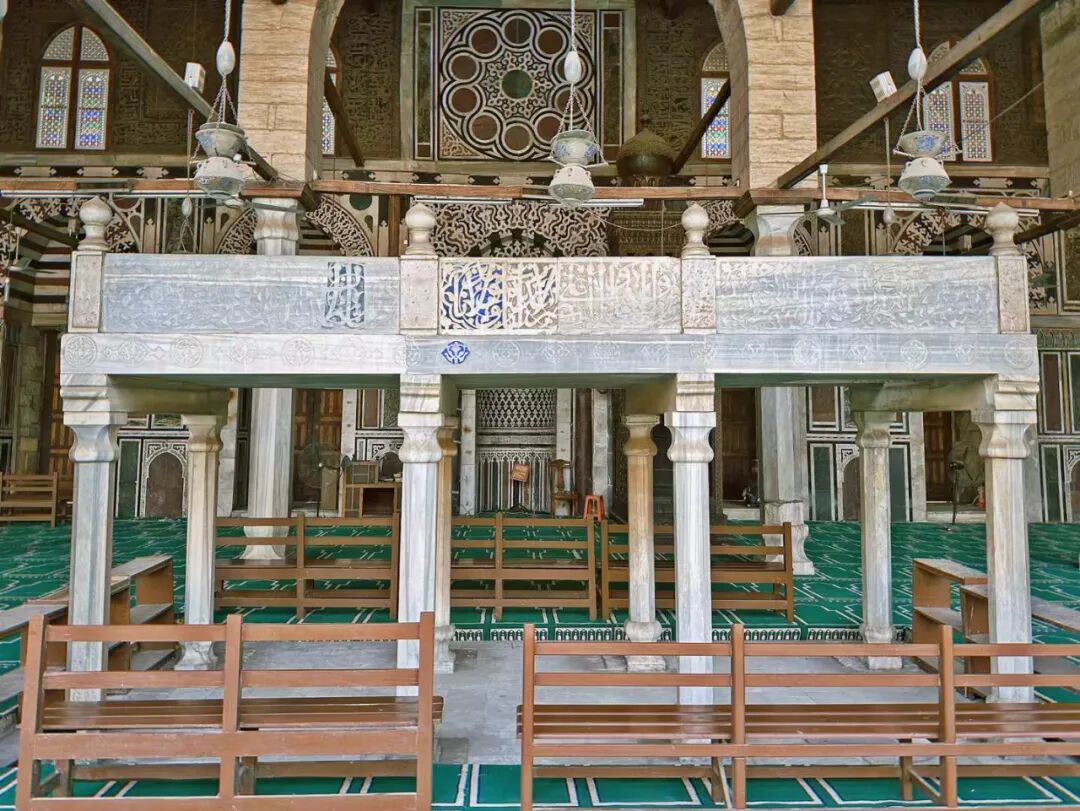
The main prayer hall of the Sultan al-Mu'ayyad Mosque was one of the most ornate in Egypt at the time, and the qibla wall is decorated with colorful marble. The supporting stone columns were collected from Cairo and the surrounding areas, and they likely date back to the pre-Islamic era. The circular colorful marble decoration above the mihrab is also very unique, as this style was almost always used for floors rather than walls. Turkish tiles were added to the qibla wall in the 1840s, but they were removed to restore the original design during a 2001 renovation.
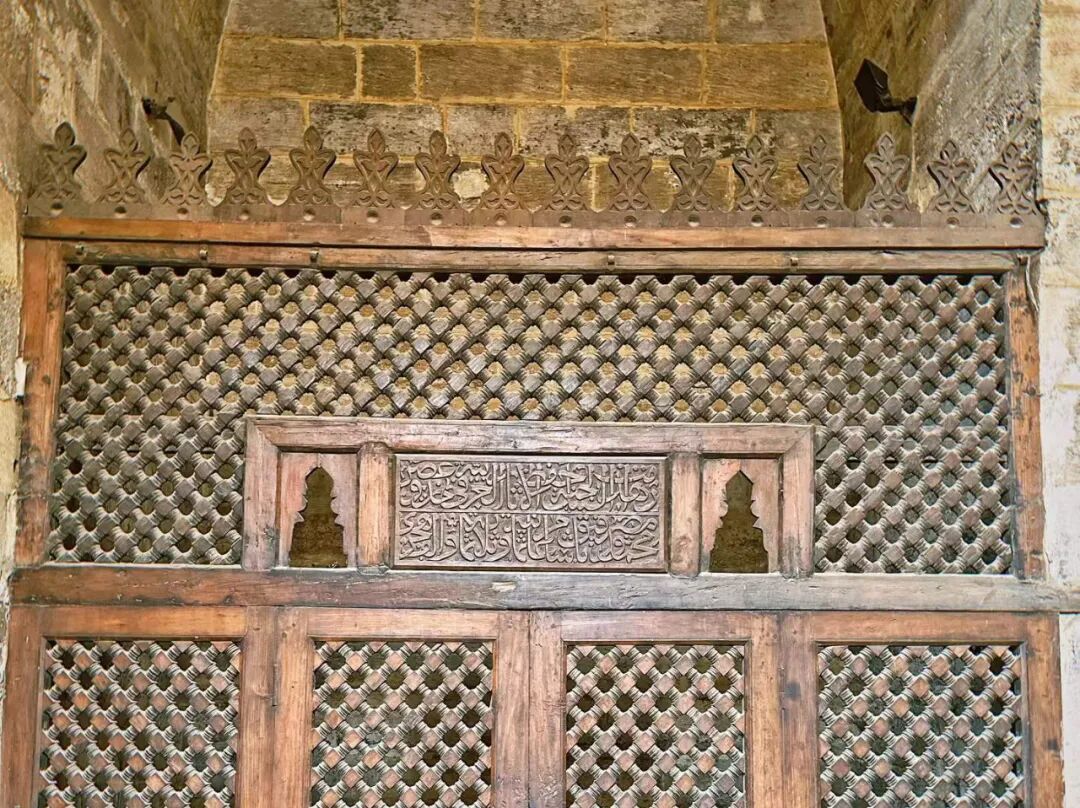
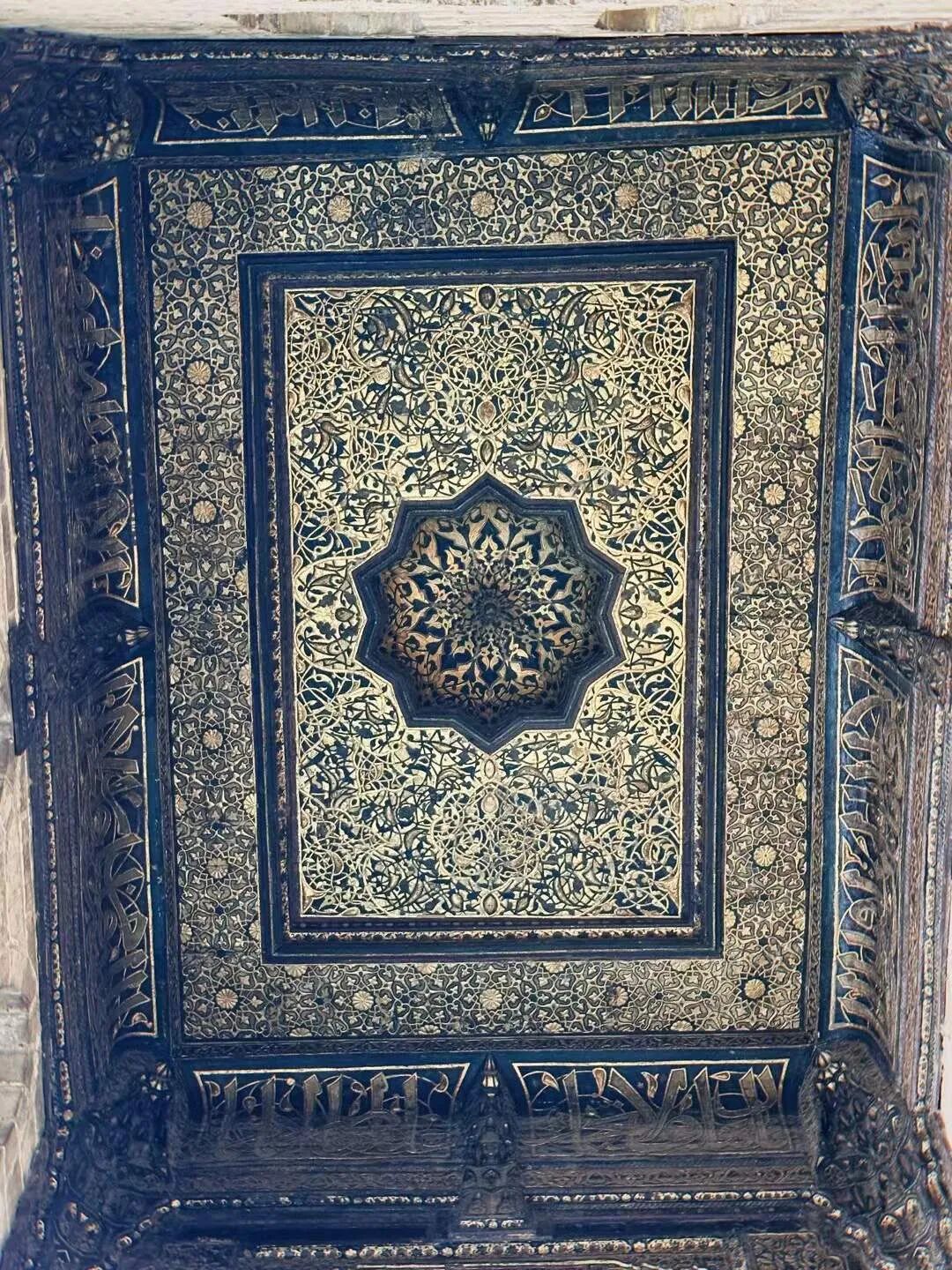
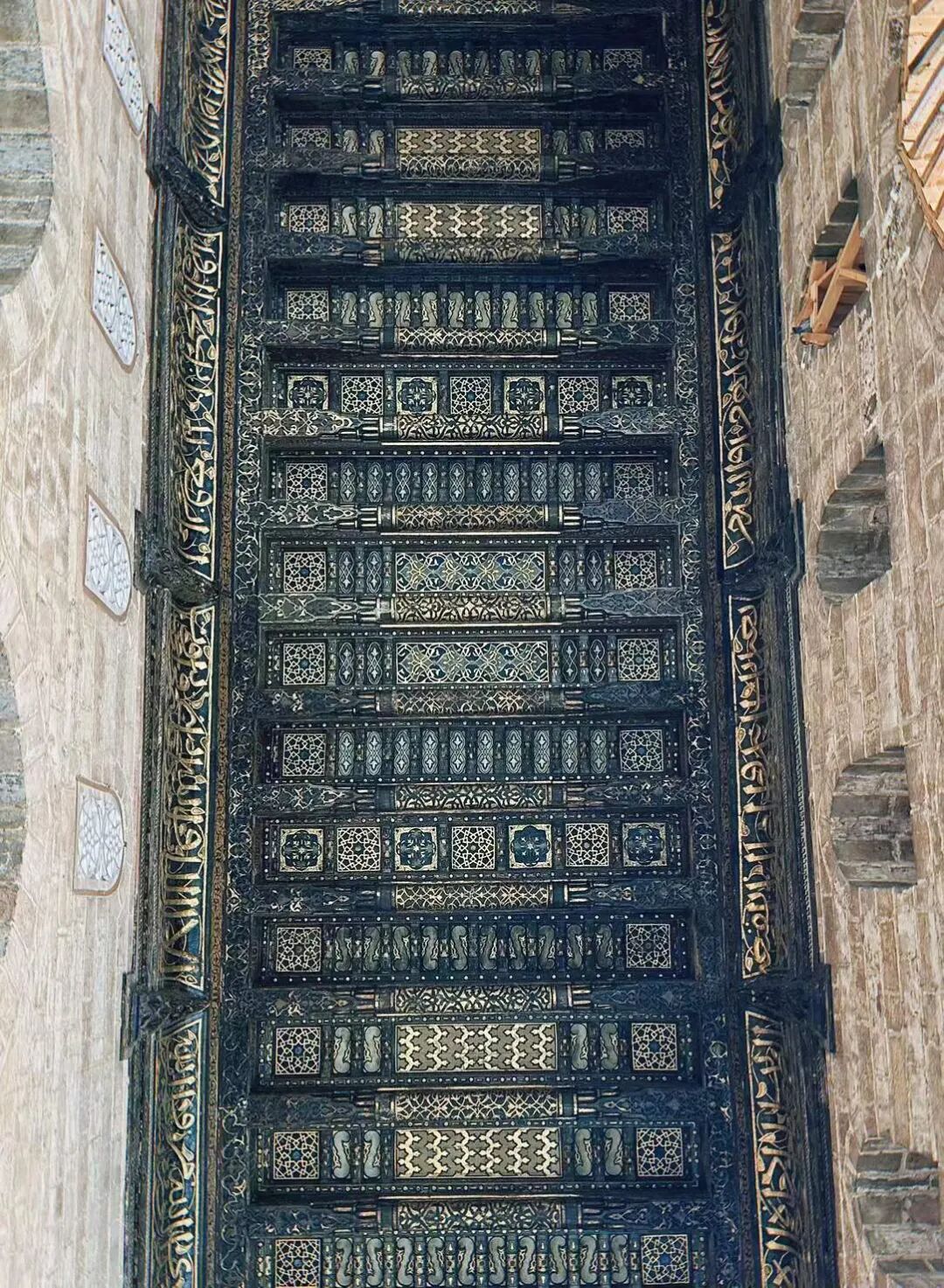
The Sultan al-Mu'ayyad Mosque features exquisite wood carvings from the Mamluk period, including the minbar, wooden doors, and ceilings. view all
Summary: This first part of the Cairo mosque journey begins with early landmarks such as Al-Hakim Mosque and Al-Aqmar Mosque. It preserves the source's mosque names, founding years, dynastic context, street route, architectural details, and photographs.
Al-Hakim Mosque: 1013
Al-Aqmar Mosque: 1125
Al-Ashraf Mosque: 1424
Al-Azhar Mosque: 972
Al-Hussein Mosque: built in 1154, rebuilt in 1874
Abu al-Dhahab Mosque: 1774
Al-Muayyad Mosque: 1415
Al-Salih Tala'i Mosque: 1160
Mahmud al-Kurdi Mosque: 1395
Qijmas al-Ishaqi Mosque: 1480
Mosque of Ahmad al-Mihmandar: 1324
Mosque of Amir Altinbugha al-Mardani: 1338
Mosque of Umm al-Sultan Sha'ban: 1368
Blue Mosque: 1347
Sayyida Fatima Mosque: 18th-century expansion
Khayrbak Mosque: 1519
Sultan Hasan Mosque: 1356
Rifa'i Mosque: 1869.
Ibn Tulun Mosque: 876.
Taghribirdi Mosque: 1440
Shaykhu Mosque: 1349
Qanibay al-Muhammadi Mosque: 1413
Al-Hakim Mosque: 1013
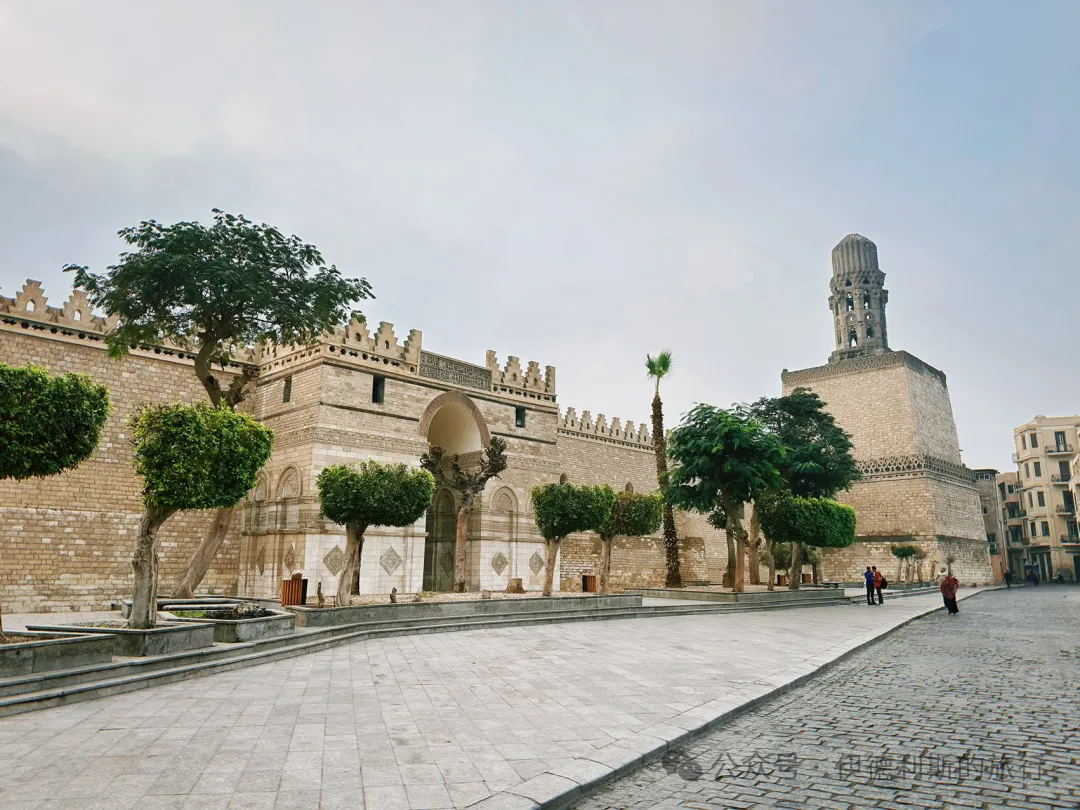
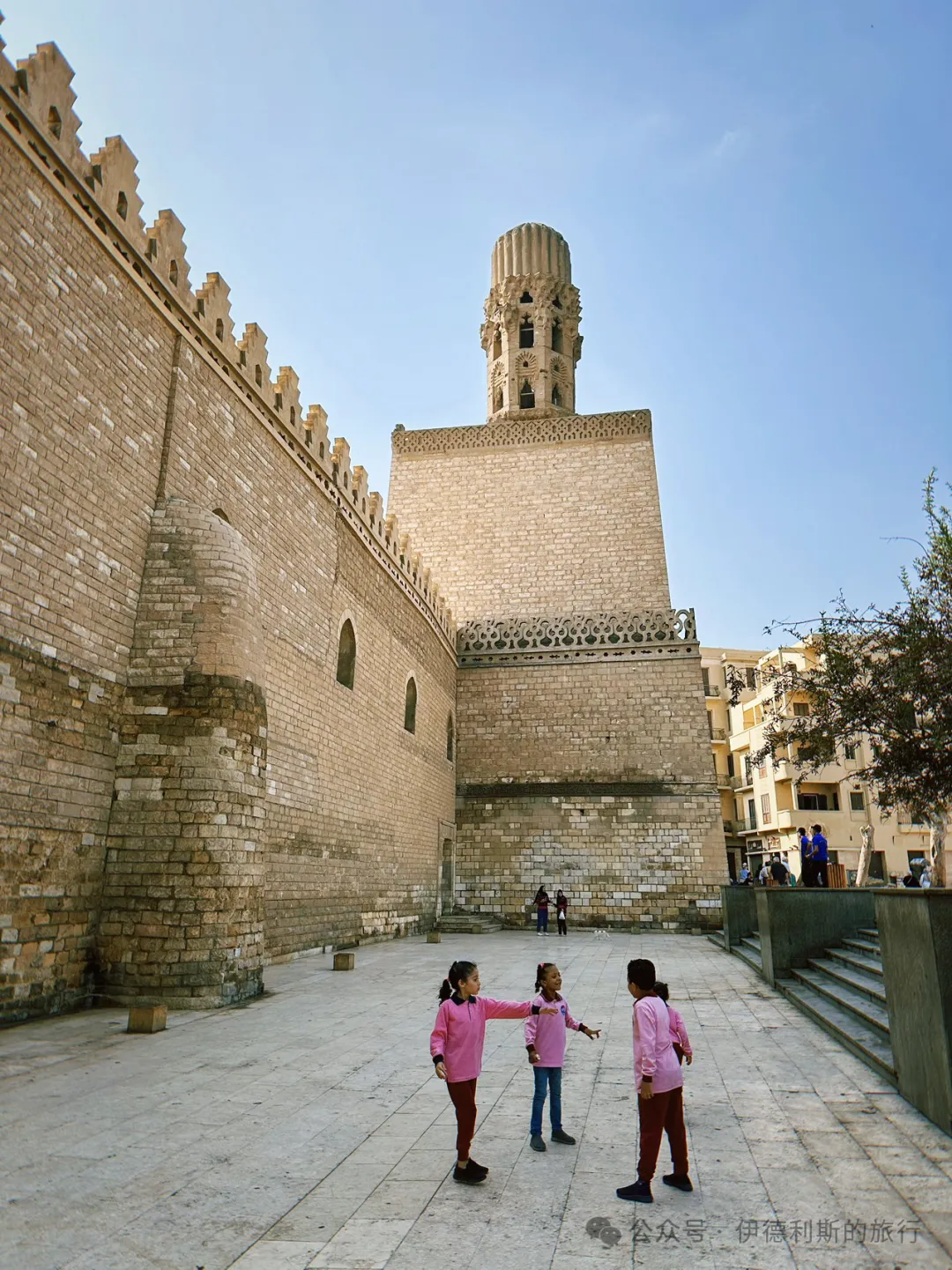
Right next to the north wall of Old Cairo is the Al-Hakim Mosque. It is named after the sixth caliph of the Fatimid dynasty, who was also the 16th imam of the Ismaili branch of Shia Islam, Al-Hakim bi-Amr Allah (reigned 996-1021). The Al-Hakim Mosque was started in 990 by the fifth Fatimid Caliph, al-Aziz Billah (reigned 975-996), and finished in 1013 by Caliph al-Hakim. It is now 1,012 years old.
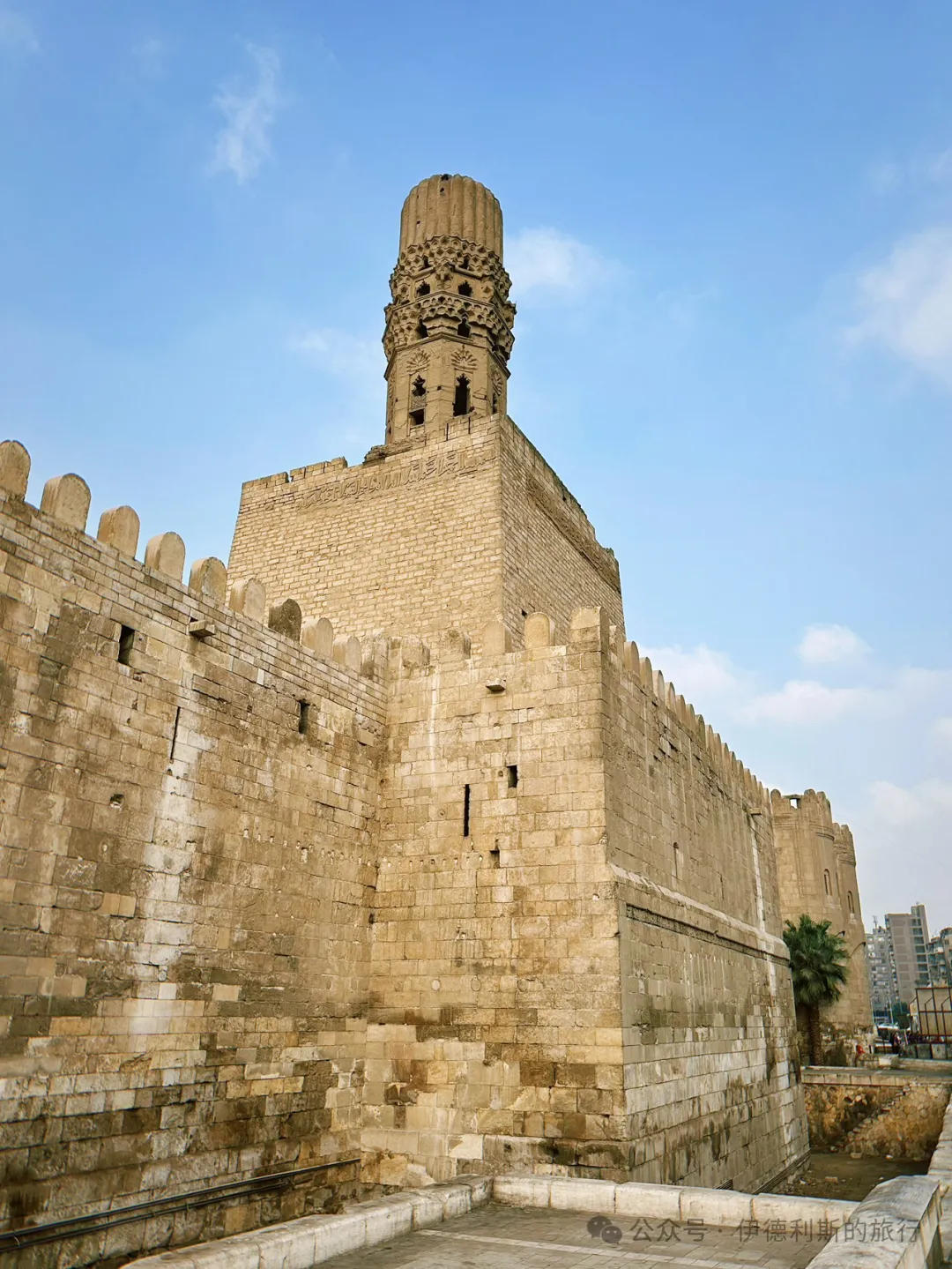
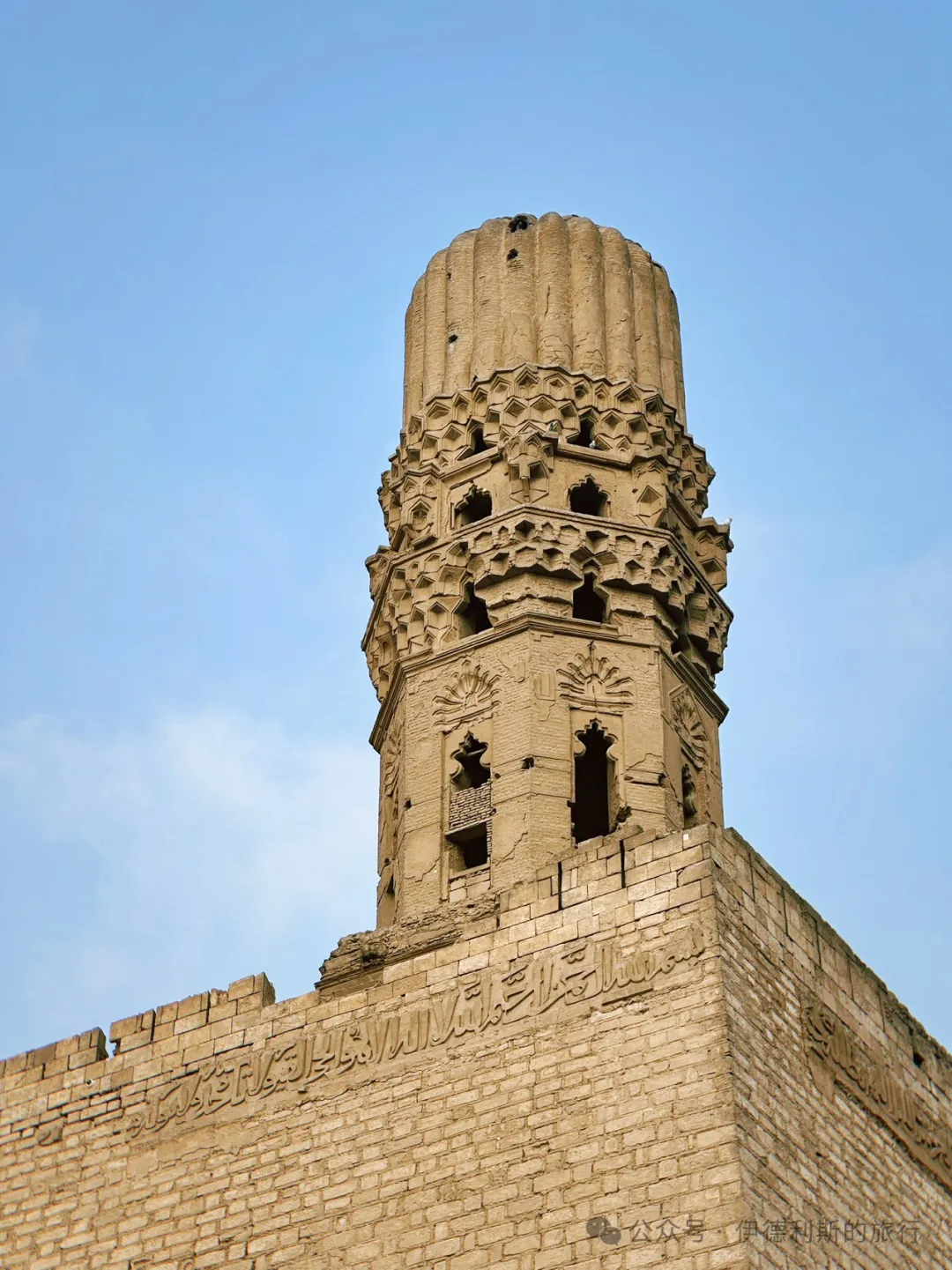
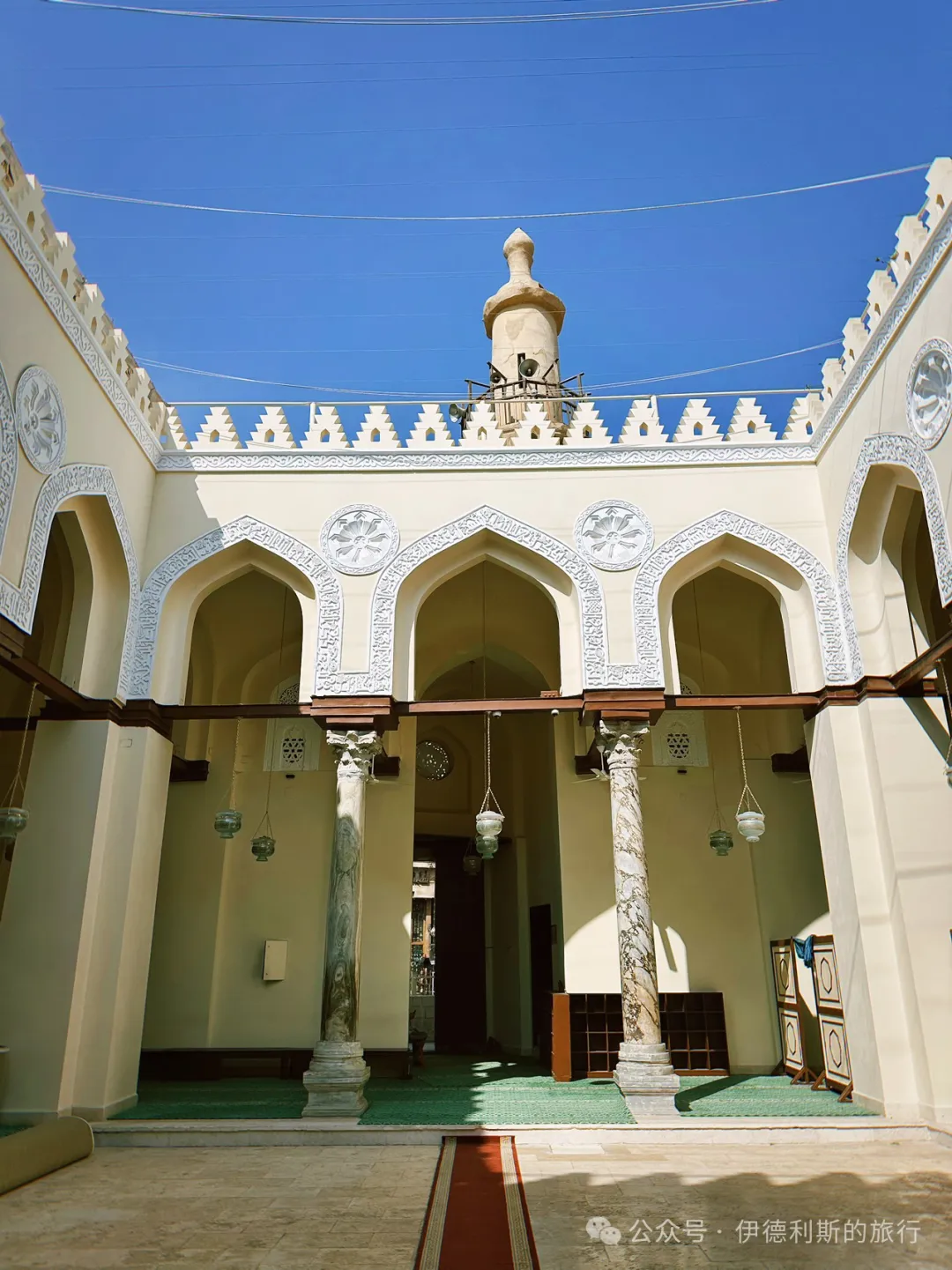
The mosque originally sat outside the Cairo city walls, but it was brought inside after the walls were rebuilt in 1087. Its architectural style is similar to the Al-Azhar Mosque, but it is twice as large. The most striking features are the two minarets built on square brick bases. When the minarets were first built in 1003, they were separate structures. They were not encased in brick until 1010. Some scholars suggest this change relates to 1010, when the ruler of Mecca rejected Fatimid authority, weakening the dynasty's power. The outer wall of the southern brick base has Fatimid-era marble carvings in Kufic script. Because the northern base was incorporated into the northern wall of Old Cairo in 1087, its Kufic carvings were moved to the outside of the city wall.
During the Crusades, the Franks used the mosque as a prison. Later, Saladin used it as a stable. It was repaired during the Mamluk period in the 14th century, but it eventually fell into ruin for a long time. The mosque was repaired in 1808, and a small, colorful marble mihrab added during that time still exists today.
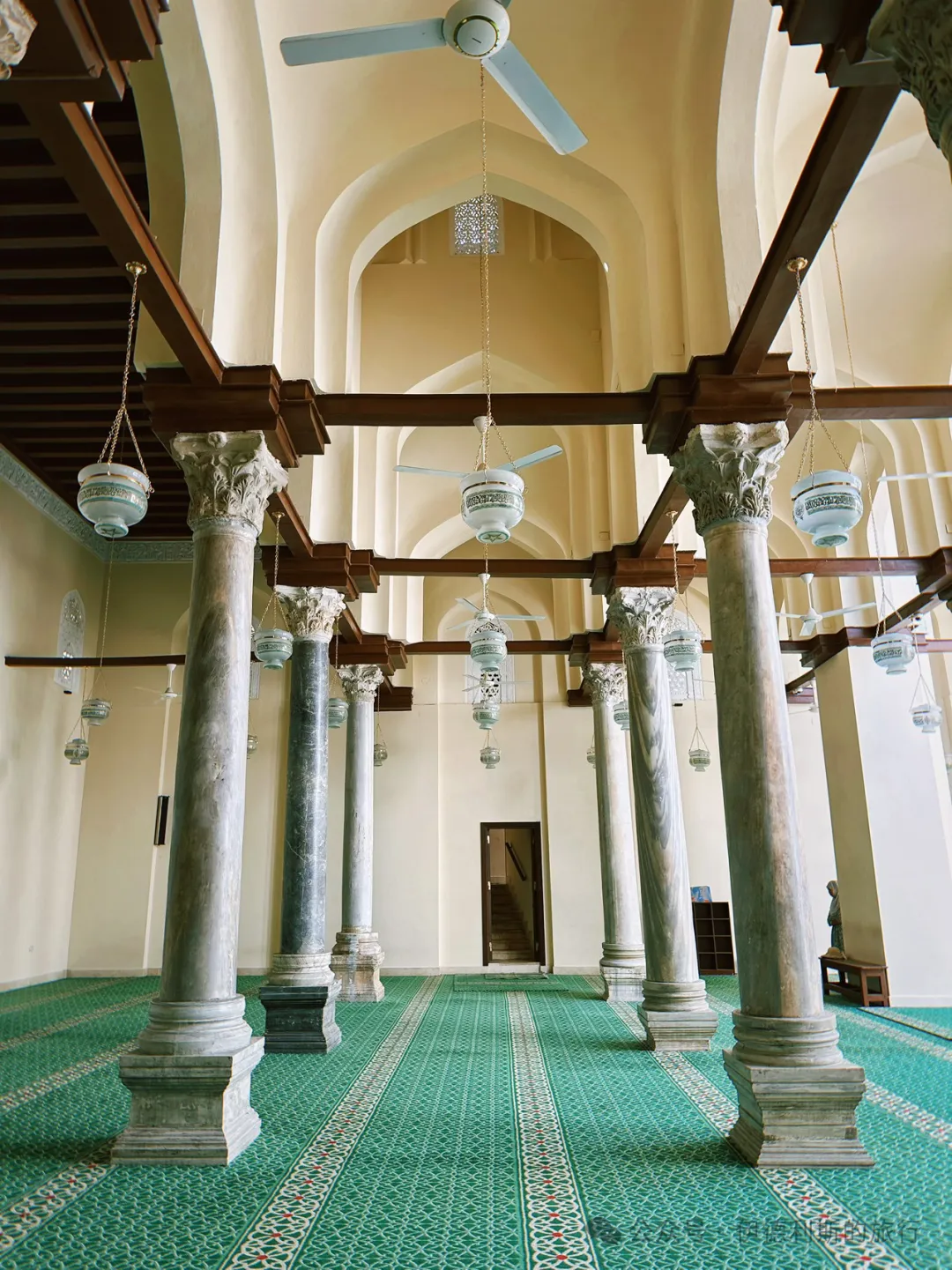
In the 20th century, the mosque served as a school until 1980, when the Dawoodi Bohra branch of Shia Islam carried out a massive reconstruction and renovation using white marble. Inside the main hall after the reconstruction, only the original plaster carvings, wooden beams, and scripture remained. This restoration was criticized by scholars for being 'inauthentic' and sparked widespread debate. In 2017, the Dawoodi Bohra community and the Egyptian Ministry of Tourism and Antiquities launched a new round of repairs, and the mosque did not reopen until February 2023.
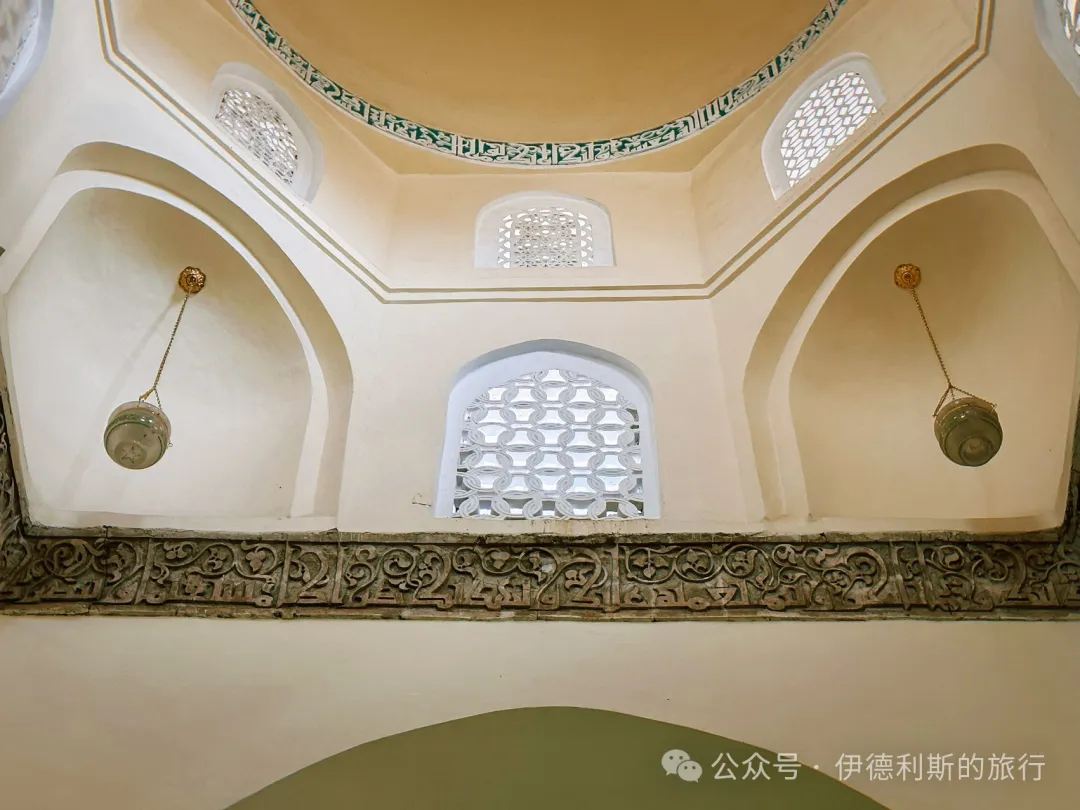
Al-Aqmar Mosque: 1125
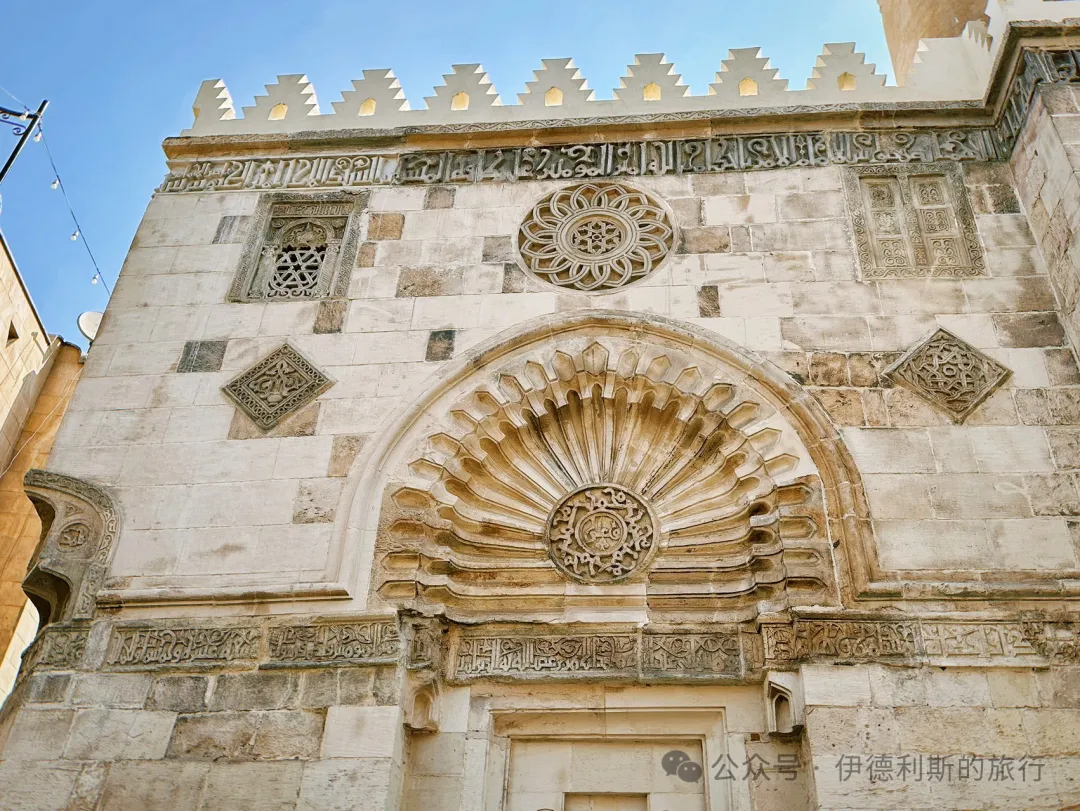
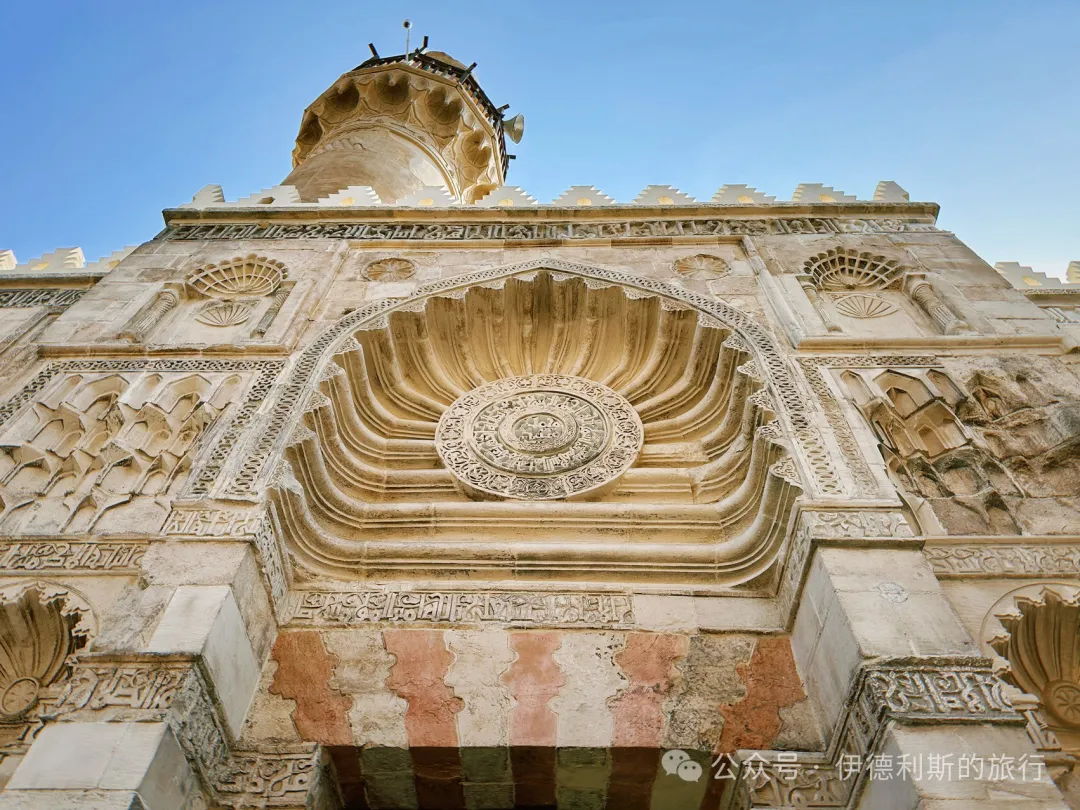
Walking south from the Al-Hakim Mosque along Al-Mu'izz Street, the main road of Old Cairo, you can see the famous Fatimid-era Aqmar Mosque. The Aqmar Mosque was built in 1125-1126 by order of the Fatimid vizier Al-Ma'mun al-Bata'ihi. It sat at the northeast corner of the Fatimid Eastern Palace, right next to the palace grounds.
The Aqmar Mosque is a landmark in Egyptian architectural history. It was the first mosque with a main entrance aligned with the street rather than the qibla wall, meaning it was the first planned according to Cairo's street layout. It was also the first to feature complex stone carvings. The facade of the Aqmar Mosque is very luxurious. Above the entrance is a medallion surrounded by a grille, with the names of the Prophet and Ali in the center and scripture around it—a unique decoration in Cairo.
At the top of the left facade are carvings of doors and windows. The window on the left symbolizes the ceremonial grille the Fatimids took back from the palace of their rivals, the Abbasids in Baghdad, representing victory. Inside the window are a lamp and a six-pointed star, based on the Shia hadith: 'The star is a promise to the world, and it will not be submerged.' Below the window are carvings of plants growing from a flower pot, referencing the Prophet's words about Hasan and Husayn: 'My two fragrant herbs in the world.' The door in the upper right corner comes from the famous Shia hadith: 'I am the city of knowledge, and Ali is its gate.'
Because it was near the Fatimid palace, the Aqmar Mosque originally had no minaret. One was added by the Mamluk dynasty at the end of the 14th century, and the cylindrical top was rebuilt during the Ottoman period.
In 1993, the Dawoodi Bohras branch of Shia Islam carried out a large-scale renovation of the Aqmar Mosque. Most of the historical elements inside the main hall were not preserved, which led to criticism.
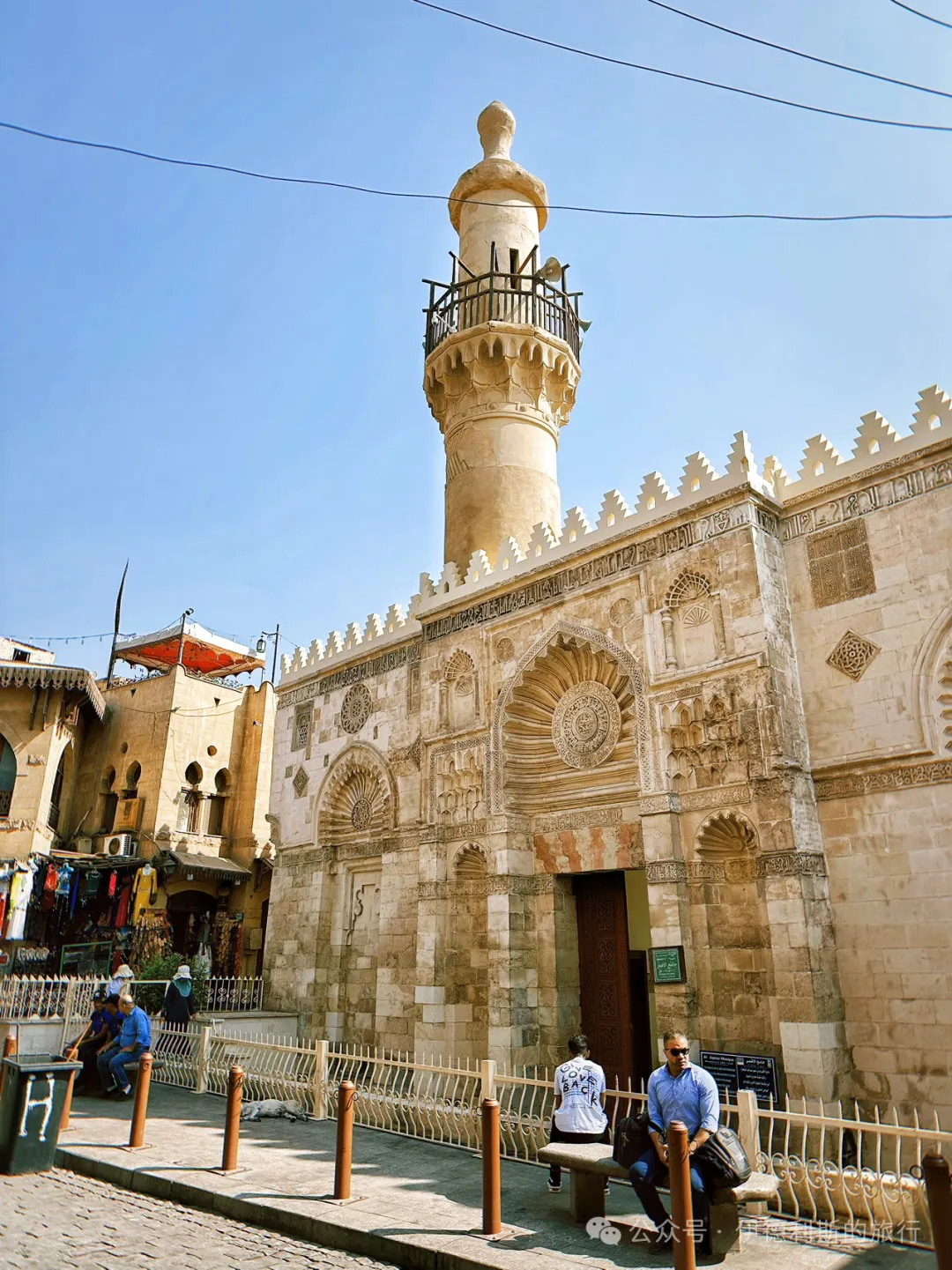
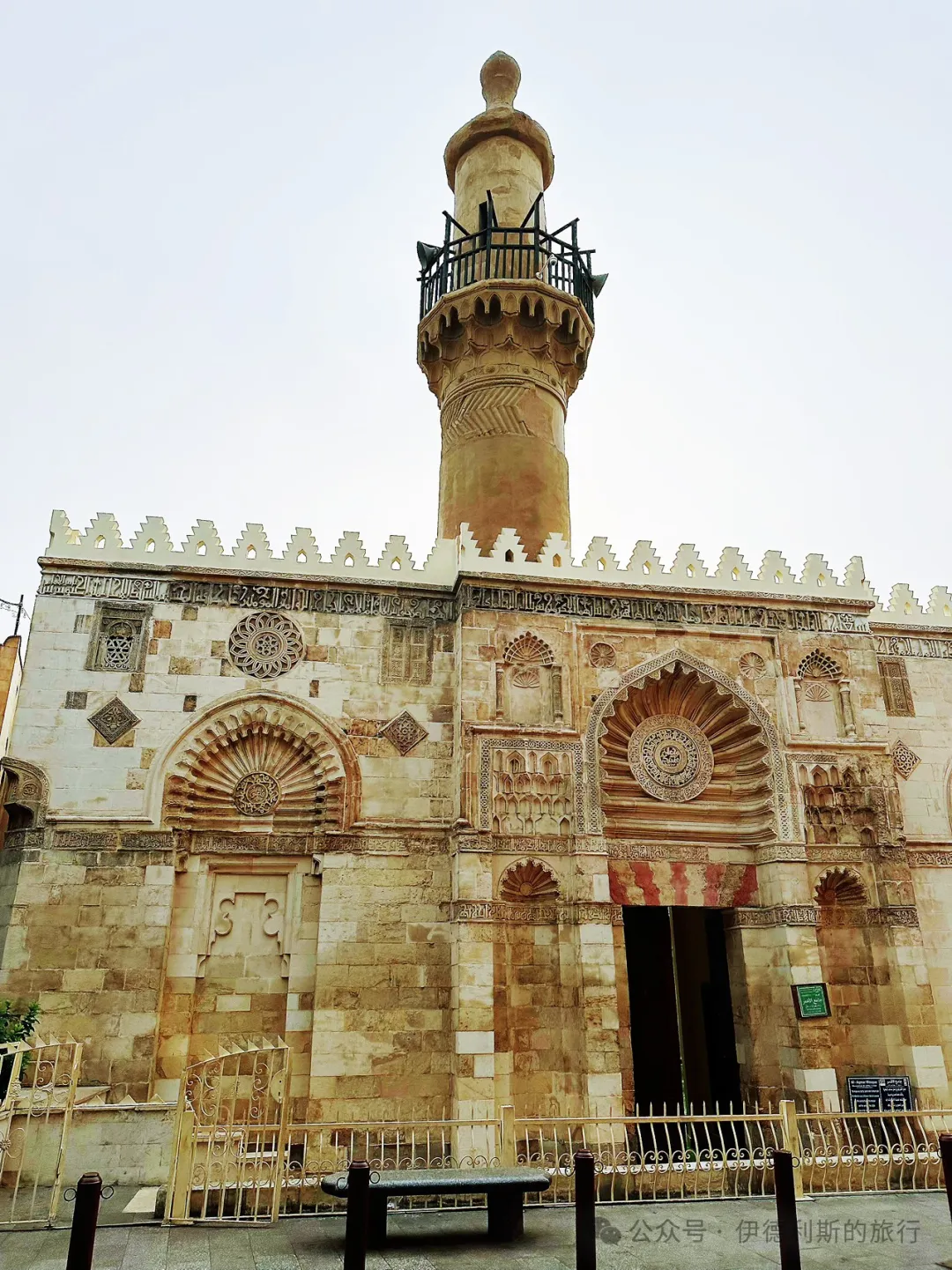
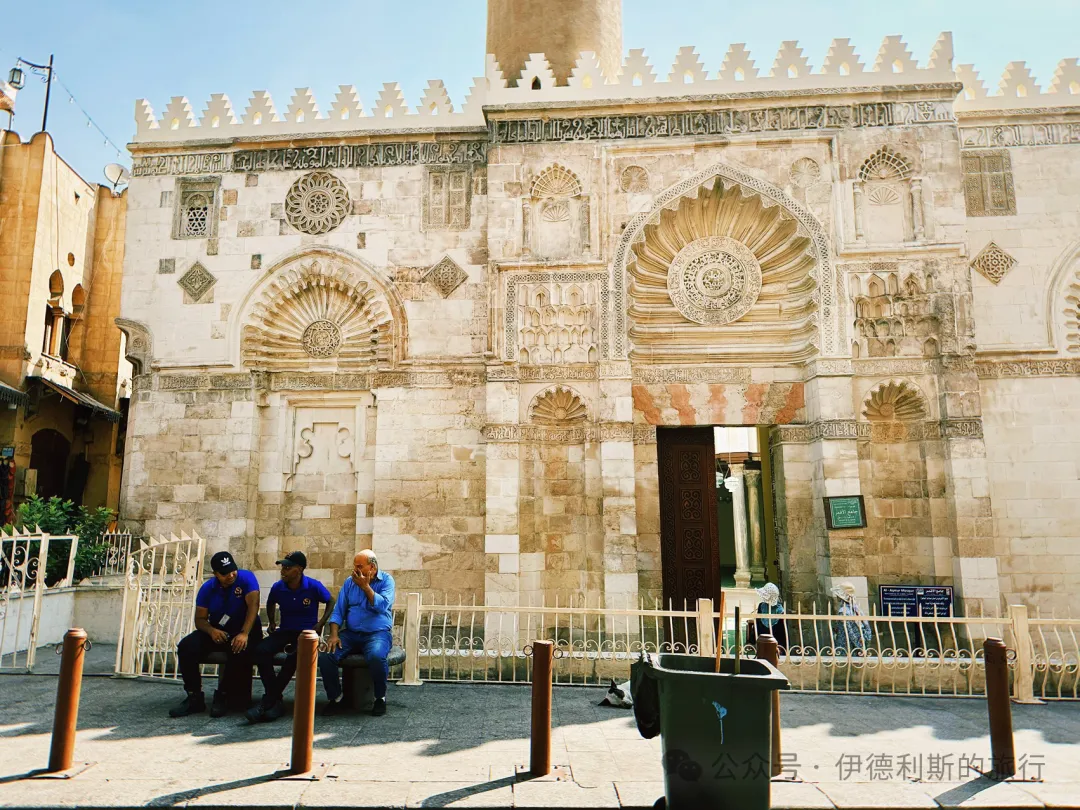
Al-Ashraf Mosque: 1424
The Ashraf Mosque (Al-Ashraf Mosque) was built in 1424 by the Mamluk Sultan Al-Ashraf Barsbay, who reigned from 1422 to 1438. The complex includes a main prayer hall, a school, a tomb, and a Sufi lodge (khanqah). It features a dome with geometric carvings, which is an early example of decorative dome carving.
Barsbay was once a Mamluk slave of Sultan Barquq and later served as a tutor to the young Sultan Muhammad. With support from the governor of Damascus and other emirs, Barsbay deposed the young sultan in 1422 and took the throne himself.
Barsbay’s 16-year reign was a time of relative safety and stability for the Mamluk Sultanate, with almost no wars. He was very generous to the poor and to Sufis, and he carried out a series of administrative reforms.
People called Barsbay the Merchant Sultan because he placed great importance on trade. He took steps to strengthen control over the Mediterranean and Red Seas, diverted Indian Ocean trade routes through Jeddah, and created state monopolies on sugar and pepper. He lowered tariffs to attract merchants and monopolized most of the trade from the East, which angered many European powers.
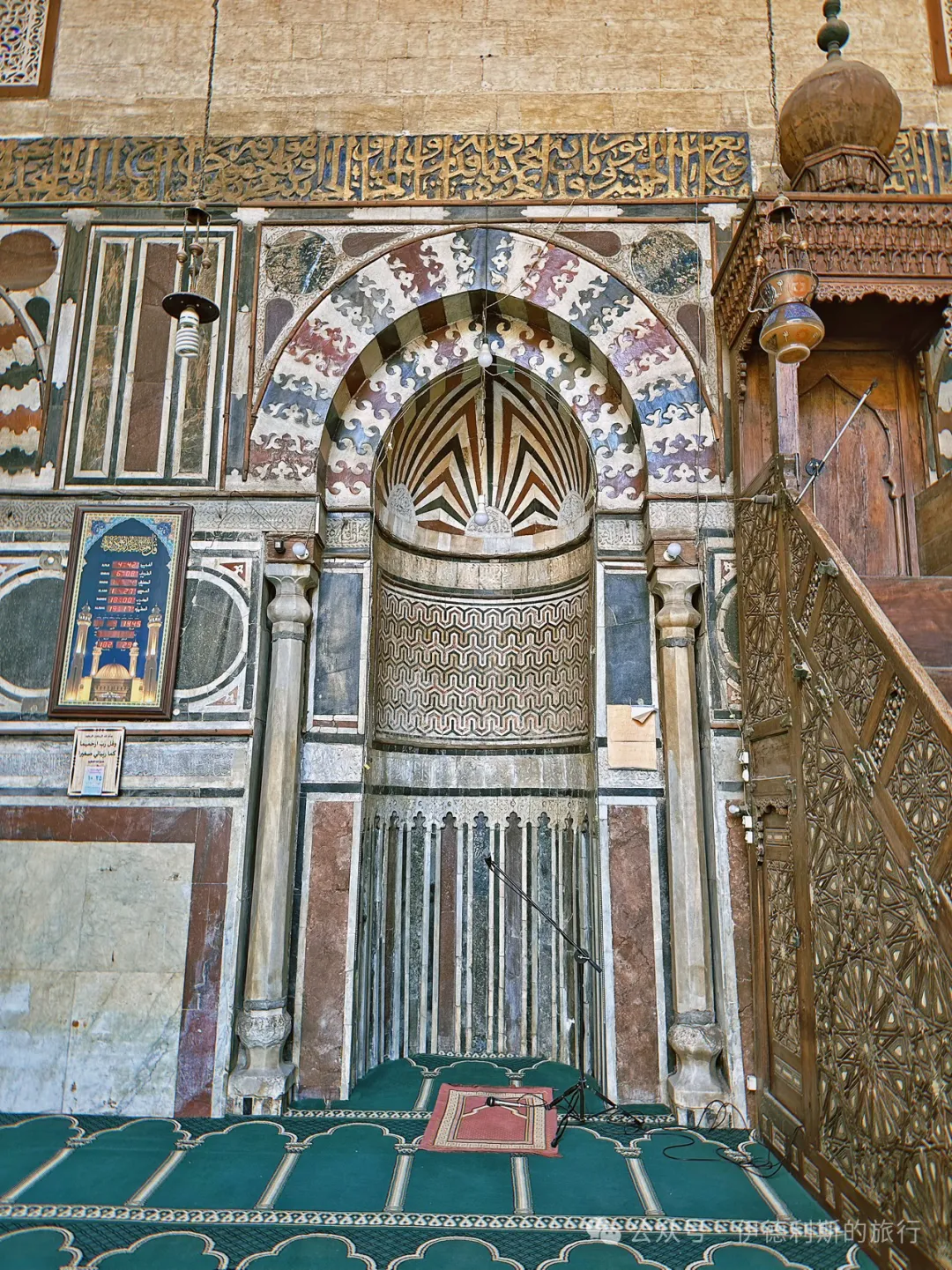
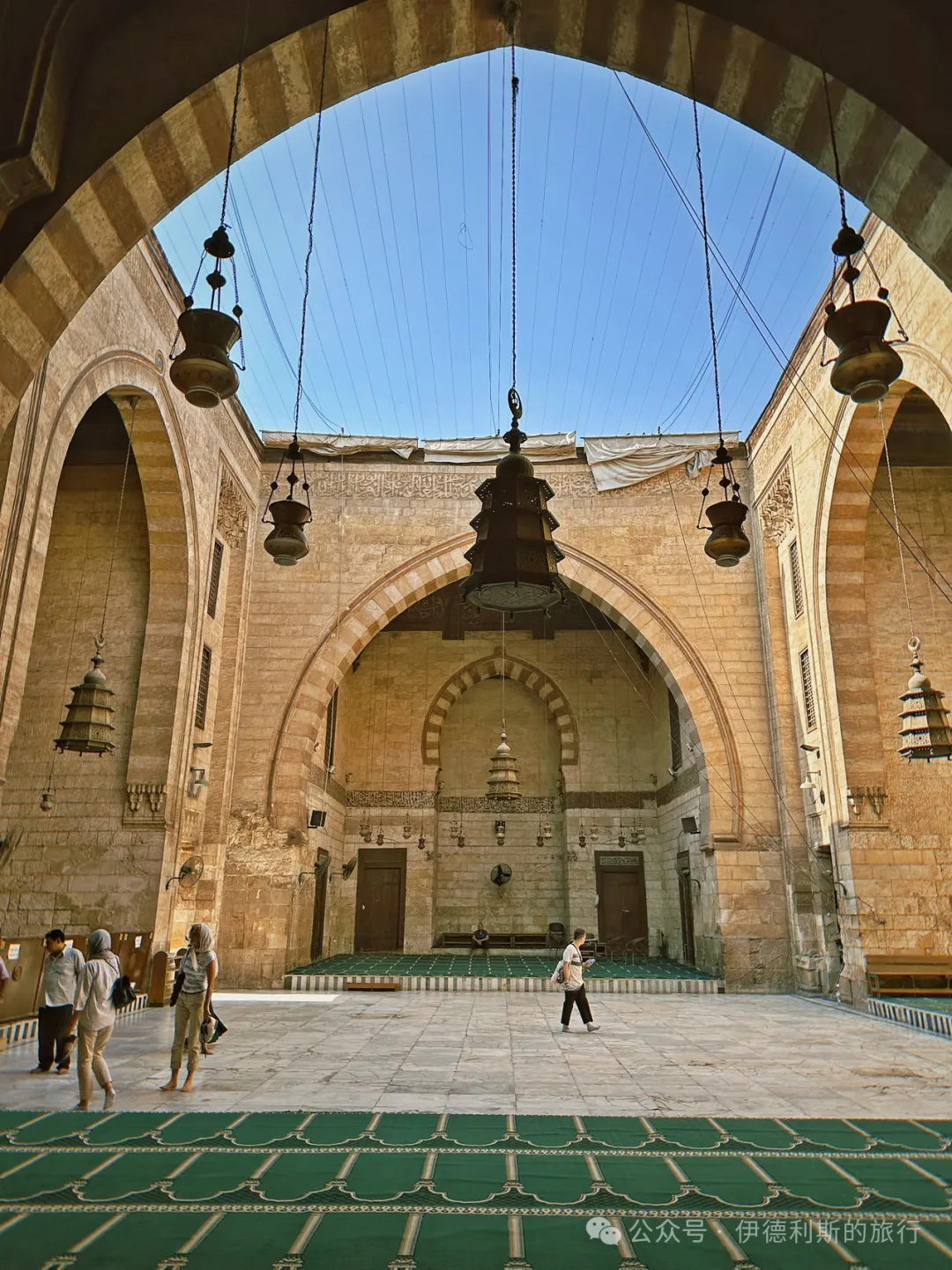
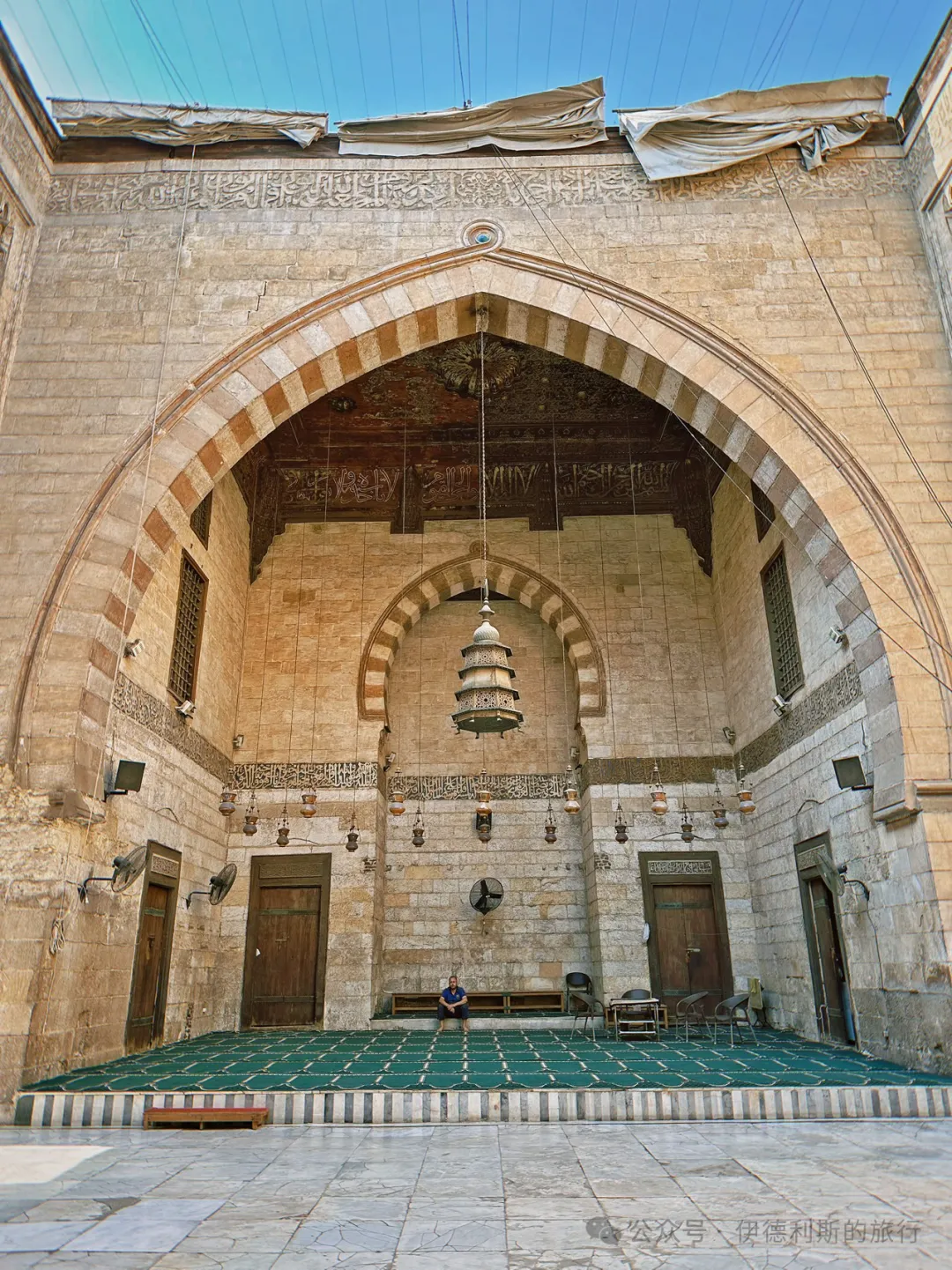
Al-Azhar Mosque: 972
In 969 AD, the Shia Ismaili Fatimid dynasty conquered Egypt and began building their new capital, Cairo. At that time, the densely populated Sunni city of Fustat already existed south of Cairo, so the new city became the center for the Shia Ismaili faith.
After two years of construction, the first Friday mosque (Jami) in Cairo opened in 972 and was named the Cairo Mosque (Jami al-Qahira) after the city. The Cairo Mosque was later renamed the Al-Azhar Mosque (al-Jami al-Azhar), with Al-Azhar meaning the Radiant.
After the Al-Azhar Mosque opened, the Ismailis moved from secret to public preaching. The mosque's first chief judge, Qadi al-Numan, became the founder of Ismaili law and the author of the authoritative Ismaili text, The Pillars of Islam (Kitab da'a'im al-Islam).
The main hall of the Al-Azhar Mosque is a columned hall. The marble columns in the four rows of arcades came from ruins of the Pharaohs, ancient Rome, and the Copts, and they were leveled using bases of different heights.
The roof of the main hall originally had three domes, but none survived later renovations. The original mihrab was rediscovered in 1933, and the niche still preserves ornate stucco carvings from the Fatimid period.
Several Fatimid caliphs expanded and renovated the Al-Azhar Mosque. Caliph al-Hafiz, who reigned from 1132 to 1149, carried out a major renovation in 1138. The four-centered arches in the courtyard and the dome at the entrance to the main hall date from this time. The stucco carvings in the courtyard also come from this period, though they were renovated again in 1891.
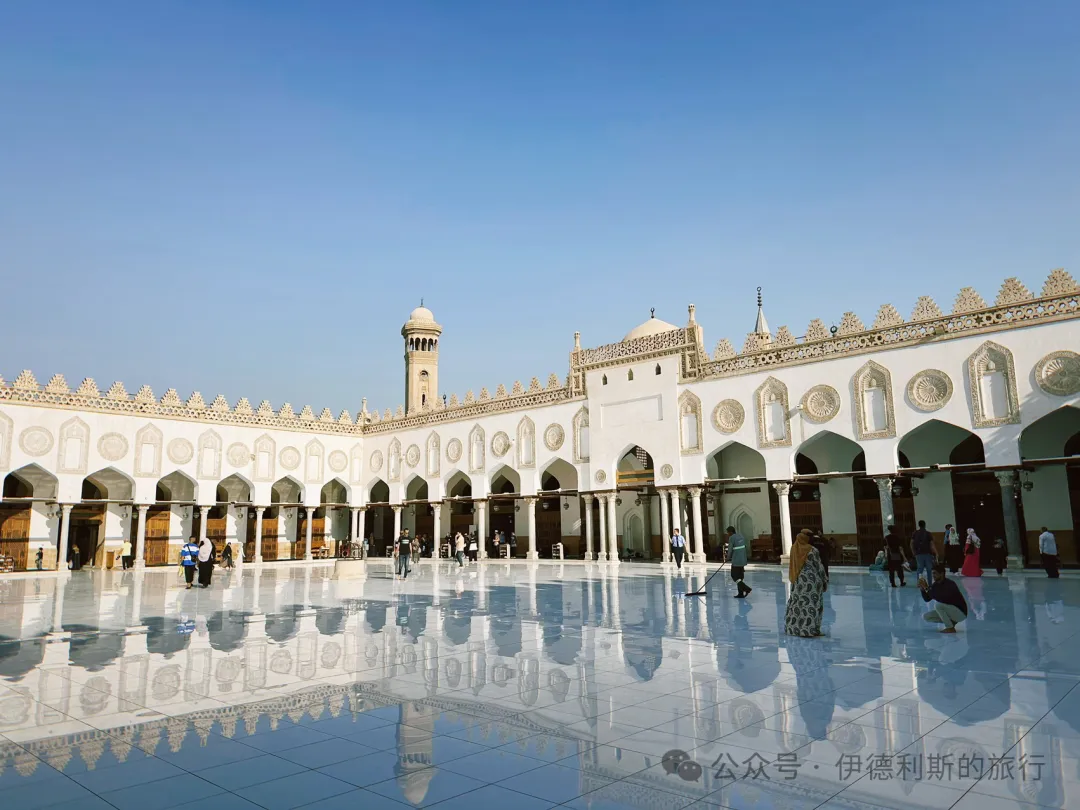
In 1171, Saladin overthrew the Fatimid dynasty and established the Sunni Ayyubid dynasty. The Friday prayers for Cairo moved to the Hakim Mosque in the north of the city, and the Al-Azhar Mosque was neglected because it had been the center of the Ismaili faith. Saladin removed the silver bands from the mihrab niche of the Al-Azhar Mosque that bore the names of the Fatimid caliphs and destroyed all the Ismaili manuscripts kept in the mosque.
It was not until 1266 that the Mamluk Sultan Baybars, who reigned from 1260 to 1277, restored Friday prayers at the Al-Azhar Mosque and repaired the building. The Ayyubid dynasty followed the Shafi'i school of law, which held that a community should have only one main Friday mosque. The Mamluk dynasty followed the Hanafi school, which did not have this rule.
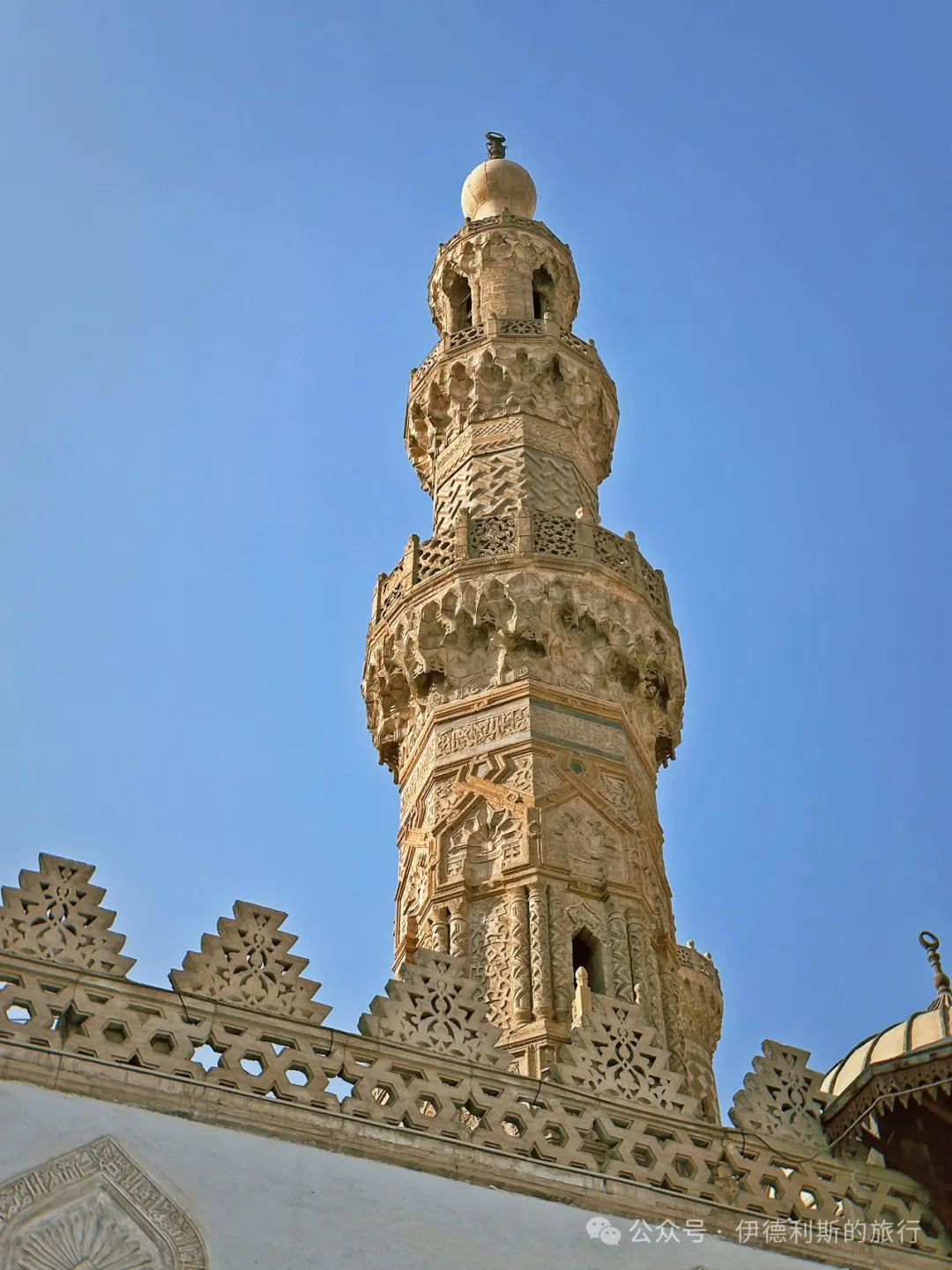
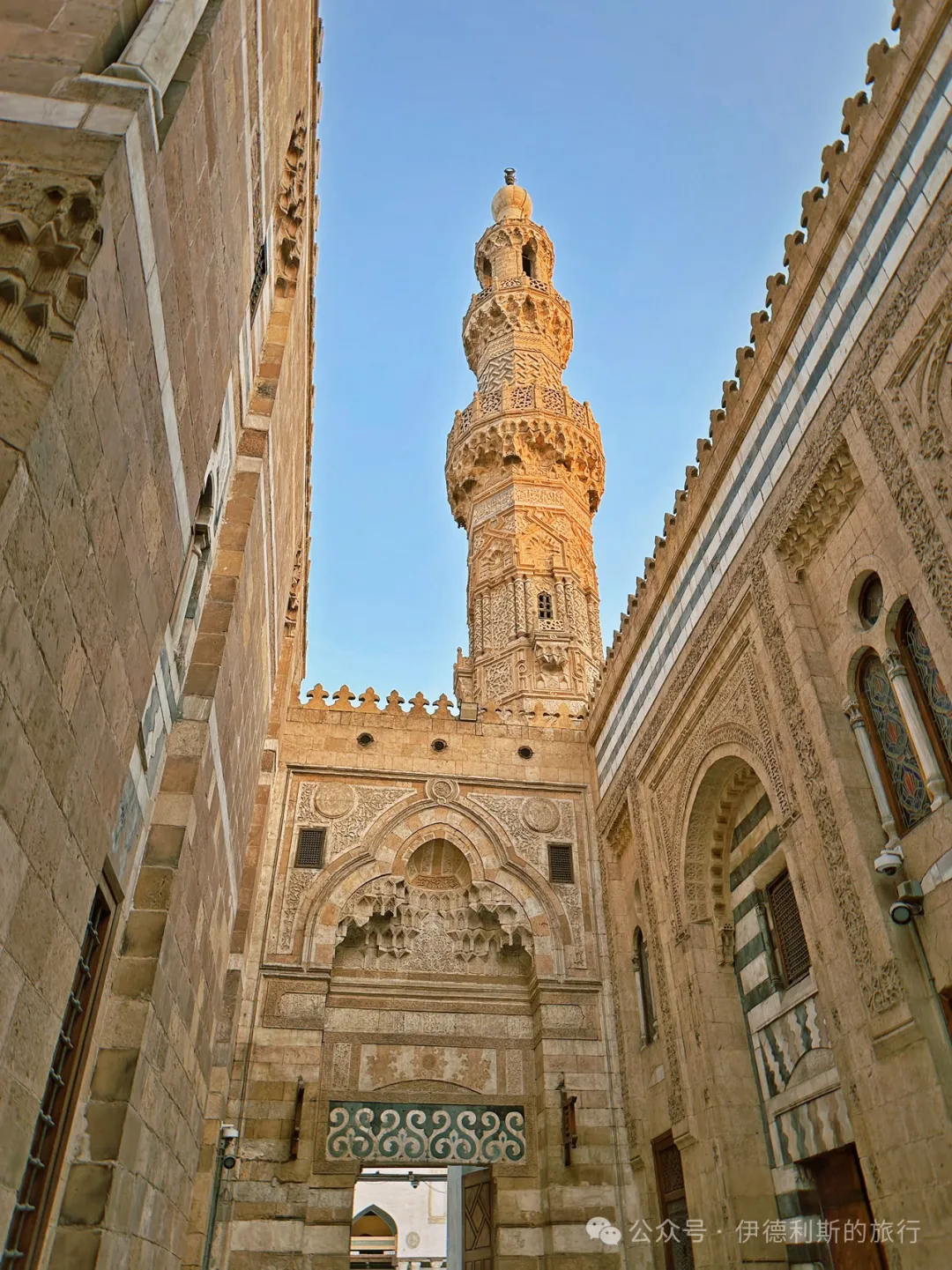
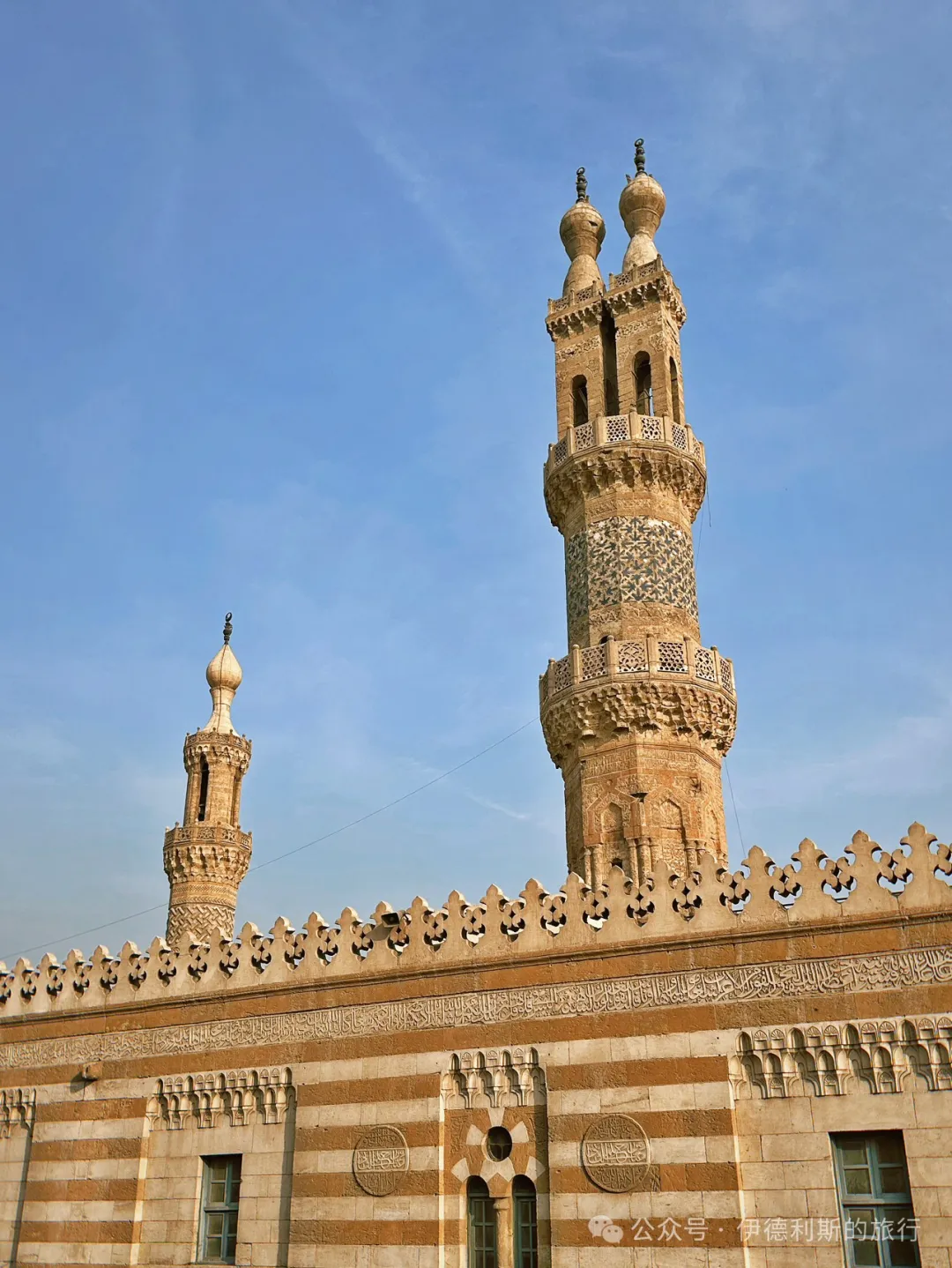
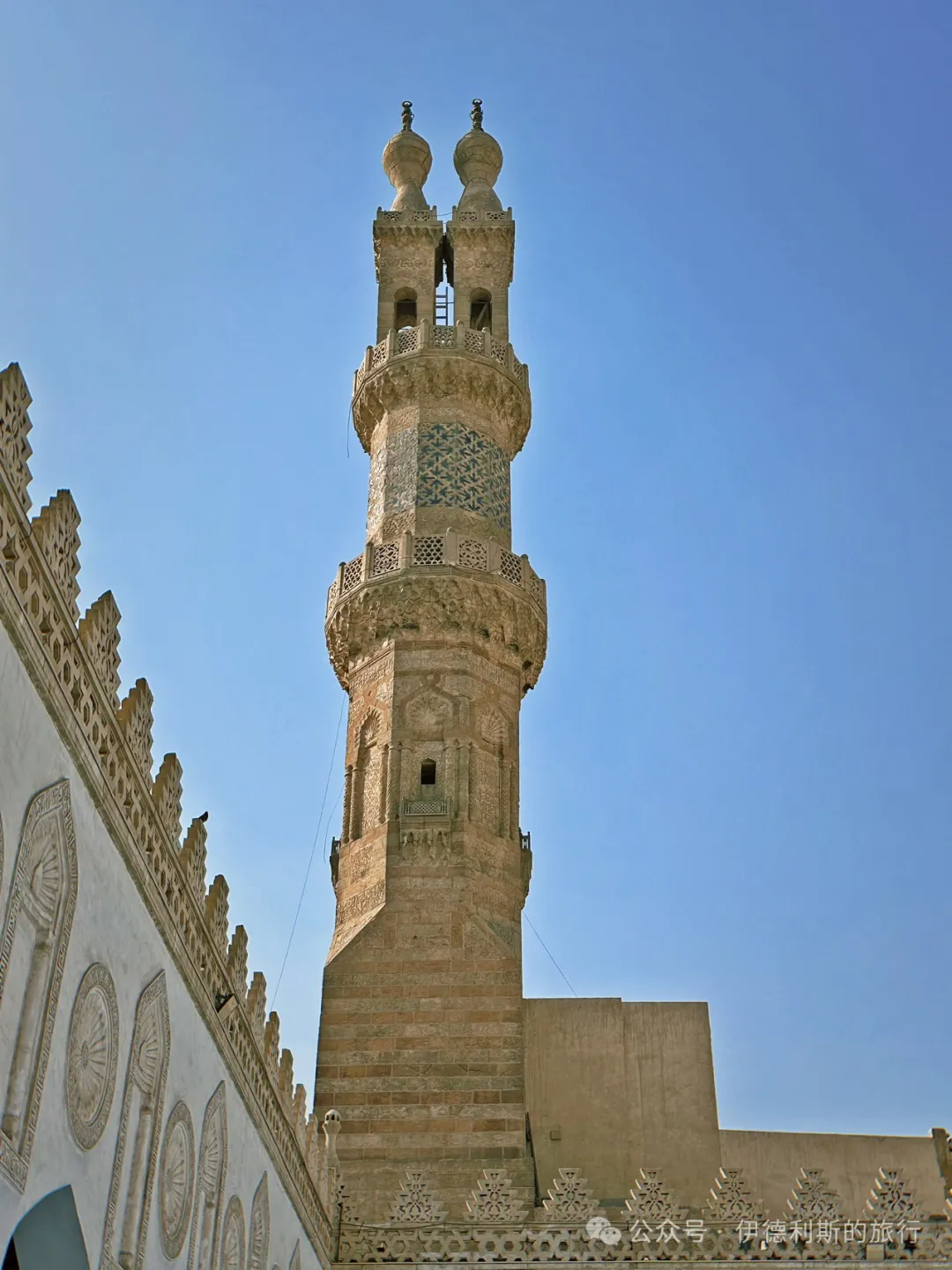
The Mamluk dynasty left two grand minarets at Al-Azhar Mosque: the Qaytbay minaret and the twin minarets of Al-Ghuri, along with the Qaytbay Gate. The Qaytbay minaret was built in 1483 or 1495 and features three balconies decorated with ornate carvings. The Qaytbay Gate was built in 1495 and leads directly into the courtyard. Both are exquisite examples of late Mamluk architecture. During the reign of Sultan Qaytbay (1468-96), the Mamluk dynasty was politically and economically stable and won several military victories against the Ottoman Empire. The Sultan was very interested in art and architecture and sponsored as many as 230 buildings.
In 1509, the Mamluk Sultan Al-Ashraf Qansuh al-Ghuri (reigned 1501-16) built the twin minarets of Al-Ghuri. Al-Ghuri was the last powerful ruler of the Mamluk dynasty. He was eventually defeated by the Ottoman Empire and fell on the battlefield in Syria.
In 1517, the Ottoman Empire conquered the Mamluk dynasty and occupied Egypt, causing the status of Al-Azhar Mosque to decline once again. It was not until after the 18th century, when the Mamluk elite regained influence in Egypt, that renovations and expansions of Al-Azhar Mosque continued.
In 1749, Abd al-Rahman was appointed as the head of the guards (Katkhuda). In 1753, he oversaw the construction of three Ottoman-style gates for Al-Azhar Mosque: the Barbers' Gate (Bab al-Muzayinīn), the Gate of the Upper Egyptians (Bab al-Sa'ayida), and the Soup Gate (Bab al-Shurba). Outside the Barbers' Gate was where students got their hair cut, 'Sa'ayida' means people from Upper Egypt, and the Soup Gate was where students went to get soup. From then on, the Barbers' Gate became the main entrance to Al-Azhar Mosque.
Abd al-Rahman also doubled the size of the main prayer hall of Al-Azhar Mosque to the south and added a new mihrab, giving the hall its current shape. After Abd al-Rahman died in 1776, he was buried inside Al-Azhar Mosque, becoming the last person in history to be buried there.
After the 18th century, Al-Azhar Mosque became the most influential educational institution in Egypt, and the ulama (scholars) could report to the Pasha (governor) as official advisors.
Napoleon occupied Cairo on July 22, 1798. On October 21, an uprising against the French broke out at Al-Azhar Mosque. Napoleon shelled the mosque directly from the Cairo Citadel, resulting in over 3,000 Egyptian casualties and the death of six Al-Azhar ulama. Napoleon's troops tied their horses to the mihrab of Al-Azhar Mosque and ransacked the student dormitories and the library. In 1800, the commander-in-chief of the French expeditionary force was assassinated by an Al-Azhar student, after which Napoleon ordered the closure of Al-Azhar Mosque. In June 1801, Cairo was recaptured by the British and the Ottoman Empire, and Al-Azhar Mosque reopened.
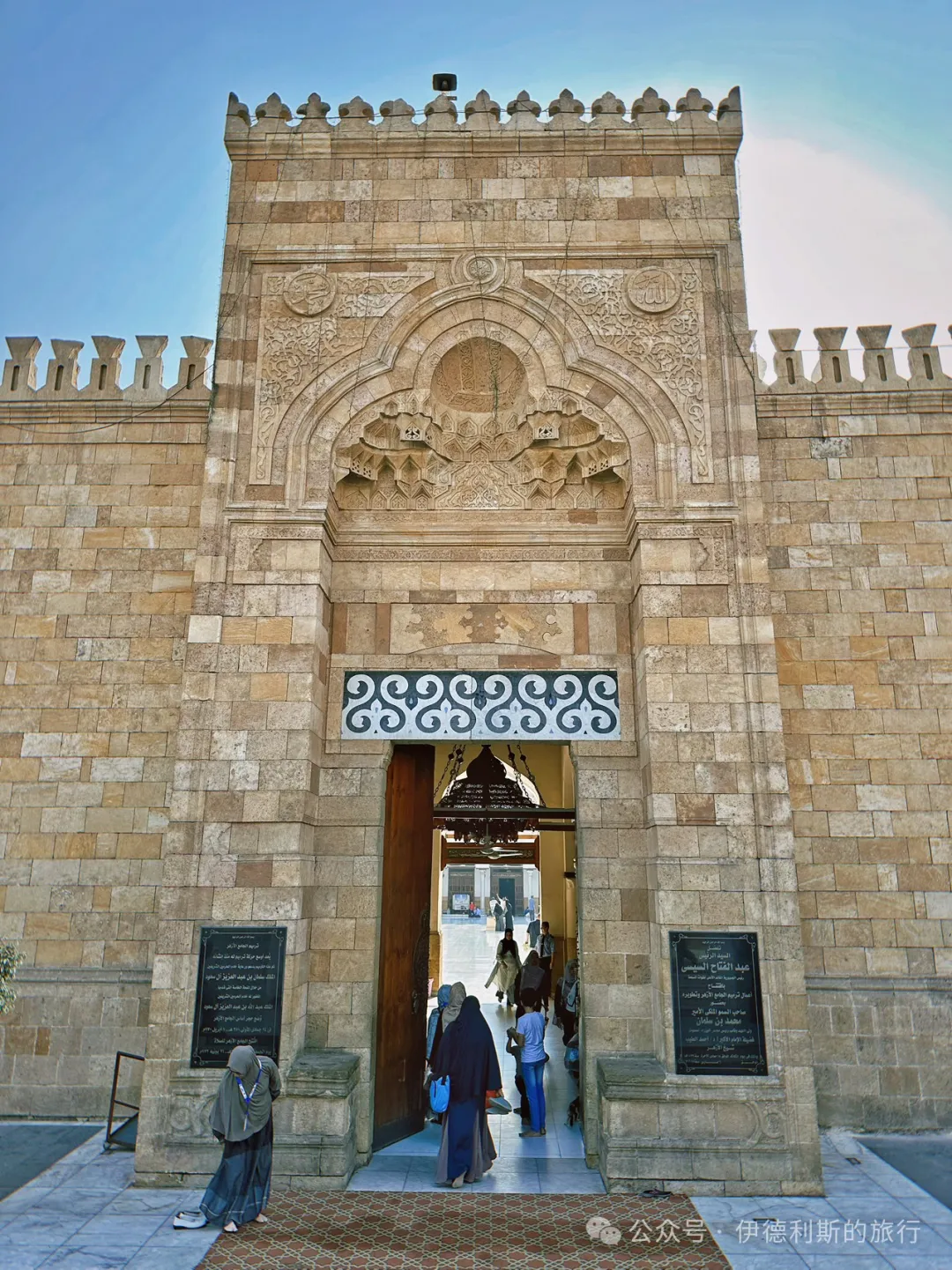
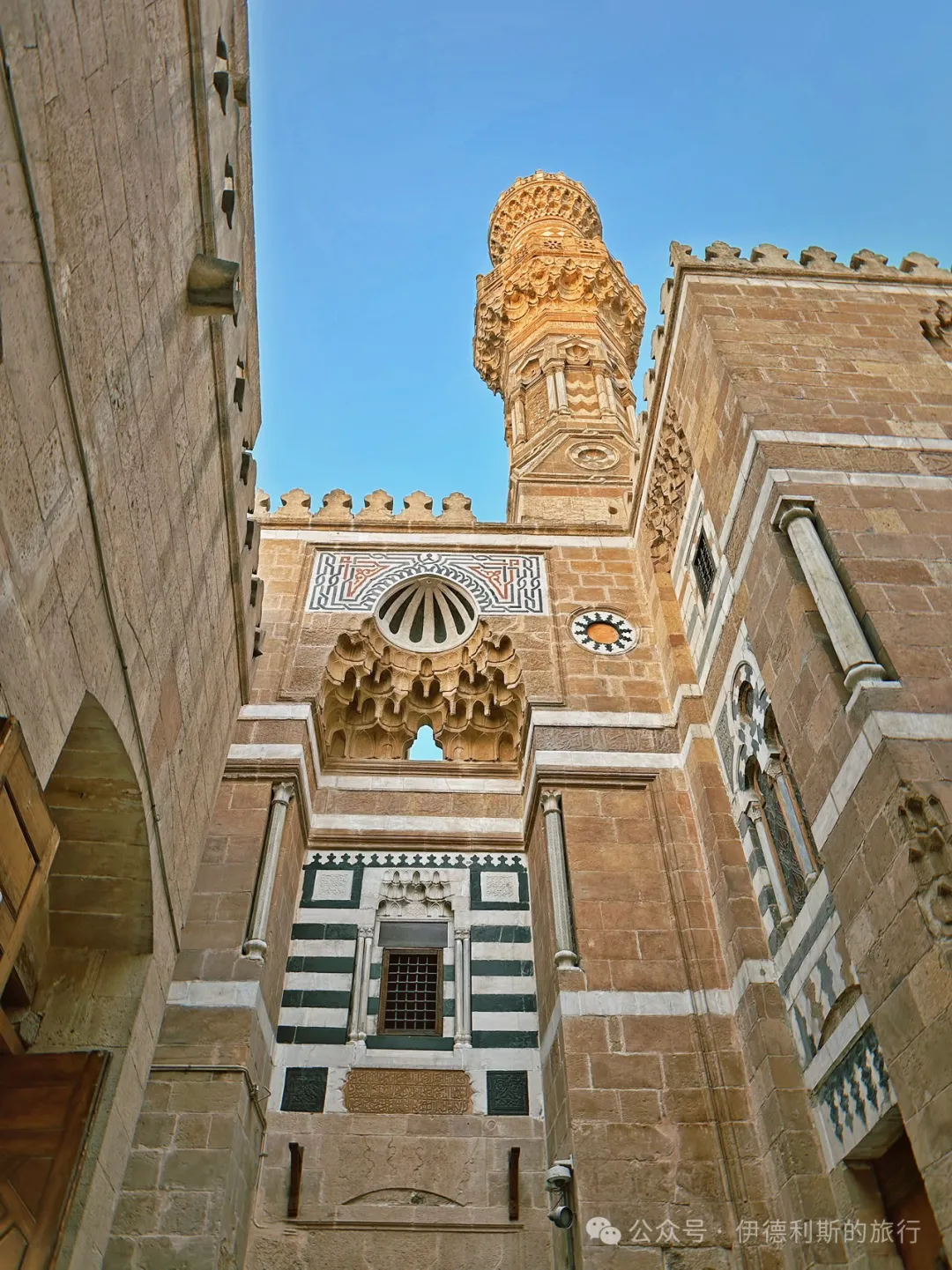
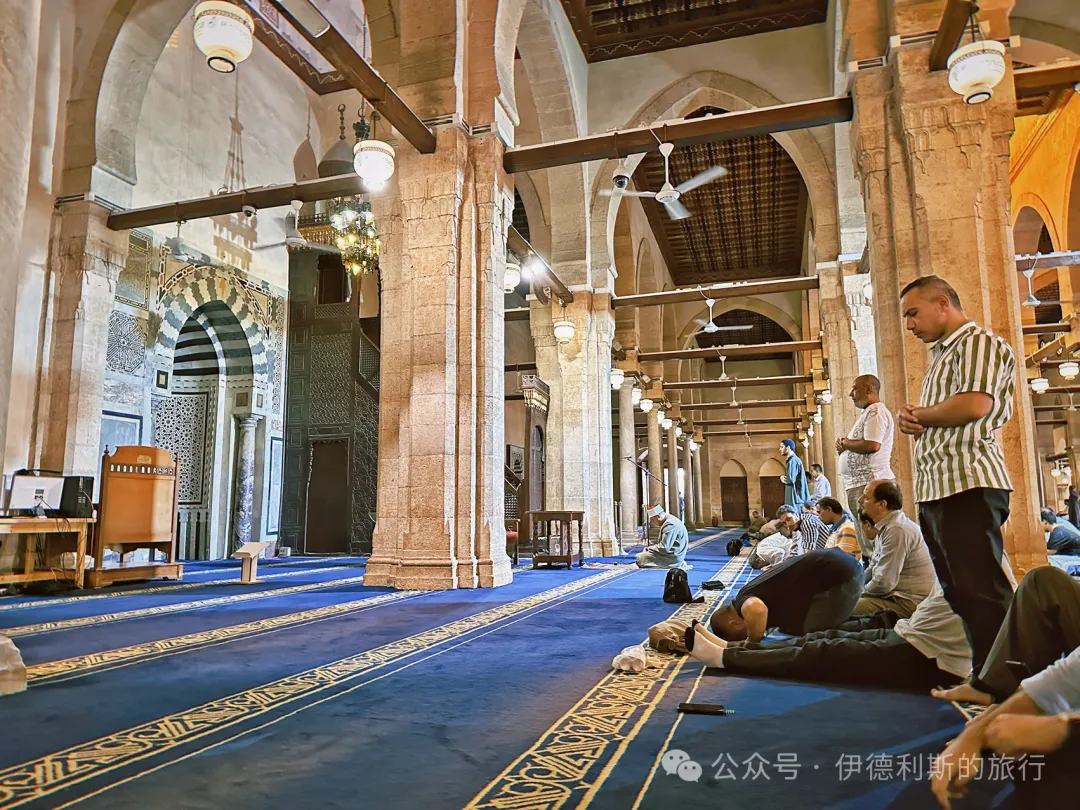
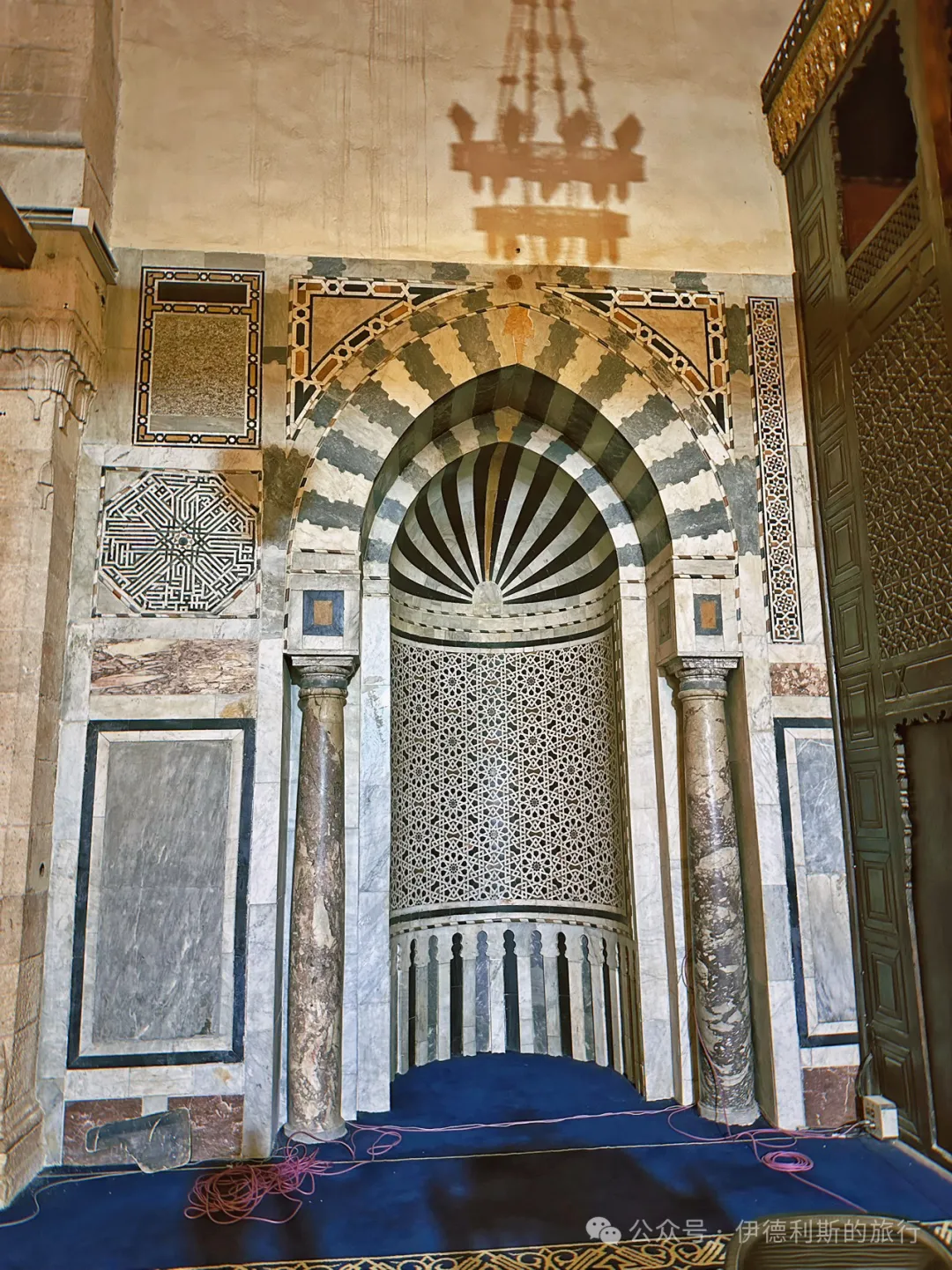
Between 1892 and 1901, the last Khedive (viceroy) of Ottoman Egypt, Abbas II Hilmi Pasha, rebuilt the facade of Al-Azhar Mosque as part of a wave of modernization in British-occupied Egypt. At the same time, Al-Azhar University also carried out educational reforms to oppose fundamentalism. To mitigate the impact of the Saudi Wahhabi movement, many students from Indonesia and other parts of Southeast Asia came to study at Al-Azhar University during this period.
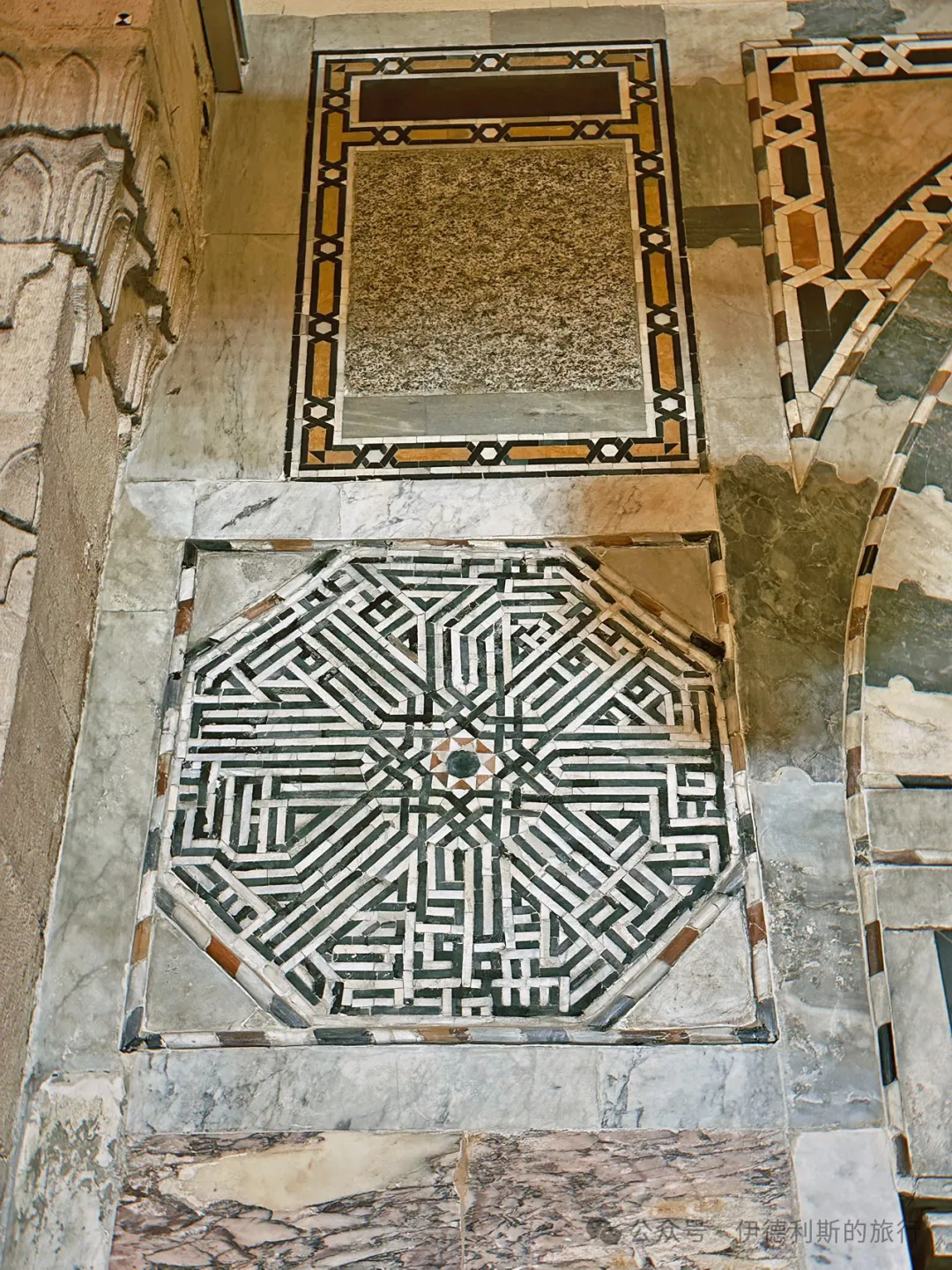
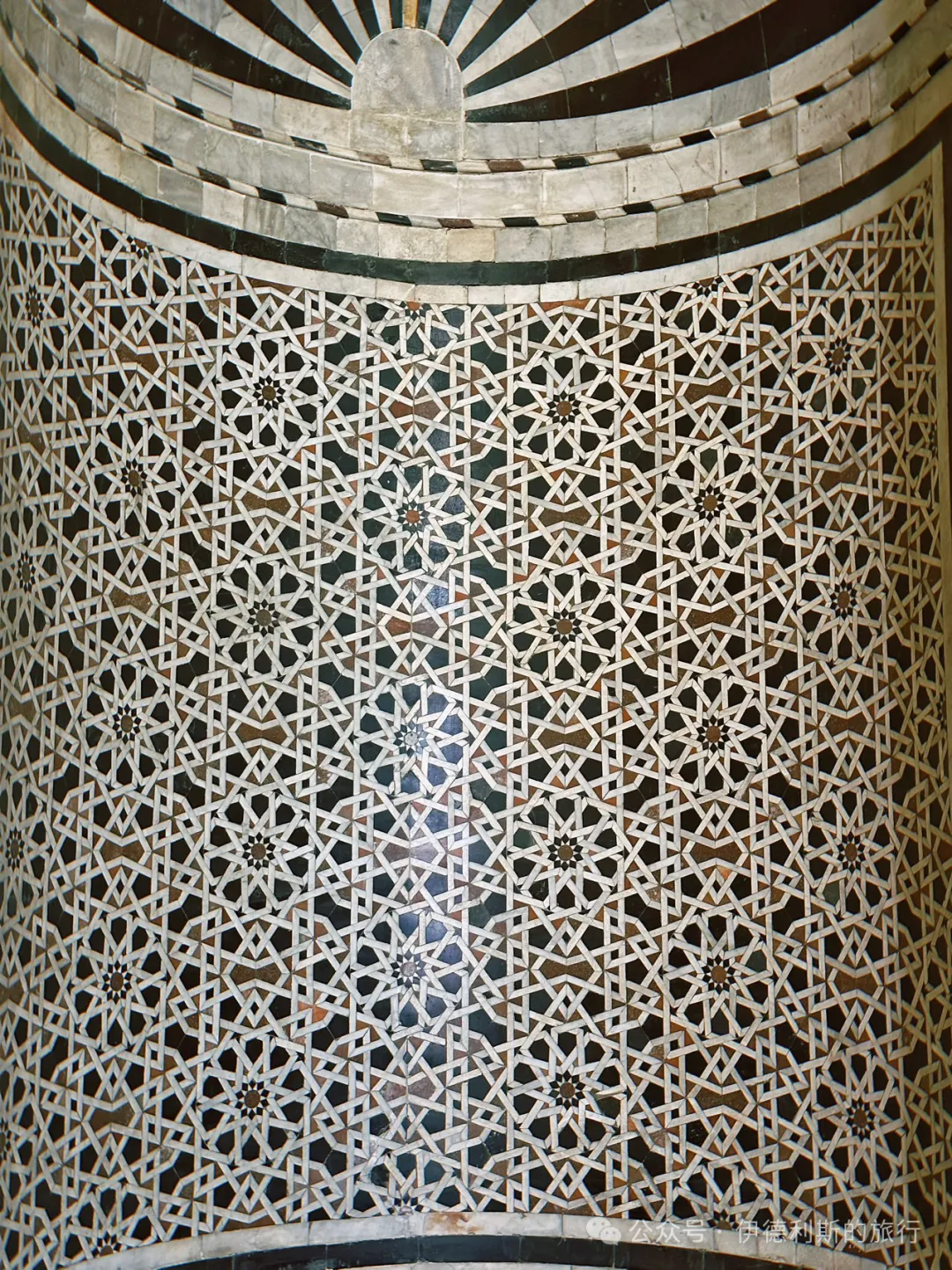
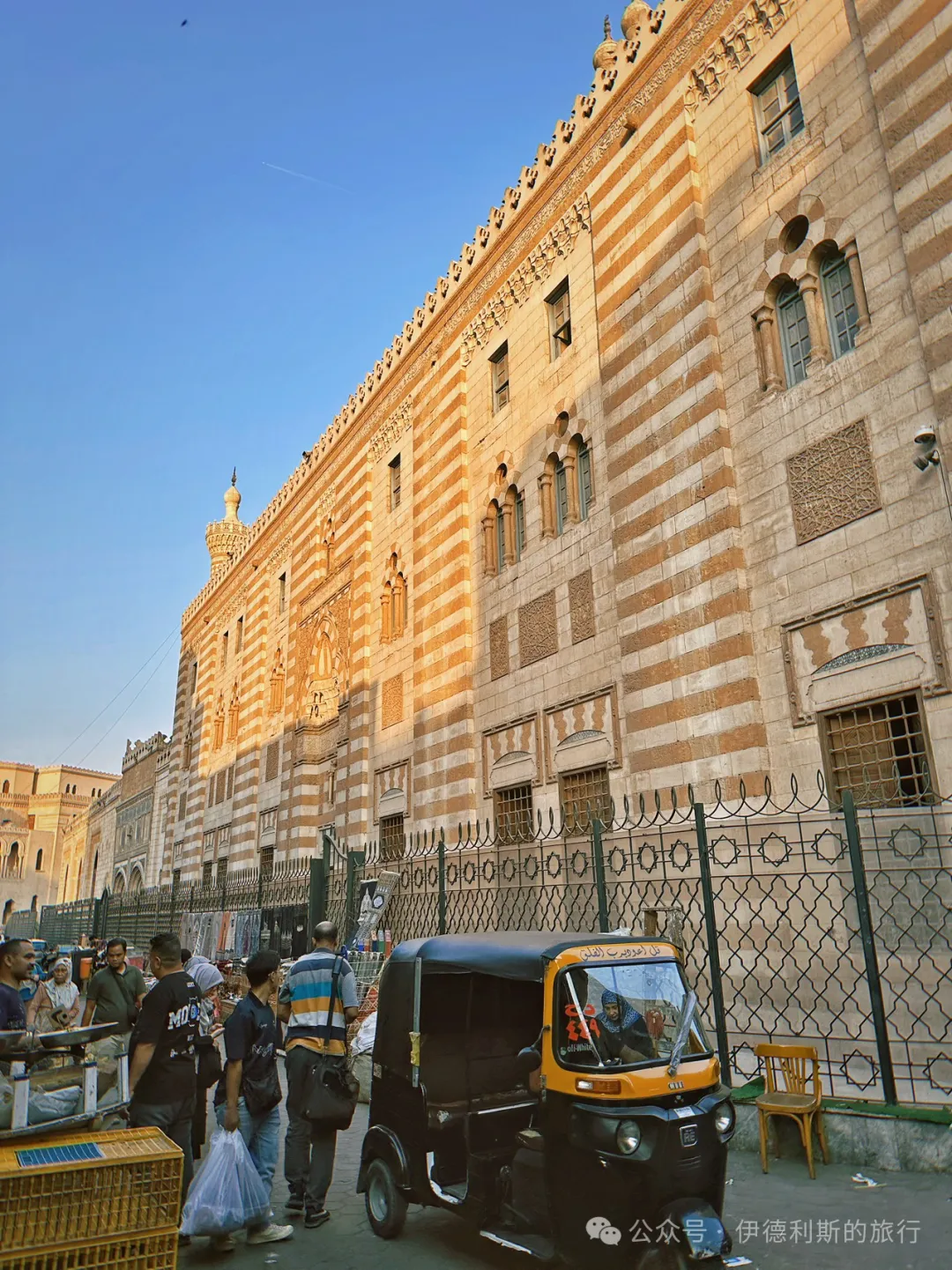
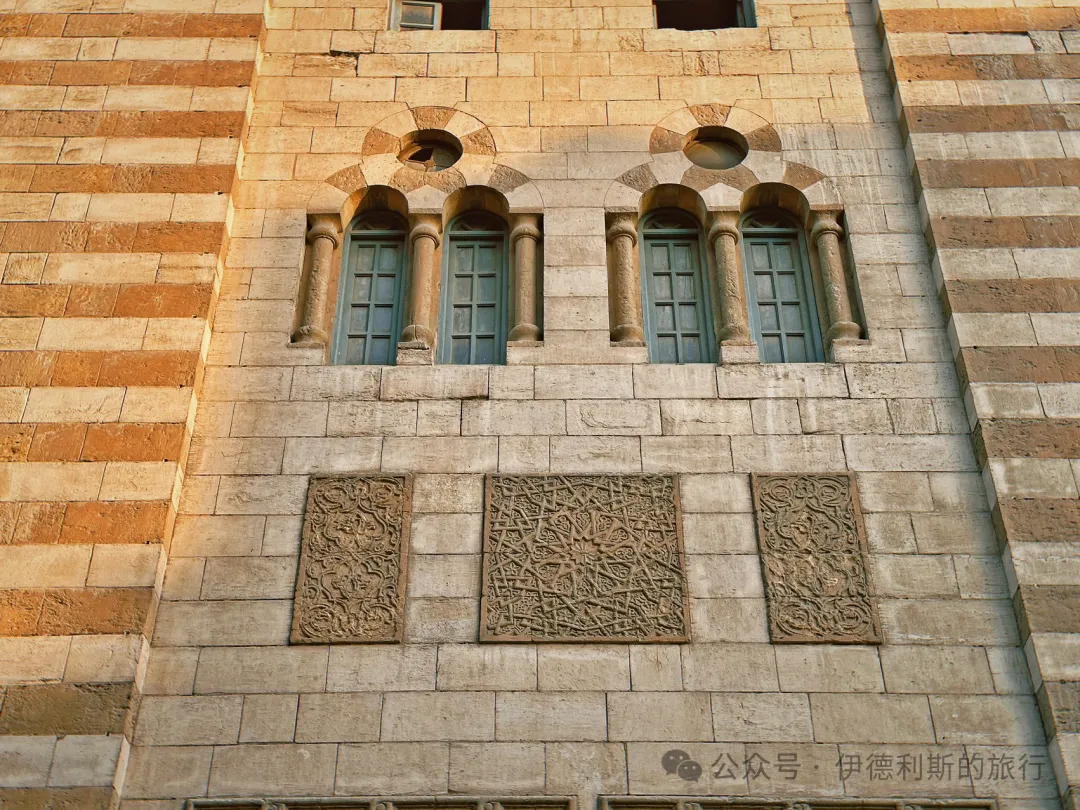
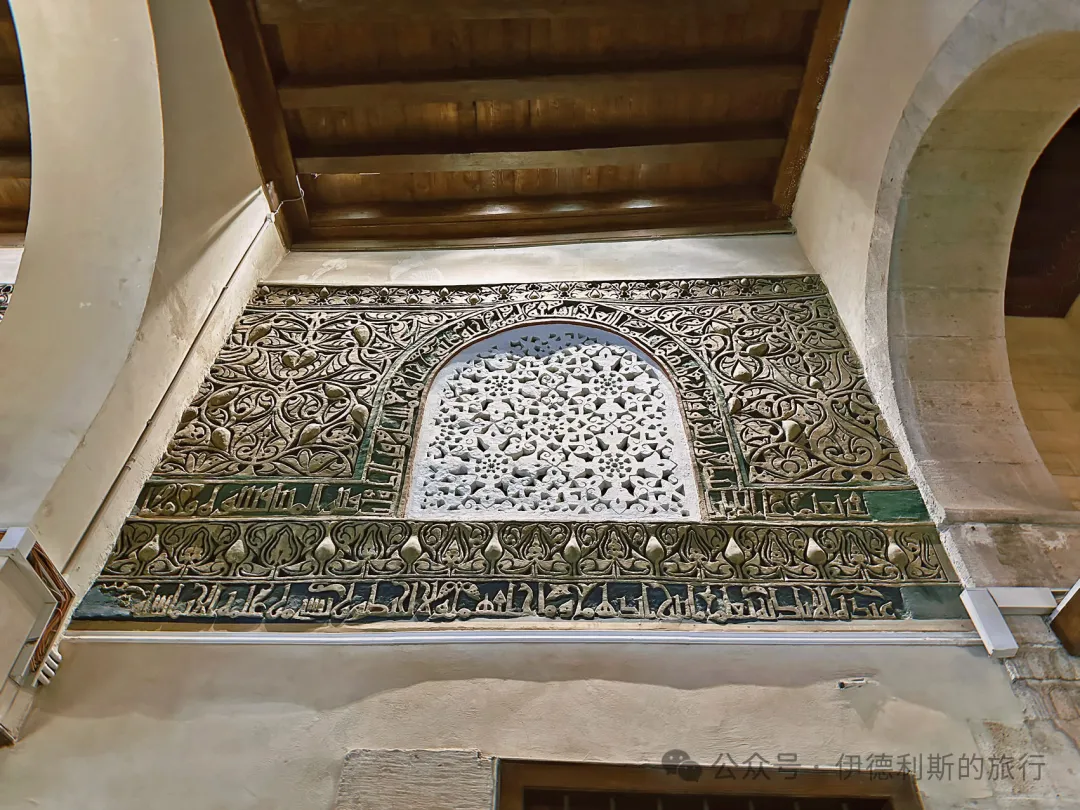
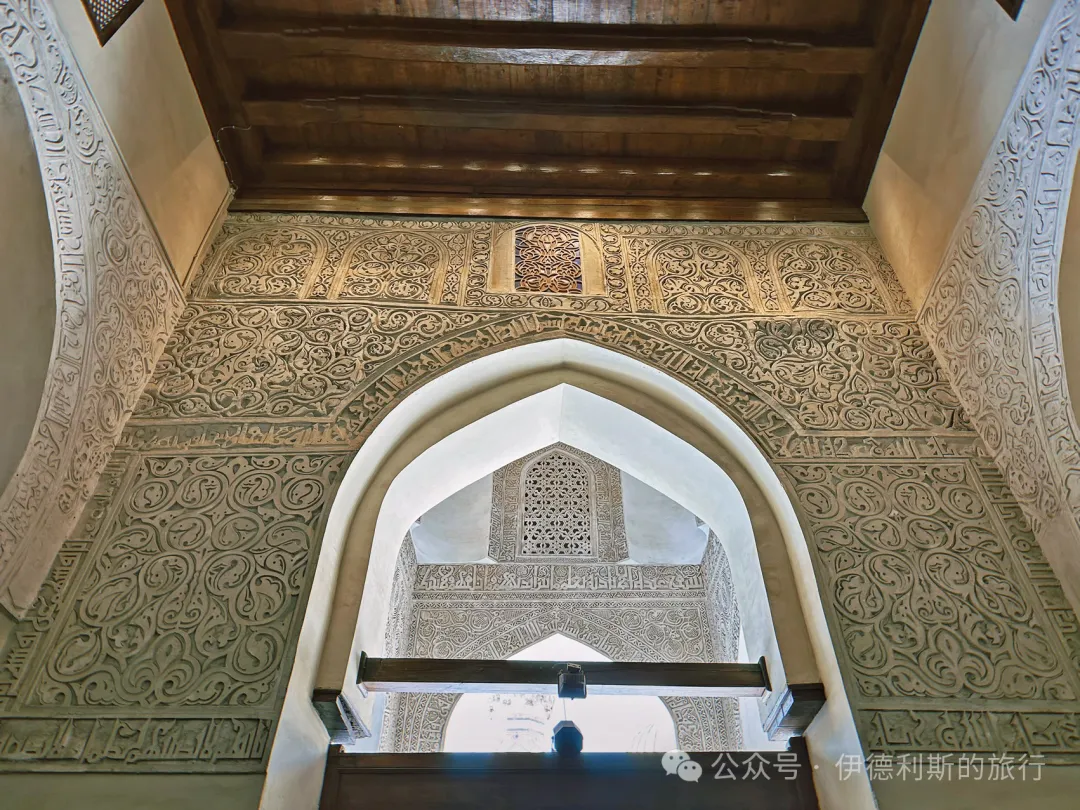
The last two pictures show the Fatimid dynasty stucco carvings restored by the Committee for the Preservation of Arab Art Monuments during the reign of Abbas II Hilmi Pasha.
Al-Hussein Mosque: built in 1154, rebuilt in 1874
Across from Al-Azhar Mosque is Al-Hussein Mosque, where Shia Muslims believe the head of Imam Hussein is buried. The mosque was first built in 1154, but its current appearance dates to a reconstruction in 1874.
The Fatimid dynasty believed the Abbasid dynasty secretly moved Imam Hussein's head from the Umayyad Mosque cemetery in Damascus. The Fatimids rediscovered it in 1091 and built a shrine for it in Ashkelon, Palestine.
In 1153, the Fatimid dynasty ordered the head of Hussein moved to Cairo to be buried with past Fatimid caliphs, and they built Al-Hussein Mosque in 1154. The lower part of the south gate of Al-Hussein Mosque still keeps its original Fatimid structure.
Al-Hussein Mosque was rebuilt by the Ayyubid dynasty in 1237, but it later burned down, leaving only one Ayyubid minaret today.
In 1874, Isma'il Pasha (reigned 1863-79), the ruler of the Muhammad Ali dynasty, rebuilt Al-Hussein Mosque in a Gothic Revival style and added a minaret blending Gothic and Ottoman styles. During his rule, Isma'il Pasha modernized Egypt on a large scale, trying to align Egypt with Europe, and the renovation of Al-Hussein Mosque was part of this effort.
In 1893, a room for Prophet Muhammad's relics (Bab al-Mukhallafat al-Nabawiyya) was added next to the shrine. It holds four strands of the Prophet's hair, a linen cloak he wore, a lantern, a copper kohl applicator, a staff, and a sword given to him by a companion.
The center of the shrine today is a metal grille (Zarih) made in Mumbai in 1965 by Taher Saifuddin, the leader of the Dawoodi Bohras. It is said this Zarih was originally designed for the shrine of Abbas ibn Ali in Karbala, but it could not be installed there. Taher Saifuddin believed this was guided by Allah, so he had the Zarih flown to Cairo and installed in Al-Hussein Mosque.
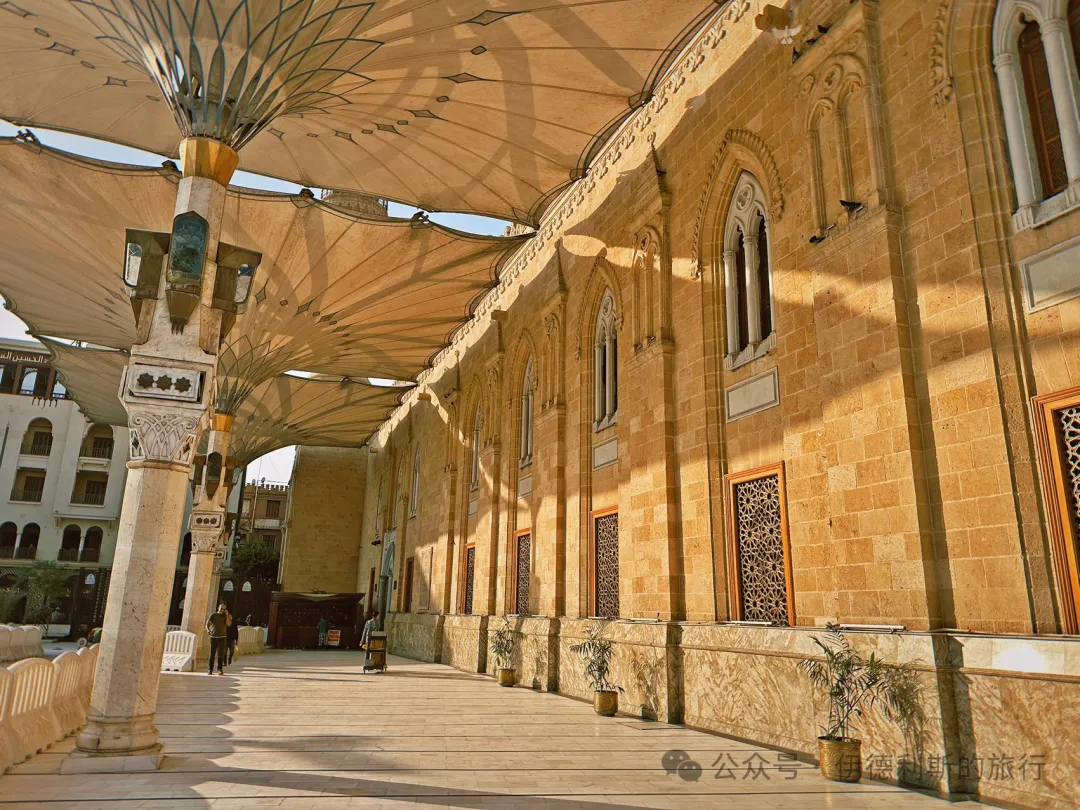
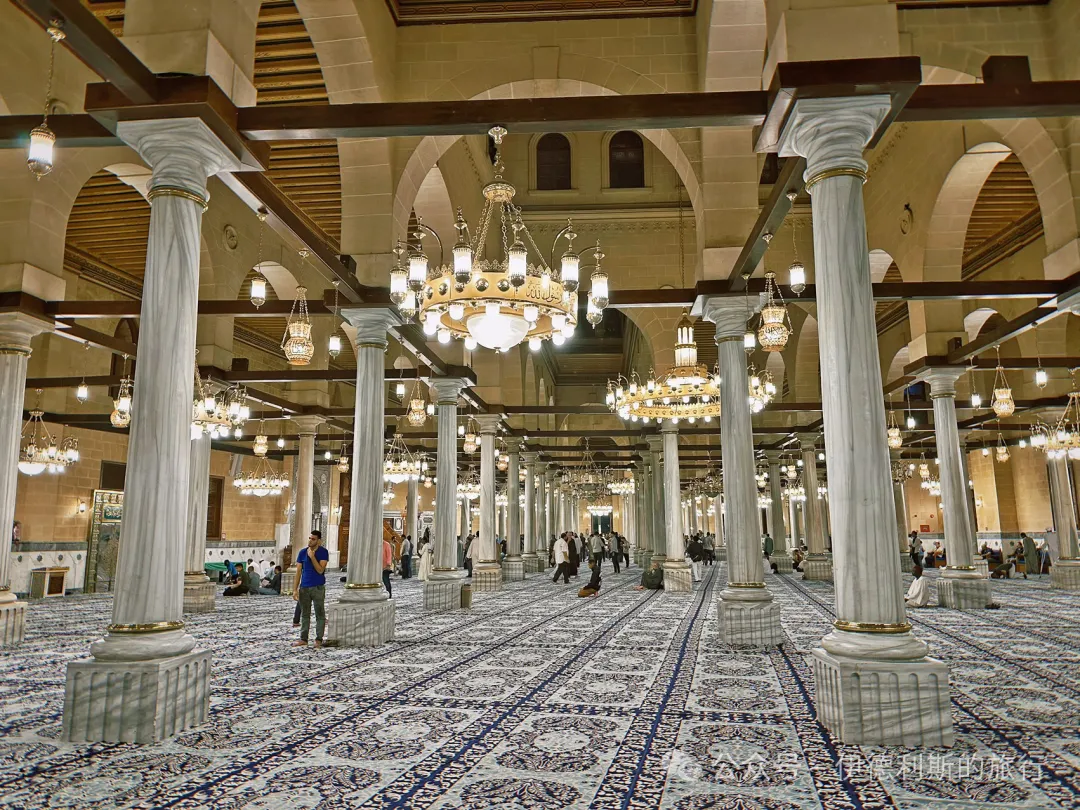
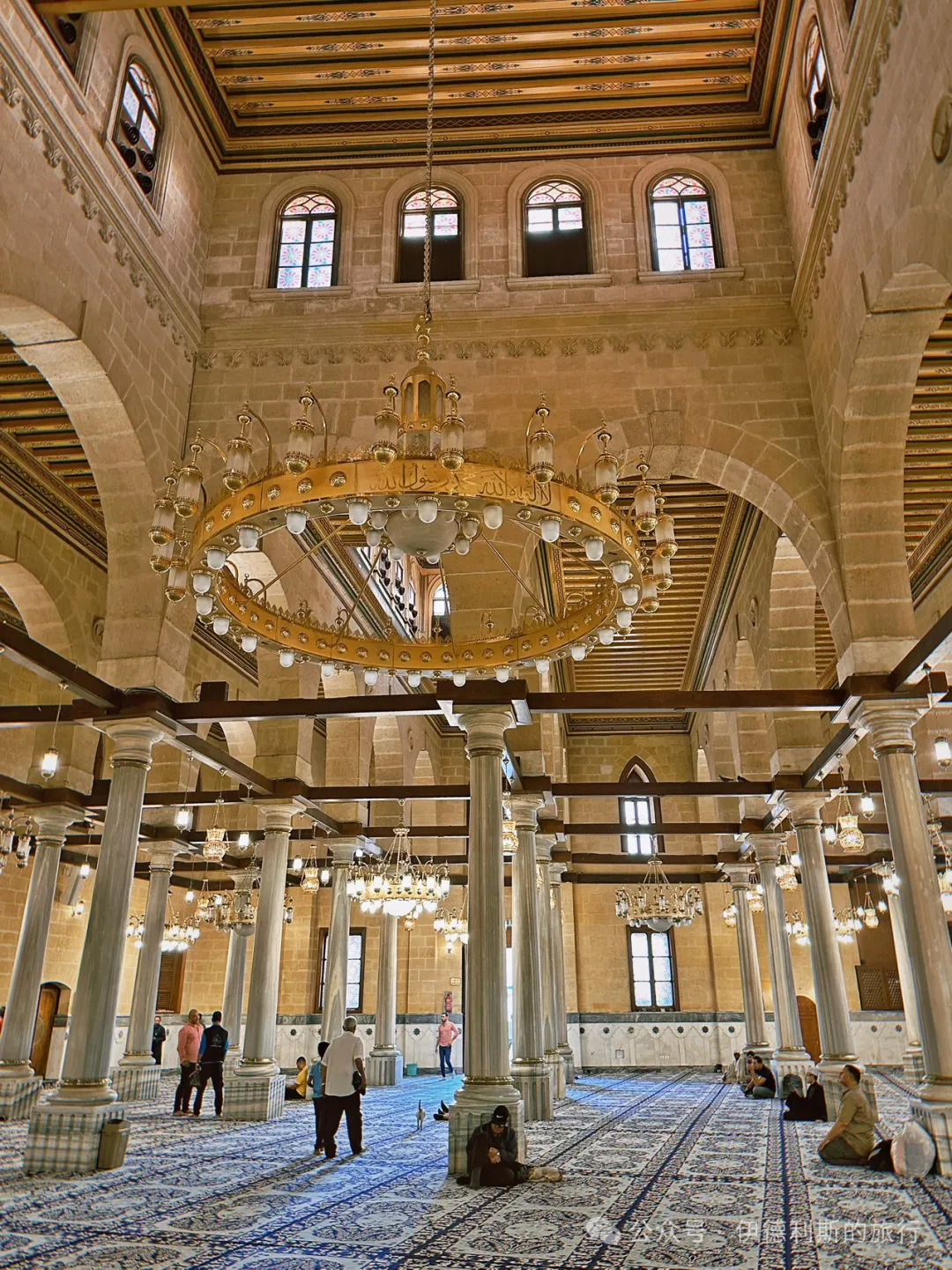
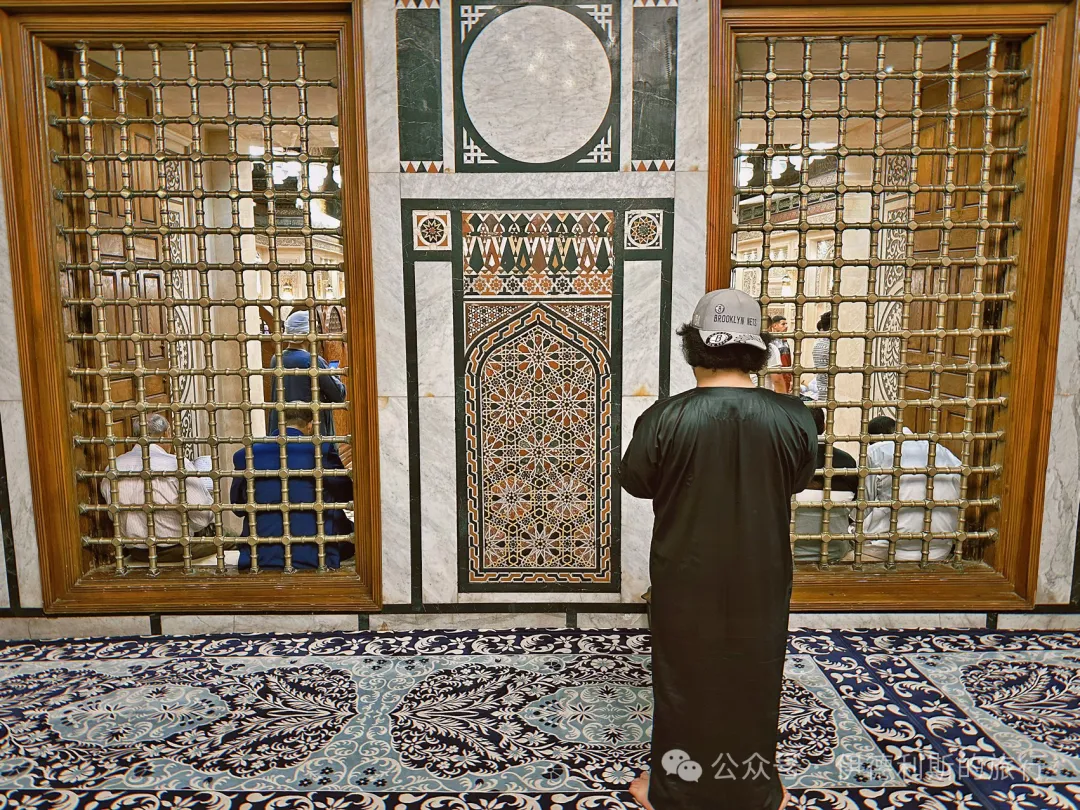
Abu al-Dhahab Mosque: 1774
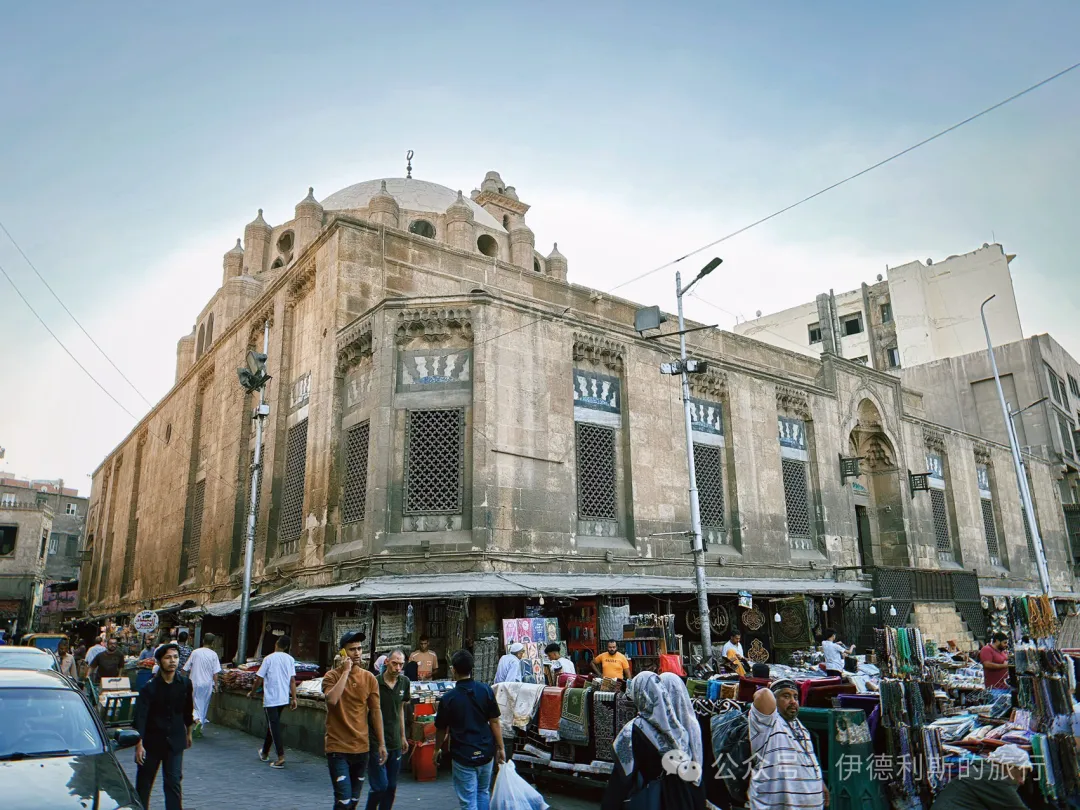
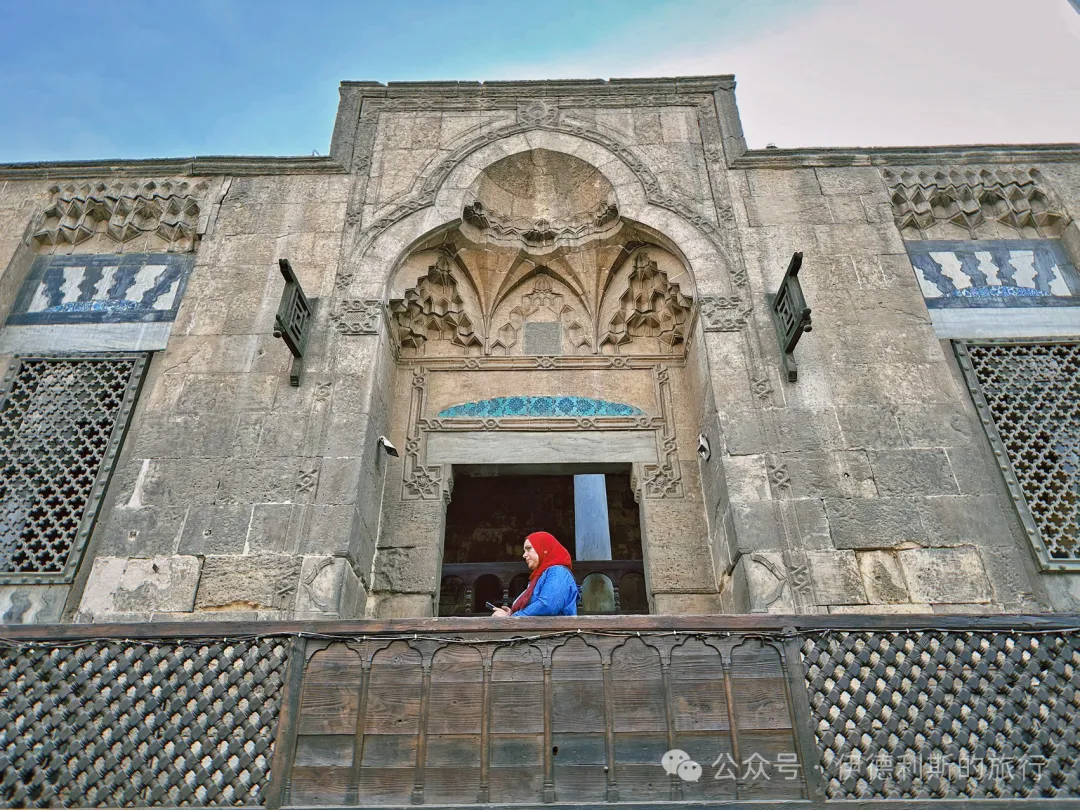
Right next to the west wall of Al-Azhar Mosque is the Abu al-Dhahab Mosque, built in 1774 by the Egyptian Mamluk ruler Abu al-Dhahab. This was the last large building complex the Mamluks built in Egypt, but only the mosque remains today.
Abu al-Dhahab means 'Father of Gold,' and he was a wealthy and generous Mamluk emir. During the Russo-Turkish War, the Egyptian Mamluk emir Ali Bey declared independence from the Ottoman Empire, and Abu al-Dhahab led troops to conquer most of the Hejaz and Syria. After taking Damascus in 1772, Abu al-Dhahab turned his army to occupy Cairo, becoming the actual ruler of Egypt until he died suddenly of the plague in 1775 while conquering Palestine.
The architecture of Abu al-Dhahab Mosque mixes different elements, including Mamluk-style outer walls, Ottoman-style domes, and a minaret inspired by the early 16th-century minaret of the nearby Sultan Qaytbay complex.
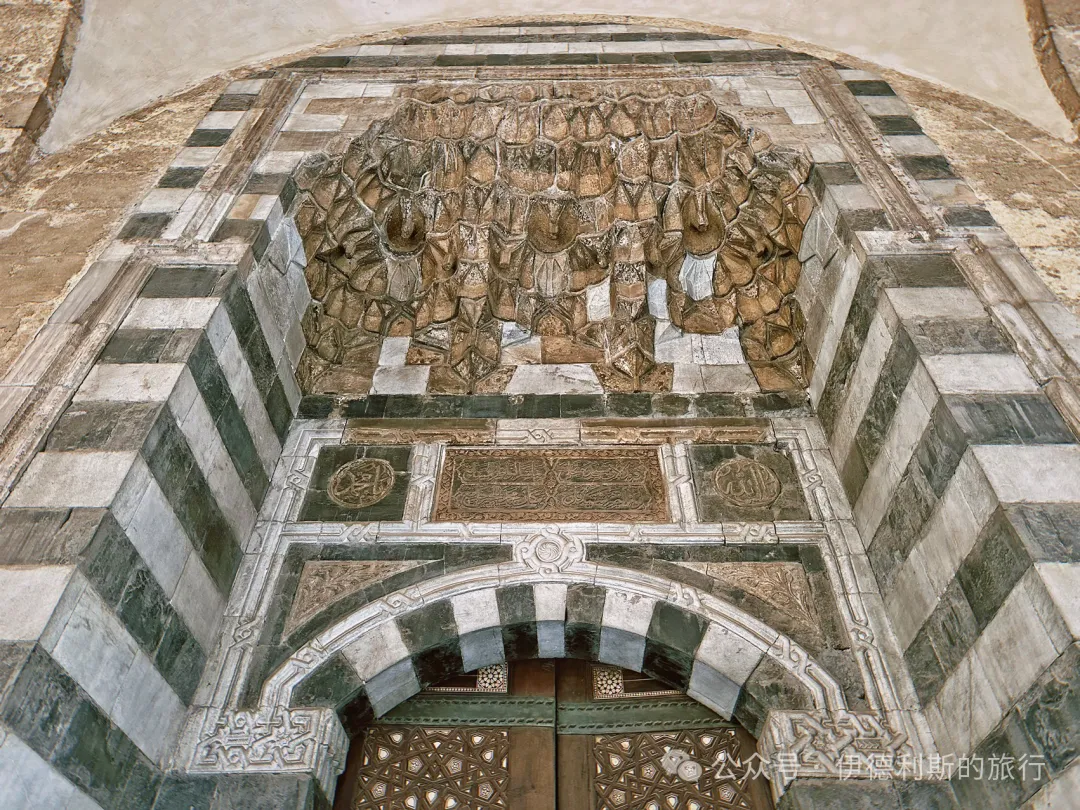
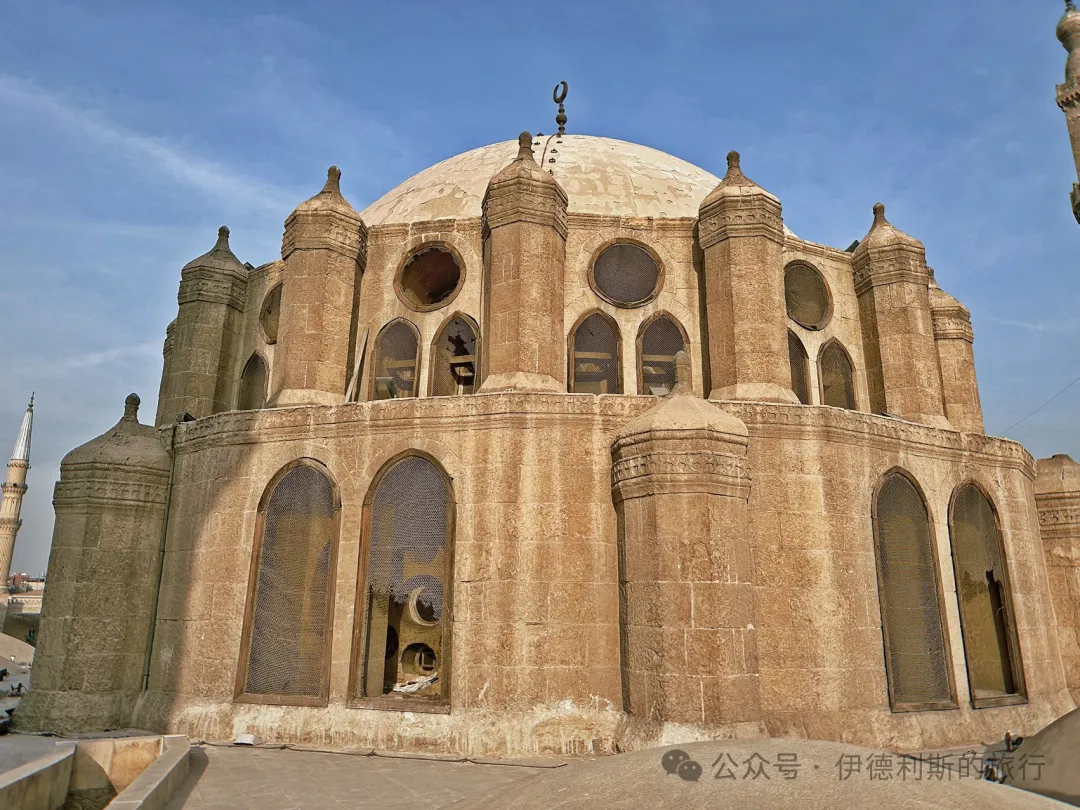
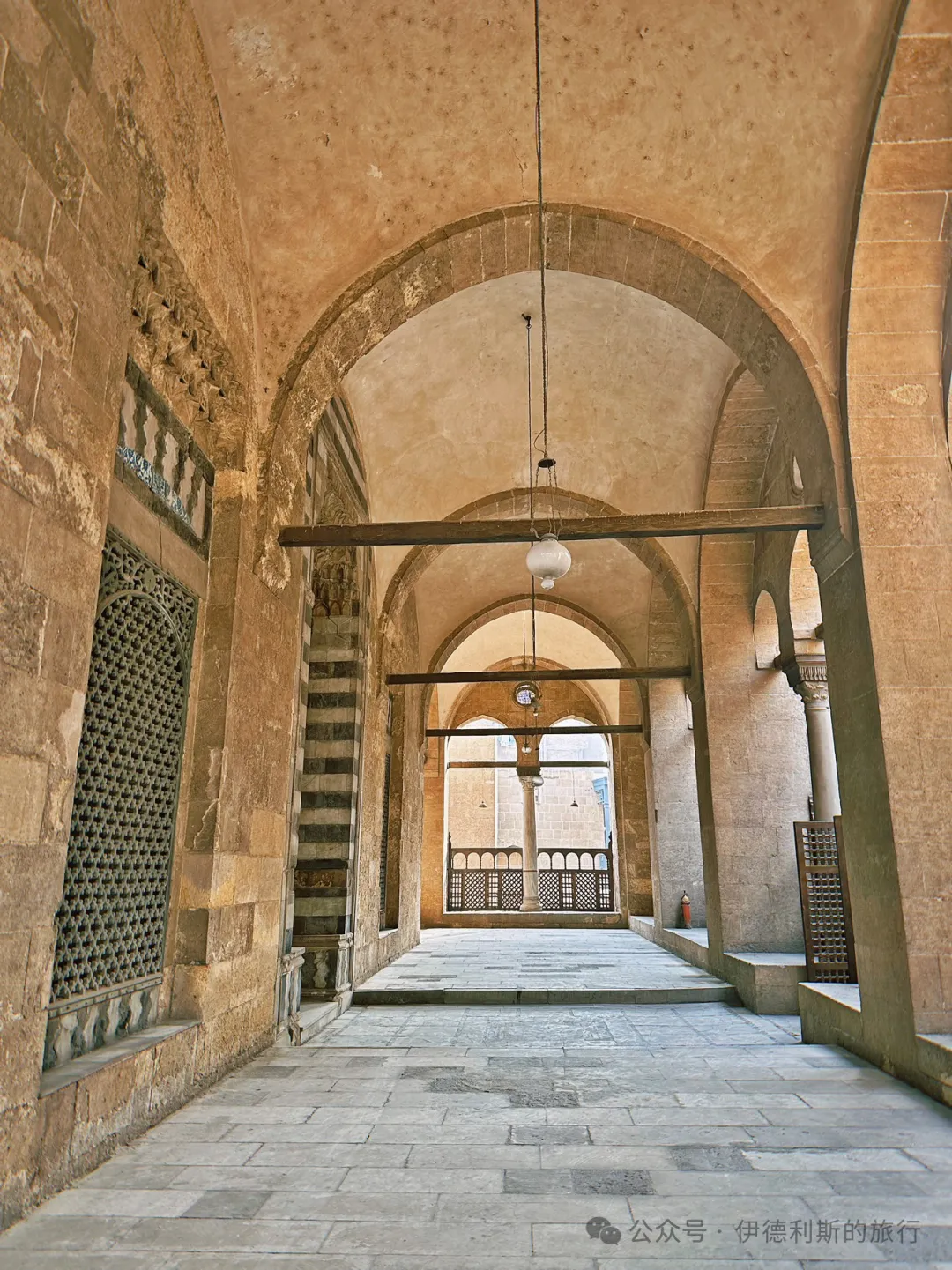
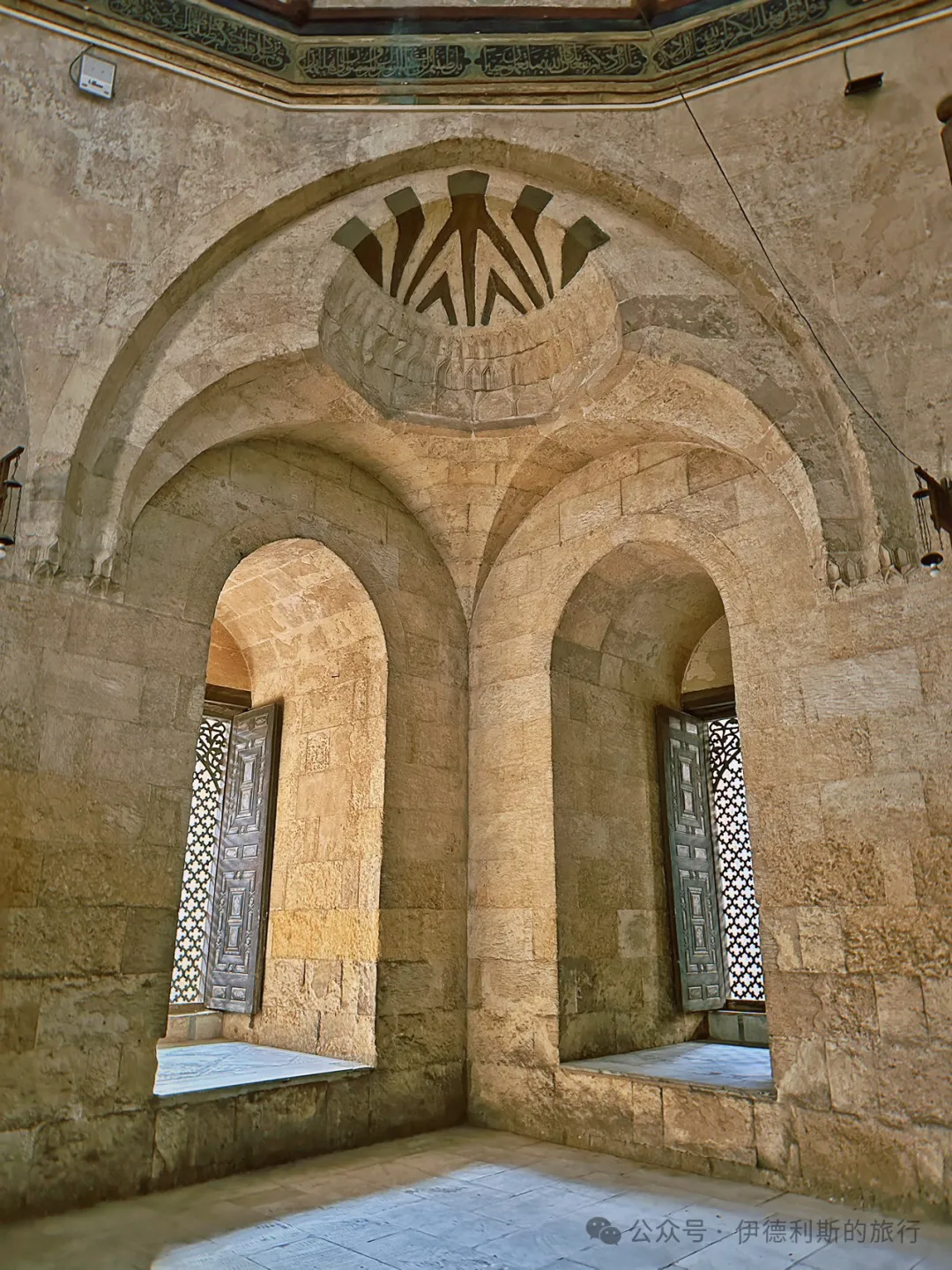
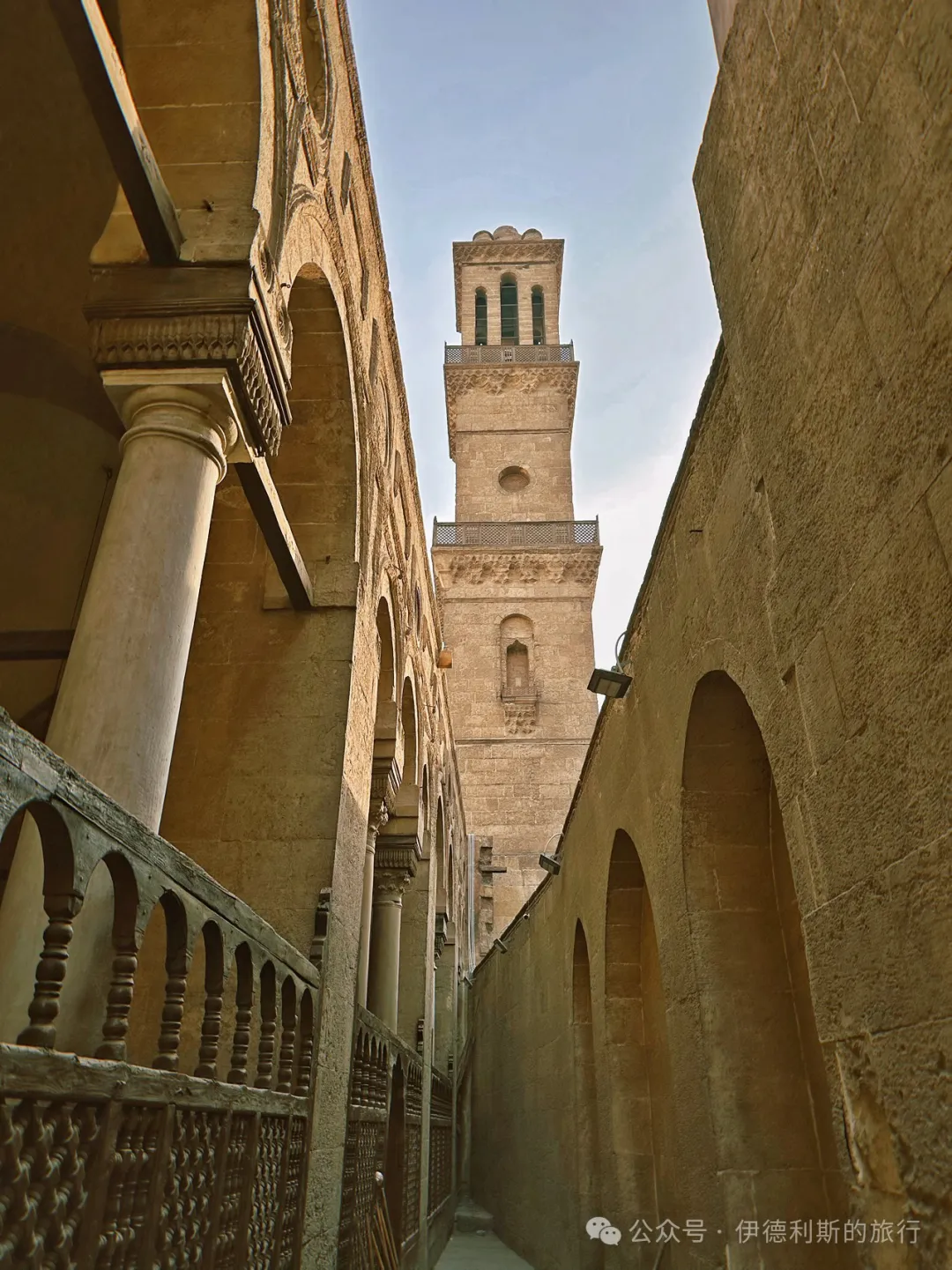
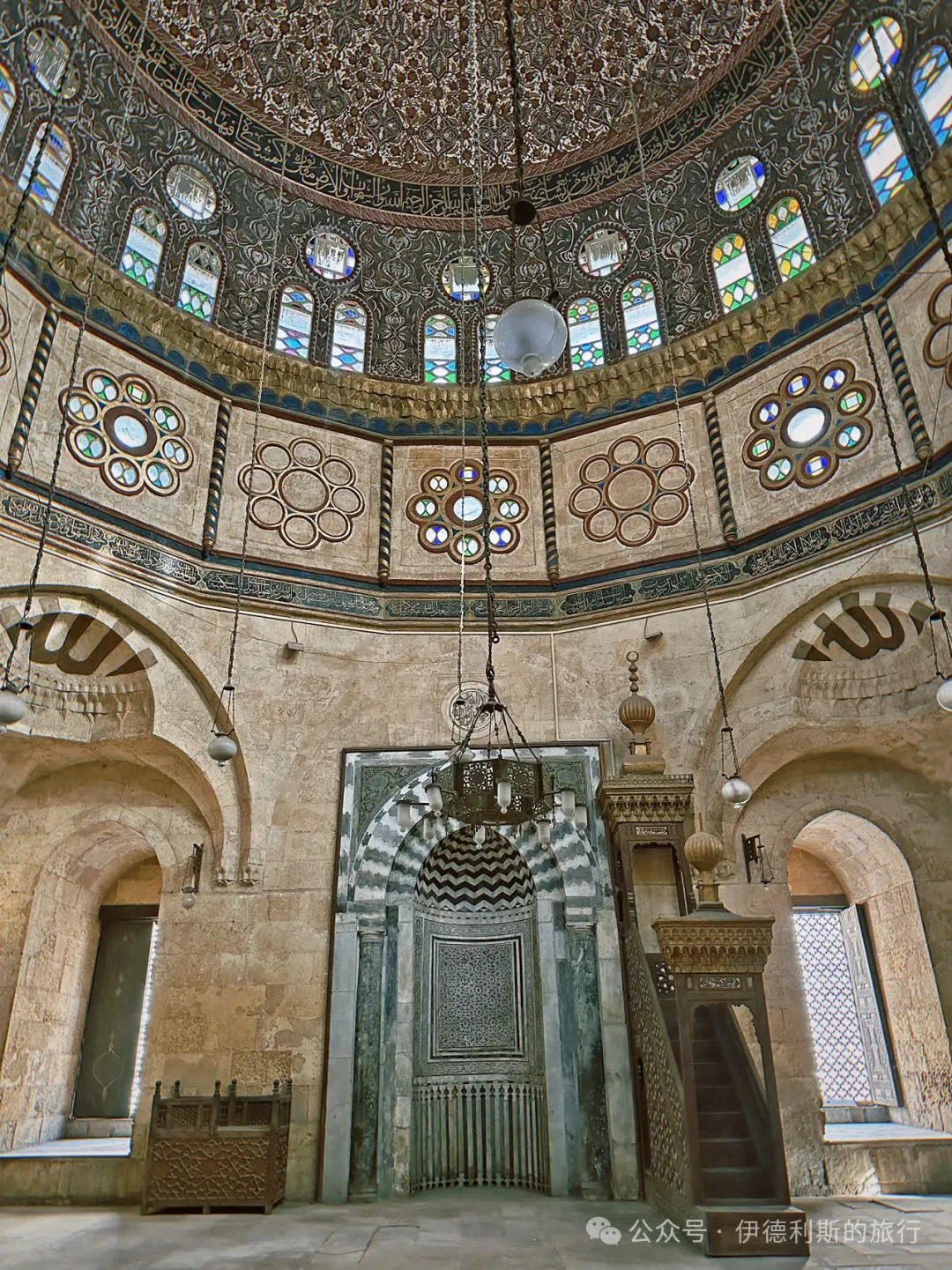
The prayer niche (mihrab) and the pulpit (minbar) of Abu al-Dhahab Mosque feature Mamluk-style decorations inlaid with mother-of-pearl and marble.
Al-Muayyad Mosque: 1415
Right next to the south gate of the old city of Cairo is the Sultan Al-Mu'ayyad Mosque, built between 1415 and 1421 by the Mamluk Sultan Al-Mu'ayyad Shaykh (reigned 1412-1421). This site was originally a prison, and legend says Sultan Al-Mu'ayyad was held here when he was young. At the time, he suffered greatly from fleas and lice, so he made a dua that if he ever became Sultan, he would turn the site into a place for teaching and learning. This wish later came true.
With the Sultan's funding, the madrasa inside the Sultan al-Mu'ayyad Mosque became one of Cairo's most famous academic institutions in the 15th century. The large endowment left after the Sultan passed away allowed the school to hire the most brilliant scholars of the time. Ibn Hajar 'Asqalani, the most famous authority on Islamic jurisprudence in Egypt, taught Shafi'i law here.
The madrasa at the Sultan al-Mu'ayyad Mosque taught the four schools of Islamic law: Hanafi, Shafi'i, Maliki, and Hanbali. According to mosque records, the school could accommodate 50 Hanafi students, 40 Shafi'i students, 15 Maliki students, and 10 Hanbali students, along with their teachers and imams. There were also two classes with 20 students each dedicated to studying Quranic exegesis and Hadith.
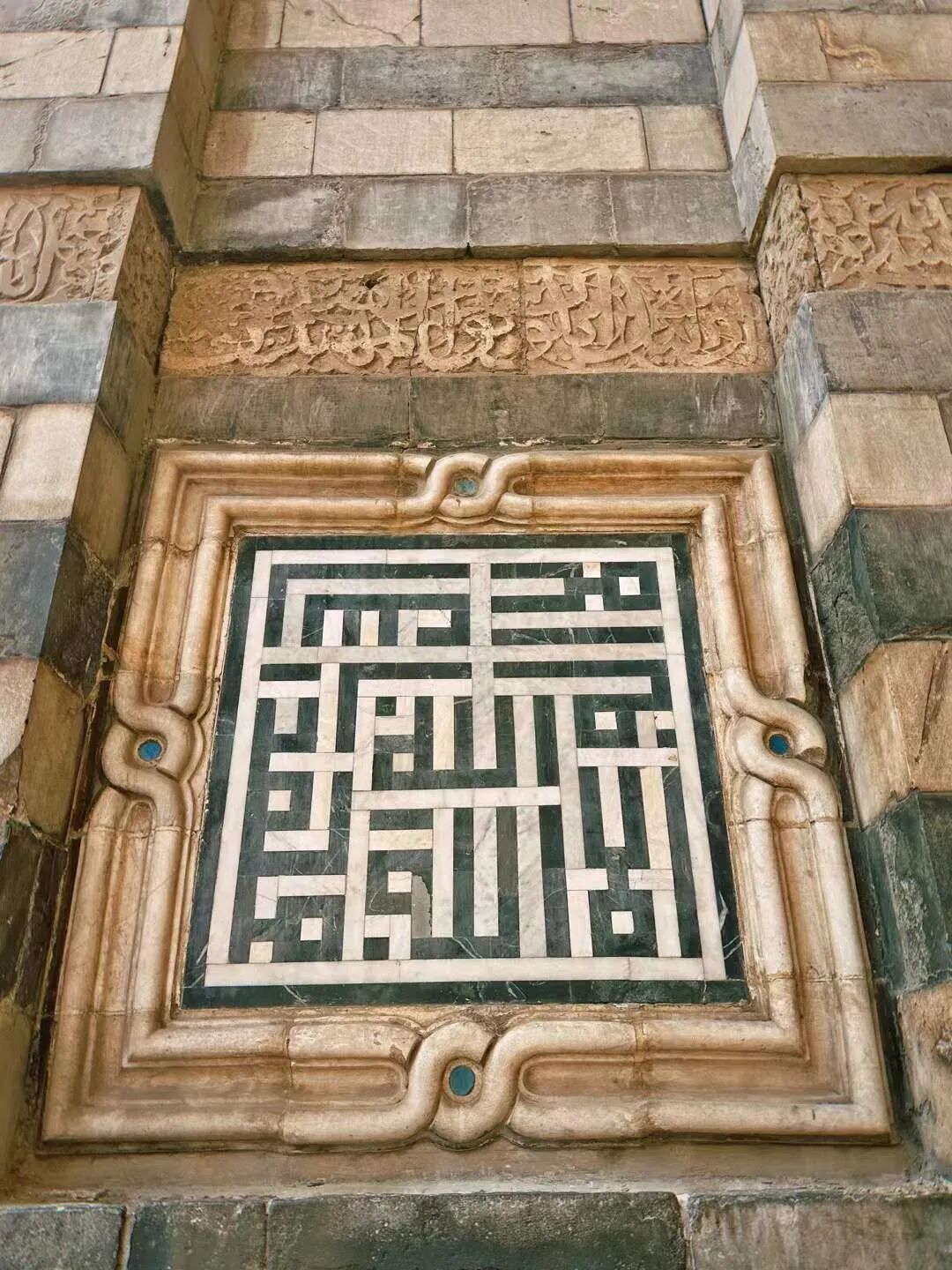
The Sultan al-Mu'ayyad Mosque is the last large hypostyle mosque in Cairo. It originally had four facades, but today only the east side and the main prayer hall remain from the original structure. The mosque's main gate is known as the last grand gate of the Mamluk dynasty. It is decorated with beautiful geometric marble patterns, Kufic calligraphy, and complex stucco carvings.
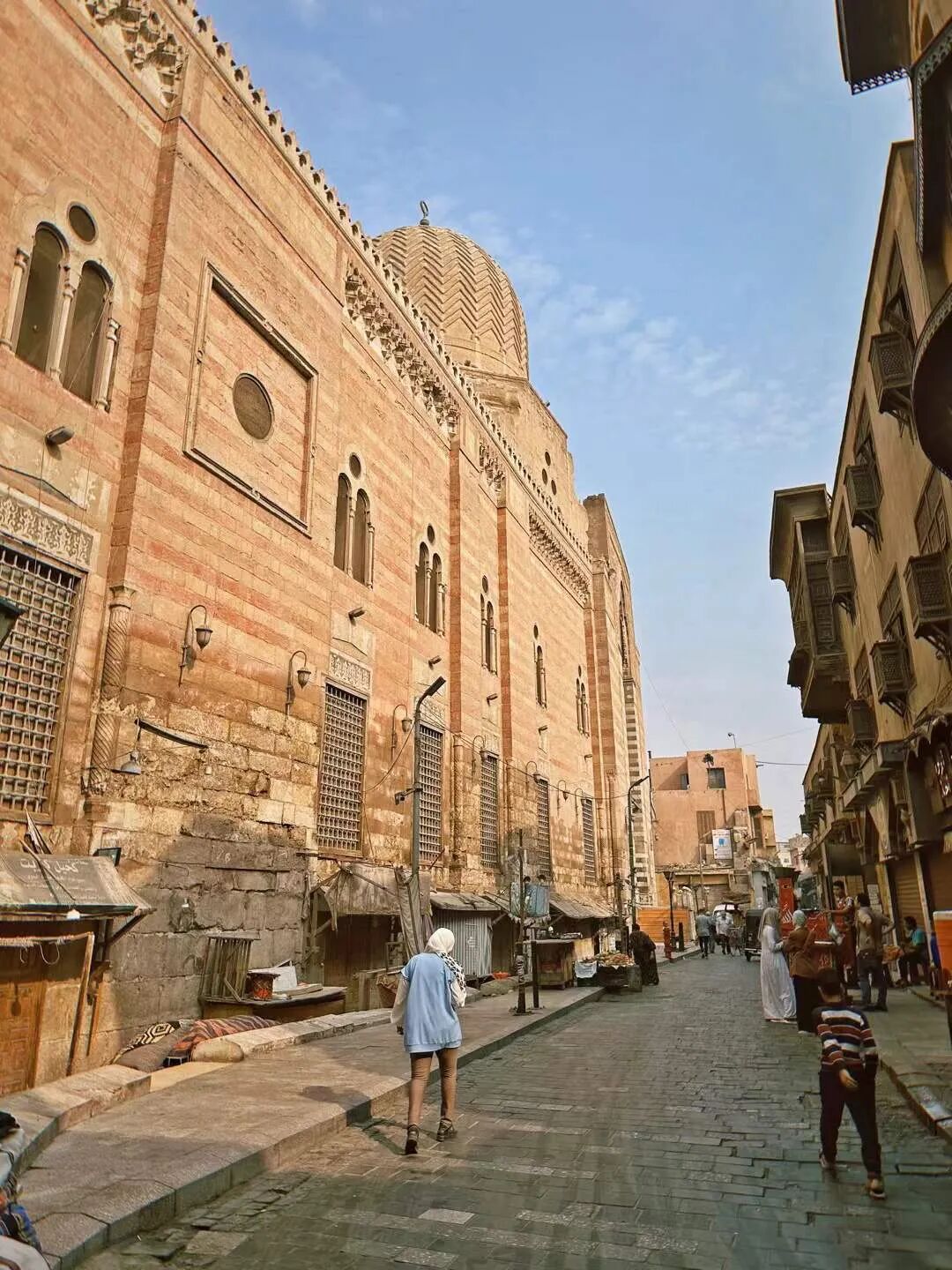
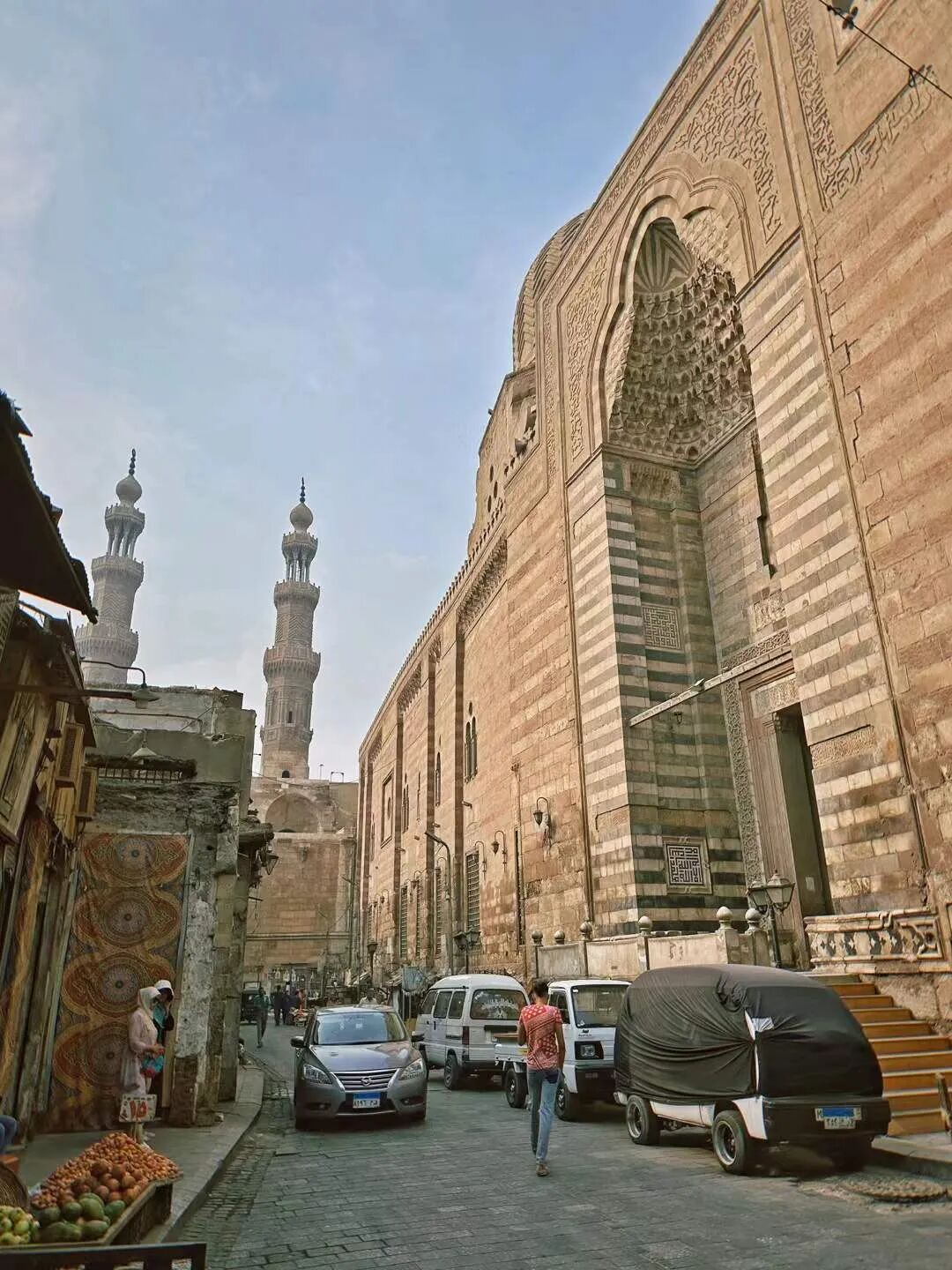
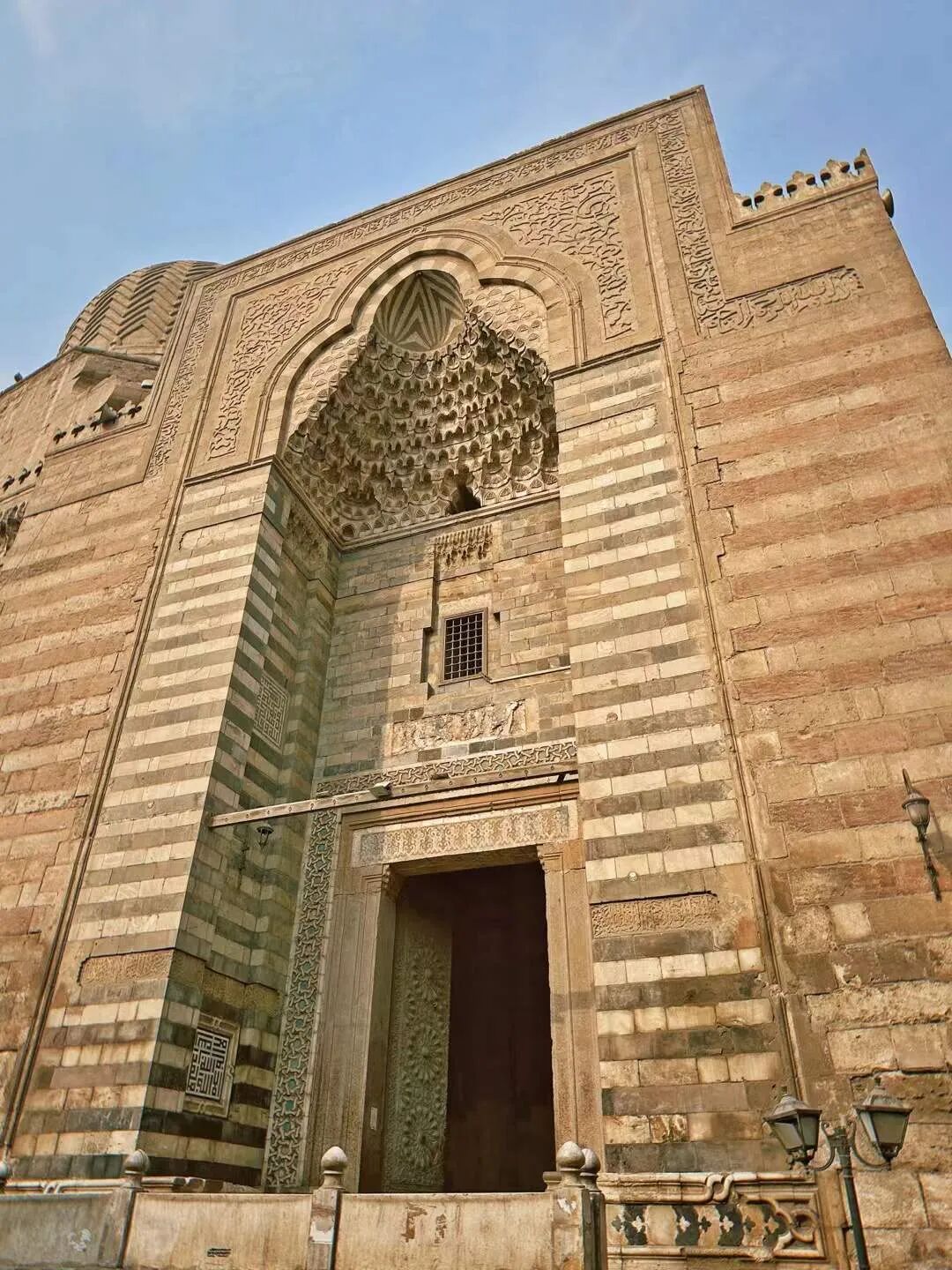
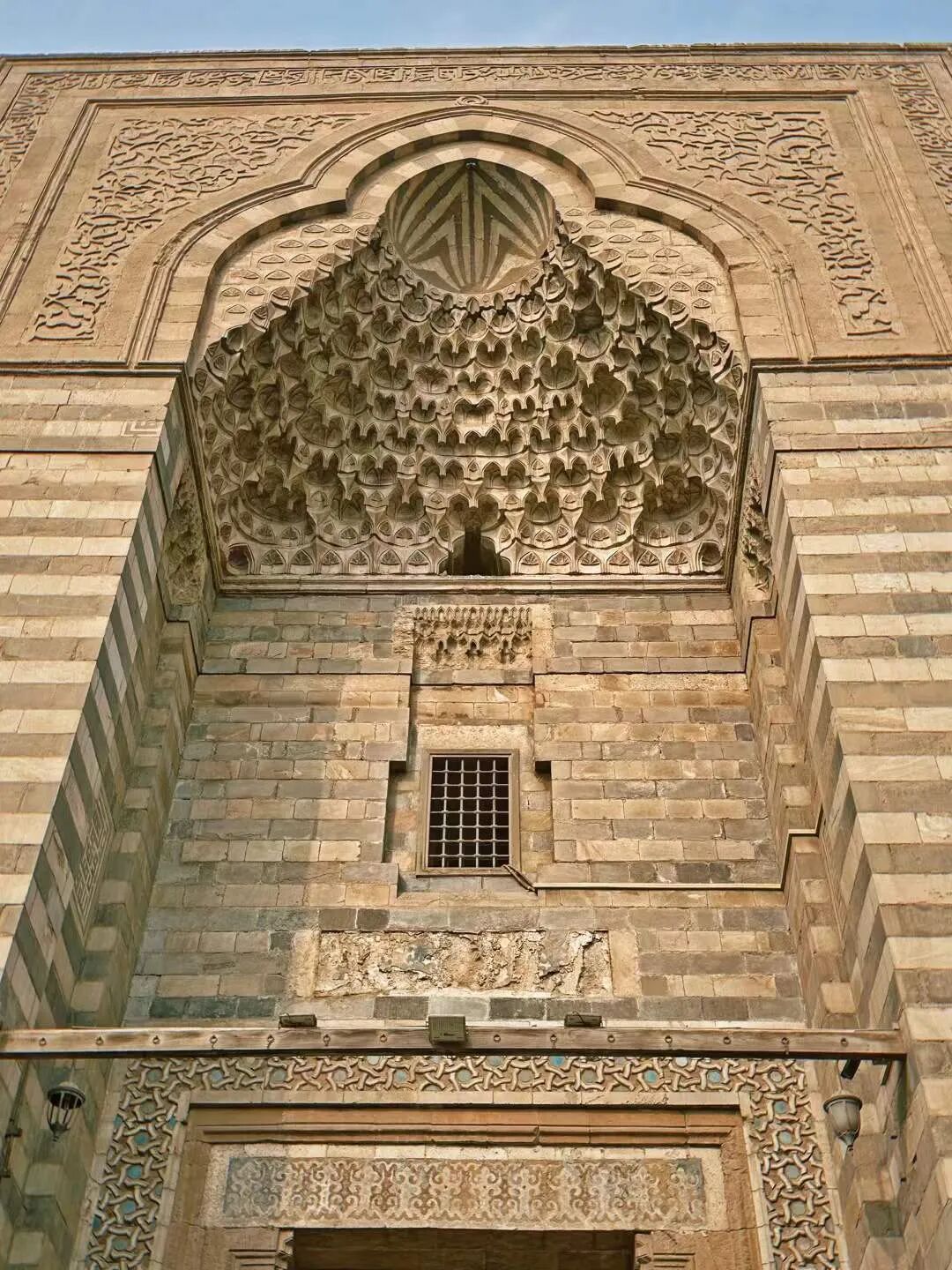
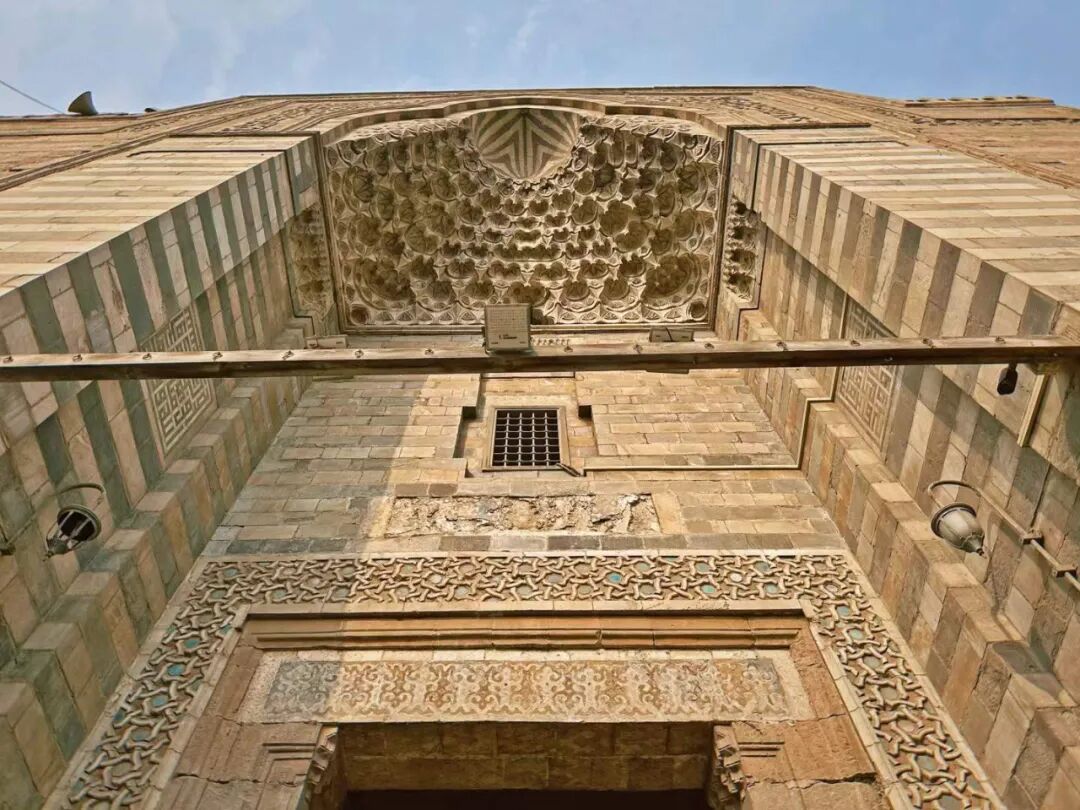
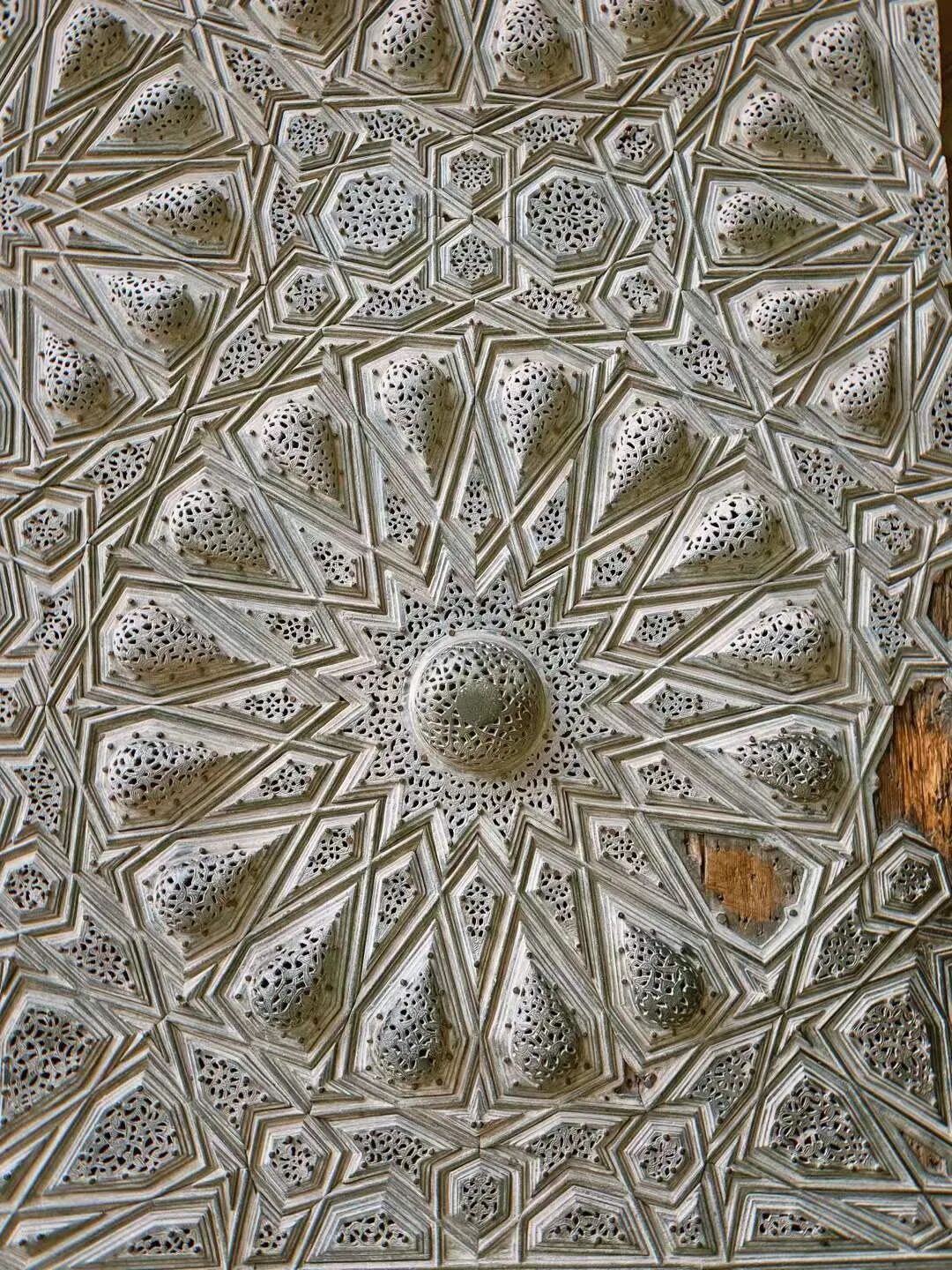
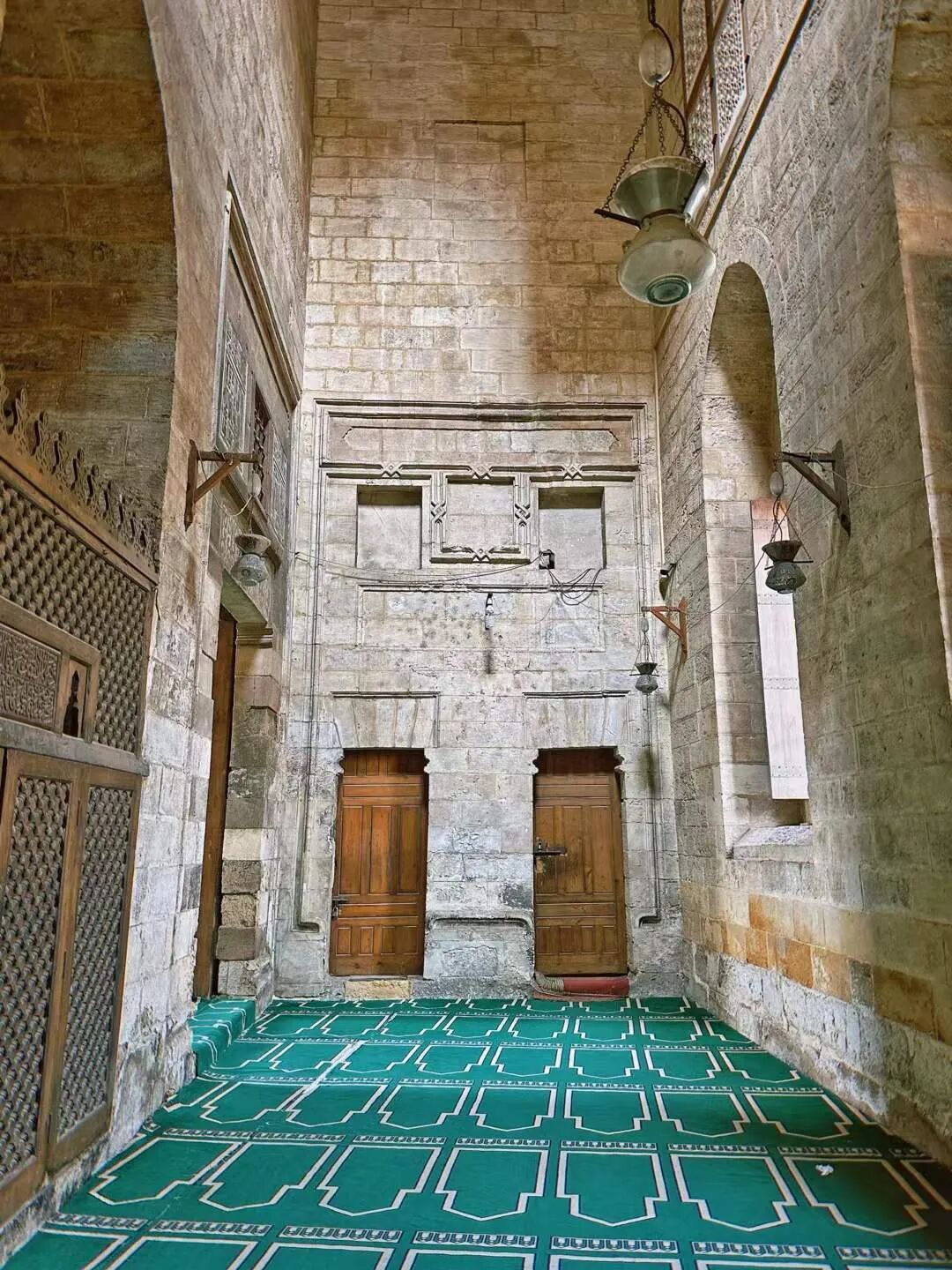
The main prayer hall of the Sultan al-Mu'ayyad Mosque was one of the most ornate in Egypt at the time, and the qibla wall is decorated with colorful marble. The supporting stone columns were collected from Cairo and the surrounding areas, and they likely date back to the pre-Islamic era. The circular colorful marble decoration above the mihrab is also very unique, as this style was almost always used for floors rather than walls. Turkish tiles were added to the qibla wall in the 1840s, but they were removed to restore the original design during a 2001 renovation.
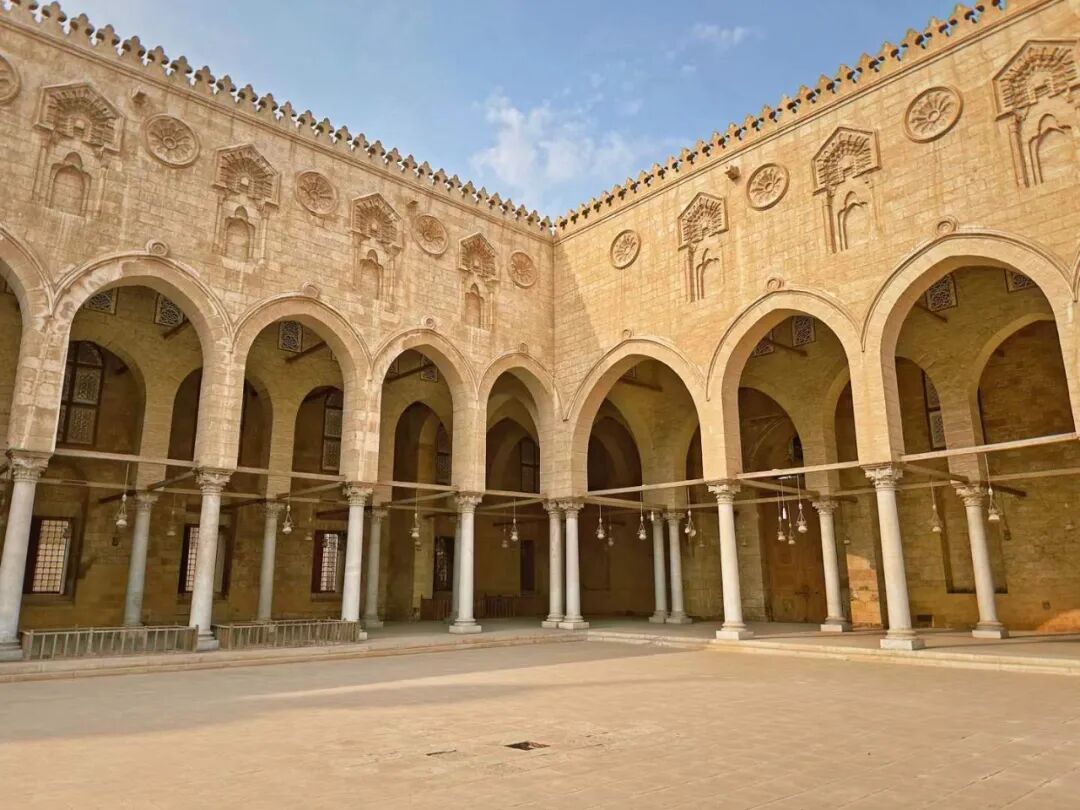
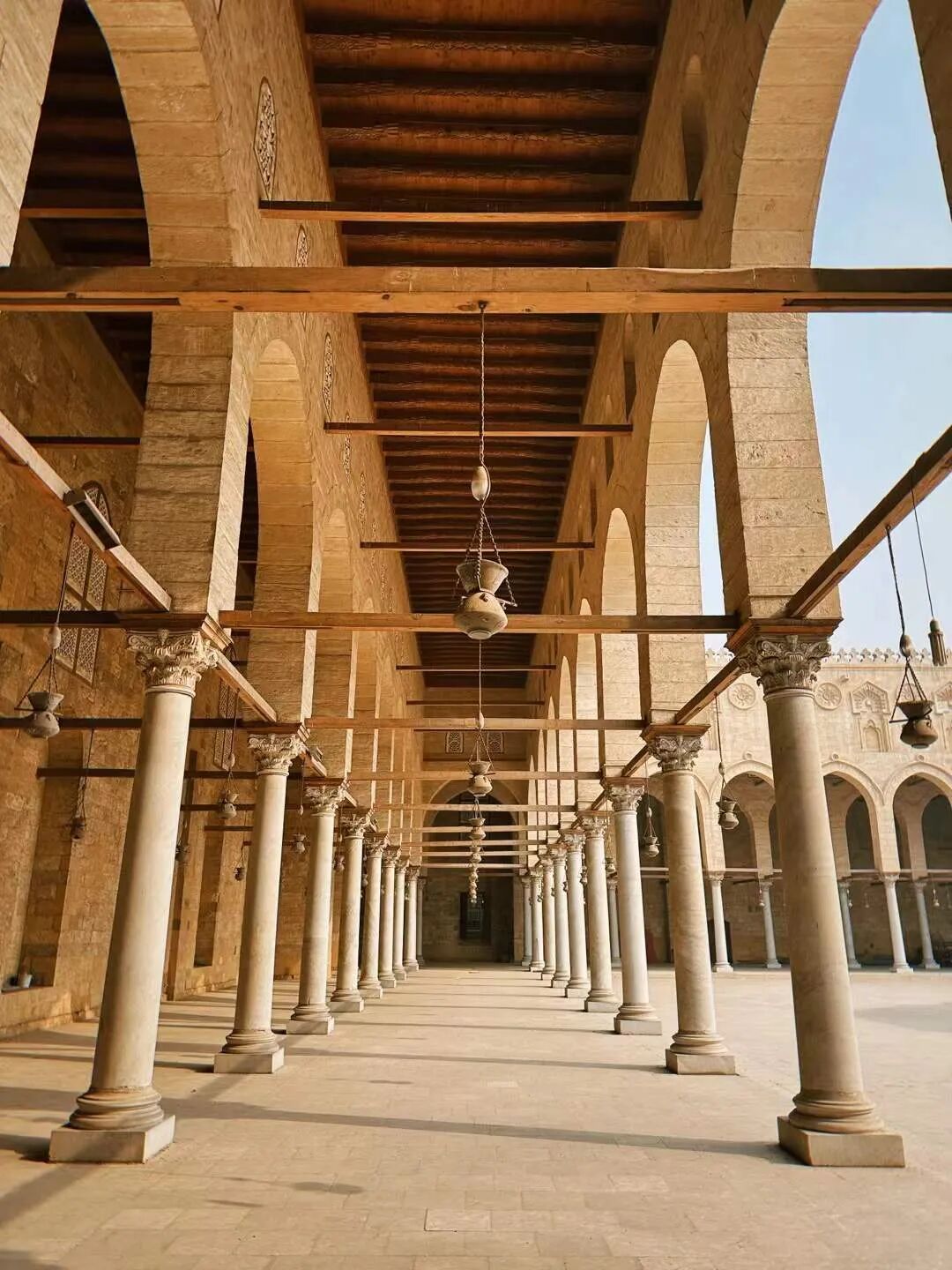
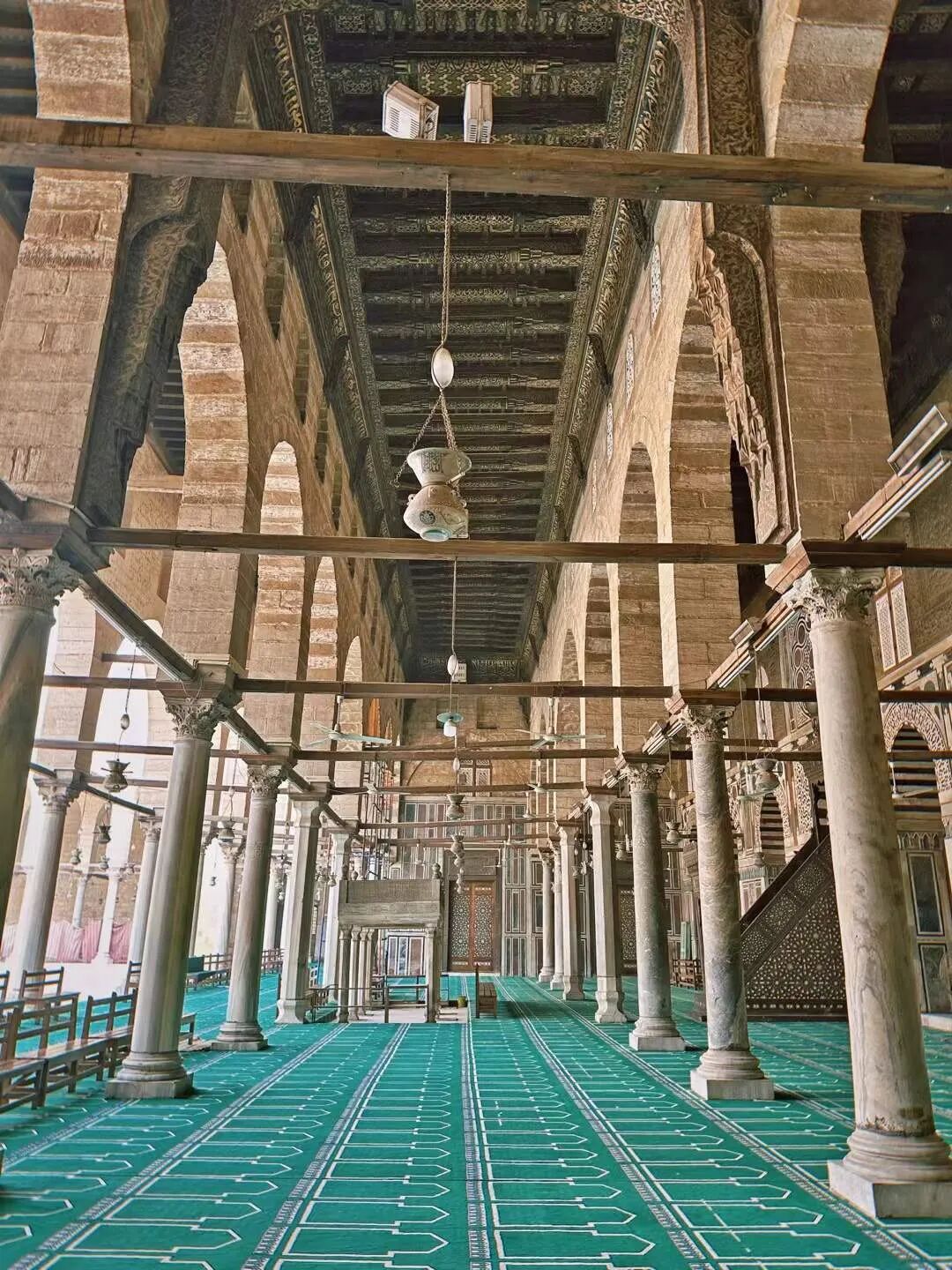
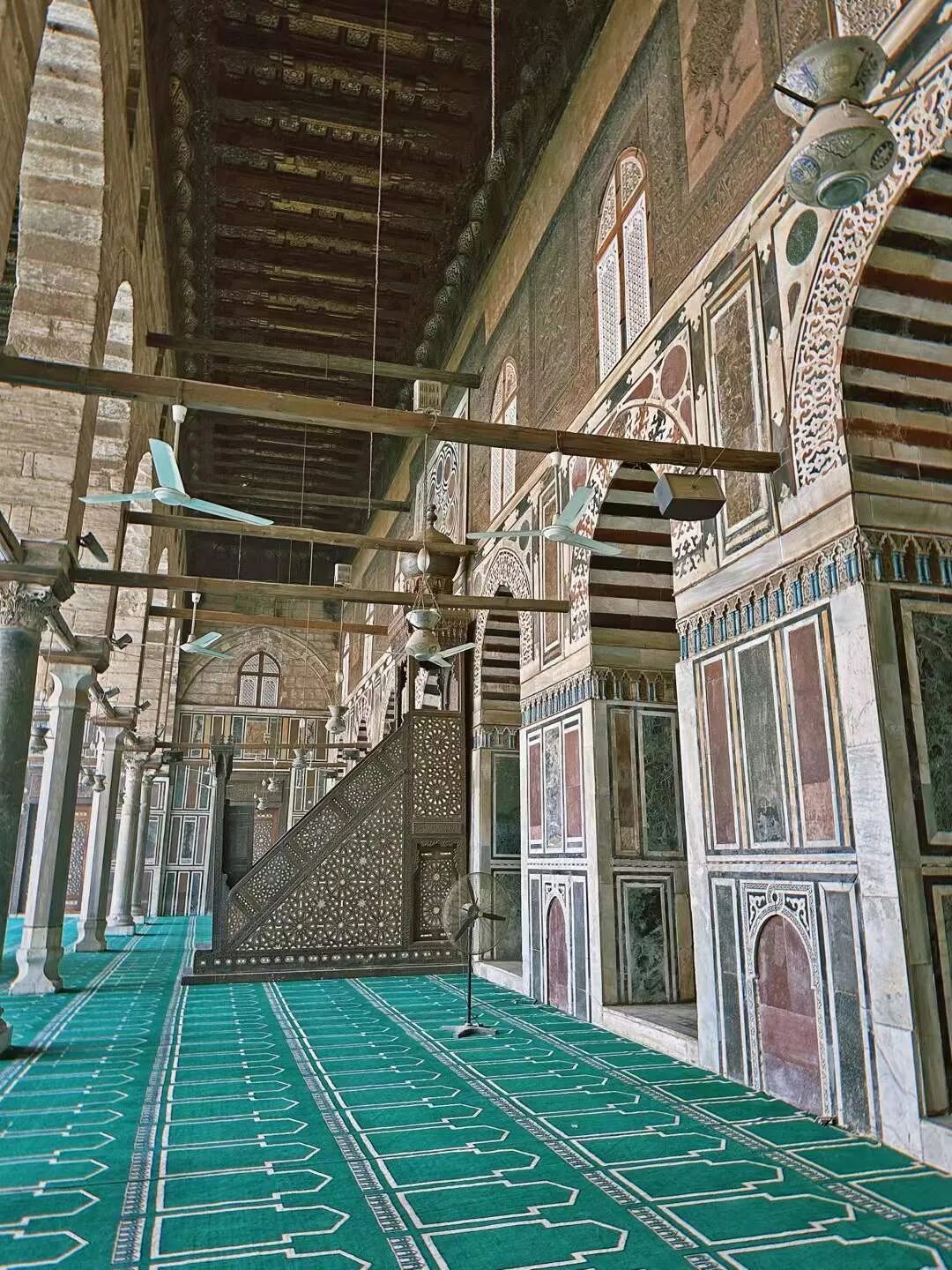
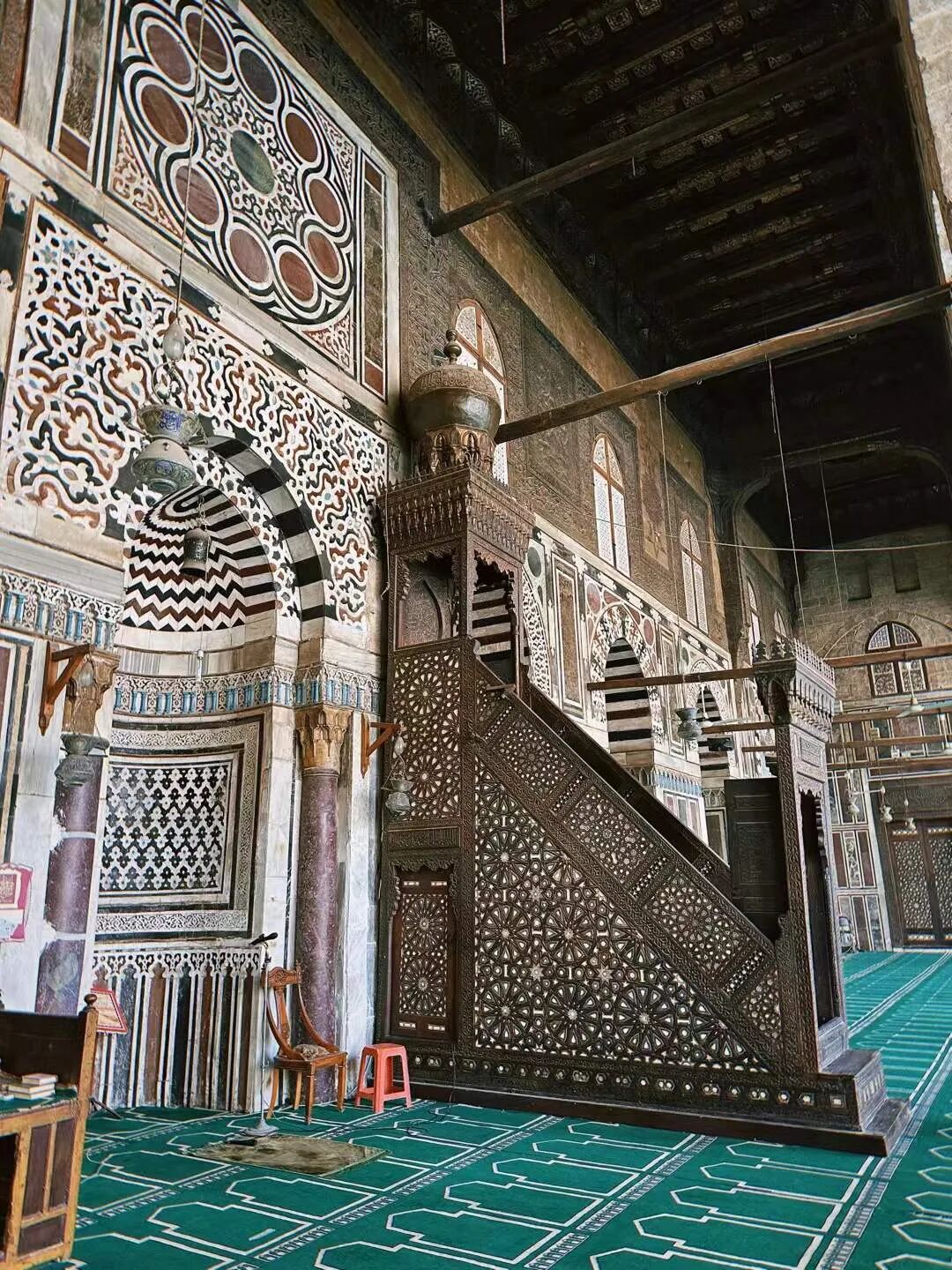
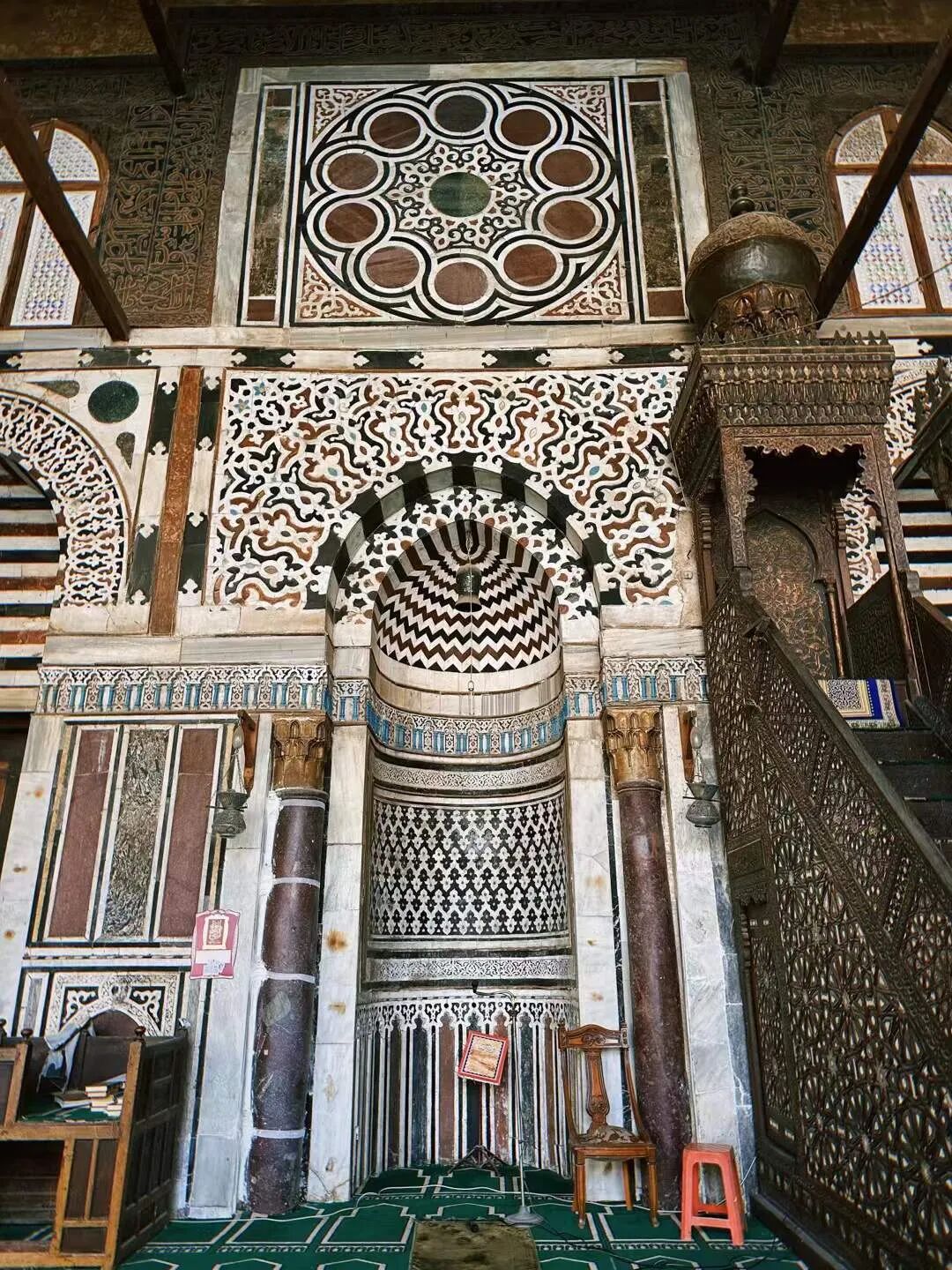
The Sultan al-Mu'ayyad Mosque features exquisite wood carvings from the Mamluk period, including the minbar, wooden doors, and ceilings.
Halal Travel Guide: Cairo - 22 Ancient Mosques, Part Two
Articles • ali2007fr posted the article • 0 comments • 256 views • 2026-05-21 02:25
Summary: This middle part of the Cairo mosque journey follows medieval mosques such as Al-Salih Tala'i and other landmarks tied to the Fatimid, Ayyubid, and Mamluk periods. It keeps the source's sequence, mosque dates, architectural observations, and historical details intact.
Al-Salih Tala'i Mosque: 1160
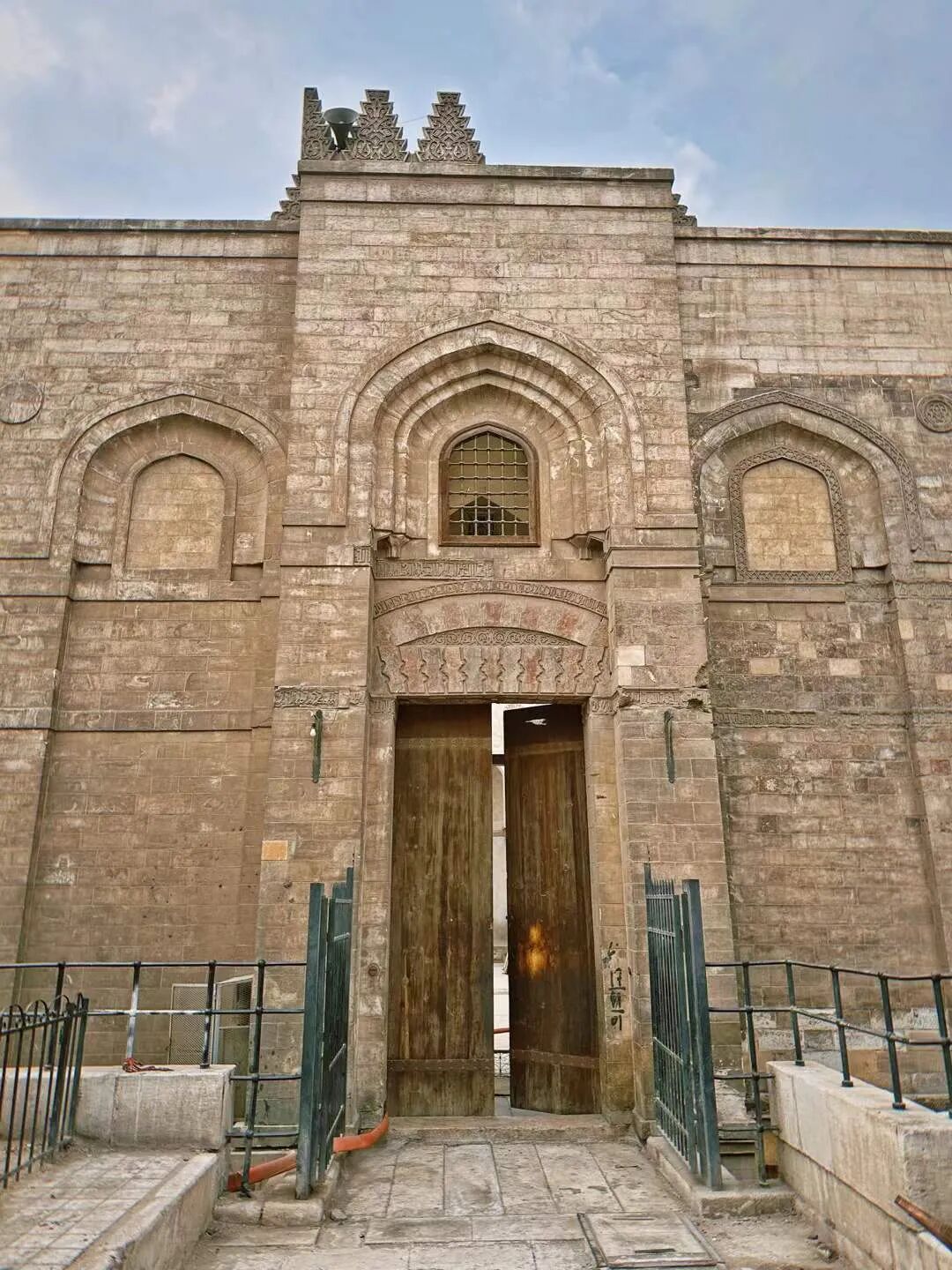
Just outside the southern gate of Old Cairo stands the Al-Salih Tala'i Mosque, built in 1160 by the Fatimid vizier Tala'i ibn Ruzzik. It is the last major historical building remaining from the Fatimid dynasty.
Tala'i was one of the last powerful viziers of the Fatimid dynasty, and he helped keep the dynasty stable for its final decades. The Al-Salih Tala'i Mosque was originally built to house the head of Imam Hussein, but the head was eventually placed inside the Fatimid palace and later became the Hussein Mosque.
The Al-Salih Tala'i Mosque is the first hanging mosque in Cairo. It is built on a platform with shops on three sides of the ground floor, while the main prayer hall sits above them. After more than 800 years of ground level rising, the shops are now nearly two meters below the street. The side of the mosque facing the street has five arched galleries, which is unique for pre-Ottoman Egypt. One theory suggests this was a royal viewing platform for ceremonial processions passing through the south gate of Old Cairo, while another suggests it relates to the ceremony for placing the head of Imam Hussein.
The 1303 earthquake caused the minaret above the mosque's front porch to collapse. It was later repaired during the Mamluk dynasty, and you can now see the wooden Mashrabiya railings added at that time. The Mamluk dynasty also added bronze-carved doors to the mosque, which are now kept in the Museum of Islamic Art in Cairo.
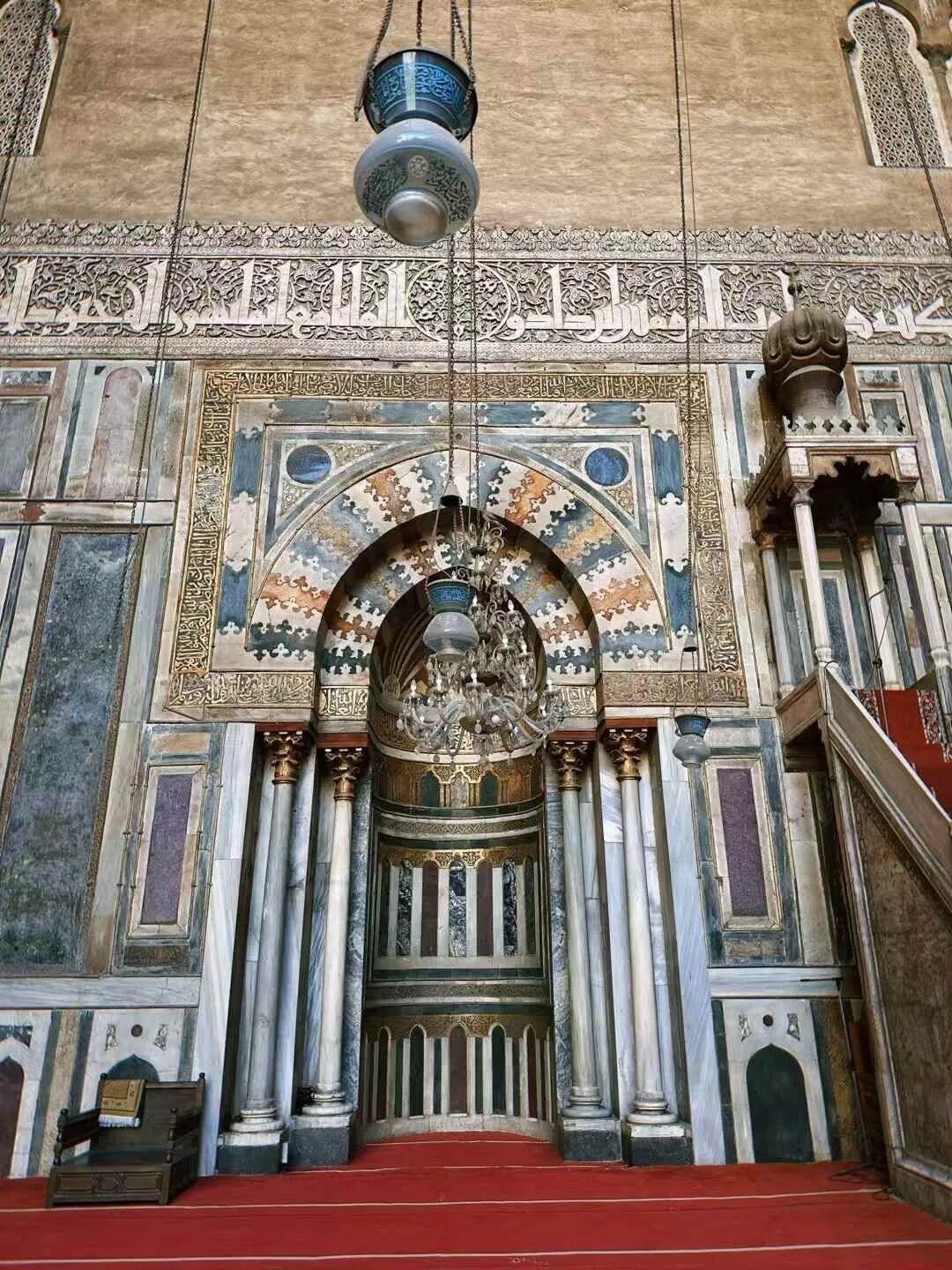
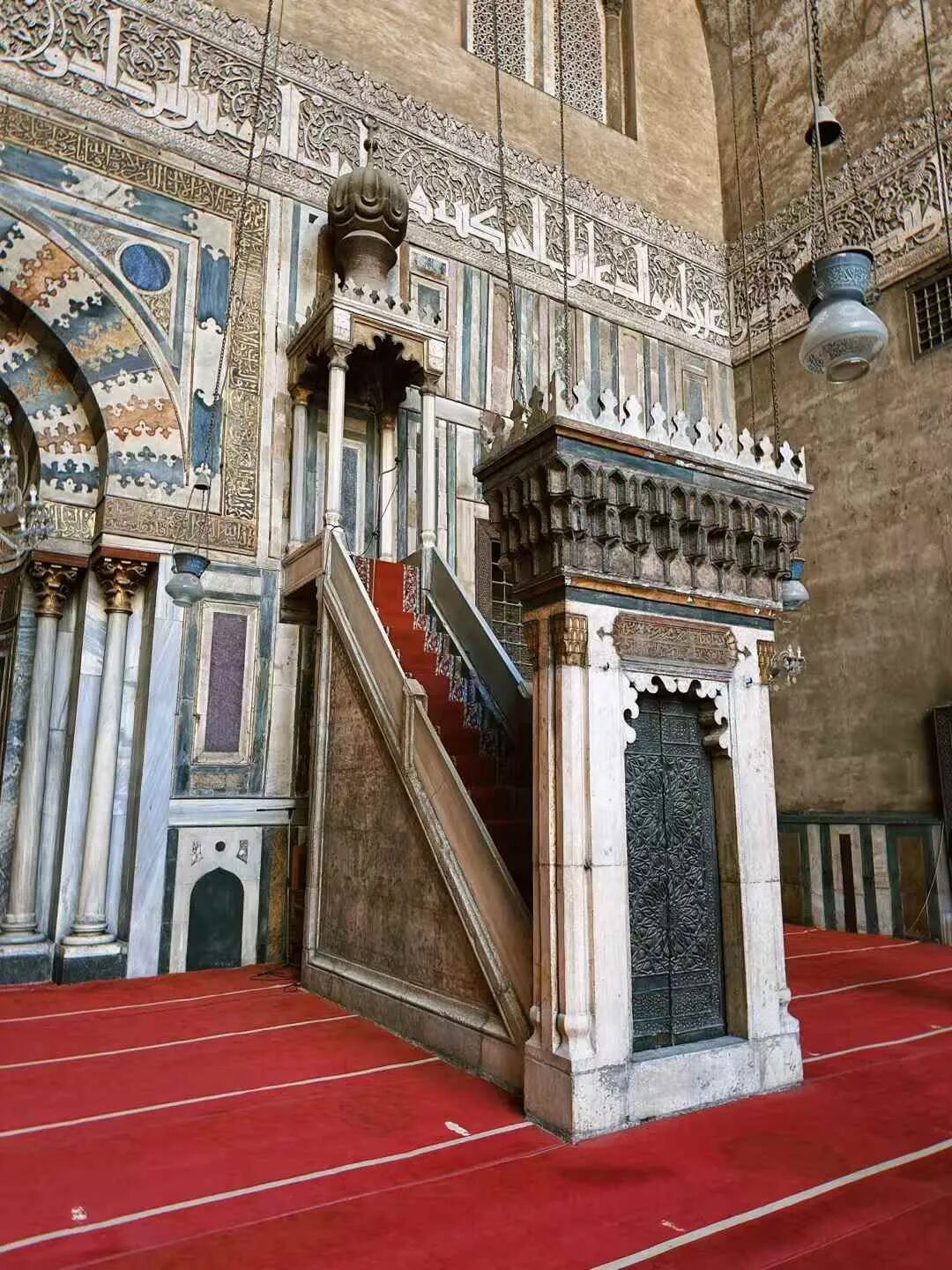
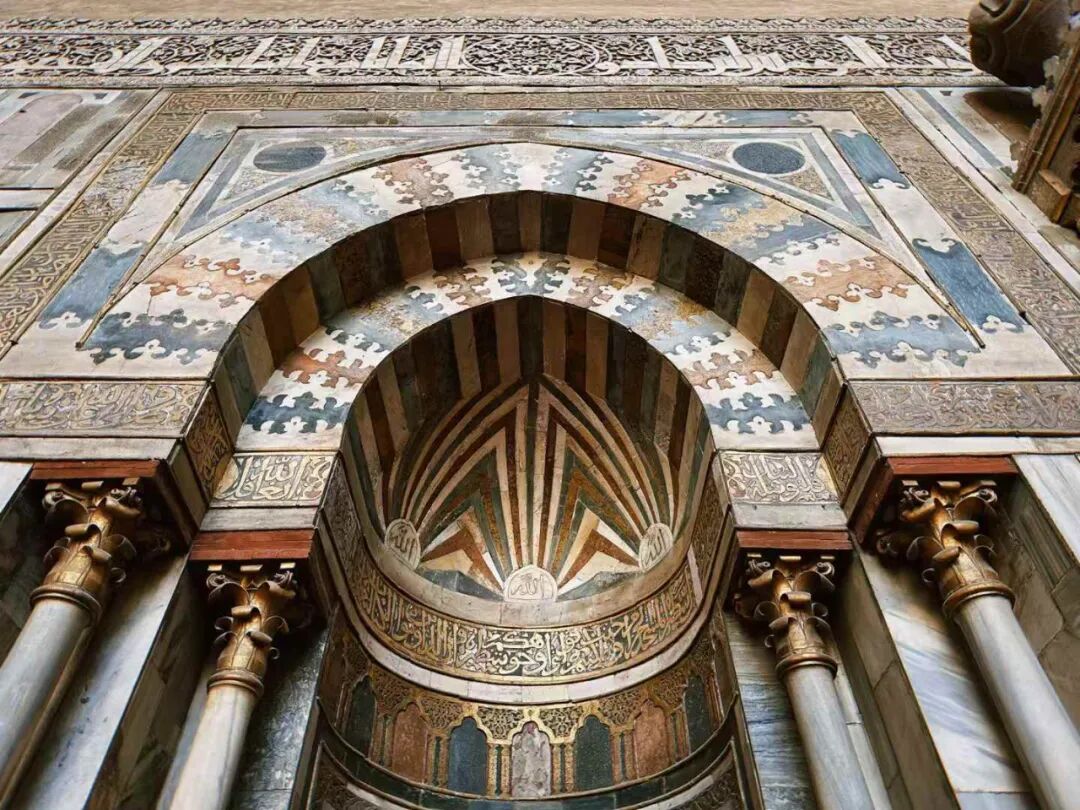
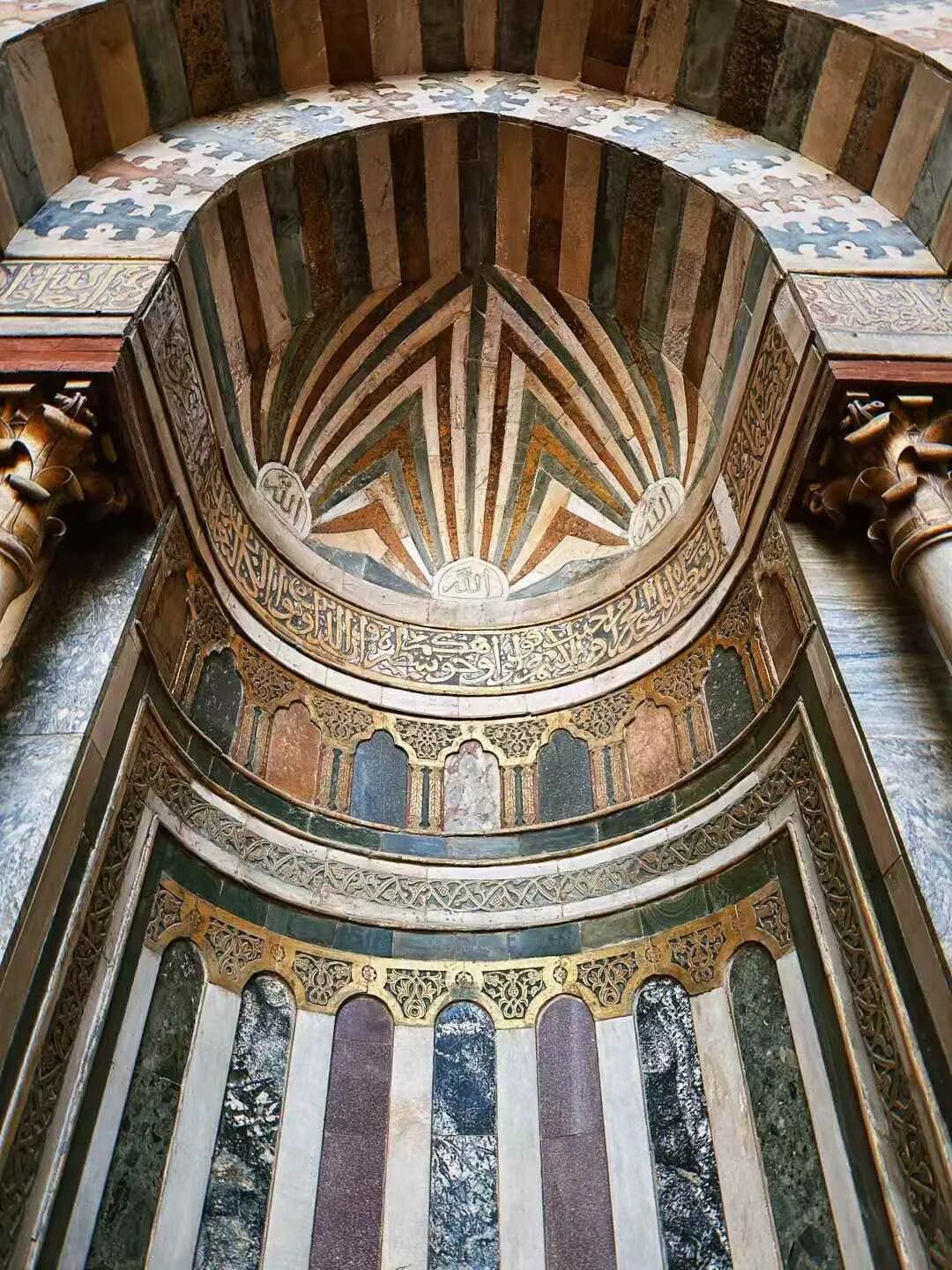
The interior of the Al-Salih Tala'i Mosque preserves late Fatimid Kufic script stucco carvings, which are very ornate. The column capitals in the main hall are from the pre-Islamic period, and the mihrab was rebuilt with painted wood during the Mamluk period. The minbar (pulpit) next to it also belongs to the Mamluk period. It features exquisite craftsmanship and is one of the oldest surviving minbars in Cairo.
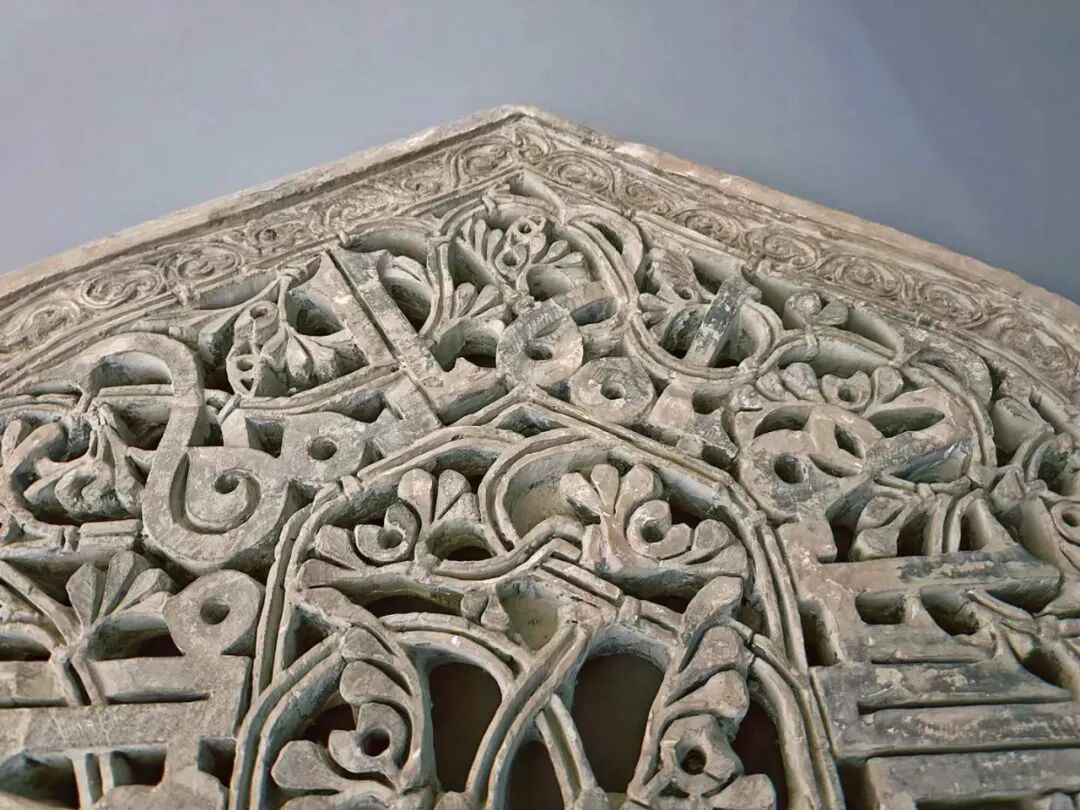
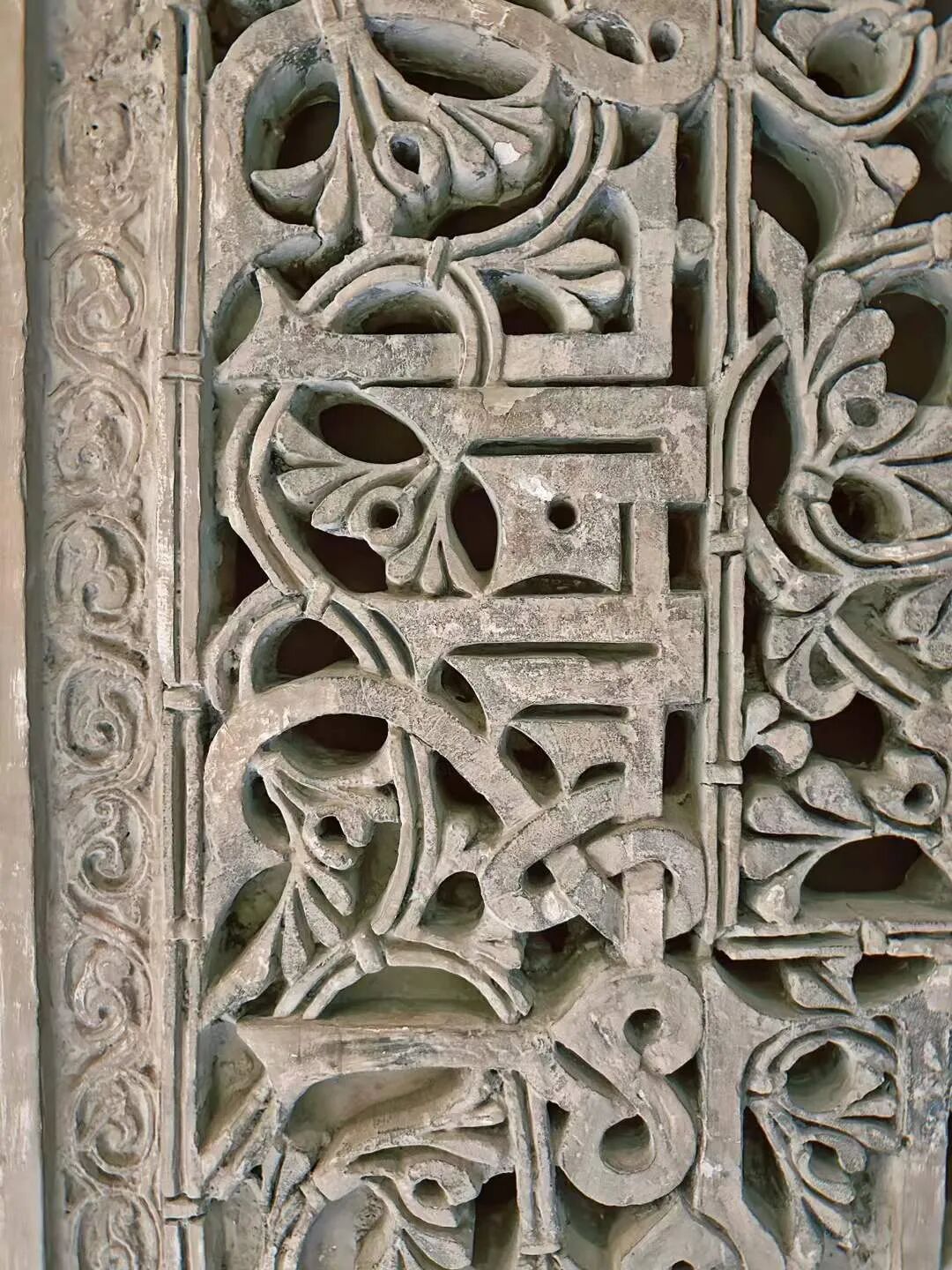
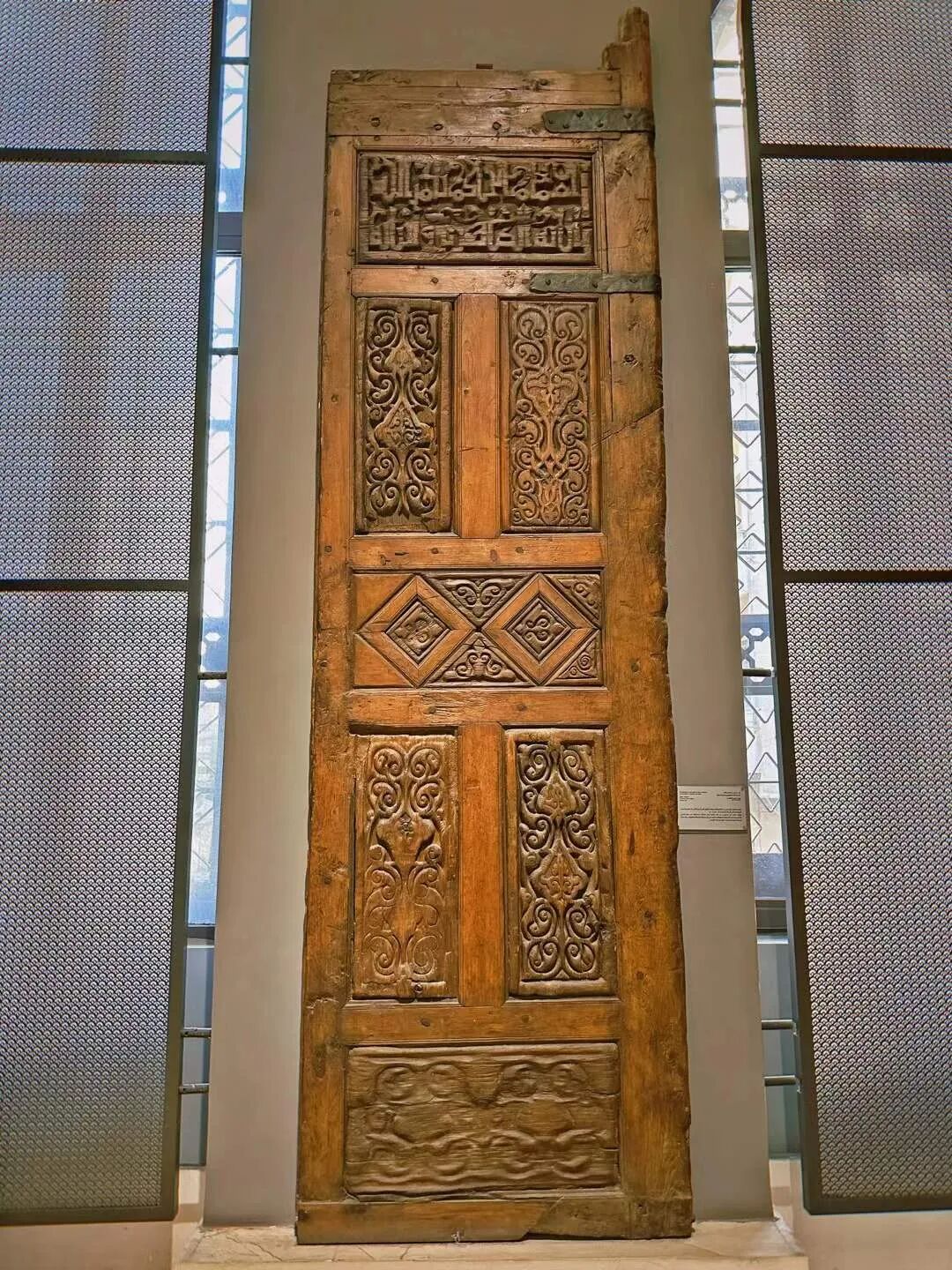
The late Fatimid stucco carved windows and wooden doors from the Al-Salih Tala'i Mosque, now in the Museum of Islamic Art in Cairo, are masterpieces of late Fatimid carving art.
Mahmud al-Kurdi Mosque: 1395
The Mahmud al-Kurdi Mosque was built in 1395 by Mahmud al-Kurdi, a high-ranking official of the Mamluk dynasty. The Mahmud al-Kurdi Mosque features the earliest dome carved with V-shaped patterns; domes before this had spiral patterns. The dome on the minaret was also very rare at the time, though it was widely used later during the Ottoman dynasty.
Qijmas al-Ishaqi Mosque: 1480
Walking east from the south gate, the first thing you see is the Qijmas al-Ishaqi Mosque, built between 1480 and 1481 by the Mamluk emir Qijmas al-Ishaqi. This mosque is considered a model and masterpiece of late Mamluk architecture and is printed on the 50 Egyptian pound banknote. Unfortunately, the interior was under renovation when we visited, so we could only see the outside.
Qijmas al-Ishaqi was a high-ranking official in the late Mamluk dynasty. He was responsible for the royal stables and Hajj affairs, and also served as governor of Alexandria and Syria.
The Qijmas al-Ishaqi Mosque is also a hanging mosque, with the entire ground floor used for shops and the main prayer hall located on the upper level. The main building and the annex are connected by a bridge building, which features mashrabiyya wooden screens. The mosque's facade shows the architectural style typical of the Mamluk Sultan Qaitbay (reigned 1468-96). The arabesque stone carvings, the stalactite-like cornices (muqarnas) above the windows, and the combination of red, black, and white marble are all very delicate. The main gate once had bronze door knockers shaped like dragon heads, but they were recently stolen.
Mosque of Ahmad al-Mihmandar: 1324
Continuing forward, you reach the Mosque of Ahmad al-Mihmandar, built between 1324 and 1325 by the Mamluk Emir Ahmad al-Mihmandar. This place was originally a madrasa (religious school) and was not converted into a mosque until the Ottoman period in 1722. The mosque's facade is very exquisite, featuring the typical Mamluk decorative style with calligraphic inscriptions and muqarnas cornices.
Mosque of Amir Altinbugha al-Mardani: 1338
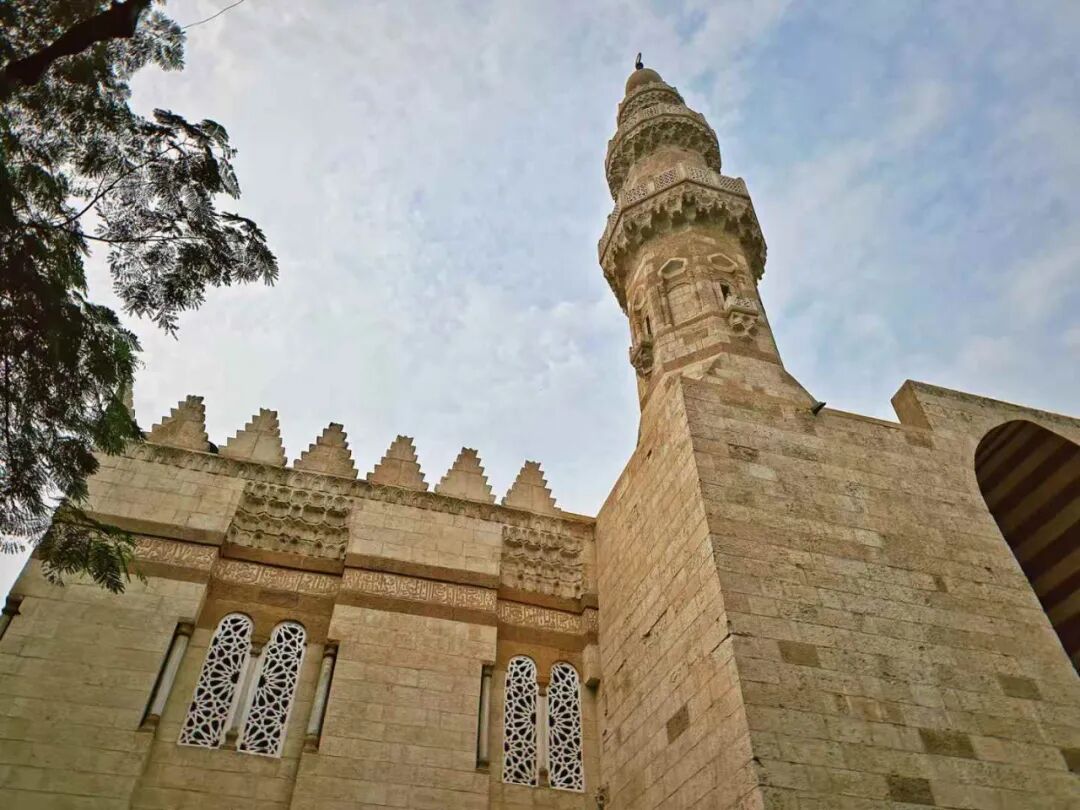
The Mosque of Amir Altinbugha al-Mardani was built between 1338 and 1340 by Amir Altinbugha al-Mardani, the son-in-law of the Mamluk Sultan Al-Nasir Muhammad. It is a typical Mamluk-style mosque with the most luxurious decorations of that time and is the first large mosque to feature an octagonal minaret and a large dome as standard.
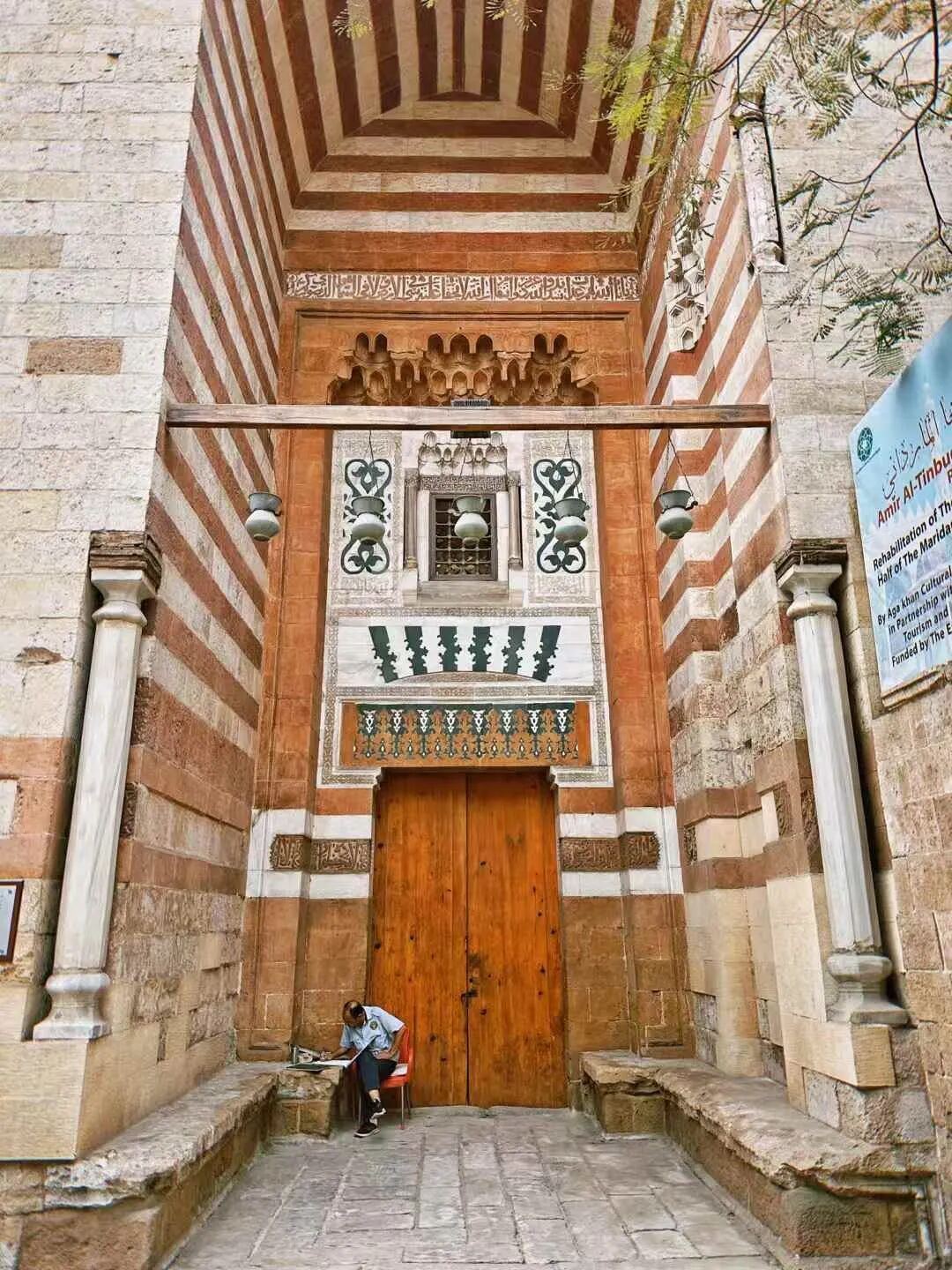
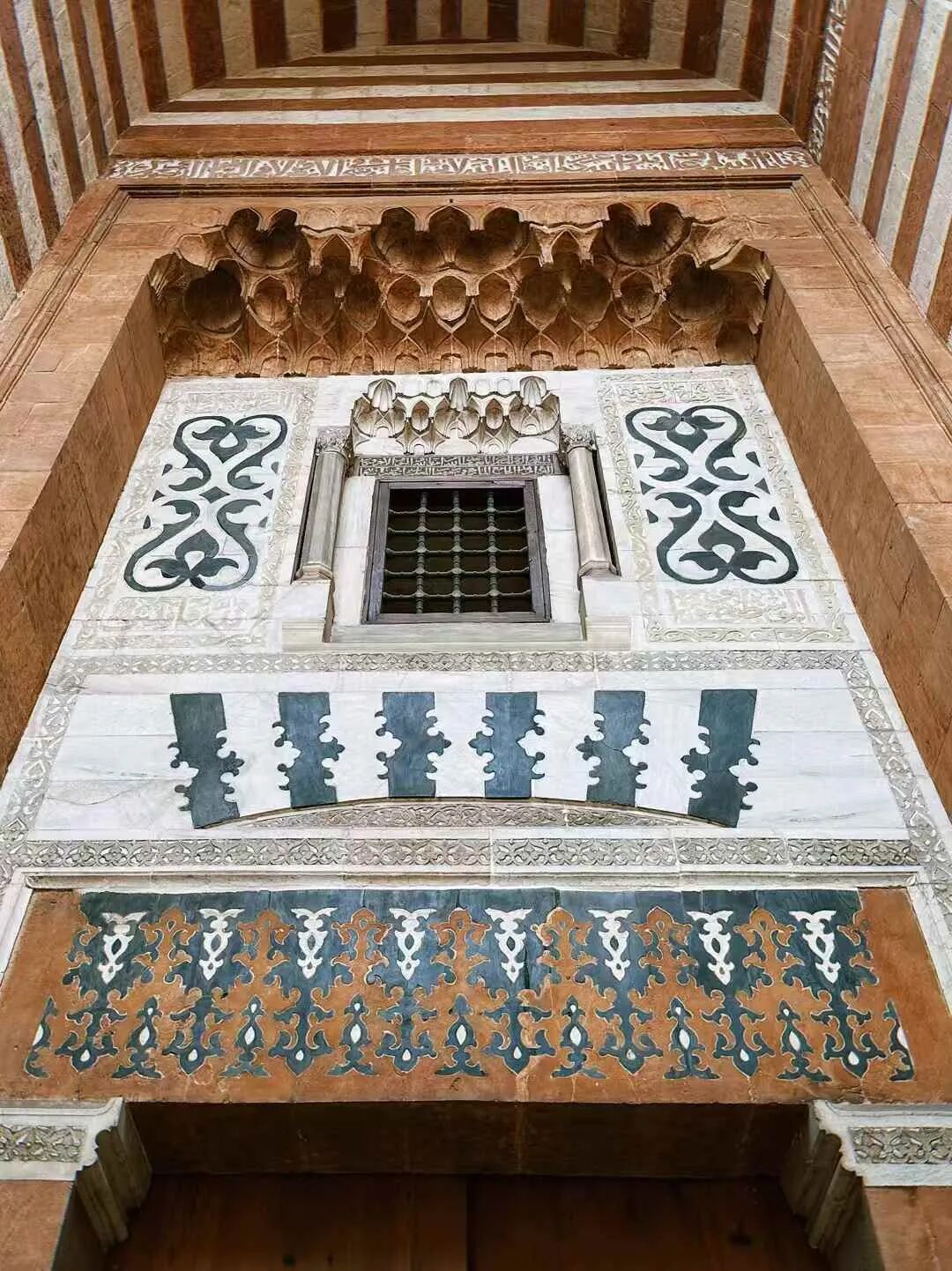
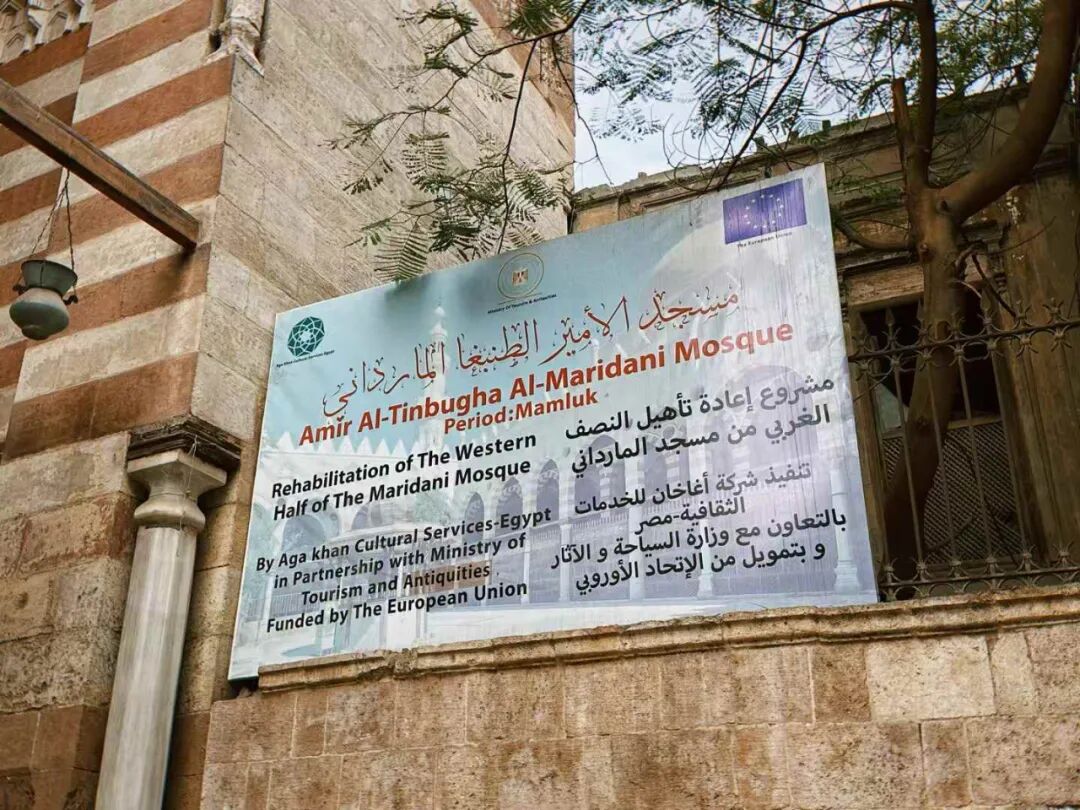
When I visited in 2023, the Aga Khan Trust for Culture was restoring the mosque, so I could not enter and only saw the exterior. The mosque's entrance is an iwan (vaulted hall), decorated inside with muqarnas cornices and rich marble patterns, including joggle lintels and alternating light and dark ablaq brickwork.
Mosque of Umm al-Sultan Sha'ban: 1368
The Mosque of Umm al-Sultan Sha'ban was built between 1368 and 1369 by the Mamluk Sultan Al-Ashraf Sha'ban (reigned 1363-77) to commemorate his mother, Umm al-Sultan Sha'ban, who was performing the Hajj at the time.
The mosque has a typical Mamluk architectural style and features a dome with spiral and fluted patterns. The outer wall is 18 meters high and looks imposing, with three levels of windows, some of which are decorative blind windows. The mosque's gate features a towering, pyramid-shaped muqarnas cornice with rich stone masonry decorations below it. The interior of the main hall is shaped like a cross-vaulted iwan, and the qibla wall is also in the Mamluk style with colorful stone masonry.
Blue Mosque: 1347
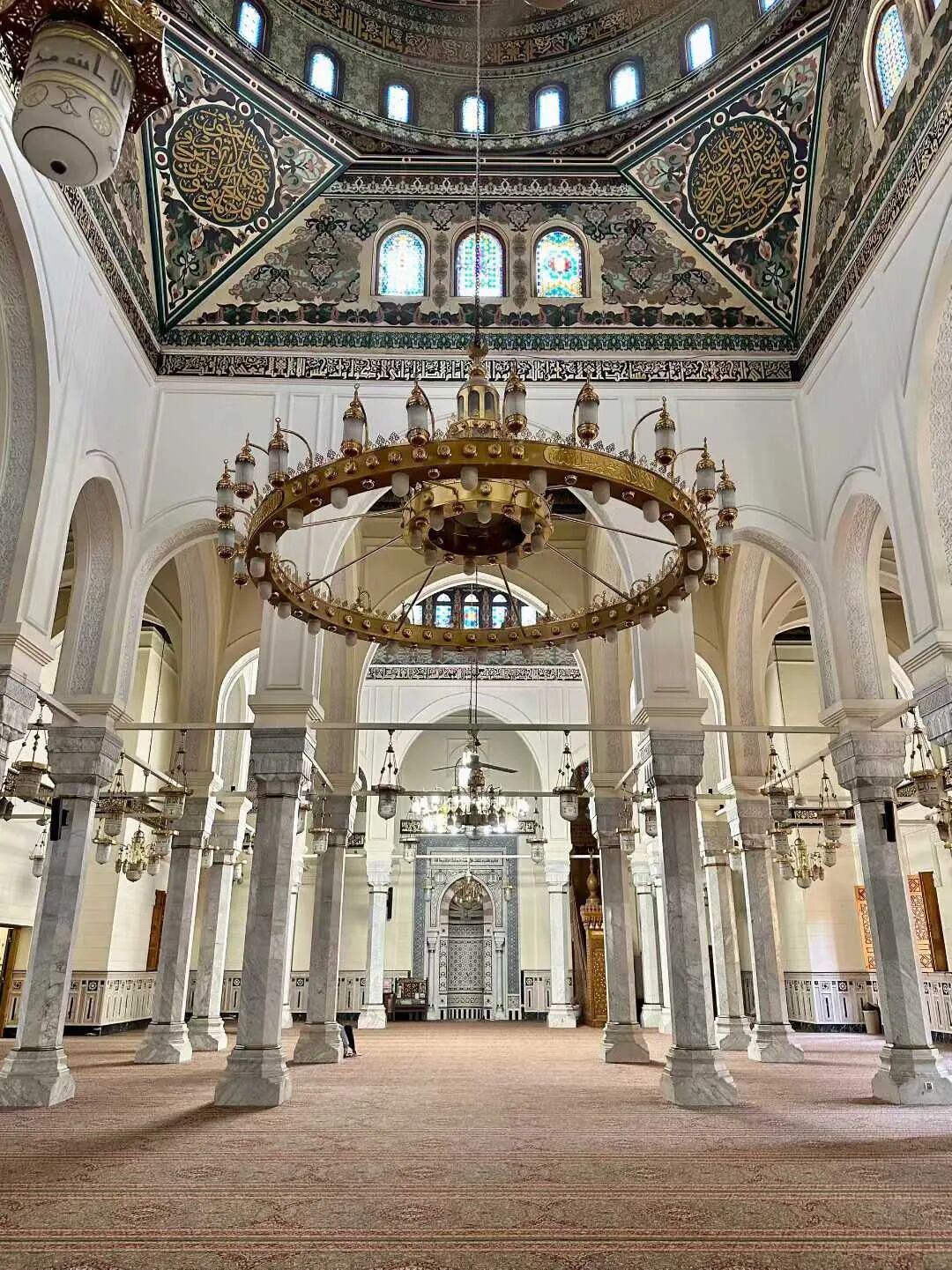
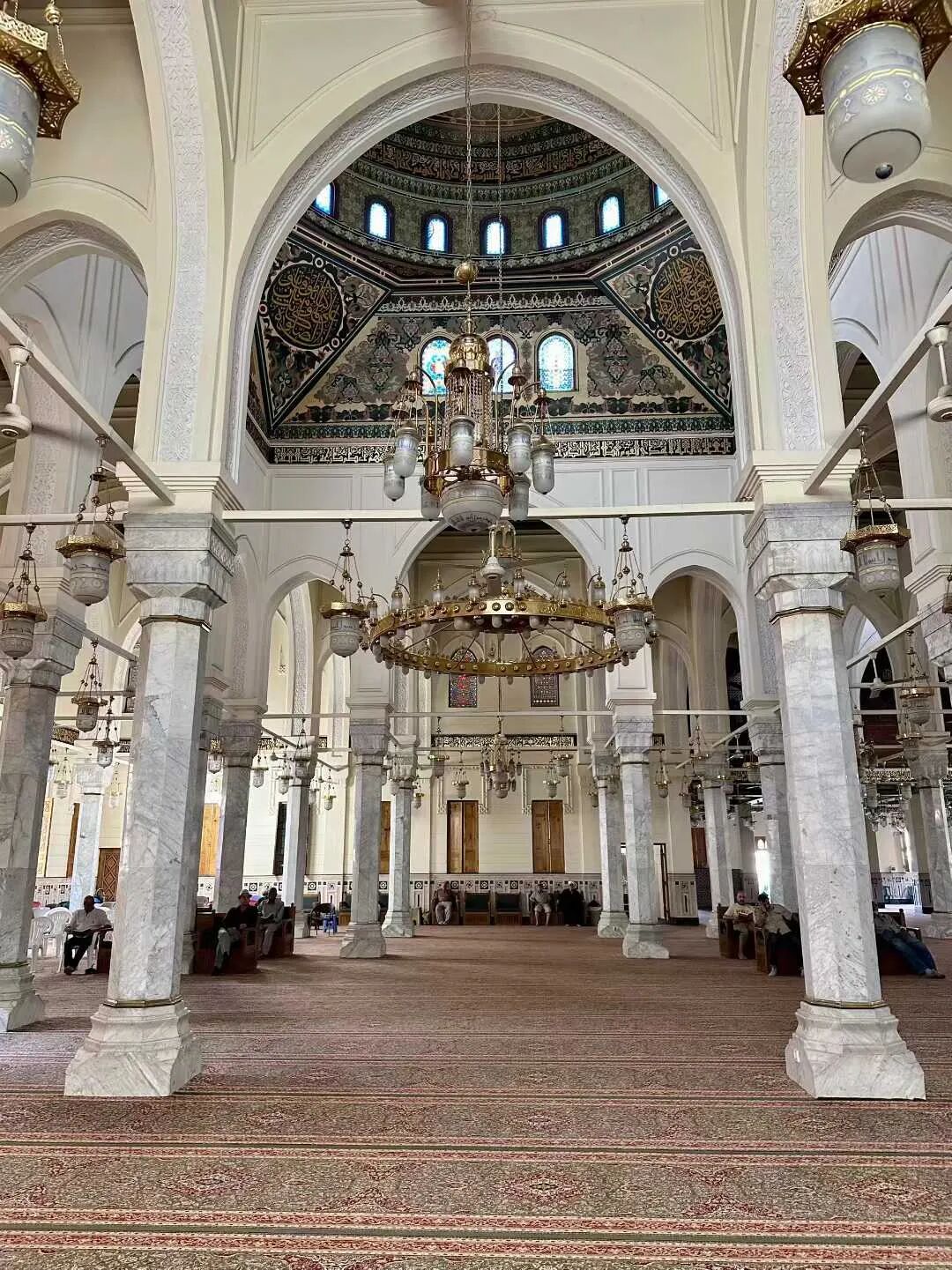
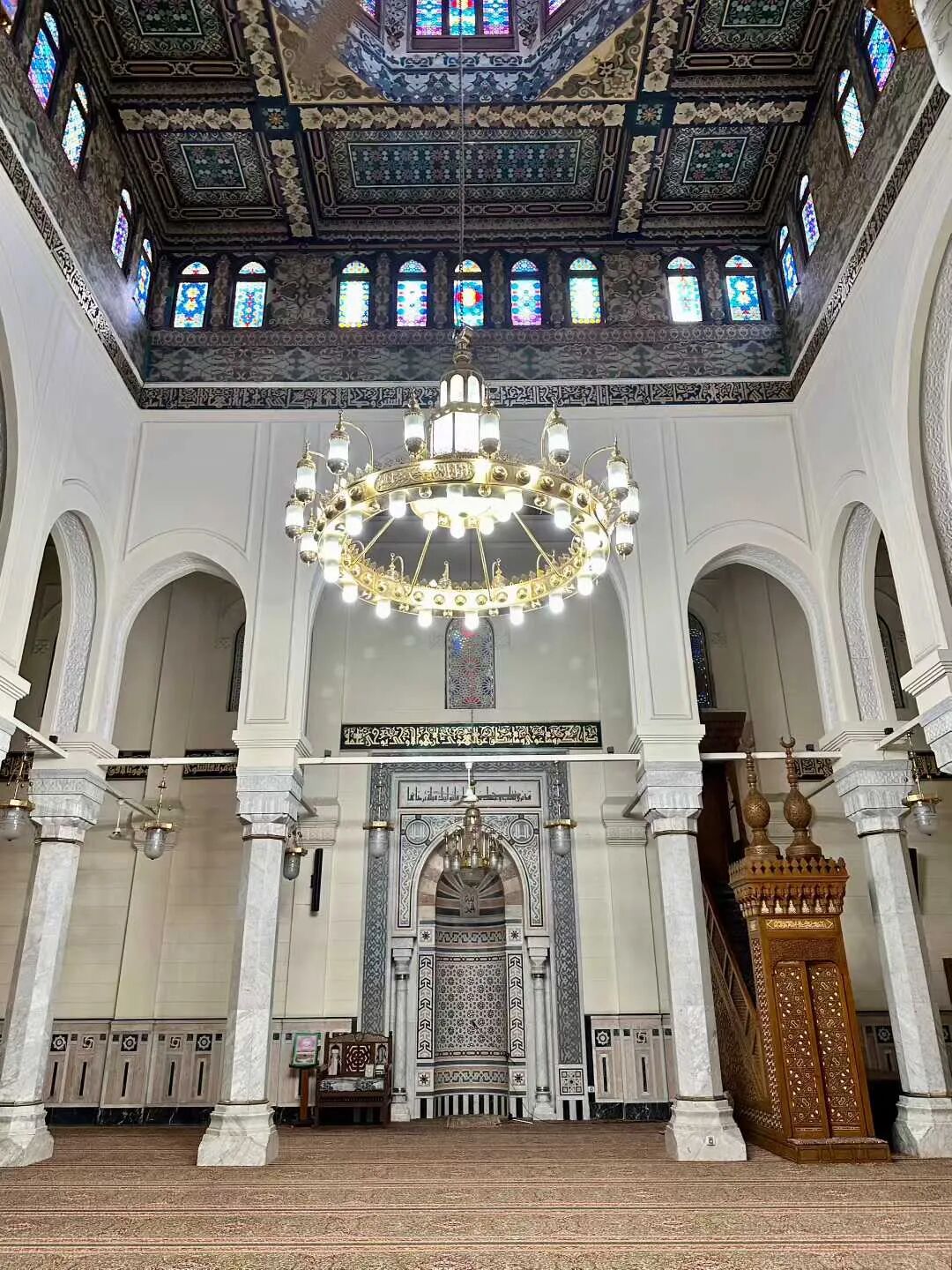
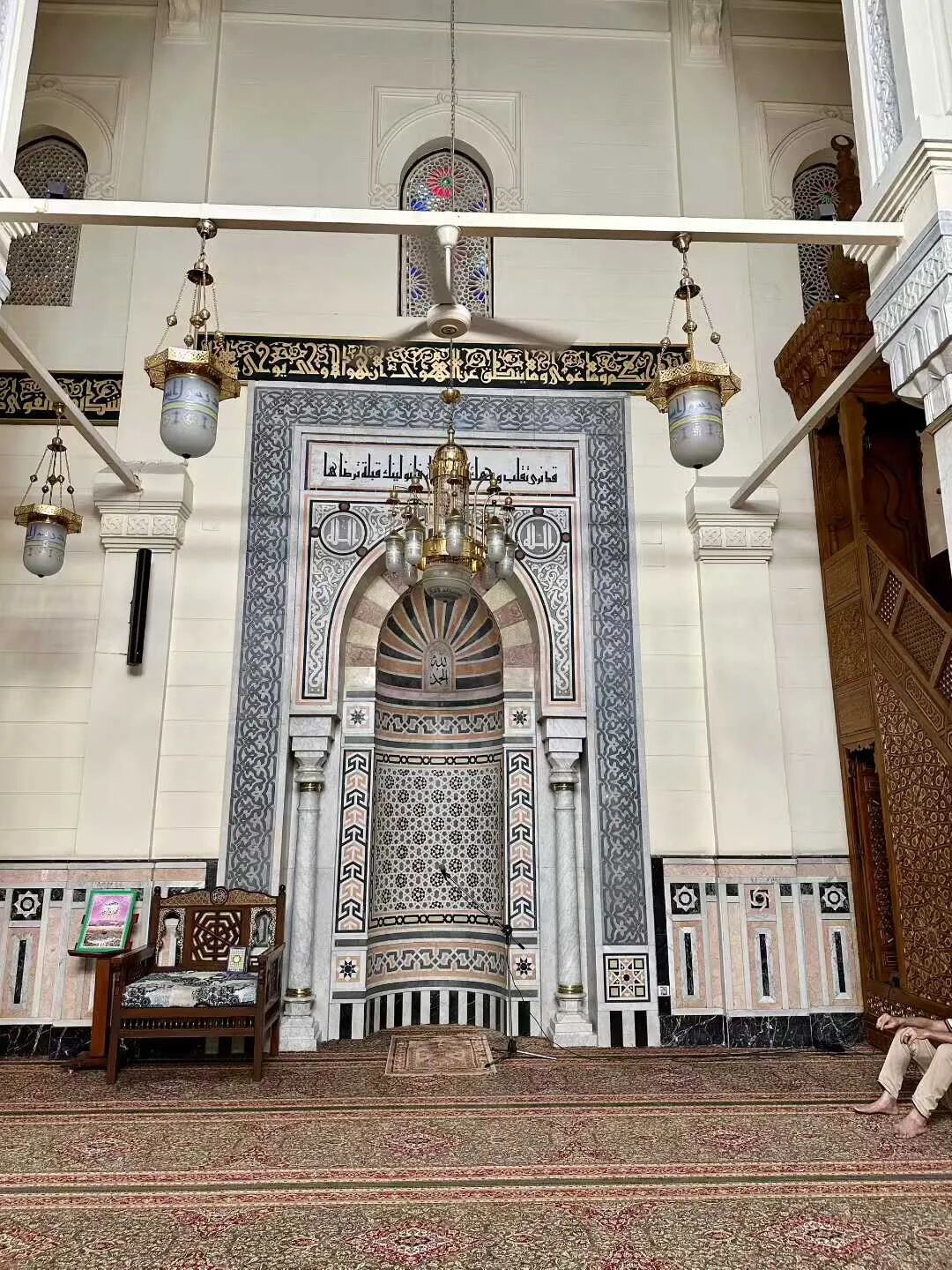
I attended Jumu'ah prayer at the Blue Mosque in Cairo at noon.
The Blue Mosque is originally named the Aqsunqur Mosque and was ordered to be built in 1347 by Emir Shams ad-Din Aqsunqur, the son-in-law of the Mamluk Sultan. As the former governor of Tripoli, Aqsunqur built the mosque in a Syrian style, which is different from the surrounding Mamluk-style mosques. The Syrian style includes cross-vaults and a columned layout, both of which are rare in Cairo.
The Blue Mosque has the oldest marble minbar (pulpit) in Cairo, which is also a rare example of a marble pulpit in the city.
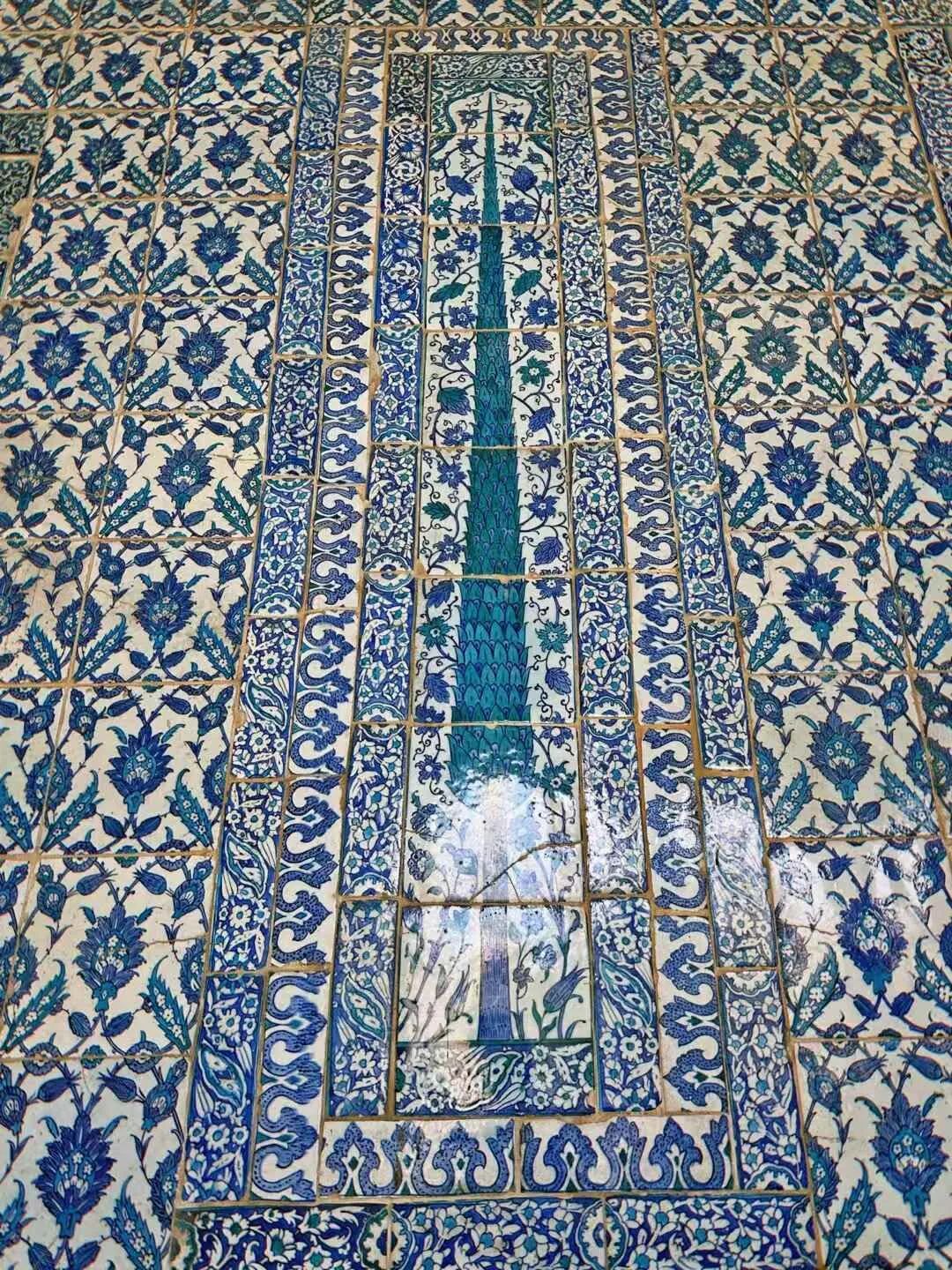
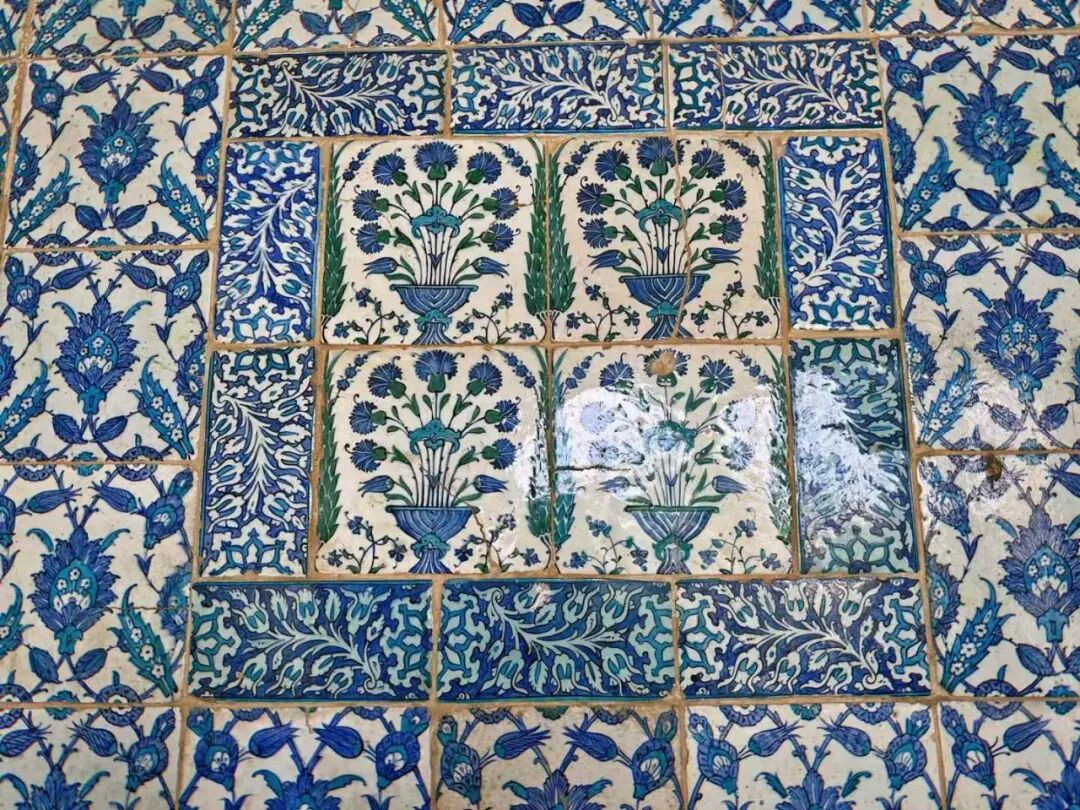
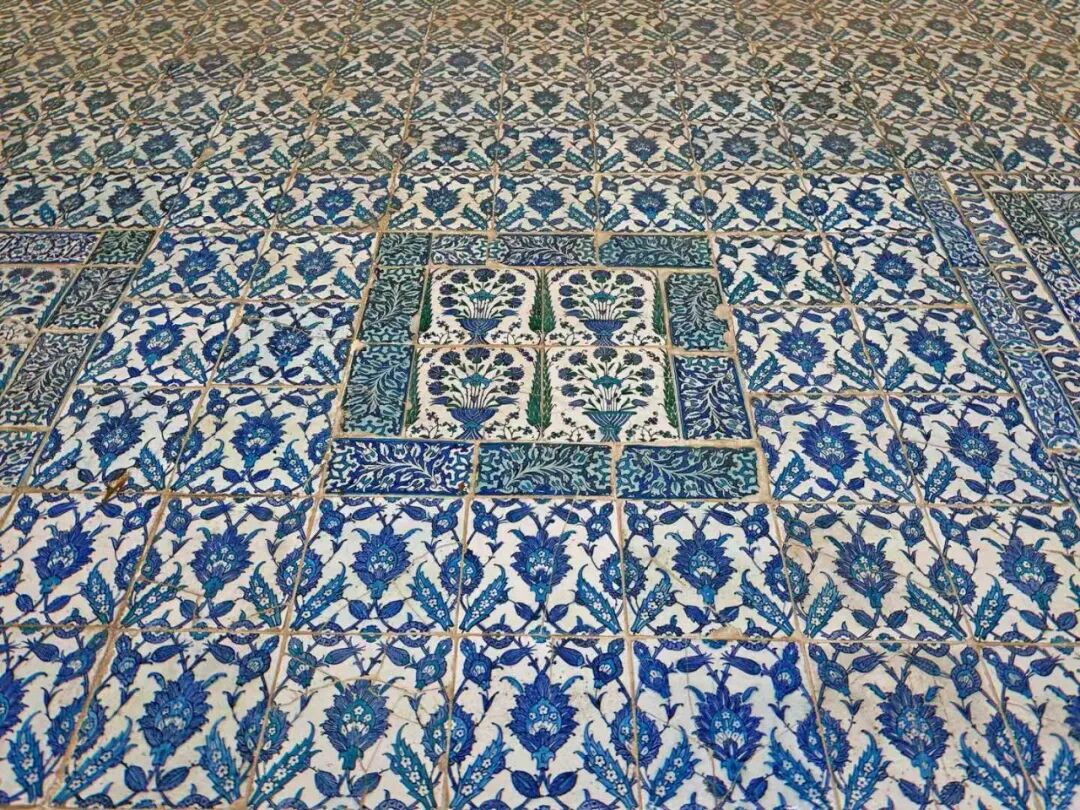
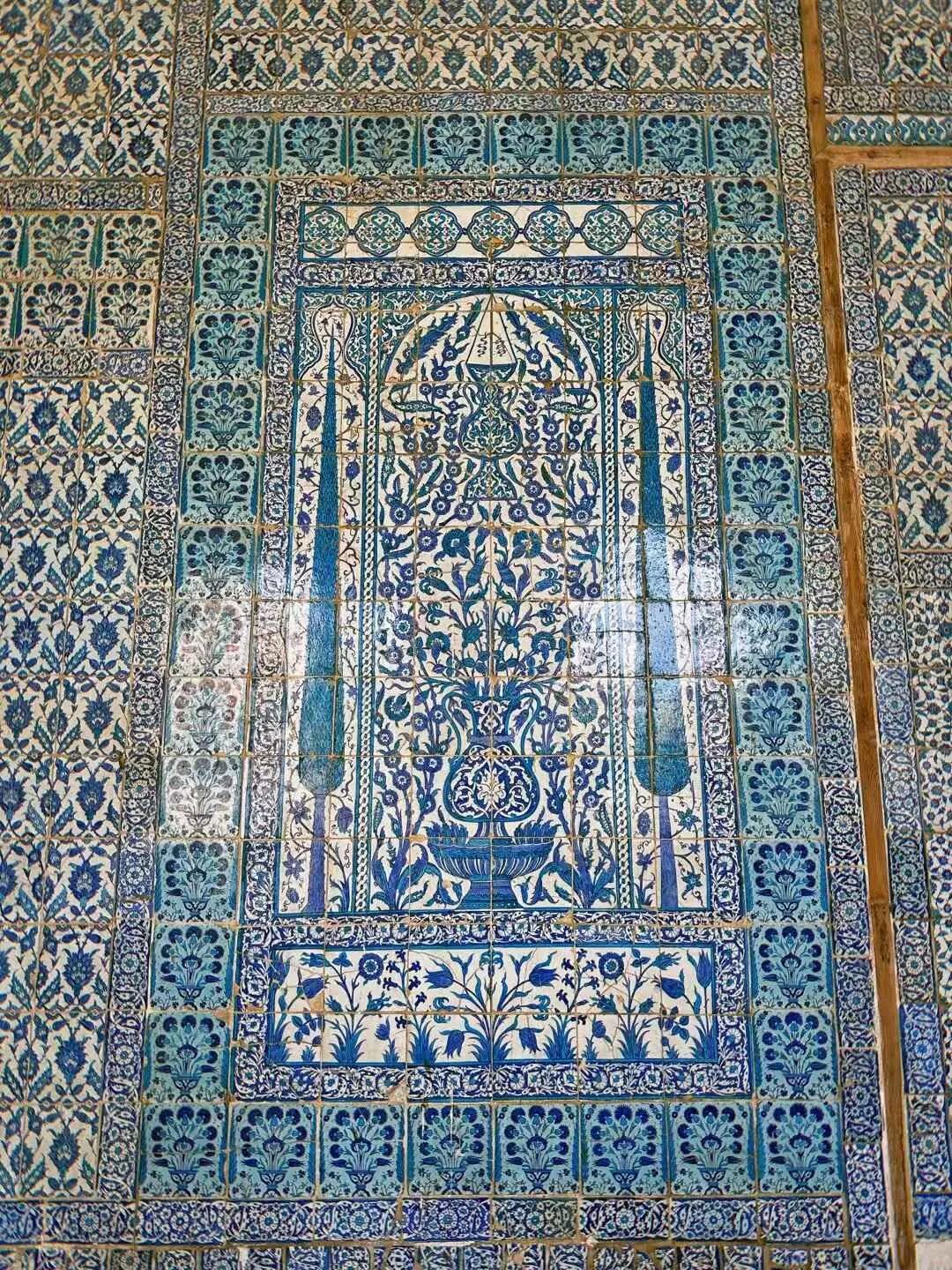
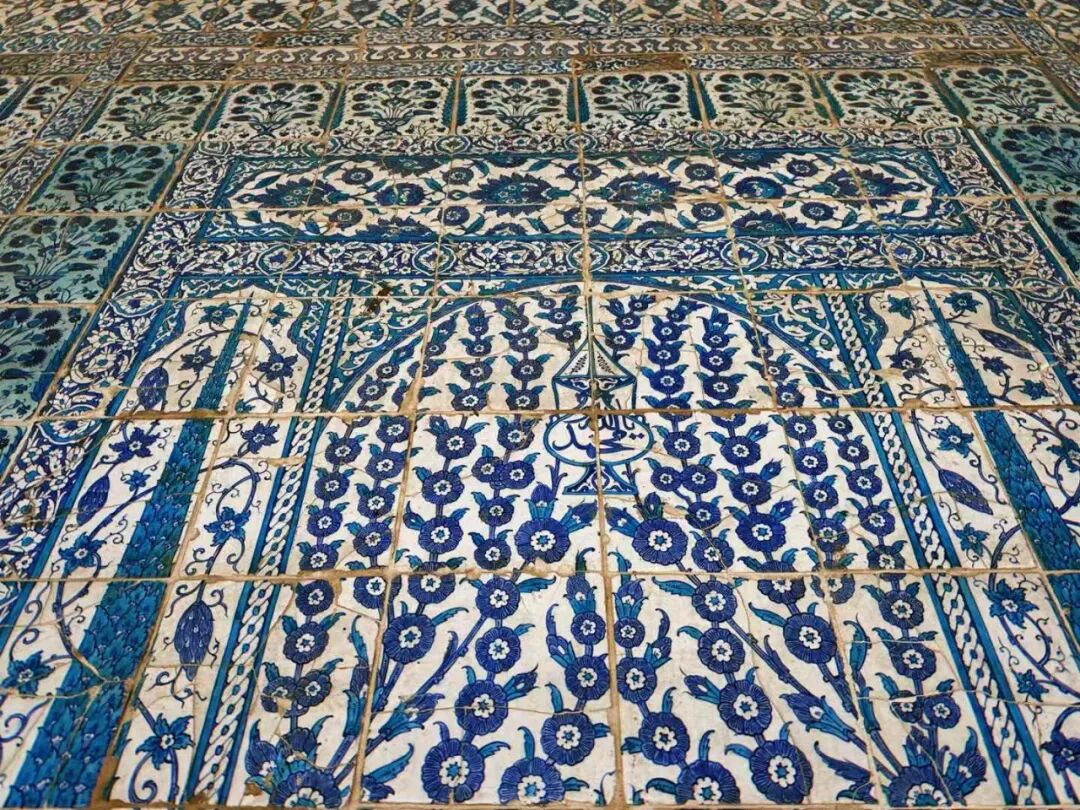
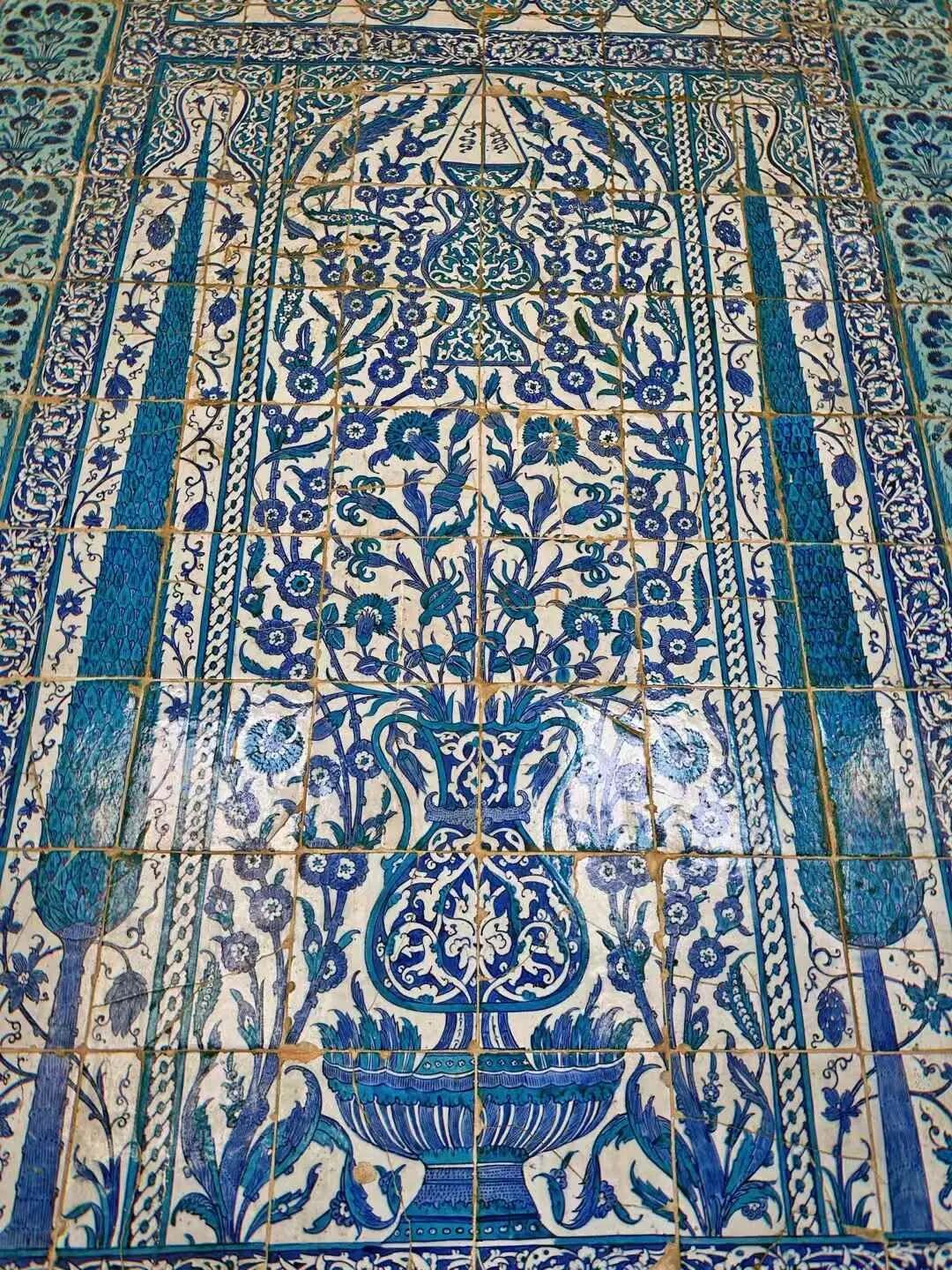
Between 1652 and 1654, Ottoman Janissary commander Ibrahim Agha al-Mustahfizan gave the Blue Mosque a major renovation. He decorated the prayer wall (qibla wall) with Ottoman tiles imported from Istanbul and Damascus, which is how the mosque got its name. These tiles are in the Iznik style and feature cypress tree and tulip patterns.
Sayyida Fatima Mosque: 18th-century expansion
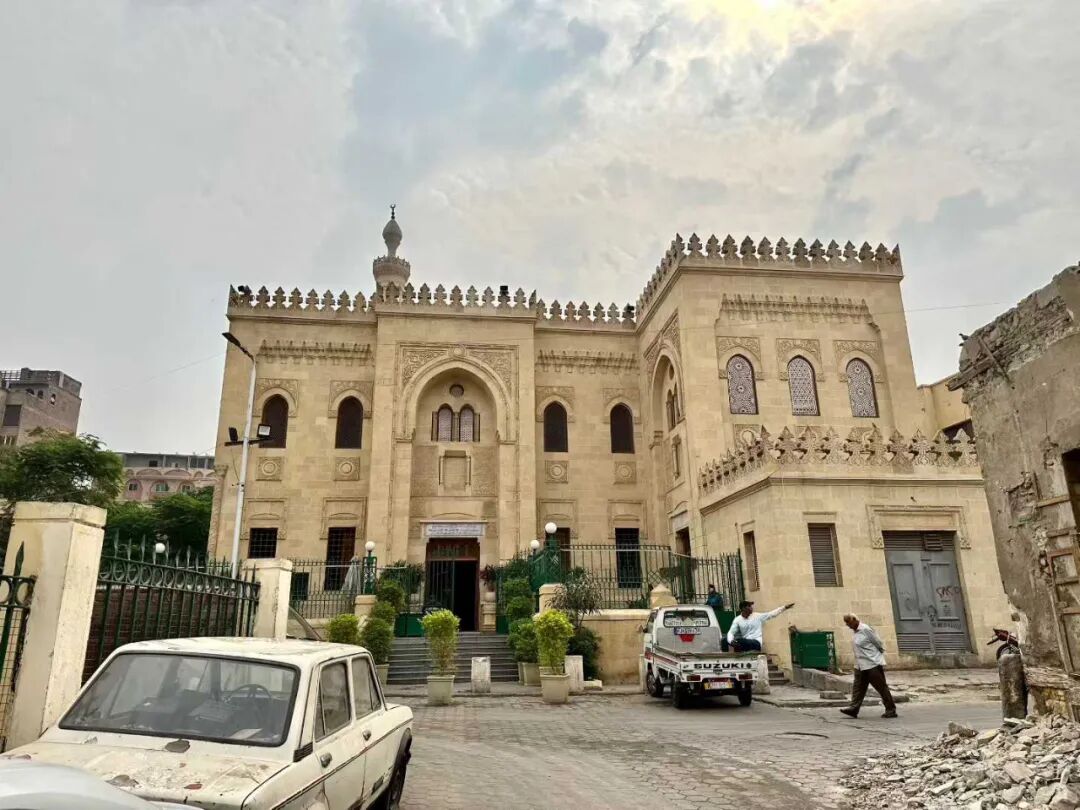
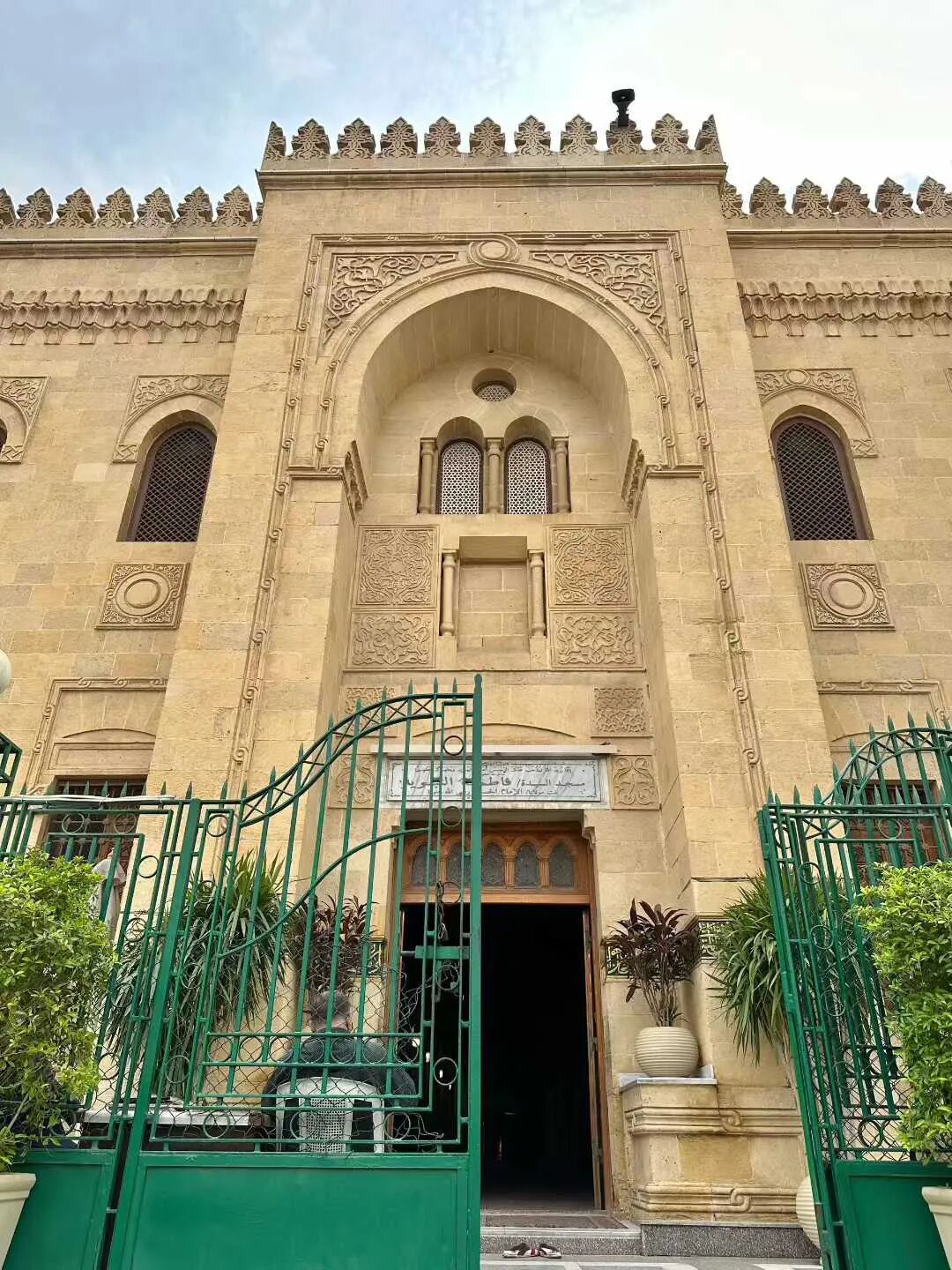
The Sayyida Fatima Mosque was originally the home of Sayyida Fatima. In the 18th century, the Mamluk prince Abd al-Rahman Katkhuda expanded it into a large mosque. The main hall developed serious cracks in 1992, and it was expanded into its current form between 1999 and 2003.
Sayyida Fatima (660-728) was the great-granddaughter of the noble Prophet and the daughter of Imam Hussein. She grew up in her father's house and later married her cousin, Hasan ibn Hasan. They had several children. The most famous was the martyr Abdullah al-Mahd, who resisted the Abbasid Caliphate. His son, Idris, established the Idrisid dynasty in 788, which was the first unified dynasty in Moroccan history and is considered the beginning of the Moroccan state.
After the Battle of Karbala, Sayyida Fatima fled to Cairo. In Cairo, she adopted many orphans and opened her home to the poor, earning her the titles Mother of Orphans and Mother of the Poor. She raised seven orphaned girls who were later buried alongside her. She was also a scholar of Islamic law and Hadith, and she is considered a reliable narrator of Hadith.
Khayrbak Mosque: 1519
The Khayrbak Mosque was built in 1519 by the Ottoman governor of Egypt, Khayrbak, just two years after the Ottoman Empire conquered Egypt in 1517. Although the Mamluk Sultanate had already fallen when it was built, the mosque still features the typical Mamluk style.
Khayrbak was originally a Mamluk emir and governor of Aleppo, but he defected to the Ottomans in 1516 and became the first Ottoman governor of Egypt in 1517.
Sultan Hasan Mosque: 1356
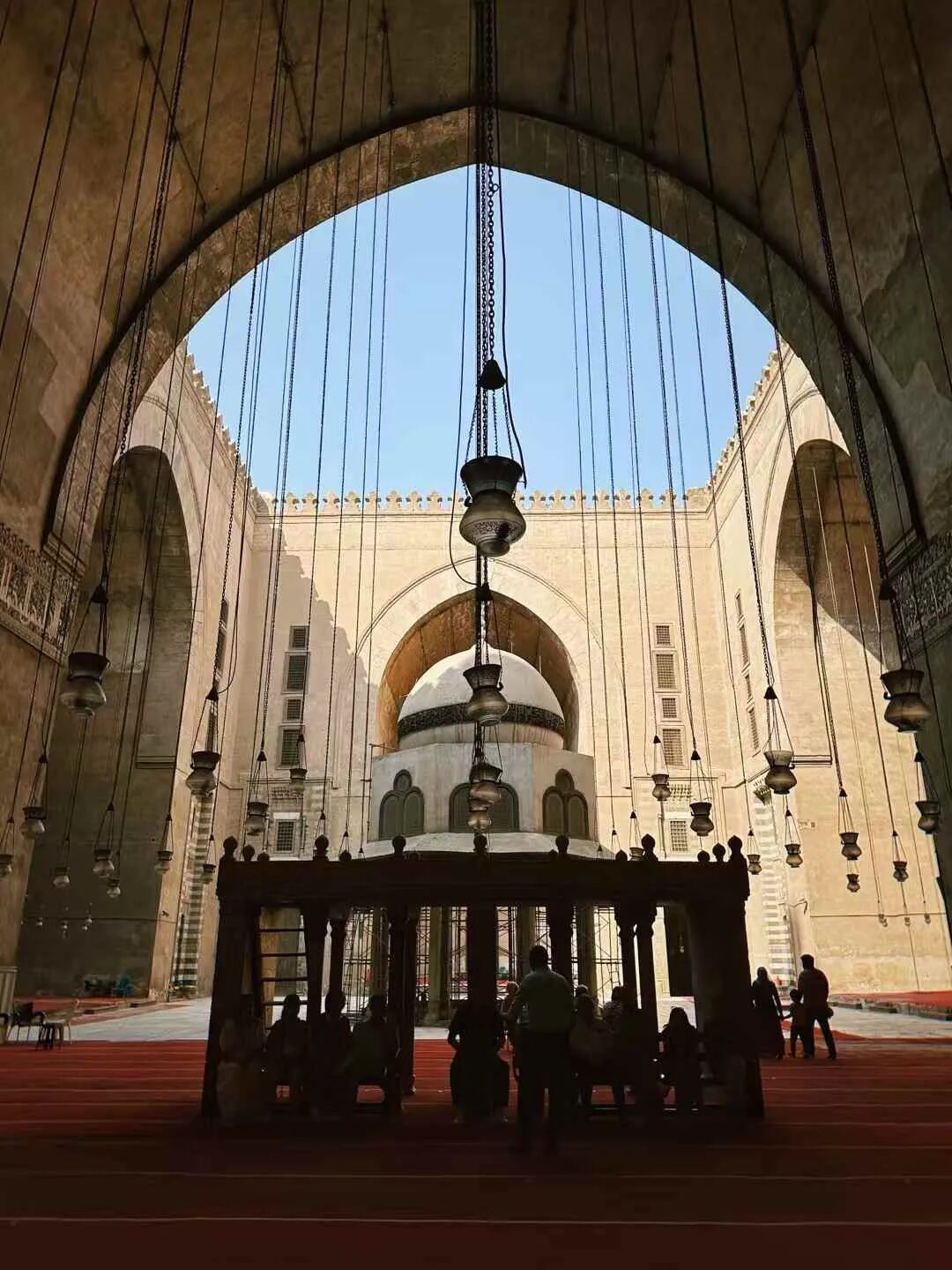
The Sultan Hasan Mosque was built between 1356 and 1363 by the Mamluk Sultan Al-Nasir Hasan, who reigned from 1347 to 1351 and again from 1355 to 1361. This large mosque is massive in scale and cost over 10,000 dinars, making it the most expensive mosque built in medieval Cairo. The high cost attracted craftsmen from all over the Mamluk Sultanate, including Anatolia, which is why the mosque has such a diverse range of decorative styles.
The Sultan Hasan Mosque also witnessed the fall of the Mamluk Sultanate. In 1517, the last Mamluk Sultan, Tuman Bay II, resisted the Ottoman army from inside the Sultan Hasan Mosque. The Ottoman army fired cannons at the mosque from the Citadel of Saladin across the way. The Sultan was forced to flee, and Cairo fell completely into Ottoman hands.
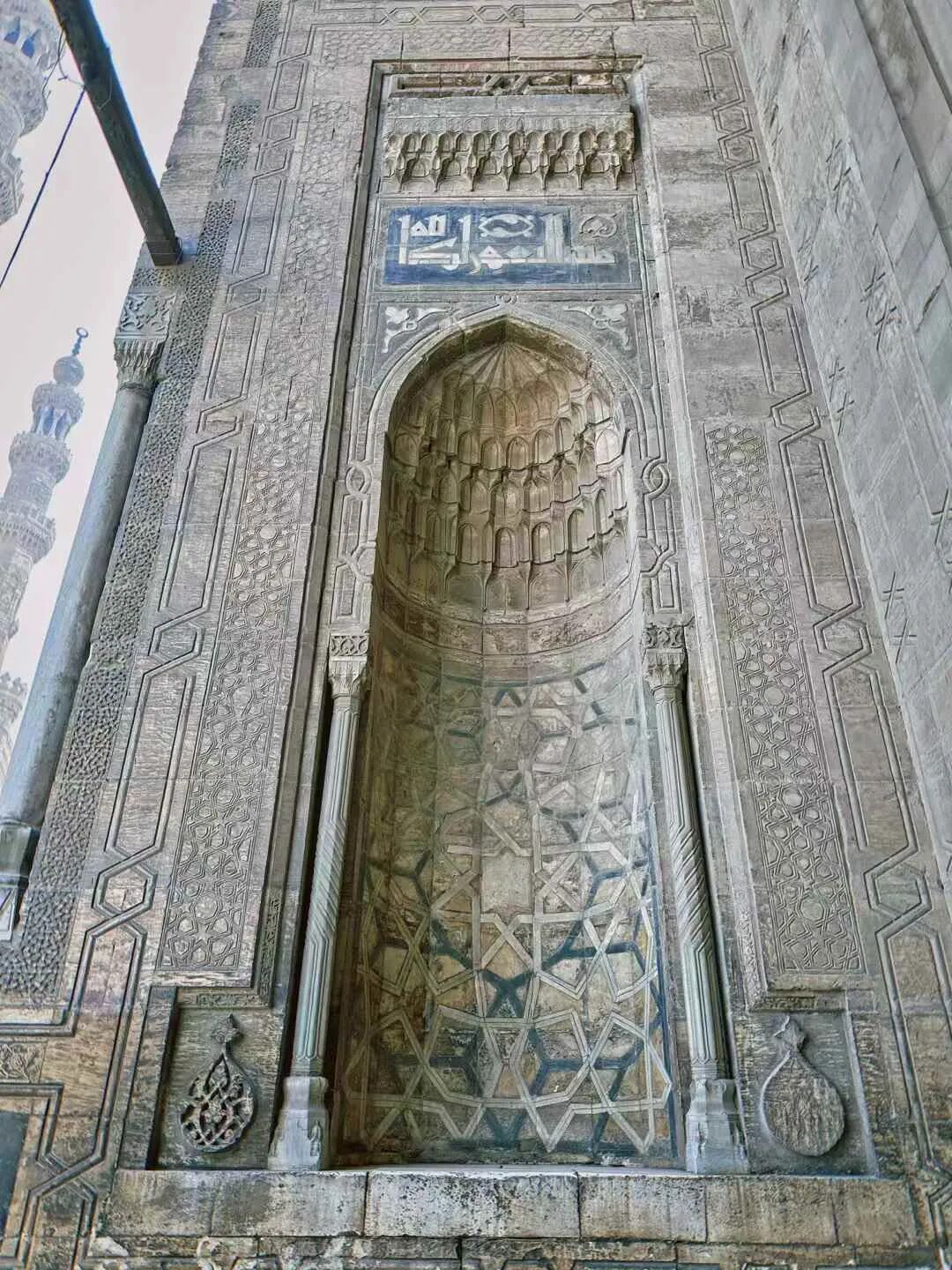
The Sultan Hasan Mosque is 150 meters long and 36 meters high. It has eight windows arranged vertically on its southwest and northeast facades, which visually emphasize the height of the building. The top edge of the mosque's facade features a 1.5-meter-high stalactite cornice, a detail never seen before in Mamluk architecture.
The Sultan Hassan Mosque has two minarets. When the southern minaret was finished, it stood 84 meters above the street, making it the tallest minaret in all of Mamluk architecture. The northern minaret collapsed in 1659 and was rebuilt between 1671 and 1672. The original design for the mosque called for four minarets in the Seljuk style, but one collapsed during construction in 1361, killing 300 people, so only two were ever completed.
The main gate of the Sultan Hassan Mosque is 38 meters high. Its decorative style was strongly influenced by Anatolian Seljuk and Ilkhanate architecture, and it looks very similar to the gate of the Blue Madrasa in Sivas, Turkey. Unfortunately, the marble carvings on the gate were never finished, and some only show the outlines. This actually lets us see the stone carving process of the time, where a master craftsman would carve the outline first, and then an apprentice would finish the rest.
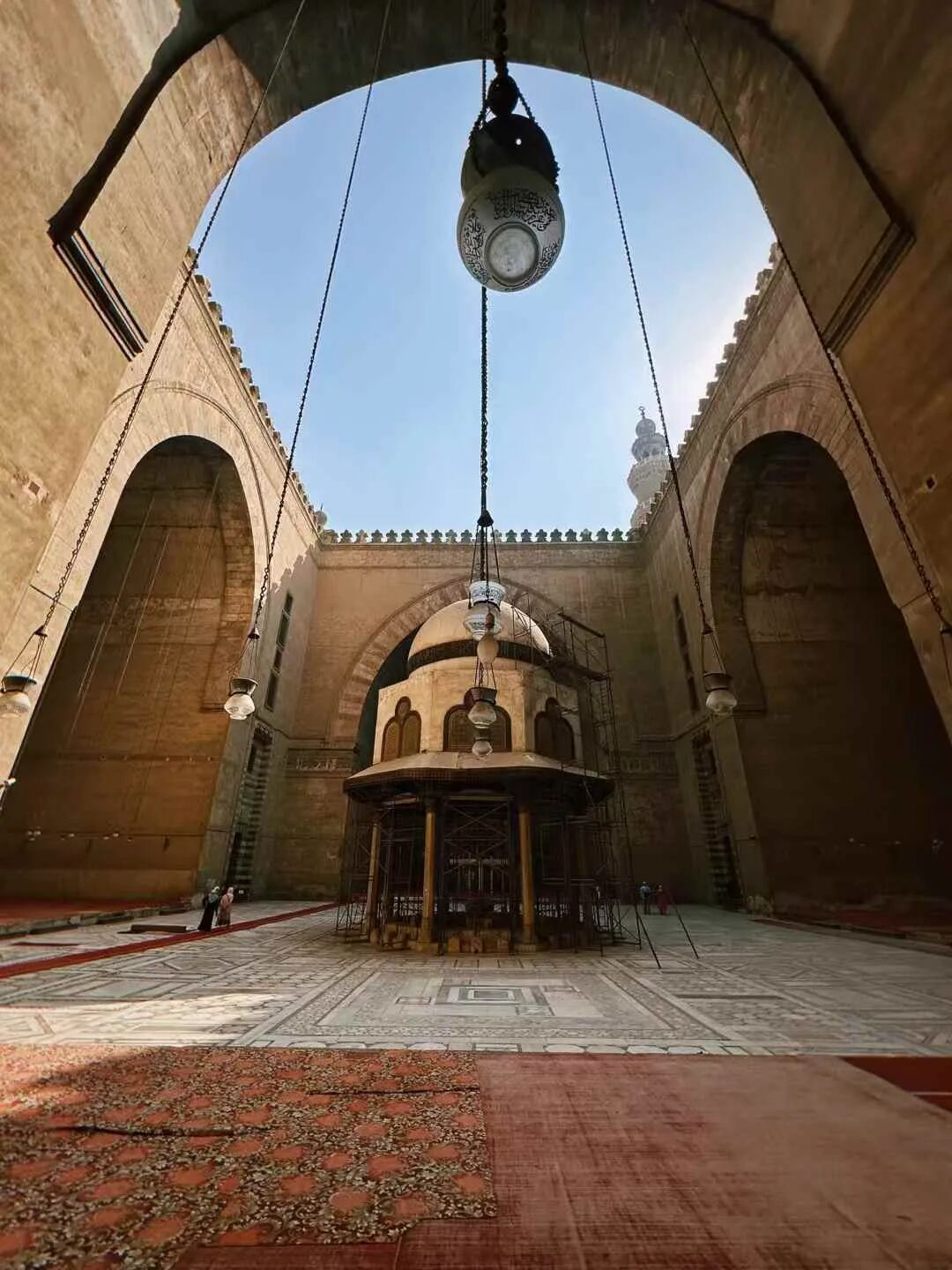
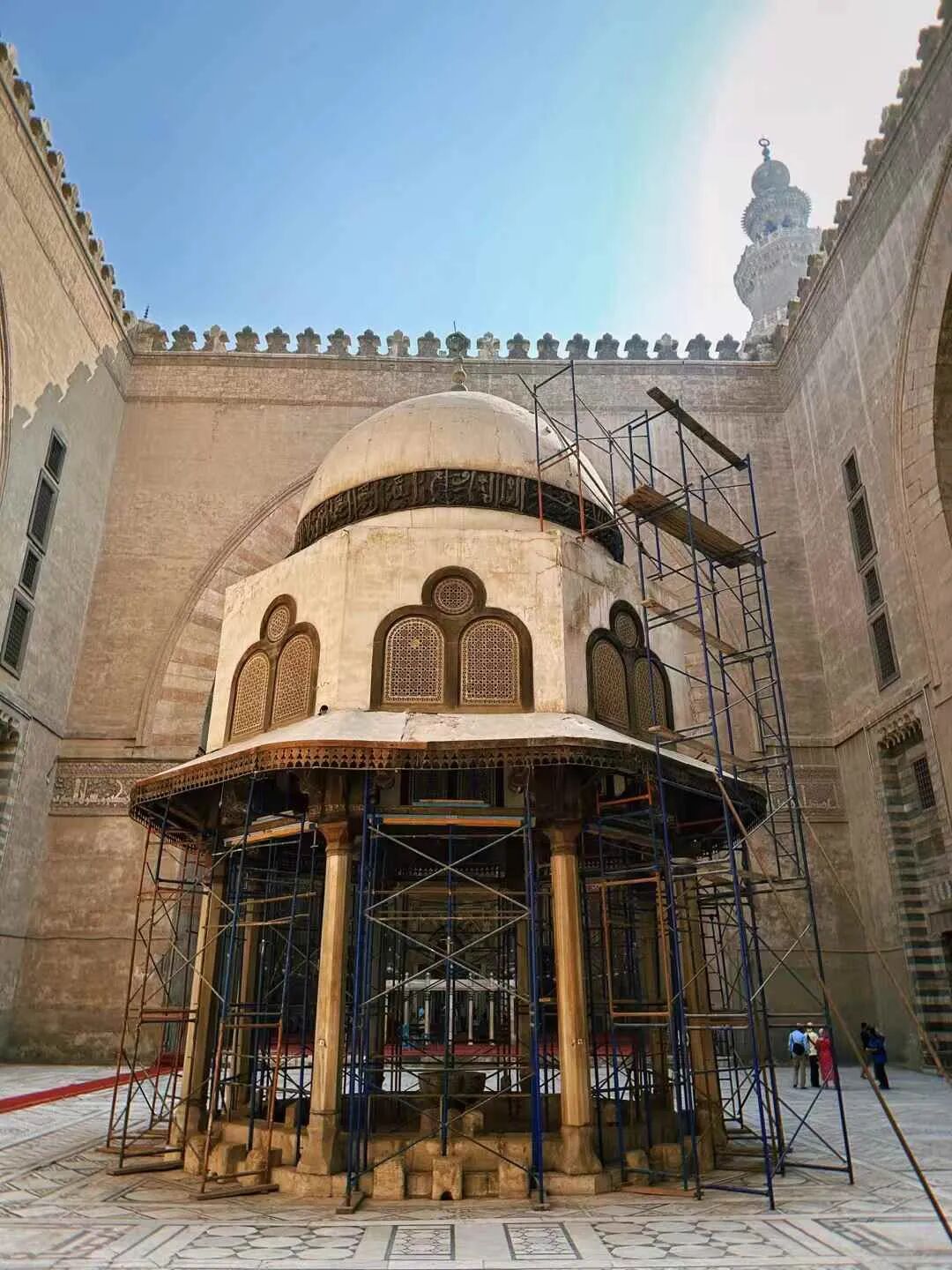
The Sultan Hassan Mosque has a classic Mamluk cruciform layout, consisting of a central courtyard and four massive vaulted halls (iwan). The ablution fountain (wudu fountain) in the center of the courtyard was renovated during the Ottoman period, but it remains the oldest one in Mamluk architecture.
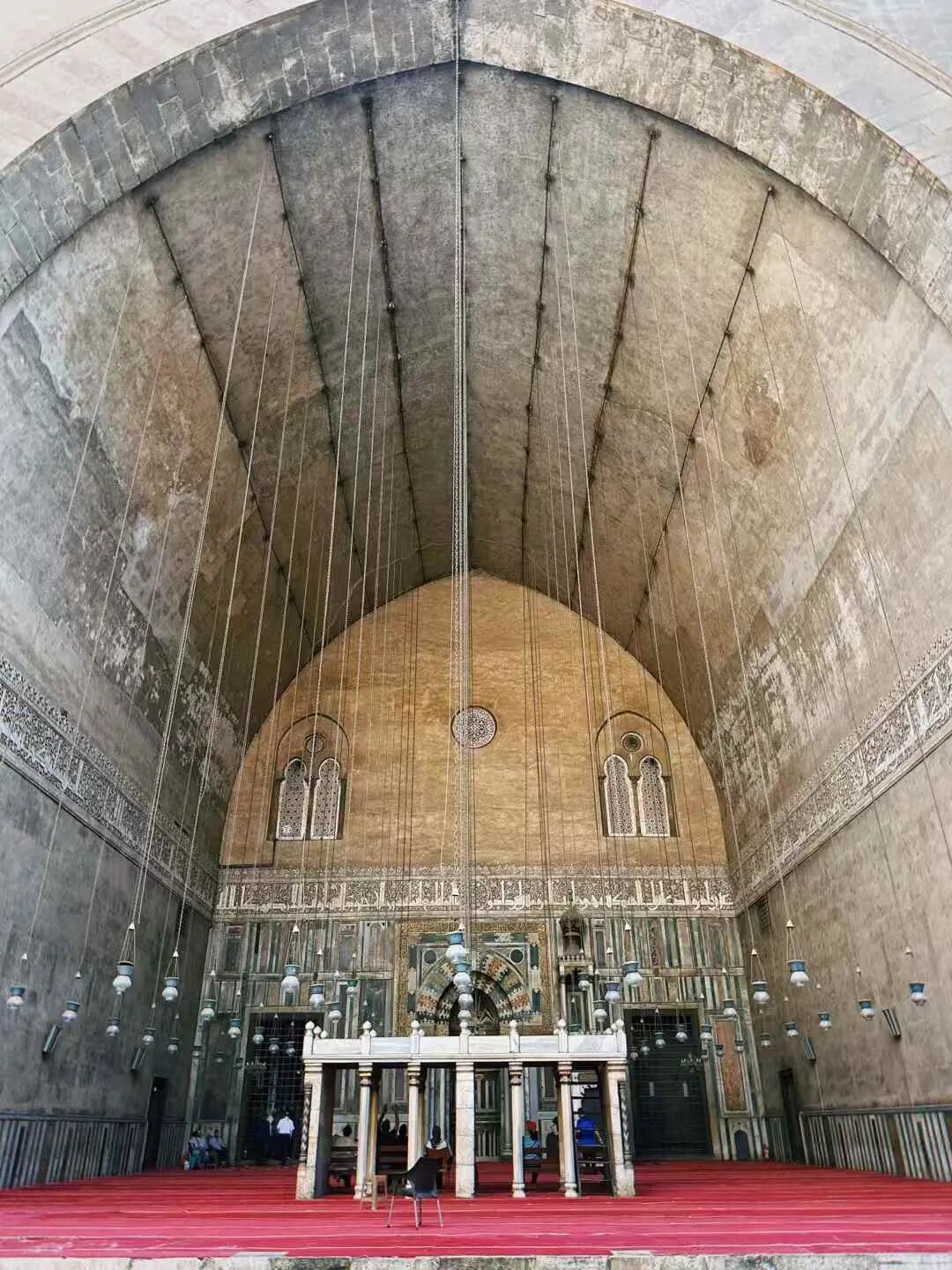
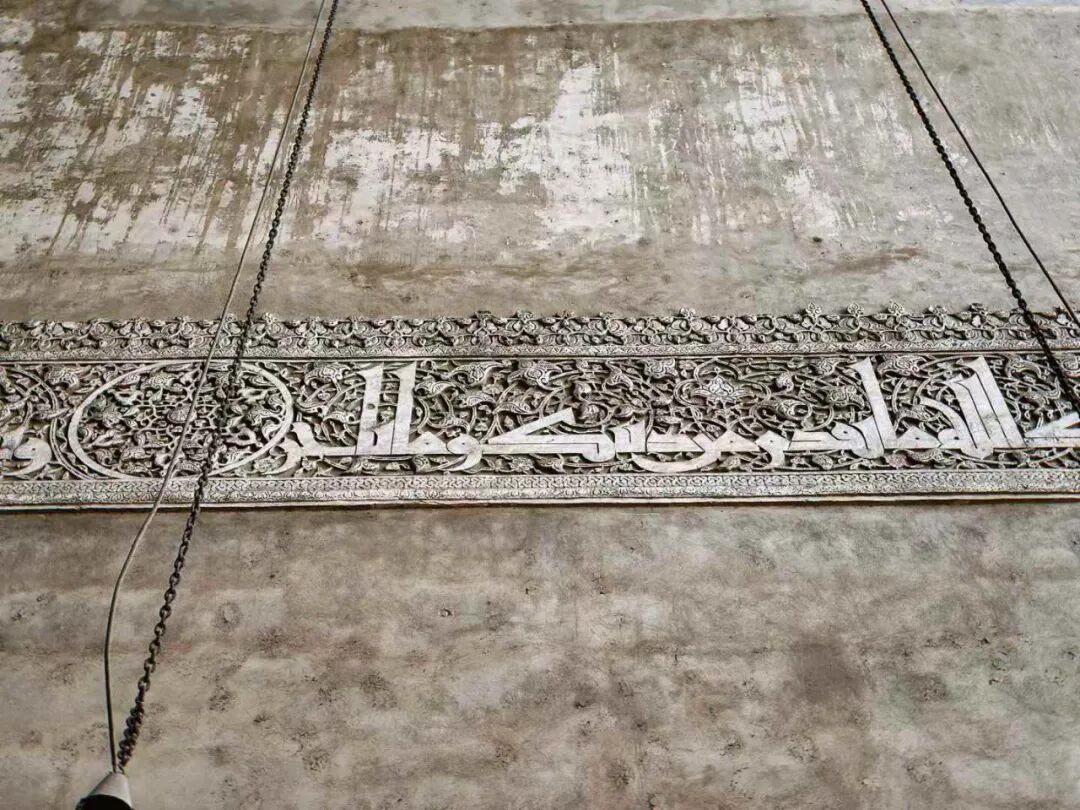
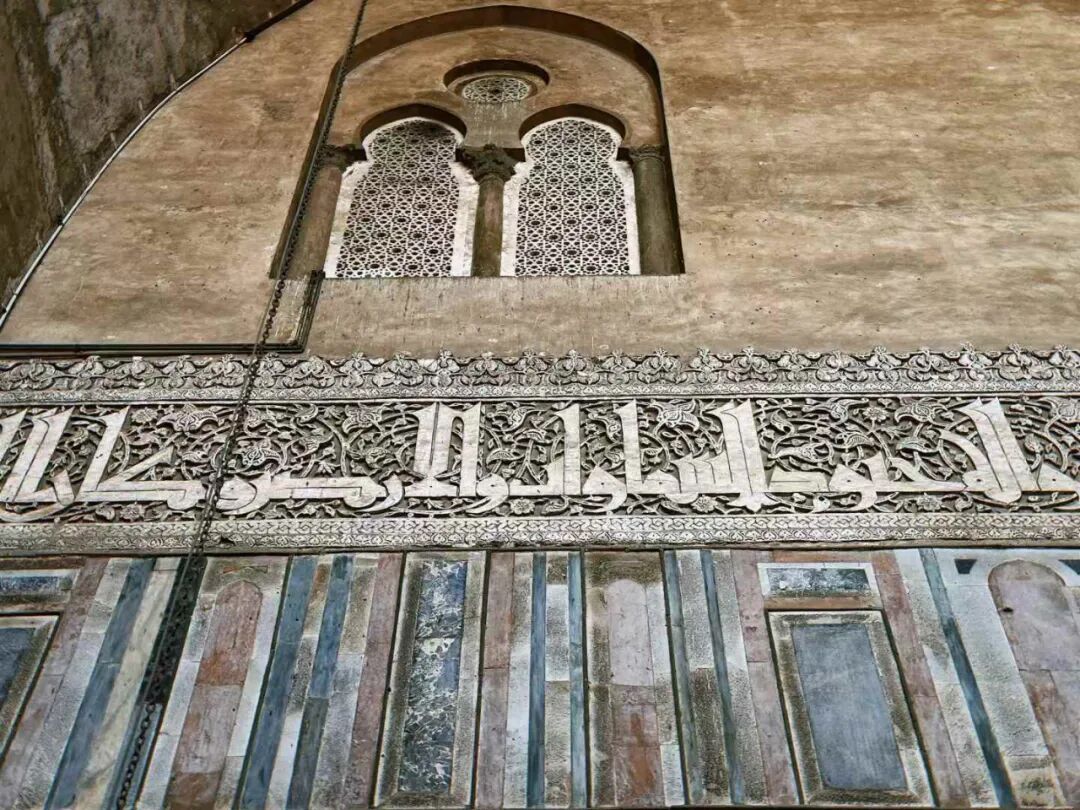
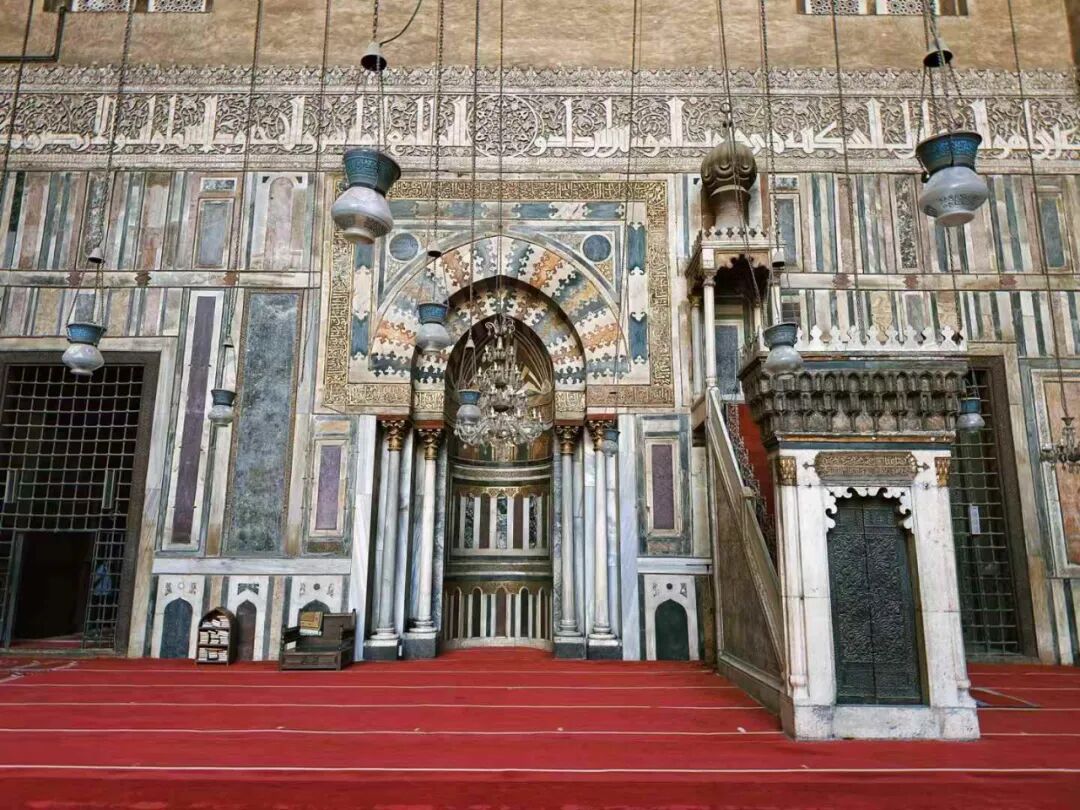
The center of the main hall is decorated with Kufic calligraphy and swirling arabesque patterns, which is unique in Mamluk architecture. The qibla wall is decorated with colorful marble panels. The center of the mihrab features three rising suns, each with the word Allah written in gold in the middle. The minbar has beautifully patterned bronze doors, which are also very rare in Mamluk architecture. view all
Summary: This middle part of the Cairo mosque journey follows medieval mosques such as Al-Salih Tala'i and other landmarks tied to the Fatimid, Ayyubid, and Mamluk periods. It keeps the source's sequence, mosque dates, architectural observations, and historical details intact.
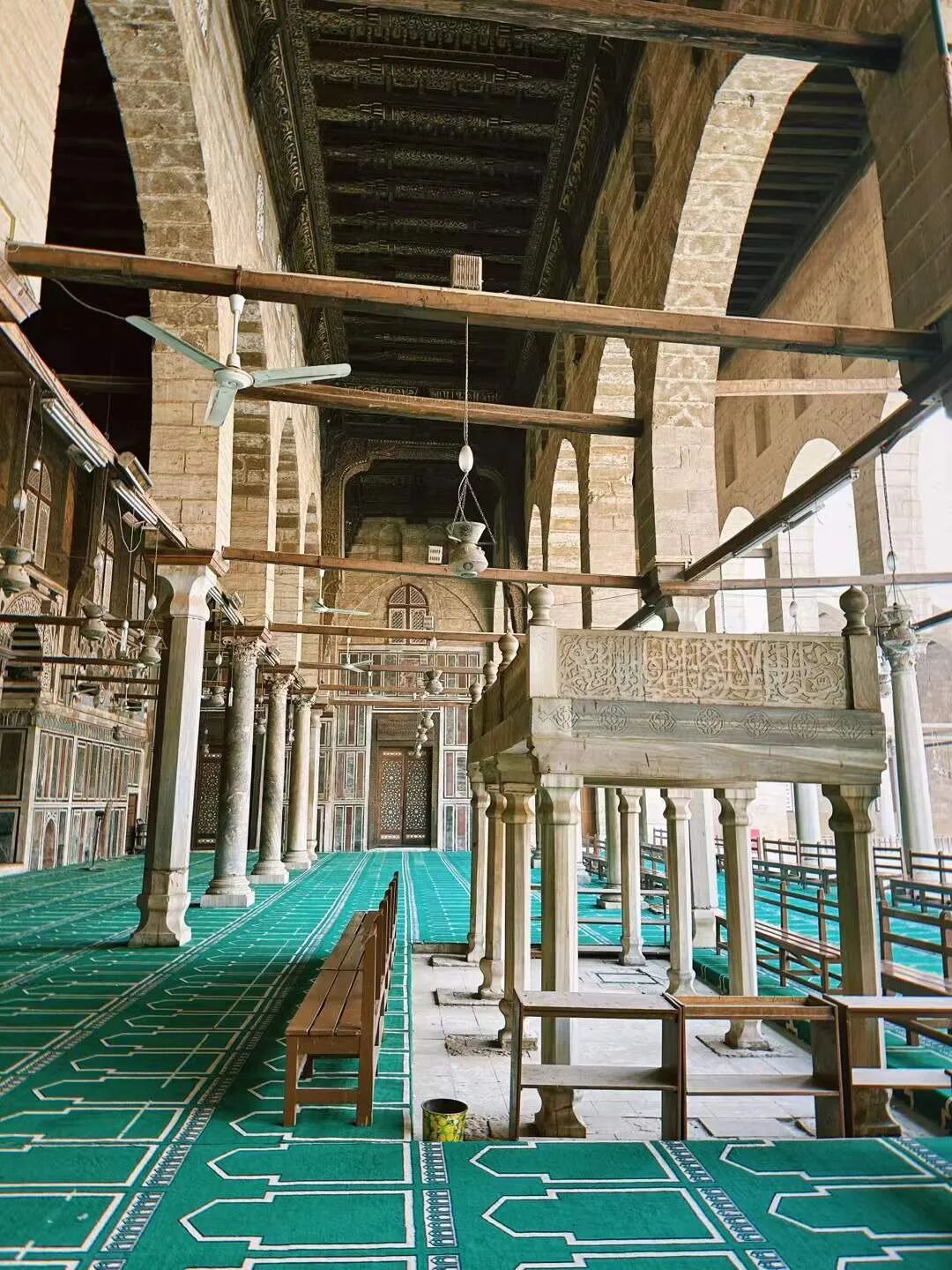
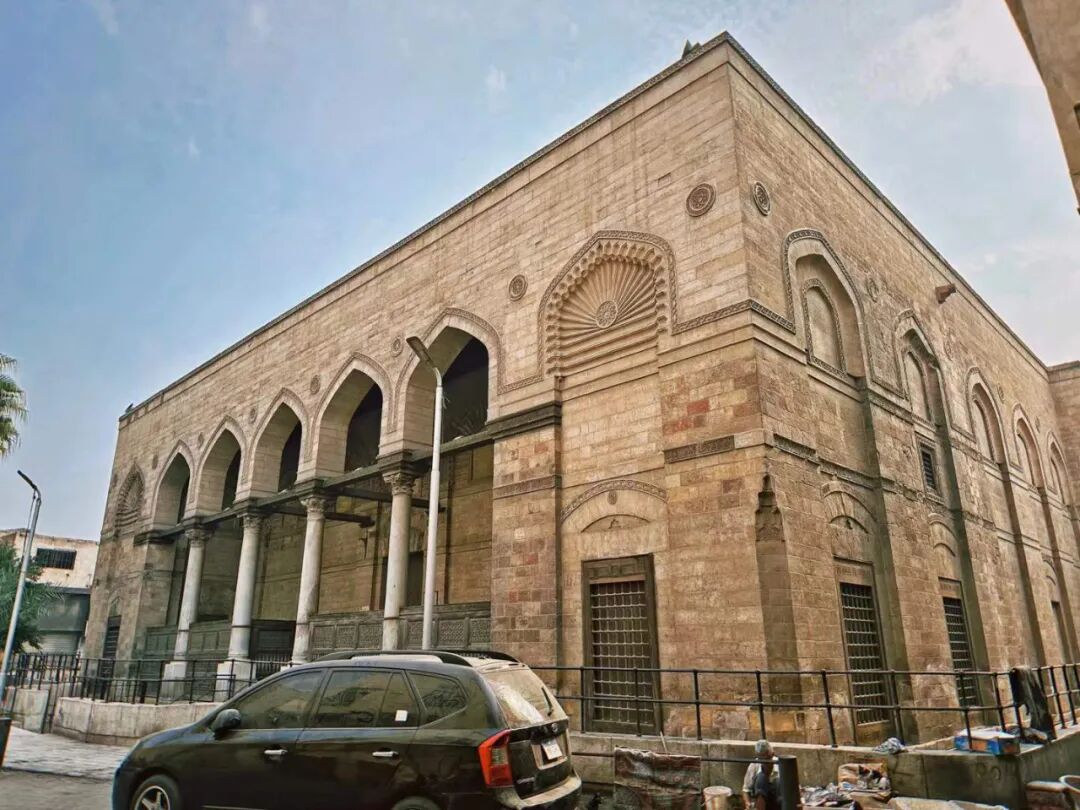
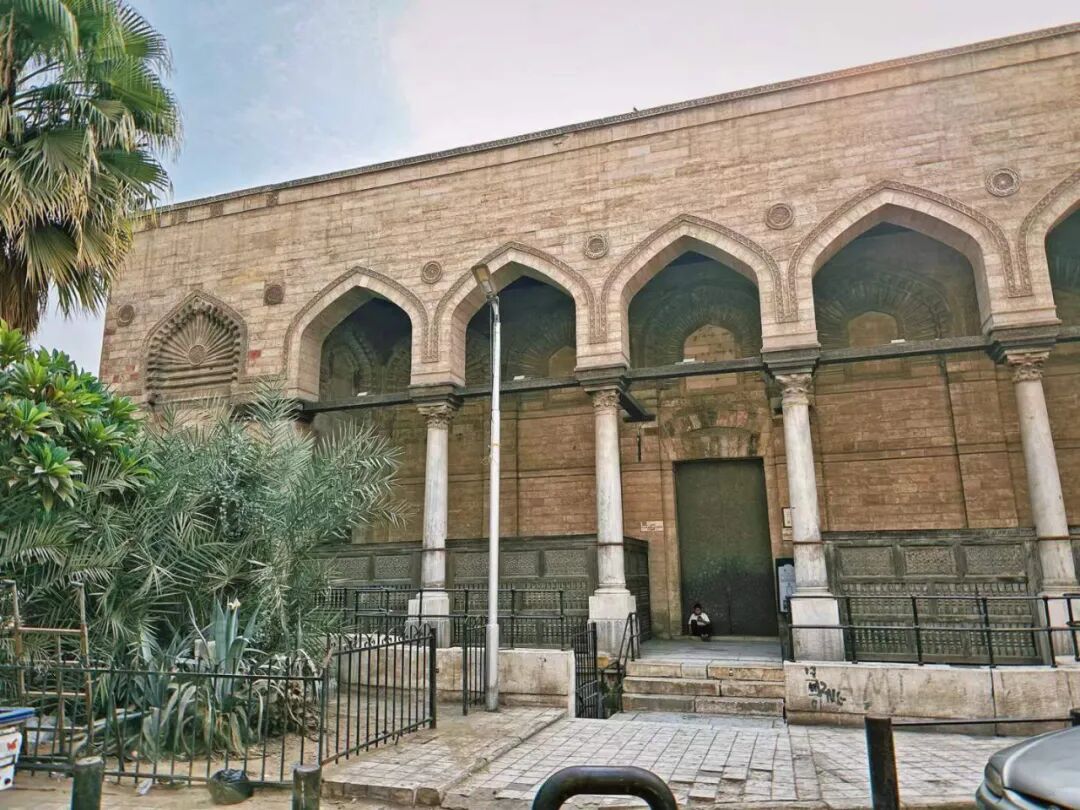
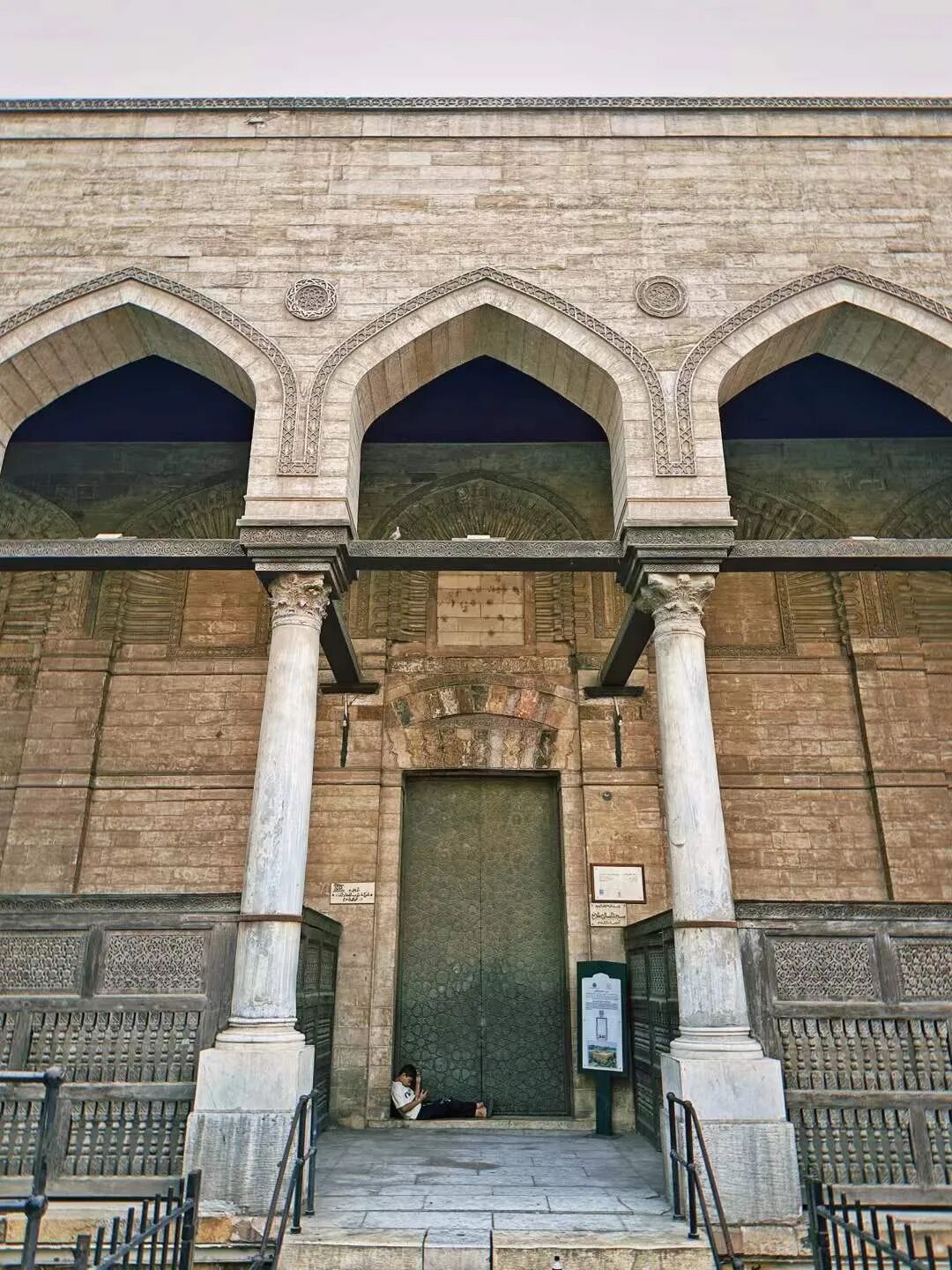
Al-Salih Tala'i Mosque: 1160
Just outside the southern gate of Old Cairo stands the Al-Salih Tala'i Mosque, built in 1160 by the Fatimid vizier Tala'i ibn Ruzzik. It is the last major historical building remaining from the Fatimid dynasty.
Tala'i was one of the last powerful viziers of the Fatimid dynasty, and he helped keep the dynasty stable for its final decades. The Al-Salih Tala'i Mosque was originally built to house the head of Imam Hussein, but the head was eventually placed inside the Fatimid palace and later became the Hussein Mosque.
The Al-Salih Tala'i Mosque is the first hanging mosque in Cairo. It is built on a platform with shops on three sides of the ground floor, while the main prayer hall sits above them. After more than 800 years of ground level rising, the shops are now nearly two meters below the street. The side of the mosque facing the street has five arched galleries, which is unique for pre-Ottoman Egypt. One theory suggests this was a royal viewing platform for ceremonial processions passing through the south gate of Old Cairo, while another suggests it relates to the ceremony for placing the head of Imam Hussein.
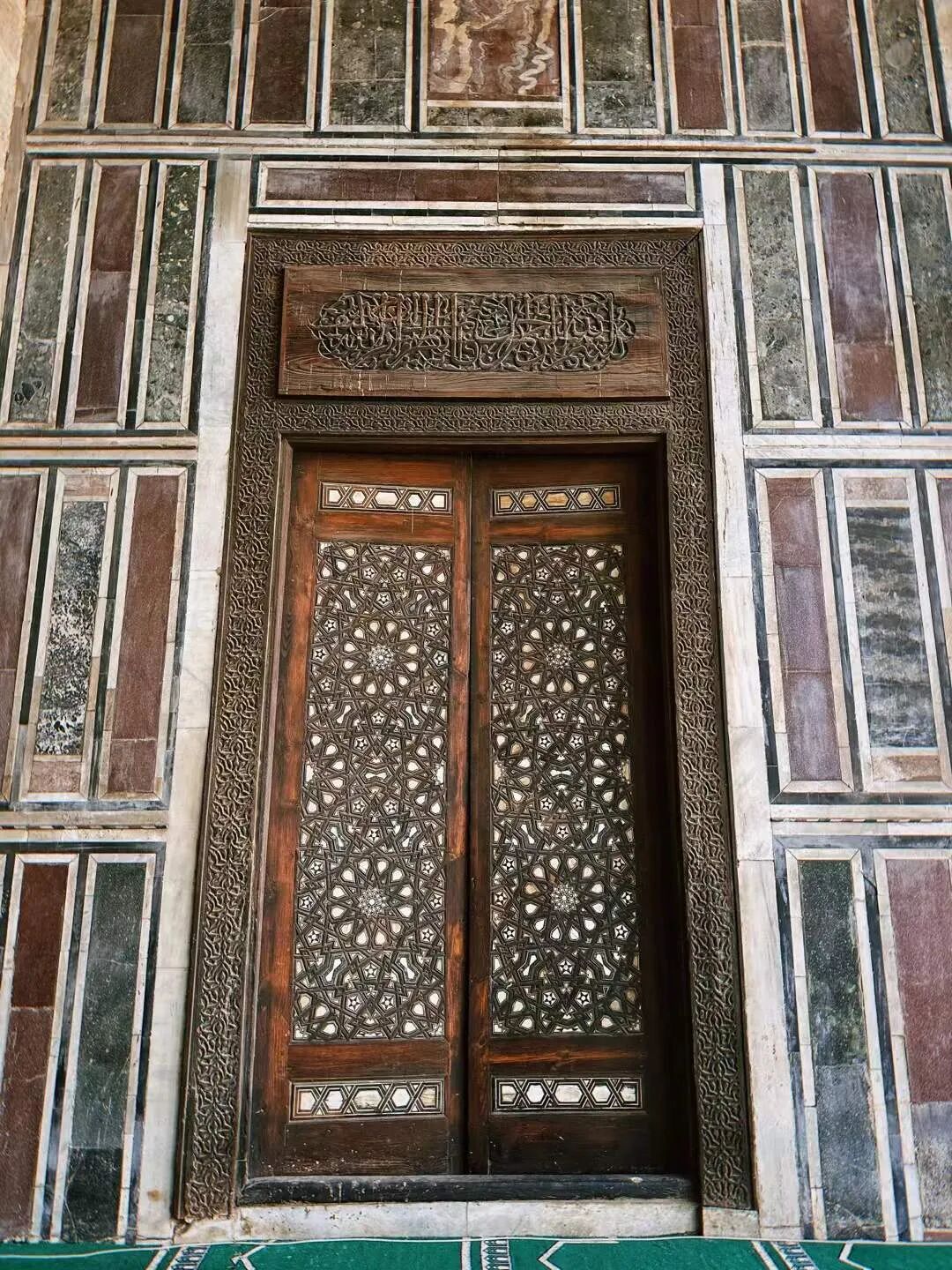
The 1303 earthquake caused the minaret above the mosque's front porch to collapse. It was later repaired during the Mamluk dynasty, and you can now see the wooden Mashrabiya railings added at that time. The Mamluk dynasty also added bronze-carved doors to the mosque, which are now kept in the Museum of Islamic Art in Cairo.
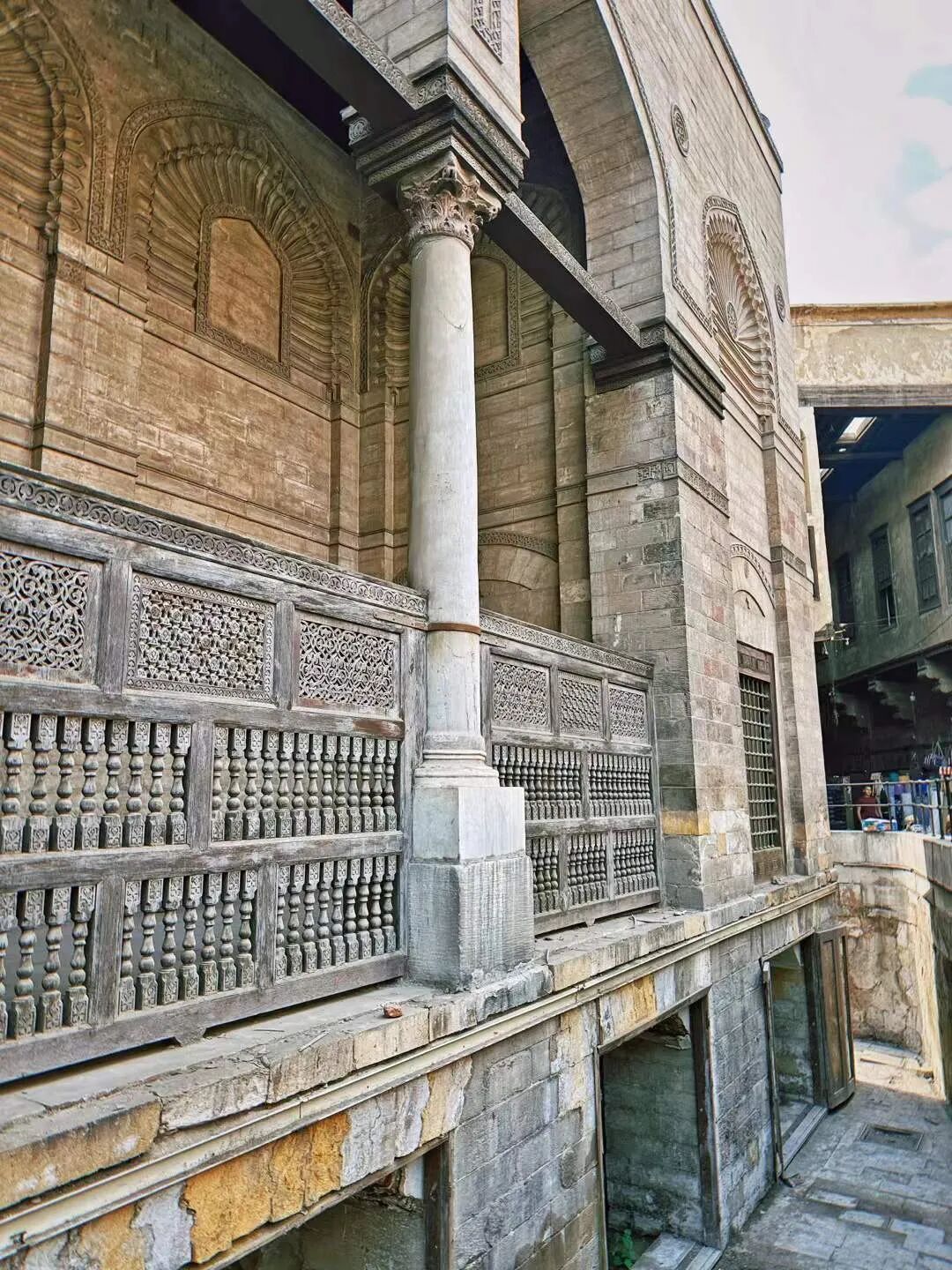
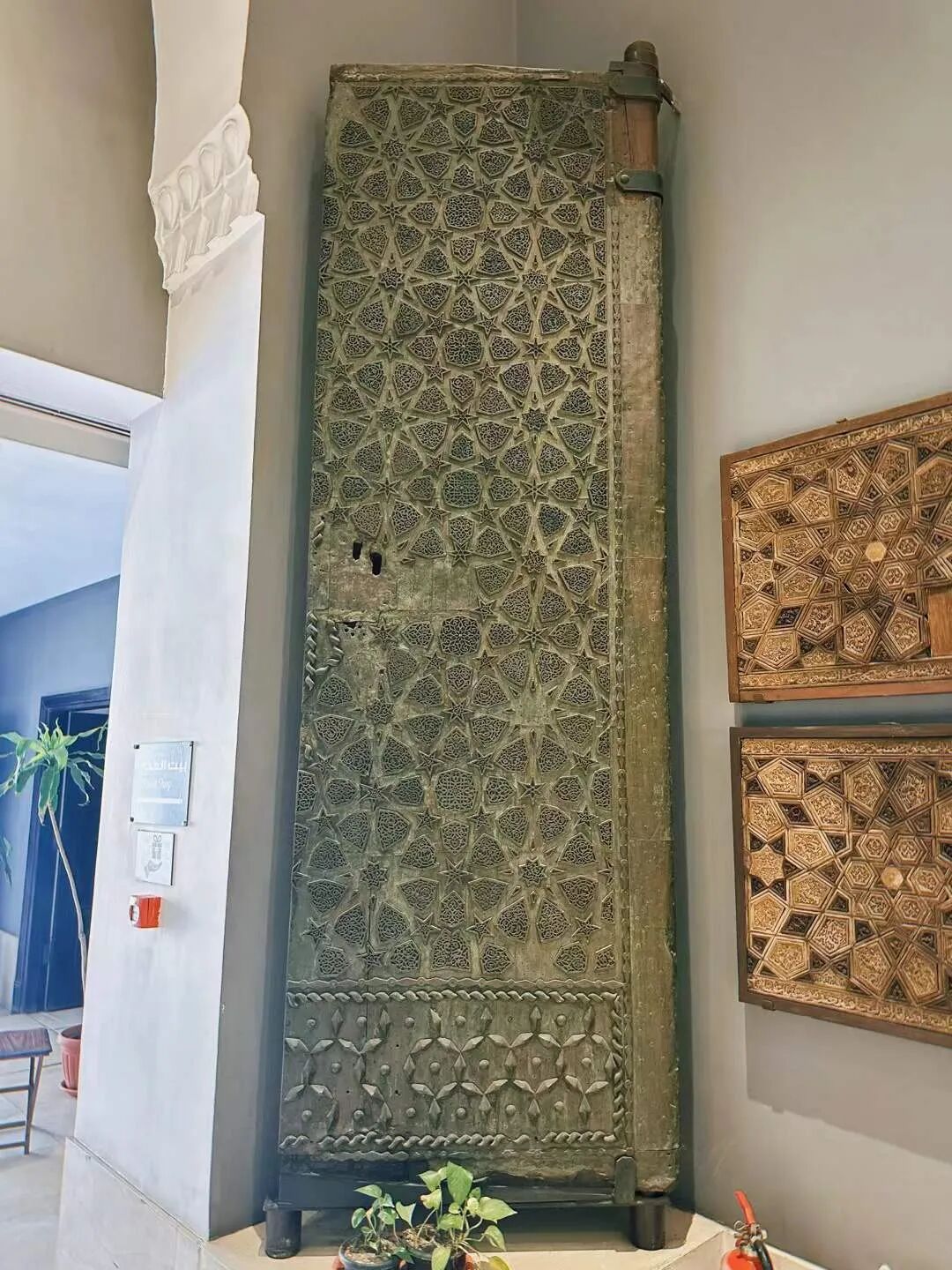
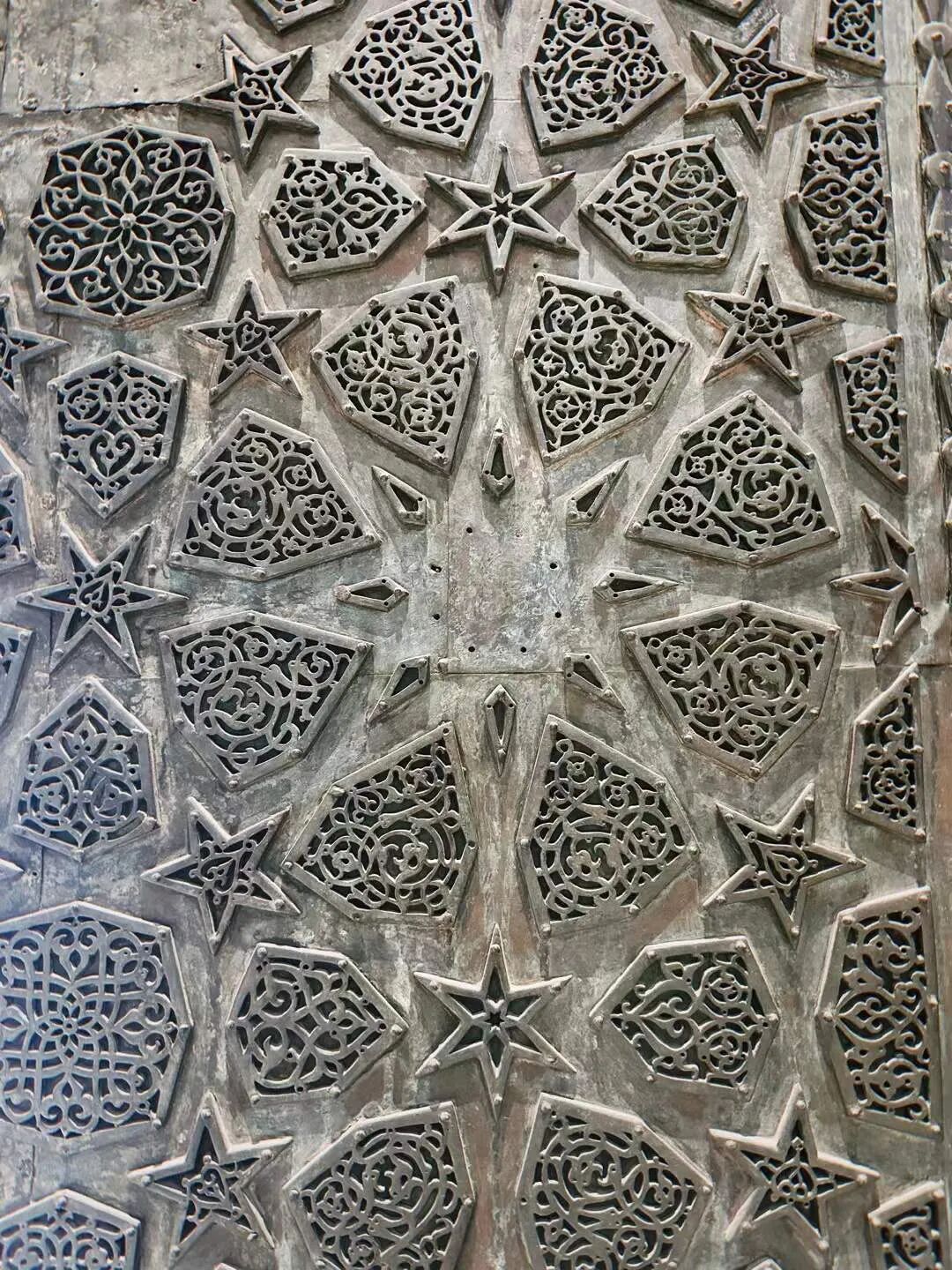
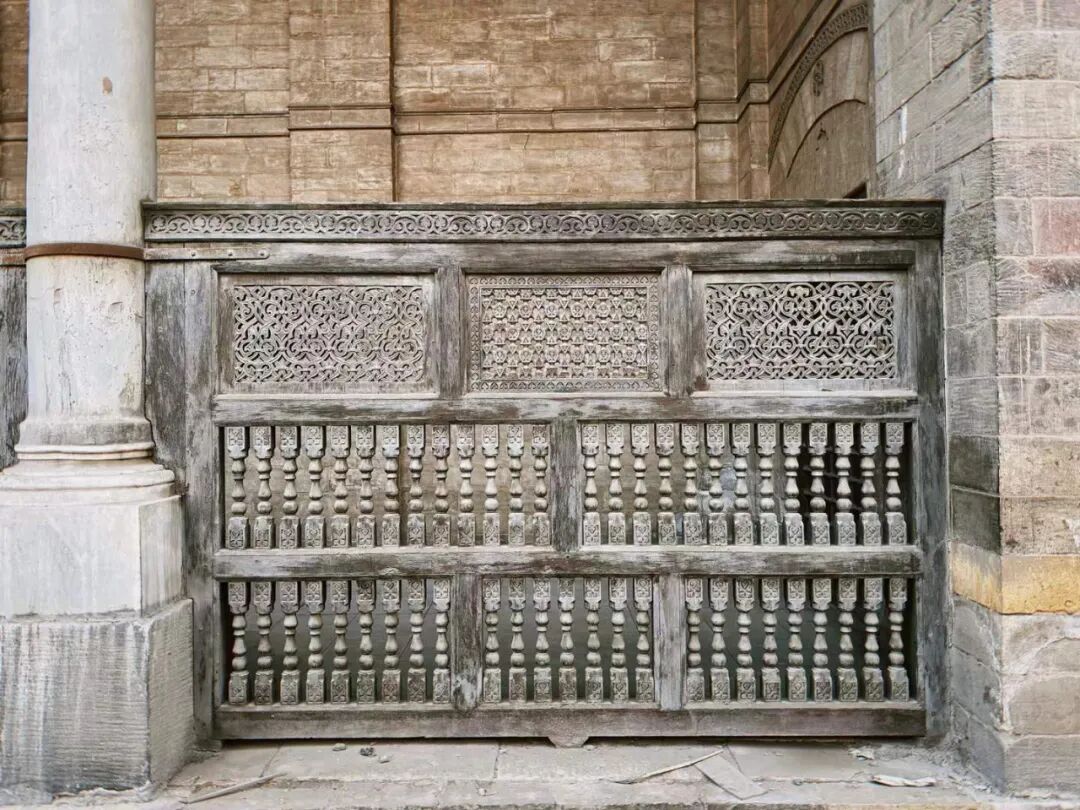
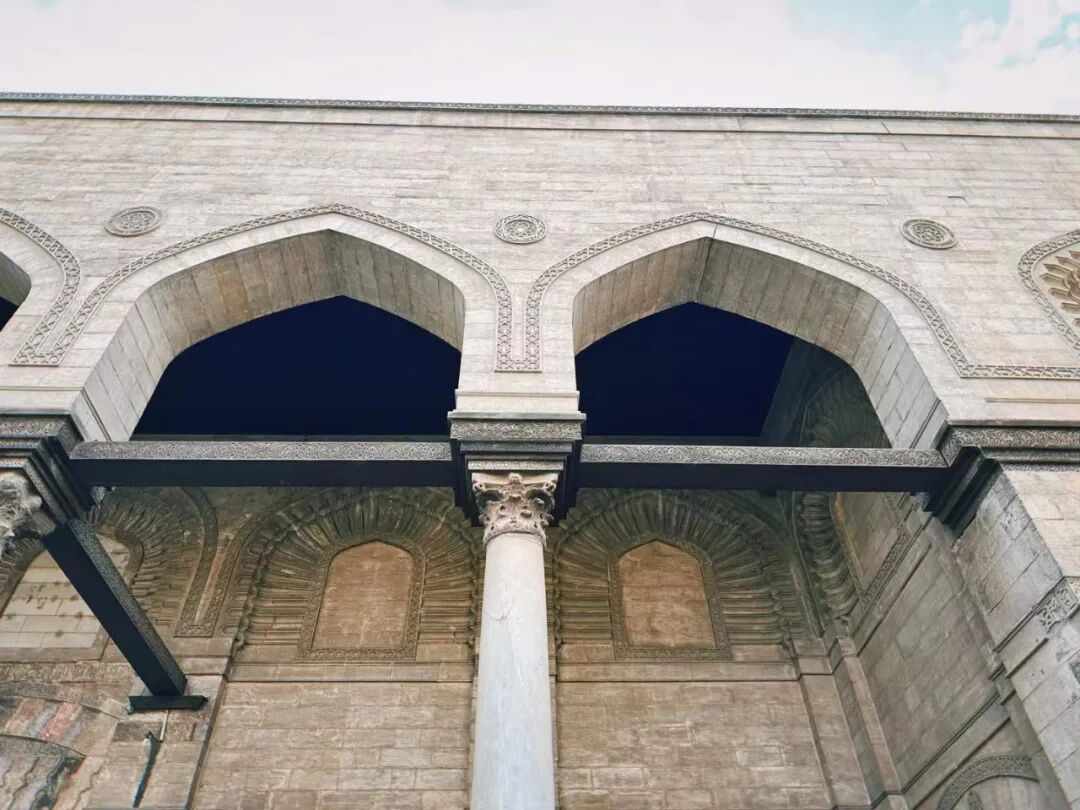
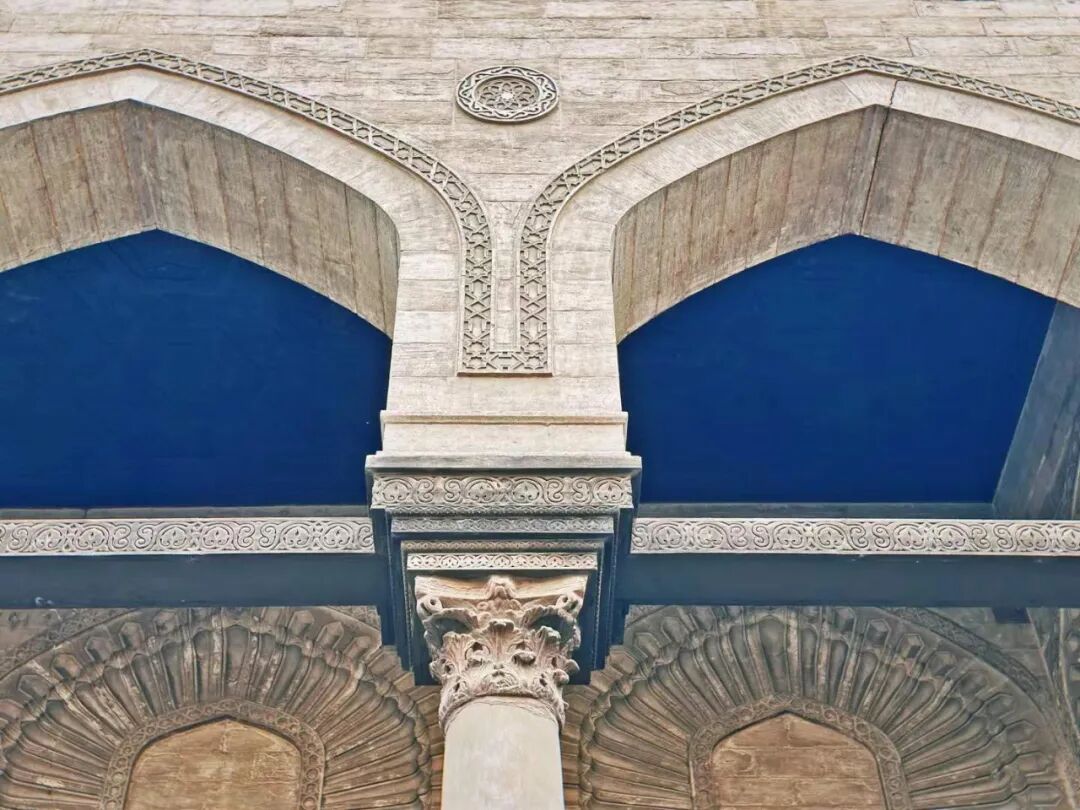
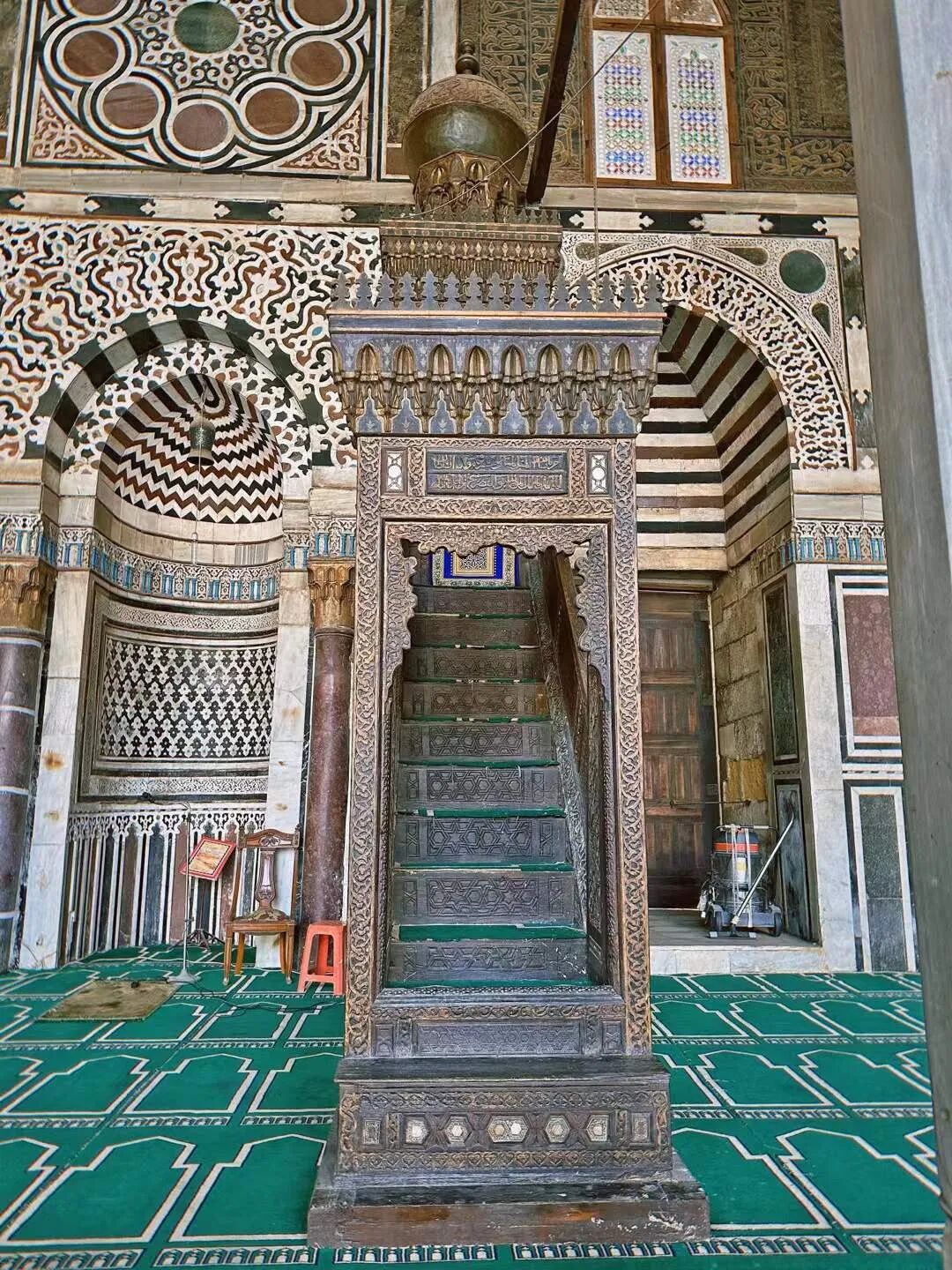
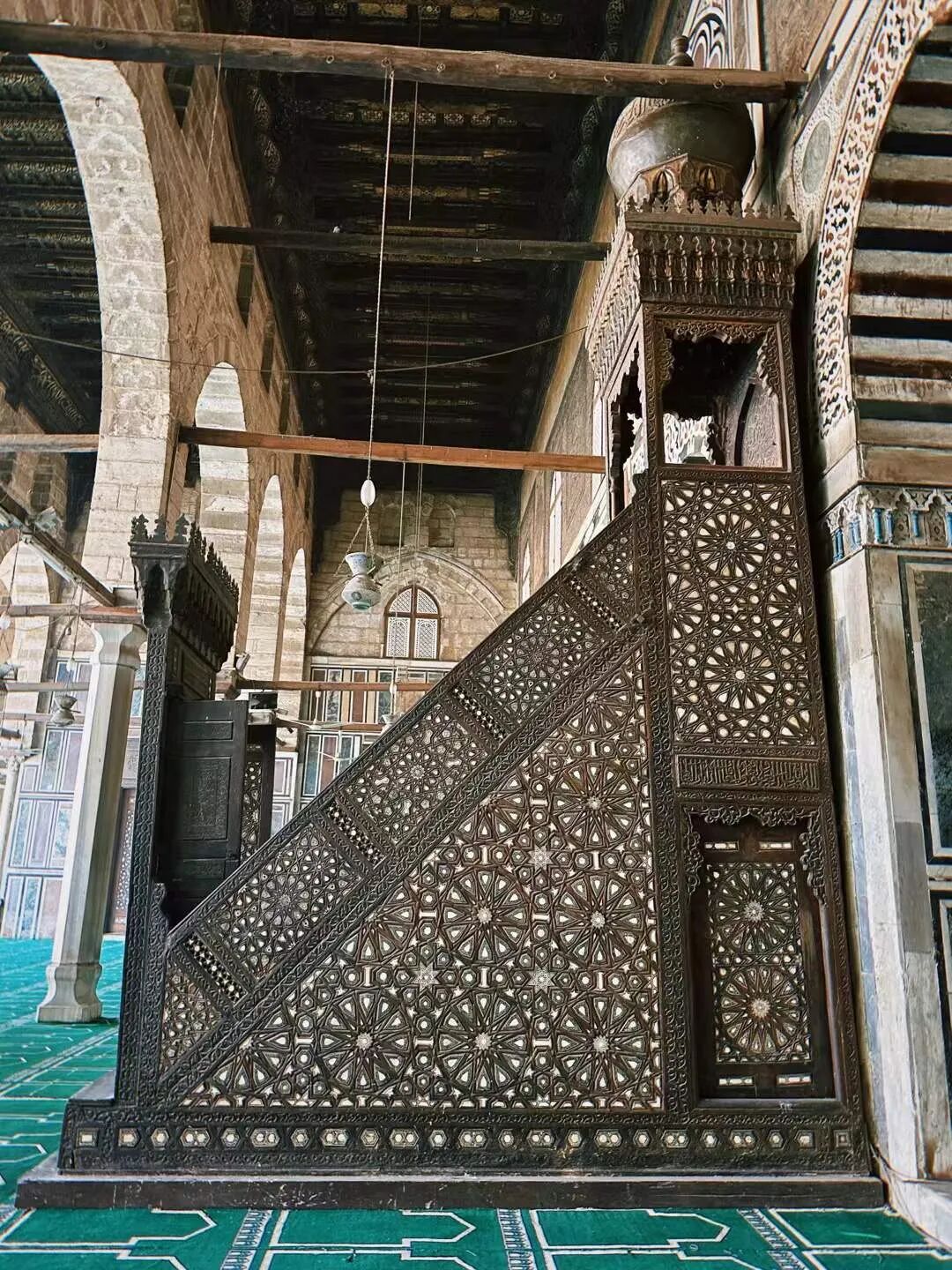
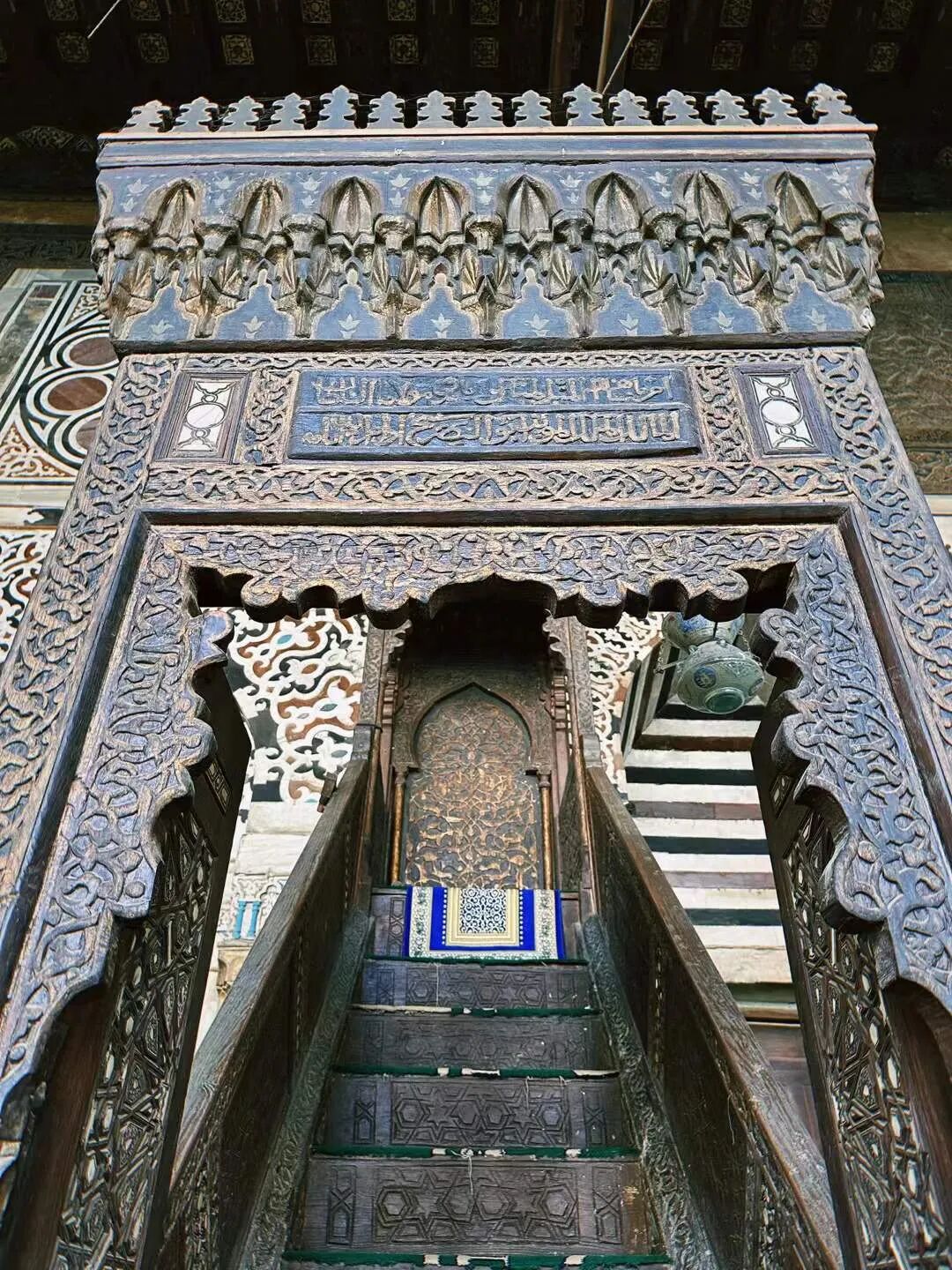
The interior of the Al-Salih Tala'i Mosque preserves late Fatimid Kufic script stucco carvings, which are very ornate. The column capitals in the main hall are from the pre-Islamic period, and the mihrab was rebuilt with painted wood during the Mamluk period. The minbar (pulpit) next to it also belongs to the Mamluk period. It features exquisite craftsmanship and is one of the oldest surviving minbars in Cairo.
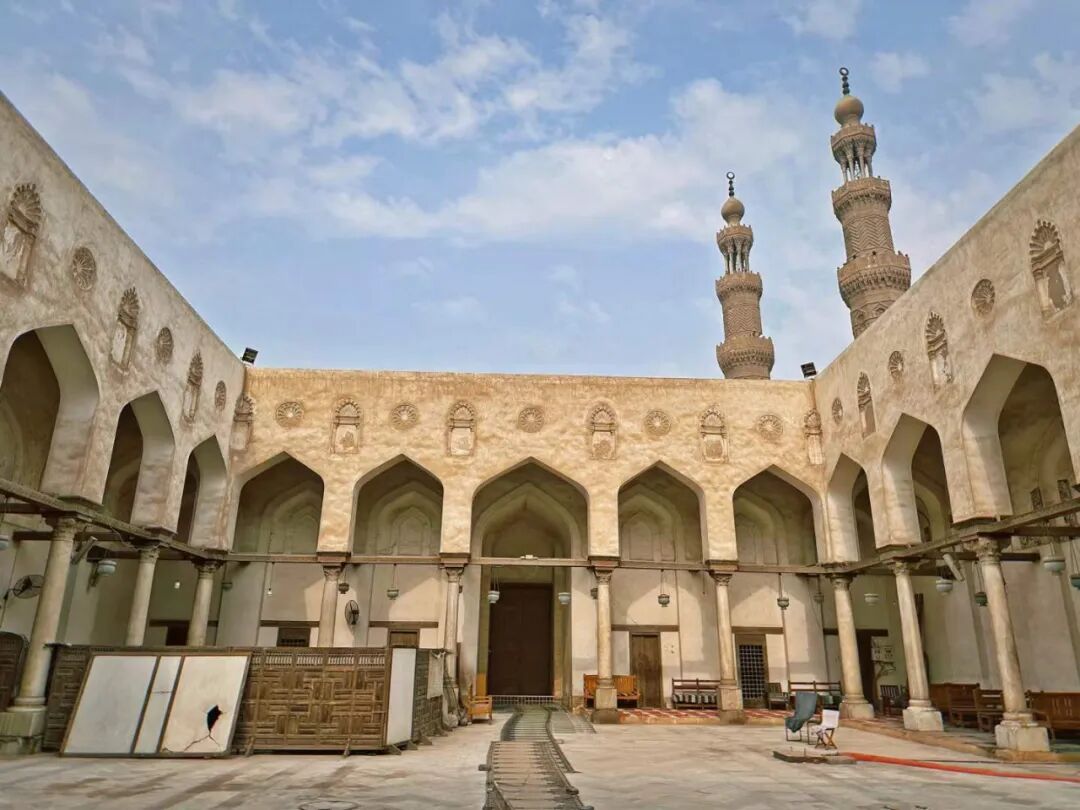
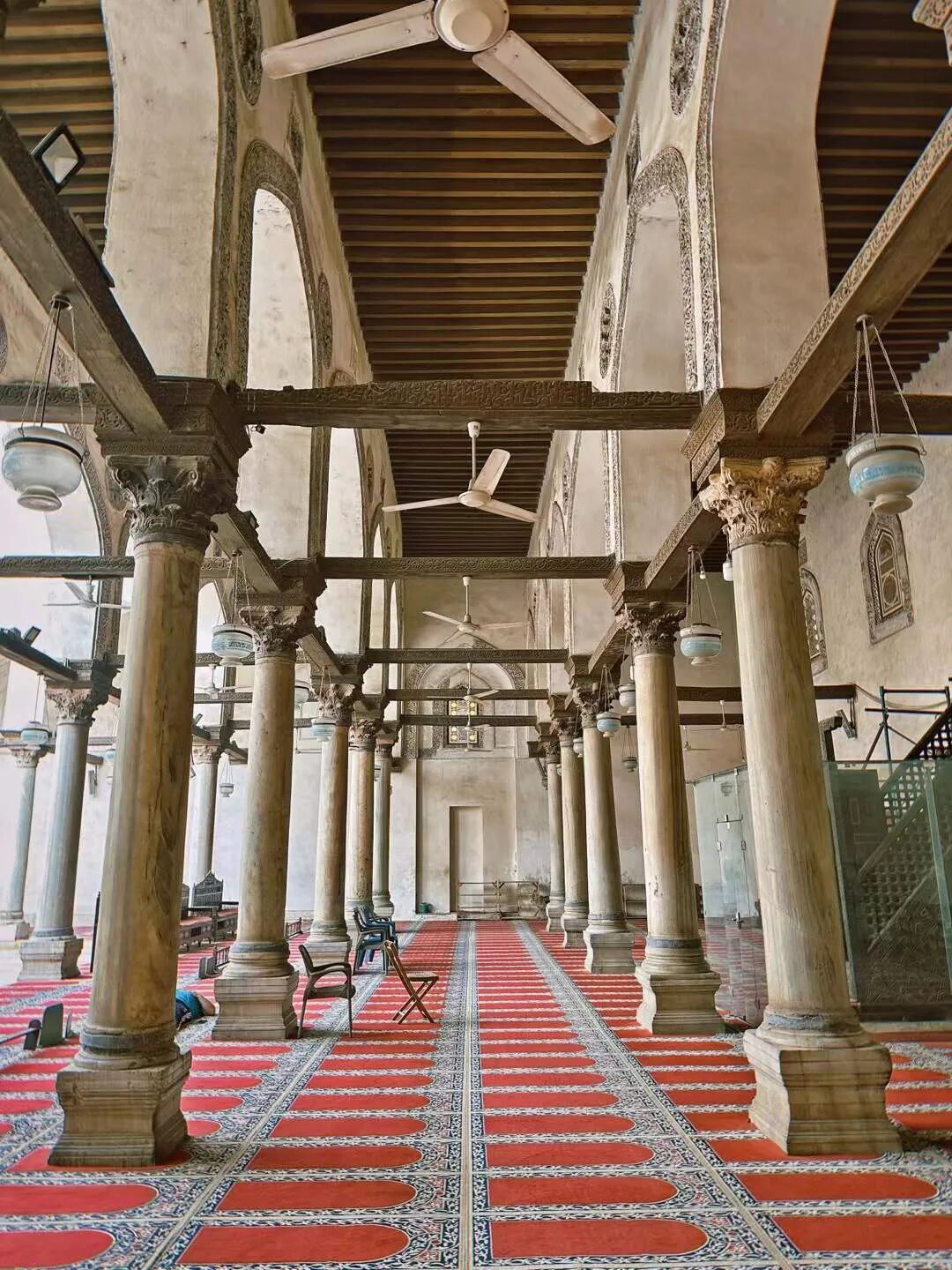
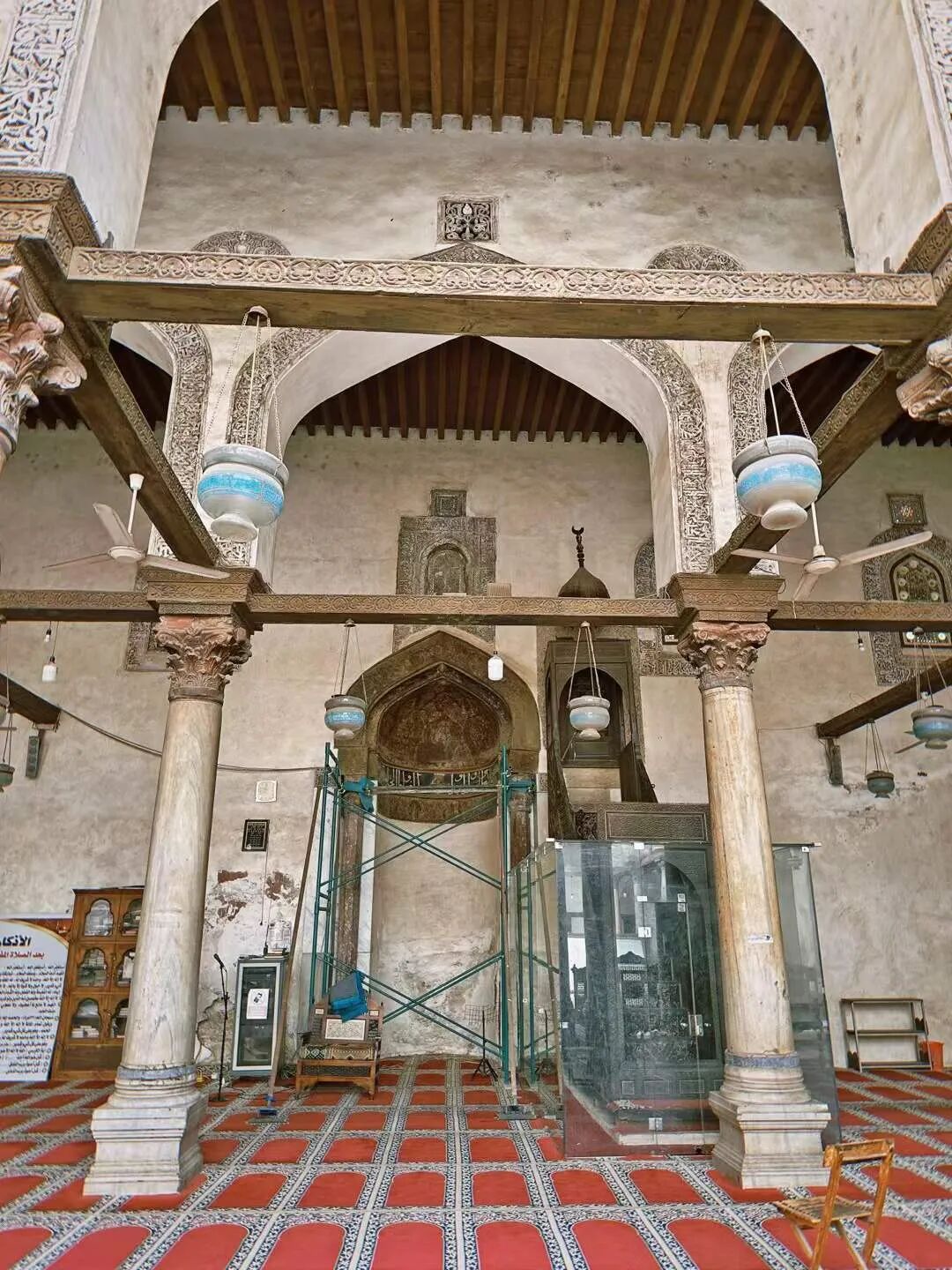
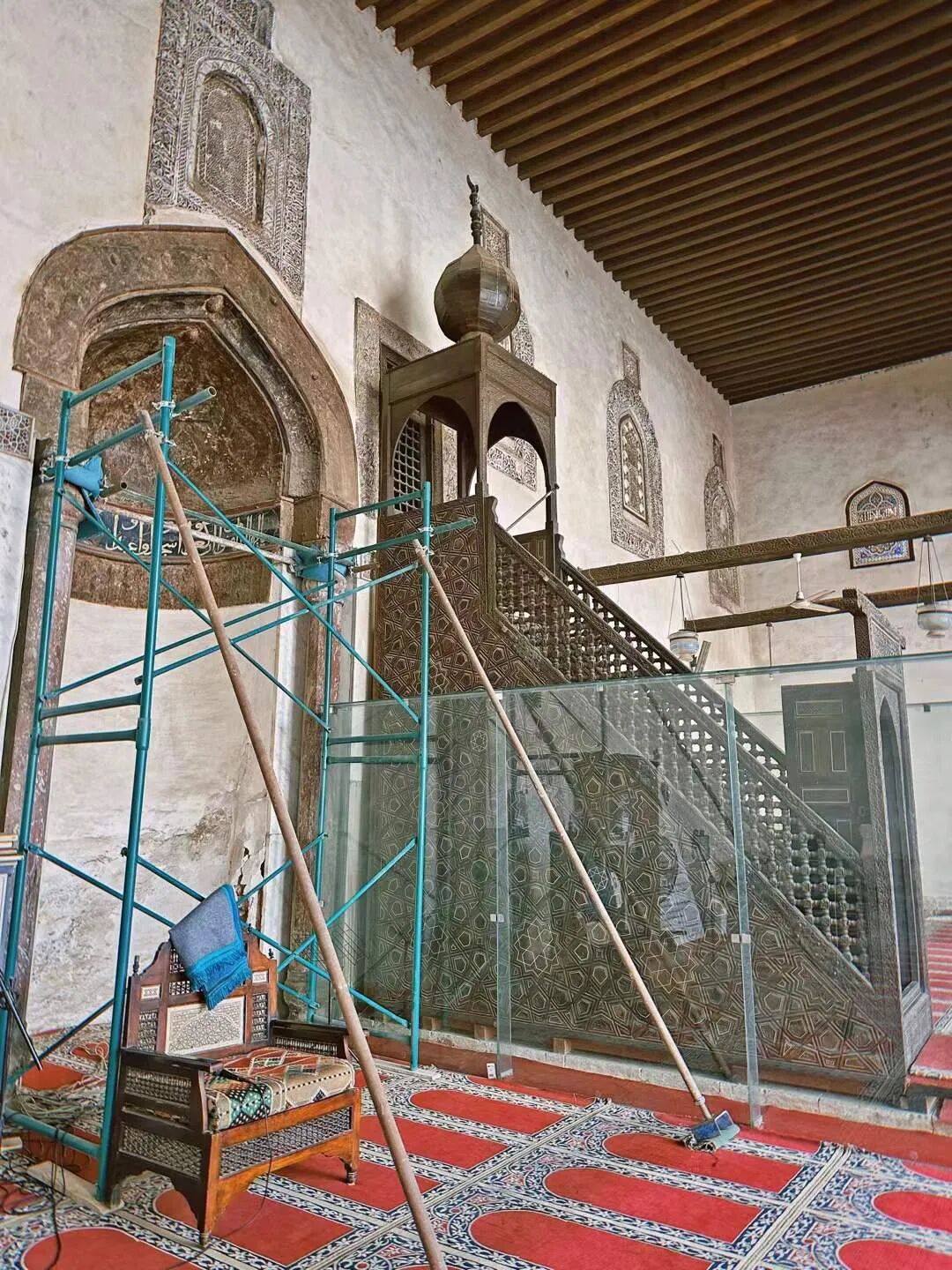
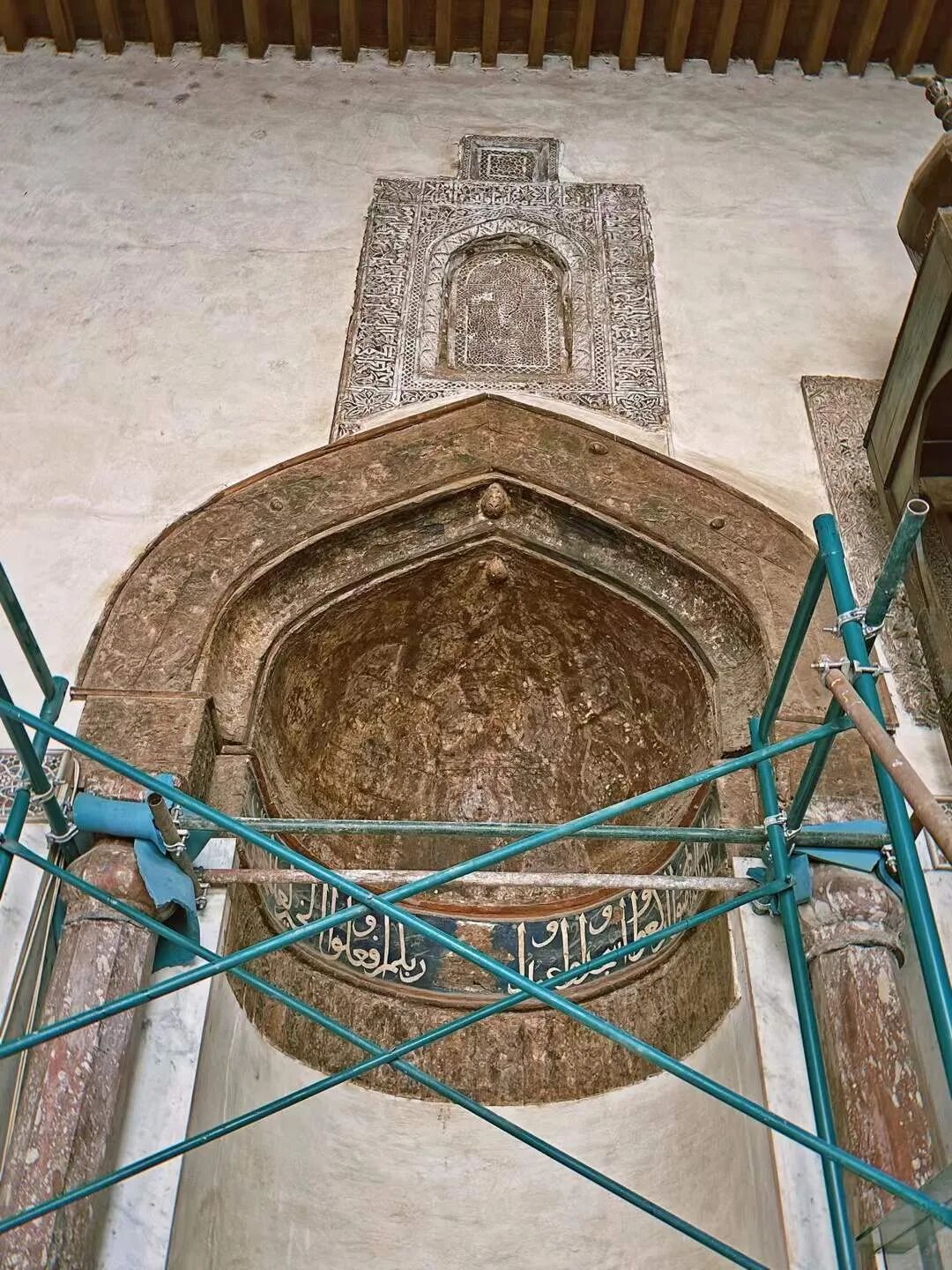
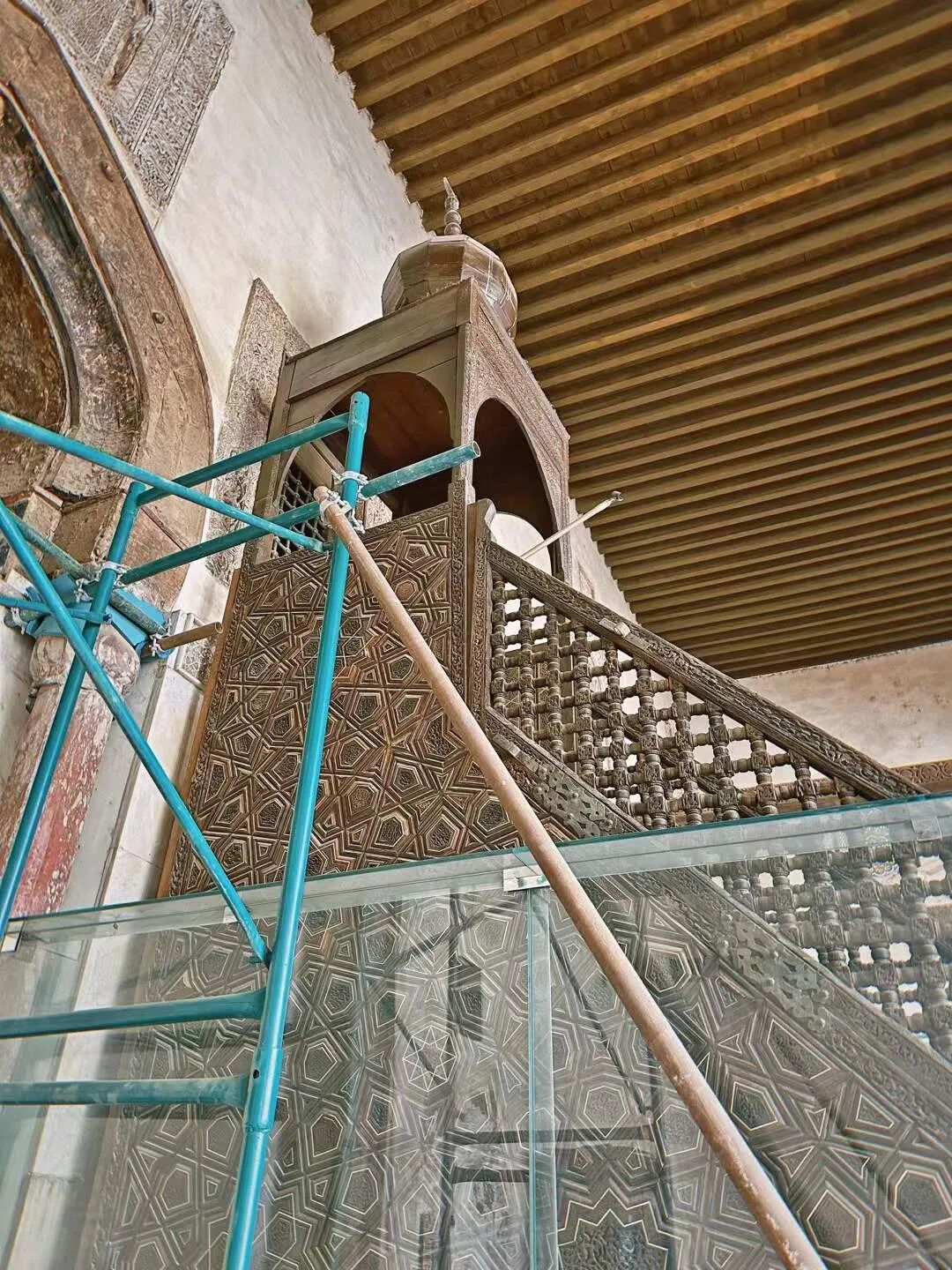
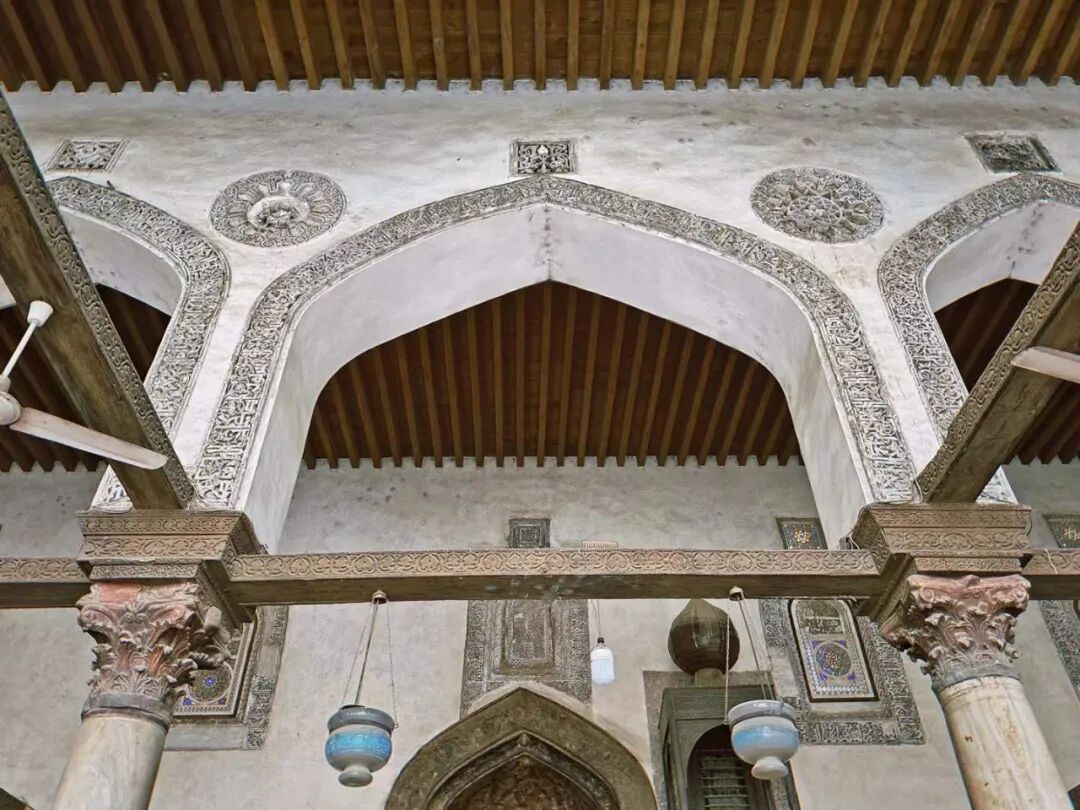
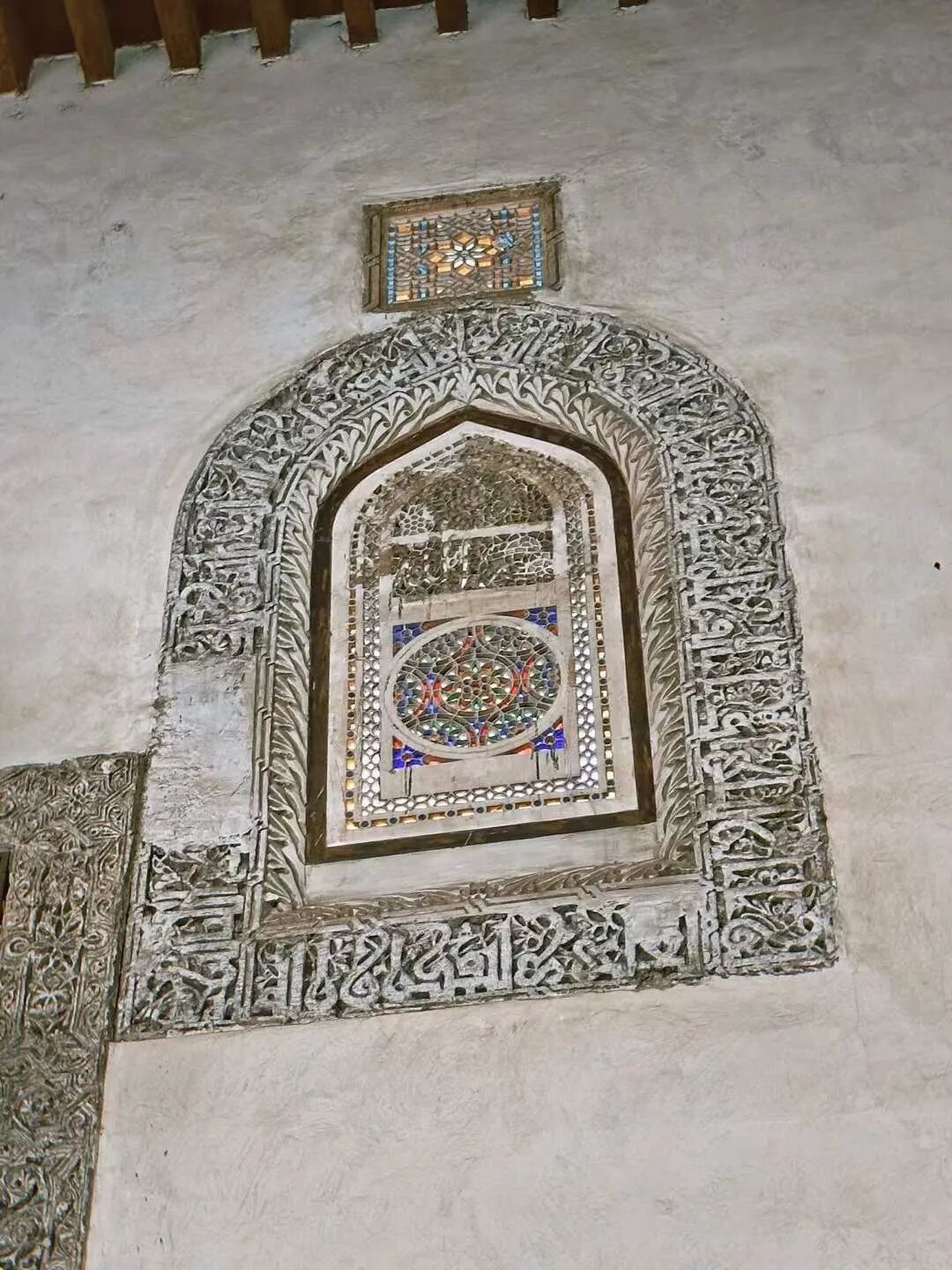
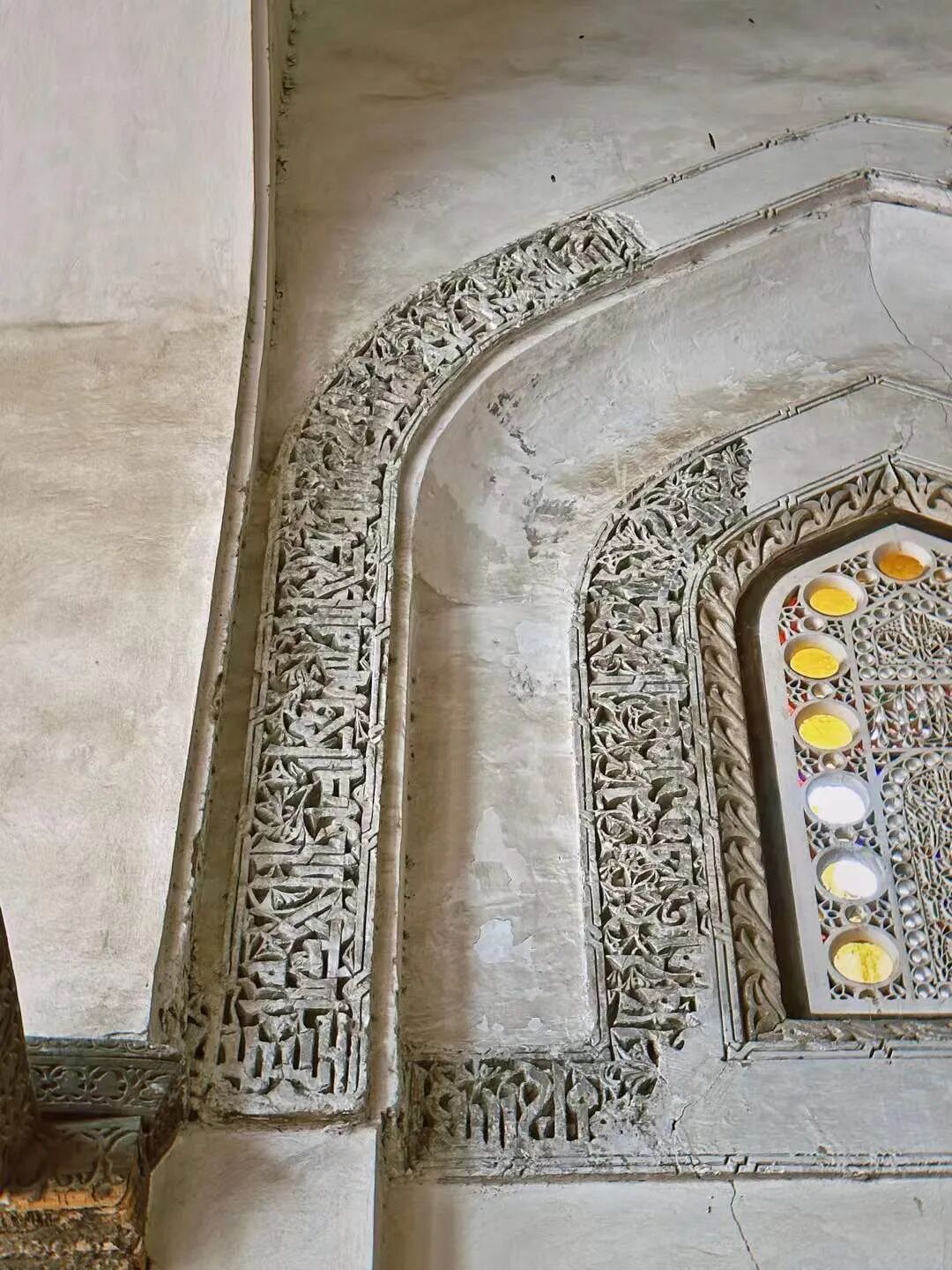
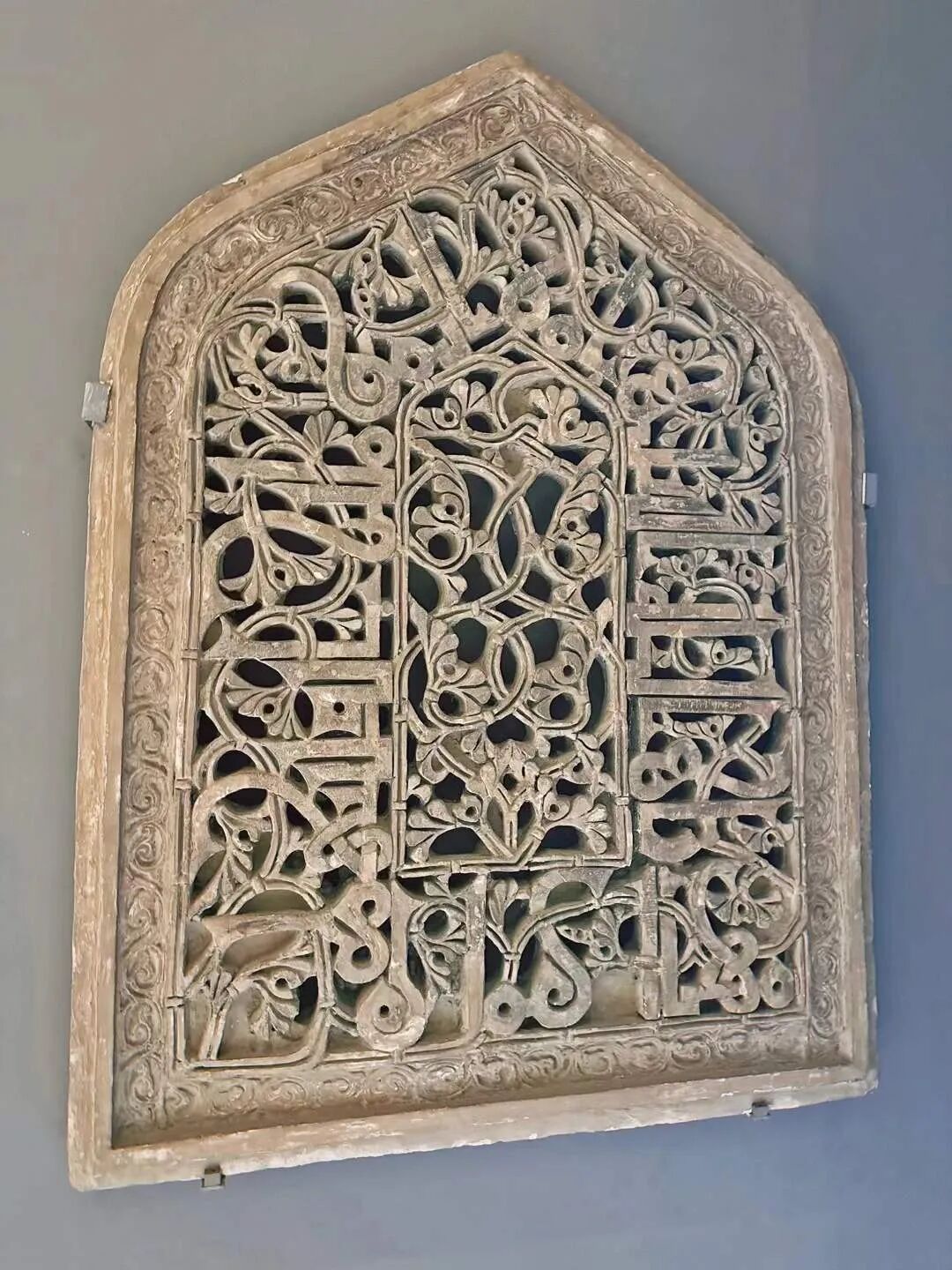
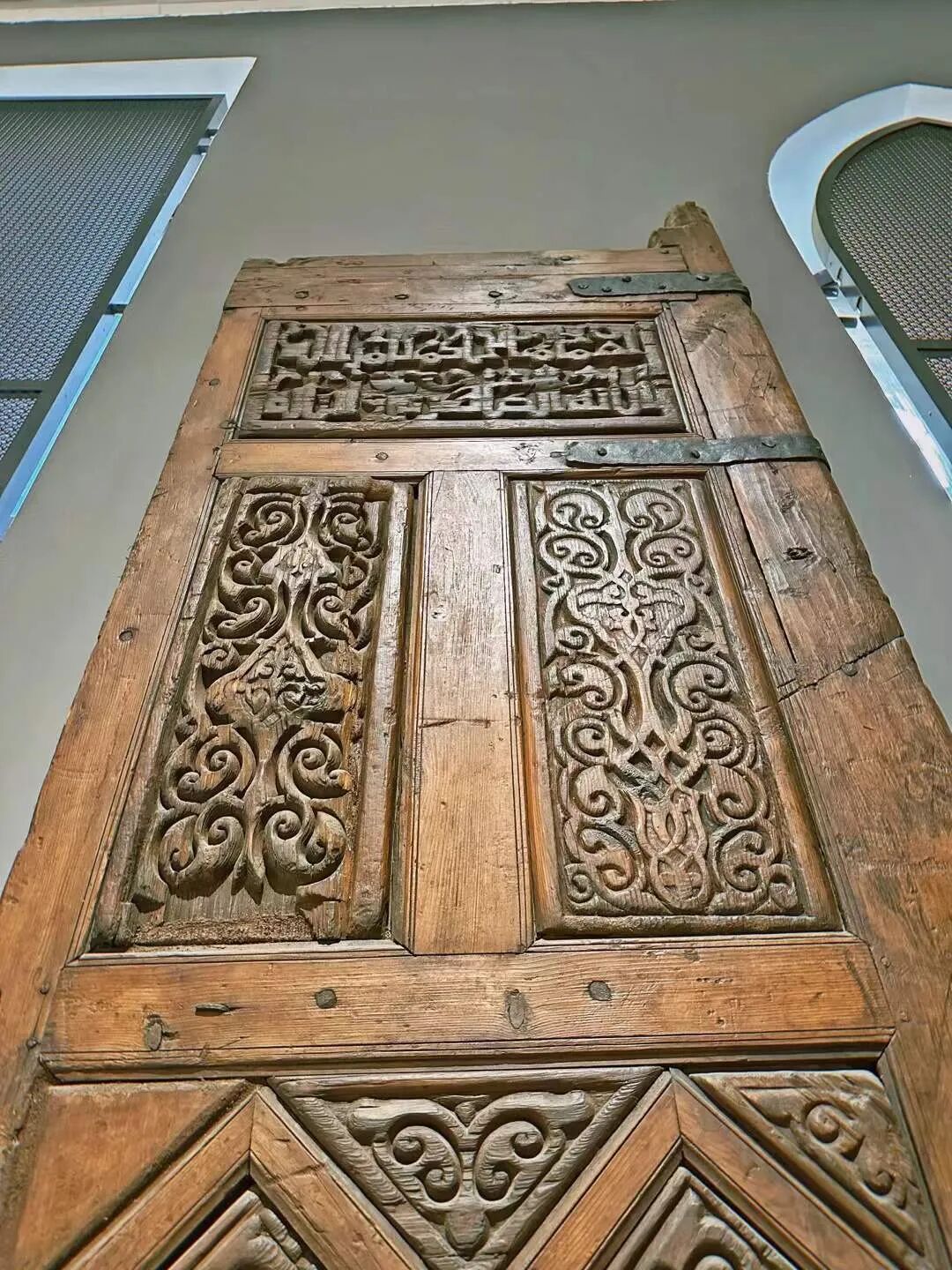
The late Fatimid stucco carved windows and wooden doors from the Al-Salih Tala'i Mosque, now in the Museum of Islamic Art in Cairo, are masterpieces of late Fatimid carving art.
Mahmud al-Kurdi Mosque: 1395
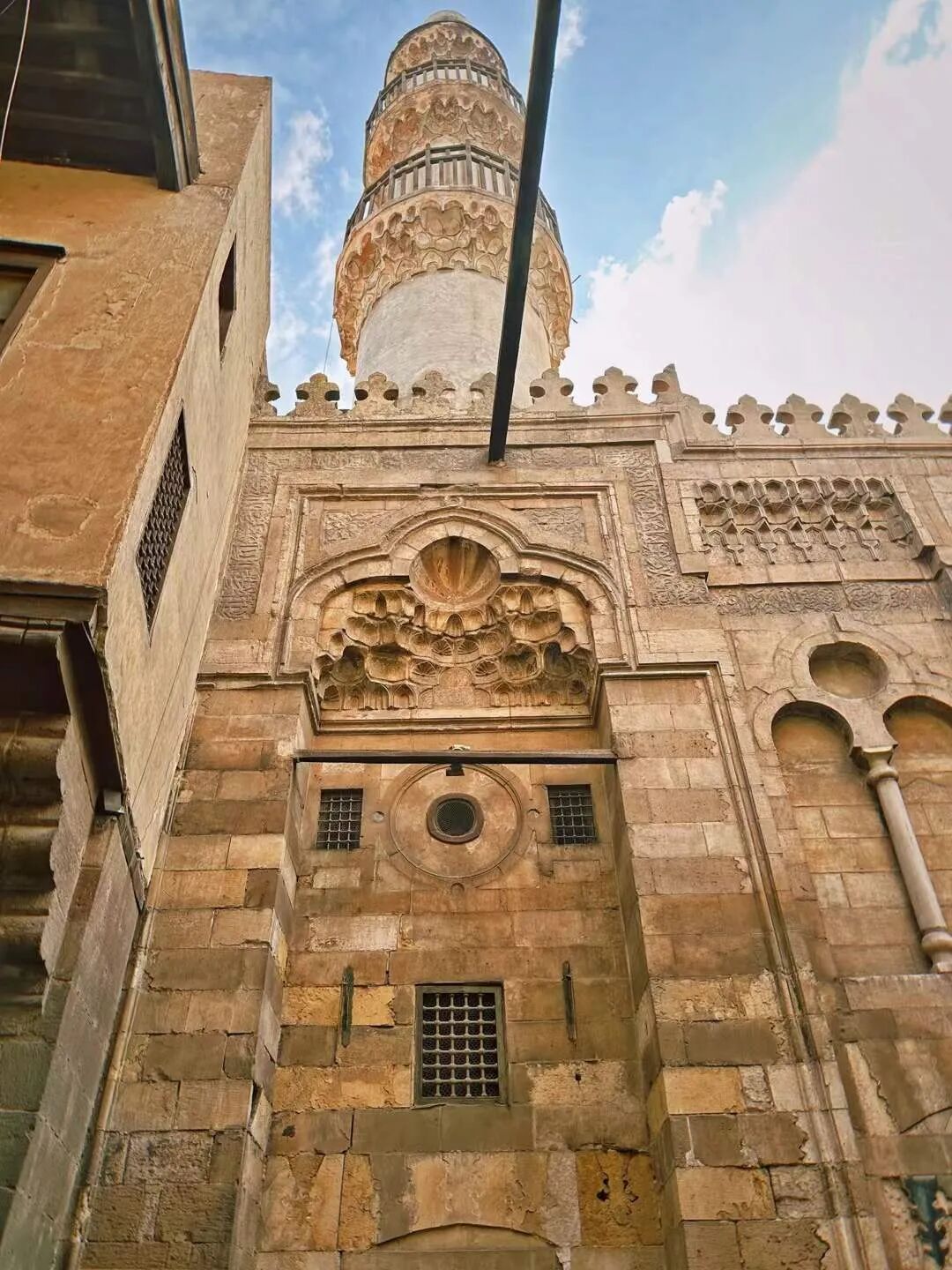
The Mahmud al-Kurdi Mosque was built in 1395 by Mahmud al-Kurdi, a high-ranking official of the Mamluk dynasty. The Mahmud al-Kurdi Mosque features the earliest dome carved with V-shaped patterns; domes before this had spiral patterns. The dome on the minaret was also very rare at the time, though it was widely used later during the Ottoman dynasty.
Qijmas al-Ishaqi Mosque: 1480
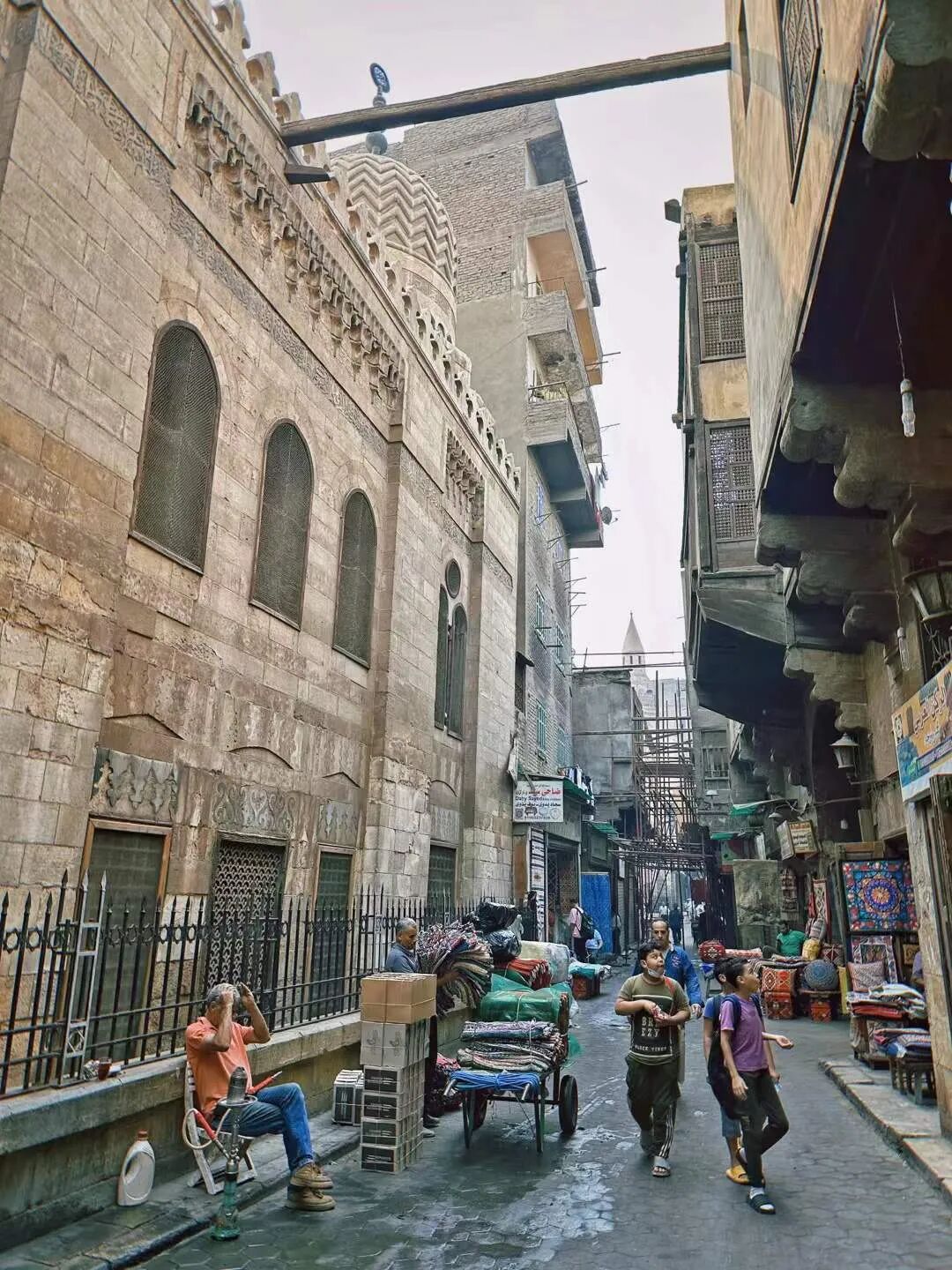
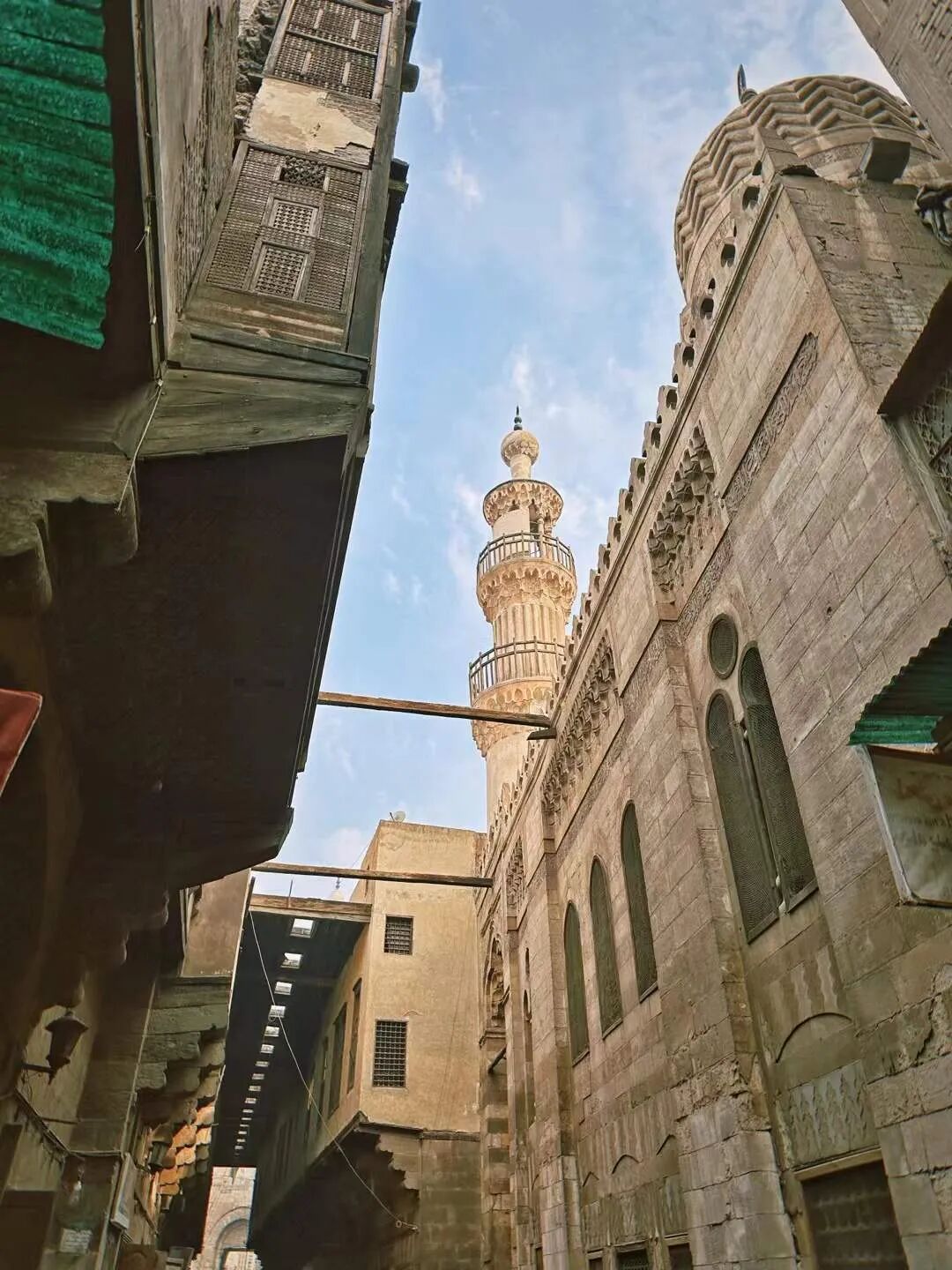
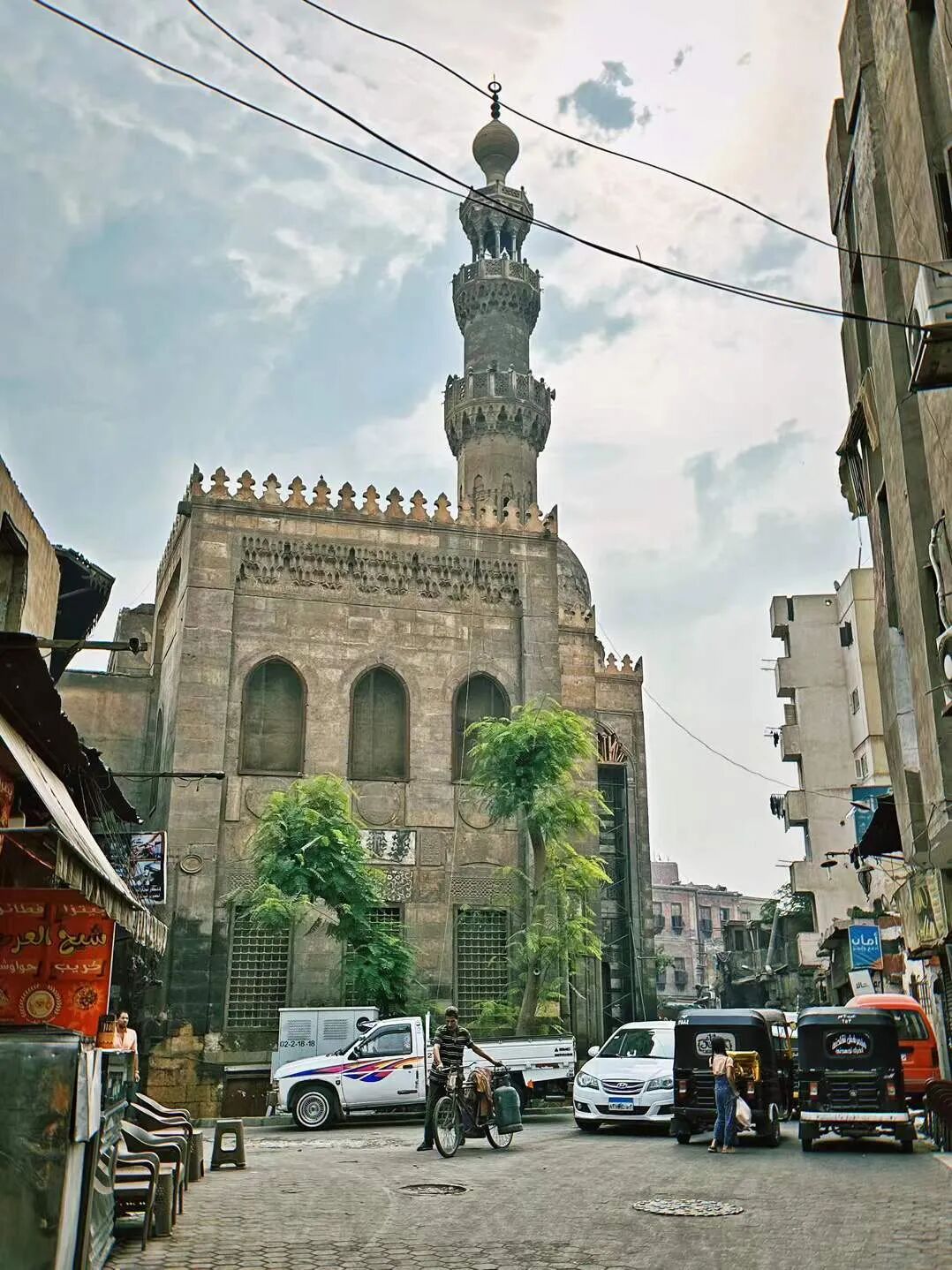
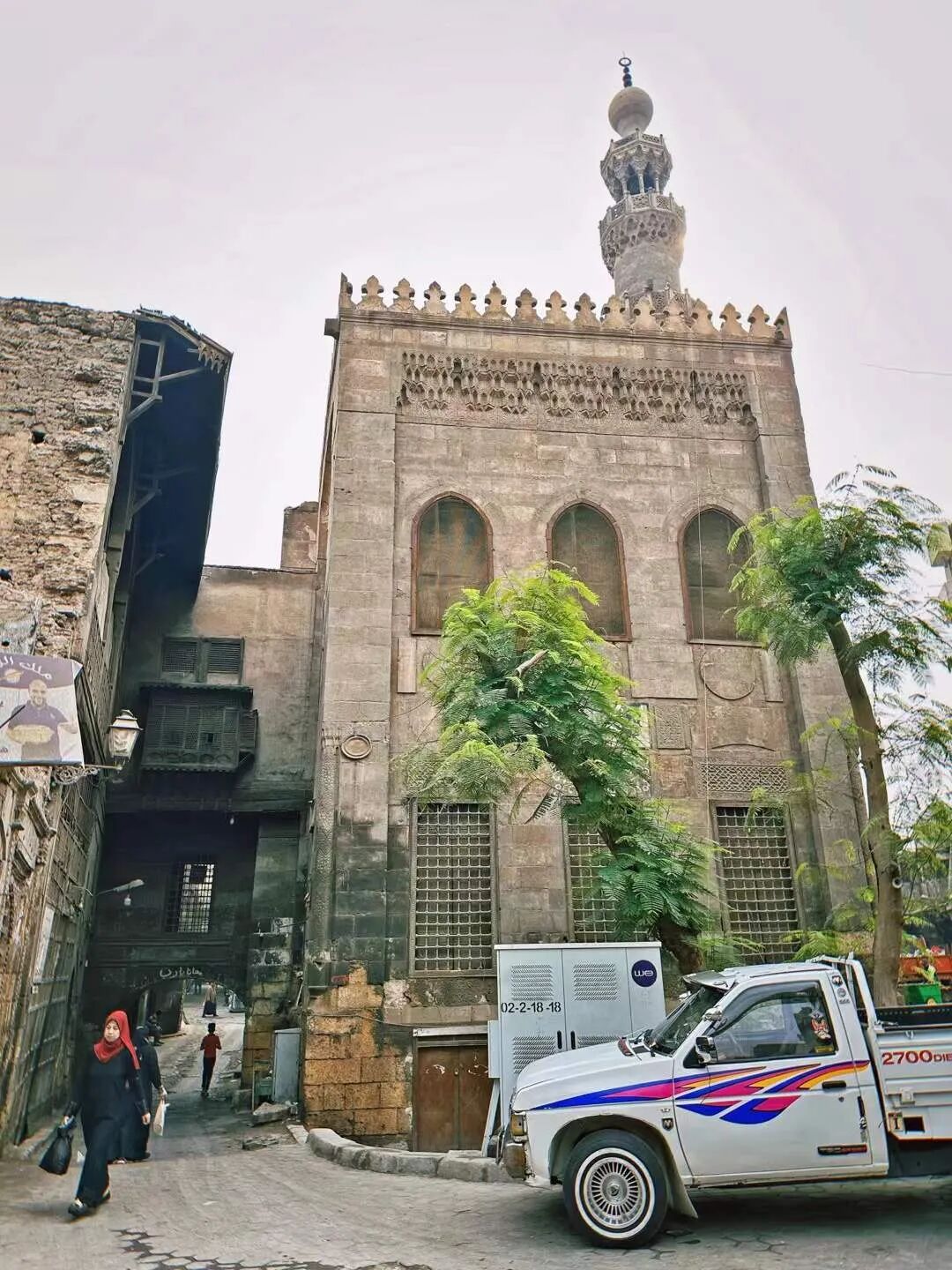
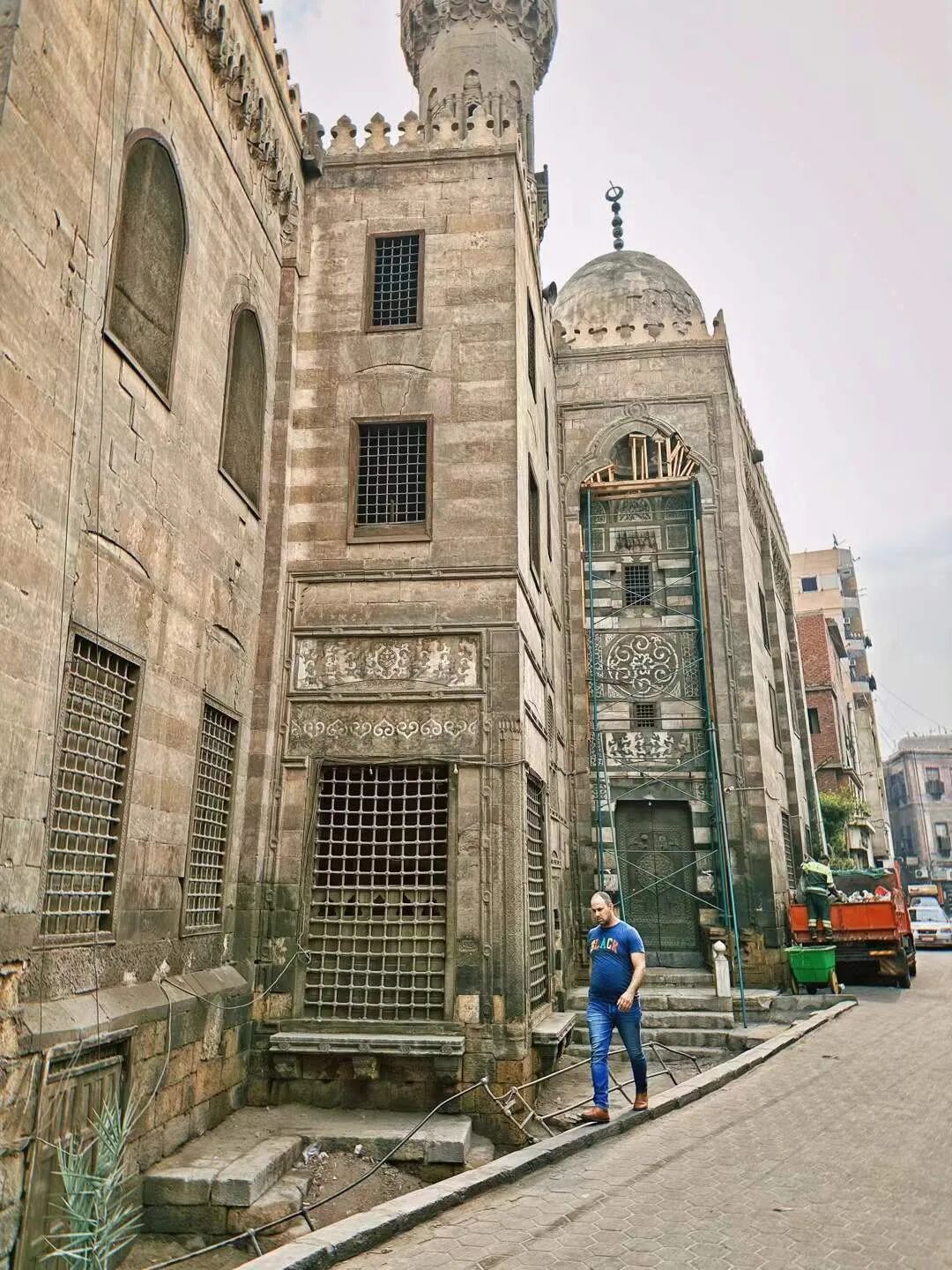
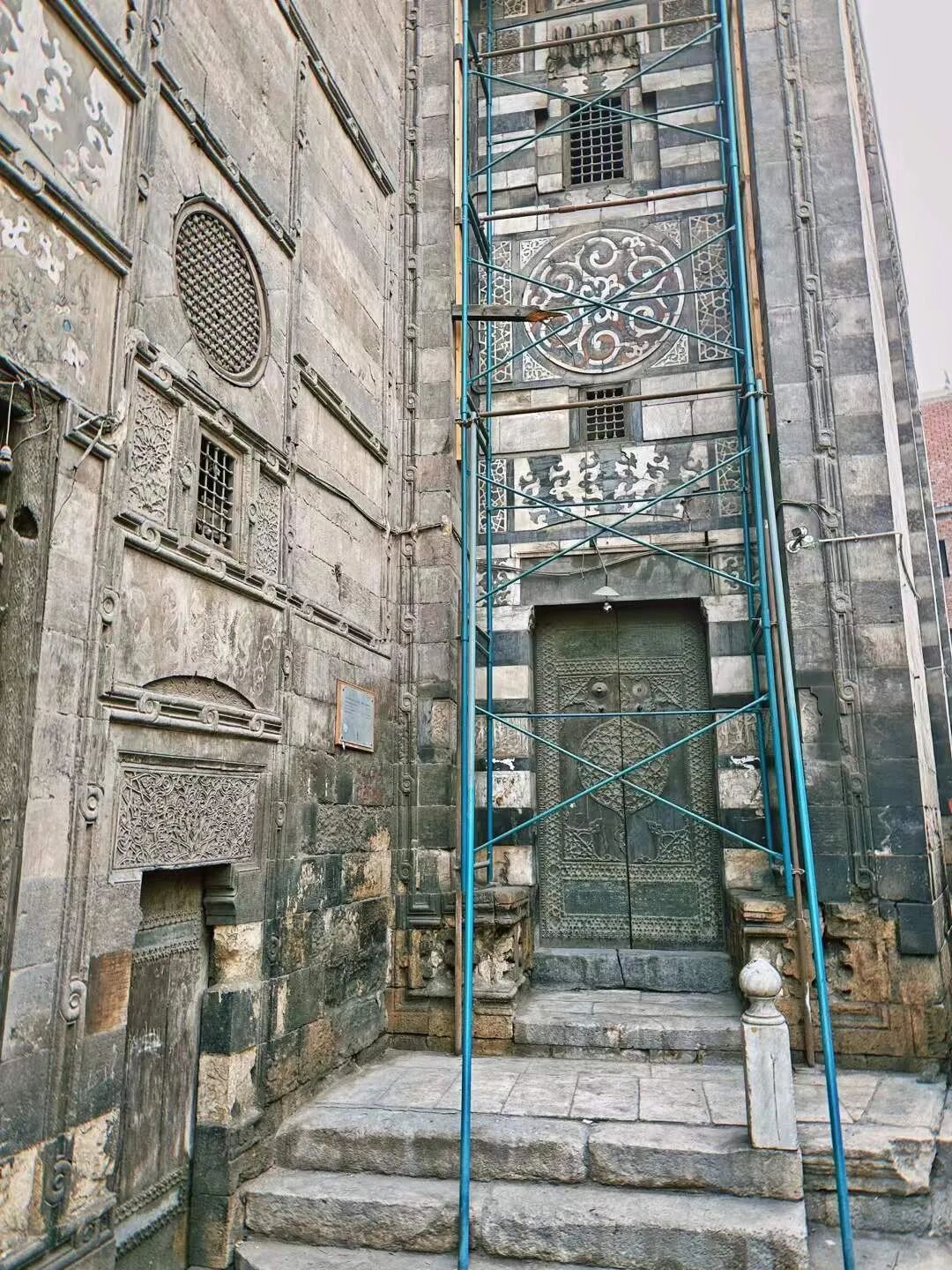
Walking east from the south gate, the first thing you see is the Qijmas al-Ishaqi Mosque, built between 1480 and 1481 by the Mamluk emir Qijmas al-Ishaqi. This mosque is considered a model and masterpiece of late Mamluk architecture and is printed on the 50 Egyptian pound banknote. Unfortunately, the interior was under renovation when we visited, so we could only see the outside.
Qijmas al-Ishaqi was a high-ranking official in the late Mamluk dynasty. He was responsible for the royal stables and Hajj affairs, and also served as governor of Alexandria and Syria.
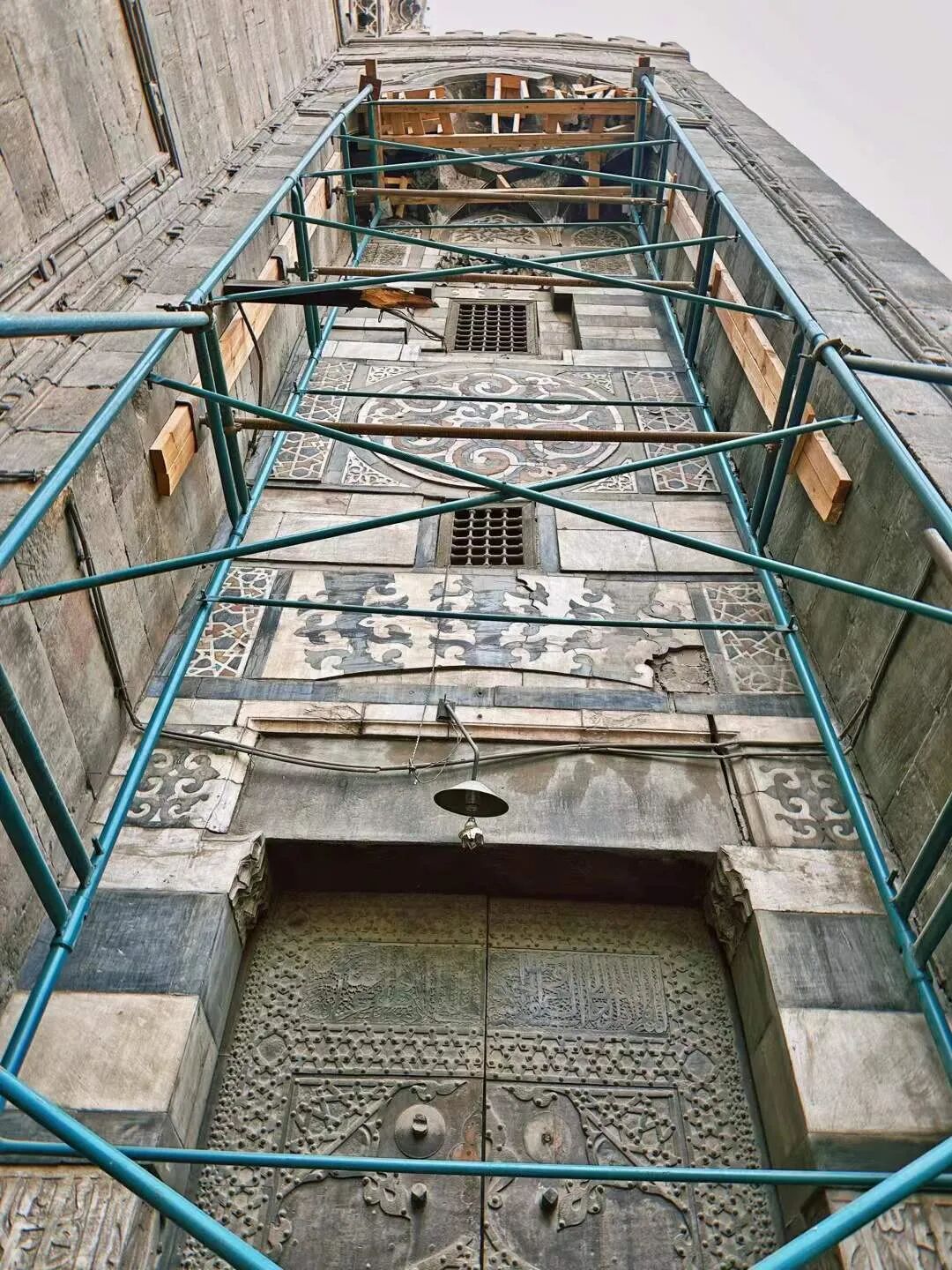
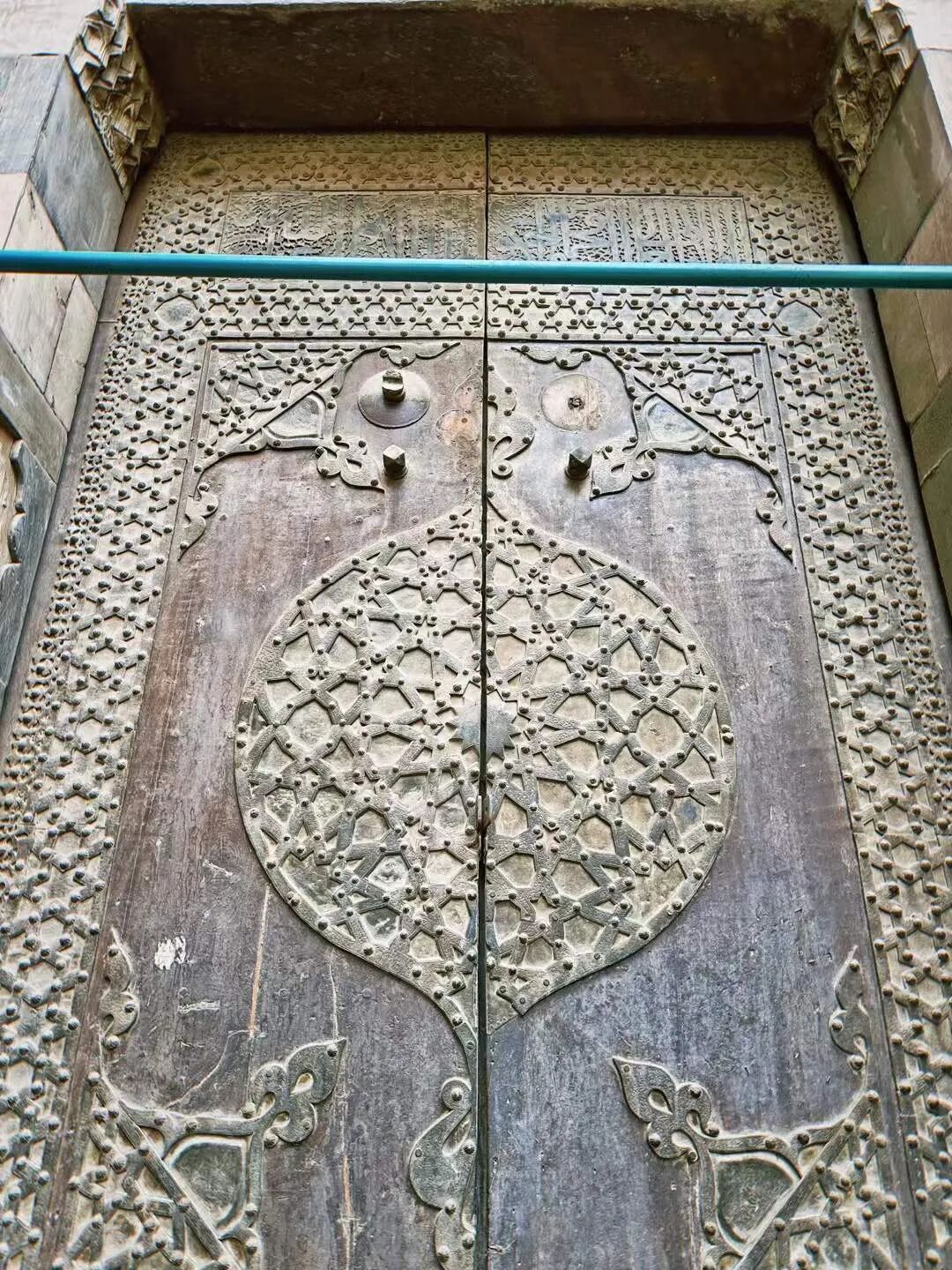
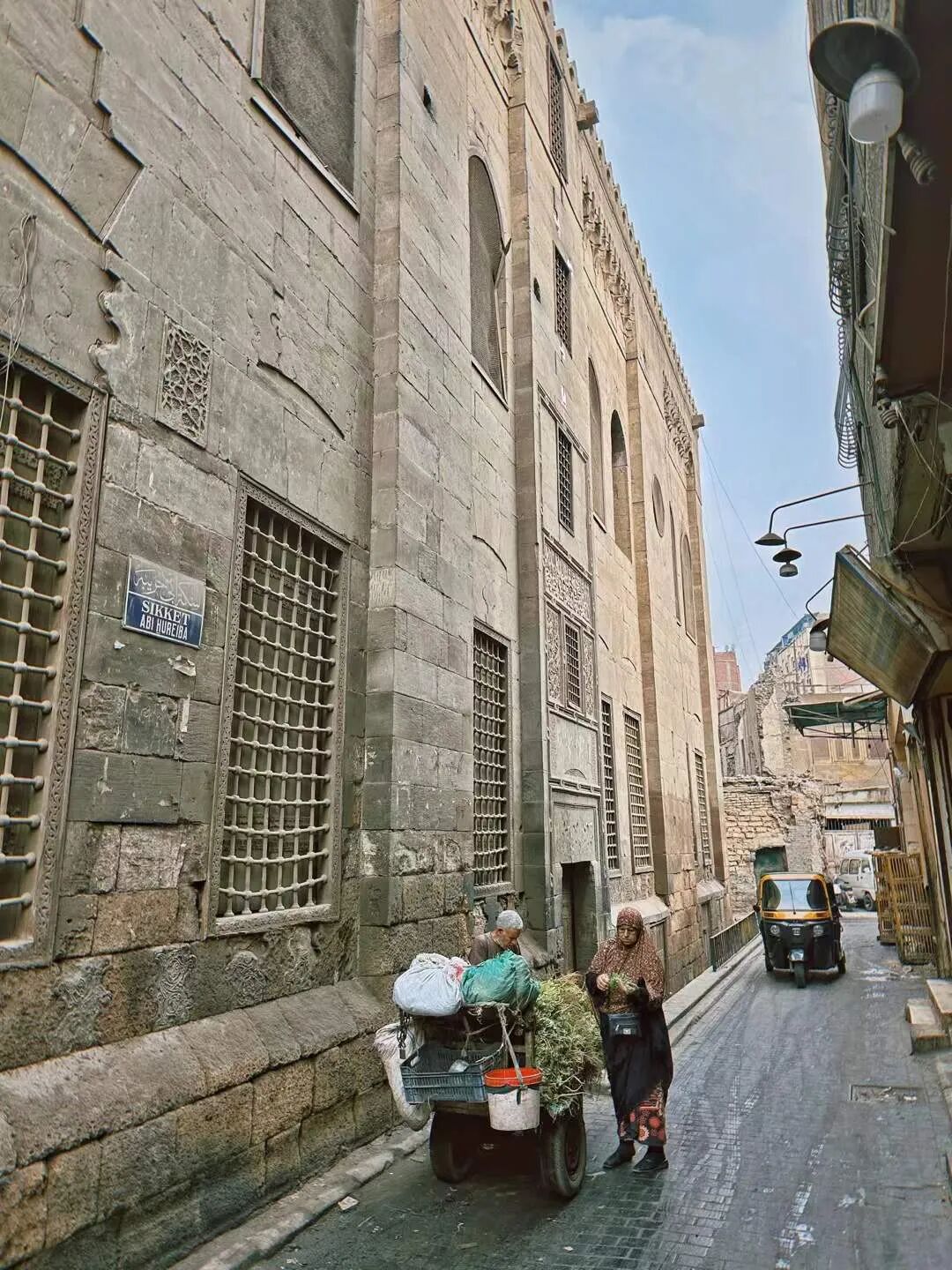
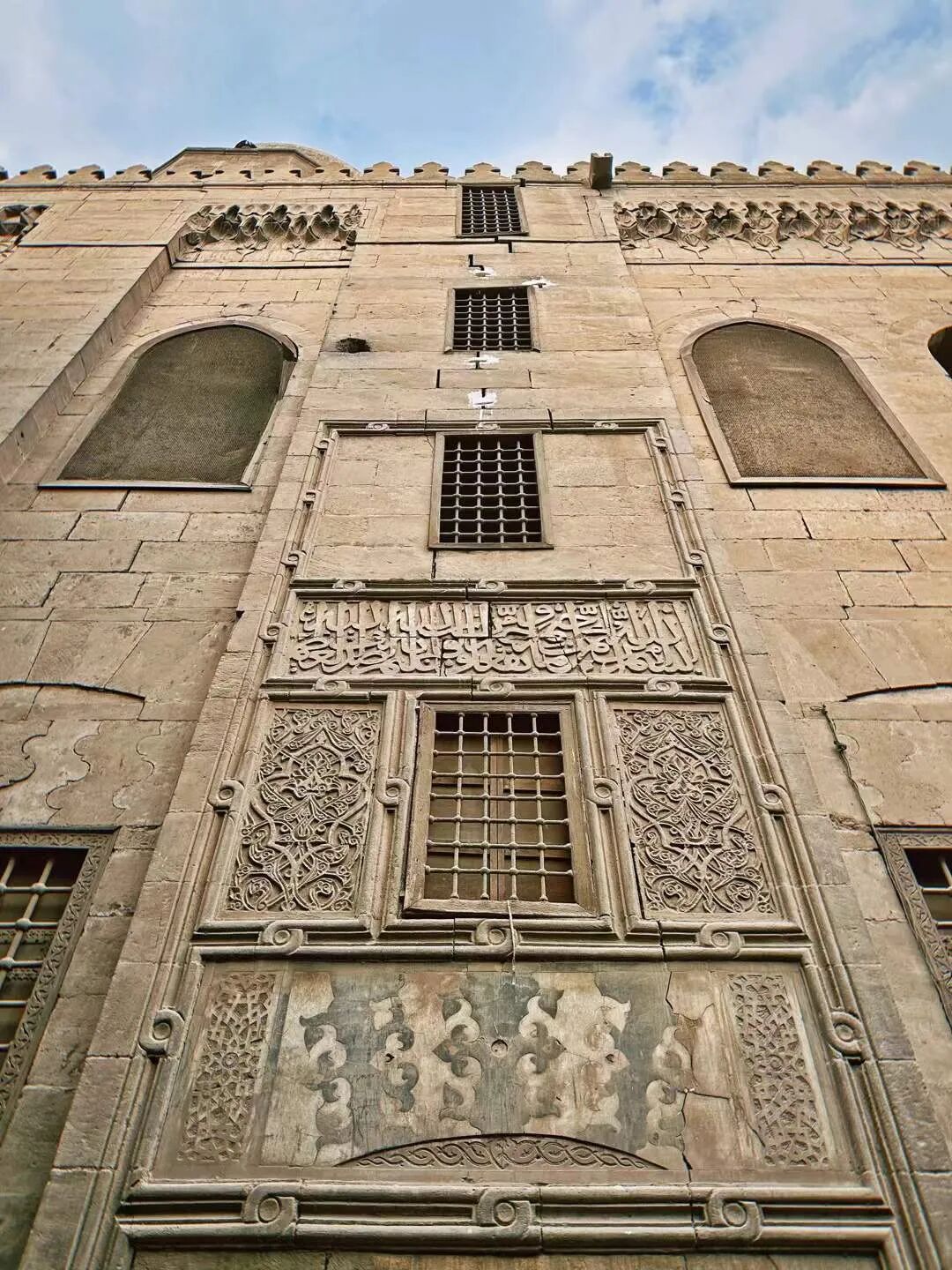
The Qijmas al-Ishaqi Mosque is also a hanging mosque, with the entire ground floor used for shops and the main prayer hall located on the upper level. The main building and the annex are connected by a bridge building, which features mashrabiyya wooden screens. The mosque's facade shows the architectural style typical of the Mamluk Sultan Qaitbay (reigned 1468-96). The arabesque stone carvings, the stalactite-like cornices (muqarnas) above the windows, and the combination of red, black, and white marble are all very delicate. The main gate once had bronze door knockers shaped like dragon heads, but they were recently stolen.
Mosque of Ahmad al-Mihmandar: 1324
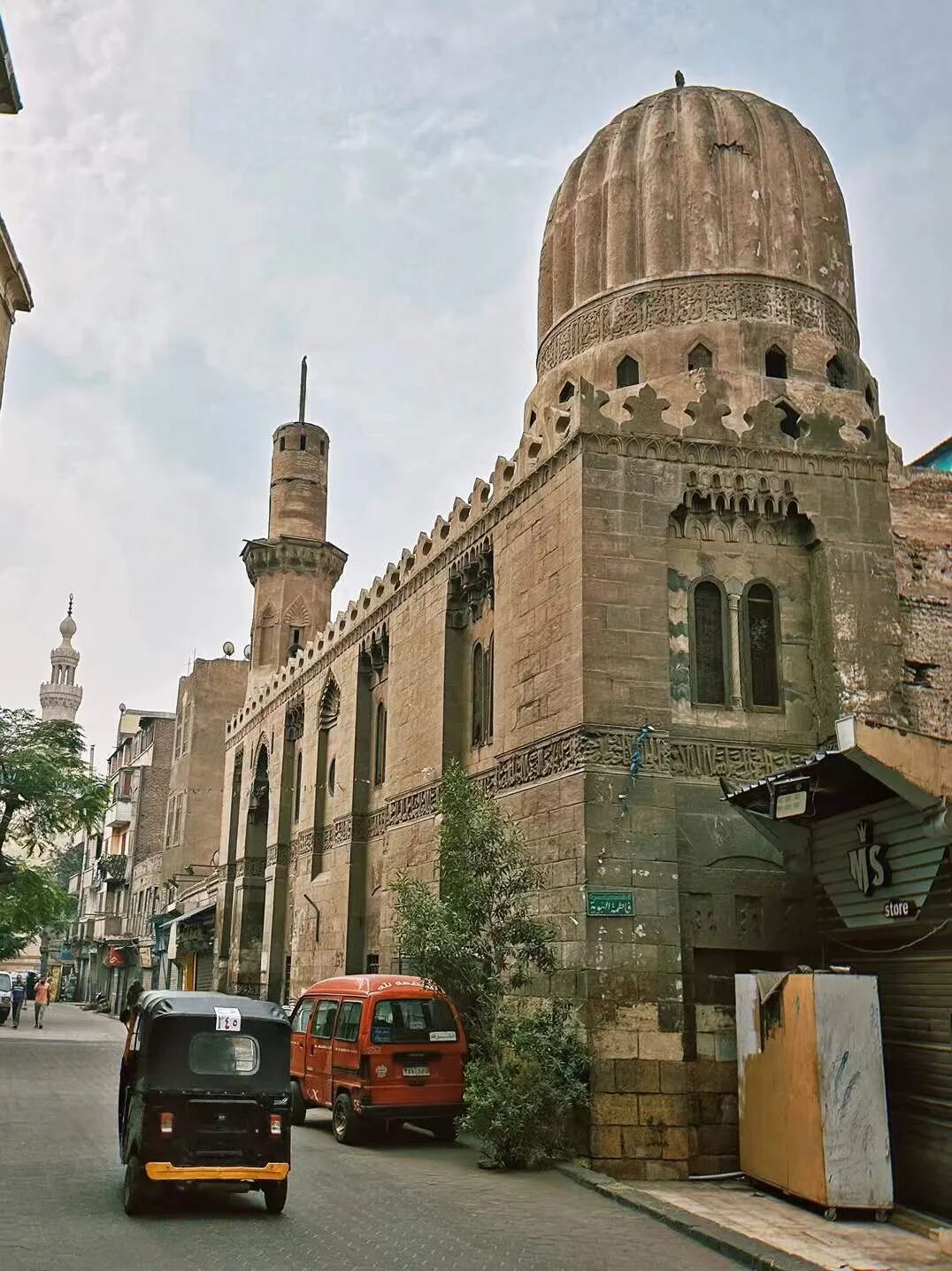
Continuing forward, you reach the Mosque of Ahmad al-Mihmandar, built between 1324 and 1325 by the Mamluk Emir Ahmad al-Mihmandar. This place was originally a madrasa (religious school) and was not converted into a mosque until the Ottoman period in 1722. The mosque's facade is very exquisite, featuring the typical Mamluk decorative style with calligraphic inscriptions and muqarnas cornices.
Mosque of Amir Altinbugha al-Mardani: 1338
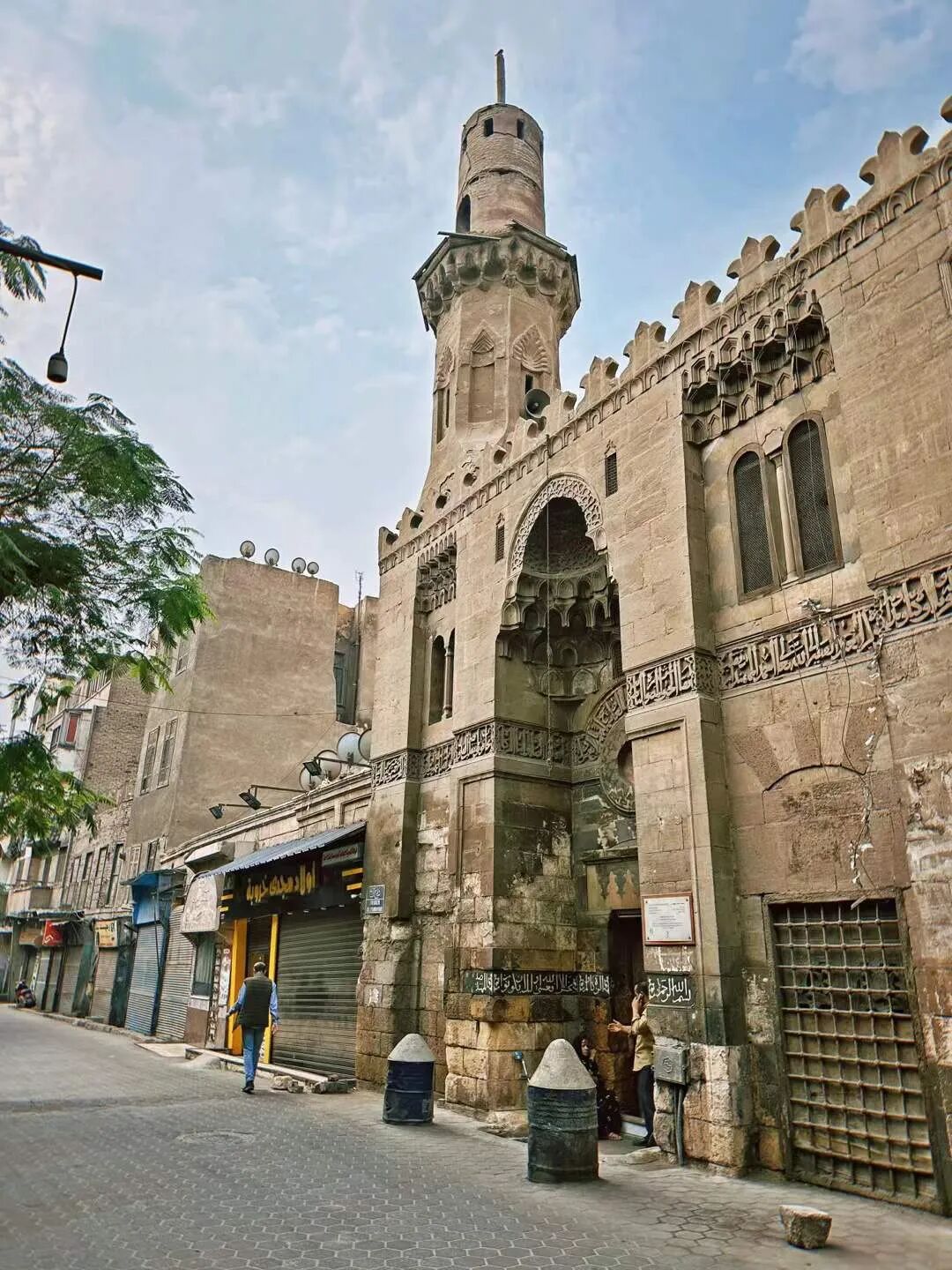
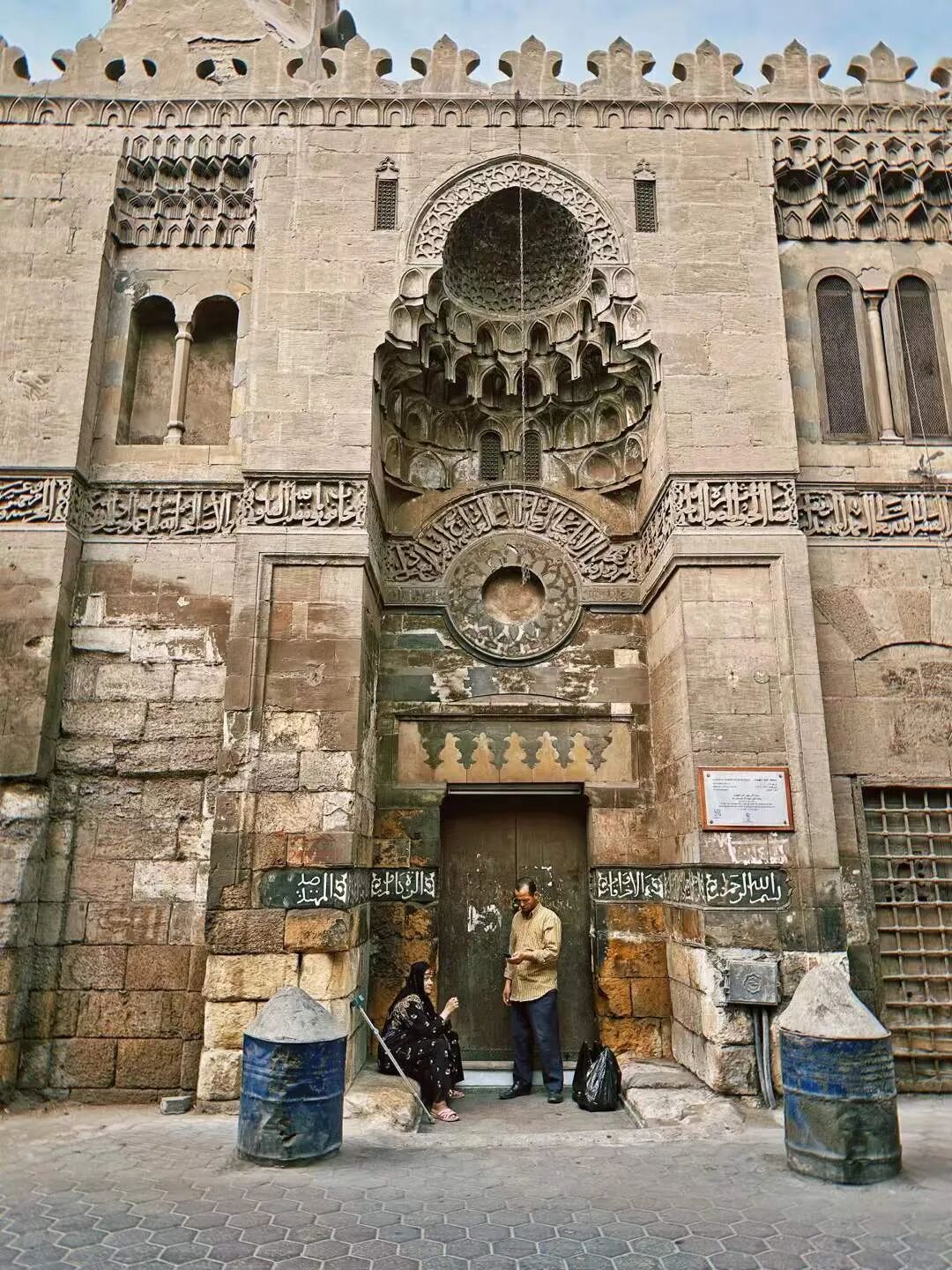
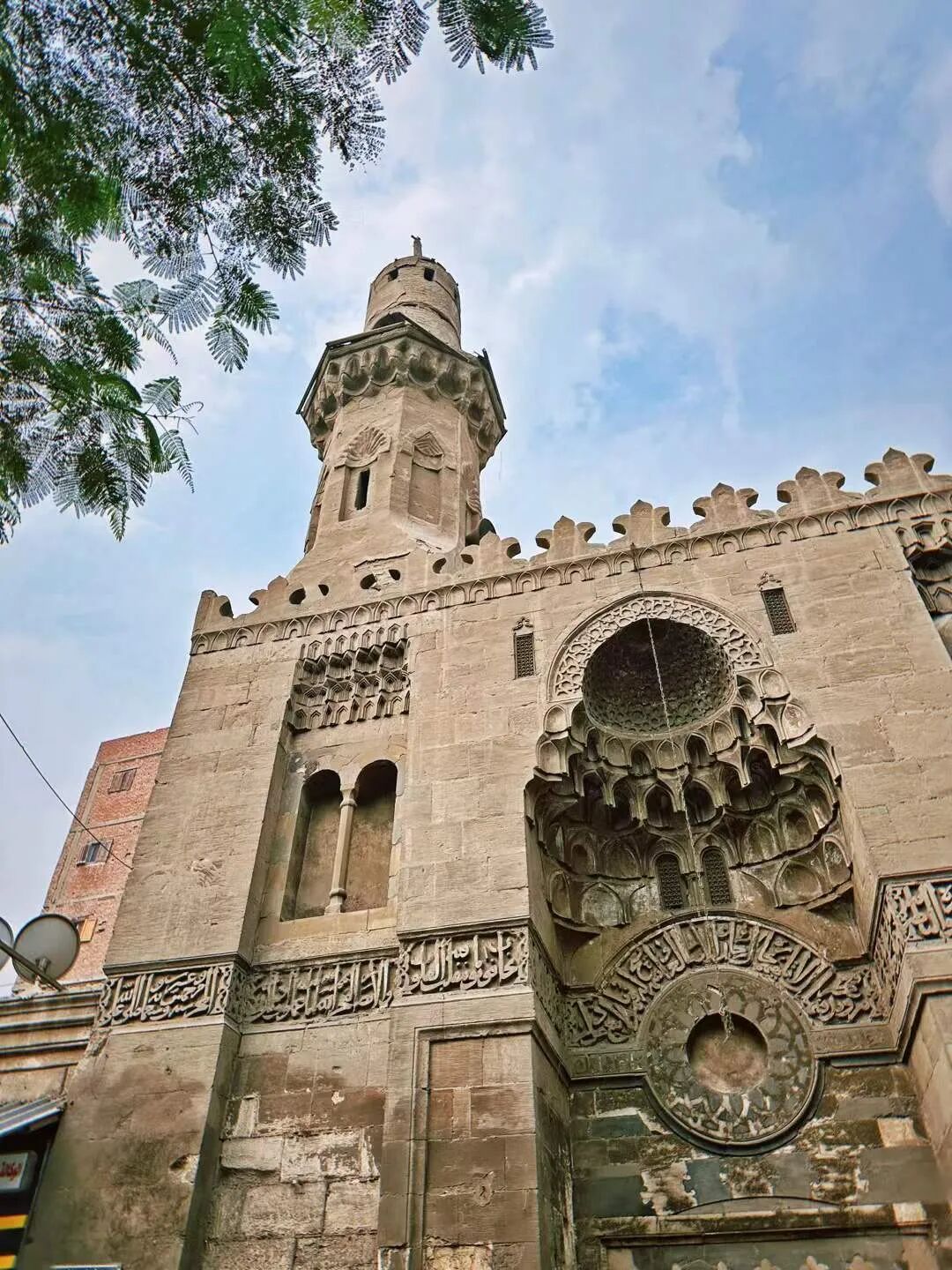
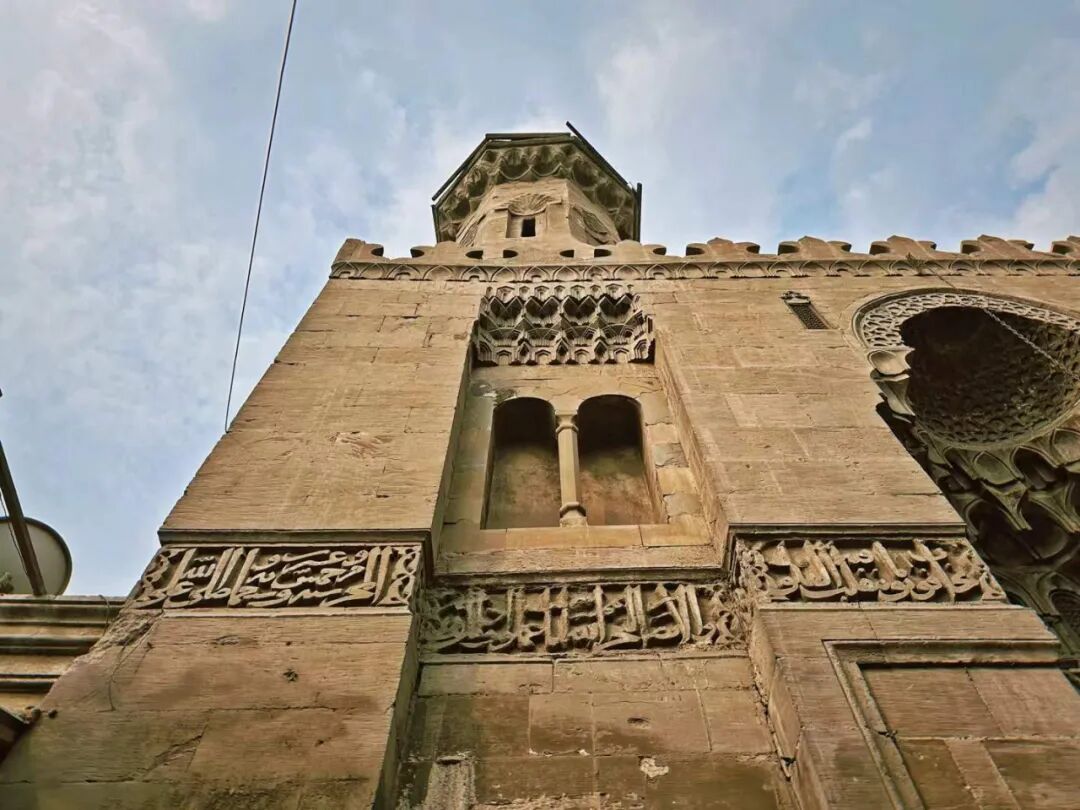
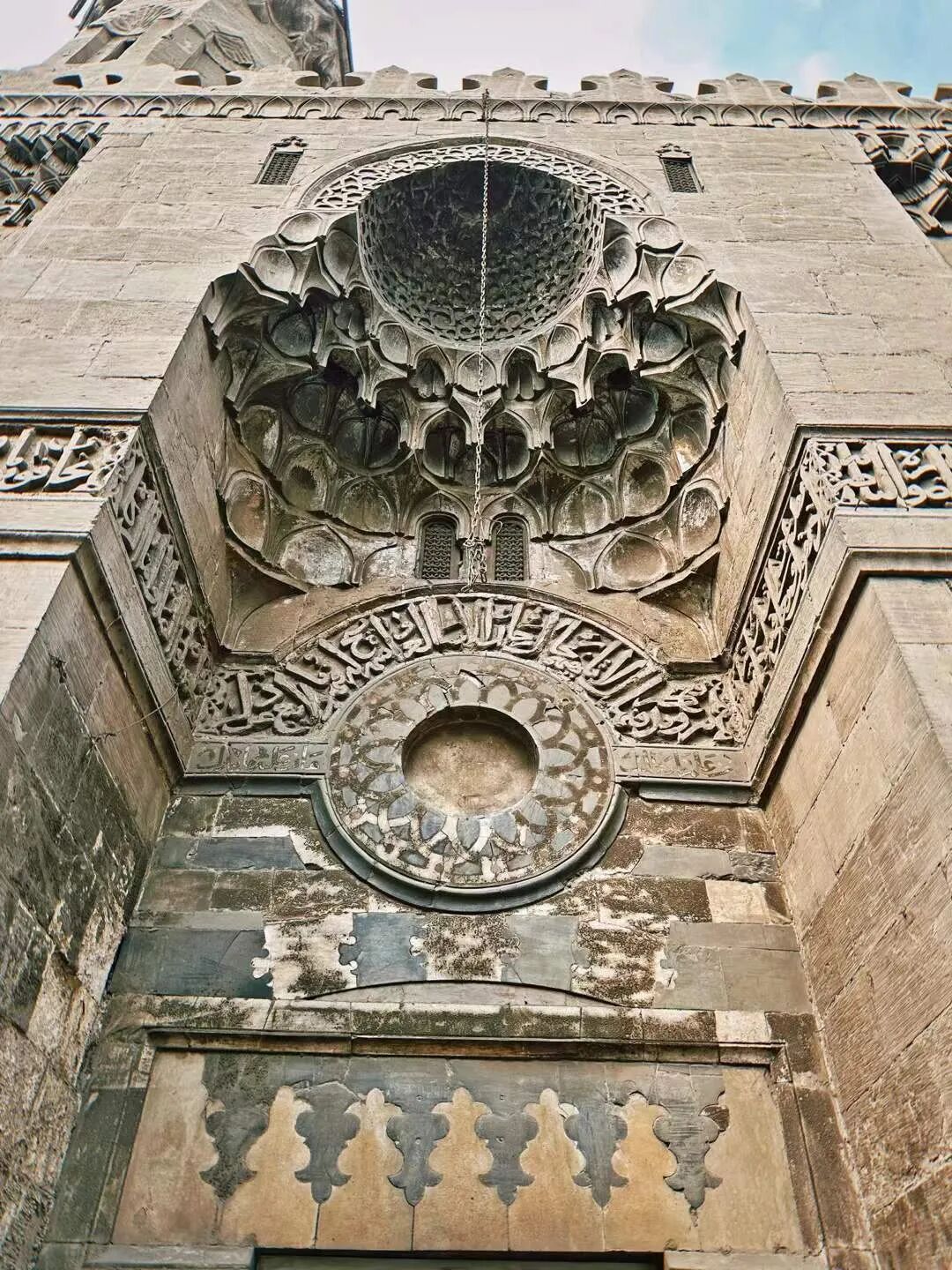
The Mosque of Amir Altinbugha al-Mardani was built between 1338 and 1340 by Amir Altinbugha al-Mardani, the son-in-law of the Mamluk Sultan Al-Nasir Muhammad. It is a typical Mamluk-style mosque with the most luxurious decorations of that time and is the first large mosque to feature an octagonal minaret and a large dome as standard.
When I visited in 2023, the Aga Khan Trust for Culture was restoring the mosque, so I could not enter and only saw the exterior. The mosque's entrance is an iwan (vaulted hall), decorated inside with muqarnas cornices and rich marble patterns, including joggle lintels and alternating light and dark ablaq brickwork.
Mosque of Umm al-Sultan Sha'ban: 1368
The Mosque of Umm al-Sultan Sha'ban was built between 1368 and 1369 by the Mamluk Sultan Al-Ashraf Sha'ban (reigned 1363-77) to commemorate his mother, Umm al-Sultan Sha'ban, who was performing the Hajj at the time.
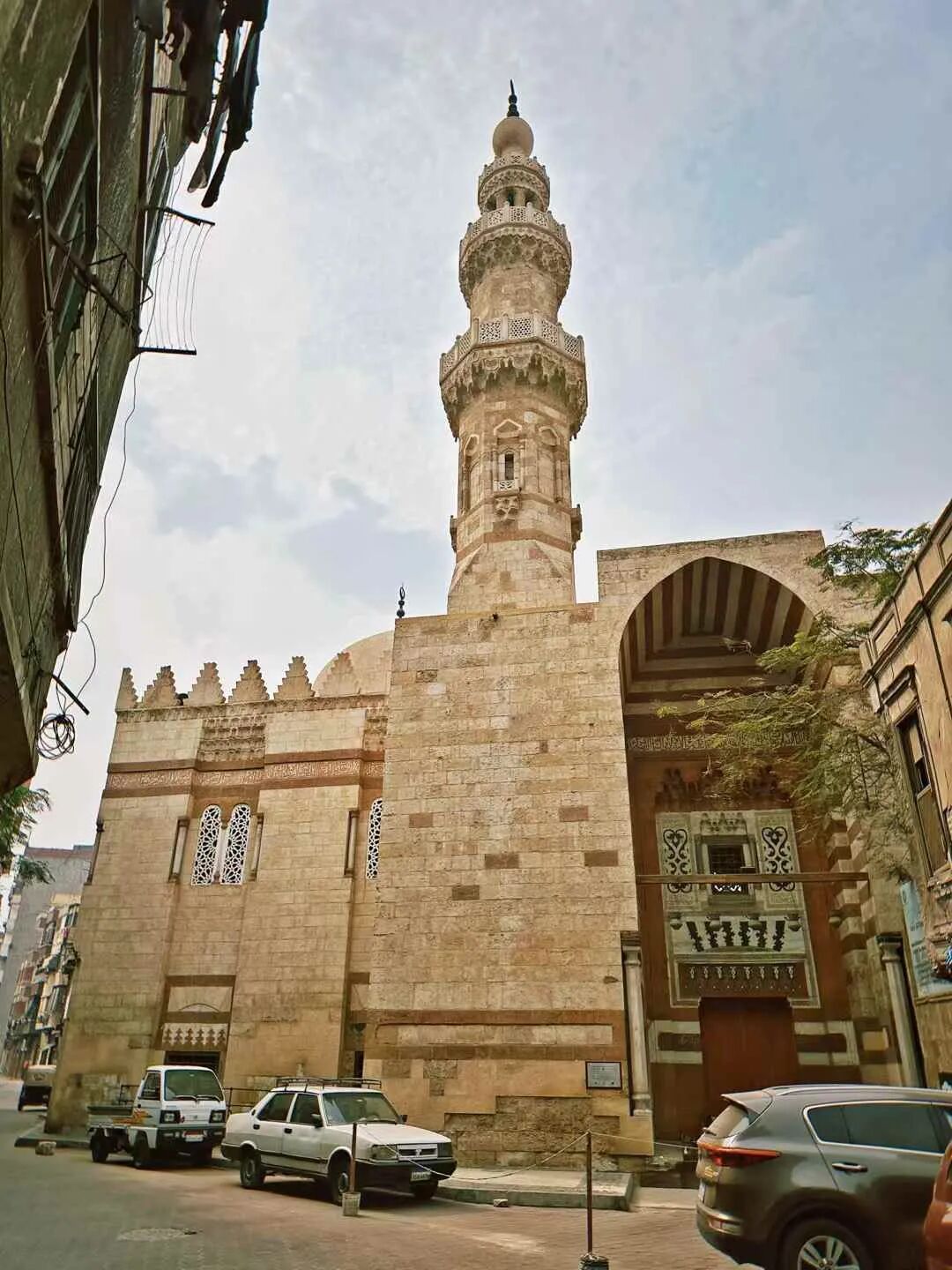
The mosque has a typical Mamluk architectural style and features a dome with spiral and fluted patterns. The outer wall is 18 meters high and looks imposing, with three levels of windows, some of which are decorative blind windows. The mosque's gate features a towering, pyramid-shaped muqarnas cornice with rich stone masonry decorations below it. The interior of the main hall is shaped like a cross-vaulted iwan, and the qibla wall is also in the Mamluk style with colorful stone masonry.
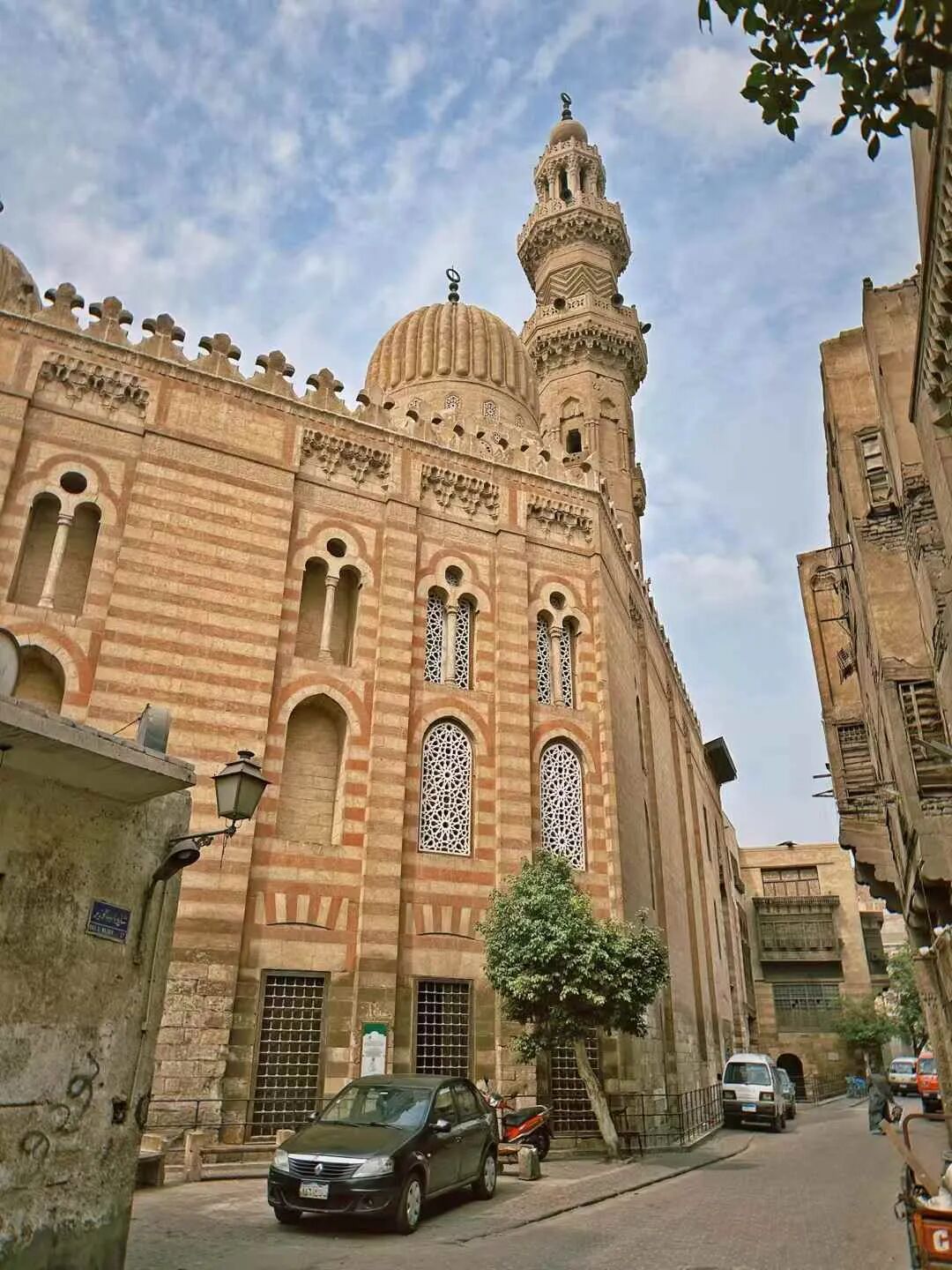
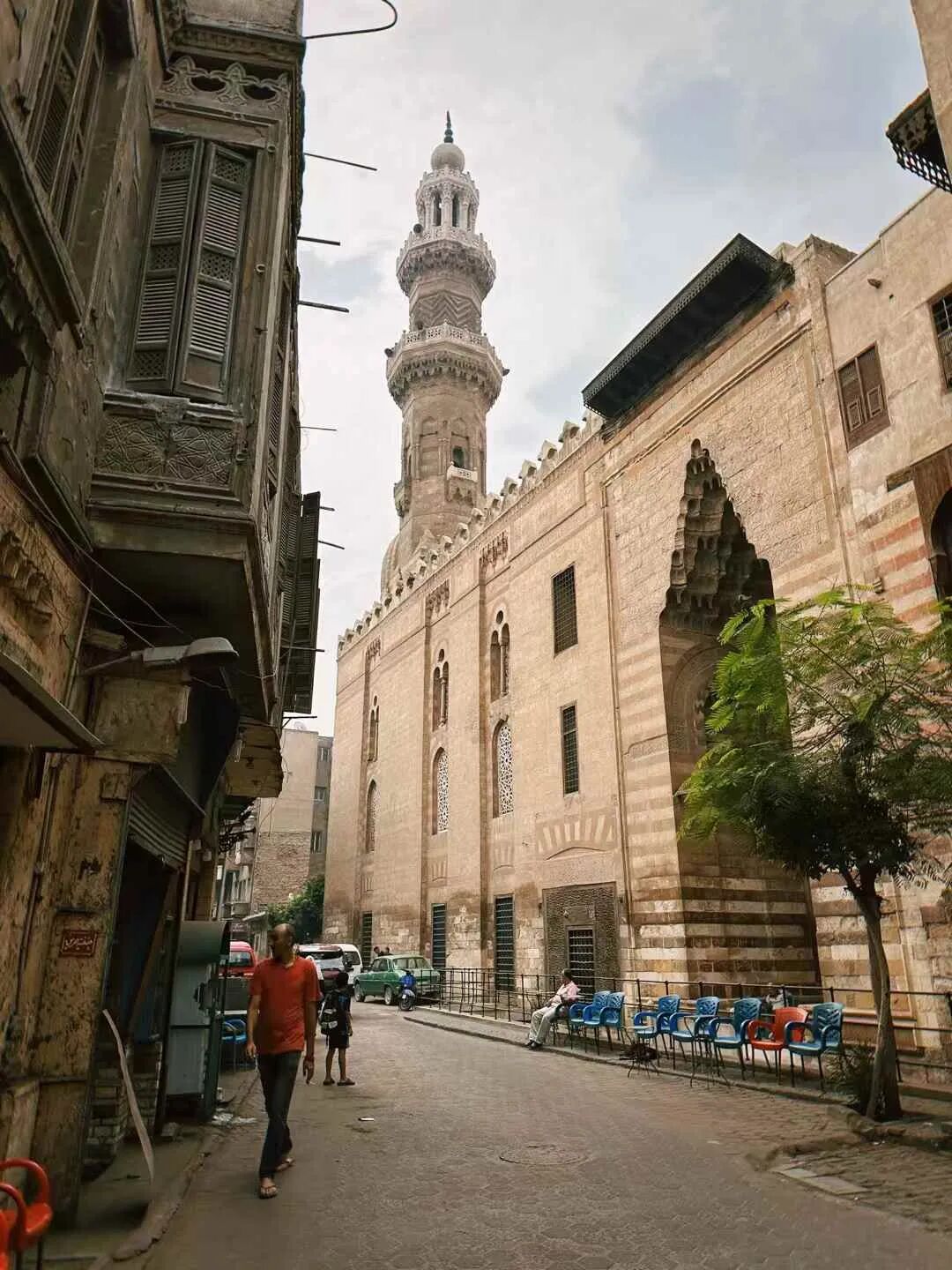
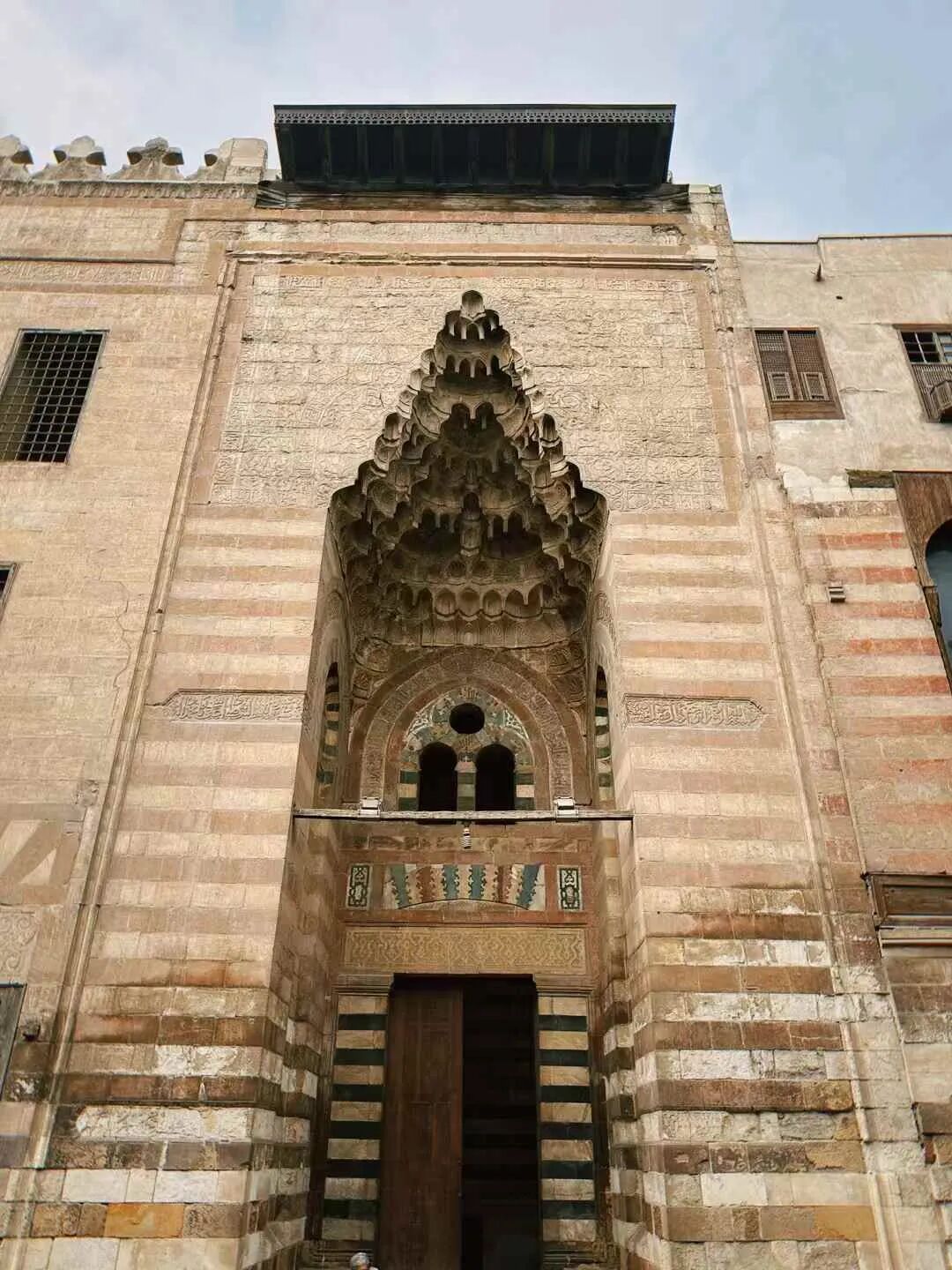
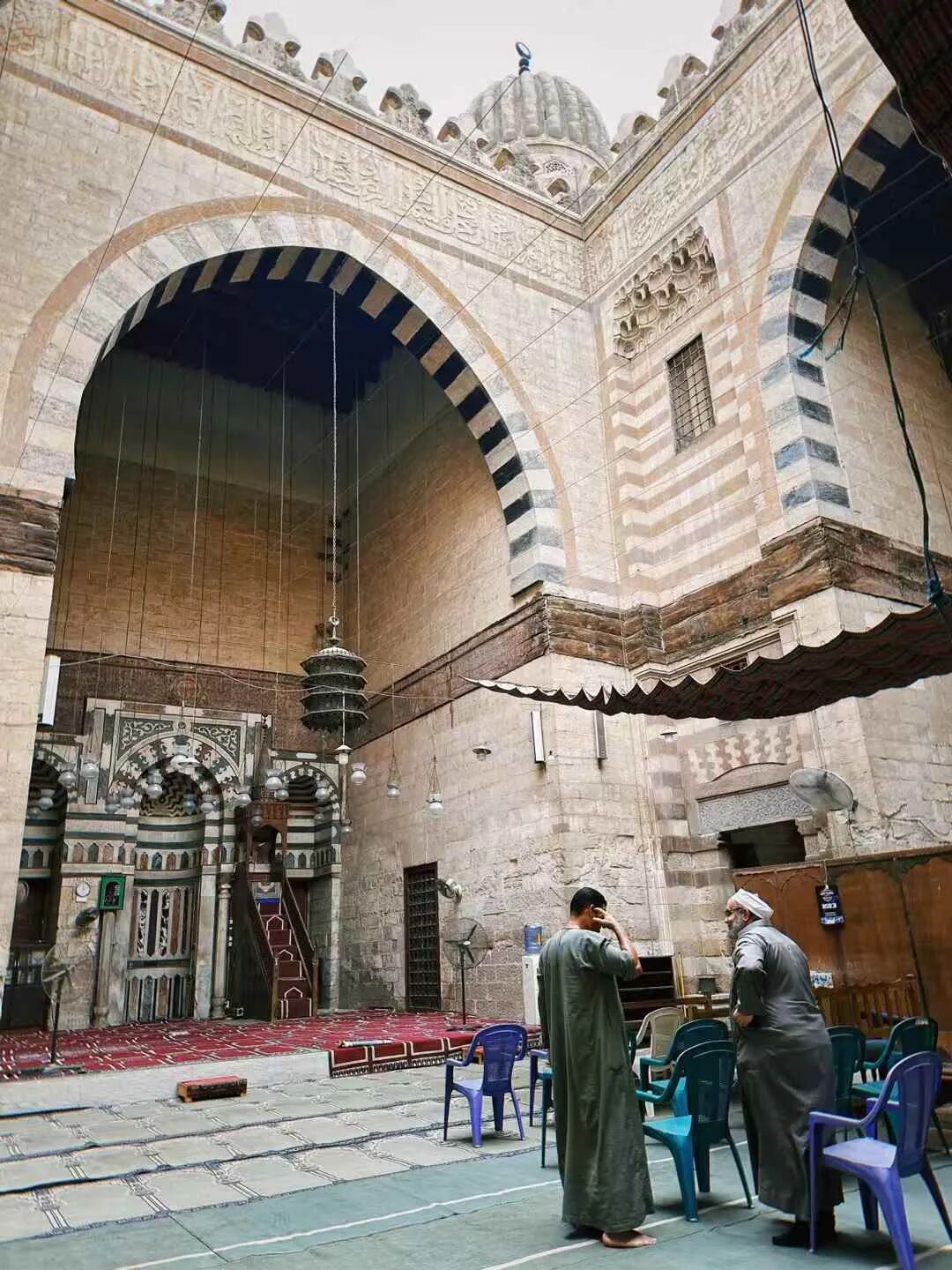
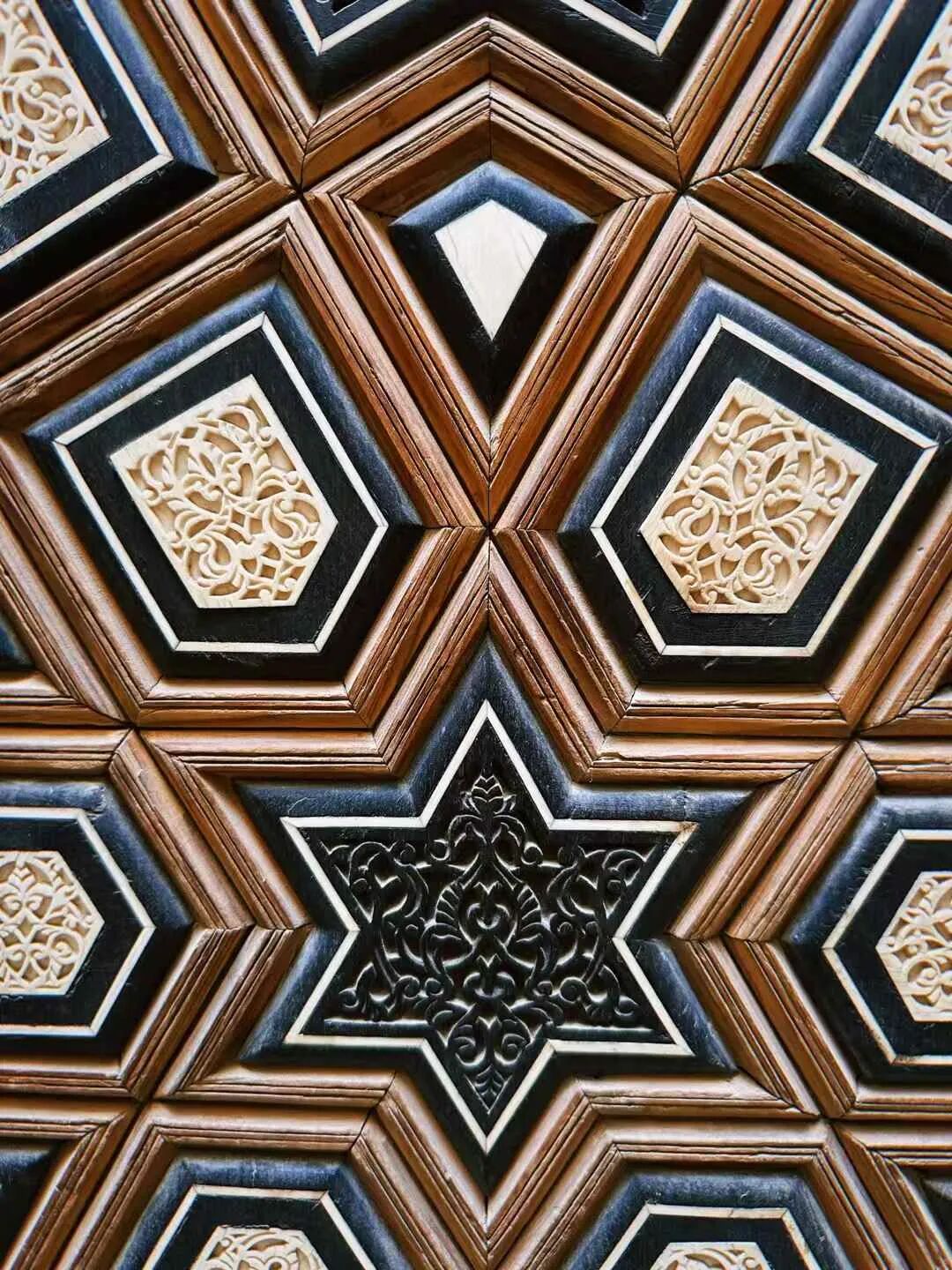
Blue Mosque: 1347
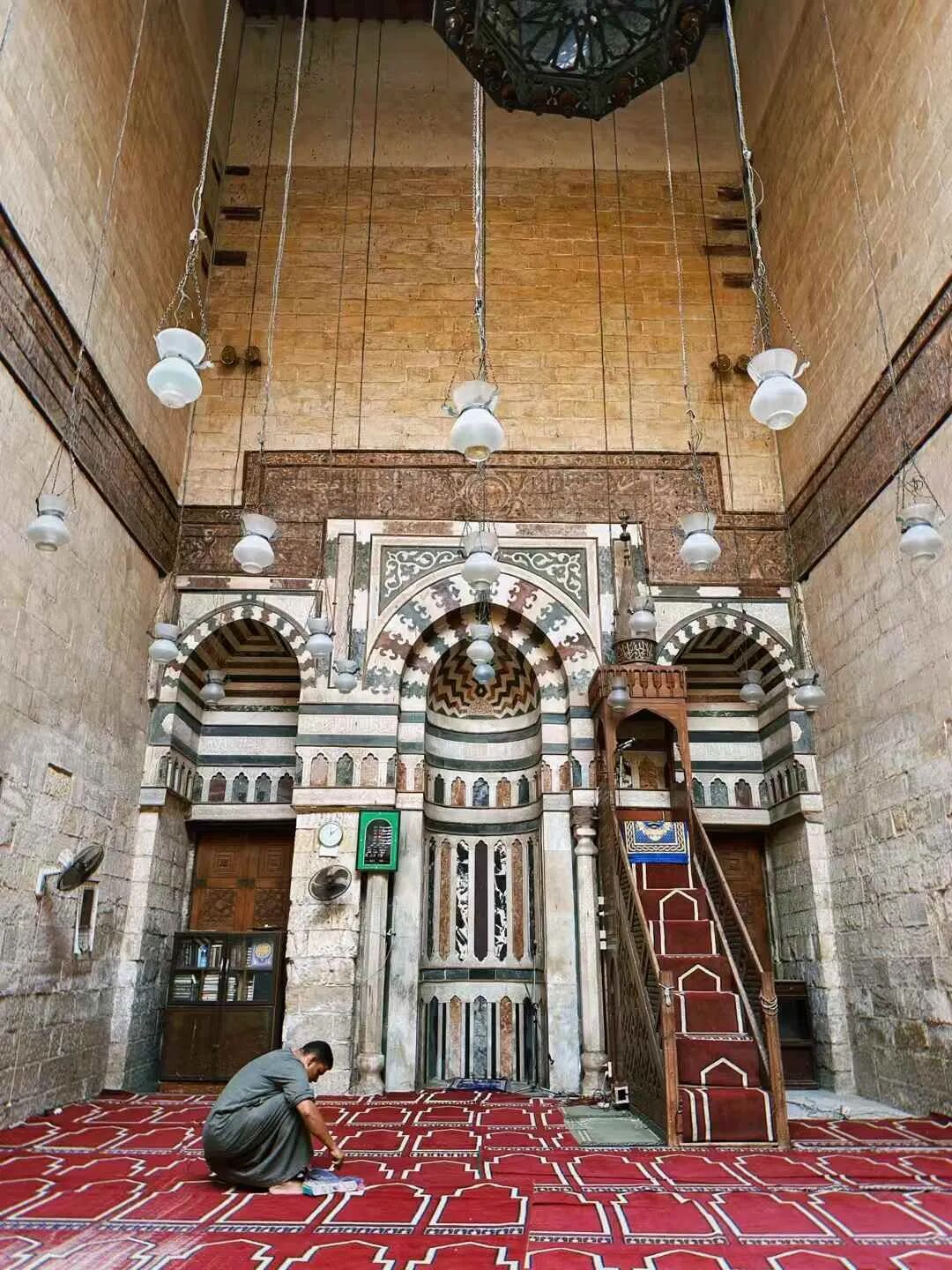
I attended Jumu'ah prayer at the Blue Mosque in Cairo at noon.
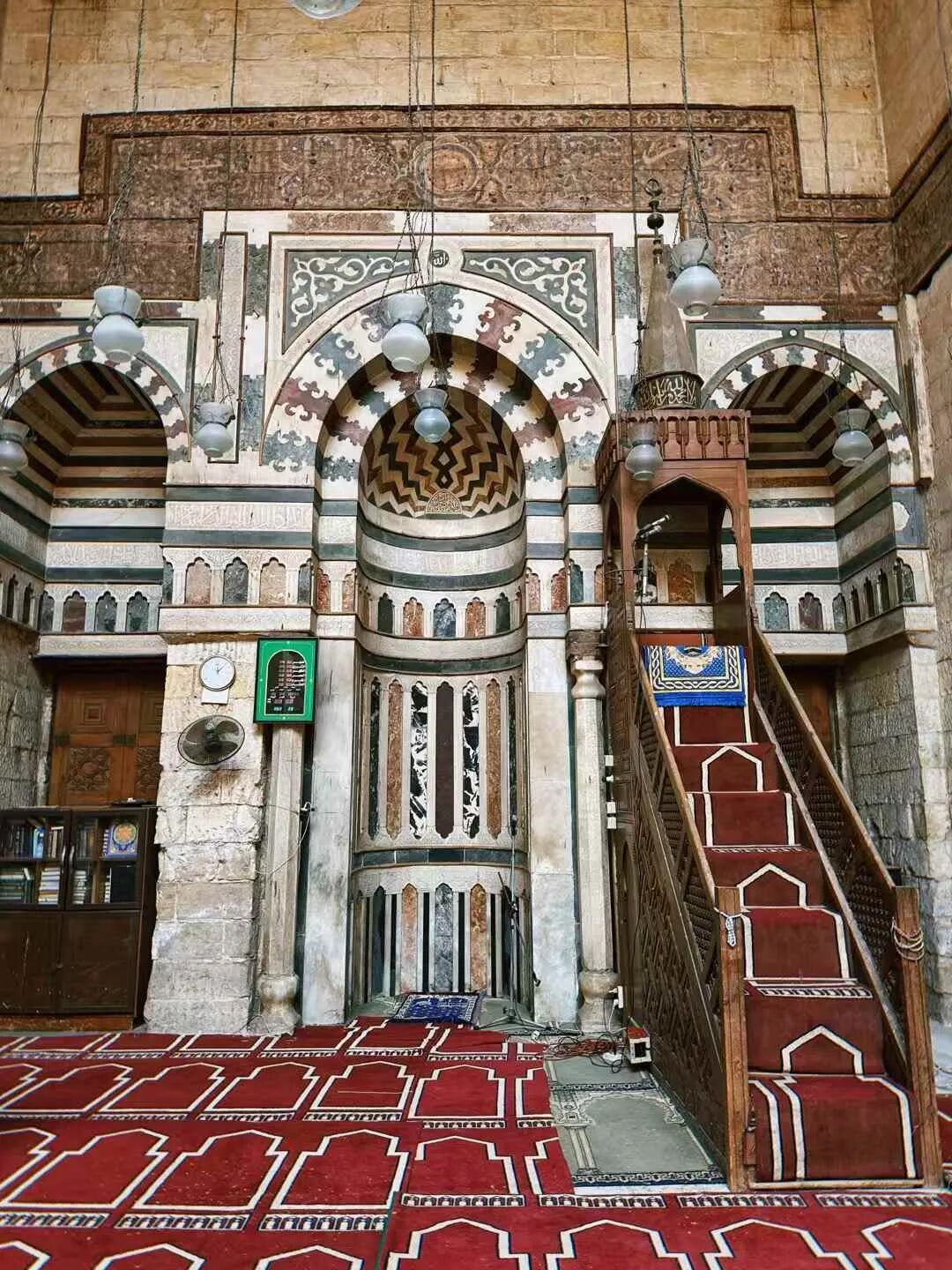
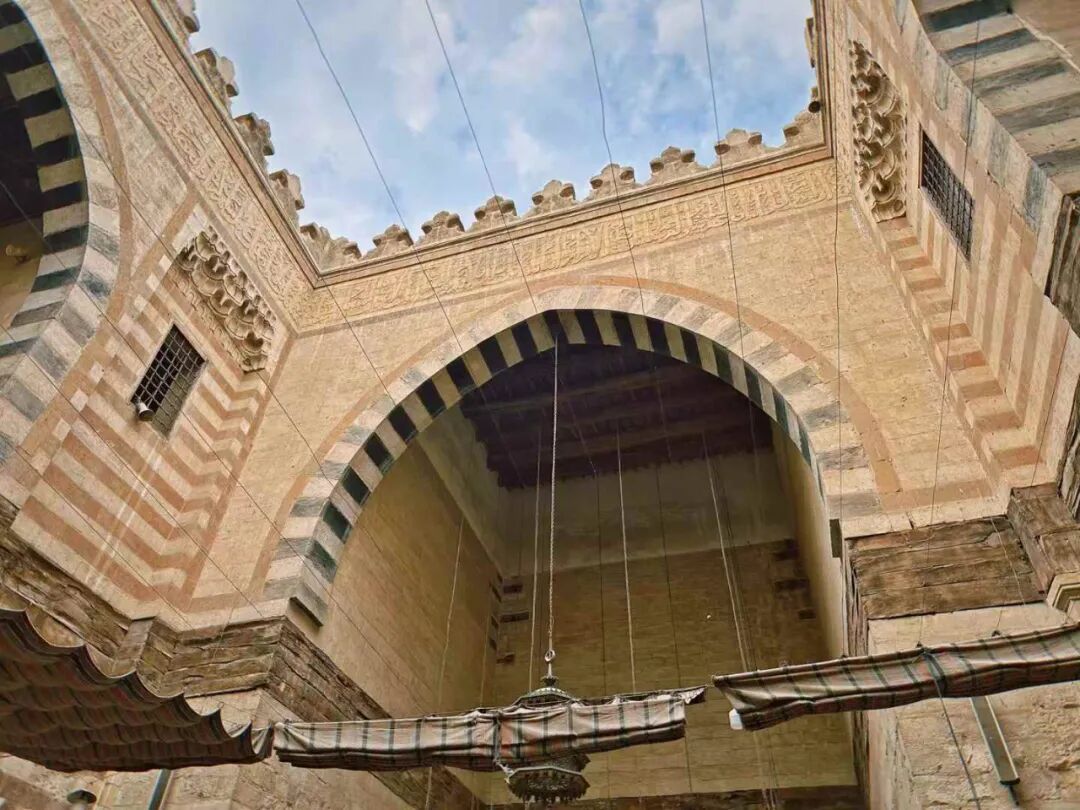
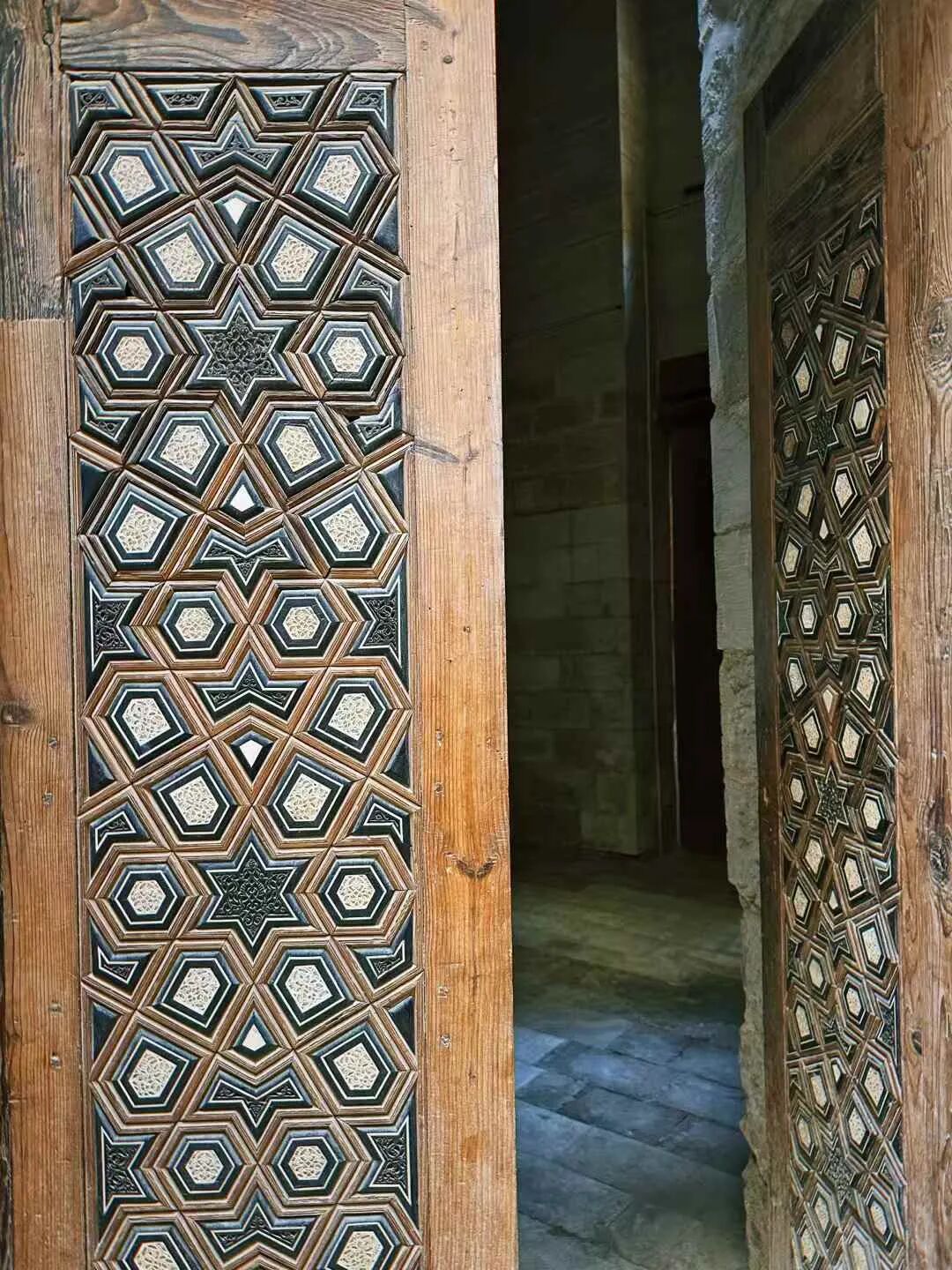
The Blue Mosque is originally named the Aqsunqur Mosque and was ordered to be built in 1347 by Emir Shams ad-Din Aqsunqur, the son-in-law of the Mamluk Sultan. As the former governor of Tripoli, Aqsunqur built the mosque in a Syrian style, which is different from the surrounding Mamluk-style mosques. The Syrian style includes cross-vaults and a columned layout, both of which are rare in Cairo.
The Blue Mosque has the oldest marble minbar (pulpit) in Cairo, which is also a rare example of a marble pulpit in the city.
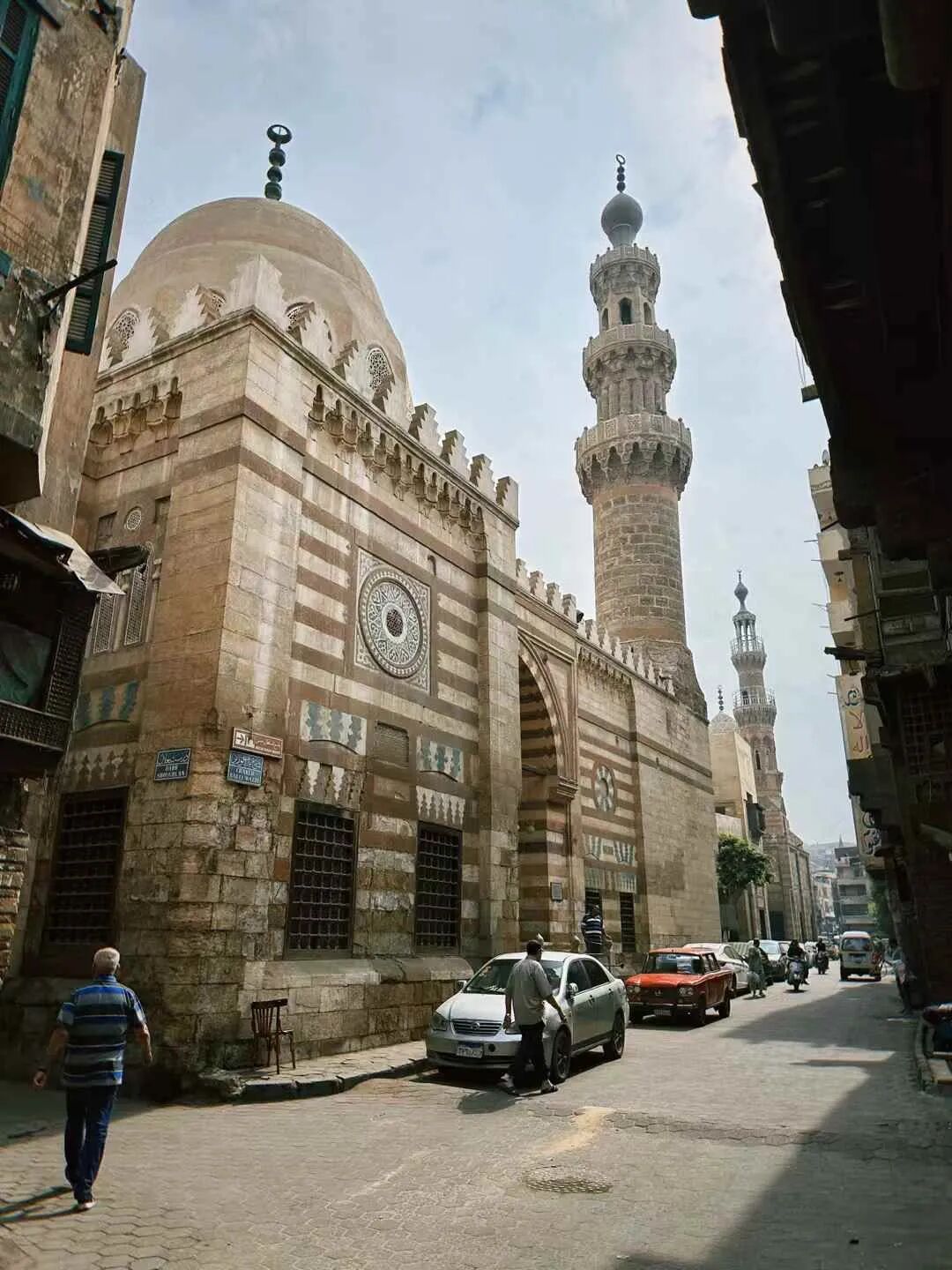
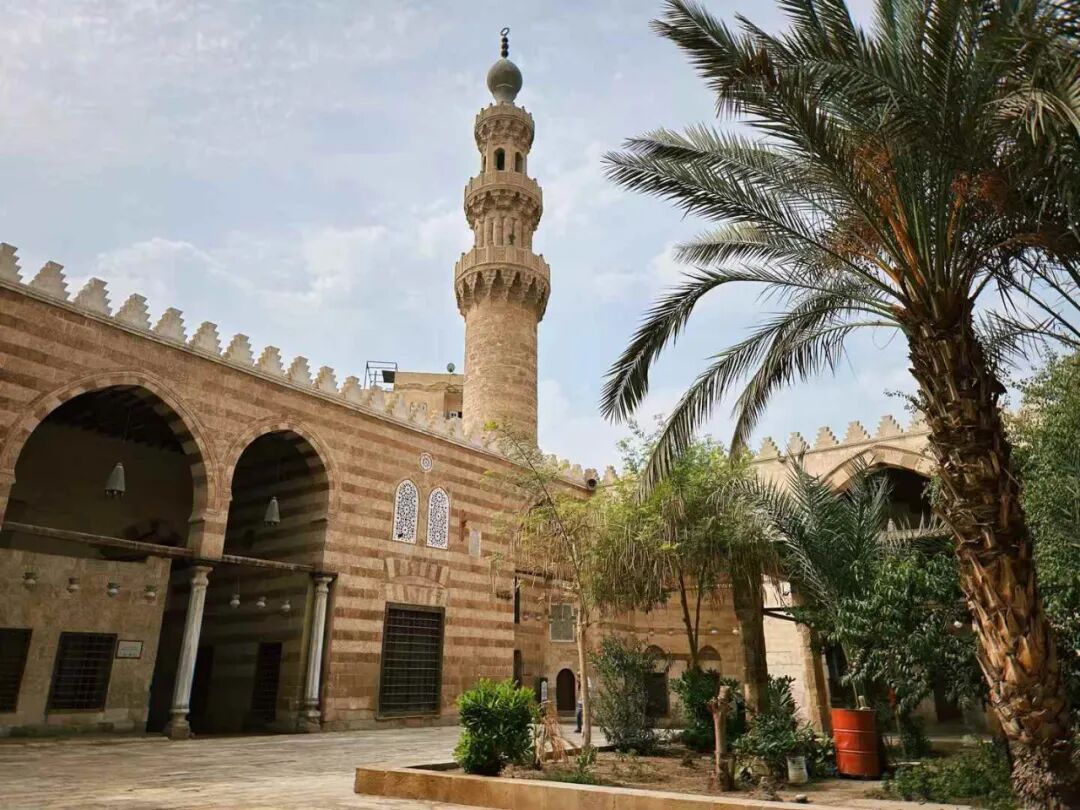
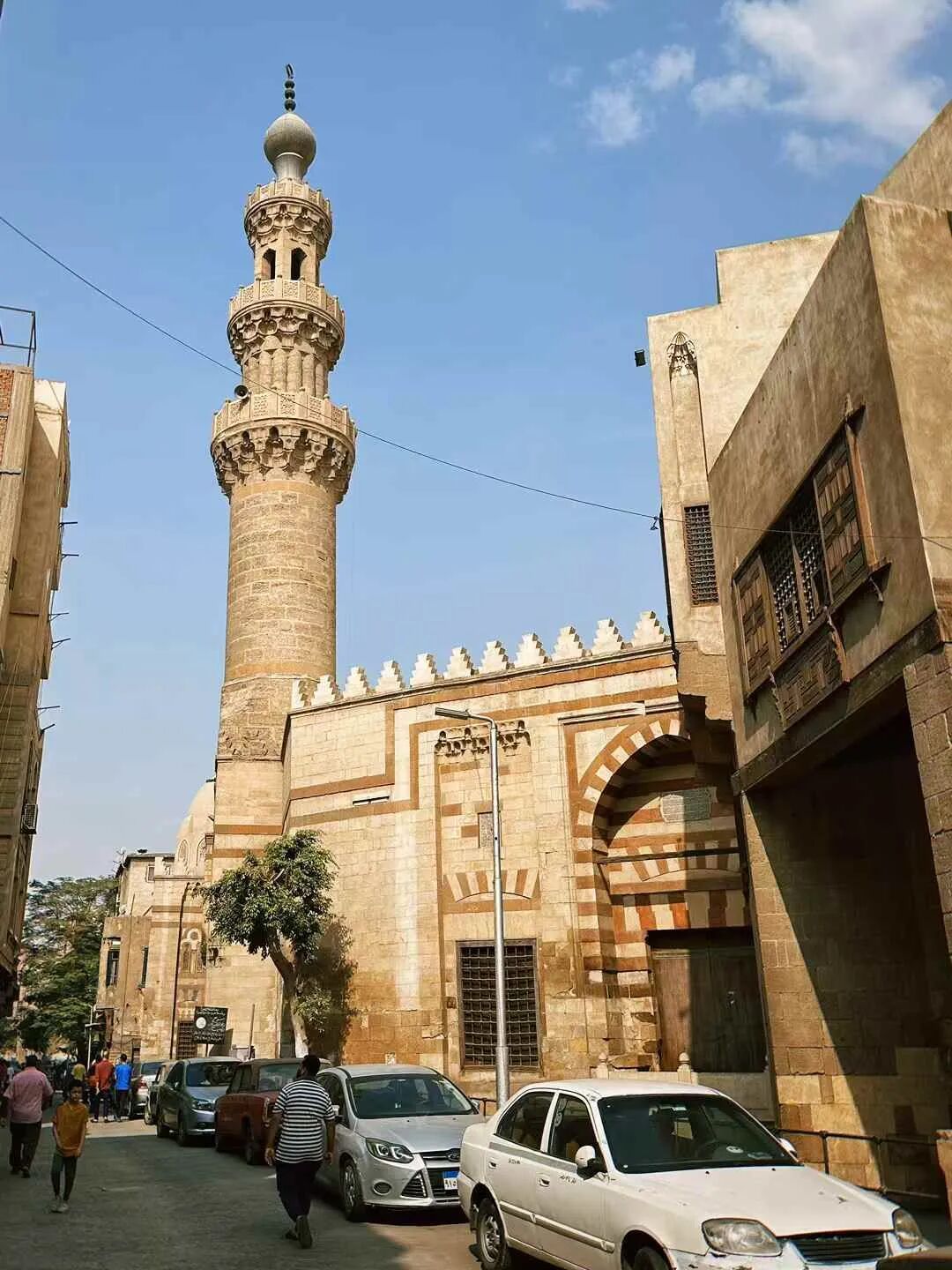
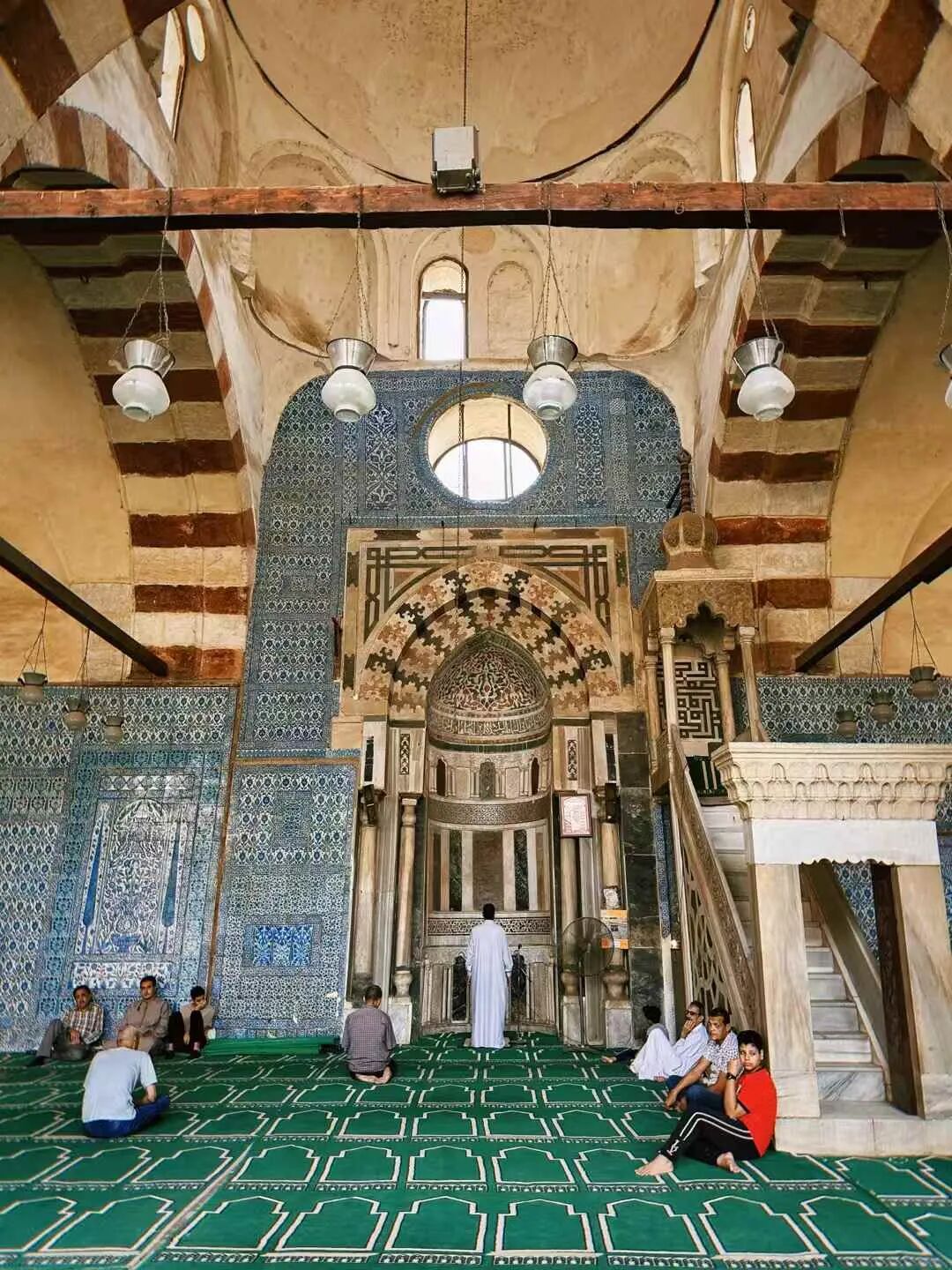
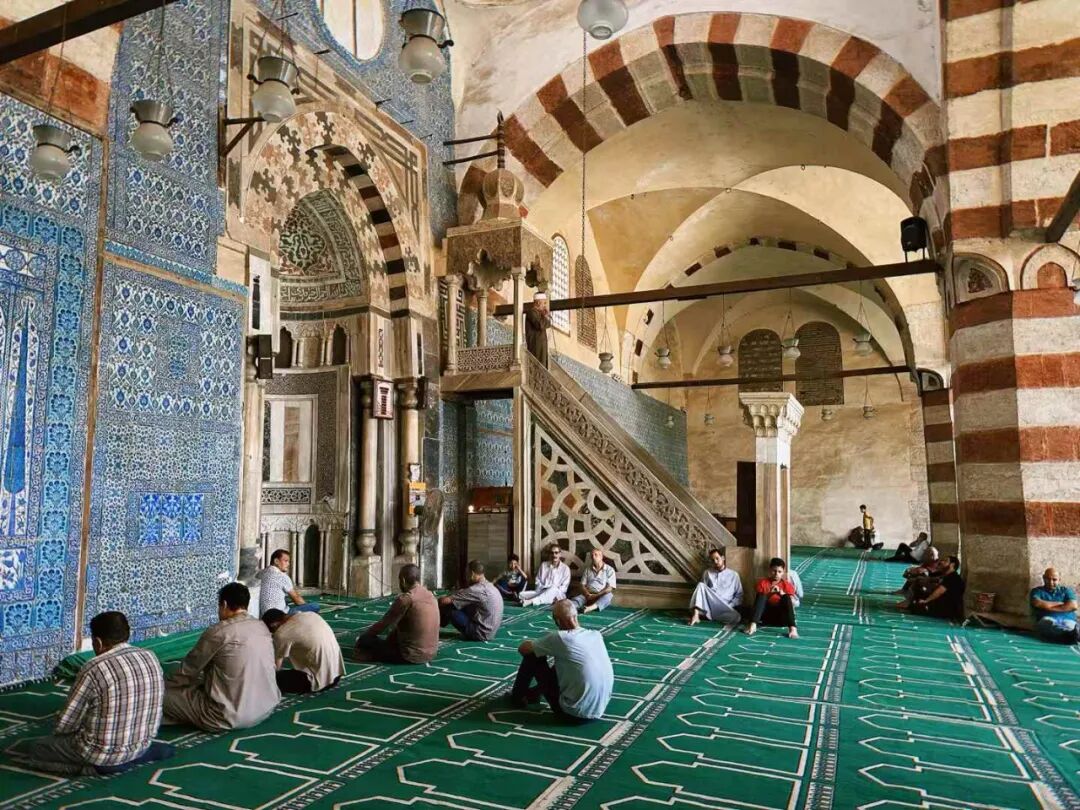
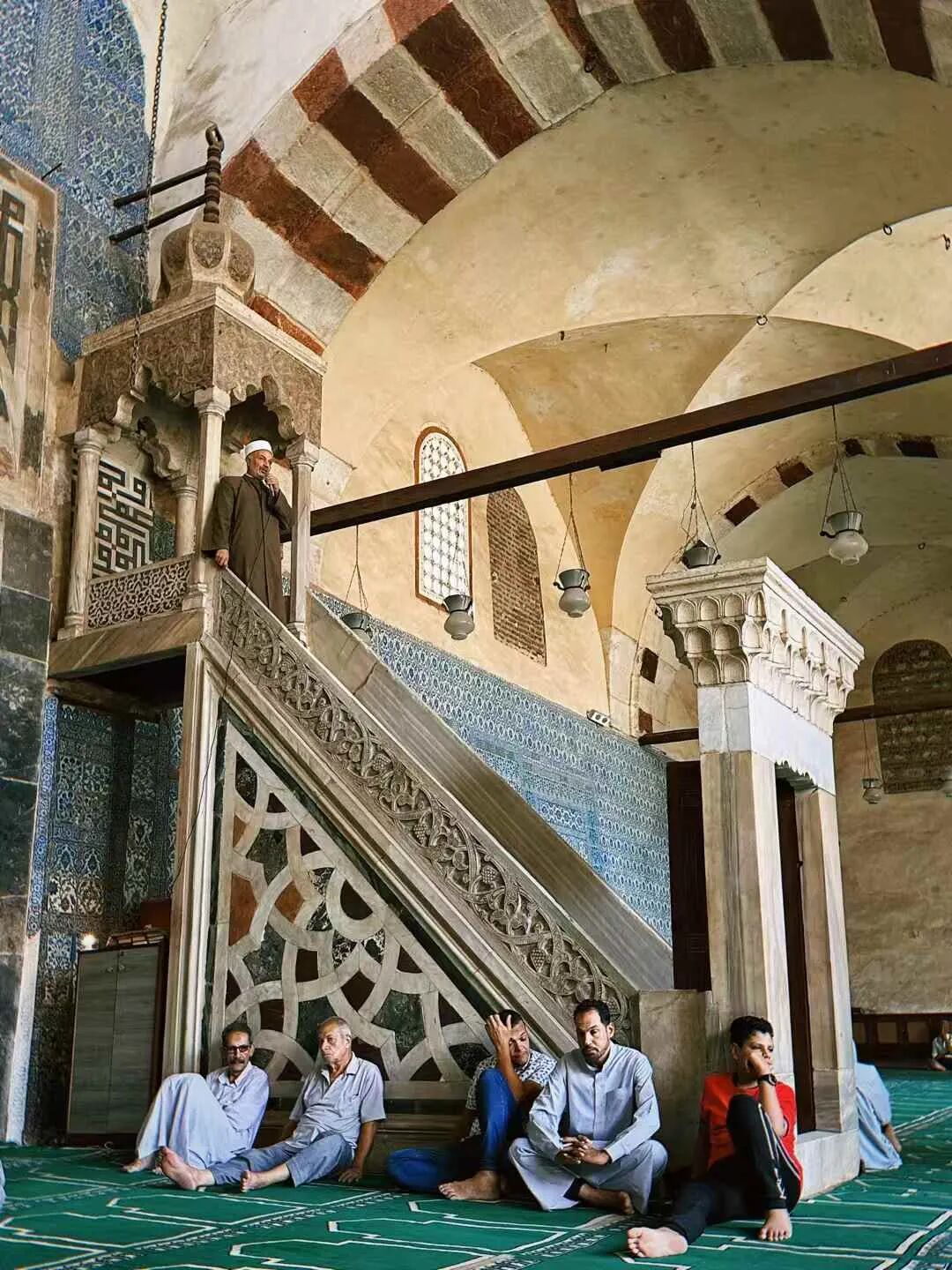
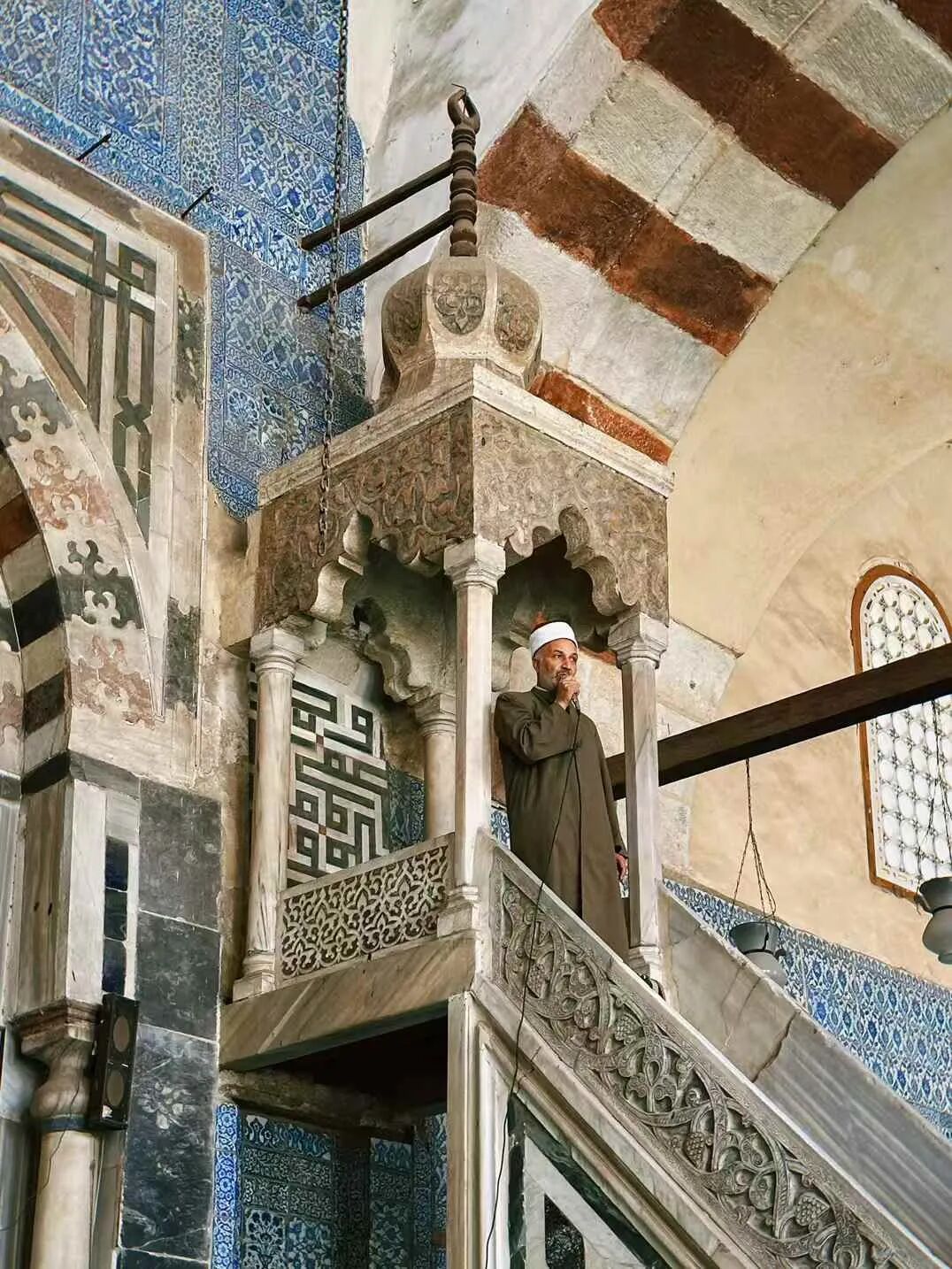
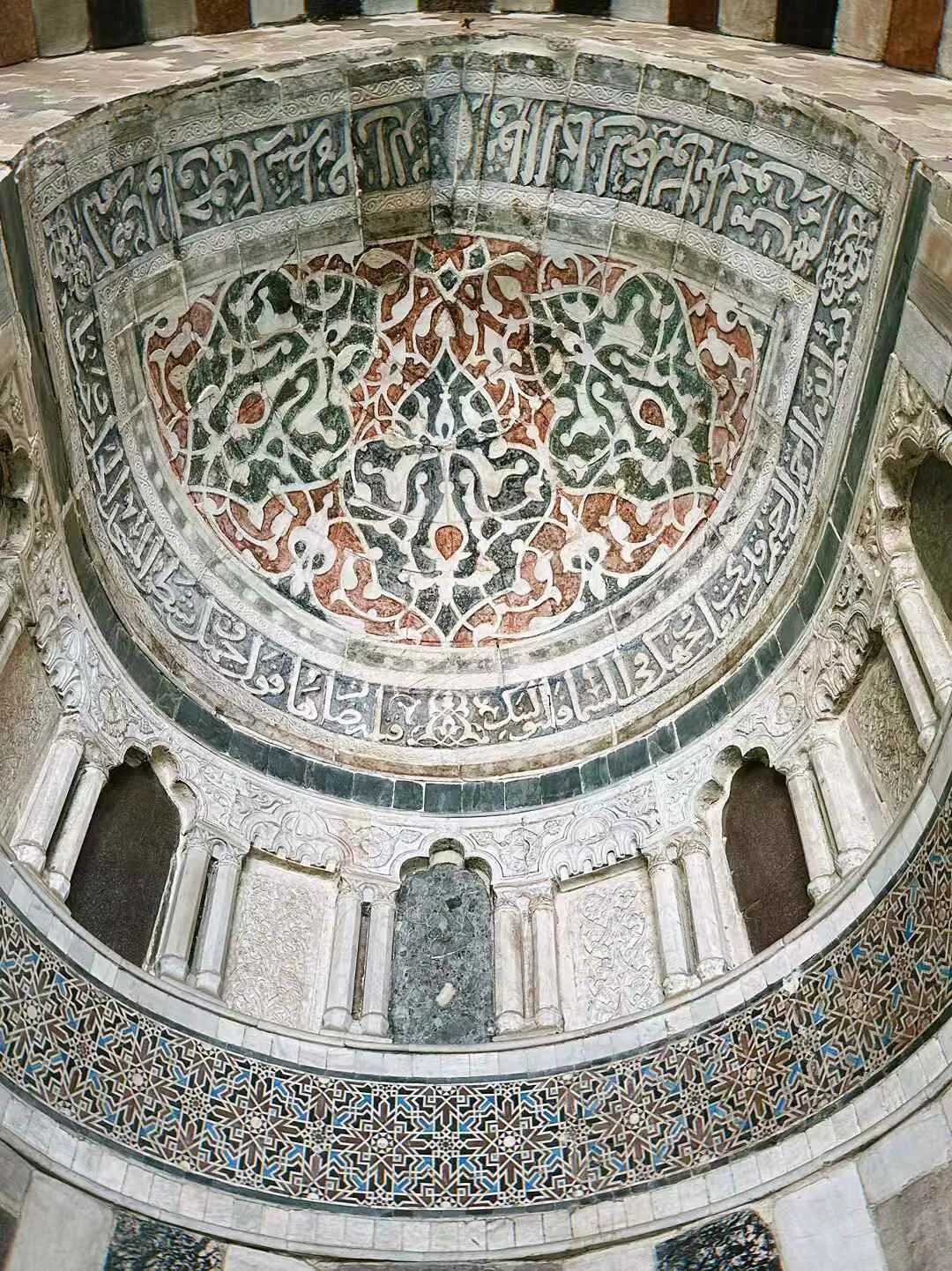
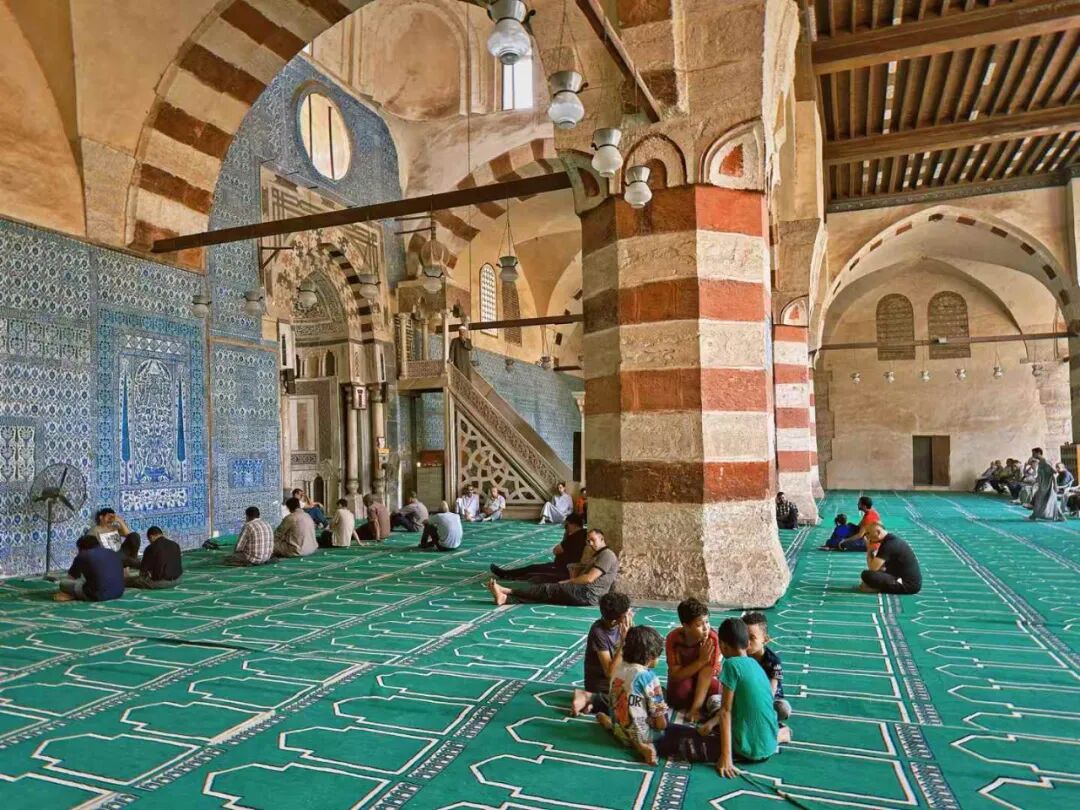
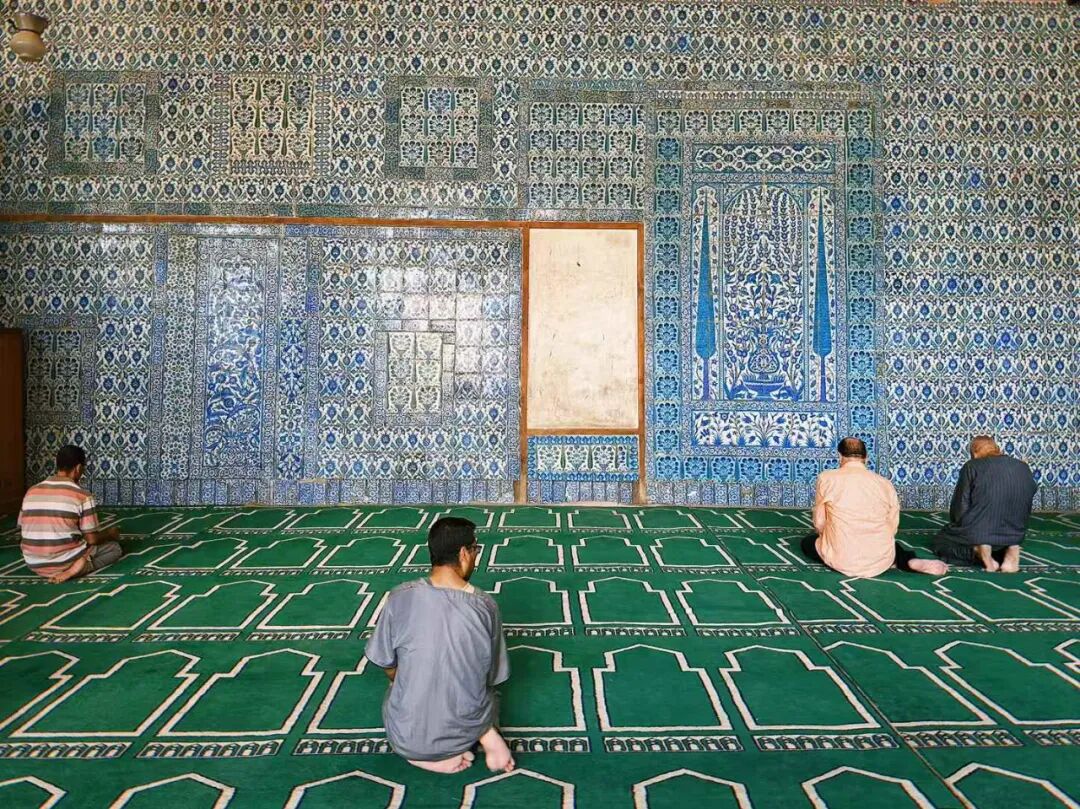
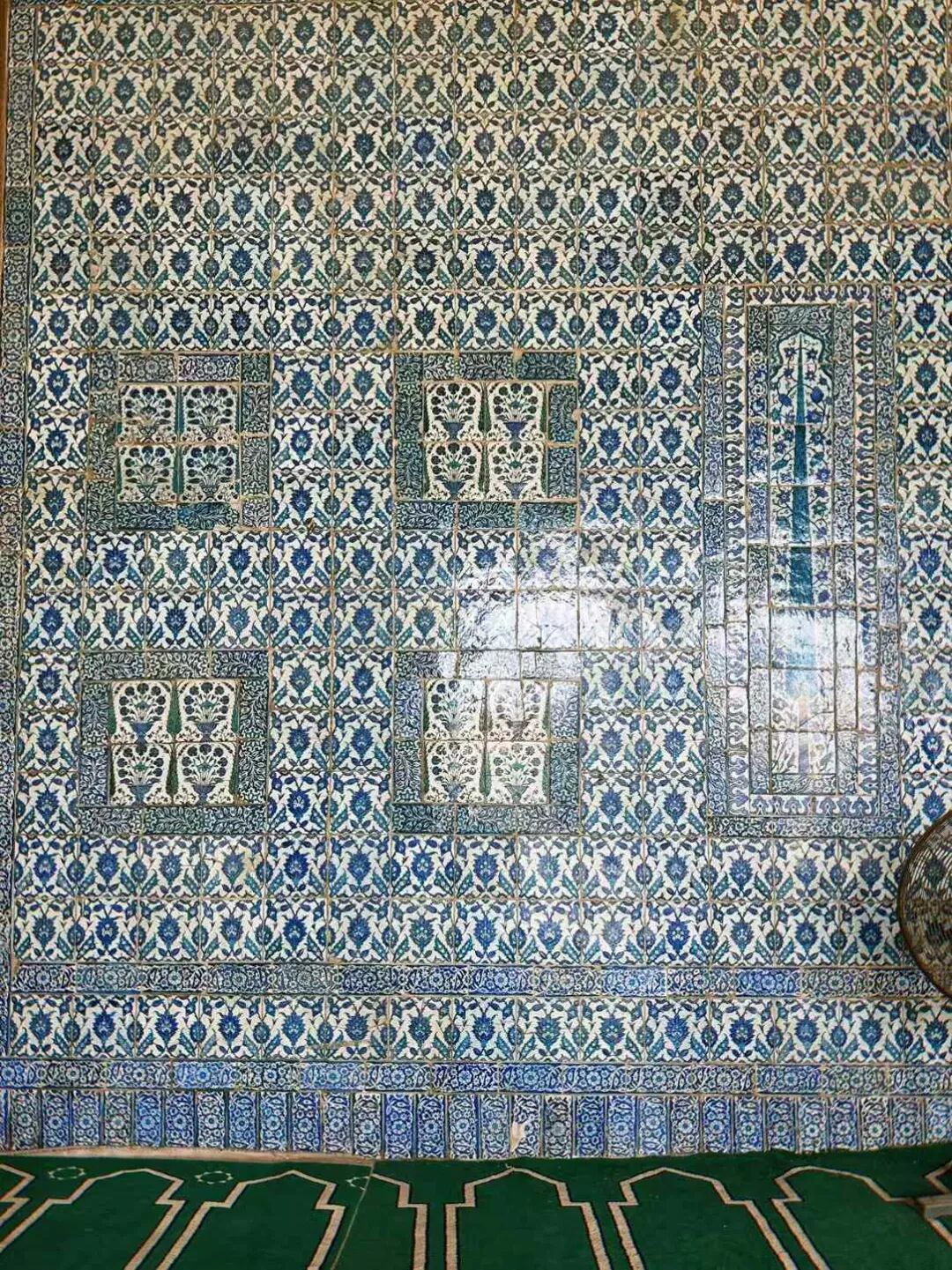
Between 1652 and 1654, Ottoman Janissary commander Ibrahim Agha al-Mustahfizan gave the Blue Mosque a major renovation. He decorated the prayer wall (qibla wall) with Ottoman tiles imported from Istanbul and Damascus, which is how the mosque got its name. These tiles are in the Iznik style and feature cypress tree and tulip patterns.
Sayyida Fatima Mosque: 18th-century expansion
The Sayyida Fatima Mosque was originally the home of Sayyida Fatima. In the 18th century, the Mamluk prince Abd al-Rahman Katkhuda expanded it into a large mosque. The main hall developed serious cracks in 1992, and it was expanded into its current form between 1999 and 2003.
Sayyida Fatima (660-728) was the great-granddaughter of the noble Prophet and the daughter of Imam Hussein. She grew up in her father's house and later married her cousin, Hasan ibn Hasan. They had several children. The most famous was the martyr Abdullah al-Mahd, who resisted the Abbasid Caliphate. His son, Idris, established the Idrisid dynasty in 788, which was the first unified dynasty in Moroccan history and is considered the beginning of the Moroccan state.
After the Battle of Karbala, Sayyida Fatima fled to Cairo. In Cairo, she adopted many orphans and opened her home to the poor, earning her the titles Mother of Orphans and Mother of the Poor. She raised seven orphaned girls who were later buried alongside her. She was also a scholar of Islamic law and Hadith, and she is considered a reliable narrator of Hadith.
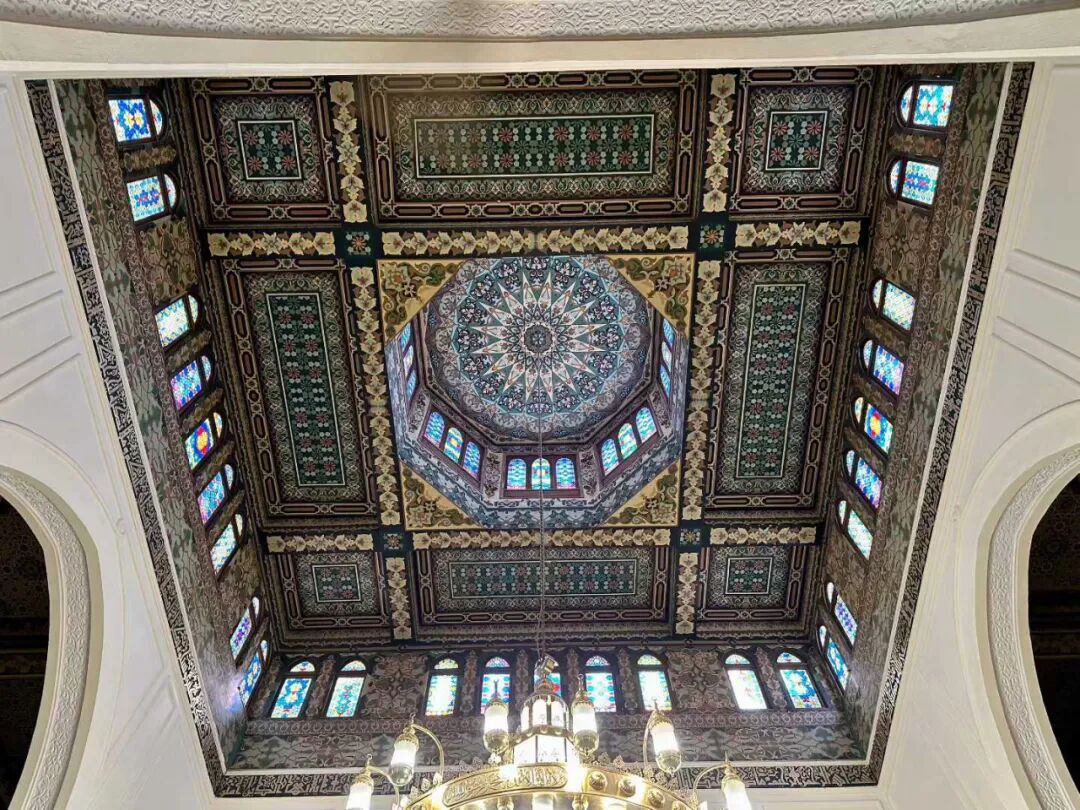
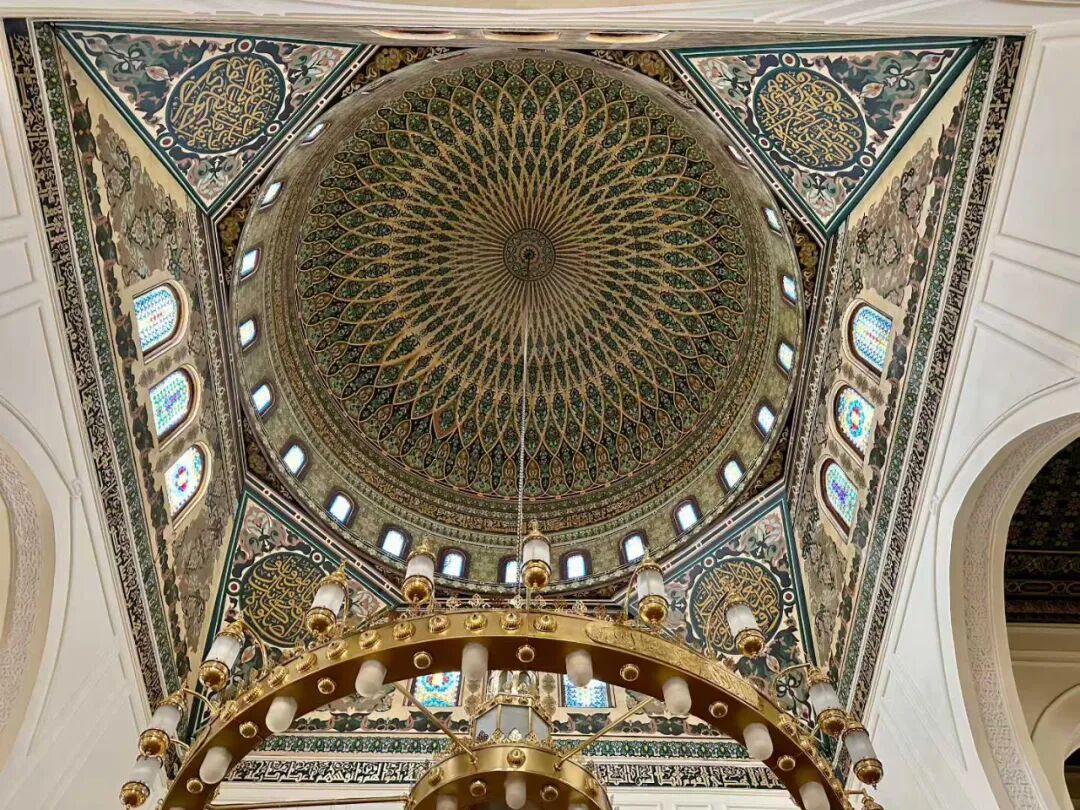
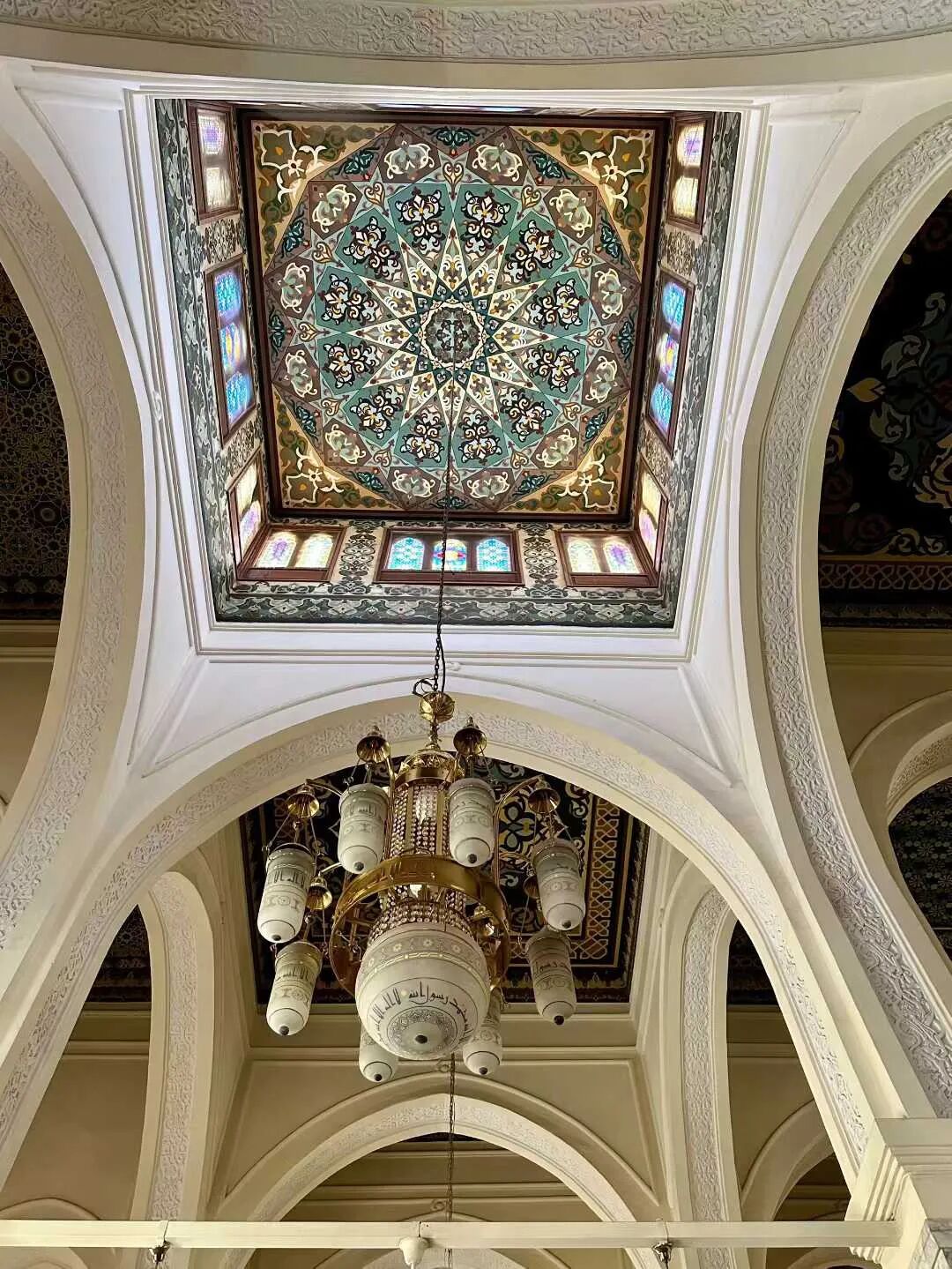
Khayrbak Mosque: 1519
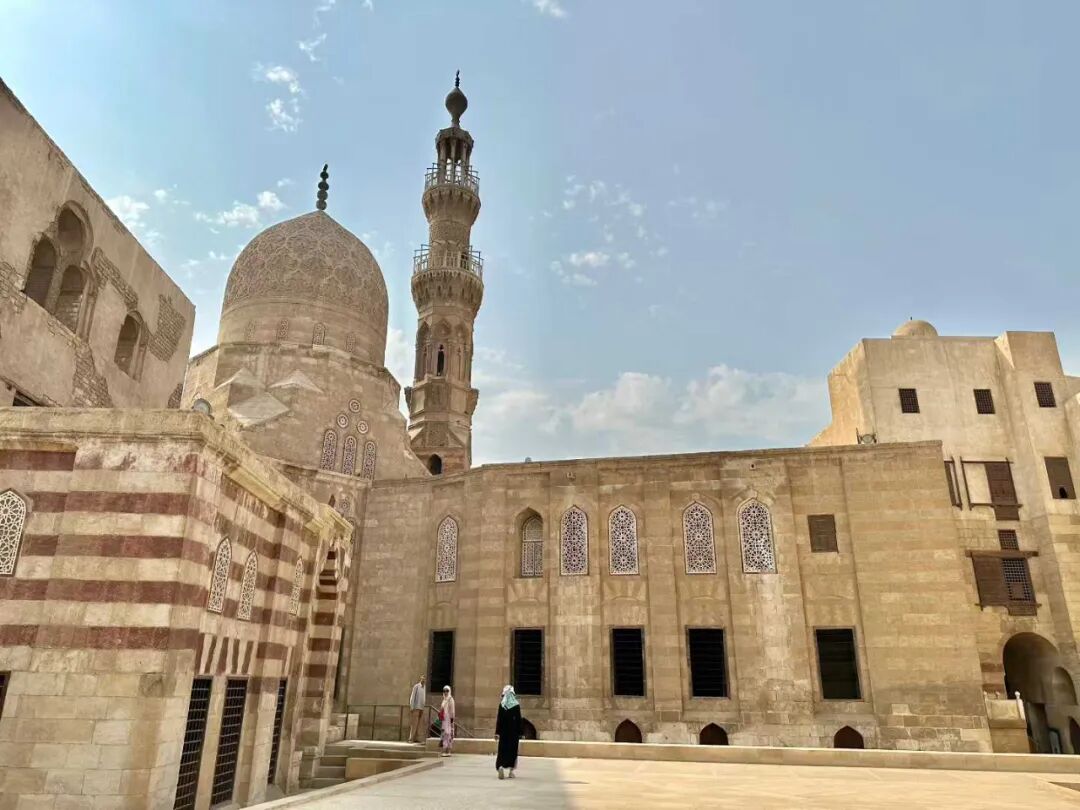
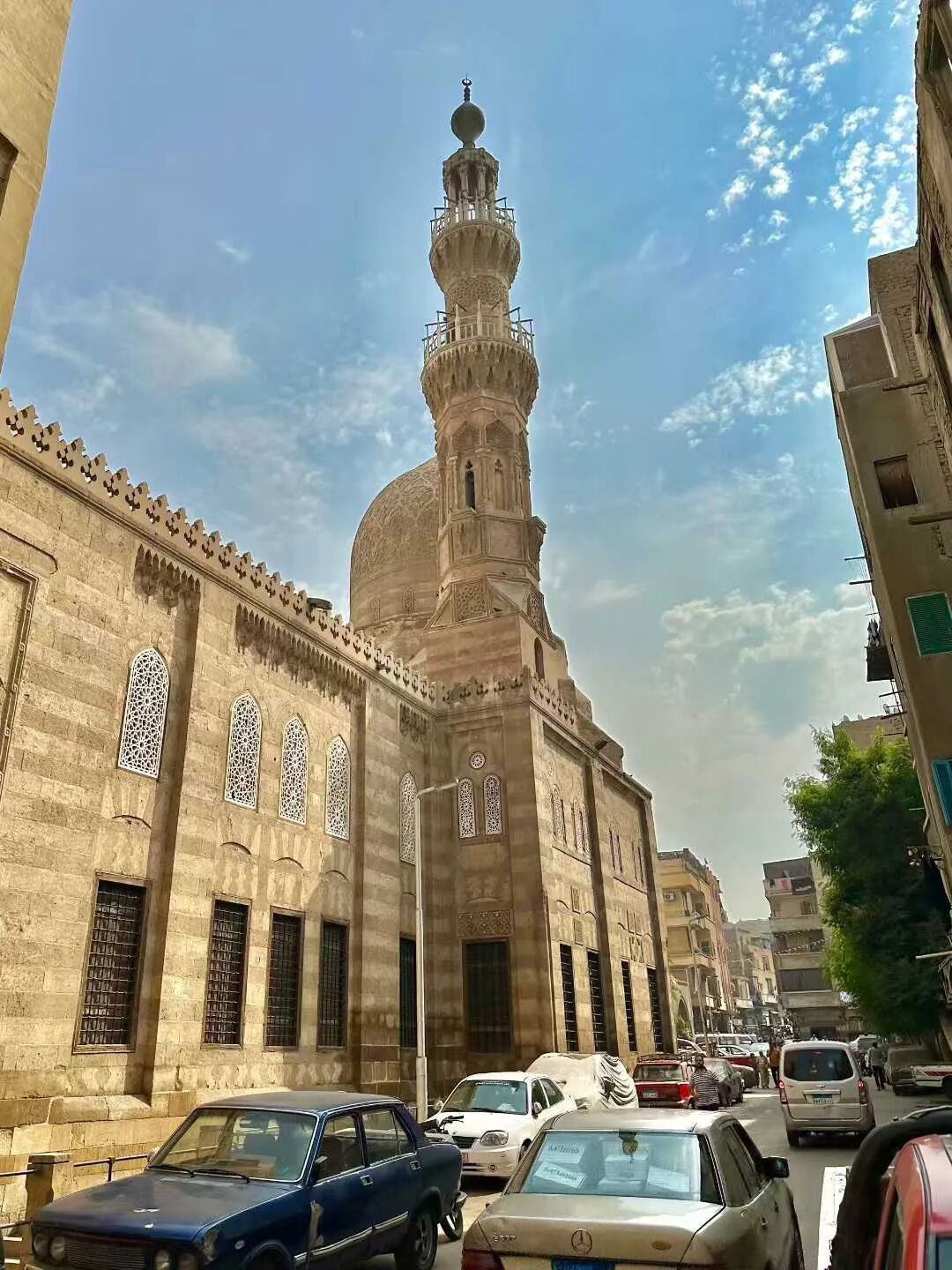
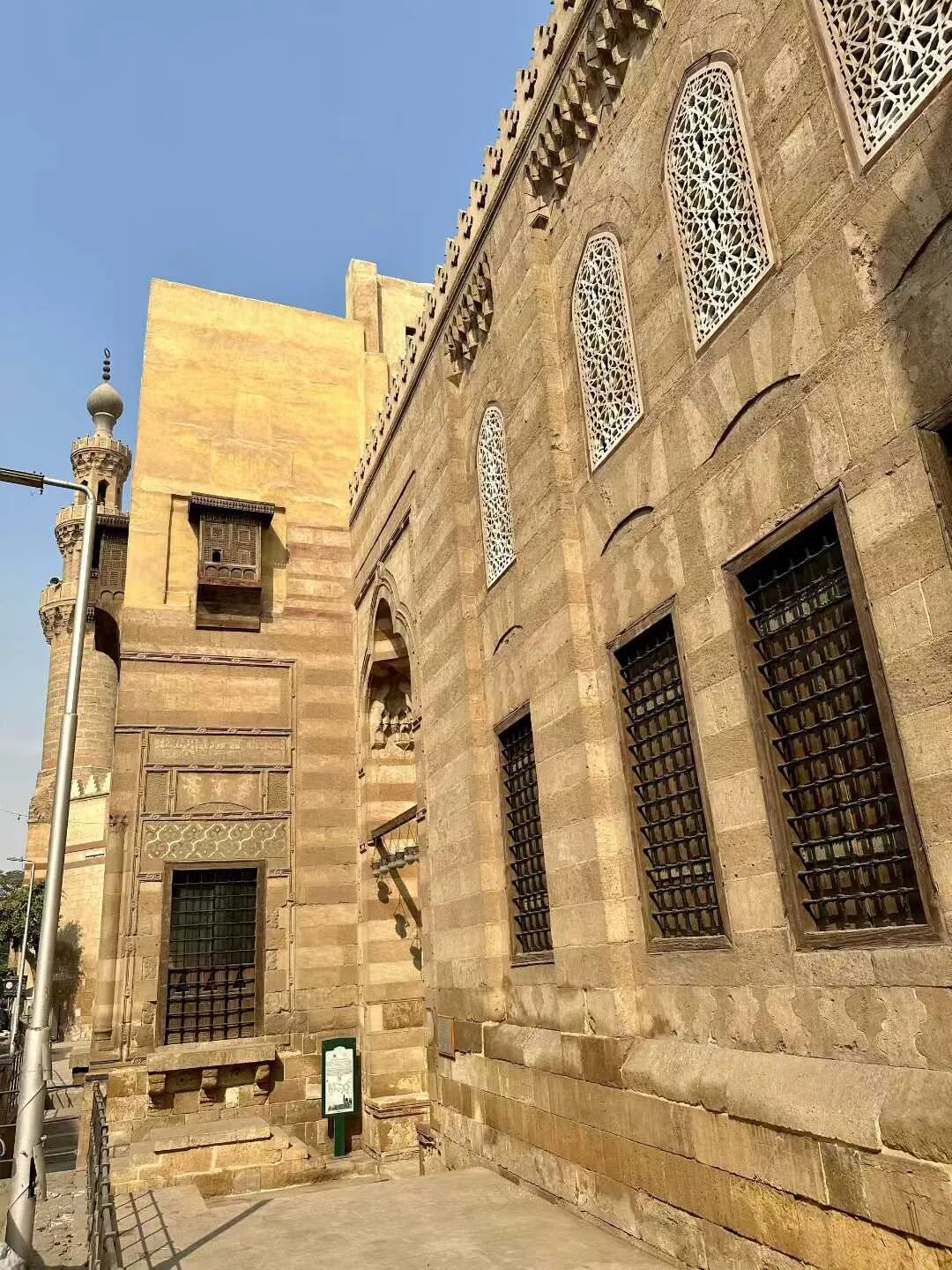
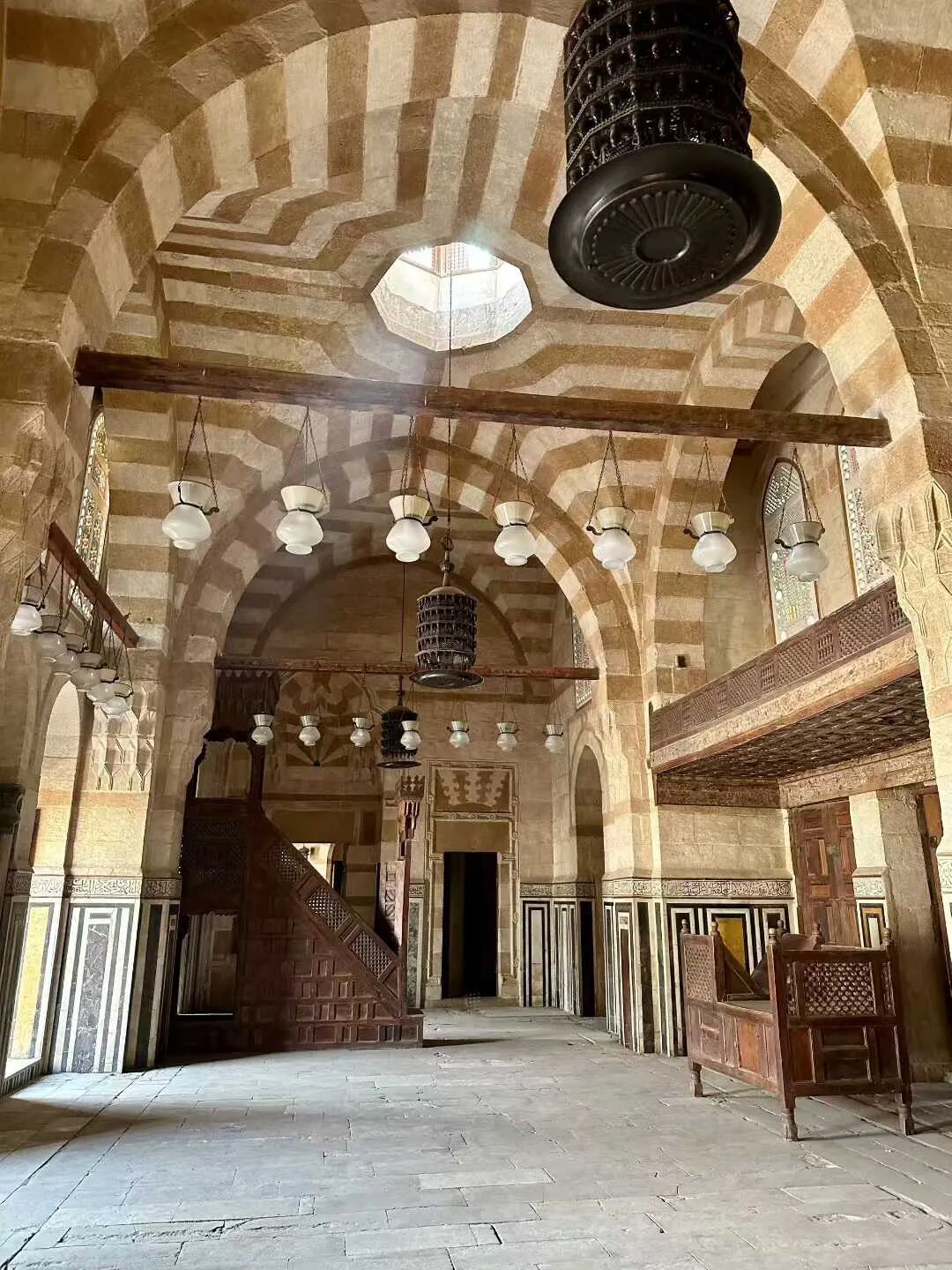
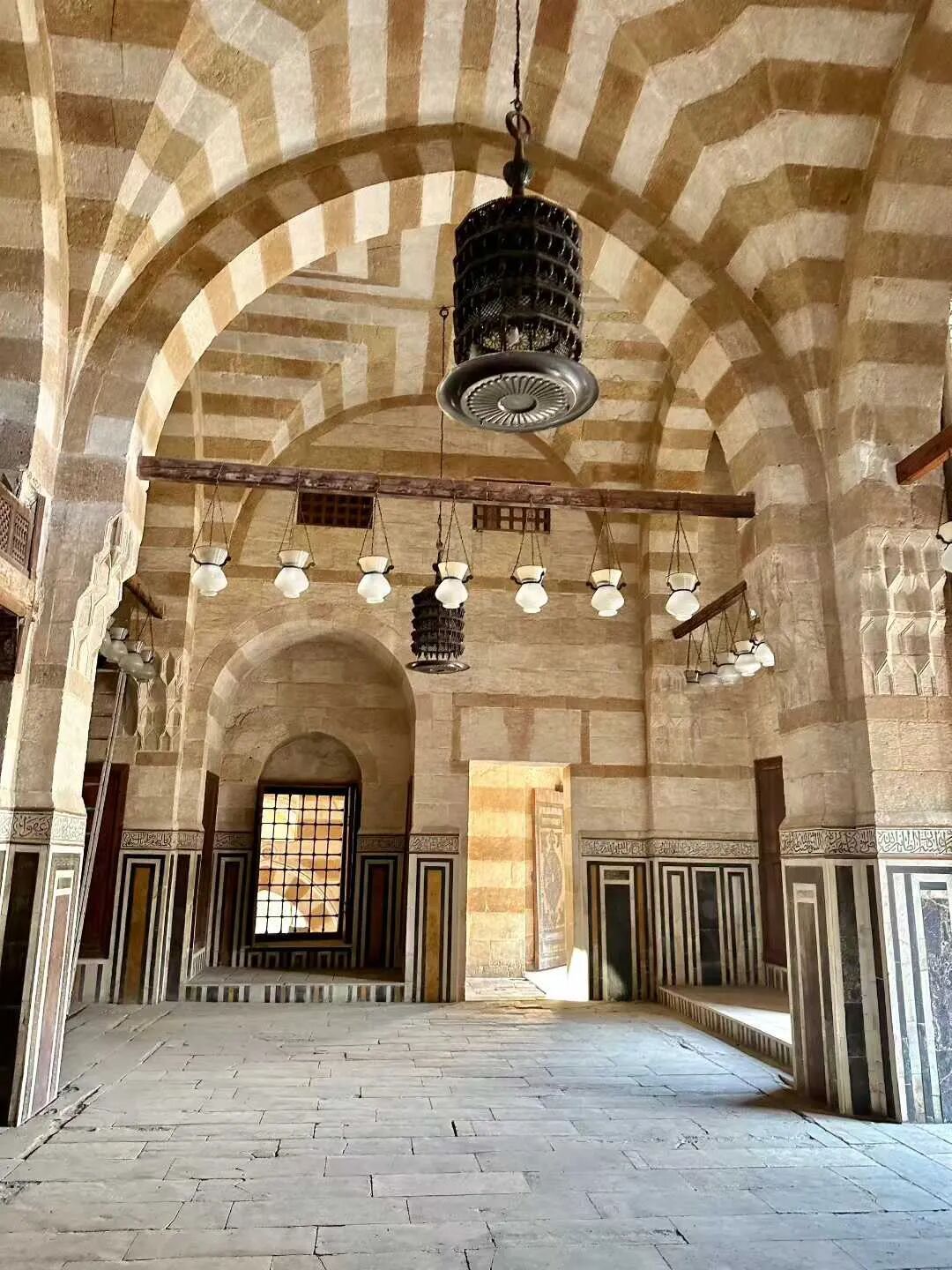
The Khayrbak Mosque was built in 1519 by the Ottoman governor of Egypt, Khayrbak, just two years after the Ottoman Empire conquered Egypt in 1517. Although the Mamluk Sultanate had already fallen when it was built, the mosque still features the typical Mamluk style.
Khayrbak was originally a Mamluk emir and governor of Aleppo, but he defected to the Ottomans in 1516 and became the first Ottoman governor of Egypt in 1517.
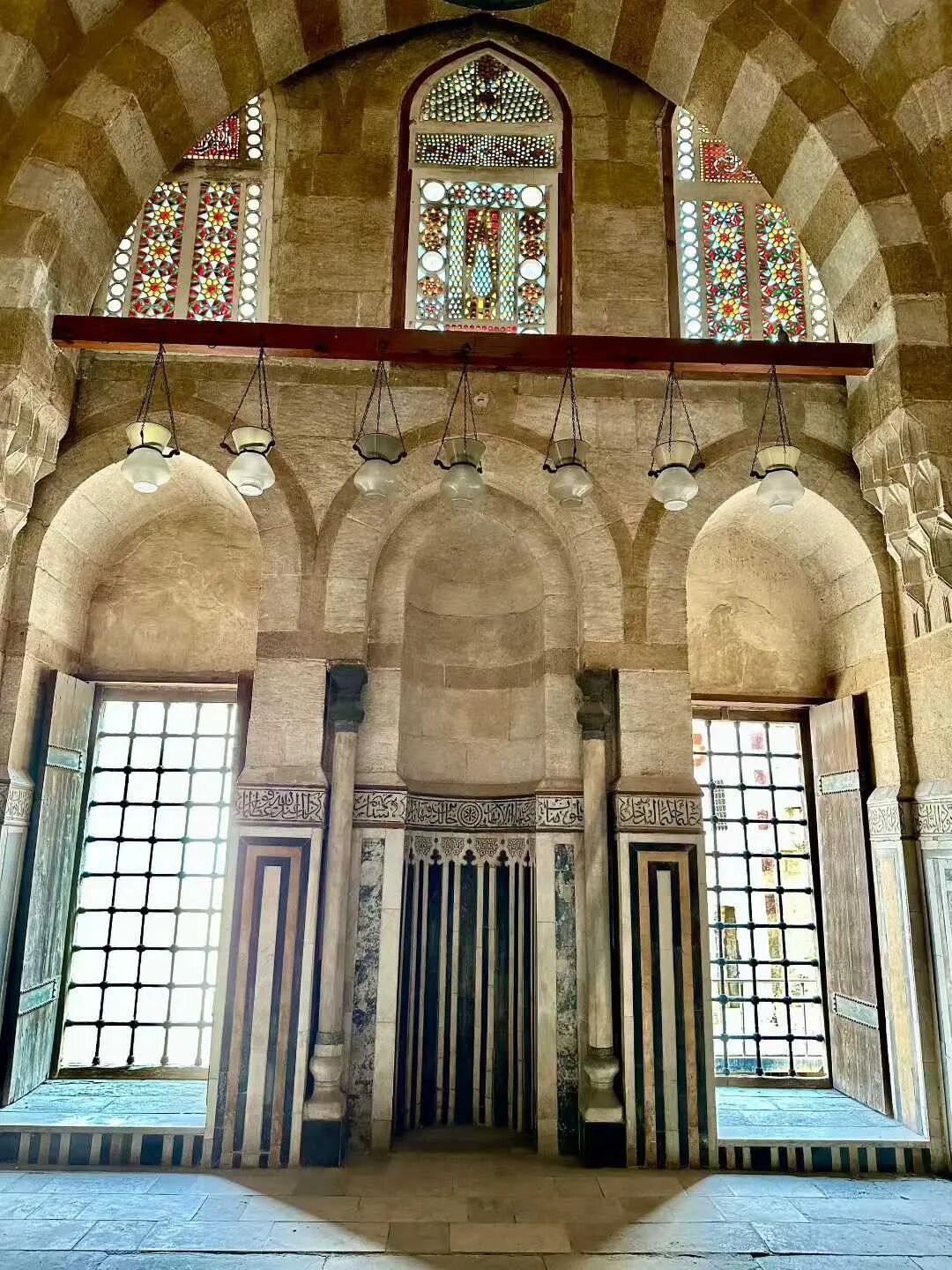
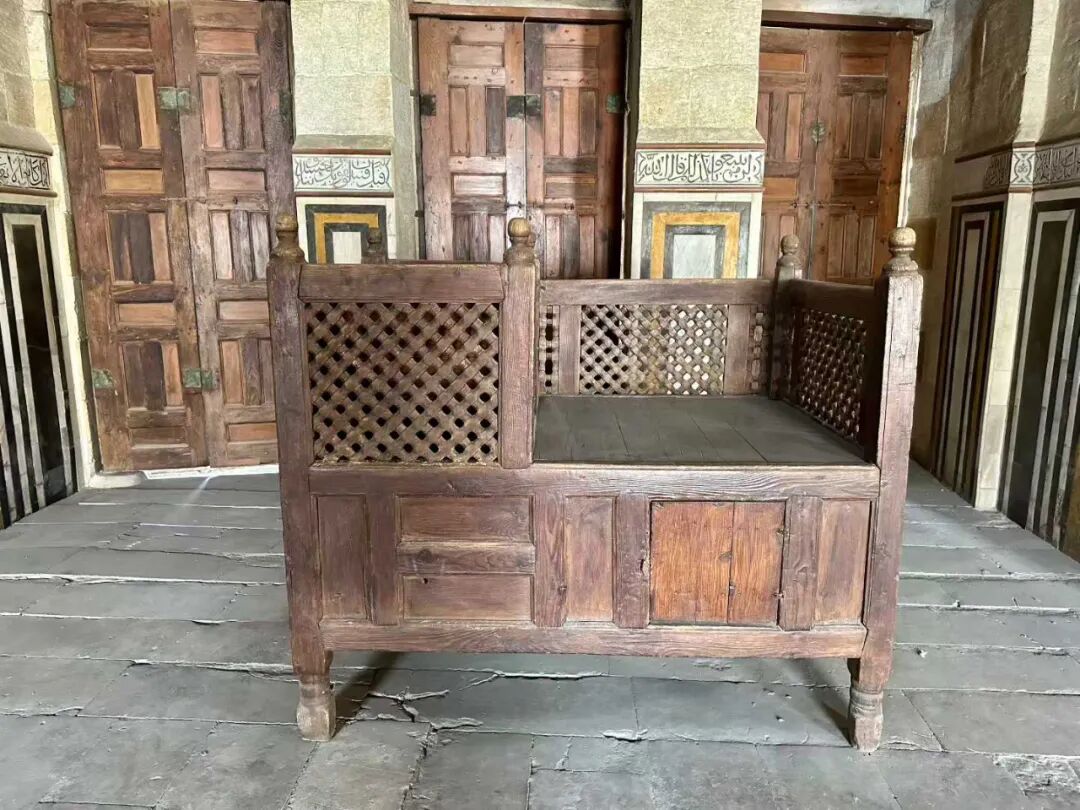
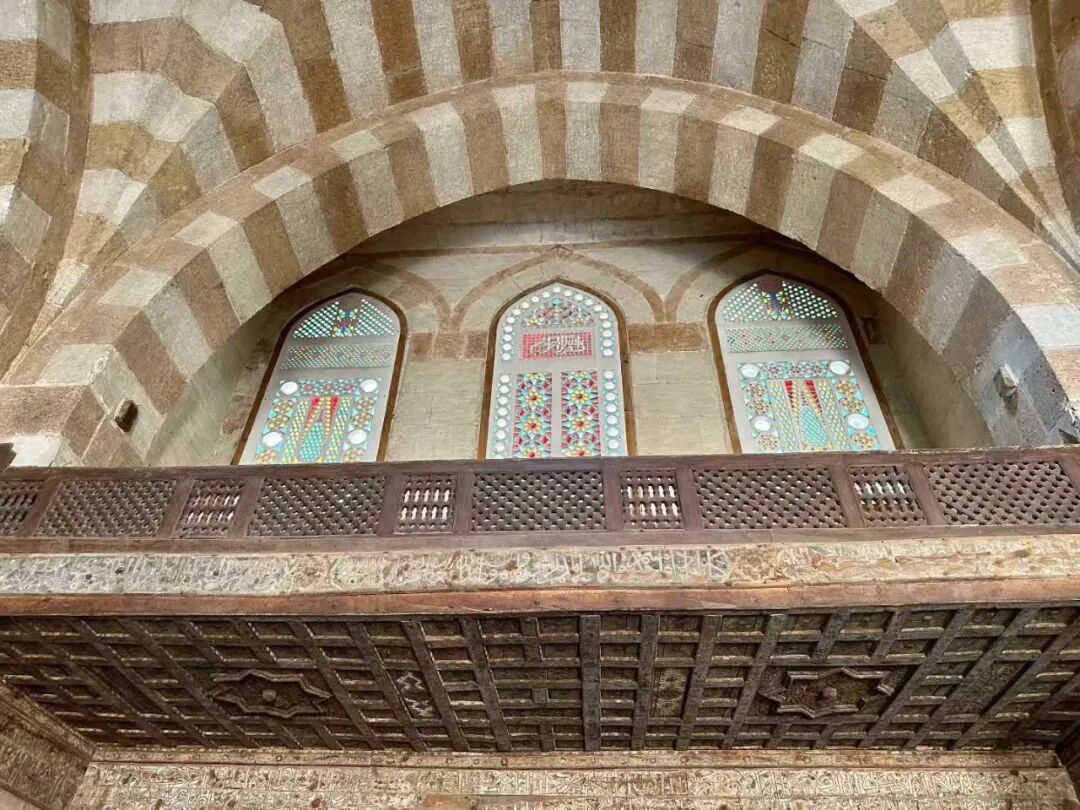
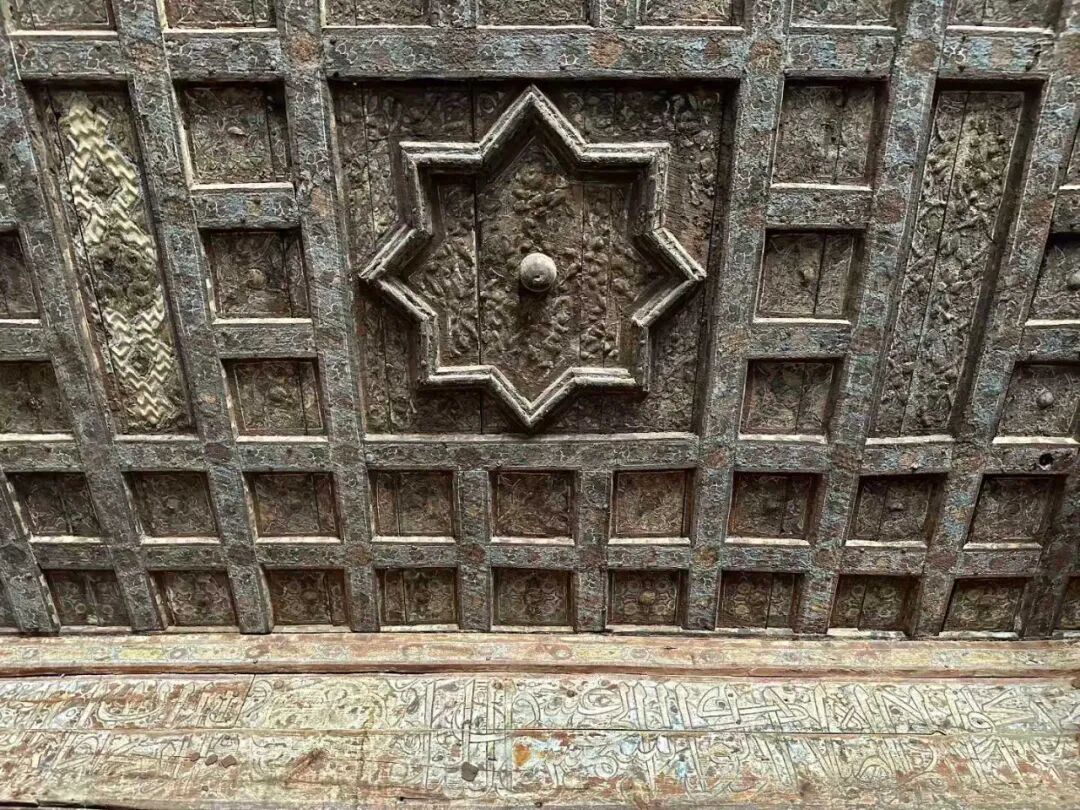
Sultan Hasan Mosque: 1356
The Sultan Hasan Mosque was built between 1356 and 1363 by the Mamluk Sultan Al-Nasir Hasan, who reigned from 1347 to 1351 and again from 1355 to 1361. This large mosque is massive in scale and cost over 10,000 dinars, making it the most expensive mosque built in medieval Cairo. The high cost attracted craftsmen from all over the Mamluk Sultanate, including Anatolia, which is why the mosque has such a diverse range of decorative styles.
The Sultan Hasan Mosque also witnessed the fall of the Mamluk Sultanate. In 1517, the last Mamluk Sultan, Tuman Bay II, resisted the Ottoman army from inside the Sultan Hasan Mosque. The Ottoman army fired cannons at the mosque from the Citadel of Saladin across the way. The Sultan was forced to flee, and Cairo fell completely into Ottoman hands.
The Sultan Hasan Mosque is 150 meters long and 36 meters high. It has eight windows arranged vertically on its southwest and northeast facades, which visually emphasize the height of the building. The top edge of the mosque's facade features a 1.5-meter-high stalactite cornice, a detail never seen before in Mamluk architecture.
The Sultan Hassan Mosque has two minarets. When the southern minaret was finished, it stood 84 meters above the street, making it the tallest minaret in all of Mamluk architecture. The northern minaret collapsed in 1659 and was rebuilt between 1671 and 1672. The original design for the mosque called for four minarets in the Seljuk style, but one collapsed during construction in 1361, killing 300 people, so only two were ever completed.
The main gate of the Sultan Hassan Mosque is 38 meters high. Its decorative style was strongly influenced by Anatolian Seljuk and Ilkhanate architecture, and it looks very similar to the gate of the Blue Madrasa in Sivas, Turkey. Unfortunately, the marble carvings on the gate were never finished, and some only show the outlines. This actually lets us see the stone carving process of the time, where a master craftsman would carve the outline first, and then an apprentice would finish the rest.
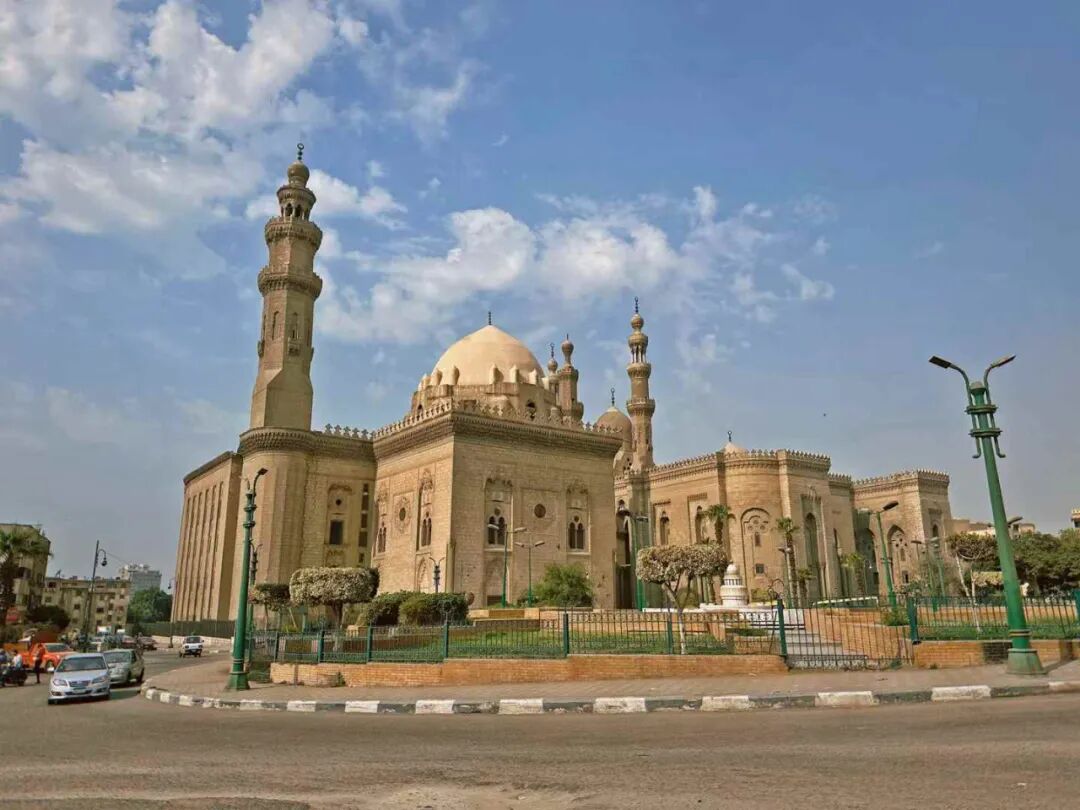
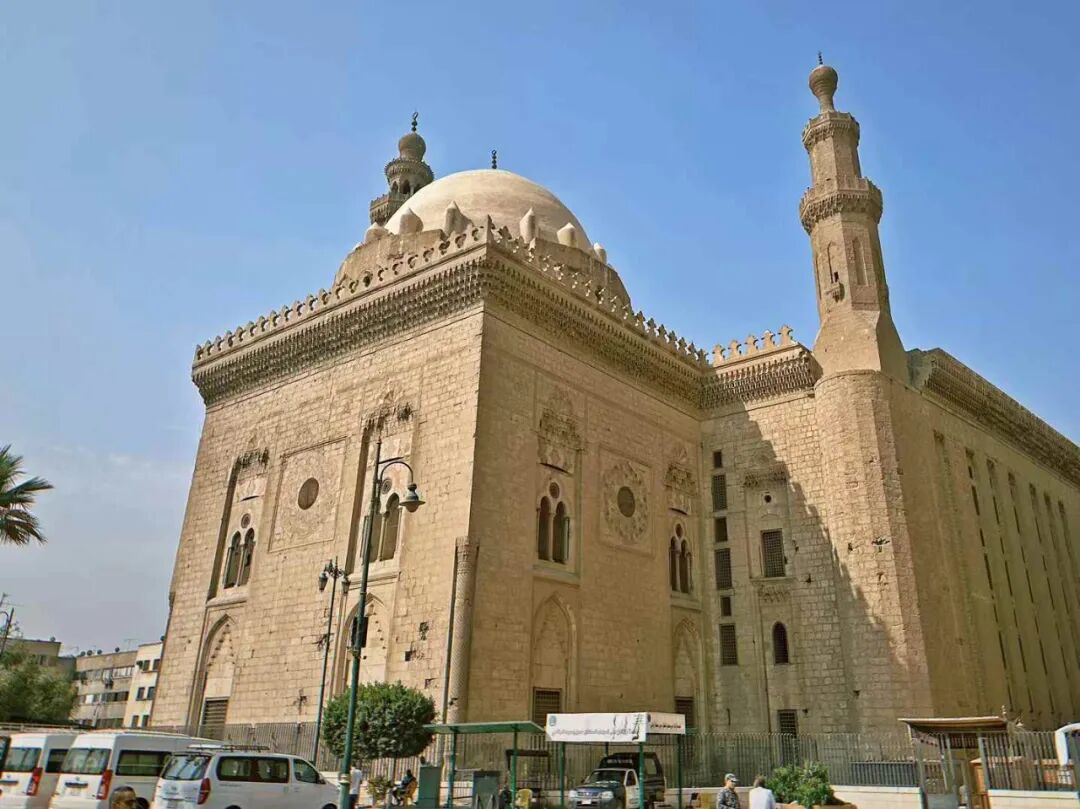
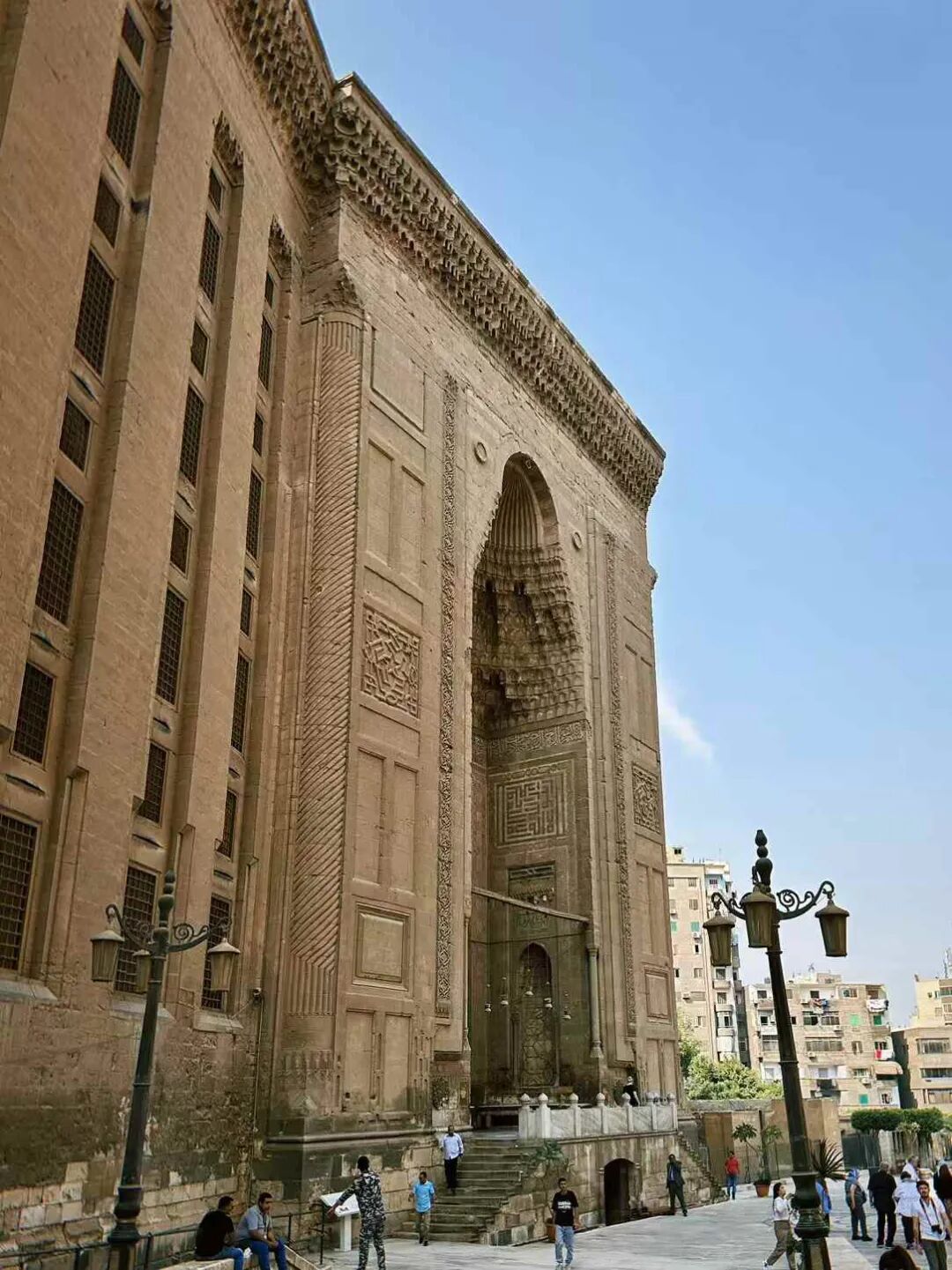
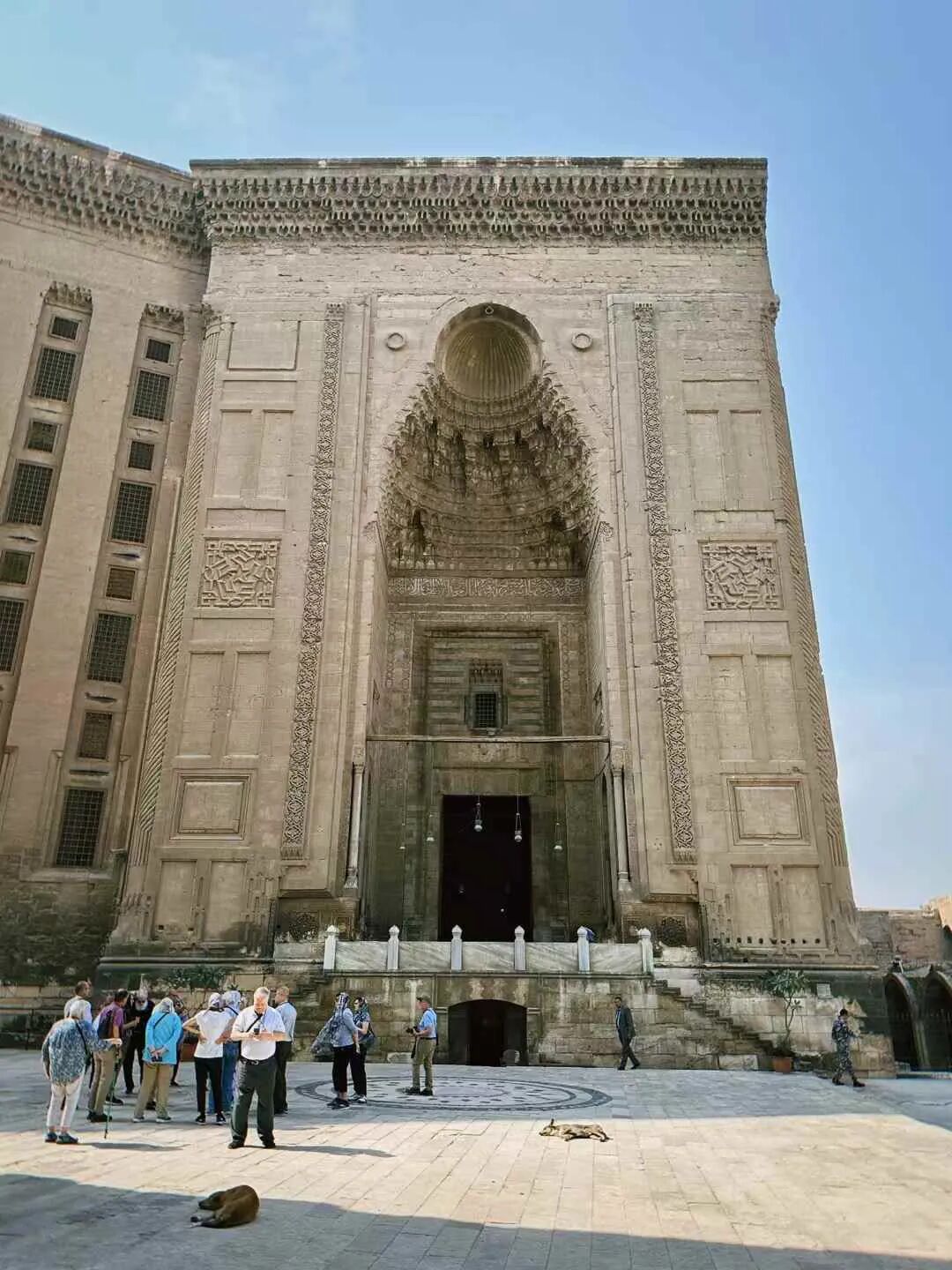
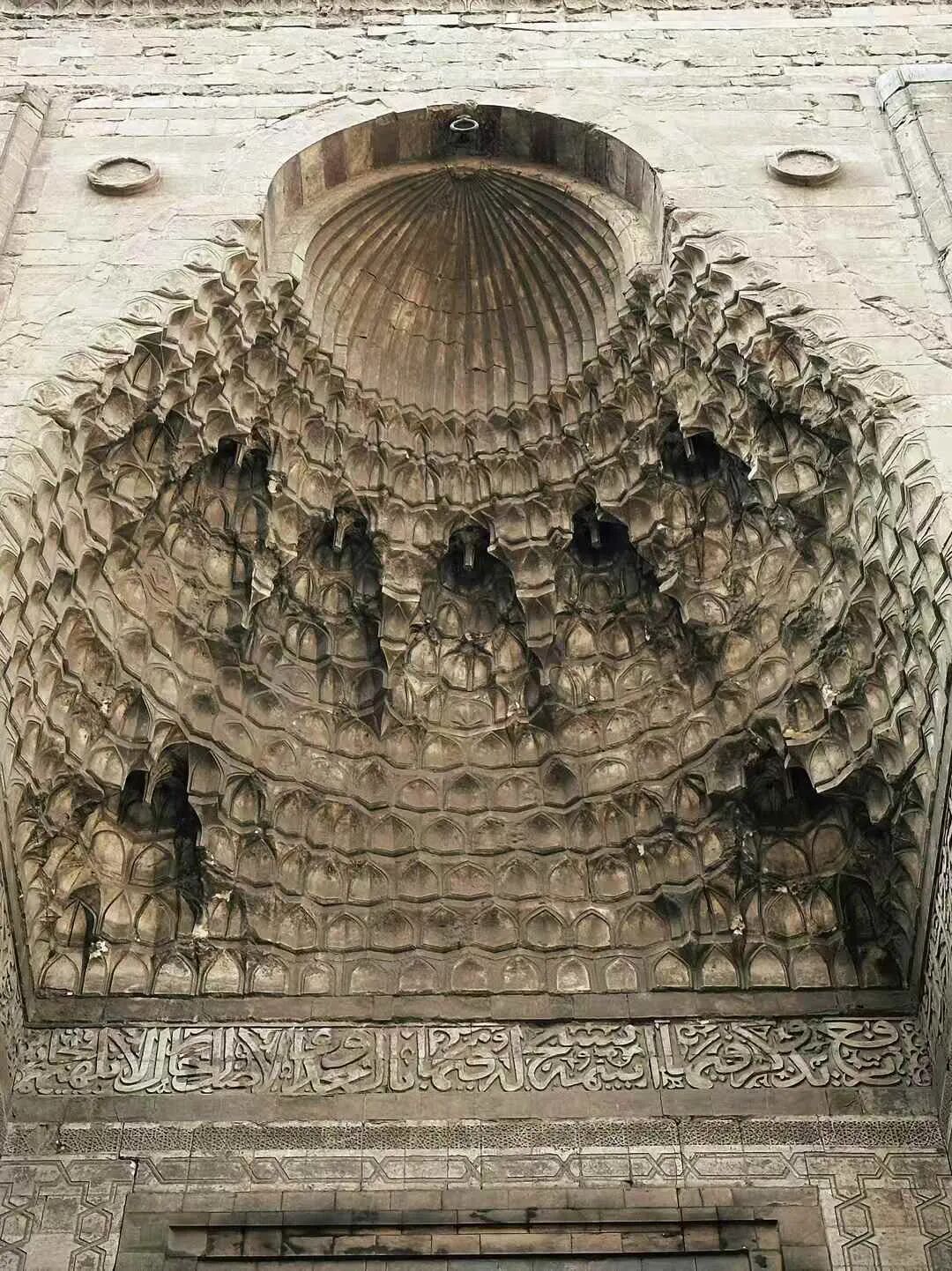
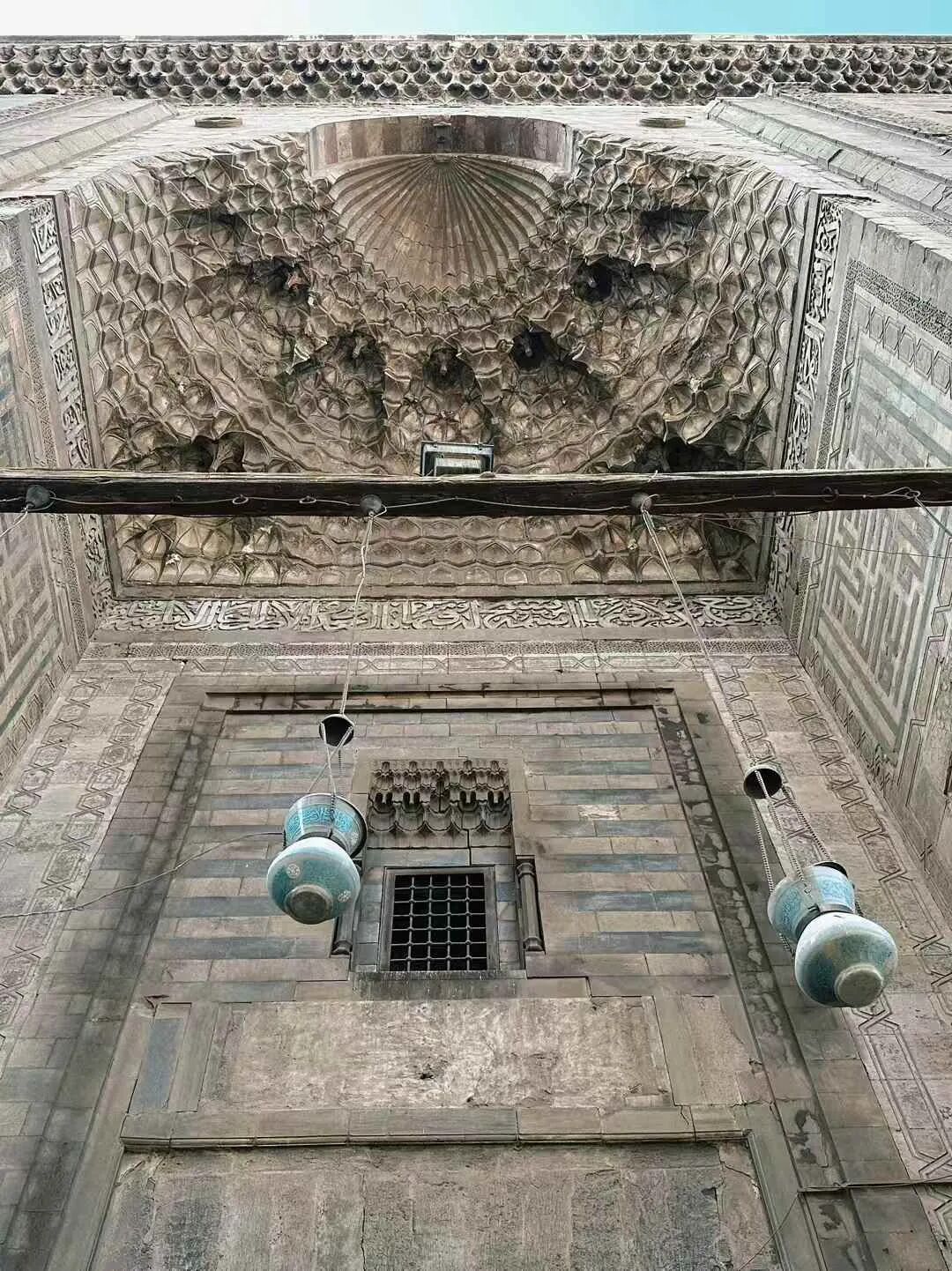
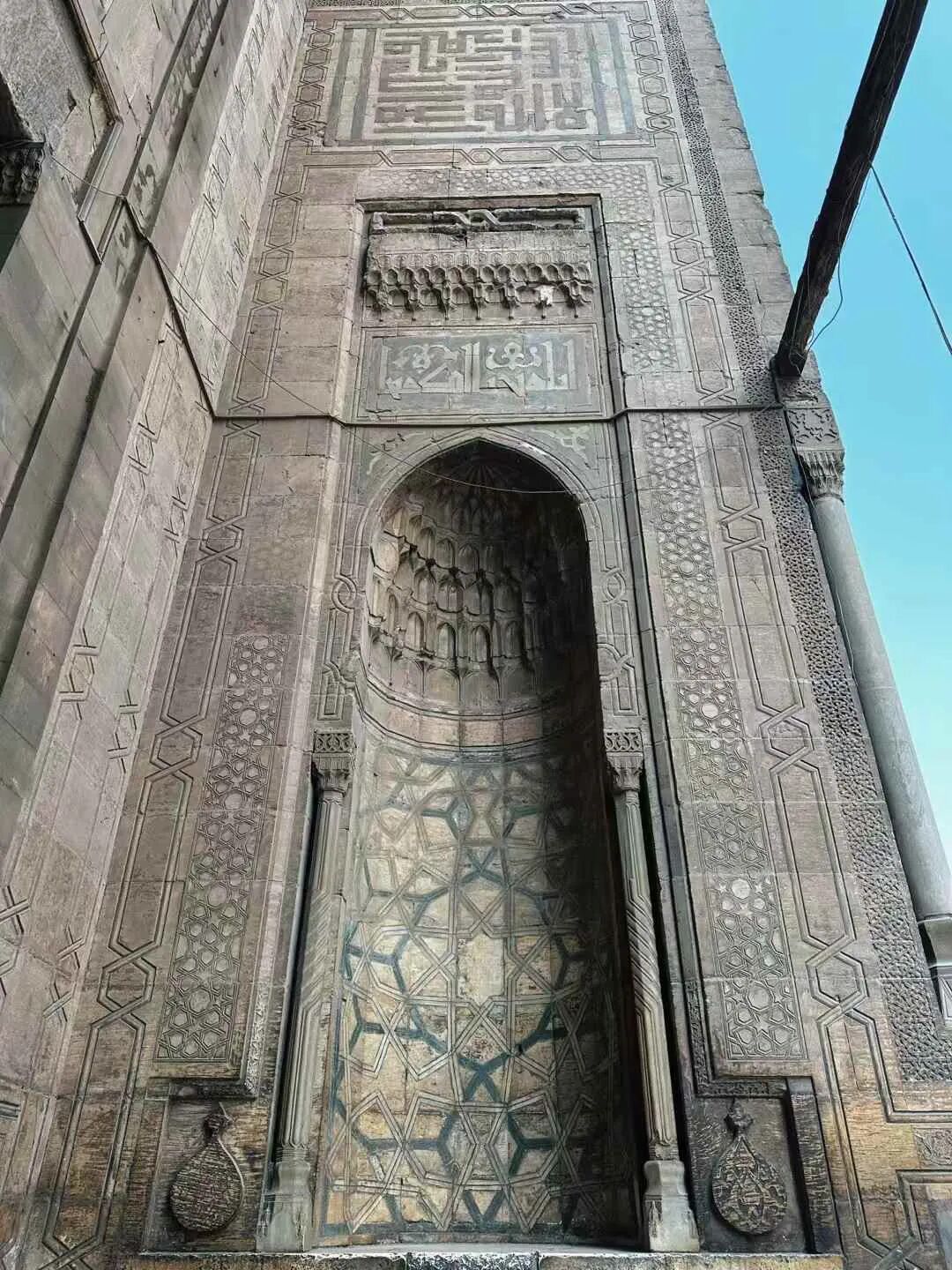
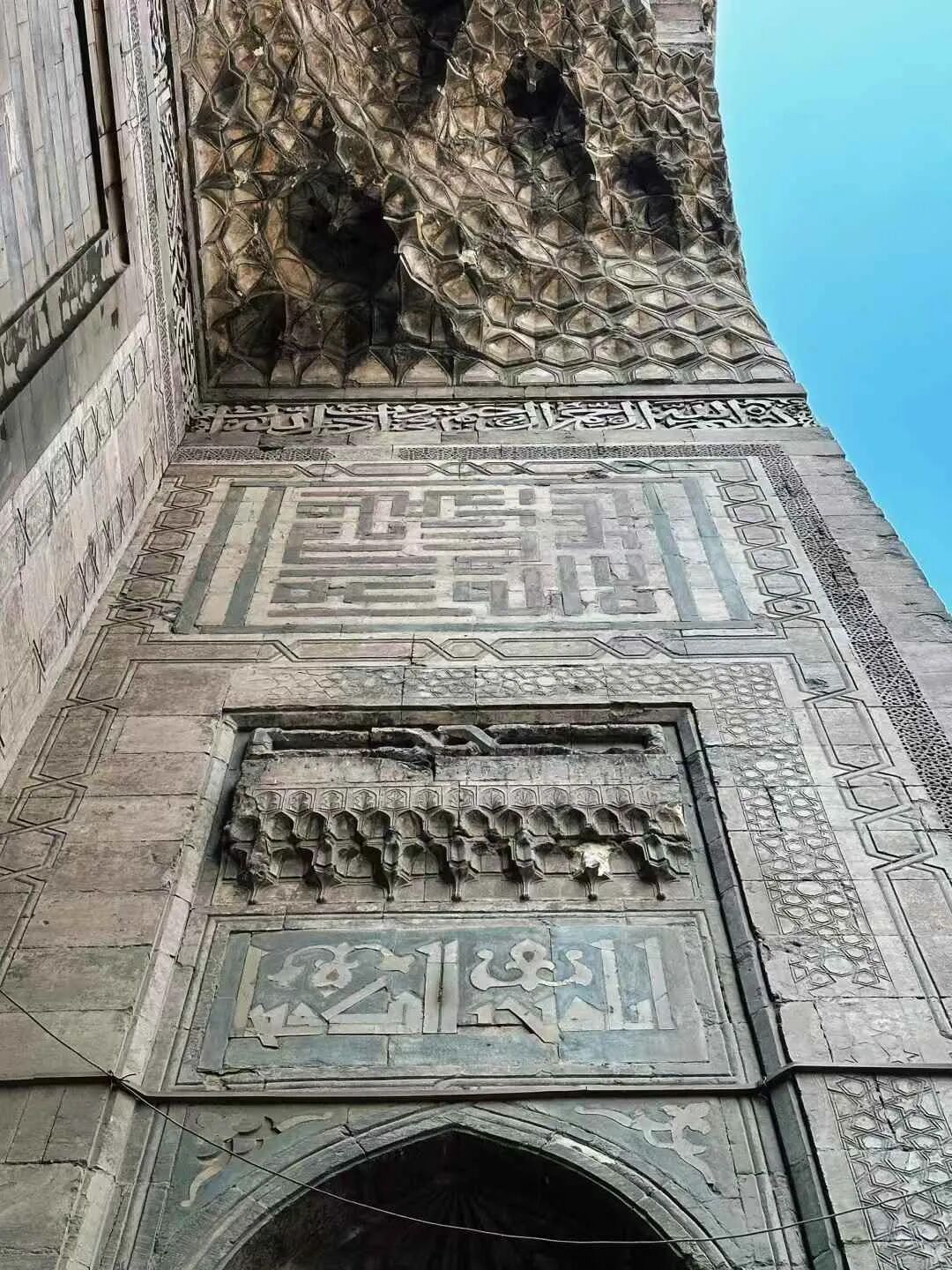
The Sultan Hassan Mosque has a classic Mamluk cruciform layout, consisting of a central courtyard and four massive vaulted halls (iwan). The ablution fountain (wudu fountain) in the center of the courtyard was renovated during the Ottoman period, but it remains the oldest one in Mamluk architecture.
The center of the main hall is decorated with Kufic calligraphy and swirling arabesque patterns, which is unique in Mamluk architecture. The qibla wall is decorated with colorful marble panels. The center of the mihrab features three rising suns, each with the word Allah written in gold in the middle. The minbar has beautifully patterned bronze doors, which are also very rare in Mamluk architecture.
Halal Travel Guide: Cairo - 22 Ancient Mosques, Part Three
Articles • ali2007fr posted the article • 0 comments • 250 views • 2026-05-21 02:25
Summary: This final part of the Cairo mosque journey continues through later historic mosques, including the Rifa'i Mosque and other Islamic monuments in the city. It preserves the source's mosque names, construction dates, rulers, architectural notes, and photographs in clear English.
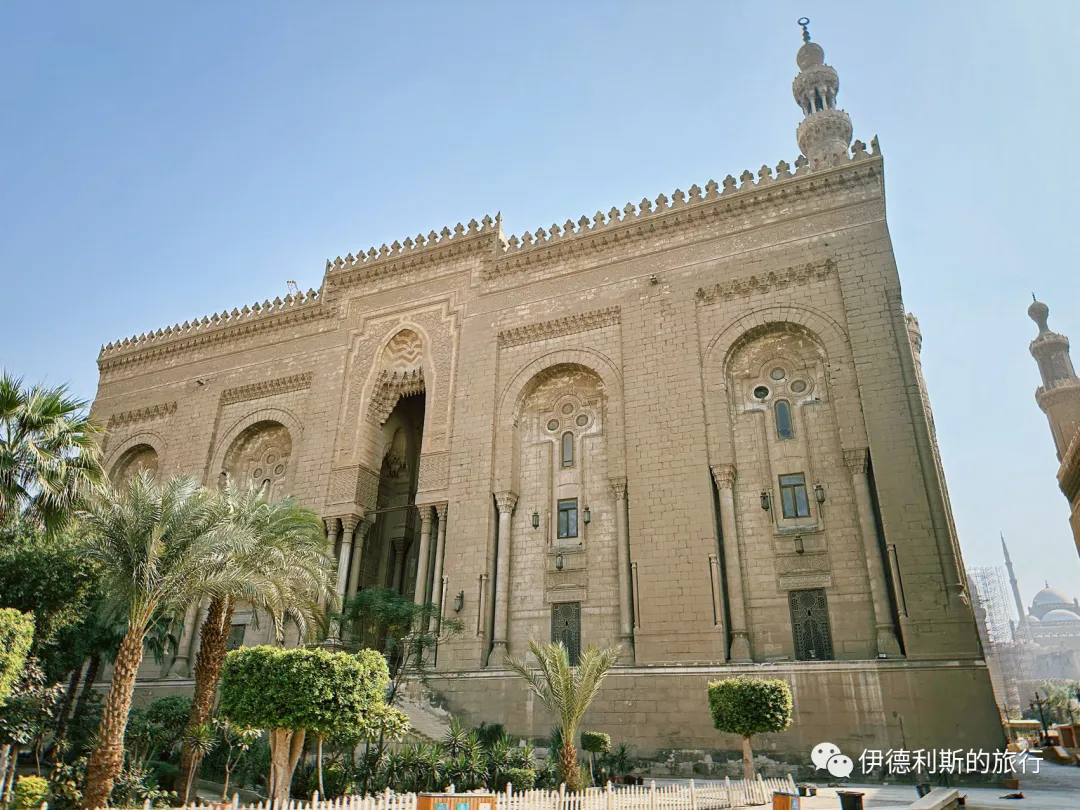
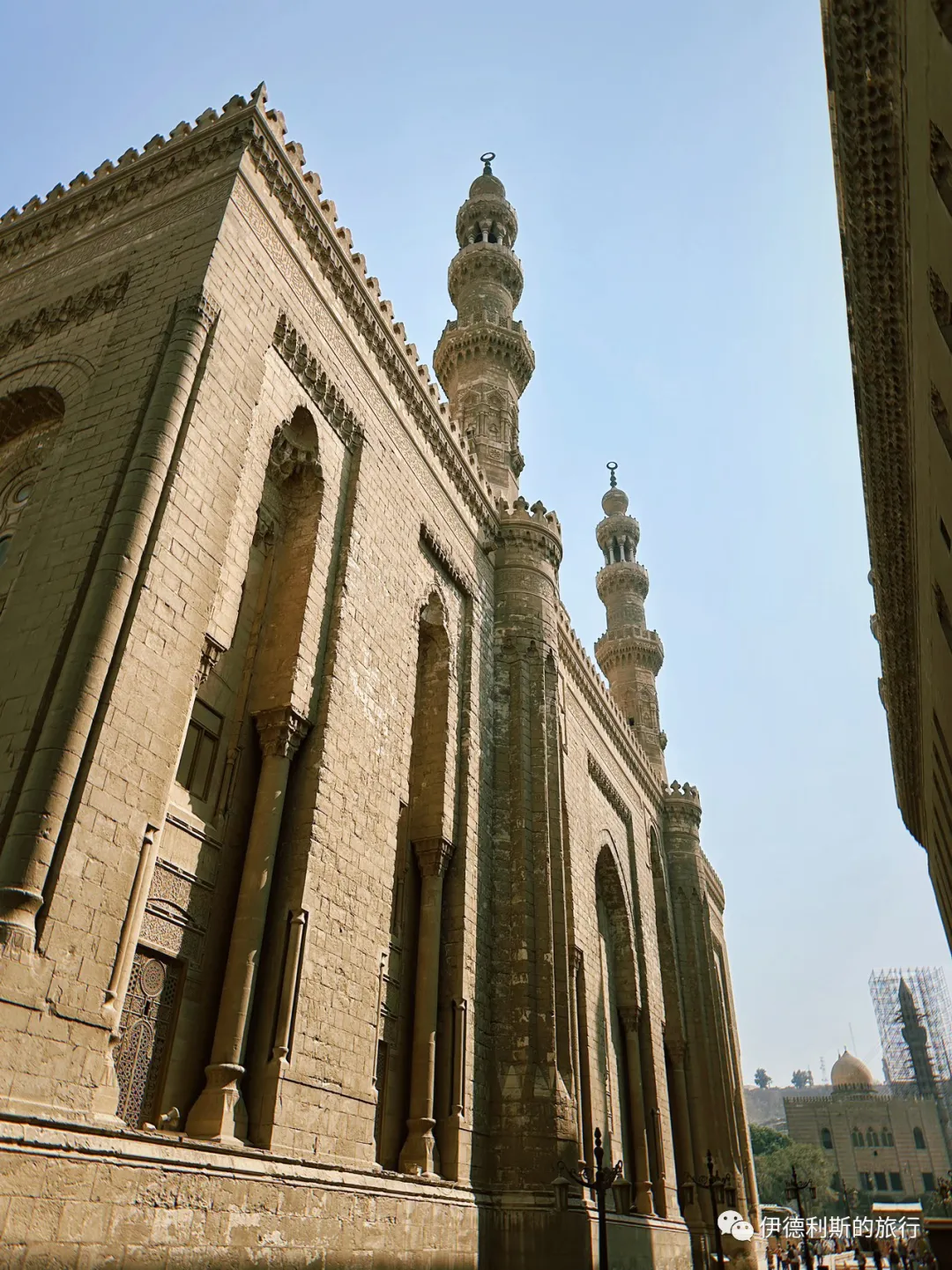
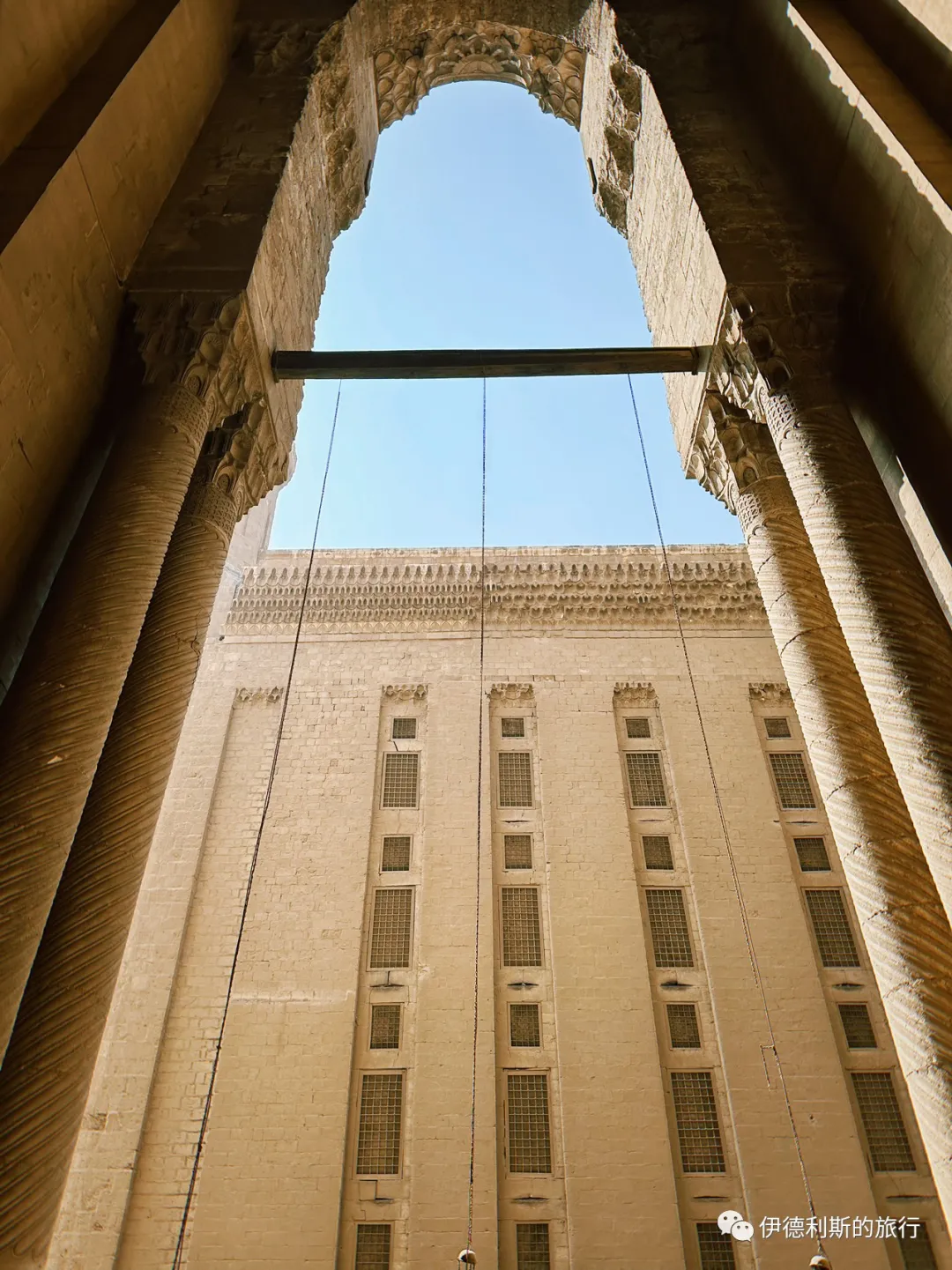
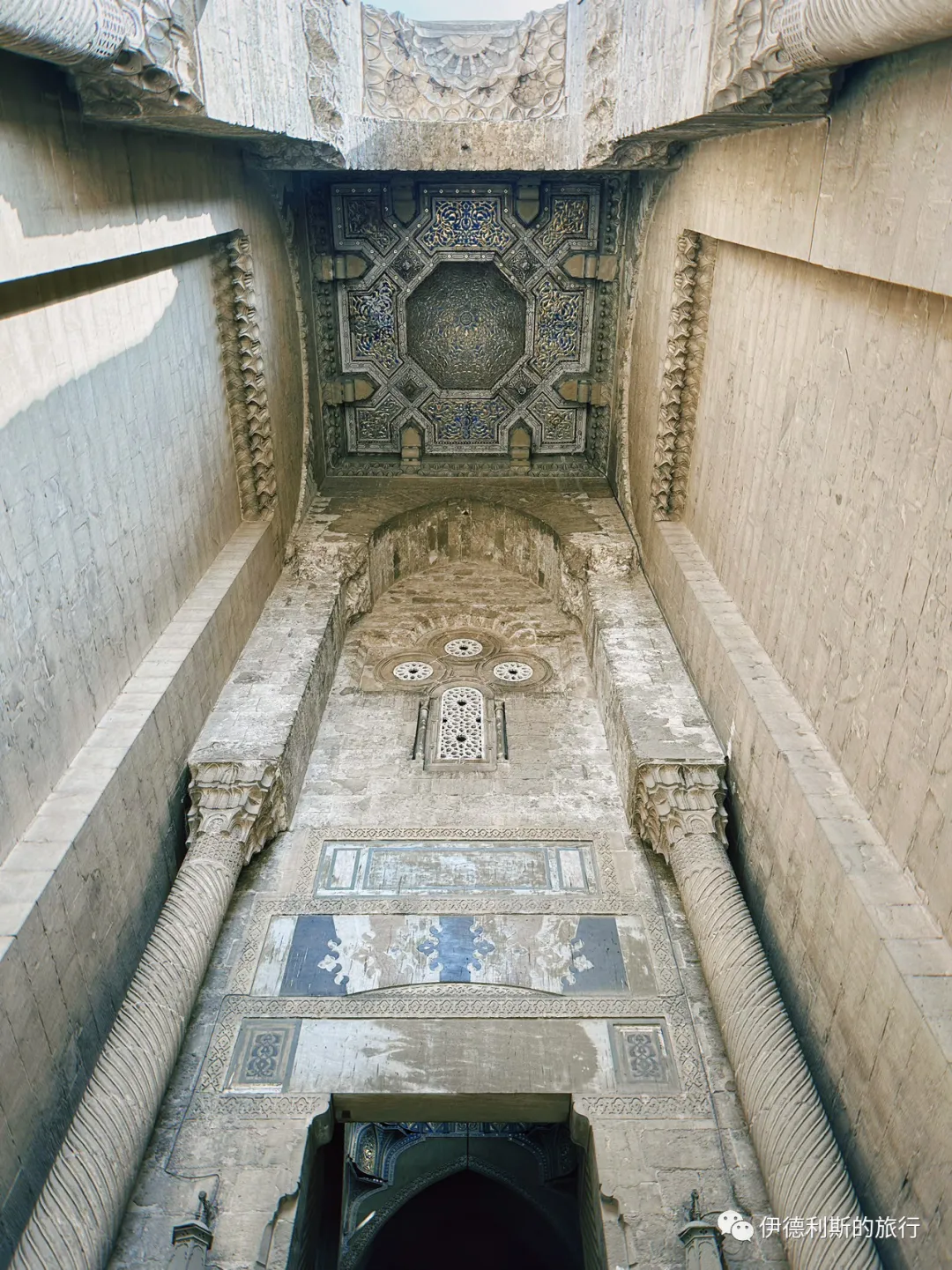
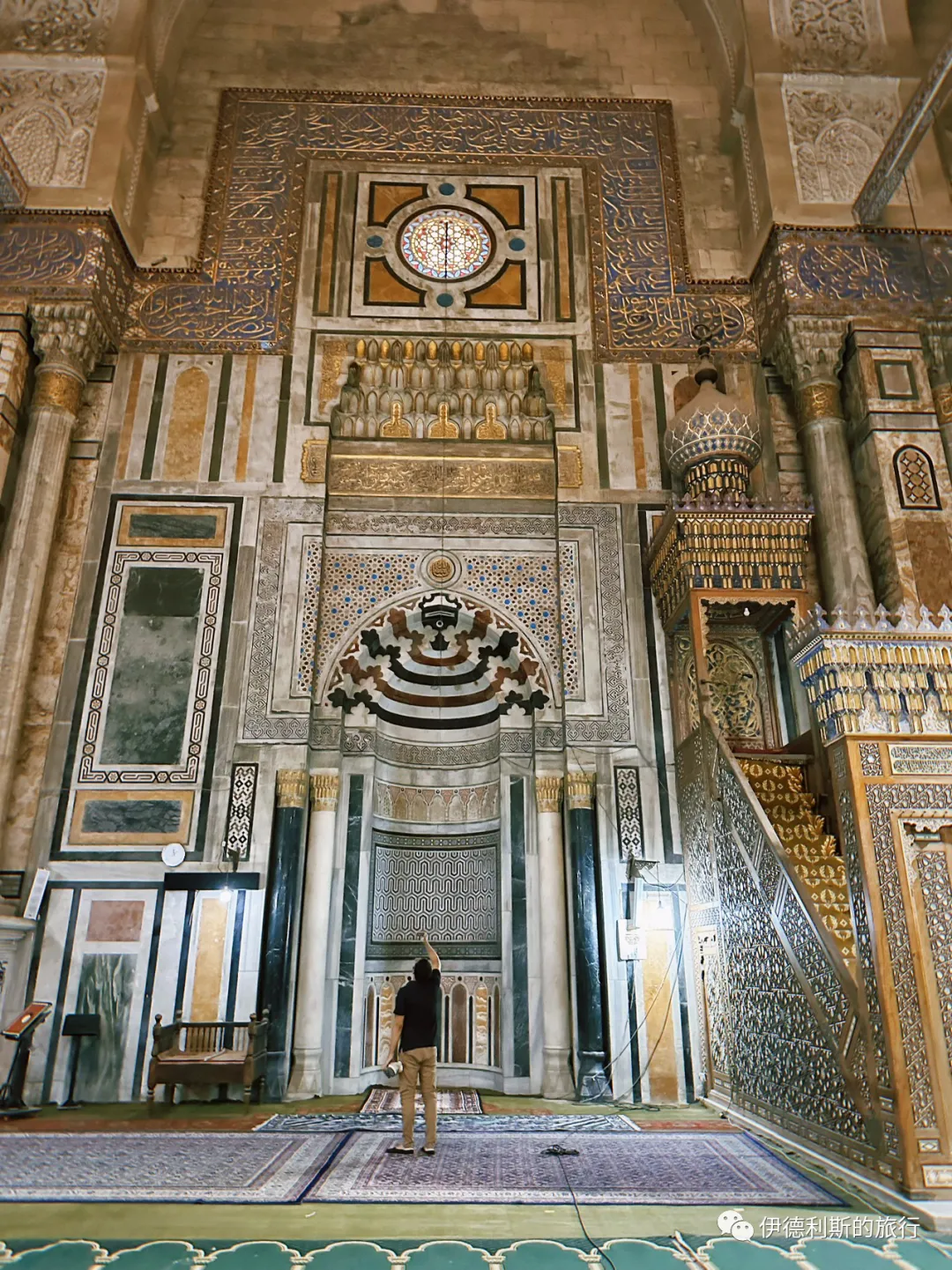
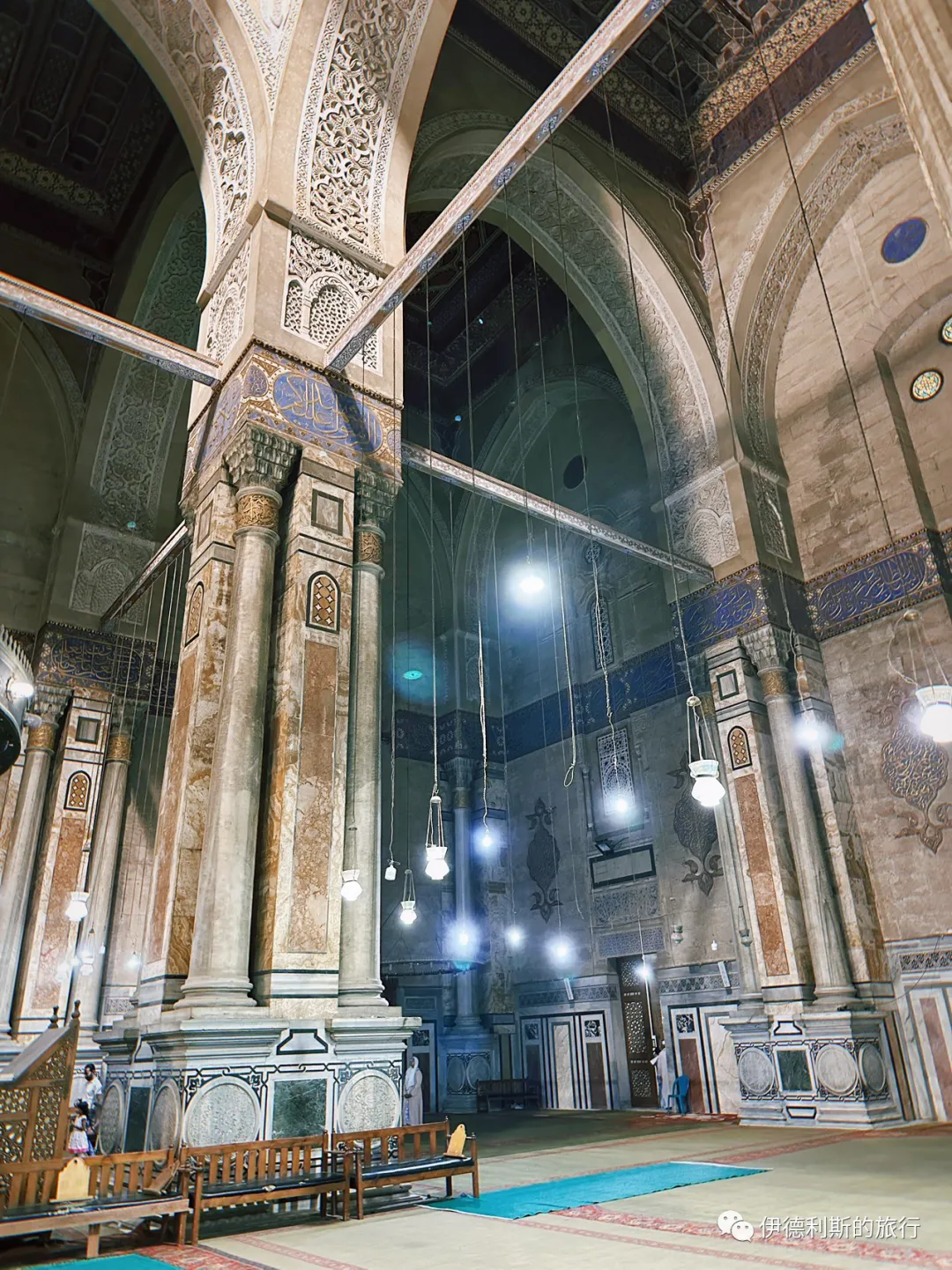
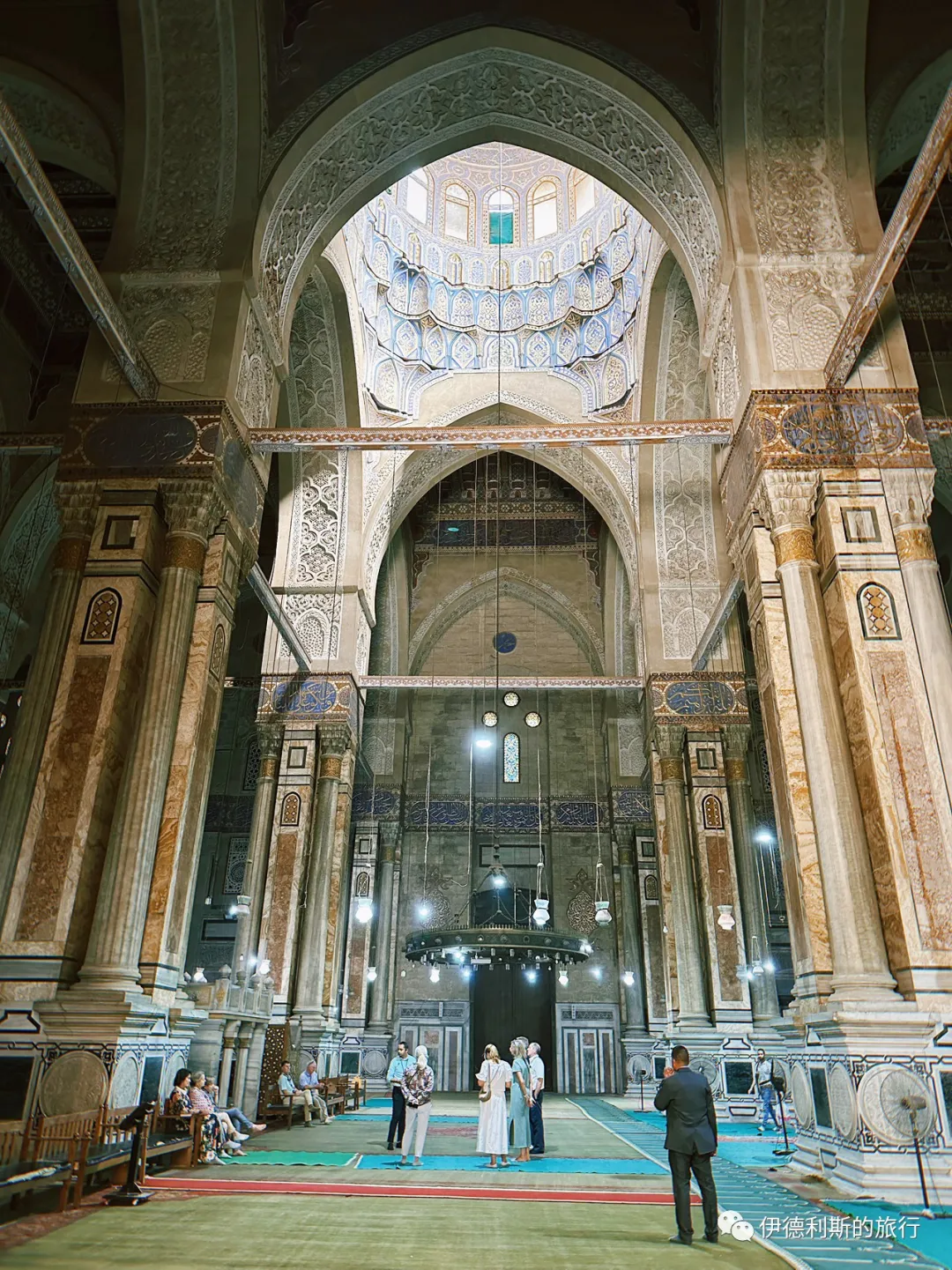
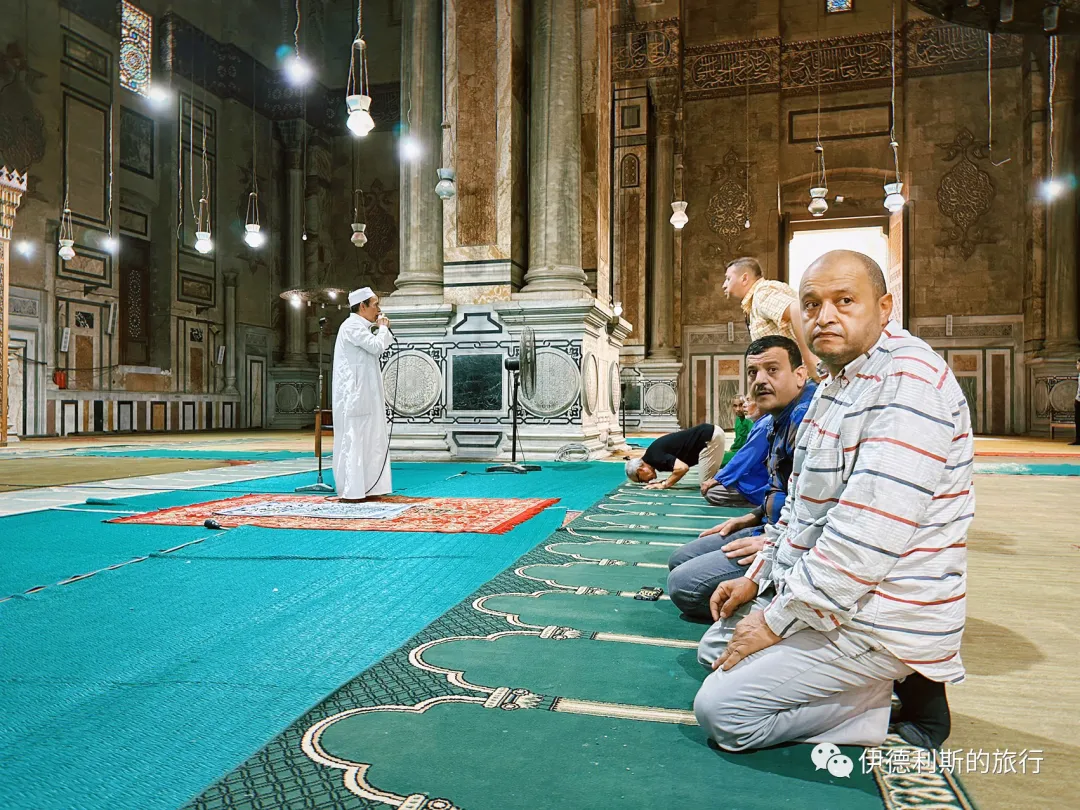
Rifa'i Mosque: 1869.
The Rifa'i is a Sufi order founded in Iraq in the 12th century, with a wide presence across Egypt and Syria. The Rifa'i Mosque in Cairo is named after Ali Abu Shubbak al-Rifa'i, the grandson of the order's founder, Ahmad al-Rifa'i, who is buried there. This site started as a Sufi lodge. Between 1869 and 1912, the Muhammad Ali dynasty of Egypt rebuilt it into the current grand mosque. It holds the graves of many Egyptian royals, including several kings, as well as the last Shah of Iran, Pahlavi.
Ibn Tulun Mosque: 876.
The Ibn Tulun Mosque is the oldest surviving mosque building in Egypt and the largest in Cairo.
The mosque was built between 876 and 879 by the Tulunid Emir Ahmad ibn Tulun (reigned 868-884) to serve as the Friday mosque for the Tulunid capital, al-Qata'i. Ahmad ibn Tulun was originally the Abbasid governor of Egypt. He later took control of the finances and the army to rule Egypt himself.
The city of al-Qata'i was modeled after Samarra in Iraq. The Ibn Tulun Mosque sat at its center, and Ibn Tulun's own palace was built right next to it. He could enter the minbar (pulpit) directly through a secret door. Next to the palace were a large parade ground, gardens, and a horse racing track. The city also featured water aqueducts, irrigation canals, a sewage system, and Cairo's first public hospital. In 905, the Abbasid dynasty took back Egypt and razed the city of al-Qata'i to the ground. The Ibn Tulun Mosque was the only building left standing.
The Ibn Tulun Mosque was built to copy the Great Mosque of Samarra in Iraq and shows the classic Abbasid style. The mosque consists of a rectangular courtyard surrounded by halls supported by stone pillars. The side facing the Kaaba is the largest. In the center of the courtyard is a wudu (ablution) fountain. The one seen today was built by the Mamluk Sultan Lajin (reigned 1296-1299) at the end of the 13th century and features a tall dome.
Inside the main hall of the Ibn Tulun Mosque are six mihrabs (prayer niches). The one in the center of the qibla wall was built by Mamluk Sultan Lajin in the late 13th century. It features painted wooden panels, mosaic decorations in the middle, and colored marble at the bottom.
The stucco mihrab to the left of the qibla wall is decorated with muqarnas (stalactite) cornices and Thuluth script. It is believed to date back to the early Mamluk period.
On both sides of the dikka (raised platform for the muezzin) are stucco-carved mihrabs in the Samarra style of Iraq. The one on the right is carved with stars hanging from chains. Neither of these two mihrabs mentions Ali, so they predate the rise of the Shia Fatimid dynasty in the 10th century. They are likely original works from the 9th-century Tulunid period.
The westernmost mihrab was made by the Fatimid vizier Al-Afdal Shahanshah (in office 1094-1121). The original is kept in the Museum of Islamic Art in Cairo. This mihrab is heavily decorated with Persian-influenced style. Its inscriptions mention the Fatimid Caliph al-Mustansir and the Shia Shahada.
There is another mihrab modeled after the Al-Afdal mihrab, though only parts of it remain today. Unlike the original, this one mentions the Mamluk Sultan Lajin and does not mention Ali, so it is believed to have been built during the Mamluk period.
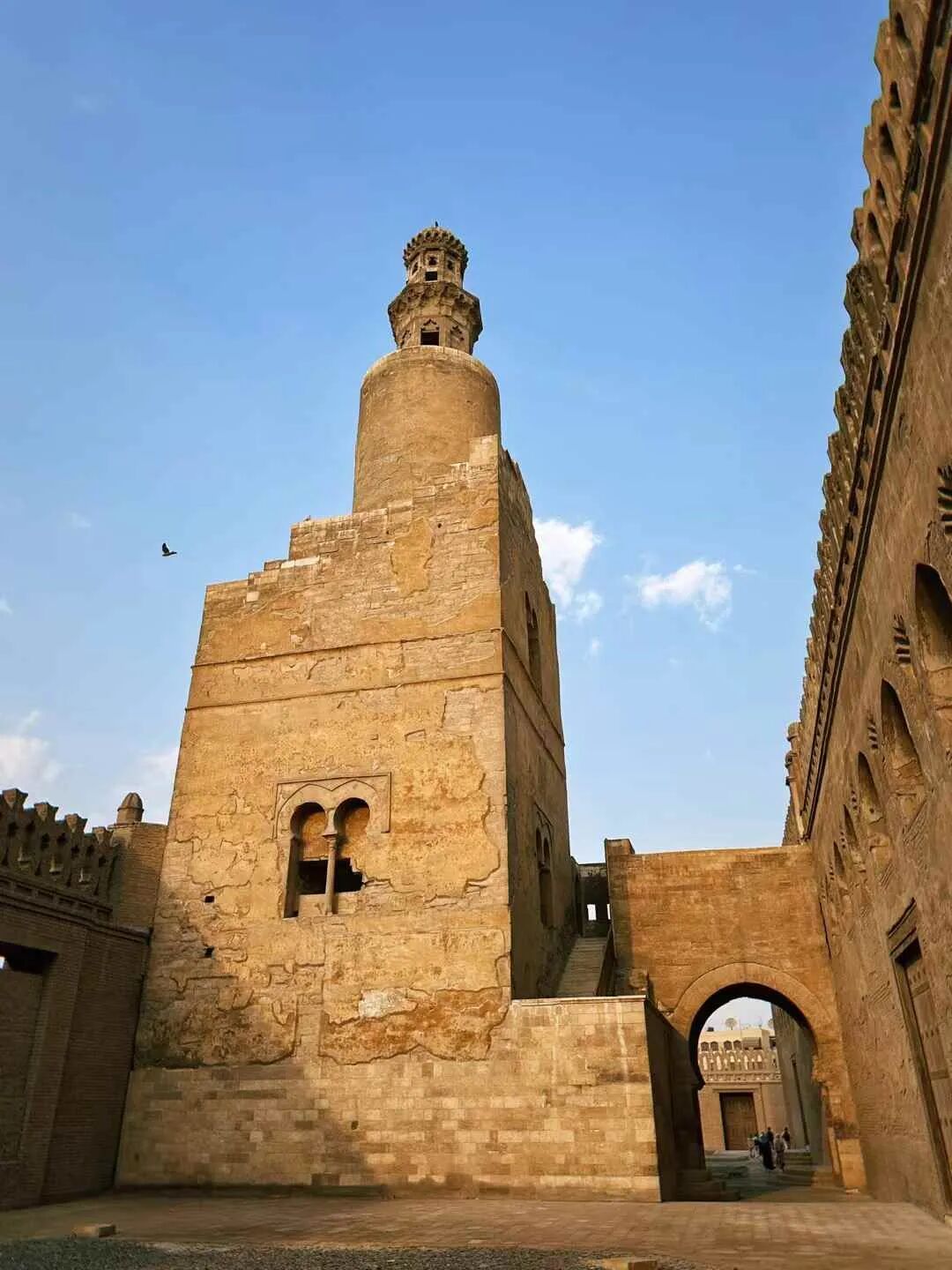
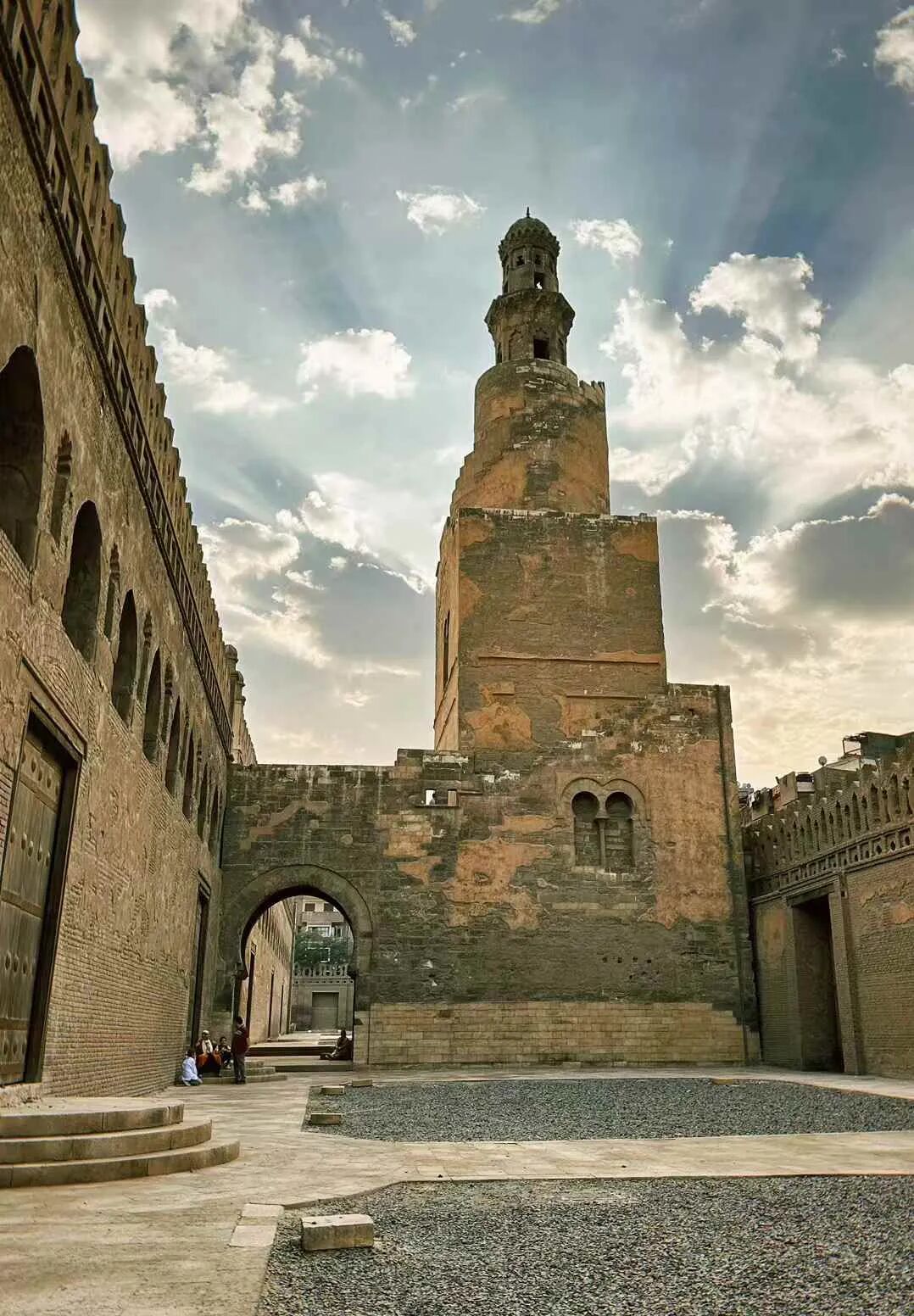
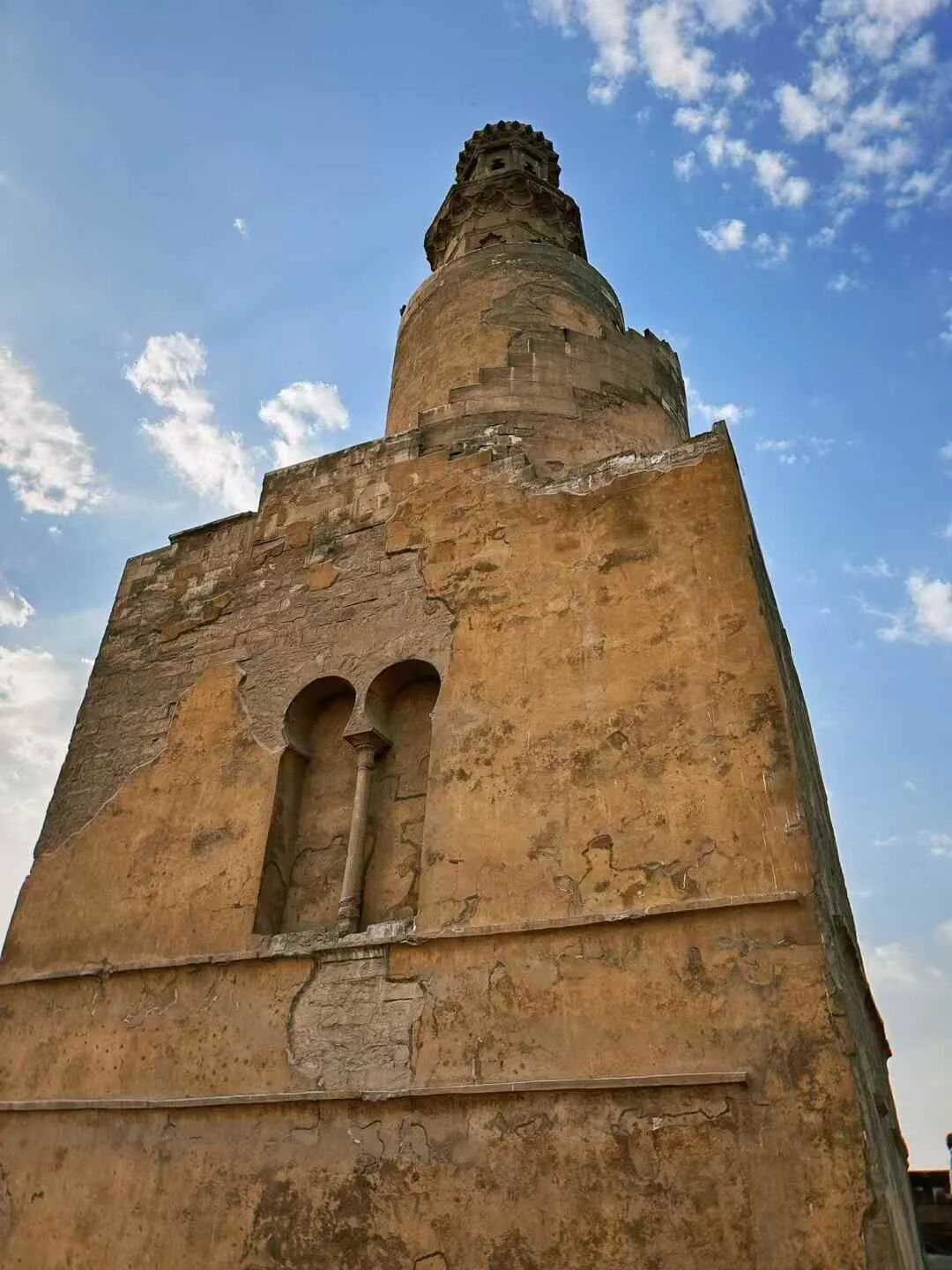
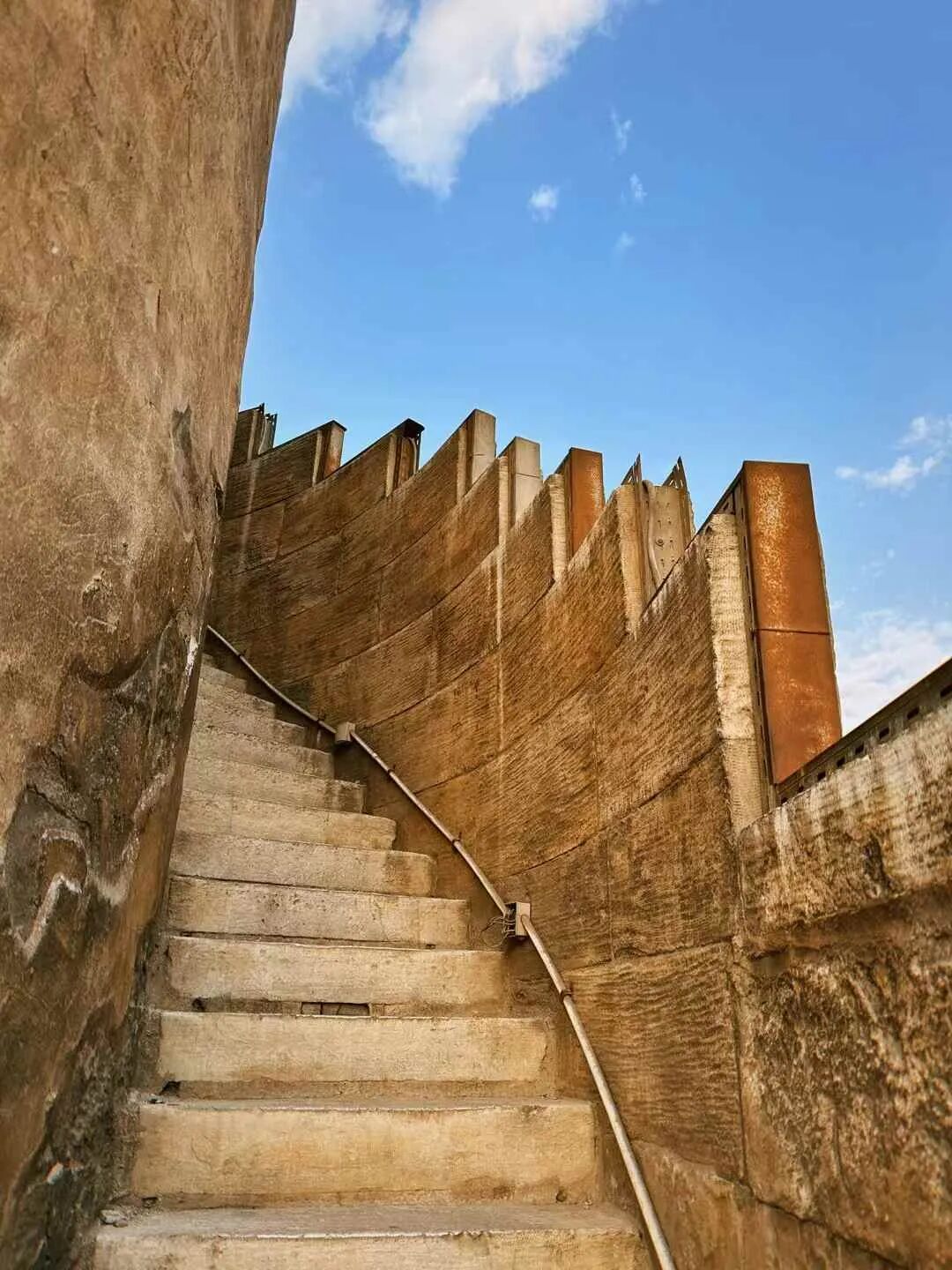
The minaret of the Ibn Tulun Mosque was also modeled after the Great Mosque of Samarra in Iraq and is the only spiral minaret in Egypt. One theory says Ibn Tulun built it himself, while another says it was built by the Mamluk Sultan Lajin in 1296.
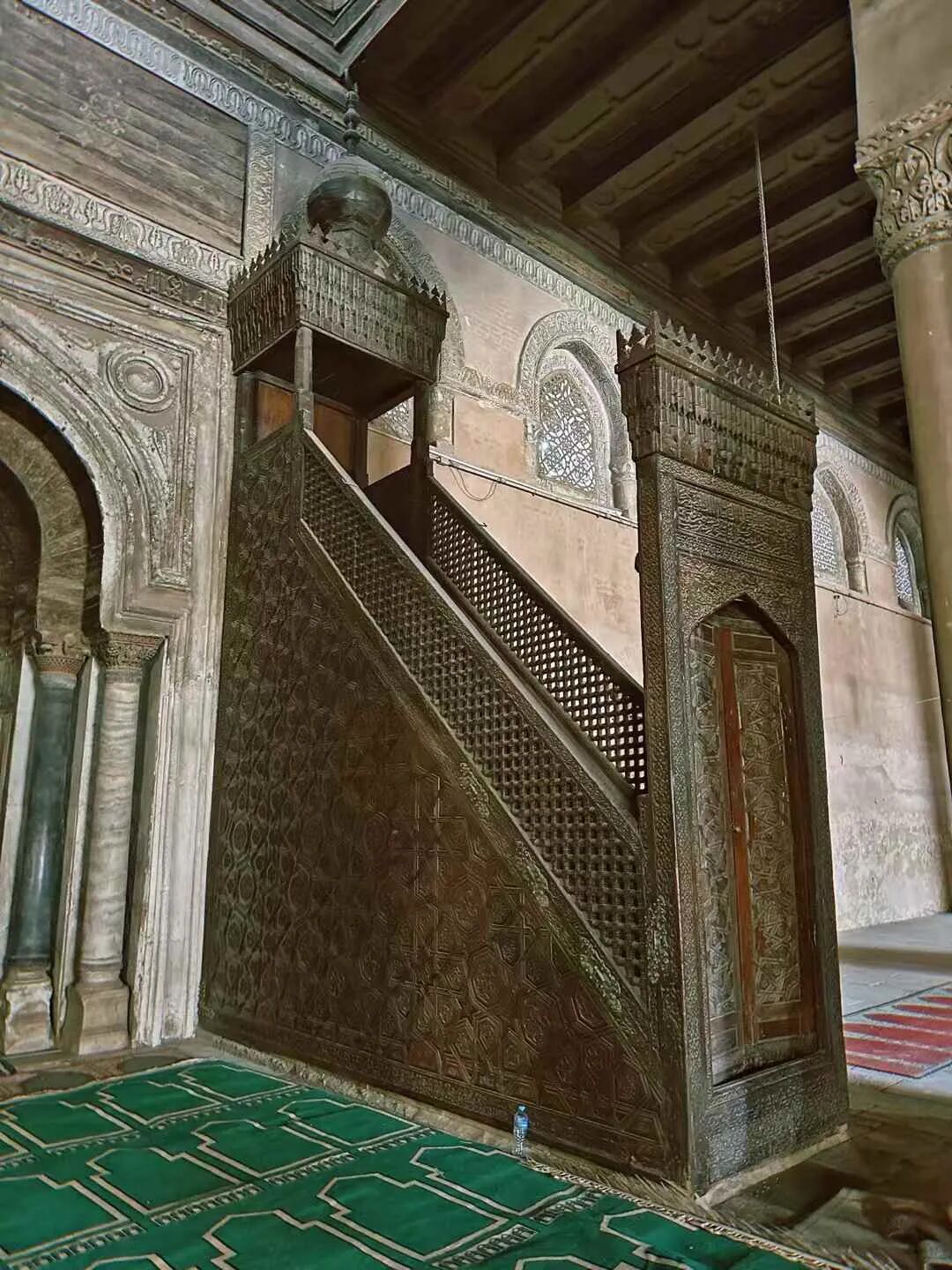
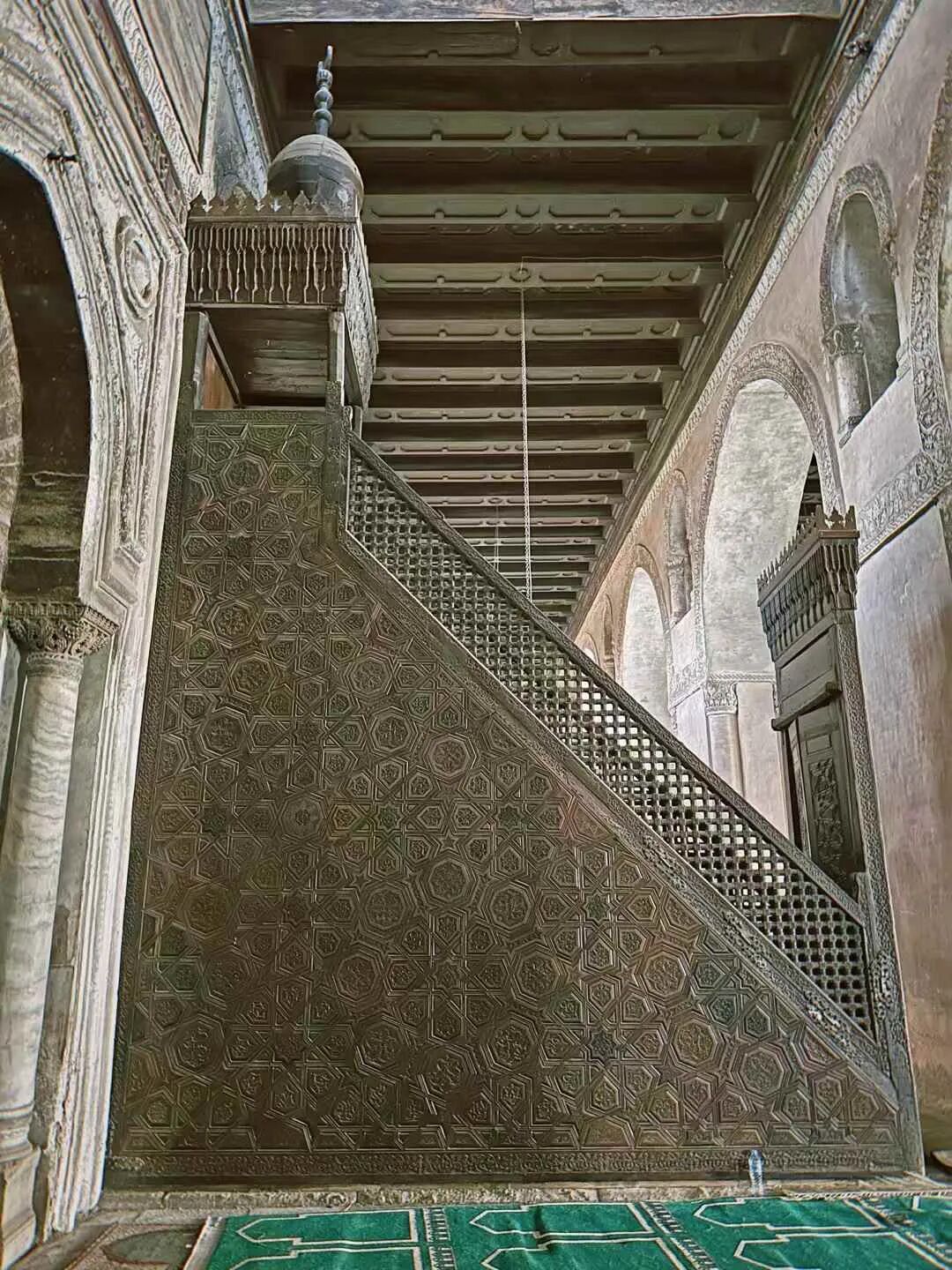
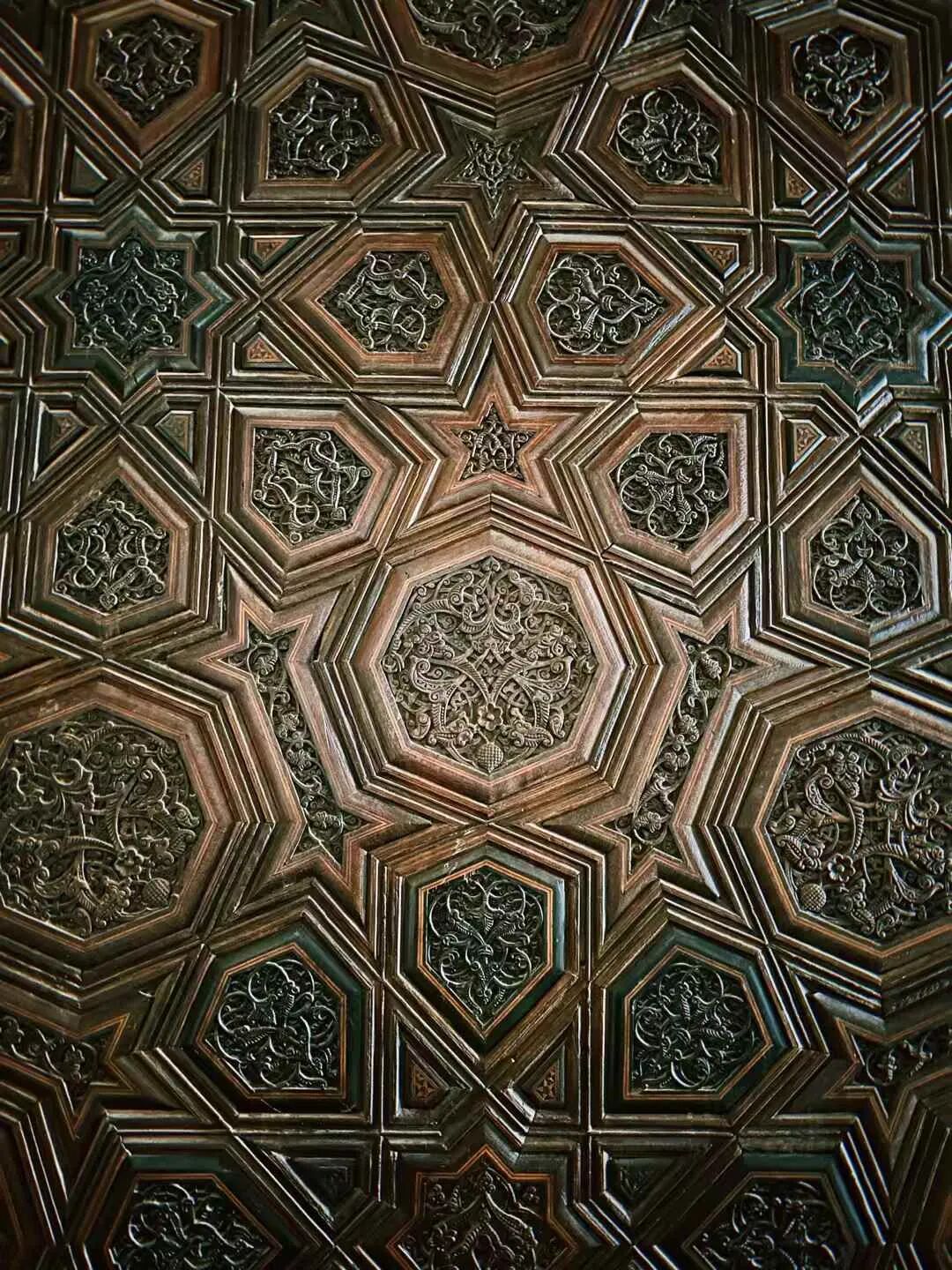
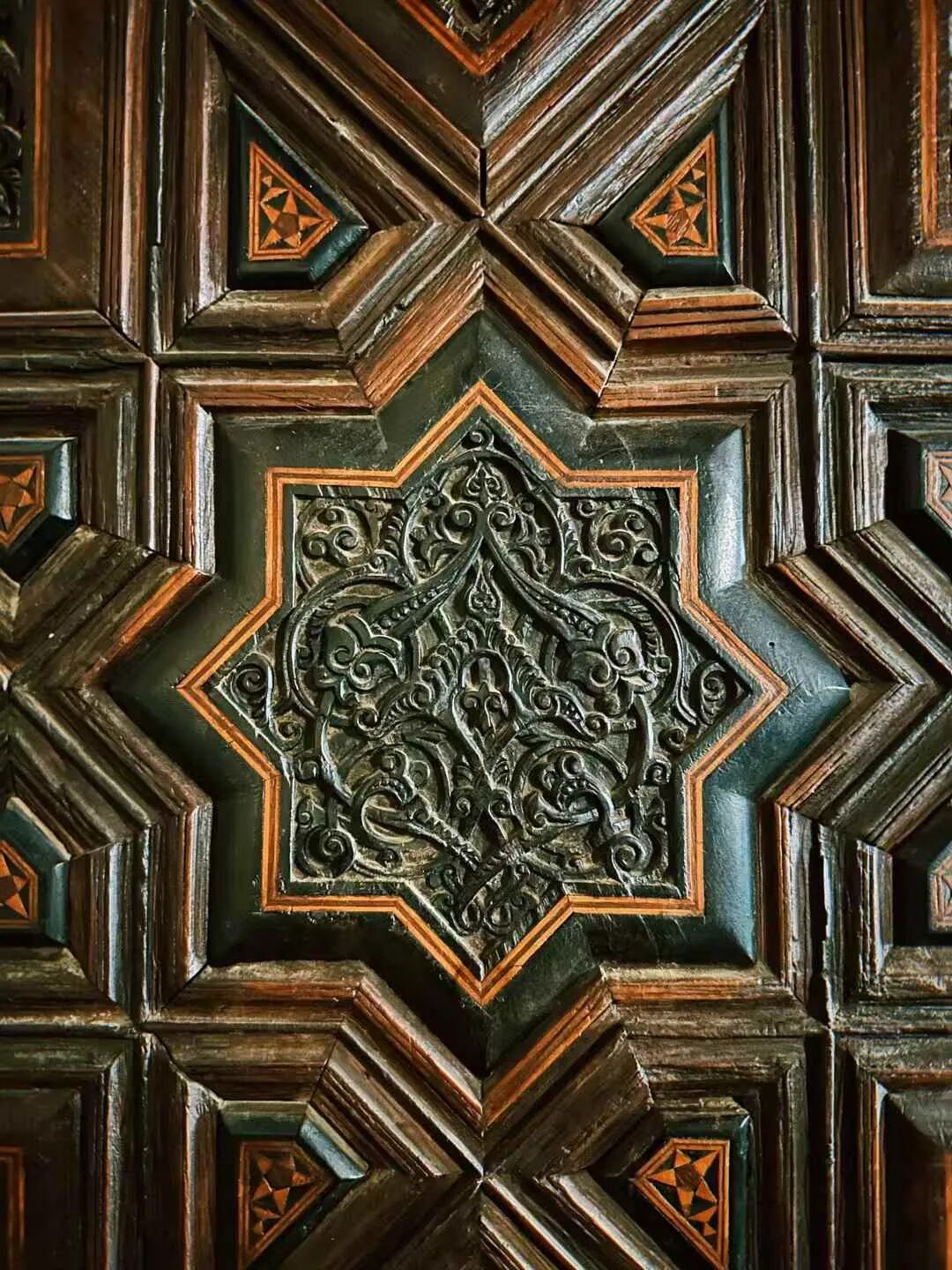
The Mosque of Ibn Tulun has a minbar pulpit made entirely of wood, featuring beautiful wood carving and inlay work.
Taghribirdi Mosque: 1440
Taghribirdi Mosque was built in 1440 by Emir Taghribirdi, who was a secretary to the Mamluk Sultan. Emir Taghribirdi became a respected emir under the Sultan after he performed meritorious service in the Mamluk army's war against the Kingdom of Cyprus.
The mosque has a typical Mamluk architectural style, and the Sabil fountain on the left side of the main gate was rebuilt in 1911. The main gate features ablaq, which is a technique of alternating colored stone masonry. The dome to the right of the main gate has diamond-shaped patterns.
Shaykhu Mosque: 1349
Shaykhu Mosque was built in 1349 by the great Mamluk Emir Shaykhu al-Umari an-Nasiri. In the mid-14th century, Shaykhu was one of the most influential emirs in the Mamluk Sultanate and served as commander-in-chief of the army.
Shaykhu Mosque has the earliest open-arcade riwaq courtyard in Egypt, which is paved with colored marble. The upper part of the mihrab features original Mamluk colored marble with the name of Allah in the center of a sunrise, while the lower part is paved with 18th-century Tunisian tiles.
Qanibay al-Muhammadi Mosque: 1413
Qanibay al-Muhammadi Mosque was built in 1413 by Qanibay al-Muhammadi, a high-ranking official of the Mamluk Sultanate. Qanibay was purchased by the Mamluk Sultan Barquq. He later became responsible for drafting official correspondence and sending letters from the Sultan to various kings and princes, eventually becoming the representative of the Mamluk Sultanate in the Levant region.
The mosque has a typical Mamluk style, featuring a dome with V-shaped patterns and a minaret with stalactite cornices. view all
Summary: This final part of the Cairo mosque journey continues through later historic mosques, including the Rifa'i Mosque and other Islamic monuments in the city. It preserves the source's mosque names, construction dates, rulers, architectural notes, and photographs in clear English.
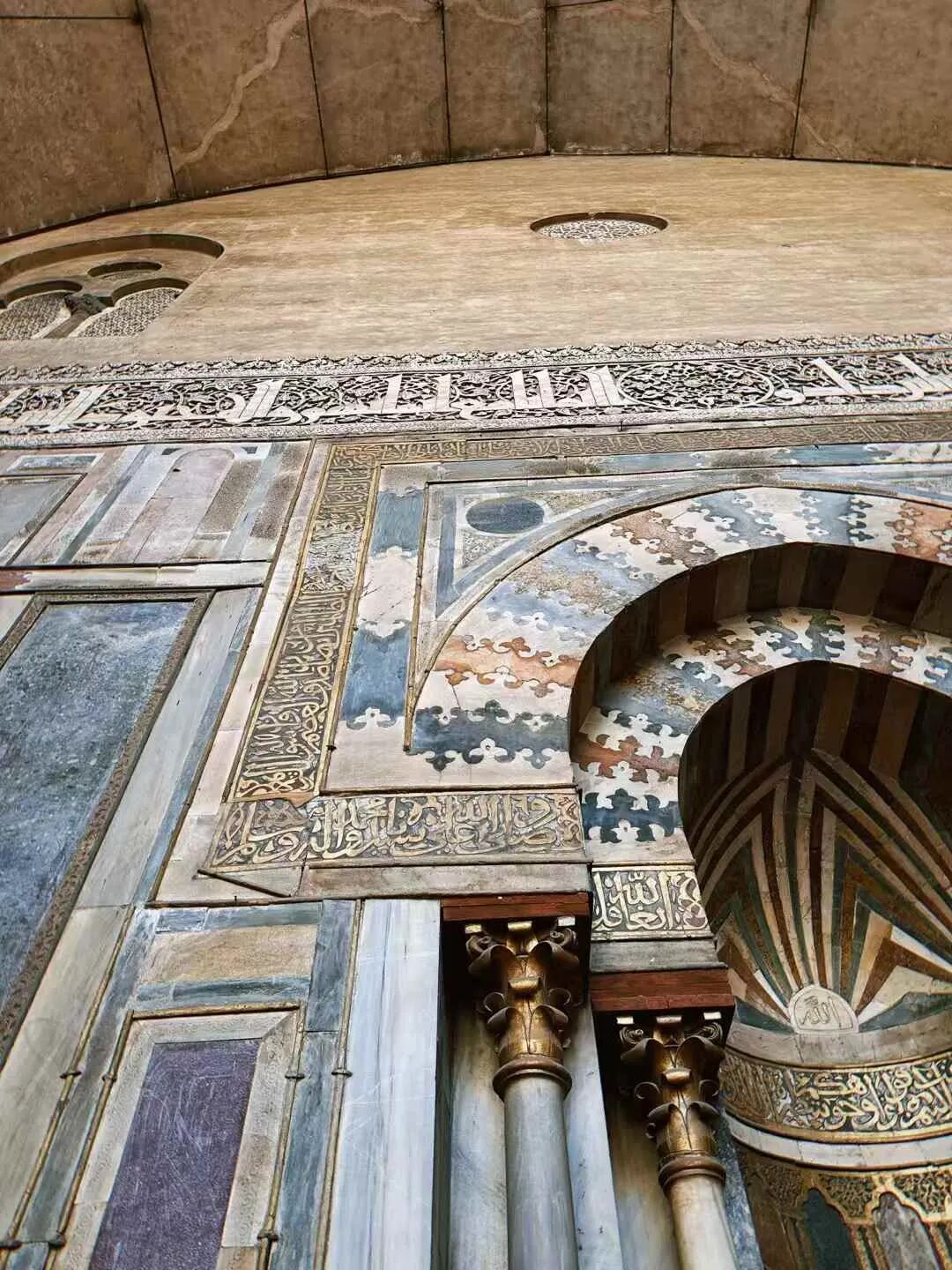
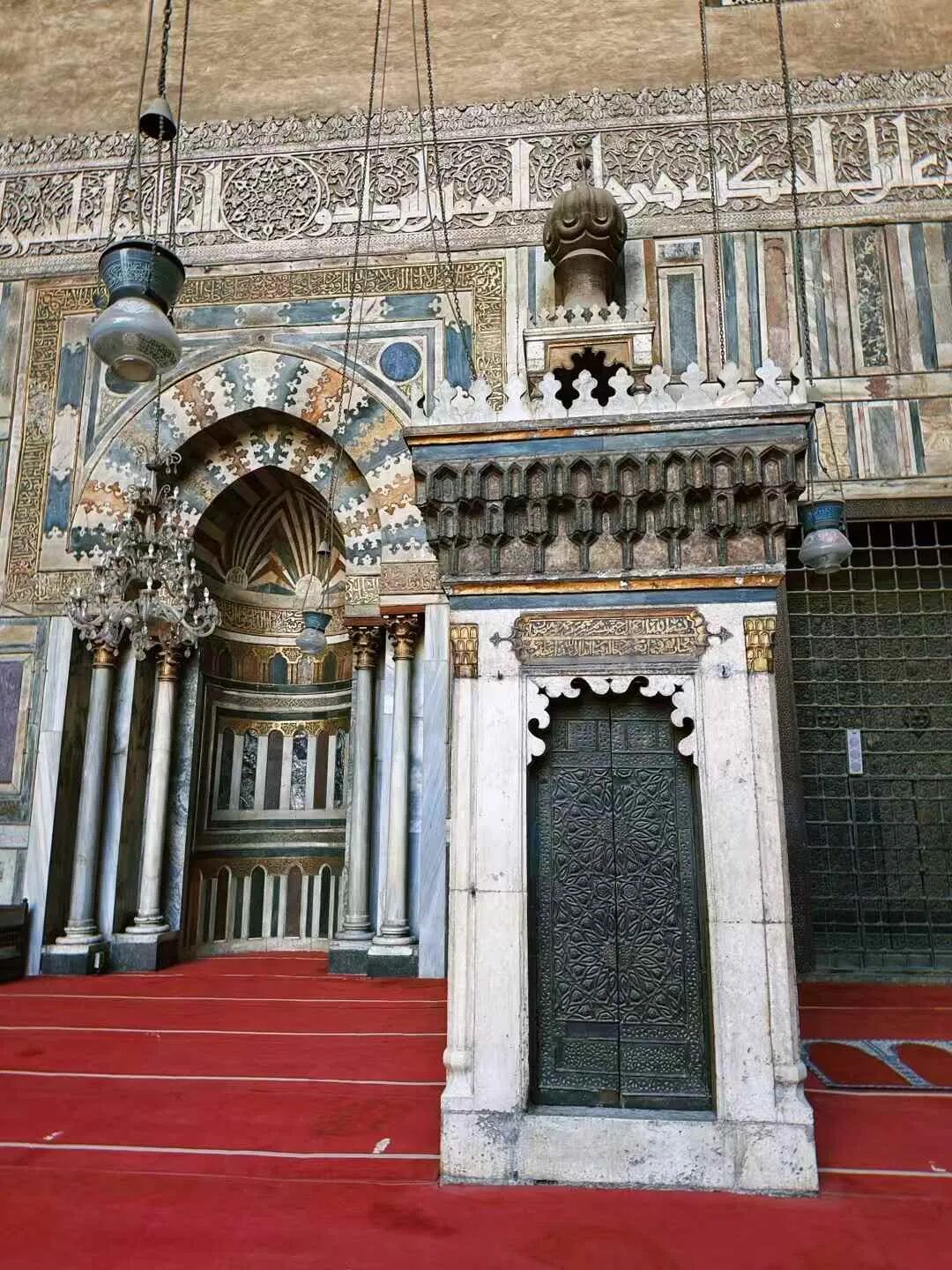
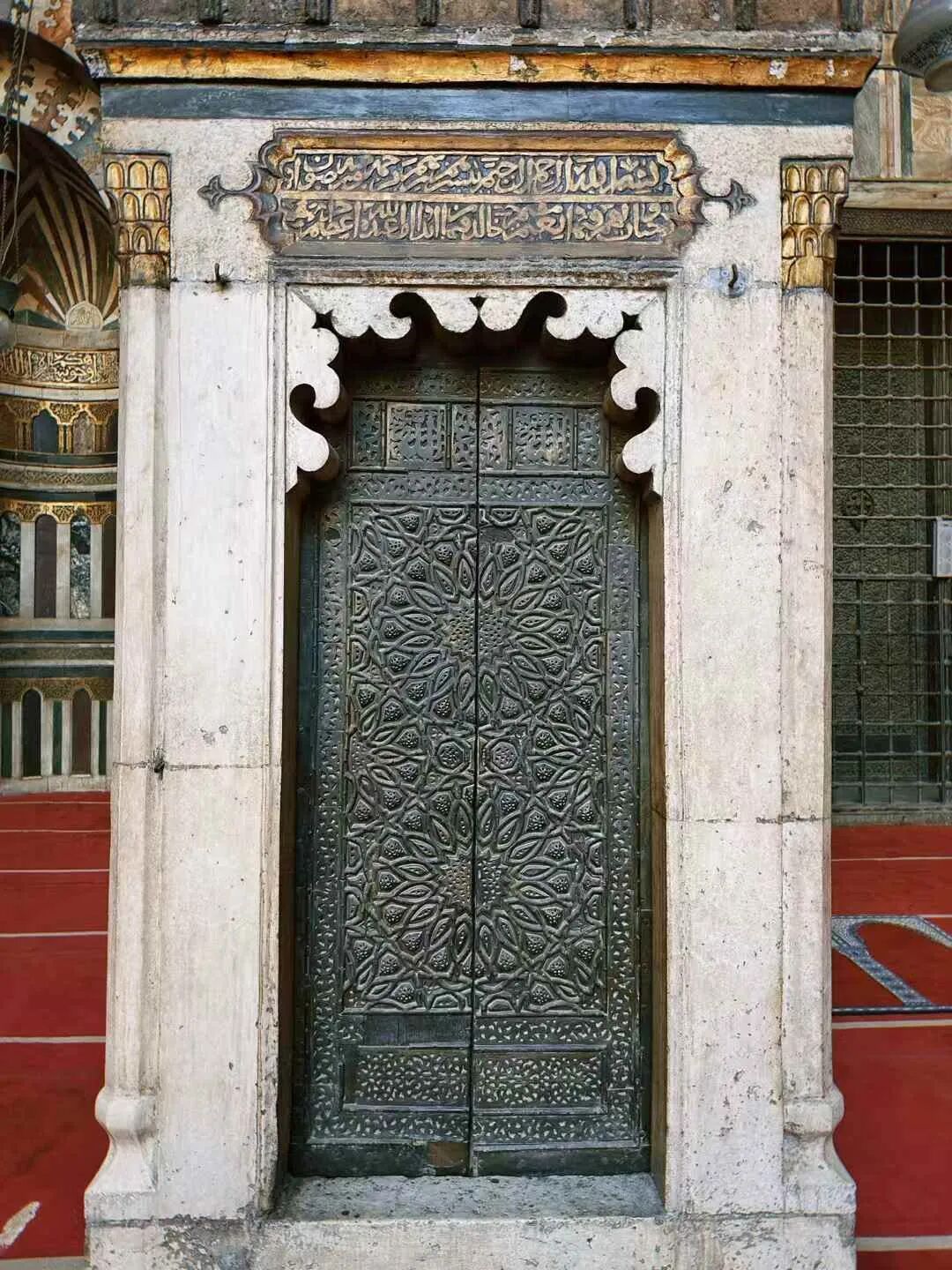
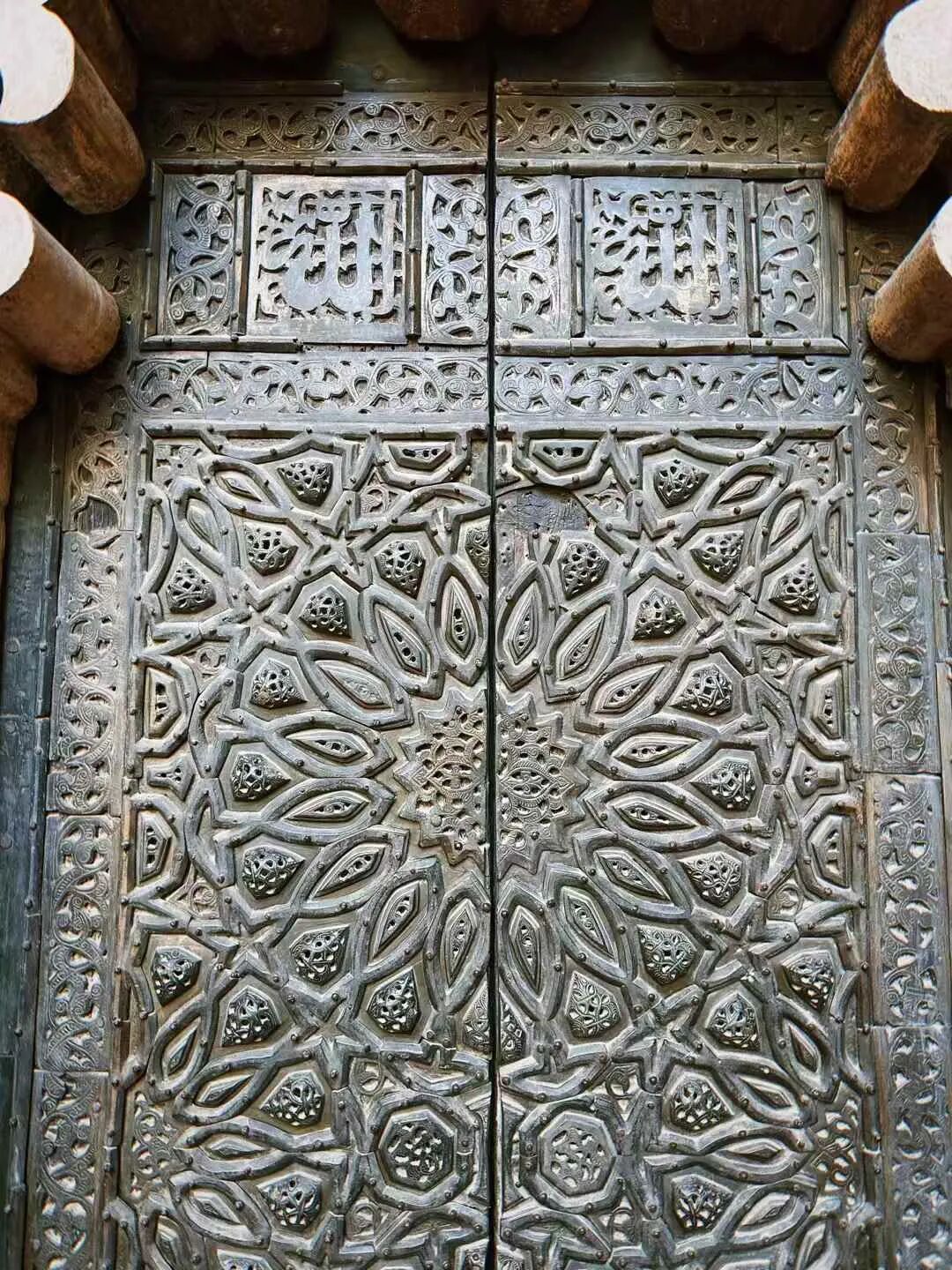
Rifa'i Mosque: 1869.
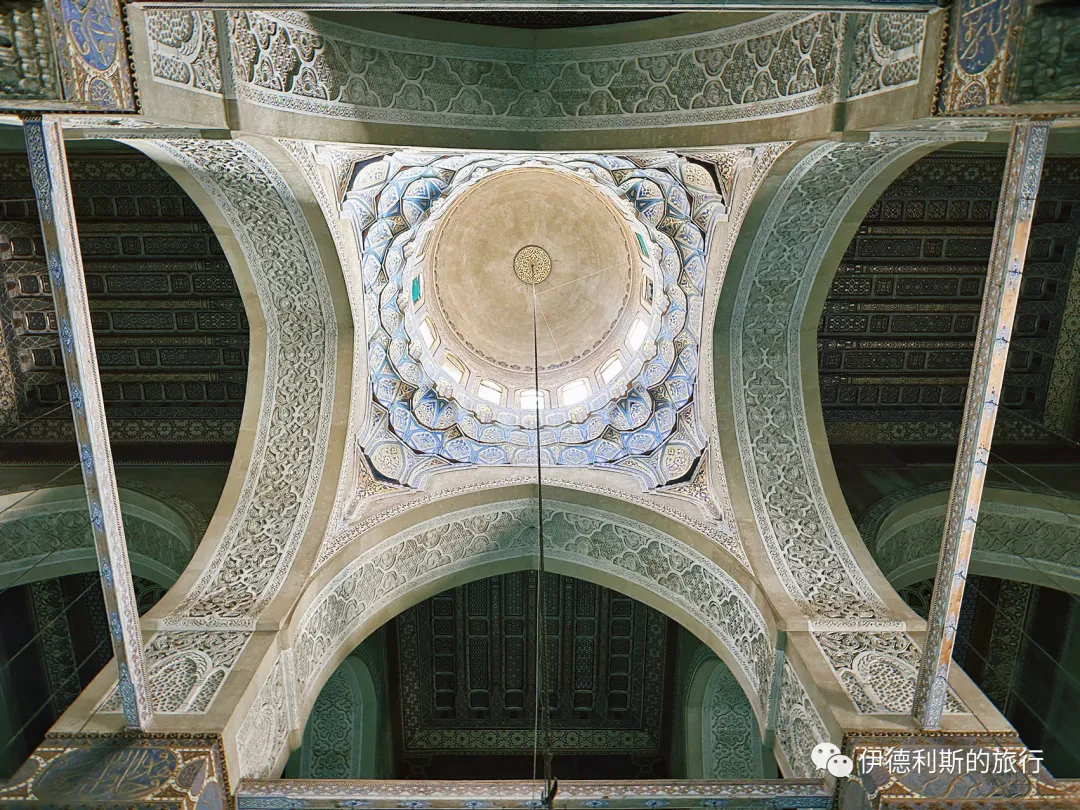
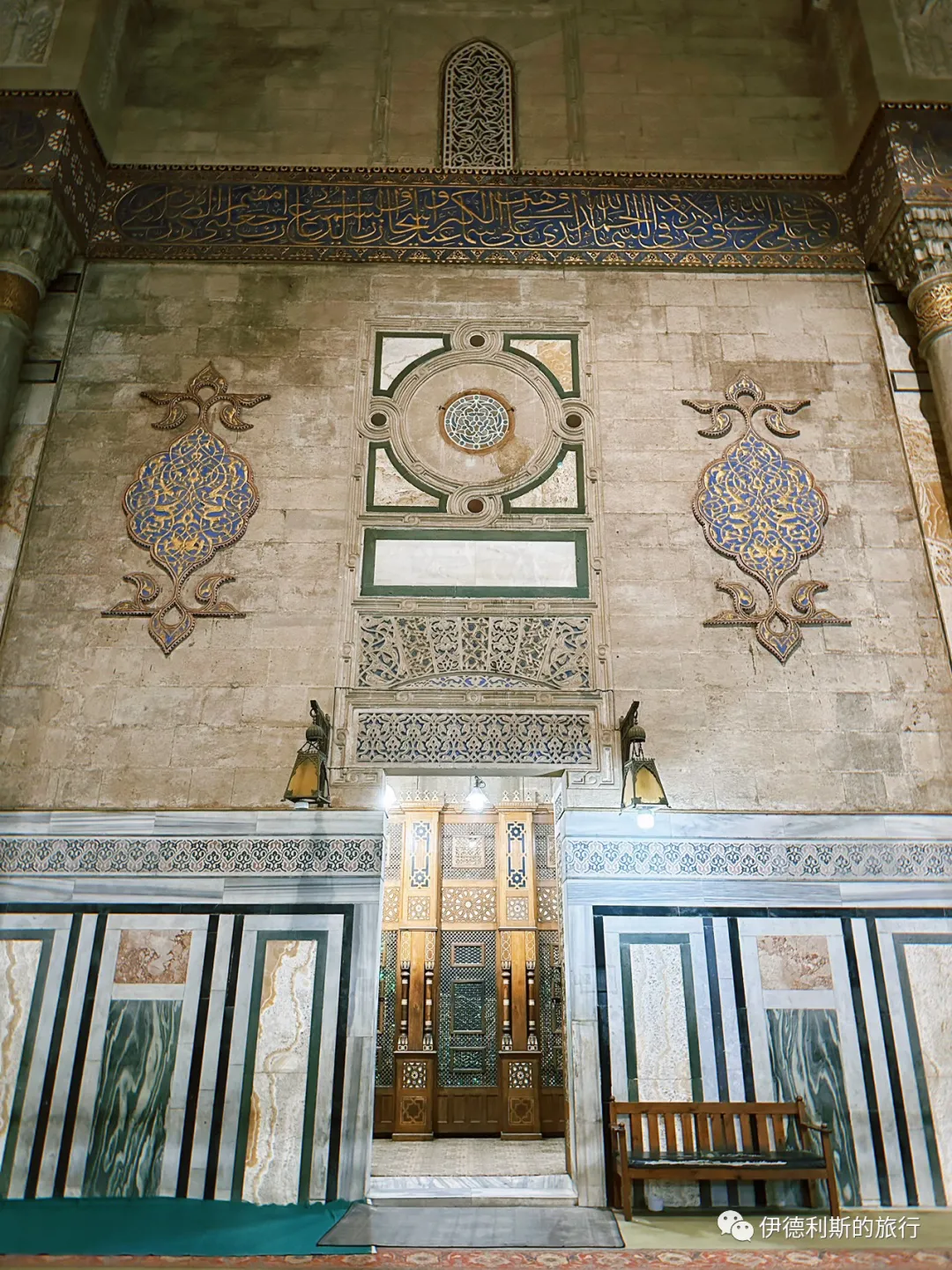
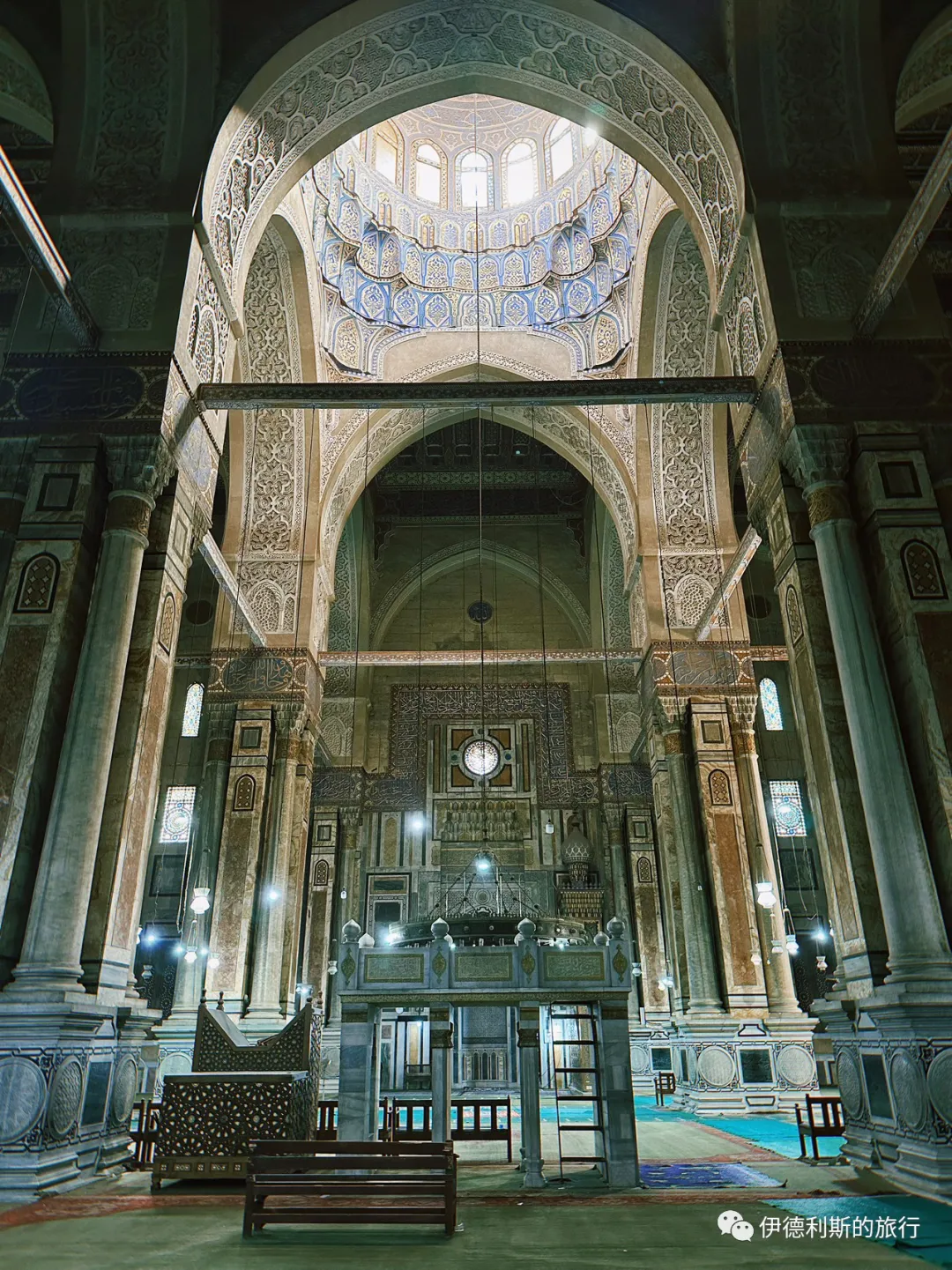
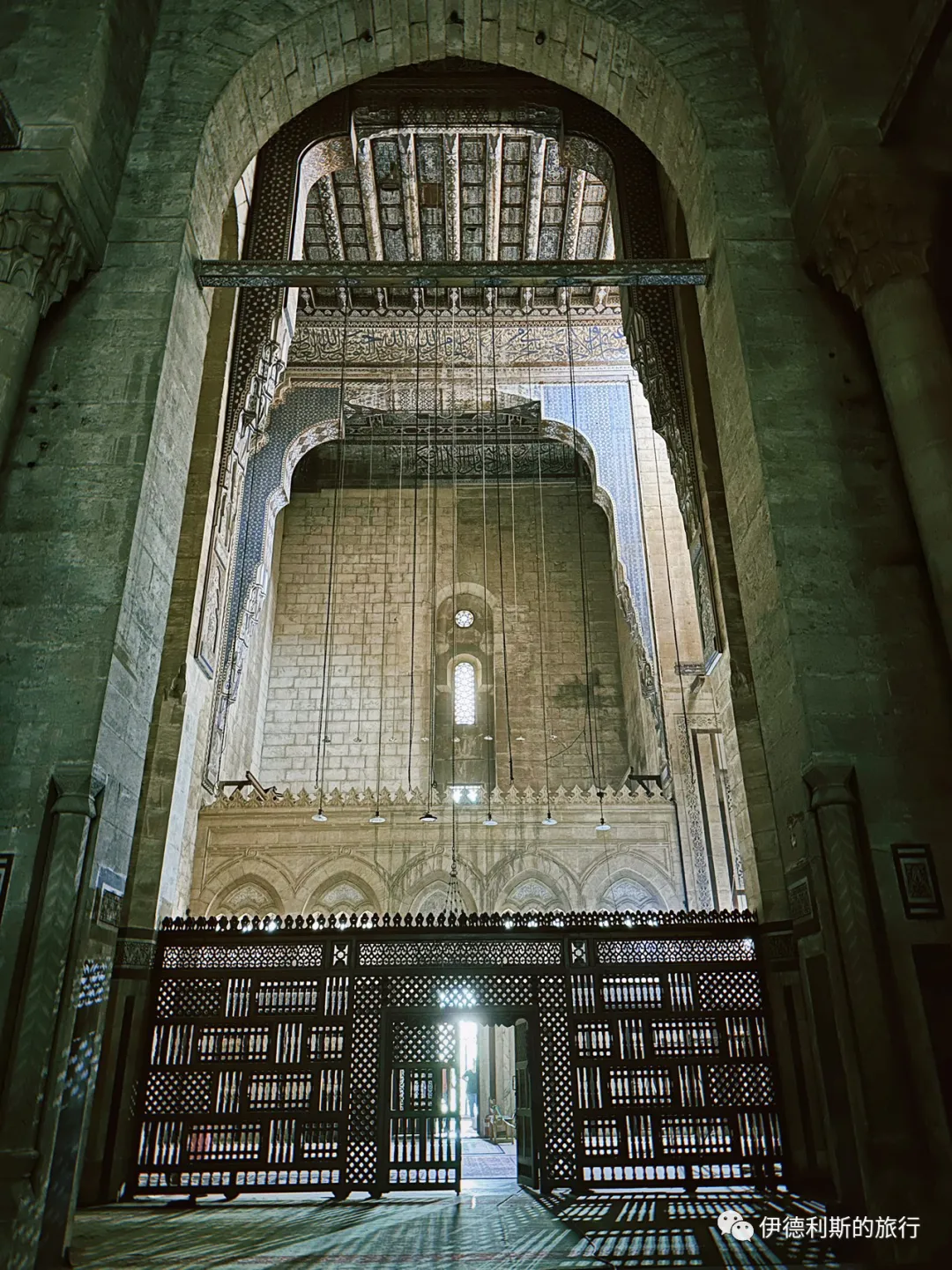
The Rifa'i is a Sufi order founded in Iraq in the 12th century, with a wide presence across Egypt and Syria. The Rifa'i Mosque in Cairo is named after Ali Abu Shubbak al-Rifa'i, the grandson of the order's founder, Ahmad al-Rifa'i, who is buried there. This site started as a Sufi lodge. Between 1869 and 1912, the Muhammad Ali dynasty of Egypt rebuilt it into the current grand mosque. It holds the graves of many Egyptian royals, including several kings, as well as the last Shah of Iran, Pahlavi.
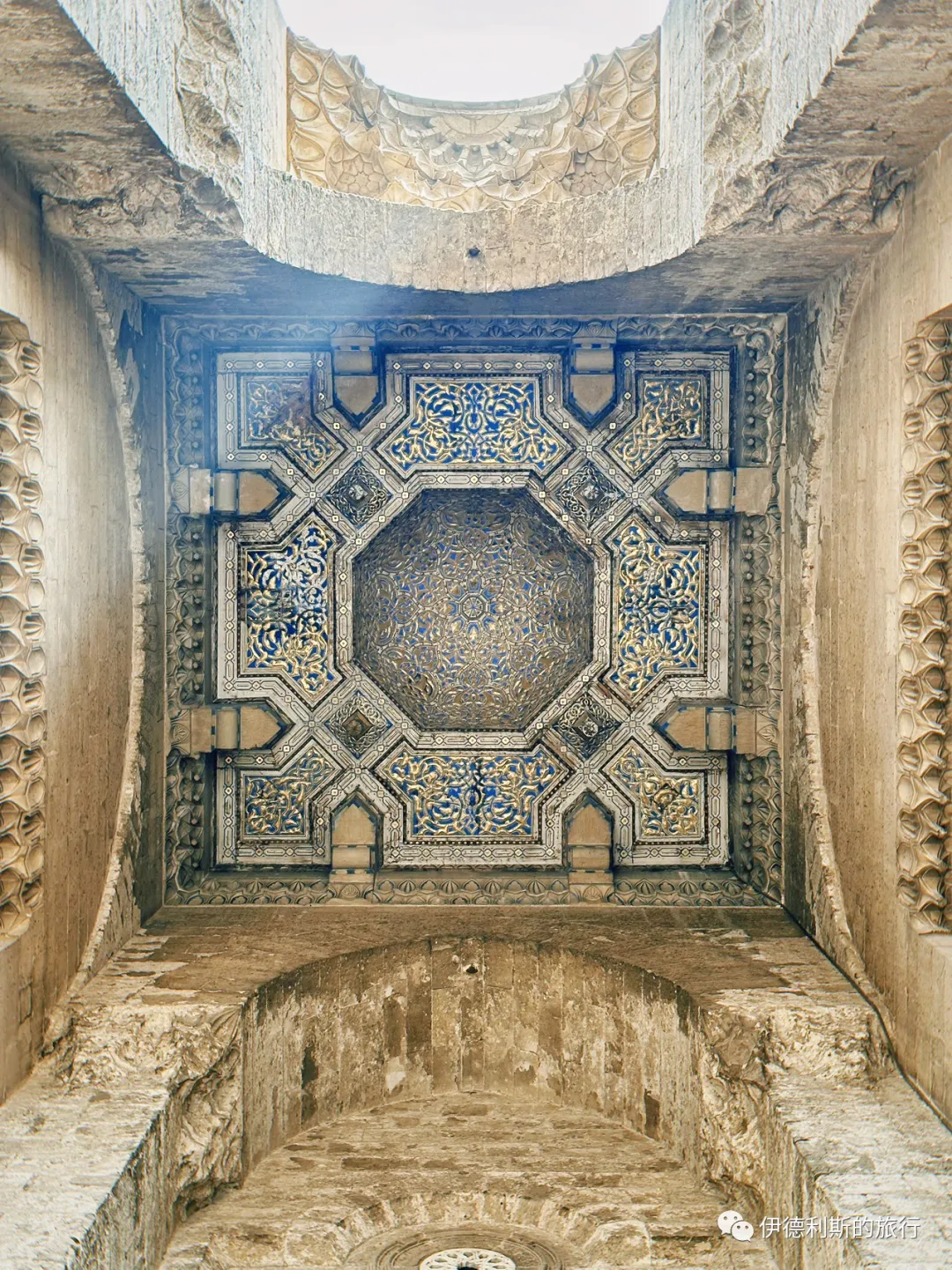
Ibn Tulun Mosque: 876.
The Ibn Tulun Mosque is the oldest surviving mosque building in Egypt and the largest in Cairo.
The mosque was built between 876 and 879 by the Tulunid Emir Ahmad ibn Tulun (reigned 868-884) to serve as the Friday mosque for the Tulunid capital, al-Qata'i. Ahmad ibn Tulun was originally the Abbasid governor of Egypt. He later took control of the finances and the army to rule Egypt himself.
The city of al-Qata'i was modeled after Samarra in Iraq. The Ibn Tulun Mosque sat at its center, and Ibn Tulun's own palace was built right next to it. He could enter the minbar (pulpit) directly through a secret door. Next to the palace were a large parade ground, gardens, and a horse racing track. The city also featured water aqueducts, irrigation canals, a sewage system, and Cairo's first public hospital. In 905, the Abbasid dynasty took back Egypt and razed the city of al-Qata'i to the ground. The Ibn Tulun Mosque was the only building left standing.
The Ibn Tulun Mosque was built to copy the Great Mosque of Samarra in Iraq and shows the classic Abbasid style. The mosque consists of a rectangular courtyard surrounded by halls supported by stone pillars. The side facing the Kaaba is the largest. In the center of the courtyard is a wudu (ablution) fountain. The one seen today was built by the Mamluk Sultan Lajin (reigned 1296-1299) at the end of the 13th century and features a tall dome.
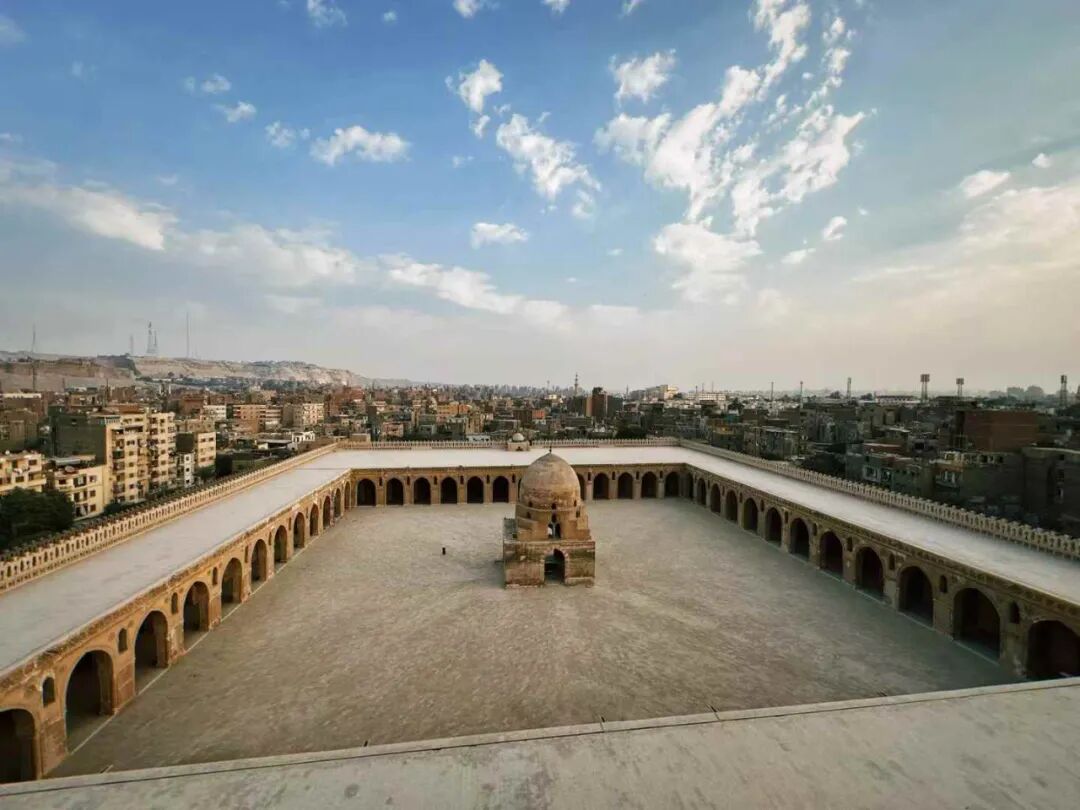
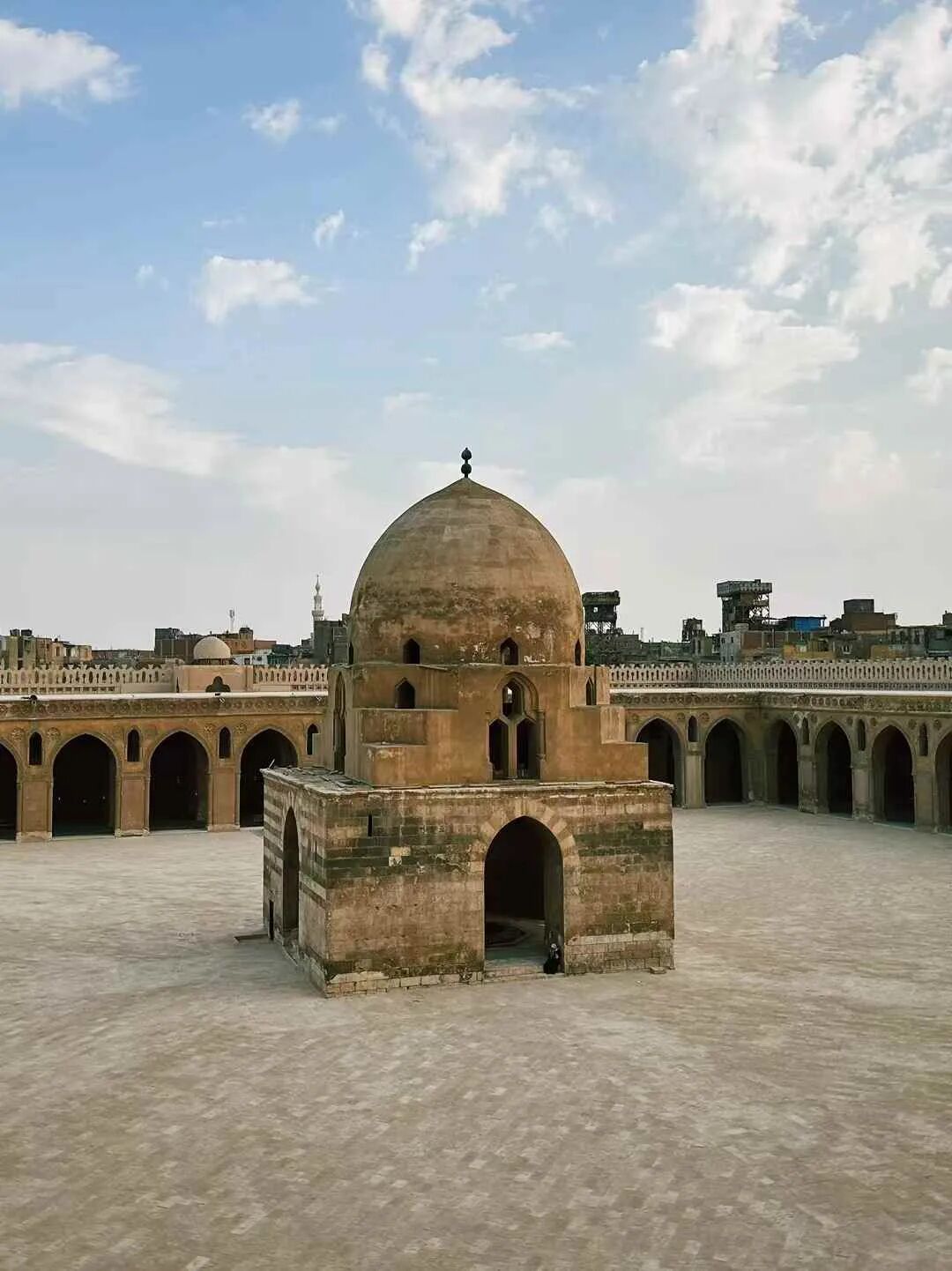
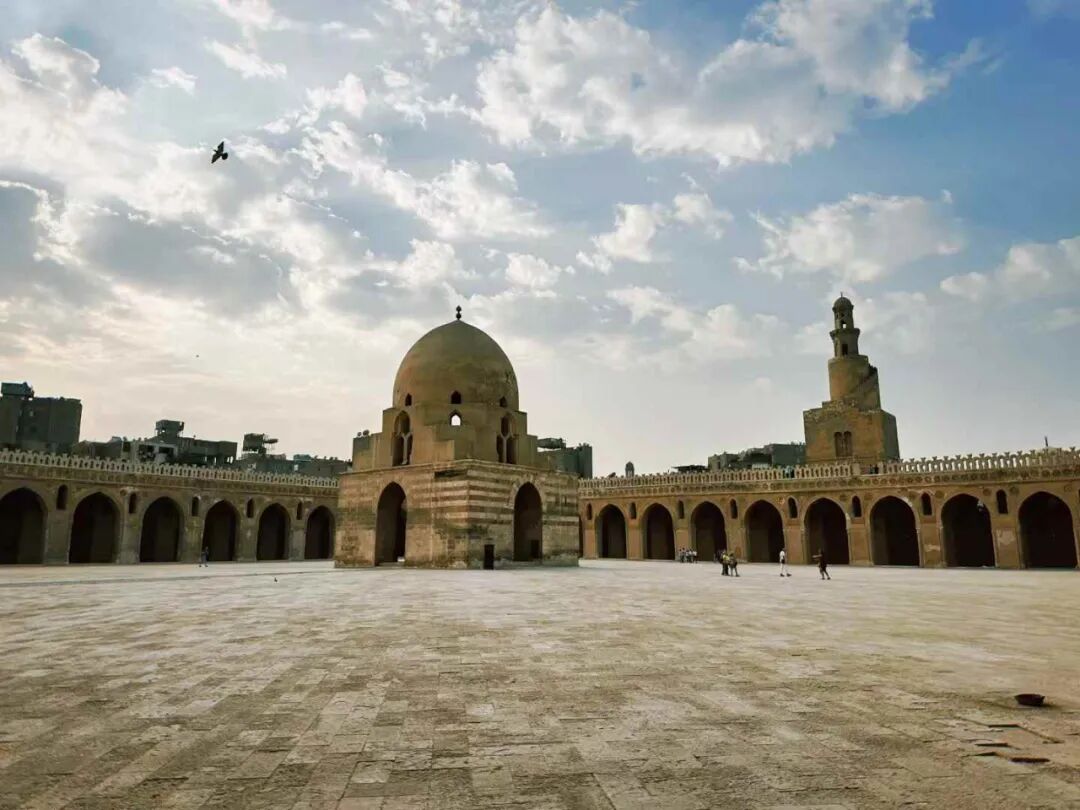
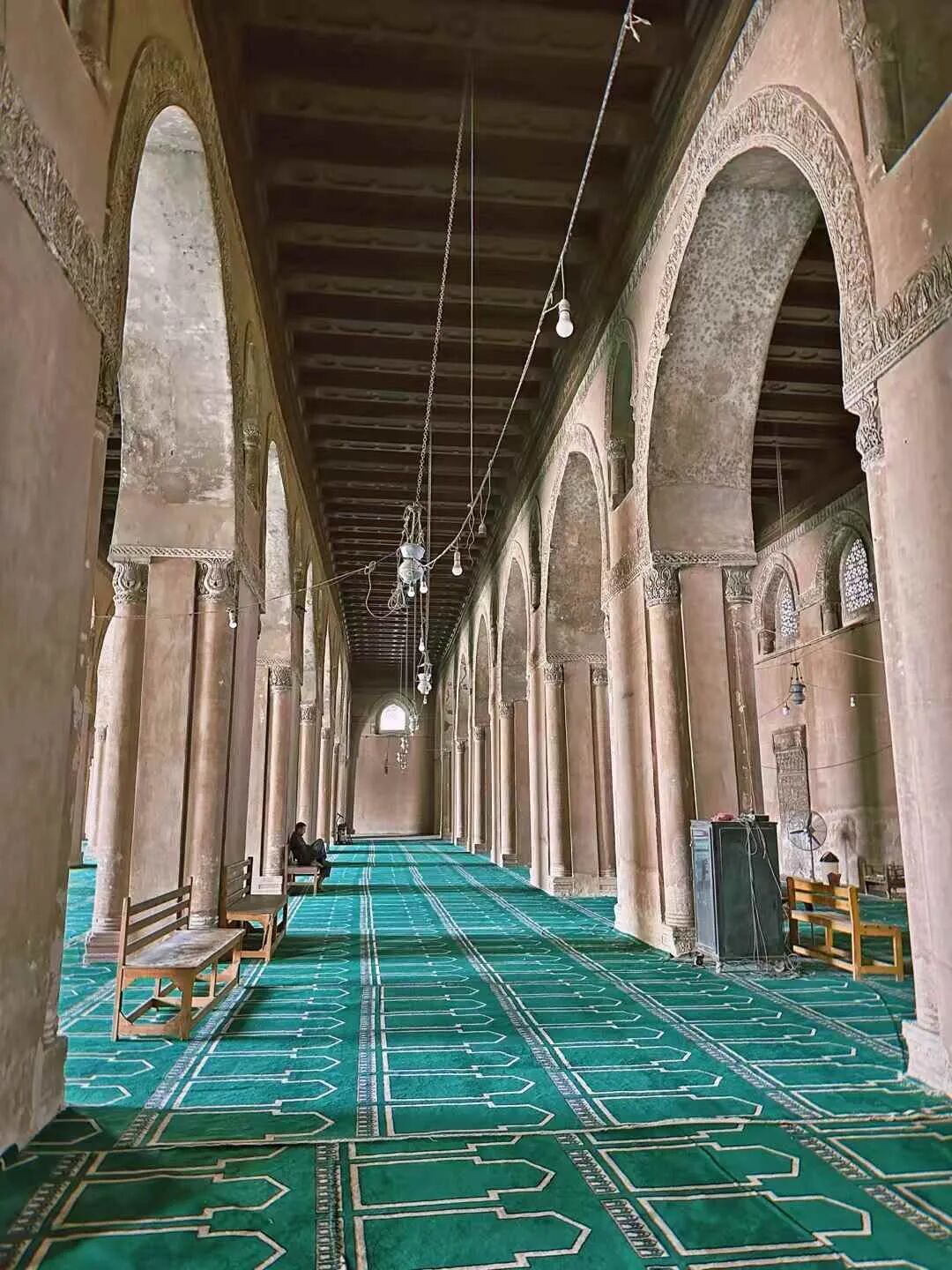
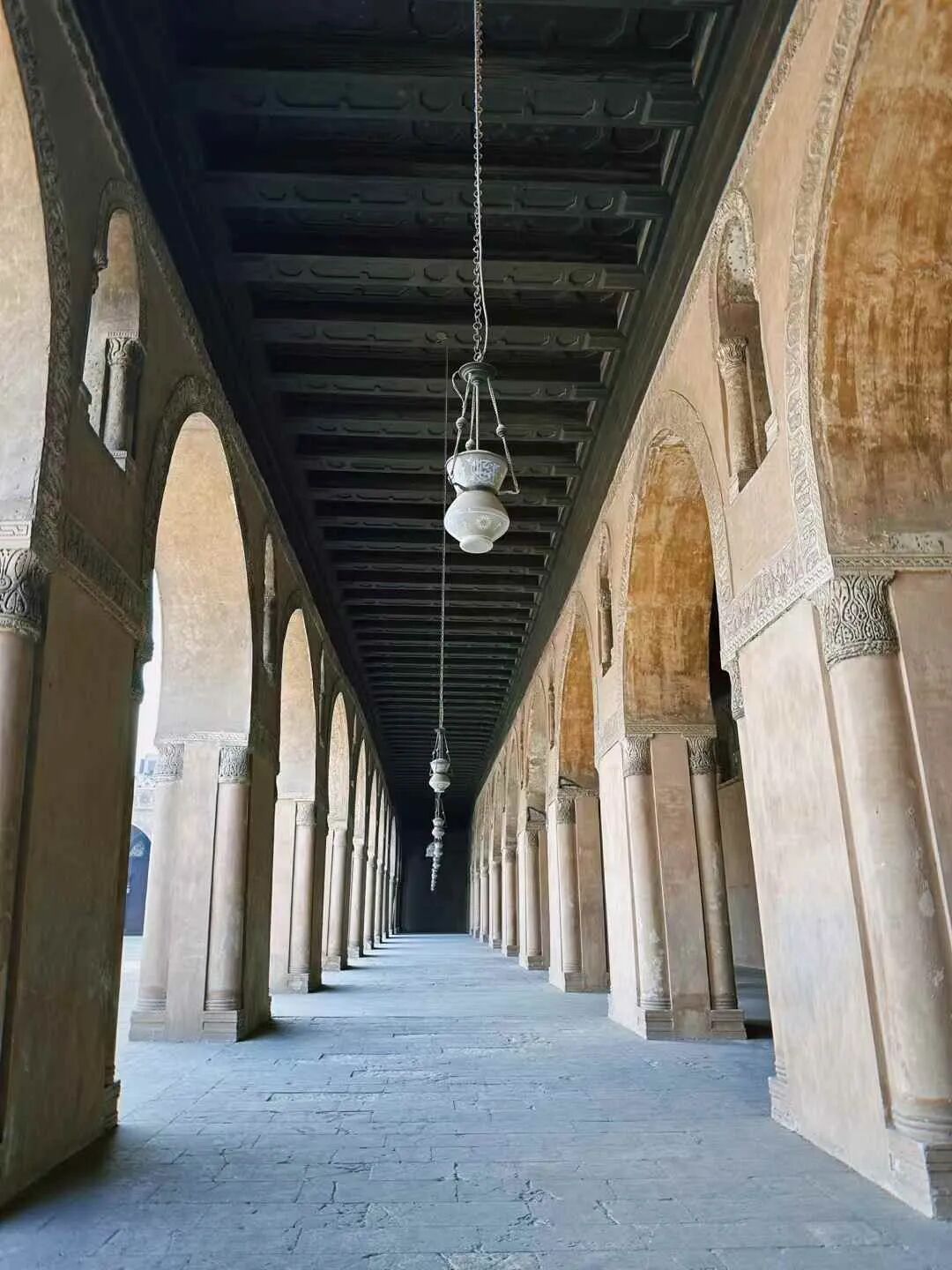
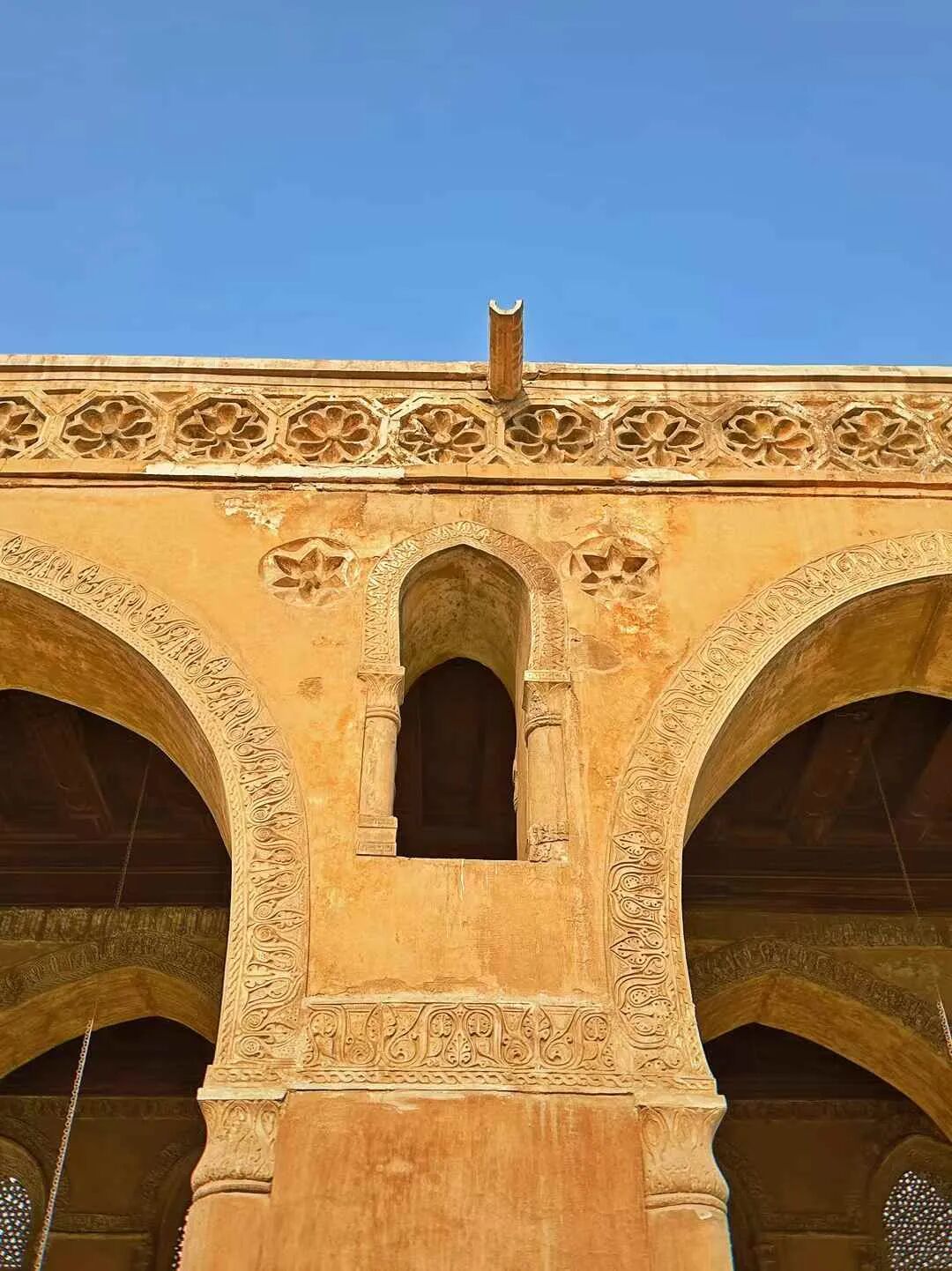
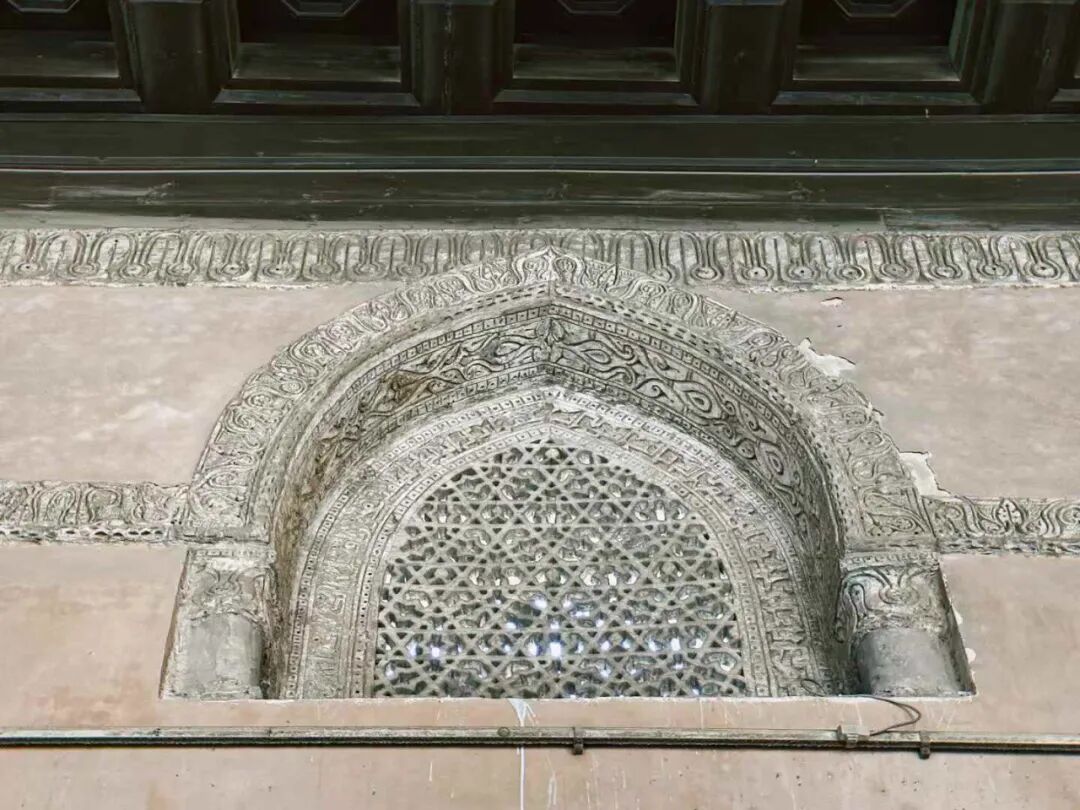
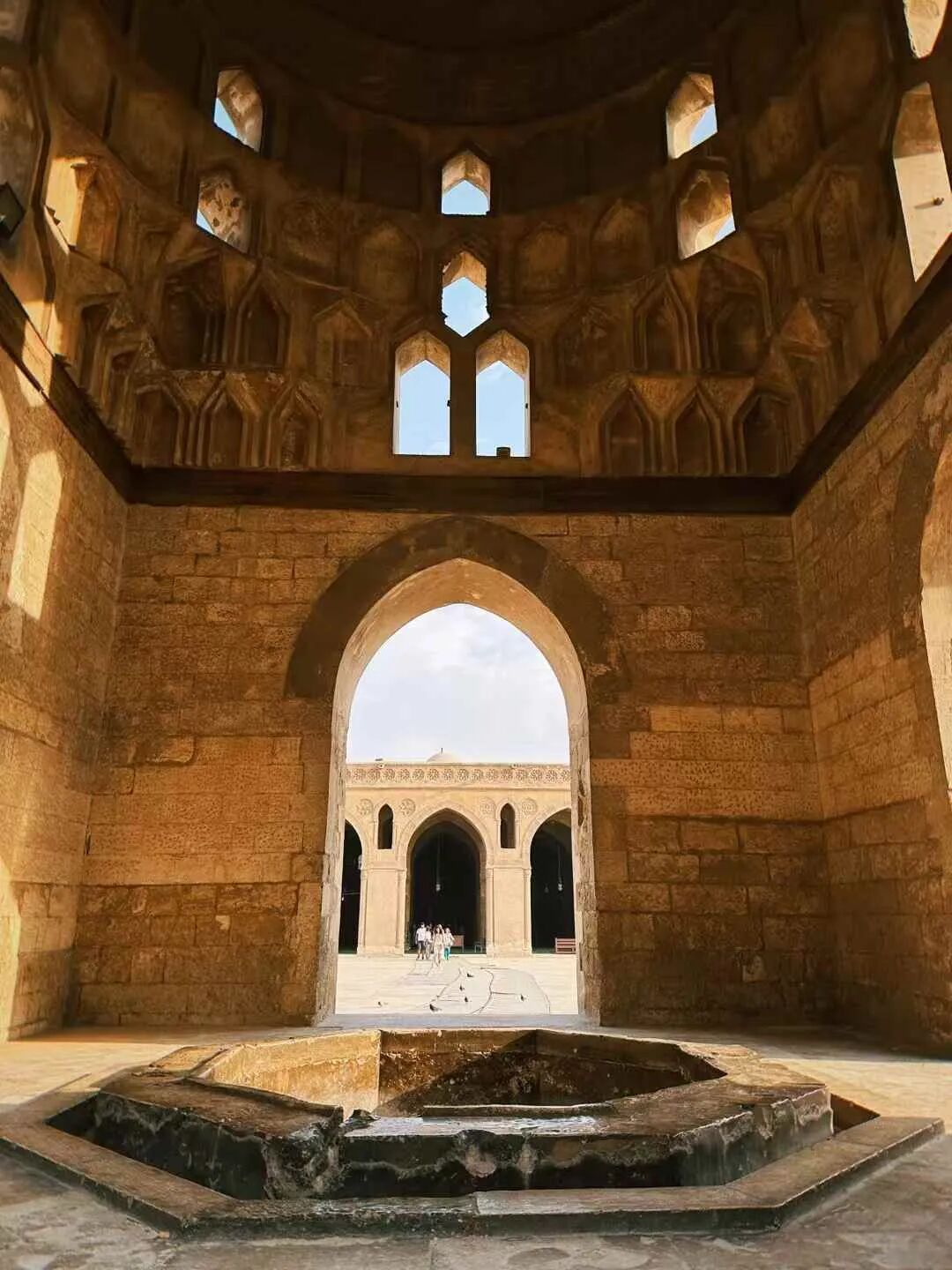
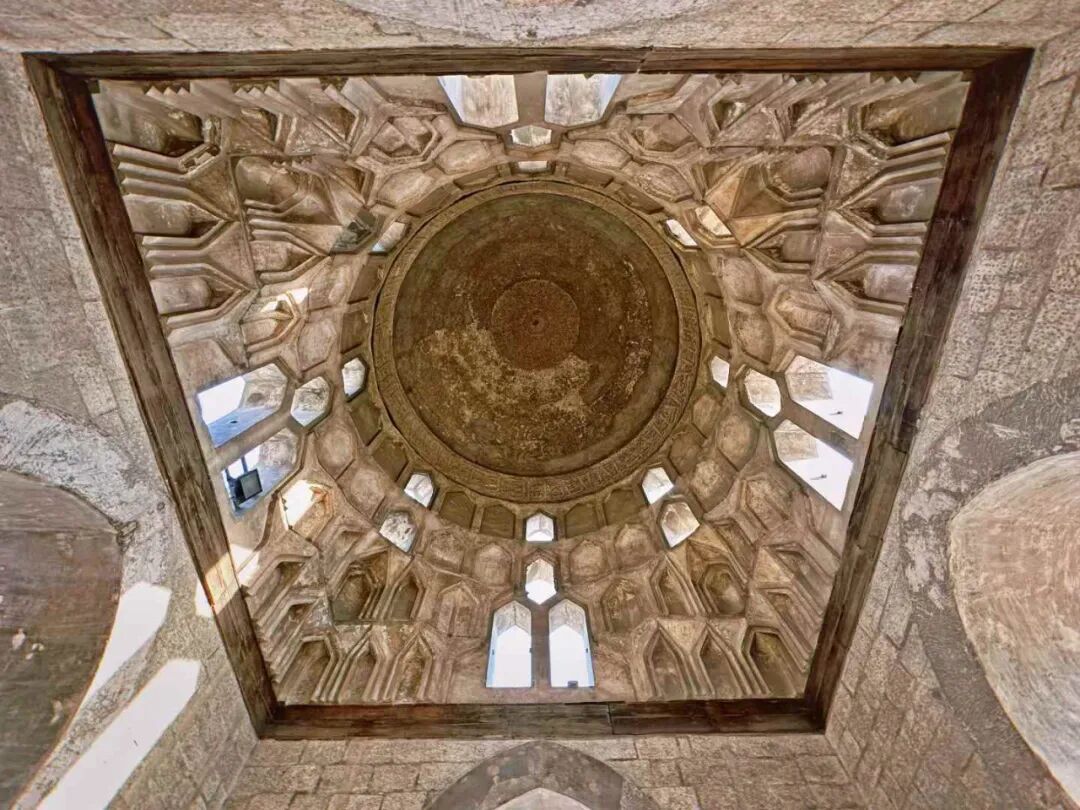
Inside the main hall of the Ibn Tulun Mosque are six mihrabs (prayer niches). The one in the center of the qibla wall was built by Mamluk Sultan Lajin in the late 13th century. It features painted wooden panels, mosaic decorations in the middle, and colored marble at the bottom.
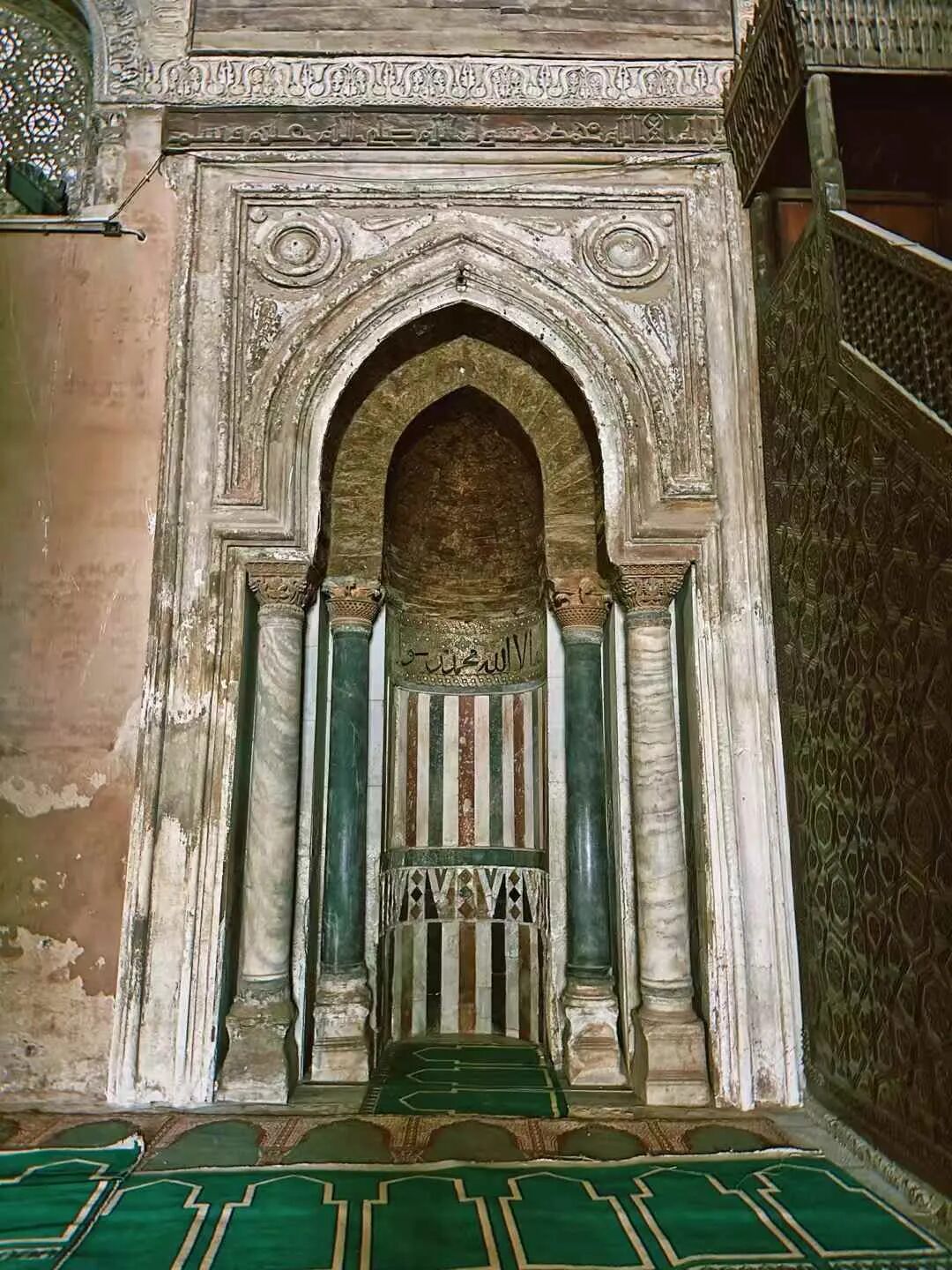
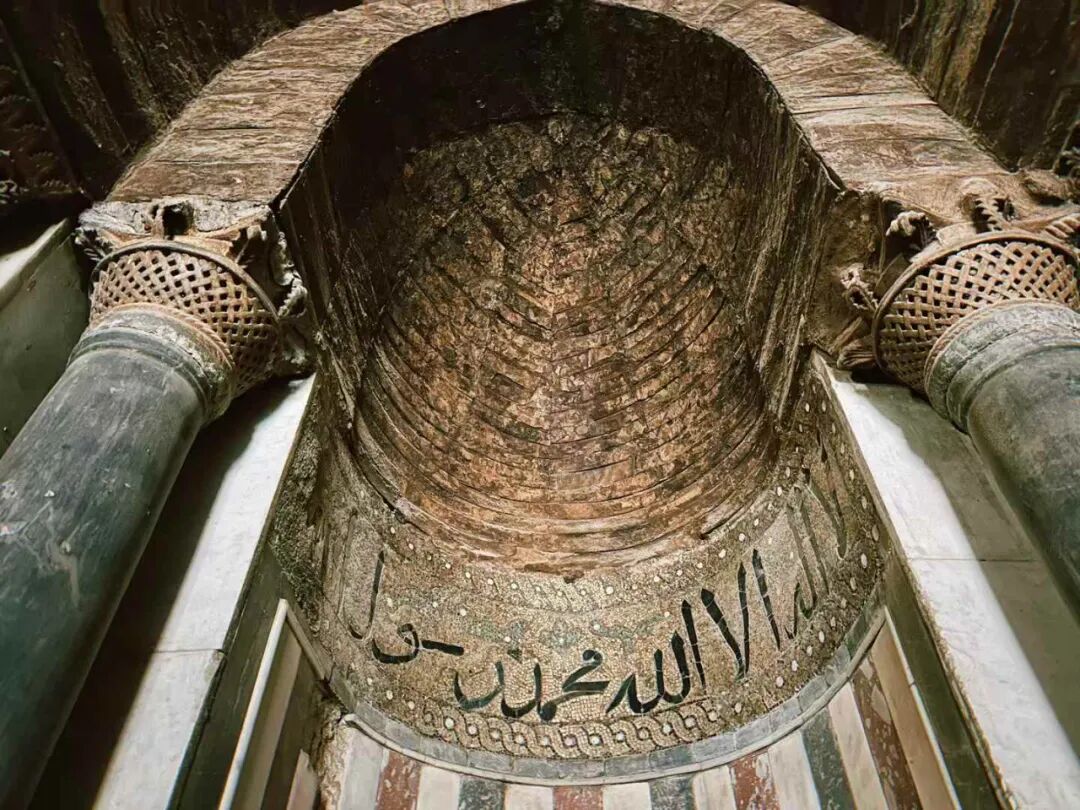
The stucco mihrab to the left of the qibla wall is decorated with muqarnas (stalactite) cornices and Thuluth script. It is believed to date back to the early Mamluk period.
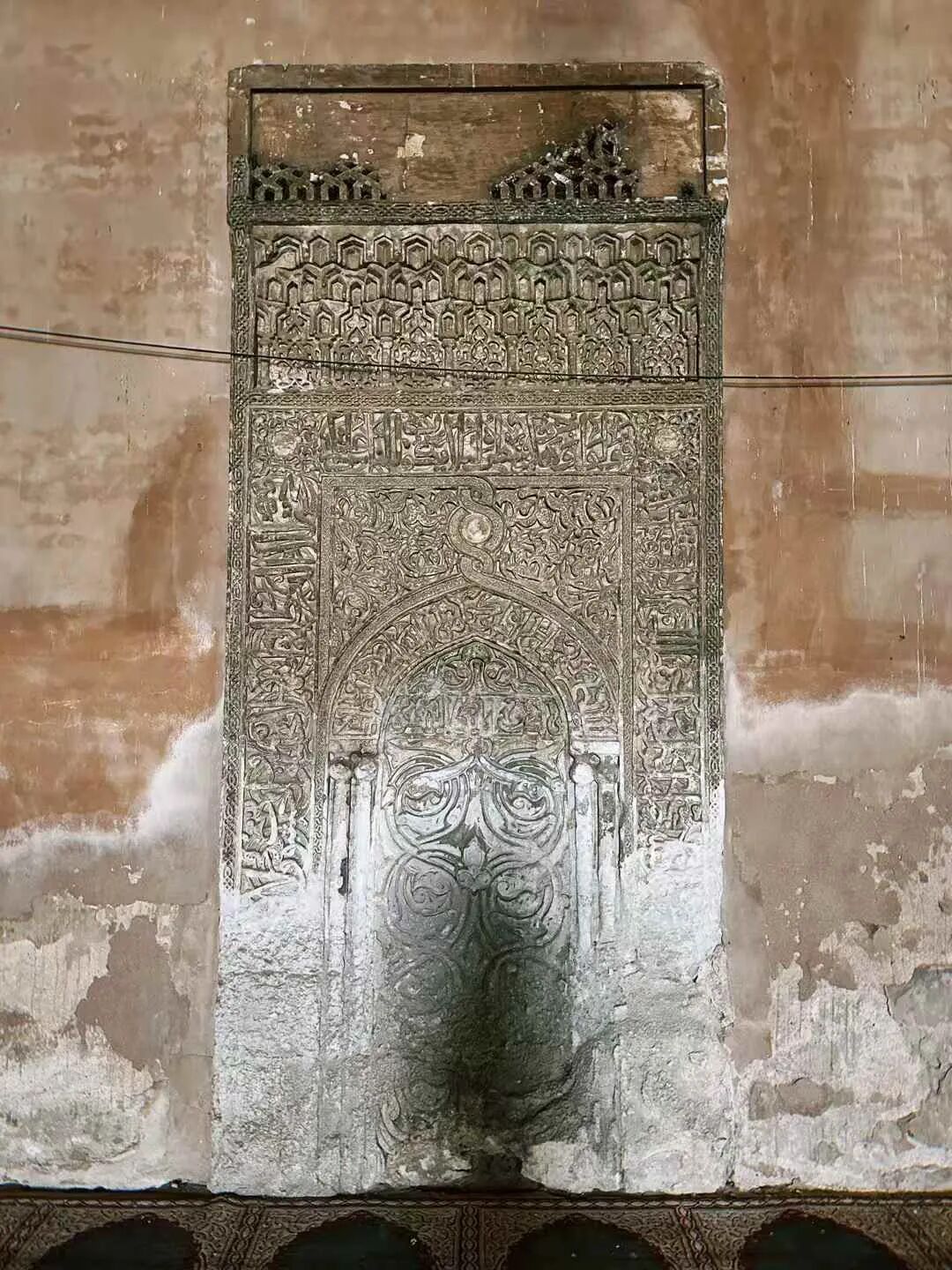
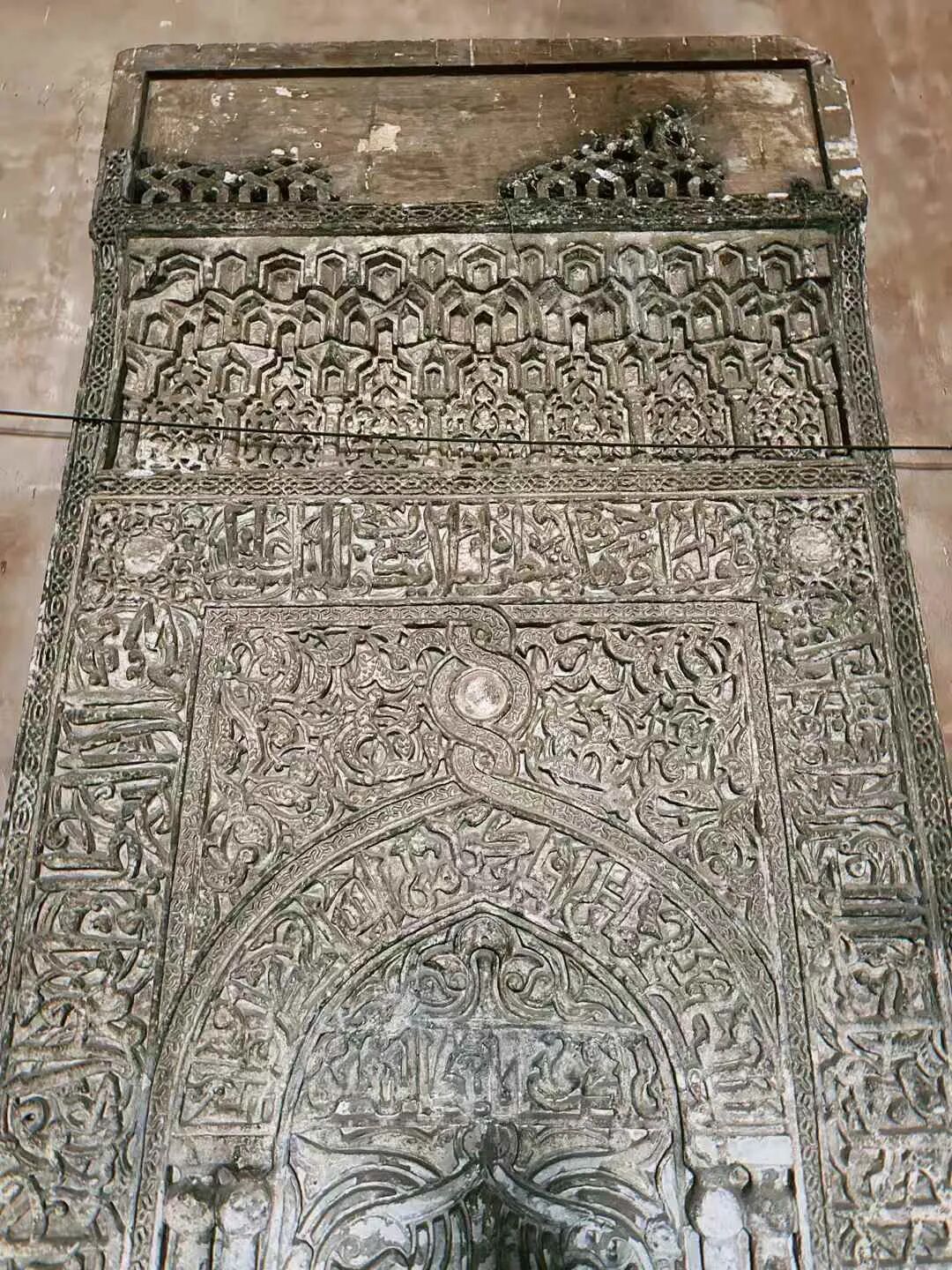
On both sides of the dikka (raised platform for the muezzin) are stucco-carved mihrabs in the Samarra style of Iraq. The one on the right is carved with stars hanging from chains. Neither of these two mihrabs mentions Ali, so they predate the rise of the Shia Fatimid dynasty in the 10th century. They are likely original works from the 9th-century Tulunid period.
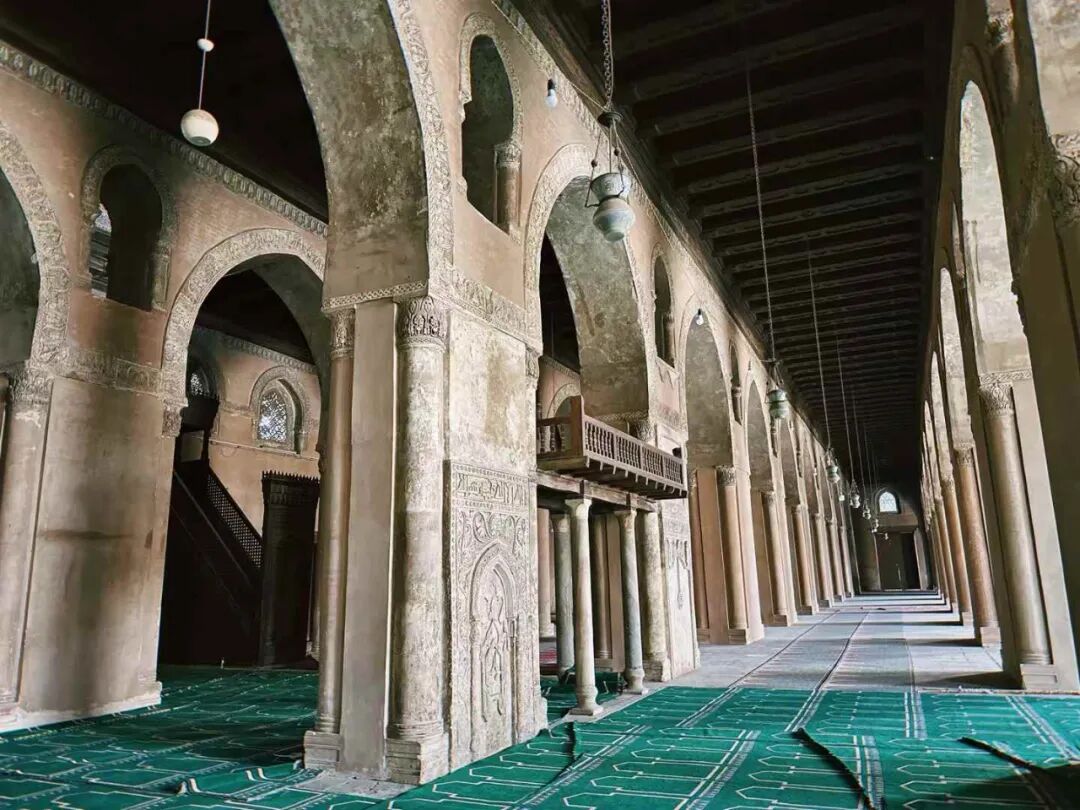
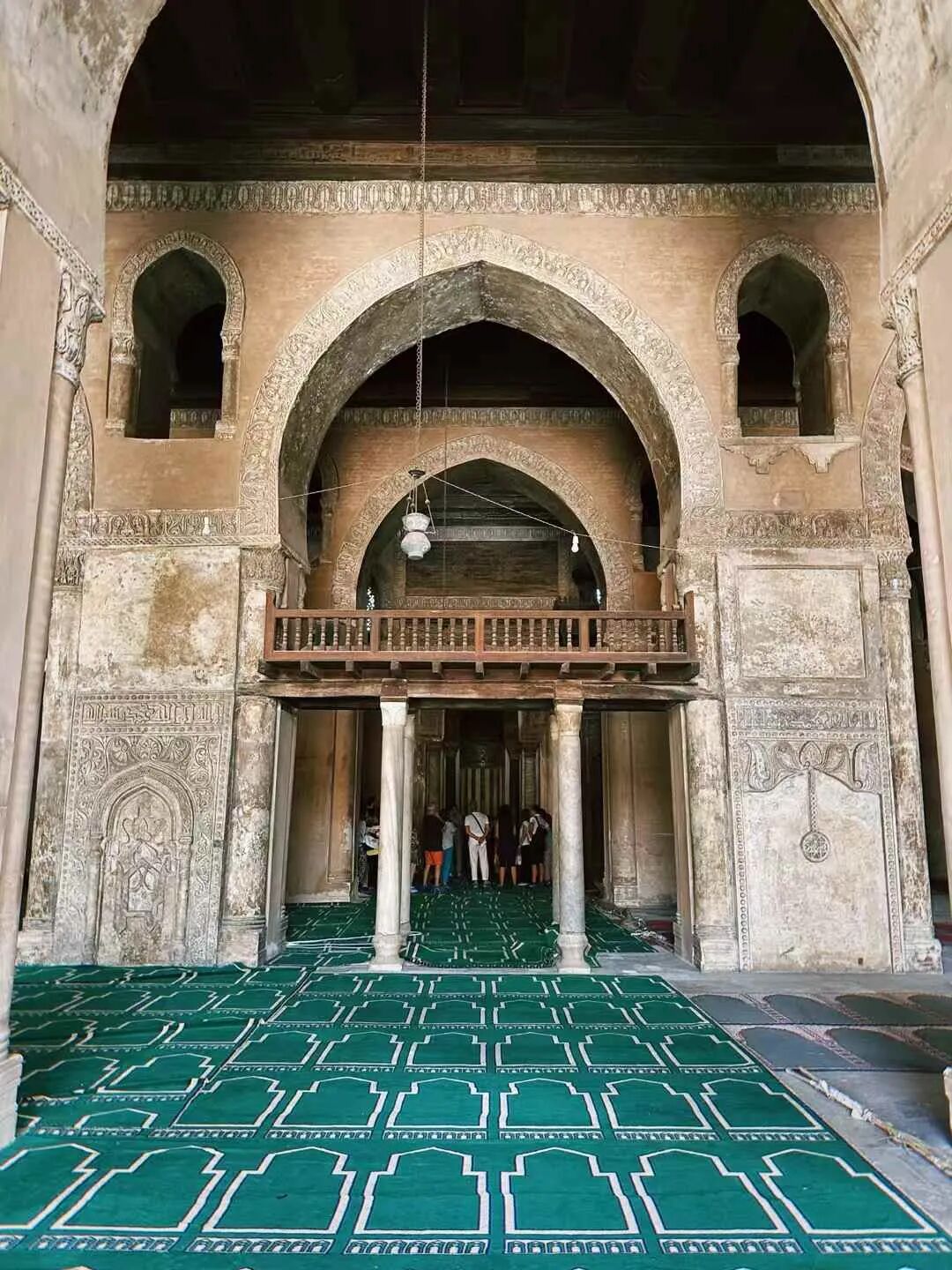
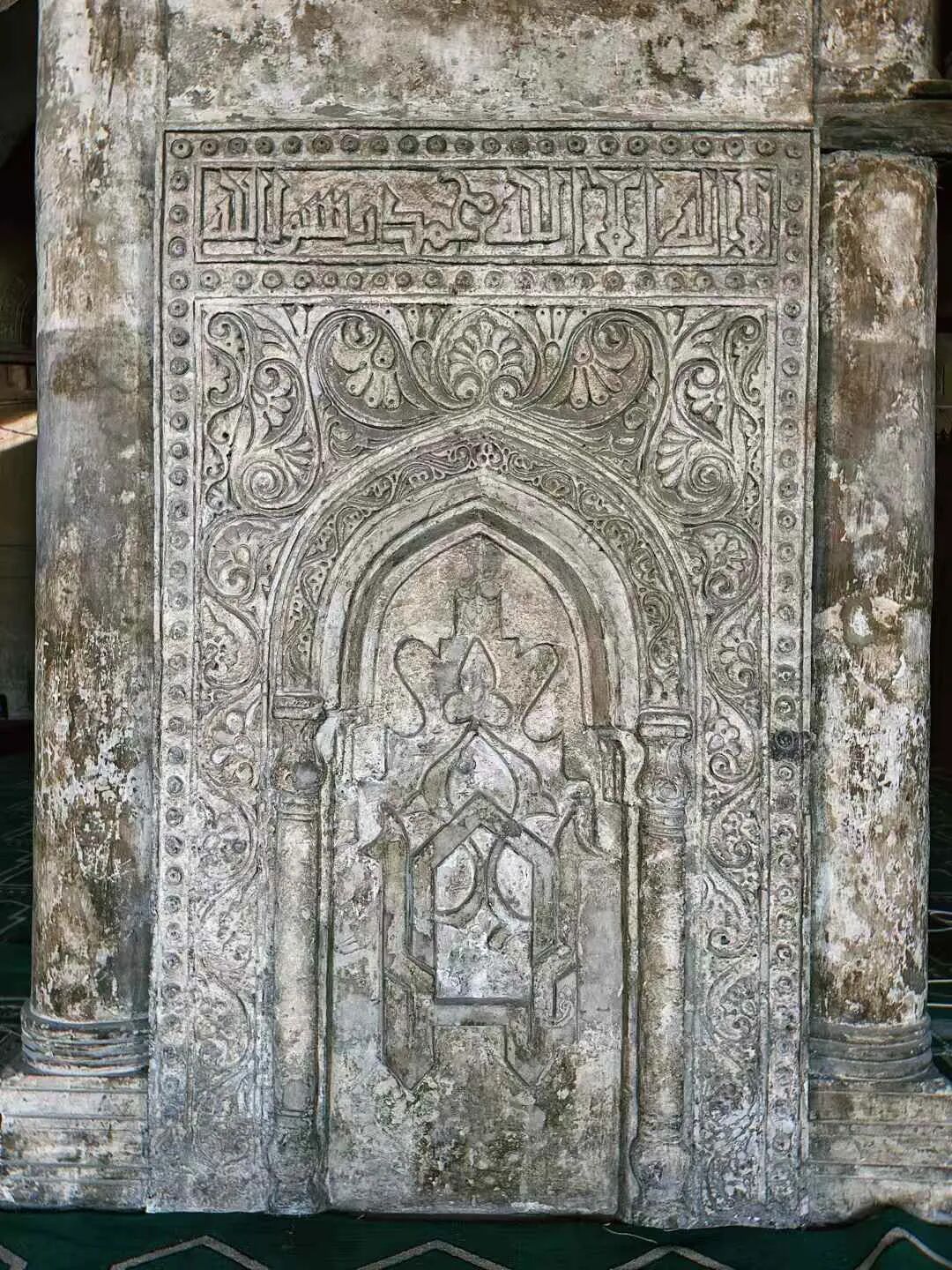
The westernmost mihrab was made by the Fatimid vizier Al-Afdal Shahanshah (in office 1094-1121). The original is kept in the Museum of Islamic Art in Cairo. This mihrab is heavily decorated with Persian-influenced style. Its inscriptions mention the Fatimid Caliph al-Mustansir and the Shia Shahada.
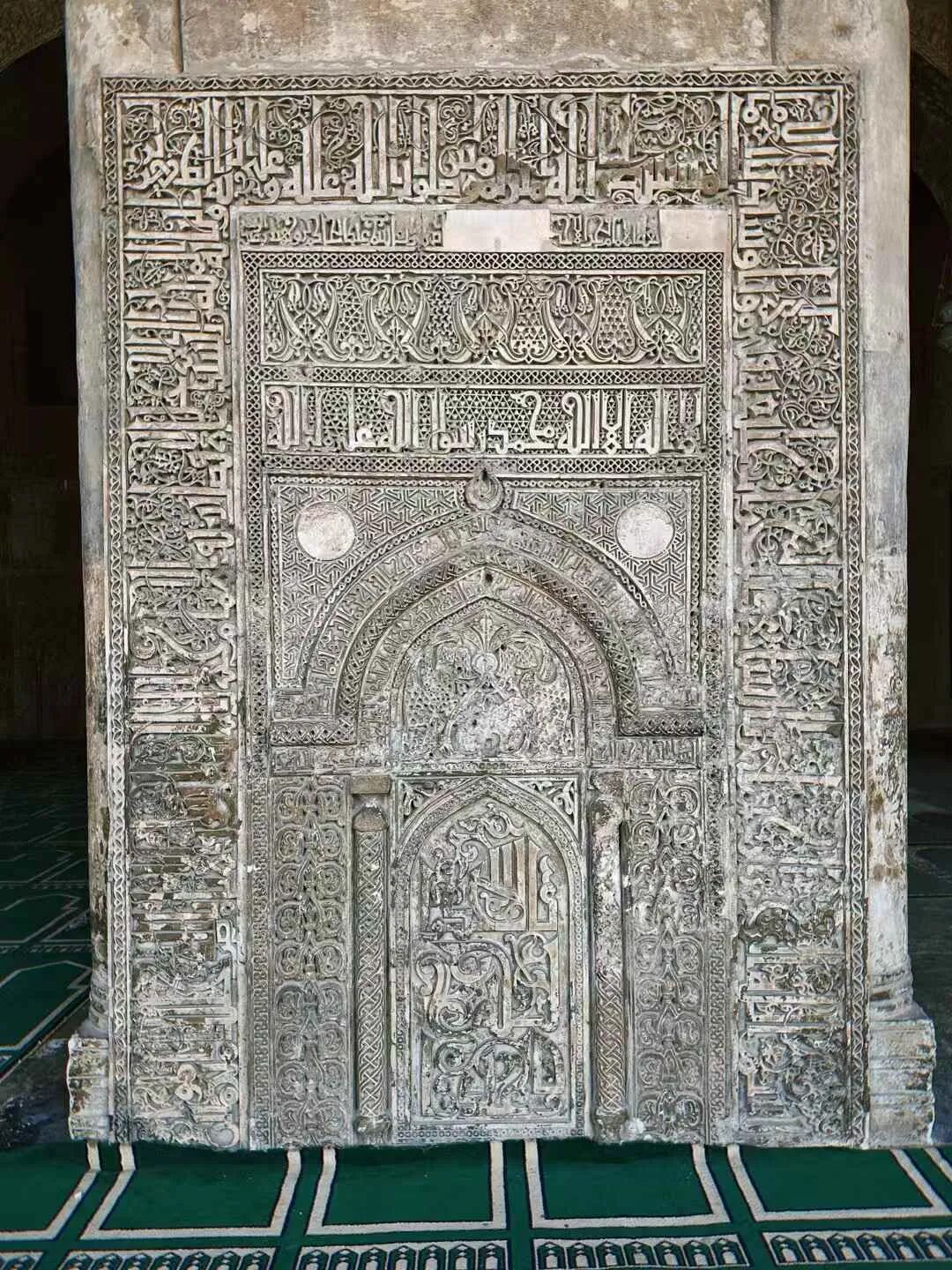
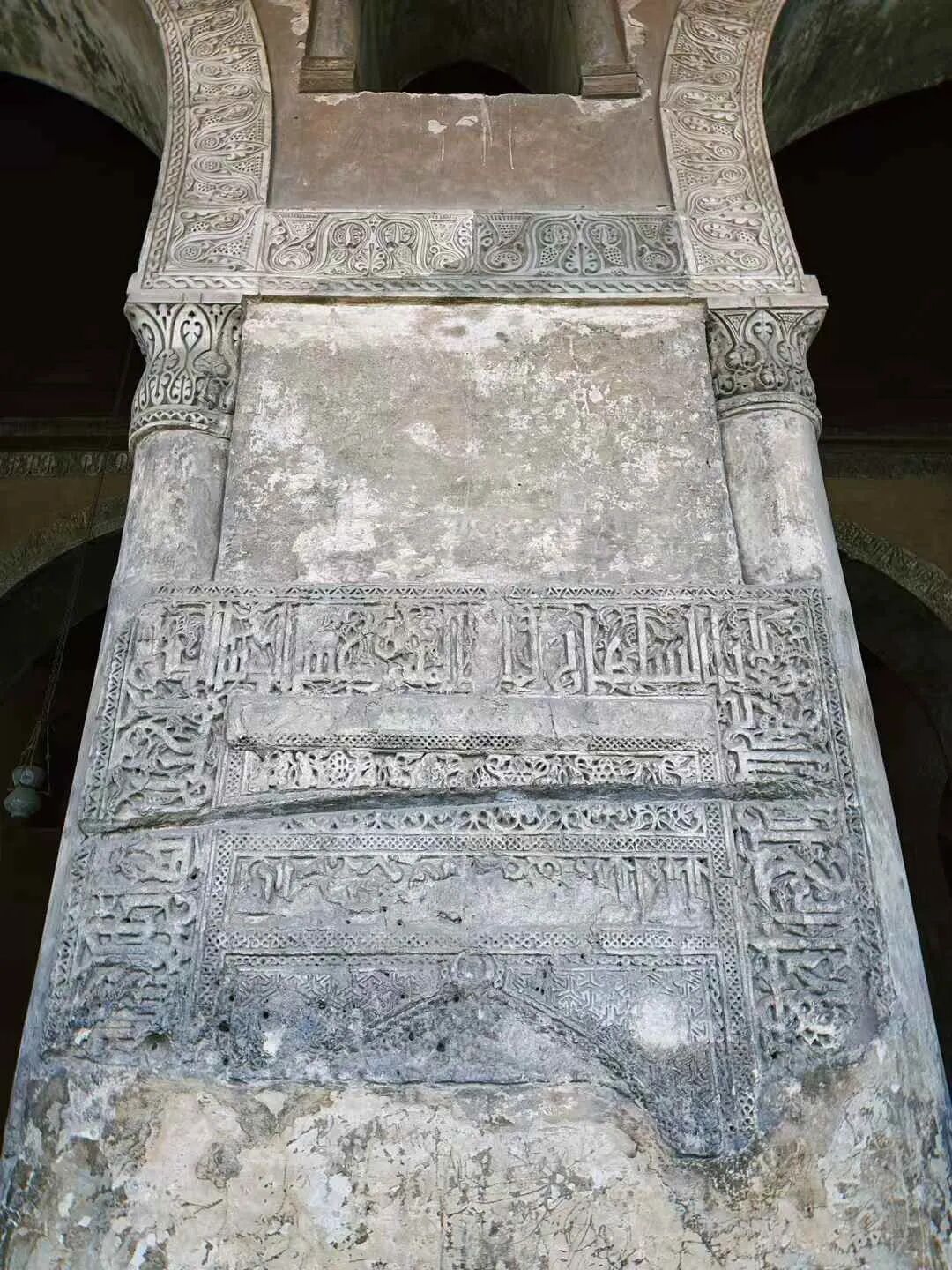
There is another mihrab modeled after the Al-Afdal mihrab, though only parts of it remain today. Unlike the original, this one mentions the Mamluk Sultan Lajin and does not mention Ali, so it is believed to have been built during the Mamluk period.
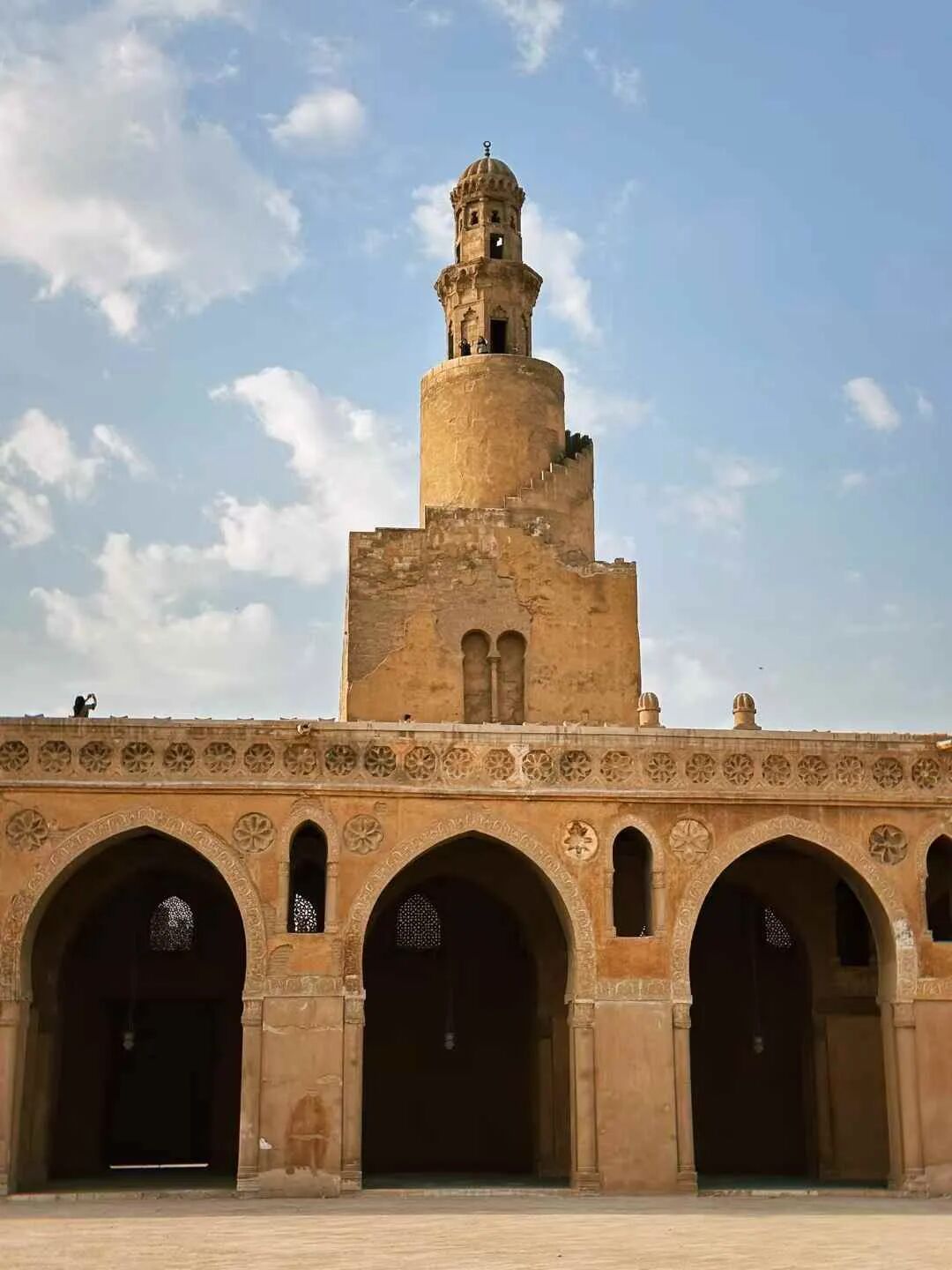
The minaret of the Ibn Tulun Mosque was also modeled after the Great Mosque of Samarra in Iraq and is the only spiral minaret in Egypt. One theory says Ibn Tulun built it himself, while another says it was built by the Mamluk Sultan Lajin in 1296.
The Mosque of Ibn Tulun has a minbar pulpit made entirely of wood, featuring beautiful wood carving and inlay work.
Taghribirdi Mosque: 1440
Taghribirdi Mosque was built in 1440 by Emir Taghribirdi, who was a secretary to the Mamluk Sultan. Emir Taghribirdi became a respected emir under the Sultan after he performed meritorious service in the Mamluk army's war against the Kingdom of Cyprus.
The mosque has a typical Mamluk architectural style, and the Sabil fountain on the left side of the main gate was rebuilt in 1911. The main gate features ablaq, which is a technique of alternating colored stone masonry. The dome to the right of the main gate has diamond-shaped patterns.
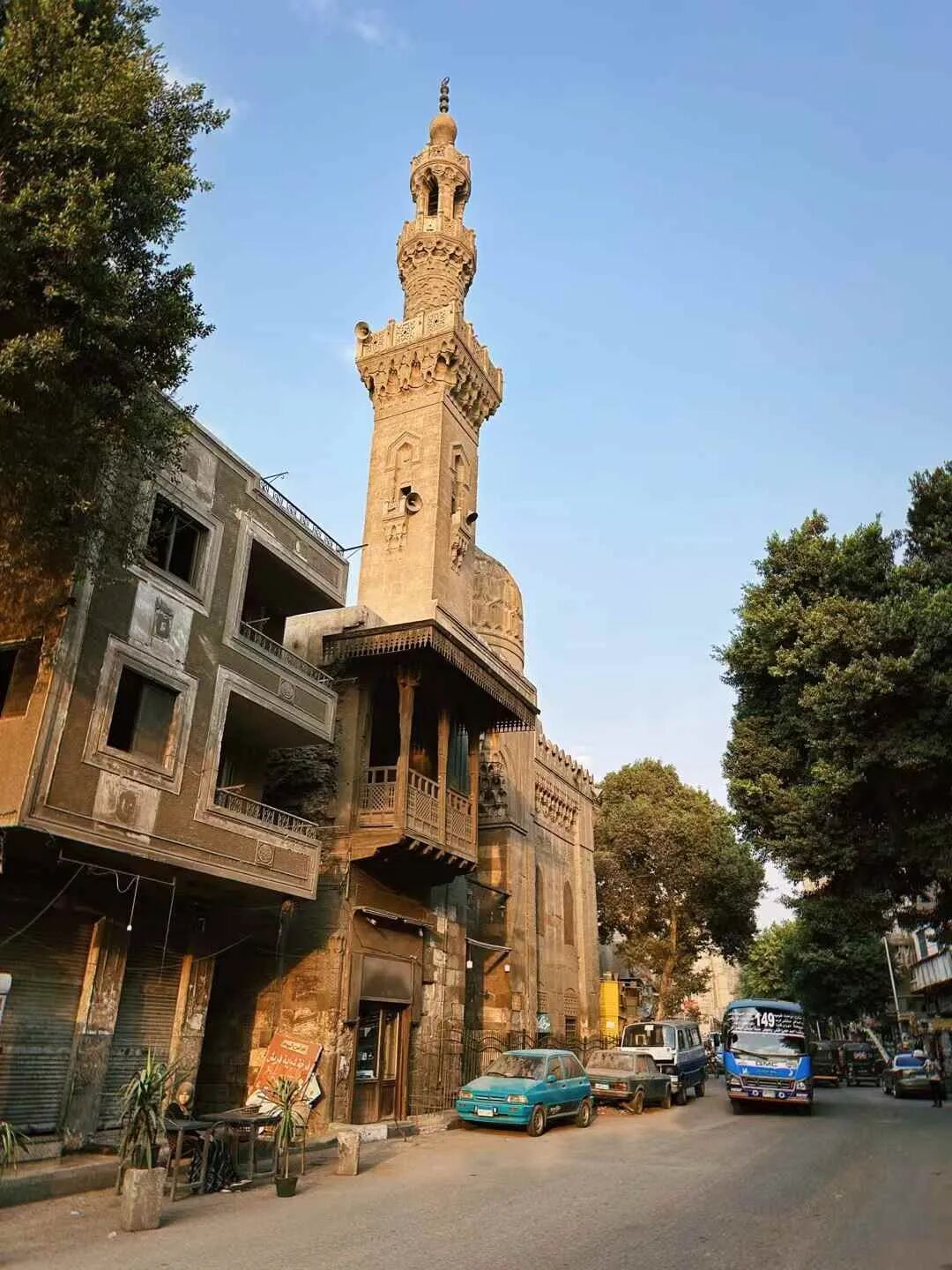
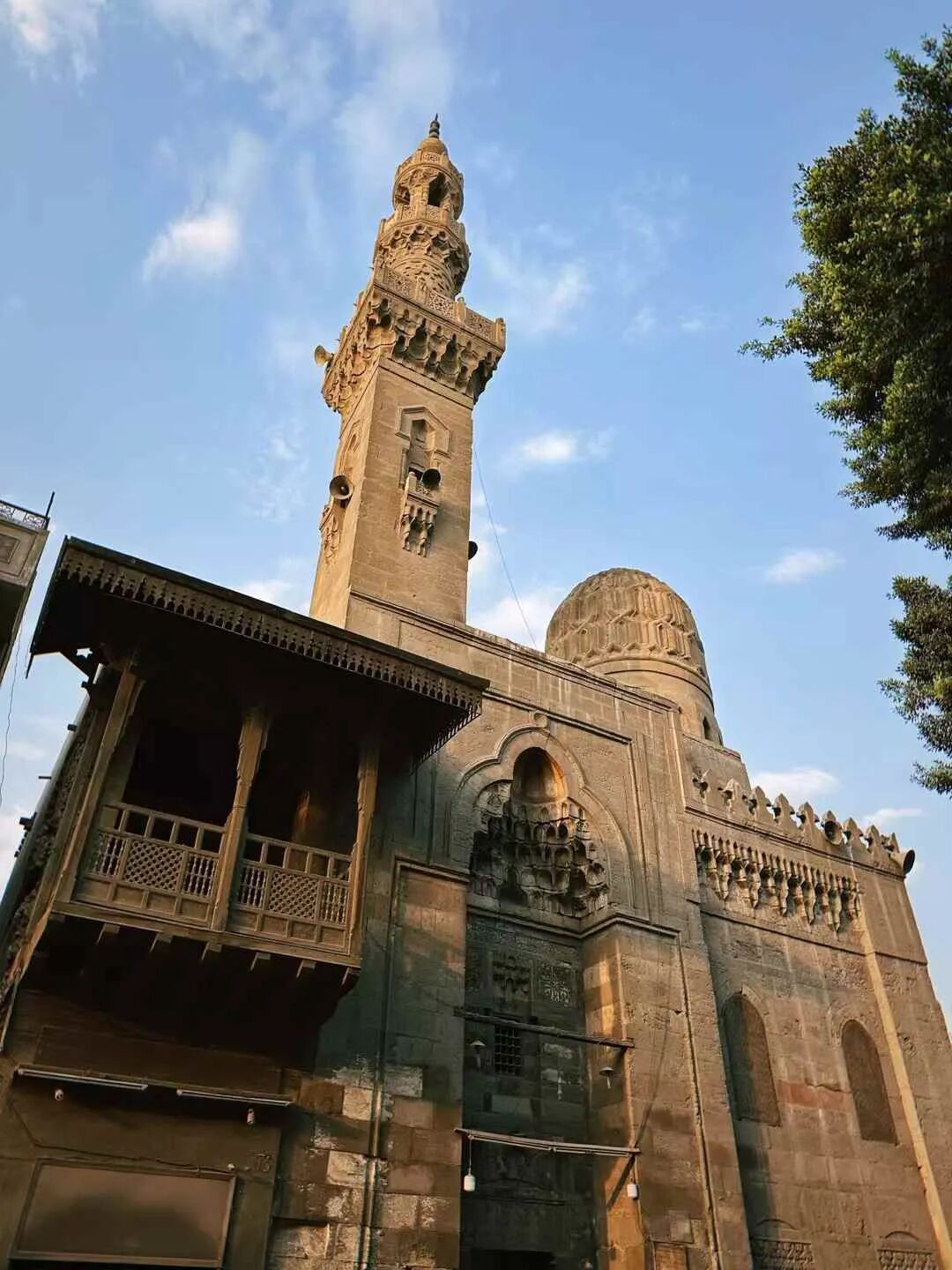
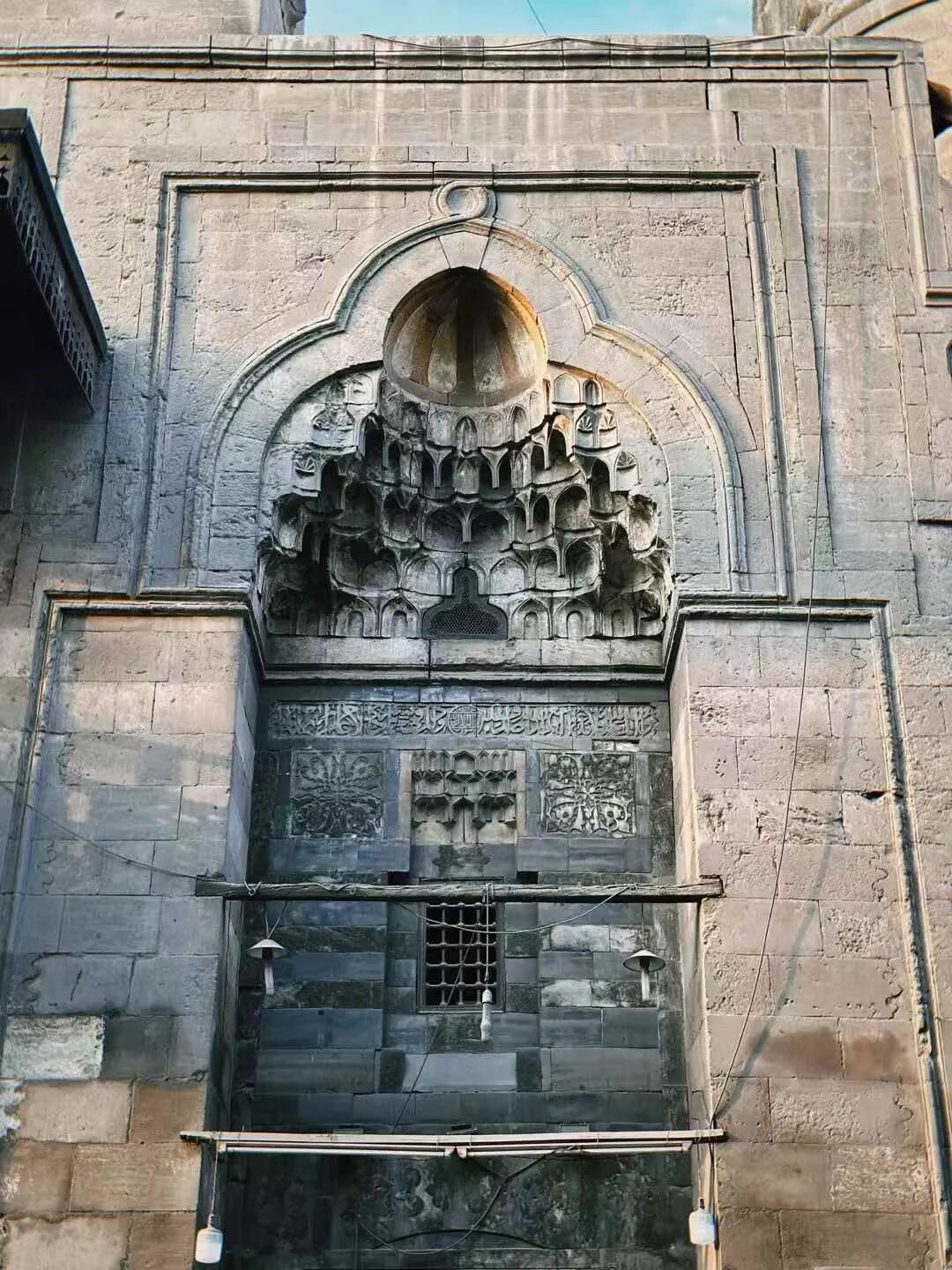
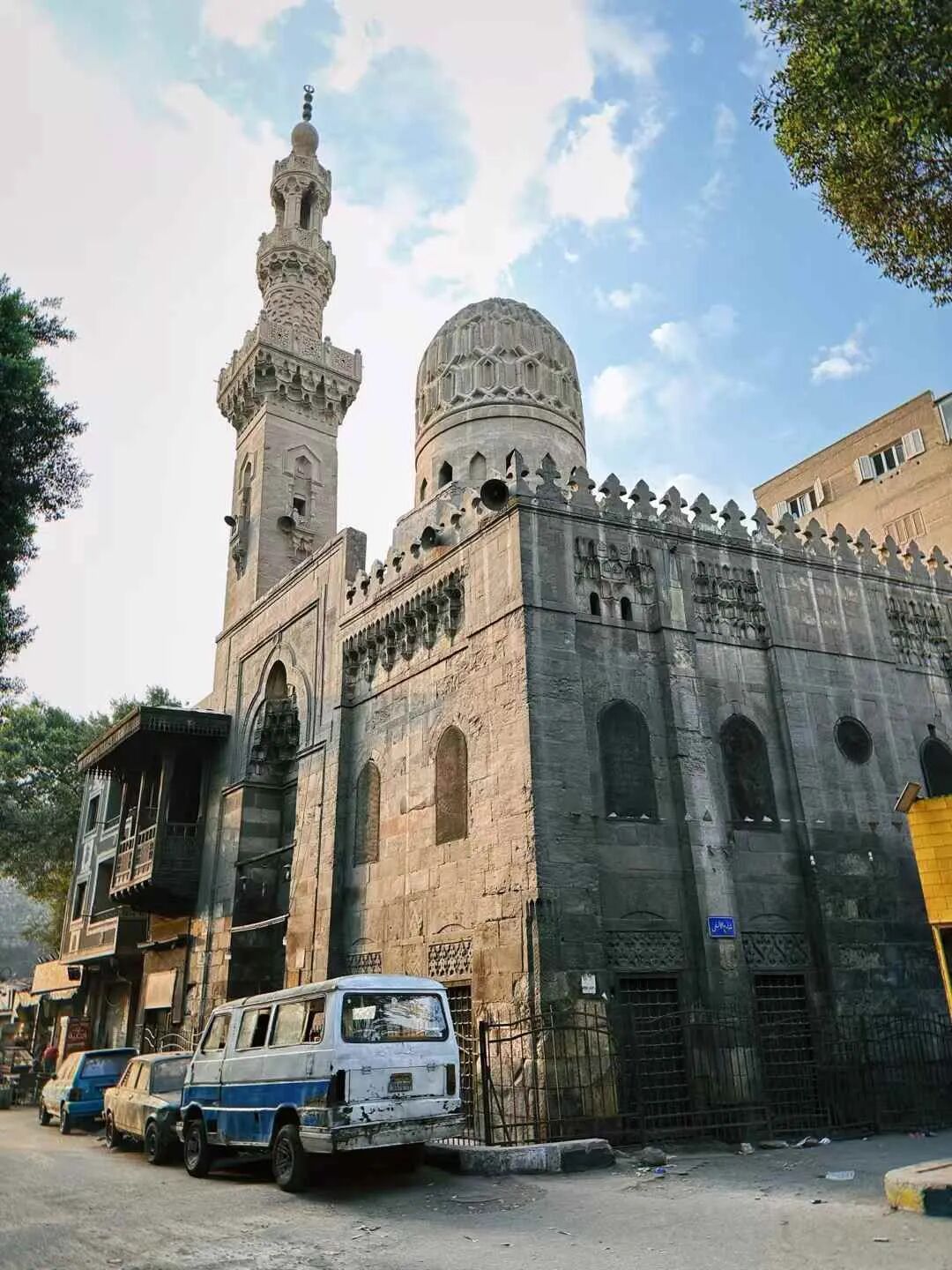
Shaykhu Mosque: 1349
Shaykhu Mosque was built in 1349 by the great Mamluk Emir Shaykhu al-Umari an-Nasiri. In the mid-14th century, Shaykhu was one of the most influential emirs in the Mamluk Sultanate and served as commander-in-chief of the army.
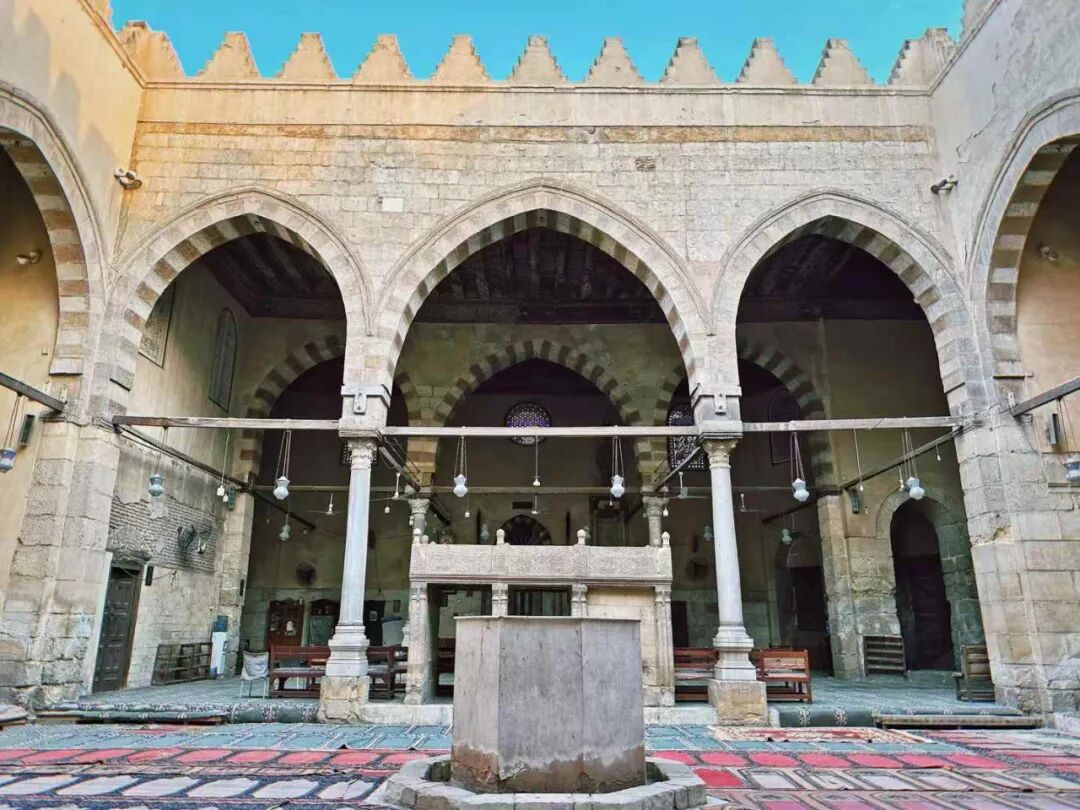
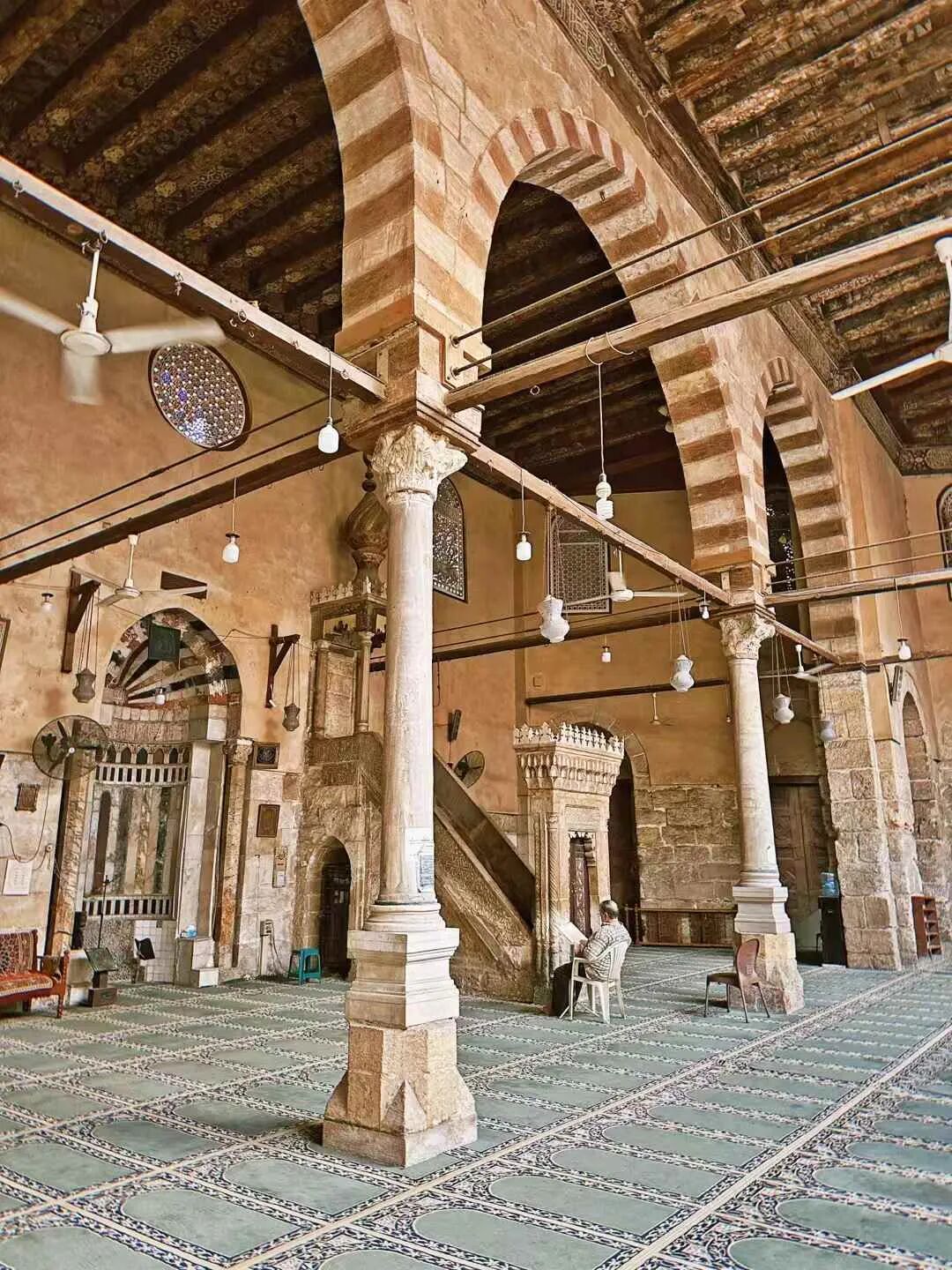
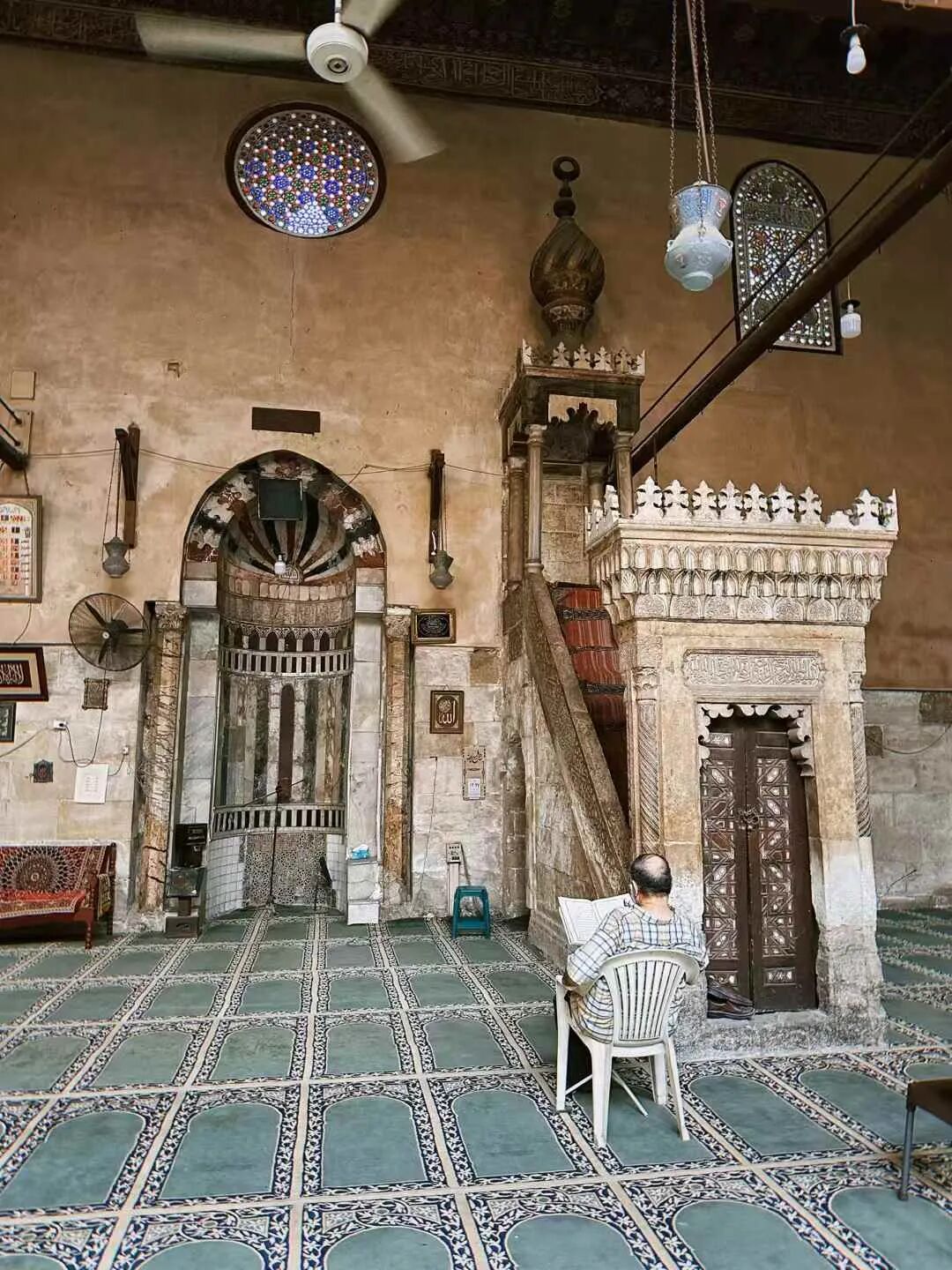
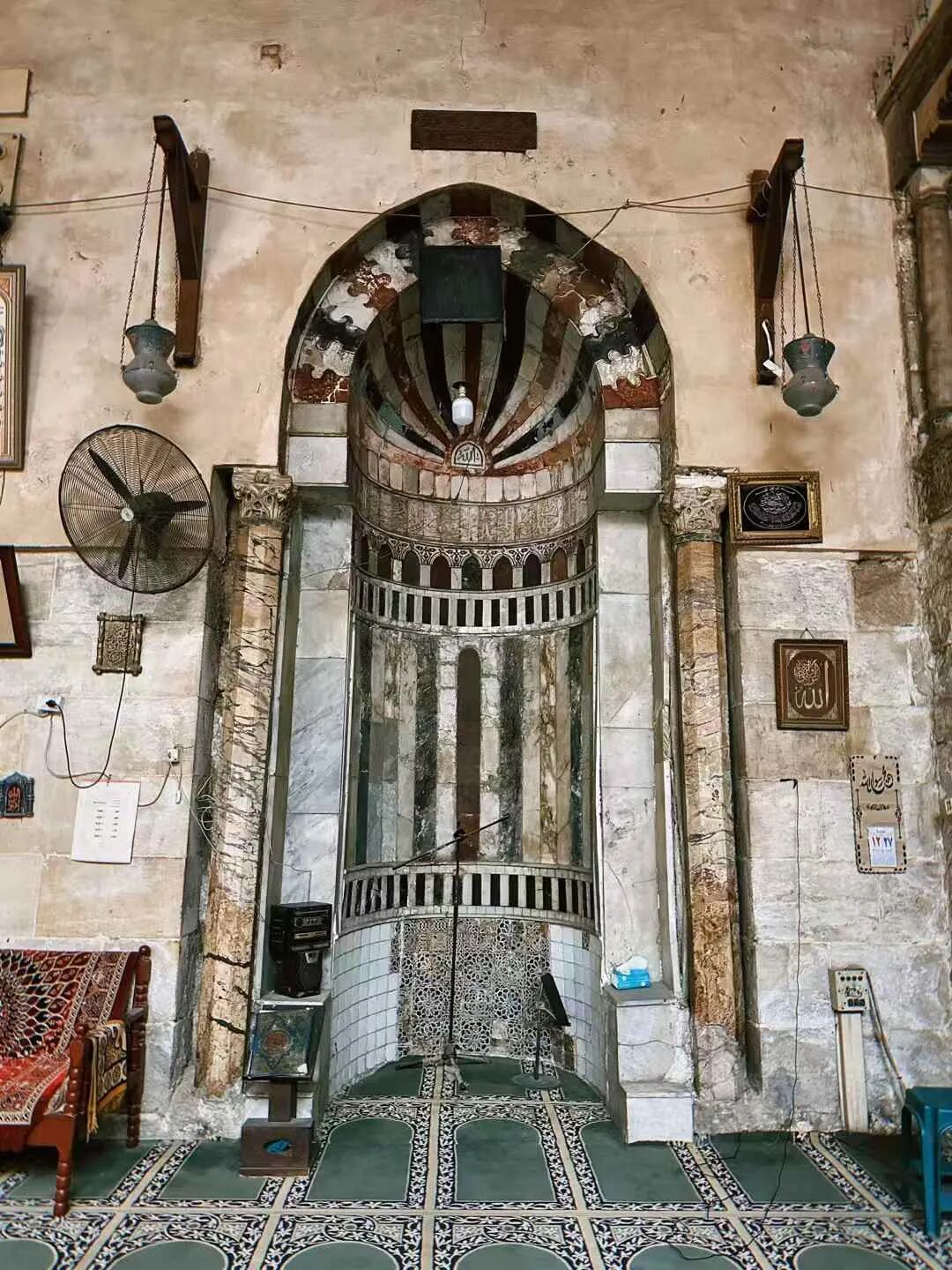
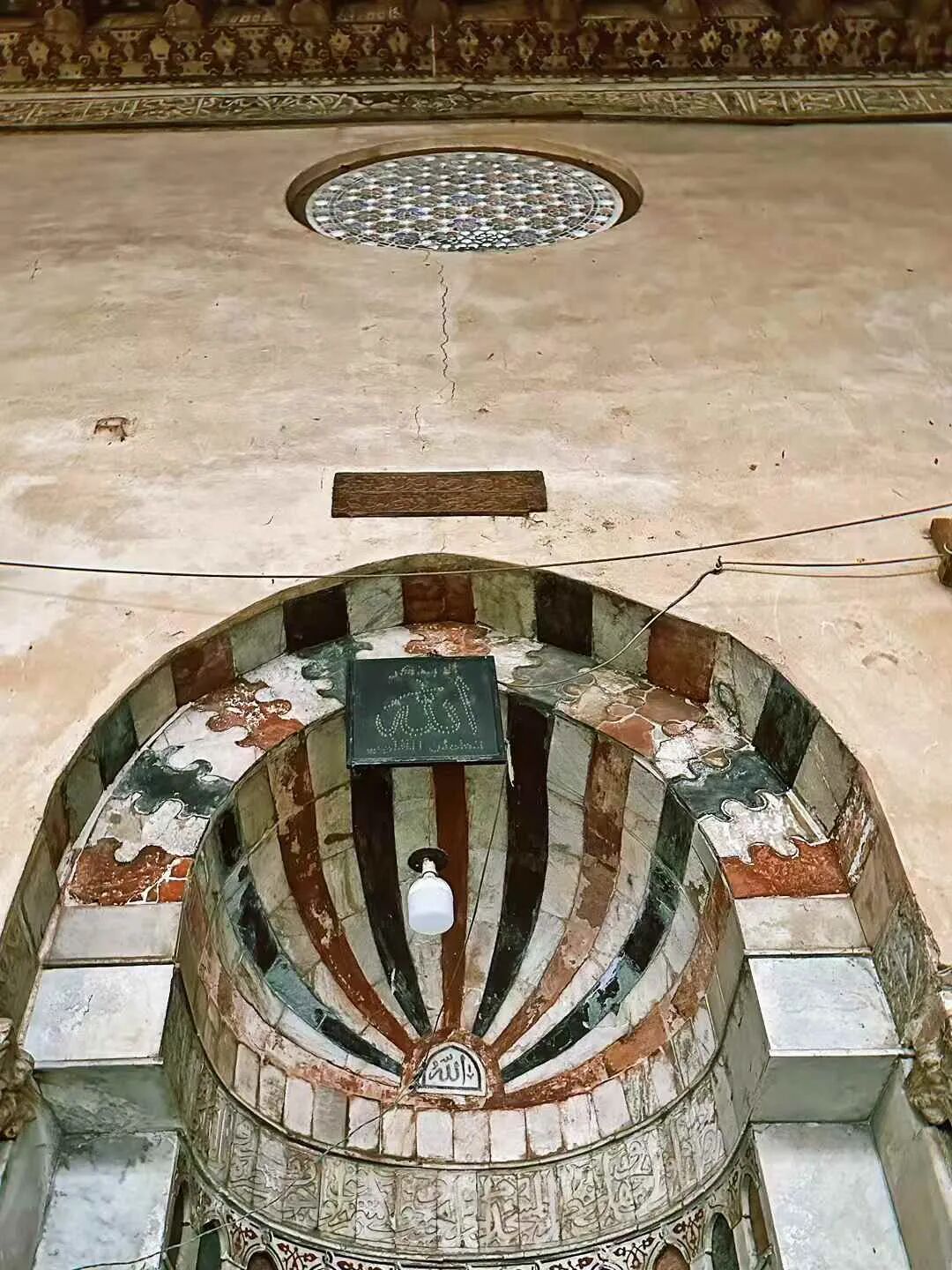
Shaykhu Mosque has the earliest open-arcade riwaq courtyard in Egypt, which is paved with colored marble. The upper part of the mihrab features original Mamluk colored marble with the name of Allah in the center of a sunrise, while the lower part is paved with 18th-century Tunisian tiles.
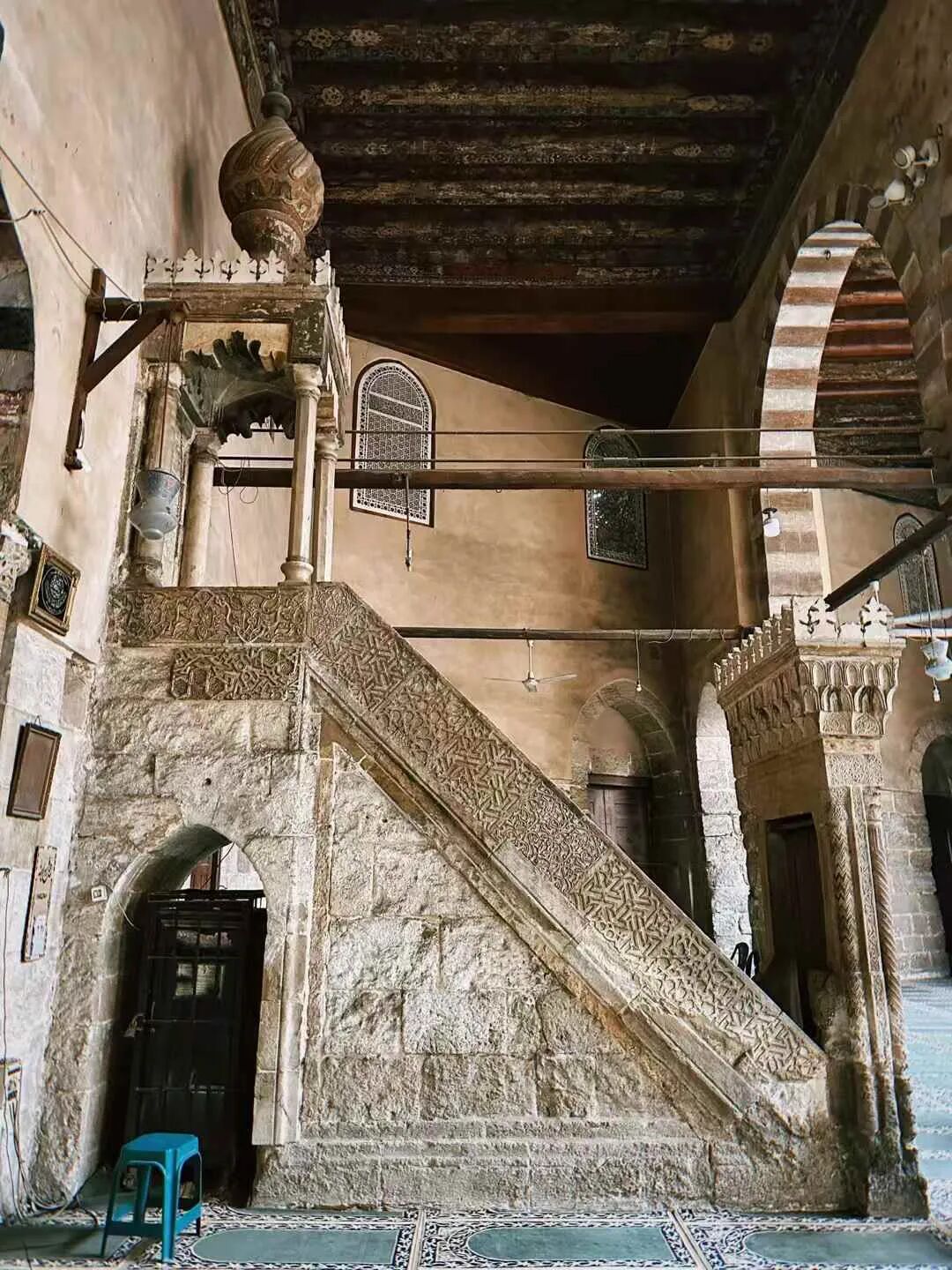
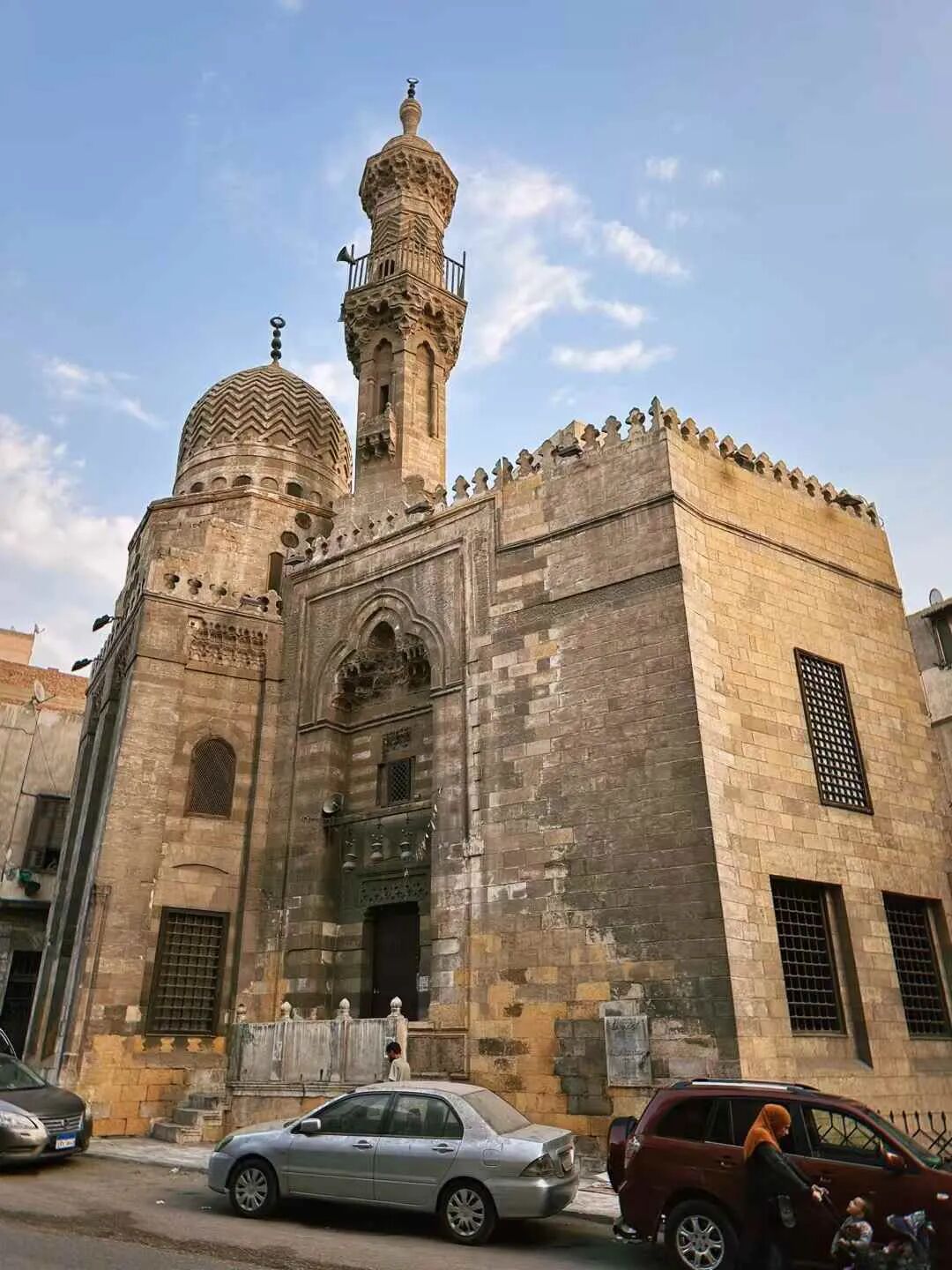
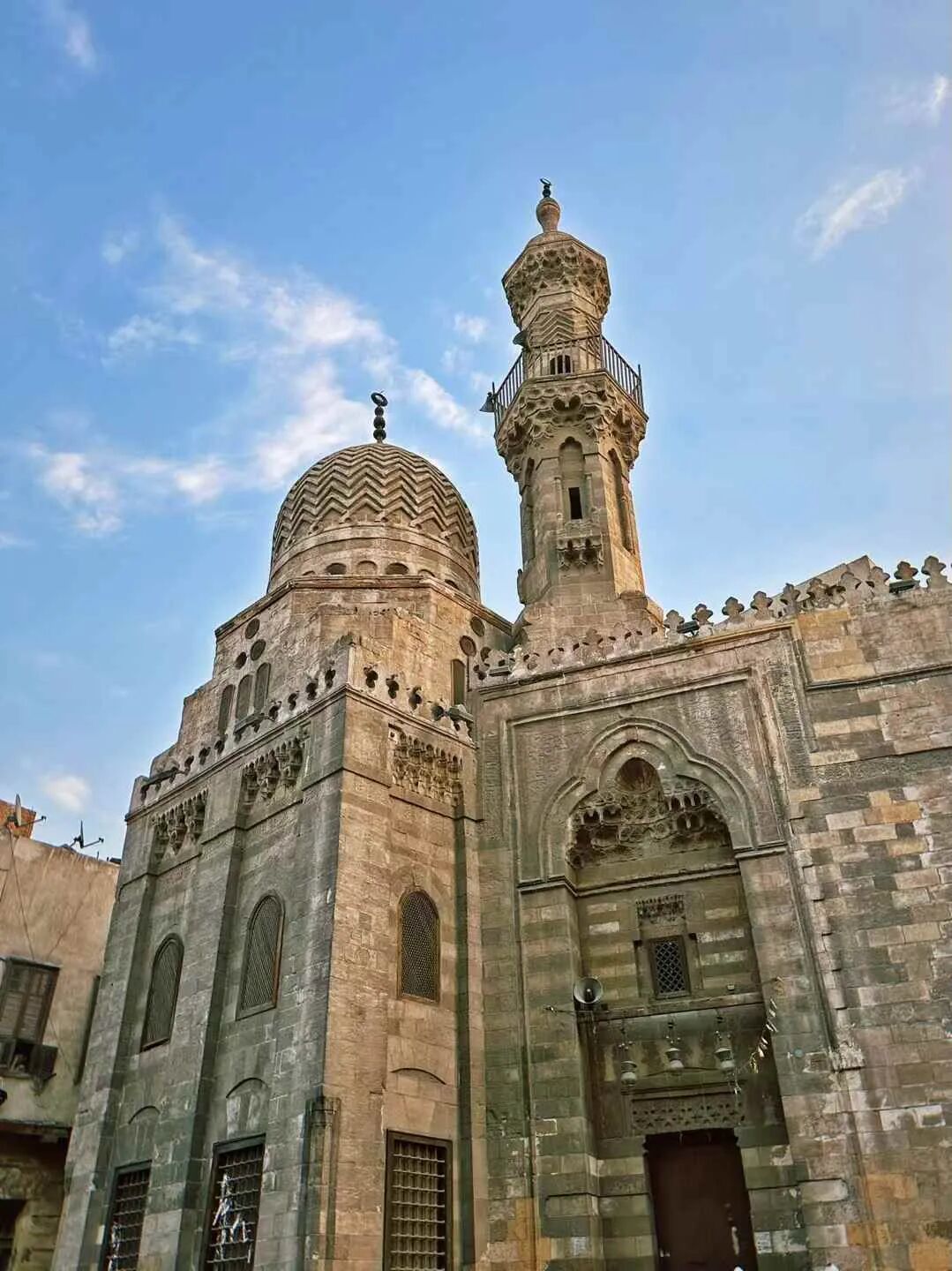
Qanibay al-Muhammadi Mosque: 1413
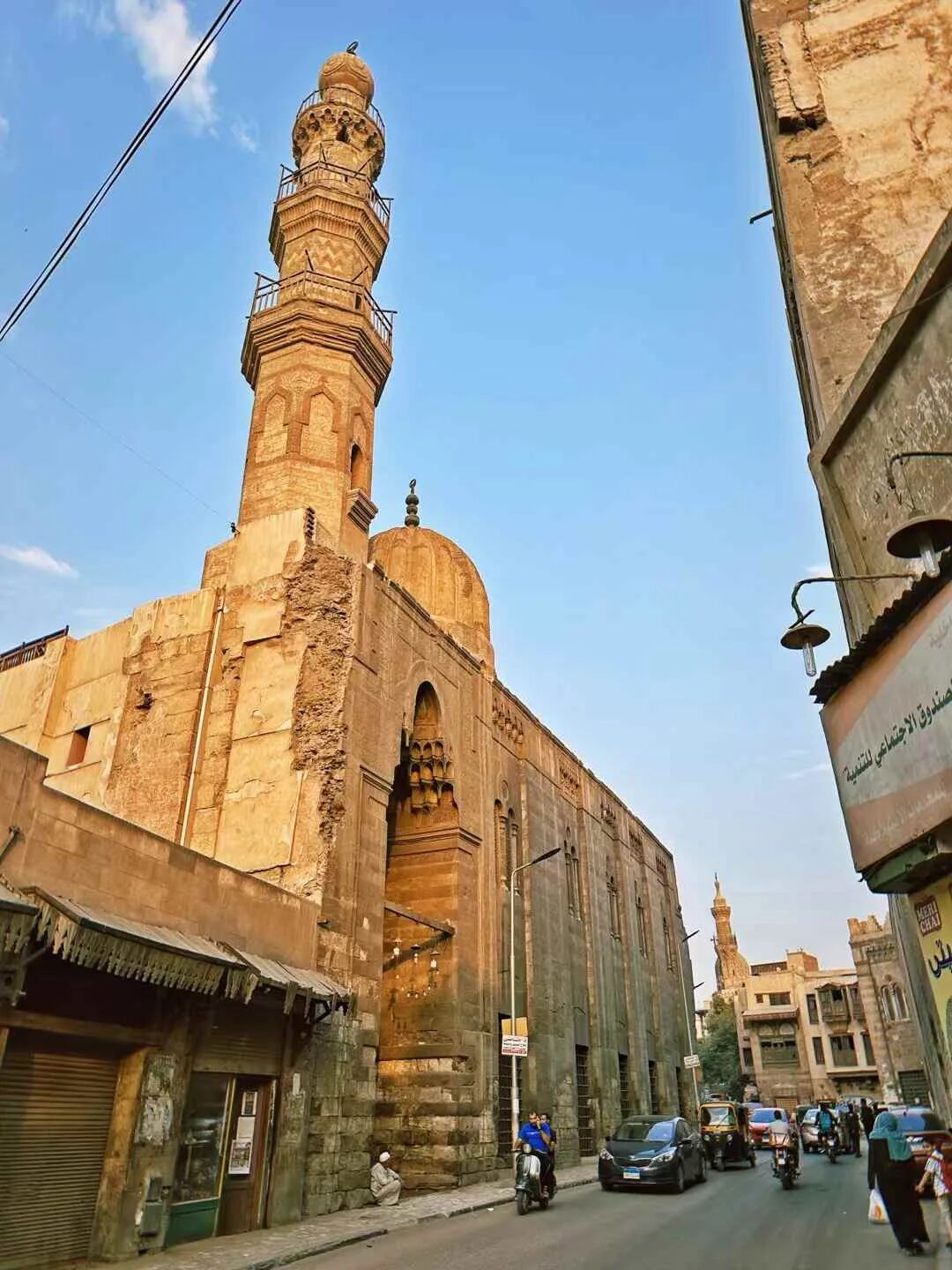
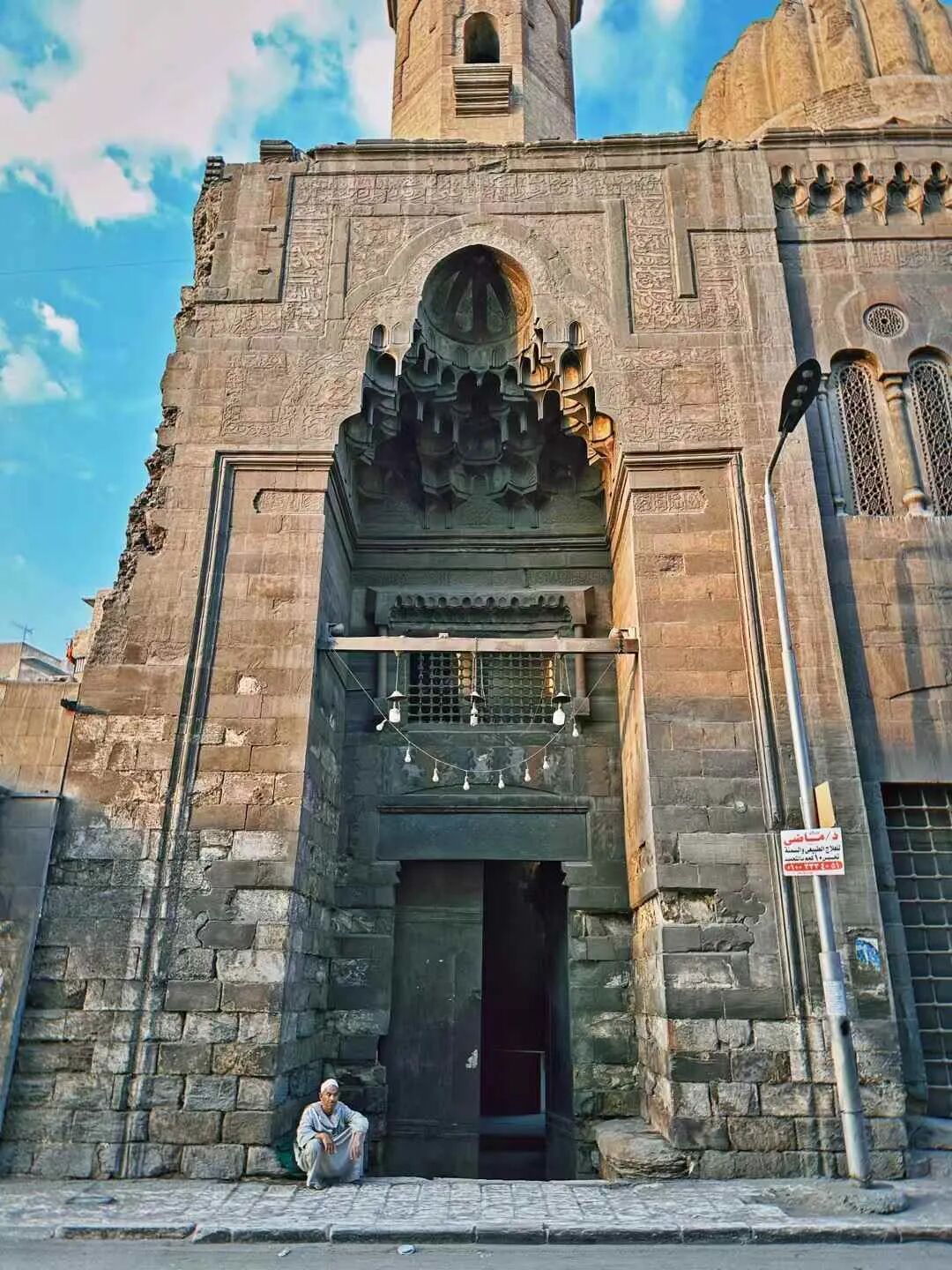
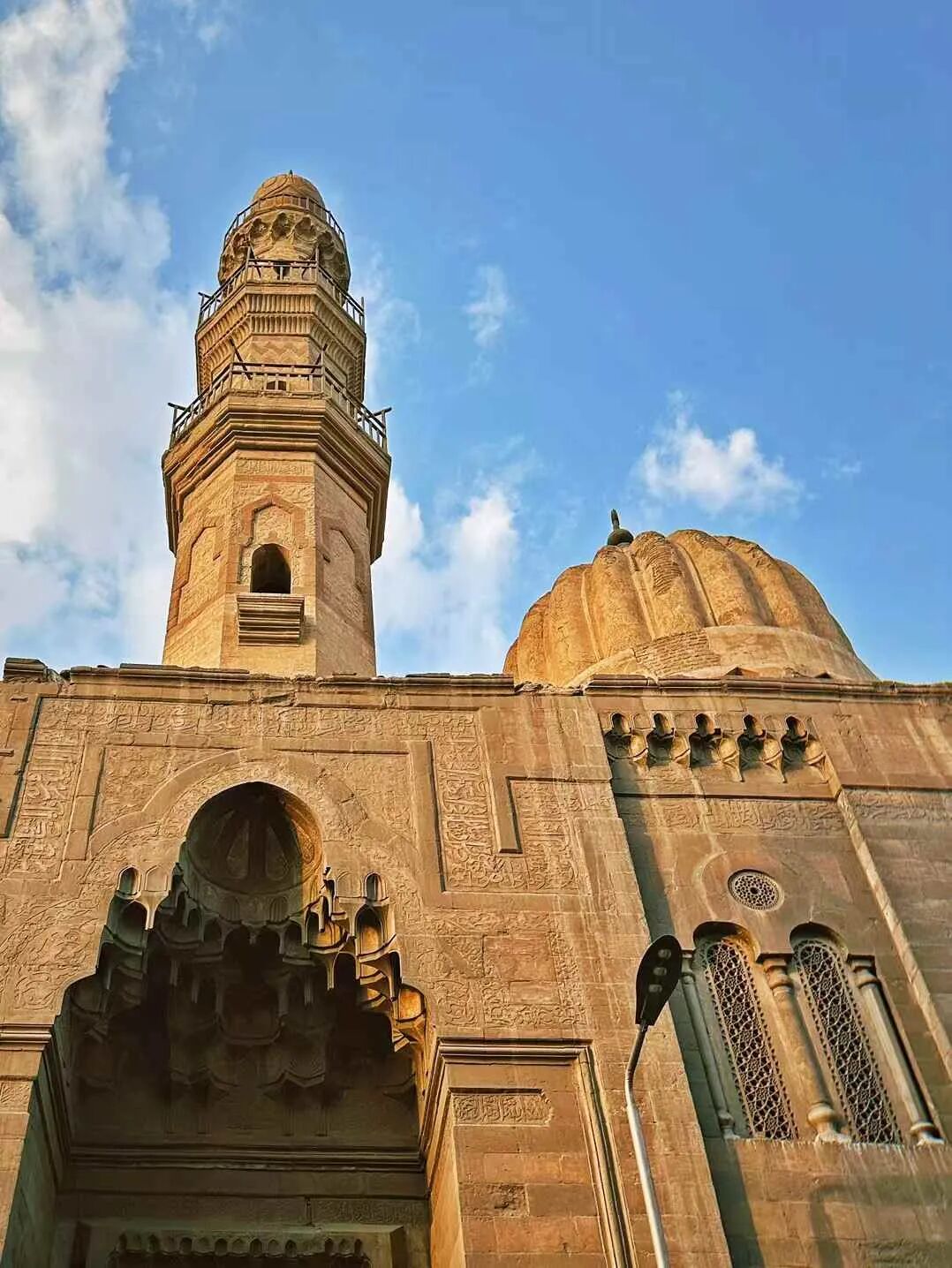
Qanibay al-Muhammadi Mosque was built in 1413 by Qanibay al-Muhammadi, a high-ranking official of the Mamluk Sultanate. Qanibay was purchased by the Mamluk Sultan Barquq. He later became responsible for drafting official correspondence and sending letters from the Sultan to various kings and princes, eventually becoming the representative of the Mamluk Sultanate in the Levant region.
The mosque has a typical Mamluk style, featuring a dome with V-shaped patterns and a minaret with stalactite cornices.
Islamic Art Guide: Museum of Islamic Art in Cairo (Part 1)
Articles • ali2007fr posted the article • 0 comments • 152 views • 2026-05-19 08:54
Summary: Islamic Art Guide: Museum of Islamic Art in Cairo (Part 1) is presented here as a firsthand travel account in clear, natural English. The account focuses on Cairo, Islamic Art, Museum Travel while preserving the names, places, food, photos, and historical details from the Chinese source.
In the 19th century, Egypt placed great importance on Pharaonic art, but appreciation for Islamic art lagged behind. In 1880, Tewfik Pasha, the sixth ruler of the Muhammad Ali dynasty, finally established the first museum of Islamic art.
In 1881, Tewfik Pasha approved the creation of the Committee for the Preservation of Arab Monuments. The arcades of the abandoned Al-Hakim Mosque inside the northern gate of Cairo were used as a temporary exhibition hall to display hundreds of artifacts. In 1884, a two-story building was constructed in the mosque courtyard to house 900 artifacts. In 1887, the museum was named the Museum of Arab Antiquities. By 1895, the collection had grown to 1,641 items, and the museum space reached capacity. In 1902, the new Mamluk-style museum building was officially completed, which is the building we see today.
The Cairo Museum of Islamic Art building once featured complex decorative designs inspired by architecture from various periods of Islamic history. In 2014, a car bomb attack targeting the Cairo police headquarters across the street caused severe damage to the museum. Nearly 30 percent of the artifacts were damaged, and the exterior wall decorations were also destroyed. After three years of restoration, the museum reopened in 2017.
The hall after the entrance provides a general introduction, showcasing a selection of unique Islamic artifacts from different perspectives.
An 8th-century Umayyad dynasty Quran in Kufic script from Egypt, written in brown ink on parchment.
An enameled water jug and basin from the 19th-century Qajar dynasty of Iran, featuring Persian-style figures and floral patterns.
The oldest surviving key to the Kaaba, made in 1363-4, belonging to the Egyptian Mamluk Sultan Al-Ashraf Sha'ban (reigned 1363-77).
An 18th-century Ottoman qibla indicator, made by the manufacturer Barun al-Mukhtar during the reign of Sultan Mahmud I (reigned 1730-54). It shows the appearance of the Sacred Mosque (Masjid al-Haram) after the 1629 Ottoman renovation, a structure that remained until 1955.
A 15th-century Mamluk-period mosque glass lamp from Egypt, bearing the name of Emir Safy al-Din Shaykhu.
After passing through the hall, the exhibition continues with Islamic artifacts arranged in chronological order.
Early days of the faith.
A wood carving panel from Egypt during the Abbasid Caliphate in the 9th century.
A wooden chest panel inlaid with ivory and bone from Egypt during the Tulunid dynasty in the 9th century.
An ivory plaque with floral carvings from Egypt during the Umayyad Caliphate in the 7th to 8th centuries.
A wood carving panel with floral decorations from Egypt or Syria during the Umayyad Caliphate in the 8th century.
An underglaze painted ceramic plate from Iraq during the Abbasid Caliphate in the 8th to 9th centuries.
A stucco carving panel in the Samarra style from Iraq during the Abbasid Caliphate in the 9th century. Samarra is located on the east bank of the Tigris River and served as the capital of the Abbasid Caliphate from 836 to 892.
Fatimid Caliphate.
A 10th-century Kufic script stucco window frame from the Western Palace of the Fatimid Caliphate in Cairo. It is truly a masterpiece of the museum; you can see its size by comparing it to the child in the bottom right corner. The Fatimid palace in Cairo was built in 970 and was divided into two parts: the Eastern Palace and the Western Palace. The Western Palace was smaller and originally built for the Fatimid princess Sitt al-Mulk, then renovated by the Caliph in 1064. In 1284-1285, the Mamluk Sultan al-Mansur Qalawun built a massive complex on the site of the Fatimid Western Palace. The hospital within the complex used some architectural elements from the Fatimid Western Palace, and this window frame came from the Qalawun Hospital.
A ceramic plate from Egypt during the Fatimid Caliphate in the 10th to 11th centuries, depicting various music and banquet scenes.
A ceramic plate from Egypt during the Fatimid period in the 11th century, depicting a rider holding a falcon.
A ceramic plate from Egypt during the Fatimid Caliphate in the 11th to 12th centuries, showing two people performing the traditional Egyptian stick fighting, Tahtib.
This 11th-century stucco mural from Egypt dates to the Fatimid dynasty and comes from the wall of a Fatimid-era bathhouse.
This small wooden prayer niche (mihrab) from 10th-11th century Fatimid Egypt features inscriptions with Shia content.
This 10th-11th century Fatimid Egyptian ceramic plate shows an image of the Prophet Isa (Jesus), which serves as evidence of the religious tolerance of that time.
This 11th-century Fatimid Egyptian ceramic plate is inscribed with the name of the commander Ghaban.
This 11th-century Fatimid Egyptian ceramic plate features a griffin design. The image of the griffin can be traced back to ancient Egyptian art from 3000 BC, later spreading to West Asia and the Mediterranean region. Because the lion rules the land and the eagle rules the sky, the griffin, which combines the features of both, became a symbol of nobility and power.
This 11th-century Fatimid Egyptian ceramic plate features images of humans, animals, and birds.
This 11th-century Fatimid Egyptian marble carving features Kufic calligraphy.
These stucco windows and wooden doors from the Al-Salih Tala'i Mosque in Cairo date to the late Fatimid period in 1160. The Al-Salih Tala'i Mosque is located outside the south gate of the old city of Cairo and was commissioned by the Fatimid vizier Tala'i ibn Ruzzik, who was the last powerful and capable vizier of the Fatimid dynasty. The Al-Salih Tala'i Mosque was completed only 11 years before the fall of the Fatimid dynasty, making it the last surviving building from the Fatimid era.
This wooden door from the Al-Azhar Mosque in Cairo dates to the Fatimid period in 1010 and was commissioned by Caliph al-Hakim bi-Amr Allah, who reigned from 996 to 1021. Al-Hakim was the first Fatimid caliph born in Cairo, an important imam in the history of Ismaili Shia Islam, and a central figure in the Druze faith. At that time, the city of Fustat on the south side of old Cairo was a densely populated Sunni city, while the newly built city of Cairo served as the capital of the Fatimid dynasty and the center of Ismaili Shia Islam. The Al-Azhar Mosque in Cairo is the city's official congregational mosque, where the caliph would deliver the khutbah sermon every Friday during Jumu'ah prayer.
The 12th-century Fatimid-era wooden prayer niche (mihrab) and wooden doors inside the Sayyida Nafisa mausoleum in Cairo. Sayyida Nafisa (762-824) was the great-granddaughter of Imam Hasan, the grandson of the Prophet. She was a famous Egyptian scholar of hadith who served as a mentor to Imam Shafi'i and provided him with financial support.
The Nafisa mausoleum is located in Cairo's famous City of the Dead. It was first built during the Abbasid period and later renovated and rebuilt during the Fatimid period. Nafisa was the first descendant of Imam Ali to be honored during the Fatimid period. As a Sunni and a descendant of Ali, she helped promote reconciliation between the Sunni and Shia populations within the Fatimid dynasty.
Ayyubid dynasty
A 12th-century wooden chest from the Hussein Mosque in Cairo. The Hussein Mosque is located across from the Al-Azhar Mosque in Cairo. It was first built in 1154 and is said to house the head of Imam Hussein.
A 13th-century wooden carving from the Ayyubid dynasty in Egypt.
A 1213 marble slab from the Ayyubid dynasty in Egypt inscribed with the name of Sultan Al-Kamil. Al-Kamil was the fifth sultan of the Ayyubid dynasty. During his reign, he defeated the Fifth Crusade, but he handed Jerusalem over to the Crusaders for ten years during the Sixth Crusade.
Marble slabs from the Ayyubid dynasty in Egypt dated 1184 and 1187, inscribed with the name of Sultan Saladin. Saladin was the founder of the Ayyubid dynasty. During the Third Crusade, he launched a series of military campaigns against the Crusaders in the Levant and recaptured Jerusalem, restoring Muslim rule in the region.
Wooden panels and doors made in 1178 during the Ayyubid period, found in the mausoleum of Imam Shafi'i in Cairo. Imam Shafi'i was the founder of the Shafi'i school of law and one of the four great imams of Sunni Islam. Imam Shafi'i arrived in Cairo in 813 and passed away there in 819. Sultan Saladin built his mausoleum in 1178, which features exquisite wood carvings inside. These include complex geometric patterns, scripture, and an introduction to the life of Imam al-Shafi'i.
A marble slab from the 12th-century Ayyubid dynasty in Egypt, featuring carvings of griffins and creatures with human heads and bird bodies.
Stucco carvings from the 13th-century Ayyubid dynasty at the Al-Kamil Madrasa in Cairo. The Al-Kamil Madrasa was built in 1225 by the Ayyubid Sultan al-Kamil in the northern part of the former Fatimid Western Palace in Old Cairo, and it was one of Egypt's educational centers during the 13th and 14th centuries.
A flint window from the 13th-century Ayyubid dynasty at the Sayf ibn Yazan tomb in Cairo.
Mamluk Dynasty.
A marble slab from the 14th-century Mamluk period at the Sarghatmish Madrasa in Cairo. The Sarghatmish Madrasa was built in 1356 by order of the Mamluk Emir General Sirghitmish. In the 1350s, Sirghitmish was the most powerful emir of the Mamluk dynasty.
A copper candlestick inscribed with the name of the Mamluk Sultan al-Nasir Muhammad, who reigned from 1299 to 1309.
A copper candlestick inscribed with the name of the Mamluk Sultan Qaitbay, who reigned from 1468 to 1496, donated by the Sultan to the Prophet's Mosque in Medina. Although Sultan Qaitbay built many structures in Cairo, his greatest achievement was the restoration of the Prophet's Mosque in Medina. After a fire at the Prophet's Mosque in 1481, Sultan Qaitbay rebuilt the tomb of the Prophet from a wooden structure into a brick one, added metal railings, and donated many chandeliers and candlesticks to the mosque.
A copper candlestick inlaid with silver from the 14th to 15th-century Mamluk dynasty.
A copper candlestick inscribed with the name of the wife of the Mamluk Sultan Qaitbay.
A copper incense burner inlaid with gold and silver from the 14th-century Mamluk dynasty.
A wooden door from the 13th-century Mamluk period at the Salihiyya Madrasa in Cairo. The Ayyubid Sultan As-Salih Ayyub founded the Salihiyya Madrasa in 1242, and it was one of Egypt's most famous centers of education during the 13th and 14th centuries.
A 14th-century Mamluk-era wooden cabinet from Egypt, inlaid with painted ivory decorations.
Above is a 13th-14th century Mamluk double-headed eagle marble carving from Egypt, and below is a 13th-century marble carving featuring the lion emblem of the Mamluk Sultan Baybars I (reigned 1260-1277). Baybars was the fourth sultan of the Mamluk dynasty and a tough military leader who defeated invasions by the Crusaders and the Mongol army.
A glass lamp from a 14th-century Mamluk-era mosque in Egypt.
A 14th-century Mamluk-era wooden Quran box and table inlaid with ebony and ivory from the Umm al-Sultan Sha'ban Madrasa in Cairo. The Mamluk Sultan Al-Ashraf Sha'ban ordered the construction of the madrasa in 1368-9 to honor his mother, who was on a pilgrimage (hajj) at the time.
Two Mamluk-era wood carvings; the first one bears the name of Sultan Qaitbay (reigned 1468-96). Qaitbay was one of the sultans who sponsored the most architecture in Mamluk history. Although the Mamluk dynasty was in decline, the situation remained relatively stable and commerce flourished under Sultan Qaitbay's rule.
The second carving bears the name of the Mamluk Sultan Al-Ashraf Qansuh al-Ghuri (reigned 1501-16). He was the second-to-last sultan of the Mamluk Sultanate. The Ottoman Sultan Selim I killed him in 1516, which marked the shift of control in the Middle East from the Mamluk dynasty to the Ottoman dynasty.
Components of a minbar (pulpit) from the 14th-century Mamluk-era Al-Khatiri-Boulaq mosque in Egypt.
A 15th-century Mamluk-era stucco window from Egypt.
A wooden ceiling with carvings of the name of Mamluk Sultan Qaitbay (reigned 1468-96) inside the Al-Azhar Mosque in Cairo.
Tiles on the Qaitbay fountain (sabil) in Cairo. Sultan Qaitbay built the Qaitbay fountain (sabil) in 1479. It was Cairo's first independent fountain-primary school (sabil-kuttab) building, a structure that became very common during the later Ottoman period.
A tile featuring the name of the Mamluk Sultan Al-Ashraf Janbalat, who reigned from 1500 to 1501.
A 15th-century tile from the Mamluk dynasty.
A 15th-century Mamluk dynasty marble slab decorated with mother-of-pearl mosaic.
A 14th to 15th-century Mamluk dynasty marble slab with geometric patterns. view all
Summary: Islamic Art Guide: Museum of Islamic Art in Cairo (Part 1) is presented here as a firsthand travel account in clear, natural English. The account focuses on Cairo, Islamic Art, Museum Travel while preserving the names, places, food, photos, and historical details from the Chinese source.
In the 19th century, Egypt placed great importance on Pharaonic art, but appreciation for Islamic art lagged behind. In 1880, Tewfik Pasha, the sixth ruler of the Muhammad Ali dynasty, finally established the first museum of Islamic art.
In 1881, Tewfik Pasha approved the creation of the Committee for the Preservation of Arab Monuments. The arcades of the abandoned Al-Hakim Mosque inside the northern gate of Cairo were used as a temporary exhibition hall to display hundreds of artifacts. In 1884, a two-story building was constructed in the mosque courtyard to house 900 artifacts. In 1887, the museum was named the Museum of Arab Antiquities. By 1895, the collection had grown to 1,641 items, and the museum space reached capacity. In 1902, the new Mamluk-style museum building was officially completed, which is the building we see today.
The Cairo Museum of Islamic Art building once featured complex decorative designs inspired by architecture from various periods of Islamic history. In 2014, a car bomb attack targeting the Cairo police headquarters across the street caused severe damage to the museum. Nearly 30 percent of the artifacts were damaged, and the exterior wall decorations were also destroyed. After three years of restoration, the museum reopened in 2017.
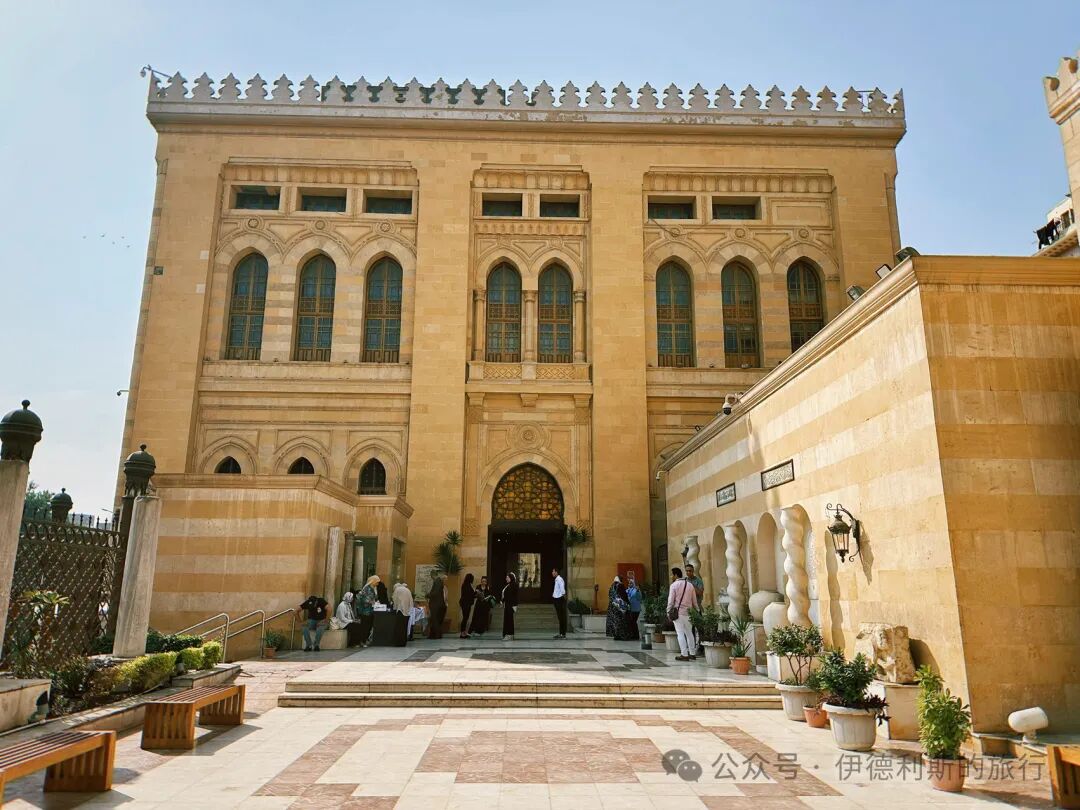
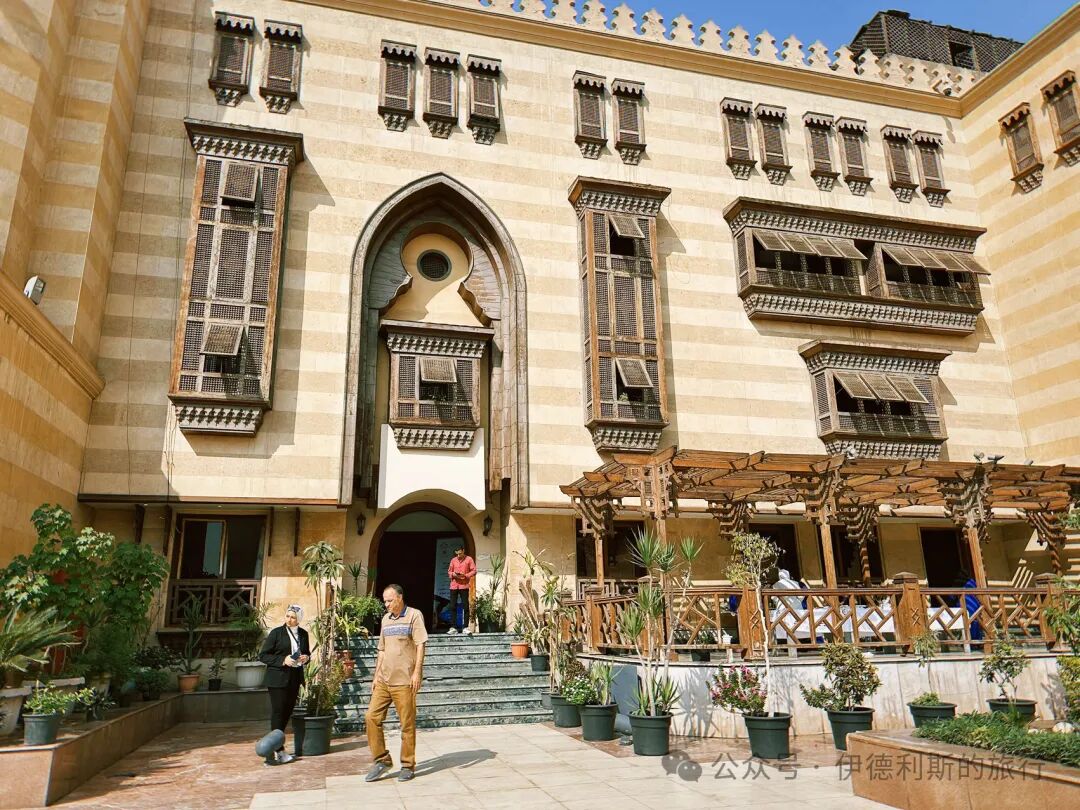
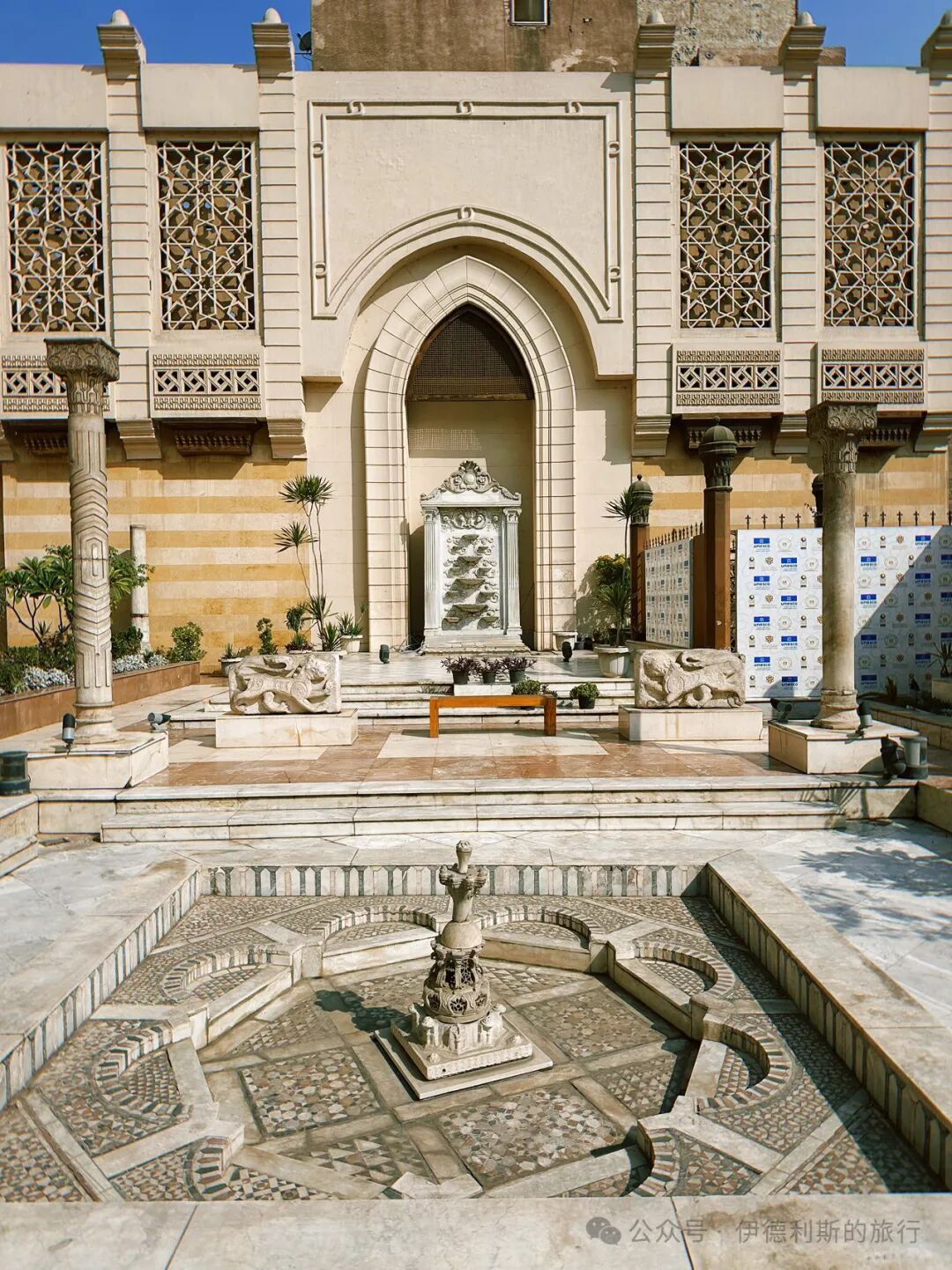
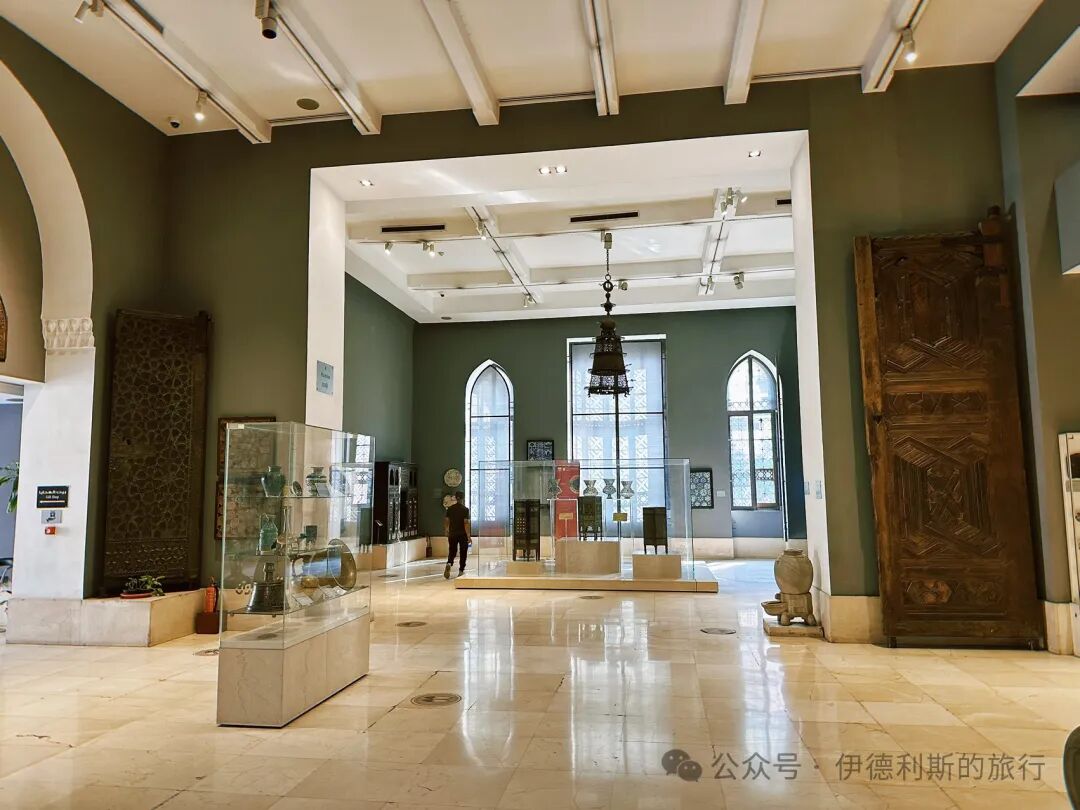
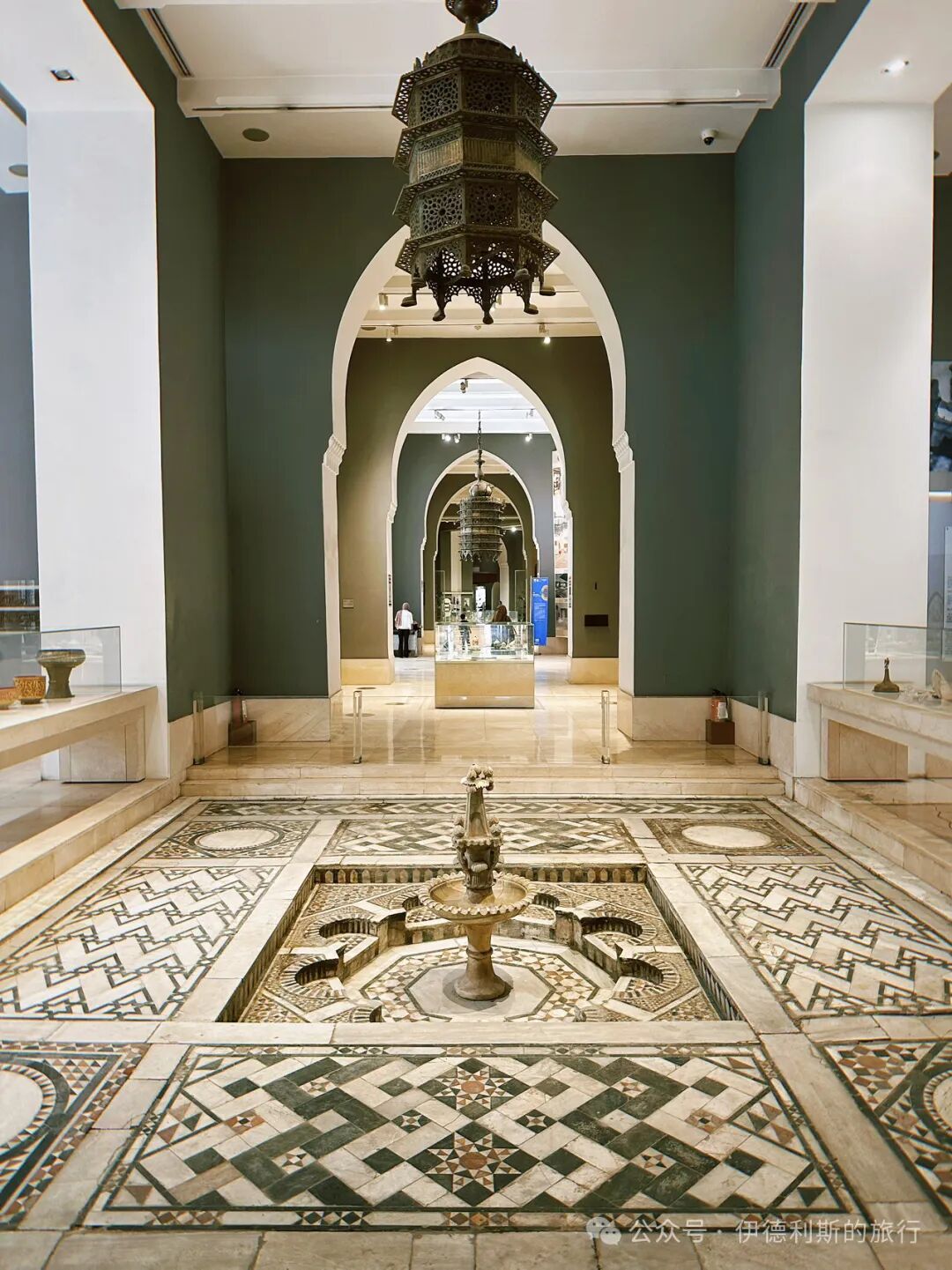
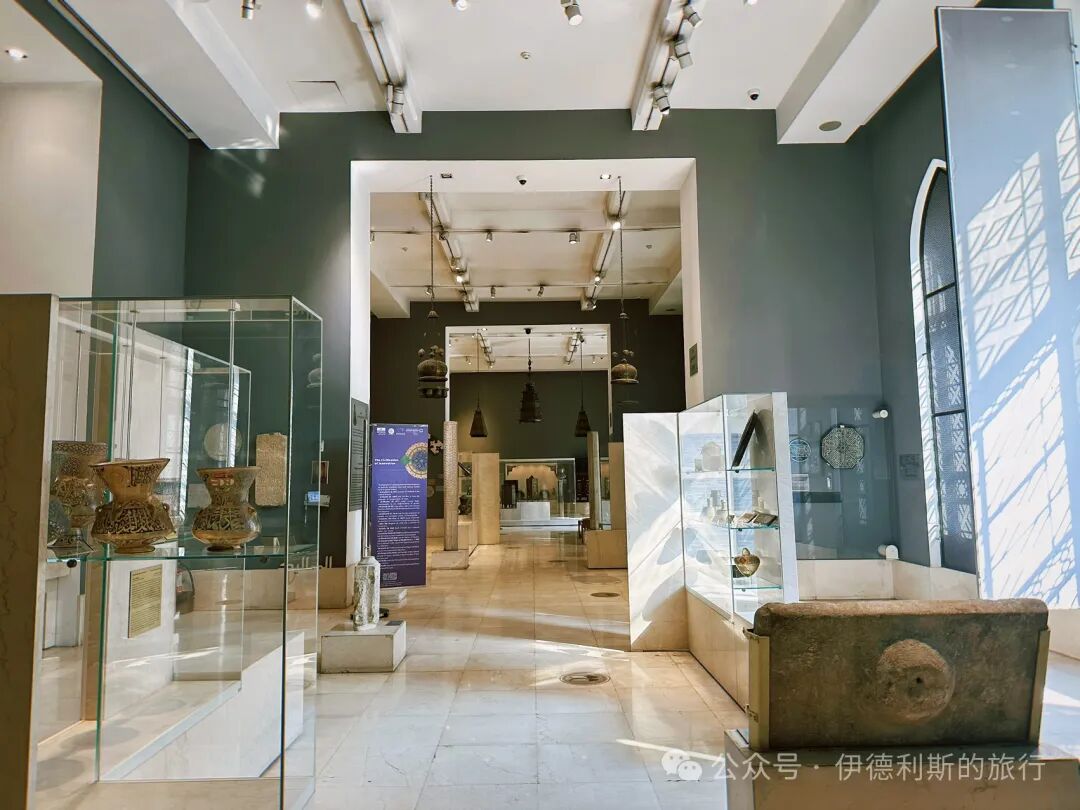
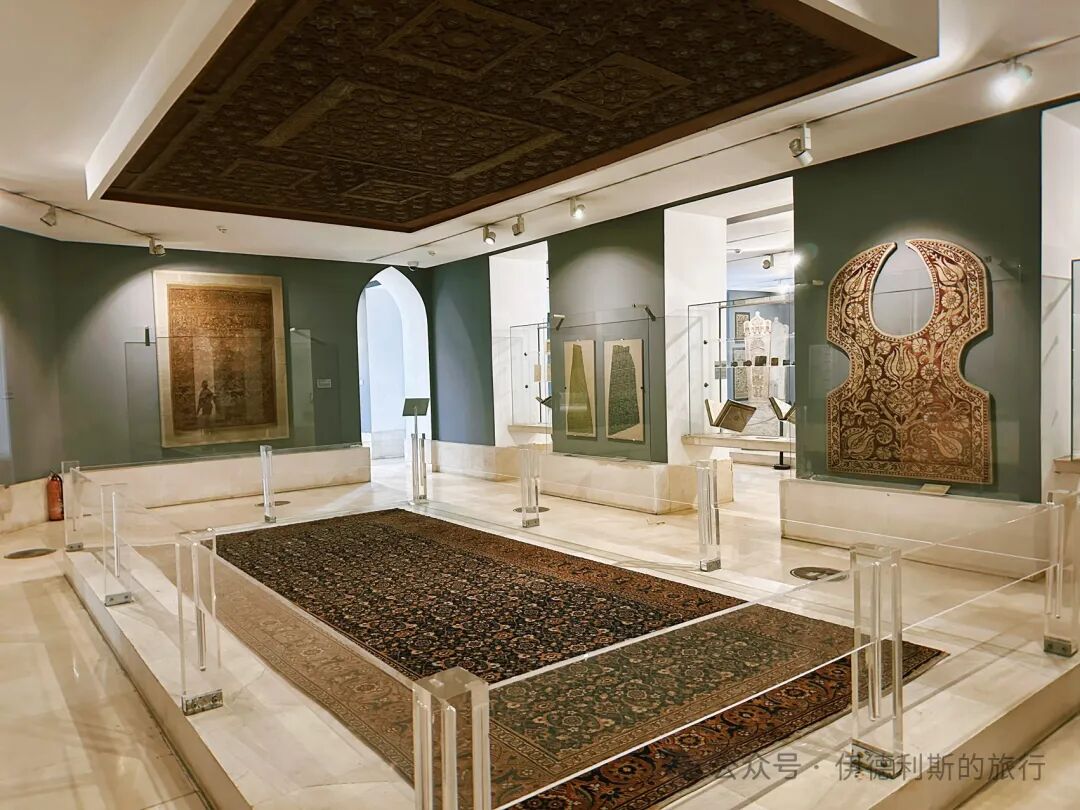
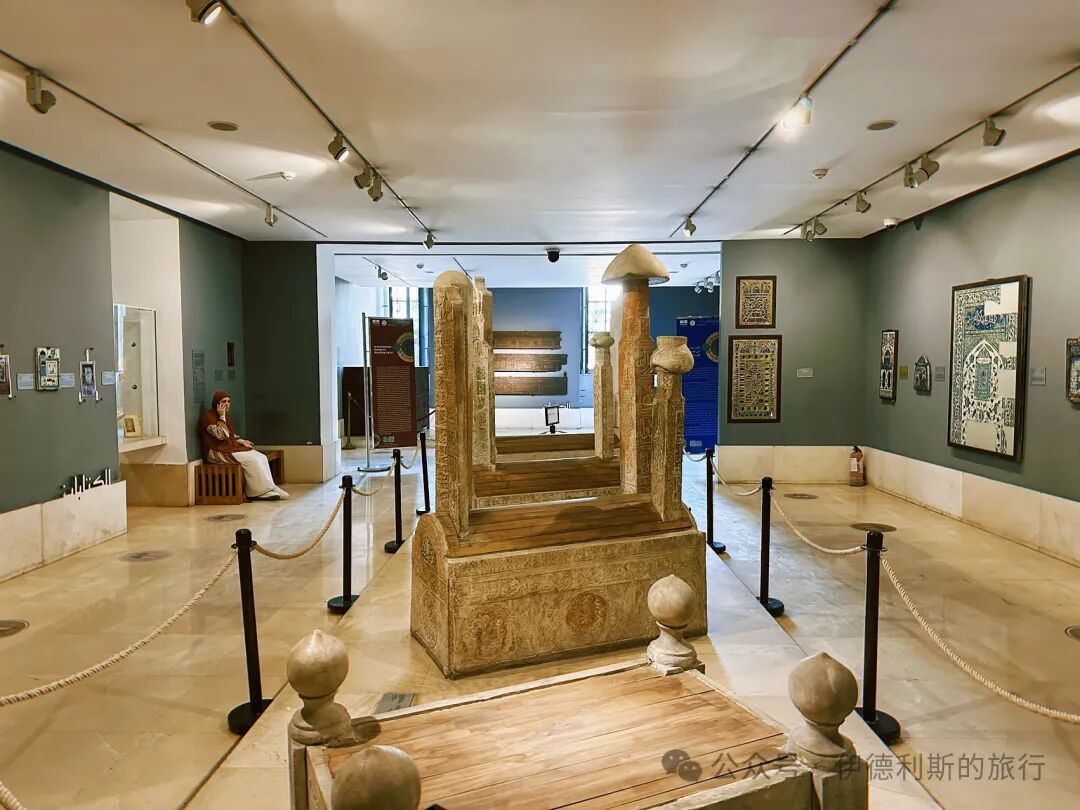
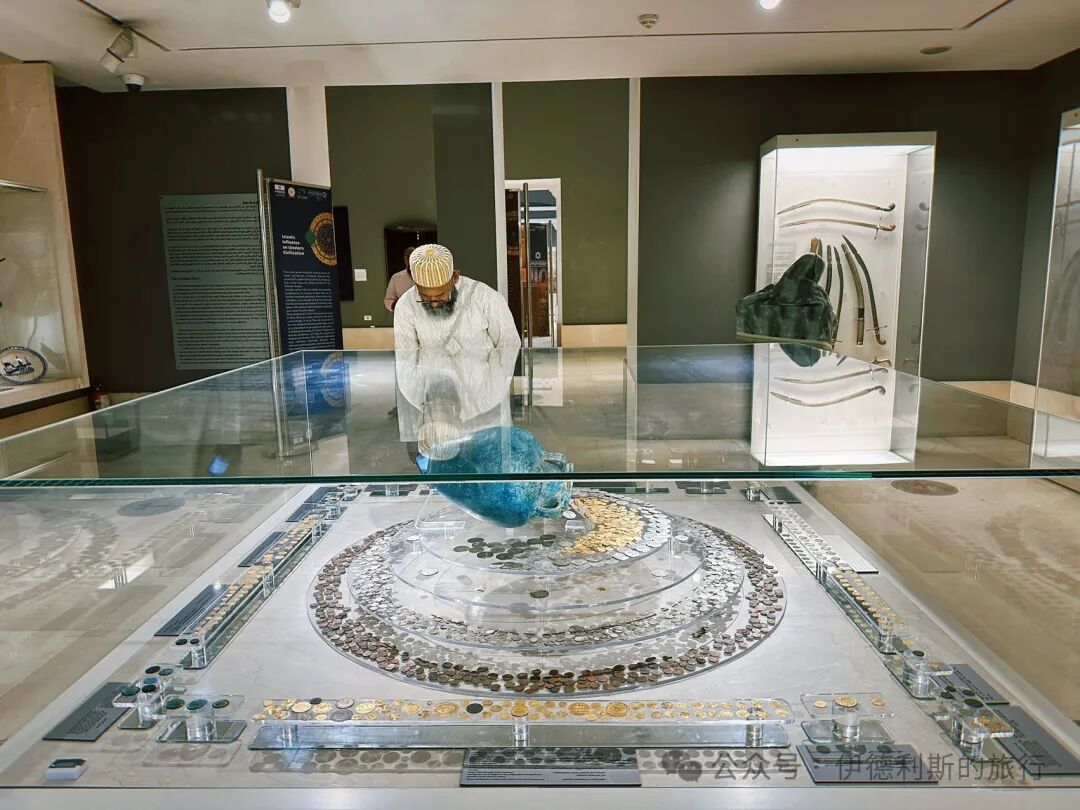
The hall after the entrance provides a general introduction, showcasing a selection of unique Islamic artifacts from different perspectives.
An 8th-century Umayyad dynasty Quran in Kufic script from Egypt, written in brown ink on parchment.
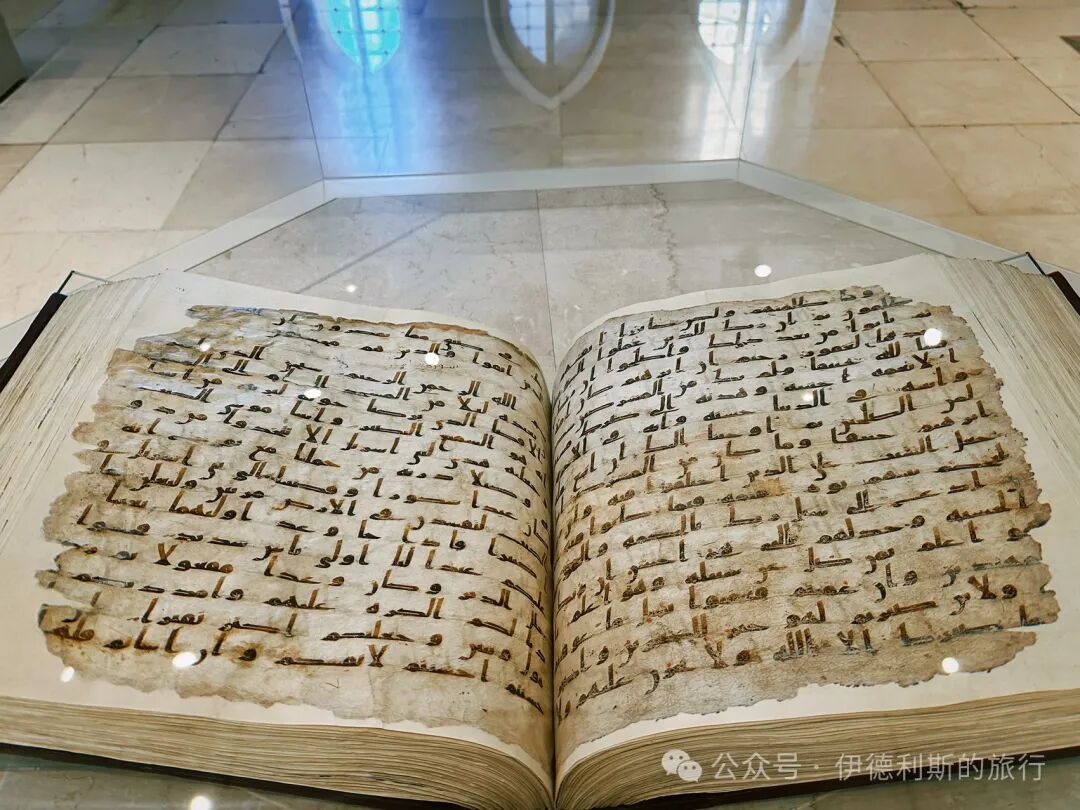
An enameled water jug and basin from the 19th-century Qajar dynasty of Iran, featuring Persian-style figures and floral patterns.
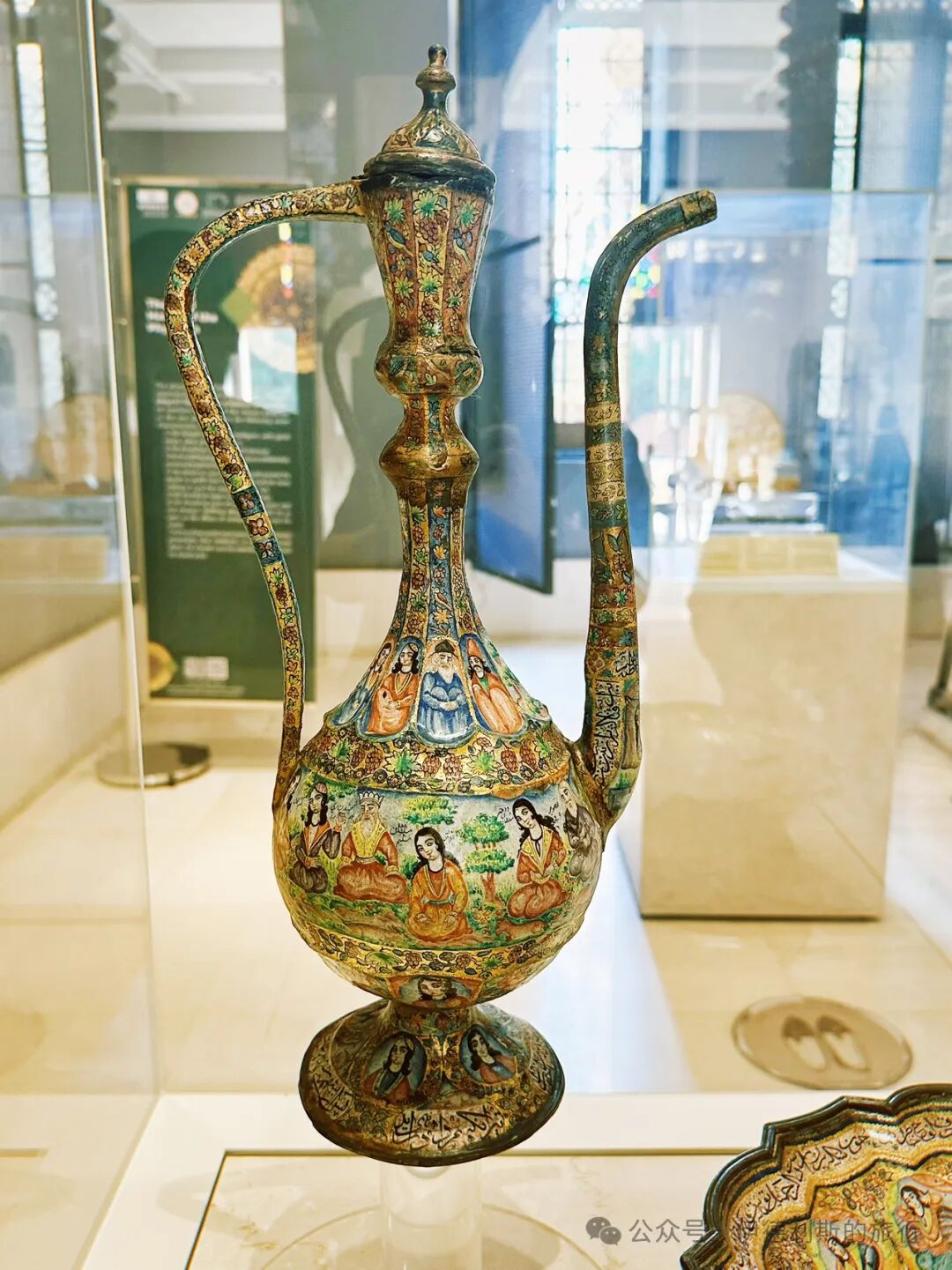
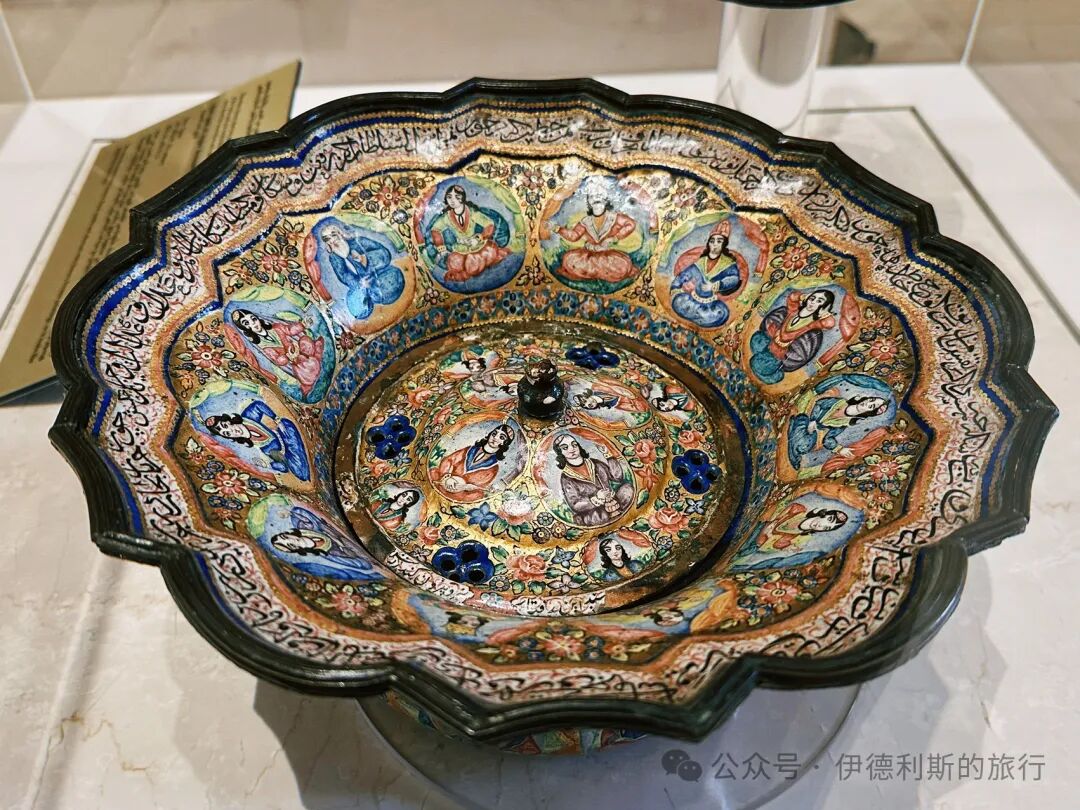
The oldest surviving key to the Kaaba, made in 1363-4, belonging to the Egyptian Mamluk Sultan Al-Ashraf Sha'ban (reigned 1363-77).
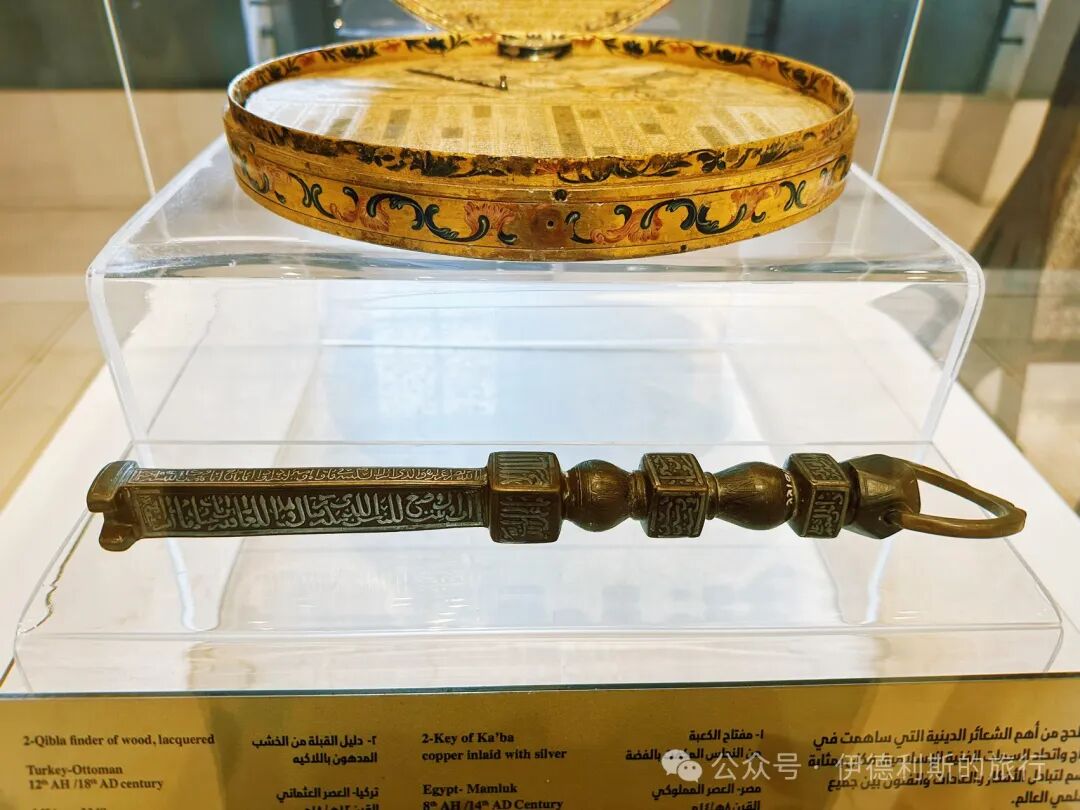
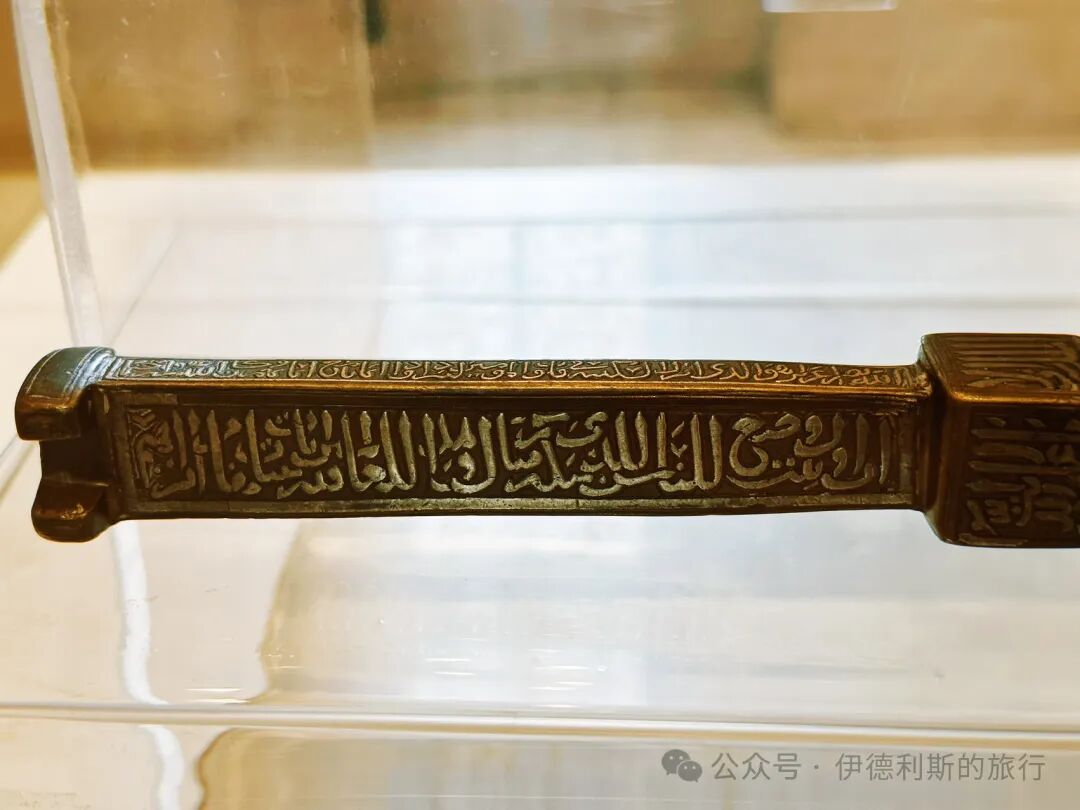
An 18th-century Ottoman qibla indicator, made by the manufacturer Barun al-Mukhtar during the reign of Sultan Mahmud I (reigned 1730-54). It shows the appearance of the Sacred Mosque (Masjid al-Haram) after the 1629 Ottoman renovation, a structure that remained until 1955.
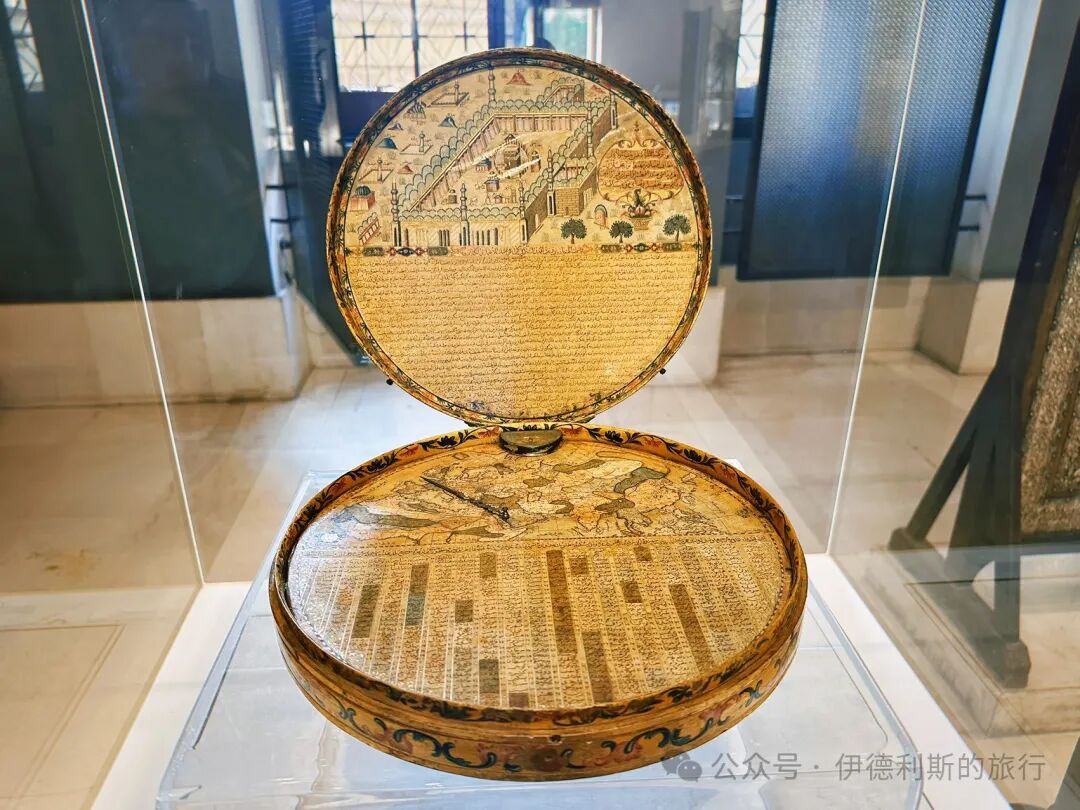
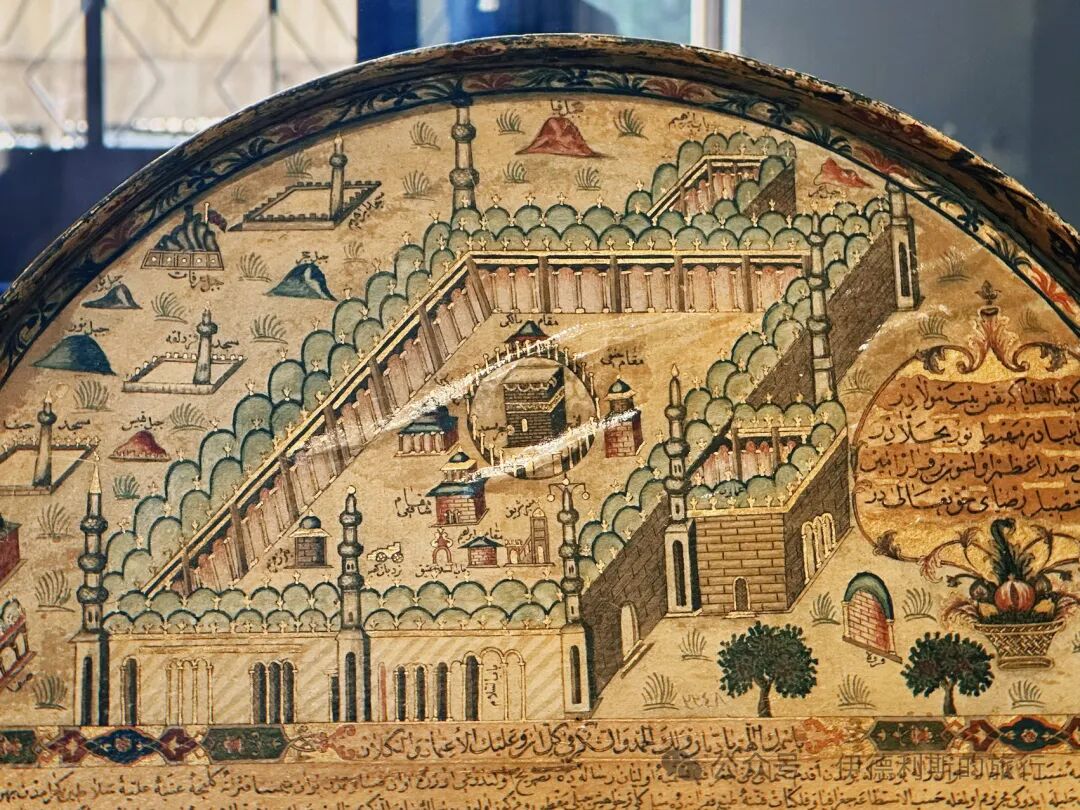
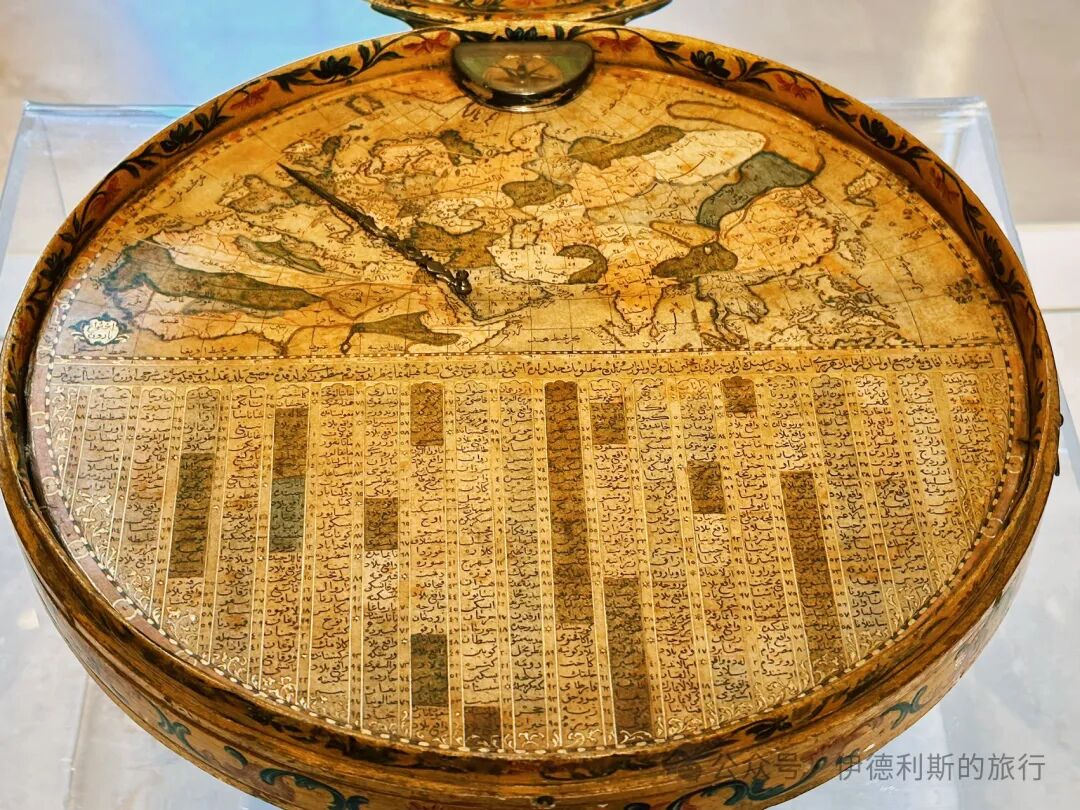
A 15th-century Mamluk-period mosque glass lamp from Egypt, bearing the name of Emir Safy al-Din Shaykhu.
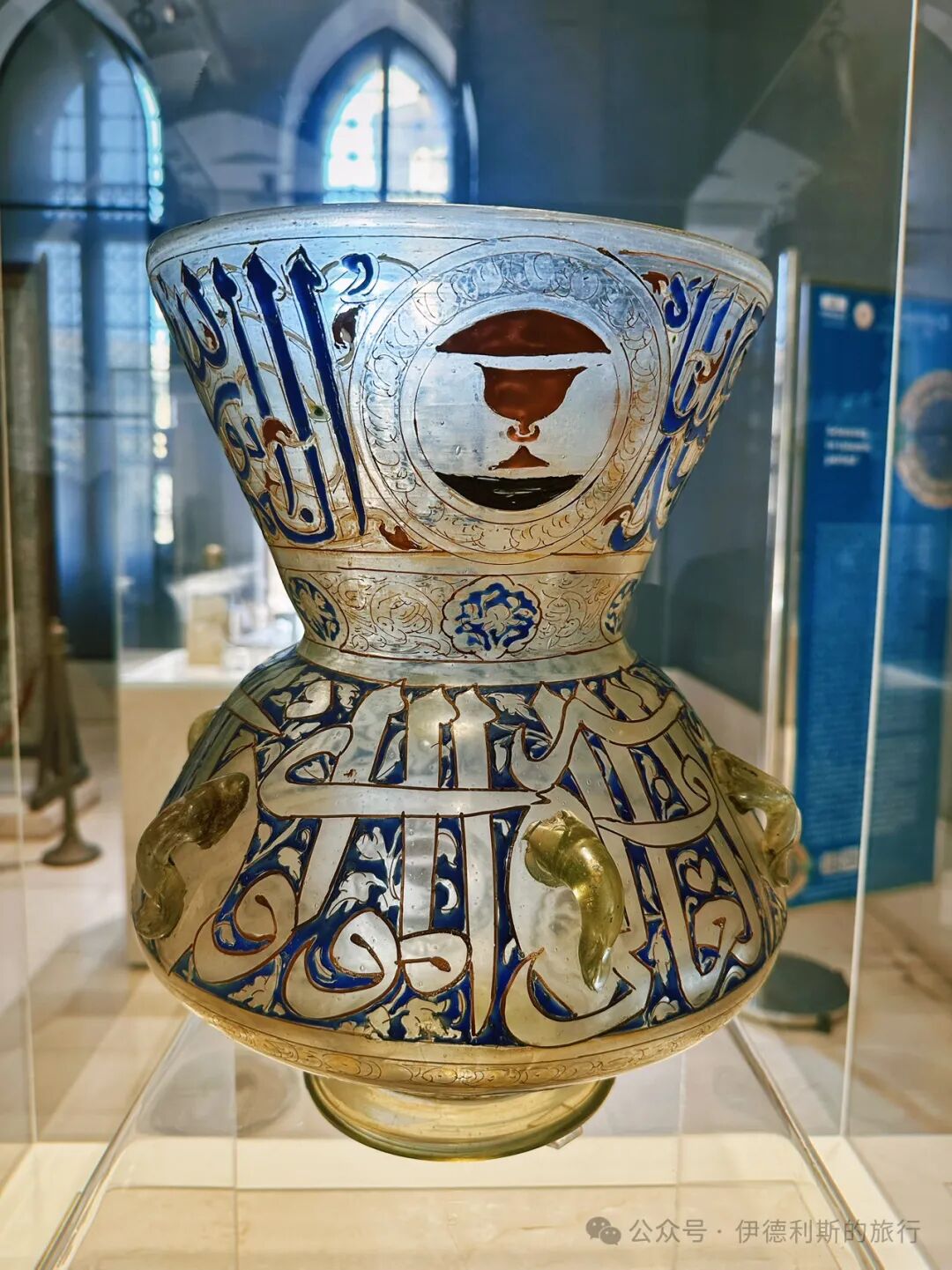
After passing through the hall, the exhibition continues with Islamic artifacts arranged in chronological order.
Early days of the faith.
A wood carving panel from Egypt during the Abbasid Caliphate in the 9th century.
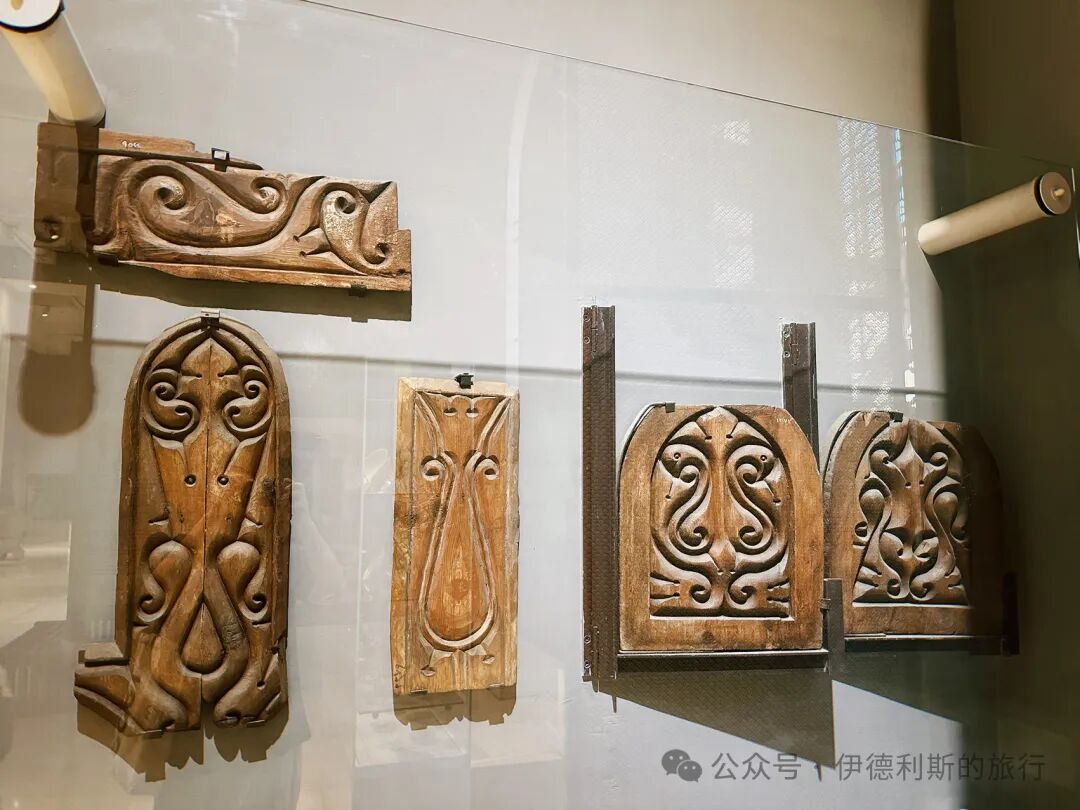
A wooden chest panel inlaid with ivory and bone from Egypt during the Tulunid dynasty in the 9th century.
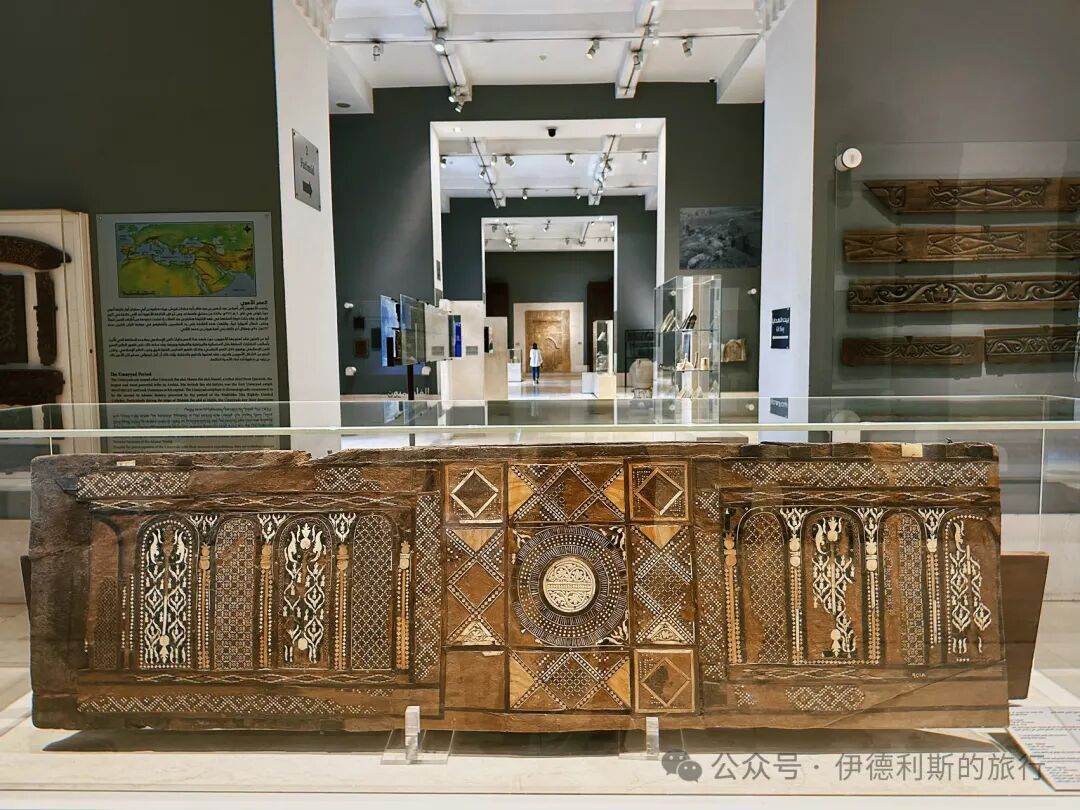
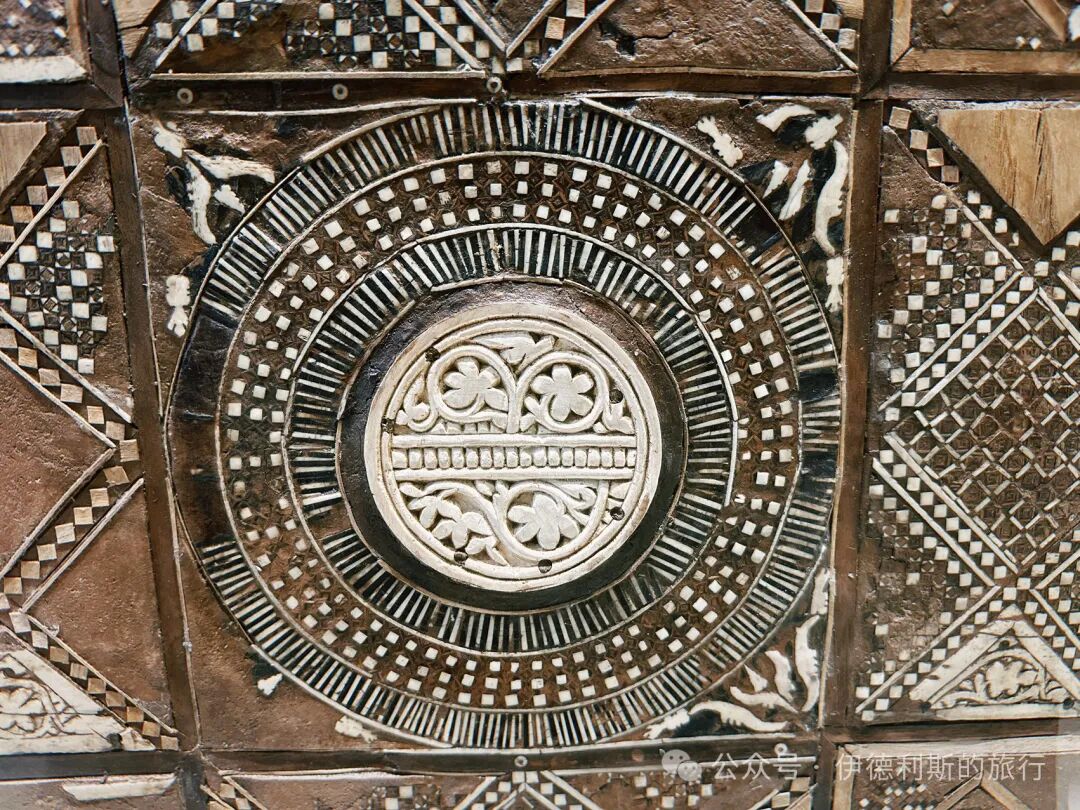
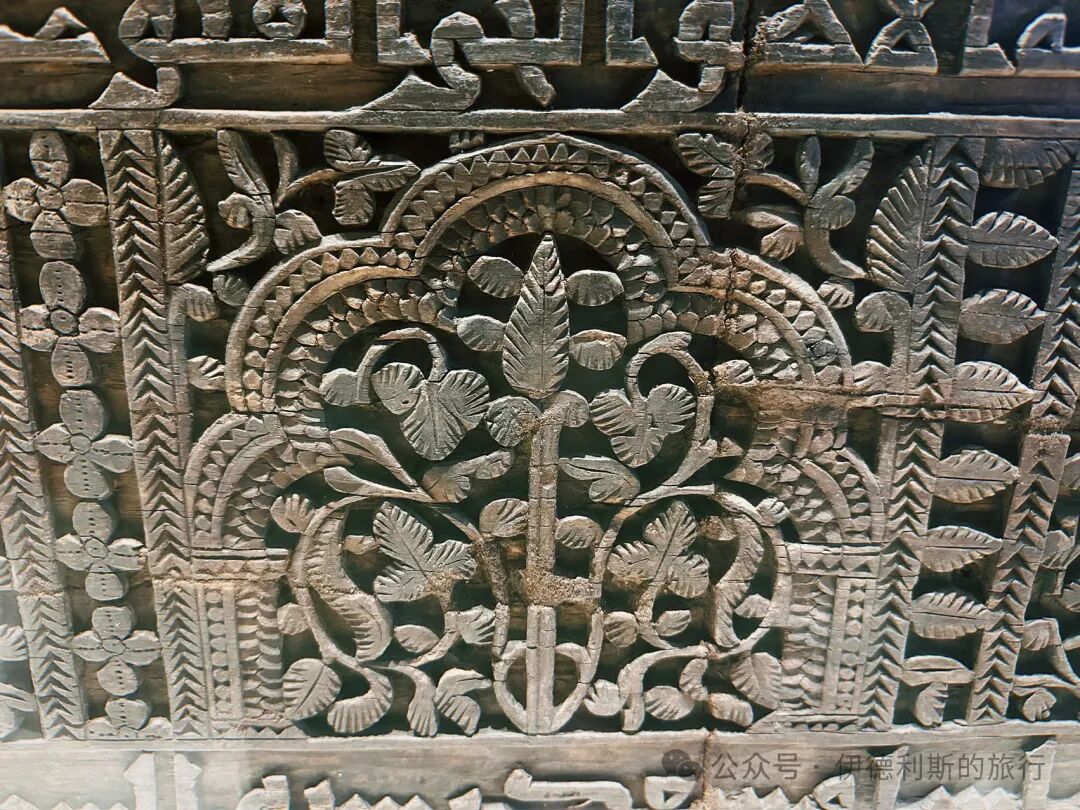
An ivory plaque with floral carvings from Egypt during the Umayyad Caliphate in the 7th to 8th centuries.
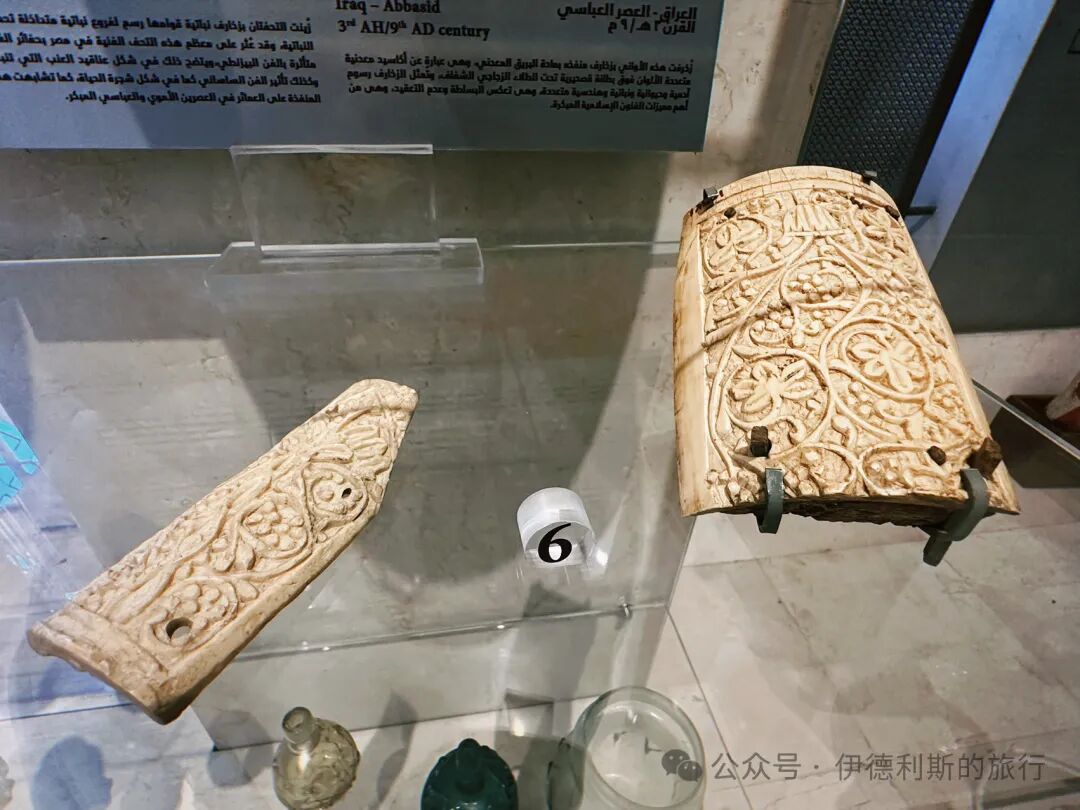
A wood carving panel with floral decorations from Egypt or Syria during the Umayyad Caliphate in the 8th century.
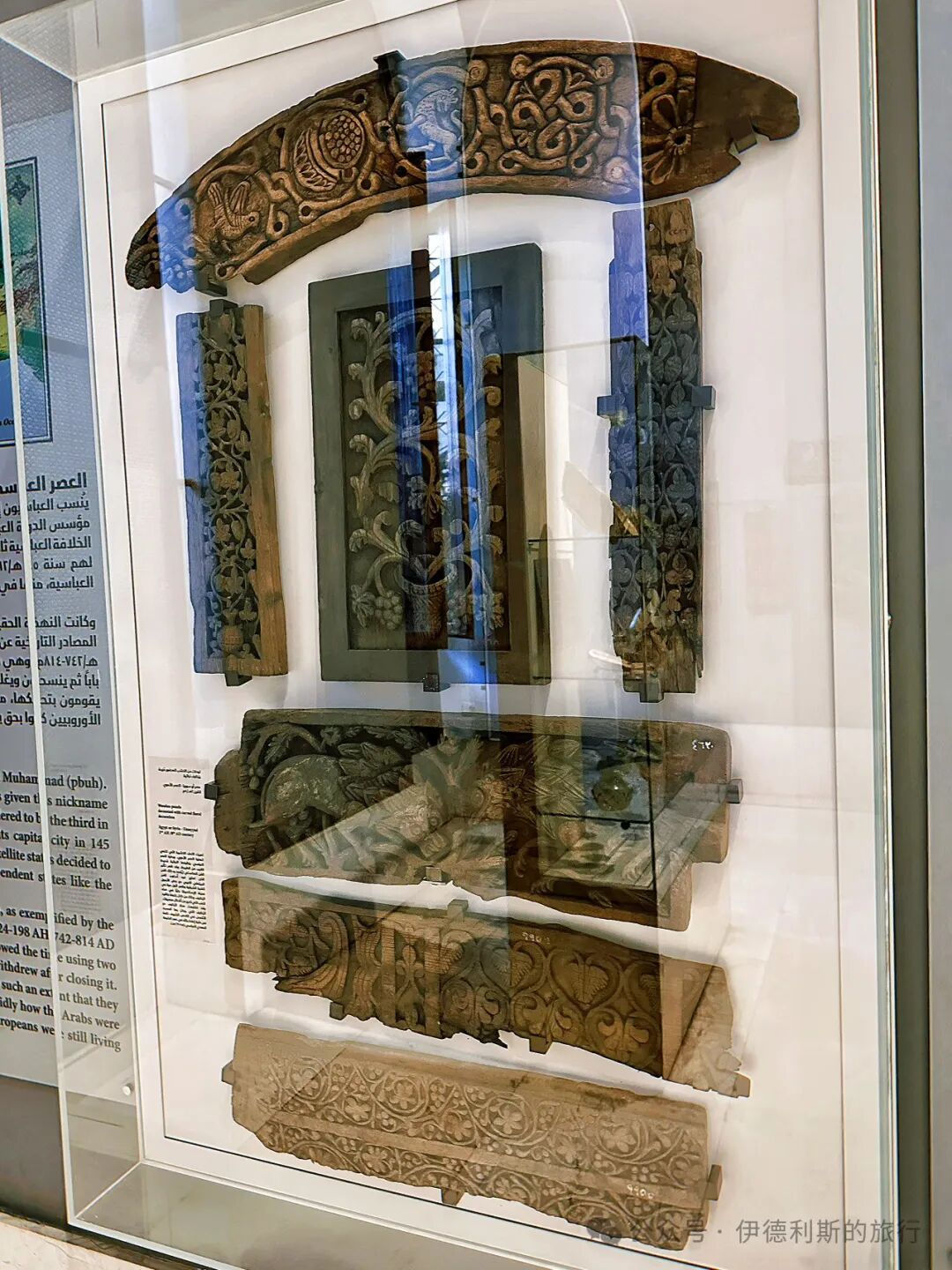
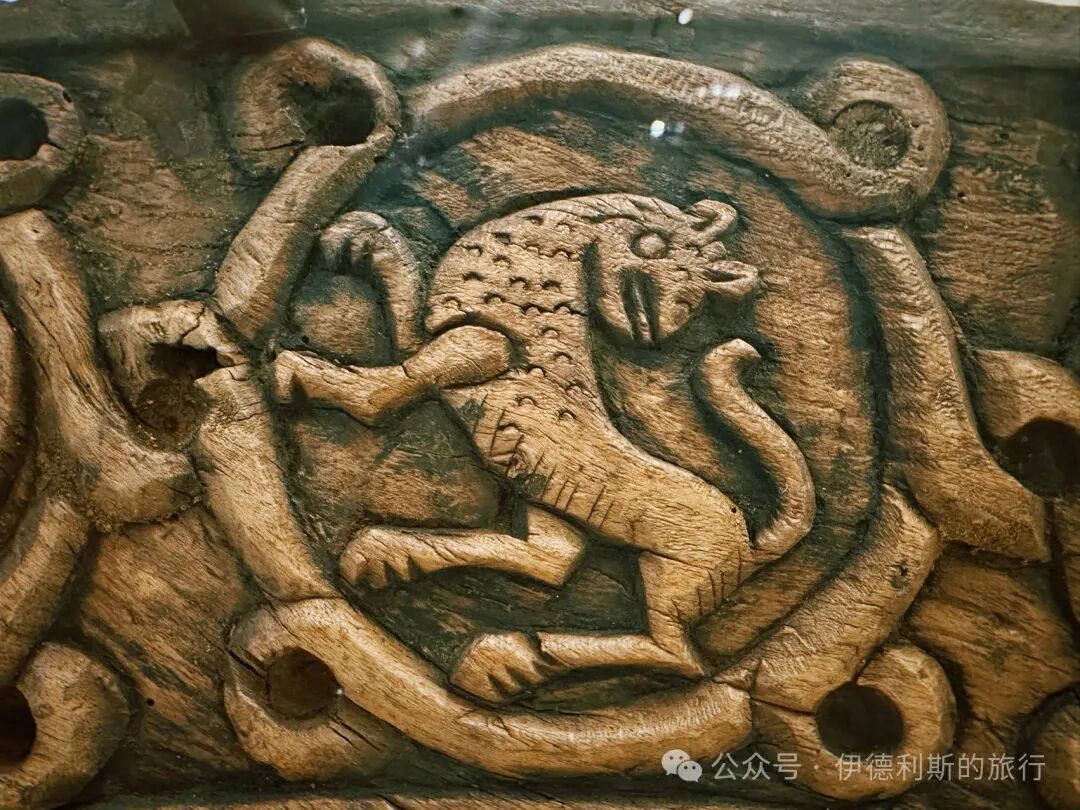
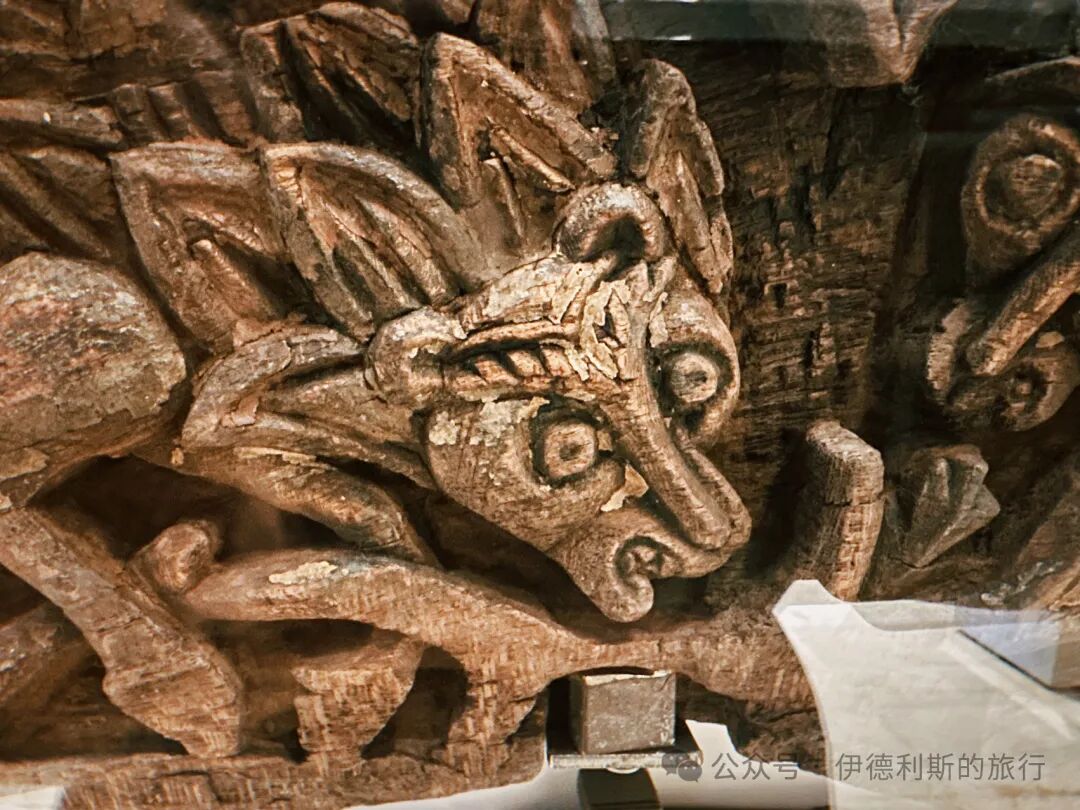
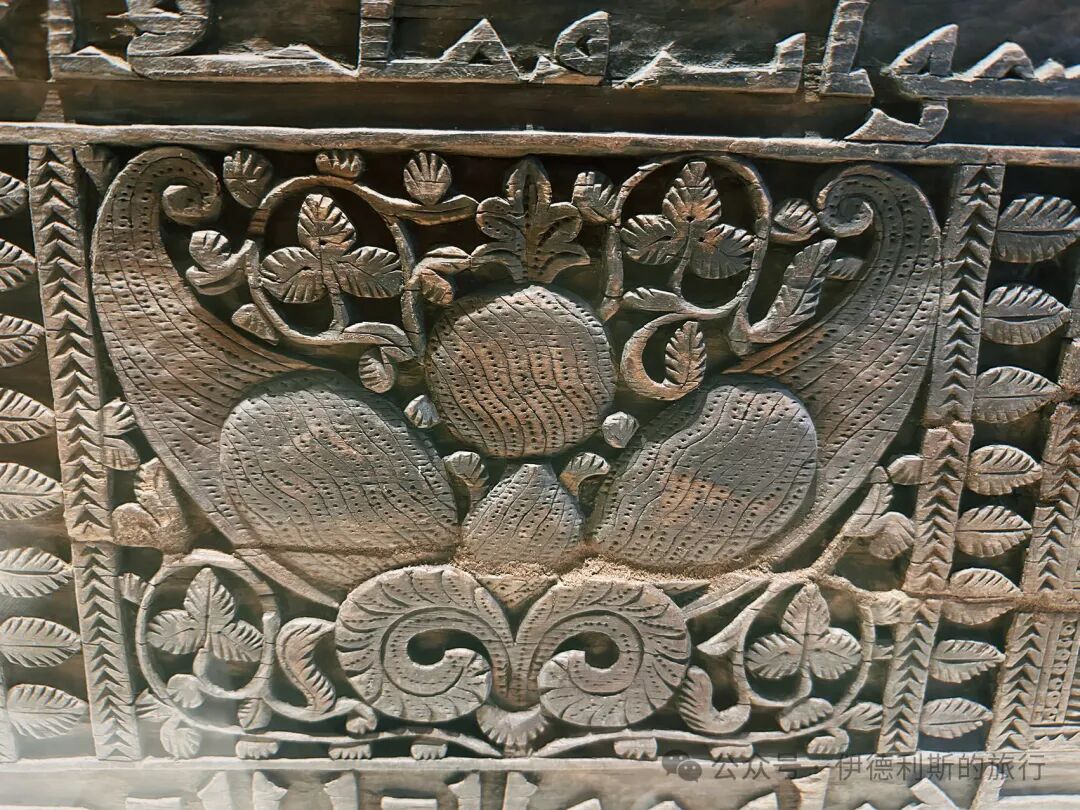
An underglaze painted ceramic plate from Iraq during the Abbasid Caliphate in the 8th to 9th centuries.
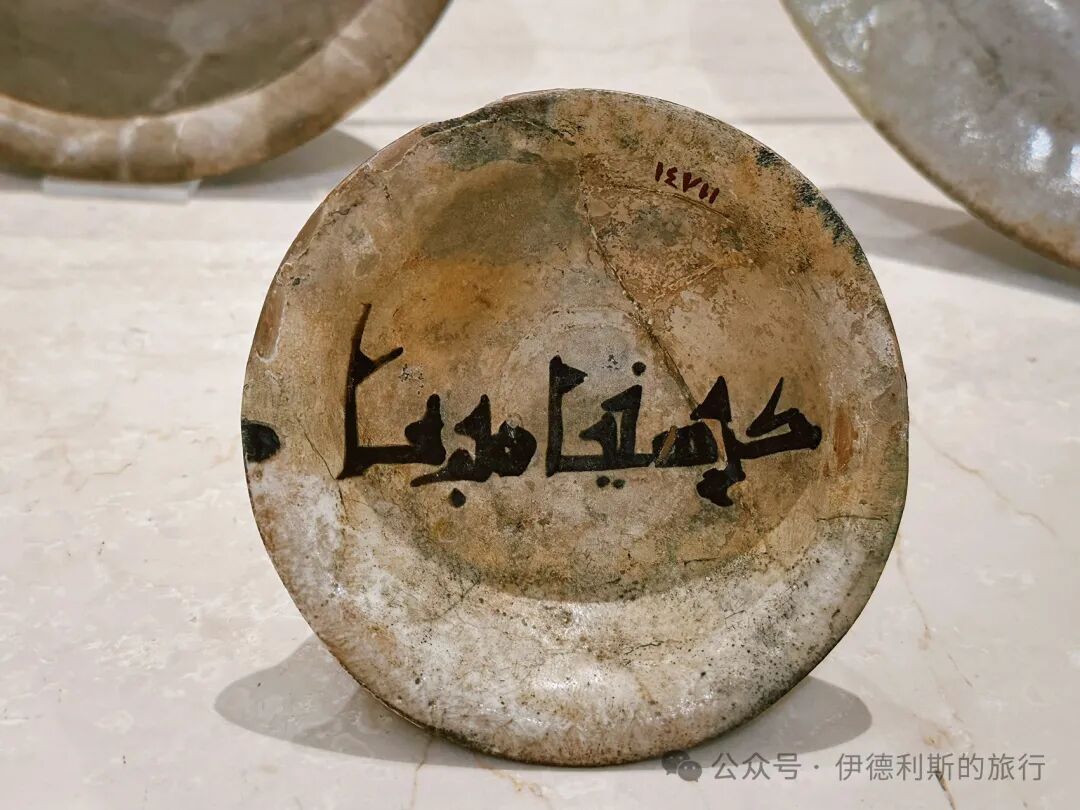
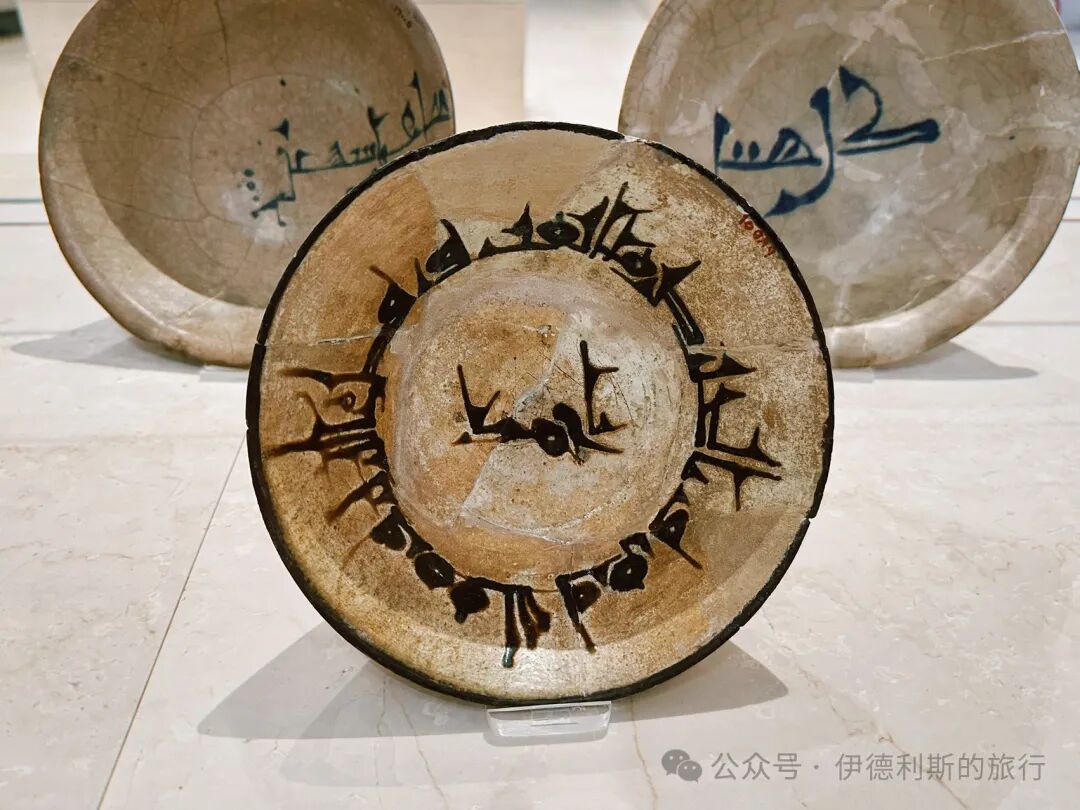
A stucco carving panel in the Samarra style from Iraq during the Abbasid Caliphate in the 9th century. Samarra is located on the east bank of the Tigris River and served as the capital of the Abbasid Caliphate from 836 to 892.
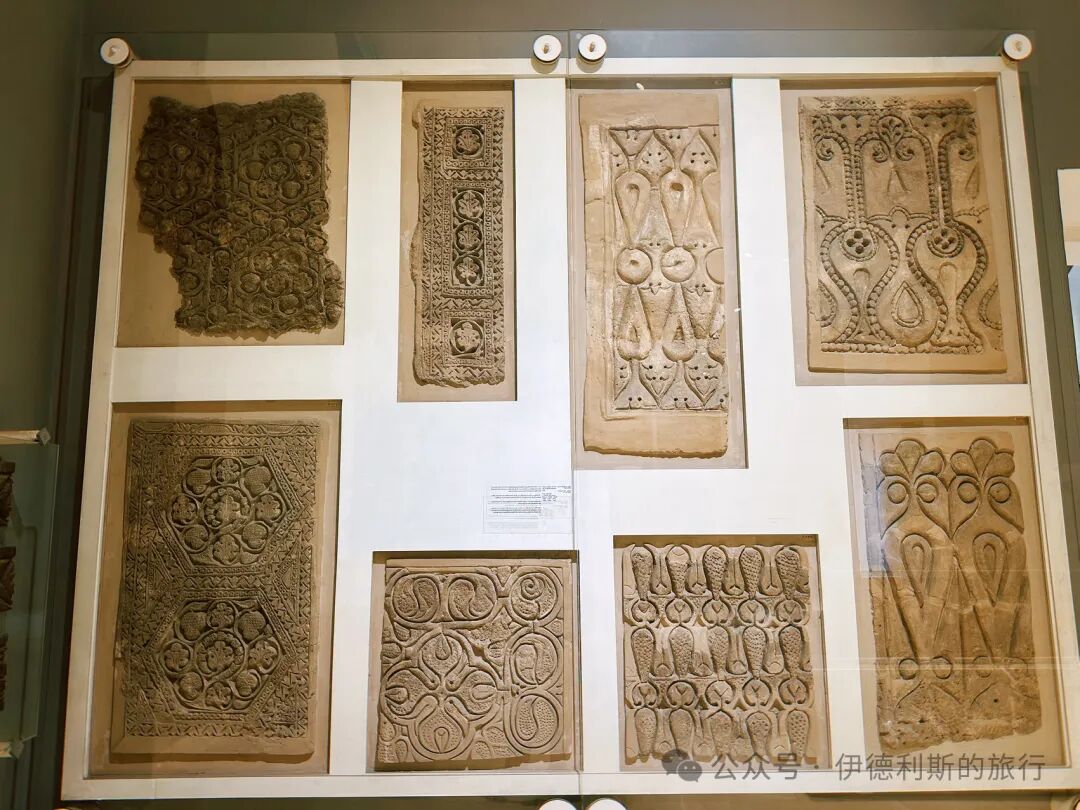
Fatimid Caliphate.
A 10th-century Kufic script stucco window frame from the Western Palace of the Fatimid Caliphate in Cairo. It is truly a masterpiece of the museum; you can see its size by comparing it to the child in the bottom right corner. The Fatimid palace in Cairo was built in 970 and was divided into two parts: the Eastern Palace and the Western Palace. The Western Palace was smaller and originally built for the Fatimid princess Sitt al-Mulk, then renovated by the Caliph in 1064. In 1284-1285, the Mamluk Sultan al-Mansur Qalawun built a massive complex on the site of the Fatimid Western Palace. The hospital within the complex used some architectural elements from the Fatimid Western Palace, and this window frame came from the Qalawun Hospital.
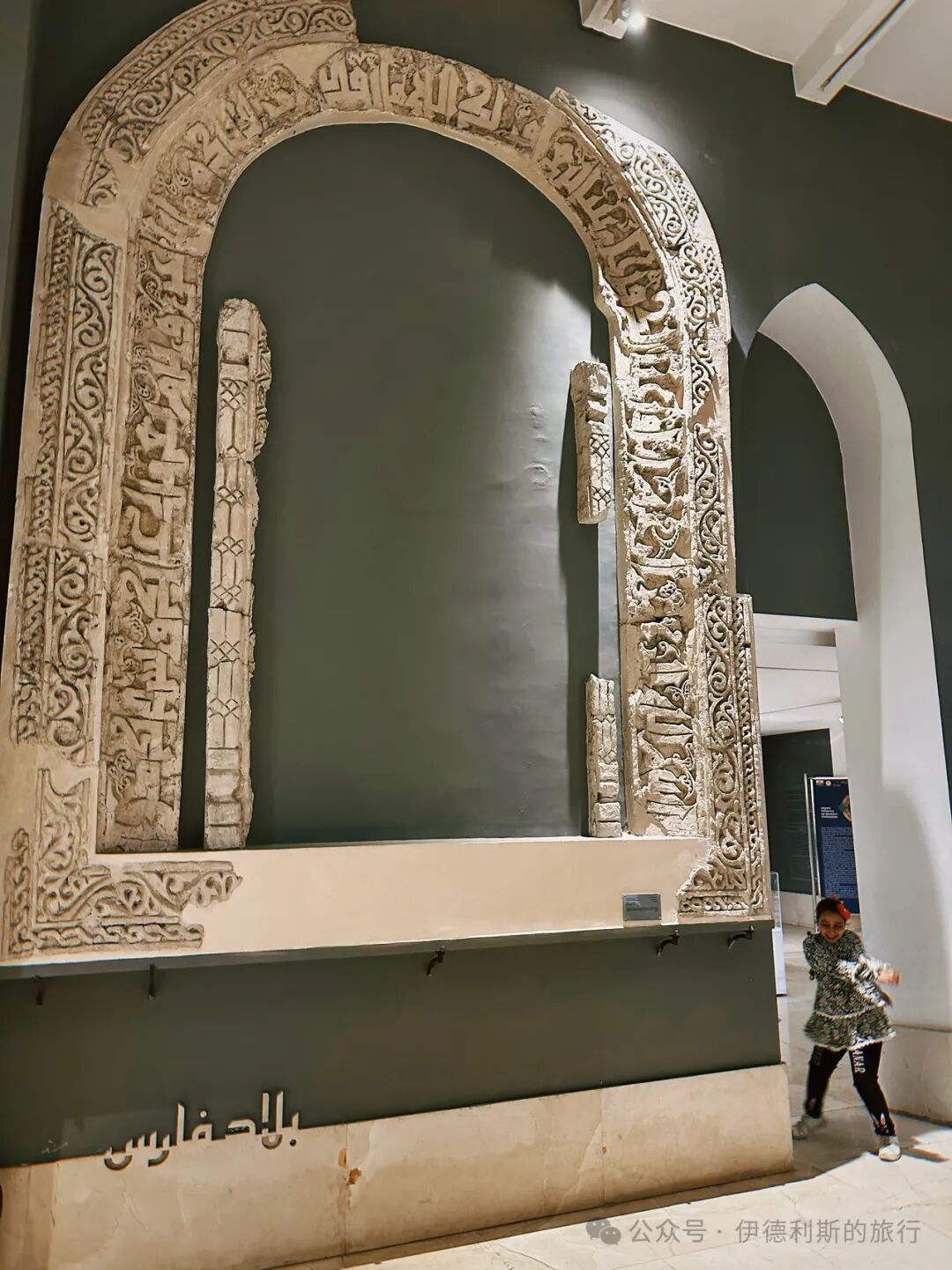
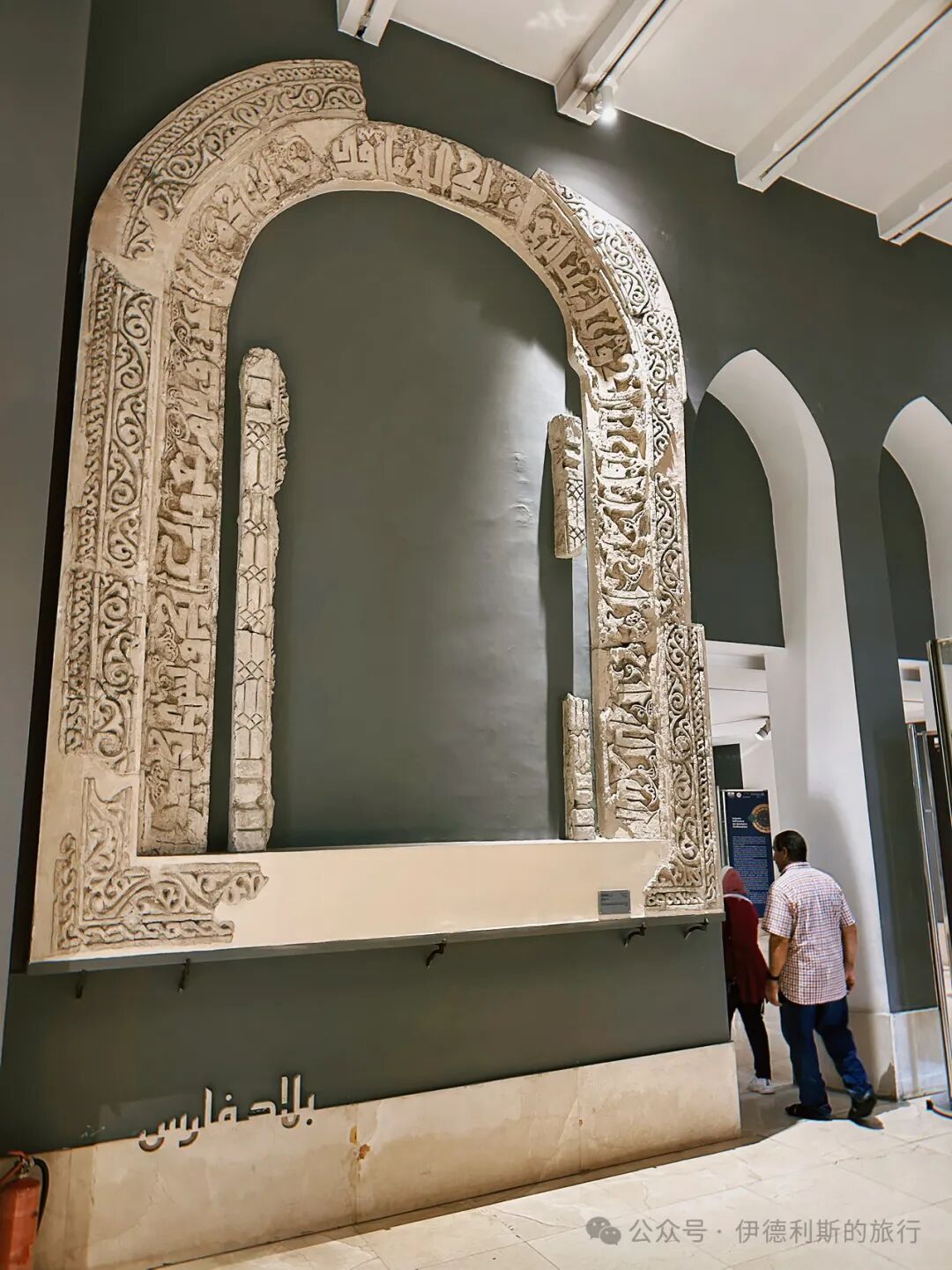
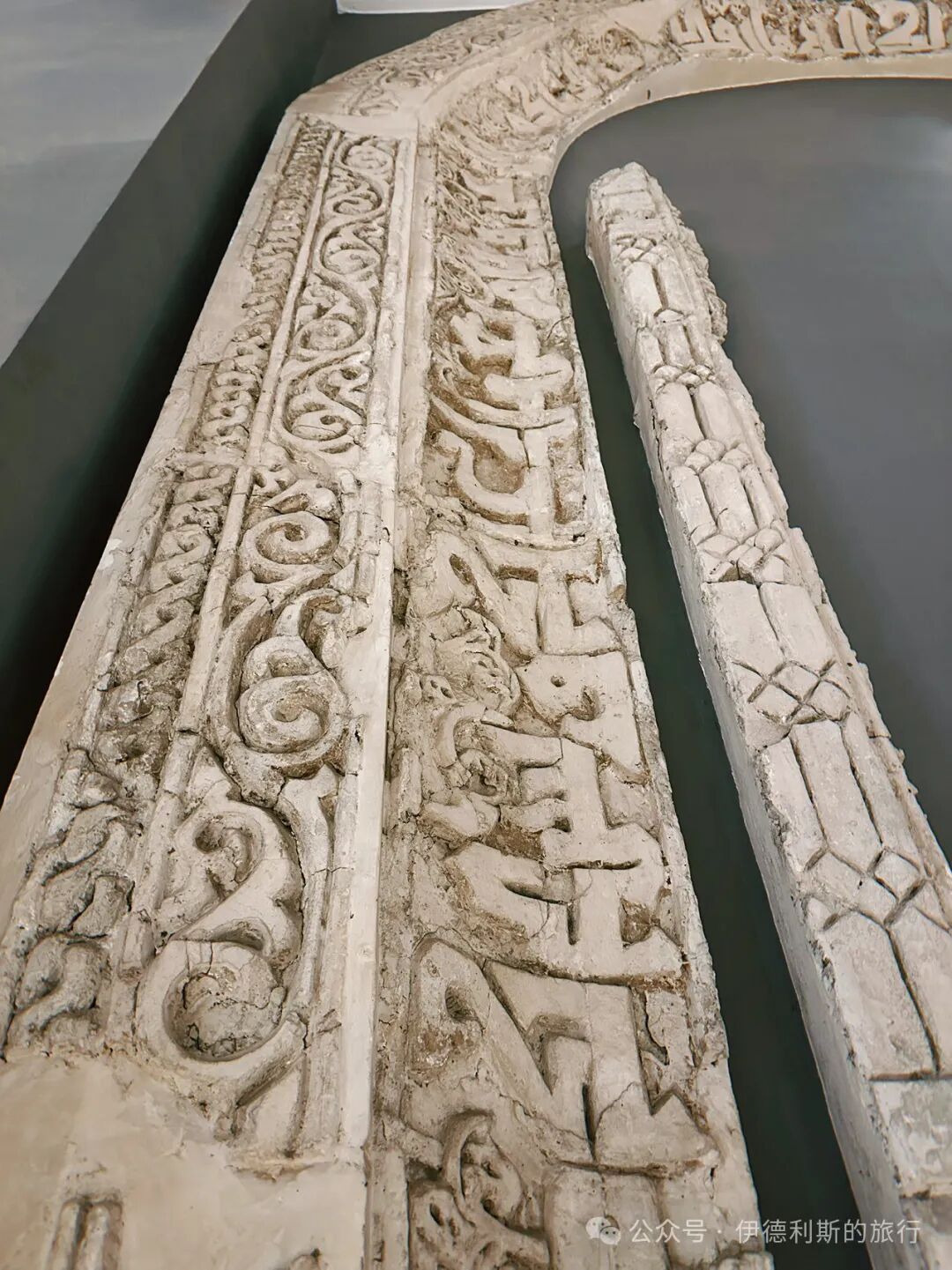
A ceramic plate from Egypt during the Fatimid Caliphate in the 10th to 11th centuries, depicting various music and banquet scenes.
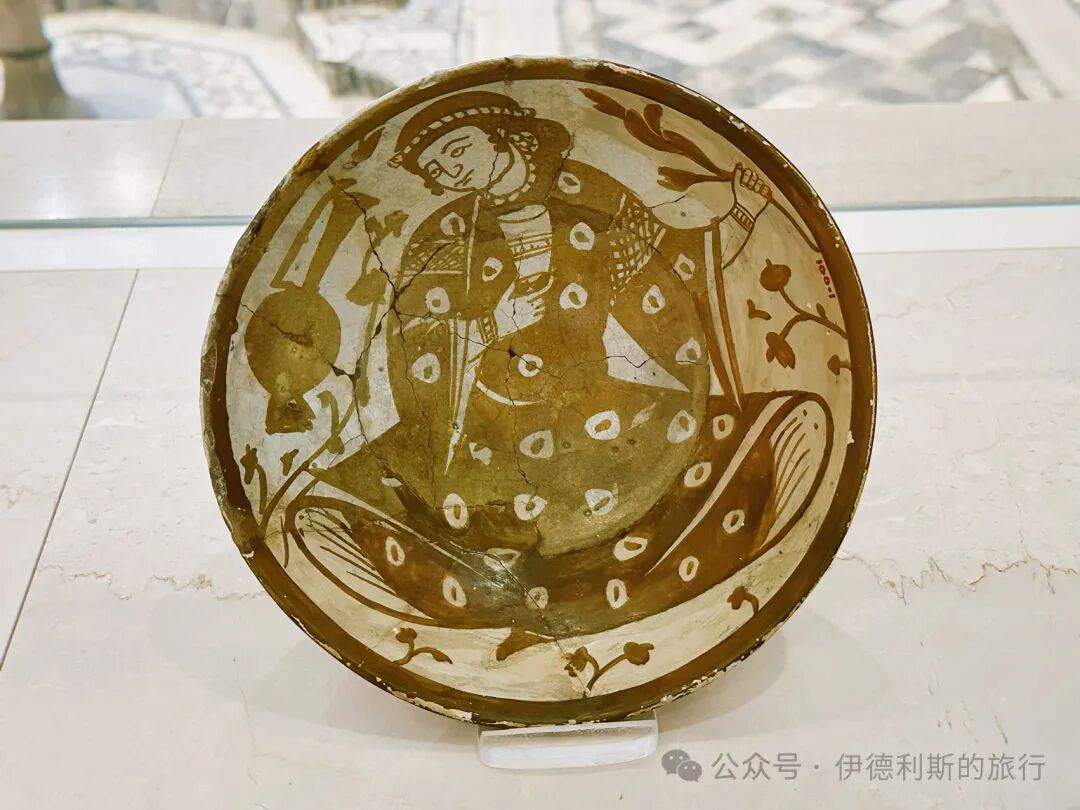
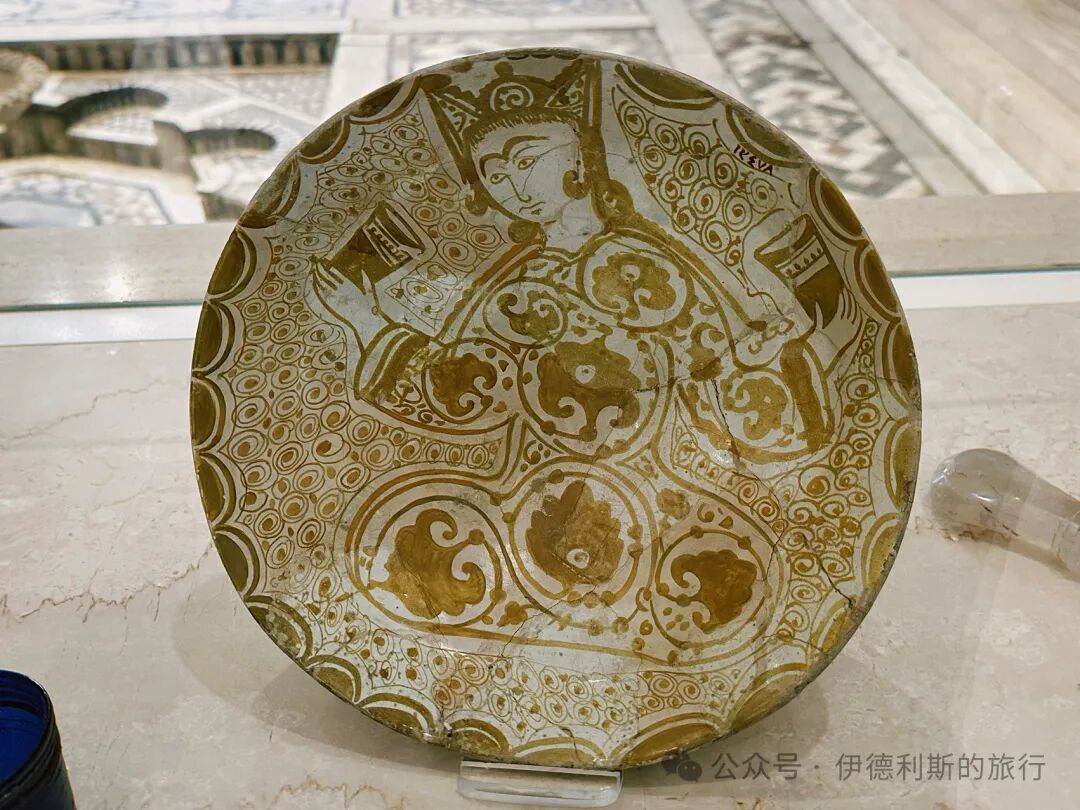
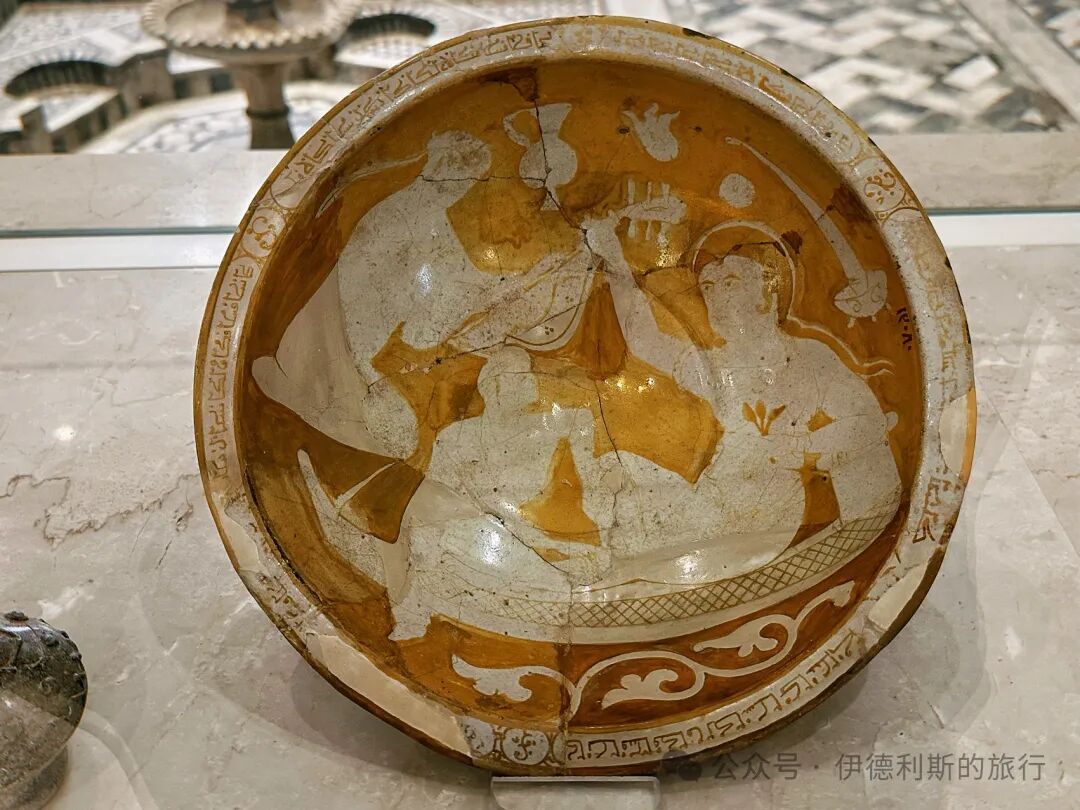
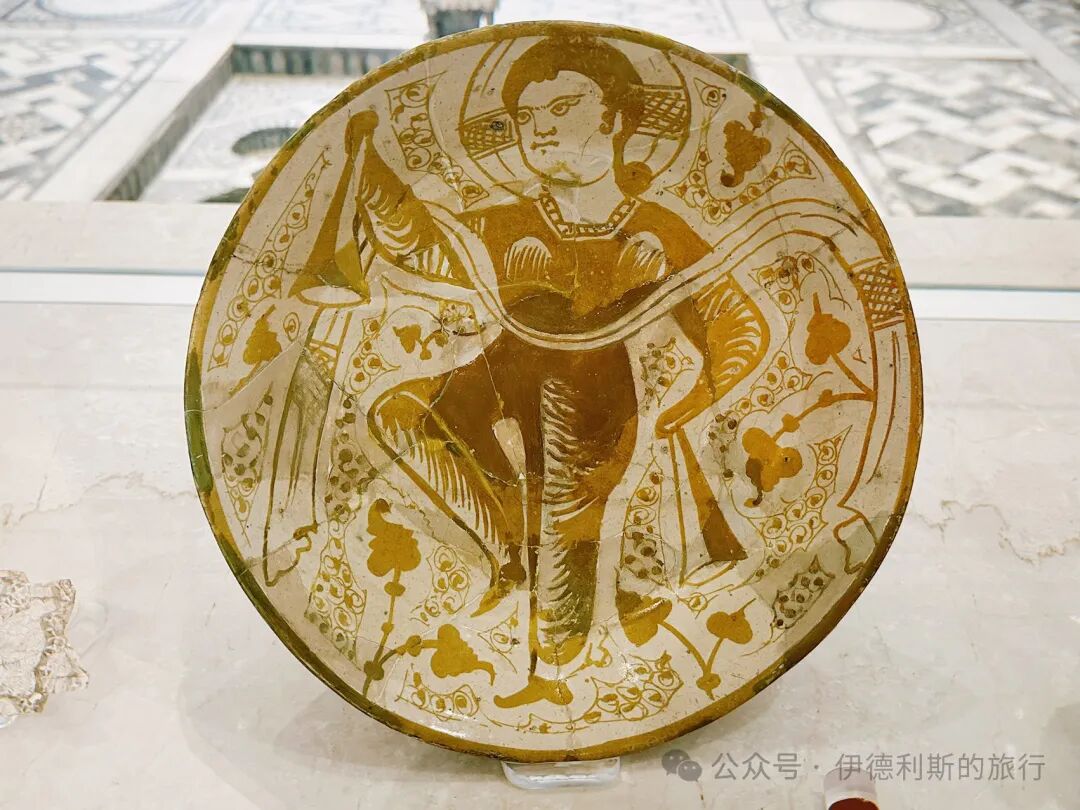
A ceramic plate from Egypt during the Fatimid period in the 11th century, depicting a rider holding a falcon.
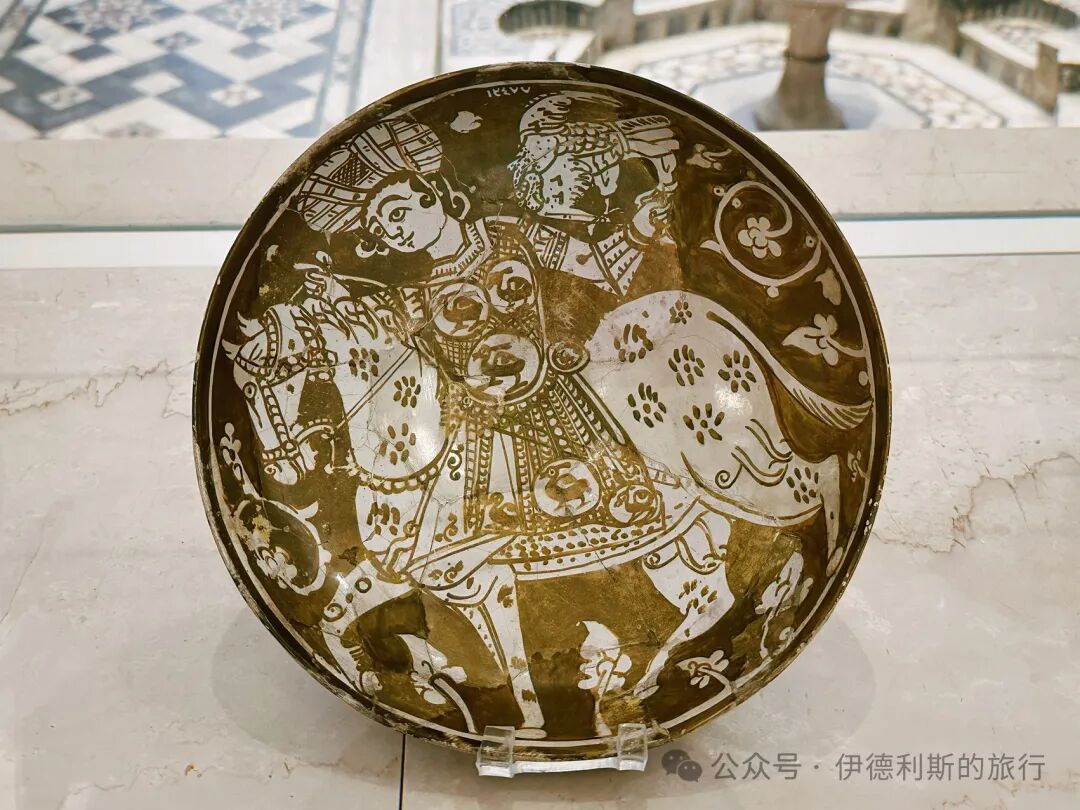
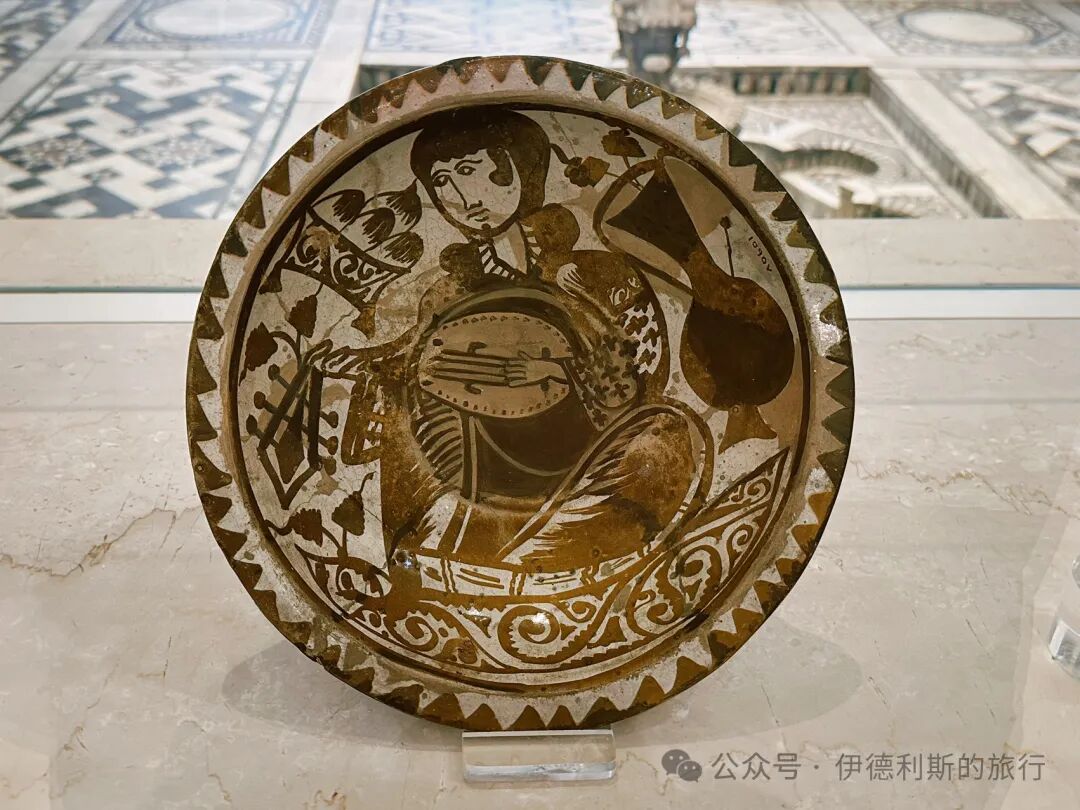
A ceramic plate from Egypt during the Fatimid Caliphate in the 11th to 12th centuries, showing two people performing the traditional Egyptian stick fighting, Tahtib.
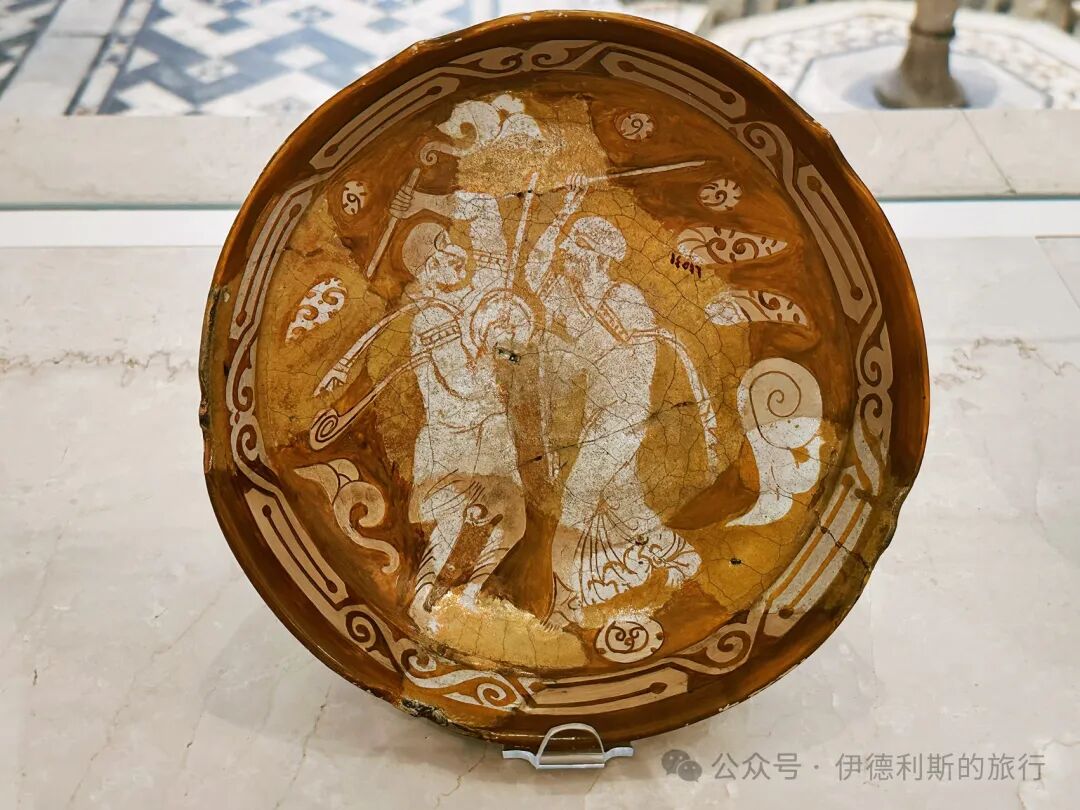
This 11th-century stucco mural from Egypt dates to the Fatimid dynasty and comes from the wall of a Fatimid-era bathhouse.
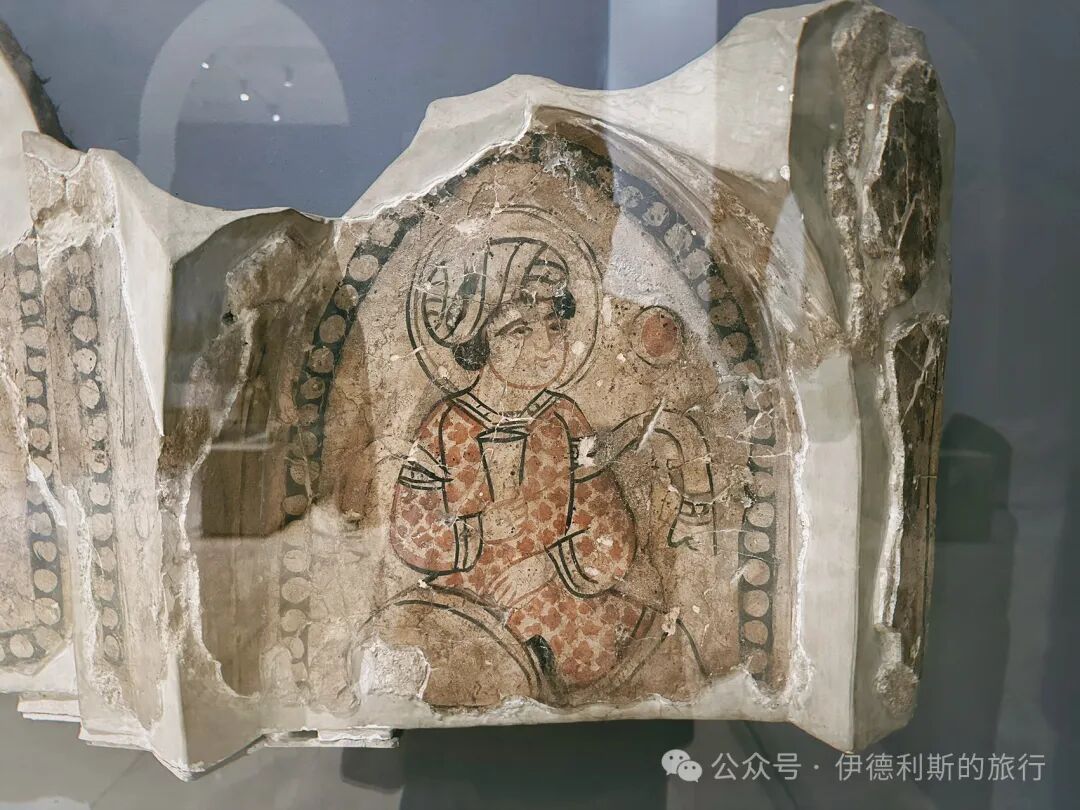
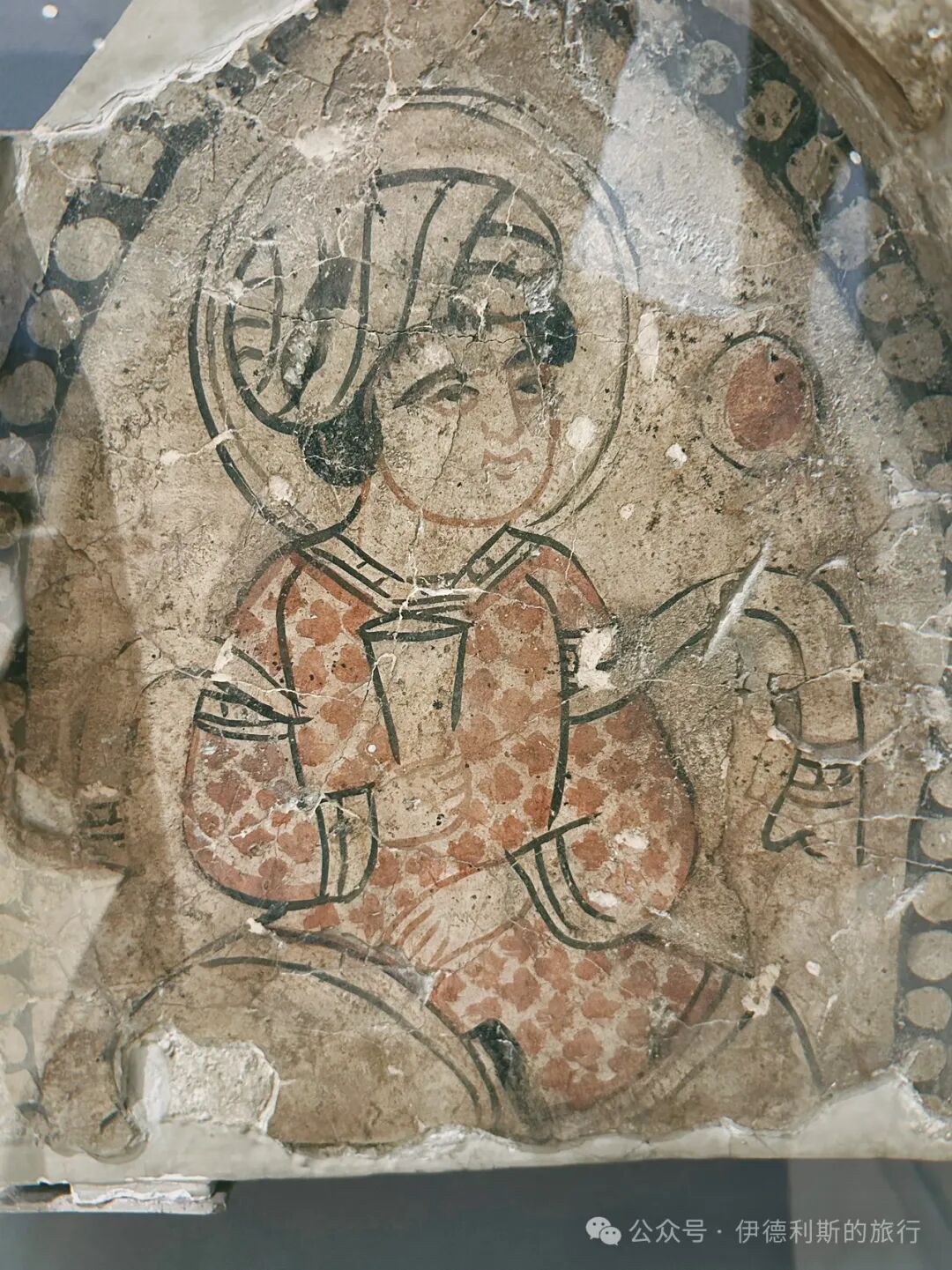
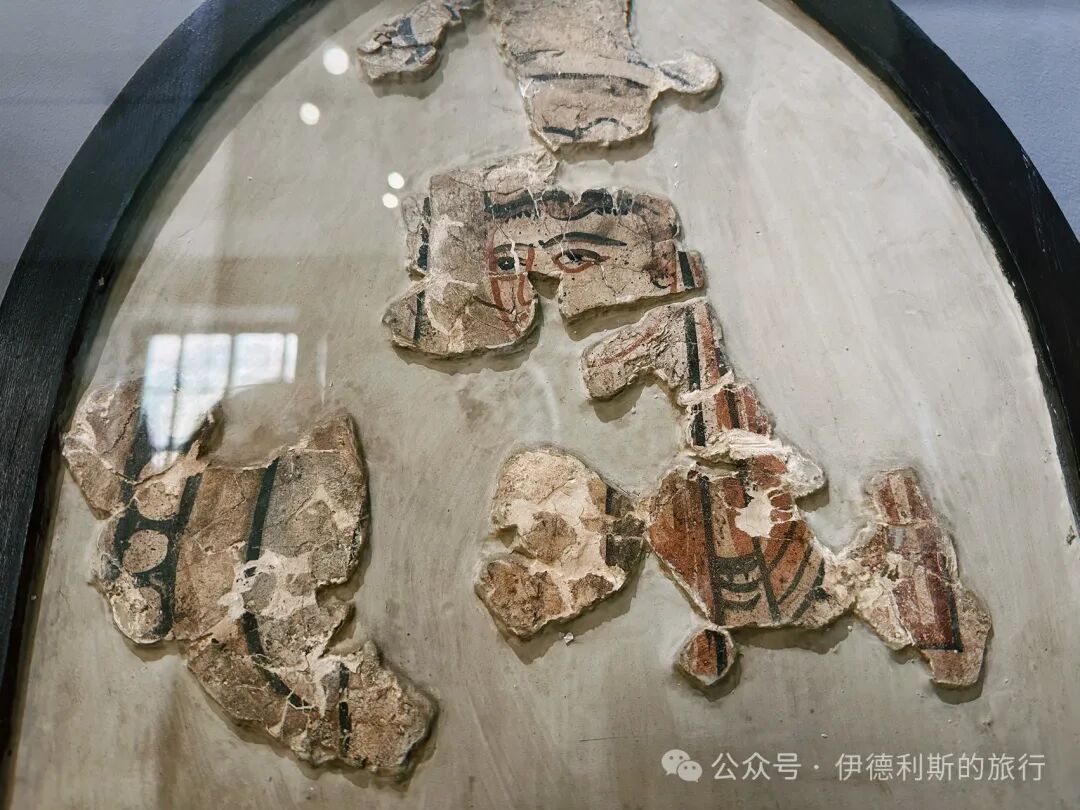
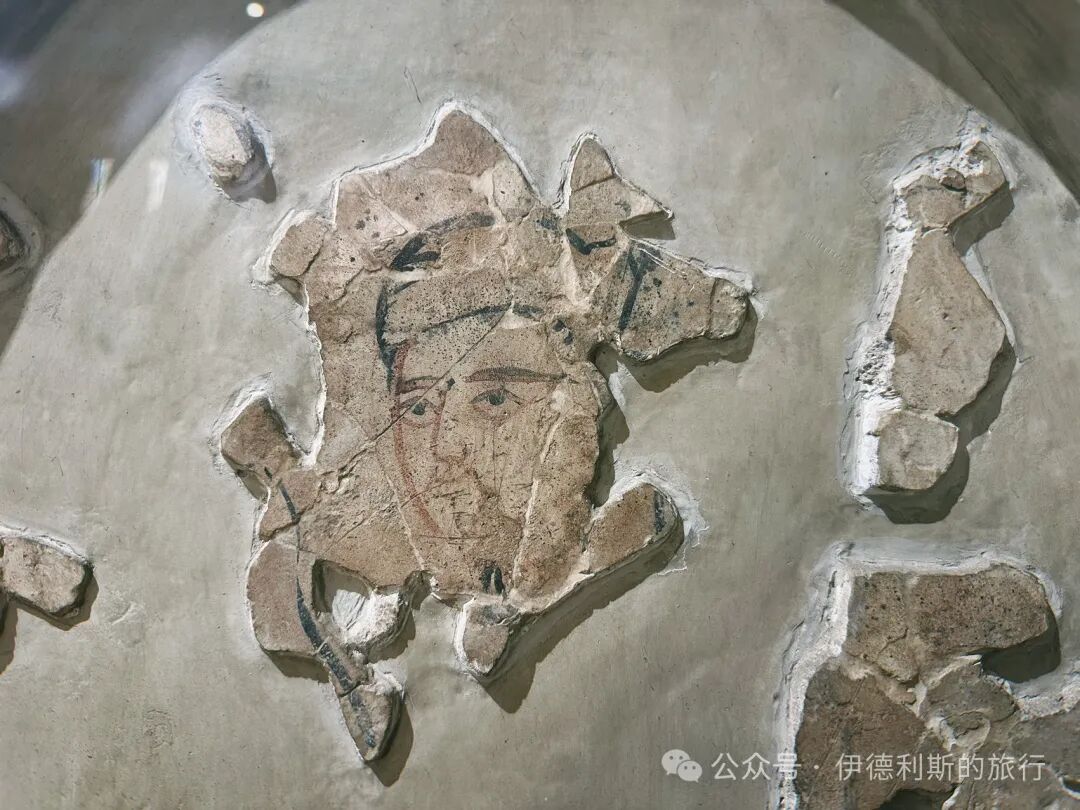
This small wooden prayer niche (mihrab) from 10th-11th century Fatimid Egypt features inscriptions with Shia content.
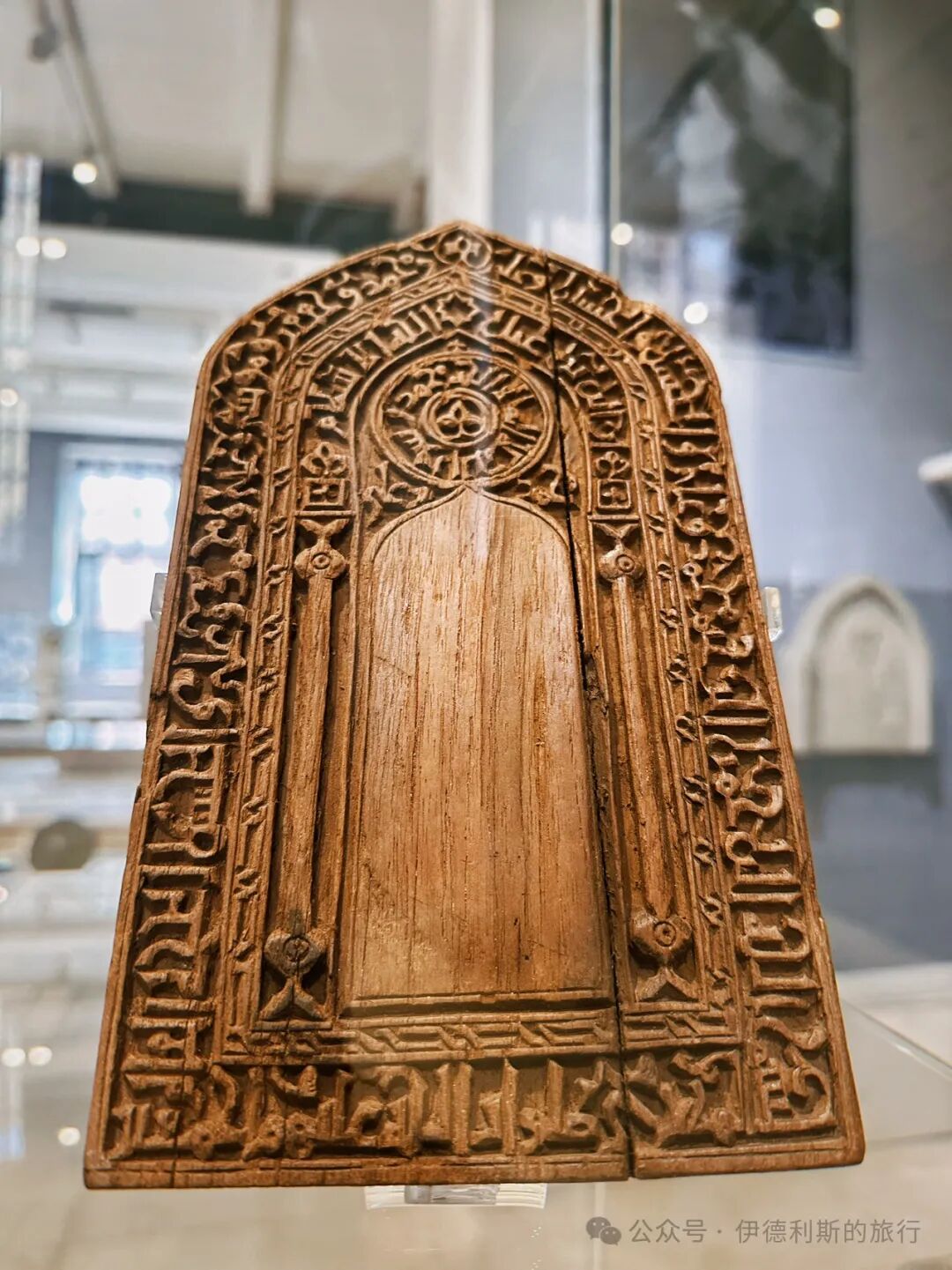
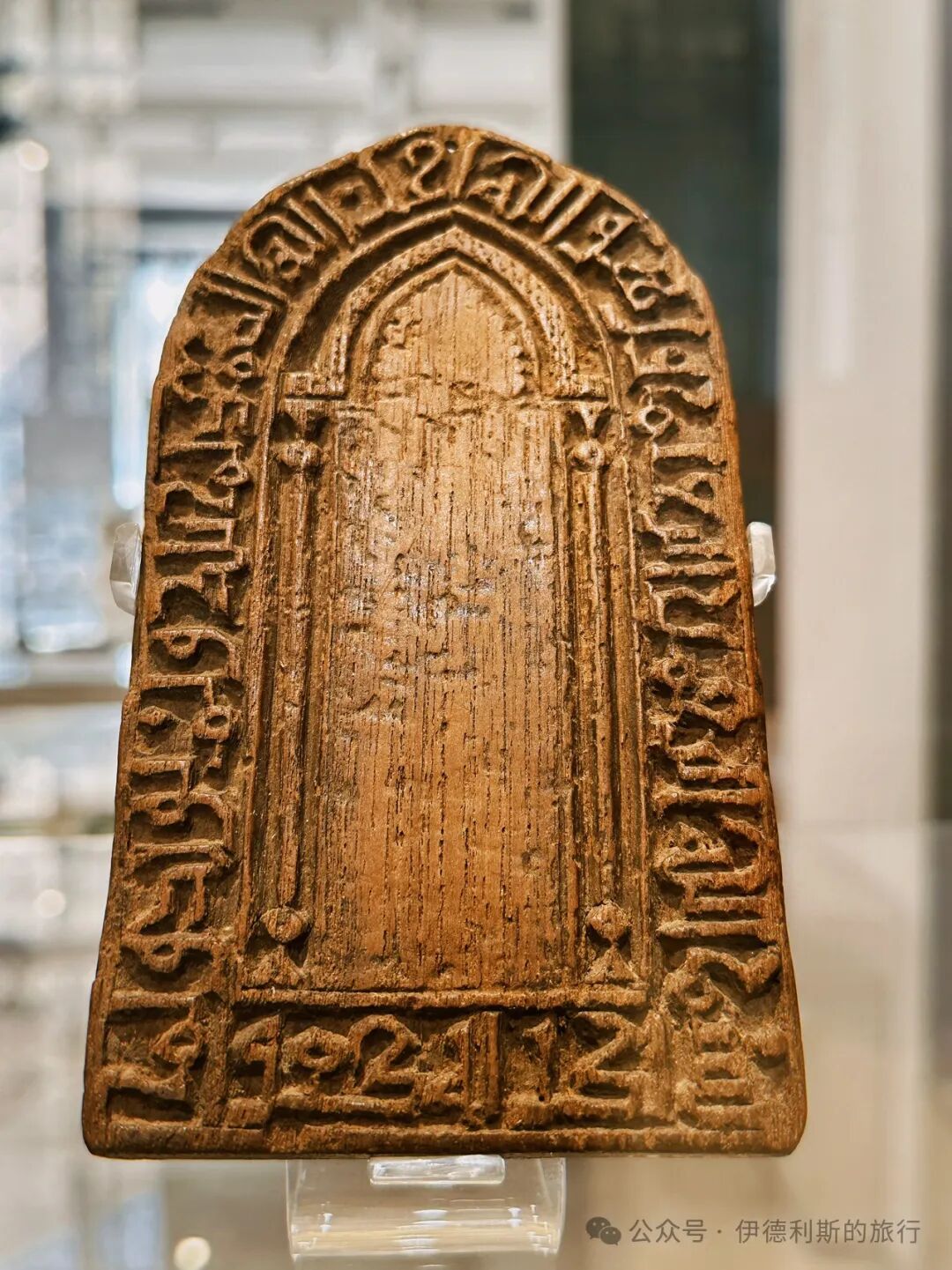
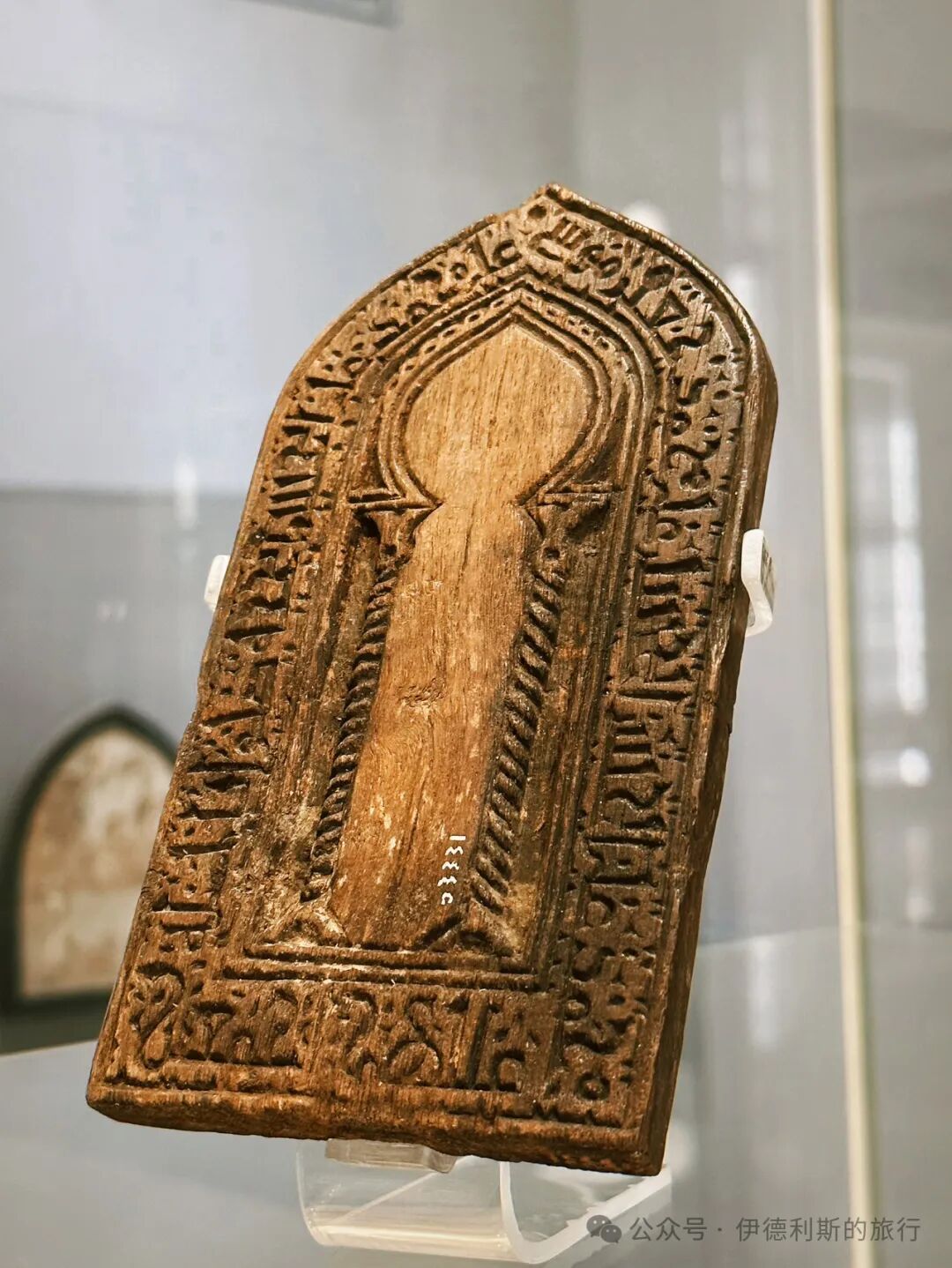
This 10th-11th century Fatimid Egyptian ceramic plate shows an image of the Prophet Isa (Jesus), which serves as evidence of the religious tolerance of that time.
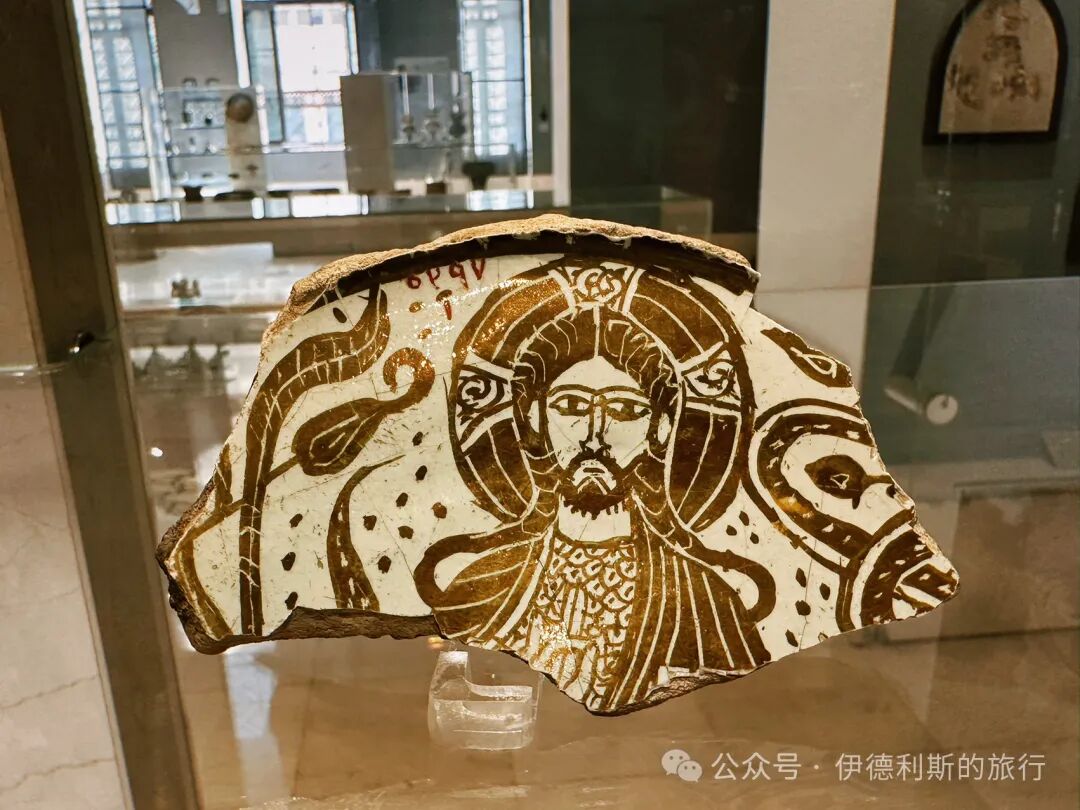
This 11th-century Fatimid Egyptian ceramic plate is inscribed with the name of the commander Ghaban.
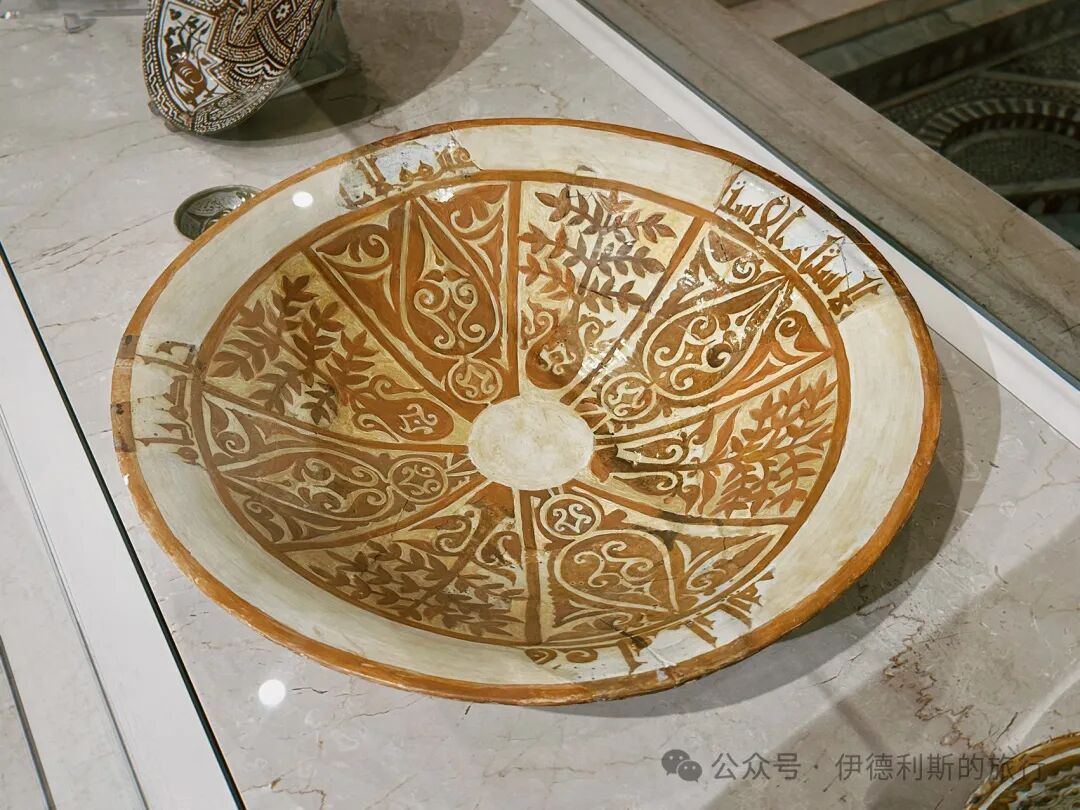
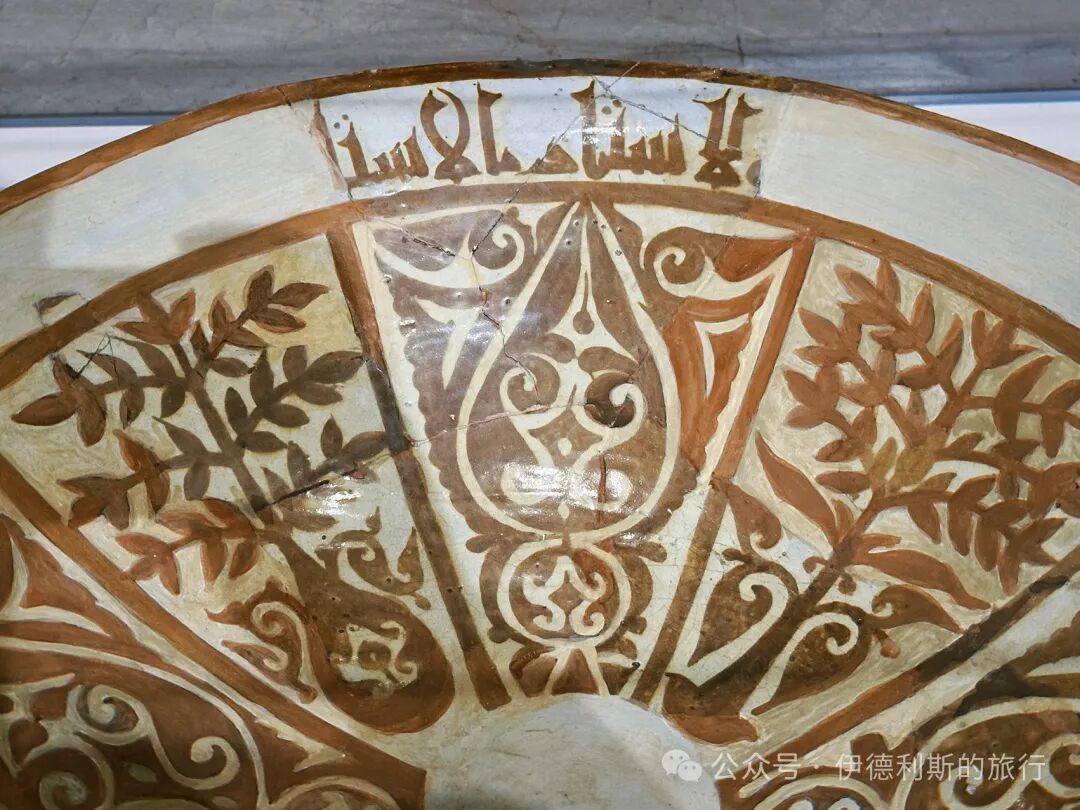
This 11th-century Fatimid Egyptian ceramic plate features a griffin design. The image of the griffin can be traced back to ancient Egyptian art from 3000 BC, later spreading to West Asia and the Mediterranean region. Because the lion rules the land and the eagle rules the sky, the griffin, which combines the features of both, became a symbol of nobility and power.
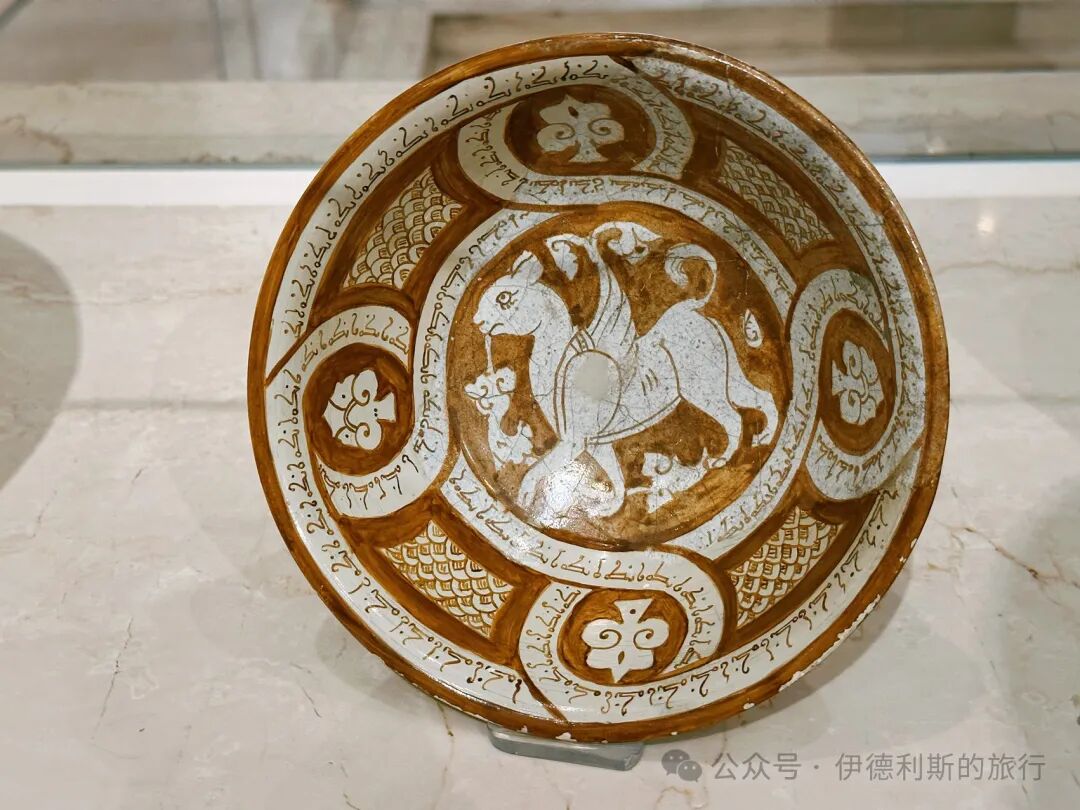
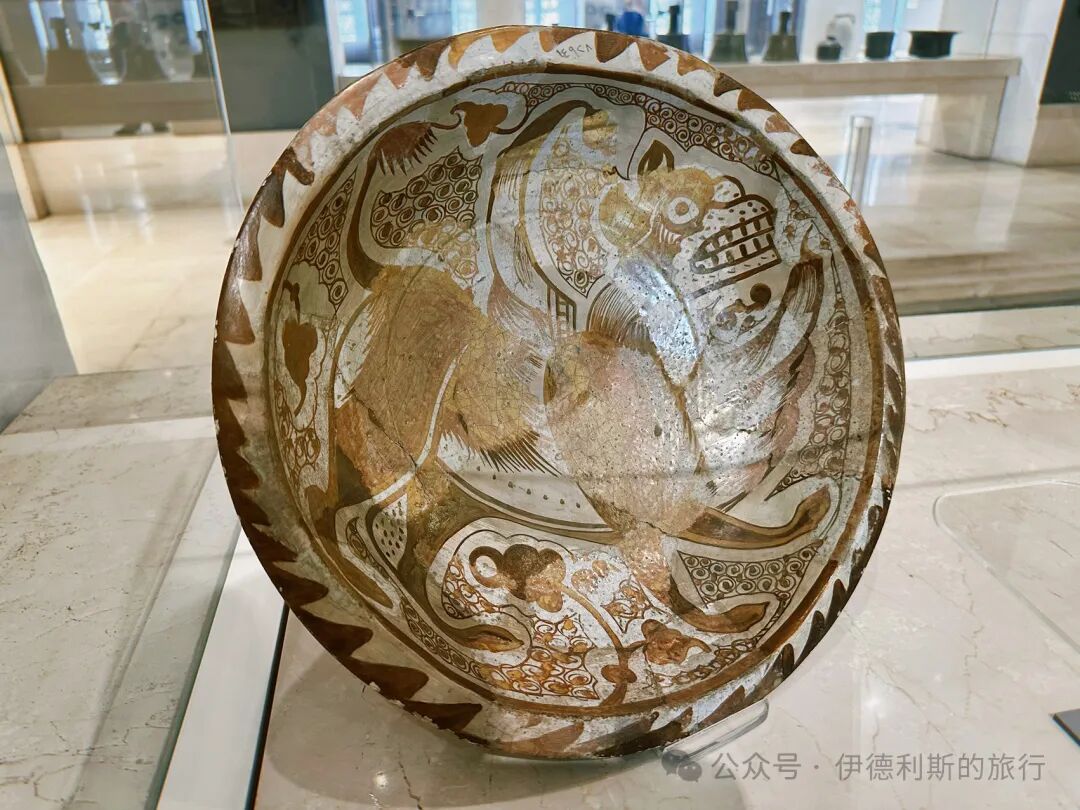
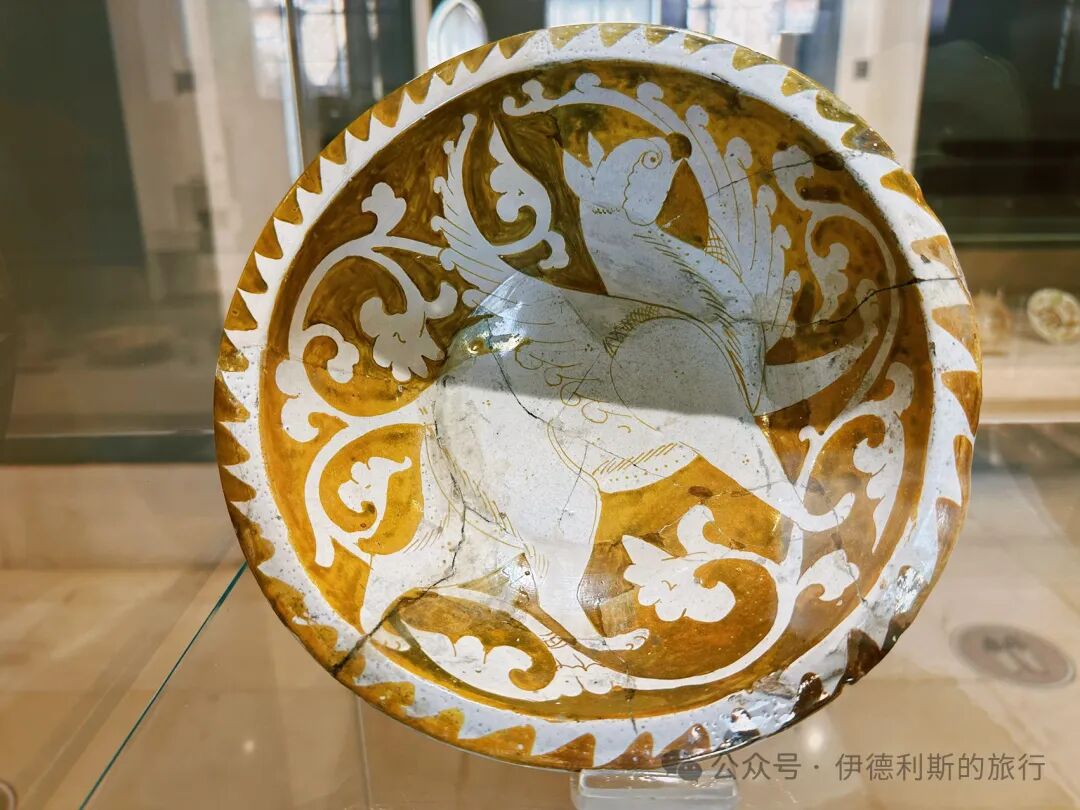
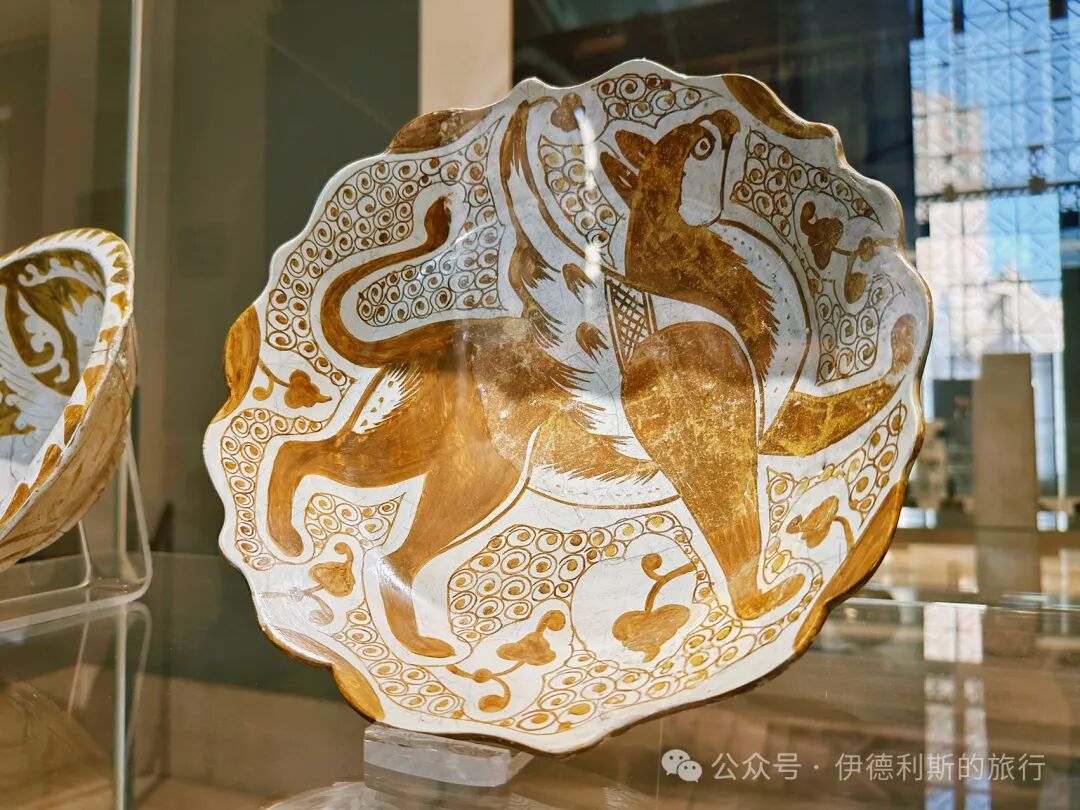
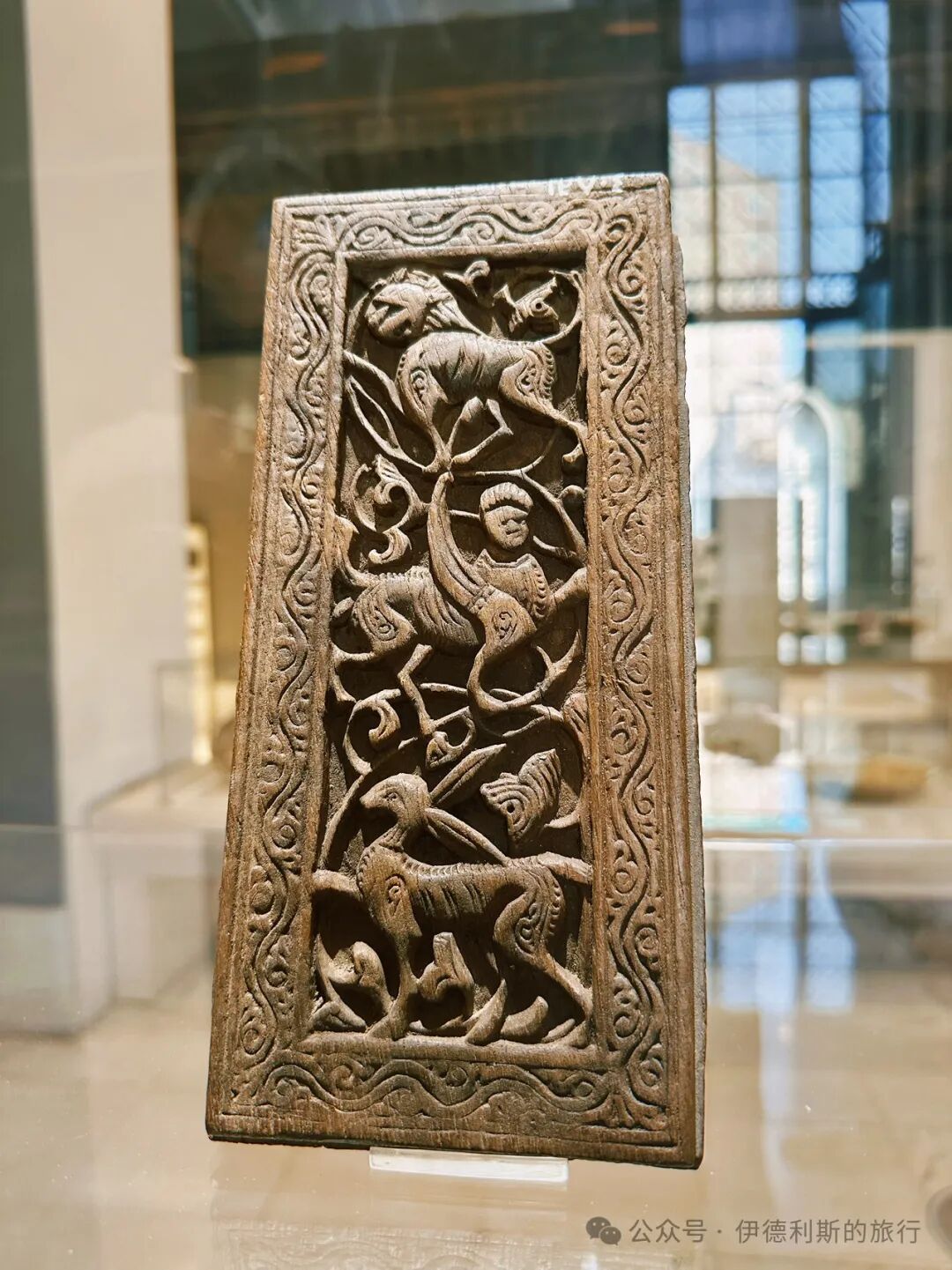
This 11th-century Fatimid Egyptian ceramic plate features images of humans, animals, and birds.
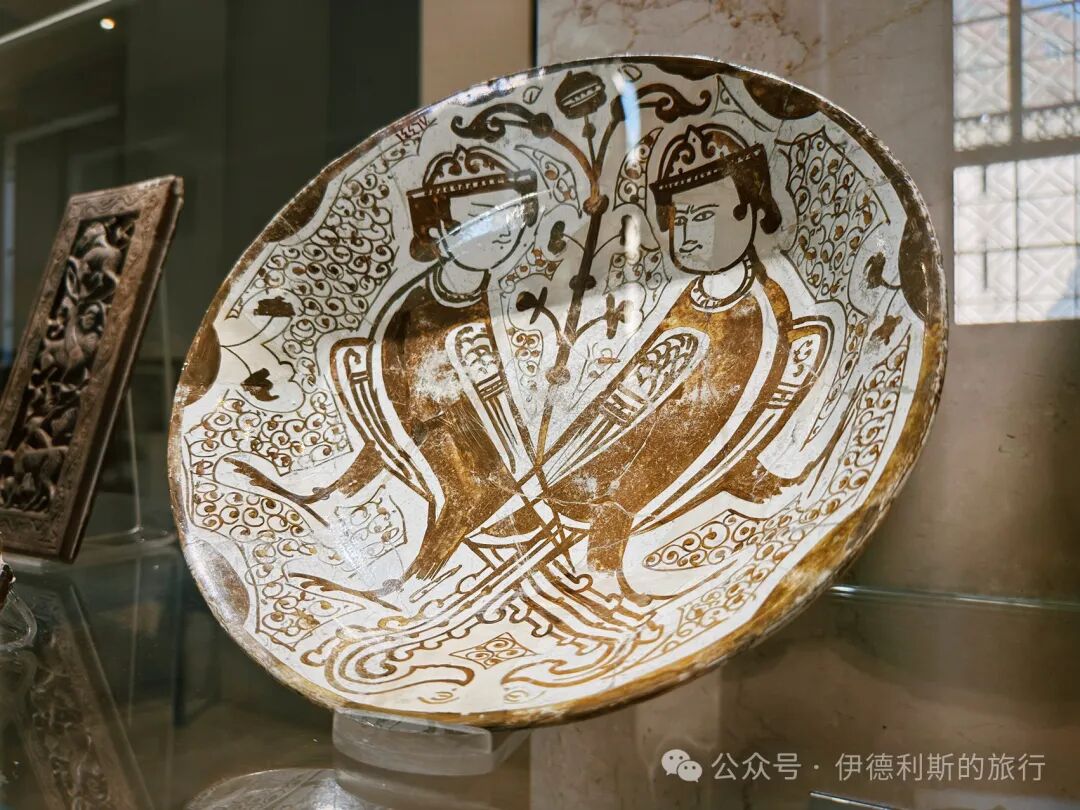
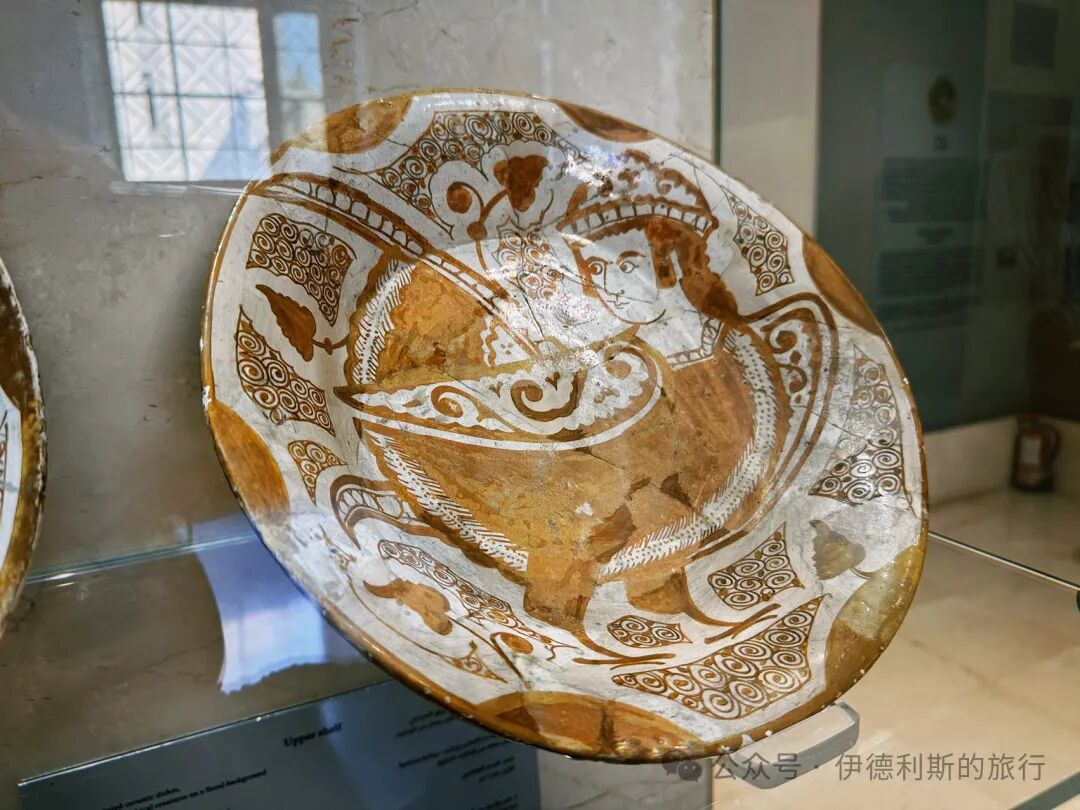
This 11th-century Fatimid Egyptian marble carving features Kufic calligraphy.
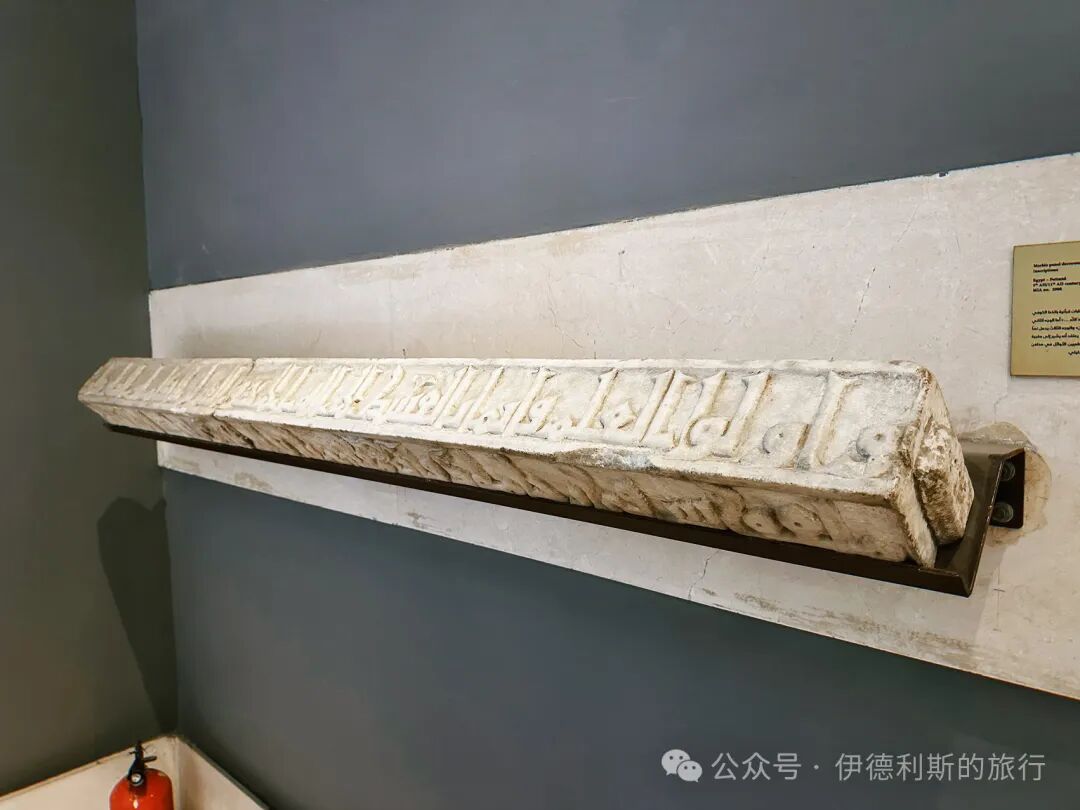
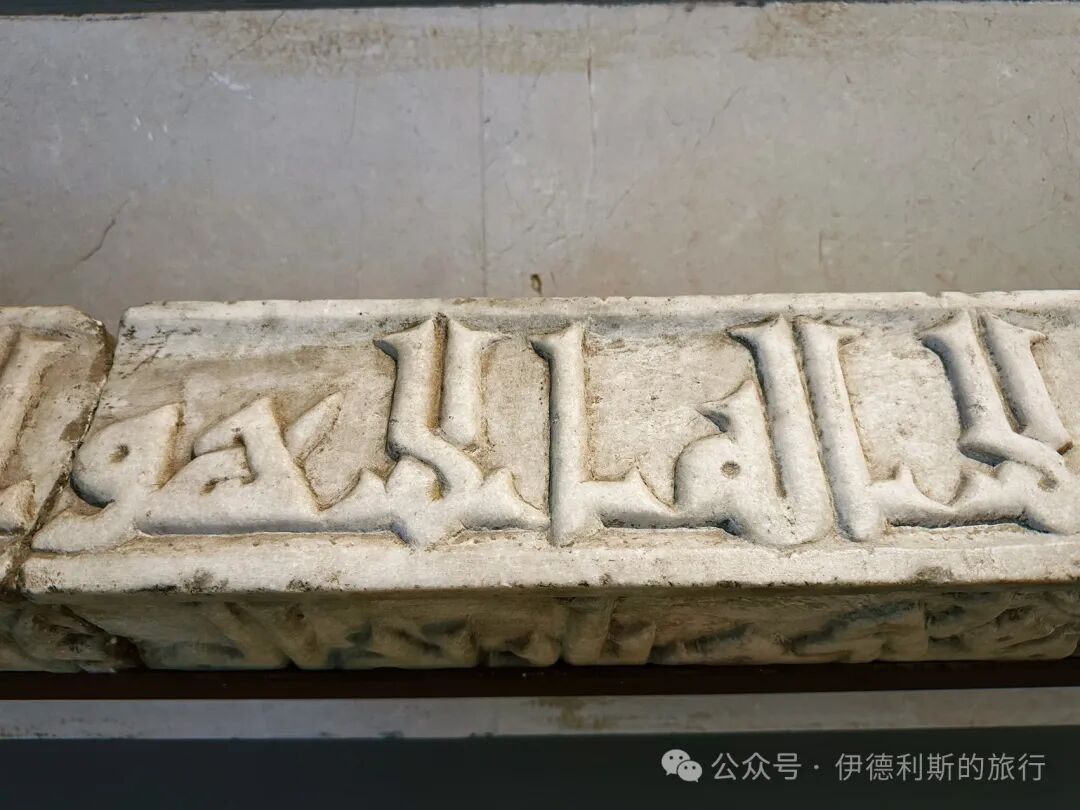
These stucco windows and wooden doors from the Al-Salih Tala'i Mosque in Cairo date to the late Fatimid period in 1160. The Al-Salih Tala'i Mosque is located outside the south gate of the old city of Cairo and was commissioned by the Fatimid vizier Tala'i ibn Ruzzik, who was the last powerful and capable vizier of the Fatimid dynasty. The Al-Salih Tala'i Mosque was completed only 11 years before the fall of the Fatimid dynasty, making it the last surviving building from the Fatimid era.
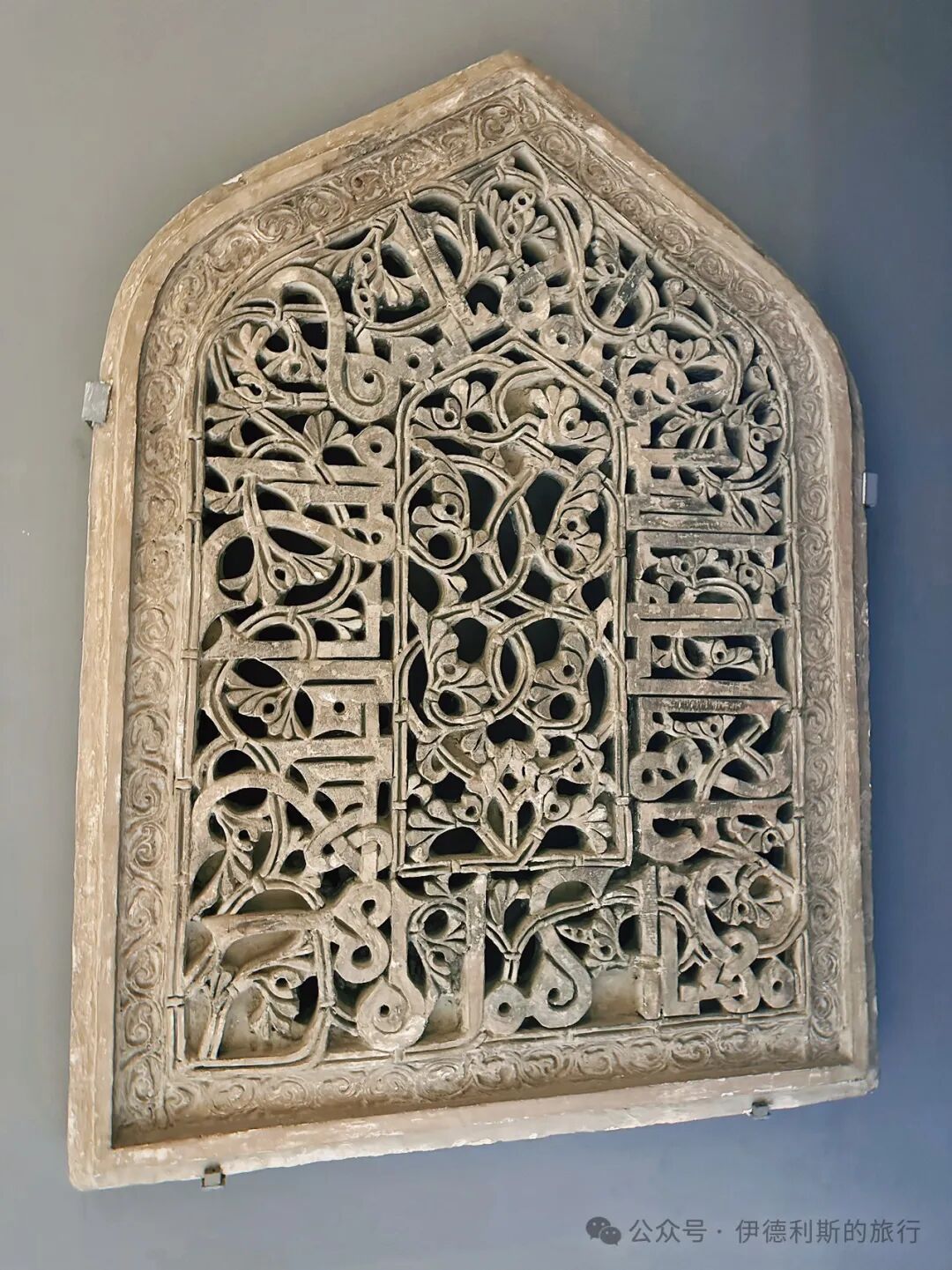
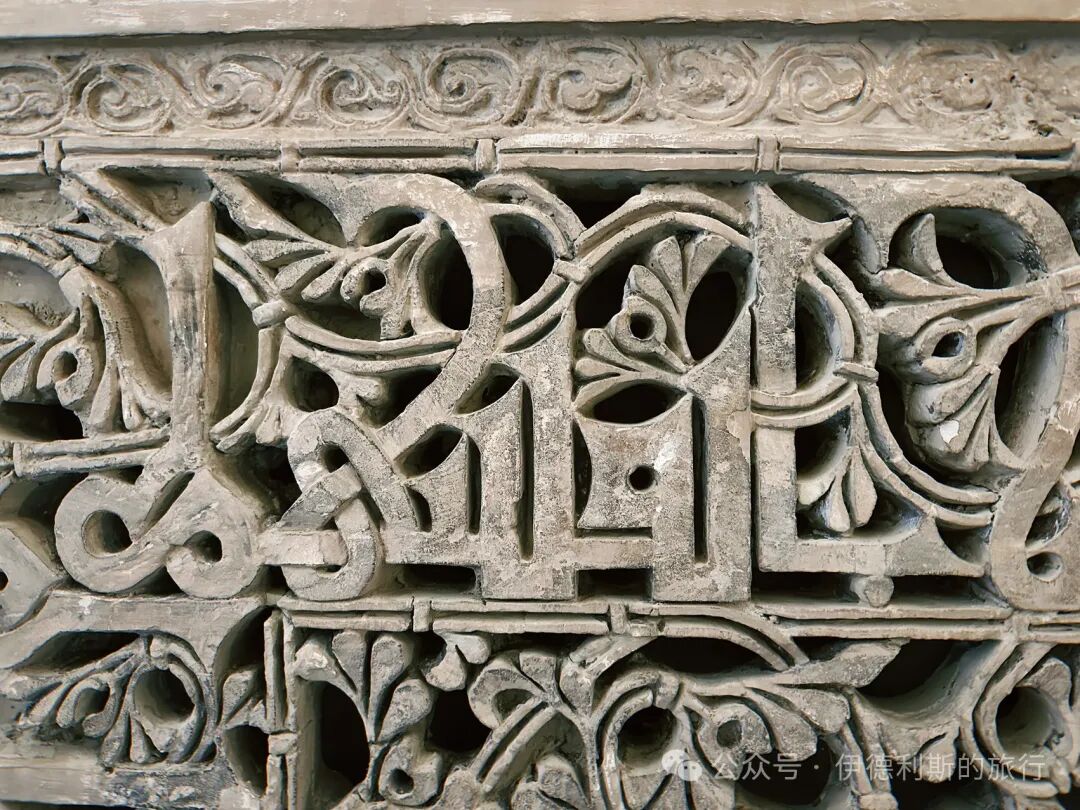
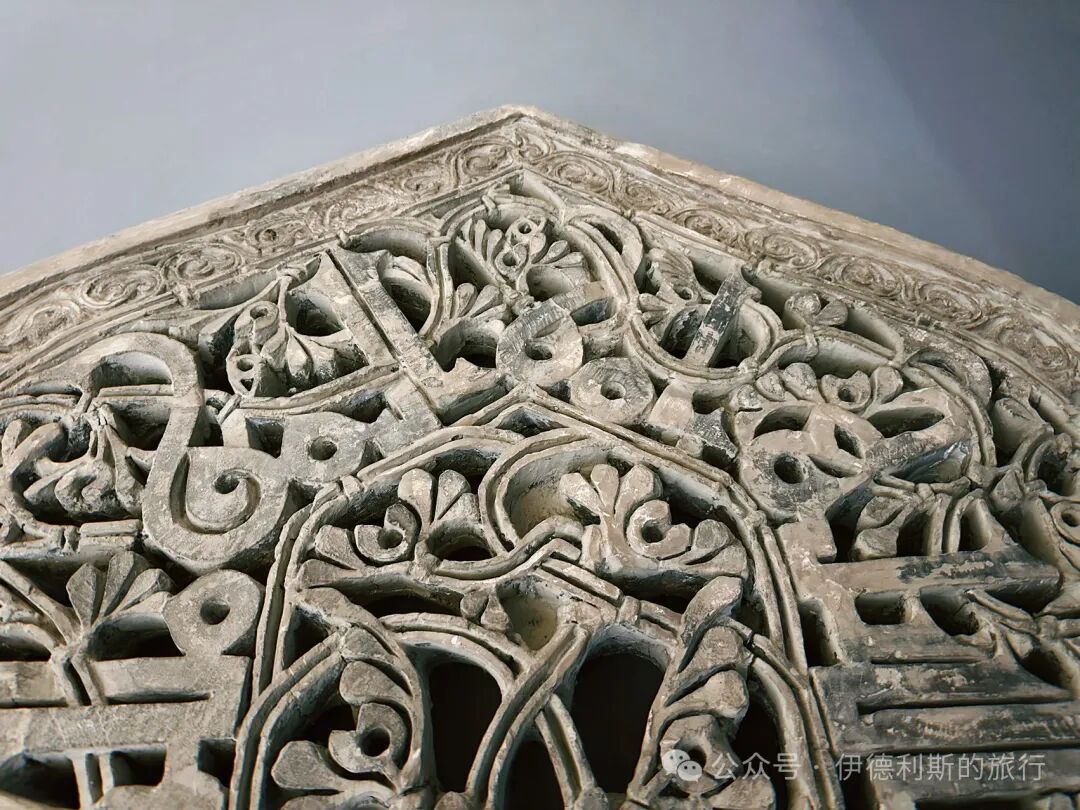
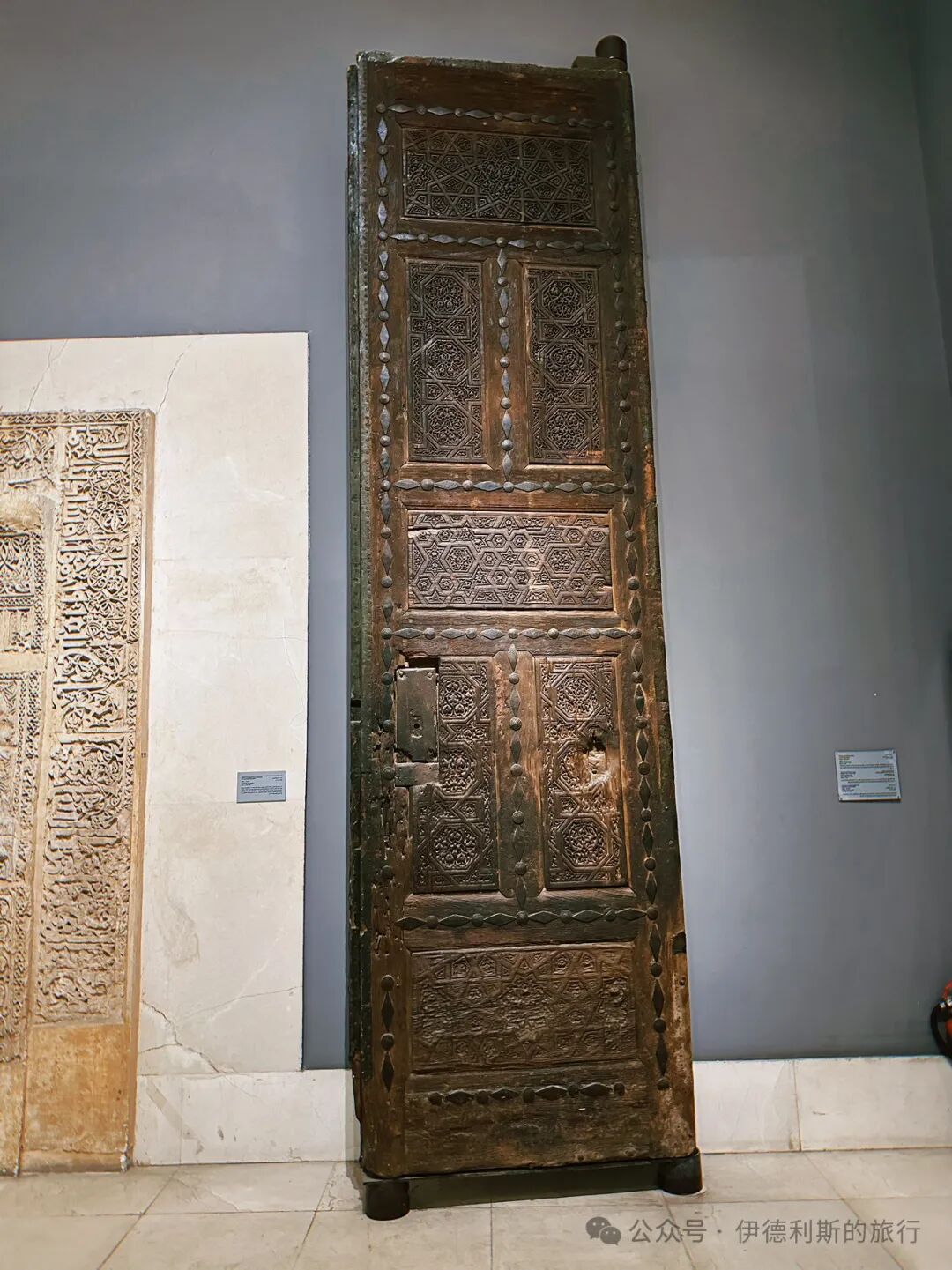
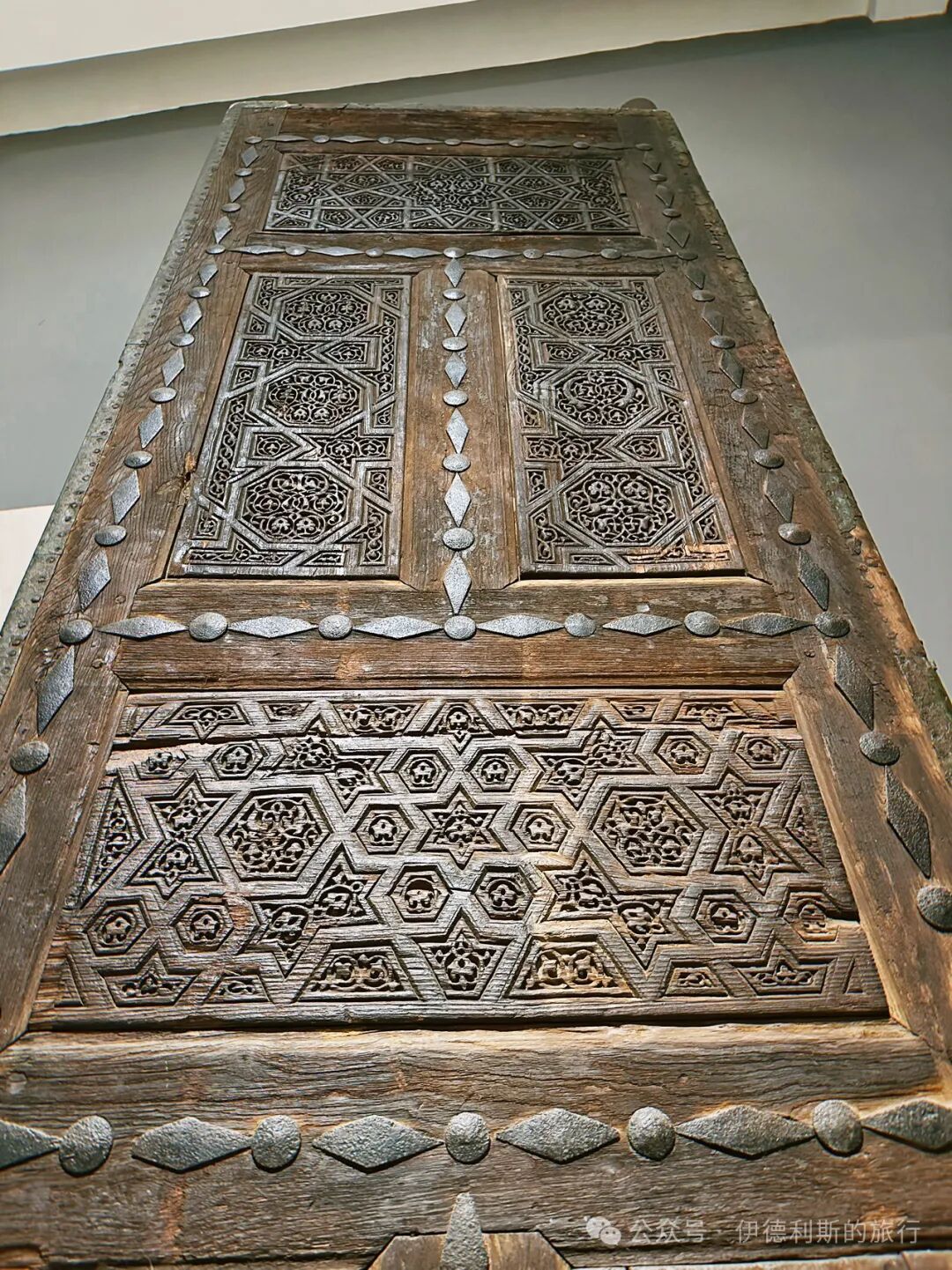
This wooden door from the Al-Azhar Mosque in Cairo dates to the Fatimid period in 1010 and was commissioned by Caliph al-Hakim bi-Amr Allah, who reigned from 996 to 1021. Al-Hakim was the first Fatimid caliph born in Cairo, an important imam in the history of Ismaili Shia Islam, and a central figure in the Druze faith. At that time, the city of Fustat on the south side of old Cairo was a densely populated Sunni city, while the newly built city of Cairo served as the capital of the Fatimid dynasty and the center of Ismaili Shia Islam. The Al-Azhar Mosque in Cairo is the city's official congregational mosque, where the caliph would deliver the khutbah sermon every Friday during Jumu'ah prayer.
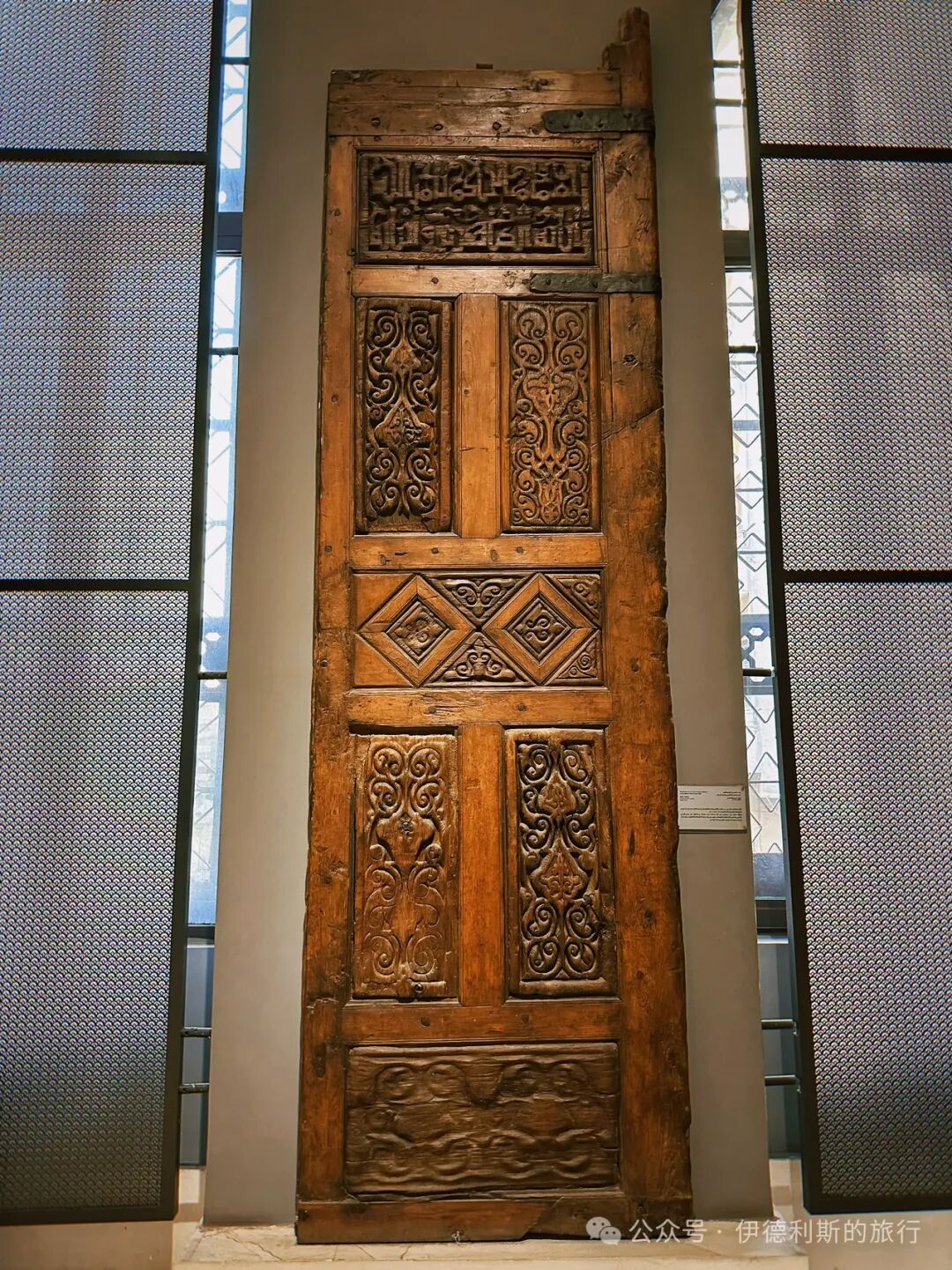
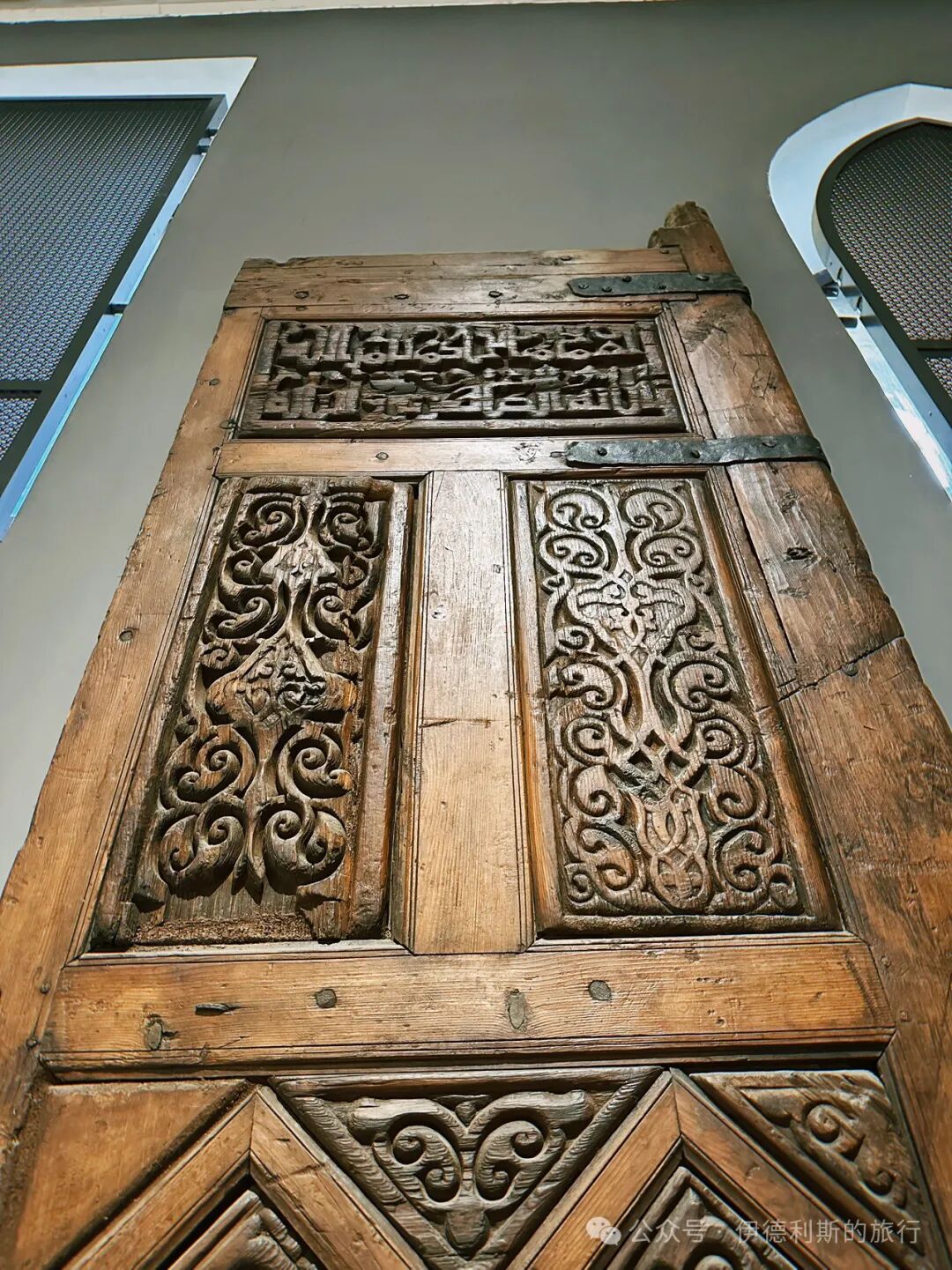
The 12th-century Fatimid-era wooden prayer niche (mihrab) and wooden doors inside the Sayyida Nafisa mausoleum in Cairo. Sayyida Nafisa (762-824) was the great-granddaughter of Imam Hasan, the grandson of the Prophet. She was a famous Egyptian scholar of hadith who served as a mentor to Imam Shafi'i and provided him with financial support.
The Nafisa mausoleum is located in Cairo's famous City of the Dead. It was first built during the Abbasid period and later renovated and rebuilt during the Fatimid period. Nafisa was the first descendant of Imam Ali to be honored during the Fatimid period. As a Sunni and a descendant of Ali, she helped promote reconciliation between the Sunni and Shia populations within the Fatimid dynasty.
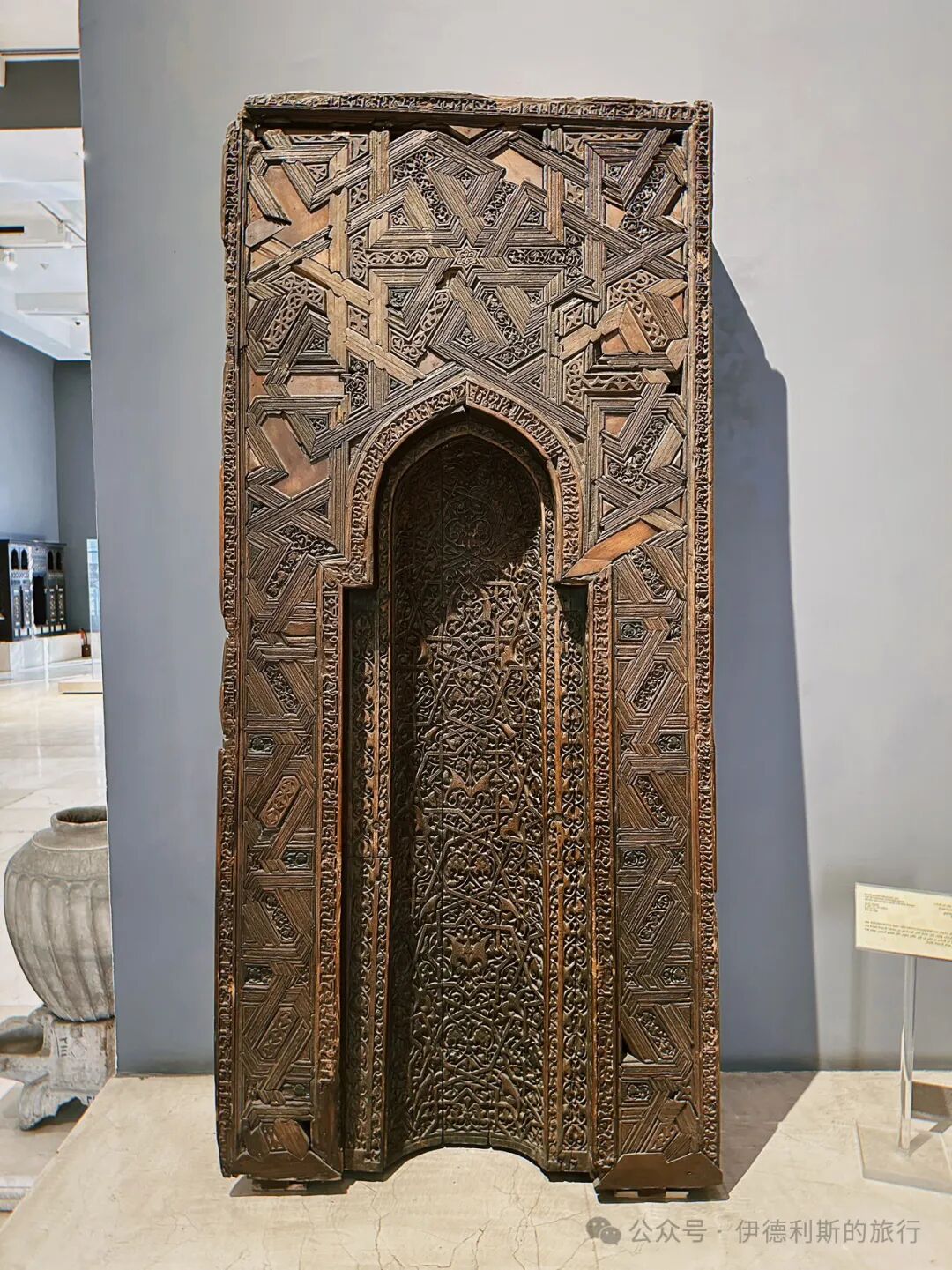
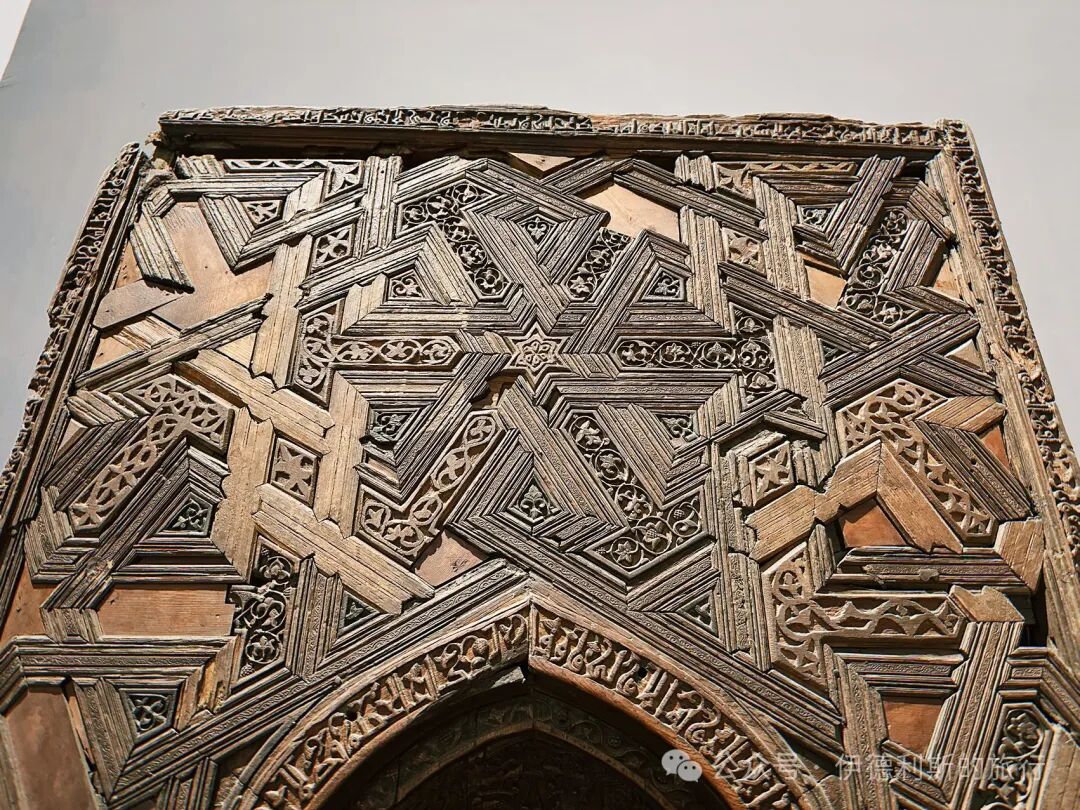
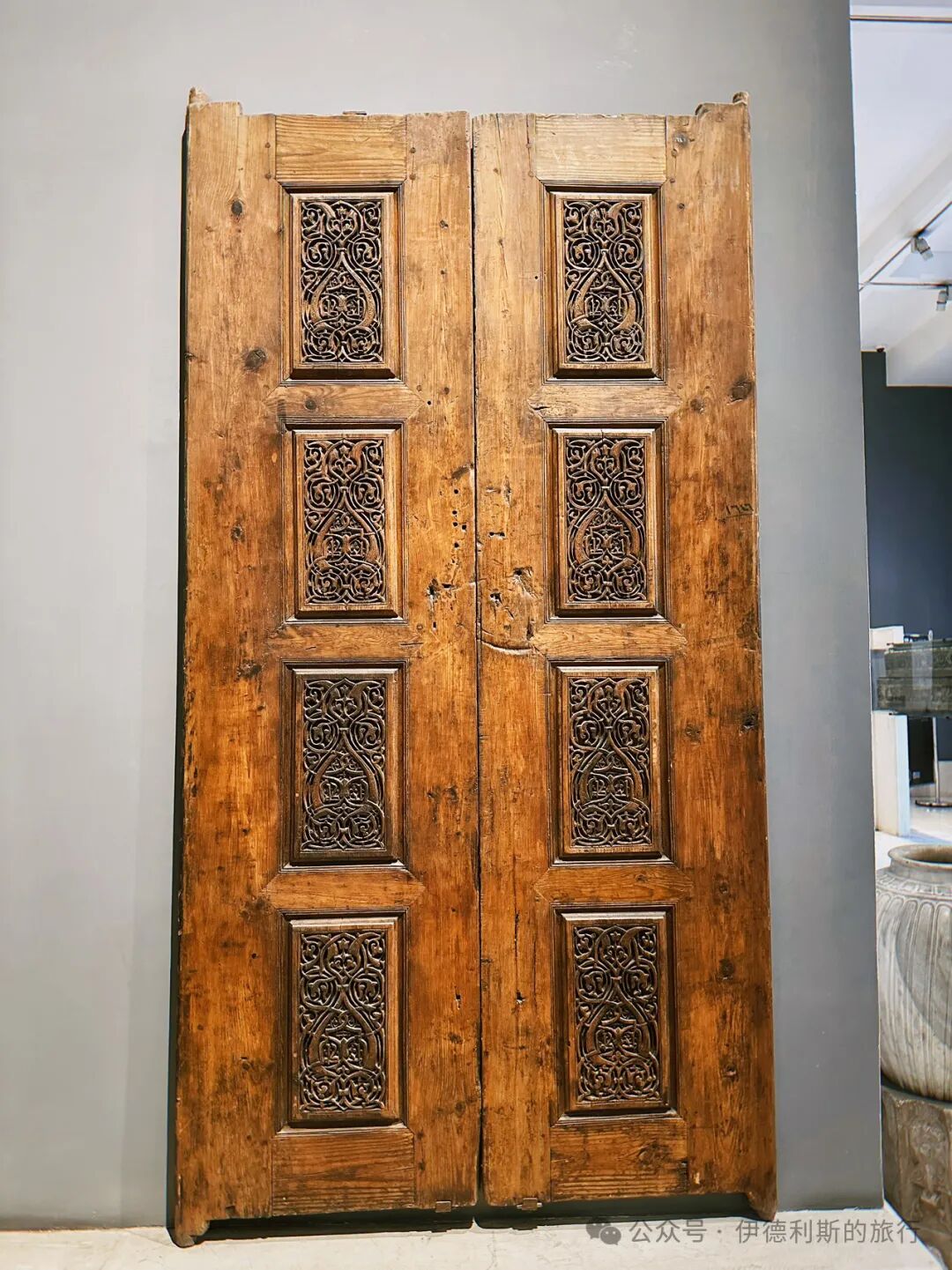
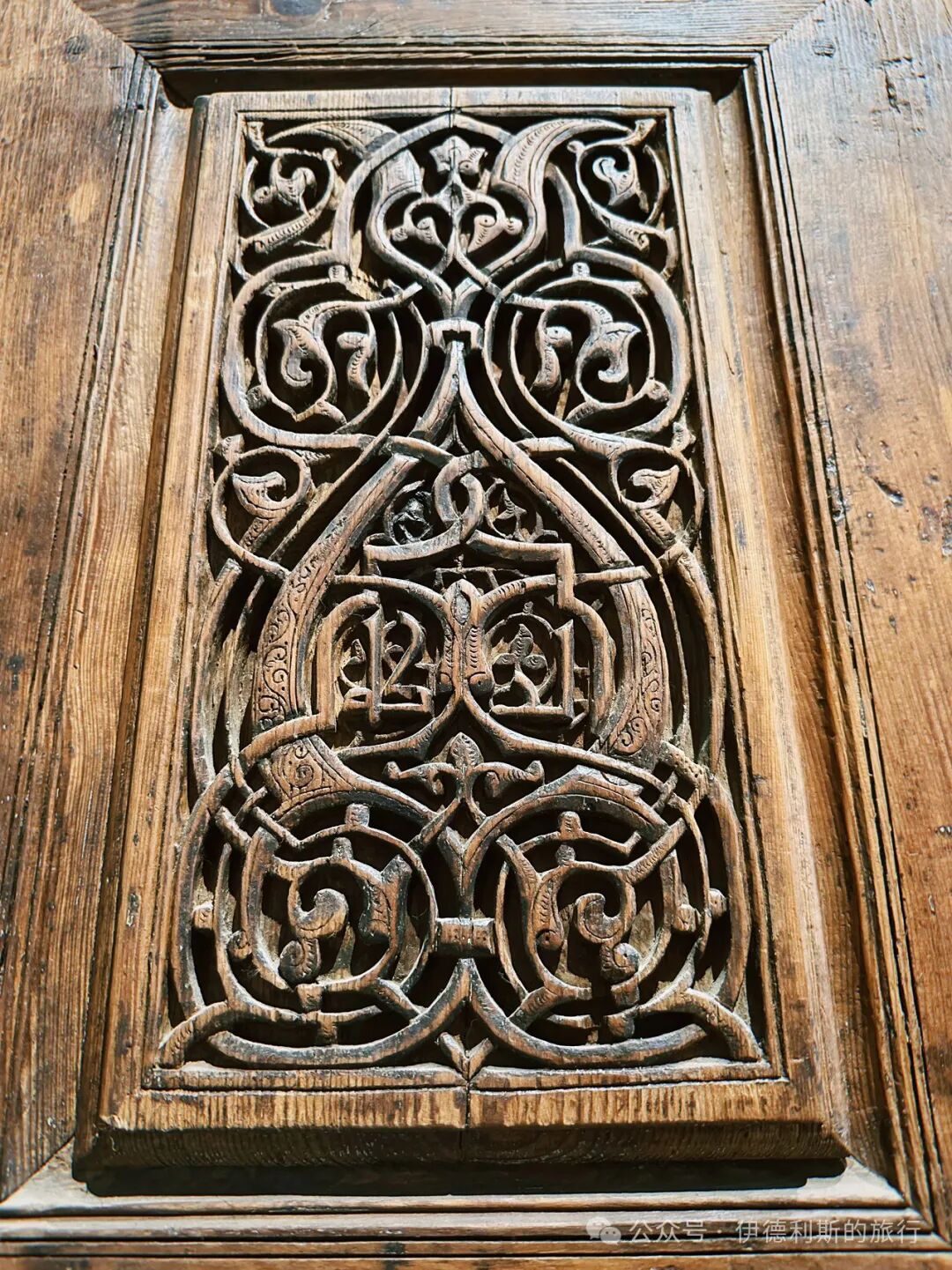
Ayyubid dynasty
A 12th-century wooden chest from the Hussein Mosque in Cairo. The Hussein Mosque is located across from the Al-Azhar Mosque in Cairo. It was first built in 1154 and is said to house the head of Imam Hussein.
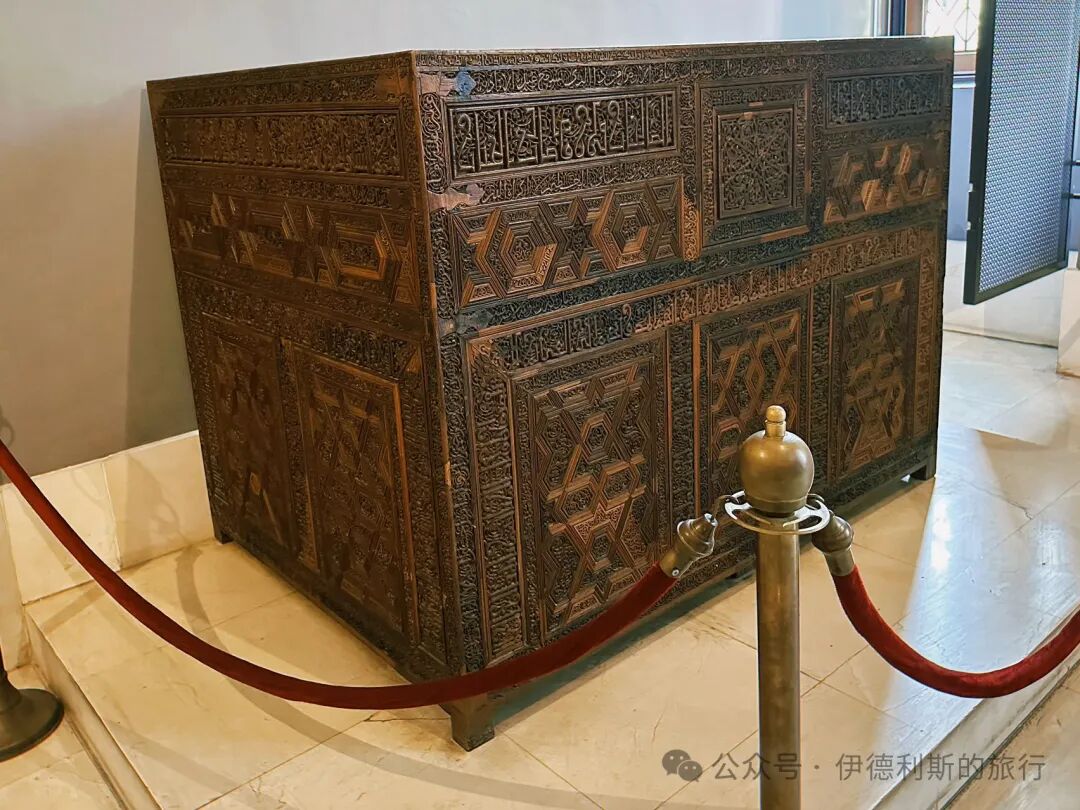
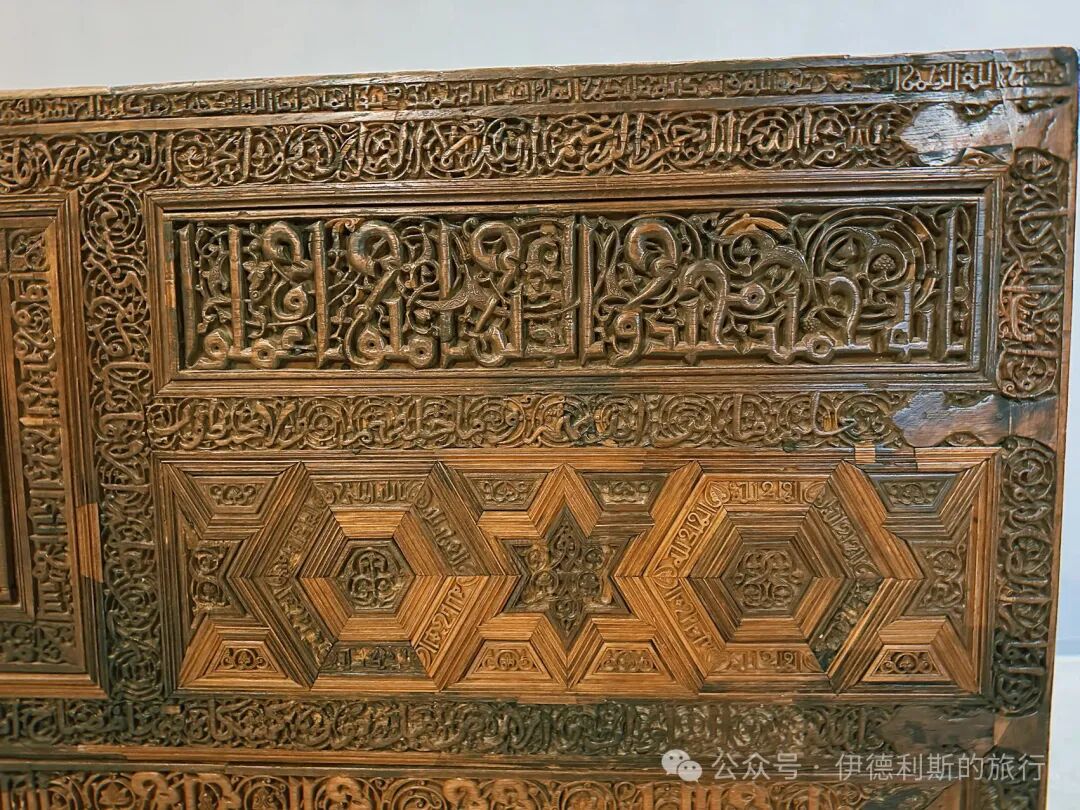
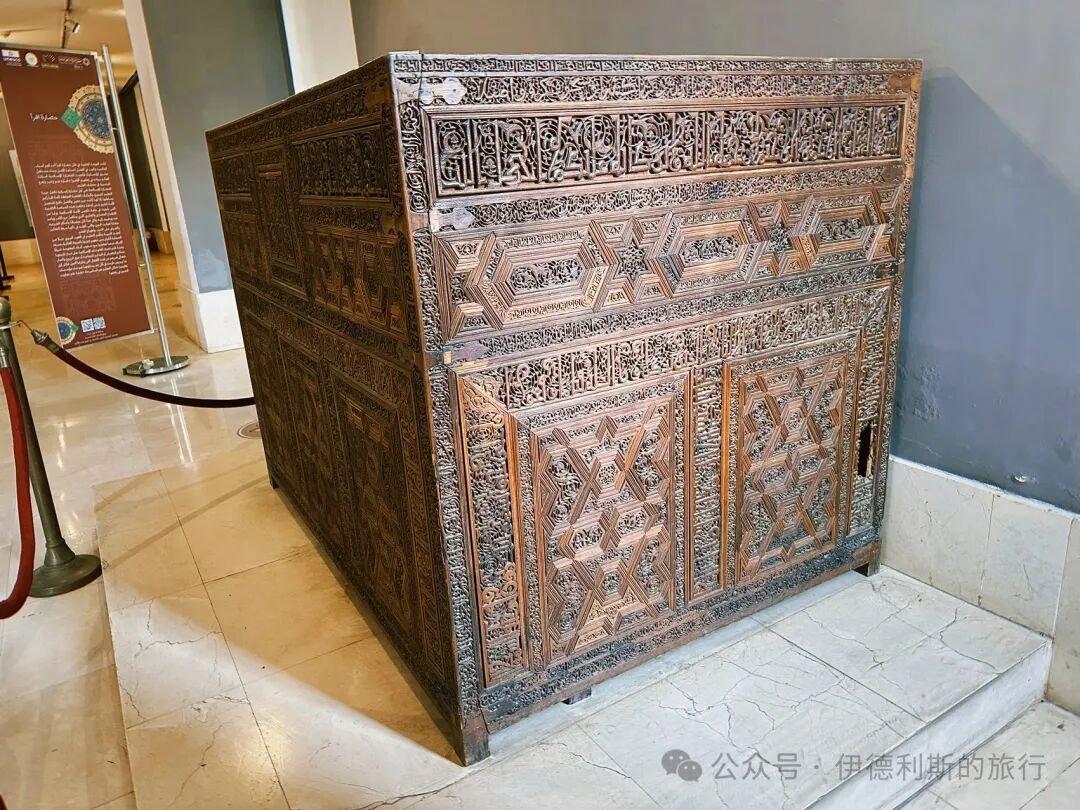
A 13th-century wooden carving from the Ayyubid dynasty in Egypt.
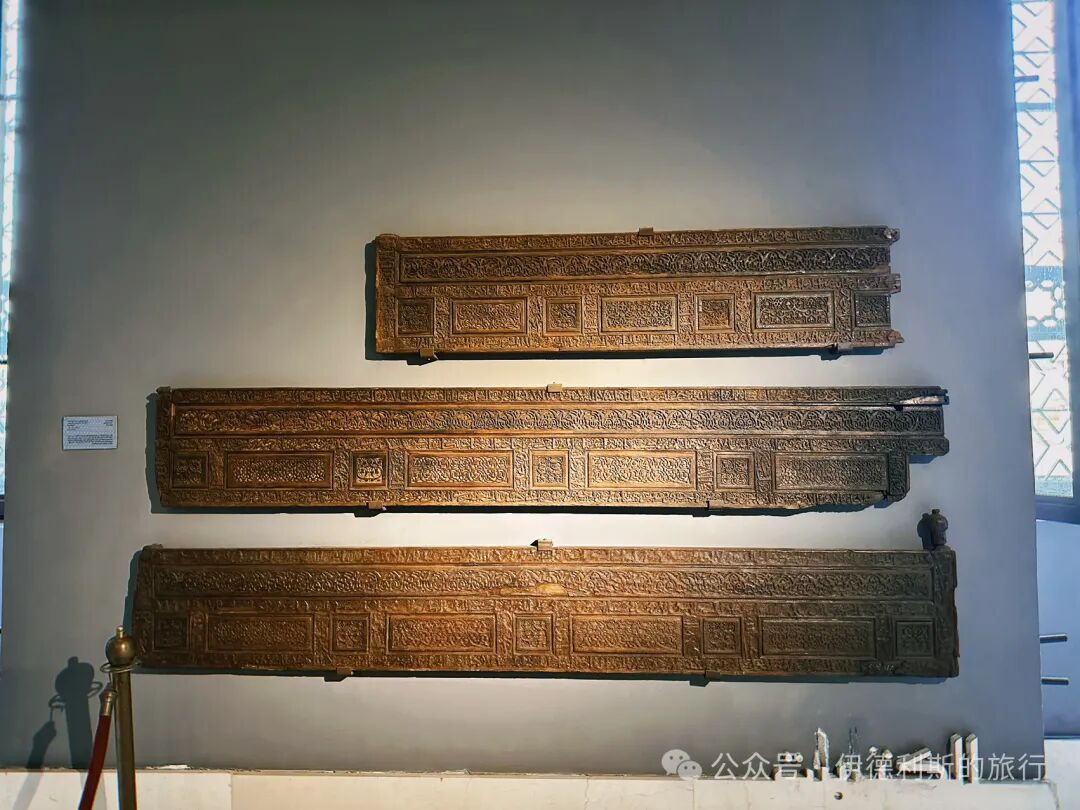
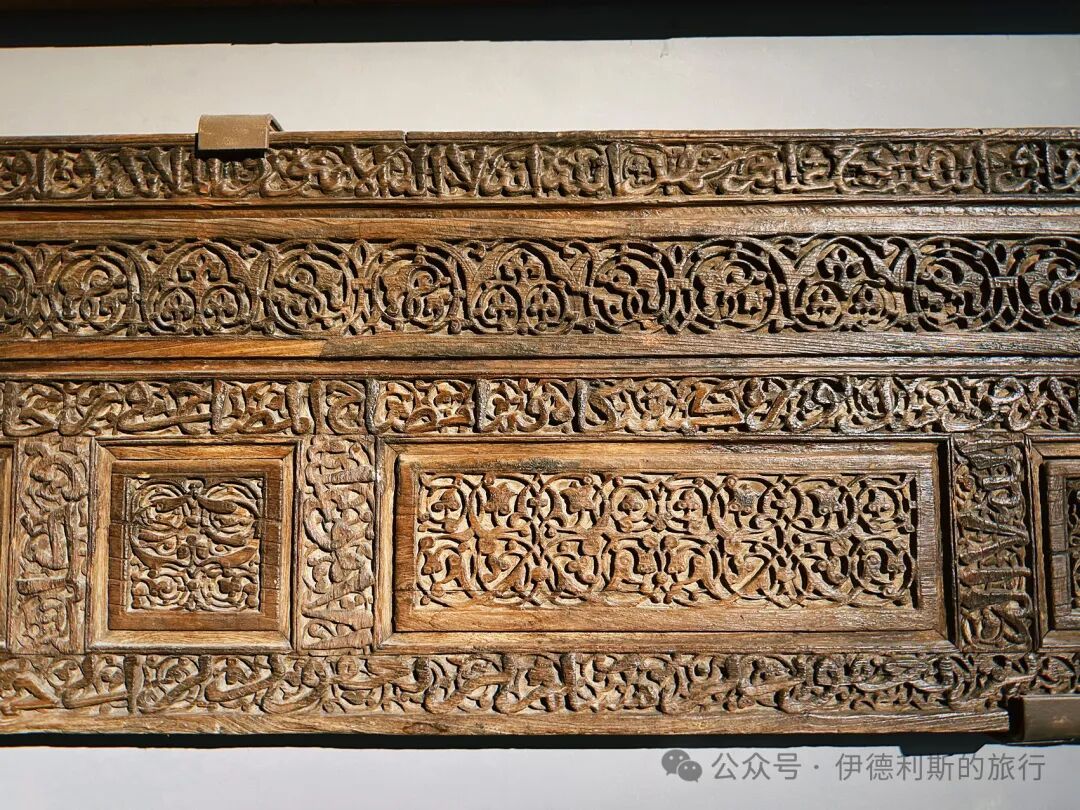
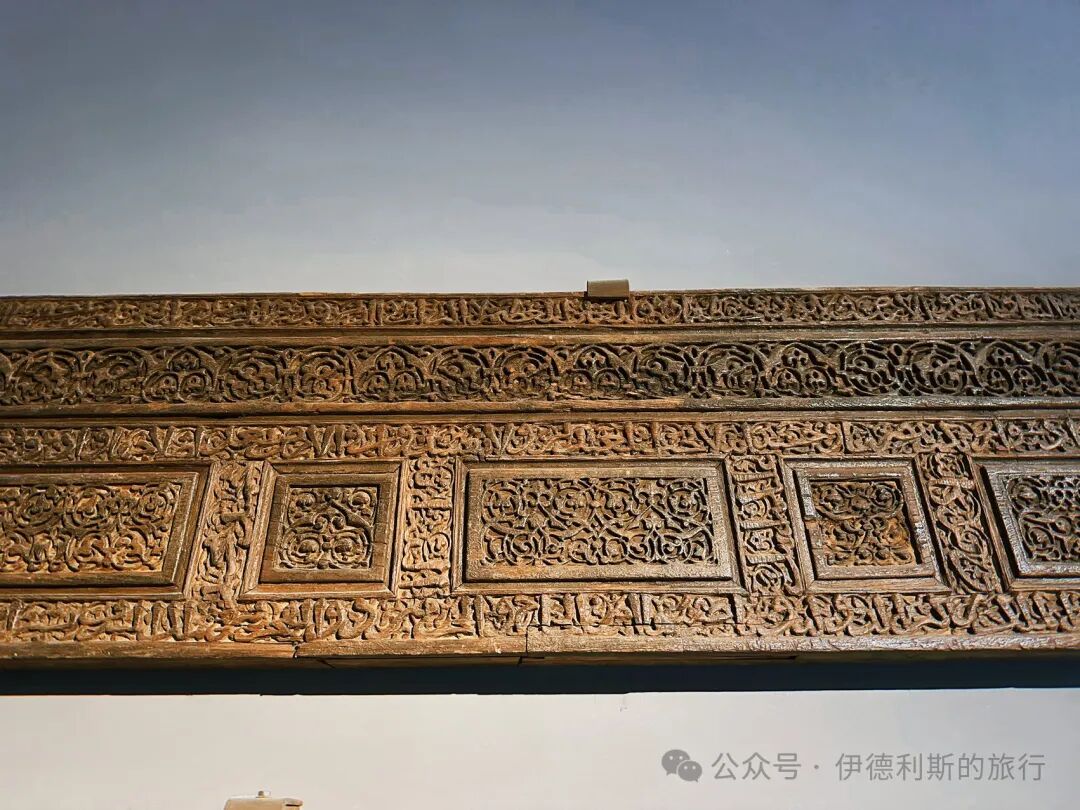
A 1213 marble slab from the Ayyubid dynasty in Egypt inscribed with the name of Sultan Al-Kamil. Al-Kamil was the fifth sultan of the Ayyubid dynasty. During his reign, he defeated the Fifth Crusade, but he handed Jerusalem over to the Crusaders for ten years during the Sixth Crusade.
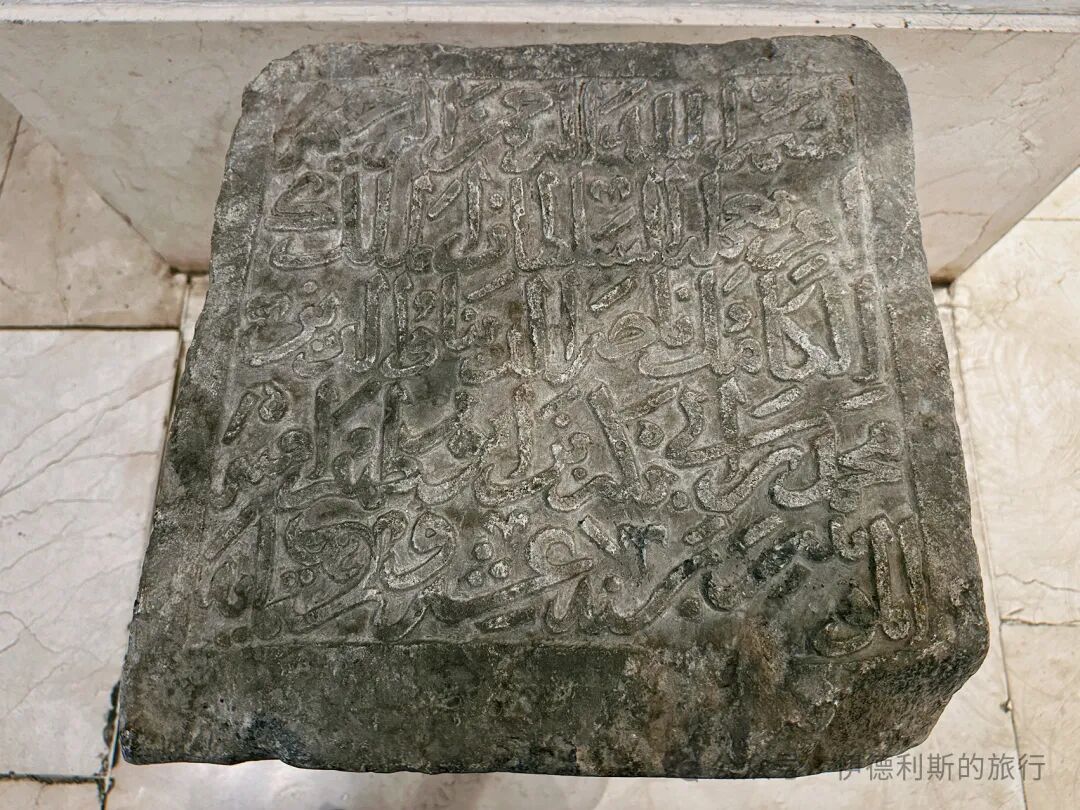
Marble slabs from the Ayyubid dynasty in Egypt dated 1184 and 1187, inscribed with the name of Sultan Saladin. Saladin was the founder of the Ayyubid dynasty. During the Third Crusade, he launched a series of military campaigns against the Crusaders in the Levant and recaptured Jerusalem, restoring Muslim rule in the region.
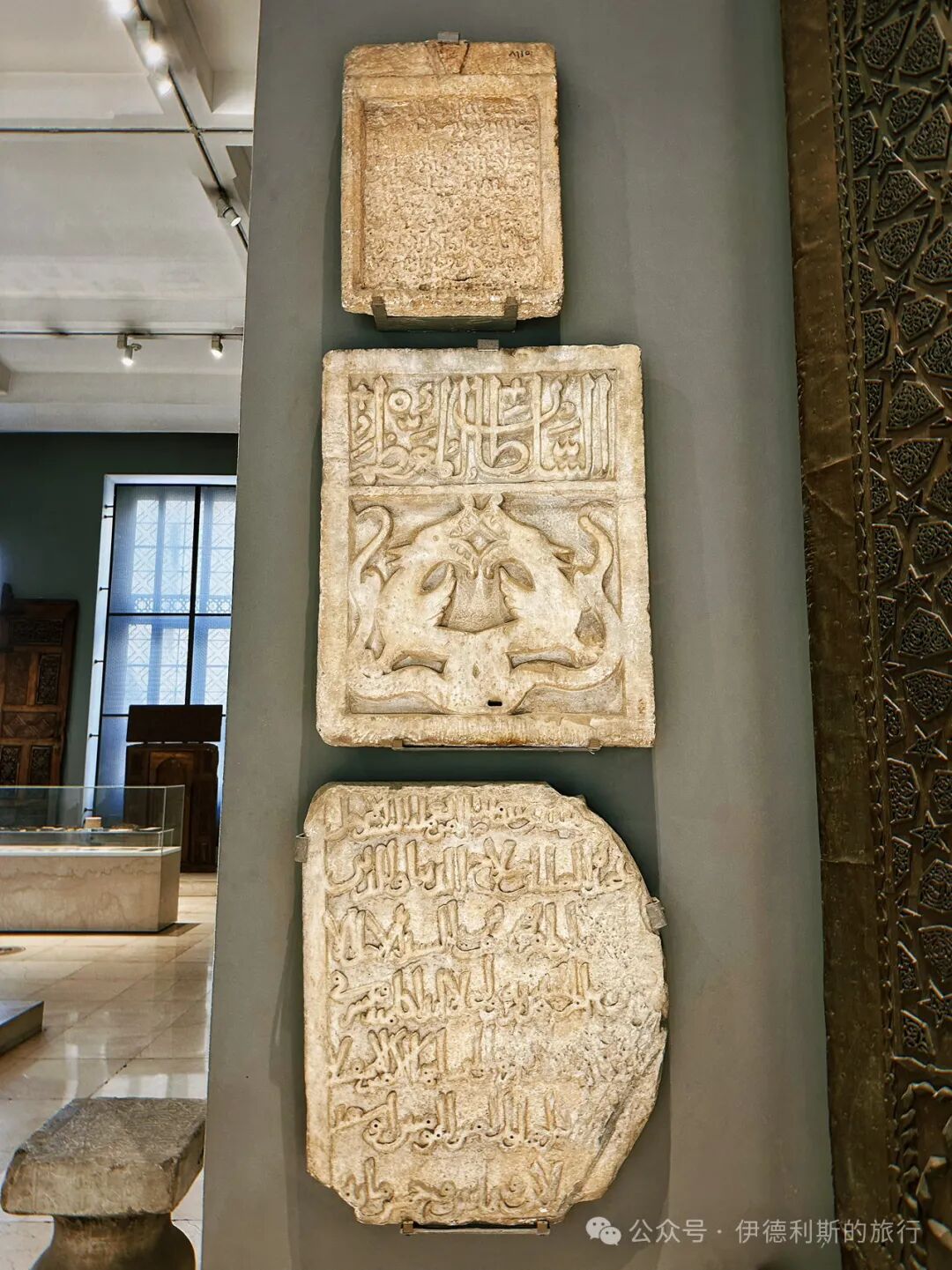
Wooden panels and doors made in 1178 during the Ayyubid period, found in the mausoleum of Imam Shafi'i in Cairo. Imam Shafi'i was the founder of the Shafi'i school of law and one of the four great imams of Sunni Islam. Imam Shafi'i arrived in Cairo in 813 and passed away there in 819. Sultan Saladin built his mausoleum in 1178, which features exquisite wood carvings inside. These include complex geometric patterns, scripture, and an introduction to the life of Imam al-Shafi'i.
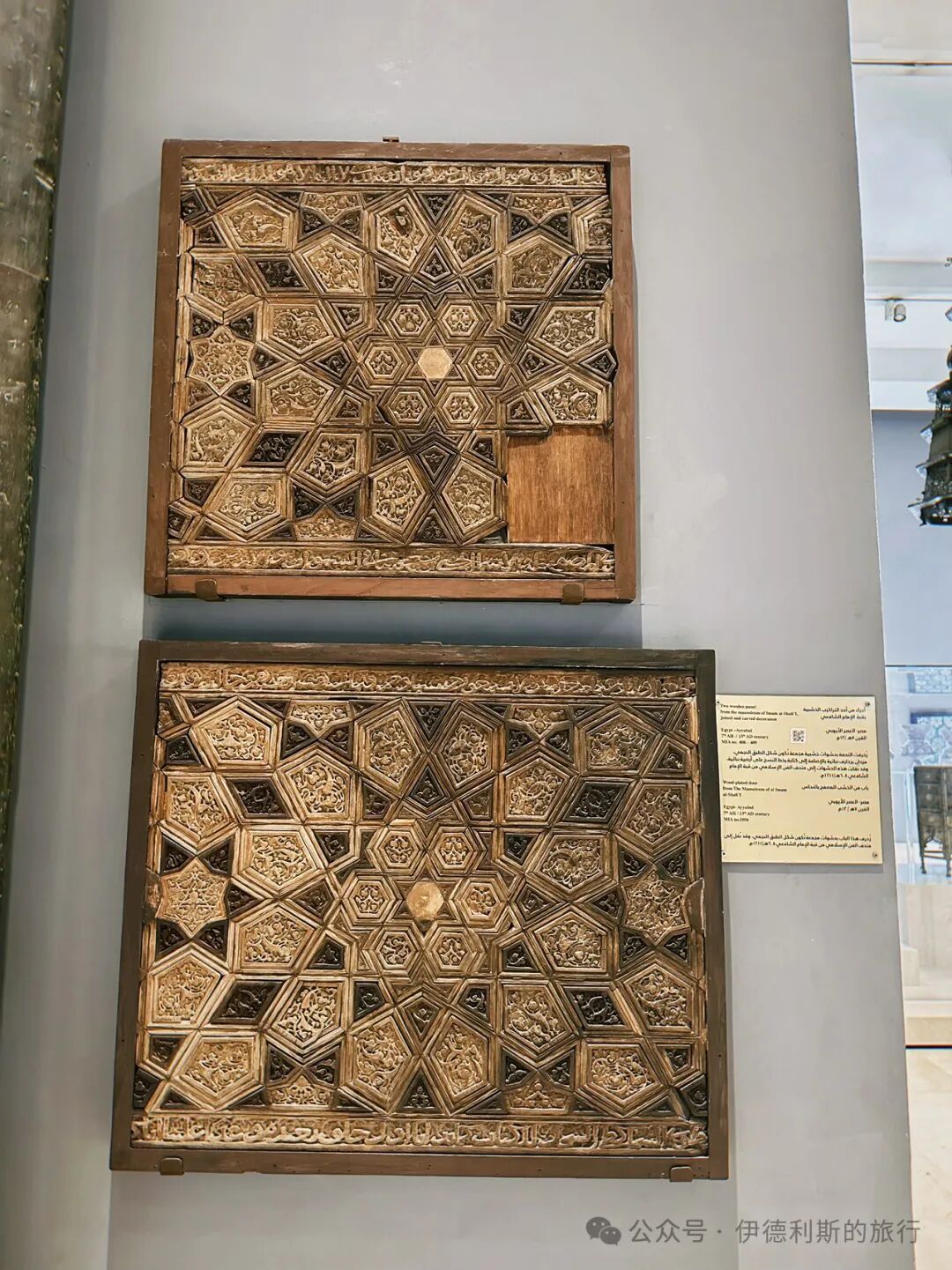
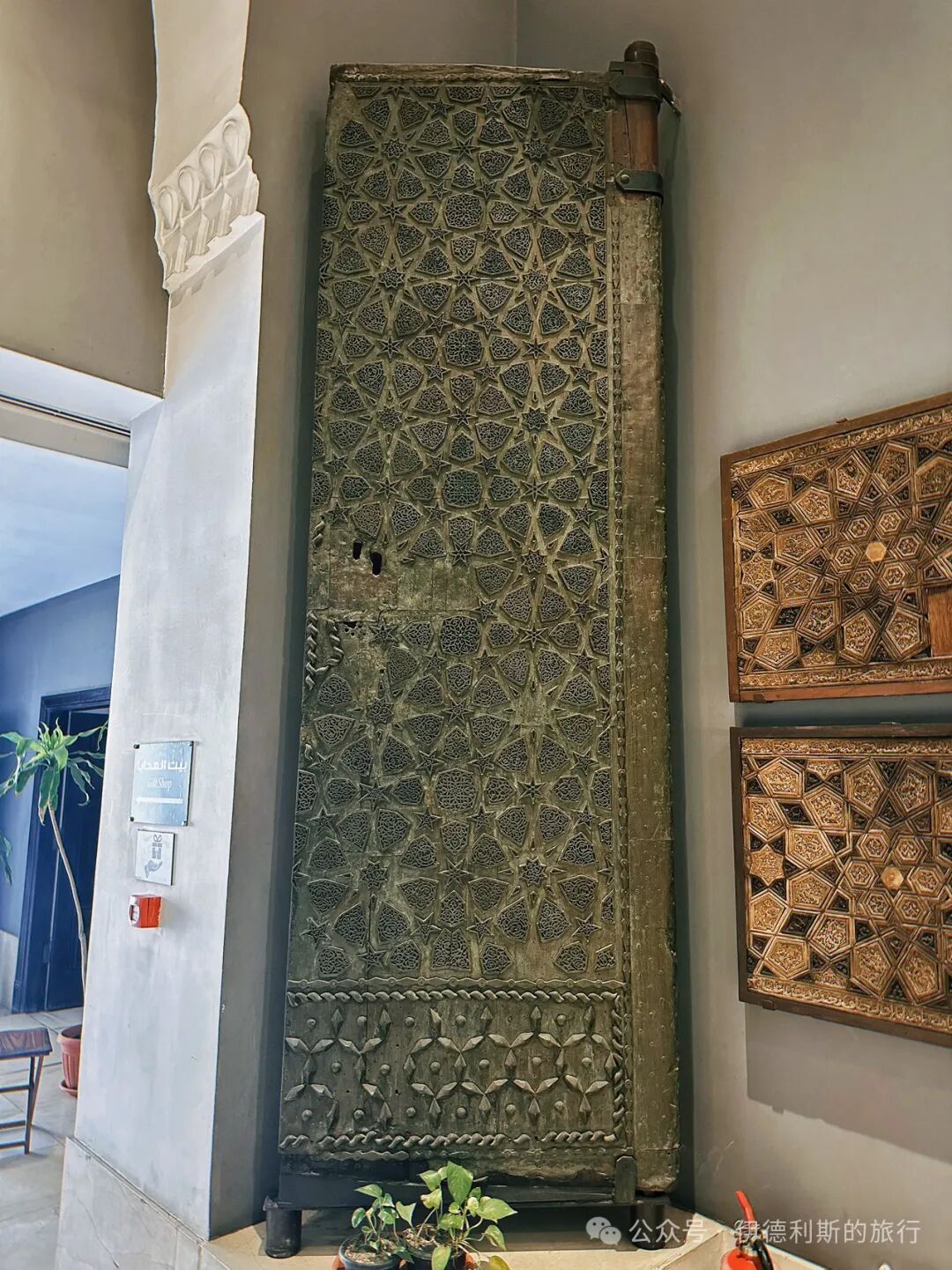
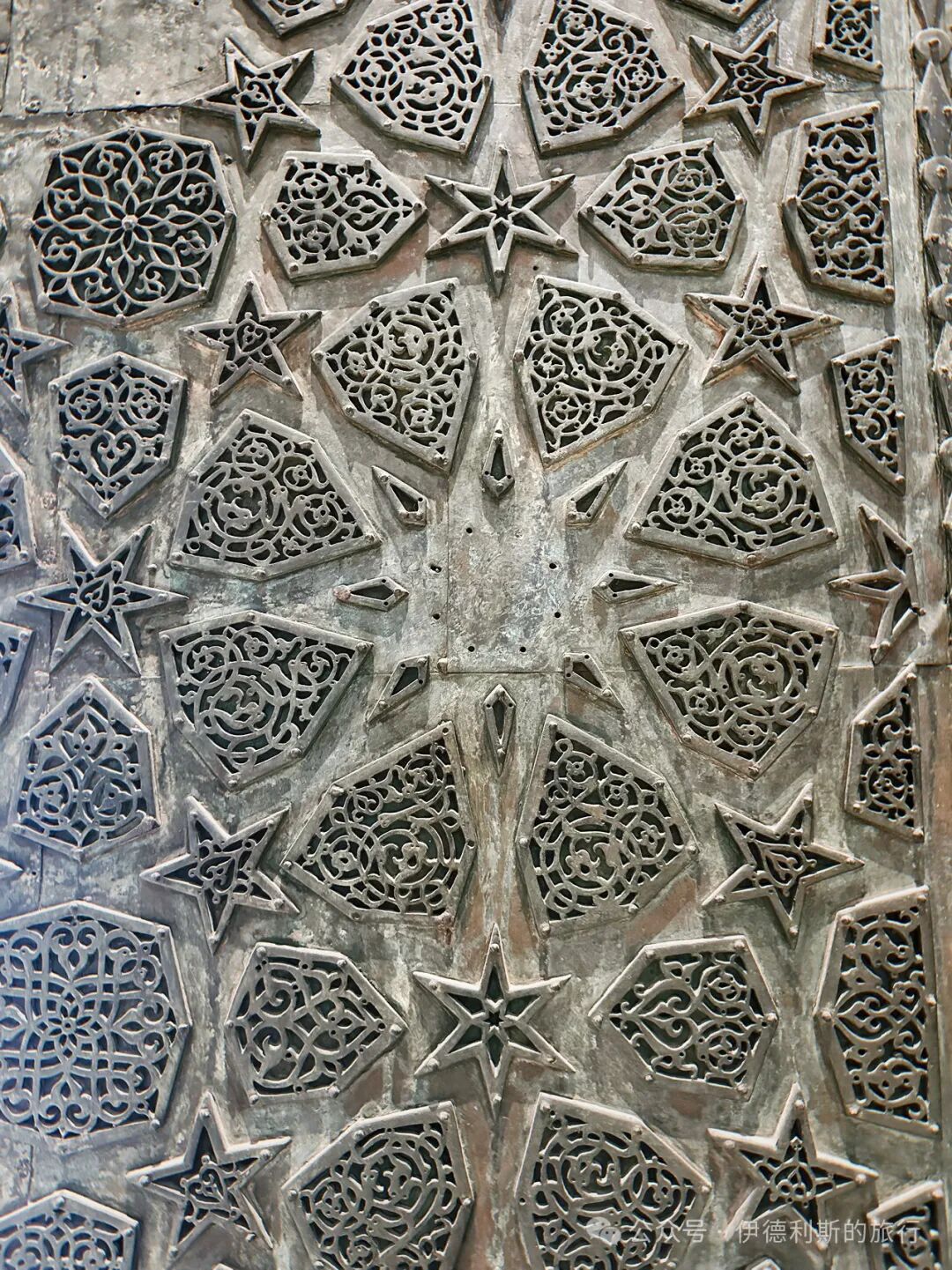
A marble slab from the 12th-century Ayyubid dynasty in Egypt, featuring carvings of griffins and creatures with human heads and bird bodies.
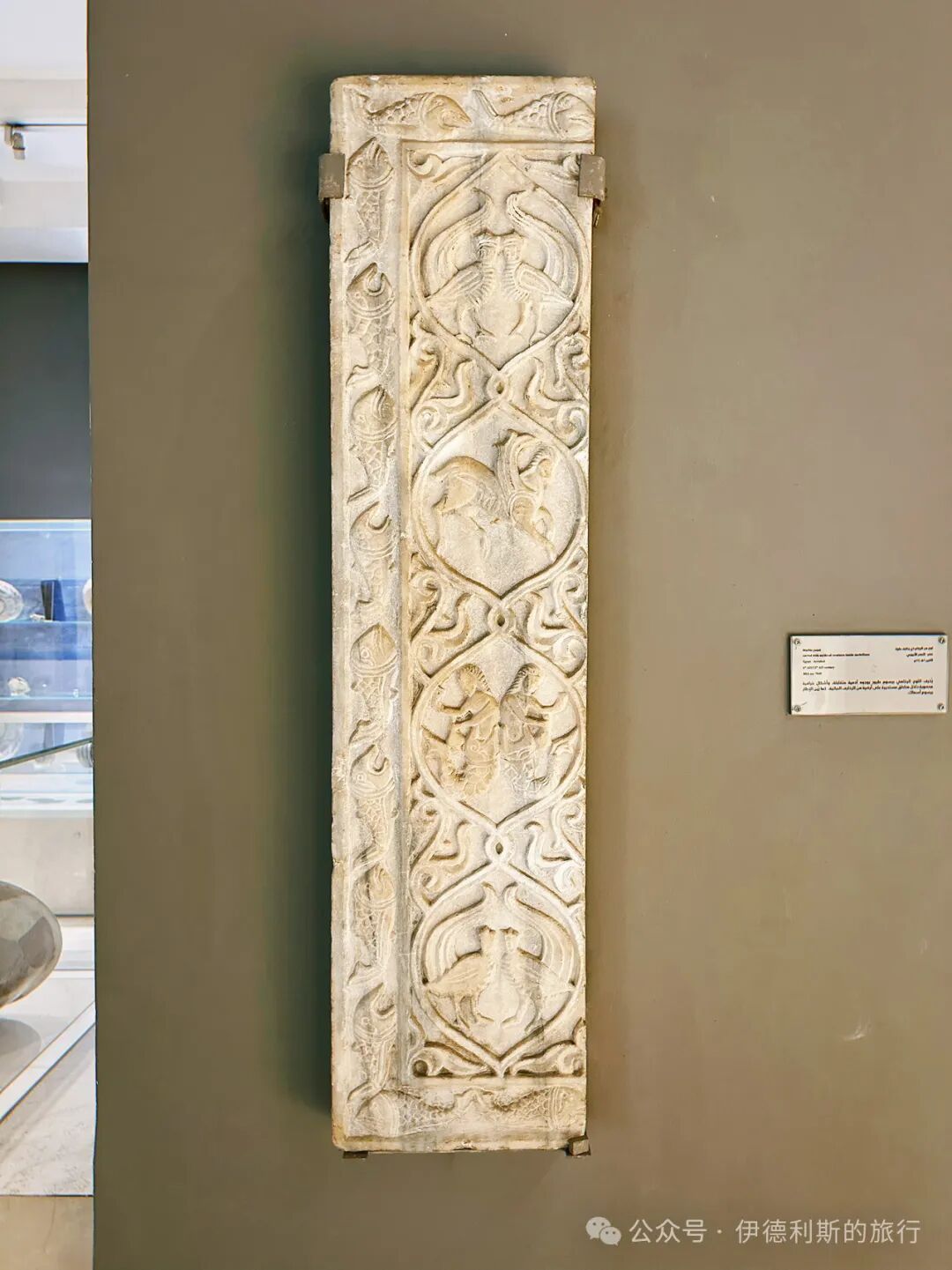
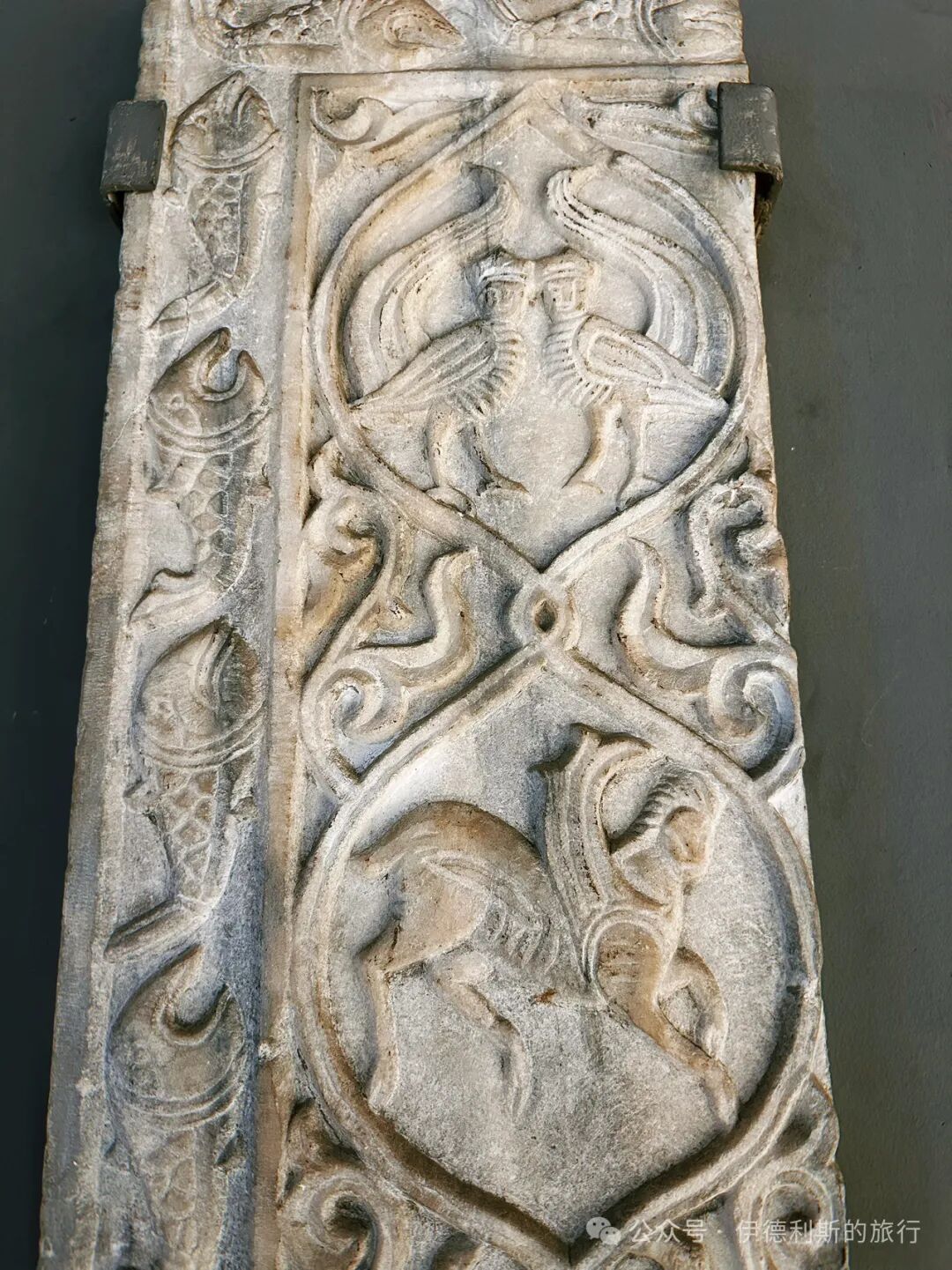
Stucco carvings from the 13th-century Ayyubid dynasty at the Al-Kamil Madrasa in Cairo. The Al-Kamil Madrasa was built in 1225 by the Ayyubid Sultan al-Kamil in the northern part of the former Fatimid Western Palace in Old Cairo, and it was one of Egypt's educational centers during the 13th and 14th centuries.
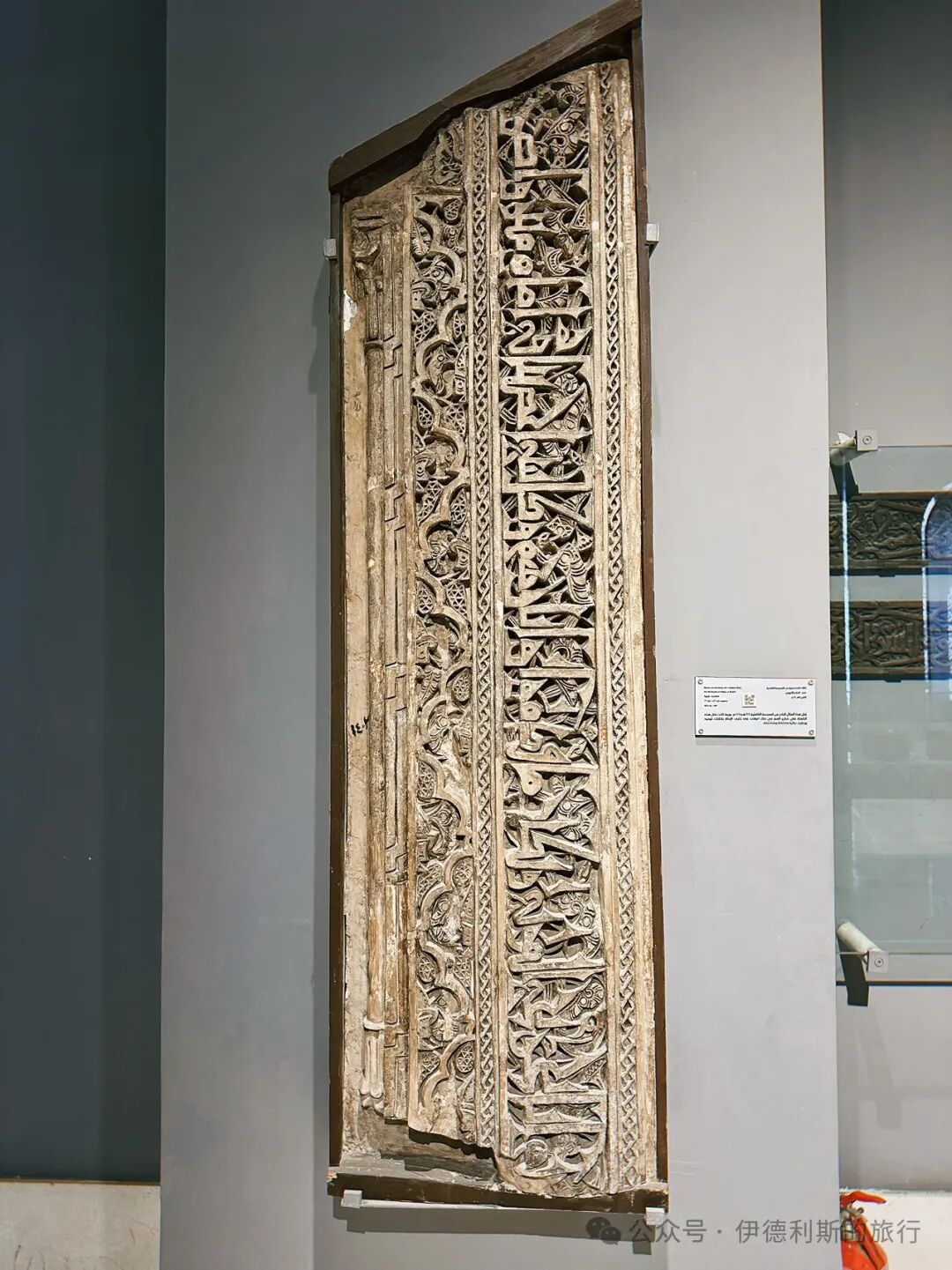
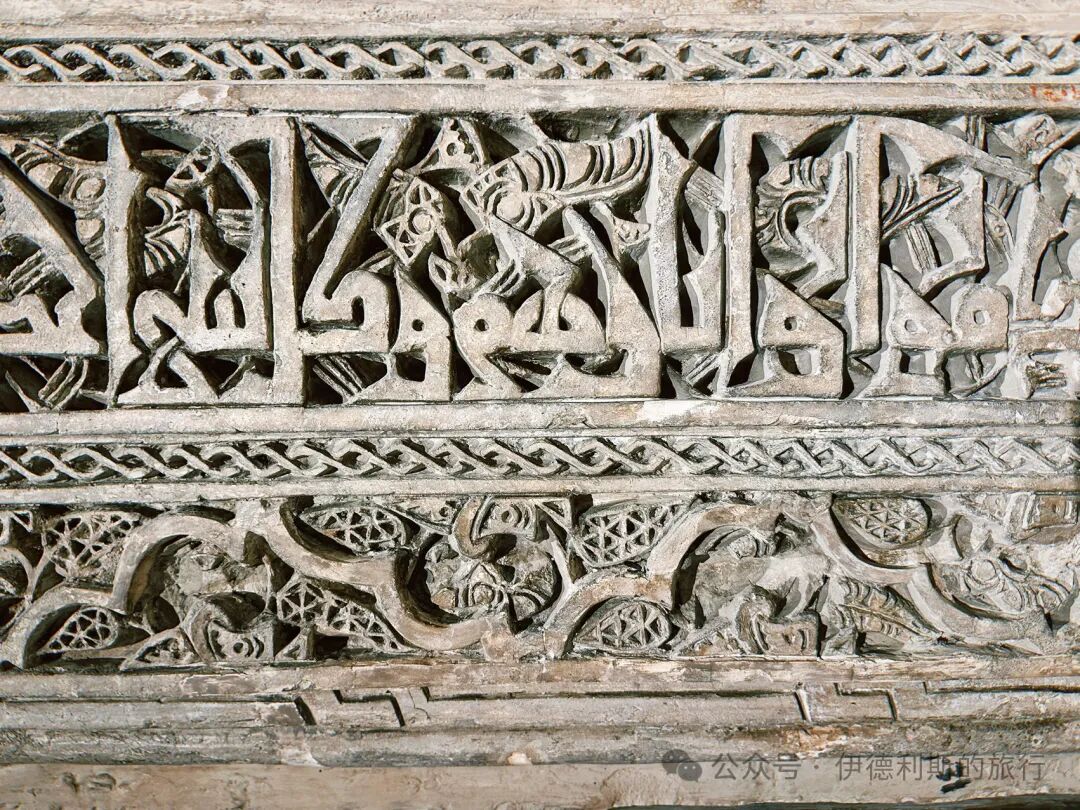
A flint window from the 13th-century Ayyubid dynasty at the Sayf ibn Yazan tomb in Cairo.
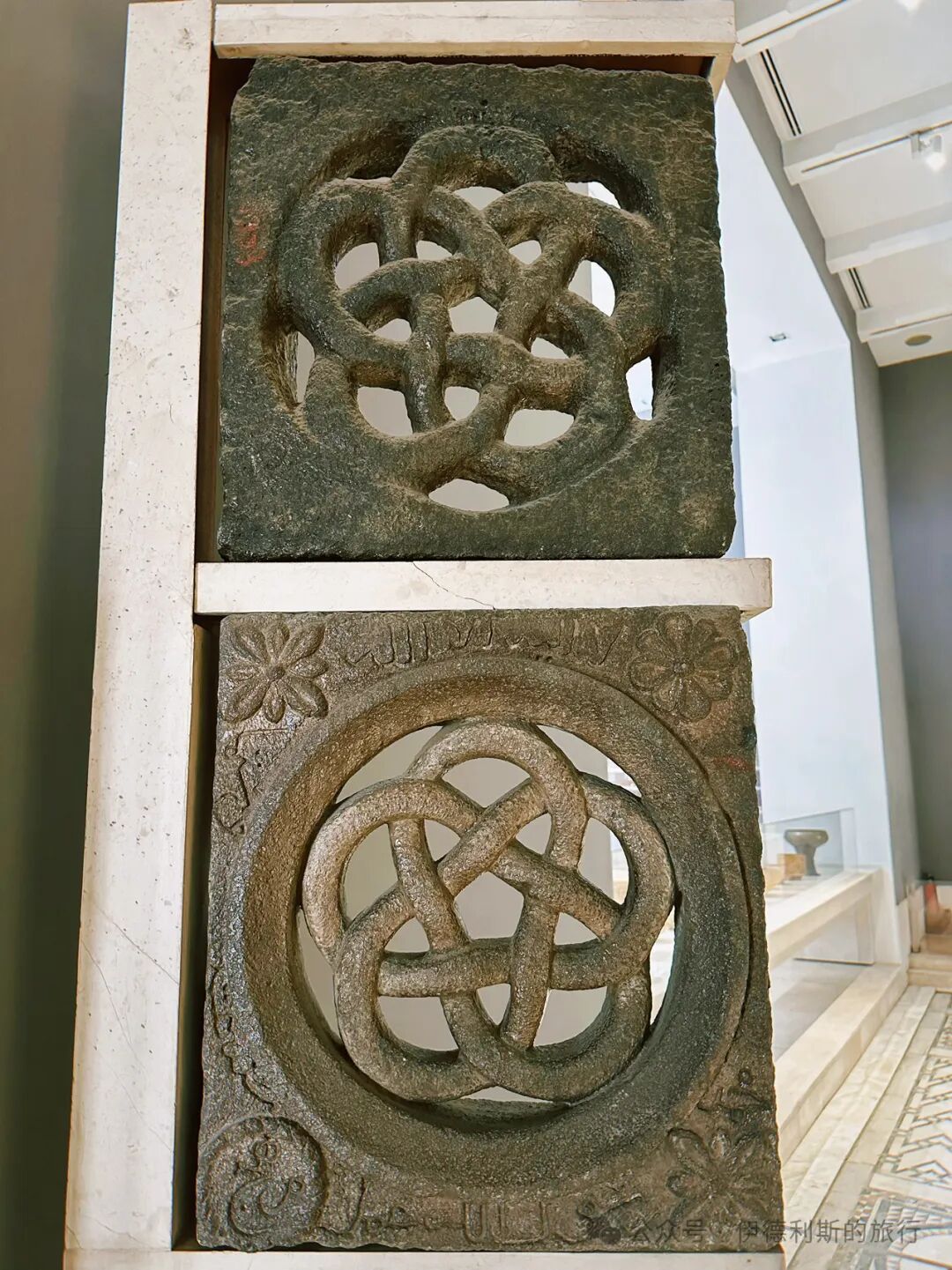
Mamluk Dynasty.
A marble slab from the 14th-century Mamluk period at the Sarghatmish Madrasa in Cairo. The Sarghatmish Madrasa was built in 1356 by order of the Mamluk Emir General Sirghitmish. In the 1350s, Sirghitmish was the most powerful emir of the Mamluk dynasty.
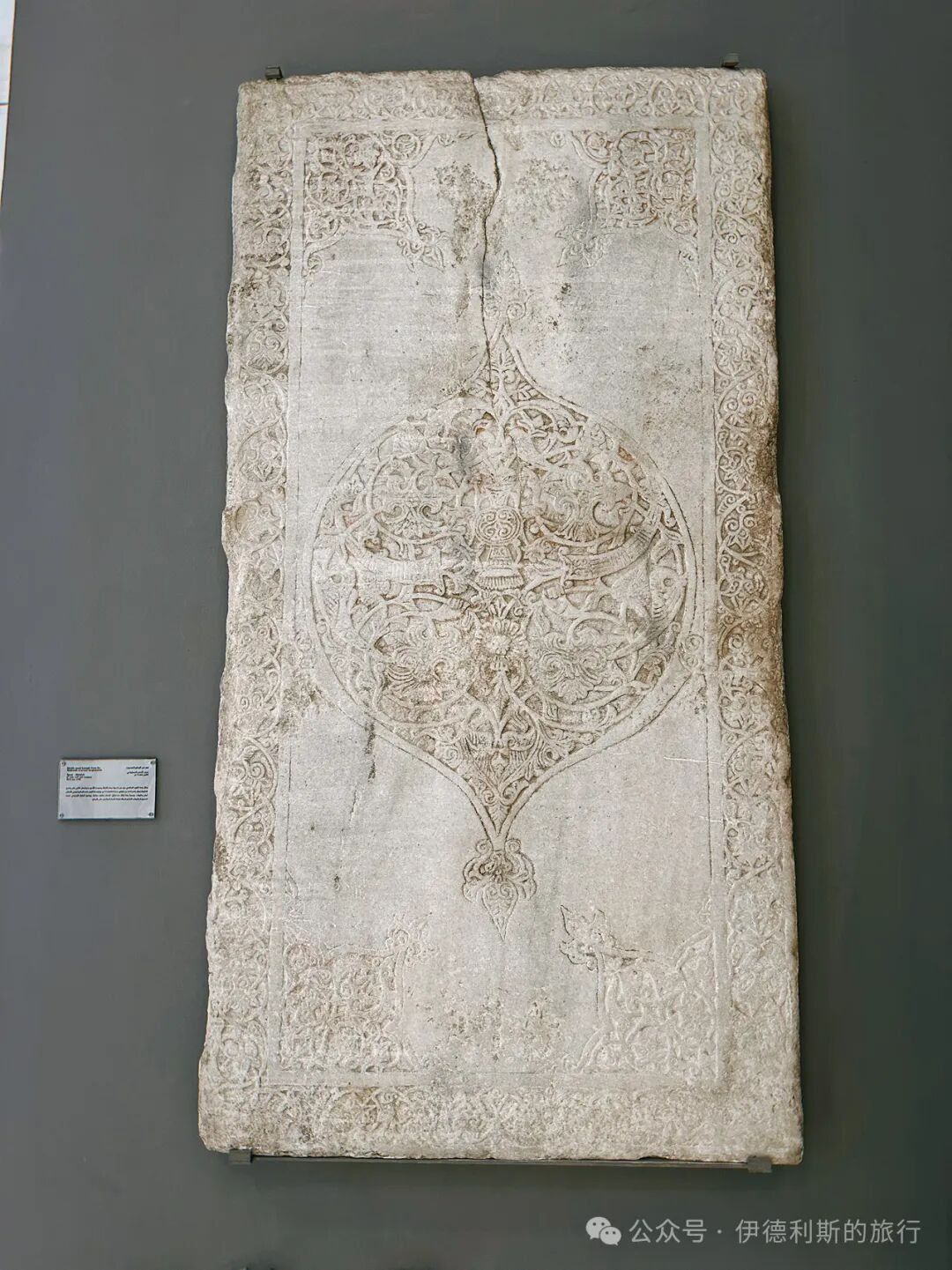
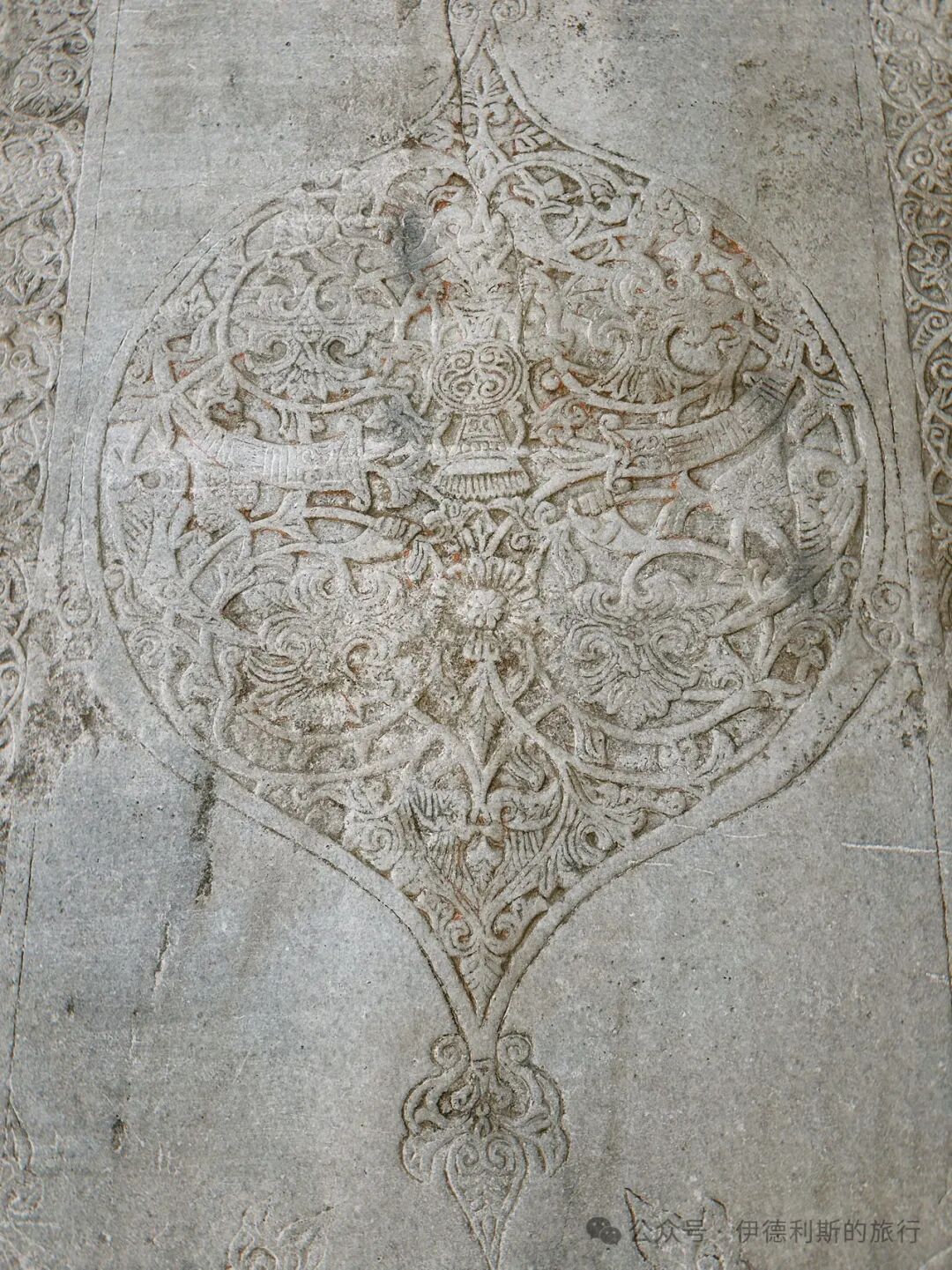
A copper candlestick inscribed with the name of the Mamluk Sultan al-Nasir Muhammad, who reigned from 1299 to 1309.
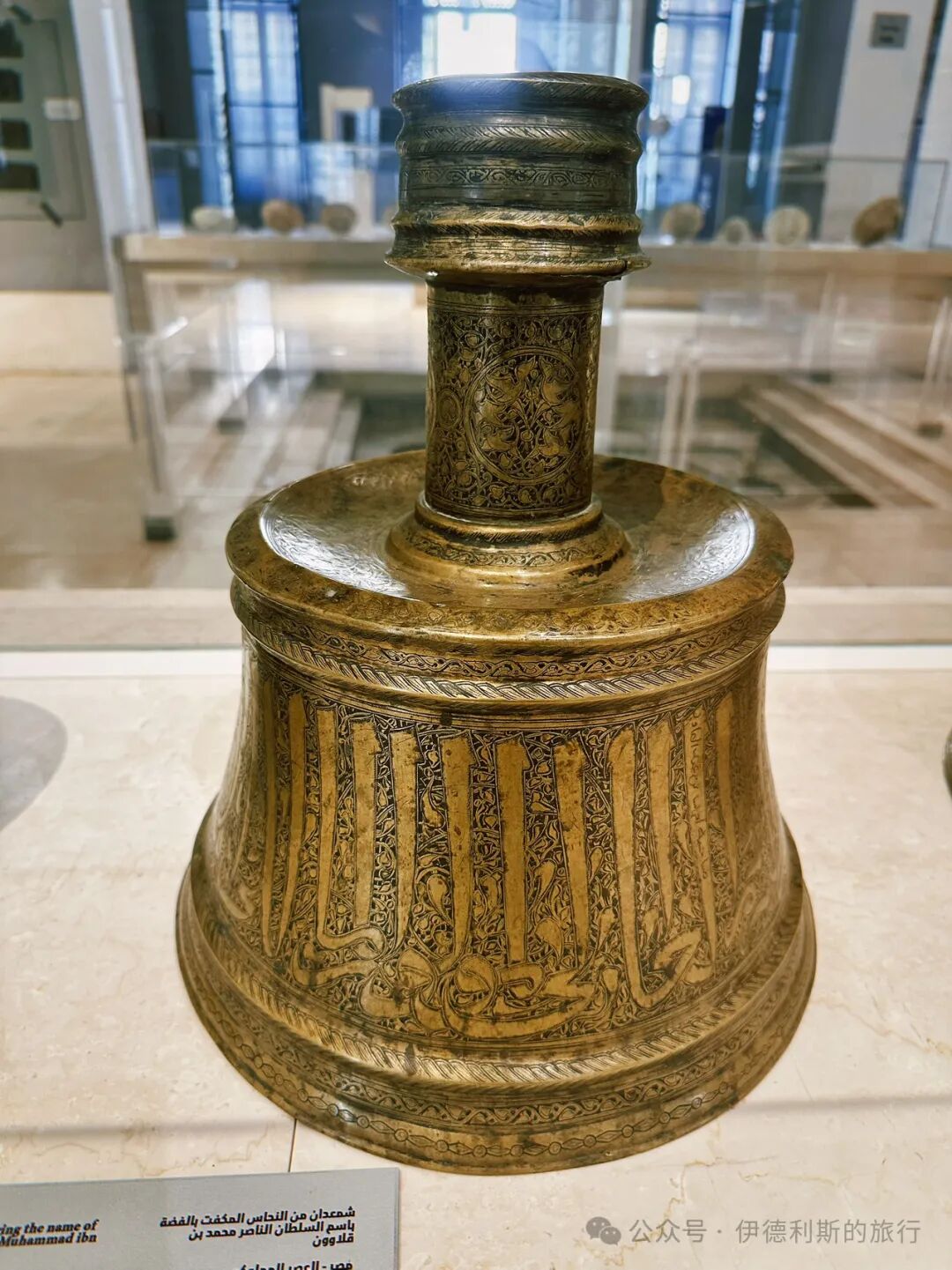
A copper candlestick inscribed with the name of the Mamluk Sultan Qaitbay, who reigned from 1468 to 1496, donated by the Sultan to the Prophet's Mosque in Medina. Although Sultan Qaitbay built many structures in Cairo, his greatest achievement was the restoration of the Prophet's Mosque in Medina. After a fire at the Prophet's Mosque in 1481, Sultan Qaitbay rebuilt the tomb of the Prophet from a wooden structure into a brick one, added metal railings, and donated many chandeliers and candlesticks to the mosque.
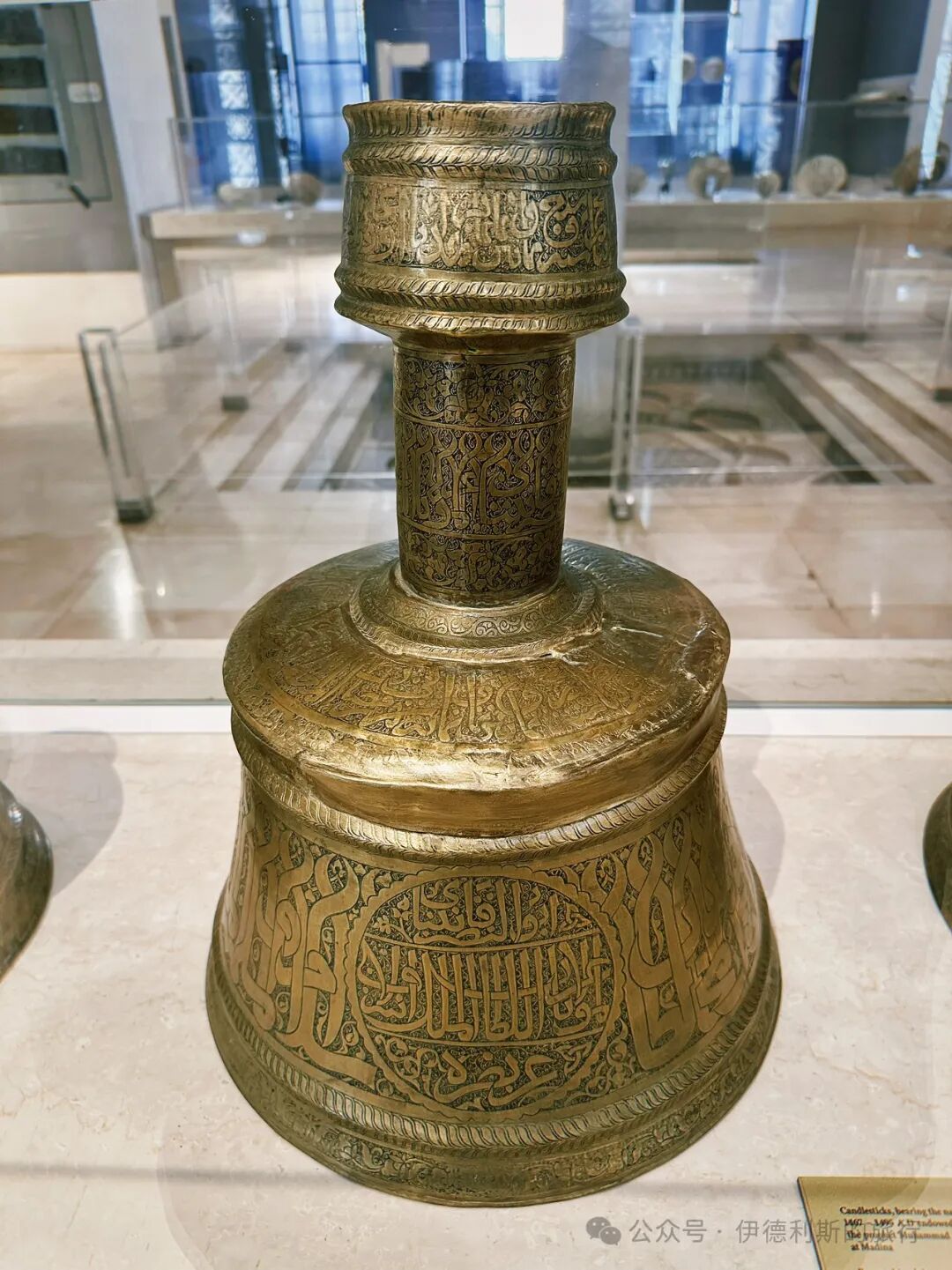
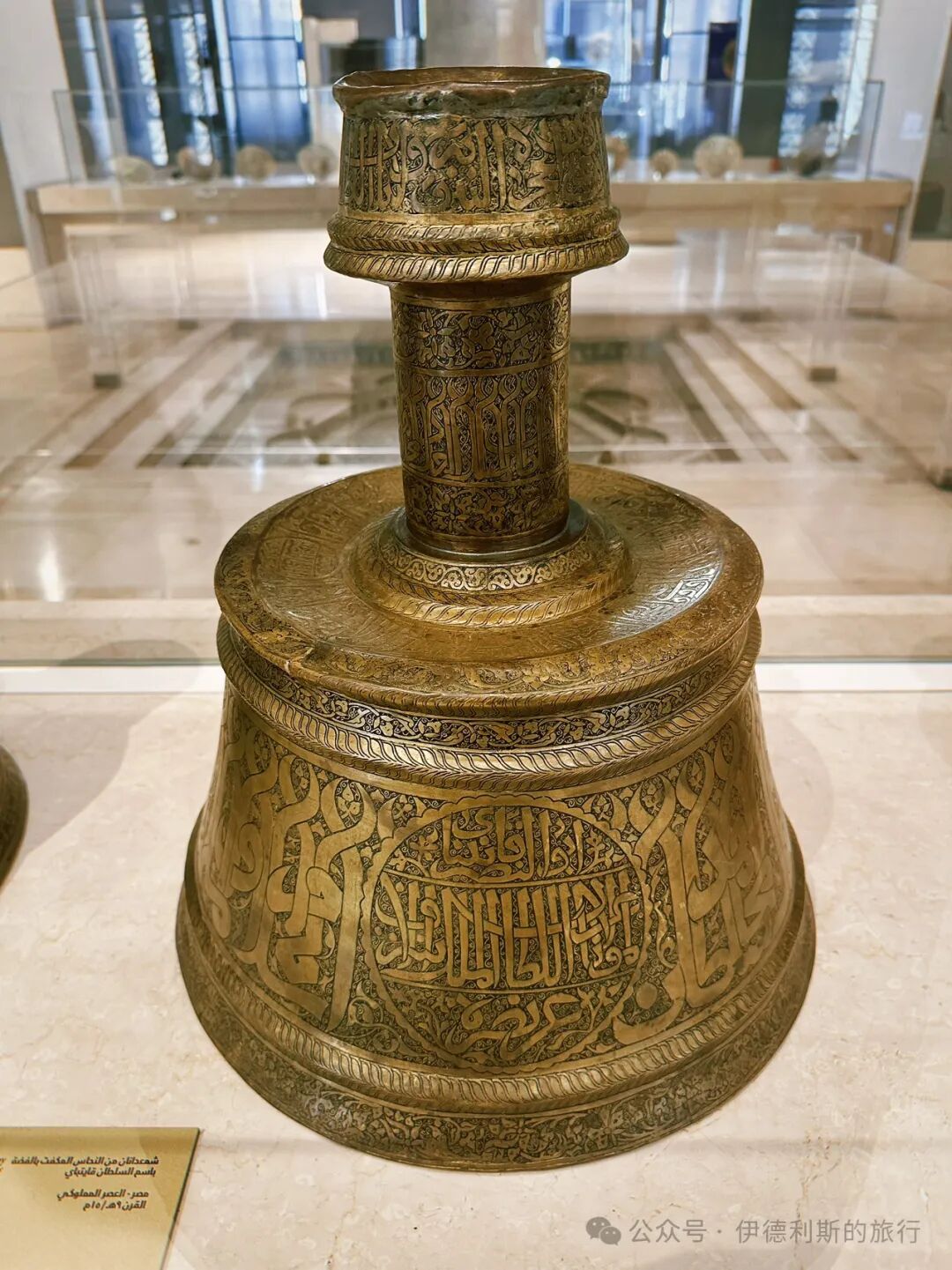
A copper candlestick inlaid with silver from the 14th to 15th-century Mamluk dynasty.
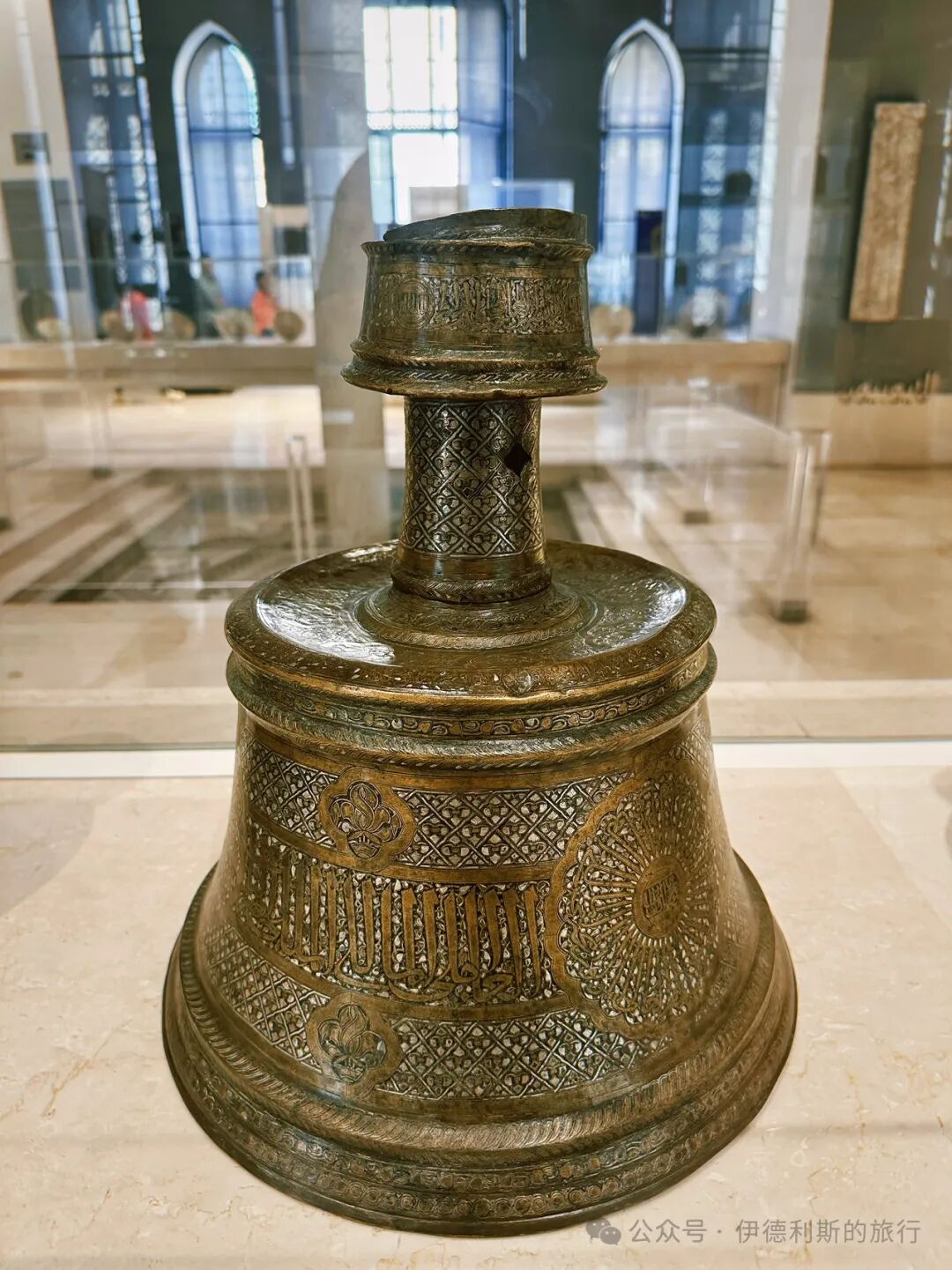
A copper candlestick inscribed with the name of the wife of the Mamluk Sultan Qaitbay.
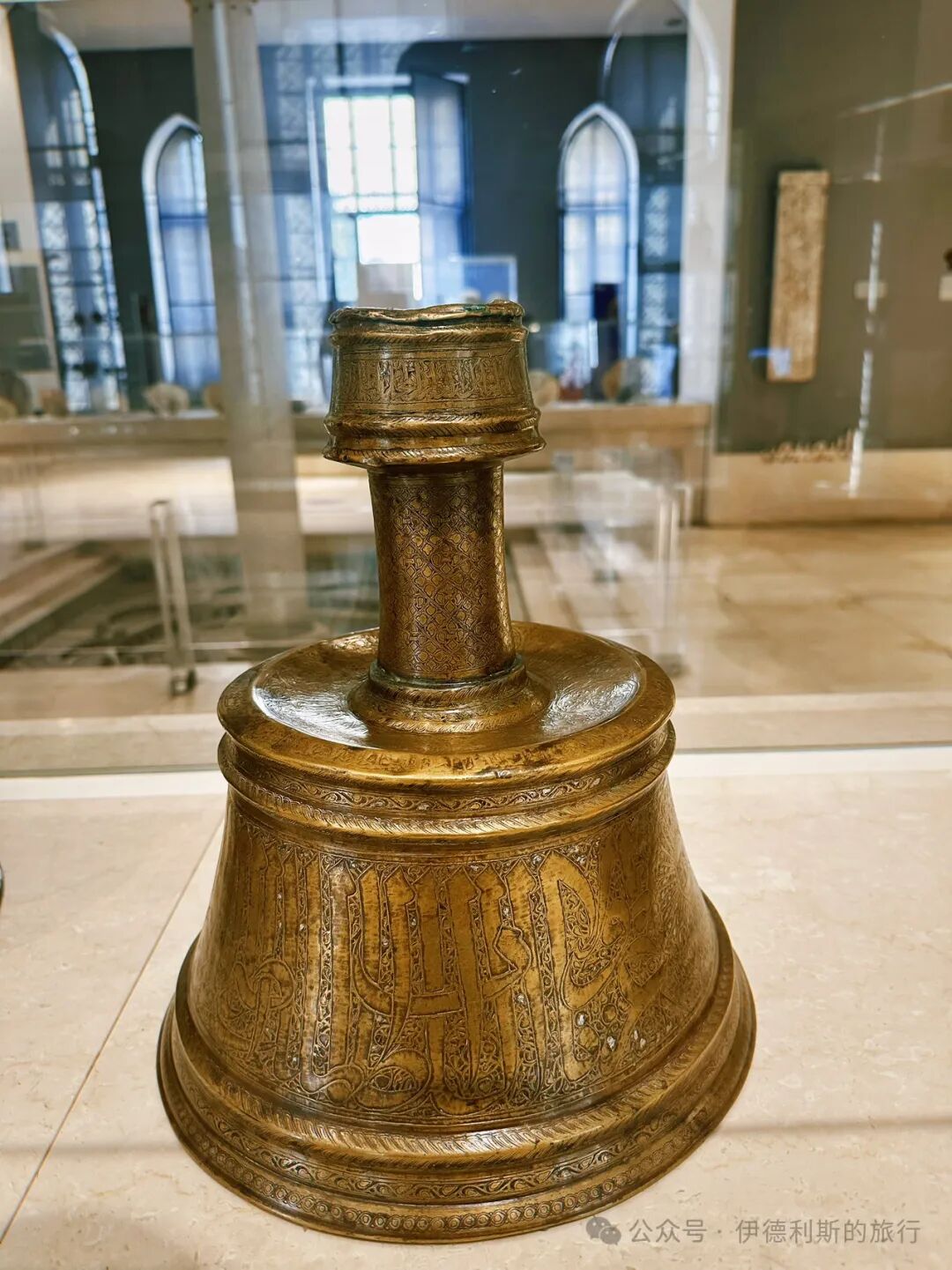
A copper incense burner inlaid with gold and silver from the 14th-century Mamluk dynasty.
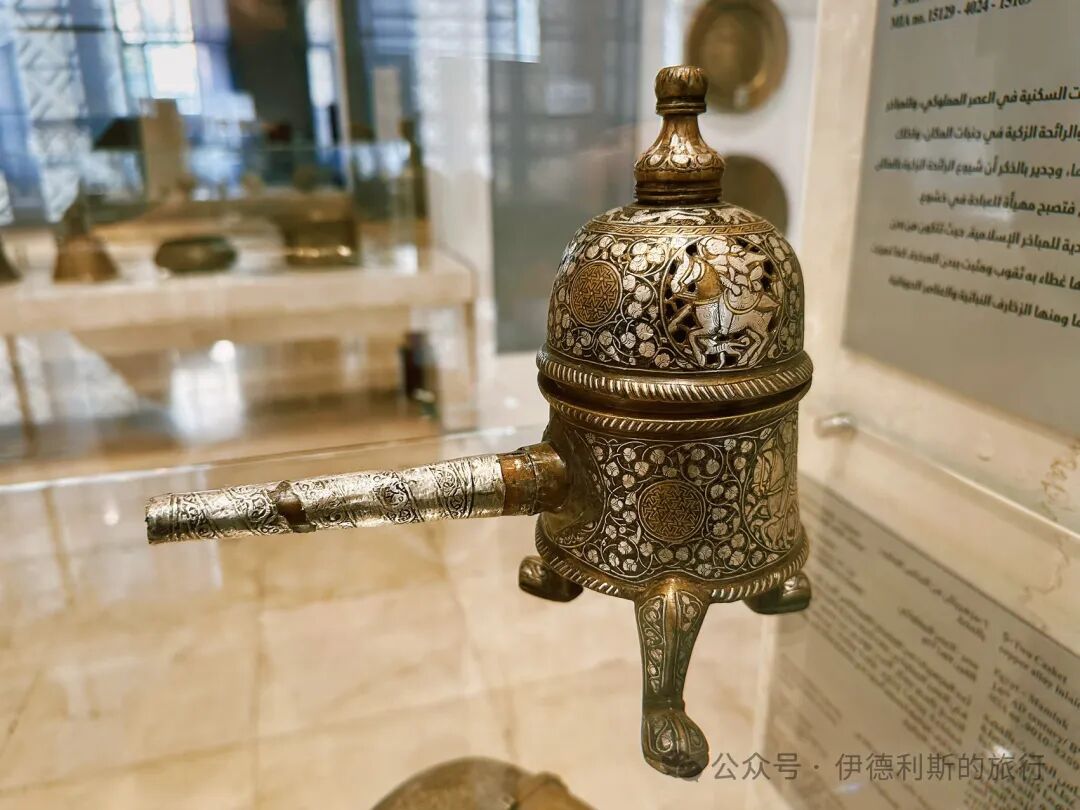
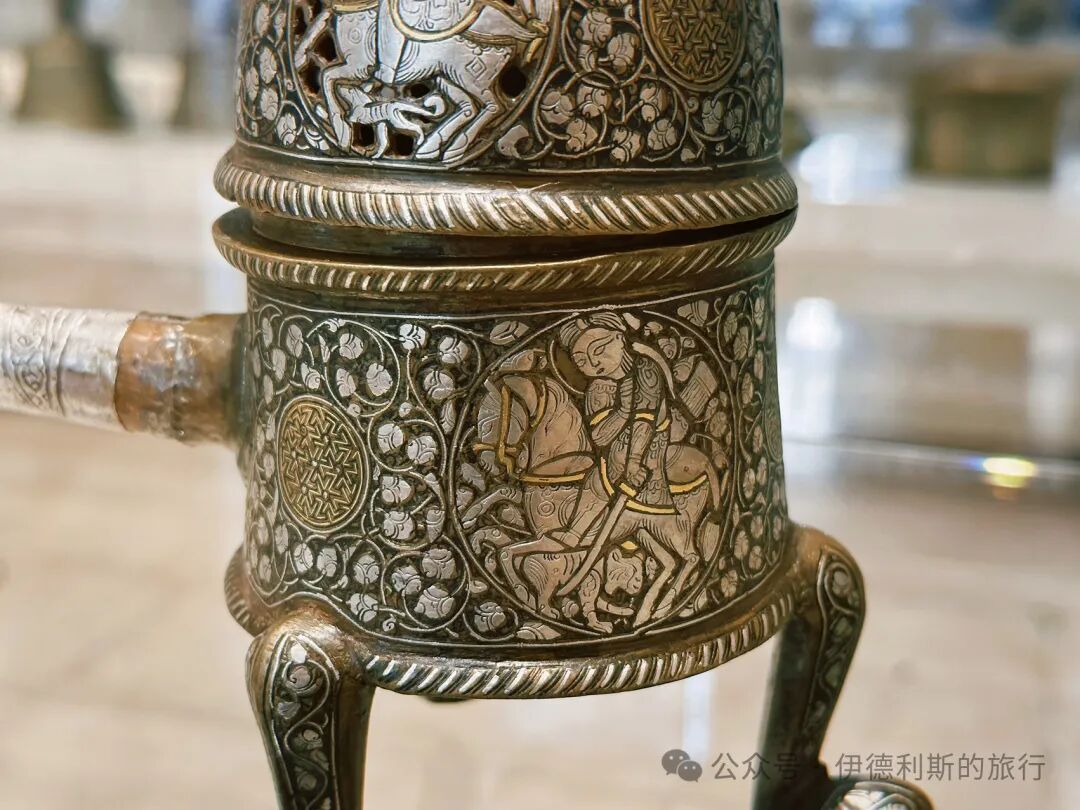
A wooden door from the 13th-century Mamluk period at the Salihiyya Madrasa in Cairo. The Ayyubid Sultan As-Salih Ayyub founded the Salihiyya Madrasa in 1242, and it was one of Egypt's most famous centers of education during the 13th and 14th centuries.
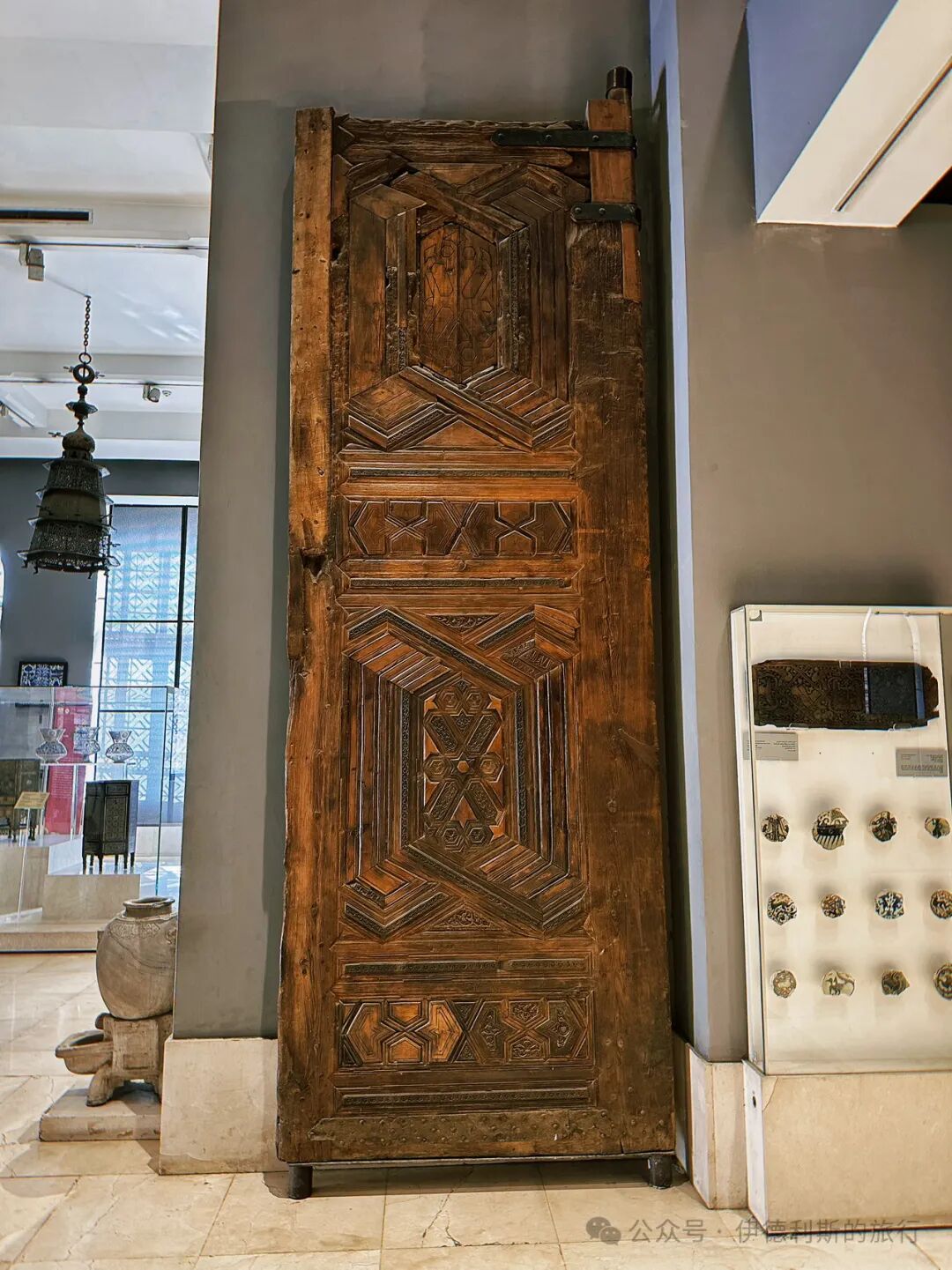
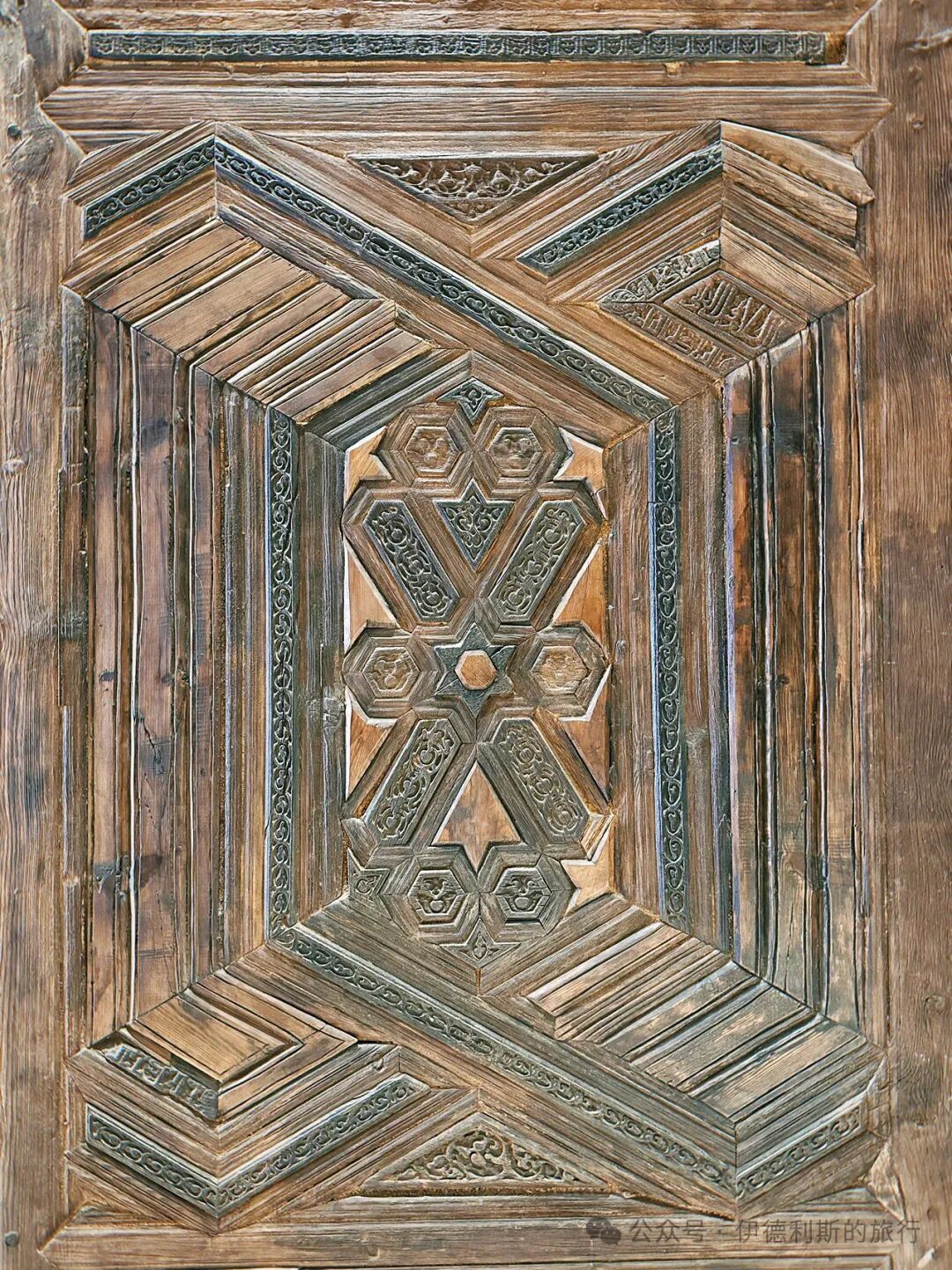
A 14th-century Mamluk-era wooden cabinet from Egypt, inlaid with painted ivory decorations.
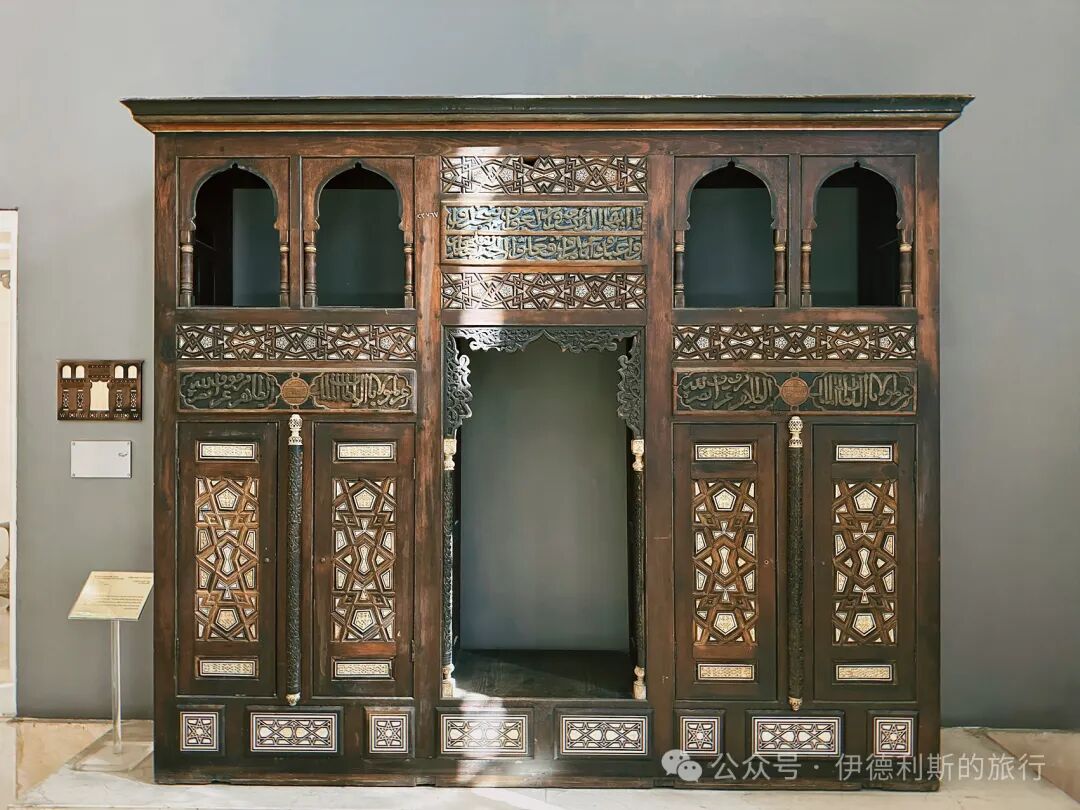
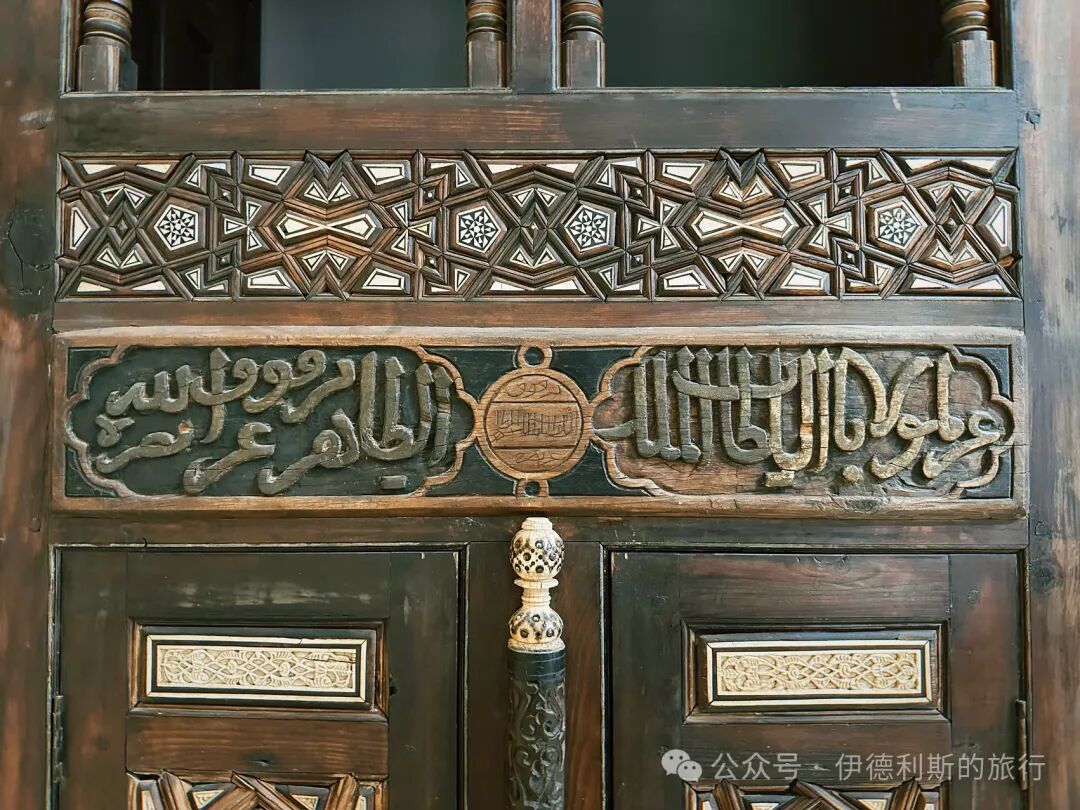
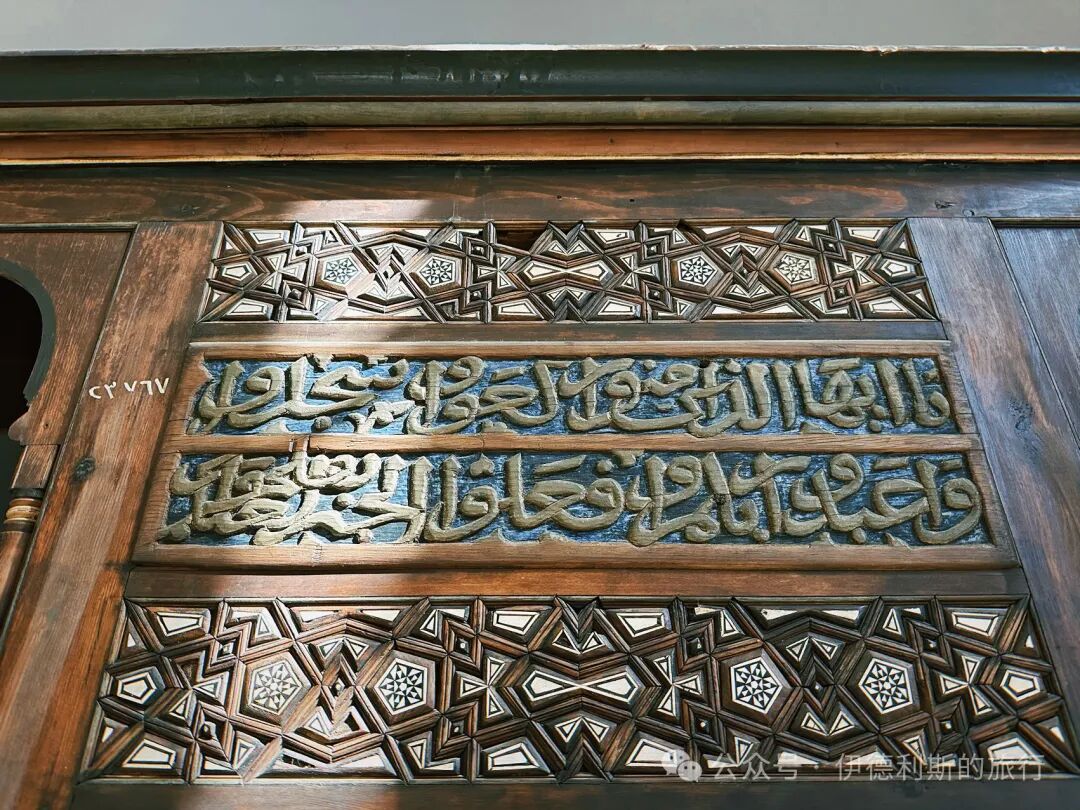
Above is a 13th-14th century Mamluk double-headed eagle marble carving from Egypt, and below is a 13th-century marble carving featuring the lion emblem of the Mamluk Sultan Baybars I (reigned 1260-1277). Baybars was the fourth sultan of the Mamluk dynasty and a tough military leader who defeated invasions by the Crusaders and the Mongol army.
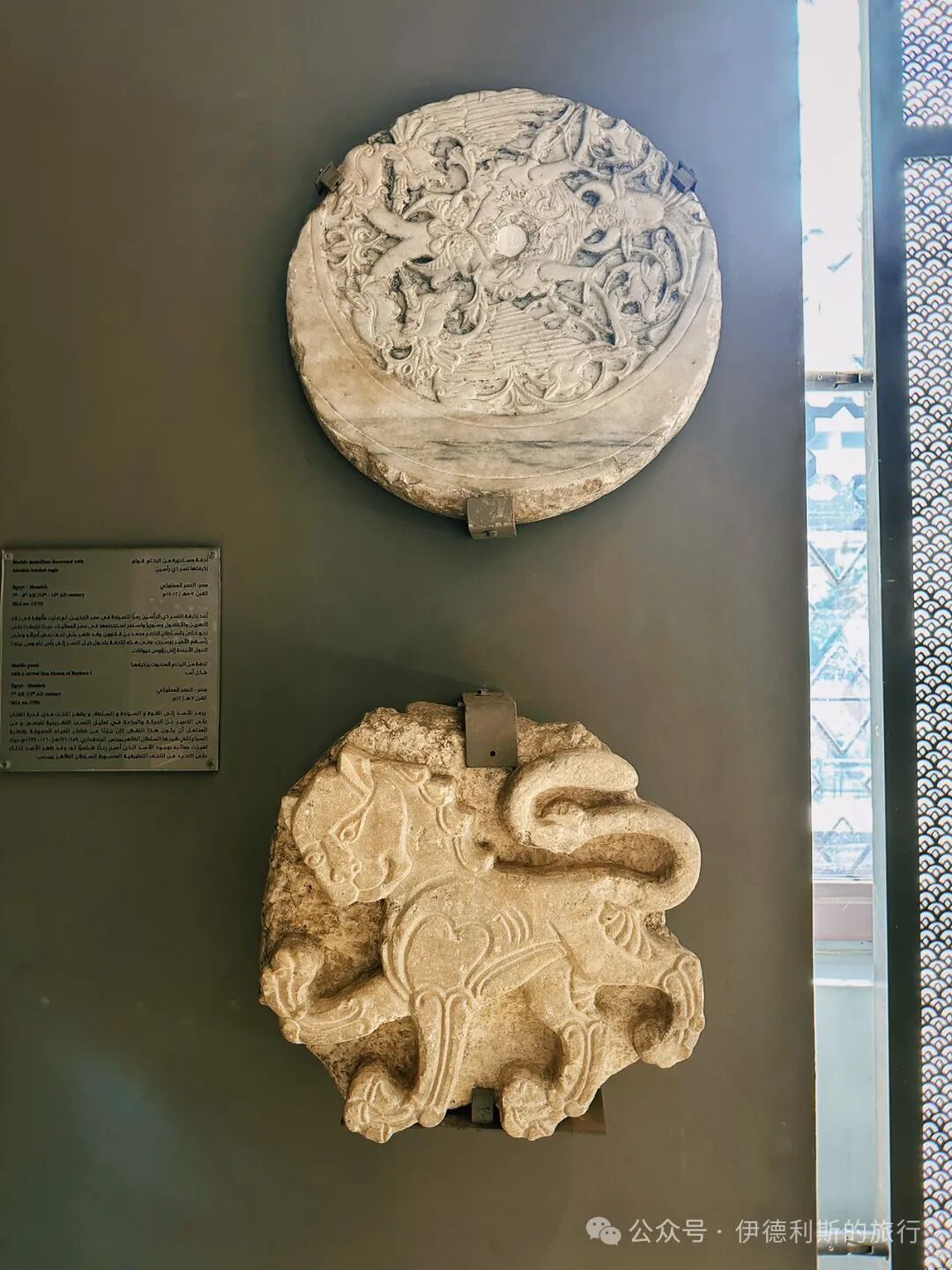
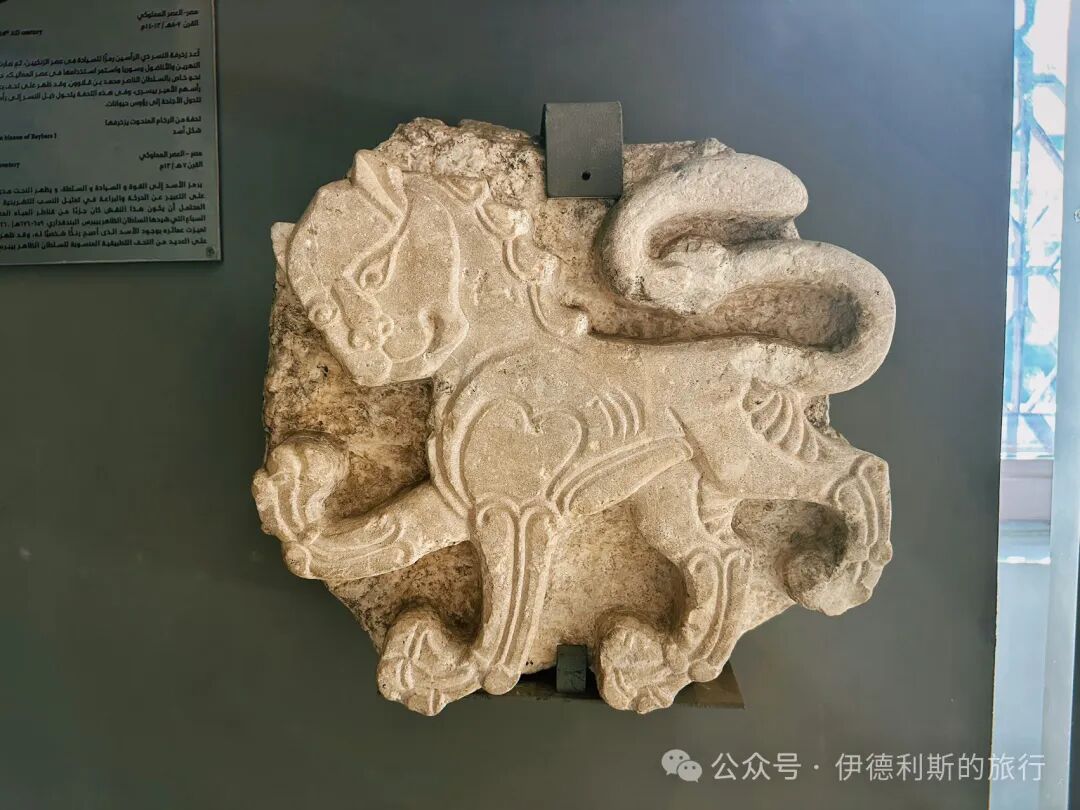
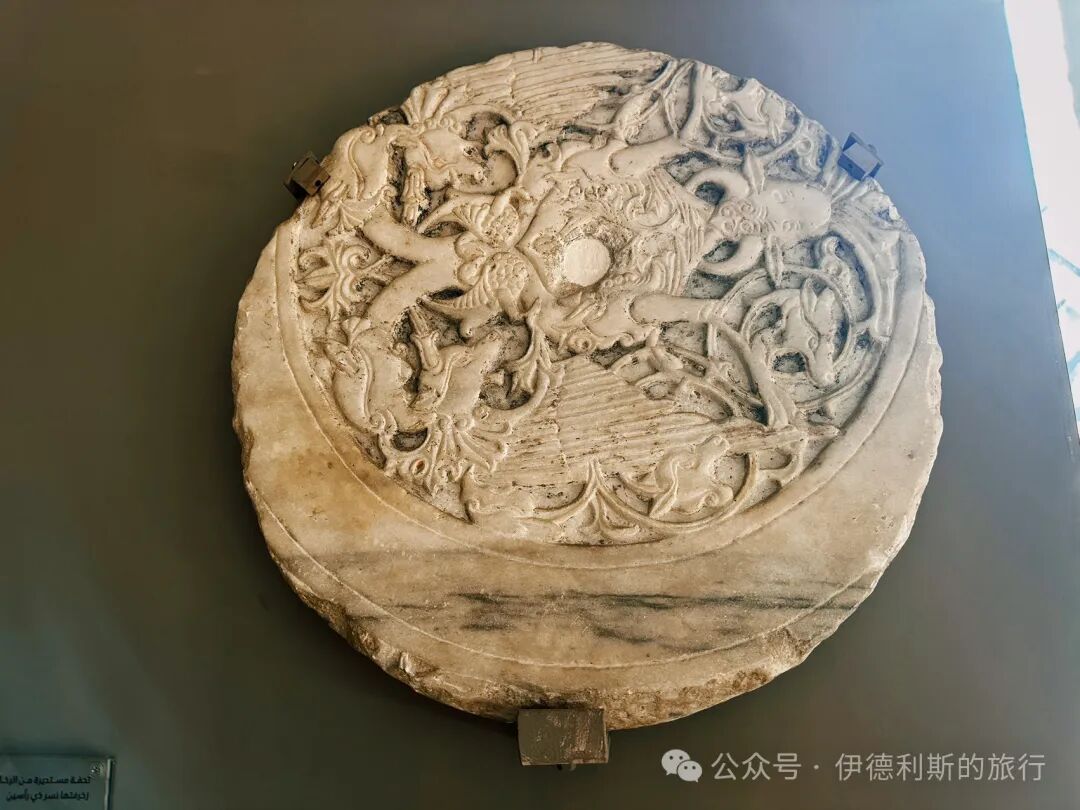
A glass lamp from a 14th-century Mamluk-era mosque in Egypt.
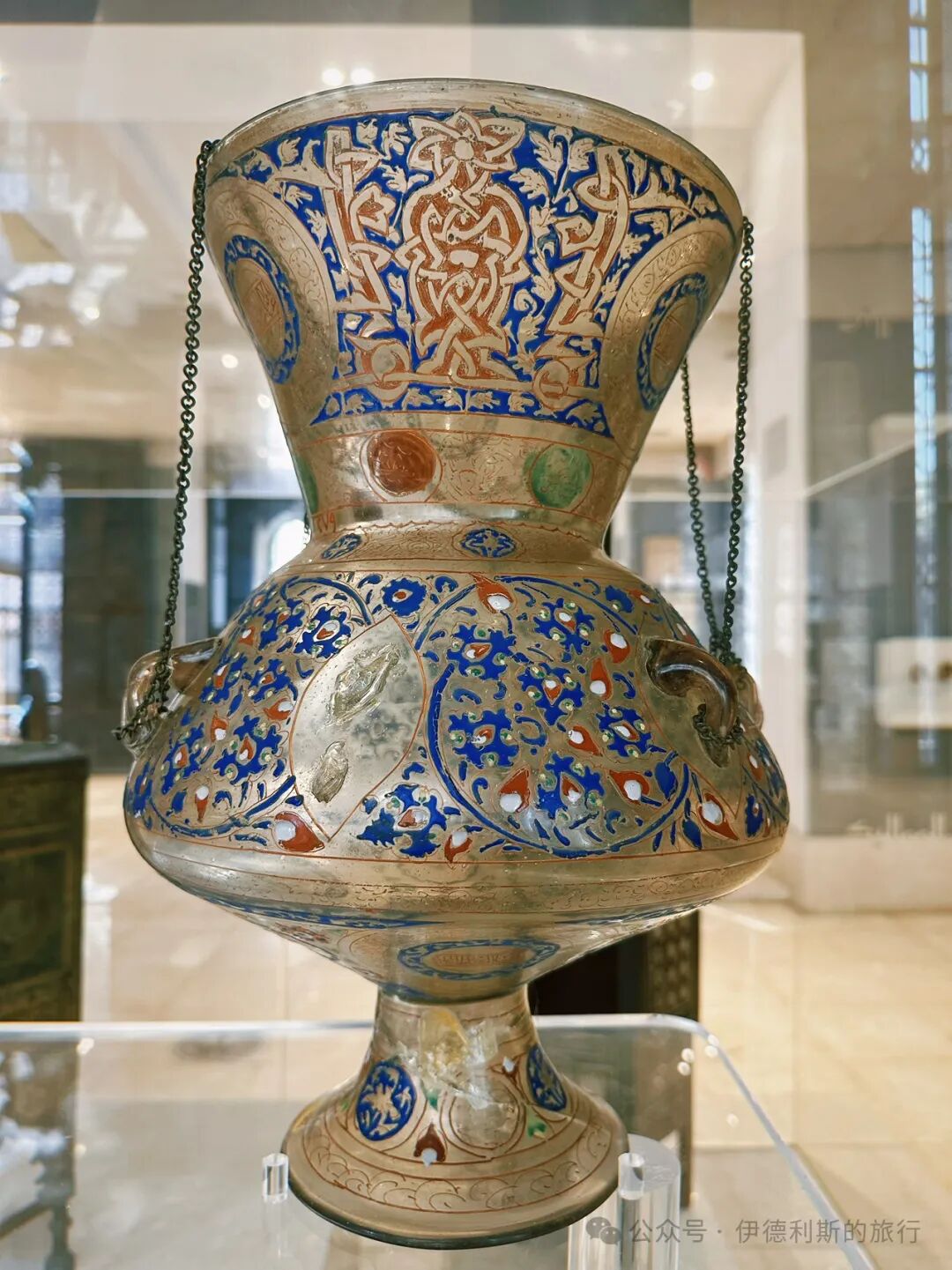
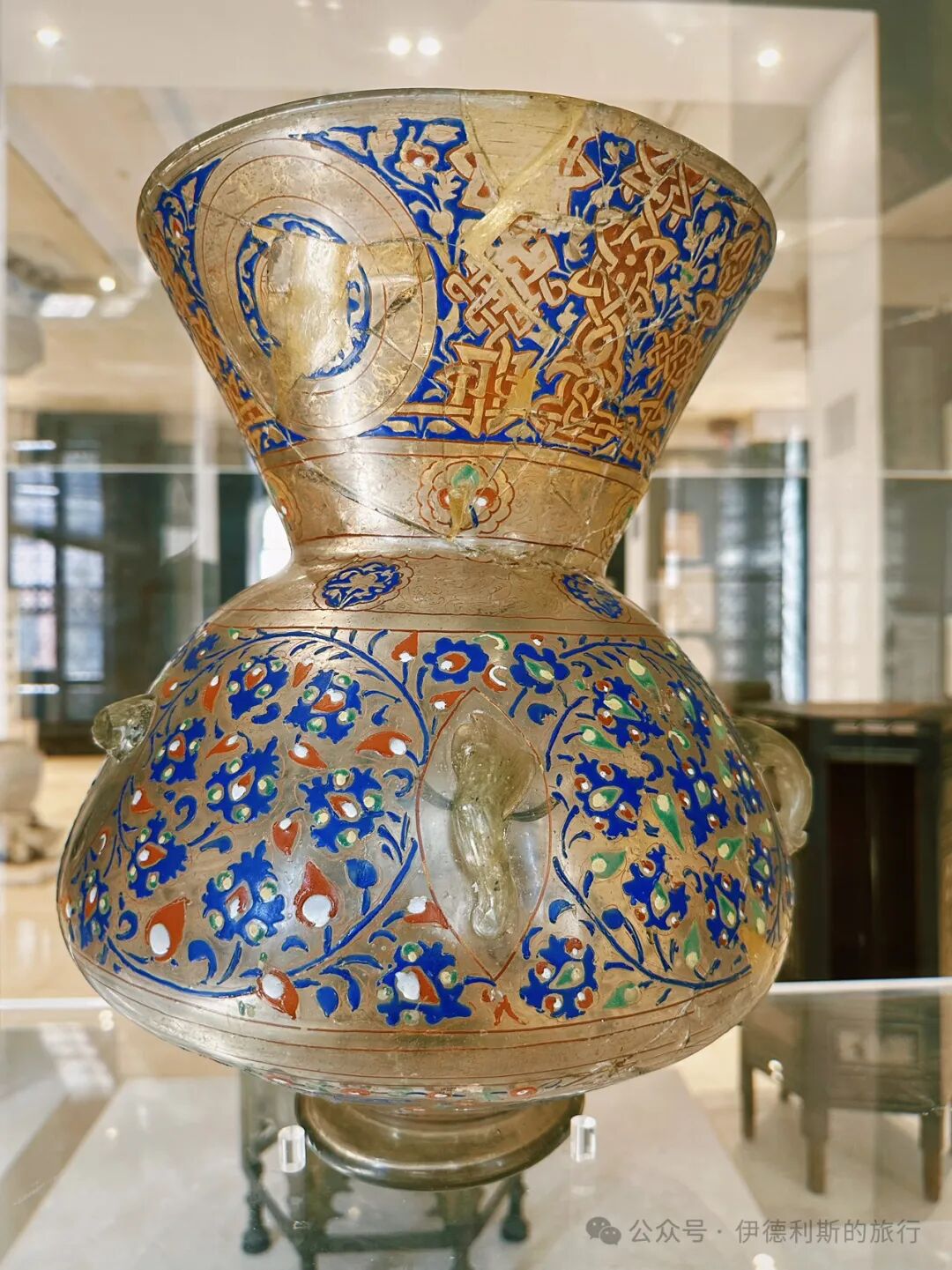
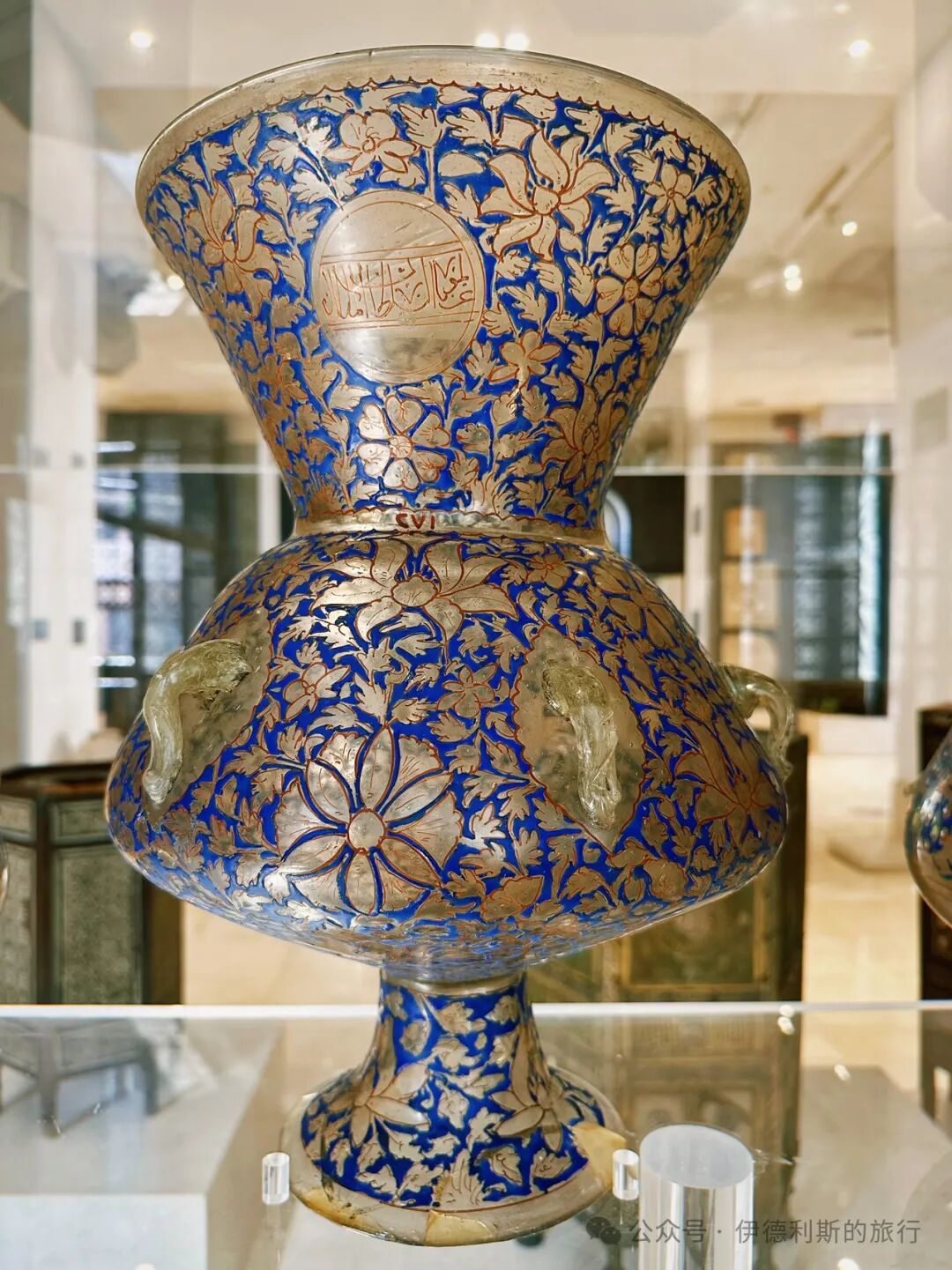
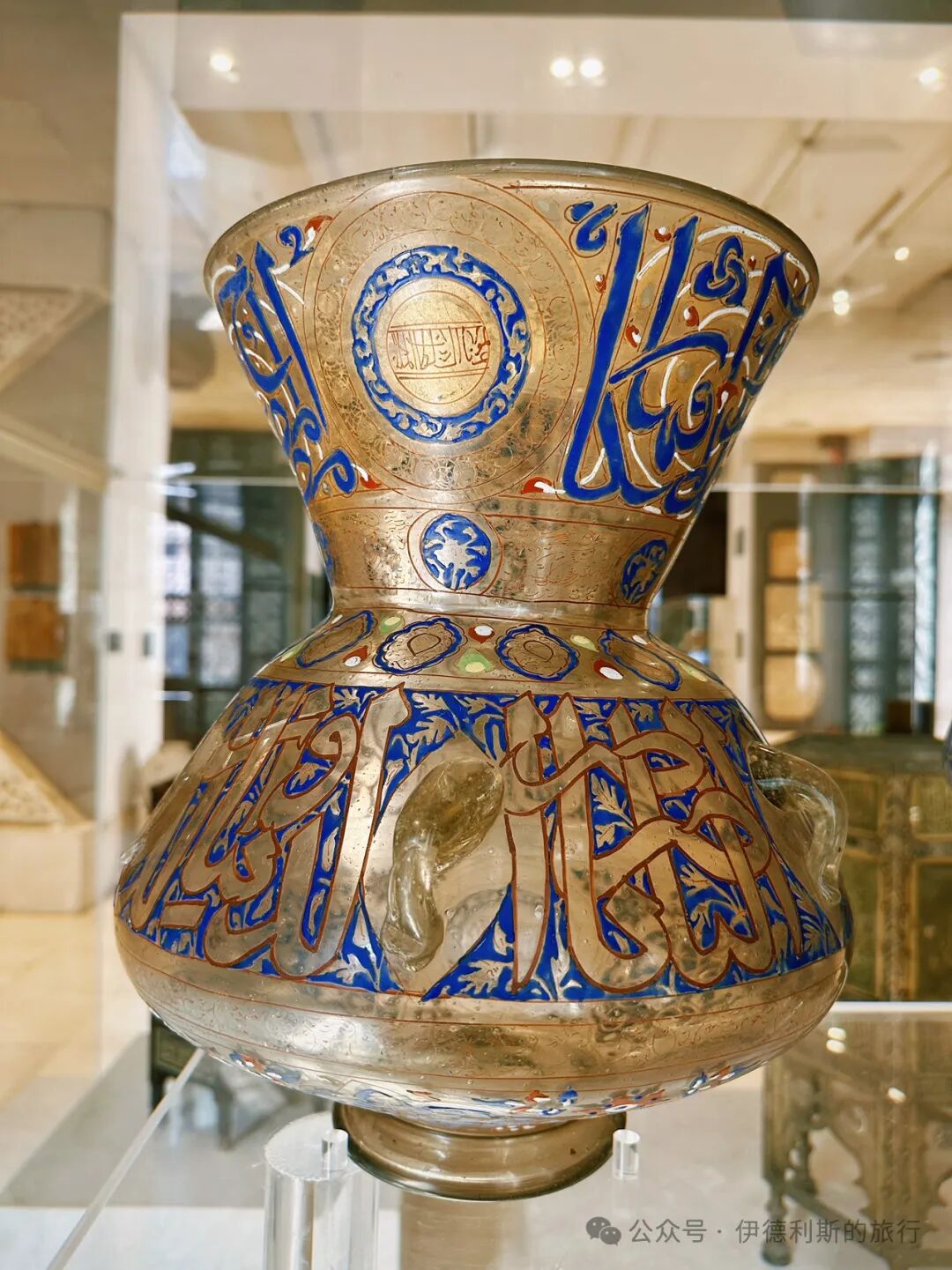
A 14th-century Mamluk-era wooden Quran box and table inlaid with ebony and ivory from the Umm al-Sultan Sha'ban Madrasa in Cairo. The Mamluk Sultan Al-Ashraf Sha'ban ordered the construction of the madrasa in 1368-9 to honor his mother, who was on a pilgrimage (hajj) at the time.
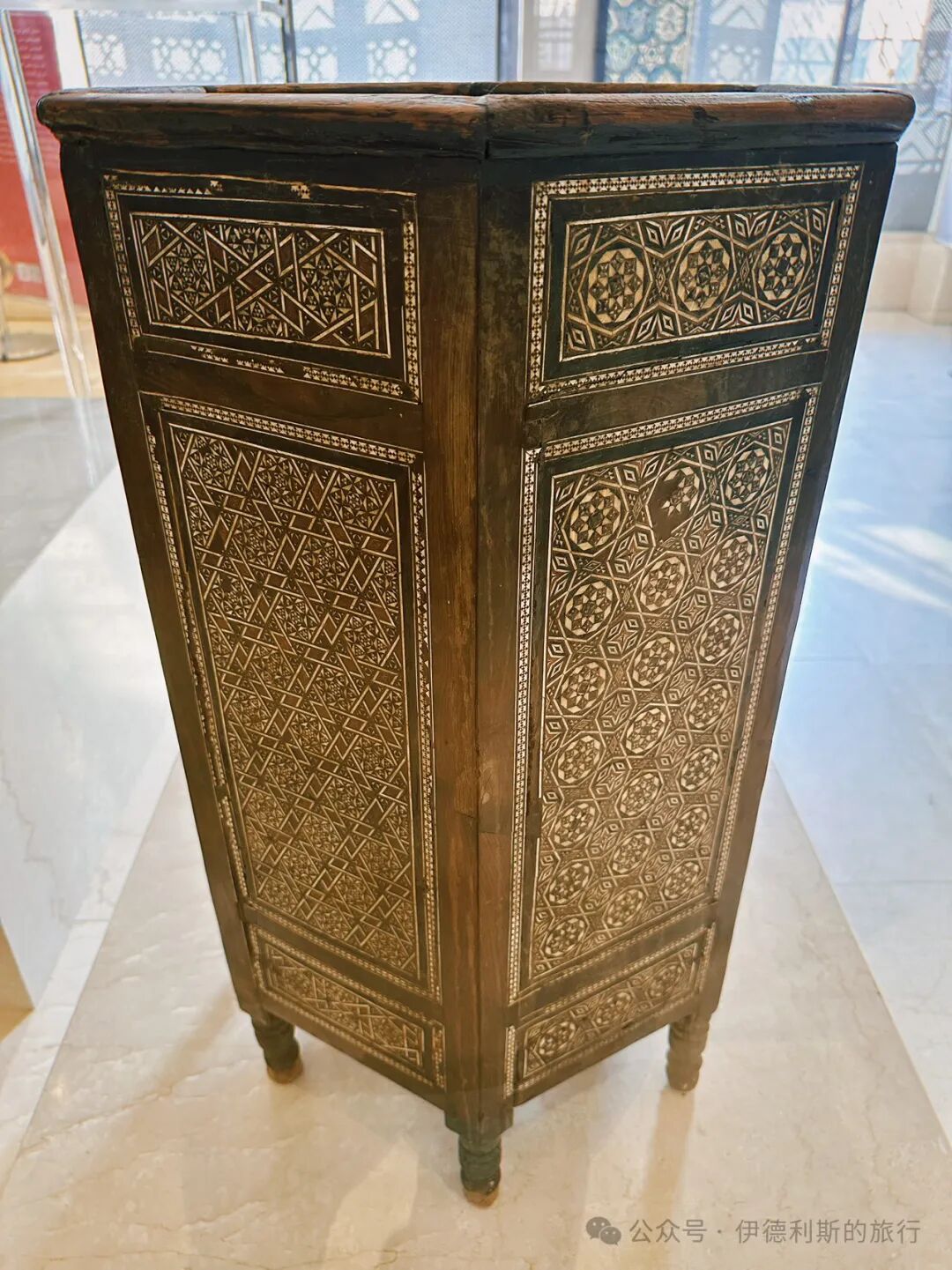
Two Mamluk-era wood carvings; the first one bears the name of Sultan Qaitbay (reigned 1468-96). Qaitbay was one of the sultans who sponsored the most architecture in Mamluk history. Although the Mamluk dynasty was in decline, the situation remained relatively stable and commerce flourished under Sultan Qaitbay's rule.
The second carving bears the name of the Mamluk Sultan Al-Ashraf Qansuh al-Ghuri (reigned 1501-16). He was the second-to-last sultan of the Mamluk Sultanate. The Ottoman Sultan Selim I killed him in 1516, which marked the shift of control in the Middle East from the Mamluk dynasty to the Ottoman dynasty.
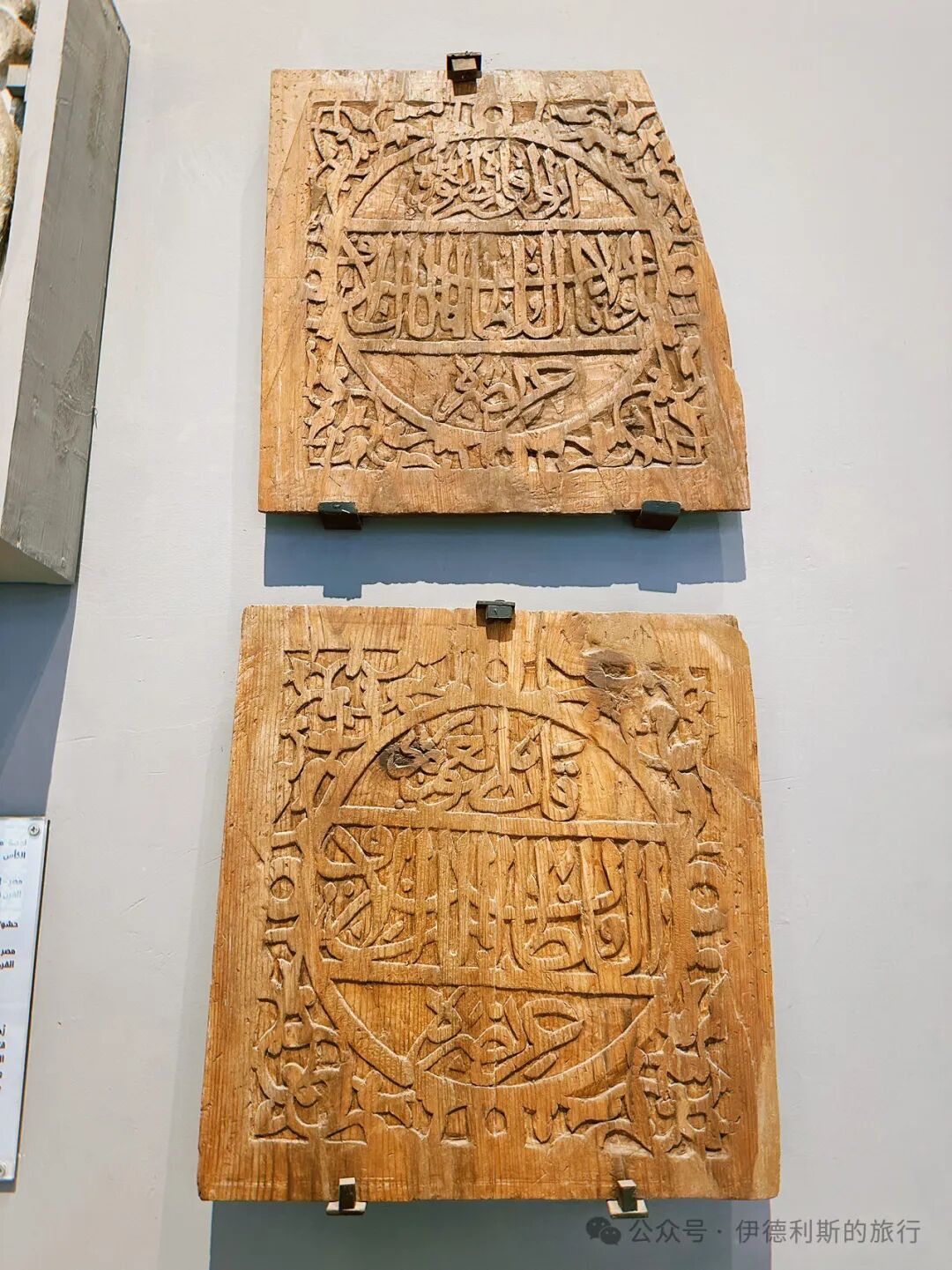
Components of a minbar (pulpit) from the 14th-century Mamluk-era Al-Khatiri-Boulaq mosque in Egypt.
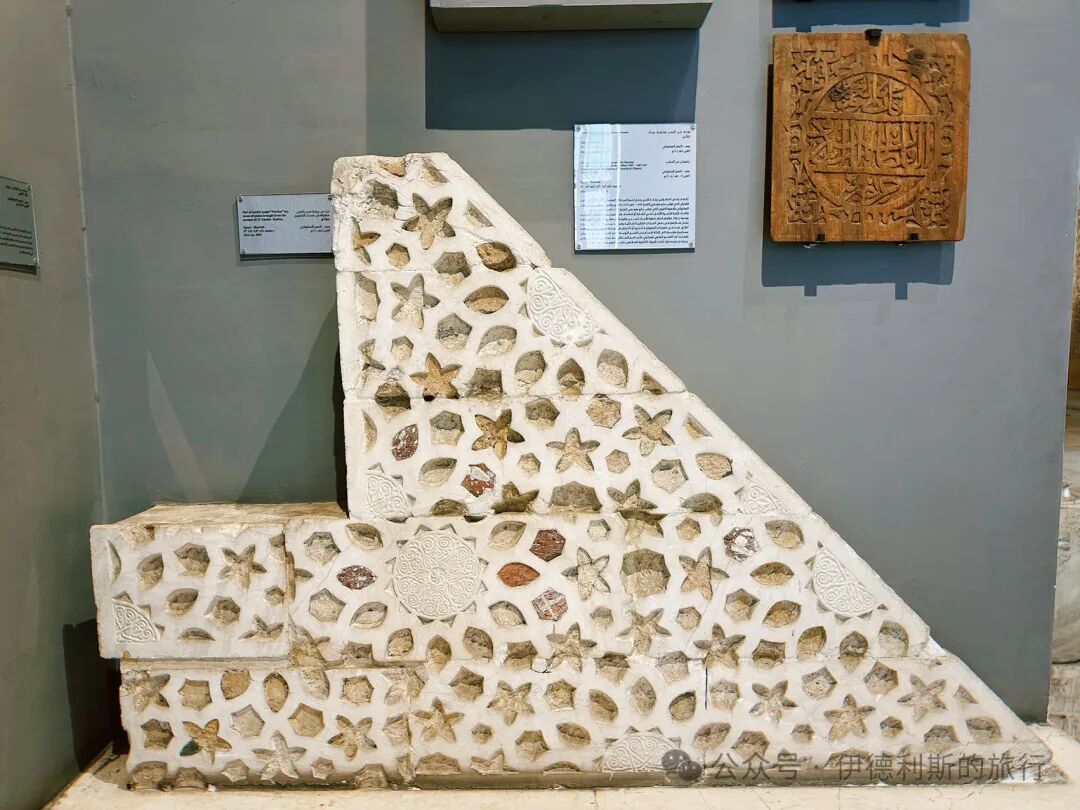
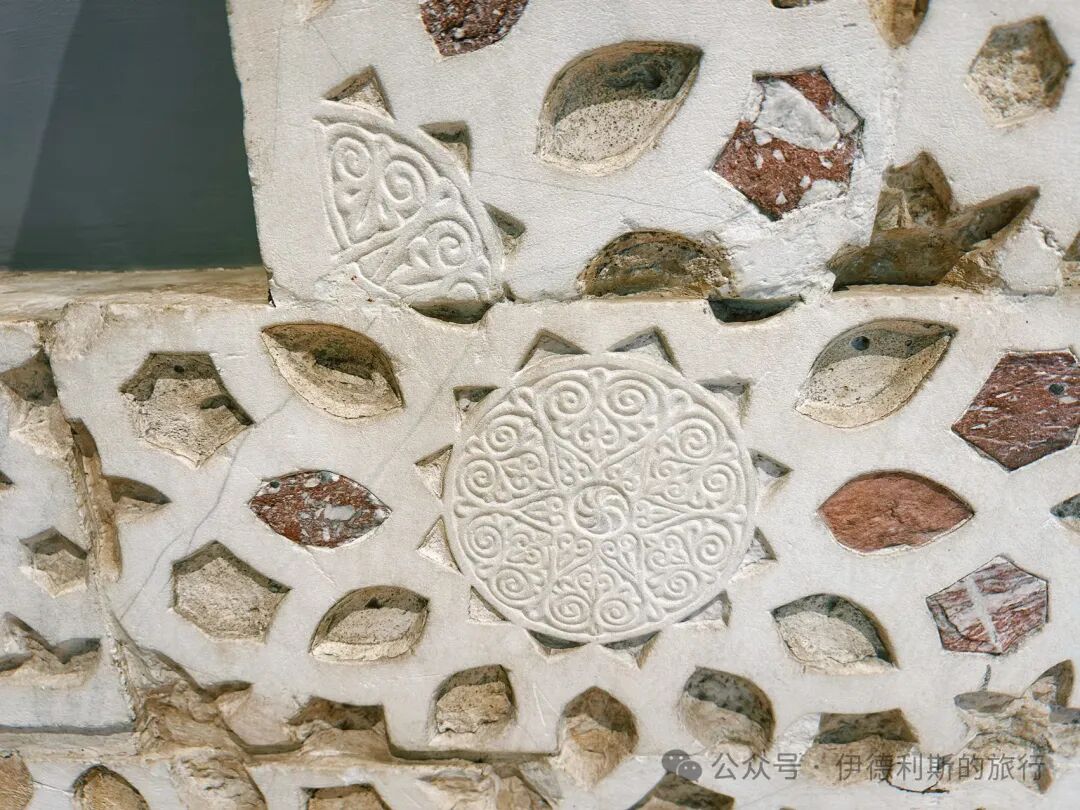
A 15th-century Mamluk-era stucco window from Egypt.
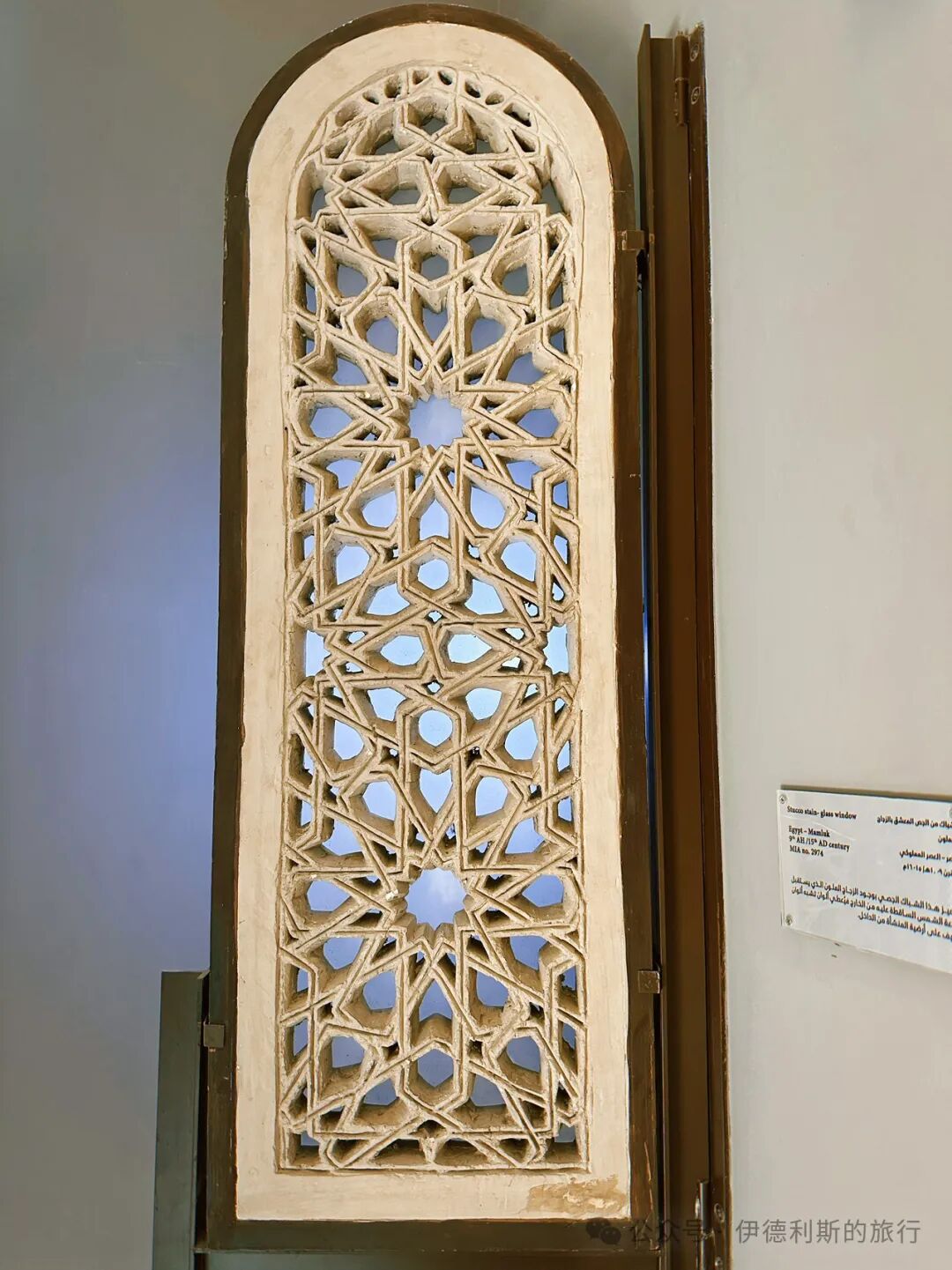
A wooden ceiling with carvings of the name of Mamluk Sultan Qaitbay (reigned 1468-96) inside the Al-Azhar Mosque in Cairo.
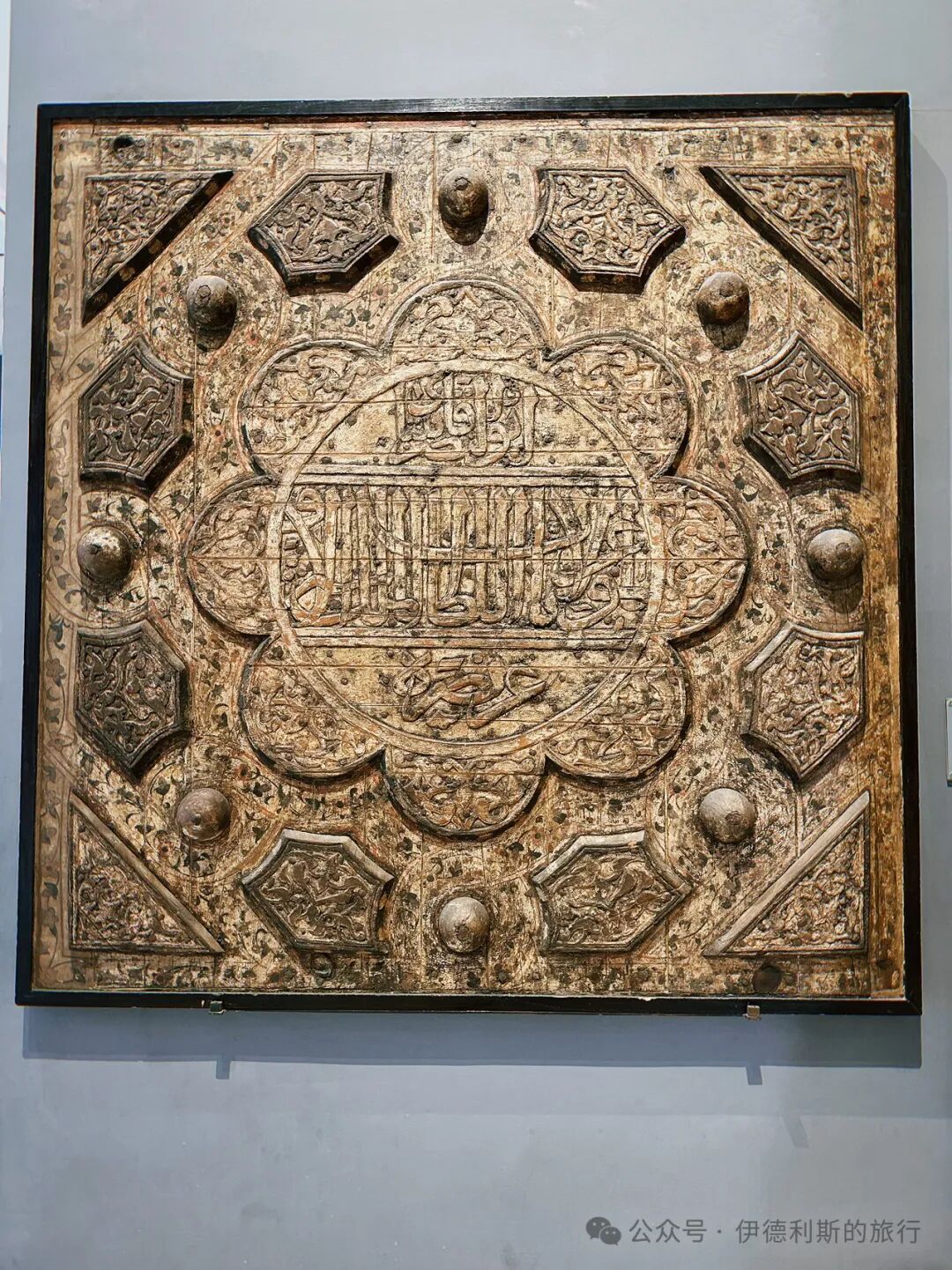
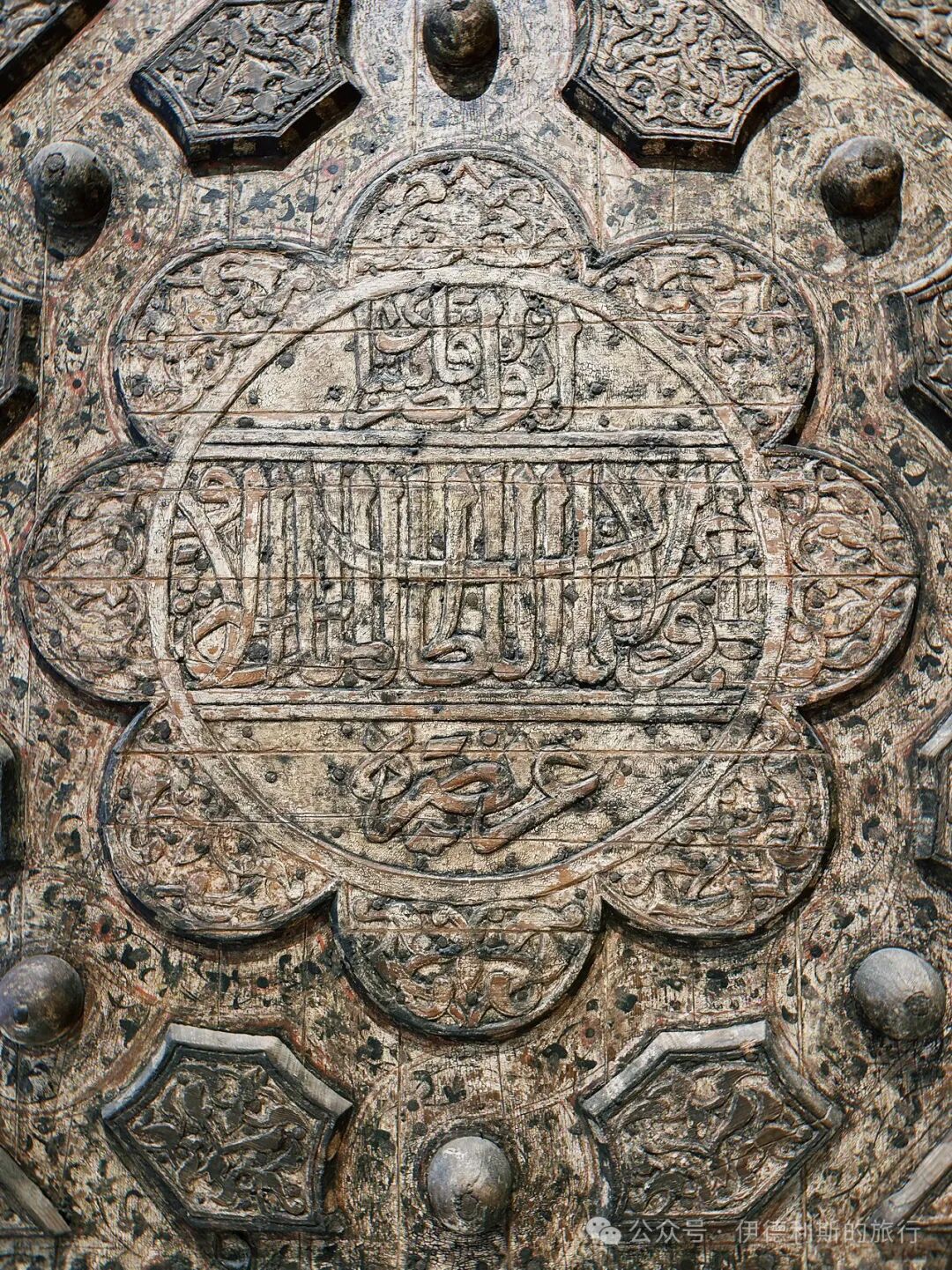
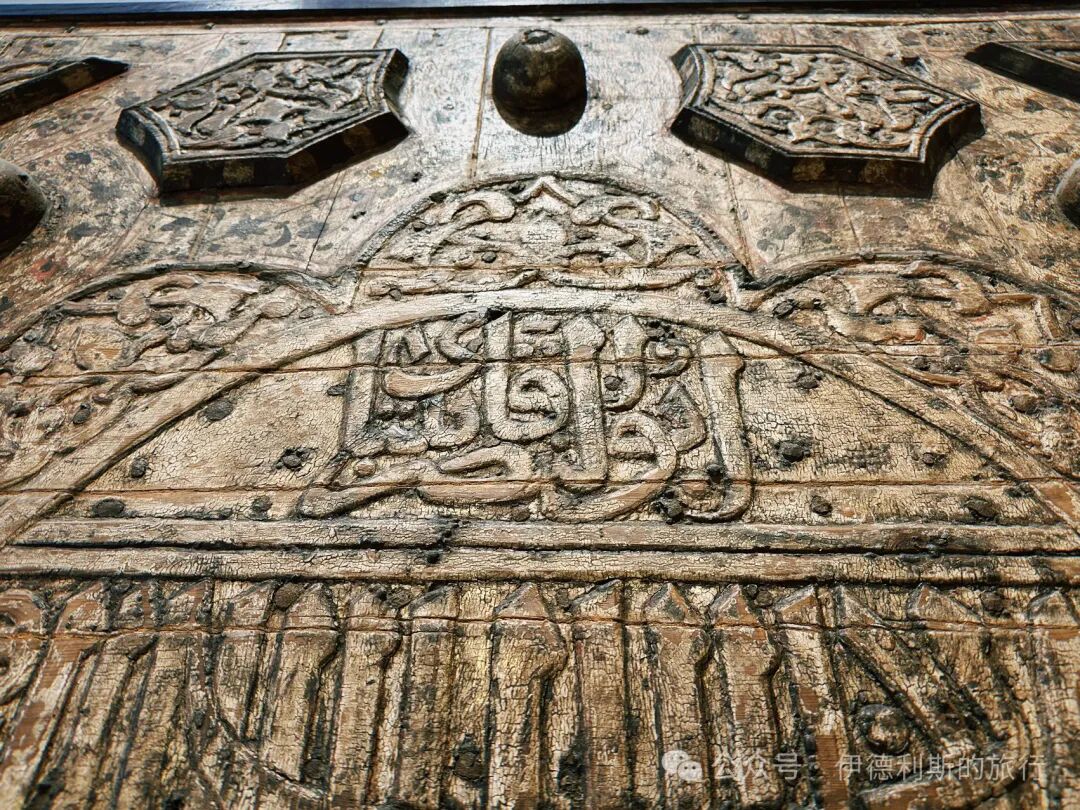
Tiles on the Qaitbay fountain (sabil) in Cairo. Sultan Qaitbay built the Qaitbay fountain (sabil) in 1479. It was Cairo's first independent fountain-primary school (sabil-kuttab) building, a structure that became very common during the later Ottoman period.
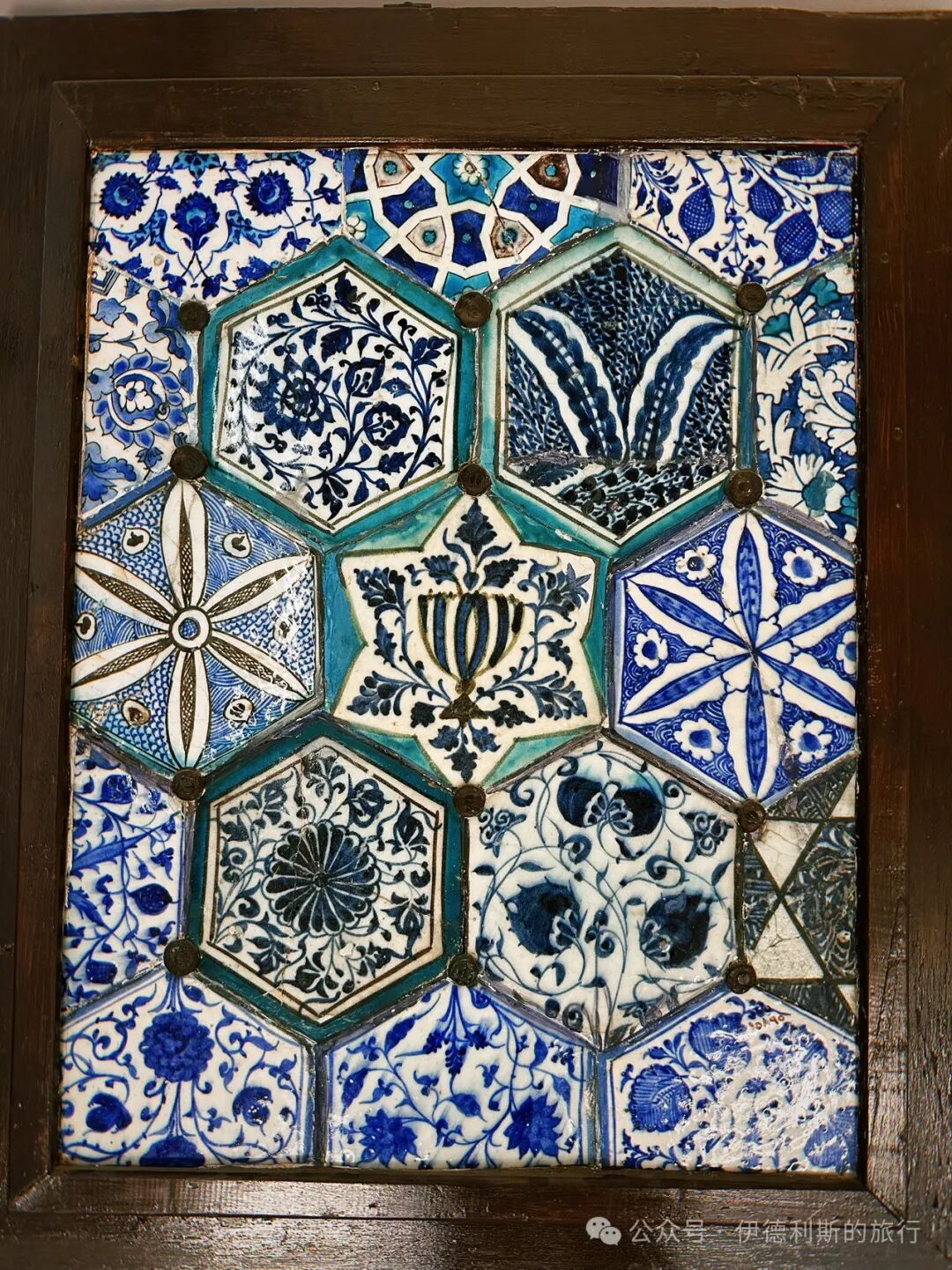
A tile featuring the name of the Mamluk Sultan Al-Ashraf Janbalat, who reigned from 1500 to 1501.
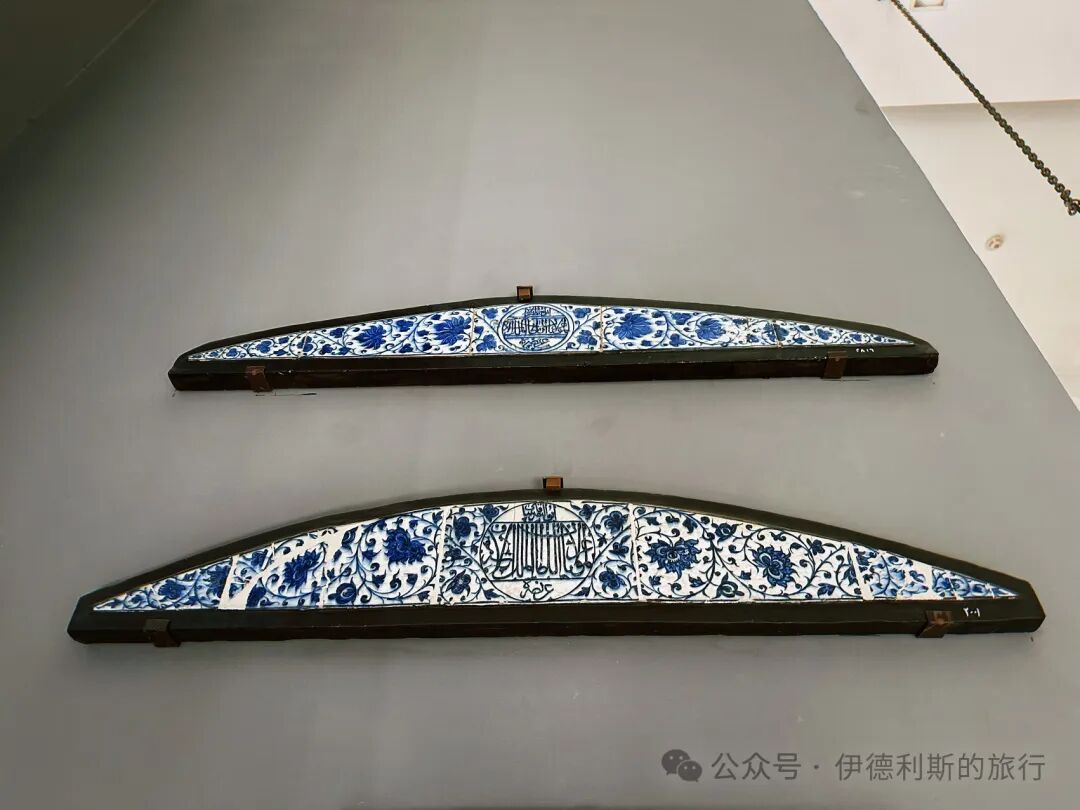
A 15th-century tile from the Mamluk dynasty.
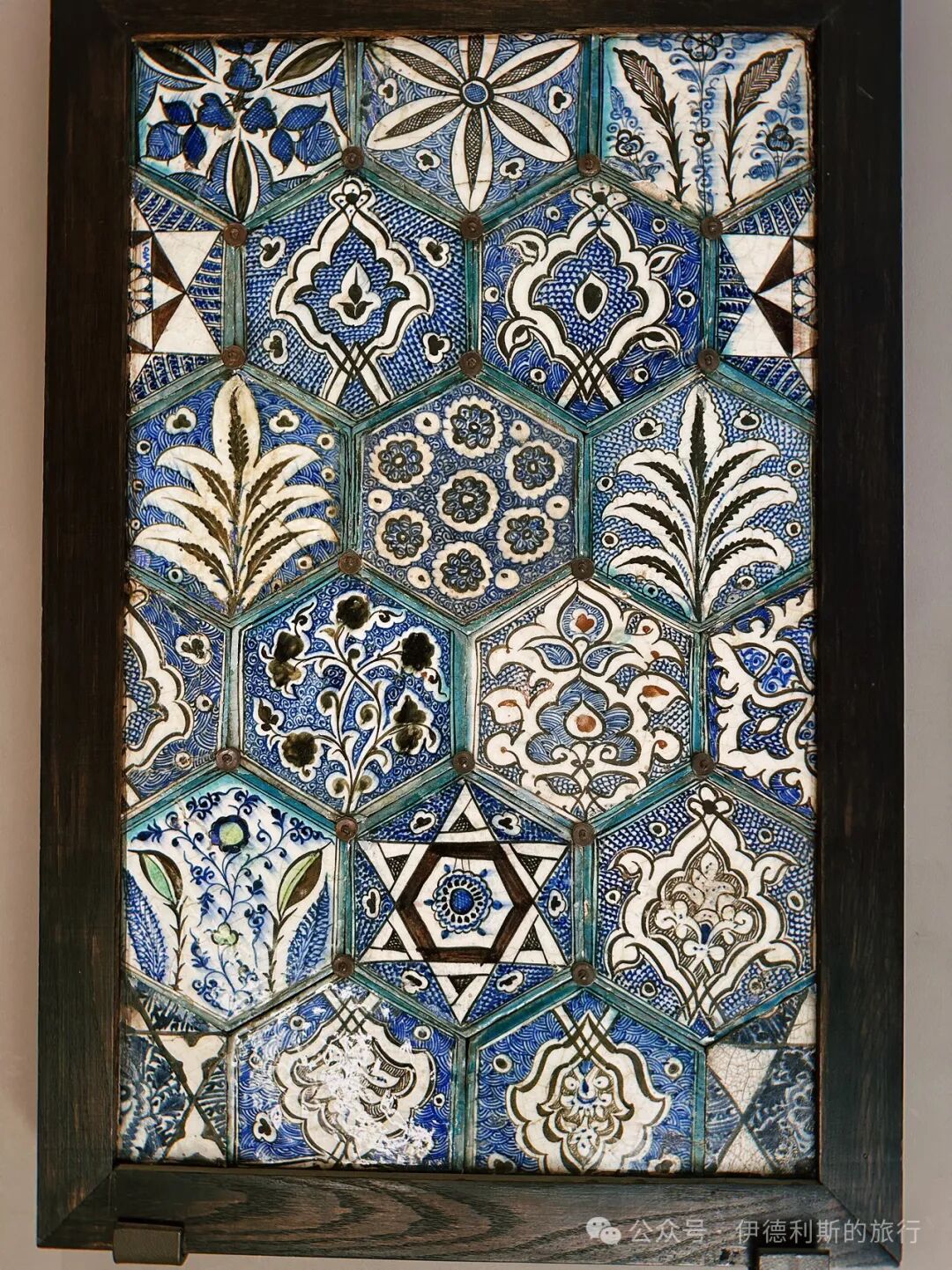
A 15th-century Mamluk dynasty marble slab decorated with mother-of-pearl mosaic.
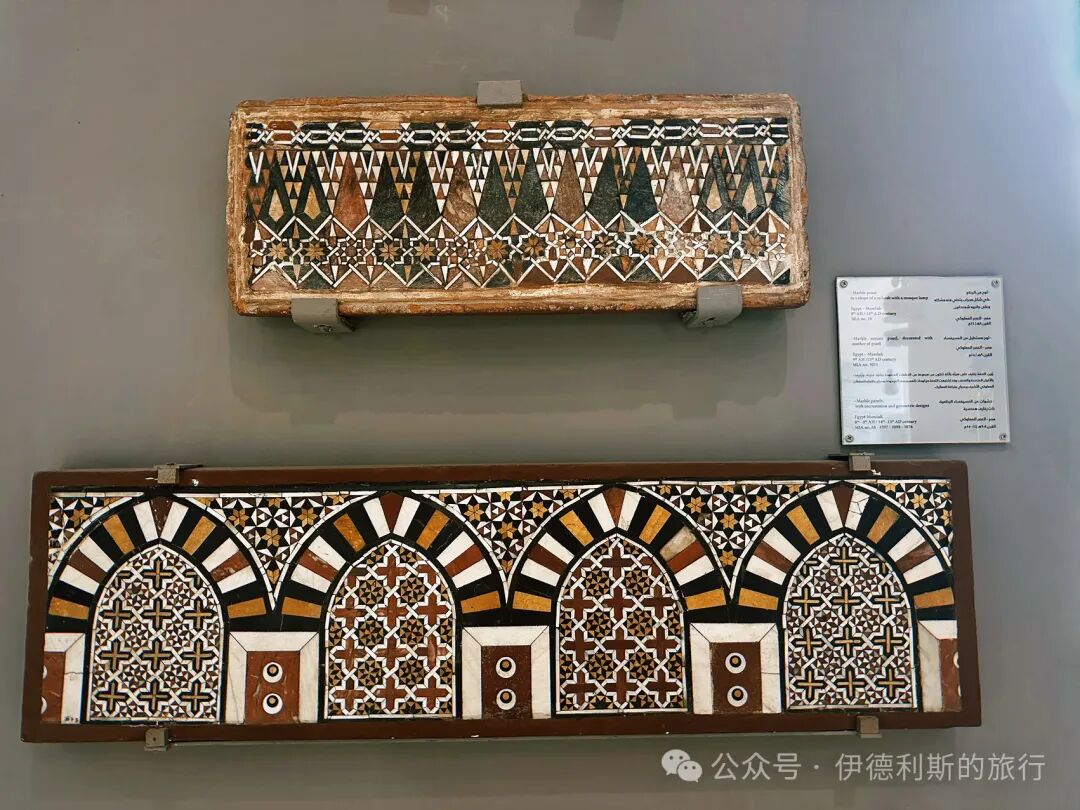
A 14th to 15th-century Mamluk dynasty marble slab with geometric patterns.
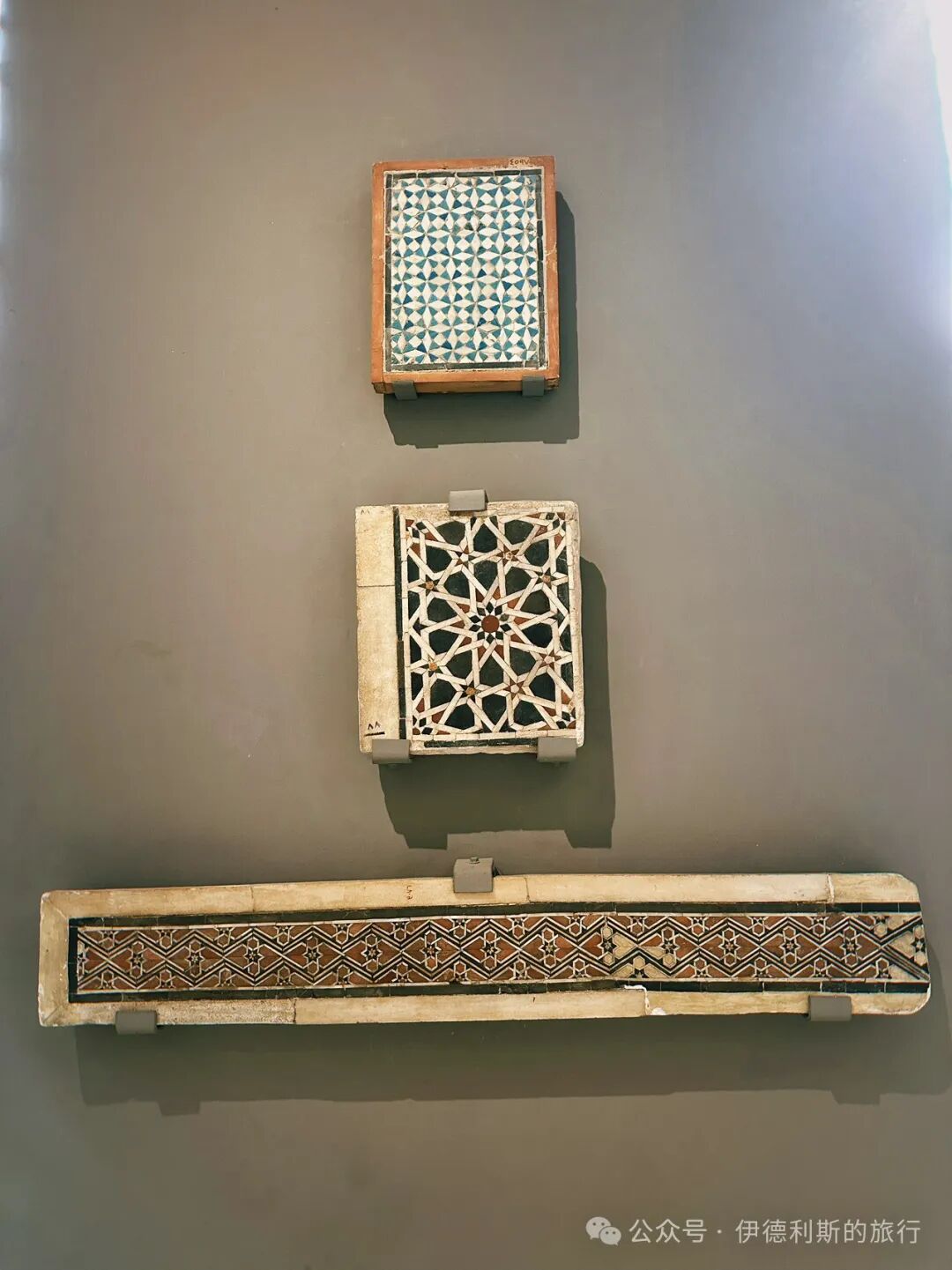
Islamic Art Guide: Museum of Islamic Art in Cairo (Part 2)
Articles • ali2007fr posted the article • 0 comments • 160 views • 2026-05-19 08:52
Summary: Islamic Art Guide: Museum of Islamic Art in Cairo (Part 2) is presented here as a firsthand travel account in clear, natural English. The account focuses on Cairo, Islamic Art, Museum Travel while preserving the names, places, food, photos, and historical details from the Chinese source.
Script tiles from the Mamluk dynasty in the 14th century.
A tile inscribed with the name of the Mamluk Sultan Qaitbay, who reigned from 1468 to 1496.
A 14th-century marble tile with Kufic script from the Mamluk dynasty in Egypt.
Arabic script tiles from the Egyptian Mamluk dynasty, with the 14th century on top and the 16th century on the bottom.
A 14th-century Mamluk-era marble carving from the Sarghatmish Madrasa in Cairo, featuring a small-scale replica in the bottom right corner that allows visitors to touch the patterns.
A copper lamp inlaid with silver, inscribed with the name of the Mamluk Sultan Al-Ashraf Sha'ban, who reigned from 1363 to 1377.
A 13th-century glass vessel from the Mamluk dynasty inscribed with the name of Prince Shams al-Din al-Tanbugha.
A 13th-century copper-plated wooden door from the Egyptian Mamluk dynasty, inscribed with the name of Prince Shams al-Din Sunqur al-Tawil al-Mansuri.
An ivory carving inscribed with the name of the Mamluk Sultan Qaitbay, who reigned from 1468 to 1496.
A 14th-century ivory carving from the Egyptian Mamluk dynasty.
A marble carving inscribed with the name of the Mamluk Sultan Al-Ashraf Qansuh al-Ghuri, who reigned from 1501 to 1516.
A royal decree carved into marble by the Egyptian Mamluk Sultan Sayf al-Din Jaqmaq, who reigned from 1438 to 1453, after he ordered the exemption of taxes for merchants.
A marble tombstone from the 15th to 16th-century Egyptian Mamluk dynasty.
A 13th to 15th-century copper basin inlaid with silver from the Egyptian Mamluk dynasty; the Palace Museum holds several blue and white porcelain pieces with the same design.
Ottoman dynasty.
A 17th to 18th-century wooden balcony (mashrabiya) from the Ottoman dynasty in Egypt. This is an important part of traditional Middle Eastern architecture, featuring intricate wooden lattice screens that allow for evaporative cooling when water jars are placed inside.
An 18th-century wooden cabinet inlaid with ivory from the Ottoman period in Egypt.
This piece has no label, but it appears to be an ivory-inlaid wooden pulpit (minbar) from the Ottoman period in Egypt.
Ceramic tiles produced in Iznik, Turkey, during the 16th-century Ottoman period.
Porcelain from the 16th to 19th centuries, covering the Ottoman and Muhammad Ali periods.
A marble carving from the 16th-century Ottoman period.
A 17th-century Ottoman period ceramic tile painted with an image of the Kaaba (Tianfang).
An 18th-century Ottoman period ceramic tile painted with an image of the Prophet's Mosque in Medina.
Tombstone.
A 12th-century basalt tombstone from the Arabian Peninsula or the Dahlak Archipelago.
A 12th-century limestone tombstone from the Ayyubid dynasty in Egypt.
A 10th-century wooden tombstone from the Fatimid dynasty in Egypt.
A 7th-century limestone tombstone from the Rashidun or Umayyad period in Egypt.
An 8th-century marble tombstone from the Abbasid period in Egypt.
A 9th-century marble tombstone from the Abbasid period in Egypt.
A 10th-century marble tombstone from the Fatimid period in Egypt.
An 11th-century marble tombstone from the Fatimid period in Egypt. view all
Summary: Islamic Art Guide: Museum of Islamic Art in Cairo (Part 2) is presented here as a firsthand travel account in clear, natural English. The account focuses on Cairo, Islamic Art, Museum Travel while preserving the names, places, food, photos, and historical details from the Chinese source.
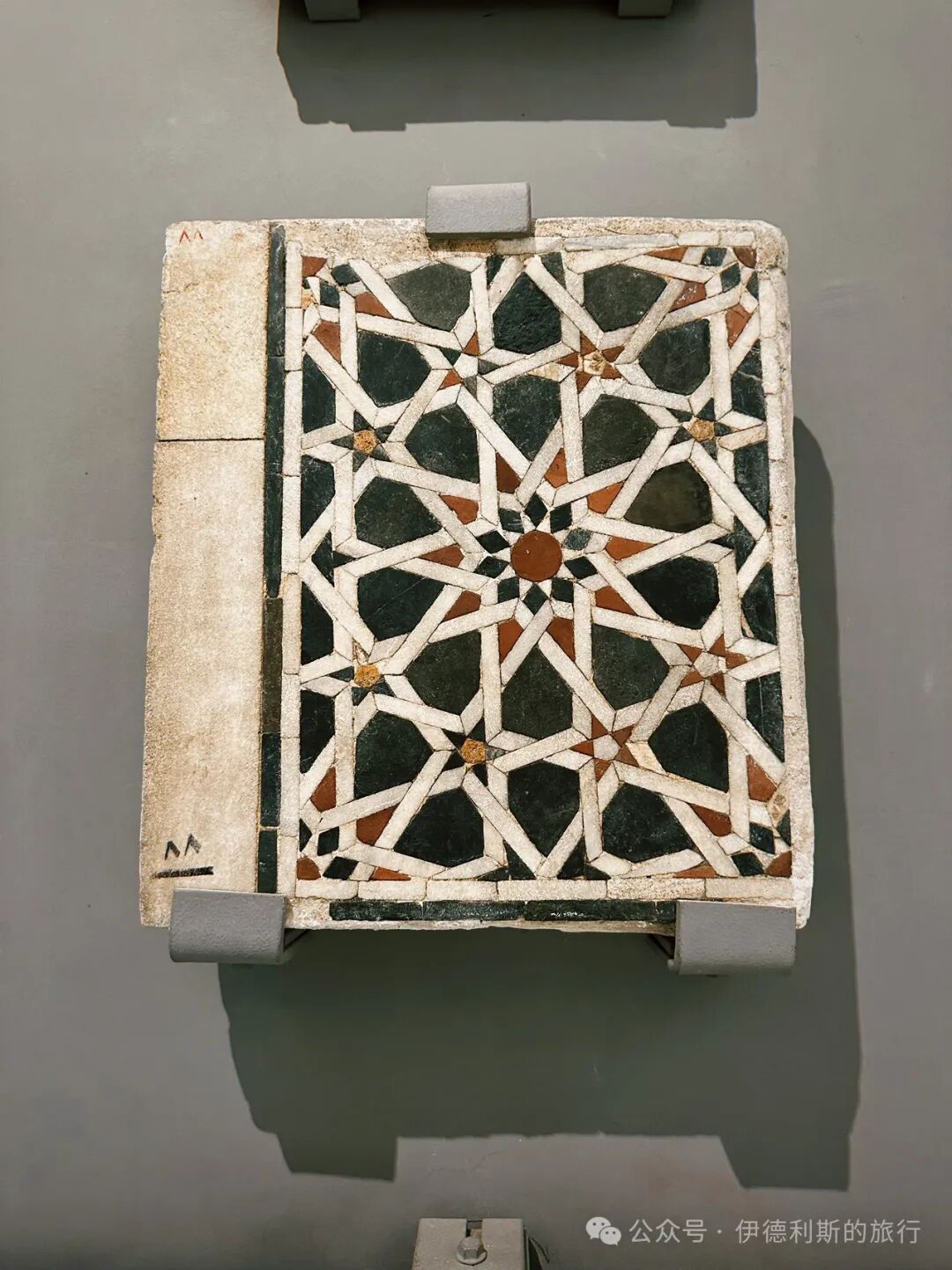
Script tiles from the Mamluk dynasty in the 14th century.
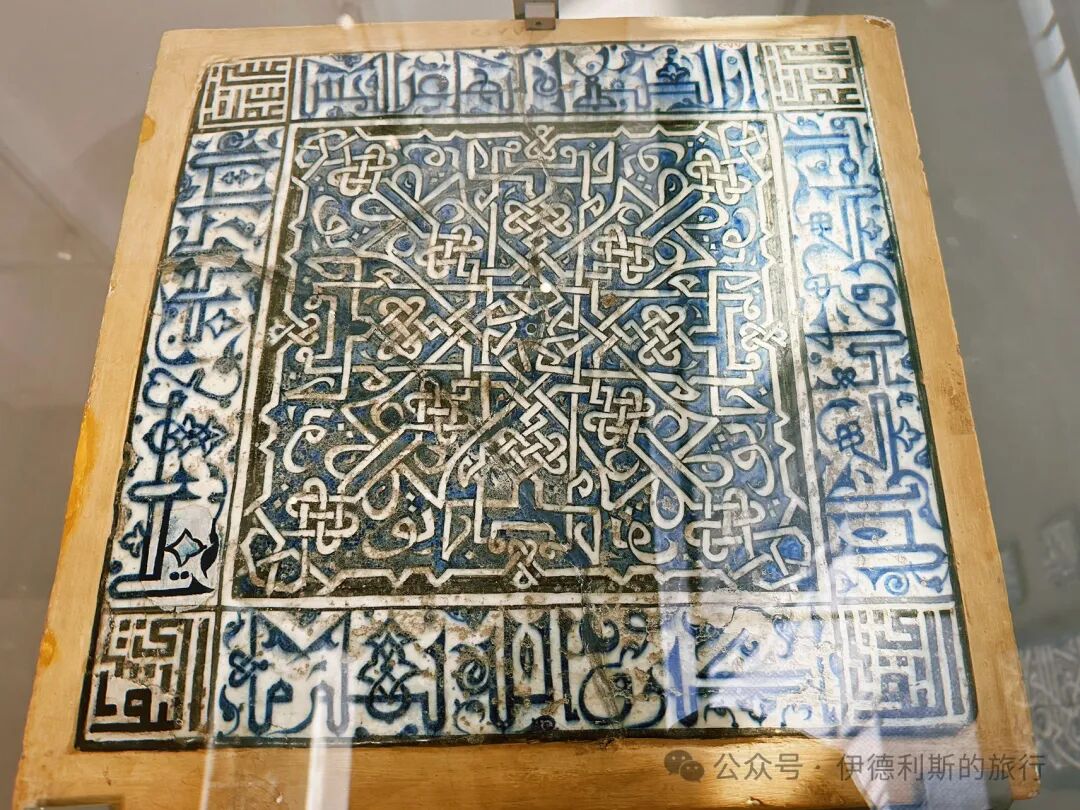
A tile inscribed with the name of the Mamluk Sultan Qaitbay, who reigned from 1468 to 1496.
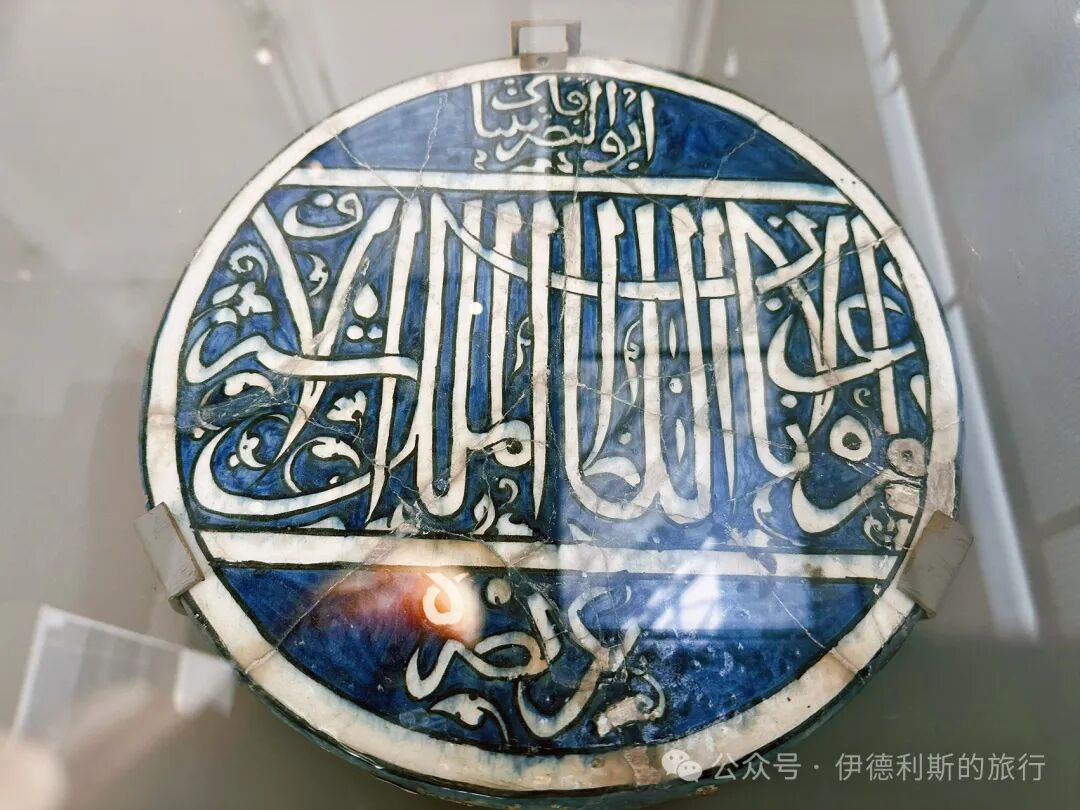
A 14th-century marble tile with Kufic script from the Mamluk dynasty in Egypt.
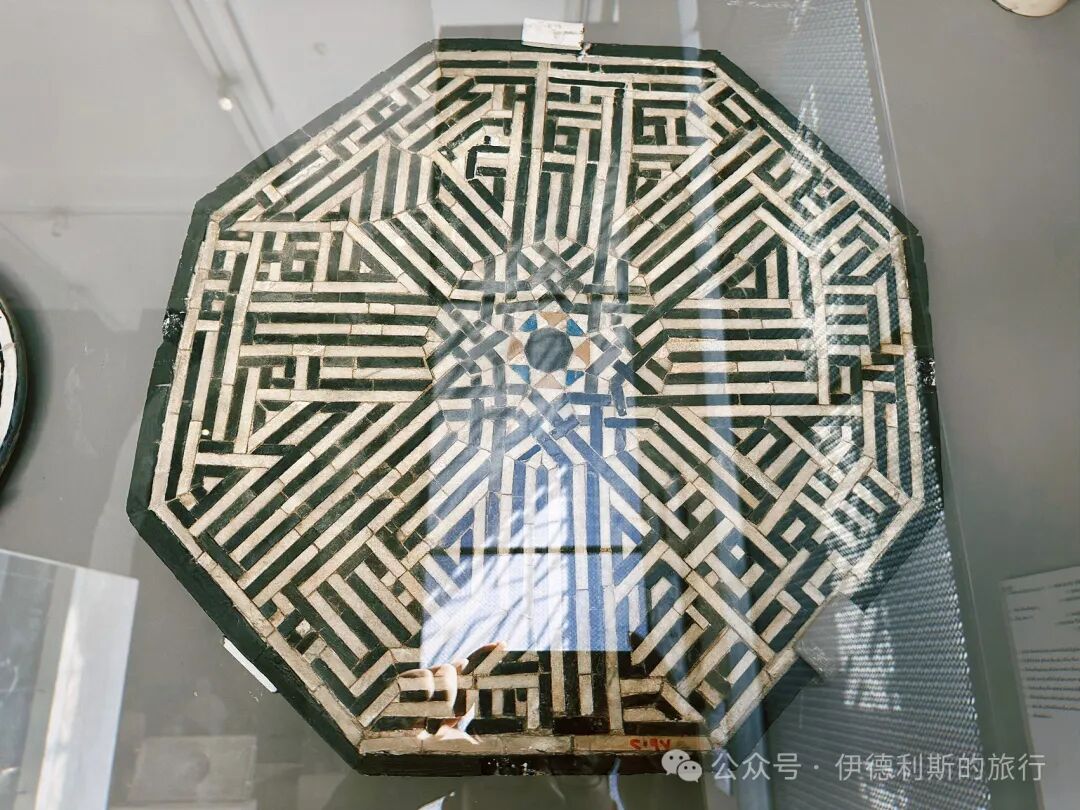
Arabic script tiles from the Egyptian Mamluk dynasty, with the 14th century on top and the 16th century on the bottom.
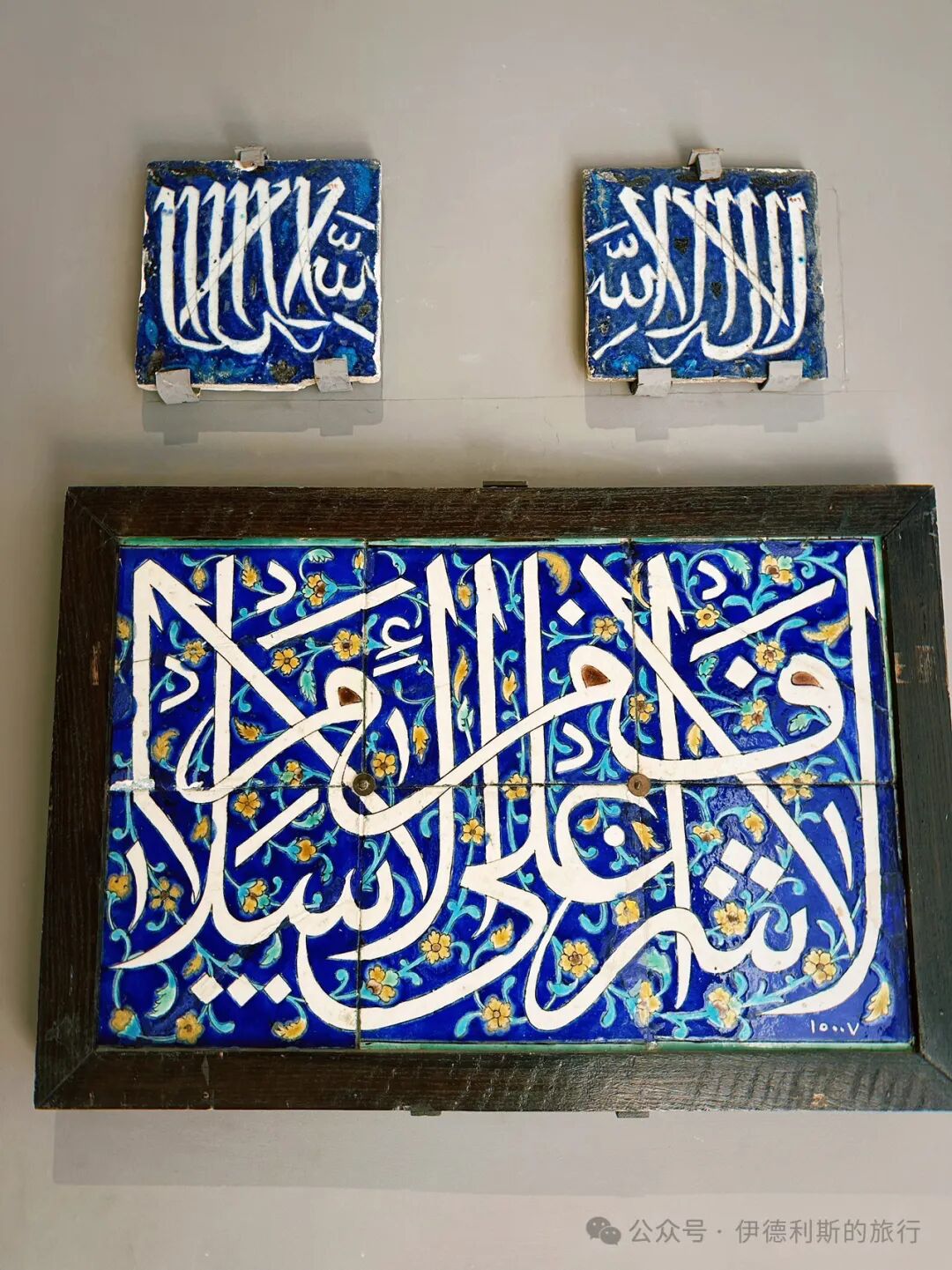
A 14th-century Mamluk-era marble carving from the Sarghatmish Madrasa in Cairo, featuring a small-scale replica in the bottom right corner that allows visitors to touch the patterns.
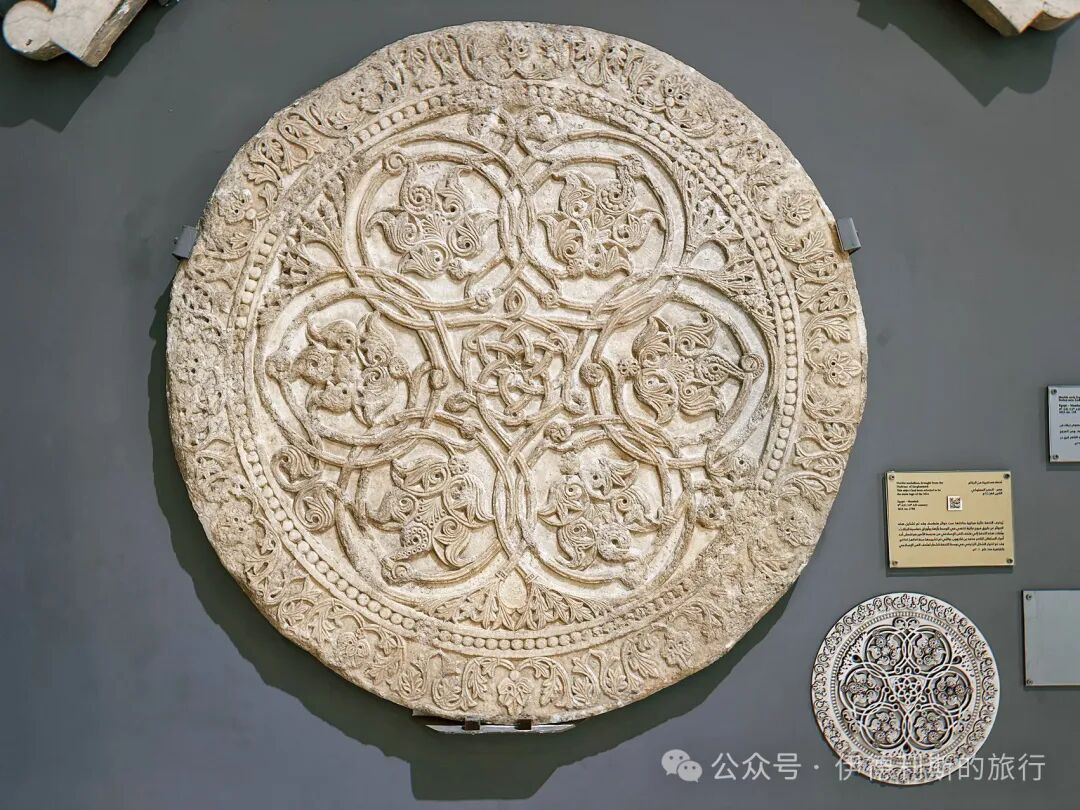
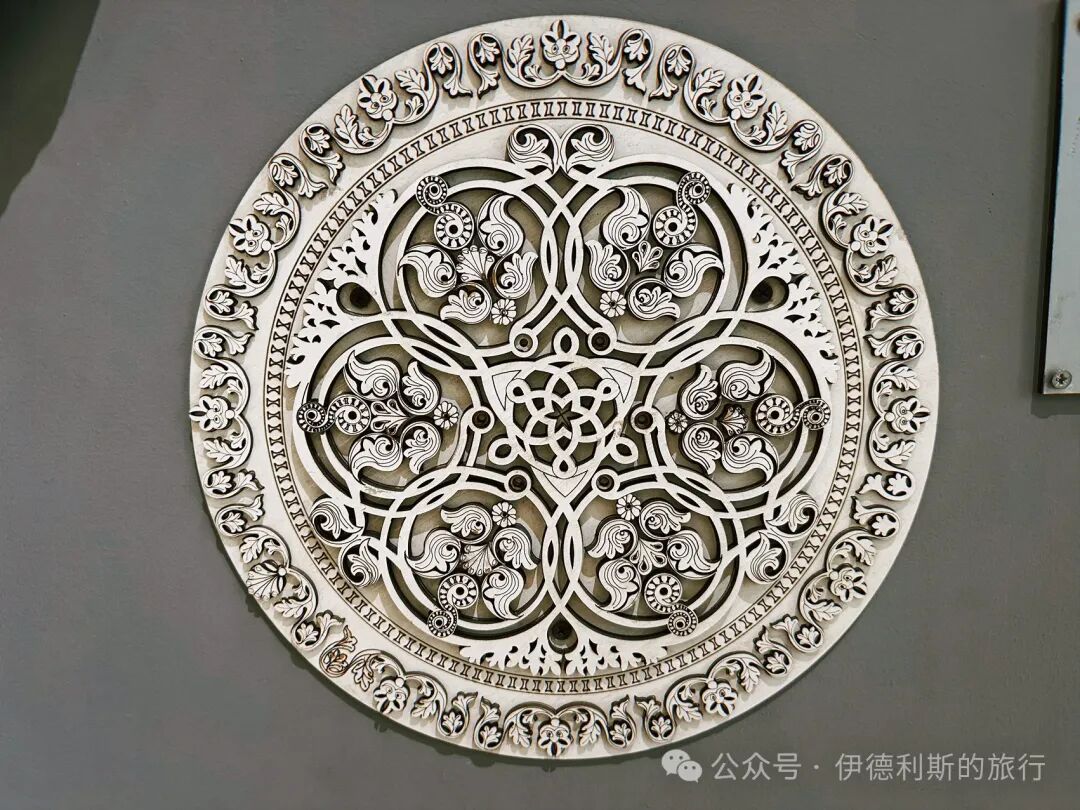
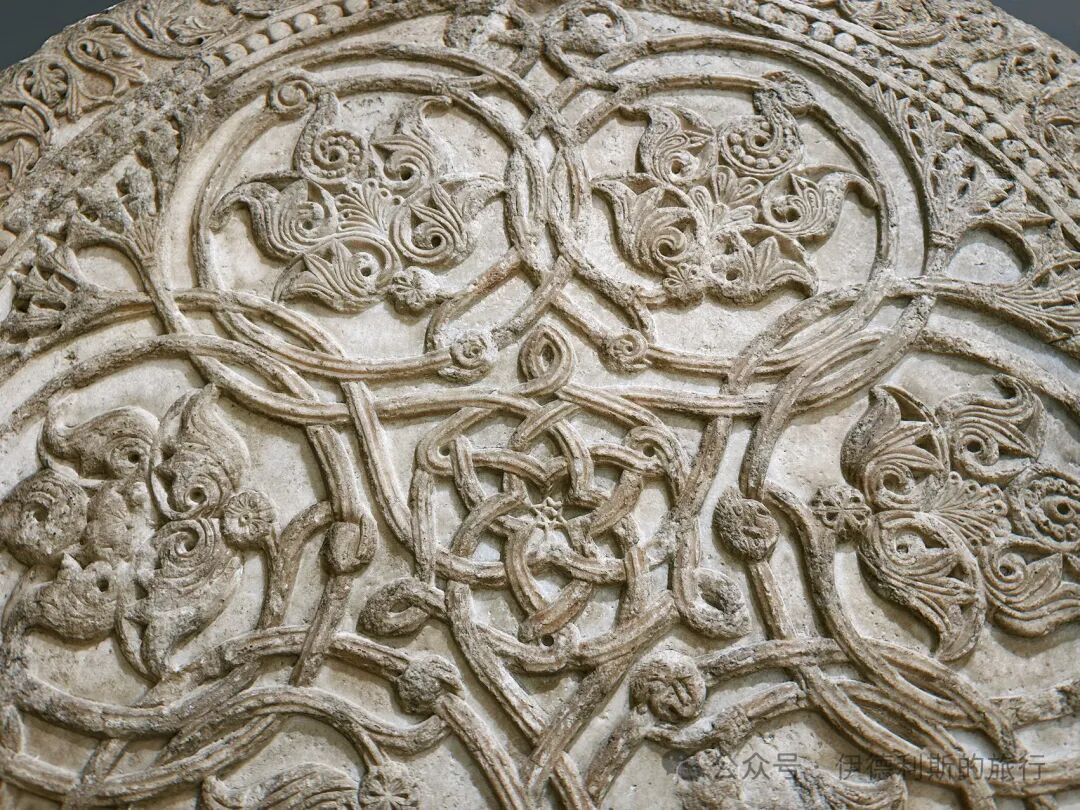
A copper lamp inlaid with silver, inscribed with the name of the Mamluk Sultan Al-Ashraf Sha'ban, who reigned from 1363 to 1377.
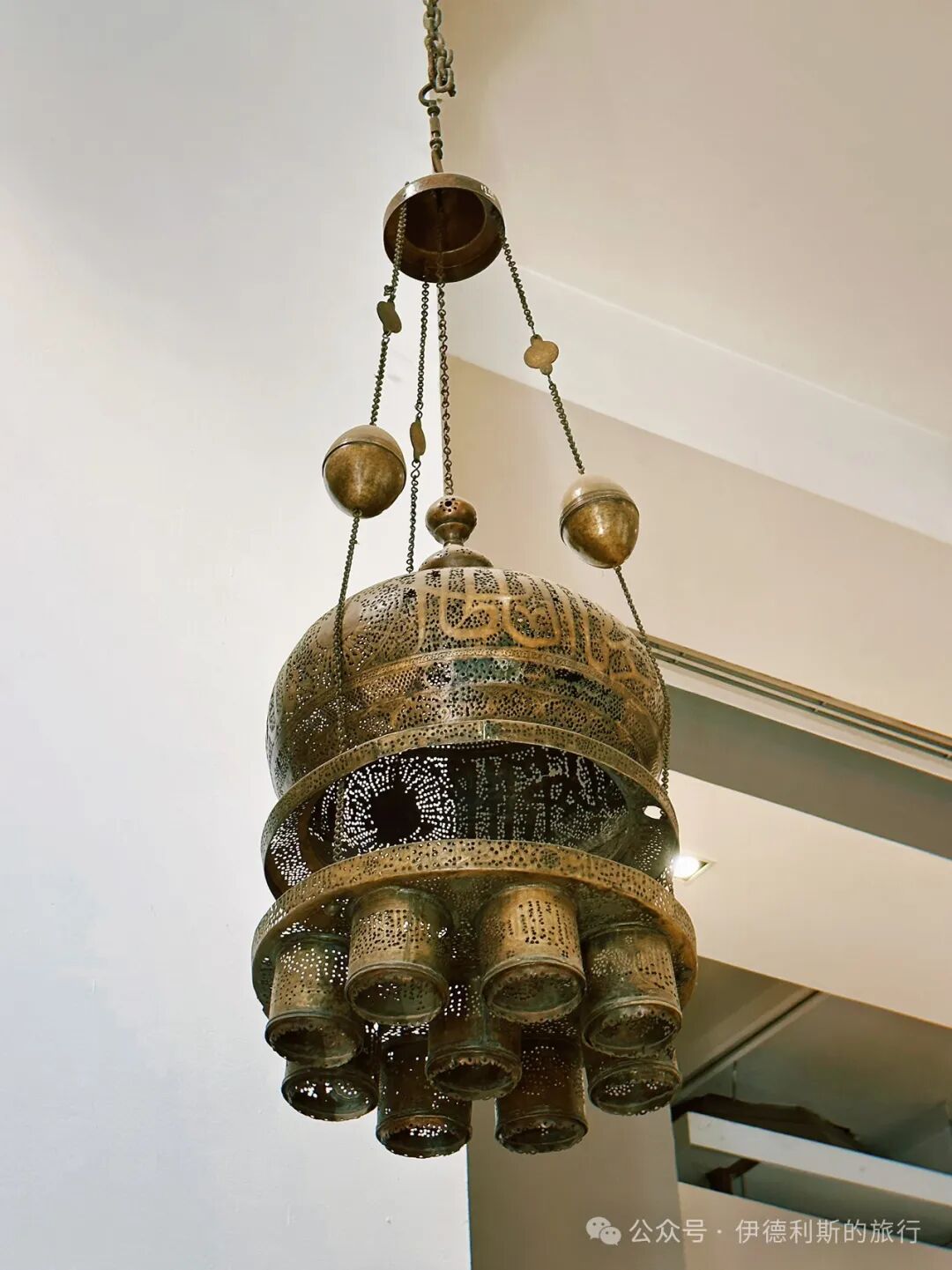
A 13th-century glass vessel from the Mamluk dynasty inscribed with the name of Prince Shams al-Din al-Tanbugha.
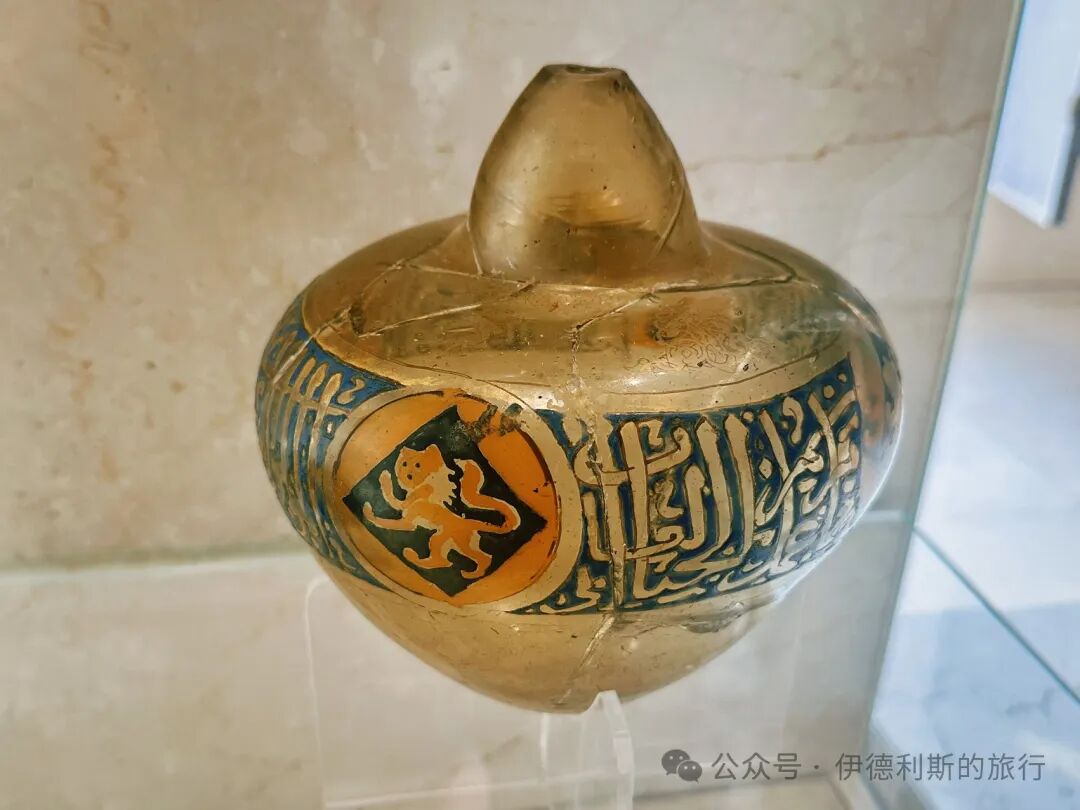
A 13th-century copper-plated wooden door from the Egyptian Mamluk dynasty, inscribed with the name of Prince Shams al-Din Sunqur al-Tawil al-Mansuri.
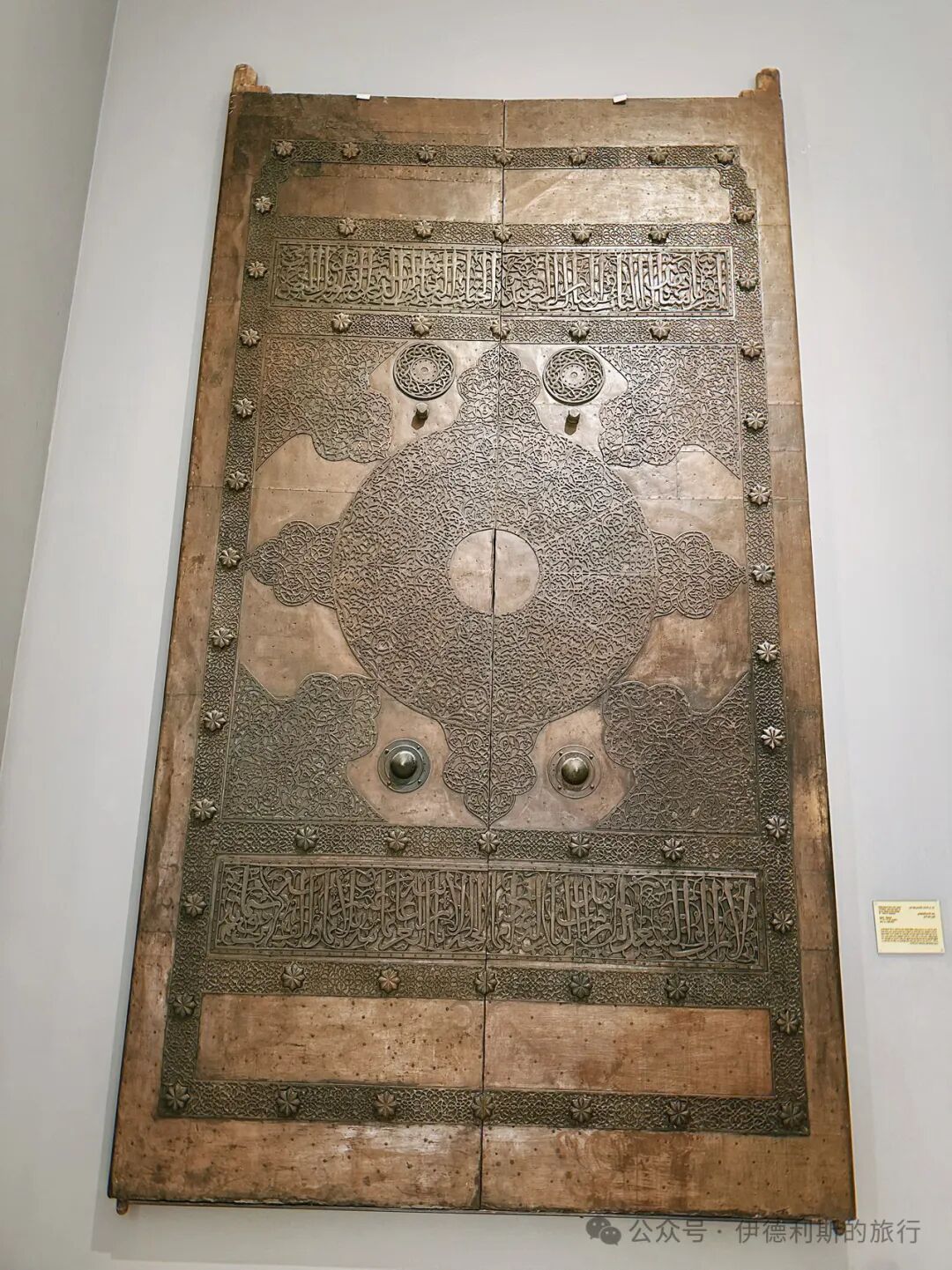
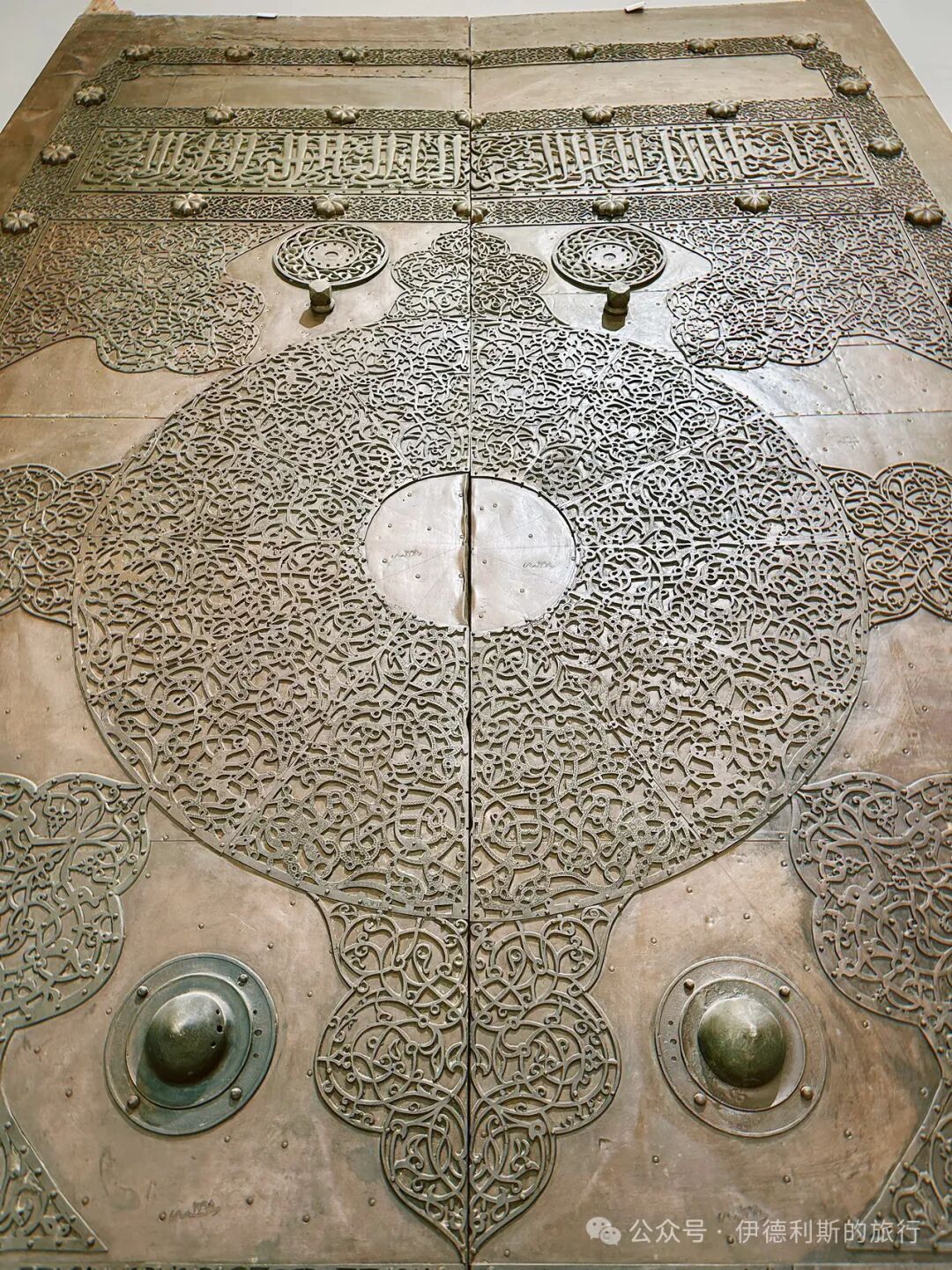
An ivory carving inscribed with the name of the Mamluk Sultan Qaitbay, who reigned from 1468 to 1496.
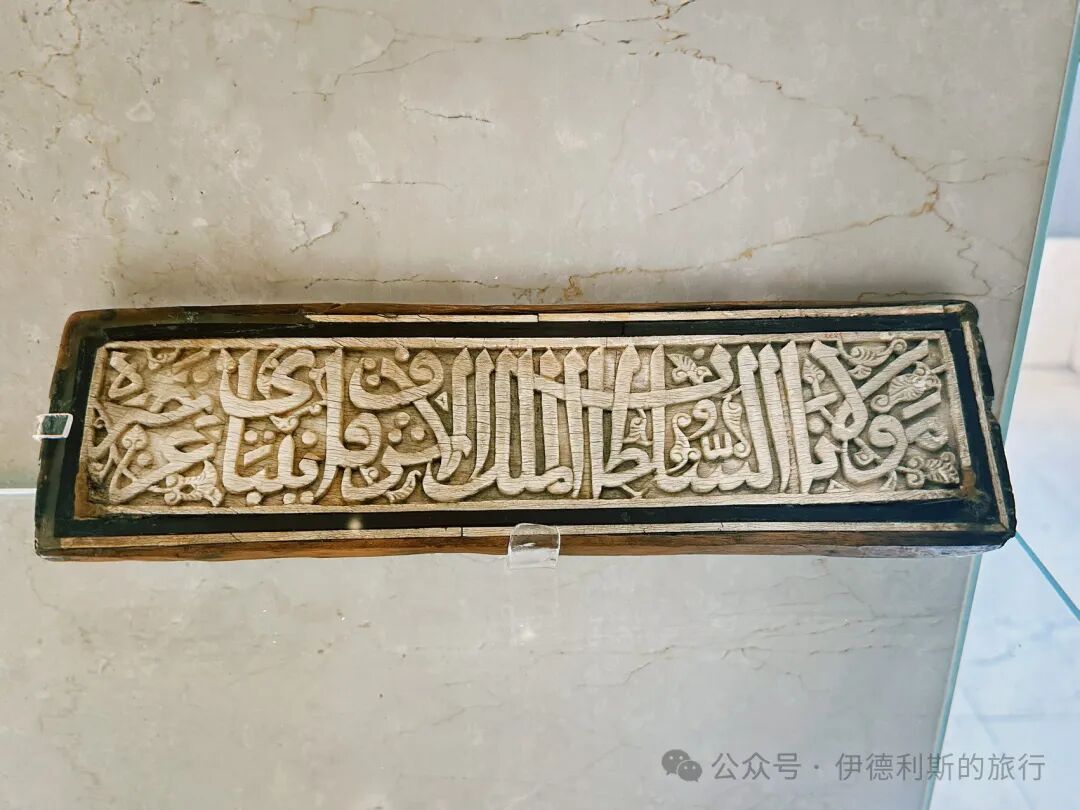
A 14th-century ivory carving from the Egyptian Mamluk dynasty.
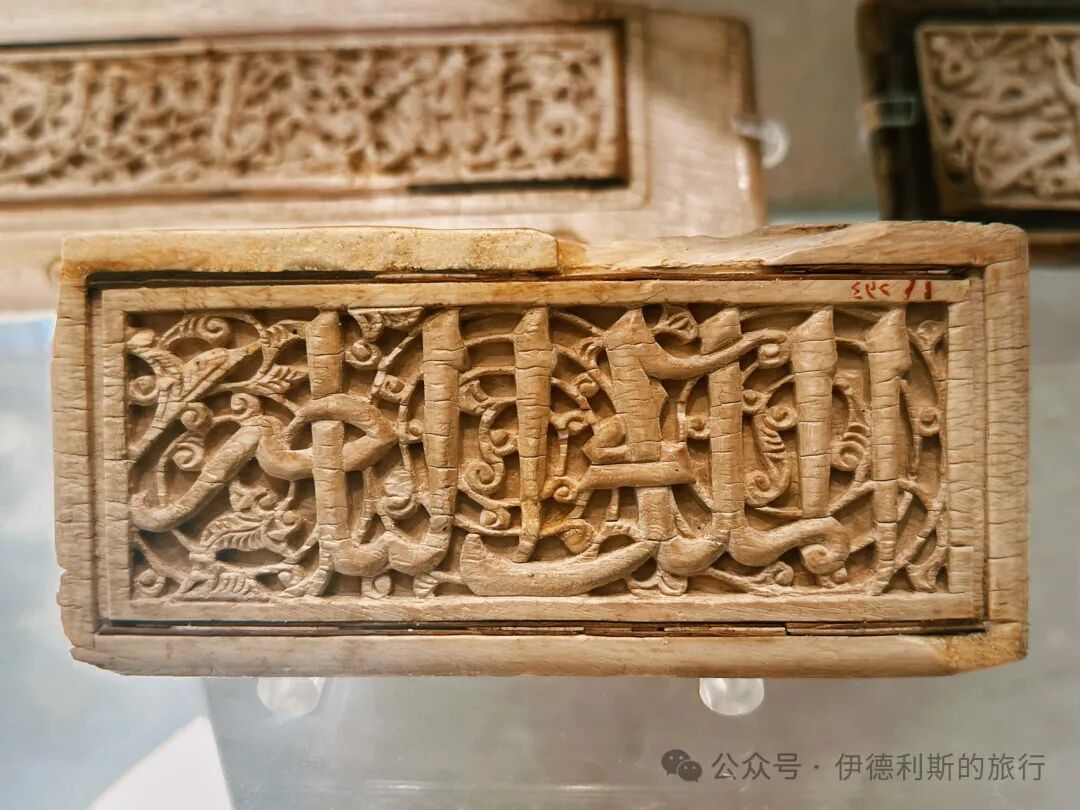
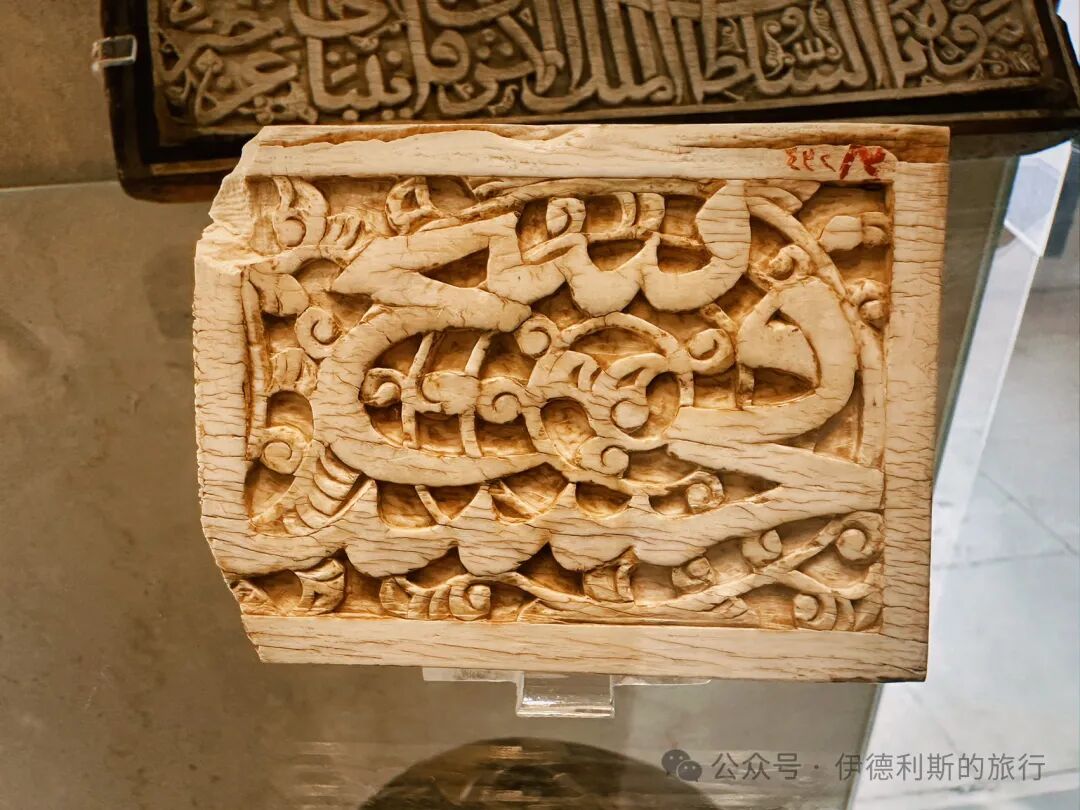
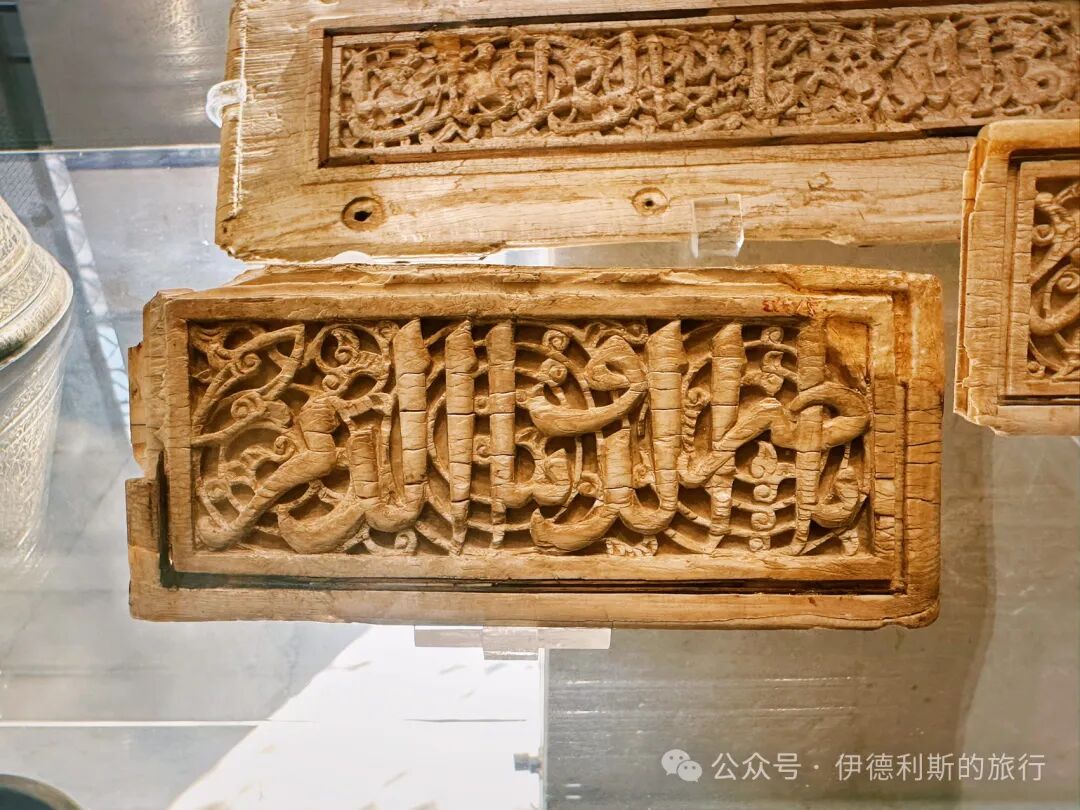
A marble carving inscribed with the name of the Mamluk Sultan Al-Ashraf Qansuh al-Ghuri, who reigned from 1501 to 1516.
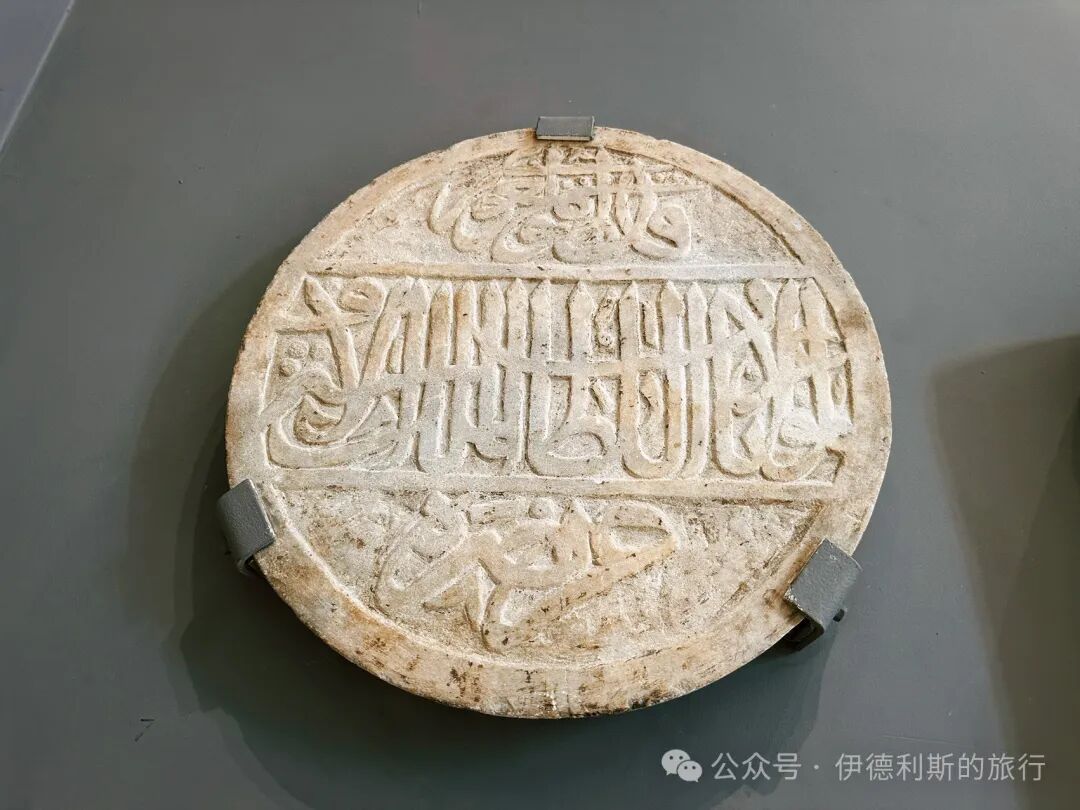
A royal decree carved into marble by the Egyptian Mamluk Sultan Sayf al-Din Jaqmaq, who reigned from 1438 to 1453, after he ordered the exemption of taxes for merchants.
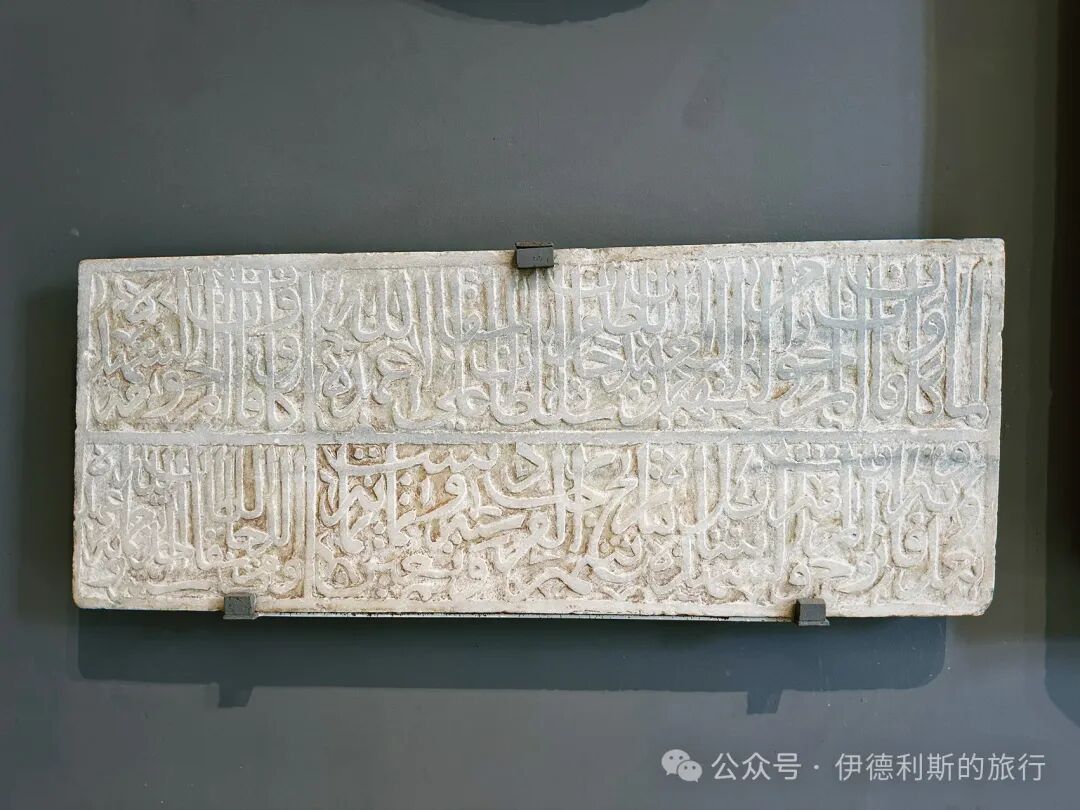
A marble tombstone from the 15th to 16th-century Egyptian Mamluk dynasty.
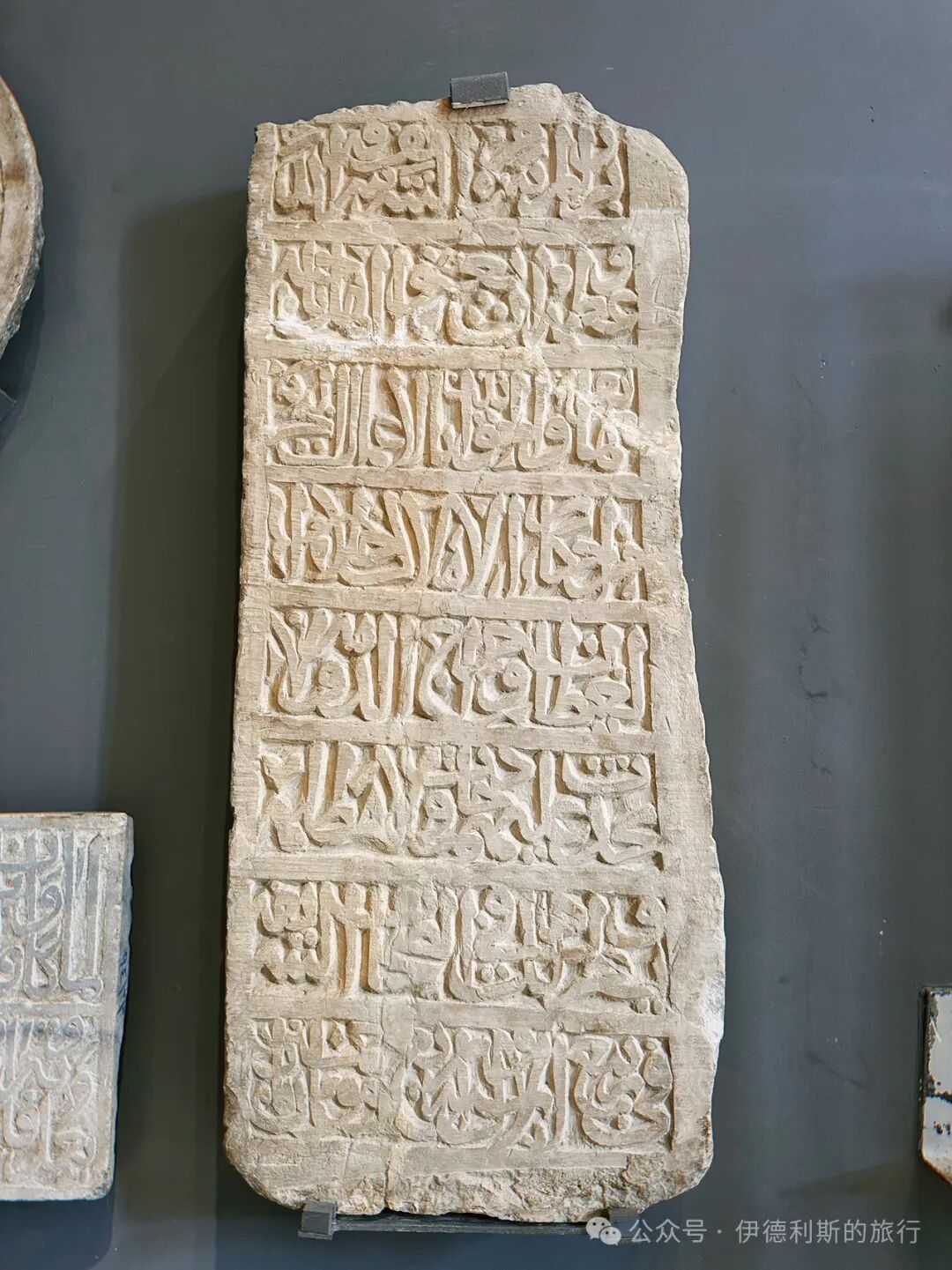
A 13th to 15th-century copper basin inlaid with silver from the Egyptian Mamluk dynasty; the Palace Museum holds several blue and white porcelain pieces with the same design.
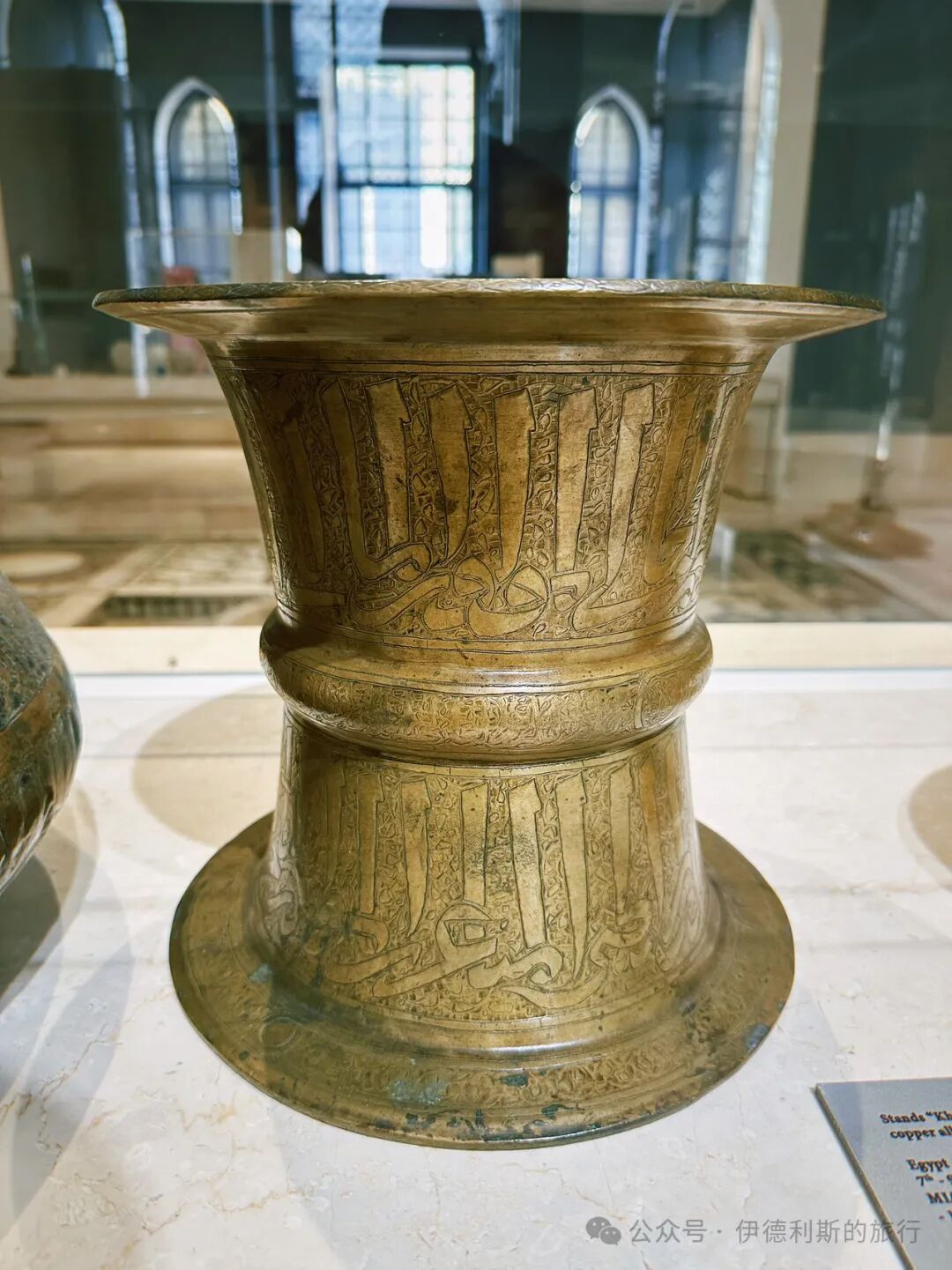
Ottoman dynasty.
A 17th to 18th-century wooden balcony (mashrabiya) from the Ottoman dynasty in Egypt. This is an important part of traditional Middle Eastern architecture, featuring intricate wooden lattice screens that allow for evaporative cooling when water jars are placed inside.
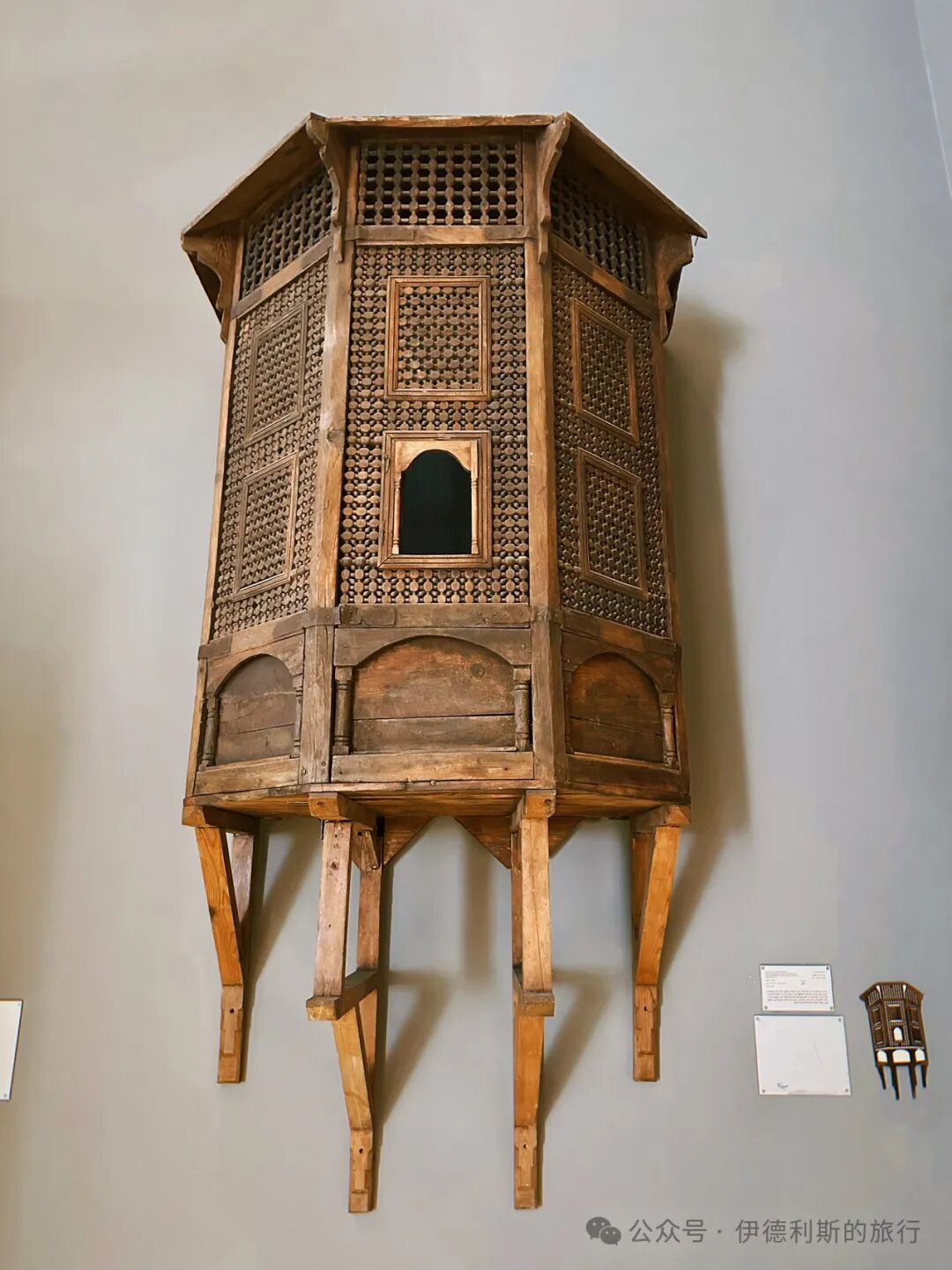
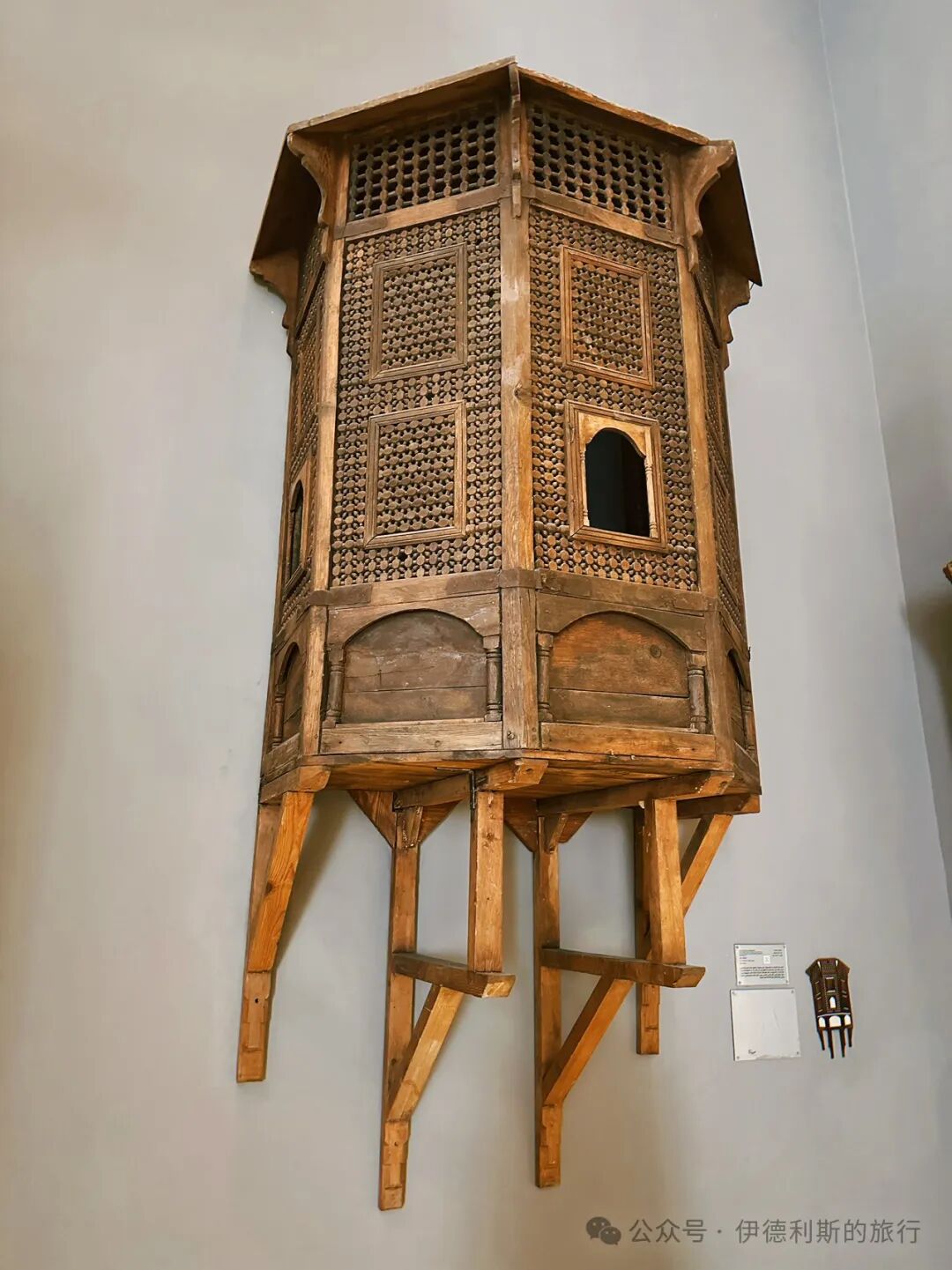
An 18th-century wooden cabinet inlaid with ivory from the Ottoman period in Egypt.
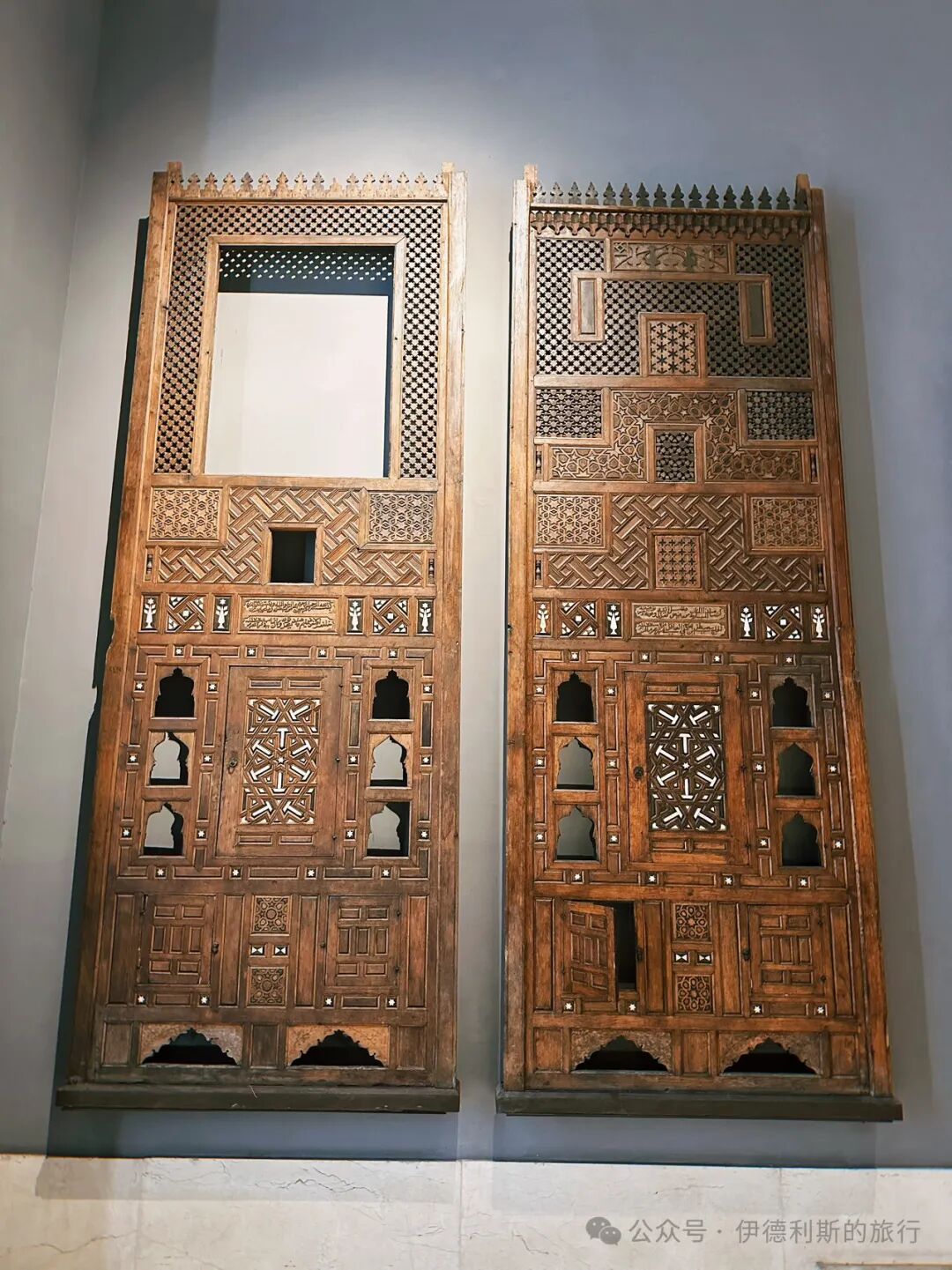
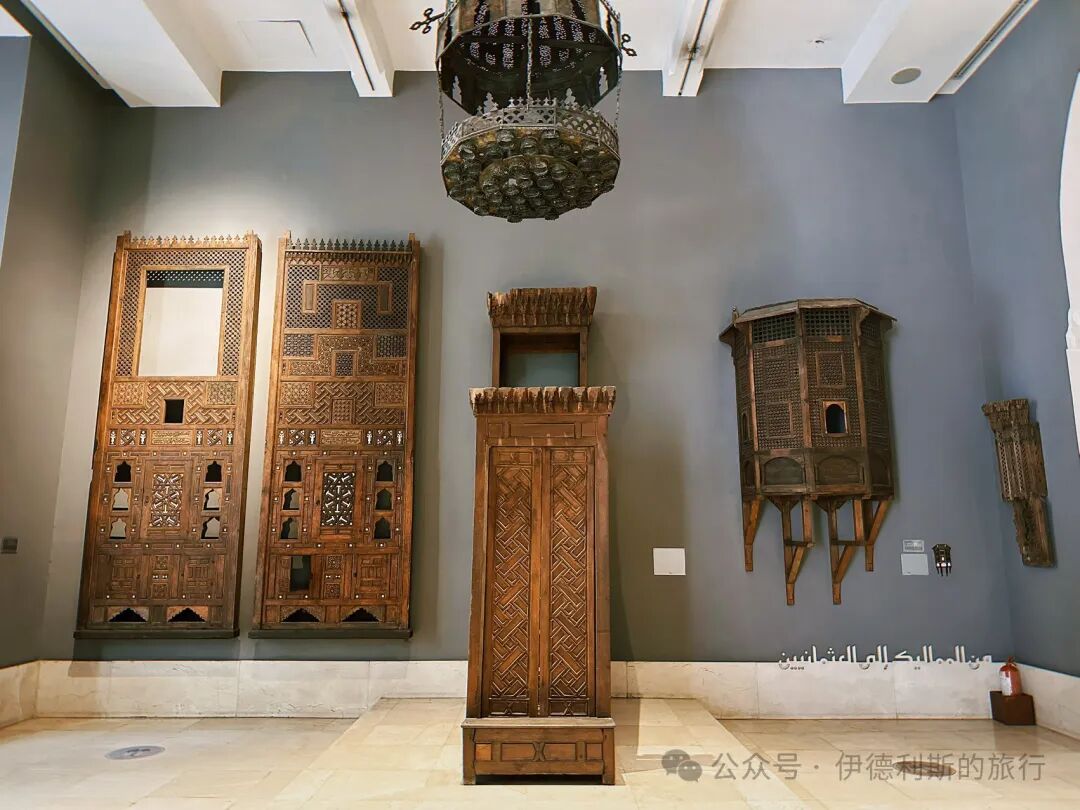
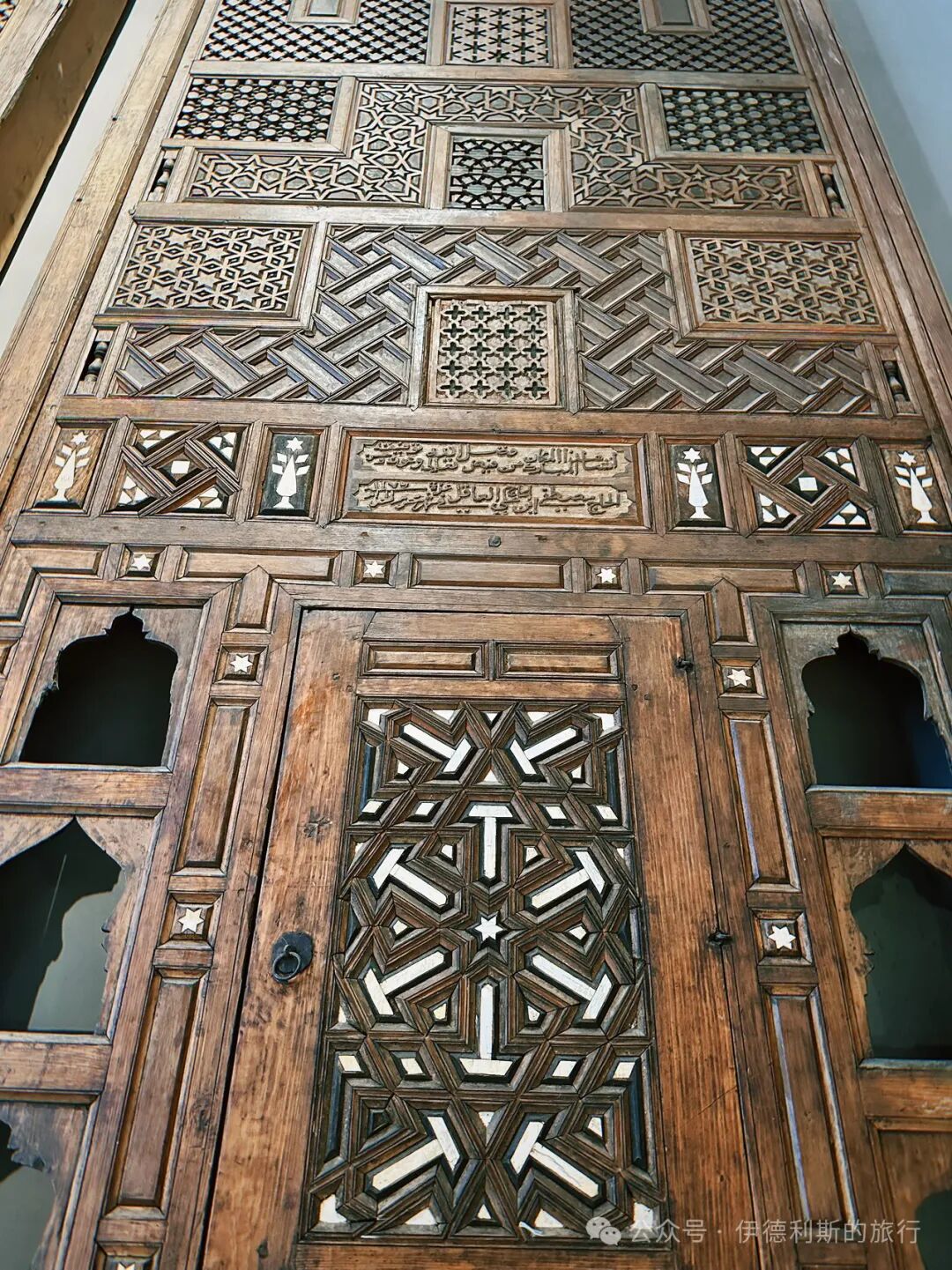
This piece has no label, but it appears to be an ivory-inlaid wooden pulpit (minbar) from the Ottoman period in Egypt.
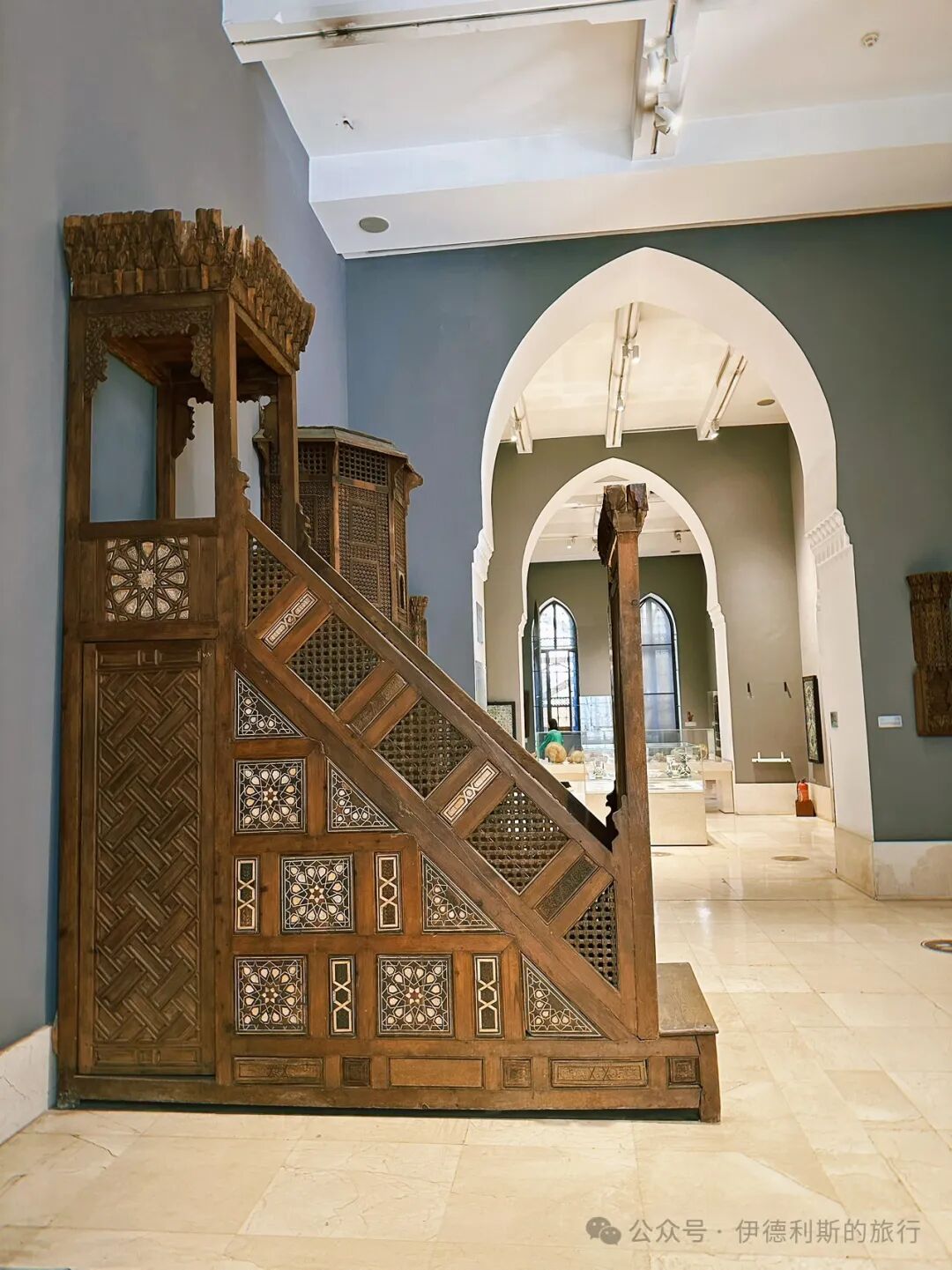
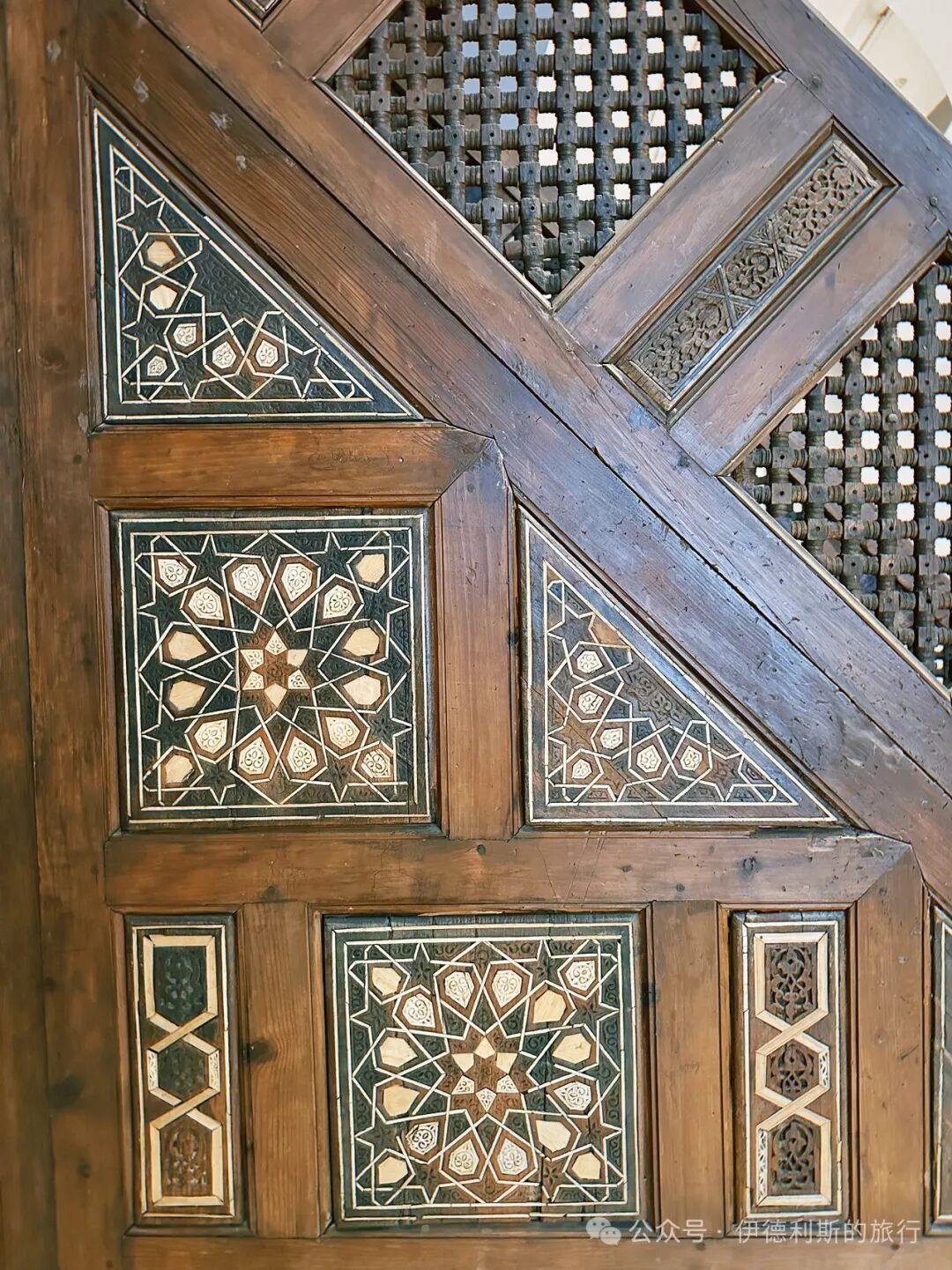
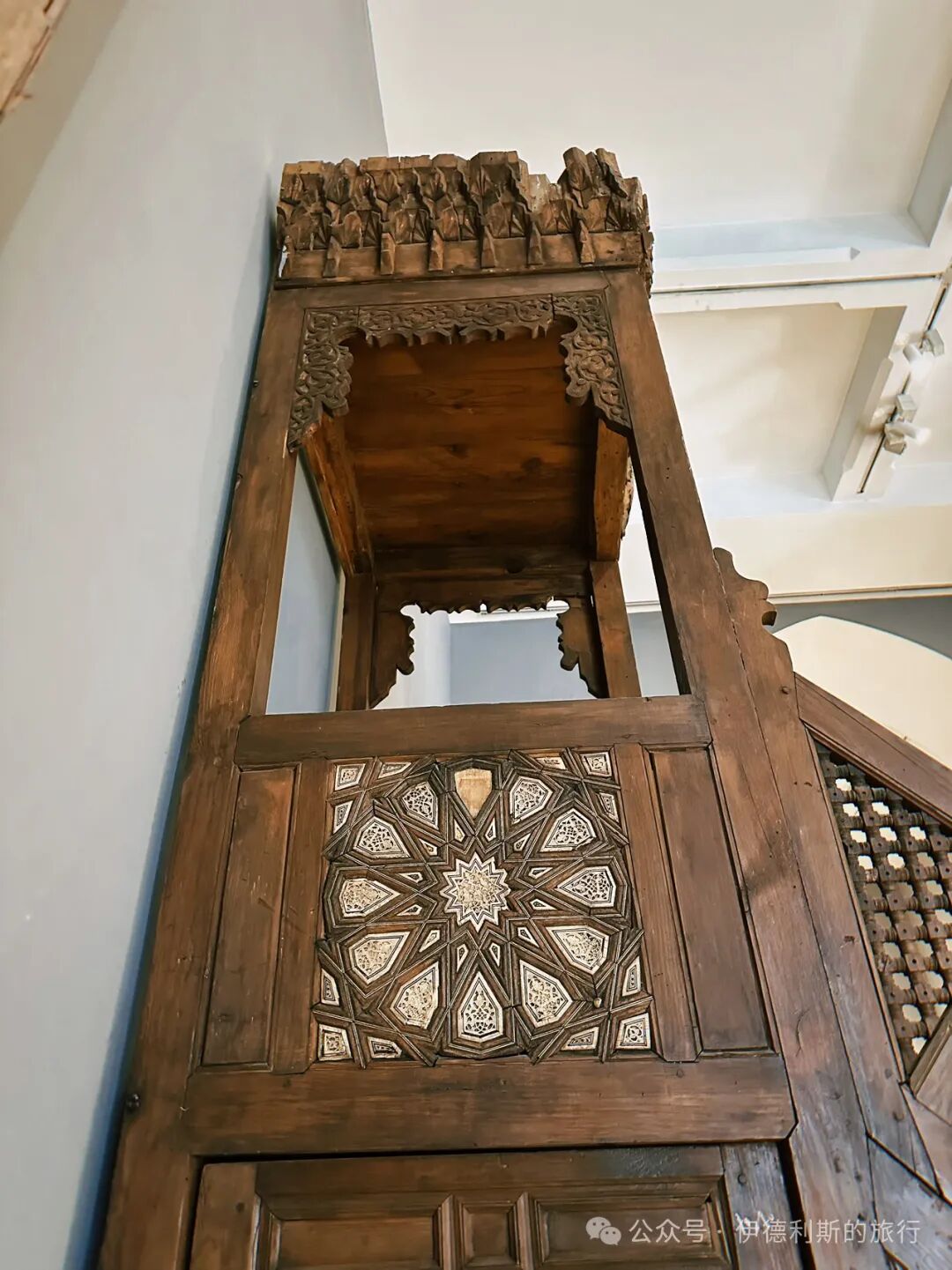
Ceramic tiles produced in Iznik, Turkey, during the 16th-century Ottoman period.
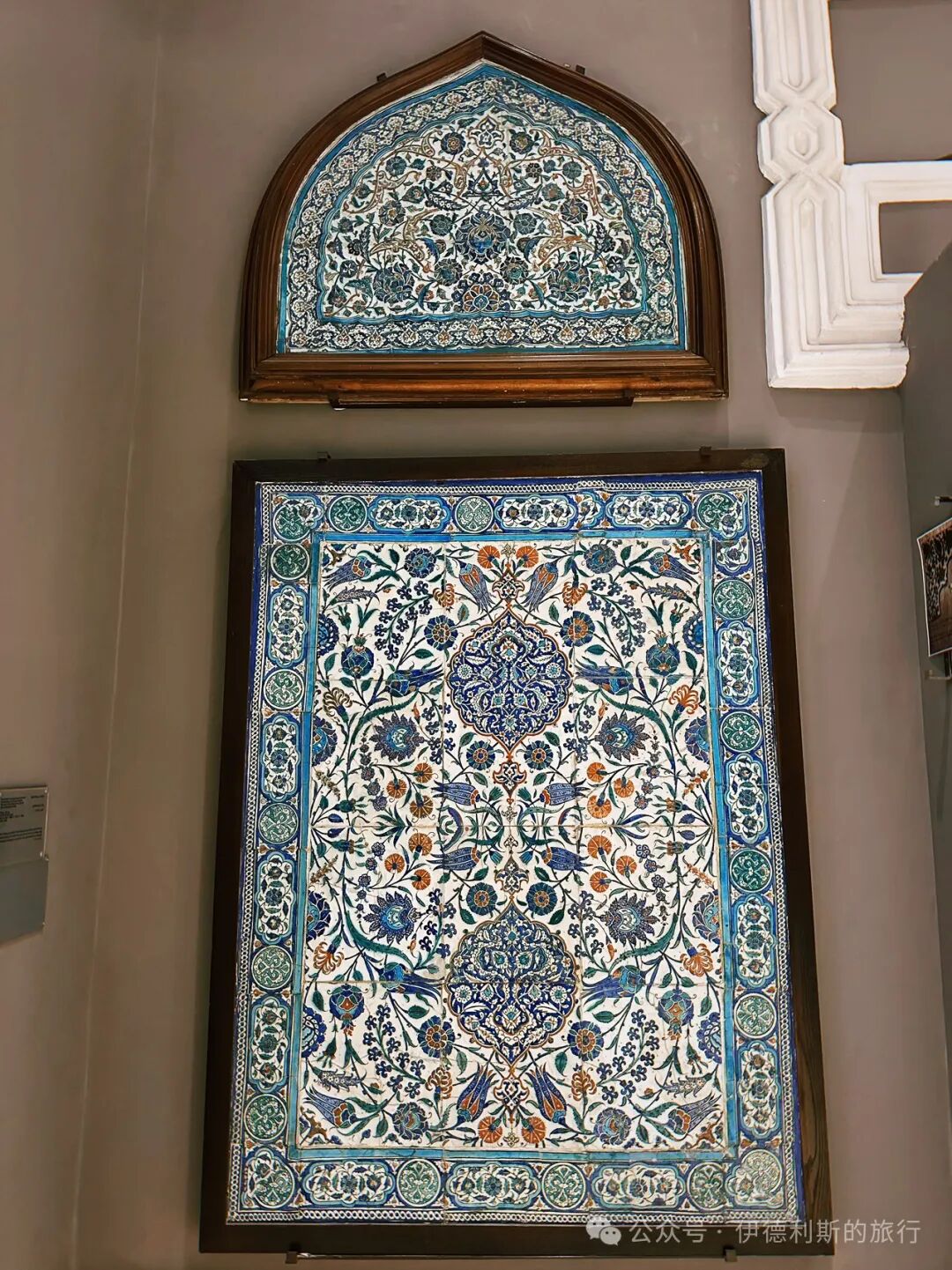
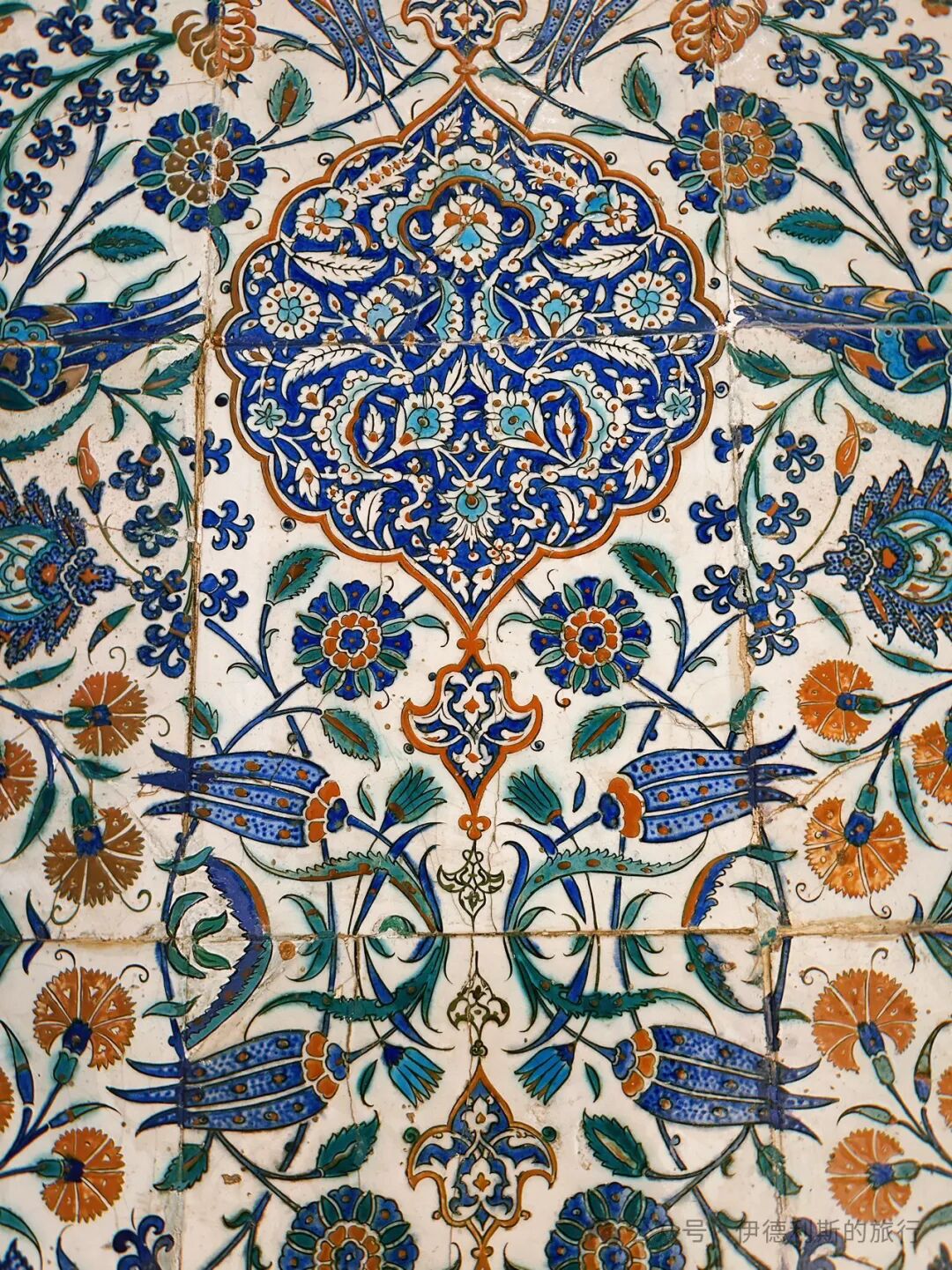
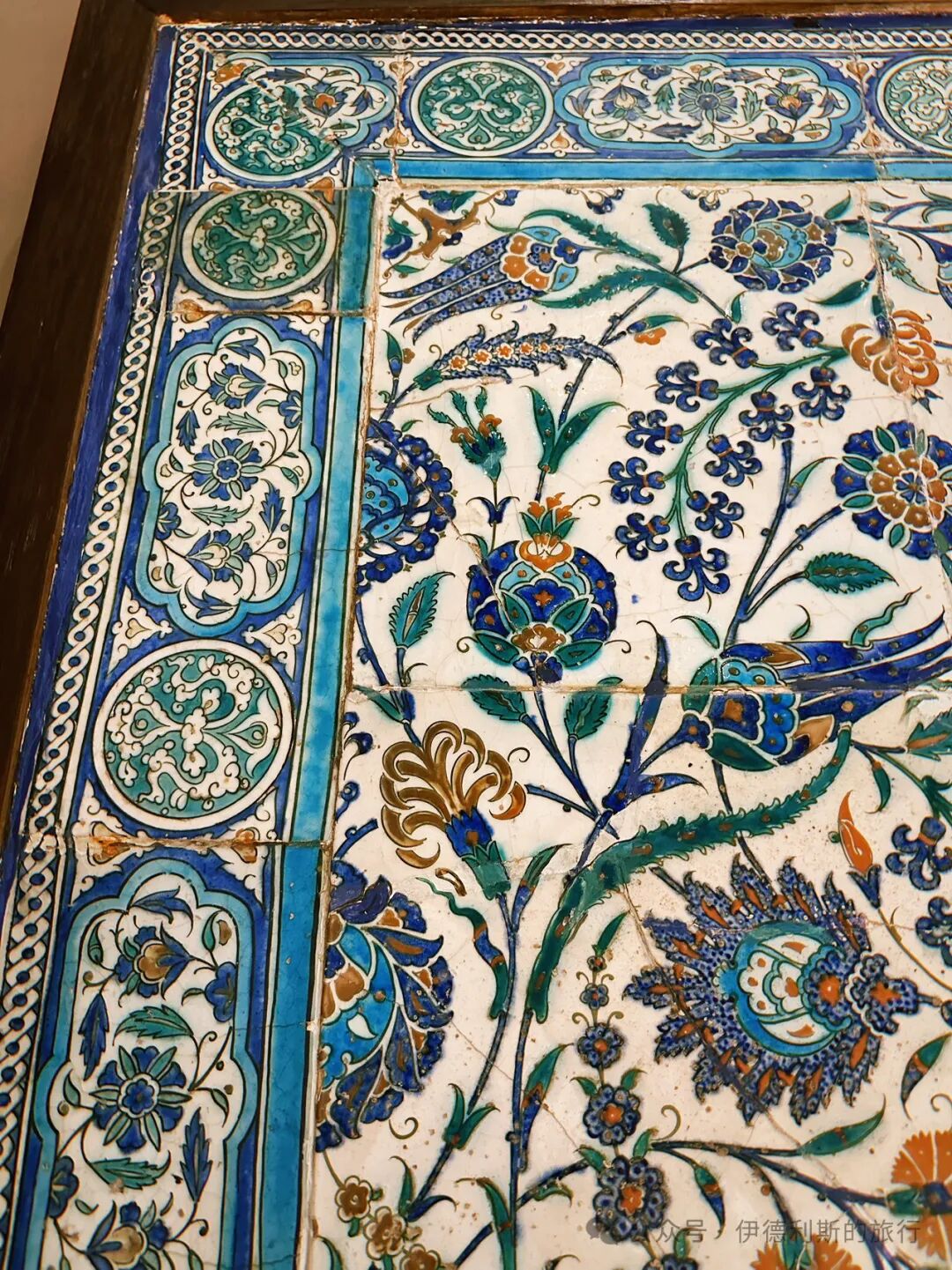
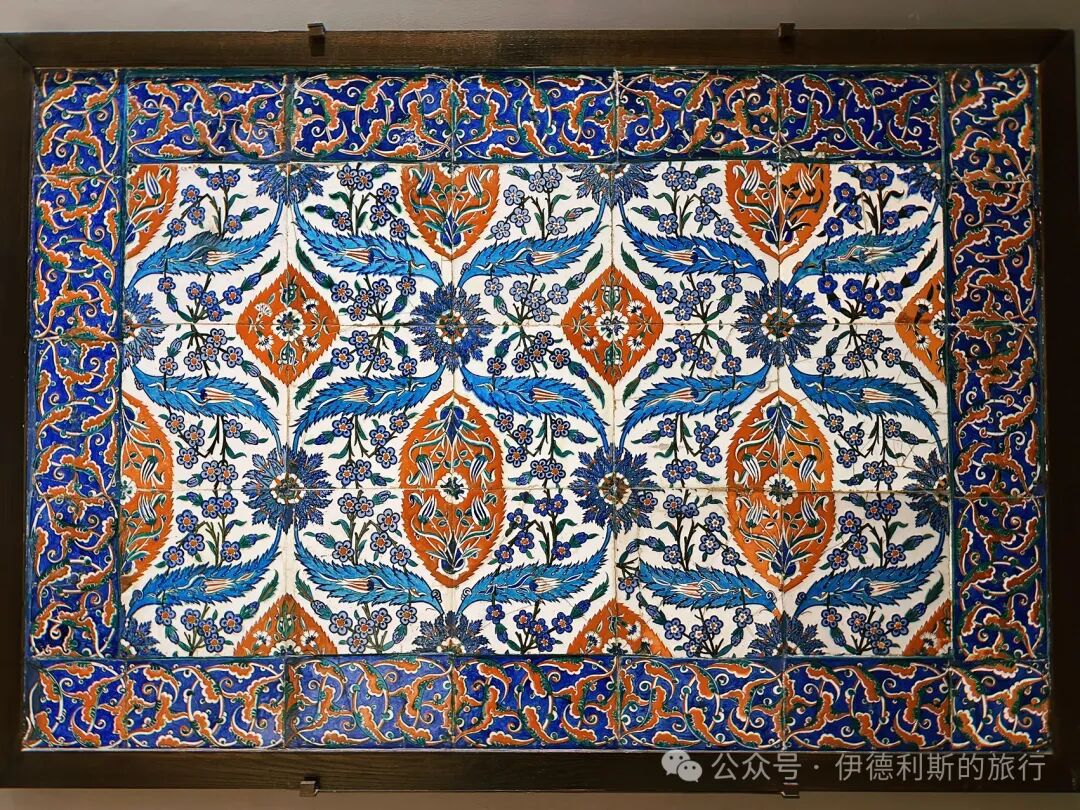
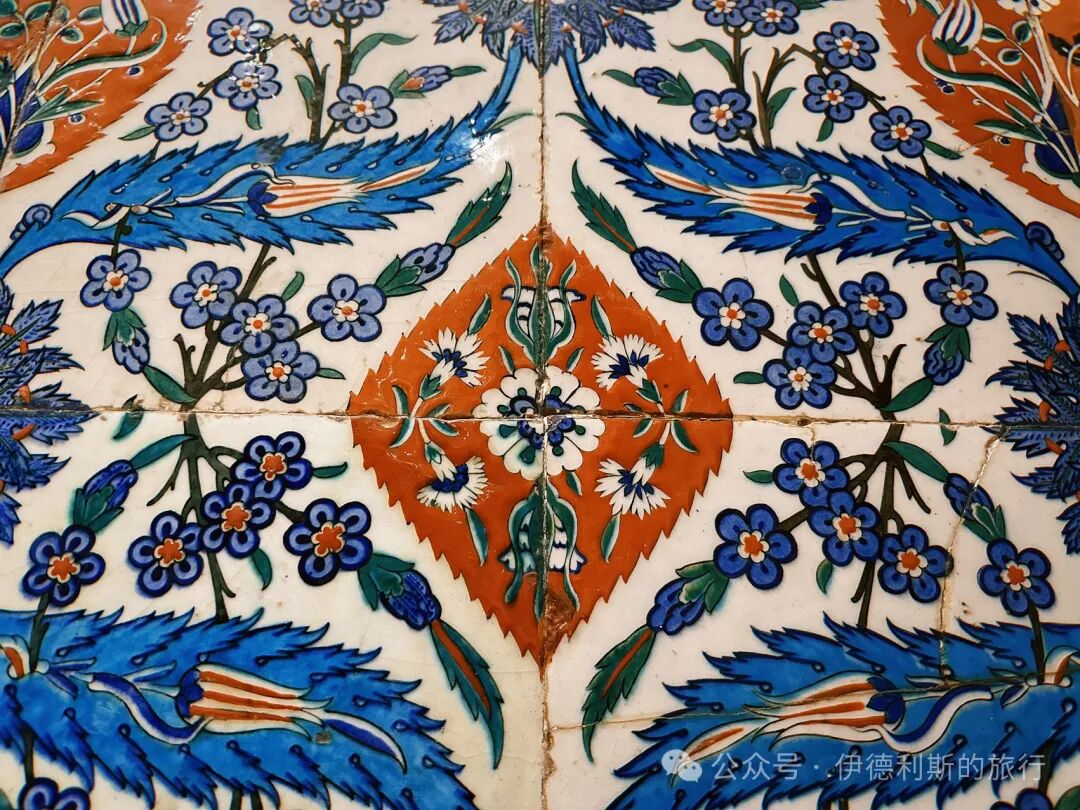
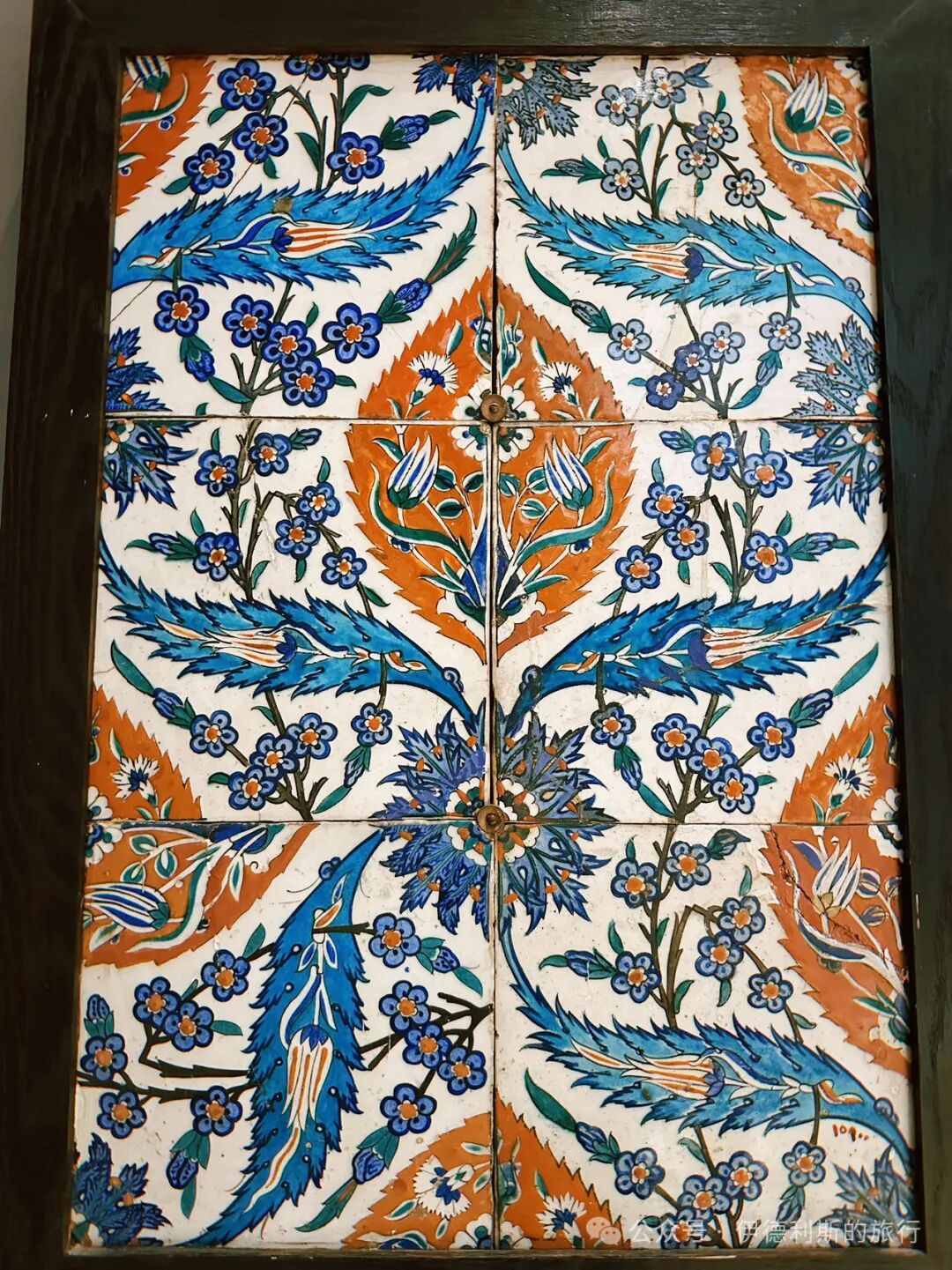
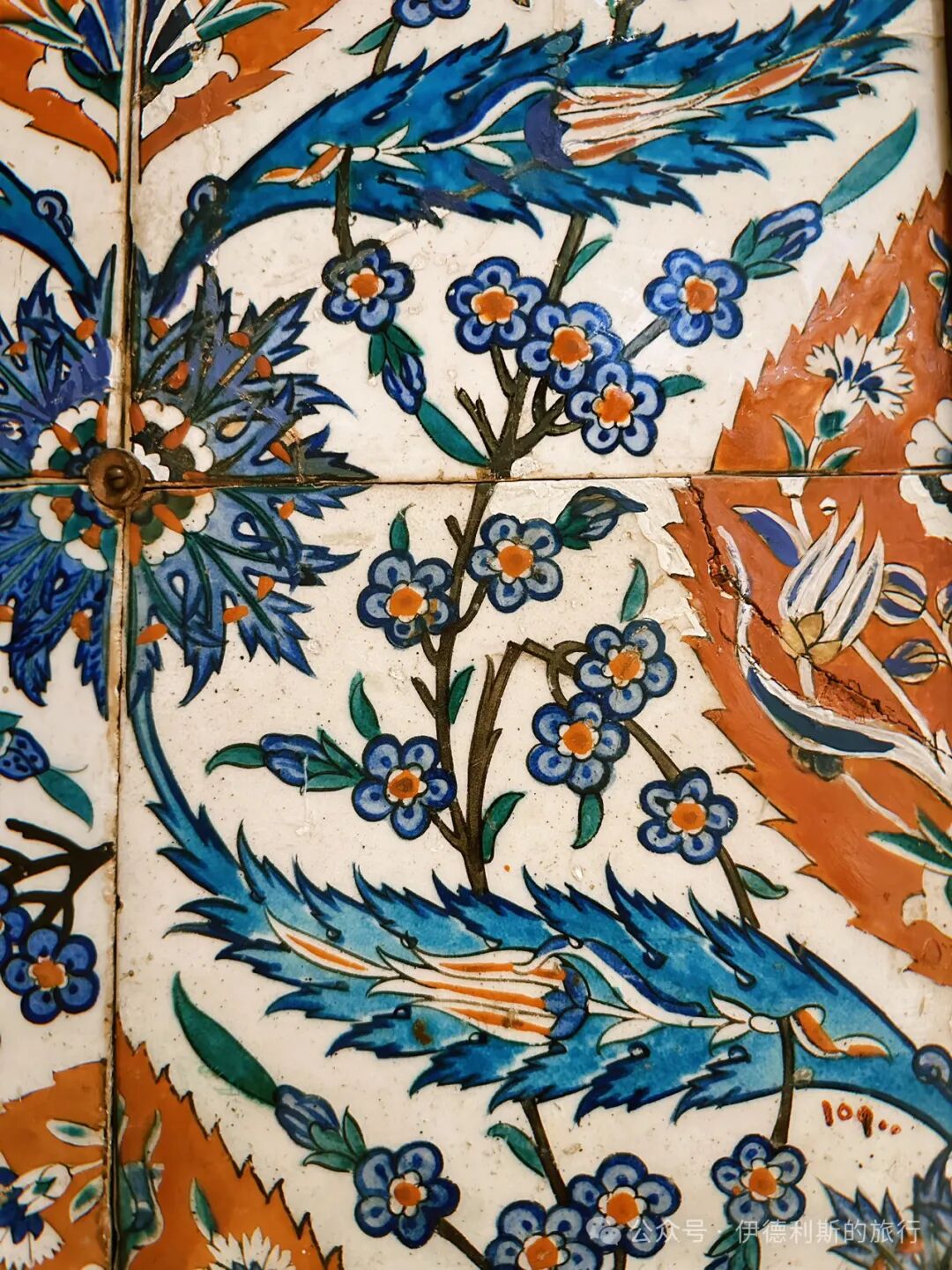
Porcelain from the 16th to 19th centuries, covering the Ottoman and Muhammad Ali periods.
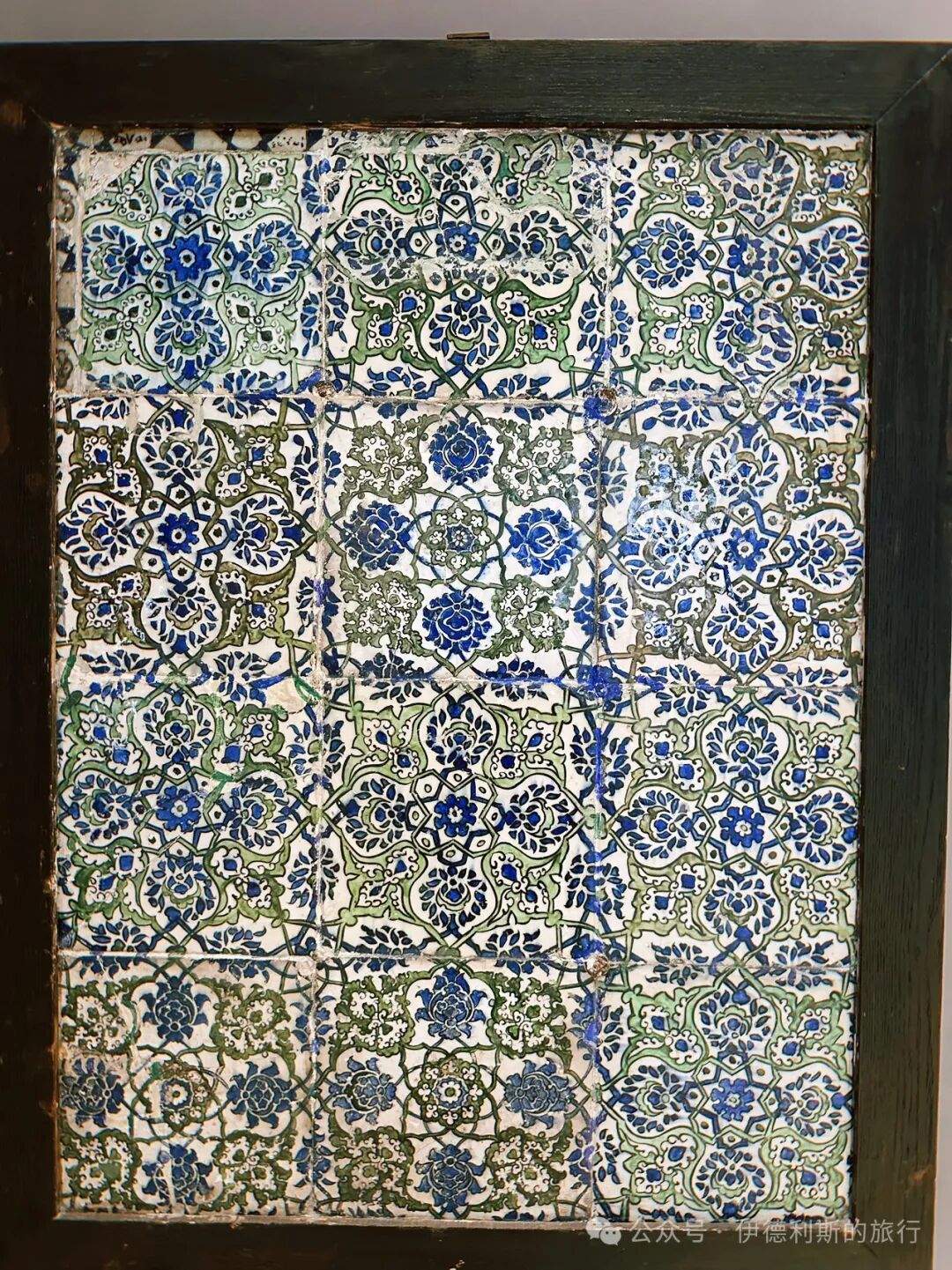
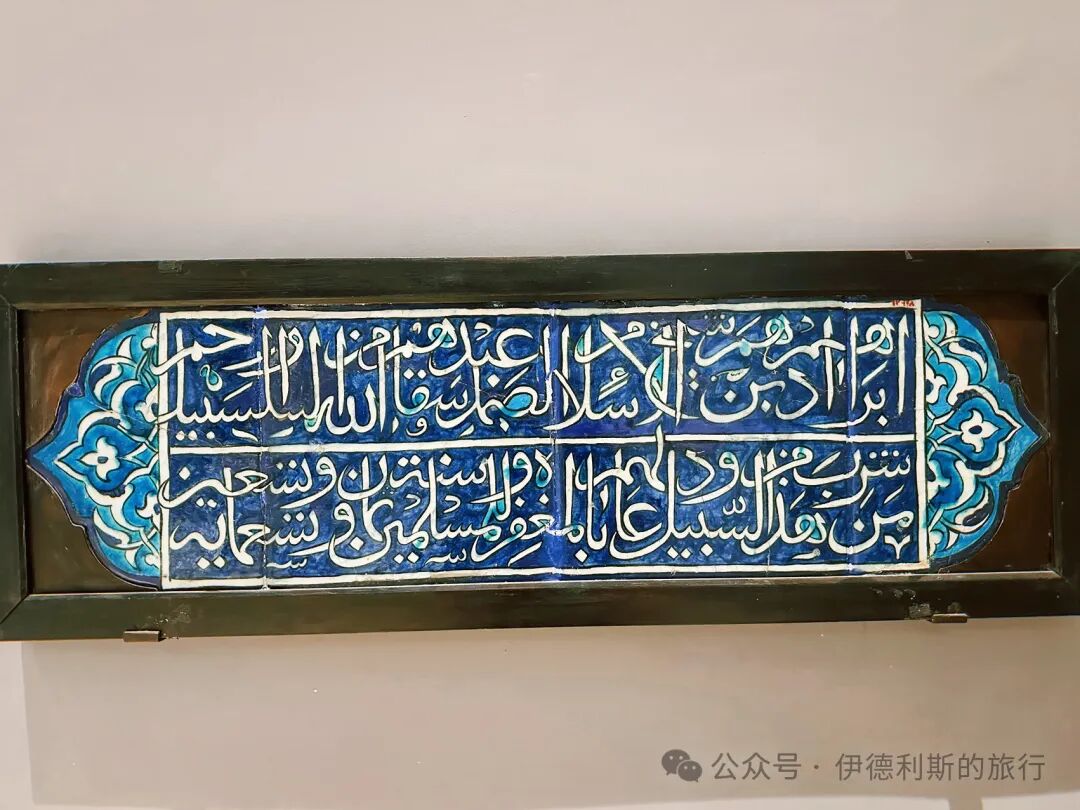
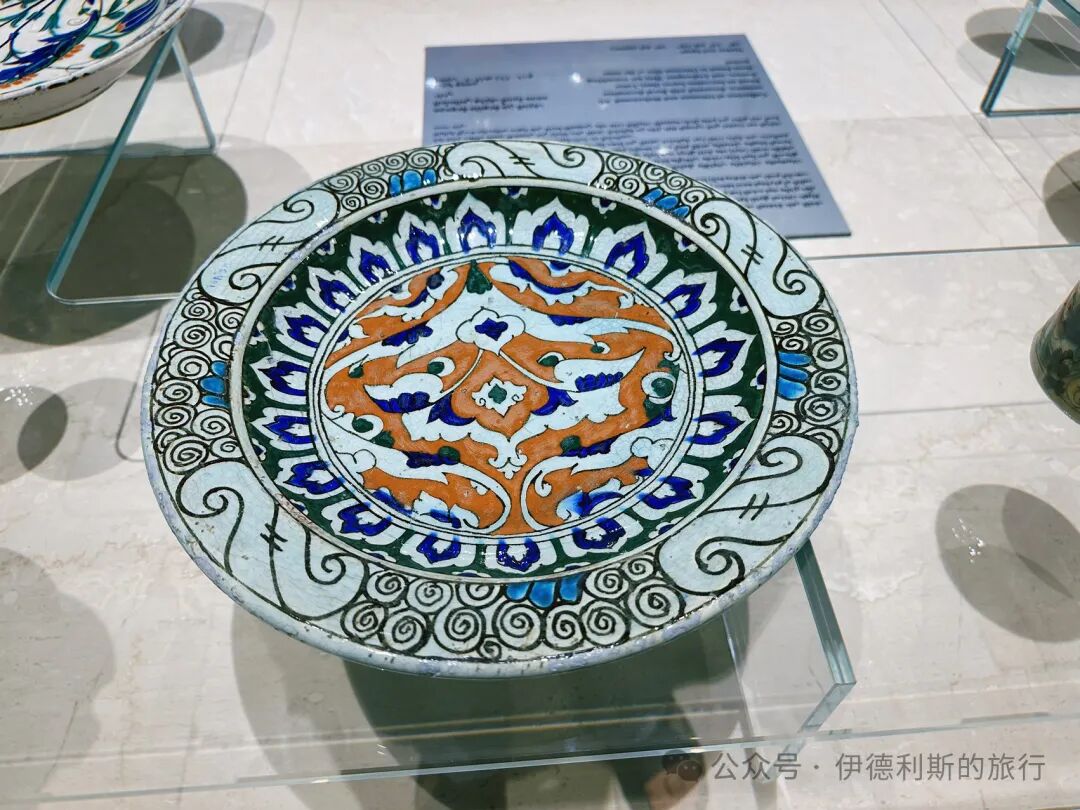
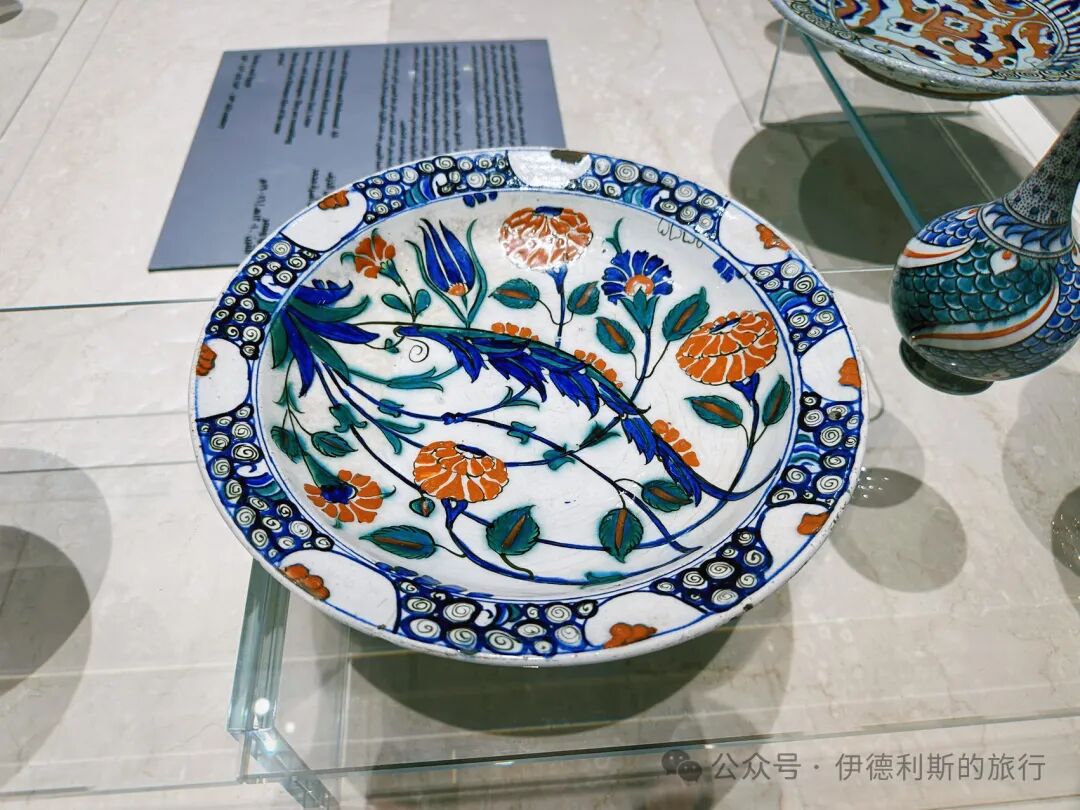
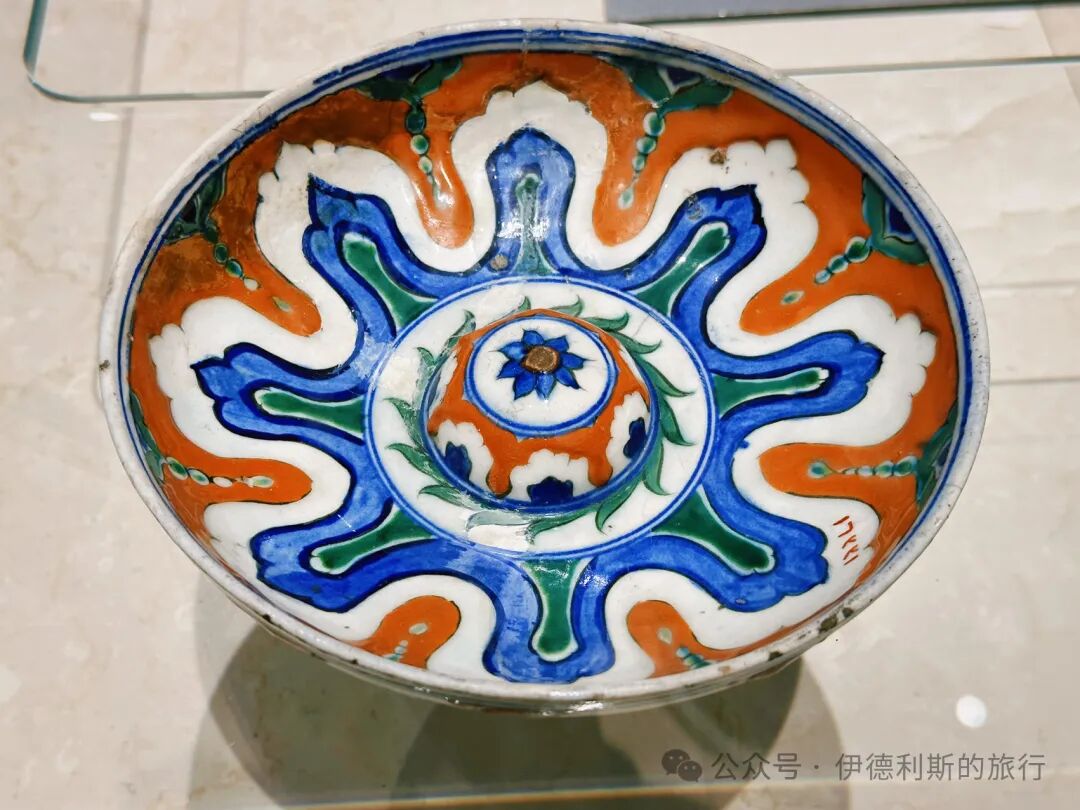
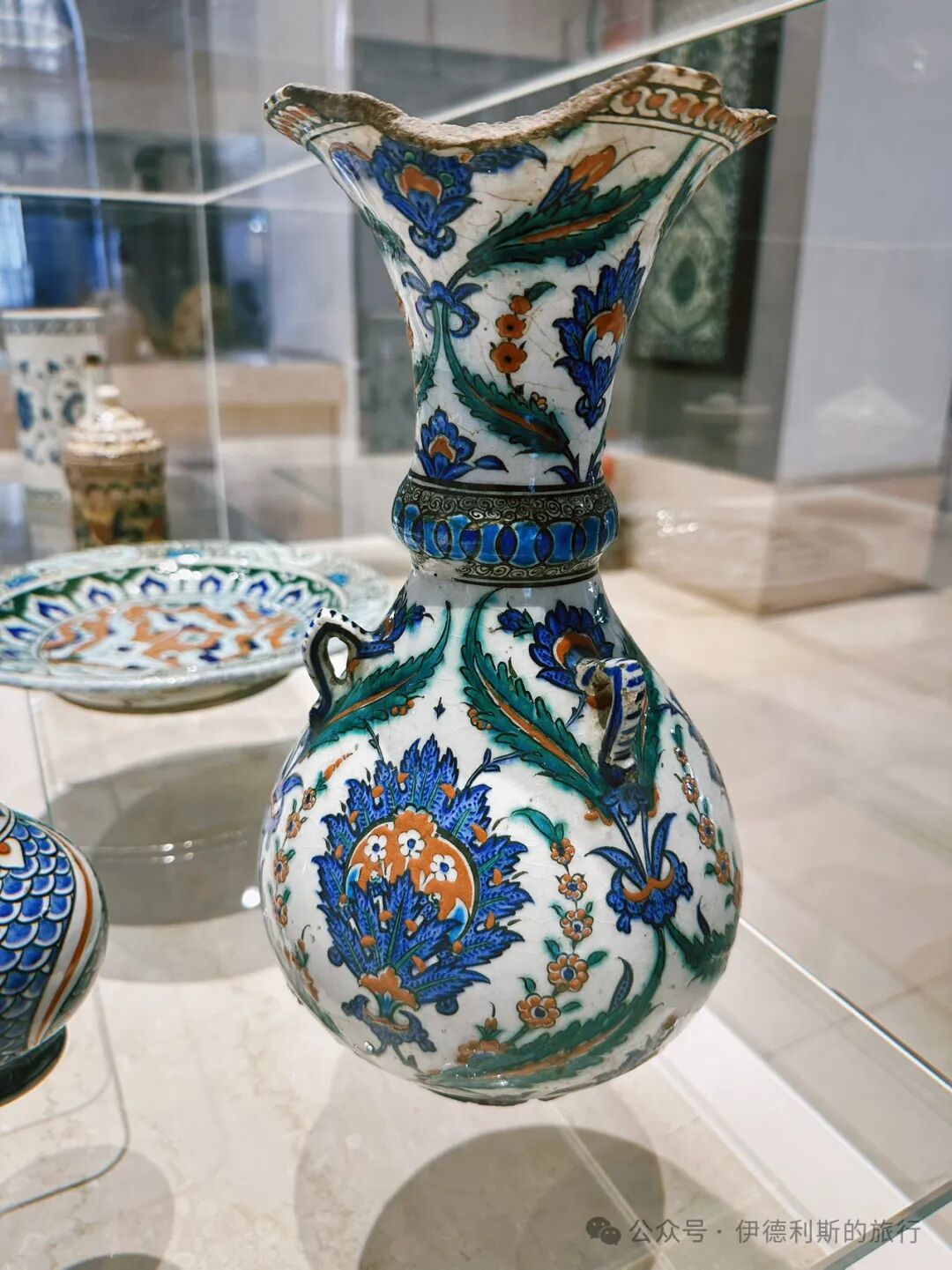
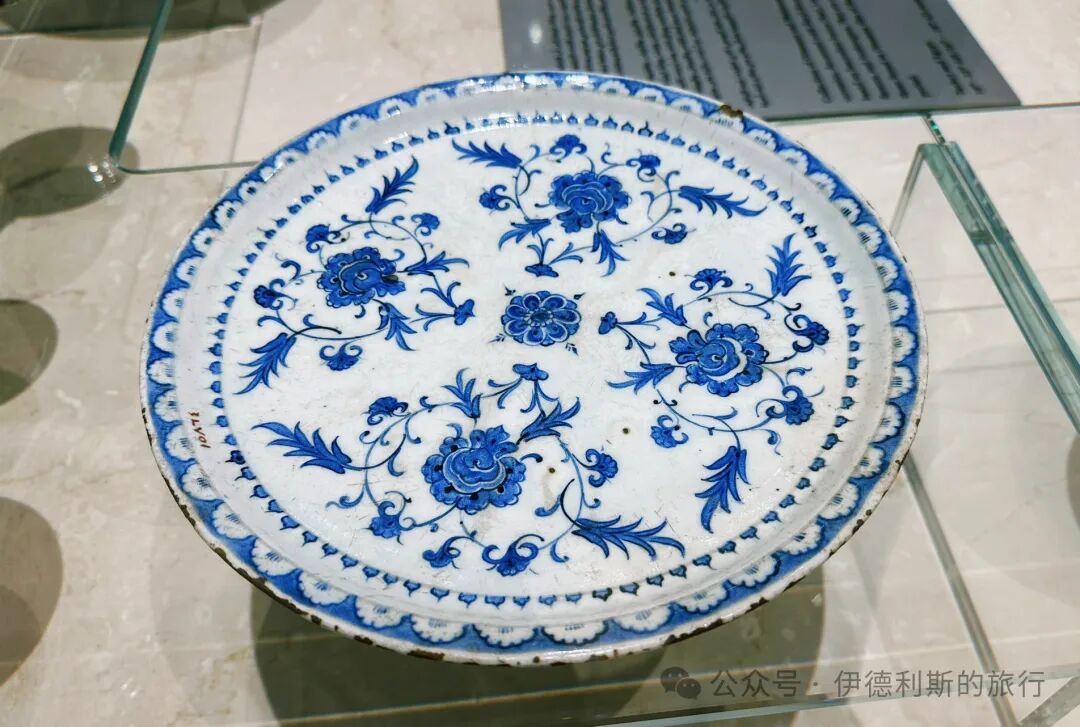
A marble carving from the 16th-century Ottoman period.
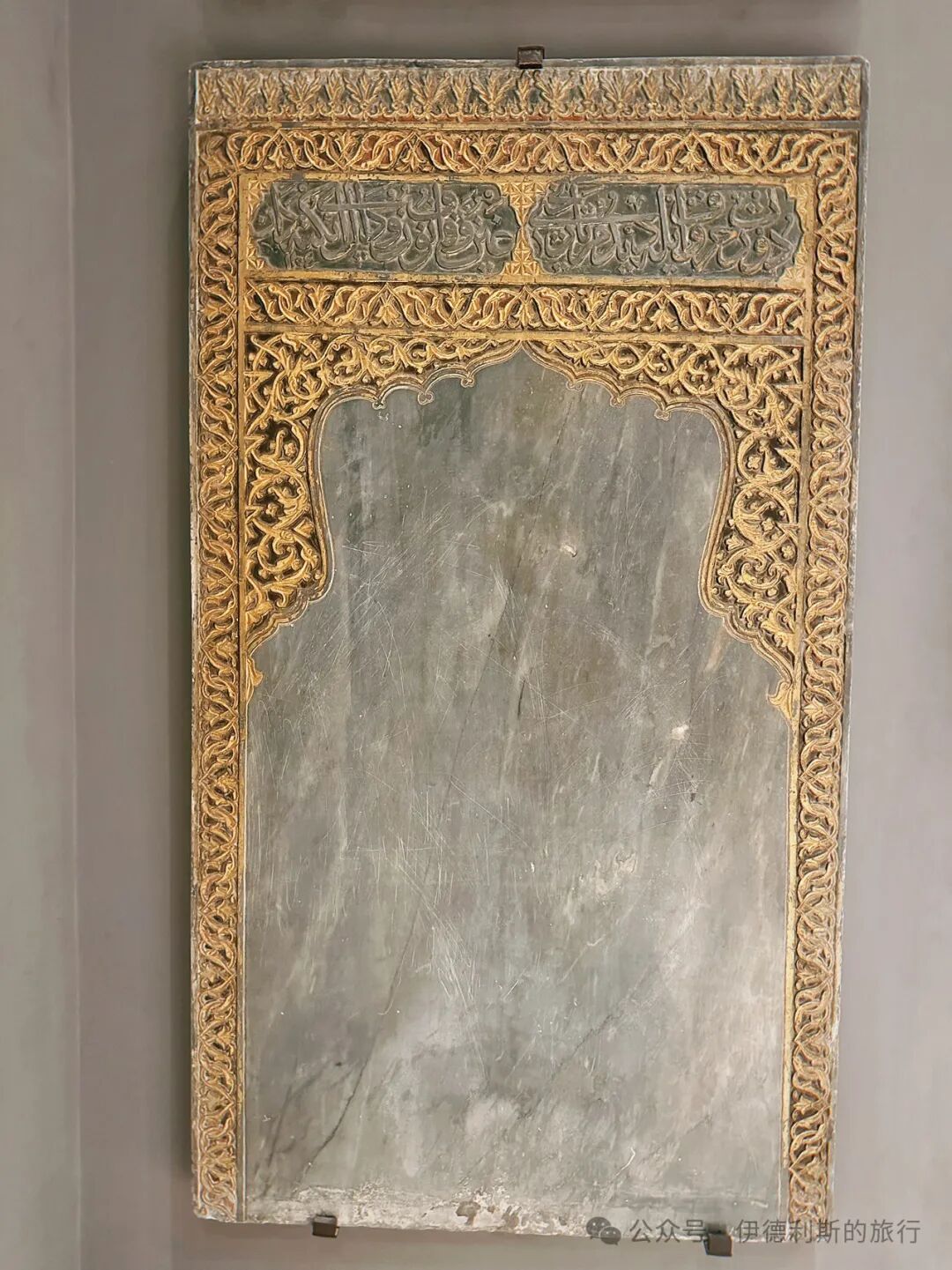
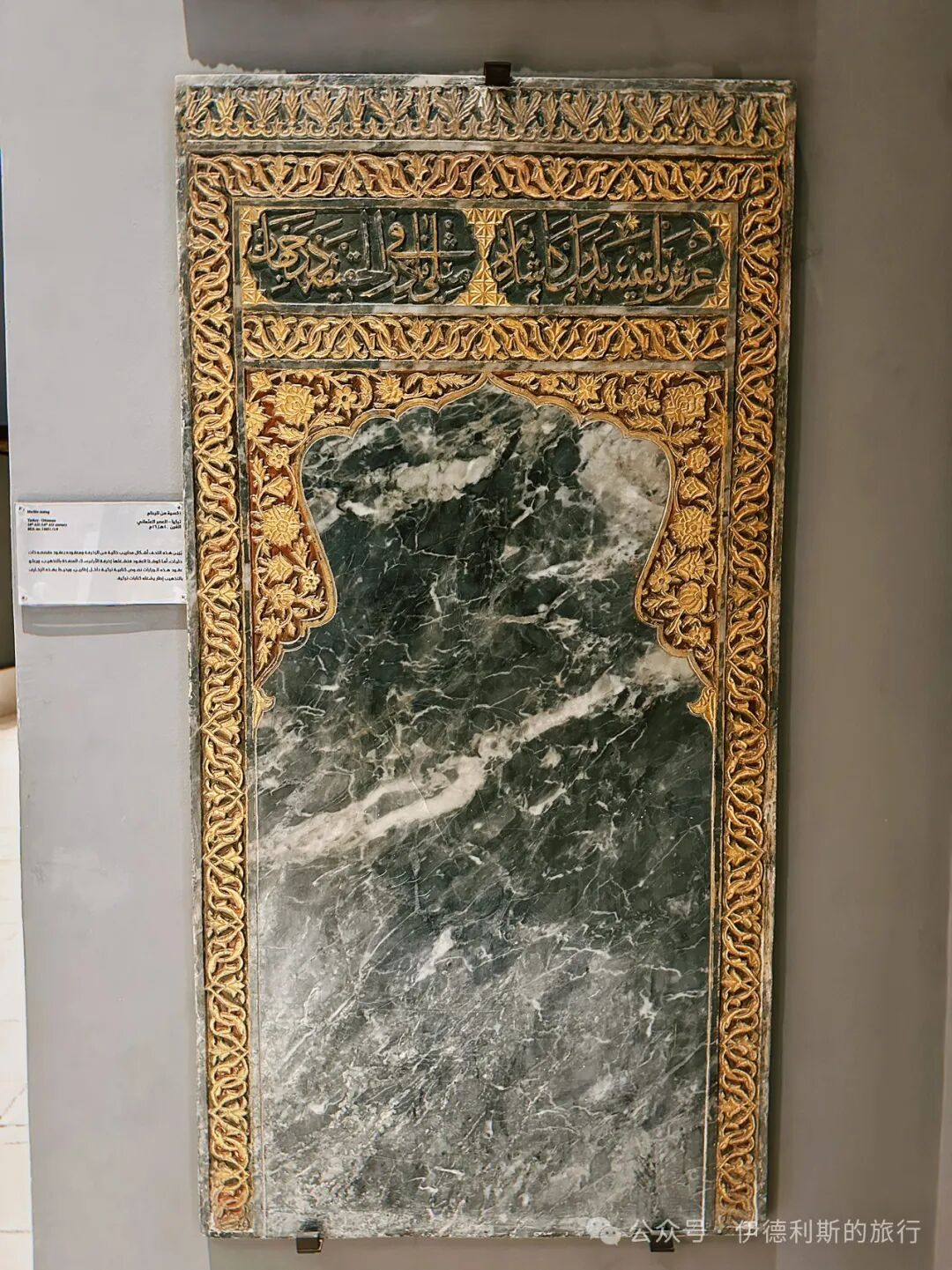
A 17th-century Ottoman period ceramic tile painted with an image of the Kaaba (Tianfang).
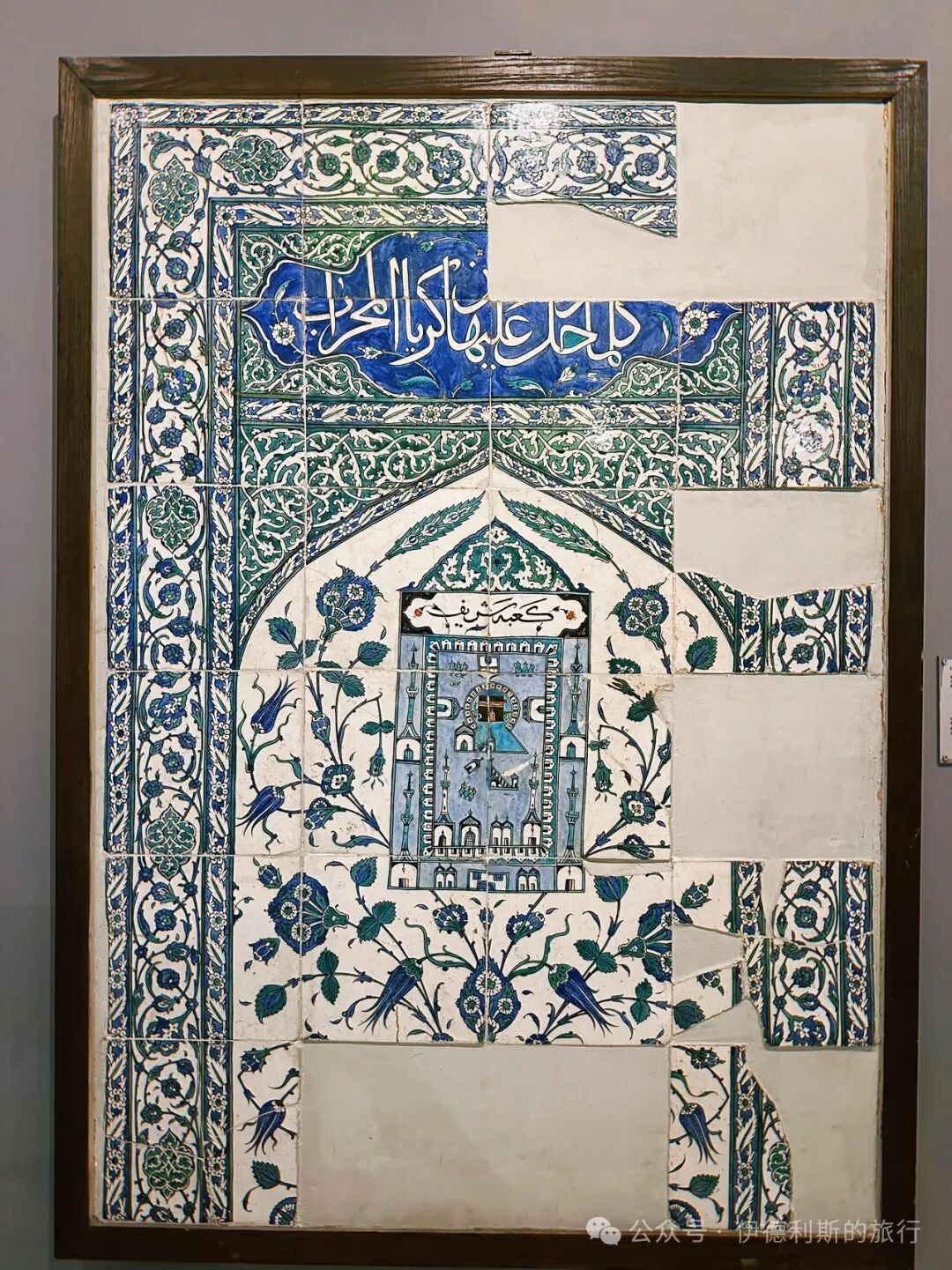
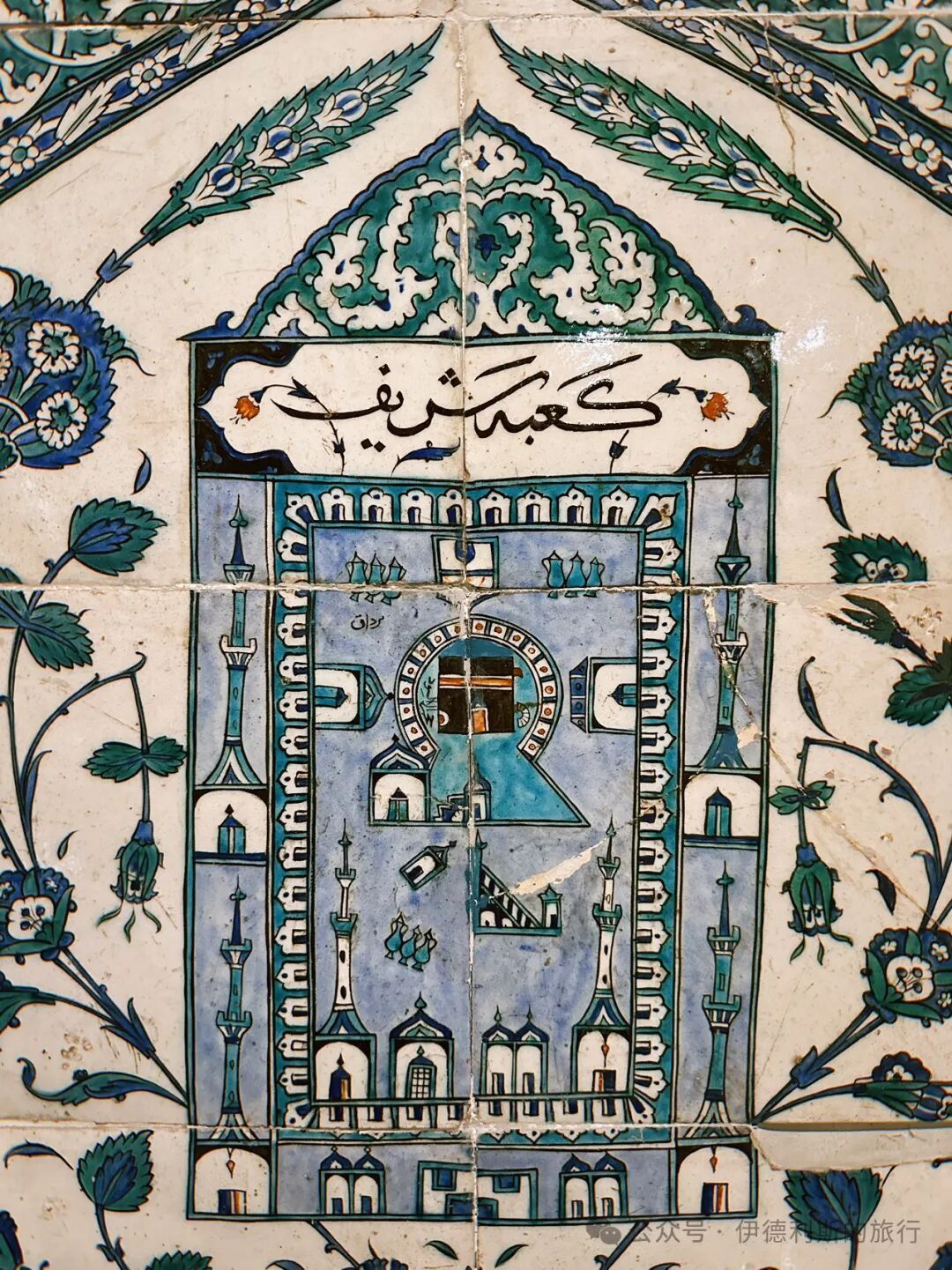
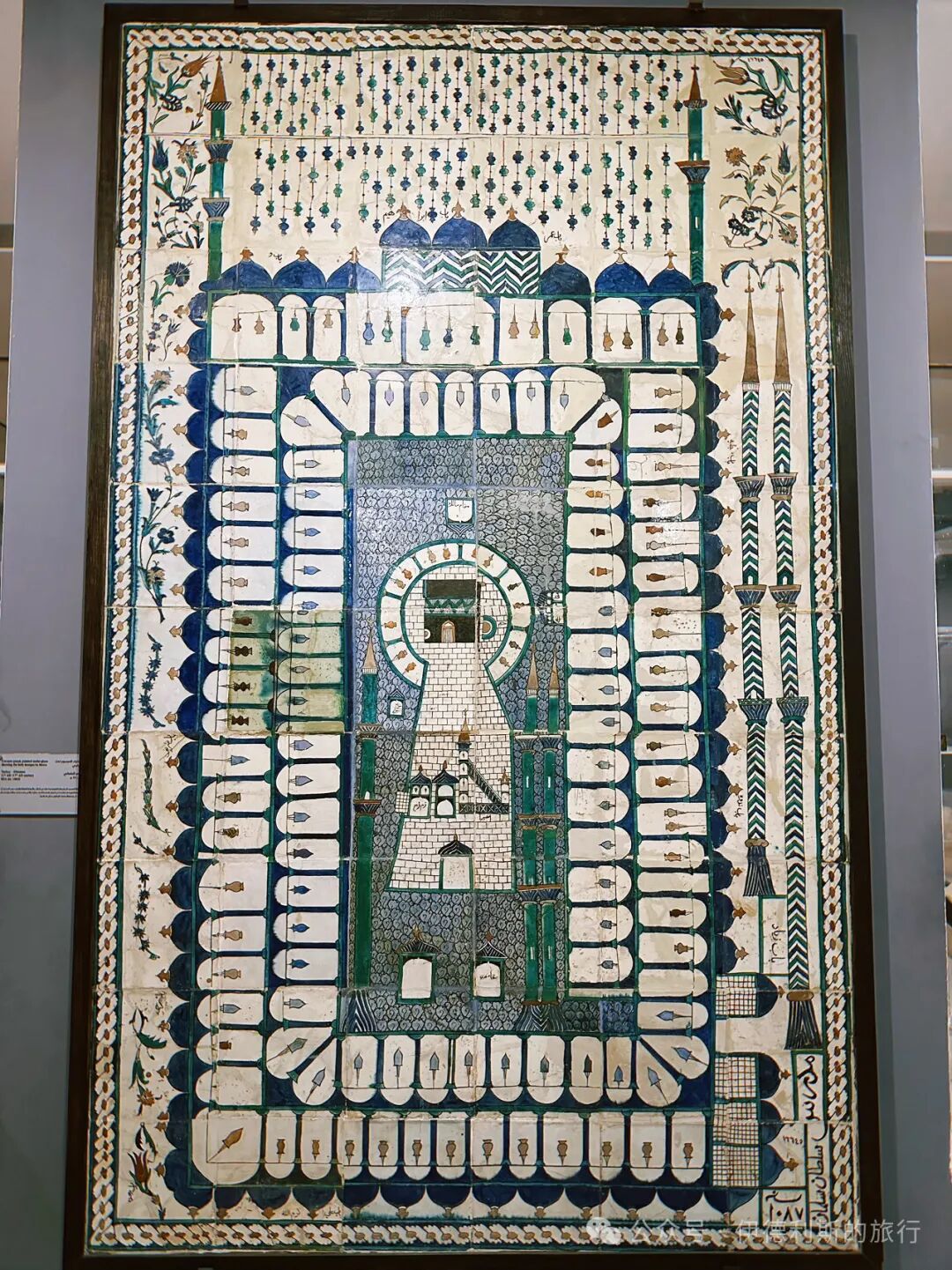
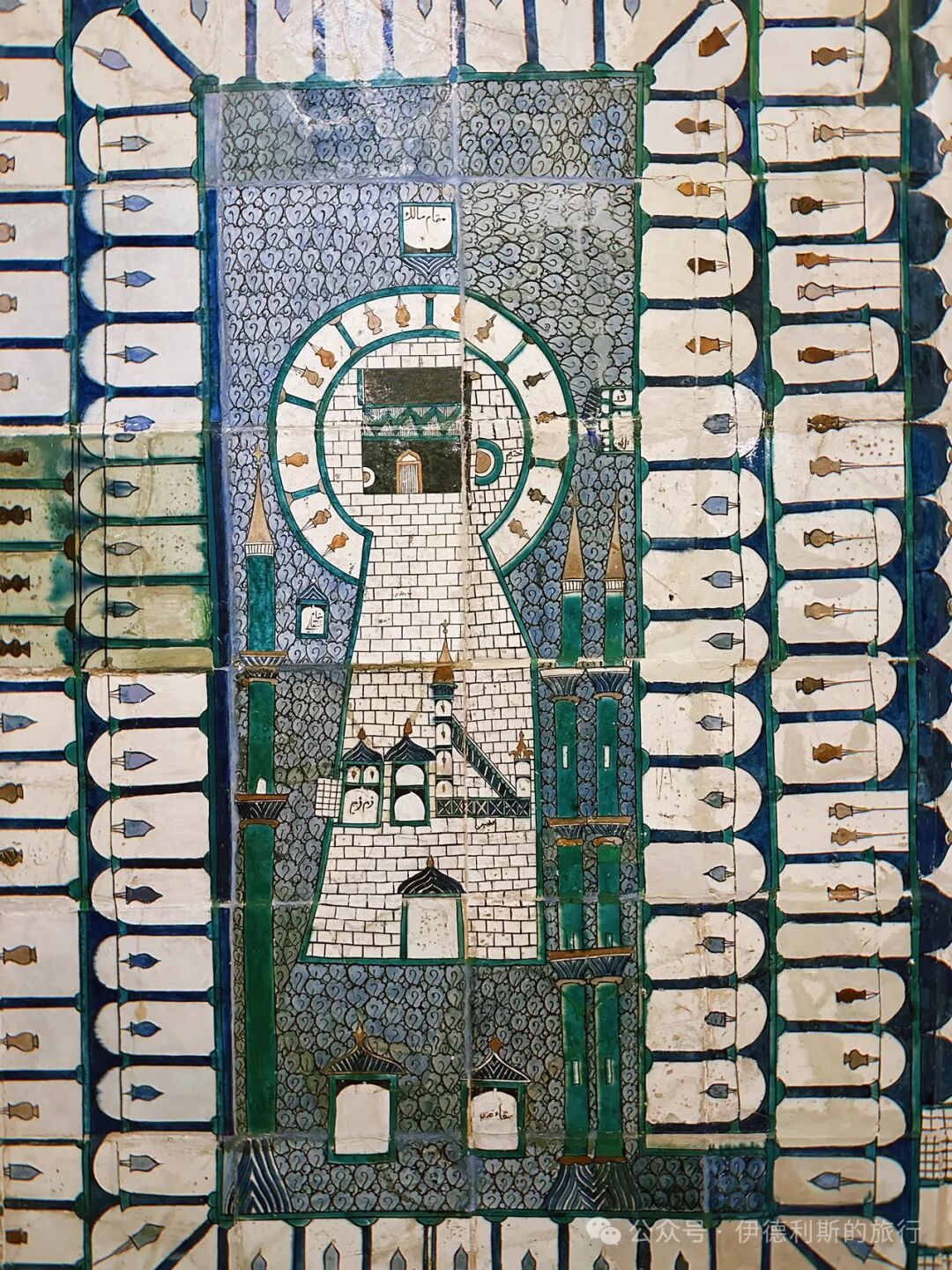
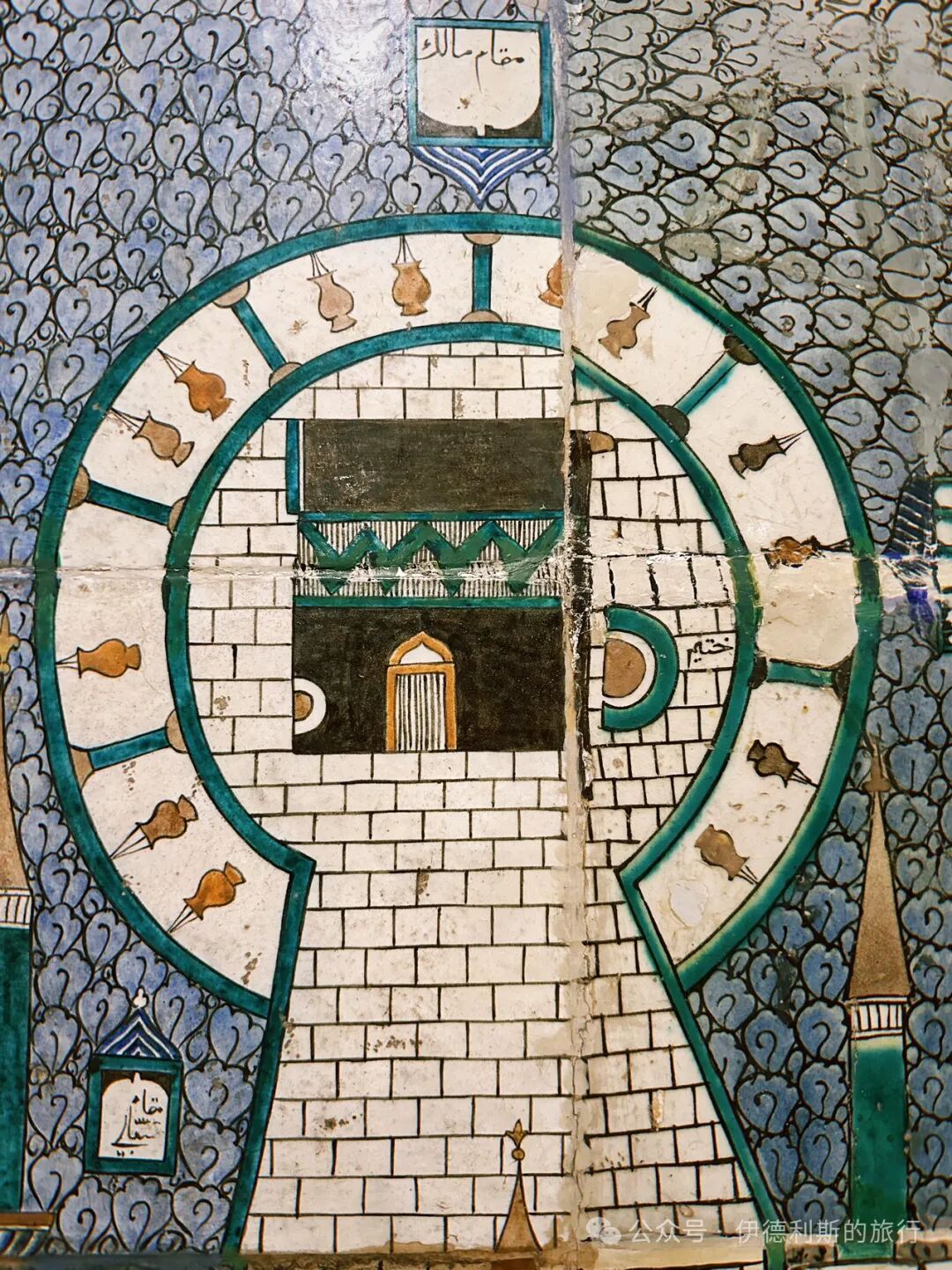
An 18th-century Ottoman period ceramic tile painted with an image of the Prophet's Mosque in Medina.
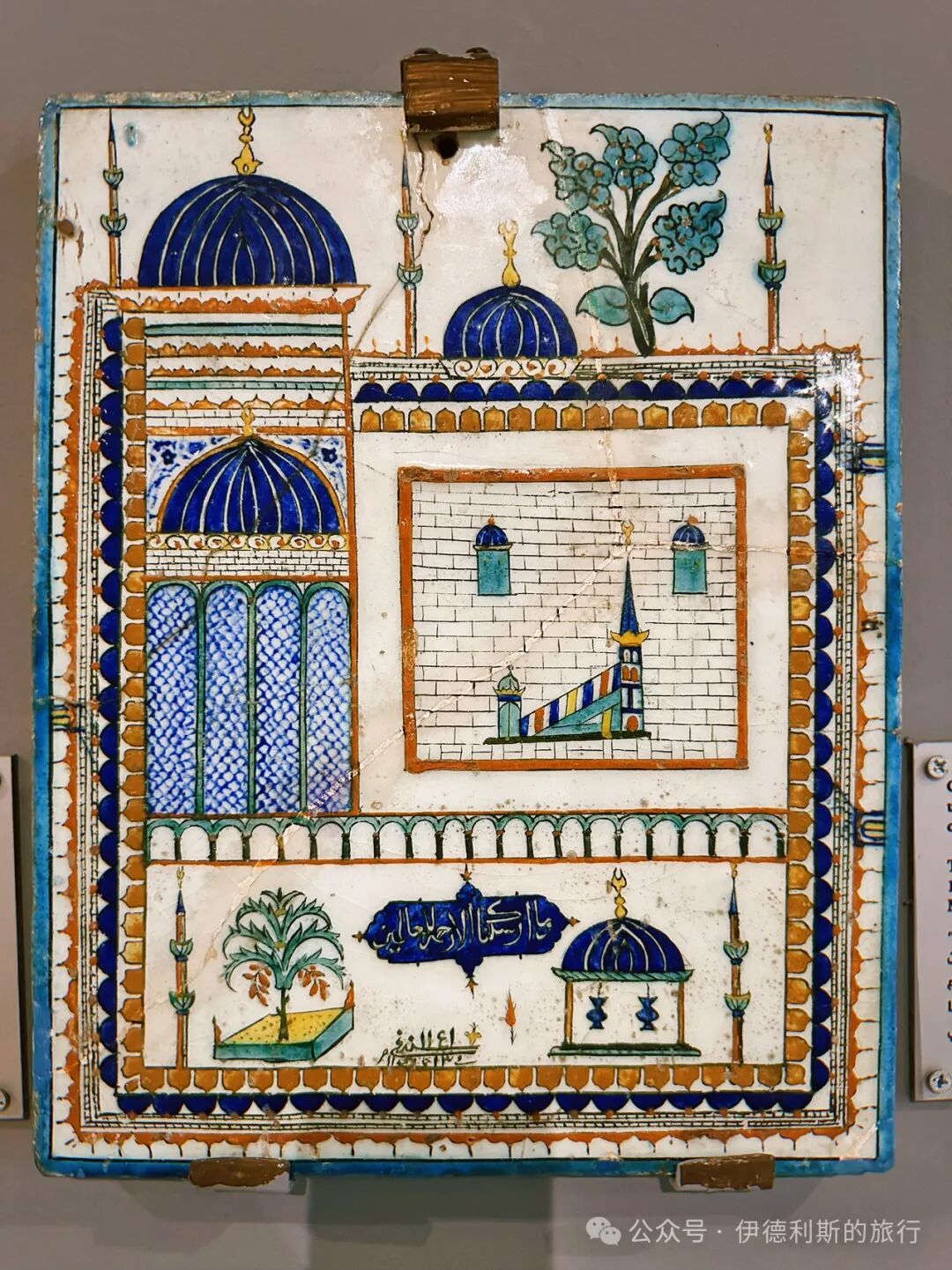
Tombstone.
A 12th-century basalt tombstone from the Arabian Peninsula or the Dahlak Archipelago.
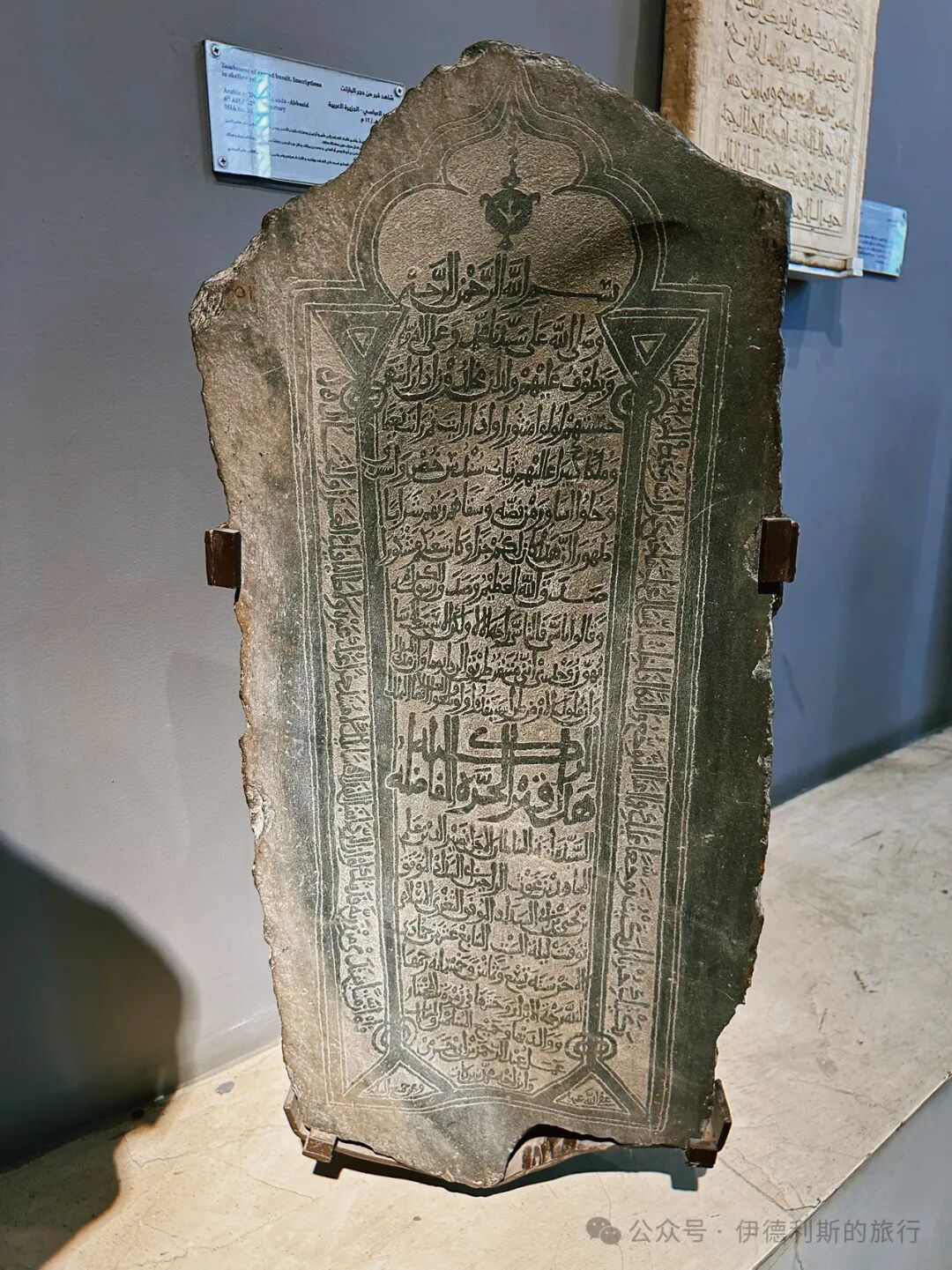
A 12th-century limestone tombstone from the Ayyubid dynasty in Egypt.
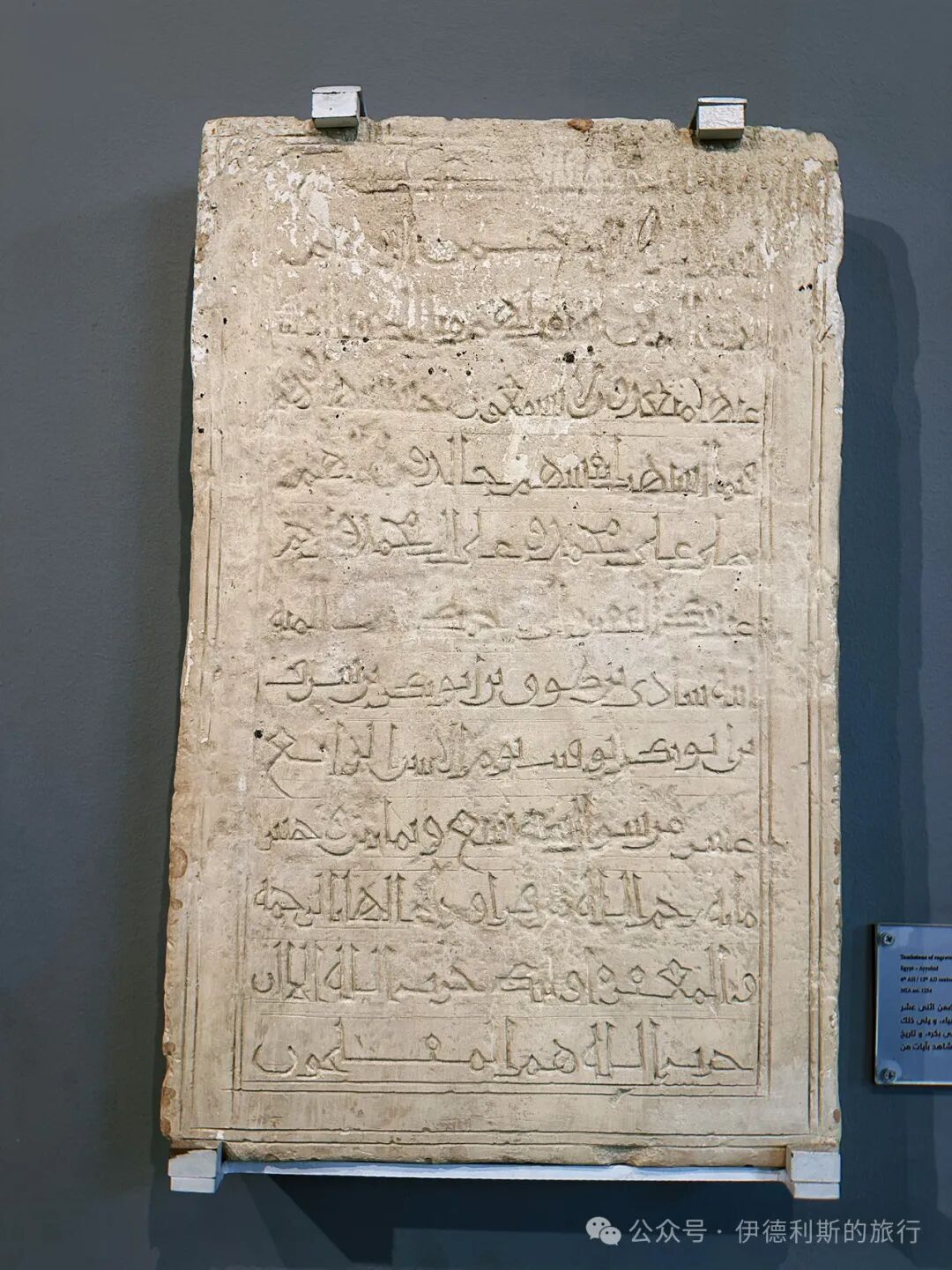
A 10th-century wooden tombstone from the Fatimid dynasty in Egypt.
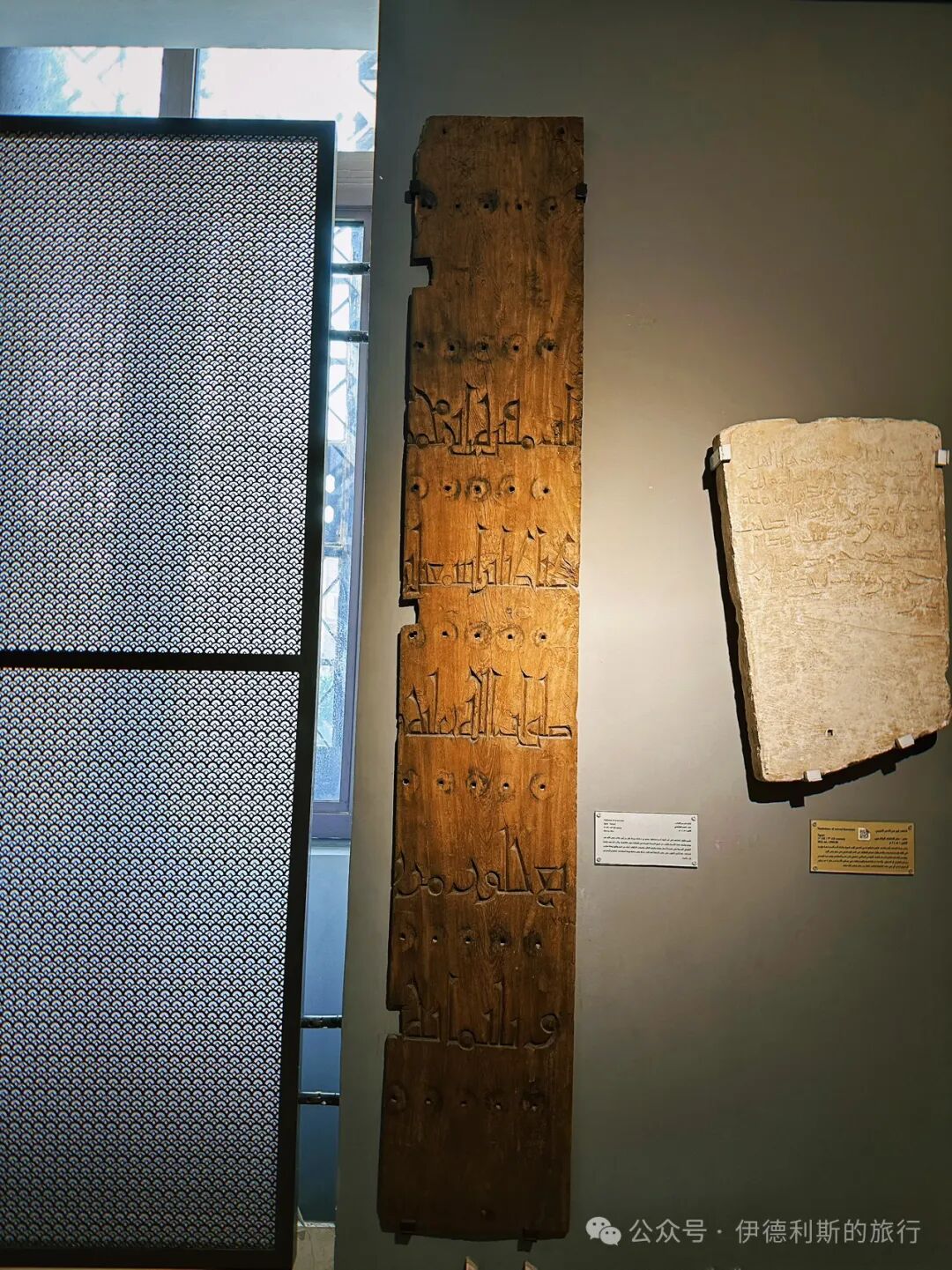
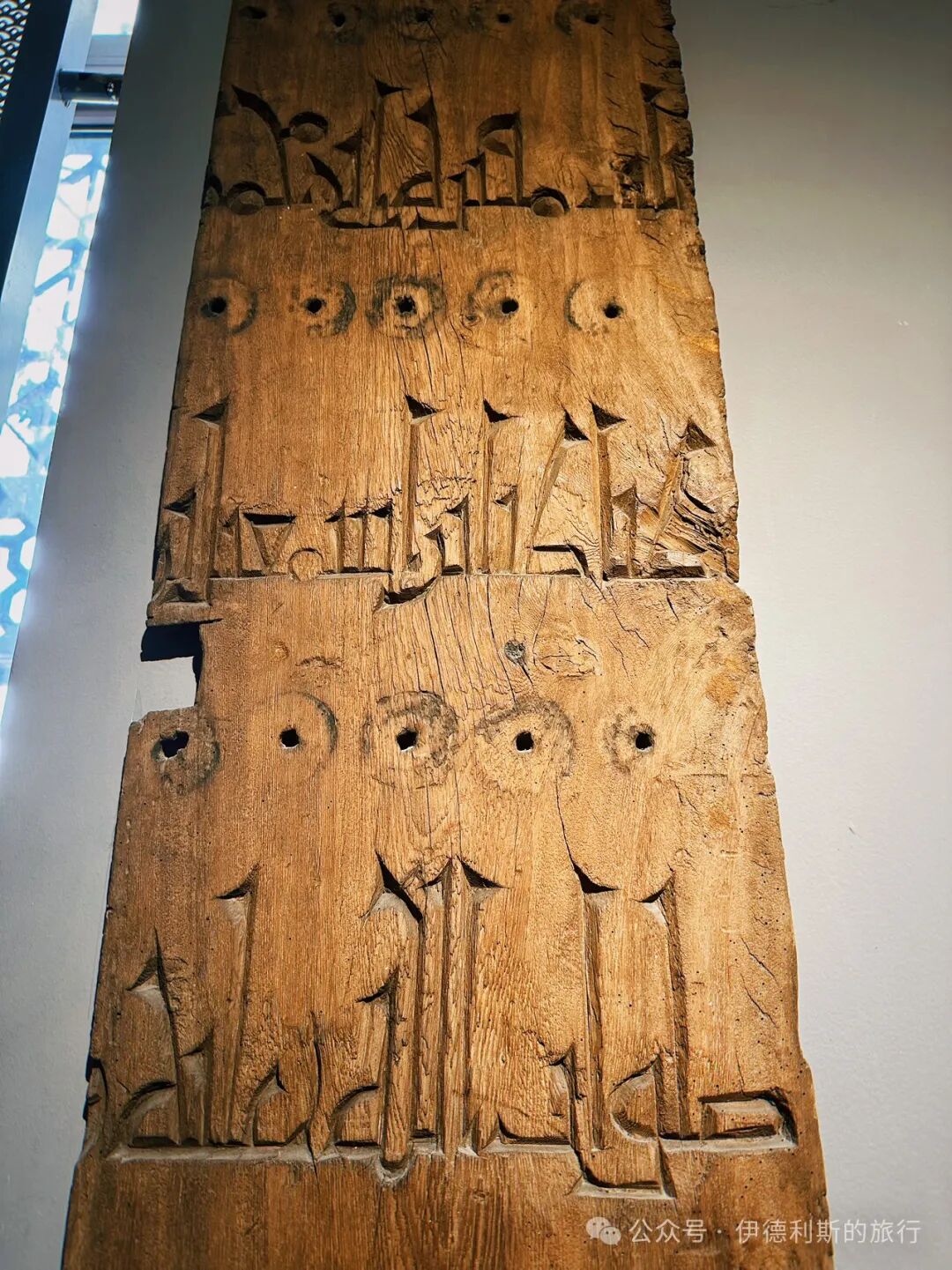
A 7th-century limestone tombstone from the Rashidun or Umayyad period in Egypt.
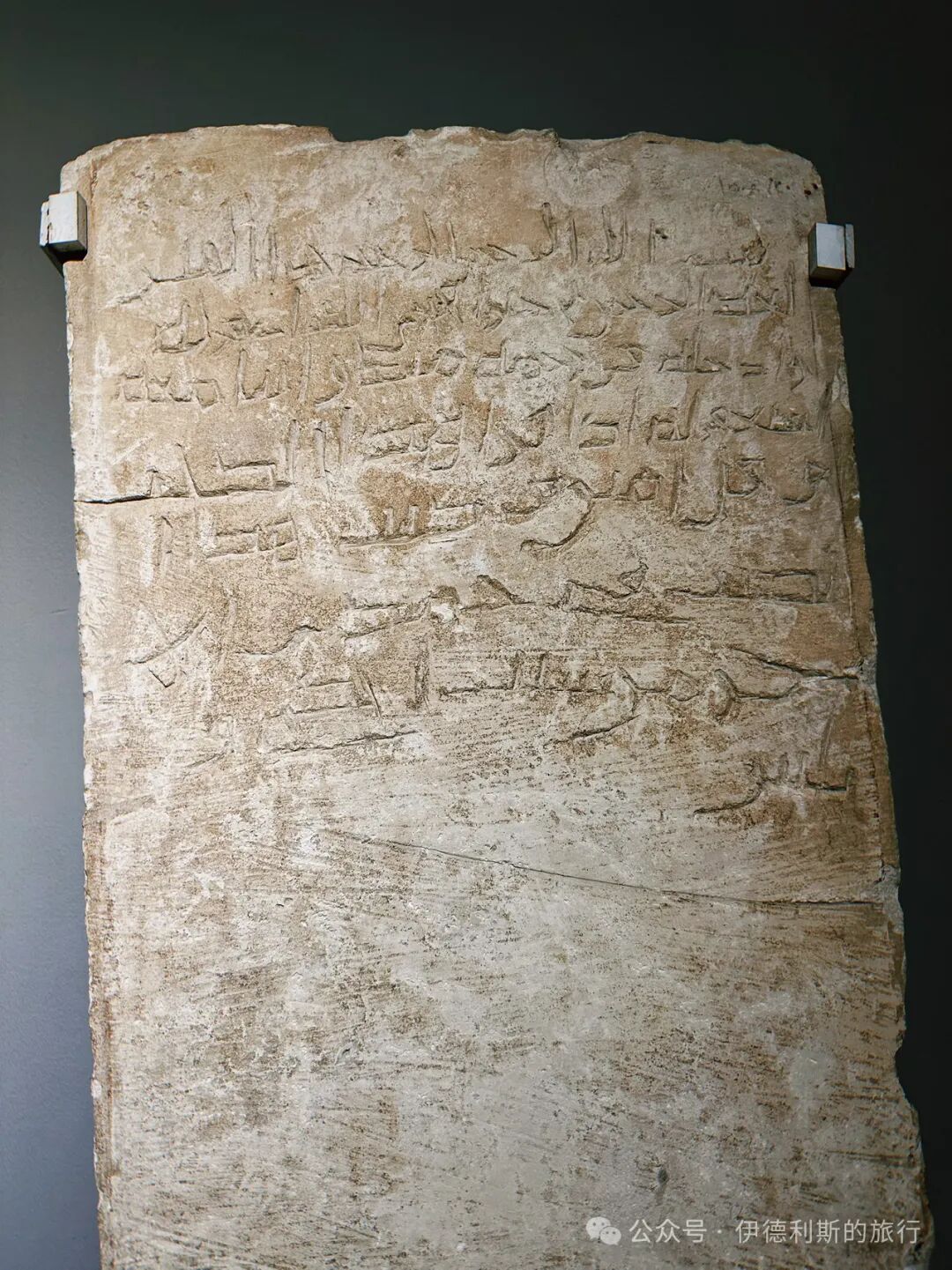
An 8th-century marble tombstone from the Abbasid period in Egypt.
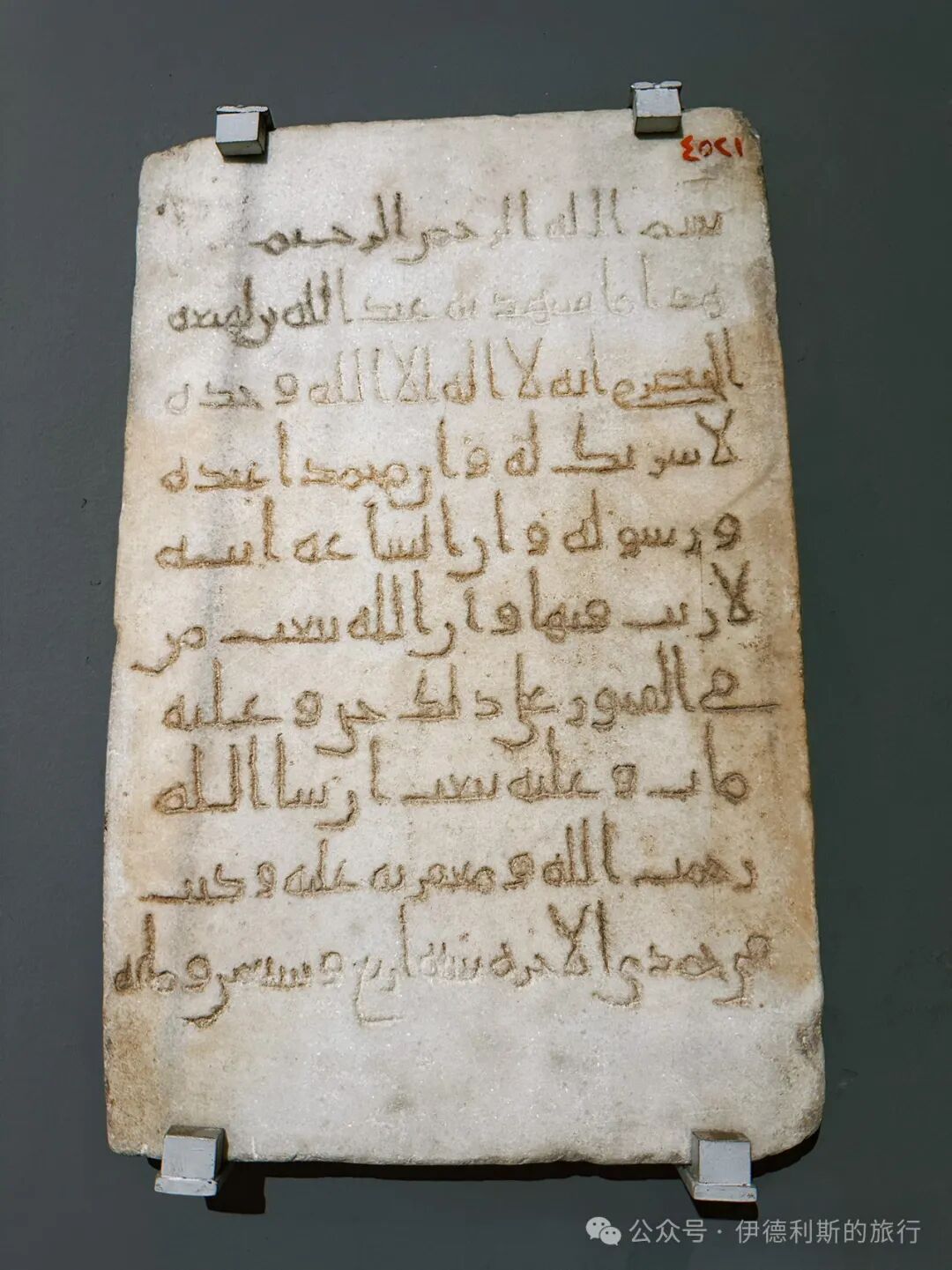
A 9th-century marble tombstone from the Abbasid period in Egypt.
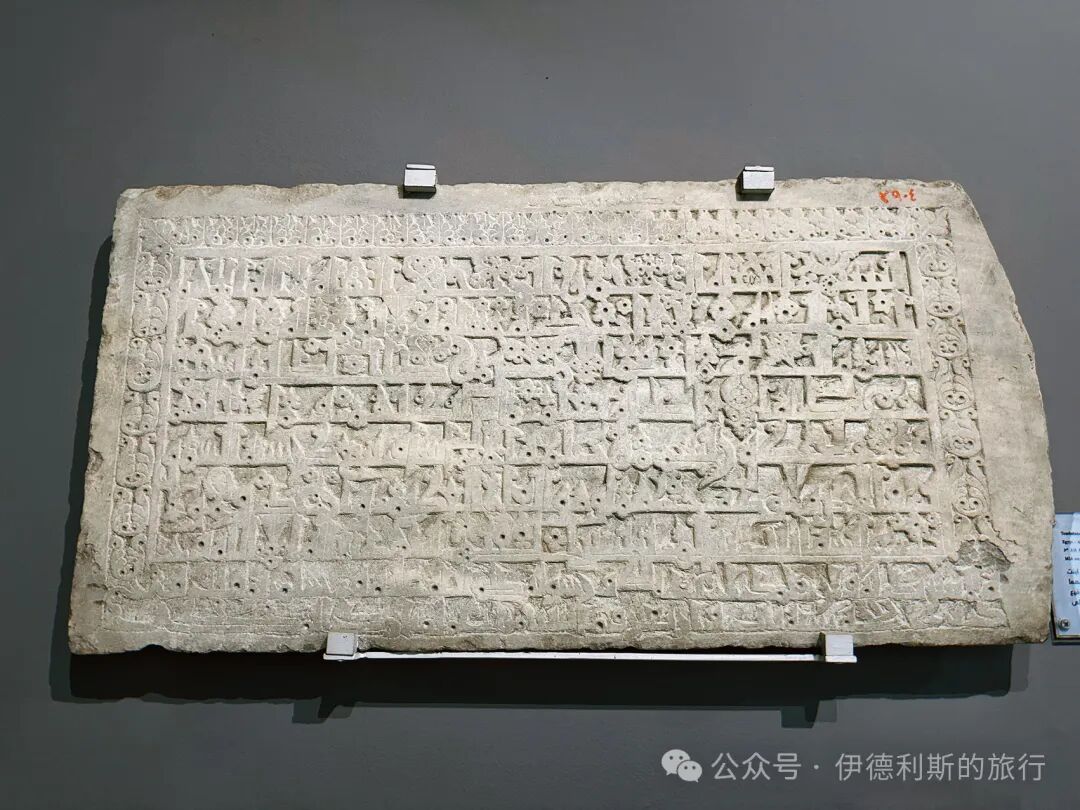
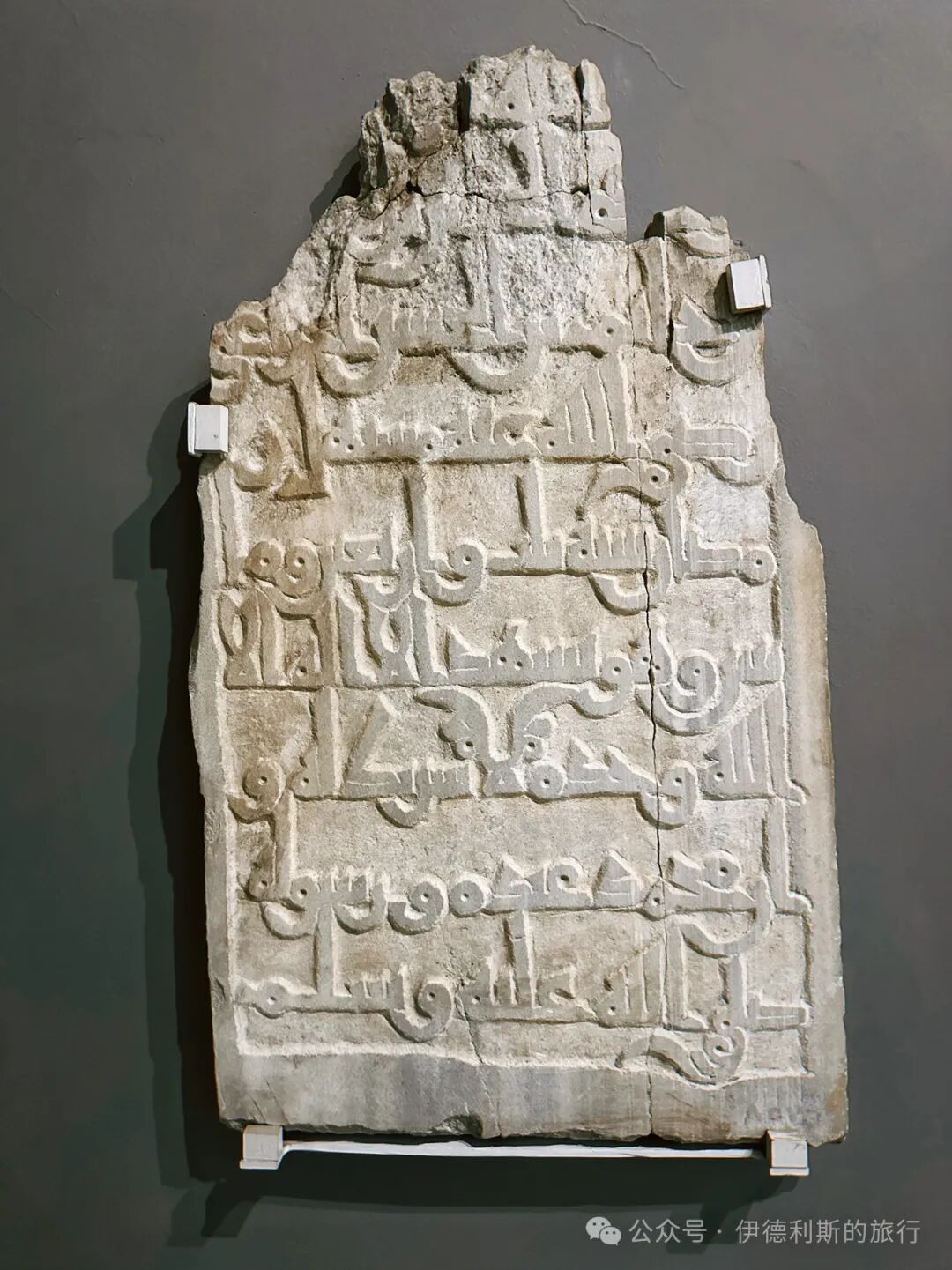
A 10th-century marble tombstone from the Fatimid period in Egypt.
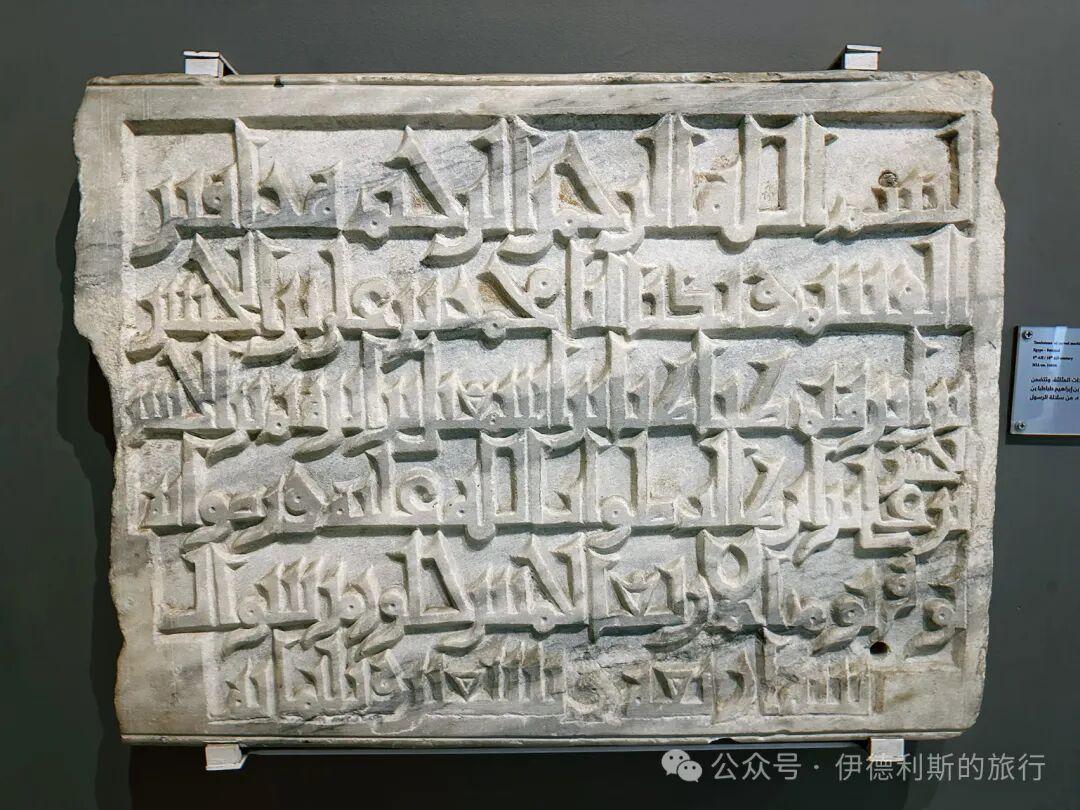
An 11th-century marble tombstone from the Fatimid period in Egypt.
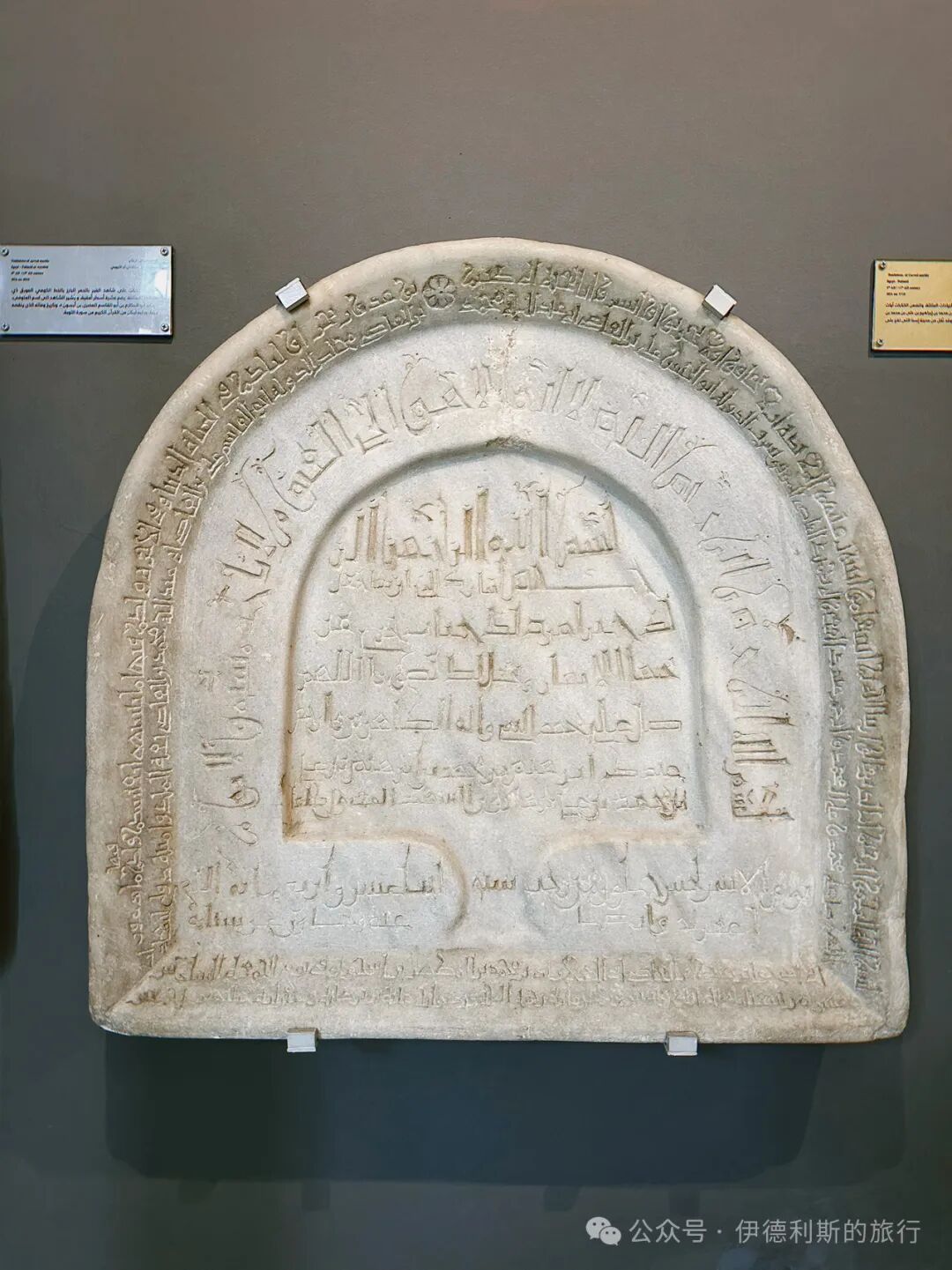
Halal Travel Guide: Cairo - Tomb of Iran Last Shah and Modern History
Articles • ali2007fr posted the article • 0 comments • 153 views • 2026-05-19 06:55
After the Iranian Islamic Revolution broke out in 1979, the last king, Mohammad Reza Pahlavi, went into exile. He traveled through Egypt, Morocco, and Mexico, and later received cancer treatment in the United States and Panama. In 1980, Pahlavi went to Cairo, Egypt, for emergency surgery. He developed an infection during the removal of his spleen and passed away on July 27, 1980. Before falling into a coma, the king repeated over and over, 'Iran is Iran.'
The Egyptian president held a state funeral for King Pahlavi and buried him in the Al-Rifa'i mosque in Cairo.
Besides Pahlavi, another exiled king buried in the Al-Rifa'i mosque is Egypt's last actual ruling king, Farouk (Fārūq al-Awwal, reigned 1936-1952). He was the tenth ruler of Egypt's Muhammad Ali dynasty. Muhammad Ali was originally an Albanian officer in the Ottoman Empire. He was sent to Egypt to repel Napoleon's army, became the governor of Egypt in 1805, and established the Muhammad Ali dynasty, which was effectively independent from the Ottoman Empire.
King Farouk loved overeating and stealing. He was known for his luxurious lifestyle and political incompetence, and he failed to stop Israel from expelling Palestinians during the 1948 Arab-Israeli War. These factors eventually led to King Farouk being overthrown in a 1952 coup. He was forced to abdicate and went into exile in Italy. One year later, in 1953, Egypt officially became a republic, ending the 148-year rule of the Muhammad Ali dynasty.
After his exile, Farouk chose to settle in Rome. He rented a huge estate on the outskirts of Rome and spent his time gambling and socializing in nightclubs, earning him the nickname 'Night King'. In 1965, Farouk collapsed in a restaurant in Rome after eating oysters and lamb. He died shortly after, and the cause of death remains unknown.
According to his will, Farouk wanted to be buried in the Al-Rifa'i mosque in Cairo, but Egypt refused. He was then secretly buried in the Muhammad Ali royal tomb in a cemetery south of Cairo. It was not until 1970, when Muhammad Anwar Sadat became president of Egypt, that Farouk was finally buried in the Al-Rifa'i mosque.
Rifaʽi is a Sufi order founded in Iraq in the 12th century, with a wide presence in Egypt and Syria. The Al-Rifa'i mosque in Cairo is named after Ali Abu Shubbak al-Rifa'i, the grandson of the order's founder, Ahmad al-Rifa'i, who is buried there. This place was originally a Sufi lodge. Between 1869 and 1912, it was rebuilt by Egypt's Muhammad Ali dynasty into the current grand mosque, which houses the remains of many Egyptian royals, including several kings. view all
After the Iranian Islamic Revolution broke out in 1979, the last king, Mohammad Reza Pahlavi, went into exile. He traveled through Egypt, Morocco, and Mexico, and later received cancer treatment in the United States and Panama. In 1980, Pahlavi went to Cairo, Egypt, for emergency surgery. He developed an infection during the removal of his spleen and passed away on July 27, 1980. Before falling into a coma, the king repeated over and over, 'Iran is Iran.'
The Egyptian president held a state funeral for King Pahlavi and buried him in the Al-Rifa'i mosque in Cairo.
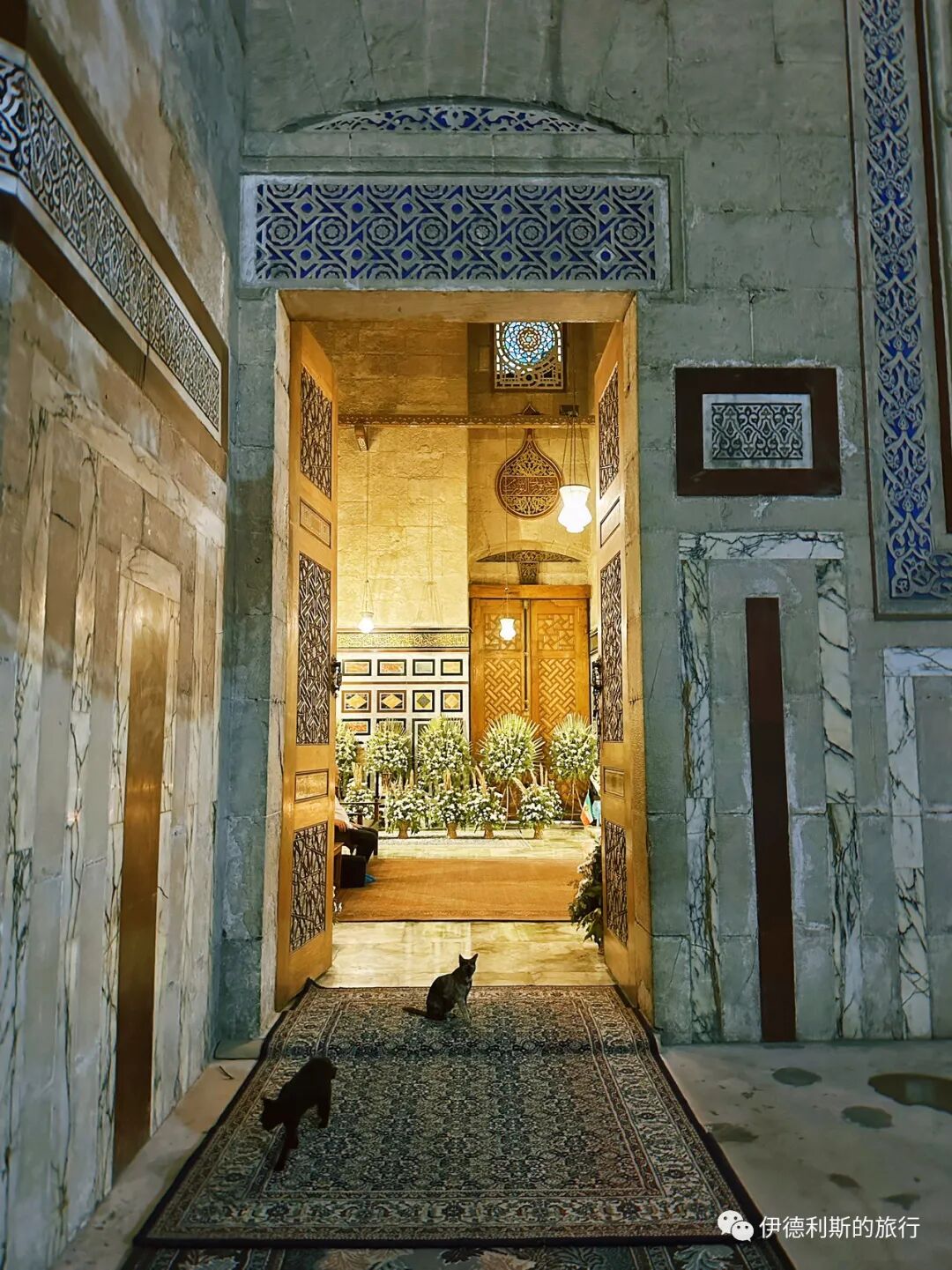
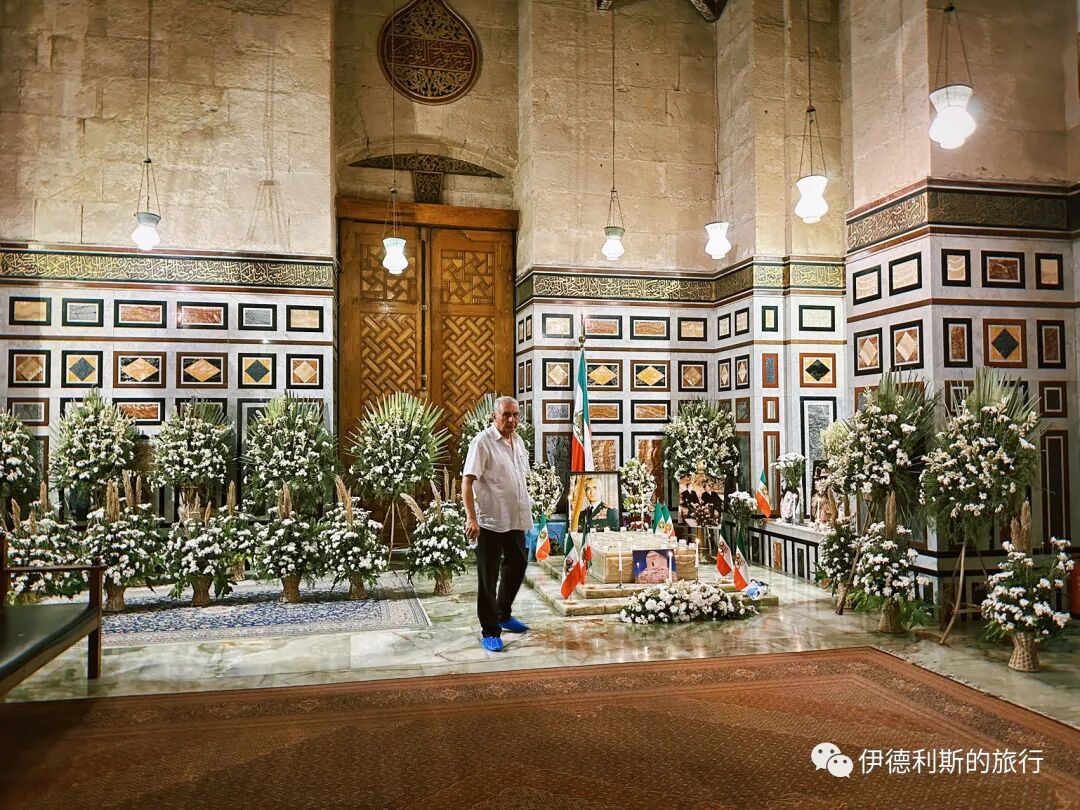
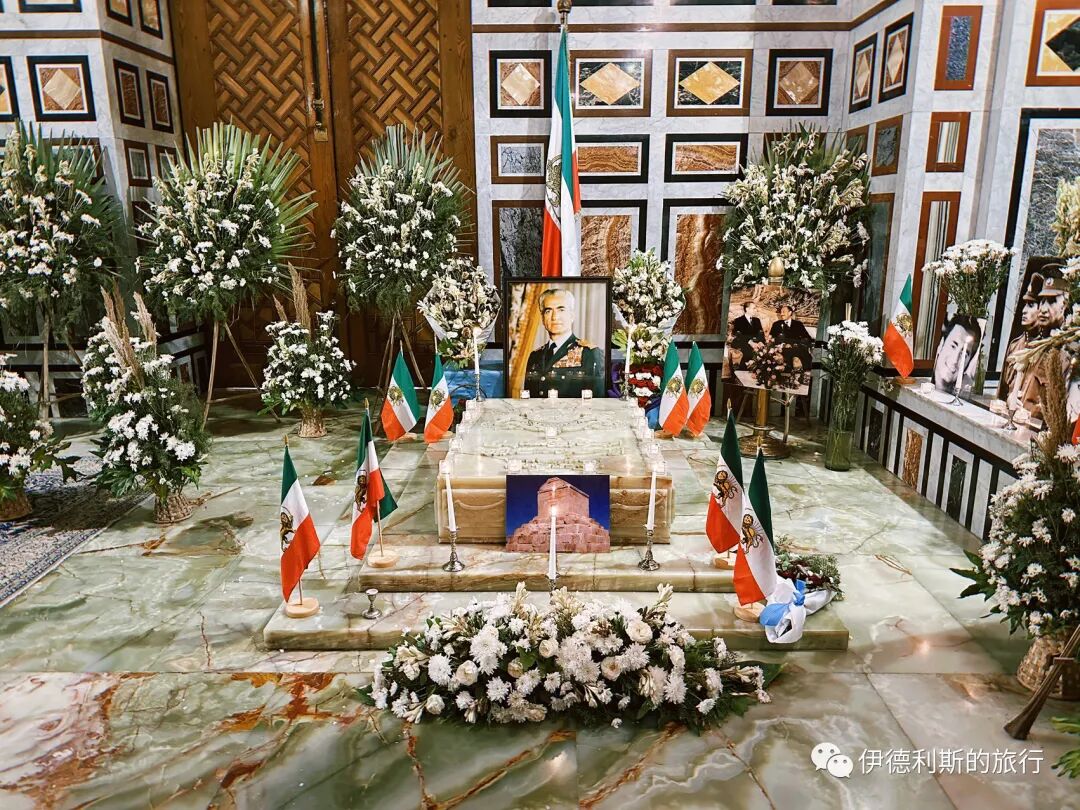
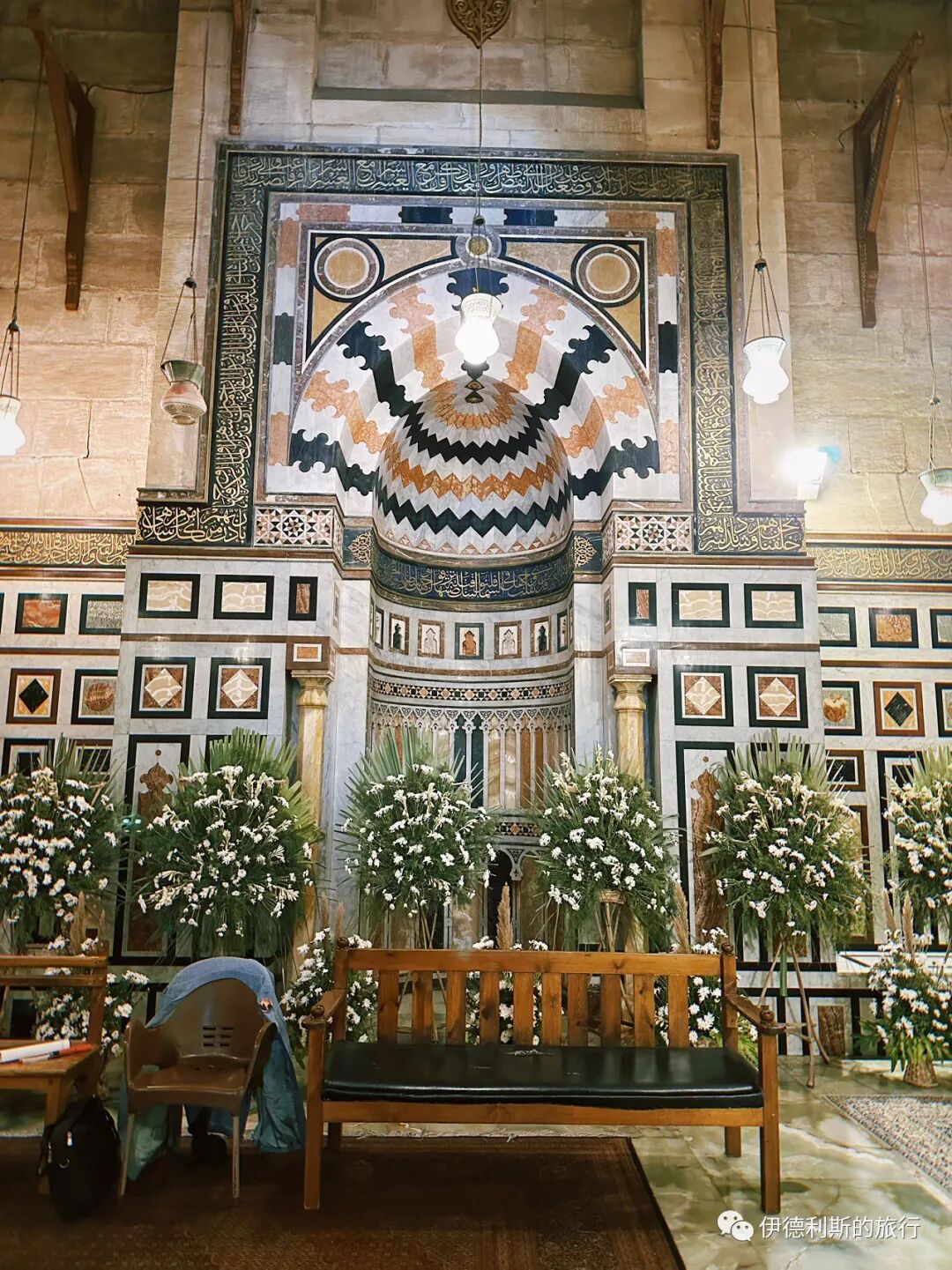
Besides Pahlavi, another exiled king buried in the Al-Rifa'i mosque is Egypt's last actual ruling king, Farouk (Fārūq al-Awwal, reigned 1936-1952). He was the tenth ruler of Egypt's Muhammad Ali dynasty. Muhammad Ali was originally an Albanian officer in the Ottoman Empire. He was sent to Egypt to repel Napoleon's army, became the governor of Egypt in 1805, and established the Muhammad Ali dynasty, which was effectively independent from the Ottoman Empire.
King Farouk loved overeating and stealing. He was known for his luxurious lifestyle and political incompetence, and he failed to stop Israel from expelling Palestinians during the 1948 Arab-Israeli War. These factors eventually led to King Farouk being overthrown in a 1952 coup. He was forced to abdicate and went into exile in Italy. One year later, in 1953, Egypt officially became a republic, ending the 148-year rule of the Muhammad Ali dynasty.
After his exile, Farouk chose to settle in Rome. He rented a huge estate on the outskirts of Rome and spent his time gambling and socializing in nightclubs, earning him the nickname 'Night King'. In 1965, Farouk collapsed in a restaurant in Rome after eating oysters and lamb. He died shortly after, and the cause of death remains unknown.
According to his will, Farouk wanted to be buried in the Al-Rifa'i mosque in Cairo, but Egypt refused. He was then secretly buried in the Muhammad Ali royal tomb in a cemetery south of Cairo. It was not until 1970, when Muhammad Anwar Sadat became president of Egypt, that Farouk was finally buried in the Al-Rifa'i mosque.
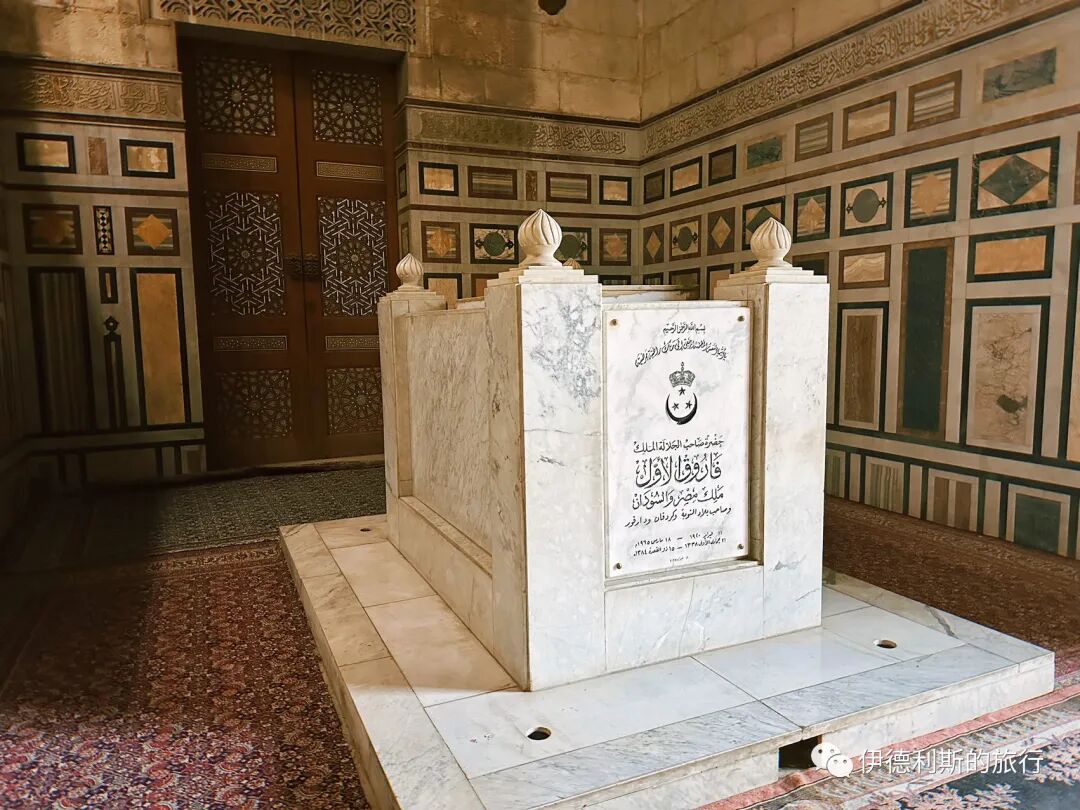
Rifaʽi is a Sufi order founded in Iraq in the 12th century, with a wide presence in Egypt and Syria. The Al-Rifa'i mosque in Cairo is named after Ali Abu Shubbak al-Rifa'i, the grandson of the order's founder, Ahmad al-Rifa'i, who is buried there. This place was originally a Sufi lodge. Between 1869 and 1912, it was rebuilt by Egypt's Muhammad Ali dynasty into the current grand mosque, which houses the remains of many Egyptian royals, including several kings.
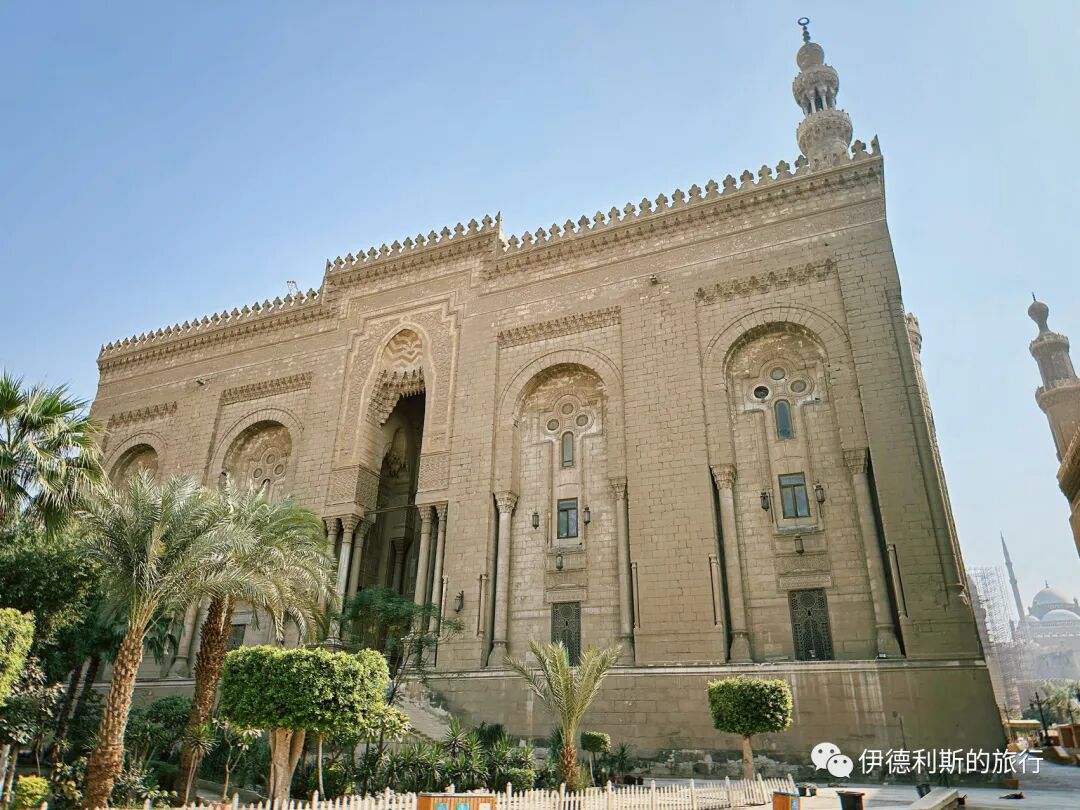
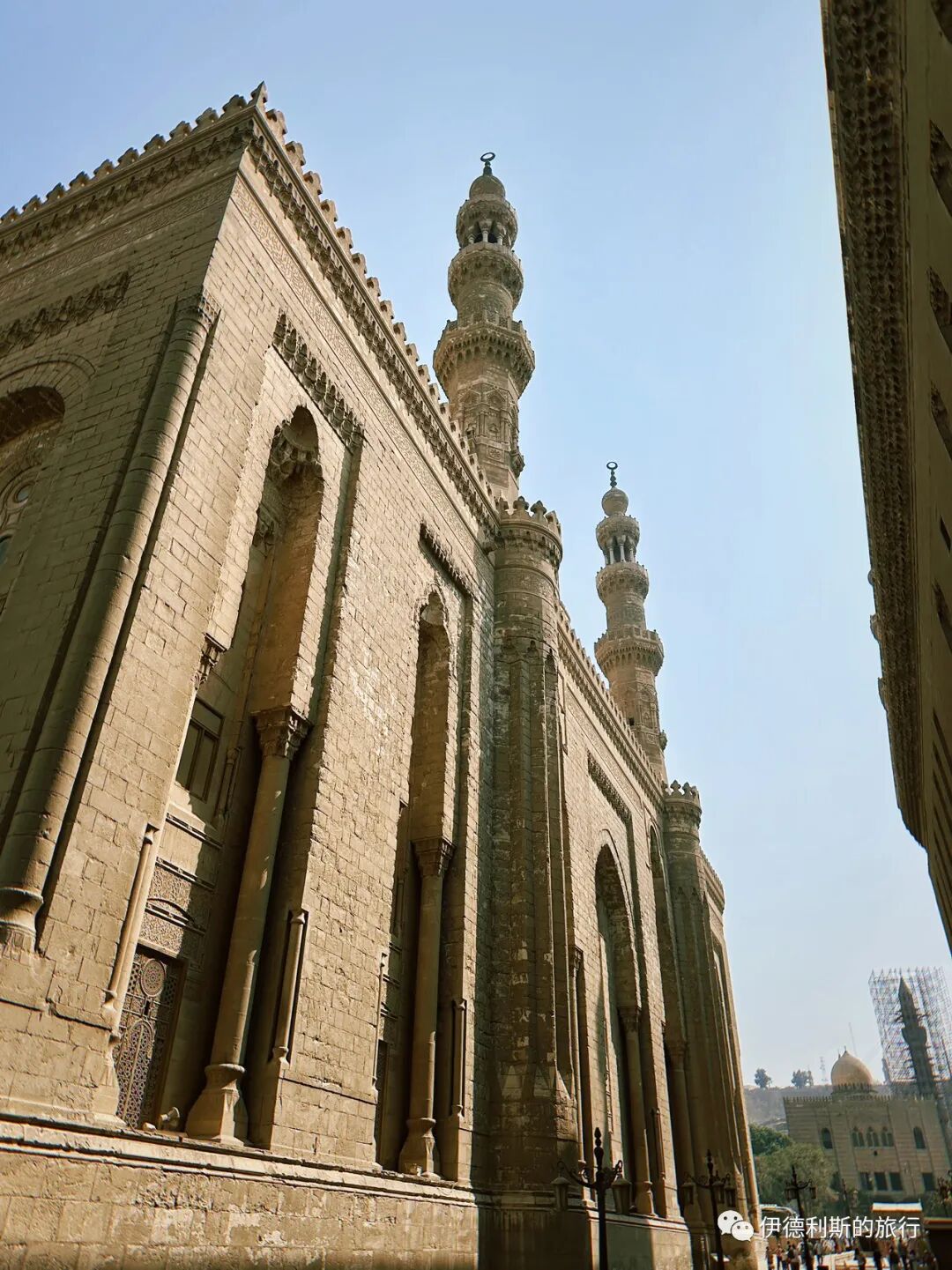
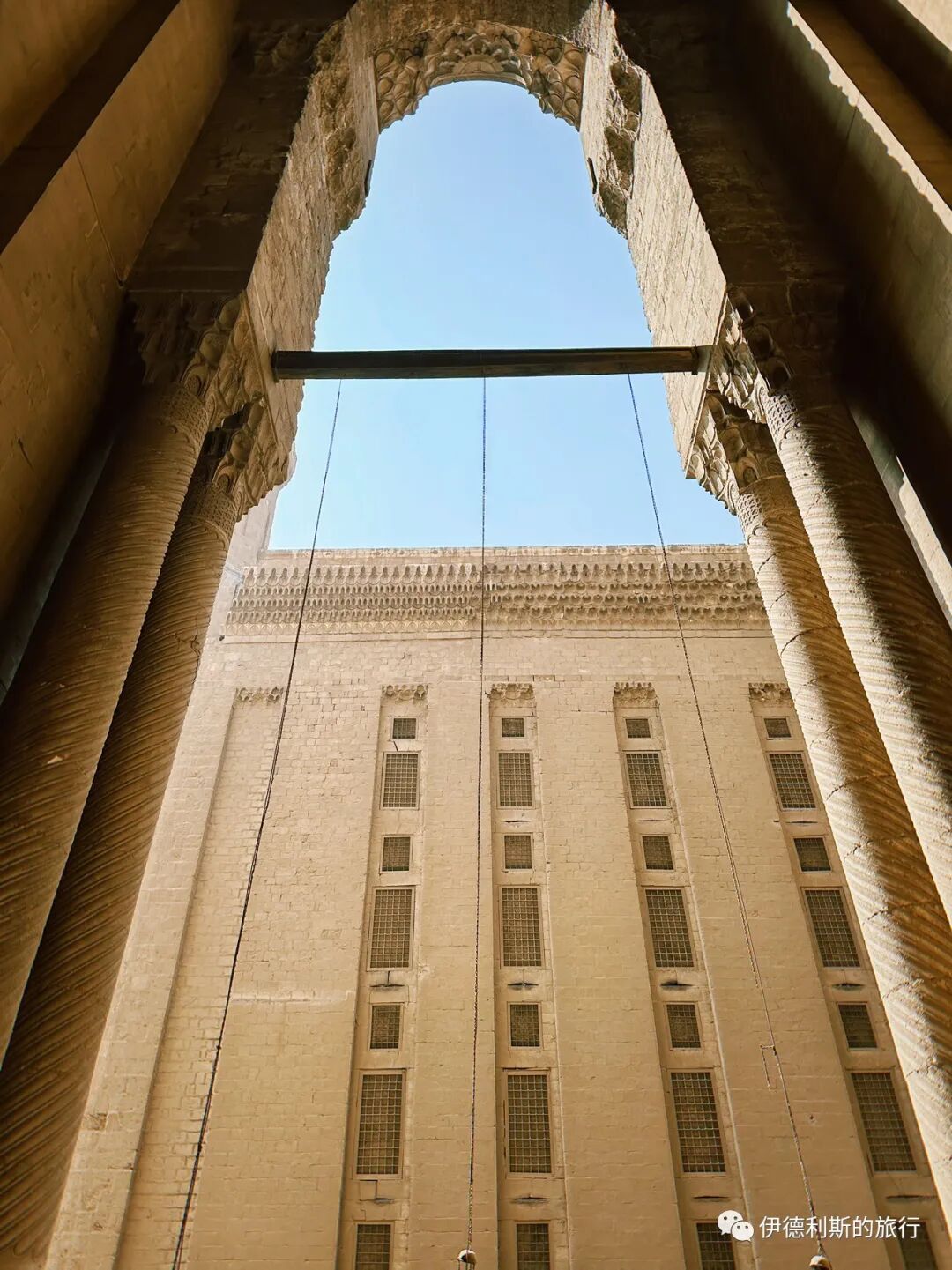
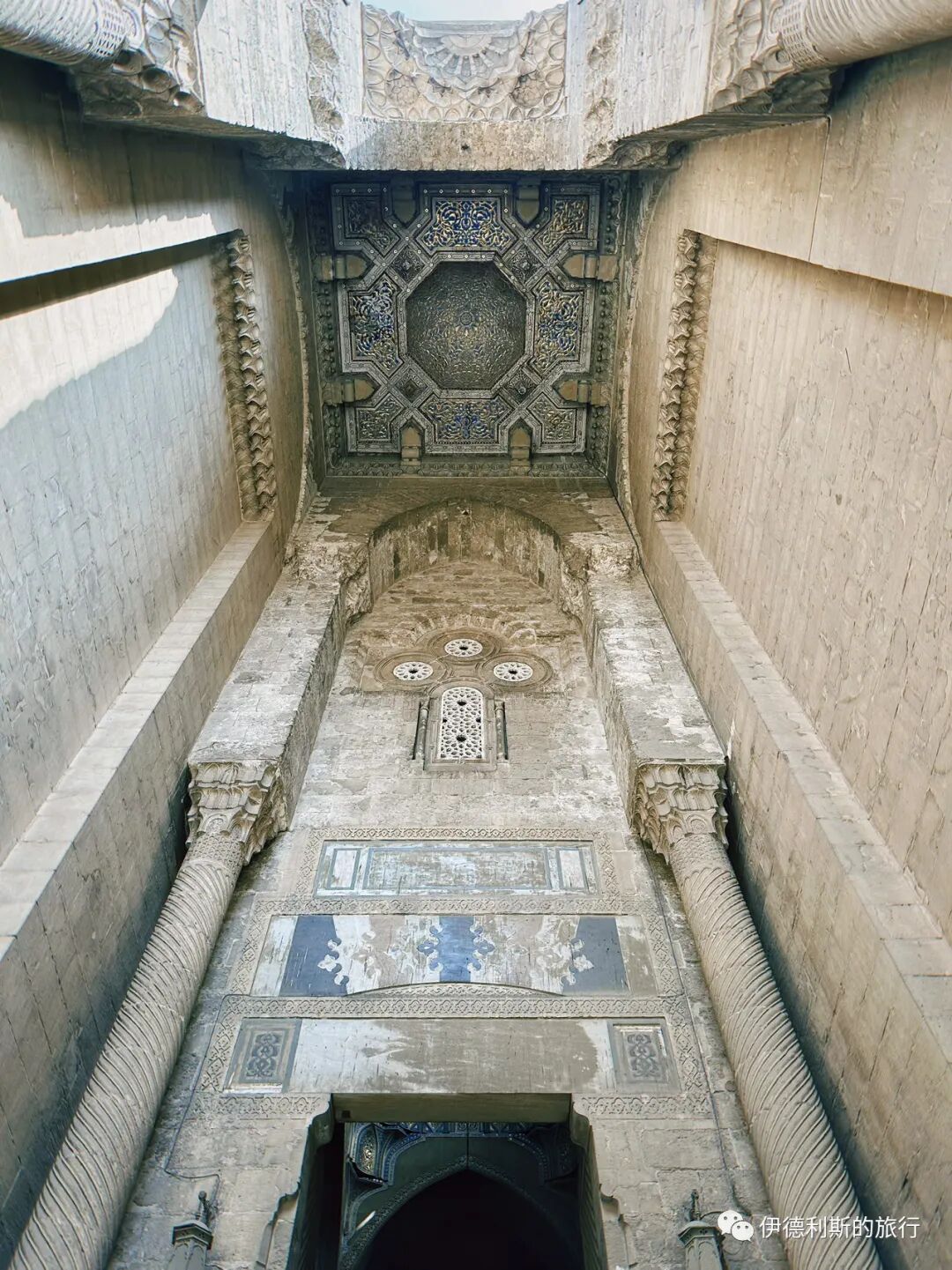
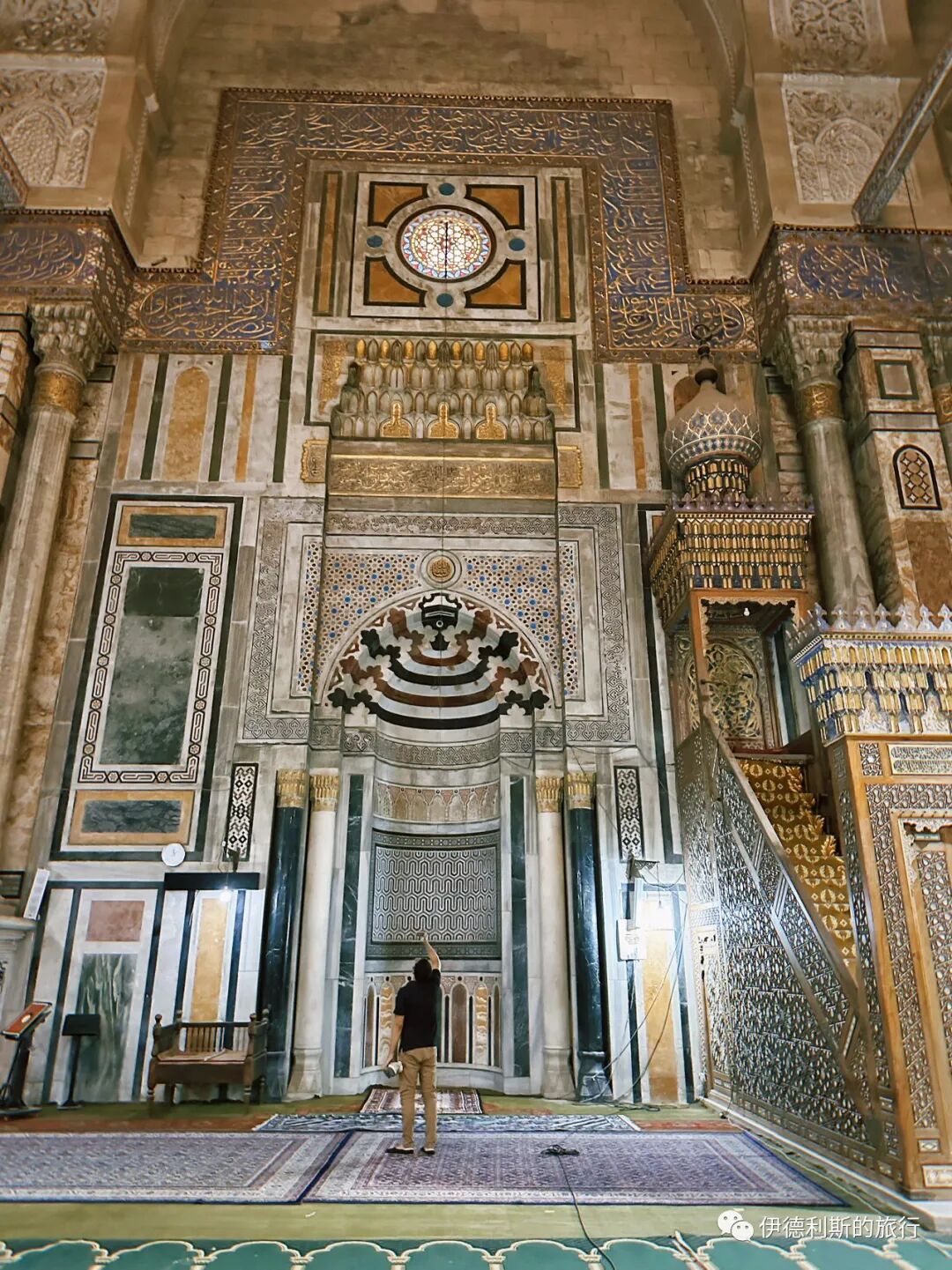
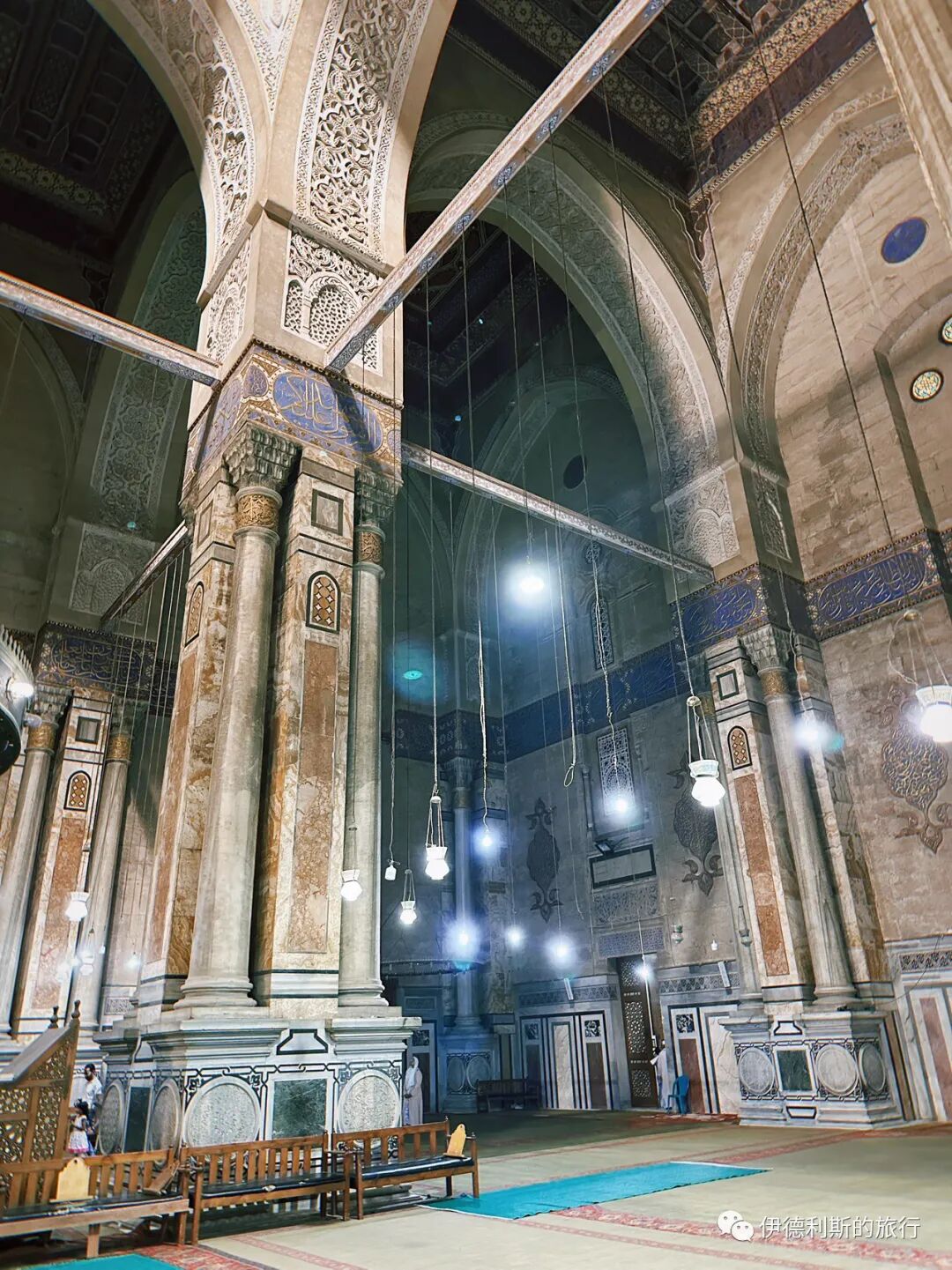
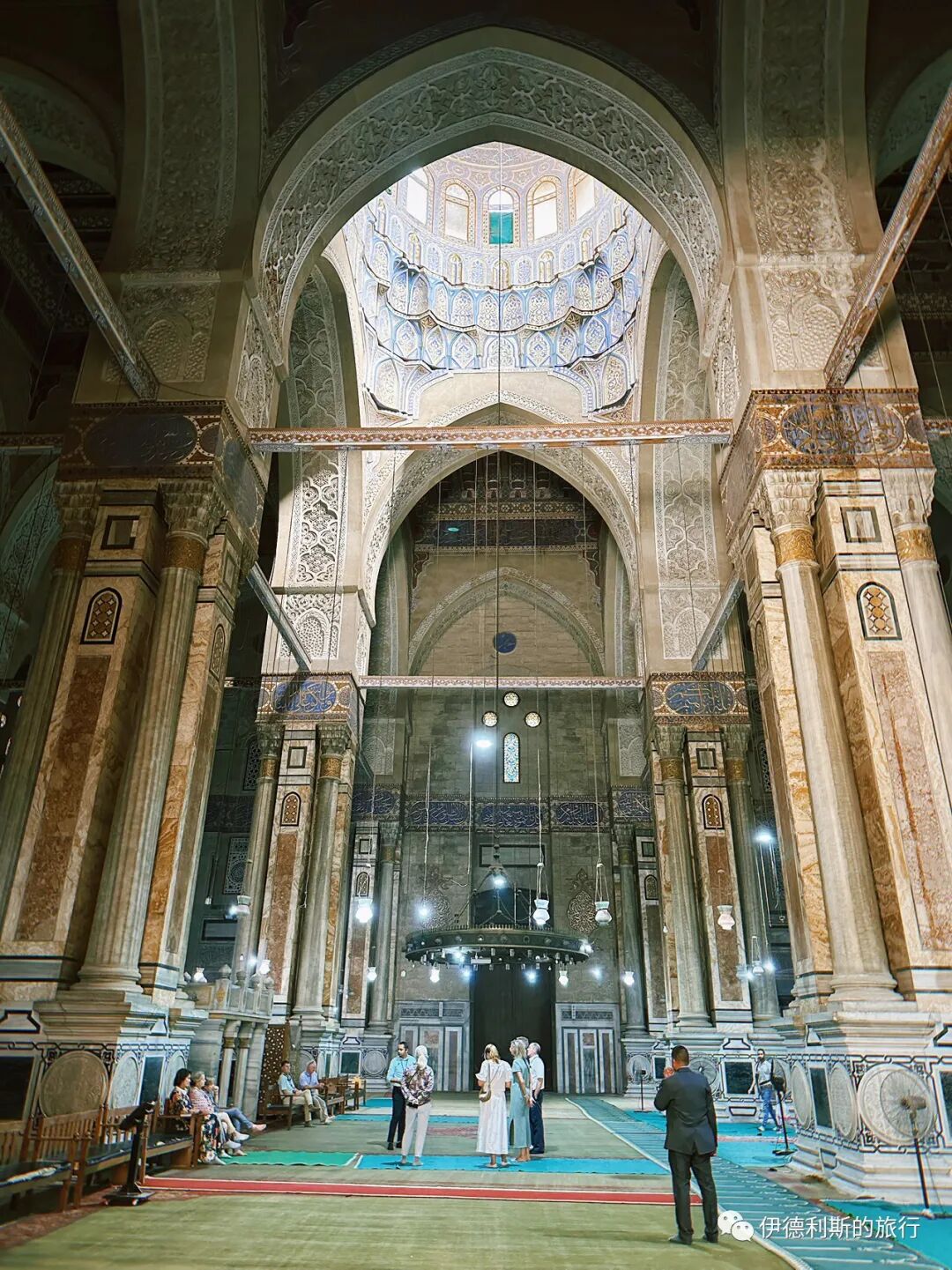
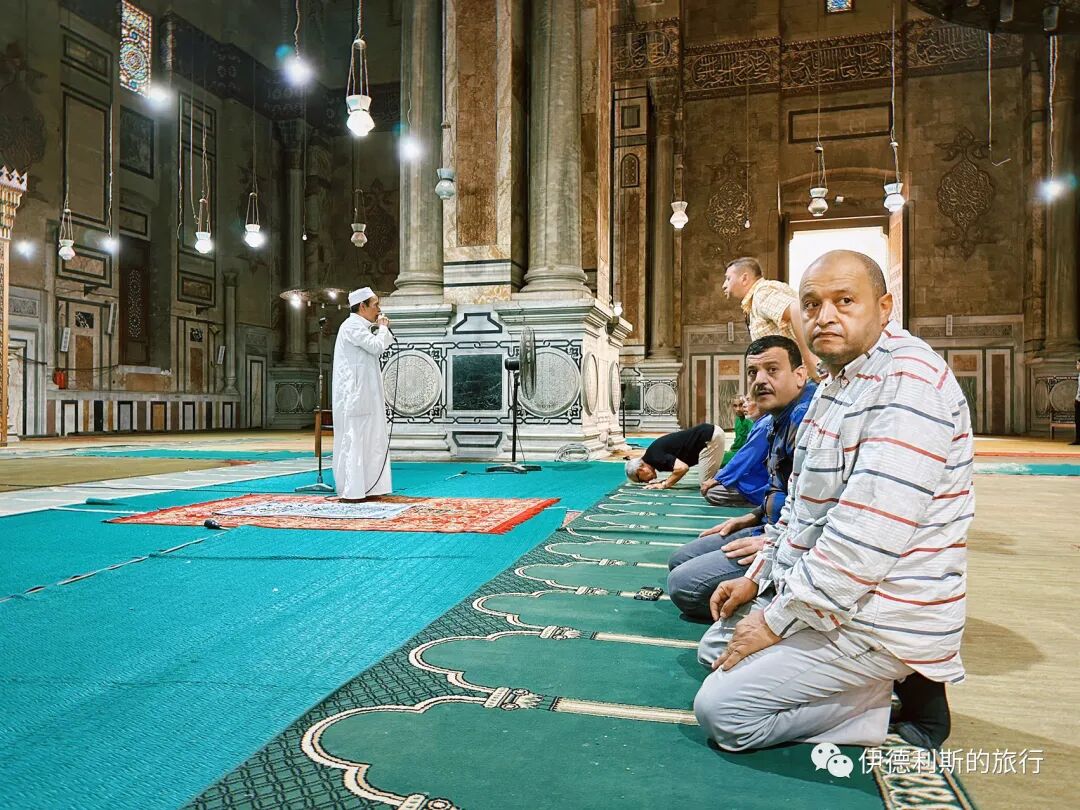
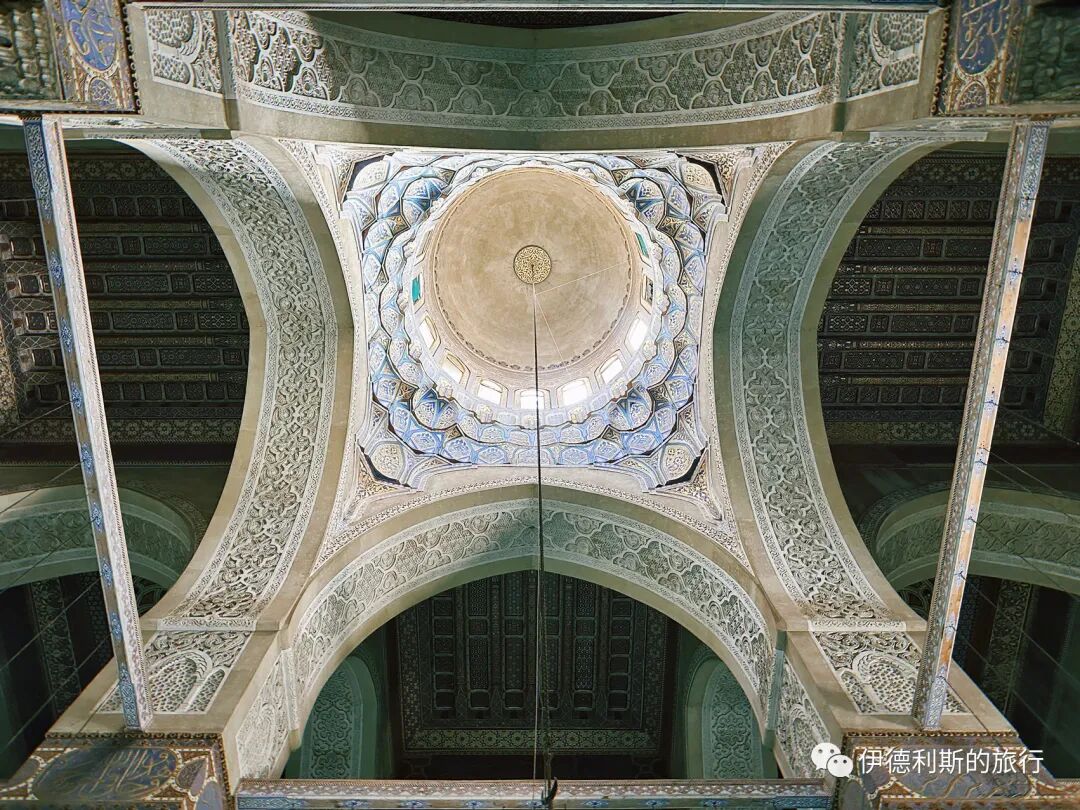
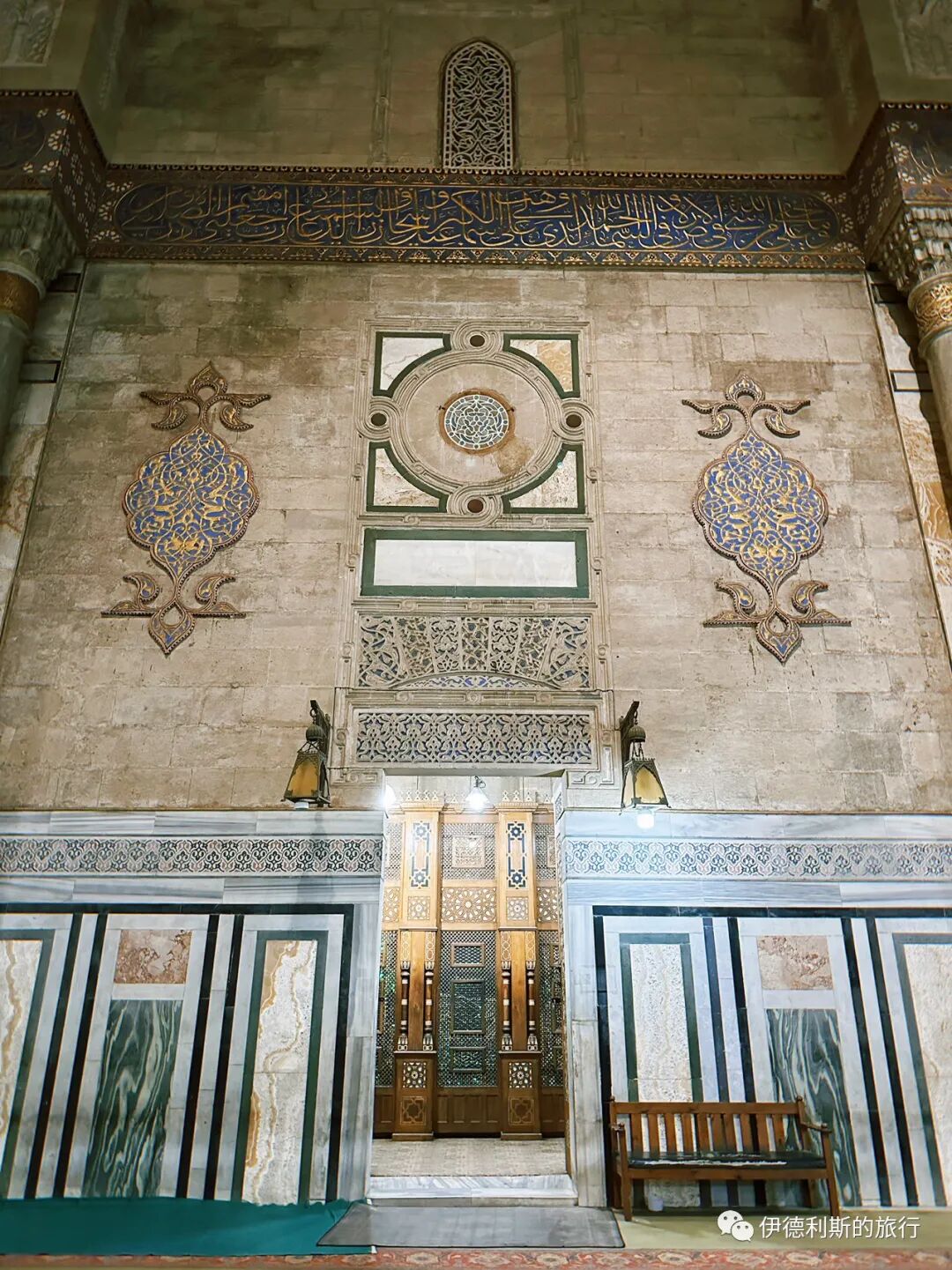
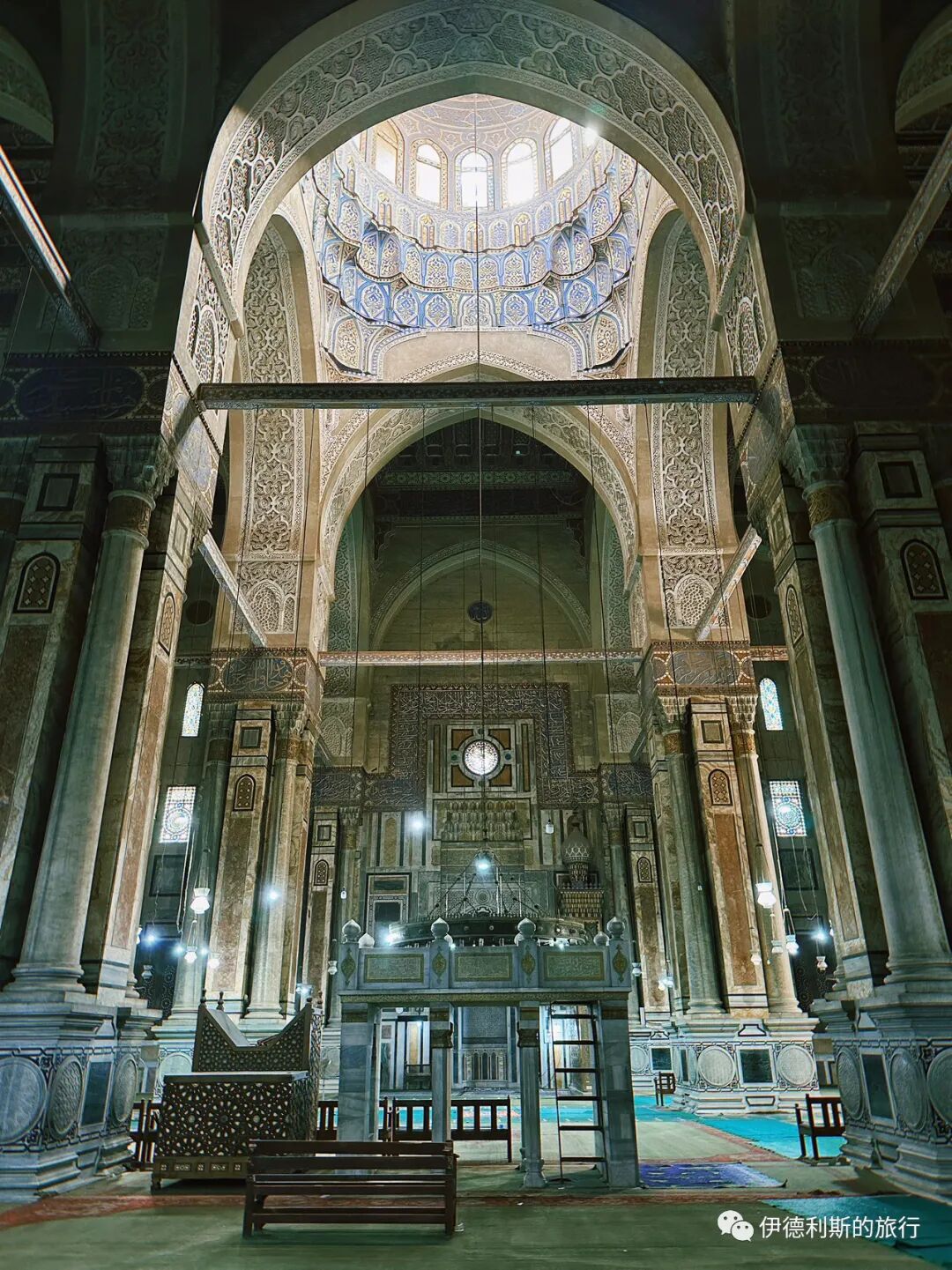
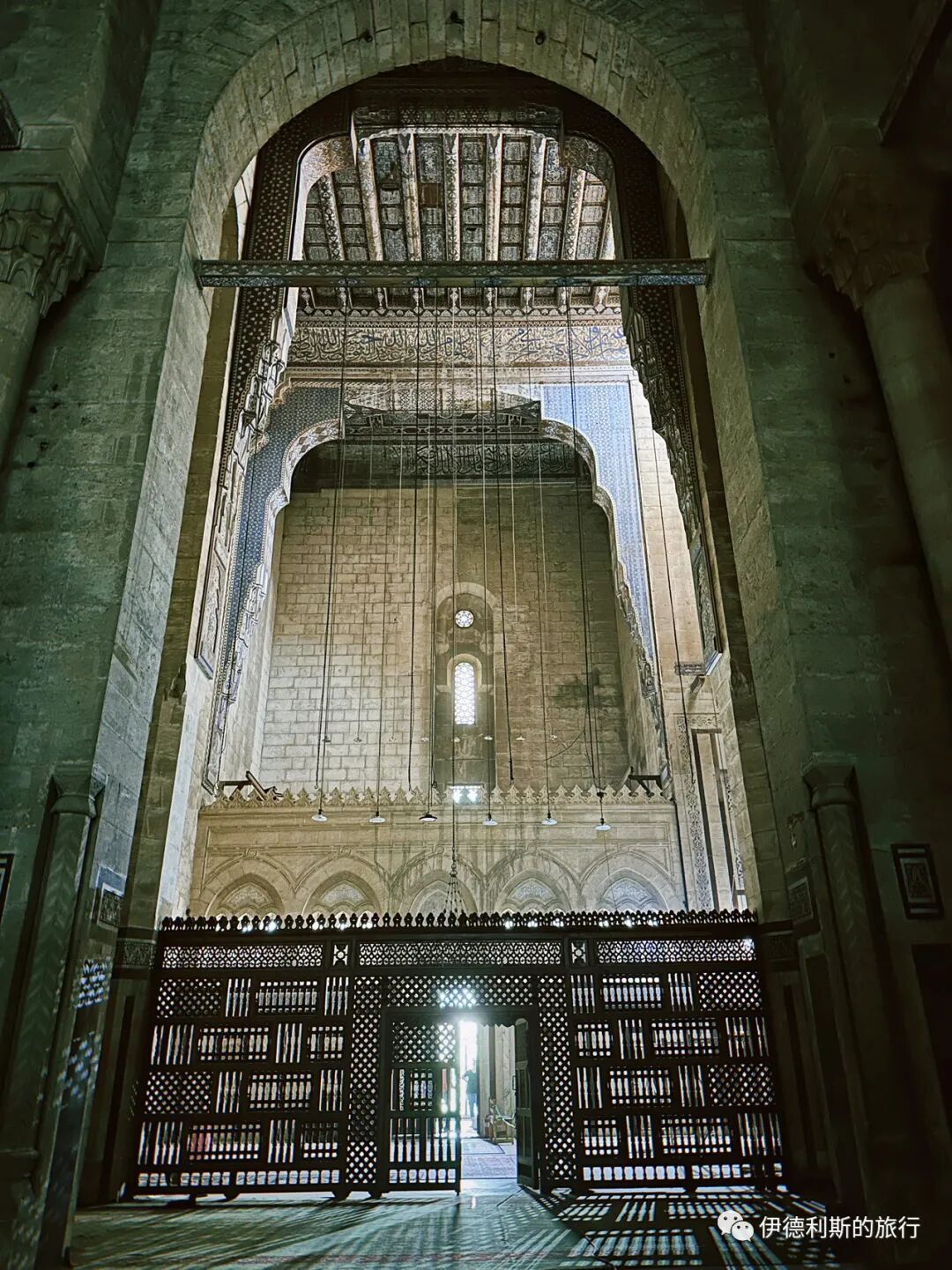
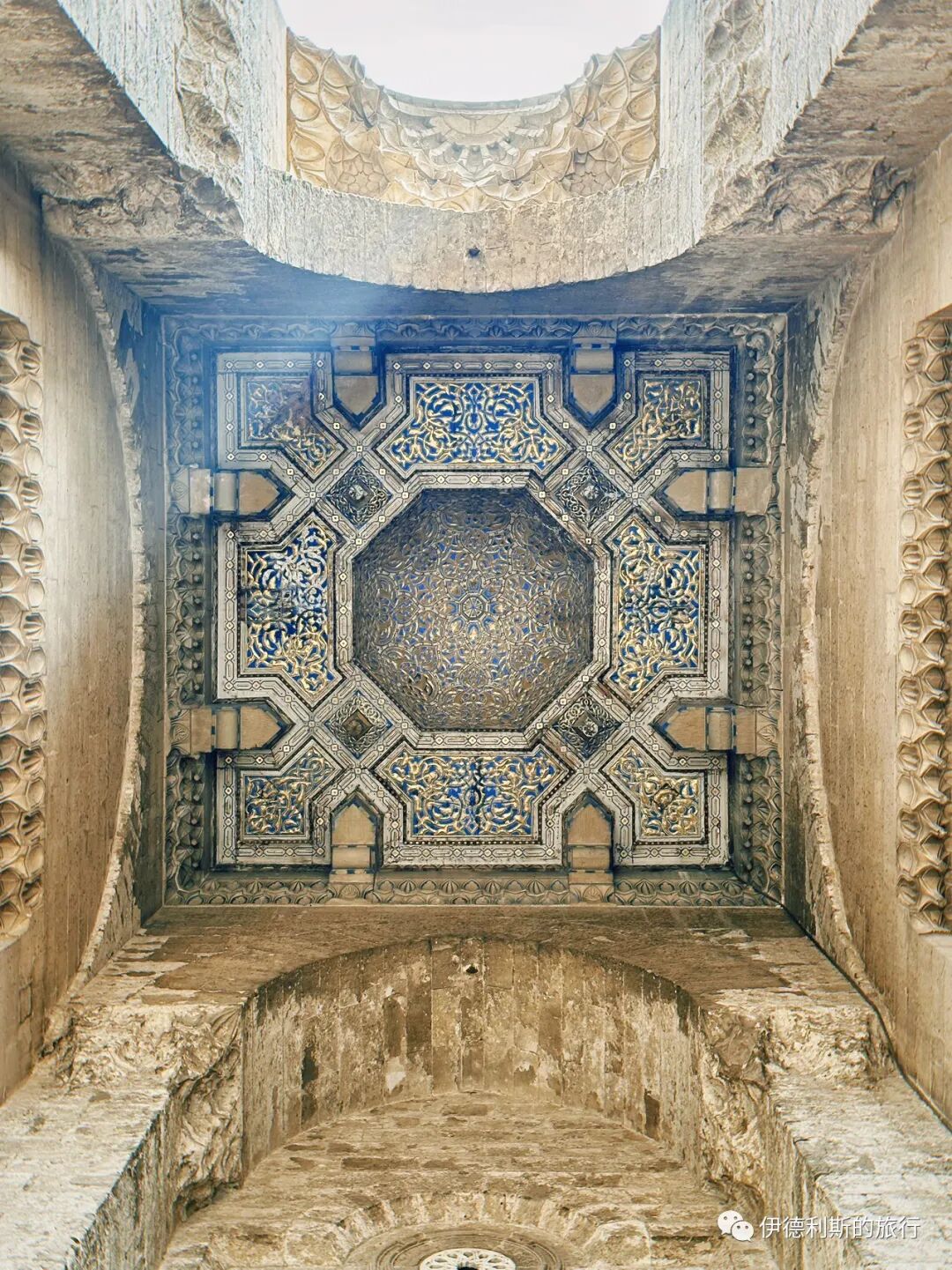
Halal Travel Guide: Cairo - National Museum of Egyptian Civilization
Articles • ali2007fr posted the article • 0 comments • 153 views • 2026-05-19 06:54
Four 14th-century stained glass oil lamps from the Mamluk era usually hang from the prayer hall ceiling by iron chains and feature beautiful Thuluth Arabic calligraphy. These four lamps come from the Sultan Hassan Madrasa, the Qalawun Madrasa, and the Al-Zahir Barquq Madrasa in Cairo. In the middle sits a Mamluk-era copper candlestick, which was typically placed on both sides of the mihrab prayer niche.
Copper basins and ewers with silver inlay from the Mamluk period (1250-1517) represent a cleaning tradition that has continued in Egypt since the time of the Pharaohs.
Wood carving and inlay craftsmanship from the Mamluk period.
The Abu Bakr bin Mazhar mosque is located in El Gamaliya in northeastern Egypt and was built in 1479 by the Mamluk vizier Abu Bakr bin Mazhar. In 2018, the National Museum of Egyptian Civilization moved the mosque's exquisite minbar pulpit inside for display, representing the craft heritage of the Mamluk dynasty. The entire minbar is made of ebony and peach wood, inlaid with ivory and mother-of-pearl, and carved with floral, star, and geometric patterns, as well as Kufic calligraphy.
13th to 14th-century ivory-inlaid wooden doors featuring complex geometric decorations.
Mamluk-era copper carving includes 14th-century copper basins and bowls, as well as a copper table with silver inlay from the time of Sultan Al-Nasir Muhammad (1285-1341), which features beautiful floral vine patterns, star-shaped geometric designs, and Thuluth calligraphy carvings.
Quran cases from the Mamluk dynasty.
The first Quran case is made of wood wrapped in copper with gold and silver inlay, carved with both Thuluth and Kufic calligraphy, and is said to have belonged to the Mamluk Sultan Al-Nasir Muhammad (1285-1341).
The second Quran case is made of wood and carved with Thuluth calligraphy that mentions the name of the Mamluk Sultan Qansuh al-Ghuri (1501-1516), so it was likely made between 1503 and 1504 during the construction of the al-Ghuri mosque and madrasa in Cairo.
An 11th-century Fatimid dynasty lusterware plate, which is a pottery technique where a white glaze is applied and fired, then painted with a mixture of copper and silver oxides and fired a second time. The pottery center in Egypt at that time was in the old city of Fustat, where the National Museum of Egyptian Civilization is now located.
Compared to the Abbasid dynasty, which had Baghdad as its pottery center, the figures on Fatimid lusterware are more vivid and the decorative patterns are more diverse, especially the floral Kufic Arabic calligraphy featuring vine motifs.
Starting with the Mamluk dynasty in the 13th century, Egyptian rulers had a tradition of sending a ceremonial palanquin (Mahmal) and the Kaaba cover (Kiswa) to the Sacred Mosque in Mecca before the annual Hajj. This ceremony was known as al-Mahmal. Camels carried the Mahmal, which featured intricate embroidery including Quranic verses and the Sultan's monogram. Inside, it held two silver-plated cases containing the Quran. A grand Hajj procession followed the Mahmal, with the Kaaba cover also carried by camels and guarded by heavily armed soldiers. When the procession arrived in Mecca, crowds gathered to watch. Mahmal palanquins from various Muslim countries would compete for the best spots in front of the Kaaba. After the Hajj ended, the Mahmal returned home carrying blessings. Parents would bring their children to touch the Mahmal to seek these blessings. The Mahmal palanquin finally retired from history after the Republic of Egypt was established in 1952.
The tradition of covering the Kaaba began in the pre-Islamic era. The Prophet Muhammad first covered the Kaaba with a cloth in 630. Starting in the era of Caliph Umar, Egypt provided the Kaaba cover. At first, it was placed directly over the old cover each year. Beginning in 777 during the Abbasid dynasty, the old cover was removed before the new one was put on. On the 9th day of the month of Hajj each year, the Prince of Mecca covers the Kaaba. The old cover is cut into small pieces and given away as gifts.
For over a century starting in 1817, the Mahmal and the Kaaba cover were produced at the Dar al-Kiswa textile workshop in Cairo, founded by Ottoman governor Muhammad Ali. In 1962, tensions between Egypt and Saudi Arabia over the North Yemen Civil War led Mecca to return a Kaaba cover made in Cairo. Since then, the covers have all been produced in Mecca. According to memories, craftsmen at Dar al-Kiswa would bathe and wash their hands with rose water before starting work. They would then recite the Al-Fatiha chapter. The entire production process took a full year.
The first one is the Mahmal sent by King Farouk I of Egypt in 1936.
The second one is the Mahmal and Kaaba cover sent by King Farouk I in 1940.
The third one is the last Kaaba cover sent by Egypt to Mecca in 1961.
This is the key to the Kaaba and its silk storage bag from the 19th-century Ottoman period, featuring Arabic embroidery in gold and silver thread.
Because Egypt's textile industry was very famous even in the pre-Islamic era, the Kaaba cover has been provided by Egypt since the time of Caliph Umar. The earliest Kaaba covers were embroidered white linen woven by Coptic Christians in Egypt, known as qubati. During the Umayyad and Abbasid dynasties, both silk and linen were used to make the Kaaba covers.
During the Umayyad and Abbasid dynasties, the Caliphs funded many textile workshops across Egypt. Besides making Kaaba covers, many workshops produced goods for the public, known as Al-Tiraz. The earliest recorded Al-Tiraz workshop dates back to the reign of the fifth Umayyad Caliph, Abd al-Malik ibn Marwan (reigned 685-705). This was when Arabic calligraphy first appeared in textile decorations. Textile decorations from this period were mostly simple and used dark colors, influenced by Byzantine, Sassanid, and Egyptian Coptic art.
Between 868 and 905, Ahmad ibn Tulun, a Turkic governor of Egypt under the Abbasid dynasty, established the Tulunid dynasty (Tulunids) in Egypt and Syria. Ibn Tulun carried out major economic reforms that helped the linen and wool textile industries thrive. During this time, Egypt competed fiercely as a textile hub with Baghdad, the Abbasid capital. Egypt often produced higher quality and better craftsmanship, which showed in the precious fabrics like mattresses and curtains used by Tulunid rulers and nobles.
Textiles from the Fatimid dynasty (969-1171) were popular for their high quality, delicate designs, and rich decorations. The most precious silks were used to decorate the Caliph's palace, while other fine fabrics were used to make turbans, hats, and belts. The most striking feature of Fatimid textiles was the use of Kufic Arabic calligraphy, which featured the Caliph's name and titles in repeating and alternating floral patterns. Various plant, animal, and geometric patterns also saw significant development.
Although the Ayyubid dynasty (1171-1250) was short, Egypt's textile industry continued to grow. It was especially famous for soft and thin linen called al-Shoroub, produced in Tinnis and Alexandria. With mass production, new techniques were introduced, including weaving gold, silver, and colored silk threads into the warp and weft, layering wool or cotton between two layers of fabric, and embroidering on silk threads. Ayyubid textile decorations continued to use Arabic calligraphy, geometric shapes, and floral and animal patterns, usually in black and blue.
During the Mamluk dynasty (1250-1517), the Sultan's court had a huge demand for textiles, which further boosted the industry. During this period, Egypt finally mastered wax-resist dyeing. Wax prevented dye from soaking into the fabric, and after boiling to remove the wax, it created complex, multi-colored patterns. Another technique of layering fabric to create bright, colorful appliqué is still used today.
During the Ottoman period (1517-1805), the textile industry suffered because Egypt was no longer the center of the empire. At the same time, textiles from other parts of the Ottoman Empire began to appear in Egyptian markets, including brocade (jin), satin brocade (duanjin), and velvet, all decorated with floral patterns in the Ottoman style. view all
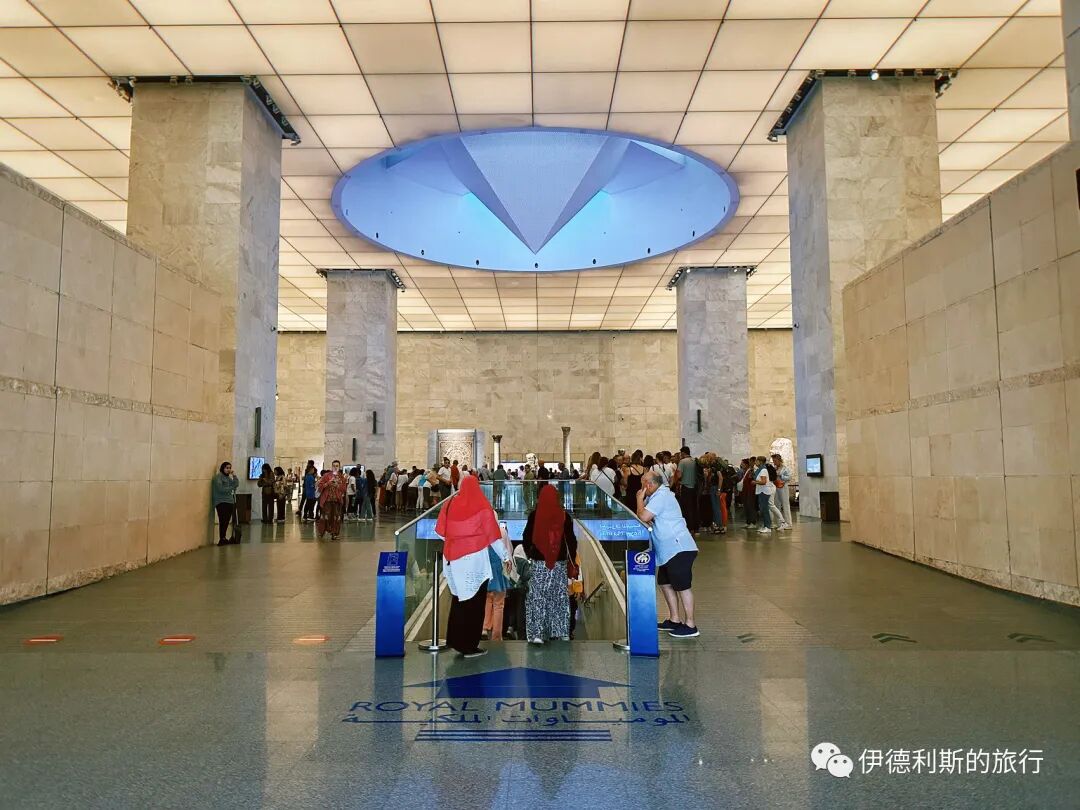
Four 14th-century stained glass oil lamps from the Mamluk era usually hang from the prayer hall ceiling by iron chains and feature beautiful Thuluth Arabic calligraphy. These four lamps come from the Sultan Hassan Madrasa, the Qalawun Madrasa, and the Al-Zahir Barquq Madrasa in Cairo. In the middle sits a Mamluk-era copper candlestick, which was typically placed on both sides of the mihrab prayer niche.
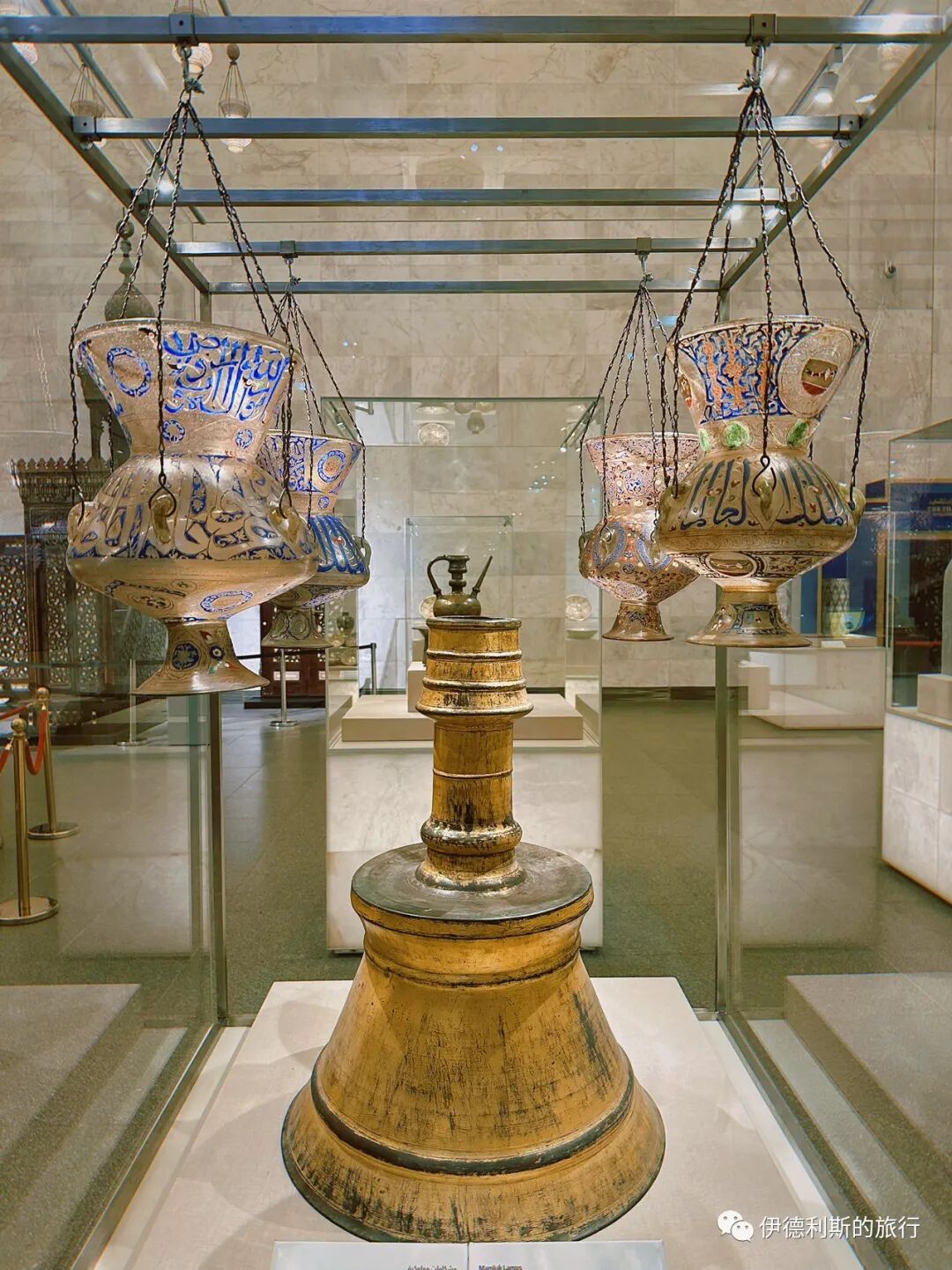
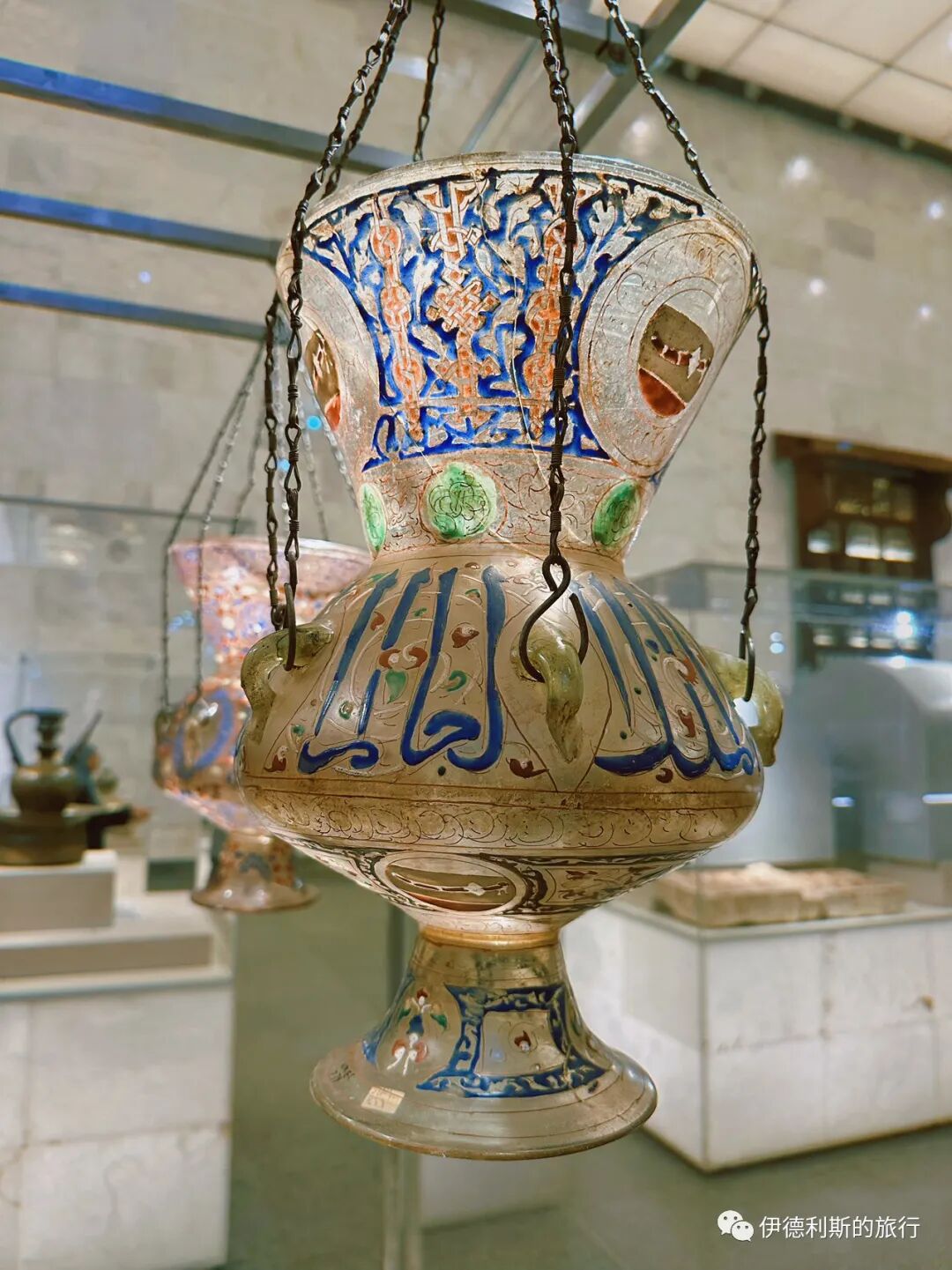
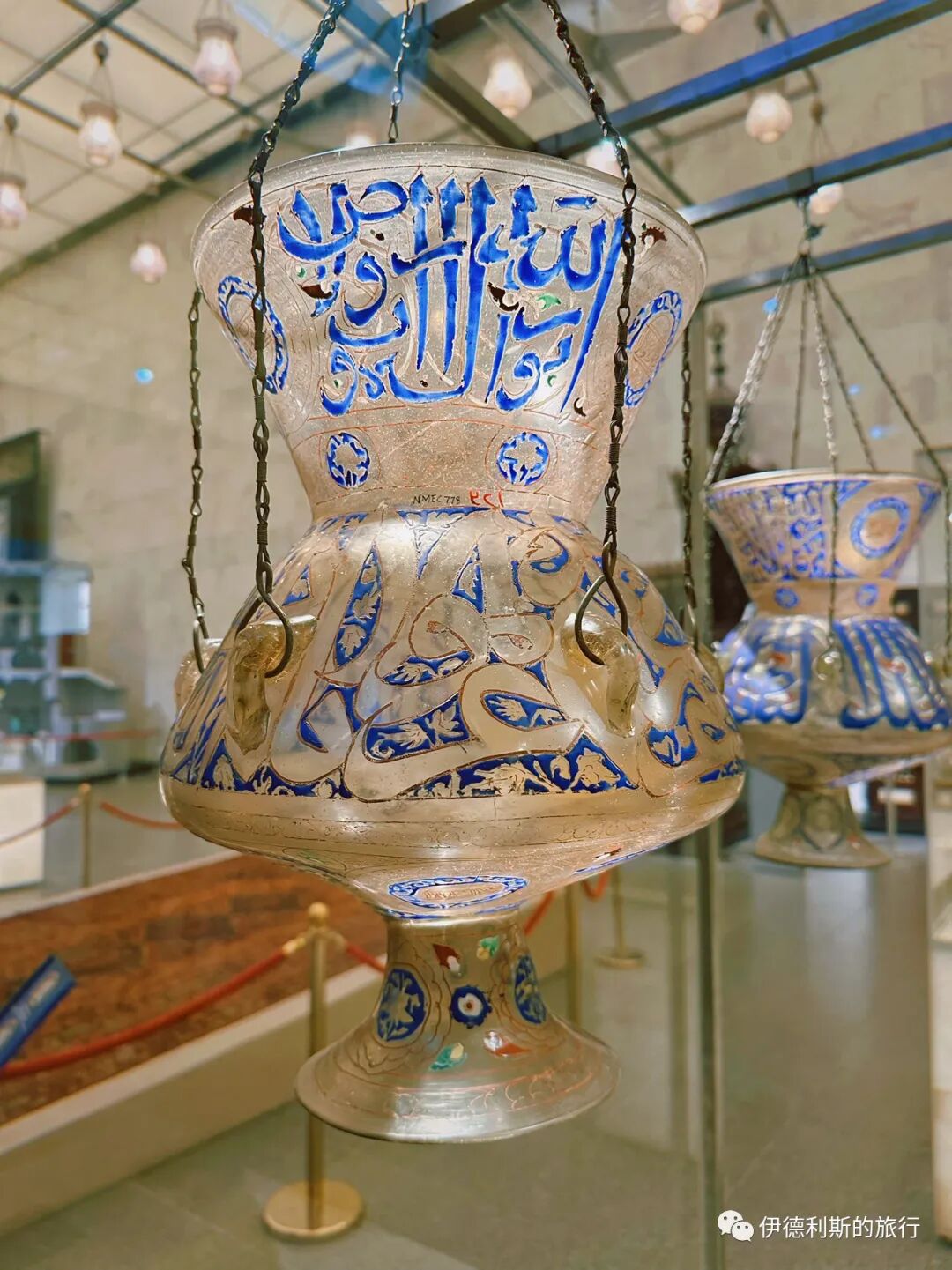
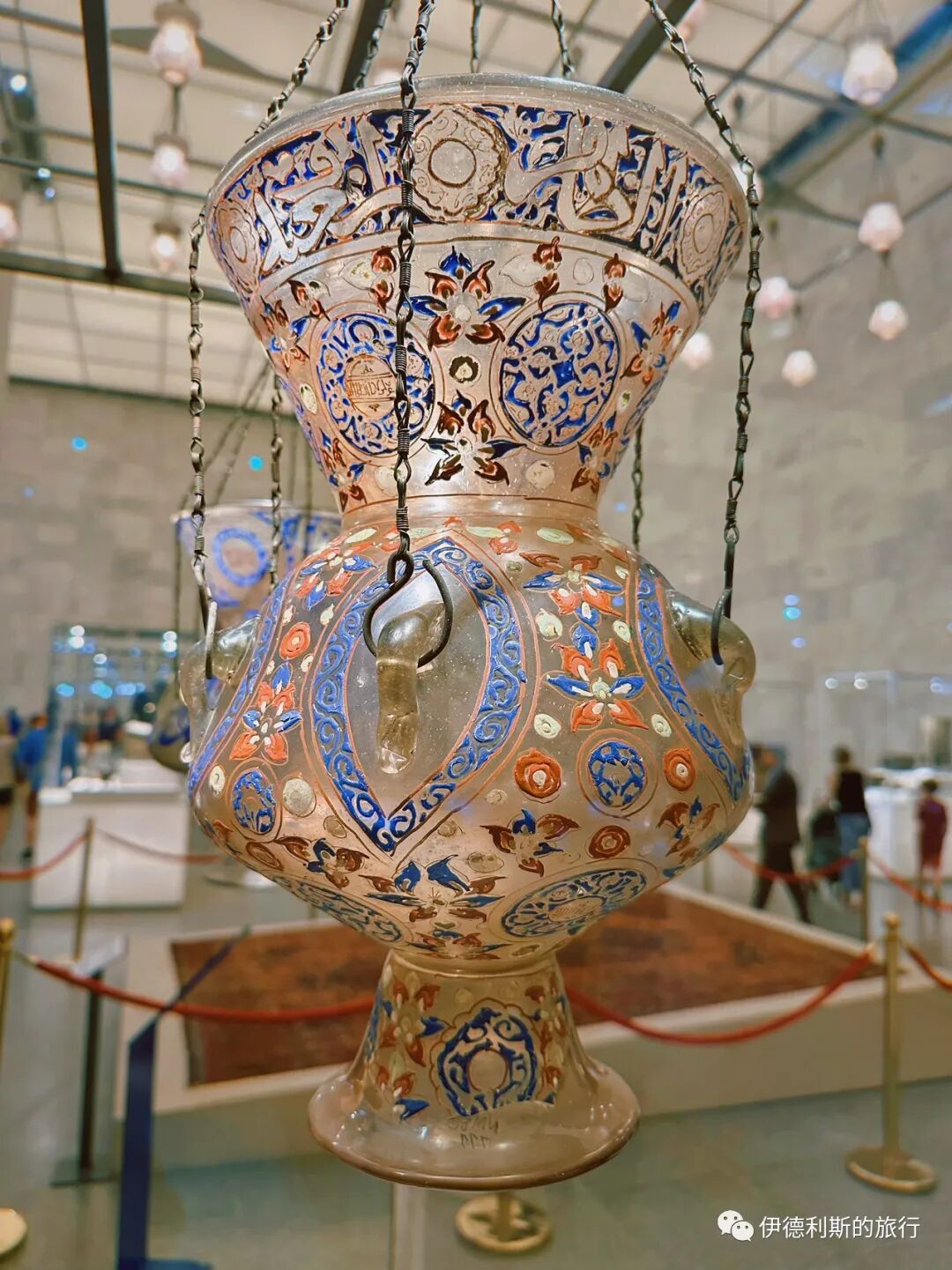
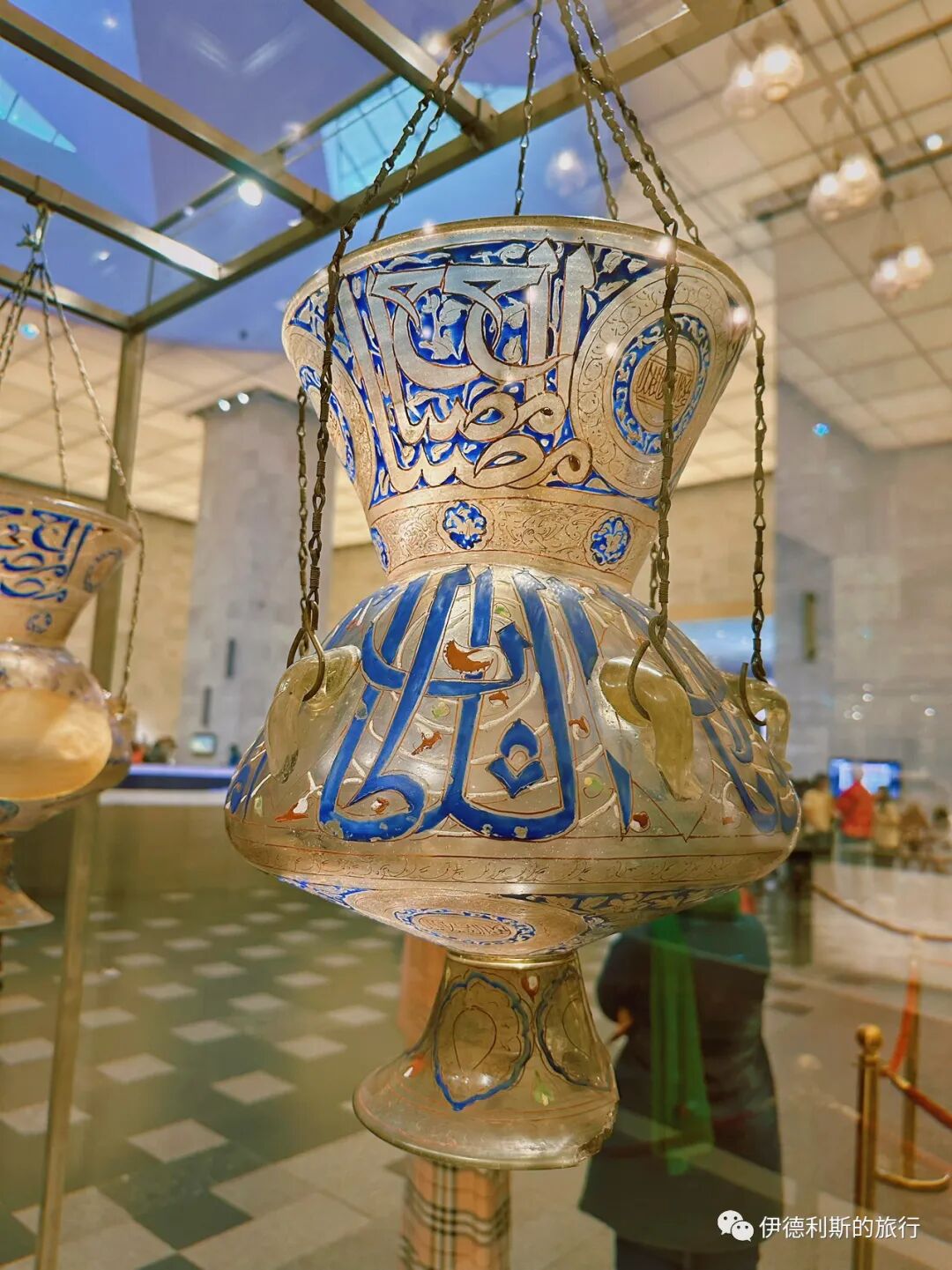
Copper basins and ewers with silver inlay from the Mamluk period (1250-1517) represent a cleaning tradition that has continued in Egypt since the time of the Pharaohs.
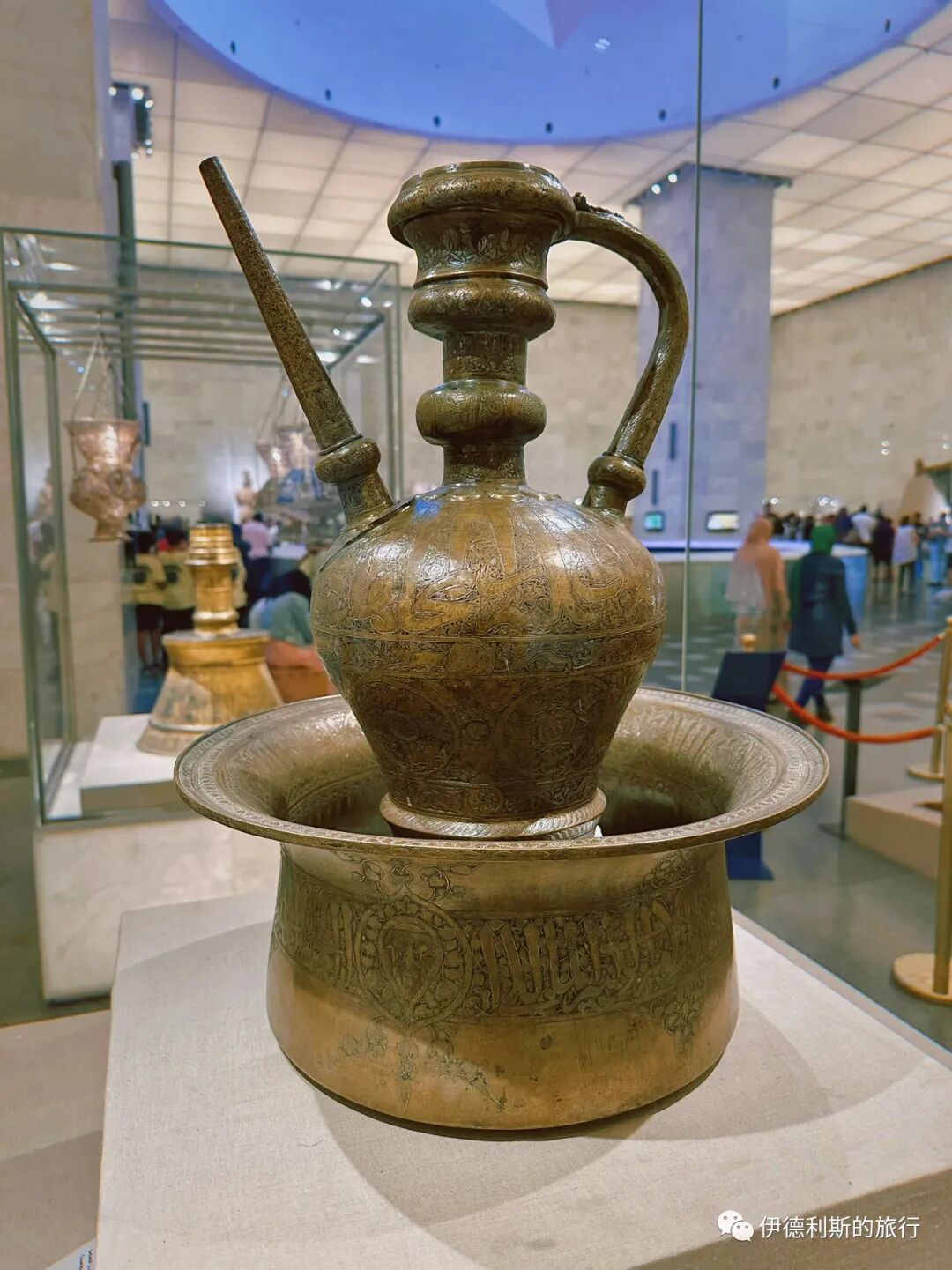
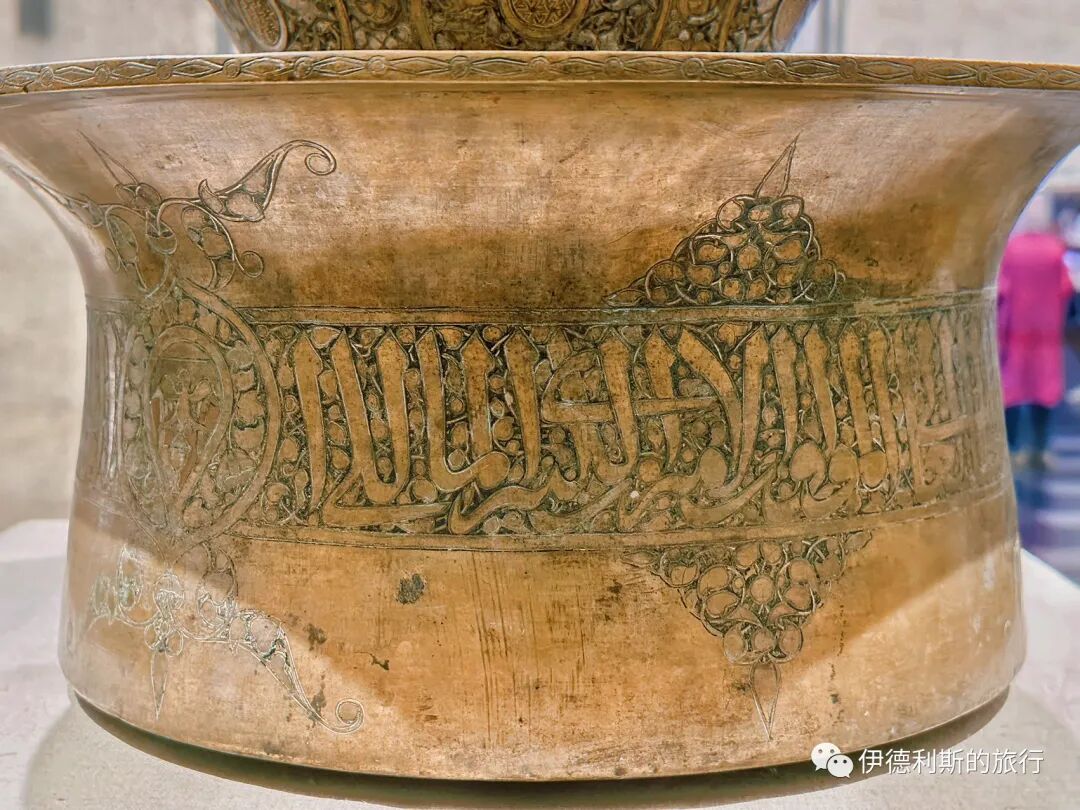
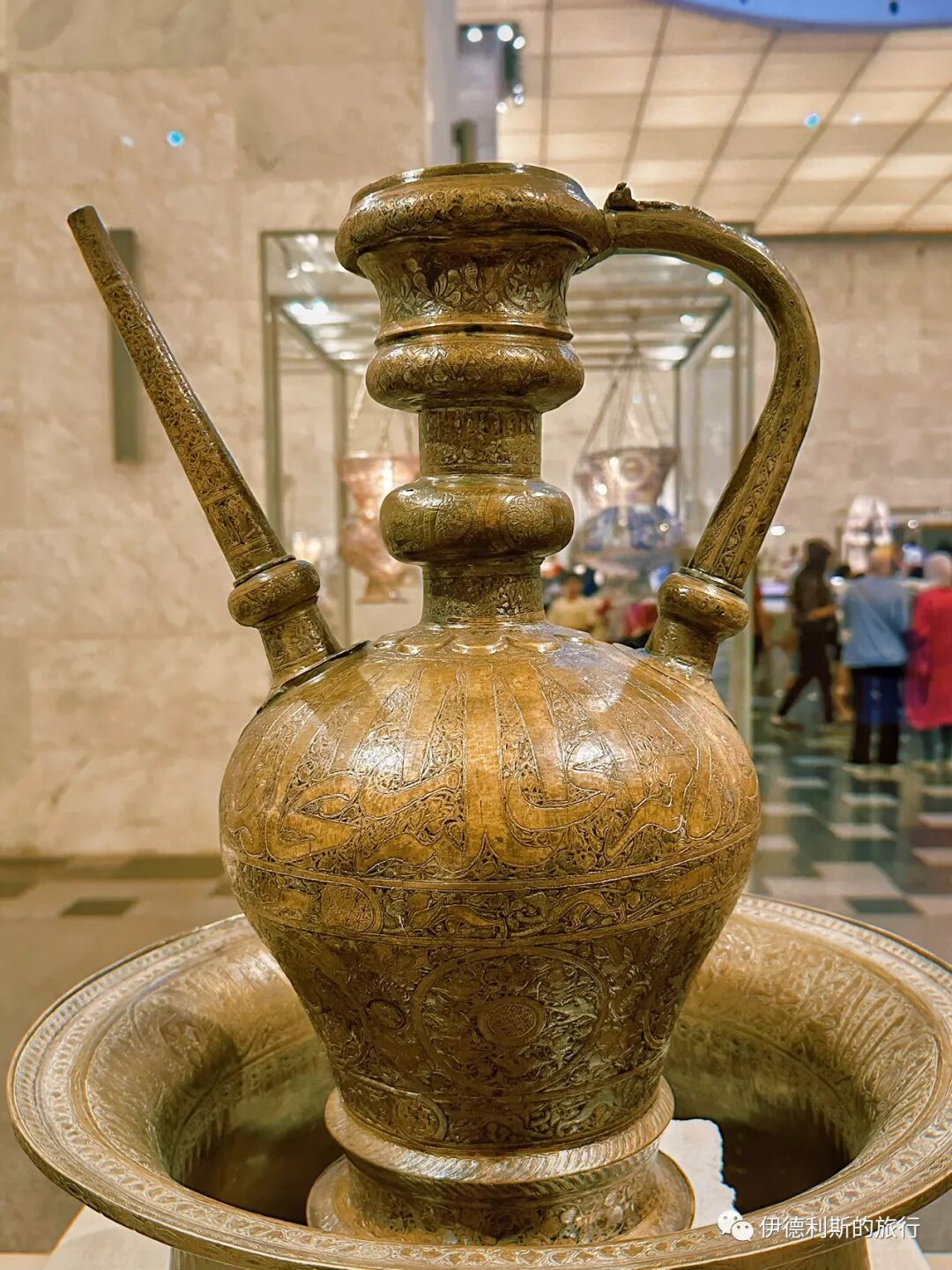
Wood carving and inlay craftsmanship from the Mamluk period.
The Abu Bakr bin Mazhar mosque is located in El Gamaliya in northeastern Egypt and was built in 1479 by the Mamluk vizier Abu Bakr bin Mazhar. In 2018, the National Museum of Egyptian Civilization moved the mosque's exquisite minbar pulpit inside for display, representing the craft heritage of the Mamluk dynasty. The entire minbar is made of ebony and peach wood, inlaid with ivory and mother-of-pearl, and carved with floral, star, and geometric patterns, as well as Kufic calligraphy.
13th to 14th-century ivory-inlaid wooden doors featuring complex geometric decorations.
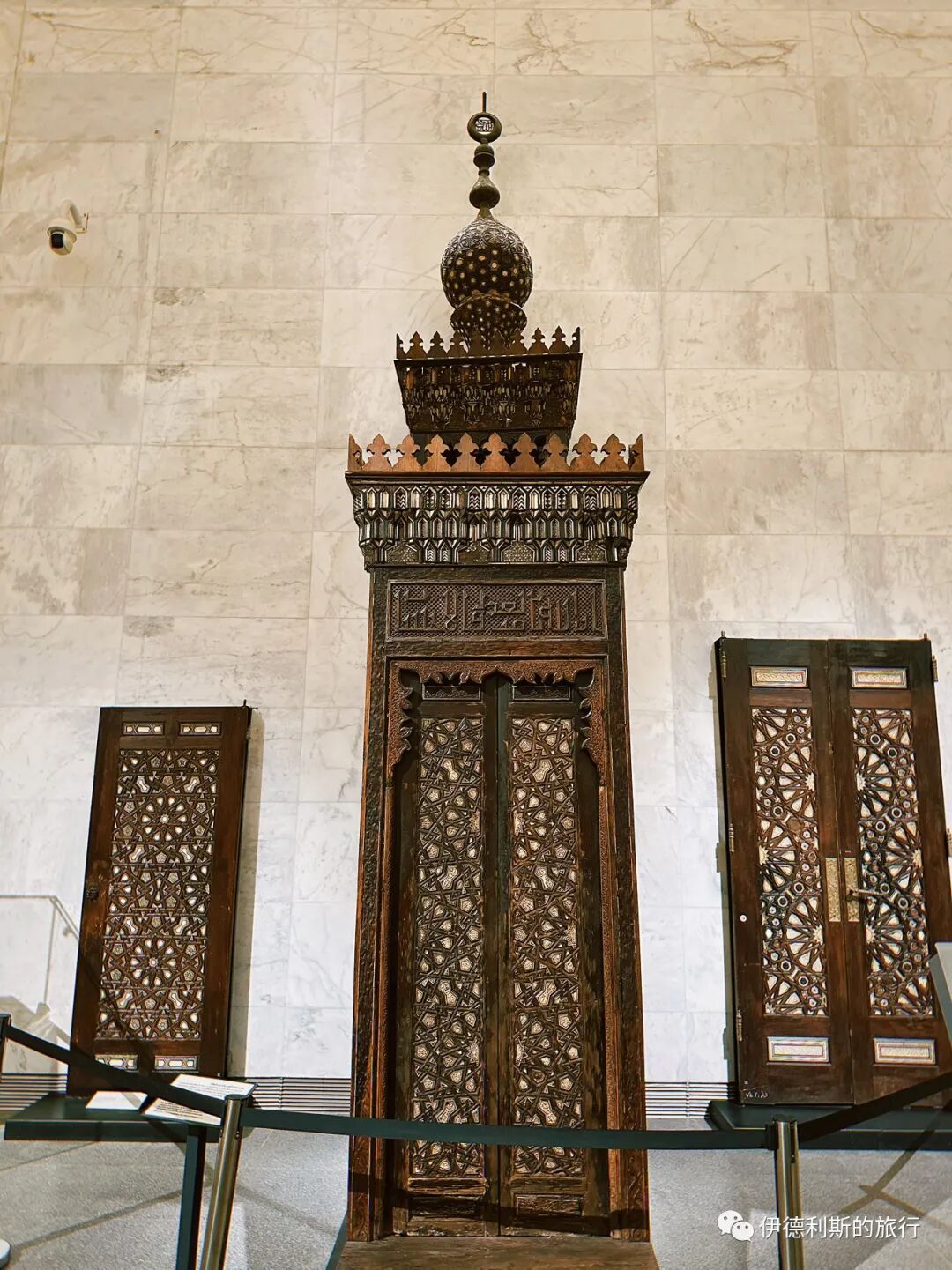
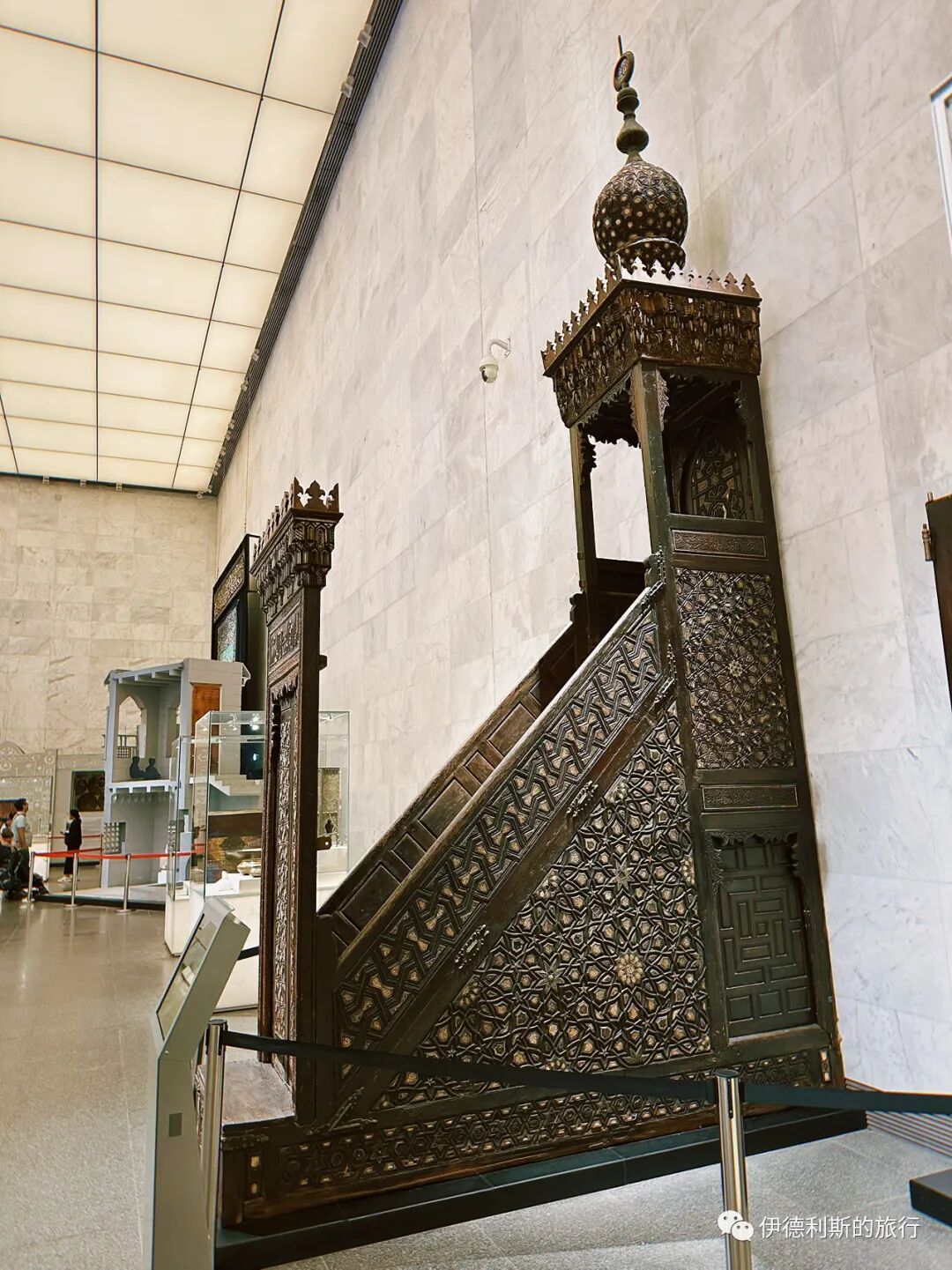
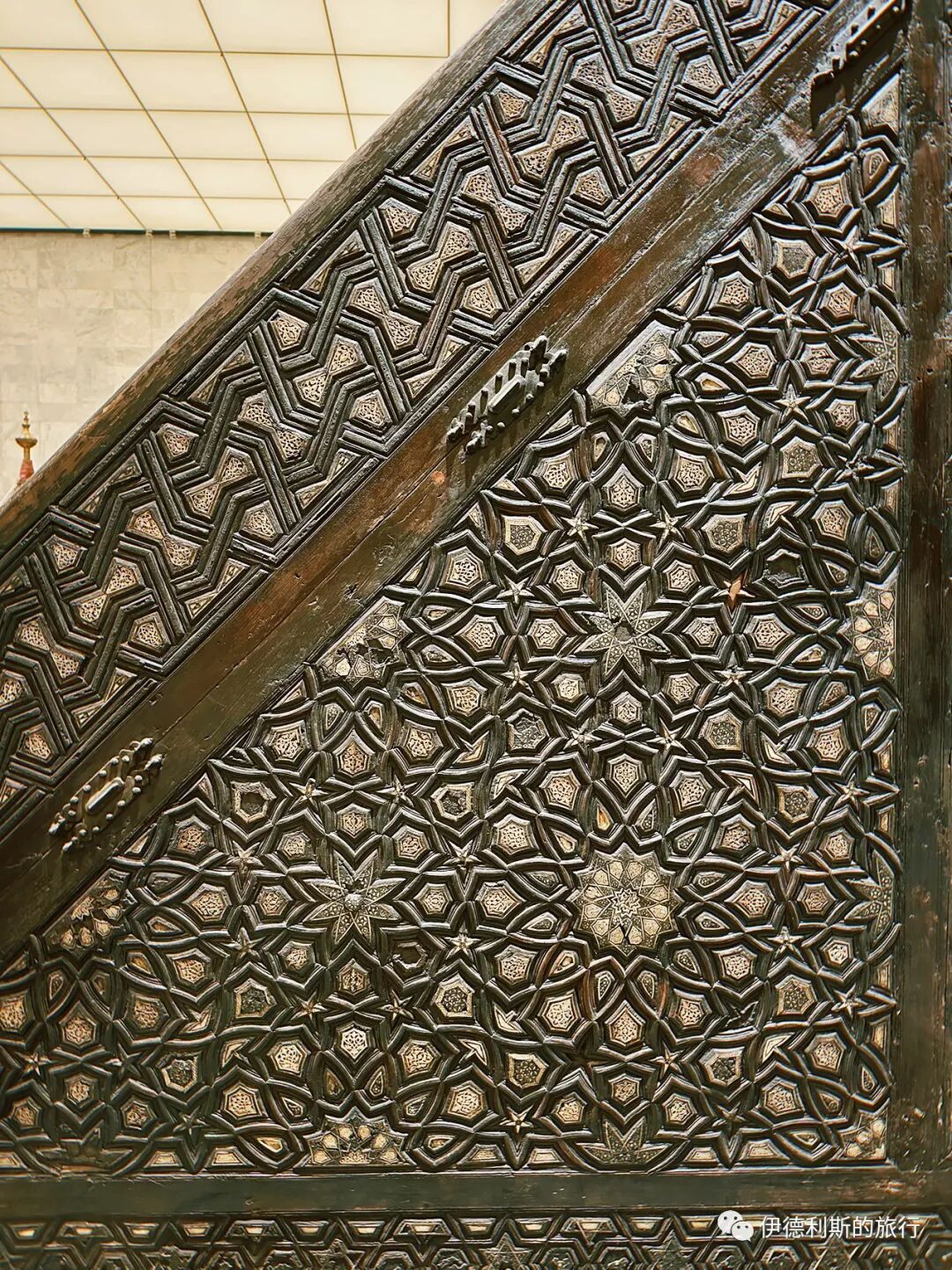
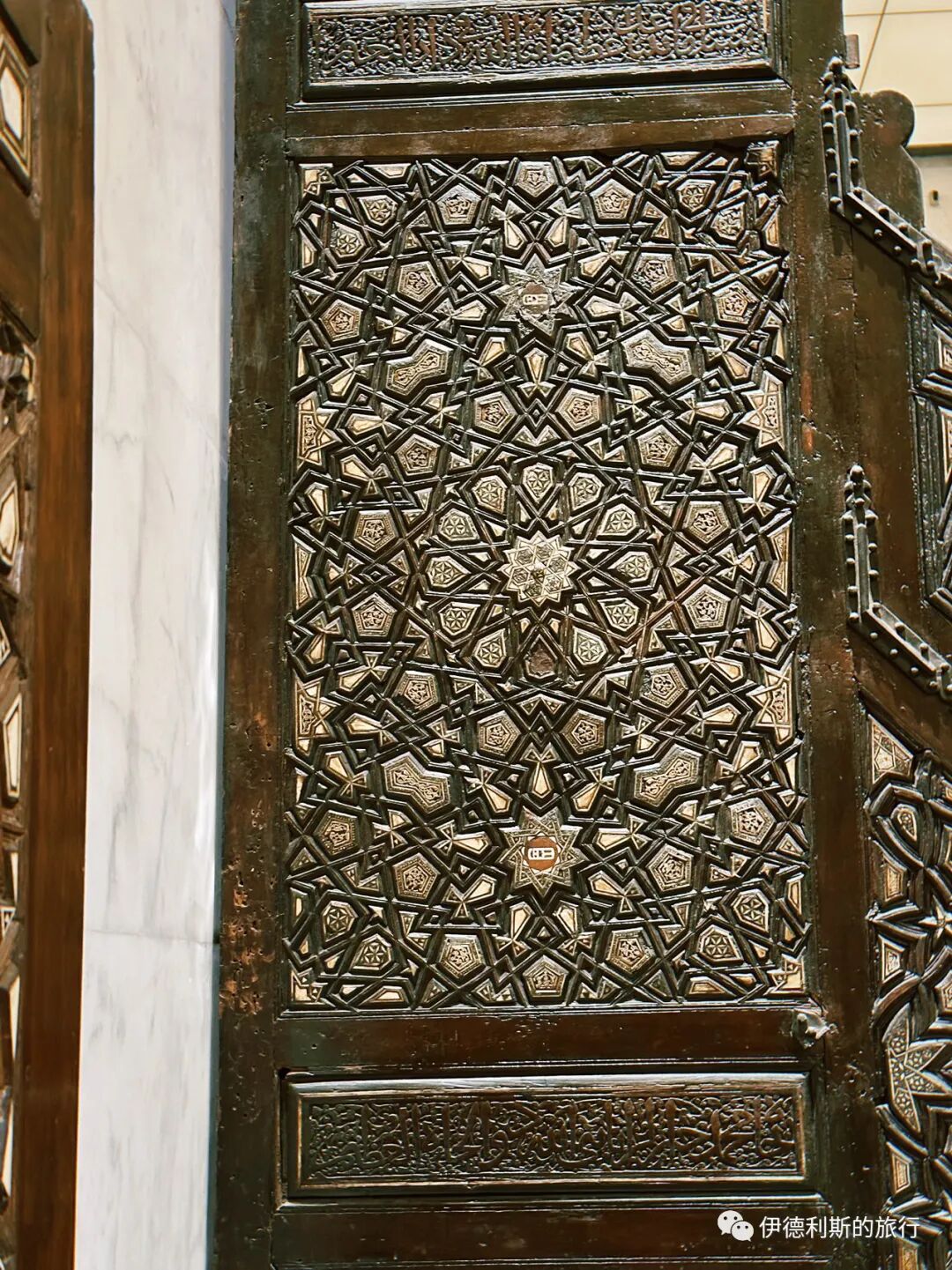
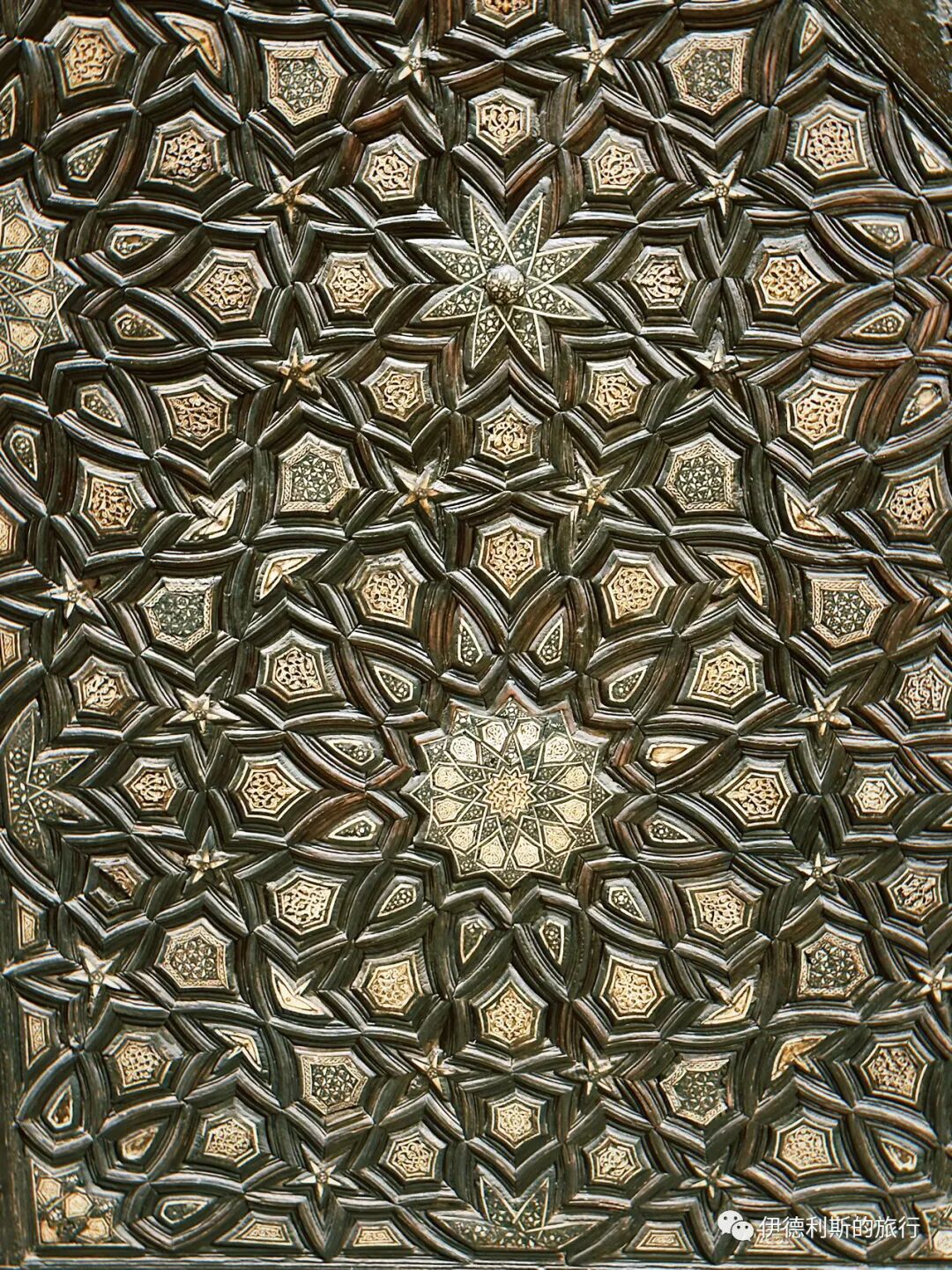
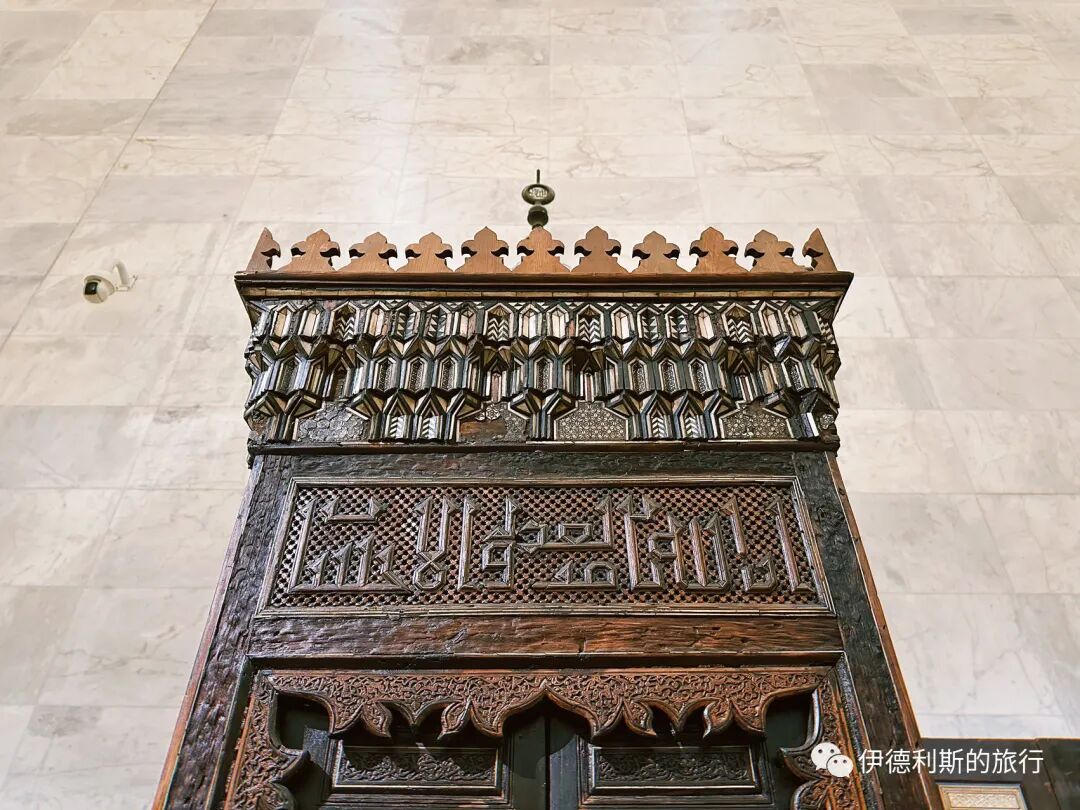
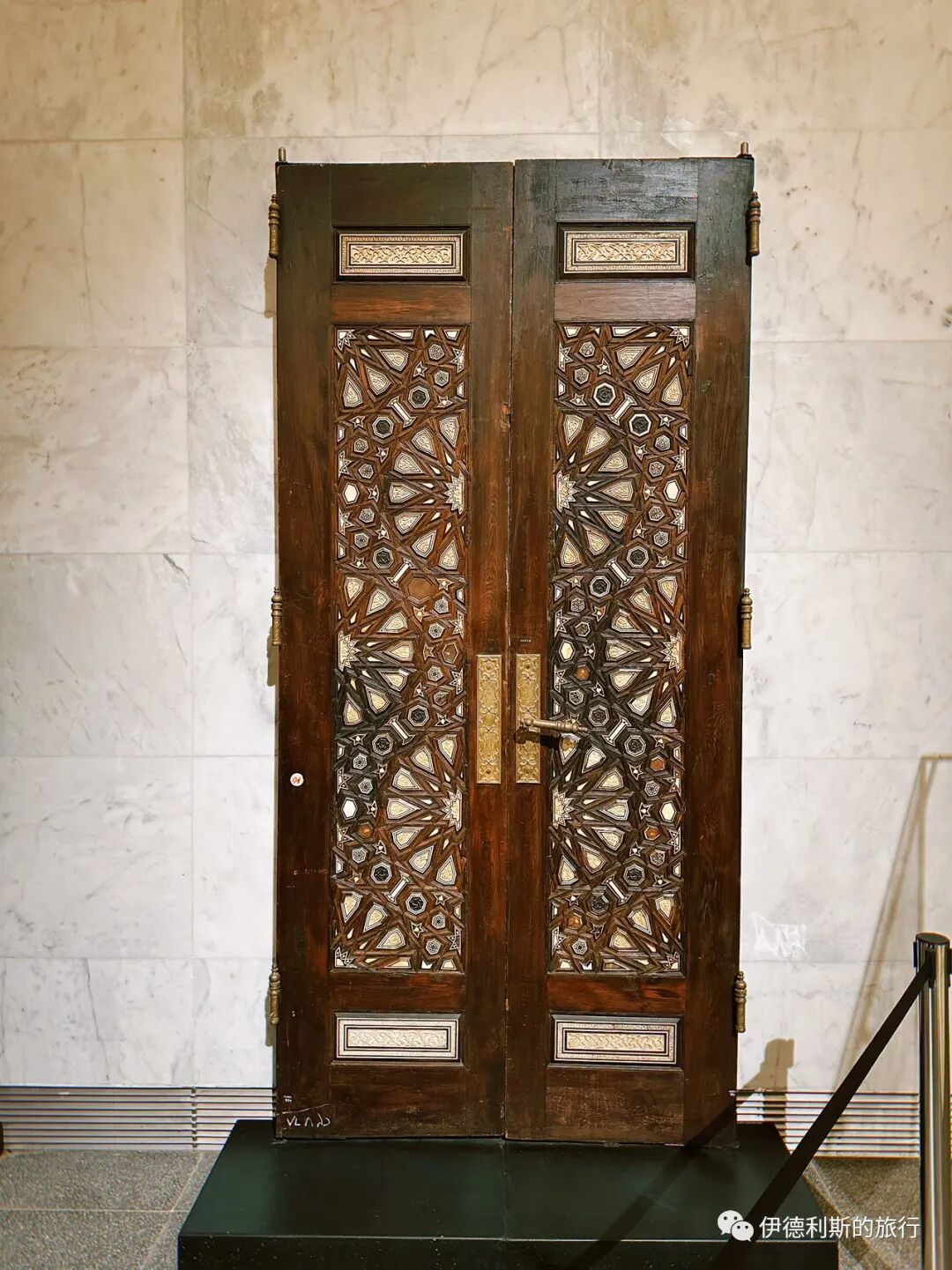
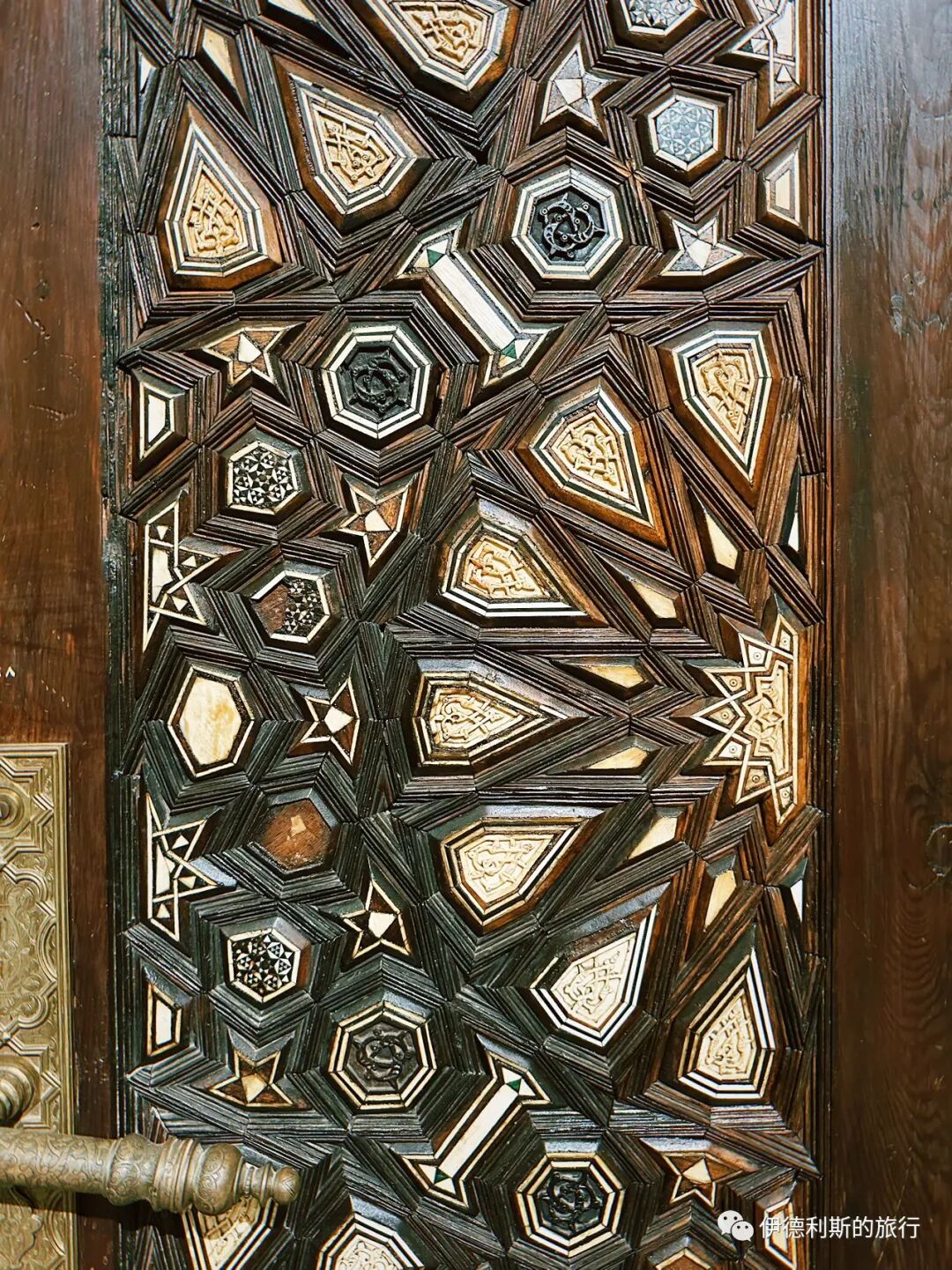
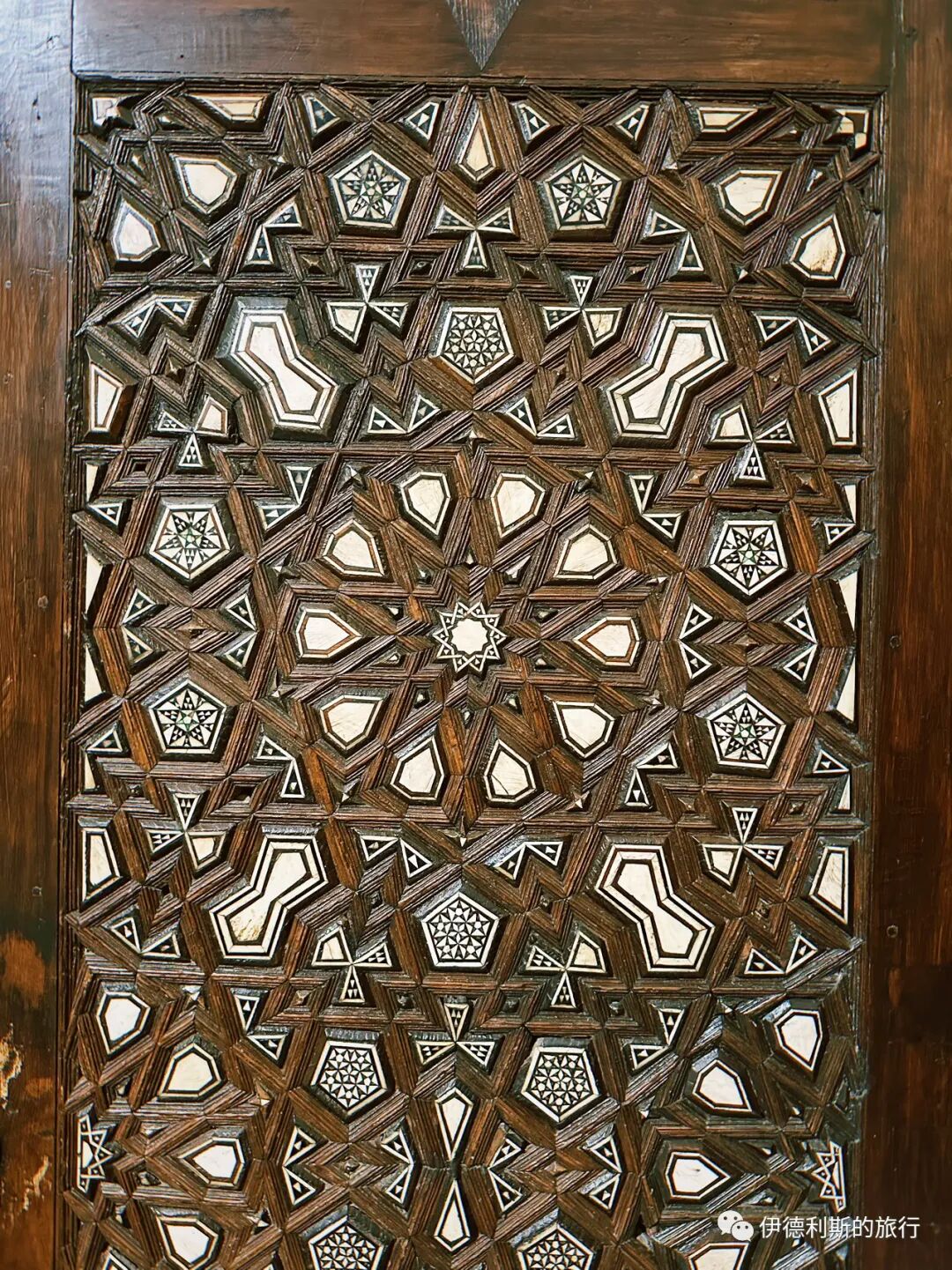
Mamluk-era copper carving includes 14th-century copper basins and bowls, as well as a copper table with silver inlay from the time of Sultan Al-Nasir Muhammad (1285-1341), which features beautiful floral vine patterns, star-shaped geometric designs, and Thuluth calligraphy carvings.
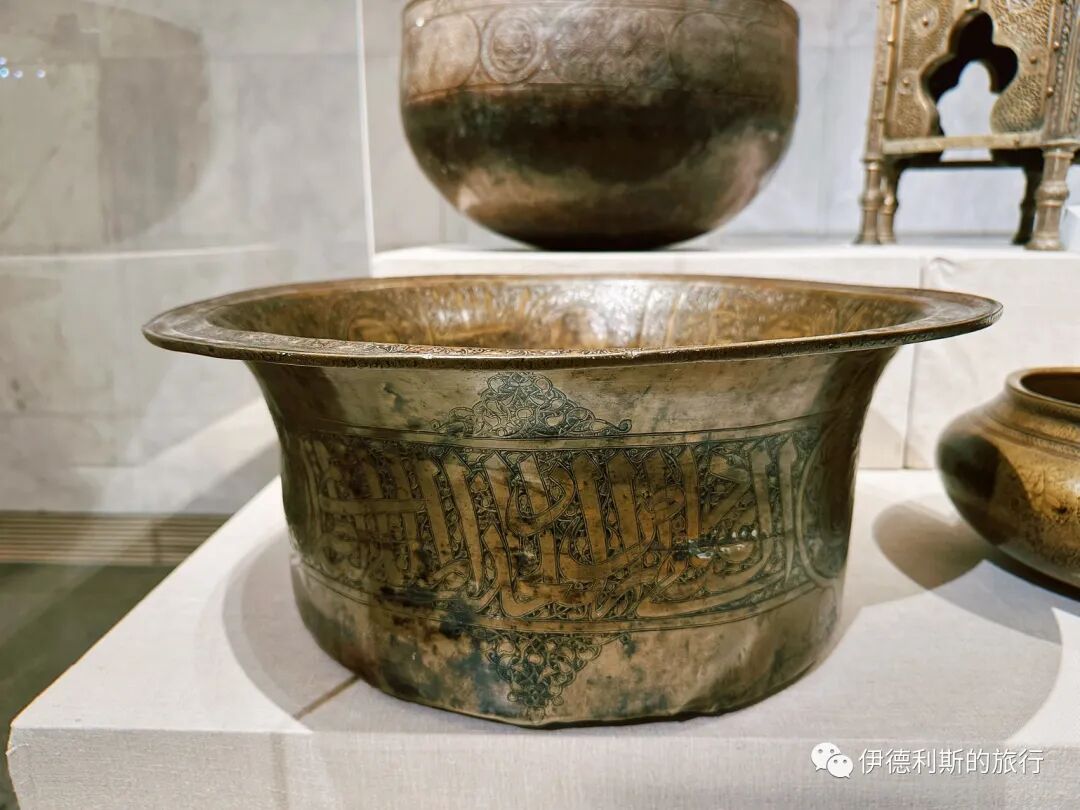
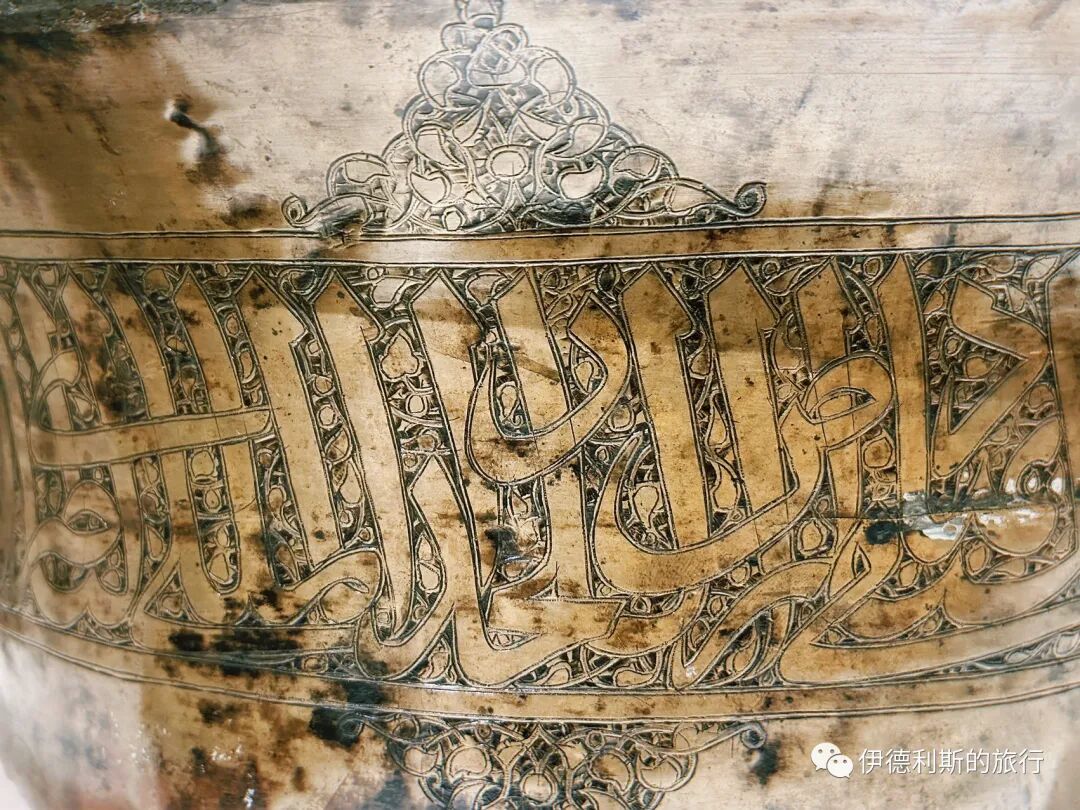
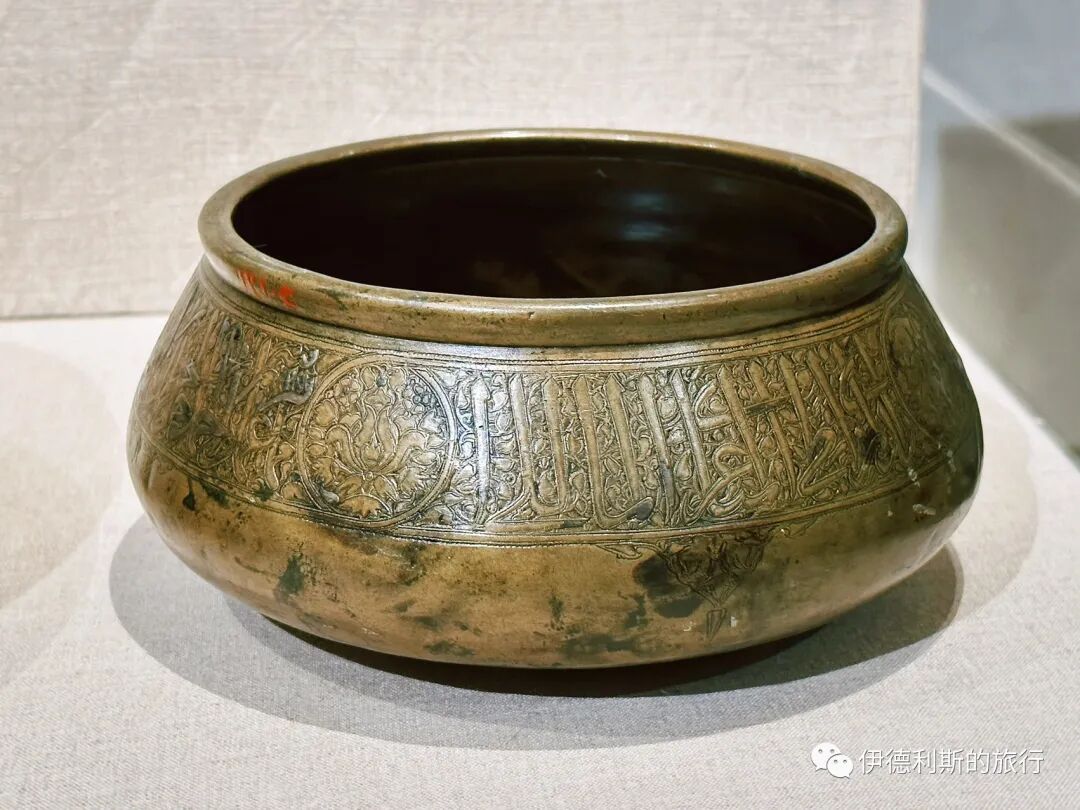
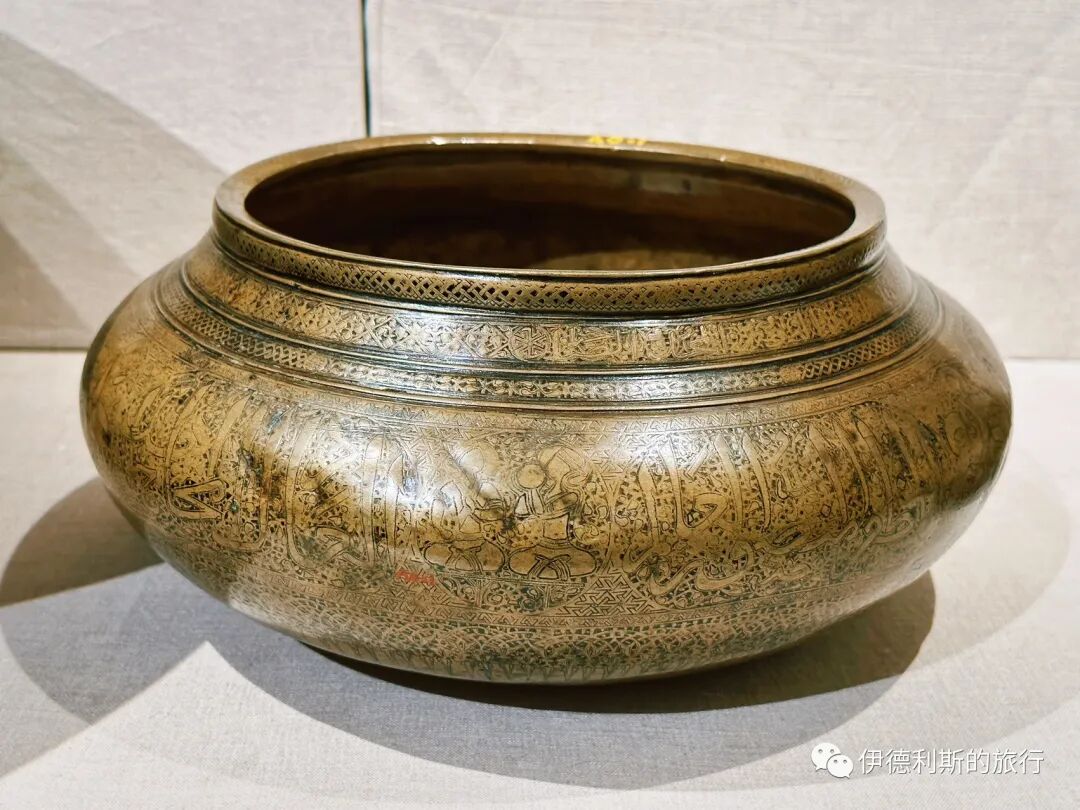
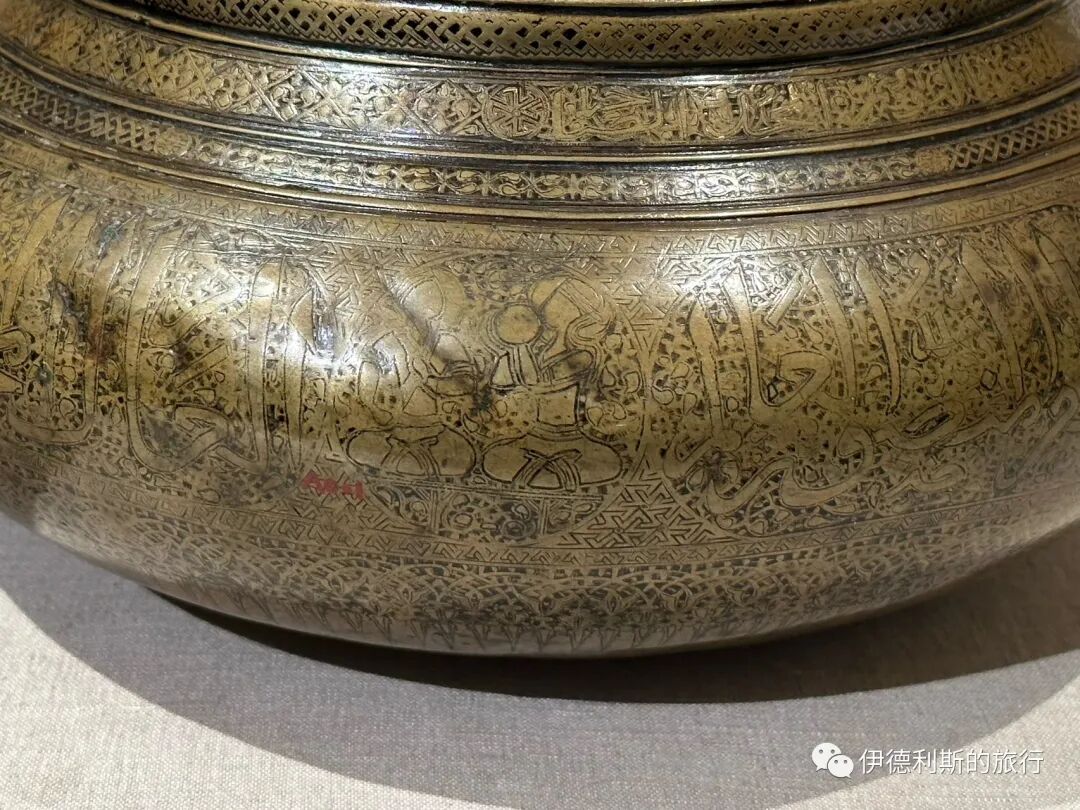
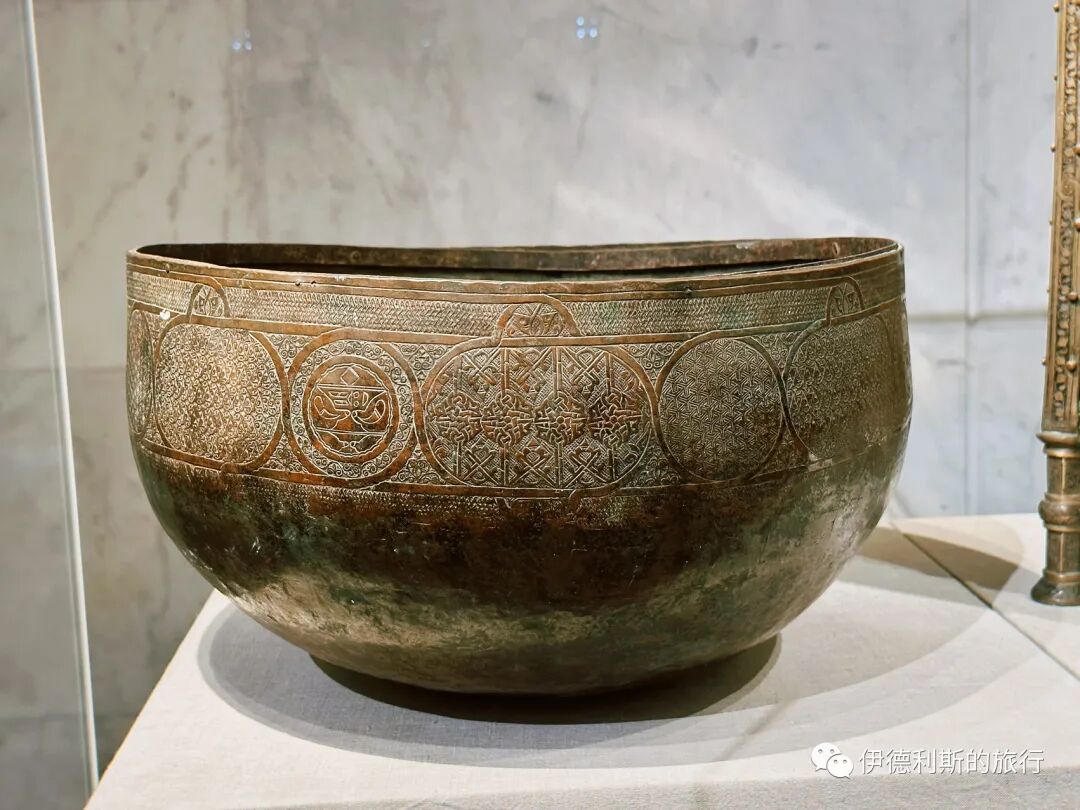
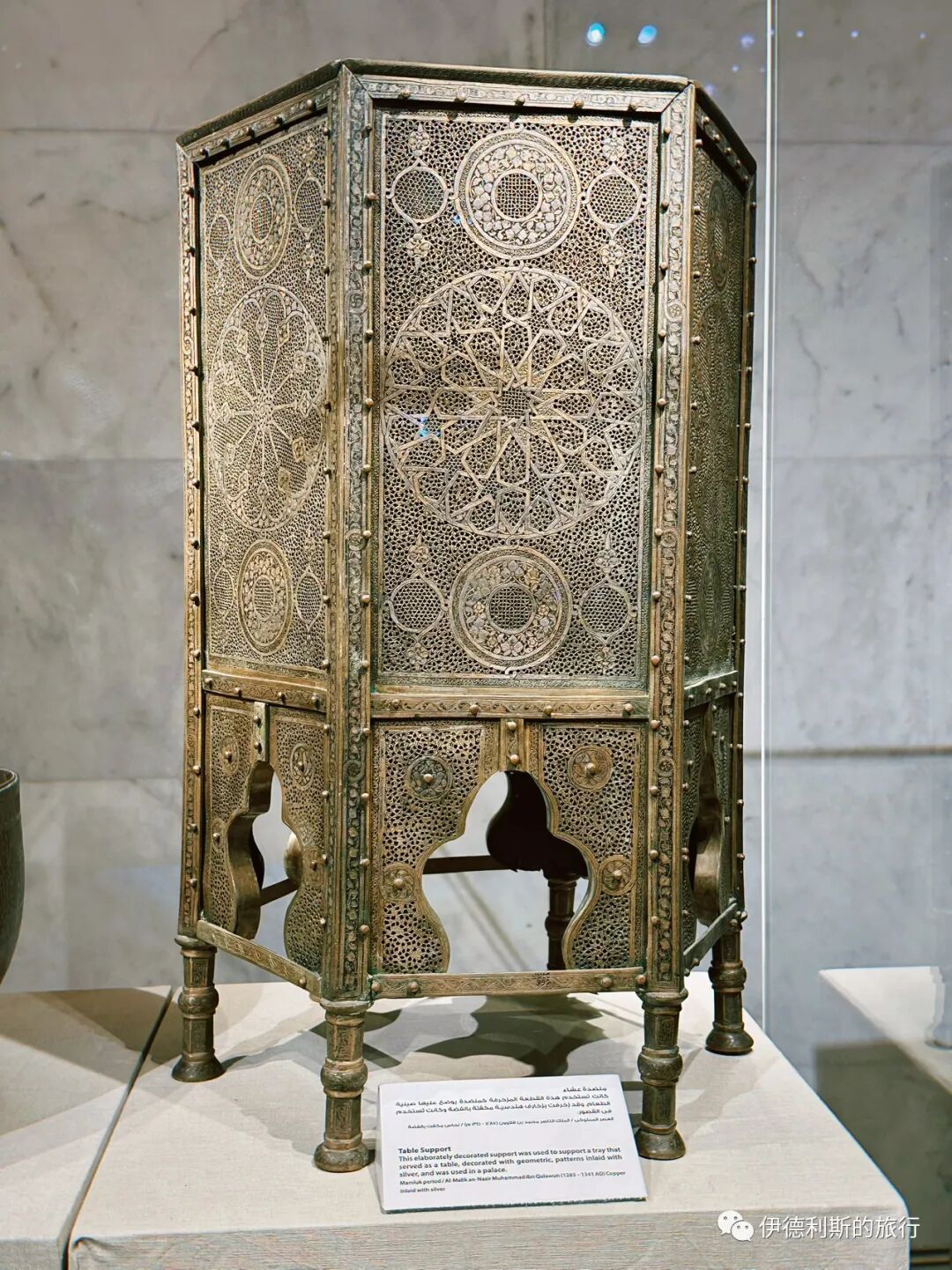
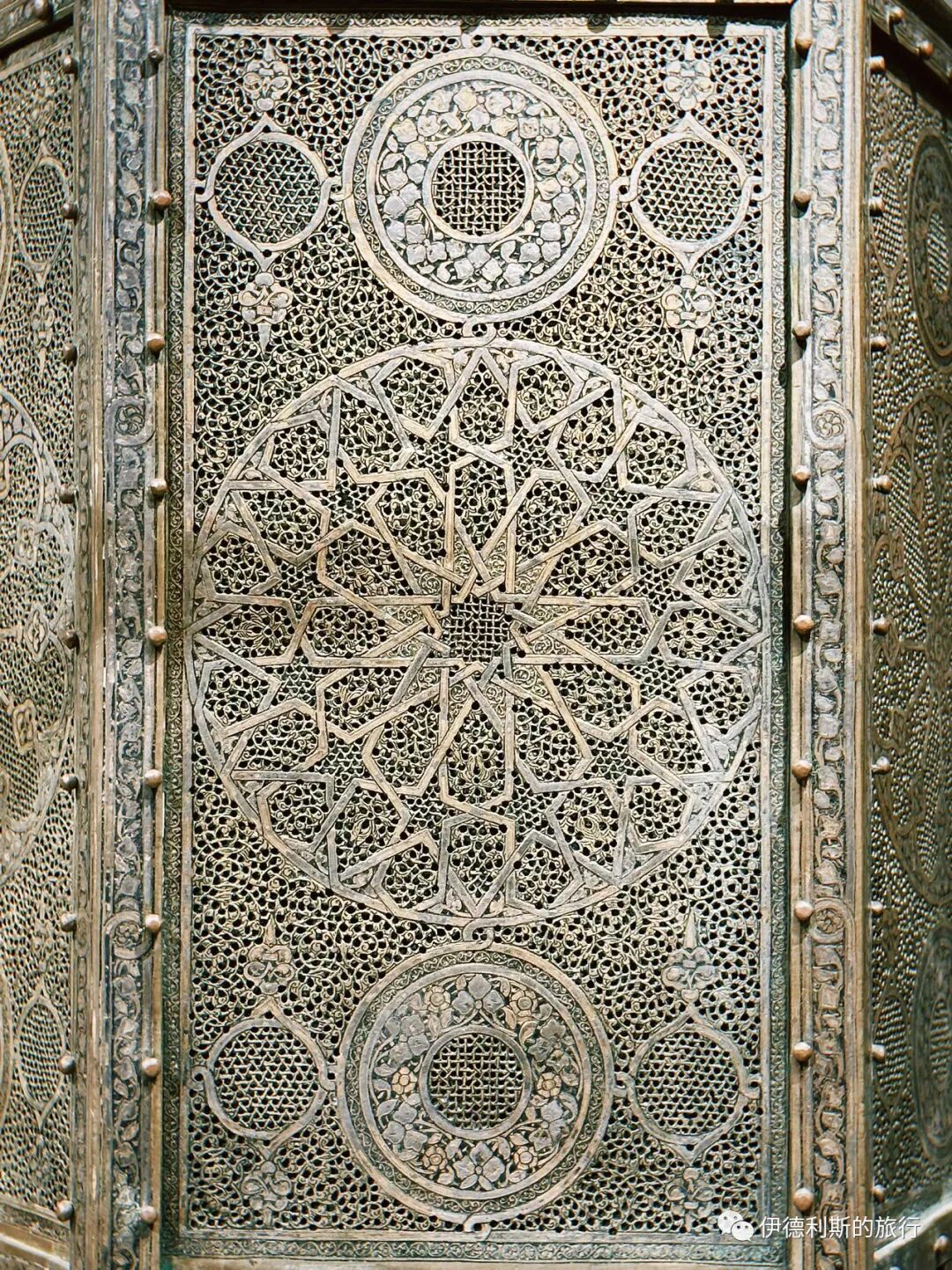
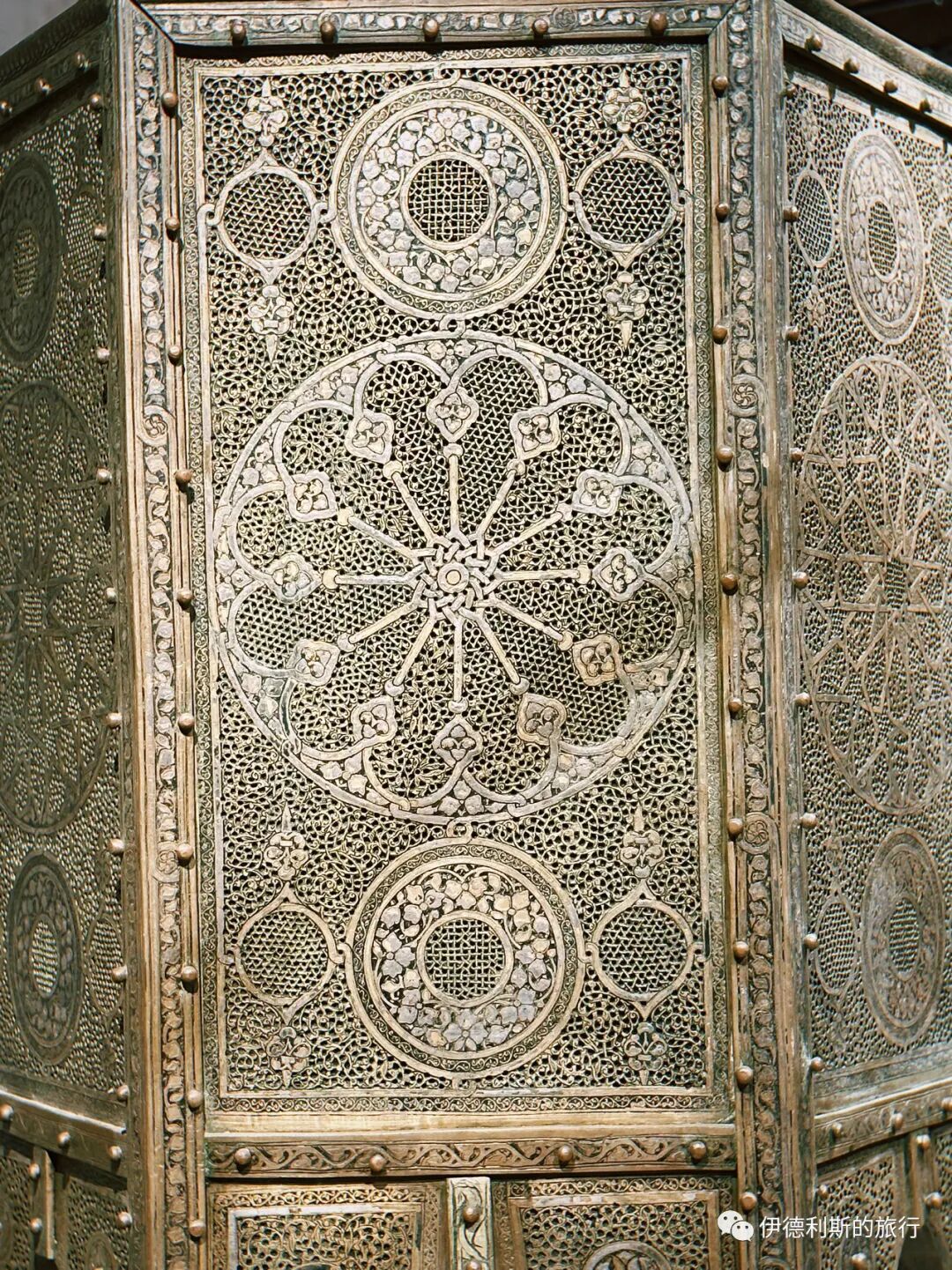
Quran cases from the Mamluk dynasty.
The first Quran case is made of wood wrapped in copper with gold and silver inlay, carved with both Thuluth and Kufic calligraphy, and is said to have belonged to the Mamluk Sultan Al-Nasir Muhammad (1285-1341).
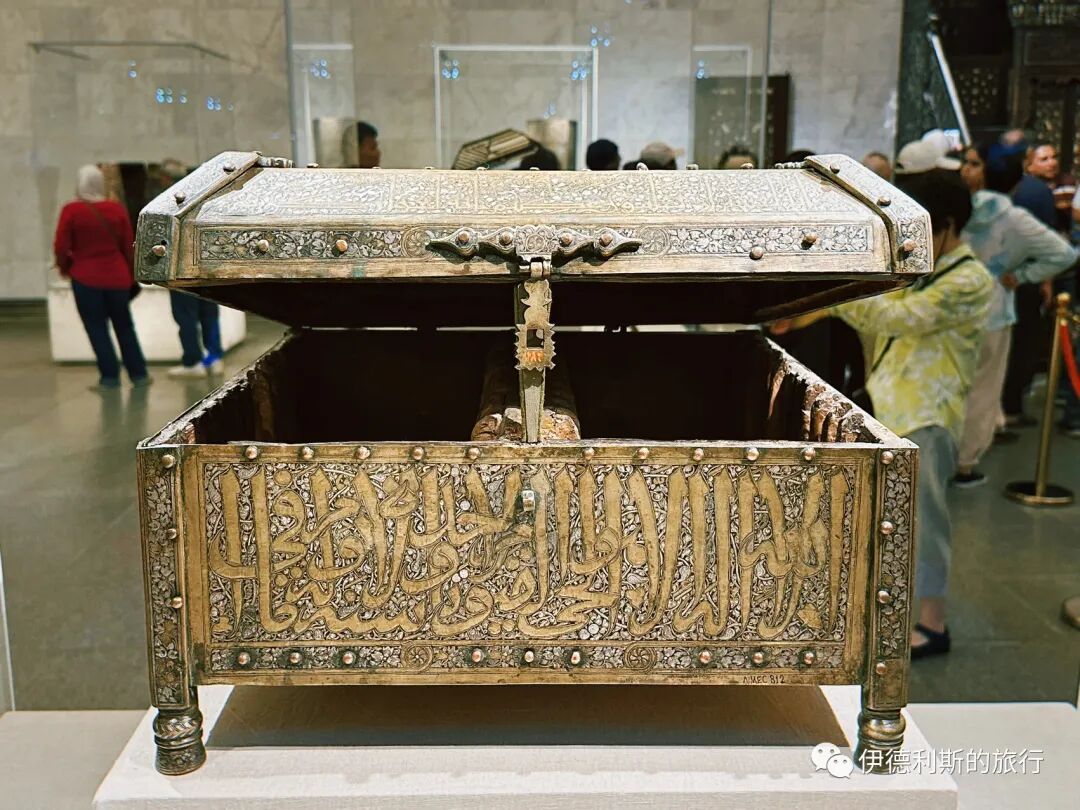
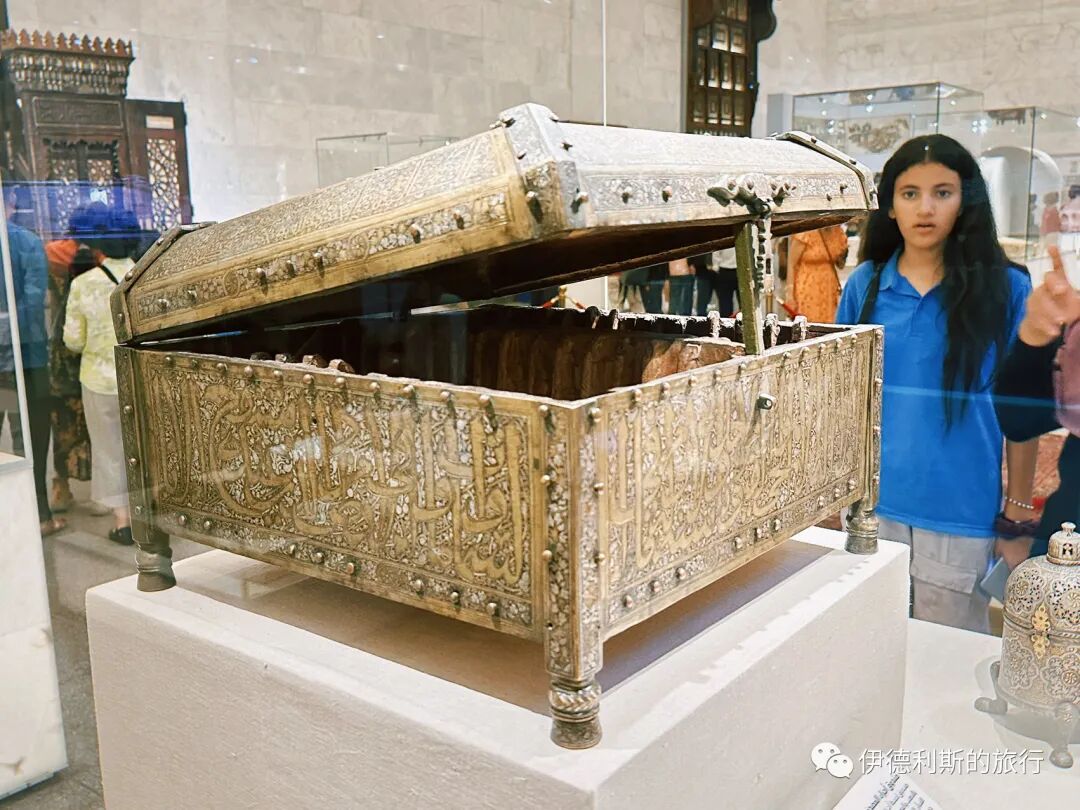
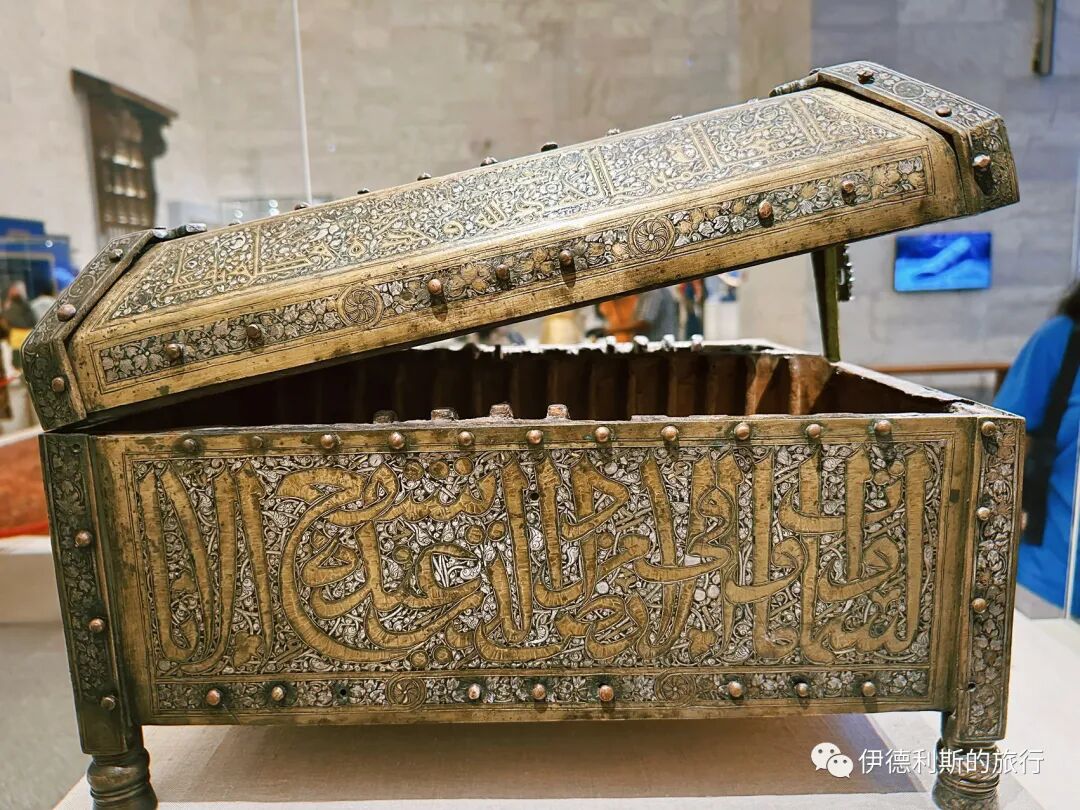
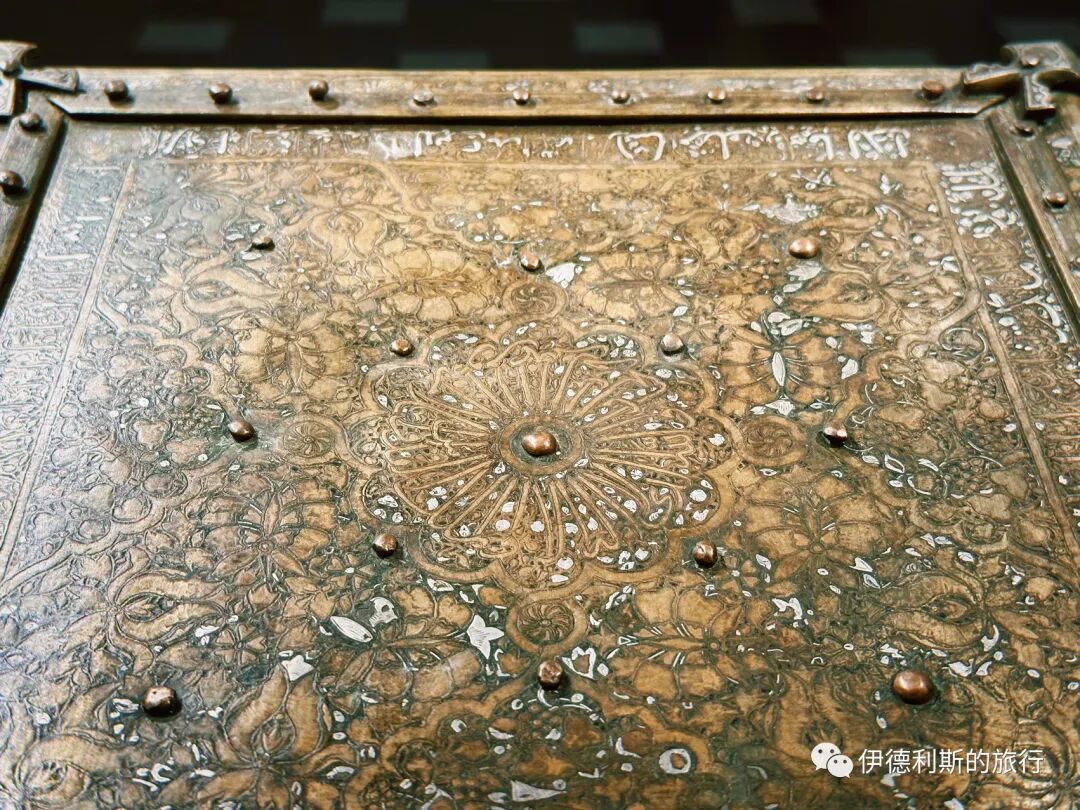
The second Quran case is made of wood and carved with Thuluth calligraphy that mentions the name of the Mamluk Sultan Qansuh al-Ghuri (1501-1516), so it was likely made between 1503 and 1504 during the construction of the al-Ghuri mosque and madrasa in Cairo.
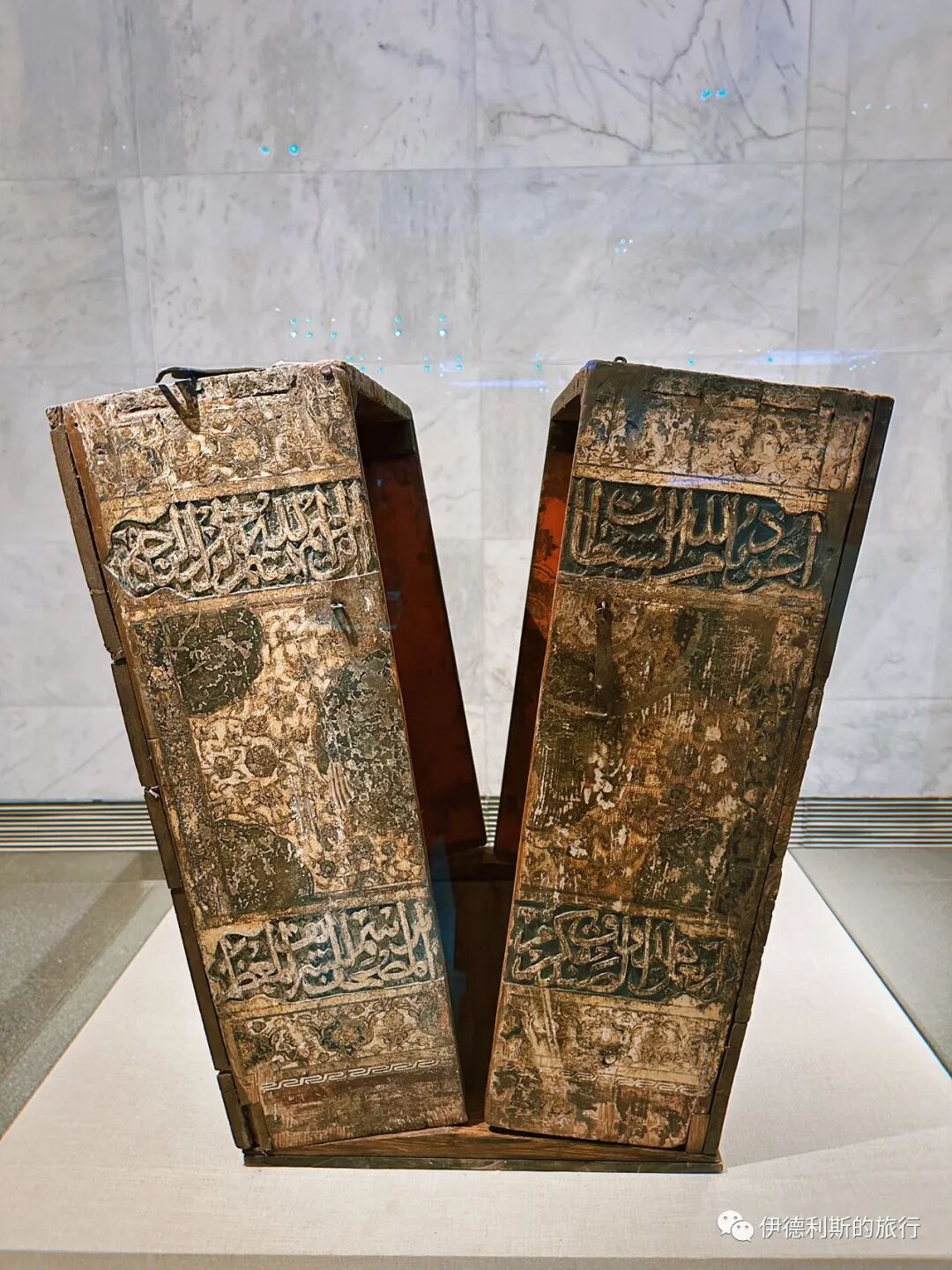
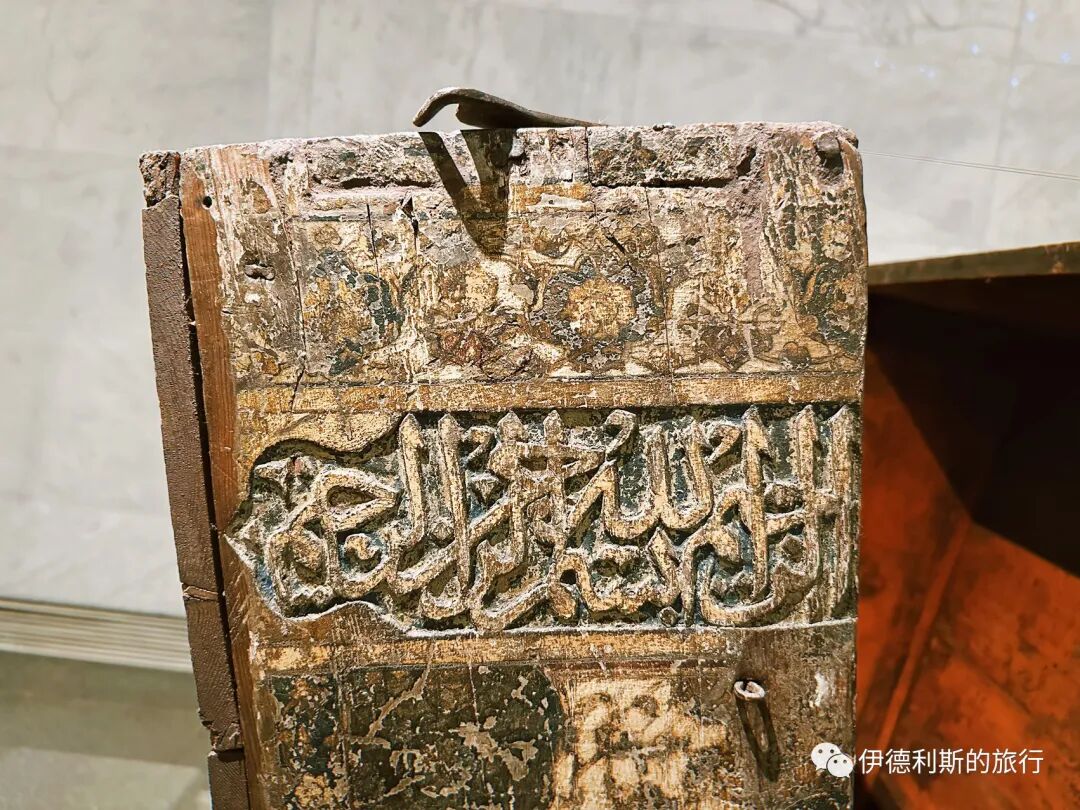
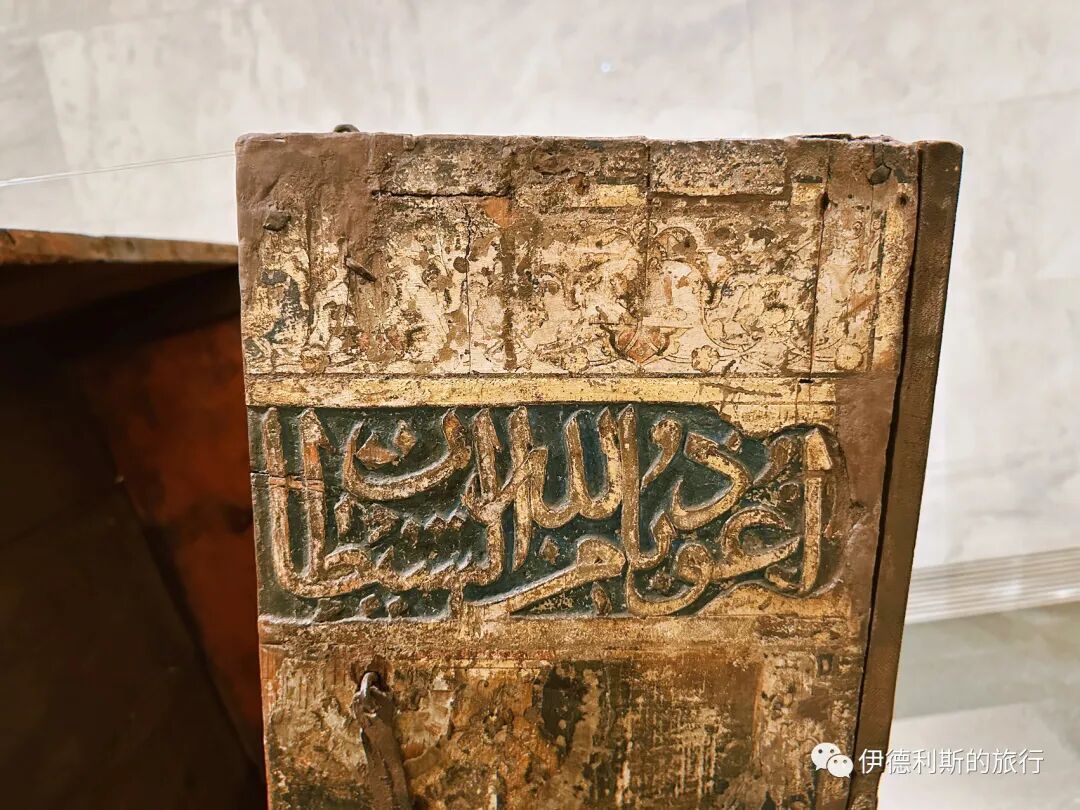
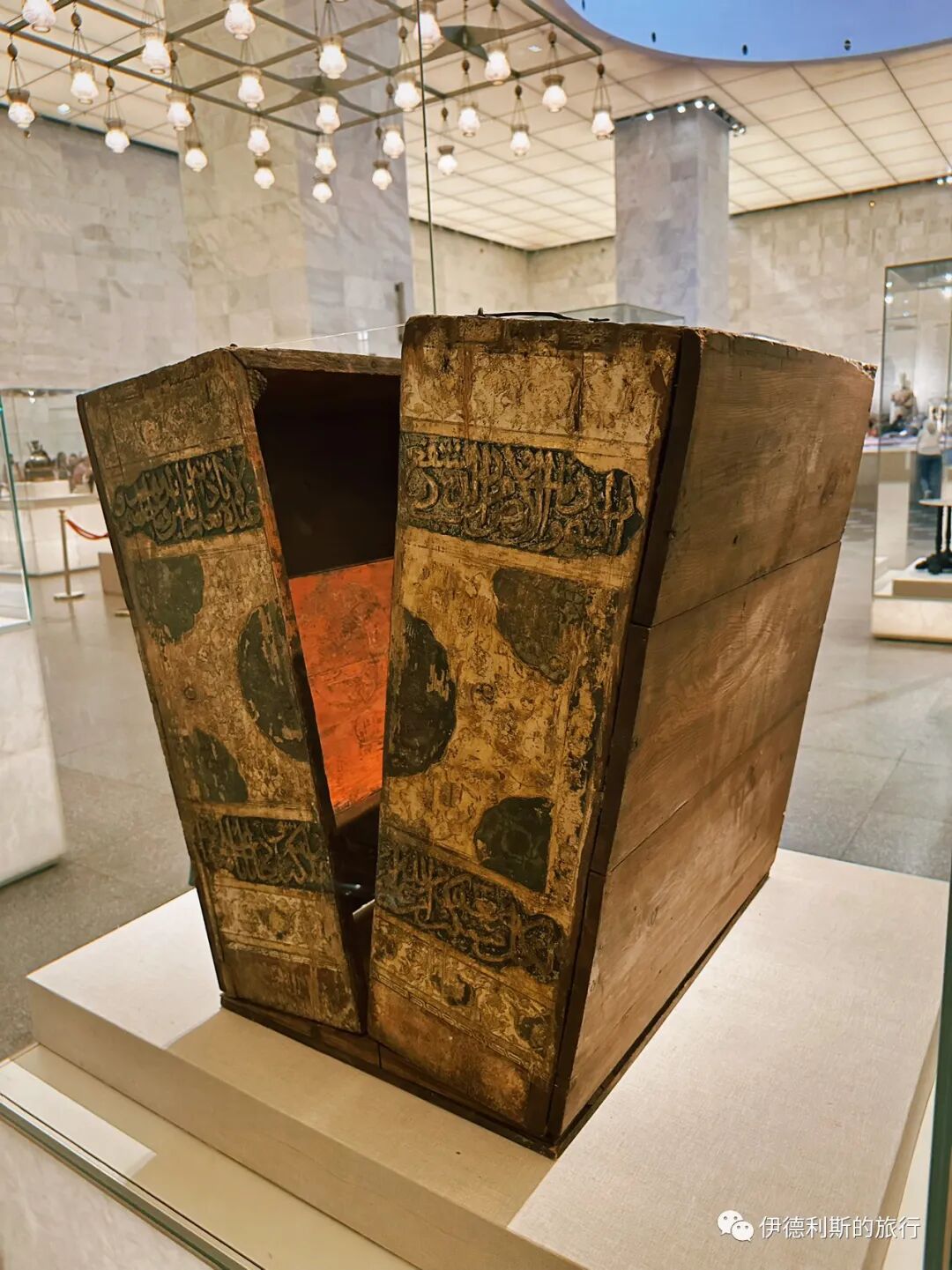
An 11th-century Fatimid dynasty lusterware plate, which is a pottery technique where a white glaze is applied and fired, then painted with a mixture of copper and silver oxides and fired a second time. The pottery center in Egypt at that time was in the old city of Fustat, where the National Museum of Egyptian Civilization is now located.
Compared to the Abbasid dynasty, which had Baghdad as its pottery center, the figures on Fatimid lusterware are more vivid and the decorative patterns are more diverse, especially the floral Kufic Arabic calligraphy featuring vine motifs.
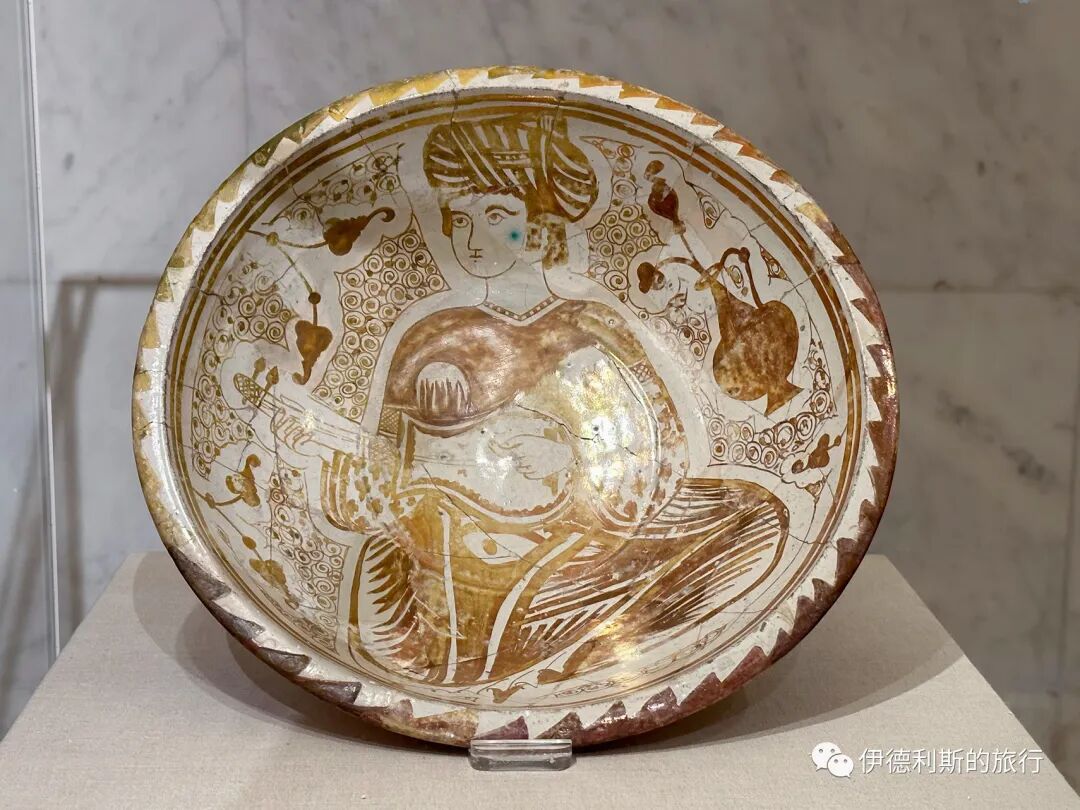
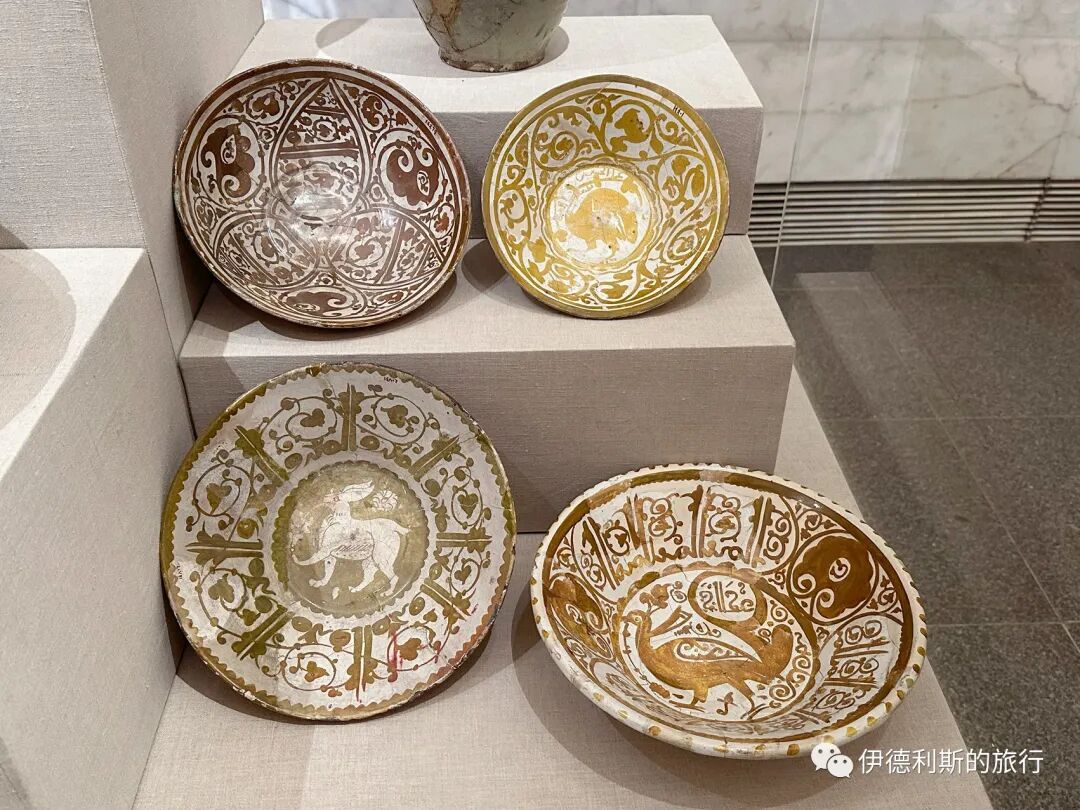
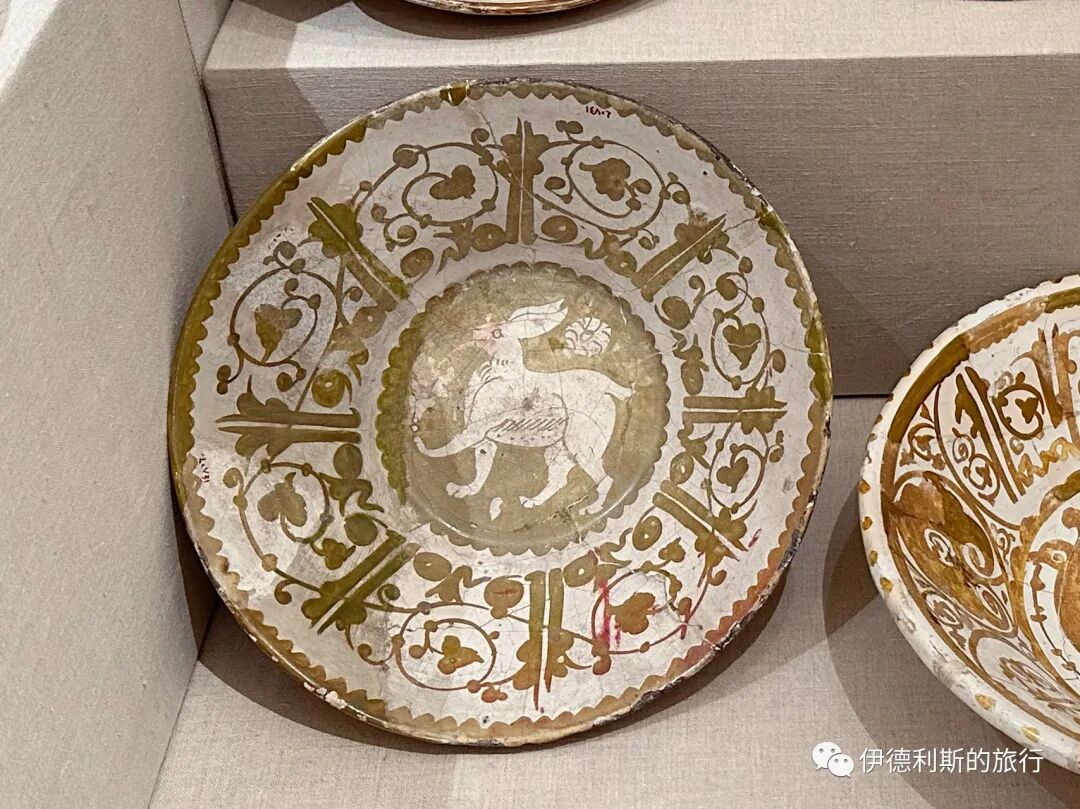
Starting with the Mamluk dynasty in the 13th century, Egyptian rulers had a tradition of sending a ceremonial palanquin (Mahmal) and the Kaaba cover (Kiswa) to the Sacred Mosque in Mecca before the annual Hajj. This ceremony was known as al-Mahmal. Camels carried the Mahmal, which featured intricate embroidery including Quranic verses and the Sultan's monogram. Inside, it held two silver-plated cases containing the Quran. A grand Hajj procession followed the Mahmal, with the Kaaba cover also carried by camels and guarded by heavily armed soldiers. When the procession arrived in Mecca, crowds gathered to watch. Mahmal palanquins from various Muslim countries would compete for the best spots in front of the Kaaba. After the Hajj ended, the Mahmal returned home carrying blessings. Parents would bring their children to touch the Mahmal to seek these blessings. The Mahmal palanquin finally retired from history after the Republic of Egypt was established in 1952.
The tradition of covering the Kaaba began in the pre-Islamic era. The Prophet Muhammad first covered the Kaaba with a cloth in 630. Starting in the era of Caliph Umar, Egypt provided the Kaaba cover. At first, it was placed directly over the old cover each year. Beginning in 777 during the Abbasid dynasty, the old cover was removed before the new one was put on. On the 9th day of the month of Hajj each year, the Prince of Mecca covers the Kaaba. The old cover is cut into small pieces and given away as gifts.
For over a century starting in 1817, the Mahmal and the Kaaba cover were produced at the Dar al-Kiswa textile workshop in Cairo, founded by Ottoman governor Muhammad Ali. In 1962, tensions between Egypt and Saudi Arabia over the North Yemen Civil War led Mecca to return a Kaaba cover made in Cairo. Since then, the covers have all been produced in Mecca. According to memories, craftsmen at Dar al-Kiswa would bathe and wash their hands with rose water before starting work. They would then recite the Al-Fatiha chapter. The entire production process took a full year.
The first one is the Mahmal sent by King Farouk I of Egypt in 1936.
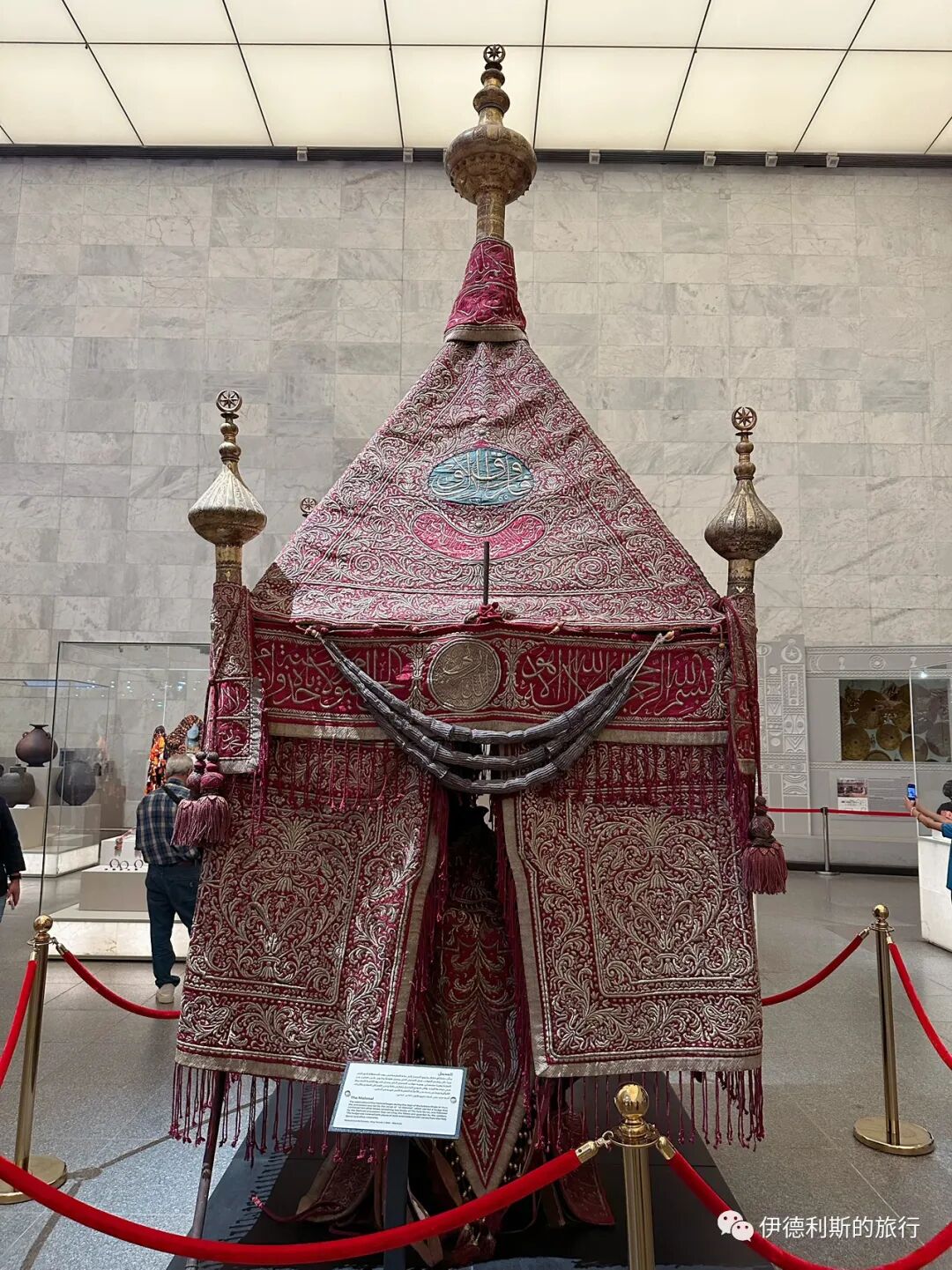
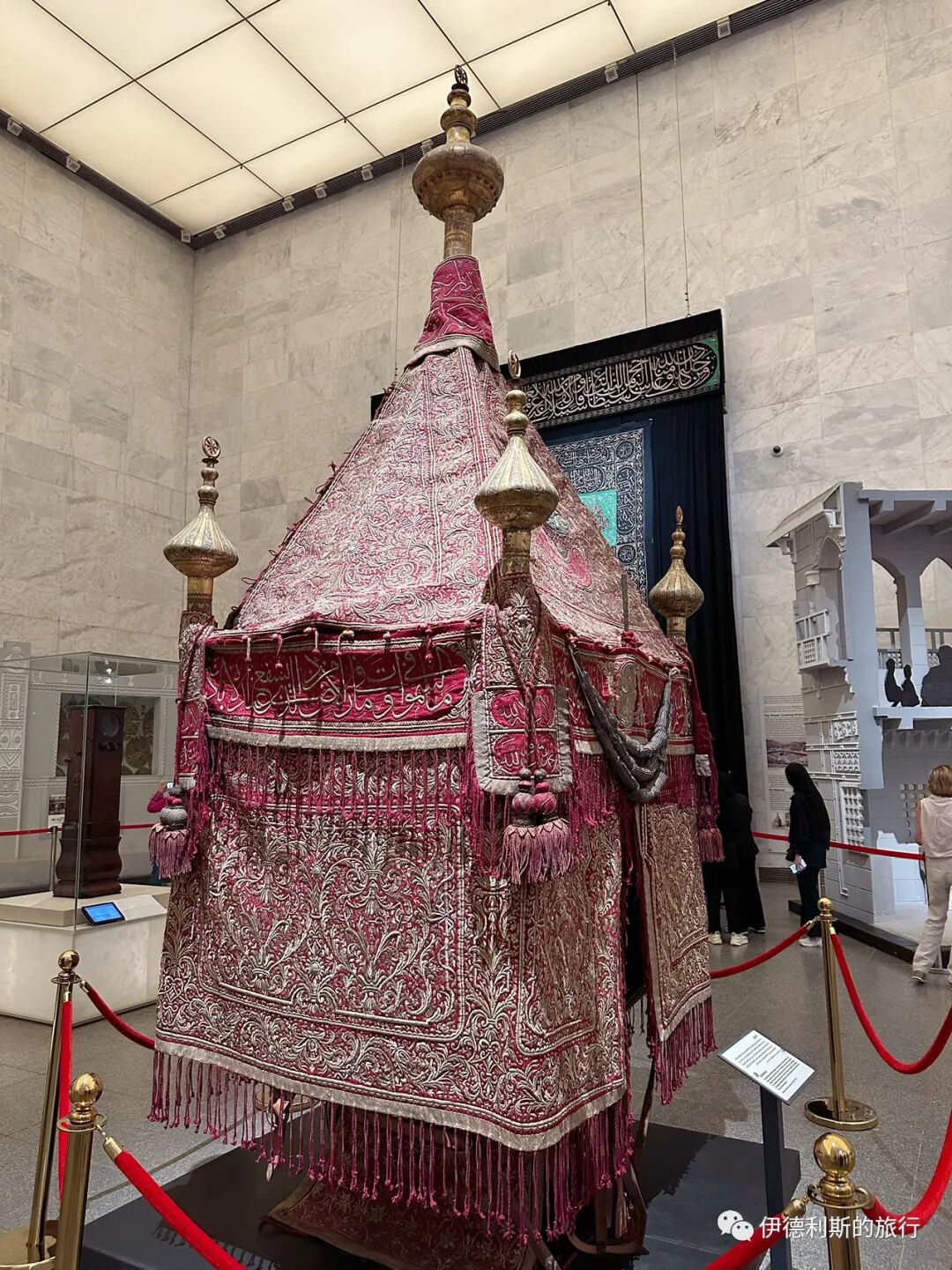
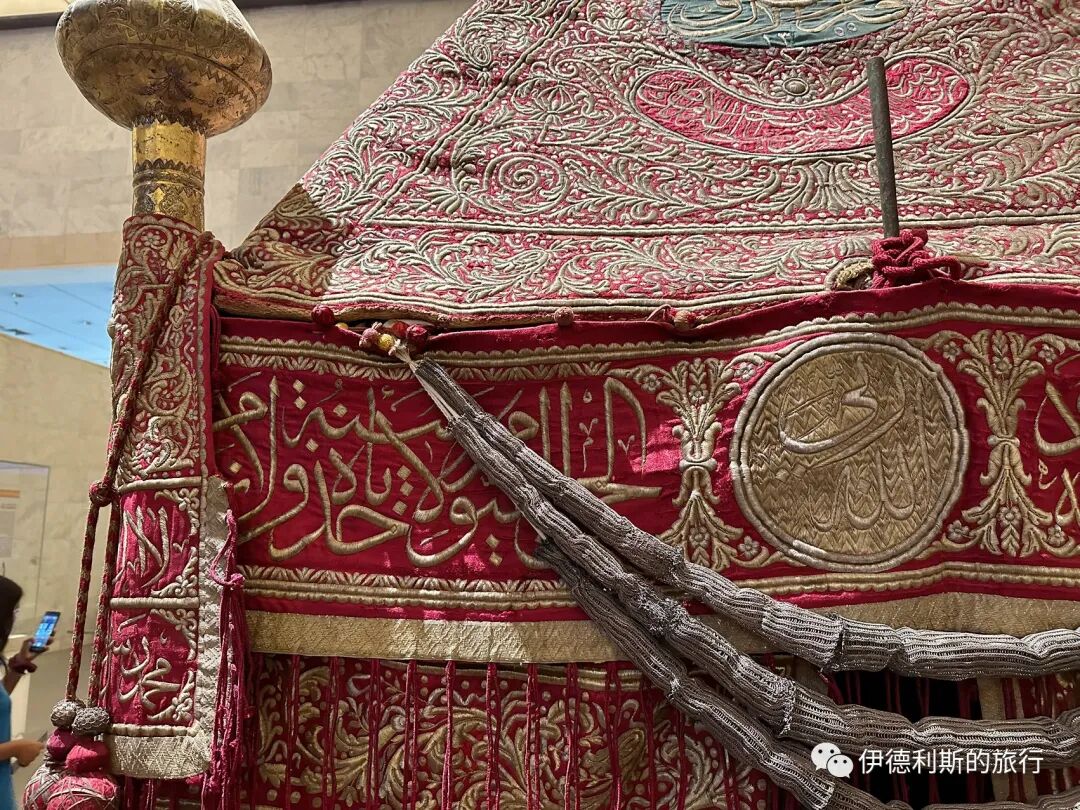
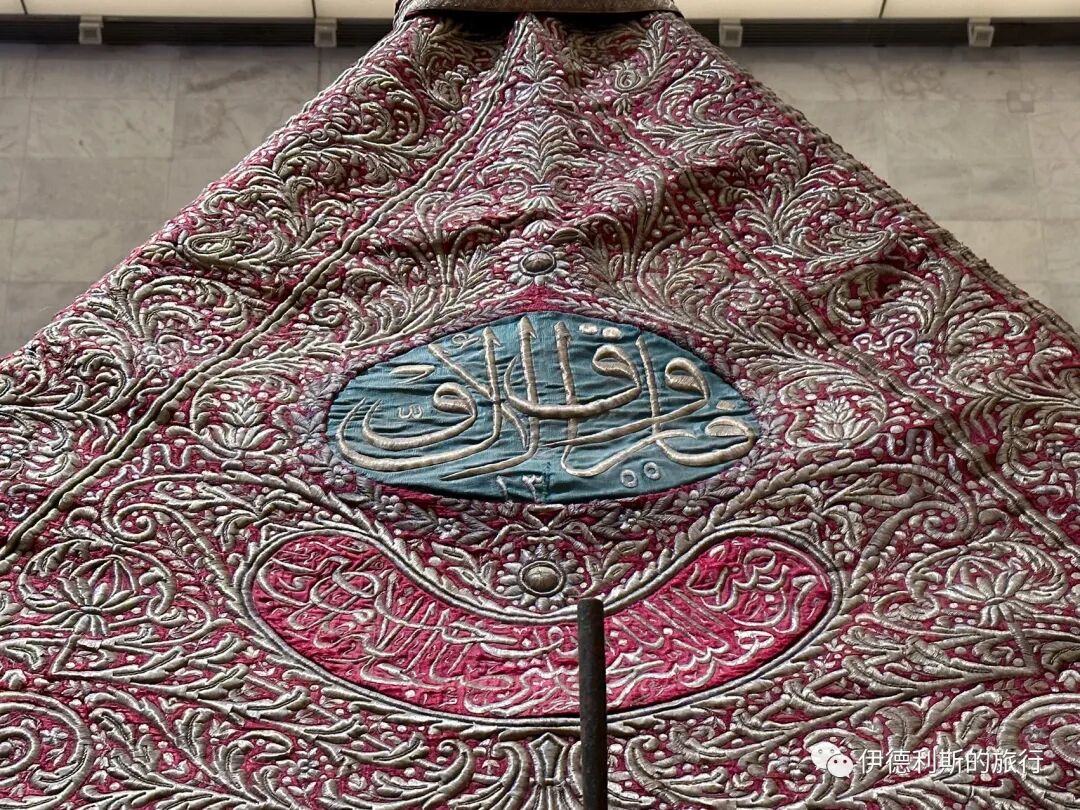
The second one is the Mahmal and Kaaba cover sent by King Farouk I in 1940.
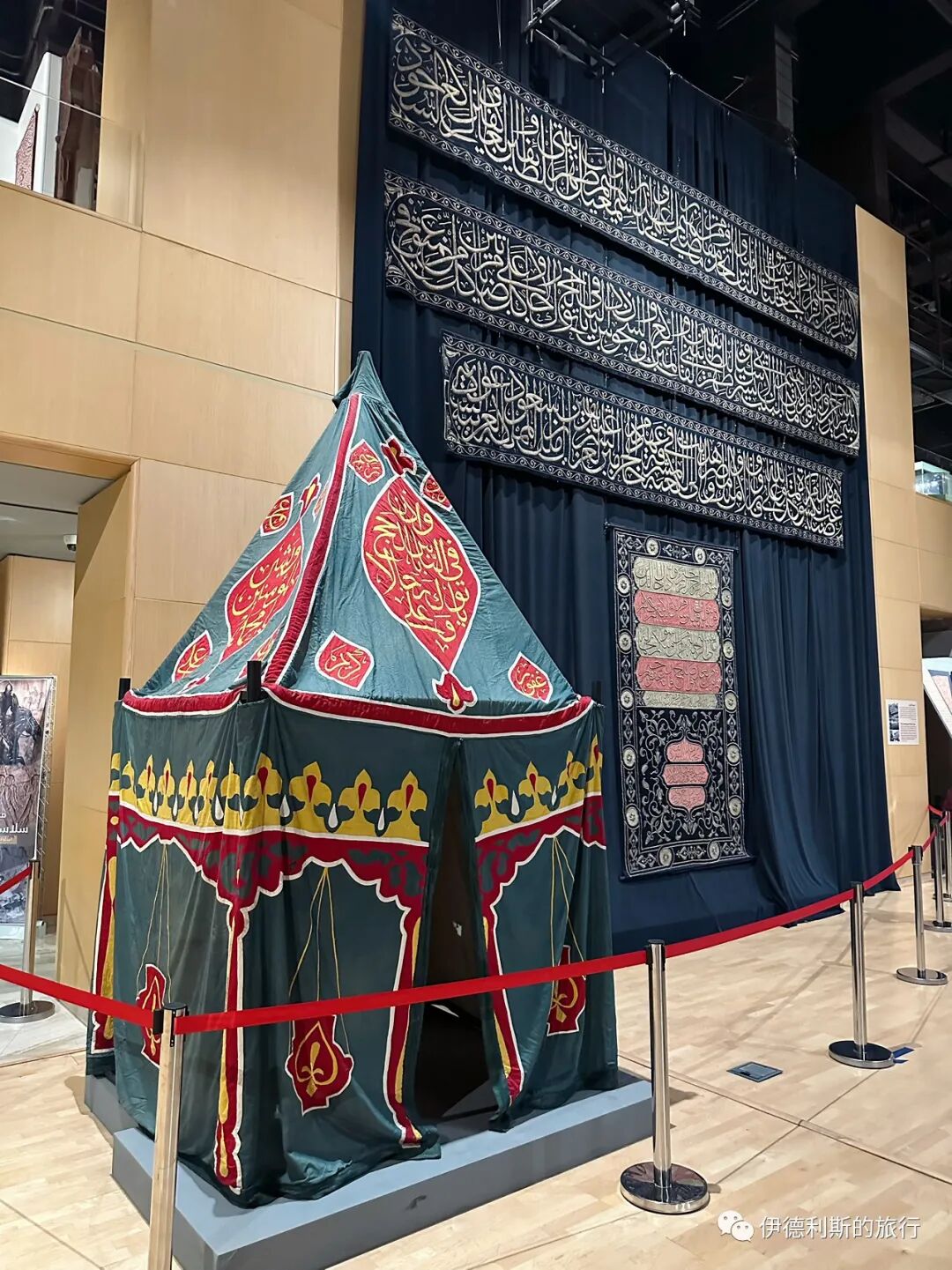
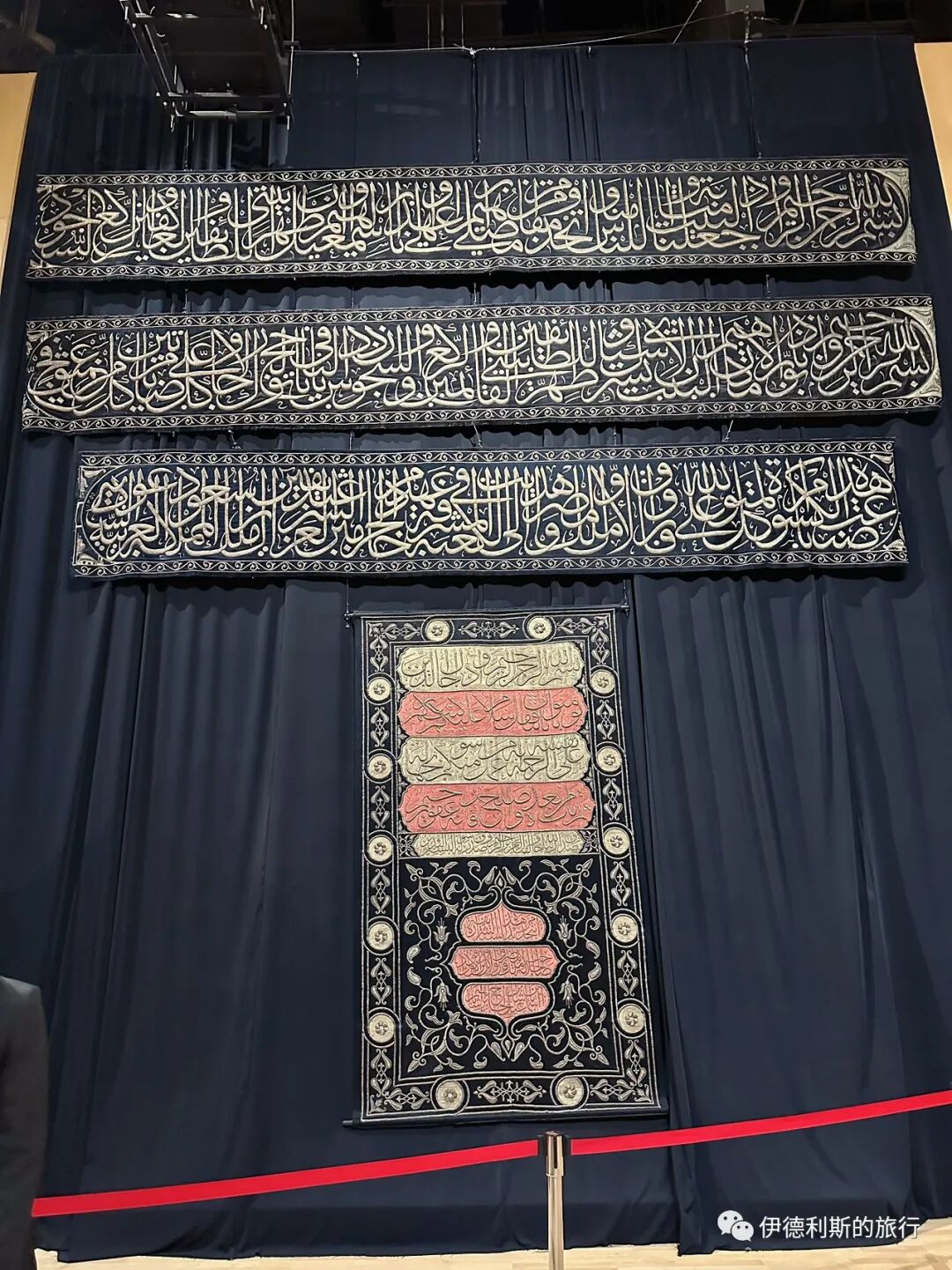
The third one is the last Kaaba cover sent by Egypt to Mecca in 1961.
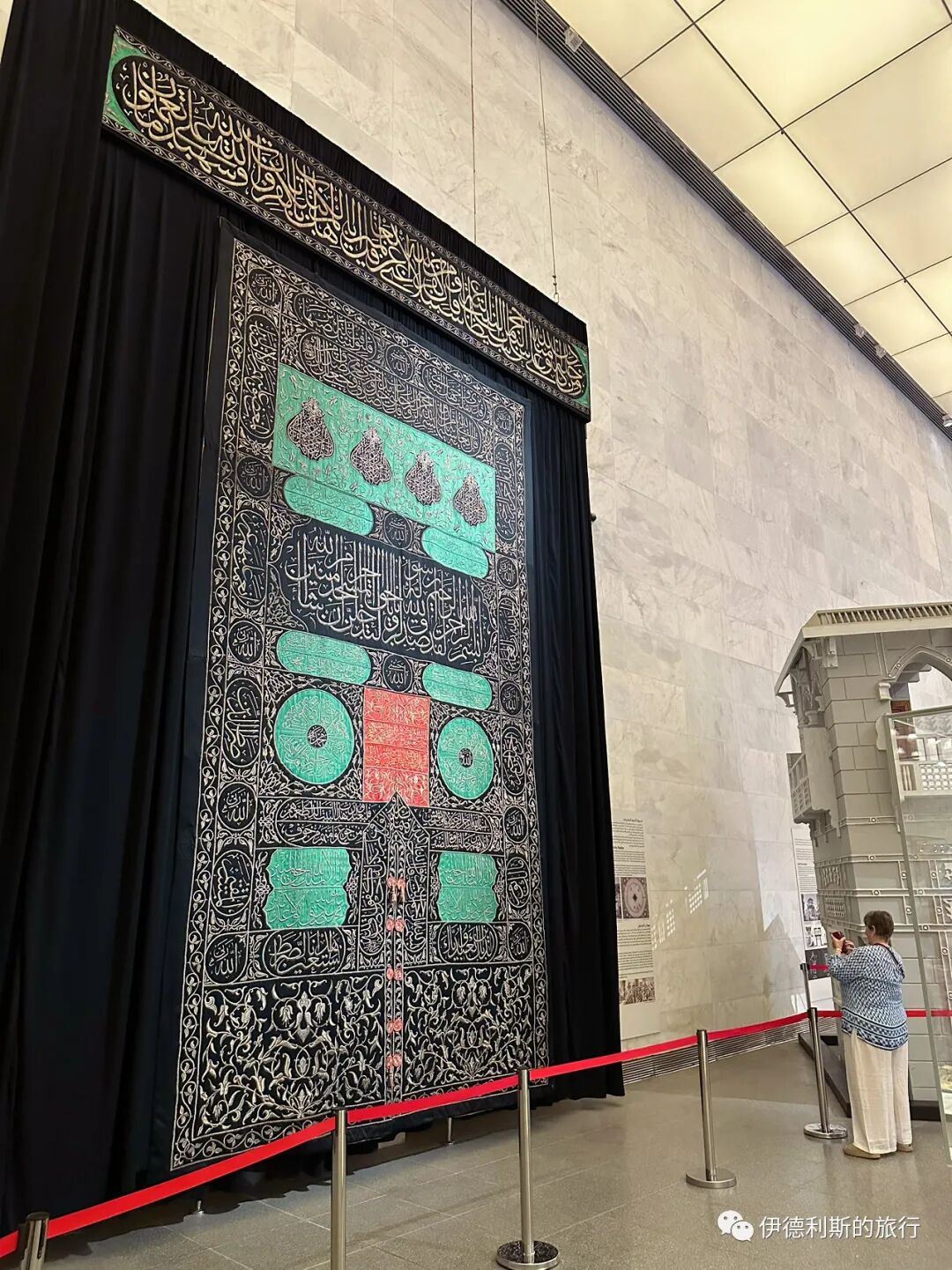
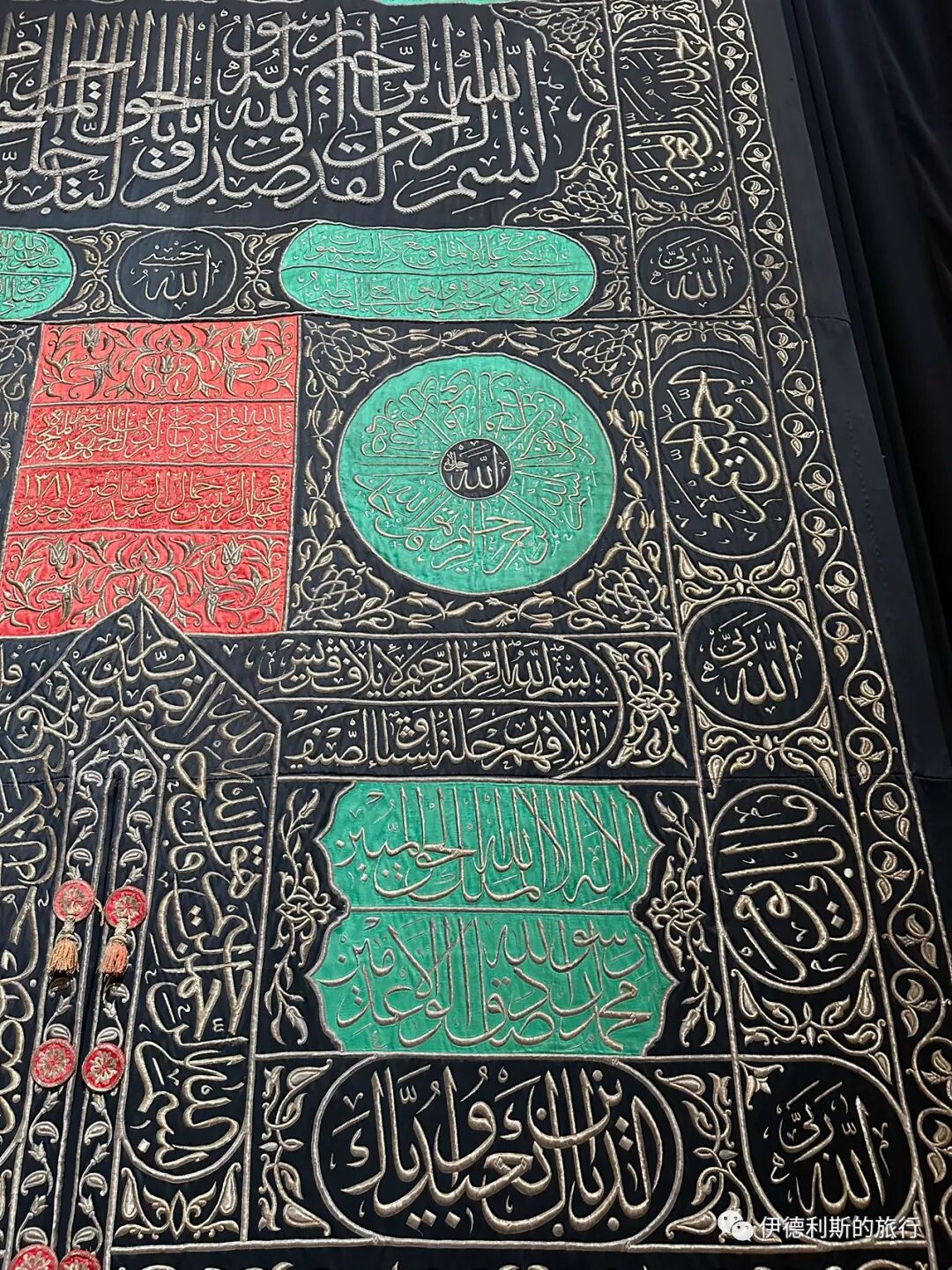
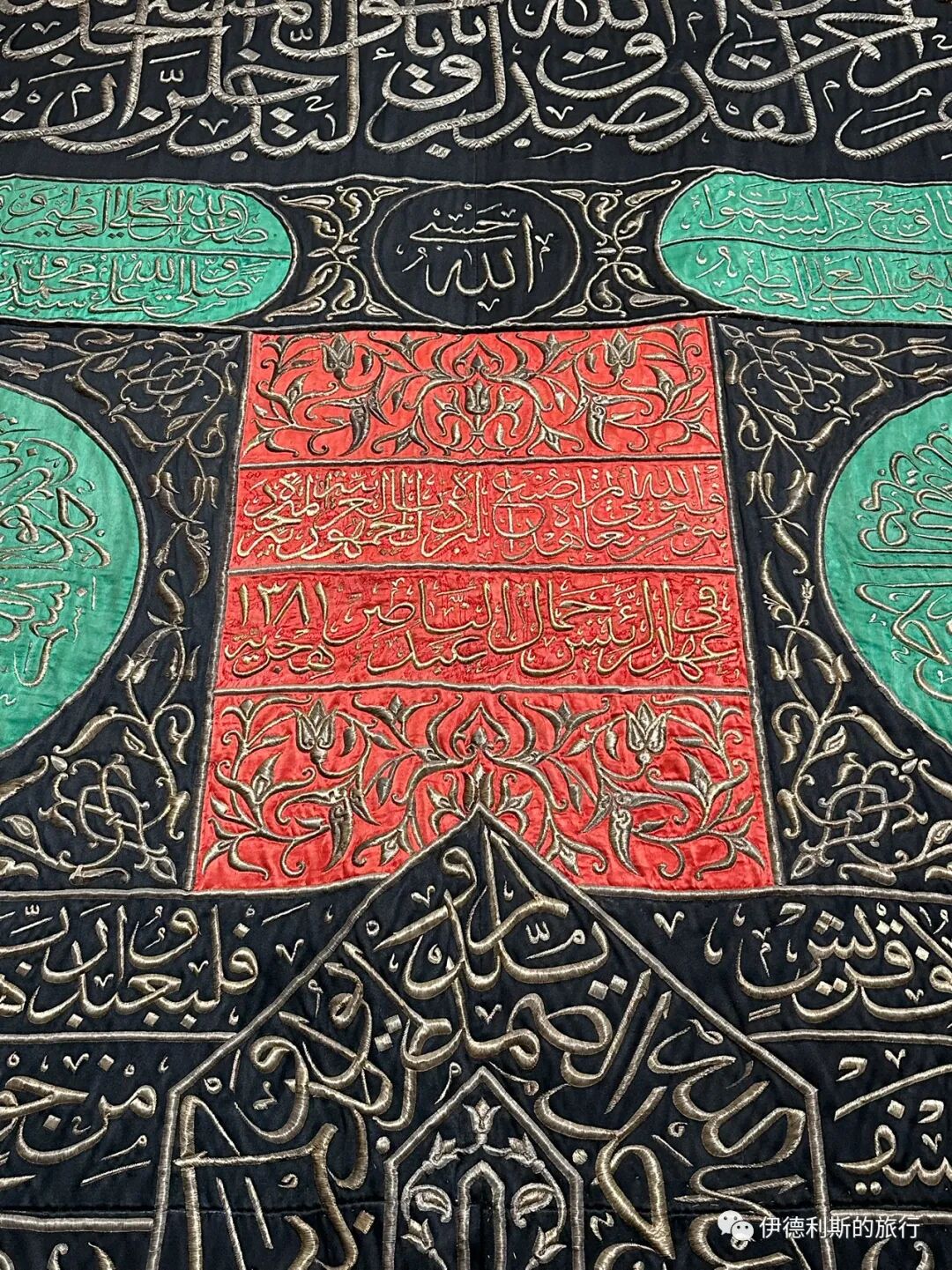
This is the key to the Kaaba and its silk storage bag from the 19th-century Ottoman period, featuring Arabic embroidery in gold and silver thread.
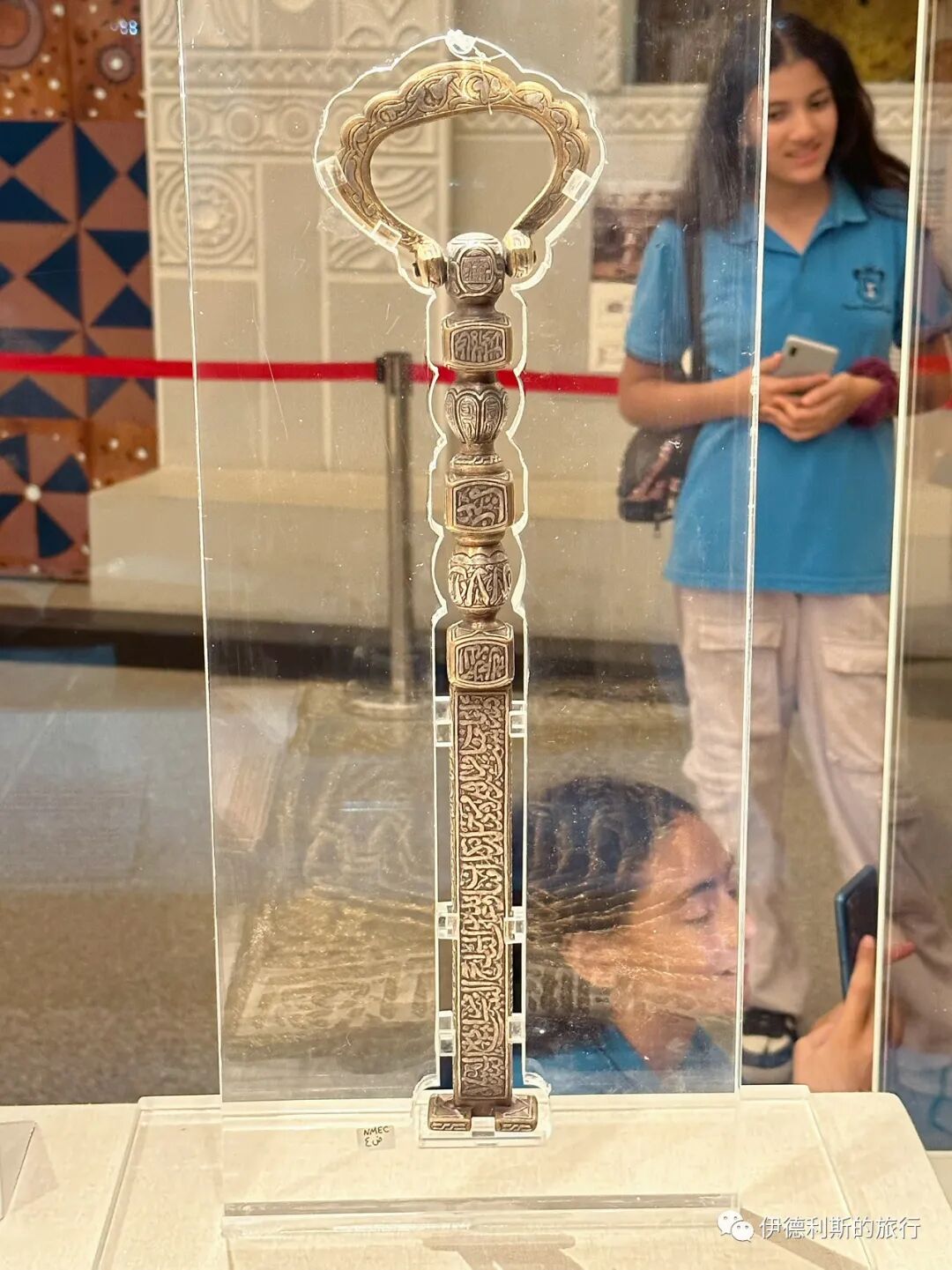
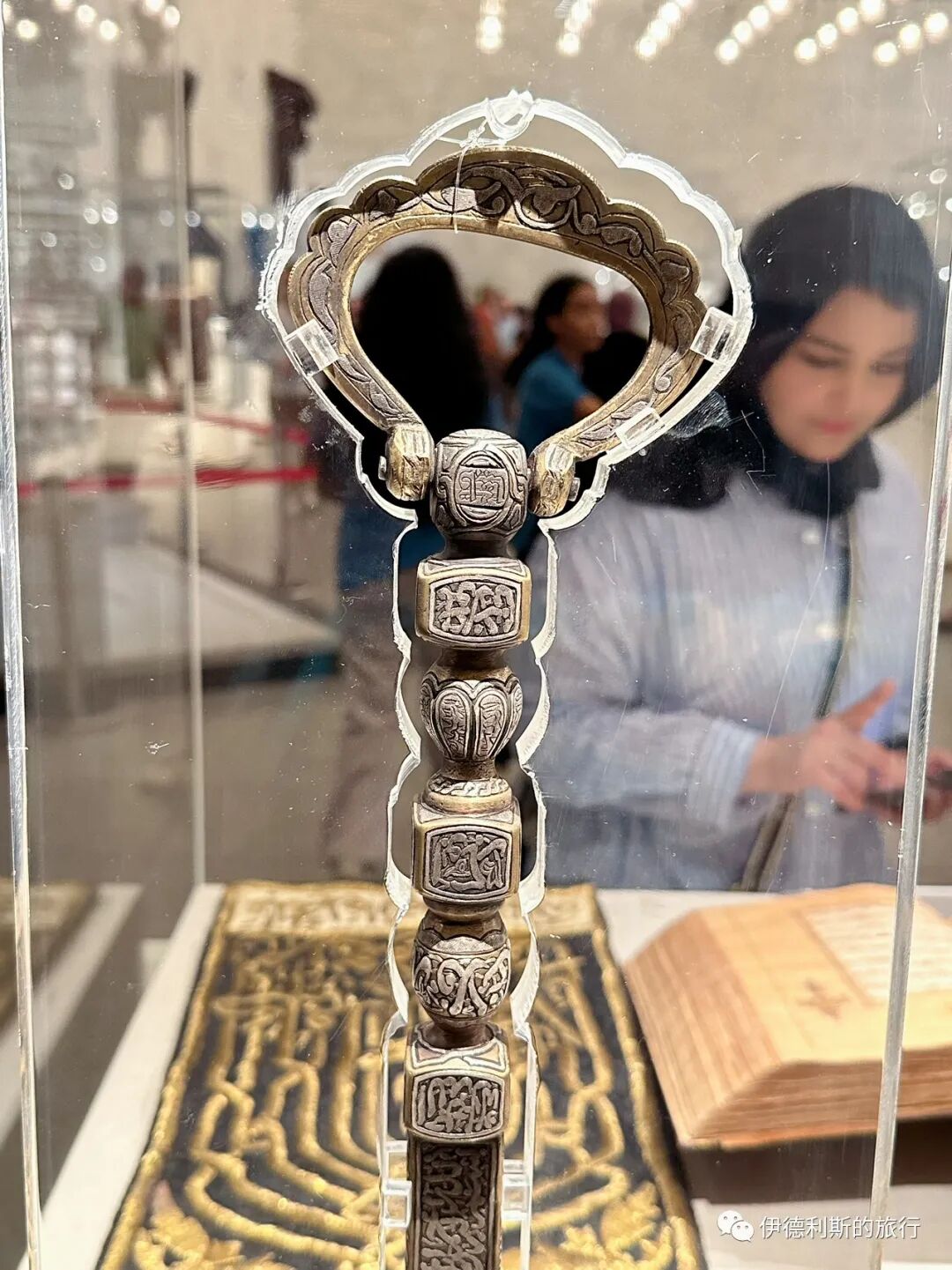
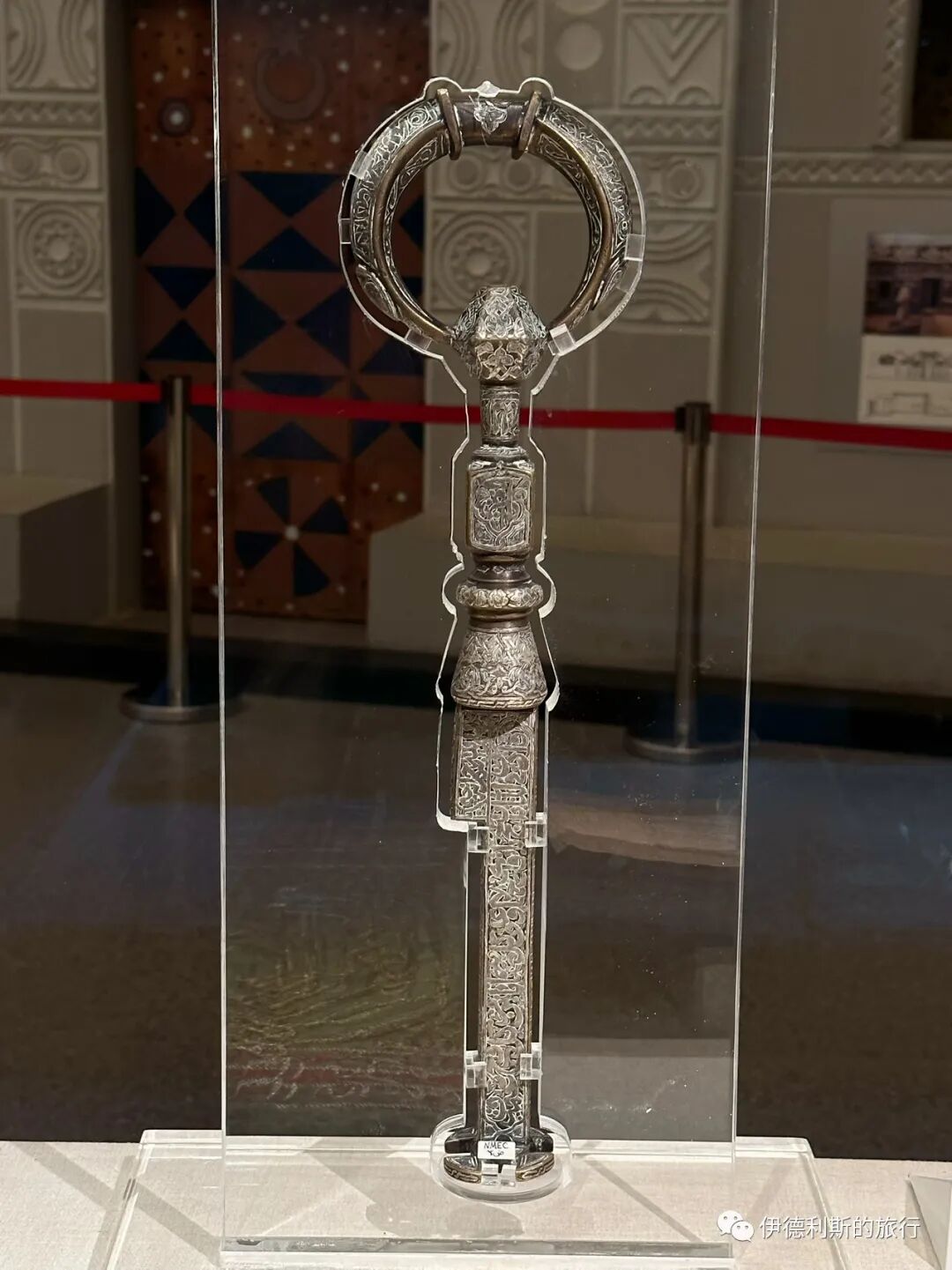
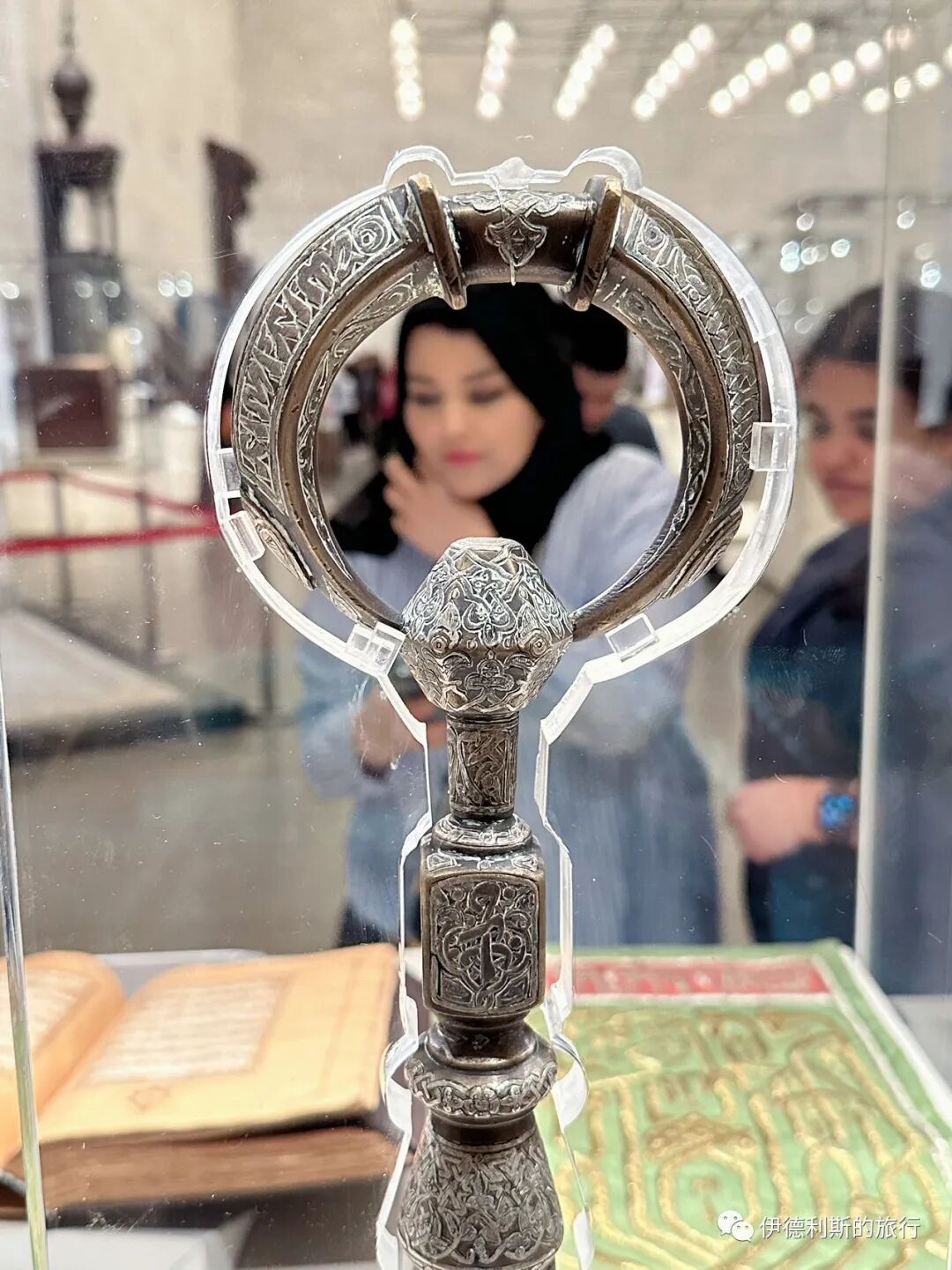
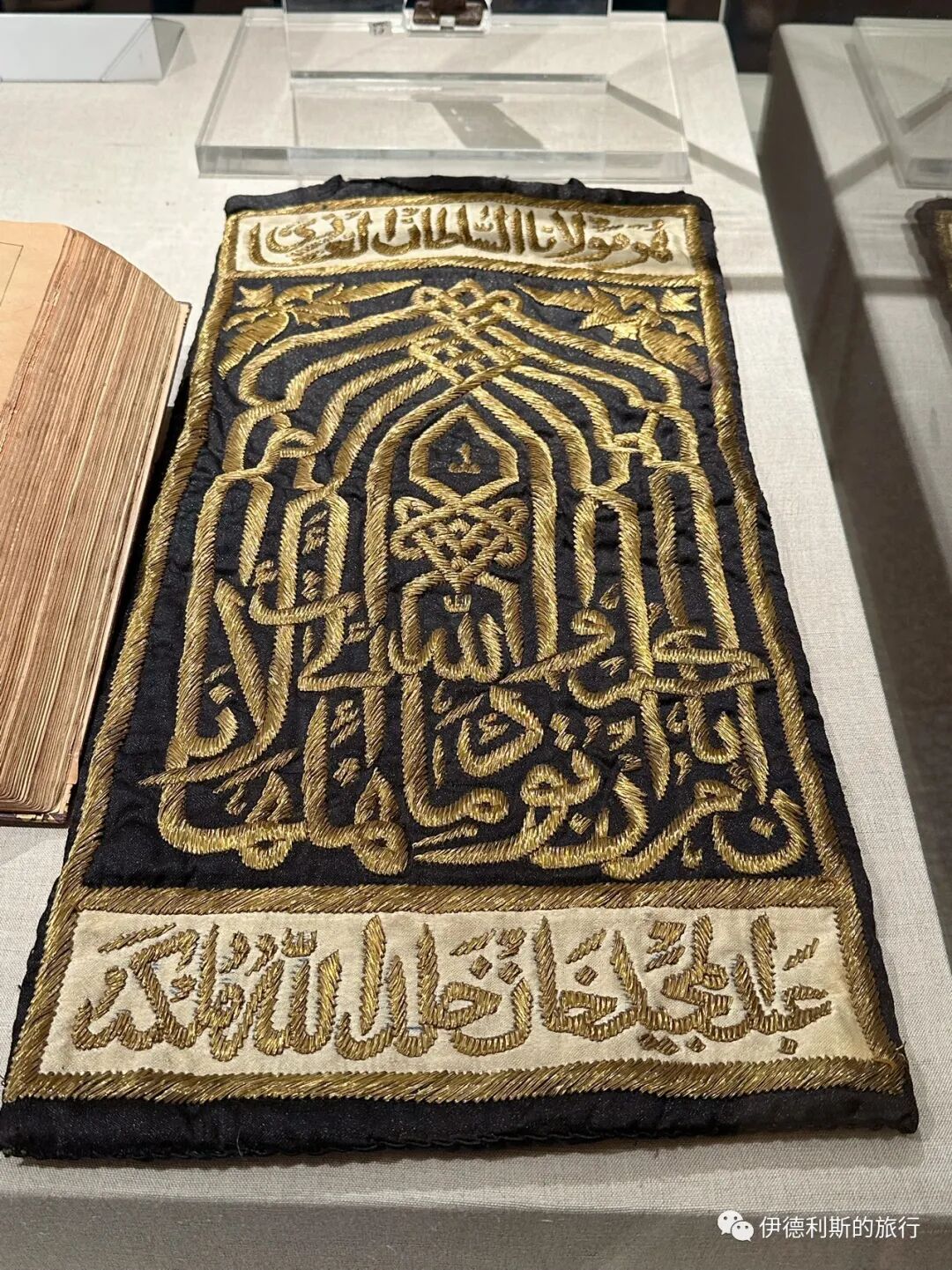
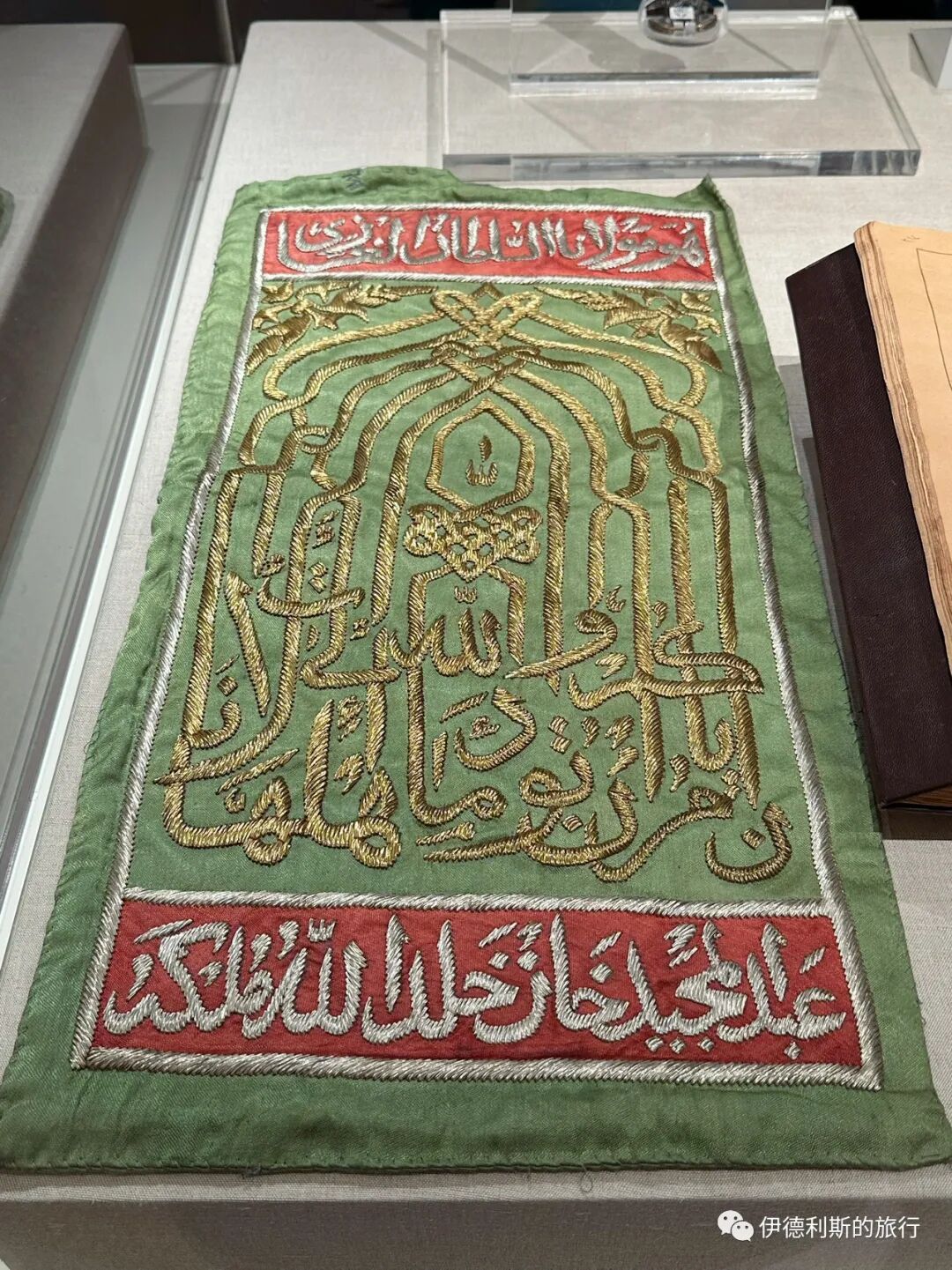
Because Egypt's textile industry was very famous even in the pre-Islamic era, the Kaaba cover has been provided by Egypt since the time of Caliph Umar. The earliest Kaaba covers were embroidered white linen woven by Coptic Christians in Egypt, known as qubati. During the Umayyad and Abbasid dynasties, both silk and linen were used to make the Kaaba covers.
During the Umayyad and Abbasid dynasties, the Caliphs funded many textile workshops across Egypt. Besides making Kaaba covers, many workshops produced goods for the public, known as Al-Tiraz. The earliest recorded Al-Tiraz workshop dates back to the reign of the fifth Umayyad Caliph, Abd al-Malik ibn Marwan (reigned 685-705). This was when Arabic calligraphy first appeared in textile decorations. Textile decorations from this period were mostly simple and used dark colors, influenced by Byzantine, Sassanid, and Egyptian Coptic art.
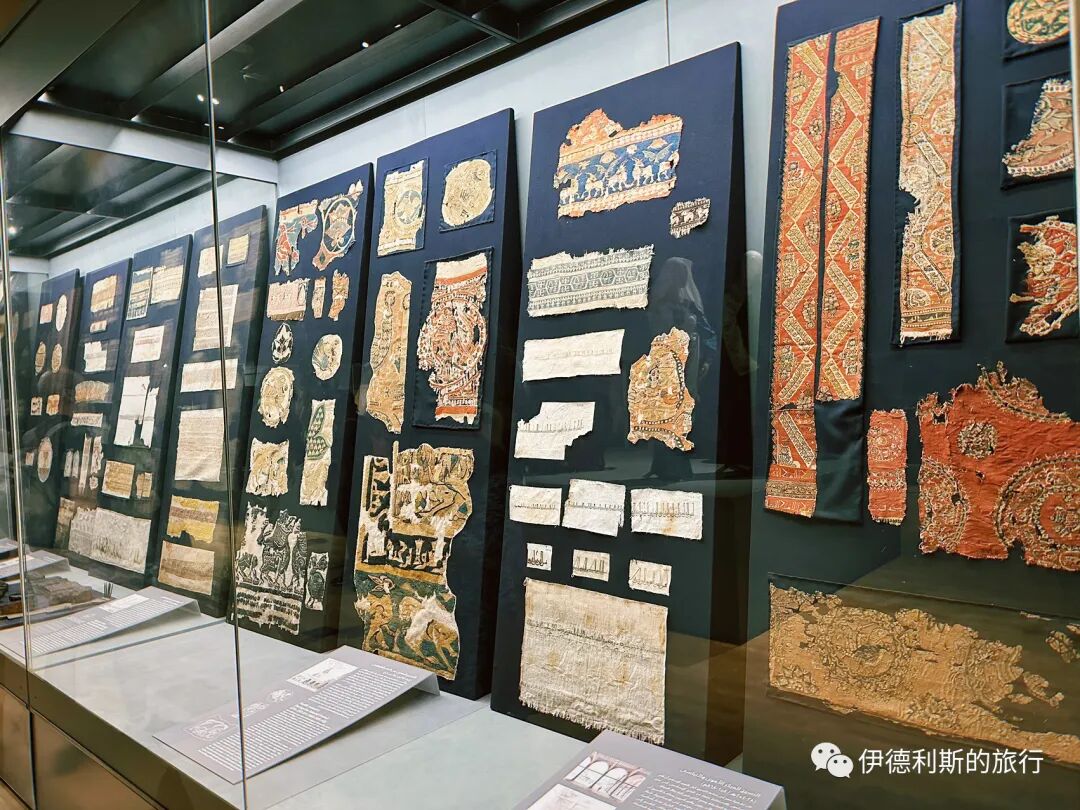
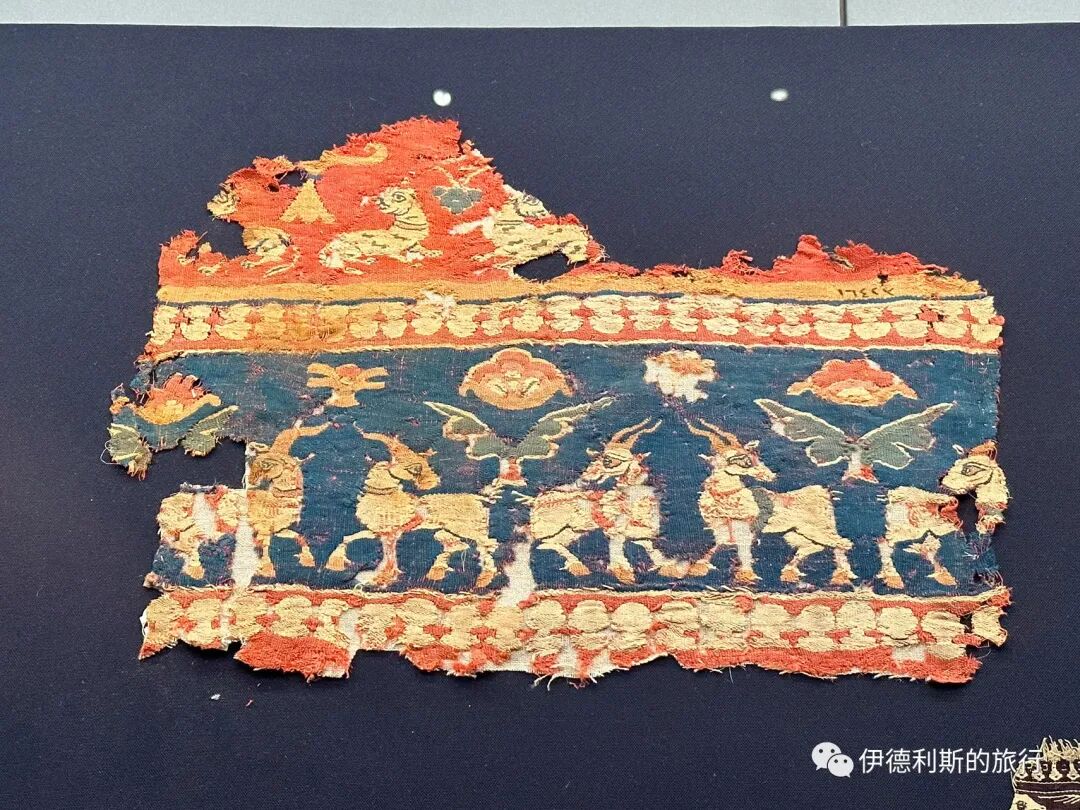
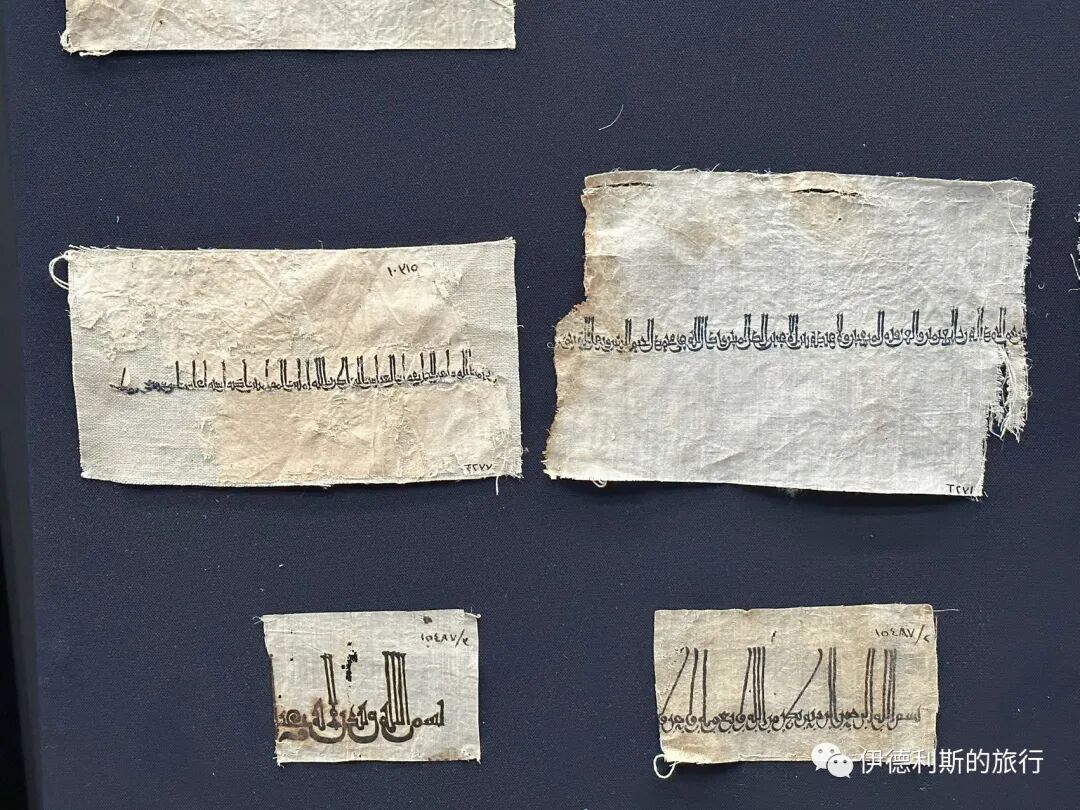
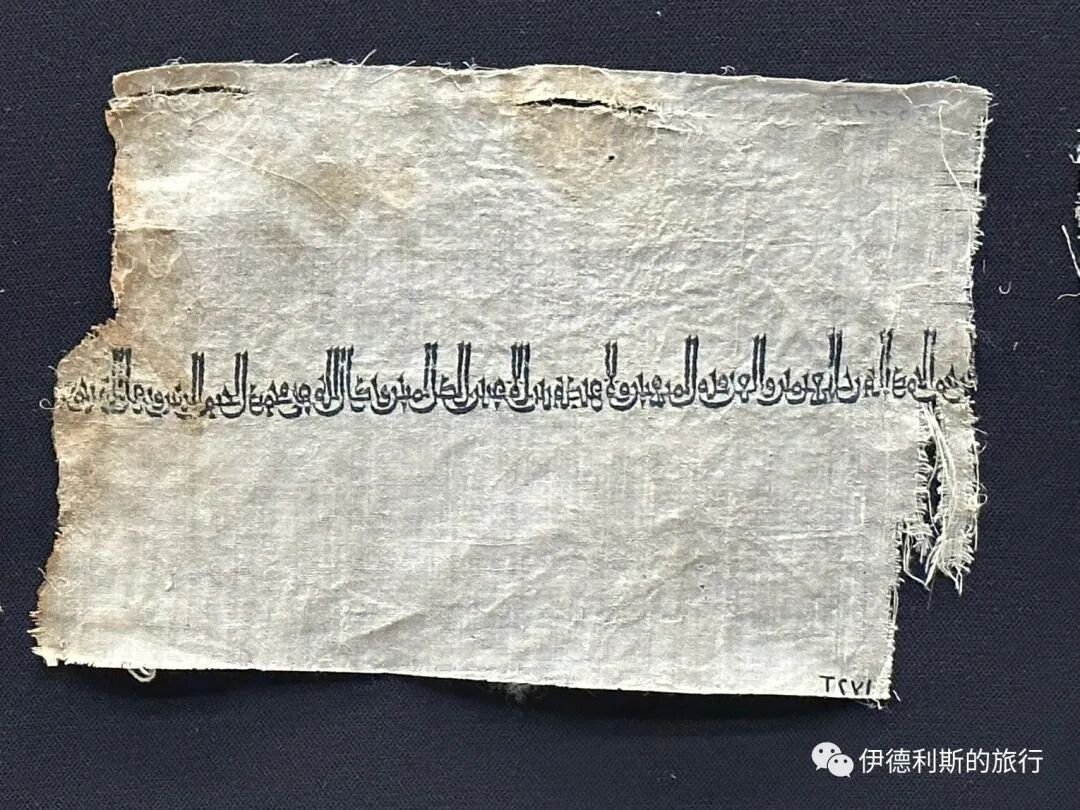
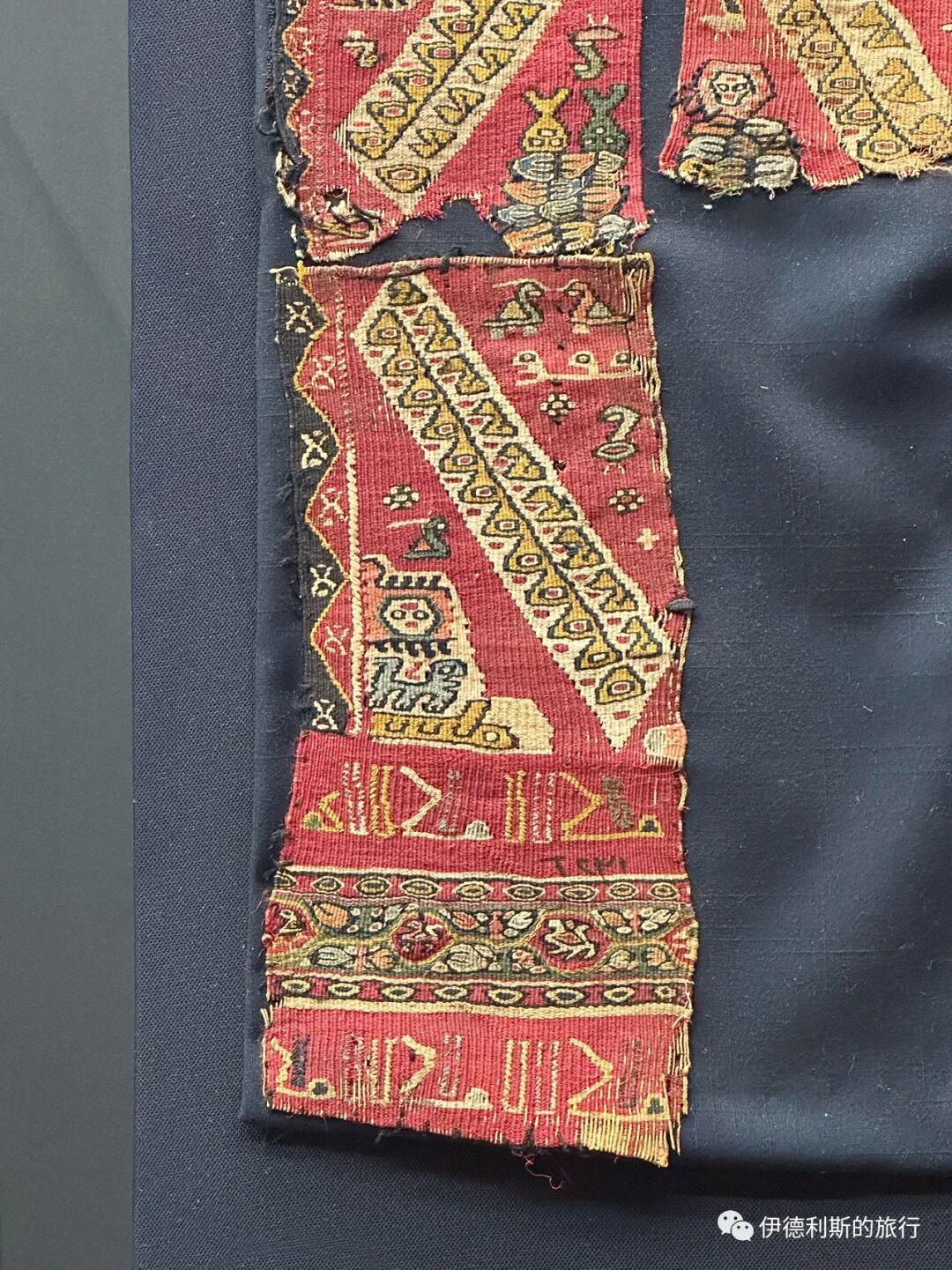
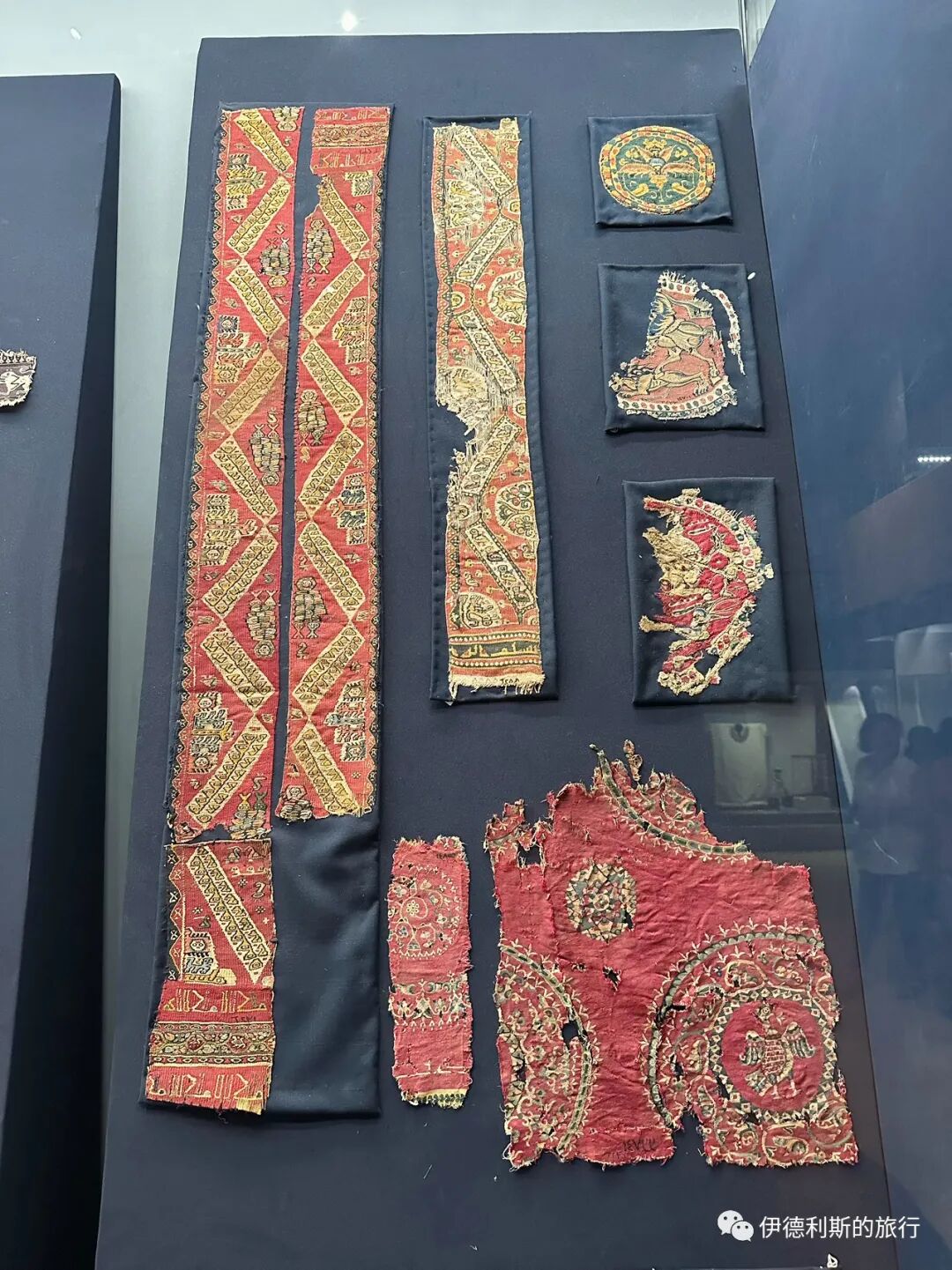
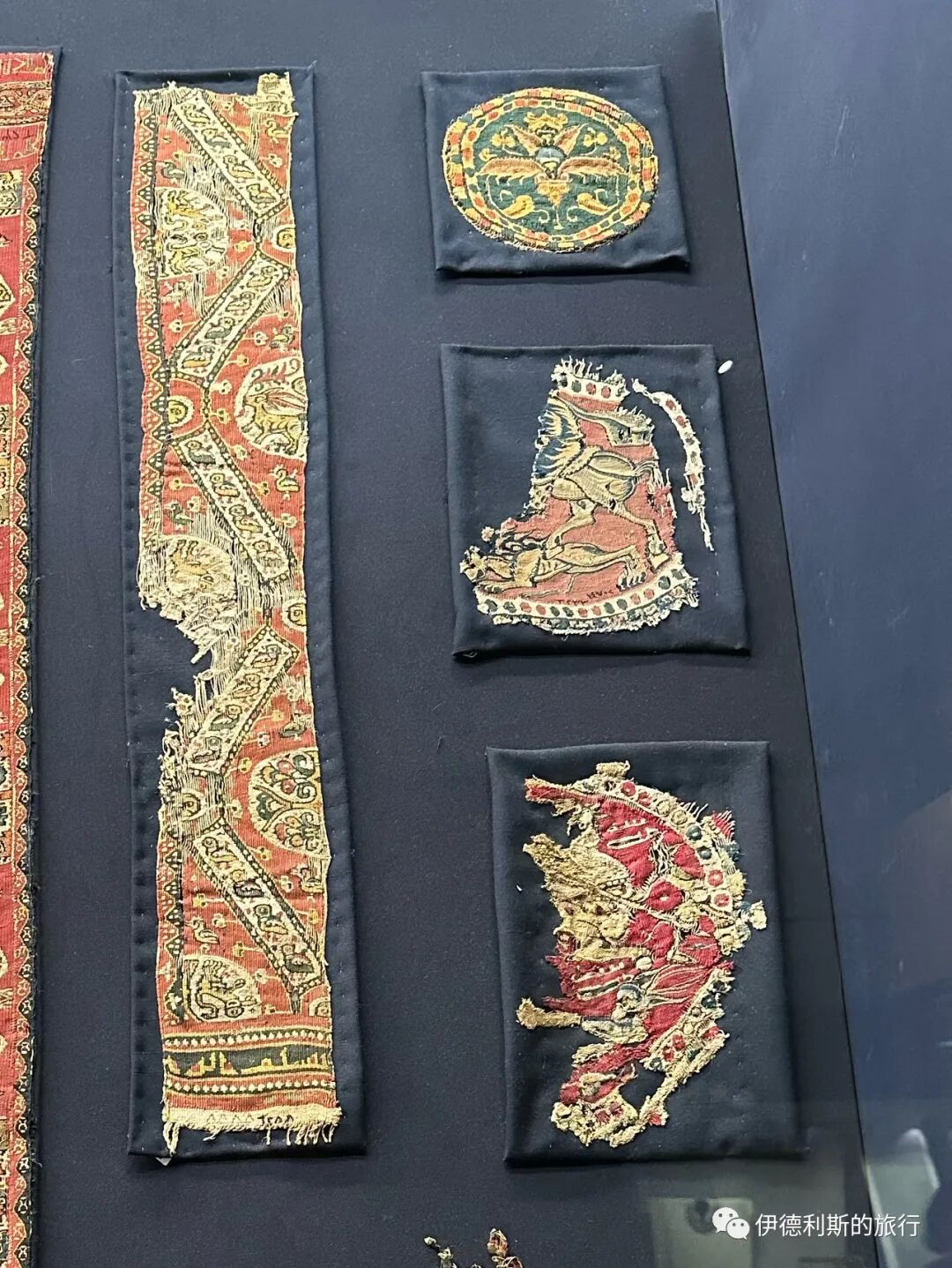
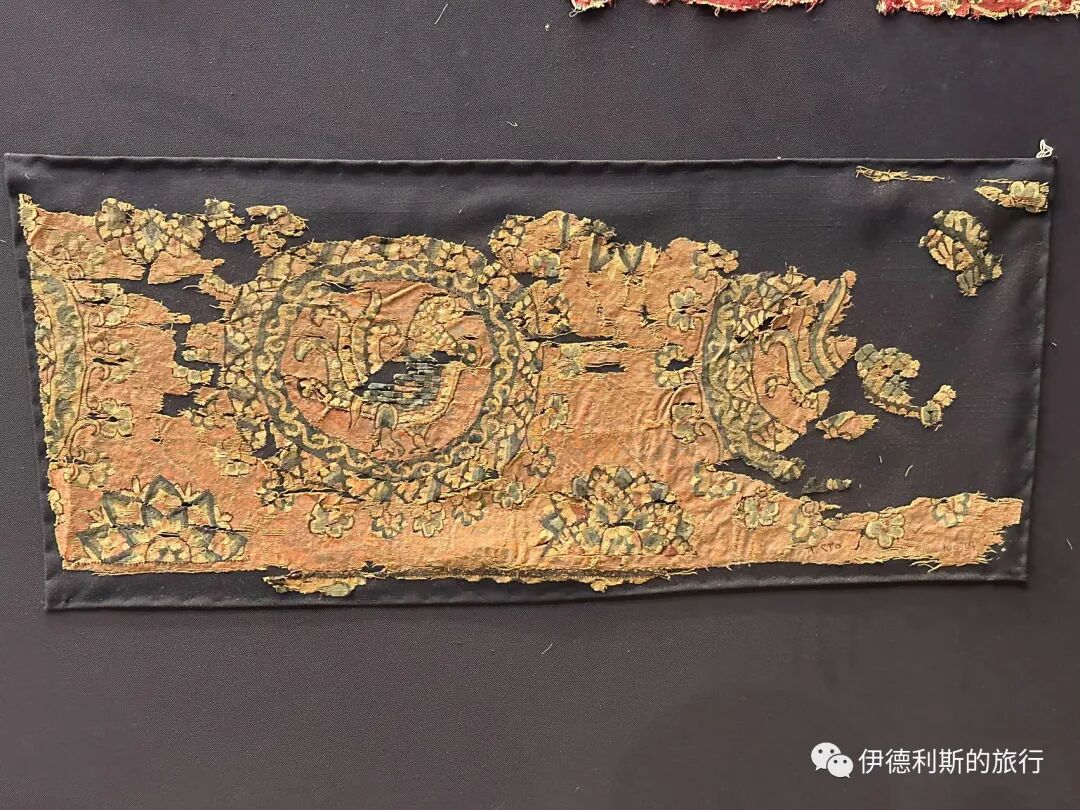
Between 868 and 905, Ahmad ibn Tulun, a Turkic governor of Egypt under the Abbasid dynasty, established the Tulunid dynasty (Tulunids) in Egypt and Syria. Ibn Tulun carried out major economic reforms that helped the linen and wool textile industries thrive. During this time, Egypt competed fiercely as a textile hub with Baghdad, the Abbasid capital. Egypt often produced higher quality and better craftsmanship, which showed in the precious fabrics like mattresses and curtains used by Tulunid rulers and nobles.
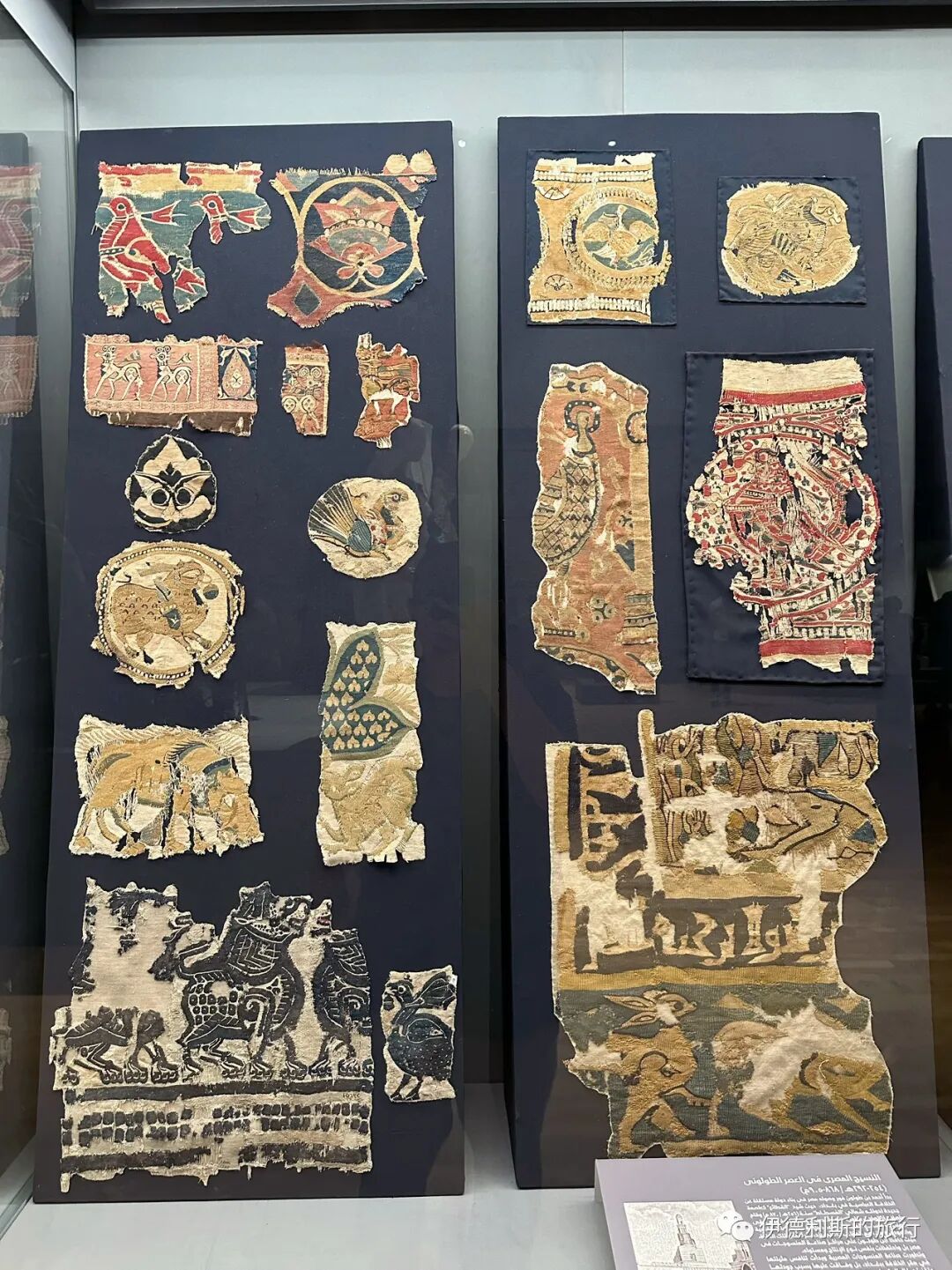
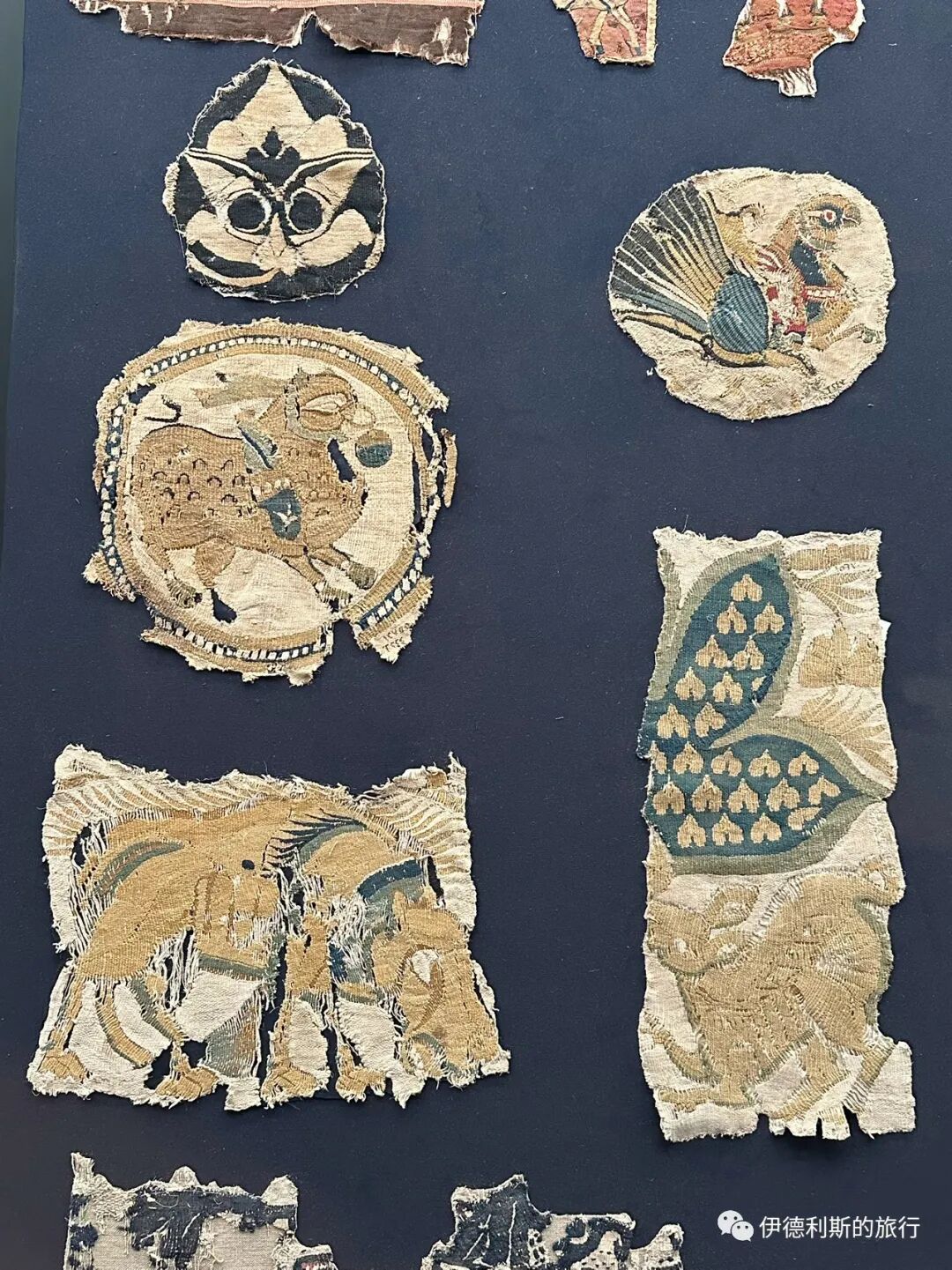
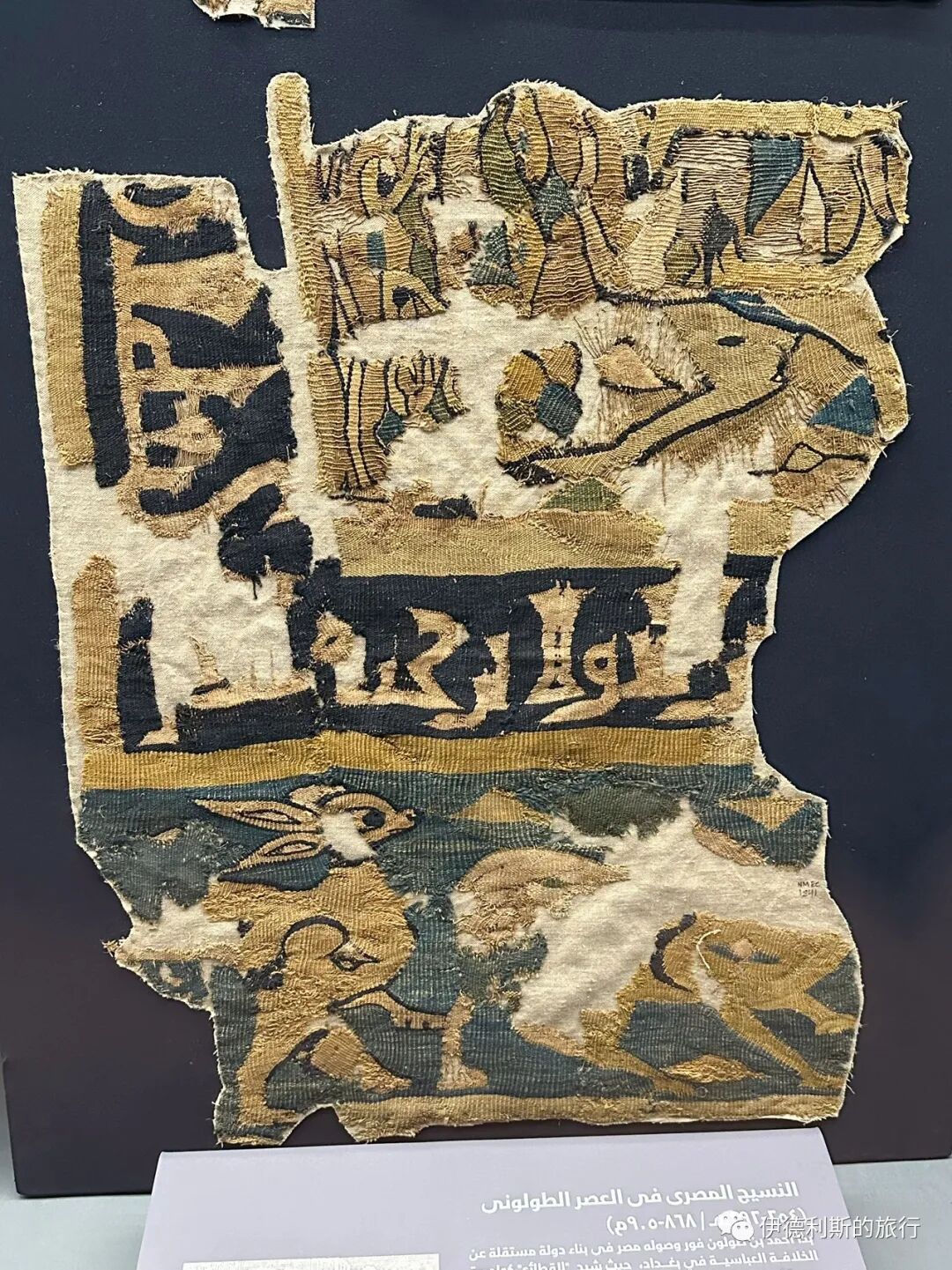
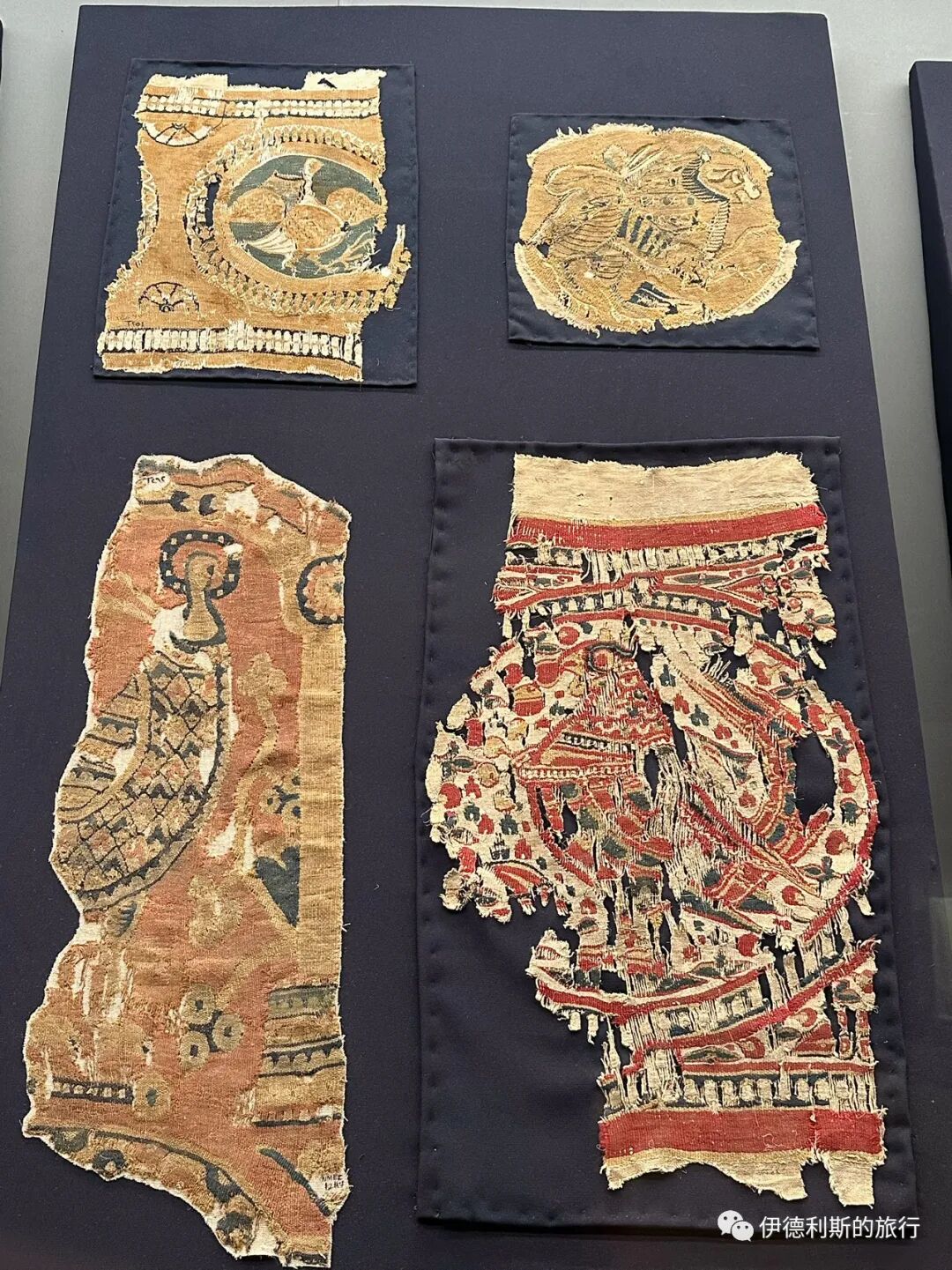
Textiles from the Fatimid dynasty (969-1171) were popular for their high quality, delicate designs, and rich decorations. The most precious silks were used to decorate the Caliph's palace, while other fine fabrics were used to make turbans, hats, and belts. The most striking feature of Fatimid textiles was the use of Kufic Arabic calligraphy, which featured the Caliph's name and titles in repeating and alternating floral patterns. Various plant, animal, and geometric patterns also saw significant development.
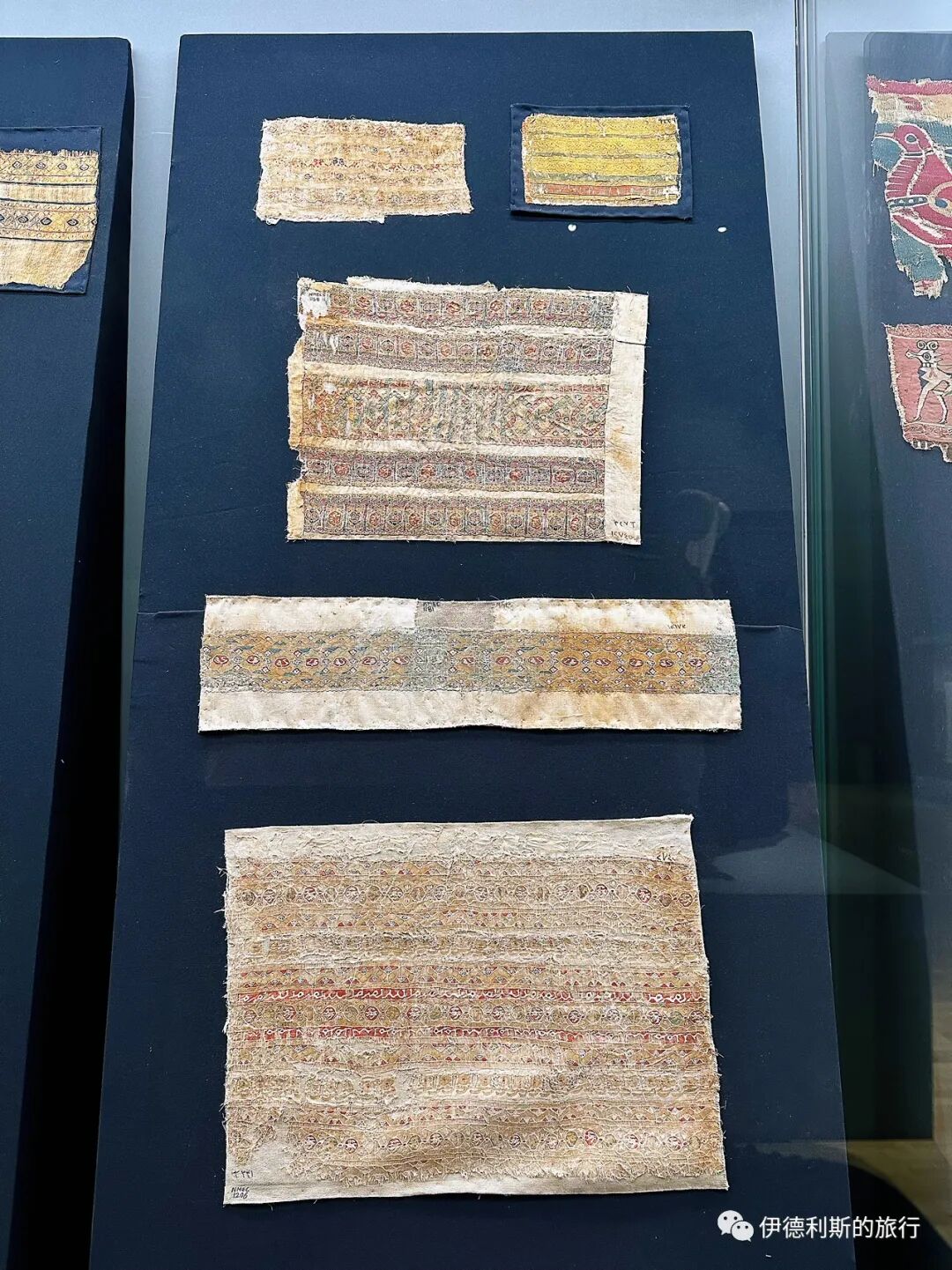
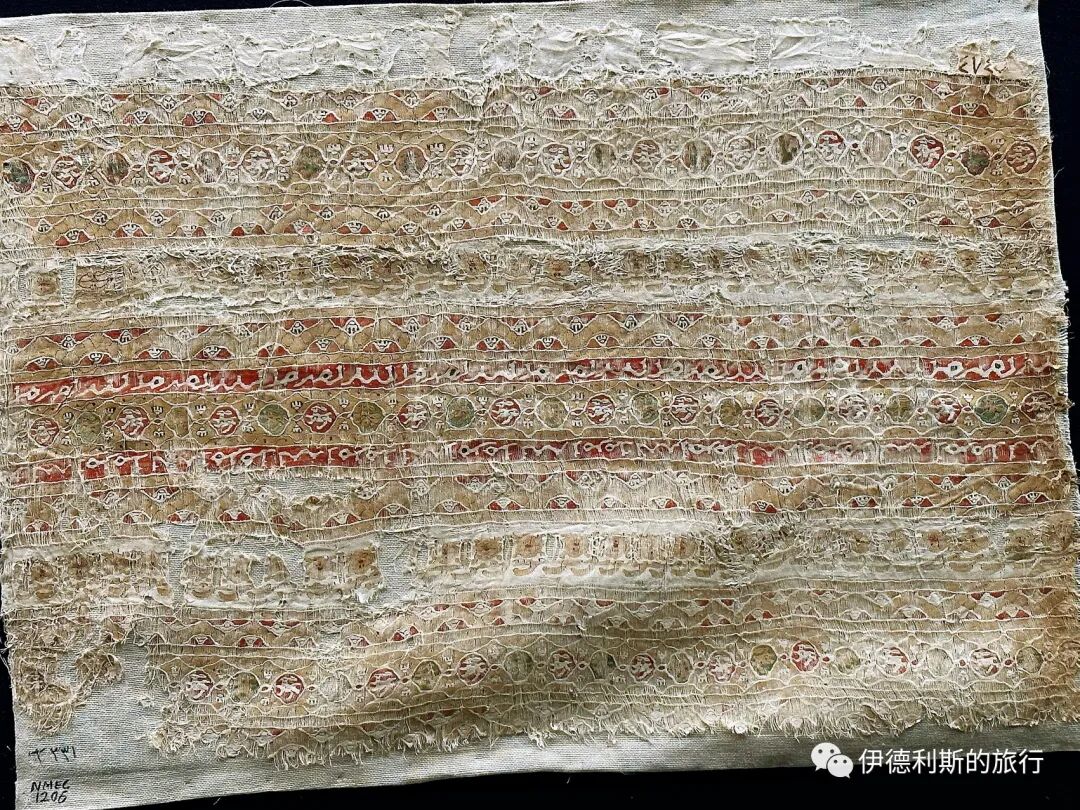
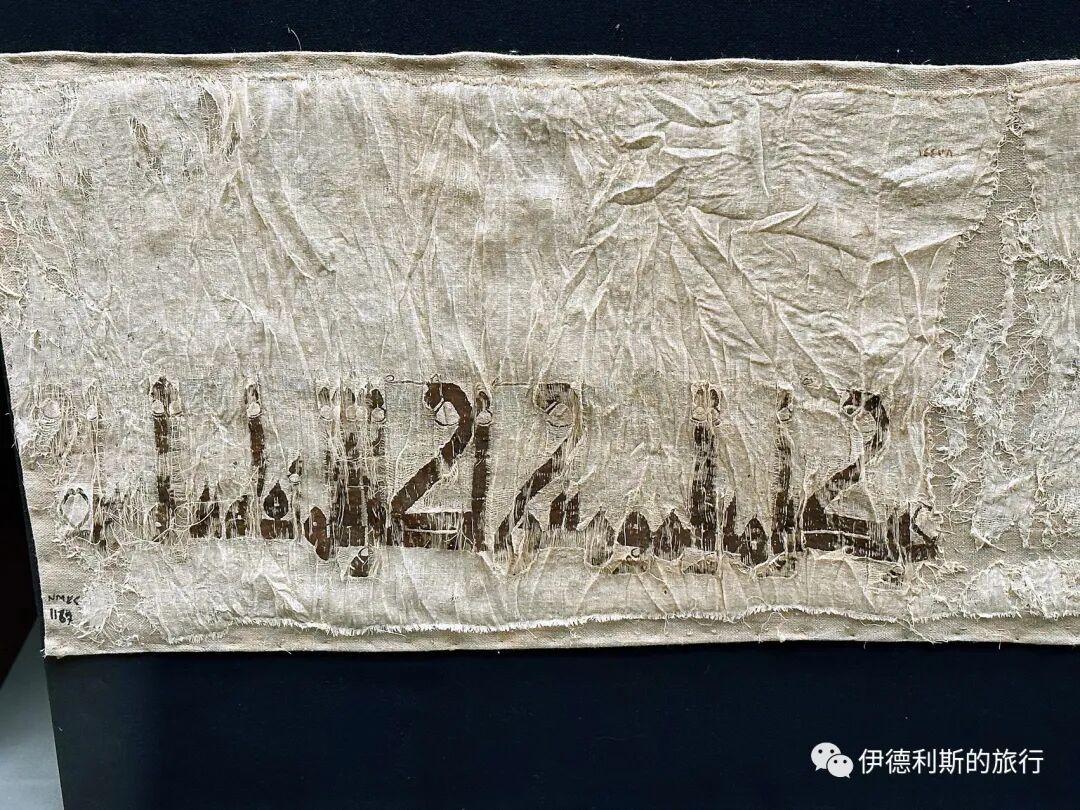
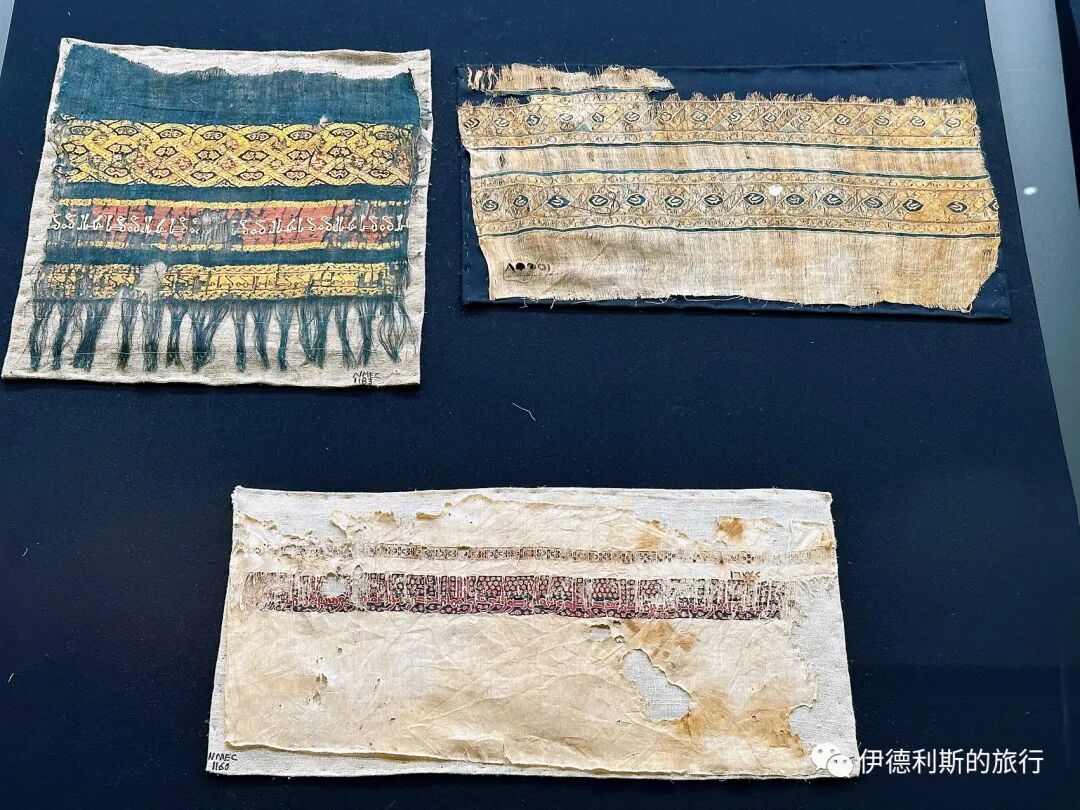
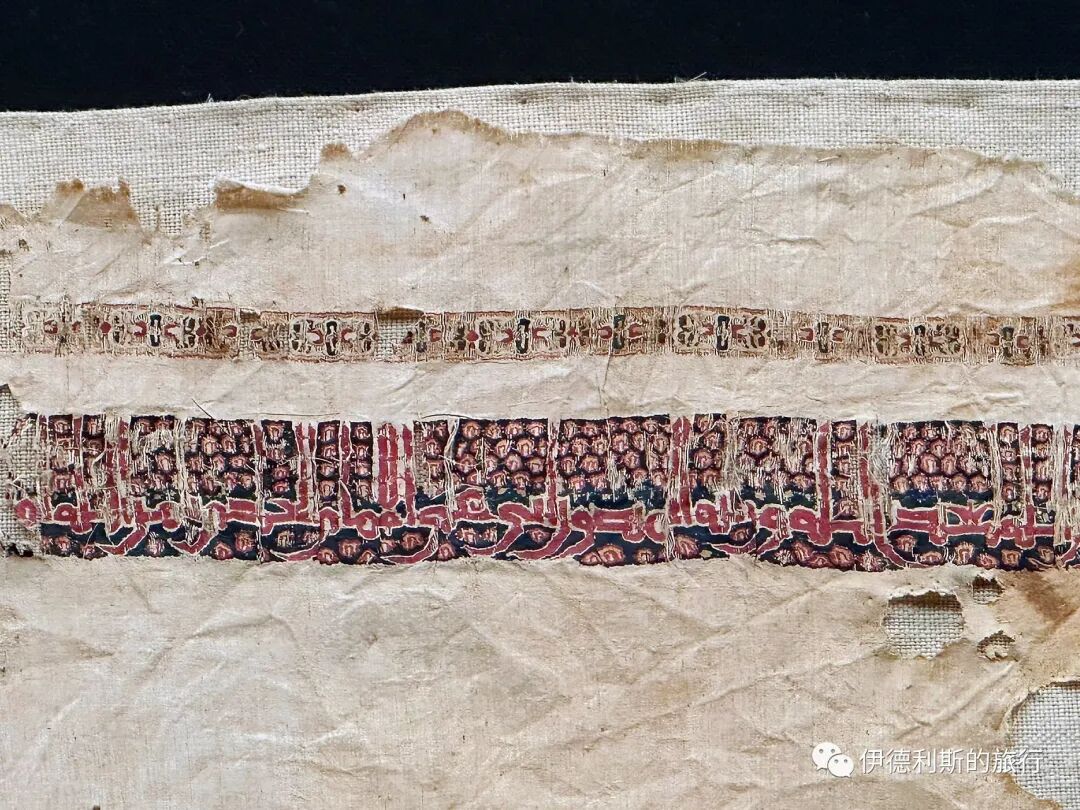
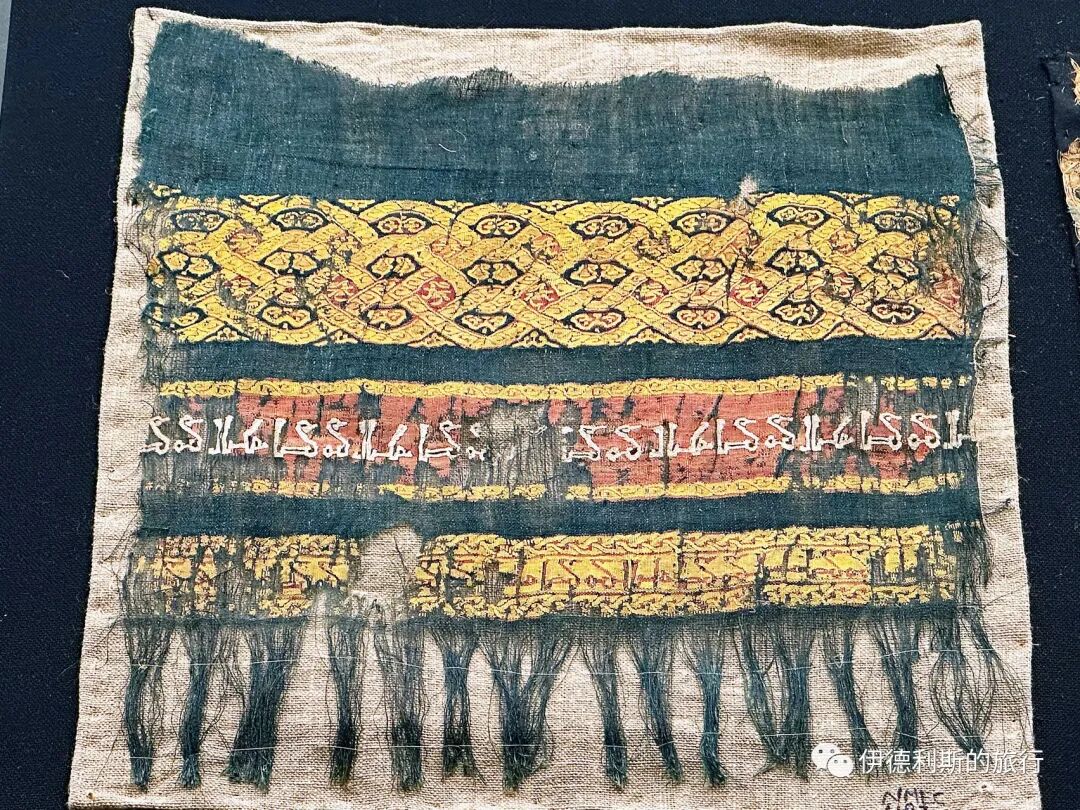
Although the Ayyubid dynasty (1171-1250) was short, Egypt's textile industry continued to grow. It was especially famous for soft and thin linen called al-Shoroub, produced in Tinnis and Alexandria. With mass production, new techniques were introduced, including weaving gold, silver, and colored silk threads into the warp and weft, layering wool or cotton between two layers of fabric, and embroidering on silk threads. Ayyubid textile decorations continued to use Arabic calligraphy, geometric shapes, and floral and animal patterns, usually in black and blue.
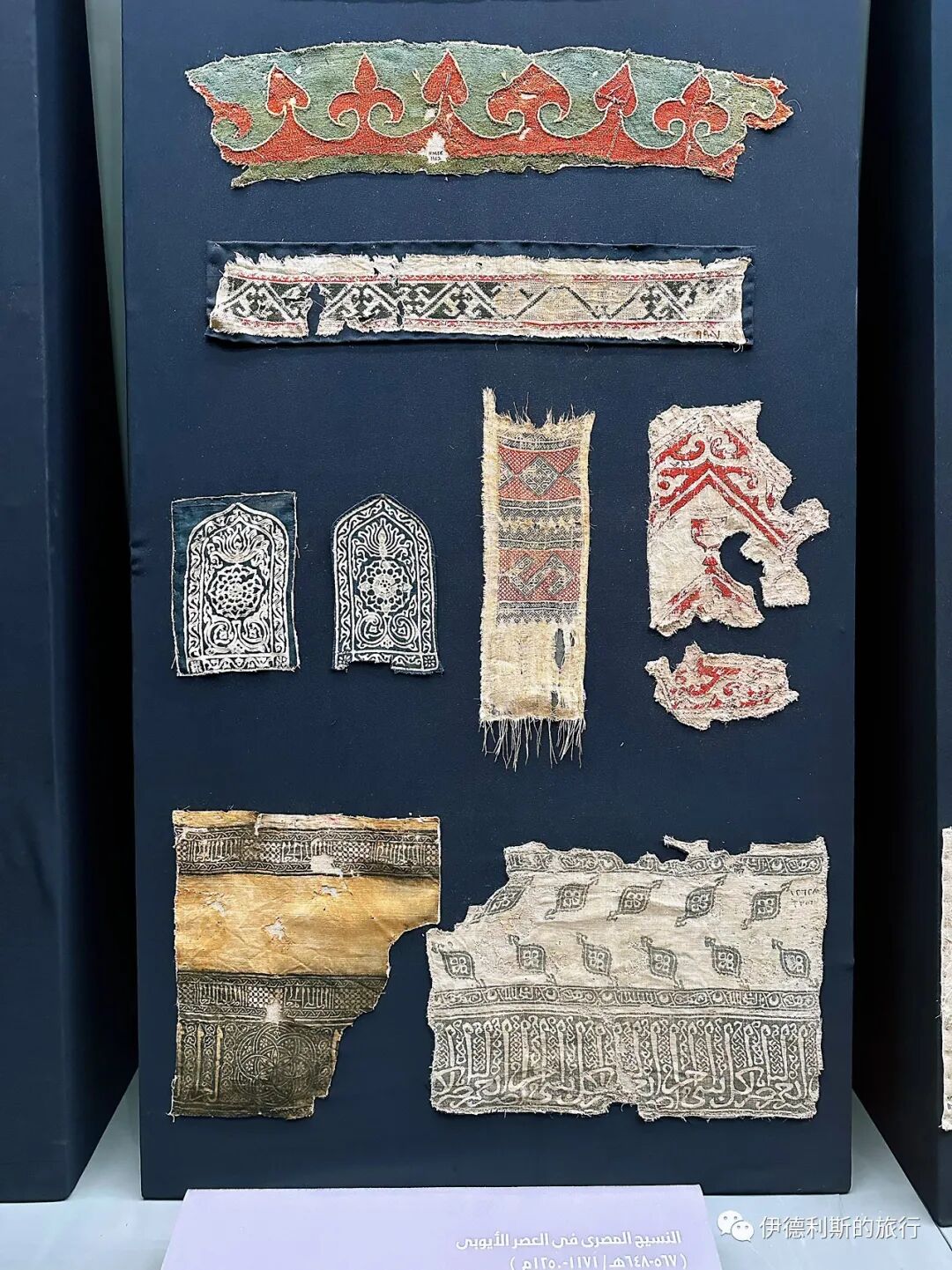
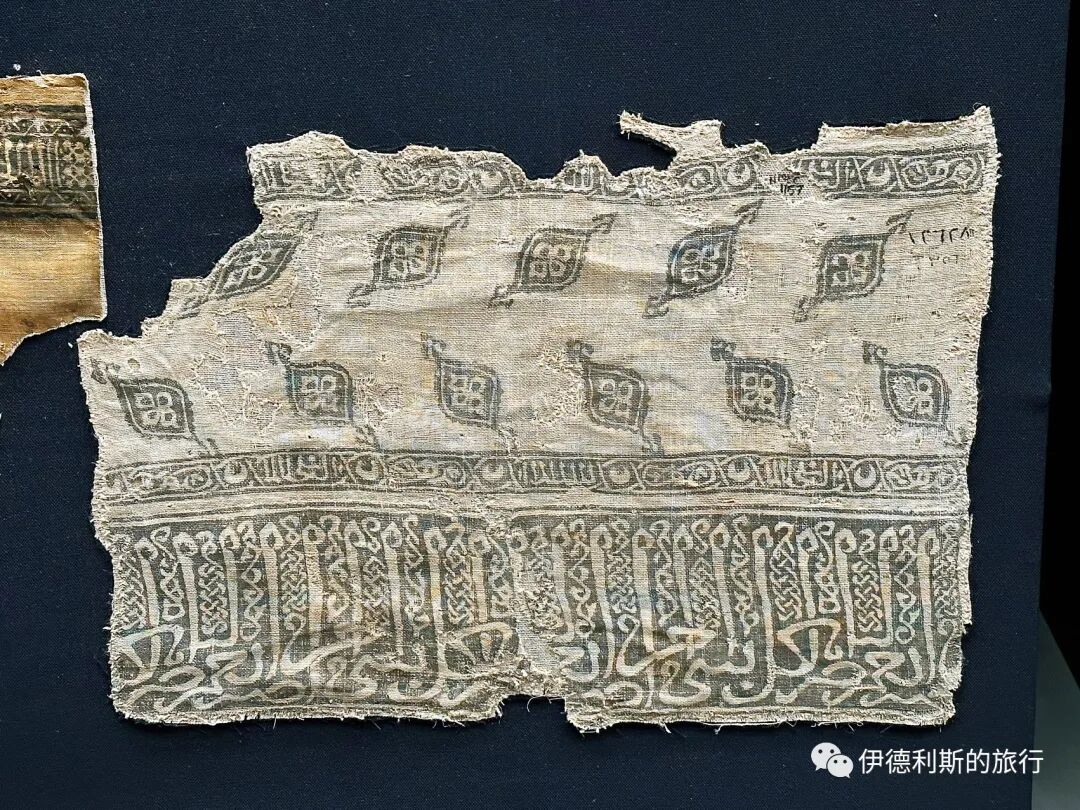
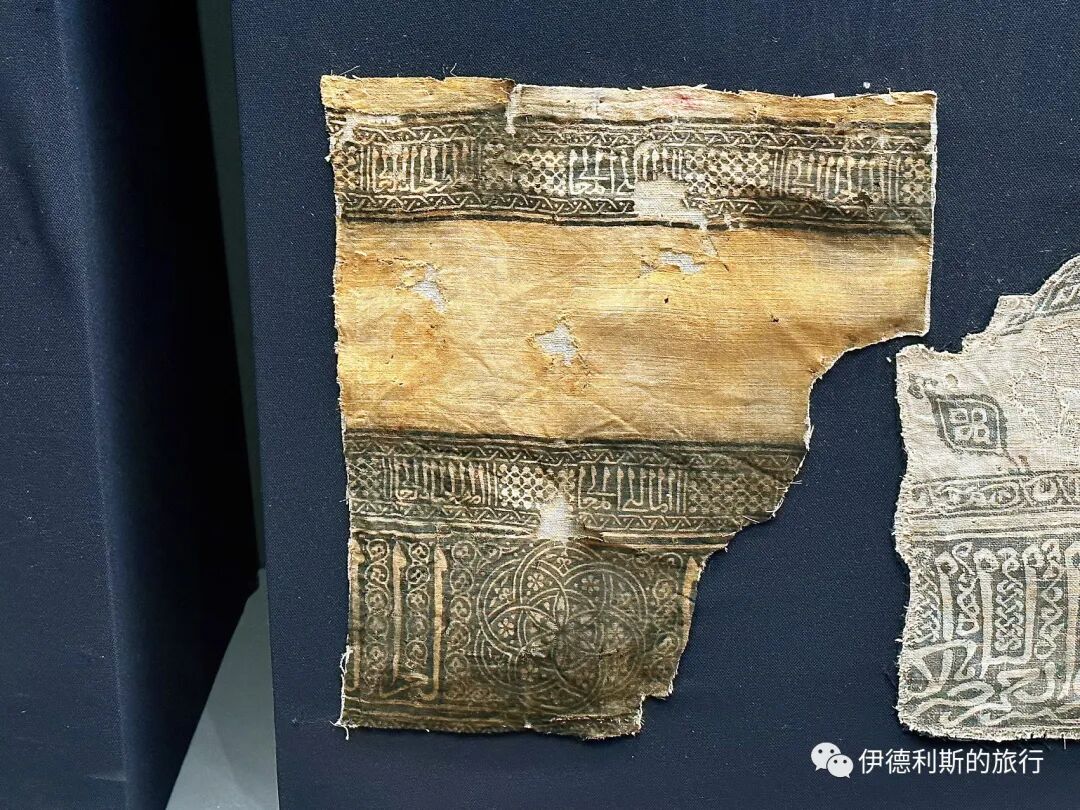
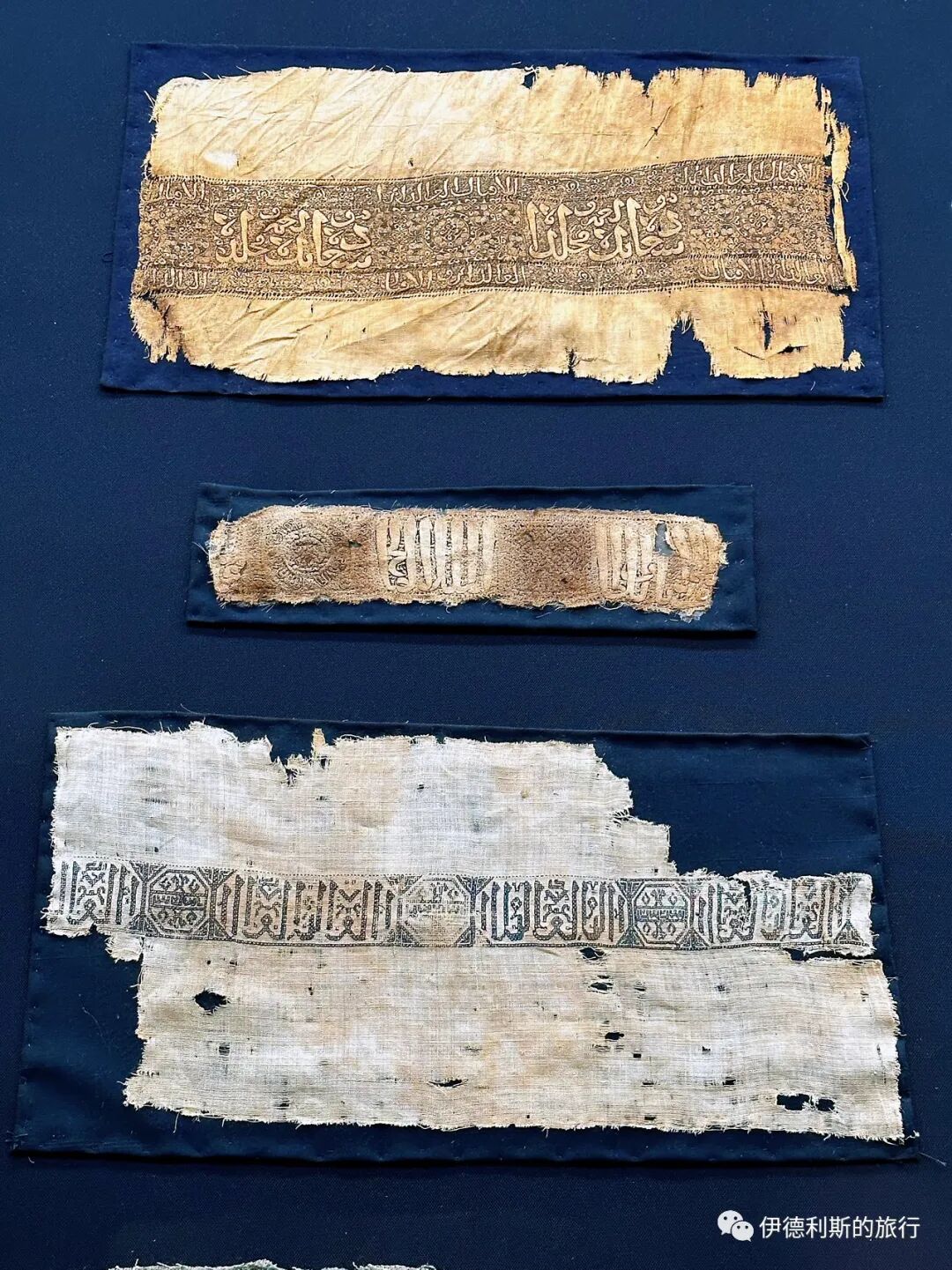
During the Mamluk dynasty (1250-1517), the Sultan's court had a huge demand for textiles, which further boosted the industry. During this period, Egypt finally mastered wax-resist dyeing. Wax prevented dye from soaking into the fabric, and after boiling to remove the wax, it created complex, multi-colored patterns. Another technique of layering fabric to create bright, colorful appliqué is still used today.
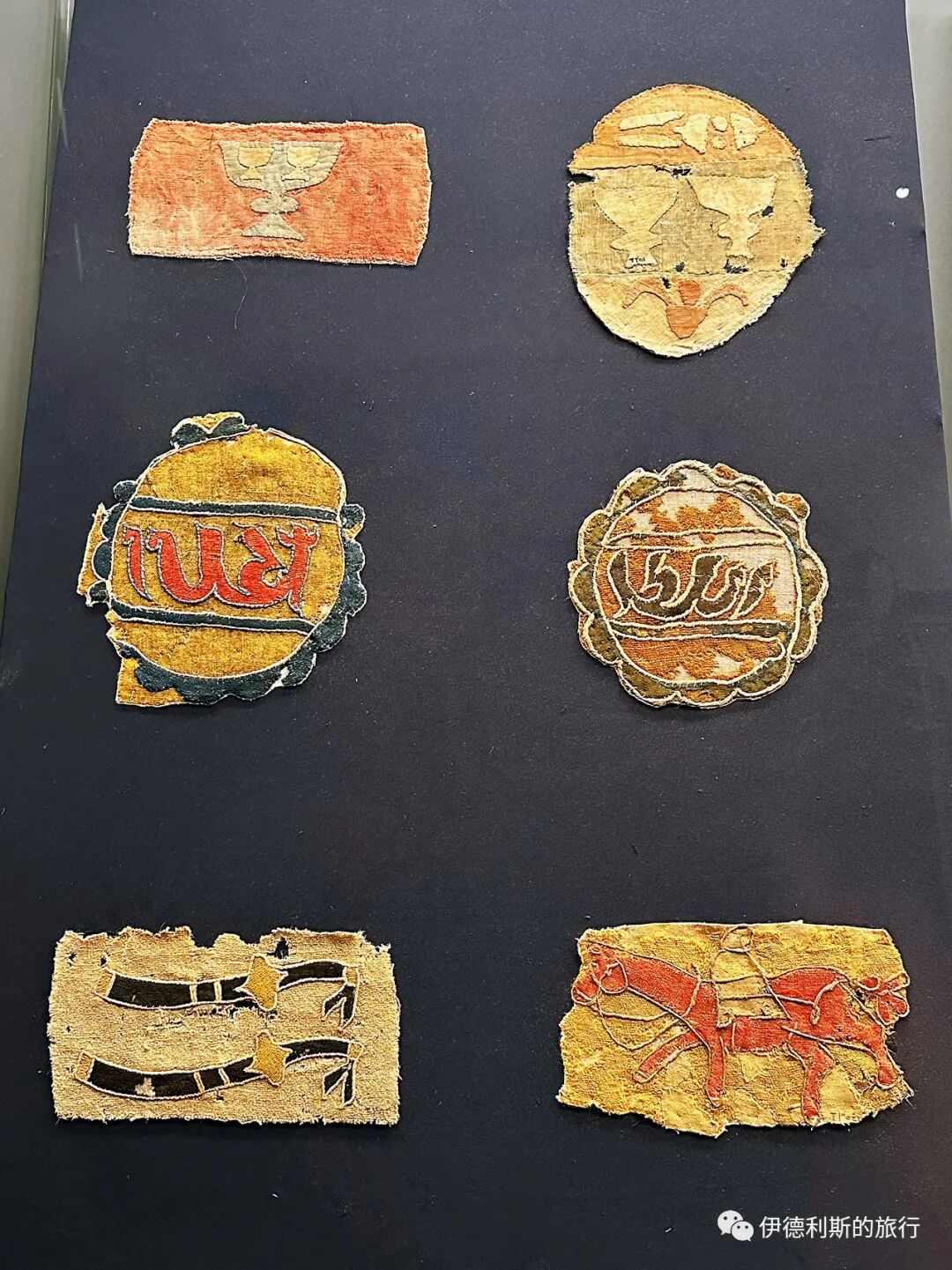
During the Ottoman period (1517-1805), the textile industry suffered because Egypt was no longer the center of the empire. At the same time, textiles from other parts of the Ottoman Empire began to appear in Egyptian markets, including brocade (jin), satin brocade (duanjin), and velvet, all decorated with floral patterns in the Ottoman style.
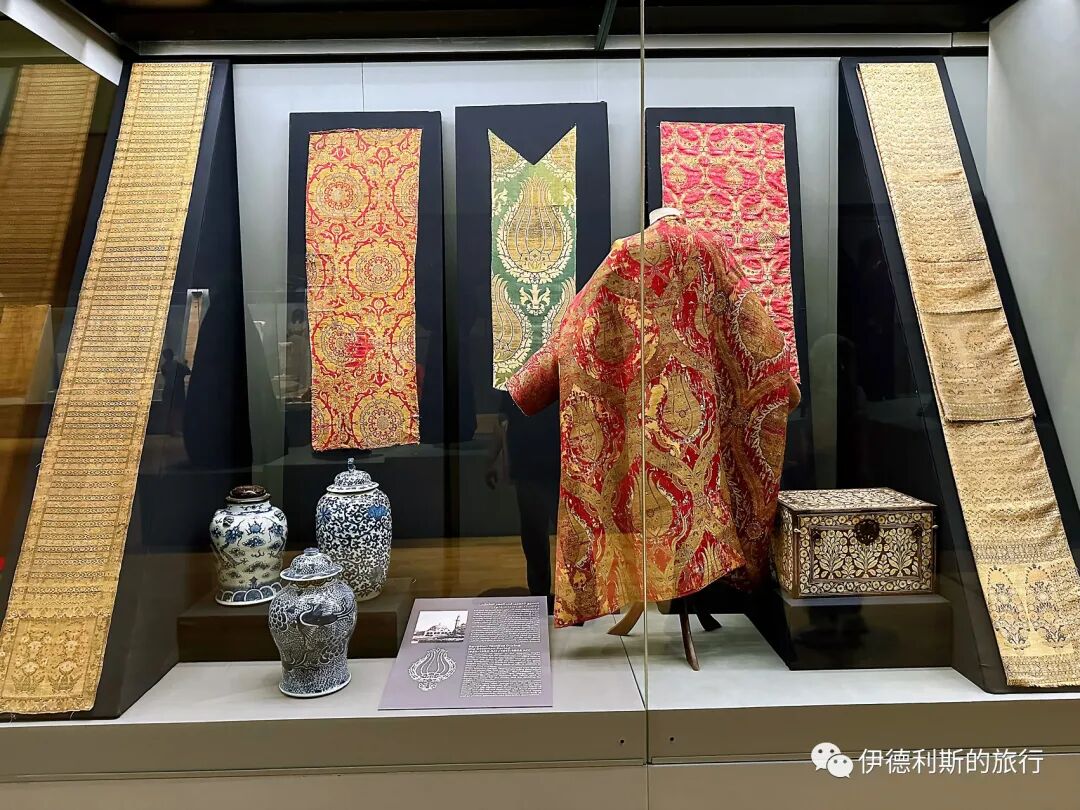
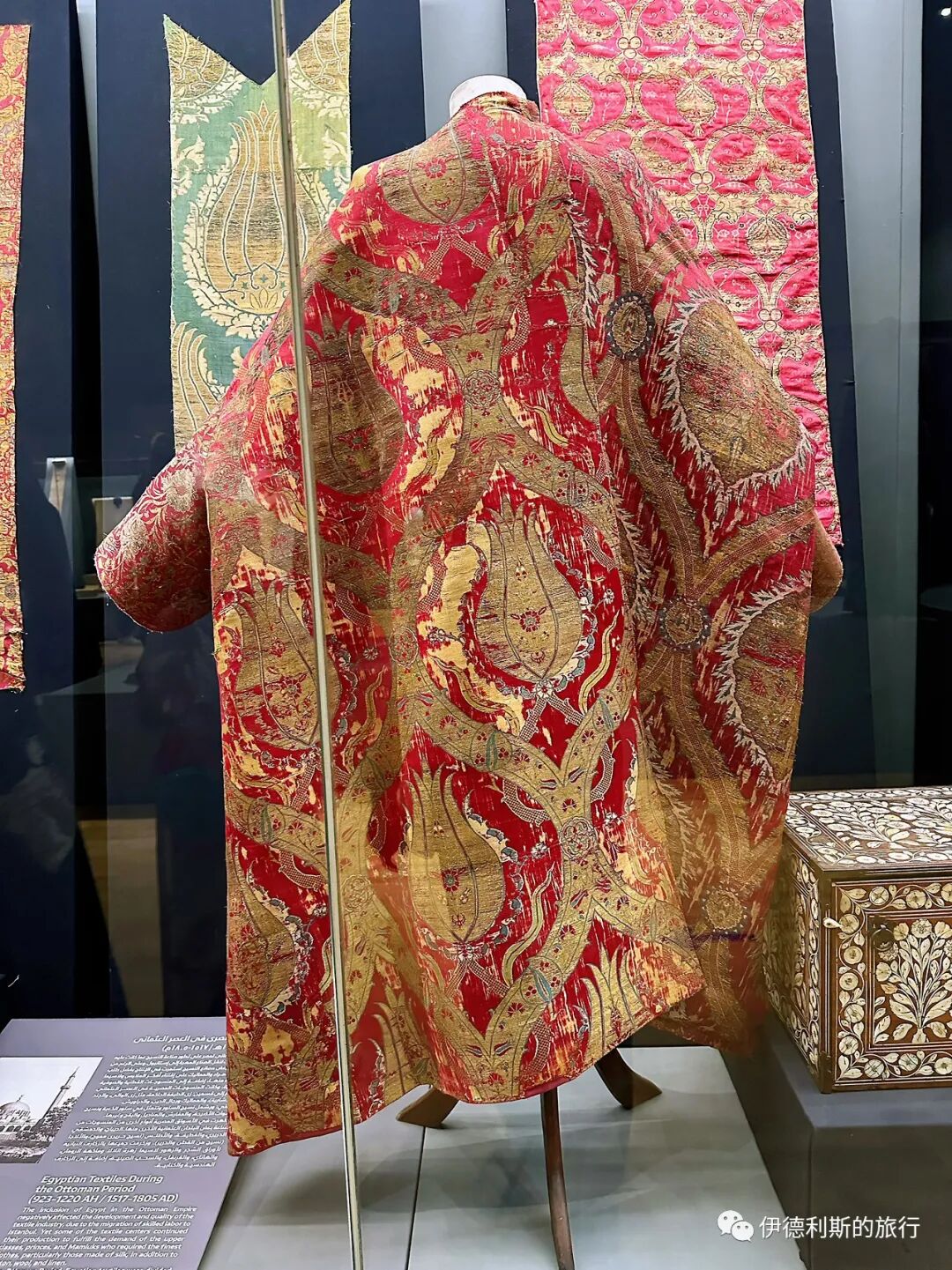
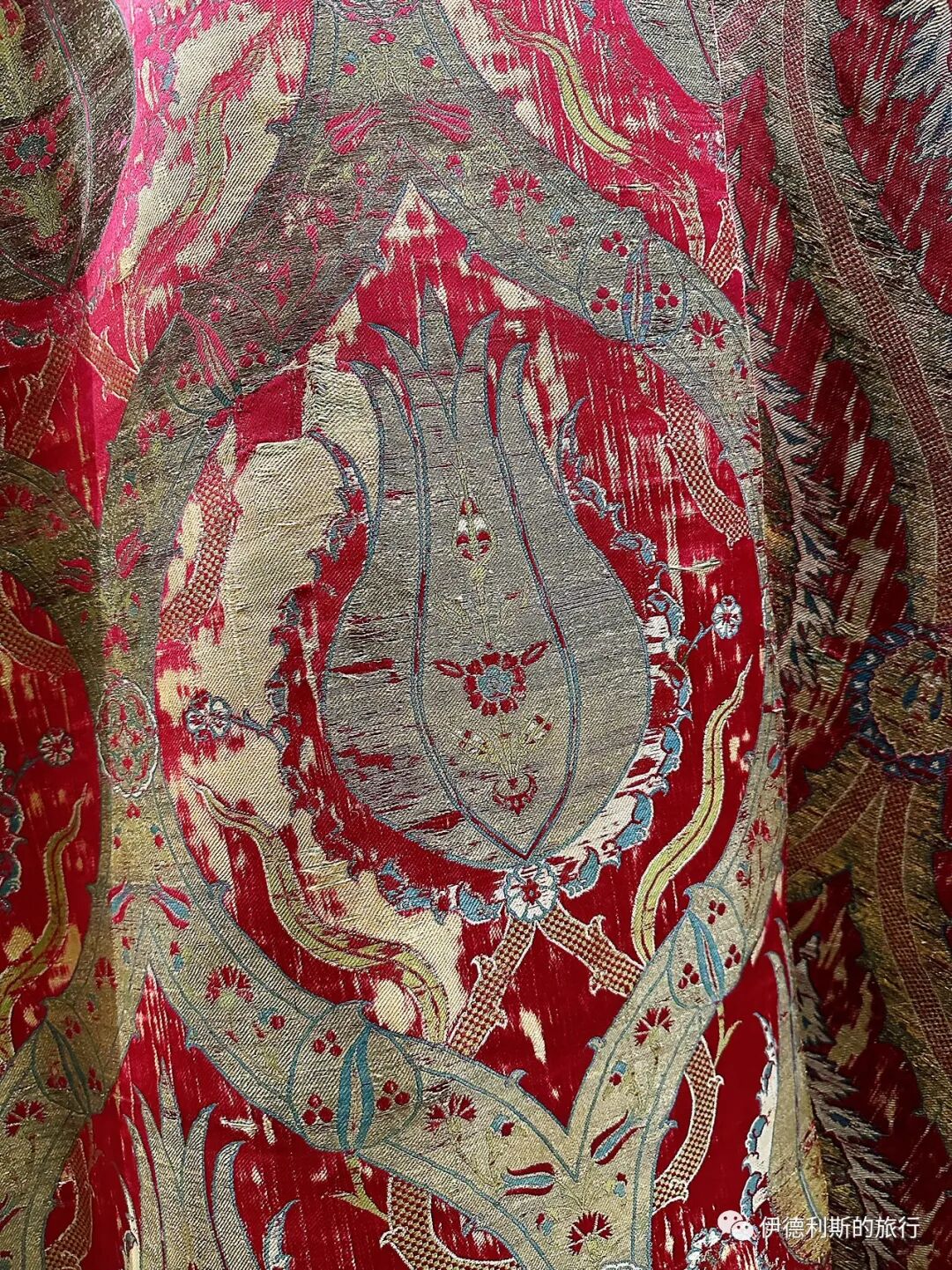
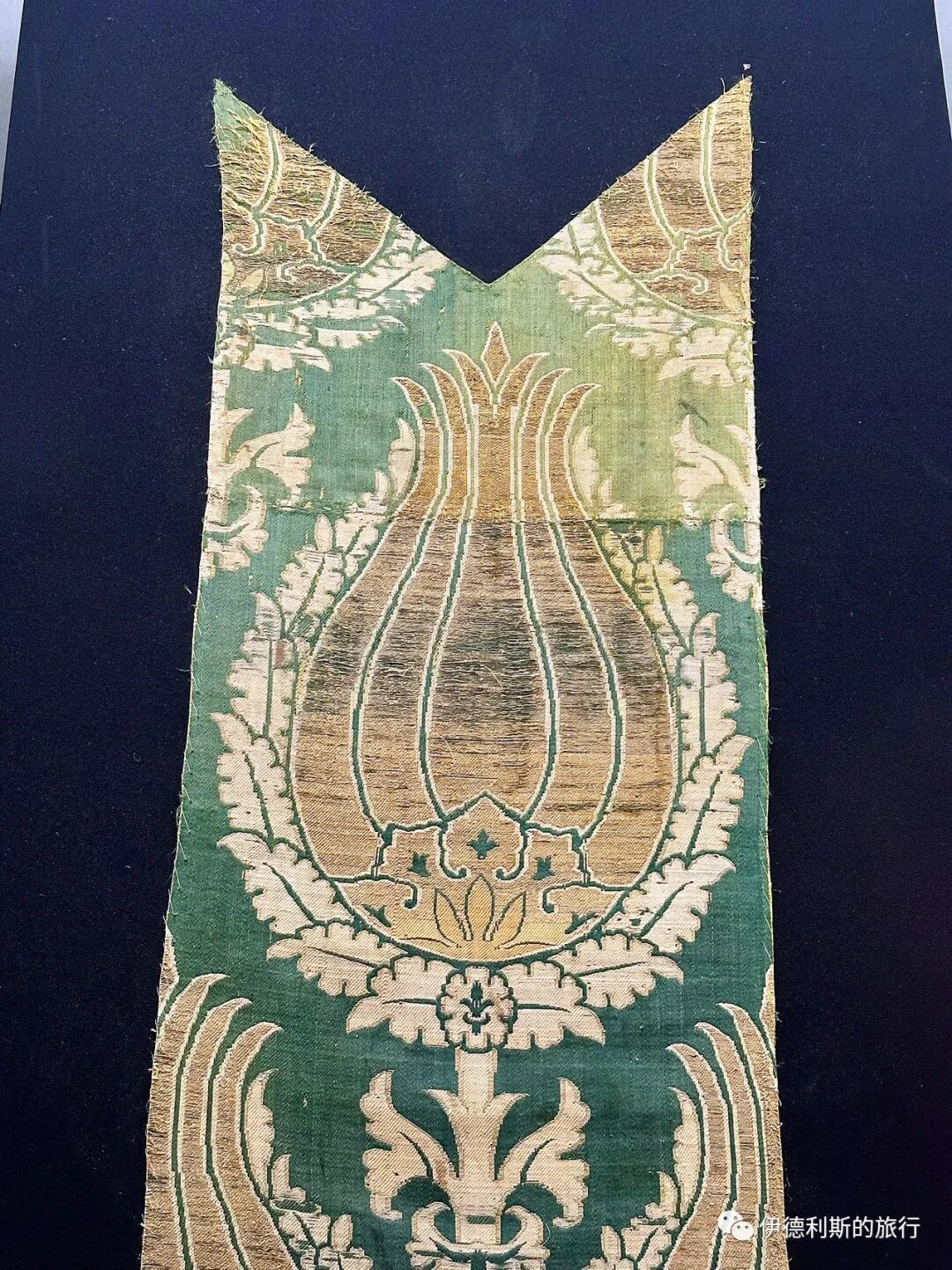
Ramadan in the Big Apple: My 2025 islamic Journey to Manhattan, NYC
Articles • ahmedla posted the article • 0 comments • 969 views • 2025-06-09 09:05
As the southbound train gently rolled into Brooklyn on the East Coast, looking out the window, you suddenly see those towering skyscrapers of Manhattan. At that moment, you can't help but exclaim, "We've made it to New York!" I quickly pulled out my phone and snapped a couple of shots. It's that feeling you get looking at the Lujiazui skyline from the Bund in Shanghai – it's like a calling card, as if it is the entire city. Of course, to truly appreciate the beauty of such urban grandeur, it's always better to keep your distance, to remain an observer.
Eventually, our train pulled into Penn Station, right in Midtown Manhattan. This, my friends, is the busiest train station in all of America, sitting near Times Square, with its entire concourse and waiting areas completely underground. Unlike back home, here there isn't just one rail company. The waiting areas are split into three sections – Amtrak, Long Island Rail Road, and NJ Transit – each managed by their own company. Amtrak and NJ Transit are on the first basement level, while Long Island Rail Road is on the second basement level. We got off the train and made our way through the Moynihan Train Hall to street level. As an old-school NBA fan, I was absolutely stunned to realize that the building right above the station was Madison Square Garden, the home of the New York Knicks! There I was, wearing my Brooklyn Nets jacket, feeling just a tad out of place. Subhanallah, what a welcome!
Navigating the NYC Subway: A Leap of Faith
Our first day in New York happened to be a Monday, and we'd already planned to hit the Metropolitan Museum of Art, which was open. I stared at the complex subway map, finally picking a line that didn't require any transfers – we'd get off and just walk through Central Park to the Met. I'd heard stories before coming here: the New York subway runs 24/7, and there are no barriers between the platforms and the tracks, just like the old Shanghai Metro Line 3/4. Word on the street was that people waiting on the platforms always choose to stand against the wall because some crazy person might just push you onto the tracks. Others warned that the NYC subway reeked, rats scurried everywhere, and you'd see all sorts of eccentrically dressed characters, plus rumors of anti-Asian violence. It sounded like a no-go zone, a place to avoid at all costs, as if this bizarre underworld gathered all the evil of the city.
But honestly, the thing that chapped my hide the most was buying a subway ticket. You can't buy tickets from a human; you're stuck using these ancient-looking, grandpa-era ticket machines on the wall. Since we didn't have enough cash, my wife and I tried our credit cards a gazillion times, but it was a bust every time. We finally had to scrounge up some coins from a passerby to buy our tickets. Later, when I was venting about this to Wasim (the young brother I met in Flushing), he just chuckled and told me you could actually just tap your credit card directly on the turnstile. My actual experience riding the subway, however, felt perfectly normal: the same crowds, the same bumps and jostles. Every now and then, you'd see someone leaning against the door, their eyes closed, swaying precariously, looking like they were about to keel over onto you at any moment. May Allah protect us all.
Central Park: A Spiritual Oasis
After getting off the subway, we crossed the street to the west entrance of Central Park. Our plan was to cut through the park to reach the Met on the east side. This route turned out to be an absolute winner. Central Park is simply breathtaking; the city's usual hustle and bustle just stops cold here. It's crawling with people walking their dogs, jogging, and just strolling along. Central Park is massive, like a sharp sword plunged right into the heart of the city.
The park feels like a sanctuary for the soul, pulling you away from the heavy burden of work, if only for a short while, and healing the wounds within. The park is surrounded by a dense forest of skyscrapers, and behind them are the crowded streets. The roads separate the park from the buildings that rise abruptly from the ground, almost like a dividing line between reality and an ideal. Central Park has been around for over a hundred years, and it hasn't been developed into housing projects as the city grew. In fact, it's even gotten bigger. The city's planners clearly see it as a balance between work and leisure, a true ni'mah (blessing) for the residents.
Islamic Cultural Center of New York: A Thriving Ummah
Lately, my social media has been flooded with posts from my brothers and sisters in New York. They're back to performing Tarawih (Ramadan night prayers) in Times Square. They cordon off a rectangular area amidst the crowds, standing with their backs to that iconic, gigantic screen. Even with a light rain, the Imam leading the prayer recited the beautiful Quran into a microphone, his melodious voice cutting through the surrounding clamor. The dhul-jism (Muslims) behind him, their lips moving, quietly recited along with the Imam, completely undisturbed by the environment. By now, most New Yorkers probably don't even bat an eye at this sight. When you look at the number of mosques and the Muslim population, New York might just be considered the halal capital of America. Data from 2018 showed that over 750,000 Muslims lived in New York City, making it the city with the largest Muslim population in the U.S. Roughly 9% of New York City residents are Muslims, accounting for 22.3% of America's total Muslim population. And New York City boasts over 200 mosques, scattered in every corner of the metropolis. Masha'Allah, the Ummah is truly thriving here.
Okay, here's the translation of your article, incorporating the requested style, tone, and vocabulary:
The Islamic Cultural Center of New York: A Beacon of Faith
Perhaps it all began with the completion of the Islamic Cultural Center. In Manhattan, no other mosque stands out quite like the Islamic Cultural Center of New York, located between East 96th and 97th Streets in the Upper East Side. Due to the need to face the Kaaba for prayer, the entire building is angled about thirty degrees to the street. This Islamic Cultural Center is New York's first purpose-built mosque and one of the largest in the city. When this mosque, with its dome soaring 27 meters high and minaret reaching 40 meters, was completed, Islam seemed to suddenly burst onto the scene for New Yorkers. The dedication of this masjid felt like New York granting a new identity card to its Muslims, acknowledging and embracing their presence in the city. After its opening, Muslim culture, by the grace of Allah, truly became an integral part of this vibrant metropolis.
The ambitious plan to establish a large Islamic center in New York was first conceived in the late 1960s. The initial Islamic center operated on a small scale in a modest townhouse. Later, the board of directors envisioned a grander center to elevate the prestige of Islam and to become one of New York City's iconic landmarks. Eventually, a comprehensive project including a mosque, a school, a library, a museum, and an auditorium was planned. After years of delays, including fundraising from Muslim countries, lengthy tenant relocations, and the eventual demolition of existing structures on the site, construction of the Islamic Cultural Center finally began in October 1984. The mosque itself started construction on May 28, 1987, a day that perfectly coincided with the end of Ramadan. Construction was even further delayed during the Iraqi invasion of Kuwait and the First Gulf War. Finally, the mosque officially opened its doors on April 15, 1991, which was the blessed day of Eid al-Fitr. Throughout this monumental process, over 46 Muslim nations contributed to the center's $17 million construction cost, with Kuwait alone donating a staggering two-thirds of the total. Truly, this center embodies the hopes of Muslims from nearly every country in the world; even in this place, famously known as the "center of the universe," Islam continues to flourish. Allahu Akbar!
This mosque just so happened to be near the museum we were visiting. We arrived after the Asr prayer time had passed, so we performed our salah individually. The constant stream of people coming and going was incredible; new prayer congregations were forming one after another. I even witnessed a truly fascinating sight: a New York Police Department (NYPD) officer, in full uniform, became a temporary Imam, leading a few Muslim brothers behind him in prayer. In that moment, there was no law enforcement and no civilians, only ikhwah (brothers) bowing together towards the Kaaba. Near the entrance of the mosque, there was also a small shop selling books and various Muslim essentials. Before leaving, I bought a black prayer cap, and my wife picked up a box of dates. After settling the bill, we were about to head out when the shop owner suddenly called us back. She must have gathered from our brief chat that we were tourists. She then gave us some extra dates, explaining they were from Madinah, and also handed us two bottles of water. Mind you, we had only spent twelve bucks in total, and the items the kind sister gave us were easily worth at least five dollars. May Allah bless her for her generosity!
It was a bit of a bummer, though, that only the first floor of this mosque was open during our visit. The doors to the second and third floors were firmly locked, so we couldn't explore them fully.
Manhattan's "Rest Stops" for the Faithful
Aside from a handful of mosques whose unique architecture immediately gives them away, most mosques in Manhattan are incognito from the outside, blending seamlessly with office buildings and townhouses. You often have to get close and rely on the name of the mosque on the doorplate and the Muslims going in and out to confirm its identity.
More often than not, a mosque in Manhattan is like a mini "Central Park" for Muslims. The peaceful prayer hall inside is a world apart from the bustling environment outside the door. Muslims come and go, entering through an inconspicuous little door, quickly heading to the wudu facilities in the basement to perform their ablution. After that, they quietly perform their salah, and if they're tired, they lean against a wall for a quick rest. When it's time for work or if they have an urgent matter, they quickly leave. Traveling during Ramadan can be a bit tiring, so I gave up on my specific plans to visit every mosque. Instead, I just started treating them as places to rest. If I felt weary, I'd find a mosque, step inside for a breather, and then continue my journey. Alhamdulillah for these havens.
The Islamic Society of Mid Manhattan on 55th Street (154 E 55th St, New York) is a prime example of such a mosque. It doesn't have a grand entrance or stand alone; it looks just like the surrounding apartment buildings, accessed through a small door. Braving the rainy weather, we followed the directions from a fellow Muslim brother outside and easily entered the mosque. After walking in, you go down a long corridor, almost like a wormhole, and suddenly you've transported from the chaos of Manhattan to the quiet peace of home.
The wudu area wasn't as clean as it could be, probably due to the high foot traffic and the rainy weather, making the floor and restrooms a bit dirty. This might indicate a lack of regular upkeep, but it definitely highlighted the significant number of people using this mosque. After performing wudu, I headed straight to the men's prayer hall. As I entered, a Black brother was standing by the door, and I greeted him with a salam. His response was quite animated: his arm went halfway up, then swung down in a semicircle, firmly grasping my hand. With a rhythmic cadence, he repeatedly said, "Welcome, brother," "How are you doing?" and "You're doing great!" (likely approving of my enthusiastic response to him). After prayer, I leaned against the wall, and people kept greeting me. Compared to other places, New Yorkers are pretty well-informed. Folks elsewhere had no clue where I was from, but New York Muslims asked me more than once, "Are you Indonesian?"
NYC's Halal Food Carts: A Culinary Blessing
Speaking of halal food in New York, you simply can't skip the halal food carts – they're a huge part of New York's halal culinary scene. If you instinctively search "halal" on your map, most of the results you'll get are these food carts. These carts usually have fixed locations, and the map will show their spot along with customer reviews. The types of food they sell are pretty similar across the board: meat platters, rice bowls, hot dogs, and falafel. Some even have fried chicken if they're feeling a bit more adventurous.
On my first evening in Flushing, I broke my fast (iftar) with food from a cart. I ordered chicken over rice. The turmeric-colored long-grain rice was piled high with tender chicken, topped with a generous squeeze of white sauce and hot sauce. Even before I took a bite, my mouth was watering! And for a heaping container of that deliciousness, it only cost me $7. I immediately ordered another one to take for my suhoor (pre-dawn meal), grabbed a drink, and the total was $15. No exaggeration, this might just be the cheapest meal you can get in New York that's worth its salt. Of course, carts in Manhattan might charge a little more, but still usually under $10. Alhamdulillah for these blessings!
A Test of Faith in Manhattan: Halal Carts and Humble Mosques
Fasting while walking through the bustling streets of Manhattan is a massive test of sabr (patience). Despite my rumbling stomach, the tempting aroma from those halal food carts would waft into my nostrils every now and then. You know for sure that scent is halal, and sometimes you can't help but take an extra sniff or two, but there's nothing to do but sigh and hurry past. This temptation and the urge to buy don't just vanish. When you think you've missed out on a delicious meal, you turn the next corner and lo and behold, you find another cart. Look further down, and there's yet another halal food cart at the next intersection. By the time Iftar (breaking of fast) rolls around, you've probably passed a good dozen or so carts, and at that point, you're so famished you don't even want to explore which one has the most variety or the best taste.
Masjid Awliya of Allah: A Hidden Gem
As Iftar time drew near, my wife and I were walking around Times Square, passing one food cart after another, our eyes glued to the prize. I suggested we find a masjid to settle down and rest for a bit, then grab our food once it was time to break our fast, and head to the train station to go home. So, I searched and found this mosque: Masjid Awliya of Allah (Friends of Allah Mosque, located at 327 W 36th St., New York, NY 10018). It's probably the closest mosque to Times Square. We made a beeline for it, and as soon as we got to the entrance, my wife stared in disbelief and asked, "Are you sure this is a mosque?"
And honestly, at first glance, you'd think you'd stumbled into the Halal Food Cart Association. The entrance, as marked on the map, led into a huge warehouse chock-full of food carts waiting to be stocked up for their day's business. We asked someone inside, and he confirmed it was indeed the masjid. Then, he led us on a winding path, weaving through rows of food carts until we finally reached a staircase. Lo and behold! The actual masjid entrance was hidden behind this dense array of food trucks! We ascended to the second floor, where we found a small prayer room. Even with such limited space, they had a dedicated area for the sisters, masha'Allah. I quickly scanned the people resting; by their attire, most seemed to be delivery drivers or food cart vendors. This place had clearly become their perfect refuge from the elements, a spot to enjoy a moment of tranquility amidst their busy lives. The only downside was that the wudu (ablution) area in this mosque had no partitions, just a large communal water basin. It wasn't very convenient for the sisters to perform wudu, so we decided to head out.
The Ever-Present Mercy (of Allah)
Back on the street, my wife and I were beat, our feet killing us. I pointed to the map and said, "There's another masjid not too far. Let's make a dash for it." At this point, I was pinning all my hopes on that one, praying it would be a more "conventional" masjid, a place where I could charge my phone and my body could get a quick recharge too. Our train home was less than two hours away, so time was of the essence. We decided to grab some food from the "Tianshan" restaurant we'd just passed, saving it for tomorrow's suhoor (pre-dawn meal).
Walking up to the restaurant, we saw the menu taped to the window, filled with familiar dishes: "wontons," "roasted samosa-like buns," "stir-fried noodles with meat." We walked in, our hearts singing, thinking this must be authentic Chinese cuisine. At the ordering counter, my wife looked at a familiar-looking young man and started, "Hey, so, can I have a—" I cut in, blurting out, "Wontons!" The young man replied in Chinese, "Sorry, no wontons." We both looked at each other and shared a laugh. He asked about our situation, and we, in turn, asked about his. This young man, who had been in the U.S. for six years, told us his parents had also moved to New York. Hearing that, the slight tension in my brow eased a bit, as if a worry had lifted off my shoulders. I said, "That's the real deal." The young man, seeing we weren't planning to sit down, asked, "Are you also fasting?" Fearing he might misunderstand, I quickly said, "Yes, that's right! I'm taking it to go for suhoor." The young man wasn't questioning us; he just wanted to give us some dates, and with that, he started to head to the kitchen. We quickly stopped him, explaining that we already had plenty of dates, both ones we'd bought and some given to us for free at the masjid. But he insisted on giving us more. When we finally got our takeout bag, we saw a box of dates placed right next to our roasted buns. We thanked him profusely, saying, "Jazak Allah Khayr!" The young man waved us goodbye, calling out, "Come back anytime!"
Masjid al-Rahman: A True Sanctuary
With our suhoor taken care of, we made a beeline for our next masjid: Masjid al-Rahman (The Mosque of The Most Merciful). As we hurried along, I could already see men in kufis and women in hijabs gathered at the entrance from a distance. I told my wife, "Do you see that group of Muslim brothers and sisters up ahead? This time, we definitely haven't come to the wrong place!" The mosque had two roll-up doors, one covering the prayer hall and the other serving as the entrance. After confirming there was a designated women's prayer area and a women's wudu station, we couldn't wait to go inside and recharge.
After praying, I took a moment to truly examine this masjid. It wasn't small at all. As Iftar time drew near, the number of people was substantial. There were small groups chatting by the walls, and others reciting Quran to a teacher. Through their official website, I learned that the jama'ah (congregation) in this area had been gathering and renting places for Jumu'ah since the 1990s, enduring three relocations before finally settling here. The first floor was the main prayer hall, and the basement held another surprise. The masjid had covered the entire basement with tablecloths, waiting for those breaking their fast to arrive.
I leaned against a pillar, charging my phone and resting. A study circle behind me caught my interest. Some young men were sitting around an elder, who was clearly imparting ilm (knowledge). About twenty minutes passed, and I figured my phone was charged enough. I quickly unplugged it and discreetly slipped into a spot next to a brother, not wanting to miss anything. I whispered to him, "Is this a halaqah (study circle) for new Muslims?" The brother whispered back, explaining that it covered basic Islamic knowledge, Quranic studies, and more. Our whispering must have disturbed the elder, as he paused his talk and reminded us to be quiet. We awkwardly sat upright in our places.
The Wisdom of Obligation Versus Tradition
When I joined, it was exactly during the Q&A session. A brother across from me, with the trendiest dreadlocks, was casually leaning against the wall, legs stretched out. Suddenly, the elder turned to him and asked gravely, "What are the seven external conditions for Salat (prayer)?" The young man immediately straightened up, knelt with his thighs upright, placed his hands on his thighs, closed his eyes tightly, and answered the Shaykh's question precisely: "Purity of body, purity of clothes, purity of place of prayer, covering the awrah (modesty), praying on time, facing the qibla, and having the correct niyyah (intention)!" At that moment, he sat rigidly, looking just like a student called to task. The Shaykh then asked about the essential elements of prayer and wudu. Finally, he asked him to recite Surah Al-Ikhlas ("The Chapter of Sincerity"). After answering all this, the young man slumped back into his original relaxed posture, like a balloon that had lost its air.
This teaching method was quite insightful. If we reflect on our own learning process for things like wudu, we often don't explicitly differentiate between its fardh (obligatory) and Sunnah (Prophetic tradition) elements. Instead, the focus is on formal instruction, teaching the entire wudu procedure as a whole. The same goes for salat. Every movement, every recitation is ingrained in our bones, but if you're pressed to explain what's fardh and what's Sunnah, you might not remember it with such clarity. This somewhat pragmatic approach, not emphasizing the distinction, can lead us to treat fardh and Sunnah as equally essential in practice. In special circumstances, our memory gets blurry, and it feels like everything is fardh and shouldn't be omitted. However, if we clearly understand that fardh are absolute obligations, and Sunnah are not strictly mandatory (referring only to special circumstances, as emphasized Sunnah implies you shouldn't casually abandon it!), then the issue becomes clear as daylight. I recall a brother recently asking in our group chat about the validity of wudu if one cannot rinse their mouth due to illness. How did the Imam answer? He said rinsing the mouth is Sunnah, so the wudu is still valid without it. Indeed, our Deen is one of ease.
The Abundance of Allah's Provision
Seeing the time was almost up, I told my wife to wait for me by the door while I quickly performed my wudu (ablution). When I emerged, my wife had a takeout container in her hand. She explained that one of the uncles at the masjid had seen us leaving and insisted she take a meal for iftar (breaking fast), a true blessing from Allah. We didn't have time to dwell on it; our minds were still set on the food carts we'd been eyeing, eager to get our actual iftar there.
After walking for less than five minutes, we finally settled on a large food cart. The young man working the cart seemed a bit green; he was out of pretty much everything we wanted, only having rice bowls and meat wraps left. We had no choice but to settle for what we could get. Just then, a Black uncle came bustling over. Without a word to the vendor, he grabbed some water from the cart, paid, and was about to leave. He seemed to notice my wife and I by our attire, and he extended a warm salam (peace greeting) to us. Masha'Allah.
After he left, I told my wife, "Subhanallah, there are so many Muslims here!" No sooner had the words left my mouth than the uncle reappeared. This time, he was carrying a bag overflowing with fruits and dates. He pulled out some bananas and oranges and insisted we take them, shoving them into our hands. The other people waiting for food around us looked on, perplexed, wondering what in the world was going on. After the uncle left, I smiled at an auntie nearby and tried to explain, "We're Muslims, fasting, and he gave us food." The auntie just smiled back. It was clear she didn't speak English and didn't understand my explanation, but the gesture of brotherhood transcended language.
A Sister in Need, A Prophet's Wisdom
Just that morning, we were wondering what we'd eat, and now we had a whole bag full of food. It felt as though Allah's grace was continuously flowing into our lives. Alhamdulillah (all praise is due to Allah)! As we waited, a young woman wearing a white hijab (headscarf) came over to buy food. I pointed to the dates in our bag and gestured for my wife to offer her some. The girl took the dates, and her previously serious expression instantly lit up with a smile. My wife chatted with her, while I pointed her in the direction of the masjid. It turned out this sister had no idea where there was a mosque nearby where she could break her fast. Subhanallah! It was a perfect moment for a small act of kindness.
This experience brought to mind the beautiful Hadith (Prophetic tradition) where the Prophet Muhammad (peace be upon him) was asked, "Which act in Islam is the most excellent?" He replied, "To feed others and to greet with salam (peace) those whom you know and those whom you do not know." (Recorded in Sahih al-Bukhari and Sahih Muslim).
As we walked through the bustling streets of New York, my wife turned to me and said, "I feel so content with this trip." And how could I not feel the same? Indeed, Subhanallah, what a blessed journey!
view all
As the southbound train gently rolled into Brooklyn on the East Coast, looking out the window, you suddenly see those towering skyscrapers of Manhattan. At that moment, you can't help but exclaim, "We've made it to New York!" I quickly pulled out my phone and snapped a couple of shots. It's that feeling you get looking at the Lujiazui skyline from the Bund in Shanghai – it's like a calling card, as if it is the entire city. Of course, to truly appreciate the beauty of such urban grandeur, it's always better to keep your distance, to remain an observer.
Eventually, our train pulled into Penn Station, right in Midtown Manhattan. This, my friends, is the busiest train station in all of America, sitting near Times Square, with its entire concourse and waiting areas completely underground. Unlike back home, here there isn't just one rail company. The waiting areas are split into three sections – Amtrak, Long Island Rail Road, and NJ Transit – each managed by their own company. Amtrak and NJ Transit are on the first basement level, while Long Island Rail Road is on the second basement level. We got off the train and made our way through the Moynihan Train Hall to street level. As an old-school NBA fan, I was absolutely stunned to realize that the building right above the station was Madison Square Garden, the home of the New York Knicks! There I was, wearing my Brooklyn Nets jacket, feeling just a tad out of place. Subhanallah, what a welcome!

Navigating the NYC Subway: A Leap of Faith
Our first day in New York happened to be a Monday, and we'd already planned to hit the Metropolitan Museum of Art, which was open. I stared at the complex subway map, finally picking a line that didn't require any transfers – we'd get off and just walk through Central Park to the Met. I'd heard stories before coming here: the New York subway runs 24/7, and there are no barriers between the platforms and the tracks, just like the old Shanghai Metro Line 3/4. Word on the street was that people waiting on the platforms always choose to stand against the wall because some crazy person might just push you onto the tracks. Others warned that the NYC subway reeked, rats scurried everywhere, and you'd see all sorts of eccentrically dressed characters, plus rumors of anti-Asian violence. It sounded like a no-go zone, a place to avoid at all costs, as if this bizarre underworld gathered all the evil of the city.


But honestly, the thing that chapped my hide the most was buying a subway ticket. You can't buy tickets from a human; you're stuck using these ancient-looking, grandpa-era ticket machines on the wall. Since we didn't have enough cash, my wife and I tried our credit cards a gazillion times, but it was a bust every time. We finally had to scrounge up some coins from a passerby to buy our tickets. Later, when I was venting about this to Wasim (the young brother I met in Flushing), he just chuckled and told me you could actually just tap your credit card directly on the turnstile. My actual experience riding the subway, however, felt perfectly normal: the same crowds, the same bumps and jostles. Every now and then, you'd see someone leaning against the door, their eyes closed, swaying precariously, looking like they were about to keel over onto you at any moment. May Allah protect us all.
Central Park: A Spiritual Oasis
After getting off the subway, we crossed the street to the west entrance of Central Park. Our plan was to cut through the park to reach the Met on the east side. This route turned out to be an absolute winner. Central Park is simply breathtaking; the city's usual hustle and bustle just stops cold here. It's crawling with people walking their dogs, jogging, and just strolling along. Central Park is massive, like a sharp sword plunged right into the heart of the city.


The park feels like a sanctuary for the soul, pulling you away from the heavy burden of work, if only for a short while, and healing the wounds within. The park is surrounded by a dense forest of skyscrapers, and behind them are the crowded streets. The roads separate the park from the buildings that rise abruptly from the ground, almost like a dividing line between reality and an ideal. Central Park has been around for over a hundred years, and it hasn't been developed into housing projects as the city grew. In fact, it's even gotten bigger. The city's planners clearly see it as a balance between work and leisure, a true ni'mah (blessing) for the residents.
Islamic Cultural Center of New York: A Thriving Ummah
Lately, my social media has been flooded with posts from my brothers and sisters in New York. They're back to performing Tarawih (Ramadan night prayers) in Times Square. They cordon off a rectangular area amidst the crowds, standing with their backs to that iconic, gigantic screen. Even with a light rain, the Imam leading the prayer recited the beautiful Quran into a microphone, his melodious voice cutting through the surrounding clamor. The dhul-jism (Muslims) behind him, their lips moving, quietly recited along with the Imam, completely undisturbed by the environment. By now, most New Yorkers probably don't even bat an eye at this sight. When you look at the number of mosques and the Muslim population, New York might just be considered the halal capital of America. Data from 2018 showed that over 750,000 Muslims lived in New York City, making it the city with the largest Muslim population in the U.S. Roughly 9% of New York City residents are Muslims, accounting for 22.3% of America's total Muslim population. And New York City boasts over 200 mosques, scattered in every corner of the metropolis. Masha'Allah, the Ummah is truly thriving here.
Okay, here's the translation of your article, incorporating the requested style, tone, and vocabulary:
The Islamic Cultural Center of New York: A Beacon of Faith
Perhaps it all began with the completion of the Islamic Cultural Center. In Manhattan, no other mosque stands out quite like the Islamic Cultural Center of New York, located between East 96th and 97th Streets in the Upper East Side. Due to the need to face the Kaaba for prayer, the entire building is angled about thirty degrees to the street. This Islamic Cultural Center is New York's first purpose-built mosque and one of the largest in the city. When this mosque, with its dome soaring 27 meters high and minaret reaching 40 meters, was completed, Islam seemed to suddenly burst onto the scene for New Yorkers. The dedication of this masjid felt like New York granting a new identity card to its Muslims, acknowledging and embracing their presence in the city. After its opening, Muslim culture, by the grace of Allah, truly became an integral part of this vibrant metropolis.

The ambitious plan to establish a large Islamic center in New York was first conceived in the late 1960s. The initial Islamic center operated on a small scale in a modest townhouse. Later, the board of directors envisioned a grander center to elevate the prestige of Islam and to become one of New York City's iconic landmarks. Eventually, a comprehensive project including a mosque, a school, a library, a museum, and an auditorium was planned. After years of delays, including fundraising from Muslim countries, lengthy tenant relocations, and the eventual demolition of existing structures on the site, construction of the Islamic Cultural Center finally began in October 1984. The mosque itself started construction on May 28, 1987, a day that perfectly coincided with the end of Ramadan. Construction was even further delayed during the Iraqi invasion of Kuwait and the First Gulf War. Finally, the mosque officially opened its doors on April 15, 1991, which was the blessed day of Eid al-Fitr. Throughout this monumental process, over 46 Muslim nations contributed to the center's $17 million construction cost, with Kuwait alone donating a staggering two-thirds of the total. Truly, this center embodies the hopes of Muslims from nearly every country in the world; even in this place, famously known as the "center of the universe," Islam continues to flourish. Allahu Akbar!
This mosque just so happened to be near the museum we were visiting. We arrived after the Asr prayer time had passed, so we performed our salah individually. The constant stream of people coming and going was incredible; new prayer congregations were forming one after another. I even witnessed a truly fascinating sight: a New York Police Department (NYPD) officer, in full uniform, became a temporary Imam, leading a few Muslim brothers behind him in prayer. In that moment, there was no law enforcement and no civilians, only ikhwah (brothers) bowing together towards the Kaaba. Near the entrance of the mosque, there was also a small shop selling books and various Muslim essentials. Before leaving, I bought a black prayer cap, and my wife picked up a box of dates. After settling the bill, we were about to head out when the shop owner suddenly called us back. She must have gathered from our brief chat that we were tourists. She then gave us some extra dates, explaining they were from Madinah, and also handed us two bottles of water. Mind you, we had only spent twelve bucks in total, and the items the kind sister gave us were easily worth at least five dollars. May Allah bless her for her generosity!


It was a bit of a bummer, though, that only the first floor of this mosque was open during our visit. The doors to the second and third floors were firmly locked, so we couldn't explore them fully.
Manhattan's "Rest Stops" for the Faithful
Aside from a handful of mosques whose unique architecture immediately gives them away, most mosques in Manhattan are incognito from the outside, blending seamlessly with office buildings and townhouses. You often have to get close and rely on the name of the mosque on the doorplate and the Muslims going in and out to confirm its identity.

More often than not, a mosque in Manhattan is like a mini "Central Park" for Muslims. The peaceful prayer hall inside is a world apart from the bustling environment outside the door. Muslims come and go, entering through an inconspicuous little door, quickly heading to the wudu facilities in the basement to perform their ablution. After that, they quietly perform their salah, and if they're tired, they lean against a wall for a quick rest. When it's time for work or if they have an urgent matter, they quickly leave. Traveling during Ramadan can be a bit tiring, so I gave up on my specific plans to visit every mosque. Instead, I just started treating them as places to rest. If I felt weary, I'd find a mosque, step inside for a breather, and then continue my journey. Alhamdulillah for these havens.
The Islamic Society of Mid Manhattan on 55th Street (154 E 55th St, New York) is a prime example of such a mosque. It doesn't have a grand entrance or stand alone; it looks just like the surrounding apartment buildings, accessed through a small door. Braving the rainy weather, we followed the directions from a fellow Muslim brother outside and easily entered the mosque. After walking in, you go down a long corridor, almost like a wormhole, and suddenly you've transported from the chaos of Manhattan to the quiet peace of home.
The wudu area wasn't as clean as it could be, probably due to the high foot traffic and the rainy weather, making the floor and restrooms a bit dirty. This might indicate a lack of regular upkeep, but it definitely highlighted the significant number of people using this mosque. After performing wudu, I headed straight to the men's prayer hall. As I entered, a Black brother was standing by the door, and I greeted him with a salam. His response was quite animated: his arm went halfway up, then swung down in a semicircle, firmly grasping my hand. With a rhythmic cadence, he repeatedly said, "Welcome, brother," "How are you doing?" and "You're doing great!" (likely approving of my enthusiastic response to him). After prayer, I leaned against the wall, and people kept greeting me. Compared to other places, New Yorkers are pretty well-informed. Folks elsewhere had no clue where I was from, but New York Muslims asked me more than once, "Are you Indonesian?"


NYC's Halal Food Carts: A Culinary Blessing
Speaking of halal food in New York, you simply can't skip the halal food carts – they're a huge part of New York's halal culinary scene. If you instinctively search "halal" on your map, most of the results you'll get are these food carts. These carts usually have fixed locations, and the map will show their spot along with customer reviews. The types of food they sell are pretty similar across the board: meat platters, rice bowls, hot dogs, and falafel. Some even have fried chicken if they're feeling a bit more adventurous.




On my first evening in Flushing, I broke my fast (iftar) with food from a cart. I ordered chicken over rice. The turmeric-colored long-grain rice was piled high with tender chicken, topped with a generous squeeze of white sauce and hot sauce. Even before I took a bite, my mouth was watering! And for a heaping container of that deliciousness, it only cost me $7. I immediately ordered another one to take for my suhoor (pre-dawn meal), grabbed a drink, and the total was $15. No exaggeration, this might just be the cheapest meal you can get in New York that's worth its salt. Of course, carts in Manhattan might charge a little more, but still usually under $10. Alhamdulillah for these blessings!
A Test of Faith in Manhattan: Halal Carts and Humble Mosques
Fasting while walking through the bustling streets of Manhattan is a massive test of sabr (patience). Despite my rumbling stomach, the tempting aroma from those halal food carts would waft into my nostrils every now and then. You know for sure that scent is halal, and sometimes you can't help but take an extra sniff or two, but there's nothing to do but sigh and hurry past. This temptation and the urge to buy don't just vanish. When you think you've missed out on a delicious meal, you turn the next corner and lo and behold, you find another cart. Look further down, and there's yet another halal food cart at the next intersection. By the time Iftar (breaking of fast) rolls around, you've probably passed a good dozen or so carts, and at that point, you're so famished you don't even want to explore which one has the most variety or the best taste.
Masjid Awliya of Allah: A Hidden Gem
As Iftar time drew near, my wife and I were walking around Times Square, passing one food cart after another, our eyes glued to the prize. I suggested we find a masjid to settle down and rest for a bit, then grab our food once it was time to break our fast, and head to the train station to go home. So, I searched and found this mosque: Masjid Awliya of Allah (Friends of Allah Mosque, located at 327 W 36th St., New York, NY 10018). It's probably the closest mosque to Times Square. We made a beeline for it, and as soon as we got to the entrance, my wife stared in disbelief and asked, "Are you sure this is a mosque?"
And honestly, at first glance, you'd think you'd stumbled into the Halal Food Cart Association. The entrance, as marked on the map, led into a huge warehouse chock-full of food carts waiting to be stocked up for their day's business. We asked someone inside, and he confirmed it was indeed the masjid. Then, he led us on a winding path, weaving through rows of food carts until we finally reached a staircase. Lo and behold! The actual masjid entrance was hidden behind this dense array of food trucks! We ascended to the second floor, where we found a small prayer room. Even with such limited space, they had a dedicated area for the sisters, masha'Allah. I quickly scanned the people resting; by their attire, most seemed to be delivery drivers or food cart vendors. This place had clearly become their perfect refuge from the elements, a spot to enjoy a moment of tranquility amidst their busy lives. The only downside was that the wudu (ablution) area in this mosque had no partitions, just a large communal water basin. It wasn't very convenient for the sisters to perform wudu, so we decided to head out.
The Ever-Present Mercy (of Allah)
Back on the street, my wife and I were beat, our feet killing us. I pointed to the map and said, "There's another masjid not too far. Let's make a dash for it." At this point, I was pinning all my hopes on that one, praying it would be a more "conventional" masjid, a place where I could charge my phone and my body could get a quick recharge too. Our train home was less than two hours away, so time was of the essence. We decided to grab some food from the "Tianshan" restaurant we'd just passed, saving it for tomorrow's suhoor (pre-dawn meal).
Walking up to the restaurant, we saw the menu taped to the window, filled with familiar dishes: "wontons," "roasted samosa-like buns," "stir-fried noodles with meat." We walked in, our hearts singing, thinking this must be authentic Chinese cuisine. At the ordering counter, my wife looked at a familiar-looking young man and started, "Hey, so, can I have a—" I cut in, blurting out, "Wontons!" The young man replied in Chinese, "Sorry, no wontons." We both looked at each other and shared a laugh. He asked about our situation, and we, in turn, asked about his. This young man, who had been in the U.S. for six years, told us his parents had also moved to New York. Hearing that, the slight tension in my brow eased a bit, as if a worry had lifted off my shoulders. I said, "That's the real deal." The young man, seeing we weren't planning to sit down, asked, "Are you also fasting?" Fearing he might misunderstand, I quickly said, "Yes, that's right! I'm taking it to go for suhoor." The young man wasn't questioning us; he just wanted to give us some dates, and with that, he started to head to the kitchen. We quickly stopped him, explaining that we already had plenty of dates, both ones we'd bought and some given to us for free at the masjid. But he insisted on giving us more. When we finally got our takeout bag, we saw a box of dates placed right next to our roasted buns. We thanked him profusely, saying, "Jazak Allah Khayr!" The young man waved us goodbye, calling out, "Come back anytime!"


Masjid al-Rahman: A True Sanctuary
With our suhoor taken care of, we made a beeline for our next masjid: Masjid al-Rahman (The Mosque of The Most Merciful). As we hurried along, I could already see men in kufis and women in hijabs gathered at the entrance from a distance. I told my wife, "Do you see that group of Muslim brothers and sisters up ahead? This time, we definitely haven't come to the wrong place!" The mosque had two roll-up doors, one covering the prayer hall and the other serving as the entrance. After confirming there was a designated women's prayer area and a women's wudu station, we couldn't wait to go inside and recharge.
After praying, I took a moment to truly examine this masjid. It wasn't small at all. As Iftar time drew near, the number of people was substantial. There were small groups chatting by the walls, and others reciting Quran to a teacher. Through their official website, I learned that the jama'ah (congregation) in this area had been gathering and renting places for Jumu'ah since the 1990s, enduring three relocations before finally settling here. The first floor was the main prayer hall, and the basement held another surprise. The masjid had covered the entire basement with tablecloths, waiting for those breaking their fast to arrive.

I leaned against a pillar, charging my phone and resting. A study circle behind me caught my interest. Some young men were sitting around an elder, who was clearly imparting ilm (knowledge). About twenty minutes passed, and I figured my phone was charged enough. I quickly unplugged it and discreetly slipped into a spot next to a brother, not wanting to miss anything. I whispered to him, "Is this a halaqah (study circle) for new Muslims?" The brother whispered back, explaining that it covered basic Islamic knowledge, Quranic studies, and more. Our whispering must have disturbed the elder, as he paused his talk and reminded us to be quiet. We awkwardly sat upright in our places.
The Wisdom of Obligation Versus Tradition
When I joined, it was exactly during the Q&A session. A brother across from me, with the trendiest dreadlocks, was casually leaning against the wall, legs stretched out. Suddenly, the elder turned to him and asked gravely, "What are the seven external conditions for Salat (prayer)?" The young man immediately straightened up, knelt with his thighs upright, placed his hands on his thighs, closed his eyes tightly, and answered the Shaykh's question precisely: "Purity of body, purity of clothes, purity of place of prayer, covering the awrah (modesty), praying on time, facing the qibla, and having the correct niyyah (intention)!" At that moment, he sat rigidly, looking just like a student called to task. The Shaykh then asked about the essential elements of prayer and wudu. Finally, he asked him to recite Surah Al-Ikhlas ("The Chapter of Sincerity"). After answering all this, the young man slumped back into his original relaxed posture, like a balloon that had lost its air.
This teaching method was quite insightful. If we reflect on our own learning process for things like wudu, we often don't explicitly differentiate between its fardh (obligatory) and Sunnah (Prophetic tradition) elements. Instead, the focus is on formal instruction, teaching the entire wudu procedure as a whole. The same goes for salat. Every movement, every recitation is ingrained in our bones, but if you're pressed to explain what's fardh and what's Sunnah, you might not remember it with such clarity. This somewhat pragmatic approach, not emphasizing the distinction, can lead us to treat fardh and Sunnah as equally essential in practice. In special circumstances, our memory gets blurry, and it feels like everything is fardh and shouldn't be omitted. However, if we clearly understand that fardh are absolute obligations, and Sunnah are not strictly mandatory (referring only to special circumstances, as emphasized Sunnah implies you shouldn't casually abandon it!), then the issue becomes clear as daylight. I recall a brother recently asking in our group chat about the validity of wudu if one cannot rinse their mouth due to illness. How did the Imam answer? He said rinsing the mouth is Sunnah, so the wudu is still valid without it. Indeed, our Deen is one of ease.


The Abundance of Allah's Provision
Seeing the time was almost up, I told my wife to wait for me by the door while I quickly performed my wudu (ablution). When I emerged, my wife had a takeout container in her hand. She explained that one of the uncles at the masjid had seen us leaving and insisted she take a meal for iftar (breaking fast), a true blessing from Allah. We didn't have time to dwell on it; our minds were still set on the food carts we'd been eyeing, eager to get our actual iftar there.
After walking for less than five minutes, we finally settled on a large food cart. The young man working the cart seemed a bit green; he was out of pretty much everything we wanted, only having rice bowls and meat wraps left. We had no choice but to settle for what we could get. Just then, a Black uncle came bustling over. Without a word to the vendor, he grabbed some water from the cart, paid, and was about to leave. He seemed to notice my wife and I by our attire, and he extended a warm salam (peace greeting) to us. Masha'Allah.
After he left, I told my wife, "Subhanallah, there are so many Muslims here!" No sooner had the words left my mouth than the uncle reappeared. This time, he was carrying a bag overflowing with fruits and dates. He pulled out some bananas and oranges and insisted we take them, shoving them into our hands. The other people waiting for food around us looked on, perplexed, wondering what in the world was going on. After the uncle left, I smiled at an auntie nearby and tried to explain, "We're Muslims, fasting, and he gave us food." The auntie just smiled back. It was clear she didn't speak English and didn't understand my explanation, but the gesture of brotherhood transcended language.
A Sister in Need, A Prophet's Wisdom
Just that morning, we were wondering what we'd eat, and now we had a whole bag full of food. It felt as though Allah's grace was continuously flowing into our lives. Alhamdulillah (all praise is due to Allah)! As we waited, a young woman wearing a white hijab (headscarf) came over to buy food. I pointed to the dates in our bag and gestured for my wife to offer her some. The girl took the dates, and her previously serious expression instantly lit up with a smile. My wife chatted with her, while I pointed her in the direction of the masjid. It turned out this sister had no idea where there was a mosque nearby where she could break her fast. Subhanallah! It was a perfect moment for a small act of kindness.
This experience brought to mind the beautiful Hadith (Prophetic tradition) where the Prophet Muhammad (peace be upon him) was asked, "Which act in Islam is the most excellent?" He replied, "To feed others and to greet with salam (peace) those whom you know and those whom you do not know." (Recorded in Sahih al-Bukhari and Sahih Muslim).
As we walked through the bustling streets of New York, my wife turned to me and said, "I feel so content with this trip." And how could I not feel the same? Indeed, Subhanallah, what a blessed journey!
Ramadan in the Flushing, New York, US | A Chinese Muslim's Journey
Articles • ahmedla posted the article • 0 comments • 1545 views • 2025-06-08 23:00
The last two days of the first week of Ramadan, my wife and I finally embarked on our long-awaited trip to New York. We were at the train station by the crack of dawn, before 7 AM, with the sky still dark. Even for a Monday, the station was buzzing with people; I figured a lot of folks, like us, were taking advantage of spring break. We'd planned this trip over a month ago. My wife's main goal was to see a special exhibition at the Asian Society Museum. I threw in, "Let's check out the Metropolitan Museum of Art while we're at it!" But as for what to do with the rest of our time, we were drawing a blank. My wife basically just threw up her hands, saying aside from wanting some good eats (most trips for us Muslims eventually boil down to that one line: "Let's get some good food"), she had no other demands.
When I think of New York these days, my mind doesn't immediately go to iconic landmarks like the Statue of Liberty or the World Trade Center. It feels like "freedom" and the concept of "global trade" are showing signs of continuous decline, perhaps on the brink of being swallowed by the tides of history once again. Instead, what pops into my head are the rumors floating around: daily shootings, rats scurrying through the subways, and all that jazz. The reports and the spread of these stories aren't really about genuinely caring whether New Yorkers are doing well; it's more about proving that folks in New York are worse off than we are. Faced with that kind of information environment, I just decided to go with the flow and document whatever I saw and heard, getting a firsthand feel for everything.
Flushing, Queens: The New Chinese Capital in America
We booked our hotel in Flushing, Queens. When we made the reservation, there was only one reason for choosing that spot: it was cheap. After a full day of hitting the museums, we got back to Flushing around 8 PM. New York, which had been bright and sunny all day, was now buffeted by strong winds, with icy raindrops occasionally hitting us. As my wife and I shivered our way out of the subway station, the streets were still packed with people. Suddenly, my wife shouted, "Sugar-roasted chestnuts!" I gazed at the sign, which looked just like the ones back home in China, and felt a bit disoriented. I said, "We've really come home this time." When I spotted a "Zhang Liang Malatang" (a popular Chinese hotpot chain), I was even more convinced. Most of the people walking around were Chinese faces, the sidewalks teeming with pedestrians, just like Shanghai's People's Square during rush hour. Mandarin was understood everywhere, and most of the signs on both sides of the street were written in Chinese. If you stepped away from the bustling commercial strips into the residential areas, you'd hear passersby talking on the phone with family in a Northeastern Chinese dialect, while a mother behind you might be reminding her school-aged daughter in Mandarin to study hard. If an American were knocked out cold and thrown into a sack, then dropped onto a street in Flushing, they'd wake up in a panic, convinced they'd been sold to China.
Of course, if you're looking for a quiet and safe place in New York, Flushing and its surrounding areas can probably fit the bill. Otherwise, Chinese people wouldn't choose to settle here. Compared to the old Chinatown downtown, a brother I met at the mosque who lives in Flushing put it this way: "It's safer here. Old Chinatown is Manhattan, after all, and you've got all sorts of characters there." I readily agreed. Following the Chinese is the way to go. Chinese people are known for "voting with their feet"—if more and more Chinese are flocking to a place, it pretty much tells you it's at least safe to live there. My wife and I chose a Malaysian restaurant there for our iftar (breaking the fast) that night. The restaurant had a halal certification, but the staff told us the Hainanese chicken rice wasn't halal. In the States, you see this kind of restaurant quite a bit. It’s a good reminder to always ask, even with a halal sign, because when it comes to halal, you can never be too careful.
Masjid Syed Jamaluddin Afghani: A Dawn Prayer Revelation
This mosque, Masjid Syed Jamaluddin Afghani, is one of four in the Flushing area, named after the renowned modern scholar, Afghani. You can tell from the name that it was founded by the Afghan community. Naming mosques after people is nothing out of the ordinary and pretty common. Not far from here, there's Masjid Hazrati Abu Bakr Siddique, and the Islamic Center in Midtown Manhattan is Masjid Usman Bin Affan. There are countless mosques named after Ali, too. So, a mosque named after a person doesn't really tell you much. This mosque is about two blocks from me, so I decided to go there for Fajr (dawn prayer).
I left home a little before 5:45 AM, and folks in Flushing were still fast asleep. The only people out on the streets were those like me, responding to the call that "prayer is better than sleep," and Koreans heading to church activities. It was my first time seeing churches hold events so early. As I walked, I kept looking at the churches along the road; people were constantly going in, and the music was already blaring inside.
It took about fifteen minutes to get to the mosque. It was too dark to see the whole building, but luckily, a few people wearing hats went in ahead of me, showing me where the door was. Once inside, Fajr hadn't started yet, but there were already about twenty people gathered, mostly South Asian faces, all silently waiting for the Imam to arrive. About five minutes later, there was still no sign of the Imam, and at this point, some folks started to get a little antsy. Someone quickly pushed an elder from the community forward to lead the prayer. An older gentleman in front of me seemed to have a different opinion, suggesting we wait another five minutes, and if the Imam still didn't show, then start. But nobody paid him any mind; they stuck to the schedule and prayed on time.
Post-Prayer Greetings: A Lingering Connection
After the prayer, I, as usual, shook hands with the people passing by who were also praying. The others in the mosque weren't in a rush to leave after the prayer; instead, they greeted each other and chatted. Greeting everyone after prayer can actually take a fair bit of time; when there are a lot of people, you feel like you're saying salam a hundred times. Have you ever experienced the "hand-shaking" (shaking hands and exchanging salams) after Eid prayers? I go through this almost every morning after Fajr in our "P-town" (Princeton). After the Imam finishes saying salam to the left and right, the crowd slowly starts to stir. Two strangers who meet will shake hands, smile, and say salam. If you've met a few times, you'll also ask, "How are you doing?" And if you're really familiar, it's like old friends who haven't seen each other in eight hundred years; their eyes meet, a look of surprise and delight crosses their faces simultaneously, then comes the handshake, the salam, and that's not even enough for the ritual. They'll also give each other a hug and exchange a few pleasantries. As other familiar faces pass by, the cycle begins anew.
About ten minutes later, most of the people in the mosque had pretty much left. At this point, the main prayer hall was filled with the sound of an old man and a younger man arguing. They seemed to disagree on the time for imsak (the start of fasting before Fajr). The old man spoke with great conviction, saying that most of the Ulama (scholars) believe that the Fajr time and imsak are the same, and you can pray after imsak. As for ending 15 minutes earlier, that's just for caution. His powerful voice seemed a bit out of place with his frail, trembling body. The younger brother, who was likely the mosque's spokesperson, spoke much softer and more politely. He was probably explaining to the old man what the mosque's regulations were, and so on. The old man cut him off, sticking to his point, and told him, "I don't want to hear what the mosque says. What the mosque decides has nothing to do with me. I just want to tell you what the scholars explain." With that, he limped off, leaning on his cane.
Honestly, it took me years to figure out this issue myself. Imsak is simply the beginning of Fajr time, and iftar (breaking fast) is the beginning of Maghrib time. Ending imsak 15 minutes early and delaying iftar by two or three minutes is purely a precautionary measure. Once you understand that, it becomes much easier to grasp the timing of imsak and iftar. Of course, this was a prime example of the confusion I experienced in my earlier years due to not knowing any better. Understanding the Deen greatly helps in practicing it; a muddled account simply means a muddled life.
A Sudanese Brother and a Tire Thief's Den
While they were arguing, I sat against the wall, reciting Quran and eavesdropping (as they say in Northeast China) on their "chit-chat." A young man sitting across from me seemed undisturbed by their discussion; every time I looked his way, he was quietly reading the Quran. When only the two of us were left in the mosque, I got up and walked over to him, pretending to look at the bulletin board above his head, all while trying to figure out how to strike up a conversation. To my surprise, as soon as I got in front of him, he greeted me: "Brother, where are you from?" My heart leapt with joy, and the floodgates of conversation immediately opened. We briefly introduced ourselves. He was Sudanese, named Wasim, and a medical student.
Soon after, another older uncle joined us. They seemed to know each other. The uncle asked Wasim if he was busy, and the young man said, "You know how it is in the hospital; I can only bounce between the mosque and the hospital." I asked, "So you don't go shopping then? How do you get your groceries and stuff?" He just said, "Amazon." The uncle, listening in, chuckled and said, "I still prefer to buy things myself, especially fruits and vegetables. I have to see them with my own eyes." We chatted casually about various topics. They asked me about the situation in China, and I shared my thoughts on Flushing. I told them that what surprised me most about Flushing was how Chinese people online always complained about people here stealing tires. I asked if it was true. Wasim thought for a moment and said that theft is pretty common. "There's a well-known shop around here," he explained, "if you lose something, you go to that shop, and nine times out of ten, you'll be able to buy your stolen item back."
Chinese Muslims in Flushing: A Scattered Community
Compared to Wasim, the uncle was an old hand, very familiar with Flushing. I asked these two brothers living in Flushing if they had ever seen any Chinese Muslims here. The young man thought for a bit and said he knew a young man named Omar, whom he often saw on Fridays and at some hadith (Prophetic tradition) study classes. Besides him, he hadn't seen anyone else. The uncle seemed to know Omar too. He said that the first time he saw that Chinese man, he had long hair. The uncle gestured with his hand to show the approximate length. He told Omar, "Hair this long isn't very good." The second time the uncle saw Omar, he was surprised to find that Omar's hair was cut very, very short. I asked, "Besides Omar?" They tried hard to remember. "Yes, there was one more, but not Hui Muslim like you." I pressed a bit further, "Was Omar a convert or born Muslim?" They said he was a convert.
I then voiced my confusion. I told them it seemed difficult to find Chinese people in the mosque, and it wasn't like the Indo-Pakistani or other ethnic groups who have their own mosques. The uncle immediately corrected my second point. He said, "Mosques are the same everywhere, so there's no need for Chinese people to have their own mosque. That's Islam." The uncle told me to observe the churches in Flushing; there are so many of them, almost every denomination has its own church, and people from different denominations usually don't go to each other's churches. "But here, all the mosques are the same. Chinese people can go to any mosque. Every mosque has the same prayer, the same Jumu'ah. People from different backgrounds can enter confidently. Maybe Chinese Muslims are just spread out among all the mosques." The uncle's words were confirmed later during my stroll; there was one main road where almost every intersection had a Korean church.
The Mosque's True Form: A Hidden Gem
After about an hour of chatting, the uncle got up and motioned for us, inviting us to see the mosque's true "form." The place where we had just prayed was probably less than 100 square meters, and I was thinking, in such a large city, how much room could there possibly be for imagination? Following the uncle's lead, we walked out of the main prayer hall and turned towards a basement entrance. I followed him skeptically. When he opened the door, Wasim and I were both blown away, exclaiming that it was a whole other world! It turned out the place where we had just prayed was just a temporary side hall; the real mosque hadn't been used in winter because the heating hadn't been fixed. Including the basement, this mosque had three floors. The basement was a common area, with even a room for washing the deceased (ghusl). The second and third floors were the men's and women's prayer halls, respectively.
I asked the uncle, "Are there many women?" The uncle said that on Eid, the third floor was packed. I estimated that would be a few hundred people. I asked the uncle how much such a mosque cost and if it was funded by Muslim donations. The uncle said, "About $3 million. Donations from ordinary Muslims definitely aren't enough. There are always some wealthy individuals who cover the vast majority of the costs." Next, we followed the uncle to the first floor. The uncle pointed to a small room by the entrance of the main prayer hall, explaining that it was a restroom for those who didn't have time to go downstairs for wudu. I remarked, "New York is different; everyone's always on the go." The uncle then pointed to an uninstalled iron gate leaning against the wall and mysteriously said, "This iron gate was bought from China." My eyes bulged out as I confirmed with him, "Are you saying this iron gate with the crescent moon decoration on it?" It's quite ironic, I thought. Back home, we might not even be allowed to use such decorations, yet you bought them from China. The uncle chuckled and said, "Chinese people can sell anything!" And he cracked up.
A Mosque's Distinct Identity & Community Pushback
Stepping outside, the day had also brightened up considerably. The uncle pointed to the entrance. "That spot used to be the original main door," he explained. "We moved the door inward a bit so we could squeeze in two more parked cars." Space is at a premium here, so making smart use of every square foot is absolutely crucial.
I looked back at the mosque again, and it was then that I truly saw its distinct identity as a mosque. The not-so-tall minarets on either side stood in clear contrast to the surrounding buildings. Mosques like this are actually a rare find in urban areas. When you factor in the cost, having a dome and minarets means you need a completely undeveloped plot of land, which is practically a pipe dream in Manhattan.
Of course, they also run into some bumps in the road here. For instance, neighboring residents complain that during Jumu'ah (Friday congregational prayer), there are too many people, the loudspeakers are too loud, and they demand the mosque keep its windows closed, and so on. The uncle, with a slight hint of disdain, scoffed, "The prayer itself is only half an hour, and it's not like it's every single day. They clearly just don't want a mosque here and are looking for trouble."
However, there are exceptions. Wasim mentioned that his landlord, who is Chinese, has actually been eager to visit the mosque with him. I encouraged him, saying, "You've absolutely got to bring him. Don't forget about our Chinese brothers and sisters!"
Dar Al Taqwa Islamic Center: Another Welcoming Spot
After wrapping up my chat with them, I made my way to another mosque, and this one was much more polished by comparison. Wasim had told me about this mosque, saying that scholars often give lectures there, and he really enjoys going. The people at this mosque were also very courteous. When they saw me come in, they warmly asked where I was from and then inquired about where I was planning to break my fast that evening, insisting that I come back because they had iftar (breaking fast) meals ready. Before I left, one of them pointed to the door and said, "The mosque door is always open. You're welcome to come any time." Alhamdulillah!
Streets Lined with Diverse Houses of Worship
As I walked along the main thoroughfares, it was striking to see church after church, often right next to each other, especially Korean churches at almost every intersection. It truly made me ponder the diverse religious landscape of this city.
view all
The last two days of the first week of Ramadan, my wife and I finally embarked on our long-awaited trip to New York. We were at the train station by the crack of dawn, before 7 AM, with the sky still dark. Even for a Monday, the station was buzzing with people; I figured a lot of folks, like us, were taking advantage of spring break. We'd planned this trip over a month ago. My wife's main goal was to see a special exhibition at the Asian Society Museum. I threw in, "Let's check out the Metropolitan Museum of Art while we're at it!" But as for what to do with the rest of our time, we were drawing a blank. My wife basically just threw up her hands, saying aside from wanting some good eats (most trips for us Muslims eventually boil down to that one line: "Let's get some good food"), she had no other demands.
When I think of New York these days, my mind doesn't immediately go to iconic landmarks like the Statue of Liberty or the World Trade Center. It feels like "freedom" and the concept of "global trade" are showing signs of continuous decline, perhaps on the brink of being swallowed by the tides of history once again. Instead, what pops into my head are the rumors floating around: daily shootings, rats scurrying through the subways, and all that jazz. The reports and the spread of these stories aren't really about genuinely caring whether New Yorkers are doing well; it's more about proving that folks in New York are worse off than we are. Faced with that kind of information environment, I just decided to go with the flow and document whatever I saw and heard, getting a firsthand feel for everything.
Flushing, Queens: The New Chinese Capital in America
We booked our hotel in Flushing, Queens. When we made the reservation, there was only one reason for choosing that spot: it was cheap. After a full day of hitting the museums, we got back to Flushing around 8 PM. New York, which had been bright and sunny all day, was now buffeted by strong winds, with icy raindrops occasionally hitting us. As my wife and I shivered our way out of the subway station, the streets were still packed with people. Suddenly, my wife shouted, "Sugar-roasted chestnuts!" I gazed at the sign, which looked just like the ones back home in China, and felt a bit disoriented. I said, "We've really come home this time." When I spotted a "Zhang Liang Malatang" (a popular Chinese hotpot chain), I was even more convinced. Most of the people walking around were Chinese faces, the sidewalks teeming with pedestrians, just like Shanghai's People's Square during rush hour. Mandarin was understood everywhere, and most of the signs on both sides of the street were written in Chinese. If you stepped away from the bustling commercial strips into the residential areas, you'd hear passersby talking on the phone with family in a Northeastern Chinese dialect, while a mother behind you might be reminding her school-aged daughter in Mandarin to study hard. If an American were knocked out cold and thrown into a sack, then dropped onto a street in Flushing, they'd wake up in a panic, convinced they'd been sold to China.
Of course, if you're looking for a quiet and safe place in New York, Flushing and its surrounding areas can probably fit the bill. Otherwise, Chinese people wouldn't choose to settle here. Compared to the old Chinatown downtown, a brother I met at the mosque who lives in Flushing put it this way: "It's safer here. Old Chinatown is Manhattan, after all, and you've got all sorts of characters there." I readily agreed. Following the Chinese is the way to go. Chinese people are known for "voting with their feet"—if more and more Chinese are flocking to a place, it pretty much tells you it's at least safe to live there. My wife and I chose a Malaysian restaurant there for our iftar (breaking the fast) that night. The restaurant had a halal certification, but the staff told us the Hainanese chicken rice wasn't halal. In the States, you see this kind of restaurant quite a bit. It’s a good reminder to always ask, even with a halal sign, because when it comes to halal, you can never be too careful.


Masjid Syed Jamaluddin Afghani: A Dawn Prayer Revelation
This mosque, Masjid Syed Jamaluddin Afghani, is one of four in the Flushing area, named after the renowned modern scholar, Afghani. You can tell from the name that it was founded by the Afghan community. Naming mosques after people is nothing out of the ordinary and pretty common. Not far from here, there's Masjid Hazrati Abu Bakr Siddique, and the Islamic Center in Midtown Manhattan is Masjid Usman Bin Affan. There are countless mosques named after Ali, too. So, a mosque named after a person doesn't really tell you much. This mosque is about two blocks from me, so I decided to go there for Fajr (dawn prayer).
I left home a little before 5:45 AM, and folks in Flushing were still fast asleep. The only people out on the streets were those like me, responding to the call that "prayer is better than sleep," and Koreans heading to church activities. It was my first time seeing churches hold events so early. As I walked, I kept looking at the churches along the road; people were constantly going in, and the music was already blaring inside.
It took about fifteen minutes to get to the mosque. It was too dark to see the whole building, but luckily, a few people wearing hats went in ahead of me, showing me where the door was. Once inside, Fajr hadn't started yet, but there were already about twenty people gathered, mostly South Asian faces, all silently waiting for the Imam to arrive. About five minutes later, there was still no sign of the Imam, and at this point, some folks started to get a little antsy. Someone quickly pushed an elder from the community forward to lead the prayer. An older gentleman in front of me seemed to have a different opinion, suggesting we wait another five minutes, and if the Imam still didn't show, then start. But nobody paid him any mind; they stuck to the schedule and prayed on time.

Post-Prayer Greetings: A Lingering Connection
After the prayer, I, as usual, shook hands with the people passing by who were also praying. The others in the mosque weren't in a rush to leave after the prayer; instead, they greeted each other and chatted. Greeting everyone after prayer can actually take a fair bit of time; when there are a lot of people, you feel like you're saying salam a hundred times. Have you ever experienced the "hand-shaking" (shaking hands and exchanging salams) after Eid prayers? I go through this almost every morning after Fajr in our "P-town" (Princeton). After the Imam finishes saying salam to the left and right, the crowd slowly starts to stir. Two strangers who meet will shake hands, smile, and say salam. If you've met a few times, you'll also ask, "How are you doing?" And if you're really familiar, it's like old friends who haven't seen each other in eight hundred years; their eyes meet, a look of surprise and delight crosses their faces simultaneously, then comes the handshake, the salam, and that's not even enough for the ritual. They'll also give each other a hug and exchange a few pleasantries. As other familiar faces pass by, the cycle begins anew.

About ten minutes later, most of the people in the mosque had pretty much left. At this point, the main prayer hall was filled with the sound of an old man and a younger man arguing. They seemed to disagree on the time for imsak (the start of fasting before Fajr). The old man spoke with great conviction, saying that most of the Ulama (scholars) believe that the Fajr time and imsak are the same, and you can pray after imsak. As for ending 15 minutes earlier, that's just for caution. His powerful voice seemed a bit out of place with his frail, trembling body. The younger brother, who was likely the mosque's spokesperson, spoke much softer and more politely. He was probably explaining to the old man what the mosque's regulations were, and so on. The old man cut him off, sticking to his point, and told him, "I don't want to hear what the mosque says. What the mosque decides has nothing to do with me. I just want to tell you what the scholars explain." With that, he limped off, leaning on his cane.

Honestly, it took me years to figure out this issue myself. Imsak is simply the beginning of Fajr time, and iftar (breaking fast) is the beginning of Maghrib time. Ending imsak 15 minutes early and delaying iftar by two or three minutes is purely a precautionary measure. Once you understand that, it becomes much easier to grasp the timing of imsak and iftar. Of course, this was a prime example of the confusion I experienced in my earlier years due to not knowing any better. Understanding the Deen greatly helps in practicing it; a muddled account simply means a muddled life.


A Sudanese Brother and a Tire Thief's Den
While they were arguing, I sat against the wall, reciting Quran and eavesdropping (as they say in Northeast China) on their "chit-chat." A young man sitting across from me seemed undisturbed by their discussion; every time I looked his way, he was quietly reading the Quran. When only the two of us were left in the mosque, I got up and walked over to him, pretending to look at the bulletin board above his head, all while trying to figure out how to strike up a conversation. To my surprise, as soon as I got in front of him, he greeted me: "Brother, where are you from?" My heart leapt with joy, and the floodgates of conversation immediately opened. We briefly introduced ourselves. He was Sudanese, named Wasim, and a medical student.
Soon after, another older uncle joined us. They seemed to know each other. The uncle asked Wasim if he was busy, and the young man said, "You know how it is in the hospital; I can only bounce between the mosque and the hospital." I asked, "So you don't go shopping then? How do you get your groceries and stuff?" He just said, "Amazon." The uncle, listening in, chuckled and said, "I still prefer to buy things myself, especially fruits and vegetables. I have to see them with my own eyes." We chatted casually about various topics. They asked me about the situation in China, and I shared my thoughts on Flushing. I told them that what surprised me most about Flushing was how Chinese people online always complained about people here stealing tires. I asked if it was true. Wasim thought for a moment and said that theft is pretty common. "There's a well-known shop around here," he explained, "if you lose something, you go to that shop, and nine times out of ten, you'll be able to buy your stolen item back."
Chinese Muslims in Flushing: A Scattered Community
Compared to Wasim, the uncle was an old hand, very familiar with Flushing. I asked these two brothers living in Flushing if they had ever seen any Chinese Muslims here. The young man thought for a bit and said he knew a young man named Omar, whom he often saw on Fridays and at some hadith (Prophetic tradition) study classes. Besides him, he hadn't seen anyone else. The uncle seemed to know Omar too. He said that the first time he saw that Chinese man, he had long hair. The uncle gestured with his hand to show the approximate length. He told Omar, "Hair this long isn't very good." The second time the uncle saw Omar, he was surprised to find that Omar's hair was cut very, very short. I asked, "Besides Omar?" They tried hard to remember. "Yes, there was one more, but not Hui Muslim like you." I pressed a bit further, "Was Omar a convert or born Muslim?" They said he was a convert.
I then voiced my confusion. I told them it seemed difficult to find Chinese people in the mosque, and it wasn't like the Indo-Pakistani or other ethnic groups who have their own mosques. The uncle immediately corrected my second point. He said, "Mosques are the same everywhere, so there's no need for Chinese people to have their own mosque. That's Islam." The uncle told me to observe the churches in Flushing; there are so many of them, almost every denomination has its own church, and people from different denominations usually don't go to each other's churches. "But here, all the mosques are the same. Chinese people can go to any mosque. Every mosque has the same prayer, the same Jumu'ah. People from different backgrounds can enter confidently. Maybe Chinese Muslims are just spread out among all the mosques." The uncle's words were confirmed later during my stroll; there was one main road where almost every intersection had a Korean church.
The Mosque's True Form: A Hidden Gem
After about an hour of chatting, the uncle got up and motioned for us, inviting us to see the mosque's true "form." The place where we had just prayed was probably less than 100 square meters, and I was thinking, in such a large city, how much room could there possibly be for imagination? Following the uncle's lead, we walked out of the main prayer hall and turned towards a basement entrance. I followed him skeptically. When he opened the door, Wasim and I were both blown away, exclaiming that it was a whole other world! It turned out the place where we had just prayed was just a temporary side hall; the real mosque hadn't been used in winter because the heating hadn't been fixed. Including the basement, this mosque had three floors. The basement was a common area, with even a room for washing the deceased (ghusl). The second and third floors were the men's and women's prayer halls, respectively.
I asked the uncle, "Are there many women?" The uncle said that on Eid, the third floor was packed. I estimated that would be a few hundred people. I asked the uncle how much such a mosque cost and if it was funded by Muslim donations. The uncle said, "About $3 million. Donations from ordinary Muslims definitely aren't enough. There are always some wealthy individuals who cover the vast majority of the costs." Next, we followed the uncle to the first floor. The uncle pointed to a small room by the entrance of the main prayer hall, explaining that it was a restroom for those who didn't have time to go downstairs for wudu. I remarked, "New York is different; everyone's always on the go." The uncle then pointed to an uninstalled iron gate leaning against the wall and mysteriously said, "This iron gate was bought from China." My eyes bulged out as I confirmed with him, "Are you saying this iron gate with the crescent moon decoration on it?" It's quite ironic, I thought. Back home, we might not even be allowed to use such decorations, yet you bought them from China. The uncle chuckled and said, "Chinese people can sell anything!" And he cracked up.


A Mosque's Distinct Identity & Community Pushback
Stepping outside, the day had also brightened up considerably. The uncle pointed to the entrance. "That spot used to be the original main door," he explained. "We moved the door inward a bit so we could squeeze in two more parked cars." Space is at a premium here, so making smart use of every square foot is absolutely crucial.
I looked back at the mosque again, and it was then that I truly saw its distinct identity as a mosque. The not-so-tall minarets on either side stood in clear contrast to the surrounding buildings. Mosques like this are actually a rare find in urban areas. When you factor in the cost, having a dome and minarets means you need a completely undeveloped plot of land, which is practically a pipe dream in Manhattan.
Of course, they also run into some bumps in the road here. For instance, neighboring residents complain that during Jumu'ah (Friday congregational prayer), there are too many people, the loudspeakers are too loud, and they demand the mosque keep its windows closed, and so on. The uncle, with a slight hint of disdain, scoffed, "The prayer itself is only half an hour, and it's not like it's every single day. They clearly just don't want a mosque here and are looking for trouble."
However, there are exceptions. Wasim mentioned that his landlord, who is Chinese, has actually been eager to visit the mosque with him. I encouraged him, saying, "You've absolutely got to bring him. Don't forget about our Chinese brothers and sisters!"
Dar Al Taqwa Islamic Center: Another Welcoming Spot
After wrapping up my chat with them, I made my way to another mosque, and this one was much more polished by comparison. Wasim had told me about this mosque, saying that scholars often give lectures there, and he really enjoys going. The people at this mosque were also very courteous. When they saw me come in, they warmly asked where I was from and then inquired about where I was planning to break my fast that evening, insisting that I come back because they had iftar (breaking fast) meals ready. Before I left, one of them pointed to the door and said, "The mosque door is always open. You're welcome to come any time." Alhamdulillah!


Streets Lined with Diverse Houses of Worship
As I walked along the main thoroughfares, it was striking to see church after church, often right next to each other, especially Korean churches at almost every intersection. It truly made me ponder the diverse religious landscape of this city.


Islamic Unity & Cultural Center in New York. Around 20000 Bosniak Muslim from Montenegro living in New York.
Others • davidlo posted the article • 0 comments • 1327 views • 2024-04-15 10:59
view all


New York Senator Chuck Schumer continues to grovel to Israel, as he attended a rally yesterday in support of the Israeli colonial regime.
News • davidlo posted the article • 0 comments • 1368 views • 2023-11-08 07:28
His hands are stained with the blood of innocent Palestinian children.
view all
His hands are stained with the blood of innocent Palestinian children.
Jewish protesters in New York call for 'Stand Right' and oppose Israel (Oct 13, 2023)
News • napio posted the article • 0 comments • 1456 views • 2023-10-16 06:15
Large protests took place across New York, including one involving Jewish organisations opposed to the Israeli occupation of Palestine. Cries of "Free Palestine" rang out in New York on Friday, as thousands of protesters took to the streets to denounce Israeli bombings in the Gaza Strip. Calling for an end to Israeli occupation and the liberation of the Palestinian territories, protesters took up multiple blocks in a city that serves as a crossroads for religions and nationalities spanning the world. The protest -- which drew demonstrators of all origins, some sporting Palestinian flags and keffiyehs -- accused Israel of "genocide" and called for the US to withdraw support for its Middle Eastern ally.
view all
Large protests took place across New York, including one involving Jewish organisations opposed to the Israeli occupation of Palestine. Cries of "Free Palestine" rang out in New York on Friday, as thousands of protesters took to the streets to denounce Israeli bombings in the Gaza Strip. Calling for an end to Israeli occupation and the liberation of the Palestinian territories, protesters took up multiple blocks in a city that serves as a crossroads for religions and nationalities spanning the world. The protest -- which drew demonstrators of all origins, some sporting Palestinian flags and keffiyehs -- accused Israel of "genocide" and called for the US to withdraw support for its Middle Eastern ally.
NYC mayor continued his five-borough Ramadan tour last night, joining an iftar dinner in Queens.
News • Dmitry posted the article • 0 comments • 1292 views • 2023-04-07 04:58
view all


The Adhan (Muslim call to prayer) is shrieked out in London today at ‘The Victoria & Albert Museum’
News • Dmitry posted the article • 0 comments • 980 views • 2023-03-08 09:22
click and whatch this video:
Your browser does not support the video tag. view all
click and whatch this video:
Jamia Mosque Nairobi Committee members presented a donation from Kenyan Muslims to the Türkiye embassy in Nairobi to aid the victims of the recent earthquake in Türkiye.
News • Dmitry posted the article • 0 comments • 1217 views • 2023-03-08 09:15
view all


Jamia mosque in Nairobi open day
News • ogmt posted the article • 0 comments • 1176 views • 2022-10-27 10:32
view all
Jamia mosque in Nairobi will go a way in educating us on religious tolerance & peaceful co-existence. Let's all purpose to attend.

NYC Mayor visited the Darul Uloom New York Masjid Mosque in Jamaica, Queens for Friday prayer.
News • ogmt posted the article • 0 comments • 1188 views • 2022-10-23 07:03
view all


Some pics from the #Stand4Uyghurs protest in London on Jul 31, 2022
Articles • Yosuf posted the article • 0 comments • 1113 views • 2022-08-03 01:03


FlySafair had to divert a flight destined for Cape Town and land in Port Elizabeth due to what the airline described as a “minor technical issue”.
Others • 24capetown posted the article • 0 comments • 1288 views • 2022-03-31 18:14
The low cost carrier told customers in an update on its website that flight FA143 had departed from East London at 3.20pm on Wednesday and “shortly after take-off, the crew became aware of an issue”.
“In the interest of safety, the decision was made to divert to Gqeberha.”
The airline described the incident as a “minor technical issue” but did not elaborate.
The aircraft landed safely in Gqeberha at 4.35pm.
Just under an hour later the airline said FA 143 had been cleared for take-off and was departing for Cape Town.
“We would like to extend our apologies to the customers on board FA 143 for the inconvenience, and we thank them for their patience in allowing us to always act conservatively in the interest of safety,” the airline said.
Airline safety has been in the spotlight recently after the SA Civil Aviation Authority temporarily withdrew Comair’s operating licence due to concerns about its safety management systems in the wake of three “significant” failures on flights. view all

The low cost carrier told customers in an update on its website that flight FA143 had departed from East London at 3.20pm on Wednesday and “shortly after take-off, the crew became aware of an issue”.
“In the interest of safety, the decision was made to divert to Gqeberha.”
The airline described the incident as a “minor technical issue” but did not elaborate.
The aircraft landed safely in Gqeberha at 4.35pm.
Just under an hour later the airline said FA 143 had been cleared for take-off and was departing for Cape Town.
“We would like to extend our apologies to the customers on board FA 143 for the inconvenience, and we thank them for their patience in allowing us to always act conservatively in the interest of safety,” the airline said.
Airline safety has been in the spotlight recently after the SA Civil Aviation Authority temporarily withdrew Comair’s operating licence due to concerns about its safety management systems in the wake of three “significant” failures on flights.
Is the Cape Town life worth the high cost of living?
ReplyQuestions • aaron posted a question • 1 users followed • 0 replies • 2156 views • 2020-05-13 01:50
Where can I get best utility & energy efficient concreting service in Cape Town,South Africa
ReplyQuestions • Anonymous posted a question • 1 users followed • 0 replies • 1900 views • 2020-05-13 01:46
I will send you a fun filled list of activities to do in Cape Town SA, $5 = 1 Day Delivery
Marketplace • Tony posted the article • 0 comments • 1353 views • 2020-04-10 22:27
Fun capital of South Africa.this list is a guide and combination of living and working in the media industry in Cape Town.A human connection with what is happening in this fun loving country now.time of ad.19degree sunshine 15 km from muizenberg. google it view all

Fun capital of South Africa.this list is a guide and combination of living and working in the media industry in Cape Town.A human connection with what is happening in this fun loving country now.time of ad.19degree sunshine 15 km from muizenberg. google it
How to buy a ticket online for the cape town train station?
ReplyQuestions • Anonymous posted a question • 1 users followed • 0 replies • 1963 views • 2019-06-24 15:38
What are the differences between Joburg & Cape Town?
Questions • IrkEdits replied • 8 users followed • 7 replies • 2378 views • 2019-03-15 21:23
What is the cost of living in Cape Town ,South Africa.
ReplyQuestions • Luboff posted a question • 1 users followed • 0 replies • 2329 views • 2019-03-13 22:42
Client Success Agent | job location in Cape Town
Others • aerobotics posted the article • 0 comments • 1488 views • 2019-03-08 12:23
Aerobotics is a South African Ag-tech company with a smart scouting platform to identify pests and diseases in tree crops. Aerobotics’ platform combines weekly satellite data, automated drone scouting, and infield scouting data to identify and track every tree on the farm. Aerobotics then uses machine learning to automatically detect pest and disease problems, and finally alerts the farmer to those locations to ground-truth the data and diagnose the specific problems. By bringing farmer validation into the loop, Aerobotics gets smarter all the time, which benefits all the farmers on the platform. The company’s web-based software platform is called Aeroview.
WHO ARE WE LOOKING FOR?
Are you the person who always puts the needs of your clients first? Are you always on top of your game with a friendly demeanour? Can you hold your own in a fast paced environment and preempt clients needs? We are looking for a client success agent who has a passion for agricultural and wants to help us make sure Aerobotics clients are always happy and at ease using our platform to enhance their agricultural enterprise.
DAILY DUTIES
Day to day tasks includes, but are not limited to:Supporting your regional business development managers to get his prospective leads across the line
Walking clients through their processed data via video call or in person
Work closely with the data operations team to ensure timely data turnaround
Work closely with our Growth team to help grow a satisfied client base
Liaising with the product training team to schedule on the farm training
Help improve Aeroview user engagement by keeping clients happy
Work with product team to ensure farmers feedback is taken into consideration for future product development
Make sure clients/service providers are aware of any new developments regarding our Aeroview platform and other productsNote: This role is based in Cape Town, however you will be servicing the US.
Working hours are from 15H00 to 00H00.
EXPERIENCE REQUIRED:
One to two years work experience in a client servicing role
Candidate must have effective writing and communication skills in both english and Afrikaans
Candidates must be computer literate and tech savvy
Any experience in the agricultural sector would be advantageousQUALIFICATIONS REQUIRED
Graduate degree in Business or other related field.
]Apply This Job Now On Our Official Website![/url]
About us:
view all
Aerobotics is a South African Ag-tech company with a smart scouting platform to identify pests and diseases in tree crops. Aerobotics’ platform combines weekly satellite data, automated drone scouting, and infield scouting data to identify and track every tree on the farm. Aerobotics then uses machine learning to automatically detect pest and disease problems, and finally alerts the farmer to those locations to ground-truth the data and diagnose the specific problems. By bringing farmer validation into the loop, Aerobotics gets smarter all the time, which benefits all the farmers on the platform. The company’s web-based software platform is called Aeroview.
WHO ARE WE LOOKING FOR?
Are you the person who always puts the needs of your clients first? Are you always on top of your game with a friendly demeanour? Can you hold your own in a fast paced environment and preempt clients needs? We are looking for a client success agent who has a passion for agricultural and wants to help us make sure Aerobotics clients are always happy and at ease using our platform to enhance their agricultural enterprise.
DAILY DUTIES
Day to day tasks includes, but are not limited to:Supporting your regional business development managers to get his prospective leads across the line
Walking clients through their processed data via video call or in person
Work closely with the data operations team to ensure timely data turnaround
Work closely with our Growth team to help grow a satisfied client base
Liaising with the product training team to schedule on the farm training
Help improve Aeroview user engagement by keeping clients happy
Work with product team to ensure farmers feedback is taken into consideration for future product development
Make sure clients/service providers are aware of any new developments regarding our Aeroview platform and other productsNote: This role is based in Cape Town, however you will be servicing the US.
Working hours are from 15H00 to 00H00.
EXPERIENCE REQUIRED:
One to two years work experience in a client servicing role
Candidate must have effective writing and communication skills in both english and Afrikaans
Candidates must be computer literate and tech savvy
Any experience in the agricultural sector would be advantageousQUALIFICATIONS REQUIRED
Graduate degree in Business or other related field.
]Apply This Job Now On Our Official Website![/url]
About us:
Social Media Manager Cape Town Full Time · $18k – $26k · No equity
Others • Linum Labs posted the article • 0 comments • 1559 views • 2019-02-18 22:10
Responsibilities
Development of brand awareness and online reputation
SEO and generation of inbound traffic
Administrate the creation and publishing of relevant, original and high-quality content
Develop relevant content topics to reach the company’s target audience
Create, curate and manage all published content (images, video and written)
Monitor, listen and respond to online users while cultivating leads
Analyse and report on key metrics and improve strategy as needed
Assist in developing and implementing marketing campaigns
Build and execute social media strategy through competitive research, platform determination, messaging and audience identification
Generate, edit, publish and share daily content that builds meaningful connections and encourages community members to take action
Create editorial calendars and syndication schedules
Collaborate with other team members to manage reputation, identify key players and coordinate actions
Requirements
Recent graduate with a Brand, Marketing or Communications degree
Demonstrable skills in social media management, advertising, copywriting, marketing and online reporting
Maintains a working knowledge of SEO principles including keyword research and Google Analytics
Proficient in content marketing and application
Experience in sourcing and curating online content
Displays in-depth knowledge and understanding of social media platforms (Facebook, Twitter, Instagram, YouTube, LinkedIn etc.) and best practices for each platform
Excellent communication skills (written & verbal)
Other important attributes
Required to have your own laptop
A passion for blockchain
Ability to work remotely
Interest in emerging technologies and the tech industry
Call (+27) 71 425 3380
CV and cover letter to [email protected] view all
Responsibilities
Development of brand awareness and online reputation
SEO and generation of inbound traffic
Administrate the creation and publishing of relevant, original and high-quality content
Develop relevant content topics to reach the company’s target audience
Create, curate and manage all published content (images, video and written)
Monitor, listen and respond to online users while cultivating leads
Analyse and report on key metrics and improve strategy as needed
Assist in developing and implementing marketing campaigns
Build and execute social media strategy through competitive research, platform determination, messaging and audience identification
Generate, edit, publish and share daily content that builds meaningful connections and encourages community members to take action
Create editorial calendars and syndication schedules
Collaborate with other team members to manage reputation, identify key players and coordinate actions
Requirements
Recent graduate with a Brand, Marketing or Communications degree
Demonstrable skills in social media management, advertising, copywriting, marketing and online reporting
Maintains a working knowledge of SEO principles including keyword research and Google Analytics
Proficient in content marketing and application
Experience in sourcing and curating online content
Displays in-depth knowledge and understanding of social media platforms (Facebook, Twitter, Instagram, YouTube, LinkedIn etc.) and best practices for each platform
Excellent communication skills (written & verbal)
Other important attributes
Required to have your own laptop
A passion for blockchain
Ability to work remotely
Interest in emerging technologies and the tech industry
Call (+27) 71 425 3380
CV and cover letter to [email protected]
Blockchain Economist Internship
Others • Linum Labs posted the article • 0 comments • 1343 views • 2019-02-18 22:08
This is a remote role, so there is no requirement to be at our offices in order to conduct your research.
Responsibilties
Conduct research and analysis in any of the following areas: the economics of decentralized protocols, token economics, mathematical modelling, simulations, incentive schemes, game theory, the interaction between tokens and real-world economics
Deliver good internal documentation regarding the conducted research and analysis
Work towards publishing results in peer-reviewed publications
Represent the organization at academic and industry conferences
Build and maintain relationships with research organizations in economics
Work together with a team of other researchers that will grow over time
The Employer may assign other tasks or responsibilities to the Employee, provided that they correspond to his education and abilities
Requirements
Master or PhD degree in Economics, Mathematics or related field (Bachelor after the 6. semester will also be considered)
Experience building forecasting models
Experience with applied game theory
Experience with microeconomics and pricing models
Ability to educate others on statistical methods
Ability to communicate effectively across multiple organizations in the company
Strong knowledge of mathematical models
Self-starter with the ability to work independently
Call (+27) 71 425 3380
CV and cover letter to [email protected] view all
This is a remote role, so there is no requirement to be at our offices in order to conduct your research.
Responsibilties
Conduct research and analysis in any of the following areas: the economics of decentralized protocols, token economics, mathematical modelling, simulations, incentive schemes, game theory, the interaction between tokens and real-world economics
Deliver good internal documentation regarding the conducted research and analysis
Work towards publishing results in peer-reviewed publications
Represent the organization at academic and industry conferences
Build and maintain relationships with research organizations in economics
Work together with a team of other researchers that will grow over time
The Employer may assign other tasks or responsibilities to the Employee, provided that they correspond to his education and abilities
Requirements
Master or PhD degree in Economics, Mathematics or related field (Bachelor after the 6. semester will also be considered)
Experience building forecasting models
Experience with applied game theory
Experience with microeconomics and pricing models
Ability to educate others on statistical methods
Ability to communicate effectively across multiple organizations in the company
Strong knowledge of mathematical models
Self-starter with the ability to work independently
Call (+27) 71 425 3380
CV and cover letter to [email protected]
Apply for a position at Linum Labs as a Blockchain Developer
Others • Linum Labs posted the article • 0 comments • 1481 views • 2019-02-18 22:06
The successful candidate will be a driven, disciplined developer with excellent communication skills, is experienced in open source development as well as having past experience in smart contract development. Protocol development experience would be beneficial.
Job Description
As a senior developer, you will be required to take integral roles in the creation and execution of our upcoming products as well as potentially take a leading role on individual products.
In addition to this you will play an active role in researching developing tech in the blockchain space.
You should have a high energy, service-oriented, friendly, professional disposition. Your role as a developer at Linum Labs will require both engagement with the blockchain & Ethereum community, as well as being an active voice within the team.
You will be able to self manage tasks, expectations and schedules in a remote environment.
This job is all about building decentralized and secure products so that ordinary people can use Ethereum on a day-to-day basis and gain real value from doing so.
Utilizing Solidity to create a system of smart contracts to integrate into existing infrastructure for example access control systems, point of sales systems etc.
Work with a team of developers to produce both the backend smart contract system as well as the front end integration for a seamless user experience.
Qualifications
Familiar with Javascript (ES6 preferably), NodeJS, and other basic web technologies. Familiarity with frameworks like Truffle is even better. Must understand smart contracts written in Solidity.
Familiar with object-orientated languages like C, C++, C#. Experience with Java, Python or LLL also acceptable here.
Experienced in open source development, preferably on blockchain related projects.
Familiar with web app frameworks such as Angular, React or Vue.
A degree in computer science, information systems, engineering or other relevant subject.
Experience working with blockchain technology, decentralized systems and public-private key infrastructure.
Must have excellent verbal and written skills, being able to communicate effectively on both a technical and business level to a diverse, mostly remote team.
Ability to understand complex technical concepts and explain them to non-technical trainees.
Flexible – ability to adapt to changing markets, customers and company.
Demonstrated ability to manage a high volume of activities with varying priorities.
Can perform day-to-day work, and new and/or complex assignments with minimal supervision.
Passion and enthusiasm for blockchain and the decentralization of services.
Call (+27) 71 425 3380
CV and cover letter to [email protected] view all
Linum Labs is looking for senior blockchain developers to join our team as we grow our research & development department, where developers work on building decentralized products for a global client base and blockchain community as well as our in house projects.
The successful candidate will be a driven, disciplined developer with excellent communication skills, is experienced in open source development as well as having past experience in smart contract development. Protocol development experience would be beneficial.
Job Description
As a senior developer, you will be required to take integral roles in the creation and execution of our upcoming products as well as potentially take a leading role on individual products.
In addition to this you will play an active role in researching developing tech in the blockchain space.
You should have a high energy, service-oriented, friendly, professional disposition. Your role as a developer at Linum Labs will require both engagement with the blockchain & Ethereum community, as well as being an active voice within the team.
You will be able to self manage tasks, expectations and schedules in a remote environment.
This job is all about building decentralized and secure products so that ordinary people can use Ethereum on a day-to-day basis and gain real value from doing so.
Utilizing Solidity to create a system of smart contracts to integrate into existing infrastructure for example access control systems, point of sales systems etc.
Work with a team of developers to produce both the backend smart contract system as well as the front end integration for a seamless user experience.
Qualifications
Familiar with Javascript (ES6 preferably), NodeJS, and other basic web technologies. Familiarity with frameworks like Truffle is even better. Must understand smart contracts written in Solidity.
Familiar with object-orientated languages like C, C++, C#. Experience with Java, Python or LLL also acceptable here.
Experienced in open source development, preferably on blockchain related projects.
Familiar with web app frameworks such as Angular, React or Vue.
A degree in computer science, information systems, engineering or other relevant subject.
Experience working with blockchain technology, decentralized systems and public-private key infrastructure.
Must have excellent verbal and written skills, being able to communicate effectively on both a technical and business level to a diverse, mostly remote team.
Ability to understand complex technical concepts and explain them to non-technical trainees.
Flexible – ability to adapt to changing markets, customers and company.
Demonstrated ability to manage a high volume of activities with varying priorities.
Can perform day-to-day work, and new and/or complex assignments with minimal supervision.
Passion and enthusiasm for blockchain and the decentralization of services.
Call (+27) 71 425 3380
CV and cover letter to [email protected]
Full-Stack Web Developer [ Cape Town · Full Time Compensation $30k – $70k ]
Others • Linum Labs posted the article • 0 comments • 1653 views • 2019-02-18 22:03
We’re looking for inquisitive, capable and highly driven developers to join our team. As a developer in the blockchain space, you are excited by the fast paced growth of the industry, you enjoy researching emerging technology, exploring and interacting with the open source community. You have excellent time management and communication skills, are able work effectively in a decentralised team as well as work towards a shared goal of contributing to the future of blockchain.
Your Role
As a developer at Linum Labs, you will join our research & development department in creating iterative prototypes for our products, creating front end apps for our Solidity smart contracts as well as being involved in consultation research. The ideal candidate will be a driven, disciplined developer with excellent communication skills, able to research and keep up to date with current trends and developments within the blockchain community. You will be able to self manage tasks, expectations and schedules in a remote environment.
Apply for a position by sending your updated CV and cover letter to [email protected]
What We Can Offer You
Great clients – engaging with a wide range of interesting and diverse clients from global fortune 500 corporations and governments to startups and non-profit organisations
Great rewards and competitive compensation structure
Flexible working hours and engagements
Remote working
Co-Working subscriptions
Annual company offsites
Paid travel opportunities across Europe, Africa and America
Qualifications
3 to 5 Years Web App development experience
Javascript (ES6 preferably), NodeJS, and other basic web technologies.
Extensive experience in JS frameworks such as React or Angular
Development using Redux
Git/Bitbucket
Firebase or NoSql variants
Must have excellent verbal and written skills, being able to communicate effectively on both a technical and business level to a diverse, mostly remote team
Active researcher, a keen sense of news in the development space is essential
Strong project planning / management, organizational skills, and the ability to handle multiple competing deadlines
Can perform day-to-day work, and new and/or complex assignments with minimal supervision
Passion and enthusiasm for Blockchain and the greater movement it is a part of
Preferred, but Optional
Experience working in a remote team
Web3 & Solidity experience
Implementing Redux middleware such as Saga
DevOps skills such as Azure/AWS
CD/CI tools such as Jenkins, TravisCI etc
Setting up & Managing Docker environments
Capable of presenting to technical audiences (e.g. software developers or operations engineers)
Proficiency in using Streak, Slack, GoogleDocs, and other industry-standard tools
CV and cover letter to [email protected] view all
We’re looking for inquisitive, capable and highly driven developers to join our team. As a developer in the blockchain space, you are excited by the fast paced growth of the industry, you enjoy researching emerging technology, exploring and interacting with the open source community. You have excellent time management and communication skills, are able work effectively in a decentralised team as well as work towards a shared goal of contributing to the future of blockchain.
Your Role
As a developer at Linum Labs, you will join our research & development department in creating iterative prototypes for our products, creating front end apps for our Solidity smart contracts as well as being involved in consultation research. The ideal candidate will be a driven, disciplined developer with excellent communication skills, able to research and keep up to date with current trends and developments within the blockchain community. You will be able to self manage tasks, expectations and schedules in a remote environment.
Apply for a position by sending your updated CV and cover letter to [email protected]
What We Can Offer You
Great clients – engaging with a wide range of interesting and diverse clients from global fortune 500 corporations and governments to startups and non-profit organisations
Great rewards and competitive compensation structure
Flexible working hours and engagements
Remote working
Co-Working subscriptions
Annual company offsites
Paid travel opportunities across Europe, Africa and America
Qualifications
3 to 5 Years Web App development experience
Javascript (ES6 preferably), NodeJS, and other basic web technologies.
Extensive experience in JS frameworks such as React or Angular
Development using Redux
Git/Bitbucket
Firebase or NoSql variants
Must have excellent verbal and written skills, being able to communicate effectively on both a technical and business level to a diverse, mostly remote team
Active researcher, a keen sense of news in the development space is essential
Strong project planning / management, organizational skills, and the ability to handle multiple competing deadlines
Can perform day-to-day work, and new and/or complex assignments with minimal supervision
Passion and enthusiasm for Blockchain and the greater movement it is a part of
Preferred, but Optional
Experience working in a remote team
Web3 & Solidity experience
Implementing Redux middleware such as Saga
DevOps skills such as Azure/AWS
CD/CI tools such as Jenkins, TravisCI etc
Setting up & Managing Docker environments
Capable of presenting to technical audiences (e.g. software developers or operations engineers)
Proficiency in using Streak, Slack, GoogleDocs, and other industry-standard tools

CV and cover letter to [email protected]