

Ethnic Food
Twenty Ethnic Restaurants in China: Halal and Minority Food Guide (Part 1 of 2)
Articles • ali2007fr posted the article • 0 comments • 182 views • 2026-05-17 07:16
Summary: This travel note introduces Twenty Ethnic Restaurants in China: Halal and Minority Food Guide (Part 2). Qingzhen Huiji is currently the only local traditional halal snack shop on Hong Kong Island. It is useful for readers interested in Ethnic Food, Halal Food, China Travel. This is part 1 of 2.
Chinese Muslims in Hong Kong
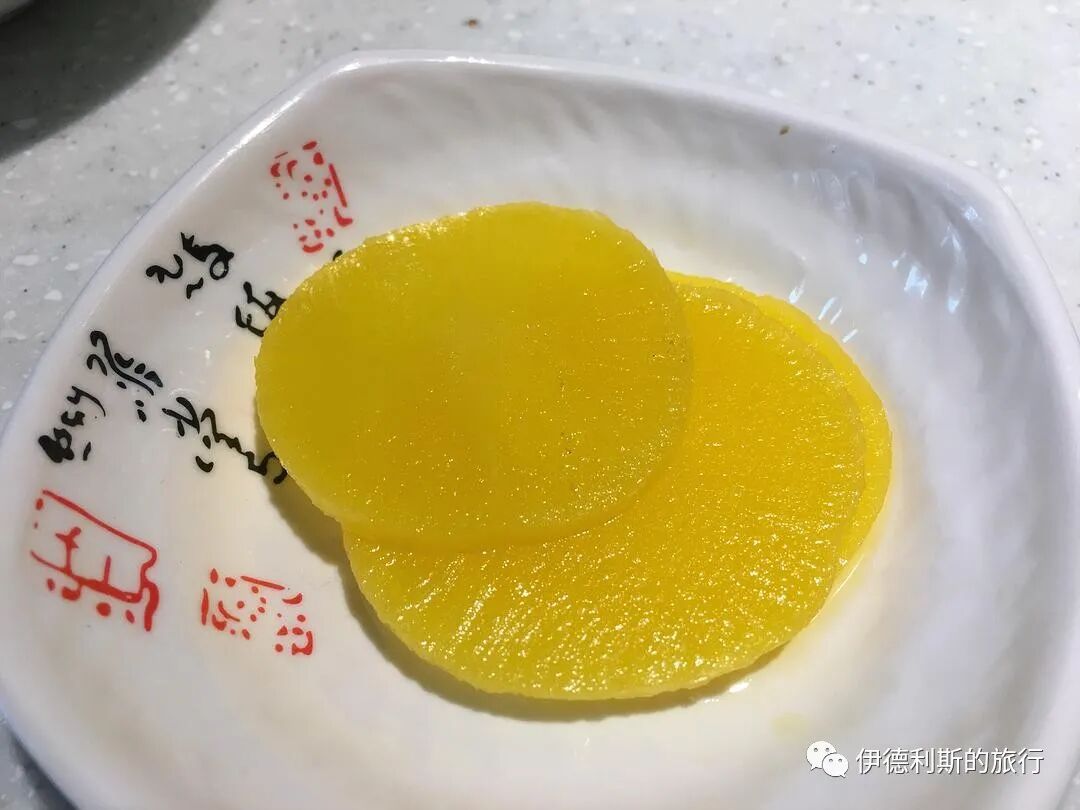
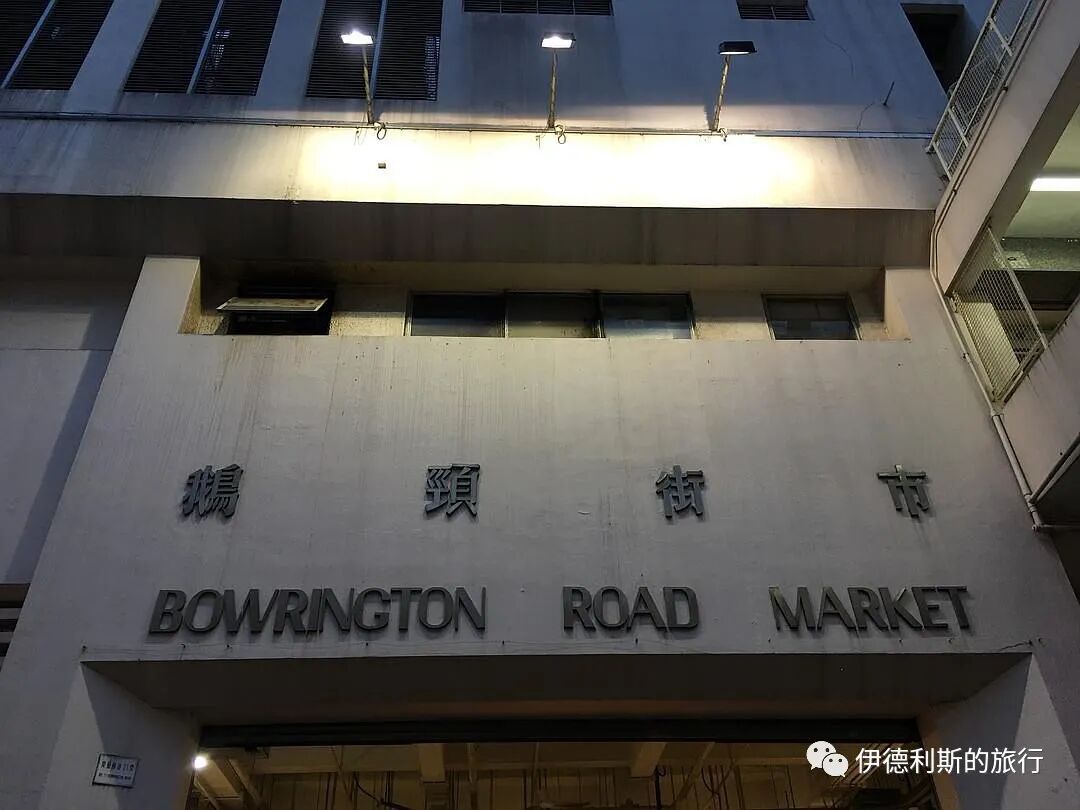
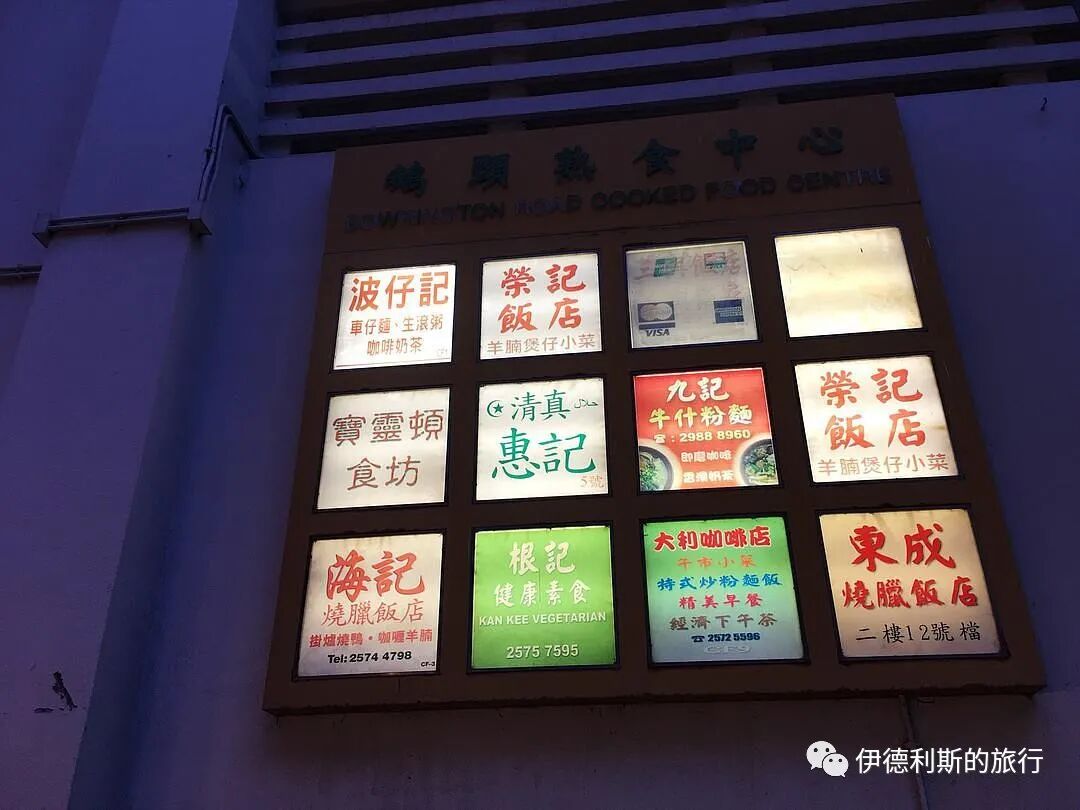
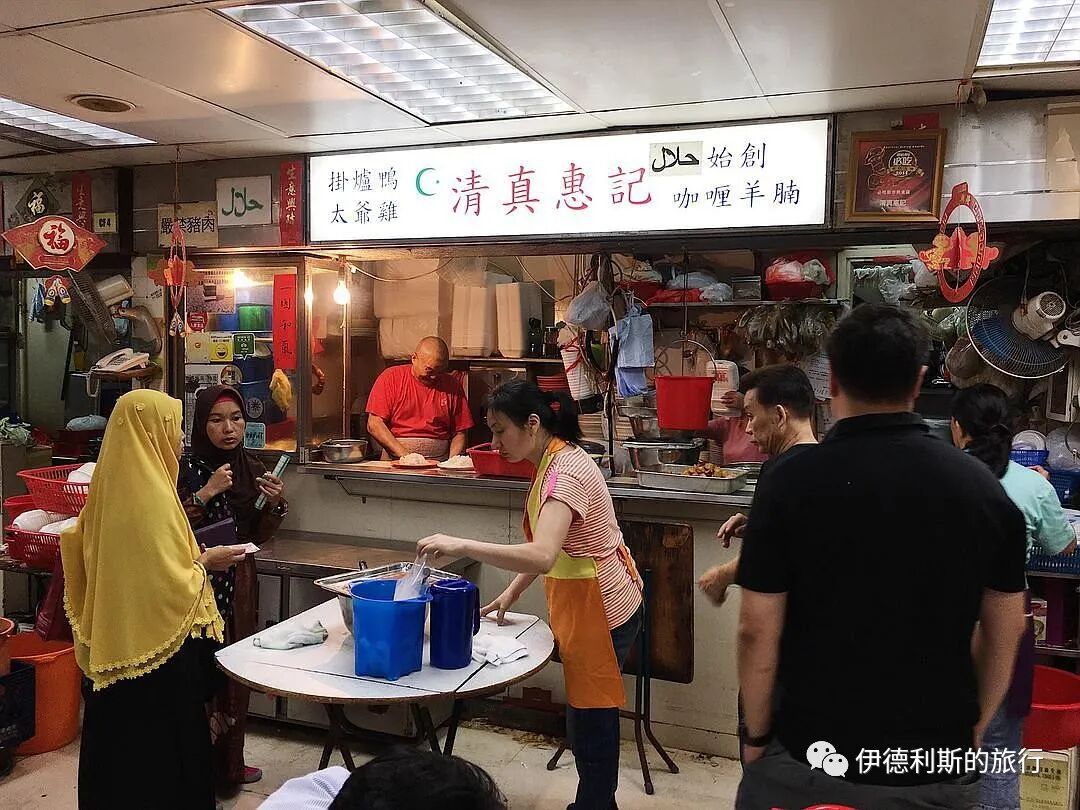
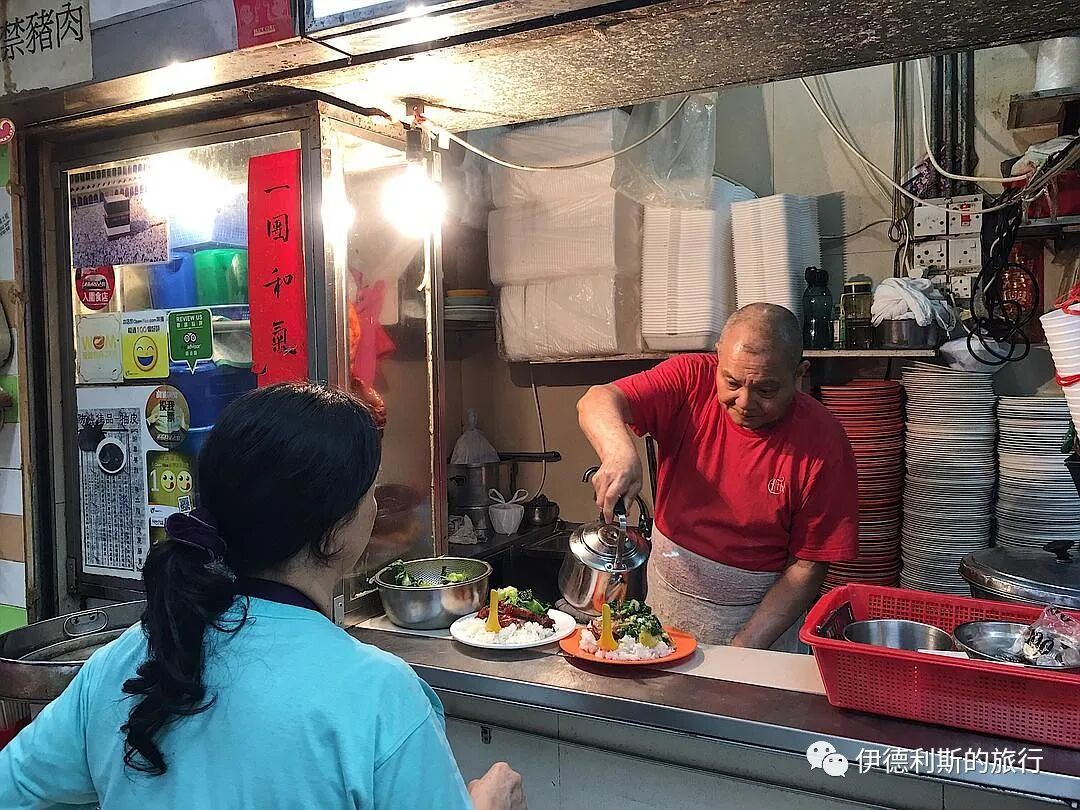
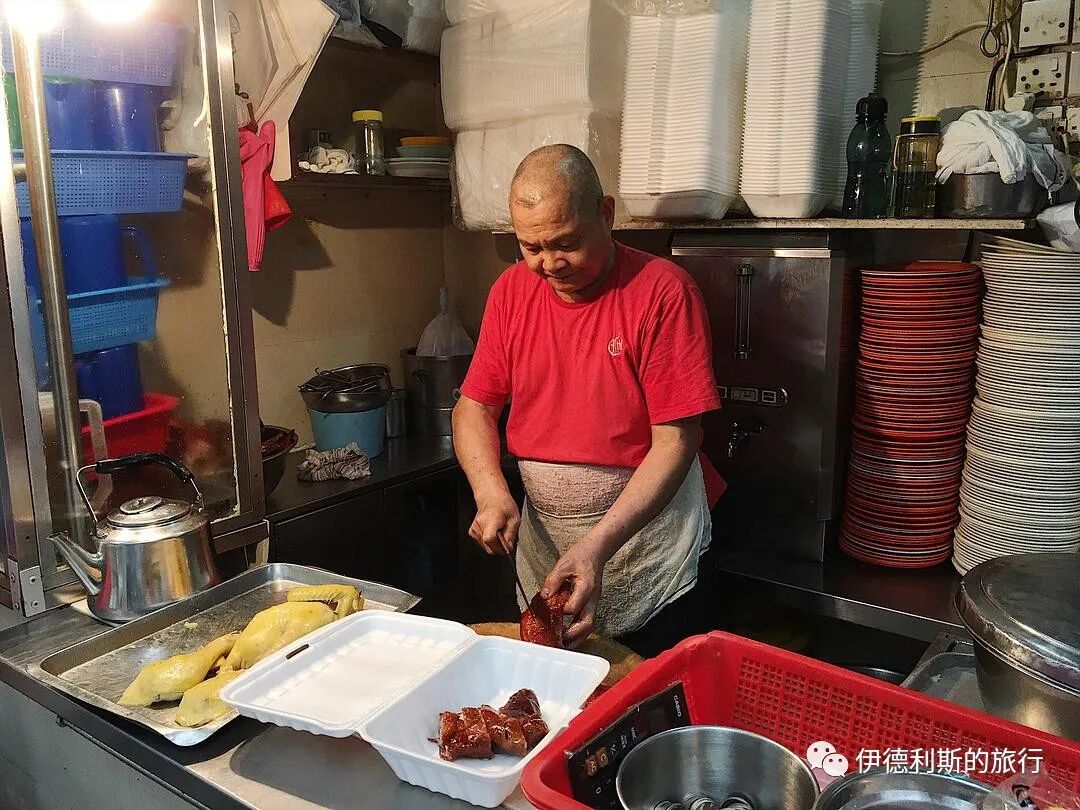
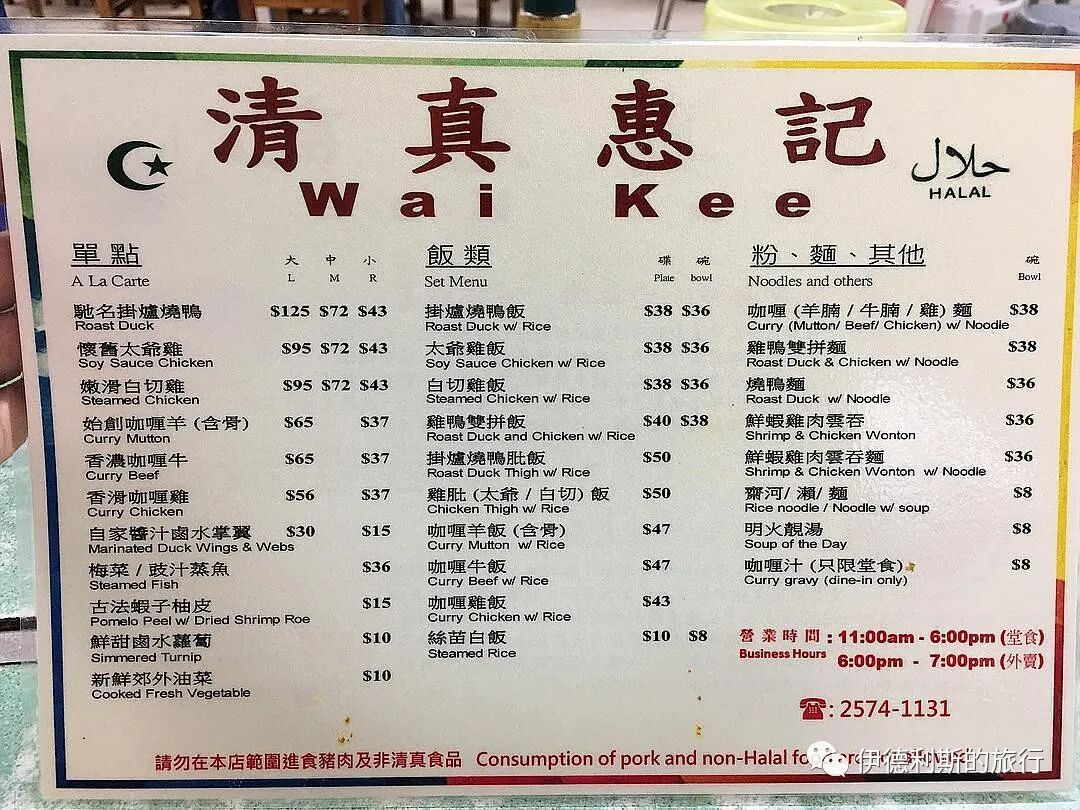
Qingzhen Huiji is currently the only local traditional halal snack shop on Hong Kong Island. It is located inside the Gwan-Ying Street Market on Bowrington Road in Wan Chai. It is not very easy to find, so if you cannot find it after entering the market, you can ask a local stall owner.
It is said that Qingzhen Huiji has been operating at the Wan Chai Gwan-Ying Bridge for over 60 years, and it moved into the Gwan-Ying Street Market after the market opened in 1979. Qingzhen Huiji's dine-in hours are from 11:00 AM to 6:00 PM, so friends planning to go in the afternoon must arrive early.
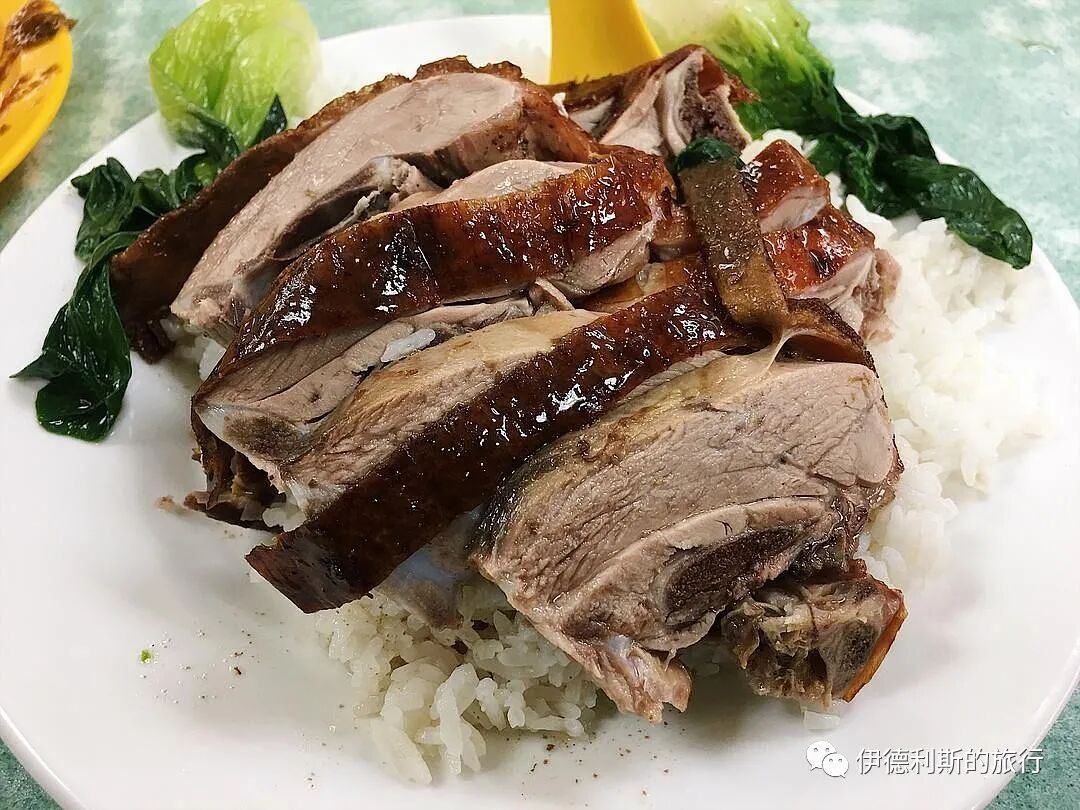
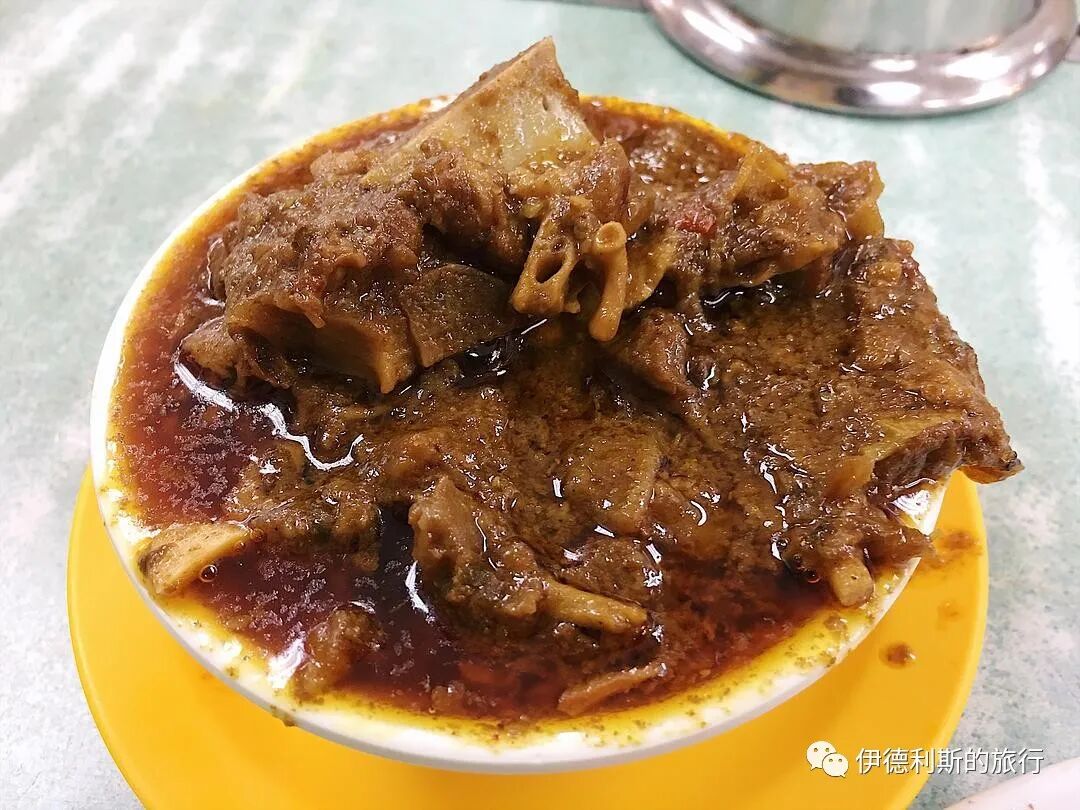
Qingzhen Huiji is famous for its traditional hanging-oven roasted duck and Taiye chicken (soy-sauce chicken), as well as their own original curry lamb brisket. To be honest, this is the best curry lamb brisket I have ever eaten; the flavor is exceptionally authentic.
14. The Huihui people of Sanya, Hainan
The Huihui people are a Muslim ethnic group living in Huihui Village and Huixin Village in Sanya City, Hainan, with a population of nearly 10,000. The Huihui language they use belongs to the Austronesian language family and shares the same origin as the Chamic languages of southern Vietnam. The lifestyle of the Huihui people is strongly influenced by local Hainan ethnic groups, but they simultaneously maintain a devout Islamic faith, making them a very unique ethnic group on the southeast coast of China.
Starting from the 10th century, Champa, located in southern Vietnam, fought successive wars with Dai Viet, Chenla (Cambodia), and the Yuan Dynasty. Many Arab and Persian merchants from Champa sailed across the sea to Hainan. The History of Song: Champa contains the earliest record of a Champa person named Pu Luo'e leading over a hundred clansmen to Danzhou, Hainan, to submit to the empire in 986.
During the Ming and Qing dynasties, Muslims living in Yazhou, Wanzhou, Qiongshan, and other parts of Hainan gradually moved to the Sanya Lifan Village (now Sanya Huixin Village). During the Qing Dynasty, Muslim communities across Hainan experienced Sinicization, Li-ization, or Dan-ization. Sanya Lifan Village became the only Muslim community in Hainan and eventually formed the modern Huihui people.
In addition, some Huihui people came from the mainland. The ancestors of the Ha surname among the Huihui people came from Shaanxi. Later, the whole family moved to Dadan Port in Yazhou, Hainan. During the late Ming and early Qing dynasties, they moved to Sanya Lifan Village together with another group of Hui Muslims surnamed Liu.
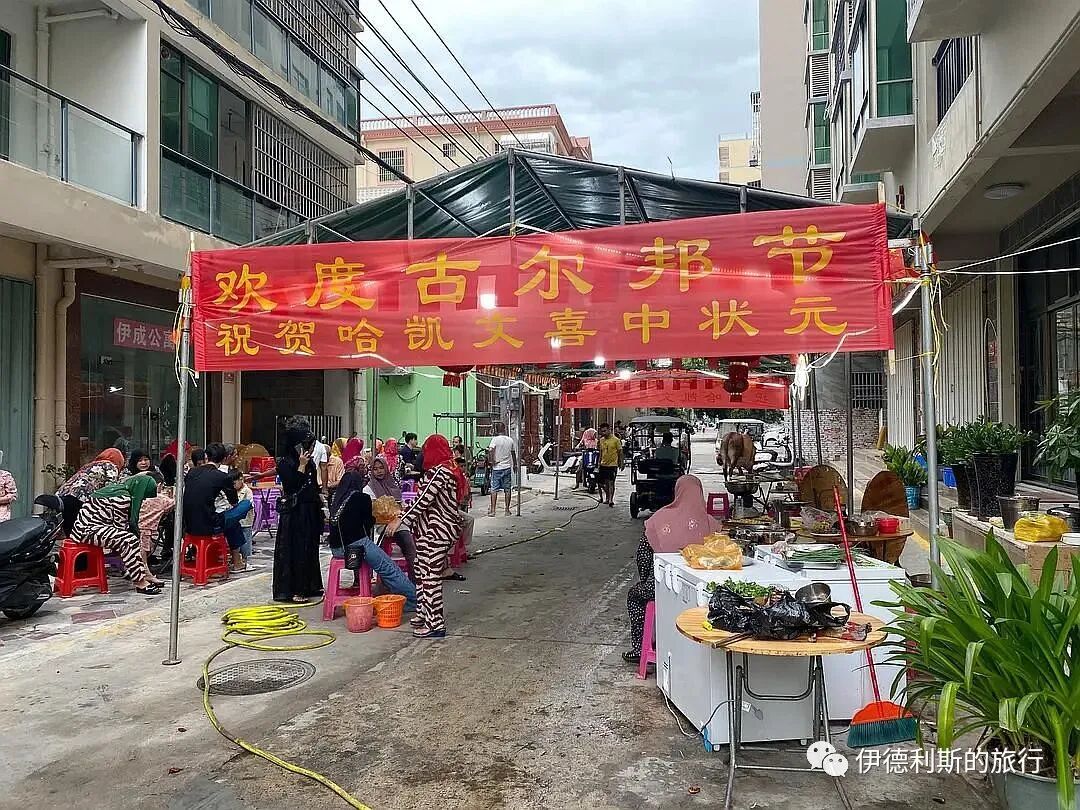
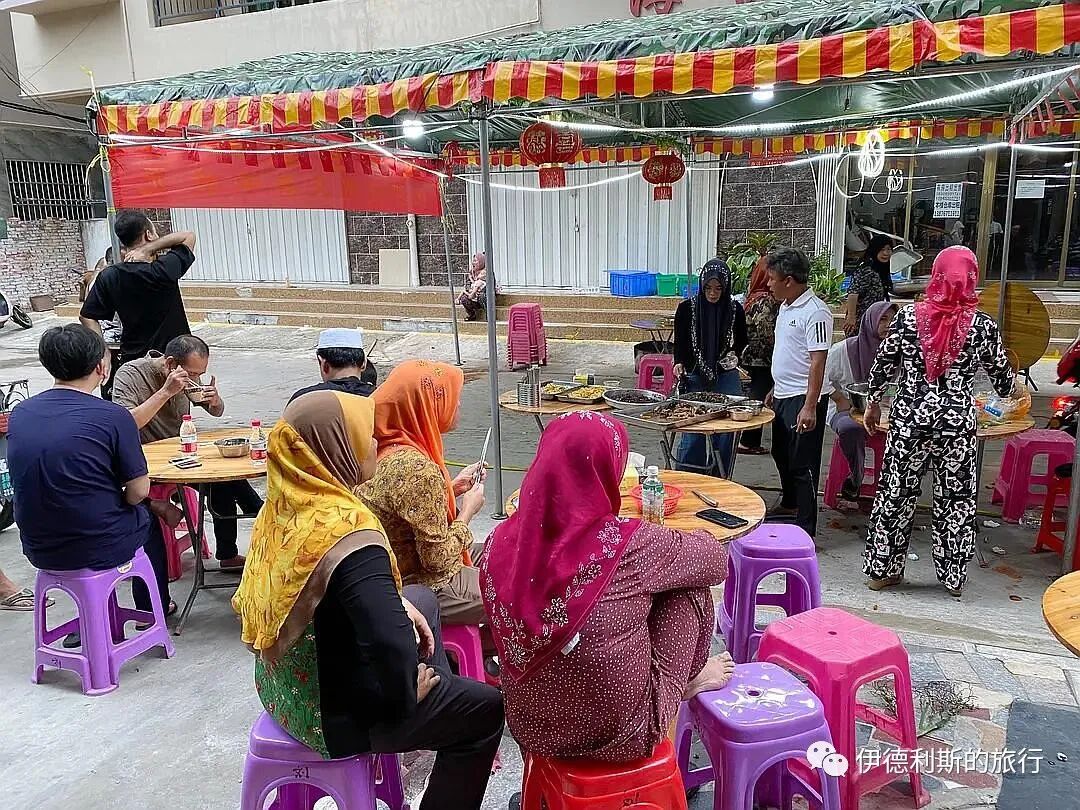
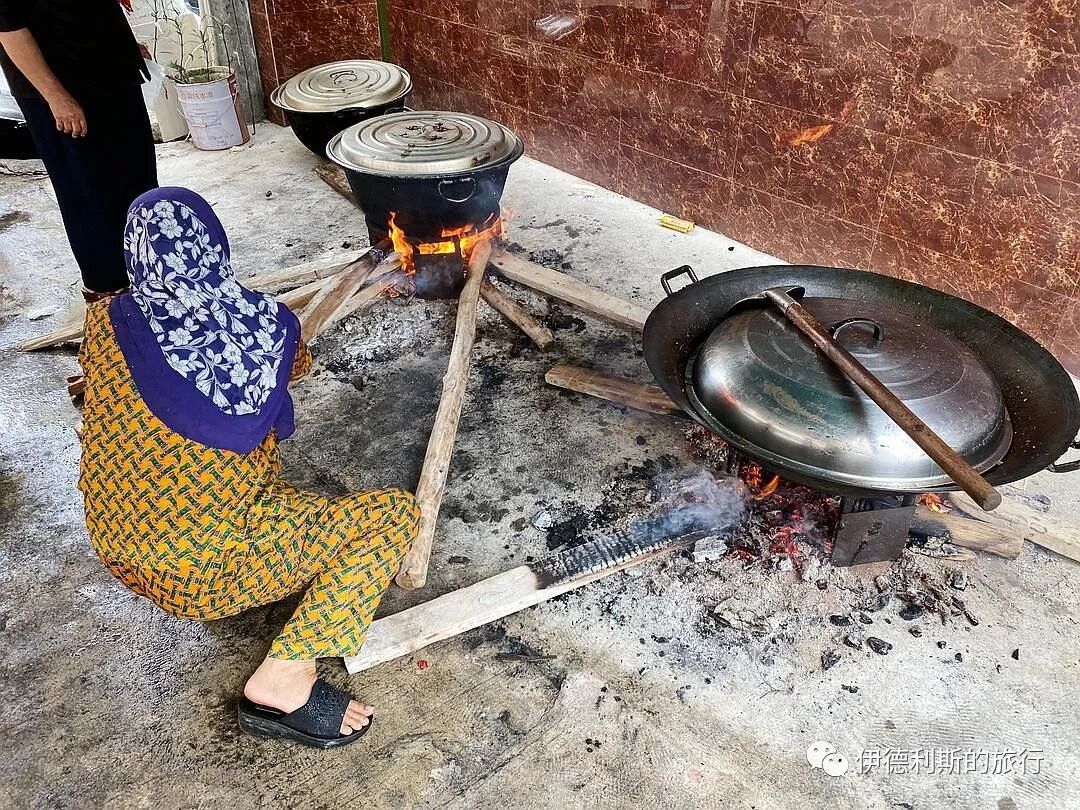
In Huixin Village, we happened to encounter a banquet being held for a child of the Ha family who was admitted to Tsinghua University.
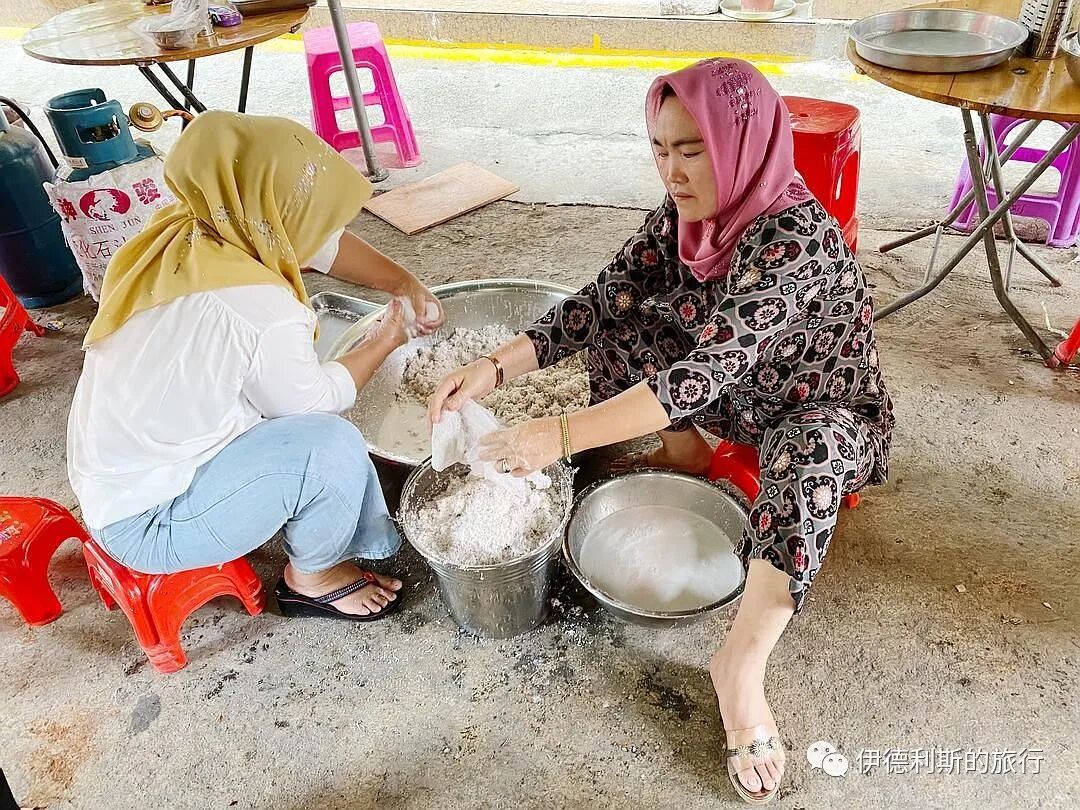
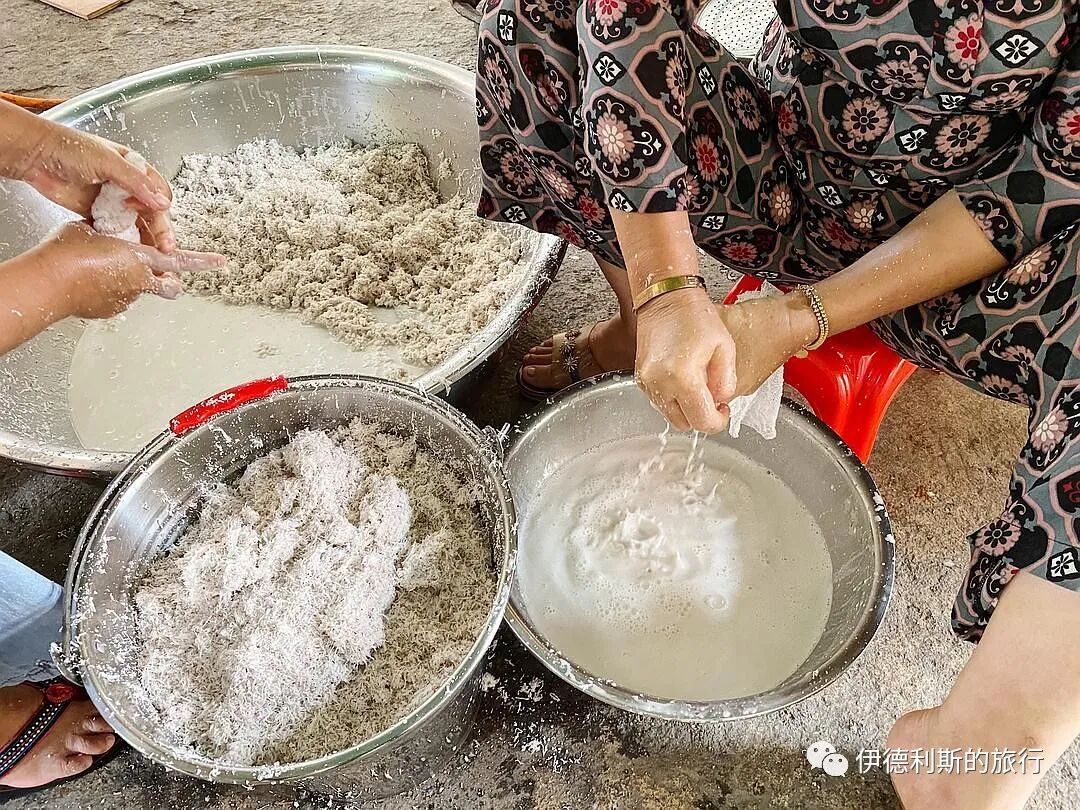
Watching the Huihui people make traditional coconut rice.
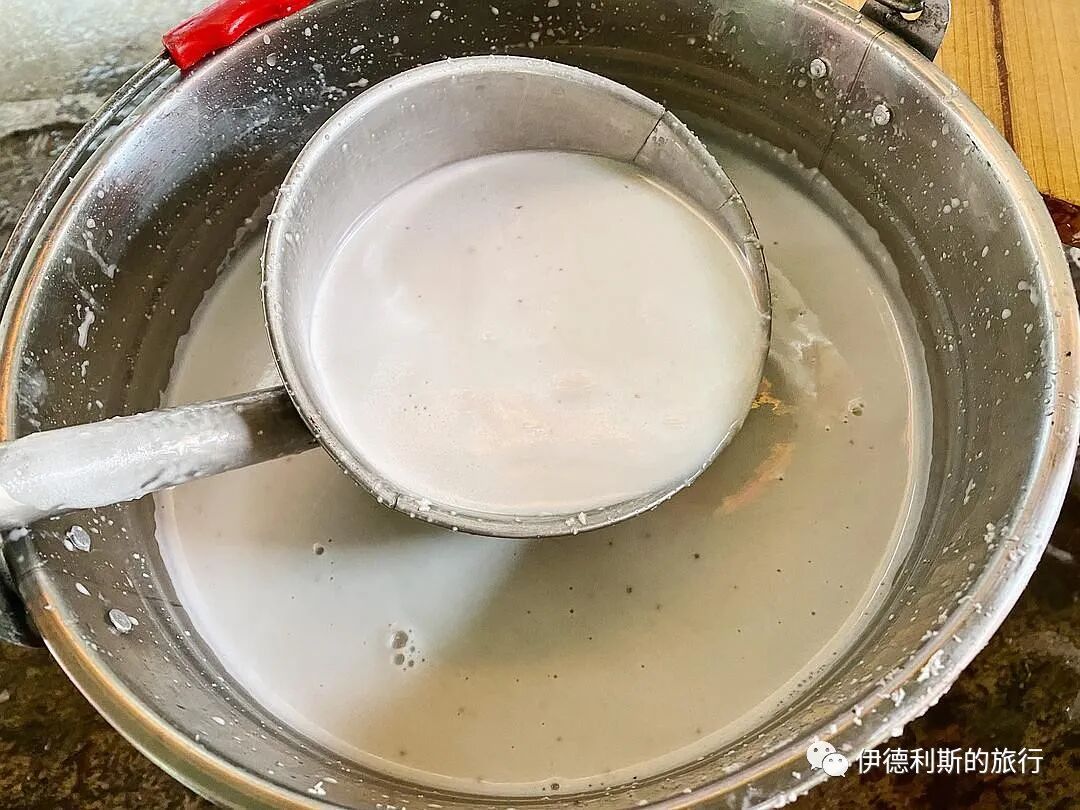
First, you must use old coconuts with thick meat, scrape all the coconut meat into coconut shreds, and then use cheesecloth to squeeze out all the coconut oil.
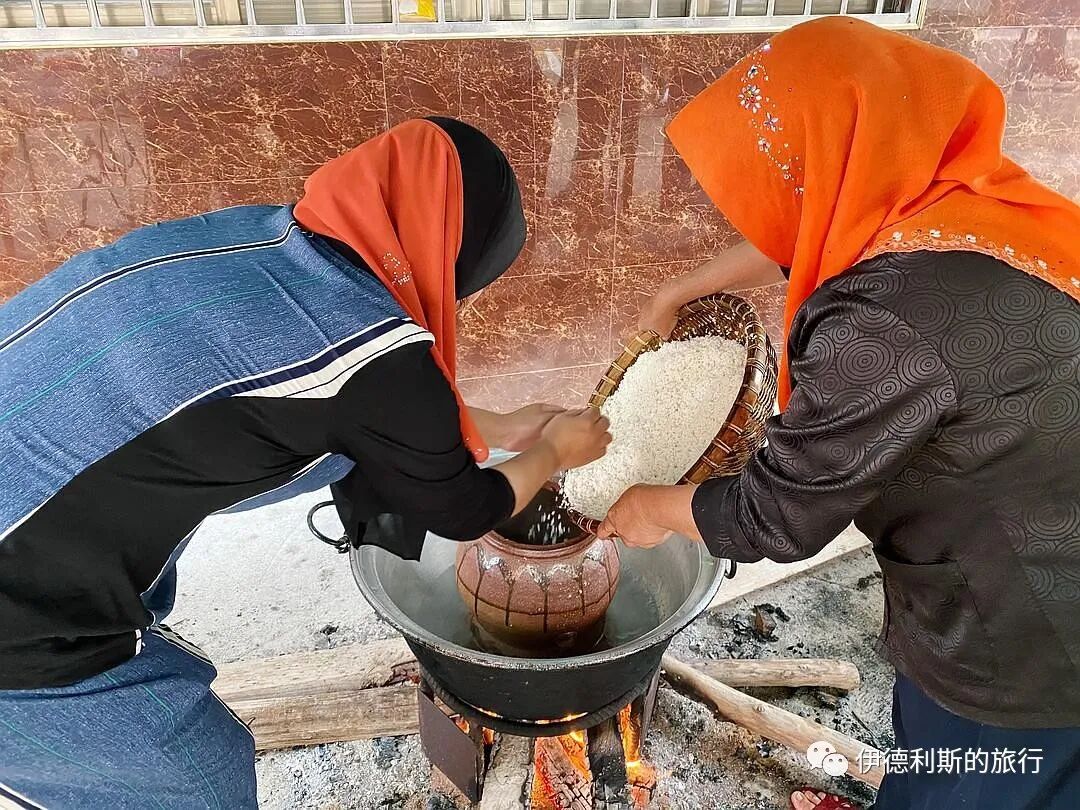
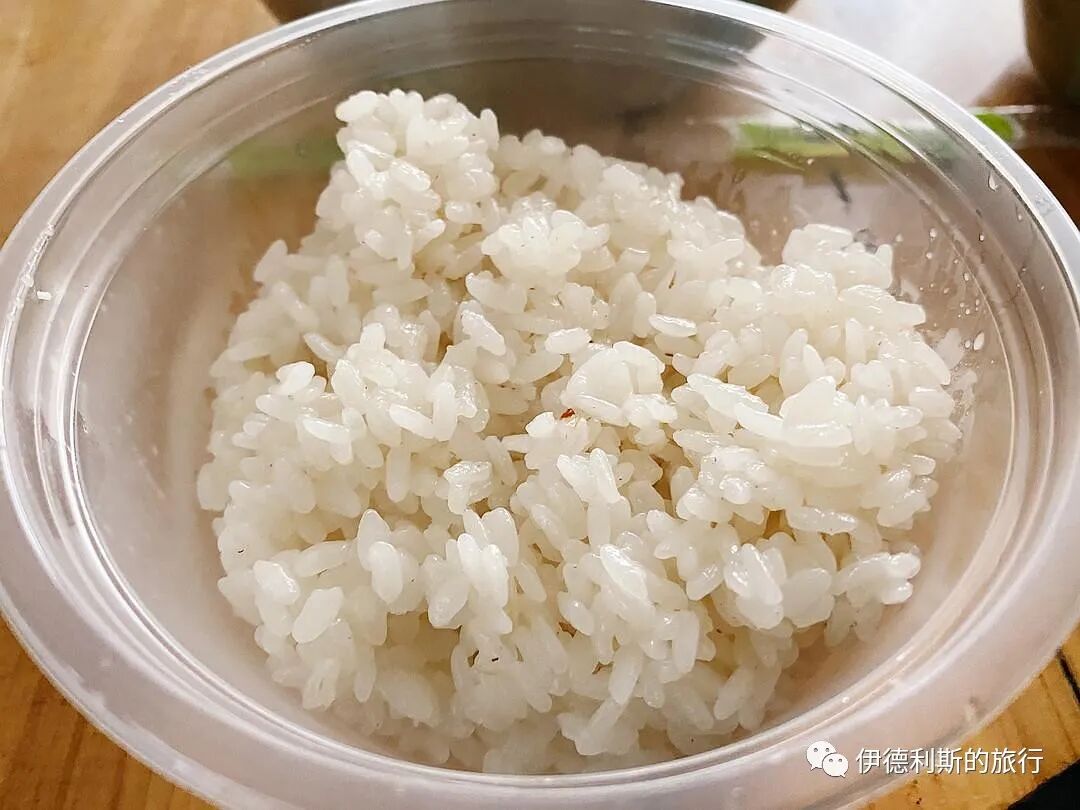
The rice is steamed using a traditional Li ethnic pottery steamer (tao zeng). After the rice is steamed, the coconut milk and rice are thoroughly mixed together. At this stage, the coconut rice is very firm and chewy.
Then, the mixed coconut rice is steamed a second time in the pottery steamer. At this point, the coconut rice is softer and stickier than in the first stage, and the coconut milk and rice are completely fused together.
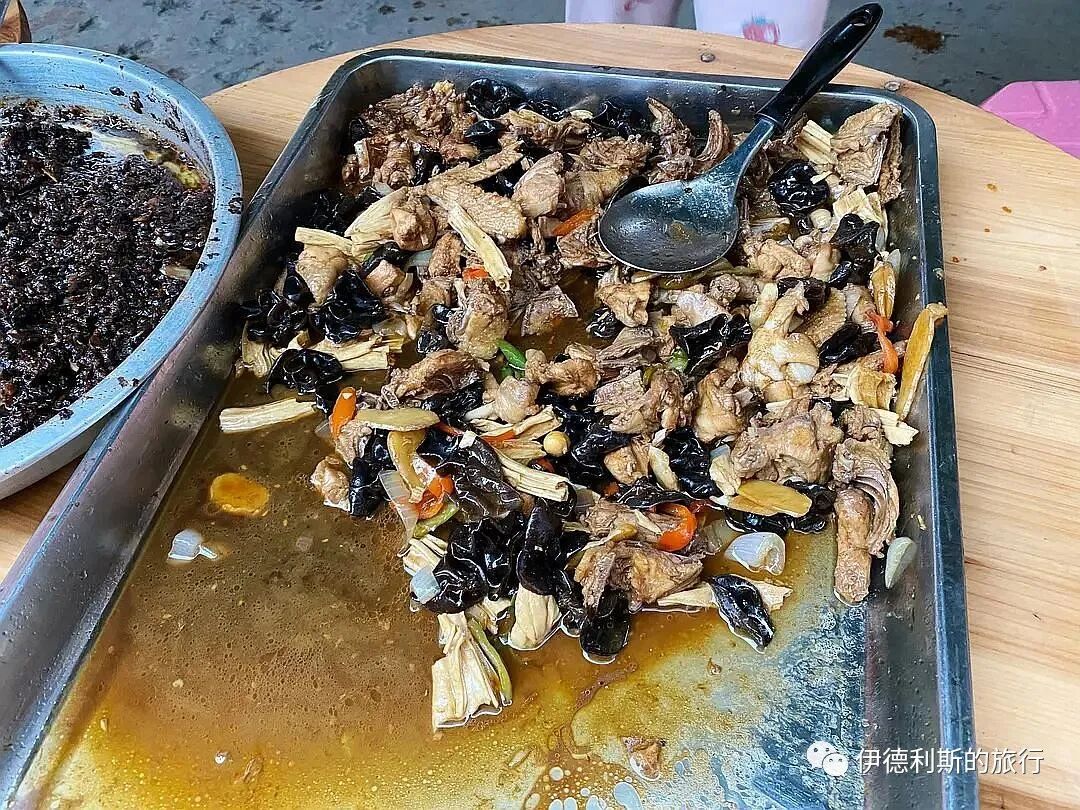
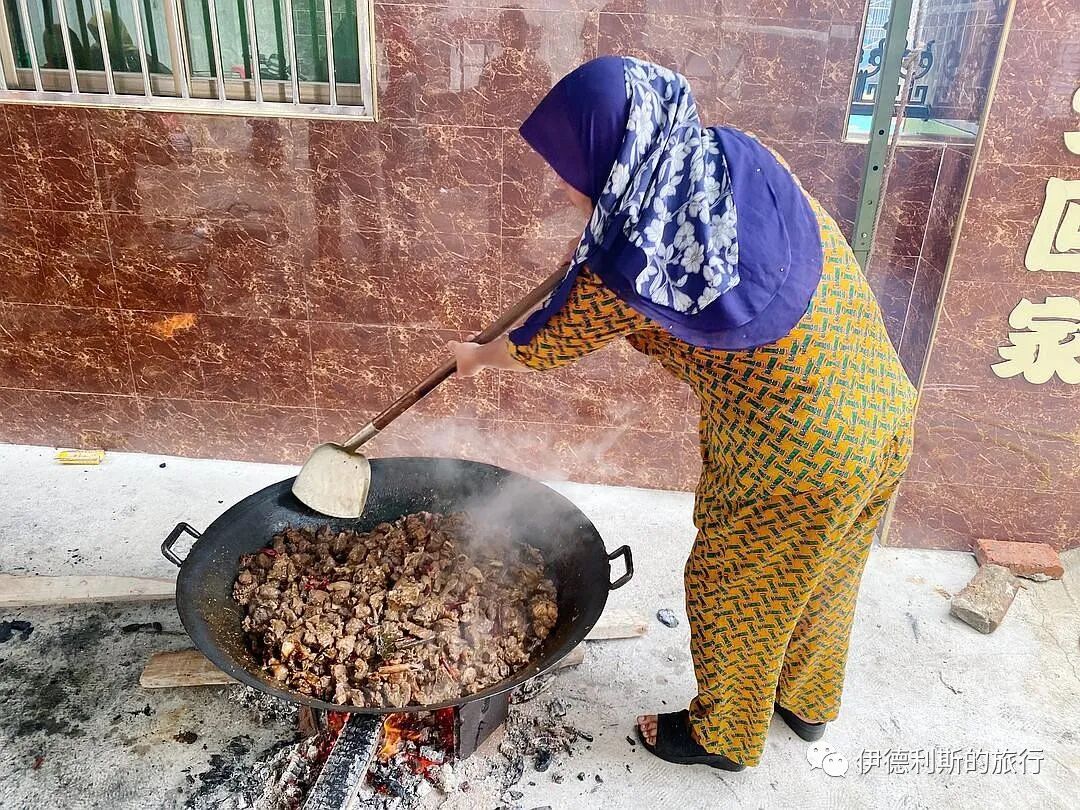
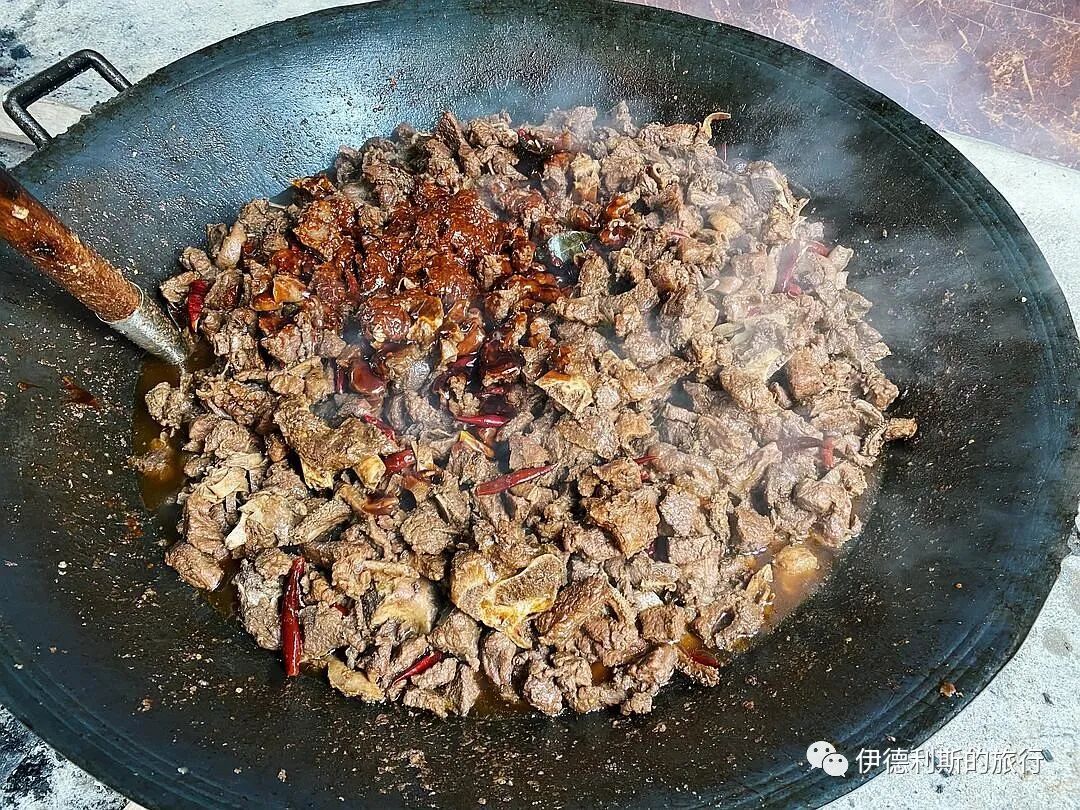
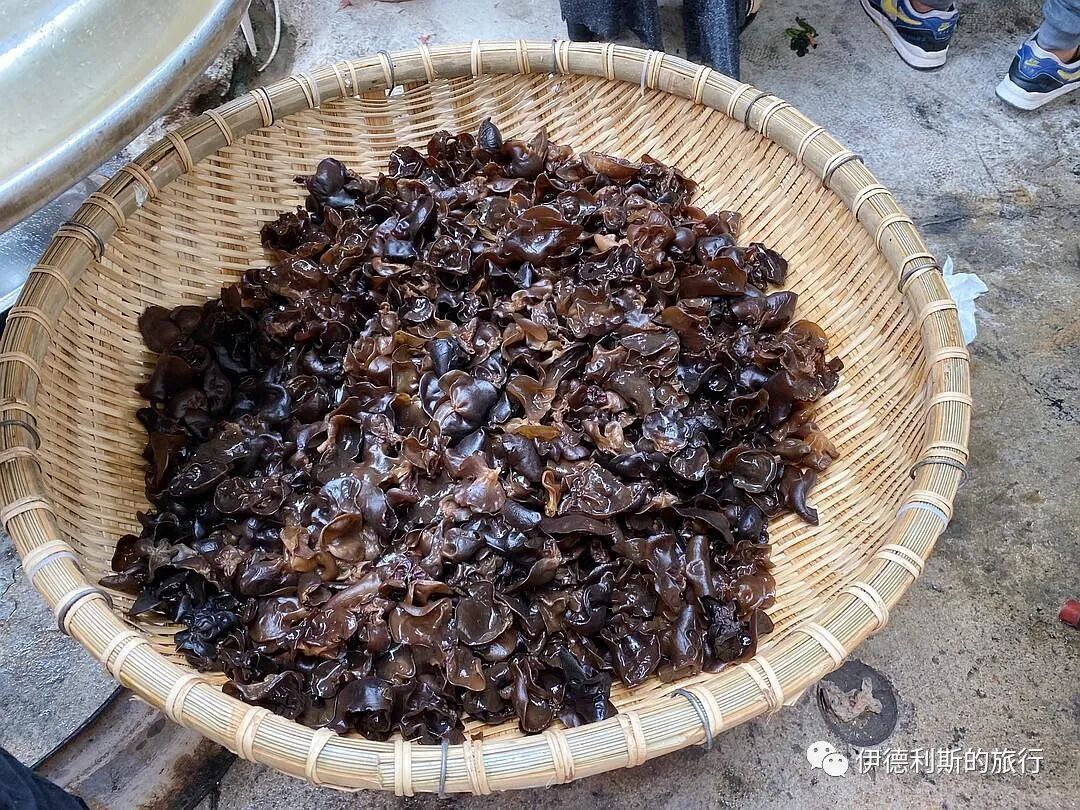
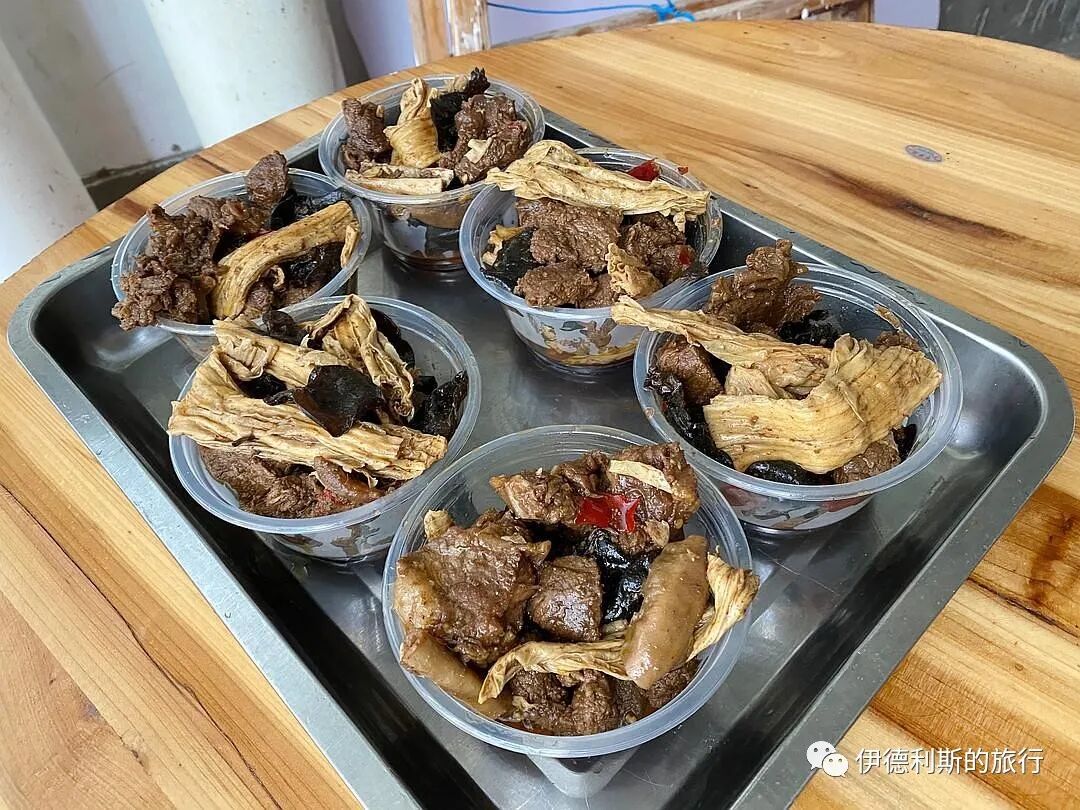
They used beef slaughtered the previous day for Eid al-Adha. First, stew the meat, then add wood ear mushrooms and yuba (dried bean curd sheets). This is a classic main dish at Huihui banquets.
15. The Tatars of Urumqi
The Tatar ethnic group is the smallest ethnic group in China, with only about 3,000 people. Most of the Tatars in Urumqi belong to the Kazan Tatars, who moved here successively from the Kazan area along the Volga River from the 19th century to the early 20th century. At that time, most Tatars were intellectuals or merchants, and they played an important role in promoting the establishment of modern education in Xinjiang.
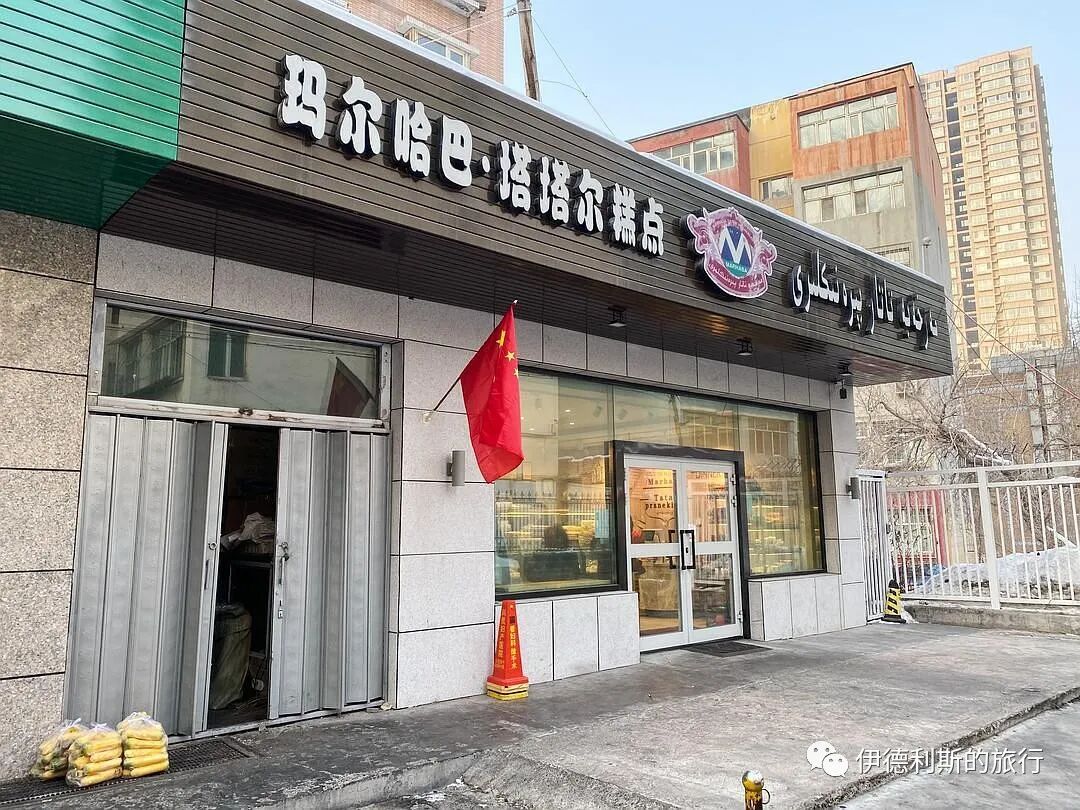
The Tatar pastry shop in Urumqi is located on the site of a former Russian trading port. A hundred years ago, this was a place where Russians, Tatars, and various Central Asian merchants traded, a bit like Sanlitun in Beijing. The Tatar pastry shop is also a witness to this history.
Their most classic cake consists of six layers of pastry sandwiched with six layers of cream. The pastry is made from milk, eggs, ghee, and honey, without adding water, and it tastes exceptionally fragrant.
16. The Dongxiang people of Xiaoxihu, Lanzhou
The Dongxiang people are a Muslim ethnic group that uses the Dongxiang language of the Mongolic language family. They are mainly distributed in Dongxiang County, Hezheng County, and Guanghe County in Linxia, Gansu. The loess hills where the Dongxiang people live are relatively barren, so after the 1980s, many people chose to go to Lanzhou to make a living. Xiaoxihu is located at the end of the road from Linxia to Lanzhou, close to the Hui Muslim communities of Xiyuan and Xihu that have formed since the Qing Dynasty. Coupled with the commercial development driven by the Xiaoxihu Yiwu Trade City since the 1990s, Xiaoxihu has become the main residential area for the Dongxiang people in Lanzhou.
The Dongxiang people in Xiaoxihu are most concentrated in Baishu Lane, Jiangouyan, and Shangxiyuan, where you can eat various Dongxiang delicacies.
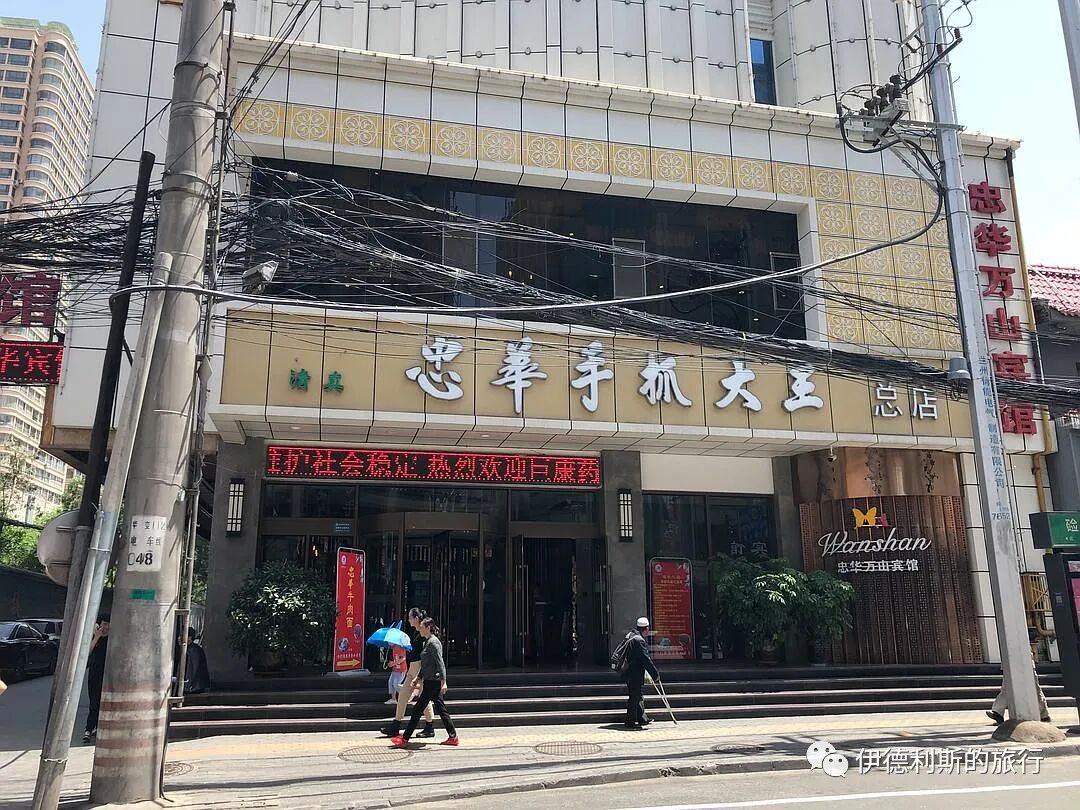
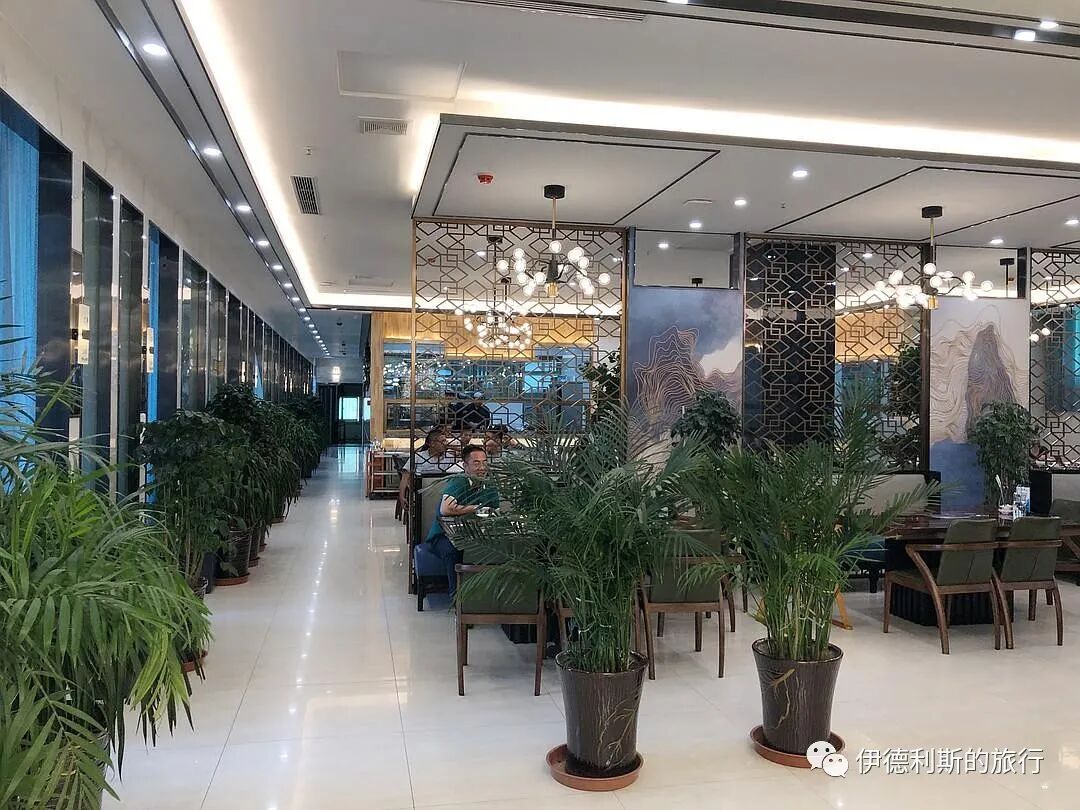
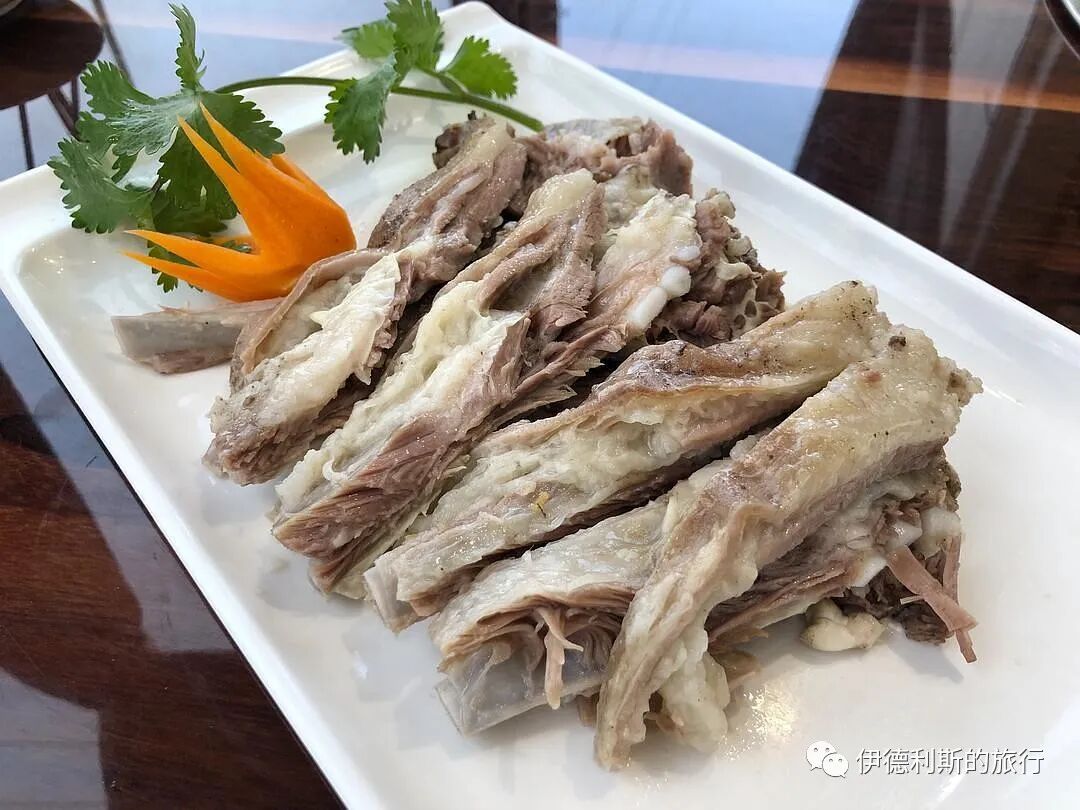
The owner of Zhonghua Shouzhua Dawang (Zhonghua Hand-Grabbed Mutton King) is named Ma Zhonghua, and it is a very popular Dongxiang hand-grabbed mutton shop in Lanzhou. Drinking sanpaotai (a traditional tea with three ingredients) while eating half a jin (250 grams) of hand-grabbed mutton ribs, a small bowl of lentil sparrow-tongue noodles, and a plate of liangpi (cold skin noodles), I felt very satisfied. This place has a good environment and good service; they refill the water frequently, and of course, the sanpaotai itself is also delicious.
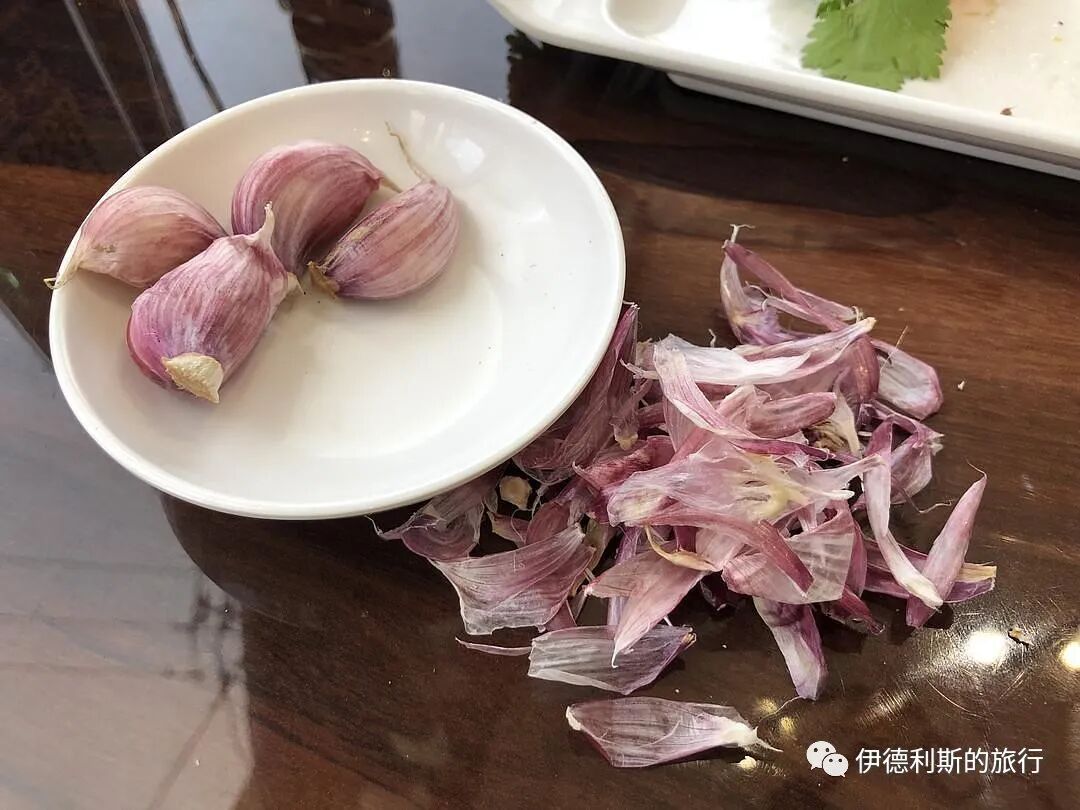
The mutton tastes very authentic; basically, it is one piece of meat with one clove of garlic, and the garlic is also very fragrant.
Liangpi (cold skin noodles)
Lentil sparrow-tongue noodles view all
Summary: This travel note introduces Twenty Ethnic Restaurants in China: Halal and Minority Food Guide (Part 2). Qingzhen Huiji is currently the only local traditional halal snack shop on Hong Kong Island. It is useful for readers interested in Ethnic Food, Halal Food, China Travel. This is part 1 of 2.
Chinese Muslims in Hong Kong
Qingzhen Huiji is currently the only local traditional halal snack shop on Hong Kong Island. It is located inside the Gwan-Ying Street Market on Bowrington Road in Wan Chai. It is not very easy to find, so if you cannot find it after entering the market, you can ask a local stall owner.
It is said that Qingzhen Huiji has been operating at the Wan Chai Gwan-Ying Bridge for over 60 years, and it moved into the Gwan-Ying Street Market after the market opened in 1979. Qingzhen Huiji's dine-in hours are from 11:00 AM to 6:00 PM, so friends planning to go in the afternoon must arrive early.
Qingzhen Huiji is famous for its traditional hanging-oven roasted duck and Taiye chicken (soy-sauce chicken), as well as their own original curry lamb brisket. To be honest, this is the best curry lamb brisket I have ever eaten; the flavor is exceptionally authentic.
14. The Huihui people of Sanya, Hainan
The Huihui people are a Muslim ethnic group living in Huihui Village and Huixin Village in Sanya City, Hainan, with a population of nearly 10,000. The Huihui language they use belongs to the Austronesian language family and shares the same origin as the Chamic languages of southern Vietnam. The lifestyle of the Huihui people is strongly influenced by local Hainan ethnic groups, but they simultaneously maintain a devout Islamic faith, making them a very unique ethnic group on the southeast coast of China.
Starting from the 10th century, Champa, located in southern Vietnam, fought successive wars with Dai Viet, Chenla (Cambodia), and the Yuan Dynasty. Many Arab and Persian merchants from Champa sailed across the sea to Hainan. The History of Song: Champa contains the earliest record of a Champa person named Pu Luo'e leading over a hundred clansmen to Danzhou, Hainan, to submit to the empire in 986.
During the Ming and Qing dynasties, Muslims living in Yazhou, Wanzhou, Qiongshan, and other parts of Hainan gradually moved to the Sanya Lifan Village (now Sanya Huixin Village). During the Qing Dynasty, Muslim communities across Hainan experienced Sinicization, Li-ization, or Dan-ization. Sanya Lifan Village became the only Muslim community in Hainan and eventually formed the modern Huihui people.
In addition, some Huihui people came from the mainland. The ancestors of the Ha surname among the Huihui people came from Shaanxi. Later, the whole family moved to Dadan Port in Yazhou, Hainan. During the late Ming and early Qing dynasties, they moved to Sanya Lifan Village together with another group of Hui Muslims surnamed Liu.
In Huixin Village, we happened to encounter a banquet being held for a child of the Ha family who was admitted to Tsinghua University.
Watching the Huihui people make traditional coconut rice.
First, you must use old coconuts with thick meat, scrape all the coconut meat into coconut shreds, and then use cheesecloth to squeeze out all the coconut oil.
The rice is steamed using a traditional Li ethnic pottery steamer (tao zeng). After the rice is steamed, the coconut milk and rice are thoroughly mixed together. At this stage, the coconut rice is very firm and chewy.
Then, the mixed coconut rice is steamed a second time in the pottery steamer. At this point, the coconut rice is softer and stickier than in the first stage, and the coconut milk and rice are completely fused together.
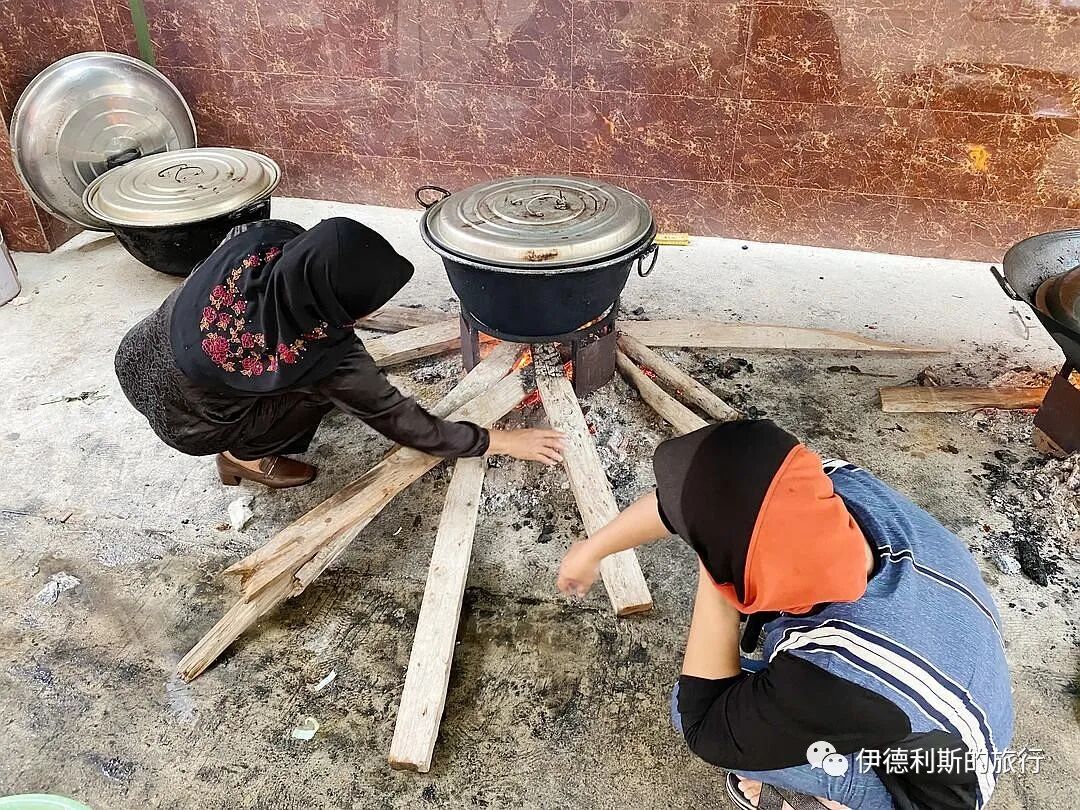
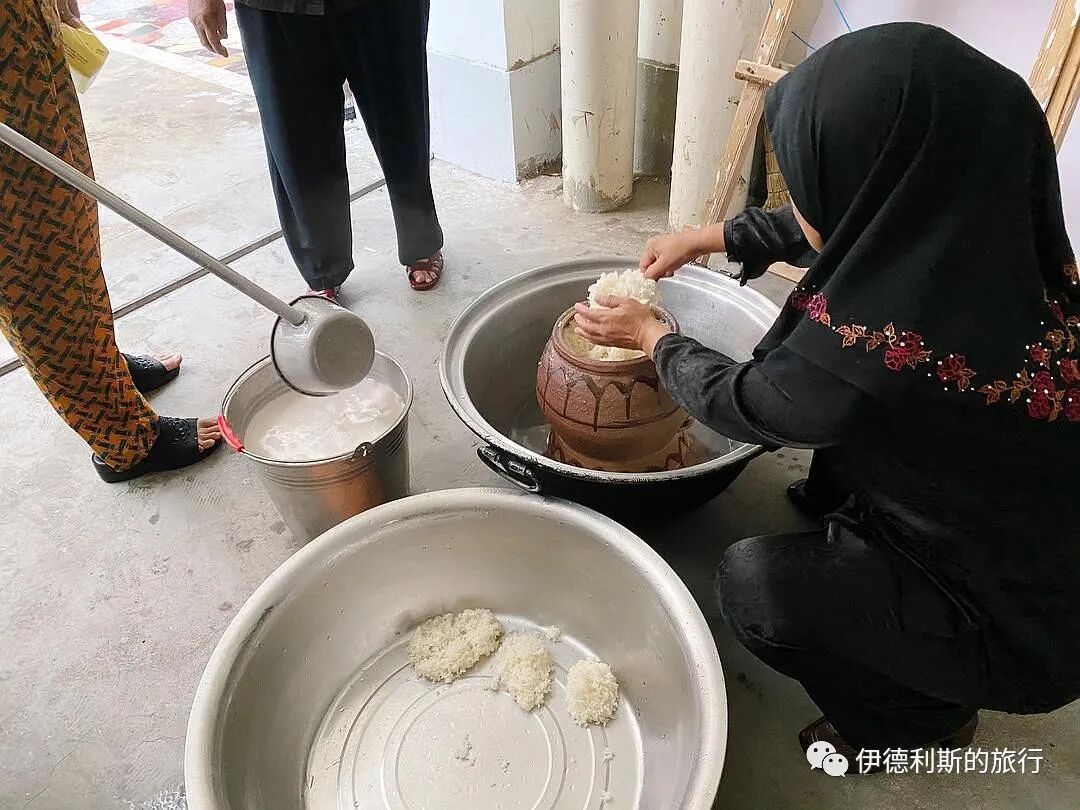
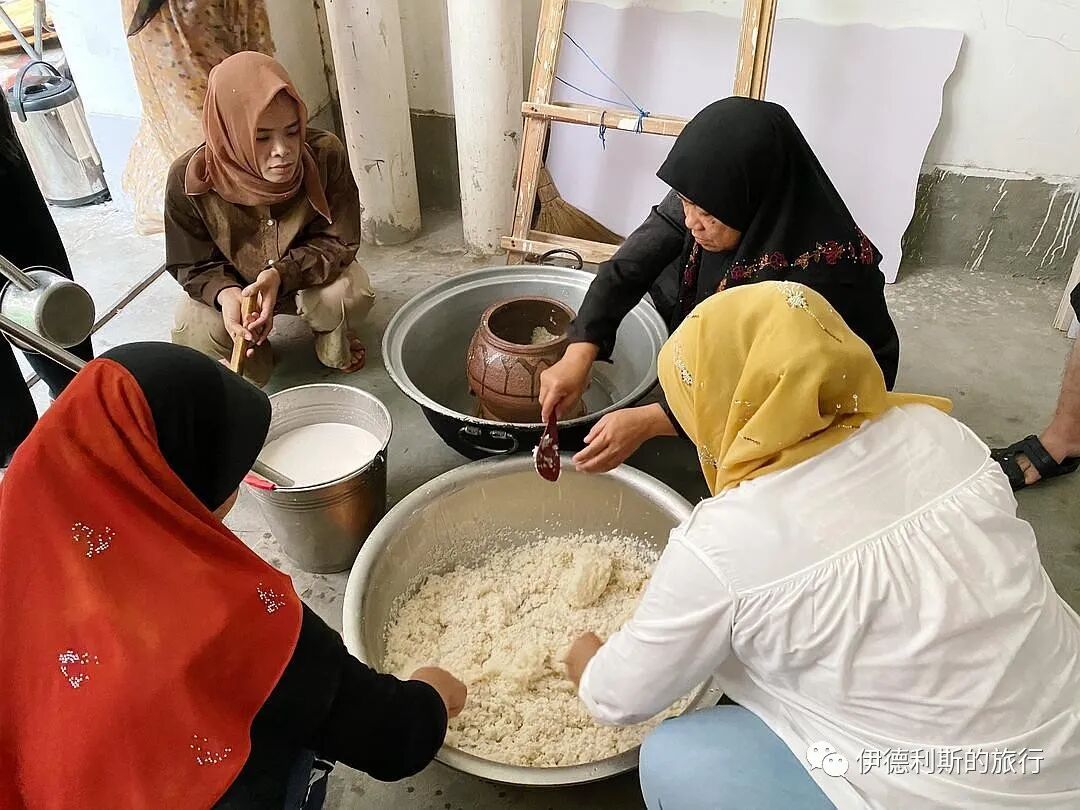
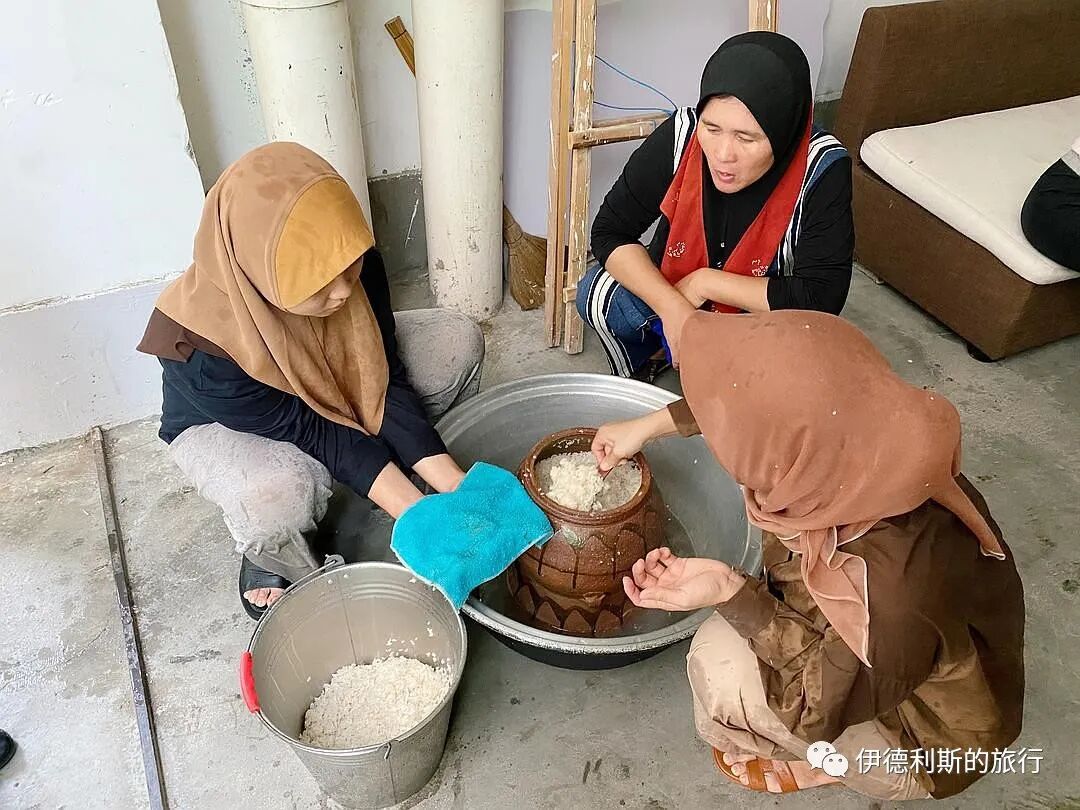
They used beef slaughtered the previous day for Eid al-Adha. First, stew the meat, then add wood ear mushrooms and yuba (dried bean curd sheets). This is a classic main dish at Huihui banquets.
15. The Tatars of Urumqi
The Tatar ethnic group is the smallest ethnic group in China, with only about 3,000 people. Most of the Tatars in Urumqi belong to the Kazan Tatars, who moved here successively from the Kazan area along the Volga River from the 19th century to the early 20th century. At that time, most Tatars were intellectuals or merchants, and they played an important role in promoting the establishment of modern education in Xinjiang.
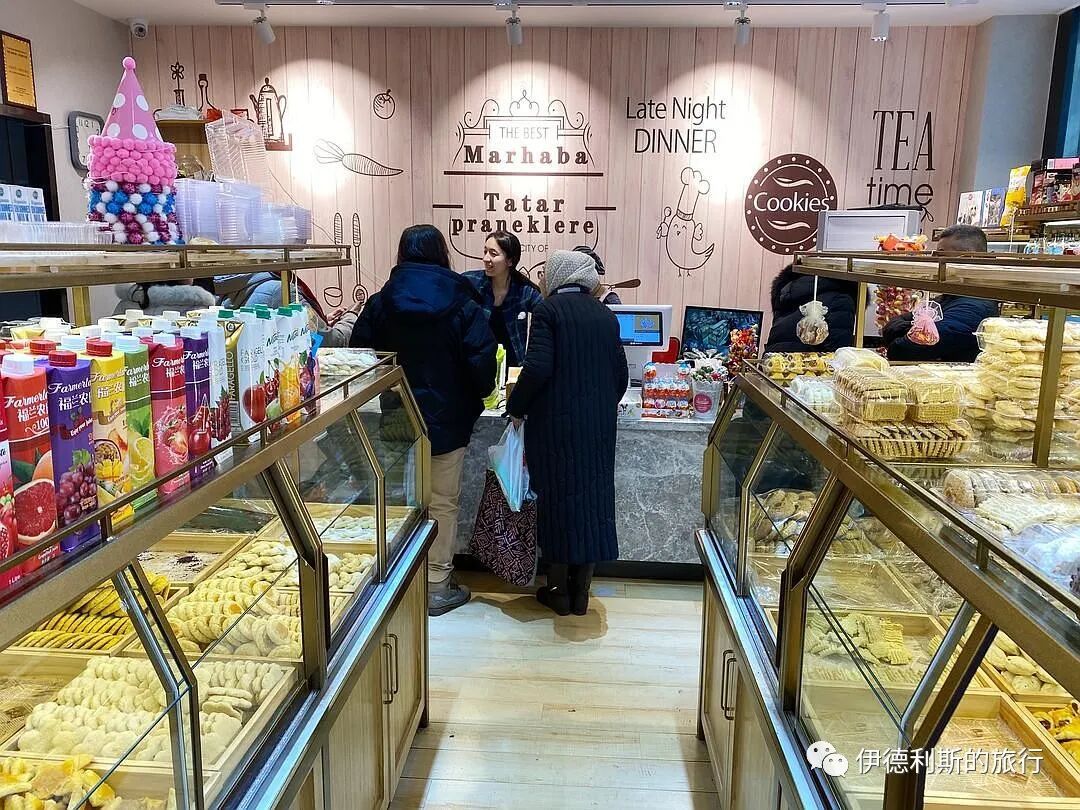
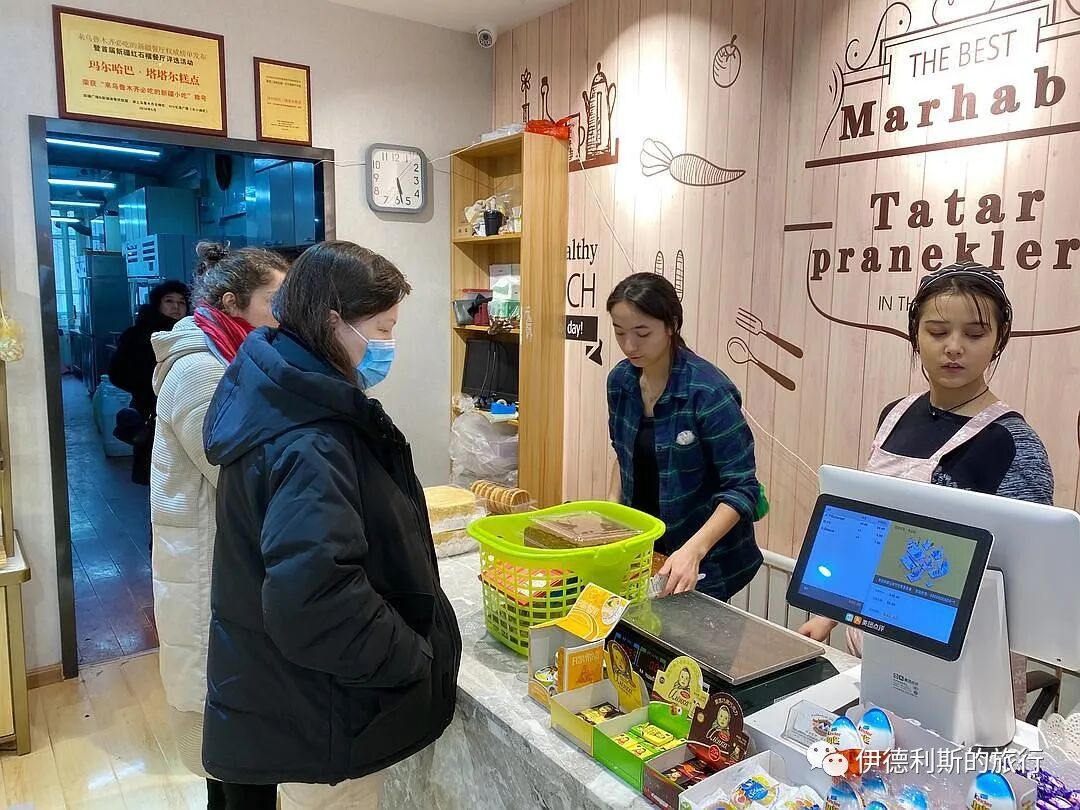
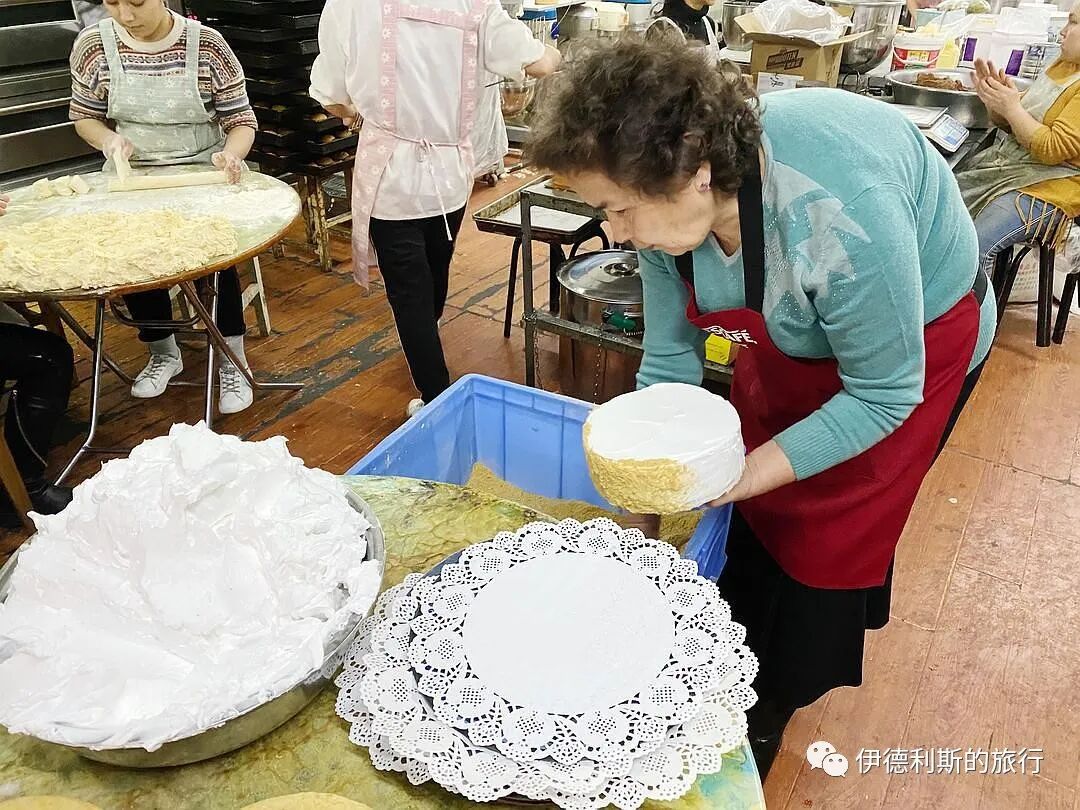
The Tatar pastry shop in Urumqi is located on the site of a former Russian trading port. A hundred years ago, this was a place where Russians, Tatars, and various Central Asian merchants traded, a bit like Sanlitun in Beijing. The Tatar pastry shop is also a witness to this history.
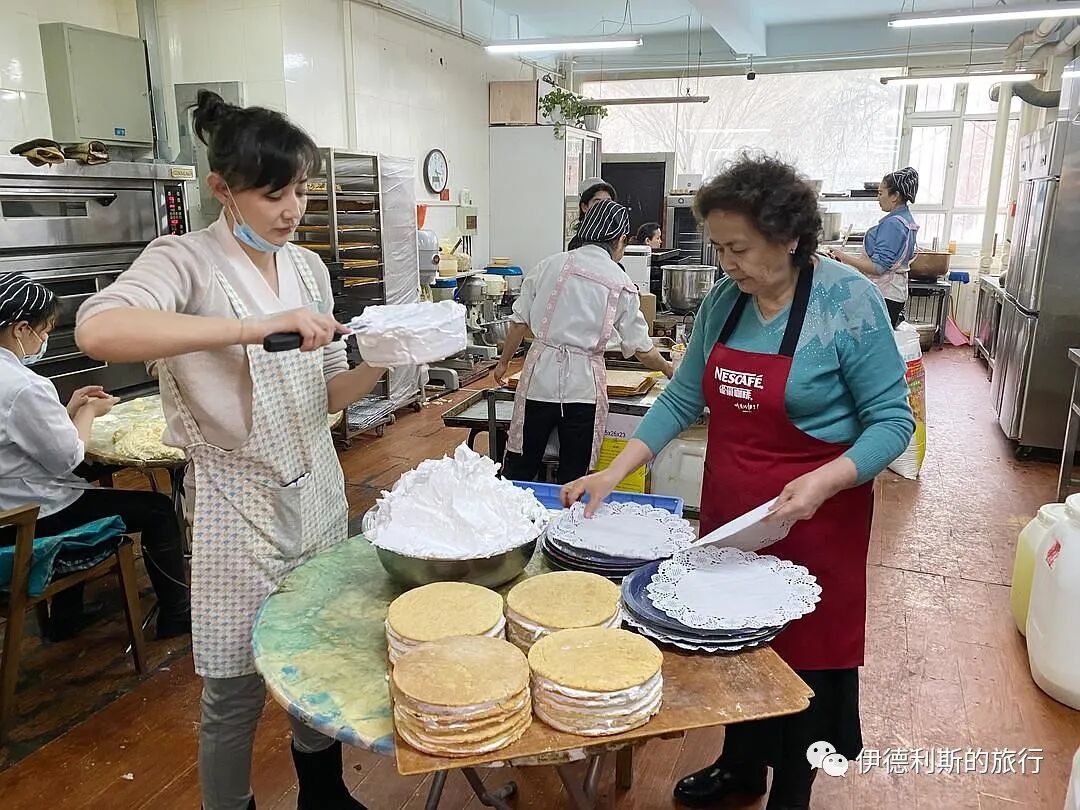
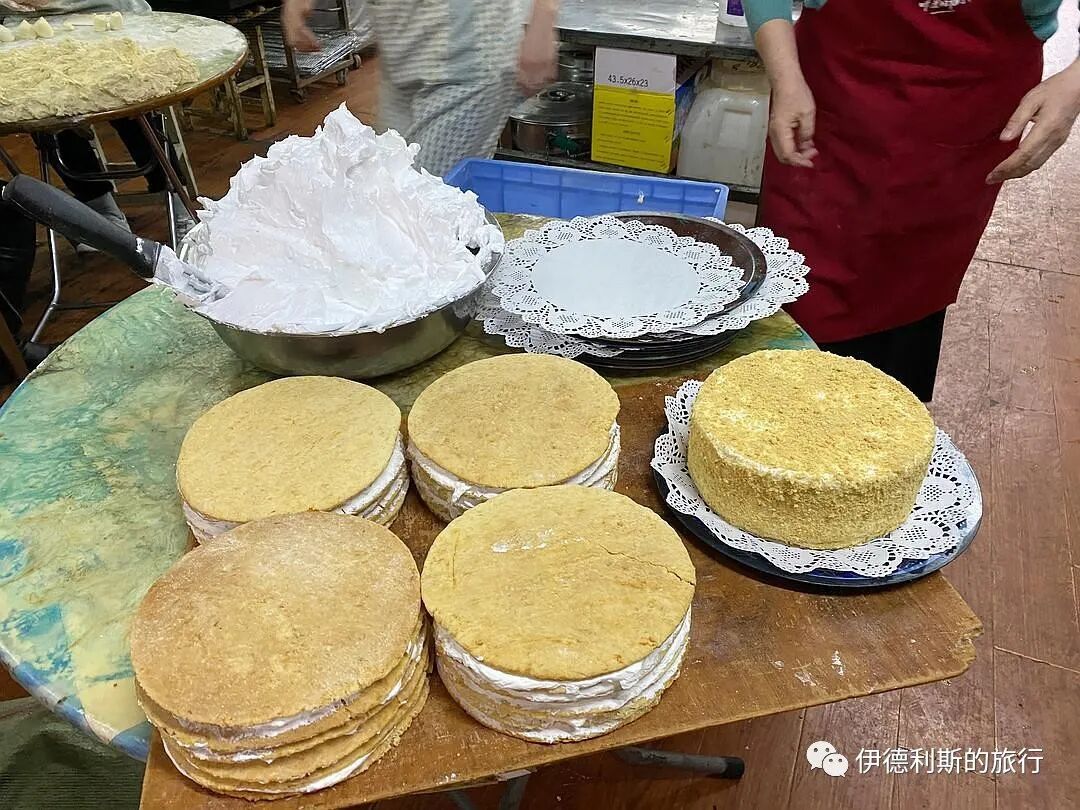
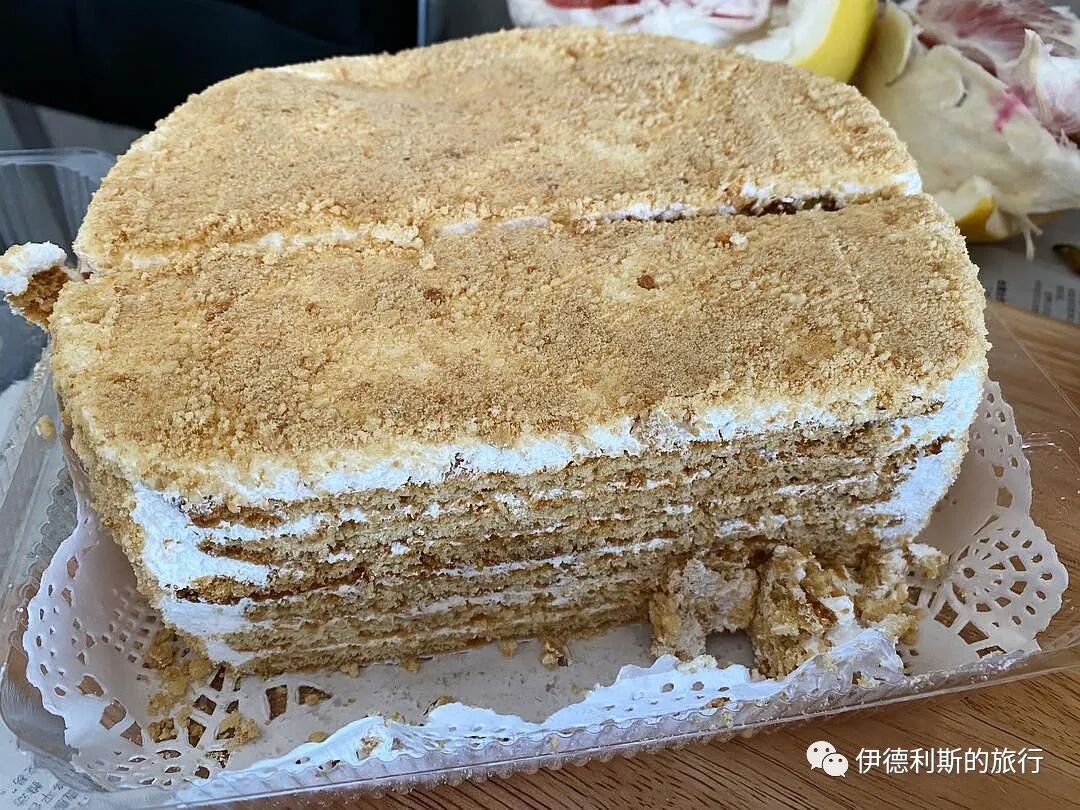
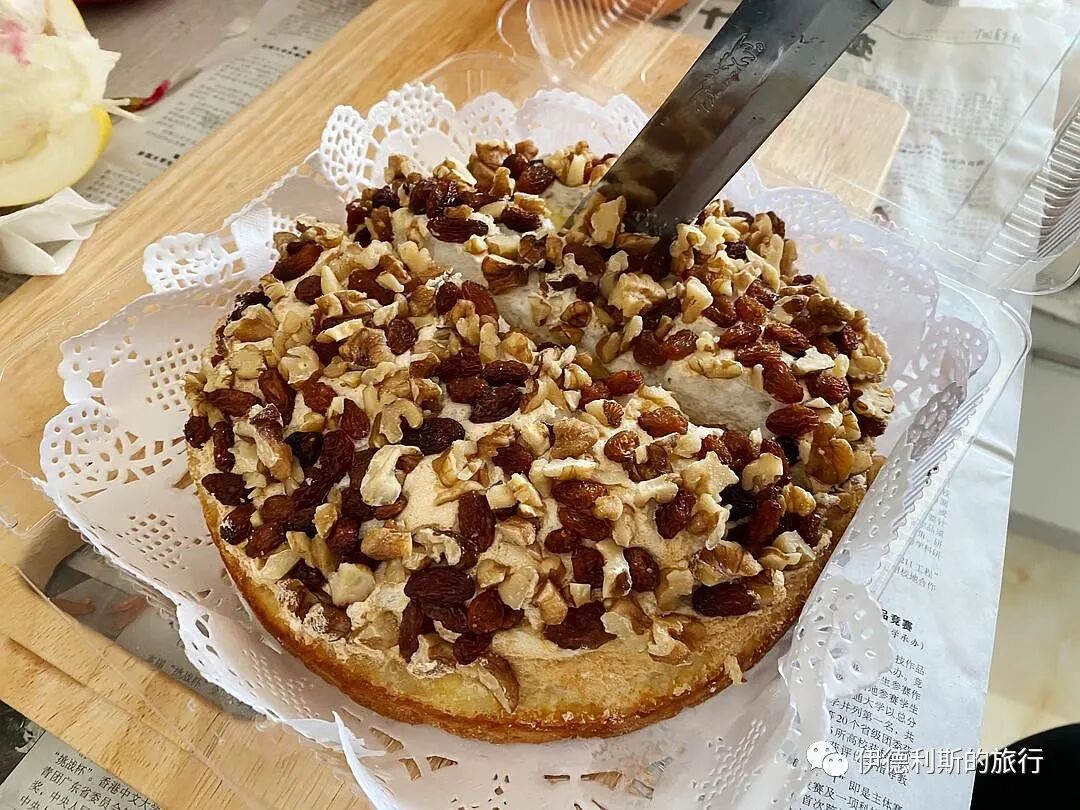
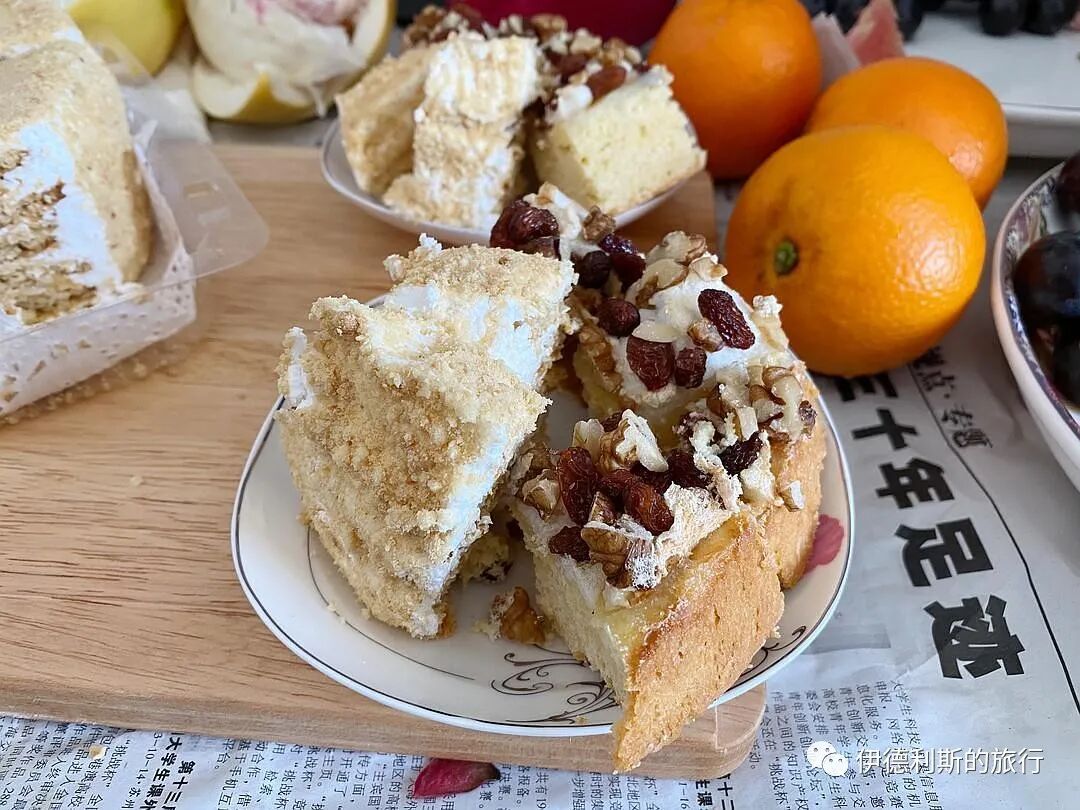
Their most classic cake consists of six layers of pastry sandwiched with six layers of cream. The pastry is made from milk, eggs, ghee, and honey, without adding water, and it tastes exceptionally fragrant.
16. The Dongxiang people of Xiaoxihu, Lanzhou
The Dongxiang people are a Muslim ethnic group that uses the Dongxiang language of the Mongolic language family. They are mainly distributed in Dongxiang County, Hezheng County, and Guanghe County in Linxia, Gansu. The loess hills where the Dongxiang people live are relatively barren, so after the 1980s, many people chose to go to Lanzhou to make a living. Xiaoxihu is located at the end of the road from Linxia to Lanzhou, close to the Hui Muslim communities of Xiyuan and Xihu that have formed since the Qing Dynasty. Coupled with the commercial development driven by the Xiaoxihu Yiwu Trade City since the 1990s, Xiaoxihu has become the main residential area for the Dongxiang people in Lanzhou.
The Dongxiang people in Xiaoxihu are most concentrated in Baishu Lane, Jiangouyan, and Shangxiyuan, where you can eat various Dongxiang delicacies.
The owner of Zhonghua Shouzhua Dawang (Zhonghua Hand-Grabbed Mutton King) is named Ma Zhonghua, and it is a very popular Dongxiang hand-grabbed mutton shop in Lanzhou. Drinking sanpaotai (a traditional tea with three ingredients) while eating half a jin (250 grams) of hand-grabbed mutton ribs, a small bowl of lentil sparrow-tongue noodles, and a plate of liangpi (cold skin noodles), I felt very satisfied. This place has a good environment and good service; they refill the water frequently, and of course, the sanpaotai itself is also delicious.
The mutton tastes very authentic; basically, it is one piece of meat with one clove of garlic, and the garlic is also very fragrant.
Liangpi (cold skin noodles)
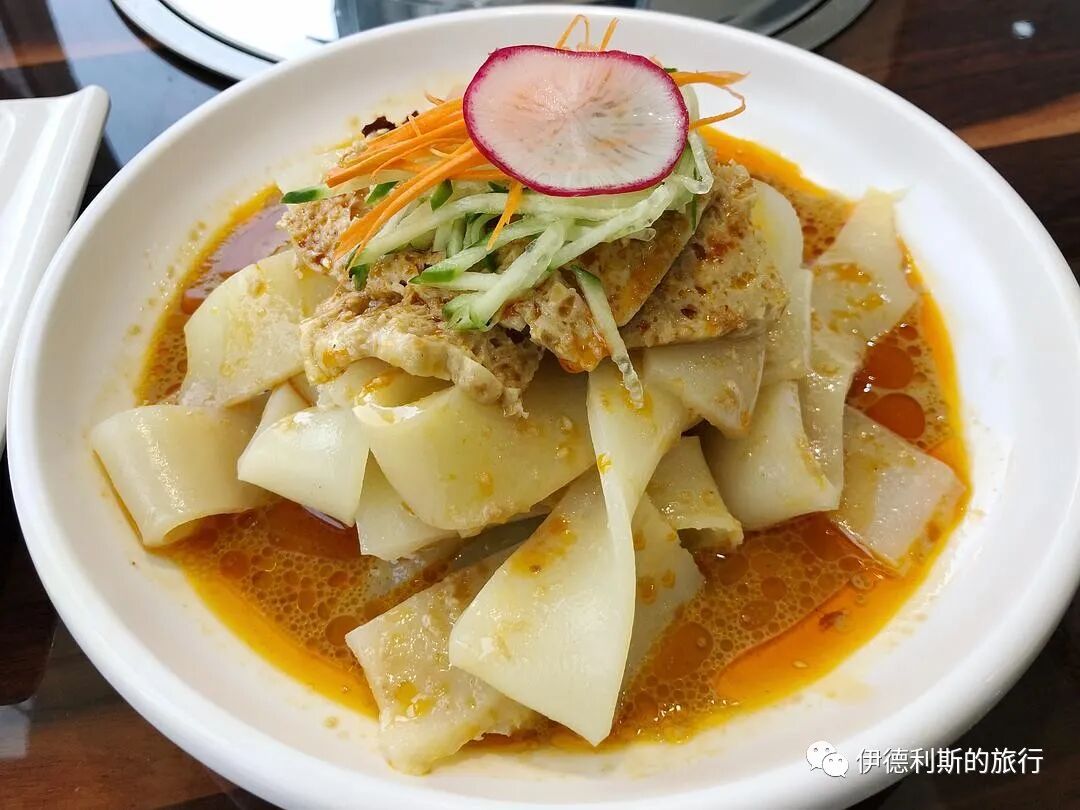
Lentil sparrow-tongue noodles
Twenty Ethnic Restaurants in China: Halal and Minority Food Guide (Part 3 of 4)
Articles • ali2007fr posted the article • 0 comments • 183 views • 2026-05-17 07:16
Summary: This travel note introduces Twenty Ethnic Restaurants in China: Halal and Minority Food Guide (Part 1). In my travels over the past few years, I have encountered some very interesting ethnic groups. It is useful for readers interested in Ethnic Food, Halal Food, China Travel. This is part 3 of 4.
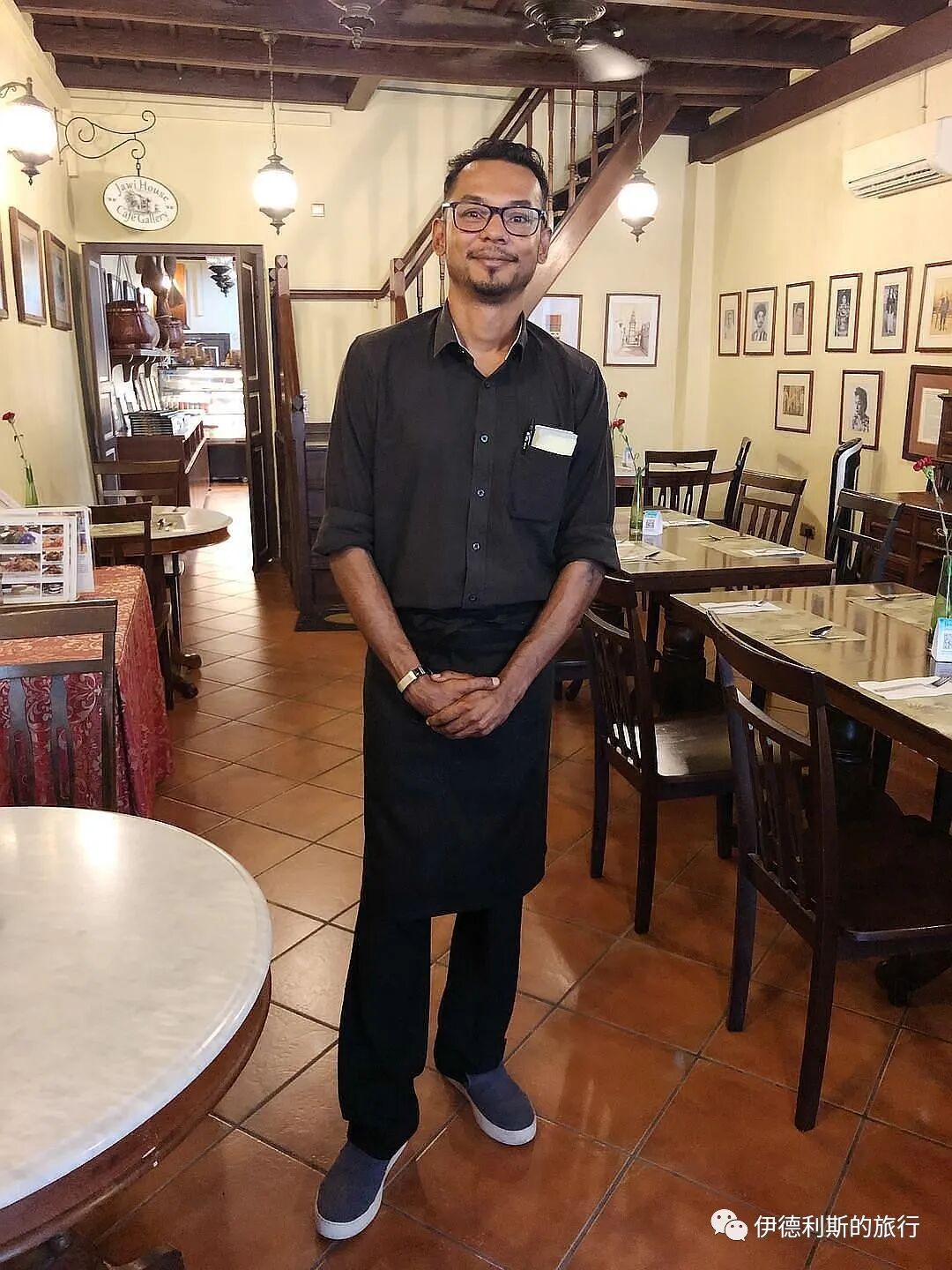
Today, the place where you can best experience the Jawi Peranakan culture in Penang is Jawi House Cafe Gallery. This building was originally a Straits Eclectic-style Chinese shophouse built in the 1860s, with Malay-style decorations, and later it was an Indian Muslim coppersmith shop. Armenian Street (Lebuh Armenian, originally named Malay lane) where the shop is located was the earliest settlement area for the Jawi Peranakan community. In 2012, the Karim family, who had lived in Penang for six generations and had Punjabi roots, opened Jawi House here to make the most authentic Jawi Peranakan food.
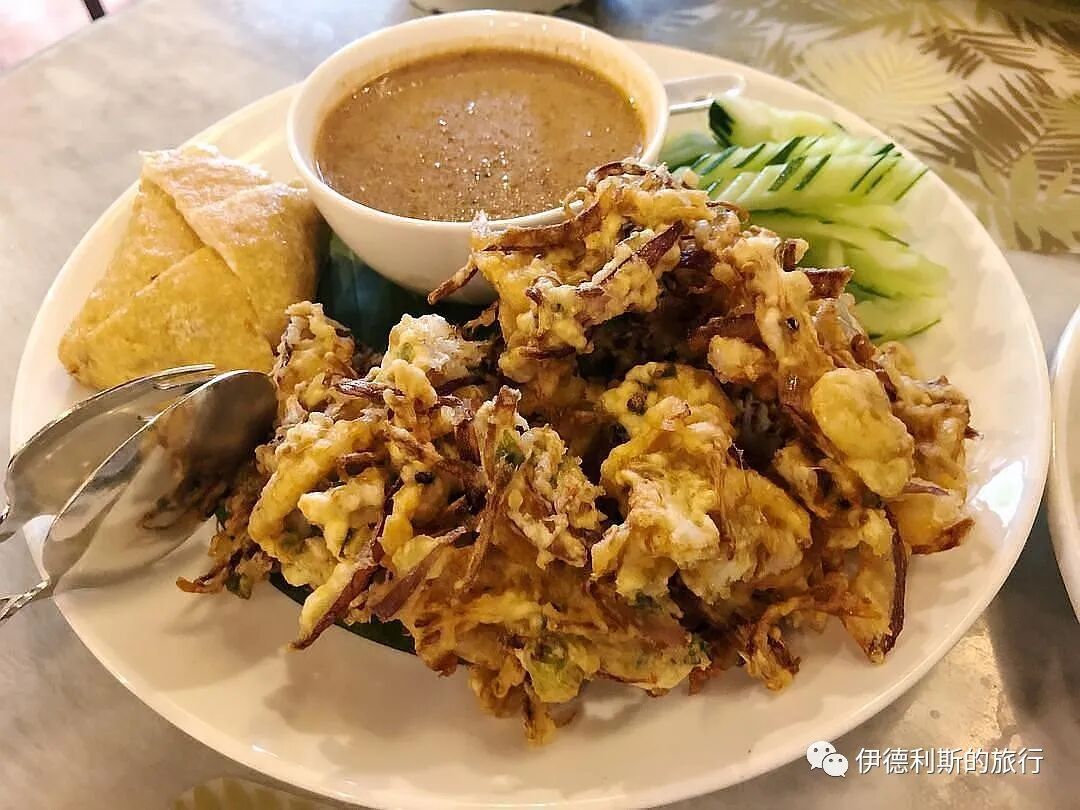
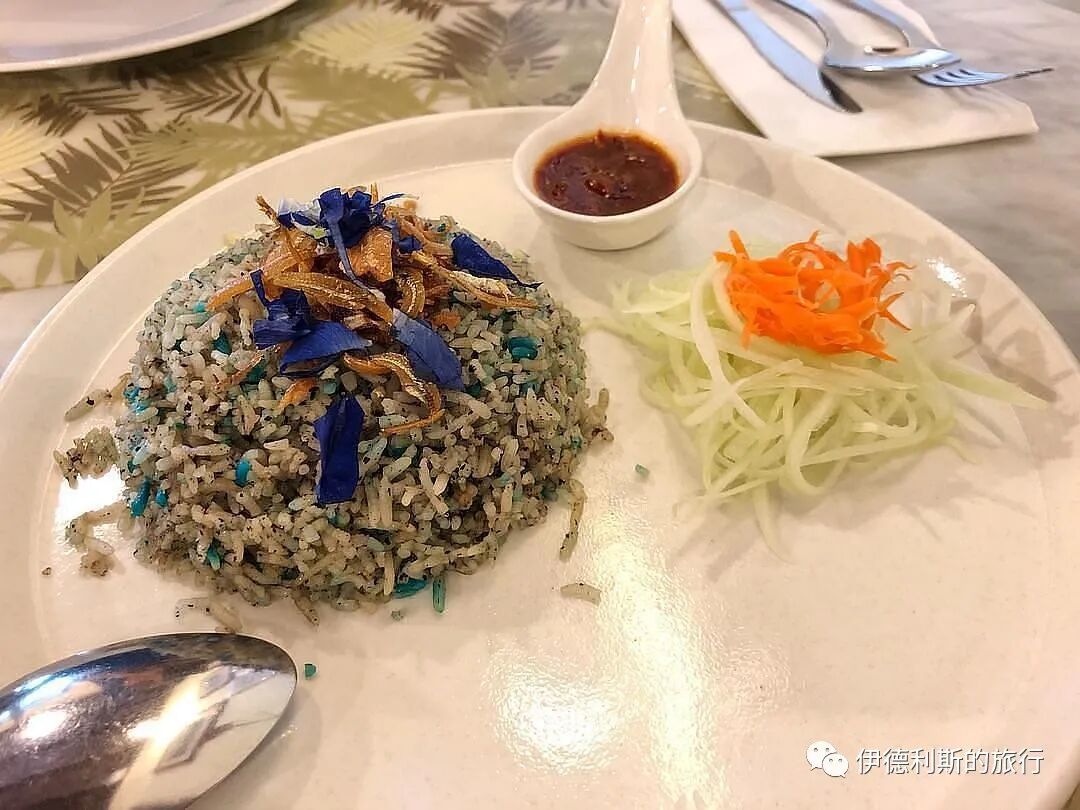
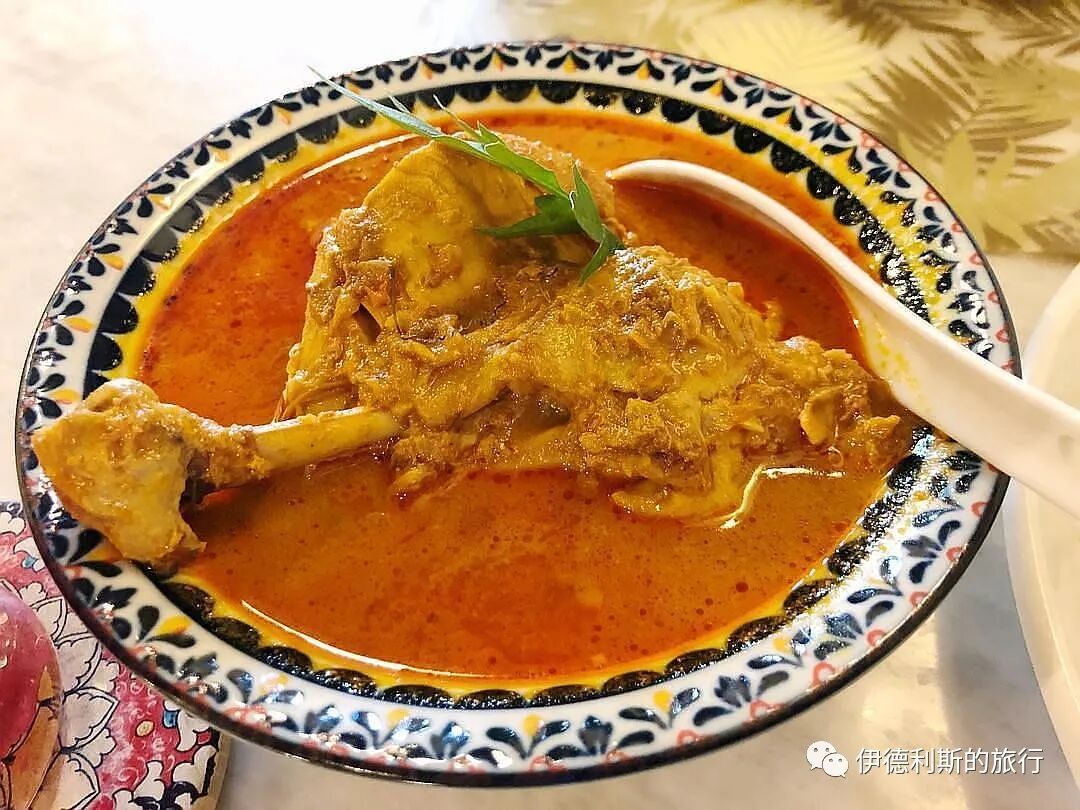
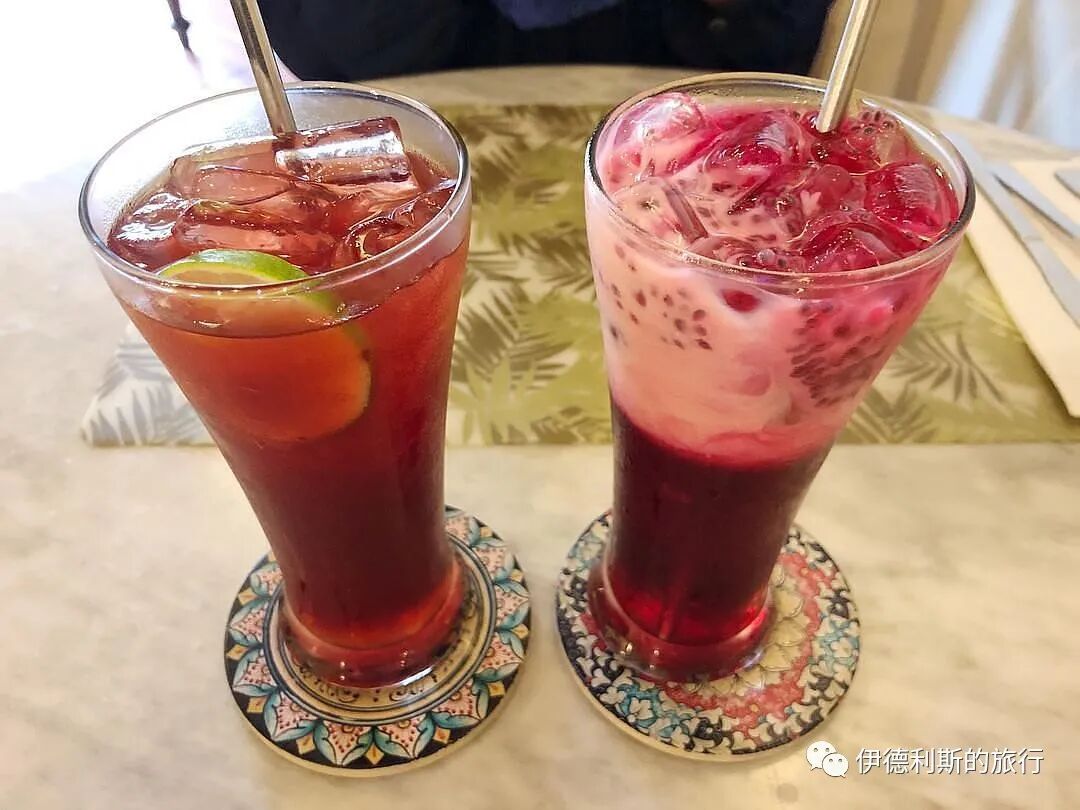
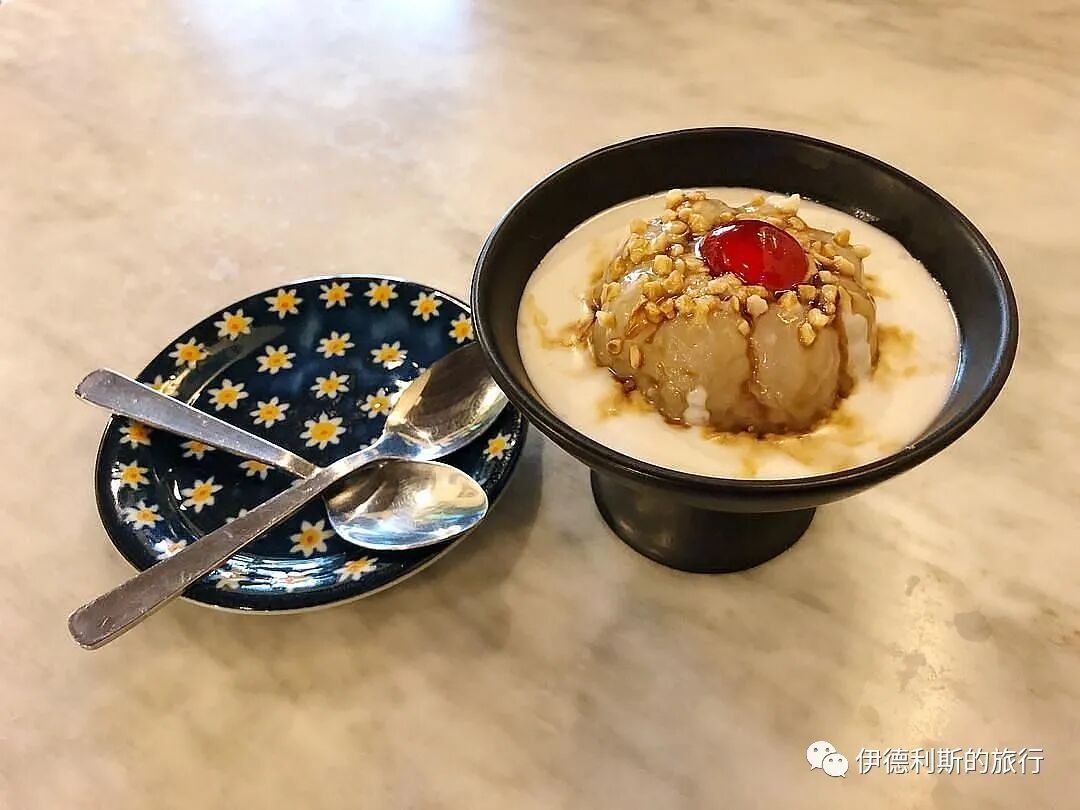
We ate Cucur Udang (fried shrimp fritters), Nasi Lemuni (chaste tree berry rice), Jawi Chicken Curry, drank Penang Nutmeg and Arabian Sherbet, and also had Sago Pudding for dessert.
Cucur Udang is made by coating shrimp and scallions in flour and deep-frying them, then dipping them in peanut sauce. "Cucur" means fried fritter in Malay, and "Udang" means shrimp.
Nasi Lemuni is rice cooked with coconut milk, lemongrass, and blue Lemuni (chaste tree) flowers, served with fried anchovies and sambal (spicy chili paste). In the past, Lemuni rice was a traditional food for Malay women during their postpartum confinement, and it is said to promote blood circulation.
Jawi Chicken Curry is the Jawi Peranakan version of chicken curry. As a fusion ethnic group, Jawi Peranakan curry is also a fusion version of Indian curry and Malay curry.
Nutmeg is the meaning of nutmeg, and honey and lemon are added to the drink, which is a special way of drinking in Penang, sweet and sour.
Sherbet comes from the Persian word "Sharbat," meaning non-alcoholic sugar water. In medieval Arabia, people liked to add syrup and honey to Sharbat to increase sweetness, and also liked to add various almonds, lemons, apples, pomegranates, tamarinds, dates, sumac berries, musk, and mint. With the spread of Arabs and Persians, Sharbat is now popular in West Asia, South Asia, and the Malay Archipelago, especially during Ramadan. The Arabian Sherbet made by Jawi House is made with rose syrup, mallow nuts, gum arabic, and basil seeds, and the taste is very rich.
The Jawi Peranakan special version of sago pudding is drizzled with coconut cream and rich palm sugar syrup, and then sprinkled with crushed peanuts, which feels very exquisite.
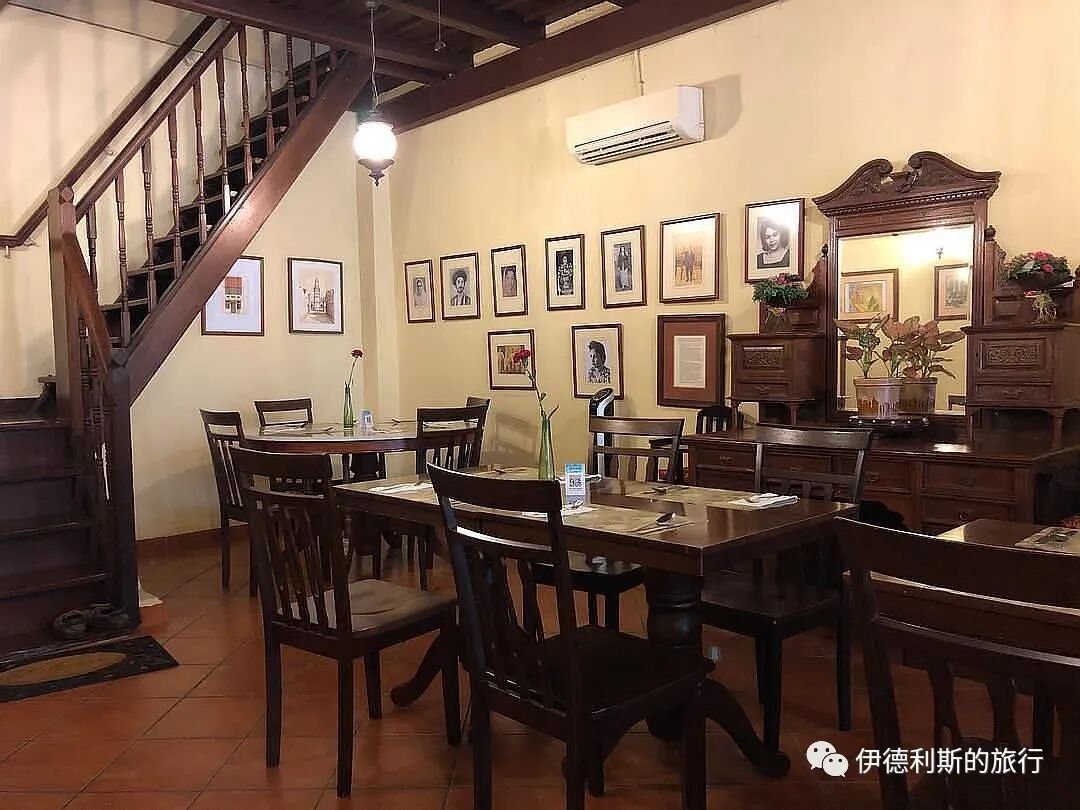
Jawi House exhibits a series of old photos of Penang Jawi Peranakan, as well as paintings of the Penang Muslim community.
8. The Betawi people in Jakarta, Indonesia
In 1619, the Dutch razed Jakarta under the rule of the Banten Sultanate to the ground and renamed it Batavia, serving as the trading and administrative center of the Dutch East India Company. In 1684, the Dutch East India Company signed a peace treaty with the Banten Sultanate, and many ethnic groups including Malays, Sundanese, Javanese, Minangkabau, and Bugis began to reclaim and settle in the swamp areas outside the walls of Batavia. After one or two hundred years of integration, these ethnic groups finally formed the Betawi people in the early 20th century.
The Betawi people use a Malay language mixed with Hokkien Chinese, Arabic, and Dutch, called Betawi Malay, which is the only Malay-speaking region on the northern coast of Java. The diet of the Betawi people is also strongly influenced by Indonesian Chinese, Arab, European, local Sundanese, and Javanese diets.
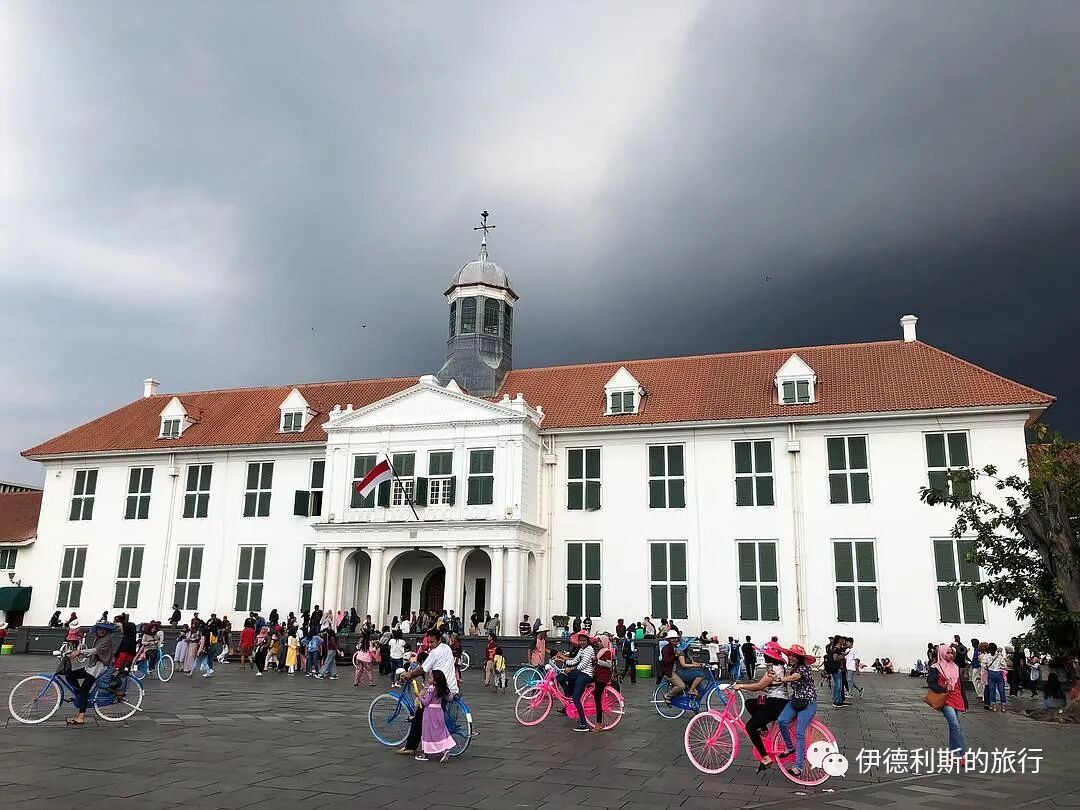
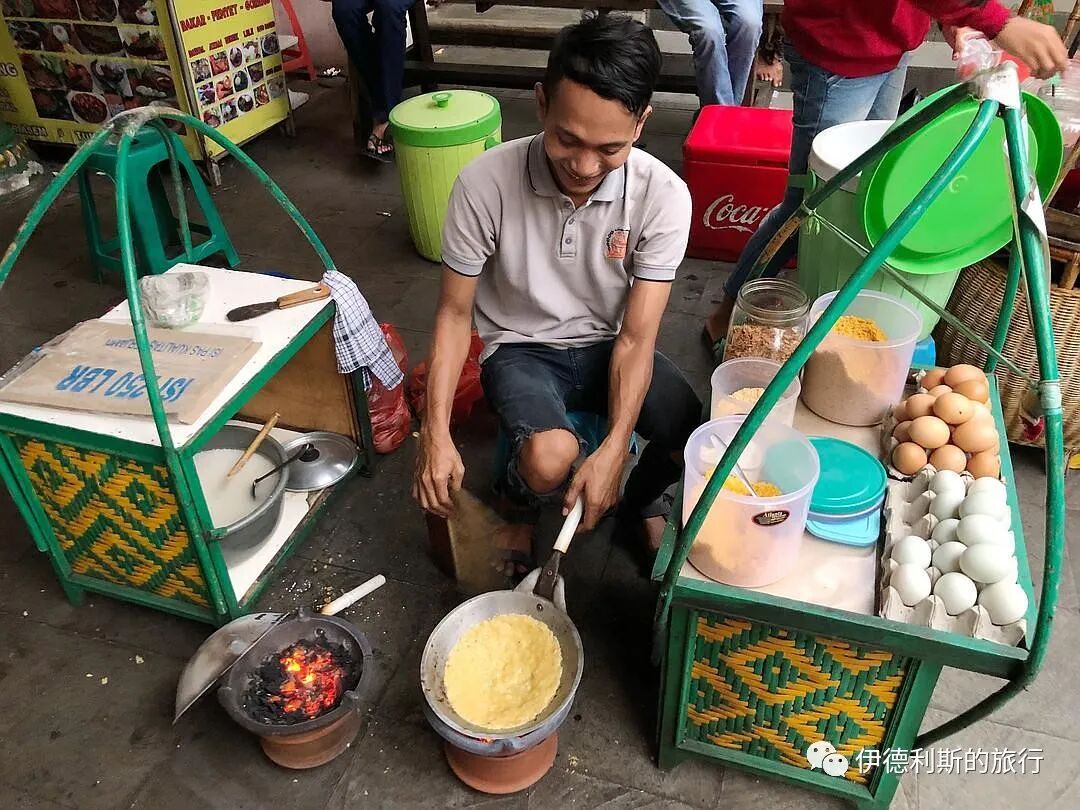
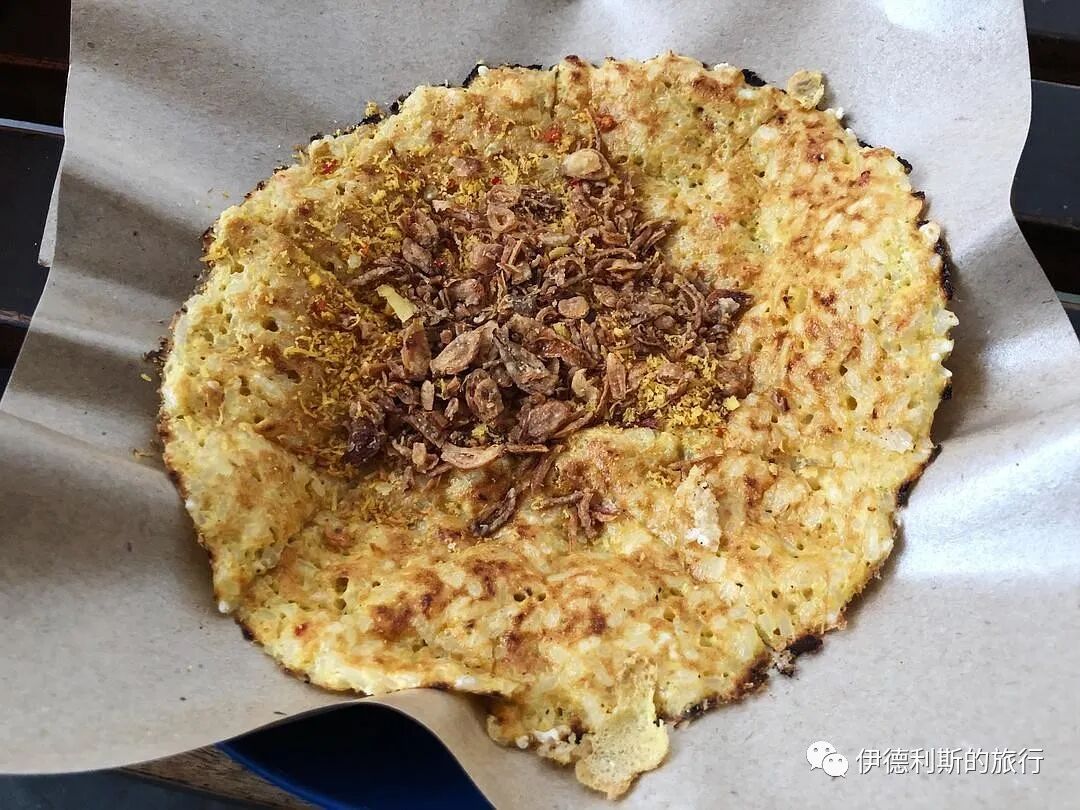
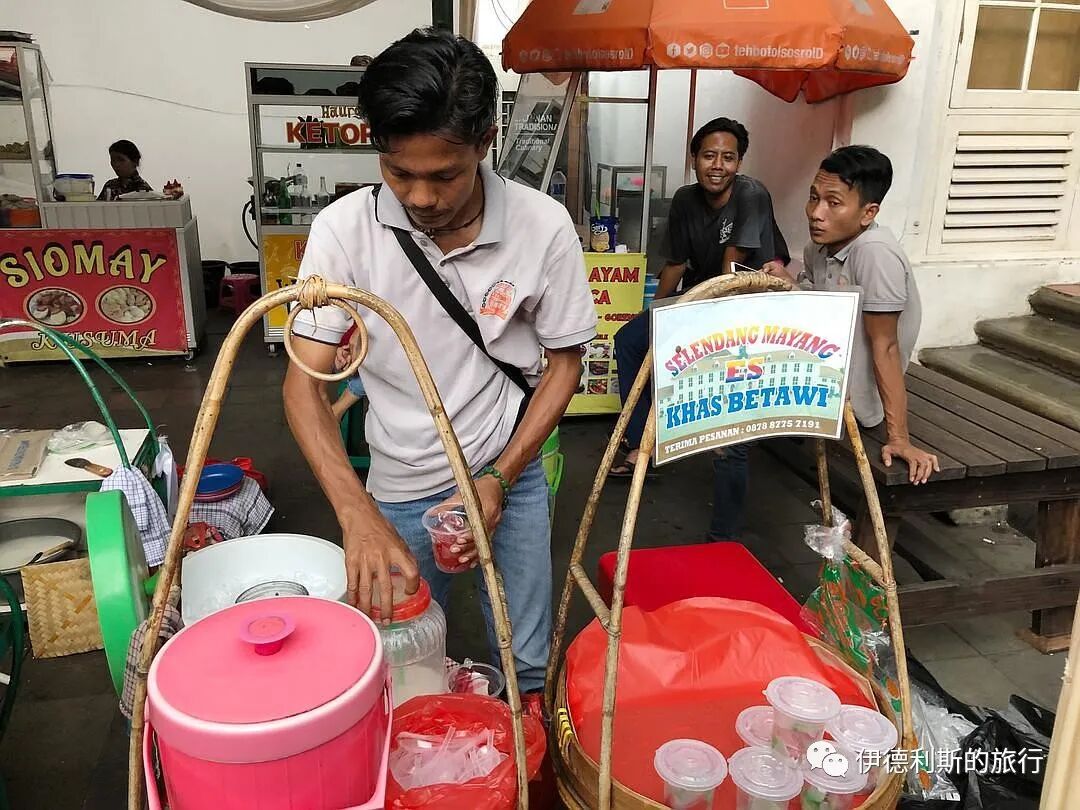
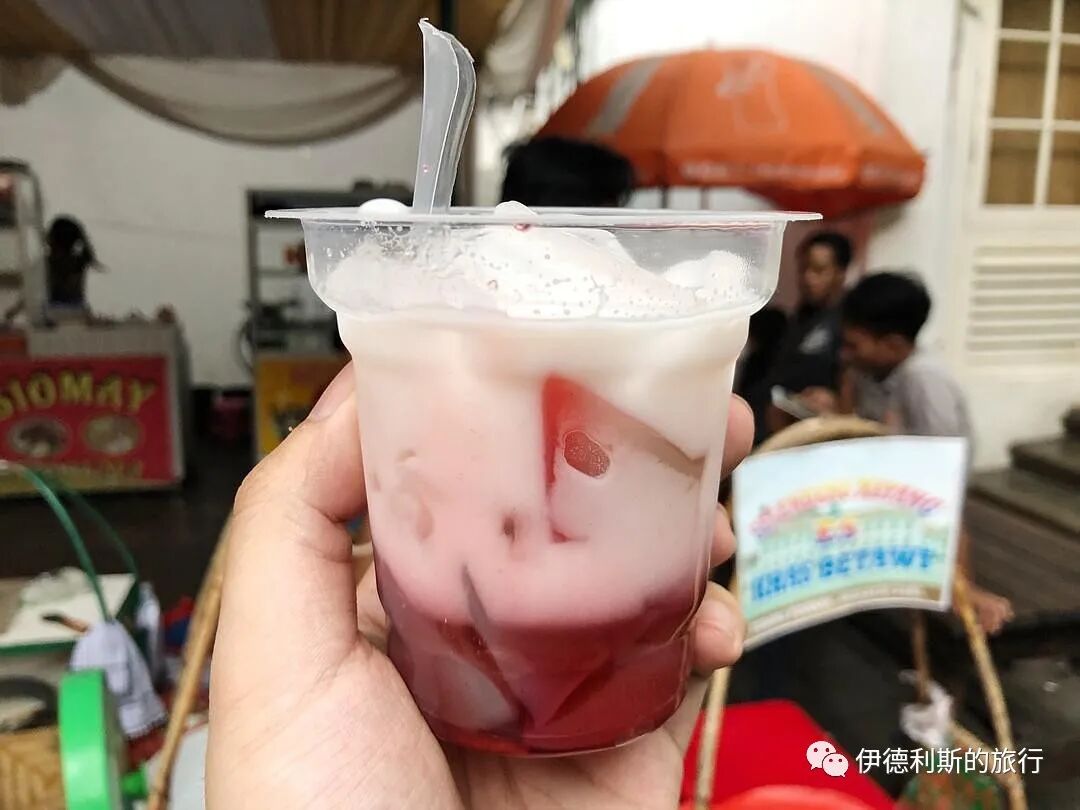
The City Hall built in 1710 in the center of the old city of Batavia has now become the Jakarta History Museum. When I visited the museum in 2019, there was a small area in the courtyard that specifically provided Betawi snacks. I ate Kerak telor (spicy egg crust) and Selendang Mayang (iced drink). It is a great pity that I didn't know at the time that the snacks sold here were Betawi specialties that are hard to eat elsewhere, otherwise I should have tasted every one of them.
Kerak telor is made of glutinous rice and eggs with fried coconut shreds, topped with fried scallions and dried shrimp. In the colonial era, this food could only be eaten at gatherings of Dutch or wealthy Betawi merchants, and it was invented to increase the texture of glutinous rice.
Selendang Mayang is now rarely seen. It is a long-standing Batavia iced drink made from rice flour, vanilla powder, pandan leaves, red sugar syrup, and coconut milk.
9. The Javanese people in Yogyakarta, Indonesia
Yogyakarta is an ancient cultural city in central Java, still ruled by a Sultan. In addition to traditional Javanese architecture, Gamelan music, and Wayang shadow puppetry, Yogyakarta also has many Javanese specialties.
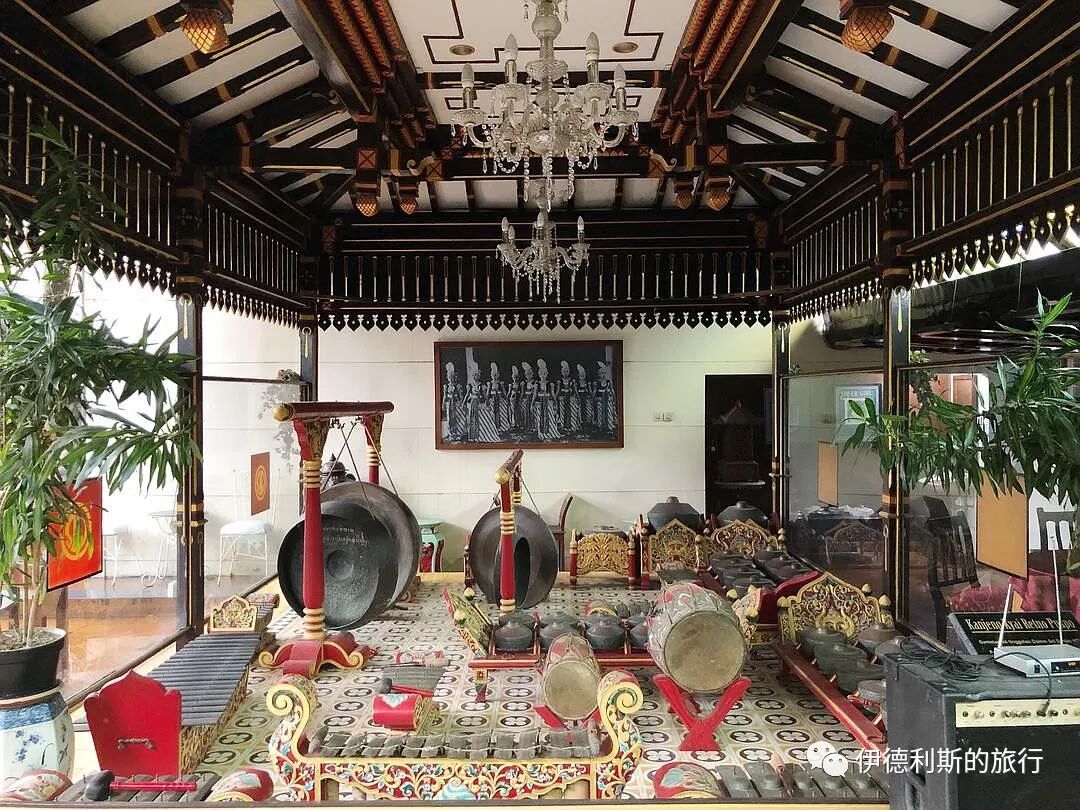
nDalem Joyokusuman next to the Yogyakarta Sultan's Palace is the residence of Sultan's Prince Gusti Haryo Haji Joyokusumo, and it is now open as a cultural center and restaurant. I ate Nasi Blawong and Telo ijo here. Nasi Blawong is a specialty of the Sultan of Yogyakarta. It used to be eaten only at the Sultan's birthday banquet, and the reddish Blawong rice used in it is considered sacred. Telo ijo is a cassava pastry drizzled with pandan coconut milk.
nDalem Joyokusuman was built in 1916 during the reign of the eighth Sultan of Yogyakarta, Hamengkubuwono VIII, and has been inhabited by members of the Sultan's family ever since.
Peringgitan is the inner hall behind the large living room, where the prince's family activities take place, and it contains valuable gifts received by the prince.
Sentong Kiwo in Figure 4 was originally a guest room and is now used as an exhibition hall.
The place where Gamelan is performed in the courtyard.
10. The Bantenese people on Java Island, Indonesia
Banten is located at the westernmost tip of Java Island, facing Sumatra across the Sunda Strait. The local residents, the Bantenese, belong to a branch of the Sundanese. In the 16th century, the Banten Sultanate rose to become a maritime trading power in western Java, controlling the pepper trade in Southeast Asia.
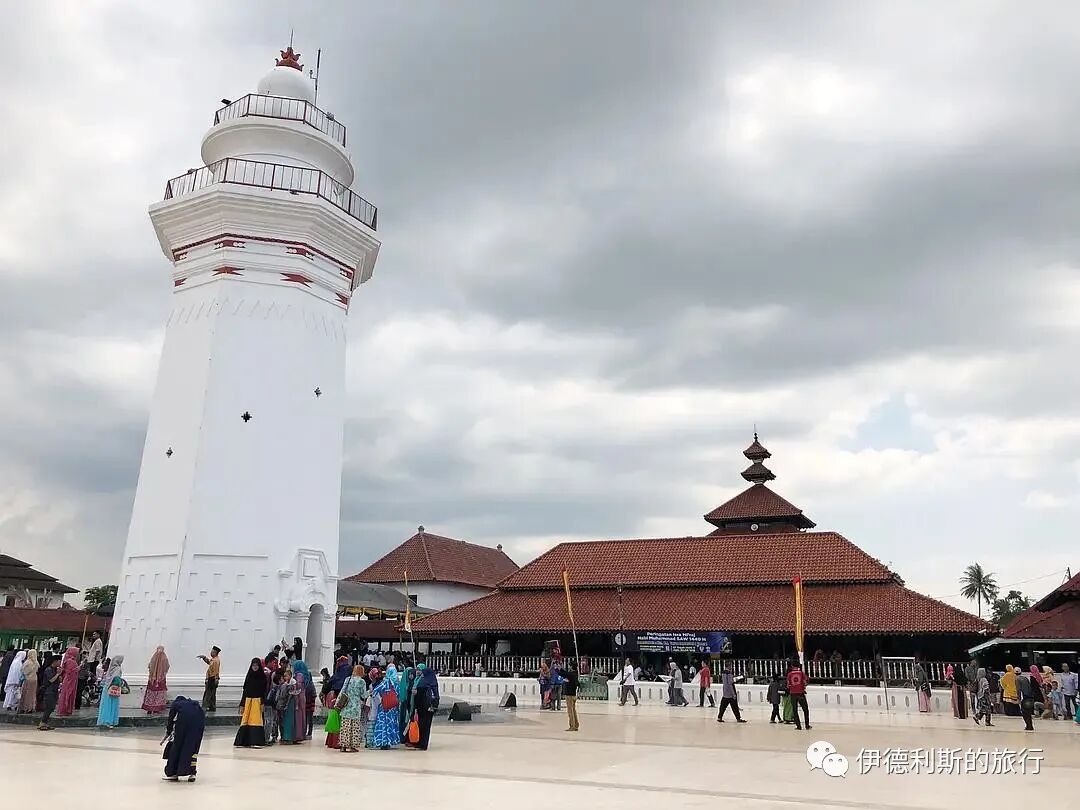
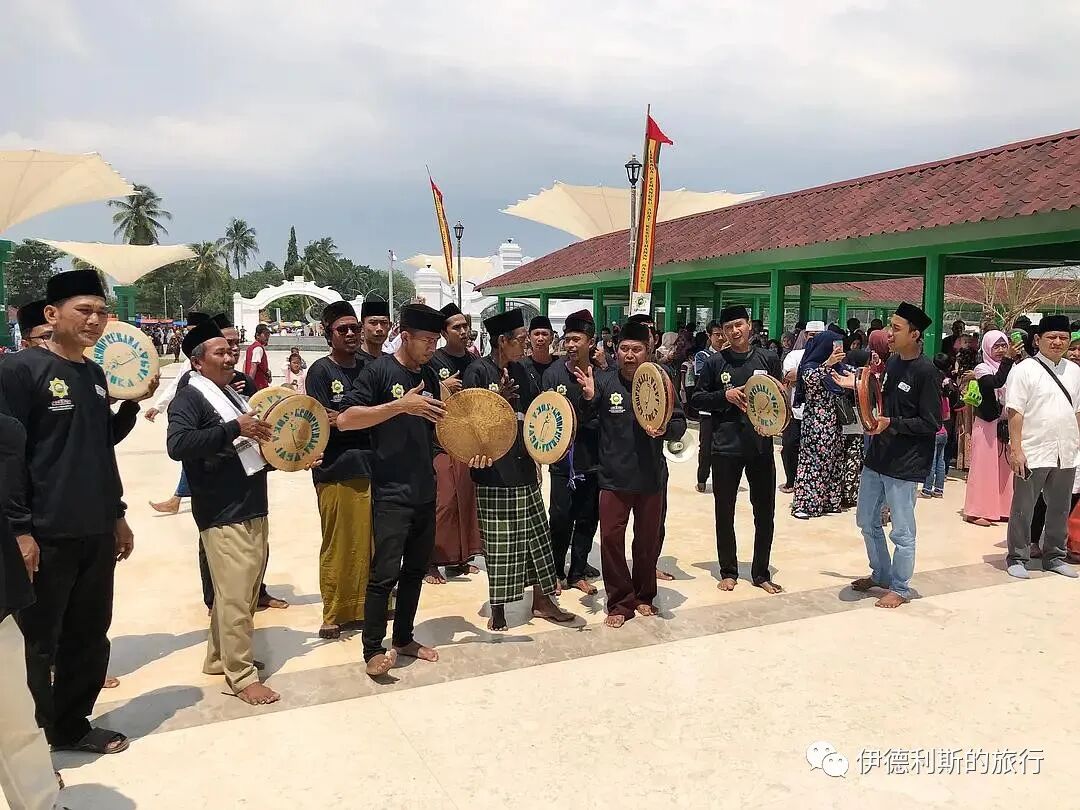
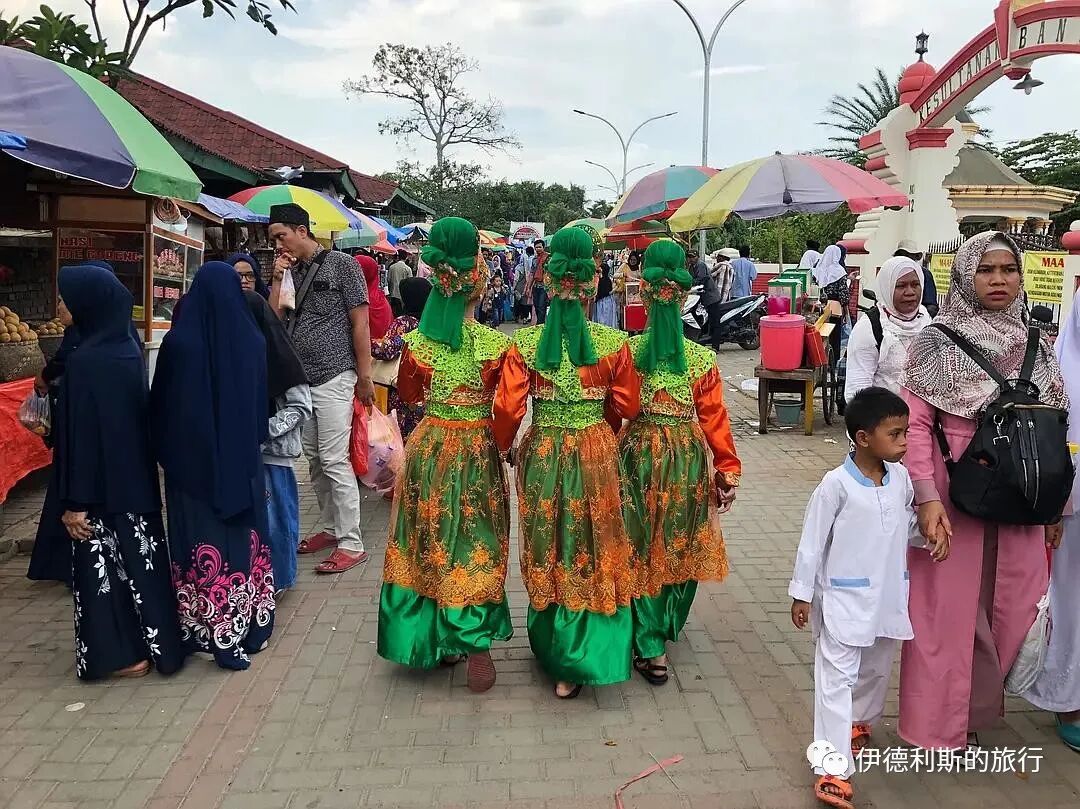
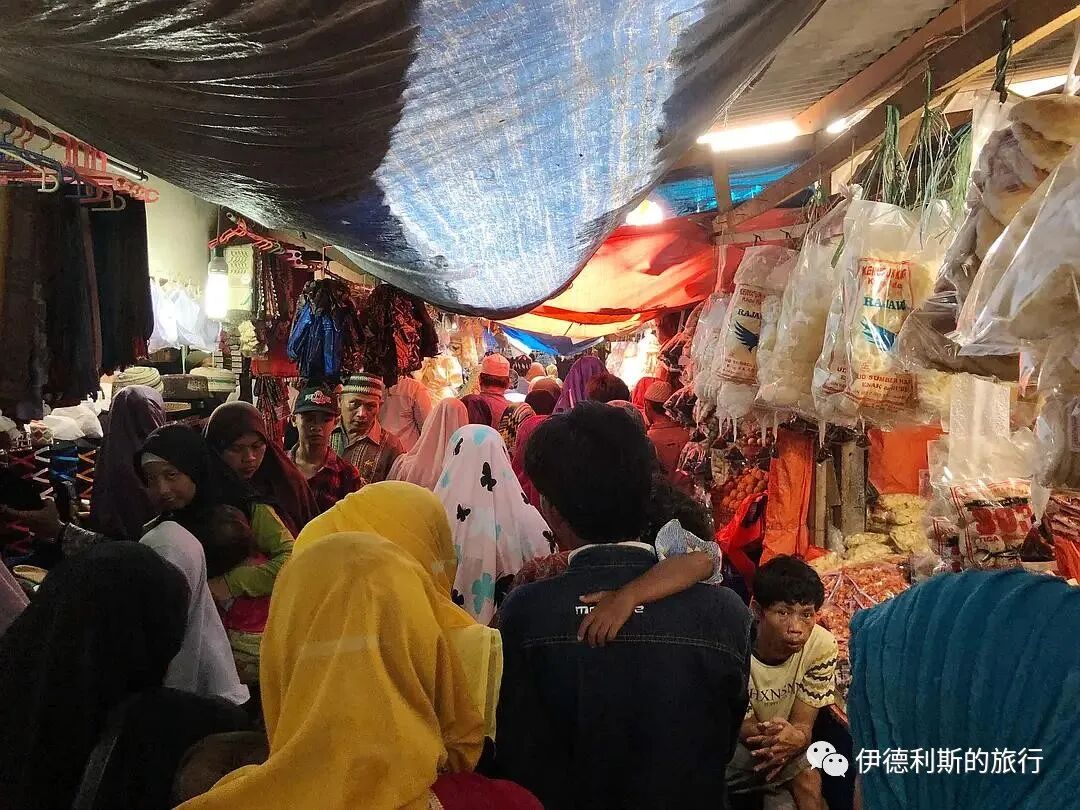
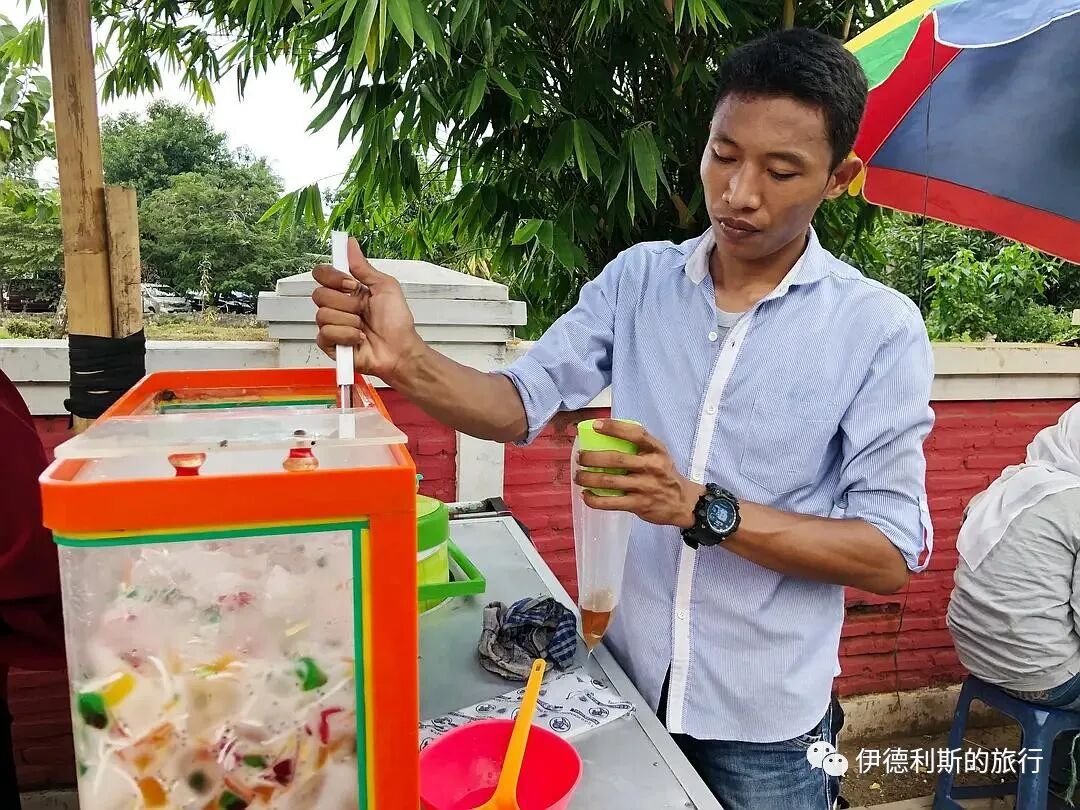
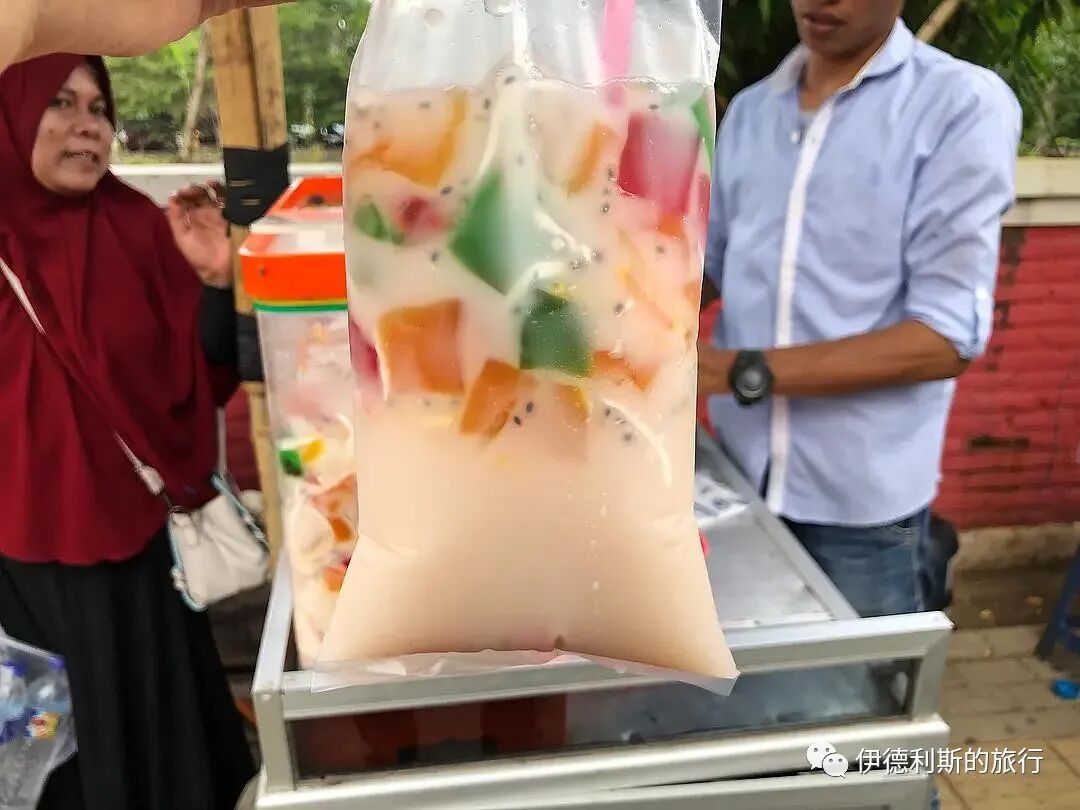
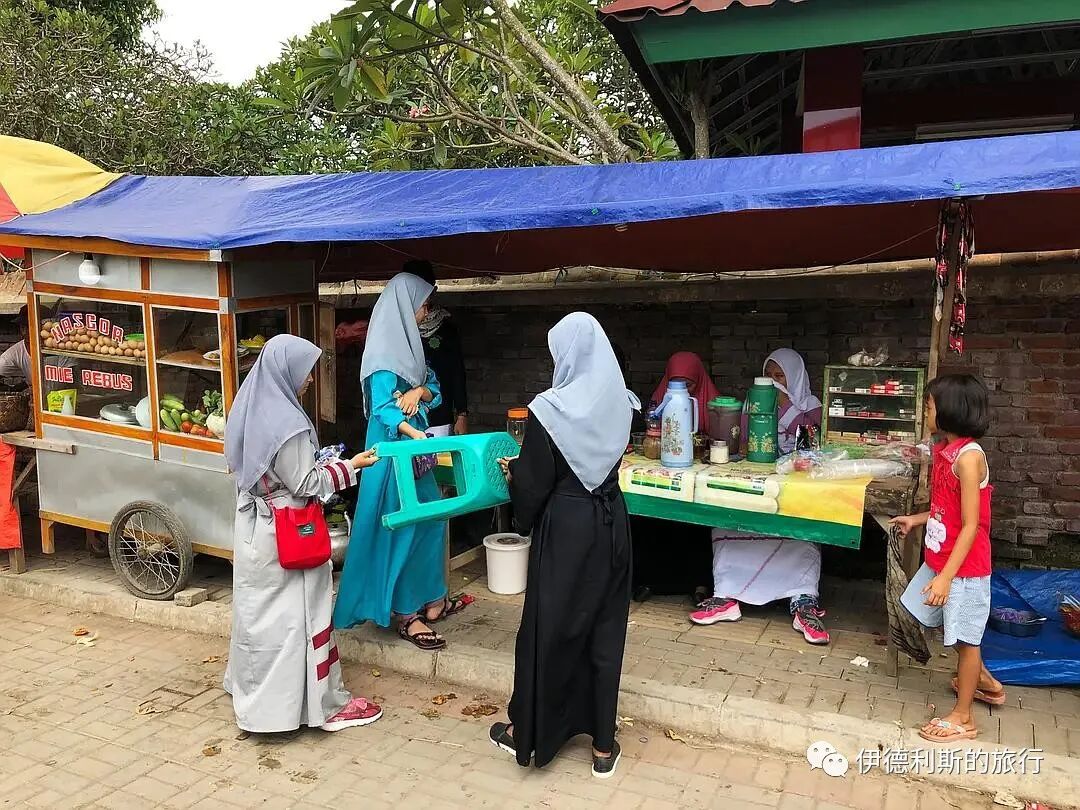
The Great Mosque of Banten (Masjid Agung Banten), built in 1566, is a famous Javanese-style mosque. Muslims come to visit every day, and a very lively bazaar has formed around the mosque. I drank Es Campur (iced drink made with coconut milk, red sugar syrup, coconut meat, and fruit jelly) at the bazaar, and also had the simplest street egg noodles, Mie Rebus. Sapodilla (Manilkara zapota) is sold everywhere in the bazaar, which is sweet and delicious. Sapodilla is native to Central America and the Caribbean, introduced to the Philippines by Spanish colonists, and then widely planted in Southeast Asia. It is called sawo in Indonesia.
11. Yunnan Hui Muslims in Chiang Mai, Thailand view all
Summary: This travel note introduces Twenty Ethnic Restaurants in China: Halal and Minority Food Guide (Part 1). In my travels over the past few years, I have encountered some very interesting ethnic groups. It is useful for readers interested in Ethnic Food, Halal Food, China Travel. This is part 3 of 4.
Today, the place where you can best experience the Jawi Peranakan culture in Penang is Jawi House Cafe Gallery. This building was originally a Straits Eclectic-style Chinese shophouse built in the 1860s, with Malay-style decorations, and later it was an Indian Muslim coppersmith shop. Armenian Street (Lebuh Armenian, originally named Malay lane) where the shop is located was the earliest settlement area for the Jawi Peranakan community. In 2012, the Karim family, who had lived in Penang for six generations and had Punjabi roots, opened Jawi House here to make the most authentic Jawi Peranakan food.
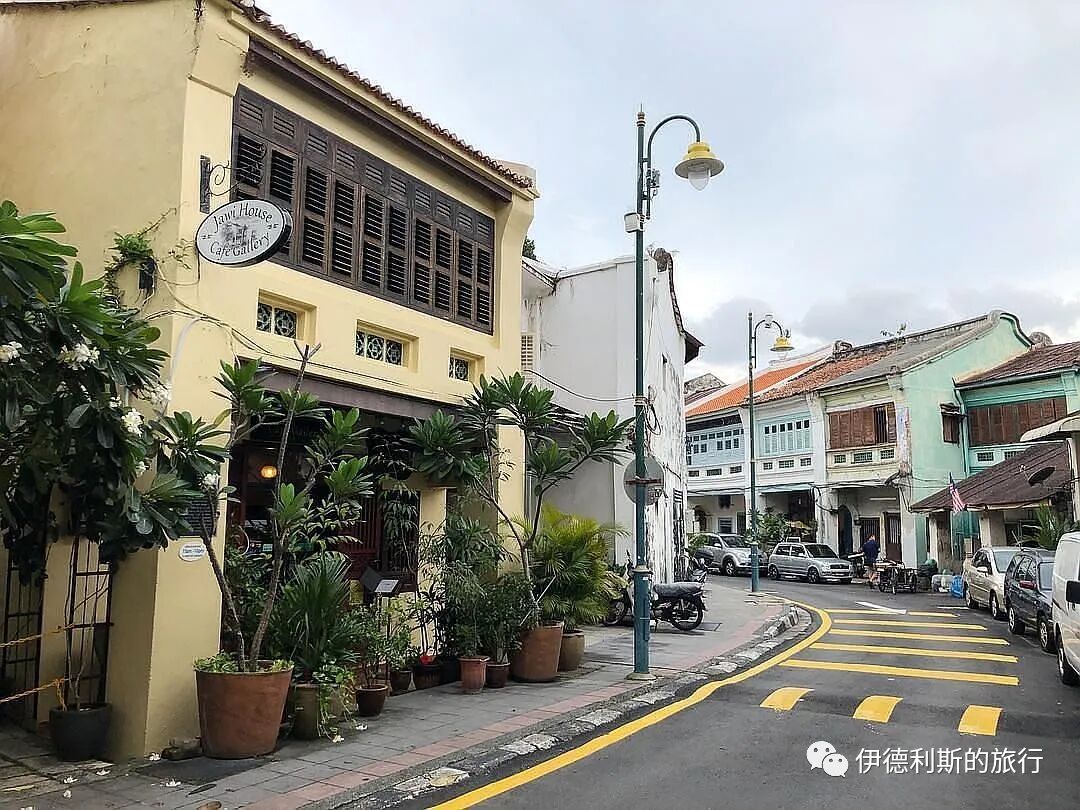
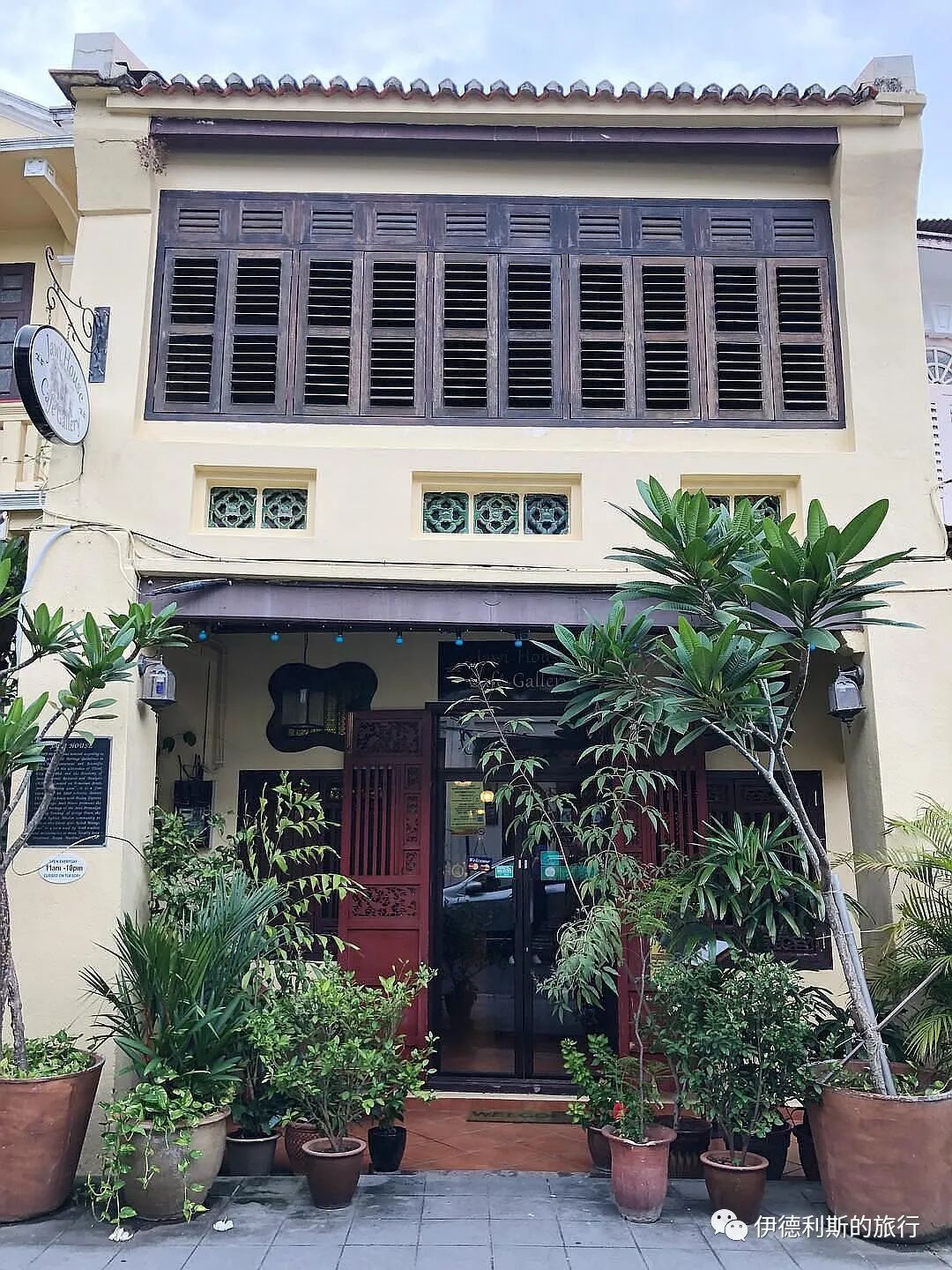
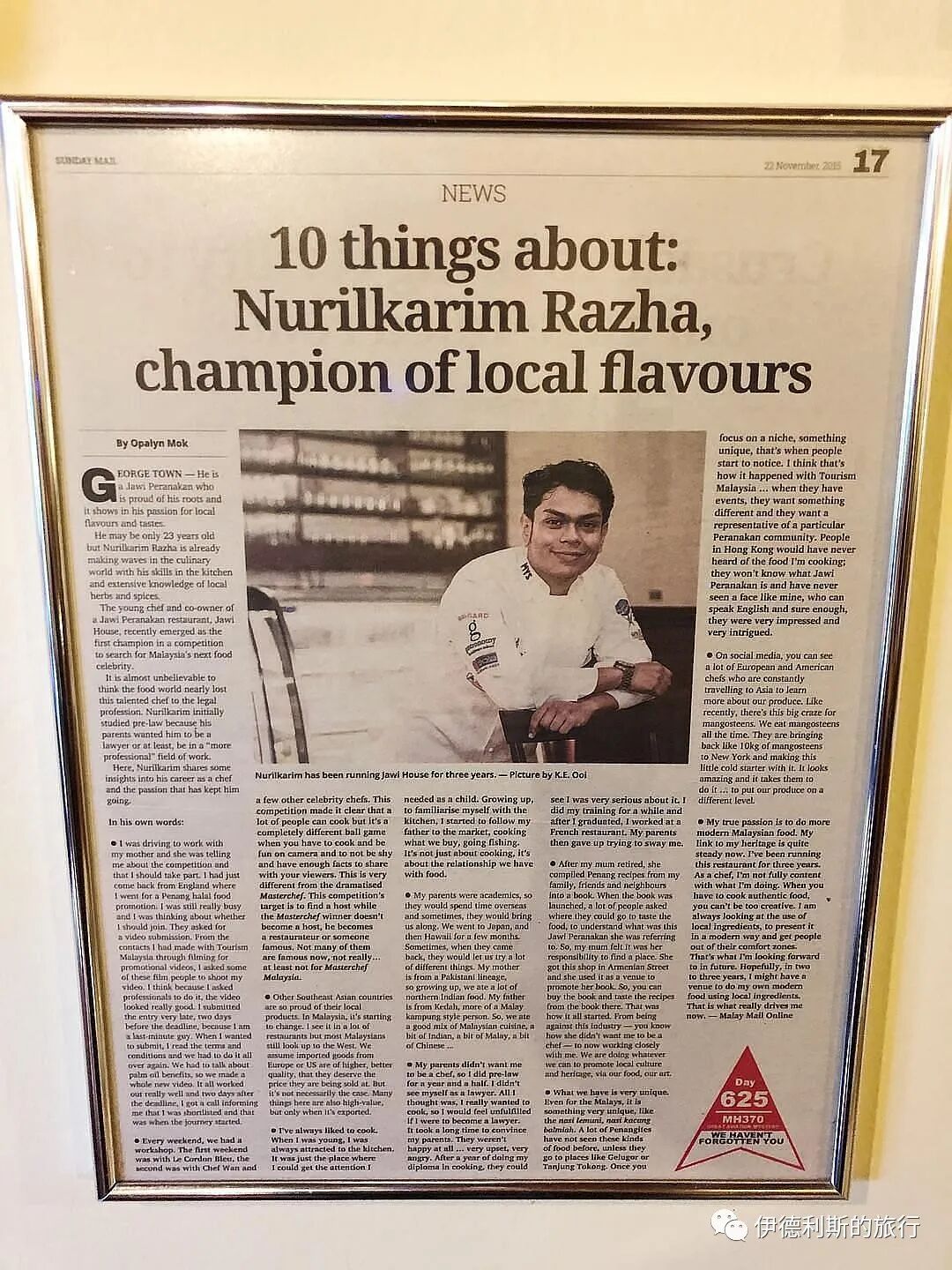
We ate Cucur Udang (fried shrimp fritters), Nasi Lemuni (chaste tree berry rice), Jawi Chicken Curry, drank Penang Nutmeg and Arabian Sherbet, and also had Sago Pudding for dessert.
Cucur Udang is made by coating shrimp and scallions in flour and deep-frying them, then dipping them in peanut sauce. "Cucur" means fried fritter in Malay, and "Udang" means shrimp.
Nasi Lemuni is rice cooked with coconut milk, lemongrass, and blue Lemuni (chaste tree) flowers, served with fried anchovies and sambal (spicy chili paste). In the past, Lemuni rice was a traditional food for Malay women during their postpartum confinement, and it is said to promote blood circulation.
Jawi Chicken Curry is the Jawi Peranakan version of chicken curry. As a fusion ethnic group, Jawi Peranakan curry is also a fusion version of Indian curry and Malay curry.
Nutmeg is the meaning of nutmeg, and honey and lemon are added to the drink, which is a special way of drinking in Penang, sweet and sour.
Sherbet comes from the Persian word "Sharbat," meaning non-alcoholic sugar water. In medieval Arabia, people liked to add syrup and honey to Sharbat to increase sweetness, and also liked to add various almonds, lemons, apples, pomegranates, tamarinds, dates, sumac berries, musk, and mint. With the spread of Arabs and Persians, Sharbat is now popular in West Asia, South Asia, and the Malay Archipelago, especially during Ramadan. The Arabian Sherbet made by Jawi House is made with rose syrup, mallow nuts, gum arabic, and basil seeds, and the taste is very rich.
The Jawi Peranakan special version of sago pudding is drizzled with coconut cream and rich palm sugar syrup, and then sprinkled with crushed peanuts, which feels very exquisite.
Jawi House exhibits a series of old photos of Penang Jawi Peranakan, as well as paintings of the Penang Muslim community.
8. The Betawi people in Jakarta, Indonesia
In 1619, the Dutch razed Jakarta under the rule of the Banten Sultanate to the ground and renamed it Batavia, serving as the trading and administrative center of the Dutch East India Company. In 1684, the Dutch East India Company signed a peace treaty with the Banten Sultanate, and many ethnic groups including Malays, Sundanese, Javanese, Minangkabau, and Bugis began to reclaim and settle in the swamp areas outside the walls of Batavia. After one or two hundred years of integration, these ethnic groups finally formed the Betawi people in the early 20th century.
The Betawi people use a Malay language mixed with Hokkien Chinese, Arabic, and Dutch, called Betawi Malay, which is the only Malay-speaking region on the northern coast of Java. The diet of the Betawi people is also strongly influenced by Indonesian Chinese, Arab, European, local Sundanese, and Javanese diets.
The City Hall built in 1710 in the center of the old city of Batavia has now become the Jakarta History Museum. When I visited the museum in 2019, there was a small area in the courtyard that specifically provided Betawi snacks. I ate Kerak telor (spicy egg crust) and Selendang Mayang (iced drink). It is a great pity that I didn't know at the time that the snacks sold here were Betawi specialties that are hard to eat elsewhere, otherwise I should have tasted every one of them.
Kerak telor is made of glutinous rice and eggs with fried coconut shreds, topped with fried scallions and dried shrimp. In the colonial era, this food could only be eaten at gatherings of Dutch or wealthy Betawi merchants, and it was invented to increase the texture of glutinous rice.
Selendang Mayang is now rarely seen. It is a long-standing Batavia iced drink made from rice flour, vanilla powder, pandan leaves, red sugar syrup, and coconut milk.
9. The Javanese people in Yogyakarta, Indonesia
Yogyakarta is an ancient cultural city in central Java, still ruled by a Sultan. In addition to traditional Javanese architecture, Gamelan music, and Wayang shadow puppetry, Yogyakarta also has many Javanese specialties.
nDalem Joyokusuman next to the Yogyakarta Sultan's Palace is the residence of Sultan's Prince Gusti Haryo Haji Joyokusumo, and it is now open as a cultural center and restaurant. I ate Nasi Blawong and Telo ijo here. Nasi Blawong is a specialty of the Sultan of Yogyakarta. It used to be eaten only at the Sultan's birthday banquet, and the reddish Blawong rice used in it is considered sacred. Telo ijo is a cassava pastry drizzled with pandan coconut milk.
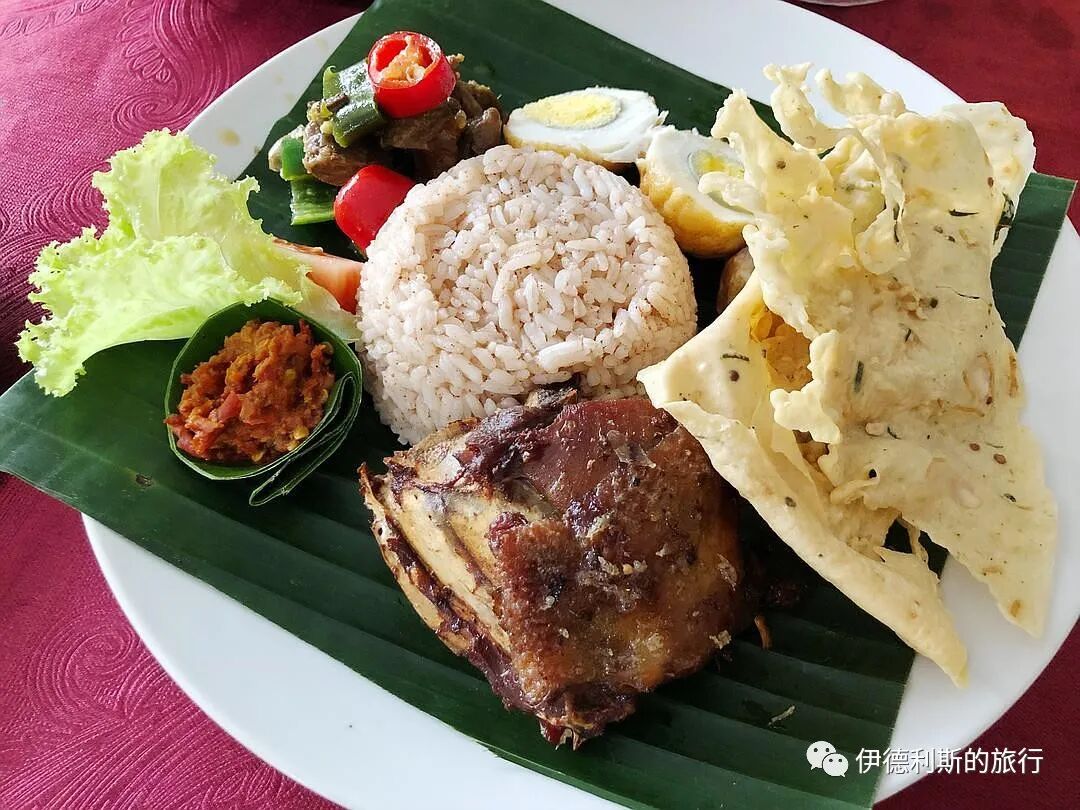
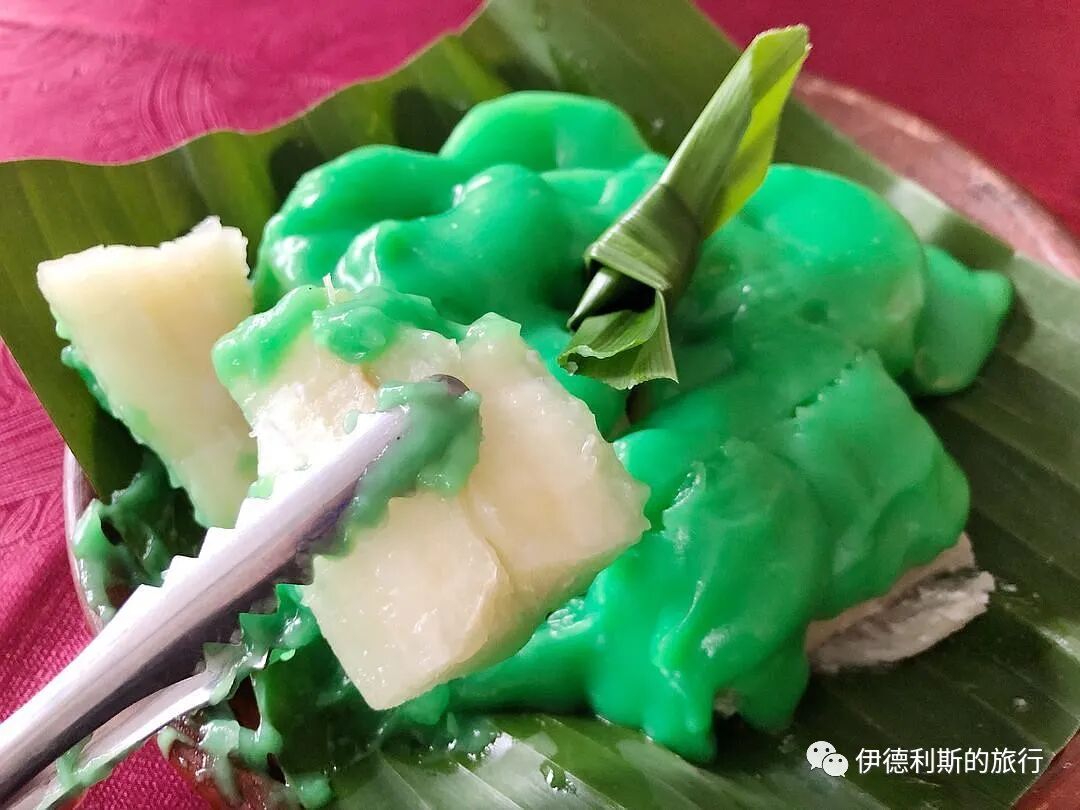
nDalem Joyokusuman was built in 1916 during the reign of the eighth Sultan of Yogyakarta, Hamengkubuwono VIII, and has been inhabited by members of the Sultan's family ever since.
Peringgitan is the inner hall behind the large living room, where the prince's family activities take place, and it contains valuable gifts received by the prince.
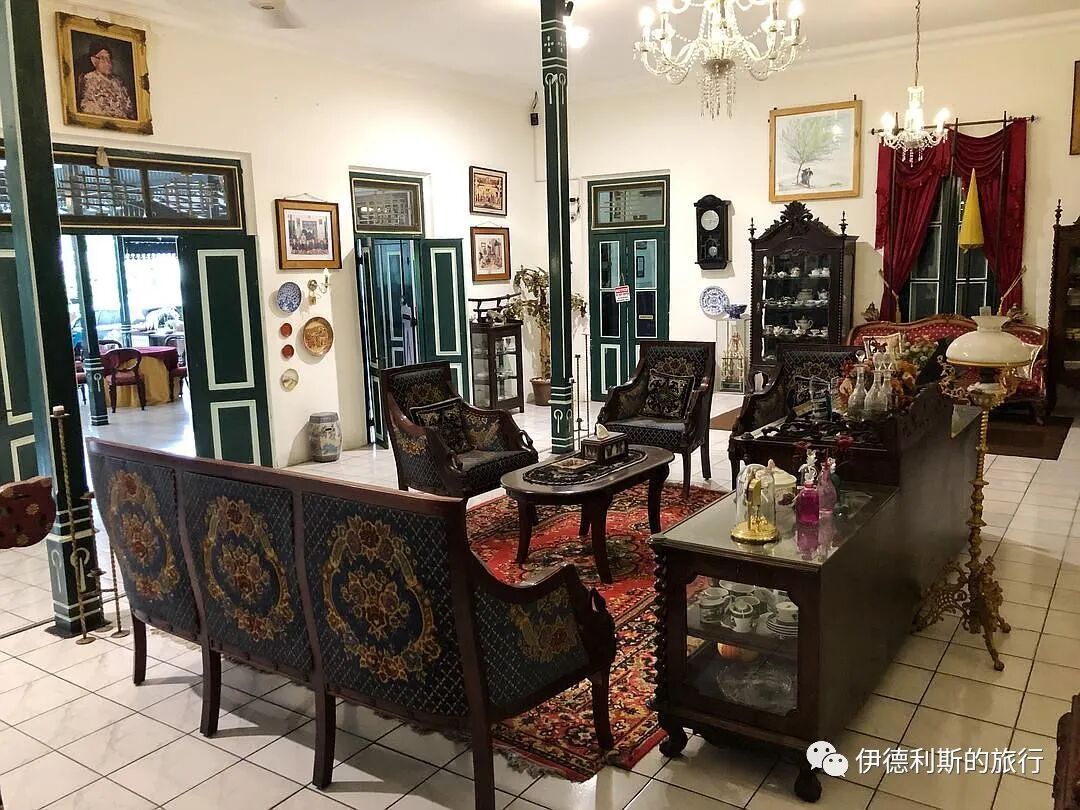
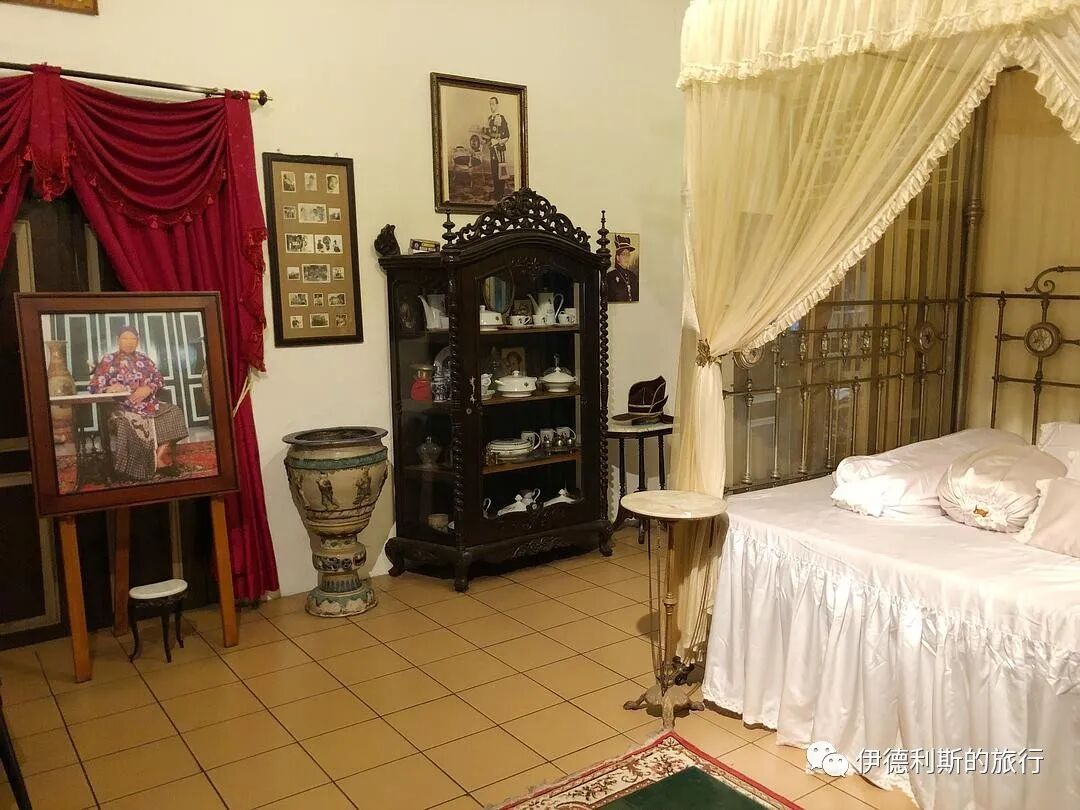
Sentong Kiwo in Figure 4 was originally a guest room and is now used as an exhibition hall.
The place where Gamelan is performed in the courtyard.
10. The Bantenese people on Java Island, Indonesia
Banten is located at the westernmost tip of Java Island, facing Sumatra across the Sunda Strait. The local residents, the Bantenese, belong to a branch of the Sundanese. In the 16th century, the Banten Sultanate rose to become a maritime trading power in western Java, controlling the pepper trade in Southeast Asia.
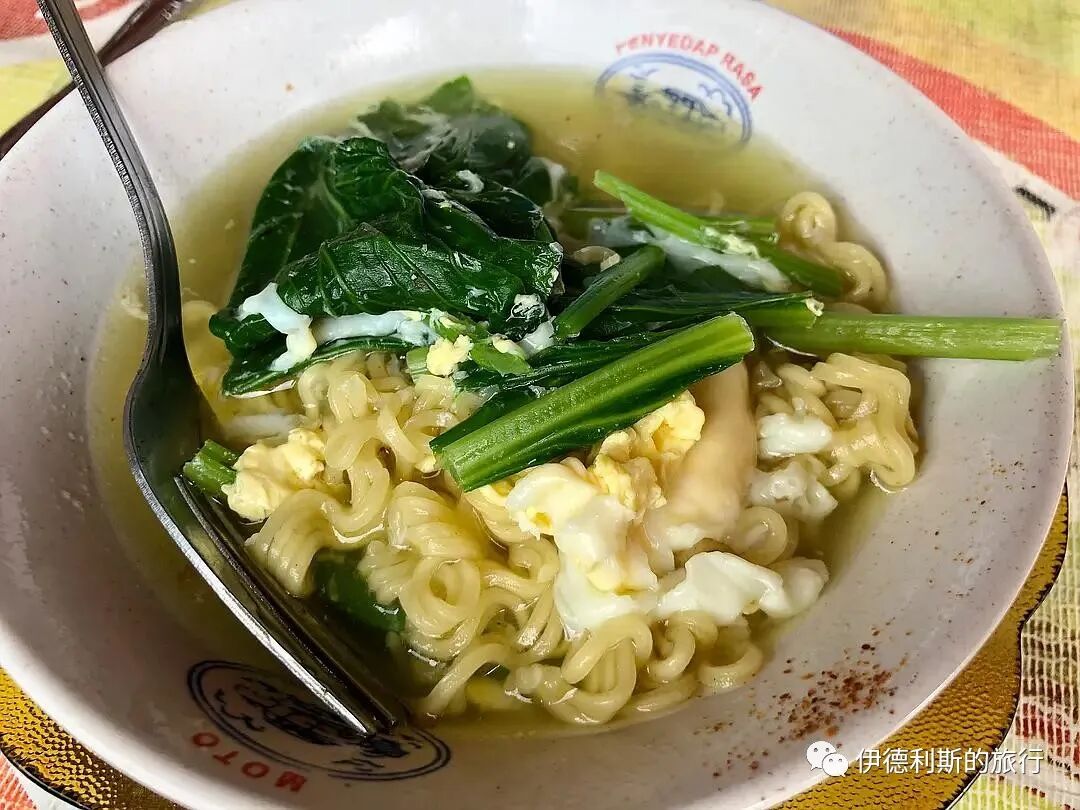
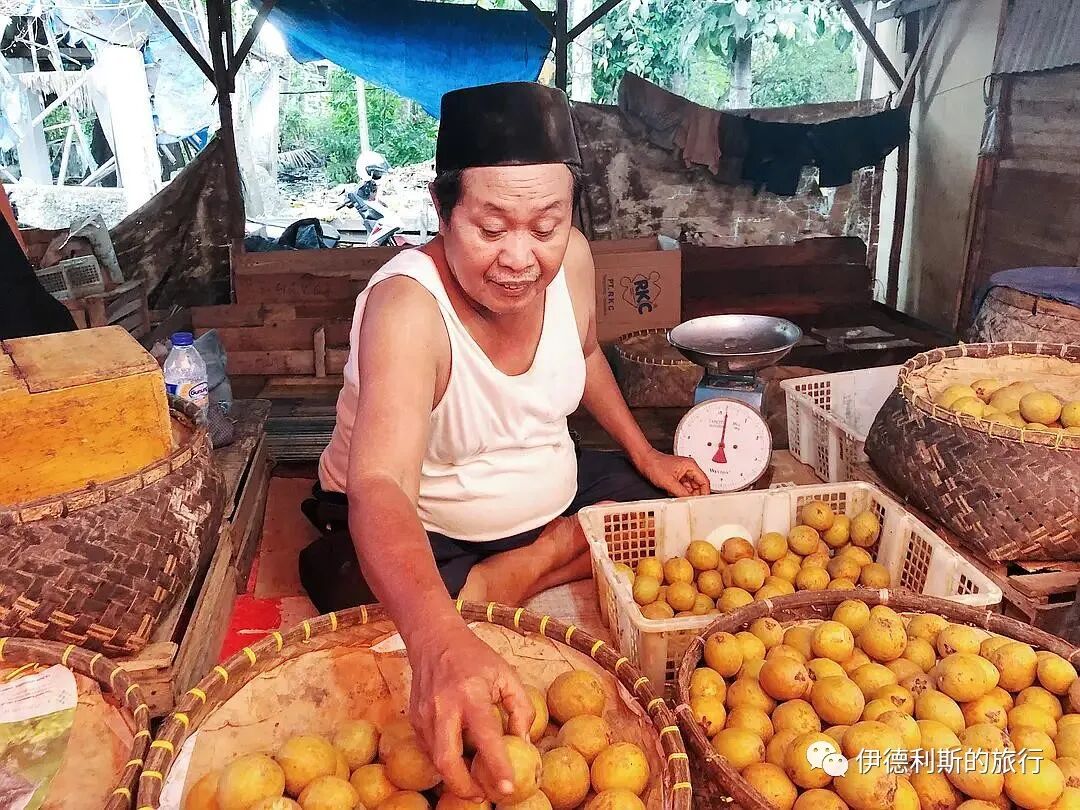
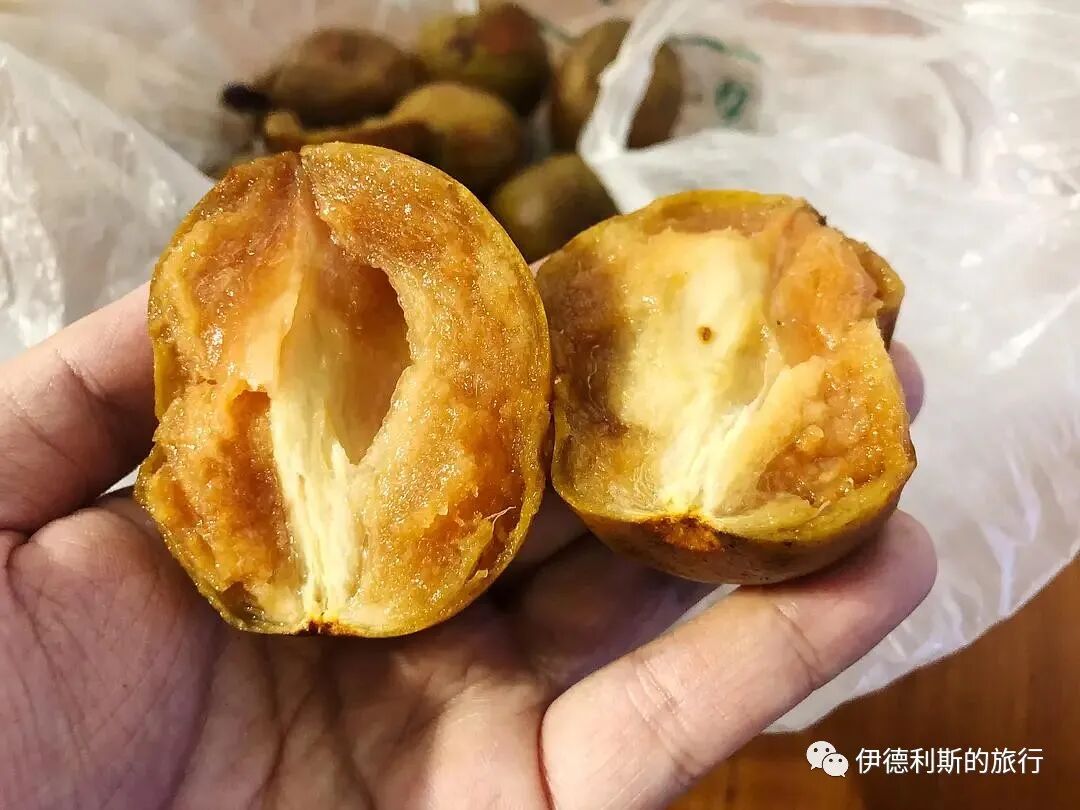
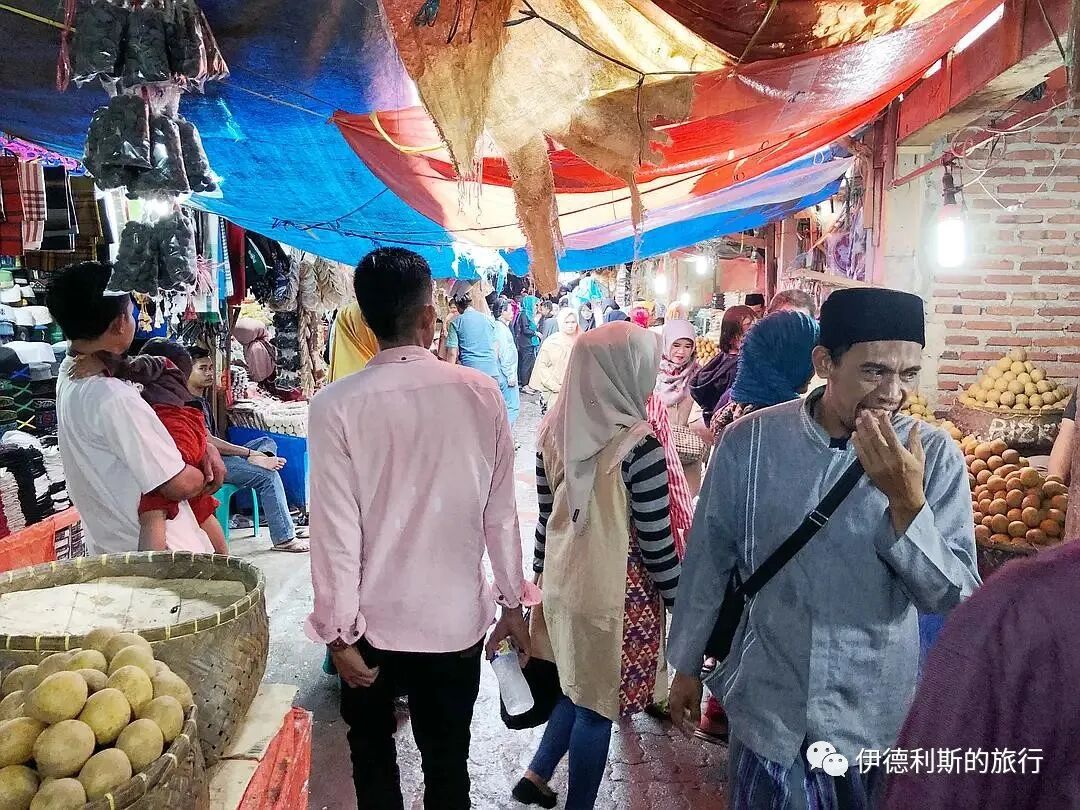
The Great Mosque of Banten (Masjid Agung Banten), built in 1566, is a famous Javanese-style mosque. Muslims come to visit every day, and a very lively bazaar has formed around the mosque. I drank Es Campur (iced drink made with coconut milk, red sugar syrup, coconut meat, and fruit jelly) at the bazaar, and also had the simplest street egg noodles, Mie Rebus. Sapodilla (Manilkara zapota) is sold everywhere in the bazaar, which is sweet and delicious. Sapodilla is native to Central America and the Caribbean, introduced to the Philippines by Spanish colonists, and then widely planted in Southeast Asia. It is called sawo in Indonesia.
11. Yunnan Hui Muslims in Chiang Mai, Thailand
Twenty Ethnic Restaurants in China: Halal and Minority Food Guide (Part 4 of 4)
Articles • ali2007fr posted the article • 0 comments • 143 views • 2026-05-17 07:16
Summary: This travel note introduces Twenty Ethnic Restaurants in China: Halal and Minority Food Guide (Part 1). In my travels over the past few years, I have encountered some very interesting ethnic groups. It is useful for readers interested in Ethnic Food, Halal Food, China Travel. This is part 4 of 4.
There is a Yunnan Hui Muslim community called "Wang He" by the Ping River outside the east gate of the ancient city of Chiang Mai, Thailand. In Thai, "Wang" means village, and "He" originally referred to the horse caravan merchants who came from Yunnan to engage in cross-border trade. From the 19th century to the early 20th century, Yunnan horse caravans controlled the trade route from Yunnan to northern Thailand. They transported tea, silk, hardware, and copperware from Yunnan to northern Thailand, and transported raw cotton and tobacco from northern Thailand back to Yunnan. In 1904, Zheng Chonglin, a Hui Muslim horse caravan merchant from Yuxi, Yunnan, established his own large horse inn in the east of Chiang Mai, which became the base for Yunnan horse caravans in Chiang Mai. Many Yunnan Hui Muslim horse caravan members came to live near the horse inn, and the Wang He community gradually formed.
There are several halal restaurants opened by Yunnan Hui Muslims on Wang He Street. I ate the famous northern Thai curry noodle khao soi at this KAO SOI FUENG FAH restaurant. It is said that this noodle was brought to northern Thailand by Yunnanese people. Slightly spicy noodle soup, sprinkled with sanzi (fried dough strips) and served with raw onions and lemon, the taste is quite good.
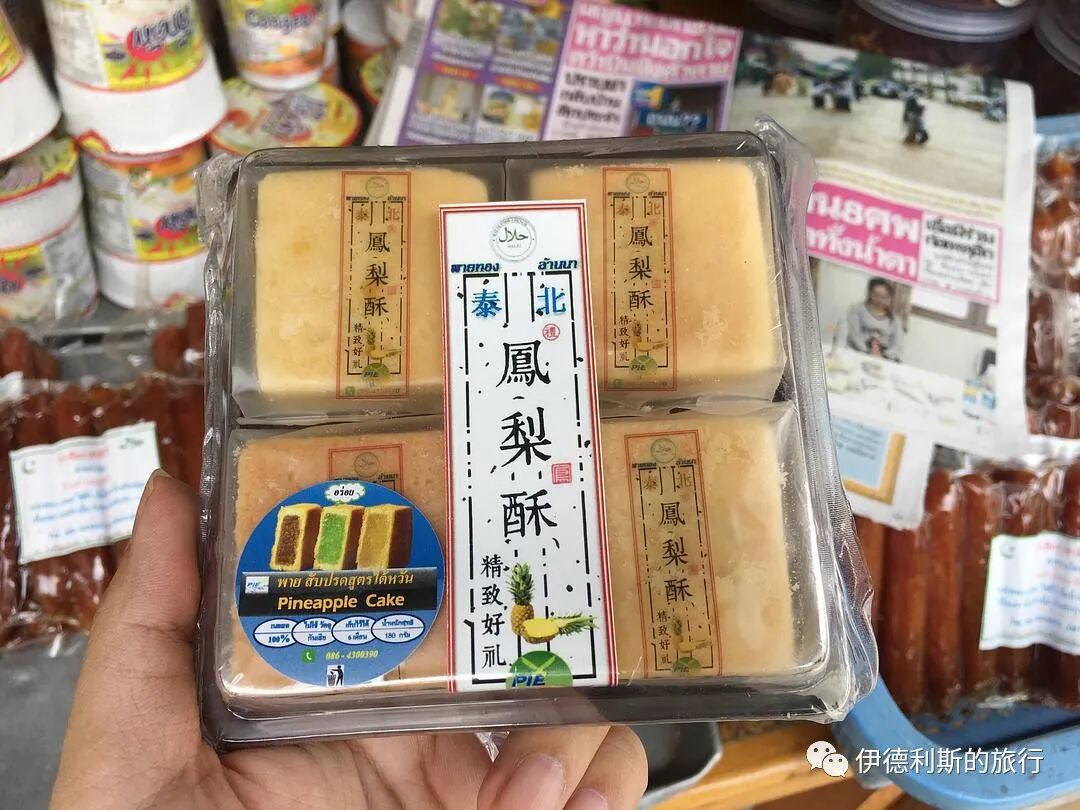
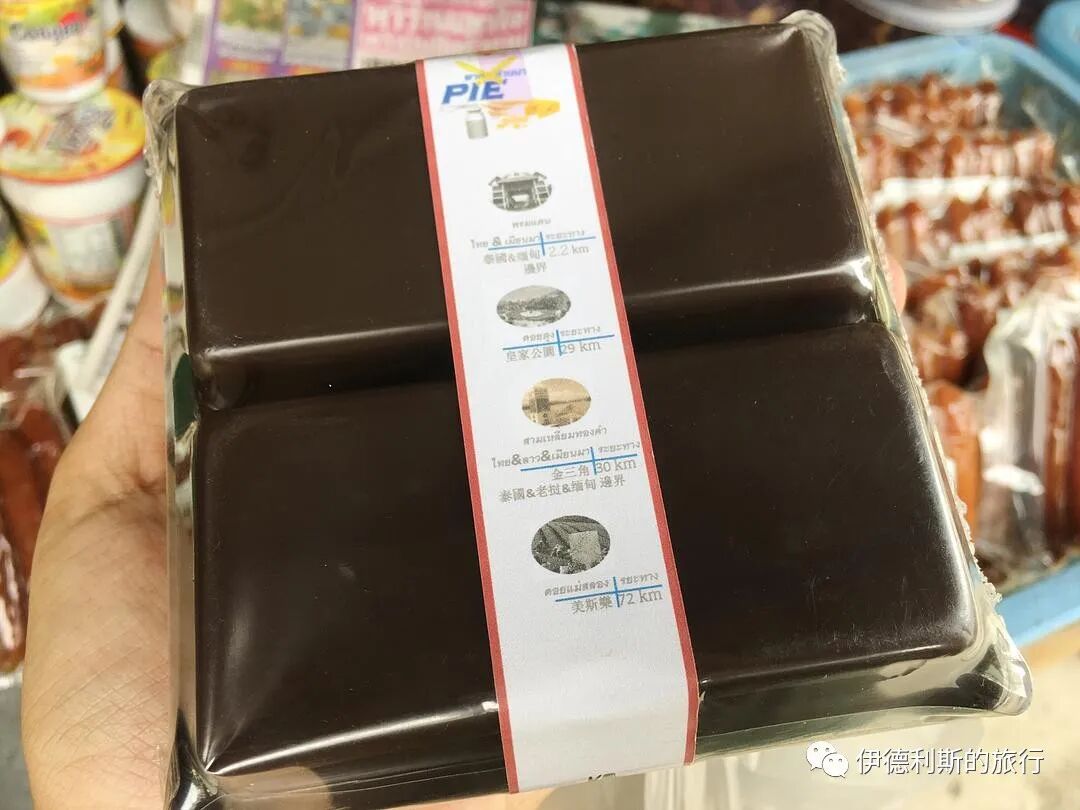
Northern Thai pineapple cakes are very likely produced by the northern Thai isolated army.
12. Korean-speaking Muslims in Itaewon, Seoul
In 1952, the US military stationed in the Korean Peninsula officially established its headquarters in Yongsan, and after 1957 it became the headquarters of the US Forces Korea. To meet the living needs of a large number of US troops stationed in Korea, various foreign restaurants began to appear in Itaewon, not far east of the Yongsan base, and Muslims also began to come to Itaewon to open halal restaurants.
In 1976, President Park Chung-hee provided land to the KMF (Korea Muslim Federation) to build the Seoul Central Mosque in Itaewon, and a halal commercial street was formed in Itaewon. After the 1990s, with Muslims from Pakistan, Bangladesh, Indonesia, Malaysia, and other places coming to work, the number of Muslims in South Korea reached 150,000. Currently, it is estimated that there are 100,000 Muslims in South Korea, 40,000 of whom are local converts.
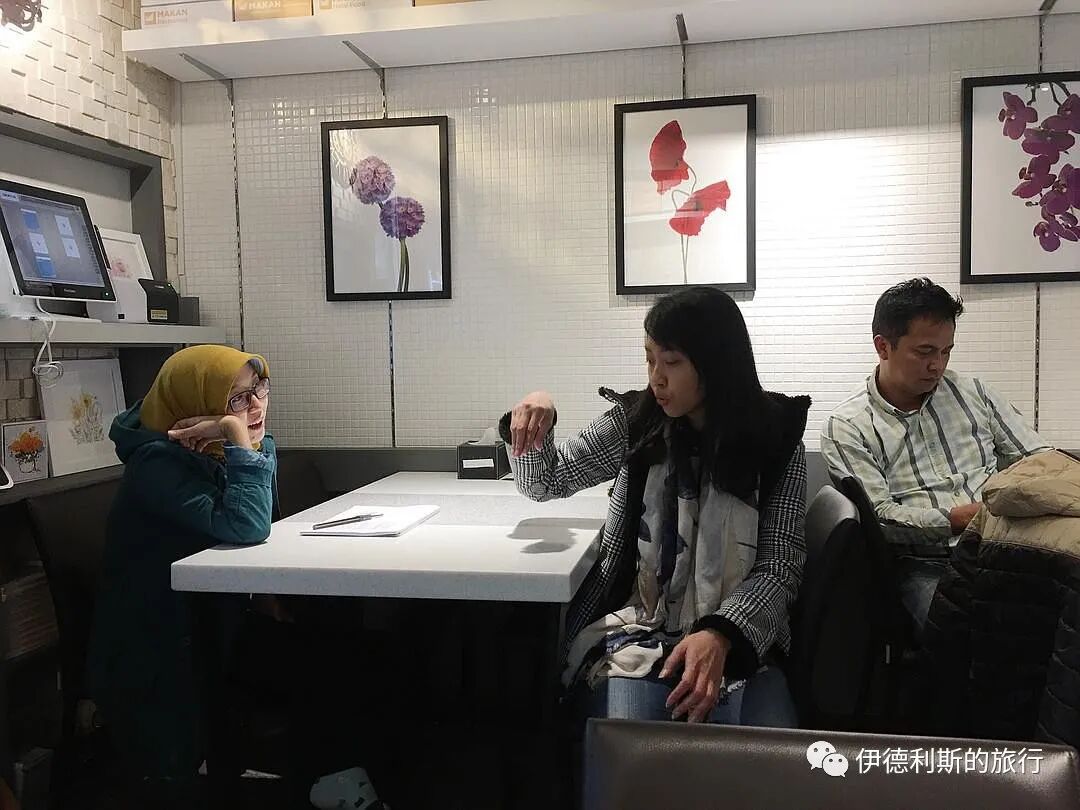
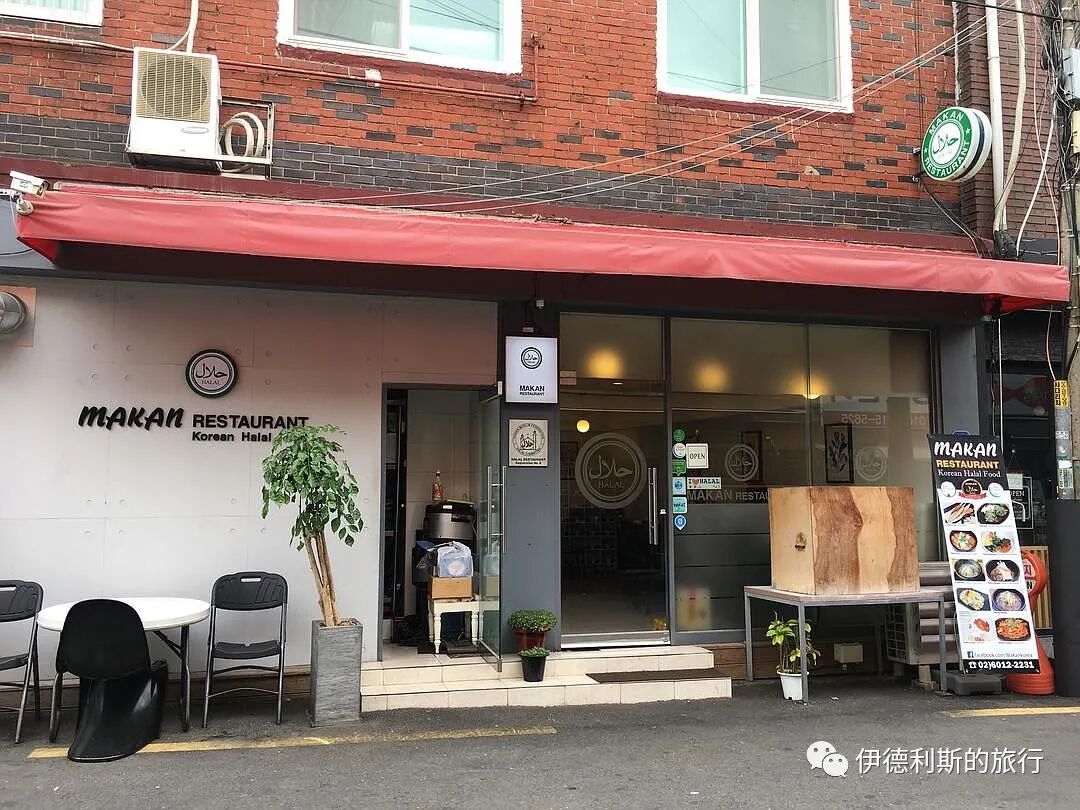
Although there are so many Middle Eastern, Indian, and Turkish halal restaurants in Itaewon, the most distinctive one is of course the halal Korean restaurant, and Makan is one of the most famous.
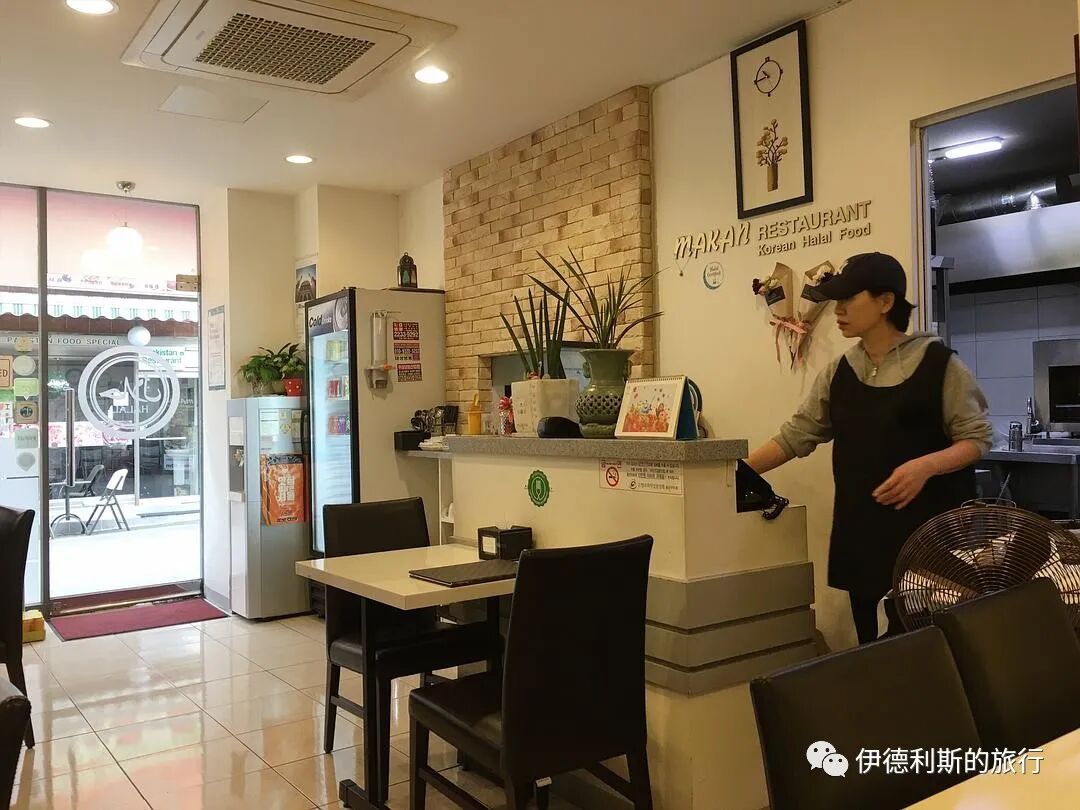
This sister is the chef.
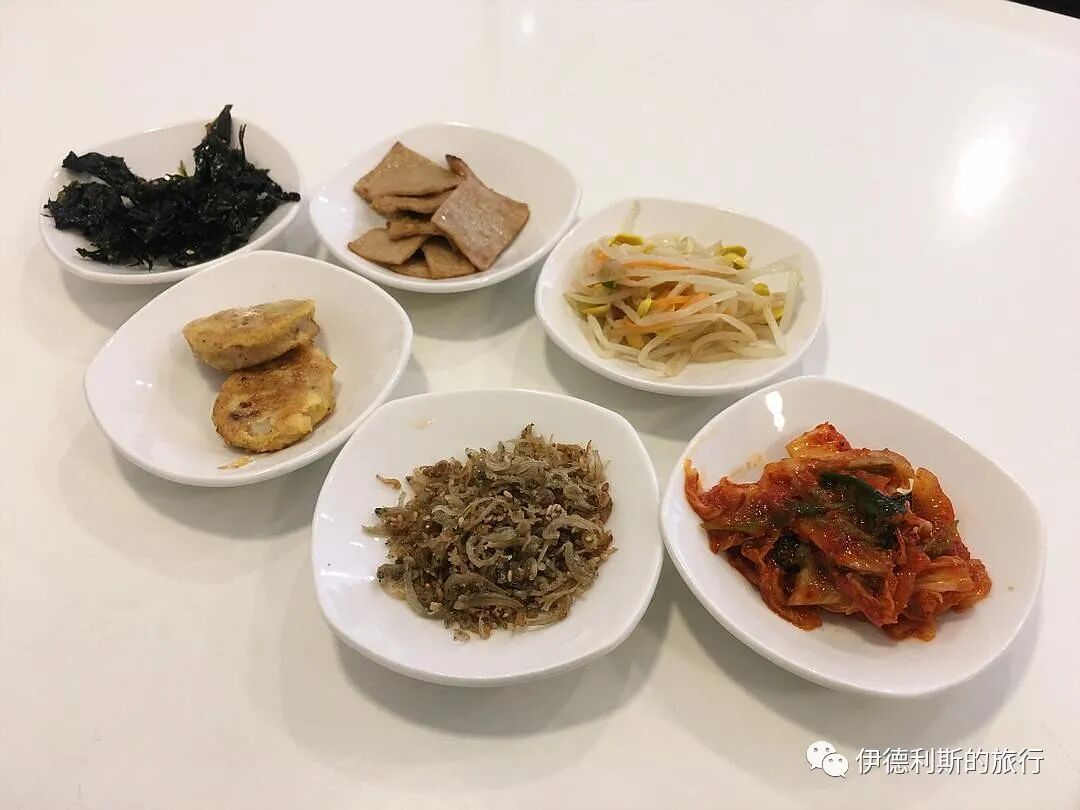
Serving side dishes before eating is a feature of Korean restaurants here.
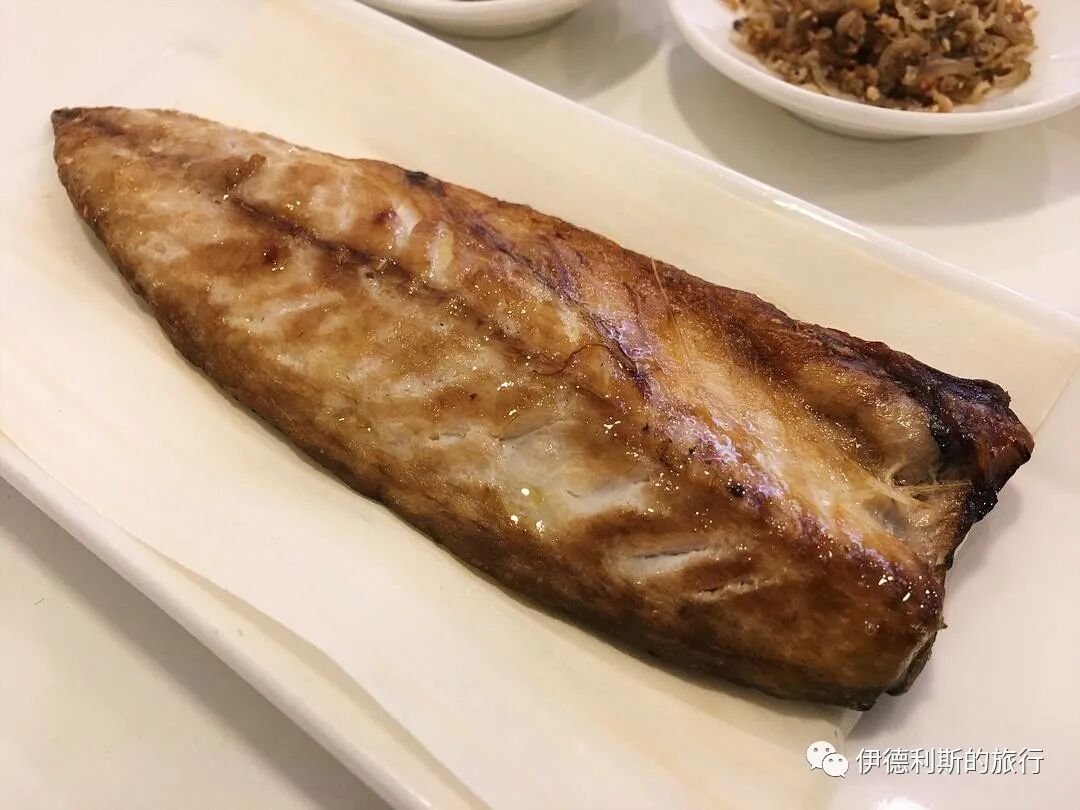
Grilled fish.
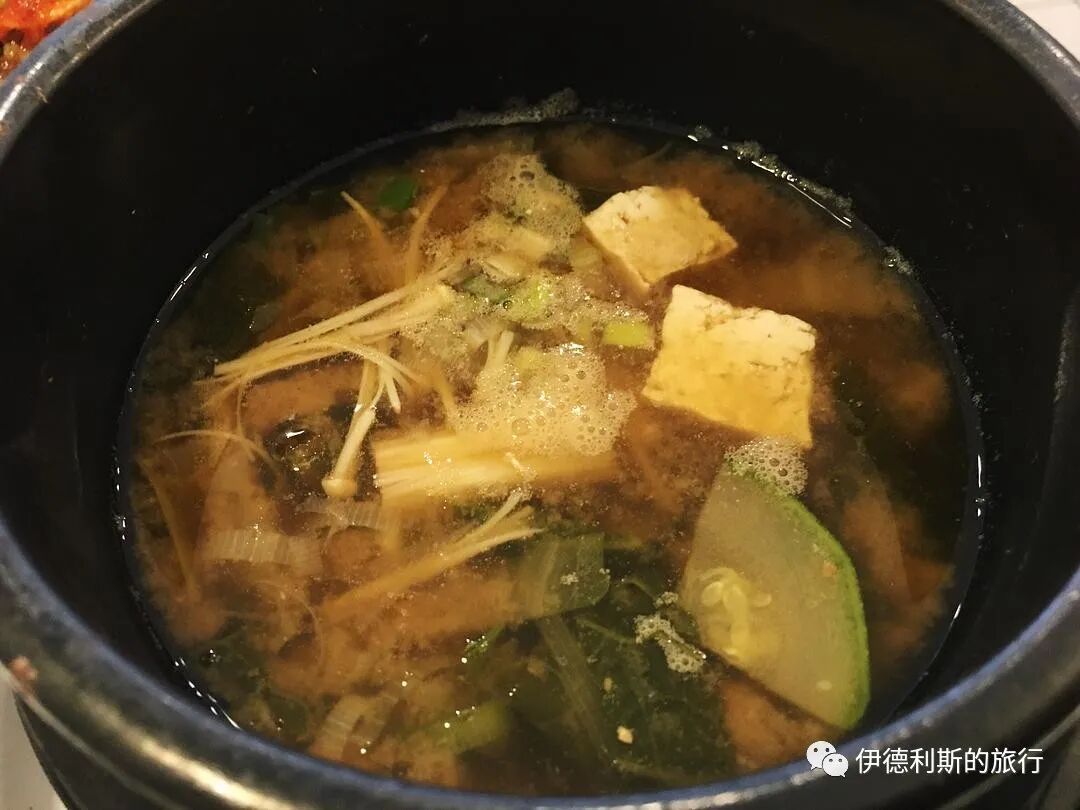
Doenjang-jjigae (soybean paste stew).
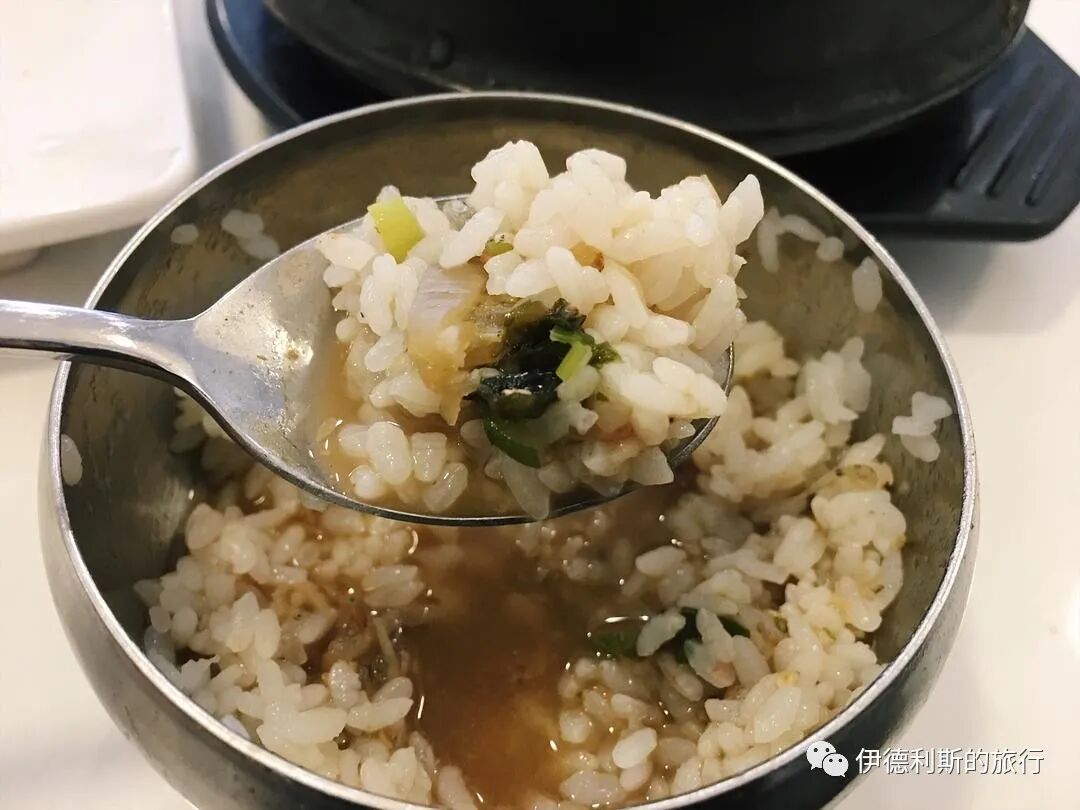
Soak the rice in the soup.
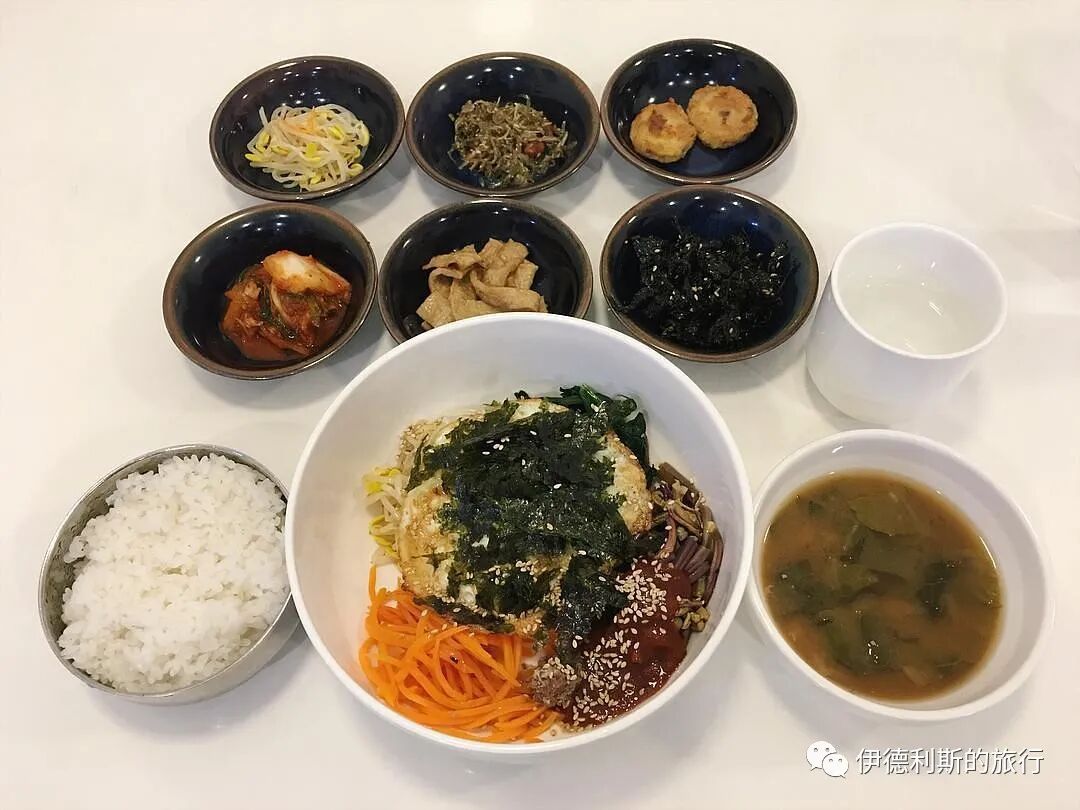
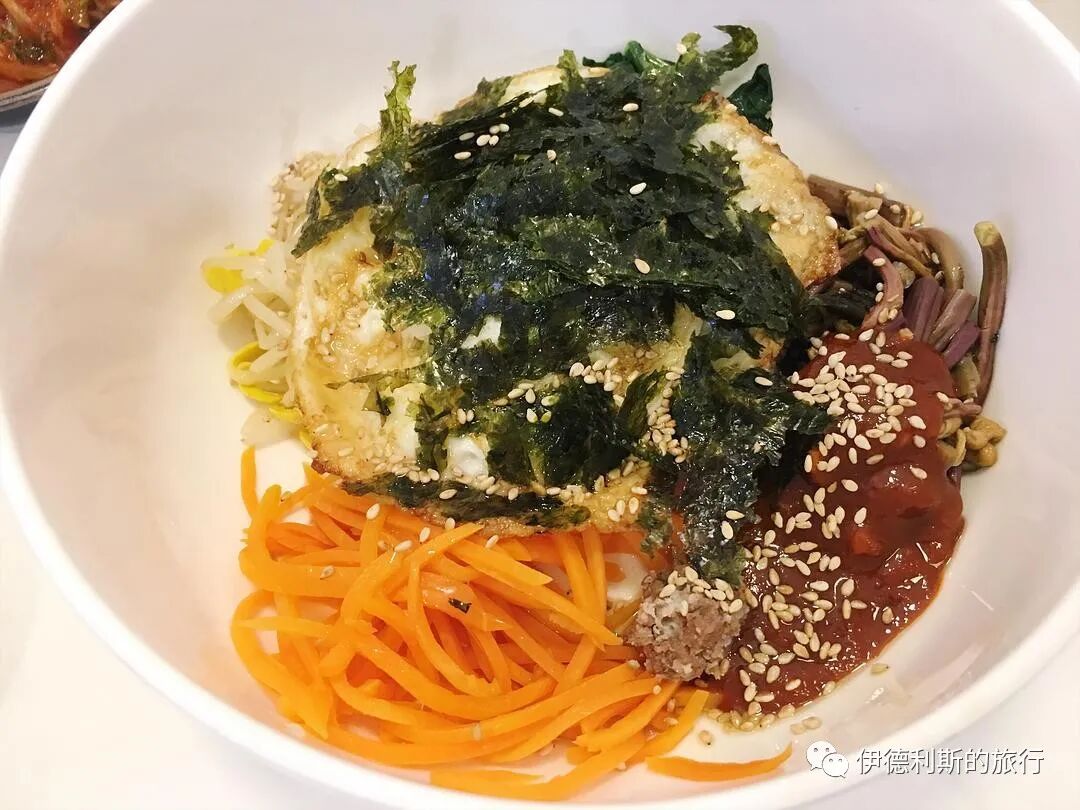
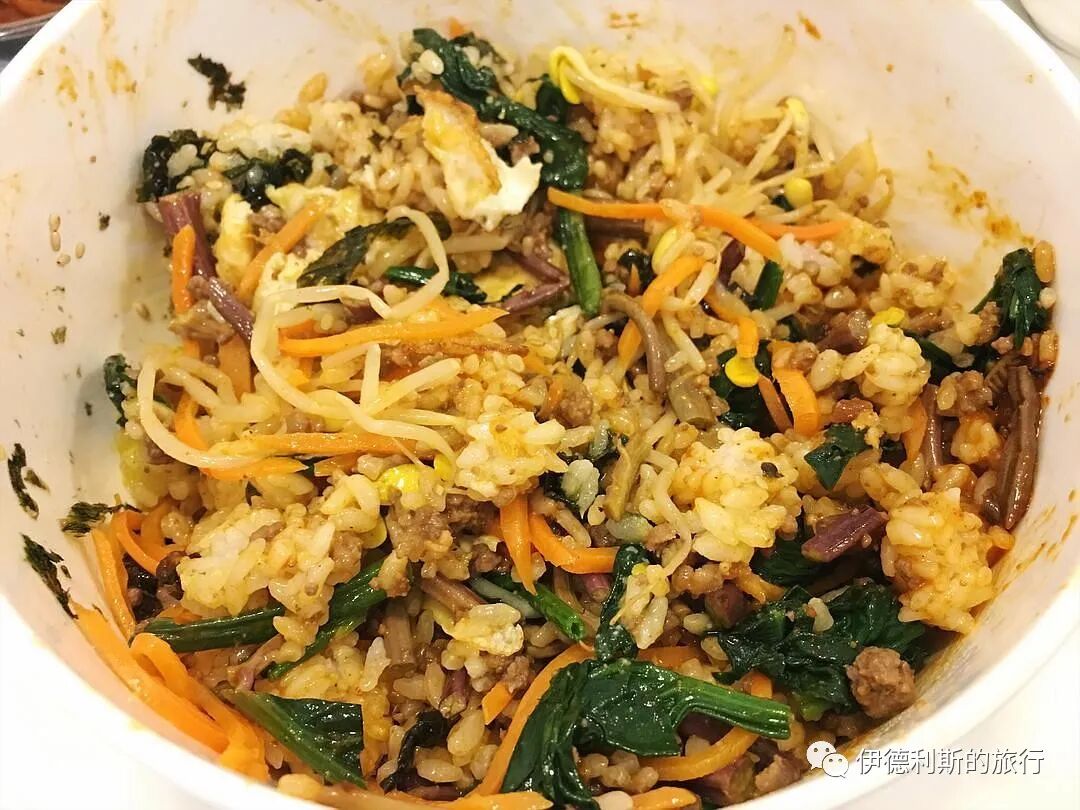
Korean-style bibimbap with grilled meat; the meat was covered by an egg, so I didn't take a picture.
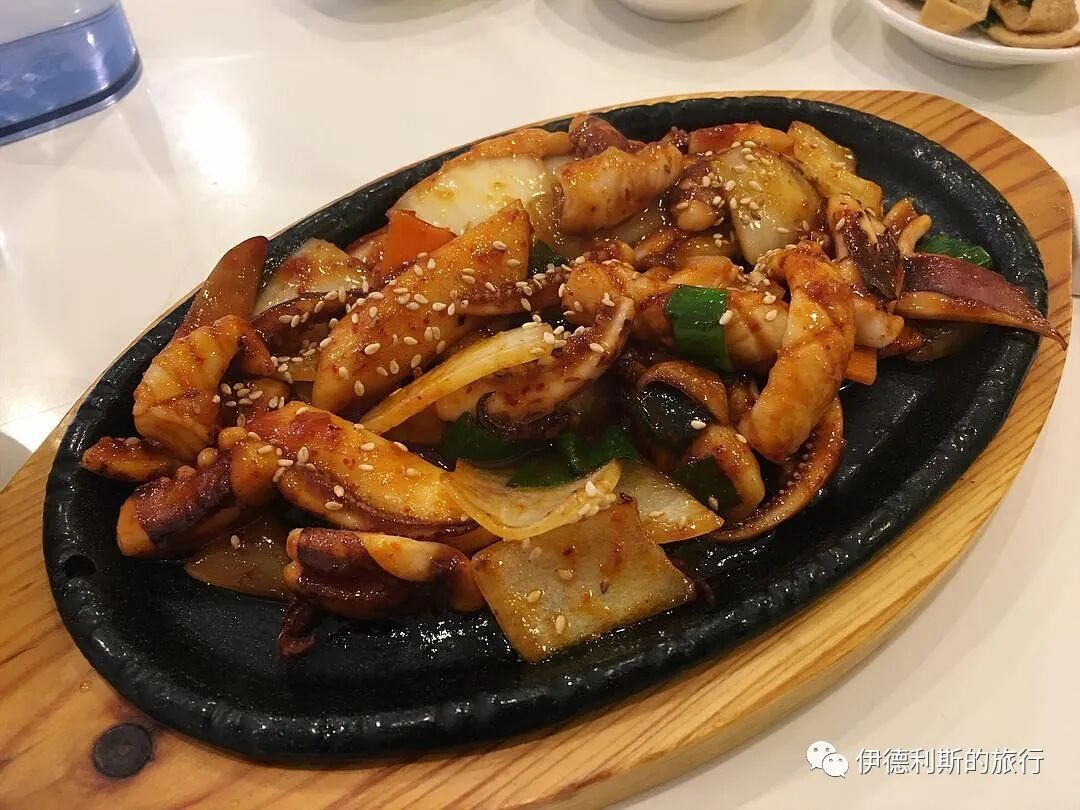
Teppanyaki squid with rice cakes.
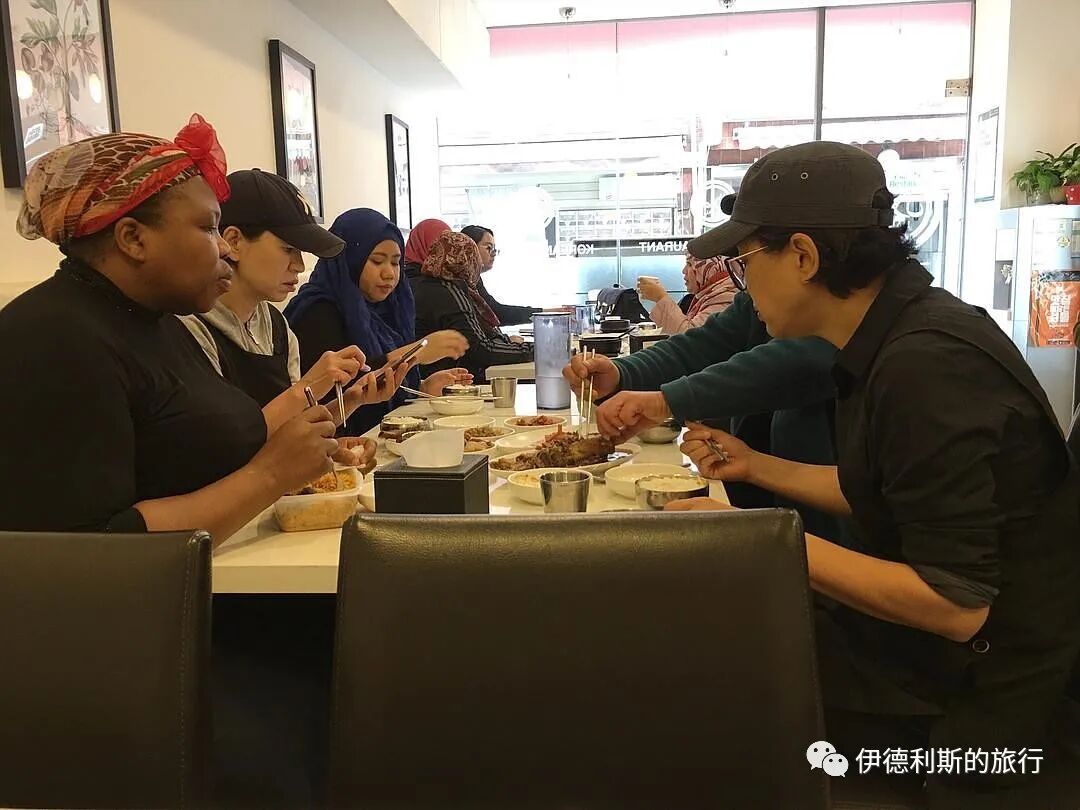
The person in the front right of the picture is also the chef.
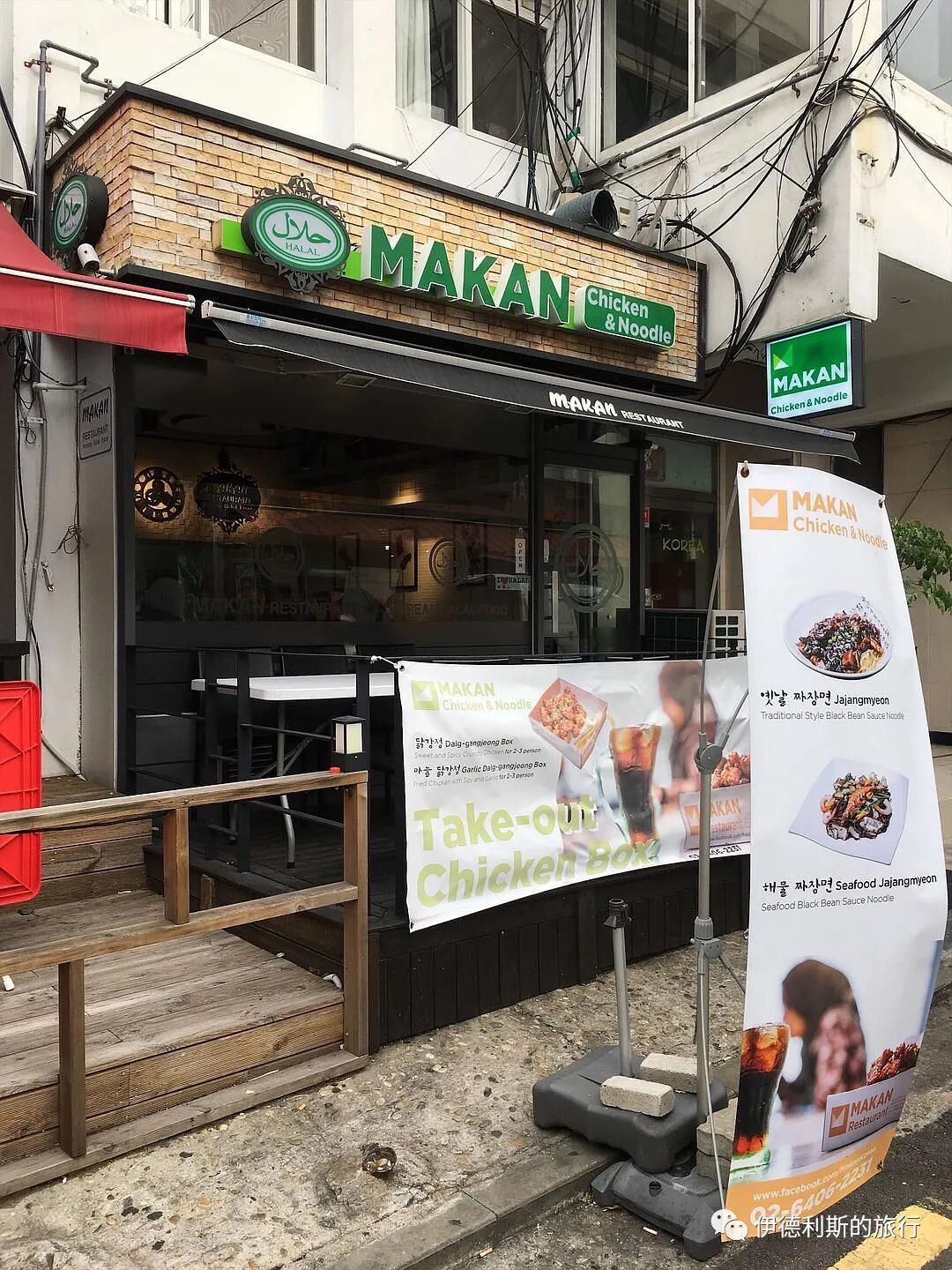
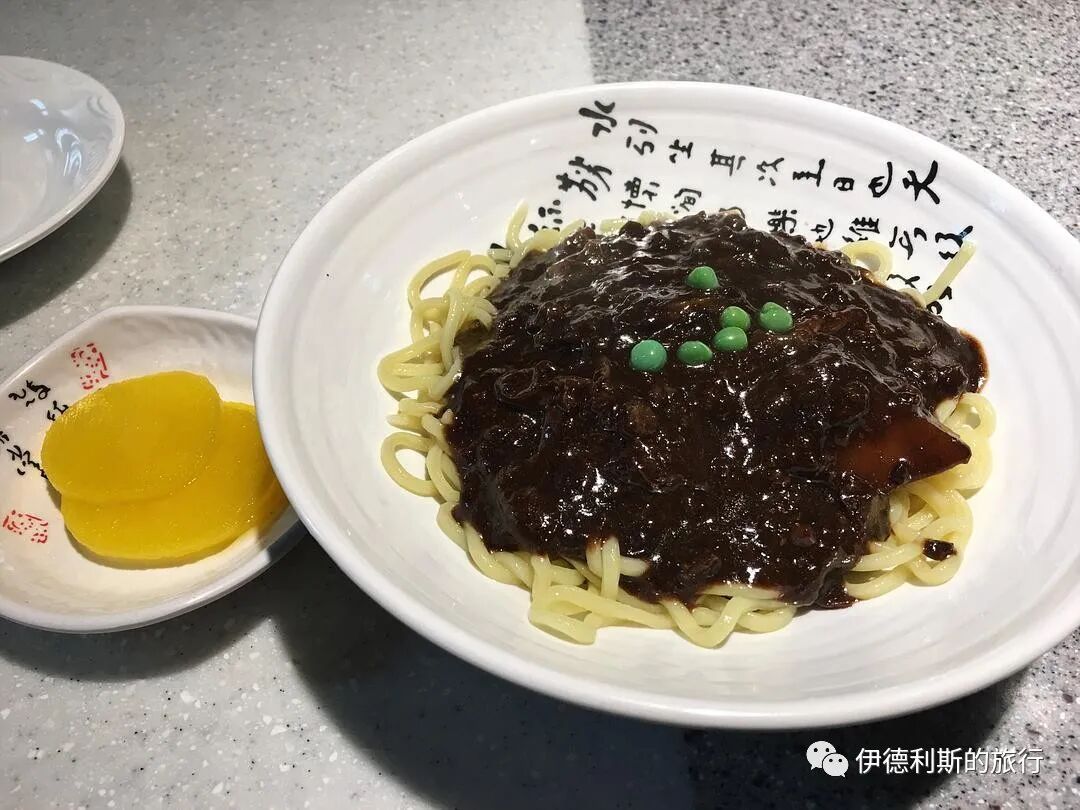
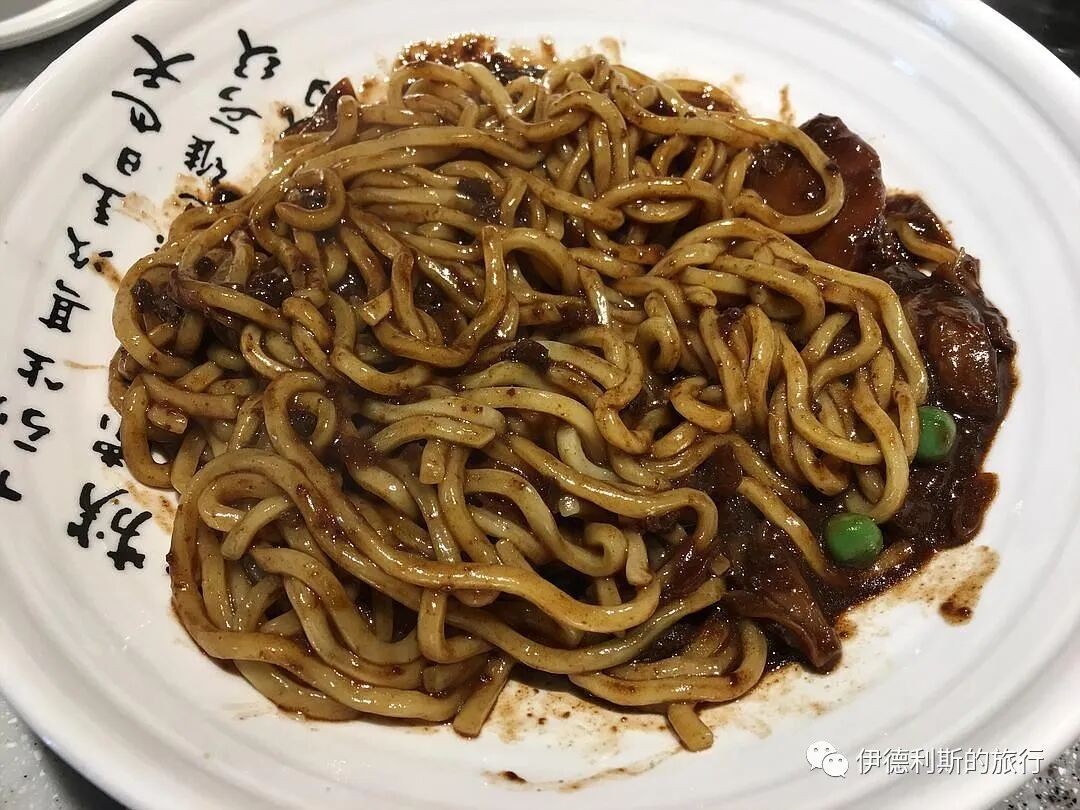
In addition to the main store south of the mosque, Makan also has a store west of the mosque that specializes in Korean fried chicken and jajangmyeon (black bean noodles). The chef is an uncle, and it is the same business as the main store.
Korean-style jajangmyeon, the taste is different from Beijing jajangmyeon, and the noodles are a bit like udon noodles. view all
Summary: This travel note introduces Twenty Ethnic Restaurants in China: Halal and Minority Food Guide (Part 1). In my travels over the past few years, I have encountered some very interesting ethnic groups. It is useful for readers interested in Ethnic Food, Halal Food, China Travel. This is part 4 of 4.
There is a Yunnan Hui Muslim community called "Wang He" by the Ping River outside the east gate of the ancient city of Chiang Mai, Thailand. In Thai, "Wang" means village, and "He" originally referred to the horse caravan merchants who came from Yunnan to engage in cross-border trade. From the 19th century to the early 20th century, Yunnan horse caravans controlled the trade route from Yunnan to northern Thailand. They transported tea, silk, hardware, and copperware from Yunnan to northern Thailand, and transported raw cotton and tobacco from northern Thailand back to Yunnan. In 1904, Zheng Chonglin, a Hui Muslim horse caravan merchant from Yuxi, Yunnan, established his own large horse inn in the east of Chiang Mai, which became the base for Yunnan horse caravans in Chiang Mai. Many Yunnan Hui Muslim horse caravan members came to live near the horse inn, and the Wang He community gradually formed.
There are several halal restaurants opened by Yunnan Hui Muslims on Wang He Street. I ate the famous northern Thai curry noodle khao soi at this KAO SOI FUENG FAH restaurant. It is said that this noodle was brought to northern Thailand by Yunnanese people. Slightly spicy noodle soup, sprinkled with sanzi (fried dough strips) and served with raw onions and lemon, the taste is quite good.
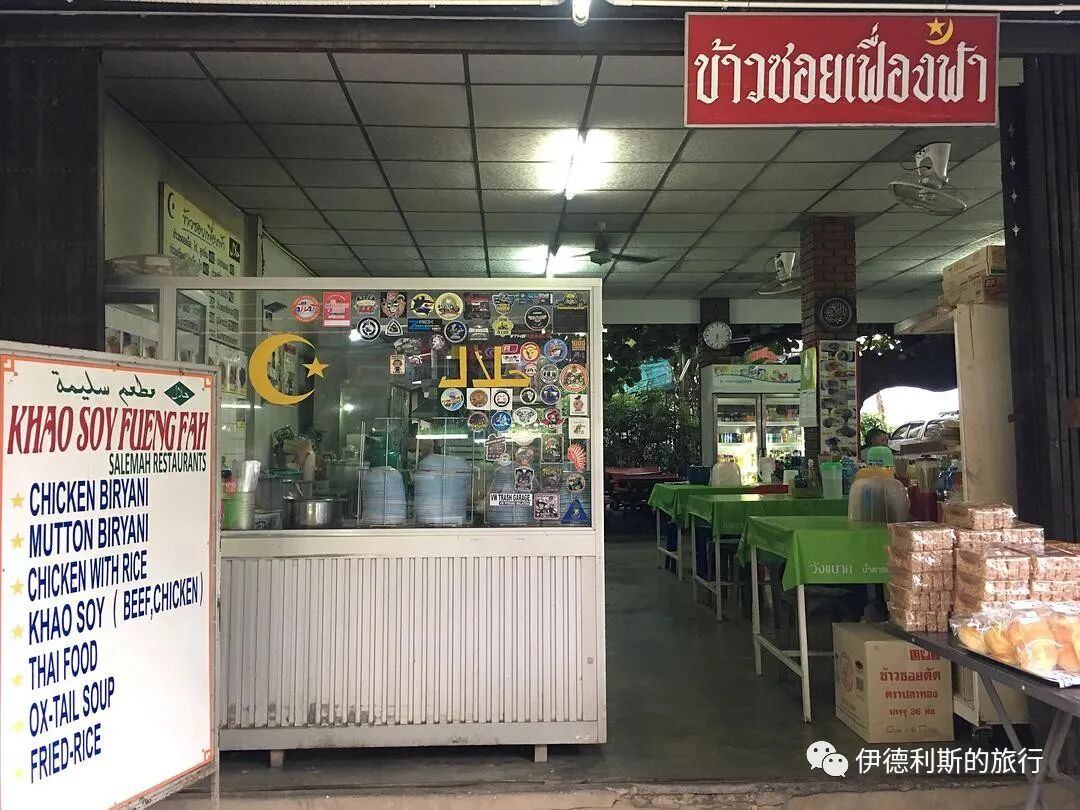
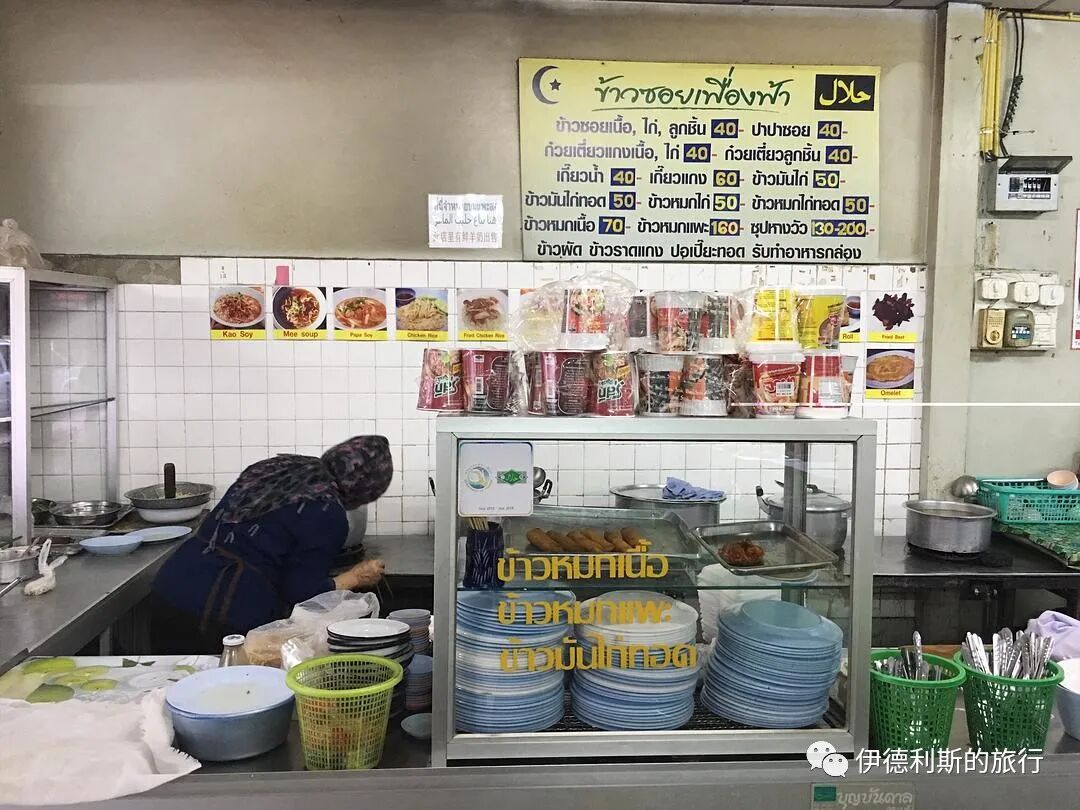
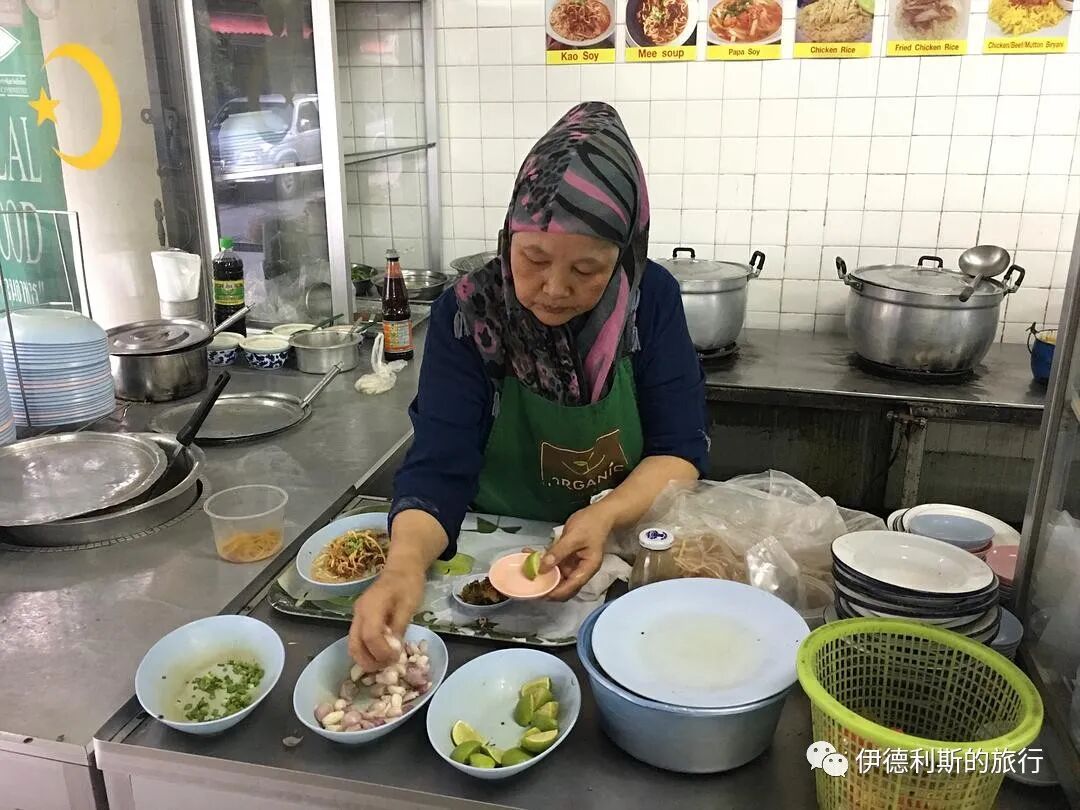
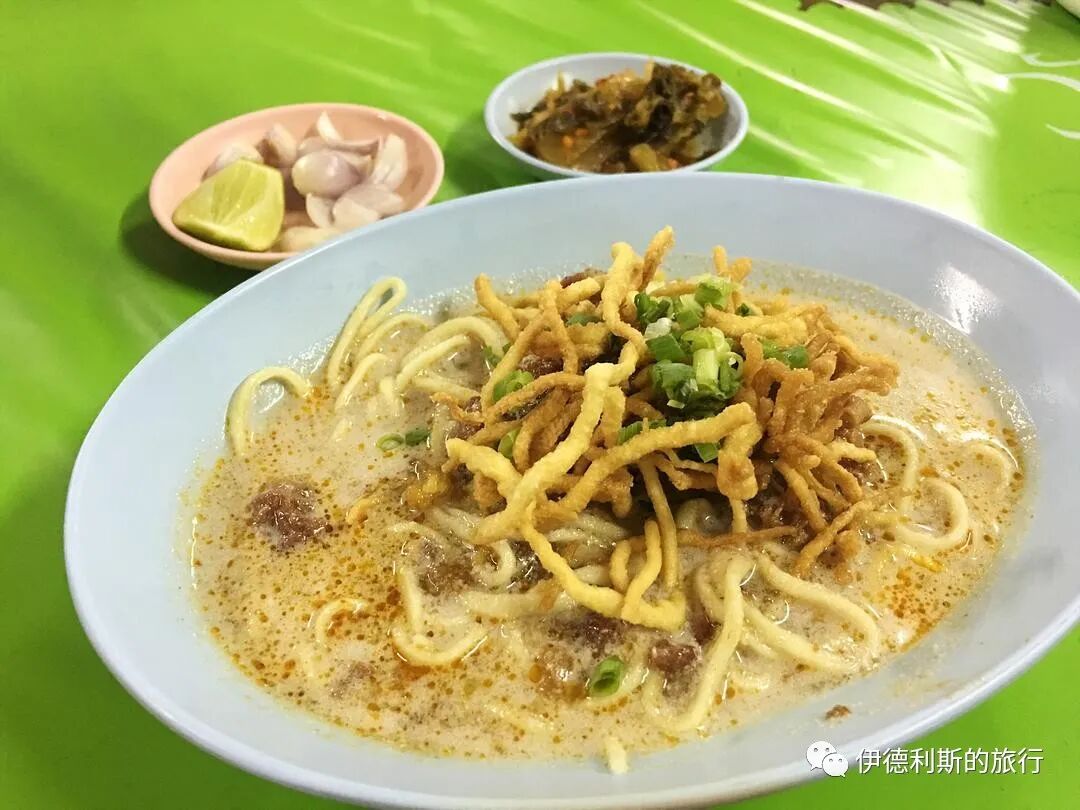
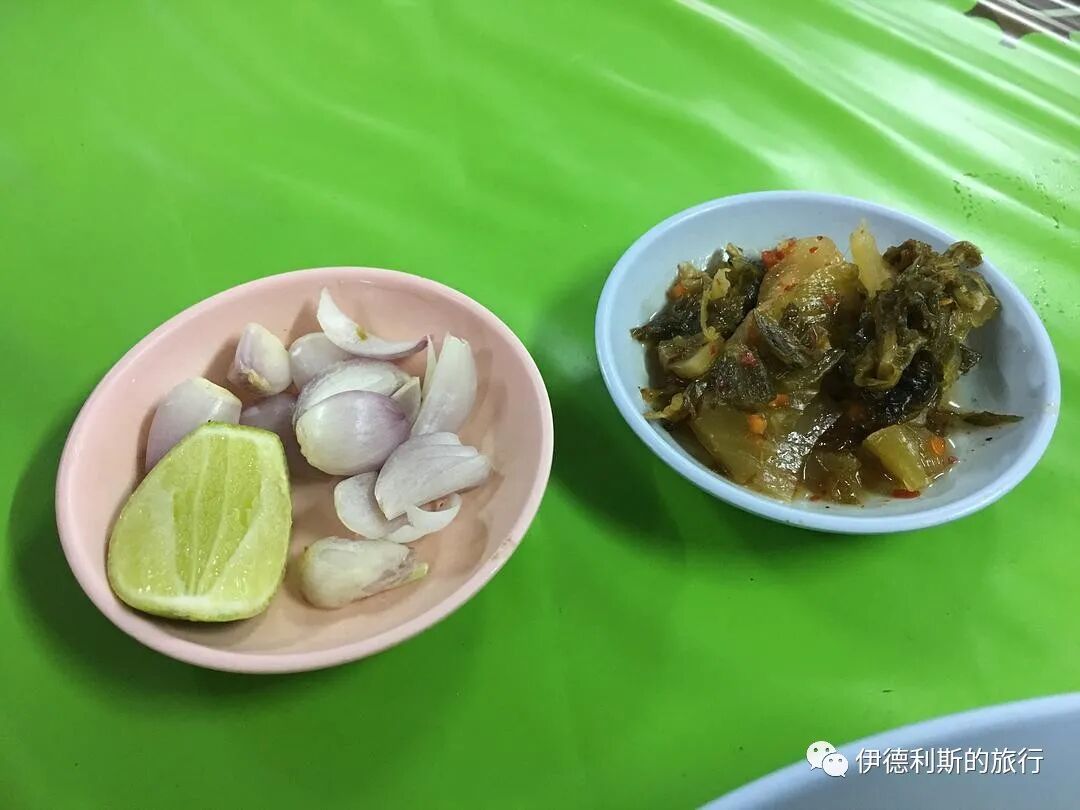
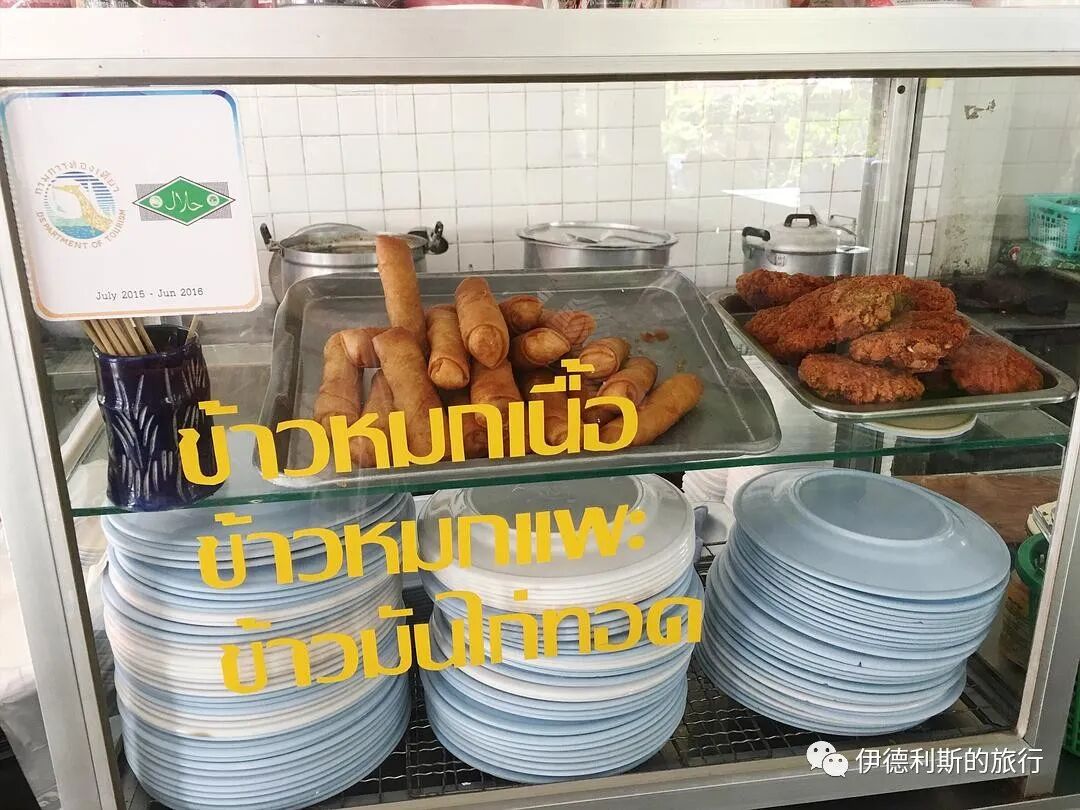
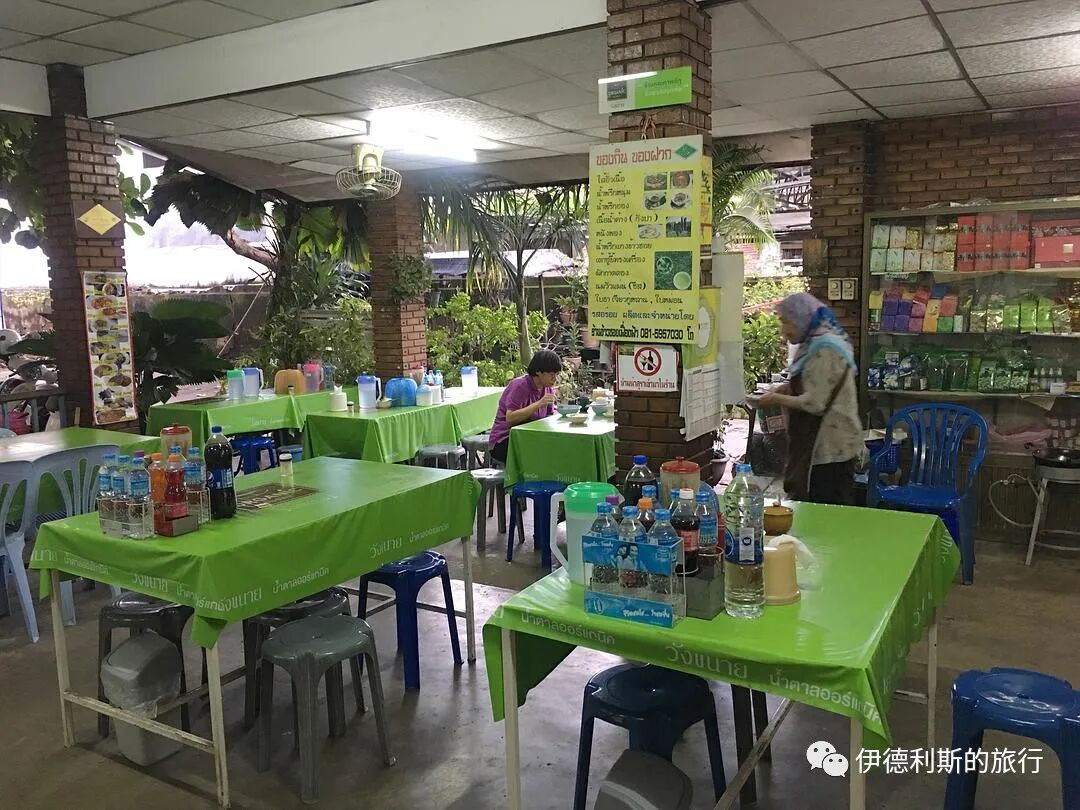
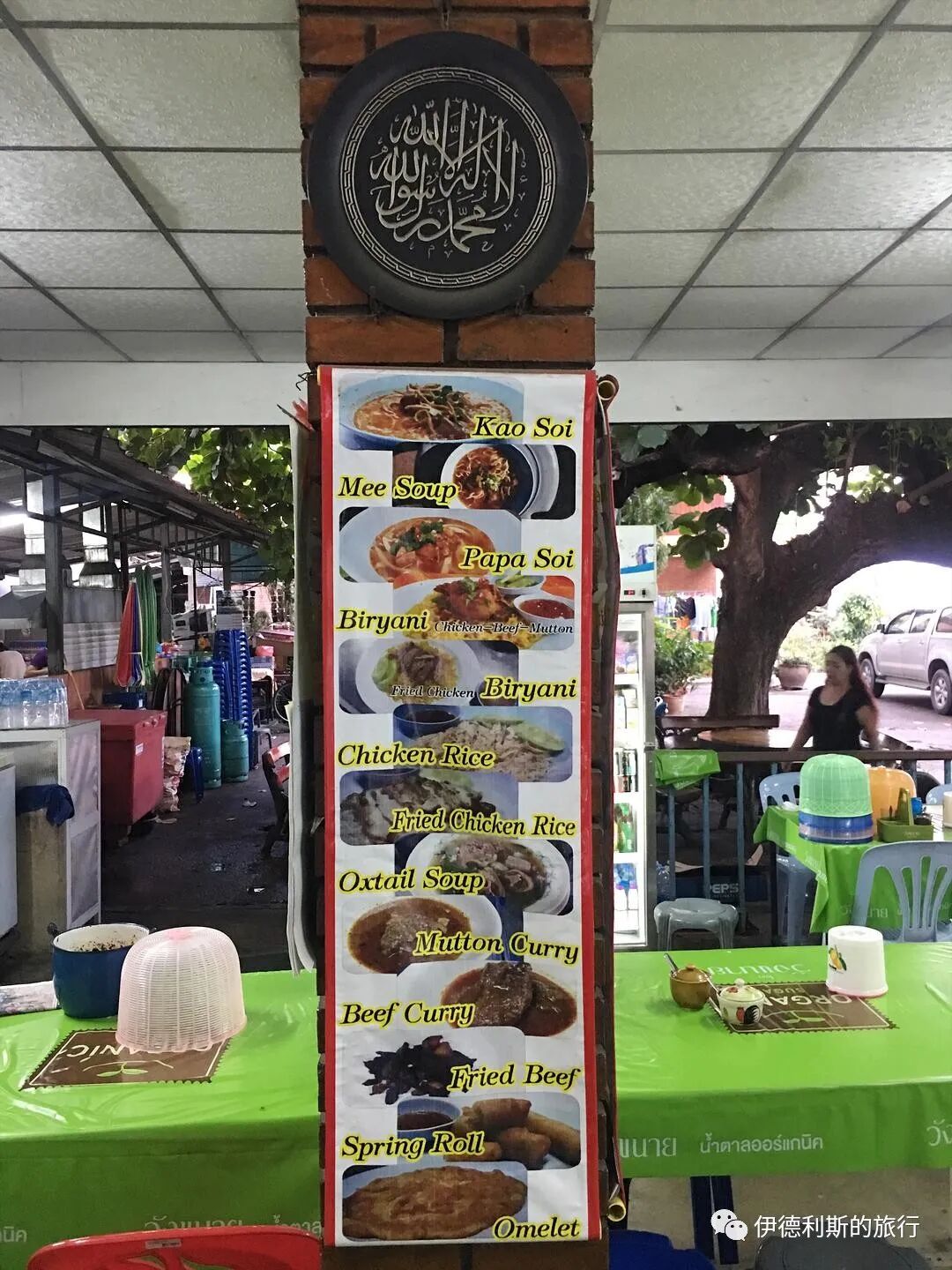
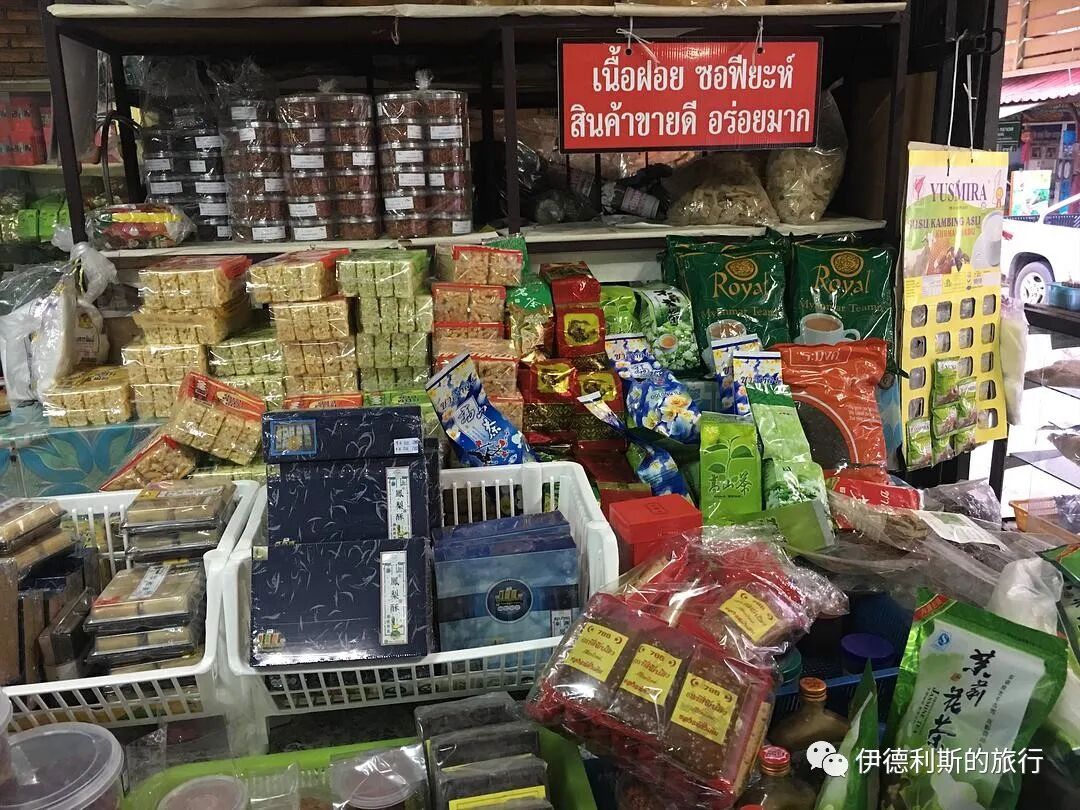
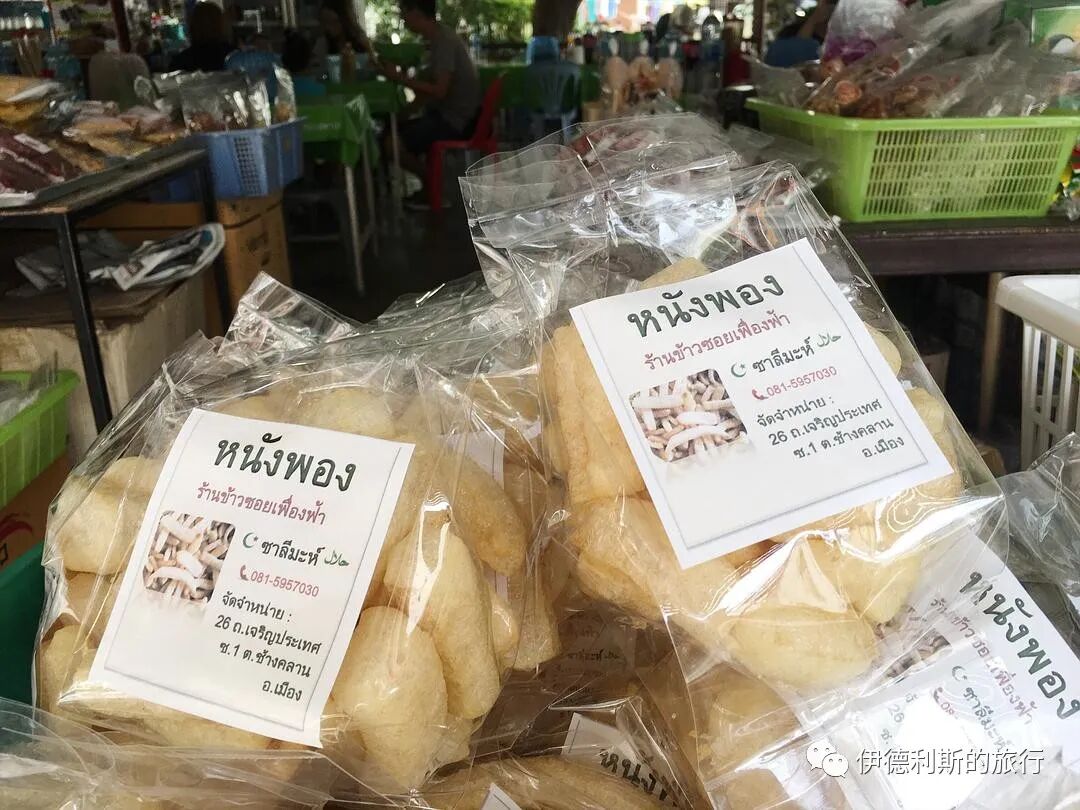
Northern Thai pineapple cakes are very likely produced by the northern Thai isolated army.
12. Korean-speaking Muslims in Itaewon, Seoul
In 1952, the US military stationed in the Korean Peninsula officially established its headquarters in Yongsan, and after 1957 it became the headquarters of the US Forces Korea. To meet the living needs of a large number of US troops stationed in Korea, various foreign restaurants began to appear in Itaewon, not far east of the Yongsan base, and Muslims also began to come to Itaewon to open halal restaurants.
In 1976, President Park Chung-hee provided land to the KMF (Korea Muslim Federation) to build the Seoul Central Mosque in Itaewon, and a halal commercial street was formed in Itaewon. After the 1990s, with Muslims from Pakistan, Bangladesh, Indonesia, Malaysia, and other places coming to work, the number of Muslims in South Korea reached 150,000. Currently, it is estimated that there are 100,000 Muslims in South Korea, 40,000 of whom are local converts.
Although there are so many Middle Eastern, Indian, and Turkish halal restaurants in Itaewon, the most distinctive one is of course the halal Korean restaurant, and Makan is one of the most famous.
This sister is the chef.
Serving side dishes before eating is a feature of Korean restaurants here.
Grilled fish.
Doenjang-jjigae (soybean paste stew).
Soak the rice in the soup.
Korean-style bibimbap with grilled meat; the meat was covered by an egg, so I didn't take a picture.
Teppanyaki squid with rice cakes.
The person in the front right of the picture is also the chef.
In addition to the main store south of the mosque, Makan also has a store west of the mosque that specializes in Korean fried chicken and jajangmyeon (black bean noodles). The chef is an uncle, and it is the same business as the main store.
Korean-style jajangmyeon, the taste is different from Beijing jajangmyeon, and the noodles are a bit like udon noodles.
Twenty Ethnic Restaurants in China: Halal and Minority Food Guide (Part 2 of 4)
Articles • ali2007fr posted the article • 0 comments • 176 views • 2026-05-17 06:55
Summary: This travel note introduces Twenty Ethnic Restaurants in China: Halal and Minority Food Guide (Part 1). In my travels over the past few years, I have encountered some very interesting ethnic groups. It is useful for readers interested in Ethnic Food, Halal Food, China Travel. This is part 2 of 4.
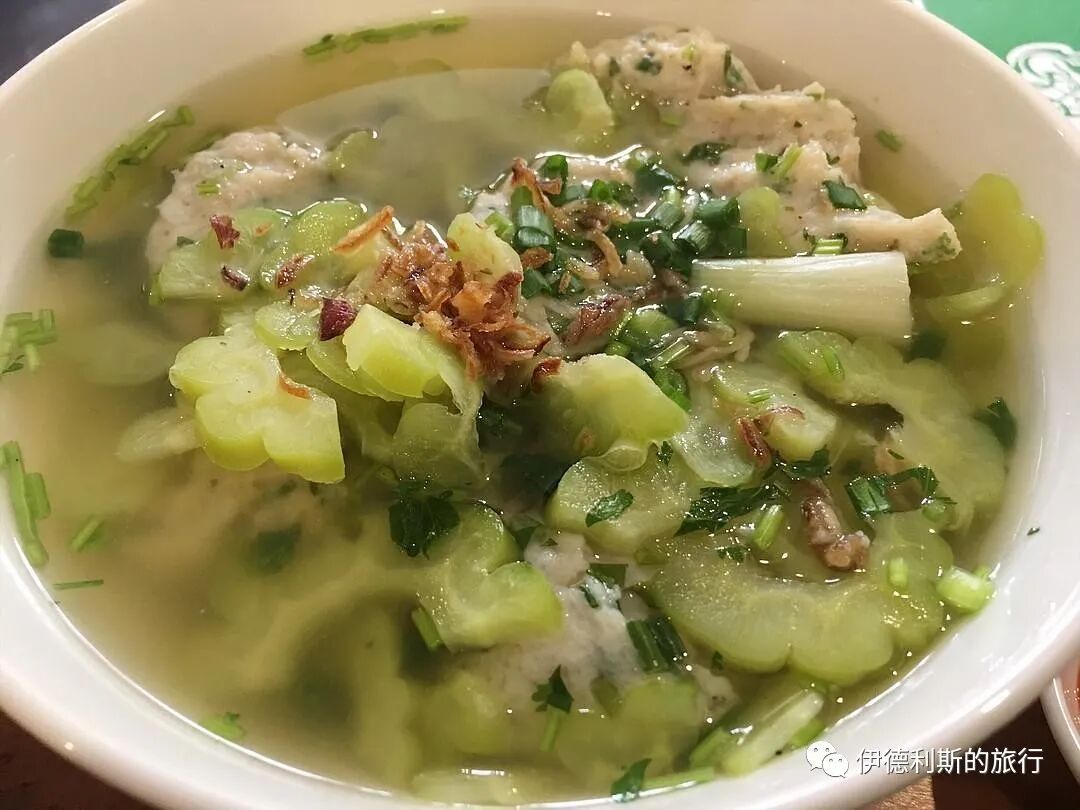
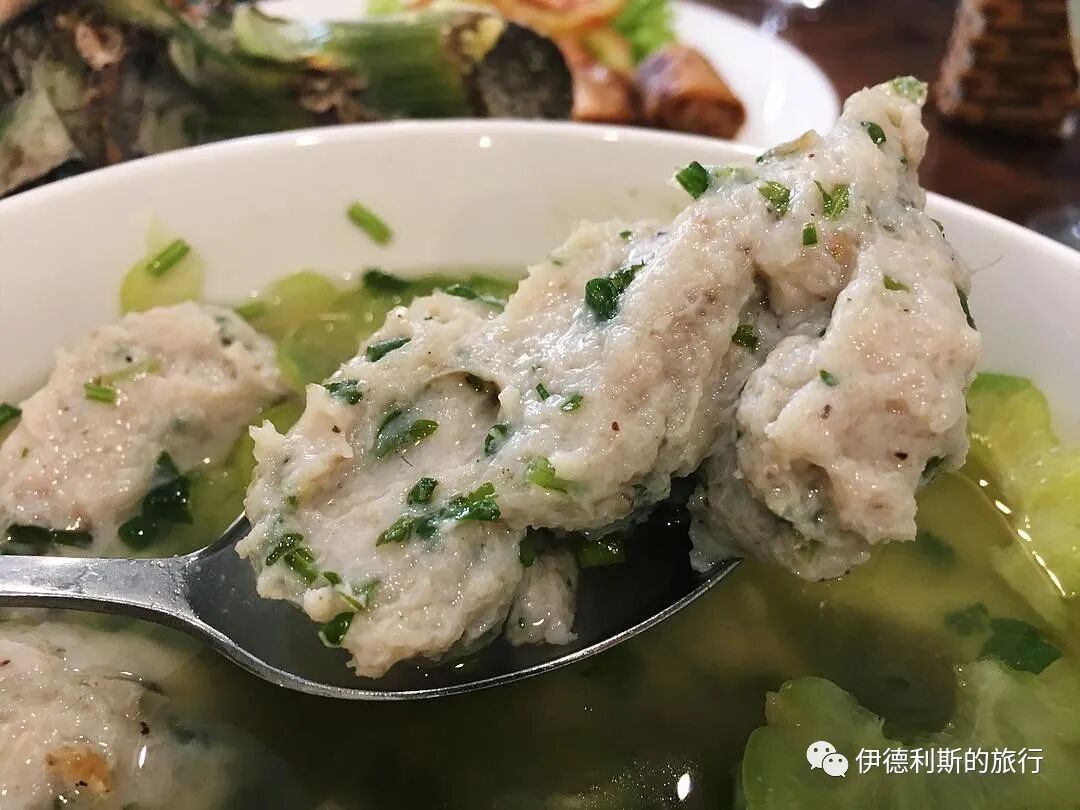
Bitter melon served with a type of fish ball called featherback; I looked it up and it seems to be translated as the bronze featherback fish.
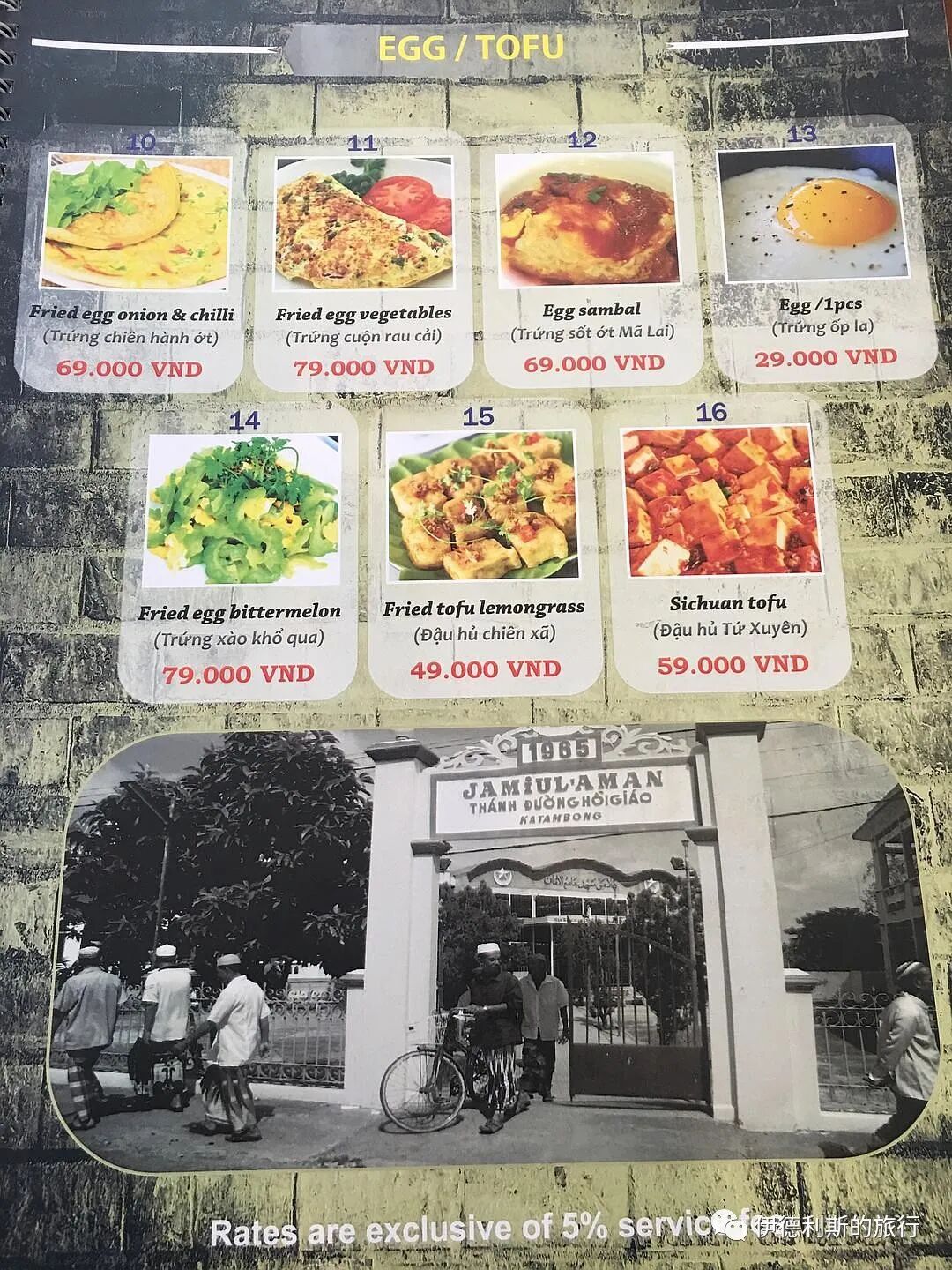
The mosque in the menu is the Jamiul Aman Mosque located in Chau Phu District, An Giang Province, Vietnam, built in 1965.
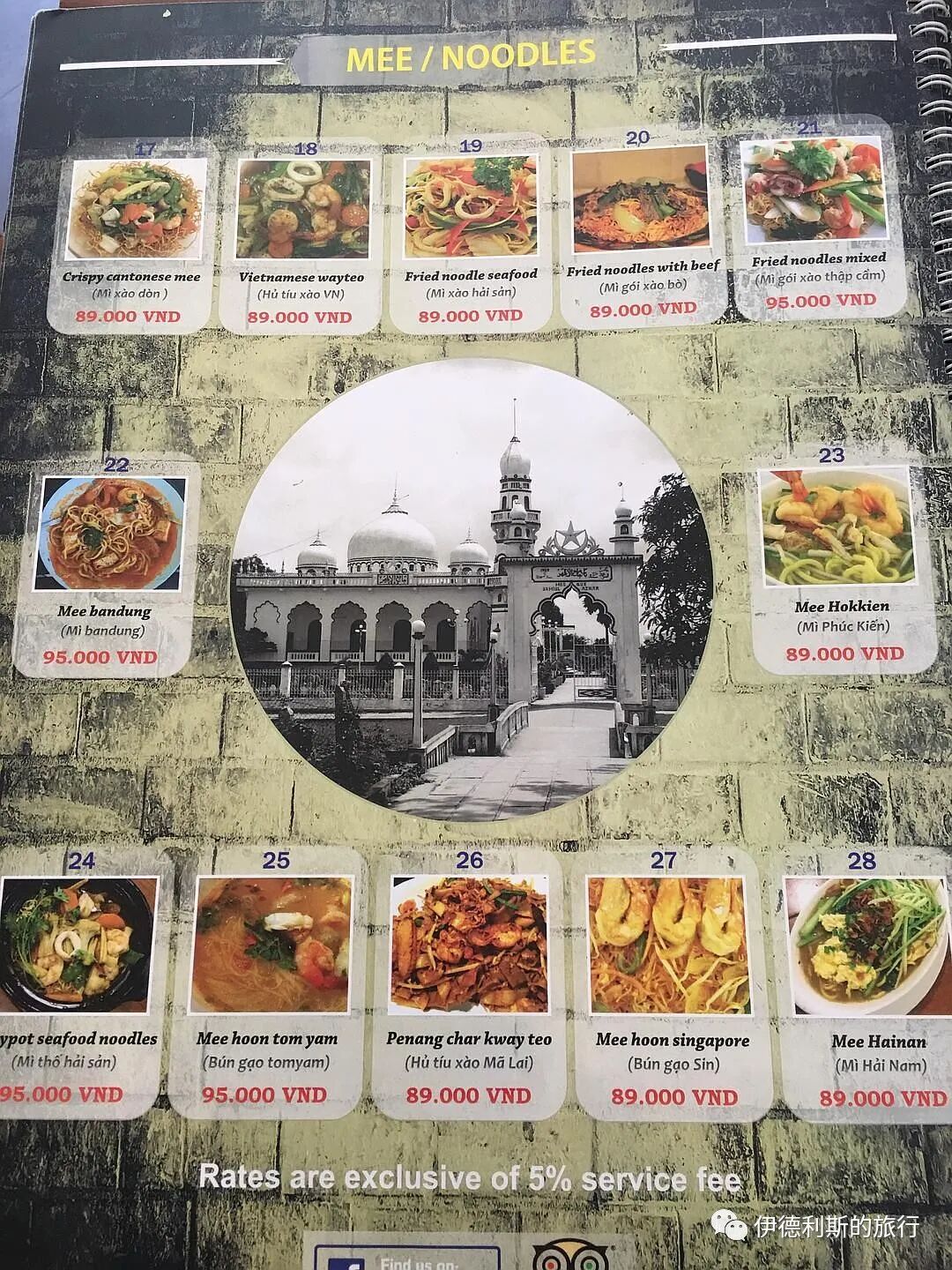
This is the Jamiul Azhar Mosque in Phu Tan District, An Giang Province, Vietnam. It is said to have been built in 1425 and is the mosque with the highest status among the orthodox Muslims of the Cham people in Vietnam.
5. Tamil Muslims in Penang, Malaysia
Penang, also known as Pulau Pinang, is an island in northwestern Malaysia. Over 90% of Indians in Penang are Tamils from southeastern India and northern Sri Lanka. As early as 1790, four years after George Town in Penang was built, the British East India Company mentioned that Tamils were opening shops and farming in Penang. In the late 19th century, with the increase in wages caused by labor shortages in Penang, Indian immigration to Penang was officially legalized in 1872, and in 1887, subsidies for Indian immigrant ship tickets began, leading to an increasing number of Tamil immigrants to Penang.
Tamil Muslims are called "Mamak" in Malaysia, which comes from the Tamil word for "uncle" (maa-ma). In Malaysia and Singapore, Tamil children often address Tamil male elders this way, especially in Tamil Muslim restaurants, so Malays began to call the entire Tamil Muslim ethnic group "Mamak," where the final "k" is not pronounced in Malay.
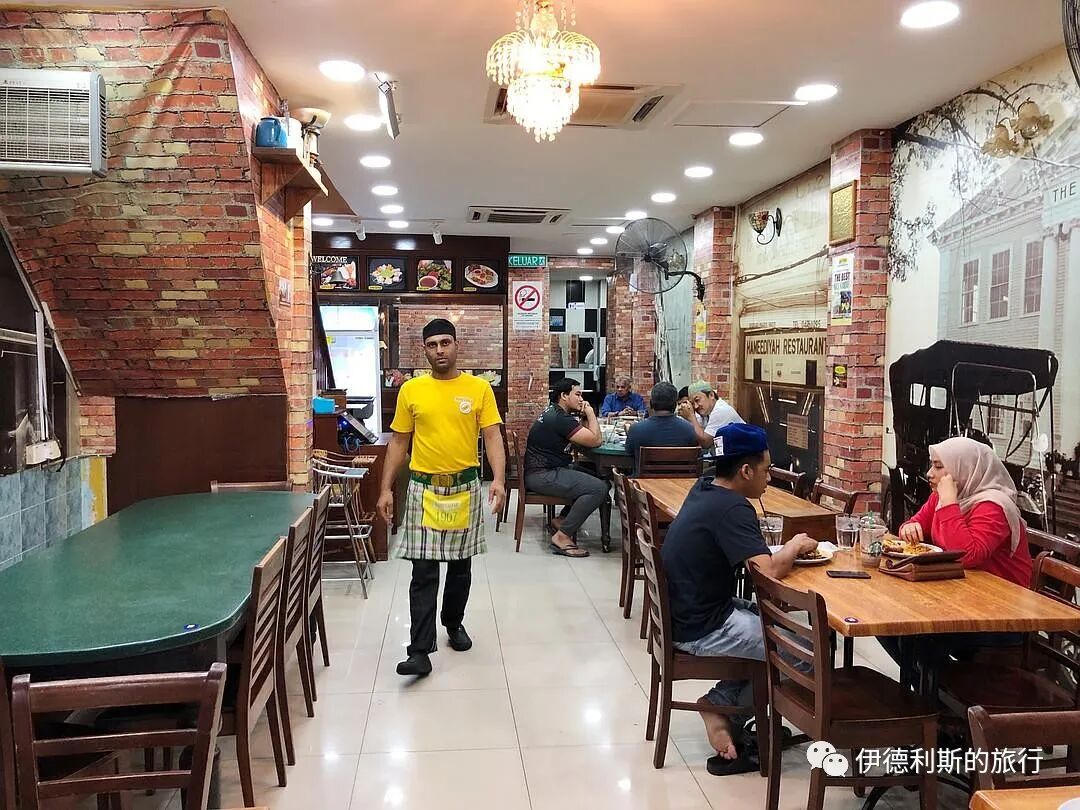
Penang's Tamil Muslims are most famous for their "Mamak stall" and "Mamak restaurant" food culture, and one of the oldest century-old Mamak restaurants is Hameediyah Restaurant, which opened in 1907.
The founder of Hameediyah Restaurant was named Mohamed, who came from a Tamil Muslim village in the southernmost state of Tamil Nadu, India. Mohamed came to Penang in 1890, and shortly after, he rented the land where the restaurant is now located. At first, he only used this place to prepare food, and usually carried it on a shoulder pole to sell along the street, which is the famous "Nasi Kandar" (literally "shoulder-pole rice"). In 1907, Mohamed officially founded Hameediyah Restaurant and hired two helpers.
Mohamed learned many Tamil delicacies from his mother when he was young in South India, among which Biryani (spiced rice) and Murtabak (stuffed pancake) were his specialties.
After opening, the diners who came to the restaurant included port immigrant workers, rickshaw pullers, local traders, and government employees, etc. Some diners affectionately called Mohamed and his staff "Mamak." It was also during this period that restaurants opened by South Indian Tamil Muslims in Penang were gradually called Mamak restaurants.
After Mohamed passed away in 1927, his son Kander took over the restaurant, and later his grandson took over, and the restaurant's business was very prosperous. In 1941, Penang suffered a devastating air raid by the Japanese army. Hameediyah Restaurant insisted on staying open during this period and miraculously survived the bombing. In 1945, after Japan was defeated, Kander's grandson, the fourth-generation successor Abu Bakar, took over the restaurant, and later passed it on to his relative Abdul Sukkoor. Today, Abdul Sukkoor's eldest son Seeni Pakir and youngest son Syed Ibrahim have become the restaurant's chefs and are responsible for daily operations.
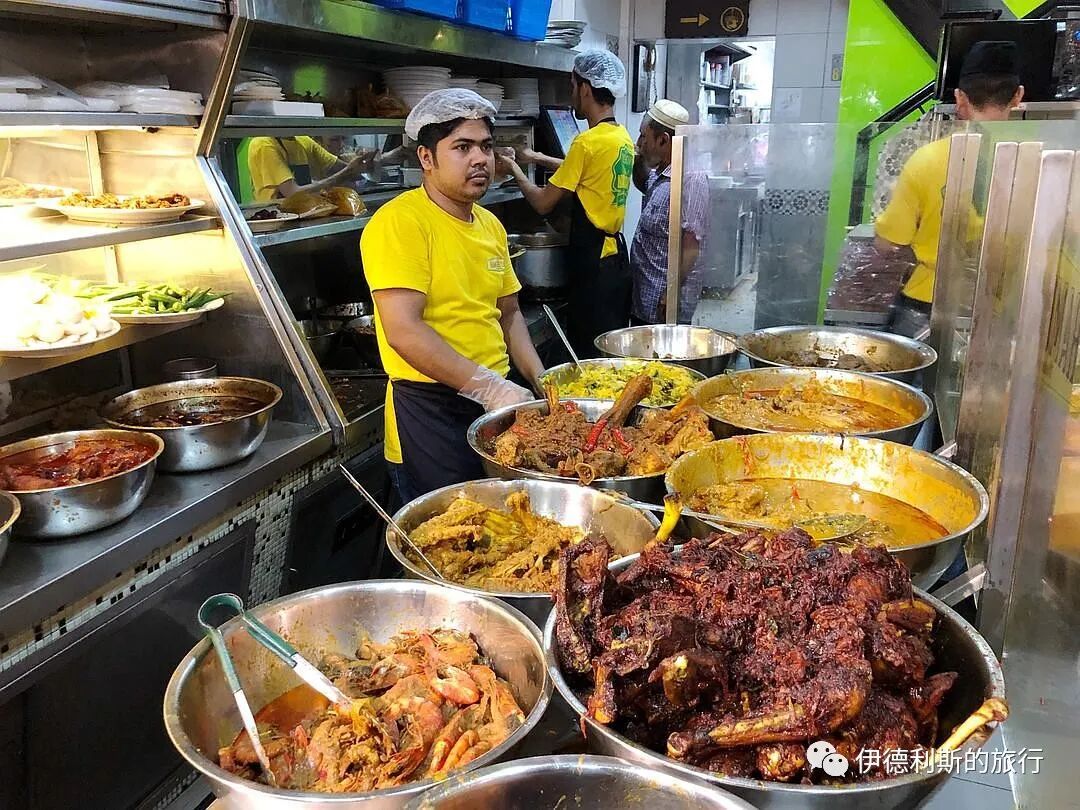
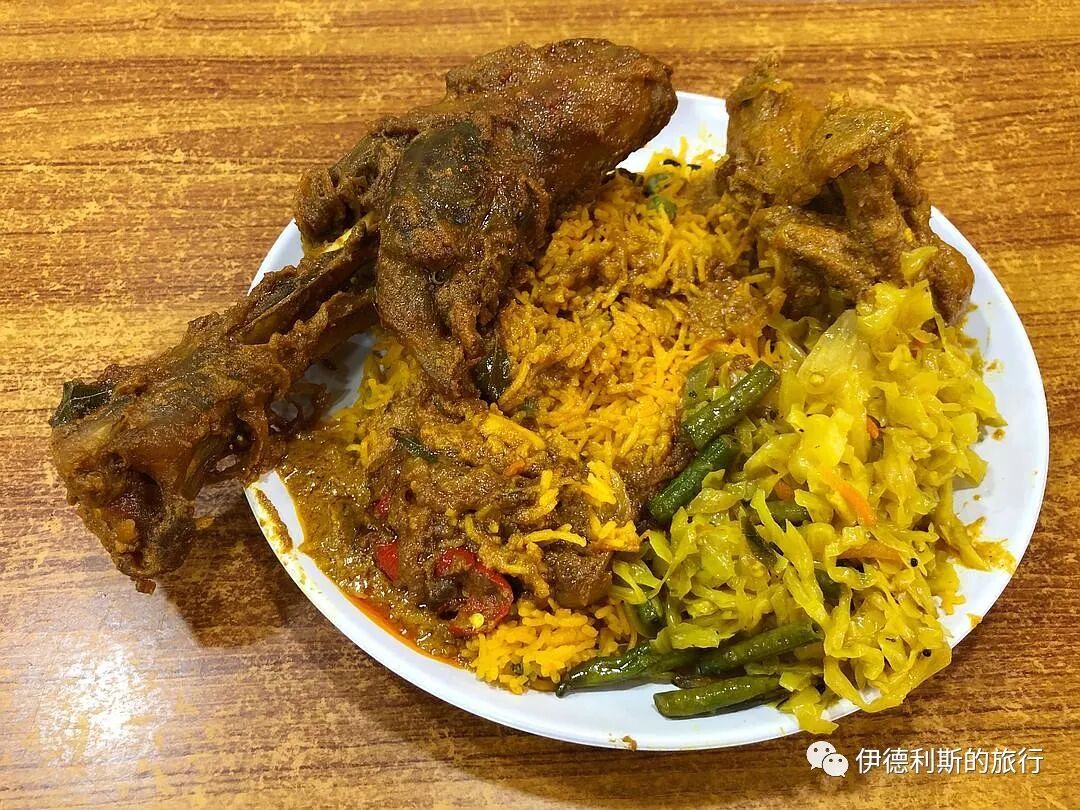
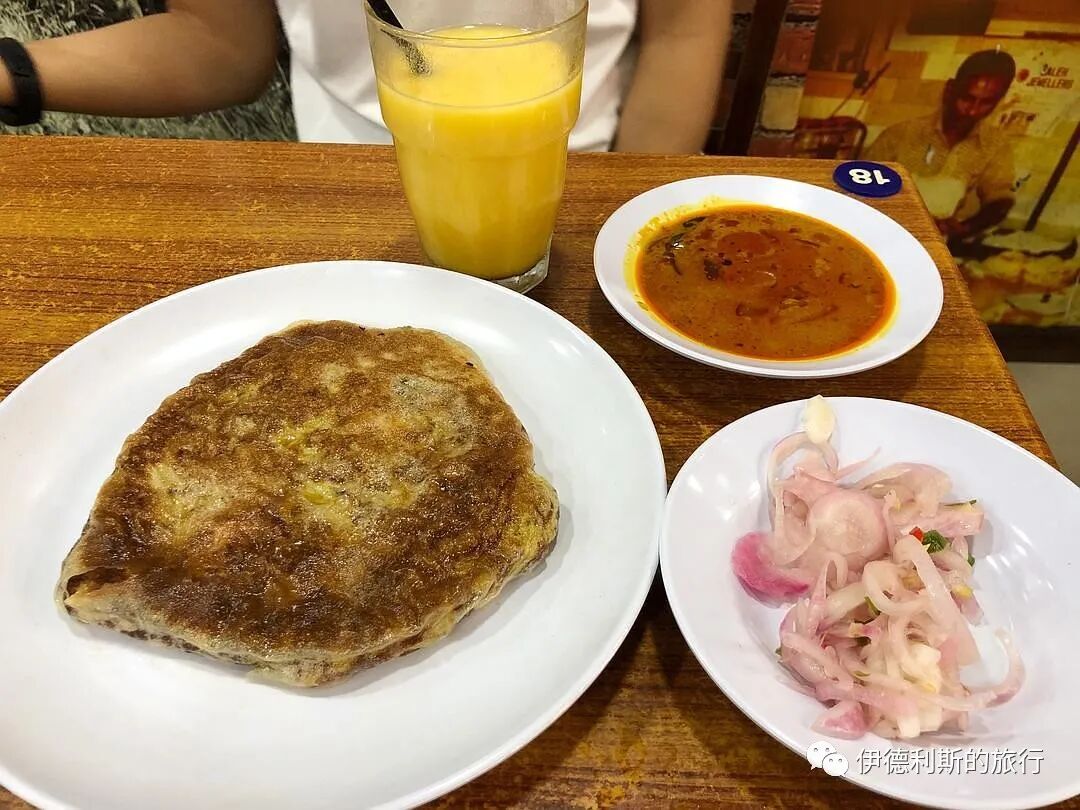
Nasi Kandar is a delicacy invented by South Indian Tamil Muslims in Penang, which is rice served with various curries of beef, mutton, chicken, fish, shrimp, and side dishes. When Tamil Muslims first arrived in Penang in the 19th century, most of them carried food on shoulder poles to sell along the street, so the food they sold was called "Nasi Kandar." By the 20th century, Tamil Muslims began to open restaurants and stalls, but the name "Nasi Kandar" has been used to this day. This time at Hameediyah Restaurant, I had Biryani Kosong (plain spiced rice) with lamb shank, chicken, and cabbage.
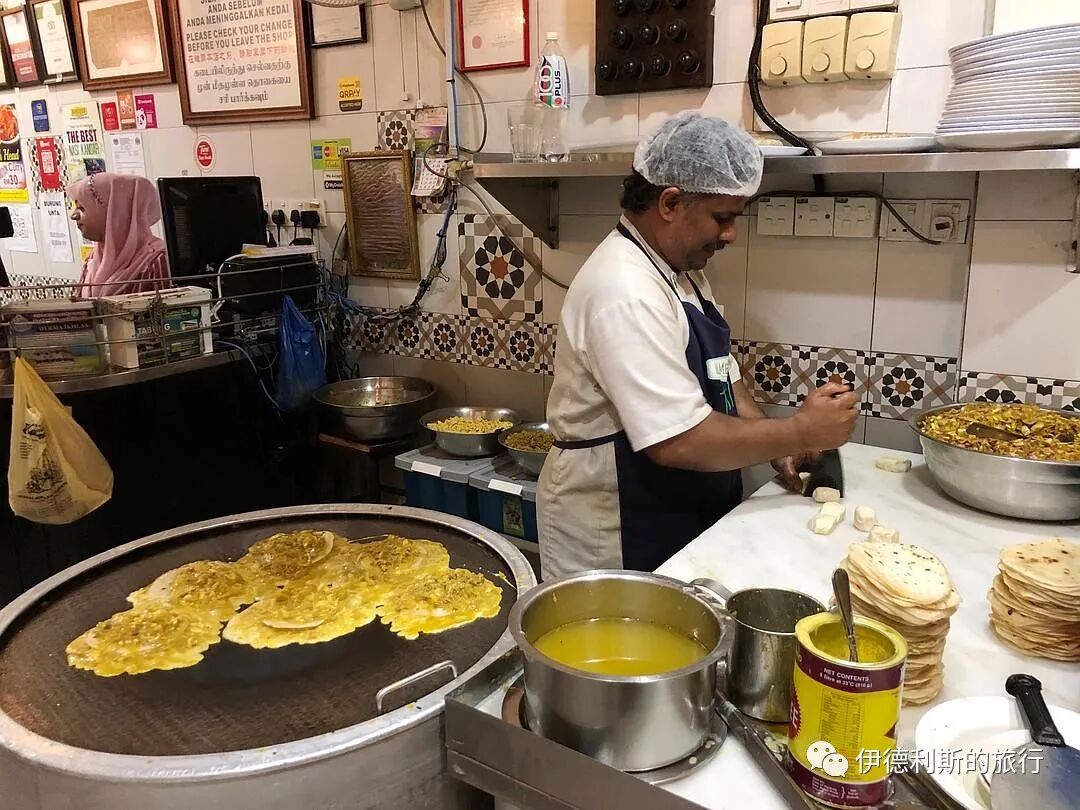
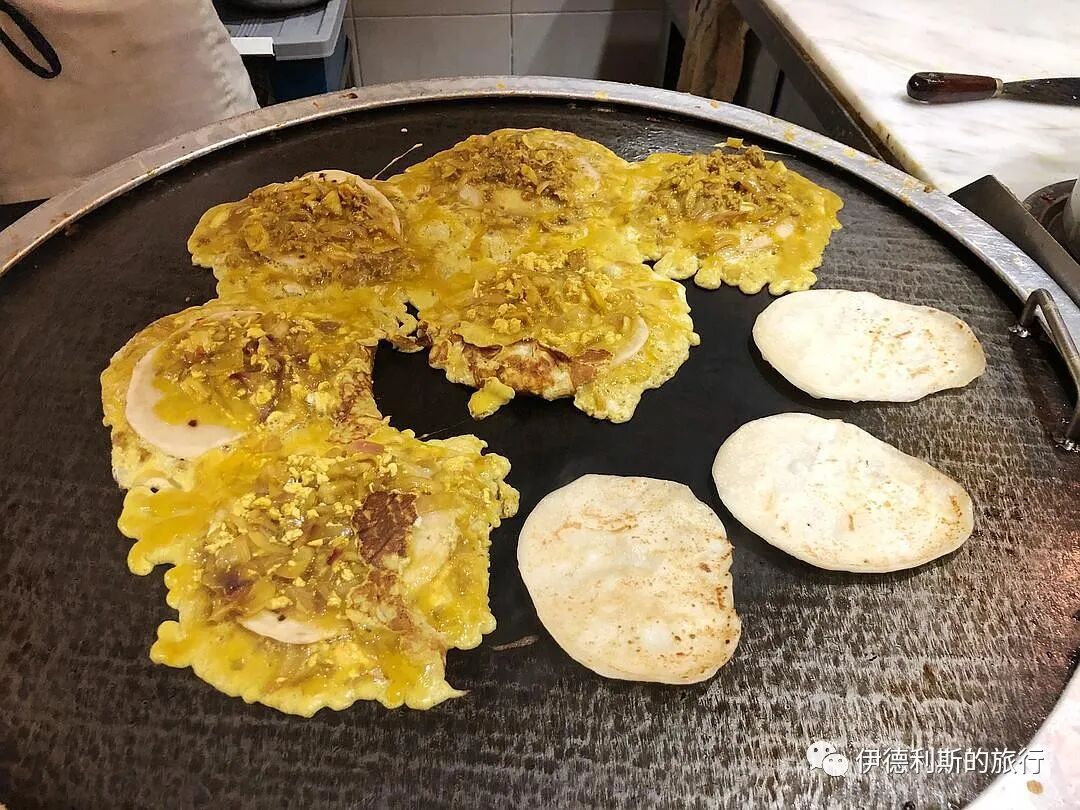
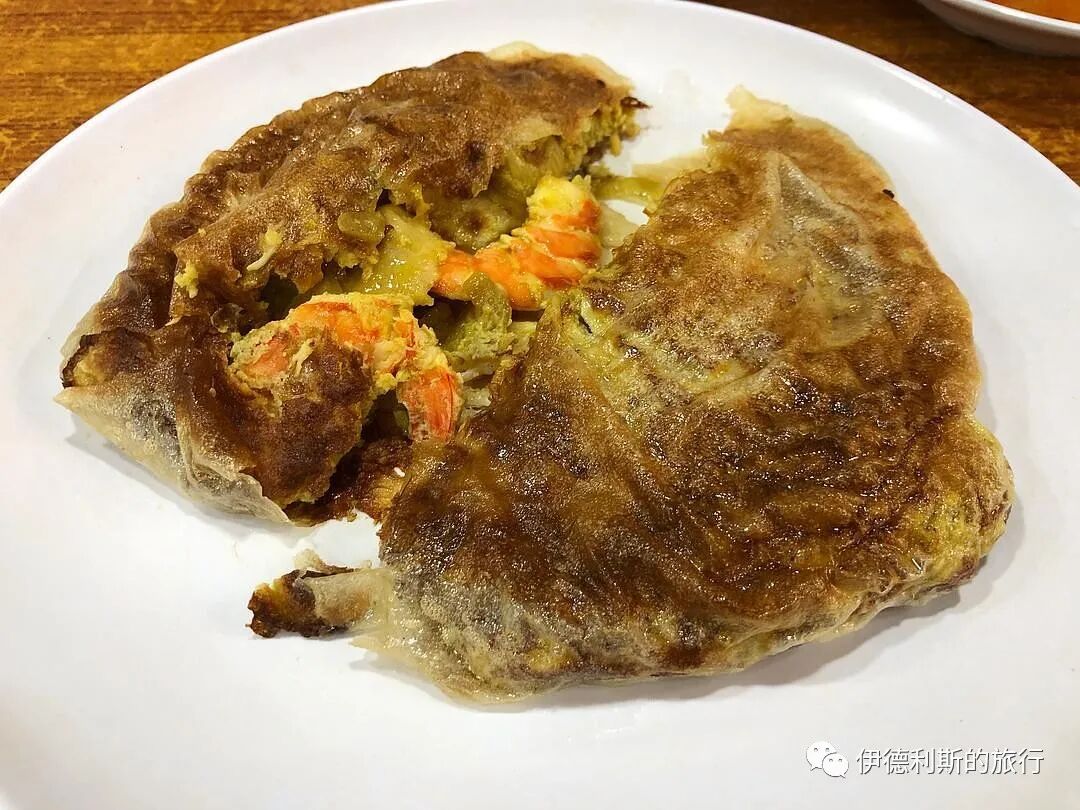
Murtabak is a thick pancake filled with eggs, onions, minced meat, and shrimp. In Malaysia, Singapore, and Thailand, the way Murtabak is made is basically the same as the way Roti canai (Indian flatbread) is made. The Malaysian version has less meat and more eggs than the Singaporean one. One theory is that Murtabak comes from the Arabic word "Mutabbaq," meaning "folded," so it may have been brought to India by Indian Muslims from Yemen, and then brought to the Malay Archipelago by South Indian Tamil Muslims. Another theory is that Murtabak comes from Kerala, South India, where "muta" means egg and "bar" is an abbreviation for "barota" bread.
6. Chinese Muslims in Penang, Malaysia
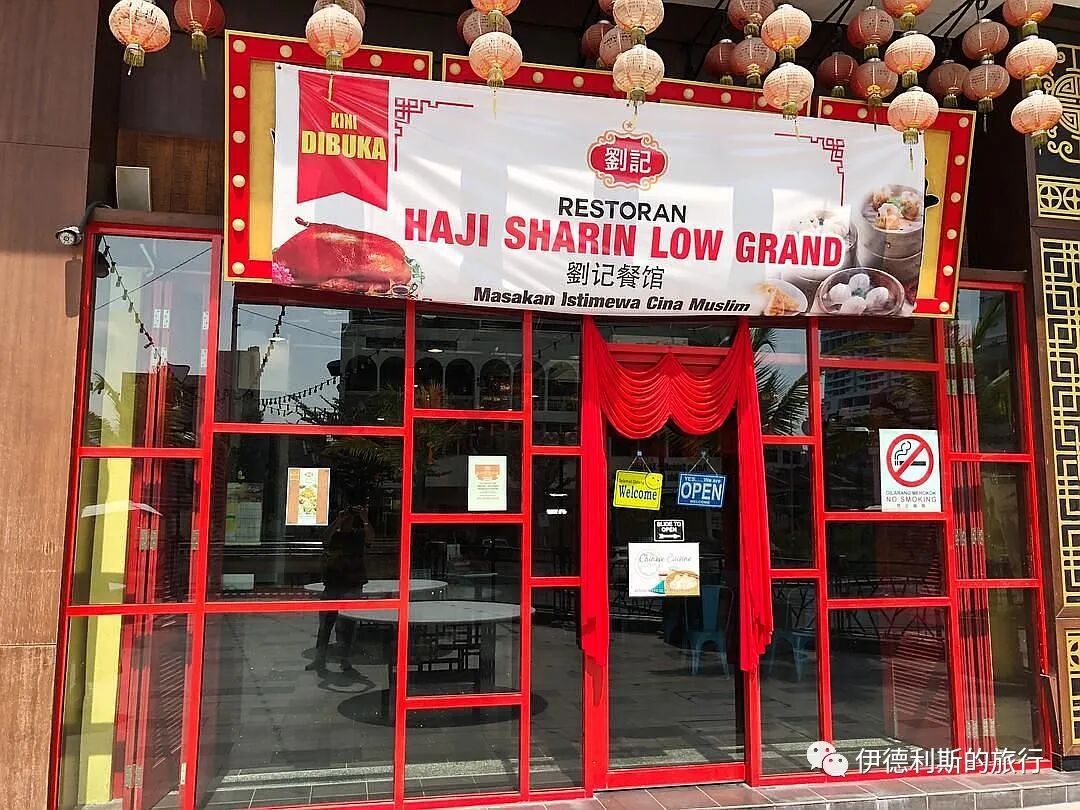
Restoran Haji Sharin Low Grand is the largest Chinese Muslim restaurant chain in Southeast Asia, with over 17 branches in Malaysia and Indonesia. The headquarters is in Kuala Lumpur, and the founder is Chinese Muslim Tuan Haji Sharin Low.
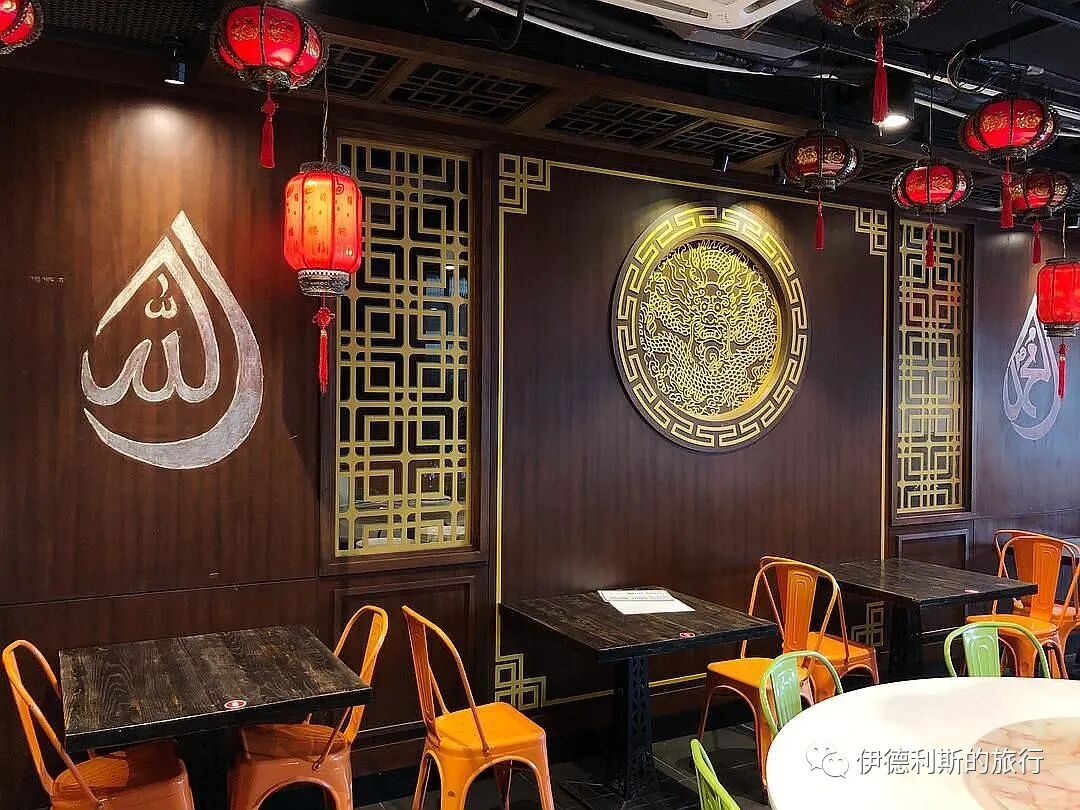
We ordered Nyonya flower crab, Teochew-style steamed grouper, Low's claypot tofu, and mee sua (wheat vermicelli) soup. They were all delicious~ And in one table of dishes, there were local Nyonya styles, as well as Teochew and Minnan styles, and they were all halal ingredients, which was a great cultural fusion.
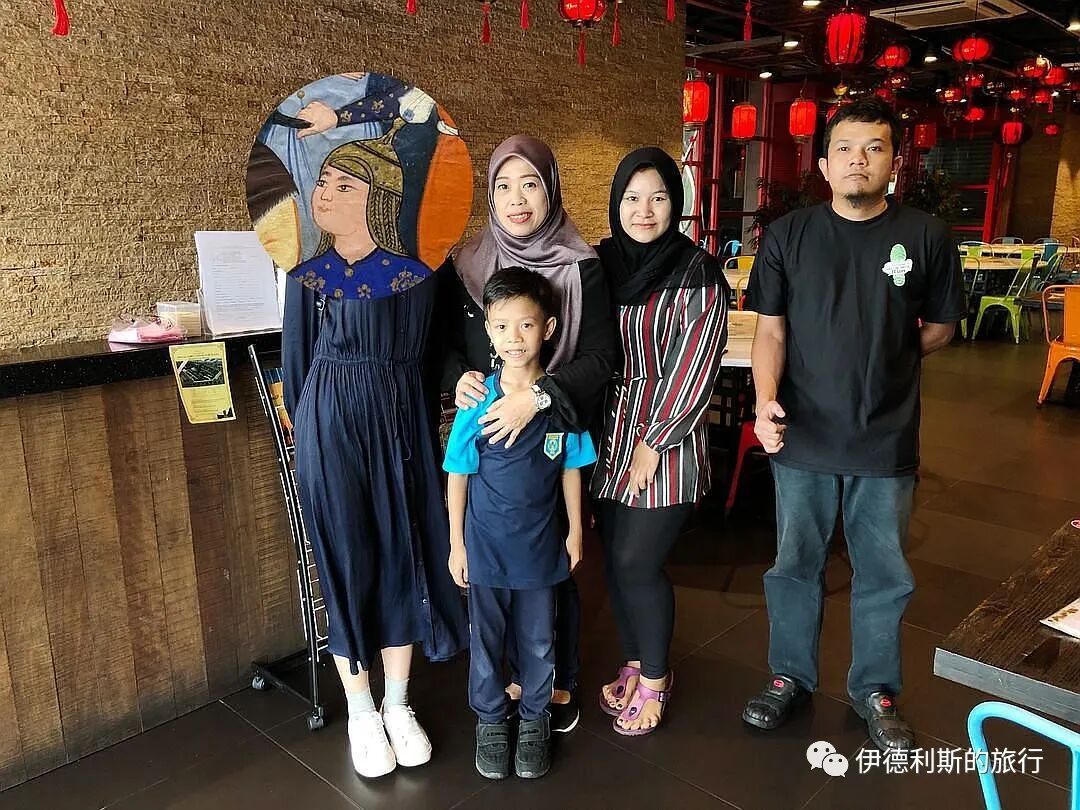
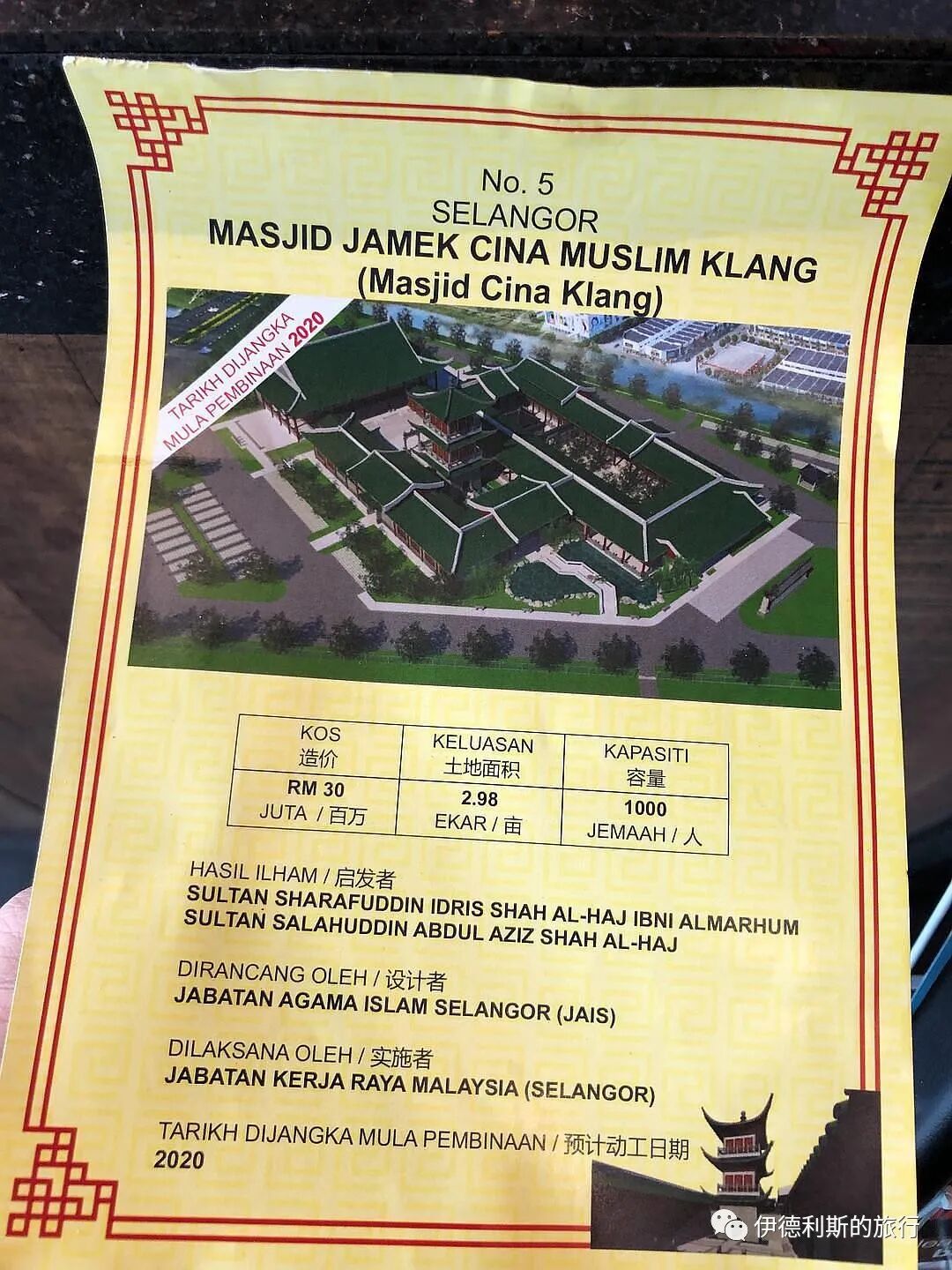
After the meal, we chatted with the landlady for a while. The landlady is a local Chinese Muslim. I was very excited to finally be able to communicate face-to-face with this ethnic group that I had previously only learned about in news and papers. The landlady was very enthusiastic and said to come and visit again when we have time. We also learned that the local Chinese mosque in Penang was going to start construction in 2020, so Penang could have a social center for local Chinese Muslims.
7. The Jawi Peranakan community in Penang, Malaysia
Malaysia has a unique ethnic group called Jawi Peranakan, which refers to a Malay-speaking Muslim ethnic group formed after the intermarriage of Indian Muslim (also including Arab and Persian, etc.) men and Malay women. "Jawi" means "Southeast Asian Muslim" in Arabic, and "Peranakan" means "locally born" in Malay.
The Jawi Peranakan community does not prioritize the ethnic group of the other party when getting married, but first looks at the other party's wealth and status. Therefore, after the mid-19th century, the Jawi Peranakan had become the elite class of British Malaya. Jawi Peranakan attached great importance to English education, so many people held positions in the colonial government. At the same time, Jawi Peranakan also attached great importance to cultural development; the first Malay-language newspaper was founded by Jawi Peranakan.
After the 20th century, with the decline of the British Empire, the Jawi Peranakan community began to integrate into the Malays. Today, most Jawi Peranakan are counted as "Malays" by the government. Despite this, the Jawi Peranakan community still strives to pass on its unique culture, which can be reflected in architecture, clothing, jewelry, and food. view all
Summary: This travel note introduces Twenty Ethnic Restaurants in China: Halal and Minority Food Guide (Part 1). In my travels over the past few years, I have encountered some very interesting ethnic groups. It is useful for readers interested in Ethnic Food, Halal Food, China Travel. This is part 2 of 4.
Bitter melon served with a type of fish ball called featherback; I looked it up and it seems to be translated as the bronze featherback fish.
The mosque in the menu is the Jamiul Aman Mosque located in Chau Phu District, An Giang Province, Vietnam, built in 1965.
This is the Jamiul Azhar Mosque in Phu Tan District, An Giang Province, Vietnam. It is said to have been built in 1425 and is the mosque with the highest status among the orthodox Muslims of the Cham people in Vietnam.
5. Tamil Muslims in Penang, Malaysia
Penang, also known as Pulau Pinang, is an island in northwestern Malaysia. Over 90% of Indians in Penang are Tamils from southeastern India and northern Sri Lanka. As early as 1790, four years after George Town in Penang was built, the British East India Company mentioned that Tamils were opening shops and farming in Penang. In the late 19th century, with the increase in wages caused by labor shortages in Penang, Indian immigration to Penang was officially legalized in 1872, and in 1887, subsidies for Indian immigrant ship tickets began, leading to an increasing number of Tamil immigrants to Penang.
Tamil Muslims are called "Mamak" in Malaysia, which comes from the Tamil word for "uncle" (maa-ma). In Malaysia and Singapore, Tamil children often address Tamil male elders this way, especially in Tamil Muslim restaurants, so Malays began to call the entire Tamil Muslim ethnic group "Mamak," where the final "k" is not pronounced in Malay.
Penang's Tamil Muslims are most famous for their "Mamak stall" and "Mamak restaurant" food culture, and one of the oldest century-old Mamak restaurants is Hameediyah Restaurant, which opened in 1907.
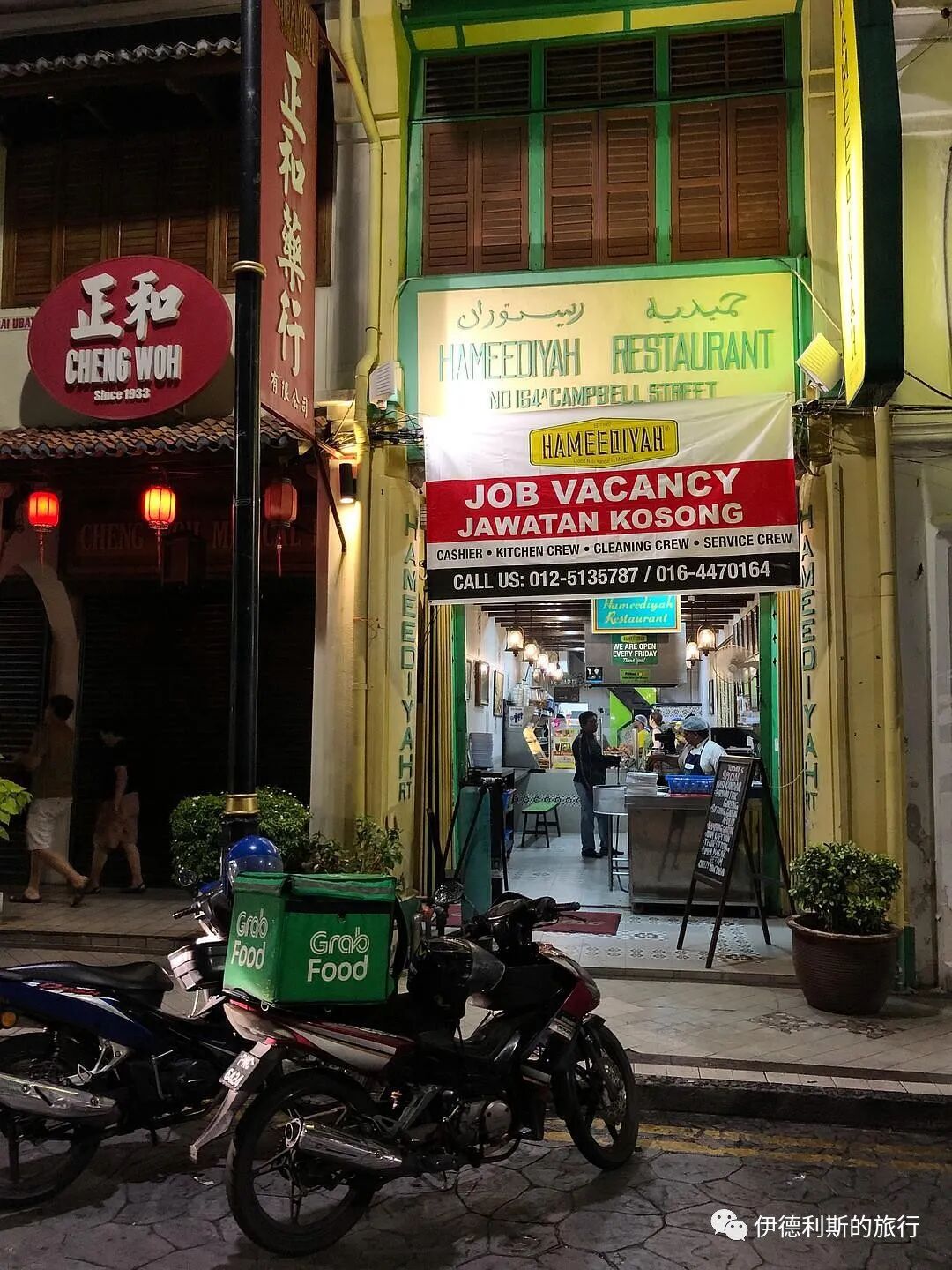
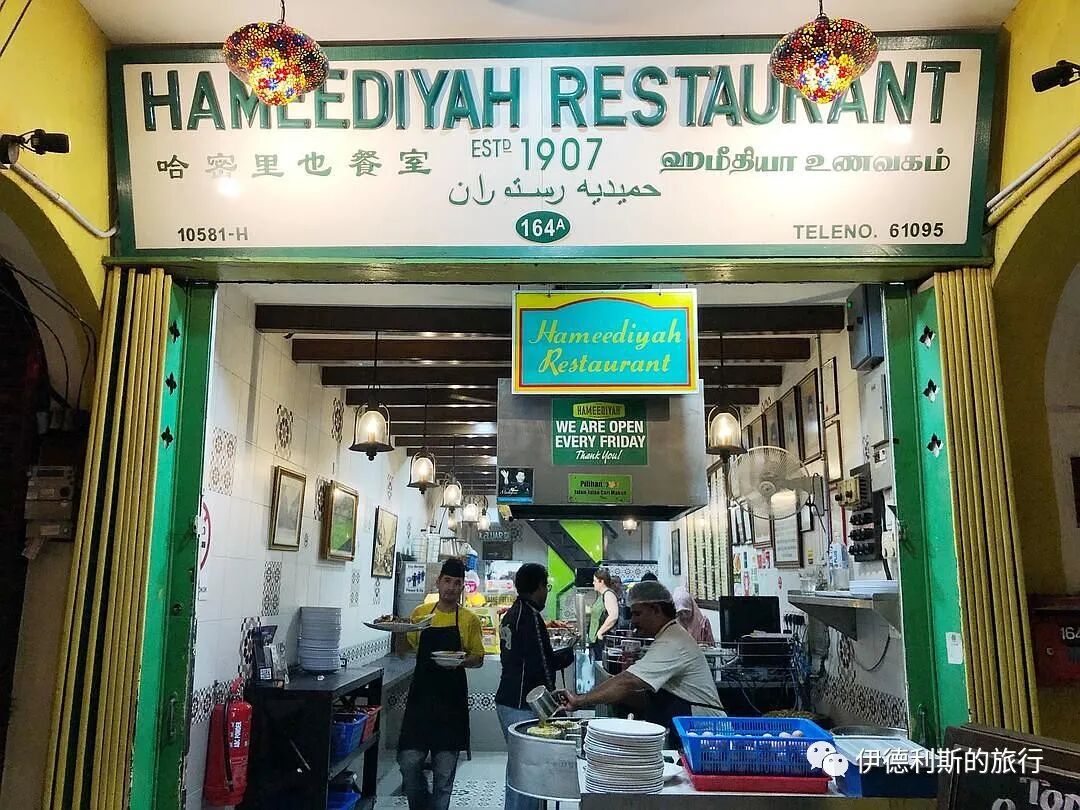
The founder of Hameediyah Restaurant was named Mohamed, who came from a Tamil Muslim village in the southernmost state of Tamil Nadu, India. Mohamed came to Penang in 1890, and shortly after, he rented the land where the restaurant is now located. At first, he only used this place to prepare food, and usually carried it on a shoulder pole to sell along the street, which is the famous "Nasi Kandar" (literally "shoulder-pole rice"). In 1907, Mohamed officially founded Hameediyah Restaurant and hired two helpers.
Mohamed learned many Tamil delicacies from his mother when he was young in South India, among which Biryani (spiced rice) and Murtabak (stuffed pancake) were his specialties.
After opening, the diners who came to the restaurant included port immigrant workers, rickshaw pullers, local traders, and government employees, etc. Some diners affectionately called Mohamed and his staff "Mamak." It was also during this period that restaurants opened by South Indian Tamil Muslims in Penang were gradually called Mamak restaurants.
After Mohamed passed away in 1927, his son Kander took over the restaurant, and later his grandson took over, and the restaurant's business was very prosperous. In 1941, Penang suffered a devastating air raid by the Japanese army. Hameediyah Restaurant insisted on staying open during this period and miraculously survived the bombing. In 1945, after Japan was defeated, Kander's grandson, the fourth-generation successor Abu Bakar, took over the restaurant, and later passed it on to his relative Abdul Sukkoor. Today, Abdul Sukkoor's eldest son Seeni Pakir and youngest son Syed Ibrahim have become the restaurant's chefs and are responsible for daily operations.
Nasi Kandar is a delicacy invented by South Indian Tamil Muslims in Penang, which is rice served with various curries of beef, mutton, chicken, fish, shrimp, and side dishes. When Tamil Muslims first arrived in Penang in the 19th century, most of them carried food on shoulder poles to sell along the street, so the food they sold was called "Nasi Kandar." By the 20th century, Tamil Muslims began to open restaurants and stalls, but the name "Nasi Kandar" has been used to this day. This time at Hameediyah Restaurant, I had Biryani Kosong (plain spiced rice) with lamb shank, chicken, and cabbage.
Murtabak is a thick pancake filled with eggs, onions, minced meat, and shrimp. In Malaysia, Singapore, and Thailand, the way Murtabak is made is basically the same as the way Roti canai (Indian flatbread) is made. The Malaysian version has less meat and more eggs than the Singaporean one. One theory is that Murtabak comes from the Arabic word "Mutabbaq," meaning "folded," so it may have been brought to India by Indian Muslims from Yemen, and then brought to the Malay Archipelago by South Indian Tamil Muslims. Another theory is that Murtabak comes from Kerala, South India, where "muta" means egg and "bar" is an abbreviation for "barota" bread.
6. Chinese Muslims in Penang, Malaysia
Restoran Haji Sharin Low Grand is the largest Chinese Muslim restaurant chain in Southeast Asia, with over 17 branches in Malaysia and Indonesia. The headquarters is in Kuala Lumpur, and the founder is Chinese Muslim Tuan Haji Sharin Low.
We ordered Nyonya flower crab, Teochew-style steamed grouper, Low's claypot tofu, and mee sua (wheat vermicelli) soup. They were all delicious~ And in one table of dishes, there were local Nyonya styles, as well as Teochew and Minnan styles, and they were all halal ingredients, which was a great cultural fusion.
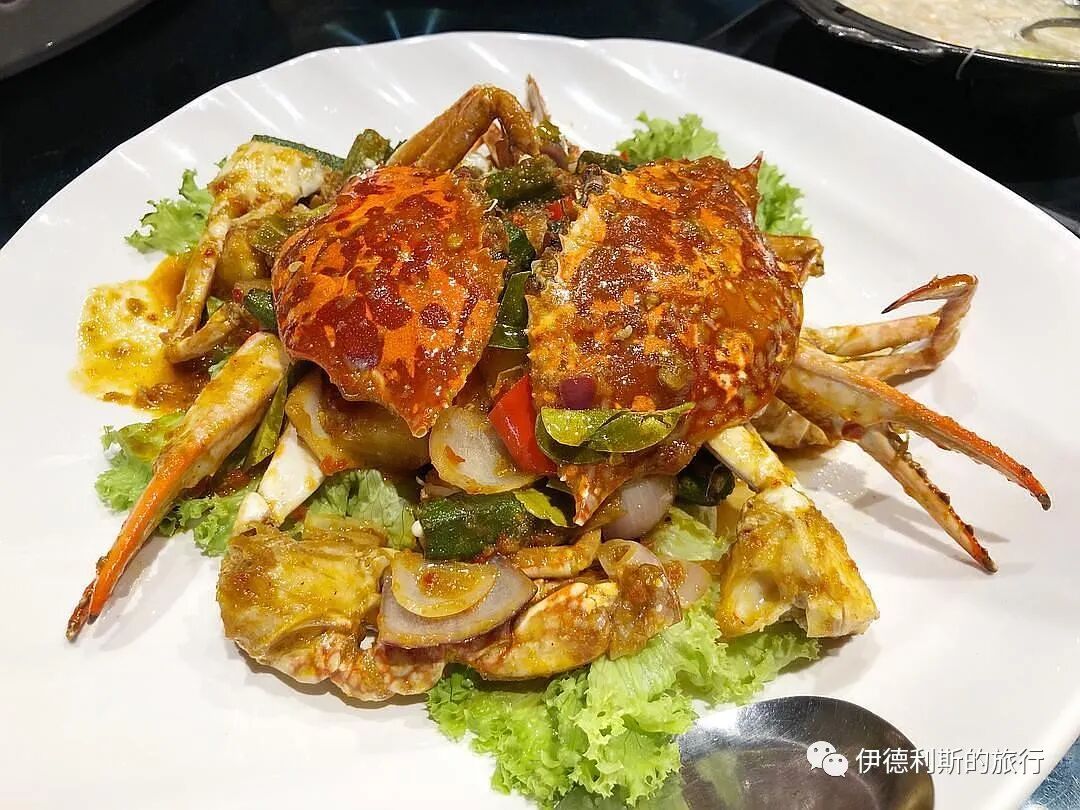
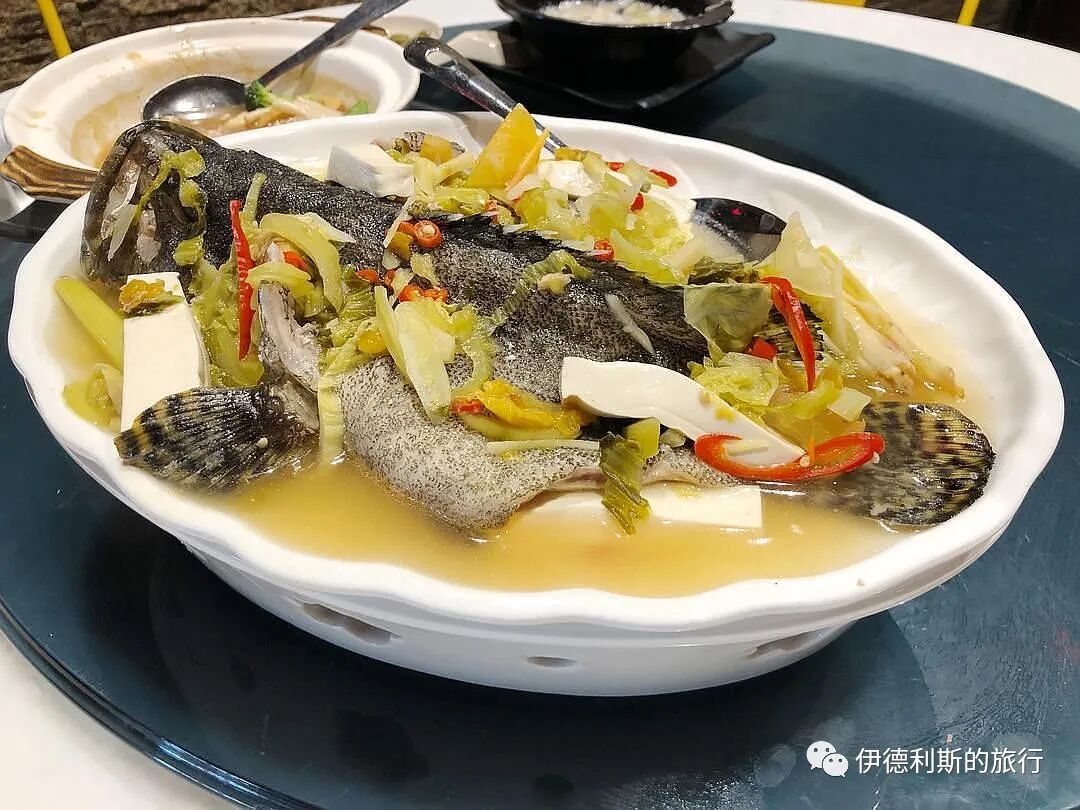
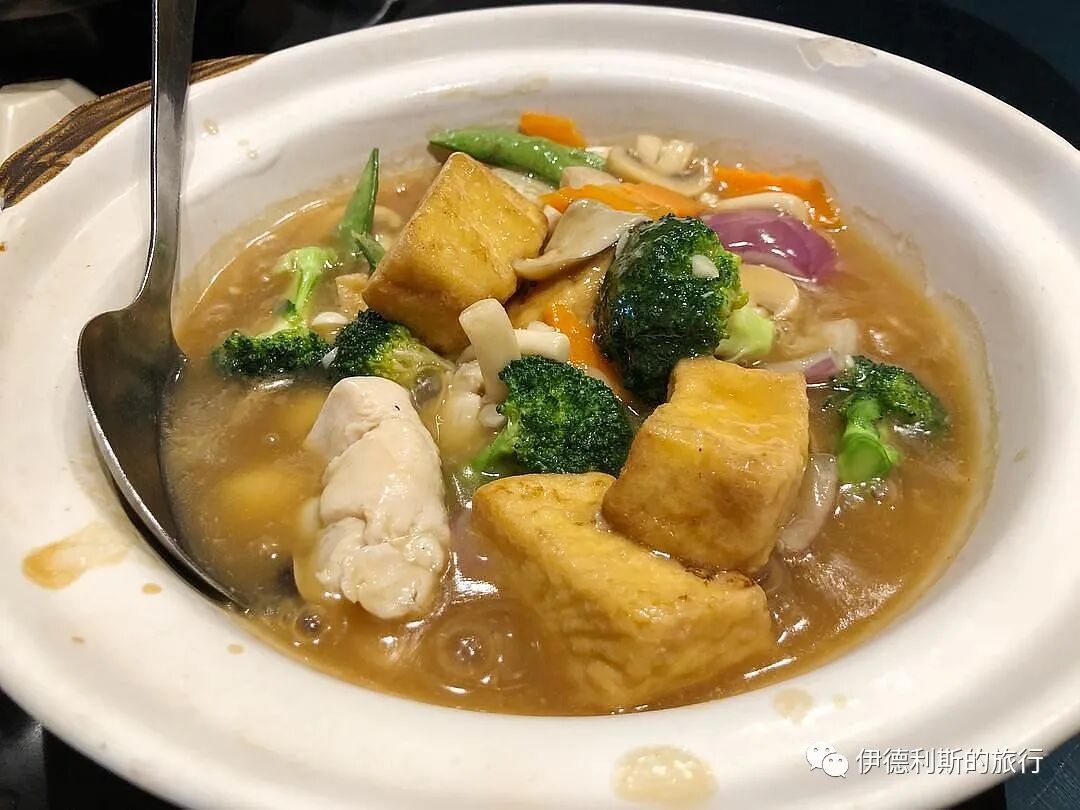
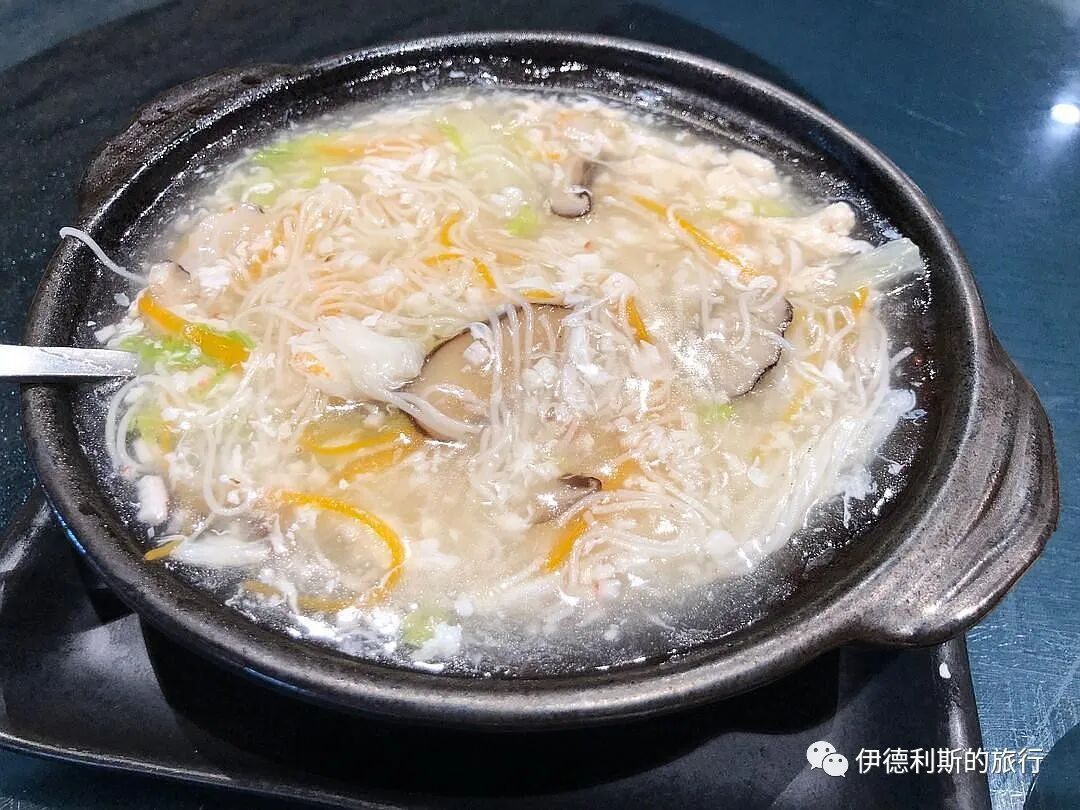
After the meal, we chatted with the landlady for a while. The landlady is a local Chinese Muslim. I was very excited to finally be able to communicate face-to-face with this ethnic group that I had previously only learned about in news and papers. The landlady was very enthusiastic and said to come and visit again when we have time. We also learned that the local Chinese mosque in Penang was going to start construction in 2020, so Penang could have a social center for local Chinese Muslims.
7. The Jawi Peranakan community in Penang, Malaysia
Malaysia has a unique ethnic group called Jawi Peranakan, which refers to a Malay-speaking Muslim ethnic group formed after the intermarriage of Indian Muslim (also including Arab and Persian, etc.) men and Malay women. "Jawi" means "Southeast Asian Muslim" in Arabic, and "Peranakan" means "locally born" in Malay.
The Jawi Peranakan community does not prioritize the ethnic group of the other party when getting married, but first looks at the other party's wealth and status. Therefore, after the mid-19th century, the Jawi Peranakan had become the elite class of British Malaya. Jawi Peranakan attached great importance to English education, so many people held positions in the colonial government. At the same time, Jawi Peranakan also attached great importance to cultural development; the first Malay-language newspaper was founded by Jawi Peranakan.
After the 20th century, with the decline of the British Empire, the Jawi Peranakan community began to integrate into the Malays. Today, most Jawi Peranakan are counted as "Malays" by the government. Despite this, the Jawi Peranakan community still strives to pass on its unique culture, which can be reflected in architecture, clothing, jewelry, and food.
Twenty Ethnic Restaurants in China: Halal and Minority Food Guide (Part 1 of 4)
Articles • ali2007fr posted the article • 0 comments • 158 views • 2026-05-17 06:55
Summary: This travel note introduces Twenty Ethnic Restaurants in China: Halal and Minority Food Guide (Part 1). In my travels over the past few years, I have encountered some very interesting ethnic groups. It is useful for readers interested in Ethnic Food, Halal Food, China Travel. This is part 1 of 4.
In my travels over the past few years, I have encountered some very interesting ethnic groups. In this diary, I will introduce twenty ethnic groups through twenty restaurants, hoping to increase everyone's understanding of these groups.
1. Kazan Tatars in Moscow
2. Crimean Tatars on the Crimean Peninsula
3. Gulf Bedouins in Dubai
4. The Cham people in Ho Chi Minh City, Vietnam
5. Tamil Muslims in Penang, Malaysia
6. Chinese Muslims in Penang, Malaysia
7. The Jawi Peranakan community in Penang, Malaysia
8. The Betawi people in Jakarta, Indonesia
9. The Javanese people in Yogyakarta, Indonesia
10. The Bantenese people on Java Island, Indonesia
11. Yunnan Hui Muslims in Chiang Mai, Thailand
12. Korean-speaking Muslims in Itaewon, Seoul
13. Chinese Muslims in Hong Kong
14. The Huihui people of Sanya, Hainan
15. The Tatars of Urumqi
16. The Dongxiang people of Xiaoxihu, Lanzhou
17. The Tibetan Muslims of Lhasa, Tibet
18. The Paxi Dai of Xishuangbanna, Yunnan
19. The Bai Hui of Dali, Yunnan
20. The Salar people of Xunhua, Qinghai
1. Kazan Tatars in Moscow
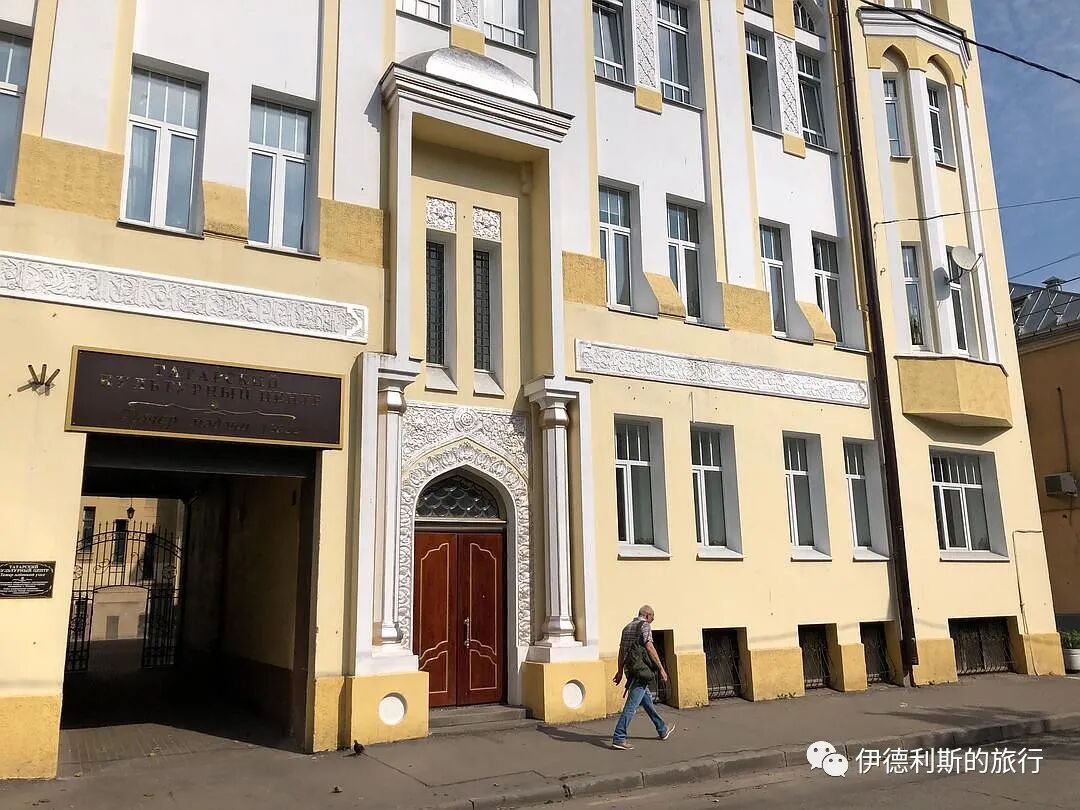
After the 17th century, with the establishment of the Romanov dynasty, Moscow gradually prospered, and many Tatars from the Volga River and steppe regions came to do business. The Tatar community (Tatarskaya sloboda) was formally formed south of the Moskva River, opposite the Kremlin. The community's main street, Tatarskaya Street, was first mentioned in documents in 1682.
The historic Tatar community has a Tatar restaurant called Kazan Tea Bar, which is also the center for Tatar cultural activities in Moscow, frequently organizing various Tatar cultural events.
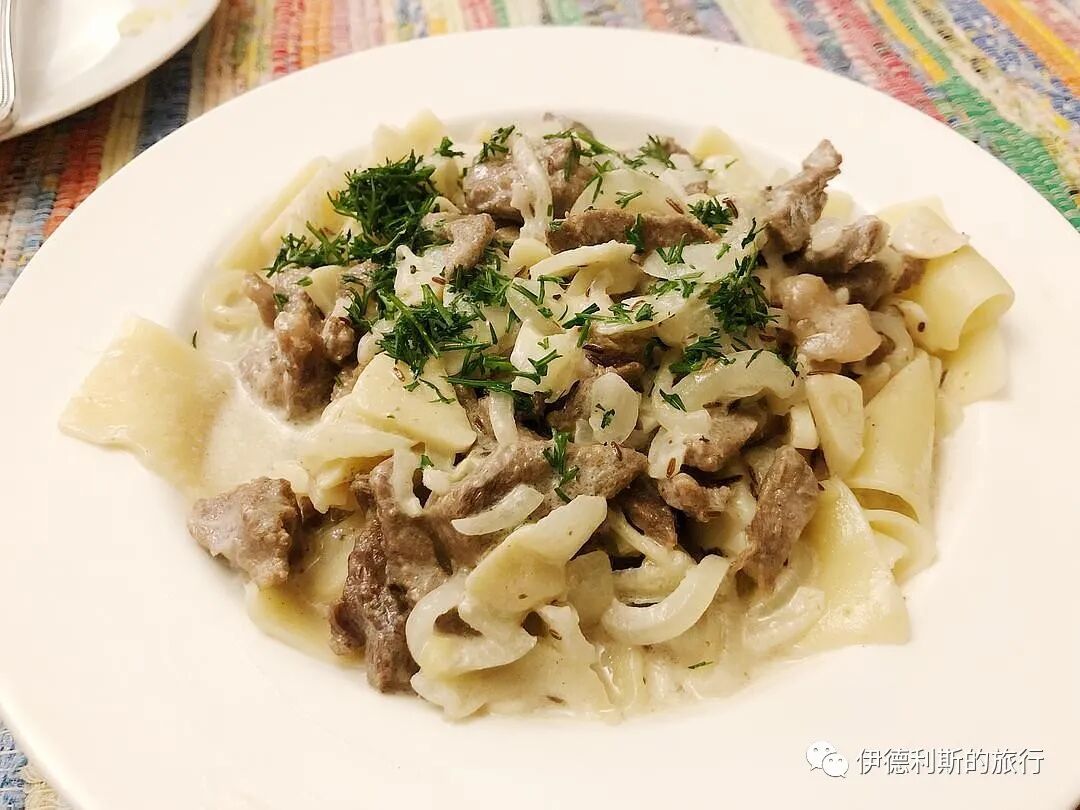
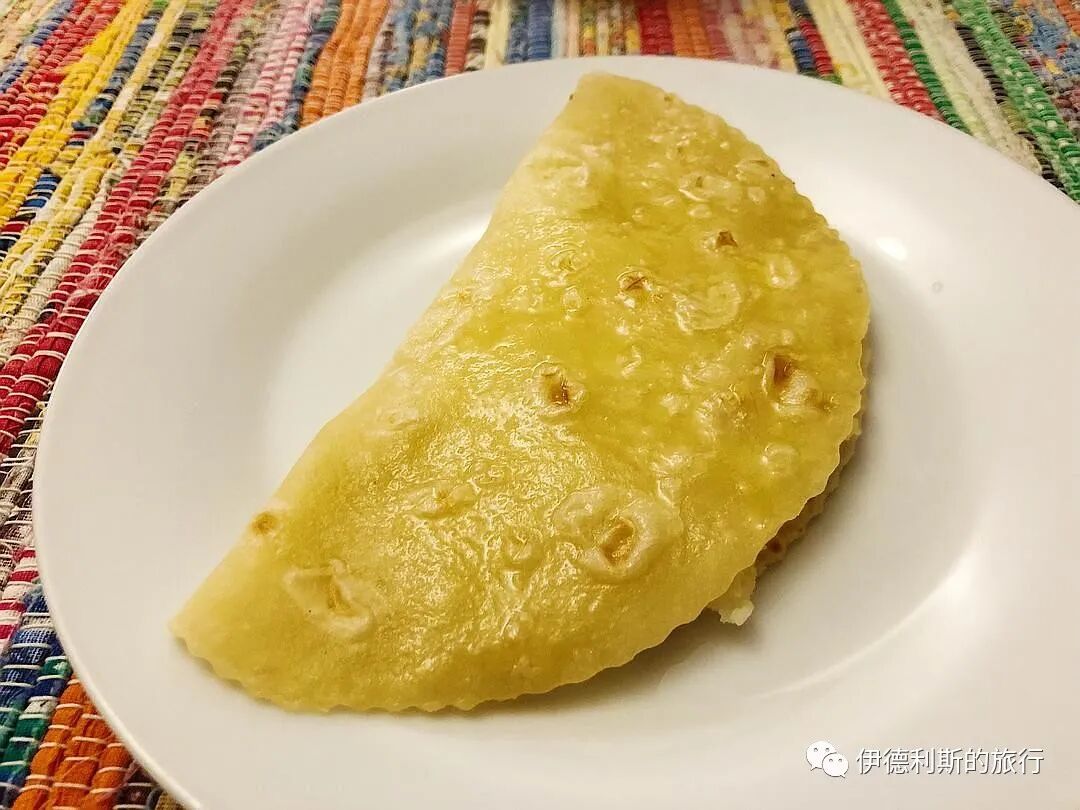
Inside, I ate Beshbarmak (five-finger stew), Kystyby (flatbread with filling), the Tatar version of horse sausage Kazy, pilaf, Kazan chicken salad, and Tatar milk tea. Tatar milk tea is made of black tea + green tea + thyme + linden leaves + chamomile flowers + oregano leaves + mint leaves + sage.
2. Crimean Tatars on the Crimean Peninsula
In the summer of 2019, I went to an ancient city in the mountains of the Crimean Peninsula—Bakhchysarai. Bakhchysarai was founded by the Crimean Tatars and became the capital of the Crimean Khanate in 1532. Although it became an ordinary town after Russia occupied the Crimean Khanate in 1783, it remains the cultural center of the Crimean Tatars, preserving their unique culture and customs.
The dietary culture of the Crimean Tatars is closely related to their history. Because the Crimean Khanate was a long-term vassal of the Ottoman Empire, it possesses many Ottoman-related foods, such as Turkish coffee, Baklava (Turkish dessert), and Dolma (stuffed grape leaves). After being exiled to Uzbekistan in 1944, a large amount of Uzbek cuisine was added to the Crimean Tatar diet, including pilaf, lagman (pulled noodles), samsa (baked buns), manti (steamed buns), and naan. In addition, the Crimean Tatars also have some unique delicacies, one of which is Chebureki (fried meat turnover), known as a Crimean Tatar national delicacy.
This time I stayed at a very beautiful traditional Crimean Tatar courtyard house, Bahitgul Boutique-Hotel. They serve traditional Crimean Tatar meals, so I basically ate breakfast at my accommodation. Moreover, the view while eating at their place is particularly good, overlooking the entire ancient capital.
For the first breakfast, I had Lagman (pulled noodles), Omlet (omelet), Lepyoshka (naan), and traditional coffee. The coffee comes from the Ottoman Empire, and the lagman comes from the exile in Uzbekistan.
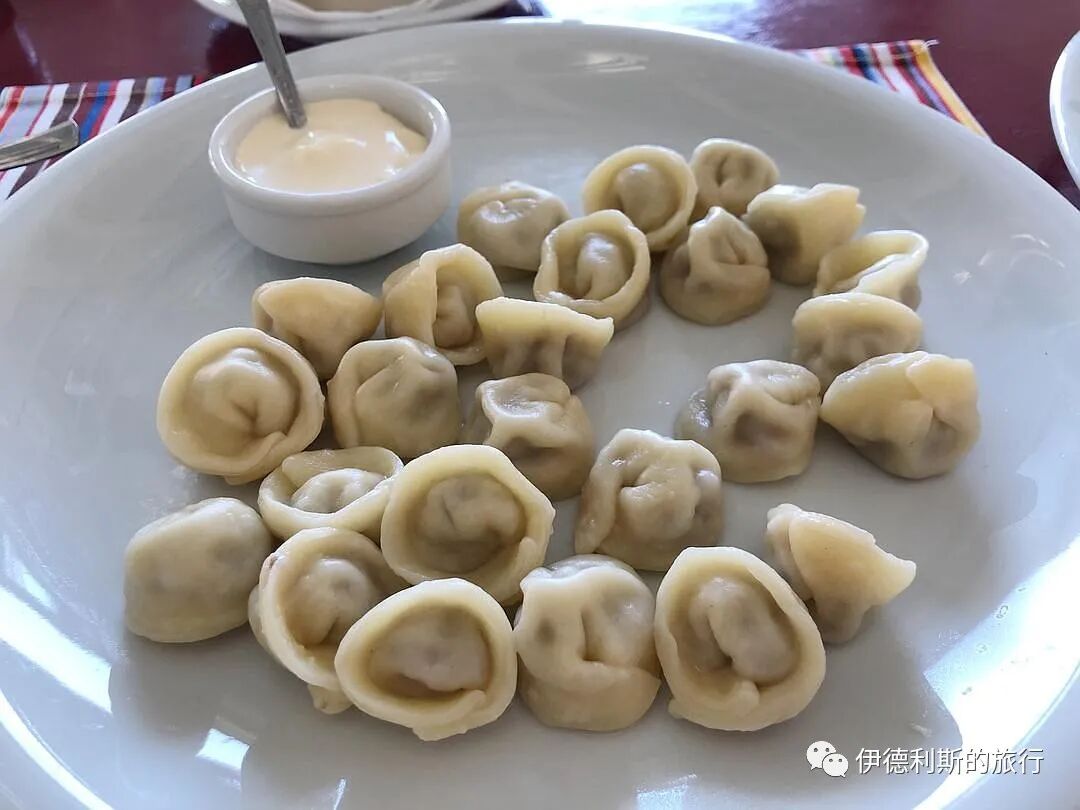
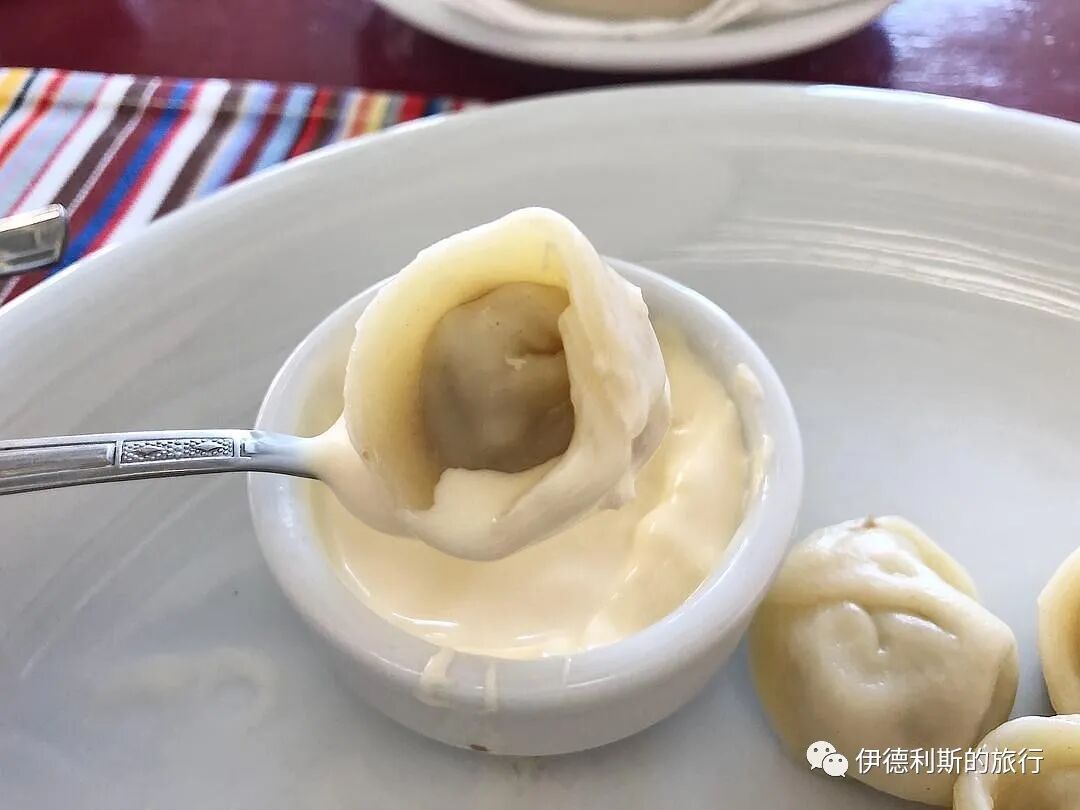
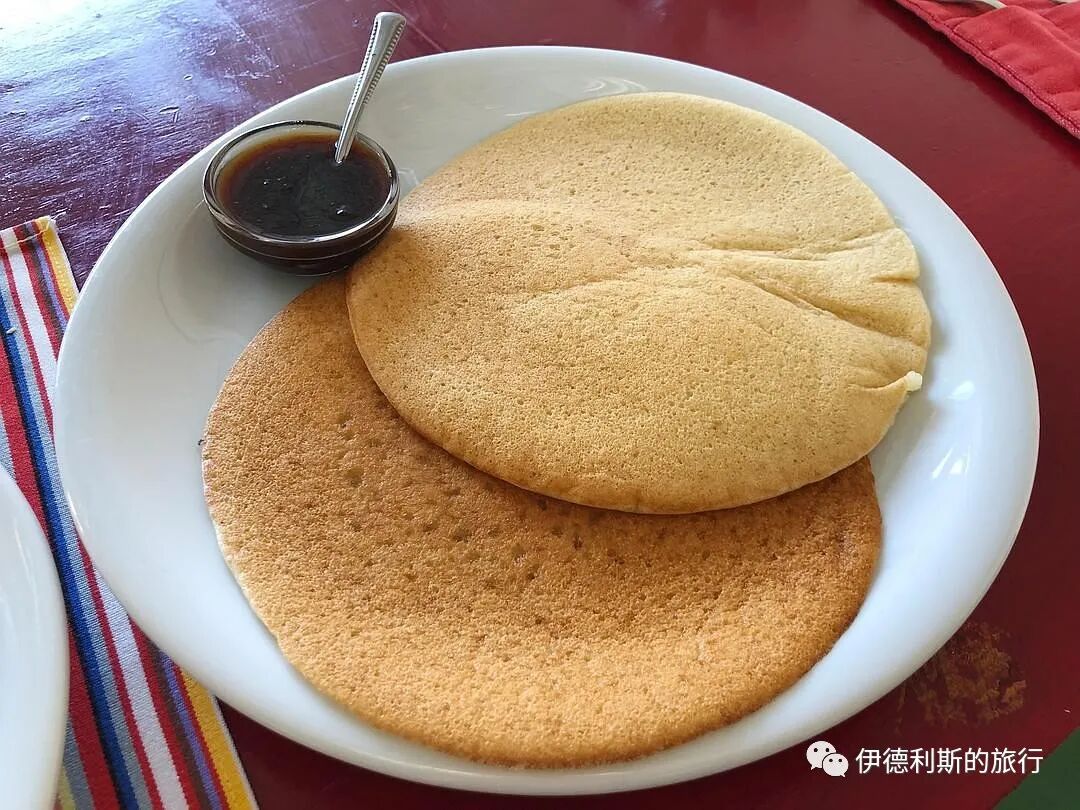
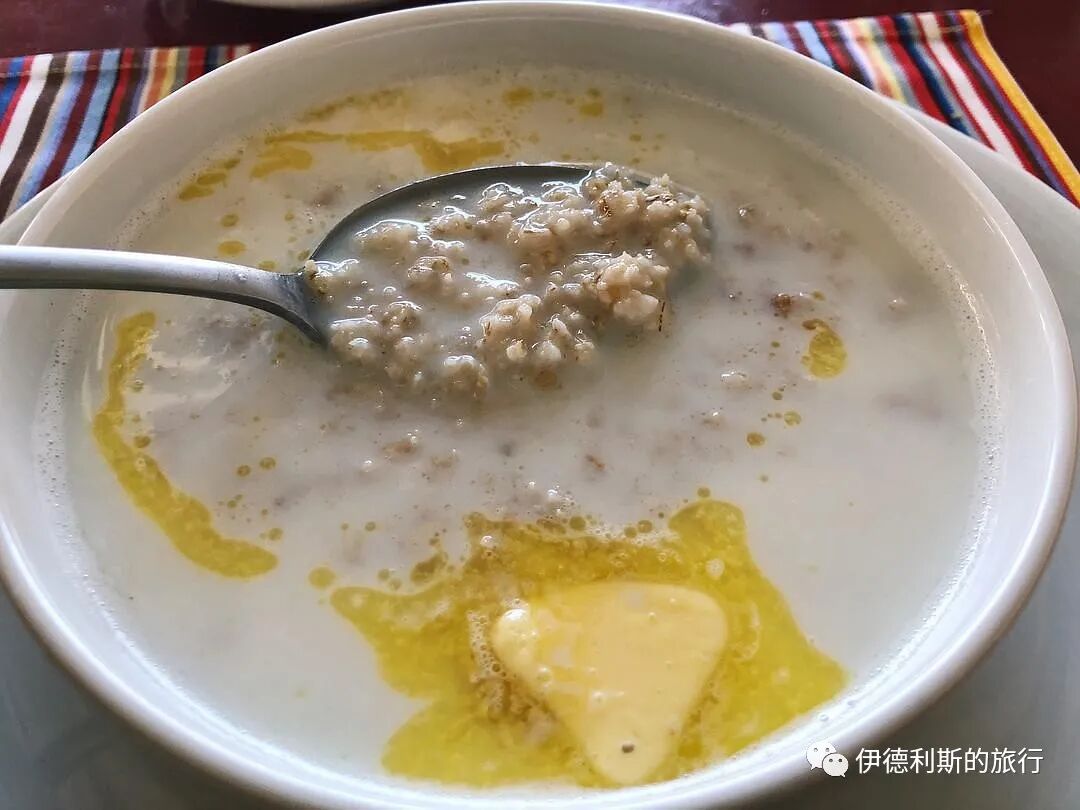
Tatar Ash (small dumplings) dipped in yogurt, Kasha v Assortimente (assorted porridge), and Bliny (thin pancakes) dipped in jam.
3. Gulf Bedouins in Dubai
The Al Ras neighborhood in Dubai literally means "cape" or "headland." It is surrounded by Dubai Creek on three sides and is the oldest neighborhood in Dubai's Deira area. There is a traditional Gulf Bedouin restaurant in the neighborhood called "Al Bait Alqadeem," which means "the old house" in Arabic. This restaurant is located in a traditional Gulf courtyard house built in 1909. The house was built by pearl boat owner Abdulla Bin Jamaan, who was also a guard for the then-ruler of Dubai. In 1954, Abdulla Bin Jamaan became the first mayor of Dubai.
The freshly baked bread is particularly crispy and tastes great, and these large enamel plates also have a special feel.
The grilled fish is recommended by the chef and is also excellent.
I also drank cucumber honey water, which I liked very much.
4. The Cham people in Ho Chi Minh City, Vietnam
The Chams are an Austronesian-speaking people who migrated from Borneo to the Indochinese Peninsula and established Champa in southern Vietnam in 192 AD. Due to the narrow and fragmented land, Champa always focused on developing maritime trade, becoming an important trading port on the Maritime Silk Road during the Song and Yuan dynasties.
After the 12th century, Champa fell into long-term war. After the Champa capital Vijaya was captured by Vietnam in 1471, a large number of Cham people fled to Cambodia for refuge. Before this, in the 14th and 15th centuries, many Malay Muslims had already moved to Cambodia. These Malay Muslims integrated with the Cham people, who also spoke Austronesian languages of the Indonesian branch, through trade, intermarriage, and other means, and the Cambodian Cham people gradually converted to Islam.
After the 18th century, some Cambodian Cham people began to move to the Mekong Delta on the Vietnam-Cambodia border to live. After France occupied Saigon in 1862, because of the relatively loose autonomy policy implemented for the Cham people, more and more Cham people settled in Saigon.
Saigon Green House is the best Cham restaurant in Ho Chi Minh City, with a rich variety of dishes that are all delicious.
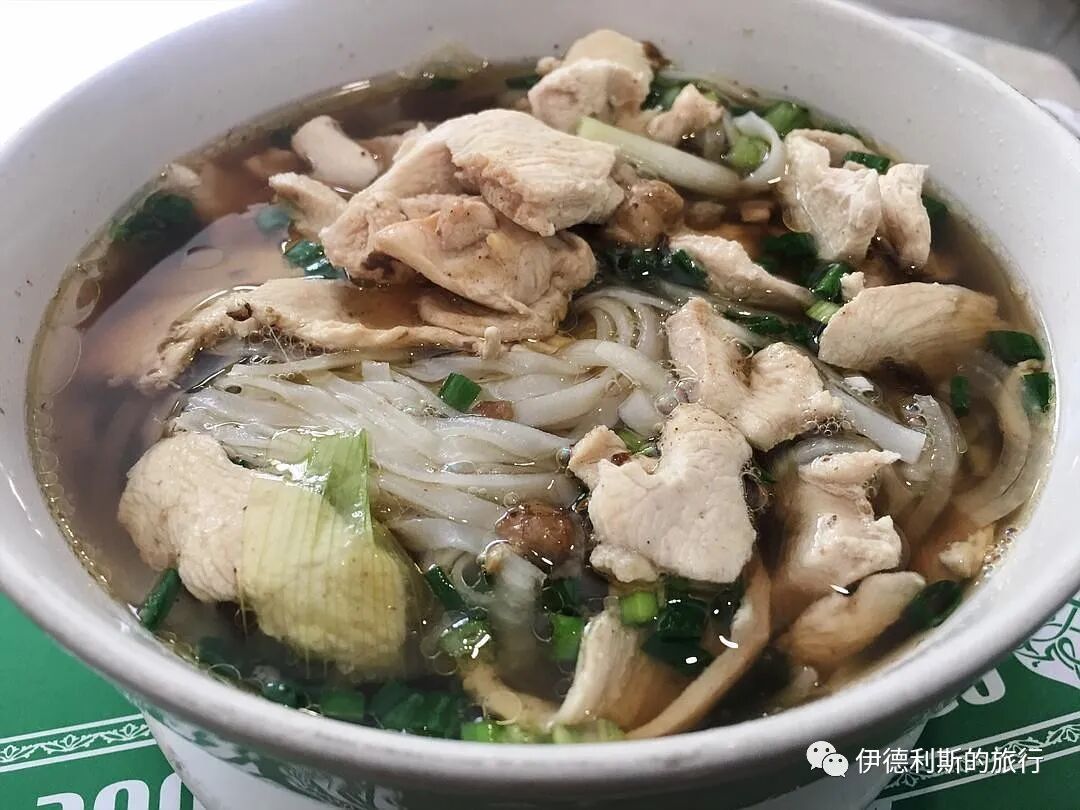
First, eat Phở!
Pineapple fried rice.
Fried spring rolls.
Drink iced tea. view all
Summary: This travel note introduces Twenty Ethnic Restaurants in China: Halal and Minority Food Guide (Part 1). In my travels over the past few years, I have encountered some very interesting ethnic groups. It is useful for readers interested in Ethnic Food, Halal Food, China Travel. This is part 1 of 4.
In my travels over the past few years, I have encountered some very interesting ethnic groups. In this diary, I will introduce twenty ethnic groups through twenty restaurants, hoping to increase everyone's understanding of these groups.
1. Kazan Tatars in Moscow
2. Crimean Tatars on the Crimean Peninsula
3. Gulf Bedouins in Dubai
4. The Cham people in Ho Chi Minh City, Vietnam
5. Tamil Muslims in Penang, Malaysia
6. Chinese Muslims in Penang, Malaysia
7. The Jawi Peranakan community in Penang, Malaysia
8. The Betawi people in Jakarta, Indonesia
9. The Javanese people in Yogyakarta, Indonesia
10. The Bantenese people on Java Island, Indonesia
11. Yunnan Hui Muslims in Chiang Mai, Thailand
12. Korean-speaking Muslims in Itaewon, Seoul
13. Chinese Muslims in Hong Kong
14. The Huihui people of Sanya, Hainan
15. The Tatars of Urumqi
16. The Dongxiang people of Xiaoxihu, Lanzhou
17. The Tibetan Muslims of Lhasa, Tibet
18. The Paxi Dai of Xishuangbanna, Yunnan
19. The Bai Hui of Dali, Yunnan
20. The Salar people of Xunhua, Qinghai
1. Kazan Tatars in Moscow
After the 17th century, with the establishment of the Romanov dynasty, Moscow gradually prospered, and many Tatars from the Volga River and steppe regions came to do business. The Tatar community (Tatarskaya sloboda) was formally formed south of the Moskva River, opposite the Kremlin. The community's main street, Tatarskaya Street, was first mentioned in documents in 1682.
The historic Tatar community has a Tatar restaurant called Kazan Tea Bar, which is also the center for Tatar cultural activities in Moscow, frequently organizing various Tatar cultural events.
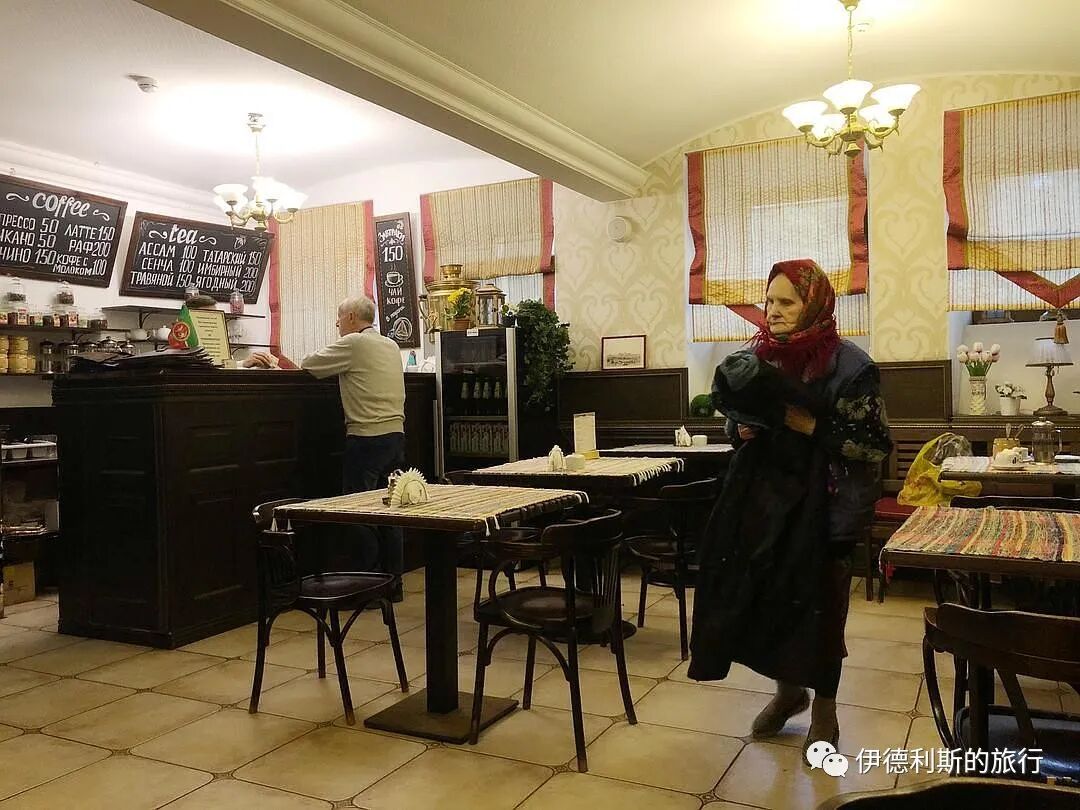
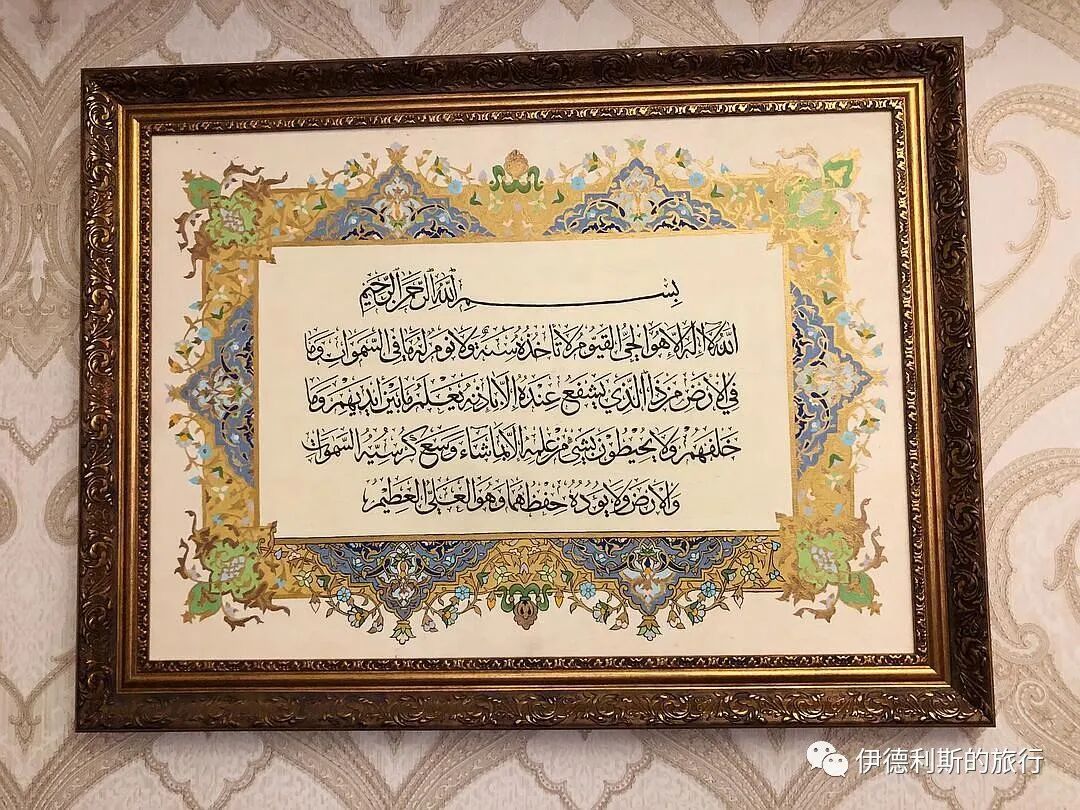
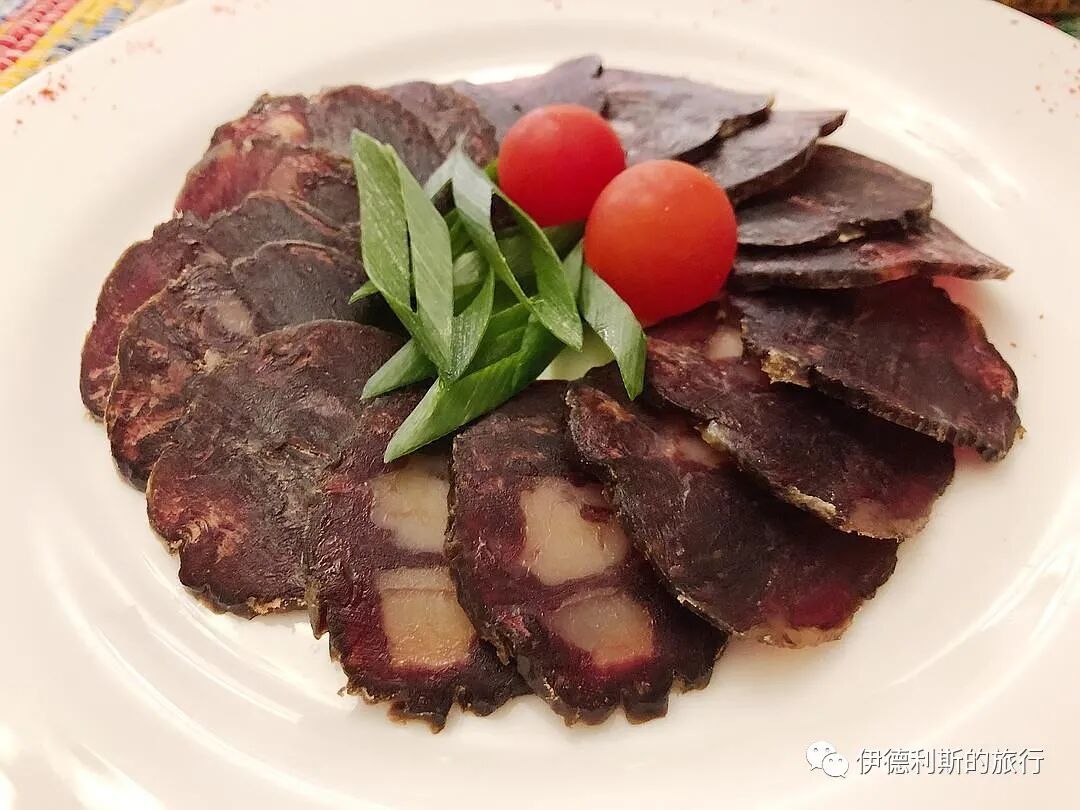
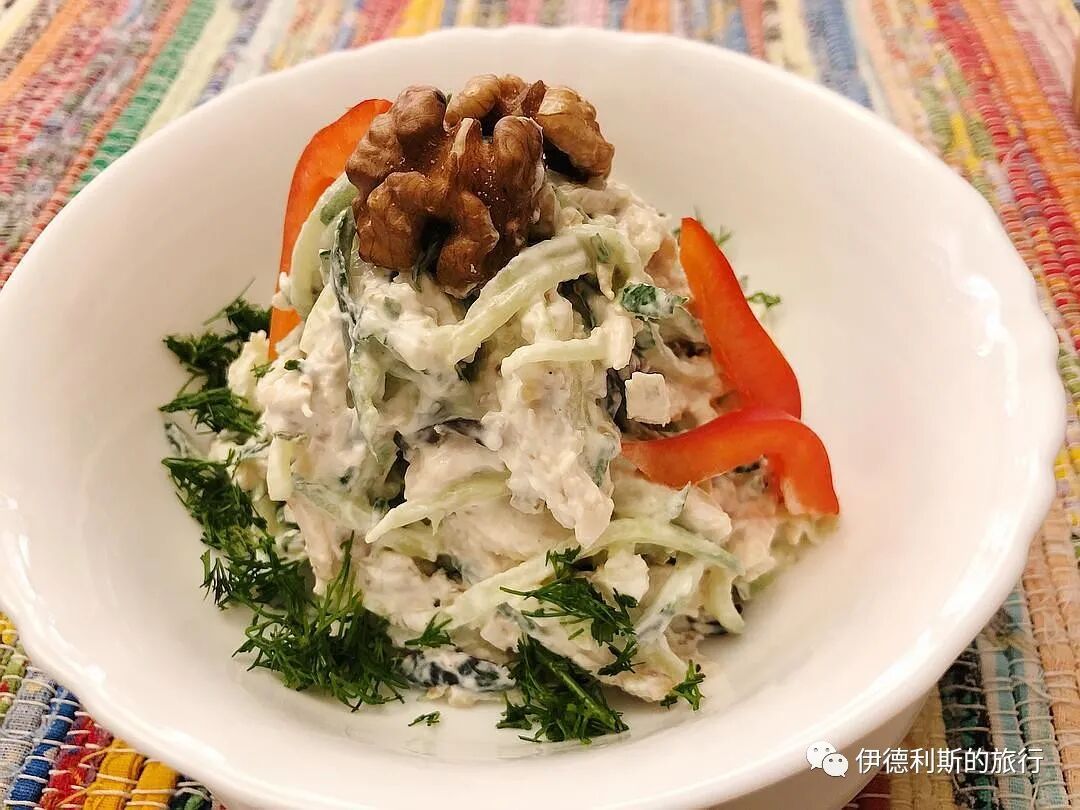
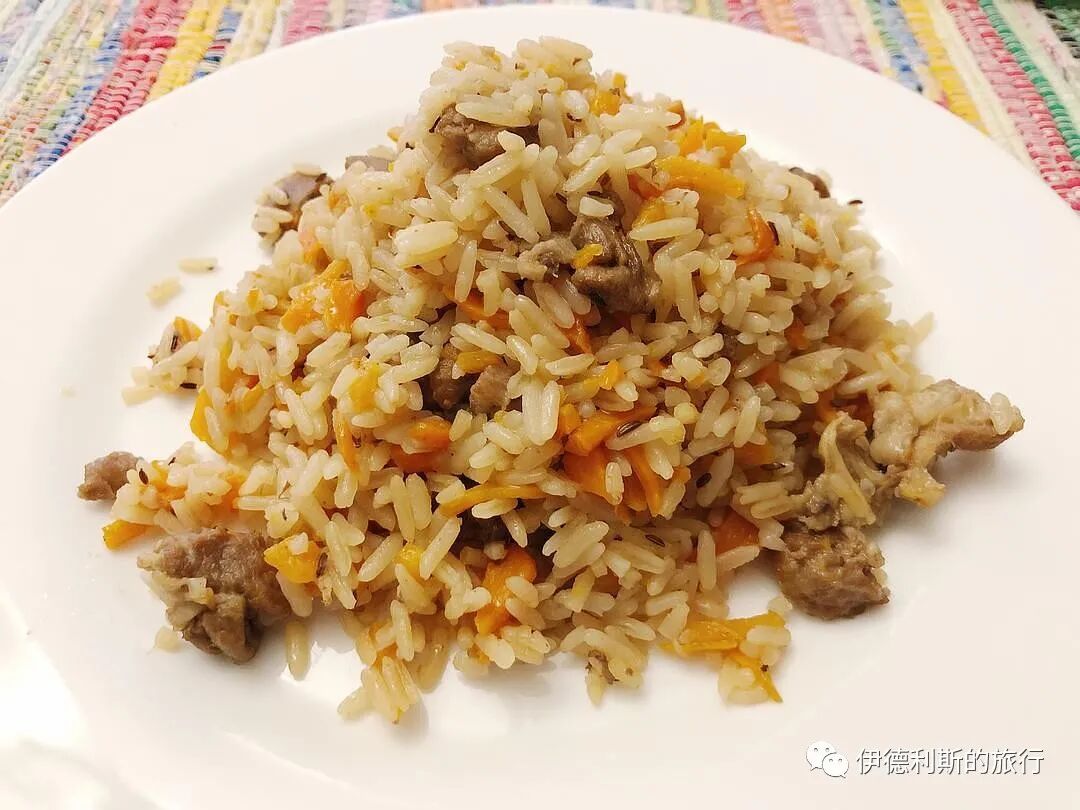
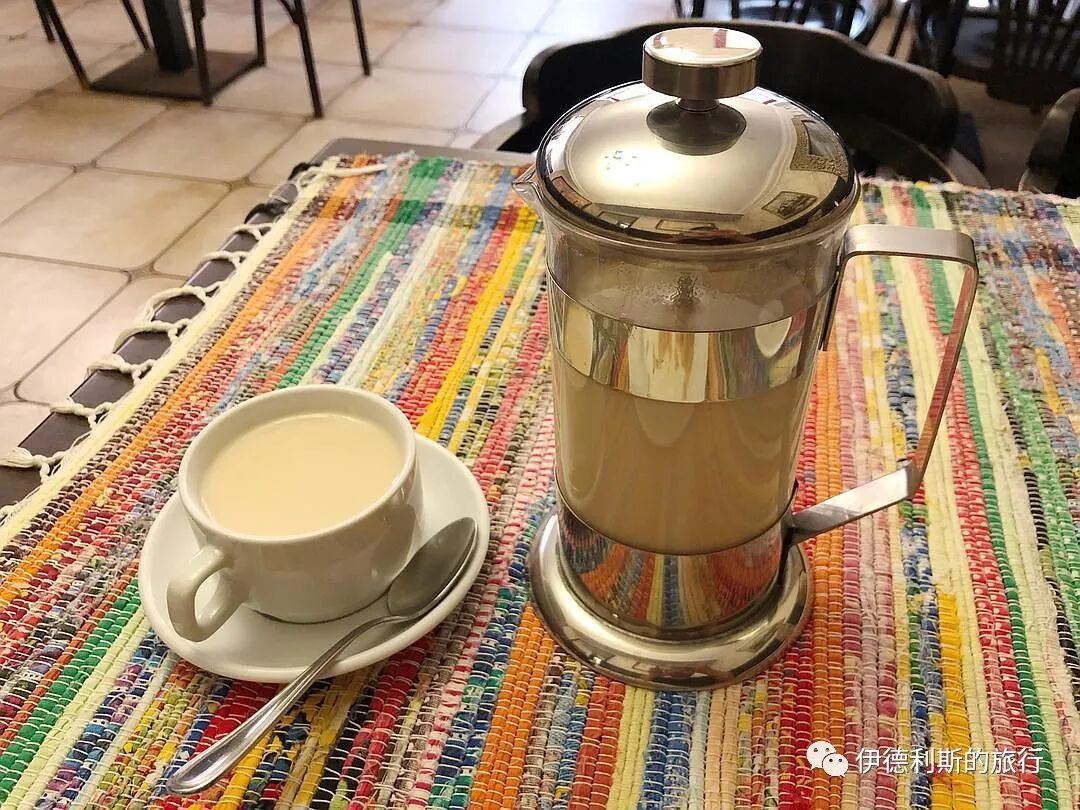
Inside, I ate Beshbarmak (five-finger stew), Kystyby (flatbread with filling), the Tatar version of horse sausage Kazy, pilaf, Kazan chicken salad, and Tatar milk tea. Tatar milk tea is made of black tea + green tea + thyme + linden leaves + chamomile flowers + oregano leaves + mint leaves + sage.
2. Crimean Tatars on the Crimean Peninsula
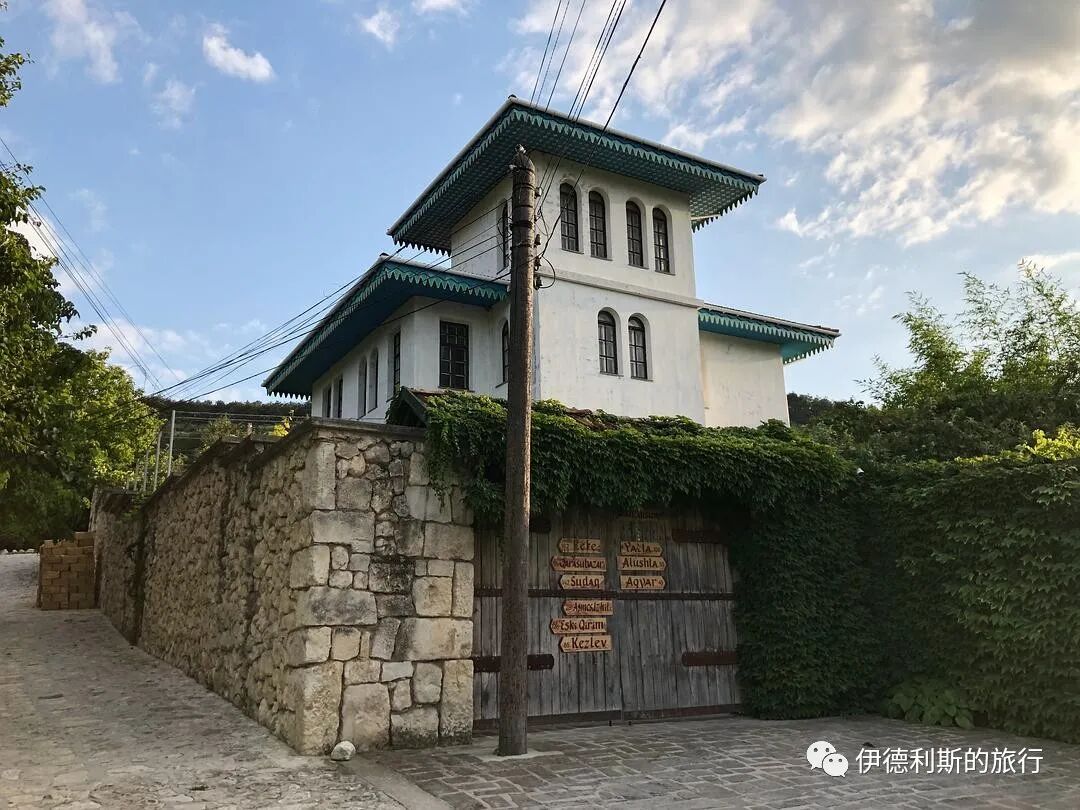
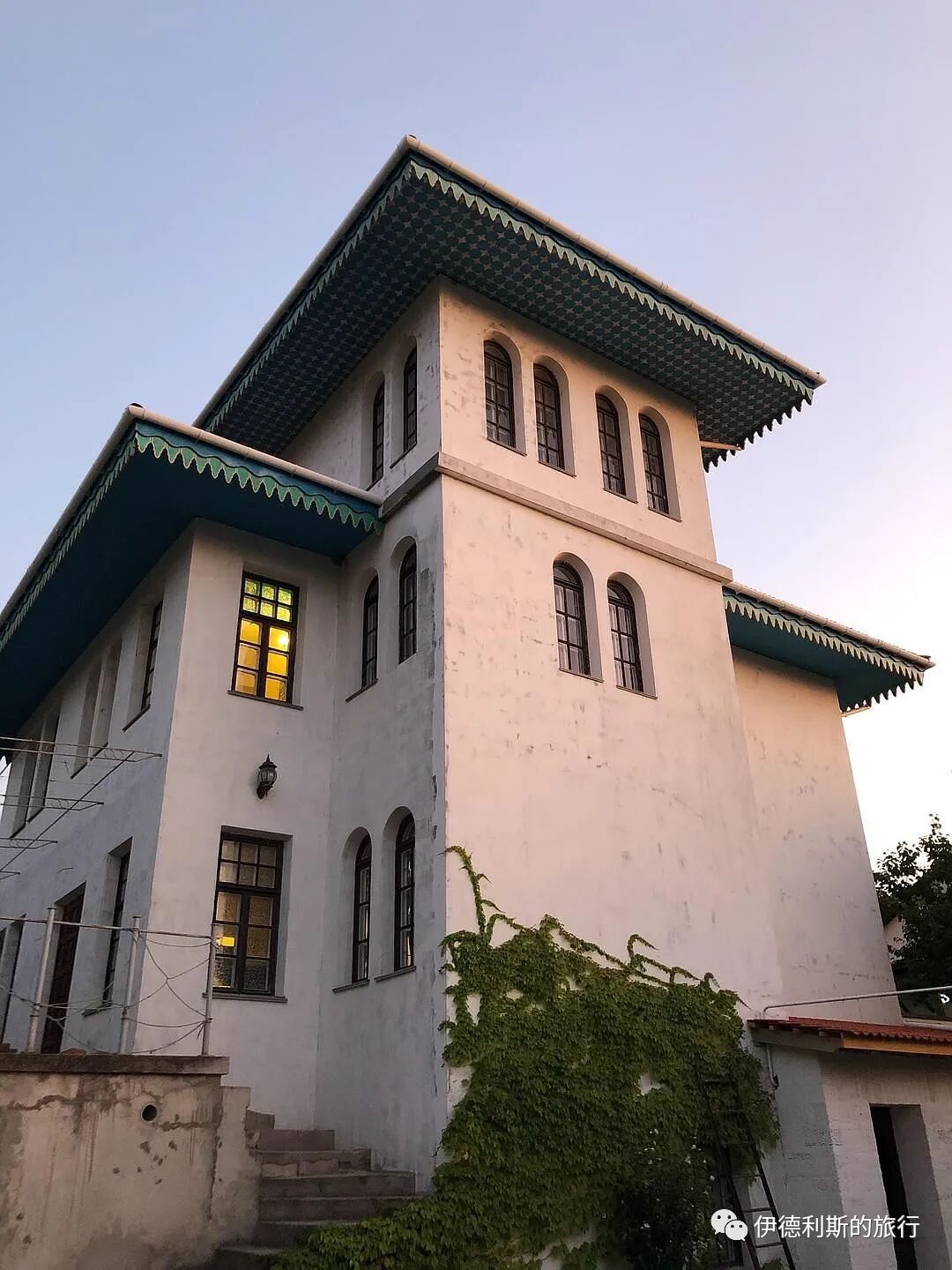
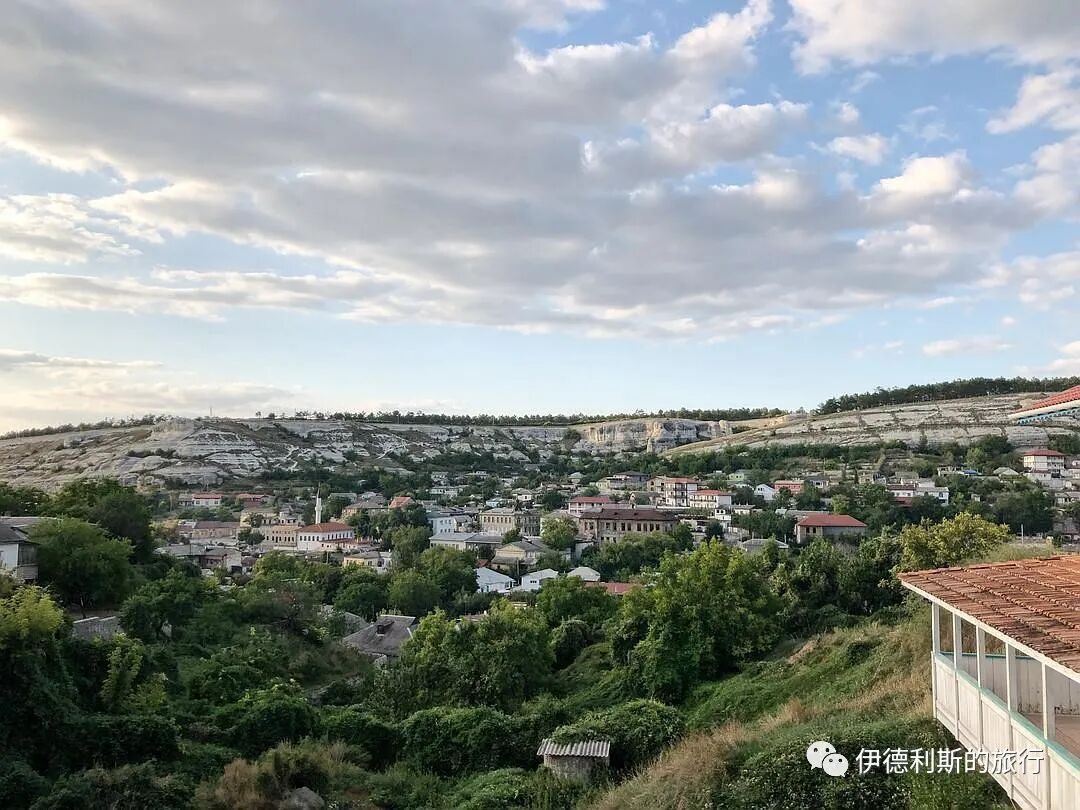
In the summer of 2019, I went to an ancient city in the mountains of the Crimean Peninsula—Bakhchysarai. Bakhchysarai was founded by the Crimean Tatars and became the capital of the Crimean Khanate in 1532. Although it became an ordinary town after Russia occupied the Crimean Khanate in 1783, it remains the cultural center of the Crimean Tatars, preserving their unique culture and customs.
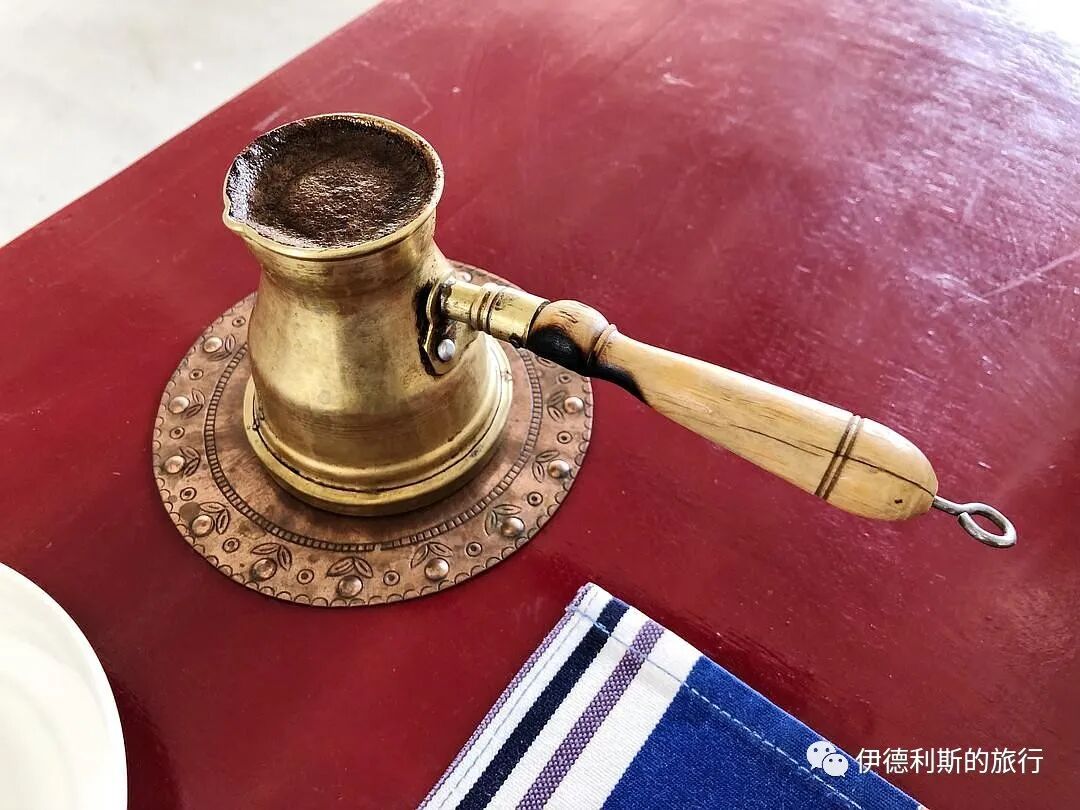
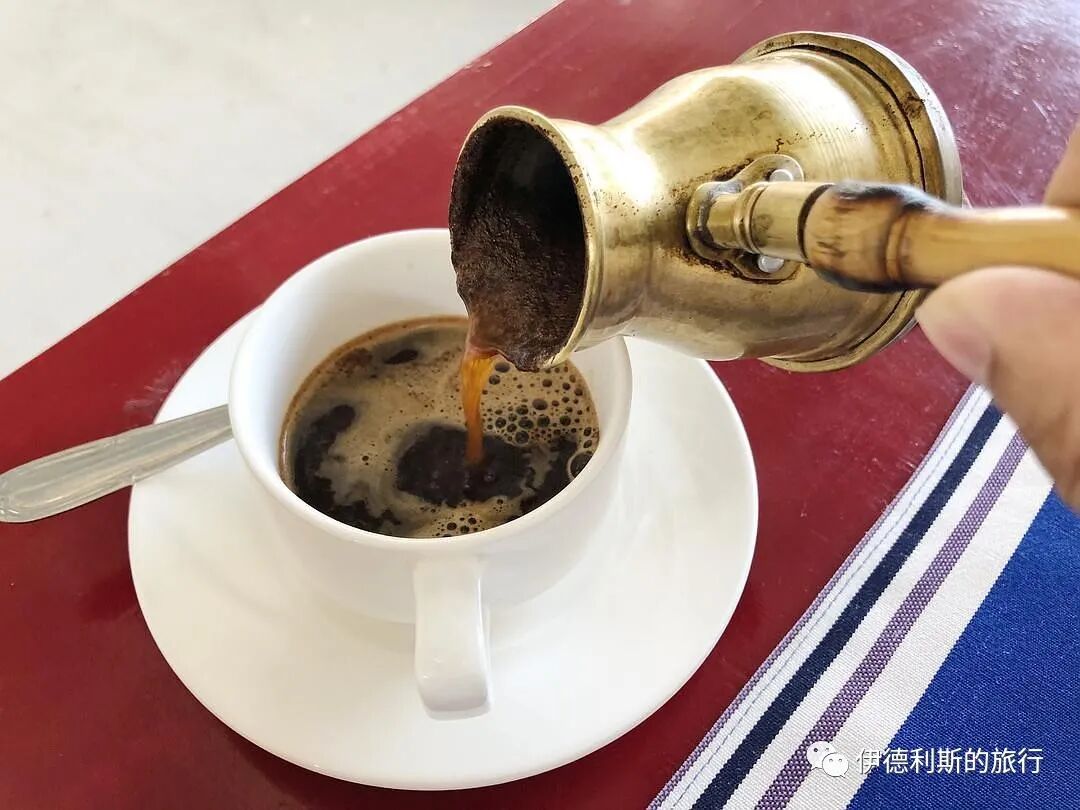
The dietary culture of the Crimean Tatars is closely related to their history. Because the Crimean Khanate was a long-term vassal of the Ottoman Empire, it possesses many Ottoman-related foods, such as Turkish coffee, Baklava (Turkish dessert), and Dolma (stuffed grape leaves). After being exiled to Uzbekistan in 1944, a large amount of Uzbek cuisine was added to the Crimean Tatar diet, including pilaf, lagman (pulled noodles), samsa (baked buns), manti (steamed buns), and naan. In addition, the Crimean Tatars also have some unique delicacies, one of which is Chebureki (fried meat turnover), known as a Crimean Tatar national delicacy.
This time I stayed at a very beautiful traditional Crimean Tatar courtyard house, Bahitgul Boutique-Hotel. They serve traditional Crimean Tatar meals, so I basically ate breakfast at my accommodation. Moreover, the view while eating at their place is particularly good, overlooking the entire ancient capital.
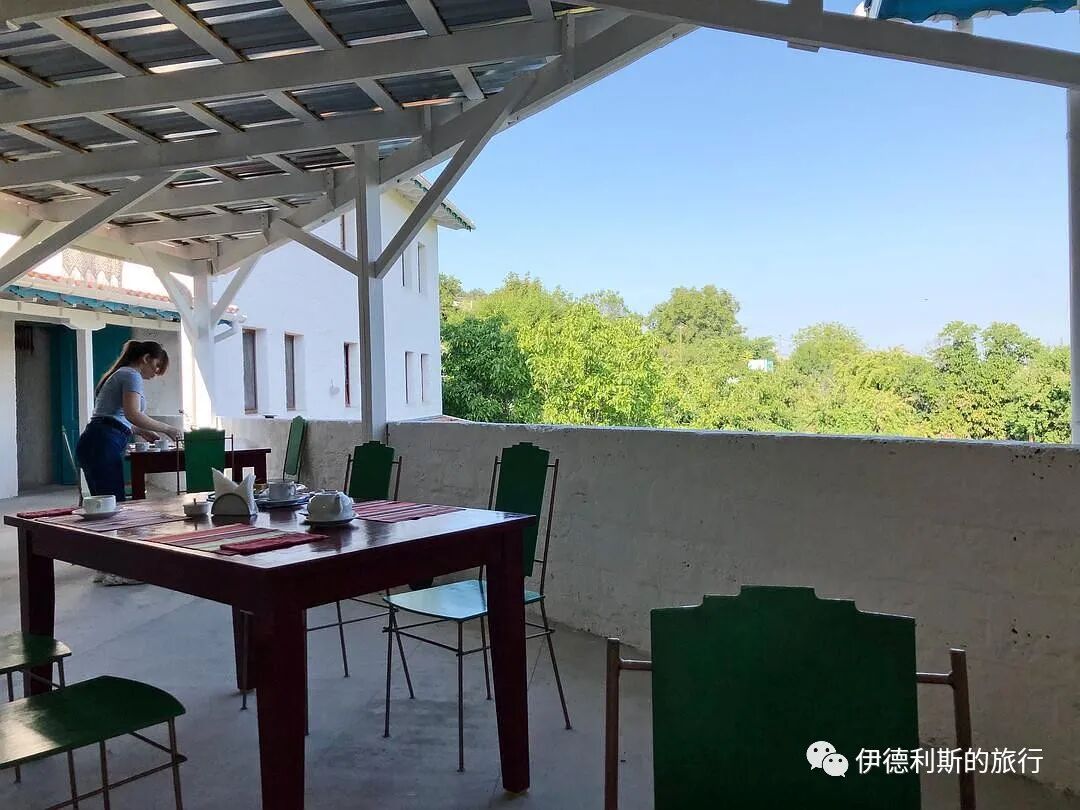
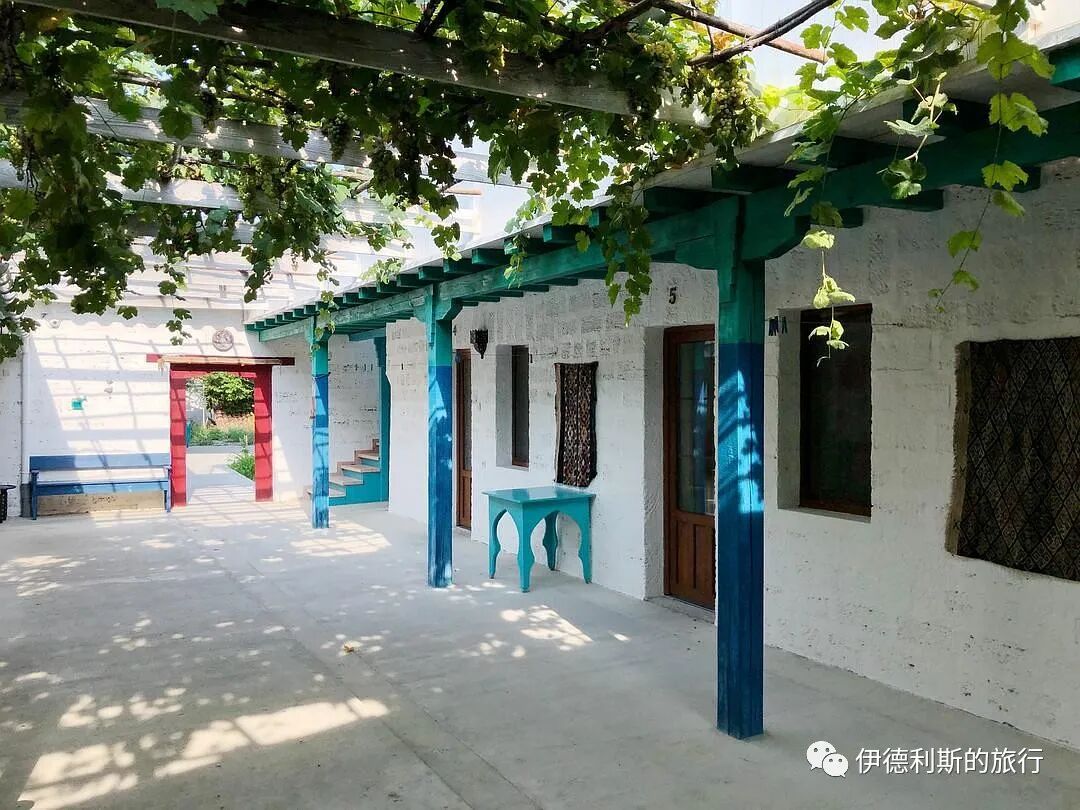
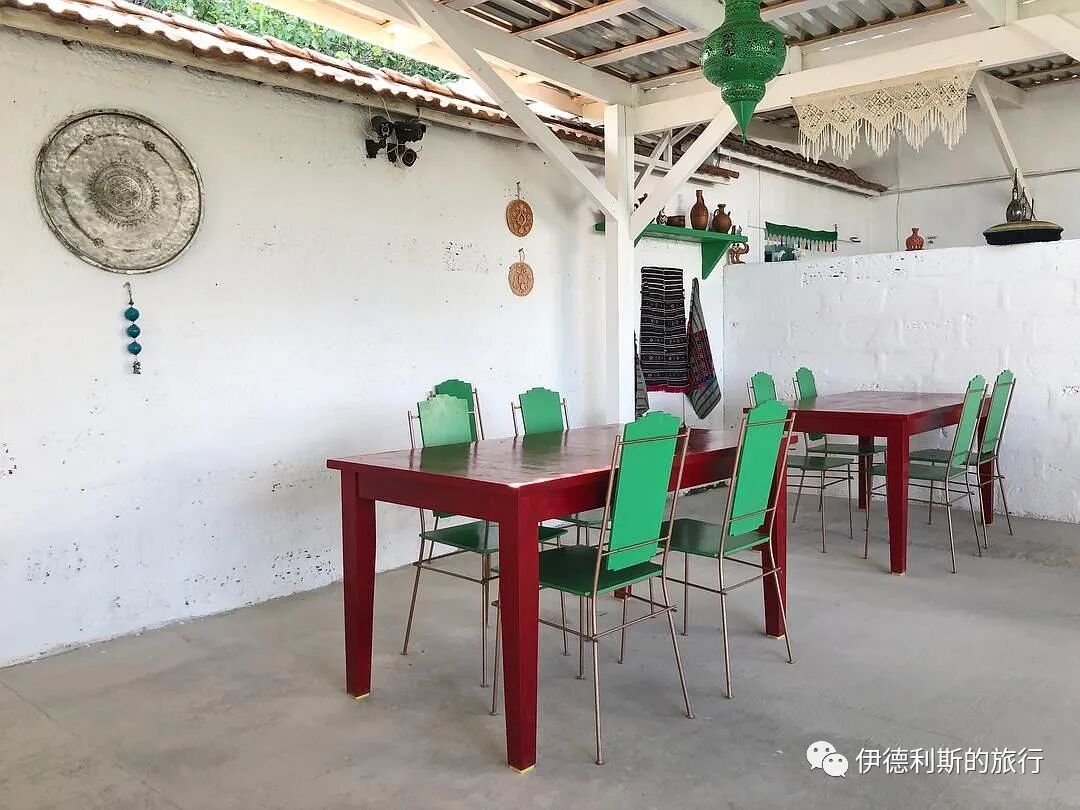
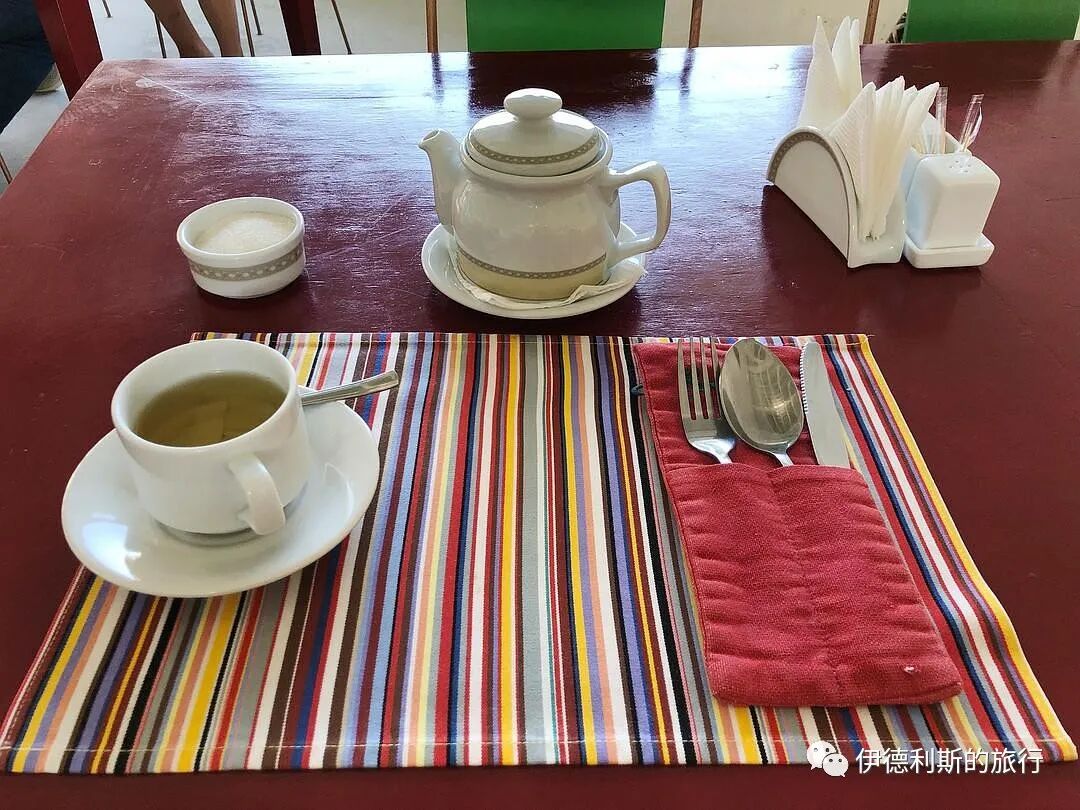
For the first breakfast, I had Lagman (pulled noodles), Omlet (omelet), Lepyoshka (naan), and traditional coffee. The coffee comes from the Ottoman Empire, and the lagman comes from the exile in Uzbekistan.
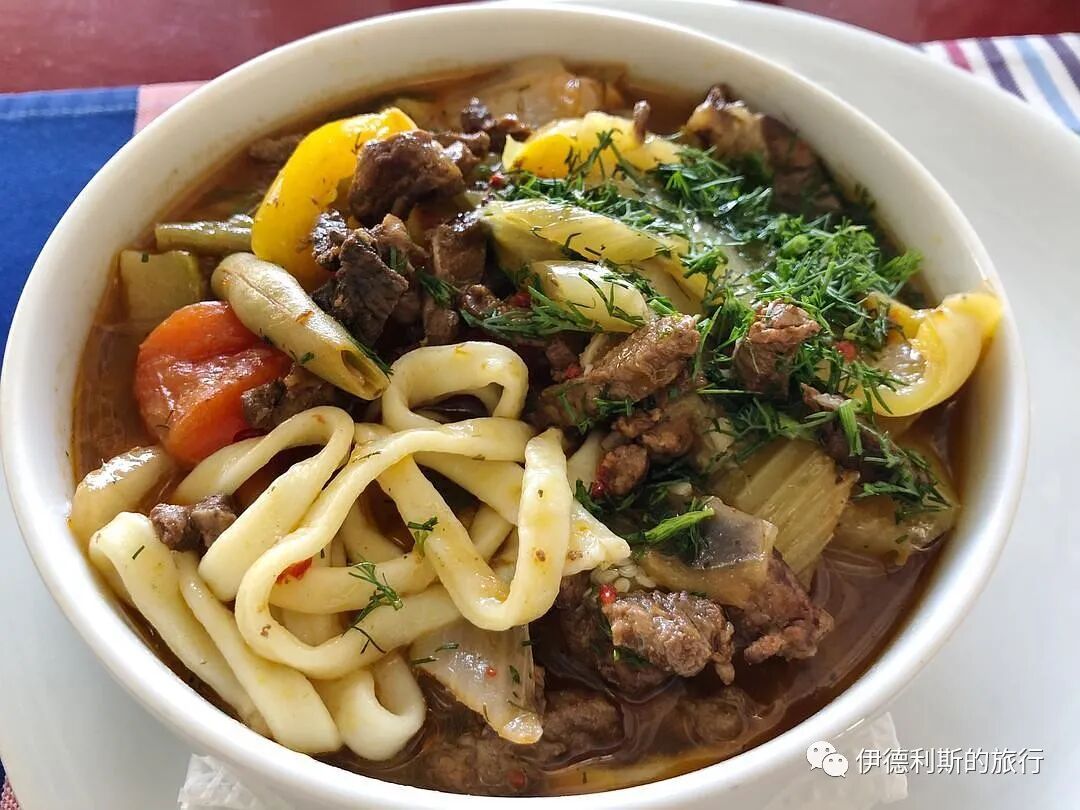
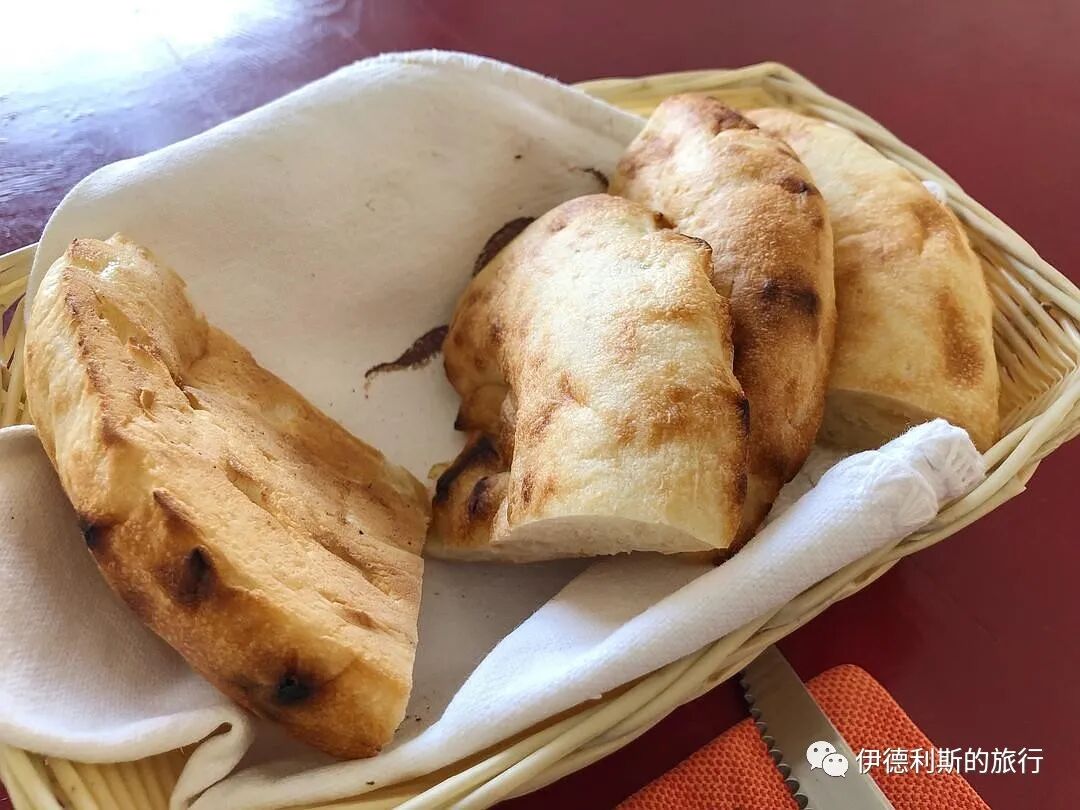
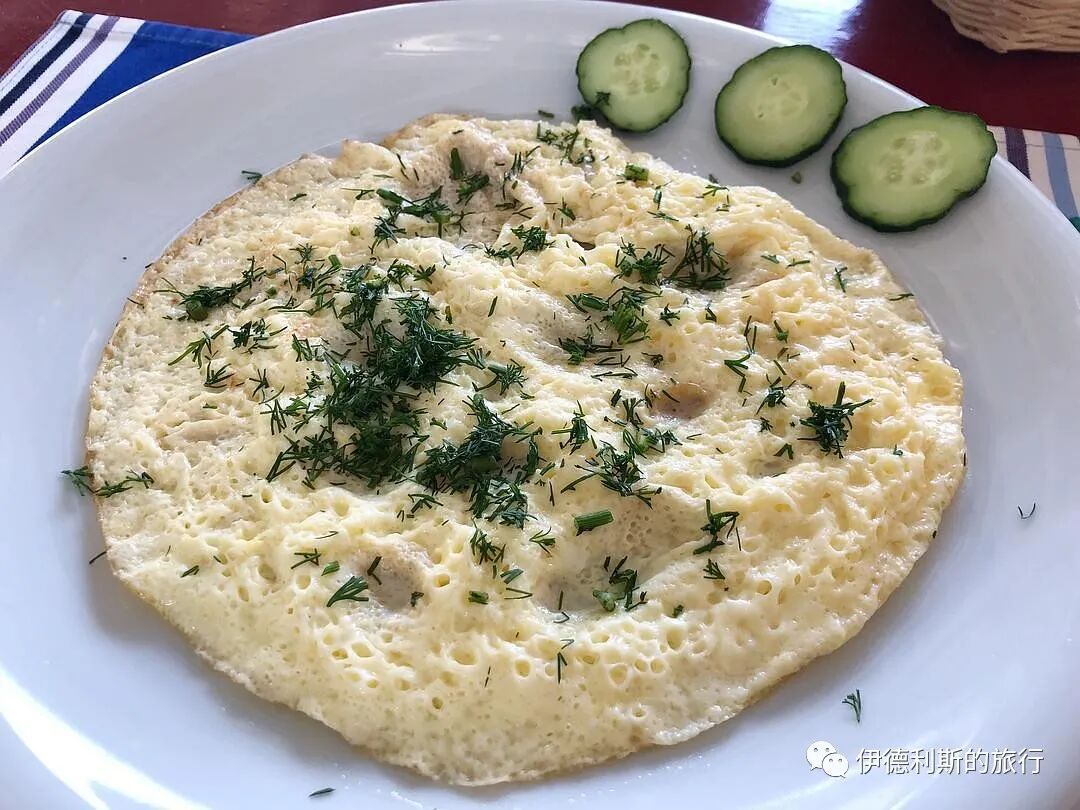
Tatar Ash (small dumplings) dipped in yogurt, Kasha v Assortimente (assorted porridge), and Bliny (thin pancakes) dipped in jam.
3. Gulf Bedouins in Dubai
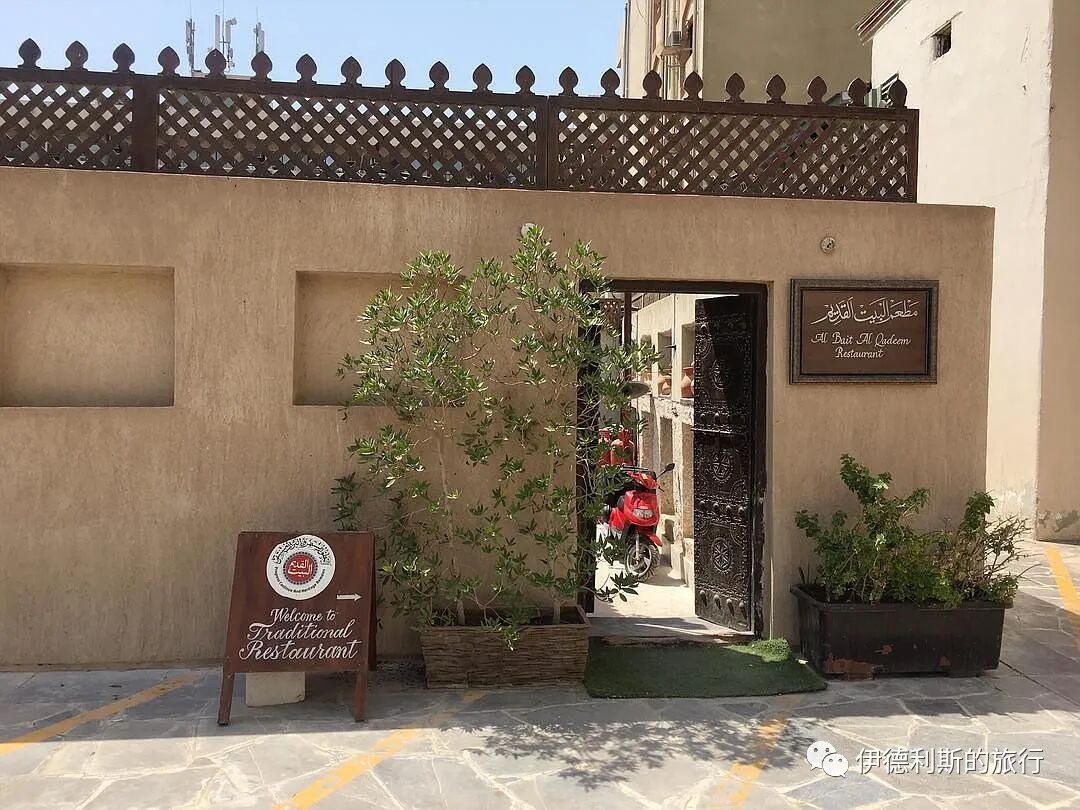
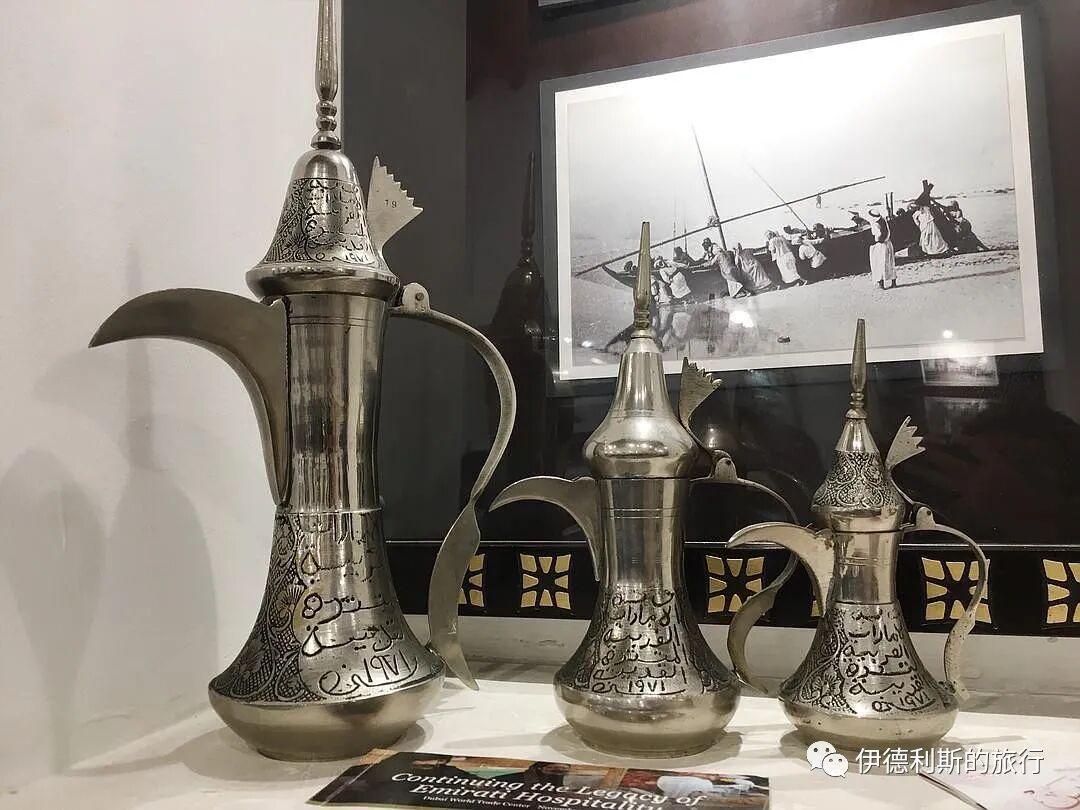
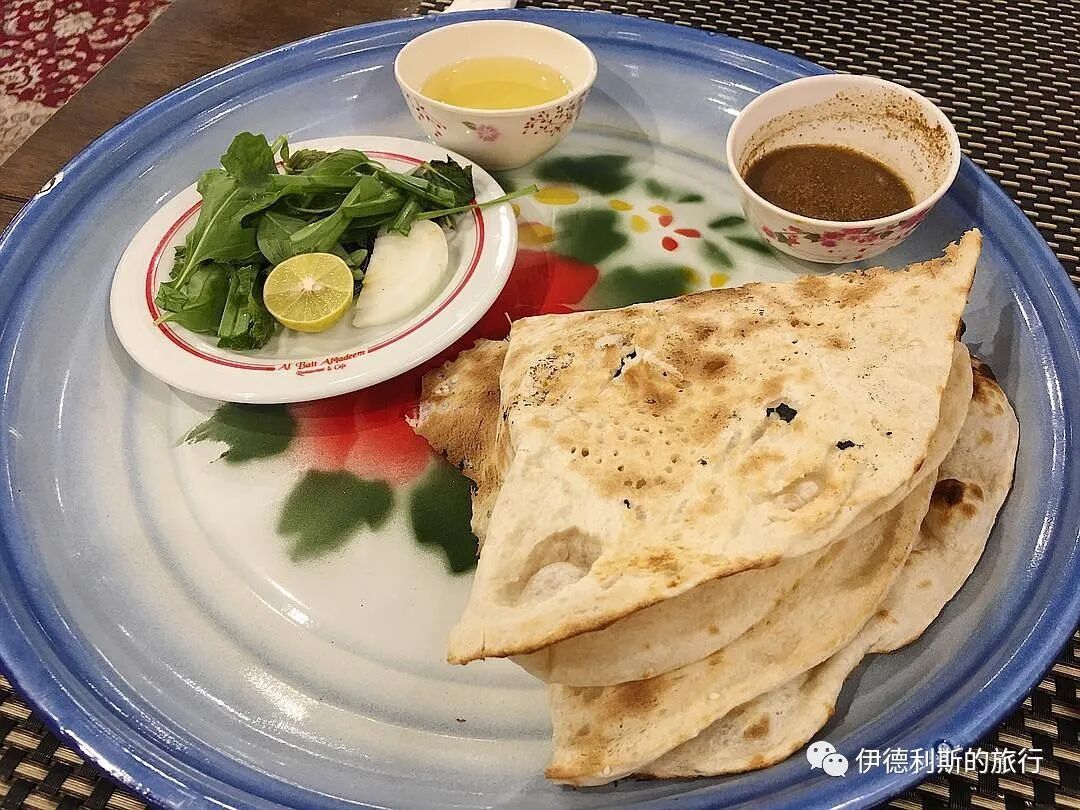
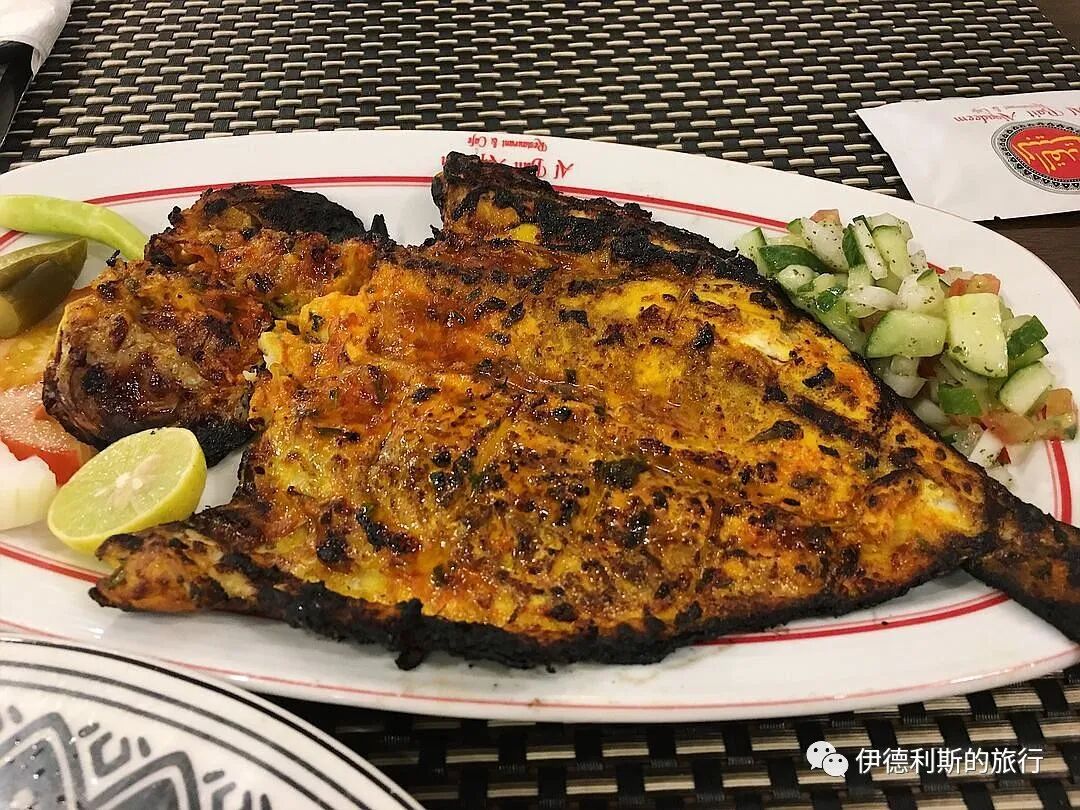
The Al Ras neighborhood in Dubai literally means "cape" or "headland." It is surrounded by Dubai Creek on three sides and is the oldest neighborhood in Dubai's Deira area. There is a traditional Gulf Bedouin restaurant in the neighborhood called "Al Bait Alqadeem," which means "the old house" in Arabic. This restaurant is located in a traditional Gulf courtyard house built in 1909. The house was built by pearl boat owner Abdulla Bin Jamaan, who was also a guard for the then-ruler of Dubai. In 1954, Abdulla Bin Jamaan became the first mayor of Dubai.
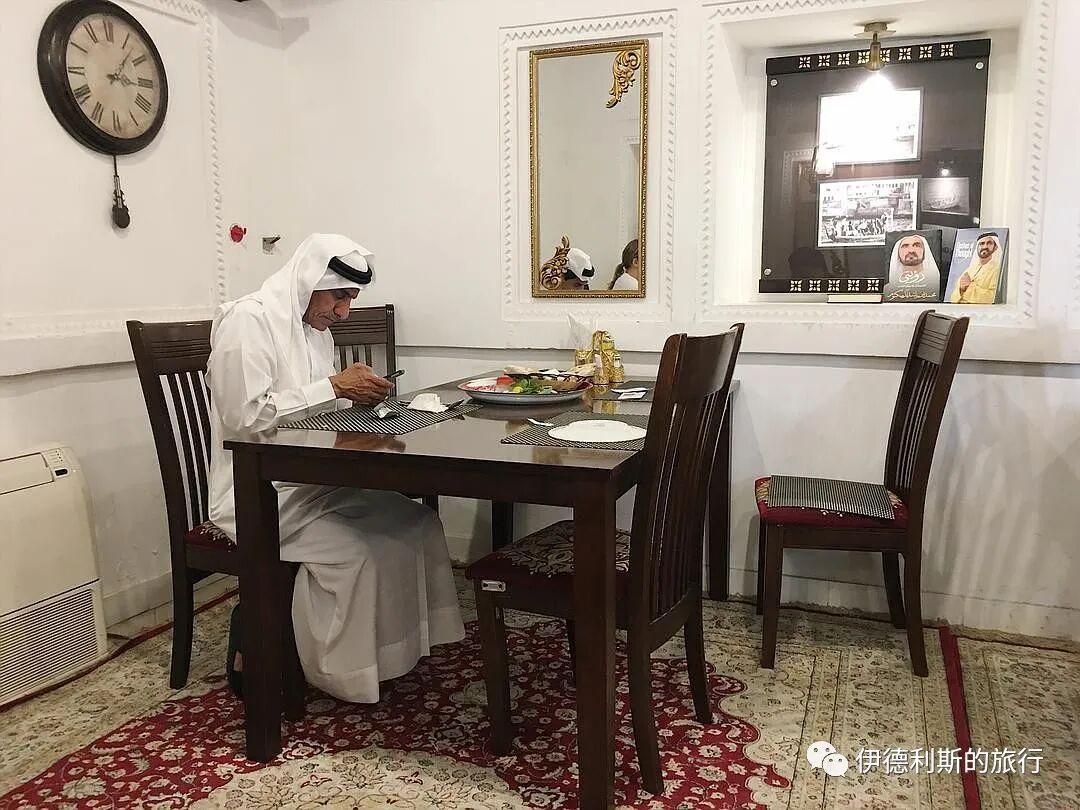
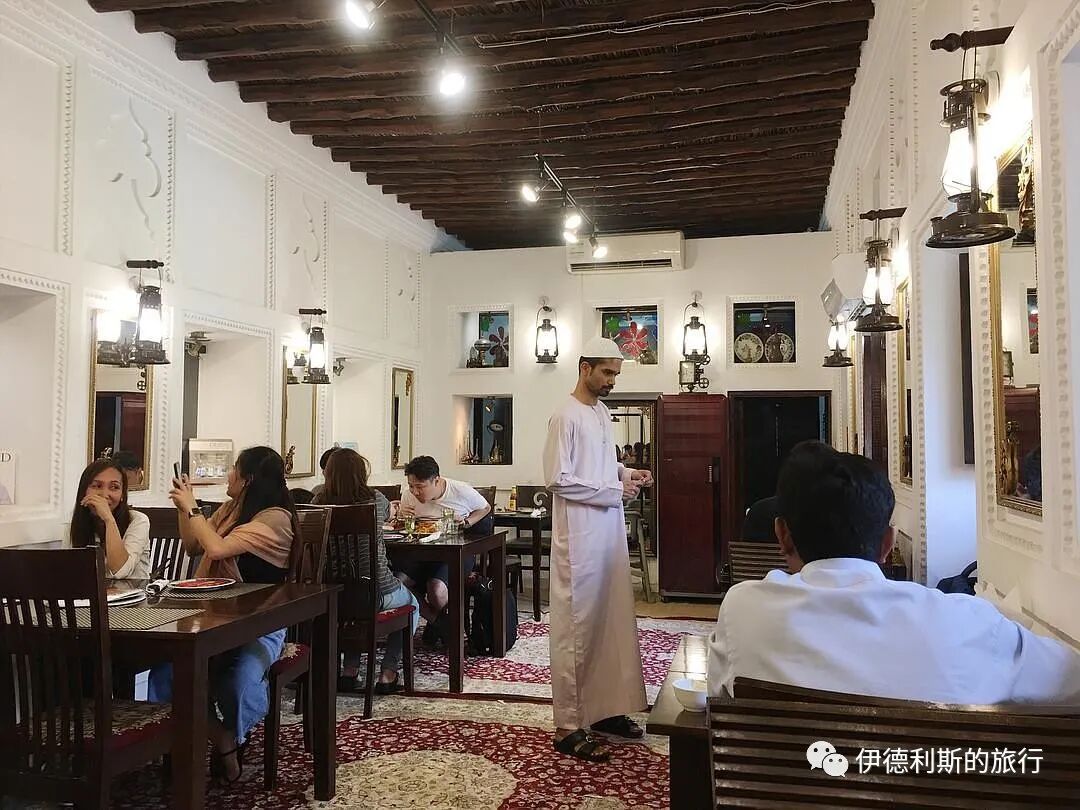
The freshly baked bread is particularly crispy and tastes great, and these large enamel plates also have a special feel.
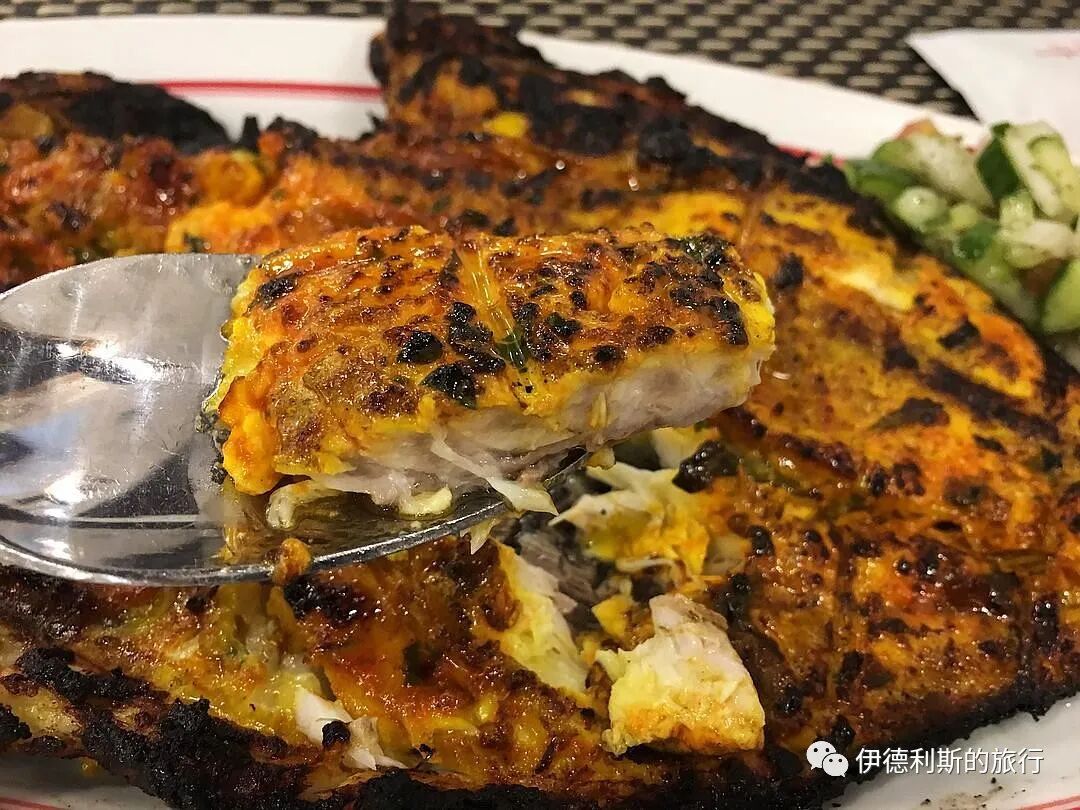
The grilled fish is recommended by the chef and is also excellent.
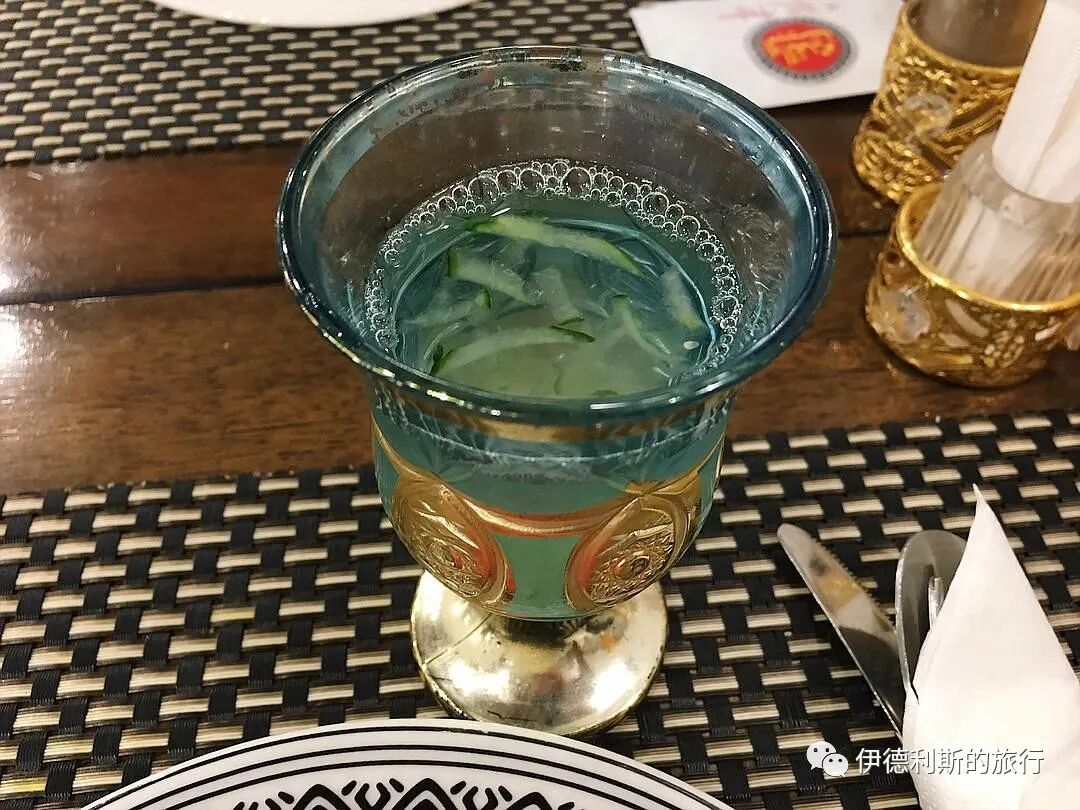
I also drank cucumber honey water, which I liked very much.
4. The Cham people in Ho Chi Minh City, Vietnam
The Chams are an Austronesian-speaking people who migrated from Borneo to the Indochinese Peninsula and established Champa in southern Vietnam in 192 AD. Due to the narrow and fragmented land, Champa always focused on developing maritime trade, becoming an important trading port on the Maritime Silk Road during the Song and Yuan dynasties.
After the 12th century, Champa fell into long-term war. After the Champa capital Vijaya was captured by Vietnam in 1471, a large number of Cham people fled to Cambodia for refuge. Before this, in the 14th and 15th centuries, many Malay Muslims had already moved to Cambodia. These Malay Muslims integrated with the Cham people, who also spoke Austronesian languages of the Indonesian branch, through trade, intermarriage, and other means, and the Cambodian Cham people gradually converted to Islam.
After the 18th century, some Cambodian Cham people began to move to the Mekong Delta on the Vietnam-Cambodia border to live. After France occupied Saigon in 1862, because of the relatively loose autonomy policy implemented for the Cham people, more and more Cham people settled in Saigon.
Saigon Green House is the best Cham restaurant in Ho Chi Minh City, with a rich variety of dishes that are all delicious.
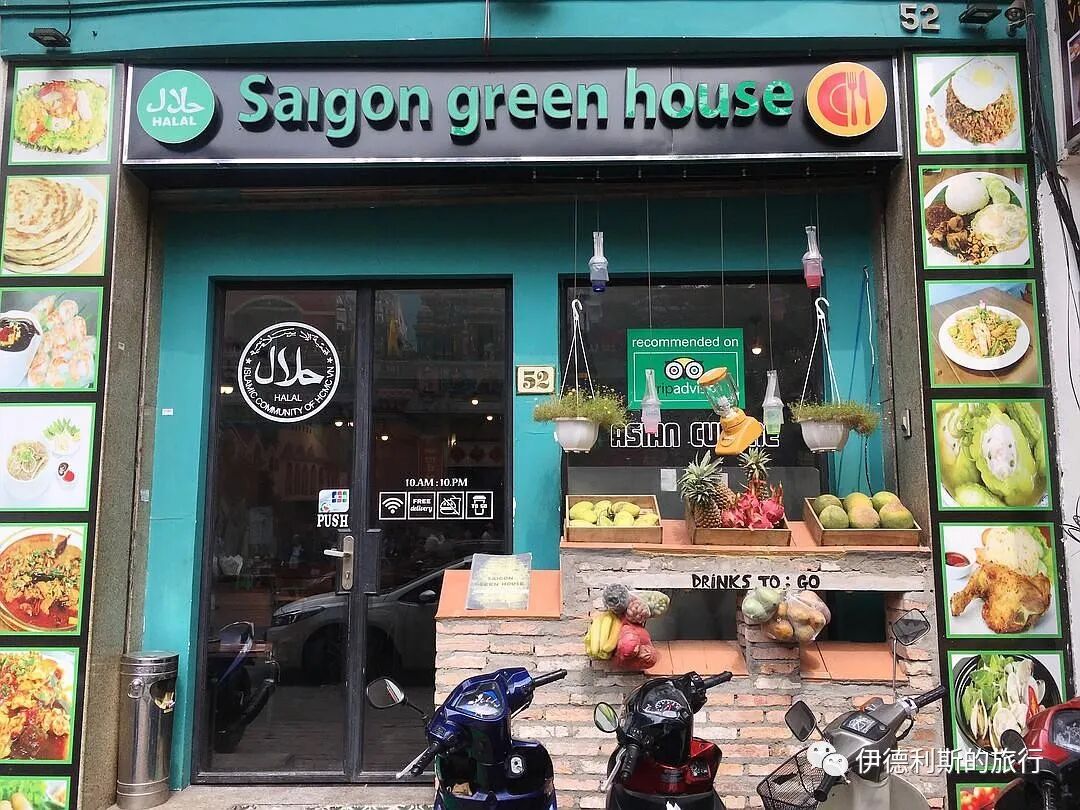
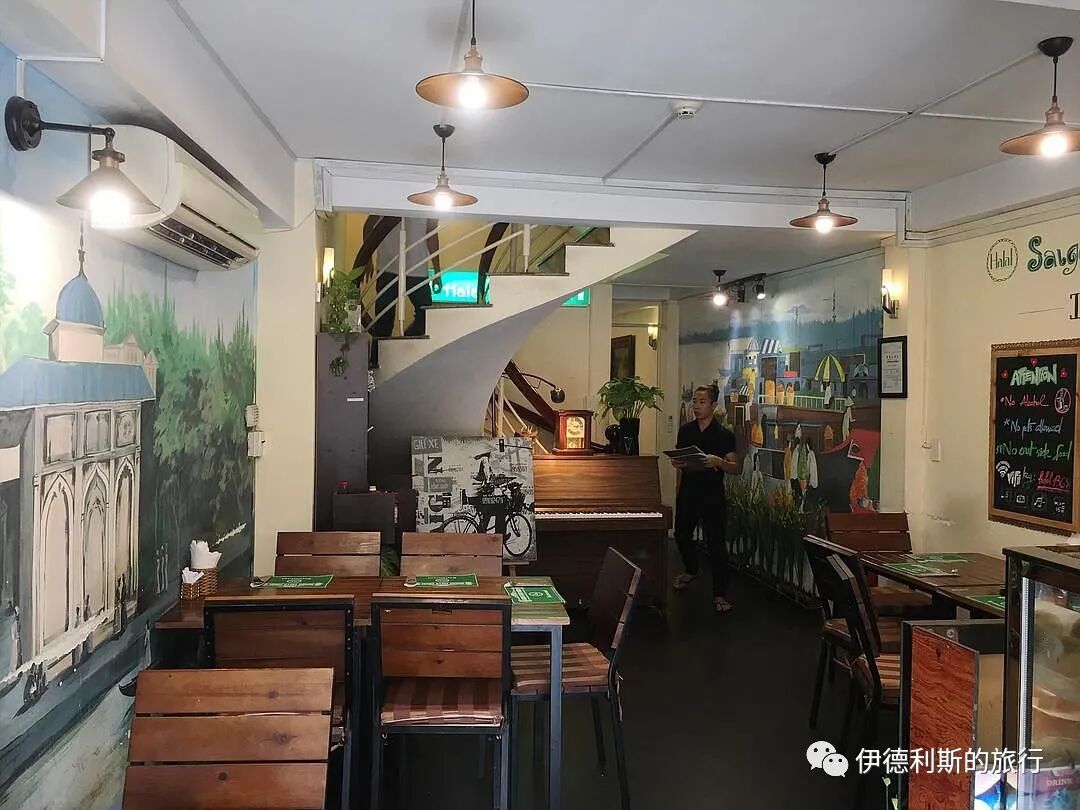
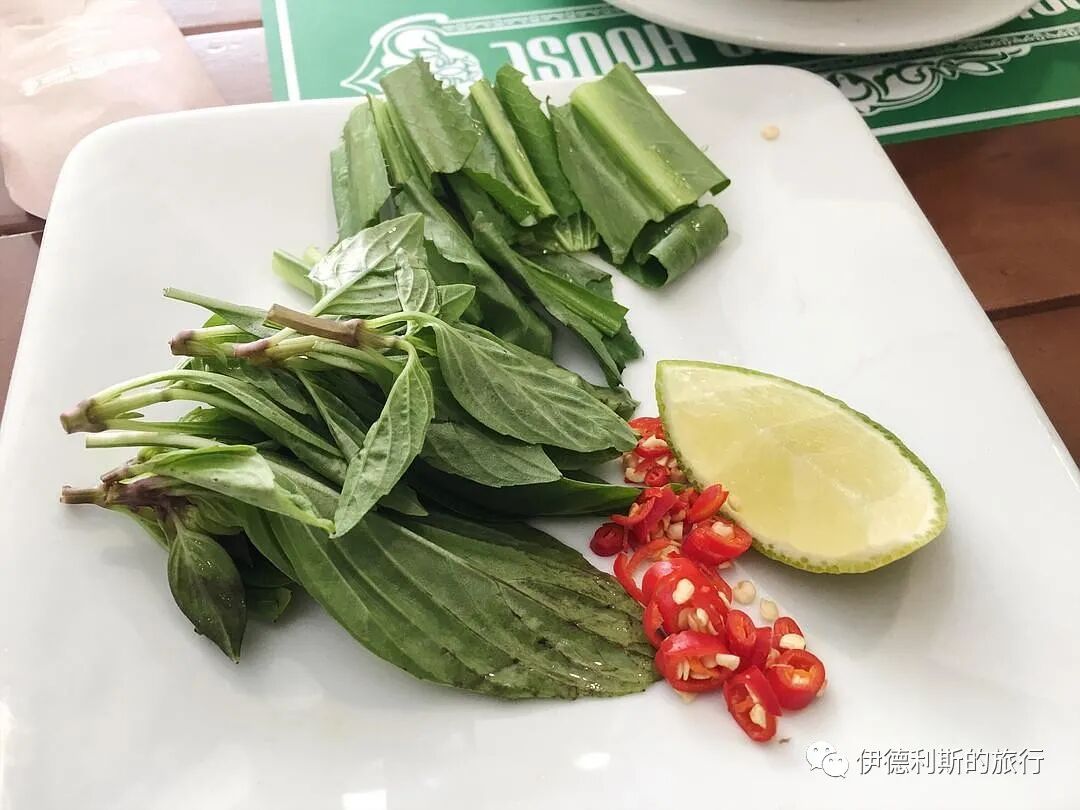
First, eat Phở!
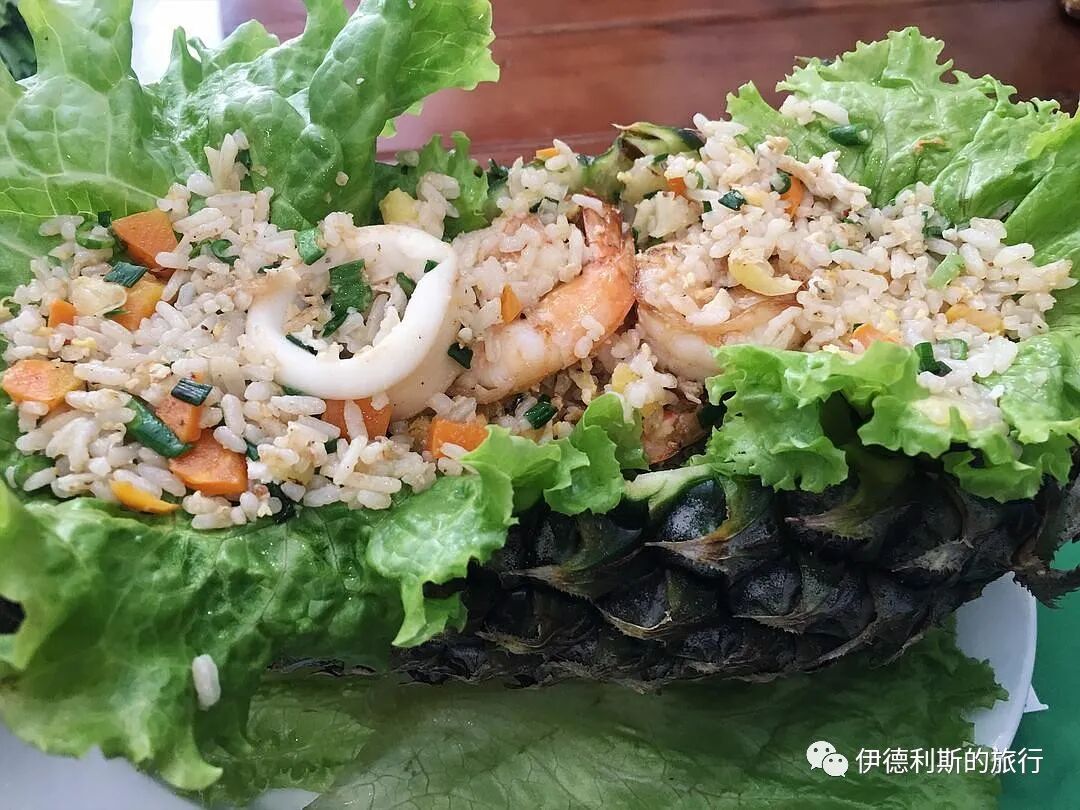
Pineapple fried rice.
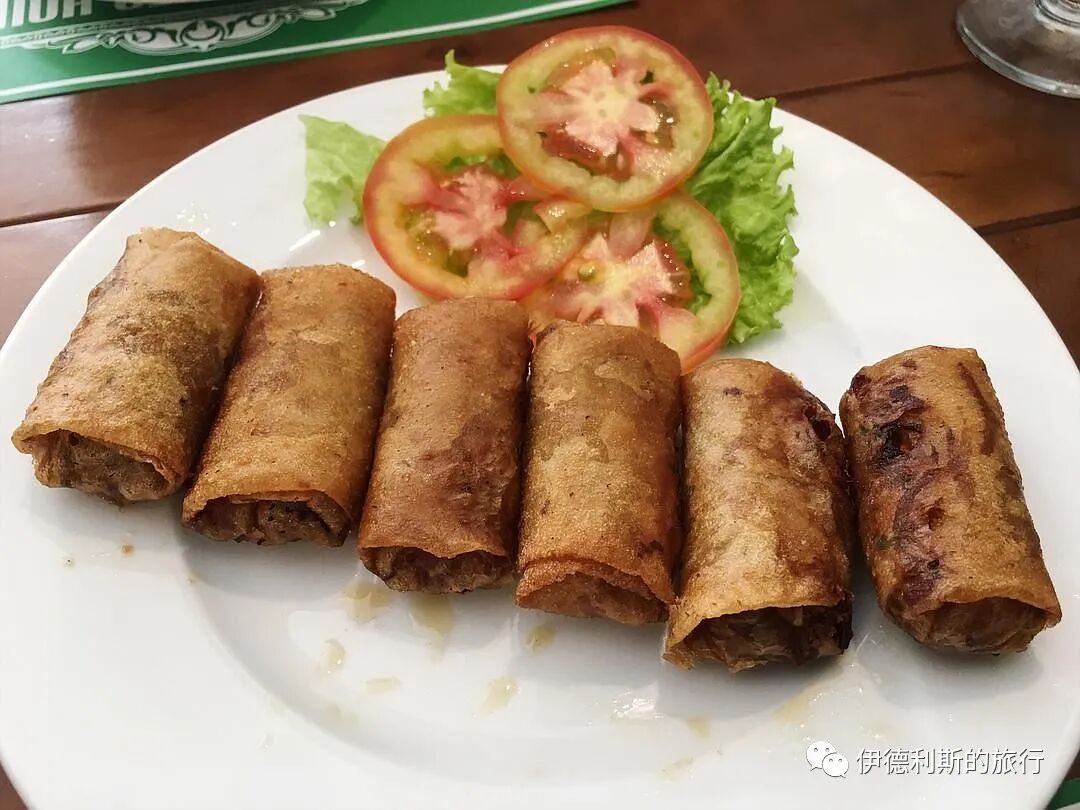
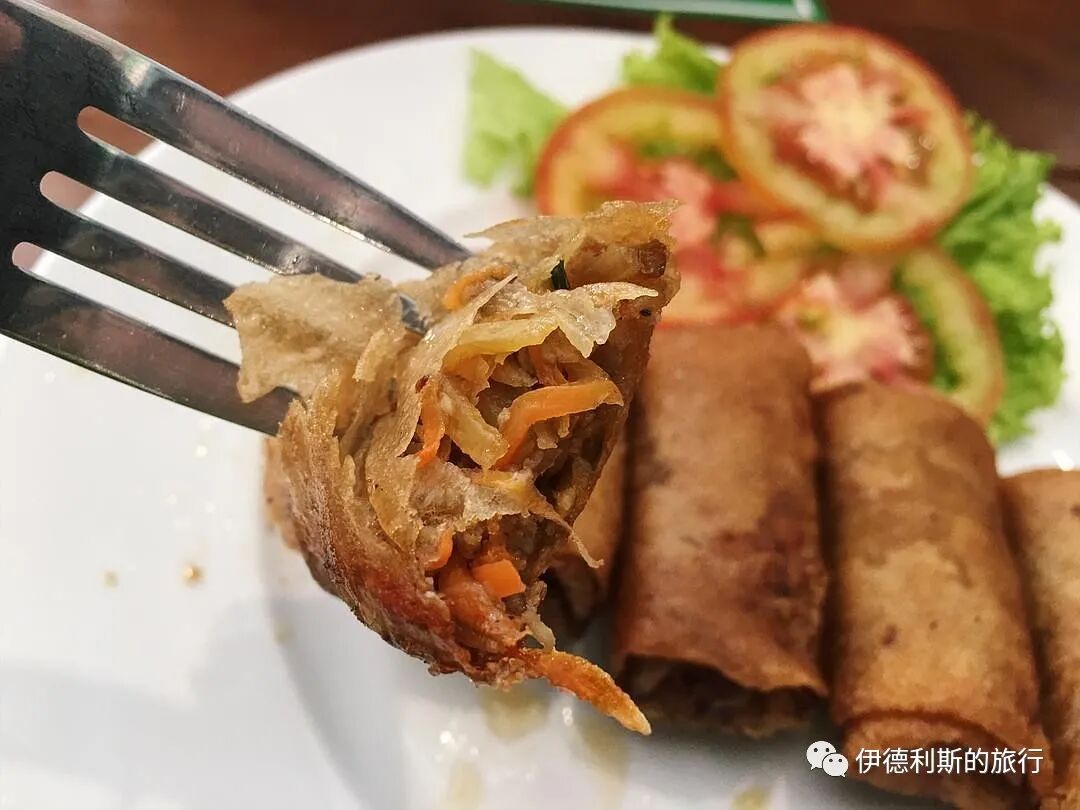
Fried spring rolls.
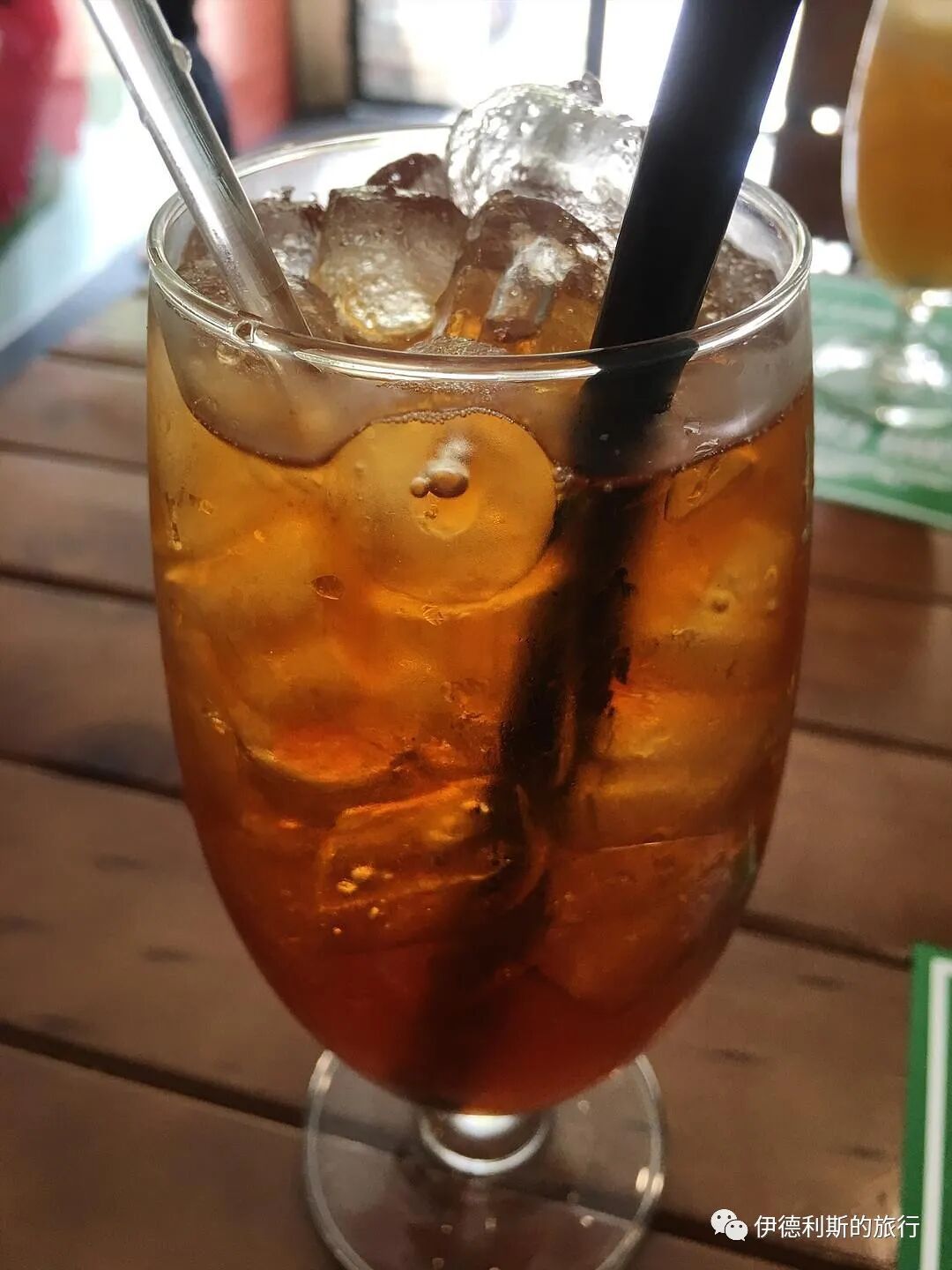
Drink iced tea.
Twenty Ethnic Restaurants in China: Halal and Minority Food Guide (Part 2 of 2)
Articles • ali2007fr posted the article • 0 comments • 163 views • 2026-05-17 06:55
Summary: This travel note introduces Twenty Ethnic Restaurants in China: Halal and Minority Food Guide (Part 2). Qingzhen Huiji is currently the only local traditional halal snack shop on Hong Kong Island. It is useful for readers interested in Ethnic Food, Halal Food, China Travel. This is part 2 of 2.
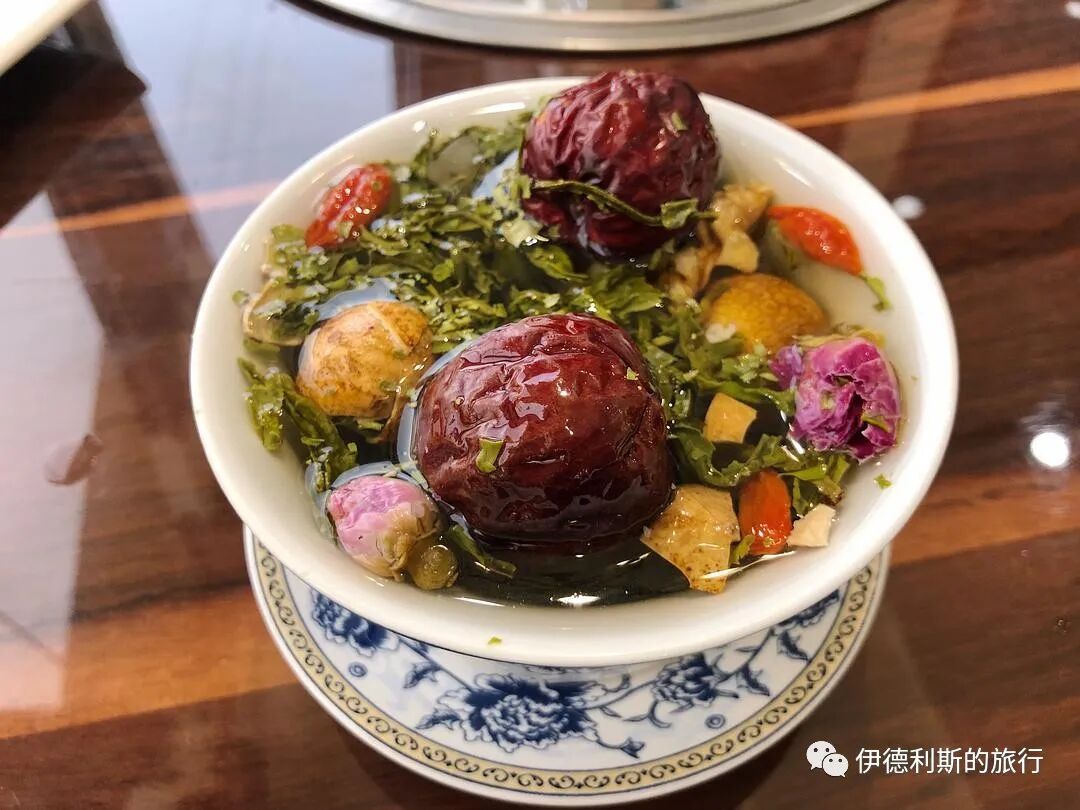
Rose sanpaotai; I wanted more after finishing it, so I finally bought a lot at the supermarket to take home.
17. The Tibetan Muslims of Lhasa, Tibet
Today, there are three Muslim ethnic groups in Lhasa: Tibetan-speaking Muslims whose ancestors were from Kashmir, Nepal, etc.; Tibetan-speaking Muslims whose ancestors were from Sichuan, Yunnan, etc.; and Chinese-speaking Muslims who came from Gansu and Qinghai to do business after the 1980s—these are what we often call Kashmiris, Tibetan Muslims, and Gansu-Qinghai Hui Muslims. In the Tibetan language, Muslims are called "Khache," which was translated as "Kaqi" in Qing Dynasty documents, derived from the Tibetan name for Kashmir, "Khache Yul." After the 14th century, Kashmir, west of the Tibetan region, completed its Islamization. Kashmiri Muslims traveled to the Tibetan region for business and settled in Lhasa in the 17th century. After the 18th century, the Qing army began to be stationed in Tibet. The Hui Muslim officers and soldiers in the Qing army stationed in Tibet became the second Muslim ethnic group to arrive in Lhasa.
These Muslims who settled in Lhasa intermarried with local Tibetans for hundreds of years and gradually became "Fan-Kaqi" who speak Tibetan, wear Tibetan clothes, drink butter tea, and live in Tibetan-style houses. "Fan" in Tibetan represents "Tibetan."
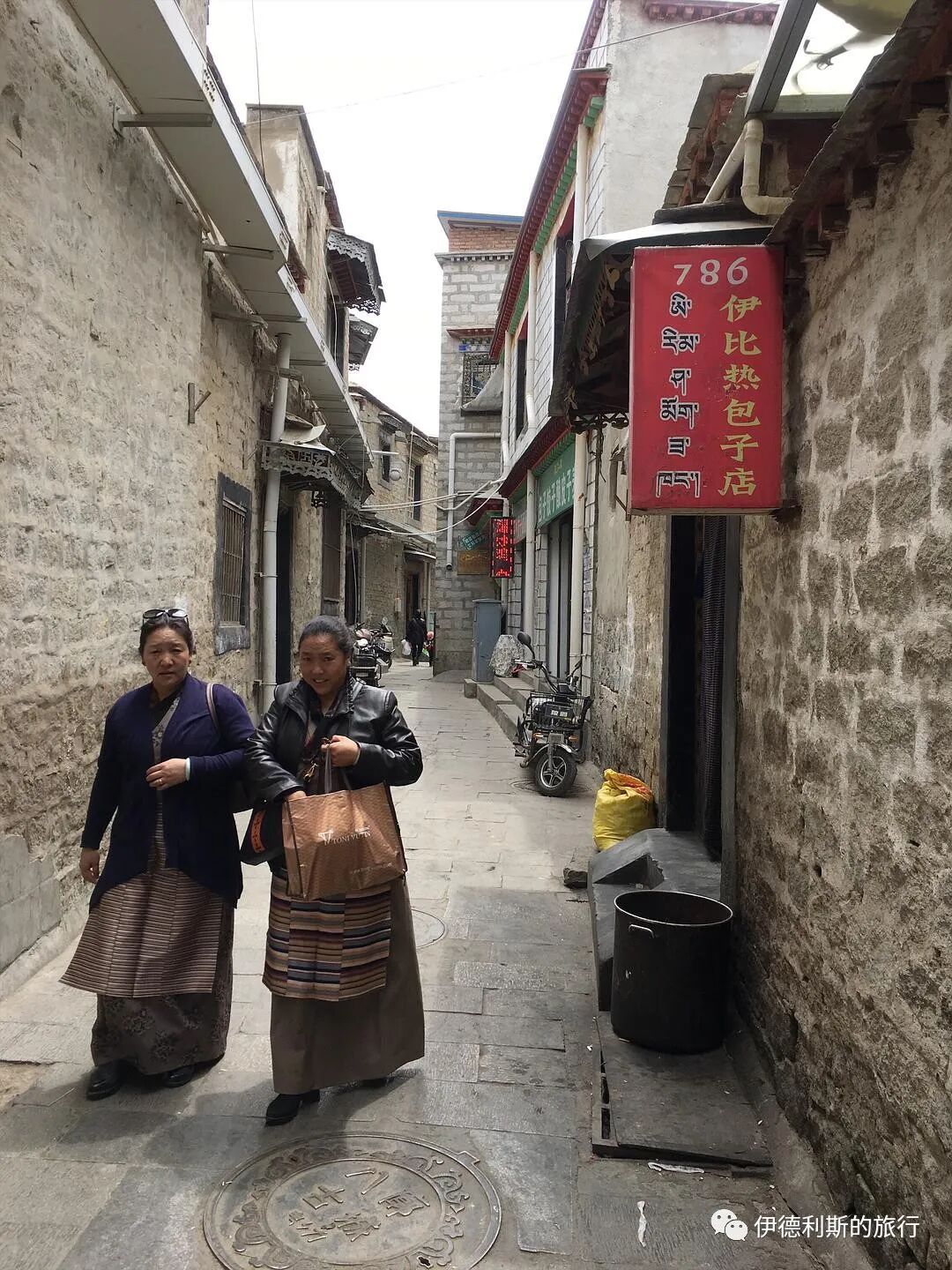
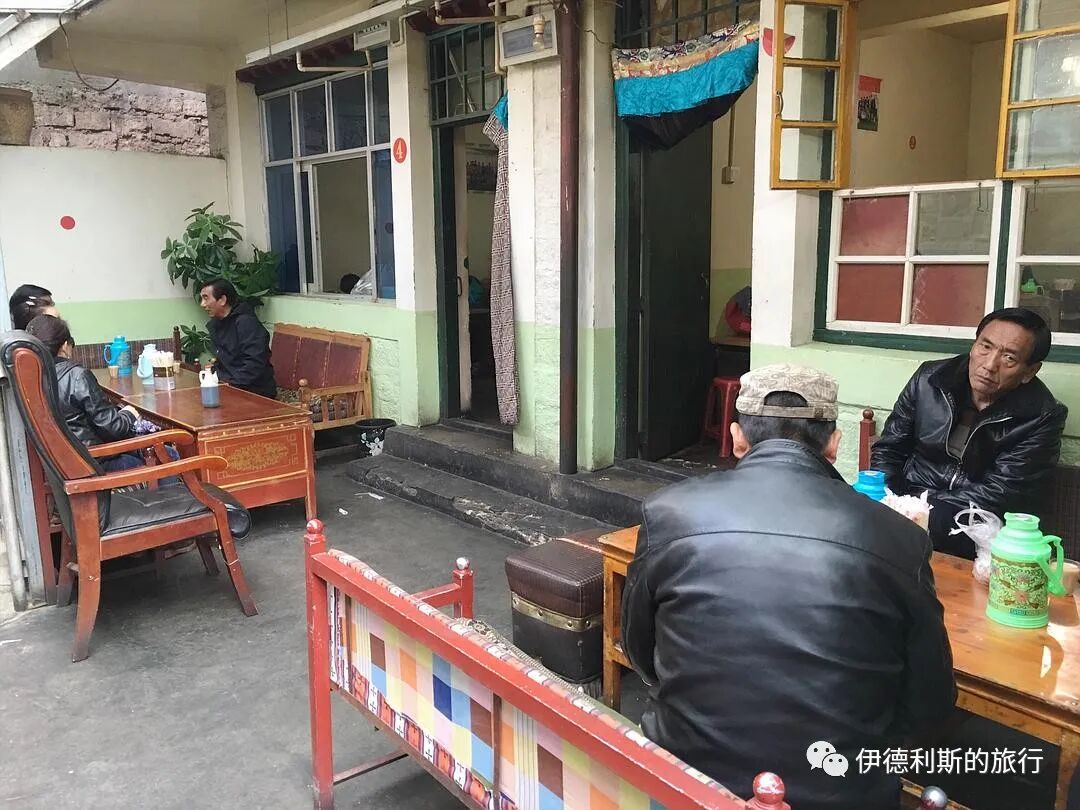
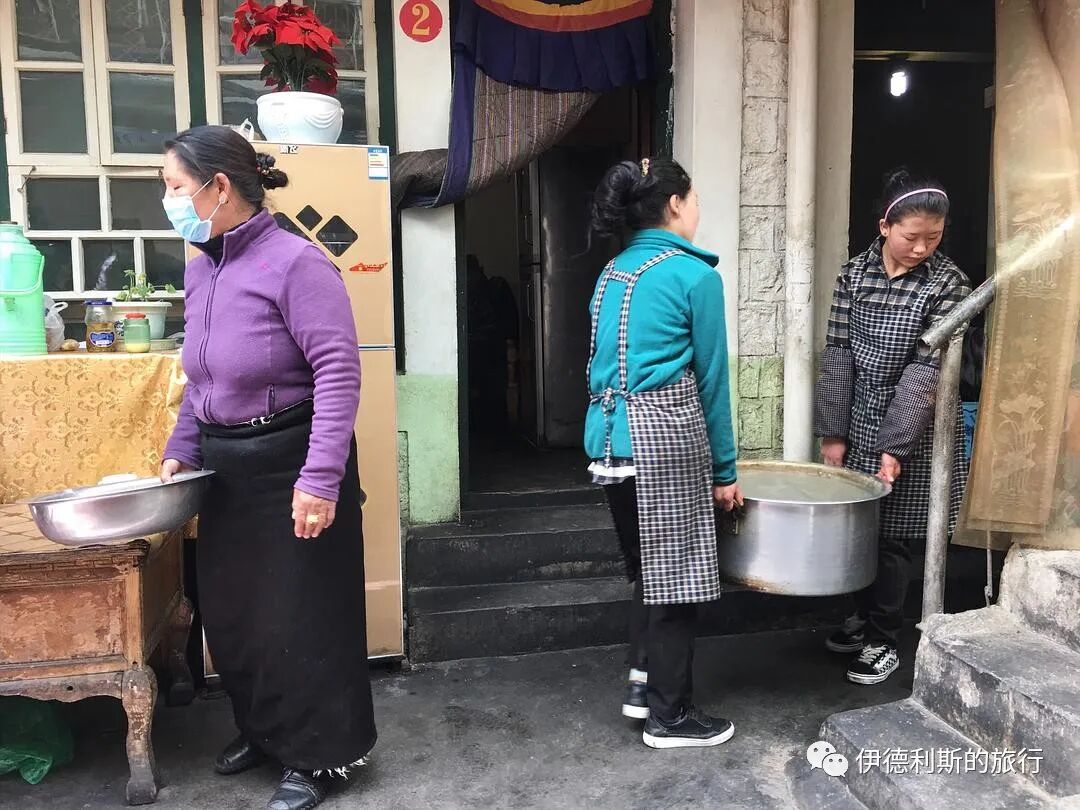
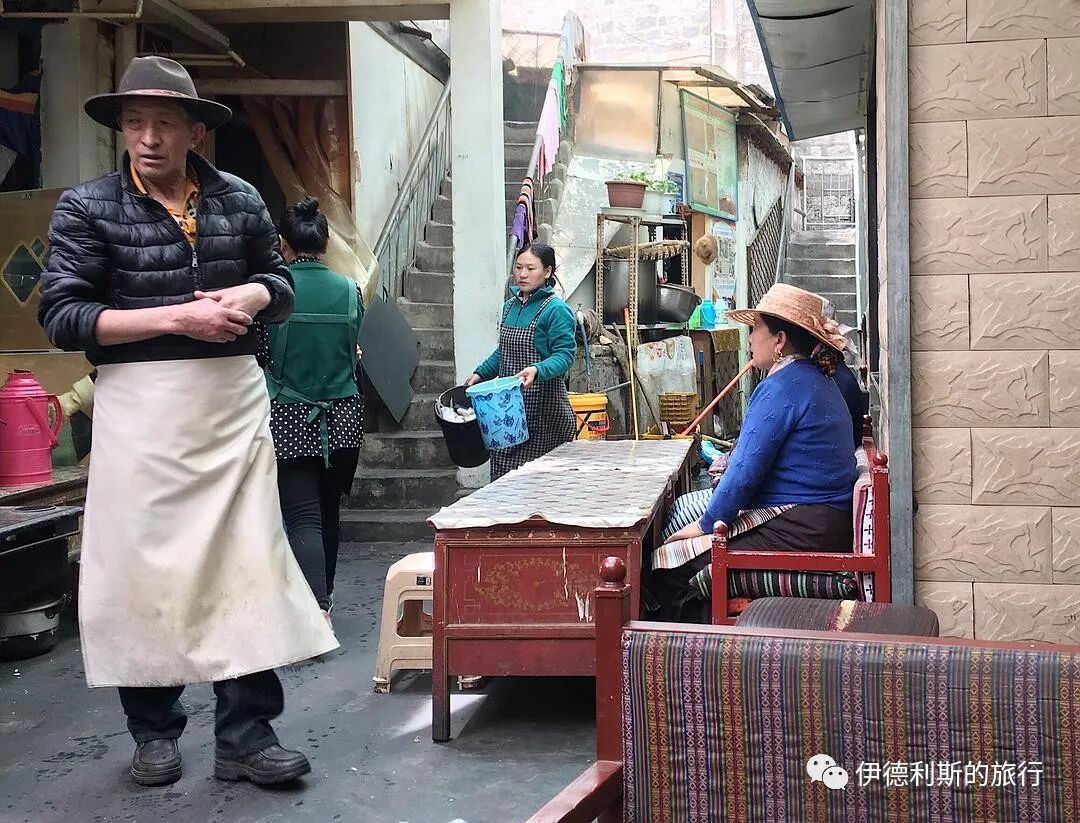
Hebalin, where the Lhasa Great Mosque is located, is the main residential area for Tibetan Muslims, and there are some restaurants run by Tibetan Muslims here. Yibire Baozi Shop is a very famous Tibetan Muslim restaurant located in the small alleys of Hebalin.
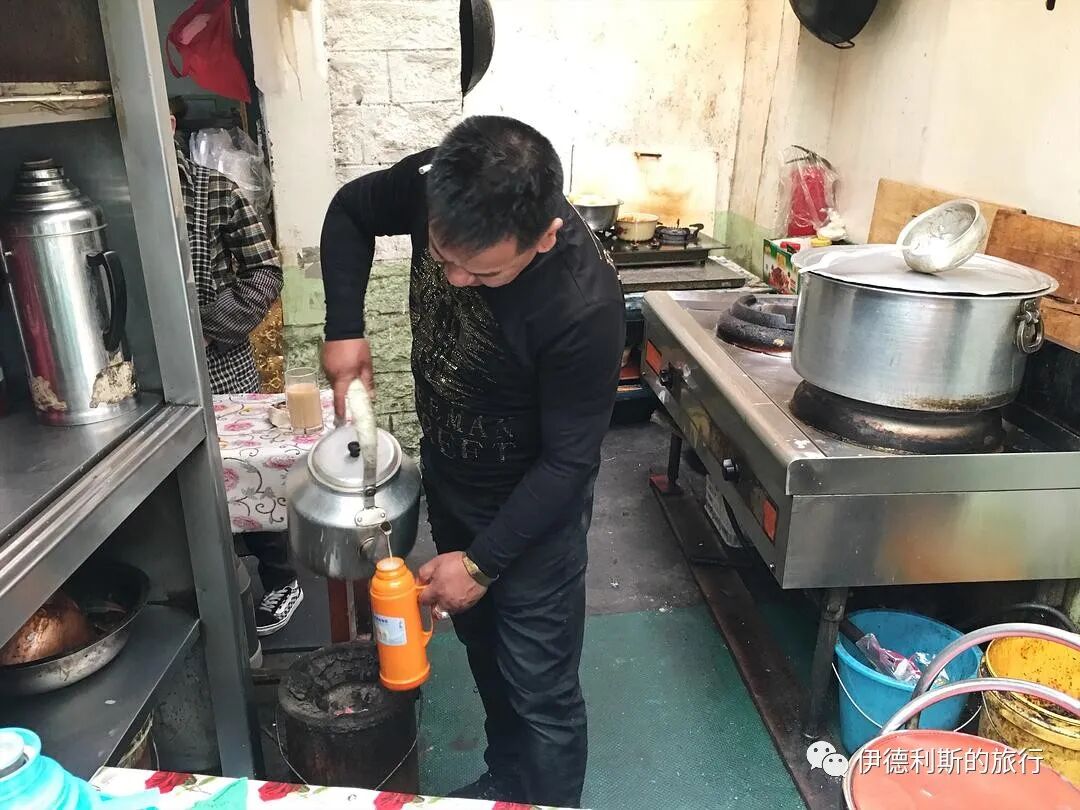
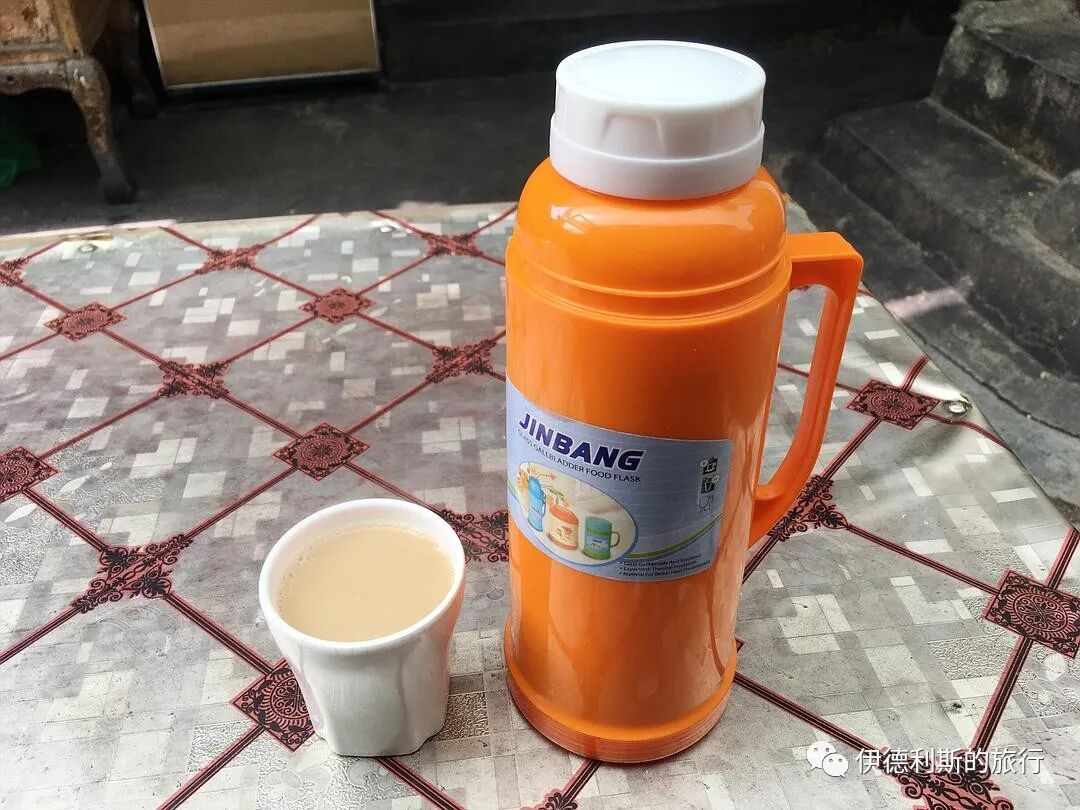
Tibetan-style sweet tea actually originated from black tea with milk and sugar introduced to India by the British, and it became popular in Lhasa in the early 20th century.
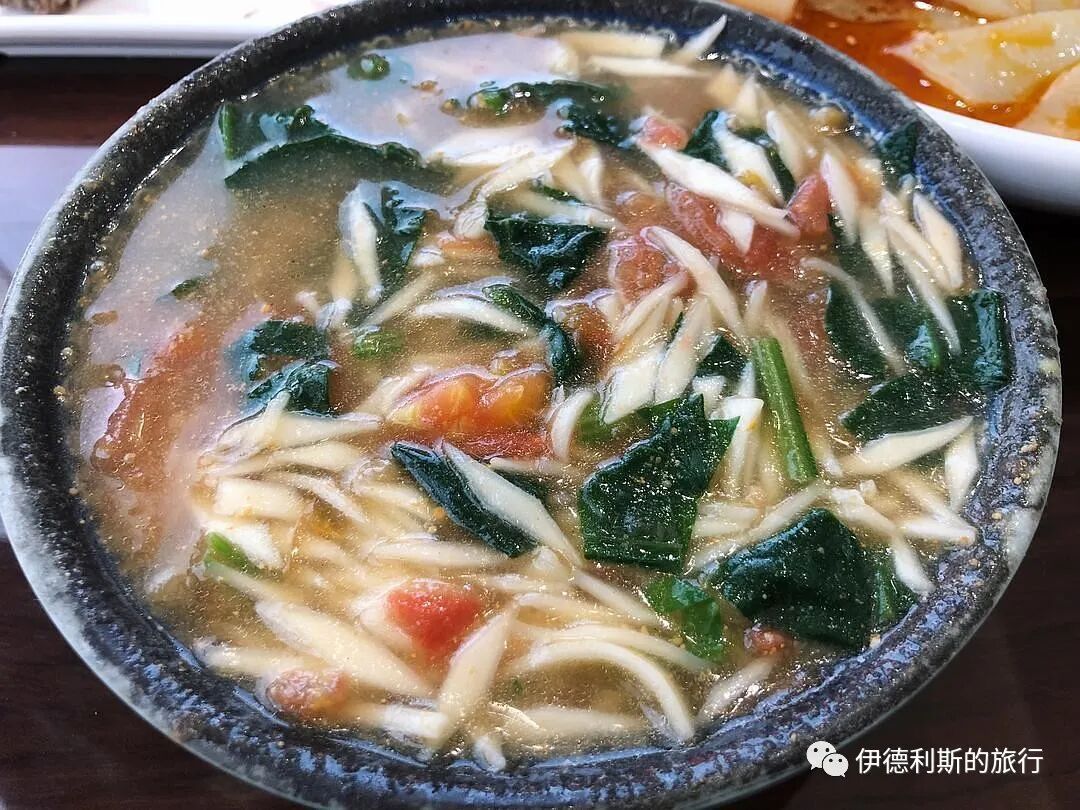
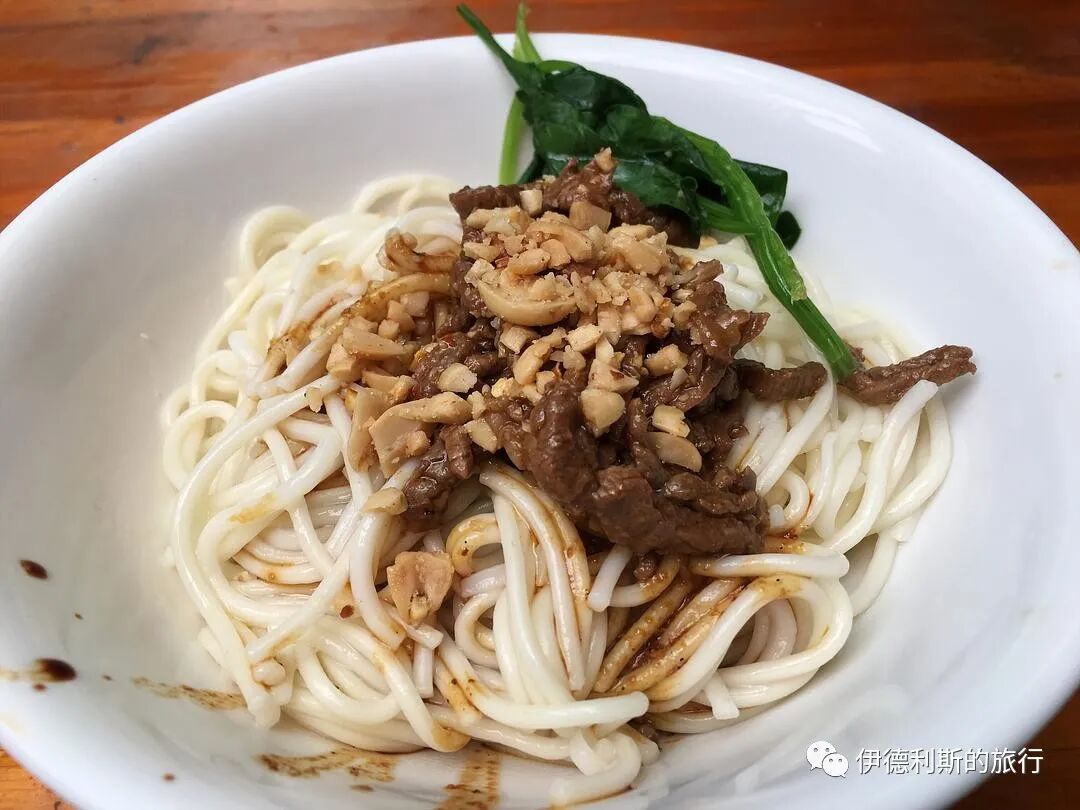
Eating zhajiangmian (noodles with soybean paste)
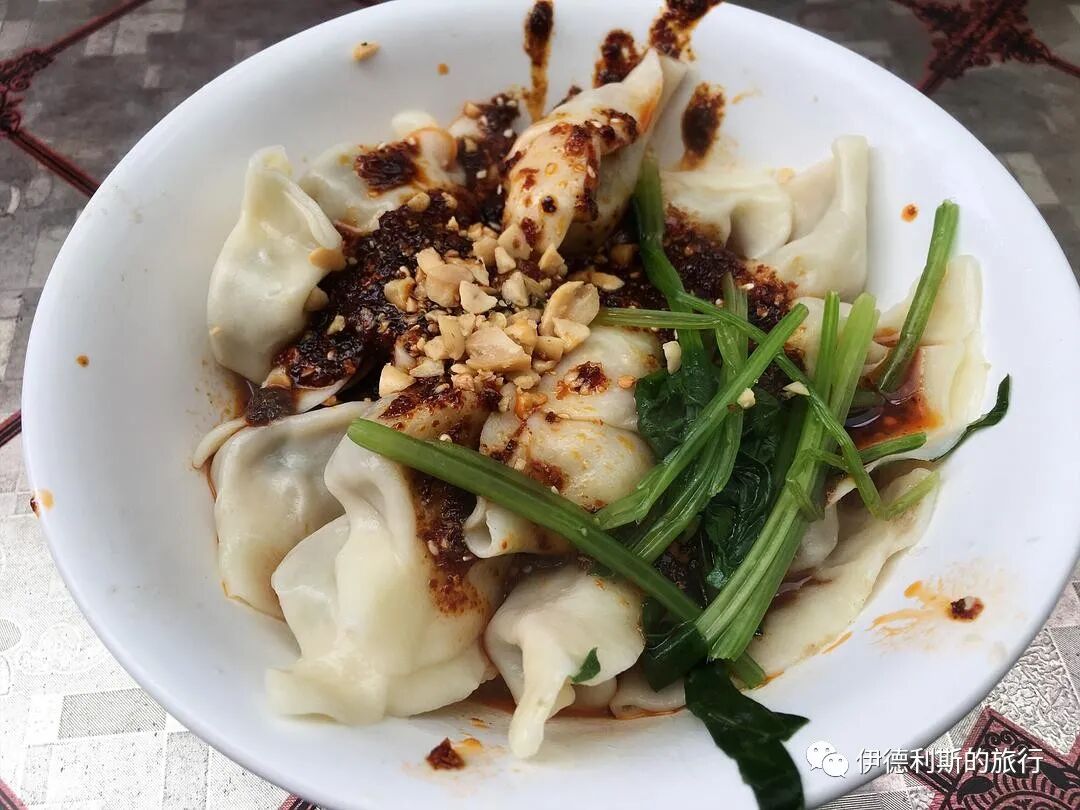
Red oil dumplings
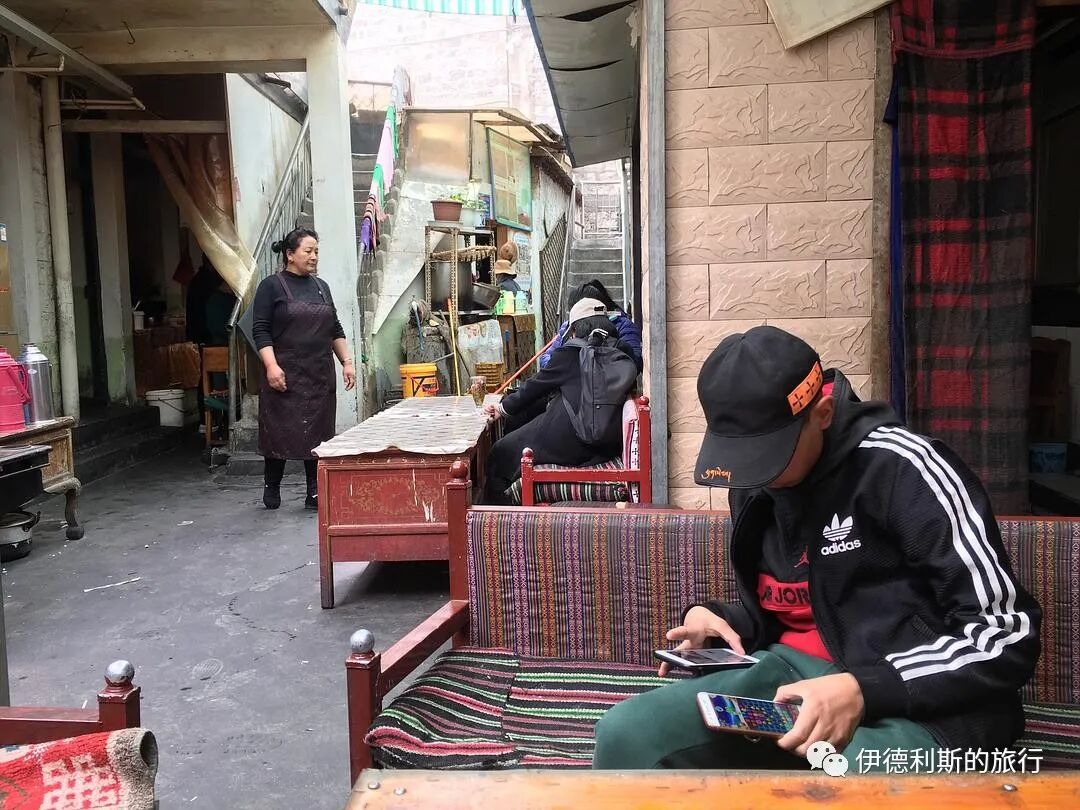
A Tibetan Muslim teenager wearing Adidas
Basically all local Tibetans
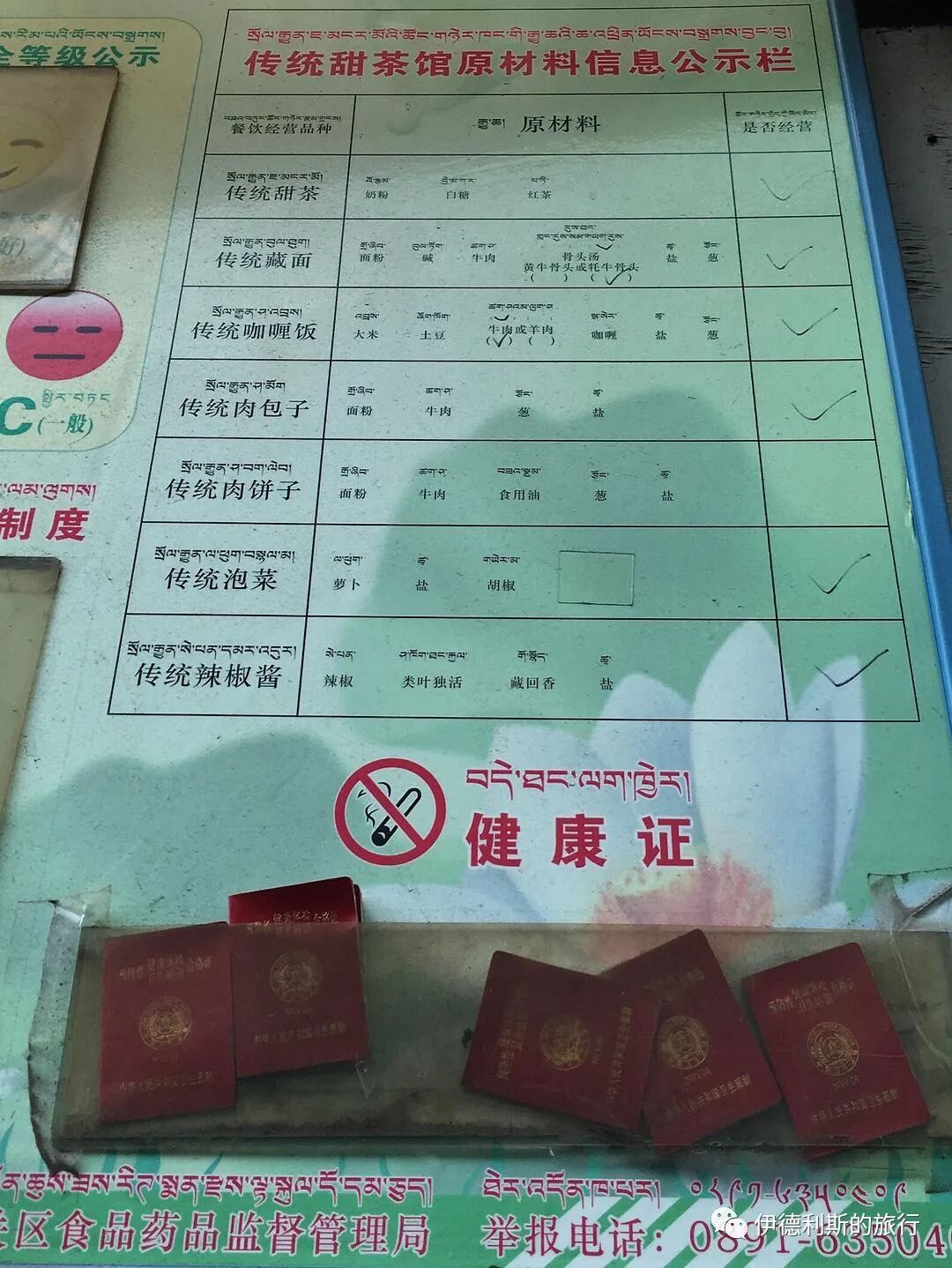
Menu
18. The Paxi Dai of Xishuangbanna, Yunnan
The Paxi Dai live in two villages, "Manluan Hui" and "Mansai Hui," in Menghai County, Xishuangbanna Prefecture. "Man" means "village" in the Dai language. The Paxi Dai call themselves "Paxi," believe in Islam, observe the faith, but speak the Dai language, use the Dai script, and make halal Dai-style food. It can be said that they have maintained their Hui Muslim identity while integrating into Dai culture.
During the Jiaqing and Daoguang periods of the Qing Dynasty, Menghai became an important transit point for Yunnan horse caravans traveling to Myanmar and Thailand for business. A Hui Muslim caravan leader named Ma Wulong from Dali came to Menghai and gave the Menghai Zhaomeng (local chieftain) leader Zha Yakun 3 loads of salt, which led the Zhaomeng to agree to set aside a small mountain valley for Ma Wulong to live in. Ma Wulong later married a Dai woman, had a son named Yan Han, and then returned to his hometown. After Yan Han grew up, he also married a Dai woman and had four sons and two daughters, gradually forming the current Paxi Dai village, "Manluan Hui."
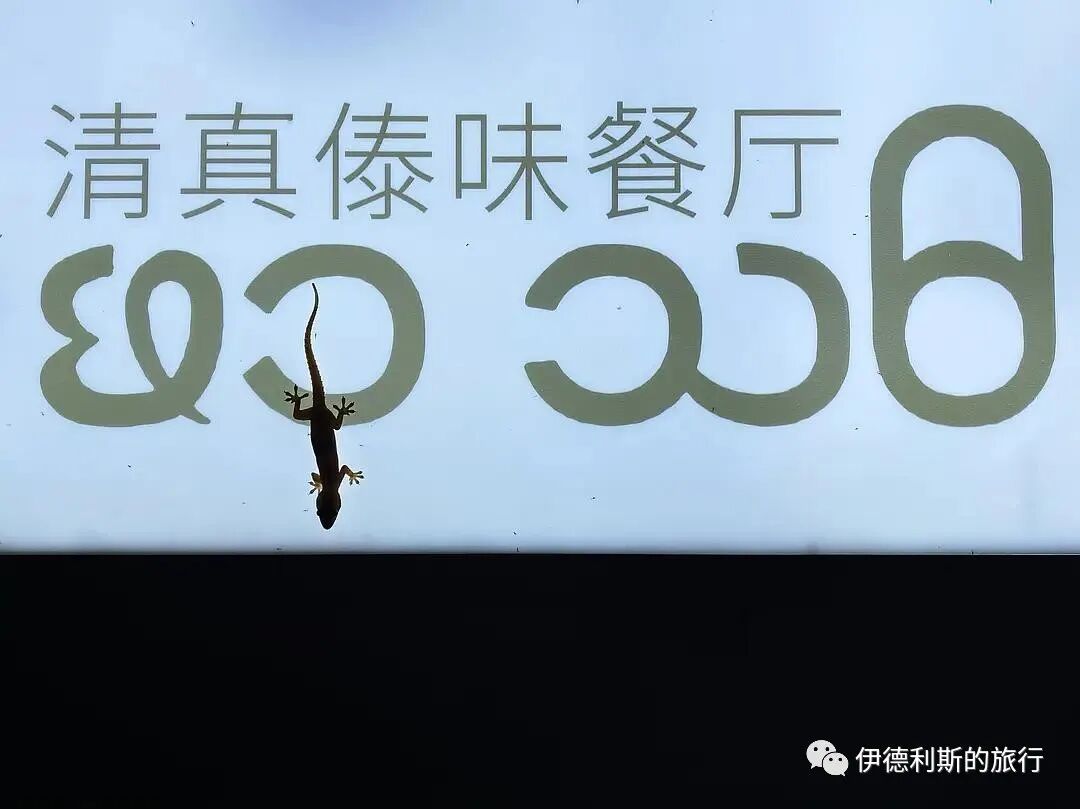
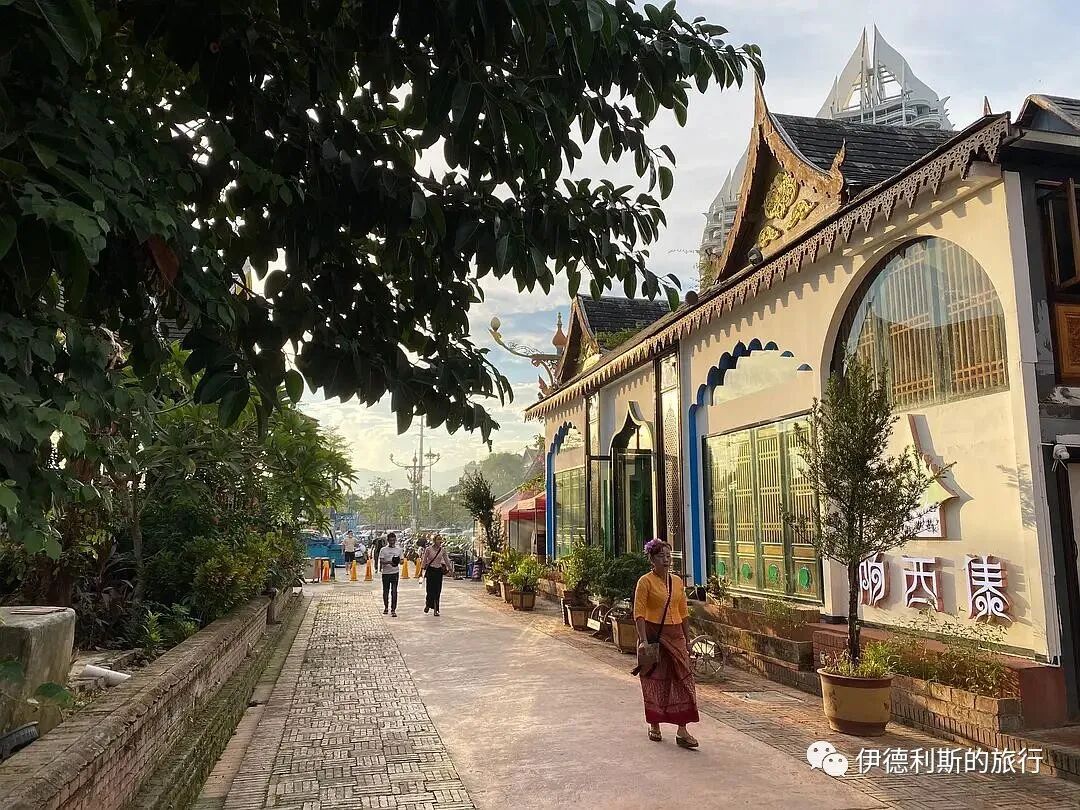
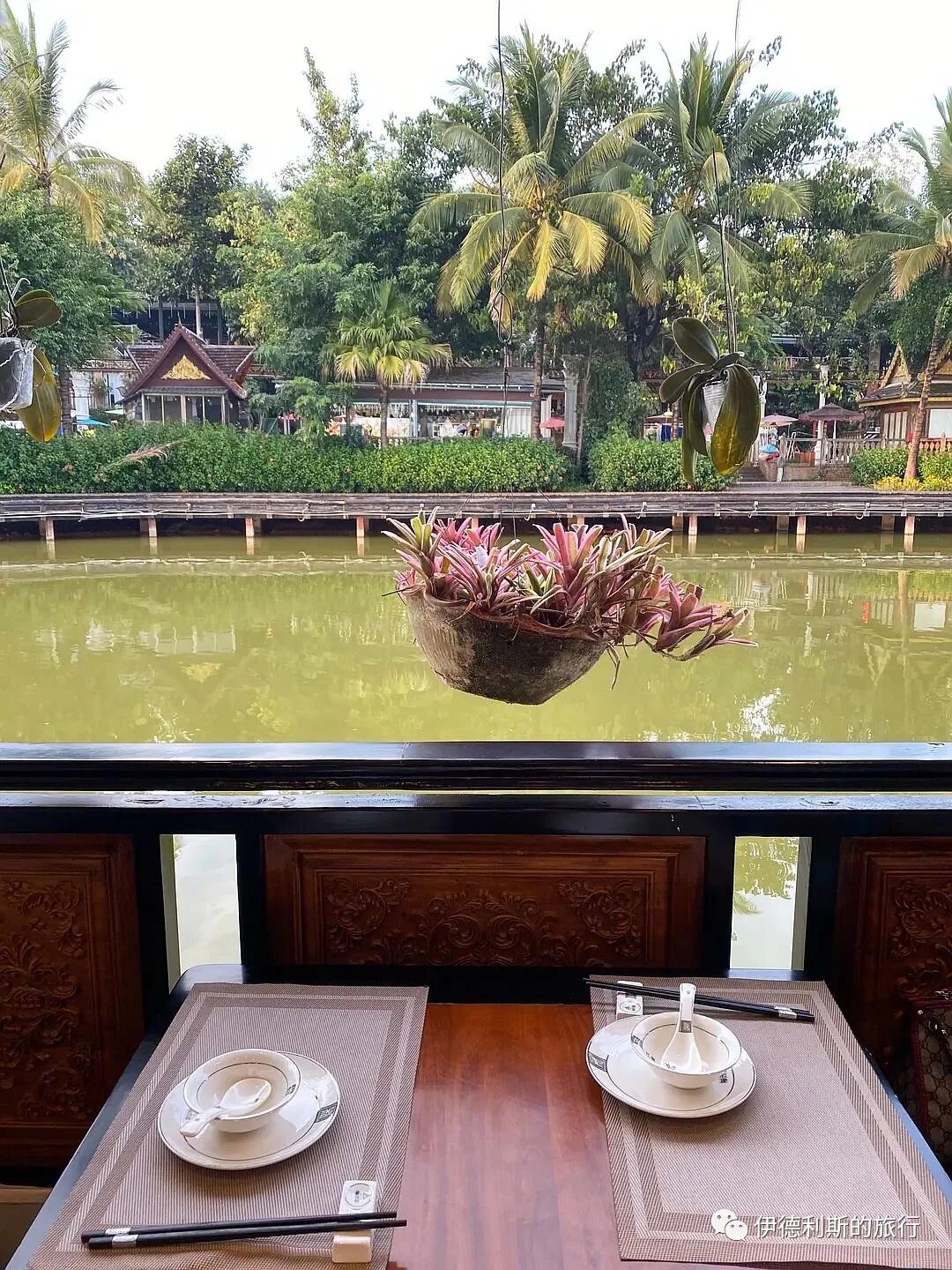
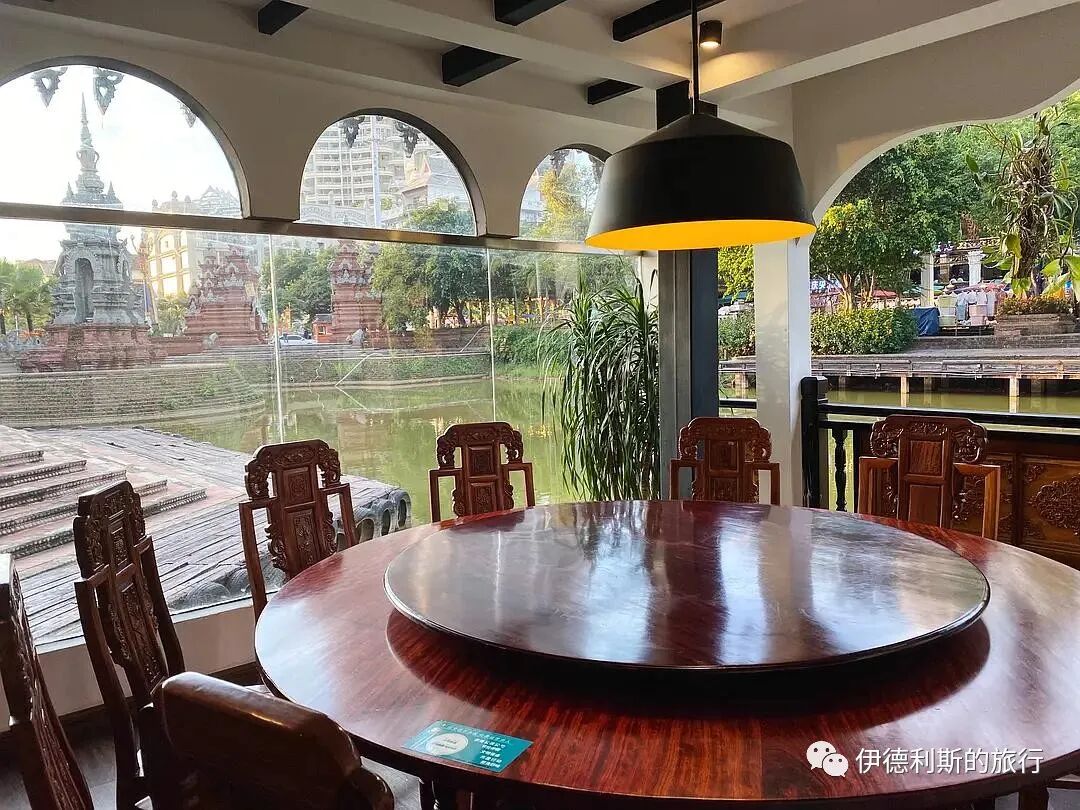
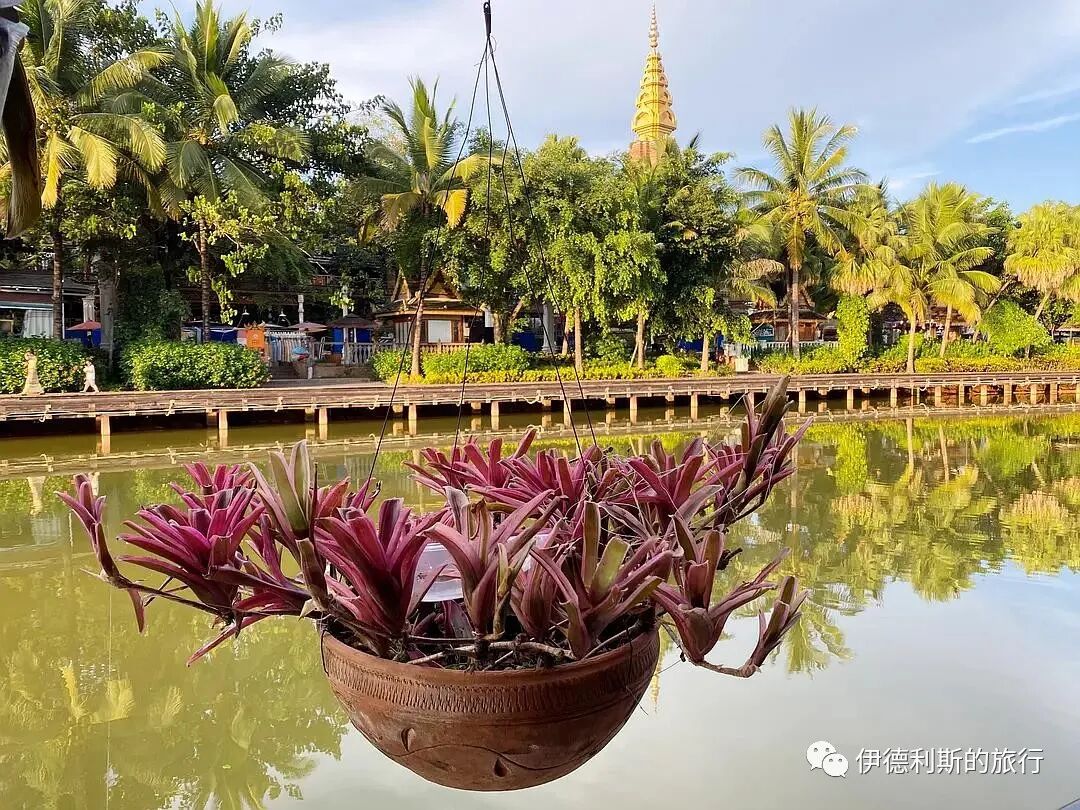
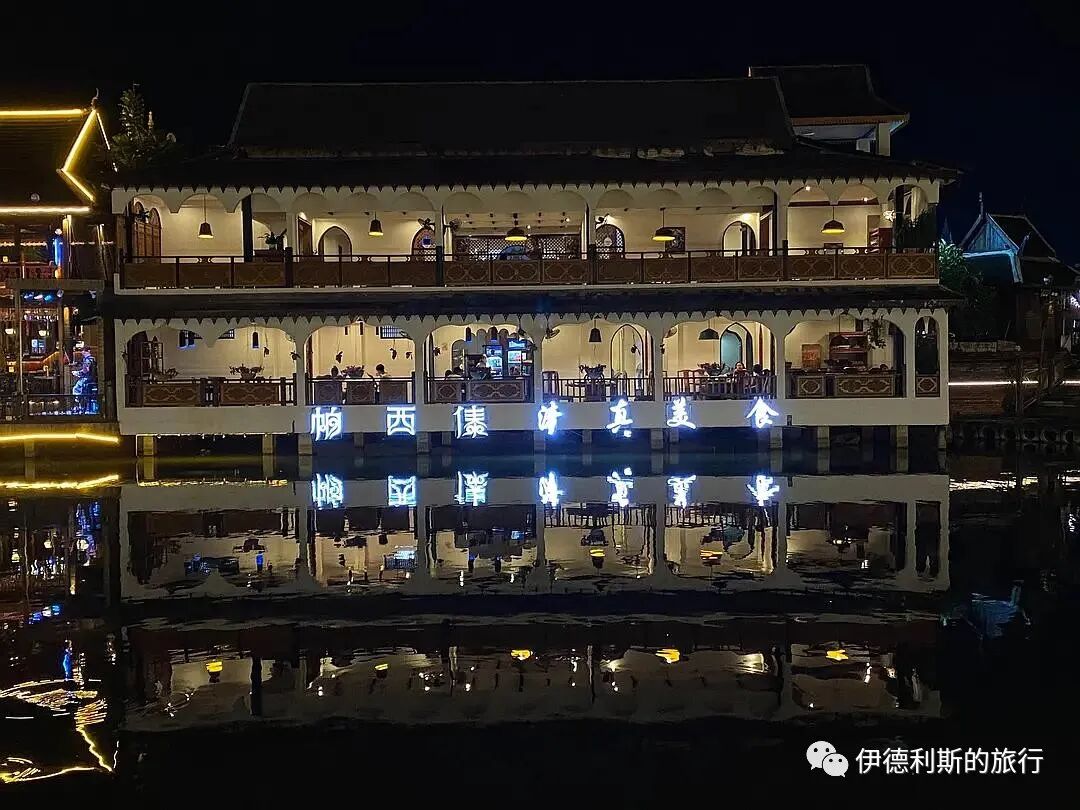
There is a restaurant called "Paxi Dai" at the Ganbai Street Night Market in Jinghong, and the landlady is a Paxi Dai from Manluan Hui. The restaurant is by the lake, opposite the famous Starlight Night Market, so you can enjoy the night view while eating.
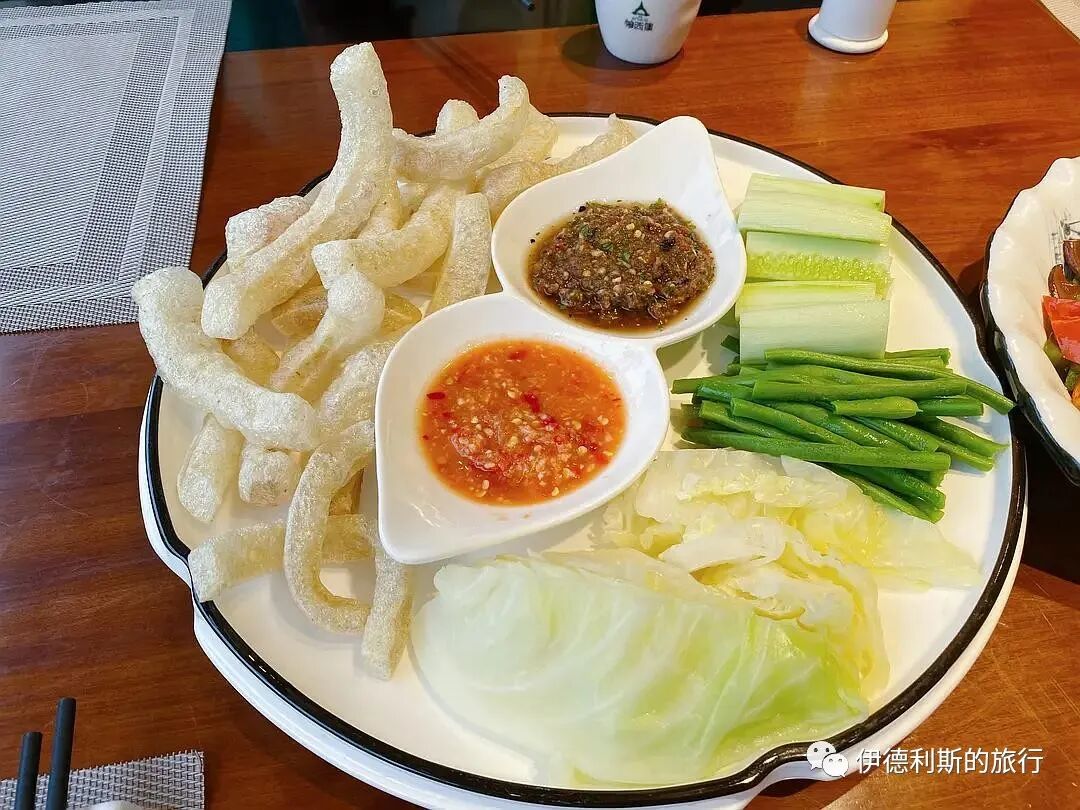
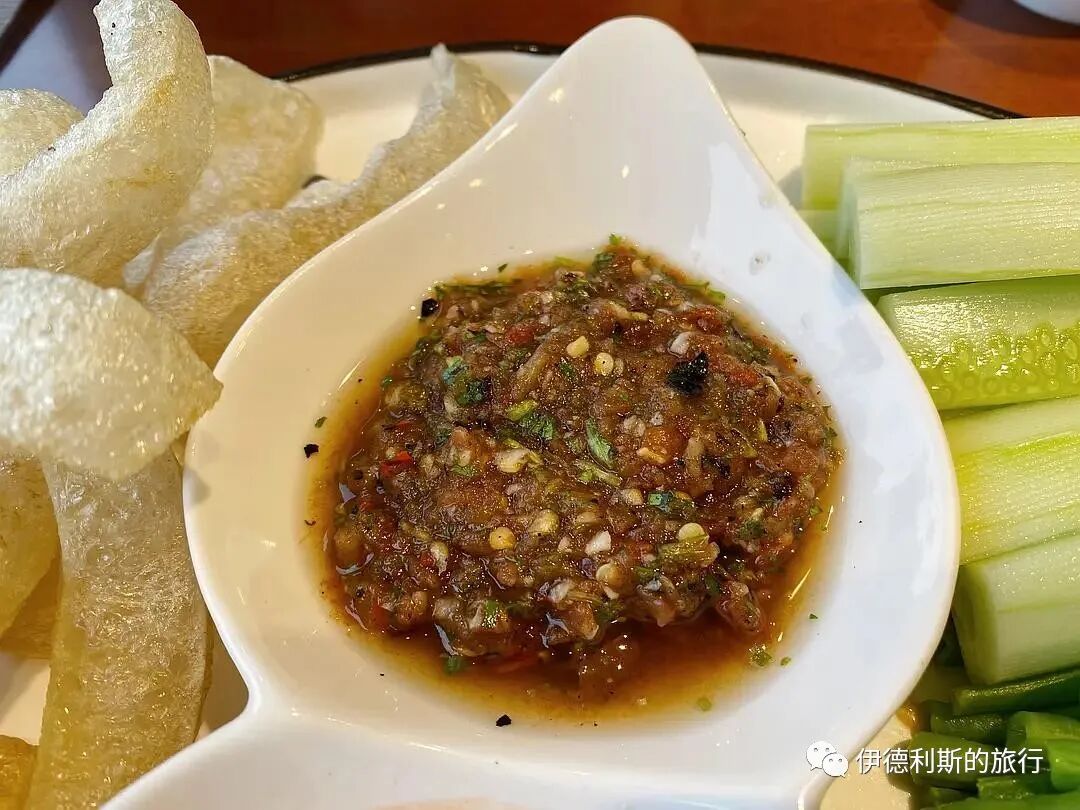
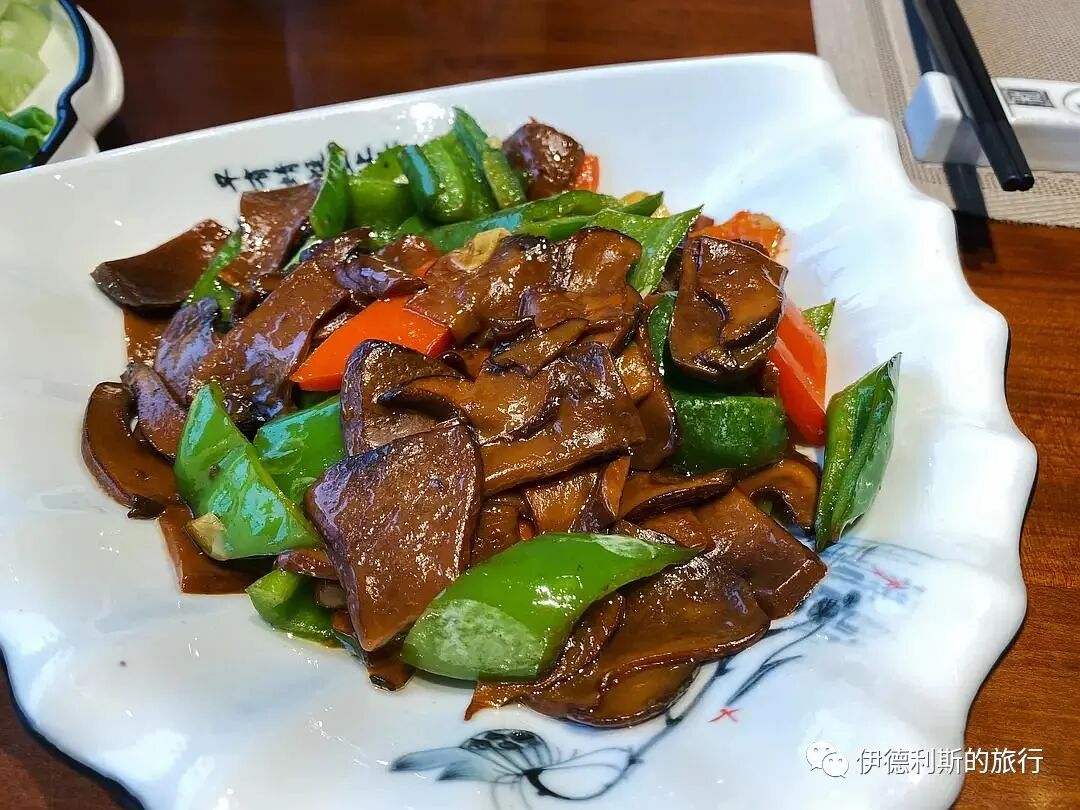
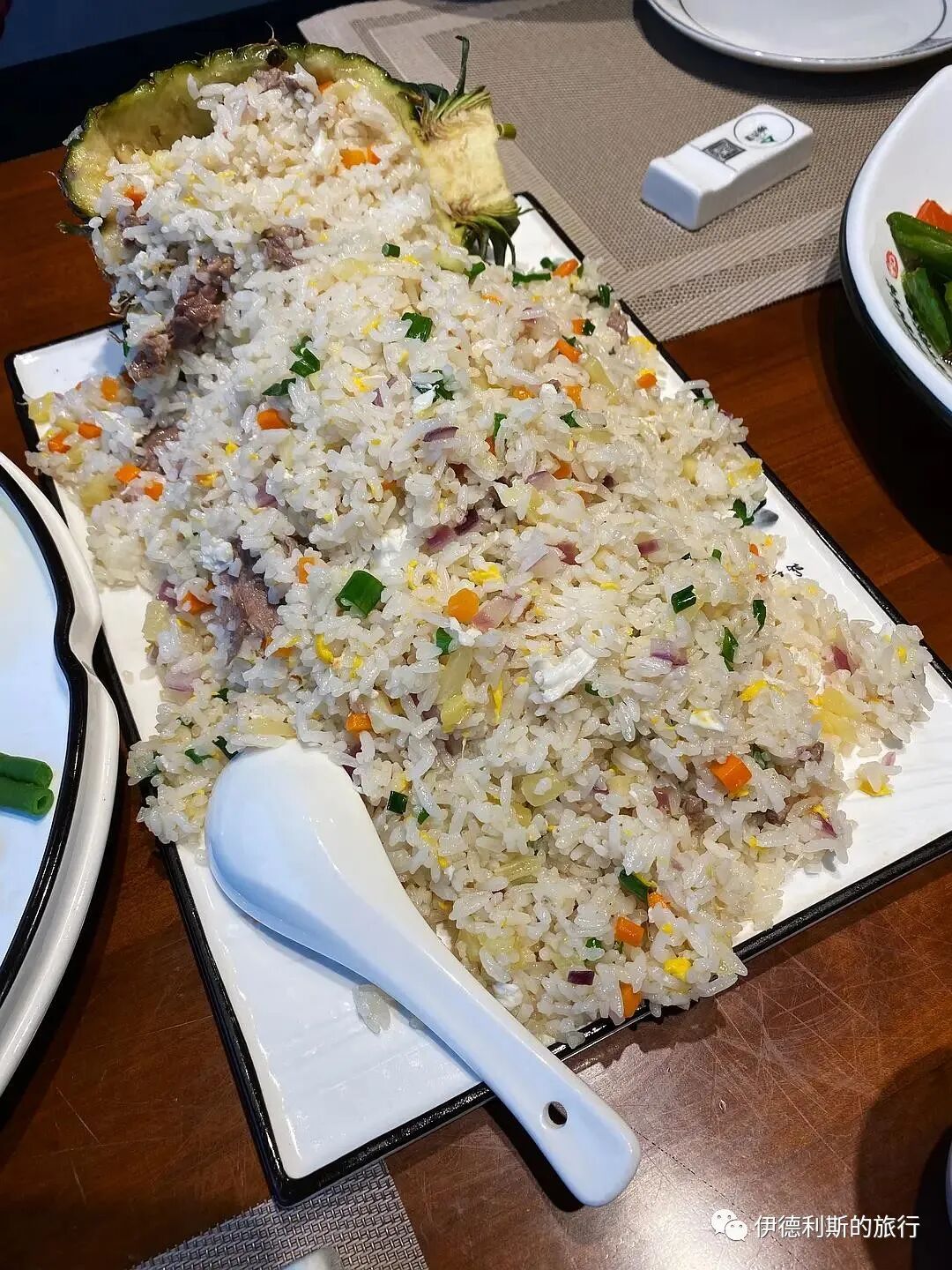
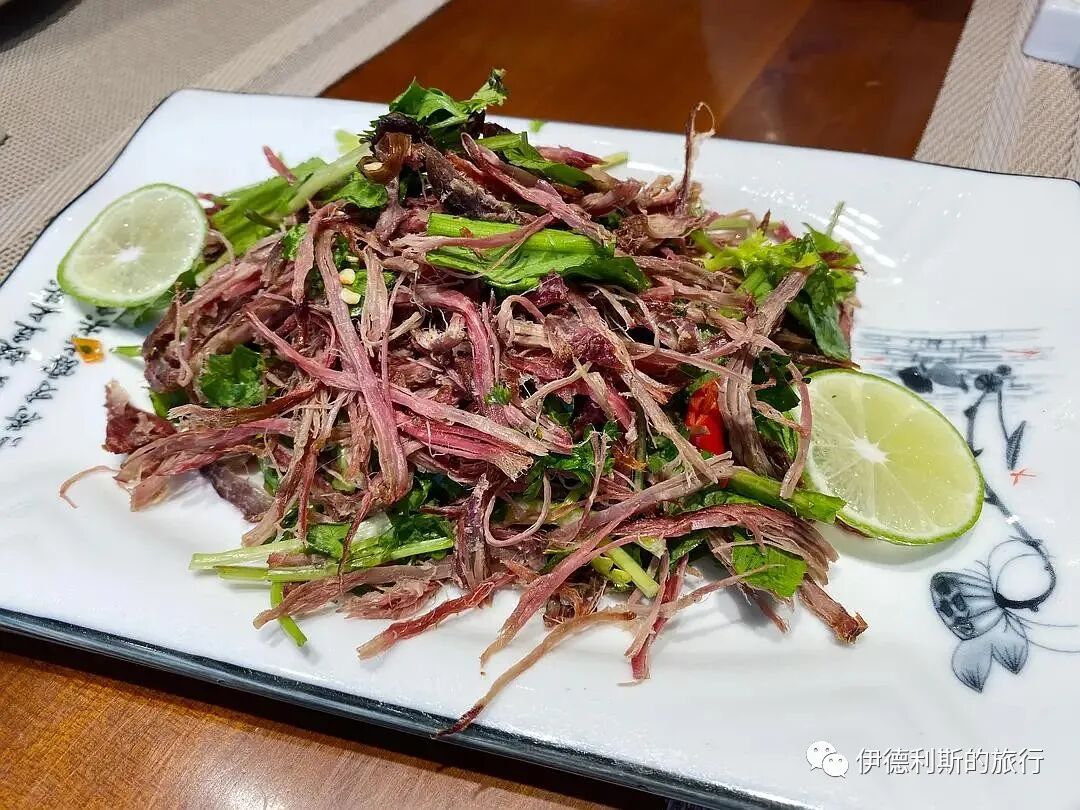
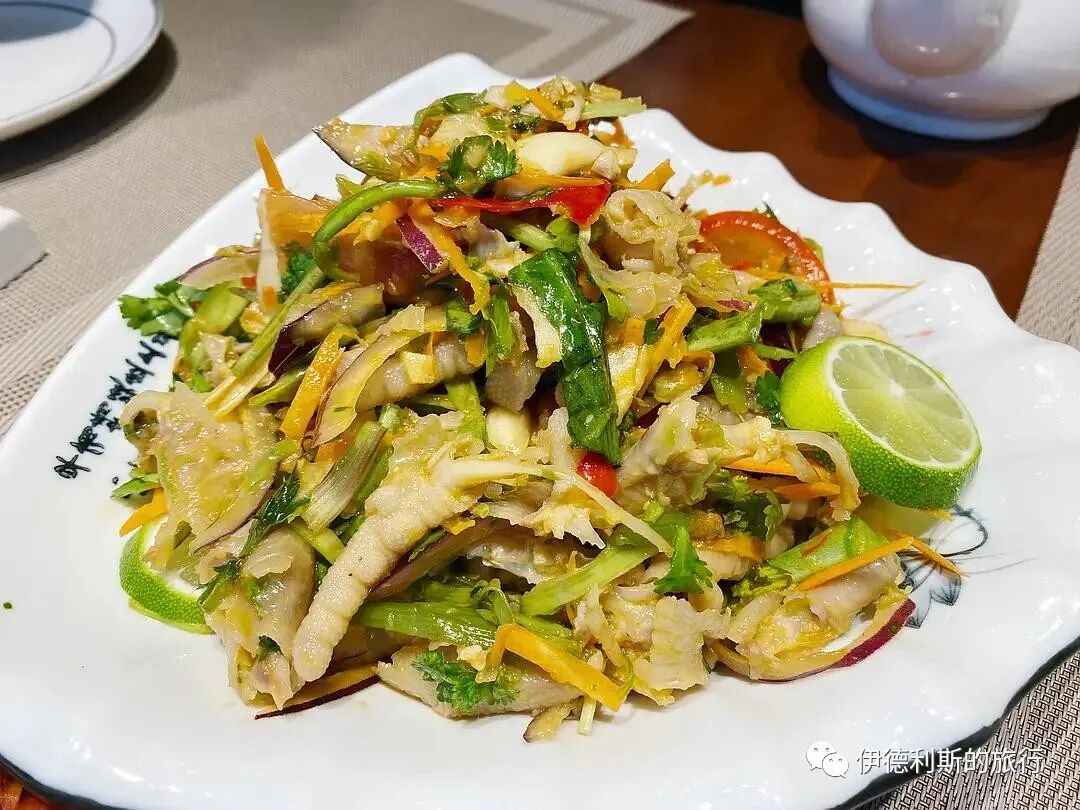
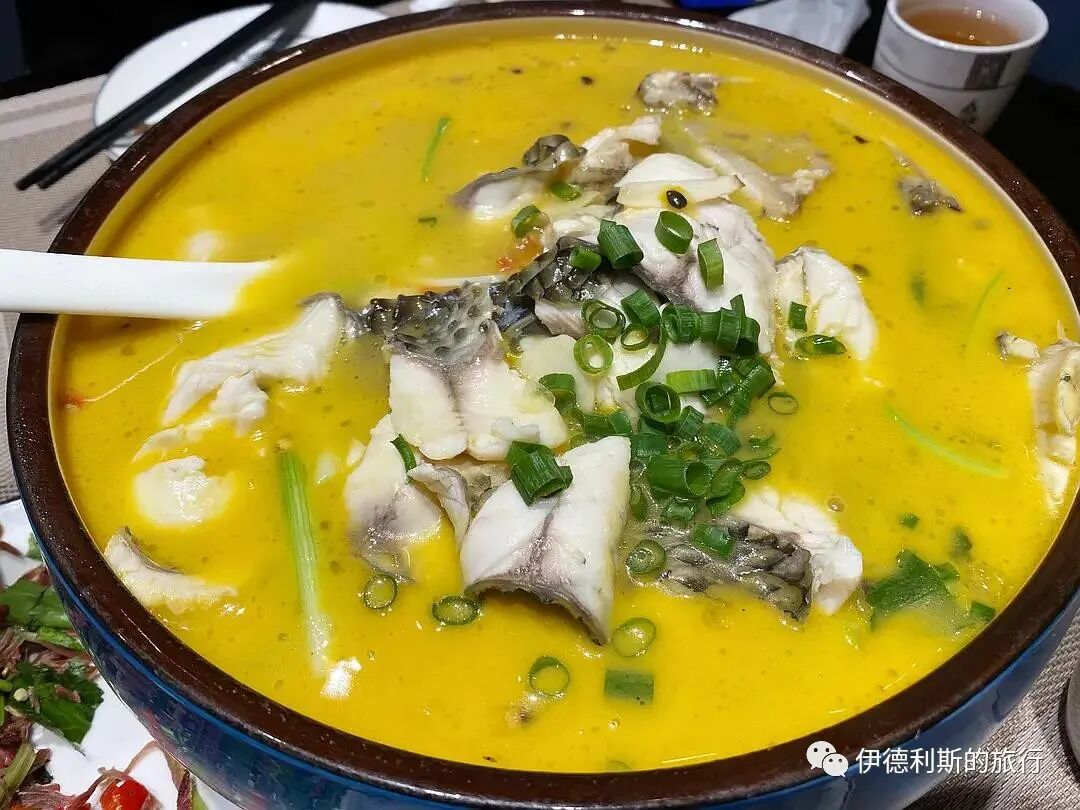
We ordered a nanmi (Dai-style dipping sauce) platter, stir-fried porcini mushrooms, Dai-style pounded chicken feet, passion fruit stewed tilapia, lemon hand-shredded beef jerky, and beef pineapple rice.
Nanmi is a Dai-style dipping sauce with a sour and spicy flavor, used for dipping fried beef skin, cucumber, and cowpeas. This was my first time eating fried beef skin; the texture is a bit like shrimp crackers, but harder.
The pounded chicken feet were very sour and spicy, and my mouth was burning from eating them. The Dai-style passion fruit stewed fish is very flavorful, comparable to the starfruit sour soup fish of the Sanya Huihui people, but the sourness is stronger; I could only drink a little bit of this soup.
Our whole family liked the beef pineapple rice the most. This kind of fried rice is rare locally, and we thought it was better than any other fried rice we had eaten before.
19. The Bai Hui of Dali, Yunnan
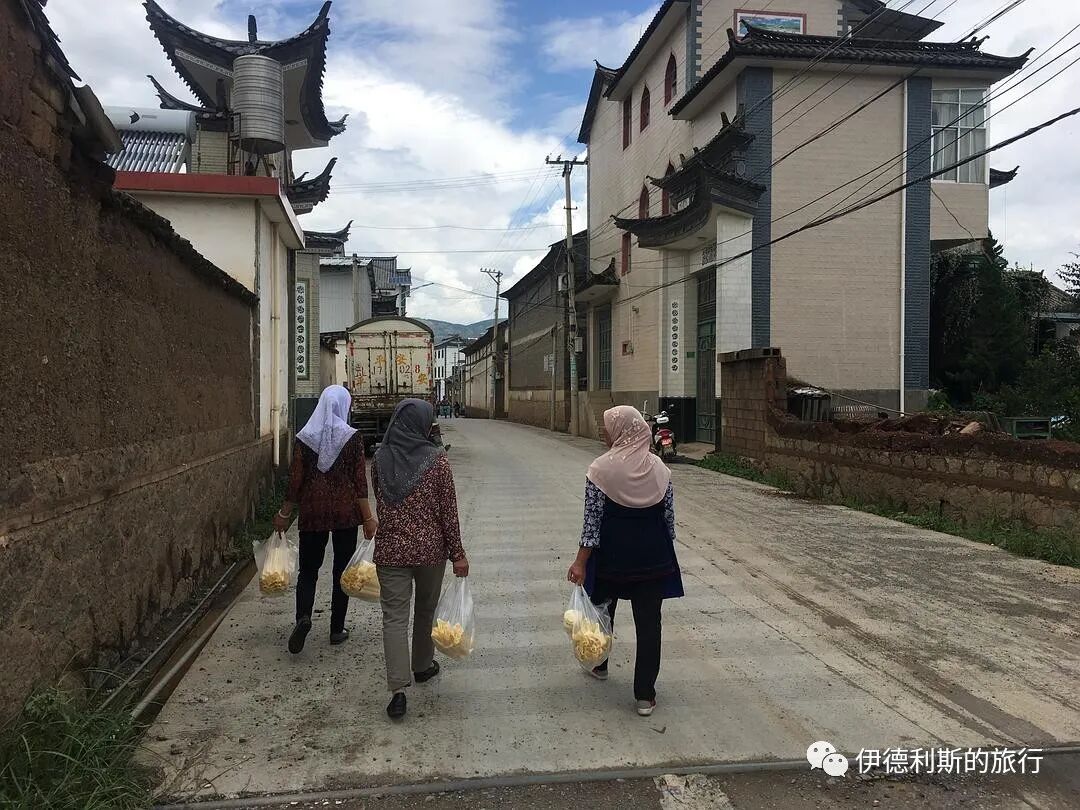
In the Hui Muslim villages of Jiming, Shipang, and Sanmei in Eryuan County, Dali, because they are located in a Bai ethnic area, the Hui Muslims here speak the Bai language, wear traditional Bai clothing, and their architecture is also strongly influenced by the Bai people, so they are also called "Bai Hui" by outsiders.
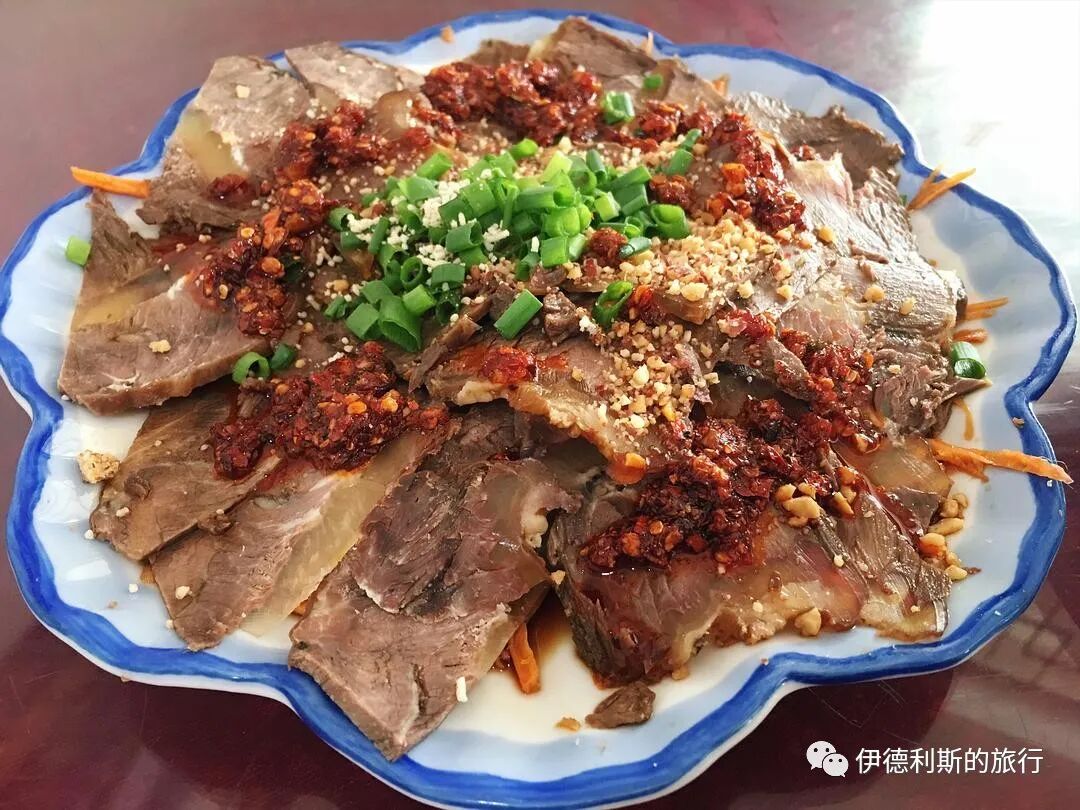
A Bai Hui restaurant was discovered in Yousuo Town, Eryuan, opened by a Hui Muslim surnamed Ma from Shipang Village. I ate salty rushan (milk fan cheese) and liangpian (cold sliced meat) at this restaurant. The liangpian was very spicy but extremely fragrant; it was the first time I had eaten liangpian that went so well with rice.
Aunties carrying rushan in the Bai Hui village
20. The Salar people of Xunhua, Qinghai
The Salar people, who speak the Salar language of the Turkic language family, live in Xunhua County, Qinghai, and surrounding areas. In the legends of the Salar people, Ahman and Qarman originally lived in the Samarkand area of Central Asia. Because they were oppressed by the rulers, they led their people across the Tianshan Mountains all the way east and finally settled in Xunhua.
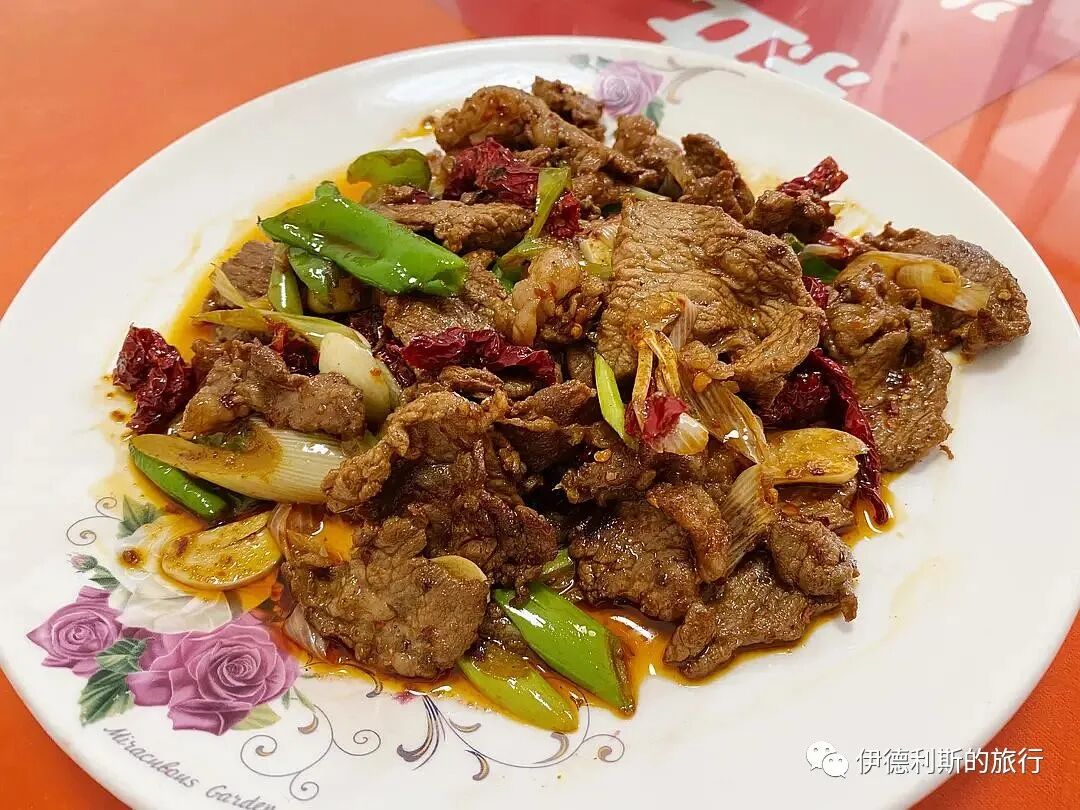
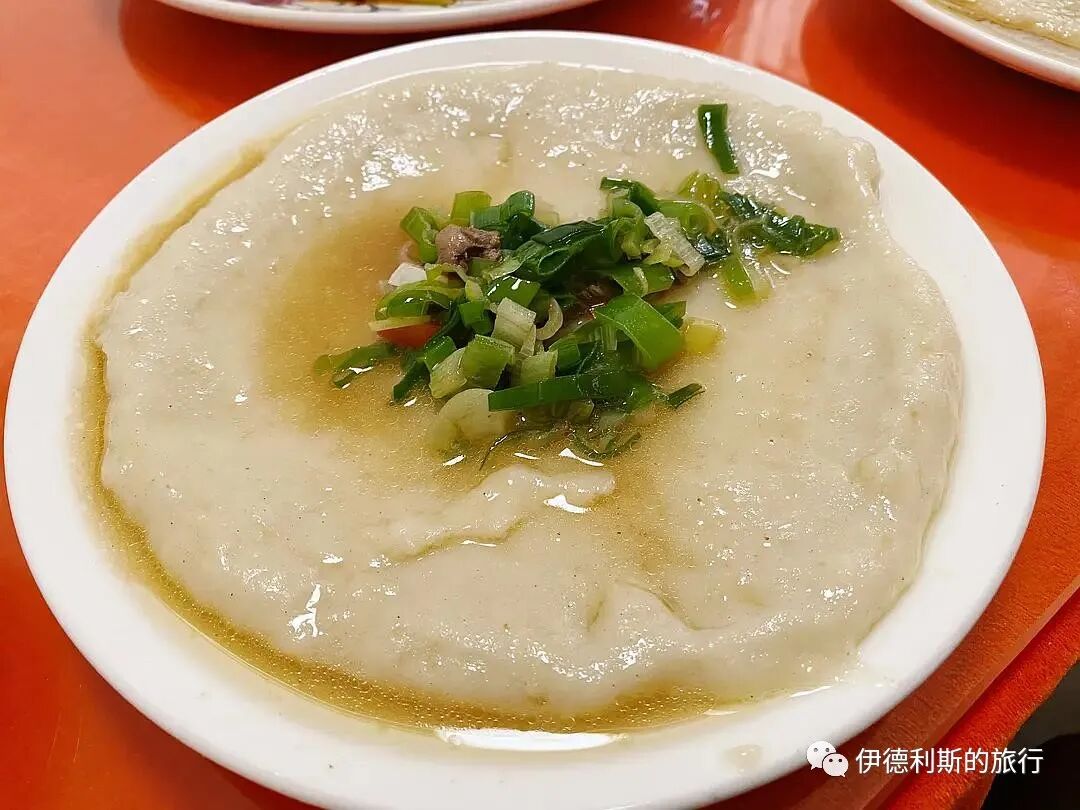
Eating stir-fried beef and jiaotuan (a thick paste made of flour) at a Salar family farmhouse in Xunhua County. Jiaotuan is made by stir-frying flour, adding water to boil, and then adding refined vegetable oil; it tastes very fragrant. Salar households in Xunhua are divided into tea restaurants and farmhouses. The cuisine in tea restaurants is more mixed. If you want to eat authentic Salar food, it is recommended to go to a farmhouse. view all
Summary: This travel note introduces Twenty Ethnic Restaurants in China: Halal and Minority Food Guide (Part 2). Qingzhen Huiji is currently the only local traditional halal snack shop on Hong Kong Island. It is useful for readers interested in Ethnic Food, Halal Food, China Travel. This is part 2 of 2.
Rose sanpaotai; I wanted more after finishing it, so I finally bought a lot at the supermarket to take home.
17. The Tibetan Muslims of Lhasa, Tibet
Today, there are three Muslim ethnic groups in Lhasa: Tibetan-speaking Muslims whose ancestors were from Kashmir, Nepal, etc.; Tibetan-speaking Muslims whose ancestors were from Sichuan, Yunnan, etc.; and Chinese-speaking Muslims who came from Gansu and Qinghai to do business after the 1980s—these are what we often call Kashmiris, Tibetan Muslims, and Gansu-Qinghai Hui Muslims. In the Tibetan language, Muslims are called "Khache," which was translated as "Kaqi" in Qing Dynasty documents, derived from the Tibetan name for Kashmir, "Khache Yul." After the 14th century, Kashmir, west of the Tibetan region, completed its Islamization. Kashmiri Muslims traveled to the Tibetan region for business and settled in Lhasa in the 17th century. After the 18th century, the Qing army began to be stationed in Tibet. The Hui Muslim officers and soldiers in the Qing army stationed in Tibet became the second Muslim ethnic group to arrive in Lhasa.
These Muslims who settled in Lhasa intermarried with local Tibetans for hundreds of years and gradually became "Fan-Kaqi" who speak Tibetan, wear Tibetan clothes, drink butter tea, and live in Tibetan-style houses. "Fan" in Tibetan represents "Tibetan."
Hebalin, where the Lhasa Great Mosque is located, is the main residential area for Tibetan Muslims, and there are some restaurants run by Tibetan Muslims here. Yibire Baozi Shop is a very famous Tibetan Muslim restaurant located in the small alleys of Hebalin.
Tibetan-style sweet tea actually originated from black tea with milk and sugar introduced to India by the British, and it became popular in Lhasa in the early 20th century.
Eating zhajiangmian (noodles with soybean paste)
Red oil dumplings
A Tibetan Muslim teenager wearing Adidas
Basically all local Tibetans
Menu
18. The Paxi Dai of Xishuangbanna, Yunnan
The Paxi Dai live in two villages, "Manluan Hui" and "Mansai Hui," in Menghai County, Xishuangbanna Prefecture. "Man" means "village" in the Dai language. The Paxi Dai call themselves "Paxi," believe in Islam, observe the faith, but speak the Dai language, use the Dai script, and make halal Dai-style food. It can be said that they have maintained their Hui Muslim identity while integrating into Dai culture.
During the Jiaqing and Daoguang periods of the Qing Dynasty, Menghai became an important transit point for Yunnan horse caravans traveling to Myanmar and Thailand for business. A Hui Muslim caravan leader named Ma Wulong from Dali came to Menghai and gave the Menghai Zhaomeng (local chieftain) leader Zha Yakun 3 loads of salt, which led the Zhaomeng to agree to set aside a small mountain valley for Ma Wulong to live in. Ma Wulong later married a Dai woman, had a son named Yan Han, and then returned to his hometown. After Yan Han grew up, he also married a Dai woman and had four sons and two daughters, gradually forming the current Paxi Dai village, "Manluan Hui."
There is a restaurant called "Paxi Dai" at the Ganbai Street Night Market in Jinghong, and the landlady is a Paxi Dai from Manluan Hui. The restaurant is by the lake, opposite the famous Starlight Night Market, so you can enjoy the night view while eating.
We ordered a nanmi (Dai-style dipping sauce) platter, stir-fried porcini mushrooms, Dai-style pounded chicken feet, passion fruit stewed tilapia, lemon hand-shredded beef jerky, and beef pineapple rice.
Nanmi is a Dai-style dipping sauce with a sour and spicy flavor, used for dipping fried beef skin, cucumber, and cowpeas. This was my first time eating fried beef skin; the texture is a bit like shrimp crackers, but harder.
The pounded chicken feet were very sour and spicy, and my mouth was burning from eating them. The Dai-style passion fruit stewed fish is very flavorful, comparable to the starfruit sour soup fish of the Sanya Huihui people, but the sourness is stronger; I could only drink a little bit of this soup.
Our whole family liked the beef pineapple rice the most. This kind of fried rice is rare locally, and we thought it was better than any other fried rice we had eaten before.
19. The Bai Hui of Dali, Yunnan
In the Hui Muslim villages of Jiming, Shipang, and Sanmei in Eryuan County, Dali, because they are located in a Bai ethnic area, the Hui Muslims here speak the Bai language, wear traditional Bai clothing, and their architecture is also strongly influenced by the Bai people, so they are also called "Bai Hui" by outsiders.
A Bai Hui restaurant was discovered in Yousuo Town, Eryuan, opened by a Hui Muslim surnamed Ma from Shipang Village. I ate salty rushan (milk fan cheese) and liangpian (cold sliced meat) at this restaurant. The liangpian was very spicy but extremely fragrant; it was the first time I had eaten liangpian that went so well with rice.
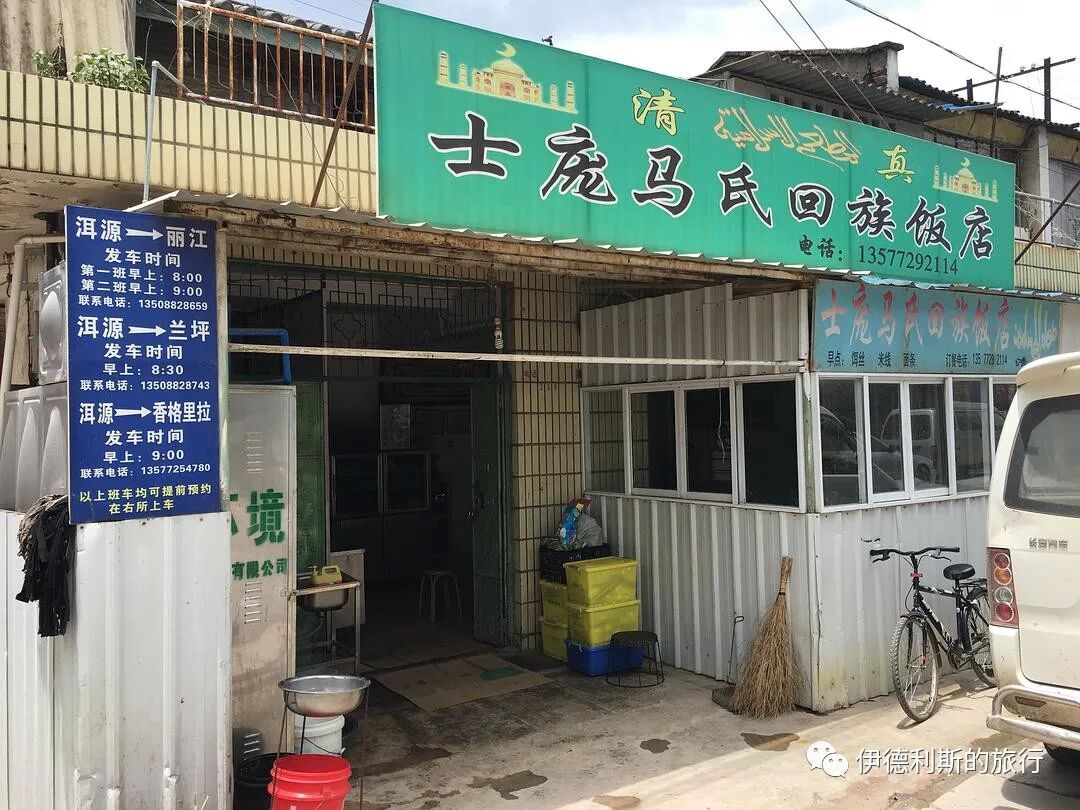
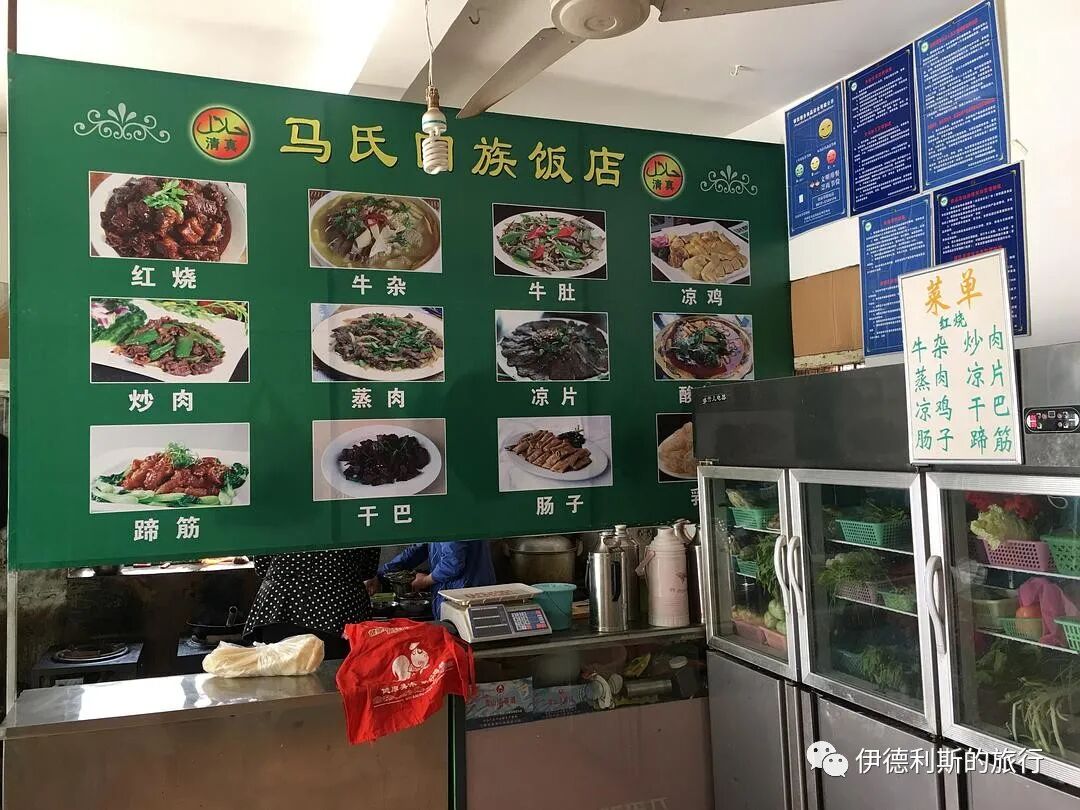
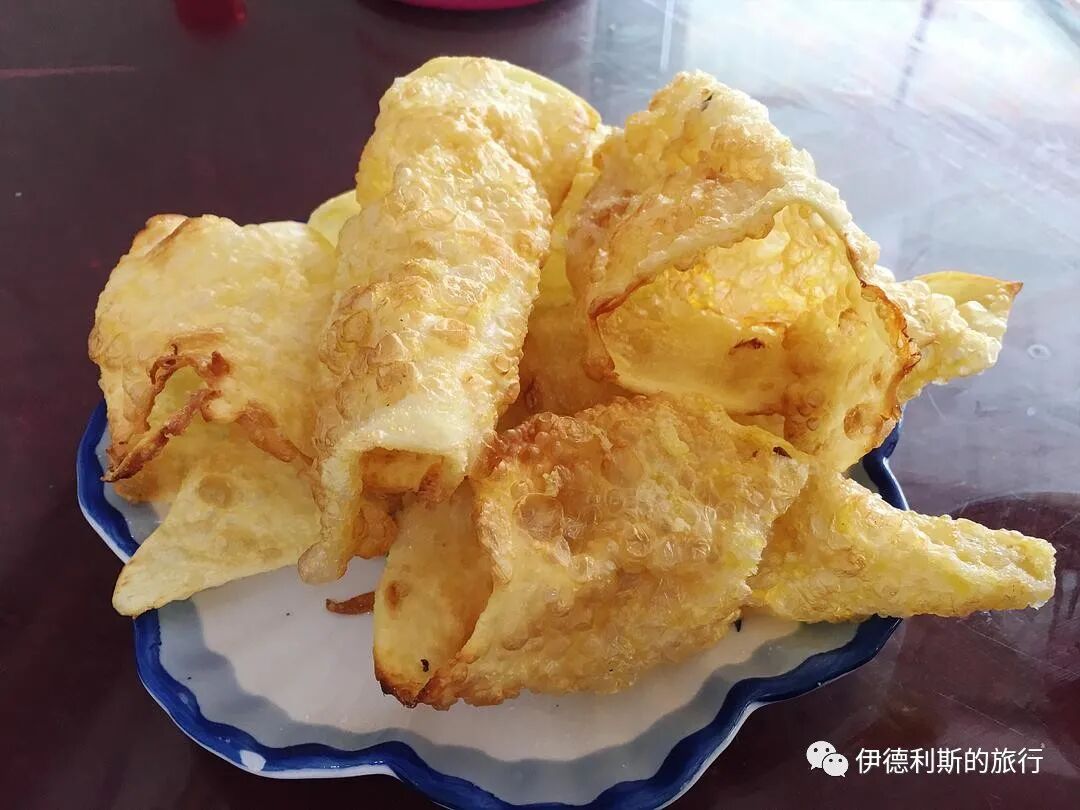
Aunties carrying rushan in the Bai Hui village
20. The Salar people of Xunhua, Qinghai
The Salar people, who speak the Salar language of the Turkic language family, live in Xunhua County, Qinghai, and surrounding areas. In the legends of the Salar people, Ahman and Qarman originally lived in the Samarkand area of Central Asia. Because they were oppressed by the rulers, they led their people across the Tianshan Mountains all the way east and finally settled in Xunhua.
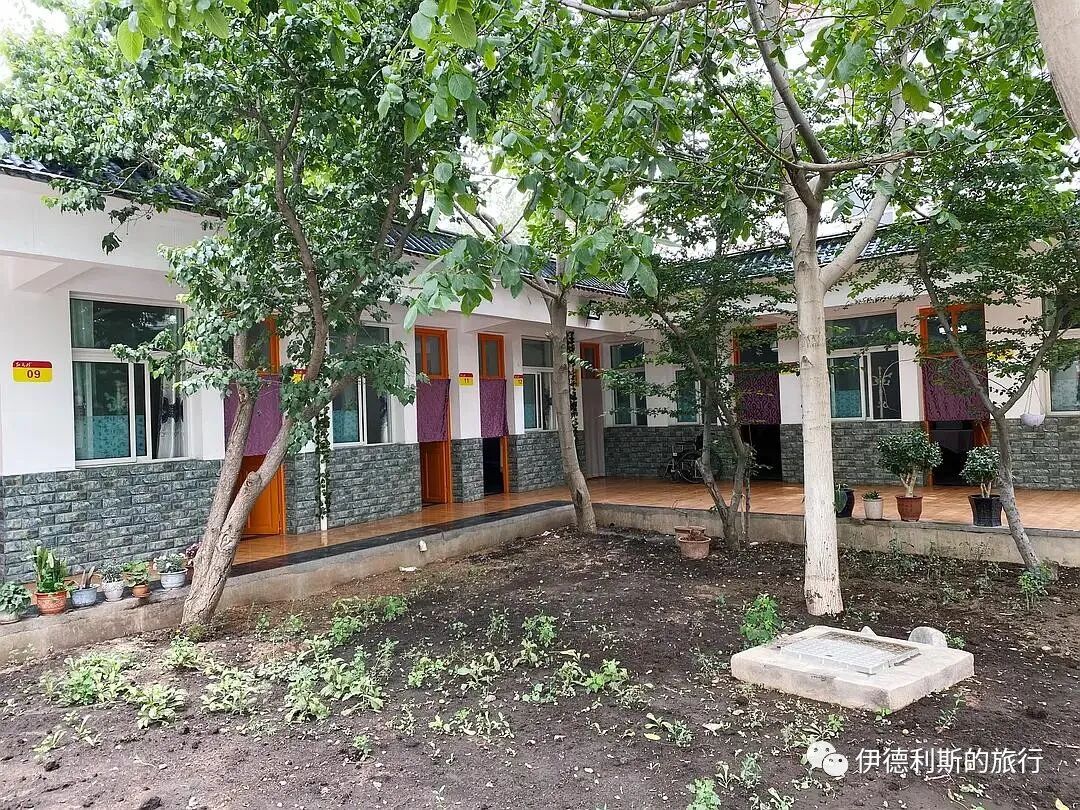
Eating stir-fried beef and jiaotuan (a thick paste made of flour) at a Salar family farmhouse in Xunhua County. Jiaotuan is made by stir-frying flour, adding water to boil, and then adding refined vegetable oil; it tastes very fragrant. Salar households in Xunhua are divided into tea restaurants and farmhouses. The cuisine in tea restaurants is more mixed. If you want to eat authentic Salar food, it is recommended to go to a farmhouse.
Twenty Ethnic Restaurants in China: Halal and Minority Food Guide (Part 2)
Articles • ali2007fr posted the article • 0 comments • 198 views • 2026-05-17 06:52
Summary: This travel note introduces Twenty Ethnic Restaurants in China: Halal and Minority Food Guide (Part 2). Qingzhen Huiji is currently the only local traditional halal snack shop on Hong Kong Island. It is useful for readers interested in Ethnic Food, Halal Food, China Travel.
Chinese Muslims in Hong Kong
Qingzhen Huiji is currently the only local traditional halal snack shop on Hong Kong Island. It is located inside the Gwan-Ying Street Market on Bowrington Road in Wan Chai. It is not very easy to find, so if you cannot find it after entering the market, you can ask a local stall owner.
It is said that Qingzhen Huiji has been operating at the Wan Chai Gwan-Ying Bridge for over 60 years, and it moved into the Gwan-Ying Street Market after the market opened in 1979. Qingzhen Huiji's dine-in hours are from 11:00 AM to 6:00 PM, so friends planning to go in the afternoon must arrive early.
Qingzhen Huiji is famous for its traditional hanging-oven roasted duck and Taiye chicken (soy-sauce chicken), as well as their own original curry lamb brisket. To be honest, this is the best curry lamb brisket I have ever eaten; the flavor is exceptionally authentic.
14. The Huihui people of Sanya, Hainan
The Huihui people are a Muslim ethnic group living in Huihui Village and Huixin Village in Sanya City, Hainan, with a population of nearly 10,000. The Huihui language they use belongs to the Austronesian language family and shares the same origin as the Chamic languages of southern Vietnam. The lifestyle of the Huihui people is strongly influenced by local Hainan ethnic groups, but they simultaneously maintain a devout Islamic faith, making them a very unique ethnic group on the southeast coast of China.
Starting from the 10th century, Champa, located in southern Vietnam, fought successive wars with Dai Viet, Chenla (Cambodia), and the Yuan Dynasty. Many Arab and Persian merchants from Champa sailed across the sea to Hainan. The History of Song: Champa contains the earliest record of a Champa person named Pu Luo'e leading over a hundred clansmen to Danzhou, Hainan, to submit to the empire in 986.
During the Ming and Qing dynasties, Muslims living in Yazhou, Wanzhou, Qiongshan, and other parts of Hainan gradually moved to the Sanya Lifan Village (now Sanya Huixin Village). During the Qing Dynasty, Muslim communities across Hainan experienced Sinicization, Li-ization, or Dan-ization. Sanya Lifan Village became the only Muslim community in Hainan and eventually formed the modern Huihui people.
In addition, some Huihui people came from the mainland. The ancestors of the Ha surname among the Huihui people came from Shaanxi. Later, the whole family moved to Dadan Port in Yazhou, Hainan. During the late Ming and early Qing dynasties, they moved to Sanya Lifan Village together with another group of Hui Muslims surnamed Liu.
In Huixin Village, we happened to encounter a banquet being held for a child of the Ha family who was admitted to Tsinghua University.
Watching the Huihui people make traditional coconut rice.
First, you must use old coconuts with thick meat, scrape all the coconut meat into coconut shreds, and then use cheesecloth to squeeze out all the coconut oil.
The rice is steamed using a traditional Li ethnic pottery steamer (tao zeng). After the rice is steamed, the coconut milk and rice are thoroughly mixed together. At this stage, the coconut rice is very firm and chewy.
Then, the mixed coconut rice is steamed a second time in the pottery steamer. At this point, the coconut rice is softer and stickier than in the first stage, and the coconut milk and rice are completely fused together.
They used beef slaughtered the previous day for Eid al-Adha. First, stew the meat, then add wood ear mushrooms and yuba (dried bean curd sheets). This is a classic main dish at Huihui banquets.
15. The Tatars of Urumqi
The Tatar ethnic group is the smallest ethnic group in China, with only about 3,000 people. Most of the Tatars in Urumqi belong to the Kazan Tatars, who moved here successively from the Kazan area along the Volga River from the 19th century to the early 20th century. At that time, most Tatars were intellectuals or merchants, and they played an important role in promoting the establishment of modern education in Xinjiang.
The Tatar pastry shop in Urumqi is located on the site of a former Russian trading port. A hundred years ago, this was a place where Russians, Tatars, and various Central Asian merchants traded, a bit like Sanlitun in Beijing. The Tatar pastry shop is also a witness to this history.
Their most classic cake consists of six layers of pastry sandwiched with six layers of cream. The pastry is made from milk, eggs, ghee, and honey, without adding water, and it tastes exceptionally fragrant.
16. The Dongxiang people of Xiaoxihu, Lanzhou
The Dongxiang people are a Muslim ethnic group that uses the Dongxiang language of the Mongolic language family. They are mainly distributed in Dongxiang County, Hezheng County, and Guanghe County in Linxia, Gansu. The loess hills where the Dongxiang people live are relatively barren, so after the 1980s, many people chose to go to Lanzhou to make a living. Xiaoxihu is located at the end of the road from Linxia to Lanzhou, close to the Hui Muslim communities of Xiyuan and Xihu that have formed since the Qing Dynasty. Coupled with the commercial development driven by the Xiaoxihu Yiwu Trade City since the 1990s, Xiaoxihu has become the main residential area for the Dongxiang people in Lanzhou.
The Dongxiang people in Xiaoxihu are most concentrated in Baishu Lane, Jiangouyan, and Shangxiyuan, where you can eat various Dongxiang delicacies.
The owner of Zhonghua Shouzhua Dawang (Zhonghua Hand-Grabbed Mutton King) is named Ma Zhonghua, and it is a very popular Dongxiang hand-grabbed mutton shop in Lanzhou. Drinking sanpaotai (a traditional tea with three ingredients) while eating half a jin (250 grams) of hand-grabbed mutton ribs, a small bowl of lentil sparrow-tongue noodles, and a plate of liangpi (cold skin noodles), I felt very satisfied. This place has a good environment and good service; they refill the water frequently, and of course, the sanpaotai itself is also delicious.
The mutton tastes very authentic; basically, it is one piece of meat with one clove of garlic, and the garlic is also very fragrant.
Liangpi (cold skin noodles)
Lentil sparrow-tongue noodles
Rose sanpaotai; I wanted more after finishing it, so I finally bought a lot at the supermarket to take home.
17. The Tibetan Muslims of Lhasa, Tibet
Today, there are three Muslim ethnic groups in Lhasa: Tibetan-speaking Muslims whose ancestors were from Kashmir, Nepal, etc.; Tibetan-speaking Muslims whose ancestors were from Sichuan, Yunnan, etc.; and Chinese-speaking Muslims who came from Gansu and Qinghai to do business after the 1980s—these are what we often call Kashmiris, Tibetan Muslims, and Gansu-Qinghai Hui Muslims. In the Tibetan language, Muslims are called "Khache," which was translated as "Kaqi" in Qing Dynasty documents, derived from the Tibetan name for Kashmir, "Khache Yul." After the 14th century, Kashmir, west of the Tibetan region, completed its Islamization. Kashmiri Muslims traveled to the Tibetan region for business and settled in Lhasa in the 17th century. After the 18th century, the Qing army began to be stationed in Tibet. The Hui Muslim officers and soldiers in the Qing army stationed in Tibet became the second Muslim ethnic group to arrive in Lhasa.
These Muslims who settled in Lhasa intermarried with local Tibetans for hundreds of years and gradually became "Fan-Kaqi" who speak Tibetan, wear Tibetan clothes, drink butter tea, and live in Tibetan-style houses. "Fan" in Tibetan represents "Tibetan."
Hebalin, where the Lhasa Great Mosque is located, is the main residential area for Tibetan Muslims, and there are some restaurants run by Tibetan Muslims here. Yibire Baozi Shop is a very famous Tibetan Muslim restaurant located in the small alleys of Hebalin.
Tibetan-style sweet tea actually originated from black tea with milk and sugar introduced to India by the British, and it became popular in Lhasa in the early 20th century.
Eating zhajiangmian (noodles with soybean paste)
Red oil dumplings
A Tibetan Muslim teenager wearing Adidas
Basically all local Tibetans
Menu
18. The Paxi Dai of Xishuangbanna, Yunnan
The Paxi Dai live in two villages, "Manluan Hui" and "Mansai Hui," in Menghai County, Xishuangbanna Prefecture. "Man" means "village" in the Dai language. The Paxi Dai call themselves "Paxi," believe in Islam, observe the faith, but speak the Dai language, use the Dai script, and make halal Dai-style food. It can be said that they have maintained their Hui Muslim identity while integrating into Dai culture.
During the Jiaqing and Daoguang periods of the Qing Dynasty, Menghai became an important transit point for Yunnan horse caravans traveling to Myanmar and Thailand for business. A Hui Muslim caravan leader named Ma Wulong from Dali came to Menghai and gave the Menghai Zhaomeng (local chieftain) leader Zha Yakun 3 loads of salt, which led the Zhaomeng to agree to set aside a small mountain valley for Ma Wulong to live in. Ma Wulong later married a Dai woman, had a son named Yan Han, and then returned to his hometown. After Yan Han grew up, he also married a Dai woman and had four sons and two daughters, gradually forming the current Paxi Dai village, "Manluan Hui."
There is a restaurant called "Paxi Dai" at the Ganbai Street Night Market in Jinghong, and the landlady is a Paxi Dai from Manluan Hui. The restaurant is by the lake, opposite the famous Starlight Night Market, so you can enjoy the night view while eating.
We ordered a nanmi (Dai-style dipping sauce) platter, stir-fried porcini mushrooms, Dai-style pounded chicken feet, passion fruit stewed tilapia, lemon hand-shredded beef jerky, and beef pineapple rice.
Nanmi is a Dai-style dipping sauce with a sour and spicy flavor, used for dipping fried beef skin, cucumber, and cowpeas. This was my first time eating fried beef skin; the texture is a bit like shrimp crackers, but harder.
The pounded chicken feet were very sour and spicy, and my mouth was burning from eating them. The Dai-style passion fruit stewed fish is very flavorful, comparable to the starfruit sour soup fish of the Sanya Huihui people, but the sourness is stronger; I could only drink a little bit of this soup.
Our whole family liked the beef pineapple rice the most. This kind of fried rice is rare locally, and we thought it was better than any other fried rice we had eaten before.
19. The Bai Hui of Dali, Yunnan
In the Hui Muslim villages of Jiming, Shipang, and Sanmei in Eryuan County, Dali, because they are located in a Bai ethnic area, the Hui Muslims here speak the Bai language, wear traditional Bai clothing, and their architecture is also strongly influenced by the Bai people, so they are also called "Bai Hui" by outsiders.
A Bai Hui restaurant was discovered in Yousuo Town, Eryuan, opened by a Hui Muslim surnamed Ma from Shipang Village. I ate salty rushan (milk fan cheese) and liangpian (cold sliced meat) at this restaurant. The liangpian was very spicy but extremely fragrant; it was the first time I had eaten liangpian that went so well with rice.
Aunties carrying rushan in the Bai Hui village
20. The Salar people of Xunhua, Qinghai
The Salar people, who speak the Salar language of the Turkic language family, live in Xunhua County, Qinghai, and surrounding areas. In the legends of the Salar people, Ahman and Qarman originally lived in the Samarkand area of Central Asia. Because they were oppressed by the rulers, they led their people across the Tianshan Mountains all the way east and finally settled in Xunhua.
Eating stir-fried beef and jiaotuan (a thick paste made of flour) at a Salar family farmhouse in Xunhua County. Jiaotuan is made by stir-frying flour, adding water to boil, and then adding refined vegetable oil; it tastes very fragrant. Salar households in Xunhua are divided into tea restaurants and farmhouses. The cuisine in tea restaurants is more mixed. If you want to eat authentic Salar food, it is recommended to go to a farmhouse. view all
Summary: This travel note introduces Twenty Ethnic Restaurants in China: Halal and Minority Food Guide (Part 2). Qingzhen Huiji is currently the only local traditional halal snack shop on Hong Kong Island. It is useful for readers interested in Ethnic Food, Halal Food, China Travel.
Chinese Muslims in Hong Kong
Qingzhen Huiji is currently the only local traditional halal snack shop on Hong Kong Island. It is located inside the Gwan-Ying Street Market on Bowrington Road in Wan Chai. It is not very easy to find, so if you cannot find it after entering the market, you can ask a local stall owner.
It is said that Qingzhen Huiji has been operating at the Wan Chai Gwan-Ying Bridge for over 60 years, and it moved into the Gwan-Ying Street Market after the market opened in 1979. Qingzhen Huiji's dine-in hours are from 11:00 AM to 6:00 PM, so friends planning to go in the afternoon must arrive early.
Qingzhen Huiji is famous for its traditional hanging-oven roasted duck and Taiye chicken (soy-sauce chicken), as well as their own original curry lamb brisket. To be honest, this is the best curry lamb brisket I have ever eaten; the flavor is exceptionally authentic.
14. The Huihui people of Sanya, Hainan
The Huihui people are a Muslim ethnic group living in Huihui Village and Huixin Village in Sanya City, Hainan, with a population of nearly 10,000. The Huihui language they use belongs to the Austronesian language family and shares the same origin as the Chamic languages of southern Vietnam. The lifestyle of the Huihui people is strongly influenced by local Hainan ethnic groups, but they simultaneously maintain a devout Islamic faith, making them a very unique ethnic group on the southeast coast of China.
Starting from the 10th century, Champa, located in southern Vietnam, fought successive wars with Dai Viet, Chenla (Cambodia), and the Yuan Dynasty. Many Arab and Persian merchants from Champa sailed across the sea to Hainan. The History of Song: Champa contains the earliest record of a Champa person named Pu Luo'e leading over a hundred clansmen to Danzhou, Hainan, to submit to the empire in 986.
During the Ming and Qing dynasties, Muslims living in Yazhou, Wanzhou, Qiongshan, and other parts of Hainan gradually moved to the Sanya Lifan Village (now Sanya Huixin Village). During the Qing Dynasty, Muslim communities across Hainan experienced Sinicization, Li-ization, or Dan-ization. Sanya Lifan Village became the only Muslim community in Hainan and eventually formed the modern Huihui people.
In addition, some Huihui people came from the mainland. The ancestors of the Ha surname among the Huihui people came from Shaanxi. Later, the whole family moved to Dadan Port in Yazhou, Hainan. During the late Ming and early Qing dynasties, they moved to Sanya Lifan Village together with another group of Hui Muslims surnamed Liu.
In Huixin Village, we happened to encounter a banquet being held for a child of the Ha family who was admitted to Tsinghua University.
Watching the Huihui people make traditional coconut rice.
First, you must use old coconuts with thick meat, scrape all the coconut meat into coconut shreds, and then use cheesecloth to squeeze out all the coconut oil.
The rice is steamed using a traditional Li ethnic pottery steamer (tao zeng). After the rice is steamed, the coconut milk and rice are thoroughly mixed together. At this stage, the coconut rice is very firm and chewy.
Then, the mixed coconut rice is steamed a second time in the pottery steamer. At this point, the coconut rice is softer and stickier than in the first stage, and the coconut milk and rice are completely fused together.
They used beef slaughtered the previous day for Eid al-Adha. First, stew the meat, then add wood ear mushrooms and yuba (dried bean curd sheets). This is a classic main dish at Huihui banquets.
15. The Tatars of Urumqi
The Tatar ethnic group is the smallest ethnic group in China, with only about 3,000 people. Most of the Tatars in Urumqi belong to the Kazan Tatars, who moved here successively from the Kazan area along the Volga River from the 19th century to the early 20th century. At that time, most Tatars were intellectuals or merchants, and they played an important role in promoting the establishment of modern education in Xinjiang.
The Tatar pastry shop in Urumqi is located on the site of a former Russian trading port. A hundred years ago, this was a place where Russians, Tatars, and various Central Asian merchants traded, a bit like Sanlitun in Beijing. The Tatar pastry shop is also a witness to this history.
Their most classic cake consists of six layers of pastry sandwiched with six layers of cream. The pastry is made from milk, eggs, ghee, and honey, without adding water, and it tastes exceptionally fragrant.
16. The Dongxiang people of Xiaoxihu, Lanzhou
The Dongxiang people are a Muslim ethnic group that uses the Dongxiang language of the Mongolic language family. They are mainly distributed in Dongxiang County, Hezheng County, and Guanghe County in Linxia, Gansu. The loess hills where the Dongxiang people live are relatively barren, so after the 1980s, many people chose to go to Lanzhou to make a living. Xiaoxihu is located at the end of the road from Linxia to Lanzhou, close to the Hui Muslim communities of Xiyuan and Xihu that have formed since the Qing Dynasty. Coupled with the commercial development driven by the Xiaoxihu Yiwu Trade City since the 1990s, Xiaoxihu has become the main residential area for the Dongxiang people in Lanzhou.
The Dongxiang people in Xiaoxihu are most concentrated in Baishu Lane, Jiangouyan, and Shangxiyuan, where you can eat various Dongxiang delicacies.
The owner of Zhonghua Shouzhua Dawang (Zhonghua Hand-Grabbed Mutton King) is named Ma Zhonghua, and it is a very popular Dongxiang hand-grabbed mutton shop in Lanzhou. Drinking sanpaotai (a traditional tea with three ingredients) while eating half a jin (250 grams) of hand-grabbed mutton ribs, a small bowl of lentil sparrow-tongue noodles, and a plate of liangpi (cold skin noodles), I felt very satisfied. This place has a good environment and good service; they refill the water frequently, and of course, the sanpaotai itself is also delicious.
The mutton tastes very authentic; basically, it is one piece of meat with one clove of garlic, and the garlic is also very fragrant.
Liangpi (cold skin noodles)
Lentil sparrow-tongue noodles
Rose sanpaotai; I wanted more after finishing it, so I finally bought a lot at the supermarket to take home.
17. The Tibetan Muslims of Lhasa, Tibet
Today, there are three Muslim ethnic groups in Lhasa: Tibetan-speaking Muslims whose ancestors were from Kashmir, Nepal, etc.; Tibetan-speaking Muslims whose ancestors were from Sichuan, Yunnan, etc.; and Chinese-speaking Muslims who came from Gansu and Qinghai to do business after the 1980s—these are what we often call Kashmiris, Tibetan Muslims, and Gansu-Qinghai Hui Muslims. In the Tibetan language, Muslims are called "Khache," which was translated as "Kaqi" in Qing Dynasty documents, derived from the Tibetan name for Kashmir, "Khache Yul." After the 14th century, Kashmir, west of the Tibetan region, completed its Islamization. Kashmiri Muslims traveled to the Tibetan region for business and settled in Lhasa in the 17th century. After the 18th century, the Qing army began to be stationed in Tibet. The Hui Muslim officers and soldiers in the Qing army stationed in Tibet became the second Muslim ethnic group to arrive in Lhasa.
These Muslims who settled in Lhasa intermarried with local Tibetans for hundreds of years and gradually became "Fan-Kaqi" who speak Tibetan, wear Tibetan clothes, drink butter tea, and live in Tibetan-style houses. "Fan" in Tibetan represents "Tibetan."
Hebalin, where the Lhasa Great Mosque is located, is the main residential area for Tibetan Muslims, and there are some restaurants run by Tibetan Muslims here. Yibire Baozi Shop is a very famous Tibetan Muslim restaurant located in the small alleys of Hebalin.
Tibetan-style sweet tea actually originated from black tea with milk and sugar introduced to India by the British, and it became popular in Lhasa in the early 20th century.
Eating zhajiangmian (noodles with soybean paste)
Red oil dumplings
A Tibetan Muslim teenager wearing Adidas
Basically all local Tibetans
Menu
18. The Paxi Dai of Xishuangbanna, Yunnan
The Paxi Dai live in two villages, "Manluan Hui" and "Mansai Hui," in Menghai County, Xishuangbanna Prefecture. "Man" means "village" in the Dai language. The Paxi Dai call themselves "Paxi," believe in Islam, observe the faith, but speak the Dai language, use the Dai script, and make halal Dai-style food. It can be said that they have maintained their Hui Muslim identity while integrating into Dai culture.
During the Jiaqing and Daoguang periods of the Qing Dynasty, Menghai became an important transit point for Yunnan horse caravans traveling to Myanmar and Thailand for business. A Hui Muslim caravan leader named Ma Wulong from Dali came to Menghai and gave the Menghai Zhaomeng (local chieftain) leader Zha Yakun 3 loads of salt, which led the Zhaomeng to agree to set aside a small mountain valley for Ma Wulong to live in. Ma Wulong later married a Dai woman, had a son named Yan Han, and then returned to his hometown. After Yan Han grew up, he also married a Dai woman and had four sons and two daughters, gradually forming the current Paxi Dai village, "Manluan Hui."
There is a restaurant called "Paxi Dai" at the Ganbai Street Night Market in Jinghong, and the landlady is a Paxi Dai from Manluan Hui. The restaurant is by the lake, opposite the famous Starlight Night Market, so you can enjoy the night view while eating.
We ordered a nanmi (Dai-style dipping sauce) platter, stir-fried porcini mushrooms, Dai-style pounded chicken feet, passion fruit stewed tilapia, lemon hand-shredded beef jerky, and beef pineapple rice.
Nanmi is a Dai-style dipping sauce with a sour and spicy flavor, used for dipping fried beef skin, cucumber, and cowpeas. This was my first time eating fried beef skin; the texture is a bit like shrimp crackers, but harder.
The pounded chicken feet were very sour and spicy, and my mouth was burning from eating them. The Dai-style passion fruit stewed fish is very flavorful, comparable to the starfruit sour soup fish of the Sanya Huihui people, but the sourness is stronger; I could only drink a little bit of this soup.
Our whole family liked the beef pineapple rice the most. This kind of fried rice is rare locally, and we thought it was better than any other fried rice we had eaten before.
19. The Bai Hui of Dali, Yunnan
In the Hui Muslim villages of Jiming, Shipang, and Sanmei in Eryuan County, Dali, because they are located in a Bai ethnic area, the Hui Muslims here speak the Bai language, wear traditional Bai clothing, and their architecture is also strongly influenced by the Bai people, so they are also called "Bai Hui" by outsiders.
A Bai Hui restaurant was discovered in Yousuo Town, Eryuan, opened by a Hui Muslim surnamed Ma from Shipang Village. I ate salty rushan (milk fan cheese) and liangpian (cold sliced meat) at this restaurant. The liangpian was very spicy but extremely fragrant; it was the first time I had eaten liangpian that went so well with rice.
Aunties carrying rushan in the Bai Hui village
20. The Salar people of Xunhua, Qinghai
The Salar people, who speak the Salar language of the Turkic language family, live in Xunhua County, Qinghai, and surrounding areas. In the legends of the Salar people, Ahman and Qarman originally lived in the Samarkand area of Central Asia. Because they were oppressed by the rulers, they led their people across the Tianshan Mountains all the way east and finally settled in Xunhua.
Eating stir-fried beef and jiaotuan (a thick paste made of flour) at a Salar family farmhouse in Xunhua County. Jiaotuan is made by stir-frying flour, adding water to boil, and then adding refined vegetable oil; it tastes very fragrant. Salar households in Xunhua are divided into tea restaurants and farmhouses. The cuisine in tea restaurants is more mixed. If you want to eat authentic Salar food, it is recommended to go to a farmhouse.
Twenty Ethnic Restaurants in China: Halal and Minority Food Guide (Part 1)
Articles • ali2007fr posted the article • 0 comments • 176 views • 2026-05-17 06:52
Summary: This travel note introduces Twenty Ethnic Restaurants in China: Halal and Minority Food Guide (Part 1). In my travels over the past few years, I have encountered some very interesting ethnic groups. It is useful for readers interested in Ethnic Food, Halal Food, China Travel.
In my travels over the past few years, I have encountered some very interesting ethnic groups. In this diary, I will introduce twenty ethnic groups through twenty restaurants, hoping to increase everyone's understanding of these groups.
1. Kazan Tatars in Moscow
2. Crimean Tatars on the Crimean Peninsula
3. Gulf Bedouins in Dubai
4. The Cham people in Ho Chi Minh City, Vietnam
5. Tamil Muslims in Penang, Malaysia
6. Chinese Muslims in Penang, Malaysia
7. The Jawi Peranakan community in Penang, Malaysia
8. The Betawi people in Jakarta, Indonesia
9. The Javanese people in Yogyakarta, Indonesia
10. The Bantenese people on Java Island, Indonesia
11. Yunnan Hui Muslims in Chiang Mai, Thailand
12. Korean-speaking Muslims in Itaewon, Seoul
13. Chinese Muslims in Hong Kong
14. The Huihui people of Sanya, Hainan
15. The Tatars of Urumqi
16. The Dongxiang people of Xiaoxihu, Lanzhou
17. The Tibetan Muslims of Lhasa, Tibet
18. The Paxi Dai of Xishuangbanna, Yunnan
19. The Bai Hui of Dali, Yunnan
20. The Salar people of Xunhua, Qinghai
1. Kazan Tatars in Moscow
After the 17th century, with the establishment of the Romanov dynasty, Moscow gradually prospered, and many Tatars from the Volga River and steppe regions came to do business. The Tatar community (Tatarskaya sloboda) was formally formed south of the Moskva River, opposite the Kremlin. The community's main street, Tatarskaya Street, was first mentioned in documents in 1682.
The historic Tatar community has a Tatar restaurant called Kazan Tea Bar, which is also the center for Tatar cultural activities in Moscow, frequently organizing various Tatar cultural events.
Inside, I ate Beshbarmak (five-finger stew), Kystyby (flatbread with filling), the Tatar version of horse sausage Kazy, pilaf, Kazan chicken salad, and Tatar milk tea. Tatar milk tea is made of black tea + green tea + thyme + linden leaves + chamomile flowers + oregano leaves + mint leaves + sage.
2. Crimean Tatars on the Crimean Peninsula
In the summer of 2019, I went to an ancient city in the mountains of the Crimean Peninsula—Bakhchysarai. Bakhchysarai was founded by the Crimean Tatars and became the capital of the Crimean Khanate in 1532. Although it became an ordinary town after Russia occupied the Crimean Khanate in 1783, it remains the cultural center of the Crimean Tatars, preserving their unique culture and customs.
The dietary culture of the Crimean Tatars is closely related to their history. Because the Crimean Khanate was a long-term vassal of the Ottoman Empire, it possesses many Ottoman-related foods, such as Turkish coffee, Baklava (Turkish dessert), and Dolma (stuffed grape leaves). After being exiled to Uzbekistan in 1944, a large amount of Uzbek cuisine was added to the Crimean Tatar diet, including pilaf, lagman (pulled noodles), samsa (baked buns), manti (steamed buns), and naan. In addition, the Crimean Tatars also have some unique delicacies, one of which is Chebureki (fried meat turnover), known as a Crimean Tatar national delicacy.
This time I stayed at a very beautiful traditional Crimean Tatar courtyard house, Bahitgul Boutique-Hotel. They serve traditional Crimean Tatar meals, so I basically ate breakfast at my accommodation. Moreover, the view while eating at their place is particularly good, overlooking the entire ancient capital.
For the first breakfast, I had Lagman (pulled noodles), Omlet (omelet), Lepyoshka (naan), and traditional coffee. The coffee comes from the Ottoman Empire, and the lagman comes from the exile in Uzbekistan.
Tatar Ash (small dumplings) dipped in yogurt, Kasha v Assortimente (assorted porridge), and Bliny (thin pancakes) dipped in jam.
3. Gulf Bedouins in Dubai
The Al Ras neighborhood in Dubai literally means "cape" or "headland." It is surrounded by Dubai Creek on three sides and is the oldest neighborhood in Dubai's Deira area. There is a traditional Gulf Bedouin restaurant in the neighborhood called "Al Bait Alqadeem," which means "the old house" in Arabic. This restaurant is located in a traditional Gulf courtyard house built in 1909. The house was built by pearl boat owner Abdulla Bin Jamaan, who was also a guard for the then-ruler of Dubai. In 1954, Abdulla Bin Jamaan became the first mayor of Dubai.
The freshly baked bread is particularly crispy and tastes great, and these large enamel plates also have a special feel.
The grilled fish is recommended by the chef and is also excellent.
I also drank cucumber honey water, which I liked very much.
4. The Cham people in Ho Chi Minh City, Vietnam
The Chams are an Austronesian-speaking people who migrated from Borneo to the Indochinese Peninsula and established Champa in southern Vietnam in 192 AD. Due to the narrow and fragmented land, Champa always focused on developing maritime trade, becoming an important trading port on the Maritime Silk Road during the Song and Yuan dynasties.
After the 12th century, Champa fell into long-term war. After the Champa capital Vijaya was captured by Vietnam in 1471, a large number of Cham people fled to Cambodia for refuge. Before this, in the 14th and 15th centuries, many Malay Muslims had already moved to Cambodia. These Malay Muslims integrated with the Cham people, who also spoke Austronesian languages of the Indonesian branch, through trade, intermarriage, and other means, and the Cambodian Cham people gradually converted to Islam.
After the 18th century, some Cambodian Cham people began to move to the Mekong Delta on the Vietnam-Cambodia border to live. After France occupied Saigon in 1862, because of the relatively loose autonomy policy implemented for the Cham people, more and more Cham people settled in Saigon.
Saigon Green House is the best Cham restaurant in Ho Chi Minh City, with a rich variety of dishes that are all delicious.
First, eat Phở!
Pineapple fried rice.
Fried spring rolls.
Drink iced tea.
Bitter melon served with a type of fish ball called featherback; I looked it up and it seems to be translated as the bronze featherback fish.
The mosque in the menu is the Jamiul Aman Mosque located in Chau Phu District, An Giang Province, Vietnam, built in 1965.
This is the Jamiul Azhar Mosque in Phu Tan District, An Giang Province, Vietnam. It is said to have been built in 1425 and is the mosque with the highest status among the orthodox Muslims of the Cham people in Vietnam.
5. Tamil Muslims in Penang, Malaysia
Penang, also known as Pulau Pinang, is an island in northwestern Malaysia. Over 90% of Indians in Penang are Tamils from southeastern India and northern Sri Lanka. As early as 1790, four years after George Town in Penang was built, the British East India Company mentioned that Tamils were opening shops and farming in Penang. In the late 19th century, with the increase in wages caused by labor shortages in Penang, Indian immigration to Penang was officially legalized in 1872, and in 1887, subsidies for Indian immigrant ship tickets began, leading to an increasing number of Tamil immigrants to Penang.
Tamil Muslims are called "Mamak" in Malaysia, which comes from the Tamil word for "uncle" (maa-ma). In Malaysia and Singapore, Tamil children often address Tamil male elders this way, especially in Tamil Muslim restaurants, so Malays began to call the entire Tamil Muslim ethnic group "Mamak," where the final "k" is not pronounced in Malay.
Penang's Tamil Muslims are most famous for their "Mamak stall" and "Mamak restaurant" food culture, and one of the oldest century-old Mamak restaurants is Hameediyah Restaurant, which opened in 1907.
The founder of Hameediyah Restaurant was named Mohamed, who came from a Tamil Muslim village in the southernmost state of Tamil Nadu, India. Mohamed came to Penang in 1890, and shortly after, he rented the land where the restaurant is now located. At first, he only used this place to prepare food, and usually carried it on a shoulder pole to sell along the street, which is the famous "Nasi Kandar" (literally "shoulder-pole rice"). In 1907, Mohamed officially founded Hameediyah Restaurant and hired two helpers.
Mohamed learned many Tamil delicacies from his mother when he was young in South India, among which Biryani (spiced rice) and Murtabak (stuffed pancake) were his specialties.
After opening, the diners who came to the restaurant included port immigrant workers, rickshaw pullers, local traders, and government employees, etc. Some diners affectionately called Mohamed and his staff "Mamak." It was also during this period that restaurants opened by South Indian Tamil Muslims in Penang were gradually called Mamak restaurants.
After Mohamed passed away in 1927, his son Kander took over the restaurant, and later his grandson took over, and the restaurant's business was very prosperous. In 1941, Penang suffered a devastating air raid by the Japanese army. Hameediyah Restaurant insisted on staying open during this period and miraculously survived the bombing. In 1945, after Japan was defeated, Kander's grandson, the fourth-generation successor Abu Bakar, took over the restaurant, and later passed it on to his relative Abdul Sukkoor. Today, Abdul Sukkoor's eldest son Seeni Pakir and youngest son Syed Ibrahim have become the restaurant's chefs and are responsible for daily operations.
Nasi Kandar is a delicacy invented by South Indian Tamil Muslims in Penang, which is rice served with various curries of beef, mutton, chicken, fish, shrimp, and side dishes. When Tamil Muslims first arrived in Penang in the 19th century, most of them carried food on shoulder poles to sell along the street, so the food they sold was called "Nasi Kandar." By the 20th century, Tamil Muslims began to open restaurants and stalls, but the name "Nasi Kandar" has been used to this day. This time at Hameediyah Restaurant, I had Biryani Kosong (plain spiced rice) with lamb shank, chicken, and cabbage.
Murtabak is a thick pancake filled with eggs, onions, minced meat, and shrimp. In Malaysia, Singapore, and Thailand, the way Murtabak is made is basically the same as the way Roti canai (Indian flatbread) is made. The Malaysian version has less meat and more eggs than the Singaporean one. One theory is that Murtabak comes from the Arabic word "Mutabbaq," meaning "folded," so it may have been brought to India by Indian Muslims from Yemen, and then brought to the Malay Archipelago by South Indian Tamil Muslims. Another theory is that Murtabak comes from Kerala, South India, where "muta" means egg and "bar" is an abbreviation for "barota" bread.
6. Chinese Muslims in Penang, Malaysia
Restoran Haji Sharin Low Grand is the largest Chinese Muslim restaurant chain in Southeast Asia, with over 17 branches in Malaysia and Indonesia. The headquarters is in Kuala Lumpur, and the founder is Chinese Muslim Tuan Haji Sharin Low.
We ordered Nyonya flower crab, Teochew-style steamed grouper, Low's claypot tofu, and mee sua (wheat vermicelli) soup. They were all delicious~ And in one table of dishes, there were local Nyonya styles, as well as Teochew and Minnan styles, and they were all halal ingredients, which was a great cultural fusion.
After the meal, we chatted with the landlady for a while. The landlady is a local Chinese Muslim. I was very excited to finally be able to communicate face-to-face with this ethnic group that I had previously only learned about in news and papers. The landlady was very enthusiastic and said to come and visit again when we have time. We also learned that the local Chinese mosque in Penang was going to start construction in 2020, so Penang could have a social center for local Chinese Muslims.
7. The Jawi Peranakan community in Penang, Malaysia
Malaysia has a unique ethnic group called Jawi Peranakan, which refers to a Malay-speaking Muslim ethnic group formed after the intermarriage of Indian Muslim (also including Arab and Persian, etc.) men and Malay women. "Jawi" means "Southeast Asian Muslim" in Arabic, and "Peranakan" means "locally born" in Malay.
The Jawi Peranakan community does not prioritize the ethnic group of the other party when getting married, but first looks at the other party's wealth and status. Therefore, after the mid-19th century, the Jawi Peranakan had become the elite class of British Malaya. Jawi Peranakan attached great importance to English education, so many people held positions in the colonial government. At the same time, Jawi Peranakan also attached great importance to cultural development; the first Malay-language newspaper was founded by Jawi Peranakan.
After the 20th century, with the decline of the British Empire, the Jawi Peranakan community began to integrate into the Malays. Today, most Jawi Peranakan are counted as "Malays" by the government. Despite this, the Jawi Peranakan community still strives to pass on its unique culture, which can be reflected in architecture, clothing, jewelry, and food.
Today, the place where you can best experience the Jawi Peranakan culture in Penang is Jawi House Cafe Gallery. This building was originally a Straits Eclectic-style Chinese shophouse built in the 1860s, with Malay-style decorations, and later it was an Indian Muslim coppersmith shop. Armenian Street (Lebuh Armenian, originally named Malay lane) where the shop is located was the earliest settlement area for the Jawi Peranakan community. In 2012, the Karim family, who had lived in Penang for six generations and had Punjabi roots, opened Jawi House here to make the most authentic Jawi Peranakan food.
We ate Cucur Udang (fried shrimp fritters), Nasi Lemuni (chaste tree berry rice), Jawi Chicken Curry, drank Penang Nutmeg and Arabian Sherbet, and also had Sago Pudding for dessert.
Cucur Udang is made by coating shrimp and scallions in flour and deep-frying them, then dipping them in peanut sauce. "Cucur" means fried fritter in Malay, and "Udang" means shrimp.
Nasi Lemuni is rice cooked with coconut milk, lemongrass, and blue Lemuni (chaste tree) flowers, served with fried anchovies and sambal (spicy chili paste). In the past, Lemuni rice was a traditional food for Malay women during their postpartum confinement, and it is said to promote blood circulation.
Jawi Chicken Curry is the Jawi Peranakan version of chicken curry. As a fusion ethnic group, Jawi Peranakan curry is also a fusion version of Indian curry and Malay curry.
Nutmeg is the meaning of nutmeg, and honey and lemon are added to the drink, which is a special way of drinking in Penang, sweet and sour.
Sherbet comes from the Persian word "Sharbat," meaning non-alcoholic sugar water. In medieval Arabia, people liked to add syrup and honey to Sharbat to increase sweetness, and also liked to add various almonds, lemons, apples, pomegranates, tamarinds, dates, sumac berries, musk, and mint. With the spread of Arabs and Persians, Sharbat is now popular in West Asia, South Asia, and the Malay Archipelago, especially during Ramadan. The Arabian Sherbet made by Jawi House is made with rose syrup, mallow nuts, gum arabic, and basil seeds, and the taste is very rich.
The Jawi Peranakan special version of sago pudding is drizzled with coconut cream and rich palm sugar syrup, and then sprinkled with crushed peanuts, which feels very exquisite.
Jawi House exhibits a series of old photos of Penang Jawi Peranakan, as well as paintings of the Penang Muslim community.
8. The Betawi people in Jakarta, Indonesia
In 1619, the Dutch razed Jakarta under the rule of the Banten Sultanate to the ground and renamed it Batavia, serving as the trading and administrative center of the Dutch East India Company. In 1684, the Dutch East India Company signed a peace treaty with the Banten Sultanate, and many ethnic groups including Malays, Sundanese, Javanese, Minangkabau, and Bugis began to reclaim and settle in the swamp areas outside the walls of Batavia. After one or two hundred years of integration, these ethnic groups finally formed the Betawi people in the early 20th century.
The Betawi people use a Malay language mixed with Hokkien Chinese, Arabic, and Dutch, called Betawi Malay, which is the only Malay-speaking region on the northern coast of Java. The diet of the Betawi people is also strongly influenced by Indonesian Chinese, Arab, European, local Sundanese, and Javanese diets.
The City Hall built in 1710 in the center of the old city of Batavia has now become the Jakarta History Museum. When I visited the museum in 2019, there was a small area in the courtyard that specifically provided Betawi snacks. I ate Kerak telor (spicy egg crust) and Selendang Mayang (iced drink). It is a great pity that I didn't know at the time that the snacks sold here were Betawi specialties that are hard to eat elsewhere, otherwise I should have tasted every one of them.
Kerak telor is made of glutinous rice and eggs with fried coconut shreds, topped with fried scallions and dried shrimp. In the colonial era, this food could only be eaten at gatherings of Dutch or wealthy Betawi merchants, and it was invented to increase the texture of glutinous rice.
Selendang Mayang is now rarely seen. It is a long-standing Batavia iced drink made from rice flour, vanilla powder, pandan leaves, red sugar syrup, and coconut milk.
9. The Javanese people in Yogyakarta, Indonesia
Yogyakarta is an ancient cultural city in central Java, still ruled by a Sultan. In addition to traditional Javanese architecture, Gamelan music, and Wayang shadow puppetry, Yogyakarta also has many Javanese specialties.
nDalem Joyokusuman next to the Yogyakarta Sultan's Palace is the residence of Sultan's Prince Gusti Haryo Haji Joyokusumo, and it is now open as a cultural center and restaurant. I ate Nasi Blawong and Telo ijo here. Nasi Blawong is a specialty of the Sultan of Yogyakarta. It used to be eaten only at the Sultan's birthday banquet, and the reddish Blawong rice used in it is considered sacred. Telo ijo is a cassava pastry drizzled with pandan coconut milk.
nDalem Joyokusuman was built in 1916 during the reign of the eighth Sultan of Yogyakarta, Hamengkubuwono VIII, and has been inhabited by members of the Sultan's family ever since.
Peringgitan is the inner hall behind the large living room, where the prince's family activities take place, and it contains valuable gifts received by the prince.
Sentong Kiwo in Figure 4 was originally a guest room and is now used as an exhibition hall.
The place where Gamelan is performed in the courtyard.
10. The Bantenese people on Java Island, Indonesia
Banten is located at the westernmost tip of Java Island, facing Sumatra across the Sunda Strait. The local residents, the Bantenese, belong to a branch of the Sundanese. In the 16th century, the Banten Sultanate rose to become a maritime trading power in western Java, controlling the pepper trade in Southeast Asia.
The Great Mosque of Banten (Masjid Agung Banten), built in 1566, is a famous Javanese-style mosque. Muslims come to visit every day, and a very lively bazaar has formed around the mosque. I drank Es Campur (iced drink made with coconut milk, red sugar syrup, coconut meat, and fruit jelly) at the bazaar, and also had the simplest street egg noodles, Mie Rebus. Sapodilla (Manilkara zapota) is sold everywhere in the bazaar, which is sweet and delicious. Sapodilla is native to Central America and the Caribbean, introduced to the Philippines by Spanish colonists, and then widely planted in Southeast Asia. It is called sawo in Indonesia.
11. Yunnan Hui Muslims in Chiang Mai, Thailand
There is a Yunnan Hui Muslim community called "Wang He" by the Ping River outside the east gate of the ancient city of Chiang Mai, Thailand. In Thai, "Wang" means village, and "He" originally referred to the horse caravan merchants who came from Yunnan to engage in cross-border trade. From the 19th century to the early 20th century, Yunnan horse caravans controlled the trade route from Yunnan to northern Thailand. They transported tea, silk, hardware, and copperware from Yunnan to northern Thailand, and transported raw cotton and tobacco from northern Thailand back to Yunnan. In 1904, Zheng Chonglin, a Hui Muslim horse caravan merchant from Yuxi, Yunnan, established his own large horse inn in the east of Chiang Mai, which became the base for Yunnan horse caravans in Chiang Mai. Many Yunnan Hui Muslim horse caravan members came to live near the horse inn, and the Wang He community gradually formed.
There are several halal restaurants opened by Yunnan Hui Muslims on Wang He Street. I ate the famous northern Thai curry noodle khao soi at this KAO SOI FUENG FAH restaurant. It is said that this noodle was brought to northern Thailand by Yunnanese people. Slightly spicy noodle soup, sprinkled with sanzi (fried dough strips) and served with raw onions and lemon, the taste is quite good.
Northern Thai pineapple cakes are very likely produced by the northern Thai isolated army.
12. Korean-speaking Muslims in Itaewon, Seoul
In 1952, the US military stationed in the Korean Peninsula officially established its headquarters in Yongsan, and after 1957 it became the headquarters of the US Forces Korea. To meet the living needs of a large number of US troops stationed in Korea, various foreign restaurants began to appear in Itaewon, not far east of the Yongsan base, and Muslims also began to come to Itaewon to open halal restaurants.
In 1976, President Park Chung-hee provided land to the KMF (Korea Muslim Federation) to build the Seoul Central Mosque in Itaewon, and a halal commercial street was formed in Itaewon. After the 1990s, with Muslims from Pakistan, Bangladesh, Indonesia, Malaysia, and other places coming to work, the number of Muslims in South Korea reached 150,000. Currently, it is estimated that there are 100,000 Muslims in South Korea, 40,000 of whom are local converts.
Although there are so many Middle Eastern, Indian, and Turkish halal restaurants in Itaewon, the most distinctive one is of course the halal Korean restaurant, and Makan is one of the most famous.
This sister is the chef.
Serving side dishes before eating is a feature of Korean restaurants here.
Grilled fish.
Doenjang-jjigae (soybean paste stew).
Soak the rice in the soup.
Korean-style bibimbap with grilled meat; the meat was covered by an egg, so I didn't take a picture.
Teppanyaki squid with rice cakes.
The person in the front right of the picture is also the chef.
In addition to the main store south of the mosque, Makan also has a store west of the mosque that specializes in Korean fried chicken and jajangmyeon (black bean noodles). The chef is an uncle, and it is the same business as the main store.
Korean-style jajangmyeon, the taste is different from Beijing jajangmyeon, and the noodles are a bit like udon noodles. view all
Summary: This travel note introduces Twenty Ethnic Restaurants in China: Halal and Minority Food Guide (Part 1). In my travels over the past few years, I have encountered some very interesting ethnic groups. It is useful for readers interested in Ethnic Food, Halal Food, China Travel.
In my travels over the past few years, I have encountered some very interesting ethnic groups. In this diary, I will introduce twenty ethnic groups through twenty restaurants, hoping to increase everyone's understanding of these groups.
1. Kazan Tatars in Moscow
2. Crimean Tatars on the Crimean Peninsula
3. Gulf Bedouins in Dubai
4. The Cham people in Ho Chi Minh City, Vietnam
5. Tamil Muslims in Penang, Malaysia
6. Chinese Muslims in Penang, Malaysia
7. The Jawi Peranakan community in Penang, Malaysia
8. The Betawi people in Jakarta, Indonesia
9. The Javanese people in Yogyakarta, Indonesia
10. The Bantenese people on Java Island, Indonesia
11. Yunnan Hui Muslims in Chiang Mai, Thailand
12. Korean-speaking Muslims in Itaewon, Seoul
13. Chinese Muslims in Hong Kong
14. The Huihui people of Sanya, Hainan
15. The Tatars of Urumqi
16. The Dongxiang people of Xiaoxihu, Lanzhou
17. The Tibetan Muslims of Lhasa, Tibet
18. The Paxi Dai of Xishuangbanna, Yunnan
19. The Bai Hui of Dali, Yunnan
20. The Salar people of Xunhua, Qinghai
1. Kazan Tatars in Moscow
After the 17th century, with the establishment of the Romanov dynasty, Moscow gradually prospered, and many Tatars from the Volga River and steppe regions came to do business. The Tatar community (Tatarskaya sloboda) was formally formed south of the Moskva River, opposite the Kremlin. The community's main street, Tatarskaya Street, was first mentioned in documents in 1682.
The historic Tatar community has a Tatar restaurant called Kazan Tea Bar, which is also the center for Tatar cultural activities in Moscow, frequently organizing various Tatar cultural events.
Inside, I ate Beshbarmak (five-finger stew), Kystyby (flatbread with filling), the Tatar version of horse sausage Kazy, pilaf, Kazan chicken salad, and Tatar milk tea. Tatar milk tea is made of black tea + green tea + thyme + linden leaves + chamomile flowers + oregano leaves + mint leaves + sage.
2. Crimean Tatars on the Crimean Peninsula
In the summer of 2019, I went to an ancient city in the mountains of the Crimean Peninsula—Bakhchysarai. Bakhchysarai was founded by the Crimean Tatars and became the capital of the Crimean Khanate in 1532. Although it became an ordinary town after Russia occupied the Crimean Khanate in 1783, it remains the cultural center of the Crimean Tatars, preserving their unique culture and customs.
The dietary culture of the Crimean Tatars is closely related to their history. Because the Crimean Khanate was a long-term vassal of the Ottoman Empire, it possesses many Ottoman-related foods, such as Turkish coffee, Baklava (Turkish dessert), and Dolma (stuffed grape leaves). After being exiled to Uzbekistan in 1944, a large amount of Uzbek cuisine was added to the Crimean Tatar diet, including pilaf, lagman (pulled noodles), samsa (baked buns), manti (steamed buns), and naan. In addition, the Crimean Tatars also have some unique delicacies, one of which is Chebureki (fried meat turnover), known as a Crimean Tatar national delicacy.
This time I stayed at a very beautiful traditional Crimean Tatar courtyard house, Bahitgul Boutique-Hotel. They serve traditional Crimean Tatar meals, so I basically ate breakfast at my accommodation. Moreover, the view while eating at their place is particularly good, overlooking the entire ancient capital.
For the first breakfast, I had Lagman (pulled noodles), Omlet (omelet), Lepyoshka (naan), and traditional coffee. The coffee comes from the Ottoman Empire, and the lagman comes from the exile in Uzbekistan.
Tatar Ash (small dumplings) dipped in yogurt, Kasha v Assortimente (assorted porridge), and Bliny (thin pancakes) dipped in jam.
3. Gulf Bedouins in Dubai
The Al Ras neighborhood in Dubai literally means "cape" or "headland." It is surrounded by Dubai Creek on three sides and is the oldest neighborhood in Dubai's Deira area. There is a traditional Gulf Bedouin restaurant in the neighborhood called "Al Bait Alqadeem," which means "the old house" in Arabic. This restaurant is located in a traditional Gulf courtyard house built in 1909. The house was built by pearl boat owner Abdulla Bin Jamaan, who was also a guard for the then-ruler of Dubai. In 1954, Abdulla Bin Jamaan became the first mayor of Dubai.
The freshly baked bread is particularly crispy and tastes great, and these large enamel plates also have a special feel.
The grilled fish is recommended by the chef and is also excellent.
I also drank cucumber honey water, which I liked very much.
4. The Cham people in Ho Chi Minh City, Vietnam
The Chams are an Austronesian-speaking people who migrated from Borneo to the Indochinese Peninsula and established Champa in southern Vietnam in 192 AD. Due to the narrow and fragmented land, Champa always focused on developing maritime trade, becoming an important trading port on the Maritime Silk Road during the Song and Yuan dynasties.
After the 12th century, Champa fell into long-term war. After the Champa capital Vijaya was captured by Vietnam in 1471, a large number of Cham people fled to Cambodia for refuge. Before this, in the 14th and 15th centuries, many Malay Muslims had already moved to Cambodia. These Malay Muslims integrated with the Cham people, who also spoke Austronesian languages of the Indonesian branch, through trade, intermarriage, and other means, and the Cambodian Cham people gradually converted to Islam.
After the 18th century, some Cambodian Cham people began to move to the Mekong Delta on the Vietnam-Cambodia border to live. After France occupied Saigon in 1862, because of the relatively loose autonomy policy implemented for the Cham people, more and more Cham people settled in Saigon.
Saigon Green House is the best Cham restaurant in Ho Chi Minh City, with a rich variety of dishes that are all delicious.
First, eat Phở!
Pineapple fried rice.
Fried spring rolls.
Drink iced tea.
Bitter melon served with a type of fish ball called featherback; I looked it up and it seems to be translated as the bronze featherback fish.
The mosque in the menu is the Jamiul Aman Mosque located in Chau Phu District, An Giang Province, Vietnam, built in 1965.
This is the Jamiul Azhar Mosque in Phu Tan District, An Giang Province, Vietnam. It is said to have been built in 1425 and is the mosque with the highest status among the orthodox Muslims of the Cham people in Vietnam.
5. Tamil Muslims in Penang, Malaysia
Penang, also known as Pulau Pinang, is an island in northwestern Malaysia. Over 90% of Indians in Penang are Tamils from southeastern India and northern Sri Lanka. As early as 1790, four years after George Town in Penang was built, the British East India Company mentioned that Tamils were opening shops and farming in Penang. In the late 19th century, with the increase in wages caused by labor shortages in Penang, Indian immigration to Penang was officially legalized in 1872, and in 1887, subsidies for Indian immigrant ship tickets began, leading to an increasing number of Tamil immigrants to Penang.
Tamil Muslims are called "Mamak" in Malaysia, which comes from the Tamil word for "uncle" (maa-ma). In Malaysia and Singapore, Tamil children often address Tamil male elders this way, especially in Tamil Muslim restaurants, so Malays began to call the entire Tamil Muslim ethnic group "Mamak," where the final "k" is not pronounced in Malay.
Penang's Tamil Muslims are most famous for their "Mamak stall" and "Mamak restaurant" food culture, and one of the oldest century-old Mamak restaurants is Hameediyah Restaurant, which opened in 1907.
The founder of Hameediyah Restaurant was named Mohamed, who came from a Tamil Muslim village in the southernmost state of Tamil Nadu, India. Mohamed came to Penang in 1890, and shortly after, he rented the land where the restaurant is now located. At first, he only used this place to prepare food, and usually carried it on a shoulder pole to sell along the street, which is the famous "Nasi Kandar" (literally "shoulder-pole rice"). In 1907, Mohamed officially founded Hameediyah Restaurant and hired two helpers.
Mohamed learned many Tamil delicacies from his mother when he was young in South India, among which Biryani (spiced rice) and Murtabak (stuffed pancake) were his specialties.
After opening, the diners who came to the restaurant included port immigrant workers, rickshaw pullers, local traders, and government employees, etc. Some diners affectionately called Mohamed and his staff "Mamak." It was also during this period that restaurants opened by South Indian Tamil Muslims in Penang were gradually called Mamak restaurants.
After Mohamed passed away in 1927, his son Kander took over the restaurant, and later his grandson took over, and the restaurant's business was very prosperous. In 1941, Penang suffered a devastating air raid by the Japanese army. Hameediyah Restaurant insisted on staying open during this period and miraculously survived the bombing. In 1945, after Japan was defeated, Kander's grandson, the fourth-generation successor Abu Bakar, took over the restaurant, and later passed it on to his relative Abdul Sukkoor. Today, Abdul Sukkoor's eldest son Seeni Pakir and youngest son Syed Ibrahim have become the restaurant's chefs and are responsible for daily operations.
Nasi Kandar is a delicacy invented by South Indian Tamil Muslims in Penang, which is rice served with various curries of beef, mutton, chicken, fish, shrimp, and side dishes. When Tamil Muslims first arrived in Penang in the 19th century, most of them carried food on shoulder poles to sell along the street, so the food they sold was called "Nasi Kandar." By the 20th century, Tamil Muslims began to open restaurants and stalls, but the name "Nasi Kandar" has been used to this day. This time at Hameediyah Restaurant, I had Biryani Kosong (plain spiced rice) with lamb shank, chicken, and cabbage.
Murtabak is a thick pancake filled with eggs, onions, minced meat, and shrimp. In Malaysia, Singapore, and Thailand, the way Murtabak is made is basically the same as the way Roti canai (Indian flatbread) is made. The Malaysian version has less meat and more eggs than the Singaporean one. One theory is that Murtabak comes from the Arabic word "Mutabbaq," meaning "folded," so it may have been brought to India by Indian Muslims from Yemen, and then brought to the Malay Archipelago by South Indian Tamil Muslims. Another theory is that Murtabak comes from Kerala, South India, where "muta" means egg and "bar" is an abbreviation for "barota" bread.
6. Chinese Muslims in Penang, Malaysia
Restoran Haji Sharin Low Grand is the largest Chinese Muslim restaurant chain in Southeast Asia, with over 17 branches in Malaysia and Indonesia. The headquarters is in Kuala Lumpur, and the founder is Chinese Muslim Tuan Haji Sharin Low.
We ordered Nyonya flower crab, Teochew-style steamed grouper, Low's claypot tofu, and mee sua (wheat vermicelli) soup. They were all delicious~ And in one table of dishes, there were local Nyonya styles, as well as Teochew and Minnan styles, and they were all halal ingredients, which was a great cultural fusion.
After the meal, we chatted with the landlady for a while. The landlady is a local Chinese Muslim. I was very excited to finally be able to communicate face-to-face with this ethnic group that I had previously only learned about in news and papers. The landlady was very enthusiastic and said to come and visit again when we have time. We also learned that the local Chinese mosque in Penang was going to start construction in 2020, so Penang could have a social center for local Chinese Muslims.
7. The Jawi Peranakan community in Penang, Malaysia
Malaysia has a unique ethnic group called Jawi Peranakan, which refers to a Malay-speaking Muslim ethnic group formed after the intermarriage of Indian Muslim (also including Arab and Persian, etc.) men and Malay women. "Jawi" means "Southeast Asian Muslim" in Arabic, and "Peranakan" means "locally born" in Malay.
The Jawi Peranakan community does not prioritize the ethnic group of the other party when getting married, but first looks at the other party's wealth and status. Therefore, after the mid-19th century, the Jawi Peranakan had become the elite class of British Malaya. Jawi Peranakan attached great importance to English education, so many people held positions in the colonial government. At the same time, Jawi Peranakan also attached great importance to cultural development; the first Malay-language newspaper was founded by Jawi Peranakan.
After the 20th century, with the decline of the British Empire, the Jawi Peranakan community began to integrate into the Malays. Today, most Jawi Peranakan are counted as "Malays" by the government. Despite this, the Jawi Peranakan community still strives to pass on its unique culture, which can be reflected in architecture, clothing, jewelry, and food.
Today, the place where you can best experience the Jawi Peranakan culture in Penang is Jawi House Cafe Gallery. This building was originally a Straits Eclectic-style Chinese shophouse built in the 1860s, with Malay-style decorations, and later it was an Indian Muslim coppersmith shop. Armenian Street (Lebuh Armenian, originally named Malay lane) where the shop is located was the earliest settlement area for the Jawi Peranakan community. In 2012, the Karim family, who had lived in Penang for six generations and had Punjabi roots, opened Jawi House here to make the most authentic Jawi Peranakan food.
We ate Cucur Udang (fried shrimp fritters), Nasi Lemuni (chaste tree berry rice), Jawi Chicken Curry, drank Penang Nutmeg and Arabian Sherbet, and also had Sago Pudding for dessert.
Cucur Udang is made by coating shrimp and scallions in flour and deep-frying them, then dipping them in peanut sauce. "Cucur" means fried fritter in Malay, and "Udang" means shrimp.
Nasi Lemuni is rice cooked with coconut milk, lemongrass, and blue Lemuni (chaste tree) flowers, served with fried anchovies and sambal (spicy chili paste). In the past, Lemuni rice was a traditional food for Malay women during their postpartum confinement, and it is said to promote blood circulation.
Jawi Chicken Curry is the Jawi Peranakan version of chicken curry. As a fusion ethnic group, Jawi Peranakan curry is also a fusion version of Indian curry and Malay curry.
Nutmeg is the meaning of nutmeg, and honey and lemon are added to the drink, which is a special way of drinking in Penang, sweet and sour.
Sherbet comes from the Persian word "Sharbat," meaning non-alcoholic sugar water. In medieval Arabia, people liked to add syrup and honey to Sharbat to increase sweetness, and also liked to add various almonds, lemons, apples, pomegranates, tamarinds, dates, sumac berries, musk, and mint. With the spread of Arabs and Persians, Sharbat is now popular in West Asia, South Asia, and the Malay Archipelago, especially during Ramadan. The Arabian Sherbet made by Jawi House is made with rose syrup, mallow nuts, gum arabic, and basil seeds, and the taste is very rich.
The Jawi Peranakan special version of sago pudding is drizzled with coconut cream and rich palm sugar syrup, and then sprinkled with crushed peanuts, which feels very exquisite.
Jawi House exhibits a series of old photos of Penang Jawi Peranakan, as well as paintings of the Penang Muslim community.
8. The Betawi people in Jakarta, Indonesia
In 1619, the Dutch razed Jakarta under the rule of the Banten Sultanate to the ground and renamed it Batavia, serving as the trading and administrative center of the Dutch East India Company. In 1684, the Dutch East India Company signed a peace treaty with the Banten Sultanate, and many ethnic groups including Malays, Sundanese, Javanese, Minangkabau, and Bugis began to reclaim and settle in the swamp areas outside the walls of Batavia. After one or two hundred years of integration, these ethnic groups finally formed the Betawi people in the early 20th century.
The Betawi people use a Malay language mixed with Hokkien Chinese, Arabic, and Dutch, called Betawi Malay, which is the only Malay-speaking region on the northern coast of Java. The diet of the Betawi people is also strongly influenced by Indonesian Chinese, Arab, European, local Sundanese, and Javanese diets.
The City Hall built in 1710 in the center of the old city of Batavia has now become the Jakarta History Museum. When I visited the museum in 2019, there was a small area in the courtyard that specifically provided Betawi snacks. I ate Kerak telor (spicy egg crust) and Selendang Mayang (iced drink). It is a great pity that I didn't know at the time that the snacks sold here were Betawi specialties that are hard to eat elsewhere, otherwise I should have tasted every one of them.
Kerak telor is made of glutinous rice and eggs with fried coconut shreds, topped with fried scallions and dried shrimp. In the colonial era, this food could only be eaten at gatherings of Dutch or wealthy Betawi merchants, and it was invented to increase the texture of glutinous rice.
Selendang Mayang is now rarely seen. It is a long-standing Batavia iced drink made from rice flour, vanilla powder, pandan leaves, red sugar syrup, and coconut milk.
9. The Javanese people in Yogyakarta, Indonesia
Yogyakarta is an ancient cultural city in central Java, still ruled by a Sultan. In addition to traditional Javanese architecture, Gamelan music, and Wayang shadow puppetry, Yogyakarta also has many Javanese specialties.
nDalem Joyokusuman next to the Yogyakarta Sultan's Palace is the residence of Sultan's Prince Gusti Haryo Haji Joyokusumo, and it is now open as a cultural center and restaurant. I ate Nasi Blawong and Telo ijo here. Nasi Blawong is a specialty of the Sultan of Yogyakarta. It used to be eaten only at the Sultan's birthday banquet, and the reddish Blawong rice used in it is considered sacred. Telo ijo is a cassava pastry drizzled with pandan coconut milk.
nDalem Joyokusuman was built in 1916 during the reign of the eighth Sultan of Yogyakarta, Hamengkubuwono VIII, and has been inhabited by members of the Sultan's family ever since.
Peringgitan is the inner hall behind the large living room, where the prince's family activities take place, and it contains valuable gifts received by the prince.
Sentong Kiwo in Figure 4 was originally a guest room and is now used as an exhibition hall.
The place where Gamelan is performed in the courtyard.
10. The Bantenese people on Java Island, Indonesia
Banten is located at the westernmost tip of Java Island, facing Sumatra across the Sunda Strait. The local residents, the Bantenese, belong to a branch of the Sundanese. In the 16th century, the Banten Sultanate rose to become a maritime trading power in western Java, controlling the pepper trade in Southeast Asia.
The Great Mosque of Banten (Masjid Agung Banten), built in 1566, is a famous Javanese-style mosque. Muslims come to visit every day, and a very lively bazaar has formed around the mosque. I drank Es Campur (iced drink made with coconut milk, red sugar syrup, coconut meat, and fruit jelly) at the bazaar, and also had the simplest street egg noodles, Mie Rebus. Sapodilla (Manilkara zapota) is sold everywhere in the bazaar, which is sweet and delicious. Sapodilla is native to Central America and the Caribbean, introduced to the Philippines by Spanish colonists, and then widely planted in Southeast Asia. It is called sawo in Indonesia.
11. Yunnan Hui Muslims in Chiang Mai, Thailand
There is a Yunnan Hui Muslim community called "Wang He" by the Ping River outside the east gate of the ancient city of Chiang Mai, Thailand. In Thai, "Wang" means village, and "He" originally referred to the horse caravan merchants who came from Yunnan to engage in cross-border trade. From the 19th century to the early 20th century, Yunnan horse caravans controlled the trade route from Yunnan to northern Thailand. They transported tea, silk, hardware, and copperware from Yunnan to northern Thailand, and transported raw cotton and tobacco from northern Thailand back to Yunnan. In 1904, Zheng Chonglin, a Hui Muslim horse caravan merchant from Yuxi, Yunnan, established his own large horse inn in the east of Chiang Mai, which became the base for Yunnan horse caravans in Chiang Mai. Many Yunnan Hui Muslim horse caravan members came to live near the horse inn, and the Wang He community gradually formed.
There are several halal restaurants opened by Yunnan Hui Muslims on Wang He Street. I ate the famous northern Thai curry noodle khao soi at this KAO SOI FUENG FAH restaurant. It is said that this noodle was brought to northern Thailand by Yunnanese people. Slightly spicy noodle soup, sprinkled with sanzi (fried dough strips) and served with raw onions and lemon, the taste is quite good.
Northern Thai pineapple cakes are very likely produced by the northern Thai isolated army.
12. Korean-speaking Muslims in Itaewon, Seoul
In 1952, the US military stationed in the Korean Peninsula officially established its headquarters in Yongsan, and after 1957 it became the headquarters of the US Forces Korea. To meet the living needs of a large number of US troops stationed in Korea, various foreign restaurants began to appear in Itaewon, not far east of the Yongsan base, and Muslims also began to come to Itaewon to open halal restaurants.
In 1976, President Park Chung-hee provided land to the KMF (Korea Muslim Federation) to build the Seoul Central Mosque in Itaewon, and a halal commercial street was formed in Itaewon. After the 1990s, with Muslims from Pakistan, Bangladesh, Indonesia, Malaysia, and other places coming to work, the number of Muslims in South Korea reached 150,000. Currently, it is estimated that there are 100,000 Muslims in South Korea, 40,000 of whom are local converts.
Although there are so many Middle Eastern, Indian, and Turkish halal restaurants in Itaewon, the most distinctive one is of course the halal Korean restaurant, and Makan is one of the most famous.
This sister is the chef.
Serving side dishes before eating is a feature of Korean restaurants here.
Grilled fish.
Doenjang-jjigae (soybean paste stew).
Soak the rice in the soup.
Korean-style bibimbap with grilled meat; the meat was covered by an egg, so I didn't take a picture.
Teppanyaki squid with rice cakes.
The person in the front right of the picture is also the chef.
In addition to the main store south of the mosque, Makan also has a store west of the mosque that specializes in Korean fried chicken and jajangmyeon (black bean noodles). The chef is an uncle, and it is the same business as the main store.
Korean-style jajangmyeon, the taste is different from Beijing jajangmyeon, and the noodles are a bit like udon noodles.
Twenty Ethnic Restaurants in China: Halal and Minority Food Guide (Part 1 of 2)
Articles • ali2007fr posted the article • 0 comments • 182 views • 2026-05-17 07:16
Summary: This travel note introduces Twenty Ethnic Restaurants in China: Halal and Minority Food Guide (Part 2). Qingzhen Huiji is currently the only local traditional halal snack shop on Hong Kong Island. It is useful for readers interested in Ethnic Food, Halal Food, China Travel. This is part 1 of 2.
Chinese Muslims in Hong Kong
Qingzhen Huiji is currently the only local traditional halal snack shop on Hong Kong Island. It is located inside the Gwan-Ying Street Market on Bowrington Road in Wan Chai. It is not very easy to find, so if you cannot find it after entering the market, you can ask a local stall owner.
It is said that Qingzhen Huiji has been operating at the Wan Chai Gwan-Ying Bridge for over 60 years, and it moved into the Gwan-Ying Street Market after the market opened in 1979. Qingzhen Huiji's dine-in hours are from 11:00 AM to 6:00 PM, so friends planning to go in the afternoon must arrive early.
Qingzhen Huiji is famous for its traditional hanging-oven roasted duck and Taiye chicken (soy-sauce chicken), as well as their own original curry lamb brisket. To be honest, this is the best curry lamb brisket I have ever eaten; the flavor is exceptionally authentic.
14. The Huihui people of Sanya, Hainan
The Huihui people are a Muslim ethnic group living in Huihui Village and Huixin Village in Sanya City, Hainan, with a population of nearly 10,000. The Huihui language they use belongs to the Austronesian language family and shares the same origin as the Chamic languages of southern Vietnam. The lifestyle of the Huihui people is strongly influenced by local Hainan ethnic groups, but they simultaneously maintain a devout Islamic faith, making them a very unique ethnic group on the southeast coast of China.
Starting from the 10th century, Champa, located in southern Vietnam, fought successive wars with Dai Viet, Chenla (Cambodia), and the Yuan Dynasty. Many Arab and Persian merchants from Champa sailed across the sea to Hainan. The History of Song: Champa contains the earliest record of a Champa person named Pu Luo'e leading over a hundred clansmen to Danzhou, Hainan, to submit to the empire in 986.
During the Ming and Qing dynasties, Muslims living in Yazhou, Wanzhou, Qiongshan, and other parts of Hainan gradually moved to the Sanya Lifan Village (now Sanya Huixin Village). During the Qing Dynasty, Muslim communities across Hainan experienced Sinicization, Li-ization, or Dan-ization. Sanya Lifan Village became the only Muslim community in Hainan and eventually formed the modern Huihui people.
In addition, some Huihui people came from the mainland. The ancestors of the Ha surname among the Huihui people came from Shaanxi. Later, the whole family moved to Dadan Port in Yazhou, Hainan. During the late Ming and early Qing dynasties, they moved to Sanya Lifan Village together with another group of Hui Muslims surnamed Liu.
In Huixin Village, we happened to encounter a banquet being held for a child of the Ha family who was admitted to Tsinghua University.
Watching the Huihui people make traditional coconut rice.
First, you must use old coconuts with thick meat, scrape all the coconut meat into coconut shreds, and then use cheesecloth to squeeze out all the coconut oil.
The rice is steamed using a traditional Li ethnic pottery steamer (tao zeng). After the rice is steamed, the coconut milk and rice are thoroughly mixed together. At this stage, the coconut rice is very firm and chewy.
Then, the mixed coconut rice is steamed a second time in the pottery steamer. At this point, the coconut rice is softer and stickier than in the first stage, and the coconut milk and rice are completely fused together.
They used beef slaughtered the previous day for Eid al-Adha. First, stew the meat, then add wood ear mushrooms and yuba (dried bean curd sheets). This is a classic main dish at Huihui banquets.
15. The Tatars of Urumqi
The Tatar ethnic group is the smallest ethnic group in China, with only about 3,000 people. Most of the Tatars in Urumqi belong to the Kazan Tatars, who moved here successively from the Kazan area along the Volga River from the 19th century to the early 20th century. At that time, most Tatars were intellectuals or merchants, and they played an important role in promoting the establishment of modern education in Xinjiang.
The Tatar pastry shop in Urumqi is located on the site of a former Russian trading port. A hundred years ago, this was a place where Russians, Tatars, and various Central Asian merchants traded, a bit like Sanlitun in Beijing. The Tatar pastry shop is also a witness to this history.
Their most classic cake consists of six layers of pastry sandwiched with six layers of cream. The pastry is made from milk, eggs, ghee, and honey, without adding water, and it tastes exceptionally fragrant.
16. The Dongxiang people of Xiaoxihu, Lanzhou
The Dongxiang people are a Muslim ethnic group that uses the Dongxiang language of the Mongolic language family. They are mainly distributed in Dongxiang County, Hezheng County, and Guanghe County in Linxia, Gansu. The loess hills where the Dongxiang people live are relatively barren, so after the 1980s, many people chose to go to Lanzhou to make a living. Xiaoxihu is located at the end of the road from Linxia to Lanzhou, close to the Hui Muslim communities of Xiyuan and Xihu that have formed since the Qing Dynasty. Coupled with the commercial development driven by the Xiaoxihu Yiwu Trade City since the 1990s, Xiaoxihu has become the main residential area for the Dongxiang people in Lanzhou.
The Dongxiang people in Xiaoxihu are most concentrated in Baishu Lane, Jiangouyan, and Shangxiyuan, where you can eat various Dongxiang delicacies.
The owner of Zhonghua Shouzhua Dawang (Zhonghua Hand-Grabbed Mutton King) is named Ma Zhonghua, and it is a very popular Dongxiang hand-grabbed mutton shop in Lanzhou. Drinking sanpaotai (a traditional tea with three ingredients) while eating half a jin (250 grams) of hand-grabbed mutton ribs, a small bowl of lentil sparrow-tongue noodles, and a plate of liangpi (cold skin noodles), I felt very satisfied. This place has a good environment and good service; they refill the water frequently, and of course, the sanpaotai itself is also delicious.
The mutton tastes very authentic; basically, it is one piece of meat with one clove of garlic, and the garlic is also very fragrant.
Liangpi (cold skin noodles)
Lentil sparrow-tongue noodles view all
Summary: This travel note introduces Twenty Ethnic Restaurants in China: Halal and Minority Food Guide (Part 2). Qingzhen Huiji is currently the only local traditional halal snack shop on Hong Kong Island. It is useful for readers interested in Ethnic Food, Halal Food, China Travel. This is part 1 of 2.
Chinese Muslims in Hong Kong
Qingzhen Huiji is currently the only local traditional halal snack shop on Hong Kong Island. It is located inside the Gwan-Ying Street Market on Bowrington Road in Wan Chai. It is not very easy to find, so if you cannot find it after entering the market, you can ask a local stall owner.
It is said that Qingzhen Huiji has been operating at the Wan Chai Gwan-Ying Bridge for over 60 years, and it moved into the Gwan-Ying Street Market after the market opened in 1979. Qingzhen Huiji's dine-in hours are from 11:00 AM to 6:00 PM, so friends planning to go in the afternoon must arrive early.
Qingzhen Huiji is famous for its traditional hanging-oven roasted duck and Taiye chicken (soy-sauce chicken), as well as their own original curry lamb brisket. To be honest, this is the best curry lamb brisket I have ever eaten; the flavor is exceptionally authentic.
14. The Huihui people of Sanya, Hainan
The Huihui people are a Muslim ethnic group living in Huihui Village and Huixin Village in Sanya City, Hainan, with a population of nearly 10,000. The Huihui language they use belongs to the Austronesian language family and shares the same origin as the Chamic languages of southern Vietnam. The lifestyle of the Huihui people is strongly influenced by local Hainan ethnic groups, but they simultaneously maintain a devout Islamic faith, making them a very unique ethnic group on the southeast coast of China.
Starting from the 10th century, Champa, located in southern Vietnam, fought successive wars with Dai Viet, Chenla (Cambodia), and the Yuan Dynasty. Many Arab and Persian merchants from Champa sailed across the sea to Hainan. The History of Song: Champa contains the earliest record of a Champa person named Pu Luo'e leading over a hundred clansmen to Danzhou, Hainan, to submit to the empire in 986.
During the Ming and Qing dynasties, Muslims living in Yazhou, Wanzhou, Qiongshan, and other parts of Hainan gradually moved to the Sanya Lifan Village (now Sanya Huixin Village). During the Qing Dynasty, Muslim communities across Hainan experienced Sinicization, Li-ization, or Dan-ization. Sanya Lifan Village became the only Muslim community in Hainan and eventually formed the modern Huihui people.
In addition, some Huihui people came from the mainland. The ancestors of the Ha surname among the Huihui people came from Shaanxi. Later, the whole family moved to Dadan Port in Yazhou, Hainan. During the late Ming and early Qing dynasties, they moved to Sanya Lifan Village together with another group of Hui Muslims surnamed Liu.
In Huixin Village, we happened to encounter a banquet being held for a child of the Ha family who was admitted to Tsinghua University.
Watching the Huihui people make traditional coconut rice.
First, you must use old coconuts with thick meat, scrape all the coconut meat into coconut shreds, and then use cheesecloth to squeeze out all the coconut oil.
The rice is steamed using a traditional Li ethnic pottery steamer (tao zeng). After the rice is steamed, the coconut milk and rice are thoroughly mixed together. At this stage, the coconut rice is very firm and chewy.
Then, the mixed coconut rice is steamed a second time in the pottery steamer. At this point, the coconut rice is softer and stickier than in the first stage, and the coconut milk and rice are completely fused together.
They used beef slaughtered the previous day for Eid al-Adha. First, stew the meat, then add wood ear mushrooms and yuba (dried bean curd sheets). This is a classic main dish at Huihui banquets.
15. The Tatars of Urumqi
The Tatar ethnic group is the smallest ethnic group in China, with only about 3,000 people. Most of the Tatars in Urumqi belong to the Kazan Tatars, who moved here successively from the Kazan area along the Volga River from the 19th century to the early 20th century. At that time, most Tatars were intellectuals or merchants, and they played an important role in promoting the establishment of modern education in Xinjiang.
The Tatar pastry shop in Urumqi is located on the site of a former Russian trading port. A hundred years ago, this was a place where Russians, Tatars, and various Central Asian merchants traded, a bit like Sanlitun in Beijing. The Tatar pastry shop is also a witness to this history.
Their most classic cake consists of six layers of pastry sandwiched with six layers of cream. The pastry is made from milk, eggs, ghee, and honey, without adding water, and it tastes exceptionally fragrant.
16. The Dongxiang people of Xiaoxihu, Lanzhou
The Dongxiang people are a Muslim ethnic group that uses the Dongxiang language of the Mongolic language family. They are mainly distributed in Dongxiang County, Hezheng County, and Guanghe County in Linxia, Gansu. The loess hills where the Dongxiang people live are relatively barren, so after the 1980s, many people chose to go to Lanzhou to make a living. Xiaoxihu is located at the end of the road from Linxia to Lanzhou, close to the Hui Muslim communities of Xiyuan and Xihu that have formed since the Qing Dynasty. Coupled with the commercial development driven by the Xiaoxihu Yiwu Trade City since the 1990s, Xiaoxihu has become the main residential area for the Dongxiang people in Lanzhou.
The Dongxiang people in Xiaoxihu are most concentrated in Baishu Lane, Jiangouyan, and Shangxiyuan, where you can eat various Dongxiang delicacies.
The owner of Zhonghua Shouzhua Dawang (Zhonghua Hand-Grabbed Mutton King) is named Ma Zhonghua, and it is a very popular Dongxiang hand-grabbed mutton shop in Lanzhou. Drinking sanpaotai (a traditional tea with three ingredients) while eating half a jin (250 grams) of hand-grabbed mutton ribs, a small bowl of lentil sparrow-tongue noodles, and a plate of liangpi (cold skin noodles), I felt very satisfied. This place has a good environment and good service; they refill the water frequently, and of course, the sanpaotai itself is also delicious.
The mutton tastes very authentic; basically, it is one piece of meat with one clove of garlic, and the garlic is also very fragrant.
Liangpi (cold skin noodles)
Lentil sparrow-tongue noodles
Twenty Ethnic Restaurants in China: Halal and Minority Food Guide (Part 3 of 4)
Articles • ali2007fr posted the article • 0 comments • 183 views • 2026-05-17 07:16
Summary: This travel note introduces Twenty Ethnic Restaurants in China: Halal and Minority Food Guide (Part 1). In my travels over the past few years, I have encountered some very interesting ethnic groups. It is useful for readers interested in Ethnic Food, Halal Food, China Travel. This is part 3 of 4.
Today, the place where you can best experience the Jawi Peranakan culture in Penang is Jawi House Cafe Gallery. This building was originally a Straits Eclectic-style Chinese shophouse built in the 1860s, with Malay-style decorations, and later it was an Indian Muslim coppersmith shop. Armenian Street (Lebuh Armenian, originally named Malay lane) where the shop is located was the earliest settlement area for the Jawi Peranakan community. In 2012, the Karim family, who had lived in Penang for six generations and had Punjabi roots, opened Jawi House here to make the most authentic Jawi Peranakan food.
We ate Cucur Udang (fried shrimp fritters), Nasi Lemuni (chaste tree berry rice), Jawi Chicken Curry, drank Penang Nutmeg and Arabian Sherbet, and also had Sago Pudding for dessert.
Cucur Udang is made by coating shrimp and scallions in flour and deep-frying them, then dipping them in peanut sauce. "Cucur" means fried fritter in Malay, and "Udang" means shrimp.
Nasi Lemuni is rice cooked with coconut milk, lemongrass, and blue Lemuni (chaste tree) flowers, served with fried anchovies and sambal (spicy chili paste). In the past, Lemuni rice was a traditional food for Malay women during their postpartum confinement, and it is said to promote blood circulation.
Jawi Chicken Curry is the Jawi Peranakan version of chicken curry. As a fusion ethnic group, Jawi Peranakan curry is also a fusion version of Indian curry and Malay curry.
Nutmeg is the meaning of nutmeg, and honey and lemon are added to the drink, which is a special way of drinking in Penang, sweet and sour.
Sherbet comes from the Persian word "Sharbat," meaning non-alcoholic sugar water. In medieval Arabia, people liked to add syrup and honey to Sharbat to increase sweetness, and also liked to add various almonds, lemons, apples, pomegranates, tamarinds, dates, sumac berries, musk, and mint. With the spread of Arabs and Persians, Sharbat is now popular in West Asia, South Asia, and the Malay Archipelago, especially during Ramadan. The Arabian Sherbet made by Jawi House is made with rose syrup, mallow nuts, gum arabic, and basil seeds, and the taste is very rich.
The Jawi Peranakan special version of sago pudding is drizzled with coconut cream and rich palm sugar syrup, and then sprinkled with crushed peanuts, which feels very exquisite.
Jawi House exhibits a series of old photos of Penang Jawi Peranakan, as well as paintings of the Penang Muslim community.
8. The Betawi people in Jakarta, Indonesia
In 1619, the Dutch razed Jakarta under the rule of the Banten Sultanate to the ground and renamed it Batavia, serving as the trading and administrative center of the Dutch East India Company. In 1684, the Dutch East India Company signed a peace treaty with the Banten Sultanate, and many ethnic groups including Malays, Sundanese, Javanese, Minangkabau, and Bugis began to reclaim and settle in the swamp areas outside the walls of Batavia. After one or two hundred years of integration, these ethnic groups finally formed the Betawi people in the early 20th century.
The Betawi people use a Malay language mixed with Hokkien Chinese, Arabic, and Dutch, called Betawi Malay, which is the only Malay-speaking region on the northern coast of Java. The diet of the Betawi people is also strongly influenced by Indonesian Chinese, Arab, European, local Sundanese, and Javanese diets.
The City Hall built in 1710 in the center of the old city of Batavia has now become the Jakarta History Museum. When I visited the museum in 2019, there was a small area in the courtyard that specifically provided Betawi snacks. I ate Kerak telor (spicy egg crust) and Selendang Mayang (iced drink). It is a great pity that I didn't know at the time that the snacks sold here were Betawi specialties that are hard to eat elsewhere, otherwise I should have tasted every one of them.
Kerak telor is made of glutinous rice and eggs with fried coconut shreds, topped with fried scallions and dried shrimp. In the colonial era, this food could only be eaten at gatherings of Dutch or wealthy Betawi merchants, and it was invented to increase the texture of glutinous rice.
Selendang Mayang is now rarely seen. It is a long-standing Batavia iced drink made from rice flour, vanilla powder, pandan leaves, red sugar syrup, and coconut milk.
9. The Javanese people in Yogyakarta, Indonesia
Yogyakarta is an ancient cultural city in central Java, still ruled by a Sultan. In addition to traditional Javanese architecture, Gamelan music, and Wayang shadow puppetry, Yogyakarta also has many Javanese specialties.
nDalem Joyokusuman next to the Yogyakarta Sultan's Palace is the residence of Sultan's Prince Gusti Haryo Haji Joyokusumo, and it is now open as a cultural center and restaurant. I ate Nasi Blawong and Telo ijo here. Nasi Blawong is a specialty of the Sultan of Yogyakarta. It used to be eaten only at the Sultan's birthday banquet, and the reddish Blawong rice used in it is considered sacred. Telo ijo is a cassava pastry drizzled with pandan coconut milk.
nDalem Joyokusuman was built in 1916 during the reign of the eighth Sultan of Yogyakarta, Hamengkubuwono VIII, and has been inhabited by members of the Sultan's family ever since.
Peringgitan is the inner hall behind the large living room, where the prince's family activities take place, and it contains valuable gifts received by the prince.
Sentong Kiwo in Figure 4 was originally a guest room and is now used as an exhibition hall.
The place where Gamelan is performed in the courtyard.
10. The Bantenese people on Java Island, Indonesia
Banten is located at the westernmost tip of Java Island, facing Sumatra across the Sunda Strait. The local residents, the Bantenese, belong to a branch of the Sundanese. In the 16th century, the Banten Sultanate rose to become a maritime trading power in western Java, controlling the pepper trade in Southeast Asia.
The Great Mosque of Banten (Masjid Agung Banten), built in 1566, is a famous Javanese-style mosque. Muslims come to visit every day, and a very lively bazaar has formed around the mosque. I drank Es Campur (iced drink made with coconut milk, red sugar syrup, coconut meat, and fruit jelly) at the bazaar, and also had the simplest street egg noodles, Mie Rebus. Sapodilla (Manilkara zapota) is sold everywhere in the bazaar, which is sweet and delicious. Sapodilla is native to Central America and the Caribbean, introduced to the Philippines by Spanish colonists, and then widely planted in Southeast Asia. It is called sawo in Indonesia.
11. Yunnan Hui Muslims in Chiang Mai, Thailand view all
Summary: This travel note introduces Twenty Ethnic Restaurants in China: Halal and Minority Food Guide (Part 1). In my travels over the past few years, I have encountered some very interesting ethnic groups. It is useful for readers interested in Ethnic Food, Halal Food, China Travel. This is part 3 of 4.
Today, the place where you can best experience the Jawi Peranakan culture in Penang is Jawi House Cafe Gallery. This building was originally a Straits Eclectic-style Chinese shophouse built in the 1860s, with Malay-style decorations, and later it was an Indian Muslim coppersmith shop. Armenian Street (Lebuh Armenian, originally named Malay lane) where the shop is located was the earliest settlement area for the Jawi Peranakan community. In 2012, the Karim family, who had lived in Penang for six generations and had Punjabi roots, opened Jawi House here to make the most authentic Jawi Peranakan food.
We ate Cucur Udang (fried shrimp fritters), Nasi Lemuni (chaste tree berry rice), Jawi Chicken Curry, drank Penang Nutmeg and Arabian Sherbet, and also had Sago Pudding for dessert.
Cucur Udang is made by coating shrimp and scallions in flour and deep-frying them, then dipping them in peanut sauce. "Cucur" means fried fritter in Malay, and "Udang" means shrimp.
Nasi Lemuni is rice cooked with coconut milk, lemongrass, and blue Lemuni (chaste tree) flowers, served with fried anchovies and sambal (spicy chili paste). In the past, Lemuni rice was a traditional food for Malay women during their postpartum confinement, and it is said to promote blood circulation.
Jawi Chicken Curry is the Jawi Peranakan version of chicken curry. As a fusion ethnic group, Jawi Peranakan curry is also a fusion version of Indian curry and Malay curry.
Nutmeg is the meaning of nutmeg, and honey and lemon are added to the drink, which is a special way of drinking in Penang, sweet and sour.
Sherbet comes from the Persian word "Sharbat," meaning non-alcoholic sugar water. In medieval Arabia, people liked to add syrup and honey to Sharbat to increase sweetness, and also liked to add various almonds, lemons, apples, pomegranates, tamarinds, dates, sumac berries, musk, and mint. With the spread of Arabs and Persians, Sharbat is now popular in West Asia, South Asia, and the Malay Archipelago, especially during Ramadan. The Arabian Sherbet made by Jawi House is made with rose syrup, mallow nuts, gum arabic, and basil seeds, and the taste is very rich.
The Jawi Peranakan special version of sago pudding is drizzled with coconut cream and rich palm sugar syrup, and then sprinkled with crushed peanuts, which feels very exquisite.
Jawi House exhibits a series of old photos of Penang Jawi Peranakan, as well as paintings of the Penang Muslim community.
8. The Betawi people in Jakarta, Indonesia
In 1619, the Dutch razed Jakarta under the rule of the Banten Sultanate to the ground and renamed it Batavia, serving as the trading and administrative center of the Dutch East India Company. In 1684, the Dutch East India Company signed a peace treaty with the Banten Sultanate, and many ethnic groups including Malays, Sundanese, Javanese, Minangkabau, and Bugis began to reclaim and settle in the swamp areas outside the walls of Batavia. After one or two hundred years of integration, these ethnic groups finally formed the Betawi people in the early 20th century.
The Betawi people use a Malay language mixed with Hokkien Chinese, Arabic, and Dutch, called Betawi Malay, which is the only Malay-speaking region on the northern coast of Java. The diet of the Betawi people is also strongly influenced by Indonesian Chinese, Arab, European, local Sundanese, and Javanese diets.
The City Hall built in 1710 in the center of the old city of Batavia has now become the Jakarta History Museum. When I visited the museum in 2019, there was a small area in the courtyard that specifically provided Betawi snacks. I ate Kerak telor (spicy egg crust) and Selendang Mayang (iced drink). It is a great pity that I didn't know at the time that the snacks sold here were Betawi specialties that are hard to eat elsewhere, otherwise I should have tasted every one of them.
Kerak telor is made of glutinous rice and eggs with fried coconut shreds, topped with fried scallions and dried shrimp. In the colonial era, this food could only be eaten at gatherings of Dutch or wealthy Betawi merchants, and it was invented to increase the texture of glutinous rice.
Selendang Mayang is now rarely seen. It is a long-standing Batavia iced drink made from rice flour, vanilla powder, pandan leaves, red sugar syrup, and coconut milk.
9. The Javanese people in Yogyakarta, Indonesia
Yogyakarta is an ancient cultural city in central Java, still ruled by a Sultan. In addition to traditional Javanese architecture, Gamelan music, and Wayang shadow puppetry, Yogyakarta also has many Javanese specialties.
nDalem Joyokusuman next to the Yogyakarta Sultan's Palace is the residence of Sultan's Prince Gusti Haryo Haji Joyokusumo, and it is now open as a cultural center and restaurant. I ate Nasi Blawong and Telo ijo here. Nasi Blawong is a specialty of the Sultan of Yogyakarta. It used to be eaten only at the Sultan's birthday banquet, and the reddish Blawong rice used in it is considered sacred. Telo ijo is a cassava pastry drizzled with pandan coconut milk.
nDalem Joyokusuman was built in 1916 during the reign of the eighth Sultan of Yogyakarta, Hamengkubuwono VIII, and has been inhabited by members of the Sultan's family ever since.
Peringgitan is the inner hall behind the large living room, where the prince's family activities take place, and it contains valuable gifts received by the prince.
Sentong Kiwo in Figure 4 was originally a guest room and is now used as an exhibition hall.
The place where Gamelan is performed in the courtyard.
10. The Bantenese people on Java Island, Indonesia
Banten is located at the westernmost tip of Java Island, facing Sumatra across the Sunda Strait. The local residents, the Bantenese, belong to a branch of the Sundanese. In the 16th century, the Banten Sultanate rose to become a maritime trading power in western Java, controlling the pepper trade in Southeast Asia.
The Great Mosque of Banten (Masjid Agung Banten), built in 1566, is a famous Javanese-style mosque. Muslims come to visit every day, and a very lively bazaar has formed around the mosque. I drank Es Campur (iced drink made with coconut milk, red sugar syrup, coconut meat, and fruit jelly) at the bazaar, and also had the simplest street egg noodles, Mie Rebus. Sapodilla (Manilkara zapota) is sold everywhere in the bazaar, which is sweet and delicious. Sapodilla is native to Central America and the Caribbean, introduced to the Philippines by Spanish colonists, and then widely planted in Southeast Asia. It is called sawo in Indonesia.
11. Yunnan Hui Muslims in Chiang Mai, Thailand
Twenty Ethnic Restaurants in China: Halal and Minority Food Guide (Part 4 of 4)
Articles • ali2007fr posted the article • 0 comments • 143 views • 2026-05-17 07:16
Summary: This travel note introduces Twenty Ethnic Restaurants in China: Halal and Minority Food Guide (Part 1). In my travels over the past few years, I have encountered some very interesting ethnic groups. It is useful for readers interested in Ethnic Food, Halal Food, China Travel. This is part 4 of 4.
There is a Yunnan Hui Muslim community called "Wang He" by the Ping River outside the east gate of the ancient city of Chiang Mai, Thailand. In Thai, "Wang" means village, and "He" originally referred to the horse caravan merchants who came from Yunnan to engage in cross-border trade. From the 19th century to the early 20th century, Yunnan horse caravans controlled the trade route from Yunnan to northern Thailand. They transported tea, silk, hardware, and copperware from Yunnan to northern Thailand, and transported raw cotton and tobacco from northern Thailand back to Yunnan. In 1904, Zheng Chonglin, a Hui Muslim horse caravan merchant from Yuxi, Yunnan, established his own large horse inn in the east of Chiang Mai, which became the base for Yunnan horse caravans in Chiang Mai. Many Yunnan Hui Muslim horse caravan members came to live near the horse inn, and the Wang He community gradually formed.
There are several halal restaurants opened by Yunnan Hui Muslims on Wang He Street. I ate the famous northern Thai curry noodle khao soi at this KAO SOI FUENG FAH restaurant. It is said that this noodle was brought to northern Thailand by Yunnanese people. Slightly spicy noodle soup, sprinkled with sanzi (fried dough strips) and served with raw onions and lemon, the taste is quite good.
Northern Thai pineapple cakes are very likely produced by the northern Thai isolated army.
12. Korean-speaking Muslims in Itaewon, Seoul
In 1952, the US military stationed in the Korean Peninsula officially established its headquarters in Yongsan, and after 1957 it became the headquarters of the US Forces Korea. To meet the living needs of a large number of US troops stationed in Korea, various foreign restaurants began to appear in Itaewon, not far east of the Yongsan base, and Muslims also began to come to Itaewon to open halal restaurants.
In 1976, President Park Chung-hee provided land to the KMF (Korea Muslim Federation) to build the Seoul Central Mosque in Itaewon, and a halal commercial street was formed in Itaewon. After the 1990s, with Muslims from Pakistan, Bangladesh, Indonesia, Malaysia, and other places coming to work, the number of Muslims in South Korea reached 150,000. Currently, it is estimated that there are 100,000 Muslims in South Korea, 40,000 of whom are local converts.
Although there are so many Middle Eastern, Indian, and Turkish halal restaurants in Itaewon, the most distinctive one is of course the halal Korean restaurant, and Makan is one of the most famous.
This sister is the chef.
Serving side dishes before eating is a feature of Korean restaurants here.
Grilled fish.
Doenjang-jjigae (soybean paste stew).
Soak the rice in the soup.
Korean-style bibimbap with grilled meat; the meat was covered by an egg, so I didn't take a picture.
Teppanyaki squid with rice cakes.
The person in the front right of the picture is also the chef.
In addition to the main store south of the mosque, Makan also has a store west of the mosque that specializes in Korean fried chicken and jajangmyeon (black bean noodles). The chef is an uncle, and it is the same business as the main store.
Korean-style jajangmyeon, the taste is different from Beijing jajangmyeon, and the noodles are a bit like udon noodles. view all
Summary: This travel note introduces Twenty Ethnic Restaurants in China: Halal and Minority Food Guide (Part 1). In my travels over the past few years, I have encountered some very interesting ethnic groups. It is useful for readers interested in Ethnic Food, Halal Food, China Travel. This is part 4 of 4.
There is a Yunnan Hui Muslim community called "Wang He" by the Ping River outside the east gate of the ancient city of Chiang Mai, Thailand. In Thai, "Wang" means village, and "He" originally referred to the horse caravan merchants who came from Yunnan to engage in cross-border trade. From the 19th century to the early 20th century, Yunnan horse caravans controlled the trade route from Yunnan to northern Thailand. They transported tea, silk, hardware, and copperware from Yunnan to northern Thailand, and transported raw cotton and tobacco from northern Thailand back to Yunnan. In 1904, Zheng Chonglin, a Hui Muslim horse caravan merchant from Yuxi, Yunnan, established his own large horse inn in the east of Chiang Mai, which became the base for Yunnan horse caravans in Chiang Mai. Many Yunnan Hui Muslim horse caravan members came to live near the horse inn, and the Wang He community gradually formed.
There are several halal restaurants opened by Yunnan Hui Muslims on Wang He Street. I ate the famous northern Thai curry noodle khao soi at this KAO SOI FUENG FAH restaurant. It is said that this noodle was brought to northern Thailand by Yunnanese people. Slightly spicy noodle soup, sprinkled with sanzi (fried dough strips) and served with raw onions and lemon, the taste is quite good.
Northern Thai pineapple cakes are very likely produced by the northern Thai isolated army.
12. Korean-speaking Muslims in Itaewon, Seoul
In 1952, the US military stationed in the Korean Peninsula officially established its headquarters in Yongsan, and after 1957 it became the headquarters of the US Forces Korea. To meet the living needs of a large number of US troops stationed in Korea, various foreign restaurants began to appear in Itaewon, not far east of the Yongsan base, and Muslims also began to come to Itaewon to open halal restaurants.
In 1976, President Park Chung-hee provided land to the KMF (Korea Muslim Federation) to build the Seoul Central Mosque in Itaewon, and a halal commercial street was formed in Itaewon. After the 1990s, with Muslims from Pakistan, Bangladesh, Indonesia, Malaysia, and other places coming to work, the number of Muslims in South Korea reached 150,000. Currently, it is estimated that there are 100,000 Muslims in South Korea, 40,000 of whom are local converts.
Although there are so many Middle Eastern, Indian, and Turkish halal restaurants in Itaewon, the most distinctive one is of course the halal Korean restaurant, and Makan is one of the most famous.
This sister is the chef.
Serving side dishes before eating is a feature of Korean restaurants here.
Grilled fish.
Doenjang-jjigae (soybean paste stew).
Soak the rice in the soup.
Korean-style bibimbap with grilled meat; the meat was covered by an egg, so I didn't take a picture.
Teppanyaki squid with rice cakes.
The person in the front right of the picture is also the chef.
In addition to the main store south of the mosque, Makan also has a store west of the mosque that specializes in Korean fried chicken and jajangmyeon (black bean noodles). The chef is an uncle, and it is the same business as the main store.
Korean-style jajangmyeon, the taste is different from Beijing jajangmyeon, and the noodles are a bit like udon noodles.
Twenty Ethnic Restaurants in China: Halal and Minority Food Guide (Part 2 of 4)
Articles • ali2007fr posted the article • 0 comments • 176 views • 2026-05-17 06:55
Summary: This travel note introduces Twenty Ethnic Restaurants in China: Halal and Minority Food Guide (Part 1). In my travels over the past few years, I have encountered some very interesting ethnic groups. It is useful for readers interested in Ethnic Food, Halal Food, China Travel. This is part 2 of 4.
Bitter melon served with a type of fish ball called featherback; I looked it up and it seems to be translated as the bronze featherback fish.
The mosque in the menu is the Jamiul Aman Mosque located in Chau Phu District, An Giang Province, Vietnam, built in 1965.
This is the Jamiul Azhar Mosque in Phu Tan District, An Giang Province, Vietnam. It is said to have been built in 1425 and is the mosque with the highest status among the orthodox Muslims of the Cham people in Vietnam.
5. Tamil Muslims in Penang, Malaysia
Penang, also known as Pulau Pinang, is an island in northwestern Malaysia. Over 90% of Indians in Penang are Tamils from southeastern India and northern Sri Lanka. As early as 1790, four years after George Town in Penang was built, the British East India Company mentioned that Tamils were opening shops and farming in Penang. In the late 19th century, with the increase in wages caused by labor shortages in Penang, Indian immigration to Penang was officially legalized in 1872, and in 1887, subsidies for Indian immigrant ship tickets began, leading to an increasing number of Tamil immigrants to Penang.
Tamil Muslims are called "Mamak" in Malaysia, which comes from the Tamil word for "uncle" (maa-ma). In Malaysia and Singapore, Tamil children often address Tamil male elders this way, especially in Tamil Muslim restaurants, so Malays began to call the entire Tamil Muslim ethnic group "Mamak," where the final "k" is not pronounced in Malay.
Penang's Tamil Muslims are most famous for their "Mamak stall" and "Mamak restaurant" food culture, and one of the oldest century-old Mamak restaurants is Hameediyah Restaurant, which opened in 1907.
The founder of Hameediyah Restaurant was named Mohamed, who came from a Tamil Muslim village in the southernmost state of Tamil Nadu, India. Mohamed came to Penang in 1890, and shortly after, he rented the land where the restaurant is now located. At first, he only used this place to prepare food, and usually carried it on a shoulder pole to sell along the street, which is the famous "Nasi Kandar" (literally "shoulder-pole rice"). In 1907, Mohamed officially founded Hameediyah Restaurant and hired two helpers.
Mohamed learned many Tamil delicacies from his mother when he was young in South India, among which Biryani (spiced rice) and Murtabak (stuffed pancake) were his specialties.
After opening, the diners who came to the restaurant included port immigrant workers, rickshaw pullers, local traders, and government employees, etc. Some diners affectionately called Mohamed and his staff "Mamak." It was also during this period that restaurants opened by South Indian Tamil Muslims in Penang were gradually called Mamak restaurants.
After Mohamed passed away in 1927, his son Kander took over the restaurant, and later his grandson took over, and the restaurant's business was very prosperous. In 1941, Penang suffered a devastating air raid by the Japanese army. Hameediyah Restaurant insisted on staying open during this period and miraculously survived the bombing. In 1945, after Japan was defeated, Kander's grandson, the fourth-generation successor Abu Bakar, took over the restaurant, and later passed it on to his relative Abdul Sukkoor. Today, Abdul Sukkoor's eldest son Seeni Pakir and youngest son Syed Ibrahim have become the restaurant's chefs and are responsible for daily operations.
Nasi Kandar is a delicacy invented by South Indian Tamil Muslims in Penang, which is rice served with various curries of beef, mutton, chicken, fish, shrimp, and side dishes. When Tamil Muslims first arrived in Penang in the 19th century, most of them carried food on shoulder poles to sell along the street, so the food they sold was called "Nasi Kandar." By the 20th century, Tamil Muslims began to open restaurants and stalls, but the name "Nasi Kandar" has been used to this day. This time at Hameediyah Restaurant, I had Biryani Kosong (plain spiced rice) with lamb shank, chicken, and cabbage.
Murtabak is a thick pancake filled with eggs, onions, minced meat, and shrimp. In Malaysia, Singapore, and Thailand, the way Murtabak is made is basically the same as the way Roti canai (Indian flatbread) is made. The Malaysian version has less meat and more eggs than the Singaporean one. One theory is that Murtabak comes from the Arabic word "Mutabbaq," meaning "folded," so it may have been brought to India by Indian Muslims from Yemen, and then brought to the Malay Archipelago by South Indian Tamil Muslims. Another theory is that Murtabak comes from Kerala, South India, where "muta" means egg and "bar" is an abbreviation for "barota" bread.
6. Chinese Muslims in Penang, Malaysia
Restoran Haji Sharin Low Grand is the largest Chinese Muslim restaurant chain in Southeast Asia, with over 17 branches in Malaysia and Indonesia. The headquarters is in Kuala Lumpur, and the founder is Chinese Muslim Tuan Haji Sharin Low.
We ordered Nyonya flower crab, Teochew-style steamed grouper, Low's claypot tofu, and mee sua (wheat vermicelli) soup. They were all delicious~ And in one table of dishes, there were local Nyonya styles, as well as Teochew and Minnan styles, and they were all halal ingredients, which was a great cultural fusion.
After the meal, we chatted with the landlady for a while. The landlady is a local Chinese Muslim. I was very excited to finally be able to communicate face-to-face with this ethnic group that I had previously only learned about in news and papers. The landlady was very enthusiastic and said to come and visit again when we have time. We also learned that the local Chinese mosque in Penang was going to start construction in 2020, so Penang could have a social center for local Chinese Muslims.
7. The Jawi Peranakan community in Penang, Malaysia
Malaysia has a unique ethnic group called Jawi Peranakan, which refers to a Malay-speaking Muslim ethnic group formed after the intermarriage of Indian Muslim (also including Arab and Persian, etc.) men and Malay women. "Jawi" means "Southeast Asian Muslim" in Arabic, and "Peranakan" means "locally born" in Malay.
The Jawi Peranakan community does not prioritize the ethnic group of the other party when getting married, but first looks at the other party's wealth and status. Therefore, after the mid-19th century, the Jawi Peranakan had become the elite class of British Malaya. Jawi Peranakan attached great importance to English education, so many people held positions in the colonial government. At the same time, Jawi Peranakan also attached great importance to cultural development; the first Malay-language newspaper was founded by Jawi Peranakan.
After the 20th century, with the decline of the British Empire, the Jawi Peranakan community began to integrate into the Malays. Today, most Jawi Peranakan are counted as "Malays" by the government. Despite this, the Jawi Peranakan community still strives to pass on its unique culture, which can be reflected in architecture, clothing, jewelry, and food. view all
Summary: This travel note introduces Twenty Ethnic Restaurants in China: Halal and Minority Food Guide (Part 1). In my travels over the past few years, I have encountered some very interesting ethnic groups. It is useful for readers interested in Ethnic Food, Halal Food, China Travel. This is part 2 of 4.
Bitter melon served with a type of fish ball called featherback; I looked it up and it seems to be translated as the bronze featherback fish.
The mosque in the menu is the Jamiul Aman Mosque located in Chau Phu District, An Giang Province, Vietnam, built in 1965.
This is the Jamiul Azhar Mosque in Phu Tan District, An Giang Province, Vietnam. It is said to have been built in 1425 and is the mosque with the highest status among the orthodox Muslims of the Cham people in Vietnam.
5. Tamil Muslims in Penang, Malaysia
Penang, also known as Pulau Pinang, is an island in northwestern Malaysia. Over 90% of Indians in Penang are Tamils from southeastern India and northern Sri Lanka. As early as 1790, four years after George Town in Penang was built, the British East India Company mentioned that Tamils were opening shops and farming in Penang. In the late 19th century, with the increase in wages caused by labor shortages in Penang, Indian immigration to Penang was officially legalized in 1872, and in 1887, subsidies for Indian immigrant ship tickets began, leading to an increasing number of Tamil immigrants to Penang.
Tamil Muslims are called "Mamak" in Malaysia, which comes from the Tamil word for "uncle" (maa-ma). In Malaysia and Singapore, Tamil children often address Tamil male elders this way, especially in Tamil Muslim restaurants, so Malays began to call the entire Tamil Muslim ethnic group "Mamak," where the final "k" is not pronounced in Malay.
Penang's Tamil Muslims are most famous for their "Mamak stall" and "Mamak restaurant" food culture, and one of the oldest century-old Mamak restaurants is Hameediyah Restaurant, which opened in 1907.
The founder of Hameediyah Restaurant was named Mohamed, who came from a Tamil Muslim village in the southernmost state of Tamil Nadu, India. Mohamed came to Penang in 1890, and shortly after, he rented the land where the restaurant is now located. At first, he only used this place to prepare food, and usually carried it on a shoulder pole to sell along the street, which is the famous "Nasi Kandar" (literally "shoulder-pole rice"). In 1907, Mohamed officially founded Hameediyah Restaurant and hired two helpers.
Mohamed learned many Tamil delicacies from his mother when he was young in South India, among which Biryani (spiced rice) and Murtabak (stuffed pancake) were his specialties.
After opening, the diners who came to the restaurant included port immigrant workers, rickshaw pullers, local traders, and government employees, etc. Some diners affectionately called Mohamed and his staff "Mamak." It was also during this period that restaurants opened by South Indian Tamil Muslims in Penang were gradually called Mamak restaurants.
After Mohamed passed away in 1927, his son Kander took over the restaurant, and later his grandson took over, and the restaurant's business was very prosperous. In 1941, Penang suffered a devastating air raid by the Japanese army. Hameediyah Restaurant insisted on staying open during this period and miraculously survived the bombing. In 1945, after Japan was defeated, Kander's grandson, the fourth-generation successor Abu Bakar, took over the restaurant, and later passed it on to his relative Abdul Sukkoor. Today, Abdul Sukkoor's eldest son Seeni Pakir and youngest son Syed Ibrahim have become the restaurant's chefs and are responsible for daily operations.
Nasi Kandar is a delicacy invented by South Indian Tamil Muslims in Penang, which is rice served with various curries of beef, mutton, chicken, fish, shrimp, and side dishes. When Tamil Muslims first arrived in Penang in the 19th century, most of them carried food on shoulder poles to sell along the street, so the food they sold was called "Nasi Kandar." By the 20th century, Tamil Muslims began to open restaurants and stalls, but the name "Nasi Kandar" has been used to this day. This time at Hameediyah Restaurant, I had Biryani Kosong (plain spiced rice) with lamb shank, chicken, and cabbage.
Murtabak is a thick pancake filled with eggs, onions, minced meat, and shrimp. In Malaysia, Singapore, and Thailand, the way Murtabak is made is basically the same as the way Roti canai (Indian flatbread) is made. The Malaysian version has less meat and more eggs than the Singaporean one. One theory is that Murtabak comes from the Arabic word "Mutabbaq," meaning "folded," so it may have been brought to India by Indian Muslims from Yemen, and then brought to the Malay Archipelago by South Indian Tamil Muslims. Another theory is that Murtabak comes from Kerala, South India, where "muta" means egg and "bar" is an abbreviation for "barota" bread.
6. Chinese Muslims in Penang, Malaysia
Restoran Haji Sharin Low Grand is the largest Chinese Muslim restaurant chain in Southeast Asia, with over 17 branches in Malaysia and Indonesia. The headquarters is in Kuala Lumpur, and the founder is Chinese Muslim Tuan Haji Sharin Low.
We ordered Nyonya flower crab, Teochew-style steamed grouper, Low's claypot tofu, and mee sua (wheat vermicelli) soup. They were all delicious~ And in one table of dishes, there were local Nyonya styles, as well as Teochew and Minnan styles, and they were all halal ingredients, which was a great cultural fusion.
After the meal, we chatted with the landlady for a while. The landlady is a local Chinese Muslim. I was very excited to finally be able to communicate face-to-face with this ethnic group that I had previously only learned about in news and papers. The landlady was very enthusiastic and said to come and visit again when we have time. We also learned that the local Chinese mosque in Penang was going to start construction in 2020, so Penang could have a social center for local Chinese Muslims.
7. The Jawi Peranakan community in Penang, Malaysia
Malaysia has a unique ethnic group called Jawi Peranakan, which refers to a Malay-speaking Muslim ethnic group formed after the intermarriage of Indian Muslim (also including Arab and Persian, etc.) men and Malay women. "Jawi" means "Southeast Asian Muslim" in Arabic, and "Peranakan" means "locally born" in Malay.
The Jawi Peranakan community does not prioritize the ethnic group of the other party when getting married, but first looks at the other party's wealth and status. Therefore, after the mid-19th century, the Jawi Peranakan had become the elite class of British Malaya. Jawi Peranakan attached great importance to English education, so many people held positions in the colonial government. At the same time, Jawi Peranakan also attached great importance to cultural development; the first Malay-language newspaper was founded by Jawi Peranakan.
After the 20th century, with the decline of the British Empire, the Jawi Peranakan community began to integrate into the Malays. Today, most Jawi Peranakan are counted as "Malays" by the government. Despite this, the Jawi Peranakan community still strives to pass on its unique culture, which can be reflected in architecture, clothing, jewelry, and food.
Twenty Ethnic Restaurants in China: Halal and Minority Food Guide (Part 1 of 4)
Articles • ali2007fr posted the article • 0 comments • 158 views • 2026-05-17 06:55
Summary: This travel note introduces Twenty Ethnic Restaurants in China: Halal and Minority Food Guide (Part 1). In my travels over the past few years, I have encountered some very interesting ethnic groups. It is useful for readers interested in Ethnic Food, Halal Food, China Travel. This is part 1 of 4.
In my travels over the past few years, I have encountered some very interesting ethnic groups. In this diary, I will introduce twenty ethnic groups through twenty restaurants, hoping to increase everyone's understanding of these groups.
1. Kazan Tatars in Moscow
2. Crimean Tatars on the Crimean Peninsula
3. Gulf Bedouins in Dubai
4. The Cham people in Ho Chi Minh City, Vietnam
5. Tamil Muslims in Penang, Malaysia
6. Chinese Muslims in Penang, Malaysia
7. The Jawi Peranakan community in Penang, Malaysia
8. The Betawi people in Jakarta, Indonesia
9. The Javanese people in Yogyakarta, Indonesia
10. The Bantenese people on Java Island, Indonesia
11. Yunnan Hui Muslims in Chiang Mai, Thailand
12. Korean-speaking Muslims in Itaewon, Seoul
13. Chinese Muslims in Hong Kong
14. The Huihui people of Sanya, Hainan
15. The Tatars of Urumqi
16. The Dongxiang people of Xiaoxihu, Lanzhou
17. The Tibetan Muslims of Lhasa, Tibet
18. The Paxi Dai of Xishuangbanna, Yunnan
19. The Bai Hui of Dali, Yunnan
20. The Salar people of Xunhua, Qinghai
1. Kazan Tatars in Moscow
After the 17th century, with the establishment of the Romanov dynasty, Moscow gradually prospered, and many Tatars from the Volga River and steppe regions came to do business. The Tatar community (Tatarskaya sloboda) was formally formed south of the Moskva River, opposite the Kremlin. The community's main street, Tatarskaya Street, was first mentioned in documents in 1682.
The historic Tatar community has a Tatar restaurant called Kazan Tea Bar, which is also the center for Tatar cultural activities in Moscow, frequently organizing various Tatar cultural events.
Inside, I ate Beshbarmak (five-finger stew), Kystyby (flatbread with filling), the Tatar version of horse sausage Kazy, pilaf, Kazan chicken salad, and Tatar milk tea. Tatar milk tea is made of black tea + green tea + thyme + linden leaves + chamomile flowers + oregano leaves + mint leaves + sage.
2. Crimean Tatars on the Crimean Peninsula
In the summer of 2019, I went to an ancient city in the mountains of the Crimean Peninsula—Bakhchysarai. Bakhchysarai was founded by the Crimean Tatars and became the capital of the Crimean Khanate in 1532. Although it became an ordinary town after Russia occupied the Crimean Khanate in 1783, it remains the cultural center of the Crimean Tatars, preserving their unique culture and customs.
The dietary culture of the Crimean Tatars is closely related to their history. Because the Crimean Khanate was a long-term vassal of the Ottoman Empire, it possesses many Ottoman-related foods, such as Turkish coffee, Baklava (Turkish dessert), and Dolma (stuffed grape leaves). After being exiled to Uzbekistan in 1944, a large amount of Uzbek cuisine was added to the Crimean Tatar diet, including pilaf, lagman (pulled noodles), samsa (baked buns), manti (steamed buns), and naan. In addition, the Crimean Tatars also have some unique delicacies, one of which is Chebureki (fried meat turnover), known as a Crimean Tatar national delicacy.
This time I stayed at a very beautiful traditional Crimean Tatar courtyard house, Bahitgul Boutique-Hotel. They serve traditional Crimean Tatar meals, so I basically ate breakfast at my accommodation. Moreover, the view while eating at their place is particularly good, overlooking the entire ancient capital.
For the first breakfast, I had Lagman (pulled noodles), Omlet (omelet), Lepyoshka (naan), and traditional coffee. The coffee comes from the Ottoman Empire, and the lagman comes from the exile in Uzbekistan.
Tatar Ash (small dumplings) dipped in yogurt, Kasha v Assortimente (assorted porridge), and Bliny (thin pancakes) dipped in jam.
3. Gulf Bedouins in Dubai
The Al Ras neighborhood in Dubai literally means "cape" or "headland." It is surrounded by Dubai Creek on three sides and is the oldest neighborhood in Dubai's Deira area. There is a traditional Gulf Bedouin restaurant in the neighborhood called "Al Bait Alqadeem," which means "the old house" in Arabic. This restaurant is located in a traditional Gulf courtyard house built in 1909. The house was built by pearl boat owner Abdulla Bin Jamaan, who was also a guard for the then-ruler of Dubai. In 1954, Abdulla Bin Jamaan became the first mayor of Dubai.
The freshly baked bread is particularly crispy and tastes great, and these large enamel plates also have a special feel.
The grilled fish is recommended by the chef and is also excellent.
I also drank cucumber honey water, which I liked very much.
4. The Cham people in Ho Chi Minh City, Vietnam
The Chams are an Austronesian-speaking people who migrated from Borneo to the Indochinese Peninsula and established Champa in southern Vietnam in 192 AD. Due to the narrow and fragmented land, Champa always focused on developing maritime trade, becoming an important trading port on the Maritime Silk Road during the Song and Yuan dynasties.
After the 12th century, Champa fell into long-term war. After the Champa capital Vijaya was captured by Vietnam in 1471, a large number of Cham people fled to Cambodia for refuge. Before this, in the 14th and 15th centuries, many Malay Muslims had already moved to Cambodia. These Malay Muslims integrated with the Cham people, who also spoke Austronesian languages of the Indonesian branch, through trade, intermarriage, and other means, and the Cambodian Cham people gradually converted to Islam.
After the 18th century, some Cambodian Cham people began to move to the Mekong Delta on the Vietnam-Cambodia border to live. After France occupied Saigon in 1862, because of the relatively loose autonomy policy implemented for the Cham people, more and more Cham people settled in Saigon.
Saigon Green House is the best Cham restaurant in Ho Chi Minh City, with a rich variety of dishes that are all delicious.
First, eat Phở!
Pineapple fried rice.
Fried spring rolls.
Drink iced tea. view all
Summary: This travel note introduces Twenty Ethnic Restaurants in China: Halal and Minority Food Guide (Part 1). In my travels over the past few years, I have encountered some very interesting ethnic groups. It is useful for readers interested in Ethnic Food, Halal Food, China Travel. This is part 1 of 4.
In my travels over the past few years, I have encountered some very interesting ethnic groups. In this diary, I will introduce twenty ethnic groups through twenty restaurants, hoping to increase everyone's understanding of these groups.
1. Kazan Tatars in Moscow
2. Crimean Tatars on the Crimean Peninsula
3. Gulf Bedouins in Dubai
4. The Cham people in Ho Chi Minh City, Vietnam
5. Tamil Muslims in Penang, Malaysia
6. Chinese Muslims in Penang, Malaysia
7. The Jawi Peranakan community in Penang, Malaysia
8. The Betawi people in Jakarta, Indonesia
9. The Javanese people in Yogyakarta, Indonesia
10. The Bantenese people on Java Island, Indonesia
11. Yunnan Hui Muslims in Chiang Mai, Thailand
12. Korean-speaking Muslims in Itaewon, Seoul
13. Chinese Muslims in Hong Kong
14. The Huihui people of Sanya, Hainan
15. The Tatars of Urumqi
16. The Dongxiang people of Xiaoxihu, Lanzhou
17. The Tibetan Muslims of Lhasa, Tibet
18. The Paxi Dai of Xishuangbanna, Yunnan
19. The Bai Hui of Dali, Yunnan
20. The Salar people of Xunhua, Qinghai
1. Kazan Tatars in Moscow
After the 17th century, with the establishment of the Romanov dynasty, Moscow gradually prospered, and many Tatars from the Volga River and steppe regions came to do business. The Tatar community (Tatarskaya sloboda) was formally formed south of the Moskva River, opposite the Kremlin. The community's main street, Tatarskaya Street, was first mentioned in documents in 1682.
The historic Tatar community has a Tatar restaurant called Kazan Tea Bar, which is also the center for Tatar cultural activities in Moscow, frequently organizing various Tatar cultural events.
Inside, I ate Beshbarmak (five-finger stew), Kystyby (flatbread with filling), the Tatar version of horse sausage Kazy, pilaf, Kazan chicken salad, and Tatar milk tea. Tatar milk tea is made of black tea + green tea + thyme + linden leaves + chamomile flowers + oregano leaves + mint leaves + sage.
2. Crimean Tatars on the Crimean Peninsula
In the summer of 2019, I went to an ancient city in the mountains of the Crimean Peninsula—Bakhchysarai. Bakhchysarai was founded by the Crimean Tatars and became the capital of the Crimean Khanate in 1532. Although it became an ordinary town after Russia occupied the Crimean Khanate in 1783, it remains the cultural center of the Crimean Tatars, preserving their unique culture and customs.
The dietary culture of the Crimean Tatars is closely related to their history. Because the Crimean Khanate was a long-term vassal of the Ottoman Empire, it possesses many Ottoman-related foods, such as Turkish coffee, Baklava (Turkish dessert), and Dolma (stuffed grape leaves). After being exiled to Uzbekistan in 1944, a large amount of Uzbek cuisine was added to the Crimean Tatar diet, including pilaf, lagman (pulled noodles), samsa (baked buns), manti (steamed buns), and naan. In addition, the Crimean Tatars also have some unique delicacies, one of which is Chebureki (fried meat turnover), known as a Crimean Tatar national delicacy.
This time I stayed at a very beautiful traditional Crimean Tatar courtyard house, Bahitgul Boutique-Hotel. They serve traditional Crimean Tatar meals, so I basically ate breakfast at my accommodation. Moreover, the view while eating at their place is particularly good, overlooking the entire ancient capital.
For the first breakfast, I had Lagman (pulled noodles), Omlet (omelet), Lepyoshka (naan), and traditional coffee. The coffee comes from the Ottoman Empire, and the lagman comes from the exile in Uzbekistan.
Tatar Ash (small dumplings) dipped in yogurt, Kasha v Assortimente (assorted porridge), and Bliny (thin pancakes) dipped in jam.
3. Gulf Bedouins in Dubai
The Al Ras neighborhood in Dubai literally means "cape" or "headland." It is surrounded by Dubai Creek on three sides and is the oldest neighborhood in Dubai's Deira area. There is a traditional Gulf Bedouin restaurant in the neighborhood called "Al Bait Alqadeem," which means "the old house" in Arabic. This restaurant is located in a traditional Gulf courtyard house built in 1909. The house was built by pearl boat owner Abdulla Bin Jamaan, who was also a guard for the then-ruler of Dubai. In 1954, Abdulla Bin Jamaan became the first mayor of Dubai.
The freshly baked bread is particularly crispy and tastes great, and these large enamel plates also have a special feel.
The grilled fish is recommended by the chef and is also excellent.
I also drank cucumber honey water, which I liked very much.
4. The Cham people in Ho Chi Minh City, Vietnam
The Chams are an Austronesian-speaking people who migrated from Borneo to the Indochinese Peninsula and established Champa in southern Vietnam in 192 AD. Due to the narrow and fragmented land, Champa always focused on developing maritime trade, becoming an important trading port on the Maritime Silk Road during the Song and Yuan dynasties.
After the 12th century, Champa fell into long-term war. After the Champa capital Vijaya was captured by Vietnam in 1471, a large number of Cham people fled to Cambodia for refuge. Before this, in the 14th and 15th centuries, many Malay Muslims had already moved to Cambodia. These Malay Muslims integrated with the Cham people, who also spoke Austronesian languages of the Indonesian branch, through trade, intermarriage, and other means, and the Cambodian Cham people gradually converted to Islam.
After the 18th century, some Cambodian Cham people began to move to the Mekong Delta on the Vietnam-Cambodia border to live. After France occupied Saigon in 1862, because of the relatively loose autonomy policy implemented for the Cham people, more and more Cham people settled in Saigon.
Saigon Green House is the best Cham restaurant in Ho Chi Minh City, with a rich variety of dishes that are all delicious.
First, eat Phở!
Pineapple fried rice.
Fried spring rolls.
Drink iced tea.
Twenty Ethnic Restaurants in China: Halal and Minority Food Guide (Part 2 of 2)
Articles • ali2007fr posted the article • 0 comments • 163 views • 2026-05-17 06:55
Summary: This travel note introduces Twenty Ethnic Restaurants in China: Halal and Minority Food Guide (Part 2). Qingzhen Huiji is currently the only local traditional halal snack shop on Hong Kong Island. It is useful for readers interested in Ethnic Food, Halal Food, China Travel. This is part 2 of 2.
Rose sanpaotai; I wanted more after finishing it, so I finally bought a lot at the supermarket to take home.
17. The Tibetan Muslims of Lhasa, Tibet
Today, there are three Muslim ethnic groups in Lhasa: Tibetan-speaking Muslims whose ancestors were from Kashmir, Nepal, etc.; Tibetan-speaking Muslims whose ancestors were from Sichuan, Yunnan, etc.; and Chinese-speaking Muslims who came from Gansu and Qinghai to do business after the 1980s—these are what we often call Kashmiris, Tibetan Muslims, and Gansu-Qinghai Hui Muslims. In the Tibetan language, Muslims are called "Khache," which was translated as "Kaqi" in Qing Dynasty documents, derived from the Tibetan name for Kashmir, "Khache Yul." After the 14th century, Kashmir, west of the Tibetan region, completed its Islamization. Kashmiri Muslims traveled to the Tibetan region for business and settled in Lhasa in the 17th century. After the 18th century, the Qing army began to be stationed in Tibet. The Hui Muslim officers and soldiers in the Qing army stationed in Tibet became the second Muslim ethnic group to arrive in Lhasa.
These Muslims who settled in Lhasa intermarried with local Tibetans for hundreds of years and gradually became "Fan-Kaqi" who speak Tibetan, wear Tibetan clothes, drink butter tea, and live in Tibetan-style houses. "Fan" in Tibetan represents "Tibetan."
Hebalin, where the Lhasa Great Mosque is located, is the main residential area for Tibetan Muslims, and there are some restaurants run by Tibetan Muslims here. Yibire Baozi Shop is a very famous Tibetan Muslim restaurant located in the small alleys of Hebalin.
Tibetan-style sweet tea actually originated from black tea with milk and sugar introduced to India by the British, and it became popular in Lhasa in the early 20th century.
Eating zhajiangmian (noodles with soybean paste)
Red oil dumplings
A Tibetan Muslim teenager wearing Adidas
Basically all local Tibetans
Menu
18. The Paxi Dai of Xishuangbanna, Yunnan
The Paxi Dai live in two villages, "Manluan Hui" and "Mansai Hui," in Menghai County, Xishuangbanna Prefecture. "Man" means "village" in the Dai language. The Paxi Dai call themselves "Paxi," believe in Islam, observe the faith, but speak the Dai language, use the Dai script, and make halal Dai-style food. It can be said that they have maintained their Hui Muslim identity while integrating into Dai culture.
During the Jiaqing and Daoguang periods of the Qing Dynasty, Menghai became an important transit point for Yunnan horse caravans traveling to Myanmar and Thailand for business. A Hui Muslim caravan leader named Ma Wulong from Dali came to Menghai and gave the Menghai Zhaomeng (local chieftain) leader Zha Yakun 3 loads of salt, which led the Zhaomeng to agree to set aside a small mountain valley for Ma Wulong to live in. Ma Wulong later married a Dai woman, had a son named Yan Han, and then returned to his hometown. After Yan Han grew up, he also married a Dai woman and had four sons and two daughters, gradually forming the current Paxi Dai village, "Manluan Hui."
There is a restaurant called "Paxi Dai" at the Ganbai Street Night Market in Jinghong, and the landlady is a Paxi Dai from Manluan Hui. The restaurant is by the lake, opposite the famous Starlight Night Market, so you can enjoy the night view while eating.
We ordered a nanmi (Dai-style dipping sauce) platter, stir-fried porcini mushrooms, Dai-style pounded chicken feet, passion fruit stewed tilapia, lemon hand-shredded beef jerky, and beef pineapple rice.
Nanmi is a Dai-style dipping sauce with a sour and spicy flavor, used for dipping fried beef skin, cucumber, and cowpeas. This was my first time eating fried beef skin; the texture is a bit like shrimp crackers, but harder.
The pounded chicken feet were very sour and spicy, and my mouth was burning from eating them. The Dai-style passion fruit stewed fish is very flavorful, comparable to the starfruit sour soup fish of the Sanya Huihui people, but the sourness is stronger; I could only drink a little bit of this soup.
Our whole family liked the beef pineapple rice the most. This kind of fried rice is rare locally, and we thought it was better than any other fried rice we had eaten before.
19. The Bai Hui of Dali, Yunnan
In the Hui Muslim villages of Jiming, Shipang, and Sanmei in Eryuan County, Dali, because they are located in a Bai ethnic area, the Hui Muslims here speak the Bai language, wear traditional Bai clothing, and their architecture is also strongly influenced by the Bai people, so they are also called "Bai Hui" by outsiders.
A Bai Hui restaurant was discovered in Yousuo Town, Eryuan, opened by a Hui Muslim surnamed Ma from Shipang Village. I ate salty rushan (milk fan cheese) and liangpian (cold sliced meat) at this restaurant. The liangpian was very spicy but extremely fragrant; it was the first time I had eaten liangpian that went so well with rice.
Aunties carrying rushan in the Bai Hui village
20. The Salar people of Xunhua, Qinghai
The Salar people, who speak the Salar language of the Turkic language family, live in Xunhua County, Qinghai, and surrounding areas. In the legends of the Salar people, Ahman and Qarman originally lived in the Samarkand area of Central Asia. Because they were oppressed by the rulers, they led their people across the Tianshan Mountains all the way east and finally settled in Xunhua.
Eating stir-fried beef and jiaotuan (a thick paste made of flour) at a Salar family farmhouse in Xunhua County. Jiaotuan is made by stir-frying flour, adding water to boil, and then adding refined vegetable oil; it tastes very fragrant. Salar households in Xunhua are divided into tea restaurants and farmhouses. The cuisine in tea restaurants is more mixed. If you want to eat authentic Salar food, it is recommended to go to a farmhouse. view all
Summary: This travel note introduces Twenty Ethnic Restaurants in China: Halal and Minority Food Guide (Part 2). Qingzhen Huiji is currently the only local traditional halal snack shop on Hong Kong Island. It is useful for readers interested in Ethnic Food, Halal Food, China Travel. This is part 2 of 2.
Rose sanpaotai; I wanted more after finishing it, so I finally bought a lot at the supermarket to take home.
17. The Tibetan Muslims of Lhasa, Tibet
Today, there are three Muslim ethnic groups in Lhasa: Tibetan-speaking Muslims whose ancestors were from Kashmir, Nepal, etc.; Tibetan-speaking Muslims whose ancestors were from Sichuan, Yunnan, etc.; and Chinese-speaking Muslims who came from Gansu and Qinghai to do business after the 1980s—these are what we often call Kashmiris, Tibetan Muslims, and Gansu-Qinghai Hui Muslims. In the Tibetan language, Muslims are called "Khache," which was translated as "Kaqi" in Qing Dynasty documents, derived from the Tibetan name for Kashmir, "Khache Yul." After the 14th century, Kashmir, west of the Tibetan region, completed its Islamization. Kashmiri Muslims traveled to the Tibetan region for business and settled in Lhasa in the 17th century. After the 18th century, the Qing army began to be stationed in Tibet. The Hui Muslim officers and soldiers in the Qing army stationed in Tibet became the second Muslim ethnic group to arrive in Lhasa.
These Muslims who settled in Lhasa intermarried with local Tibetans for hundreds of years and gradually became "Fan-Kaqi" who speak Tibetan, wear Tibetan clothes, drink butter tea, and live in Tibetan-style houses. "Fan" in Tibetan represents "Tibetan."
Hebalin, where the Lhasa Great Mosque is located, is the main residential area for Tibetan Muslims, and there are some restaurants run by Tibetan Muslims here. Yibire Baozi Shop is a very famous Tibetan Muslim restaurant located in the small alleys of Hebalin.
Tibetan-style sweet tea actually originated from black tea with milk and sugar introduced to India by the British, and it became popular in Lhasa in the early 20th century.
Eating zhajiangmian (noodles with soybean paste)
Red oil dumplings
A Tibetan Muslim teenager wearing Adidas
Basically all local Tibetans
Menu
18. The Paxi Dai of Xishuangbanna, Yunnan
The Paxi Dai live in two villages, "Manluan Hui" and "Mansai Hui," in Menghai County, Xishuangbanna Prefecture. "Man" means "village" in the Dai language. The Paxi Dai call themselves "Paxi," believe in Islam, observe the faith, but speak the Dai language, use the Dai script, and make halal Dai-style food. It can be said that they have maintained their Hui Muslim identity while integrating into Dai culture.
During the Jiaqing and Daoguang periods of the Qing Dynasty, Menghai became an important transit point for Yunnan horse caravans traveling to Myanmar and Thailand for business. A Hui Muslim caravan leader named Ma Wulong from Dali came to Menghai and gave the Menghai Zhaomeng (local chieftain) leader Zha Yakun 3 loads of salt, which led the Zhaomeng to agree to set aside a small mountain valley for Ma Wulong to live in. Ma Wulong later married a Dai woman, had a son named Yan Han, and then returned to his hometown. After Yan Han grew up, he also married a Dai woman and had four sons and two daughters, gradually forming the current Paxi Dai village, "Manluan Hui."
There is a restaurant called "Paxi Dai" at the Ganbai Street Night Market in Jinghong, and the landlady is a Paxi Dai from Manluan Hui. The restaurant is by the lake, opposite the famous Starlight Night Market, so you can enjoy the night view while eating.
We ordered a nanmi (Dai-style dipping sauce) platter, stir-fried porcini mushrooms, Dai-style pounded chicken feet, passion fruit stewed tilapia, lemon hand-shredded beef jerky, and beef pineapple rice.
Nanmi is a Dai-style dipping sauce with a sour and spicy flavor, used for dipping fried beef skin, cucumber, and cowpeas. This was my first time eating fried beef skin; the texture is a bit like shrimp crackers, but harder.
The pounded chicken feet were very sour and spicy, and my mouth was burning from eating them. The Dai-style passion fruit stewed fish is very flavorful, comparable to the starfruit sour soup fish of the Sanya Huihui people, but the sourness is stronger; I could only drink a little bit of this soup.
Our whole family liked the beef pineapple rice the most. This kind of fried rice is rare locally, and we thought it was better than any other fried rice we had eaten before.
19. The Bai Hui of Dali, Yunnan
In the Hui Muslim villages of Jiming, Shipang, and Sanmei in Eryuan County, Dali, because they are located in a Bai ethnic area, the Hui Muslims here speak the Bai language, wear traditional Bai clothing, and their architecture is also strongly influenced by the Bai people, so they are also called "Bai Hui" by outsiders.
A Bai Hui restaurant was discovered in Yousuo Town, Eryuan, opened by a Hui Muslim surnamed Ma from Shipang Village. I ate salty rushan (milk fan cheese) and liangpian (cold sliced meat) at this restaurant. The liangpian was very spicy but extremely fragrant; it was the first time I had eaten liangpian that went so well with rice.
Aunties carrying rushan in the Bai Hui village
20. The Salar people of Xunhua, Qinghai
The Salar people, who speak the Salar language of the Turkic language family, live in Xunhua County, Qinghai, and surrounding areas. In the legends of the Salar people, Ahman and Qarman originally lived in the Samarkand area of Central Asia. Because they were oppressed by the rulers, they led their people across the Tianshan Mountains all the way east and finally settled in Xunhua.
Eating stir-fried beef and jiaotuan (a thick paste made of flour) at a Salar family farmhouse in Xunhua County. Jiaotuan is made by stir-frying flour, adding water to boil, and then adding refined vegetable oil; it tastes very fragrant. Salar households in Xunhua are divided into tea restaurants and farmhouses. The cuisine in tea restaurants is more mixed. If you want to eat authentic Salar food, it is recommended to go to a farmhouse.
Twenty Ethnic Restaurants in China: Halal and Minority Food Guide (Part 2)
Articles • ali2007fr posted the article • 0 comments • 198 views • 2026-05-17 06:52
Summary: This travel note introduces Twenty Ethnic Restaurants in China: Halal and Minority Food Guide (Part 2). Qingzhen Huiji is currently the only local traditional halal snack shop on Hong Kong Island. It is useful for readers interested in Ethnic Food, Halal Food, China Travel.
Chinese Muslims in Hong Kong
Qingzhen Huiji is currently the only local traditional halal snack shop on Hong Kong Island. It is located inside the Gwan-Ying Street Market on Bowrington Road in Wan Chai. It is not very easy to find, so if you cannot find it after entering the market, you can ask a local stall owner.
It is said that Qingzhen Huiji has been operating at the Wan Chai Gwan-Ying Bridge for over 60 years, and it moved into the Gwan-Ying Street Market after the market opened in 1979. Qingzhen Huiji's dine-in hours are from 11:00 AM to 6:00 PM, so friends planning to go in the afternoon must arrive early.
Qingzhen Huiji is famous for its traditional hanging-oven roasted duck and Taiye chicken (soy-sauce chicken), as well as their own original curry lamb brisket. To be honest, this is the best curry lamb brisket I have ever eaten; the flavor is exceptionally authentic.
14. The Huihui people of Sanya, Hainan
The Huihui people are a Muslim ethnic group living in Huihui Village and Huixin Village in Sanya City, Hainan, with a population of nearly 10,000. The Huihui language they use belongs to the Austronesian language family and shares the same origin as the Chamic languages of southern Vietnam. The lifestyle of the Huihui people is strongly influenced by local Hainan ethnic groups, but they simultaneously maintain a devout Islamic faith, making them a very unique ethnic group on the southeast coast of China.
Starting from the 10th century, Champa, located in southern Vietnam, fought successive wars with Dai Viet, Chenla (Cambodia), and the Yuan Dynasty. Many Arab and Persian merchants from Champa sailed across the sea to Hainan. The History of Song: Champa contains the earliest record of a Champa person named Pu Luo'e leading over a hundred clansmen to Danzhou, Hainan, to submit to the empire in 986.
During the Ming and Qing dynasties, Muslims living in Yazhou, Wanzhou, Qiongshan, and other parts of Hainan gradually moved to the Sanya Lifan Village (now Sanya Huixin Village). During the Qing Dynasty, Muslim communities across Hainan experienced Sinicization, Li-ization, or Dan-ization. Sanya Lifan Village became the only Muslim community in Hainan and eventually formed the modern Huihui people.
In addition, some Huihui people came from the mainland. The ancestors of the Ha surname among the Huihui people came from Shaanxi. Later, the whole family moved to Dadan Port in Yazhou, Hainan. During the late Ming and early Qing dynasties, they moved to Sanya Lifan Village together with another group of Hui Muslims surnamed Liu.
In Huixin Village, we happened to encounter a banquet being held for a child of the Ha family who was admitted to Tsinghua University.
Watching the Huihui people make traditional coconut rice.
First, you must use old coconuts with thick meat, scrape all the coconut meat into coconut shreds, and then use cheesecloth to squeeze out all the coconut oil.
The rice is steamed using a traditional Li ethnic pottery steamer (tao zeng). After the rice is steamed, the coconut milk and rice are thoroughly mixed together. At this stage, the coconut rice is very firm and chewy.
Then, the mixed coconut rice is steamed a second time in the pottery steamer. At this point, the coconut rice is softer and stickier than in the first stage, and the coconut milk and rice are completely fused together.
They used beef slaughtered the previous day for Eid al-Adha. First, stew the meat, then add wood ear mushrooms and yuba (dried bean curd sheets). This is a classic main dish at Huihui banquets.
15. The Tatars of Urumqi
The Tatar ethnic group is the smallest ethnic group in China, with only about 3,000 people. Most of the Tatars in Urumqi belong to the Kazan Tatars, who moved here successively from the Kazan area along the Volga River from the 19th century to the early 20th century. At that time, most Tatars were intellectuals or merchants, and they played an important role in promoting the establishment of modern education in Xinjiang.
The Tatar pastry shop in Urumqi is located on the site of a former Russian trading port. A hundred years ago, this was a place where Russians, Tatars, and various Central Asian merchants traded, a bit like Sanlitun in Beijing. The Tatar pastry shop is also a witness to this history.
Their most classic cake consists of six layers of pastry sandwiched with six layers of cream. The pastry is made from milk, eggs, ghee, and honey, without adding water, and it tastes exceptionally fragrant.
16. The Dongxiang people of Xiaoxihu, Lanzhou
The Dongxiang people are a Muslim ethnic group that uses the Dongxiang language of the Mongolic language family. They are mainly distributed in Dongxiang County, Hezheng County, and Guanghe County in Linxia, Gansu. The loess hills where the Dongxiang people live are relatively barren, so after the 1980s, many people chose to go to Lanzhou to make a living. Xiaoxihu is located at the end of the road from Linxia to Lanzhou, close to the Hui Muslim communities of Xiyuan and Xihu that have formed since the Qing Dynasty. Coupled with the commercial development driven by the Xiaoxihu Yiwu Trade City since the 1990s, Xiaoxihu has become the main residential area for the Dongxiang people in Lanzhou.
The Dongxiang people in Xiaoxihu are most concentrated in Baishu Lane, Jiangouyan, and Shangxiyuan, where you can eat various Dongxiang delicacies.
The owner of Zhonghua Shouzhua Dawang (Zhonghua Hand-Grabbed Mutton King) is named Ma Zhonghua, and it is a very popular Dongxiang hand-grabbed mutton shop in Lanzhou. Drinking sanpaotai (a traditional tea with three ingredients) while eating half a jin (250 grams) of hand-grabbed mutton ribs, a small bowl of lentil sparrow-tongue noodles, and a plate of liangpi (cold skin noodles), I felt very satisfied. This place has a good environment and good service; they refill the water frequently, and of course, the sanpaotai itself is also delicious.
The mutton tastes very authentic; basically, it is one piece of meat with one clove of garlic, and the garlic is also very fragrant.
Liangpi (cold skin noodles)
Lentil sparrow-tongue noodles
Rose sanpaotai; I wanted more after finishing it, so I finally bought a lot at the supermarket to take home.
17. The Tibetan Muslims of Lhasa, Tibet
Today, there are three Muslim ethnic groups in Lhasa: Tibetan-speaking Muslims whose ancestors were from Kashmir, Nepal, etc.; Tibetan-speaking Muslims whose ancestors were from Sichuan, Yunnan, etc.; and Chinese-speaking Muslims who came from Gansu and Qinghai to do business after the 1980s—these are what we often call Kashmiris, Tibetan Muslims, and Gansu-Qinghai Hui Muslims. In the Tibetan language, Muslims are called "Khache," which was translated as "Kaqi" in Qing Dynasty documents, derived from the Tibetan name for Kashmir, "Khache Yul." After the 14th century, Kashmir, west of the Tibetan region, completed its Islamization. Kashmiri Muslims traveled to the Tibetan region for business and settled in Lhasa in the 17th century. After the 18th century, the Qing army began to be stationed in Tibet. The Hui Muslim officers and soldiers in the Qing army stationed in Tibet became the second Muslim ethnic group to arrive in Lhasa.
These Muslims who settled in Lhasa intermarried with local Tibetans for hundreds of years and gradually became "Fan-Kaqi" who speak Tibetan, wear Tibetan clothes, drink butter tea, and live in Tibetan-style houses. "Fan" in Tibetan represents "Tibetan."
Hebalin, where the Lhasa Great Mosque is located, is the main residential area for Tibetan Muslims, and there are some restaurants run by Tibetan Muslims here. Yibire Baozi Shop is a very famous Tibetan Muslim restaurant located in the small alleys of Hebalin.
Tibetan-style sweet tea actually originated from black tea with milk and sugar introduced to India by the British, and it became popular in Lhasa in the early 20th century.
Eating zhajiangmian (noodles with soybean paste)
Red oil dumplings
A Tibetan Muslim teenager wearing Adidas
Basically all local Tibetans
Menu
18. The Paxi Dai of Xishuangbanna, Yunnan
The Paxi Dai live in two villages, "Manluan Hui" and "Mansai Hui," in Menghai County, Xishuangbanna Prefecture. "Man" means "village" in the Dai language. The Paxi Dai call themselves "Paxi," believe in Islam, observe the faith, but speak the Dai language, use the Dai script, and make halal Dai-style food. It can be said that they have maintained their Hui Muslim identity while integrating into Dai culture.
During the Jiaqing and Daoguang periods of the Qing Dynasty, Menghai became an important transit point for Yunnan horse caravans traveling to Myanmar and Thailand for business. A Hui Muslim caravan leader named Ma Wulong from Dali came to Menghai and gave the Menghai Zhaomeng (local chieftain) leader Zha Yakun 3 loads of salt, which led the Zhaomeng to agree to set aside a small mountain valley for Ma Wulong to live in. Ma Wulong later married a Dai woman, had a son named Yan Han, and then returned to his hometown. After Yan Han grew up, he also married a Dai woman and had four sons and two daughters, gradually forming the current Paxi Dai village, "Manluan Hui."
There is a restaurant called "Paxi Dai" at the Ganbai Street Night Market in Jinghong, and the landlady is a Paxi Dai from Manluan Hui. The restaurant is by the lake, opposite the famous Starlight Night Market, so you can enjoy the night view while eating.
We ordered a nanmi (Dai-style dipping sauce) platter, stir-fried porcini mushrooms, Dai-style pounded chicken feet, passion fruit stewed tilapia, lemon hand-shredded beef jerky, and beef pineapple rice.
Nanmi is a Dai-style dipping sauce with a sour and spicy flavor, used for dipping fried beef skin, cucumber, and cowpeas. This was my first time eating fried beef skin; the texture is a bit like shrimp crackers, but harder.
The pounded chicken feet were very sour and spicy, and my mouth was burning from eating them. The Dai-style passion fruit stewed fish is very flavorful, comparable to the starfruit sour soup fish of the Sanya Huihui people, but the sourness is stronger; I could only drink a little bit of this soup.
Our whole family liked the beef pineapple rice the most. This kind of fried rice is rare locally, and we thought it was better than any other fried rice we had eaten before.
19. The Bai Hui of Dali, Yunnan
In the Hui Muslim villages of Jiming, Shipang, and Sanmei in Eryuan County, Dali, because they are located in a Bai ethnic area, the Hui Muslims here speak the Bai language, wear traditional Bai clothing, and their architecture is also strongly influenced by the Bai people, so they are also called "Bai Hui" by outsiders.
A Bai Hui restaurant was discovered in Yousuo Town, Eryuan, opened by a Hui Muslim surnamed Ma from Shipang Village. I ate salty rushan (milk fan cheese) and liangpian (cold sliced meat) at this restaurant. The liangpian was very spicy but extremely fragrant; it was the first time I had eaten liangpian that went so well with rice.
Aunties carrying rushan in the Bai Hui village
20. The Salar people of Xunhua, Qinghai
The Salar people, who speak the Salar language of the Turkic language family, live in Xunhua County, Qinghai, and surrounding areas. In the legends of the Salar people, Ahman and Qarman originally lived in the Samarkand area of Central Asia. Because they were oppressed by the rulers, they led their people across the Tianshan Mountains all the way east and finally settled in Xunhua.
Eating stir-fried beef and jiaotuan (a thick paste made of flour) at a Salar family farmhouse in Xunhua County. Jiaotuan is made by stir-frying flour, adding water to boil, and then adding refined vegetable oil; it tastes very fragrant. Salar households in Xunhua are divided into tea restaurants and farmhouses. The cuisine in tea restaurants is more mixed. If you want to eat authentic Salar food, it is recommended to go to a farmhouse. view all
Summary: This travel note introduces Twenty Ethnic Restaurants in China: Halal and Minority Food Guide (Part 2). Qingzhen Huiji is currently the only local traditional halal snack shop on Hong Kong Island. It is useful for readers interested in Ethnic Food, Halal Food, China Travel.
Chinese Muslims in Hong Kong
Qingzhen Huiji is currently the only local traditional halal snack shop on Hong Kong Island. It is located inside the Gwan-Ying Street Market on Bowrington Road in Wan Chai. It is not very easy to find, so if you cannot find it after entering the market, you can ask a local stall owner.
It is said that Qingzhen Huiji has been operating at the Wan Chai Gwan-Ying Bridge for over 60 years, and it moved into the Gwan-Ying Street Market after the market opened in 1979. Qingzhen Huiji's dine-in hours are from 11:00 AM to 6:00 PM, so friends planning to go in the afternoon must arrive early.
Qingzhen Huiji is famous for its traditional hanging-oven roasted duck and Taiye chicken (soy-sauce chicken), as well as their own original curry lamb brisket. To be honest, this is the best curry lamb brisket I have ever eaten; the flavor is exceptionally authentic.
14. The Huihui people of Sanya, Hainan
The Huihui people are a Muslim ethnic group living in Huihui Village and Huixin Village in Sanya City, Hainan, with a population of nearly 10,000. The Huihui language they use belongs to the Austronesian language family and shares the same origin as the Chamic languages of southern Vietnam. The lifestyle of the Huihui people is strongly influenced by local Hainan ethnic groups, but they simultaneously maintain a devout Islamic faith, making them a very unique ethnic group on the southeast coast of China.
Starting from the 10th century, Champa, located in southern Vietnam, fought successive wars with Dai Viet, Chenla (Cambodia), and the Yuan Dynasty. Many Arab and Persian merchants from Champa sailed across the sea to Hainan. The History of Song: Champa contains the earliest record of a Champa person named Pu Luo'e leading over a hundred clansmen to Danzhou, Hainan, to submit to the empire in 986.
During the Ming and Qing dynasties, Muslims living in Yazhou, Wanzhou, Qiongshan, and other parts of Hainan gradually moved to the Sanya Lifan Village (now Sanya Huixin Village). During the Qing Dynasty, Muslim communities across Hainan experienced Sinicization, Li-ization, or Dan-ization. Sanya Lifan Village became the only Muslim community in Hainan and eventually formed the modern Huihui people.
In addition, some Huihui people came from the mainland. The ancestors of the Ha surname among the Huihui people came from Shaanxi. Later, the whole family moved to Dadan Port in Yazhou, Hainan. During the late Ming and early Qing dynasties, they moved to Sanya Lifan Village together with another group of Hui Muslims surnamed Liu.
In Huixin Village, we happened to encounter a banquet being held for a child of the Ha family who was admitted to Tsinghua University.
Watching the Huihui people make traditional coconut rice.
First, you must use old coconuts with thick meat, scrape all the coconut meat into coconut shreds, and then use cheesecloth to squeeze out all the coconut oil.
The rice is steamed using a traditional Li ethnic pottery steamer (tao zeng). After the rice is steamed, the coconut milk and rice are thoroughly mixed together. At this stage, the coconut rice is very firm and chewy.
Then, the mixed coconut rice is steamed a second time in the pottery steamer. At this point, the coconut rice is softer and stickier than in the first stage, and the coconut milk and rice are completely fused together.
They used beef slaughtered the previous day for Eid al-Adha. First, stew the meat, then add wood ear mushrooms and yuba (dried bean curd sheets). This is a classic main dish at Huihui banquets.
15. The Tatars of Urumqi
The Tatar ethnic group is the smallest ethnic group in China, with only about 3,000 people. Most of the Tatars in Urumqi belong to the Kazan Tatars, who moved here successively from the Kazan area along the Volga River from the 19th century to the early 20th century. At that time, most Tatars were intellectuals or merchants, and they played an important role in promoting the establishment of modern education in Xinjiang.
The Tatar pastry shop in Urumqi is located on the site of a former Russian trading port. A hundred years ago, this was a place where Russians, Tatars, and various Central Asian merchants traded, a bit like Sanlitun in Beijing. The Tatar pastry shop is also a witness to this history.
Their most classic cake consists of six layers of pastry sandwiched with six layers of cream. The pastry is made from milk, eggs, ghee, and honey, without adding water, and it tastes exceptionally fragrant.
16. The Dongxiang people of Xiaoxihu, Lanzhou
The Dongxiang people are a Muslim ethnic group that uses the Dongxiang language of the Mongolic language family. They are mainly distributed in Dongxiang County, Hezheng County, and Guanghe County in Linxia, Gansu. The loess hills where the Dongxiang people live are relatively barren, so after the 1980s, many people chose to go to Lanzhou to make a living. Xiaoxihu is located at the end of the road from Linxia to Lanzhou, close to the Hui Muslim communities of Xiyuan and Xihu that have formed since the Qing Dynasty. Coupled with the commercial development driven by the Xiaoxihu Yiwu Trade City since the 1990s, Xiaoxihu has become the main residential area for the Dongxiang people in Lanzhou.
The Dongxiang people in Xiaoxihu are most concentrated in Baishu Lane, Jiangouyan, and Shangxiyuan, where you can eat various Dongxiang delicacies.
The owner of Zhonghua Shouzhua Dawang (Zhonghua Hand-Grabbed Mutton King) is named Ma Zhonghua, and it is a very popular Dongxiang hand-grabbed mutton shop in Lanzhou. Drinking sanpaotai (a traditional tea with three ingredients) while eating half a jin (250 grams) of hand-grabbed mutton ribs, a small bowl of lentil sparrow-tongue noodles, and a plate of liangpi (cold skin noodles), I felt very satisfied. This place has a good environment and good service; they refill the water frequently, and of course, the sanpaotai itself is also delicious.
The mutton tastes very authentic; basically, it is one piece of meat with one clove of garlic, and the garlic is also very fragrant.
Liangpi (cold skin noodles)
Lentil sparrow-tongue noodles
Rose sanpaotai; I wanted more after finishing it, so I finally bought a lot at the supermarket to take home.
17. The Tibetan Muslims of Lhasa, Tibet
Today, there are three Muslim ethnic groups in Lhasa: Tibetan-speaking Muslims whose ancestors were from Kashmir, Nepal, etc.; Tibetan-speaking Muslims whose ancestors were from Sichuan, Yunnan, etc.; and Chinese-speaking Muslims who came from Gansu and Qinghai to do business after the 1980s—these are what we often call Kashmiris, Tibetan Muslims, and Gansu-Qinghai Hui Muslims. In the Tibetan language, Muslims are called "Khache," which was translated as "Kaqi" in Qing Dynasty documents, derived from the Tibetan name for Kashmir, "Khache Yul." After the 14th century, Kashmir, west of the Tibetan region, completed its Islamization. Kashmiri Muslims traveled to the Tibetan region for business and settled in Lhasa in the 17th century. After the 18th century, the Qing army began to be stationed in Tibet. The Hui Muslim officers and soldiers in the Qing army stationed in Tibet became the second Muslim ethnic group to arrive in Lhasa.
These Muslims who settled in Lhasa intermarried with local Tibetans for hundreds of years and gradually became "Fan-Kaqi" who speak Tibetan, wear Tibetan clothes, drink butter tea, and live in Tibetan-style houses. "Fan" in Tibetan represents "Tibetan."
Hebalin, where the Lhasa Great Mosque is located, is the main residential area for Tibetan Muslims, and there are some restaurants run by Tibetan Muslims here. Yibire Baozi Shop is a very famous Tibetan Muslim restaurant located in the small alleys of Hebalin.
Tibetan-style sweet tea actually originated from black tea with milk and sugar introduced to India by the British, and it became popular in Lhasa in the early 20th century.
Eating zhajiangmian (noodles with soybean paste)
Red oil dumplings
A Tibetan Muslim teenager wearing Adidas
Basically all local Tibetans
Menu
18. The Paxi Dai of Xishuangbanna, Yunnan
The Paxi Dai live in two villages, "Manluan Hui" and "Mansai Hui," in Menghai County, Xishuangbanna Prefecture. "Man" means "village" in the Dai language. The Paxi Dai call themselves "Paxi," believe in Islam, observe the faith, but speak the Dai language, use the Dai script, and make halal Dai-style food. It can be said that they have maintained their Hui Muslim identity while integrating into Dai culture.
During the Jiaqing and Daoguang periods of the Qing Dynasty, Menghai became an important transit point for Yunnan horse caravans traveling to Myanmar and Thailand for business. A Hui Muslim caravan leader named Ma Wulong from Dali came to Menghai and gave the Menghai Zhaomeng (local chieftain) leader Zha Yakun 3 loads of salt, which led the Zhaomeng to agree to set aside a small mountain valley for Ma Wulong to live in. Ma Wulong later married a Dai woman, had a son named Yan Han, and then returned to his hometown. After Yan Han grew up, he also married a Dai woman and had four sons and two daughters, gradually forming the current Paxi Dai village, "Manluan Hui."
There is a restaurant called "Paxi Dai" at the Ganbai Street Night Market in Jinghong, and the landlady is a Paxi Dai from Manluan Hui. The restaurant is by the lake, opposite the famous Starlight Night Market, so you can enjoy the night view while eating.
We ordered a nanmi (Dai-style dipping sauce) platter, stir-fried porcini mushrooms, Dai-style pounded chicken feet, passion fruit stewed tilapia, lemon hand-shredded beef jerky, and beef pineapple rice.
Nanmi is a Dai-style dipping sauce with a sour and spicy flavor, used for dipping fried beef skin, cucumber, and cowpeas. This was my first time eating fried beef skin; the texture is a bit like shrimp crackers, but harder.
The pounded chicken feet were very sour and spicy, and my mouth was burning from eating them. The Dai-style passion fruit stewed fish is very flavorful, comparable to the starfruit sour soup fish of the Sanya Huihui people, but the sourness is stronger; I could only drink a little bit of this soup.
Our whole family liked the beef pineapple rice the most. This kind of fried rice is rare locally, and we thought it was better than any other fried rice we had eaten before.
19. The Bai Hui of Dali, Yunnan
In the Hui Muslim villages of Jiming, Shipang, and Sanmei in Eryuan County, Dali, because they are located in a Bai ethnic area, the Hui Muslims here speak the Bai language, wear traditional Bai clothing, and their architecture is also strongly influenced by the Bai people, so they are also called "Bai Hui" by outsiders.
A Bai Hui restaurant was discovered in Yousuo Town, Eryuan, opened by a Hui Muslim surnamed Ma from Shipang Village. I ate salty rushan (milk fan cheese) and liangpian (cold sliced meat) at this restaurant. The liangpian was very spicy but extremely fragrant; it was the first time I had eaten liangpian that went so well with rice.
Aunties carrying rushan in the Bai Hui village
20. The Salar people of Xunhua, Qinghai
The Salar people, who speak the Salar language of the Turkic language family, live in Xunhua County, Qinghai, and surrounding areas. In the legends of the Salar people, Ahman and Qarman originally lived in the Samarkand area of Central Asia. Because they were oppressed by the rulers, they led their people across the Tianshan Mountains all the way east and finally settled in Xunhua.
Eating stir-fried beef and jiaotuan (a thick paste made of flour) at a Salar family farmhouse in Xunhua County. Jiaotuan is made by stir-frying flour, adding water to boil, and then adding refined vegetable oil; it tastes very fragrant. Salar households in Xunhua are divided into tea restaurants and farmhouses. The cuisine in tea restaurants is more mixed. If you want to eat authentic Salar food, it is recommended to go to a farmhouse.
Twenty Ethnic Restaurants in China: Halal and Minority Food Guide (Part 1)
Articles • ali2007fr posted the article • 0 comments • 176 views • 2026-05-17 06:52
Summary: This travel note introduces Twenty Ethnic Restaurants in China: Halal and Minority Food Guide (Part 1). In my travels over the past few years, I have encountered some very interesting ethnic groups. It is useful for readers interested in Ethnic Food, Halal Food, China Travel.
In my travels over the past few years, I have encountered some very interesting ethnic groups. In this diary, I will introduce twenty ethnic groups through twenty restaurants, hoping to increase everyone's understanding of these groups.
1. Kazan Tatars in Moscow
2. Crimean Tatars on the Crimean Peninsula
3. Gulf Bedouins in Dubai
4. The Cham people in Ho Chi Minh City, Vietnam
5. Tamil Muslims in Penang, Malaysia
6. Chinese Muslims in Penang, Malaysia
7. The Jawi Peranakan community in Penang, Malaysia
8. The Betawi people in Jakarta, Indonesia
9. The Javanese people in Yogyakarta, Indonesia
10. The Bantenese people on Java Island, Indonesia
11. Yunnan Hui Muslims in Chiang Mai, Thailand
12. Korean-speaking Muslims in Itaewon, Seoul
13. Chinese Muslims in Hong Kong
14. The Huihui people of Sanya, Hainan
15. The Tatars of Urumqi
16. The Dongxiang people of Xiaoxihu, Lanzhou
17. The Tibetan Muslims of Lhasa, Tibet
18. The Paxi Dai of Xishuangbanna, Yunnan
19. The Bai Hui of Dali, Yunnan
20. The Salar people of Xunhua, Qinghai
1. Kazan Tatars in Moscow
After the 17th century, with the establishment of the Romanov dynasty, Moscow gradually prospered, and many Tatars from the Volga River and steppe regions came to do business. The Tatar community (Tatarskaya sloboda) was formally formed south of the Moskva River, opposite the Kremlin. The community's main street, Tatarskaya Street, was first mentioned in documents in 1682.
The historic Tatar community has a Tatar restaurant called Kazan Tea Bar, which is also the center for Tatar cultural activities in Moscow, frequently organizing various Tatar cultural events.
Inside, I ate Beshbarmak (five-finger stew), Kystyby (flatbread with filling), the Tatar version of horse sausage Kazy, pilaf, Kazan chicken salad, and Tatar milk tea. Tatar milk tea is made of black tea + green tea + thyme + linden leaves + chamomile flowers + oregano leaves + mint leaves + sage.
2. Crimean Tatars on the Crimean Peninsula
In the summer of 2019, I went to an ancient city in the mountains of the Crimean Peninsula—Bakhchysarai. Bakhchysarai was founded by the Crimean Tatars and became the capital of the Crimean Khanate in 1532. Although it became an ordinary town after Russia occupied the Crimean Khanate in 1783, it remains the cultural center of the Crimean Tatars, preserving their unique culture and customs.
The dietary culture of the Crimean Tatars is closely related to their history. Because the Crimean Khanate was a long-term vassal of the Ottoman Empire, it possesses many Ottoman-related foods, such as Turkish coffee, Baklava (Turkish dessert), and Dolma (stuffed grape leaves). After being exiled to Uzbekistan in 1944, a large amount of Uzbek cuisine was added to the Crimean Tatar diet, including pilaf, lagman (pulled noodles), samsa (baked buns), manti (steamed buns), and naan. In addition, the Crimean Tatars also have some unique delicacies, one of which is Chebureki (fried meat turnover), known as a Crimean Tatar national delicacy.
This time I stayed at a very beautiful traditional Crimean Tatar courtyard house, Bahitgul Boutique-Hotel. They serve traditional Crimean Tatar meals, so I basically ate breakfast at my accommodation. Moreover, the view while eating at their place is particularly good, overlooking the entire ancient capital.
For the first breakfast, I had Lagman (pulled noodles), Omlet (omelet), Lepyoshka (naan), and traditional coffee. The coffee comes from the Ottoman Empire, and the lagman comes from the exile in Uzbekistan.
Tatar Ash (small dumplings) dipped in yogurt, Kasha v Assortimente (assorted porridge), and Bliny (thin pancakes) dipped in jam.
3. Gulf Bedouins in Dubai
The Al Ras neighborhood in Dubai literally means "cape" or "headland." It is surrounded by Dubai Creek on three sides and is the oldest neighborhood in Dubai's Deira area. There is a traditional Gulf Bedouin restaurant in the neighborhood called "Al Bait Alqadeem," which means "the old house" in Arabic. This restaurant is located in a traditional Gulf courtyard house built in 1909. The house was built by pearl boat owner Abdulla Bin Jamaan, who was also a guard for the then-ruler of Dubai. In 1954, Abdulla Bin Jamaan became the first mayor of Dubai.
The freshly baked bread is particularly crispy and tastes great, and these large enamel plates also have a special feel.
The grilled fish is recommended by the chef and is also excellent.
I also drank cucumber honey water, which I liked very much.
4. The Cham people in Ho Chi Minh City, Vietnam
The Chams are an Austronesian-speaking people who migrated from Borneo to the Indochinese Peninsula and established Champa in southern Vietnam in 192 AD. Due to the narrow and fragmented land, Champa always focused on developing maritime trade, becoming an important trading port on the Maritime Silk Road during the Song and Yuan dynasties.
After the 12th century, Champa fell into long-term war. After the Champa capital Vijaya was captured by Vietnam in 1471, a large number of Cham people fled to Cambodia for refuge. Before this, in the 14th and 15th centuries, many Malay Muslims had already moved to Cambodia. These Malay Muslims integrated with the Cham people, who also spoke Austronesian languages of the Indonesian branch, through trade, intermarriage, and other means, and the Cambodian Cham people gradually converted to Islam.
After the 18th century, some Cambodian Cham people began to move to the Mekong Delta on the Vietnam-Cambodia border to live. After France occupied Saigon in 1862, because of the relatively loose autonomy policy implemented for the Cham people, more and more Cham people settled in Saigon.
Saigon Green House is the best Cham restaurant in Ho Chi Minh City, with a rich variety of dishes that are all delicious.
First, eat Phở!
Pineapple fried rice.
Fried spring rolls.
Drink iced tea.
Bitter melon served with a type of fish ball called featherback; I looked it up and it seems to be translated as the bronze featherback fish.
The mosque in the menu is the Jamiul Aman Mosque located in Chau Phu District, An Giang Province, Vietnam, built in 1965.
This is the Jamiul Azhar Mosque in Phu Tan District, An Giang Province, Vietnam. It is said to have been built in 1425 and is the mosque with the highest status among the orthodox Muslims of the Cham people in Vietnam.
5. Tamil Muslims in Penang, Malaysia
Penang, also known as Pulau Pinang, is an island in northwestern Malaysia. Over 90% of Indians in Penang are Tamils from southeastern India and northern Sri Lanka. As early as 1790, four years after George Town in Penang was built, the British East India Company mentioned that Tamils were opening shops and farming in Penang. In the late 19th century, with the increase in wages caused by labor shortages in Penang, Indian immigration to Penang was officially legalized in 1872, and in 1887, subsidies for Indian immigrant ship tickets began, leading to an increasing number of Tamil immigrants to Penang.
Tamil Muslims are called "Mamak" in Malaysia, which comes from the Tamil word for "uncle" (maa-ma). In Malaysia and Singapore, Tamil children often address Tamil male elders this way, especially in Tamil Muslim restaurants, so Malays began to call the entire Tamil Muslim ethnic group "Mamak," where the final "k" is not pronounced in Malay.
Penang's Tamil Muslims are most famous for their "Mamak stall" and "Mamak restaurant" food culture, and one of the oldest century-old Mamak restaurants is Hameediyah Restaurant, which opened in 1907.
The founder of Hameediyah Restaurant was named Mohamed, who came from a Tamil Muslim village in the southernmost state of Tamil Nadu, India. Mohamed came to Penang in 1890, and shortly after, he rented the land where the restaurant is now located. At first, he only used this place to prepare food, and usually carried it on a shoulder pole to sell along the street, which is the famous "Nasi Kandar" (literally "shoulder-pole rice"). In 1907, Mohamed officially founded Hameediyah Restaurant and hired two helpers.
Mohamed learned many Tamil delicacies from his mother when he was young in South India, among which Biryani (spiced rice) and Murtabak (stuffed pancake) were his specialties.
After opening, the diners who came to the restaurant included port immigrant workers, rickshaw pullers, local traders, and government employees, etc. Some diners affectionately called Mohamed and his staff "Mamak." It was also during this period that restaurants opened by South Indian Tamil Muslims in Penang were gradually called Mamak restaurants.
After Mohamed passed away in 1927, his son Kander took over the restaurant, and later his grandson took over, and the restaurant's business was very prosperous. In 1941, Penang suffered a devastating air raid by the Japanese army. Hameediyah Restaurant insisted on staying open during this period and miraculously survived the bombing. In 1945, after Japan was defeated, Kander's grandson, the fourth-generation successor Abu Bakar, took over the restaurant, and later passed it on to his relative Abdul Sukkoor. Today, Abdul Sukkoor's eldest son Seeni Pakir and youngest son Syed Ibrahim have become the restaurant's chefs and are responsible for daily operations.
Nasi Kandar is a delicacy invented by South Indian Tamil Muslims in Penang, which is rice served with various curries of beef, mutton, chicken, fish, shrimp, and side dishes. When Tamil Muslims first arrived in Penang in the 19th century, most of them carried food on shoulder poles to sell along the street, so the food they sold was called "Nasi Kandar." By the 20th century, Tamil Muslims began to open restaurants and stalls, but the name "Nasi Kandar" has been used to this day. This time at Hameediyah Restaurant, I had Biryani Kosong (plain spiced rice) with lamb shank, chicken, and cabbage.
Murtabak is a thick pancake filled with eggs, onions, minced meat, and shrimp. In Malaysia, Singapore, and Thailand, the way Murtabak is made is basically the same as the way Roti canai (Indian flatbread) is made. The Malaysian version has less meat and more eggs than the Singaporean one. One theory is that Murtabak comes from the Arabic word "Mutabbaq," meaning "folded," so it may have been brought to India by Indian Muslims from Yemen, and then brought to the Malay Archipelago by South Indian Tamil Muslims. Another theory is that Murtabak comes from Kerala, South India, where "muta" means egg and "bar" is an abbreviation for "barota" bread.
6. Chinese Muslims in Penang, Malaysia
Restoran Haji Sharin Low Grand is the largest Chinese Muslim restaurant chain in Southeast Asia, with over 17 branches in Malaysia and Indonesia. The headquarters is in Kuala Lumpur, and the founder is Chinese Muslim Tuan Haji Sharin Low.
We ordered Nyonya flower crab, Teochew-style steamed grouper, Low's claypot tofu, and mee sua (wheat vermicelli) soup. They were all delicious~ And in one table of dishes, there were local Nyonya styles, as well as Teochew and Minnan styles, and they were all halal ingredients, which was a great cultural fusion.
After the meal, we chatted with the landlady for a while. The landlady is a local Chinese Muslim. I was very excited to finally be able to communicate face-to-face with this ethnic group that I had previously only learned about in news and papers. The landlady was very enthusiastic and said to come and visit again when we have time. We also learned that the local Chinese mosque in Penang was going to start construction in 2020, so Penang could have a social center for local Chinese Muslims.
7. The Jawi Peranakan community in Penang, Malaysia
Malaysia has a unique ethnic group called Jawi Peranakan, which refers to a Malay-speaking Muslim ethnic group formed after the intermarriage of Indian Muslim (also including Arab and Persian, etc.) men and Malay women. "Jawi" means "Southeast Asian Muslim" in Arabic, and "Peranakan" means "locally born" in Malay.
The Jawi Peranakan community does not prioritize the ethnic group of the other party when getting married, but first looks at the other party's wealth and status. Therefore, after the mid-19th century, the Jawi Peranakan had become the elite class of British Malaya. Jawi Peranakan attached great importance to English education, so many people held positions in the colonial government. At the same time, Jawi Peranakan also attached great importance to cultural development; the first Malay-language newspaper was founded by Jawi Peranakan.
After the 20th century, with the decline of the British Empire, the Jawi Peranakan community began to integrate into the Malays. Today, most Jawi Peranakan are counted as "Malays" by the government. Despite this, the Jawi Peranakan community still strives to pass on its unique culture, which can be reflected in architecture, clothing, jewelry, and food.
Today, the place where you can best experience the Jawi Peranakan culture in Penang is Jawi House Cafe Gallery. This building was originally a Straits Eclectic-style Chinese shophouse built in the 1860s, with Malay-style decorations, and later it was an Indian Muslim coppersmith shop. Armenian Street (Lebuh Armenian, originally named Malay lane) where the shop is located was the earliest settlement area for the Jawi Peranakan community. In 2012, the Karim family, who had lived in Penang for six generations and had Punjabi roots, opened Jawi House here to make the most authentic Jawi Peranakan food.
We ate Cucur Udang (fried shrimp fritters), Nasi Lemuni (chaste tree berry rice), Jawi Chicken Curry, drank Penang Nutmeg and Arabian Sherbet, and also had Sago Pudding for dessert.
Cucur Udang is made by coating shrimp and scallions in flour and deep-frying them, then dipping them in peanut sauce. "Cucur" means fried fritter in Malay, and "Udang" means shrimp.
Nasi Lemuni is rice cooked with coconut milk, lemongrass, and blue Lemuni (chaste tree) flowers, served with fried anchovies and sambal (spicy chili paste). In the past, Lemuni rice was a traditional food for Malay women during their postpartum confinement, and it is said to promote blood circulation.
Jawi Chicken Curry is the Jawi Peranakan version of chicken curry. As a fusion ethnic group, Jawi Peranakan curry is also a fusion version of Indian curry and Malay curry.
Nutmeg is the meaning of nutmeg, and honey and lemon are added to the drink, which is a special way of drinking in Penang, sweet and sour.
Sherbet comes from the Persian word "Sharbat," meaning non-alcoholic sugar water. In medieval Arabia, people liked to add syrup and honey to Sharbat to increase sweetness, and also liked to add various almonds, lemons, apples, pomegranates, tamarinds, dates, sumac berries, musk, and mint. With the spread of Arabs and Persians, Sharbat is now popular in West Asia, South Asia, and the Malay Archipelago, especially during Ramadan. The Arabian Sherbet made by Jawi House is made with rose syrup, mallow nuts, gum arabic, and basil seeds, and the taste is very rich.
The Jawi Peranakan special version of sago pudding is drizzled with coconut cream and rich palm sugar syrup, and then sprinkled with crushed peanuts, which feels very exquisite.
Jawi House exhibits a series of old photos of Penang Jawi Peranakan, as well as paintings of the Penang Muslim community.
8. The Betawi people in Jakarta, Indonesia
In 1619, the Dutch razed Jakarta under the rule of the Banten Sultanate to the ground and renamed it Batavia, serving as the trading and administrative center of the Dutch East India Company. In 1684, the Dutch East India Company signed a peace treaty with the Banten Sultanate, and many ethnic groups including Malays, Sundanese, Javanese, Minangkabau, and Bugis began to reclaim and settle in the swamp areas outside the walls of Batavia. After one or two hundred years of integration, these ethnic groups finally formed the Betawi people in the early 20th century.
The Betawi people use a Malay language mixed with Hokkien Chinese, Arabic, and Dutch, called Betawi Malay, which is the only Malay-speaking region on the northern coast of Java. The diet of the Betawi people is also strongly influenced by Indonesian Chinese, Arab, European, local Sundanese, and Javanese diets.
The City Hall built in 1710 in the center of the old city of Batavia has now become the Jakarta History Museum. When I visited the museum in 2019, there was a small area in the courtyard that specifically provided Betawi snacks. I ate Kerak telor (spicy egg crust) and Selendang Mayang (iced drink). It is a great pity that I didn't know at the time that the snacks sold here were Betawi specialties that are hard to eat elsewhere, otherwise I should have tasted every one of them.
Kerak telor is made of glutinous rice and eggs with fried coconut shreds, topped with fried scallions and dried shrimp. In the colonial era, this food could only be eaten at gatherings of Dutch or wealthy Betawi merchants, and it was invented to increase the texture of glutinous rice.
Selendang Mayang is now rarely seen. It is a long-standing Batavia iced drink made from rice flour, vanilla powder, pandan leaves, red sugar syrup, and coconut milk.
9. The Javanese people in Yogyakarta, Indonesia
Yogyakarta is an ancient cultural city in central Java, still ruled by a Sultan. In addition to traditional Javanese architecture, Gamelan music, and Wayang shadow puppetry, Yogyakarta also has many Javanese specialties.
nDalem Joyokusuman next to the Yogyakarta Sultan's Palace is the residence of Sultan's Prince Gusti Haryo Haji Joyokusumo, and it is now open as a cultural center and restaurant. I ate Nasi Blawong and Telo ijo here. Nasi Blawong is a specialty of the Sultan of Yogyakarta. It used to be eaten only at the Sultan's birthday banquet, and the reddish Blawong rice used in it is considered sacred. Telo ijo is a cassava pastry drizzled with pandan coconut milk.
nDalem Joyokusuman was built in 1916 during the reign of the eighth Sultan of Yogyakarta, Hamengkubuwono VIII, and has been inhabited by members of the Sultan's family ever since.
Peringgitan is the inner hall behind the large living room, where the prince's family activities take place, and it contains valuable gifts received by the prince.
Sentong Kiwo in Figure 4 was originally a guest room and is now used as an exhibition hall.
The place where Gamelan is performed in the courtyard.
10. The Bantenese people on Java Island, Indonesia
Banten is located at the westernmost tip of Java Island, facing Sumatra across the Sunda Strait. The local residents, the Bantenese, belong to a branch of the Sundanese. In the 16th century, the Banten Sultanate rose to become a maritime trading power in western Java, controlling the pepper trade in Southeast Asia.
The Great Mosque of Banten (Masjid Agung Banten), built in 1566, is a famous Javanese-style mosque. Muslims come to visit every day, and a very lively bazaar has formed around the mosque. I drank Es Campur (iced drink made with coconut milk, red sugar syrup, coconut meat, and fruit jelly) at the bazaar, and also had the simplest street egg noodles, Mie Rebus. Sapodilla (Manilkara zapota) is sold everywhere in the bazaar, which is sweet and delicious. Sapodilla is native to Central America and the Caribbean, introduced to the Philippines by Spanish colonists, and then widely planted in Southeast Asia. It is called sawo in Indonesia.
11. Yunnan Hui Muslims in Chiang Mai, Thailand
There is a Yunnan Hui Muslim community called "Wang He" by the Ping River outside the east gate of the ancient city of Chiang Mai, Thailand. In Thai, "Wang" means village, and "He" originally referred to the horse caravan merchants who came from Yunnan to engage in cross-border trade. From the 19th century to the early 20th century, Yunnan horse caravans controlled the trade route from Yunnan to northern Thailand. They transported tea, silk, hardware, and copperware from Yunnan to northern Thailand, and transported raw cotton and tobacco from northern Thailand back to Yunnan. In 1904, Zheng Chonglin, a Hui Muslim horse caravan merchant from Yuxi, Yunnan, established his own large horse inn in the east of Chiang Mai, which became the base for Yunnan horse caravans in Chiang Mai. Many Yunnan Hui Muslim horse caravan members came to live near the horse inn, and the Wang He community gradually formed.
There are several halal restaurants opened by Yunnan Hui Muslims on Wang He Street. I ate the famous northern Thai curry noodle khao soi at this KAO SOI FUENG FAH restaurant. It is said that this noodle was brought to northern Thailand by Yunnanese people. Slightly spicy noodle soup, sprinkled with sanzi (fried dough strips) and served with raw onions and lemon, the taste is quite good.
Northern Thai pineapple cakes are very likely produced by the northern Thai isolated army.
12. Korean-speaking Muslims in Itaewon, Seoul
In 1952, the US military stationed in the Korean Peninsula officially established its headquarters in Yongsan, and after 1957 it became the headquarters of the US Forces Korea. To meet the living needs of a large number of US troops stationed in Korea, various foreign restaurants began to appear in Itaewon, not far east of the Yongsan base, and Muslims also began to come to Itaewon to open halal restaurants.
In 1976, President Park Chung-hee provided land to the KMF (Korea Muslim Federation) to build the Seoul Central Mosque in Itaewon, and a halal commercial street was formed in Itaewon. After the 1990s, with Muslims from Pakistan, Bangladesh, Indonesia, Malaysia, and other places coming to work, the number of Muslims in South Korea reached 150,000. Currently, it is estimated that there are 100,000 Muslims in South Korea, 40,000 of whom are local converts.
Although there are so many Middle Eastern, Indian, and Turkish halal restaurants in Itaewon, the most distinctive one is of course the halal Korean restaurant, and Makan is one of the most famous.
This sister is the chef.
Serving side dishes before eating is a feature of Korean restaurants here.
Grilled fish.
Doenjang-jjigae (soybean paste stew).
Soak the rice in the soup.
Korean-style bibimbap with grilled meat; the meat was covered by an egg, so I didn't take a picture.
Teppanyaki squid with rice cakes.
The person in the front right of the picture is also the chef.
In addition to the main store south of the mosque, Makan also has a store west of the mosque that specializes in Korean fried chicken and jajangmyeon (black bean noodles). The chef is an uncle, and it is the same business as the main store.
Korean-style jajangmyeon, the taste is different from Beijing jajangmyeon, and the noodles are a bit like udon noodles. view all
Summary: This travel note introduces Twenty Ethnic Restaurants in China: Halal and Minority Food Guide (Part 1). In my travels over the past few years, I have encountered some very interesting ethnic groups. It is useful for readers interested in Ethnic Food, Halal Food, China Travel.
In my travels over the past few years, I have encountered some very interesting ethnic groups. In this diary, I will introduce twenty ethnic groups through twenty restaurants, hoping to increase everyone's understanding of these groups.
1. Kazan Tatars in Moscow
2. Crimean Tatars on the Crimean Peninsula
3. Gulf Bedouins in Dubai
4. The Cham people in Ho Chi Minh City, Vietnam
5. Tamil Muslims in Penang, Malaysia
6. Chinese Muslims in Penang, Malaysia
7. The Jawi Peranakan community in Penang, Malaysia
8. The Betawi people in Jakarta, Indonesia
9. The Javanese people in Yogyakarta, Indonesia
10. The Bantenese people on Java Island, Indonesia
11. Yunnan Hui Muslims in Chiang Mai, Thailand
12. Korean-speaking Muslims in Itaewon, Seoul
13. Chinese Muslims in Hong Kong
14. The Huihui people of Sanya, Hainan
15. The Tatars of Urumqi
16. The Dongxiang people of Xiaoxihu, Lanzhou
17. The Tibetan Muslims of Lhasa, Tibet
18. The Paxi Dai of Xishuangbanna, Yunnan
19. The Bai Hui of Dali, Yunnan
20. The Salar people of Xunhua, Qinghai
1. Kazan Tatars in Moscow
After the 17th century, with the establishment of the Romanov dynasty, Moscow gradually prospered, and many Tatars from the Volga River and steppe regions came to do business. The Tatar community (Tatarskaya sloboda) was formally formed south of the Moskva River, opposite the Kremlin. The community's main street, Tatarskaya Street, was first mentioned in documents in 1682.
The historic Tatar community has a Tatar restaurant called Kazan Tea Bar, which is also the center for Tatar cultural activities in Moscow, frequently organizing various Tatar cultural events.
Inside, I ate Beshbarmak (five-finger stew), Kystyby (flatbread with filling), the Tatar version of horse sausage Kazy, pilaf, Kazan chicken salad, and Tatar milk tea. Tatar milk tea is made of black tea + green tea + thyme + linden leaves + chamomile flowers + oregano leaves + mint leaves + sage.
2. Crimean Tatars on the Crimean Peninsula
In the summer of 2019, I went to an ancient city in the mountains of the Crimean Peninsula—Bakhchysarai. Bakhchysarai was founded by the Crimean Tatars and became the capital of the Crimean Khanate in 1532. Although it became an ordinary town after Russia occupied the Crimean Khanate in 1783, it remains the cultural center of the Crimean Tatars, preserving their unique culture and customs.
The dietary culture of the Crimean Tatars is closely related to their history. Because the Crimean Khanate was a long-term vassal of the Ottoman Empire, it possesses many Ottoman-related foods, such as Turkish coffee, Baklava (Turkish dessert), and Dolma (stuffed grape leaves). After being exiled to Uzbekistan in 1944, a large amount of Uzbek cuisine was added to the Crimean Tatar diet, including pilaf, lagman (pulled noodles), samsa (baked buns), manti (steamed buns), and naan. In addition, the Crimean Tatars also have some unique delicacies, one of which is Chebureki (fried meat turnover), known as a Crimean Tatar national delicacy.
This time I stayed at a very beautiful traditional Crimean Tatar courtyard house, Bahitgul Boutique-Hotel. They serve traditional Crimean Tatar meals, so I basically ate breakfast at my accommodation. Moreover, the view while eating at their place is particularly good, overlooking the entire ancient capital.
For the first breakfast, I had Lagman (pulled noodles), Omlet (omelet), Lepyoshka (naan), and traditional coffee. The coffee comes from the Ottoman Empire, and the lagman comes from the exile in Uzbekistan.
Tatar Ash (small dumplings) dipped in yogurt, Kasha v Assortimente (assorted porridge), and Bliny (thin pancakes) dipped in jam.
3. Gulf Bedouins in Dubai
The Al Ras neighborhood in Dubai literally means "cape" or "headland." It is surrounded by Dubai Creek on three sides and is the oldest neighborhood in Dubai's Deira area. There is a traditional Gulf Bedouin restaurant in the neighborhood called "Al Bait Alqadeem," which means "the old house" in Arabic. This restaurant is located in a traditional Gulf courtyard house built in 1909. The house was built by pearl boat owner Abdulla Bin Jamaan, who was also a guard for the then-ruler of Dubai. In 1954, Abdulla Bin Jamaan became the first mayor of Dubai.
The freshly baked bread is particularly crispy and tastes great, and these large enamel plates also have a special feel.
The grilled fish is recommended by the chef and is also excellent.
I also drank cucumber honey water, which I liked very much.
4. The Cham people in Ho Chi Minh City, Vietnam
The Chams are an Austronesian-speaking people who migrated from Borneo to the Indochinese Peninsula and established Champa in southern Vietnam in 192 AD. Due to the narrow and fragmented land, Champa always focused on developing maritime trade, becoming an important trading port on the Maritime Silk Road during the Song and Yuan dynasties.
After the 12th century, Champa fell into long-term war. After the Champa capital Vijaya was captured by Vietnam in 1471, a large number of Cham people fled to Cambodia for refuge. Before this, in the 14th and 15th centuries, many Malay Muslims had already moved to Cambodia. These Malay Muslims integrated with the Cham people, who also spoke Austronesian languages of the Indonesian branch, through trade, intermarriage, and other means, and the Cambodian Cham people gradually converted to Islam.
After the 18th century, some Cambodian Cham people began to move to the Mekong Delta on the Vietnam-Cambodia border to live. After France occupied Saigon in 1862, because of the relatively loose autonomy policy implemented for the Cham people, more and more Cham people settled in Saigon.
Saigon Green House is the best Cham restaurant in Ho Chi Minh City, with a rich variety of dishes that are all delicious.
First, eat Phở!
Pineapple fried rice.
Fried spring rolls.
Drink iced tea.
Bitter melon served with a type of fish ball called featherback; I looked it up and it seems to be translated as the bronze featherback fish.
The mosque in the menu is the Jamiul Aman Mosque located in Chau Phu District, An Giang Province, Vietnam, built in 1965.
This is the Jamiul Azhar Mosque in Phu Tan District, An Giang Province, Vietnam. It is said to have been built in 1425 and is the mosque with the highest status among the orthodox Muslims of the Cham people in Vietnam.
5. Tamil Muslims in Penang, Malaysia
Penang, also known as Pulau Pinang, is an island in northwestern Malaysia. Over 90% of Indians in Penang are Tamils from southeastern India and northern Sri Lanka. As early as 1790, four years after George Town in Penang was built, the British East India Company mentioned that Tamils were opening shops and farming in Penang. In the late 19th century, with the increase in wages caused by labor shortages in Penang, Indian immigration to Penang was officially legalized in 1872, and in 1887, subsidies for Indian immigrant ship tickets began, leading to an increasing number of Tamil immigrants to Penang.
Tamil Muslims are called "Mamak" in Malaysia, which comes from the Tamil word for "uncle" (maa-ma). In Malaysia and Singapore, Tamil children often address Tamil male elders this way, especially in Tamil Muslim restaurants, so Malays began to call the entire Tamil Muslim ethnic group "Mamak," where the final "k" is not pronounced in Malay.
Penang's Tamil Muslims are most famous for their "Mamak stall" and "Mamak restaurant" food culture, and one of the oldest century-old Mamak restaurants is Hameediyah Restaurant, which opened in 1907.
The founder of Hameediyah Restaurant was named Mohamed, who came from a Tamil Muslim village in the southernmost state of Tamil Nadu, India. Mohamed came to Penang in 1890, and shortly after, he rented the land where the restaurant is now located. At first, he only used this place to prepare food, and usually carried it on a shoulder pole to sell along the street, which is the famous "Nasi Kandar" (literally "shoulder-pole rice"). In 1907, Mohamed officially founded Hameediyah Restaurant and hired two helpers.
Mohamed learned many Tamil delicacies from his mother when he was young in South India, among which Biryani (spiced rice) and Murtabak (stuffed pancake) were his specialties.
After opening, the diners who came to the restaurant included port immigrant workers, rickshaw pullers, local traders, and government employees, etc. Some diners affectionately called Mohamed and his staff "Mamak." It was also during this period that restaurants opened by South Indian Tamil Muslims in Penang were gradually called Mamak restaurants.
After Mohamed passed away in 1927, his son Kander took over the restaurant, and later his grandson took over, and the restaurant's business was very prosperous. In 1941, Penang suffered a devastating air raid by the Japanese army. Hameediyah Restaurant insisted on staying open during this period and miraculously survived the bombing. In 1945, after Japan was defeated, Kander's grandson, the fourth-generation successor Abu Bakar, took over the restaurant, and later passed it on to his relative Abdul Sukkoor. Today, Abdul Sukkoor's eldest son Seeni Pakir and youngest son Syed Ibrahim have become the restaurant's chefs and are responsible for daily operations.
Nasi Kandar is a delicacy invented by South Indian Tamil Muslims in Penang, which is rice served with various curries of beef, mutton, chicken, fish, shrimp, and side dishes. When Tamil Muslims first arrived in Penang in the 19th century, most of them carried food on shoulder poles to sell along the street, so the food they sold was called "Nasi Kandar." By the 20th century, Tamil Muslims began to open restaurants and stalls, but the name "Nasi Kandar" has been used to this day. This time at Hameediyah Restaurant, I had Biryani Kosong (plain spiced rice) with lamb shank, chicken, and cabbage.
Murtabak is a thick pancake filled with eggs, onions, minced meat, and shrimp. In Malaysia, Singapore, and Thailand, the way Murtabak is made is basically the same as the way Roti canai (Indian flatbread) is made. The Malaysian version has less meat and more eggs than the Singaporean one. One theory is that Murtabak comes from the Arabic word "Mutabbaq," meaning "folded," so it may have been brought to India by Indian Muslims from Yemen, and then brought to the Malay Archipelago by South Indian Tamil Muslims. Another theory is that Murtabak comes from Kerala, South India, where "muta" means egg and "bar" is an abbreviation for "barota" bread.
6. Chinese Muslims in Penang, Malaysia
Restoran Haji Sharin Low Grand is the largest Chinese Muslim restaurant chain in Southeast Asia, with over 17 branches in Malaysia and Indonesia. The headquarters is in Kuala Lumpur, and the founder is Chinese Muslim Tuan Haji Sharin Low.
We ordered Nyonya flower crab, Teochew-style steamed grouper, Low's claypot tofu, and mee sua (wheat vermicelli) soup. They were all delicious~ And in one table of dishes, there were local Nyonya styles, as well as Teochew and Minnan styles, and they were all halal ingredients, which was a great cultural fusion.
After the meal, we chatted with the landlady for a while. The landlady is a local Chinese Muslim. I was very excited to finally be able to communicate face-to-face with this ethnic group that I had previously only learned about in news and papers. The landlady was very enthusiastic and said to come and visit again when we have time. We also learned that the local Chinese mosque in Penang was going to start construction in 2020, so Penang could have a social center for local Chinese Muslims.
7. The Jawi Peranakan community in Penang, Malaysia
Malaysia has a unique ethnic group called Jawi Peranakan, which refers to a Malay-speaking Muslim ethnic group formed after the intermarriage of Indian Muslim (also including Arab and Persian, etc.) men and Malay women. "Jawi" means "Southeast Asian Muslim" in Arabic, and "Peranakan" means "locally born" in Malay.
The Jawi Peranakan community does not prioritize the ethnic group of the other party when getting married, but first looks at the other party's wealth and status. Therefore, after the mid-19th century, the Jawi Peranakan had become the elite class of British Malaya. Jawi Peranakan attached great importance to English education, so many people held positions in the colonial government. At the same time, Jawi Peranakan also attached great importance to cultural development; the first Malay-language newspaper was founded by Jawi Peranakan.
After the 20th century, with the decline of the British Empire, the Jawi Peranakan community began to integrate into the Malays. Today, most Jawi Peranakan are counted as "Malays" by the government. Despite this, the Jawi Peranakan community still strives to pass on its unique culture, which can be reflected in architecture, clothing, jewelry, and food.
Today, the place where you can best experience the Jawi Peranakan culture in Penang is Jawi House Cafe Gallery. This building was originally a Straits Eclectic-style Chinese shophouse built in the 1860s, with Malay-style decorations, and later it was an Indian Muslim coppersmith shop. Armenian Street (Lebuh Armenian, originally named Malay lane) where the shop is located was the earliest settlement area for the Jawi Peranakan community. In 2012, the Karim family, who had lived in Penang for six generations and had Punjabi roots, opened Jawi House here to make the most authentic Jawi Peranakan food.
We ate Cucur Udang (fried shrimp fritters), Nasi Lemuni (chaste tree berry rice), Jawi Chicken Curry, drank Penang Nutmeg and Arabian Sherbet, and also had Sago Pudding for dessert.
Cucur Udang is made by coating shrimp and scallions in flour and deep-frying them, then dipping them in peanut sauce. "Cucur" means fried fritter in Malay, and "Udang" means shrimp.
Nasi Lemuni is rice cooked with coconut milk, lemongrass, and blue Lemuni (chaste tree) flowers, served with fried anchovies and sambal (spicy chili paste). In the past, Lemuni rice was a traditional food for Malay women during their postpartum confinement, and it is said to promote blood circulation.
Jawi Chicken Curry is the Jawi Peranakan version of chicken curry. As a fusion ethnic group, Jawi Peranakan curry is also a fusion version of Indian curry and Malay curry.
Nutmeg is the meaning of nutmeg, and honey and lemon are added to the drink, which is a special way of drinking in Penang, sweet and sour.
Sherbet comes from the Persian word "Sharbat," meaning non-alcoholic sugar water. In medieval Arabia, people liked to add syrup and honey to Sharbat to increase sweetness, and also liked to add various almonds, lemons, apples, pomegranates, tamarinds, dates, sumac berries, musk, and mint. With the spread of Arabs and Persians, Sharbat is now popular in West Asia, South Asia, and the Malay Archipelago, especially during Ramadan. The Arabian Sherbet made by Jawi House is made with rose syrup, mallow nuts, gum arabic, and basil seeds, and the taste is very rich.
The Jawi Peranakan special version of sago pudding is drizzled with coconut cream and rich palm sugar syrup, and then sprinkled with crushed peanuts, which feels very exquisite.
Jawi House exhibits a series of old photos of Penang Jawi Peranakan, as well as paintings of the Penang Muslim community.
8. The Betawi people in Jakarta, Indonesia
In 1619, the Dutch razed Jakarta under the rule of the Banten Sultanate to the ground and renamed it Batavia, serving as the trading and administrative center of the Dutch East India Company. In 1684, the Dutch East India Company signed a peace treaty with the Banten Sultanate, and many ethnic groups including Malays, Sundanese, Javanese, Minangkabau, and Bugis began to reclaim and settle in the swamp areas outside the walls of Batavia. After one or two hundred years of integration, these ethnic groups finally formed the Betawi people in the early 20th century.
The Betawi people use a Malay language mixed with Hokkien Chinese, Arabic, and Dutch, called Betawi Malay, which is the only Malay-speaking region on the northern coast of Java. The diet of the Betawi people is also strongly influenced by Indonesian Chinese, Arab, European, local Sundanese, and Javanese diets.
The City Hall built in 1710 in the center of the old city of Batavia has now become the Jakarta History Museum. When I visited the museum in 2019, there was a small area in the courtyard that specifically provided Betawi snacks. I ate Kerak telor (spicy egg crust) and Selendang Mayang (iced drink). It is a great pity that I didn't know at the time that the snacks sold here were Betawi specialties that are hard to eat elsewhere, otherwise I should have tasted every one of them.
Kerak telor is made of glutinous rice and eggs with fried coconut shreds, topped with fried scallions and dried shrimp. In the colonial era, this food could only be eaten at gatherings of Dutch or wealthy Betawi merchants, and it was invented to increase the texture of glutinous rice.
Selendang Mayang is now rarely seen. It is a long-standing Batavia iced drink made from rice flour, vanilla powder, pandan leaves, red sugar syrup, and coconut milk.
9. The Javanese people in Yogyakarta, Indonesia
Yogyakarta is an ancient cultural city in central Java, still ruled by a Sultan. In addition to traditional Javanese architecture, Gamelan music, and Wayang shadow puppetry, Yogyakarta also has many Javanese specialties.
nDalem Joyokusuman next to the Yogyakarta Sultan's Palace is the residence of Sultan's Prince Gusti Haryo Haji Joyokusumo, and it is now open as a cultural center and restaurant. I ate Nasi Blawong and Telo ijo here. Nasi Blawong is a specialty of the Sultan of Yogyakarta. It used to be eaten only at the Sultan's birthday banquet, and the reddish Blawong rice used in it is considered sacred. Telo ijo is a cassava pastry drizzled with pandan coconut milk.
nDalem Joyokusuman was built in 1916 during the reign of the eighth Sultan of Yogyakarta, Hamengkubuwono VIII, and has been inhabited by members of the Sultan's family ever since.
Peringgitan is the inner hall behind the large living room, where the prince's family activities take place, and it contains valuable gifts received by the prince.
Sentong Kiwo in Figure 4 was originally a guest room and is now used as an exhibition hall.
The place where Gamelan is performed in the courtyard.
10. The Bantenese people on Java Island, Indonesia
Banten is located at the westernmost tip of Java Island, facing Sumatra across the Sunda Strait. The local residents, the Bantenese, belong to a branch of the Sundanese. In the 16th century, the Banten Sultanate rose to become a maritime trading power in western Java, controlling the pepper trade in Southeast Asia.
The Great Mosque of Banten (Masjid Agung Banten), built in 1566, is a famous Javanese-style mosque. Muslims come to visit every day, and a very lively bazaar has formed around the mosque. I drank Es Campur (iced drink made with coconut milk, red sugar syrup, coconut meat, and fruit jelly) at the bazaar, and also had the simplest street egg noodles, Mie Rebus. Sapodilla (Manilkara zapota) is sold everywhere in the bazaar, which is sweet and delicious. Sapodilla is native to Central America and the Caribbean, introduced to the Philippines by Spanish colonists, and then widely planted in Southeast Asia. It is called sawo in Indonesia.
11. Yunnan Hui Muslims in Chiang Mai, Thailand
There is a Yunnan Hui Muslim community called "Wang He" by the Ping River outside the east gate of the ancient city of Chiang Mai, Thailand. In Thai, "Wang" means village, and "He" originally referred to the horse caravan merchants who came from Yunnan to engage in cross-border trade. From the 19th century to the early 20th century, Yunnan horse caravans controlled the trade route from Yunnan to northern Thailand. They transported tea, silk, hardware, and copperware from Yunnan to northern Thailand, and transported raw cotton and tobacco from northern Thailand back to Yunnan. In 1904, Zheng Chonglin, a Hui Muslim horse caravan merchant from Yuxi, Yunnan, established his own large horse inn in the east of Chiang Mai, which became the base for Yunnan horse caravans in Chiang Mai. Many Yunnan Hui Muslim horse caravan members came to live near the horse inn, and the Wang He community gradually formed.
There are several halal restaurants opened by Yunnan Hui Muslims on Wang He Street. I ate the famous northern Thai curry noodle khao soi at this KAO SOI FUENG FAH restaurant. It is said that this noodle was brought to northern Thailand by Yunnanese people. Slightly spicy noodle soup, sprinkled with sanzi (fried dough strips) and served with raw onions and lemon, the taste is quite good.
Northern Thai pineapple cakes are very likely produced by the northern Thai isolated army.
12. Korean-speaking Muslims in Itaewon, Seoul
In 1952, the US military stationed in the Korean Peninsula officially established its headquarters in Yongsan, and after 1957 it became the headquarters of the US Forces Korea. To meet the living needs of a large number of US troops stationed in Korea, various foreign restaurants began to appear in Itaewon, not far east of the Yongsan base, and Muslims also began to come to Itaewon to open halal restaurants.
In 1976, President Park Chung-hee provided land to the KMF (Korea Muslim Federation) to build the Seoul Central Mosque in Itaewon, and a halal commercial street was formed in Itaewon. After the 1990s, with Muslims from Pakistan, Bangladesh, Indonesia, Malaysia, and other places coming to work, the number of Muslims in South Korea reached 150,000. Currently, it is estimated that there are 100,000 Muslims in South Korea, 40,000 of whom are local converts.
Although there are so many Middle Eastern, Indian, and Turkish halal restaurants in Itaewon, the most distinctive one is of course the halal Korean restaurant, and Makan is one of the most famous.
This sister is the chef.
Serving side dishes before eating is a feature of Korean restaurants here.
Grilled fish.
Doenjang-jjigae (soybean paste stew).
Soak the rice in the soup.
Korean-style bibimbap with grilled meat; the meat was covered by an egg, so I didn't take a picture.
Teppanyaki squid with rice cakes.
The person in the front right of the picture is also the chef.
In addition to the main store south of the mosque, Makan also has a store west of the mosque that specializes in Korean fried chicken and jajangmyeon (black bean noodles). The chef is an uncle, and it is the same business as the main store.
Korean-style jajangmyeon, the taste is different from Beijing jajangmyeon, and the noodles are a bit like udon noodles.