

Inner Mongolia
Halal Travel Guide: Inner Mongolia - 12 Historic Mosques, Part 1
Articles • ali2007fr posted the article • 0 comments • 284 views • 2026-05-20 09:54
Summary: This first part of the Inner Mongolia mosque series introduces historic Hui Muslim mosques shaped by Qing-era migration, frontier trade, and settlement on the grasslands. The article covers founding dates, mosque layouts, carved woodwork, inscriptions, and the communities that built and maintained these sites.
I am sharing 12 historic mosque buildings I visited in Inner Mongolia, moving from east to west.
Chifeng North Mosque: First built in 1739 and rebuilt in 1747.
Jingpeng Mosque: First built in 1852 and rebuilt in 1908.
Duolun South Mosque: First built during the Yongzheng reign and expanded in 1761.
Duolun North Mosque: Built in 1798.
Duolun West Mosque: Built in 1880.
Duolun Central Mosque: First built in 1908 and rebuilt in 1935.
Longshengzhuang Mosque: First built in 1751 and expanded in 1831 and 1926.
Hohhot Great Mosque: First built in 1693 and expanded in 1798 and 1925.
Chasuqi Great Mosque: First built in 1760 and rebuilt in 1909.
Salaqi Mosque: First built in 1747 and renovated in 1947.
Baotou Great Mosque: First built in 1743, renovated in 1833, and expanded in 1913.
Baotou Small Mosque: First built in 1908 and rebuilt in 1918.
Chifeng North Mosque
During the early Qing Dynasty, Hui Muslims from Shandong and Hebei provinces kept traveling through Gubeikou and Chengde to find work in eastern Inner Mongolia. In the 1730s, ten Hui Muslim families with surnames like Zhang, Ma, and Bai moved from Shandong and Hebei to settle in Chifeng. They were known as the ten great Hui Muslim families or the original settlers (zhanshanhu).
In 1739 (the fourth year of the Qianlong reign), a community elder named Zhang Yueming led the effort to lease seven point six mu of land from a Mongol prince. They built five mud rooms and a three-room main prayer hall, which became the first Chifeng mosque.
In 1742 (the seventh year of the Qianlong reign), elder Ma Fen, who once ran the Desheng Security Bureau in Shenyang, started a project to rebuild the mosque. He bought a plot of land, and the imam and several elders traveled to different places to collect donations through fundraising letters (nietie). Afterward, elder Ma Fen went to Shenyang to hire craftsmen. Construction took four years and finished in 1747 (the twelfth year of the Qianlong reign). All the wood used came from red pine trees in the mountains south of Chifeng. From then on, the imam of the North Mosque was always a scripture reader from the Ma family line.
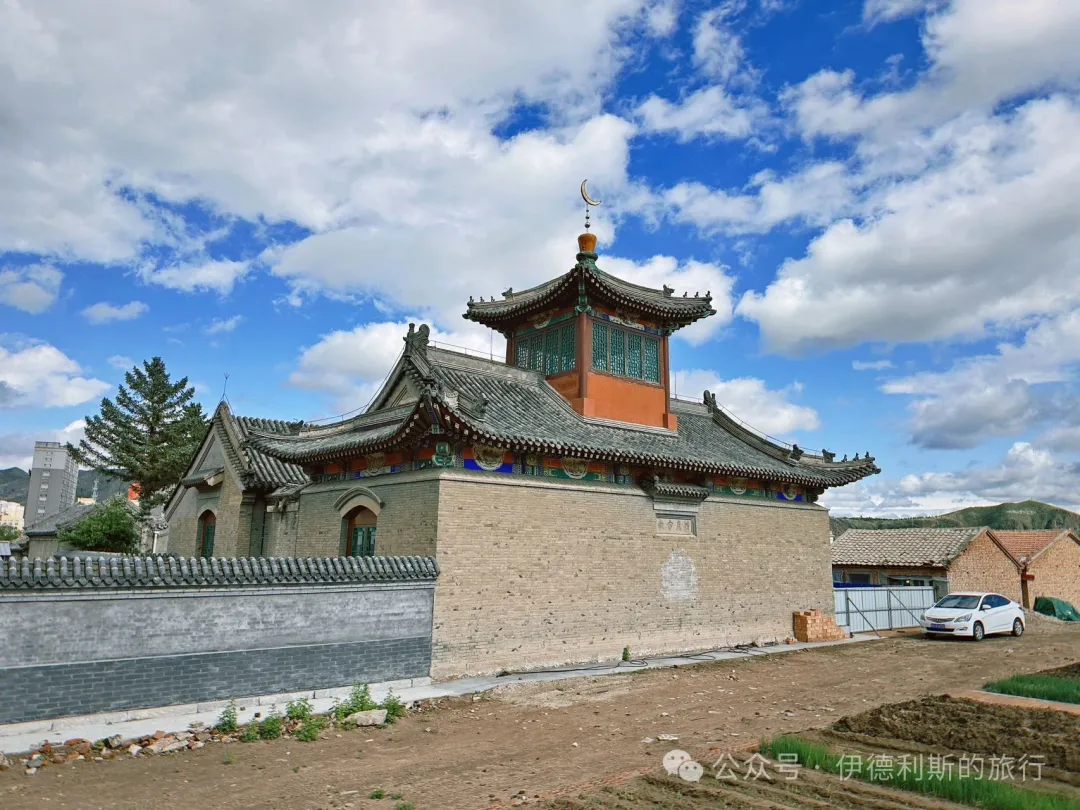
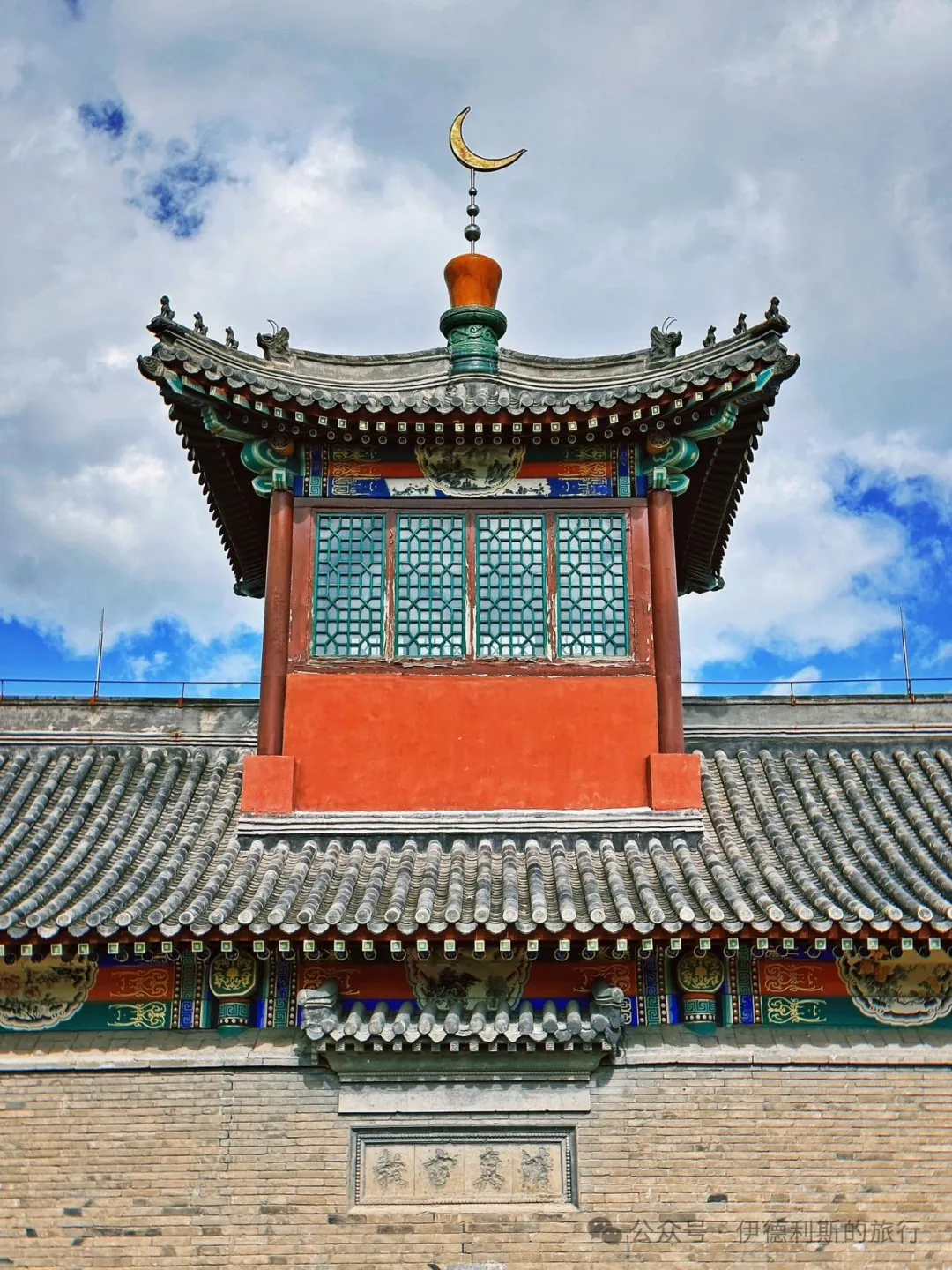
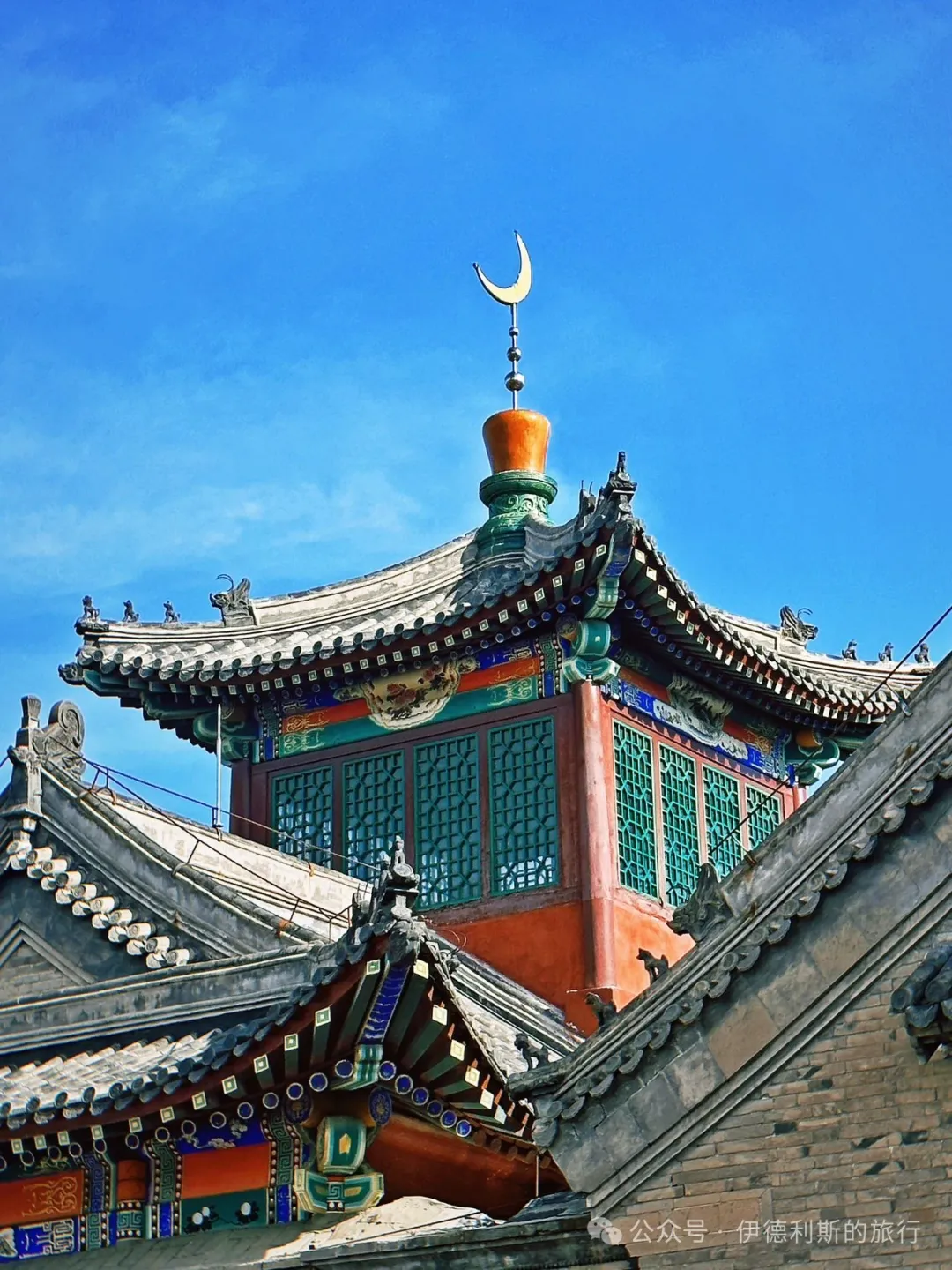
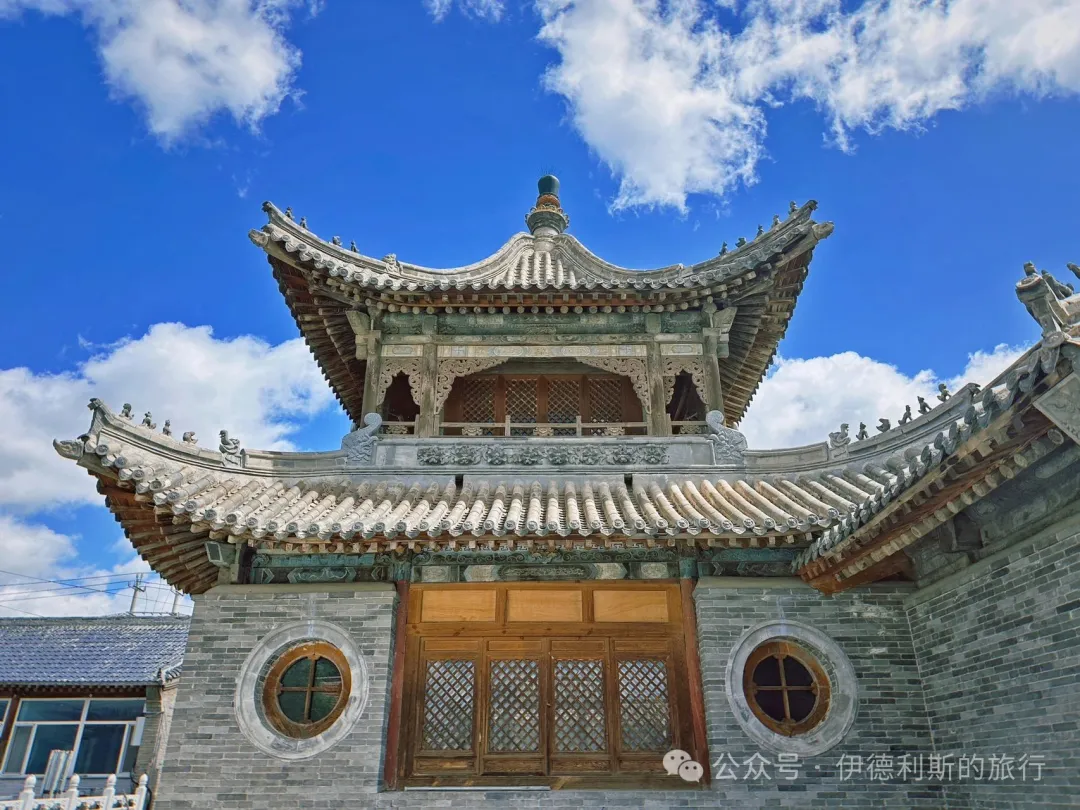
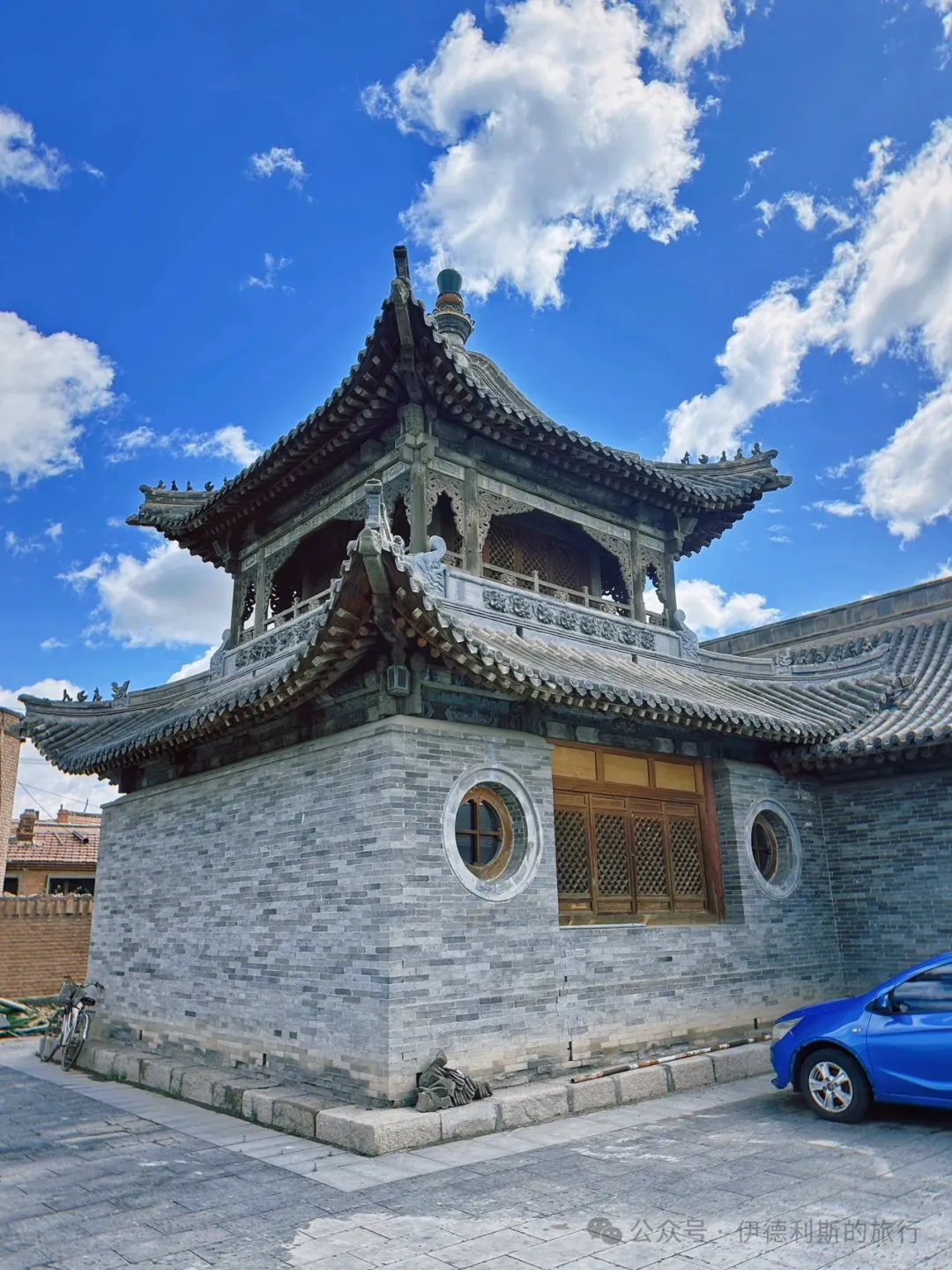
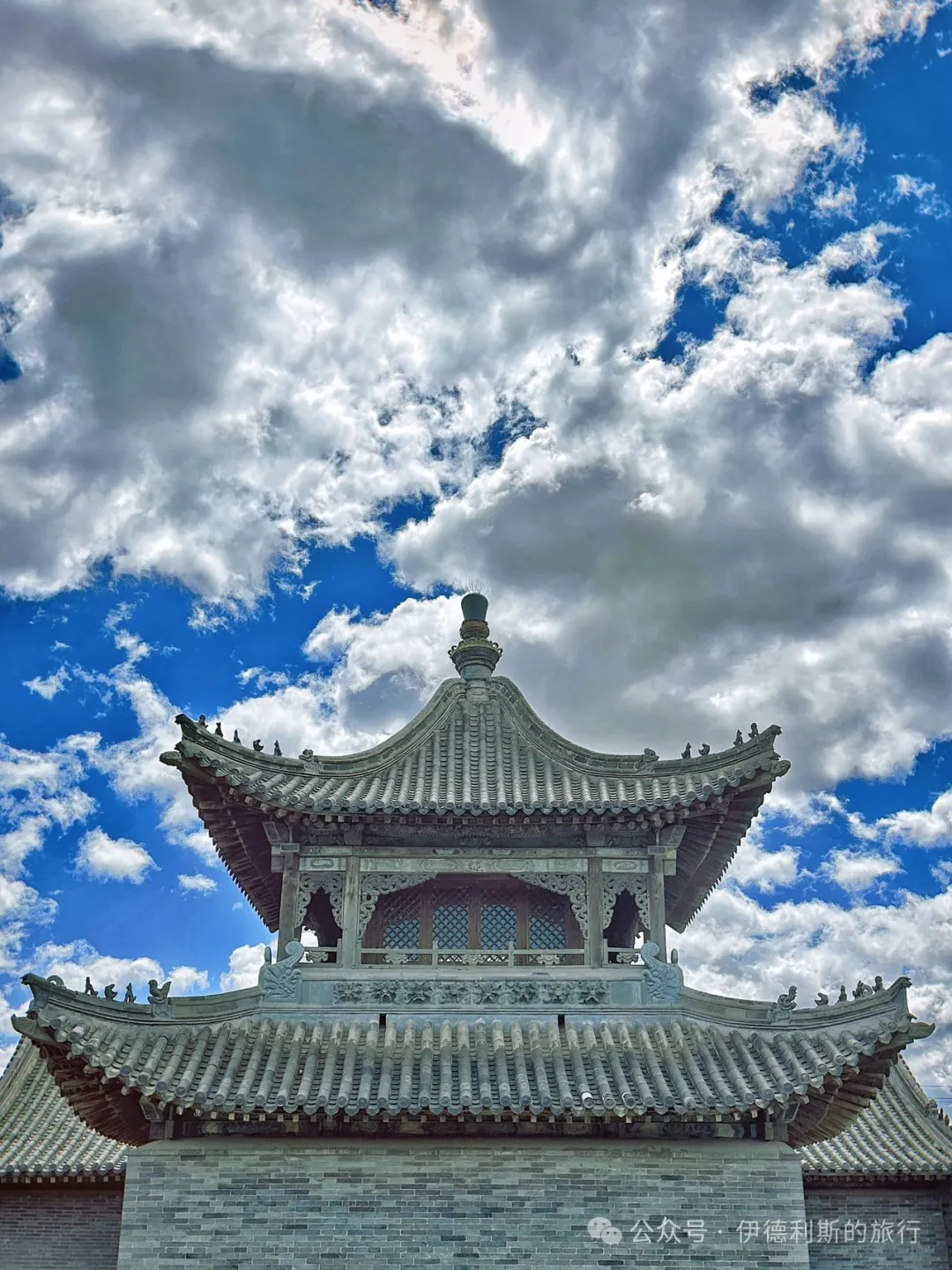
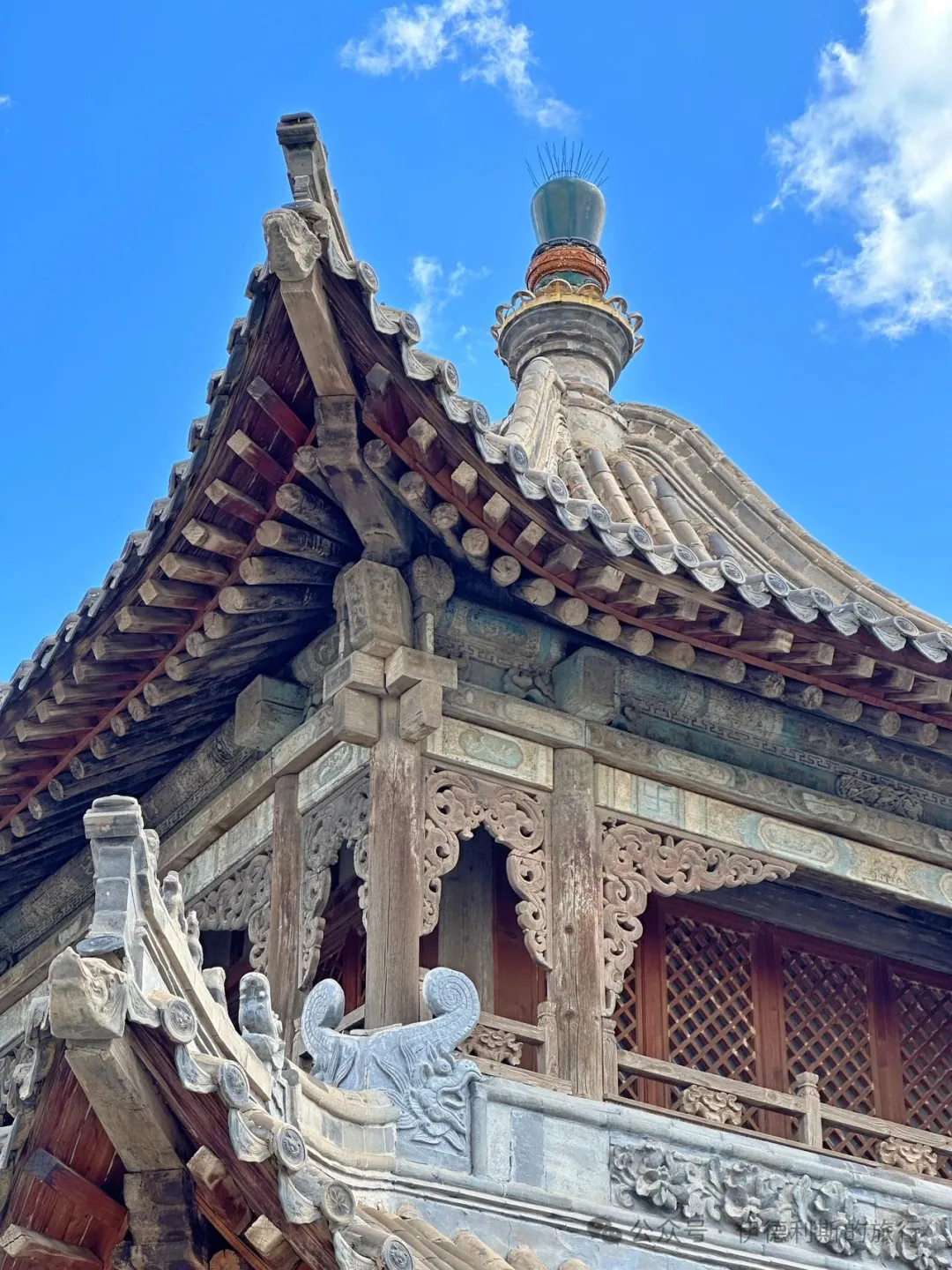
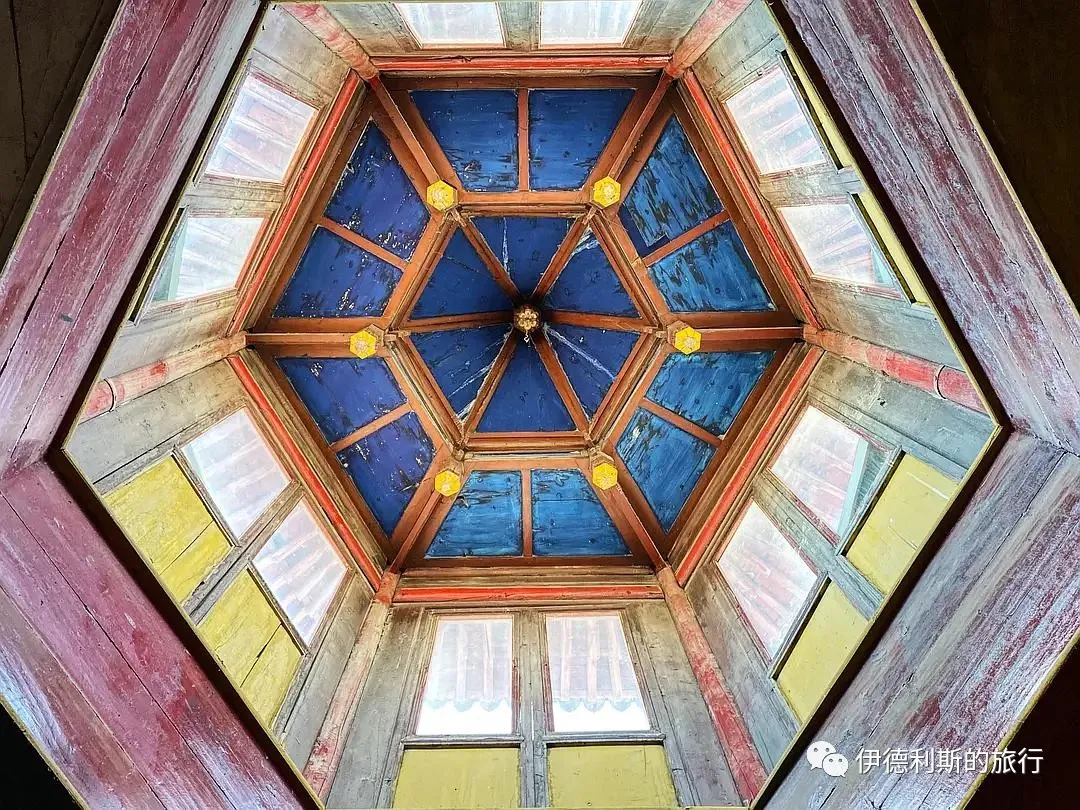
The main prayer hall of the North Mosque consists of a front porch (juanpeng), the main hall, the rear niche (yaodian), and a moon-sighting tower (wangyuelou) on top of the niche. The moon-sighting tower has a double-eaved hexagonal roof with a gilded bronze vase on top and intricate carvings of two dragons playing with a pearl. The front porch sits on a pedestal base (xumizuo). Between the eaves pillars, there are openwork carvings of clouds and flowers, which is a very distinct style from Northeast China.
The beams of the front porch are painted with Suzhou-style patterns and feature wooden dragon head carvings, which are very rare in the country.
The beautiful stone carvings on the gable walls of the main hall feature bats representing good fortune and intertwined lotus patterns.
The phoenix, peony, sun, and moon carvings on the corner stone pillars of the main hall.
The drum-shaped stone bases (baogushi) in front of the porch.
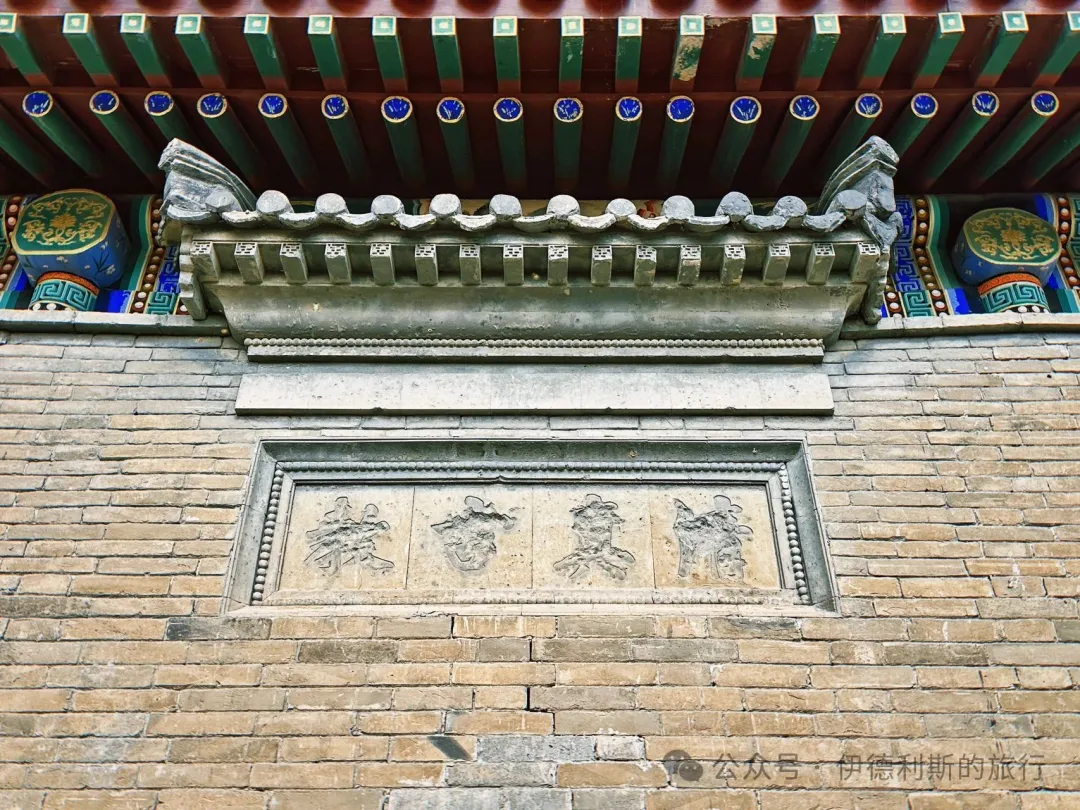
The calligraphic brick carvings on the gable ends (xitou). This style of calligraphy relates to the Shandong school of scripture hall education that spread through the Northeast region.
Jingpeng Mosque (Jingpeng Si).
During the Kangxi reign of the Qing Dynasty, Jingpeng Town became a major trading hub on the grasslands, located on the main route between Mongolia and the Northeast. During the lama temple fairs, merchants from inland China brought cotton cloth, sugar, and tea to trade with the Mongols for furs, livestock, and local products. In 1723 (the second year of the Yongzheng reign), severe droughts in Shandong and Hebei forced disaster victims to head north to find work. To solve the problem of displaced people, the Qing government implemented a policy of borrowing land to support the people in the southeastern Mongolian grasslands, including Hexigten Banner. During the Qianlong reign, Hui Muslims from Yangxin and Guan counties in Shandong, and Cangzhou and Hejian in Hebei, traveled through Chifeng and Duolun to reach Jingpeng Town to trade on the grasslands, eventually settling there.
After the 19th century, the Hui Muslim population in Jingpeng reached nearly 1,000, with family names including Feng, Cong, Ma, Bai, Li, Jin, and Ha. In 1852 (the second year of the Xianfeng reign), they officially built a mosque (masjid), which started as five mud-brick rooms. In 1902 (the 28th year of the Guangxu reign), community elders including Liu Qi, imam Ha Zhaobin, Li Wenrong, Cong Laofeng, Ma Changtai, and Jin Fengming led a fundraising effort to rebuild the Jingpeng Mosque. Liu Qi and Ha Zhaobin traveled inside the Great Wall three times to collect funds. After four years, the current building was completed in 1908 (the 34th year of the Guangxu reign). It was named a key cultural relic protection site of Hexigten Banner in 1992.
The north and south lecture halls and the main hall of the Jingpeng Mosque are all Qing Dynasty structures. The main hall consists of a porch, the main hall itself, and a rear kiln-style hall (yaodian) topped with a moon-watching tower (wangyuelou). The moon-watching tower was torn down in 1967 and rebuilt after 1981.
Duolun South Mosque (Duolun Nansi).
Duolun County is located at the southeastern end of Xilin Gol League and was once a political and economic center on the Mongolian grasslands during the Qing Dynasty. In 1691 (the 30th year of the Kangxi reign), Emperor Kangxi held the Duolun Alliance with the nobles of the three Outer Mongolian tribes and the forty-eight banners of Inner Mongolia, officially bringing Outer Mongolia into the Qing territory. Later, at the request of Mongolian nobles, Kangxi allowed inland merchants to open trade routes between China and the Mongolian grasslands, granting them official titles and favorable treatment. This caused merchants from Beijing, Tianjin, Hebei, Shanxi, Shandong, and Shaanxi to flock there, quickly turning Duolun into a commercial hub for Mongolian trade. In 1710 (the 49th year of the Kangxi reign), Xinghua Town was officially established in Duolun. In 1741 (the sixth year of the Qianlong reign), Xinshengying was built north of Xinghua Town, forming the layout of the old city of Duolun.
After the city of Duolun was established, Hui Muslims from Hebei, Shandong, Shanxi, and Henan traveled through Zhangjiakou to trade on the grasslands, moving back and forth between the Mongolian plains and inland China. In his book 'Records of Dolon Nor' published in 1908, the late Qing Japanese scholar Jian Hongsheng recorded that the Hui Muslim population in Duolun had already reached 3,000.
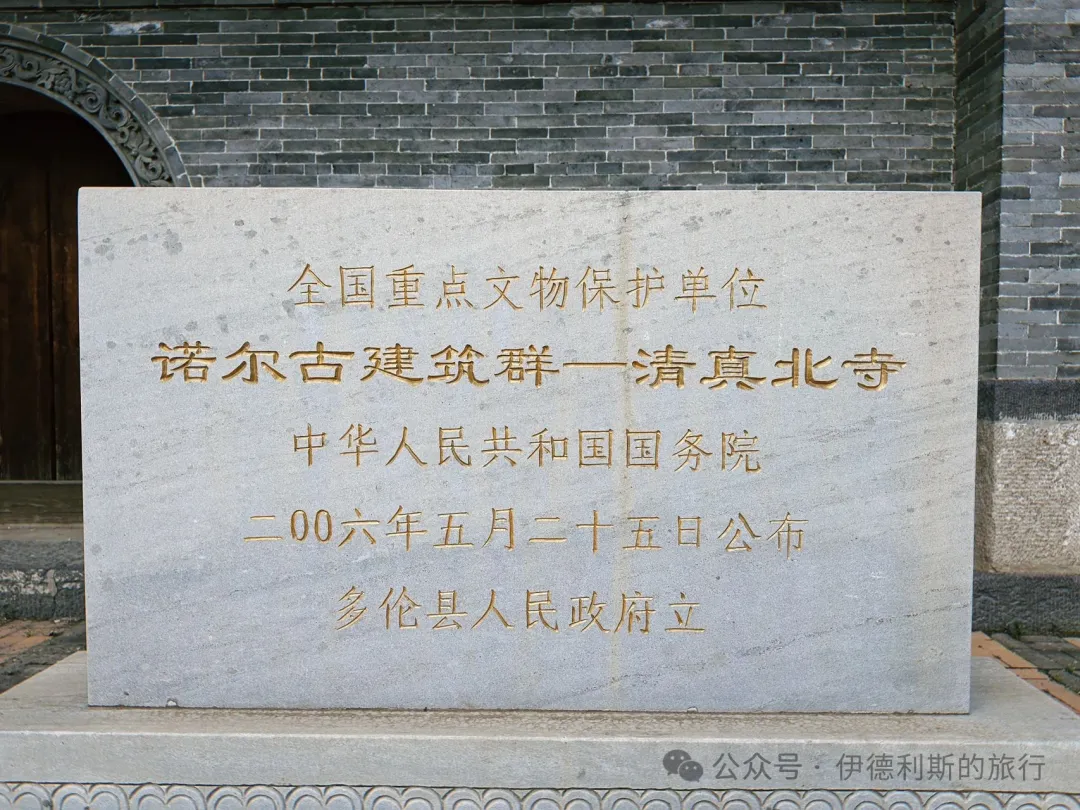
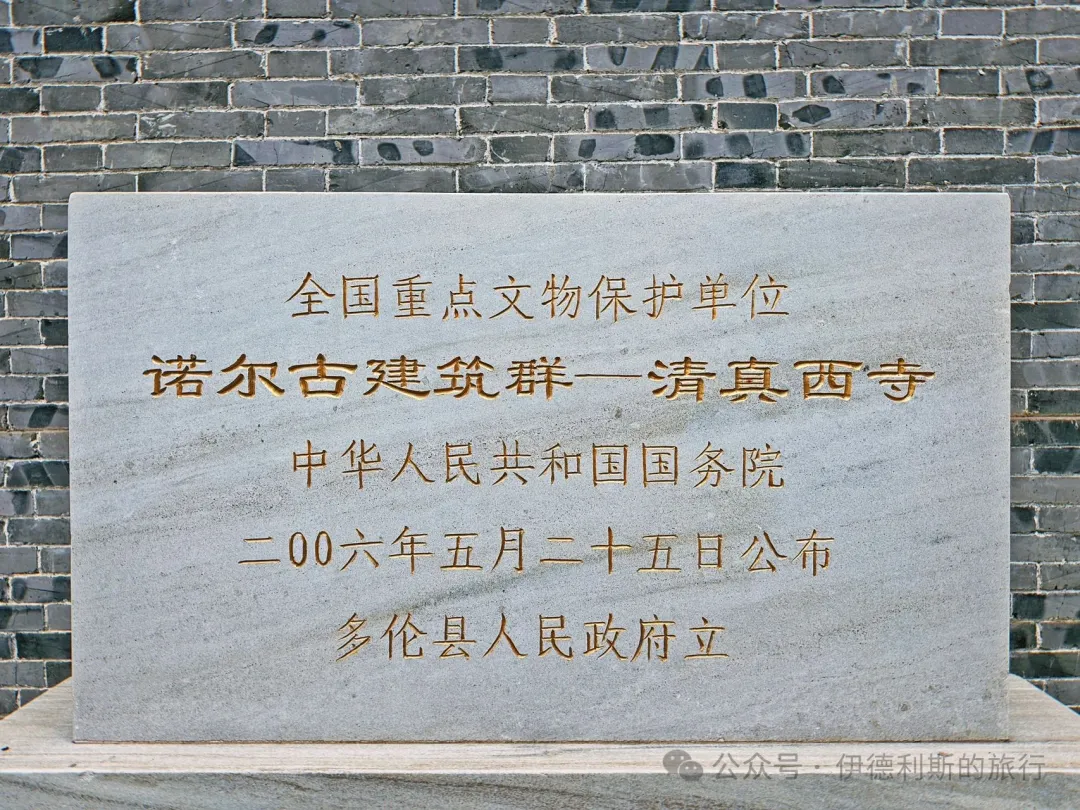
The Hui Muslims of Duolun built six mosques: the South Mosque, North Mosque, East Mosque, West Mosque, Central Mosque, and Da'erhao Mosque. The Da'erhao Mosque was transferred to Guyuan County in 1950, and the East Mosque was demolished in the 1960s. Today, the old city still preserves the South, North, East, and West mosques. In 2006, they were collectively listed as a national-level cultural relic protection site under the name 'Duolun Ancient Architectural Complex'.
The South Mosque is the first mosque in Duolun, located on Taiping Street in the old city. It was first built during the Yongzheng reign, and in 1761 (the 26th year of the Qianlong reign), Hui Muslim merchants Mo Tianming and Ma Guifang initiated an expansion to create the current structure. In July 1933, after the anti-Japanese hero General Ji Hongchang recaptured Duolun, the Hui Muslims of Duolun hosted a banquet for him at the South Mosque. The South Mosque is currently closed and not open for visitors.
Duolun North Mosque
The North Mosque is located on Erdao Street in the old city. It was built in 1798 (the third year of the Jiaqing reign) with funds donated by Hui Muslim merchants from the cattle, horse, and camel trade. It later became the largest mosque (masjid) in the city. In July 1933, after the anti-Japanese hero General Ji Hongchang recaptured Duolun, he stayed at the North Mosque for a short time. Today, the North Mosque is active and holds regular services.
Duolun West Mosque
During the Tongzhi reign, some Hui Muslims from Shaanxi, Ningxia, and Gansu moved to Duolun to settle down. Since then, Hui Muslims from North China have been called "Kouli people," while those from the Northwest have been called "Westerners."
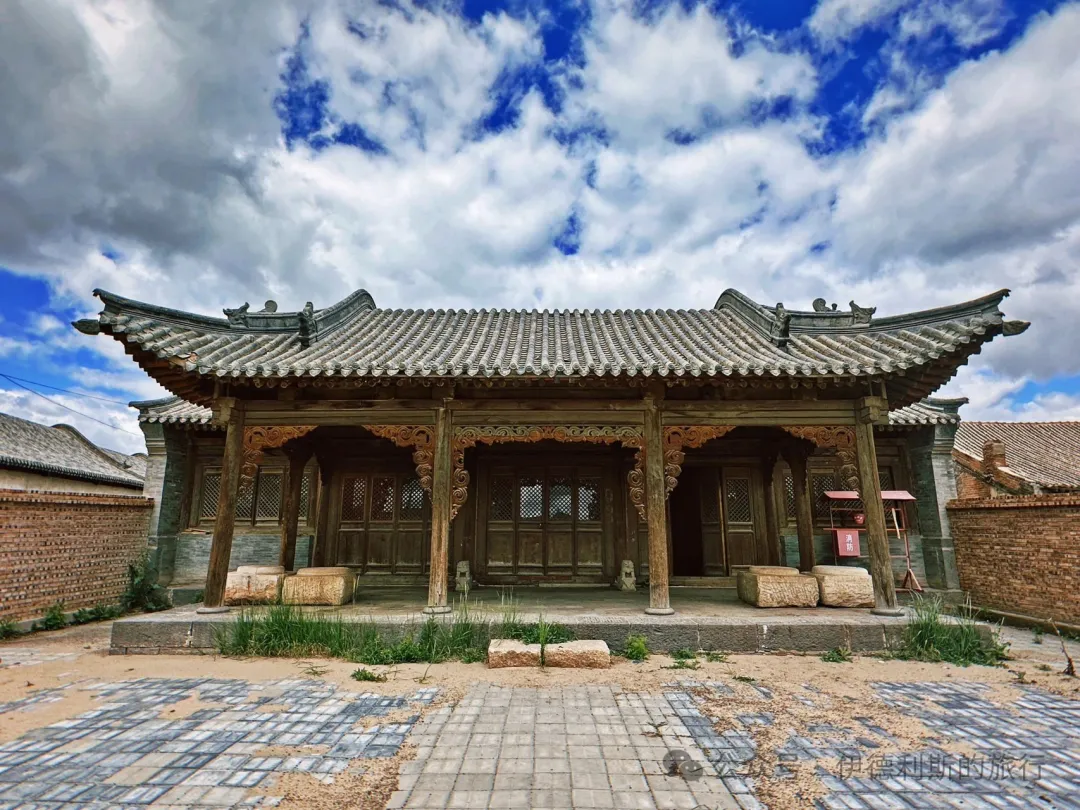
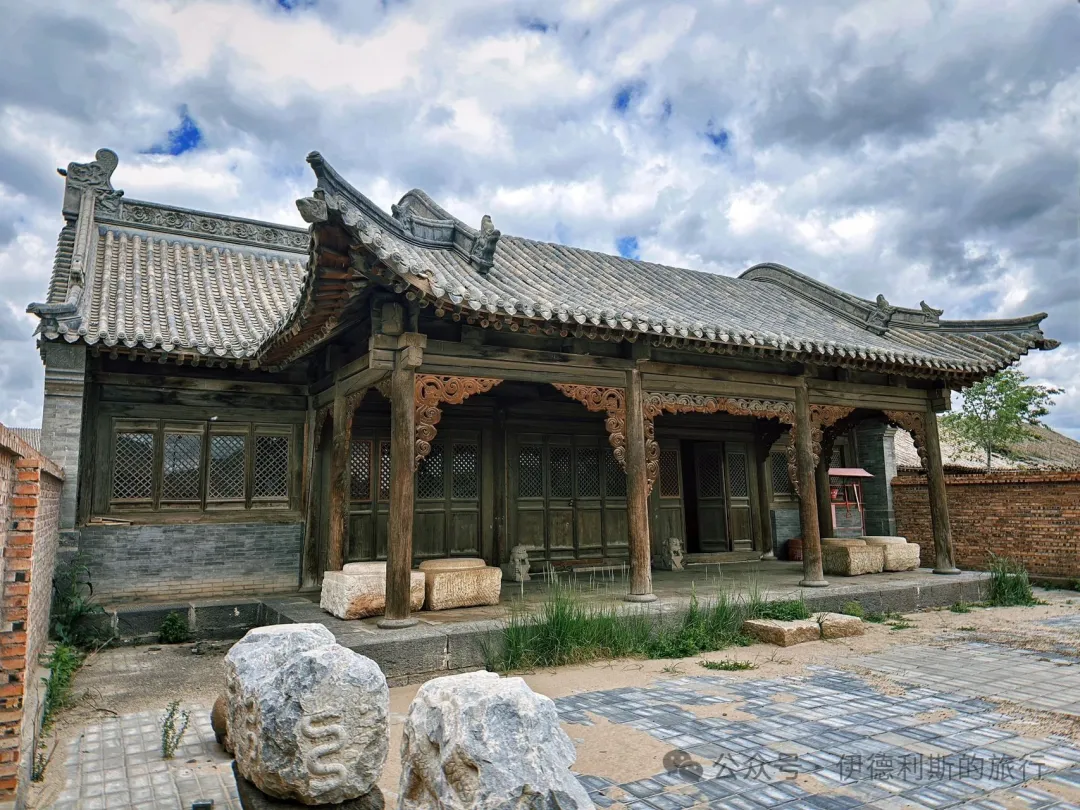
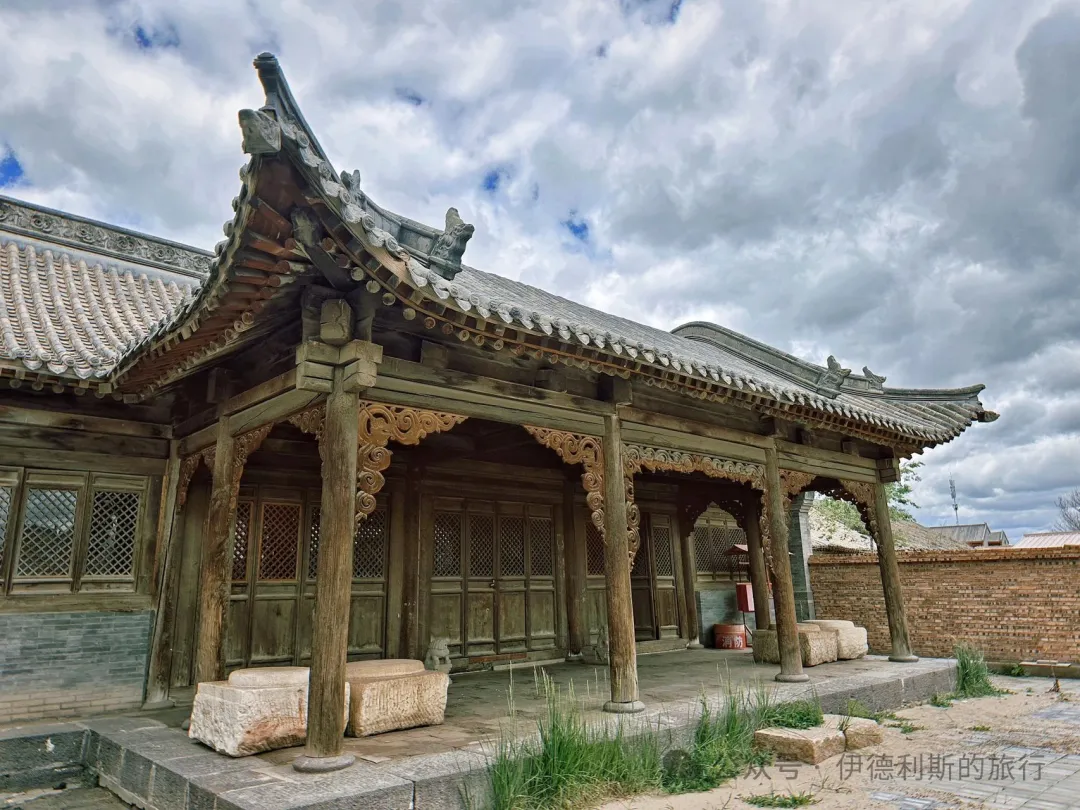
The East Mosque was located outside Nanjin Fort in the old city. It was started in 1869 (the eighth year of the Tongzhi reign) by Hui Muslims Xiu Mingliang and Liu Changfu from Shaanxi, and was completed in 1878 (the first year of the Guangxu reign). The West Mosque is located on Daxijie Street in the old city. It was built in 1880 (the fifth year of the Guangxu reign) by camel merchants Li Xianyu and Wang Jichen, who were from Ningxia and Gansu. After the 1960s, the East Mosque was completely demolished, and the gate and the north and south lecture halls of the West Mosque were also torn down. Today, only the main prayer hall of the West Mosque remains, and it is open to the public as a historical site.
Duolun Central Mosque
The Central Mosque is located on Nanquangfeng Street in the old city. It was built in 1908 (the 34th year of the Guangxu reign) by Wang Guofu and Shan Yunxing. In 1930, He Xingzhou, Cong Dianqing, and others initiated the reconstruction of the main hall, which was completed in 1935. The Central Mosque is currently open for regular activities.
The Duolun Central Mosque houses plaques and couplets from various mosques in Duolun: Do not be greedy for this life, only for the afterlife; the heavenly way and human way return to the true faith. Carefully guard the righteous path, avoid what is improper, keep your heart happy and your body at peace, and recognize the One. Dedicated in the eighth month of the 24th year of the Jiaqing reign.
Heavenly decree teaches the pure and unique faith, recognizing the truth since ancient times through the seven days; the Prophet's practice spreads the righteous faith, which is one and returns to the belief in the five daily prayers.
Blessings of the One True God: Dedicated on a lucky day in the fifth month of the ninth year of the Xianfeng reign of the Great Qing Dynasty by Zheng Kuishi, Imperial Commissioner overseeing military affairs in Ningguo, Commander-in-Chief of the Zhejiang provincial military, controller of all land and water garrisons, and specially granted the title of Jianwei General and Shalama Gai Batulu.
Zheng Kuishi was a famous general in the late Qing Dynasty and a Hui Muslim from Wanquan, Zhangjiakou, Hebei. He fought against the Taiping Rebellion and the Nian Army for many years. He was the first to break through Luzhou and suffered over twenty wounds in Huaiyuan, nearly losing his life, which earned him great praise from the imperial court. When Zheng Kuishi inscribed the plaque for Duolun in the ninth year of the Xianfeng reign, he was serving as the Commander-in-Chief of Zhejiang and overseeing military affairs in Ningguo, which was the highest rank he reached in his life. In a memorial to the throne, Li Hongzhang highly praised Zheng Kuishi, saying he was "hardworking, resolute, and brave beyond compare... he was the first to face the enemy's sharp edge, braving death, and suffered severe wounds eight or nine times. His body was covered in scars, and among all the famous generals north and south of the Yangtze River, everyone considered Kuishi the best."
The Ancient Pure Faith: Respectfully presented by Song Rui, who was specially granted a peacock feather and served as the Duolun Camp Commander. A lucky day in the sixth month of the first year of the Guangxu reign of the Great Qing Dynasty.
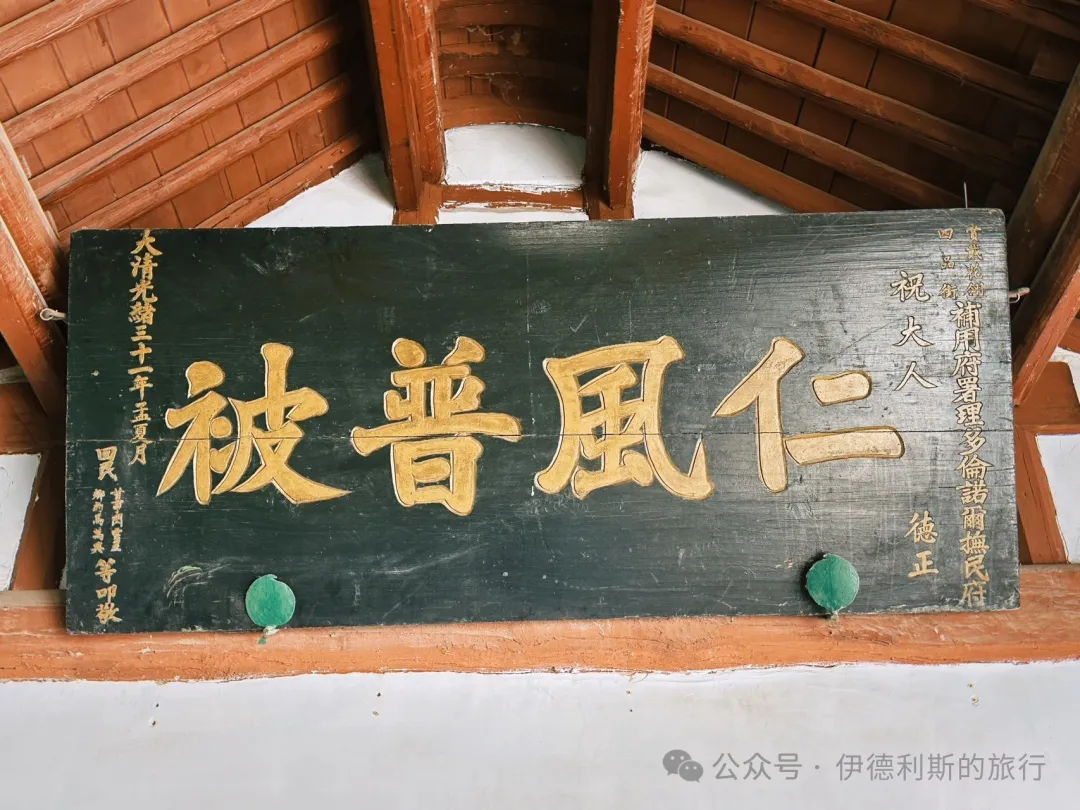
Benevolence spreads everywhere: To the honorable official Zhu, who wears a peacock feather (hualing) and holds a fourth-rank title while serving as the acting prefect of Duolunnuo'er. Respectfully presented in the first month of summer in the 31st year of the Guangxu reign of the Qing Dynasty by Hui Muslim community leaders Shan Yunxing, village head Ma Wanxing, and others.
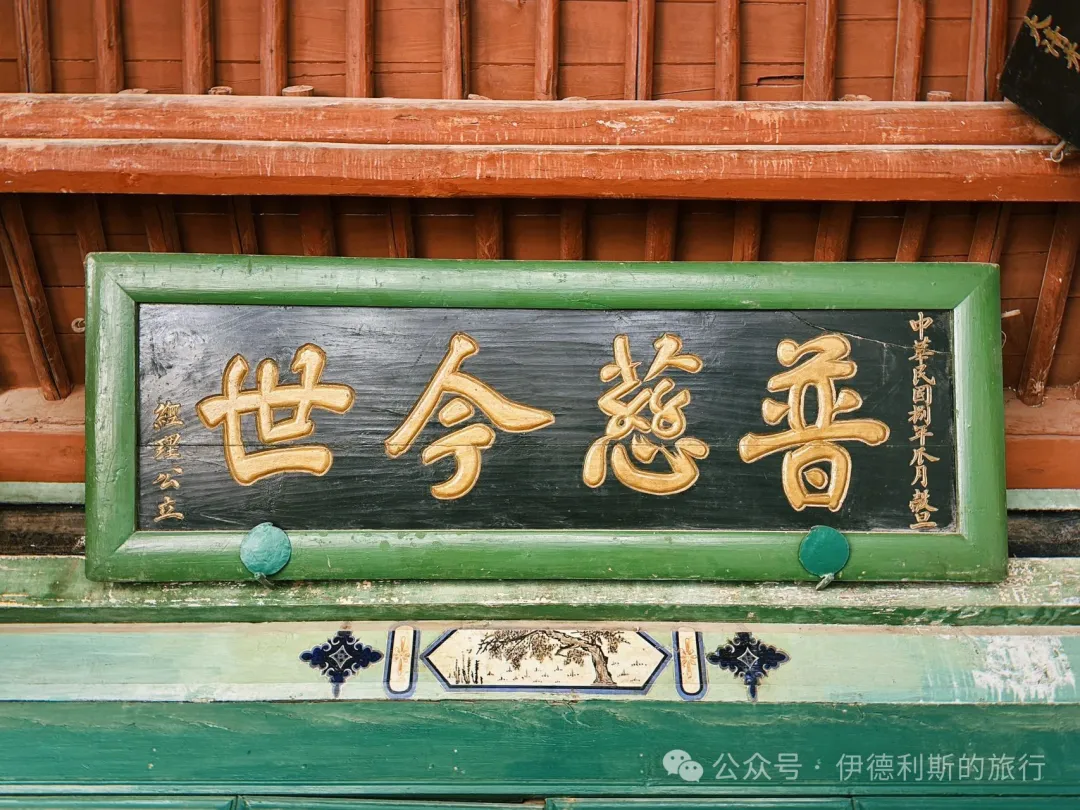
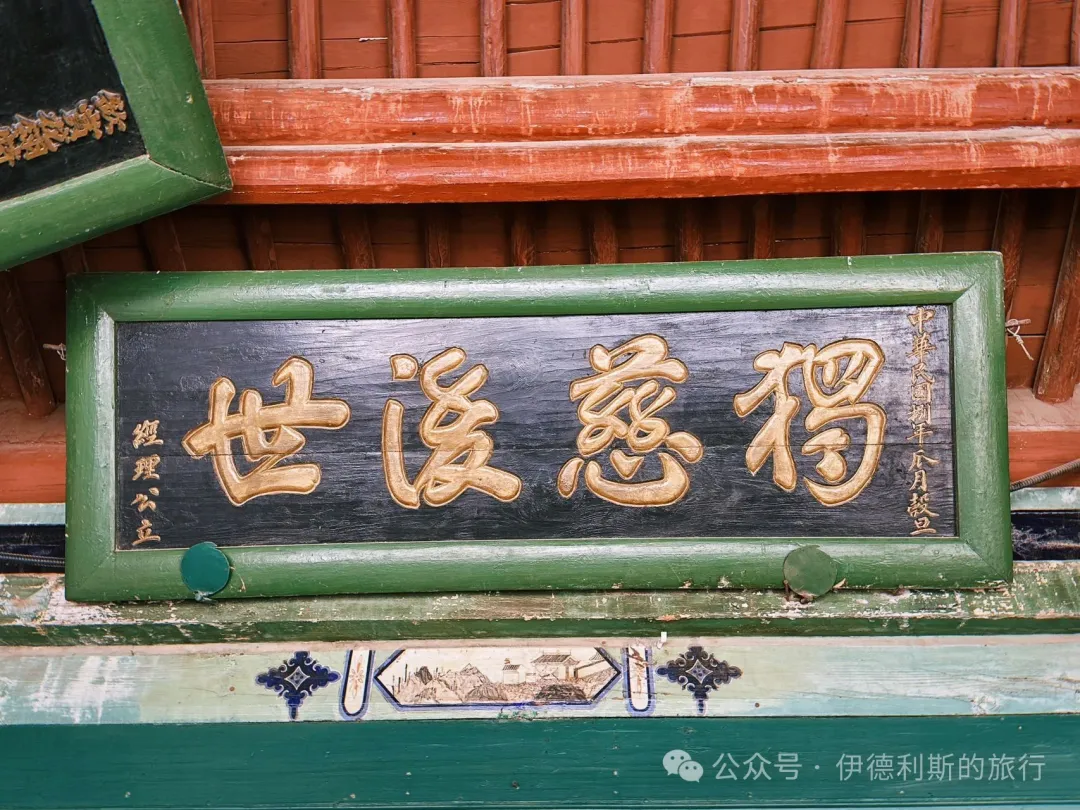
Merciful in this life, uniquely merciful in the hereafter: Dedicated in the seventh lunar month of the eighth year of the Republic of China, managed by the public.
Longshengzhuang Mosque.
Longshengzhuang sits on the border of Shanxi and Inner Mongolia. From the Qing Dynasty to the early Republic of China, it was a crossroads for trade routes between Hohhot, Datong, and Zhangjiakou. It was a key town for Shanxi merchants trading in Mongolia and was officially named Longshengzhuang in 1765 (the 30th year of the Qianlong reign). Shanxi merchants traveling to Mongolia brought rice, flour, tea, oil, wine, and daily goods from Longshengzhuang to Mongolia. They returned with furs, livestock, and leather, bringing great wealth to the town.
The economy of Longshengzhuang peaked during the Xianfeng reign, with 500,000 sheep sold and transported through the town each year. Longshengzhuang reached its height in the early Republic of China. The town had over 300 shops and more than a dozen stables (madian) used for trading and transporting cattle, horses, and sheep. At that time, the street from the south to the north of Longshengzhuang stretched nearly 2 kilometers, lined with rows of shops.
Starting in the early Qing Dynasty, Hui Muslims from Hebei and Shandong moved to Longshengzhuang in Inner Mongolia to do business. In the late Qing Dynasty, many Hui Muslims from Shaanxi also migrated there. During the Guangxu reign of the Qing Dynasty, the Hui Muslim population in Longshengzhuang grew to two or three thousand. In the early Republic of China, it reached a peak of over five thousand people. At that time, Longshengzhuang had a large halal restaurant and nearly twenty businesses including livestock traders, brokers, and stables. After the Ping-Sui Railway opened in 1921, Longshengzhuang declined rapidly. After the 1930s, many people moved away. Today, only about 30 Hui Muslims remain, mostly elderly, and there are no longer any halal restaurants.
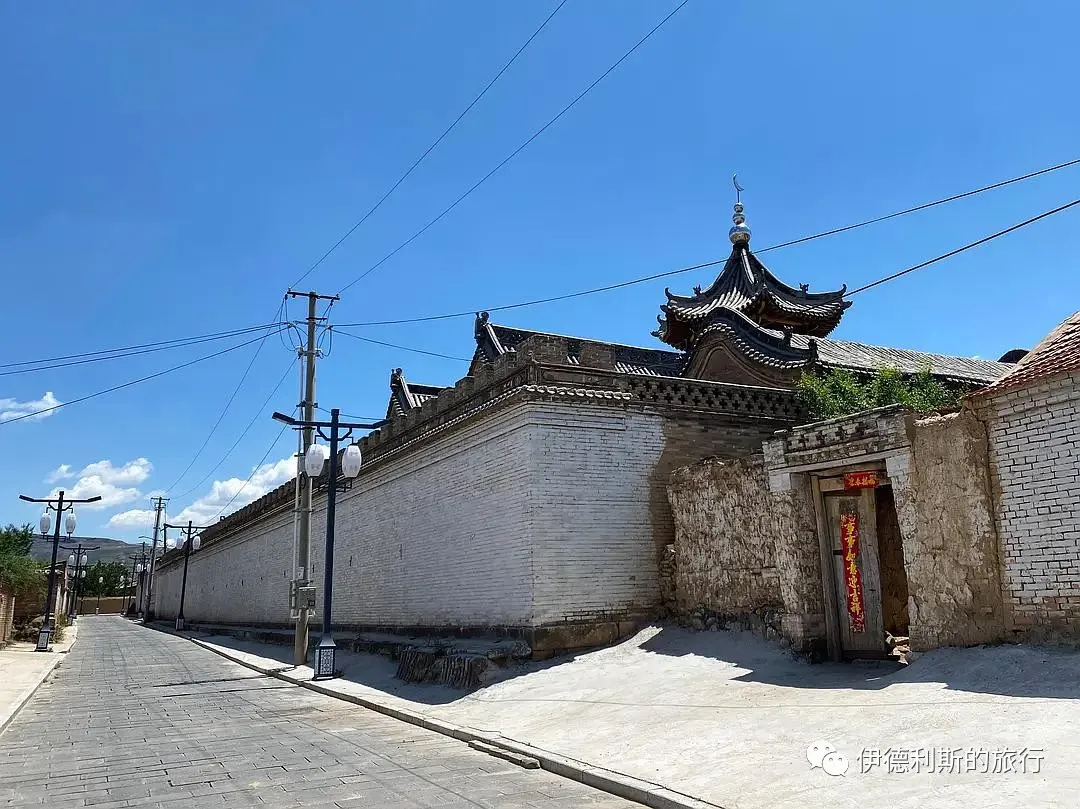
Longshengzhuang Mosque was first built in 1751 (the 16th year of the Qianlong reign of the Qing Dynasty). It originally had only three main halls. As more Hui Muslims came to do business, they added 13 main halls, a front gate, a second gate, side rooms, and a screen wall in 1831 (the 11th year of the Daoguang reign), creating a three-courtyard layout.
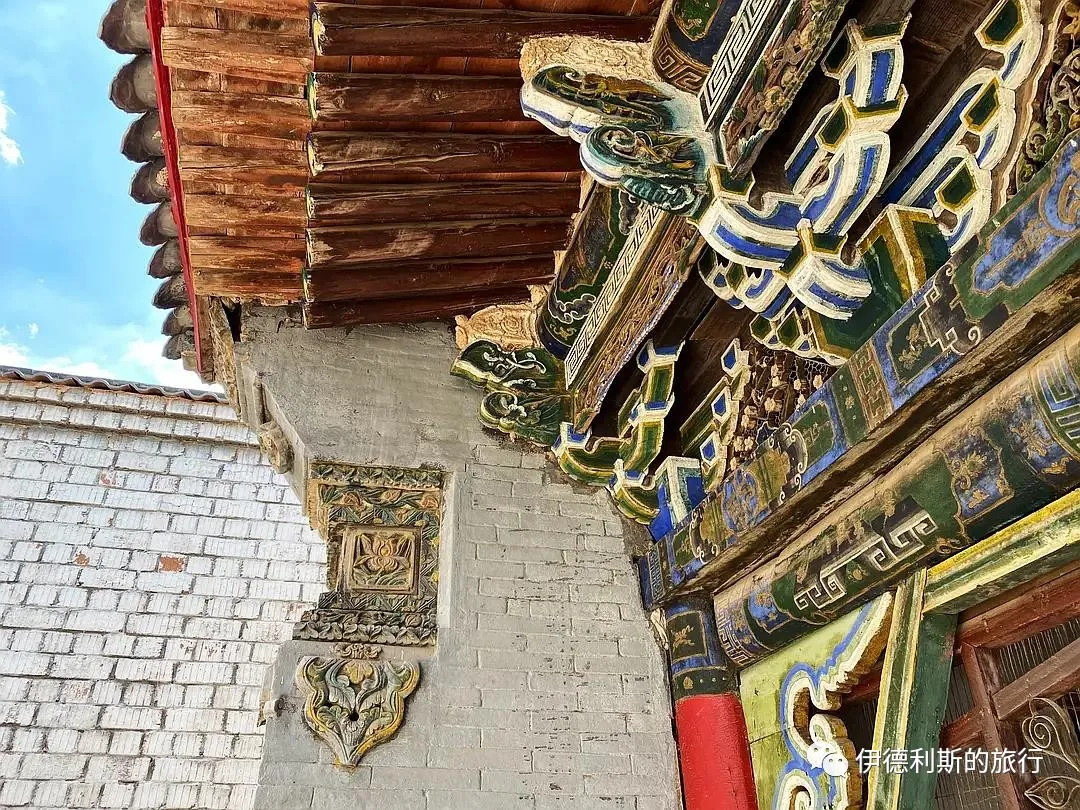
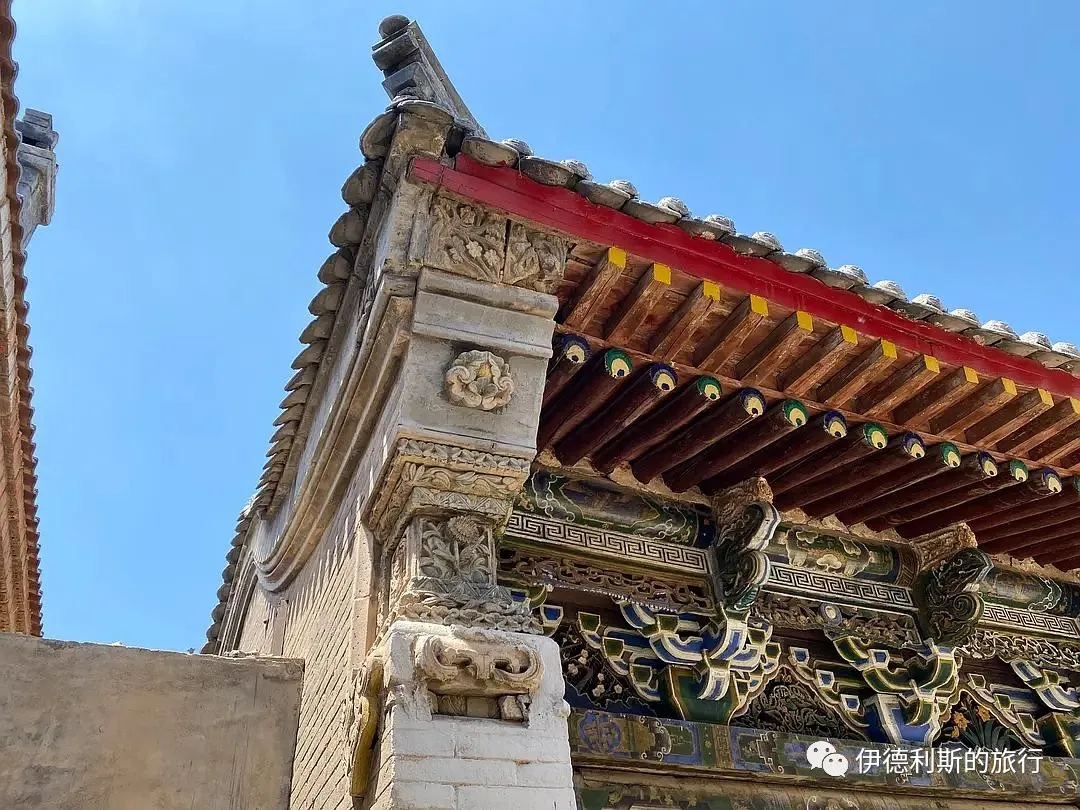
The mosque's porch (juanpeng) was expanded in 1926 and features beautiful ironwork decorations from the Republic of China era.
The main hall was also expanded in 1926. view all
Summary: This first part of the Inner Mongolia mosque series introduces historic Hui Muslim mosques shaped by Qing-era migration, frontier trade, and settlement on the grasslands. The article covers founding dates, mosque layouts, carved woodwork, inscriptions, and the communities that built and maintained these sites.
I am sharing 12 historic mosque buildings I visited in Inner Mongolia, moving from east to west.
Chifeng North Mosque: First built in 1739 and rebuilt in 1747.
Jingpeng Mosque: First built in 1852 and rebuilt in 1908.
Duolun South Mosque: First built during the Yongzheng reign and expanded in 1761.
Duolun North Mosque: Built in 1798.
Duolun West Mosque: Built in 1880.
Duolun Central Mosque: First built in 1908 and rebuilt in 1935.
Longshengzhuang Mosque: First built in 1751 and expanded in 1831 and 1926.
Hohhot Great Mosque: First built in 1693 and expanded in 1798 and 1925.
Chasuqi Great Mosque: First built in 1760 and rebuilt in 1909.
Salaqi Mosque: First built in 1747 and renovated in 1947.
Baotou Great Mosque: First built in 1743, renovated in 1833, and expanded in 1913.
Baotou Small Mosque: First built in 1908 and rebuilt in 1918.
Chifeng North Mosque
During the early Qing Dynasty, Hui Muslims from Shandong and Hebei provinces kept traveling through Gubeikou and Chengde to find work in eastern Inner Mongolia. In the 1730s, ten Hui Muslim families with surnames like Zhang, Ma, and Bai moved from Shandong and Hebei to settle in Chifeng. They were known as the ten great Hui Muslim families or the original settlers (zhanshanhu).
In 1739 (the fourth year of the Qianlong reign), a community elder named Zhang Yueming led the effort to lease seven point six mu of land from a Mongol prince. They built five mud rooms and a three-room main prayer hall, which became the first Chifeng mosque.
In 1742 (the seventh year of the Qianlong reign), elder Ma Fen, who once ran the Desheng Security Bureau in Shenyang, started a project to rebuild the mosque. He bought a plot of land, and the imam and several elders traveled to different places to collect donations through fundraising letters (nietie). Afterward, elder Ma Fen went to Shenyang to hire craftsmen. Construction took four years and finished in 1747 (the twelfth year of the Qianlong reign). All the wood used came from red pine trees in the mountains south of Chifeng. From then on, the imam of the North Mosque was always a scripture reader from the Ma family line.
The main prayer hall of the North Mosque consists of a front porch (juanpeng), the main hall, the rear niche (yaodian), and a moon-sighting tower (wangyuelou) on top of the niche. The moon-sighting tower has a double-eaved hexagonal roof with a gilded bronze vase on top and intricate carvings of two dragons playing with a pearl. The front porch sits on a pedestal base (xumizuo). Between the eaves pillars, there are openwork carvings of clouds and flowers, which is a very distinct style from Northeast China.
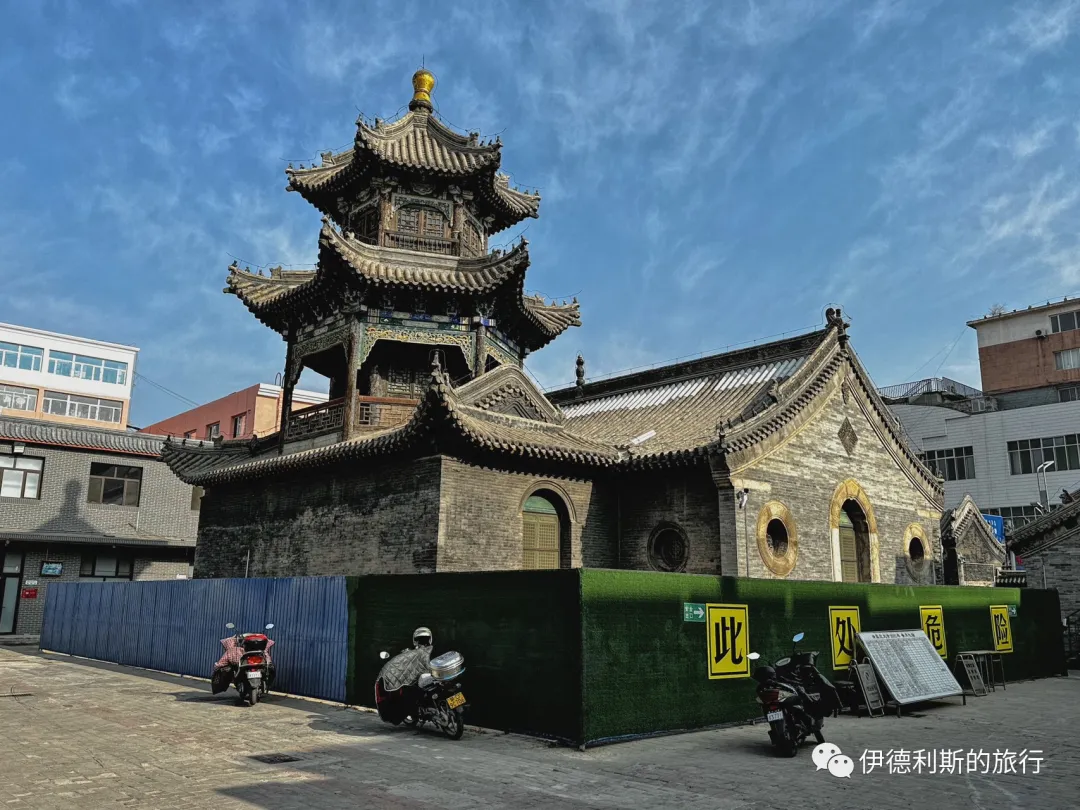
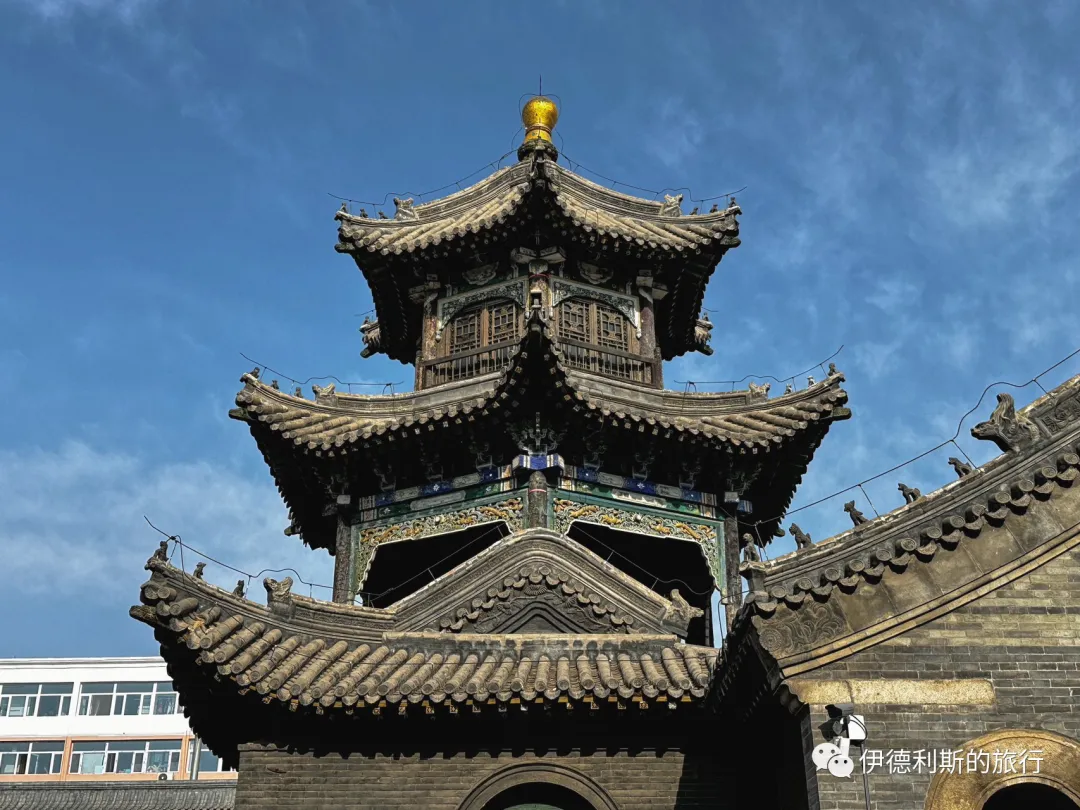
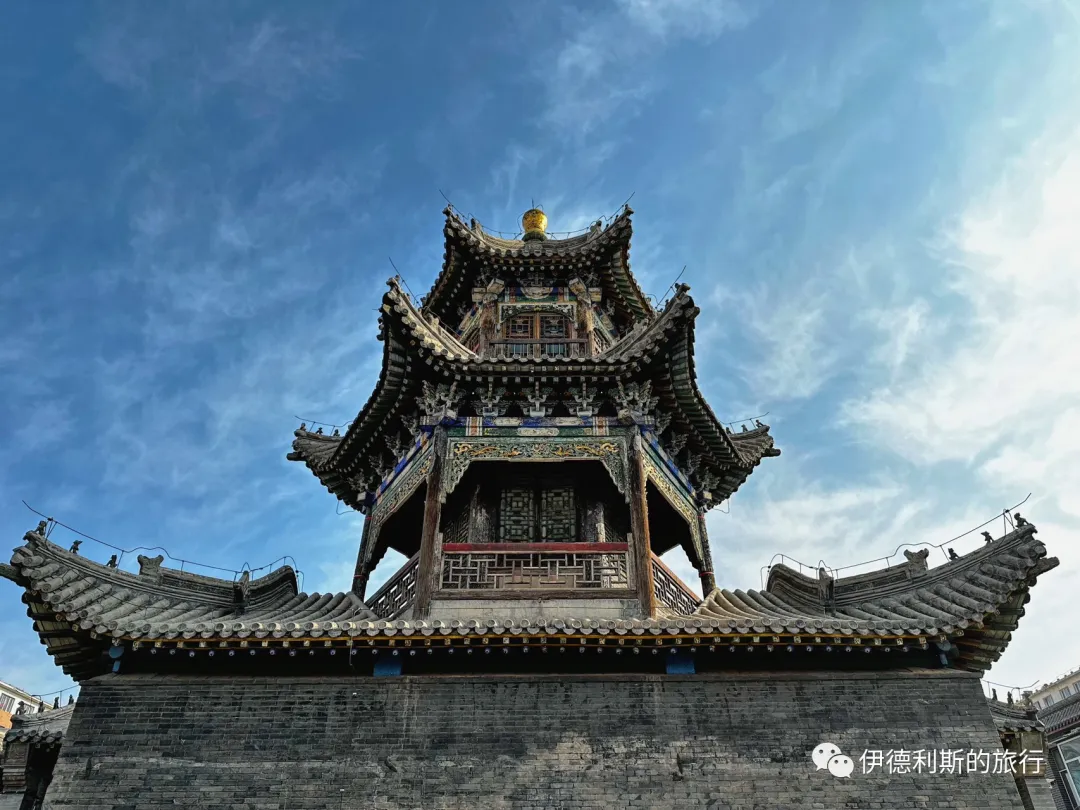
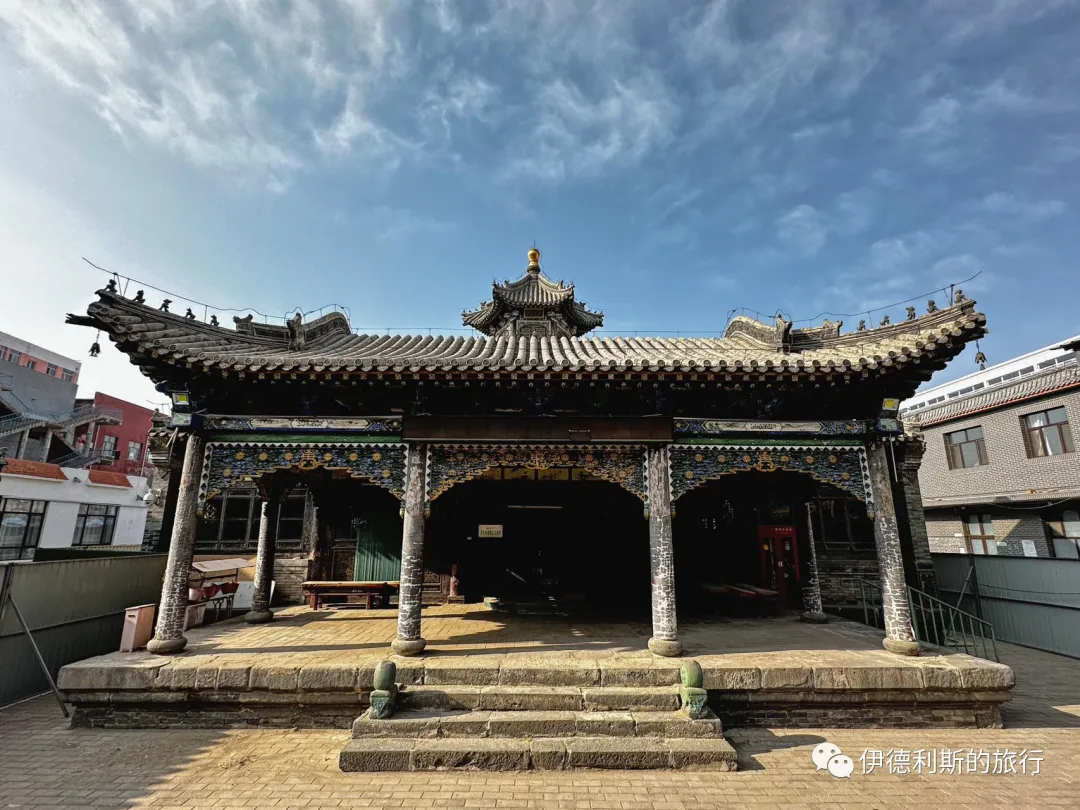
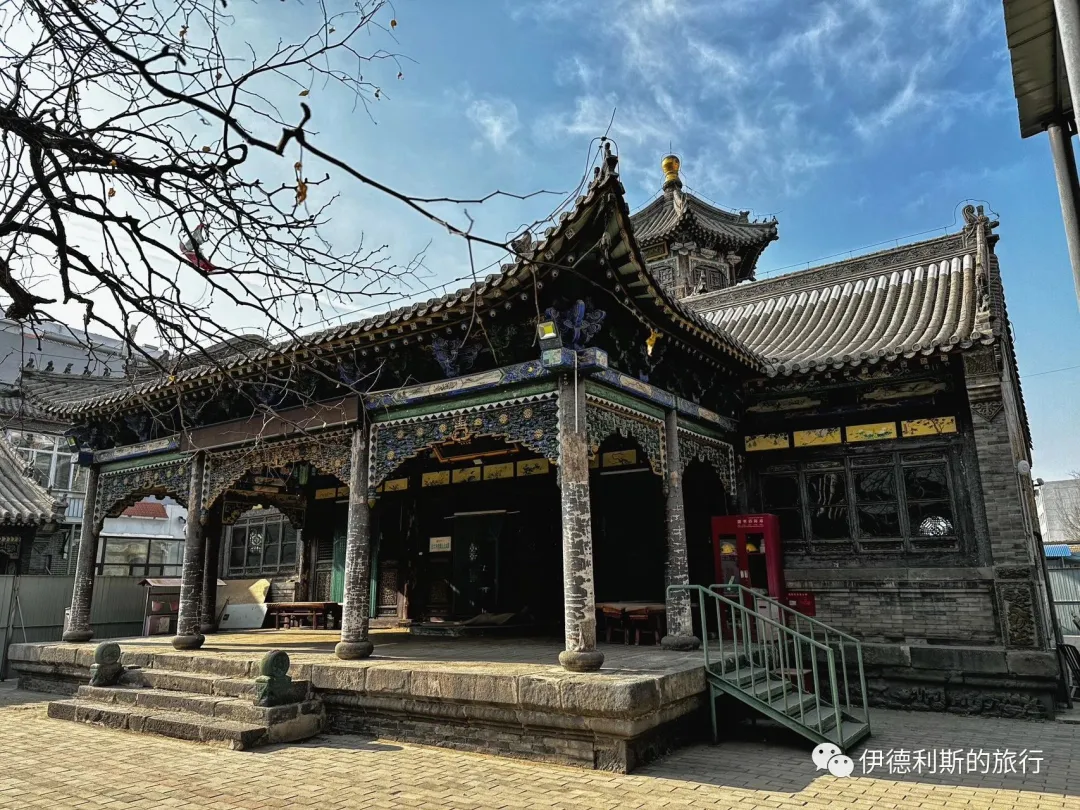
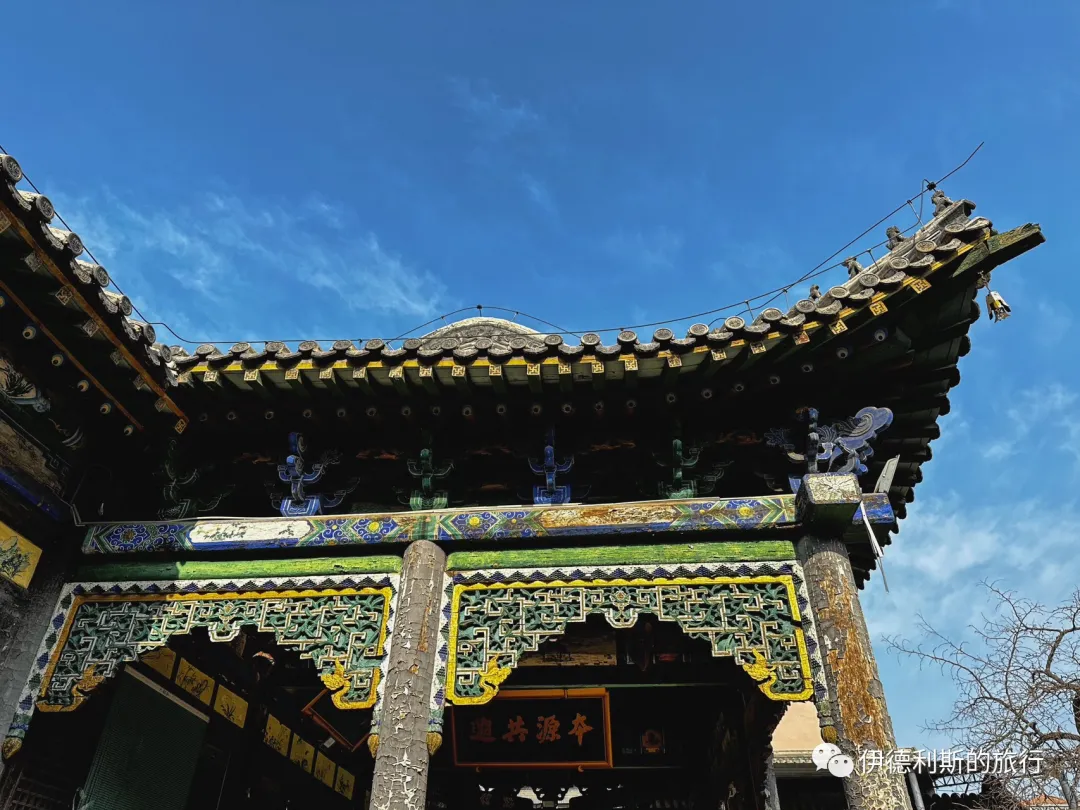
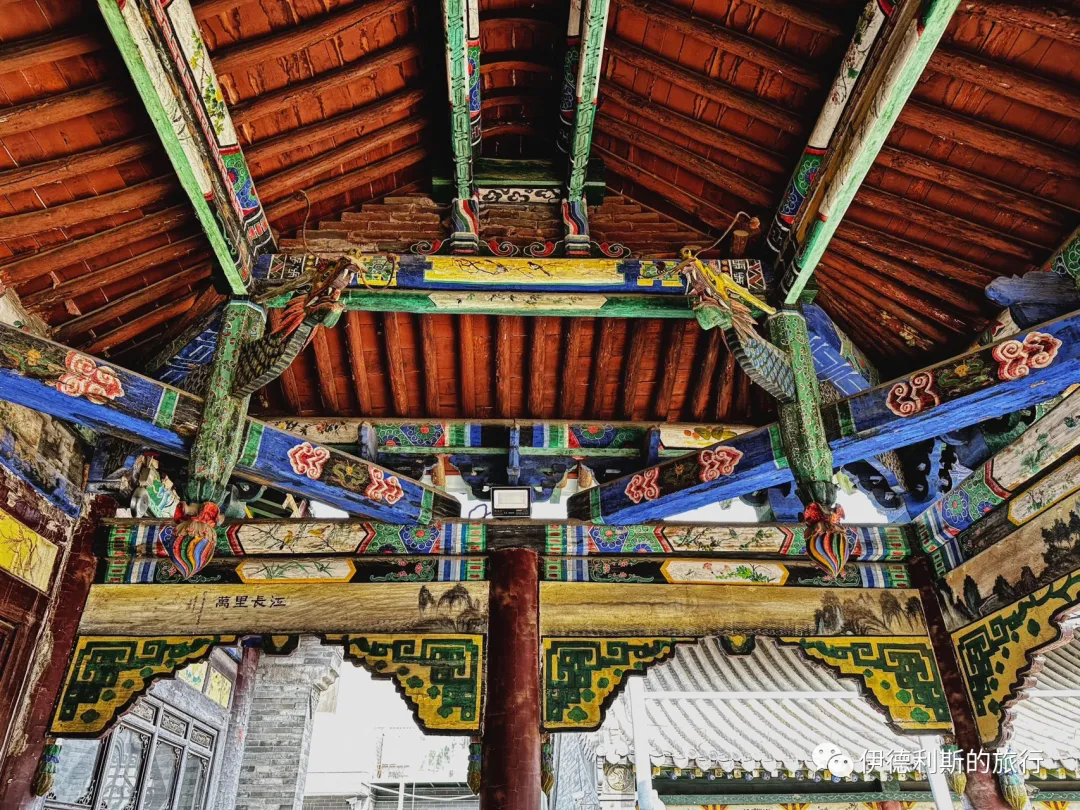
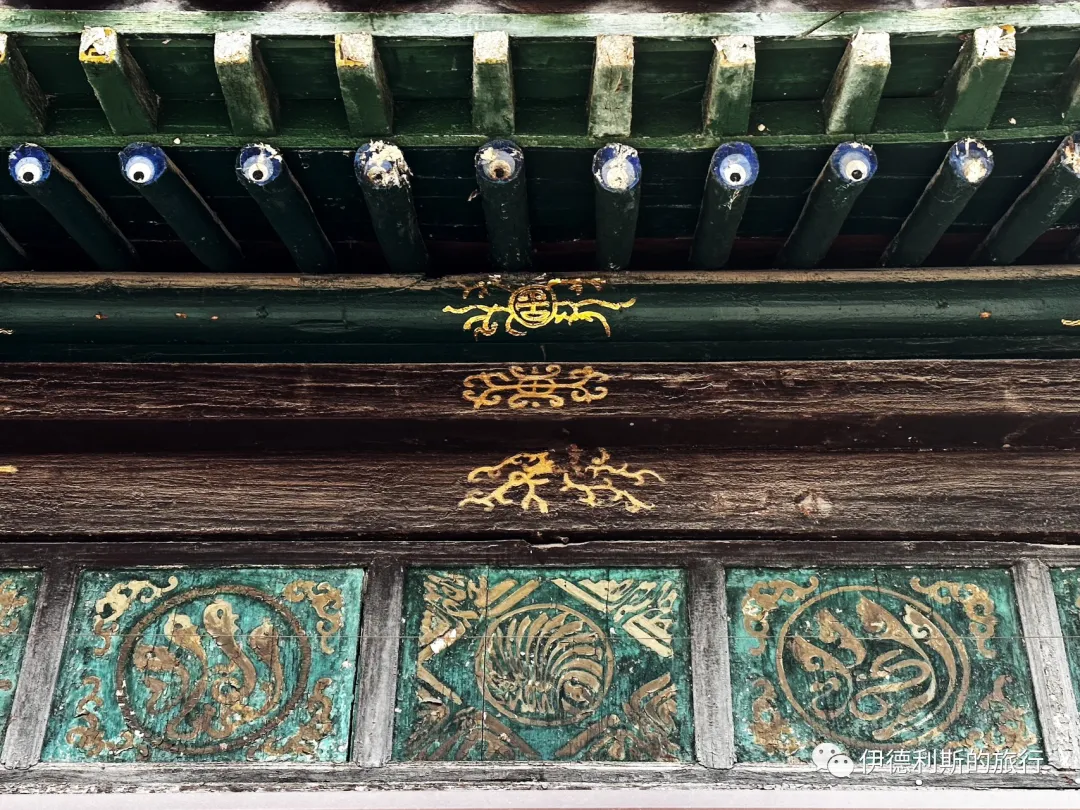
The beams of the front porch are painted with Suzhou-style patterns and feature wooden dragon head carvings, which are very rare in the country.
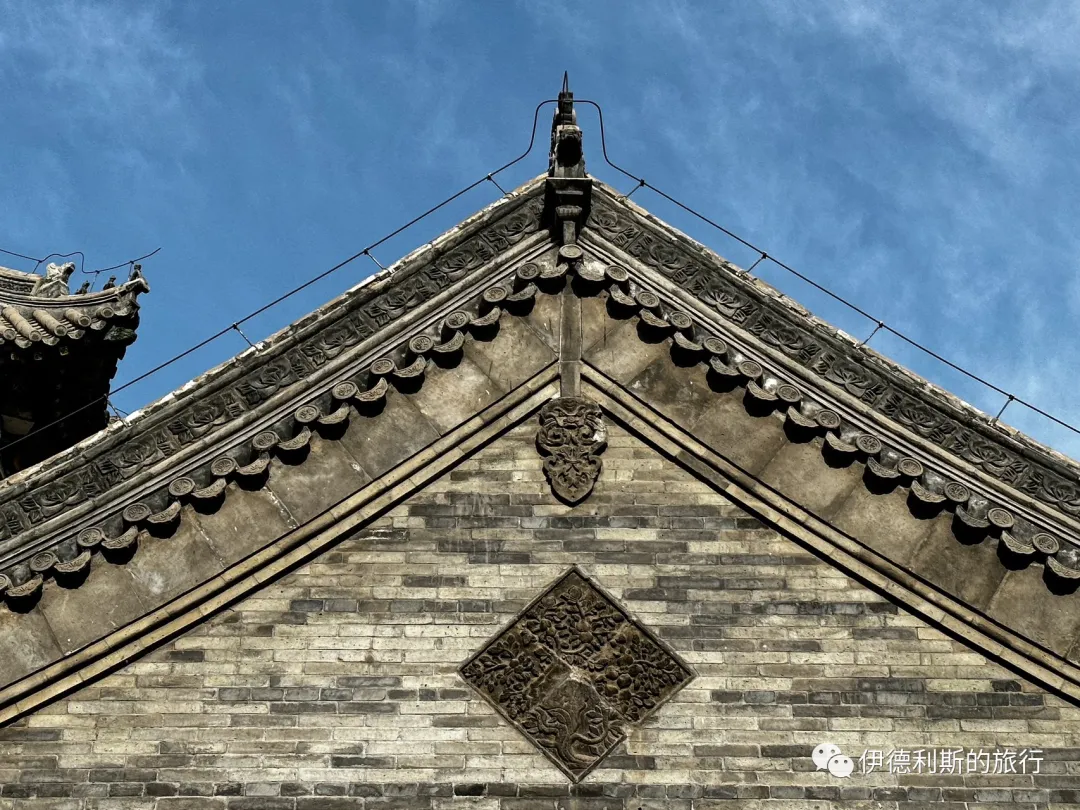
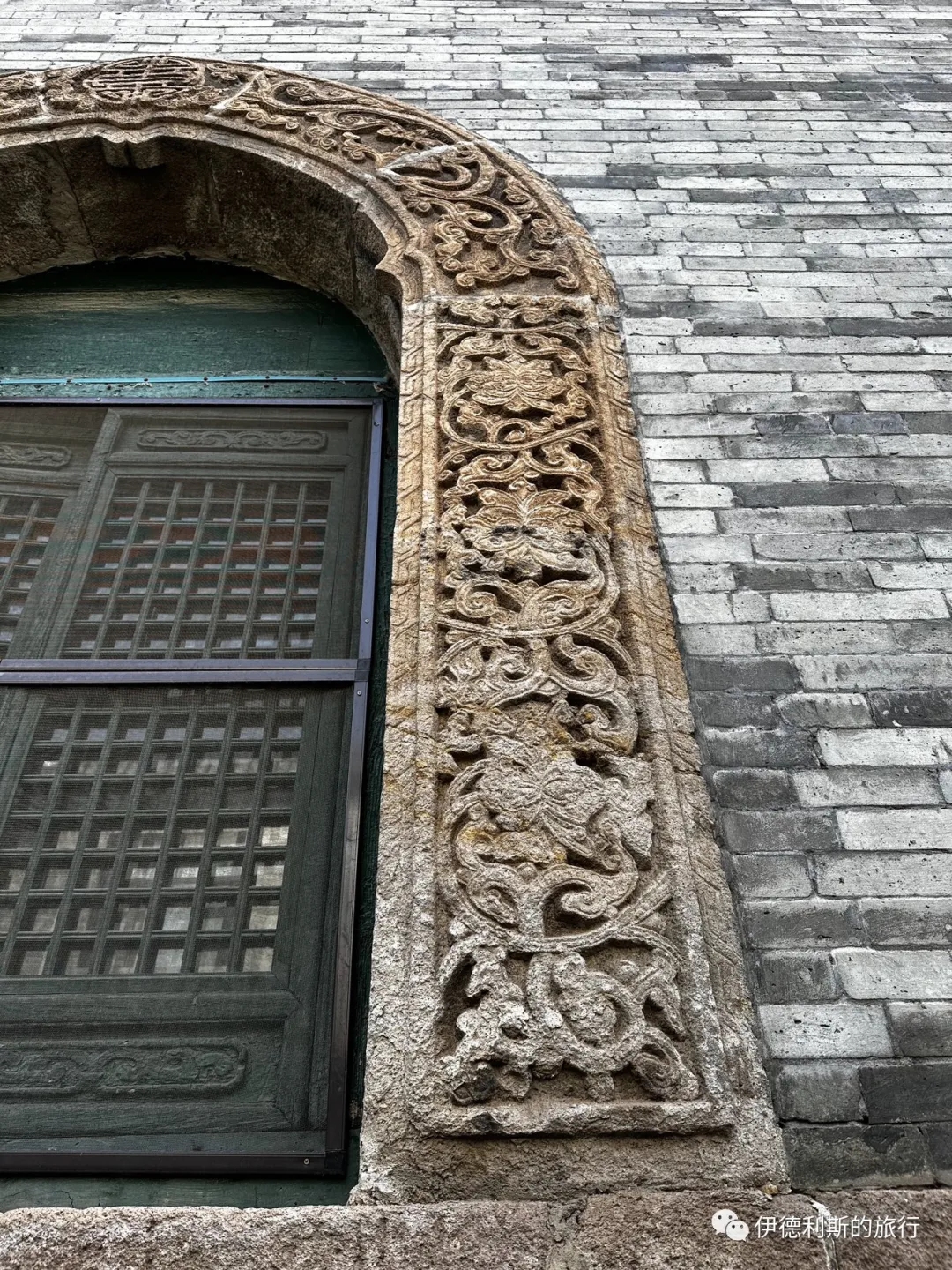
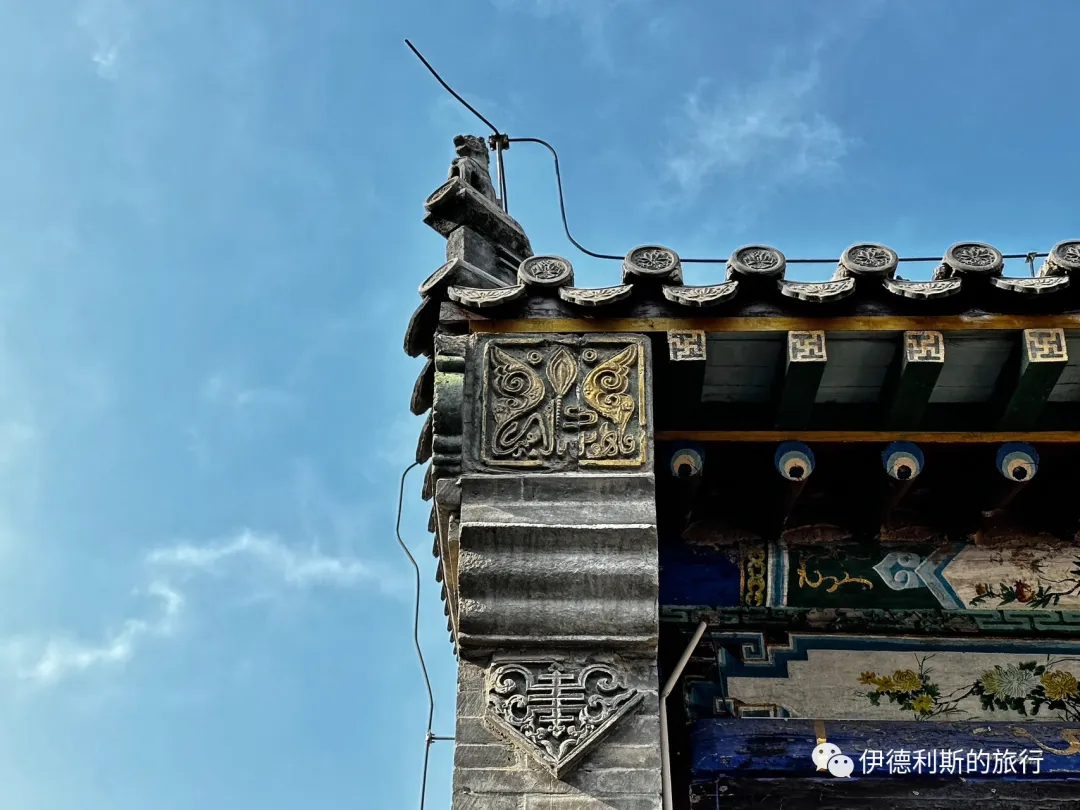
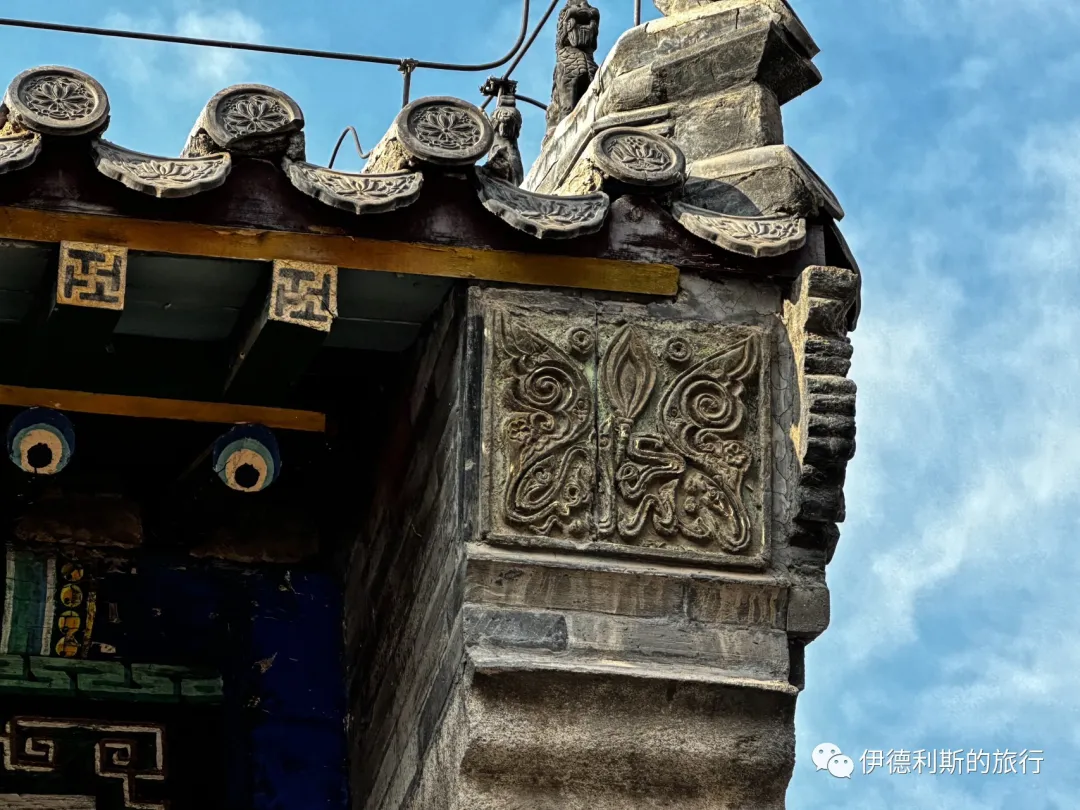
The beautiful stone carvings on the gable walls of the main hall feature bats representing good fortune and intertwined lotus patterns.
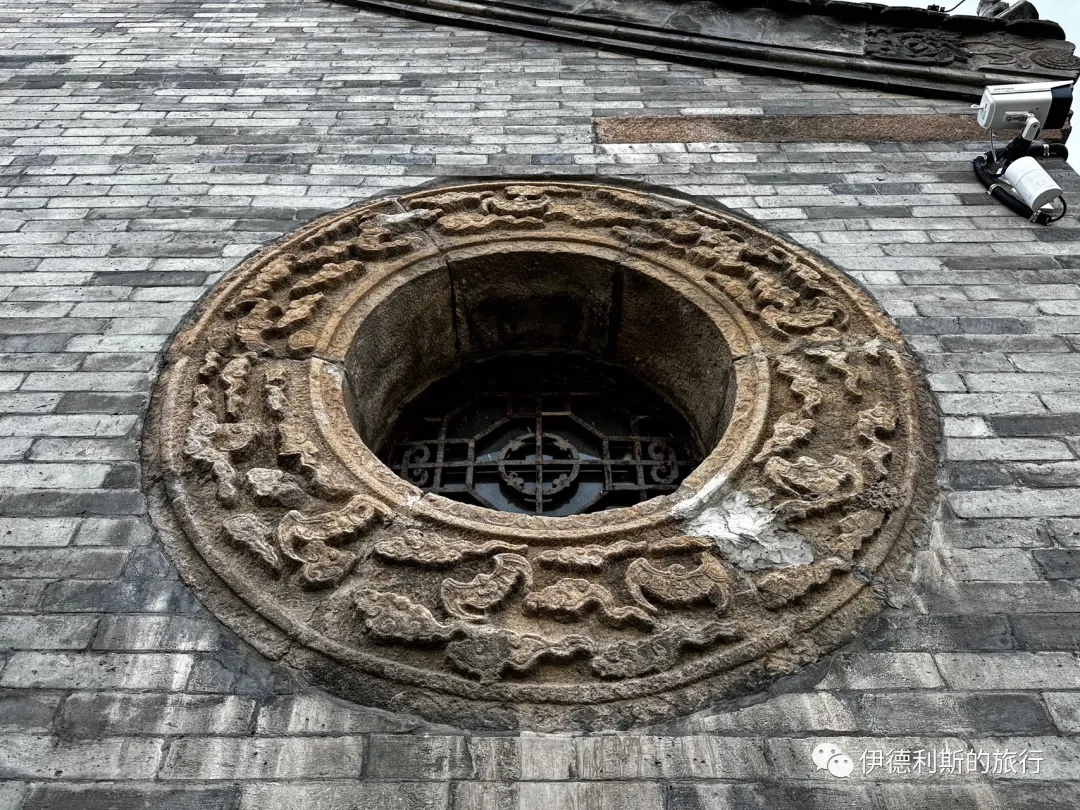
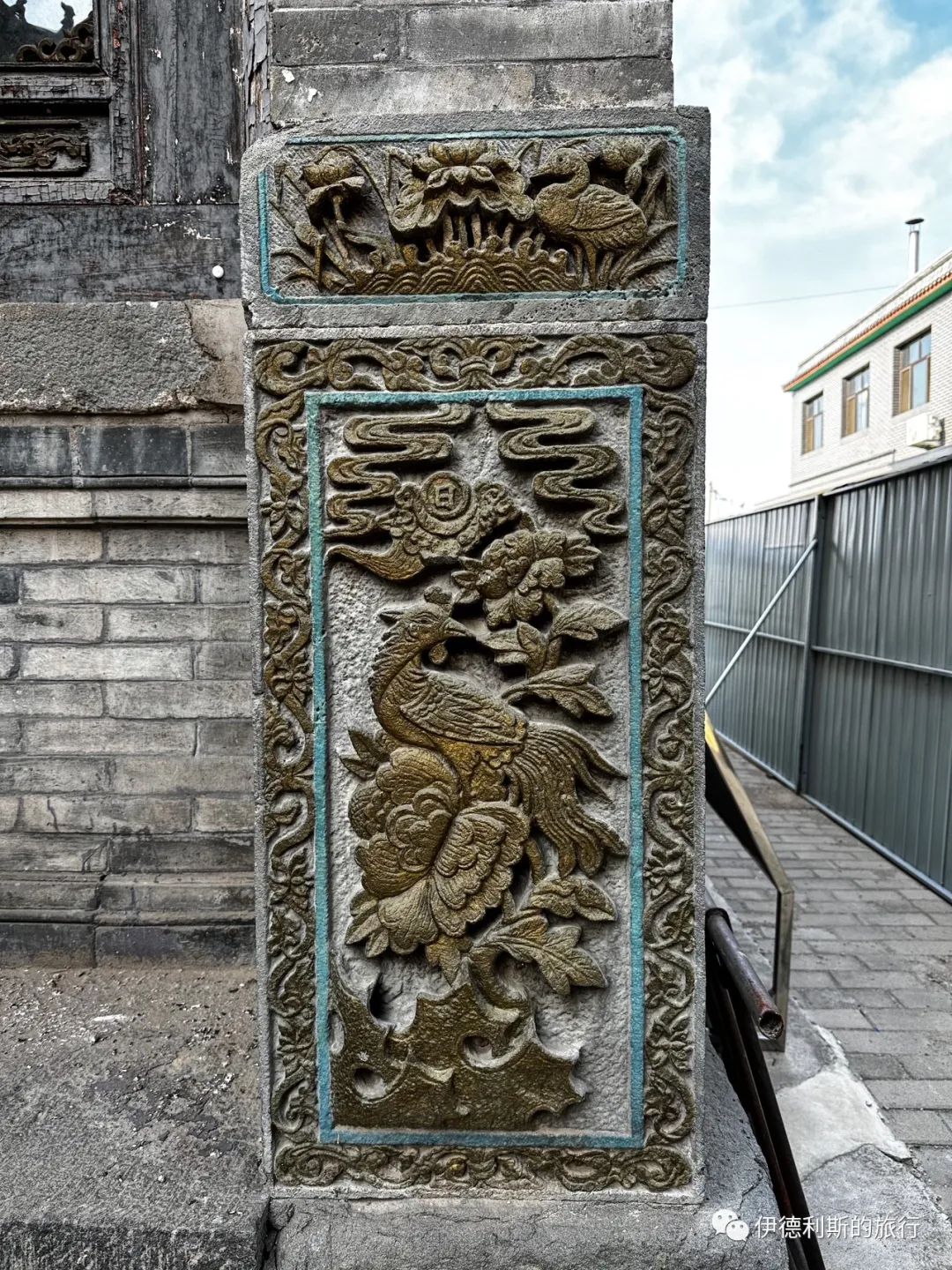
The phoenix, peony, sun, and moon carvings on the corner stone pillars of the main hall.
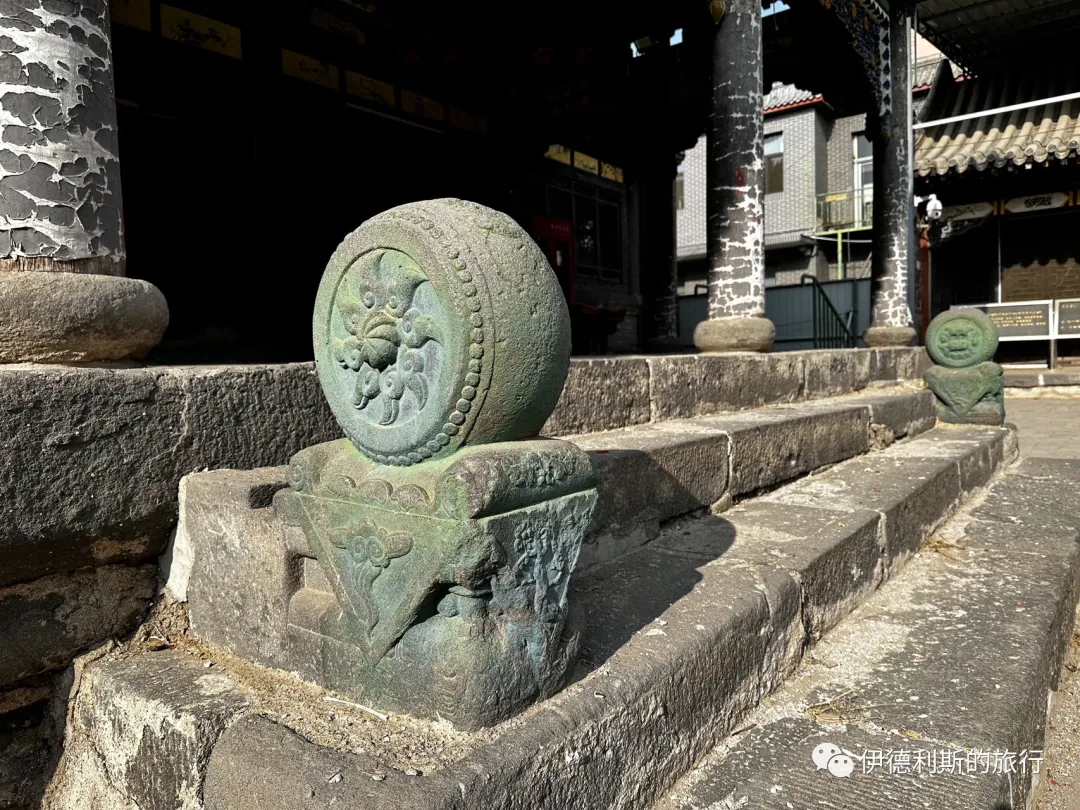
The drum-shaped stone bases (baogushi) in front of the porch.
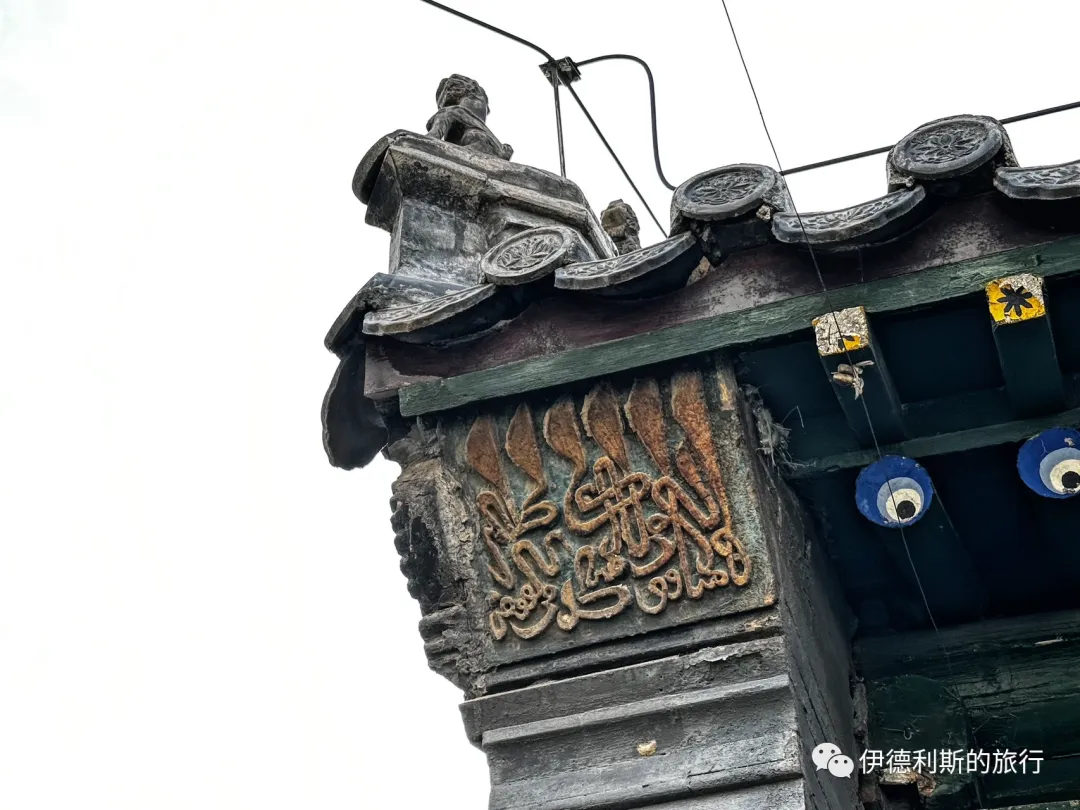
The calligraphic brick carvings on the gable ends (xitou). This style of calligraphy relates to the Shandong school of scripture hall education that spread through the Northeast region.
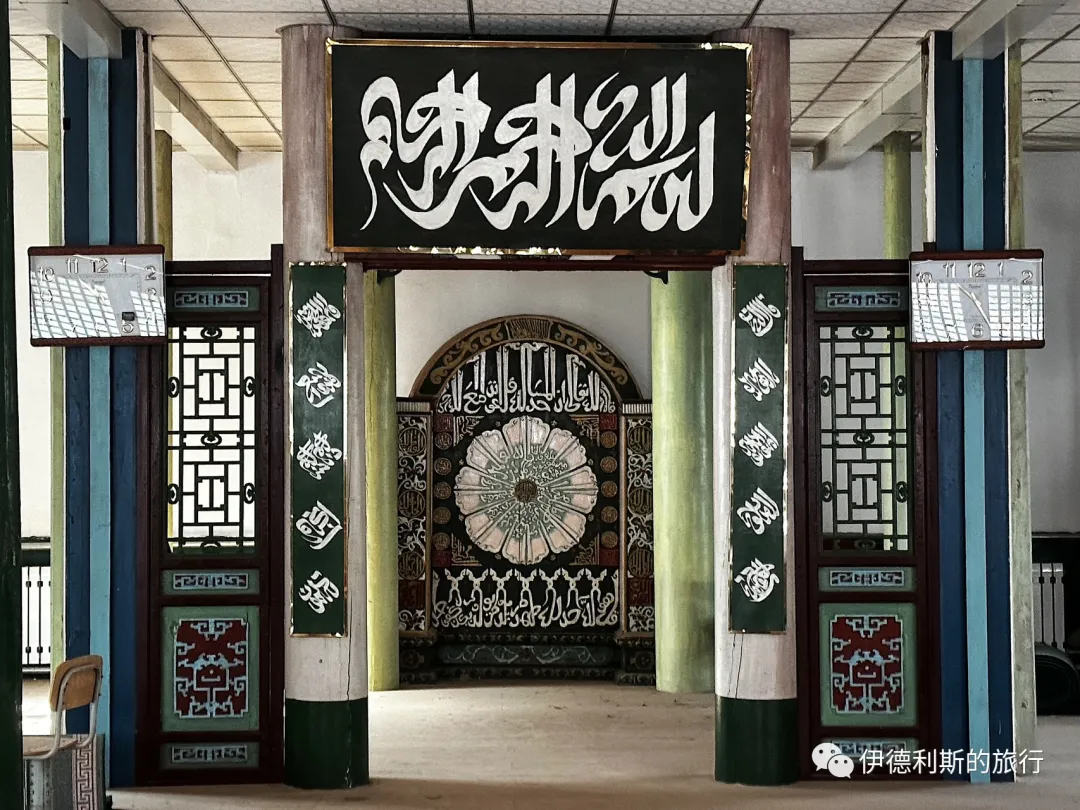
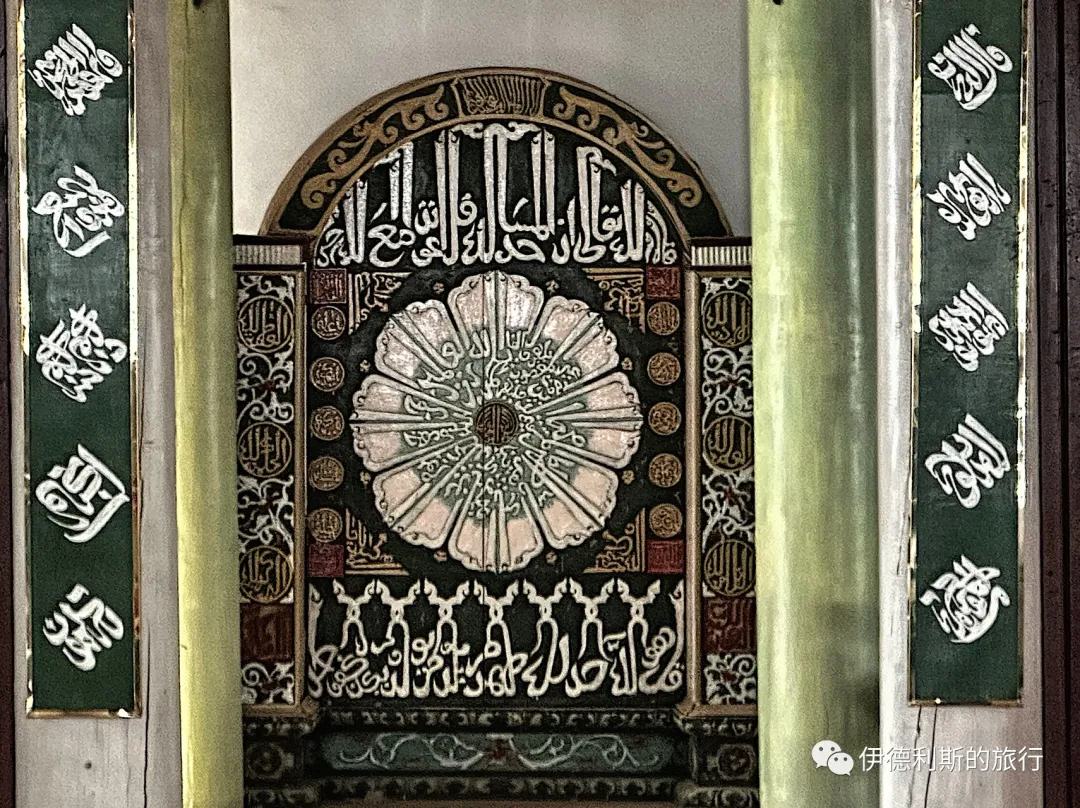
Jingpeng Mosque (Jingpeng Si).
During the Kangxi reign of the Qing Dynasty, Jingpeng Town became a major trading hub on the grasslands, located on the main route between Mongolia and the Northeast. During the lama temple fairs, merchants from inland China brought cotton cloth, sugar, and tea to trade with the Mongols for furs, livestock, and local products. In 1723 (the second year of the Yongzheng reign), severe droughts in Shandong and Hebei forced disaster victims to head north to find work. To solve the problem of displaced people, the Qing government implemented a policy of borrowing land to support the people in the southeastern Mongolian grasslands, including Hexigten Banner. During the Qianlong reign, Hui Muslims from Yangxin and Guan counties in Shandong, and Cangzhou and Hejian in Hebei, traveled through Chifeng and Duolun to reach Jingpeng Town to trade on the grasslands, eventually settling there.
After the 19th century, the Hui Muslim population in Jingpeng reached nearly 1,000, with family names including Feng, Cong, Ma, Bai, Li, Jin, and Ha. In 1852 (the second year of the Xianfeng reign), they officially built a mosque (masjid), which started as five mud-brick rooms. In 1902 (the 28th year of the Guangxu reign), community elders including Liu Qi, imam Ha Zhaobin, Li Wenrong, Cong Laofeng, Ma Changtai, and Jin Fengming led a fundraising effort to rebuild the Jingpeng Mosque. Liu Qi and Ha Zhaobin traveled inside the Great Wall three times to collect funds. After four years, the current building was completed in 1908 (the 34th year of the Guangxu reign). It was named a key cultural relic protection site of Hexigten Banner in 1992.
The north and south lecture halls and the main hall of the Jingpeng Mosque are all Qing Dynasty structures. The main hall consists of a porch, the main hall itself, and a rear kiln-style hall (yaodian) topped with a moon-watching tower (wangyuelou). The moon-watching tower was torn down in 1967 and rebuilt after 1981.
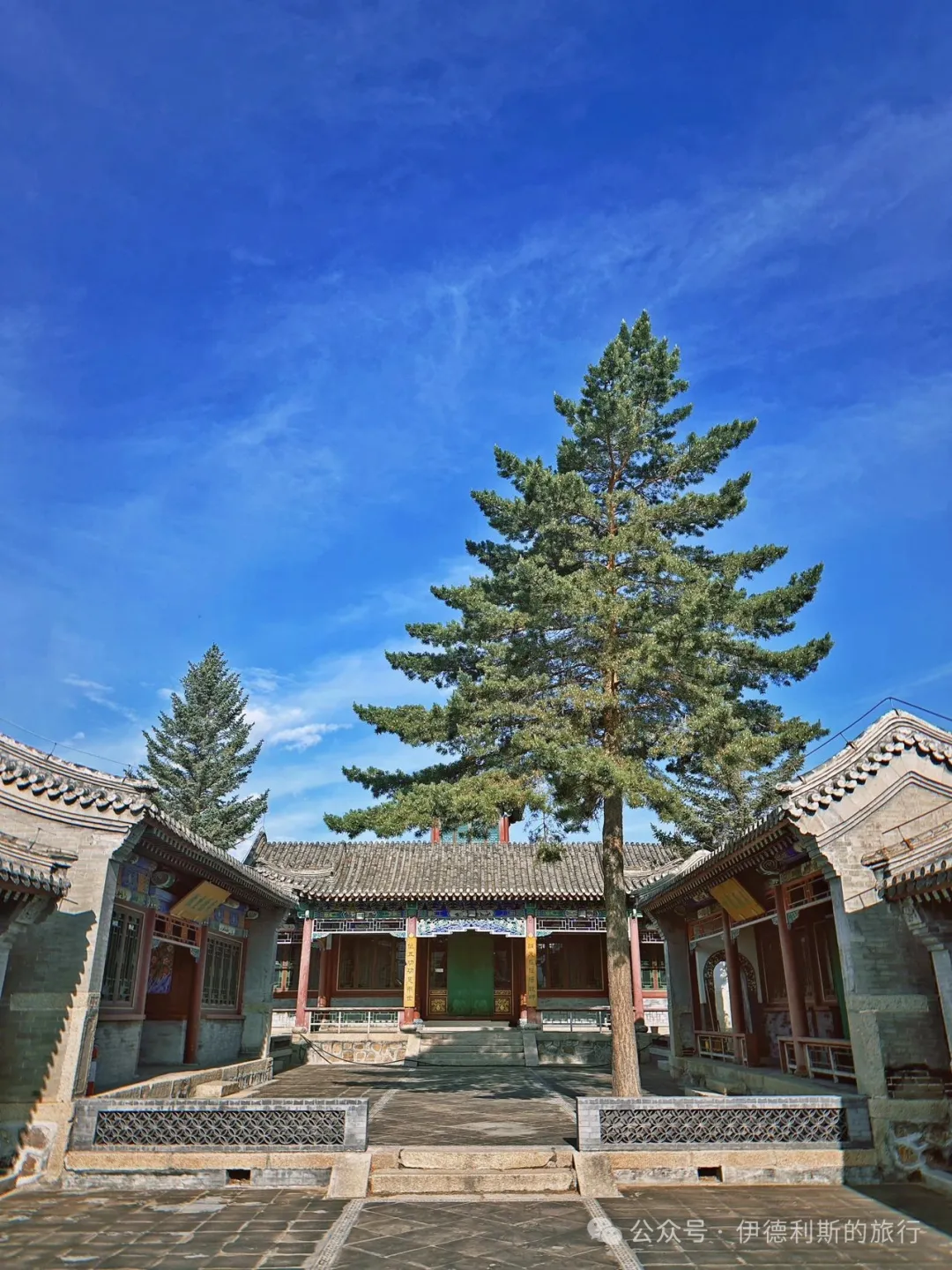
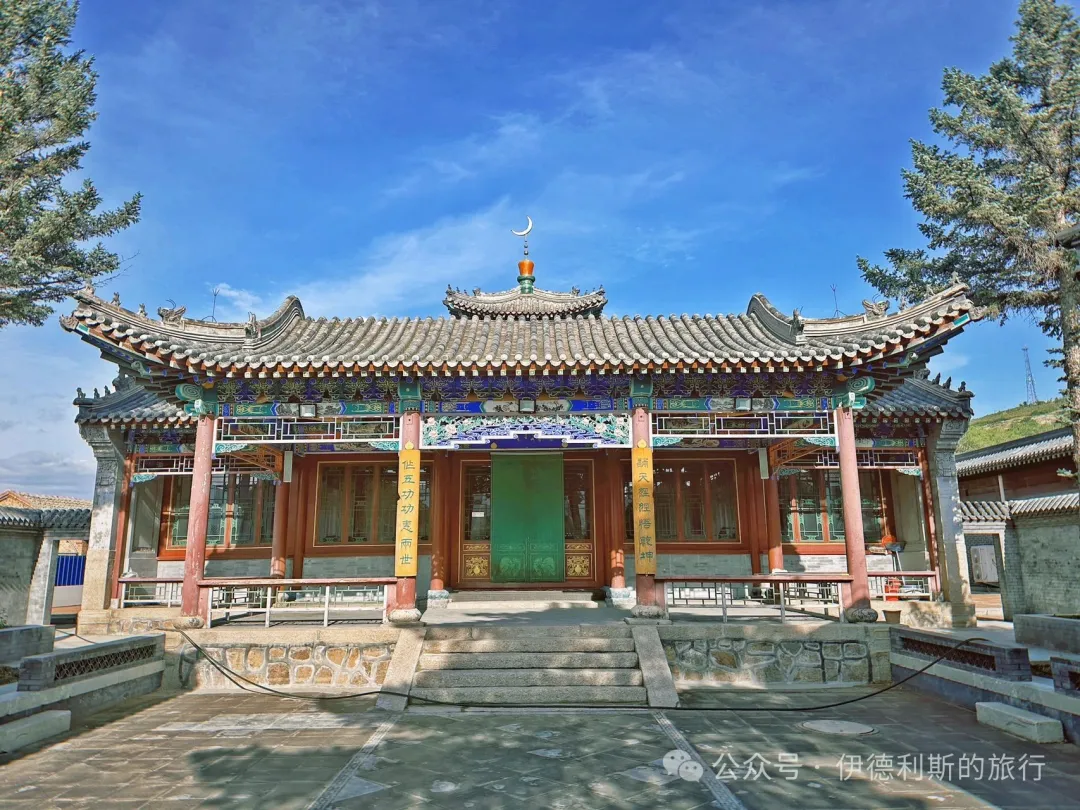
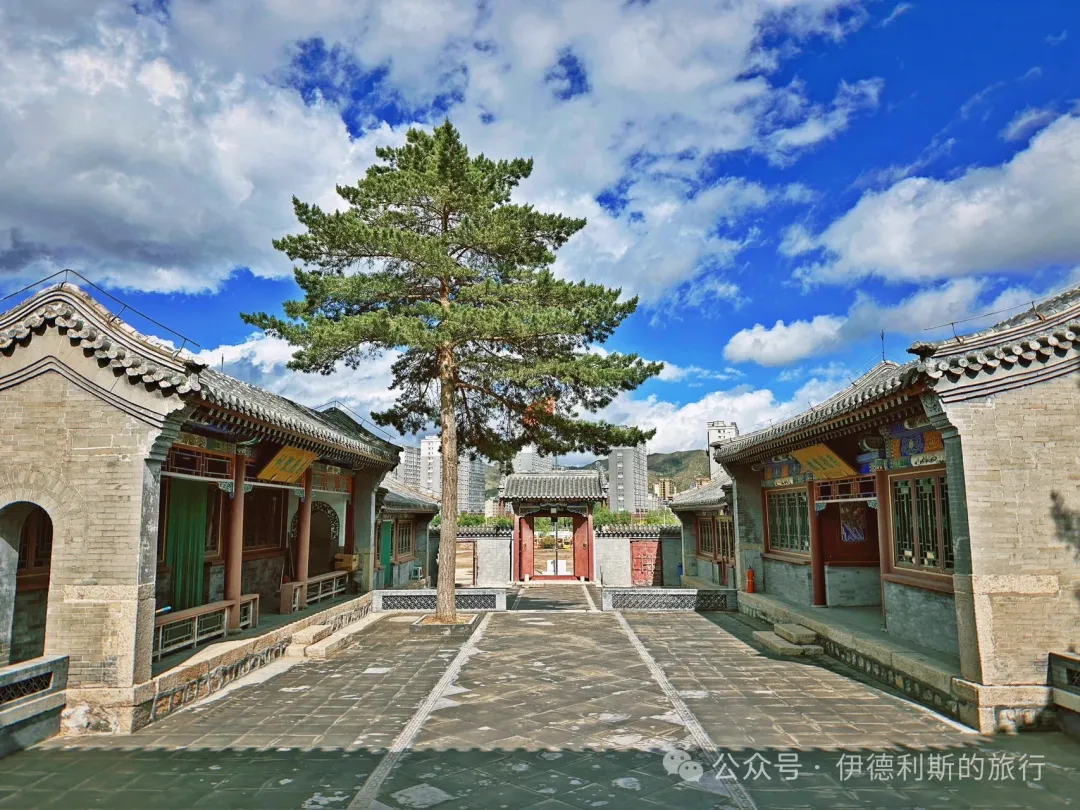
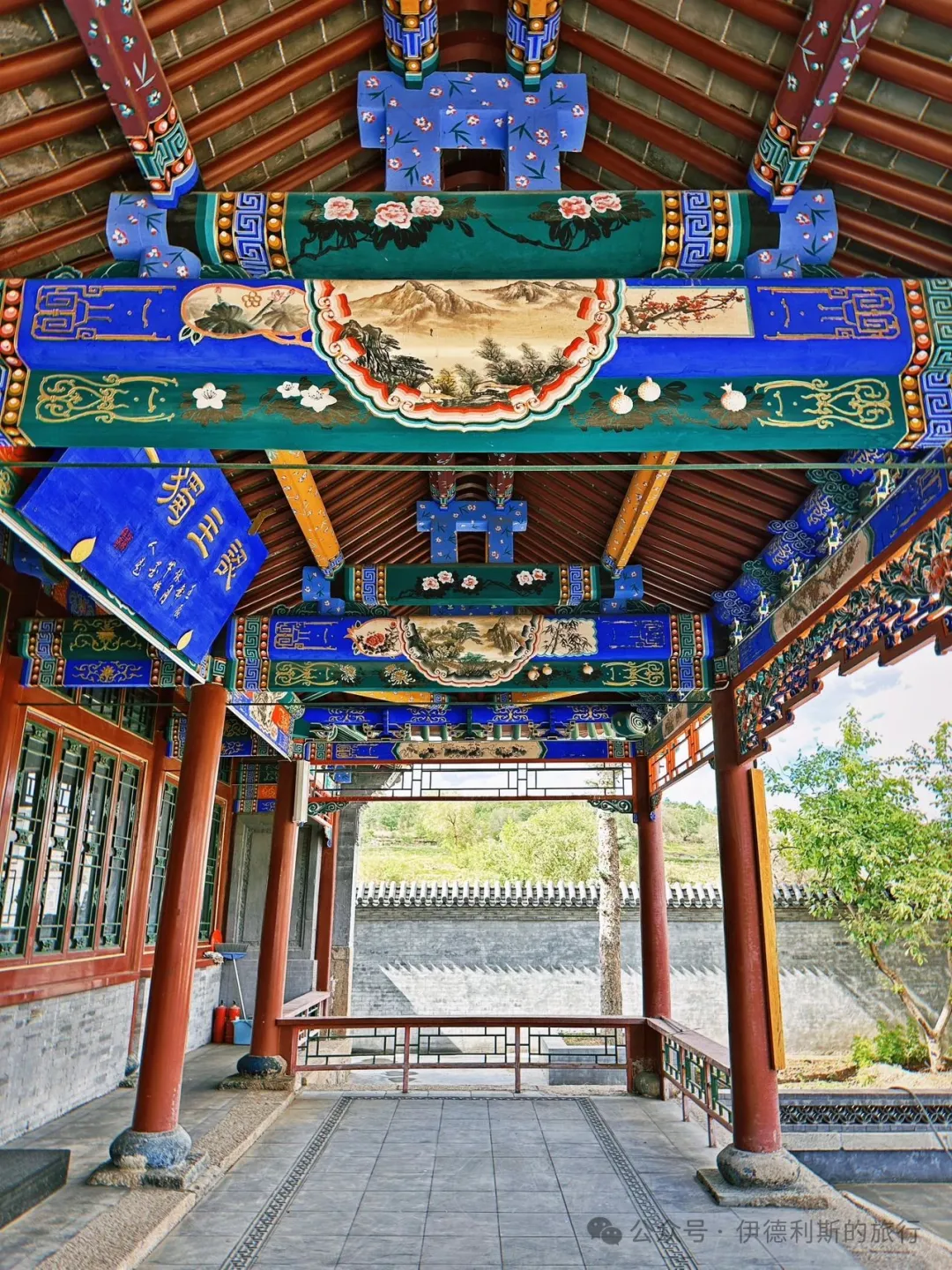
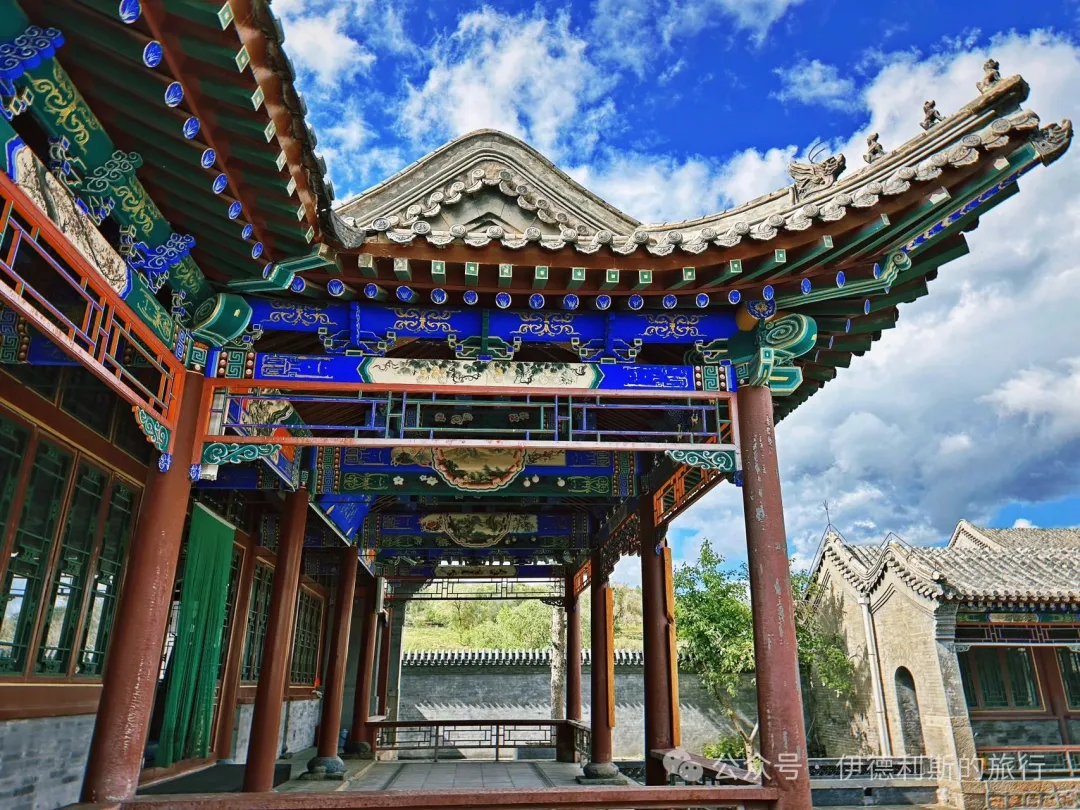
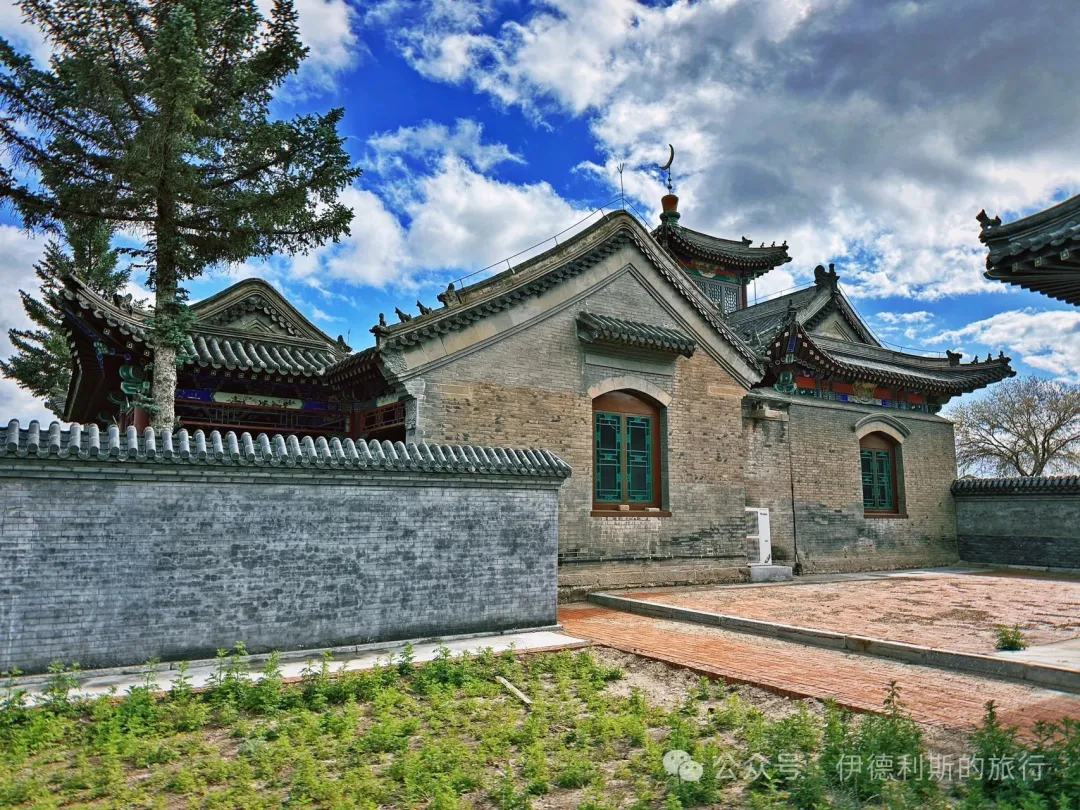
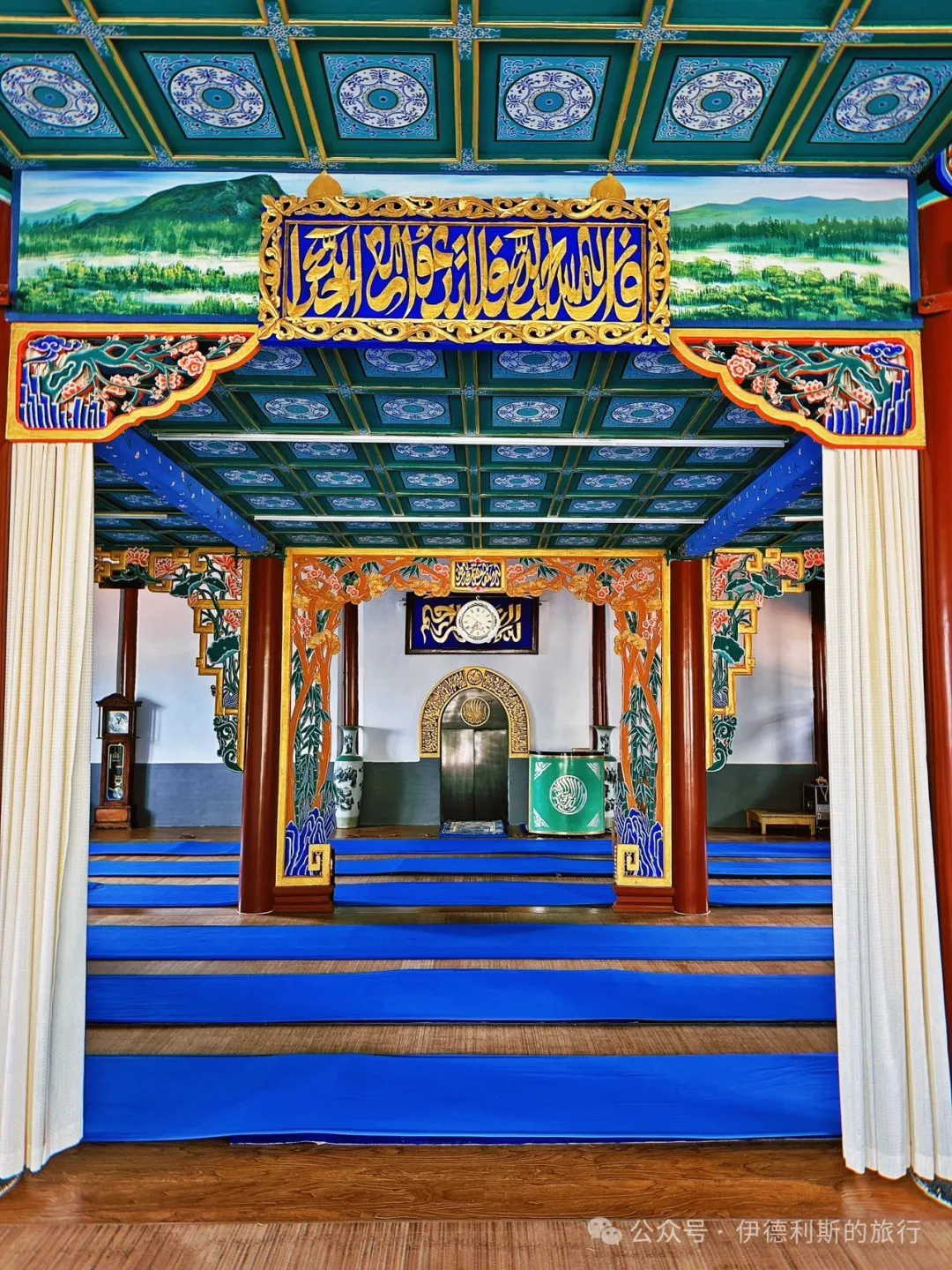
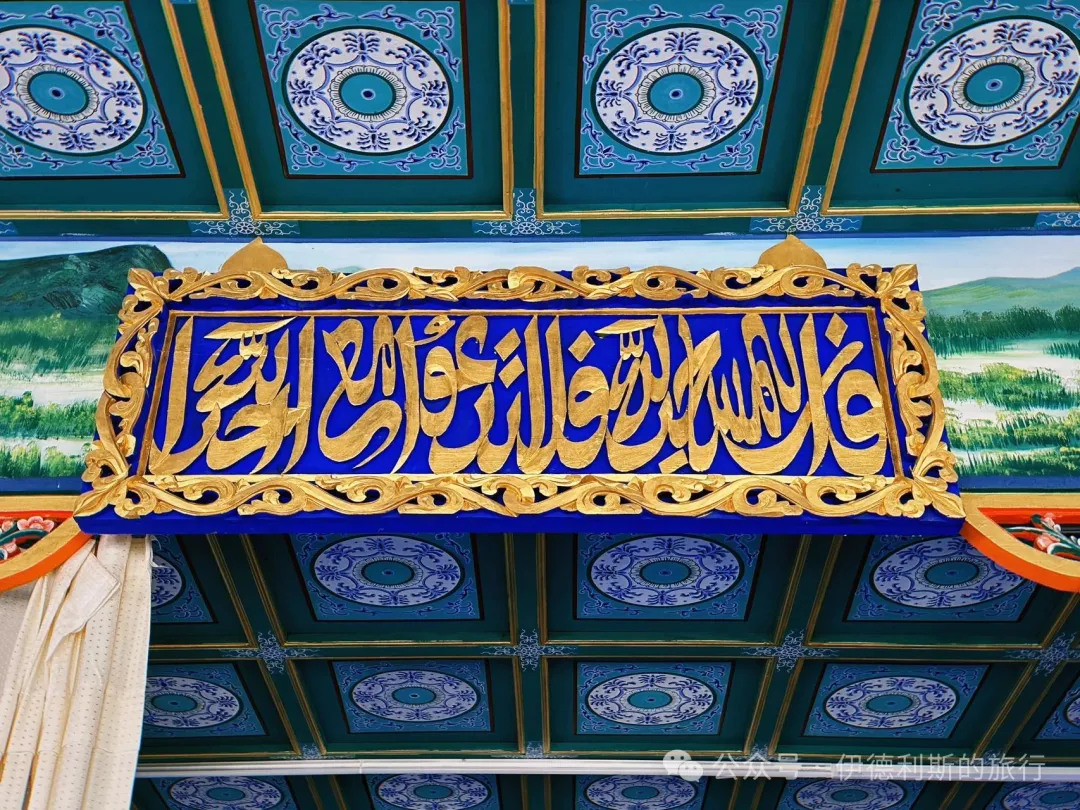
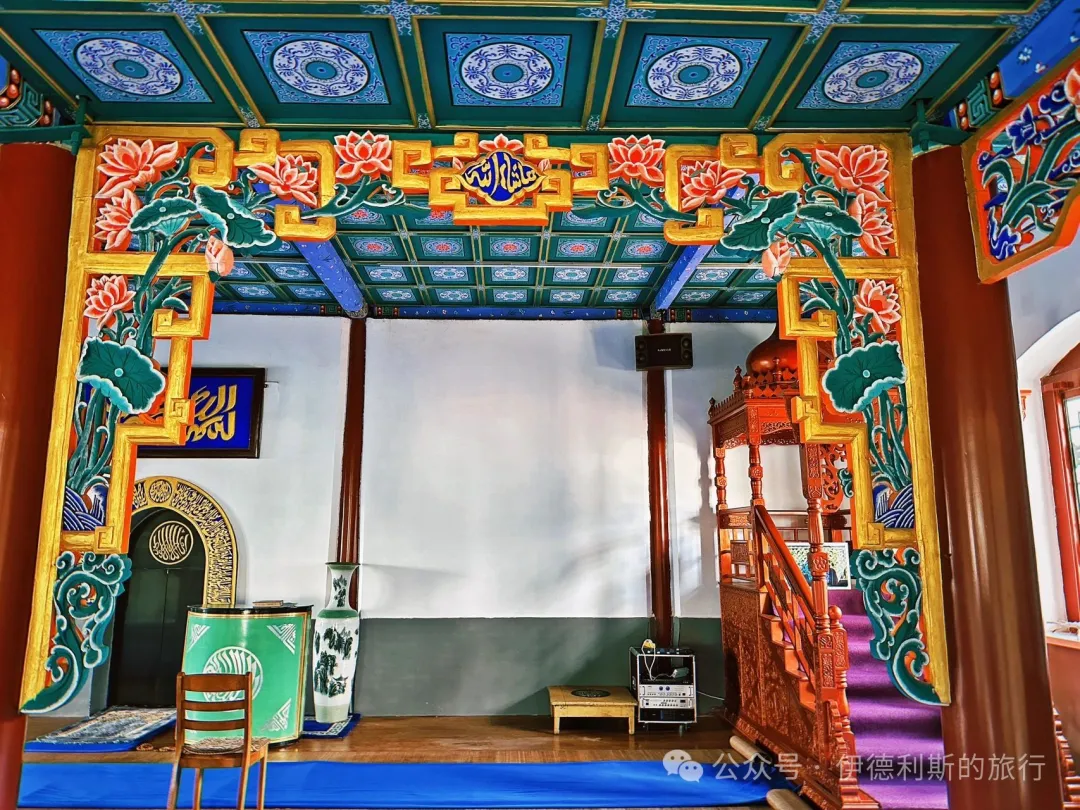
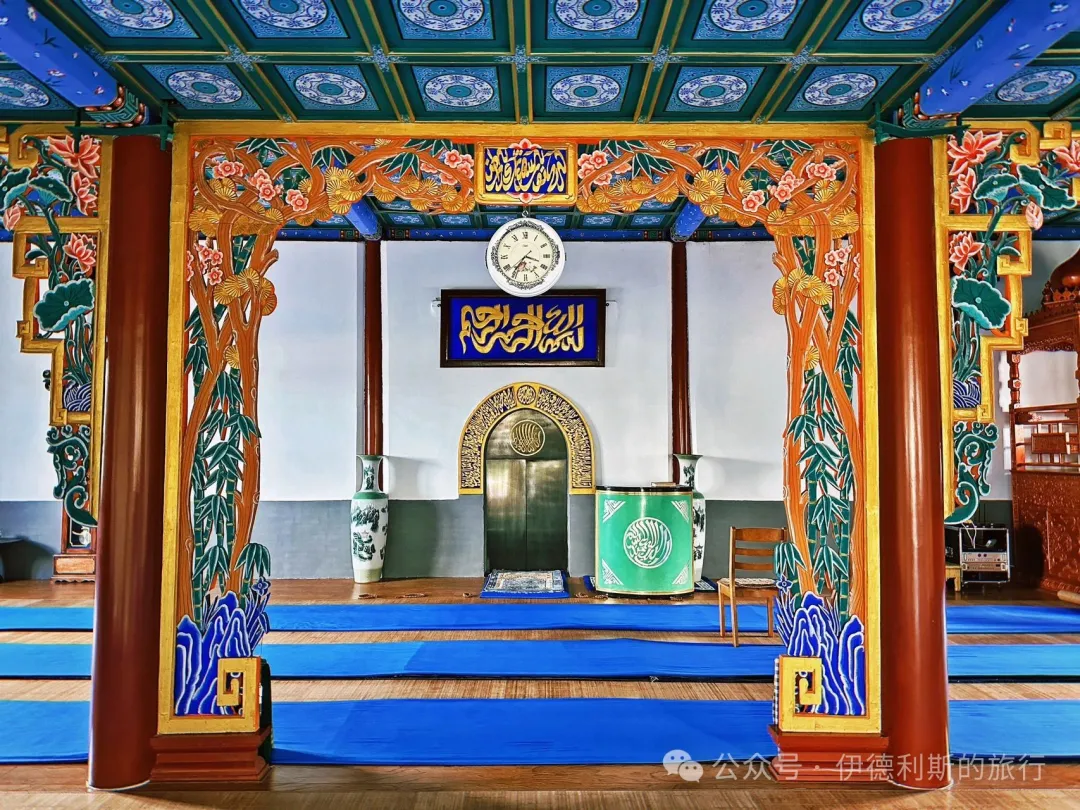
Duolun South Mosque (Duolun Nansi).
Duolun County is located at the southeastern end of Xilin Gol League and was once a political and economic center on the Mongolian grasslands during the Qing Dynasty. In 1691 (the 30th year of the Kangxi reign), Emperor Kangxi held the Duolun Alliance with the nobles of the three Outer Mongolian tribes and the forty-eight banners of Inner Mongolia, officially bringing Outer Mongolia into the Qing territory. Later, at the request of Mongolian nobles, Kangxi allowed inland merchants to open trade routes between China and the Mongolian grasslands, granting them official titles and favorable treatment. This caused merchants from Beijing, Tianjin, Hebei, Shanxi, Shandong, and Shaanxi to flock there, quickly turning Duolun into a commercial hub for Mongolian trade. In 1710 (the 49th year of the Kangxi reign), Xinghua Town was officially established in Duolun. In 1741 (the sixth year of the Qianlong reign), Xinshengying was built north of Xinghua Town, forming the layout of the old city of Duolun.
After the city of Duolun was established, Hui Muslims from Hebei, Shandong, Shanxi, and Henan traveled through Zhangjiakou to trade on the grasslands, moving back and forth between the Mongolian plains and inland China. In his book 'Records of Dolon Nor' published in 1908, the late Qing Japanese scholar Jian Hongsheng recorded that the Hui Muslim population in Duolun had already reached 3,000.
The Hui Muslims of Duolun built six mosques: the South Mosque, North Mosque, East Mosque, West Mosque, Central Mosque, and Da'erhao Mosque. The Da'erhao Mosque was transferred to Guyuan County in 1950, and the East Mosque was demolished in the 1960s. Today, the old city still preserves the South, North, East, and West mosques. In 2006, they were collectively listed as a national-level cultural relic protection site under the name 'Duolun Ancient Architectural Complex'.
The South Mosque is the first mosque in Duolun, located on Taiping Street in the old city. It was first built during the Yongzheng reign, and in 1761 (the 26th year of the Qianlong reign), Hui Muslim merchants Mo Tianming and Ma Guifang initiated an expansion to create the current structure. In July 1933, after the anti-Japanese hero General Ji Hongchang recaptured Duolun, the Hui Muslims of Duolun hosted a banquet for him at the South Mosque. The South Mosque is currently closed and not open for visitors.
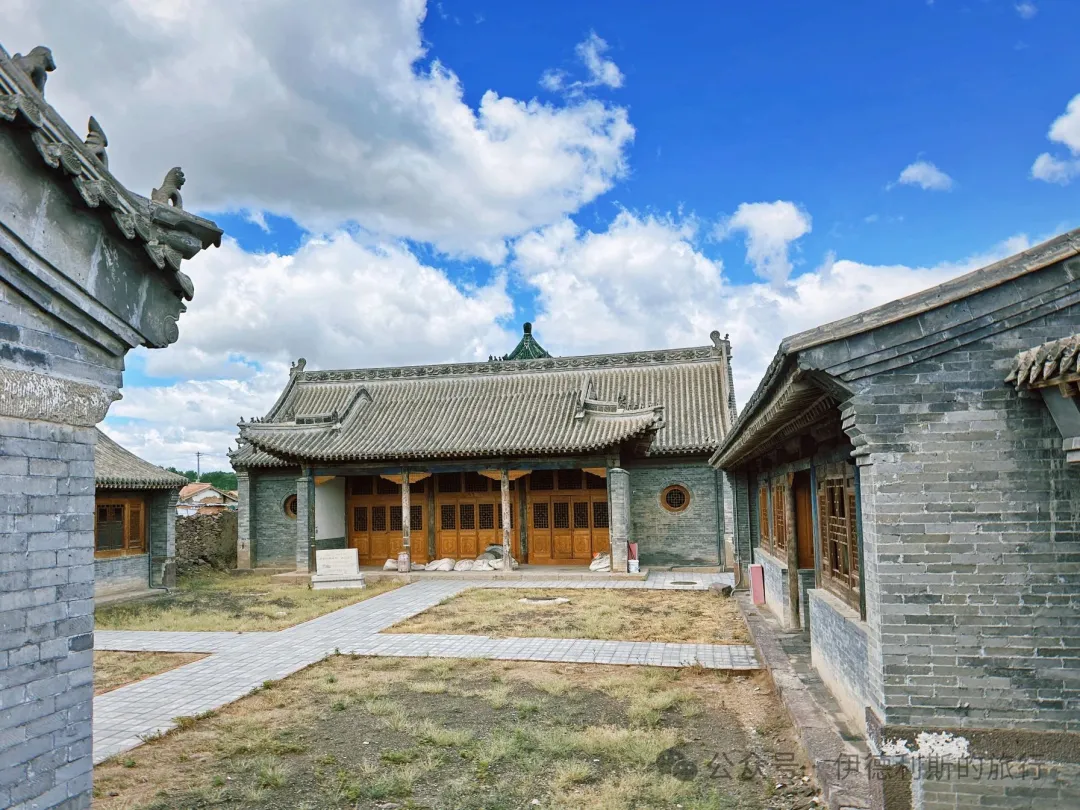
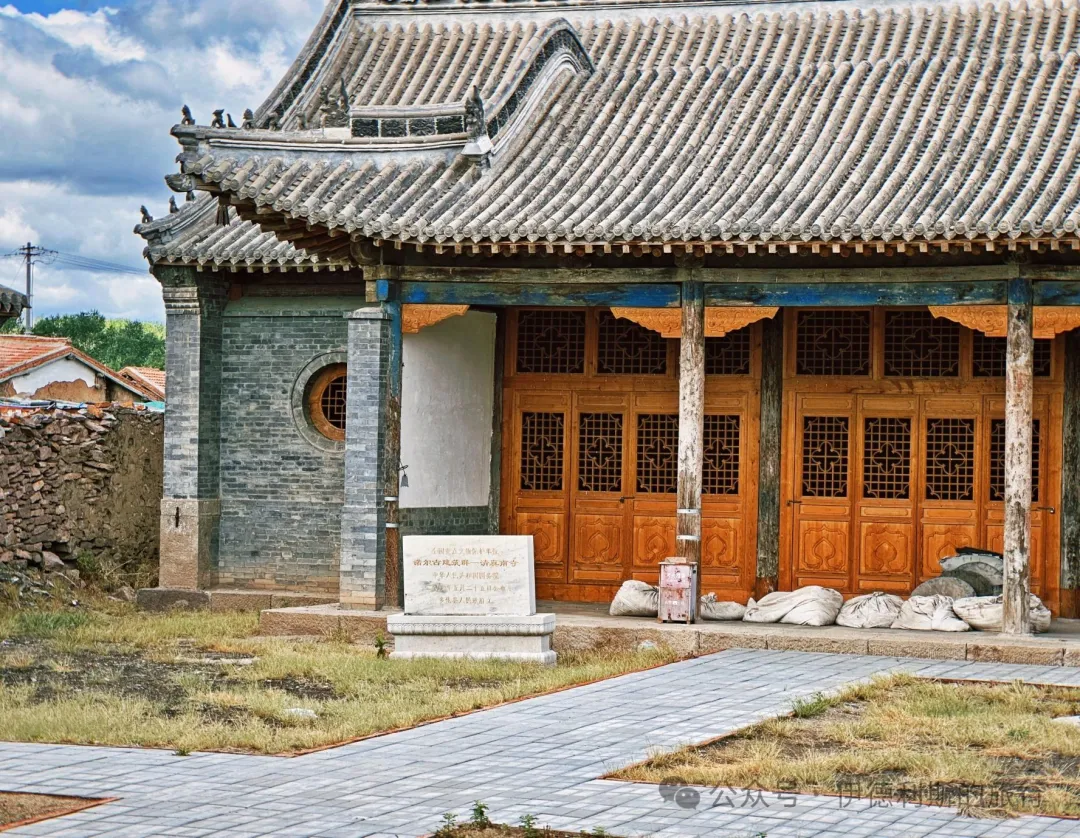
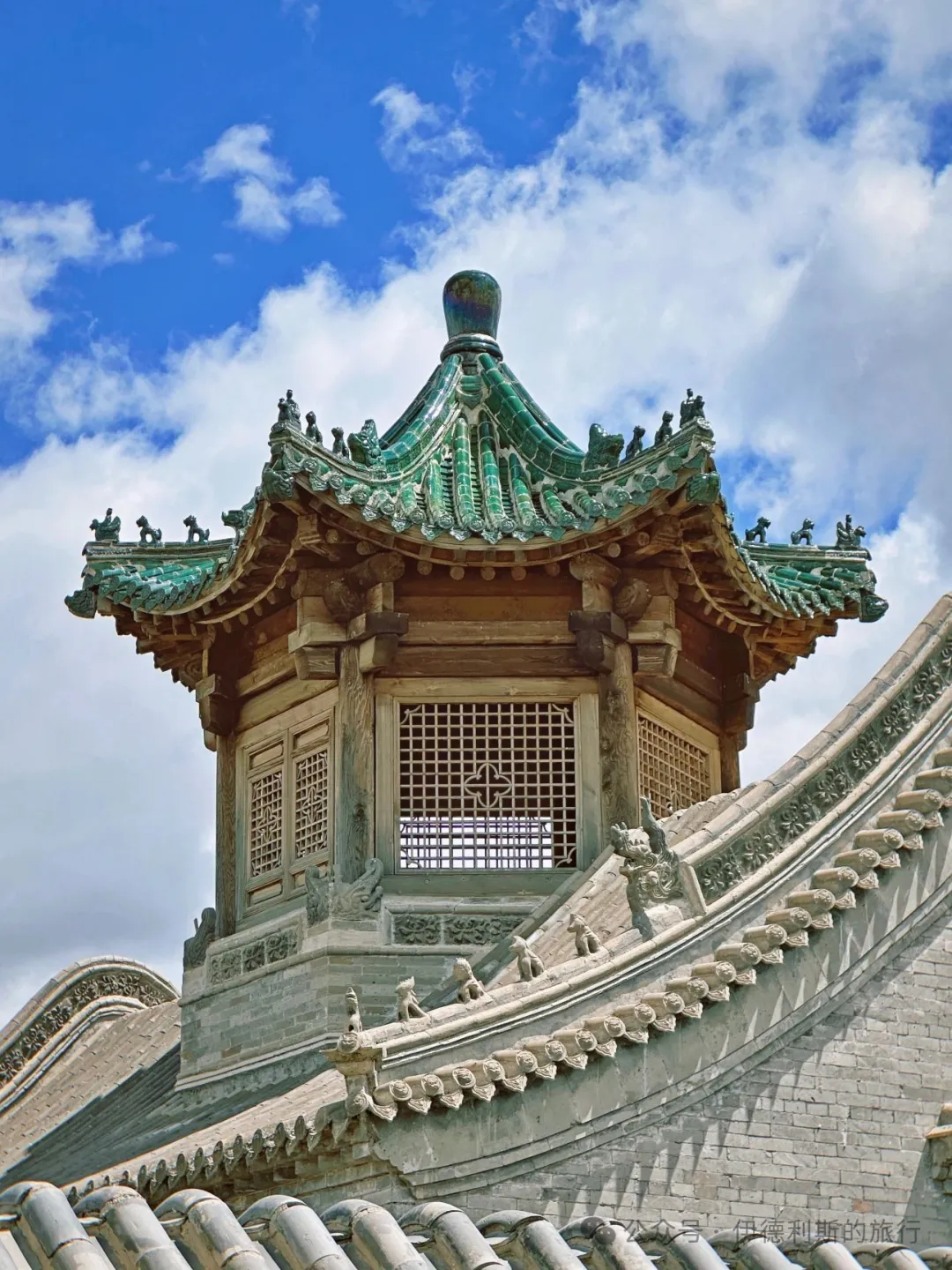
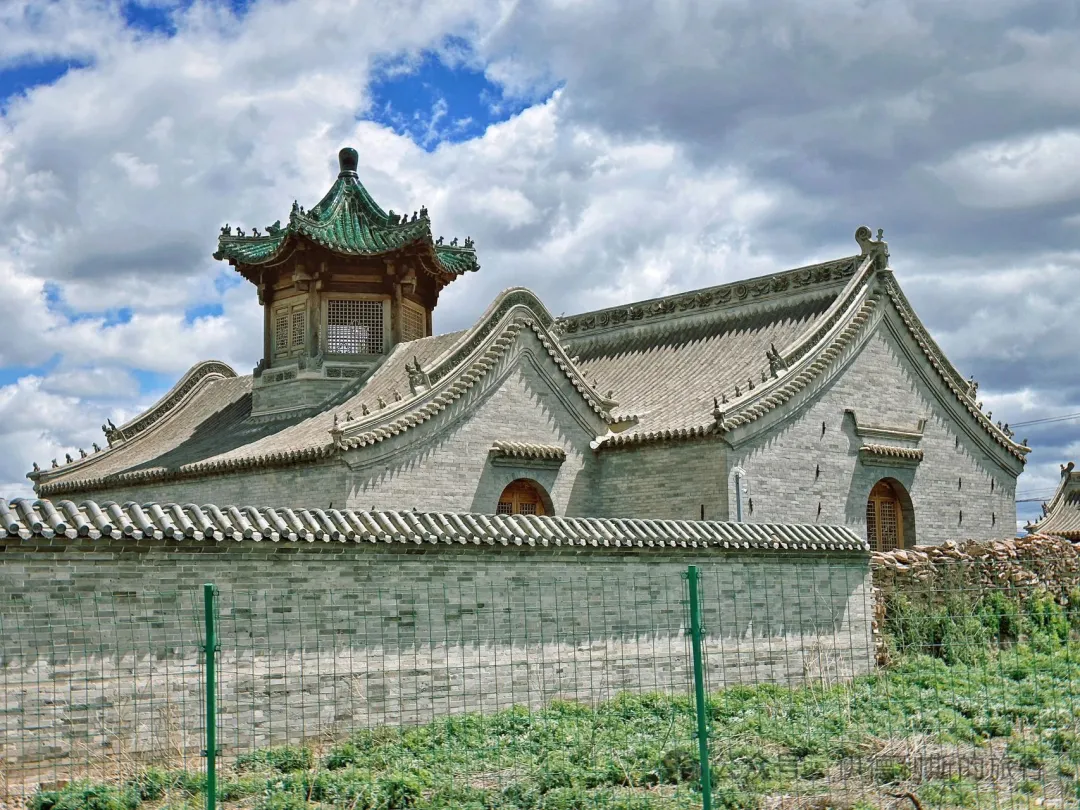
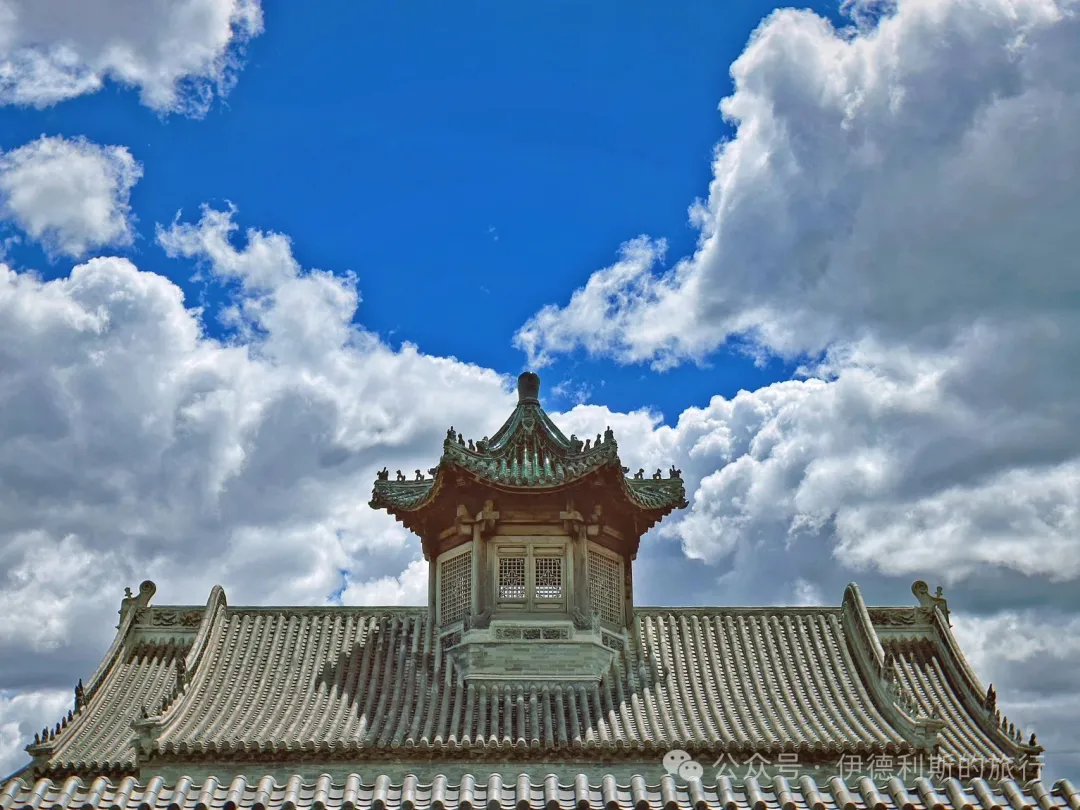
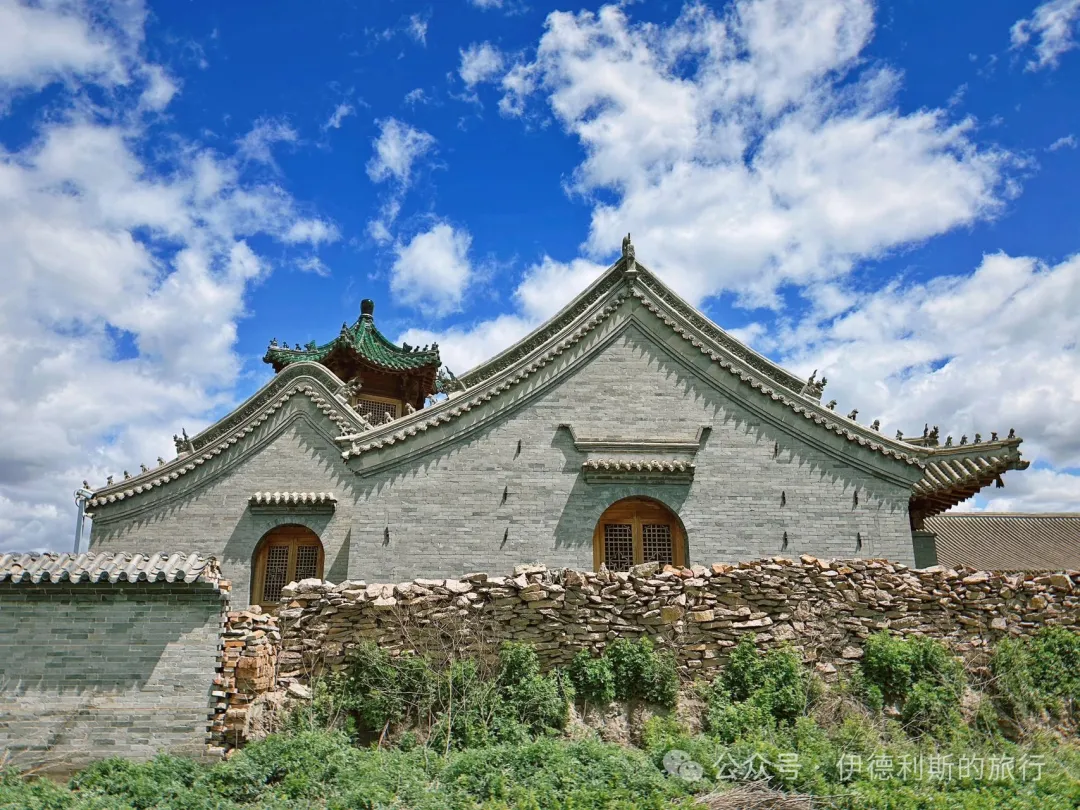
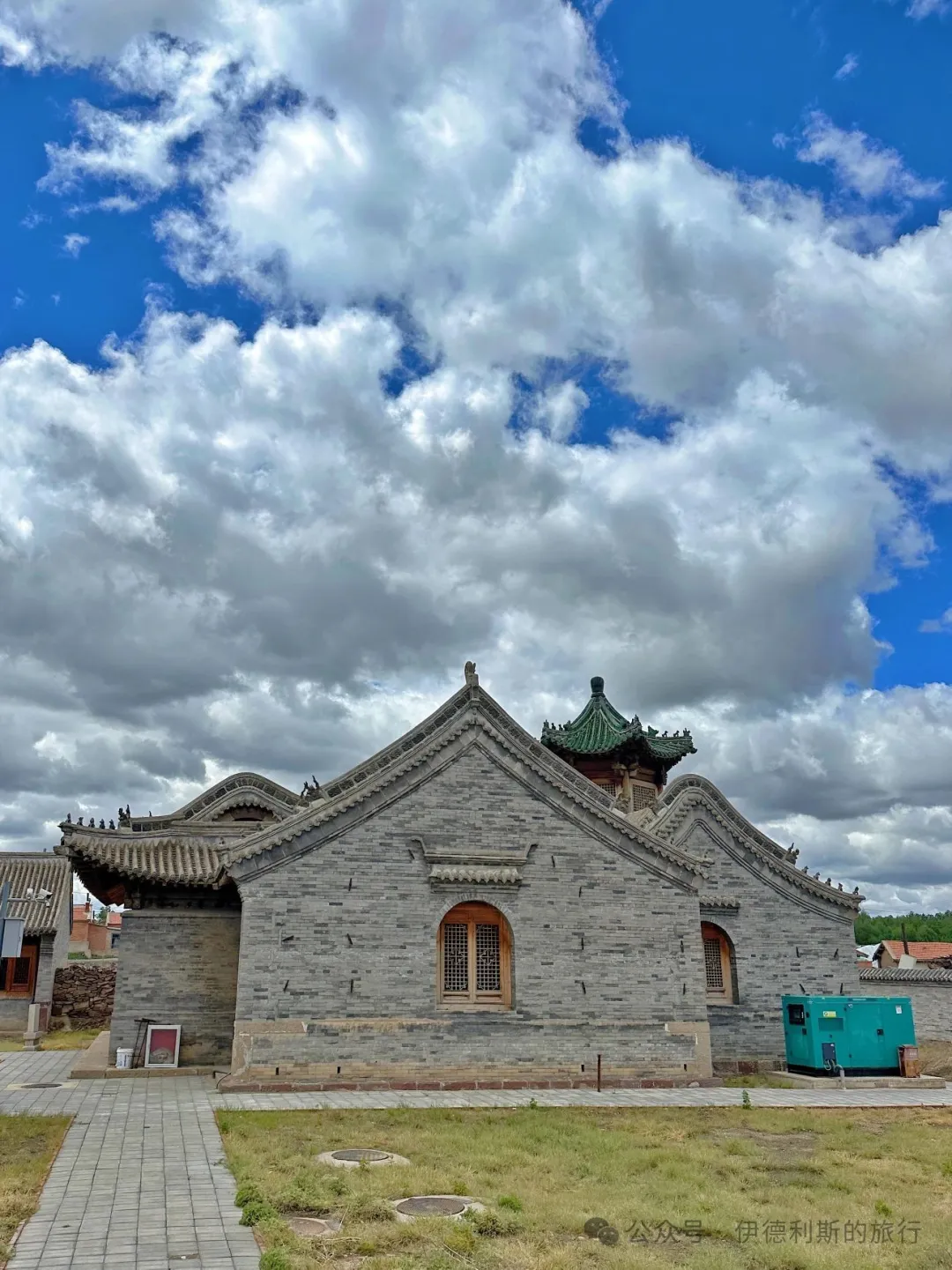
Duolun North Mosque
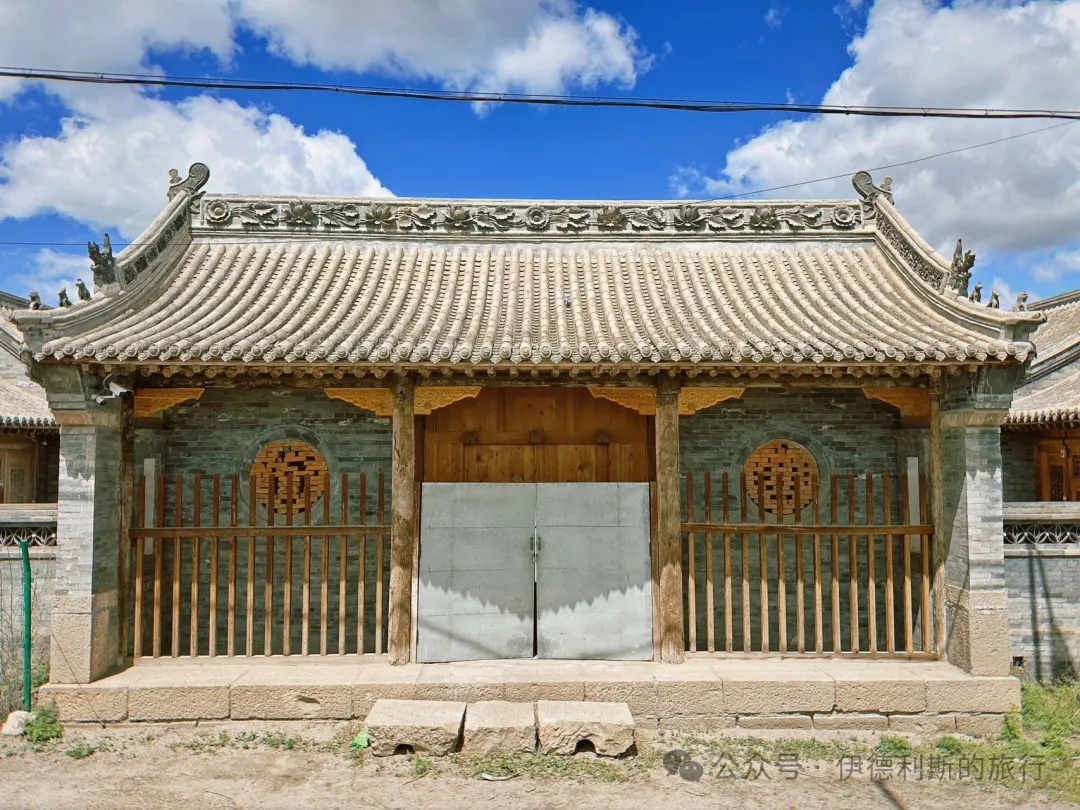
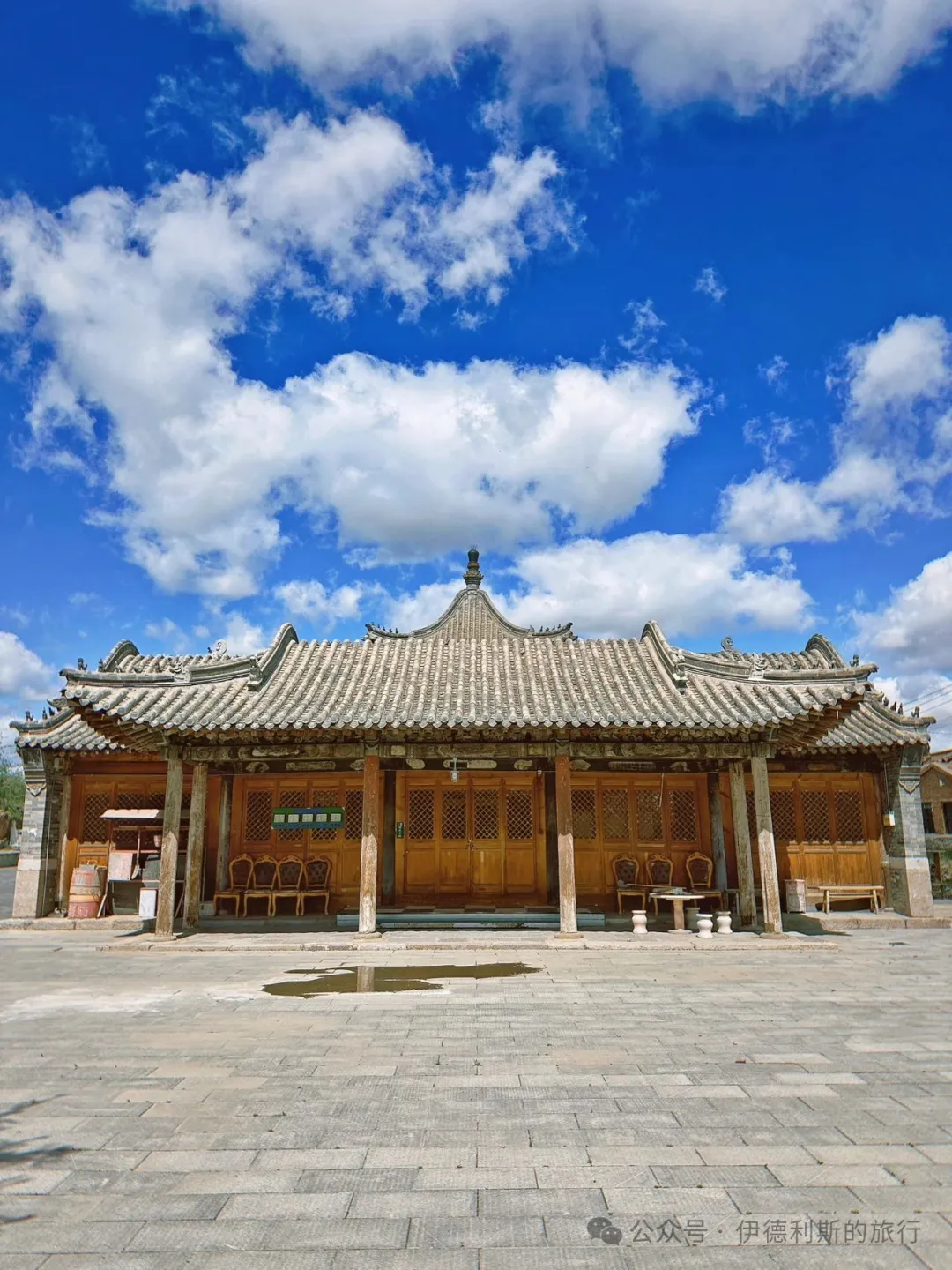
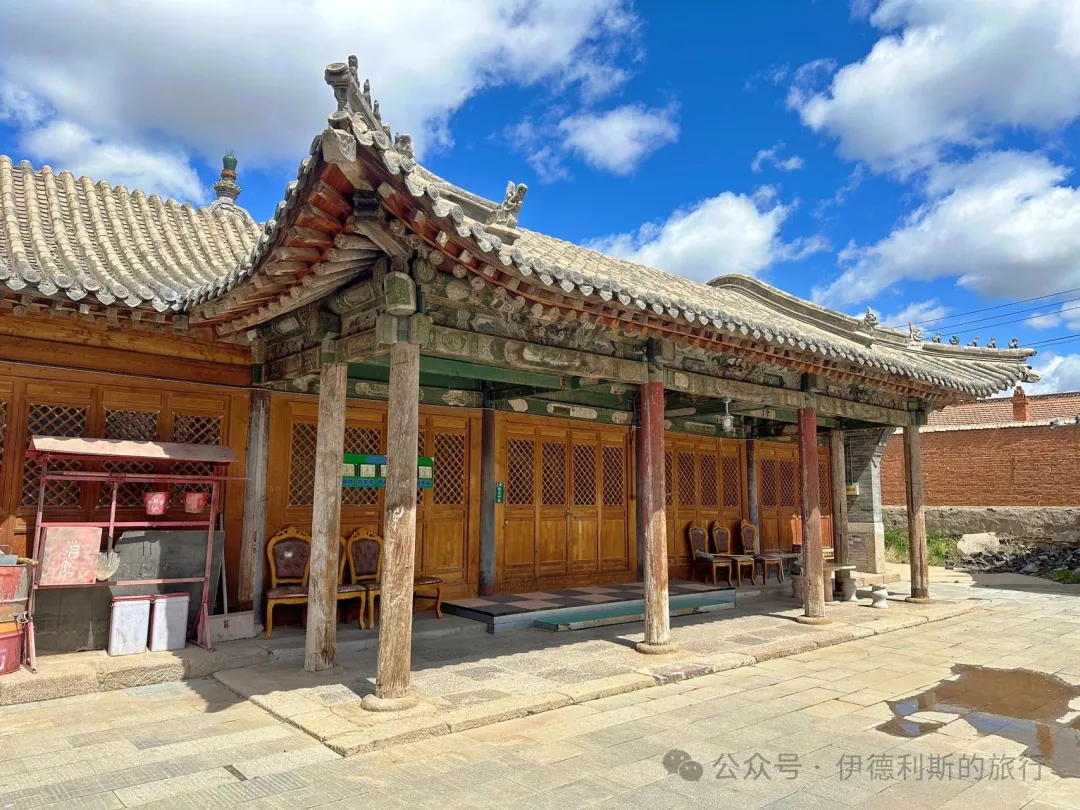
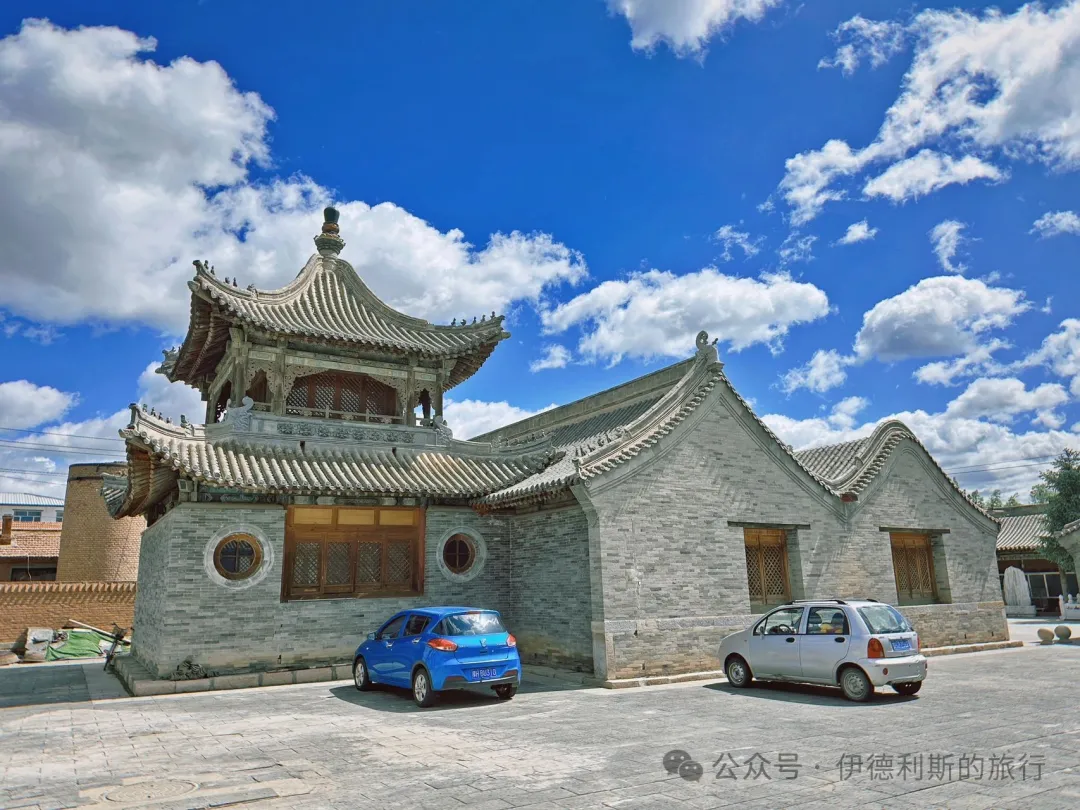
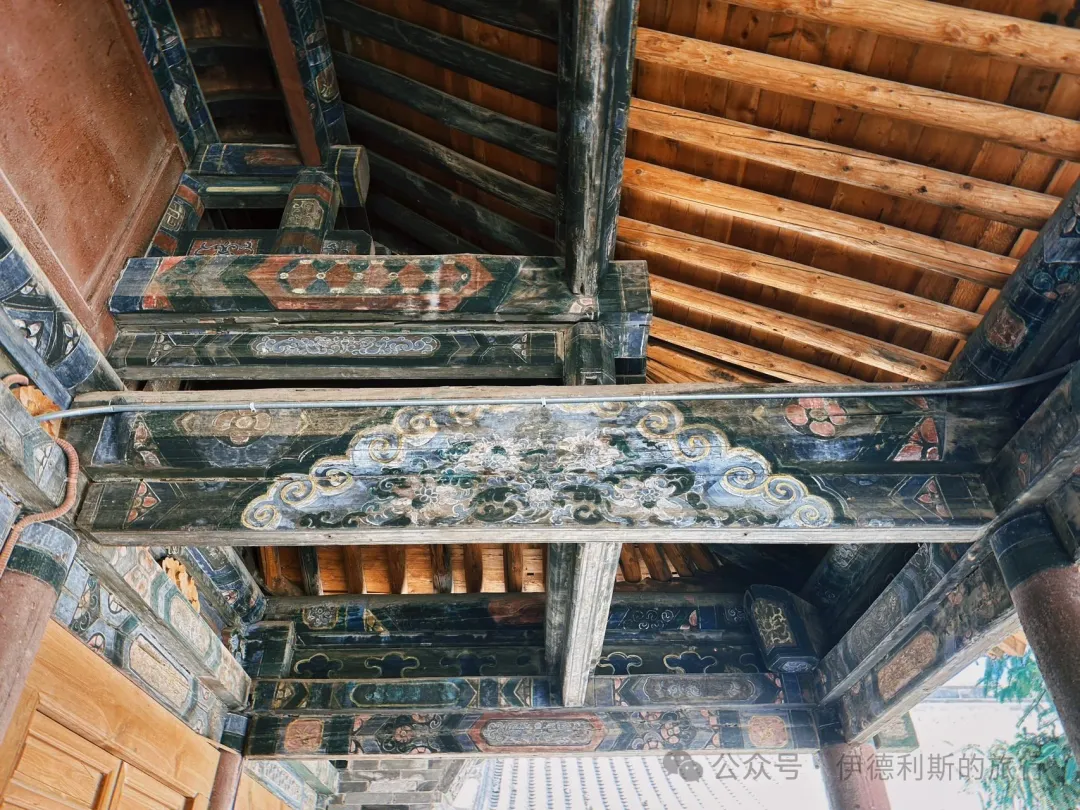
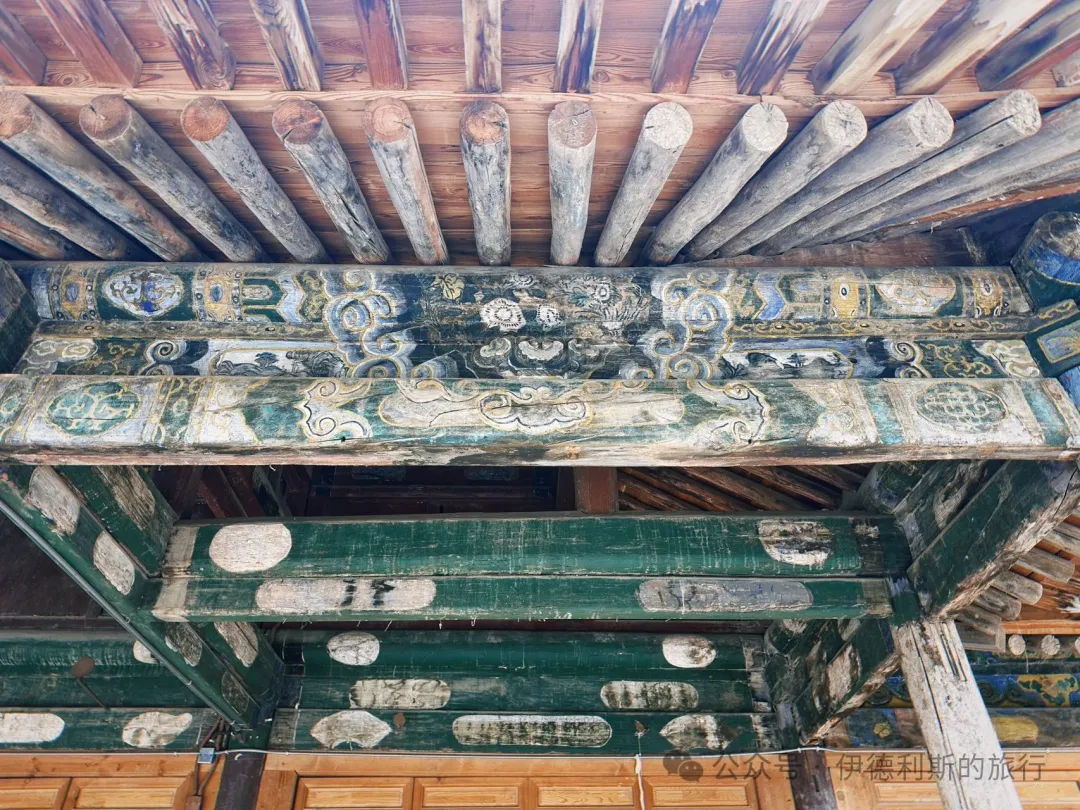
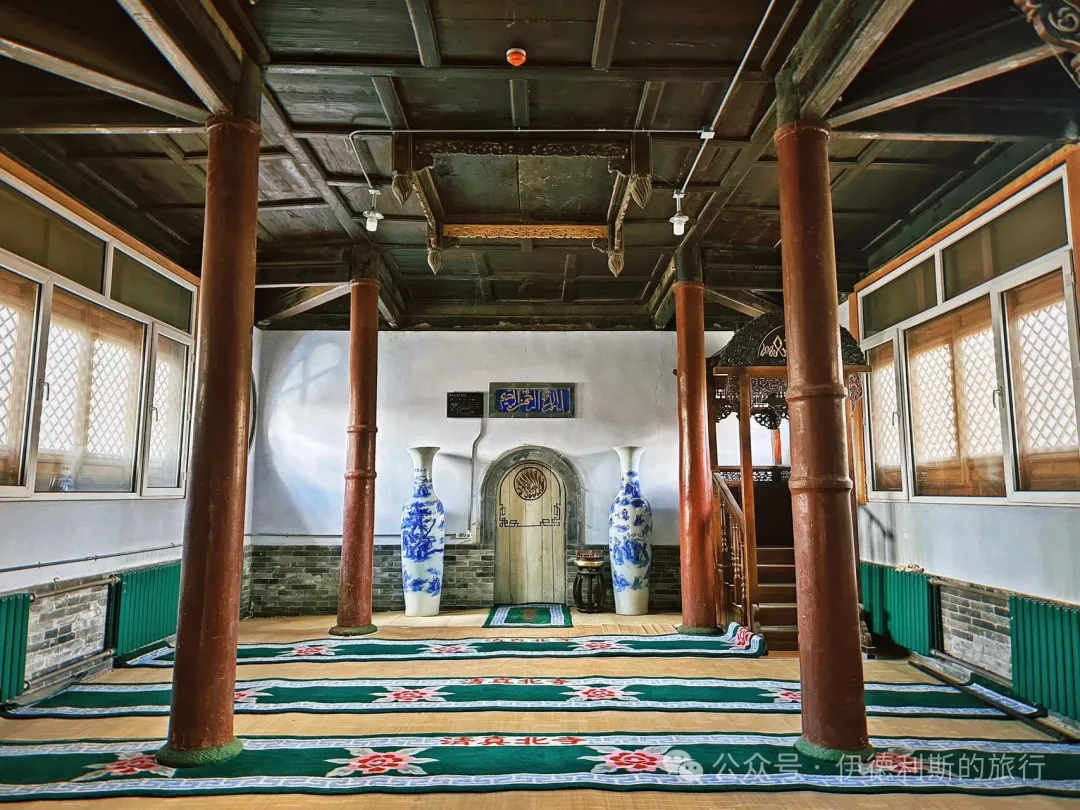
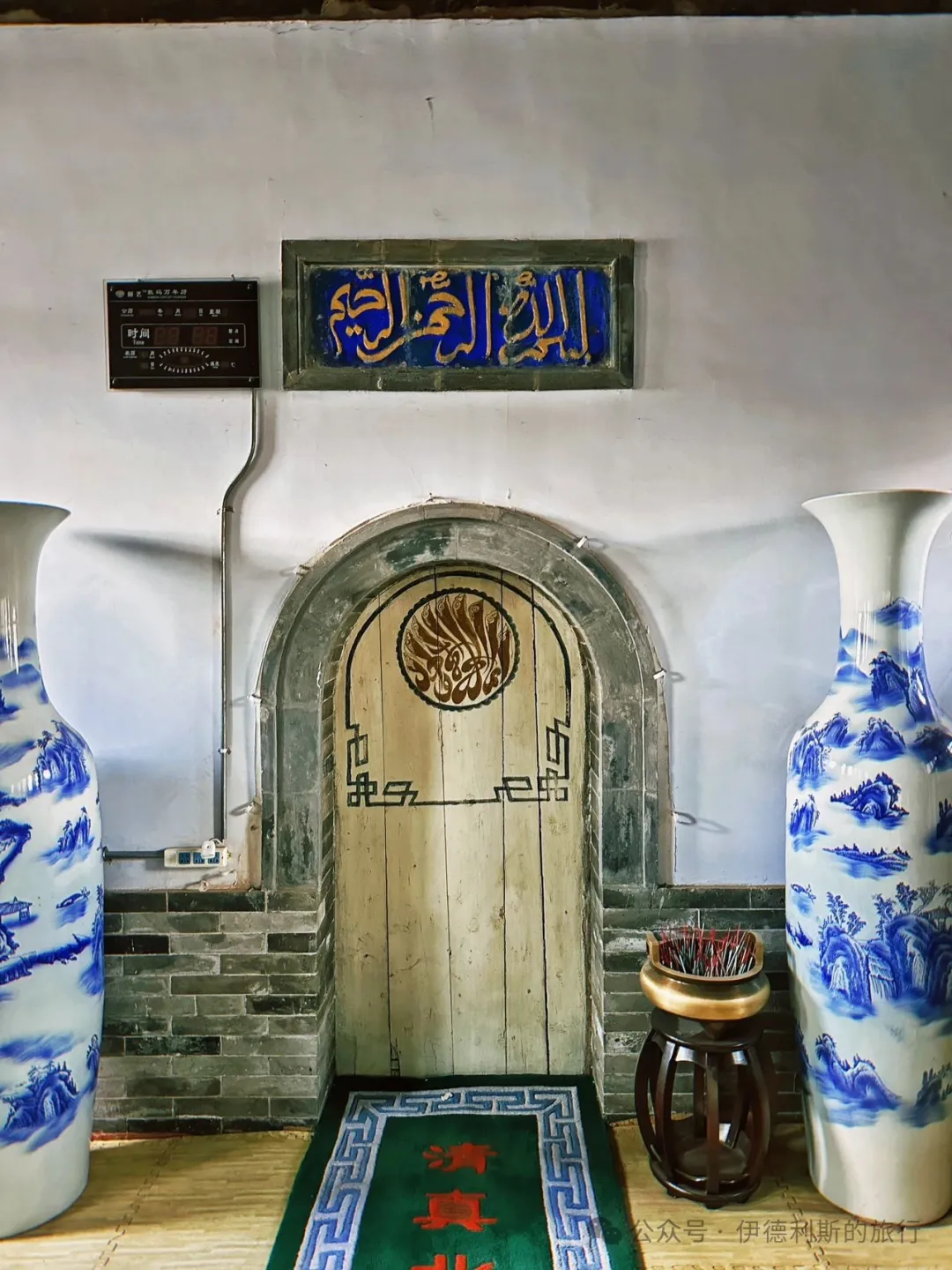
The North Mosque is located on Erdao Street in the old city. It was built in 1798 (the third year of the Jiaqing reign) with funds donated by Hui Muslim merchants from the cattle, horse, and camel trade. It later became the largest mosque (masjid) in the city. In July 1933, after the anti-Japanese hero General Ji Hongchang recaptured Duolun, he stayed at the North Mosque for a short time. Today, the North Mosque is active and holds regular services.
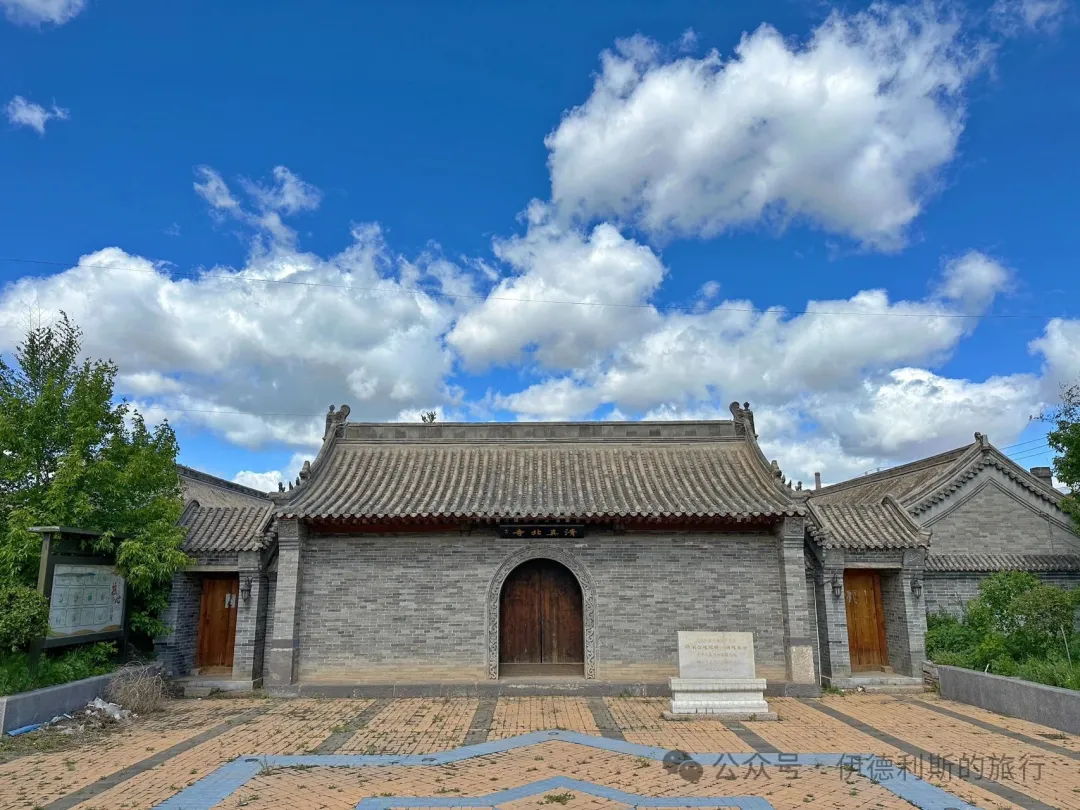
Duolun West Mosque
During the Tongzhi reign, some Hui Muslims from Shaanxi, Ningxia, and Gansu moved to Duolun to settle down. Since then, Hui Muslims from North China have been called "Kouli people," while those from the Northwest have been called "Westerners."
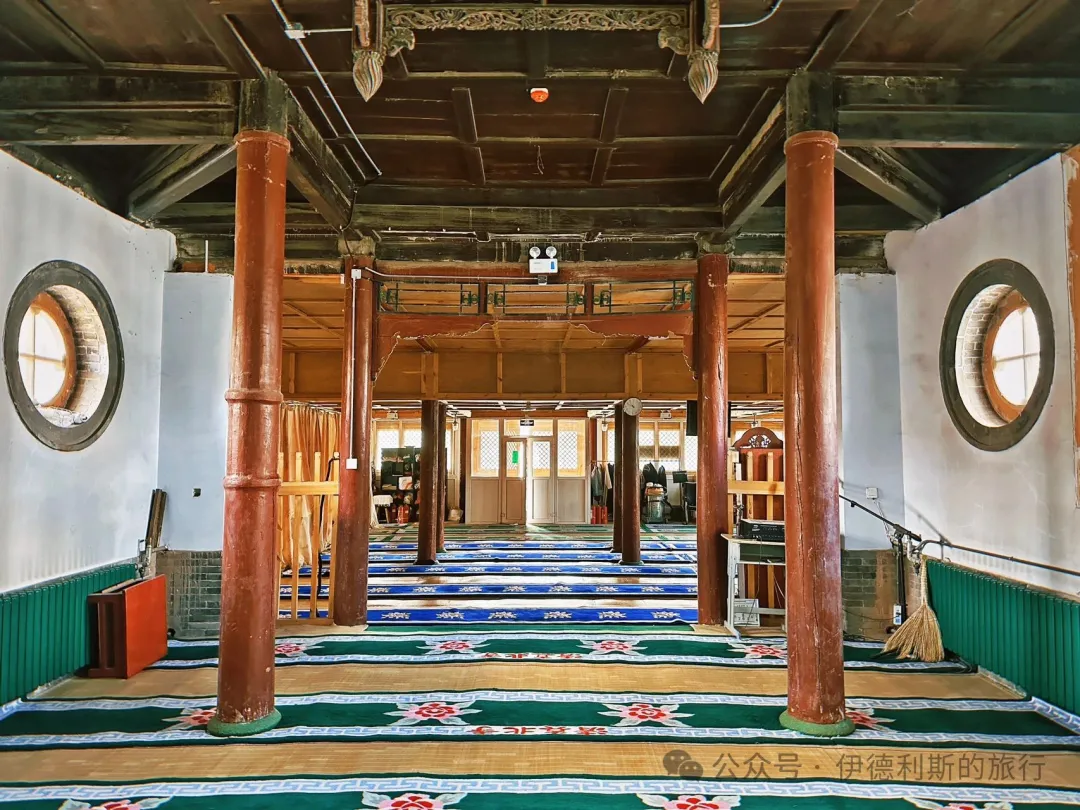
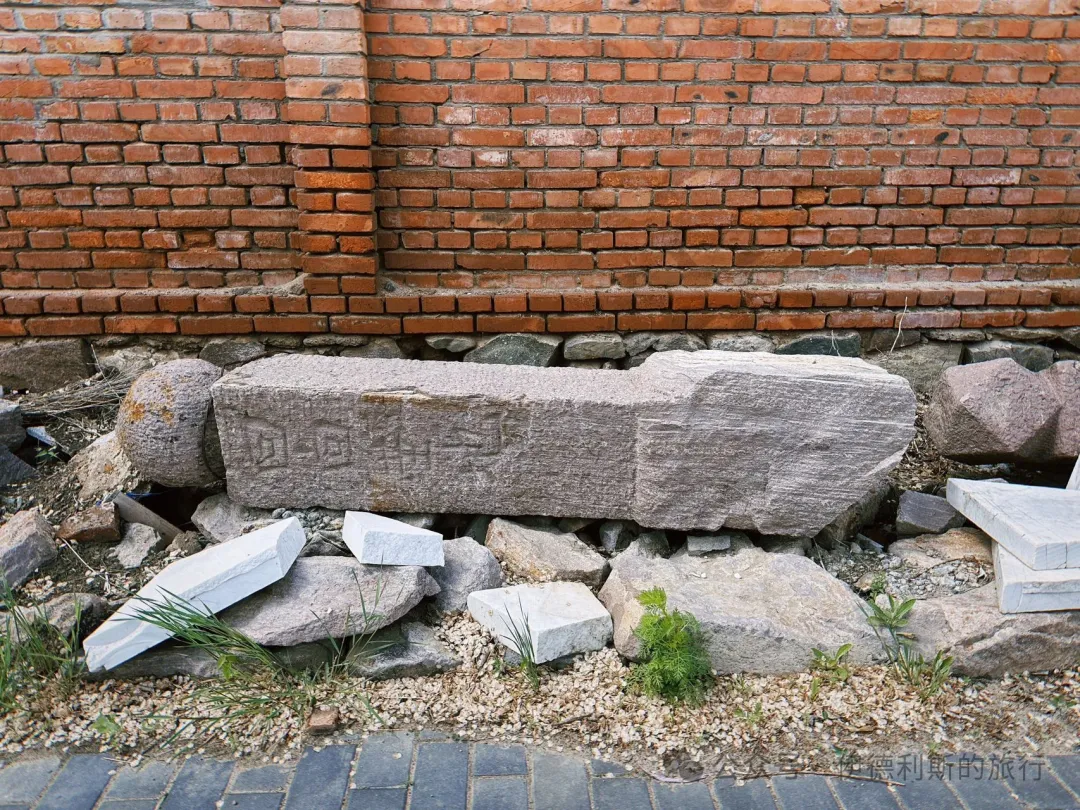
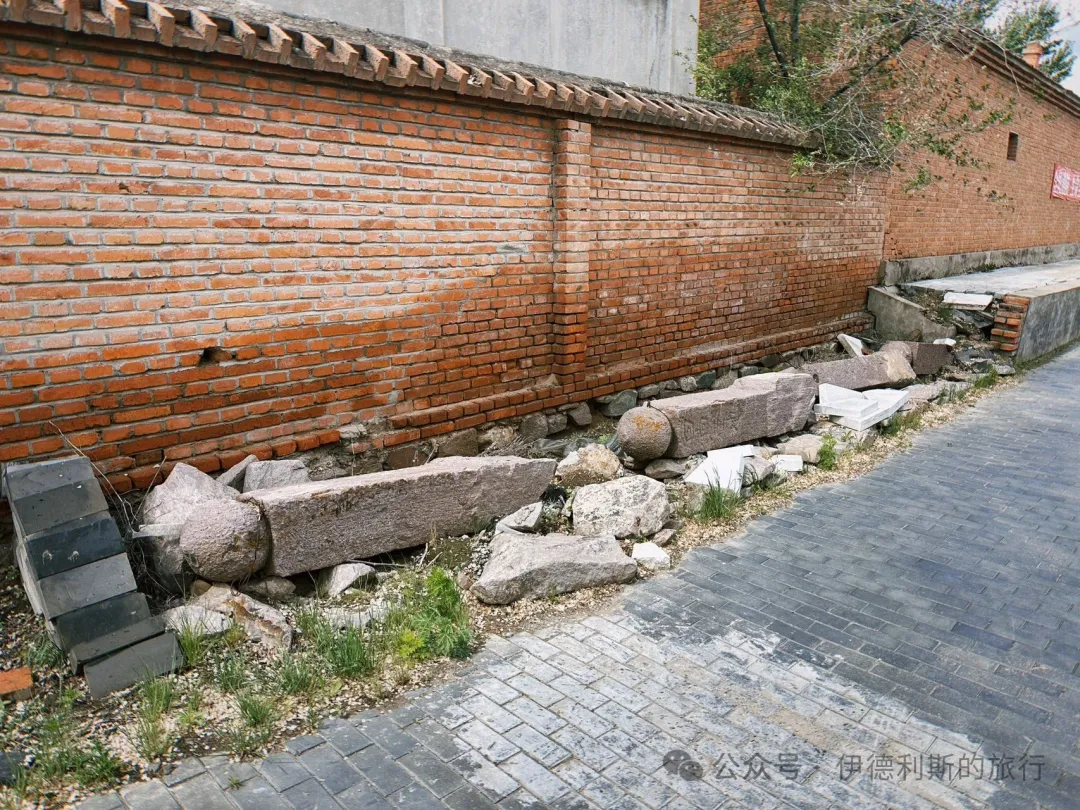
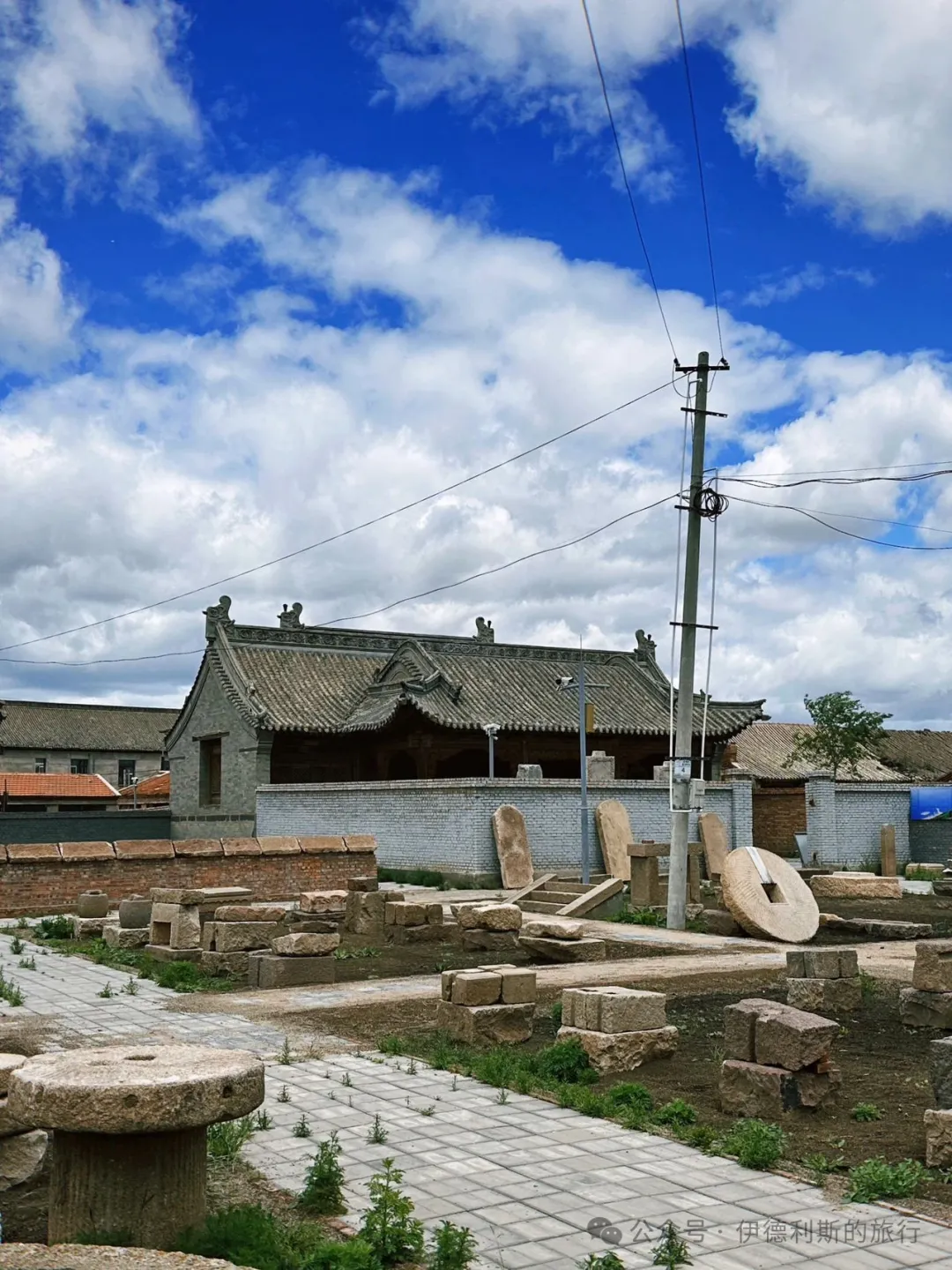
The East Mosque was located outside Nanjin Fort in the old city. It was started in 1869 (the eighth year of the Tongzhi reign) by Hui Muslims Xiu Mingliang and Liu Changfu from Shaanxi, and was completed in 1878 (the first year of the Guangxu reign). The West Mosque is located on Daxijie Street in the old city. It was built in 1880 (the fifth year of the Guangxu reign) by camel merchants Li Xianyu and Wang Jichen, who were from Ningxia and Gansu. After the 1960s, the East Mosque was completely demolished, and the gate and the north and south lecture halls of the West Mosque were also torn down. Today, only the main prayer hall of the West Mosque remains, and it is open to the public as a historical site.
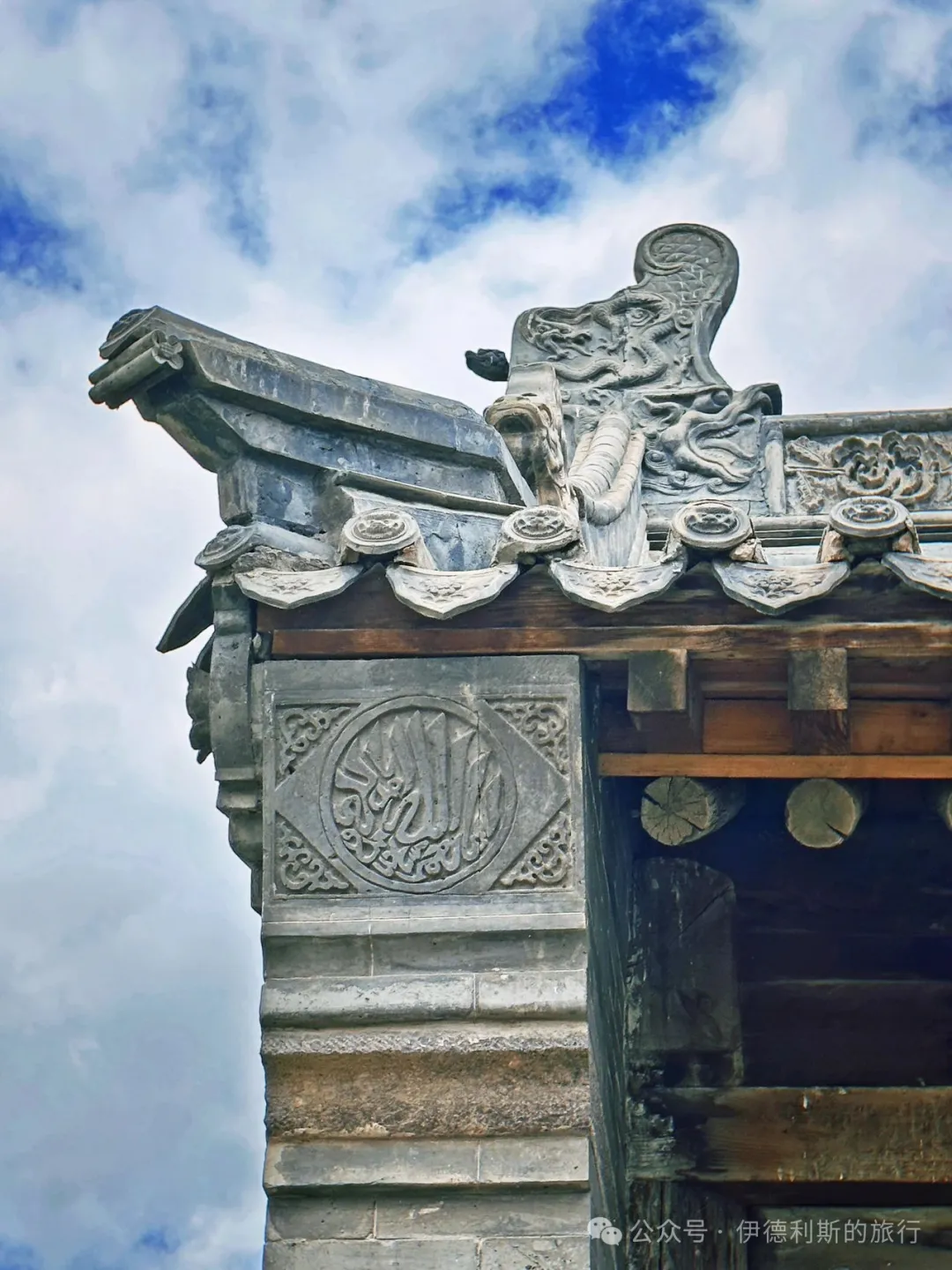
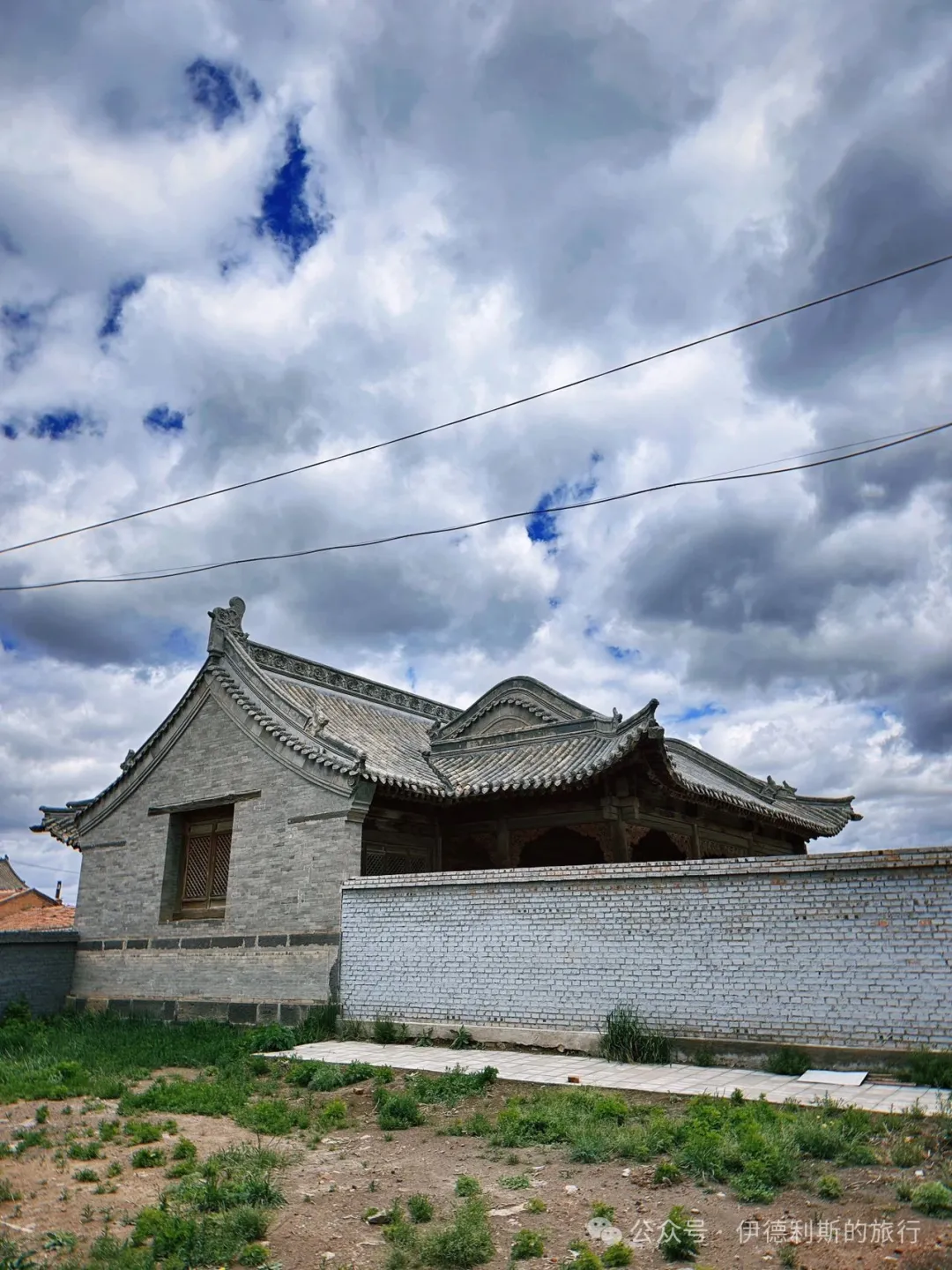
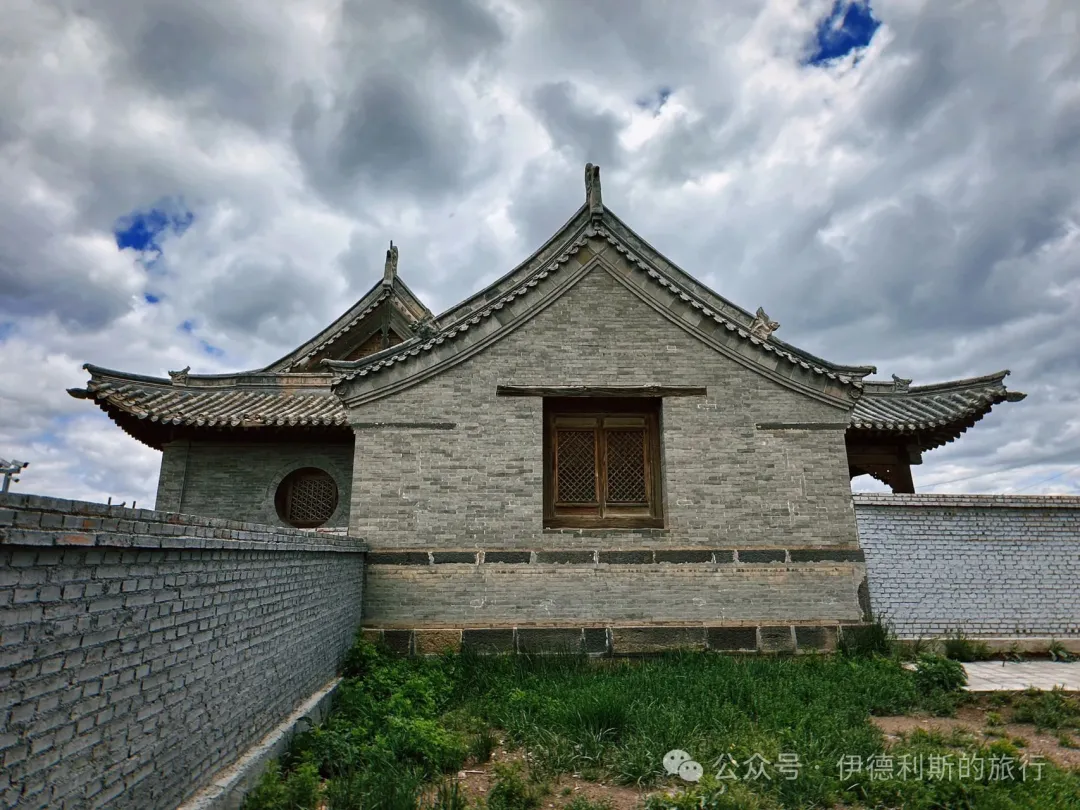
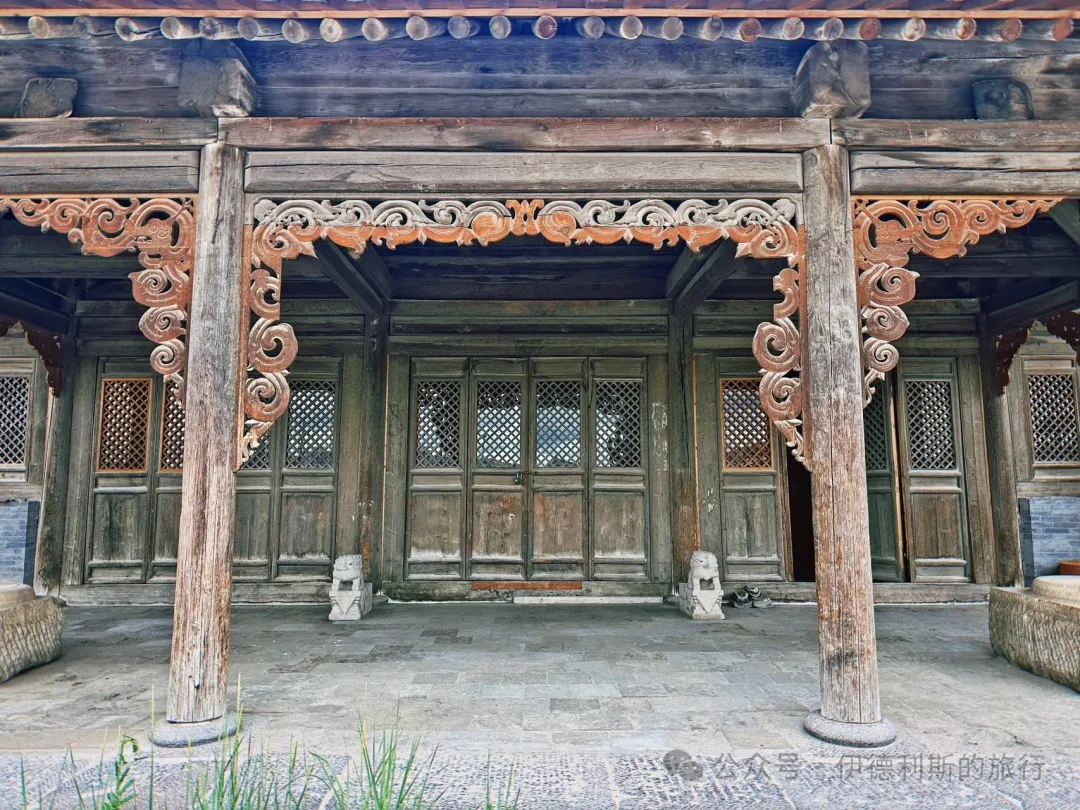
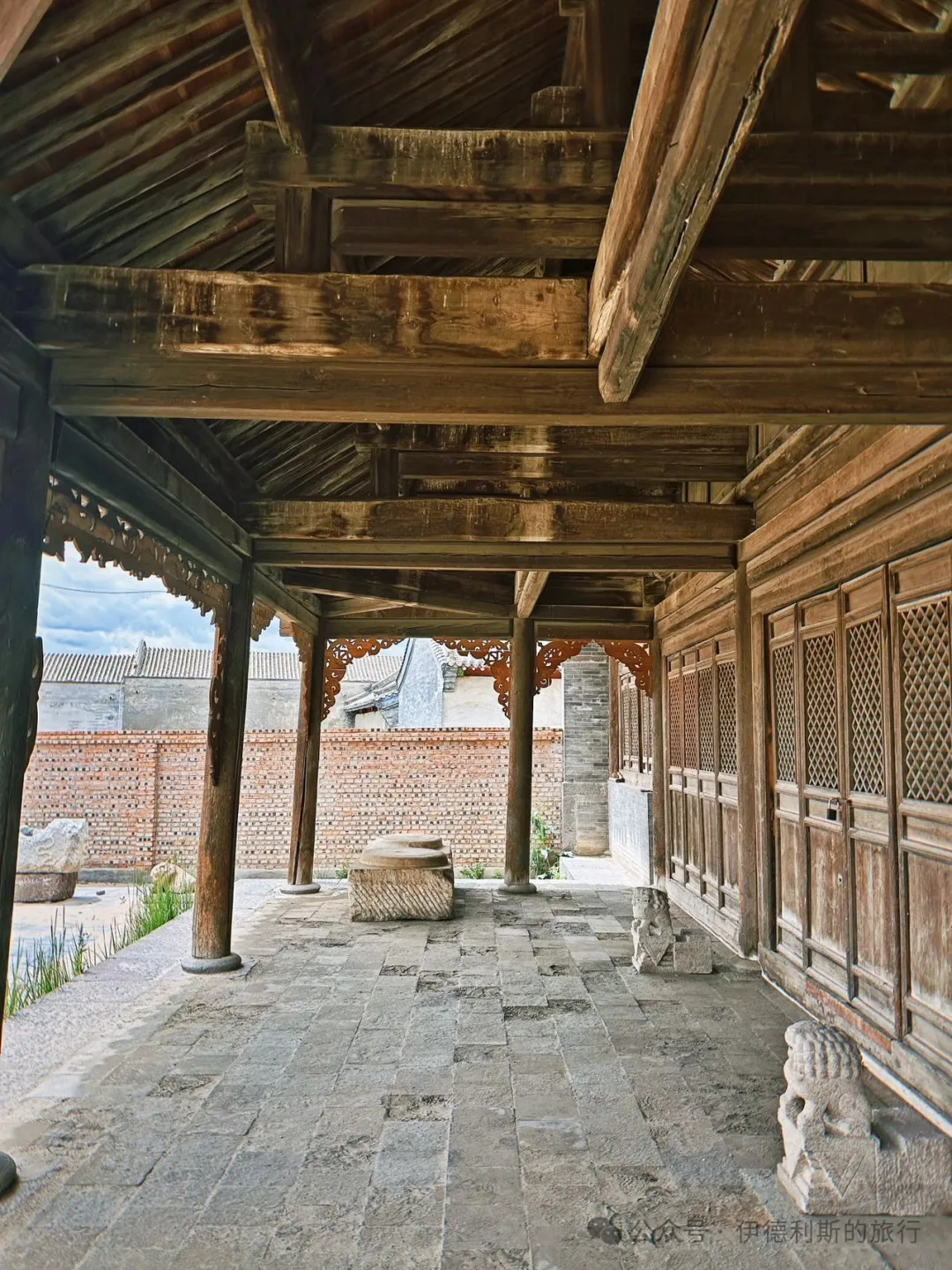
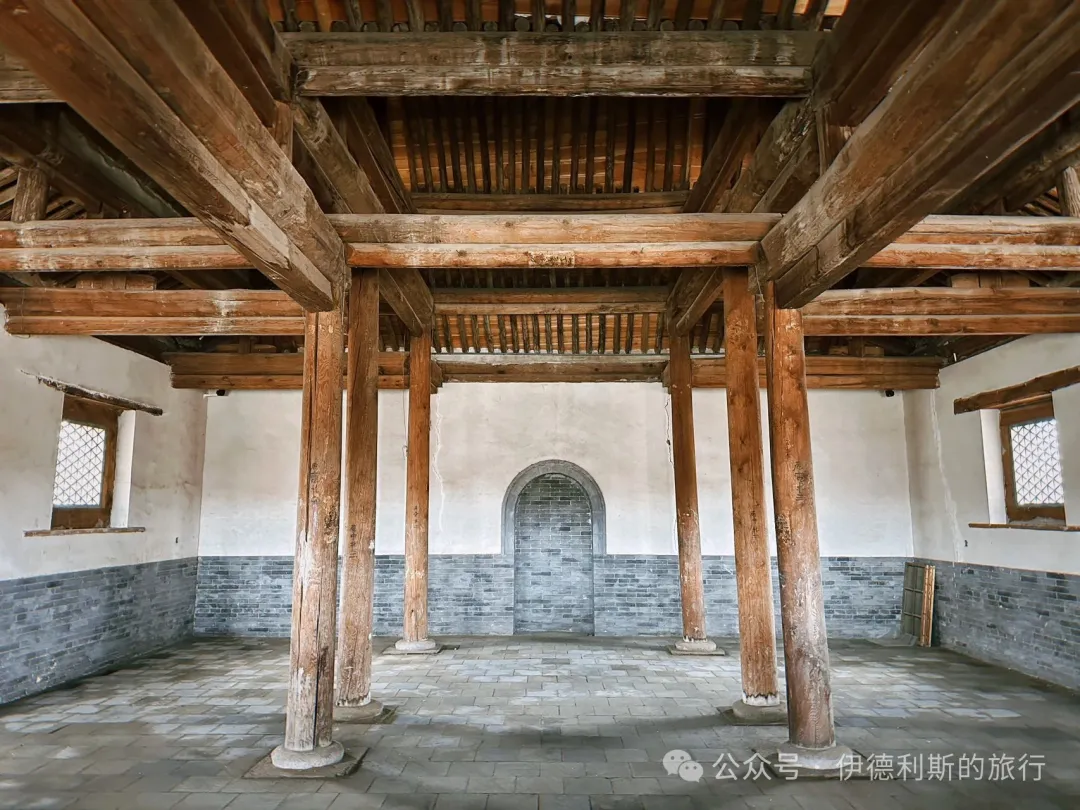
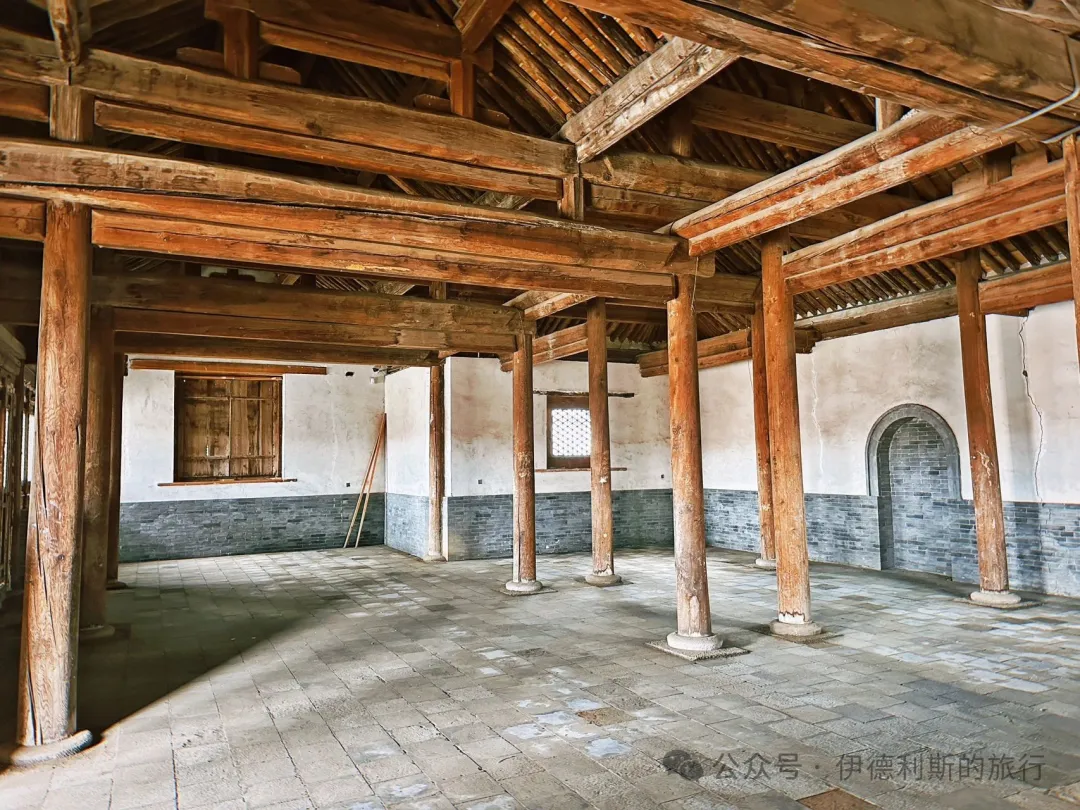
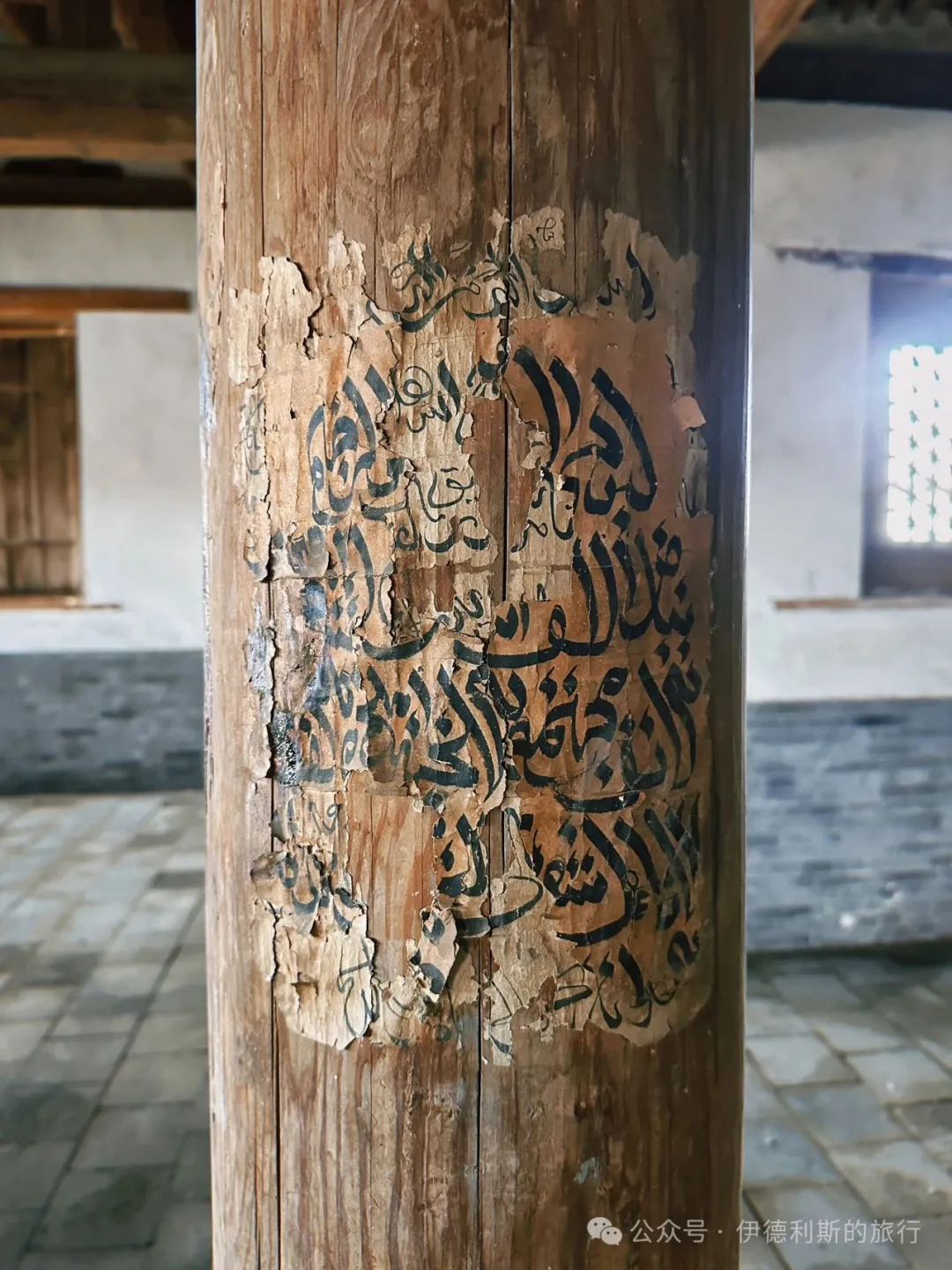
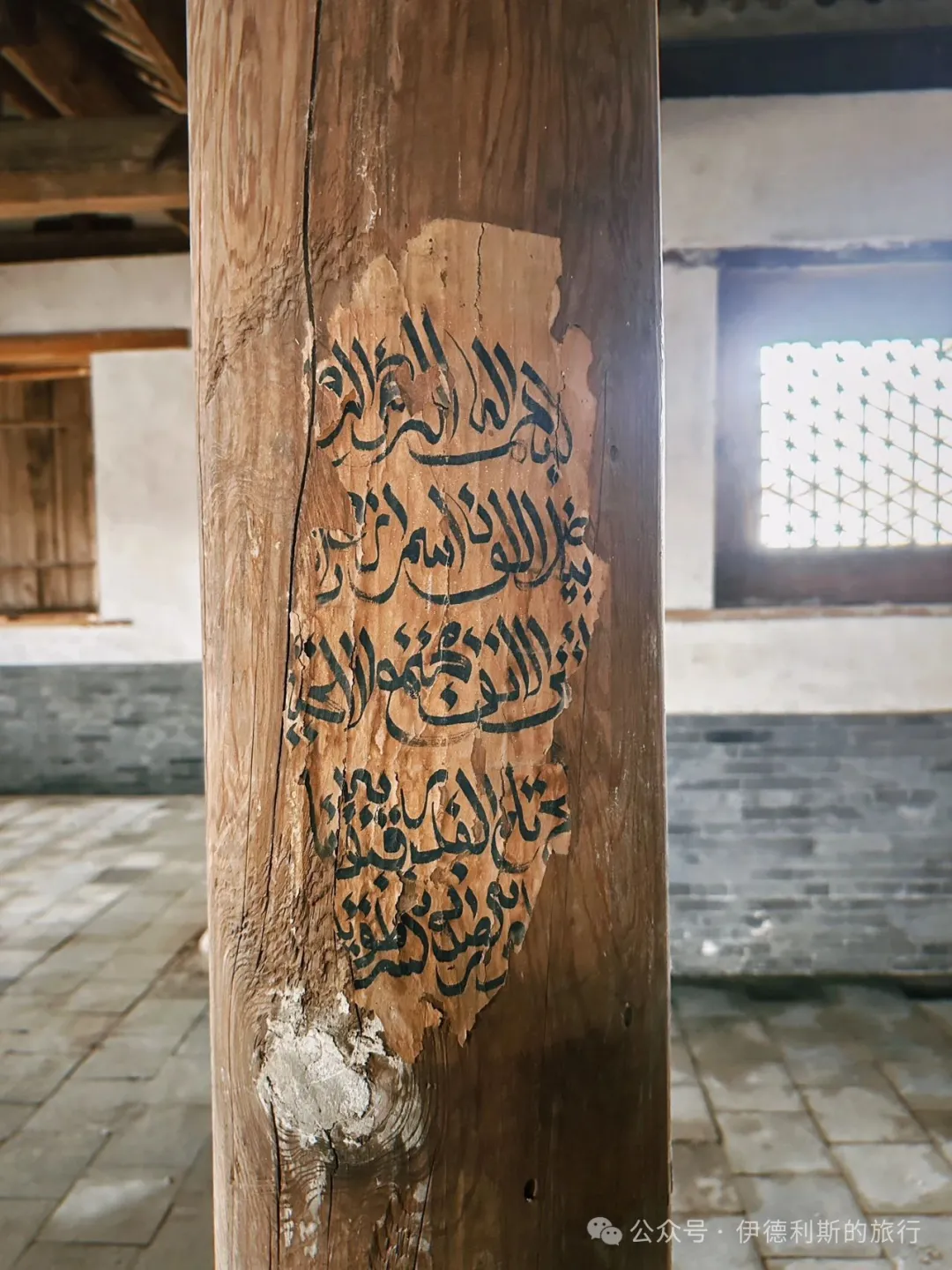
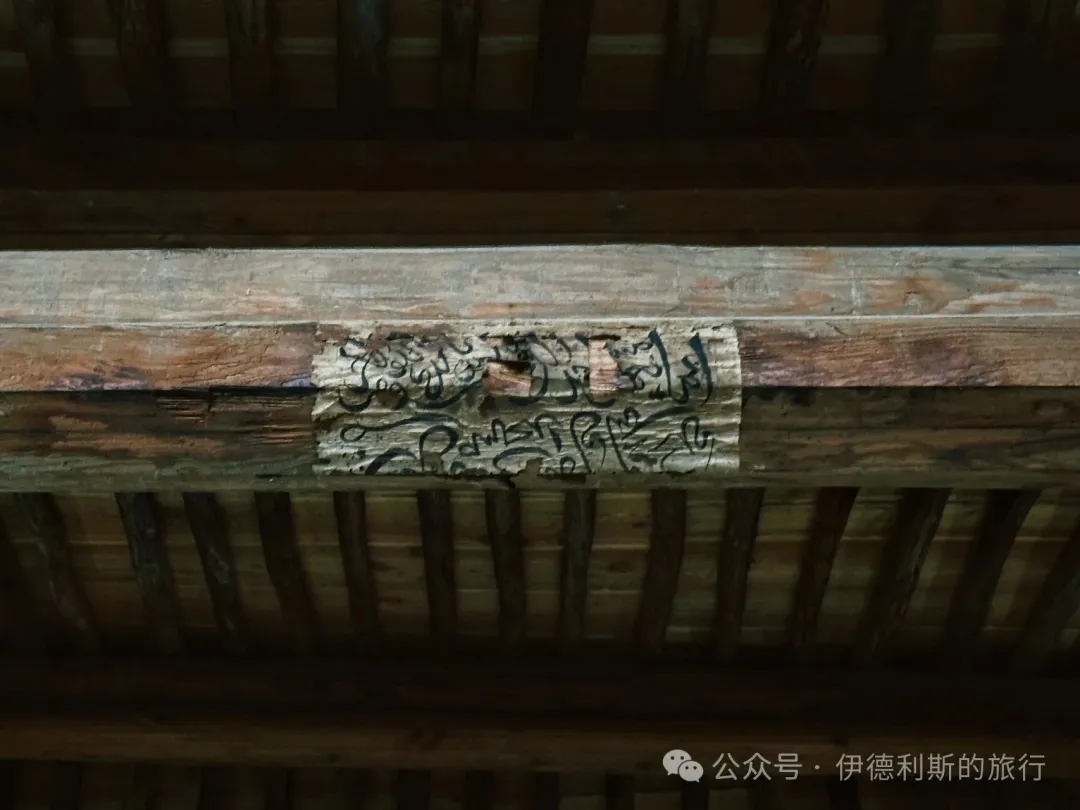
Duolun Central Mosque
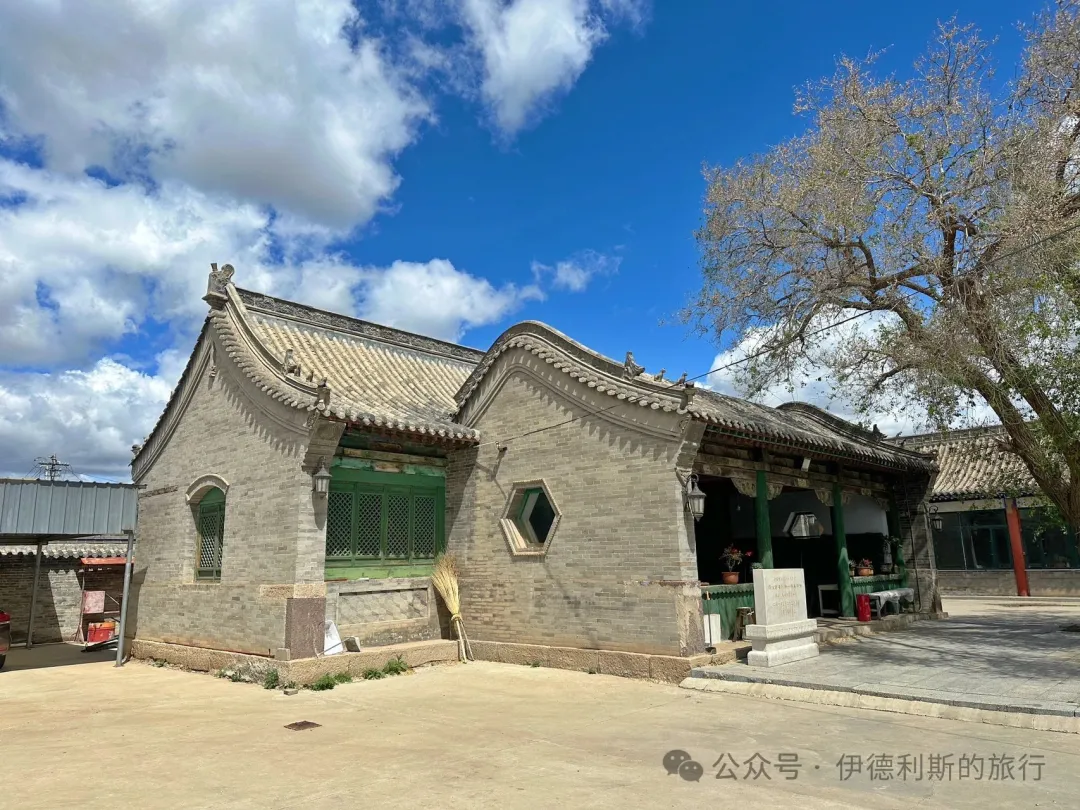
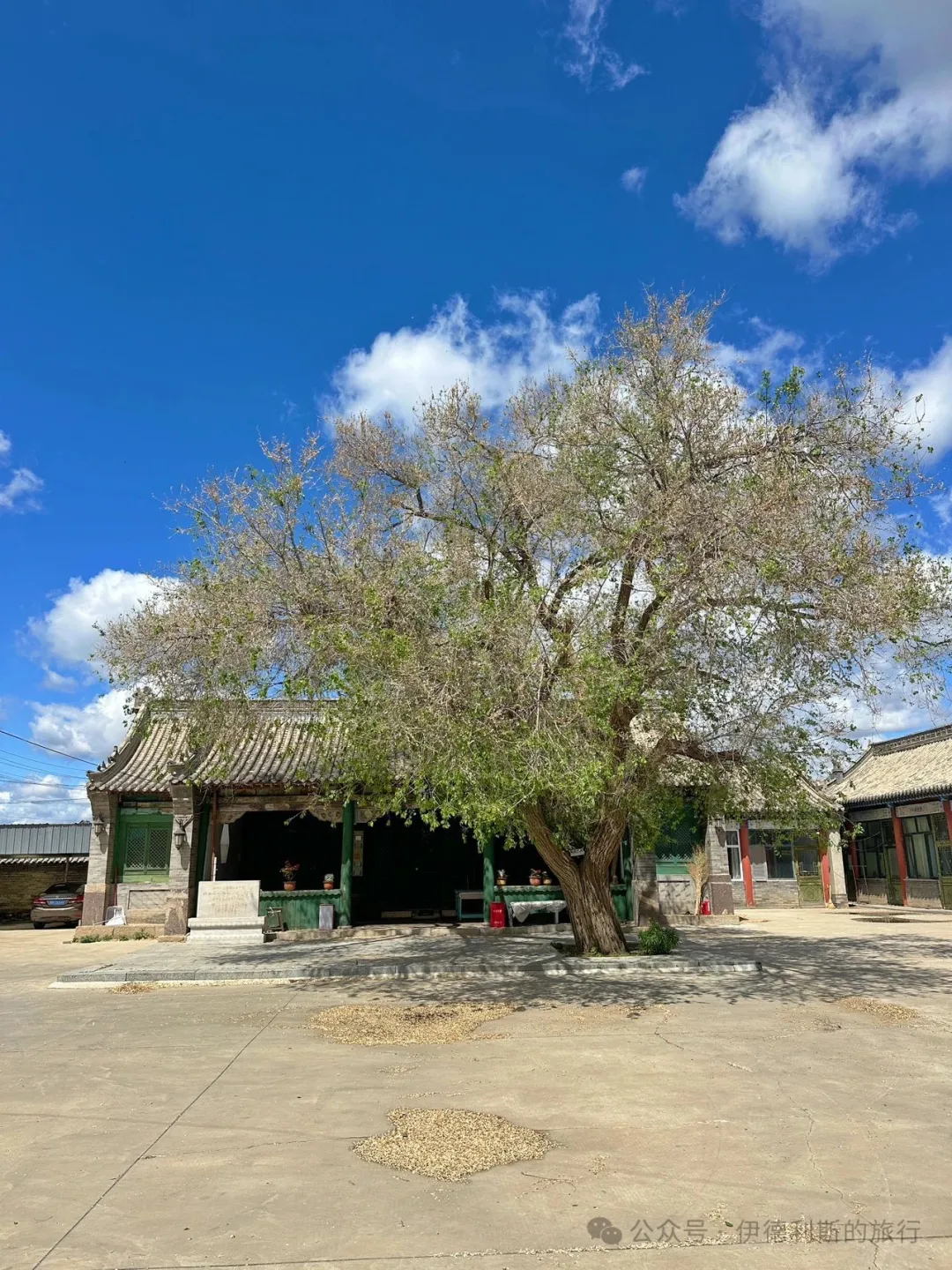
The Central Mosque is located on Nanquangfeng Street in the old city. It was built in 1908 (the 34th year of the Guangxu reign) by Wang Guofu and Shan Yunxing. In 1930, He Xingzhou, Cong Dianqing, and others initiated the reconstruction of the main hall, which was completed in 1935. The Central Mosque is currently open for regular activities.
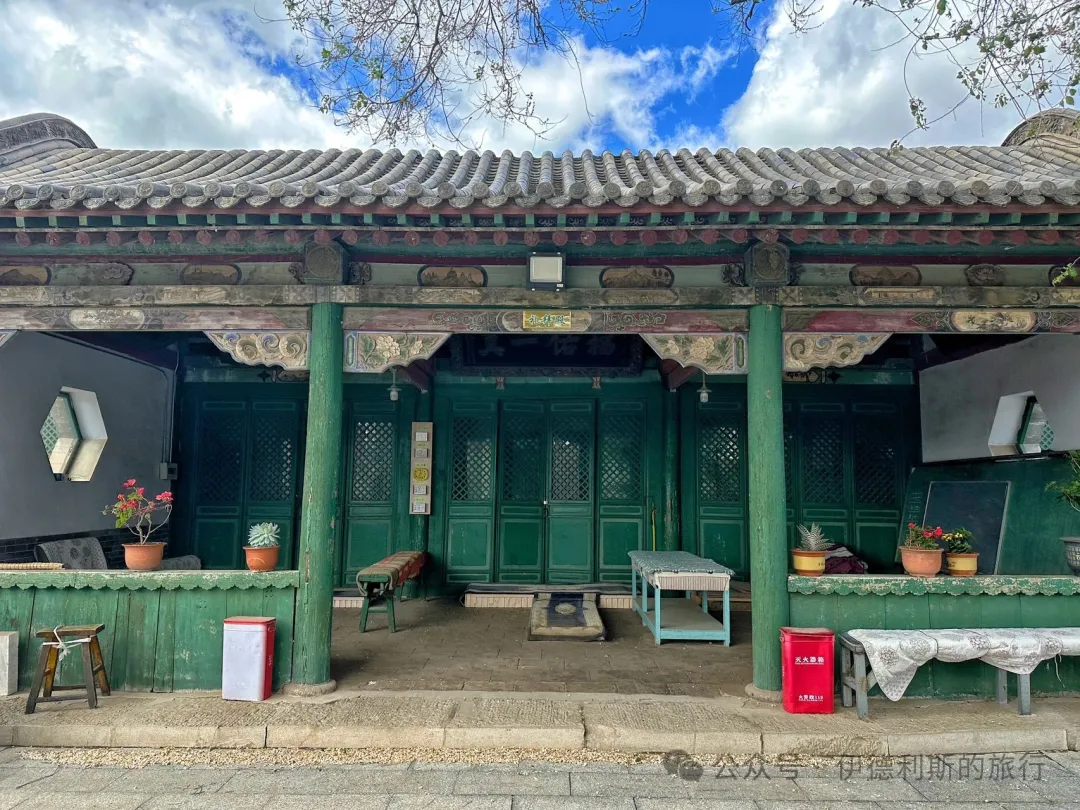
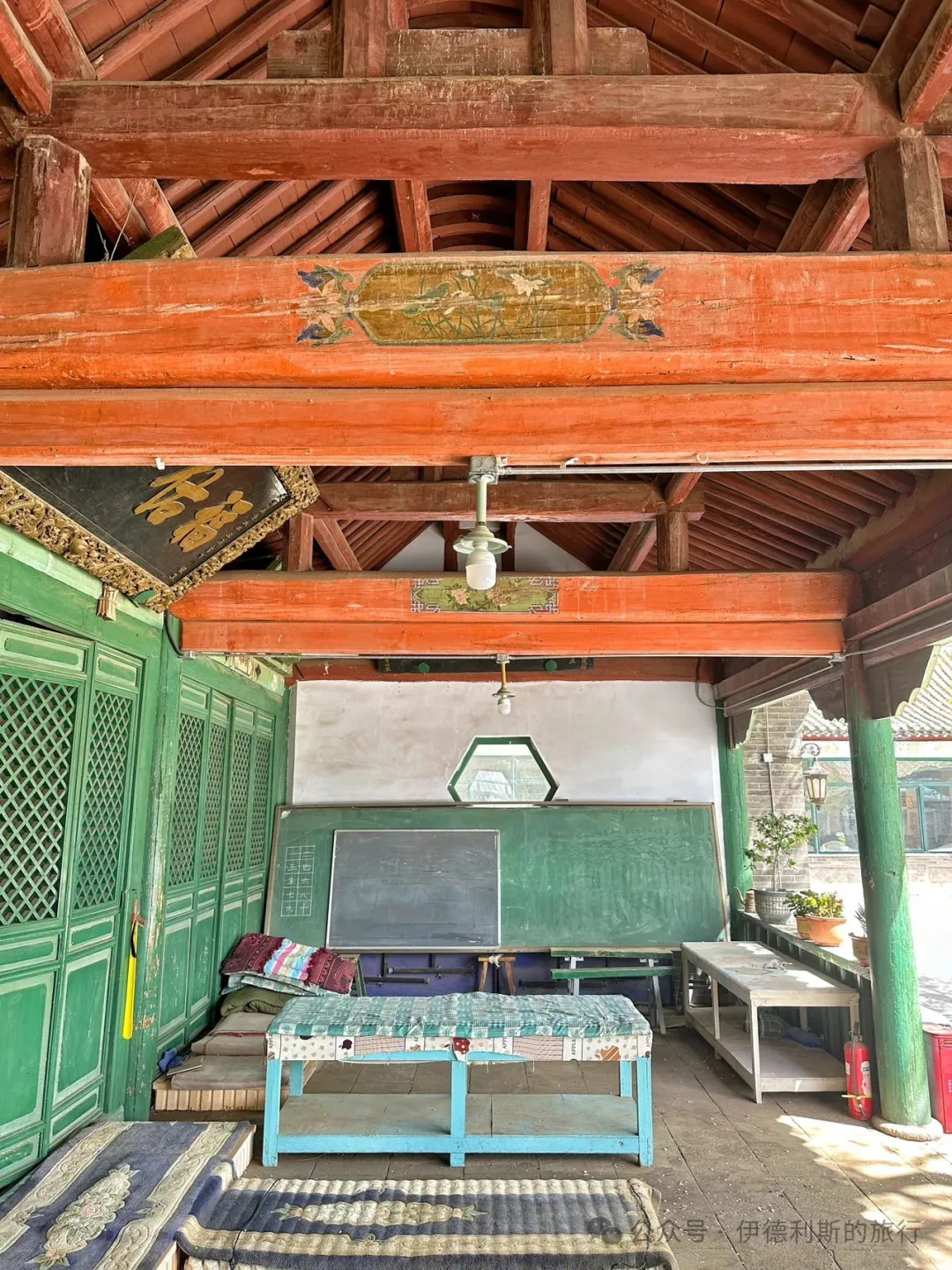
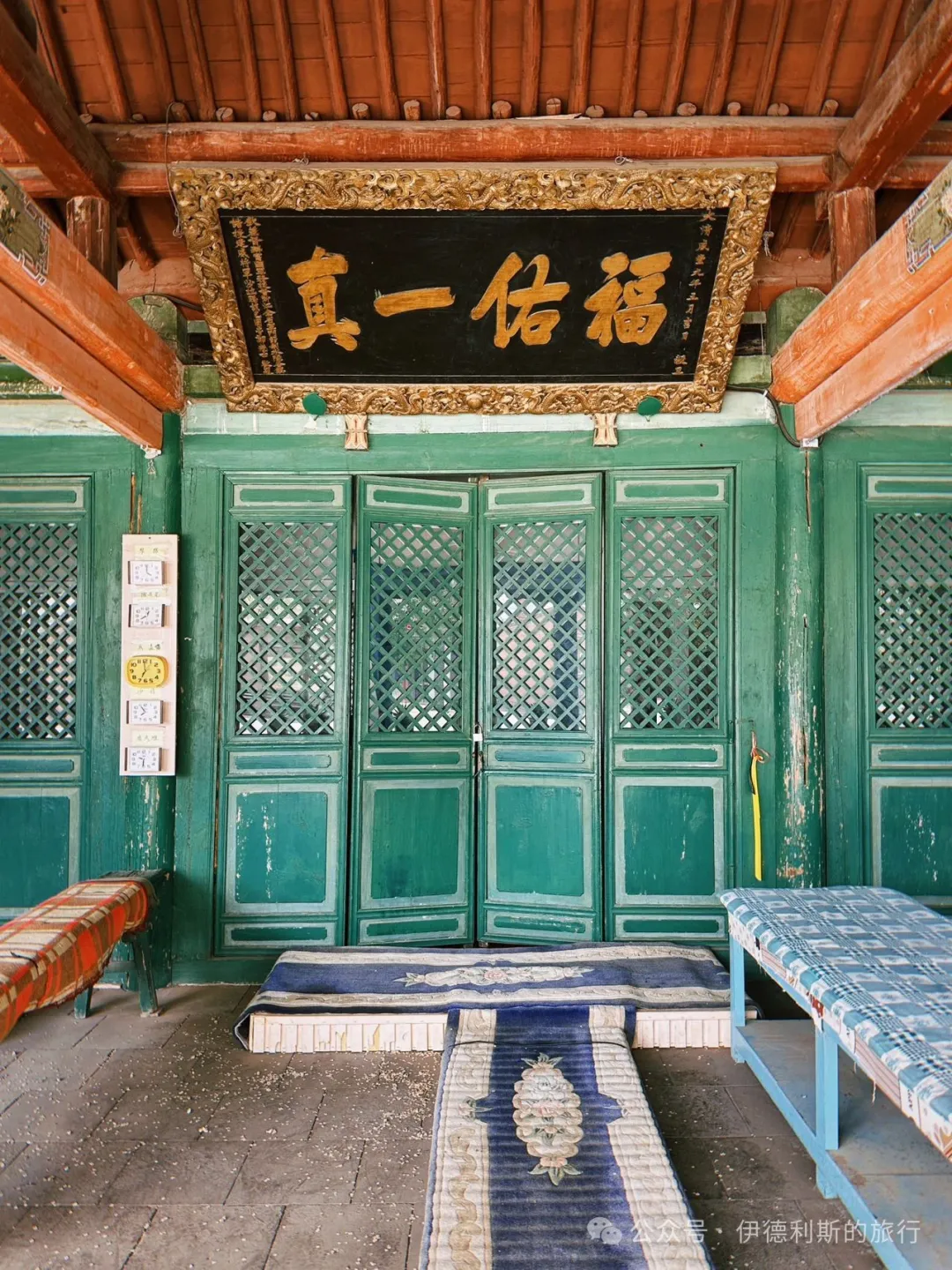
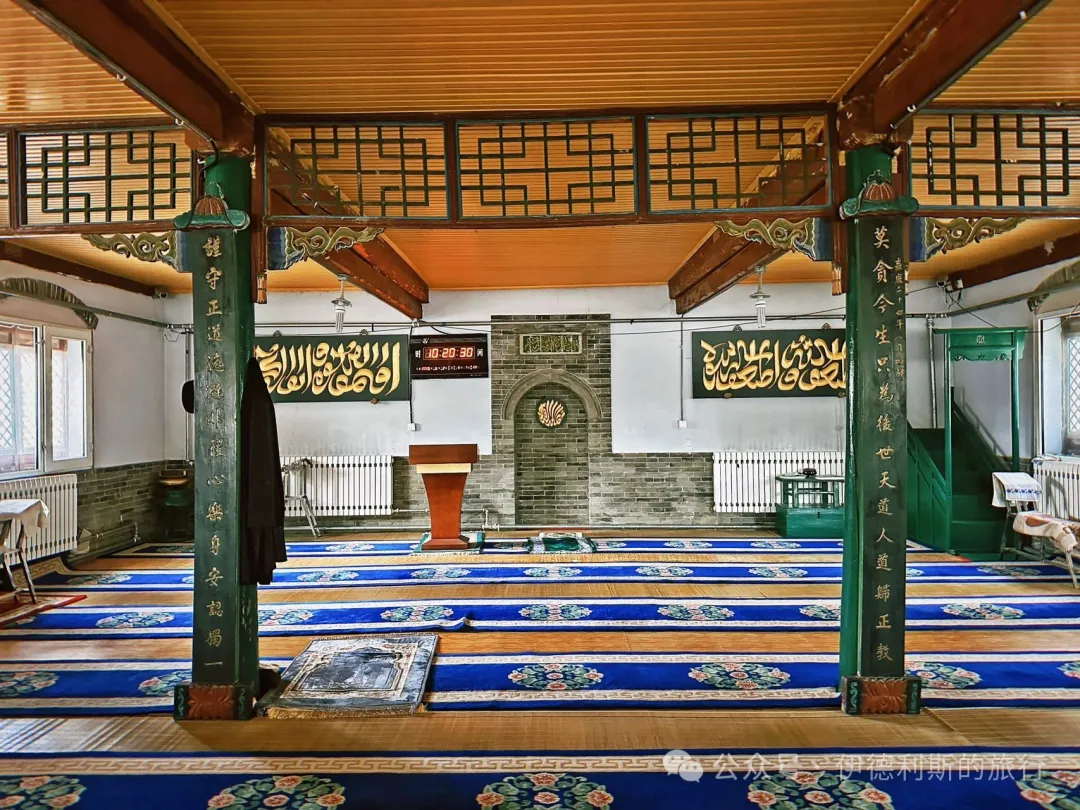
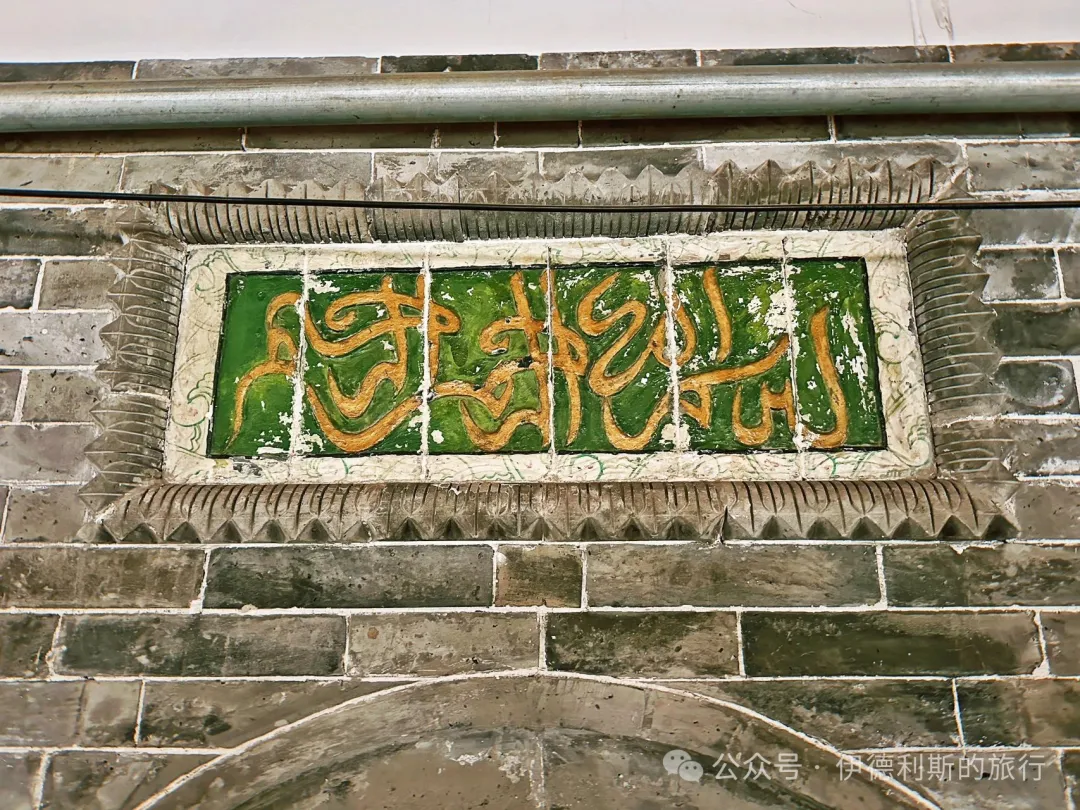
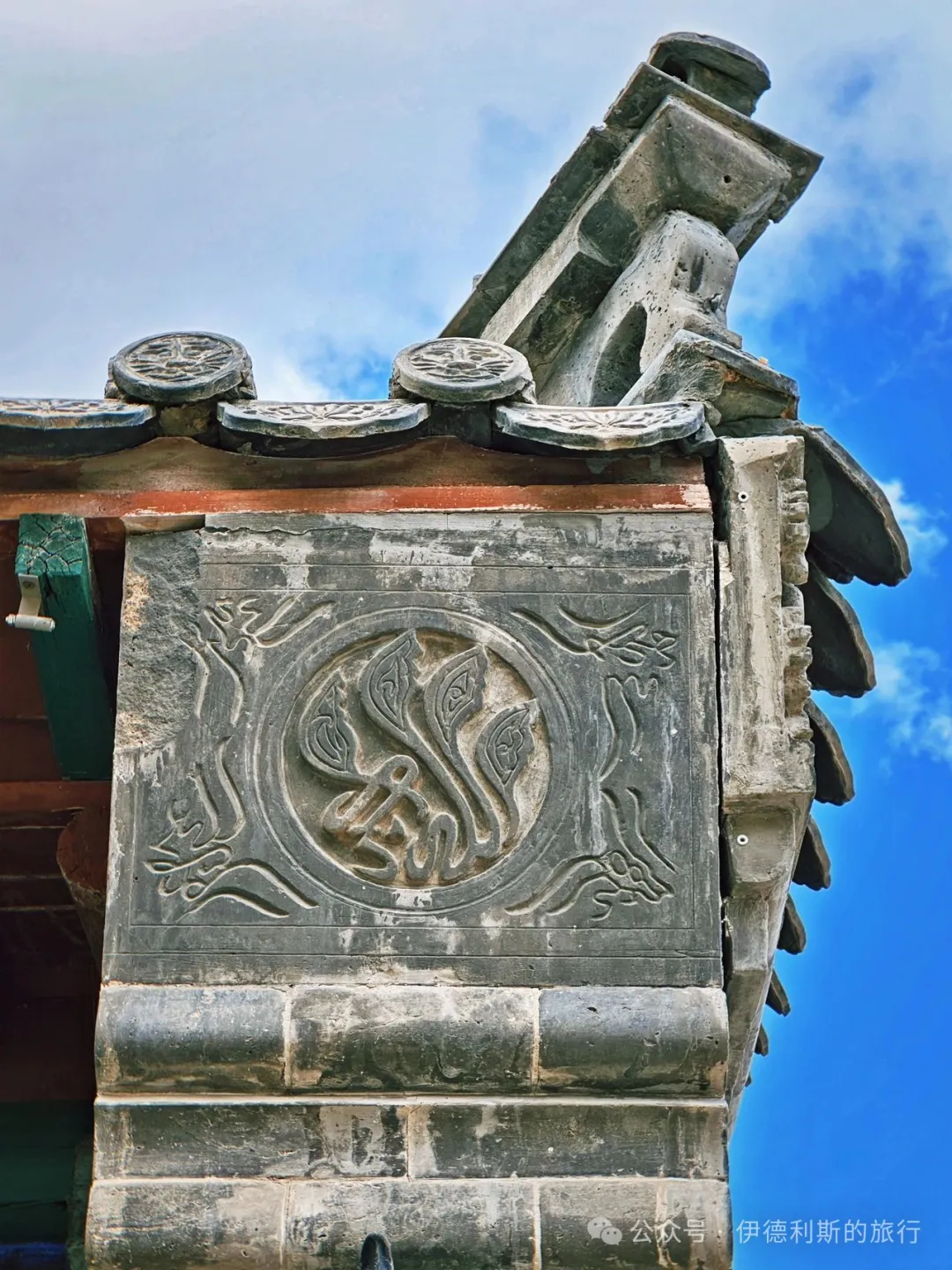
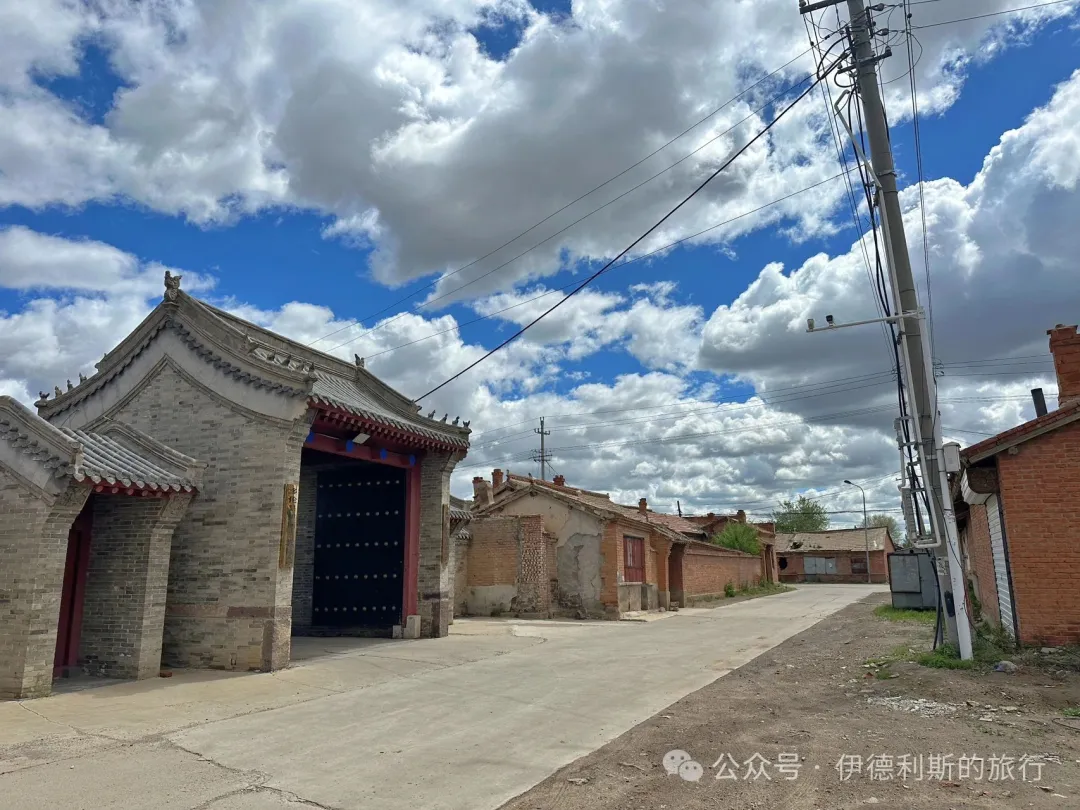
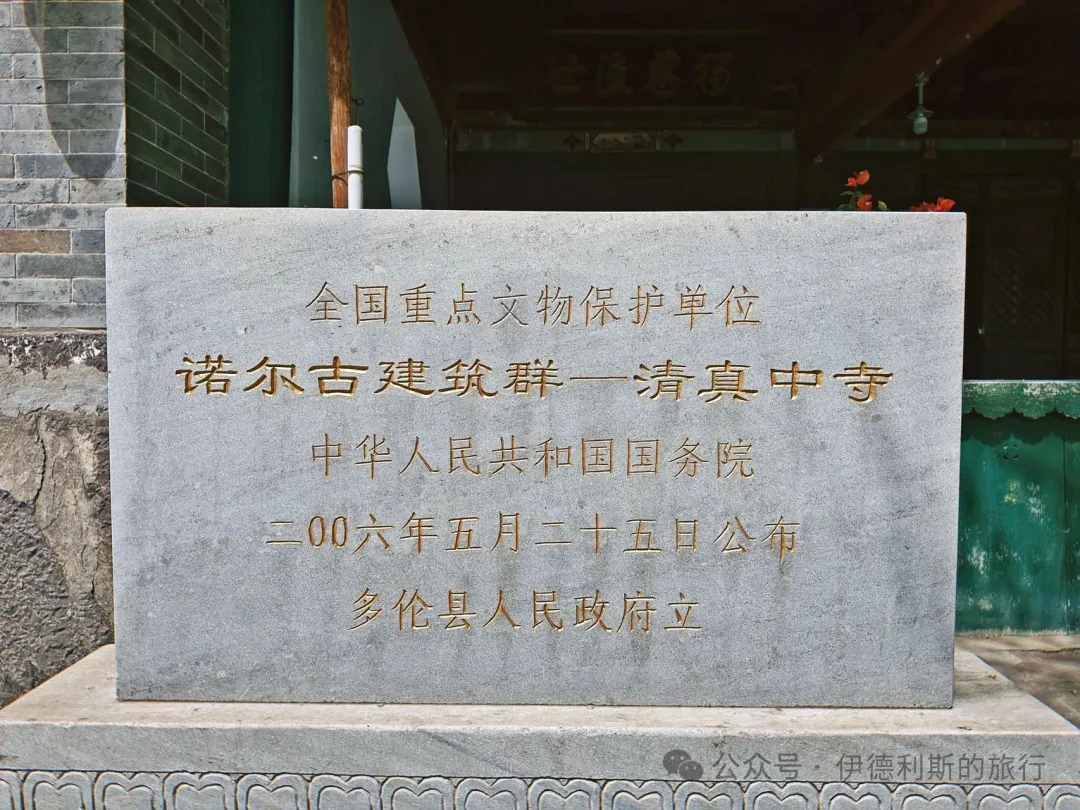
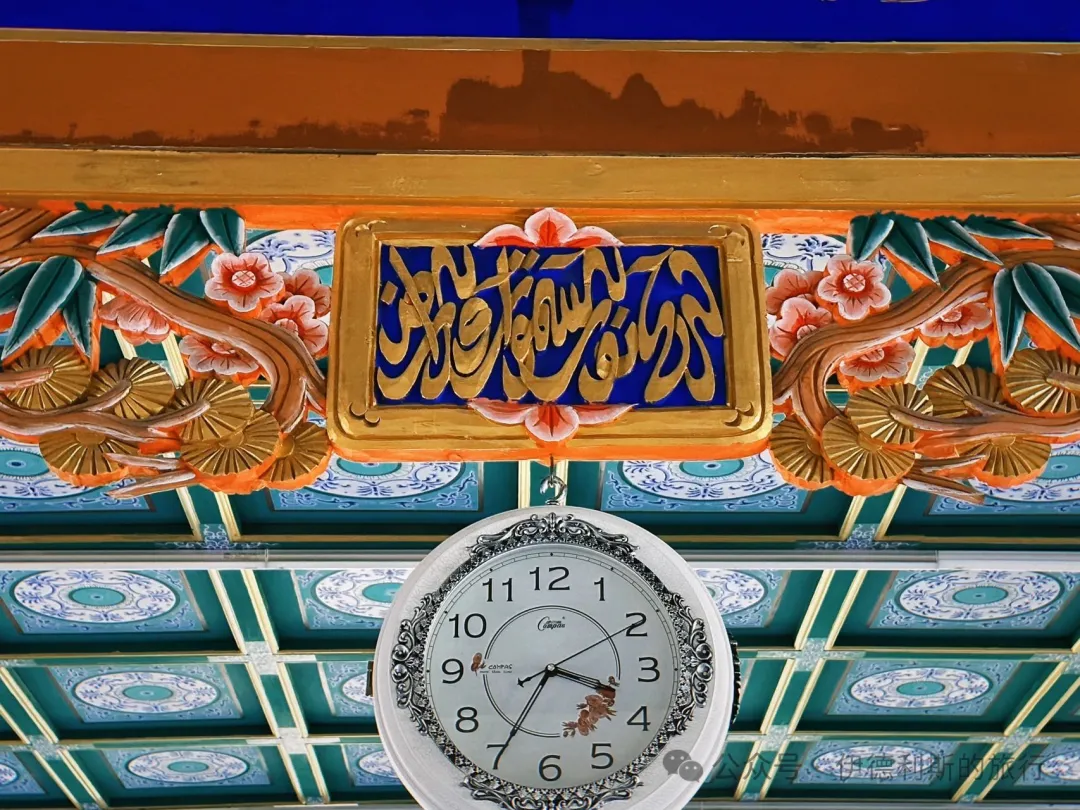
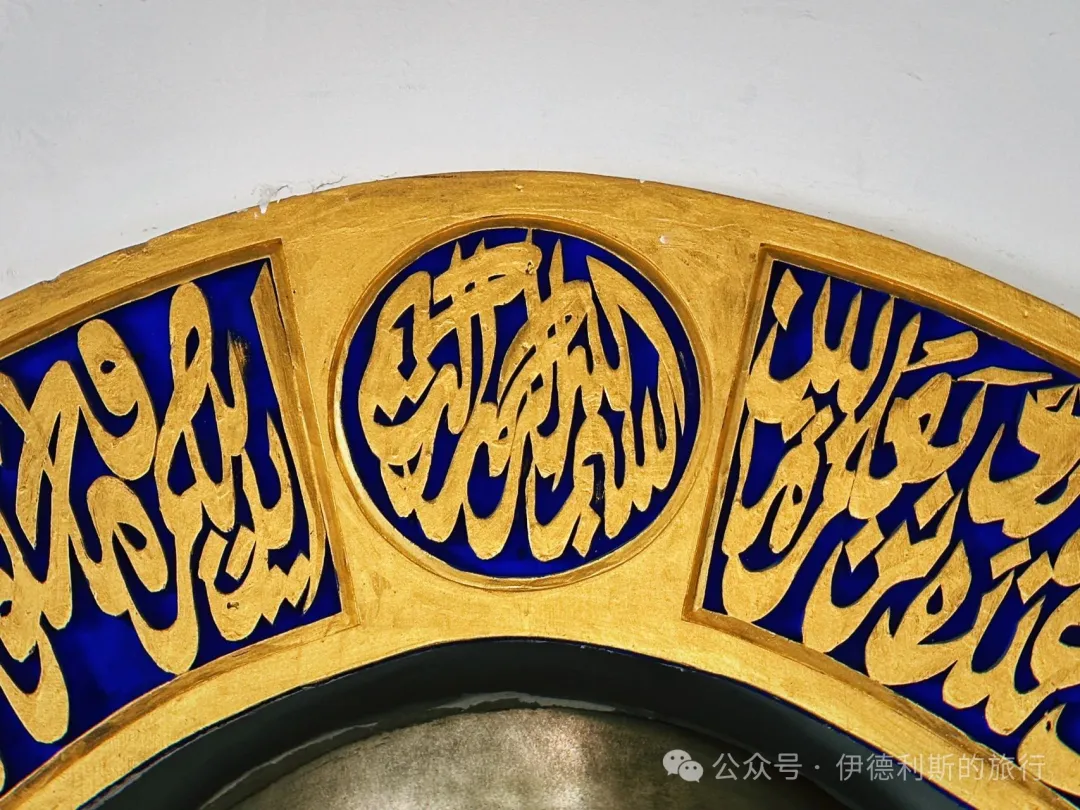
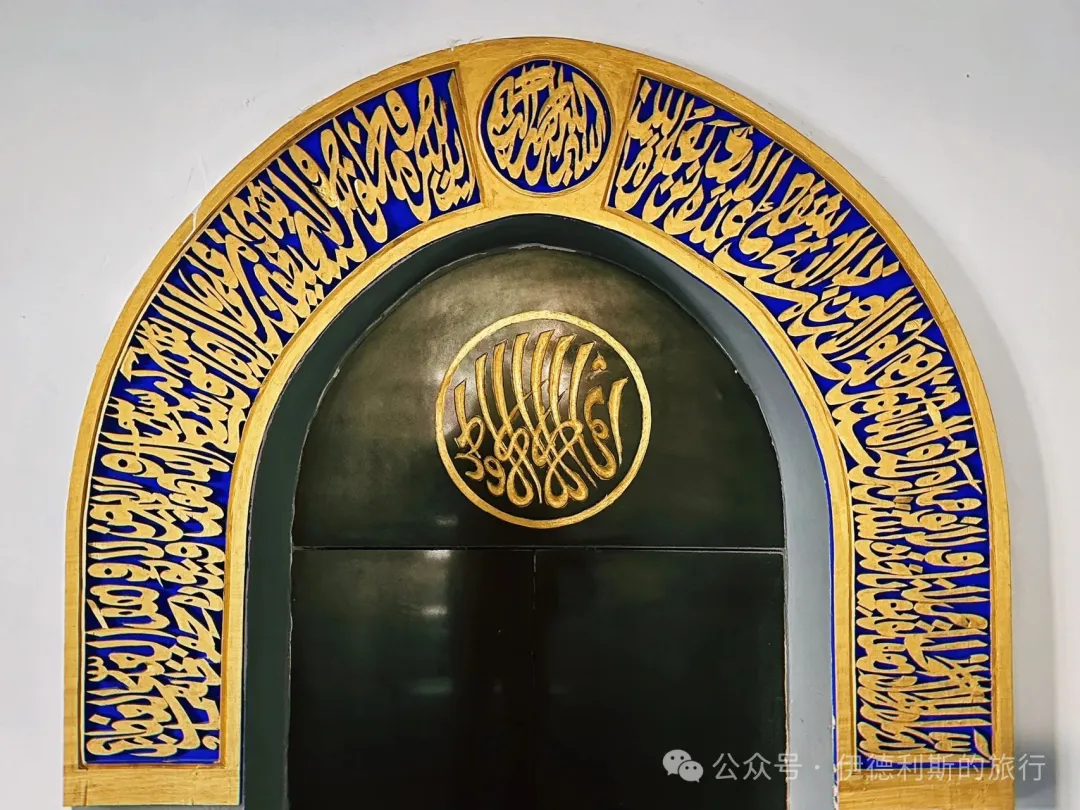
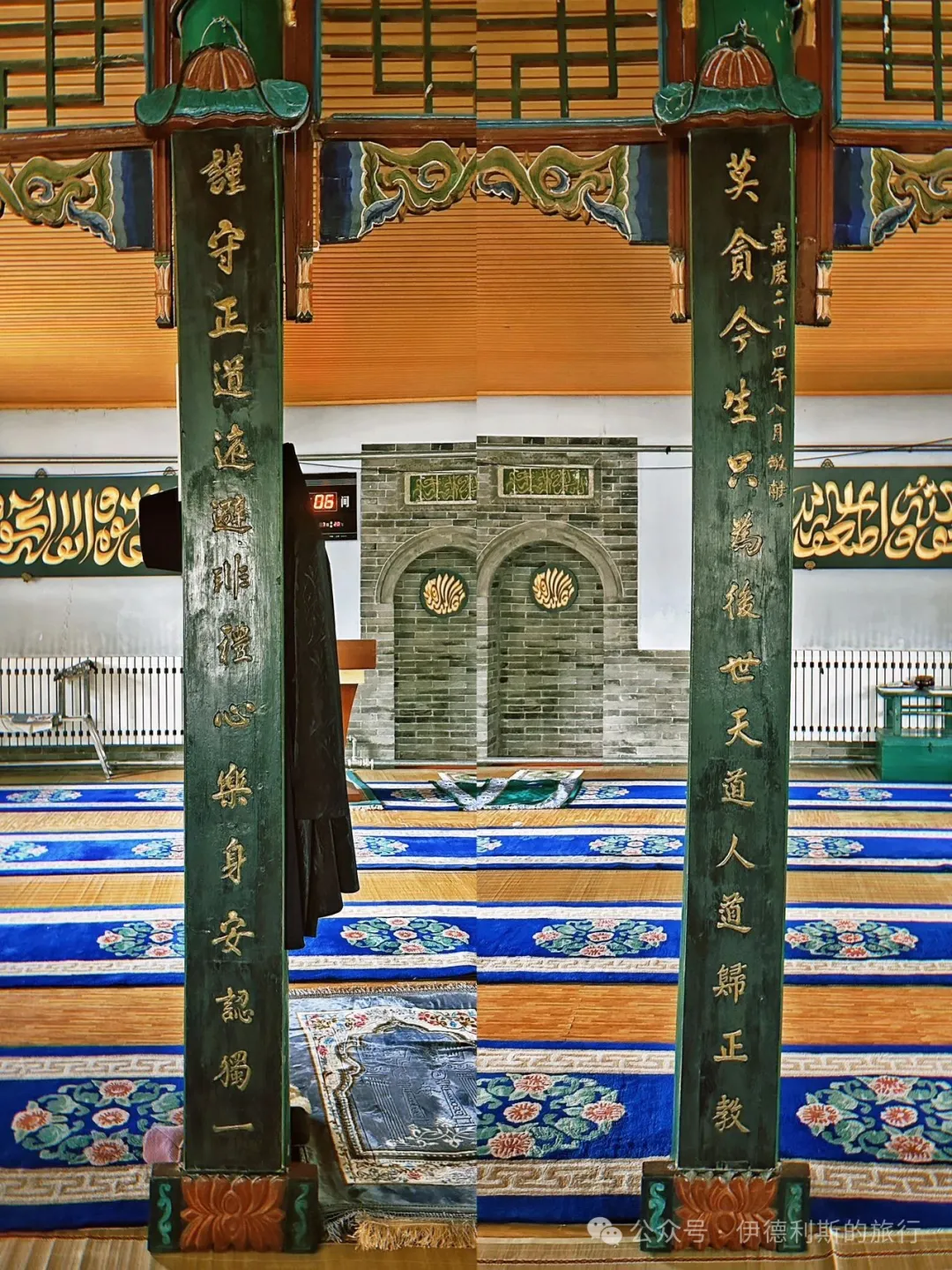
The Duolun Central Mosque houses plaques and couplets from various mosques in Duolun: Do not be greedy for this life, only for the afterlife; the heavenly way and human way return to the true faith. Carefully guard the righteous path, avoid what is improper, keep your heart happy and your body at peace, and recognize the One. Dedicated in the eighth month of the 24th year of the Jiaqing reign.
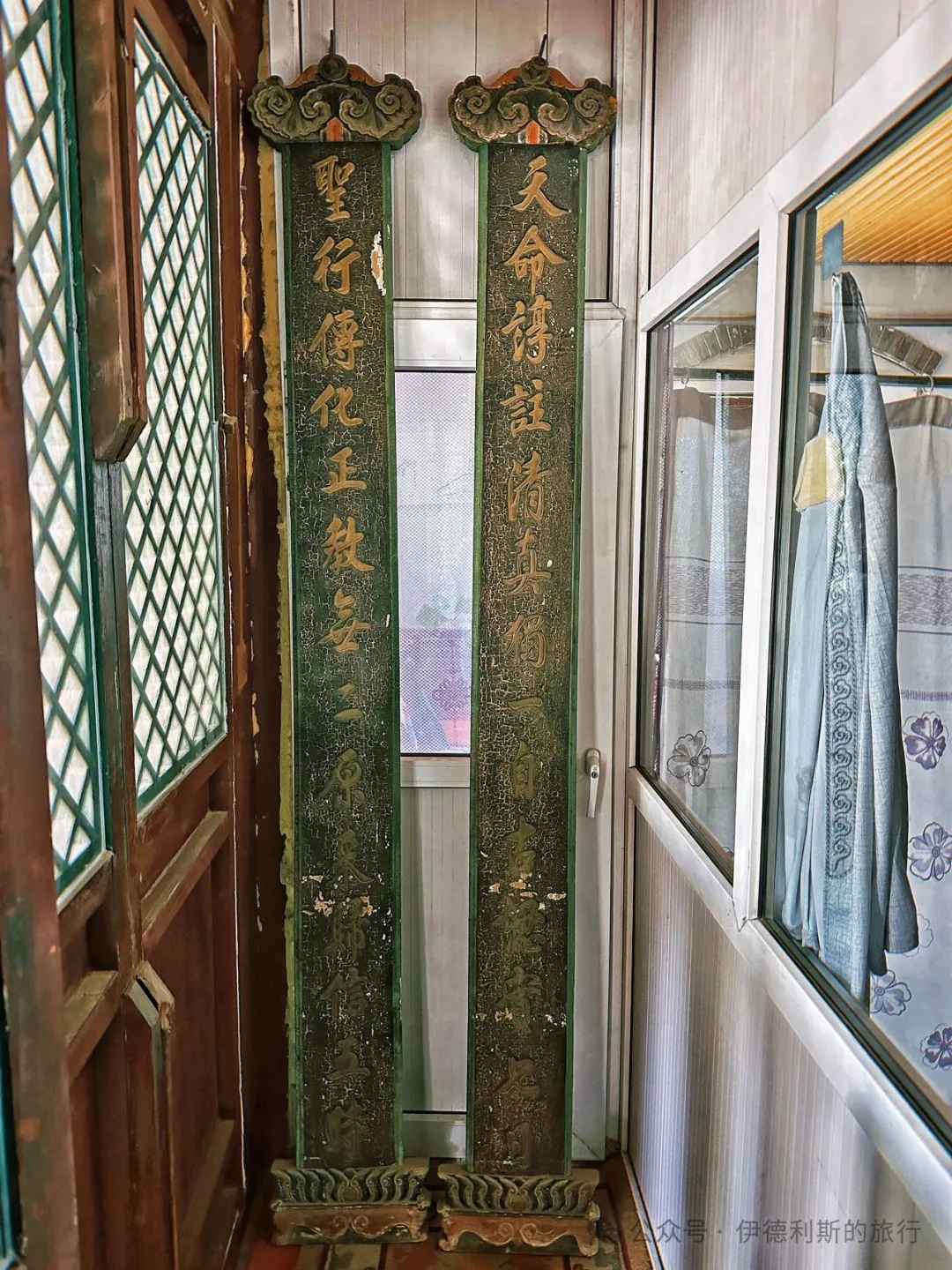
Heavenly decree teaches the pure and unique faith, recognizing the truth since ancient times through the seven days; the Prophet's practice spreads the righteous faith, which is one and returns to the belief in the five daily prayers.
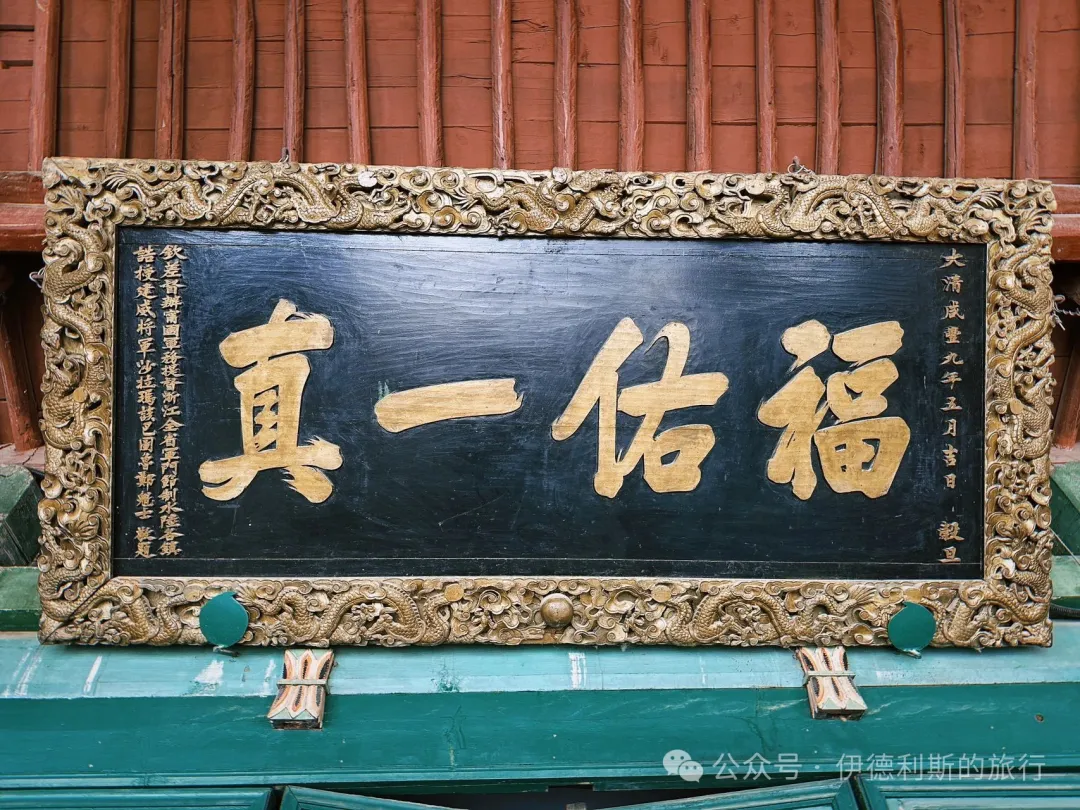
Blessings of the One True God: Dedicated on a lucky day in the fifth month of the ninth year of the Xianfeng reign of the Great Qing Dynasty by Zheng Kuishi, Imperial Commissioner overseeing military affairs in Ningguo, Commander-in-Chief of the Zhejiang provincial military, controller of all land and water garrisons, and specially granted the title of Jianwei General and Shalama Gai Batulu.
Zheng Kuishi was a famous general in the late Qing Dynasty and a Hui Muslim from Wanquan, Zhangjiakou, Hebei. He fought against the Taiping Rebellion and the Nian Army for many years. He was the first to break through Luzhou and suffered over twenty wounds in Huaiyuan, nearly losing his life, which earned him great praise from the imperial court. When Zheng Kuishi inscribed the plaque for Duolun in the ninth year of the Xianfeng reign, he was serving as the Commander-in-Chief of Zhejiang and overseeing military affairs in Ningguo, which was the highest rank he reached in his life. In a memorial to the throne, Li Hongzhang highly praised Zheng Kuishi, saying he was "hardworking, resolute, and brave beyond compare... he was the first to face the enemy's sharp edge, braving death, and suffered severe wounds eight or nine times. His body was covered in scars, and among all the famous generals north and south of the Yangtze River, everyone considered Kuishi the best."
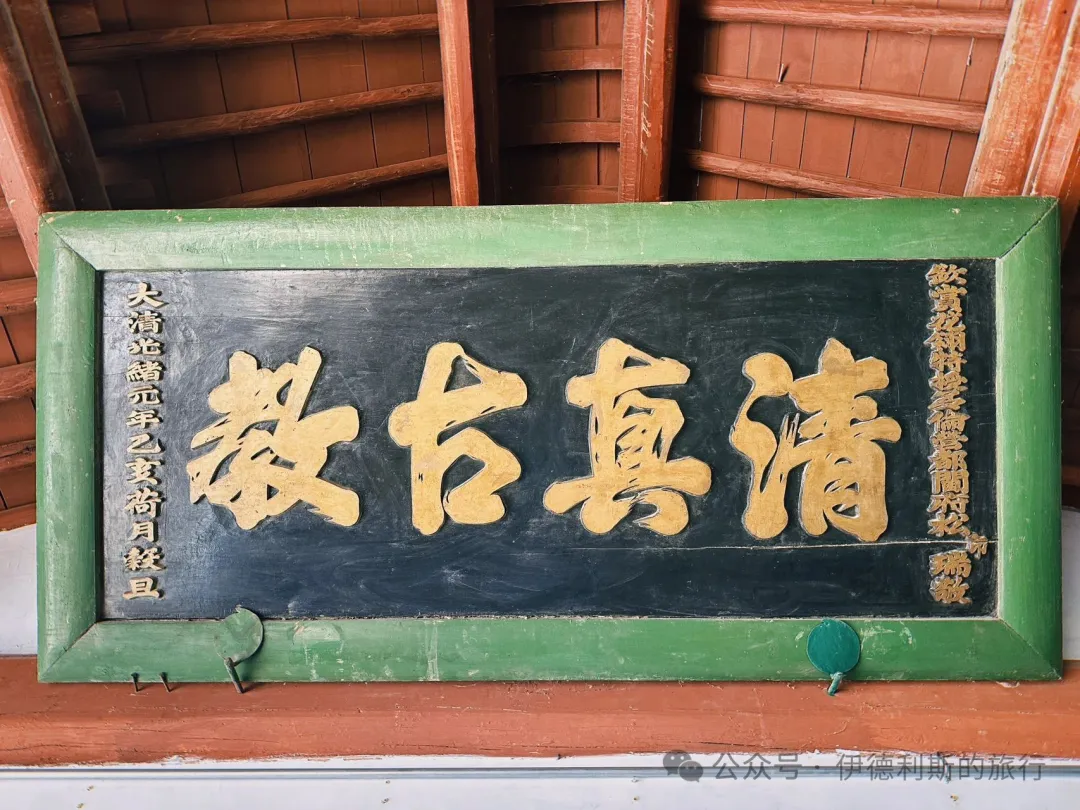
The Ancient Pure Faith: Respectfully presented by Song Rui, who was specially granted a peacock feather and served as the Duolun Camp Commander. A lucky day in the sixth month of the first year of the Guangxu reign of the Great Qing Dynasty.
Benevolence spreads everywhere: To the honorable official Zhu, who wears a peacock feather (hualing) and holds a fourth-rank title while serving as the acting prefect of Duolunnuo'er. Respectfully presented in the first month of summer in the 31st year of the Guangxu reign of the Qing Dynasty by Hui Muslim community leaders Shan Yunxing, village head Ma Wanxing, and others.
Merciful in this life, uniquely merciful in the hereafter: Dedicated in the seventh lunar month of the eighth year of the Republic of China, managed by the public.
Longshengzhuang Mosque.
Longshengzhuang sits on the border of Shanxi and Inner Mongolia. From the Qing Dynasty to the early Republic of China, it was a crossroads for trade routes between Hohhot, Datong, and Zhangjiakou. It was a key town for Shanxi merchants trading in Mongolia and was officially named Longshengzhuang in 1765 (the 30th year of the Qianlong reign). Shanxi merchants traveling to Mongolia brought rice, flour, tea, oil, wine, and daily goods from Longshengzhuang to Mongolia. They returned with furs, livestock, and leather, bringing great wealth to the town.
The economy of Longshengzhuang peaked during the Xianfeng reign, with 500,000 sheep sold and transported through the town each year. Longshengzhuang reached its height in the early Republic of China. The town had over 300 shops and more than a dozen stables (madian) used for trading and transporting cattle, horses, and sheep. At that time, the street from the south to the north of Longshengzhuang stretched nearly 2 kilometers, lined with rows of shops.
Starting in the early Qing Dynasty, Hui Muslims from Hebei and Shandong moved to Longshengzhuang in Inner Mongolia to do business. In the late Qing Dynasty, many Hui Muslims from Shaanxi also migrated there. During the Guangxu reign of the Qing Dynasty, the Hui Muslim population in Longshengzhuang grew to two or three thousand. In the early Republic of China, it reached a peak of over five thousand people. At that time, Longshengzhuang had a large halal restaurant and nearly twenty businesses including livestock traders, brokers, and stables. After the Ping-Sui Railway opened in 1921, Longshengzhuang declined rapidly. After the 1930s, many people moved away. Today, only about 30 Hui Muslims remain, mostly elderly, and there are no longer any halal restaurants.
Longshengzhuang Mosque was first built in 1751 (the 16th year of the Qianlong reign of the Qing Dynasty). It originally had only three main halls. As more Hui Muslims came to do business, they added 13 main halls, a front gate, a second gate, side rooms, and a screen wall in 1831 (the 11th year of the Daoguang reign), creating a three-courtyard layout.
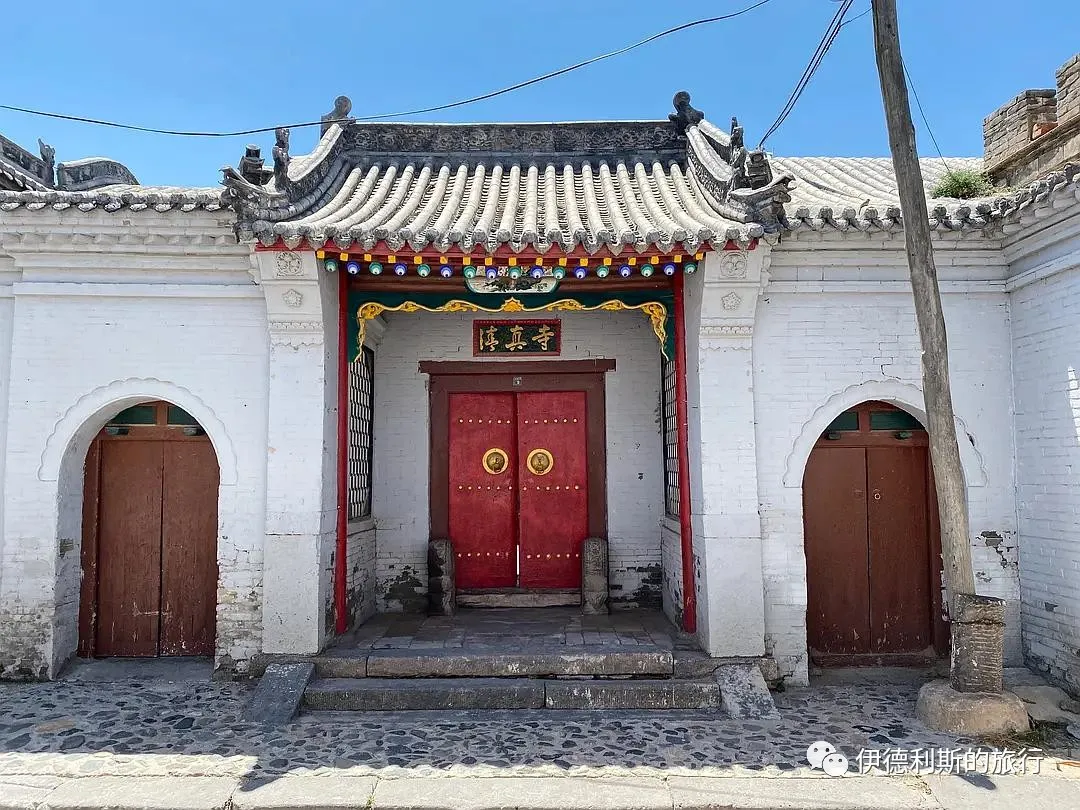
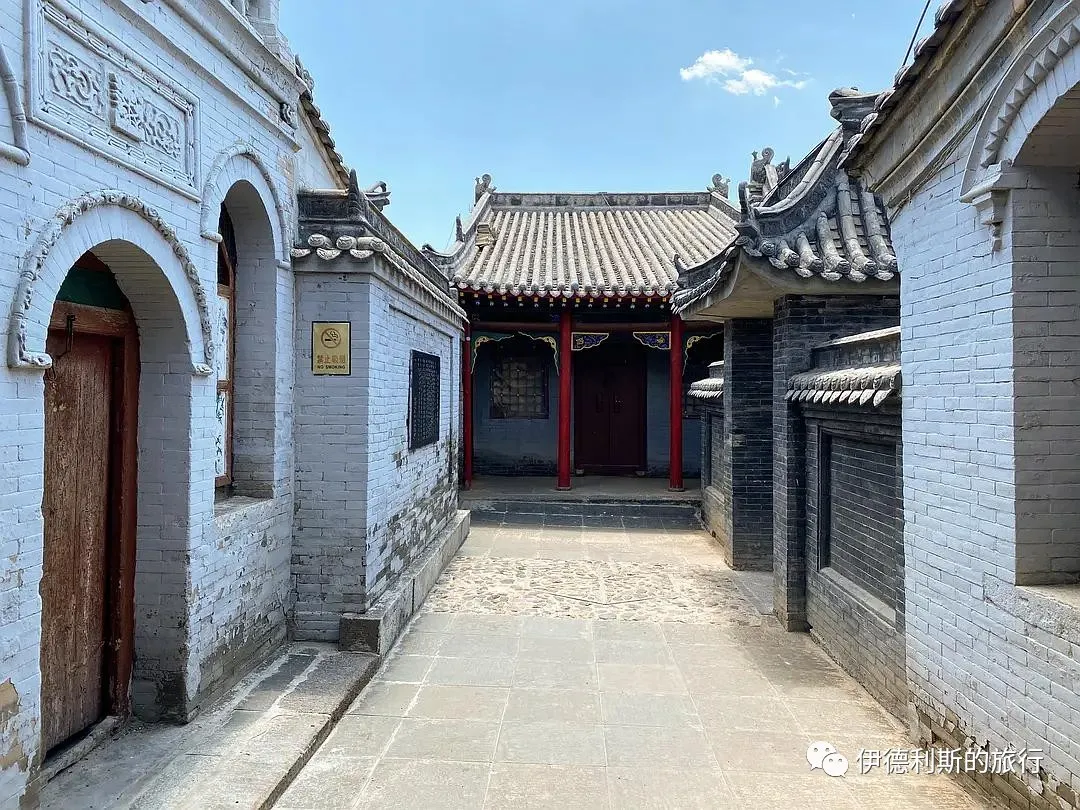
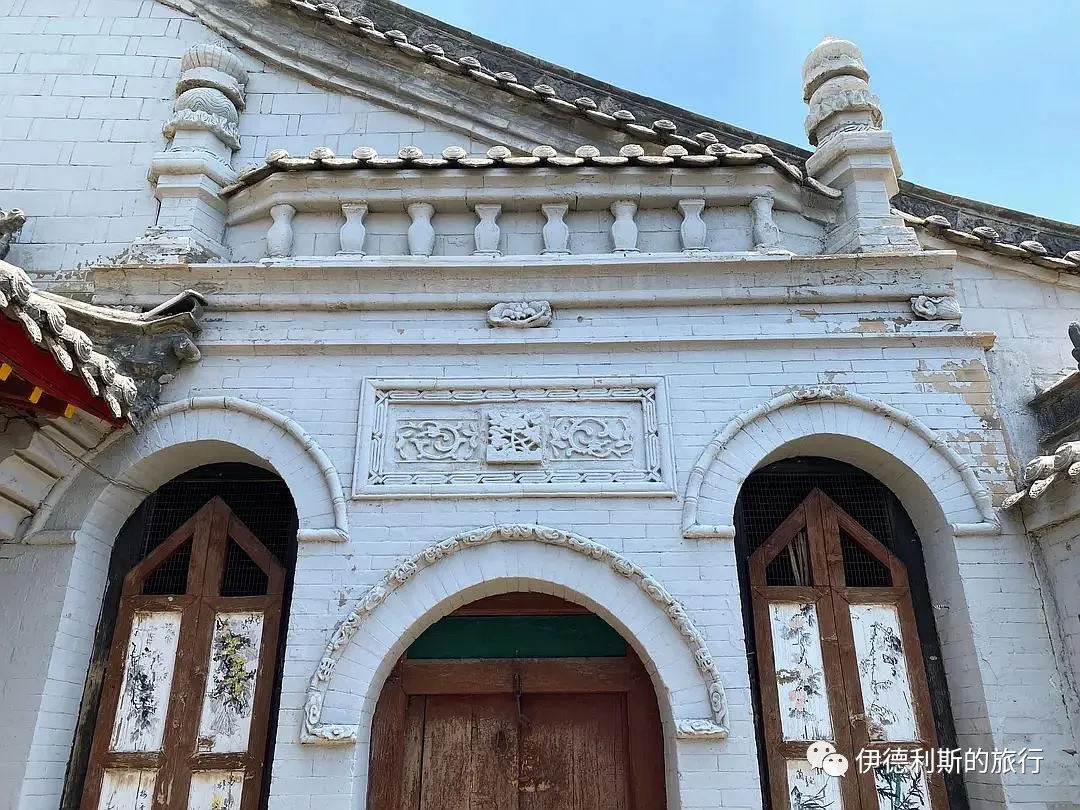
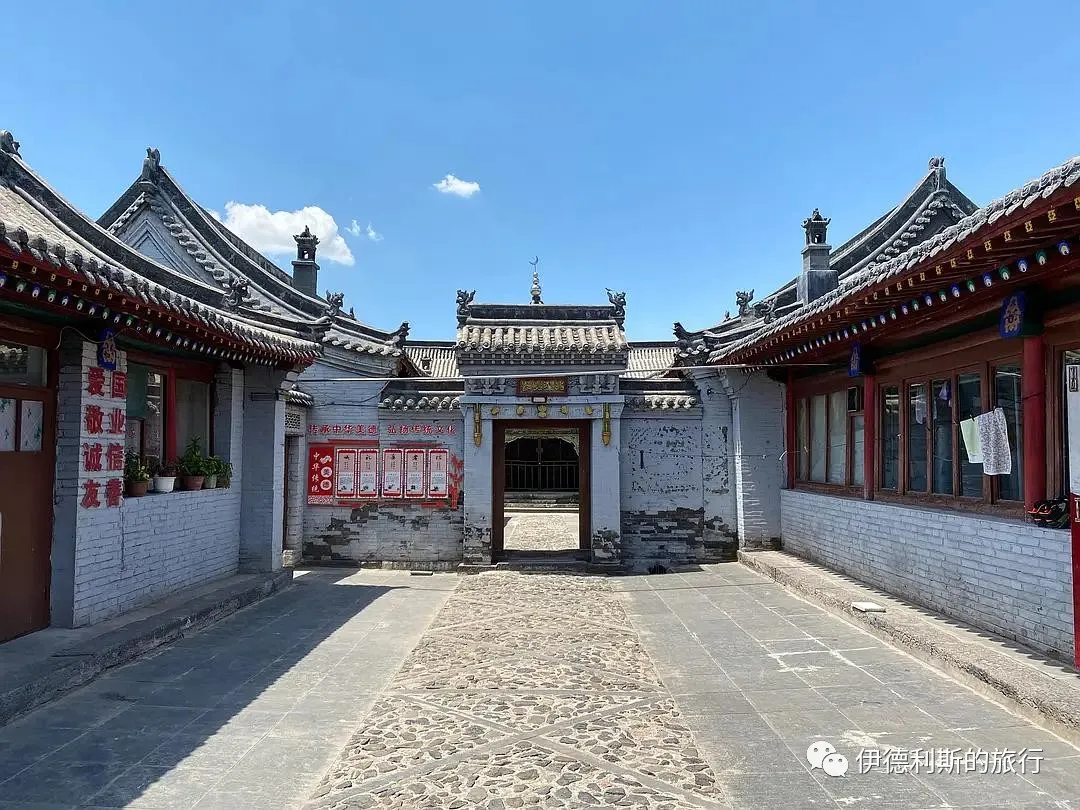
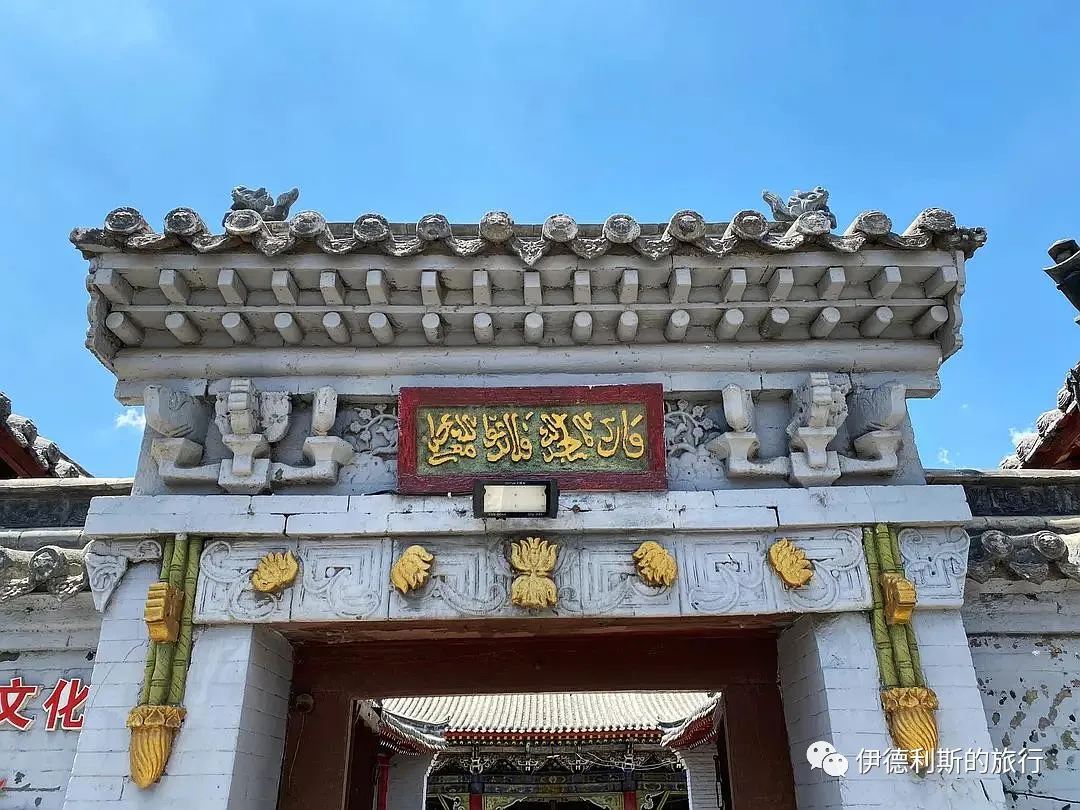
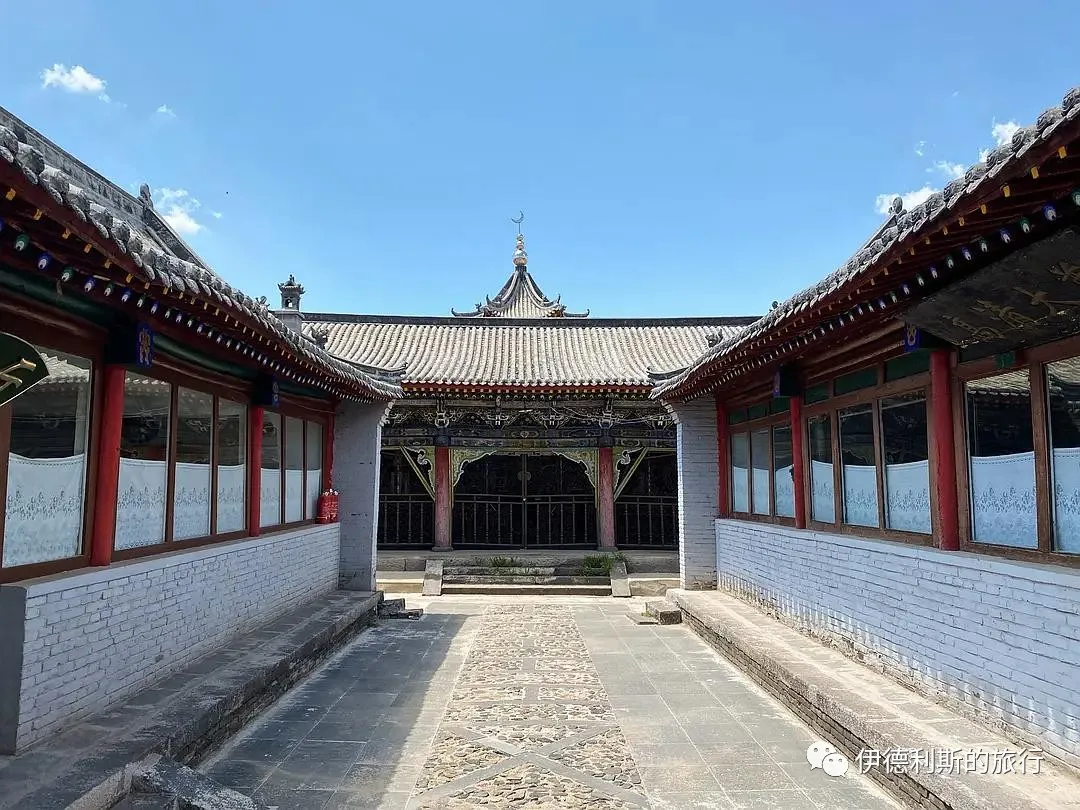
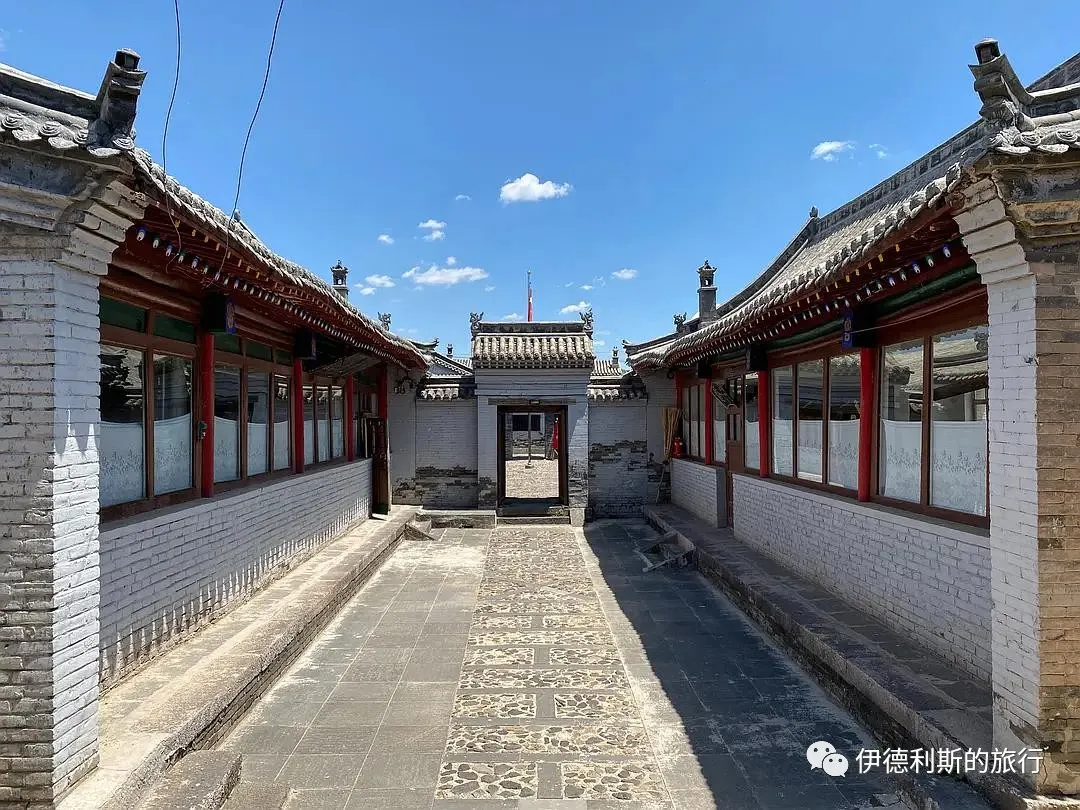
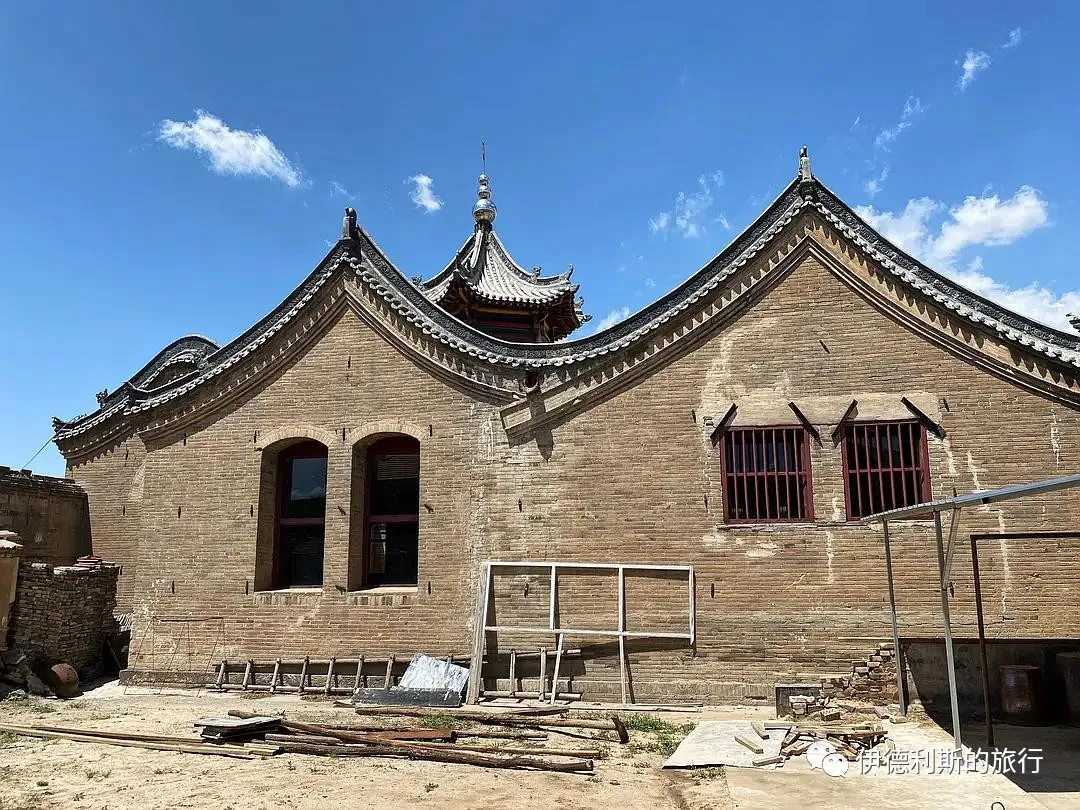
The mosque's porch (juanpeng) was expanded in 1926 and features beautiful ironwork decorations from the Republic of China era.
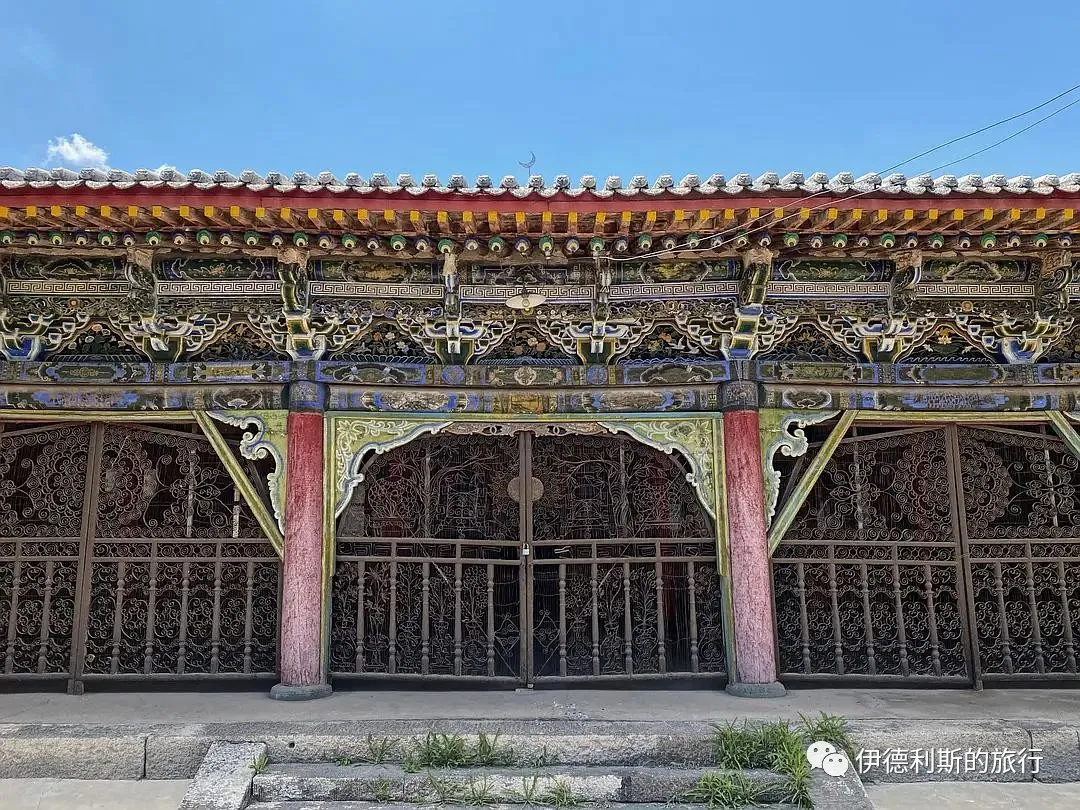
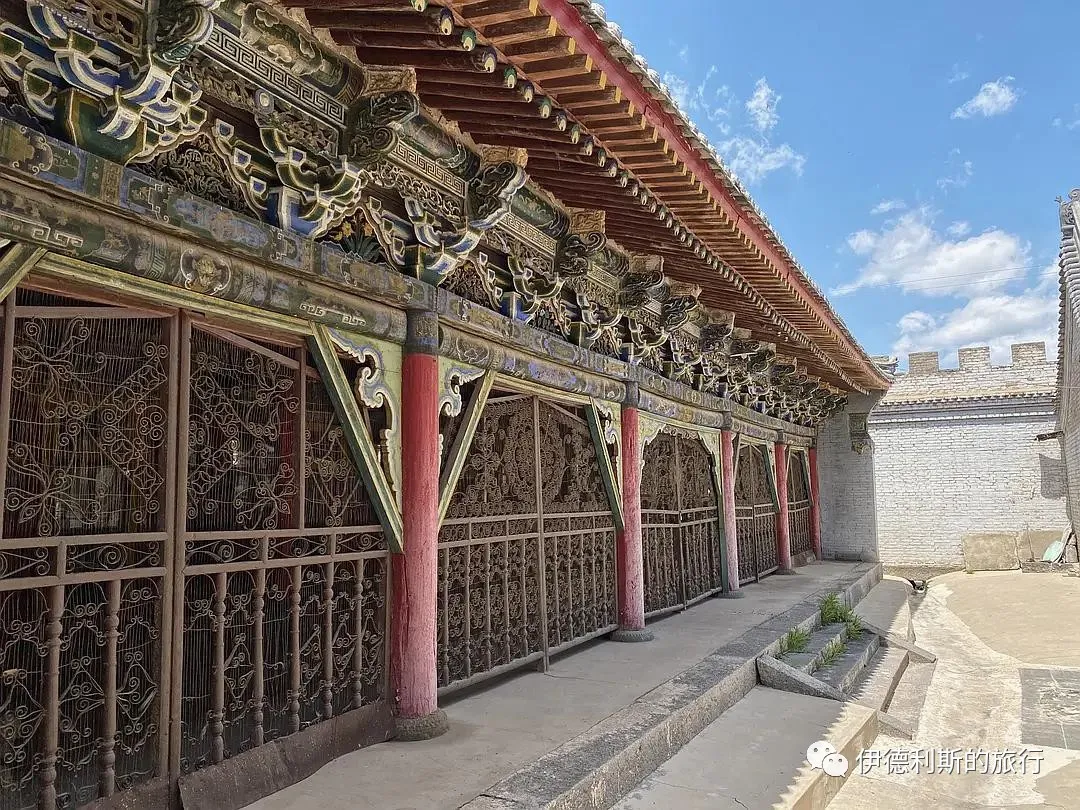
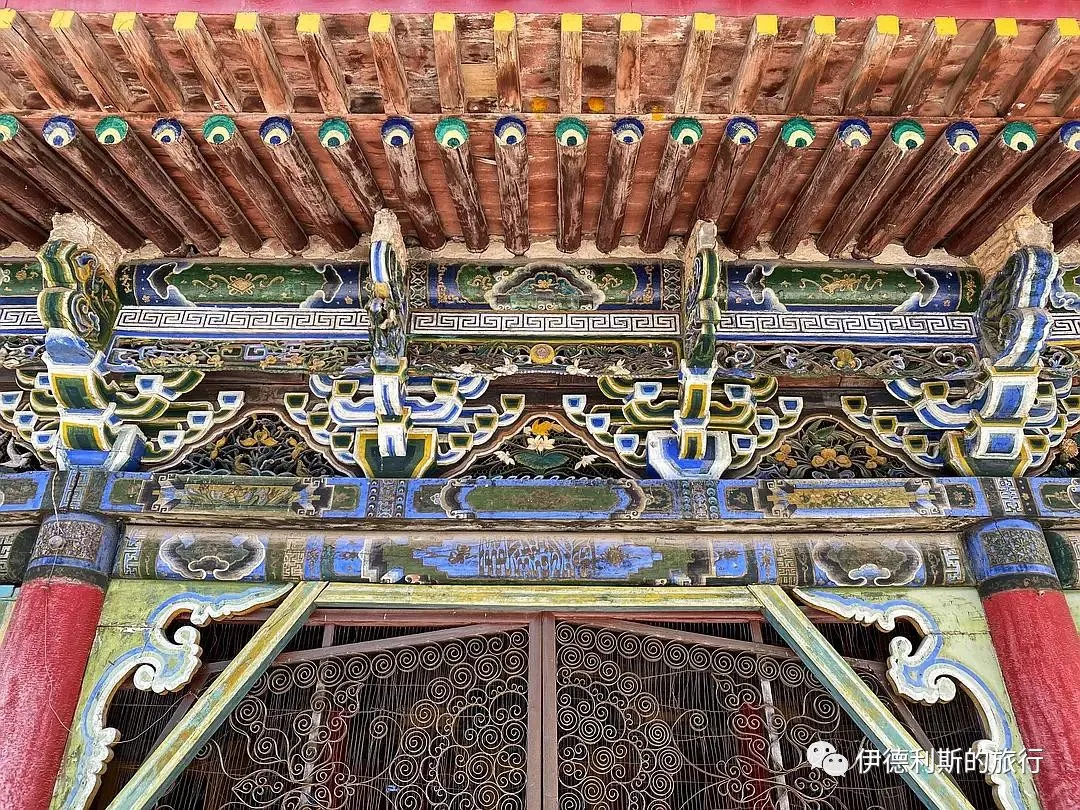
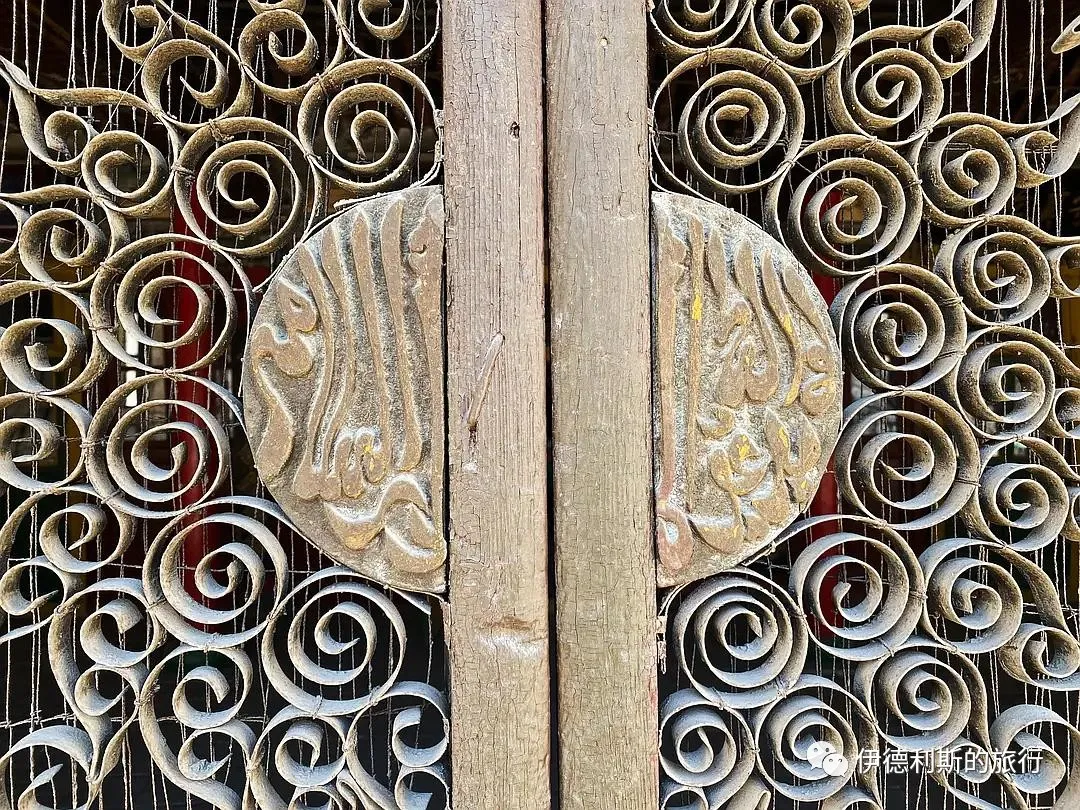
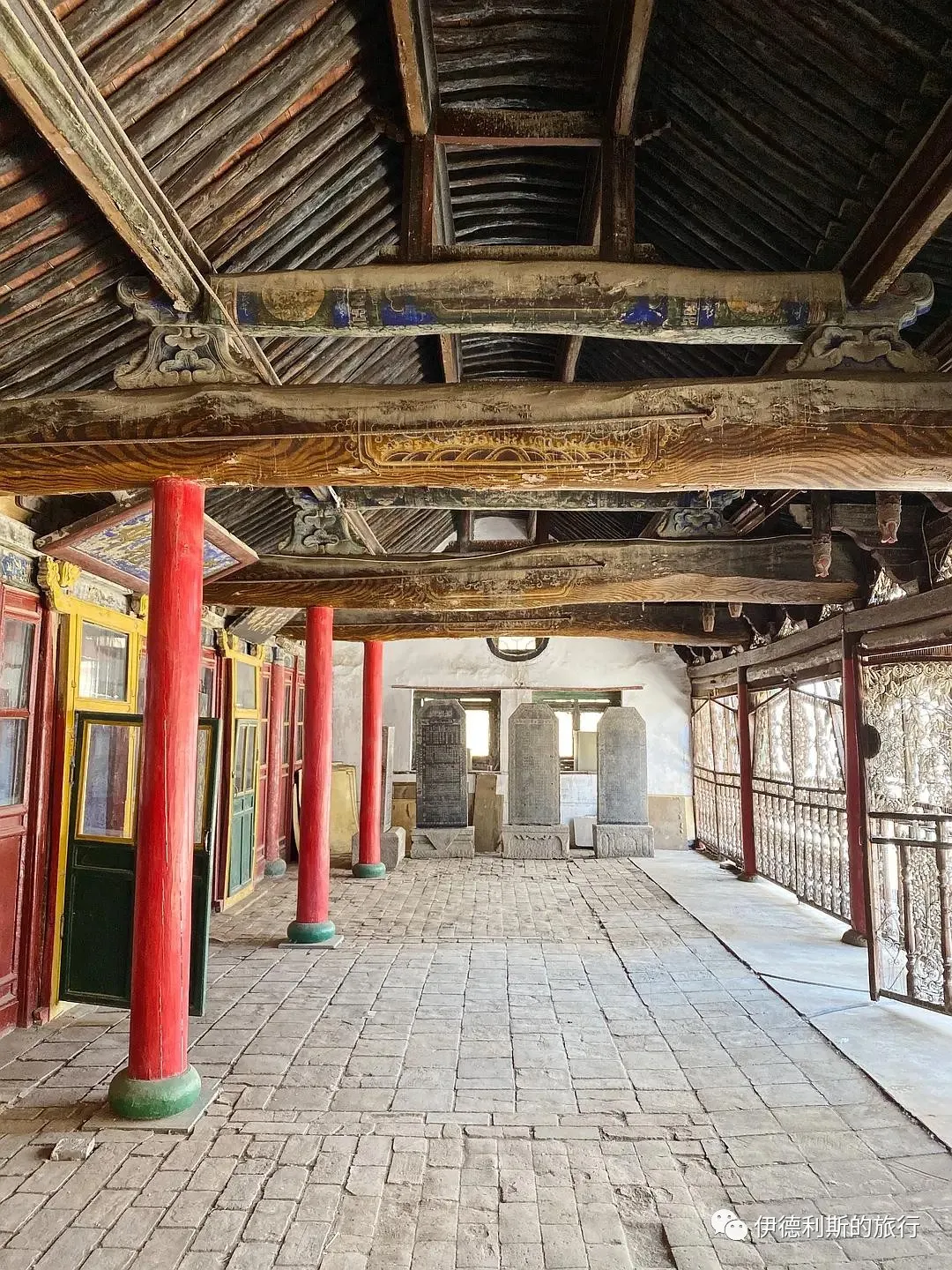
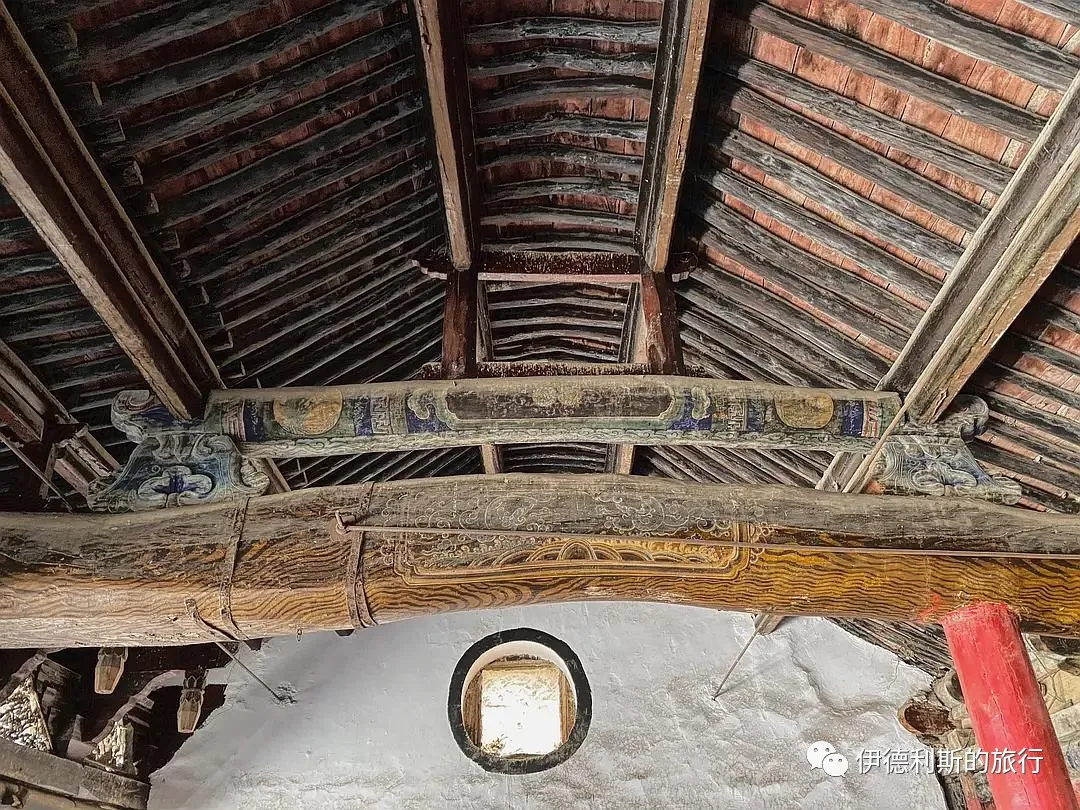
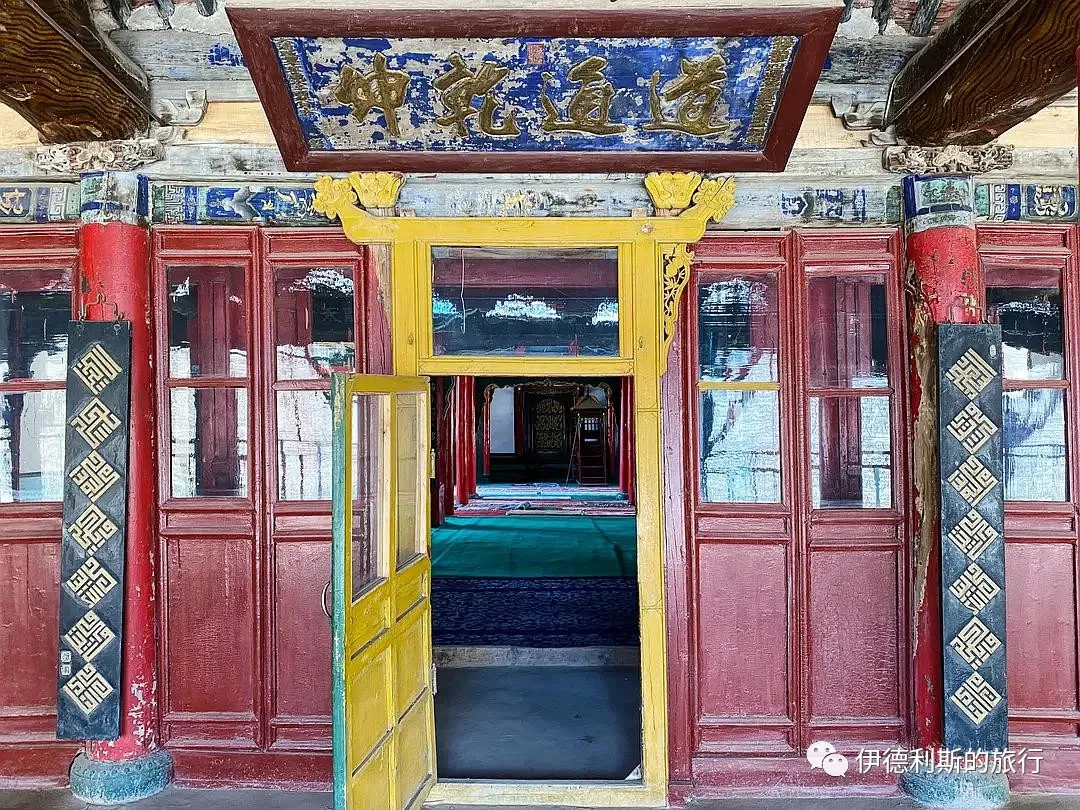
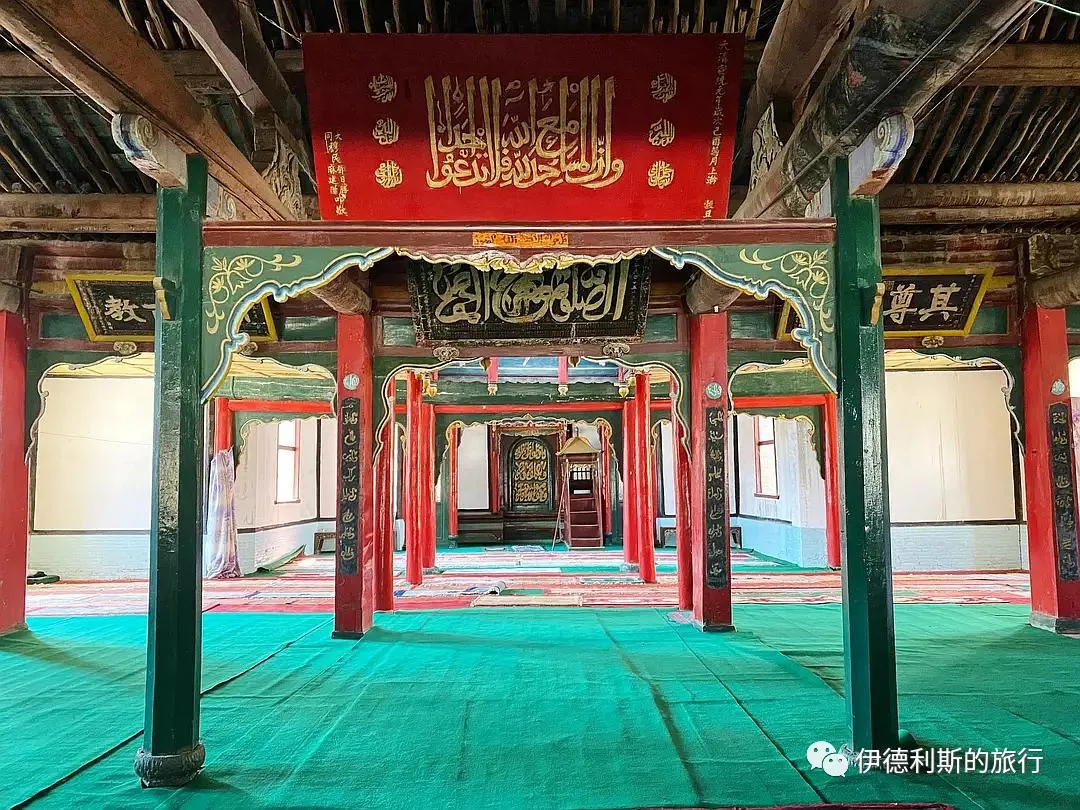
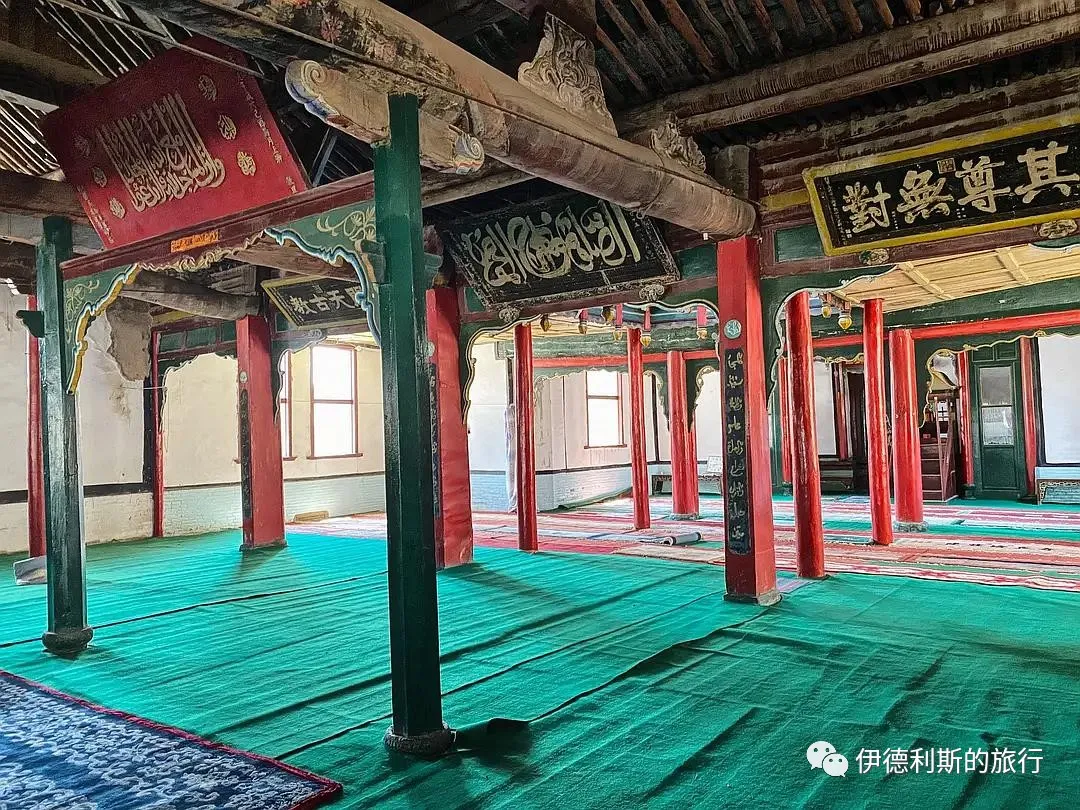
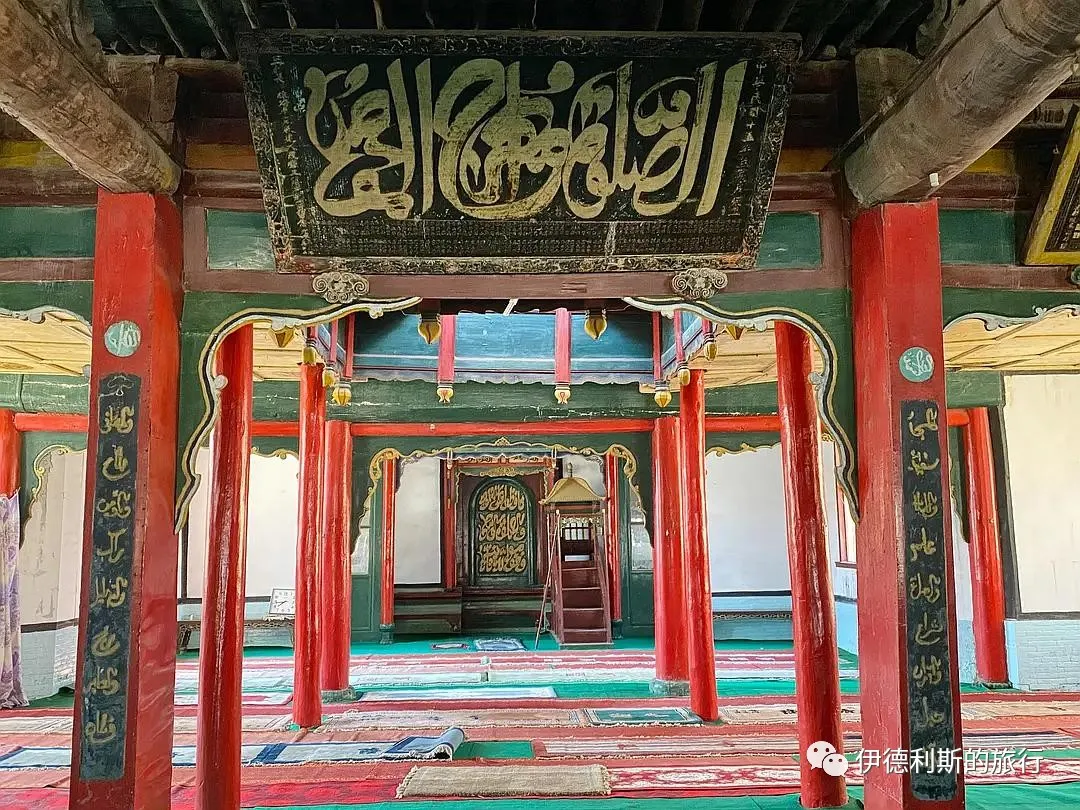
The main hall was also expanded in 1926.
Halal Travel Guide: Inner Mongolia - 12 Historic Mosques, Part 2
Articles • ali2007fr posted the article • 0 comments • 252 views • 2026-05-20 09:54
Summary: This second part of the Inner Mongolia mosque series follows historic mosque communities across Chifeng, Jingpeng, Duolun, and Longshengzhuang. The article records Qing-era trade routes, Hui Muslim settlement, mosque founding dates, timber structures, plaques, stone carvings, and preserved prayer halls.
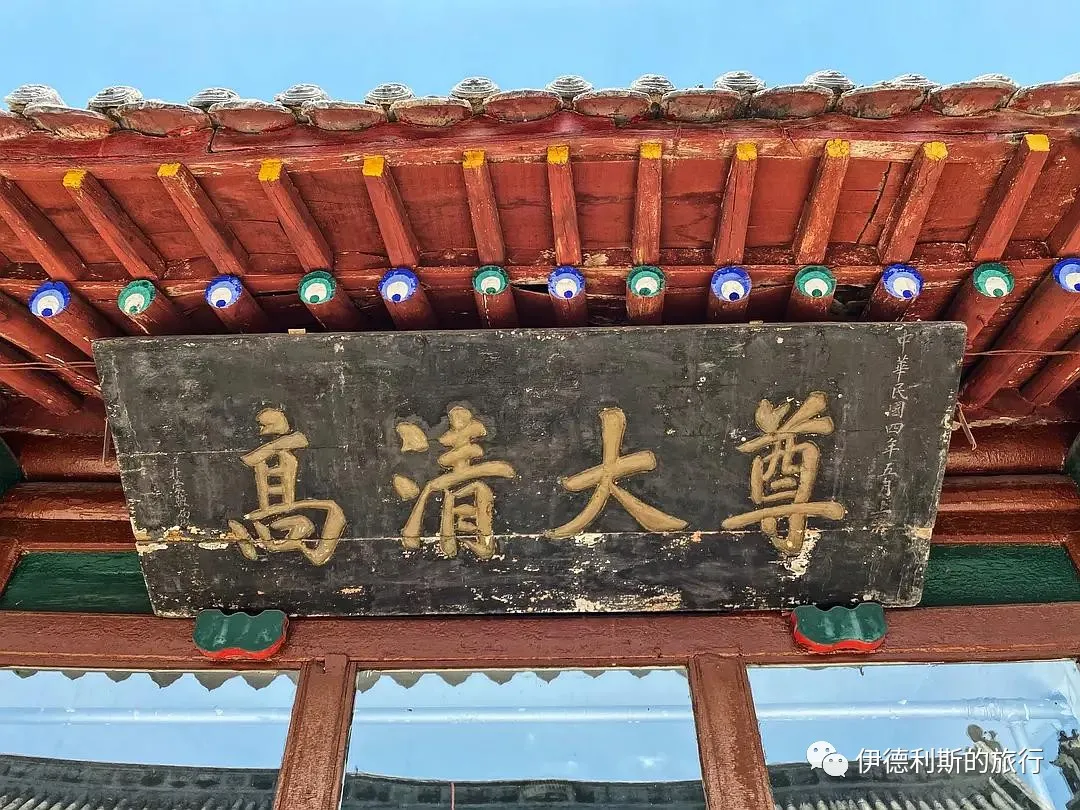
The 'Zun Da Qing Gao' plaque from 1915 (the fourth year of the Republic of China) bears the signature of the Koubei Mongolian Salt Bureau (Koubei Mengyanju). From the Qing Dynasty to the Republic of China, all salt produced in the salt lakes of the Inner Mongolian Plateau was collectively called Mongolian salt (Mengyan). In 1913, the Beiyang government used salt taxes as collateral to sign a 25 million pound sterling reorganization loan with a banking consortium from Britain, France, Germany, Russia, and Japan, which required China to hire foreigners to help reorganize salt taxes. China began salt administration reforms and established the Koubei Mongolian Salt Bureau, with its main office in Duolunuo'er and branch offices in Longshengzhuang, Fengzhen.
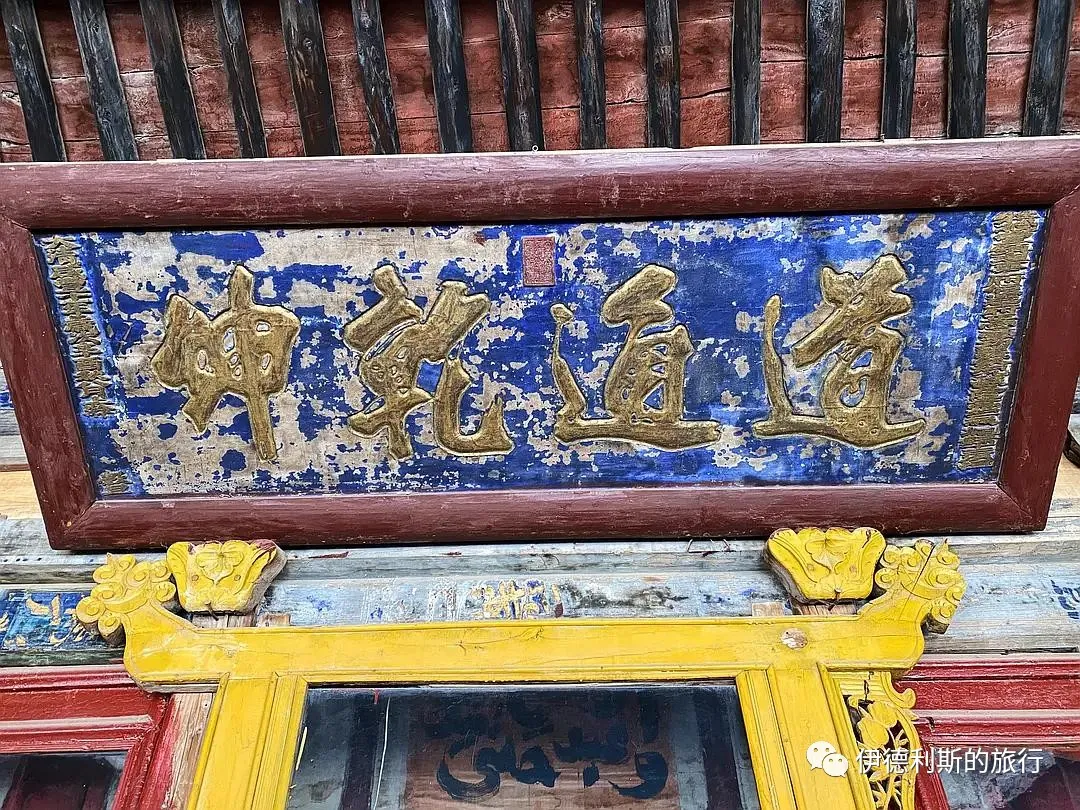
In 1861 (the eleventh year of the Xianfeng reign), the Fengzhen prefectural government presented the 'Dao Tong Qian Kun' plaque.
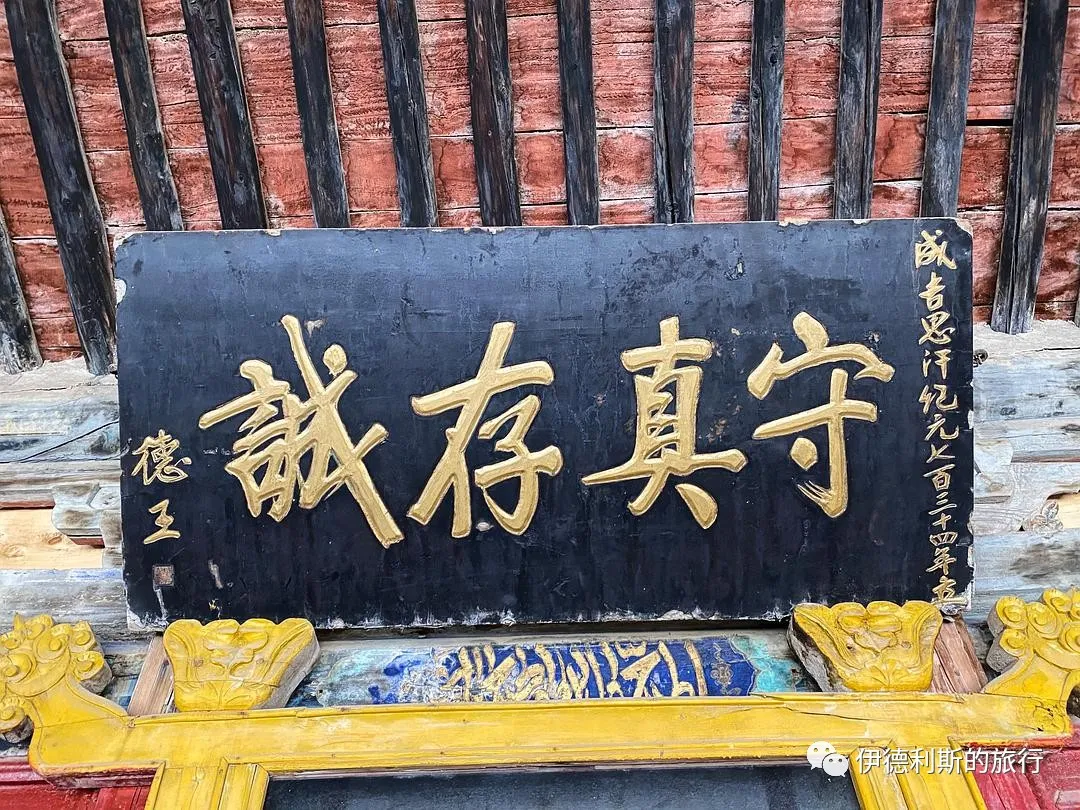
Prince De inscribed 'Shou Zhen Cun Cheng' in 1940, dating it to the '734th year of the Genghis Khan era,' which is 1940, as Prince De was a descendant of Genghis Khan. Prince Demchugdongrub was a Mongolian noble and Prince of the Sunid Right Banner who launched the 'Inner Mongolia High Autonomy Movement' in Bailingmiao in 1933 and became chairman of the puppet 'Mongolian United Autonomous Government' in 1939, which is when he inscribed this plaque.
This was inscribed in 1909 (the first year of the Xuantong reign) by Hui Muslims Deng Risheng and Ma Jiansheng from Datong. The Ma family of Hui Muslims originated from Youwei, Shanxi, and were a prominent military family during the Ming Dynasty; the 'Ma Family Army' formed by Ma Gui and his brothers and nephews in the mid-Wanli period was famous for its combat skills and earned great merit by defending Youwei against Altan Khan for six months. The Ma family has been a major Hui Muslim clan in Datong since the Ming Dynasty, and they frequently helped rebuild the Datong mosque and served as imams during the Ming and Qing dynasties. After the Qing Dynasty turned military garrisons into counties, the Ma family of Hui Muslims in Datong left the military for civilian life, achieved success in business and government, and for a time became the actual managers of the Datong mosque.
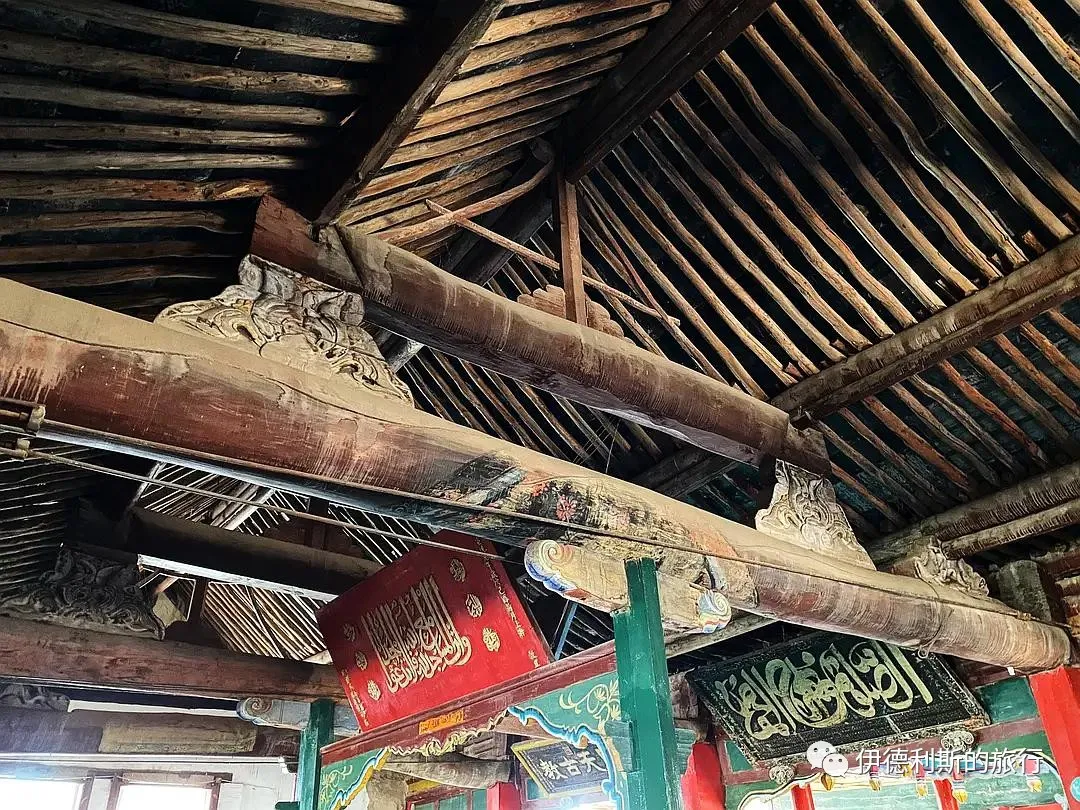
This is a commemorative plaque left by local Hui Muslims during the expansion of the prayer hall in 1926.
In 1926, the Hui Muslim general Ma Fuxiang, who was then a general and the Suiyuan military governor, inscribed the 'Qi Zun Wu Dui' and 'Kai Tian Gu Jiao' plaques to celebrate the mosque's expansion. The Great Mosque of Hohhot and the Great Mosque of Baotou also have inscriptions by Ma Fuxiang.
The Great Mosque of Hohhot.
The establishment of the community around the Great Mosque of Hohhot originated with Hui Muslim officers and soldiers in the Qing Dynasty's Green Standard Army. After the fall of the Ming Dynasty, most of the officers and soldiers guarding the Nine Frontiers joined the Qing Dynasty and were organized into the 'Green Standard Army,' which included many Hui Muslim soldiers from the three towns of Xuanhua, Datong, and Taiyuan. In 1693 (the thirty-second year of the Kangxi reign), the Qing government increased its troops in Hohhot to fight the Dzungar Khanate, which included many Hui Muslim soldiers from the Green Standard Army. At that time, the Green Standard Army's Hui Muslim soldiers and Hui Muslim merchants built the mosque community together at the north gate of the old city, which was the predecessor to the Great Mosque of Hohhot.
After the mid-Kangxi period, as there were no more wars on the borders, most of the Hui Muslim soldiers from Datong and the two garrisons of Zuoyun and Youyu became small merchants and artisans, and many Hui Muslims moved to settle near the Great Mosque of Hohhot; to this day, the dialect of Hohhot's Hui Muslims is still deeply influenced by the Datong dialect. By the late Kangxi period, two large livestock trading markets, 'Niuqiao' (Ox Bridge) and 'Yanggangzi' (Sheep Mound), had formed near the Great Mosque of Hohhot, and the cattle and sheep slaughtering industry was controlled by Hui Muslims.
The early Great Mosque of Hohhot only had a few earthen rooms, and it only reached its current size after being rebuilt in 1723 (the first year of the Yongzheng reign) and undergoing a large-scale expansion in 1789 (the fifty-fourth year of the Qianlong reign). The funds for the Qianlong-era expansion were mainly donated by three wealthy Hui Muslim merchant families: the Kang, Ma, and Chen families. To commemorate the contributions of these three families, the mosque decided to recite three extra volumes of scripture every year during the opening of the scriptures in Ramadan. Between 1923 and 1925, the Great Mosque expanded its main hall and the north and south lecture halls, creating the unique Republic-era architectural style seen today. At that time, Widow Yang from Tongdao South Street donated her own property behind the mosque, so the mosque committee decided to recite an extra box of scriptures every year during Ramadan.
The most famous imam of the Hohhot Great Mosque during the Republic of China era was Imam Wang Kuan from Niujie, Beijing. Imam Wang was a famous educator who founded the Chinese Muslim Progressive Association. In 1915, he established the first primary school for Hui Muslims in Hohhot, the Gui-Sui Hui School.
The mosque gate was built in 1892 (the 18th year of the Guangxu reign). Above it hangs a plaque inscribed with 'Great Mosque' from 1890 (the 16th year of the Guangxu reign), with plaques reading 'National Prosperity' and 'People's Peace' on either side.
After entering, you can see the brick-carved screen wall behind the main hall, built in 1896 (the 22nd year of the Guangxu reign). It is inscribed with 'Rectify the heart and be sincere in self-cultivation,' 'Recognize the Oneness of Allah,' 'Clear the heart,' and 'See one's true nature,' all written in 1924 by Ma Fuxiang, who was the Suiyuan Military Governor at the time.
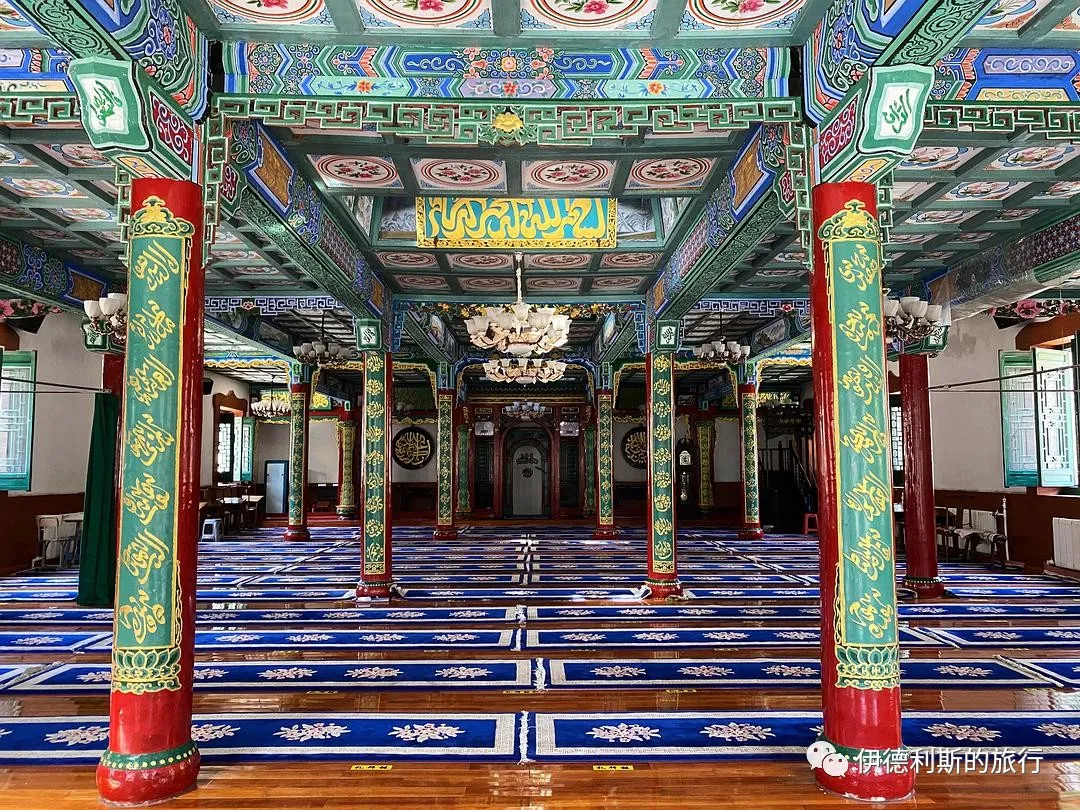
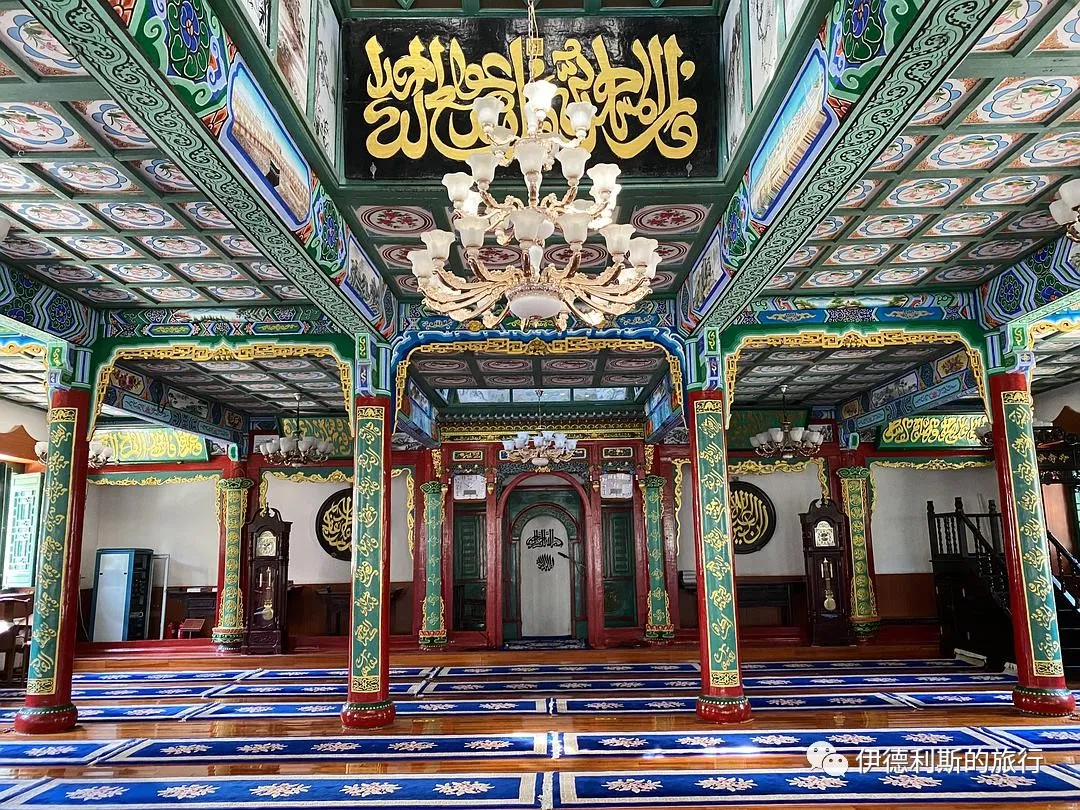
The prayer hall was expanded in 1923 and consists of a porch, a front hall, a middle hall, and a kiln hall. It features a connected roof structure with five pointed pavilions on top, symbolizing the Five Pillars of Islam: faith, prayer, fasting, charity, and pilgrimage. The porch is a blend of Chinese and Western styles, featuring arched doors, Arabic plaques, couplets, and floral patterns on the walls.
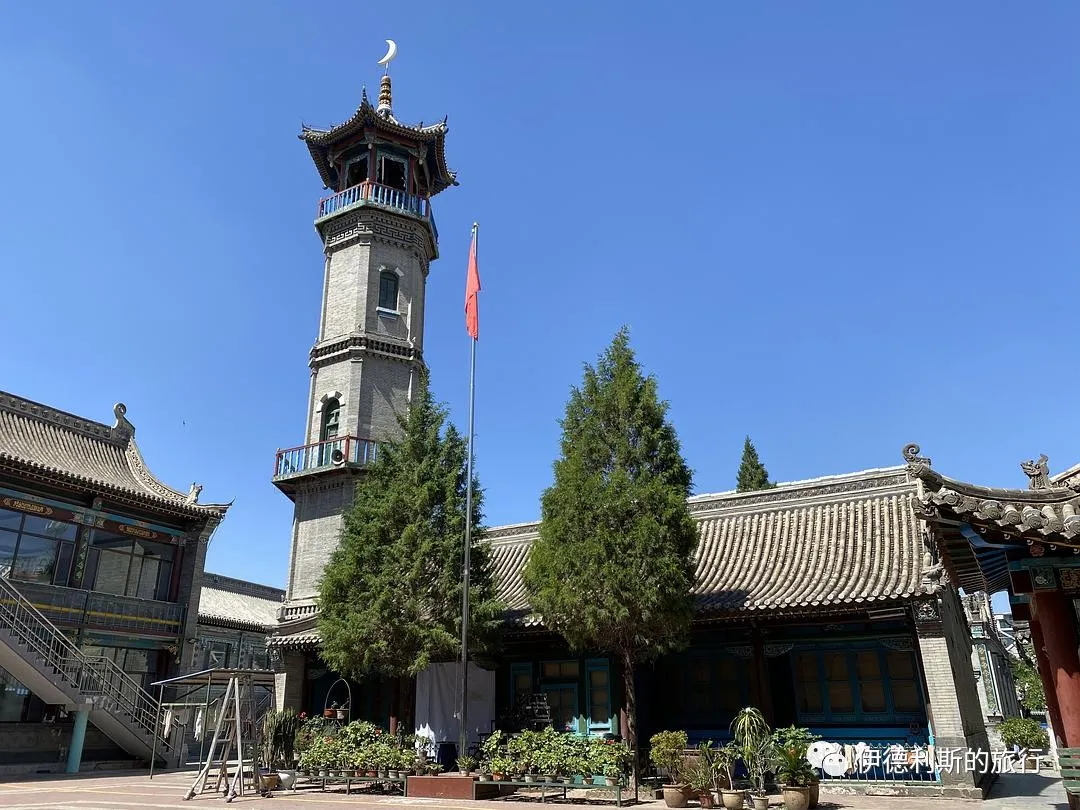
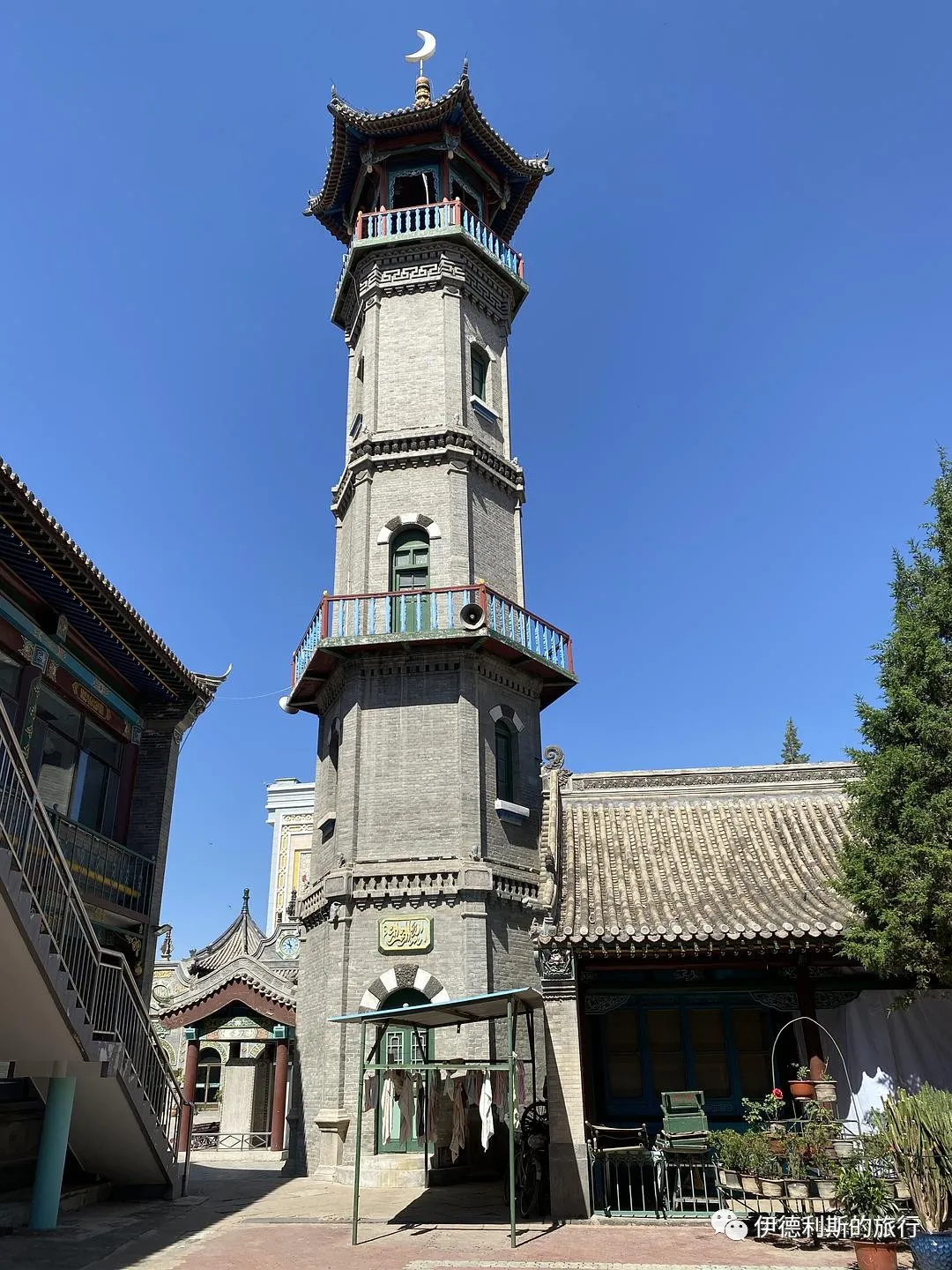
The Moon-Watching Tower was built in 1939. It is 36 meters high, with a hexagonal brick base and a single-eave hexagonal pointed roof at the top.
Chasuoqi Great Mosque
Tumd Left Banner in Inner Mongolia is located west of Hohhot. During the Ming and Qing dynasties, it was the base of the Mongol Tumd tribe, known for its fertile land and abundant water and grass. In 1739 (the 4th year of the Qianlong reign), the Qing government established a sub-prefecture office in Shandai Town, Tumd Left Banner, making it an important commercial hub. Shortly after, Hui Muslims from four families arrived in Shandai to make a living: the Bai family from Gaotou in Zhengding, Hebei (now Gaotou Hui Ethnic Township in Wuji County), the Ma family from Baoding, Hebei, the Xue family from Xueying, Beijing, and the Jin family from Niujie, Beijing.
In 1760 (the 25th year of the Qianlong reign), the Shandai sub-prefecture office was abolished, and the center of the banner shifted to Chasuoqi Town. The Bai, Ma, Xue, and Jin Hui Muslim families all moved to Chasuoqi Town in the late Qianlong period. At that time, the Chasuoqi Guandi Mosque was being dismantled and moved to a new site, so the families bought the original land and built the first Chasuoqi Great Mosque.
The Chasuoqi Great Mosque originally consisted of only two mud houses facing the street. During the Daoguang reign, as the number of Hui Muslims moving to Chasuoqi increased, a mud-and-wood main hall was added. In 1909 (the first year of the Xuantong reign), Imam Wang Shi'en led the construction of the current brick-and-wood main hall. The widow of Bai Shengyu, surnamed Gan, donated bricks, tiles, wood, and the elm trees in the courtyard. Other funds came from the local community and from Hohhot, Baotou, Saratsi, Togtoh, and Longshengzhuang. The elders in charge were Luo Cheng, Bai Youfu, Ma Youfu, and Wu Fengqi. Imam Wang Shi'en was originally from Wudu, Gansu. He was deeply knowledgeable in Islamic studies and is the most famous imam in the history of the Chasuoqi Great Mosque.
Saratsi Mosque
Saratsi Town in Tumd Right Banner, Inner Mongolia, is located between Hohhot and Baotou. After the Saratsi sub-prefecture office was established in 1739 (the 4th year of the Qianlong reign), it gradually prospered and became a major trade hub on the merchant route to Mongolia. In the early Qianlong years, 23 Hui Muslim households from Shandong and Hebei moved to Saratsi via Shandai. They included families with the surnames Ma, Bai, Yang, and Wei, and most worked as livestock traders. In 1747 (the 12th year of the Qianlong reign), they raised funds to build the Saratsi Mosque in Nanyingzi.
In 1760 (the 25th year of the Qianlong reign), Saratsi was upgraded to a sub-prefecture office, also handling Mongolian-Han affairs for the Urat Three Banners, the Ordos Left Wing Middle Banner (Junwang Banner), and the Ordos Left Wing Rear Banner (Dalad Banner). After this, the number of Hui Muslims moving to Saratsi continued to grow. Around the 40th year of the Qianlong reign, the Hui Muslim population in Saratsi had grown to over 100 households and more than 400 people. In 1782 (the 47th year of the Qianlong reign), local residents expanded the main hall of the Salaqi Mosque to fifteen rooms. The mosque still has a door lintel inscribed with the date 1782, which serves as proof of this expansion.
In 1947, the south side room of the main hall suddenly collapsed. The village elders hired Wu Youlong, one of the only two college students among the Hui Muslims in Baotou at the time, who had graduated from the Civil Engineering Department of Beiyang Institute of Technology, to rebuild the hall. When designing the hall, Wu Youlong boldly placed a millstone and a roller under each pillar. This design prevented moisture from rising and also improved the lighting inside. After the renovation, the main hall took on its current form.
Baotou Great Mosque
The Baotou Great Mosque is located in the Donghe District of the old town of Baotou. It was first built in 1743 (the 8th year of the Qianlong reign) and is the most important religious building in the western Tumochuan area. Today, it is a protected cultural site of the Inner Mongolia Autonomous Region.
In 1697 (the 36th year of the Kangxi reign), after Emperor Kangxi defeated Galdan, immigrants from inland China began to flood into the Tumochuan Plain in Inner Mongolia, moving westward along the route from Hohhot to Chasugi and then to Salaqi. In the early years of the Qianlong reign, Wang Xiu, a Hui Muslim from Cangzhou, Hebei, and Bai Sanmu, a Hui Muslim from Wuding, Shandong (near present-day Binzhou and Dezhou), arrived at Baotou Village, west of Salaqi, becoming the first Hui Muslims in Baotou.
According to family records, the Wang family's ancestral home was Erdaogang Wailiushu Village in Nanjing. Their distant ancestor was a military scholar (wulinsheng) during the Ming Dynasty and later served as a military officer. In 1421 (the 19th year of the Yongle reign), the Ming Dynasty officially moved its capital to Beijing. The Wang family was ordered to escort the emperor north and was later granted land in Cangzhou. During the Yongle reign of the Ming Dynasty, the Wang family moved to their granted land at Wangjia Sheqiao and gave up their official posts to become farmers. In the early years of the Qianlong reign, the Wang family fell on hard times. Faced with a drought in Cangzhou, Wang Xiu carried his wife and children, along with a shoulder pole carrying goods, and traveled a long distance to Zhaowan in Inner Mongolia. Wang Xiu first made a living by selling mountain goods and sewing supplies door-to-door. Later, he received a piece of pasture land from a lama, bought livestock, and started a career in animal husbandry. Wang Xiu traded livestock between Inner Mongolia, Shandong, and Hebei, and his family's financial situation gradually improved.
In the early years of the Qianlong reign, Baotou Village, west of Salaqi, began to take shape, and shops and businesses opened one after another. Wang Xiu rented a slope from a Mongol person north of Baotou Village to build a house, and people called it the "Wang Family on the High Slope." After that, other Hui Muslim families, including the Bai, Ma, Yang, and Zhou families, moved into Baotou. In 1743 (the 8th year of the Qianlong reign), the Wang and Bai families mobilized other Hui Muslim families to build the first Baotou Great Mosque.
The original Baotou Great Mosque was a five-room earth-and-wood hall. It once had a plaque inscribed with "Pure and Clean" (Qingjing) dated to the 8th year of the Qianlong reign, but it was unfortunately lost later. The first imam was surnamed Fu and was hired from Hebei.
In 1809 (the 14th year of the Jiaqing reign), Baotou Village was renamed Baotou Town and gradually developed into an important commercial hub. Wang Xiu's grandson, Wang Daxing, opened the "Sanhe Horse Inn" in Baotou, and his long-distance horse trading business flourished. By 1833 (the 13th year of the Daoguang reign), there were already over 100 Hui Muslim households in Baotou, totaling six or seven hundred people. Because of this, Wang Daxing and Bai Sanmu's grandson, Bai Kede, led the effort to rebuild the earth-and-wood hall into a brick-and-tile structure and inscribed the plaques "Unique" (Duyi Wu'er), "Ancient Autumn" (Guqiu), and "Quiet One" (Jingyi). Only the plaque reading "Ancient Autumn" (Guqiu) remains, signed by community leaders (toushou) Wang Daxing and Bai Kede.
In 1913, community elders from the Ma, Wang, Chen, Ding, and Bai families hired a carpenter known as "Living Lu Ban" named Guo Sansuo to expand the main hall. He moved the porch (juanpeng) forward and added a section to the back, giving the Baotou Great Mosque its current layout. The mosque houses a plaque inscribed with "Promoting the True Faith" (Xianyang Zhengjiao) by Lieutenant General Ma Fuxiang, dating back to the second year of the Republic of China.
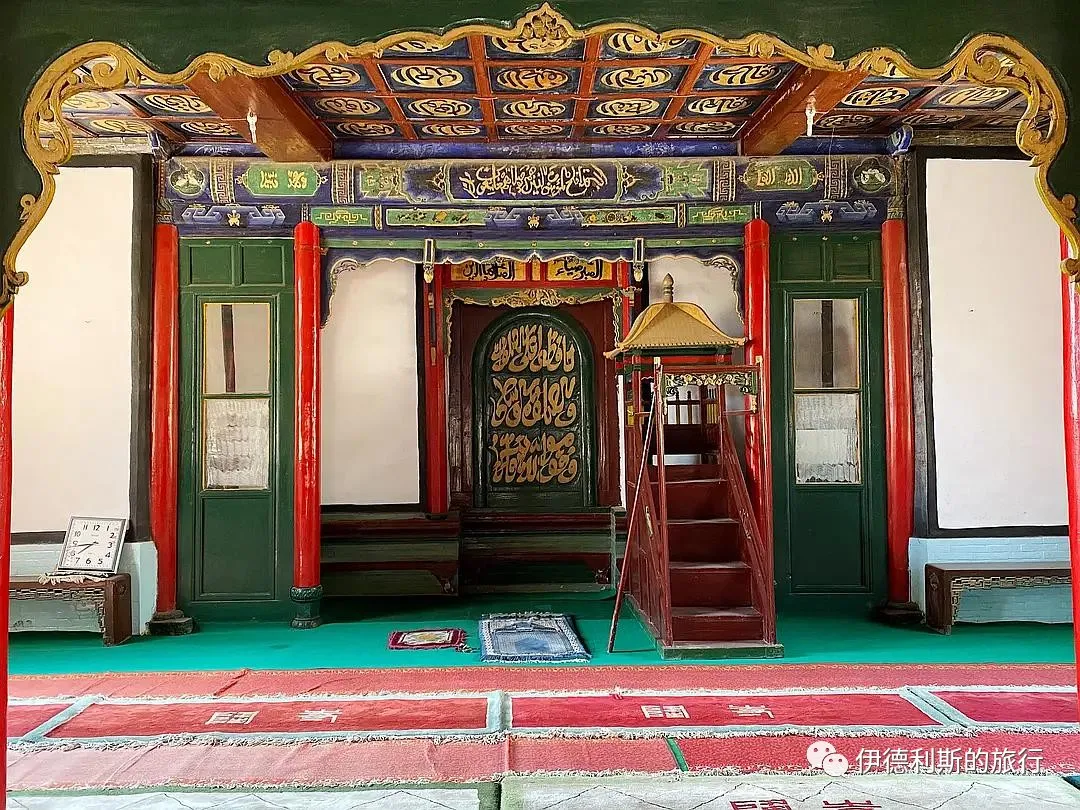
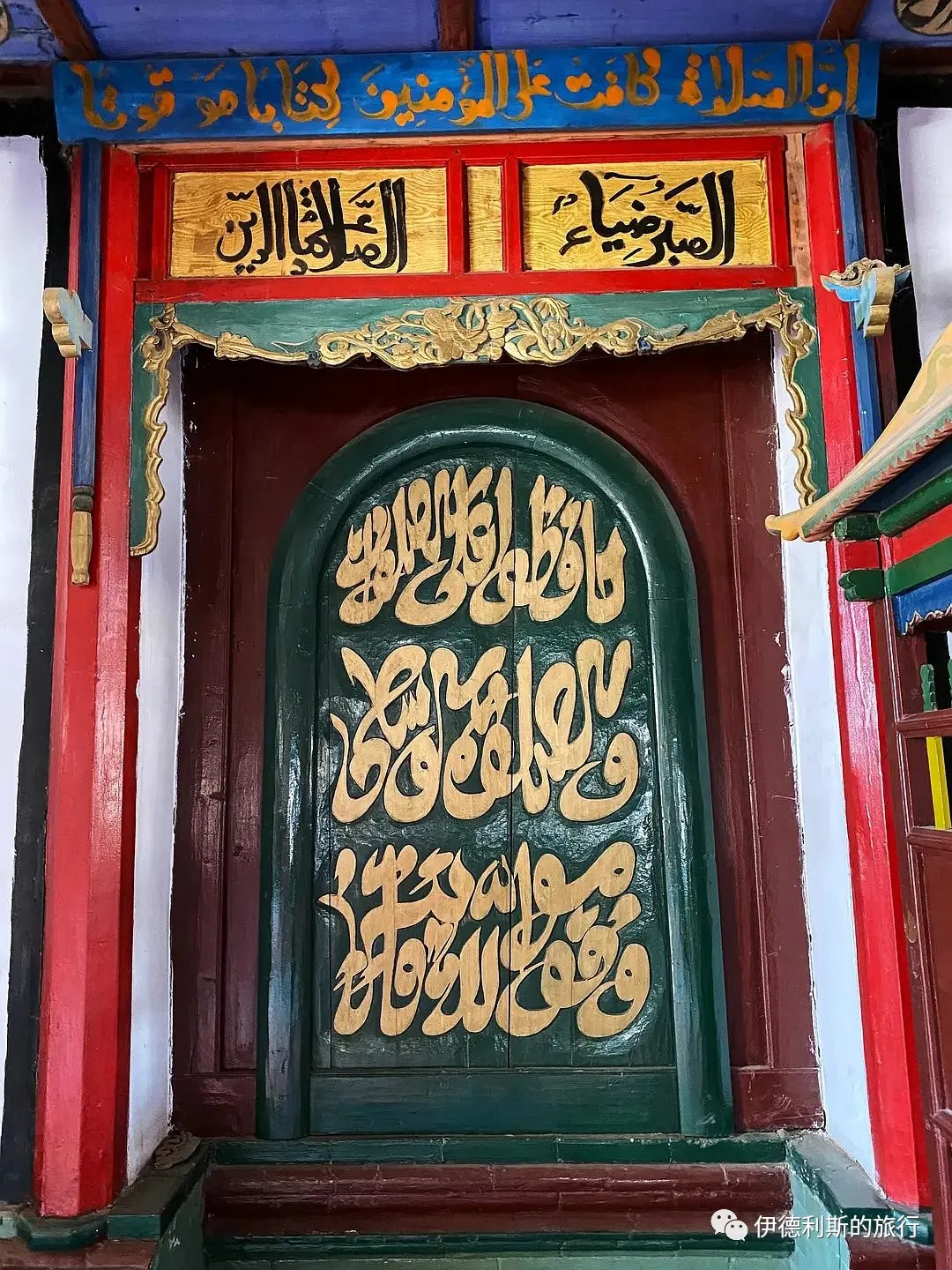
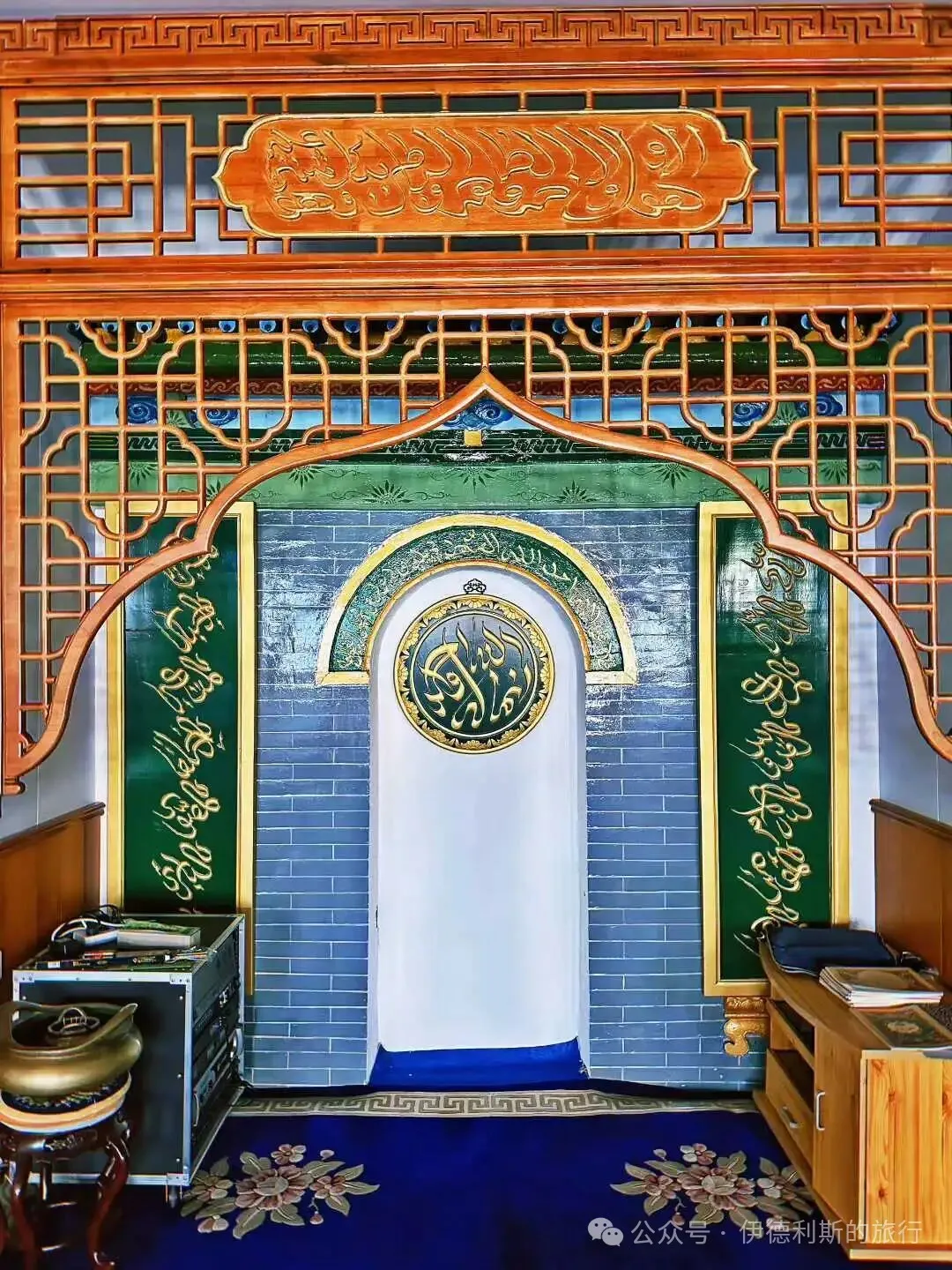
An appreciation of the traditional Chinese-style Arabic calligraphy found on the mihrab (mihalabu) niche and the minbar (minbaier) pulpit inside the main hall of the Baotou Great Mosque.
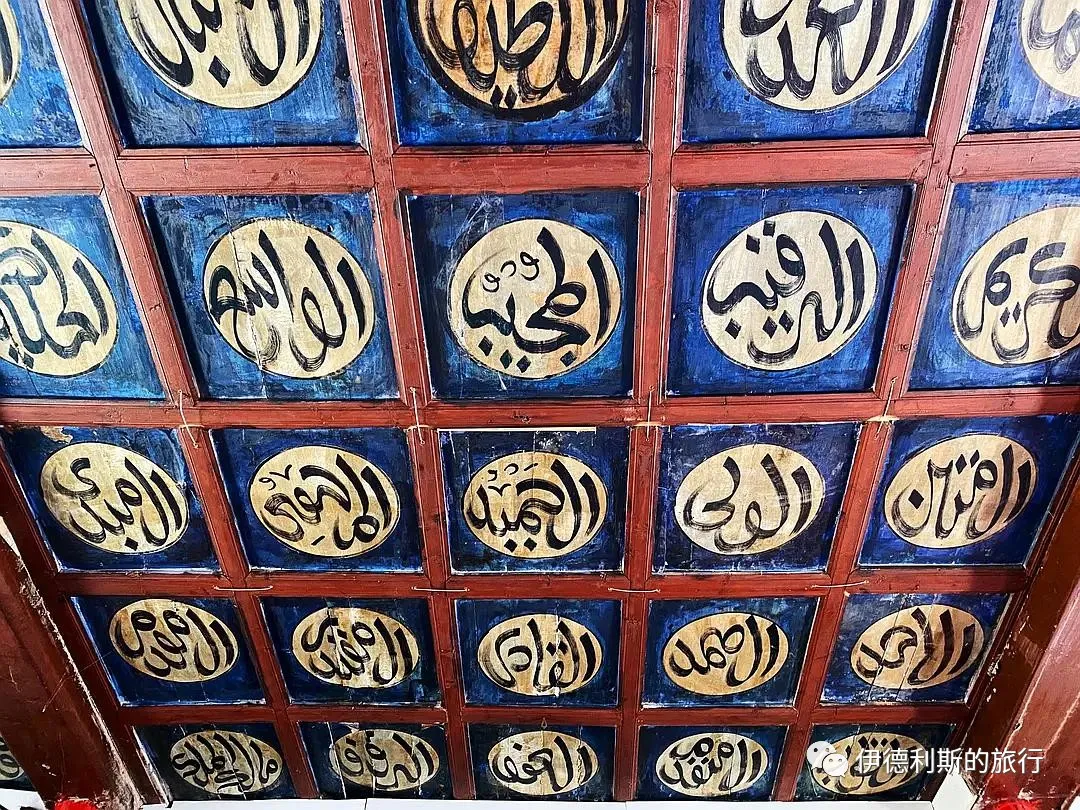
The qibla wall of the Baotou Great Mosque features 32 stunning pieces of traditional Chinese-style Arabic calligraphy in large-character (bangshu) script.
The architectural details of the Baotou Great Mosque, including the brick and wood carvings, are incredibly exquisite.
The swastika (wanzi) and taiji brick carvings in the main hall of the Baotou Great Mosque show the influence of different cultures.
During the late Qing Dynasty, under the trend of interpreting Islam through Confucianism, scholars like Liu Zhi introduced concepts like "taiji" and "yin-yang" into the faith. The book "Nature and Principle of Islam" (Tianfang Xingli) contains the record: "Movement creates yang, stillness creates yin; this is the manifestation of taiji, which is the manifestation of the True One." This is the end of the record.
The "endless swastika" (wanzi budao tou) is a traditional Chinese auspicious pattern. The swastika represents good fortune, and "endless" means it continues forever; it frequently appears in brick, stone, and wood carvings.
Baotou Small Mosque.
Also known as the Baotou North Mosque or Wayougou Mosque, the Baotou Small Mosque was first built in 1908 (the 34th year of the Guangxu reign). The main hall was rebuilt in 1918, and it is currently a cultural heritage site protected by Baotou City. The Baotou Small Mosque is built on a very steep slope against a cliff, making the main hall much higher than the ablution room (shuifang), which is a unique feature.
In the late Qing Dynasty, the population of Hui Muslims settling in Baotou grew steadily, expanding from the old town's Beiliang area from east to west. By the end of the Qing Dynasty, the eight streets and alleys near Wayougou had become a Hui Muslim residential area, home to inns, flour shops, oil mills, and dozens of cattle, sheep, and camel slaughterhouses. The slaughterhouses also operated as kitchens, meat shops, and livestock pens.
Because traveling between Wayougou and the Baotou Great Mosque required crossing gullies and ridges, it was very inconvenient. In the late Guangxu years, Hui Muslim families including the Chens, Mas, Dings, Yangs, and Wangs proposed digging a well in Wayougou and building an ablution room called "West Water Hall" (Xishuitang). In 1908 (the 34th year of the Guangxu reign), they bought a flat piece of land on the hillside of the West Water Hall and built the first Baotou Small Mosque.
In 1918, the elders of the small mosque raised funds to build a five-room main hall with a porch (juanpeng) against the home of elder Xing Fa. In the 1920s, Xing Fa donated the empty land at the north end of the main hall to build north and south rooms and a north wing, turning the small mosque into a complete courtyard.
After it was built, the Baotou Small Mosque was long under the jurisdiction of the Great Mosque. The imam was selected and sent monthly by the students (hailifan) of the Great Mosque, and both Eid festivals (Da'erde) and the Prophet's Birthday (Shengji) were held at the Great Mosque. After 1958, the small mosque was closed due to a merger of mosques, but it reopened in 1990. view all
Summary: This second part of the Inner Mongolia mosque series follows historic mosque communities across Chifeng, Jingpeng, Duolun, and Longshengzhuang. The article records Qing-era trade routes, Hui Muslim settlement, mosque founding dates, timber structures, plaques, stone carvings, and preserved prayer halls.
The 'Zun Da Qing Gao' plaque from 1915 (the fourth year of the Republic of China) bears the signature of the Koubei Mongolian Salt Bureau (Koubei Mengyanju). From the Qing Dynasty to the Republic of China, all salt produced in the salt lakes of the Inner Mongolian Plateau was collectively called Mongolian salt (Mengyan). In 1913, the Beiyang government used salt taxes as collateral to sign a 25 million pound sterling reorganization loan with a banking consortium from Britain, France, Germany, Russia, and Japan, which required China to hire foreigners to help reorganize salt taxes. China began salt administration reforms and established the Koubei Mongolian Salt Bureau, with its main office in Duolunuo'er and branch offices in Longshengzhuang, Fengzhen.
In 1861 (the eleventh year of the Xianfeng reign), the Fengzhen prefectural government presented the 'Dao Tong Qian Kun' plaque.
Prince De inscribed 'Shou Zhen Cun Cheng' in 1940, dating it to the '734th year of the Genghis Khan era,' which is 1940, as Prince De was a descendant of Genghis Khan. Prince Demchugdongrub was a Mongolian noble and Prince of the Sunid Right Banner who launched the 'Inner Mongolia High Autonomy Movement' in Bailingmiao in 1933 and became chairman of the puppet 'Mongolian United Autonomous Government' in 1939, which is when he inscribed this plaque.
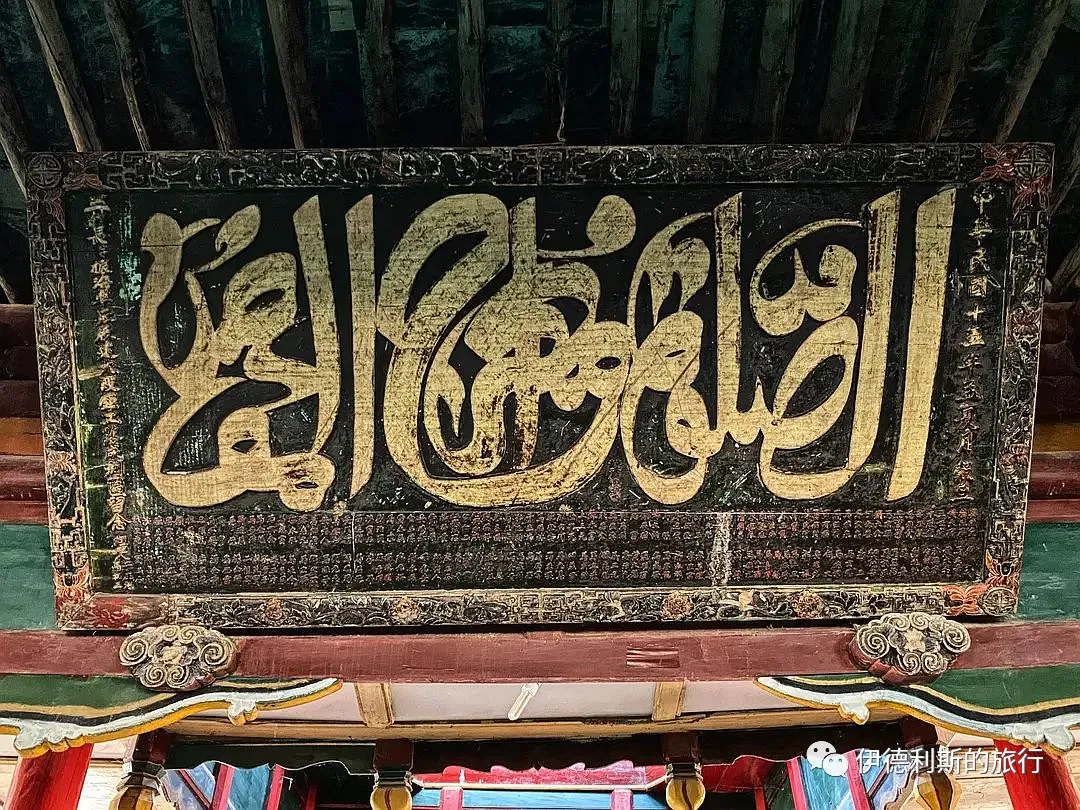
This was inscribed in 1909 (the first year of the Xuantong reign) by Hui Muslims Deng Risheng and Ma Jiansheng from Datong. The Ma family of Hui Muslims originated from Youwei, Shanxi, and were a prominent military family during the Ming Dynasty; the 'Ma Family Army' formed by Ma Gui and his brothers and nephews in the mid-Wanli period was famous for its combat skills and earned great merit by defending Youwei against Altan Khan for six months. The Ma family has been a major Hui Muslim clan in Datong since the Ming Dynasty, and they frequently helped rebuild the Datong mosque and served as imams during the Ming and Qing dynasties. After the Qing Dynasty turned military garrisons into counties, the Ma family of Hui Muslims in Datong left the military for civilian life, achieved success in business and government, and for a time became the actual managers of the Datong mosque.
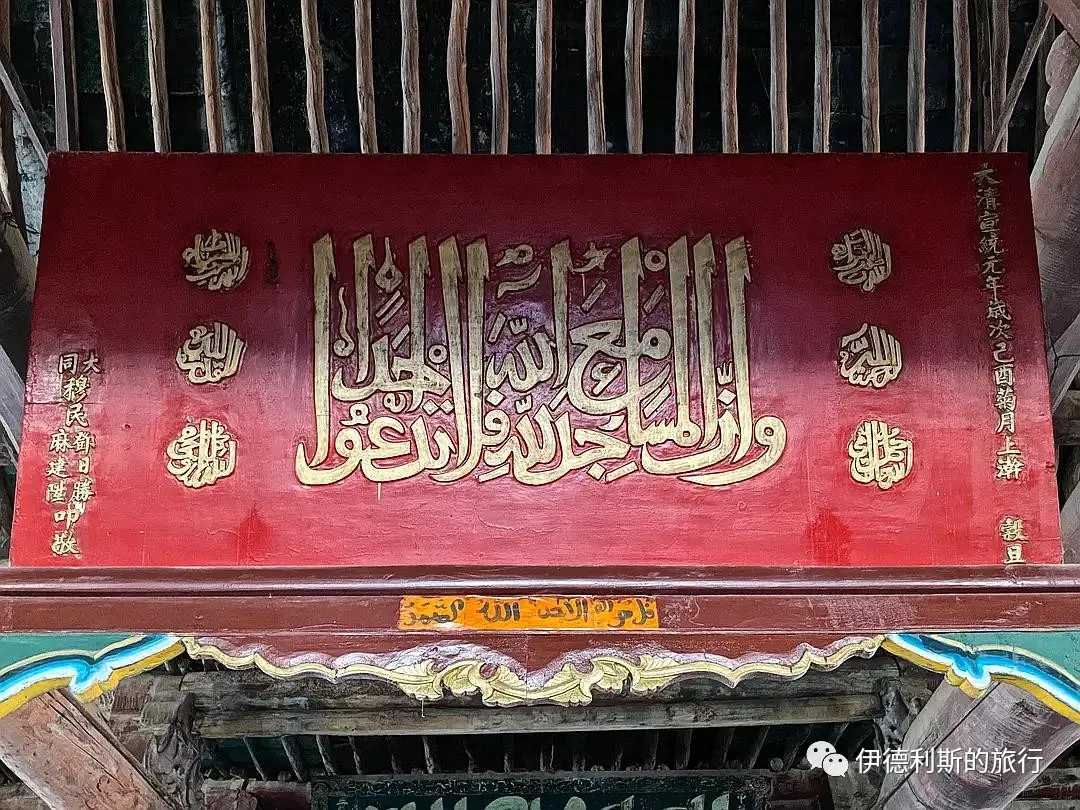
This is a commemorative plaque left by local Hui Muslims during the expansion of the prayer hall in 1926.
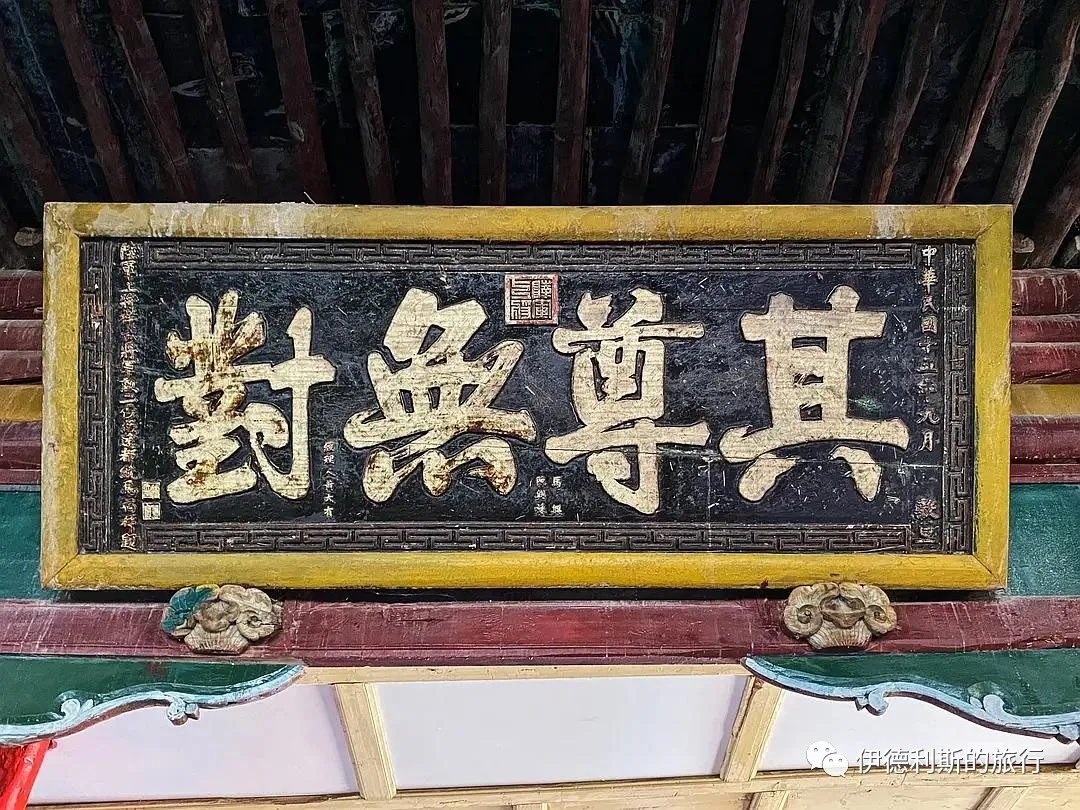
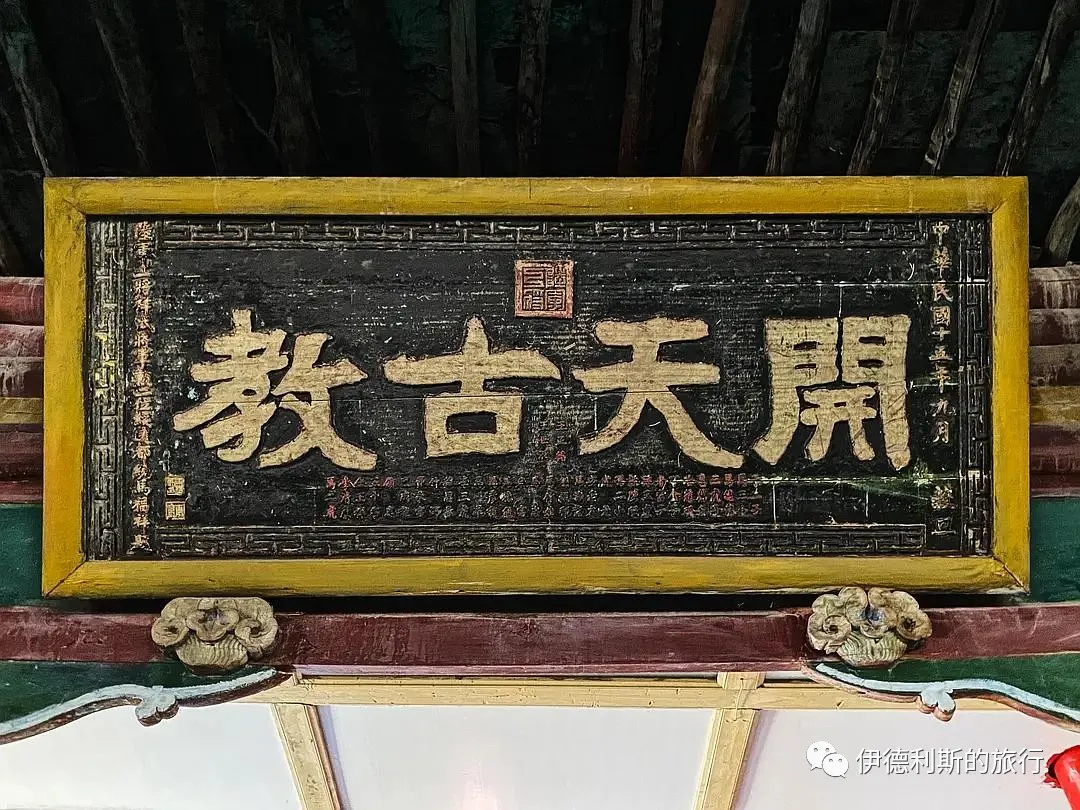
In 1926, the Hui Muslim general Ma Fuxiang, who was then a general and the Suiyuan military governor, inscribed the 'Qi Zun Wu Dui' and 'Kai Tian Gu Jiao' plaques to celebrate the mosque's expansion. The Great Mosque of Hohhot and the Great Mosque of Baotou also have inscriptions by Ma Fuxiang.
The Great Mosque of Hohhot.
The establishment of the community around the Great Mosque of Hohhot originated with Hui Muslim officers and soldiers in the Qing Dynasty's Green Standard Army. After the fall of the Ming Dynasty, most of the officers and soldiers guarding the Nine Frontiers joined the Qing Dynasty and were organized into the 'Green Standard Army,' which included many Hui Muslim soldiers from the three towns of Xuanhua, Datong, and Taiyuan. In 1693 (the thirty-second year of the Kangxi reign), the Qing government increased its troops in Hohhot to fight the Dzungar Khanate, which included many Hui Muslim soldiers from the Green Standard Army. At that time, the Green Standard Army's Hui Muslim soldiers and Hui Muslim merchants built the mosque community together at the north gate of the old city, which was the predecessor to the Great Mosque of Hohhot.
After the mid-Kangxi period, as there were no more wars on the borders, most of the Hui Muslim soldiers from Datong and the two garrisons of Zuoyun and Youyu became small merchants and artisans, and many Hui Muslims moved to settle near the Great Mosque of Hohhot; to this day, the dialect of Hohhot's Hui Muslims is still deeply influenced by the Datong dialect. By the late Kangxi period, two large livestock trading markets, 'Niuqiao' (Ox Bridge) and 'Yanggangzi' (Sheep Mound), had formed near the Great Mosque of Hohhot, and the cattle and sheep slaughtering industry was controlled by Hui Muslims.
The early Great Mosque of Hohhot only had a few earthen rooms, and it only reached its current size after being rebuilt in 1723 (the first year of the Yongzheng reign) and undergoing a large-scale expansion in 1789 (the fifty-fourth year of the Qianlong reign). The funds for the Qianlong-era expansion were mainly donated by three wealthy Hui Muslim merchant families: the Kang, Ma, and Chen families. To commemorate the contributions of these three families, the mosque decided to recite three extra volumes of scripture every year during the opening of the scriptures in Ramadan. Between 1923 and 1925, the Great Mosque expanded its main hall and the north and south lecture halls, creating the unique Republic-era architectural style seen today. At that time, Widow Yang from Tongdao South Street donated her own property behind the mosque, so the mosque committee decided to recite an extra box of scriptures every year during Ramadan.
The most famous imam of the Hohhot Great Mosque during the Republic of China era was Imam Wang Kuan from Niujie, Beijing. Imam Wang was a famous educator who founded the Chinese Muslim Progressive Association. In 1915, he established the first primary school for Hui Muslims in Hohhot, the Gui-Sui Hui School.
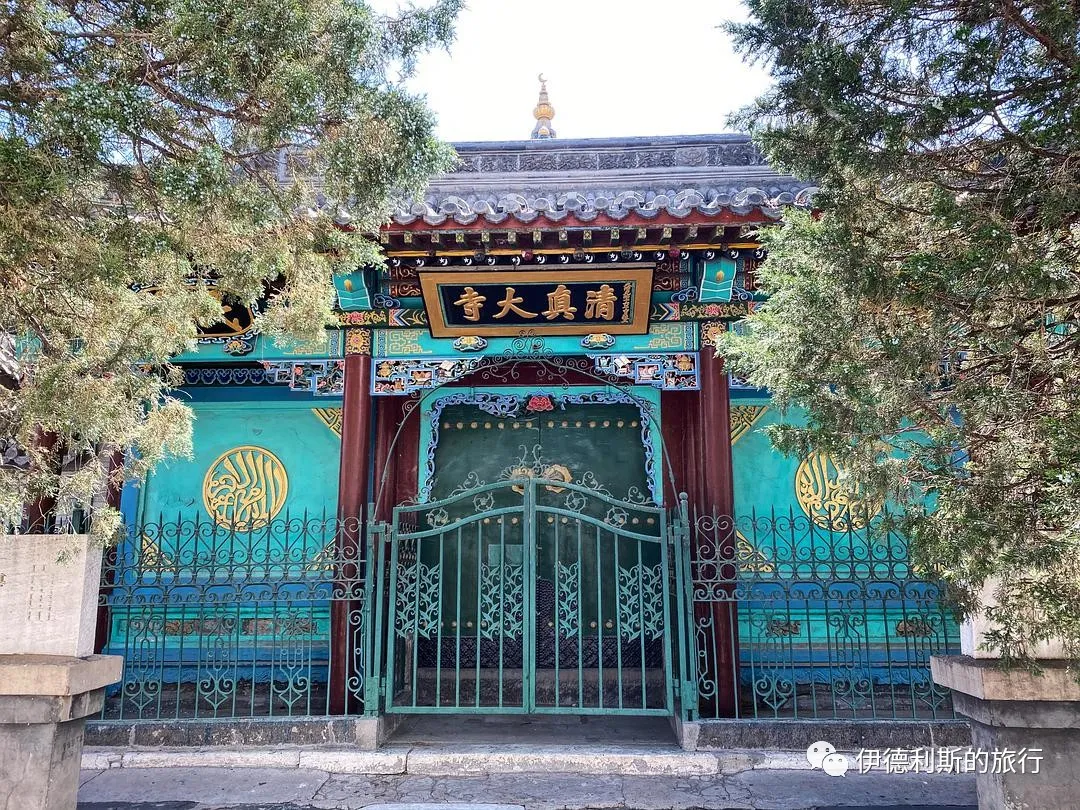
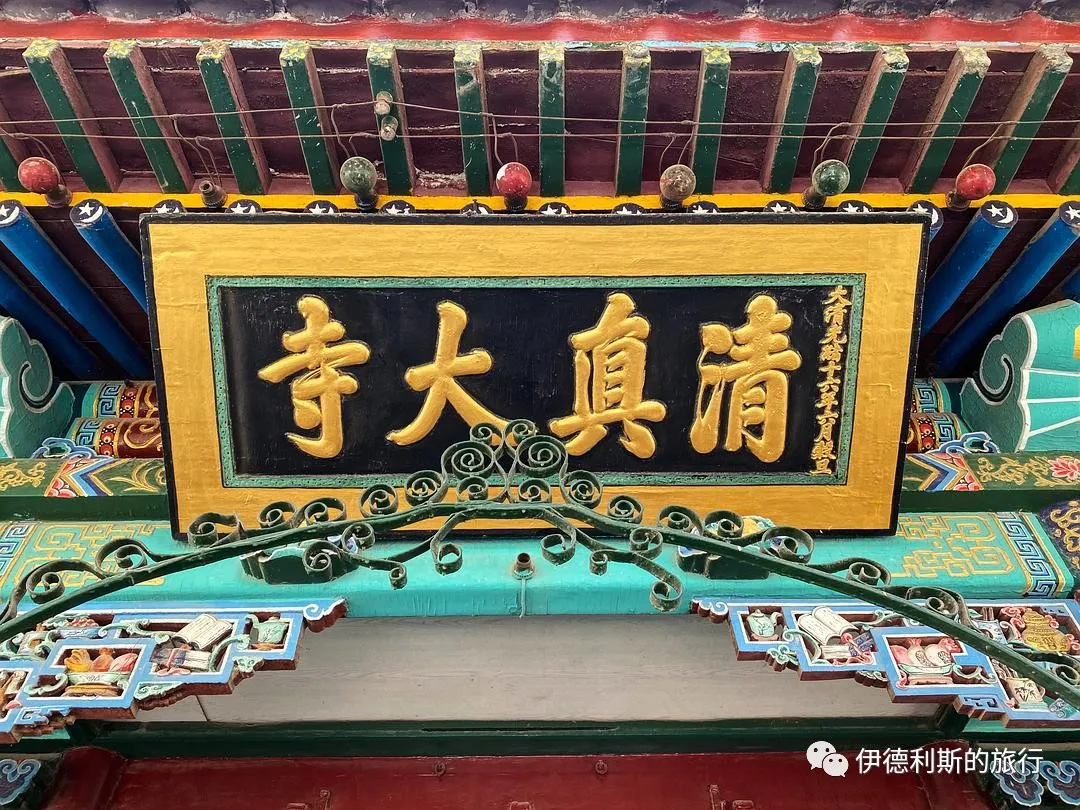
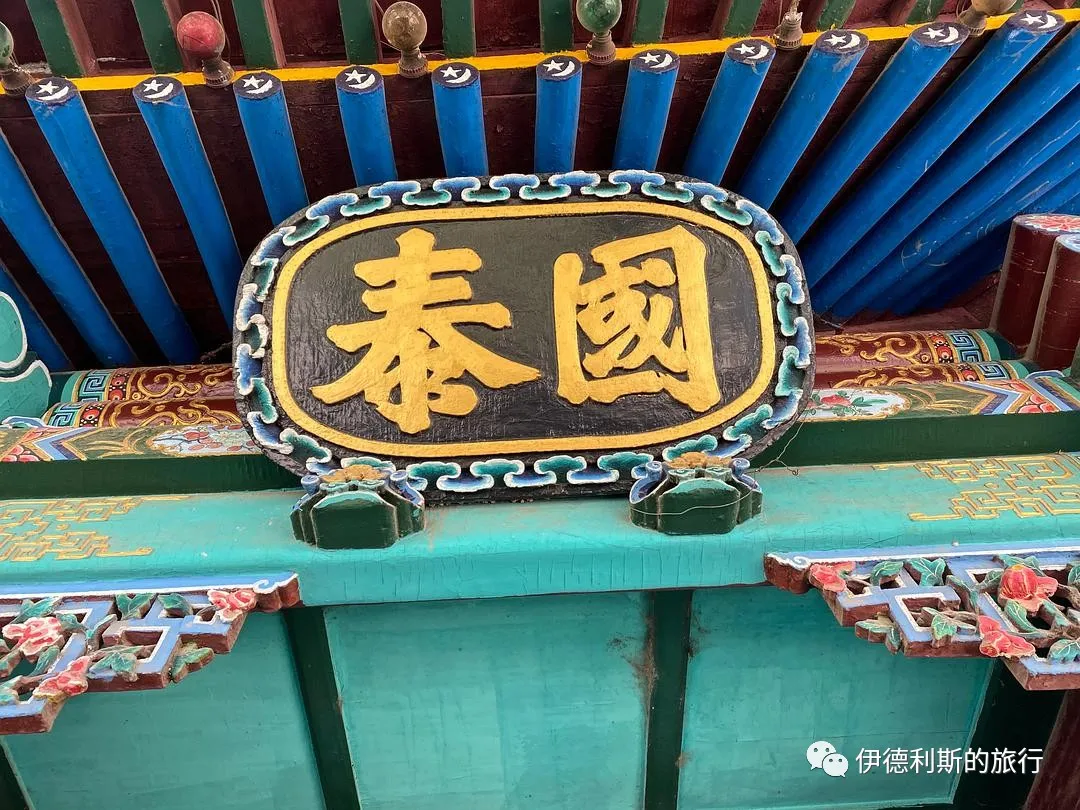
The mosque gate was built in 1892 (the 18th year of the Guangxu reign). Above it hangs a plaque inscribed with 'Great Mosque' from 1890 (the 16th year of the Guangxu reign), with plaques reading 'National Prosperity' and 'People's Peace' on either side.
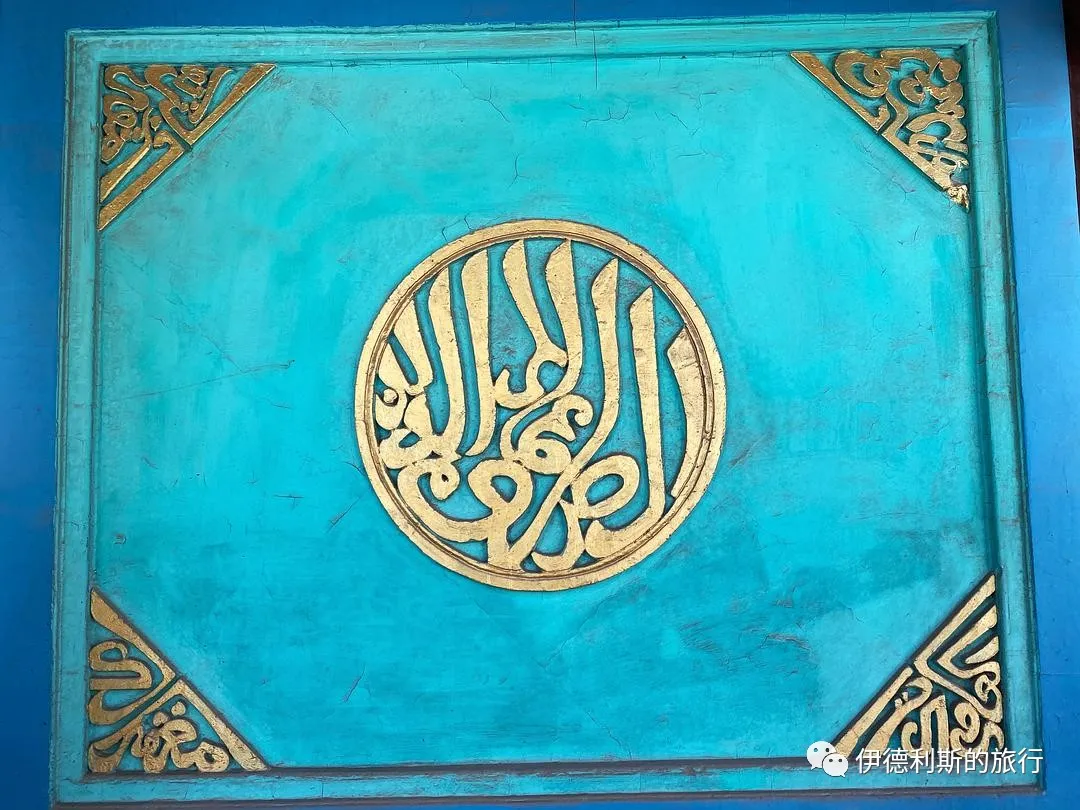
After entering, you can see the brick-carved screen wall behind the main hall, built in 1896 (the 22nd year of the Guangxu reign). It is inscribed with 'Rectify the heart and be sincere in self-cultivation,' 'Recognize the Oneness of Allah,' 'Clear the heart,' and 'See one's true nature,' all written in 1924 by Ma Fuxiang, who was the Suiyuan Military Governor at the time.
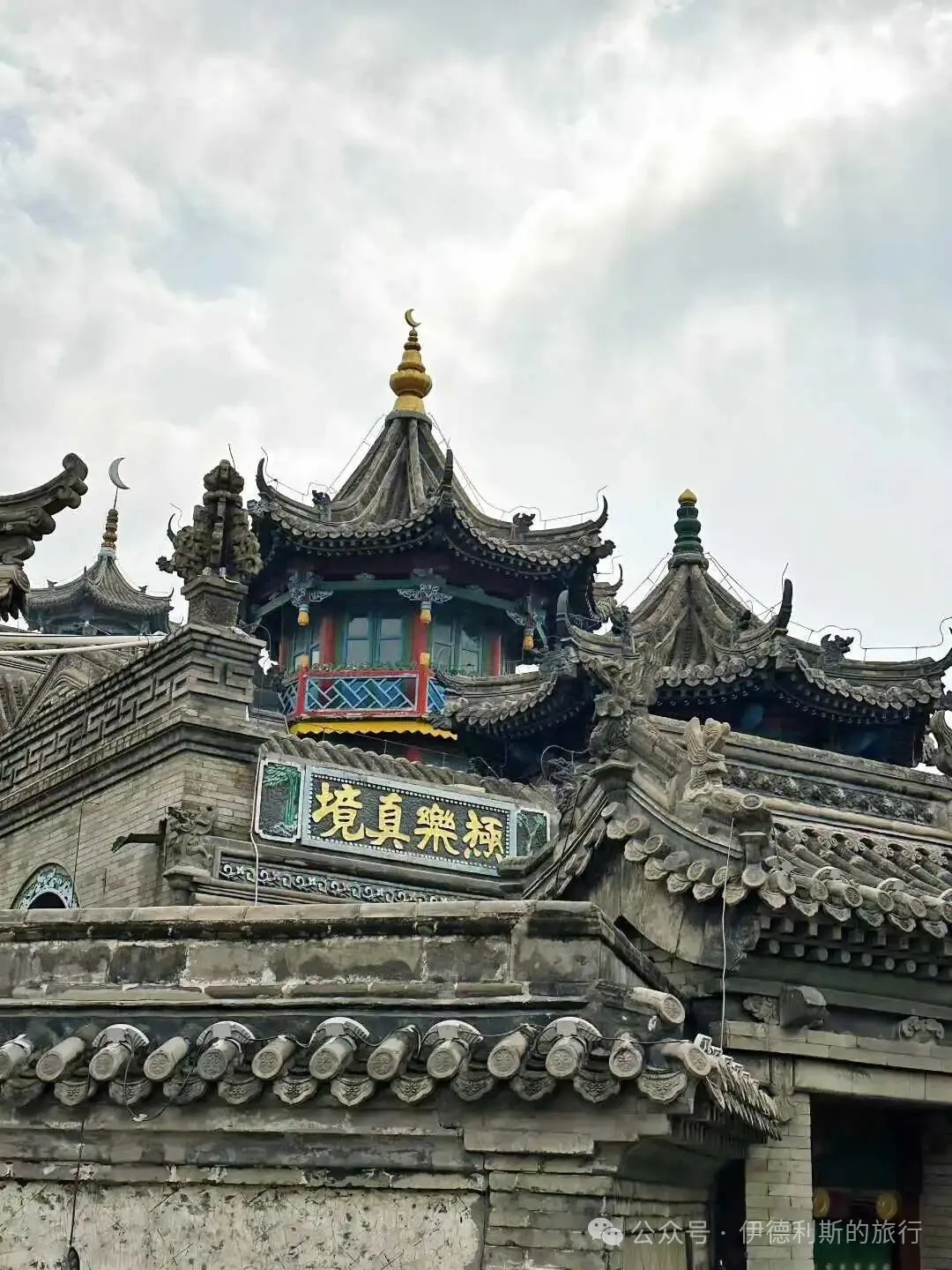
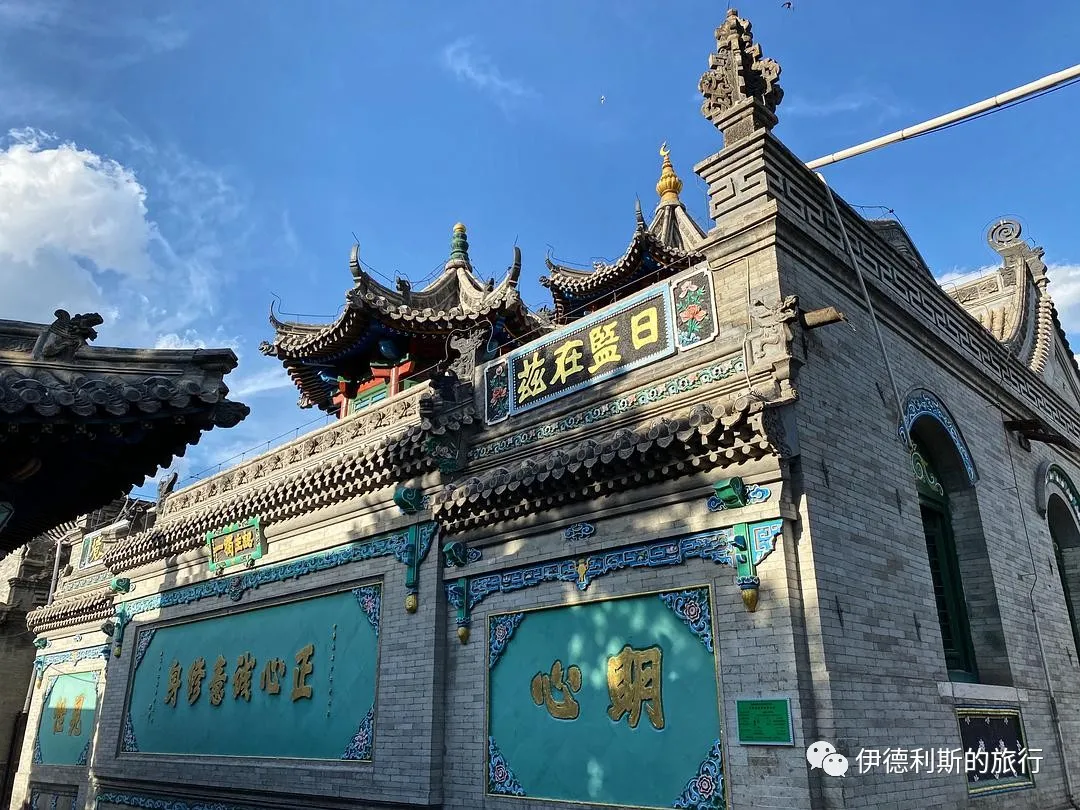
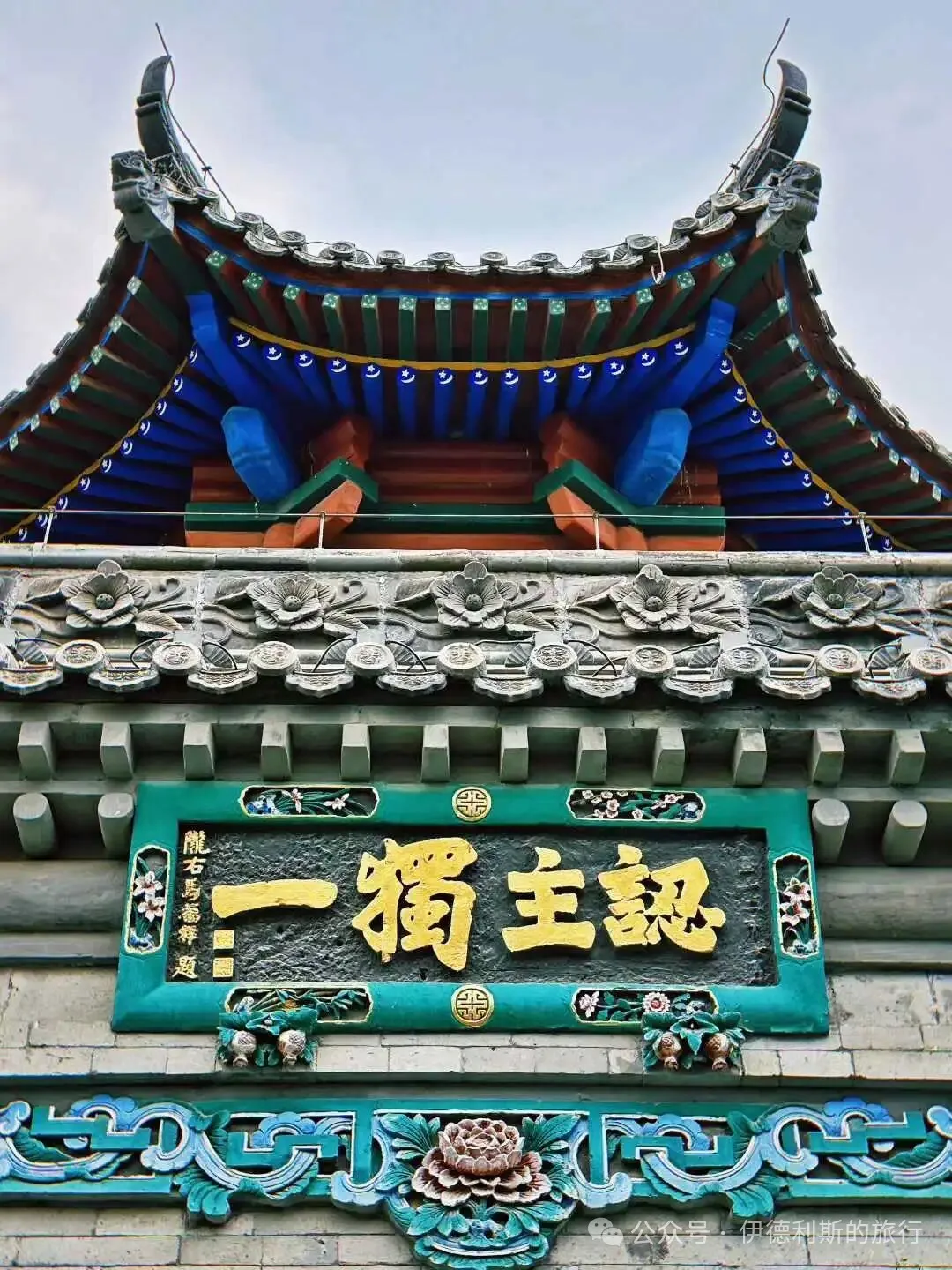
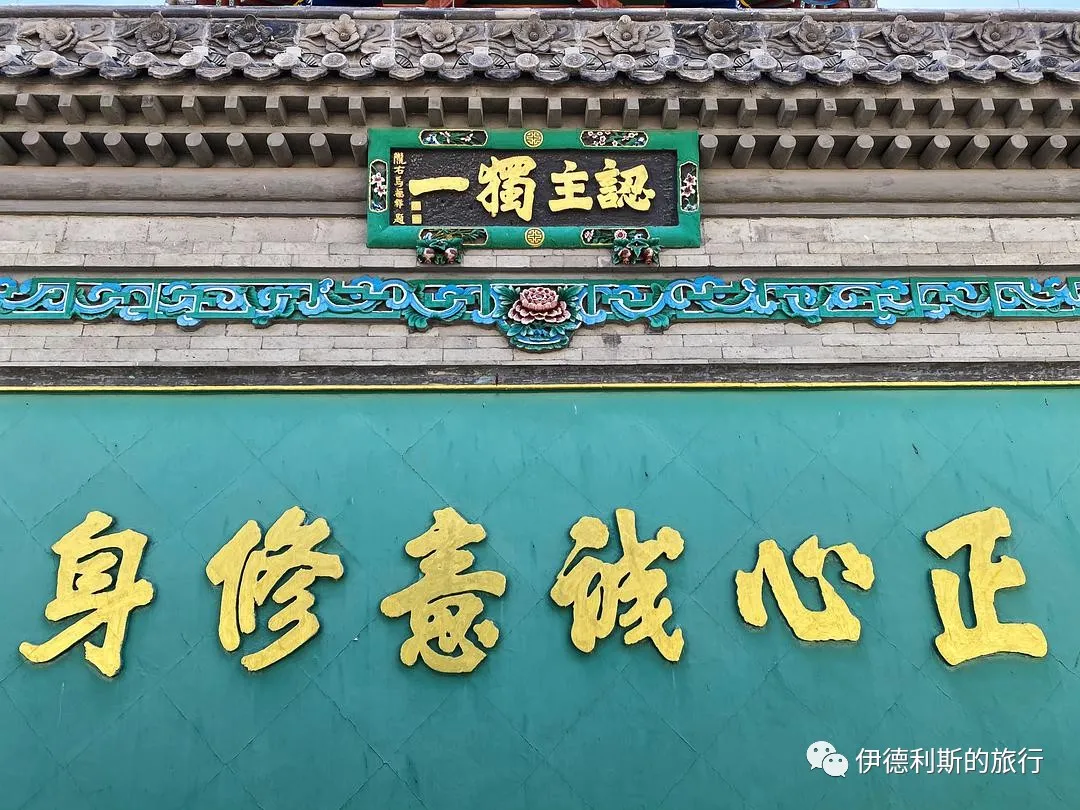
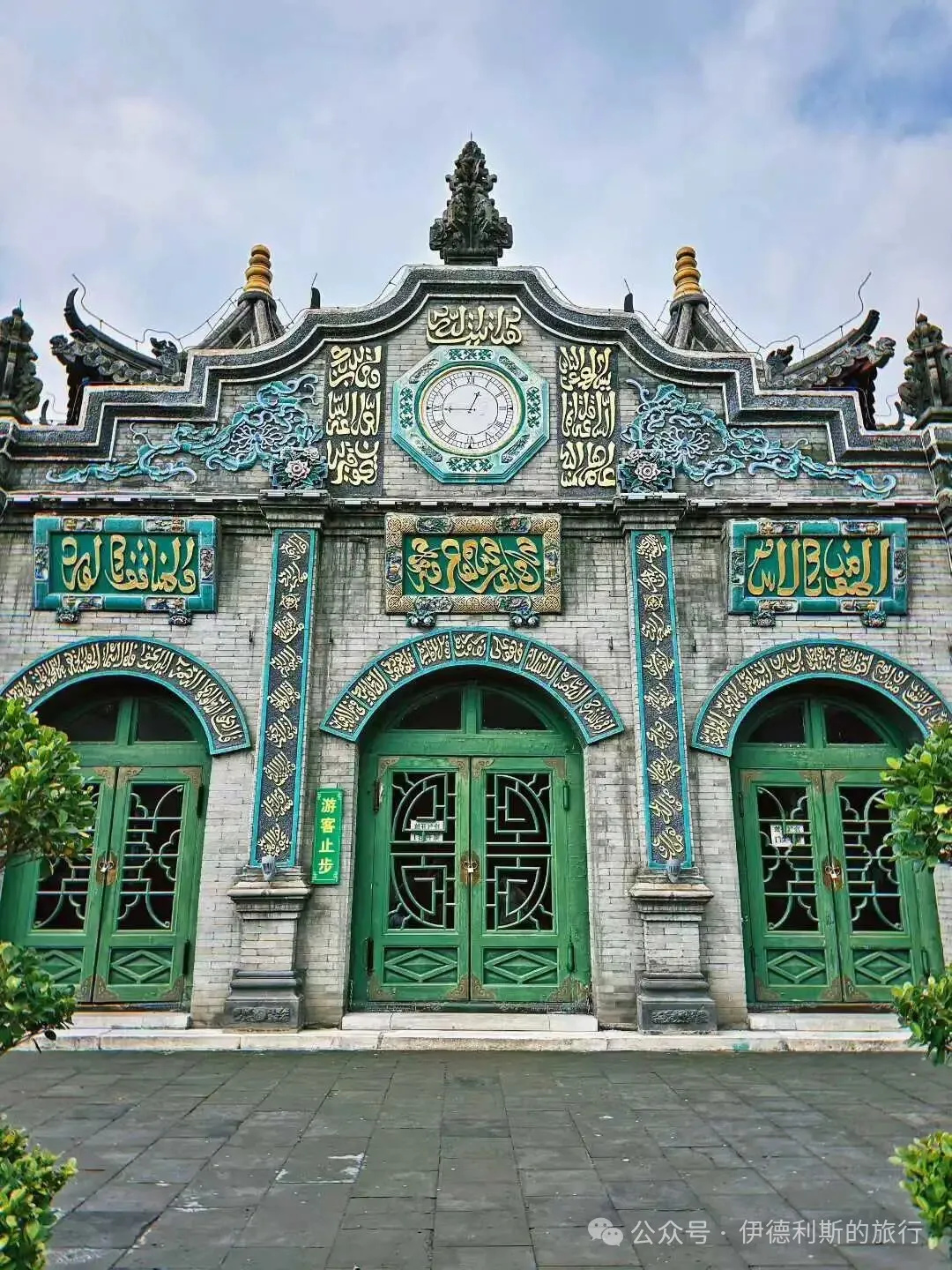
The prayer hall was expanded in 1923 and consists of a porch, a front hall, a middle hall, and a kiln hall. It features a connected roof structure with five pointed pavilions on top, symbolizing the Five Pillars of Islam: faith, prayer, fasting, charity, and pilgrimage. The porch is a blend of Chinese and Western styles, featuring arched doors, Arabic plaques, couplets, and floral patterns on the walls.
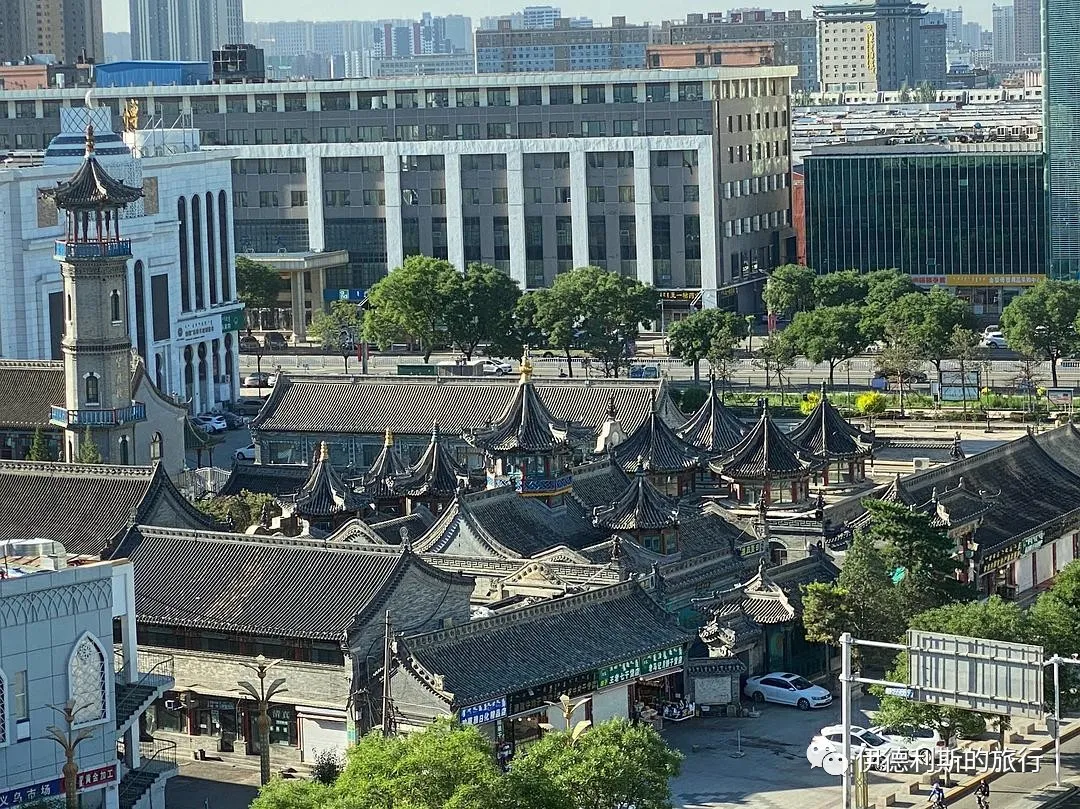
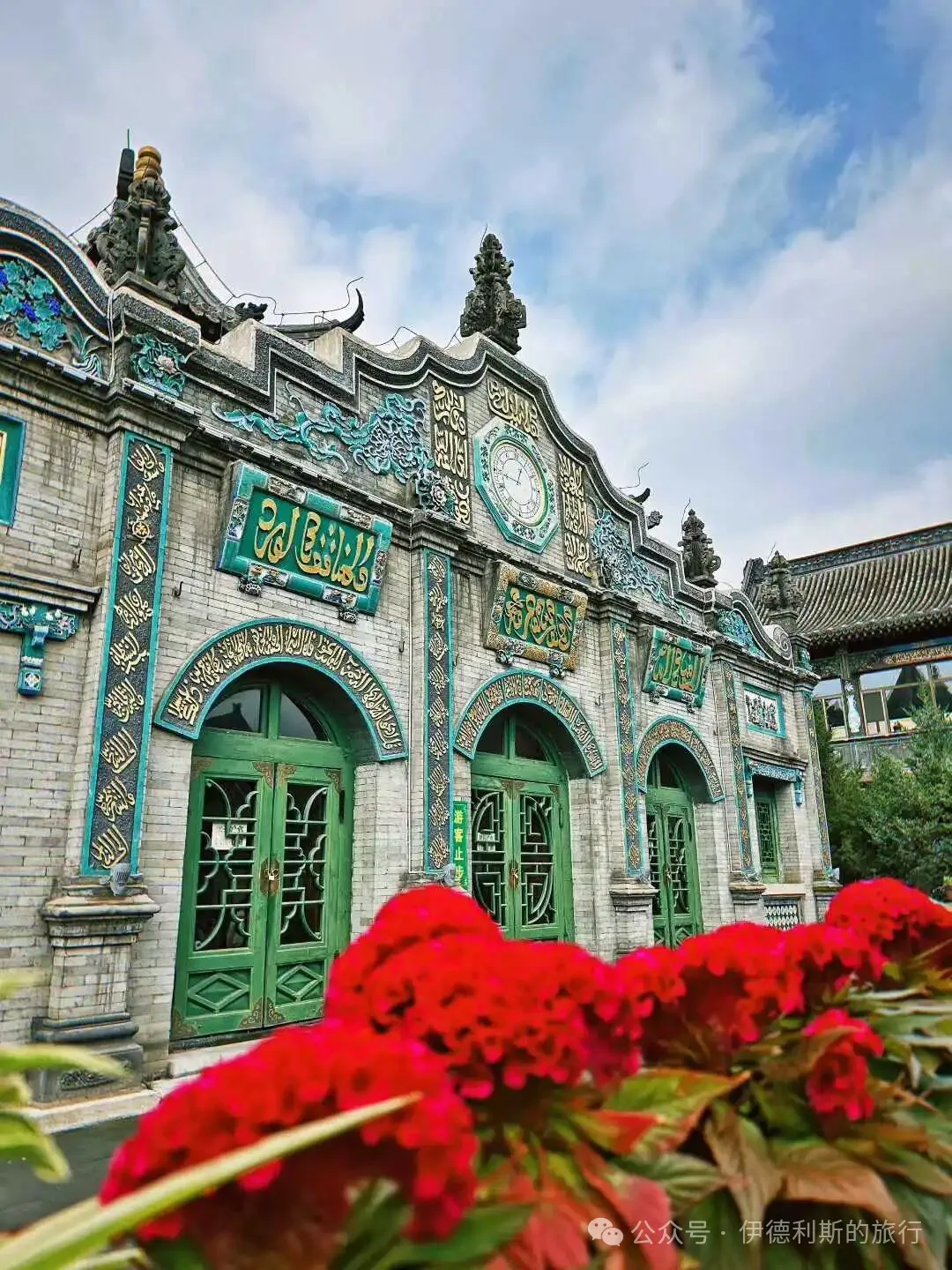
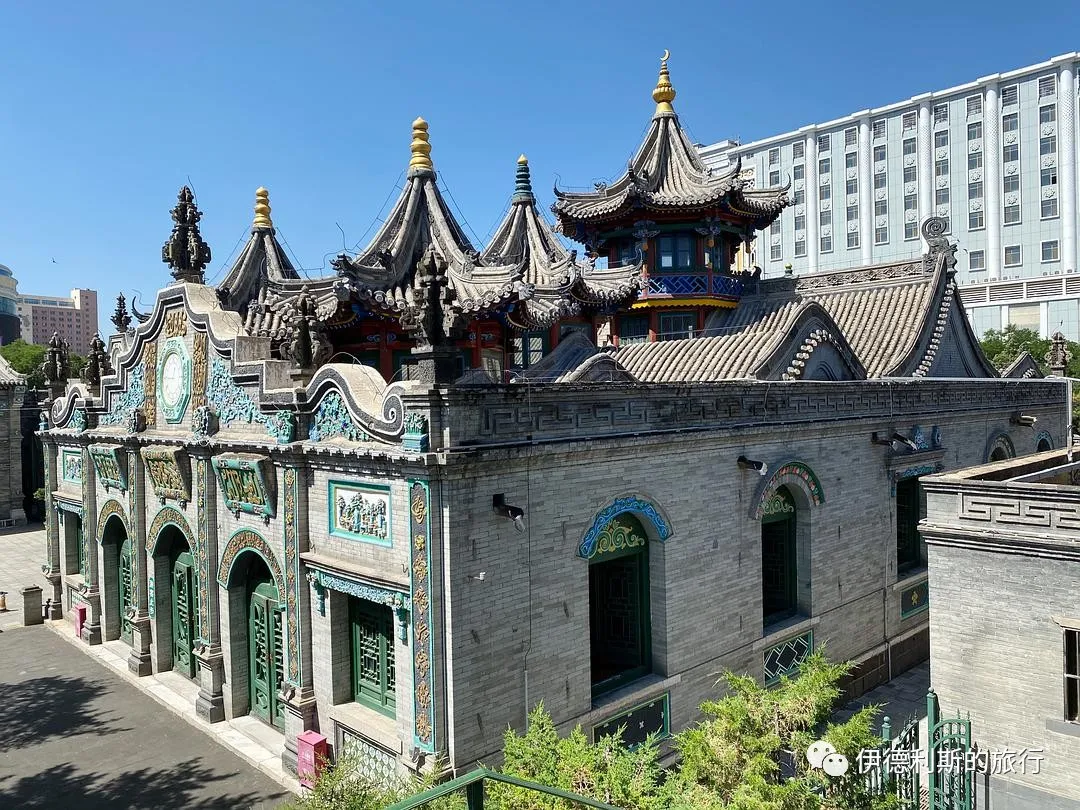
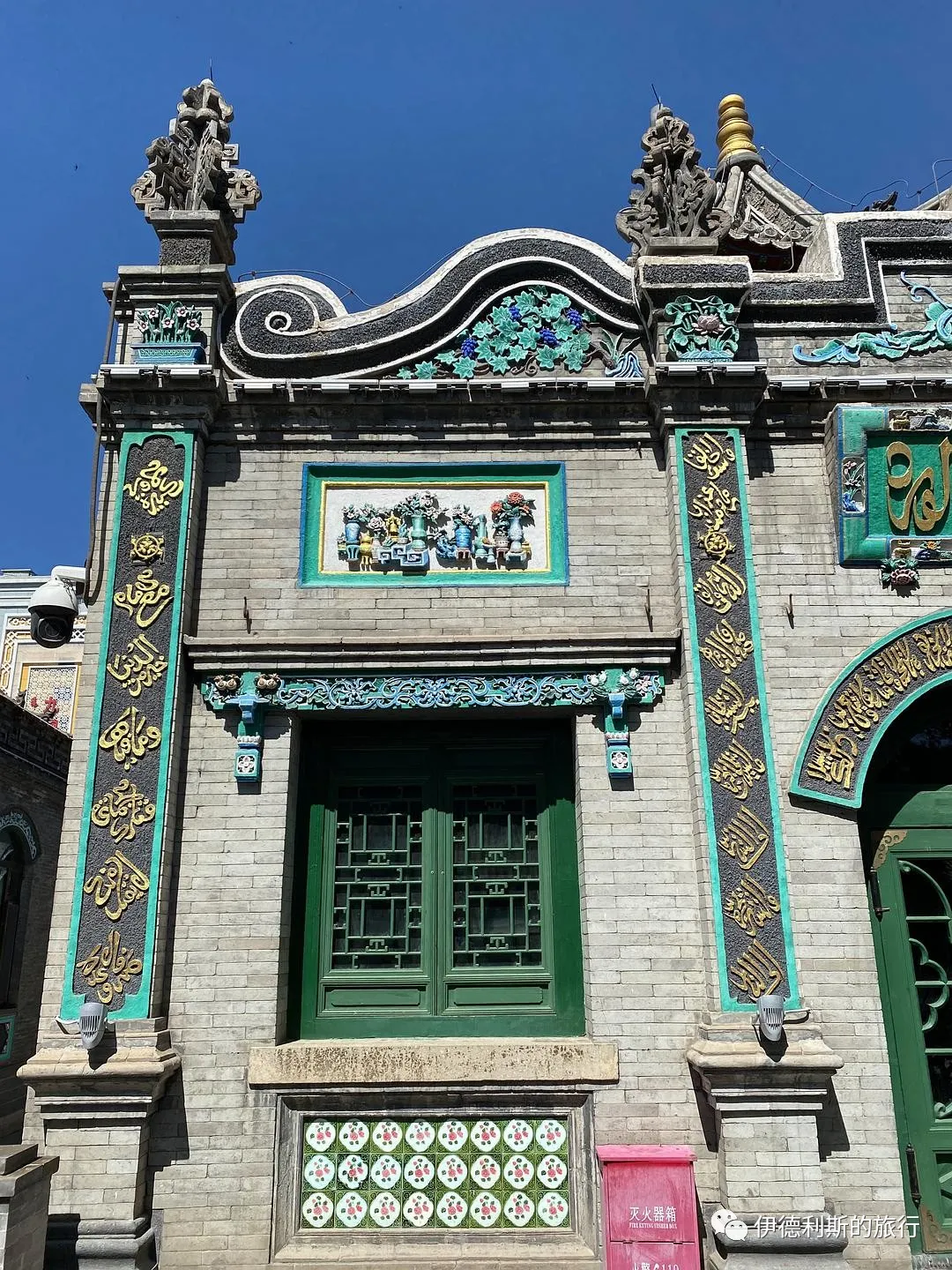
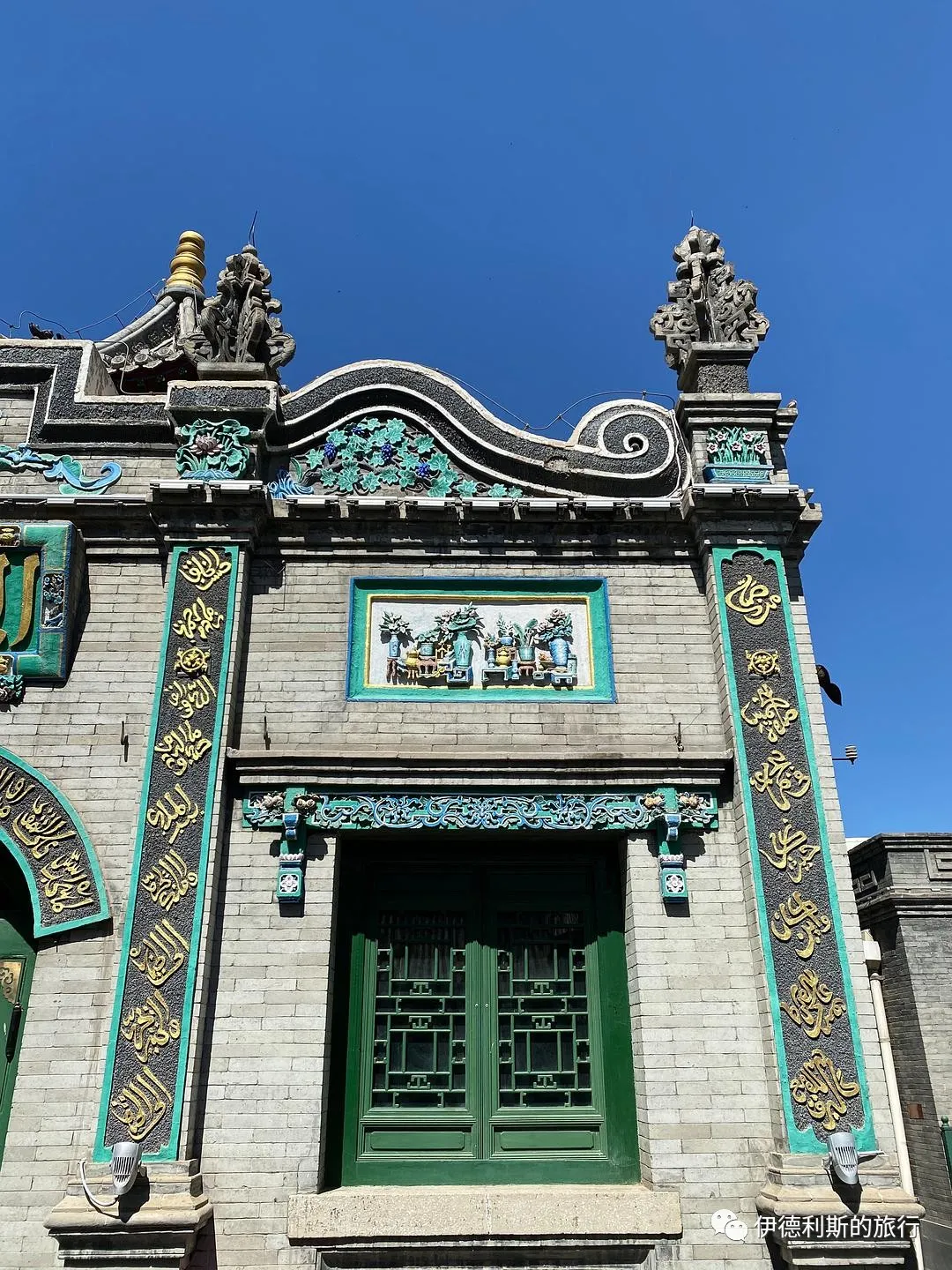
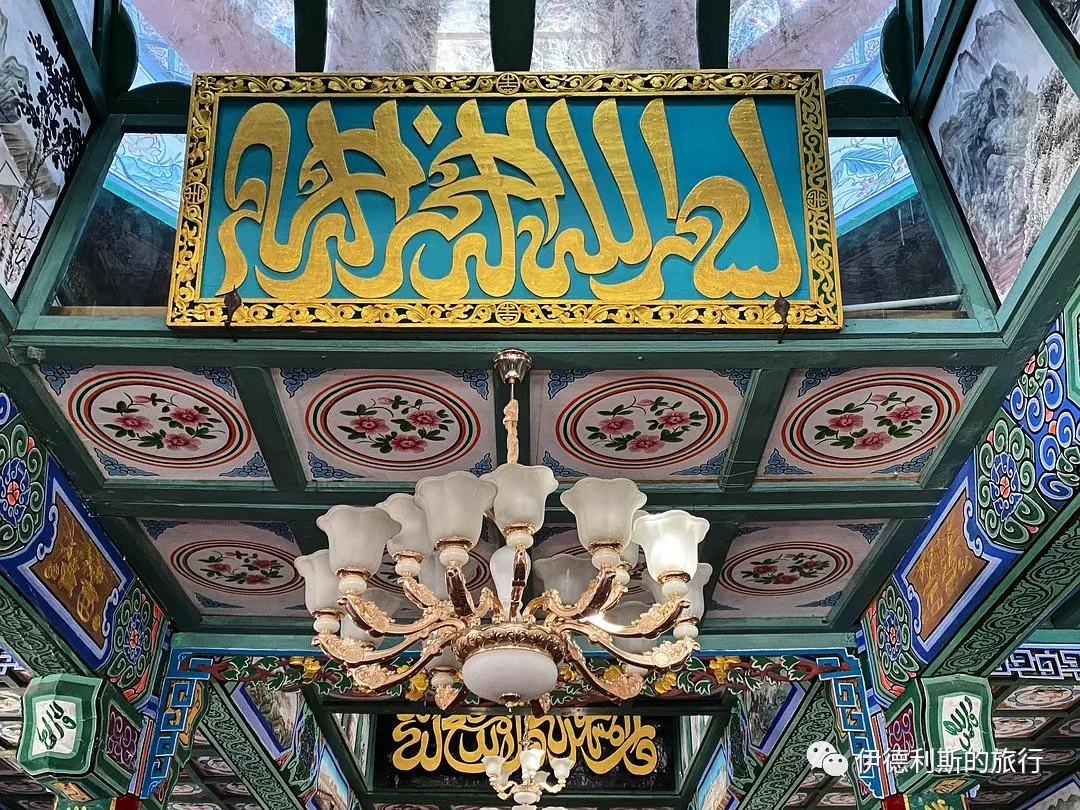
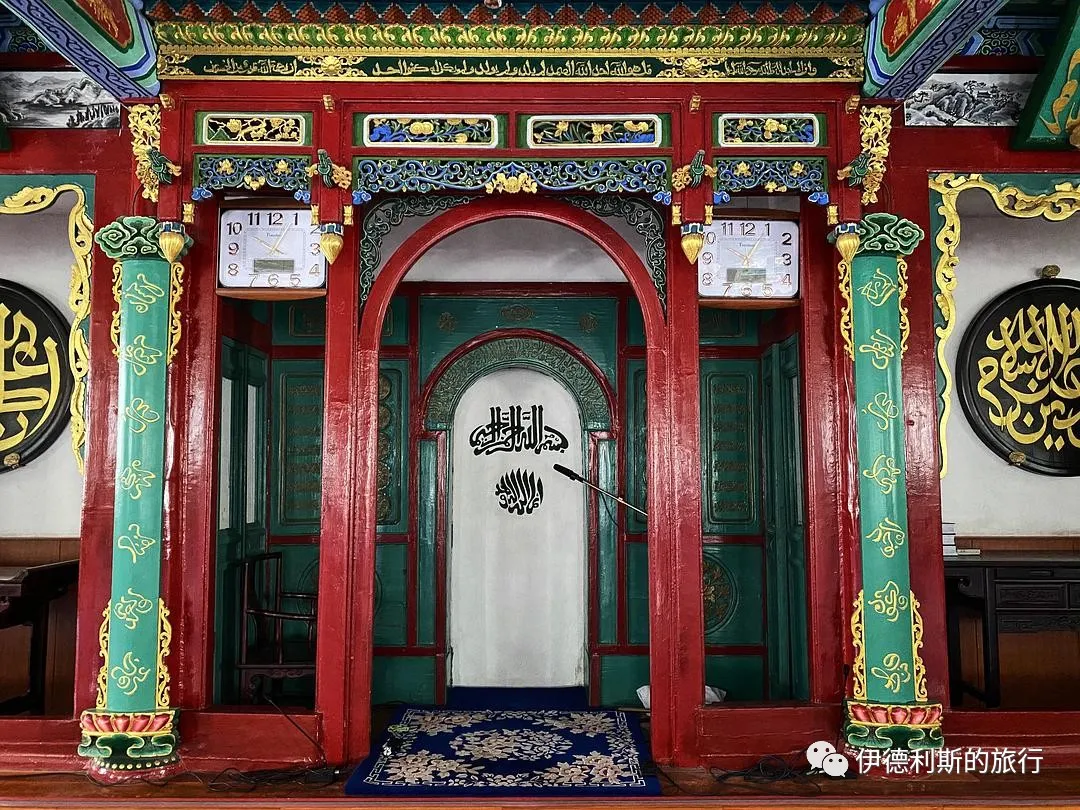
The Moon-Watching Tower was built in 1939. It is 36 meters high, with a hexagonal brick base and a single-eave hexagonal pointed roof at the top.
Chasuoqi Great Mosque
Tumd Left Banner in Inner Mongolia is located west of Hohhot. During the Ming and Qing dynasties, it was the base of the Mongol Tumd tribe, known for its fertile land and abundant water and grass. In 1739 (the 4th year of the Qianlong reign), the Qing government established a sub-prefecture office in Shandai Town, Tumd Left Banner, making it an important commercial hub. Shortly after, Hui Muslims from four families arrived in Shandai to make a living: the Bai family from Gaotou in Zhengding, Hebei (now Gaotou Hui Ethnic Township in Wuji County), the Ma family from Baoding, Hebei, the Xue family from Xueying, Beijing, and the Jin family from Niujie, Beijing.
In 1760 (the 25th year of the Qianlong reign), the Shandai sub-prefecture office was abolished, and the center of the banner shifted to Chasuoqi Town. The Bai, Ma, Xue, and Jin Hui Muslim families all moved to Chasuoqi Town in the late Qianlong period. At that time, the Chasuoqi Guandi Mosque was being dismantled and moved to a new site, so the families bought the original land and built the first Chasuoqi Great Mosque.
The Chasuoqi Great Mosque originally consisted of only two mud houses facing the street. During the Daoguang reign, as the number of Hui Muslims moving to Chasuoqi increased, a mud-and-wood main hall was added. In 1909 (the first year of the Xuantong reign), Imam Wang Shi'en led the construction of the current brick-and-wood main hall. The widow of Bai Shengyu, surnamed Gan, donated bricks, tiles, wood, and the elm trees in the courtyard. Other funds came from the local community and from Hohhot, Baotou, Saratsi, Togtoh, and Longshengzhuang. The elders in charge were Luo Cheng, Bai Youfu, Ma Youfu, and Wu Fengqi. Imam Wang Shi'en was originally from Wudu, Gansu. He was deeply knowledgeable in Islamic studies and is the most famous imam in the history of the Chasuoqi Great Mosque.
Saratsi Mosque
Saratsi Town in Tumd Right Banner, Inner Mongolia, is located between Hohhot and Baotou. After the Saratsi sub-prefecture office was established in 1739 (the 4th year of the Qianlong reign), it gradually prospered and became a major trade hub on the merchant route to Mongolia. In the early Qianlong years, 23 Hui Muslim households from Shandong and Hebei moved to Saratsi via Shandai. They included families with the surnames Ma, Bai, Yang, and Wei, and most worked as livestock traders. In 1747 (the 12th year of the Qianlong reign), they raised funds to build the Saratsi Mosque in Nanyingzi.
In 1760 (the 25th year of the Qianlong reign), Saratsi was upgraded to a sub-prefecture office, also handling Mongolian-Han affairs for the Urat Three Banners, the Ordos Left Wing Middle Banner (Junwang Banner), and the Ordos Left Wing Rear Banner (Dalad Banner). After this, the number of Hui Muslims moving to Saratsi continued to grow. Around the 40th year of the Qianlong reign, the Hui Muslim population in Saratsi had grown to over 100 households and more than 400 people. In 1782 (the 47th year of the Qianlong reign), local residents expanded the main hall of the Salaqi Mosque to fifteen rooms. The mosque still has a door lintel inscribed with the date 1782, which serves as proof of this expansion.
In 1947, the south side room of the main hall suddenly collapsed. The village elders hired Wu Youlong, one of the only two college students among the Hui Muslims in Baotou at the time, who had graduated from the Civil Engineering Department of Beiyang Institute of Technology, to rebuild the hall. When designing the hall, Wu Youlong boldly placed a millstone and a roller under each pillar. This design prevented moisture from rising and also improved the lighting inside. After the renovation, the main hall took on its current form.
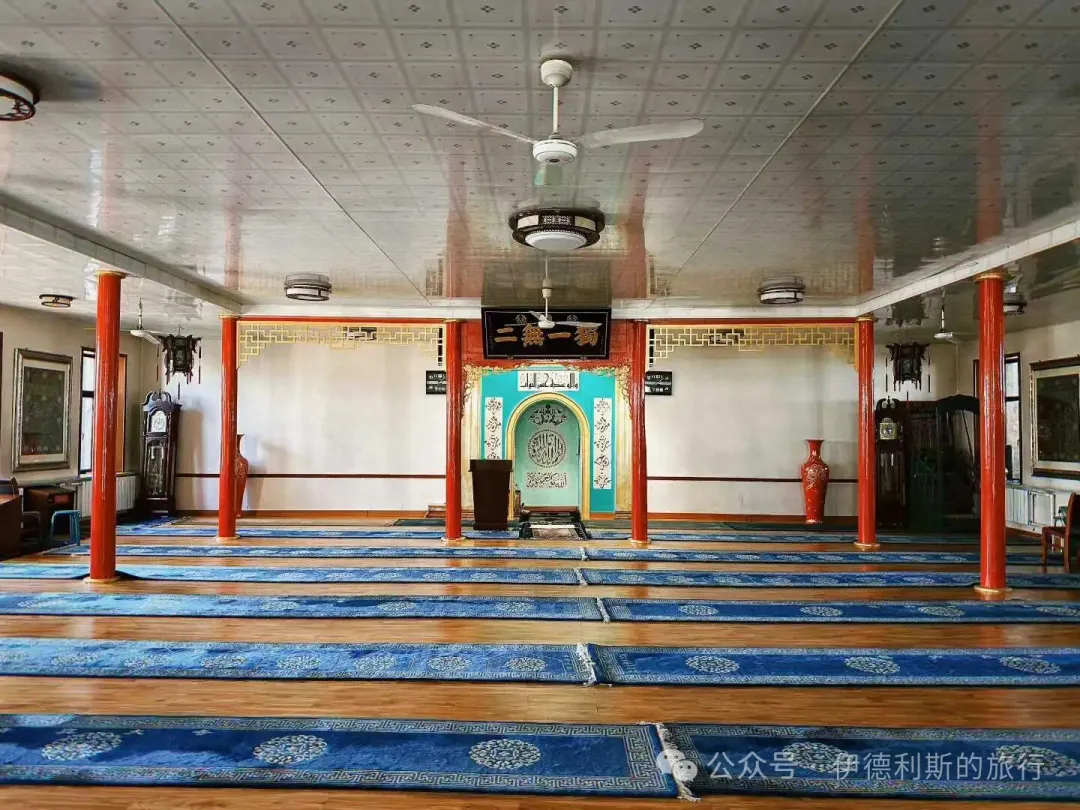
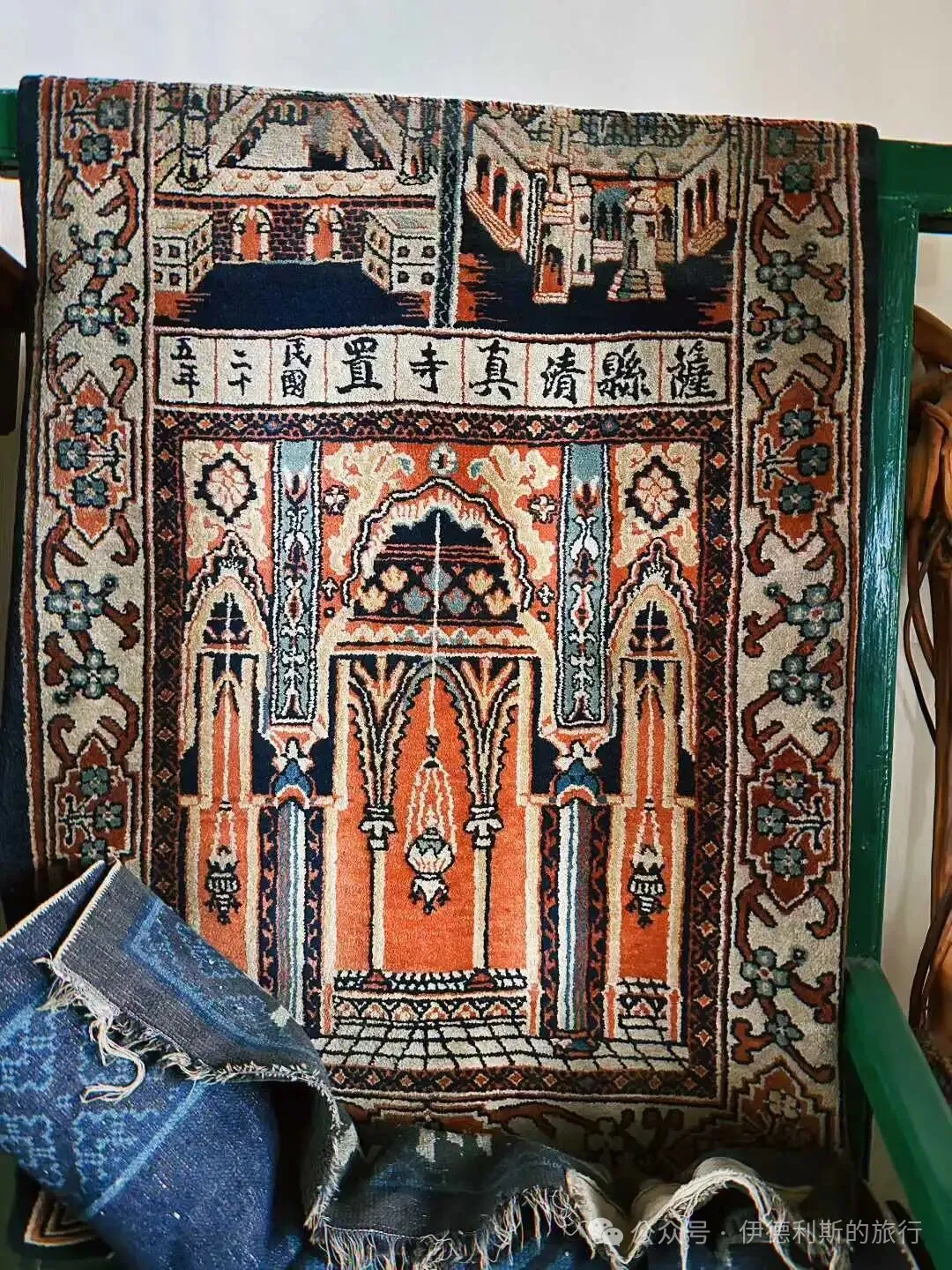
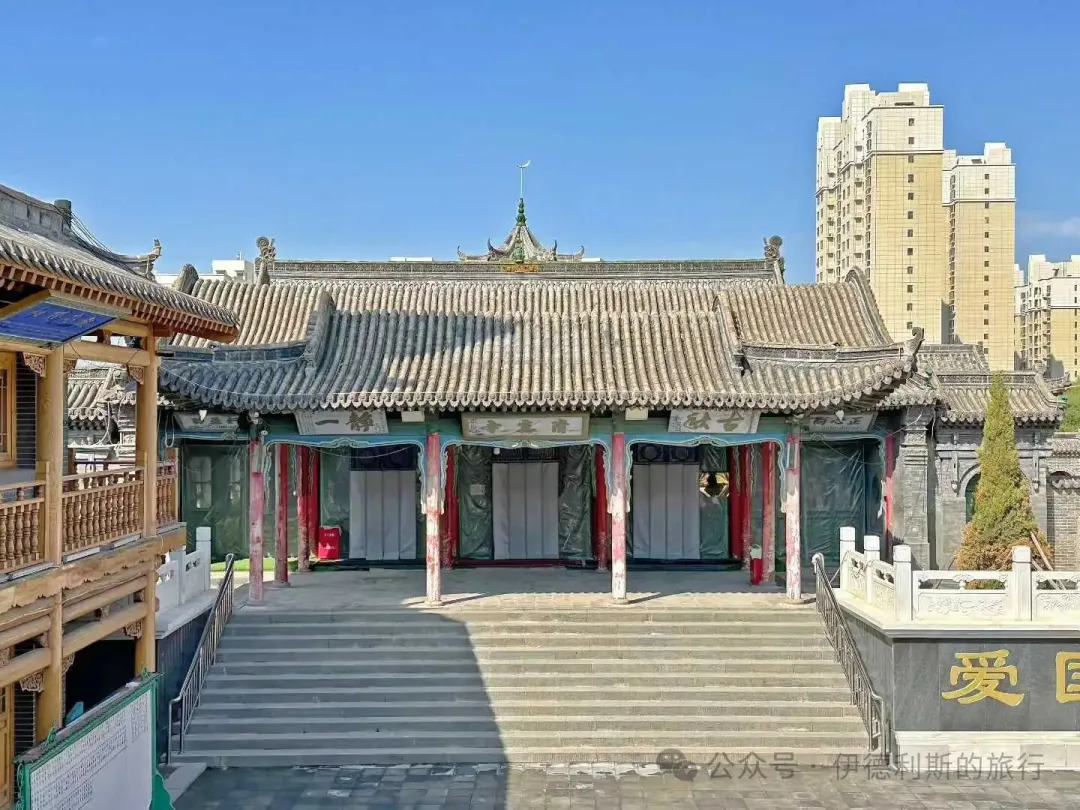
Baotou Great Mosque
The Baotou Great Mosque is located in the Donghe District of the old town of Baotou. It was first built in 1743 (the 8th year of the Qianlong reign) and is the most important religious building in the western Tumochuan area. Today, it is a protected cultural site of the Inner Mongolia Autonomous Region.
In 1697 (the 36th year of the Kangxi reign), after Emperor Kangxi defeated Galdan, immigrants from inland China began to flood into the Tumochuan Plain in Inner Mongolia, moving westward along the route from Hohhot to Chasugi and then to Salaqi. In the early years of the Qianlong reign, Wang Xiu, a Hui Muslim from Cangzhou, Hebei, and Bai Sanmu, a Hui Muslim from Wuding, Shandong (near present-day Binzhou and Dezhou), arrived at Baotou Village, west of Salaqi, becoming the first Hui Muslims in Baotou.
According to family records, the Wang family's ancestral home was Erdaogang Wailiushu Village in Nanjing. Their distant ancestor was a military scholar (wulinsheng) during the Ming Dynasty and later served as a military officer. In 1421 (the 19th year of the Yongle reign), the Ming Dynasty officially moved its capital to Beijing. The Wang family was ordered to escort the emperor north and was later granted land in Cangzhou. During the Yongle reign of the Ming Dynasty, the Wang family moved to their granted land at Wangjia Sheqiao and gave up their official posts to become farmers. In the early years of the Qianlong reign, the Wang family fell on hard times. Faced with a drought in Cangzhou, Wang Xiu carried his wife and children, along with a shoulder pole carrying goods, and traveled a long distance to Zhaowan in Inner Mongolia. Wang Xiu first made a living by selling mountain goods and sewing supplies door-to-door. Later, he received a piece of pasture land from a lama, bought livestock, and started a career in animal husbandry. Wang Xiu traded livestock between Inner Mongolia, Shandong, and Hebei, and his family's financial situation gradually improved.
In the early years of the Qianlong reign, Baotou Village, west of Salaqi, began to take shape, and shops and businesses opened one after another. Wang Xiu rented a slope from a Mongol person north of Baotou Village to build a house, and people called it the "Wang Family on the High Slope." After that, other Hui Muslim families, including the Bai, Ma, Yang, and Zhou families, moved into Baotou. In 1743 (the 8th year of the Qianlong reign), the Wang and Bai families mobilized other Hui Muslim families to build the first Baotou Great Mosque.
The original Baotou Great Mosque was a five-room earth-and-wood hall. It once had a plaque inscribed with "Pure and Clean" (Qingjing) dated to the 8th year of the Qianlong reign, but it was unfortunately lost later. The first imam was surnamed Fu and was hired from Hebei.
In 1809 (the 14th year of the Jiaqing reign), Baotou Village was renamed Baotou Town and gradually developed into an important commercial hub. Wang Xiu's grandson, Wang Daxing, opened the "Sanhe Horse Inn" in Baotou, and his long-distance horse trading business flourished. By 1833 (the 13th year of the Daoguang reign), there were already over 100 Hui Muslim households in Baotou, totaling six or seven hundred people. Because of this, Wang Daxing and Bai Sanmu's grandson, Bai Kede, led the effort to rebuild the earth-and-wood hall into a brick-and-tile structure and inscribed the plaques "Unique" (Duyi Wu'er), "Ancient Autumn" (Guqiu), and "Quiet One" (Jingyi). Only the plaque reading "Ancient Autumn" (Guqiu) remains, signed by community leaders (toushou) Wang Daxing and Bai Kede.
In 1913, community elders from the Ma, Wang, Chen, Ding, and Bai families hired a carpenter known as "Living Lu Ban" named Guo Sansuo to expand the main hall. He moved the porch (juanpeng) forward and added a section to the back, giving the Baotou Great Mosque its current layout. The mosque houses a plaque inscribed with "Promoting the True Faith" (Xianyang Zhengjiao) by Lieutenant General Ma Fuxiang, dating back to the second year of the Republic of China.
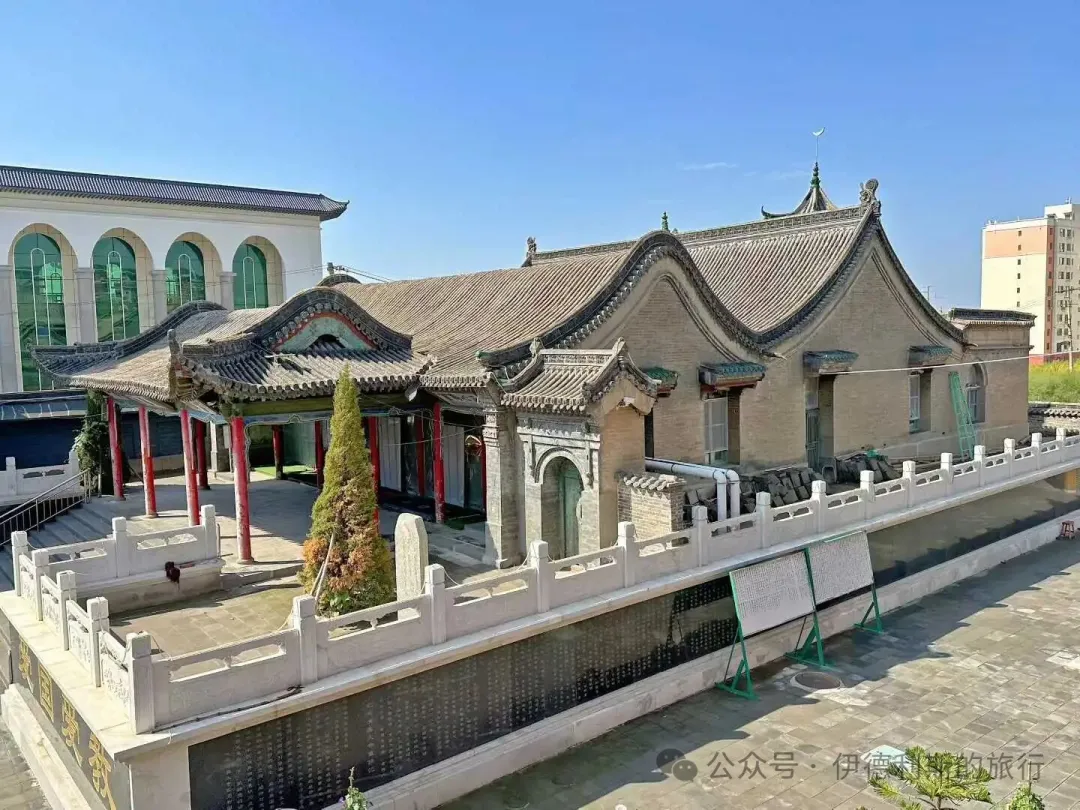
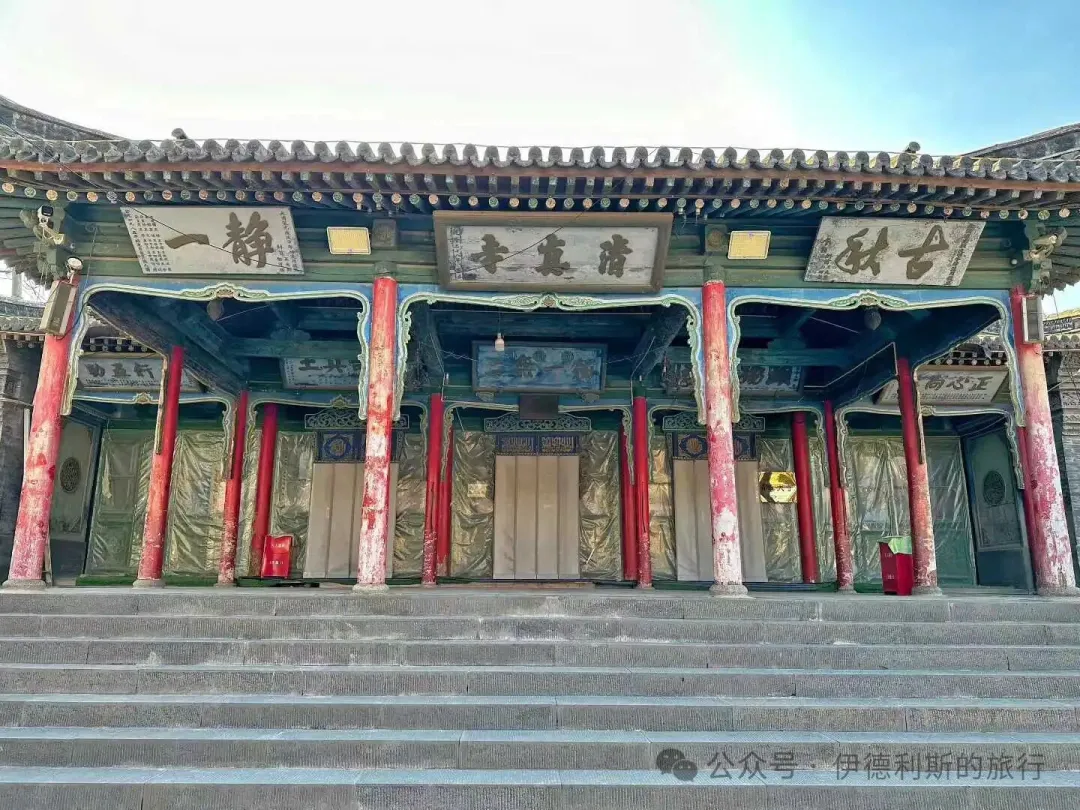
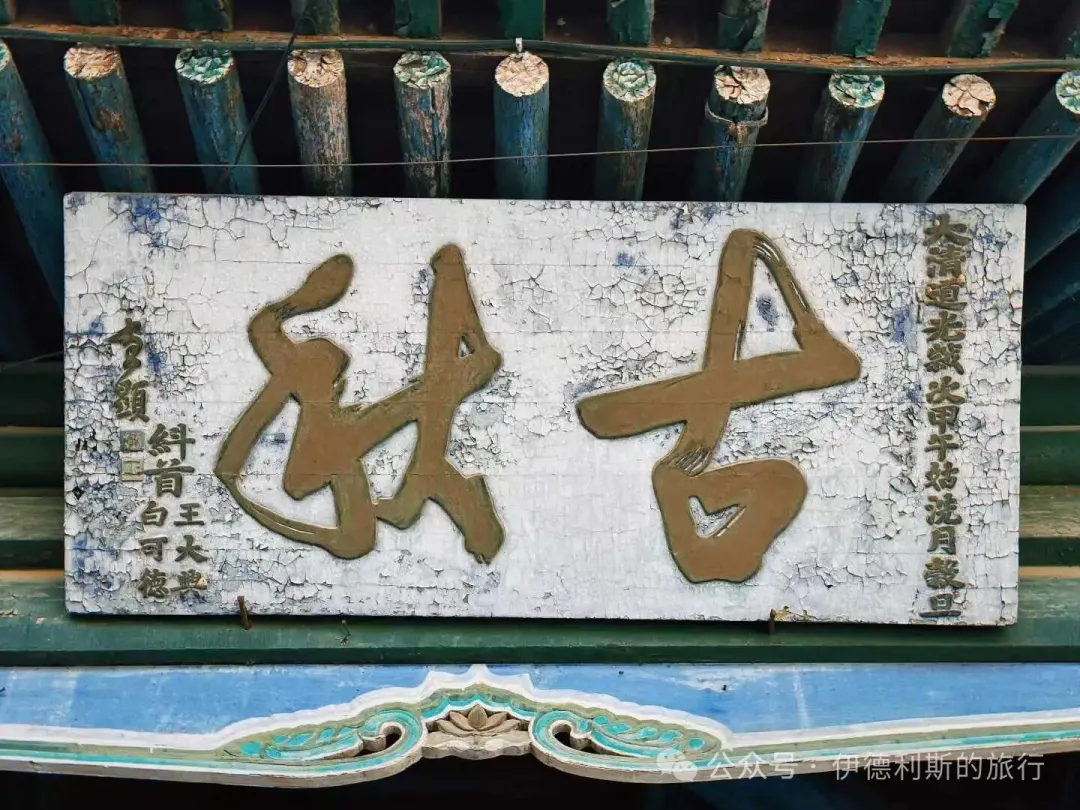
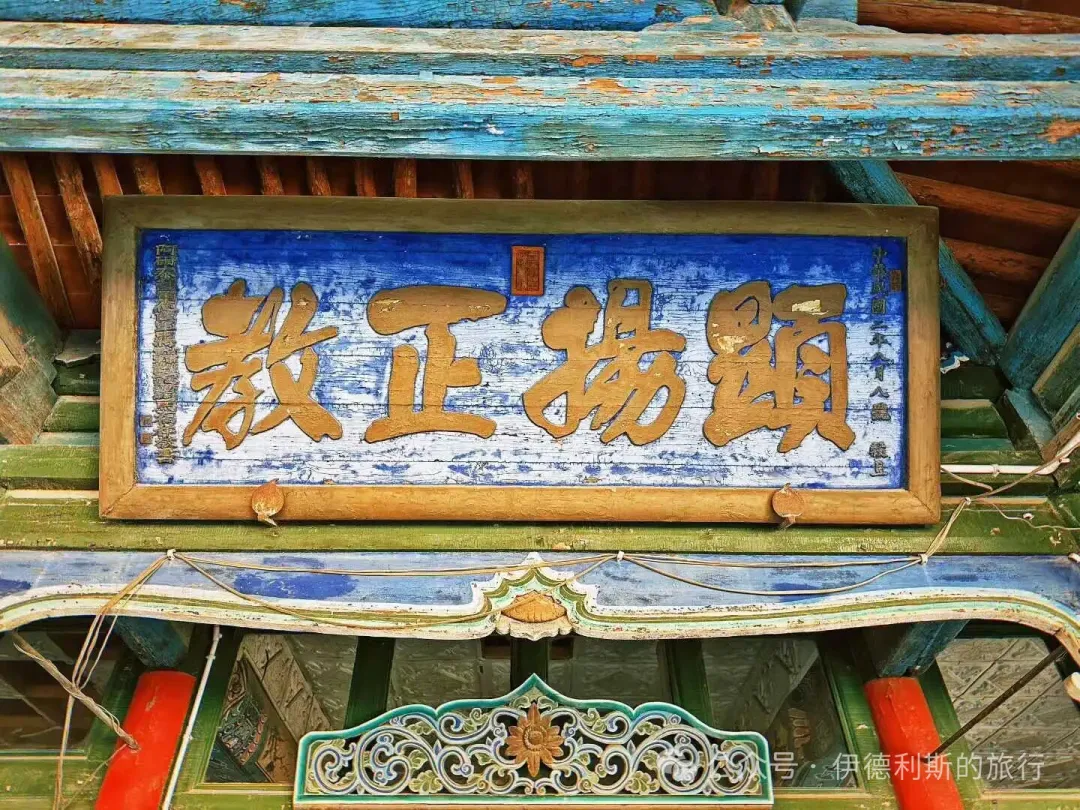
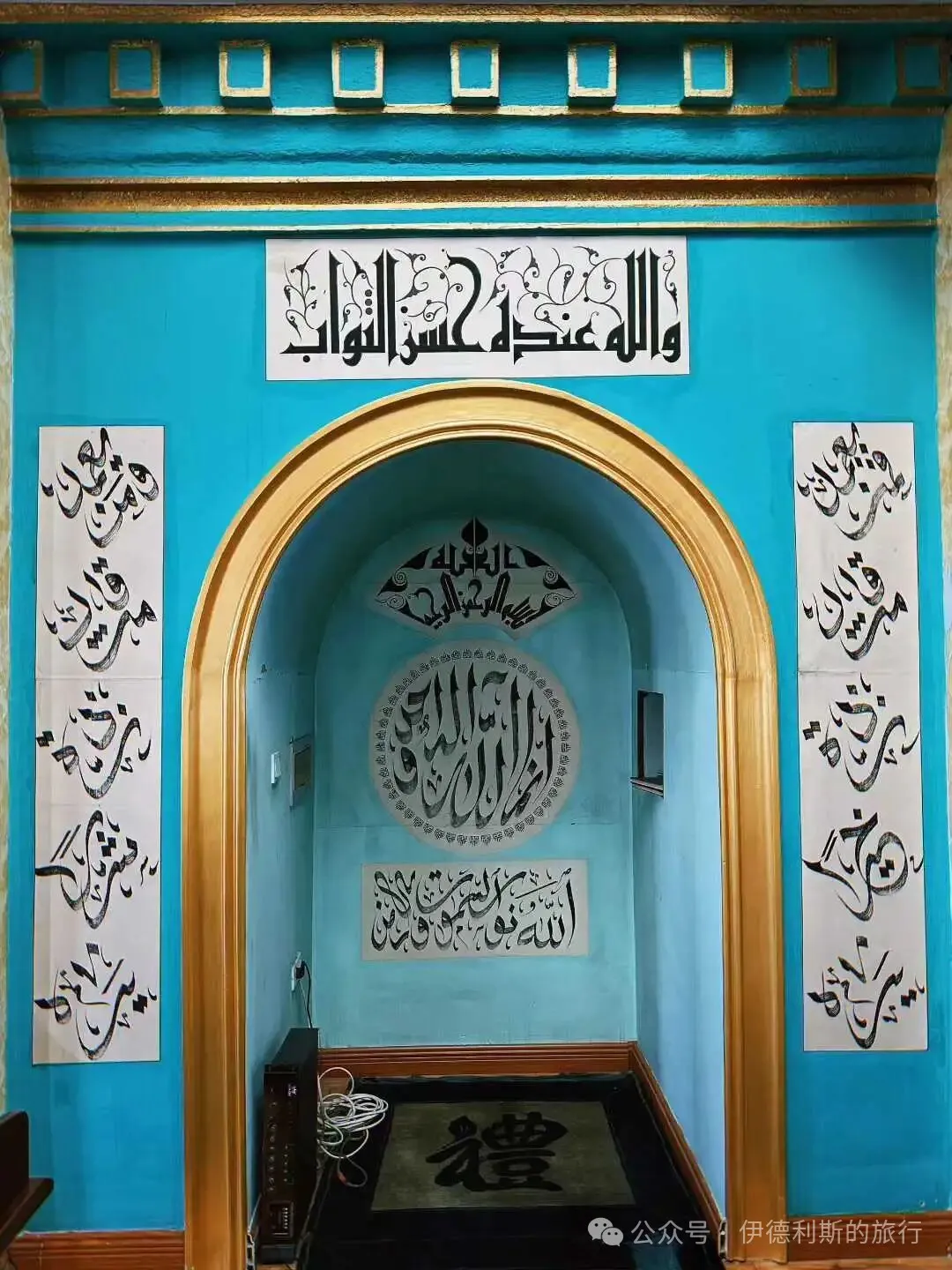
An appreciation of the traditional Chinese-style Arabic calligraphy found on the mihrab (mihalabu) niche and the minbar (minbaier) pulpit inside the main hall of the Baotou Great Mosque.
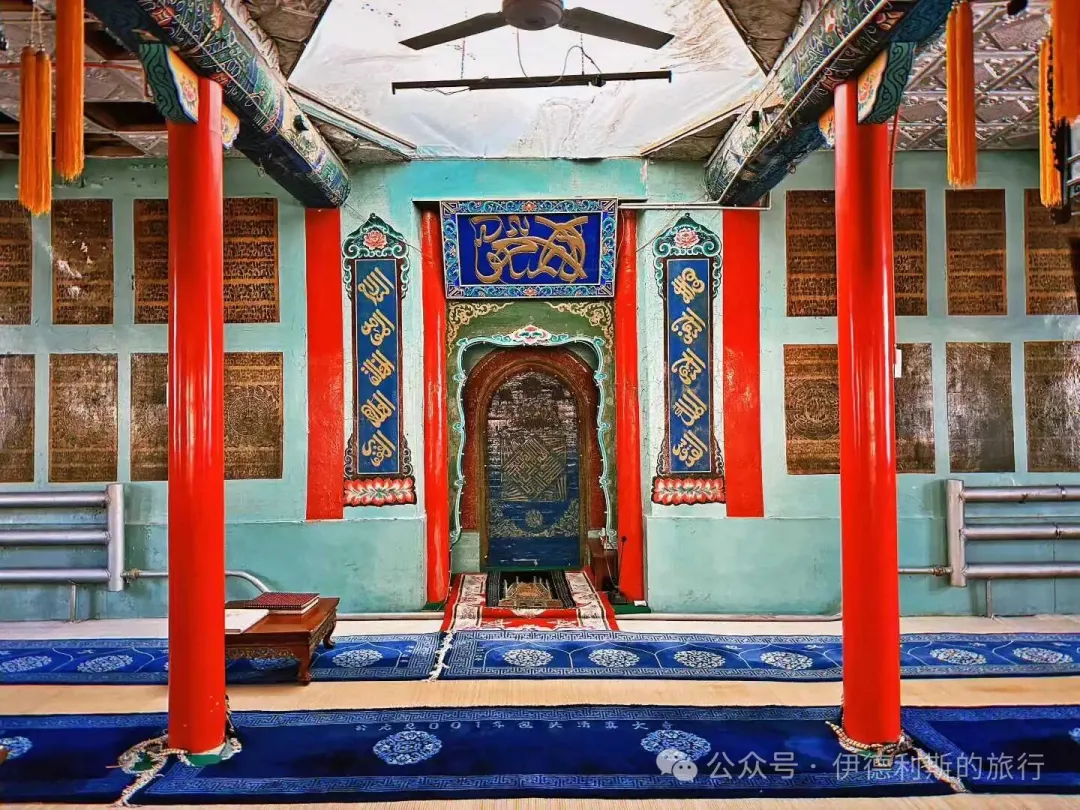
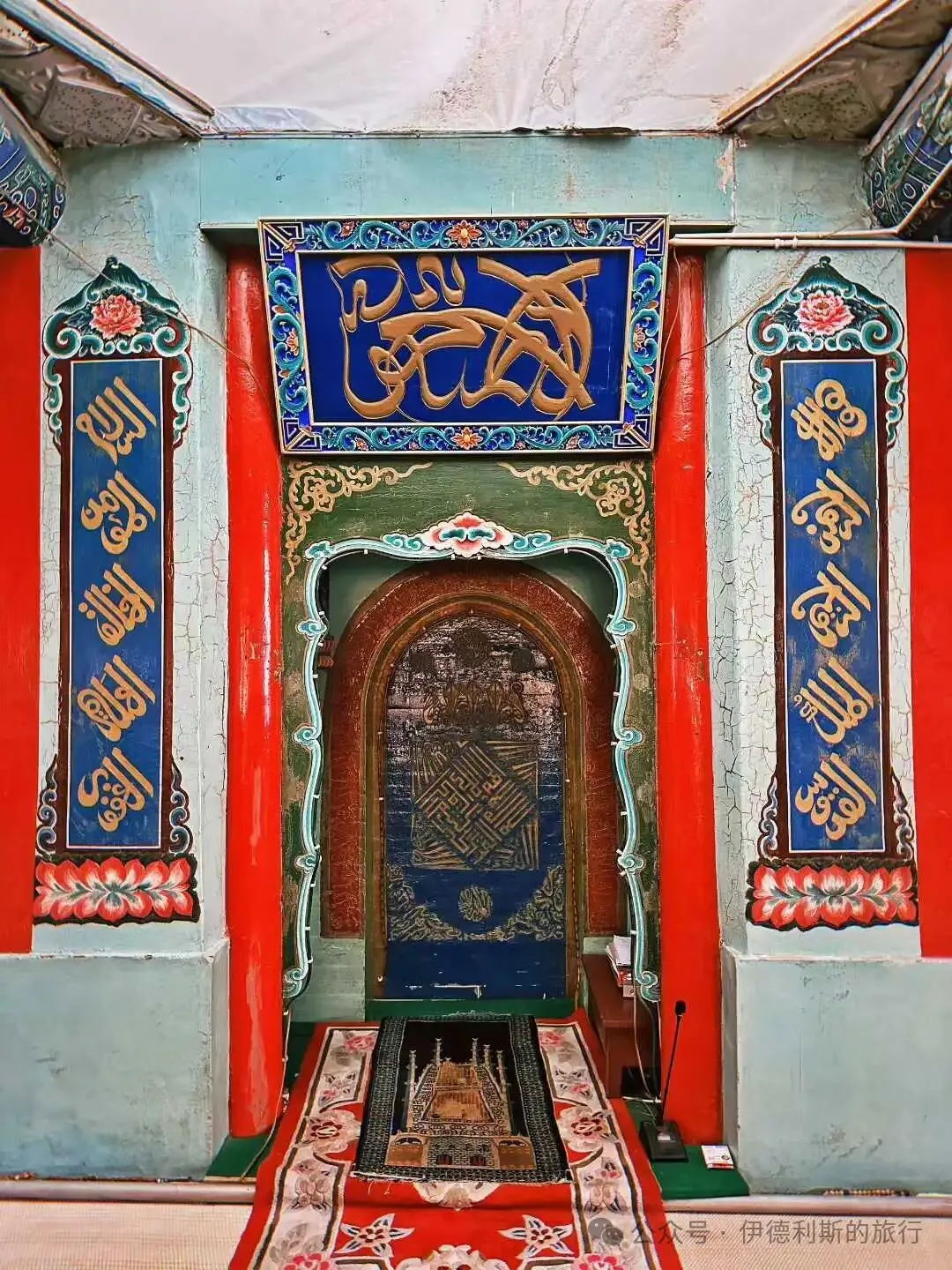
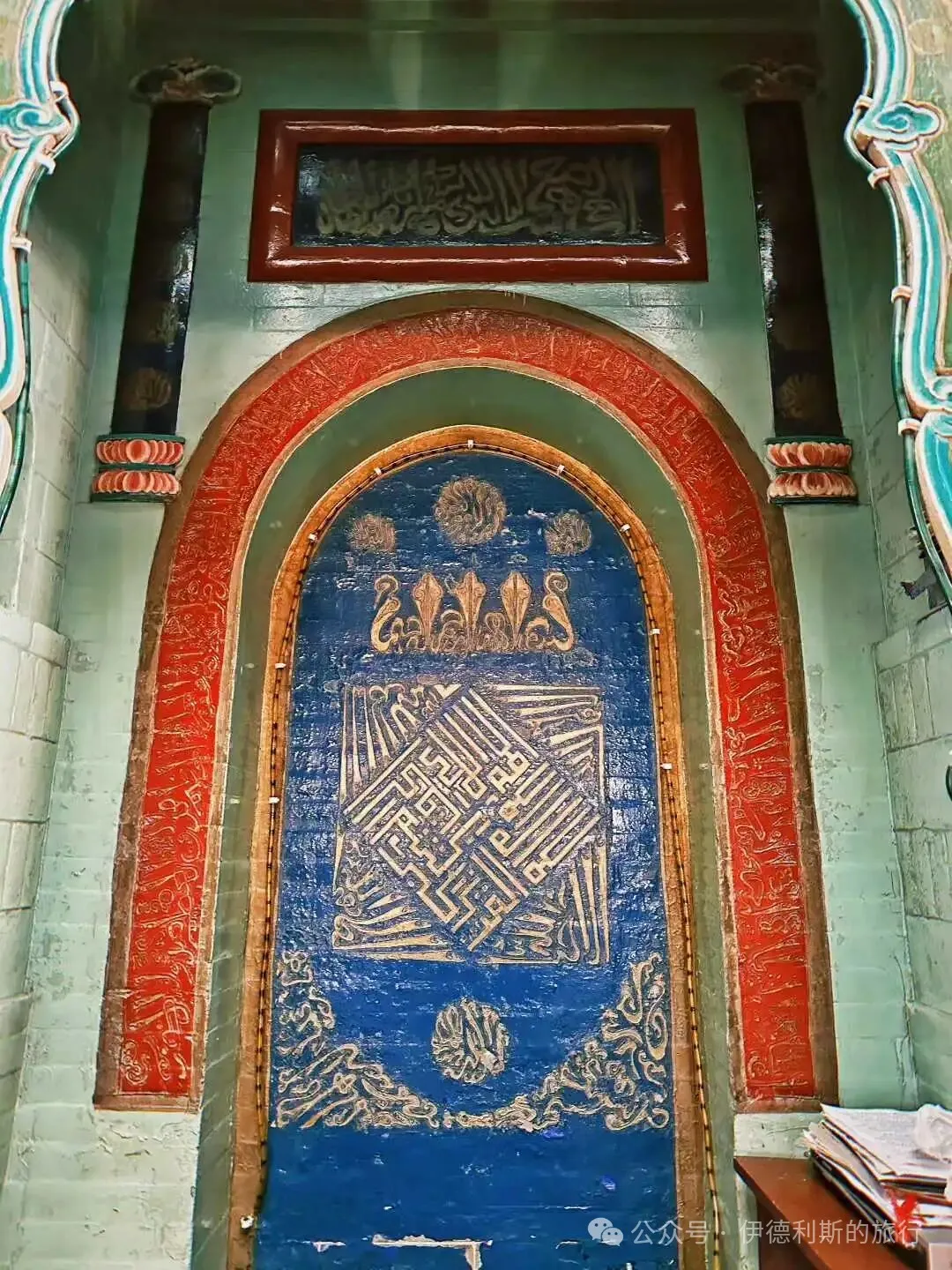
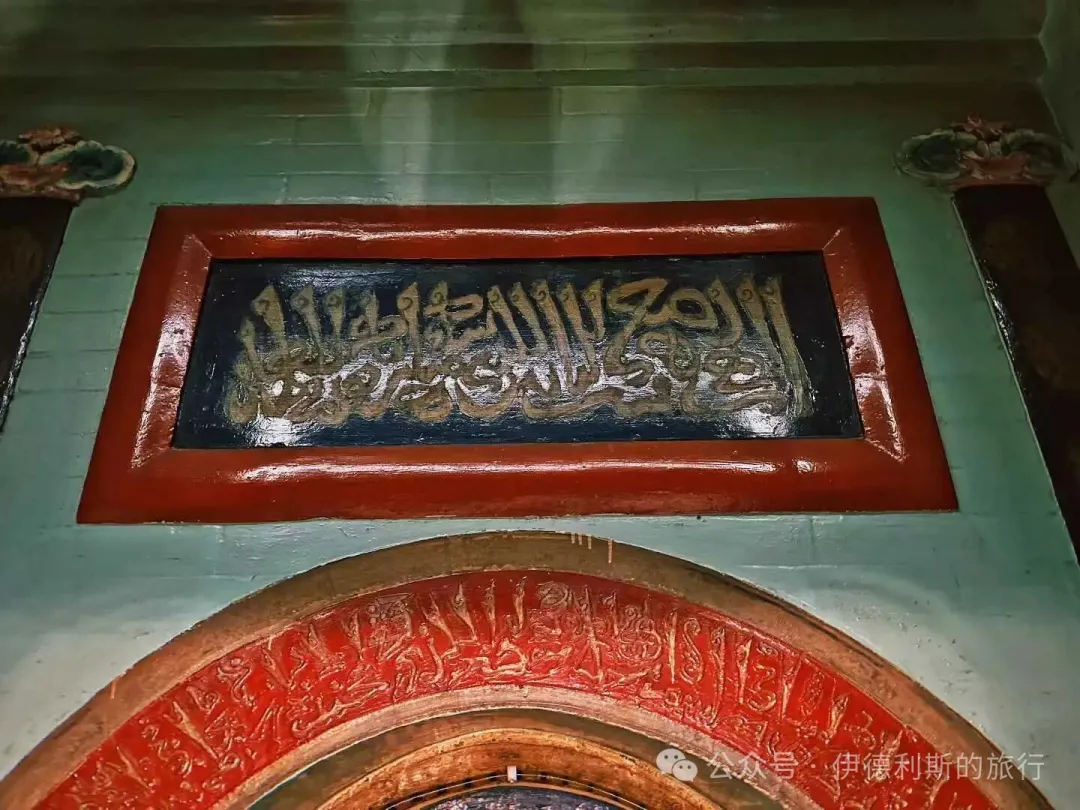
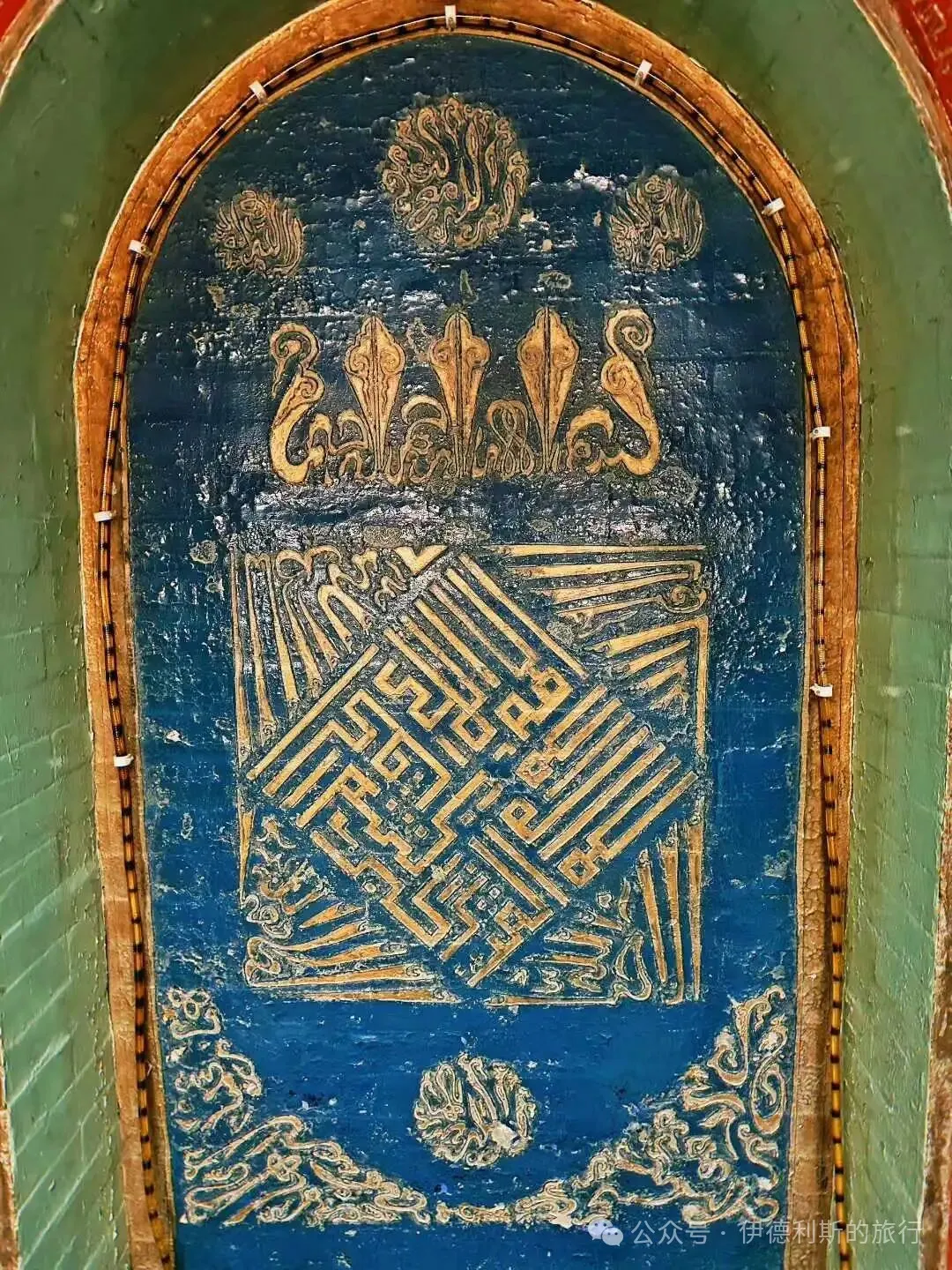
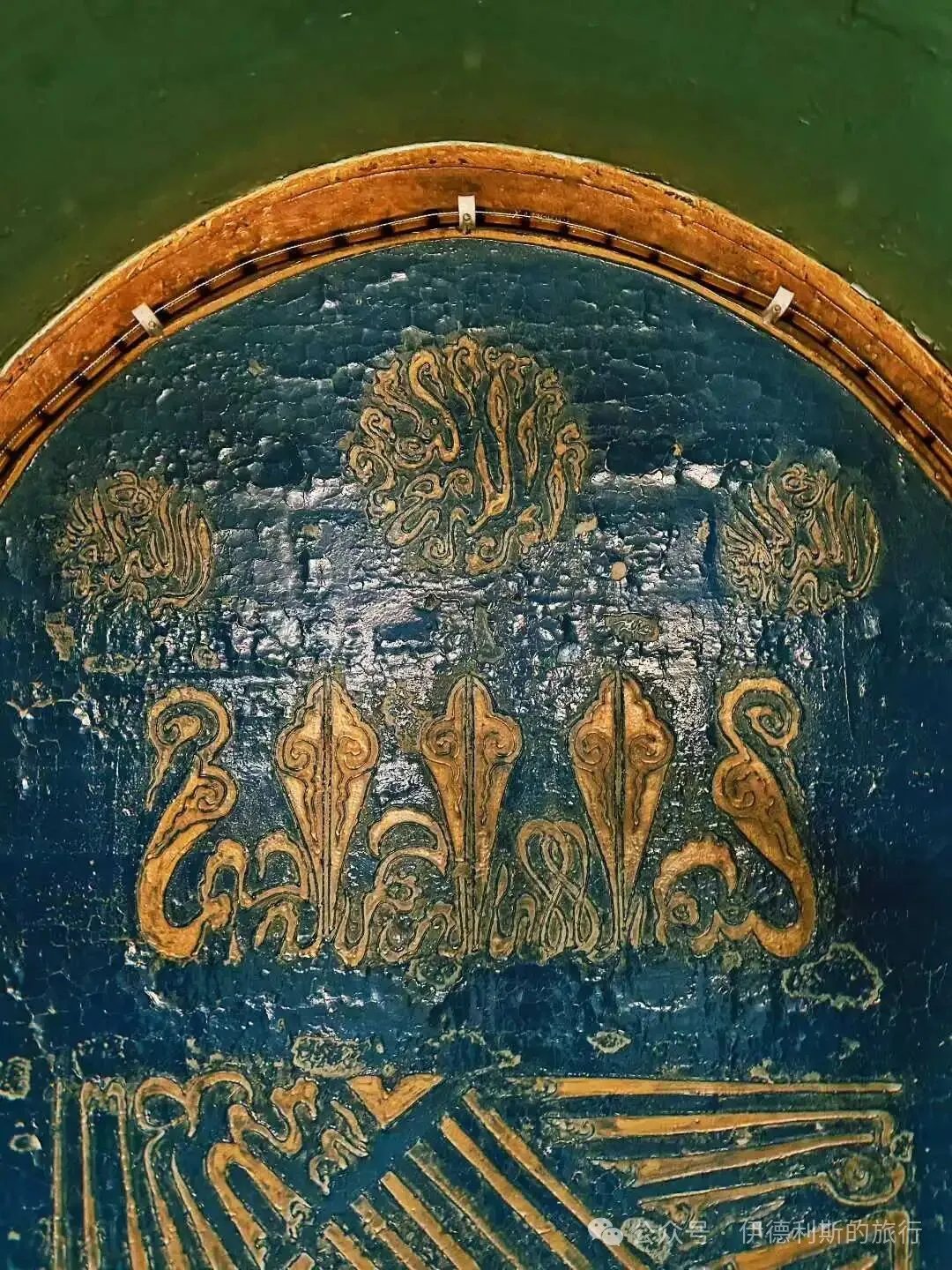
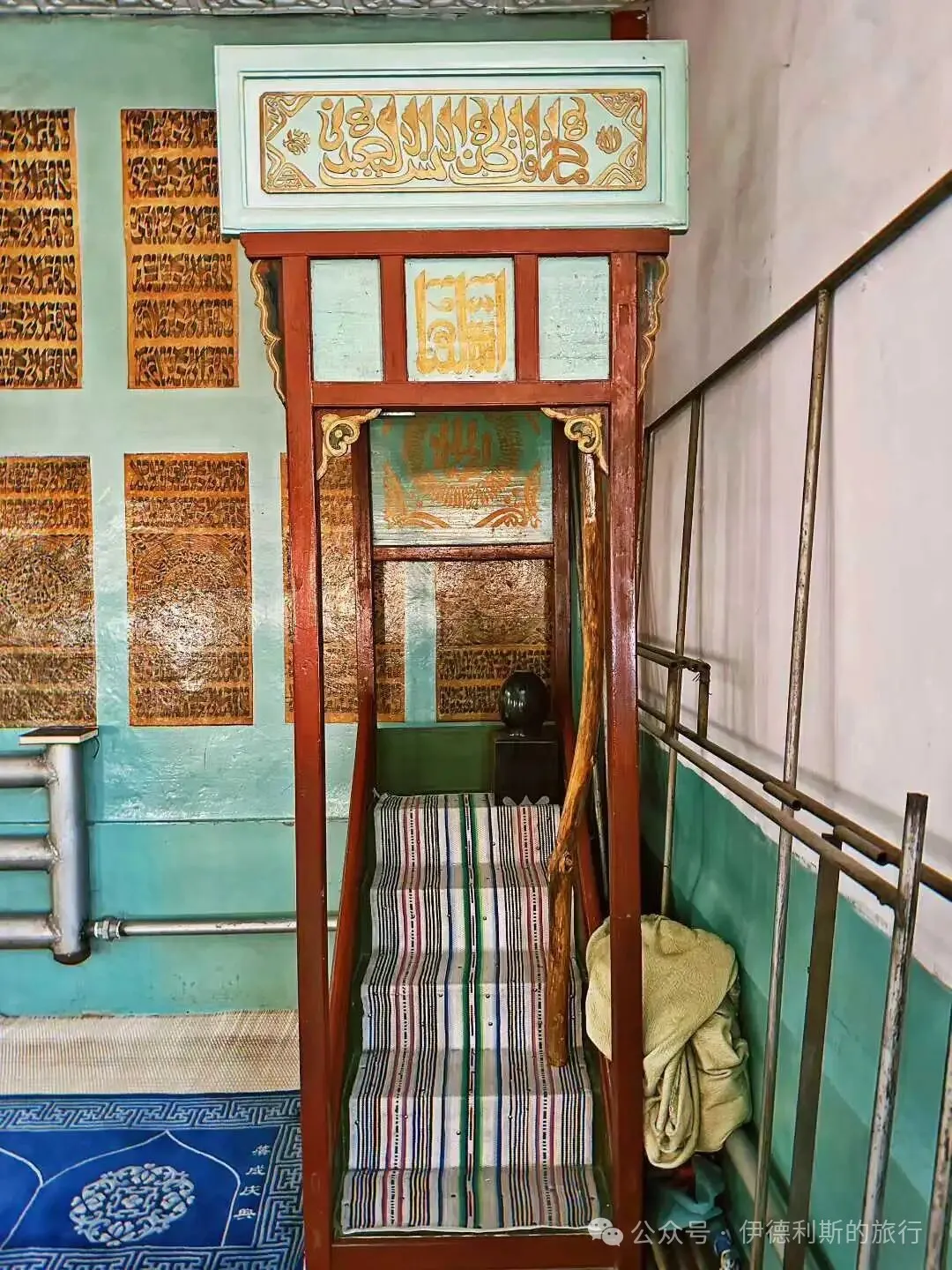
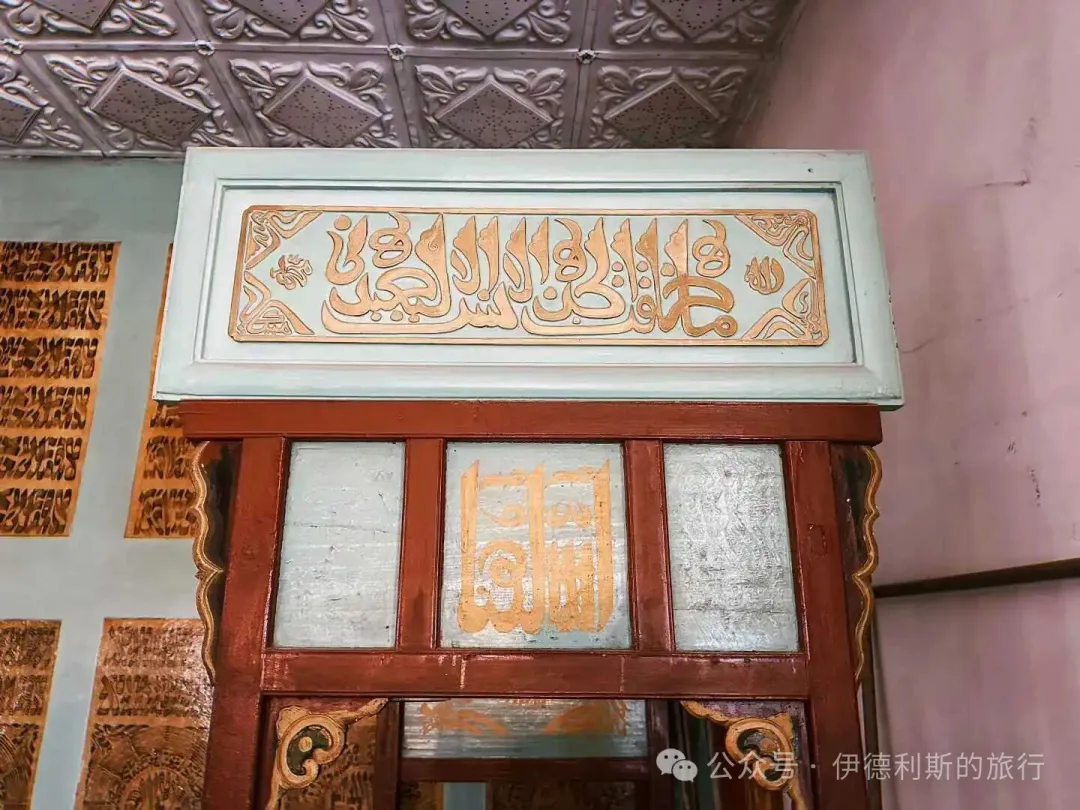
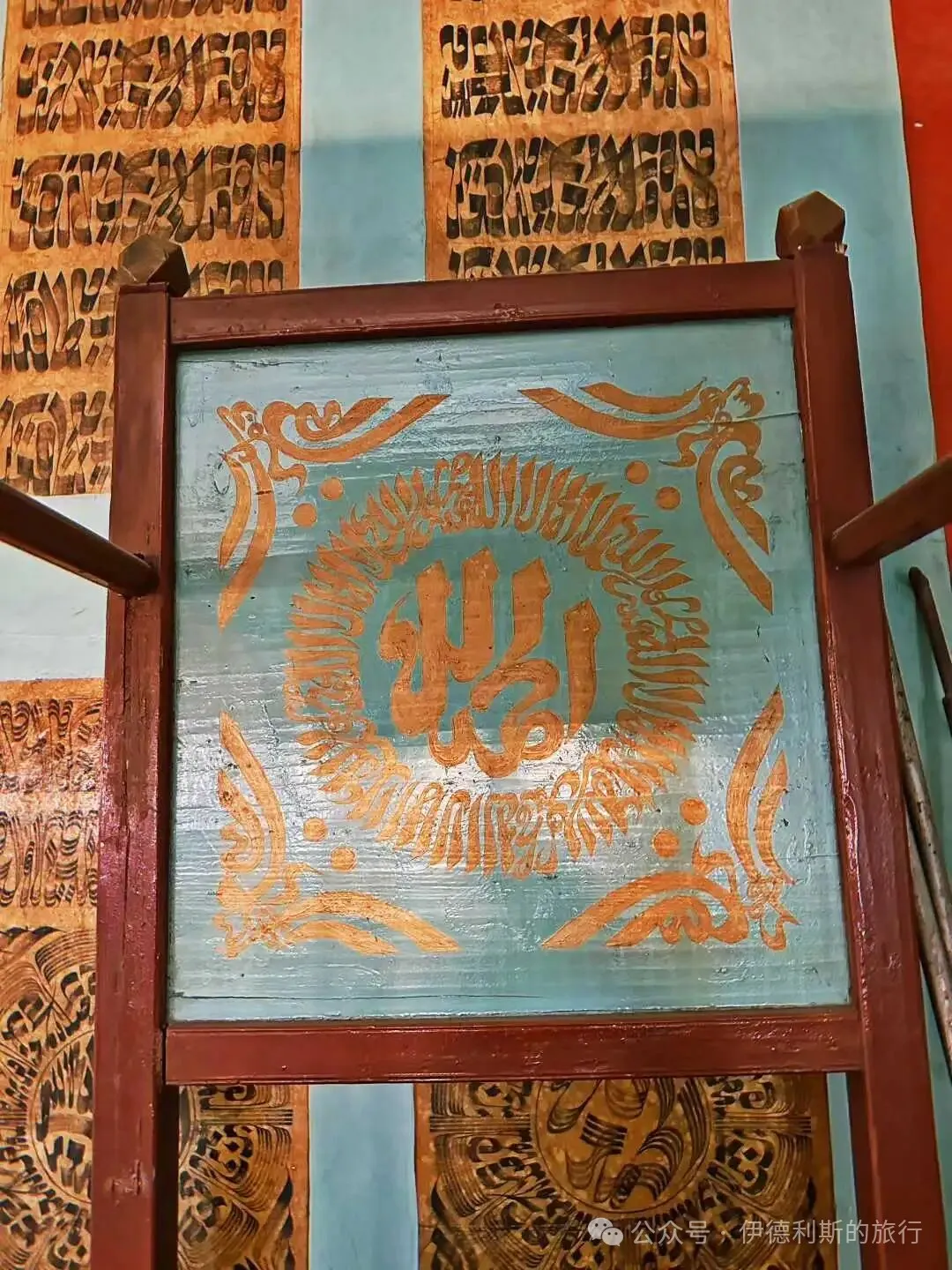
The qibla wall of the Baotou Great Mosque features 32 stunning pieces of traditional Chinese-style Arabic calligraphy in large-character (bangshu) script.
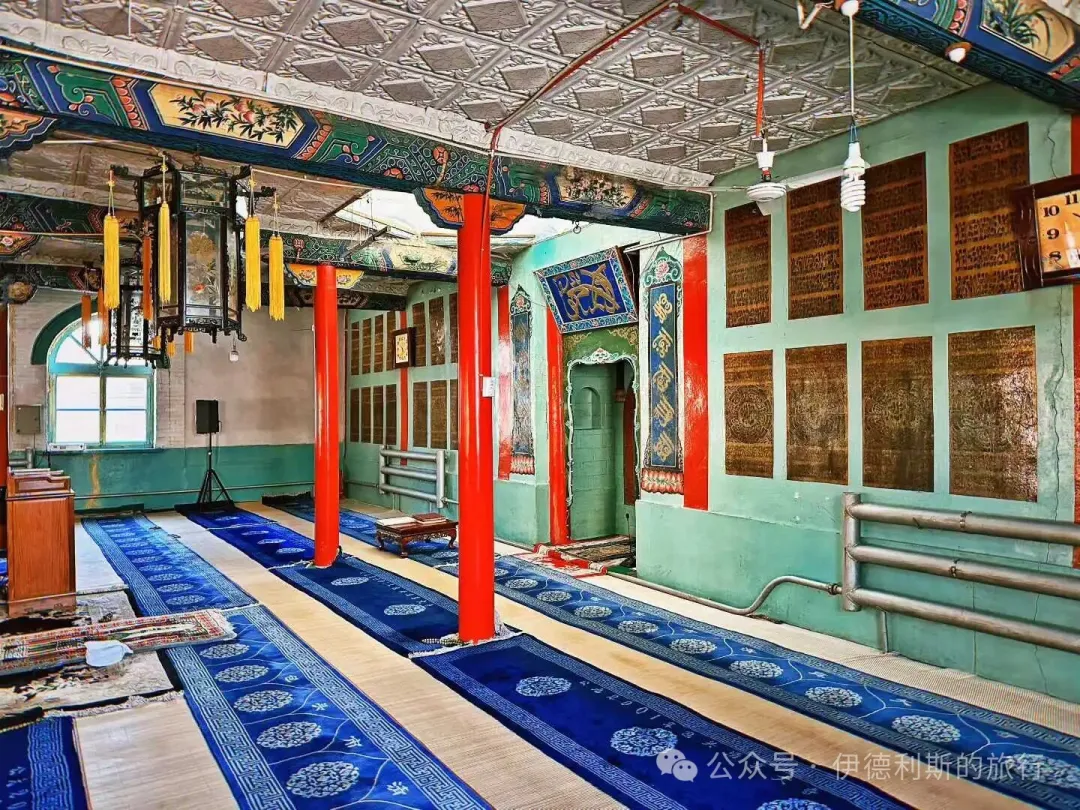
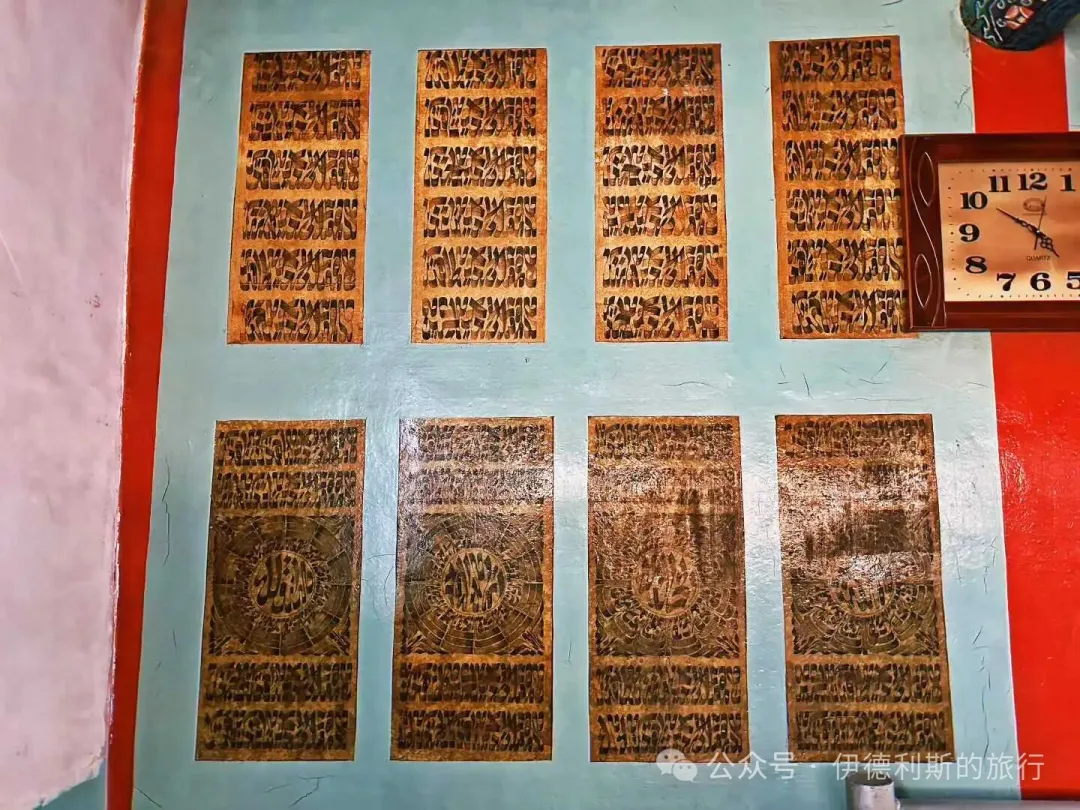
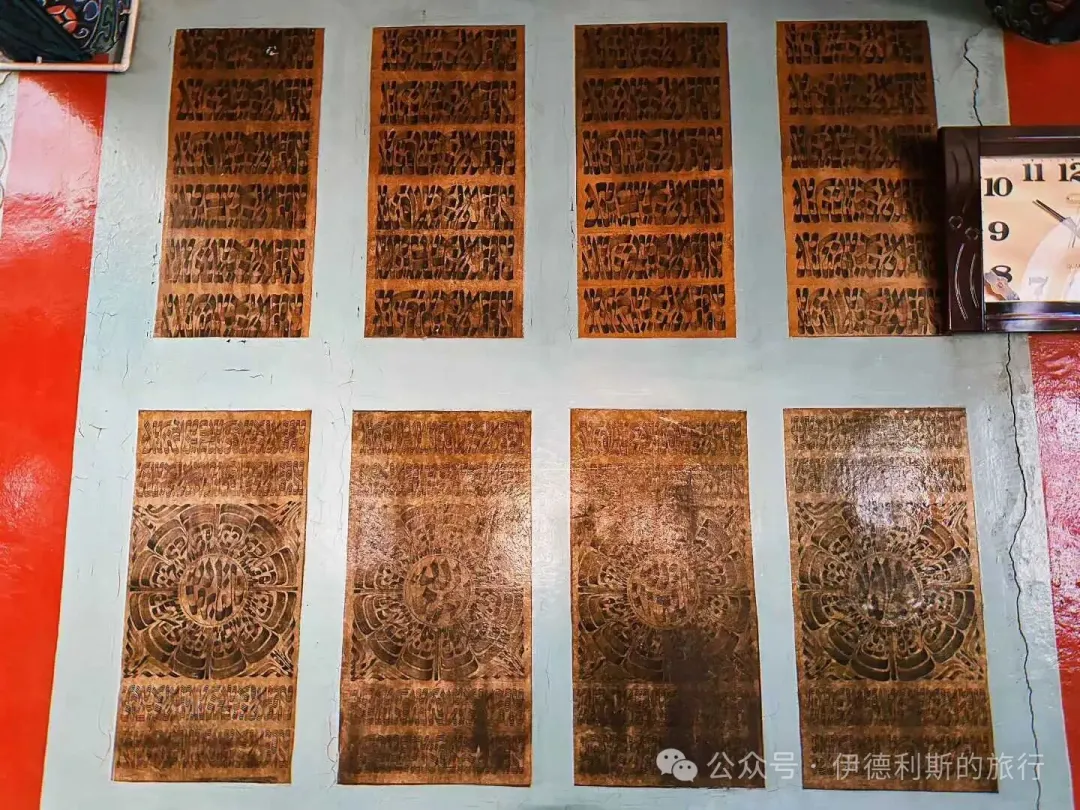
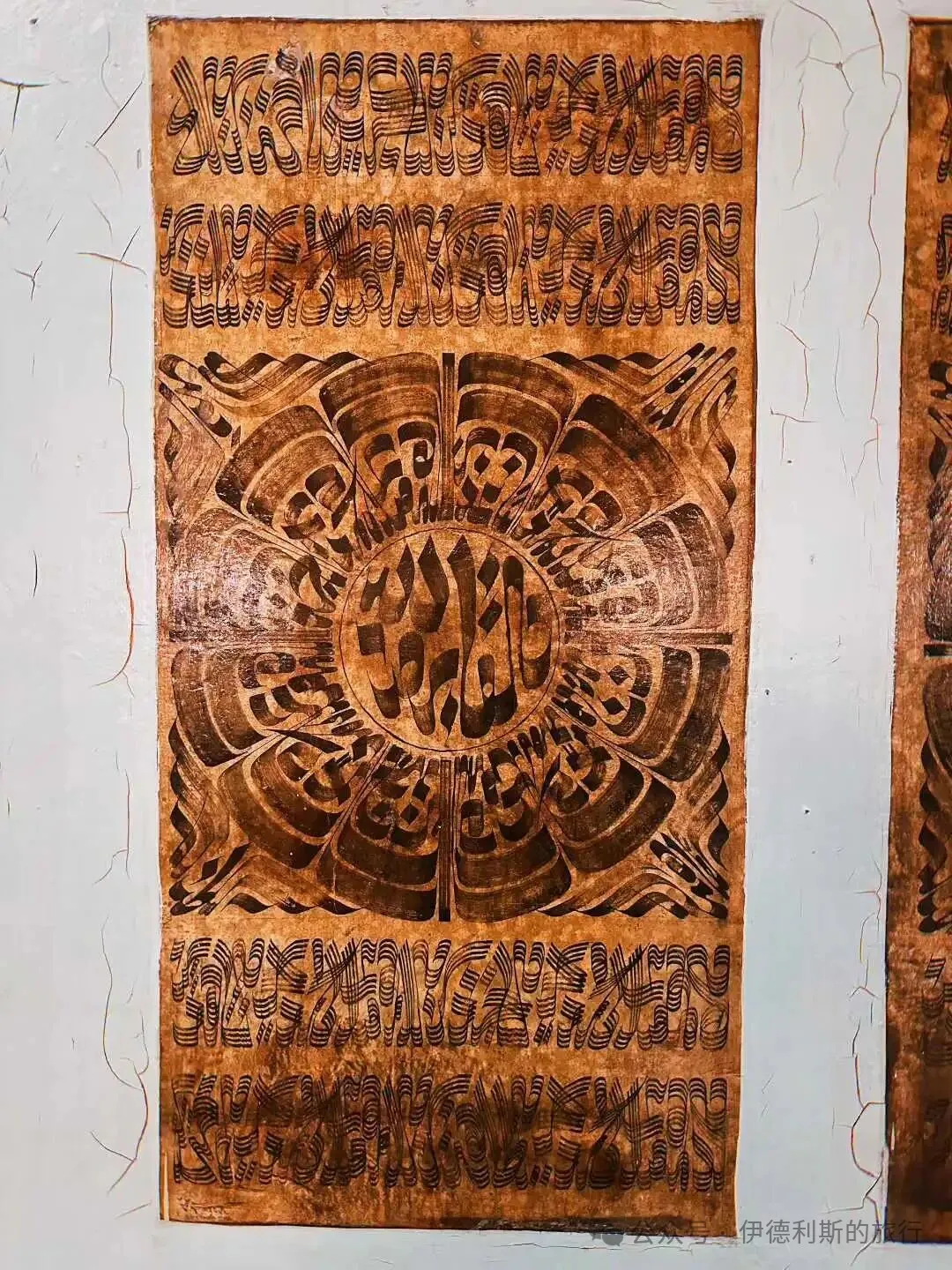
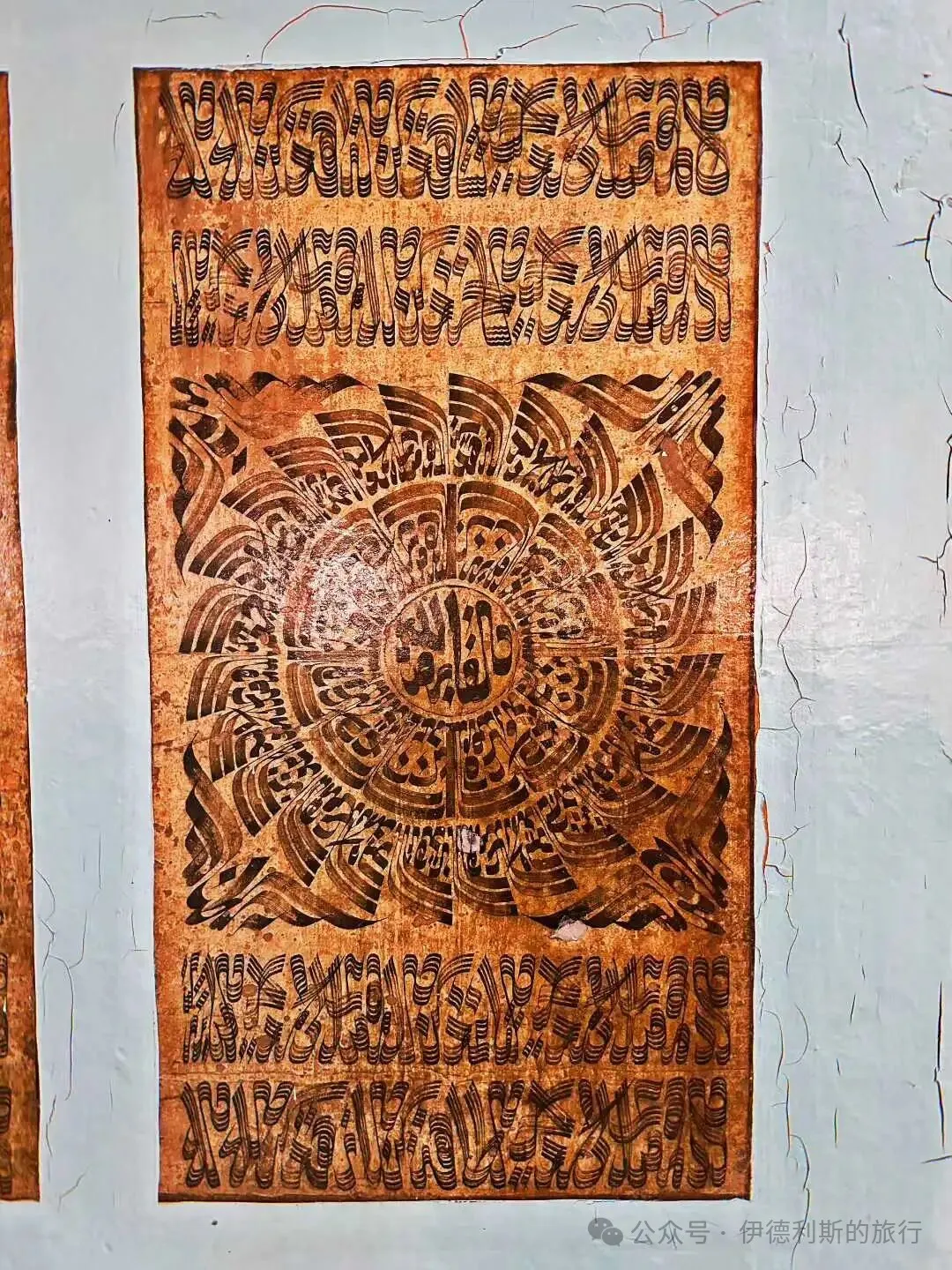
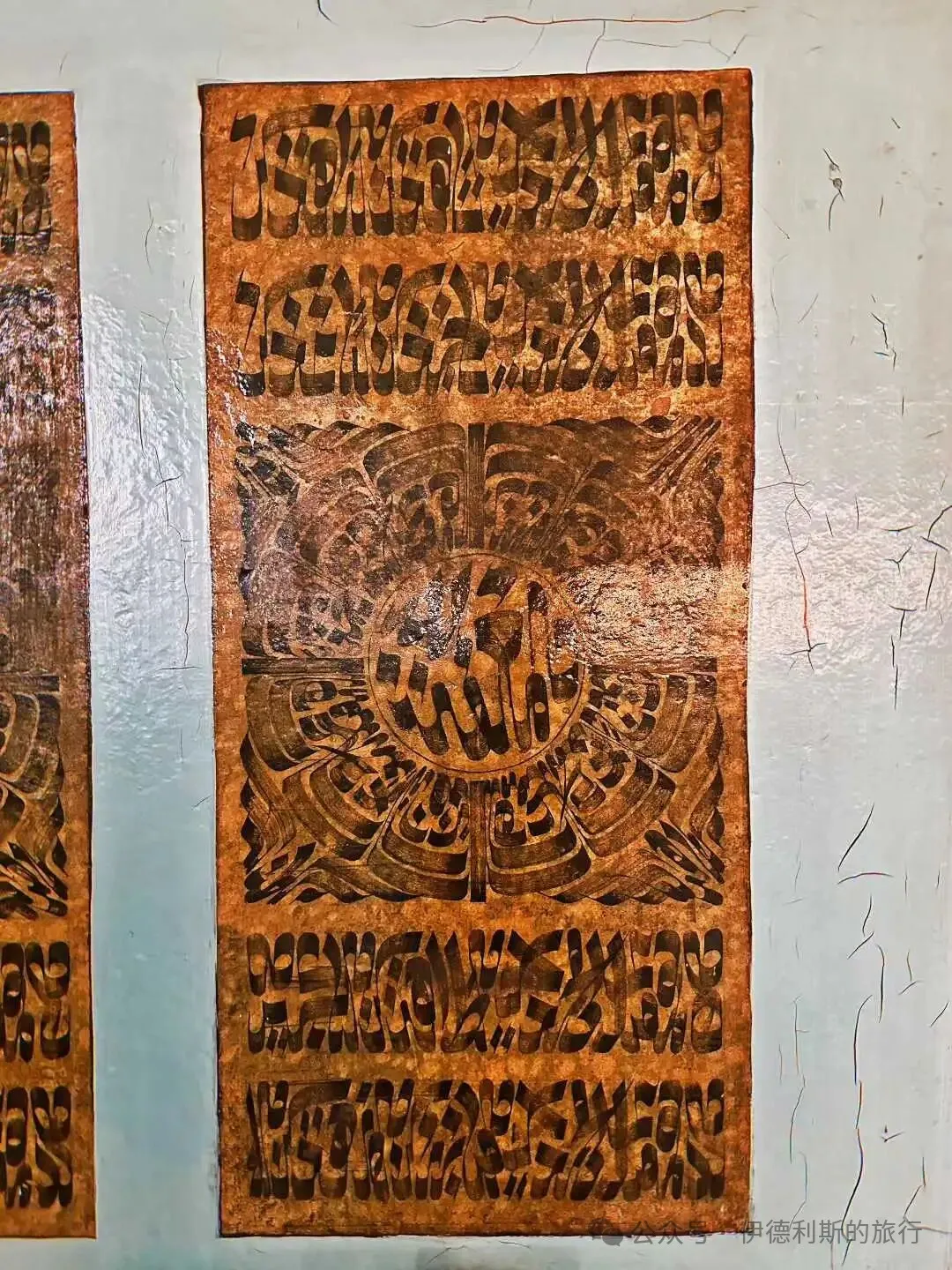
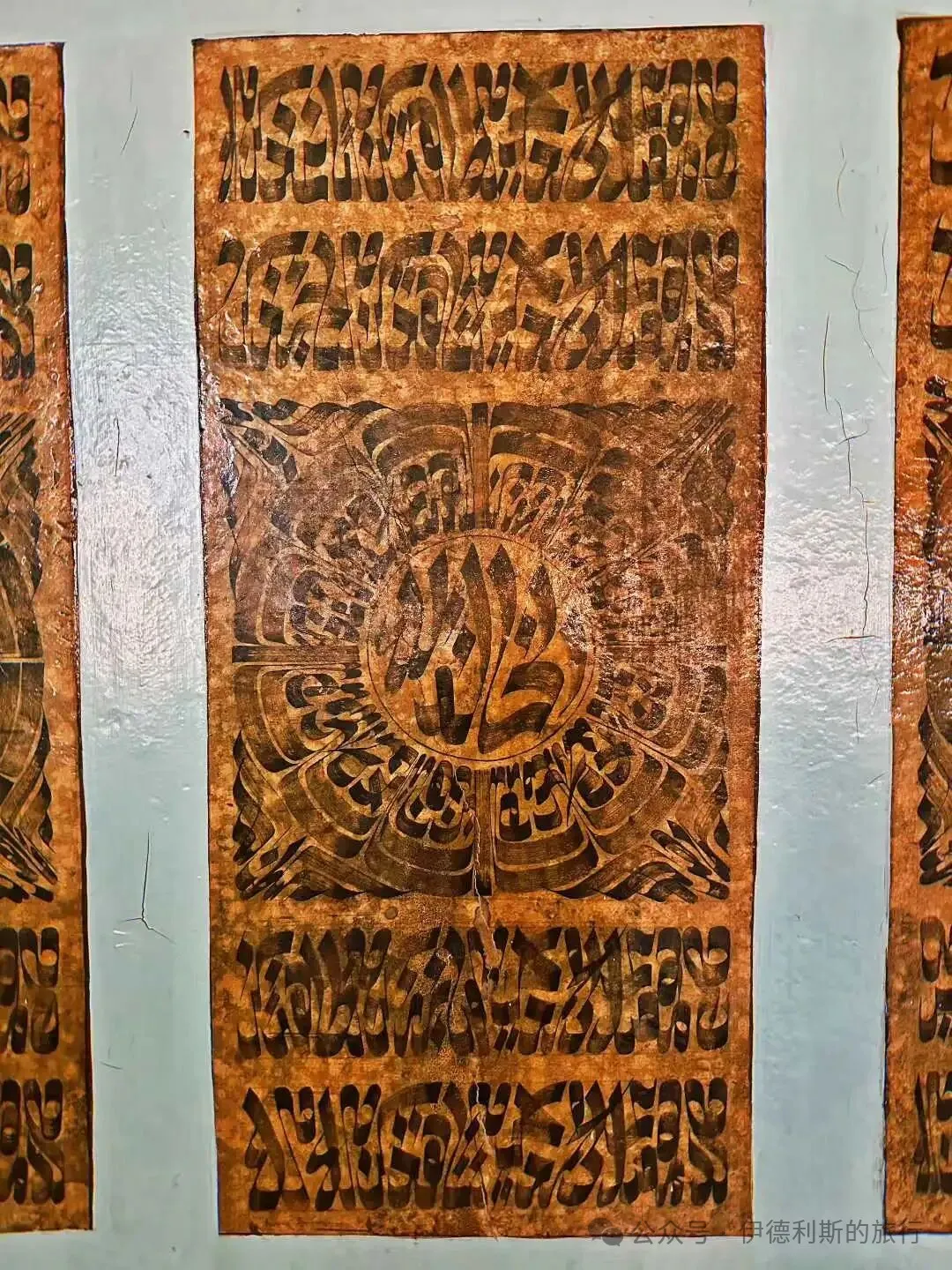
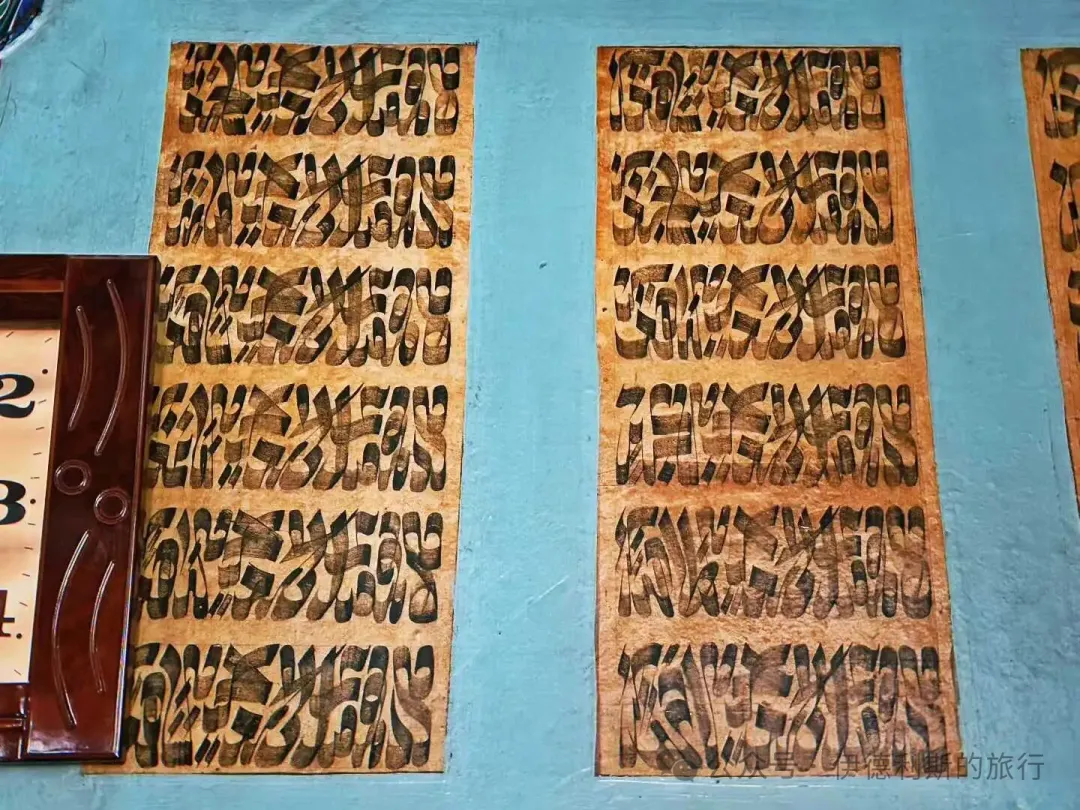
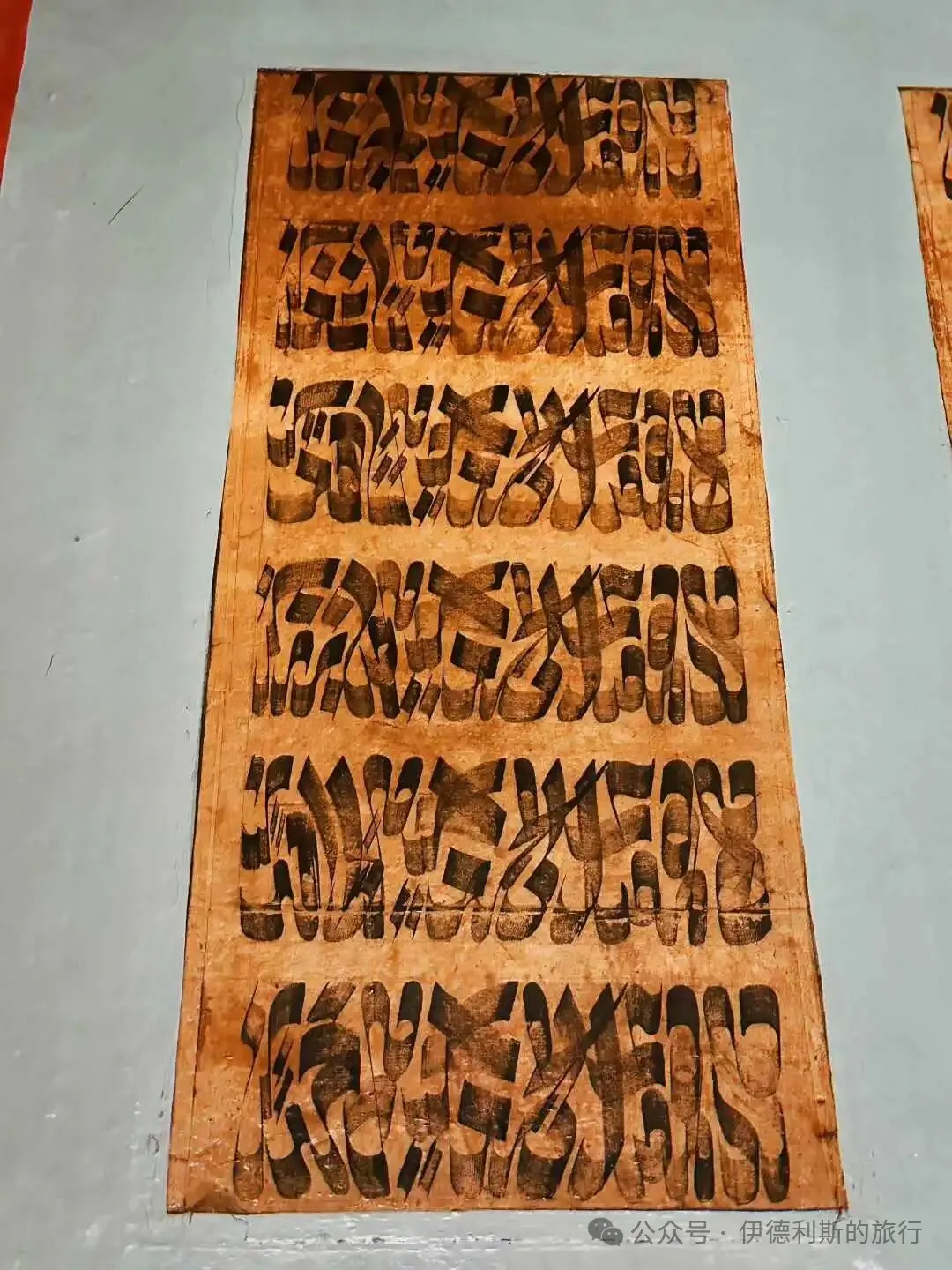
The architectural details of the Baotou Great Mosque, including the brick and wood carvings, are incredibly exquisite.
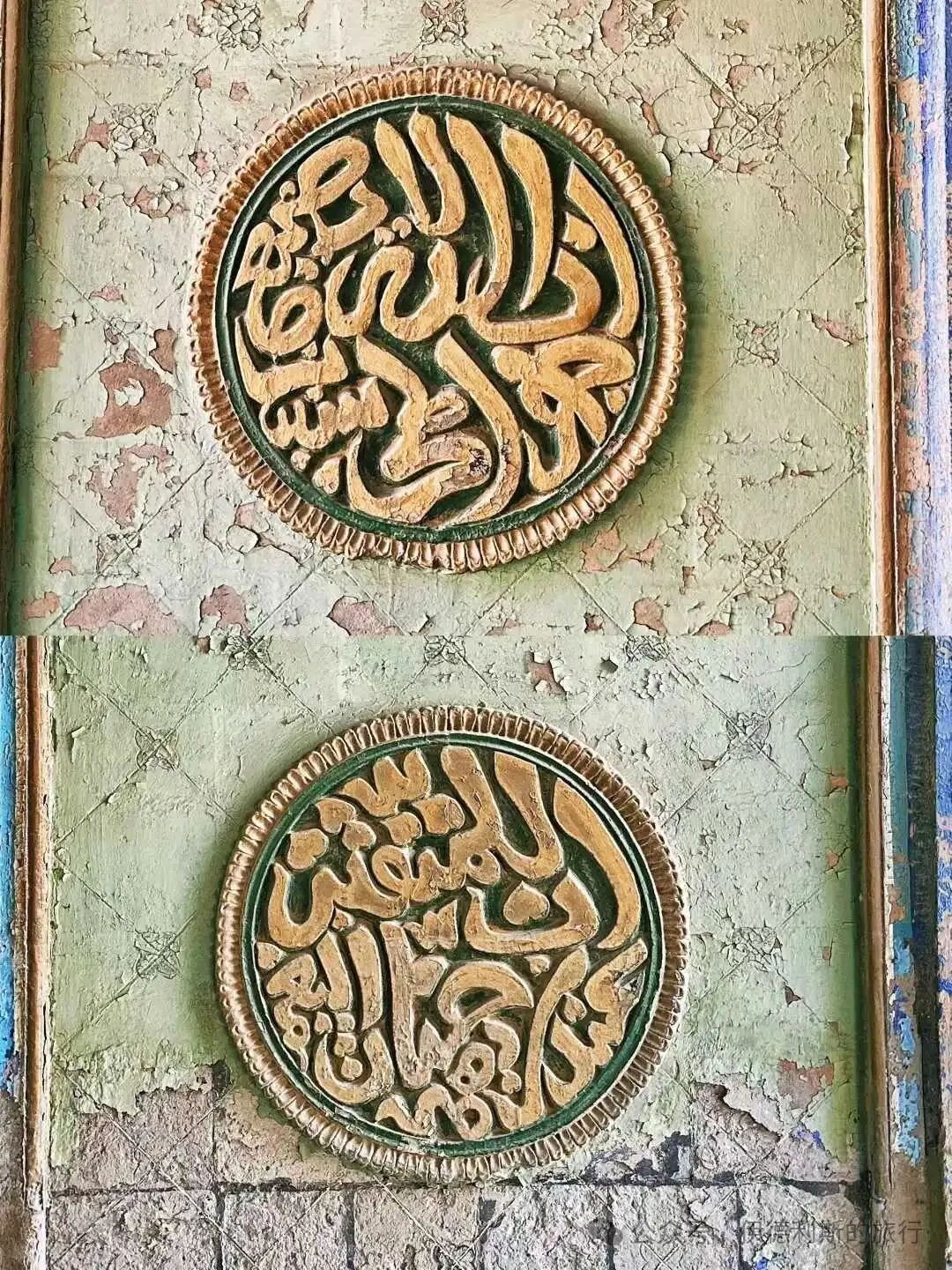
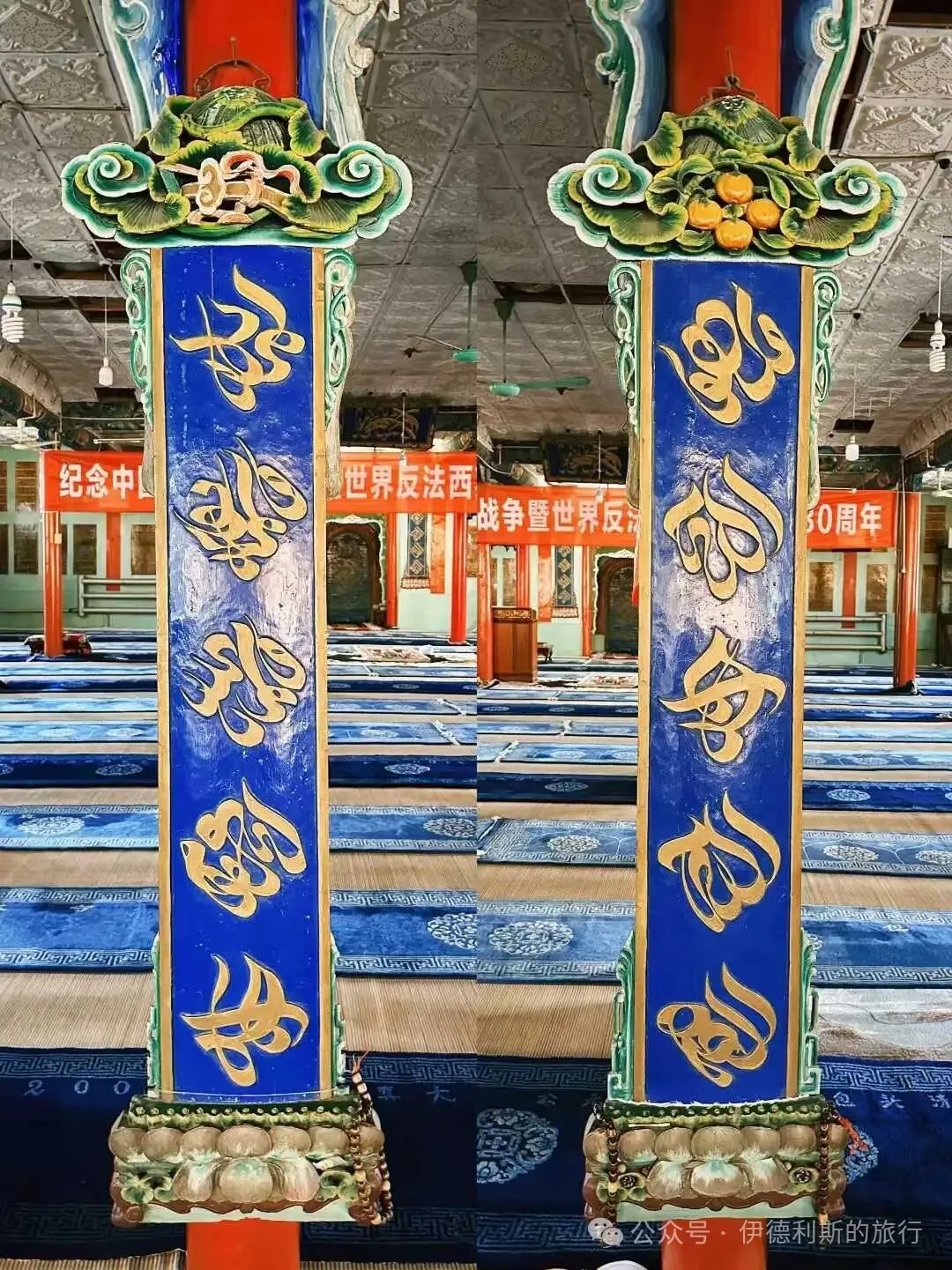
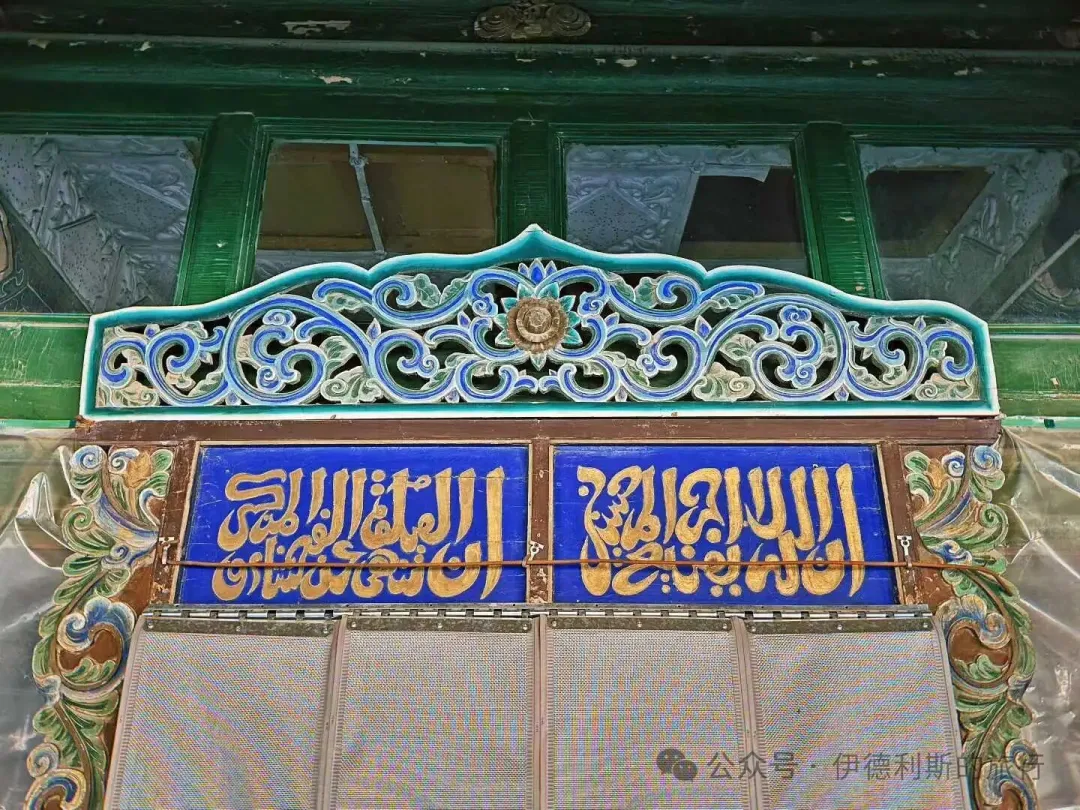
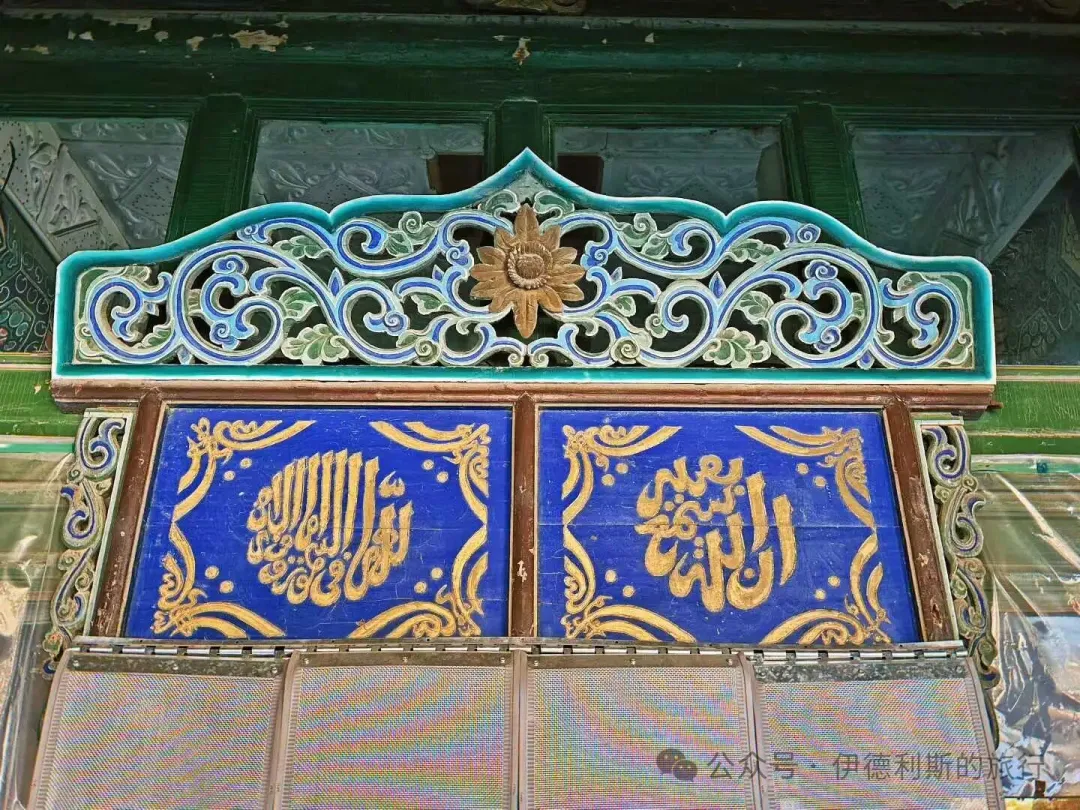
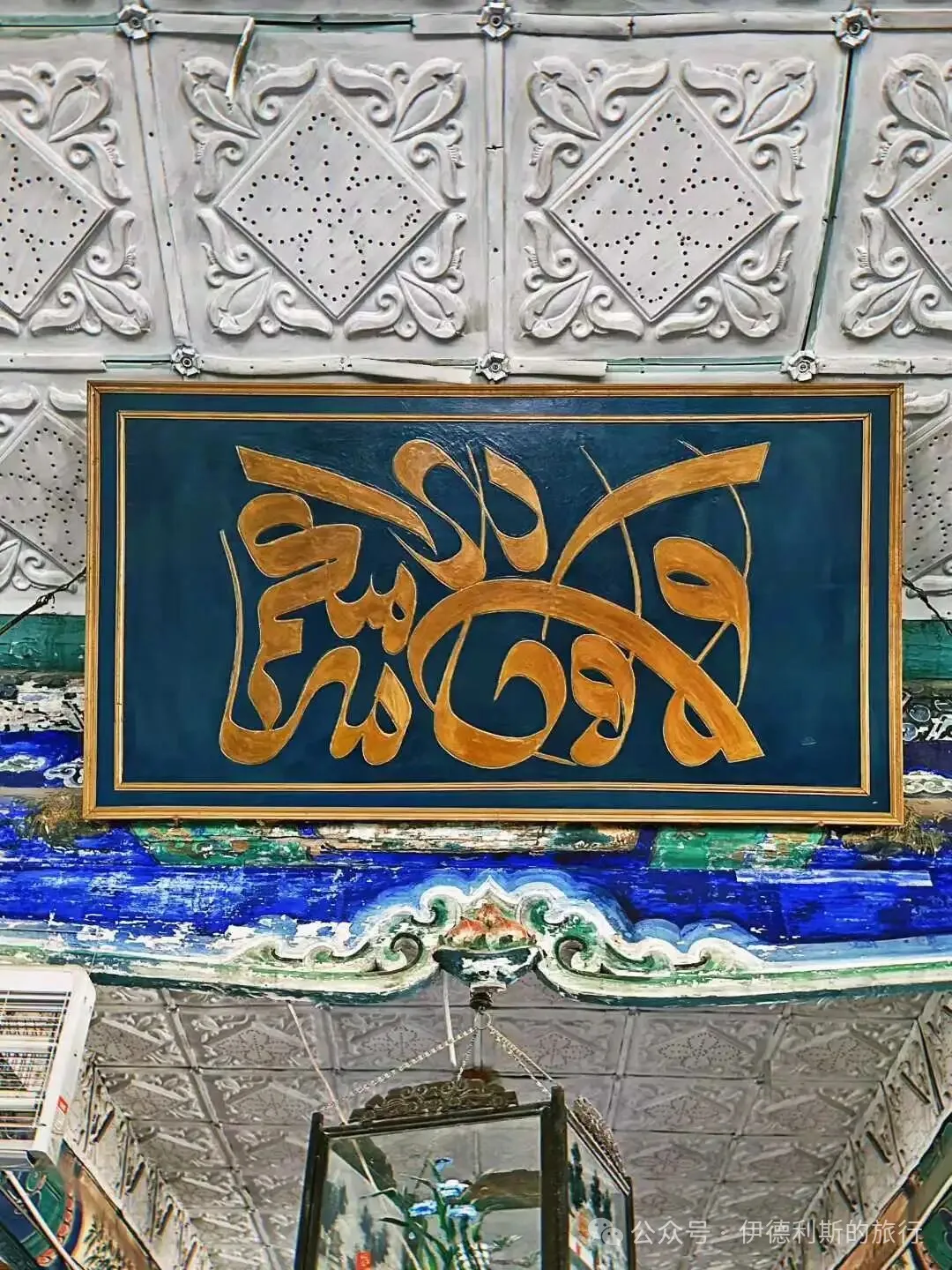
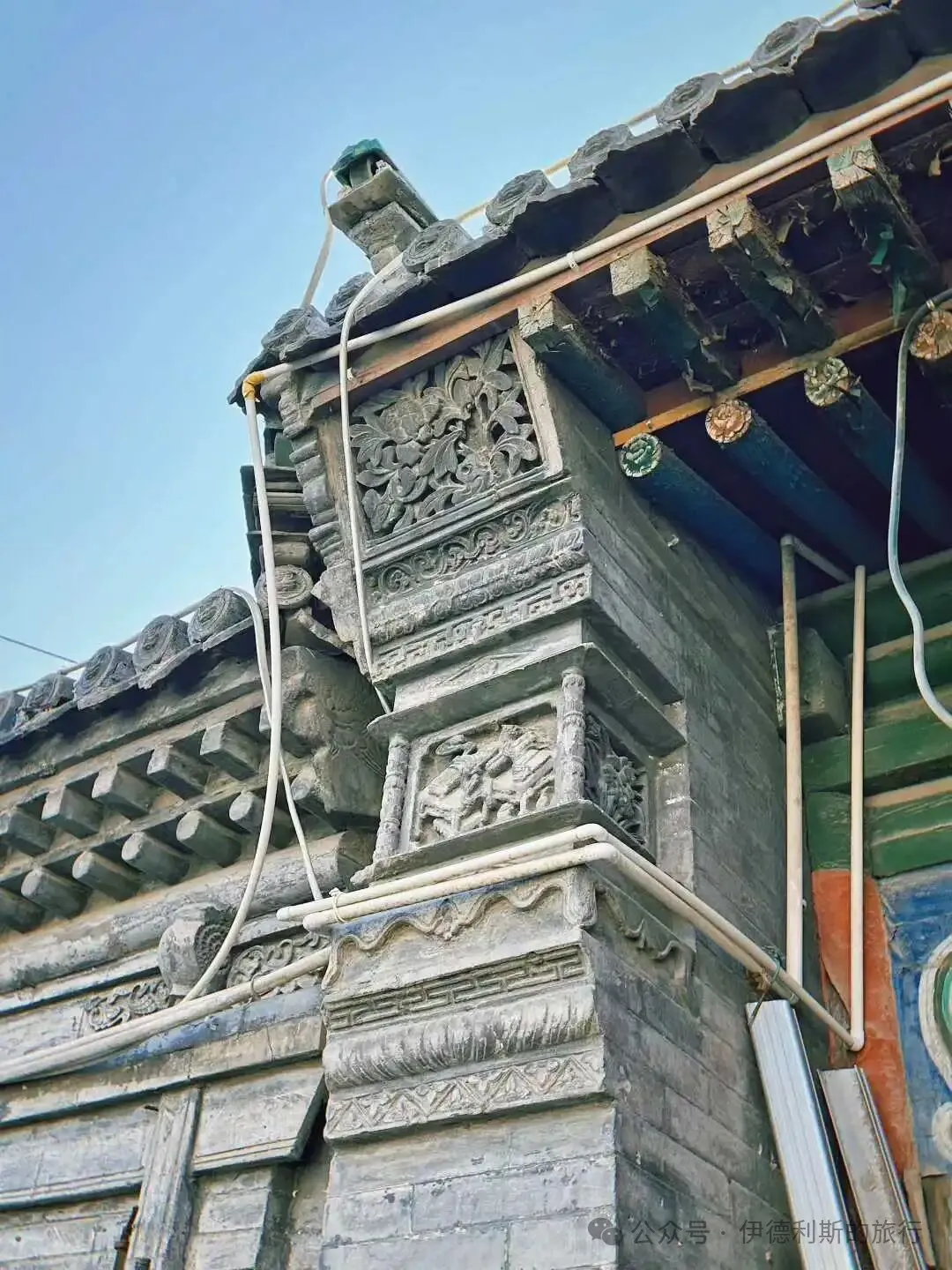
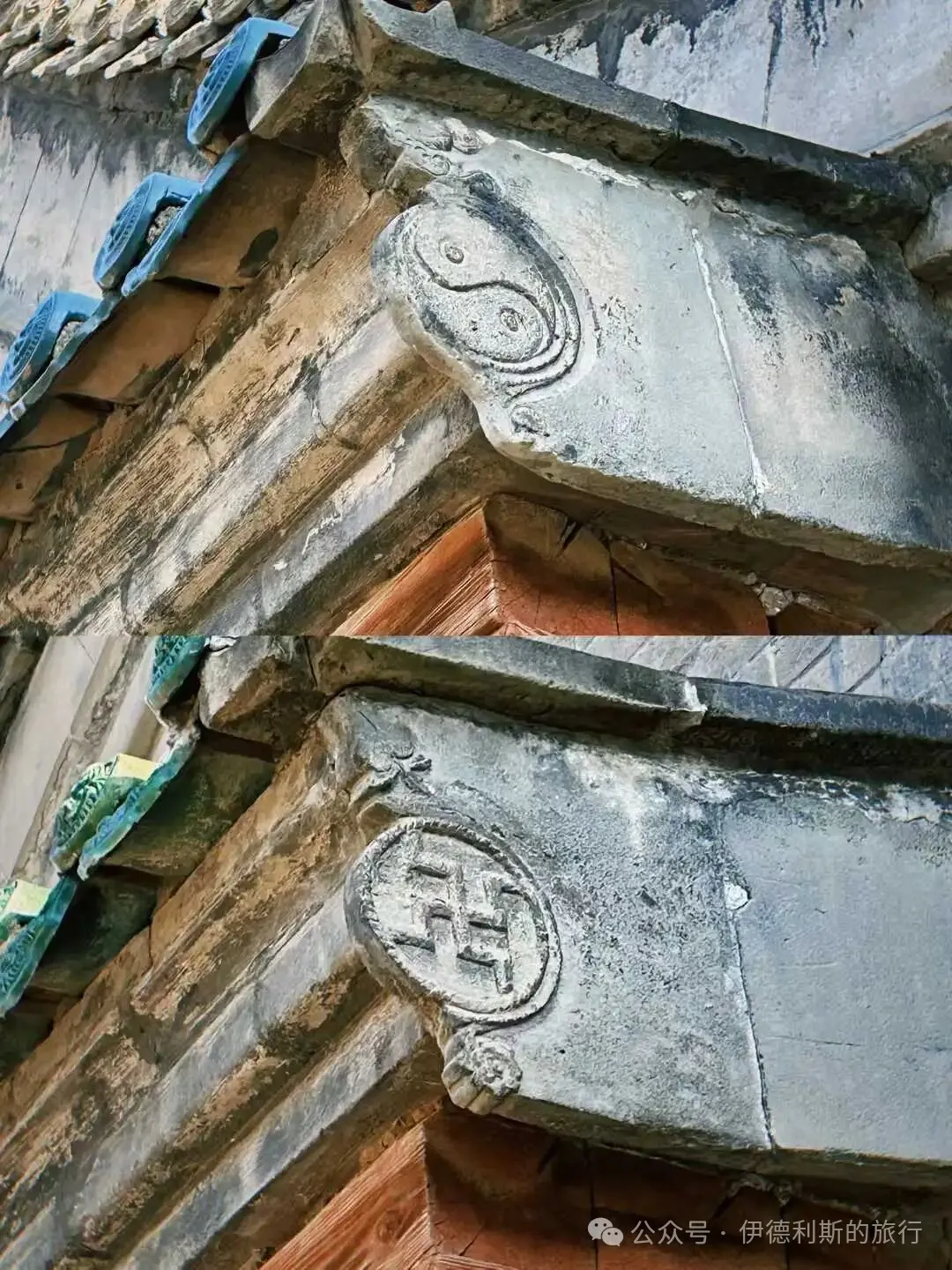
The swastika (wanzi) and taiji brick carvings in the main hall of the Baotou Great Mosque show the influence of different cultures.
During the late Qing Dynasty, under the trend of interpreting Islam through Confucianism, scholars like Liu Zhi introduced concepts like "taiji" and "yin-yang" into the faith. The book "Nature and Principle of Islam" (Tianfang Xingli) contains the record: "Movement creates yang, stillness creates yin; this is the manifestation of taiji, which is the manifestation of the True One." This is the end of the record.
The "endless swastika" (wanzi budao tou) is a traditional Chinese auspicious pattern. The swastika represents good fortune, and "endless" means it continues forever; it frequently appears in brick, stone, and wood carvings.
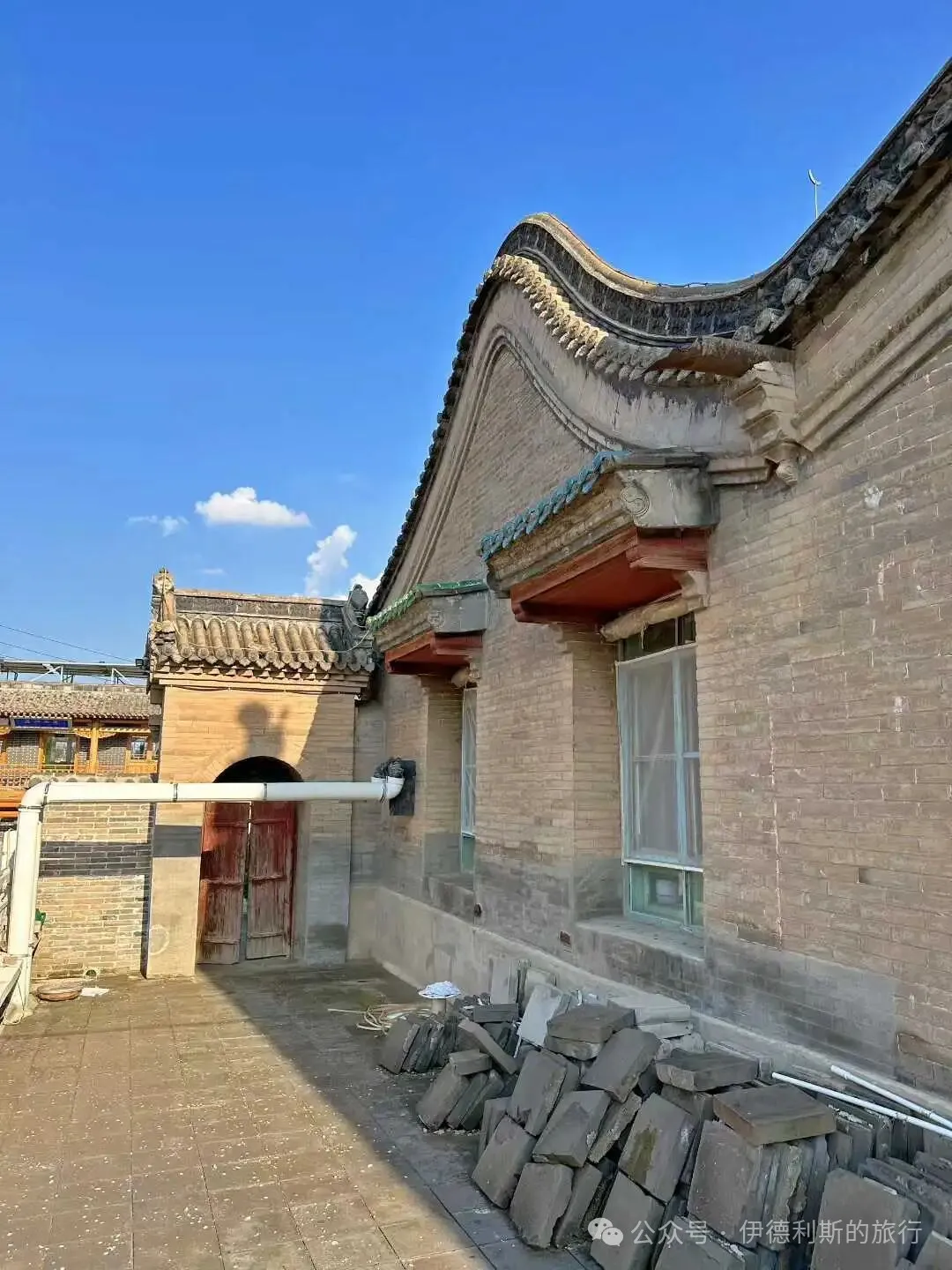
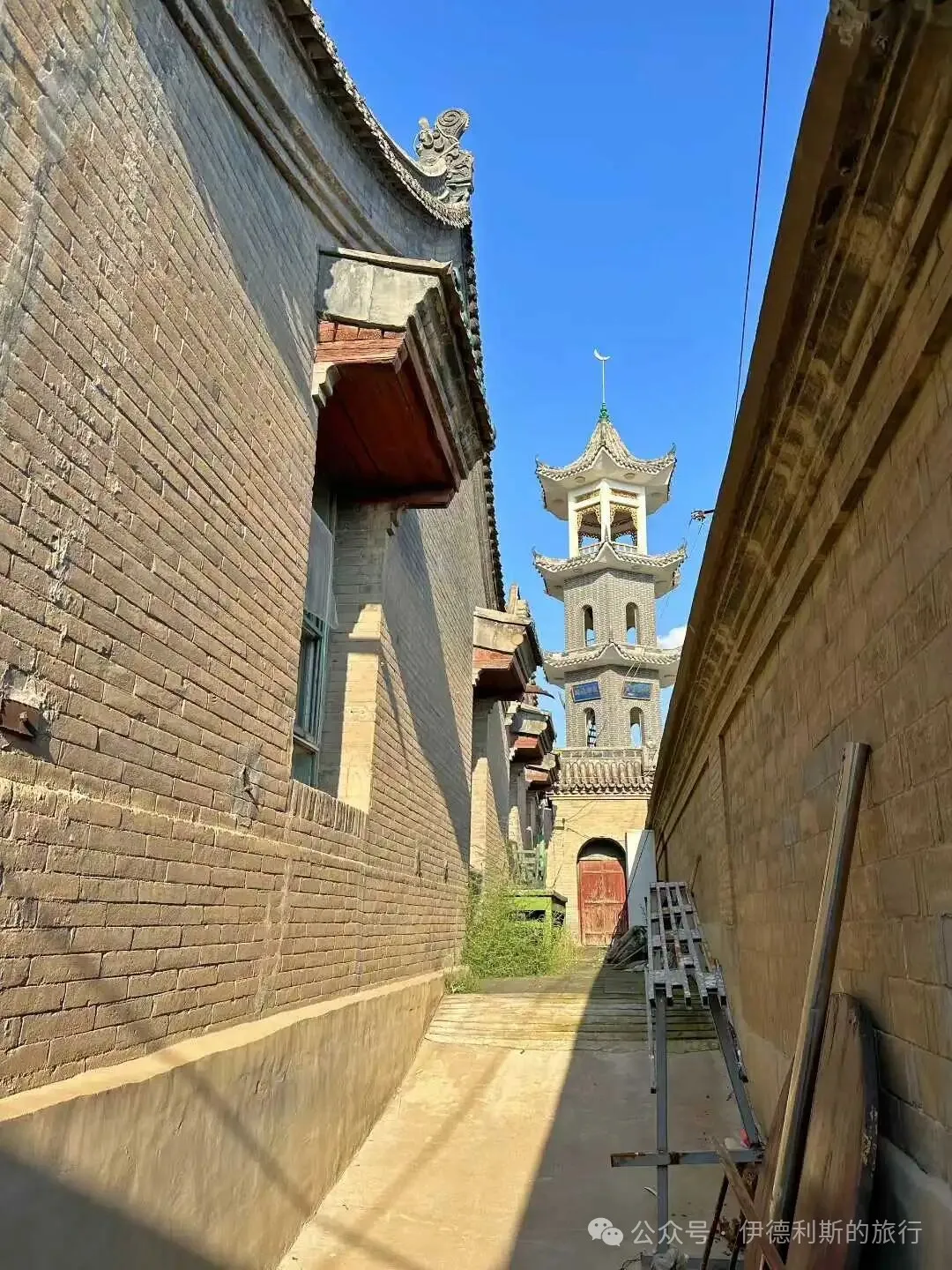
Baotou Small Mosque.
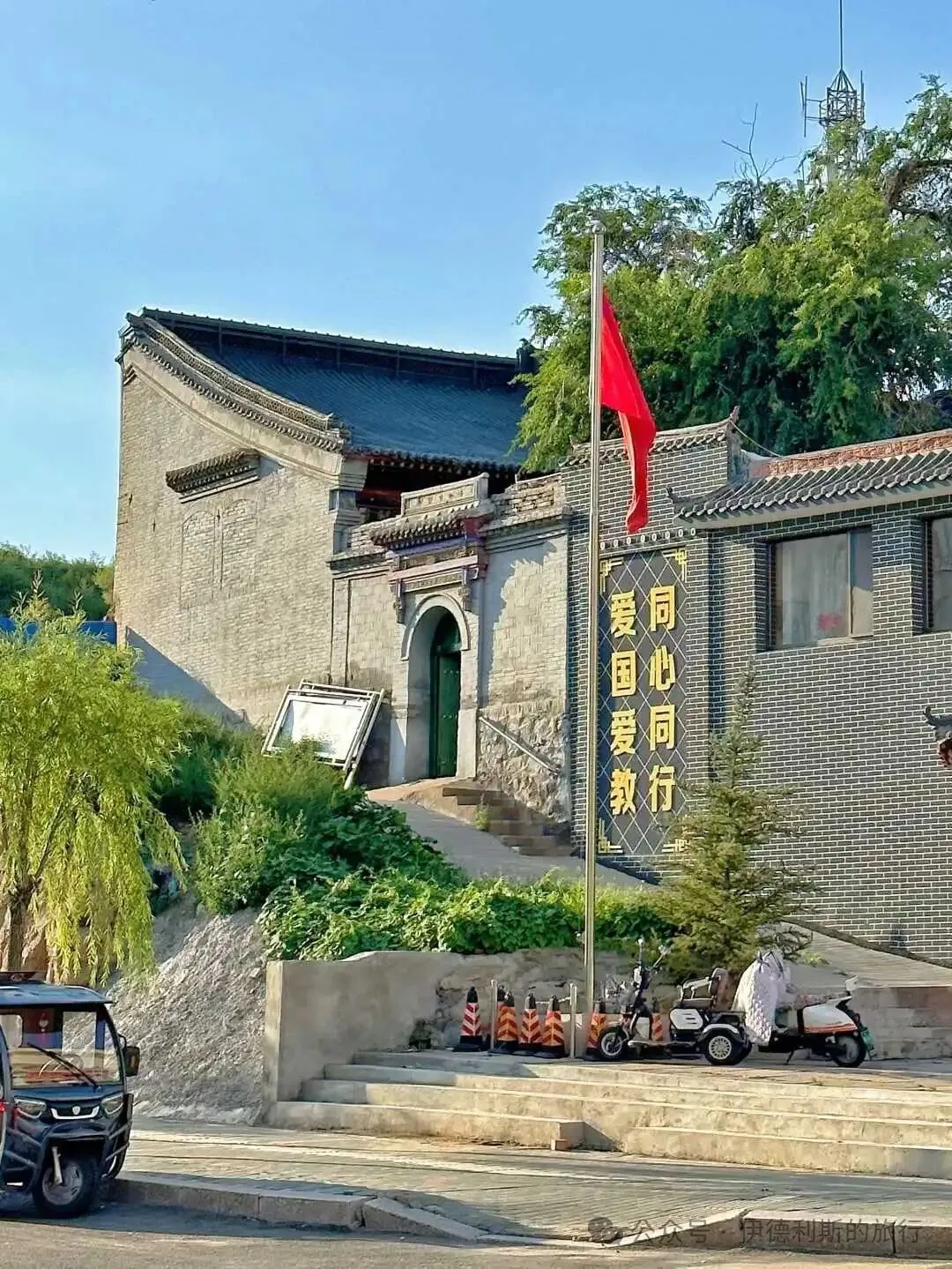
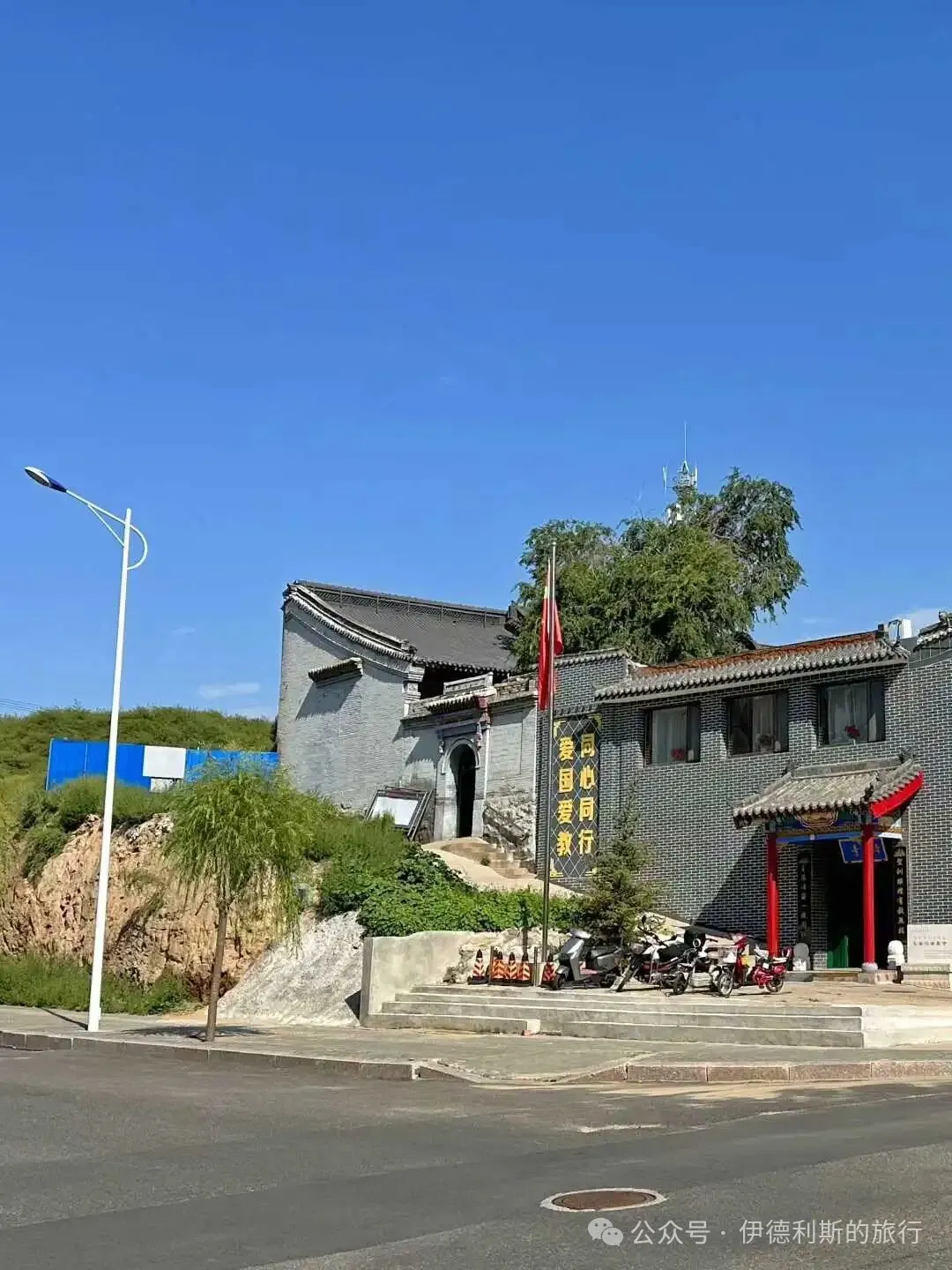
Also known as the Baotou North Mosque or Wayougou Mosque, the Baotou Small Mosque was first built in 1908 (the 34th year of the Guangxu reign). The main hall was rebuilt in 1918, and it is currently a cultural heritage site protected by Baotou City. The Baotou Small Mosque is built on a very steep slope against a cliff, making the main hall much higher than the ablution room (shuifang), which is a unique feature.
In the late Qing Dynasty, the population of Hui Muslims settling in Baotou grew steadily, expanding from the old town's Beiliang area from east to west. By the end of the Qing Dynasty, the eight streets and alleys near Wayougou had become a Hui Muslim residential area, home to inns, flour shops, oil mills, and dozens of cattle, sheep, and camel slaughterhouses. The slaughterhouses also operated as kitchens, meat shops, and livestock pens.
Because traveling between Wayougou and the Baotou Great Mosque required crossing gullies and ridges, it was very inconvenient. In the late Guangxu years, Hui Muslim families including the Chens, Mas, Dings, Yangs, and Wangs proposed digging a well in Wayougou and building an ablution room called "West Water Hall" (Xishuitang). In 1908 (the 34th year of the Guangxu reign), they bought a flat piece of land on the hillside of the West Water Hall and built the first Baotou Small Mosque.
In 1918, the elders of the small mosque raised funds to build a five-room main hall with a porch (juanpeng) against the home of elder Xing Fa. In the 1920s, Xing Fa donated the empty land at the north end of the main hall to build north and south rooms and a north wing, turning the small mosque into a complete courtyard.
After it was built, the Baotou Small Mosque was long under the jurisdiction of the Great Mosque. The imam was selected and sent monthly by the students (hailifan) of the Great Mosque, and both Eid festivals (Da'erde) and the Prophet's Birthday (Shengji) were held at the Great Mosque. After 1958, the small mosque was closed due to a merger of mosques, but it reopened in 1990.
Halal Travel Guide: Inner Mongolia - 12 Historic Mosques, Part 3
Articles • ali2007fr posted the article • 0 comments • 236 views • 2026-05-20 09:54
Summary: The final part of this Inner Mongolia mosque series is a photo-heavy record of historic Hui Muslim mosque sites and architectural details. It preserves the original image sequence while keeping the article focused on Inner Mongolia mosque heritage and local Muslim history. view all
Summary: The final part of this Inner Mongolia mosque series is a photo-heavy record of historic Hui Muslim mosque sites and architectural details. It preserves the original image sequence while keeping the article focused on Inner Mongolia mosque heritage and local Muslim history.
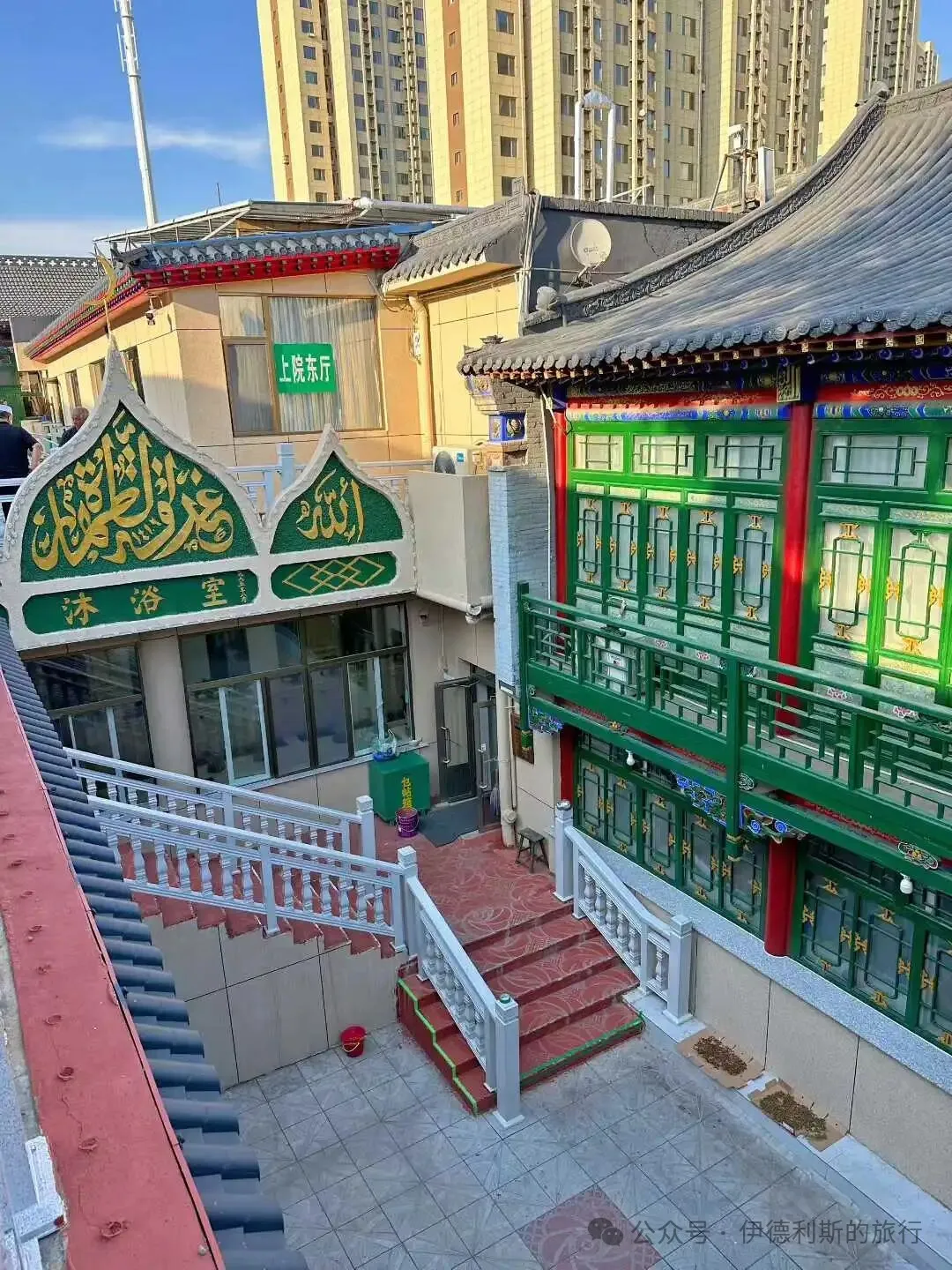
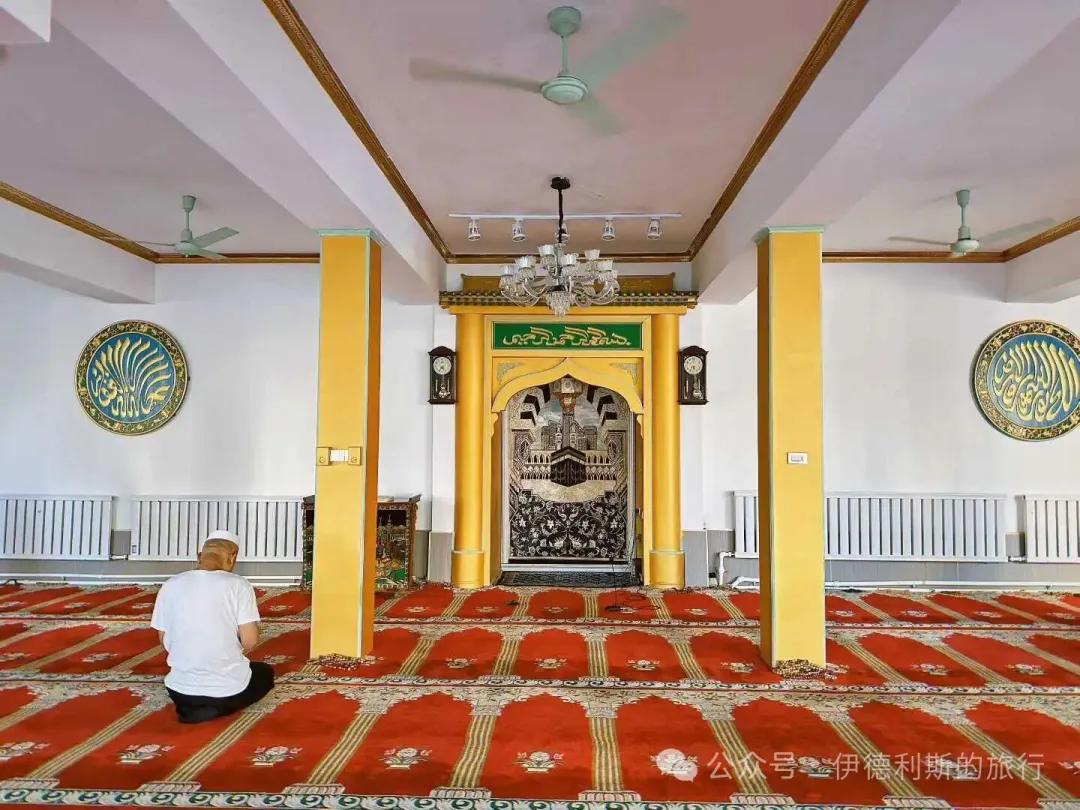
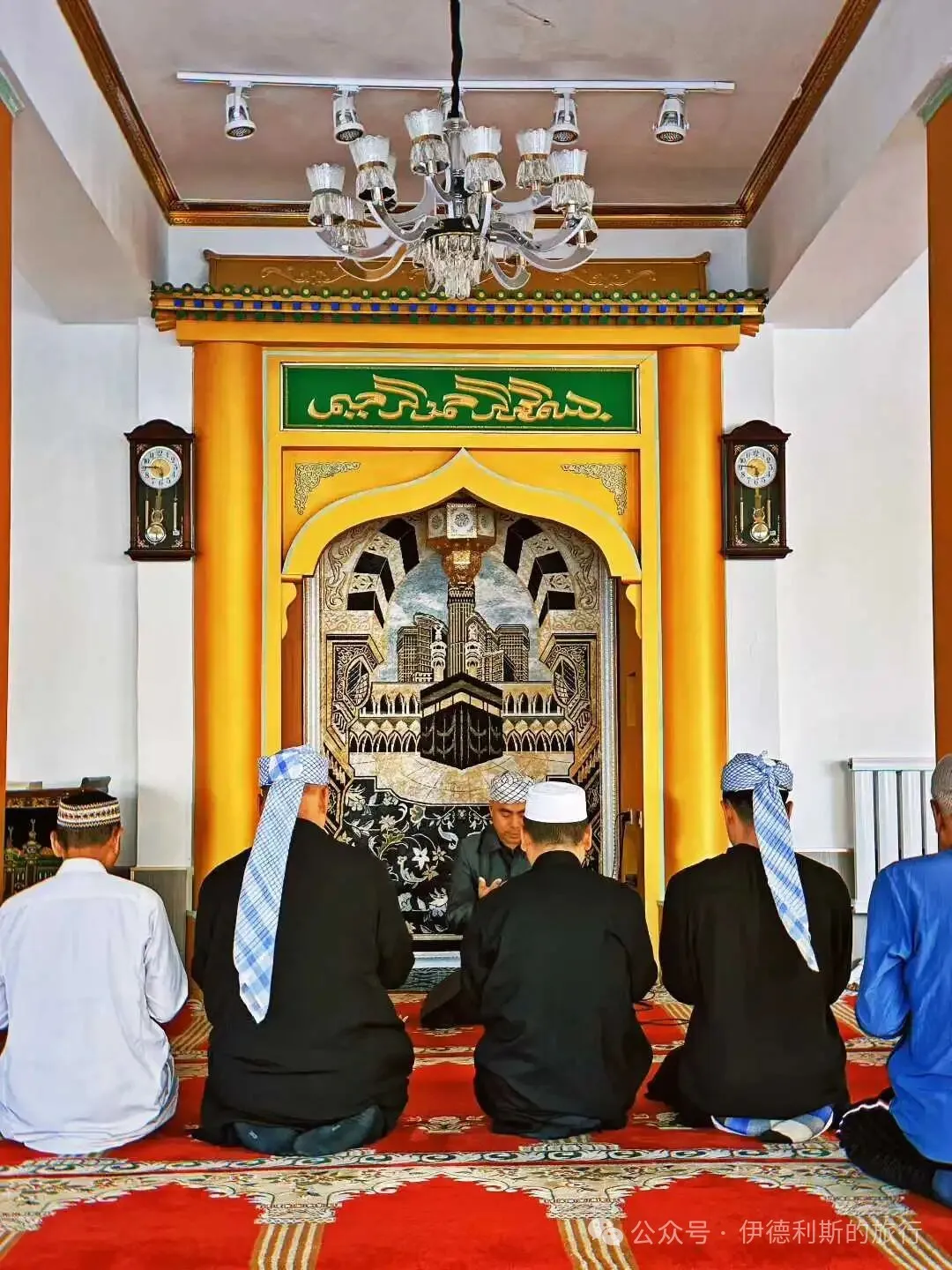
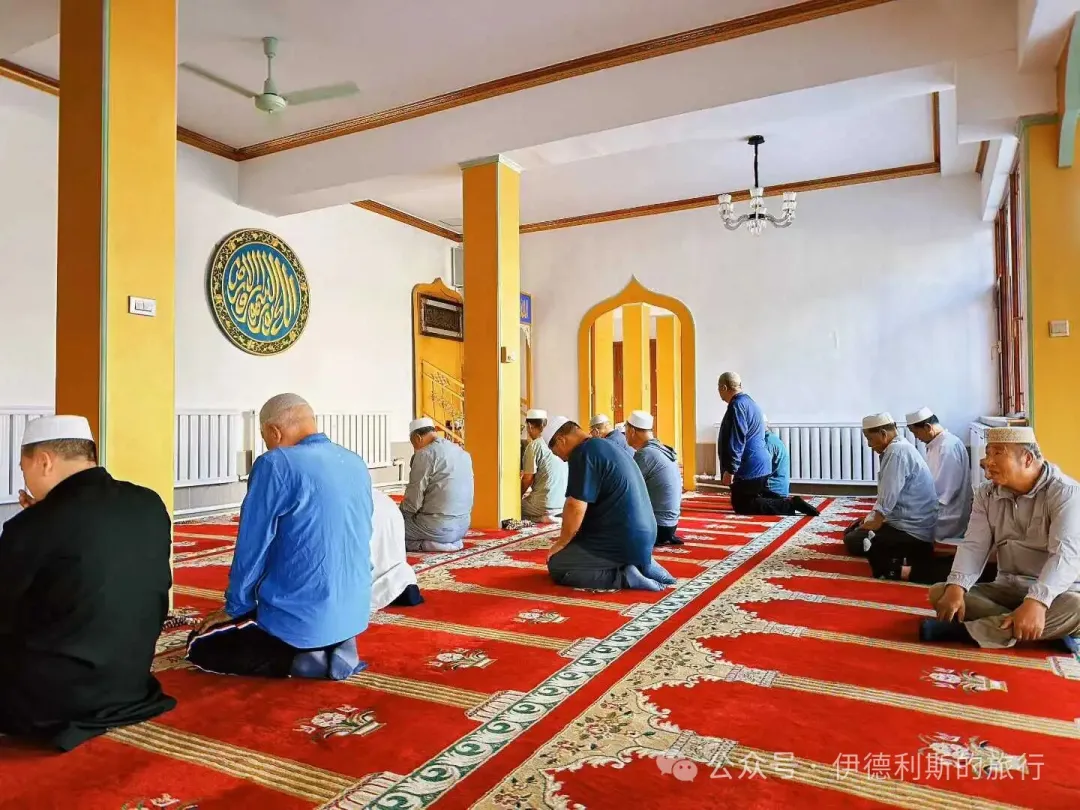
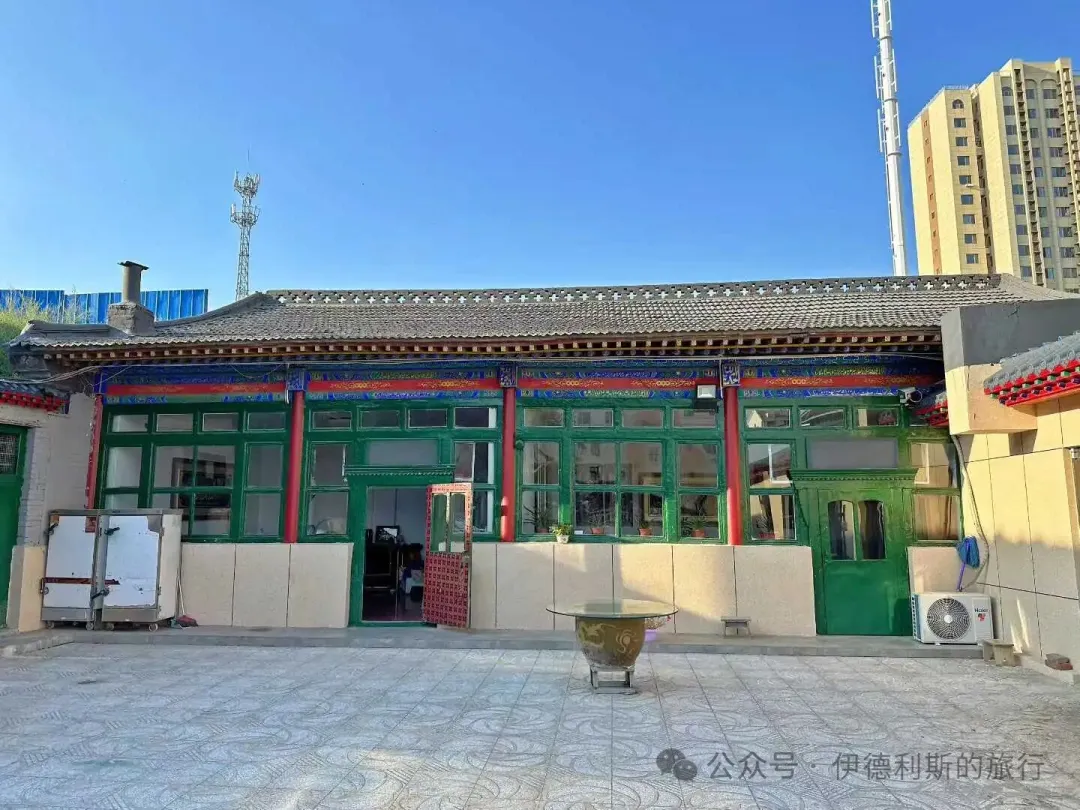
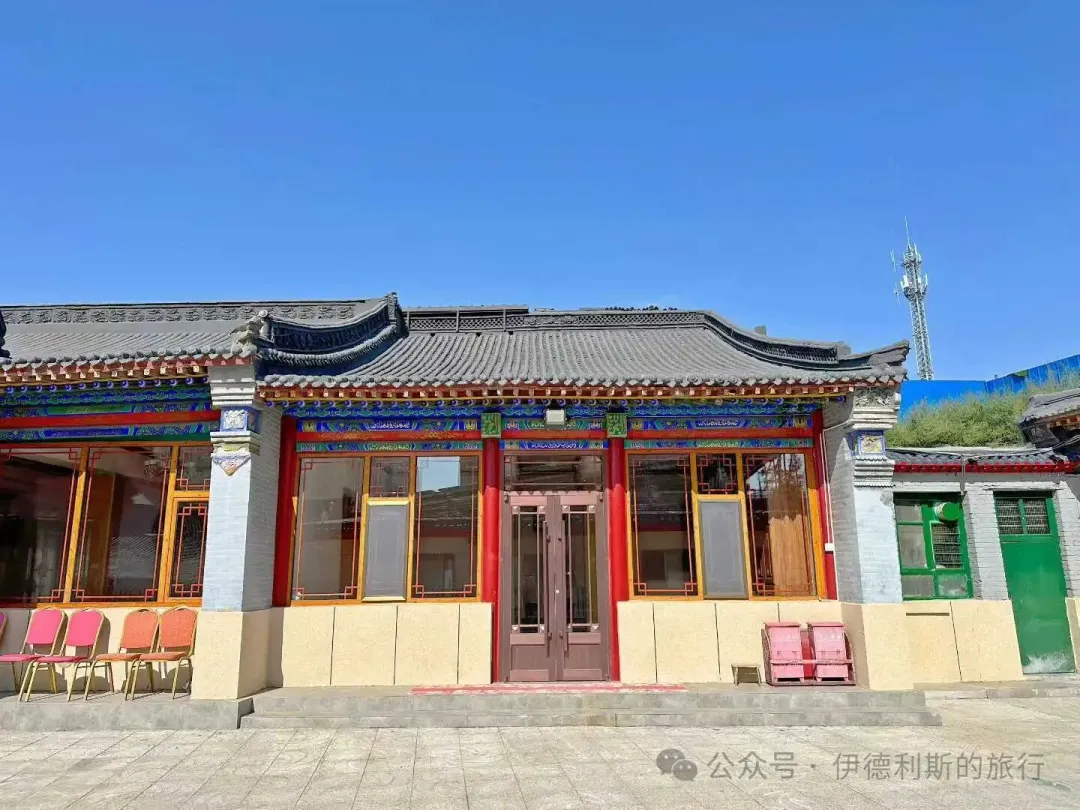
Halal Travel Guide: Baotou, Inner Mongolia - Five Historic Mosque Communities
Articles • ali2007fr posted the article • 0 comments • 269 views • 2026-05-20 09:38
Summary: Baotou in Inner Mongolia had five historic mosque communities from the Qing Dynasty and Republic of China era, tied to Hui Muslim trade, migration, and local settlement. This article records mosque origins, family histories, rebuilding dates, preserved tablets, and the religious geography of old Baotou.
Salachi Town in Tumed Right Banner, Inner Mongolia, sits between Hohhot and Baotou. It grew prosperous after the Salachi Assistant Magistrate's Office was set up in 1739 (the fourth year of the Qianlong reign), becoming a key trading hub on the merchant route to Mongolia. In the early Qianlong years, 23 families of Hui Muslims from Shandong and Hebei moved to Salachi from Shandai Town. These families, including the Ma, Bai, Yang, and Wei clans, mostly worked in the livestock trade. In 1747 (the twelfth year of the Qianlong reign), they pooled their money to build the Salachi Mosque (Salachi Si) in the Nanyingzi area of the town.
In 1760 (the twenty-fifth year of the Qianlong reign), Salachi was upgraded to an Assistant Magistrate's Office. It handled affairs between Mongol and Han people in the Urat Three Banners, the Ordos Left Wing Middle Banner (Junwang Banner), and the Ordos Left Wing Rear Banner (Dalad Banner). After this, the number of Hui Muslims moving to Salachi Town kept growing. By around the fortieth year of the Qianlong reign, the Hui Muslim population in Salachi had grown to over 100 families and more than 400 people. In 1782 (the forty-seventh year of the Qianlong reign), the local community expanded the main hall of the Salachi Mosque to 15 rooms. The door plaque inside the mosque still bears the date of the forty-seventh year of the Qianlong reign, serving as proof of the expansion.
In 1947, the south side room of the main hall suddenly collapsed. The community elders hired Wu Youlong, one of the only two college students among the Baotou Hui Muslims at the time, who had graduated from the Civil Engineering Department of Peiyang Institute of Technology, to rebuild the hall. When designing the hall, Wu Youlong boldly placed a millstone and a roller under each pillar. This design helped keep the pillars dry and improved the lighting inside. The rebuilt main hall took on its current form and is now a cultural heritage site protected by Baotou City.
The Great Mosque of Baotou (Baotou Dasi) is located in the Donghe District of the old city of Baotou. First built in 1743 (the eighth year of the Qianlong reign), it is the most important religious building in the western Tumed Plain and is now a protected cultural heritage site of the Inner Mongolia Autonomous Region.
In 1697 (the thirty-sixth year of the Kangxi reign), after Emperor Kangxi defeated Galdan, migrants from inland China began pouring into the Tumed Plain of Inner Mongolia, moving westward along the route from Hohhot to Chasugi and then to Salachi. In the early Qianlong years, Wang Xiu, a Hui Muslim from Cangzhou, Hebei, and Bai Sanmu, a Hui Muslim from Wuding, Shandong (near present-day Binzhou and Dezhou), arrived at Baotou Village west of Salachi, becoming the first Hui Muslims in Baotou.
According to family records, the Wang family's ancestral home was Erdaogang Wailiushu Village in Nanjing. Their distant ancestor was a military student (wulinsheng) during the Ming Dynasty and later served as a military officer. In 1421 (the nineteenth year of the Yongle reign), the Ming Dynasty officially moved its capital to Beijing. The Wang family was ordered to escort the emperor north and was later granted land in Cangzhou. During the Ming Yongle period, the Wang family moved to their granted land at Wangjia Sheqiao and gave up their official posts to become farmers. In the early Qianlong years, the Wang family fell on hard times. After a drought in Cangzhou, Wang Xiu carried his goods on a shoulder pole and traveled a long distance with his wife and children to Zhaowan in Inner Mongolia. Wang Xiu first made a living selling mountain goods and sewing supplies door-to-door. Later, he received a piece of pasture land from a lama, bought livestock, and started working in animal husbandry. Wang Xiu gradually became well-off by trading livestock between Inner Mongolia, Shandong, and Hebei.
In the early Qianlong years, Baotou Village, west of Salachi, began to take shape, and shops and businesses opened one after another. Wang Xiu rented a hillside from a Mongol person north of Baotou Village to build a house, and people called him the Wang of the High Slope (Gaopo Wangjia). After that, more Hui Muslims with the surnames Bai, Ma, Yang, and Zhou moved into Baotou. In 1743 (the eighth year of the Qianlong reign), the Wang and Bai families organized other Hui Muslim families to build the first Great Mosque of Baotou.
The original Great Mosque of Baotou was a five-room earth-and-wood hall. It once had a plaque inscribed with the words "Pure and Clean" (Qingjing) dated to the eighth year of the Qianlong reign, but it was unfortunately lost later. The first imam (ahong) was surnamed Fu and was hired from Hebei.
In 1809 (the fourteenth year of the Jiaqing reign), Baotou Village was renamed Baotou Town and gradually developed into a major commercial hub. Wang Daxing, the grandson of Wang Xiuzhi, opened the Sanhe Horse Inn (Sanhe Madian) in Baotou and ran a successful long-distance horse trading business. By 1833 (the 13th year of the Daoguang reign), the Hui Muslim population in Baotou had grown to over 100 households, totaling six or seven hundred people. Wang Daxing and Bai Kede, the grandson of Bai Sanmu, led the effort to rebuild the original earth-and-wood main hall into a brick-and-tile structure. They also inscribed plaques reading "Unique" (Duyi Wu'er), "Ancient Autumn" (Guqiu), and "Quiet One" (Jingyi). Only the "Ancient Autumn" (Guqiu) plaque remains today, signed by the community leaders (tou) Wang Daxing and Bai Kede.
In 1913, community elders from the Ma, Wang, Chen, Ding, and Bai families hired a carpenter named Guo San suo, known as the "Living Lu Ban," to expand the main hall. He moved the porch (juanpeng) forward and added a section to the back, giving the Baotou Great Mosque its current layout. The mosque houses a plaque inscribed with "Promoting the True Religion" (Xianyang Zhengjiao), gifted by Lieutenant General Ma Fuxiang in the second year of the Republic of China.
The main hall of the Baotou Great Mosque features a prayer niche (mihrab) and a pulpit (minbar) decorated with traditional Chinese-style Arabic calligraphy.
The qibla wall of the Baotou Great Mosque is decorated with 32 pieces of traditional Chinese-style large-character Arabic calligraphy, which is very impressive.
The architectural details of the Baotou Great Mosque, including the brick carvings and wood carvings, are all very exquisite.
The swastika (wanzi) and taiji brick carvings in the main hall of the Baotou Great Mosque show the influence of different cultures.
During the late Qing Dynasty, under the intellectual trend of interpreting Islam through Confucianism, scholars like Liu Zhi introduced concepts like "taiji" and "yin-yang" into the faith. The book "The Nature and Principle of Islam" (Tianfang Xingli) contains the record: "Movement creates yang, stillness creates yin; this is the manifestation of taiji, which is the manifestation of the True One."
The swastika (wanzi) is a traditional Chinese auspicious pattern. The swastika represents good fortune, and the "never-ending" (budao tou) design represents continuity. It frequently appears in architectural brick, stone, and wood carvings.
The Baotou Small Mosque, also known as the Baotou North Mosque or the Wayao Ditch Mosque (Wayao Gou Si), was first built in 1908 (the 34th year of the Guangxu reign). The main hall was rebuilt in 1918, and it is currently a Baotou municipal cultural heritage site. The Baotou Small Mosque is built on a very steep slope against a cliff. The main hall sits much higher than the ablution room (shuifang), which is a very unique feature.
In the late Qing Dynasty, the Hui Muslim population in Baotou grew steadily, expanding from the Beiliang area of the old city from east to west. By the end of the Qing Dynasty, the eight streets and alleys near Wayao Ditch had become a Hui Muslim residential area, home to horse inns, flour shops, oil mills, and dozens of cattle, sheep, and camel slaughterhouses. The slaughterhouses also operated as kitchens, meat shops, and livestock pens.
Because traveling between Wayao Ditch and the Baotou Great Mosque required crossing ditches and ridges, it was very inconvenient. In the final years of the Guangxu reign, Hui Muslim families including the Chens, Mas, Dings, Yangs, and Wangs proposed digging a well in Wayao Ditch and building a bathhouse called the "West Water Hall" (Xishui Tang). In 1908 (the 34th year of the Guangxu reign), they bought a flat piece of land on the hillside of the West Water Hall and built the first Baotou Small Mosque.
In 1918, the elders of the Small Mosque raised funds to build a five-room main hall with a porch (juanpeng) against the home of elder Xing Fa. In the 1920s, elder Xing Fa donated the empty land at the north end of the main hall to build north and south rooms and a north wing, making the Small Mosque a complete courtyard.
After it was built, the Baotou Small Mosque was long under the jurisdiction of the Great Mosque. The imam was selected monthly by the students (hailifan) of the Great Mosque, and the two Eid festivals (Duerde) and the Prophet's Birthday (Shengji) were all held at the Great Mosque. The Small Mosque was closed in 1958 due to the merger of mosques and reopened in 1990.
The Baotou Zhiluyu Mosque, also known as the Yushu Ditch Mosque (Yushu Gou Si) or the West Mosque, was first built with funds raised by "Eastern Route Hui Muslims" who came from Zhili (Hebei), Shandong, and Henan, hence its name. At the mosque entrance, there is a shop selling clear tea and beef steamed dumplings (shaomai), and another selling fried dough cakes (youbing) with vermicelli soup and buckwheat noodles. These are great for breakfast.
During the late Qing Dynasty and the Republic of China era, Baotou became a major hub for trading furs. Many Hui Muslims from Hebei came to Baotou to sell furs and livestock. Others came to work in leather tanning, soap making, or to run small stalls. By the early years of the Republic, there were over a hundred such households. In 1922, Hui Muslim families named Hai, Ma, Ge, Yang, and Wang from Hebei, Henan, and Shandong rented a house at the east end of Fuchengyuan Lane in Baotou and built the first Zhiluyu Mosque. In the autumn of 1923, Ma Jincai, Ge Taizhong, and Yang Minglu traveled to Gansu and Ningxia to collect donations (nietie). After returning, they bought a former ox-cart shop in Yushugou and officially established the Zhiluyu Mosque. In 1925, Jiang Tingshan from Linxia, Gansu, bought seventeen fur rafts at the Yellow River ferry in Baotou. He used the wood to rebuild the main hall of the Zhiluyu Mosque and renamed it the Shanganzhiluyu Mosque. The Shanganzhiluyu Mosque closed in 1966, reopened in 1982, and was renamed Yushugou Mosque. It was rebuilt into its current structure in 2008.
The Ganqingning Mosque in Baotou, also known as the Shengli Road Mosque or the Middle Mosque, was built in 1943 on Minsheng Street by He Huaizhong and He Huaicheng, Hui Muslims from Ningxia living in Baotou. In the summer of 1949, Li Fengzao, a Hui Muslim from Ningxia, donated a small building on Zhongshan Road. The upper floor served as the main hall, and they hired Imam Wang Zhen from the Longshengzhuang Mosque in Inner Mongolia as the first head of the mosque. In the winter of 1949, Li Fengzao donated a rented courtyard that had been the Yidecheng cold goods shop on Shengli Road. After clearing and renovating it, it was named the Ganqingning Mosque. The imams were mostly hired from Tongxin and Lingwu in Ningxia.
In 1958, the Ganqingning Mosque merged with the Baotou Small Mosque. The original site on Shengli Road was later occupied by a noodle workshop of a food factory and then a printing factory. It reopened in 1984, and the main hall was rebuilt in 1987.
A traditional house with a pitched roof stands at the entrance of the Shengli Road Mosque. It is now a workshop for the Huixiang Food Shop, though its original purpose is unknown.
There is a lot of good food near the Shengli Road Mosque, which I will introduce specifically later. view all
Summary: Baotou in Inner Mongolia had five historic mosque communities from the Qing Dynasty and Republic of China era, tied to Hui Muslim trade, migration, and local settlement. This article records mosque origins, family histories, rebuilding dates, preserved tablets, and the religious geography of old Baotou.
Salachi Town in Tumed Right Banner, Inner Mongolia, sits between Hohhot and Baotou. It grew prosperous after the Salachi Assistant Magistrate's Office was set up in 1739 (the fourth year of the Qianlong reign), becoming a key trading hub on the merchant route to Mongolia. In the early Qianlong years, 23 families of Hui Muslims from Shandong and Hebei moved to Salachi from Shandai Town. These families, including the Ma, Bai, Yang, and Wei clans, mostly worked in the livestock trade. In 1747 (the twelfth year of the Qianlong reign), they pooled their money to build the Salachi Mosque (Salachi Si) in the Nanyingzi area of the town.
In 1760 (the twenty-fifth year of the Qianlong reign), Salachi was upgraded to an Assistant Magistrate's Office. It handled affairs between Mongol and Han people in the Urat Three Banners, the Ordos Left Wing Middle Banner (Junwang Banner), and the Ordos Left Wing Rear Banner (Dalad Banner). After this, the number of Hui Muslims moving to Salachi Town kept growing. By around the fortieth year of the Qianlong reign, the Hui Muslim population in Salachi had grown to over 100 families and more than 400 people. In 1782 (the forty-seventh year of the Qianlong reign), the local community expanded the main hall of the Salachi Mosque to 15 rooms. The door plaque inside the mosque still bears the date of the forty-seventh year of the Qianlong reign, serving as proof of the expansion.
In 1947, the south side room of the main hall suddenly collapsed. The community elders hired Wu Youlong, one of the only two college students among the Baotou Hui Muslims at the time, who had graduated from the Civil Engineering Department of Peiyang Institute of Technology, to rebuild the hall. When designing the hall, Wu Youlong boldly placed a millstone and a roller under each pillar. This design helped keep the pillars dry and improved the lighting inside. The rebuilt main hall took on its current form and is now a cultural heritage site protected by Baotou City.
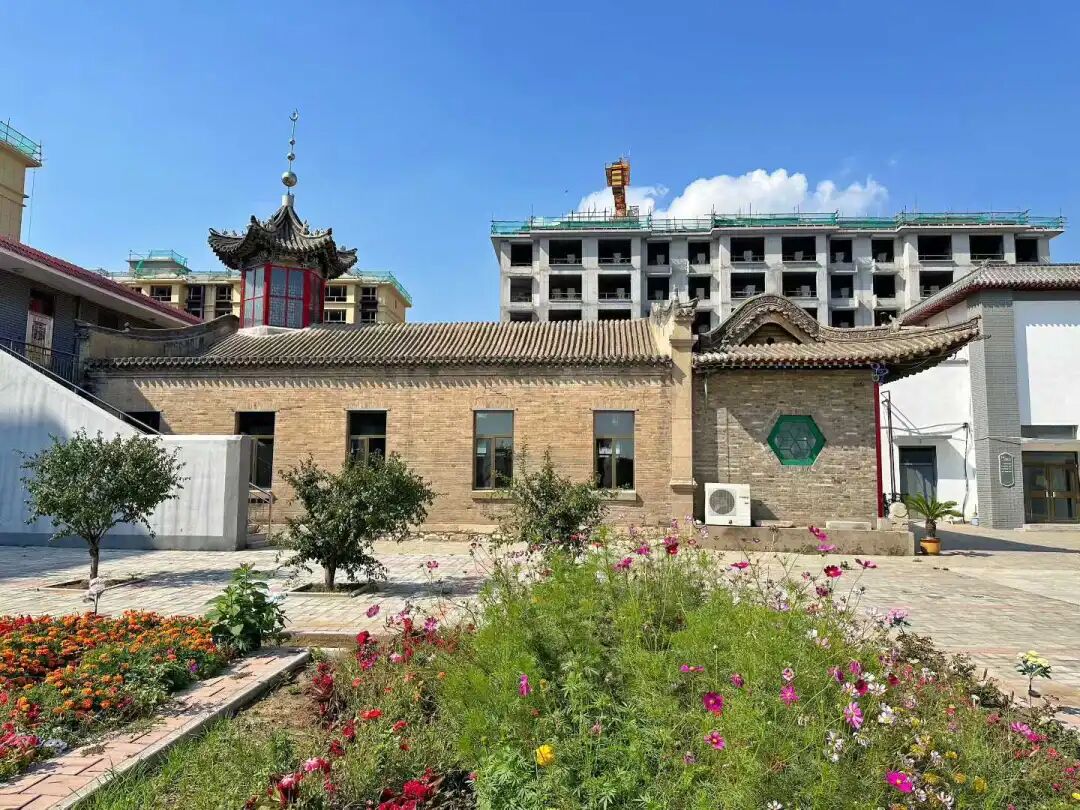
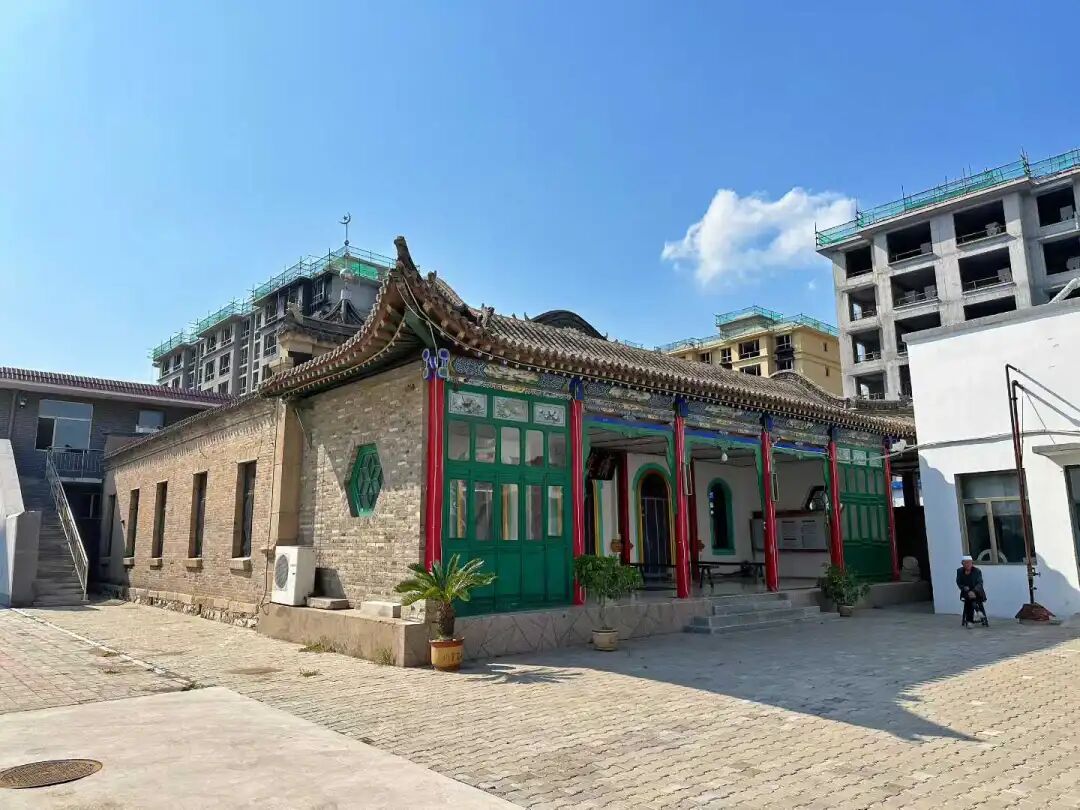
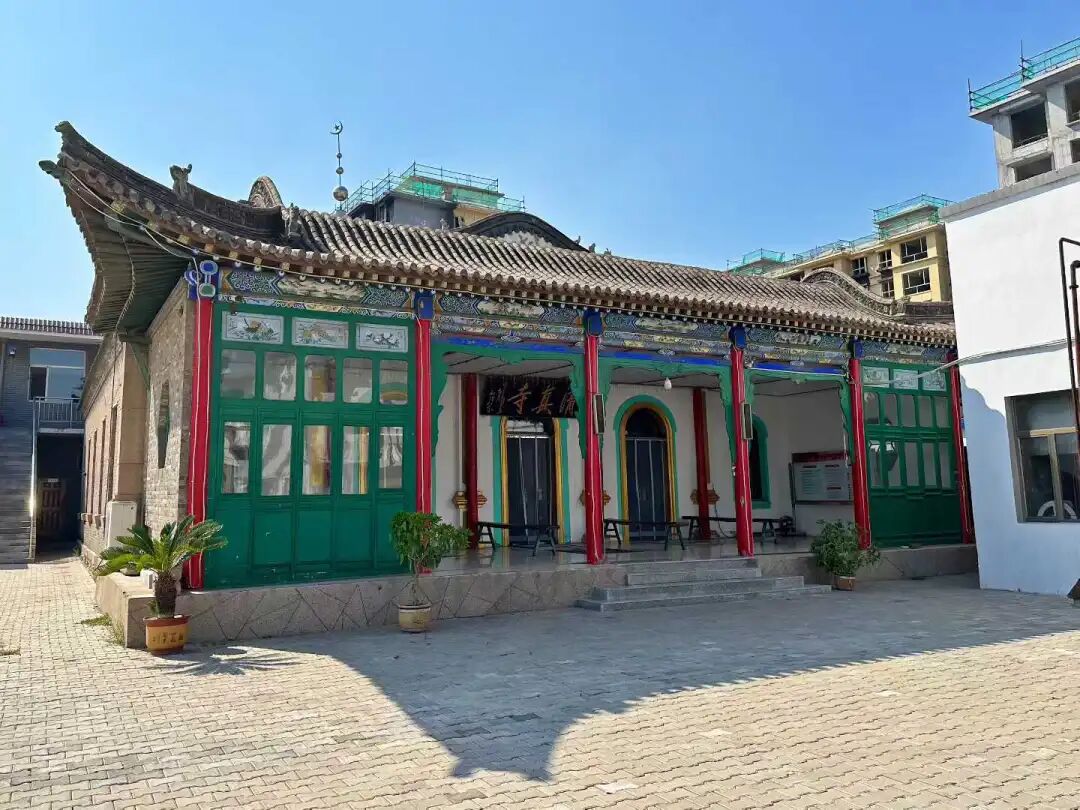
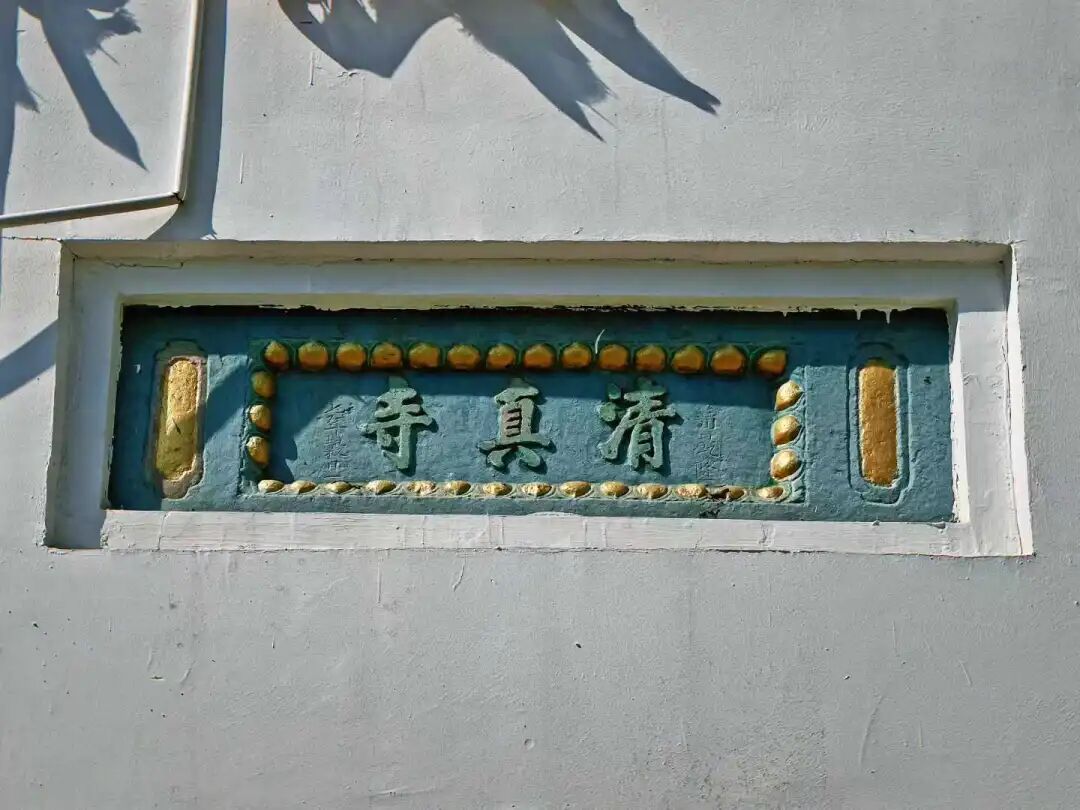
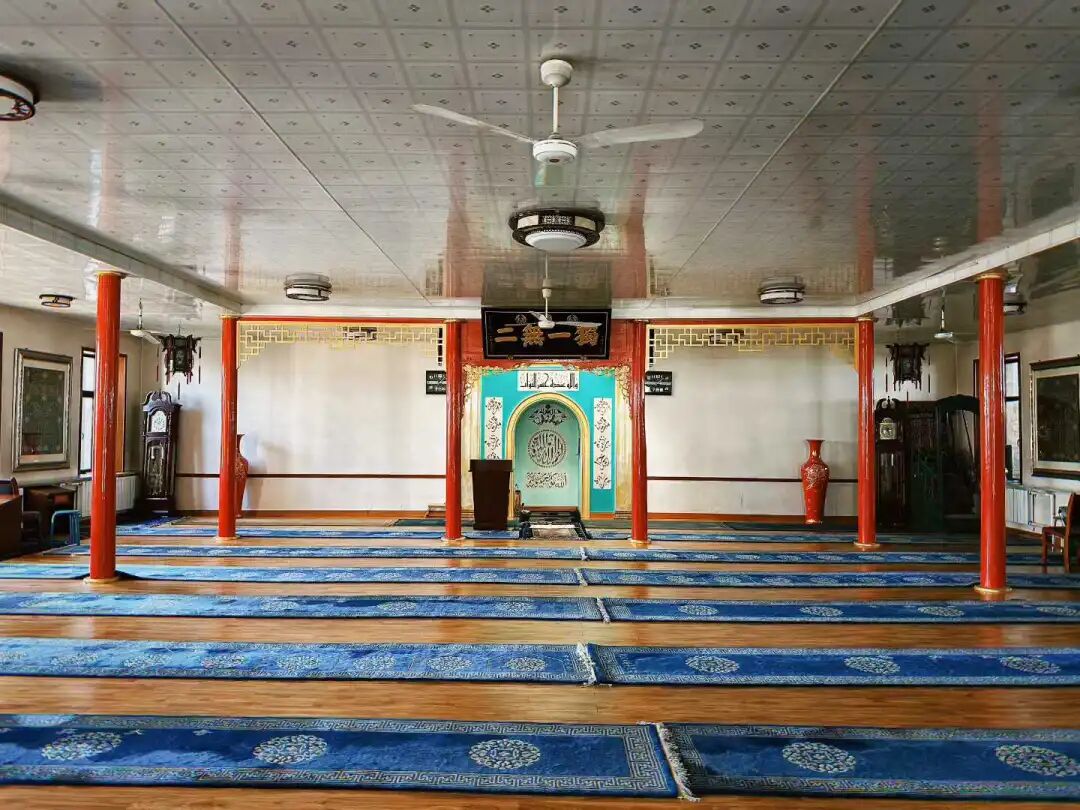
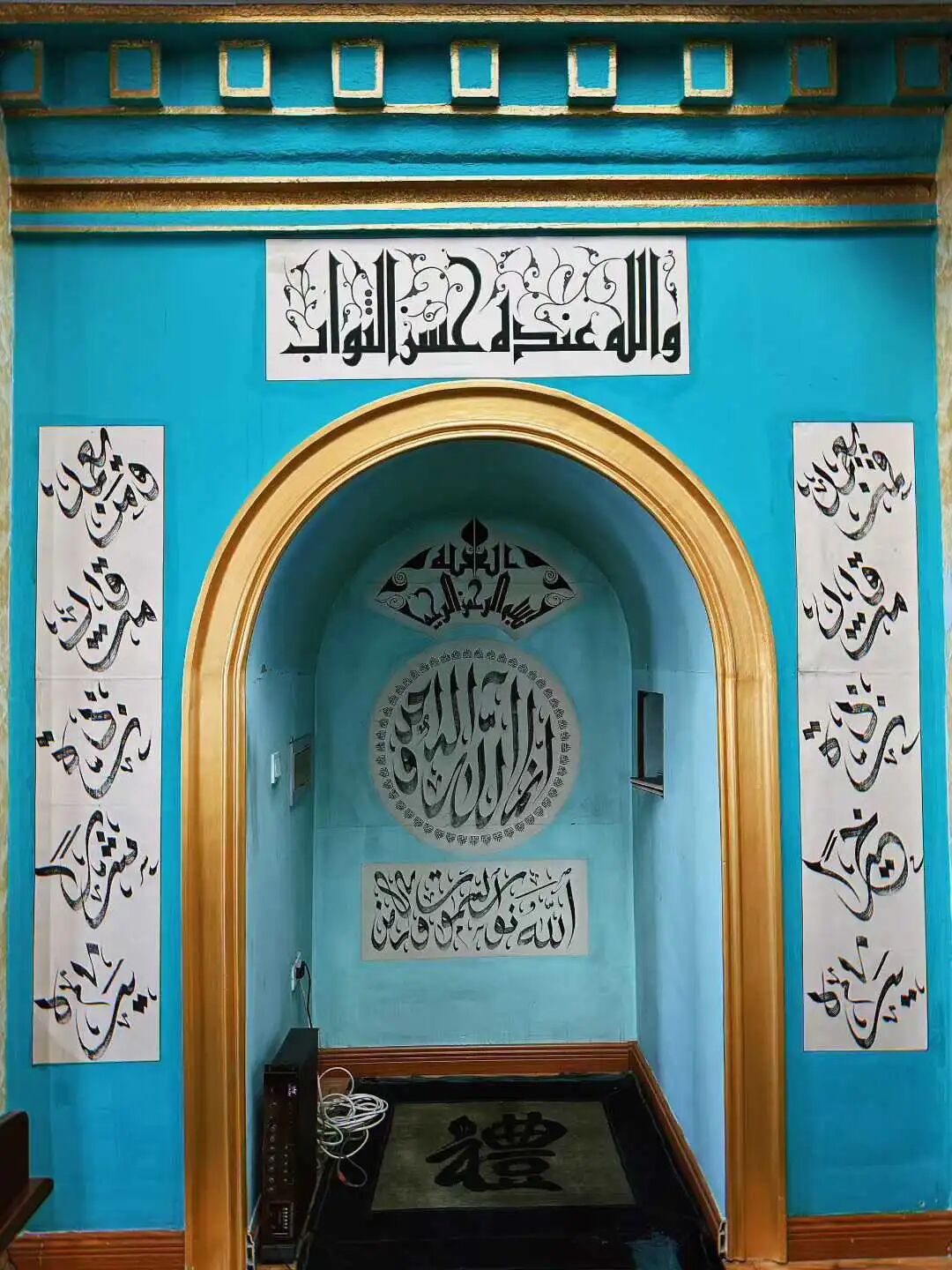
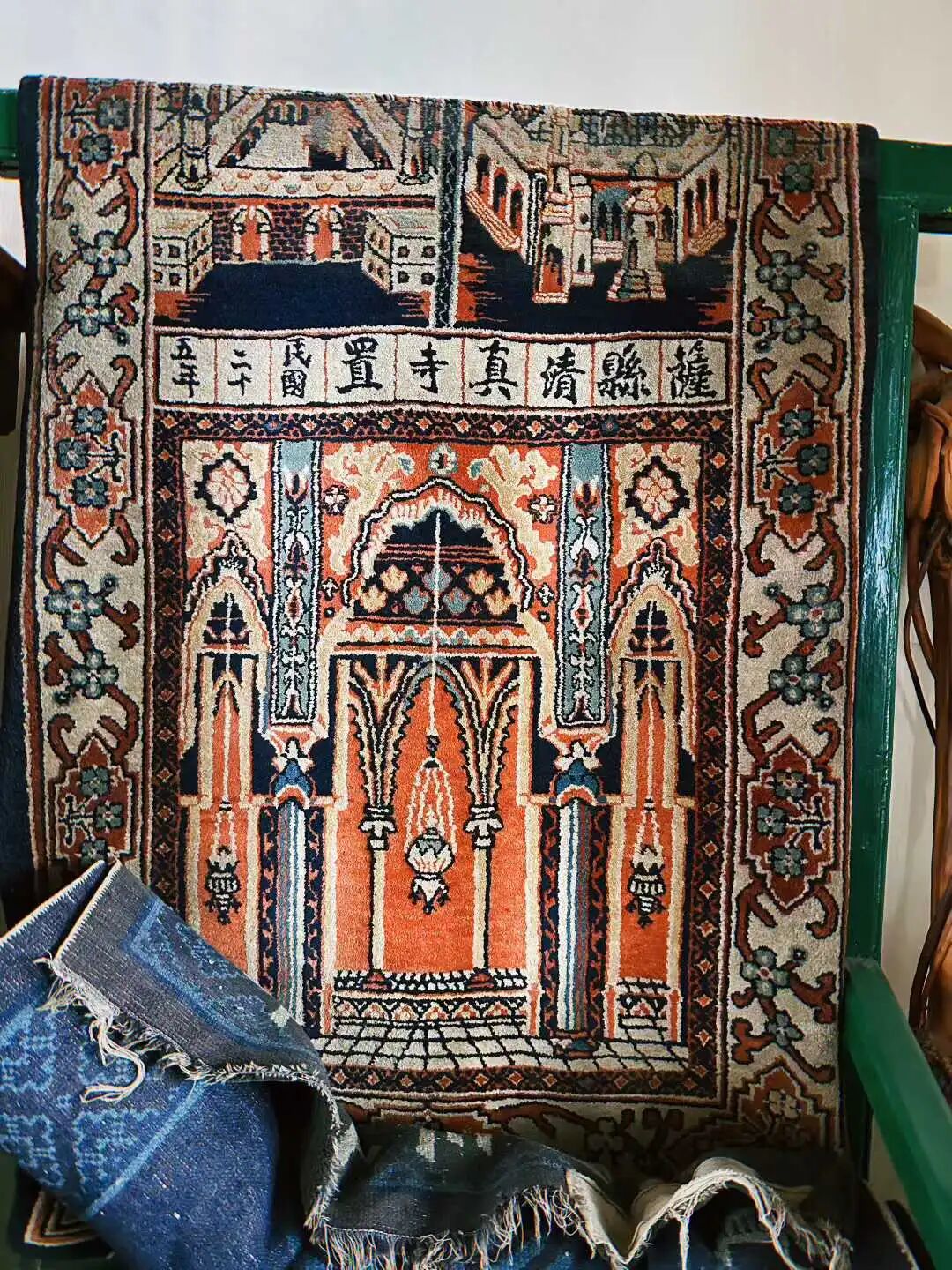
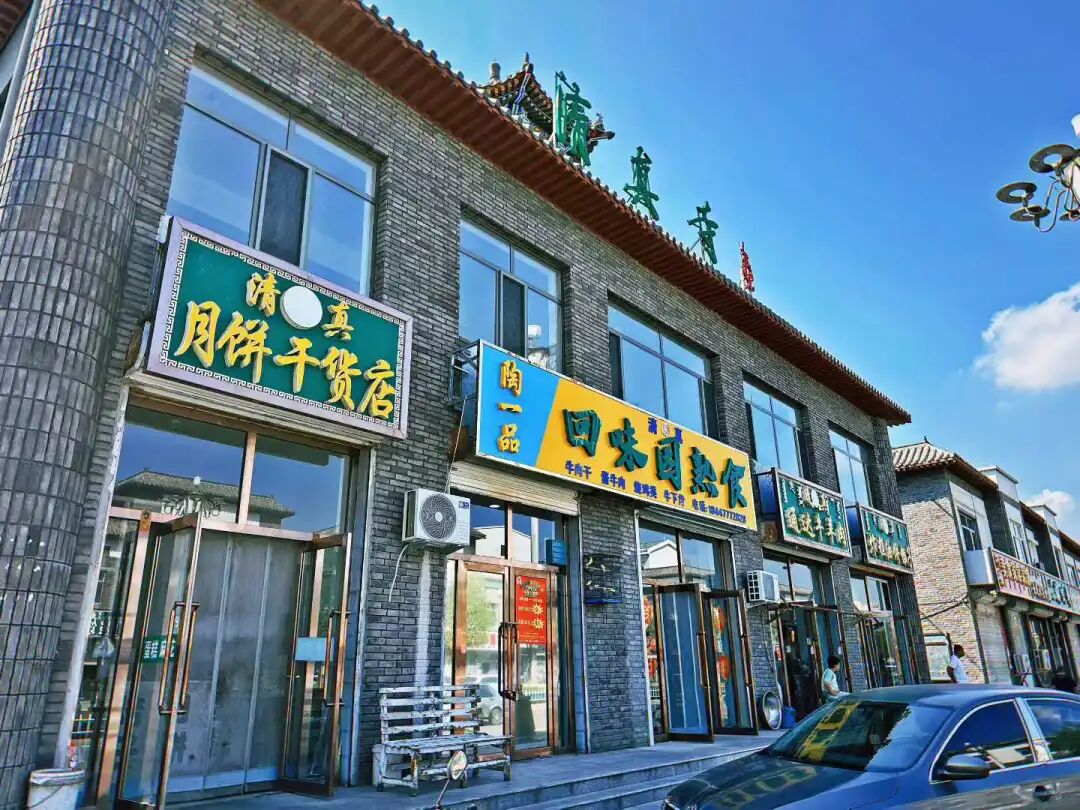
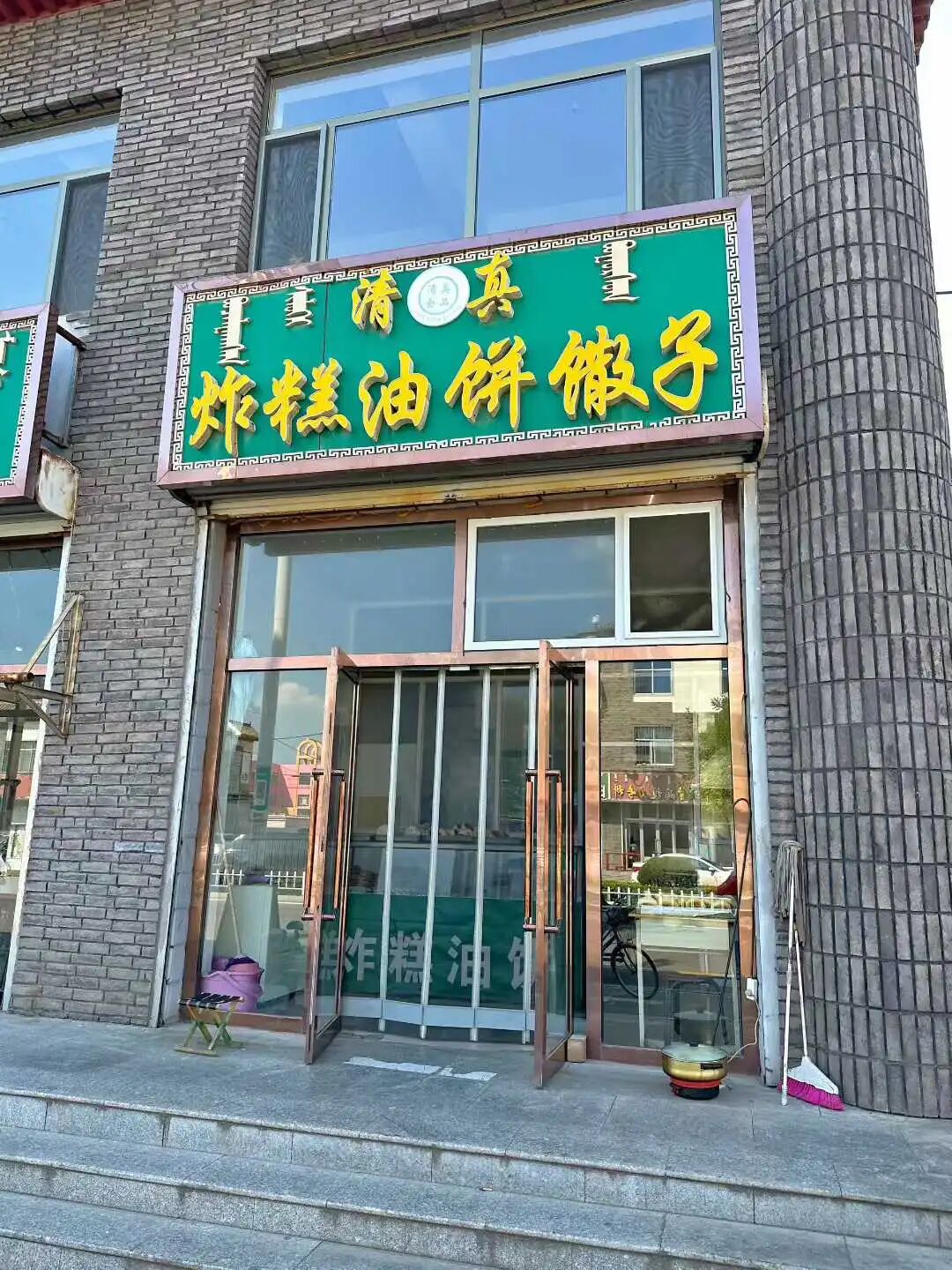
The Great Mosque of Baotou (Baotou Dasi) is located in the Donghe District of the old city of Baotou. First built in 1743 (the eighth year of the Qianlong reign), it is the most important religious building in the western Tumed Plain and is now a protected cultural heritage site of the Inner Mongolia Autonomous Region.
In 1697 (the thirty-sixth year of the Kangxi reign), after Emperor Kangxi defeated Galdan, migrants from inland China began pouring into the Tumed Plain of Inner Mongolia, moving westward along the route from Hohhot to Chasugi and then to Salachi. In the early Qianlong years, Wang Xiu, a Hui Muslim from Cangzhou, Hebei, and Bai Sanmu, a Hui Muslim from Wuding, Shandong (near present-day Binzhou and Dezhou), arrived at Baotou Village west of Salachi, becoming the first Hui Muslims in Baotou.
According to family records, the Wang family's ancestral home was Erdaogang Wailiushu Village in Nanjing. Their distant ancestor was a military student (wulinsheng) during the Ming Dynasty and later served as a military officer. In 1421 (the nineteenth year of the Yongle reign), the Ming Dynasty officially moved its capital to Beijing. The Wang family was ordered to escort the emperor north and was later granted land in Cangzhou. During the Ming Yongle period, the Wang family moved to their granted land at Wangjia Sheqiao and gave up their official posts to become farmers. In the early Qianlong years, the Wang family fell on hard times. After a drought in Cangzhou, Wang Xiu carried his goods on a shoulder pole and traveled a long distance with his wife and children to Zhaowan in Inner Mongolia. Wang Xiu first made a living selling mountain goods and sewing supplies door-to-door. Later, he received a piece of pasture land from a lama, bought livestock, and started working in animal husbandry. Wang Xiu gradually became well-off by trading livestock between Inner Mongolia, Shandong, and Hebei.
In the early Qianlong years, Baotou Village, west of Salachi, began to take shape, and shops and businesses opened one after another. Wang Xiu rented a hillside from a Mongol person north of Baotou Village to build a house, and people called him the Wang of the High Slope (Gaopo Wangjia). After that, more Hui Muslims with the surnames Bai, Ma, Yang, and Zhou moved into Baotou. In 1743 (the eighth year of the Qianlong reign), the Wang and Bai families organized other Hui Muslim families to build the first Great Mosque of Baotou.
The original Great Mosque of Baotou was a five-room earth-and-wood hall. It once had a plaque inscribed with the words "Pure and Clean" (Qingjing) dated to the eighth year of the Qianlong reign, but it was unfortunately lost later. The first imam (ahong) was surnamed Fu and was hired from Hebei.
In 1809 (the fourteenth year of the Jiaqing reign), Baotou Village was renamed Baotou Town and gradually developed into a major commercial hub. Wang Daxing, the grandson of Wang Xiuzhi, opened the Sanhe Horse Inn (Sanhe Madian) in Baotou and ran a successful long-distance horse trading business. By 1833 (the 13th year of the Daoguang reign), the Hui Muslim population in Baotou had grown to over 100 households, totaling six or seven hundred people. Wang Daxing and Bai Kede, the grandson of Bai Sanmu, led the effort to rebuild the original earth-and-wood main hall into a brick-and-tile structure. They also inscribed plaques reading "Unique" (Duyi Wu'er), "Ancient Autumn" (Guqiu), and "Quiet One" (Jingyi). Only the "Ancient Autumn" (Guqiu) plaque remains today, signed by the community leaders (tou) Wang Daxing and Bai Kede.
In 1913, community elders from the Ma, Wang, Chen, Ding, and Bai families hired a carpenter named Guo San suo, known as the "Living Lu Ban," to expand the main hall. He moved the porch (juanpeng) forward and added a section to the back, giving the Baotou Great Mosque its current layout. The mosque houses a plaque inscribed with "Promoting the True Religion" (Xianyang Zhengjiao), gifted by Lieutenant General Ma Fuxiang in the second year of the Republic of China.
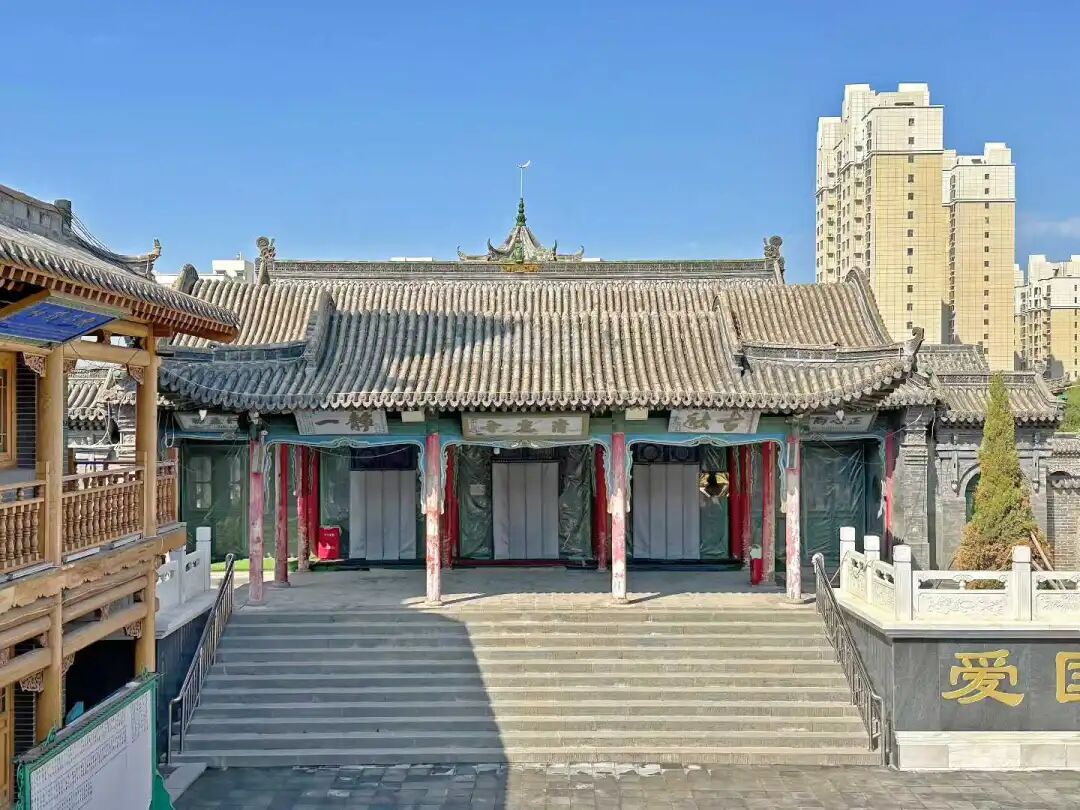
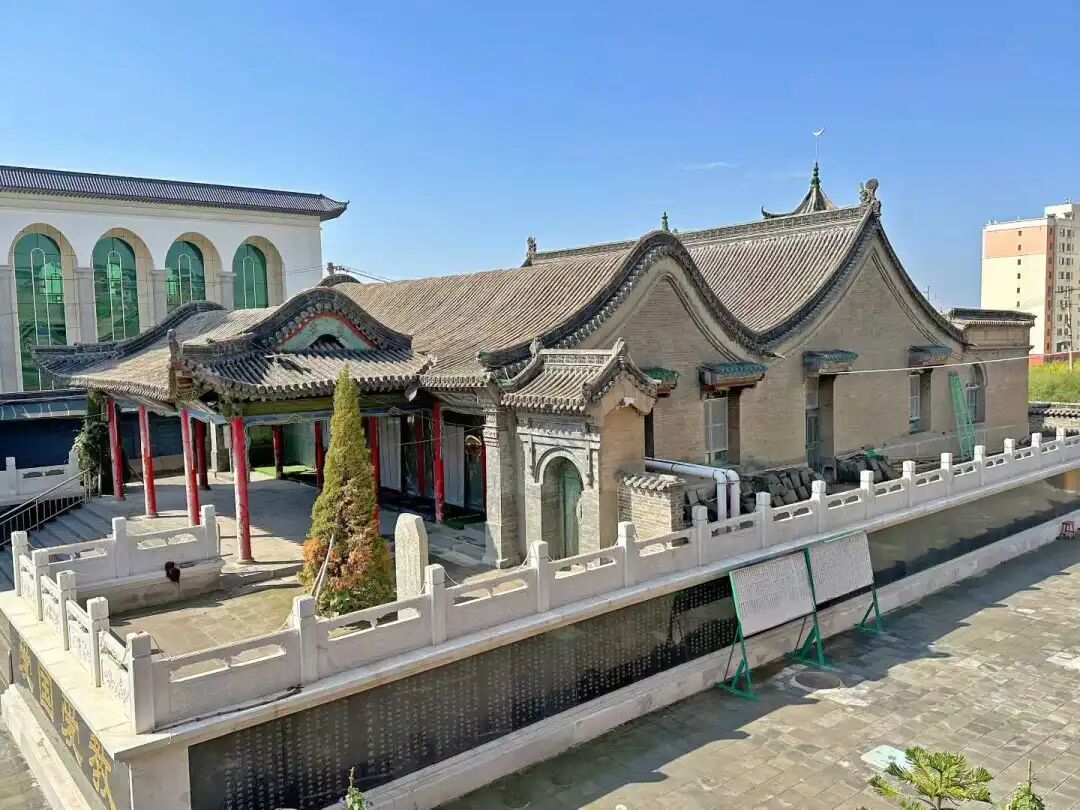
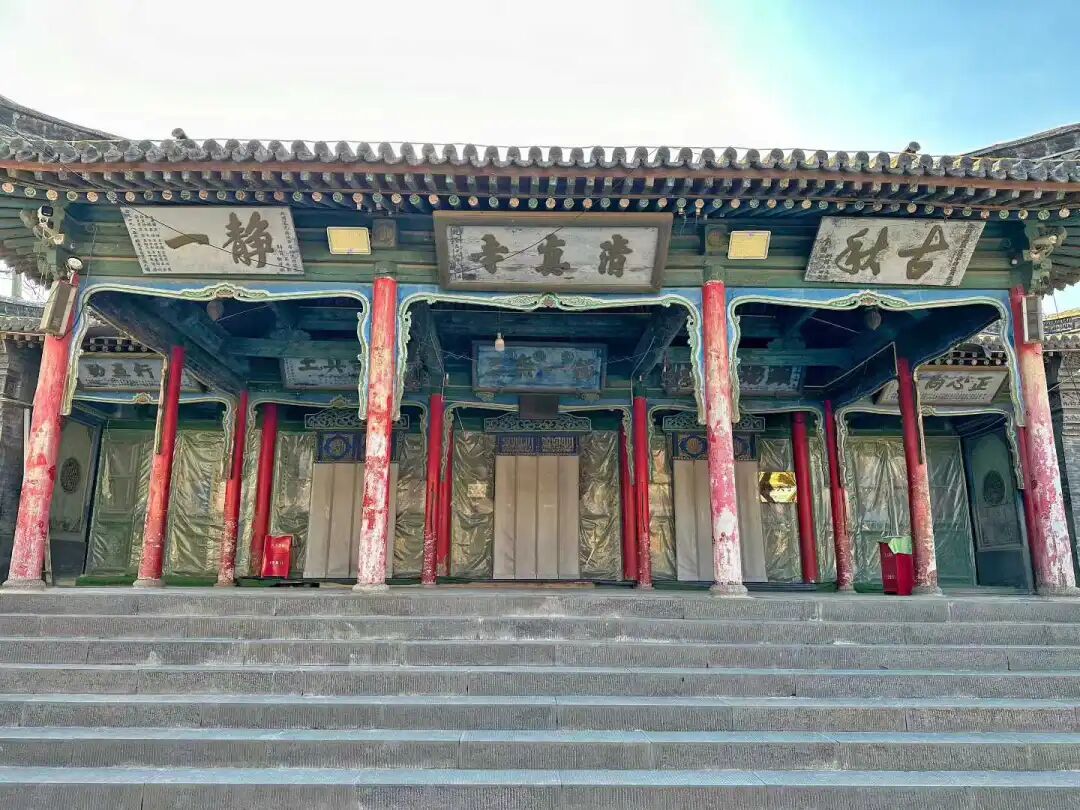
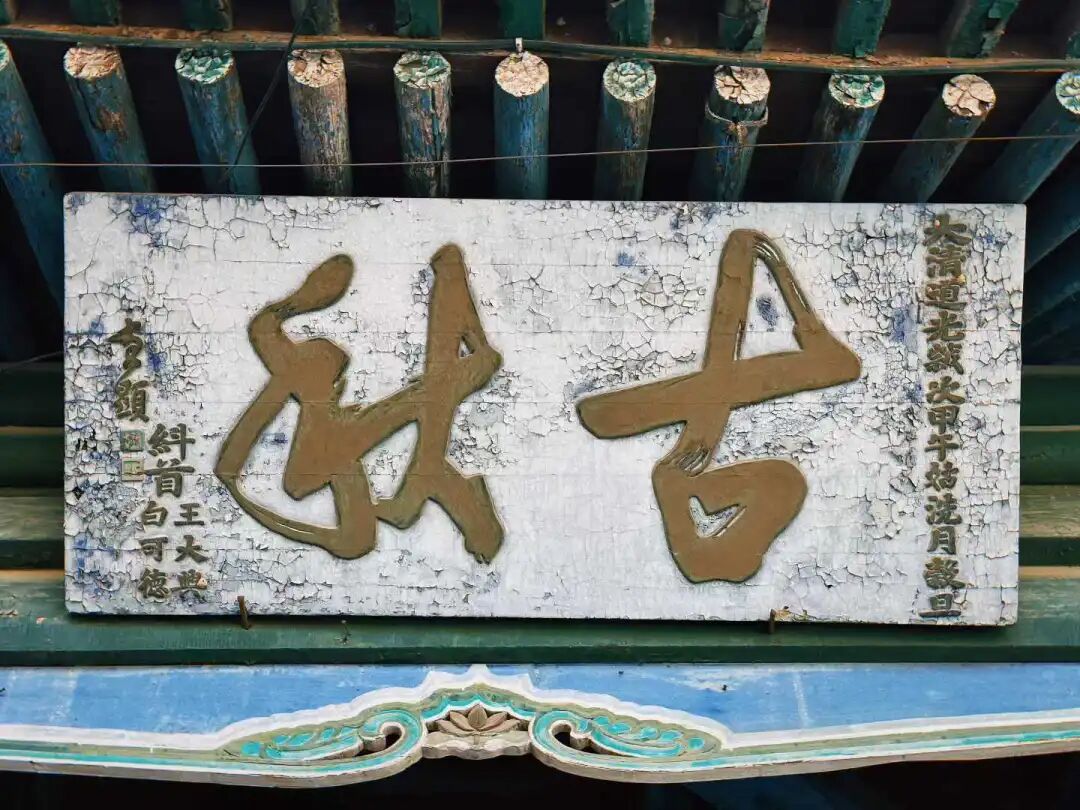
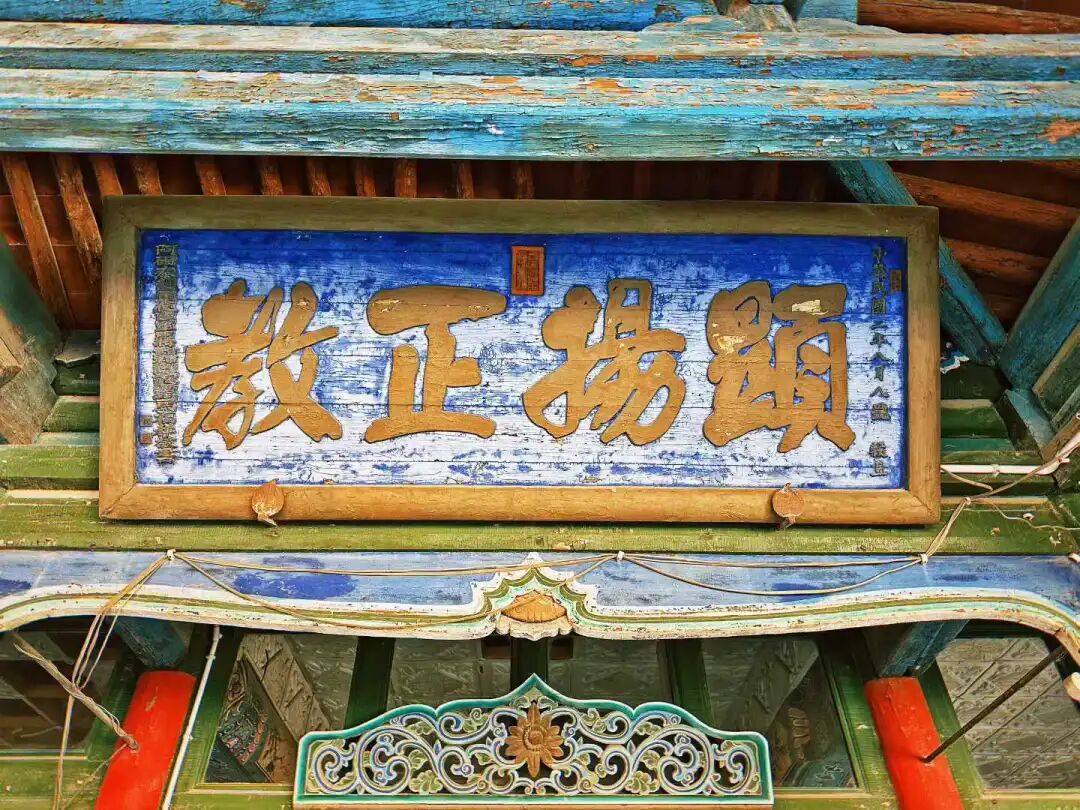
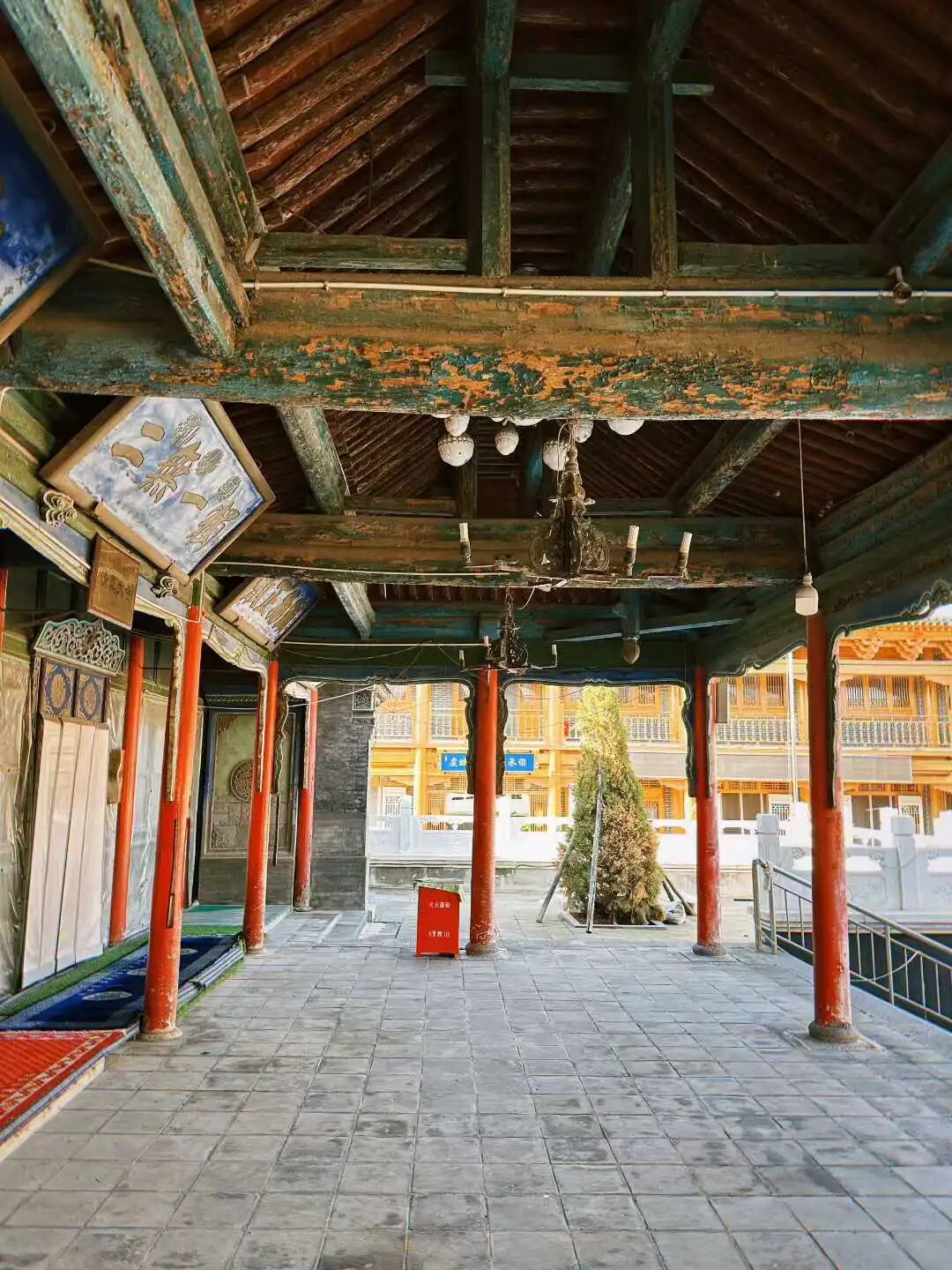
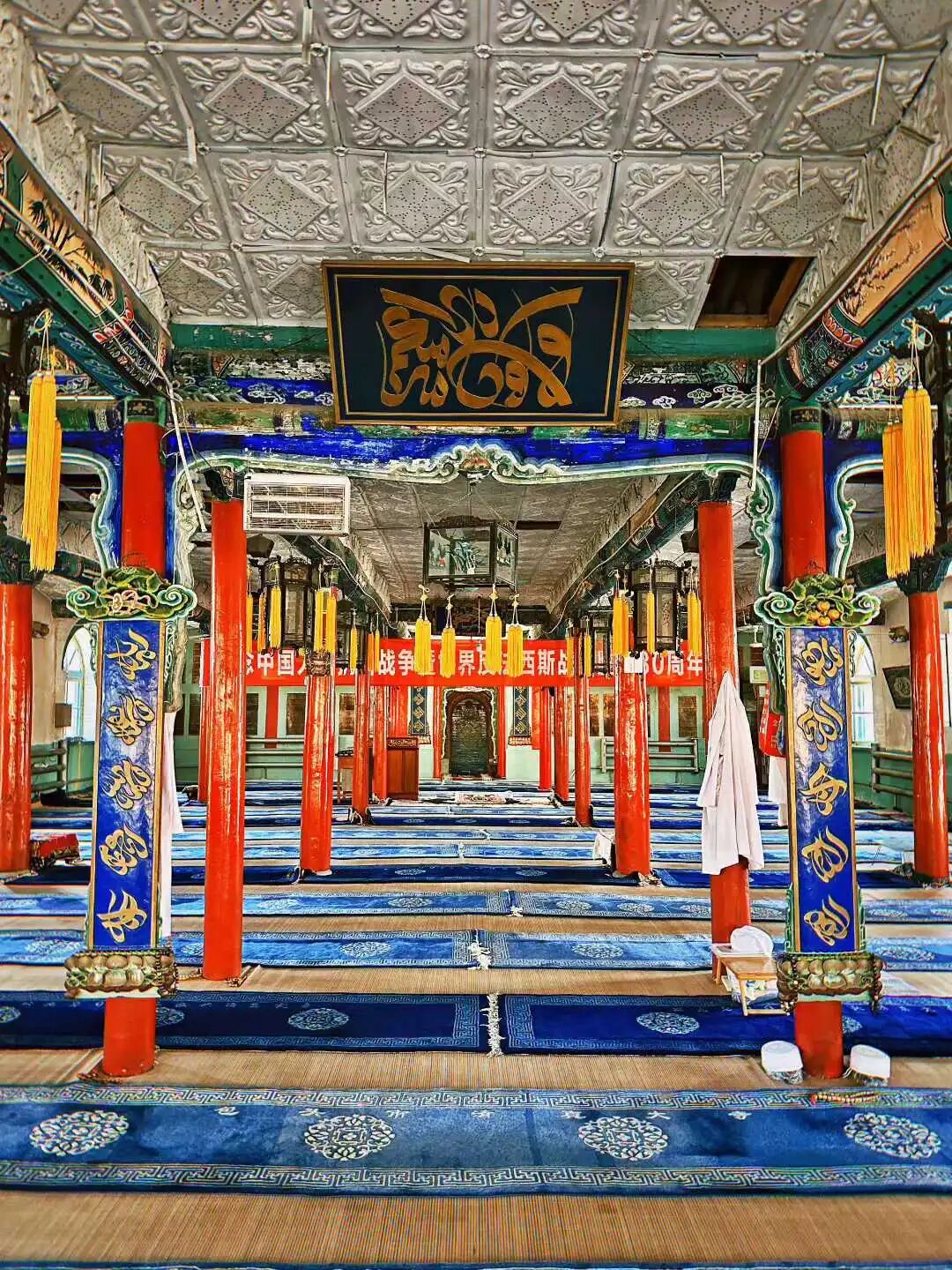
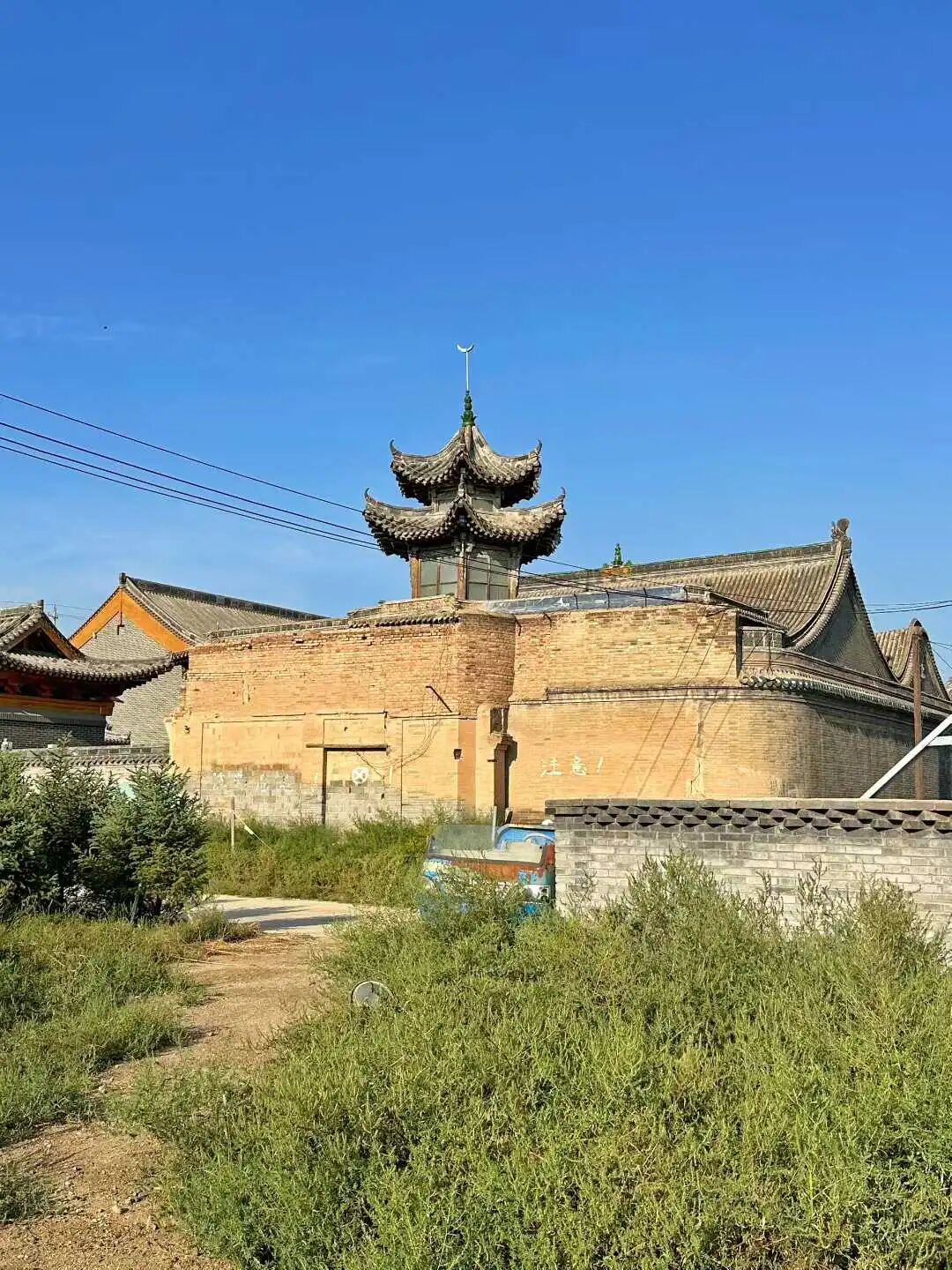
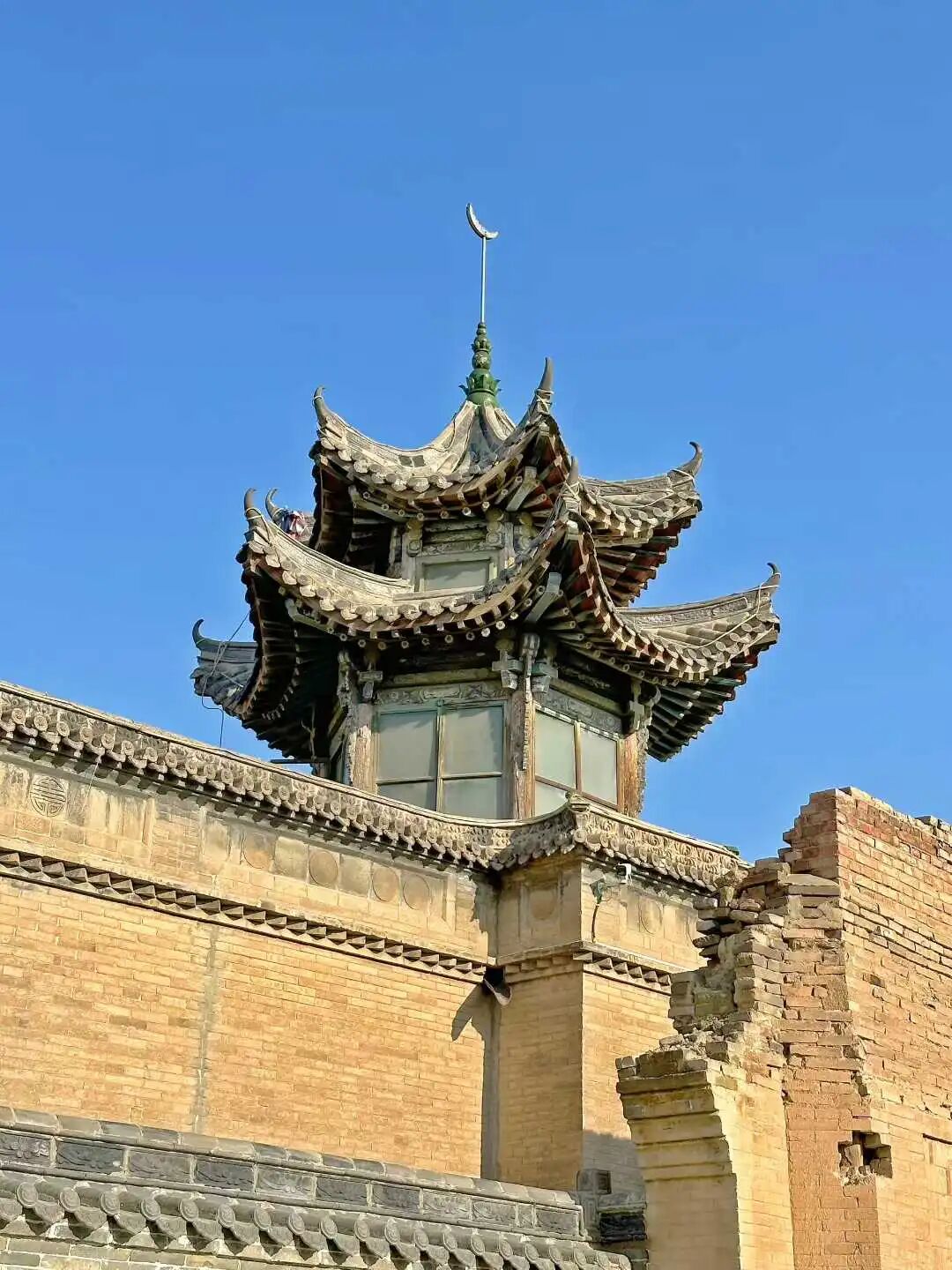
The main hall of the Baotou Great Mosque features a prayer niche (mihrab) and a pulpit (minbar) decorated with traditional Chinese-style Arabic calligraphy.
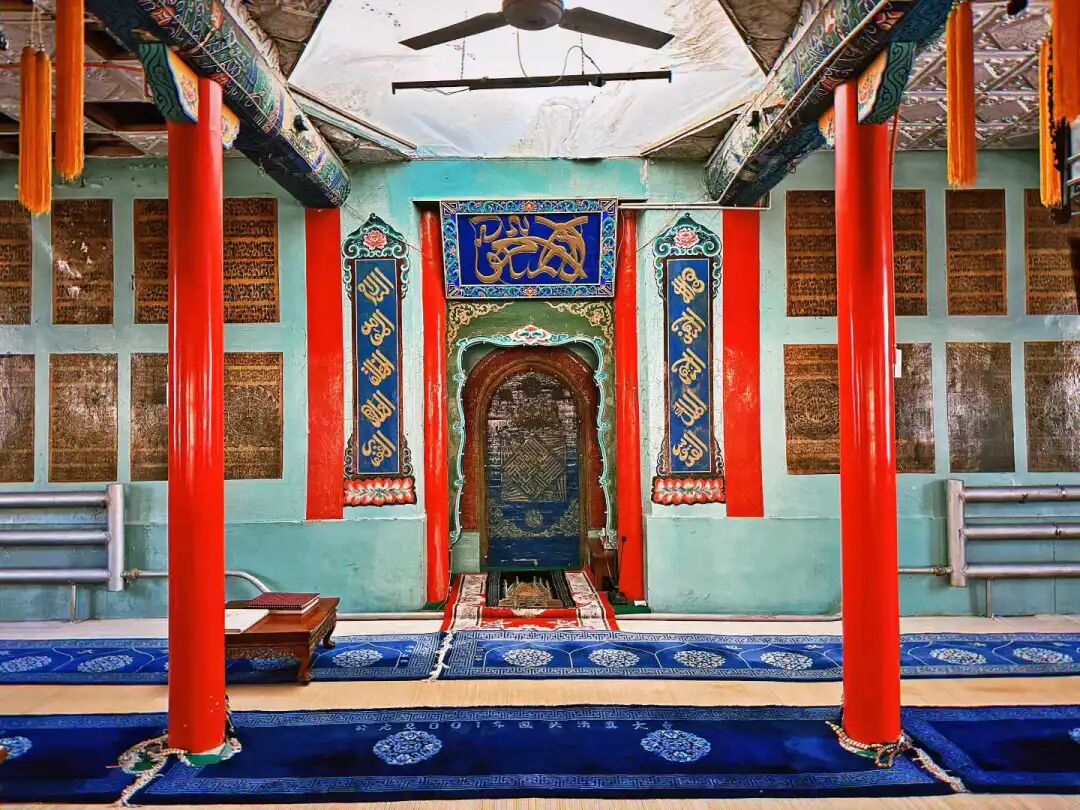
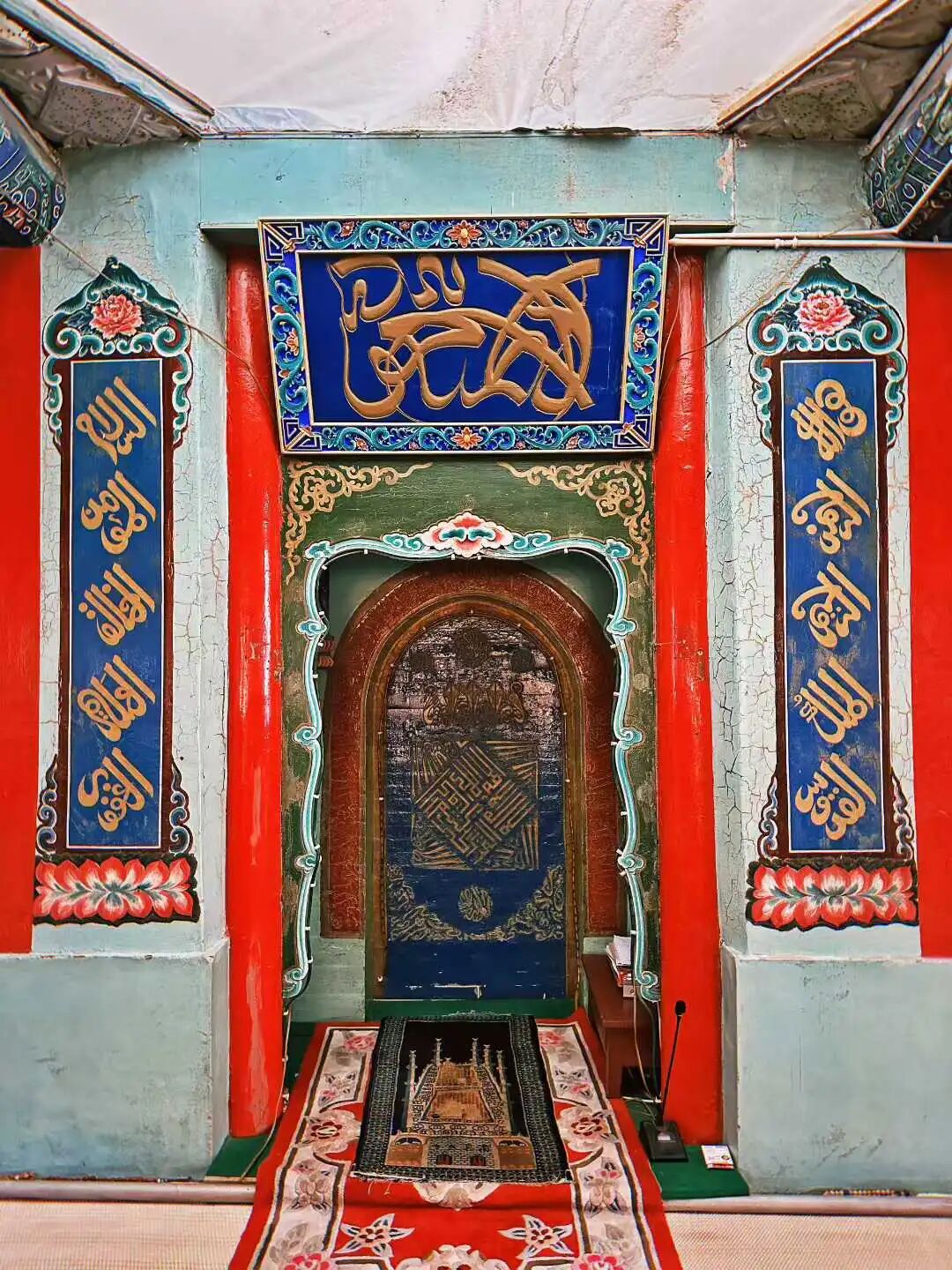
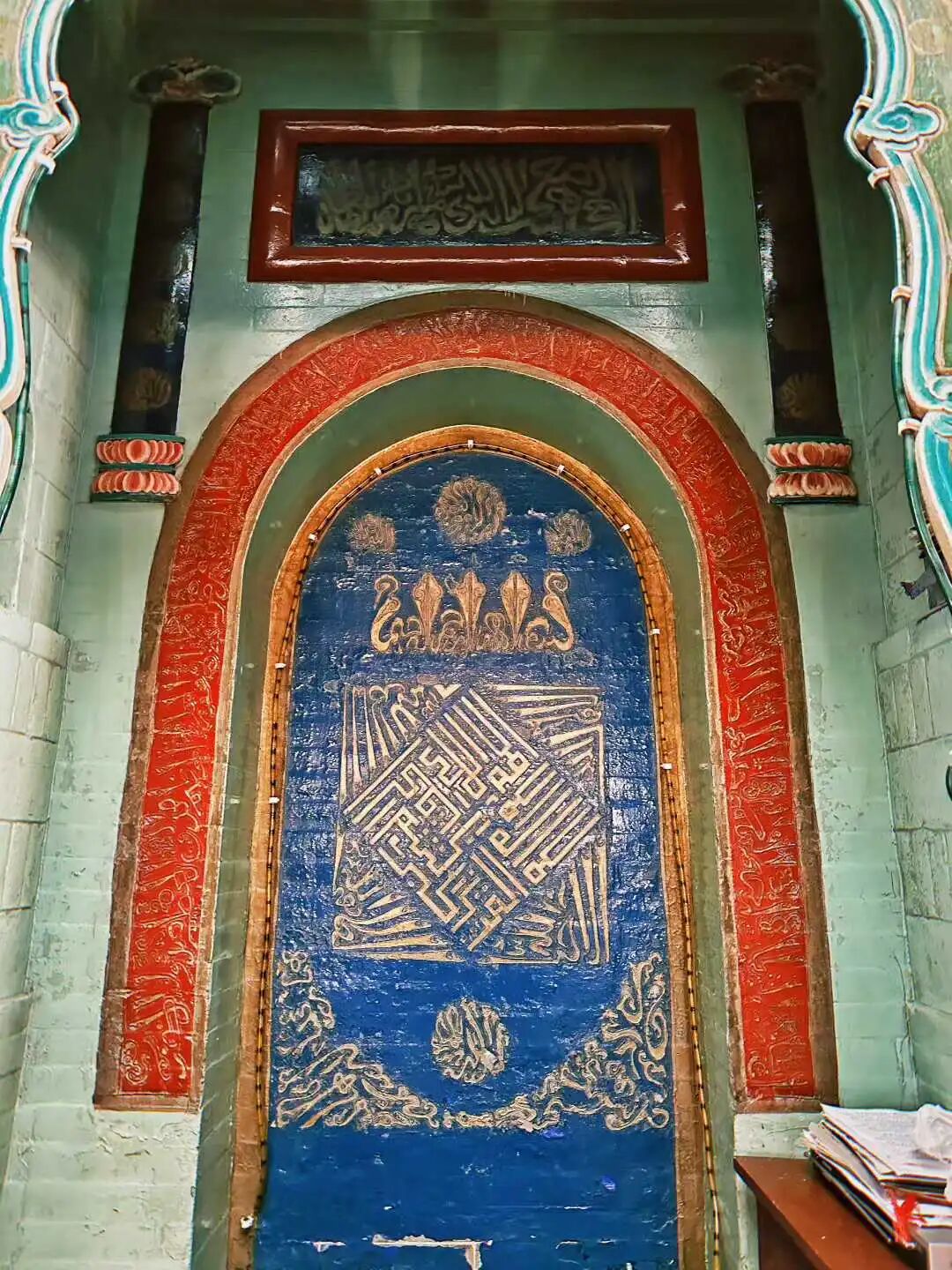
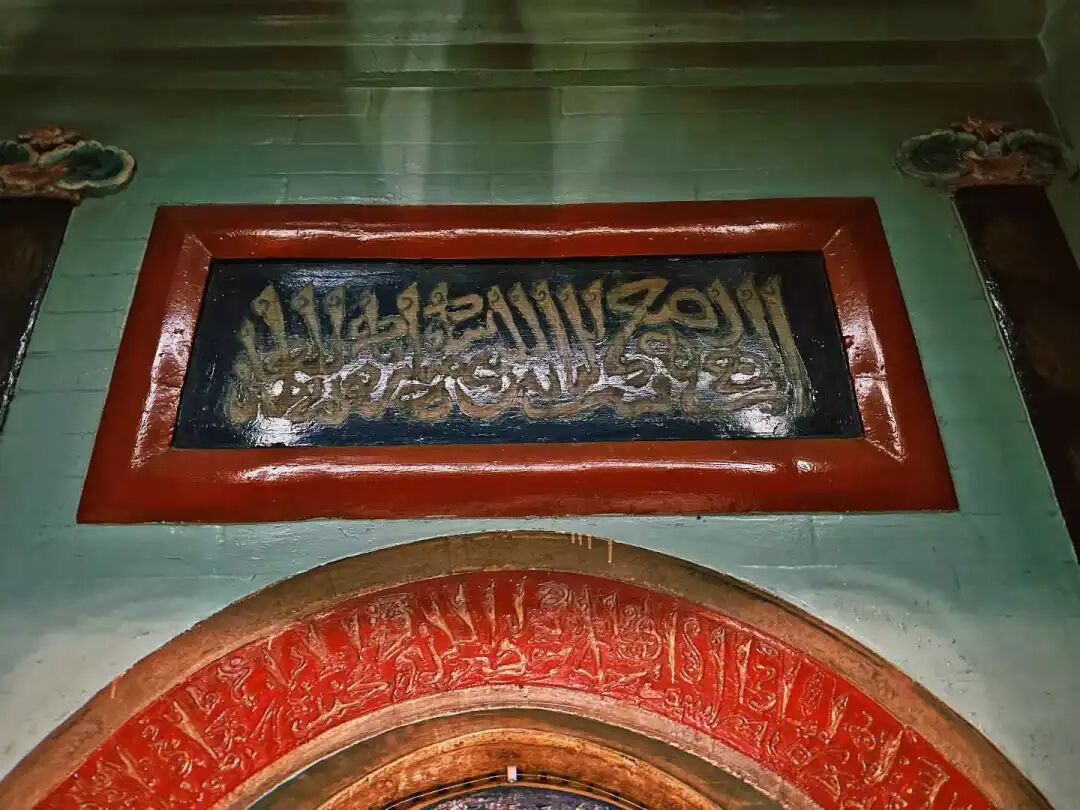
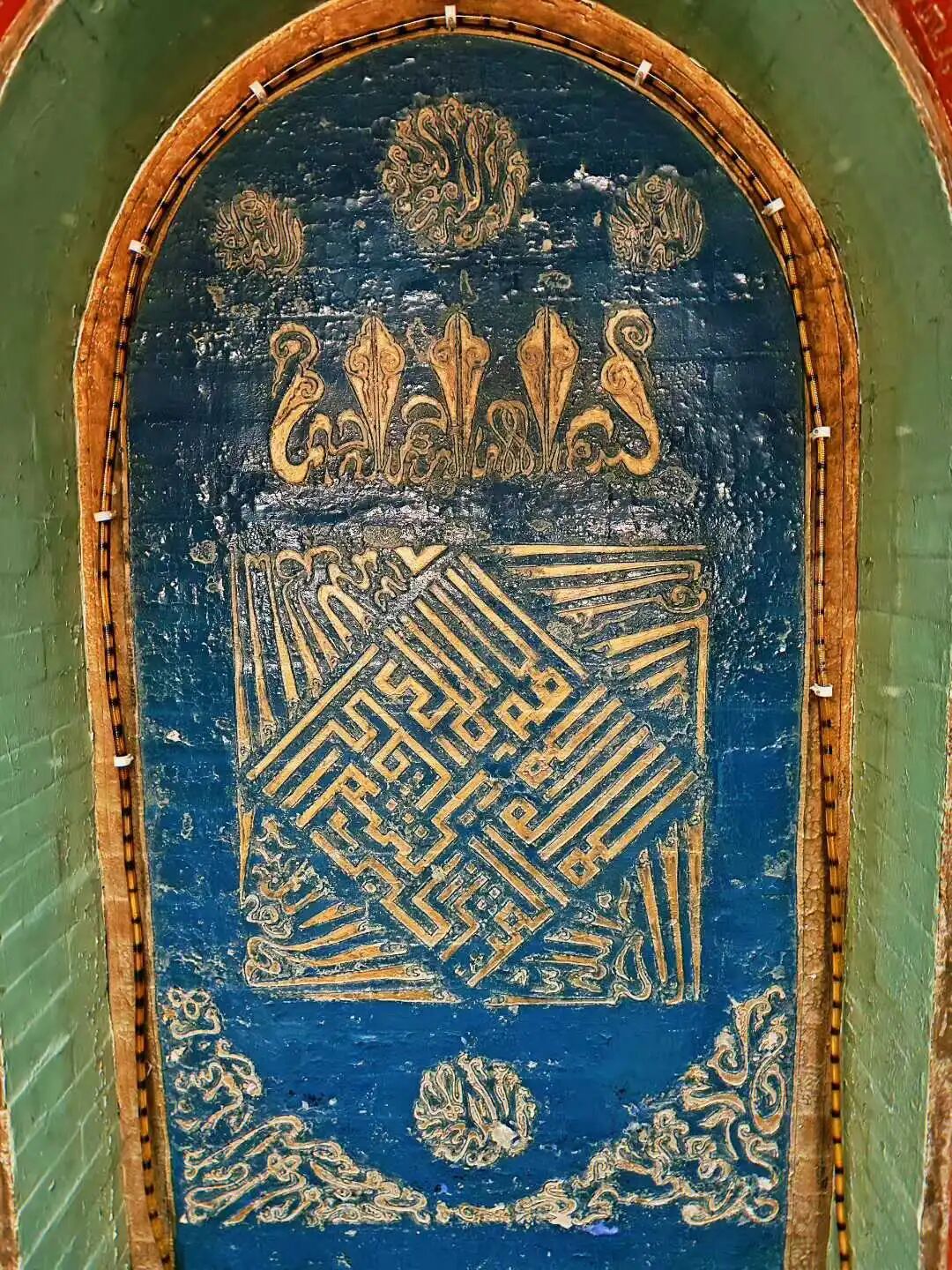
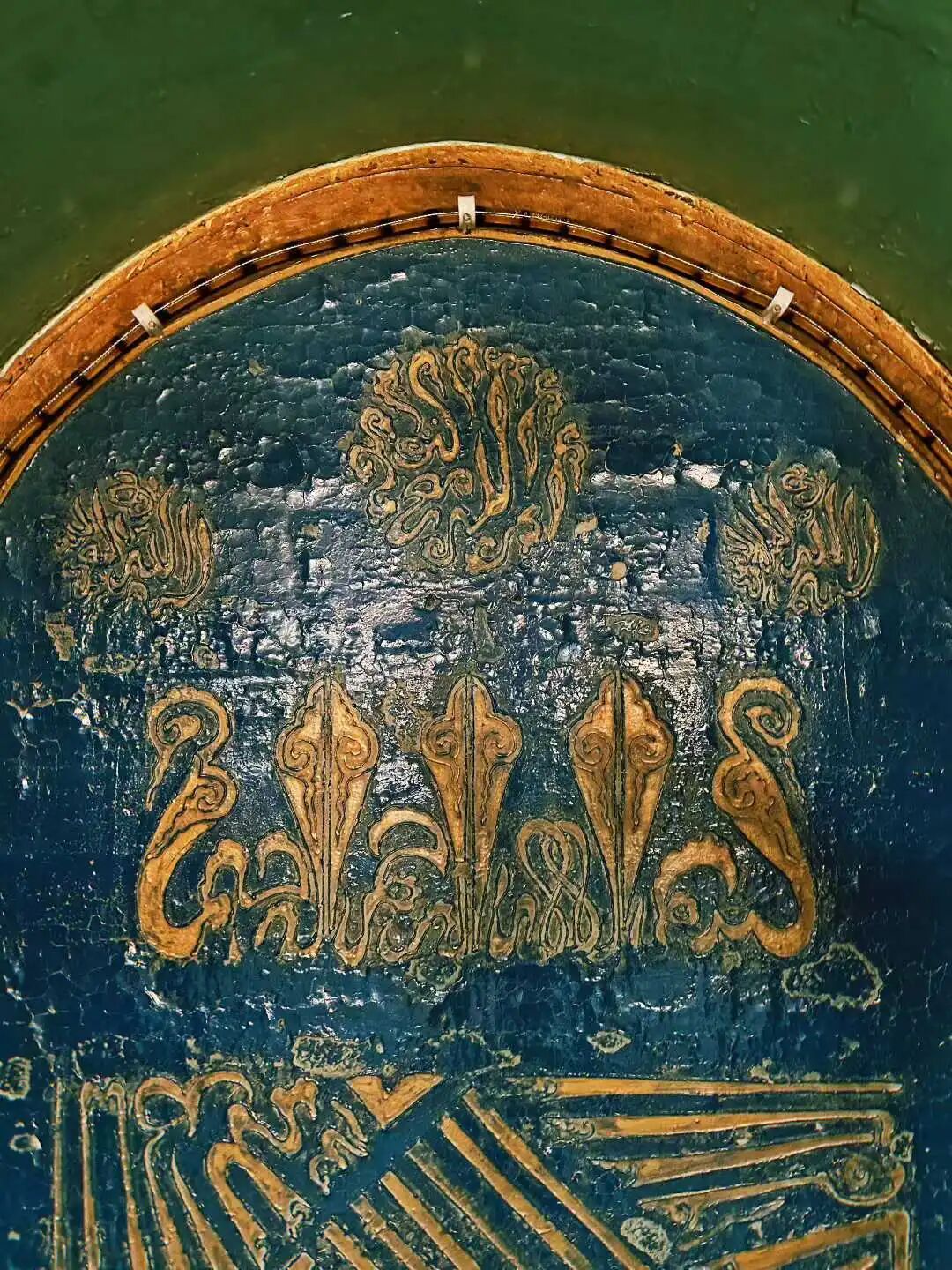
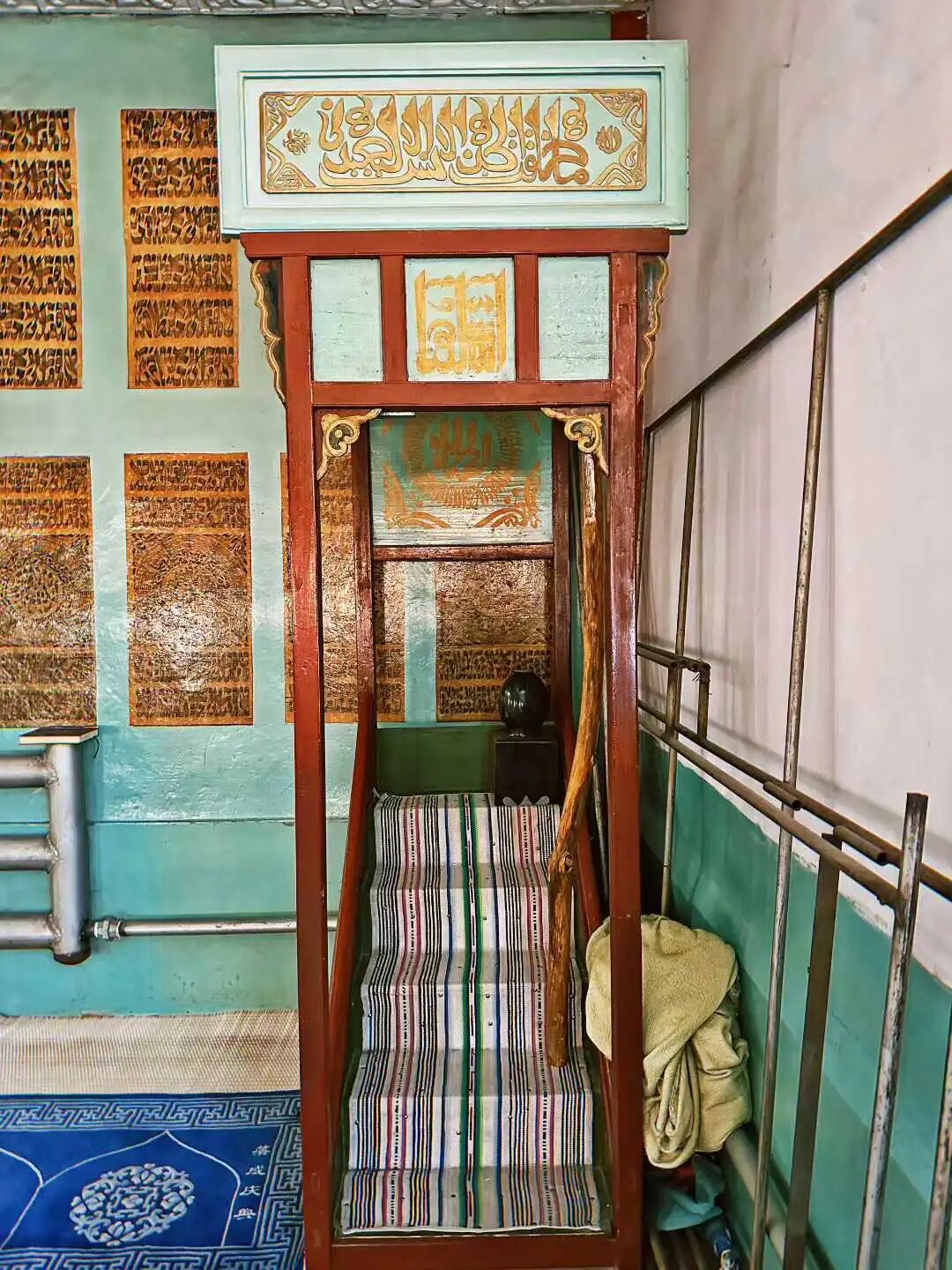
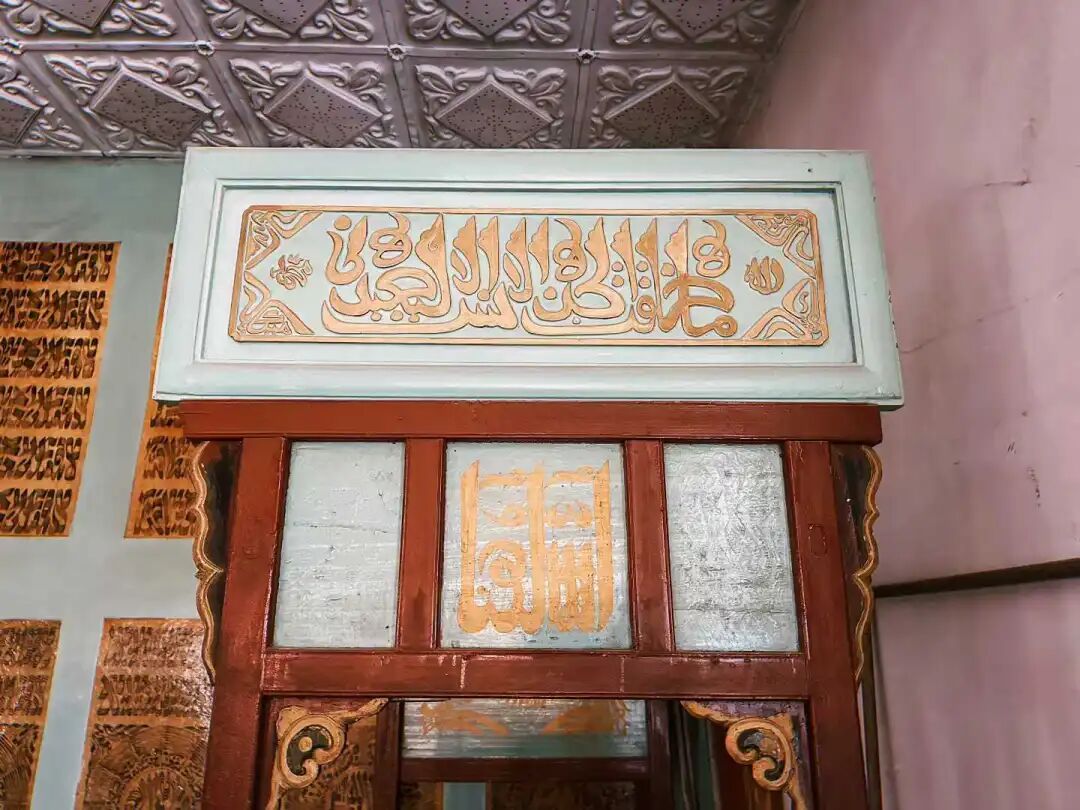
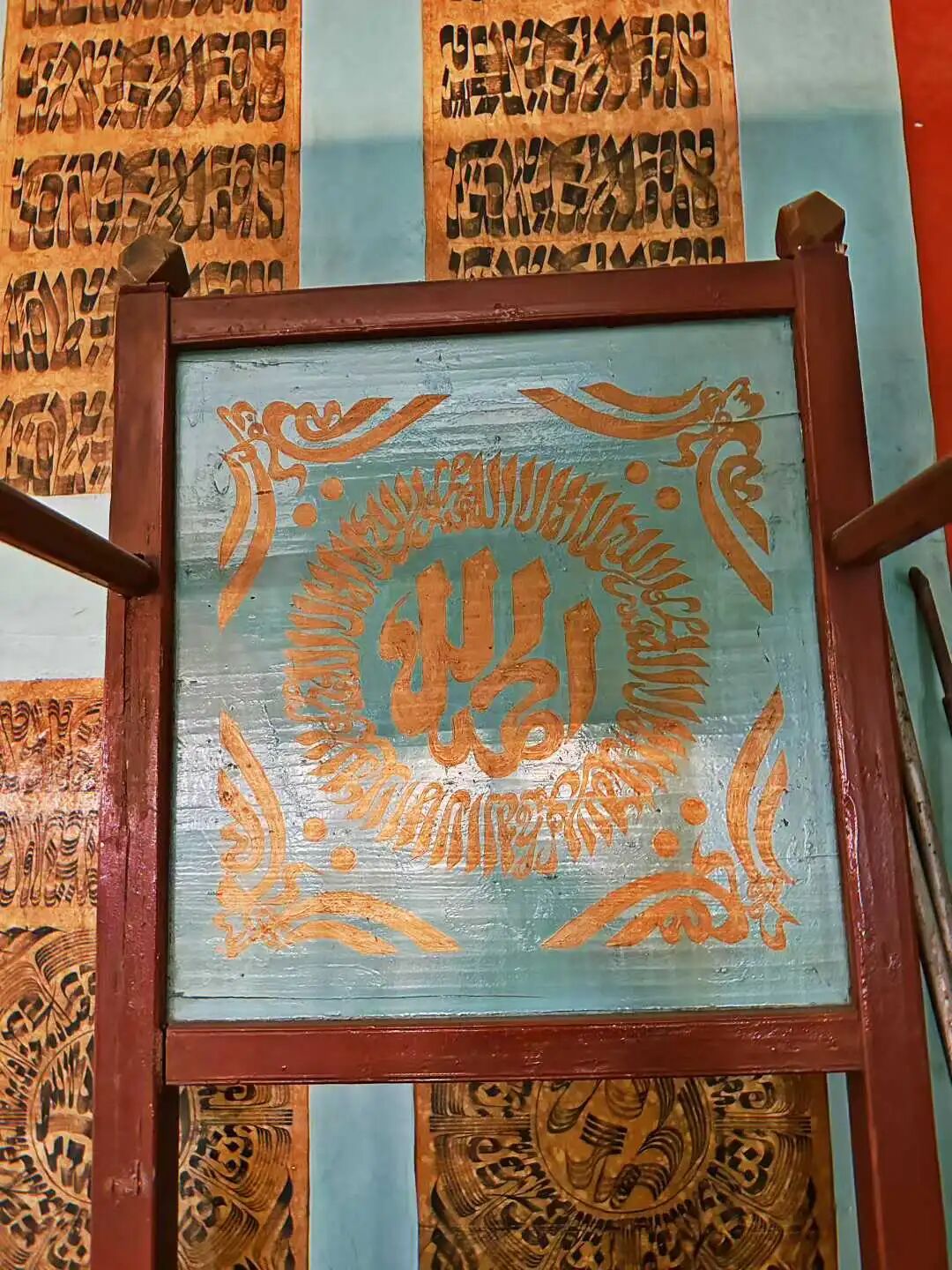
The qibla wall of the Baotou Great Mosque is decorated with 32 pieces of traditional Chinese-style large-character Arabic calligraphy, which is very impressive.
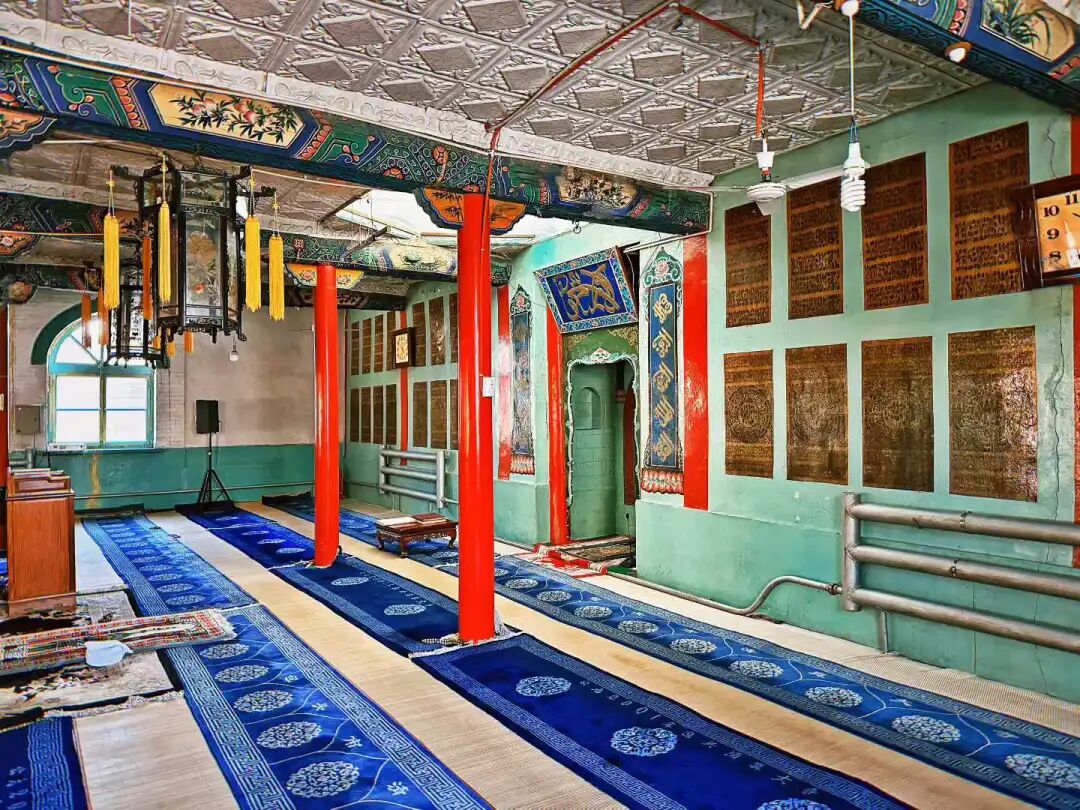
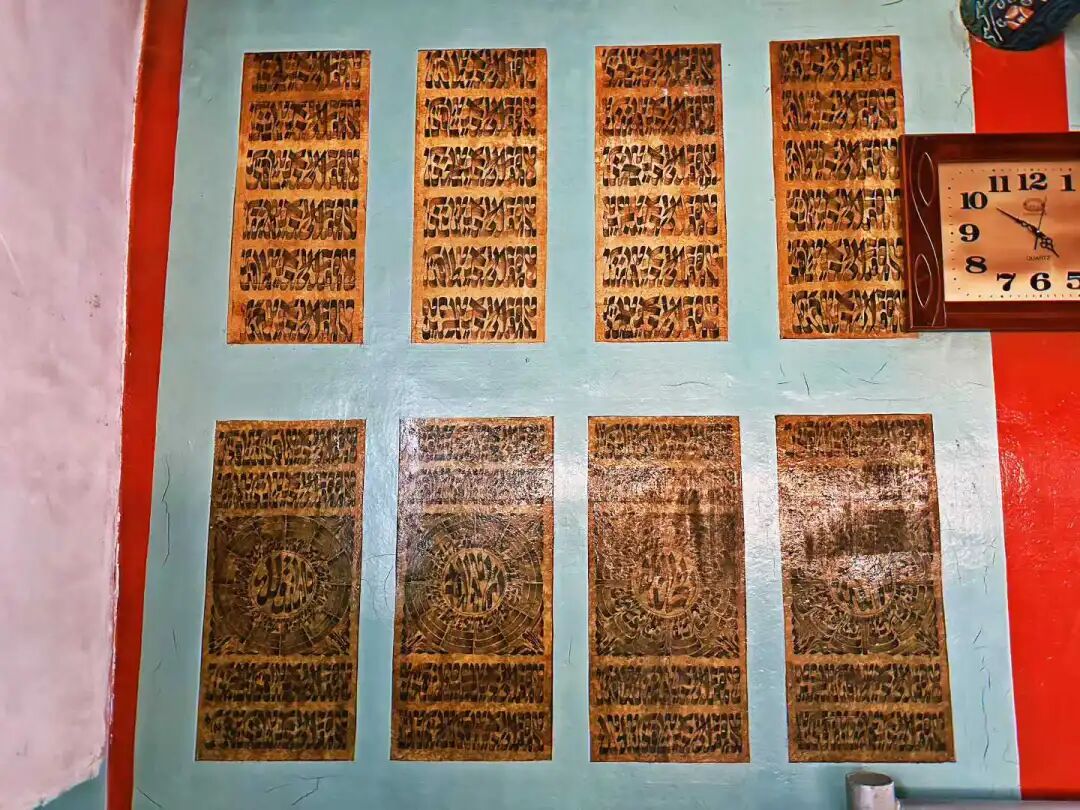
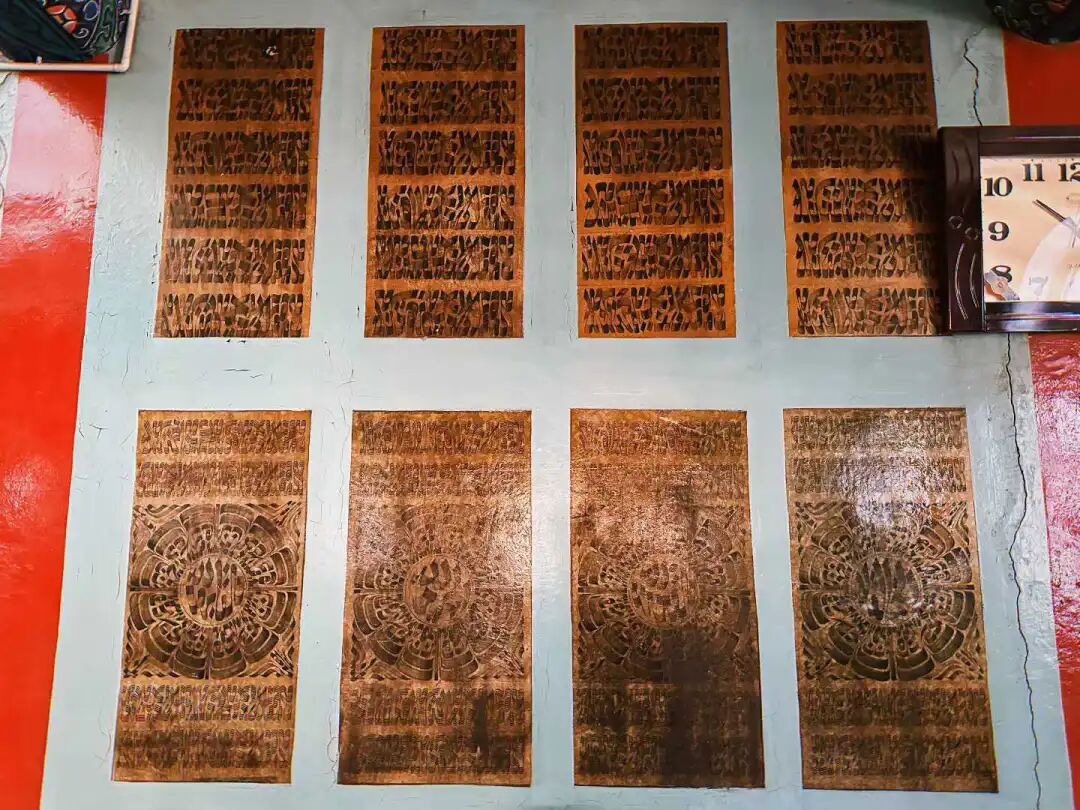
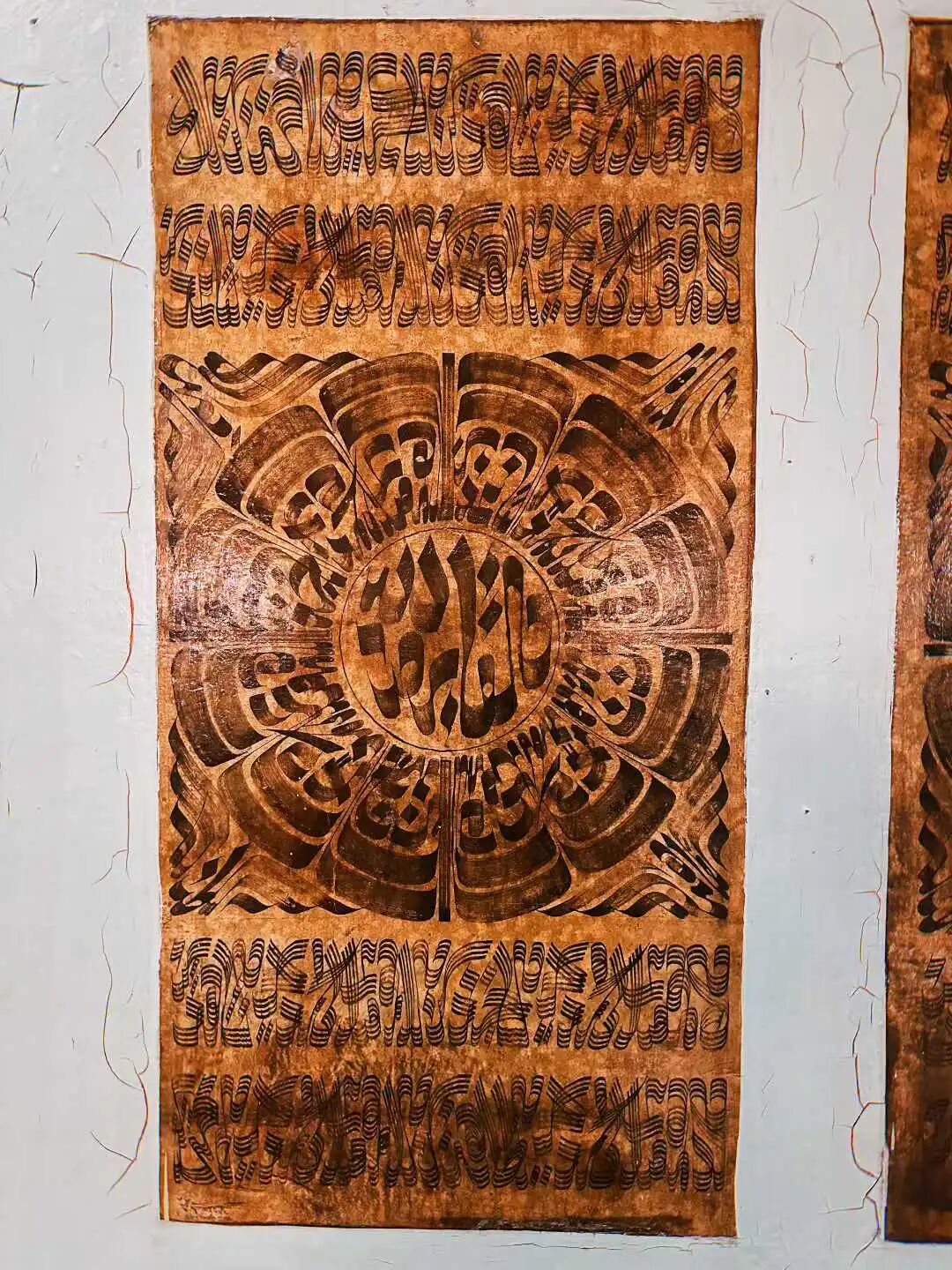
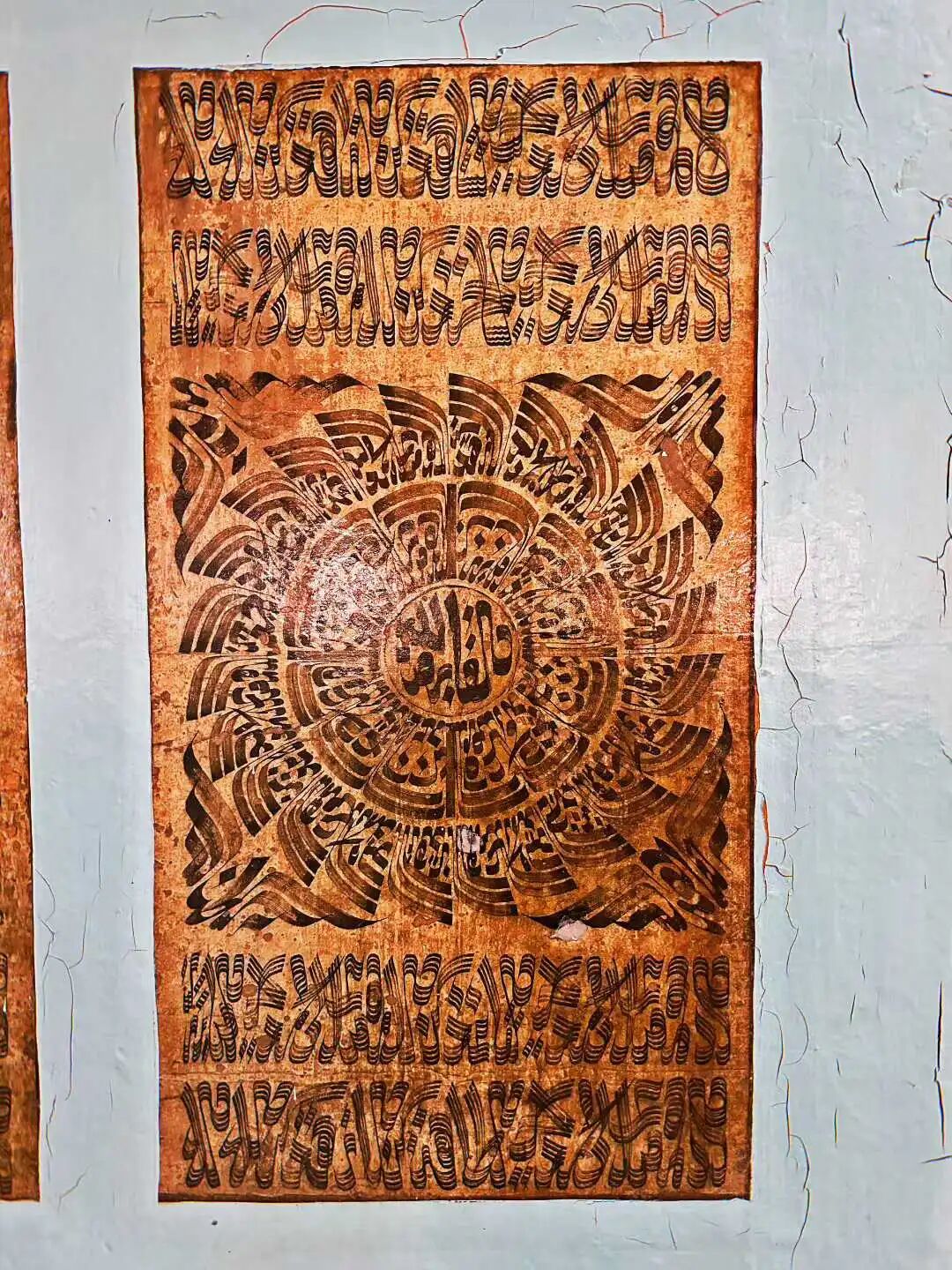
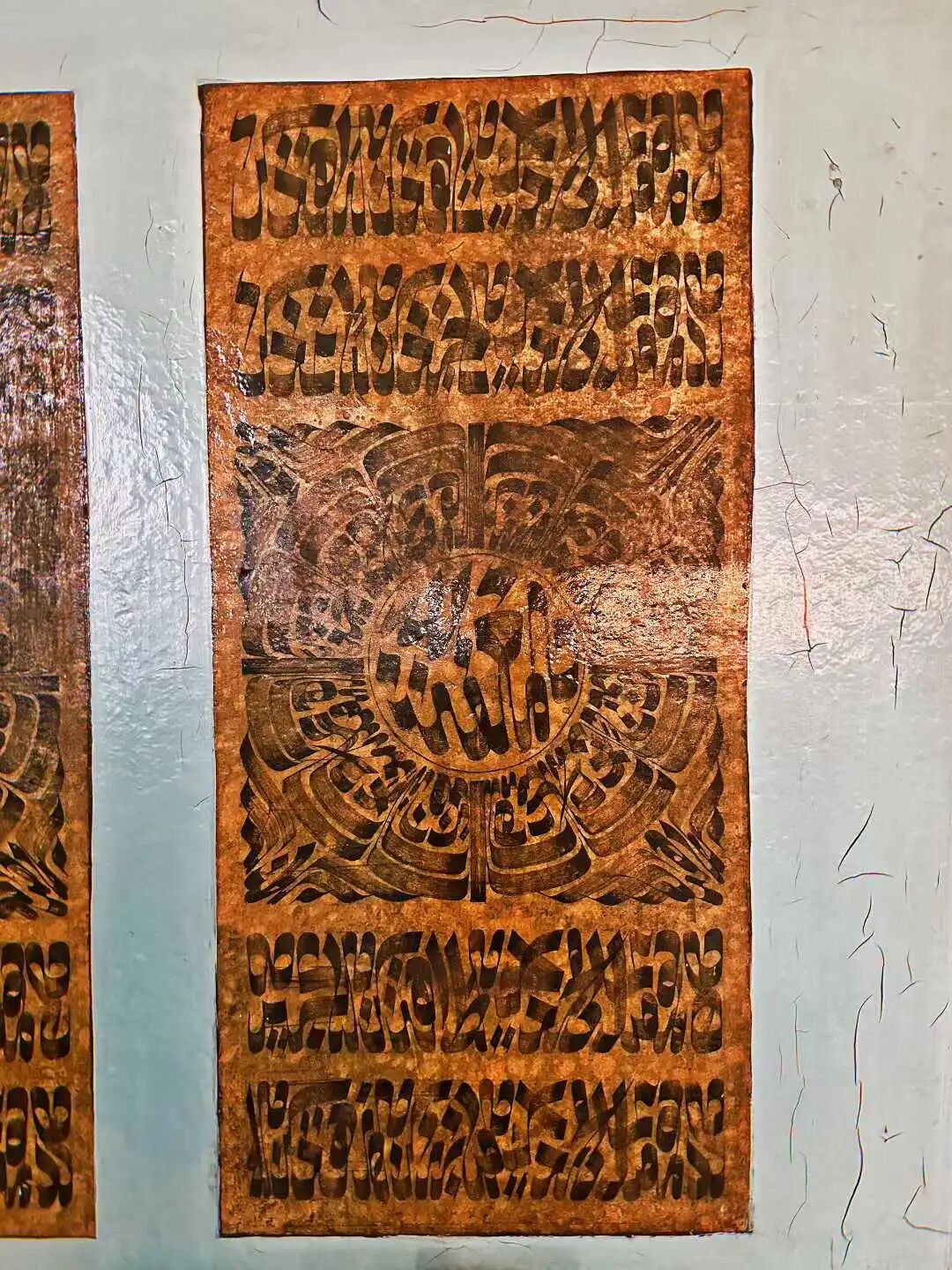
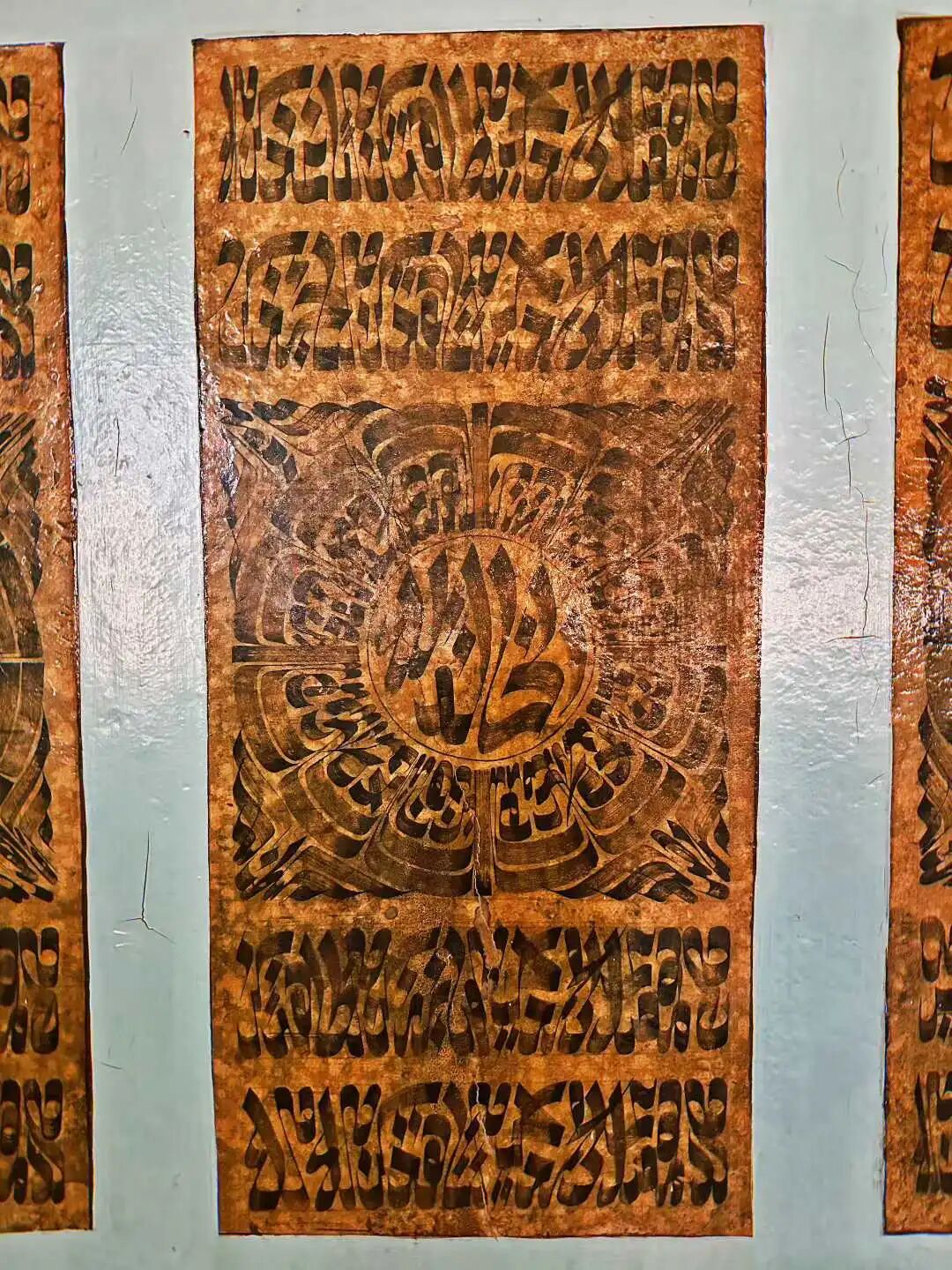
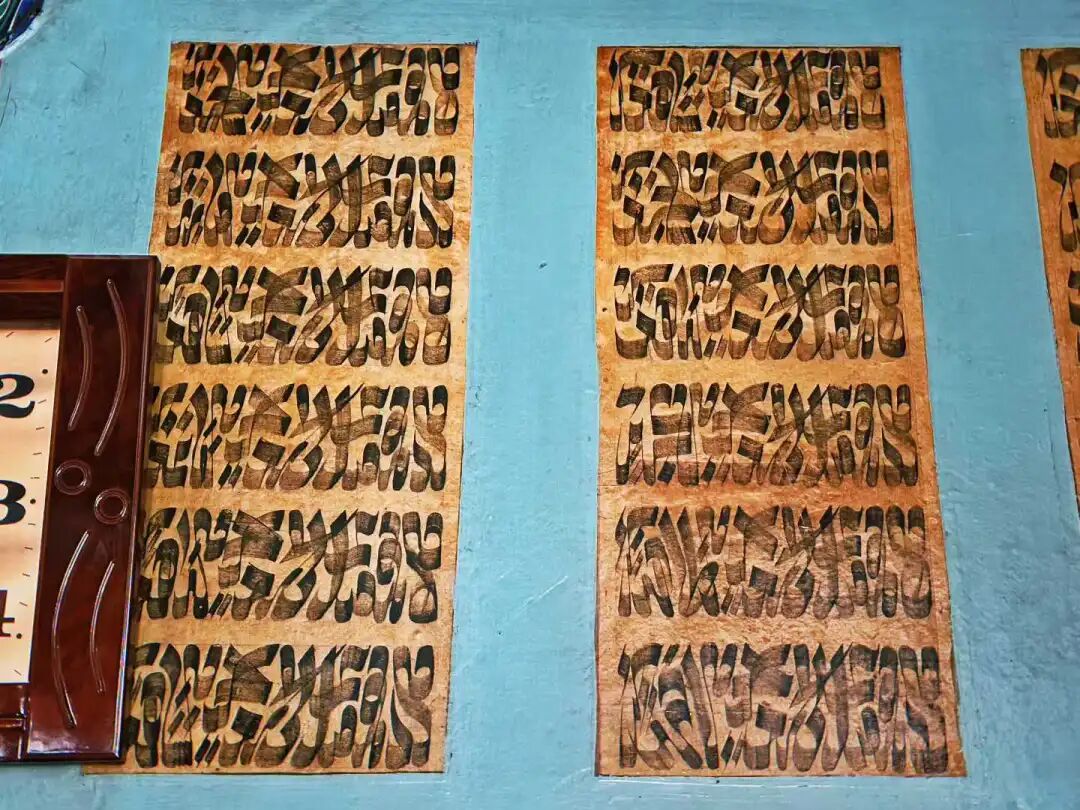
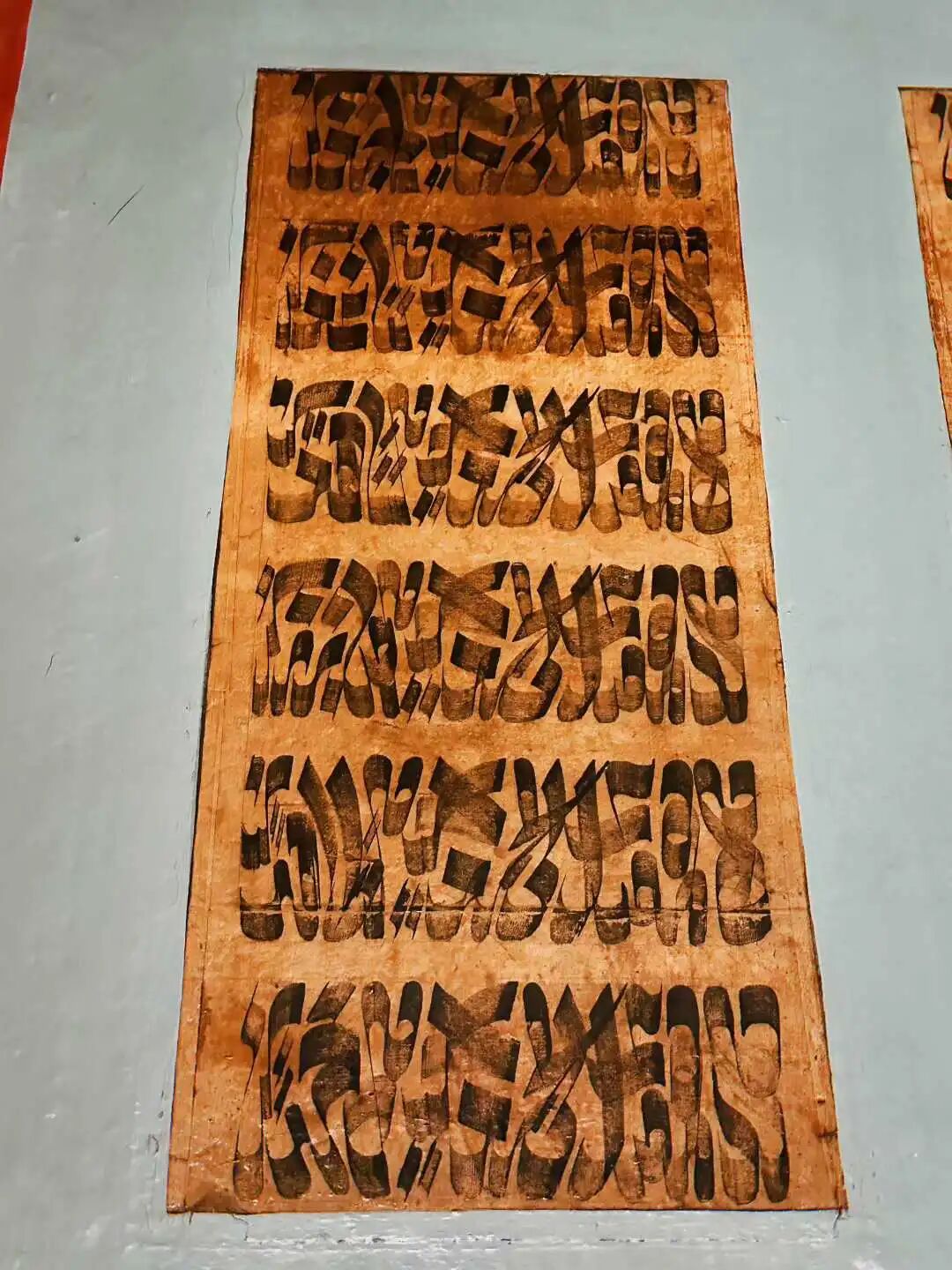
The architectural details of the Baotou Great Mosque, including the brick carvings and wood carvings, are all very exquisite.
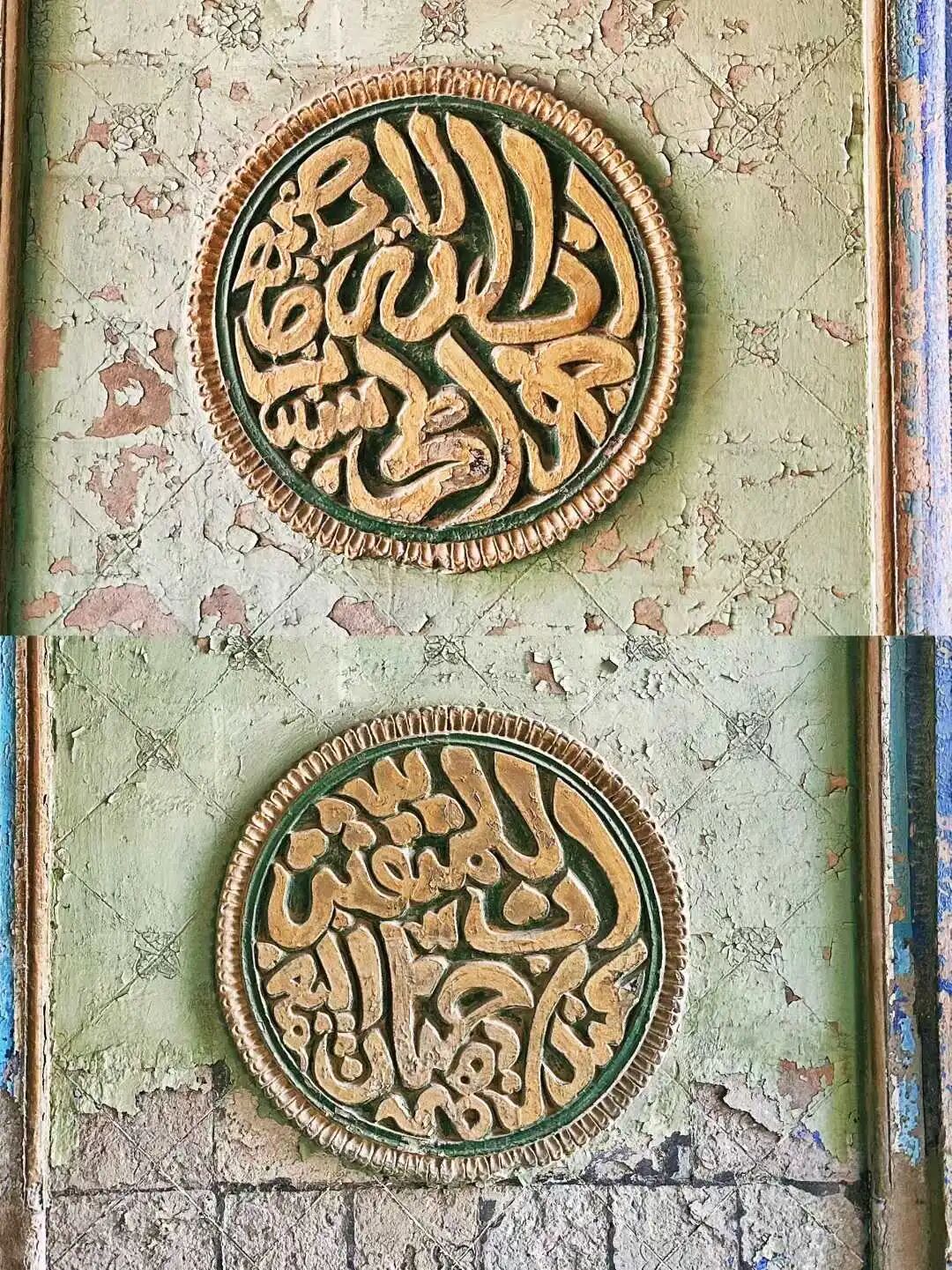
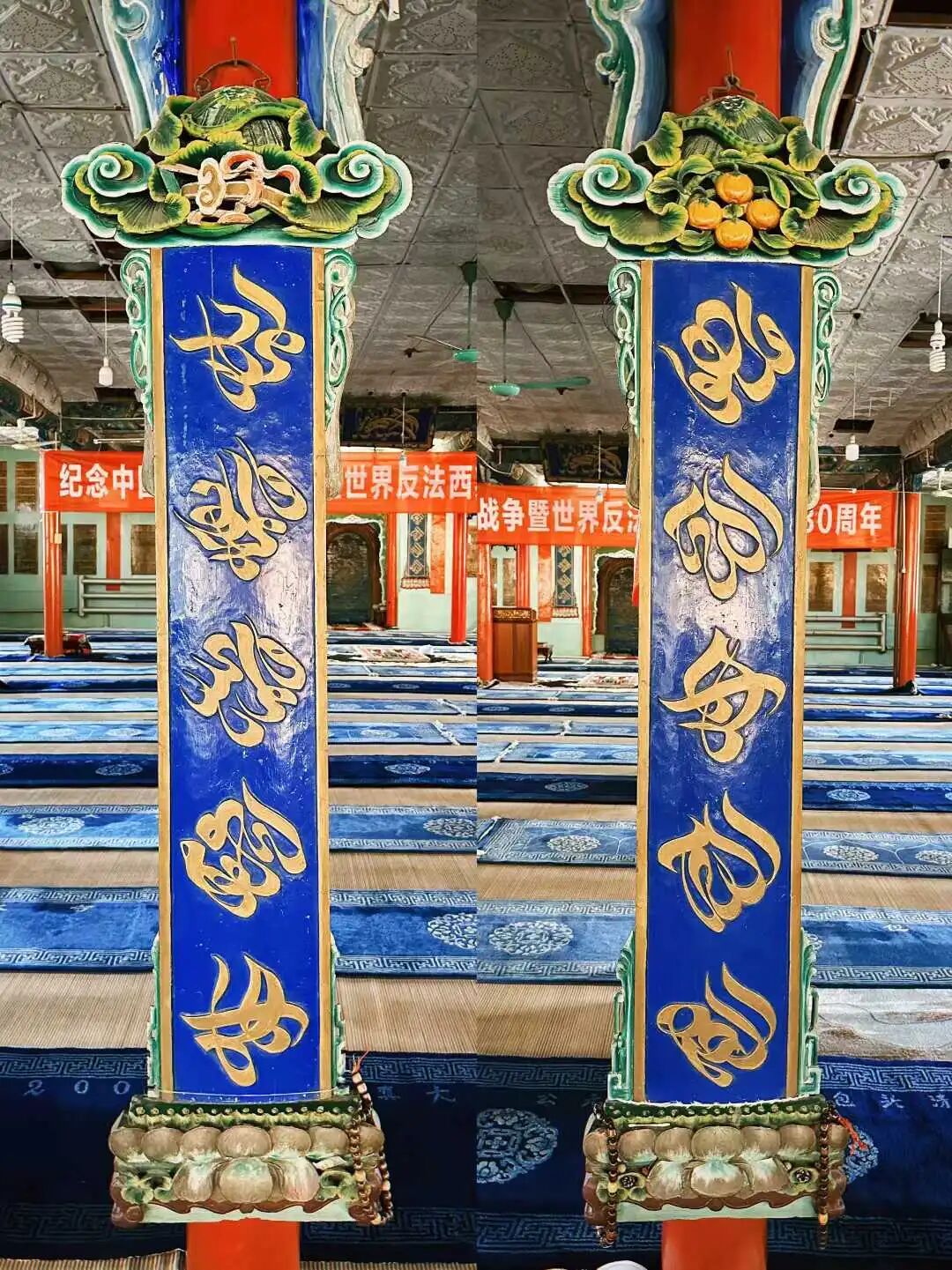
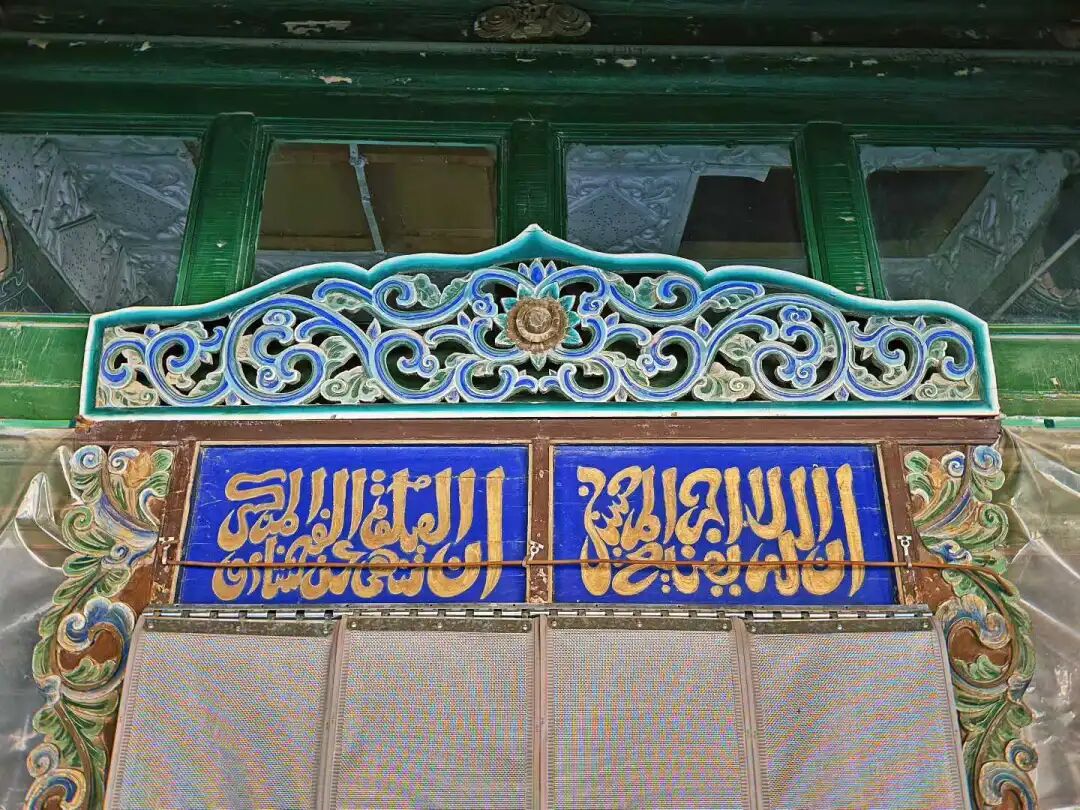
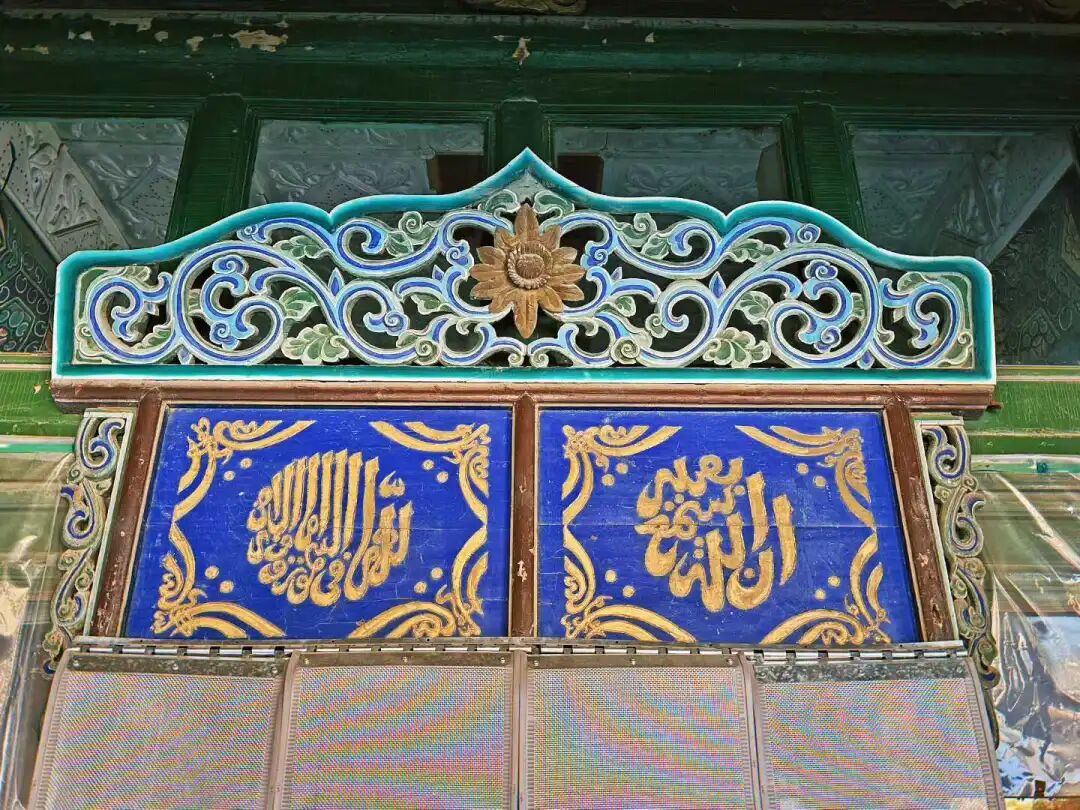
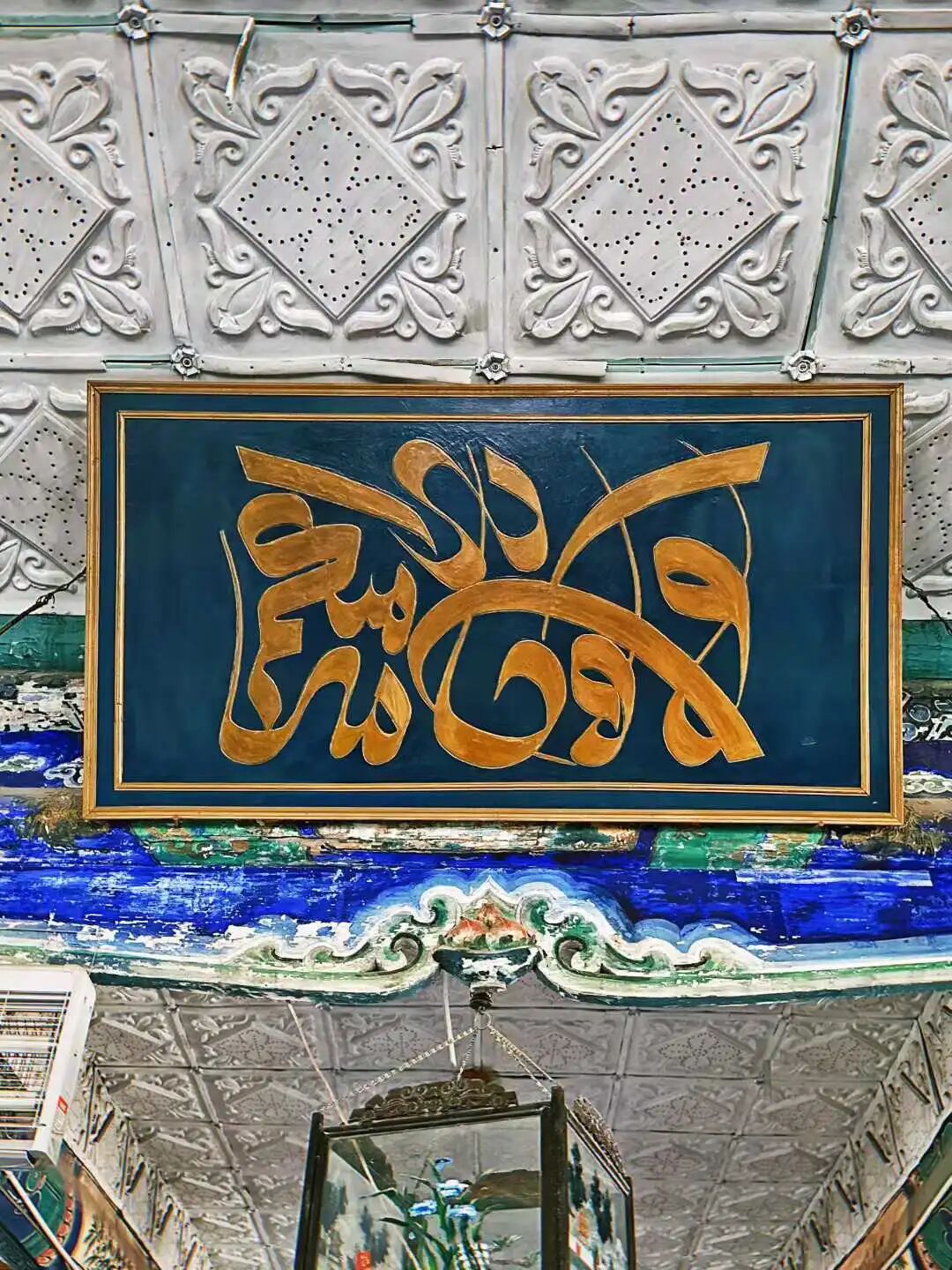
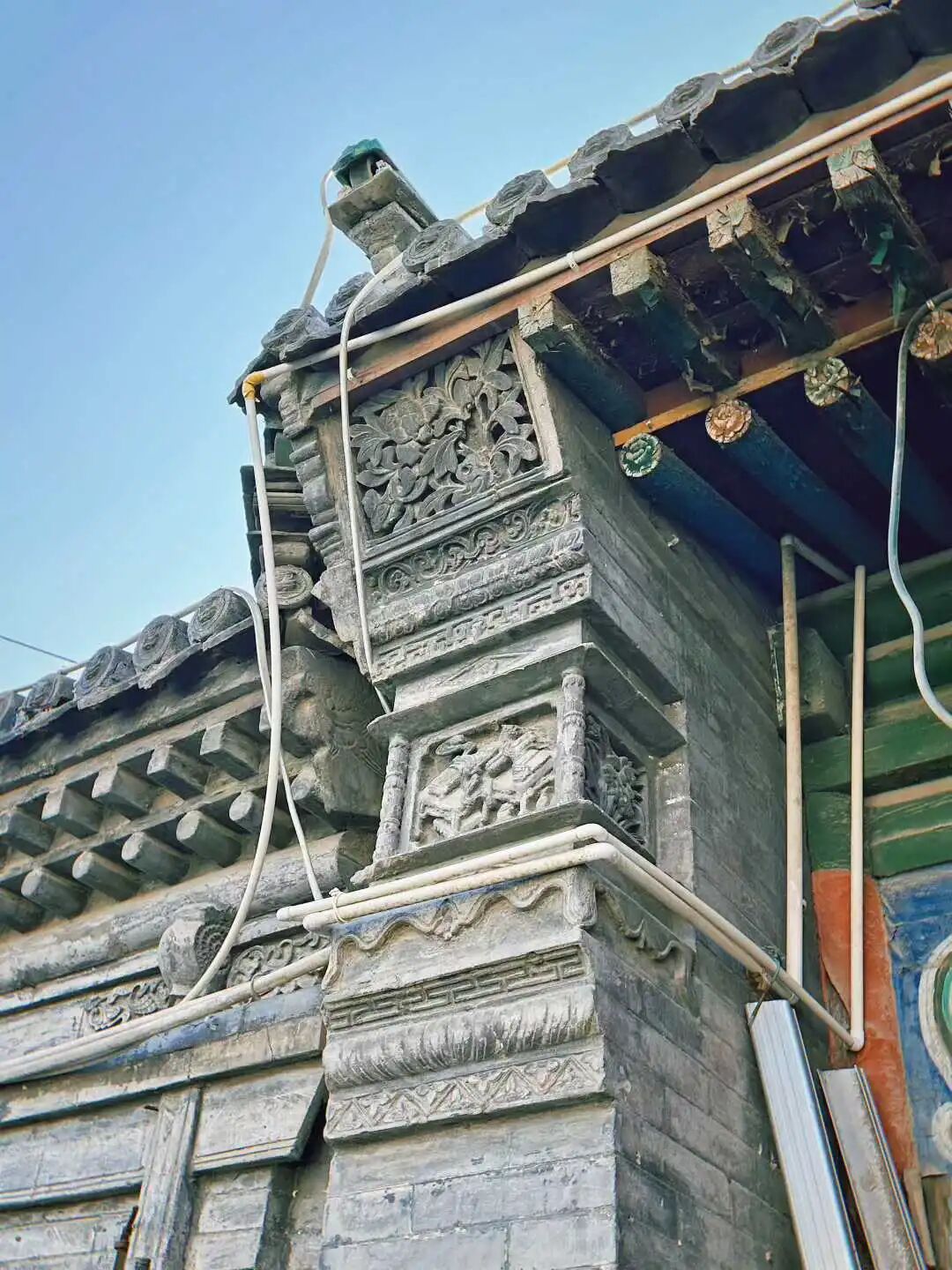
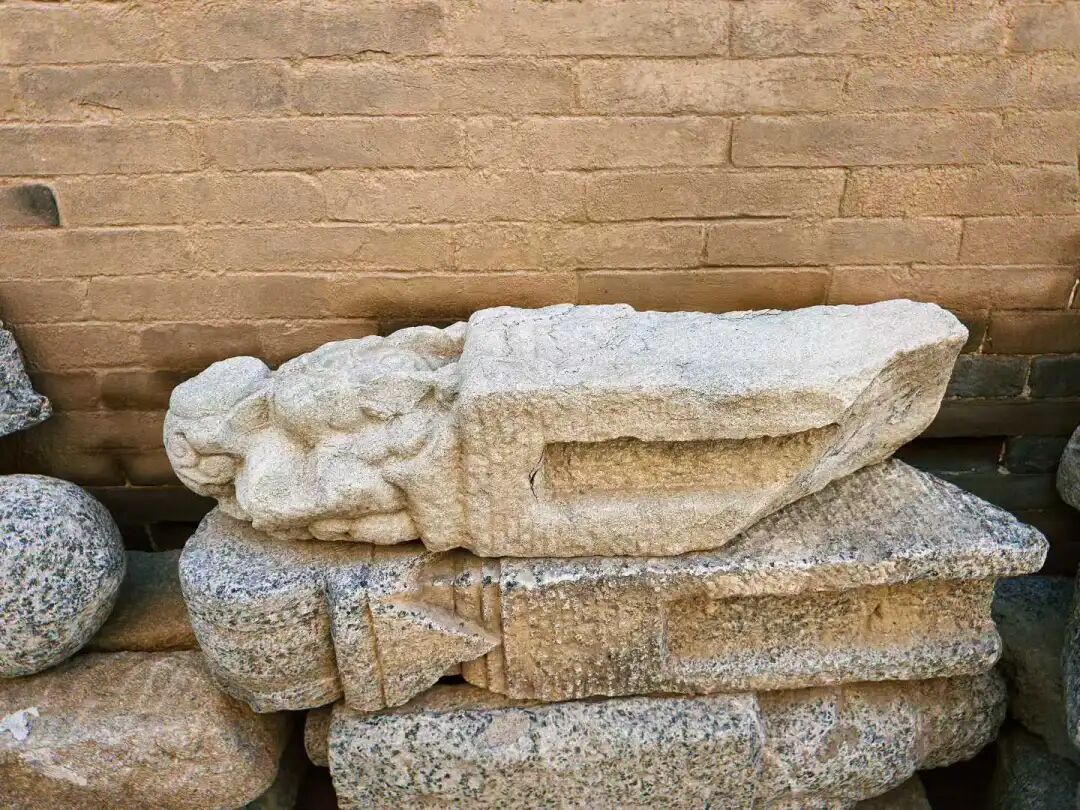
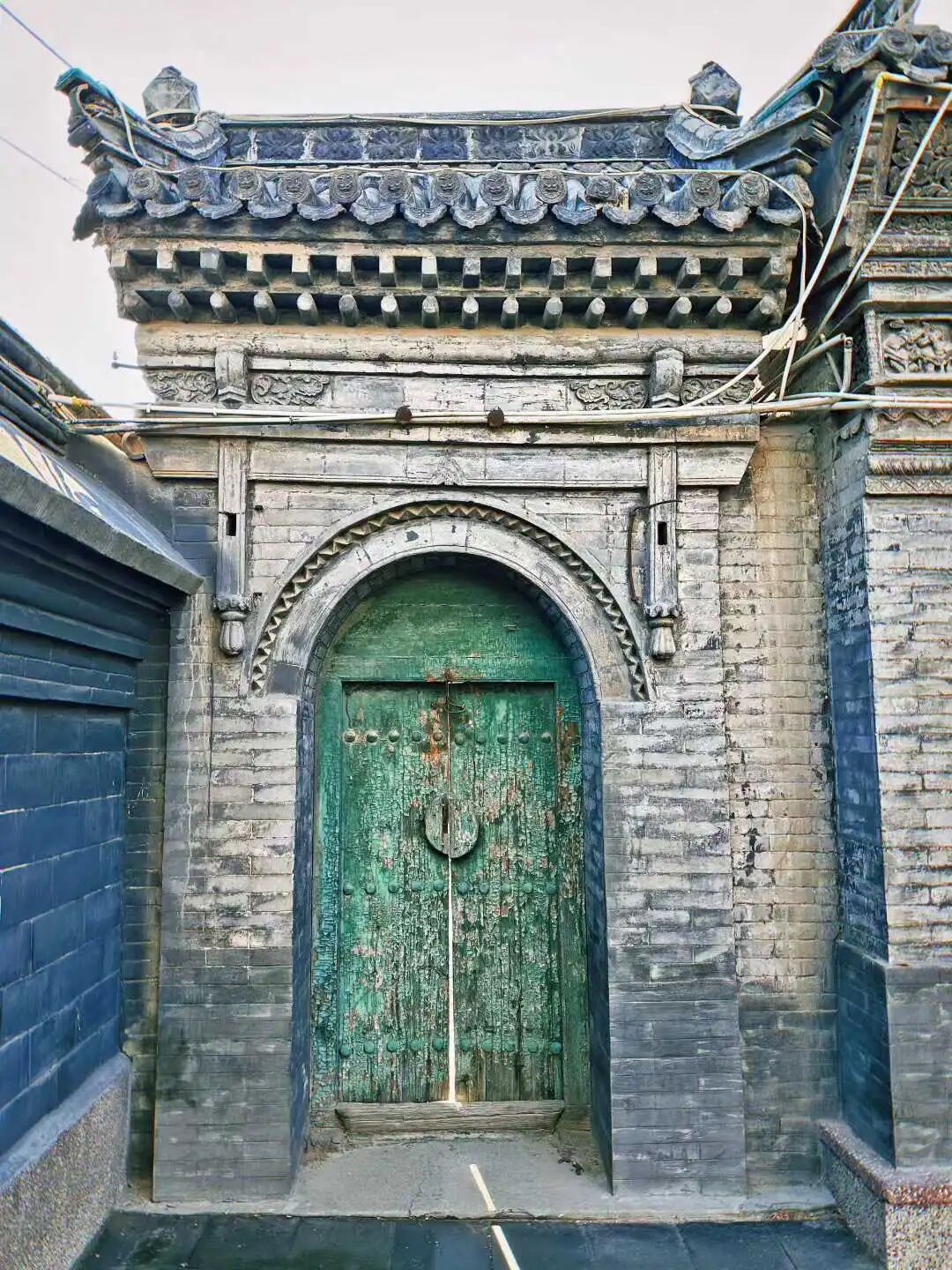
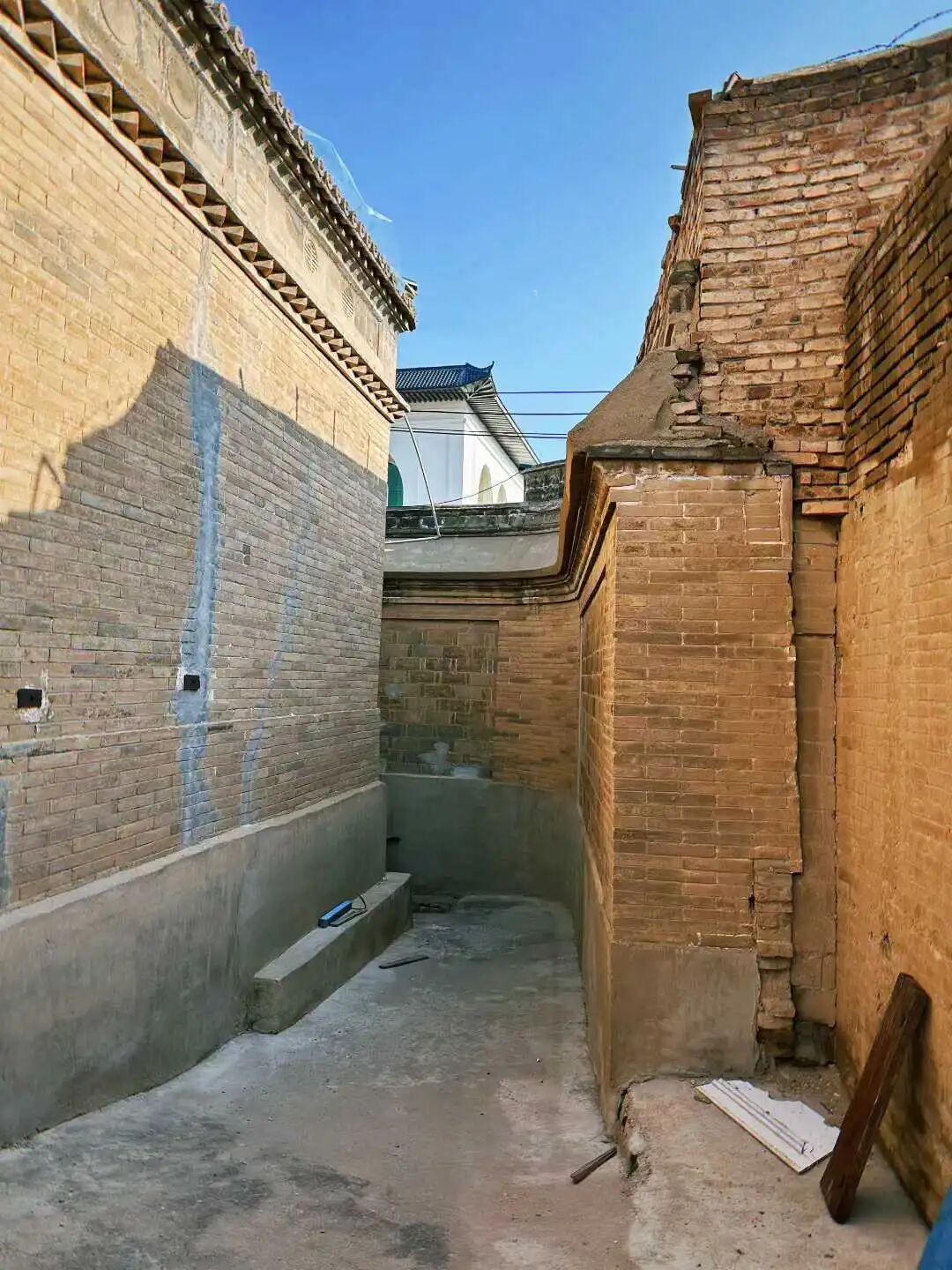
The swastika (wanzi) and taiji brick carvings in the main hall of the Baotou Great Mosque show the influence of different cultures.
During the late Qing Dynasty, under the intellectual trend of interpreting Islam through Confucianism, scholars like Liu Zhi introduced concepts like "taiji" and "yin-yang" into the faith. The book "The Nature and Principle of Islam" (Tianfang Xingli) contains the record: "Movement creates yang, stillness creates yin; this is the manifestation of taiji, which is the manifestation of the True One."
The swastika (wanzi) is a traditional Chinese auspicious pattern. The swastika represents good fortune, and the "never-ending" (budao tou) design represents continuity. It frequently appears in architectural brick, stone, and wood carvings.
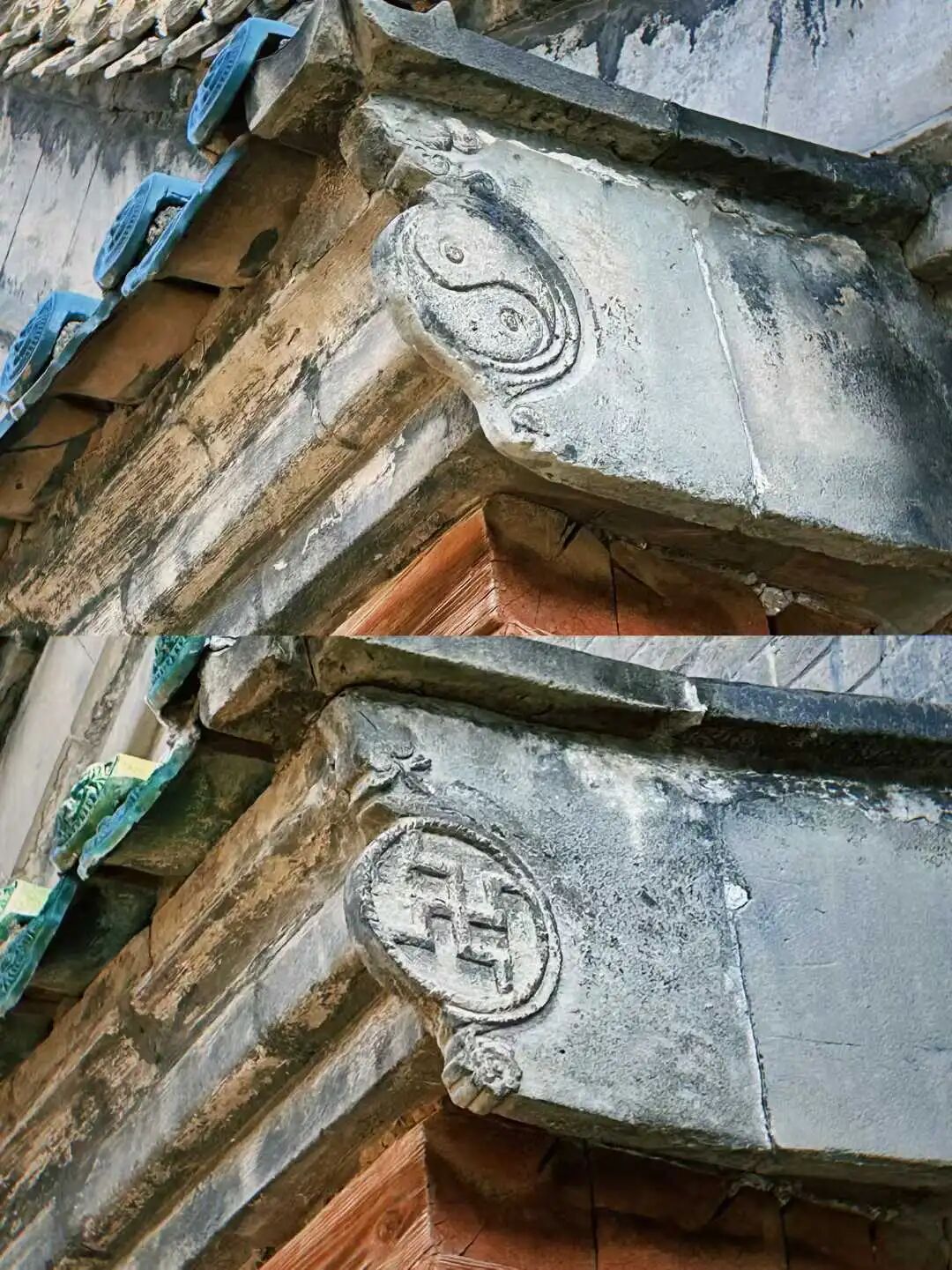
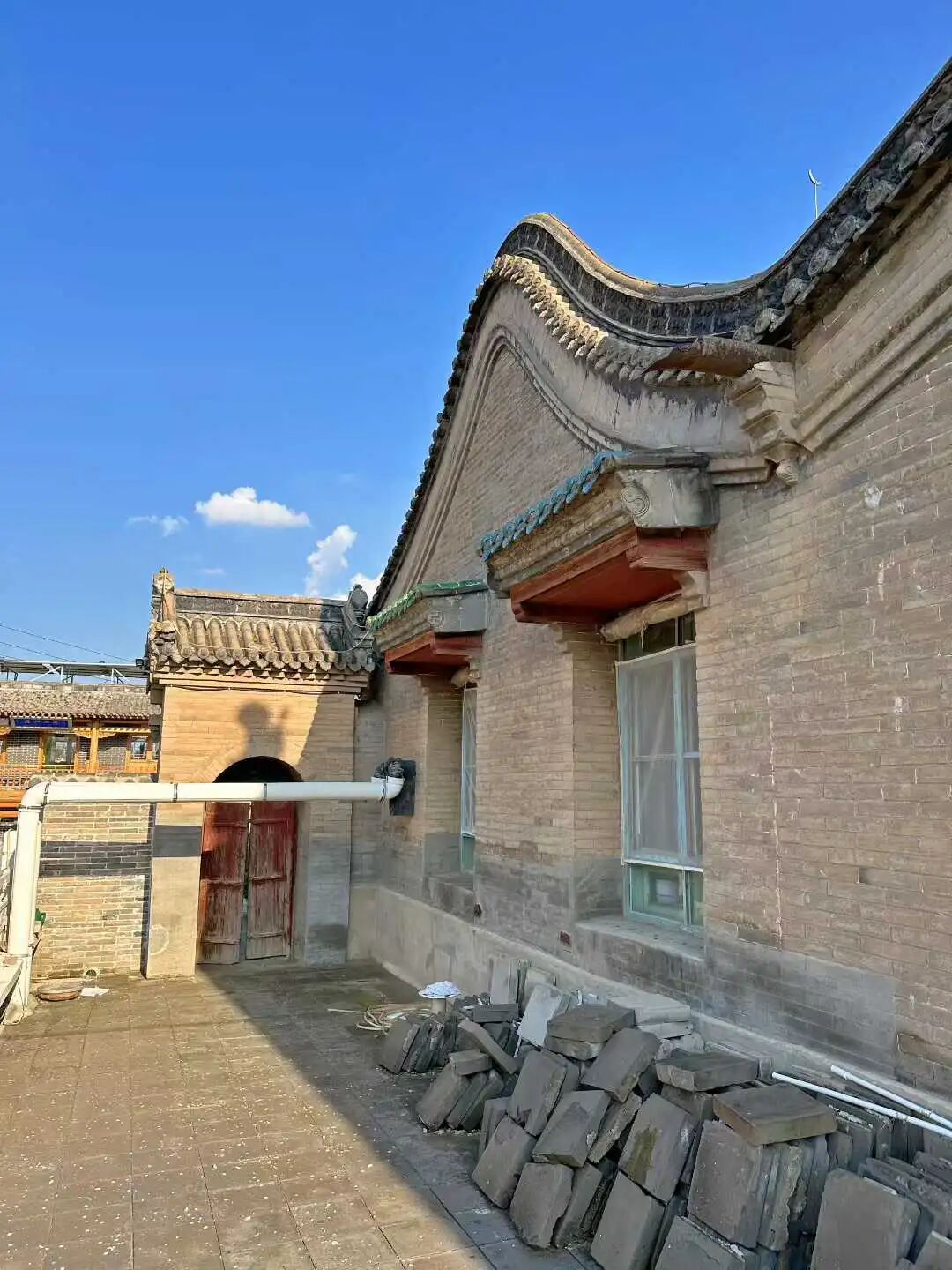
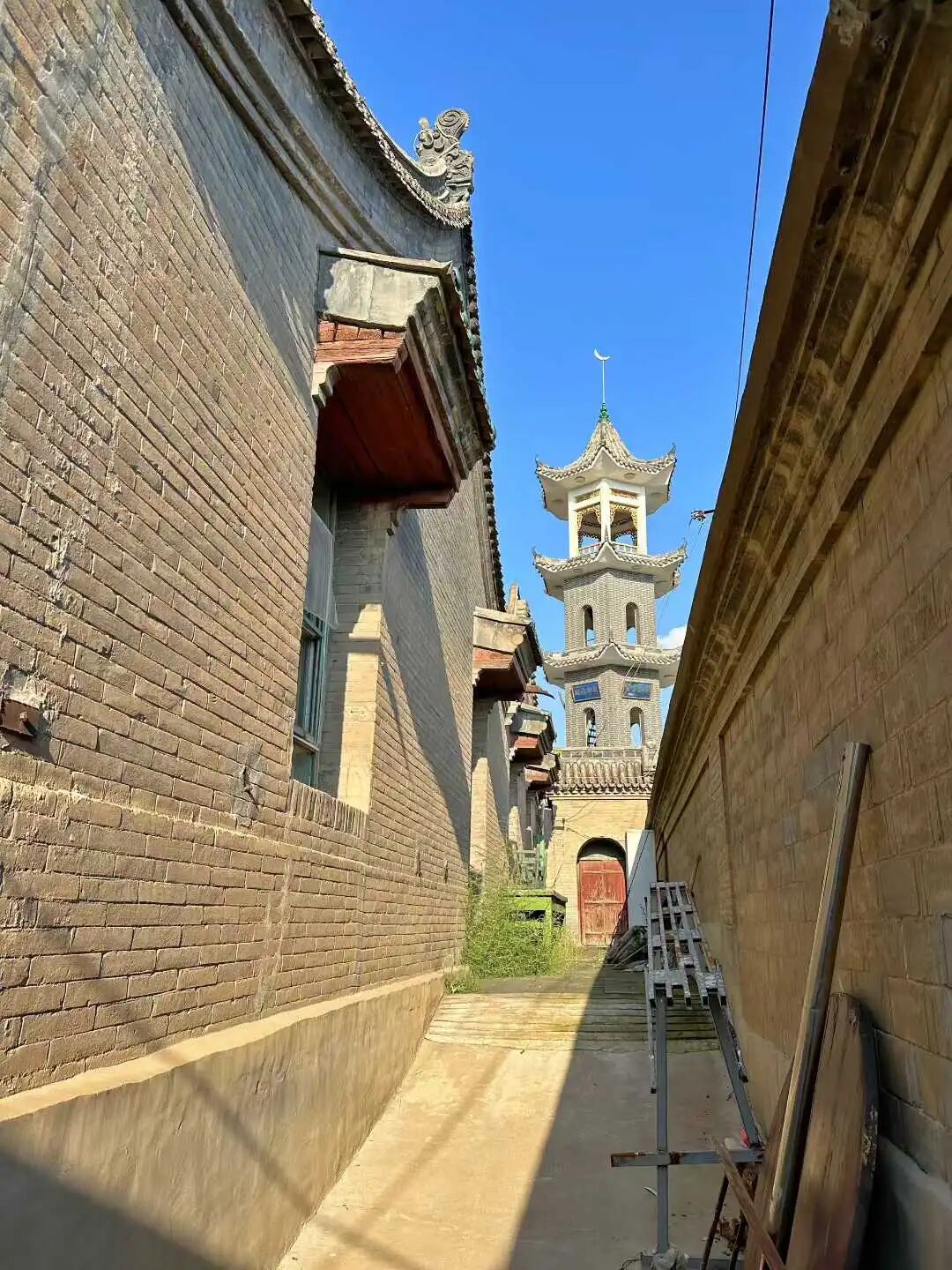
The Baotou Small Mosque, also known as the Baotou North Mosque or the Wayao Ditch Mosque (Wayao Gou Si), was first built in 1908 (the 34th year of the Guangxu reign). The main hall was rebuilt in 1918, and it is currently a Baotou municipal cultural heritage site. The Baotou Small Mosque is built on a very steep slope against a cliff. The main hall sits much higher than the ablution room (shuifang), which is a very unique feature.
In the late Qing Dynasty, the Hui Muslim population in Baotou grew steadily, expanding from the Beiliang area of the old city from east to west. By the end of the Qing Dynasty, the eight streets and alleys near Wayao Ditch had become a Hui Muslim residential area, home to horse inns, flour shops, oil mills, and dozens of cattle, sheep, and camel slaughterhouses. The slaughterhouses also operated as kitchens, meat shops, and livestock pens.
Because traveling between Wayao Ditch and the Baotou Great Mosque required crossing ditches and ridges, it was very inconvenient. In the final years of the Guangxu reign, Hui Muslim families including the Chens, Mas, Dings, Yangs, and Wangs proposed digging a well in Wayao Ditch and building a bathhouse called the "West Water Hall" (Xishui Tang). In 1908 (the 34th year of the Guangxu reign), they bought a flat piece of land on the hillside of the West Water Hall and built the first Baotou Small Mosque.
In 1918, the elders of the Small Mosque raised funds to build a five-room main hall with a porch (juanpeng) against the home of elder Xing Fa. In the 1920s, elder Xing Fa donated the empty land at the north end of the main hall to build north and south rooms and a north wing, making the Small Mosque a complete courtyard.
After it was built, the Baotou Small Mosque was long under the jurisdiction of the Great Mosque. The imam was selected monthly by the students (hailifan) of the Great Mosque, and the two Eid festivals (Duerde) and the Prophet's Birthday (Shengji) were all held at the Great Mosque. The Small Mosque was closed in 1958 due to the merger of mosques and reopened in 1990.
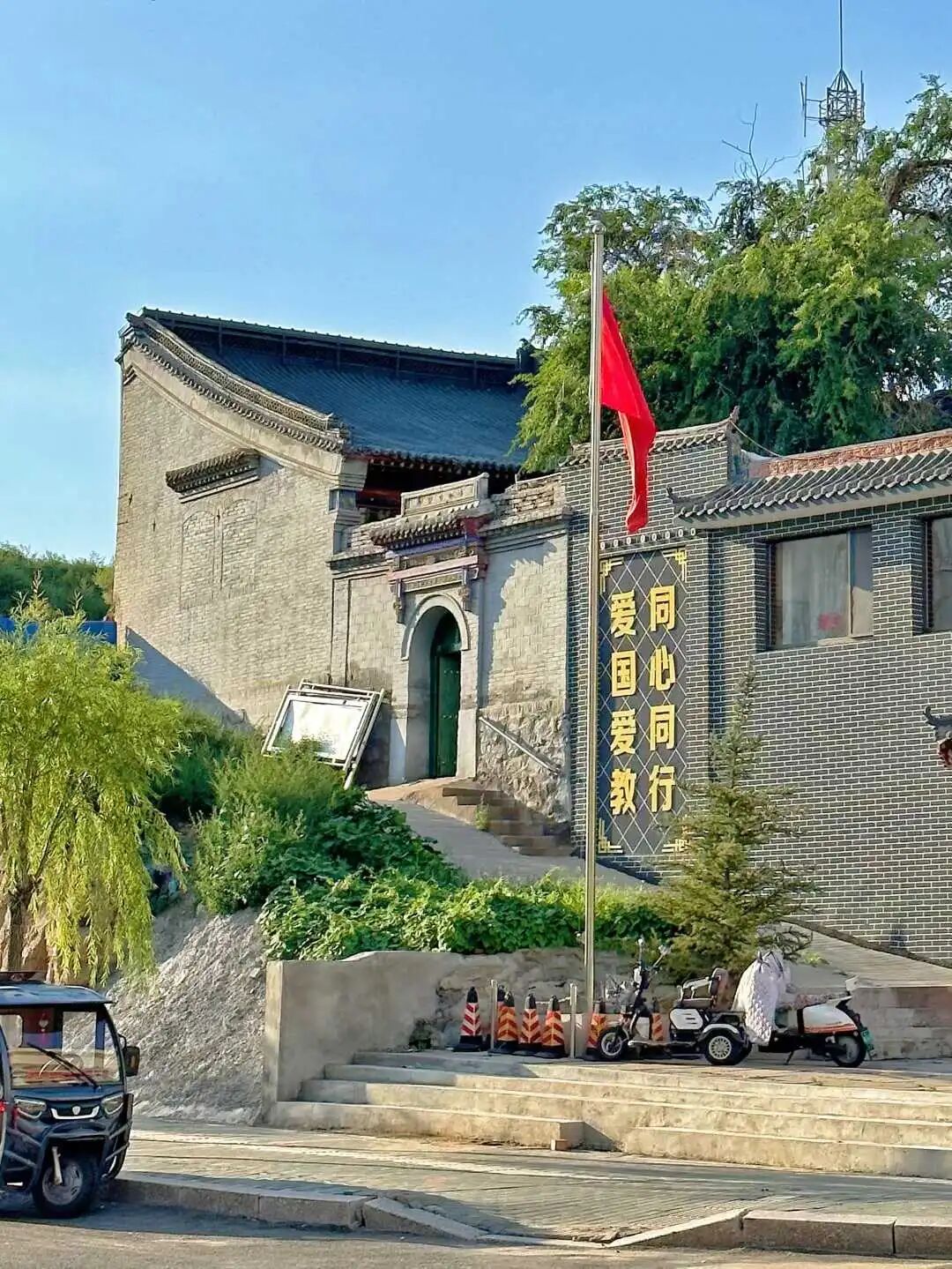
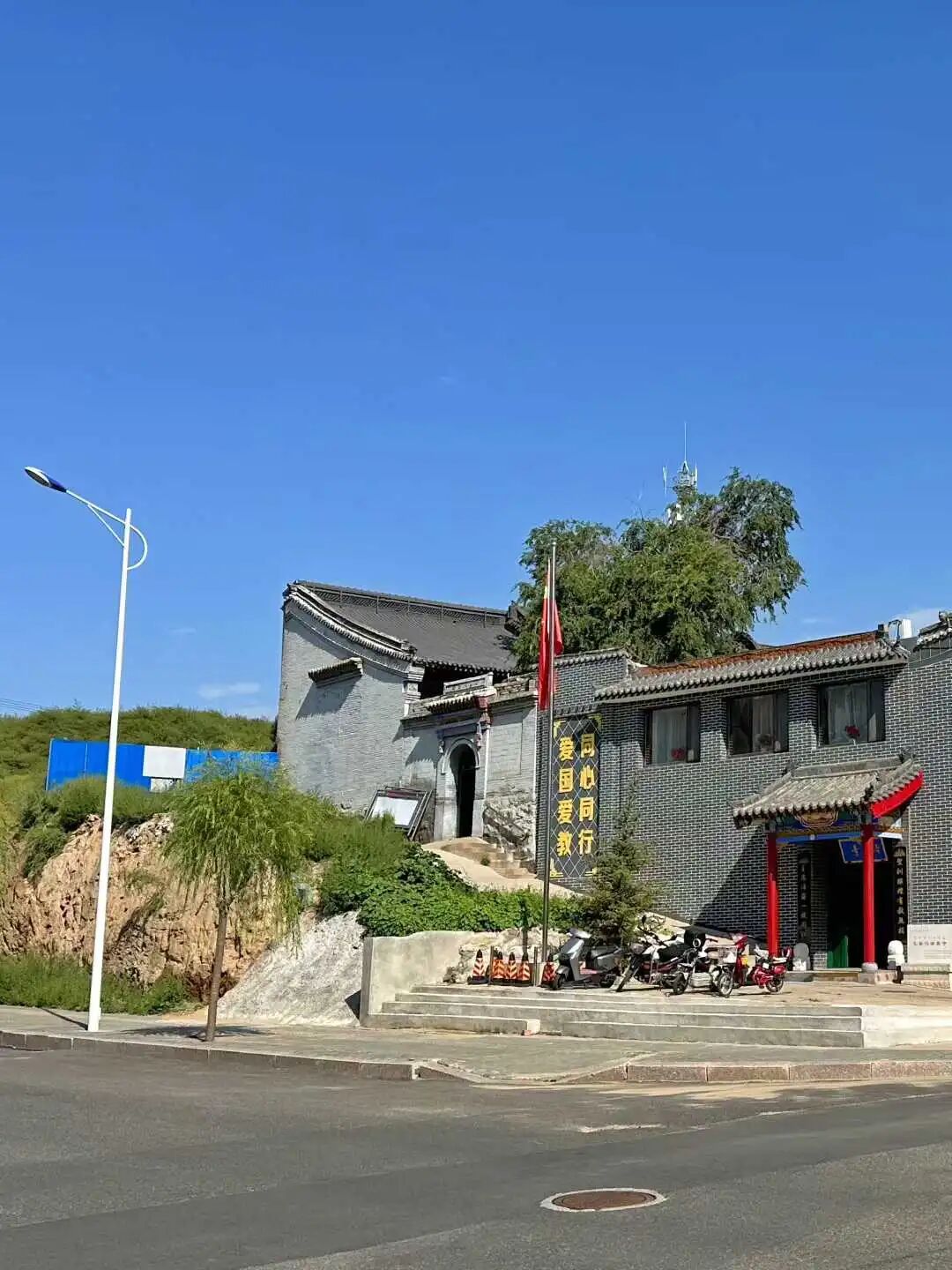
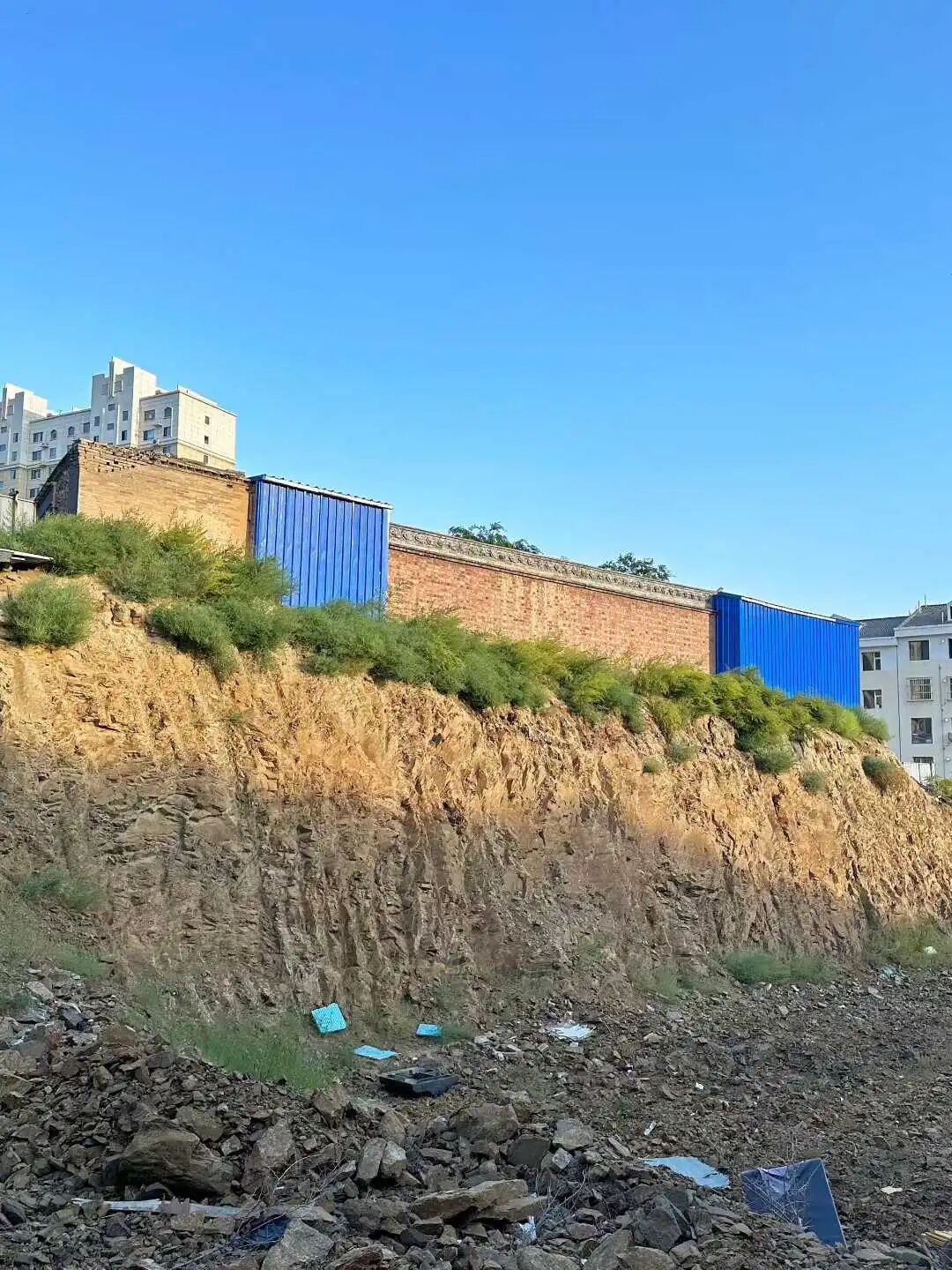
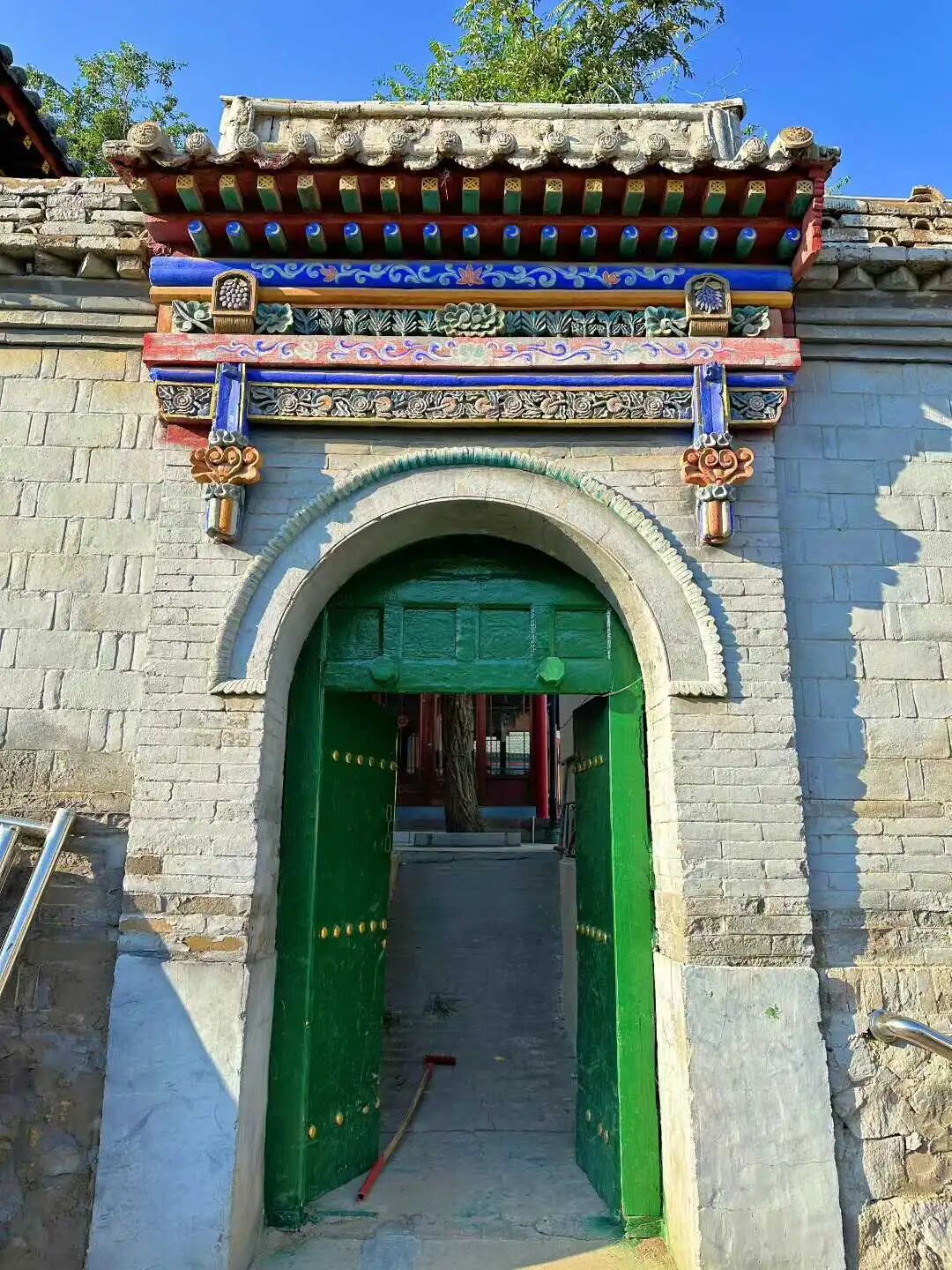
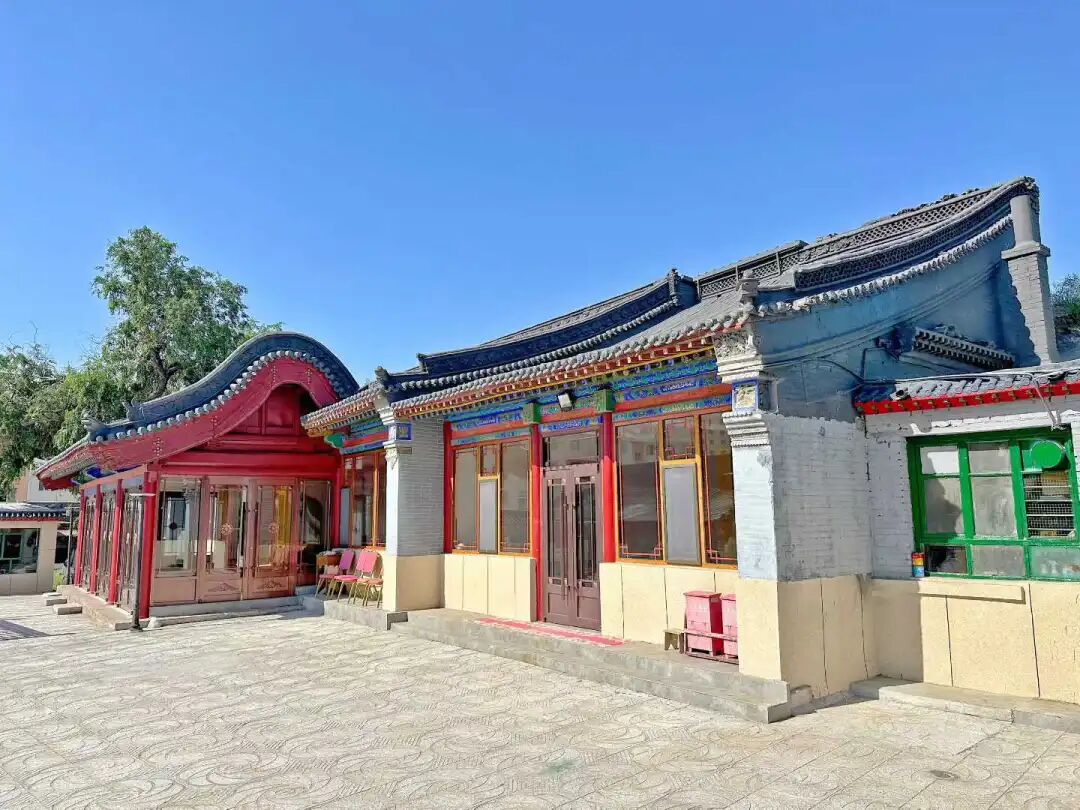
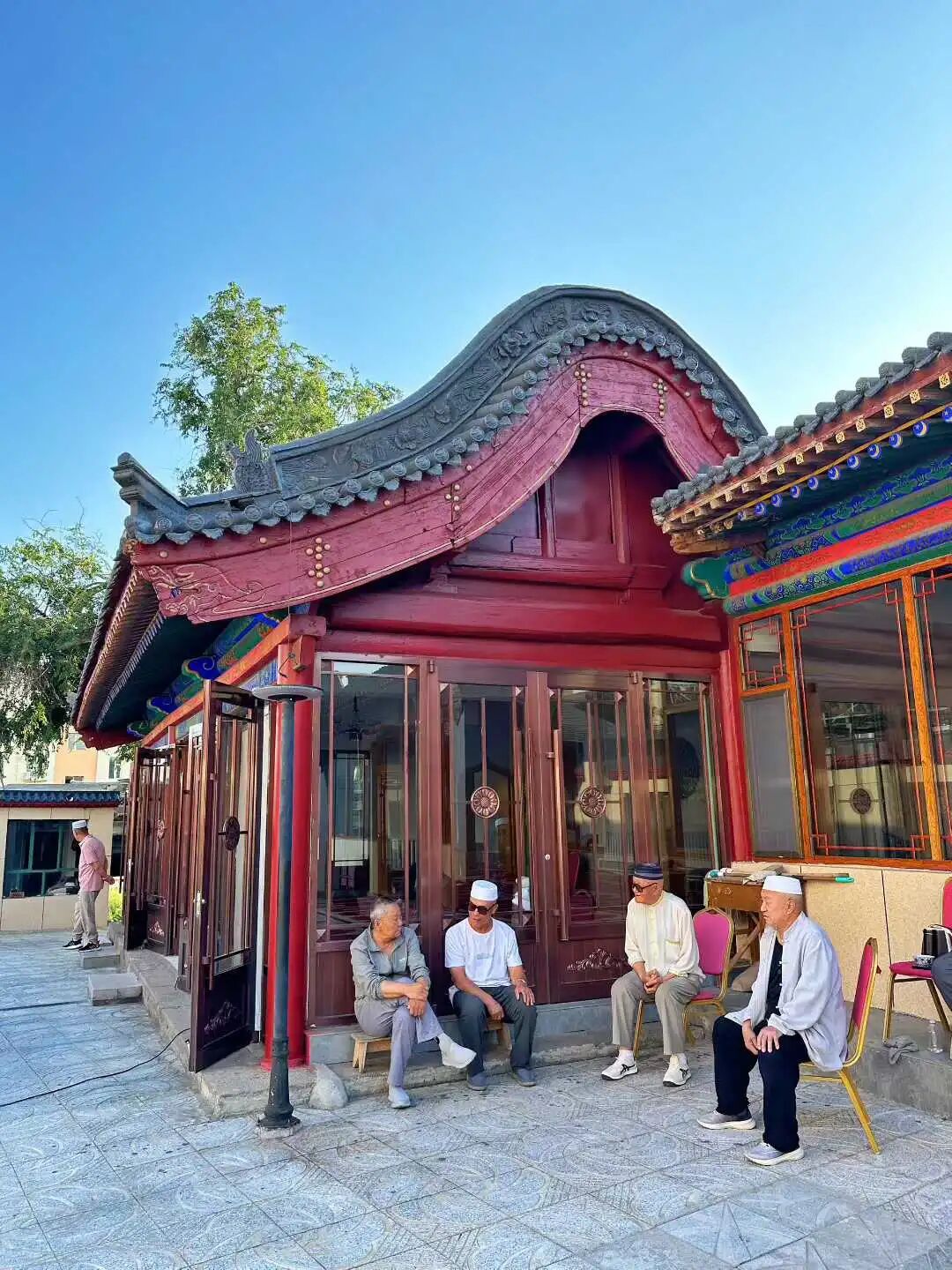
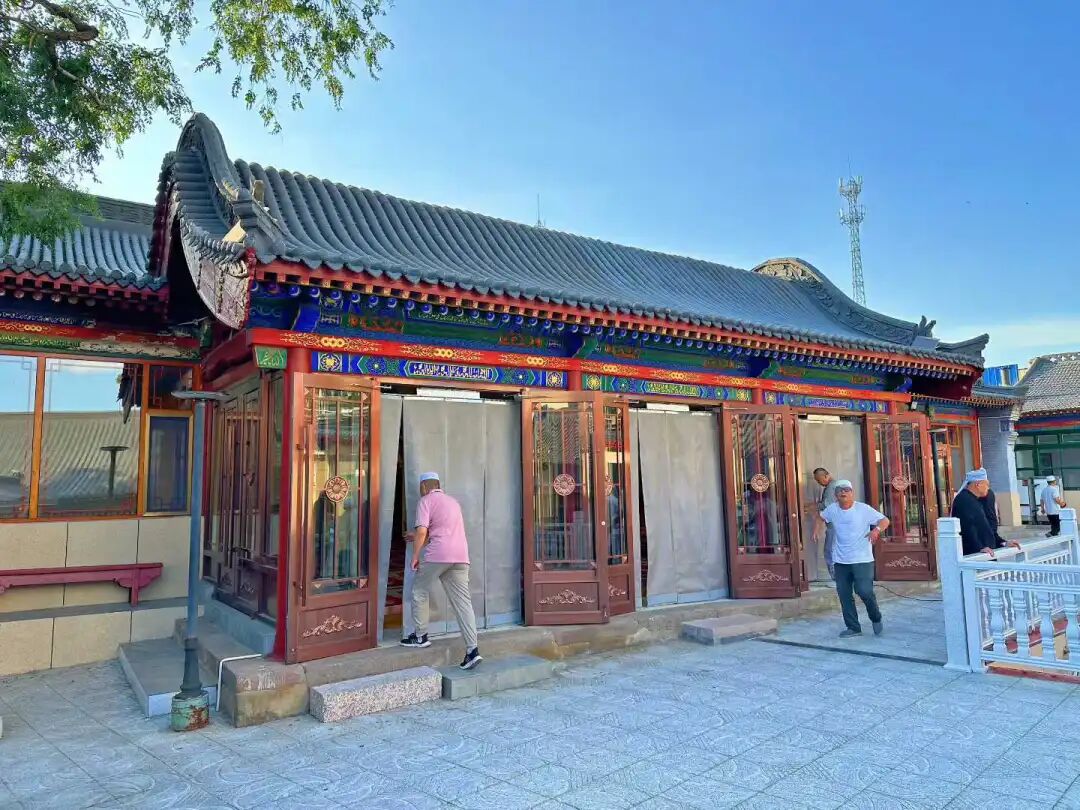
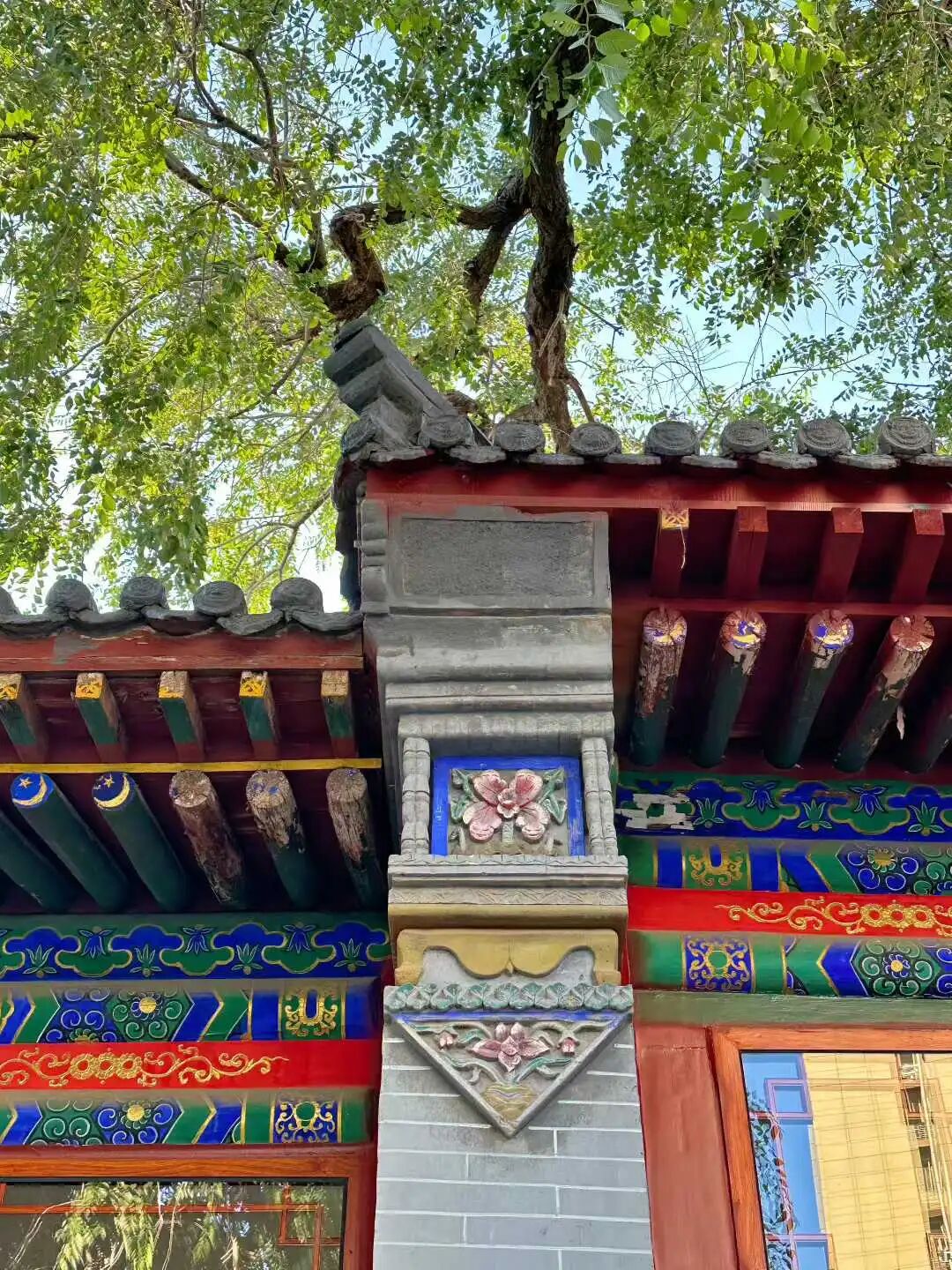
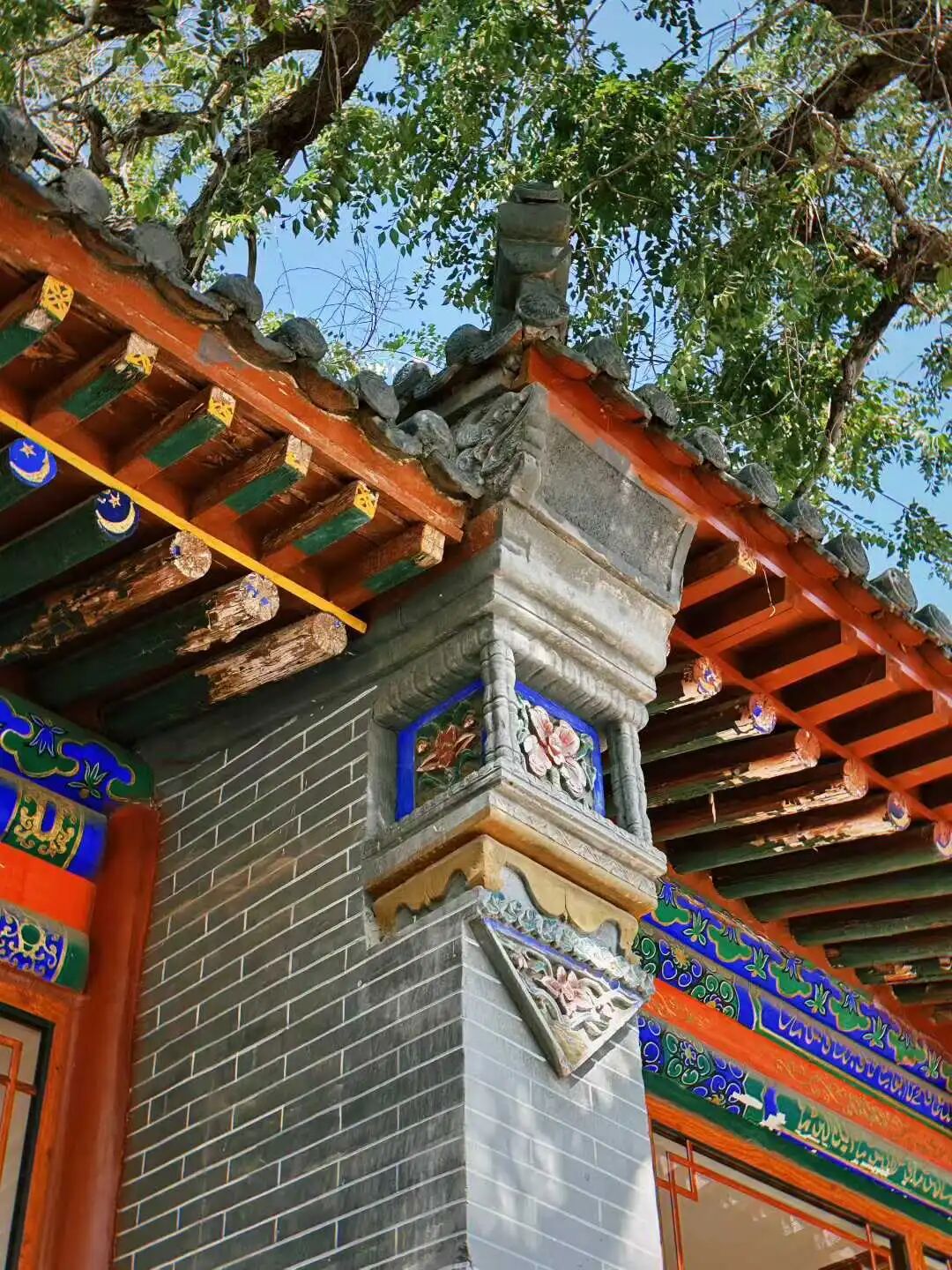
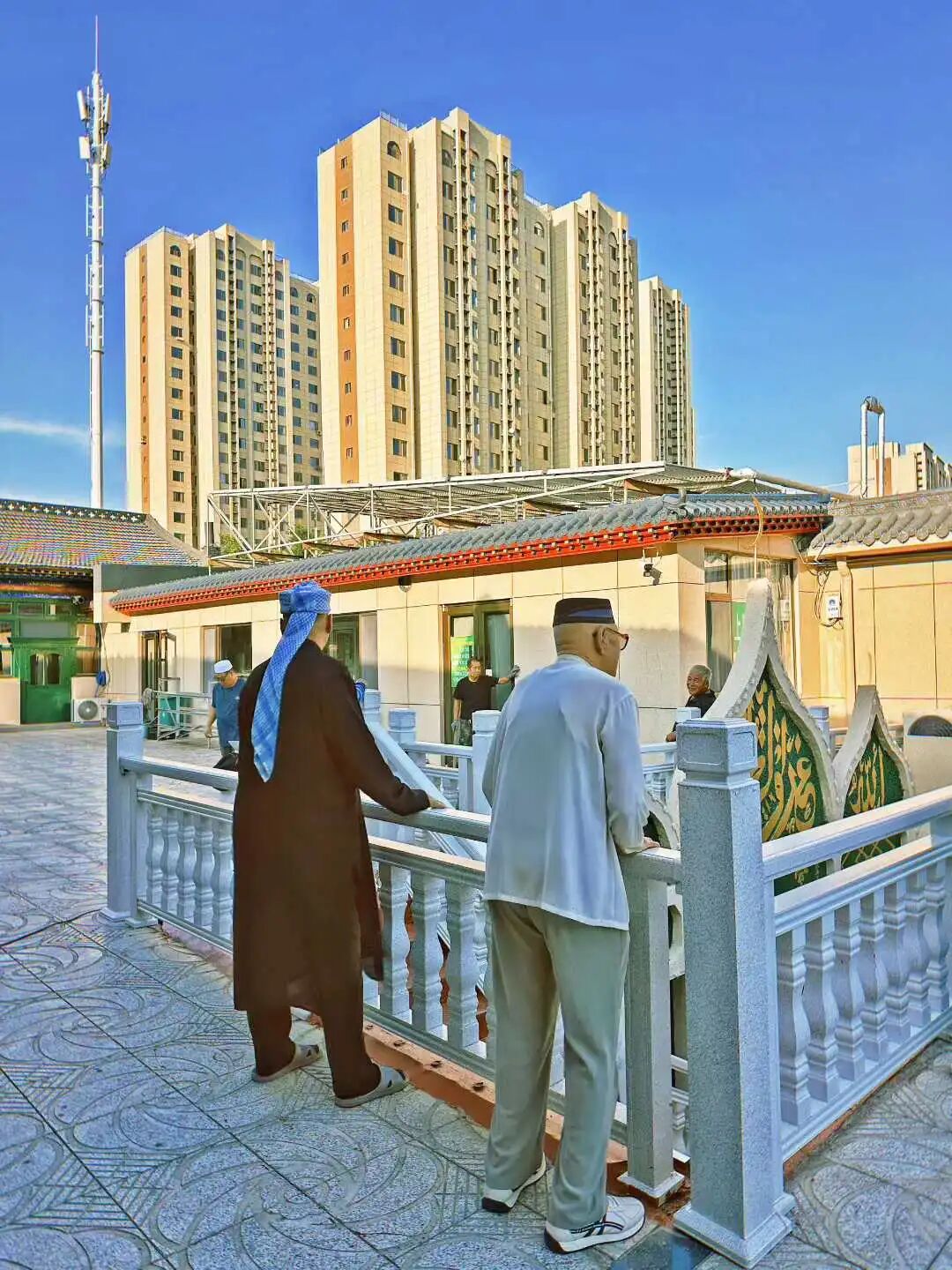
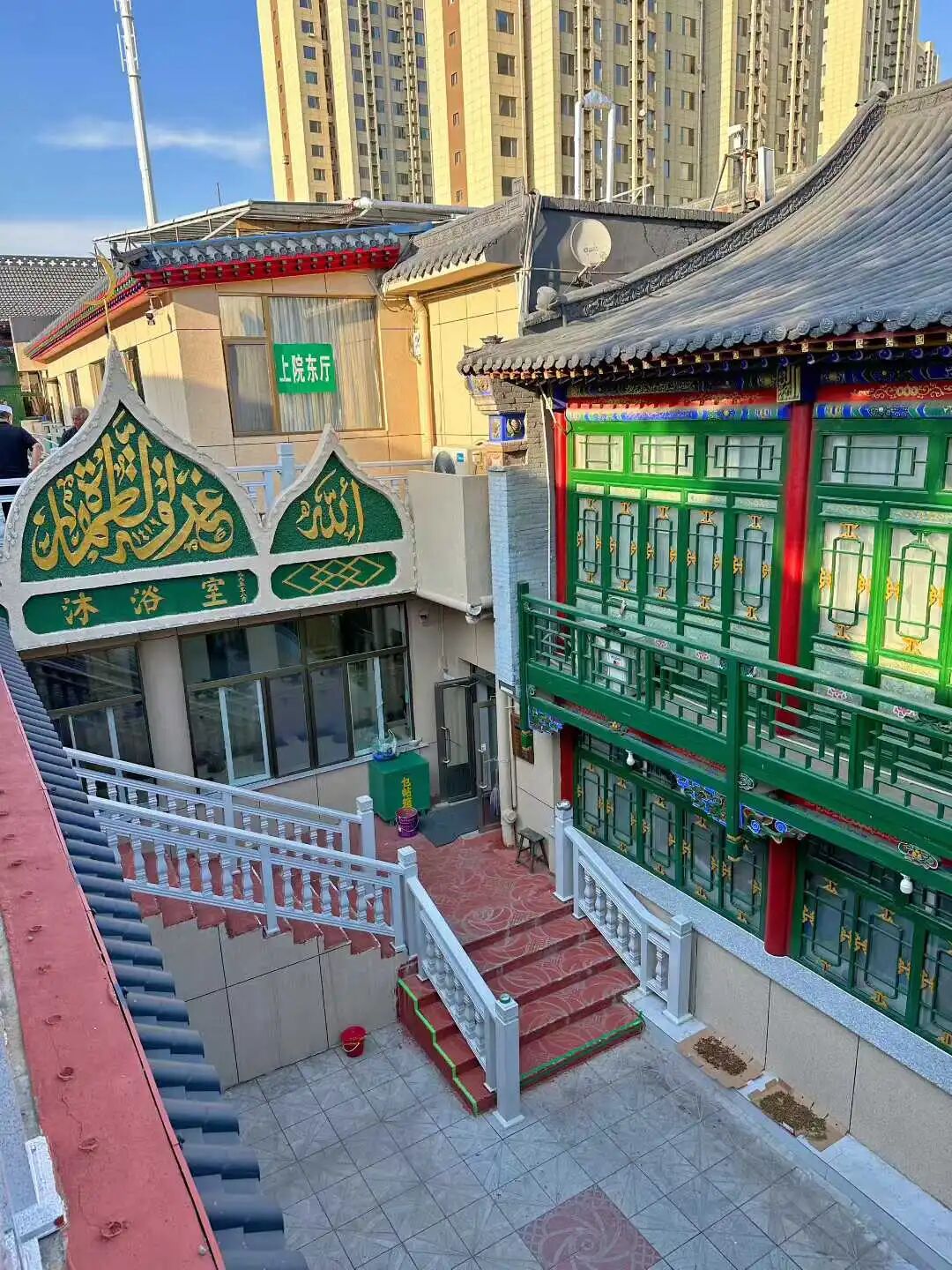
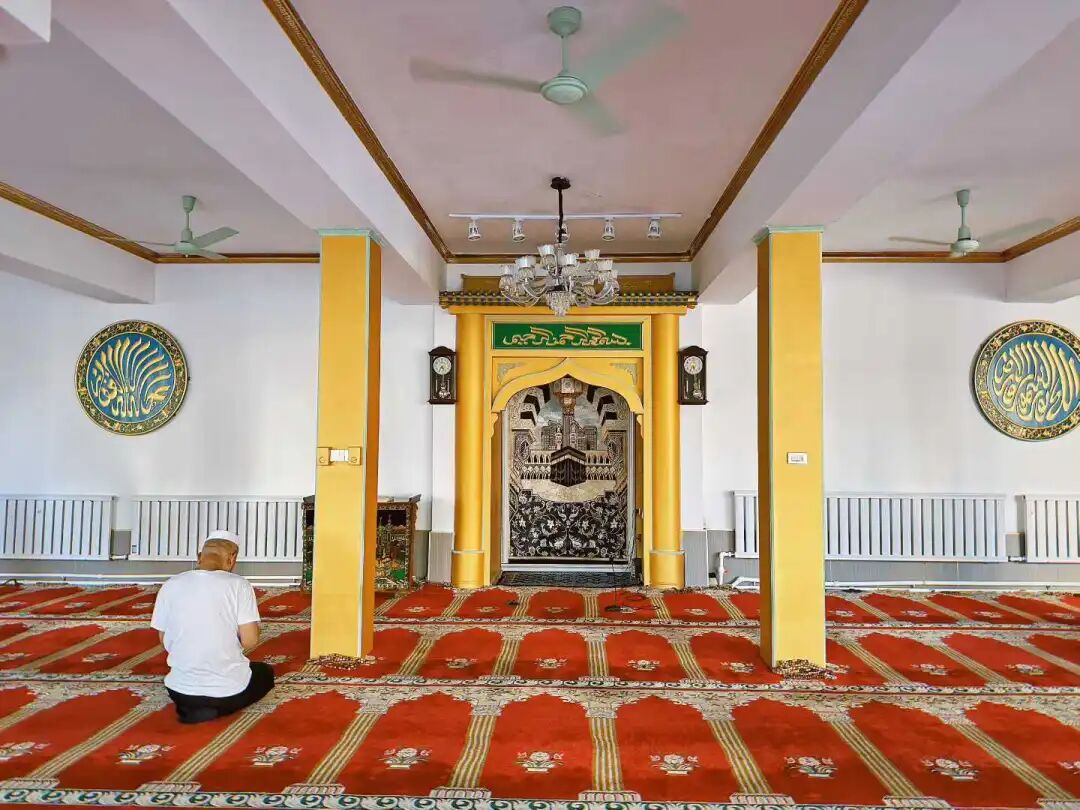
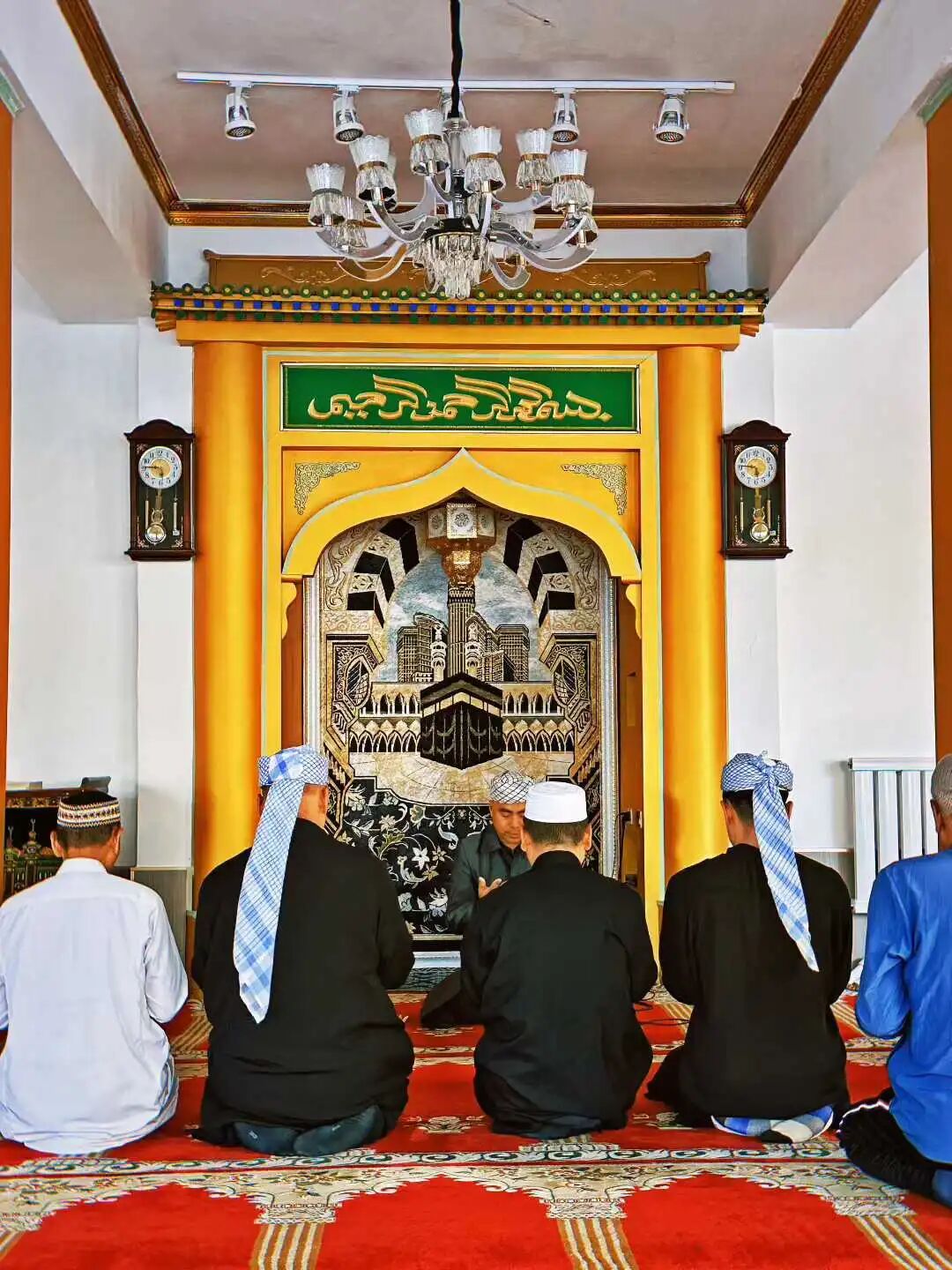
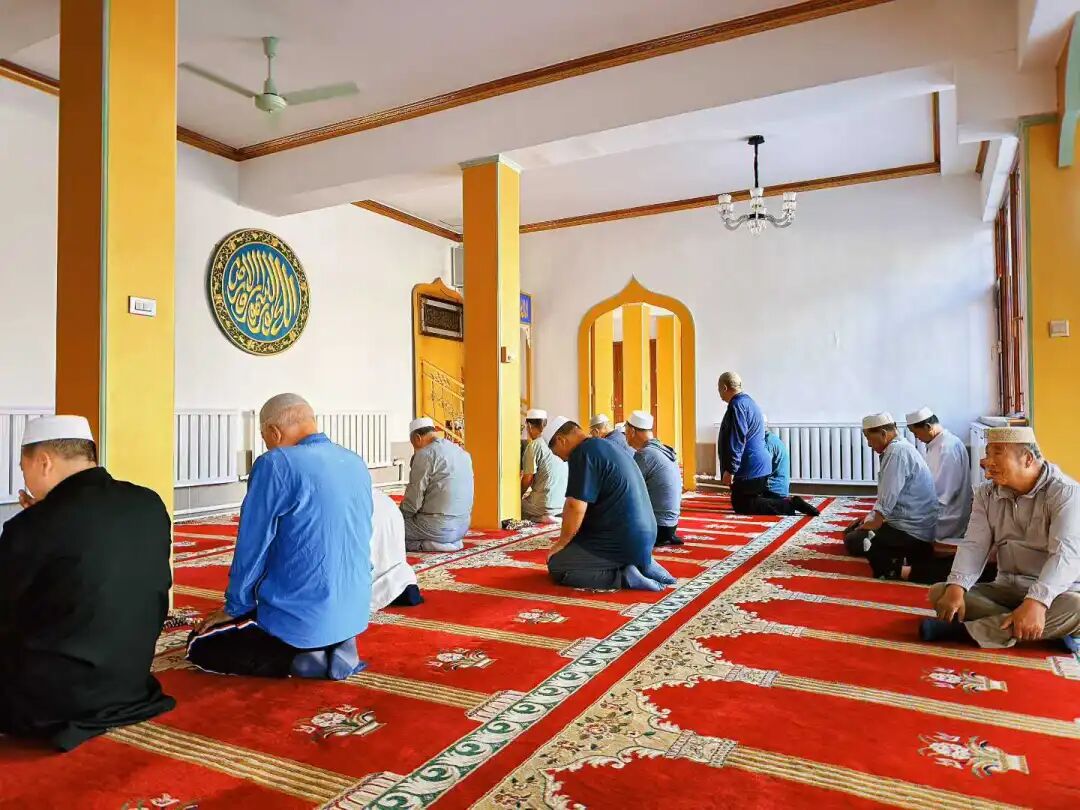
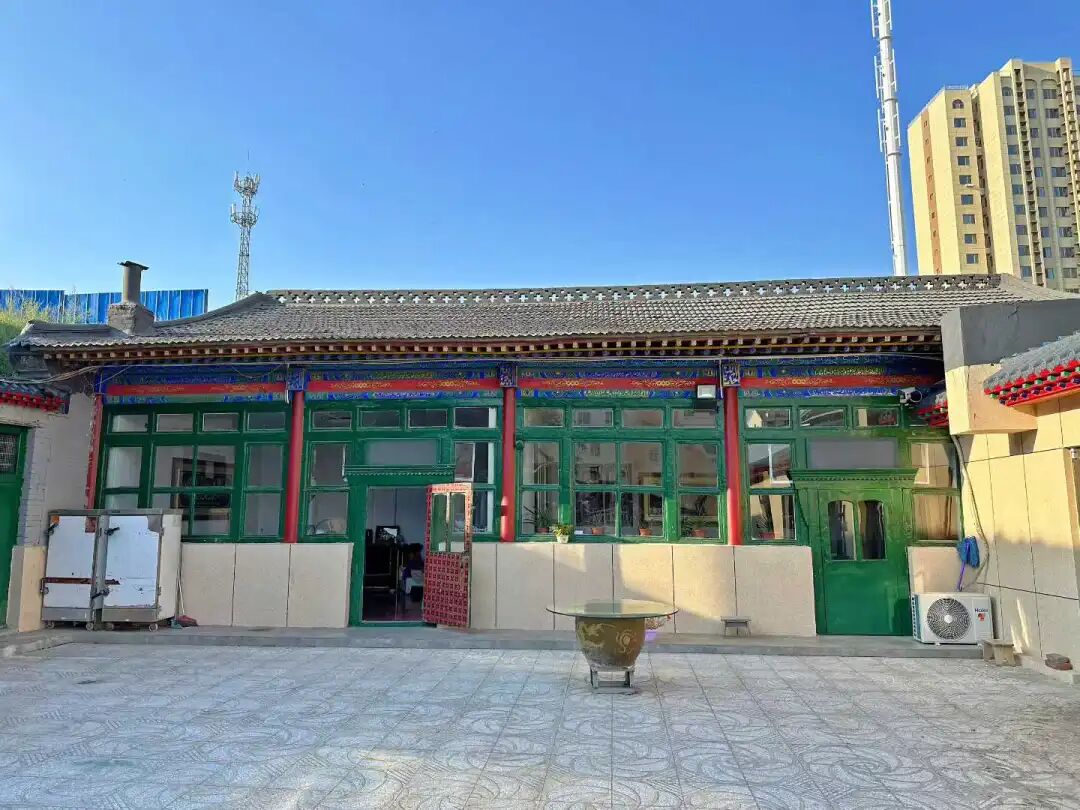
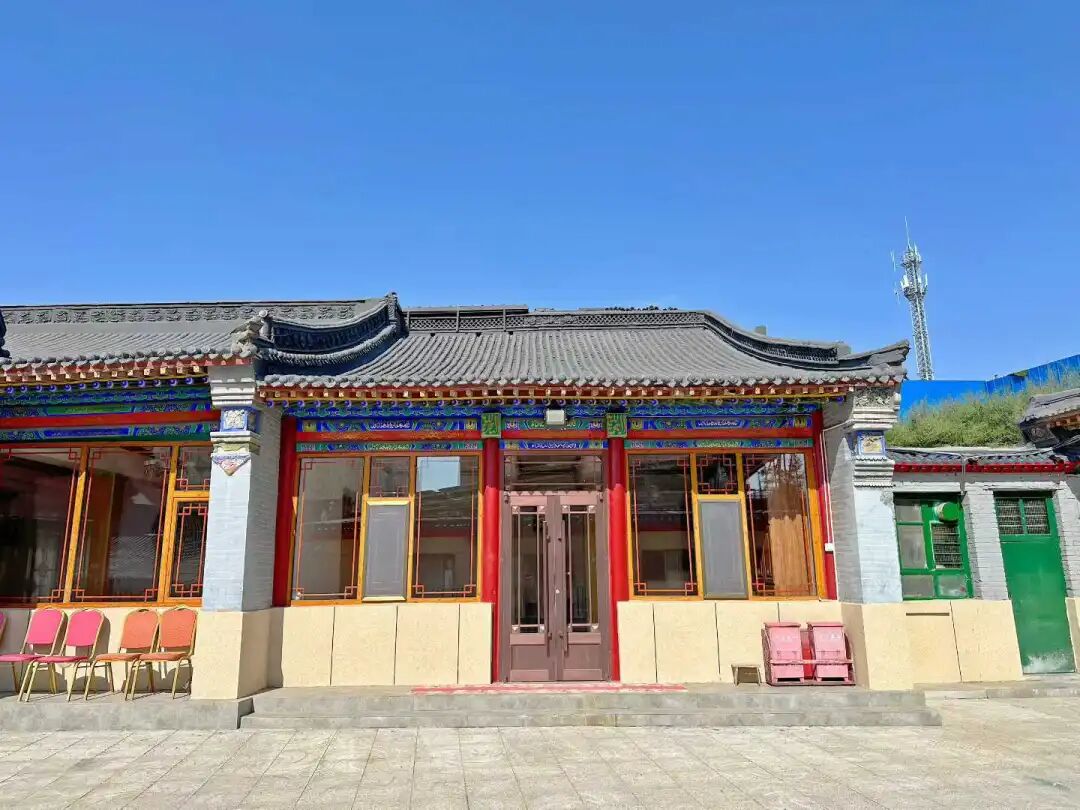
The Baotou Zhiluyu Mosque, also known as the Yushu Ditch Mosque (Yushu Gou Si) or the West Mosque, was first built with funds raised by "Eastern Route Hui Muslims" who came from Zhili (Hebei), Shandong, and Henan, hence its name. At the mosque entrance, there is a shop selling clear tea and beef steamed dumplings (shaomai), and another selling fried dough cakes (youbing) with vermicelli soup and buckwheat noodles. These are great for breakfast.
During the late Qing Dynasty and the Republic of China era, Baotou became a major hub for trading furs. Many Hui Muslims from Hebei came to Baotou to sell furs and livestock. Others came to work in leather tanning, soap making, or to run small stalls. By the early years of the Republic, there were over a hundred such households. In 1922, Hui Muslim families named Hai, Ma, Ge, Yang, and Wang from Hebei, Henan, and Shandong rented a house at the east end of Fuchengyuan Lane in Baotou and built the first Zhiluyu Mosque. In the autumn of 1923, Ma Jincai, Ge Taizhong, and Yang Minglu traveled to Gansu and Ningxia to collect donations (nietie). After returning, they bought a former ox-cart shop in Yushugou and officially established the Zhiluyu Mosque. In 1925, Jiang Tingshan from Linxia, Gansu, bought seventeen fur rafts at the Yellow River ferry in Baotou. He used the wood to rebuild the main hall of the Zhiluyu Mosque and renamed it the Shanganzhiluyu Mosque. The Shanganzhiluyu Mosque closed in 1966, reopened in 1982, and was renamed Yushugou Mosque. It was rebuilt into its current structure in 2008.
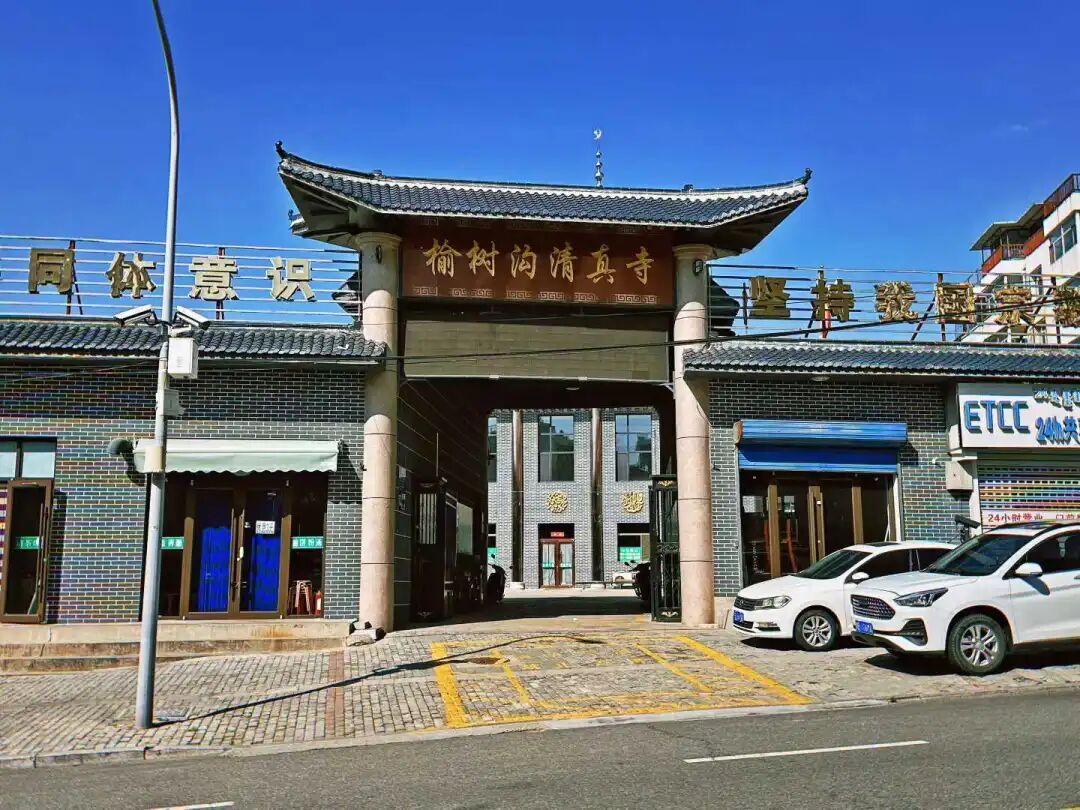
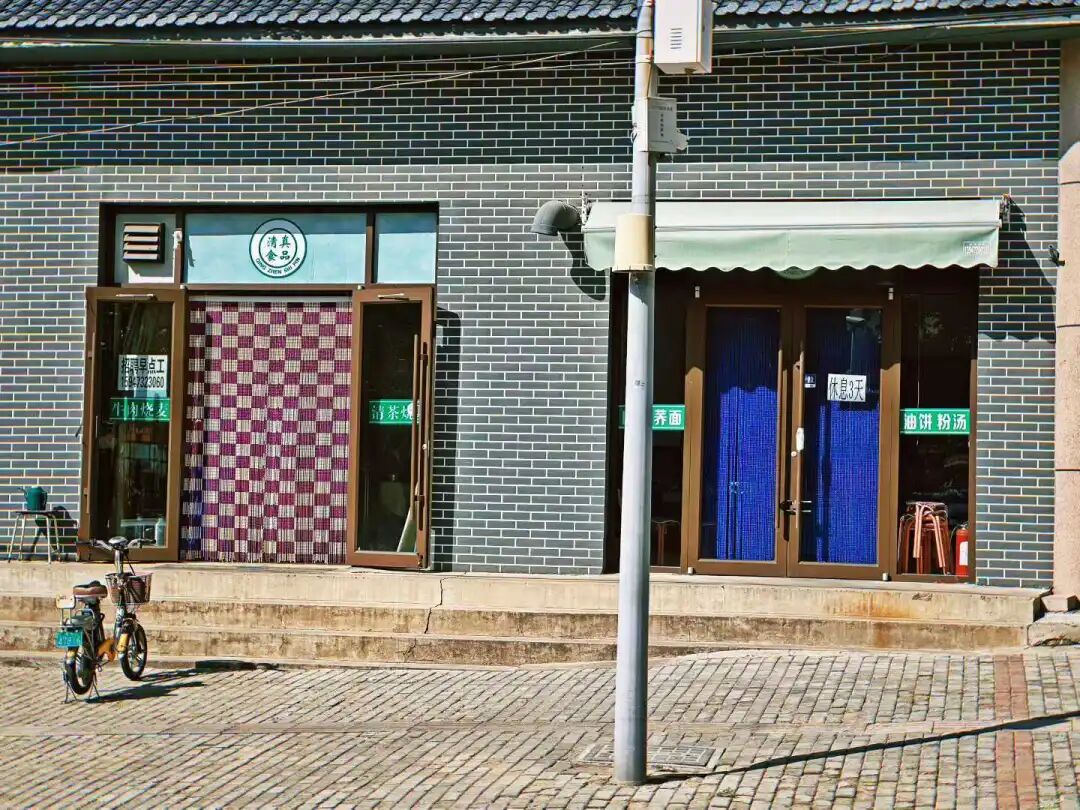
The Ganqingning Mosque in Baotou, also known as the Shengli Road Mosque or the Middle Mosque, was built in 1943 on Minsheng Street by He Huaizhong and He Huaicheng, Hui Muslims from Ningxia living in Baotou. In the summer of 1949, Li Fengzao, a Hui Muslim from Ningxia, donated a small building on Zhongshan Road. The upper floor served as the main hall, and they hired Imam Wang Zhen from the Longshengzhuang Mosque in Inner Mongolia as the first head of the mosque. In the winter of 1949, Li Fengzao donated a rented courtyard that had been the Yidecheng cold goods shop on Shengli Road. After clearing and renovating it, it was named the Ganqingning Mosque. The imams were mostly hired from Tongxin and Lingwu in Ningxia.
In 1958, the Ganqingning Mosque merged with the Baotou Small Mosque. The original site on Shengli Road was later occupied by a noodle workshop of a food factory and then a printing factory. It reopened in 1984, and the main hall was rebuilt in 1987.
A traditional house with a pitched roof stands at the entrance of the Shengli Road Mosque. It is now a workshop for the Huixiang Food Shop, though its original purpose is unknown.
There is a lot of good food near the Shengli Road Mosque, which I will introduce specifically later.
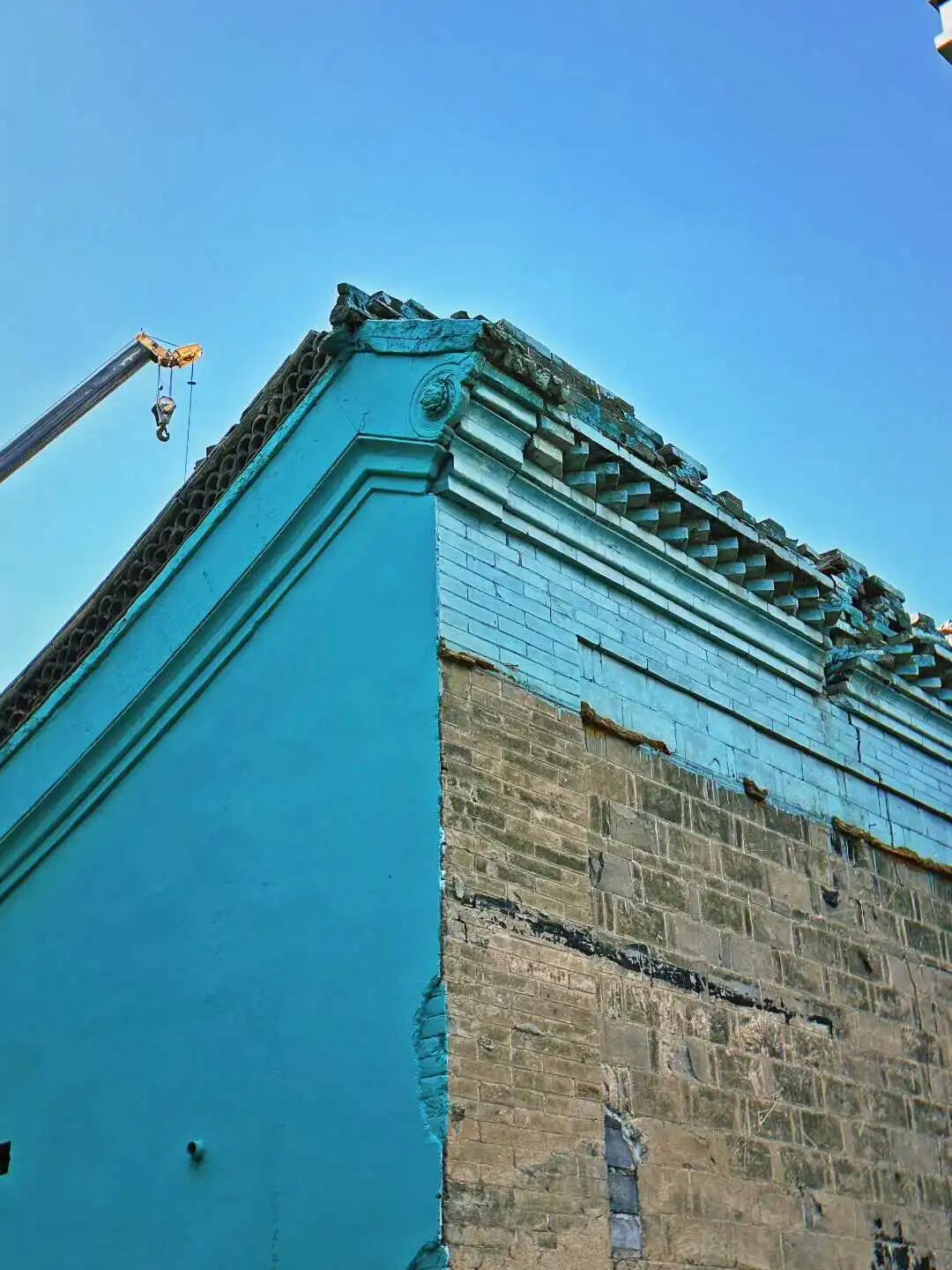
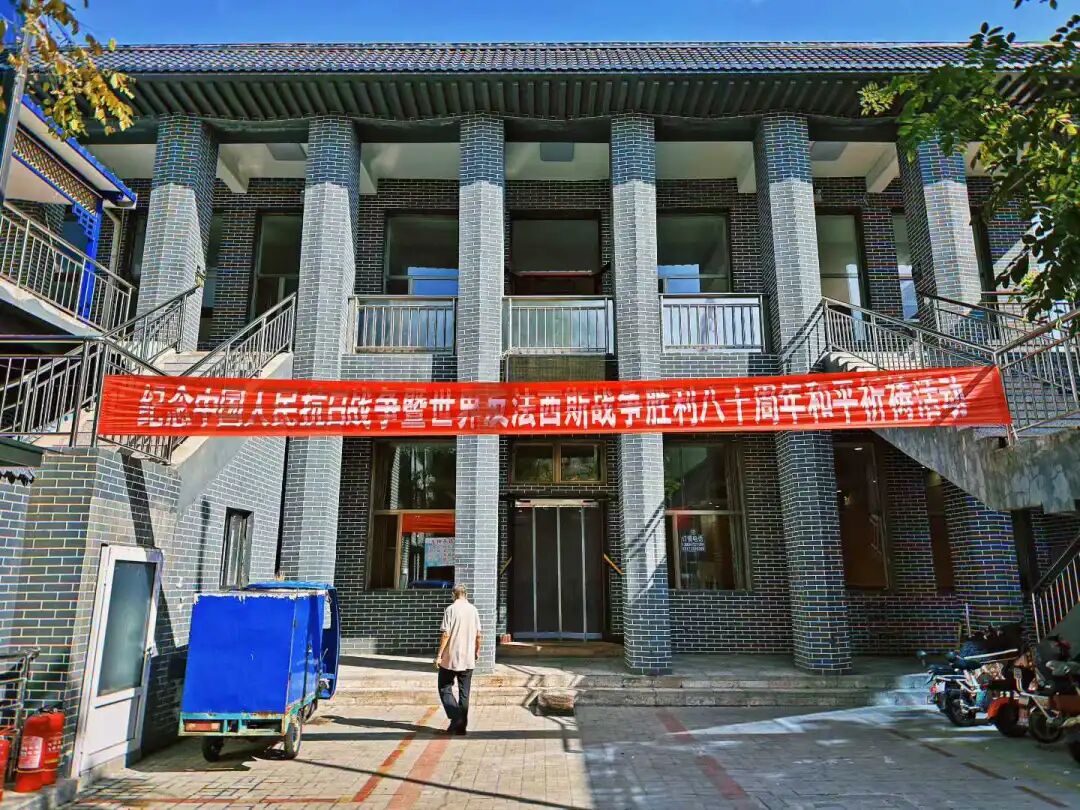
Halal Travel Guide: Chasuqi, Inner Mongolia - Great Mosque and Tumed Plain
Articles • ali2007fr posted the article • 0 comments • 229 views • 2026-05-20 09:25
Summary: Chasuqi Grand Mosque stands on the Tumed Plain of Inner Mongolia, where Hui Muslim families from Hebei and Beijing settled during the Qianlong period. The account records the mosque origin, Qing-era donations, later rebuilding, and its links to Chasuqi town history.
Tumd Left Banner in Inner Mongolia sits west of Hohhot. During the Ming and Qing dynasties, it was home to the Mongol Tumd tribe, known for its fertile land and lush pastures. In 1739, the fourth year of the Qianlong reign, the Qing dynasty established a sub-prefecture office in Shandai Town, Tumd Left Banner, making it an important commercial hub. Soon after, Hui Muslims from four families arrived in Shandai to make a living: the Bai family from Gaotou in Zhengding, Hebei (now Gaotou Hui Ethnic Township in Wuji County), the Ma family from Baoding, Hebei, the Xue family from Xueying in Beijing, and the Jin family from Niujie in Beijing.
In 1760, the 25th year of the Qianlong reign, the Shandai office was closed, and the banner's center shifted to Qasqi Town. The Bai, Ma, Xue, and Jin Hui Muslim families all moved to Qasqi Town during the late Qianlong period. At that time, the Qasqi Guandi Mosque was being moved to a new site, so the families bought the original land and built the first Qasqi Grand Mosque.
The Qasqi Grand Mosque started with just two mud-brick rooms facing the street. During the Daoguang reign, as more Hui Muslims moved to Qasqi, they added a main prayer hall made of earth and wood. In 1909, the first year of the Xuantong reign, Imam Wang Shi'en led the construction of the current brick-and-wood main hall. Bai Shengyu's widow, Mrs. Gan, donated bricks, tiles, wood, and the elm trees from the courtyard. Other funds came from the local community and from Hohhot, Baotou, Saratsi, Togtoh, and Longshengzhuang. The community elders in charge were Luo Cheng, Bai Youfu, Ma Youfu, and Wu Fengqi. Imam Wang Shi'en was originally from Wudu, Gansu. He was a scholar of Islamic texts and the most famous imam in the history of the Qasqi Grand Mosque.
The exquisite brick carvings of the Qasqi Grand Mosque.
We ate at Xinhua Fast Food next to the mosque, ordering lamb with wood ear mushrooms and dried bean curd (fuzhu), stir-fried meat from Jiuyuan, and stir-fried sliced noodles (huishaomian). Even though it was a simple meal, the lamb was fresh and had no gamey smell, and the wood ear mushrooms were delicious. Stir-fried sliced noodles (huishaomian) originated from the oil-seared meat and knife-cut noodles of Shanxi. During the Daoguang reign of the Qing dynasty, migrants traveling west brought the dish to Inner Mongolia, where it became popular with manual laborers like porters and camel caravan drivers. The knife-cut noodles (daoxiaomian) in the dish are sliced and boiled to order, while the oil-seared meat is coated in batter and fried. It is served with garlic sprouts and bean sprouts for a balanced meal.
Hui Muslim families who moved to Qasqi in different periods:
The Bai, Xue, Jin, and Ma families during the Qianlong reign. The Bai family made their living trading horses. Every autumn, when the horses were strong and healthy, they transported them long distances to places like Hebei. Bai Shengyu was an expert horseman. It is said he could tie a copper coin to his long braid and ride at full gallop without the coin moving at all. The Xue family started out as middlemen and small traders, later buying land and becoming very wealthy in Qasqi. Xue Liang was eloquent and had many connections. He held high social status and reportedly handled seventeen murder cases.
The Wu, Luo, Yang, Qi, and Liang families during the Jiaqing period. The Wu family was originally from Mengcun, Cangzhou, Hebei. Their ancestor, Wu Juzhou, served as a military officer in the Qing army. In the early Jiaqing years, he fled with his family after killing an official in anger, moving to Togtoh County in Inner Mongolia. His second son, Wu Xiu, later moved to Qasqi. The Wu family was a martial arts family that produced many talented people. By the end of the Qing dynasty, they were involved in butchery and farming, ran an inn, and owned nearly 100 acres of paddy fields. The Luo family moved to Qasqi from the southern gate of Urumqi (Hongmiaozi), Xinjiang, where they had worked as camel drivers. During the Republic of China era, they opened the Fuchengkui fur shop, selling the furs they collected at the Sanyitang shop in the Hohhot Hui Muslim district. The Yang family came from Guyuan, Ningxia, and worked in camel transport. They moved to Chasugi in 1796, the first year of the Jiaqing reign.
During the Xianfeng and Tongzhi eras, the three main families were the Ma, Niu, and Bai families. Brothers Ma Dejun and Ma Defu moved their family here from Baoding, Hebei, to do business. The Niu family came from Wuzhong, Ningxia, and moved here during the Tongzhi era because of the Jinjipu Uprising. Bai Youfu’s family moved here from Tang County, Baoding, Hebei, during the Xianfeng and Tongzhi eras while fleeing famine with his mother. Through years of hard work and saving, they bought land and farmed. They borrowed grain and money from the Mongols and paid them back with land. By the 1930s, they owned over 10 qing of land and opened the Weilongquan and Fushunquan grain stores and grocery shops, becoming the wealthiest Hui Muslims in Chasugi.
During the Republic of China era, the five main families were the Jia, Wang, Ma, Fu, and Tao families. The Jia family arrived in Chasugi in 1914. They saved money by selling homespun cloth, bought over 30 mu of land in 1930, and continued to run small businesses. view all
Summary: Chasuqi Grand Mosque stands on the Tumed Plain of Inner Mongolia, where Hui Muslim families from Hebei and Beijing settled during the Qianlong period. The account records the mosque origin, Qing-era donations, later rebuilding, and its links to Chasuqi town history.
Tumd Left Banner in Inner Mongolia sits west of Hohhot. During the Ming and Qing dynasties, it was home to the Mongol Tumd tribe, known for its fertile land and lush pastures. In 1739, the fourth year of the Qianlong reign, the Qing dynasty established a sub-prefecture office in Shandai Town, Tumd Left Banner, making it an important commercial hub. Soon after, Hui Muslims from four families arrived in Shandai to make a living: the Bai family from Gaotou in Zhengding, Hebei (now Gaotou Hui Ethnic Township in Wuji County), the Ma family from Baoding, Hebei, the Xue family from Xueying in Beijing, and the Jin family from Niujie in Beijing.
In 1760, the 25th year of the Qianlong reign, the Shandai office was closed, and the banner's center shifted to Qasqi Town. The Bai, Ma, Xue, and Jin Hui Muslim families all moved to Qasqi Town during the late Qianlong period. At that time, the Qasqi Guandi Mosque was being moved to a new site, so the families bought the original land and built the first Qasqi Grand Mosque.
The Qasqi Grand Mosque started with just two mud-brick rooms facing the street. During the Daoguang reign, as more Hui Muslims moved to Qasqi, they added a main prayer hall made of earth and wood. In 1909, the first year of the Xuantong reign, Imam Wang Shi'en led the construction of the current brick-and-wood main hall. Bai Shengyu's widow, Mrs. Gan, donated bricks, tiles, wood, and the elm trees from the courtyard. Other funds came from the local community and from Hohhot, Baotou, Saratsi, Togtoh, and Longshengzhuang. The community elders in charge were Luo Cheng, Bai Youfu, Ma Youfu, and Wu Fengqi. Imam Wang Shi'en was originally from Wudu, Gansu. He was a scholar of Islamic texts and the most famous imam in the history of the Qasqi Grand Mosque.
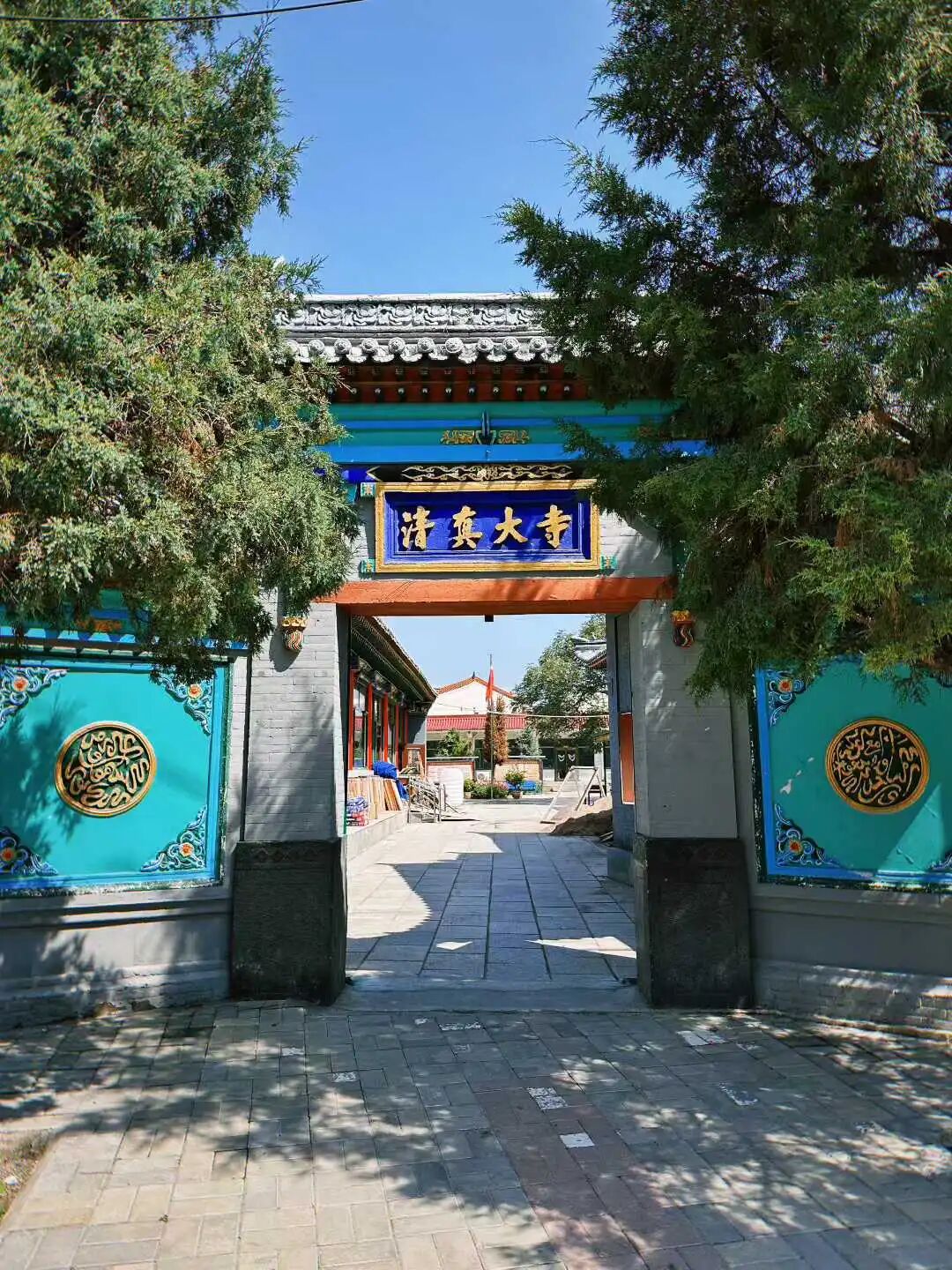
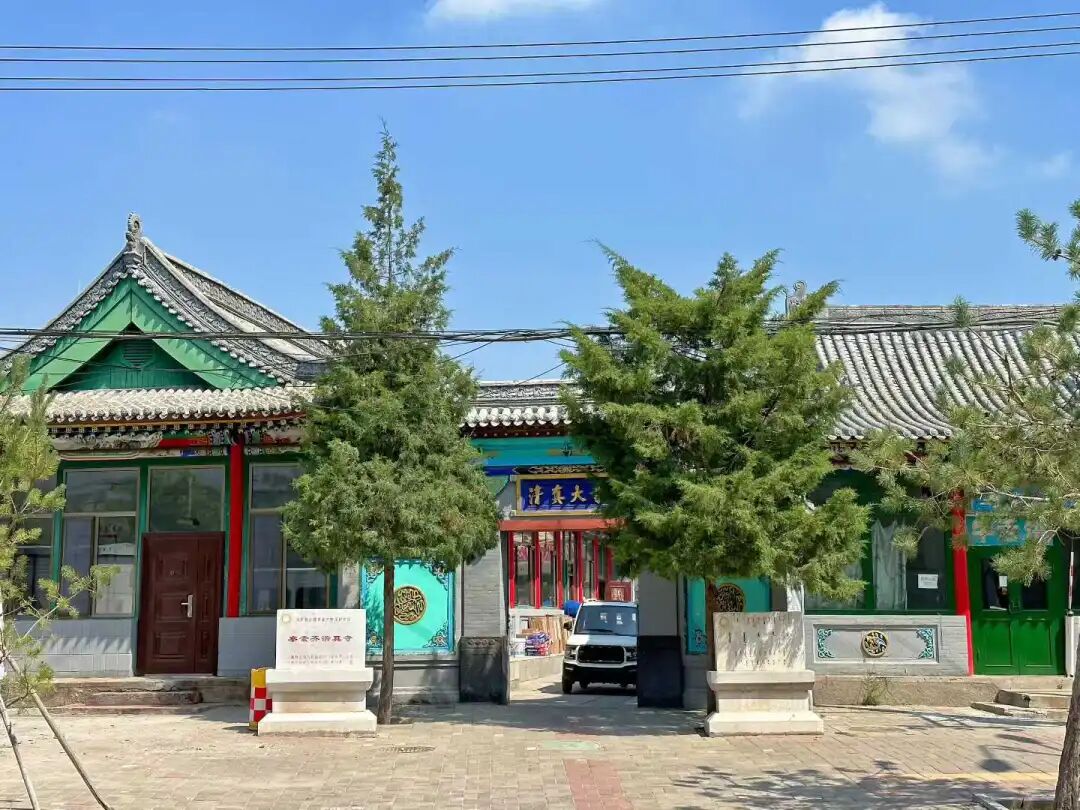
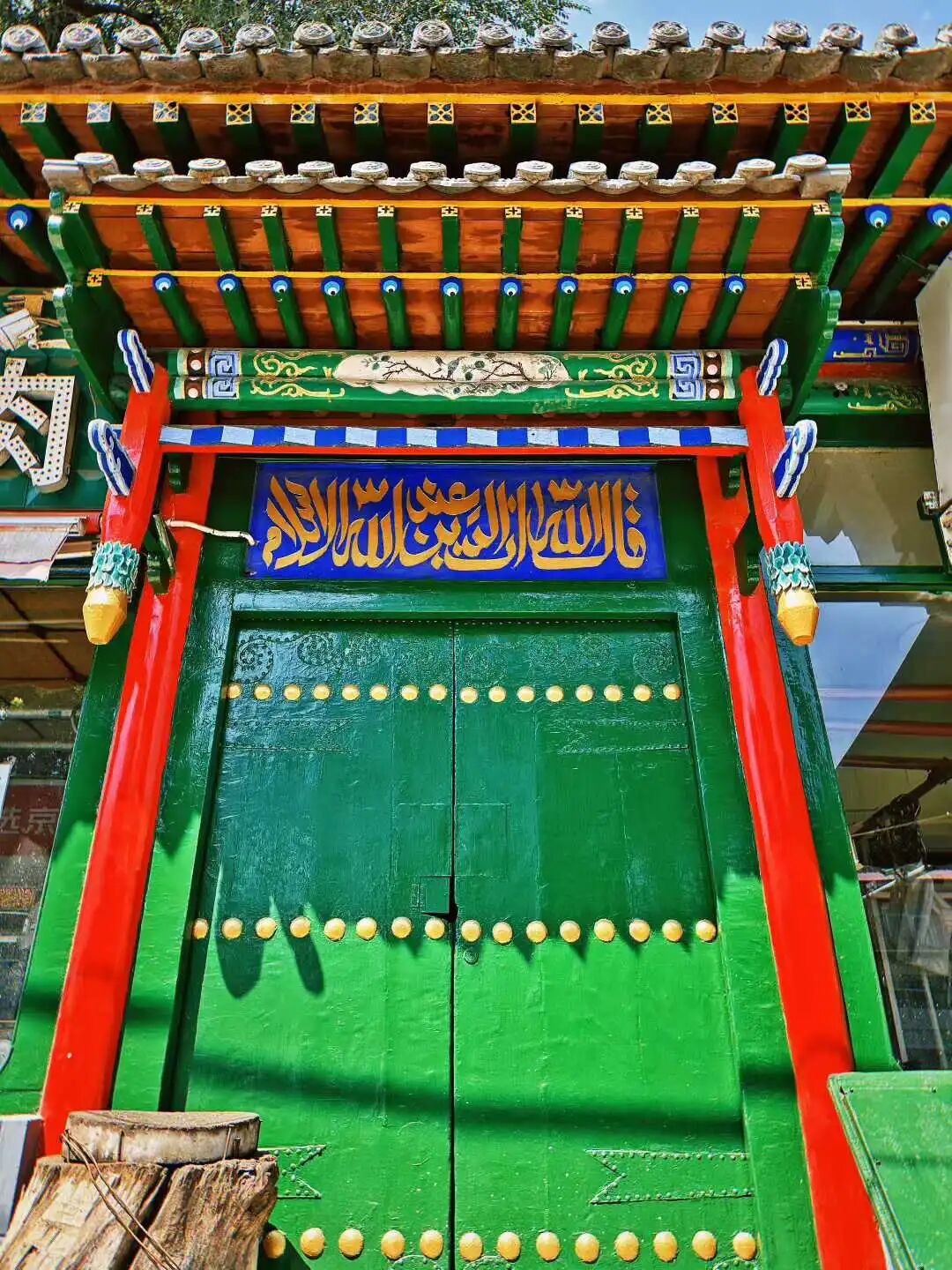
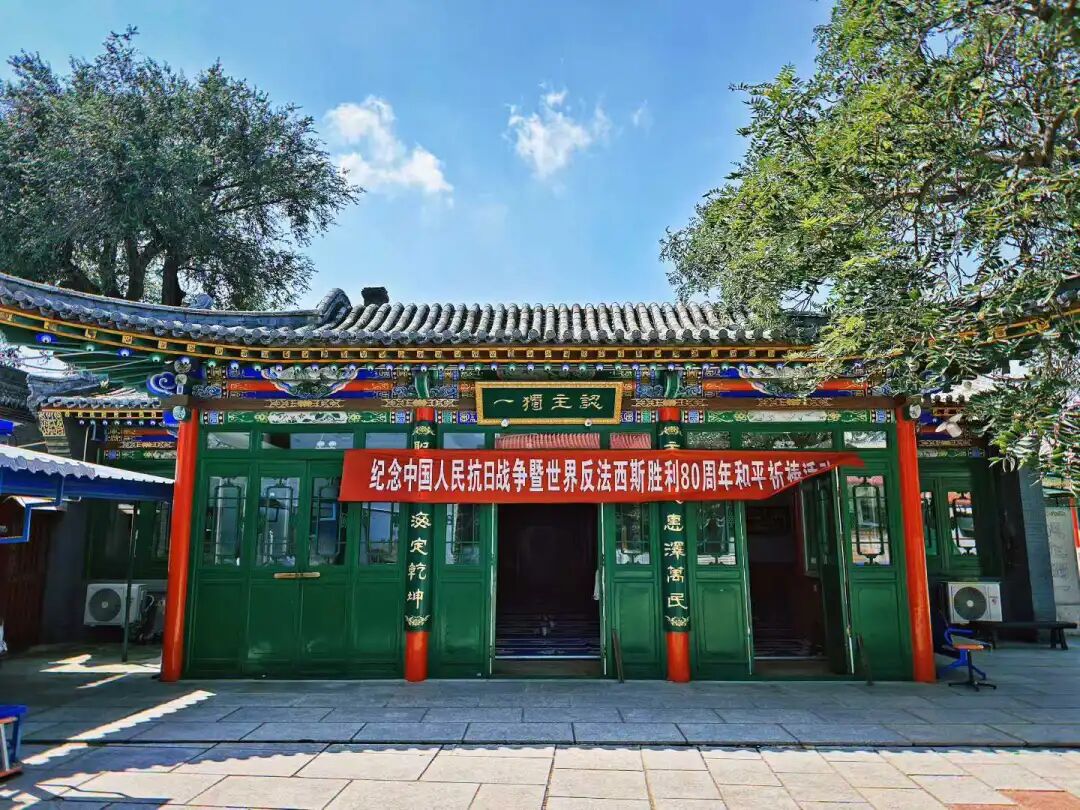
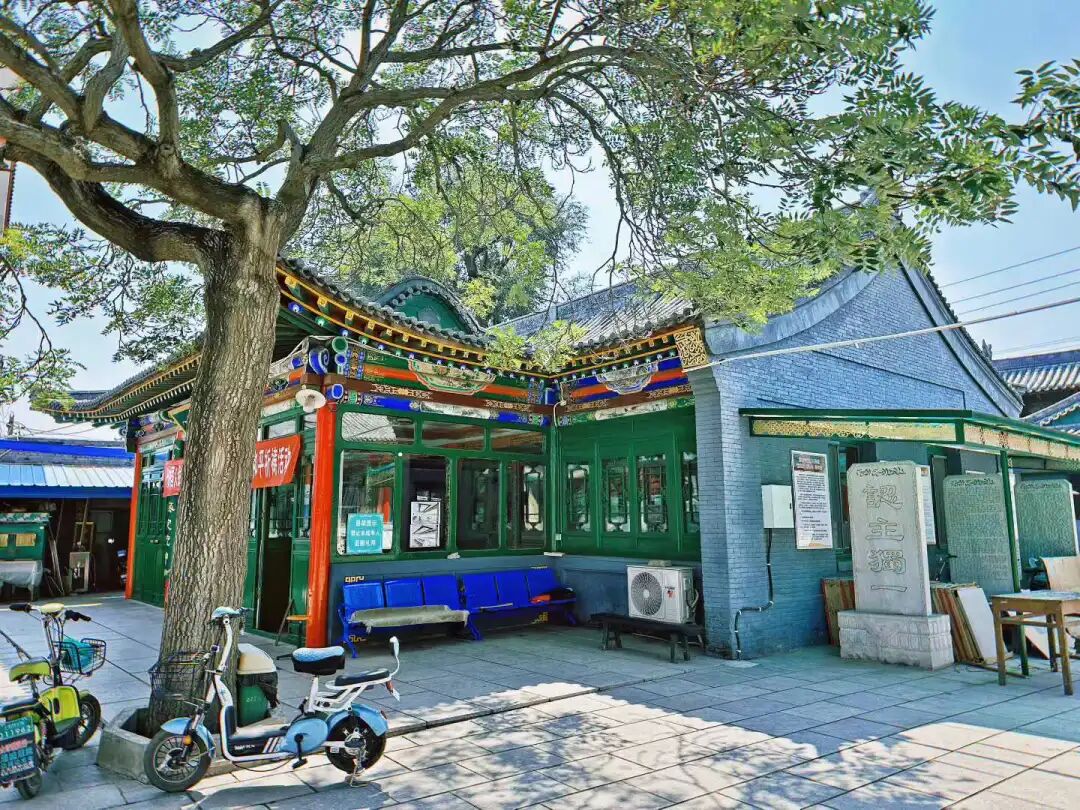
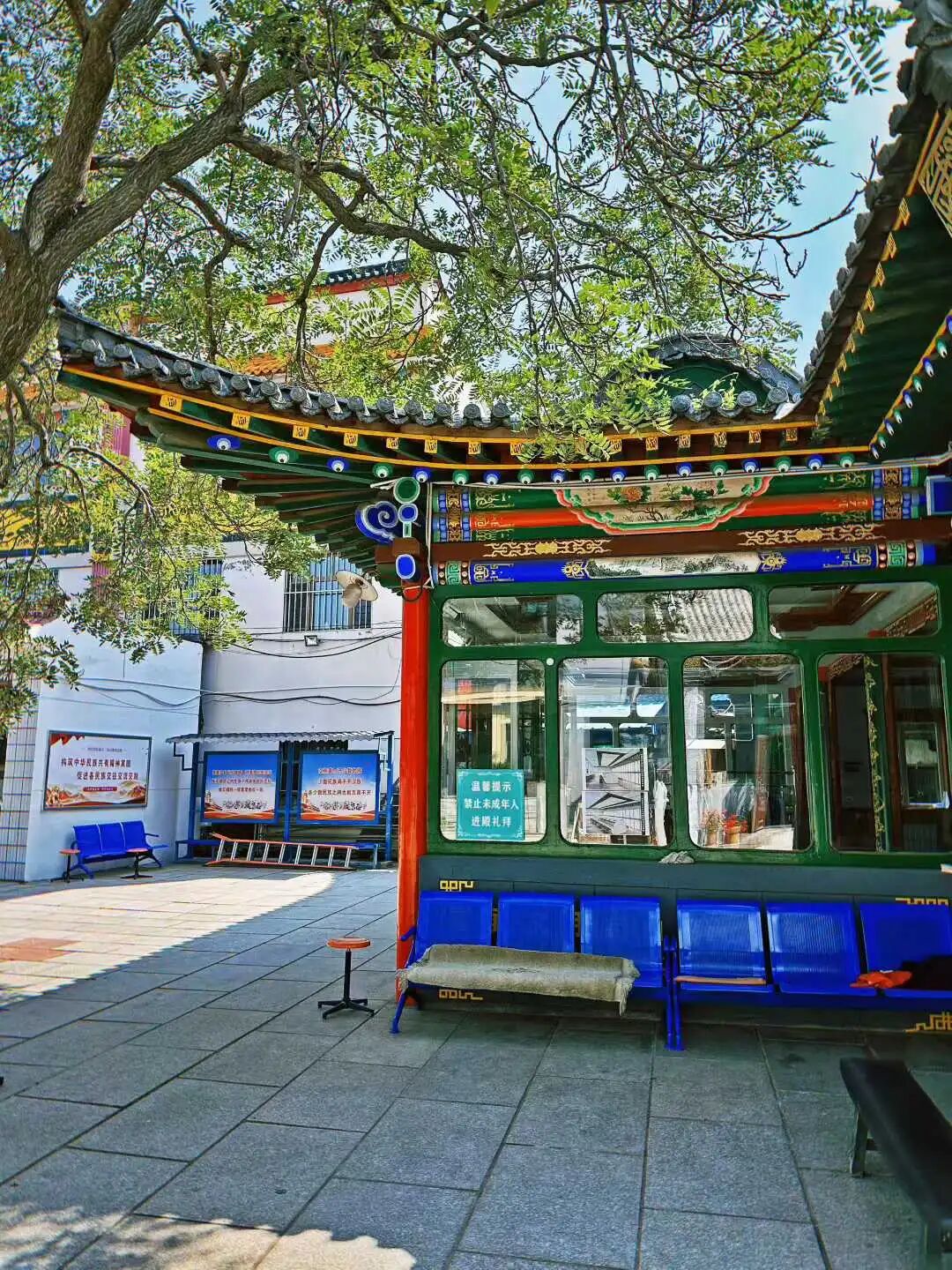
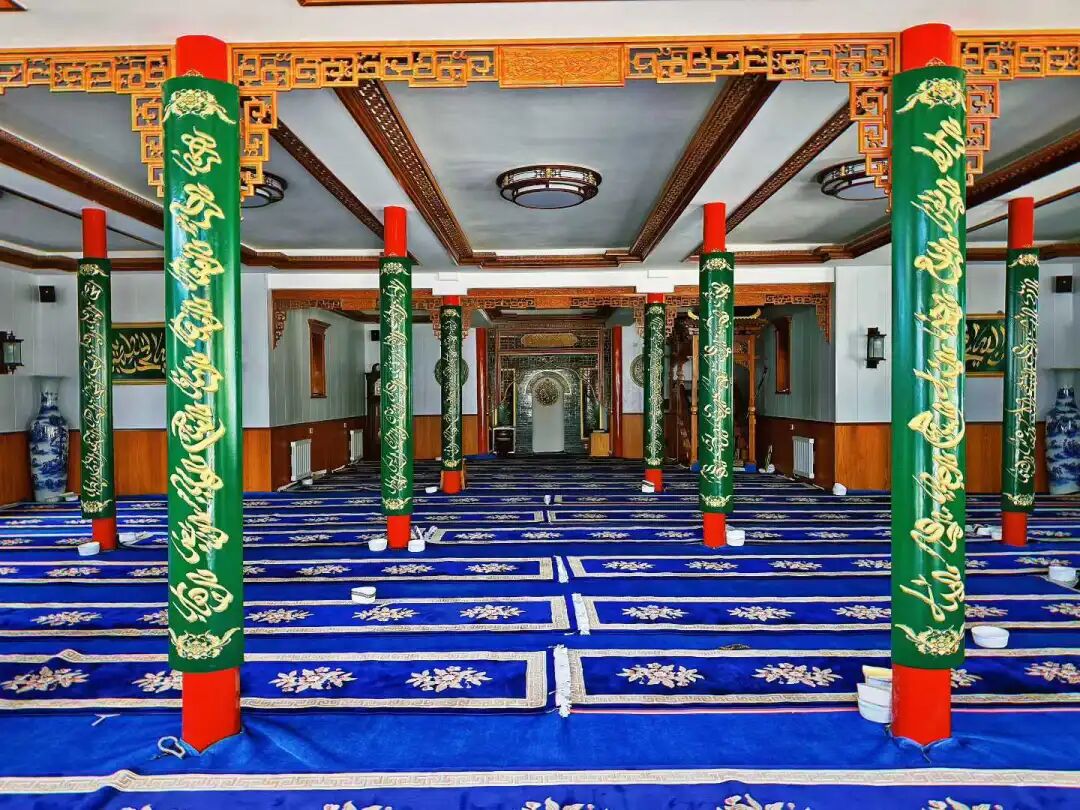
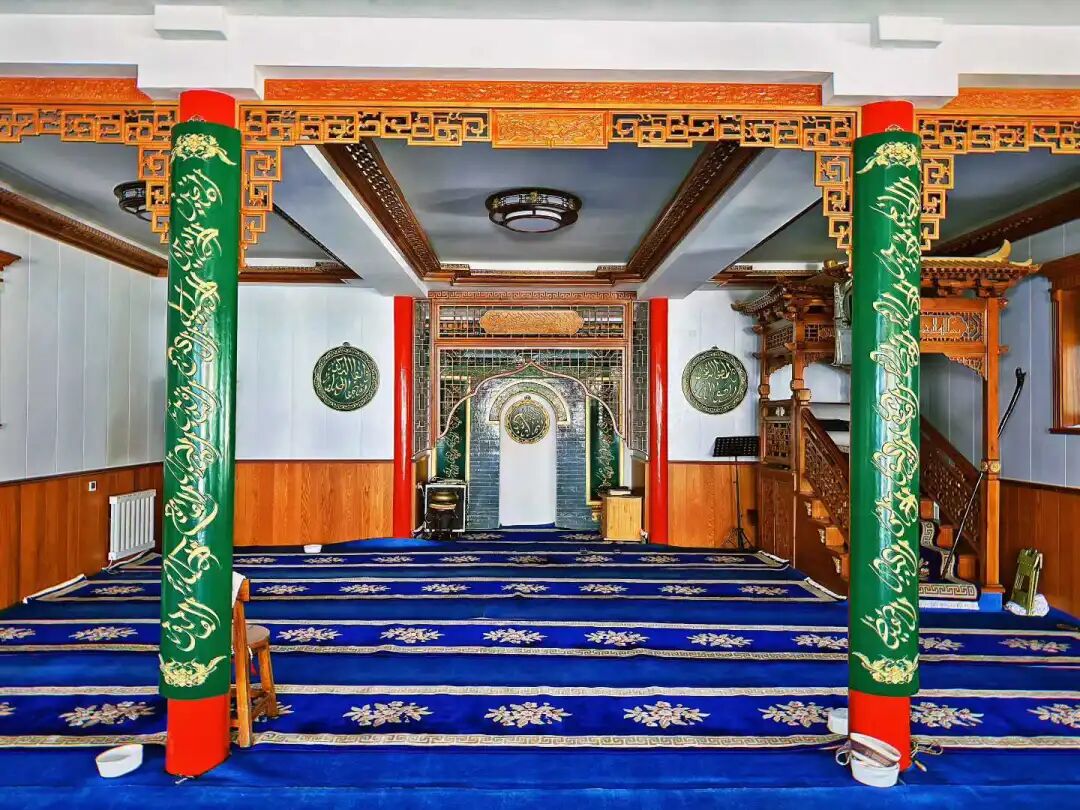
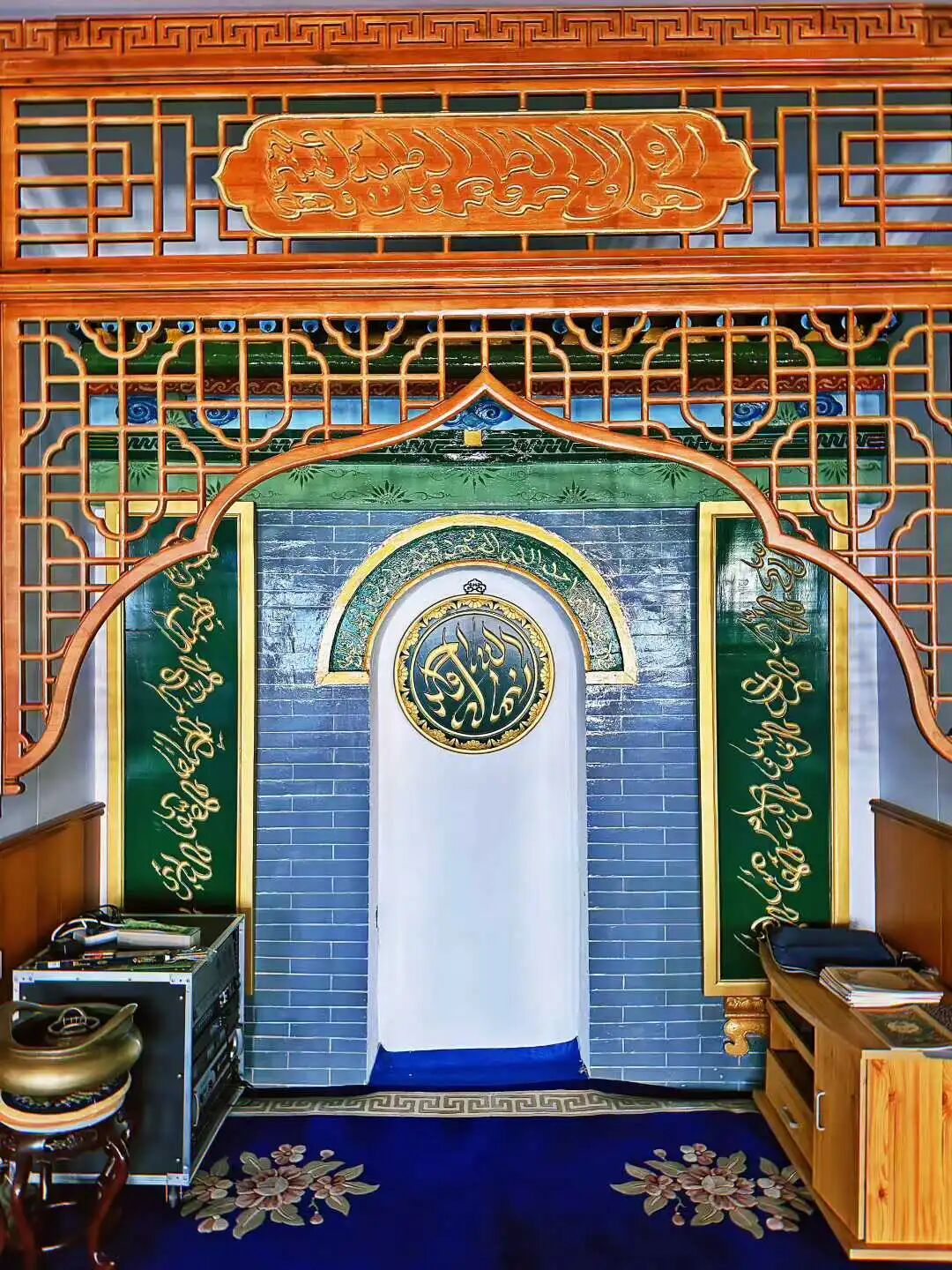
The exquisite brick carvings of the Qasqi Grand Mosque.
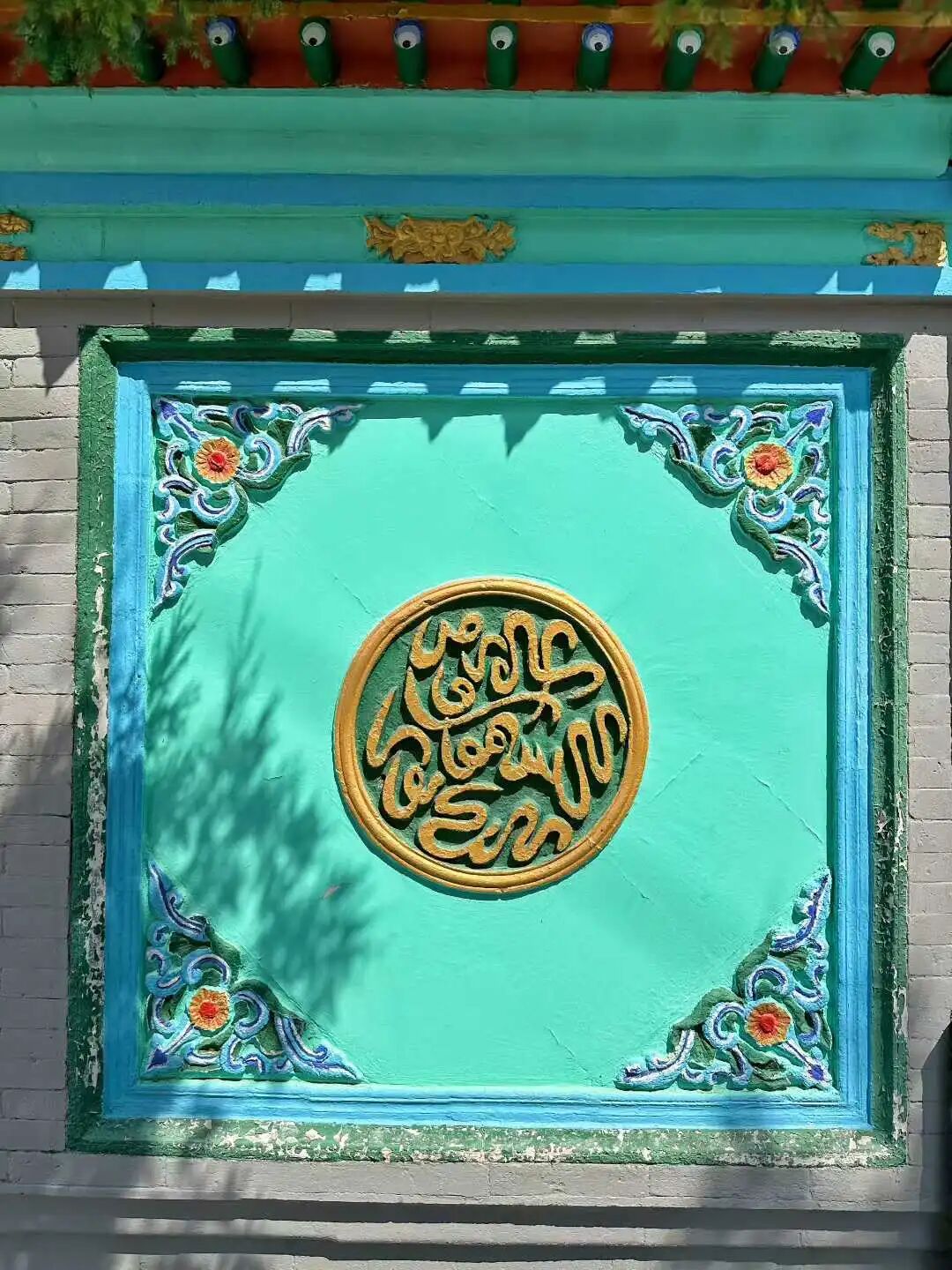
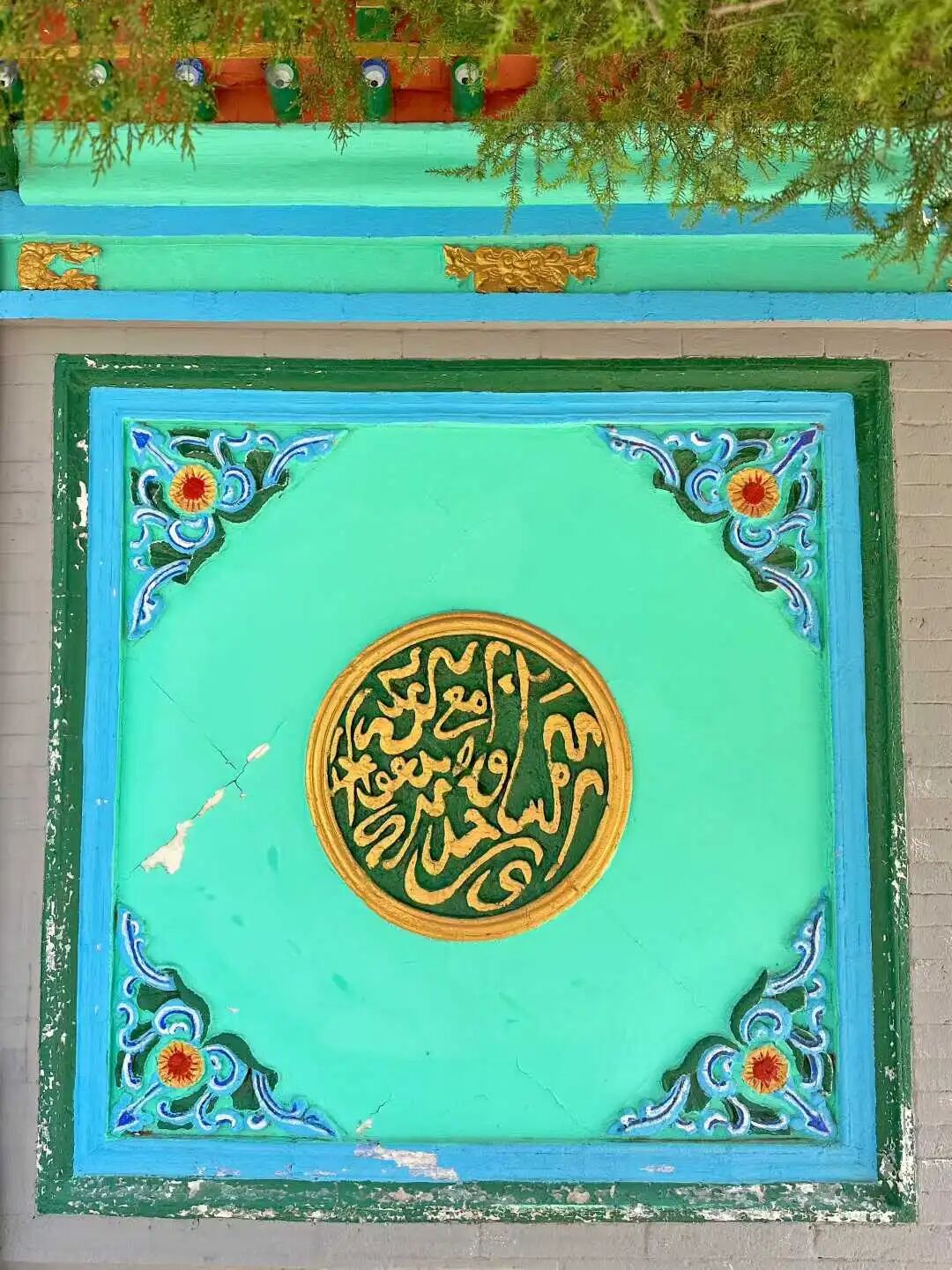
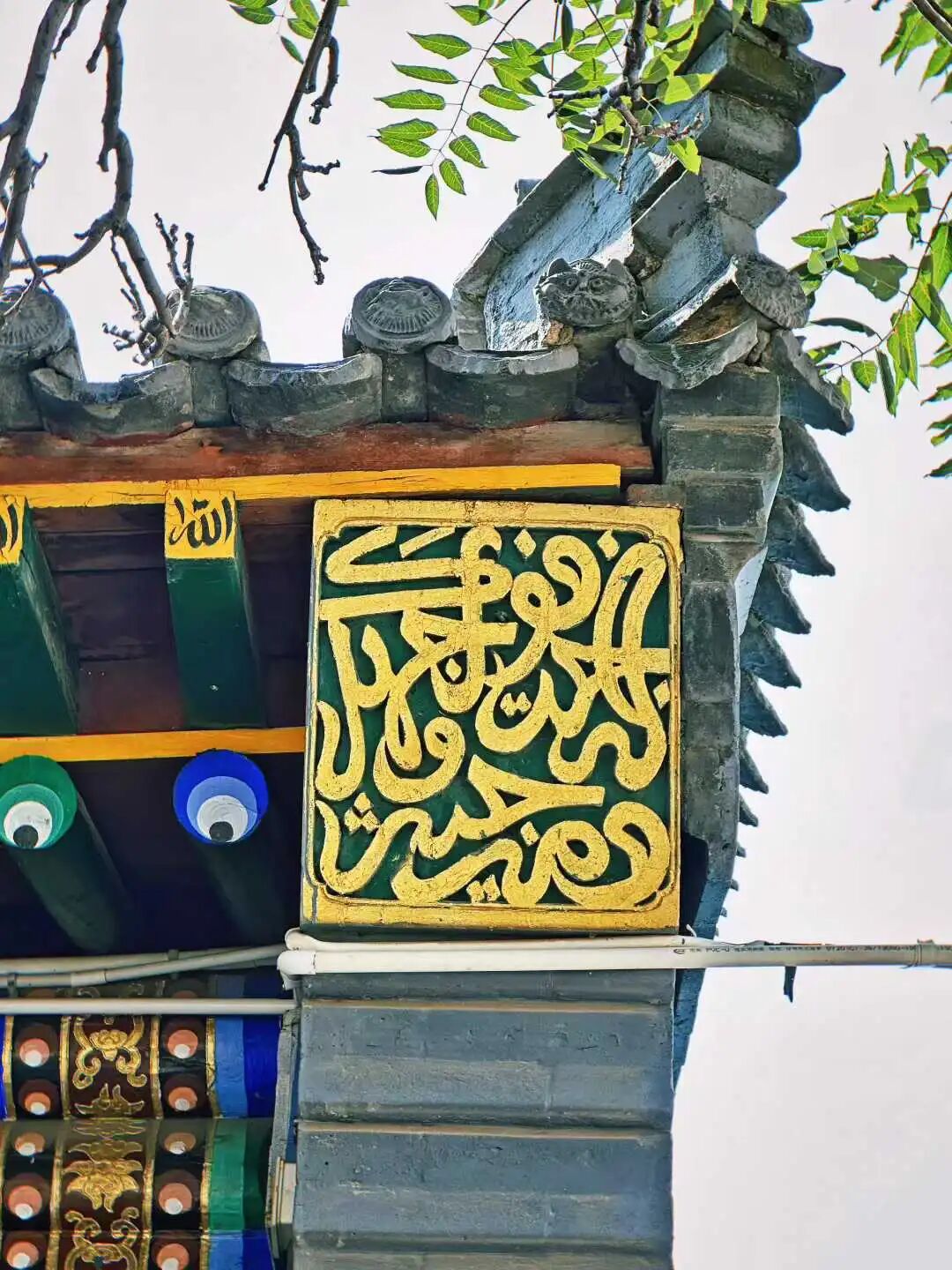
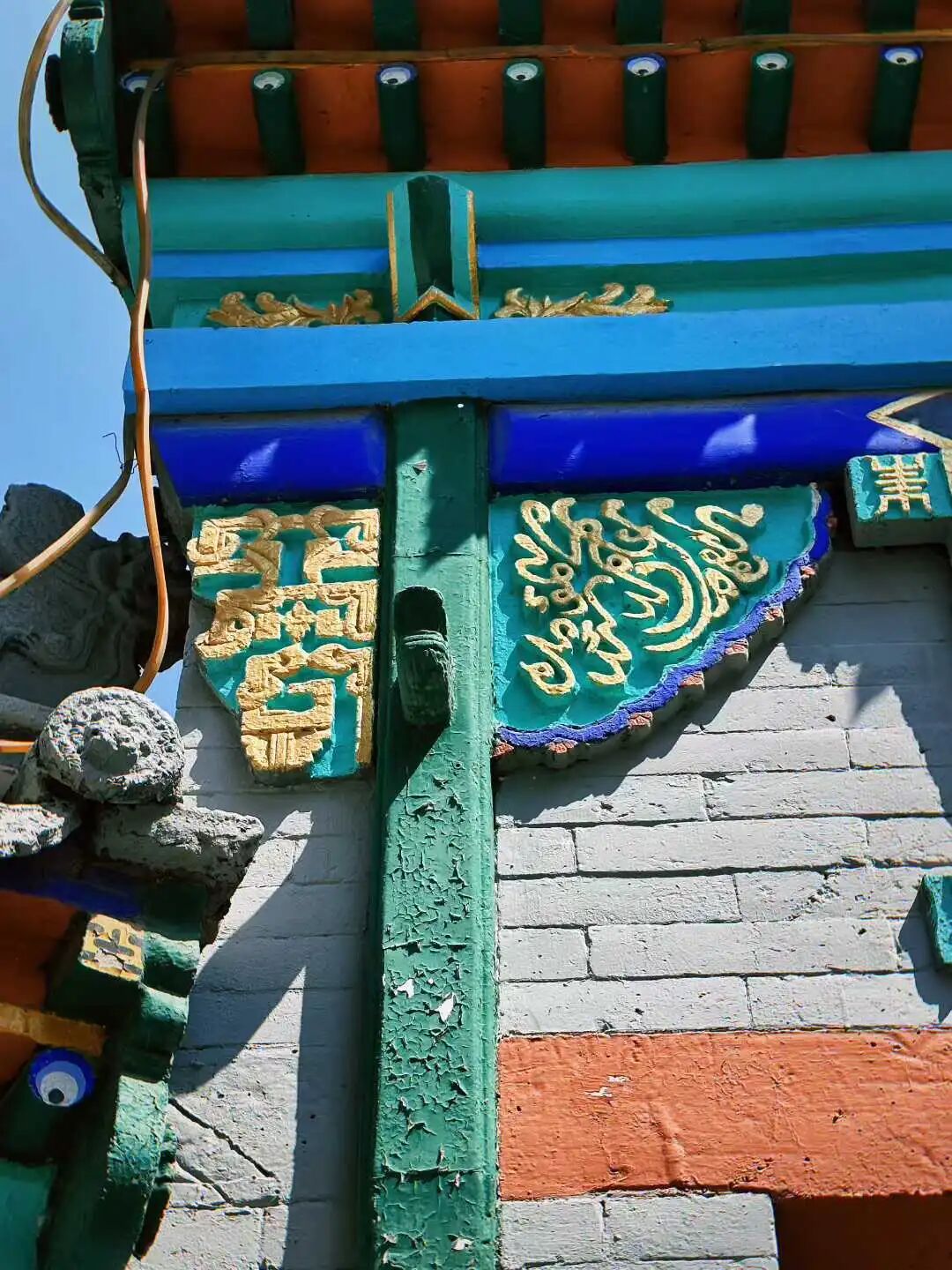
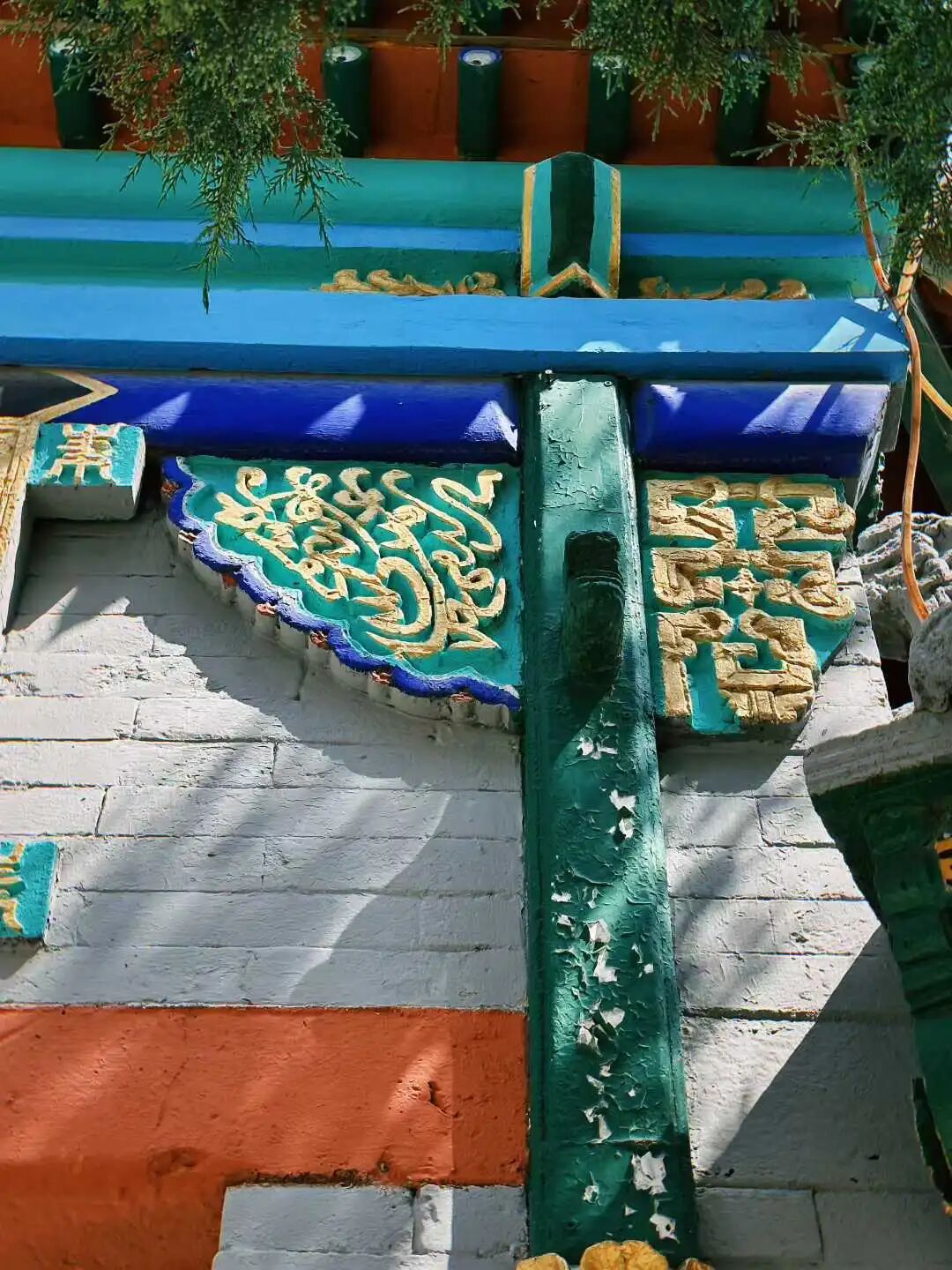
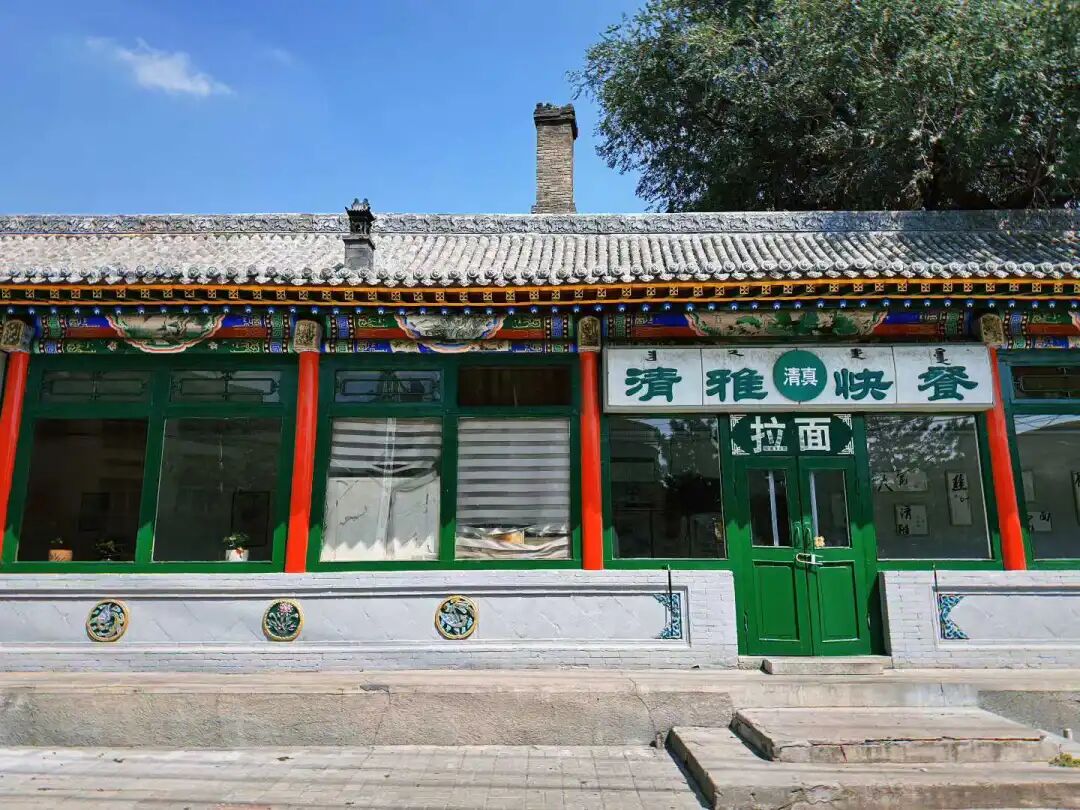
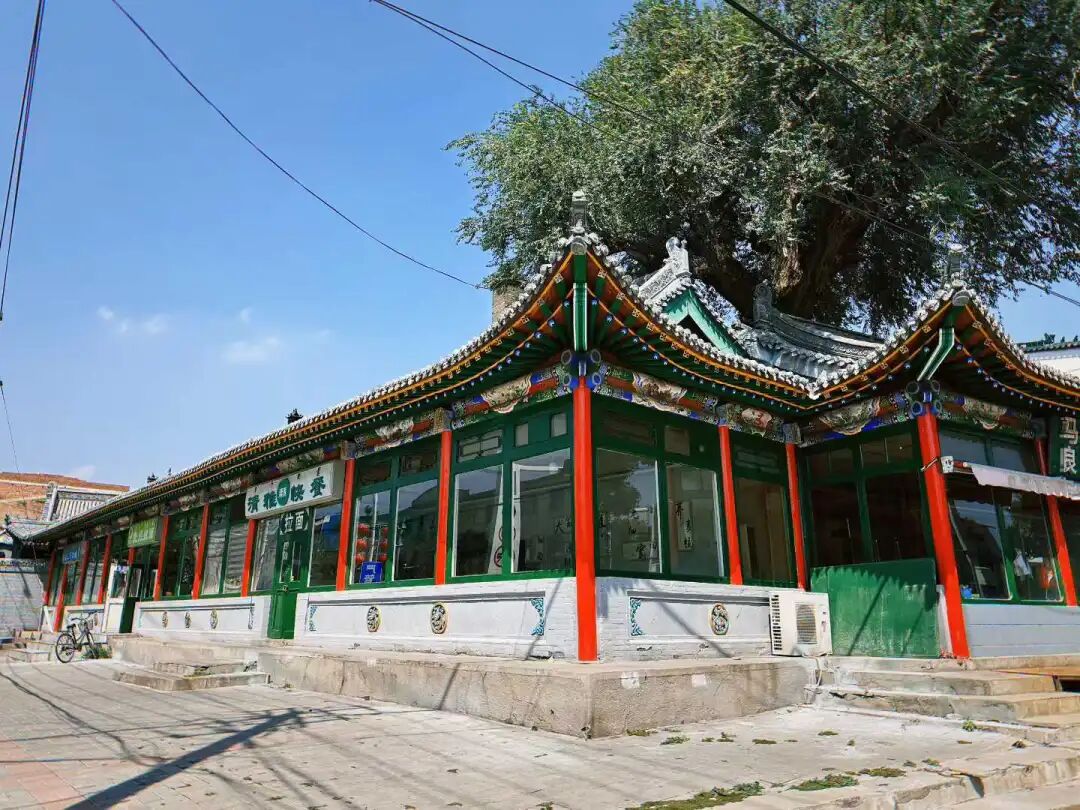
We ate at Xinhua Fast Food next to the mosque, ordering lamb with wood ear mushrooms and dried bean curd (fuzhu), stir-fried meat from Jiuyuan, and stir-fried sliced noodles (huishaomian). Even though it was a simple meal, the lamb was fresh and had no gamey smell, and the wood ear mushrooms were delicious. Stir-fried sliced noodles (huishaomian) originated from the oil-seared meat and knife-cut noodles of Shanxi. During the Daoguang reign of the Qing dynasty, migrants traveling west brought the dish to Inner Mongolia, where it became popular with manual laborers like porters and camel caravan drivers. The knife-cut noodles (daoxiaomian) in the dish are sliced and boiled to order, while the oil-seared meat is coated in batter and fried. It is served with garlic sprouts and bean sprouts for a balanced meal.
Hui Muslim families who moved to Qasqi in different periods:
The Bai, Xue, Jin, and Ma families during the Qianlong reign. The Bai family made their living trading horses. Every autumn, when the horses were strong and healthy, they transported them long distances to places like Hebei. Bai Shengyu was an expert horseman. It is said he could tie a copper coin to his long braid and ride at full gallop without the coin moving at all. The Xue family started out as middlemen and small traders, later buying land and becoming very wealthy in Qasqi. Xue Liang was eloquent and had many connections. He held high social status and reportedly handled seventeen murder cases.
The Wu, Luo, Yang, Qi, and Liang families during the Jiaqing period. The Wu family was originally from Mengcun, Cangzhou, Hebei. Their ancestor, Wu Juzhou, served as a military officer in the Qing army. In the early Jiaqing years, he fled with his family after killing an official in anger, moving to Togtoh County in Inner Mongolia. His second son, Wu Xiu, later moved to Qasqi. The Wu family was a martial arts family that produced many talented people. By the end of the Qing dynasty, they were involved in butchery and farming, ran an inn, and owned nearly 100 acres of paddy fields. The Luo family moved to Qasqi from the southern gate of Urumqi (Hongmiaozi), Xinjiang, where they had worked as camel drivers. During the Republic of China era, they opened the Fuchengkui fur shop, selling the furs they collected at the Sanyitang shop in the Hohhot Hui Muslim district. The Yang family came from Guyuan, Ningxia, and worked in camel transport. They moved to Chasugi in 1796, the first year of the Jiaqing reign.
During the Xianfeng and Tongzhi eras, the three main families were the Ma, Niu, and Bai families. Brothers Ma Dejun and Ma Defu moved their family here from Baoding, Hebei, to do business. The Niu family came from Wuzhong, Ningxia, and moved here during the Tongzhi era because of the Jinjipu Uprising. Bai Youfu’s family moved here from Tang County, Baoding, Hebei, during the Xianfeng and Tongzhi eras while fleeing famine with his mother. Through years of hard work and saving, they bought land and farmed. They borrowed grain and money from the Mongols and paid them back with land. By the 1930s, they owned over 10 qing of land and opened the Weilongquan and Fushunquan grain stores and grocery shops, becoming the wealthiest Hui Muslims in Chasugi.
During the Republic of China era, the five main families were the Jia, Wang, Ma, Fu, and Tao families. The Jia family arrived in Chasugi in 1914. They saved money by selling homespun cloth, bought over 30 mu of land in 1930, and continued to run small businesses.
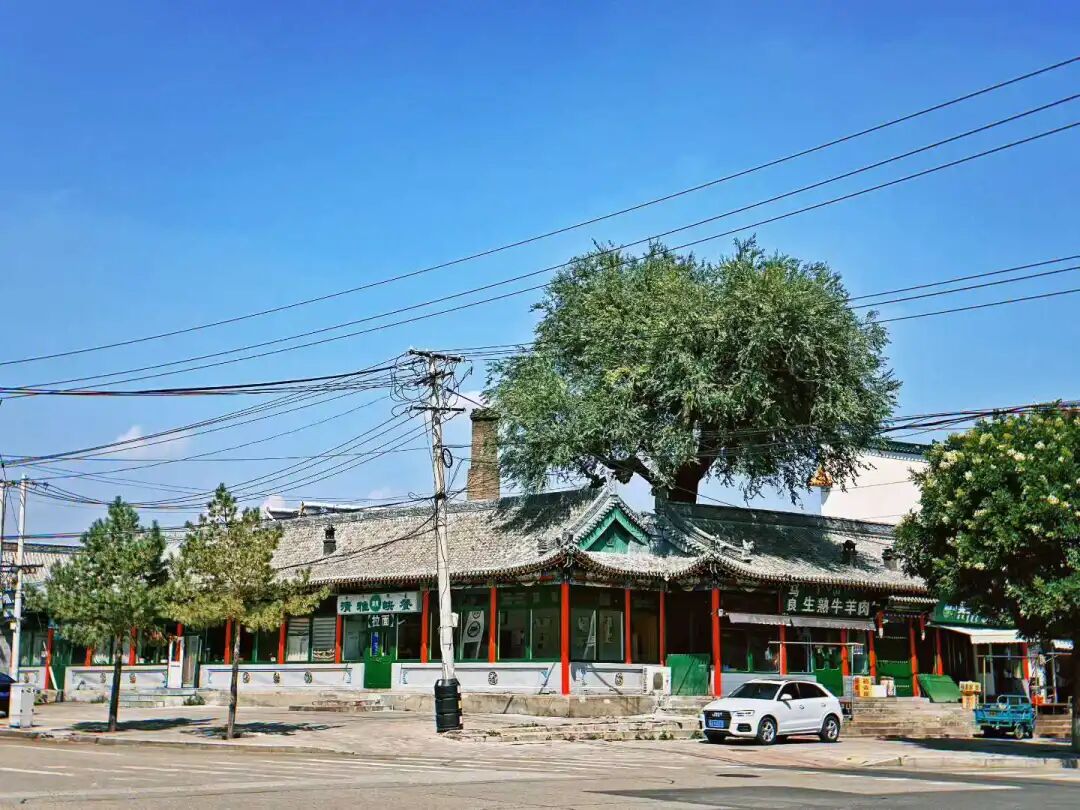
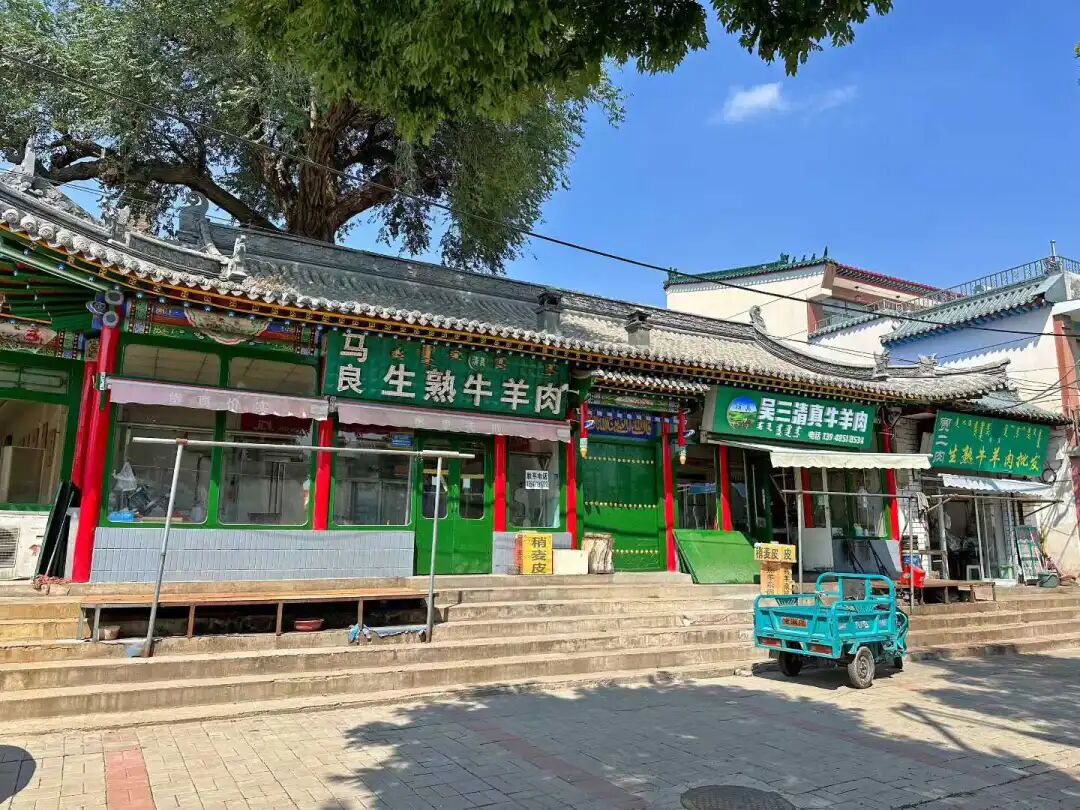
Halal Travel Guide: Duolun, Inner Mongolia - Mosques and Hui Muslim History
Articles • ali2007fr posted the article • 0 comments • 275 views • 2026-05-20 08:47
Summary: Duolun County sits on the southeastern edge of Inner Mongolia and has long been an important Hui Muslim town on the grassland route. This account keeps the original notes on mosques, local history, food, streets, and photographs from the visit.
Duolun County sits at the southeast edge of Xilin Gol League. During the Qing Dynasty, it served as the political and economic hub of the Mongolian grasslands. In 1691 (the 30th year of the Kangxi reign), Emperor Kangxi held the Dolon Nor Alliance here with nobles from the three Outer Mongolian tribes and the forty-eight banners of Inner Mongolia, officially bringing Outer Mongolia into the Qing Dynasty territory. Later, at the request of Mongolian nobles, Kangxi allowed merchants from the interior to use Duolun as a base to open trade routes across the Mongolian grasslands. He granted these merchants official titles and generous benefits, which drew crowds of traders from Beijing, Tianjin, Hebei, Shanxi, Shandong, and Shaanxi. This quickly turned Duolun into a major commercial city for trade with Mongolia. In 1710 (the 49th year of the Kangxi reign), Xinghua Town was officially established in Duolun. In 1741 (the 6th year of the Qianlong reign), Xinshengying was built north of Xinghua Town, eventually forming the layout of the old city of Duolun.
After the city of Duolun was built, Hui Muslims from Hebei, Shandong, Shanxi, and Henan traveled through Zhangjiakou to reach Duolun to trade on the grasslands, moving back and forth between the Mongolian plains and the interior. In his book Records of Dolon Nor published in 1908, the late Qing Japanese scholar Jian Hongsheng noted that the Hui Muslim population in Duolun had already reached 3,000 at that time.
Hui Muslims in Duolun built six mosque communities (fang), which were the South Mosque, North Mosque, East Mosque, West Mosque, Central Mosque, and Da'erhao Mosque. Later, the Da'erhao Mosque was transferred to Guyuan County in 1950, and the East Mosque was demolished in the 1960s. Today, the old city still preserves four ancient mosque buildings: the South Mosque, North Mosque, East Mosque, and West Mosque. In 2006, they were collectively listed as a national-level cultural heritage site under the name Nuo'er Ancient Architectural Complex.
The South Mosque is the oldest in Duolun. It is located on Taiping Street in the old city and was first built during the Yongzheng reign. In 1761 (the 26th year of the Qianlong reign), Hui Muslim merchants Mo Tianming and Ma Guifang led an expansion to create the current structure. In July 1933, after the anti-Japanese hero General Ji Hongchang recaptured Duolun, the local Hui Muslims hosted a banquet for him at the South Mosque. The South Mosque is currently closed and not open for visitors.
The North Mosque is located on Erdao Street in the old city. It was built in 1798 (the 3rd year of the Jiaqing reign) with donations from Hui Muslim merchants who ran cattle, horse, and camel transport businesses. It later became the largest mosque (masjid) in the city. In July 1933, after the anti-Japanese hero General Ji Hongchang recaptured Duolun, he stayed briefly at the North Mosque. Today, the North Mosque is active and holds regular services.
During the Tongzhi reign, some Hui Muslims from Shaanxi, Ningxia, and Gansu moved to Duolun to settle down. After that, Hui Muslims from North China were called Kouli people, while those from the Northwest were called Westerners.
The East Mosque is located outside the Nanjin Fortress in the old city. It was started in 1869 (the eighth year of the Tongzhi reign) by Hui Muslims Xiu Mingliang and Liu Changfu from Shaanxi, and finished in 1878 (the first year of the Guangxu reign). The West Mosque is on Daxi Street in the ancient city. It was built in 1880 (the fifth year of the Guangxu reign) by camel caravan merchants Li Xianyu and Wang Jichen, who were from Ningxia and Gansu. After the 1960s, the East Mosque was completely torn down, and the West Mosque's main gate and the north and south lecture halls were also demolished. Today, only the main hall of the West Mosque remains, and it is open to the public as a historical site.
The Middle Mosque is on Nanqiangfeng Street in the ancient city. It was built in 1908 (the 34th year of the Guangxu reign) by Wang Guofu and Shan Yunxing. In 1930, He Xingzhou, Cong Dianqing, and others started rebuilding the main hall, which was finished in 1935. The Middle Mosque is currently open as usual.
Plaques and couplets inside the Duolun Middle Mosque:
Do not be greedy for this life, only for the afterlife; follow the heavenly and human way to return to the true faith. Carefully keep to the right path, avoid what is improper, and find joy and peace in recognizing the One: Respectfully presented in the eighth month of the 24th year of the Jiaqing reign.
Heaven's command clearly explains the pure and unique truth, recognized since ancient times; the Prophet's practice spreads the one true faith, returning to the belief in the five daily namaz.
Blessings of the One True God: Presented on an auspicious day in the fifth month of the ninth year of the Xianfeng reign of the Great Qing Dynasty by Zheng Kuishi, Imperial Commissioner overseeing Ningguo military affairs, Commander-in-Chief of Zhejiang Province, in charge of all land and water forces, and titled General Jianwei, Shalamagai Baturu.
Zheng Kuishi was a famous general in the late Qing Dynasty and a Hui Muslim from Wanquan, Zhangjiakou, Hebei. He fought against the Taiping Rebellion and the Nian Army for many years. He was the first to break through the defenses of Luzhou and was wounded over twenty times in Huaiyuan, nearly losing his life, which earned him high praise from the imperial court. When Zheng Kuishi wrote the plaque for Duolun in the ninth year of the Xianfeng reign, he was serving as the Commander-in-Chief of Zhejiang and overseeing military affairs in Ningguo, the highest rank he reached in his life. In a memorial to the throne, Li Hongzhang highly praised Zheng Kuishi, saying he was 'hardworking, resolute, and exceptionally brave... he was the first to face the enemy's sharp edge, risking his life repeatedly. He suffered serious wounds eight or nine times, his body covered in scars. Among all the famous generals north and south of the Yangtze River, everyone considered Kuishi the best.'
The Ancient Pure Faith: Respectfully presented by Song Rui, specially appointed Commander of the Duolun Battalion and recipient of the imperial peacock feather, in the first year of the Guangxu reign of the Great Qing Dynasty, in the month of the lotus.
Benevolent Influence Spreads Everywhere: Presented by the acting Duolun Nuoer Magistrate, Lord Zhu Dezheng, who holds a fourth-rank title and wears a peacock feather. Respectfully presented by Hui Muslim leaders Shan Yunxing, village elder Ma Wanxing, and others in the first month of summer in the 31st year of the Guangxu reign of the Great Qing Dynasty.
Merciful in this life, uniquely merciful in the hereafter: established in the eighth year of the Republic of China, in the seventh lunar month.
The stretch of Longzehu Road to Huimeng Street in Duolun County is full of restaurants, with over a dozen being halal. The night market features all kinds of barbecue, and the restaurants offer both Mongolian food and traditional Hui Muslim dishes, providing a wide variety.
In the evening, we ate a mix of lamb leg bones, lamb spine (yangxiezi), and lamb tail tips at Laojia Banggu in Duolun, Inner Mongolia. They were stewed in a traditional broth (laotang), keeping the flavors very authentic. The lamb tail tips were very tender and tasted better than the long strips of lamb tail I have had in Beijing. Besides dipping vegetables, you can also dip dry flatbread (baiganbing). Once it is in the pot, the texture is very similar to Baoding covered flatbread (zhaobing), which I thought was quite good.
We stayed at the Duolun Hotel in the city center. The family room is great for a large group, parking at the entrance is convenient, and the Duolun night market is right behind it. The food street is just around the corner. They also serve a halal breakfast where you can get vegetables, oily milk tea, and roasted millet (chaomi). view all
Summary: Duolun County sits on the southeastern edge of Inner Mongolia and has long been an important Hui Muslim town on the grassland route. This account keeps the original notes on mosques, local history, food, streets, and photographs from the visit.
Duolun County sits at the southeast edge of Xilin Gol League. During the Qing Dynasty, it served as the political and economic hub of the Mongolian grasslands. In 1691 (the 30th year of the Kangxi reign), Emperor Kangxi held the Dolon Nor Alliance here with nobles from the three Outer Mongolian tribes and the forty-eight banners of Inner Mongolia, officially bringing Outer Mongolia into the Qing Dynasty territory. Later, at the request of Mongolian nobles, Kangxi allowed merchants from the interior to use Duolun as a base to open trade routes across the Mongolian grasslands. He granted these merchants official titles and generous benefits, which drew crowds of traders from Beijing, Tianjin, Hebei, Shanxi, Shandong, and Shaanxi. This quickly turned Duolun into a major commercial city for trade with Mongolia. In 1710 (the 49th year of the Kangxi reign), Xinghua Town was officially established in Duolun. In 1741 (the 6th year of the Qianlong reign), Xinshengying was built north of Xinghua Town, eventually forming the layout of the old city of Duolun.
After the city of Duolun was built, Hui Muslims from Hebei, Shandong, Shanxi, and Henan traveled through Zhangjiakou to reach Duolun to trade on the grasslands, moving back and forth between the Mongolian plains and the interior. In his book Records of Dolon Nor published in 1908, the late Qing Japanese scholar Jian Hongsheng noted that the Hui Muslim population in Duolun had already reached 3,000 at that time.
Hui Muslims in Duolun built six mosque communities (fang), which were the South Mosque, North Mosque, East Mosque, West Mosque, Central Mosque, and Da'erhao Mosque. Later, the Da'erhao Mosque was transferred to Guyuan County in 1950, and the East Mosque was demolished in the 1960s. Today, the old city still preserves four ancient mosque buildings: the South Mosque, North Mosque, East Mosque, and West Mosque. In 2006, they were collectively listed as a national-level cultural heritage site under the name Nuo'er Ancient Architectural Complex.
The South Mosque is the oldest in Duolun. It is located on Taiping Street in the old city and was first built during the Yongzheng reign. In 1761 (the 26th year of the Qianlong reign), Hui Muslim merchants Mo Tianming and Ma Guifang led an expansion to create the current structure. In July 1933, after the anti-Japanese hero General Ji Hongchang recaptured Duolun, the local Hui Muslims hosted a banquet for him at the South Mosque. The South Mosque is currently closed and not open for visitors.
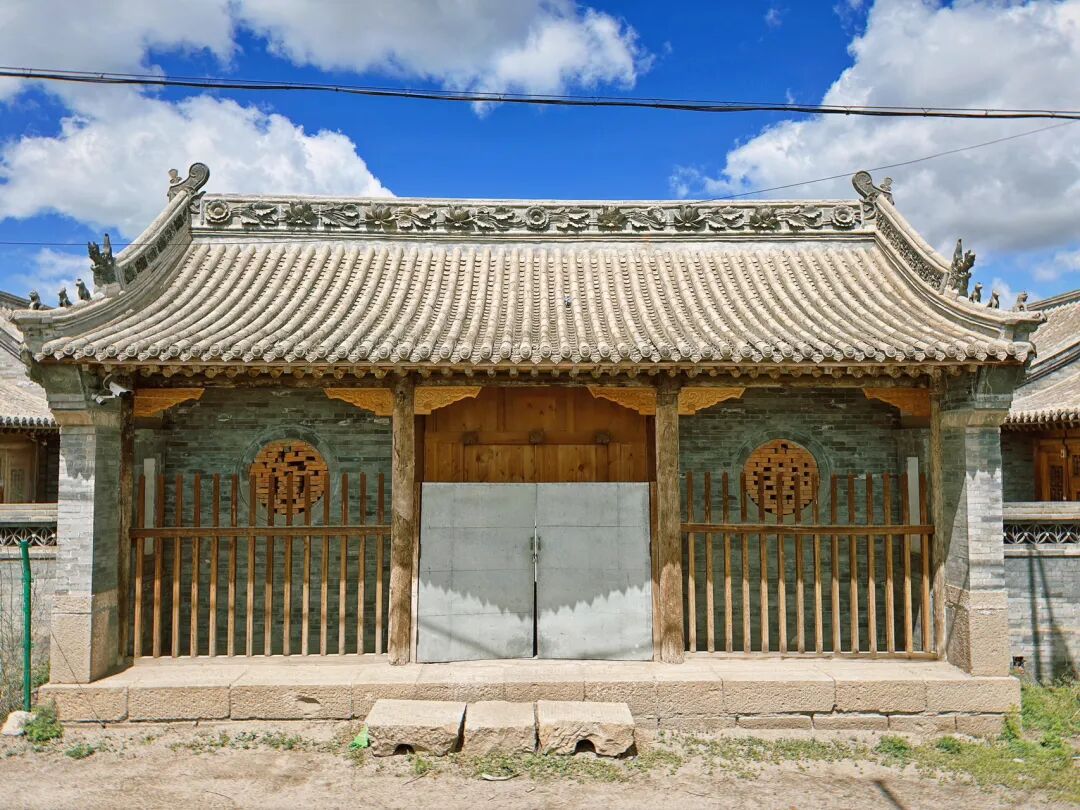
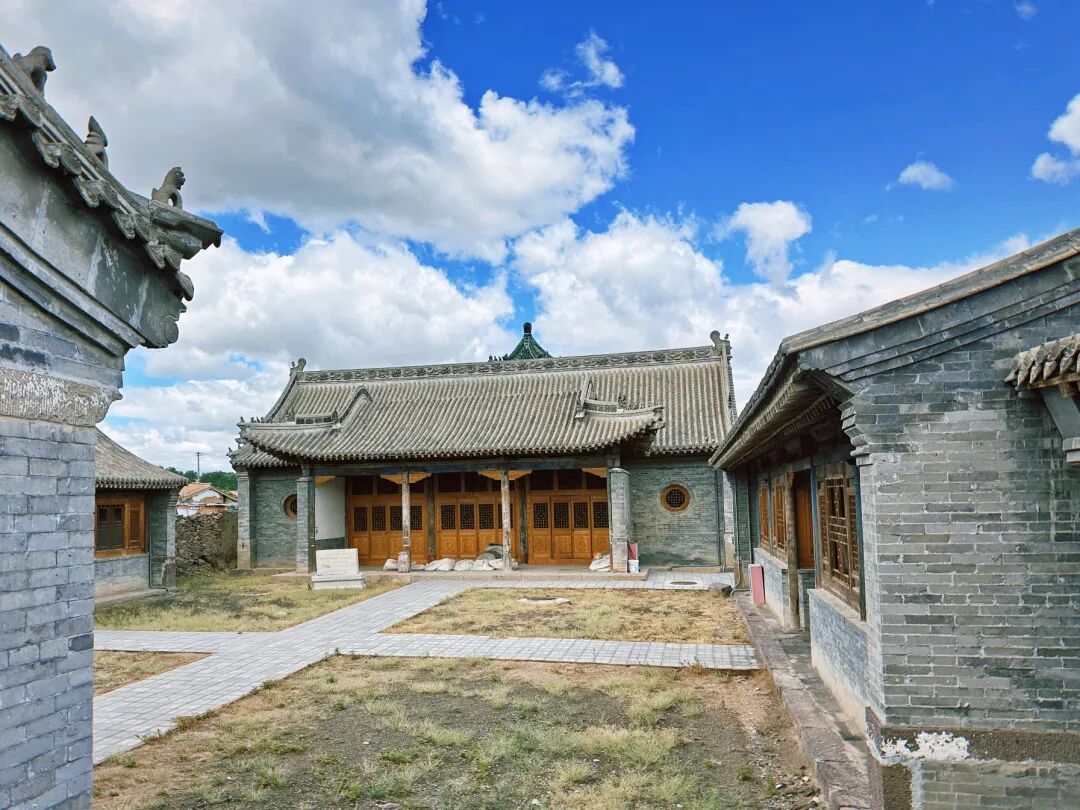
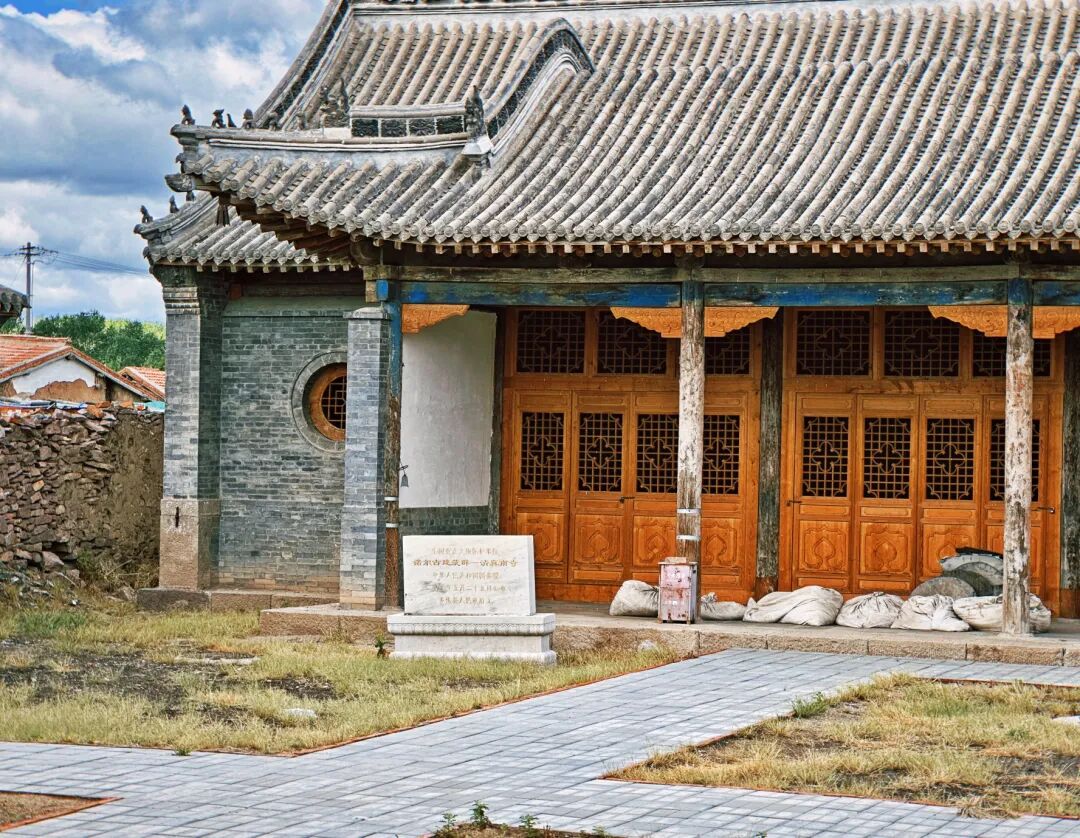
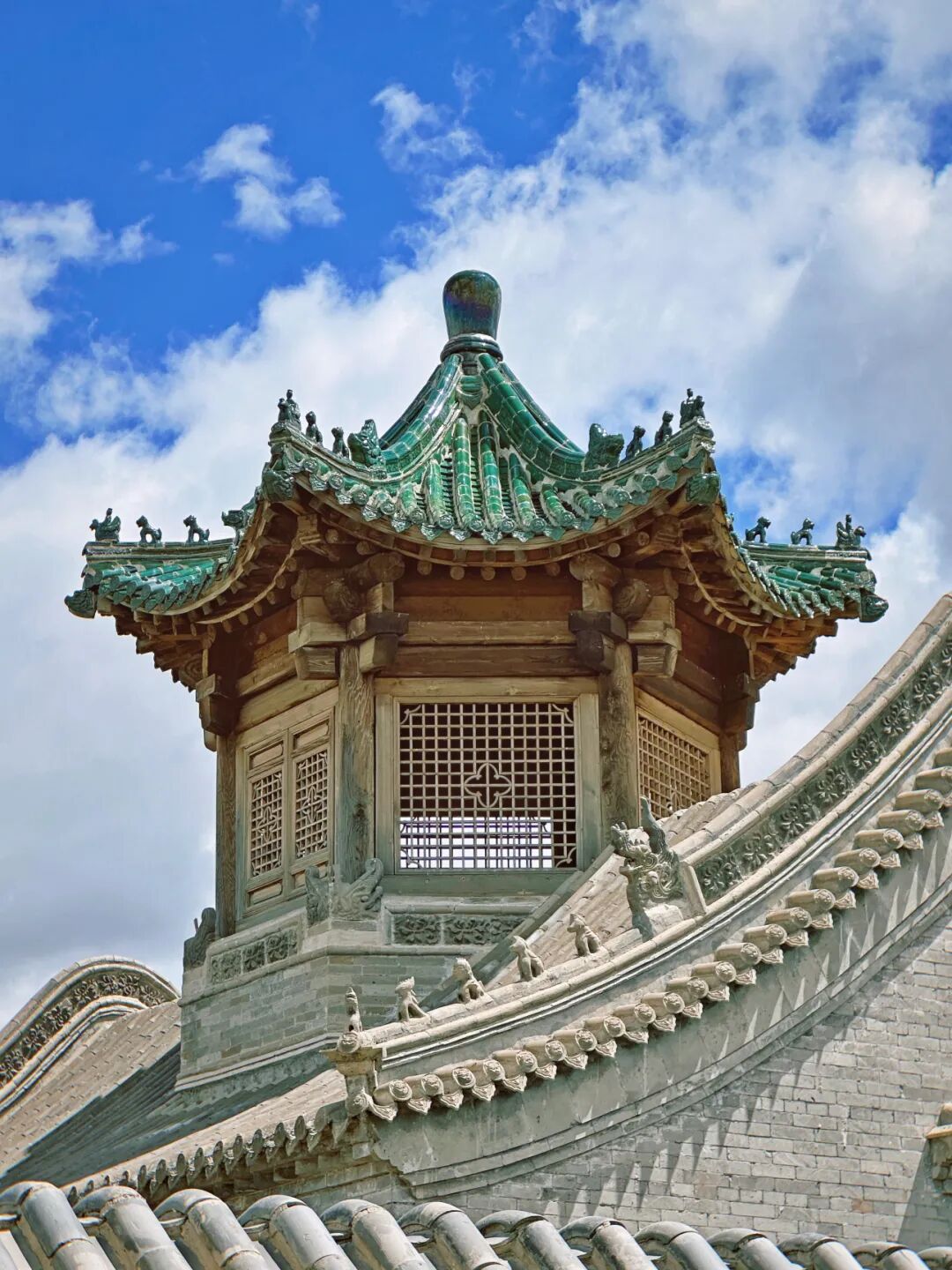
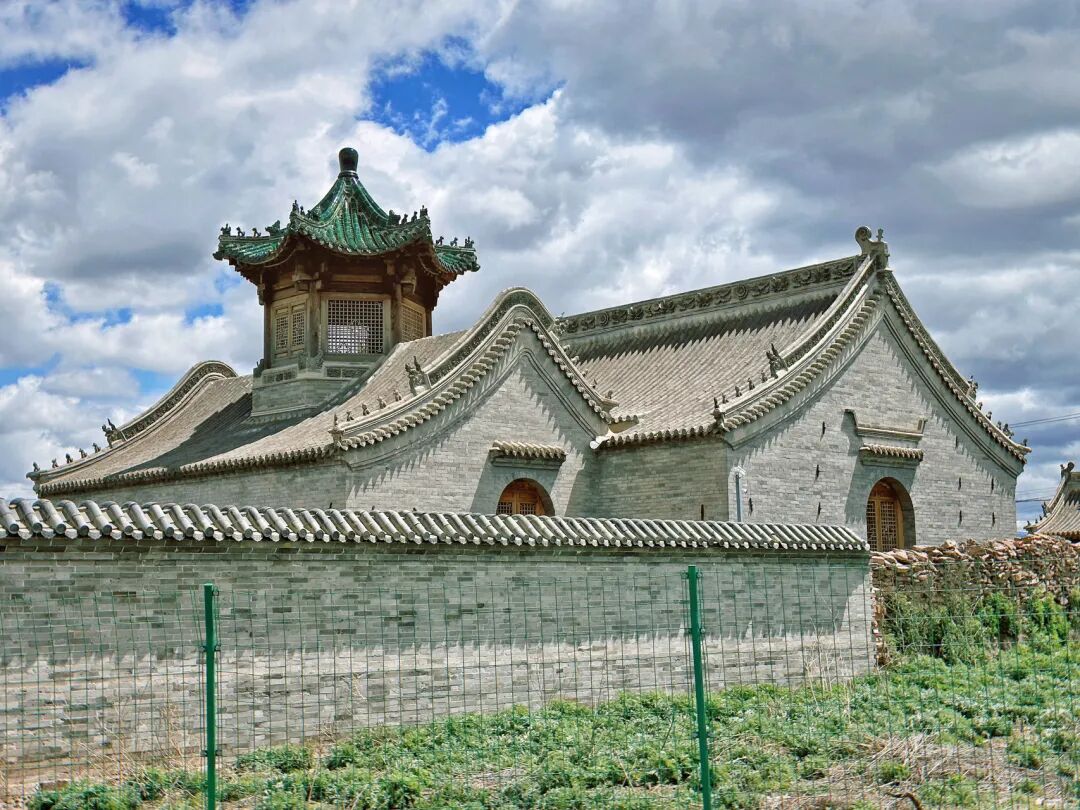
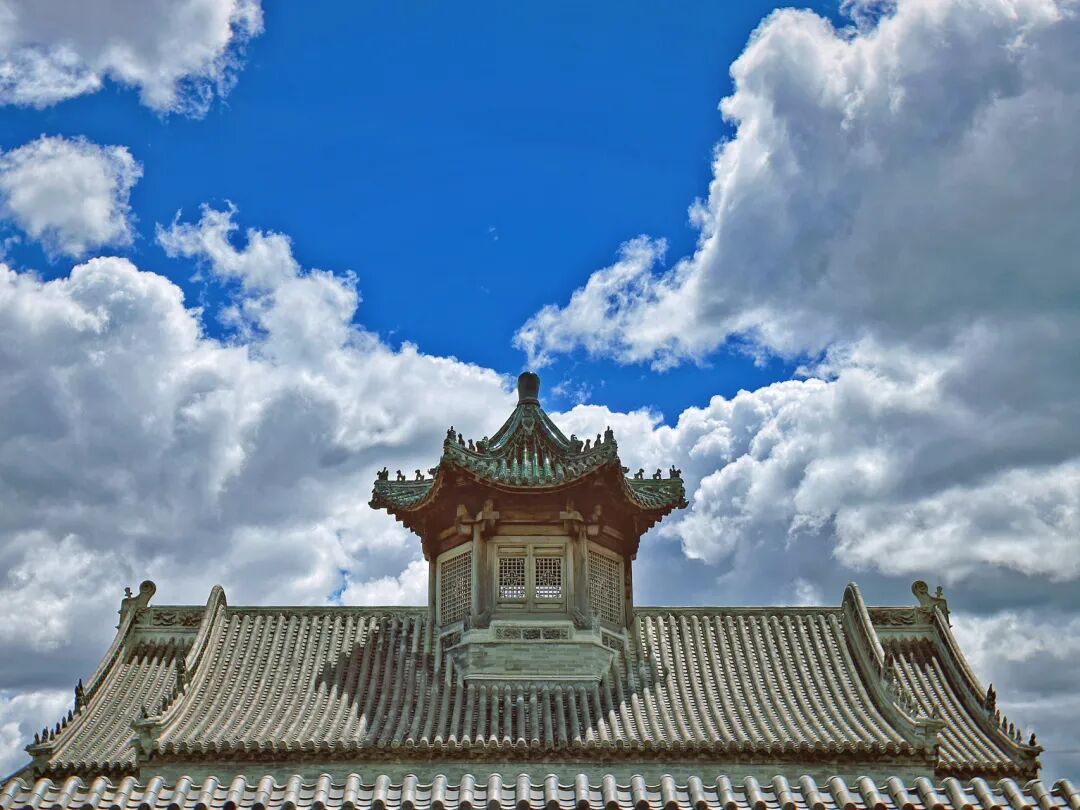
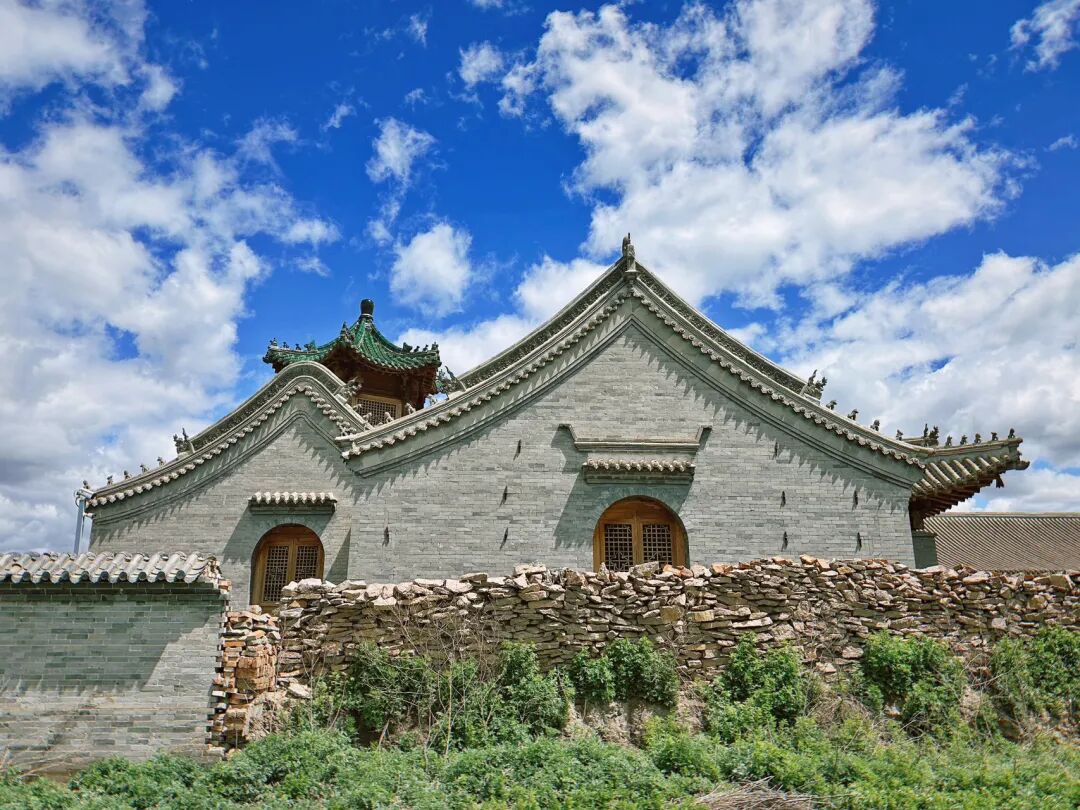
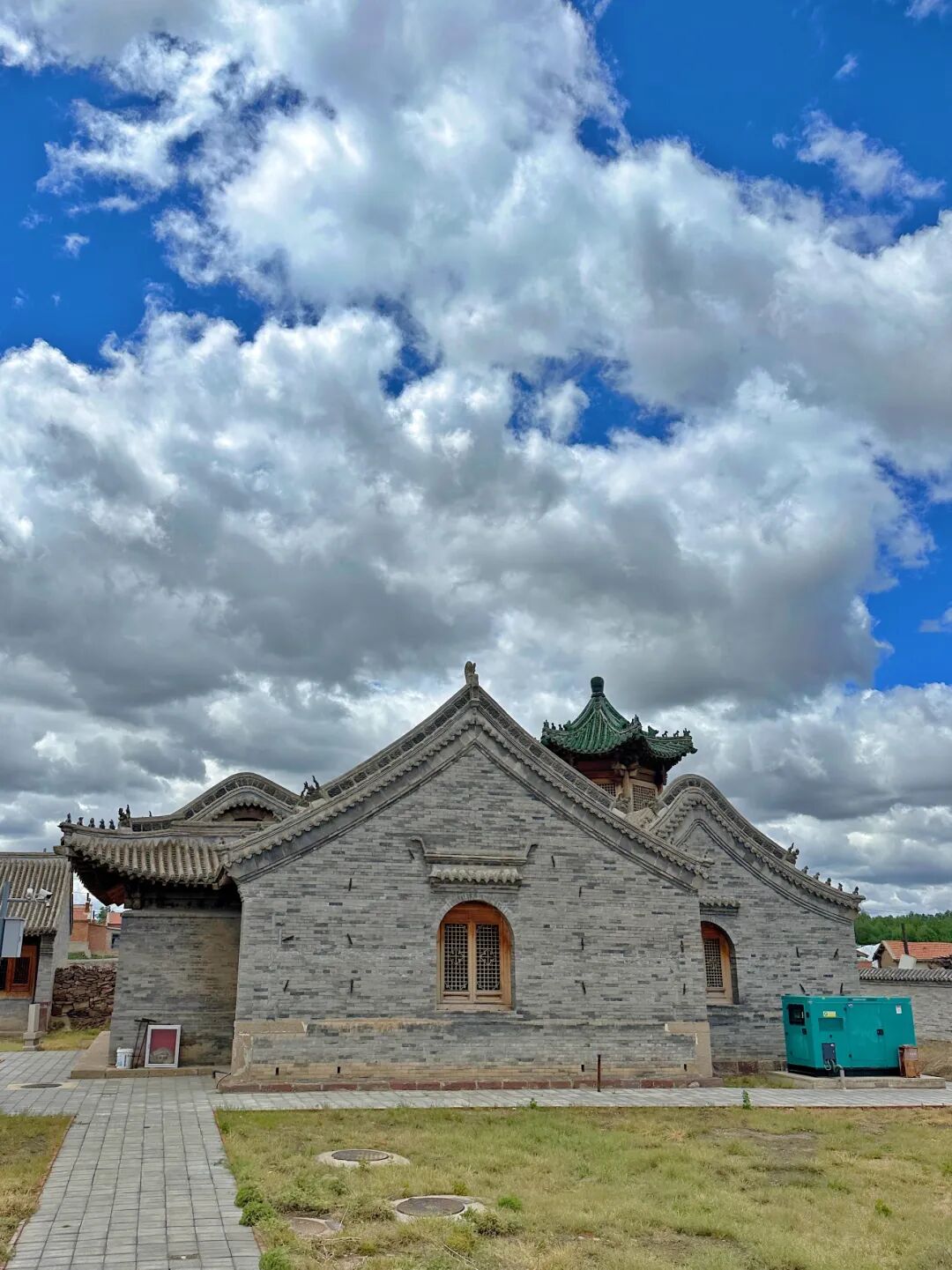
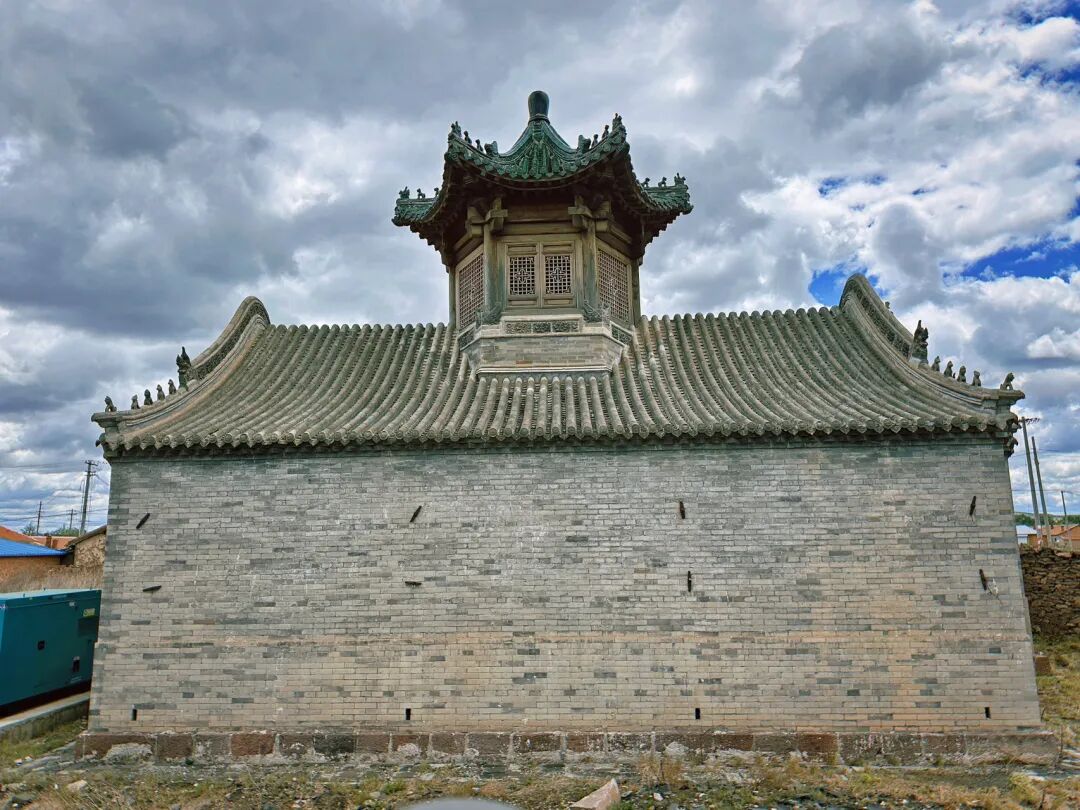
The North Mosque is located on Erdao Street in the old city. It was built in 1798 (the 3rd year of the Jiaqing reign) with donations from Hui Muslim merchants who ran cattle, horse, and camel transport businesses. It later became the largest mosque (masjid) in the city. In July 1933, after the anti-Japanese hero General Ji Hongchang recaptured Duolun, he stayed briefly at the North Mosque. Today, the North Mosque is active and holds regular services.
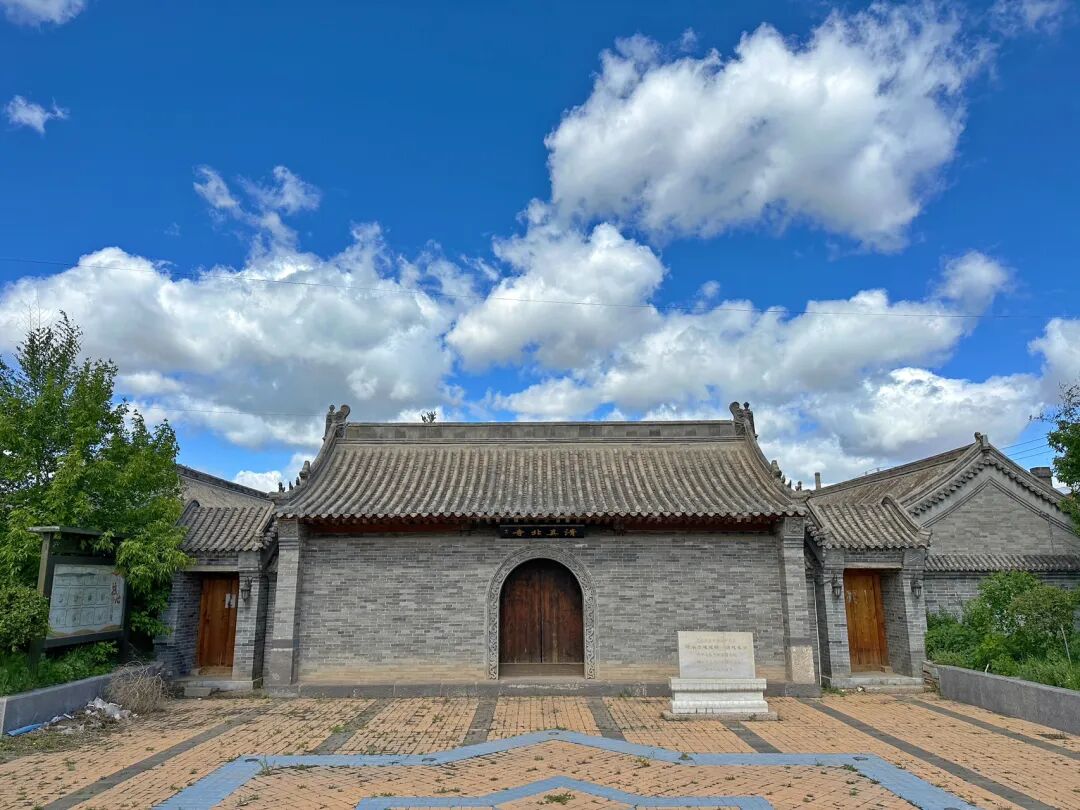
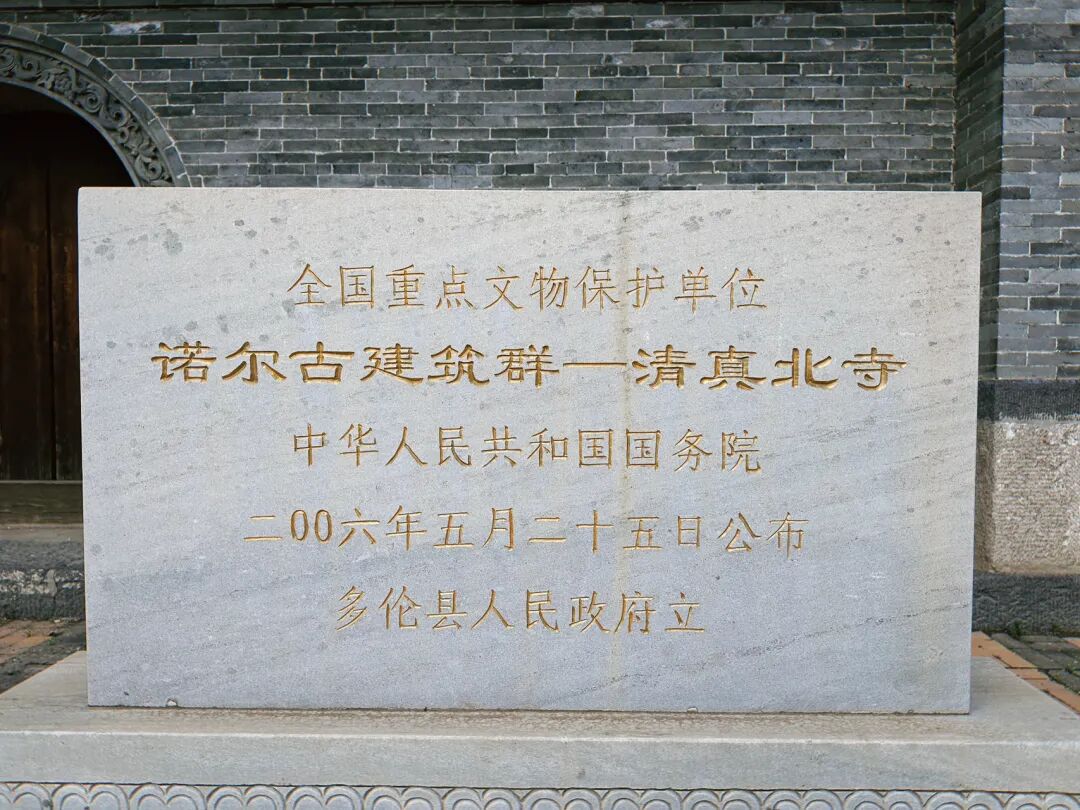
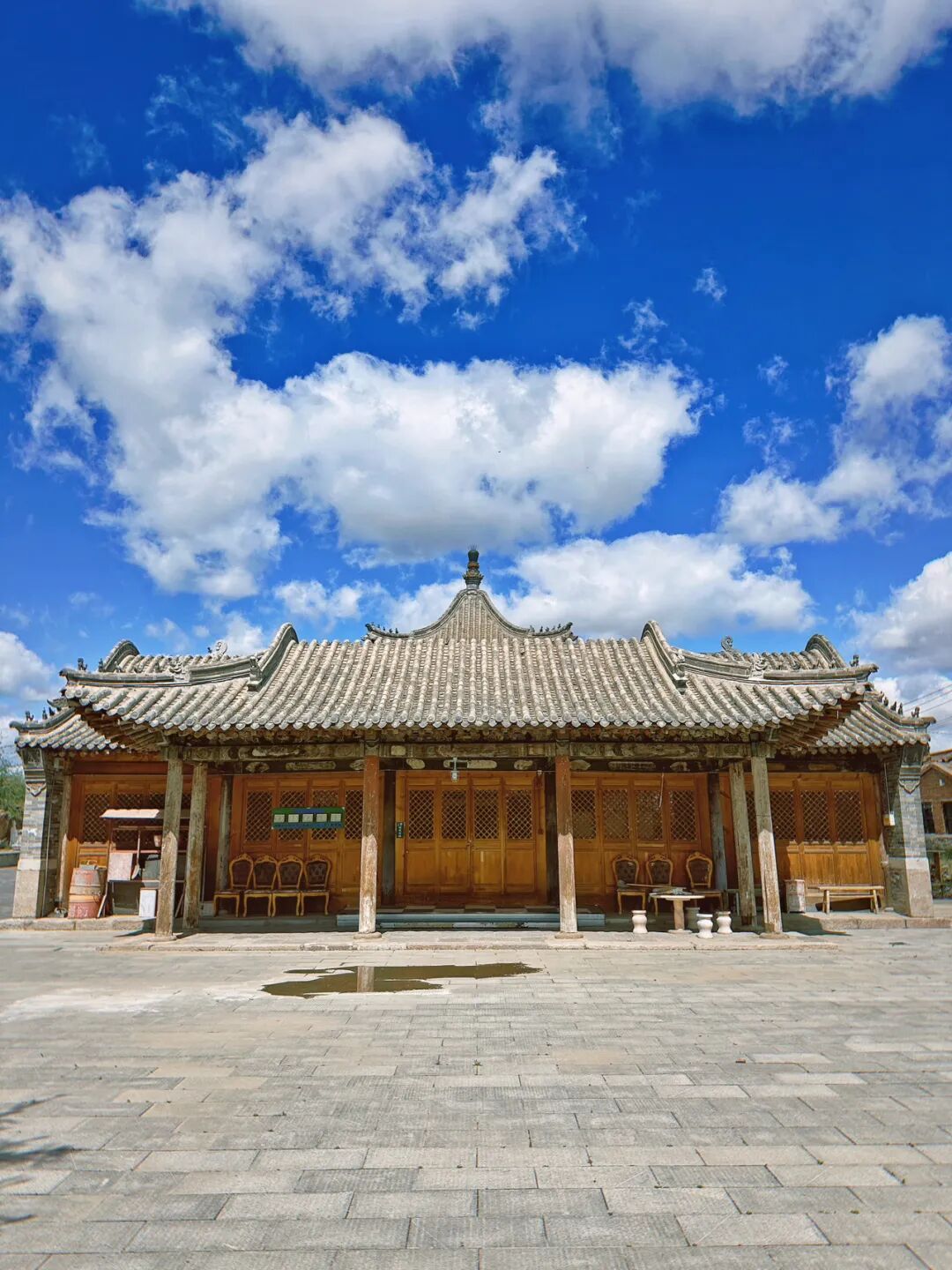
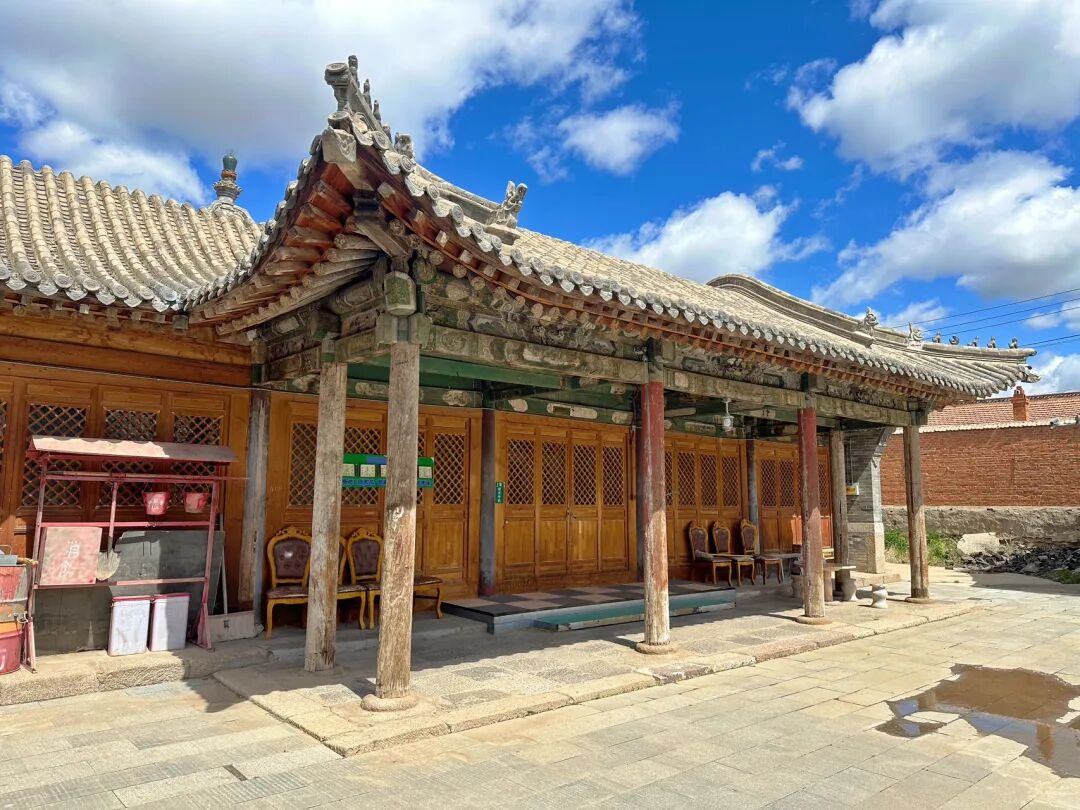
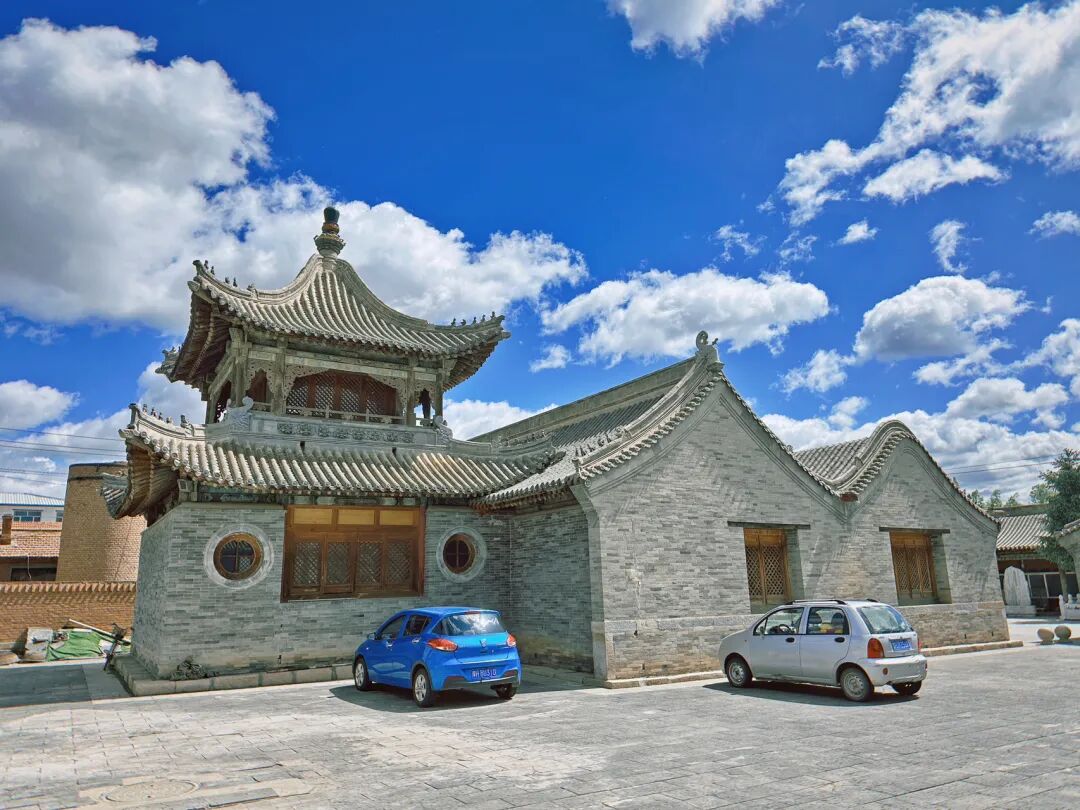
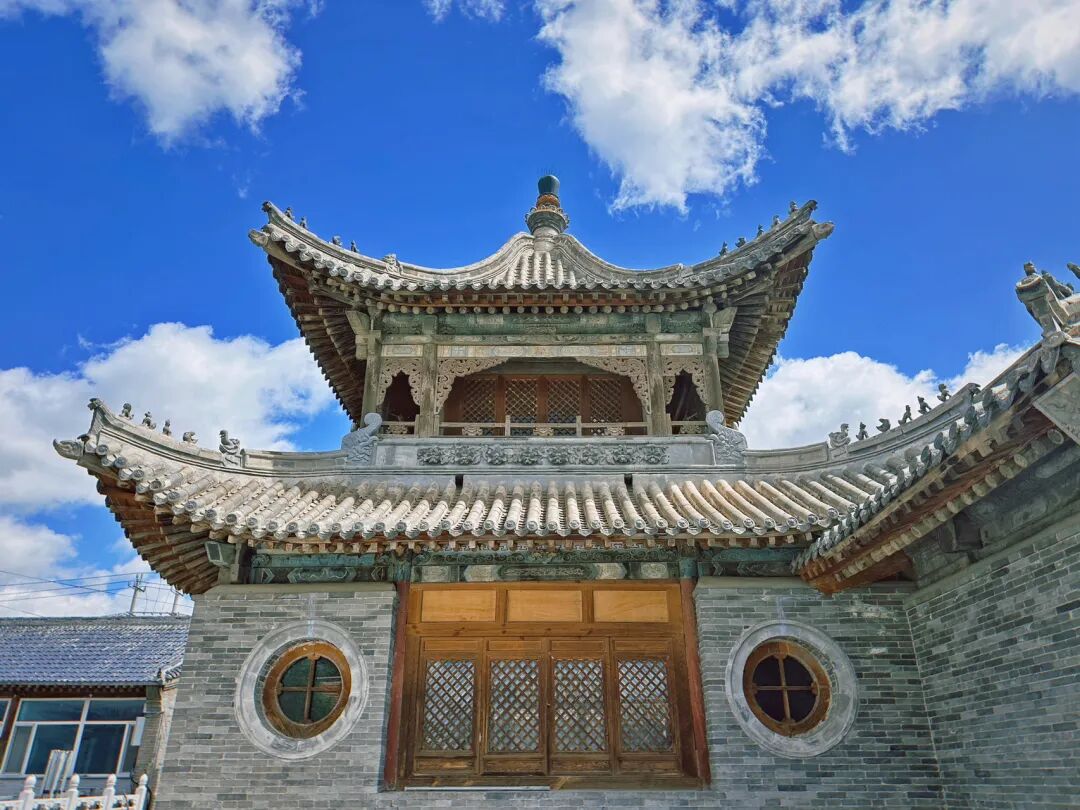
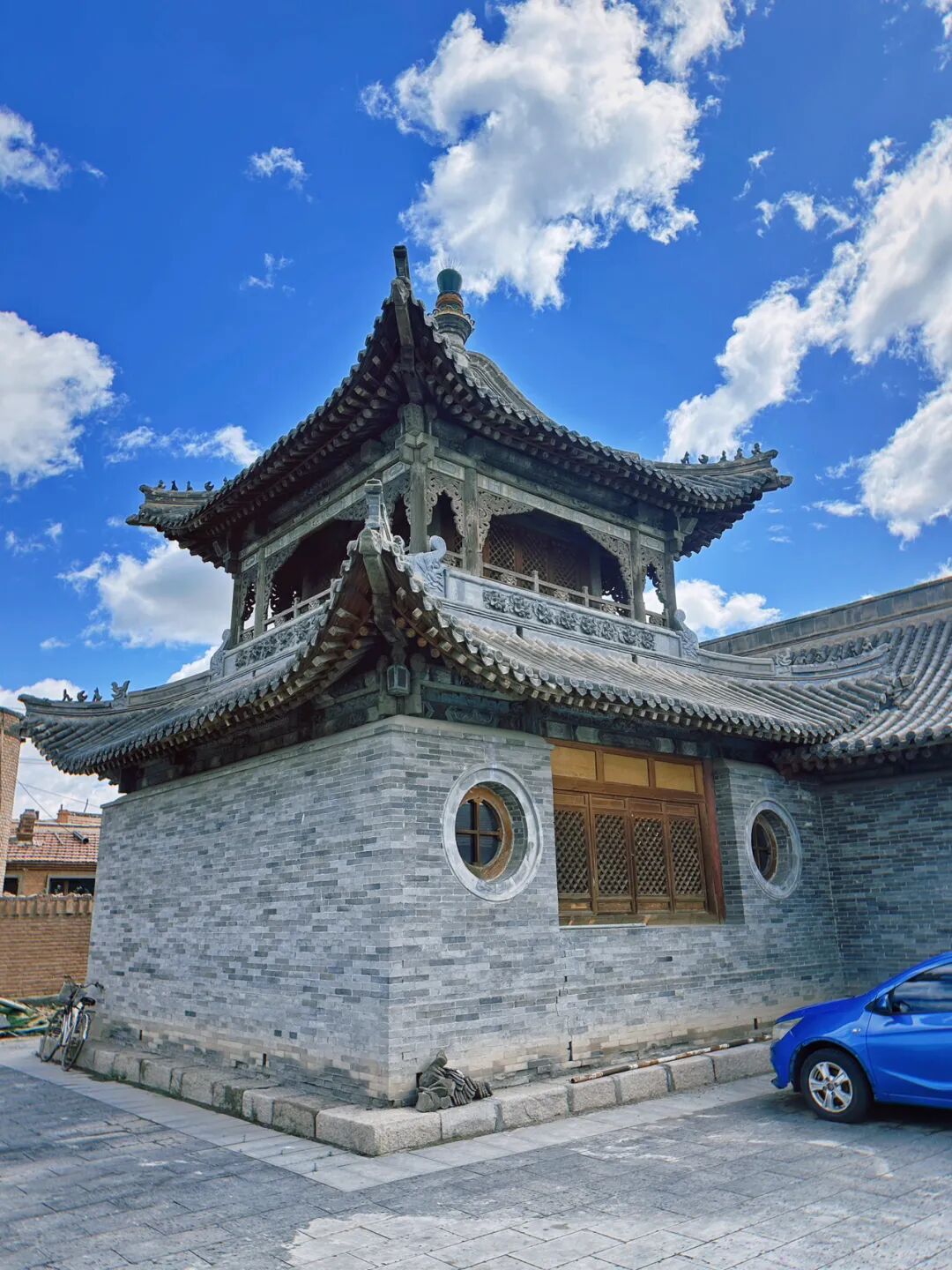
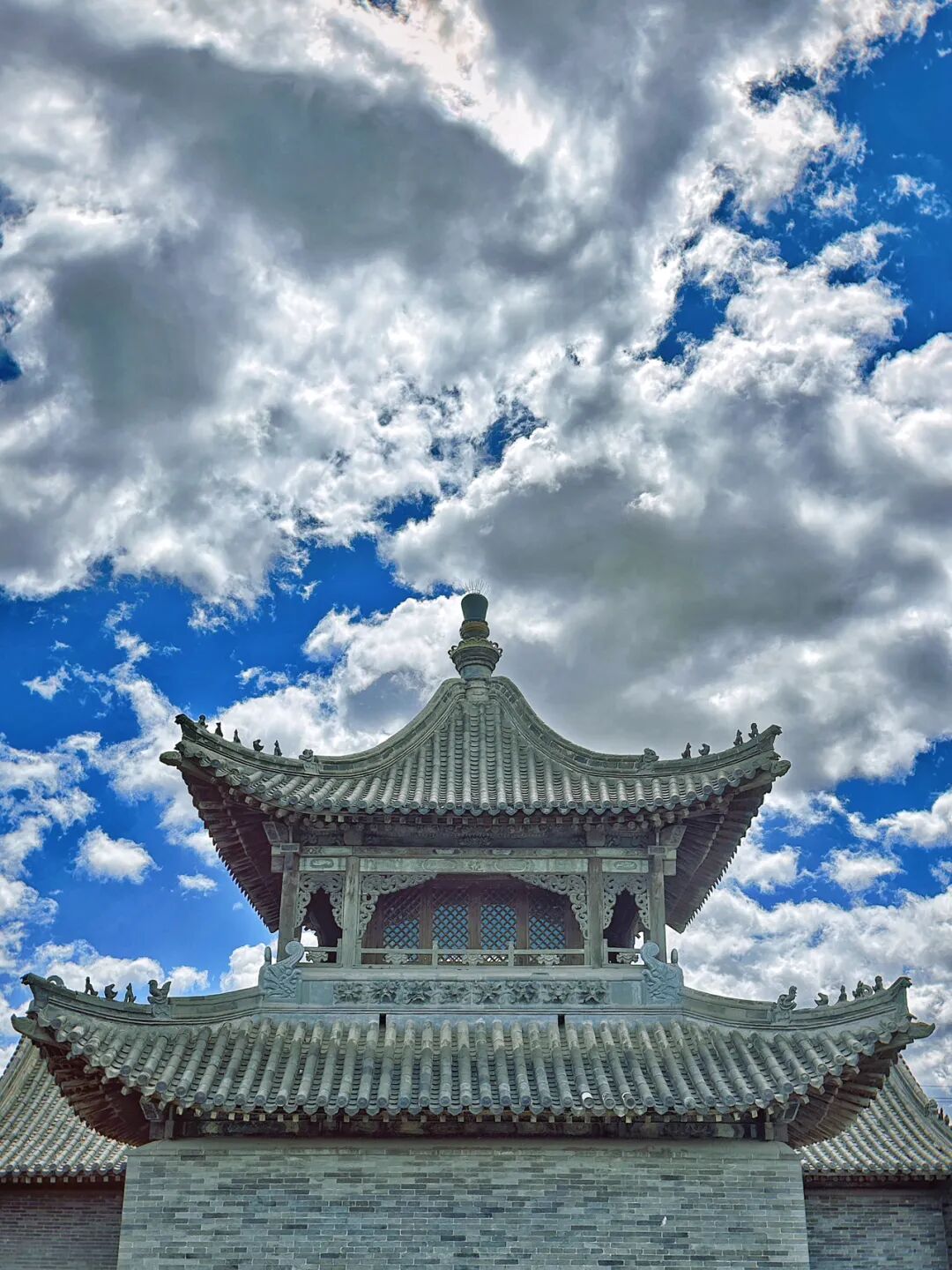
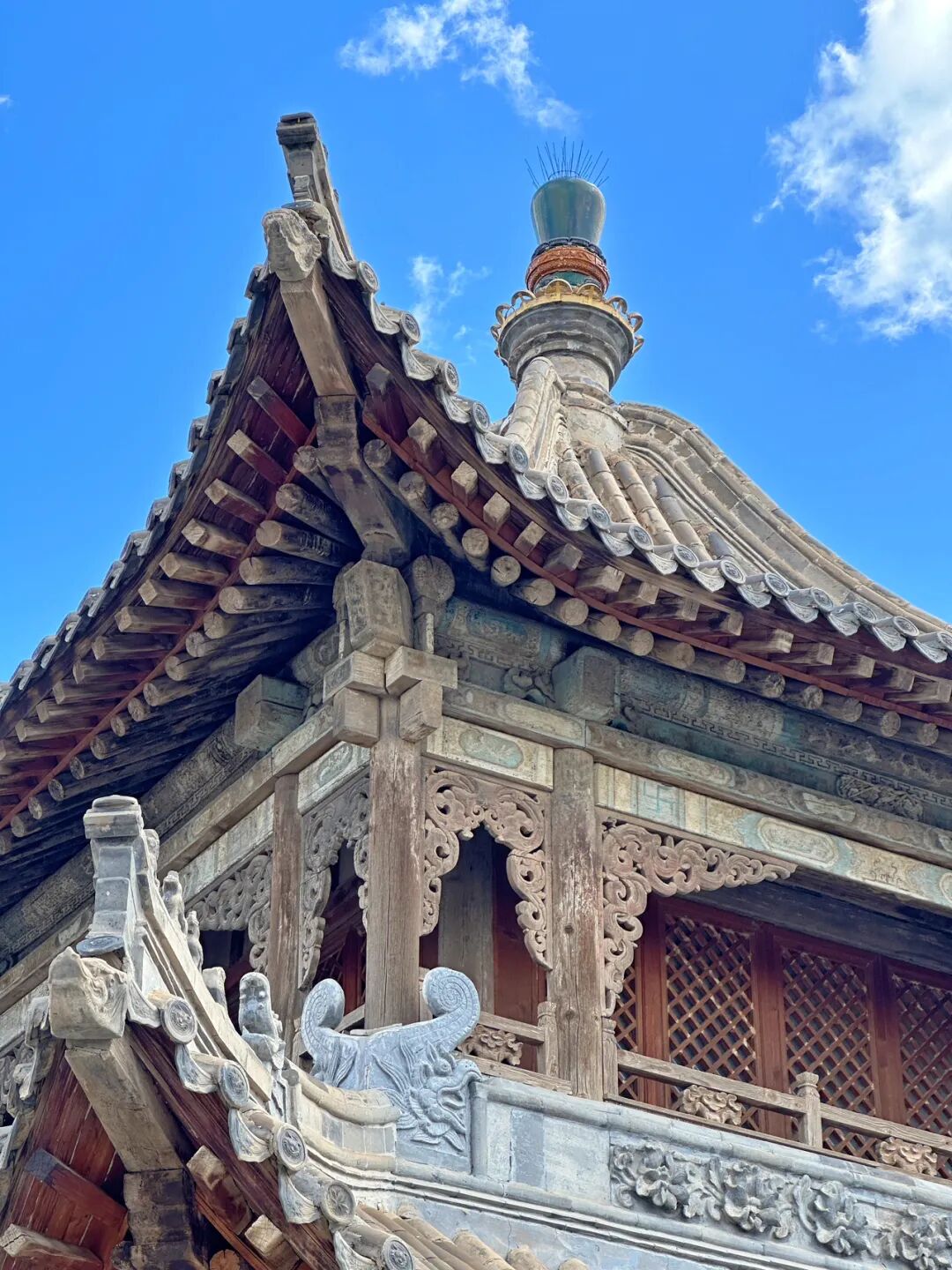
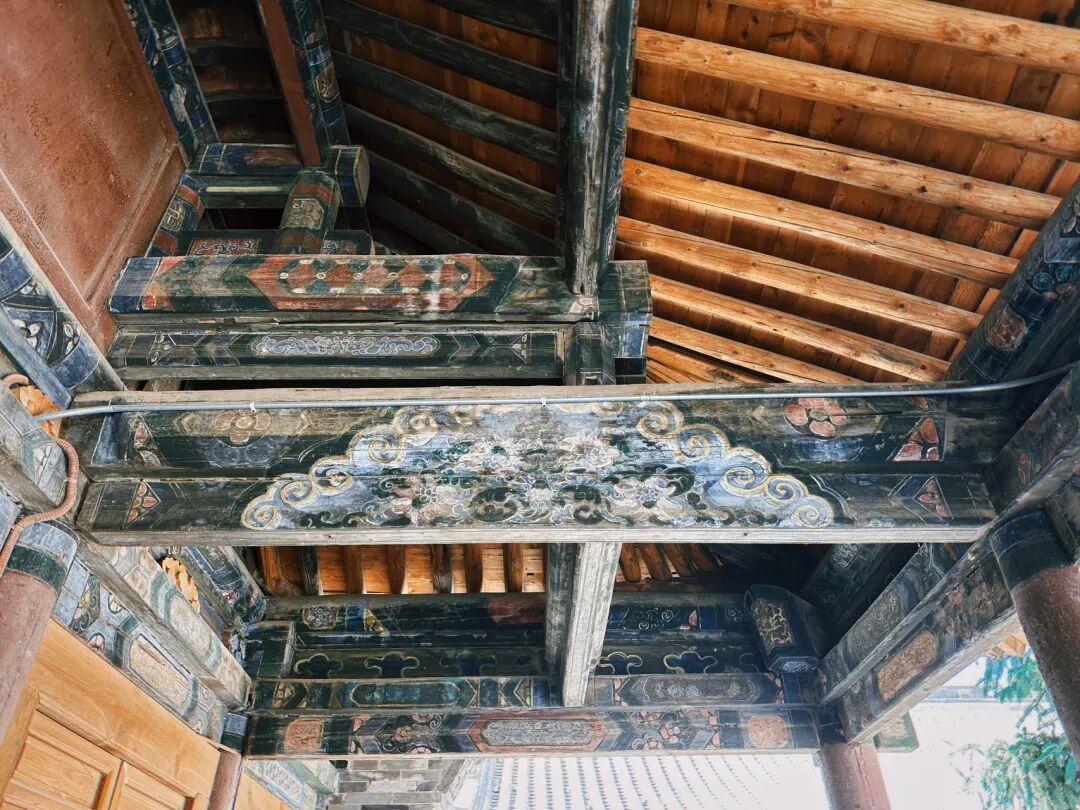
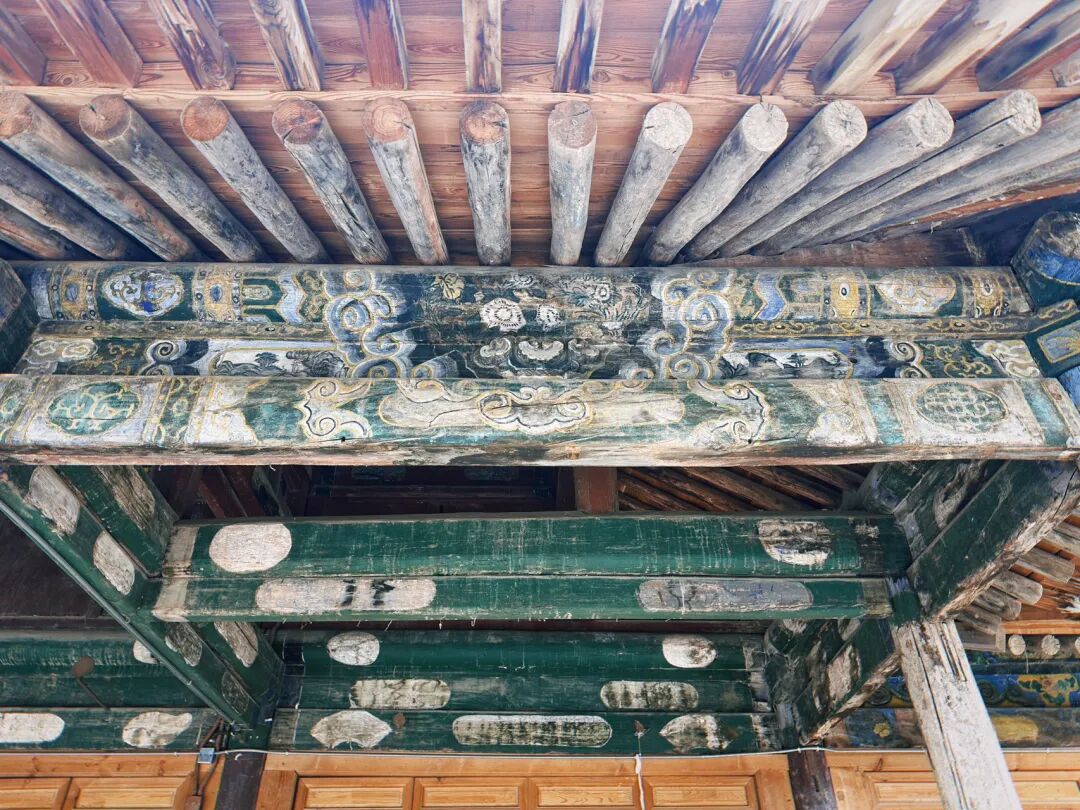
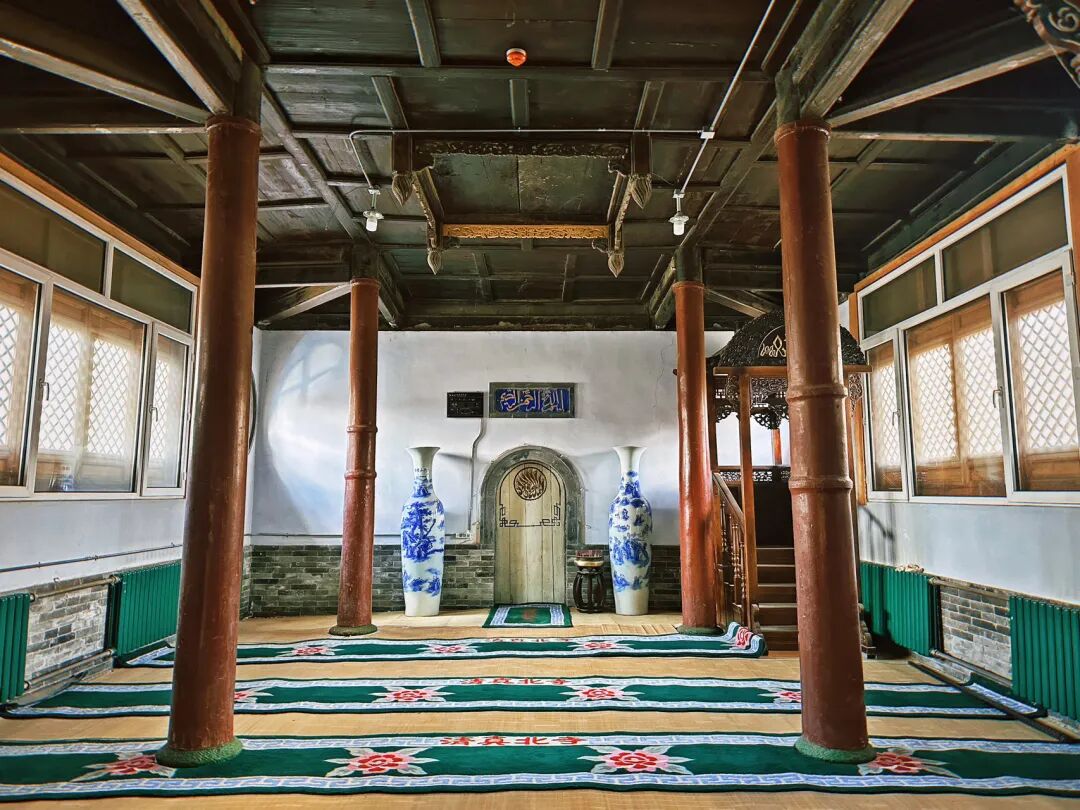
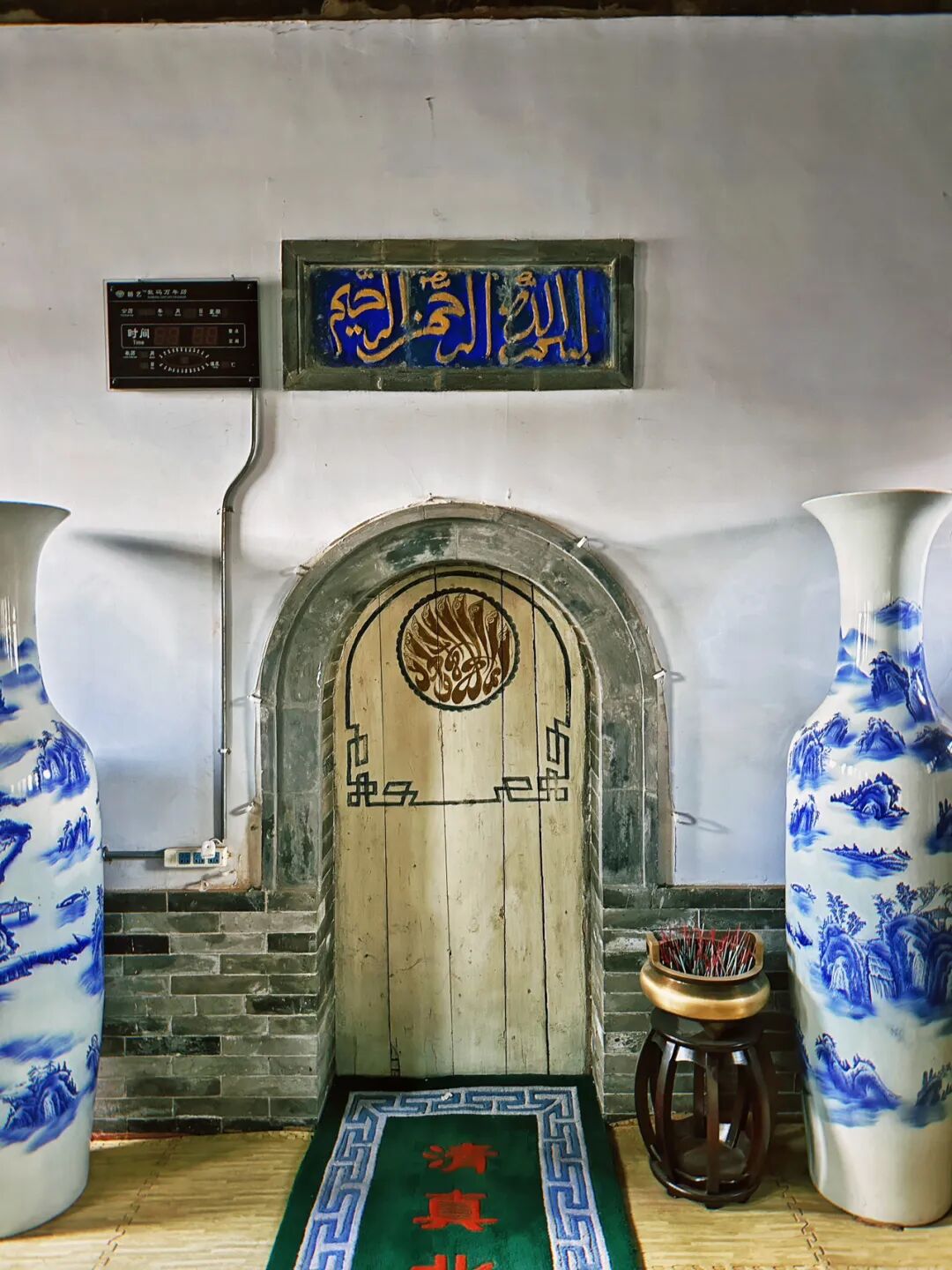
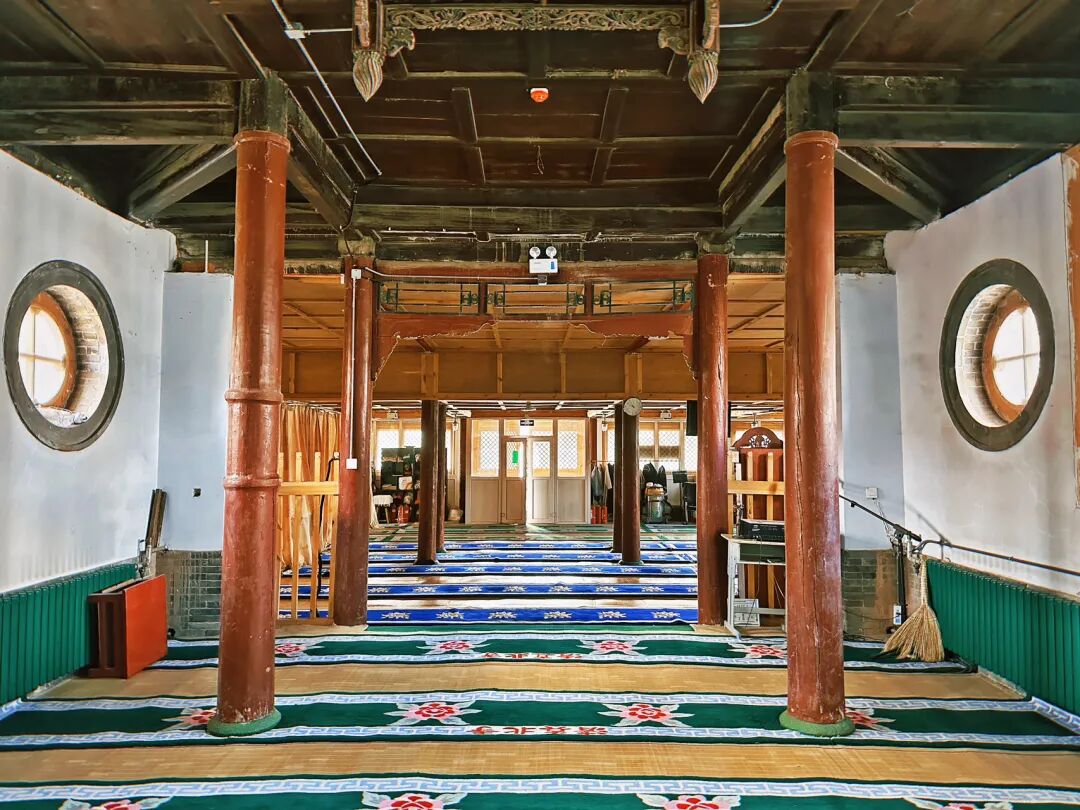
During the Tongzhi reign, some Hui Muslims from Shaanxi, Ningxia, and Gansu moved to Duolun to settle down. After that, Hui Muslims from North China were called Kouli people, while those from the Northwest were called Westerners.
The East Mosque is located outside the Nanjin Fortress in the old city. It was started in 1869 (the eighth year of the Tongzhi reign) by Hui Muslims Xiu Mingliang and Liu Changfu from Shaanxi, and finished in 1878 (the first year of the Guangxu reign). The West Mosque is on Daxi Street in the ancient city. It was built in 1880 (the fifth year of the Guangxu reign) by camel caravan merchants Li Xianyu and Wang Jichen, who were from Ningxia and Gansu. After the 1960s, the East Mosque was completely torn down, and the West Mosque's main gate and the north and south lecture halls were also demolished. Today, only the main hall of the West Mosque remains, and it is open to the public as a historical site.
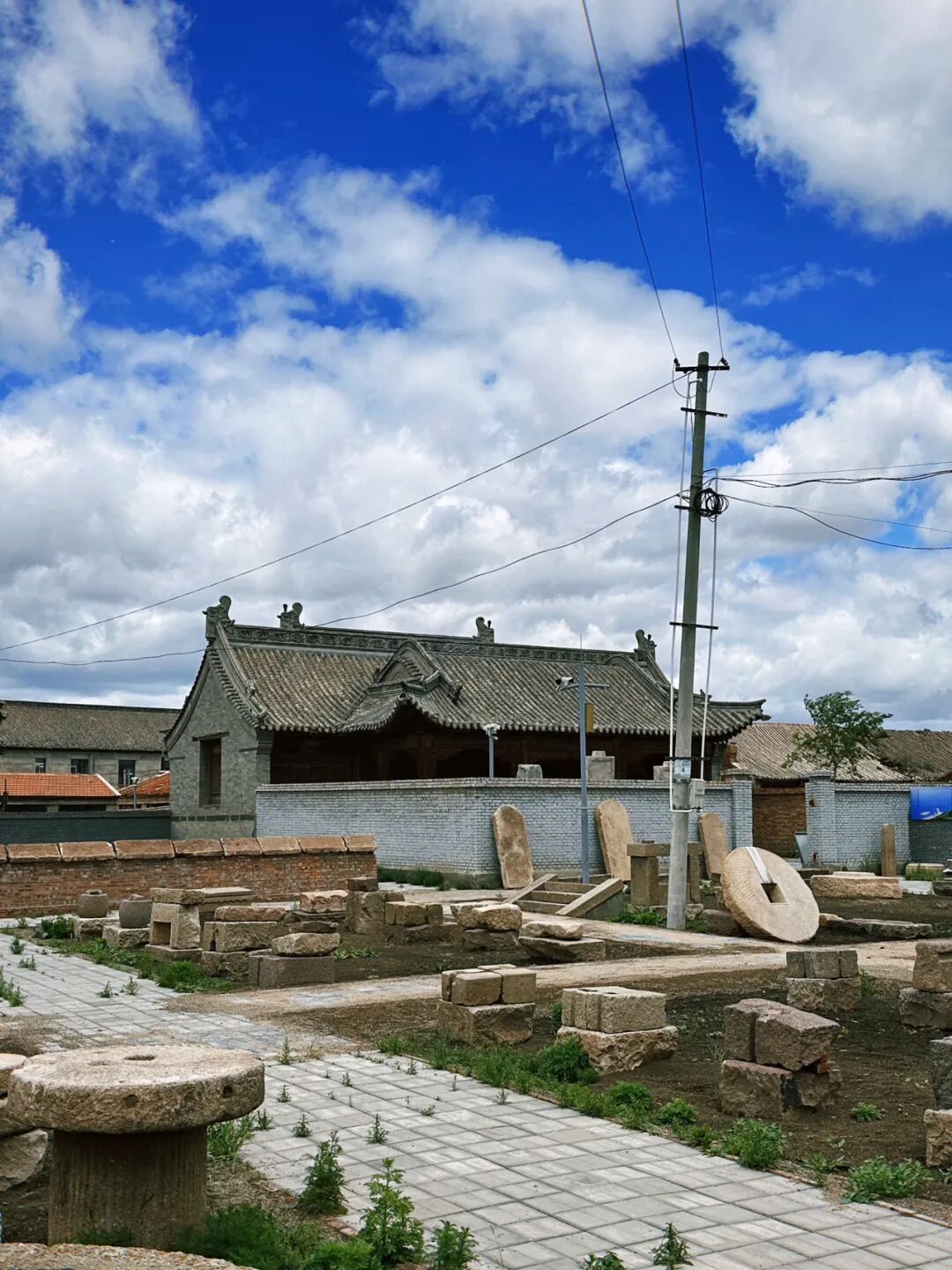
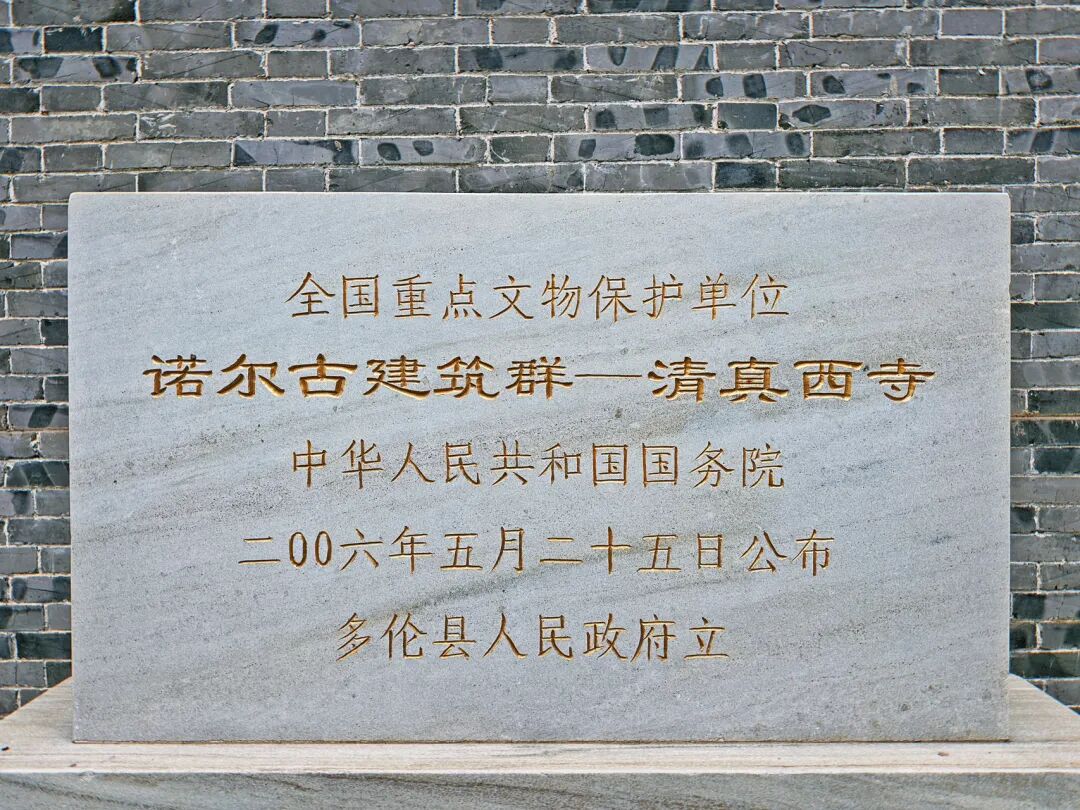
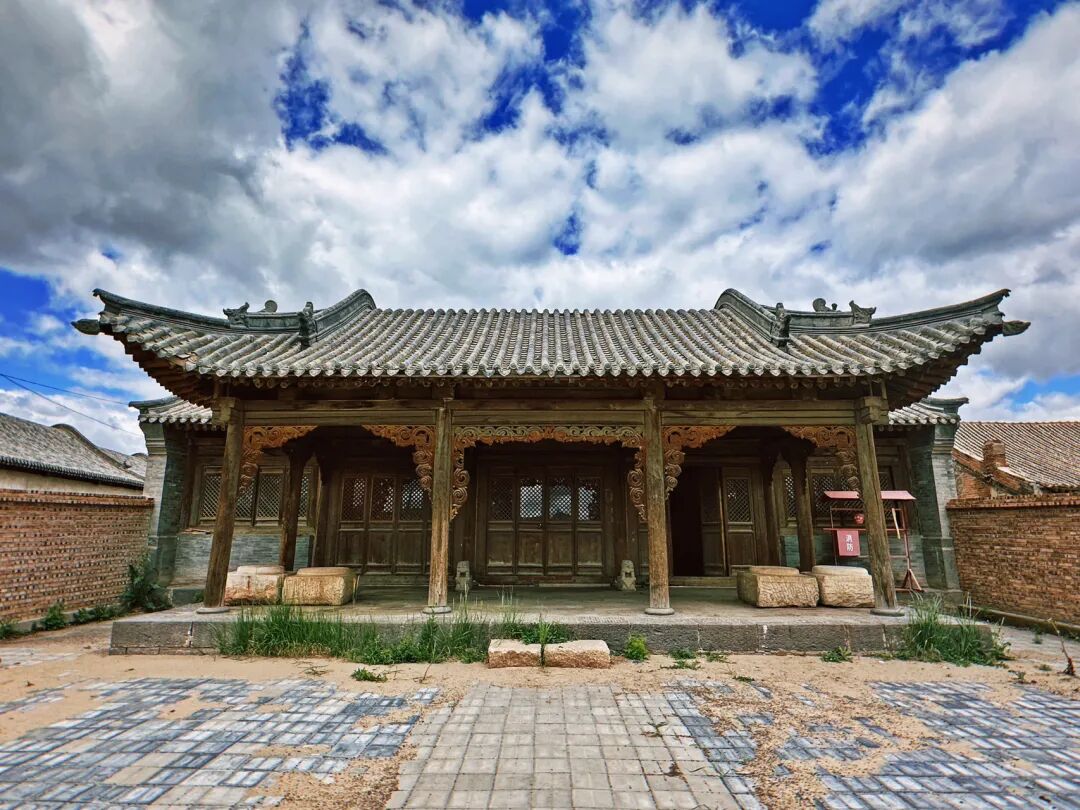
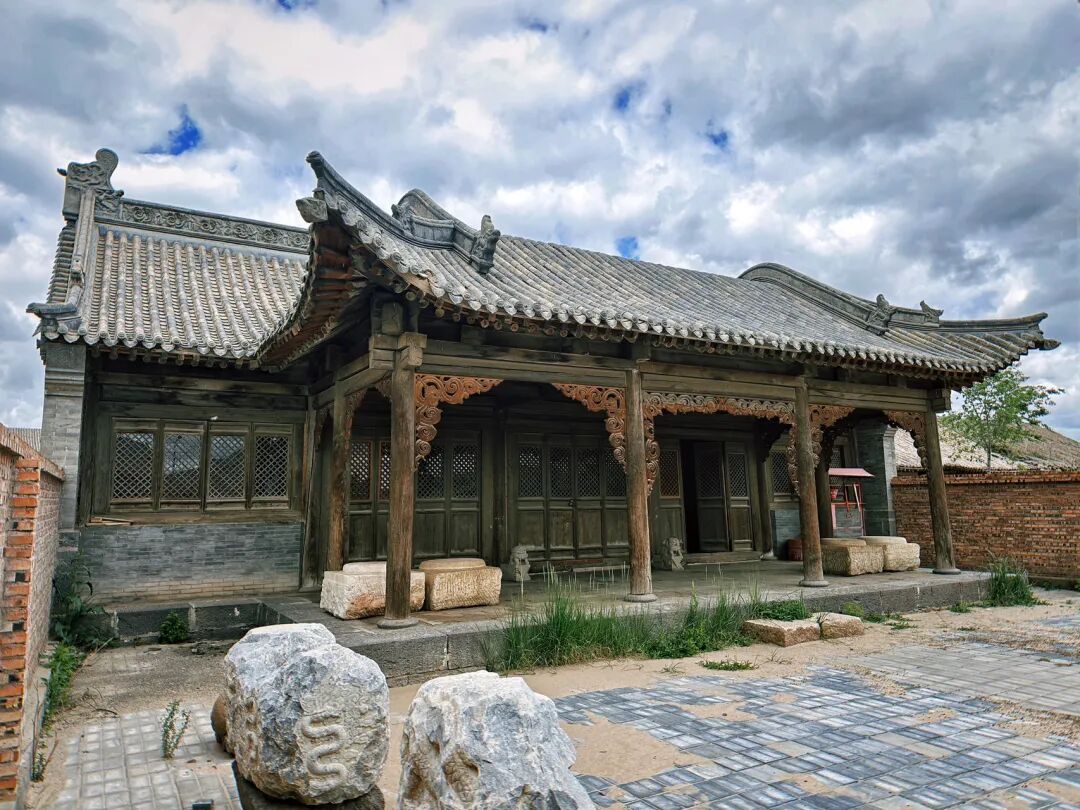
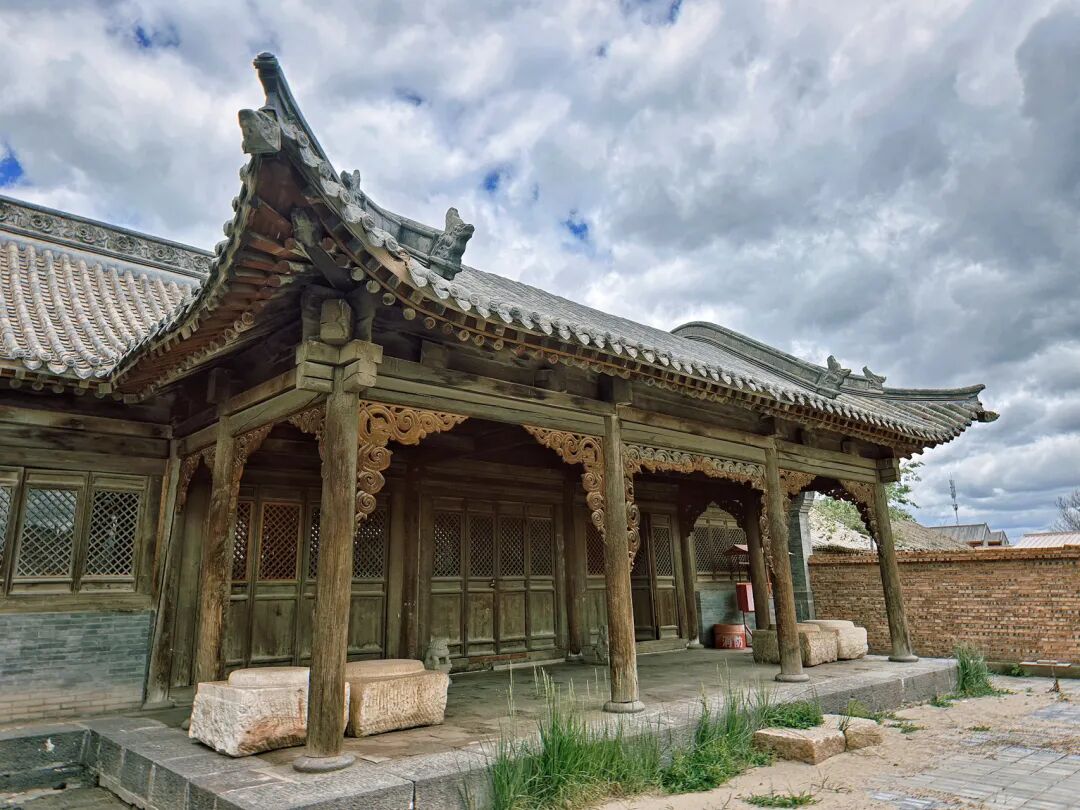
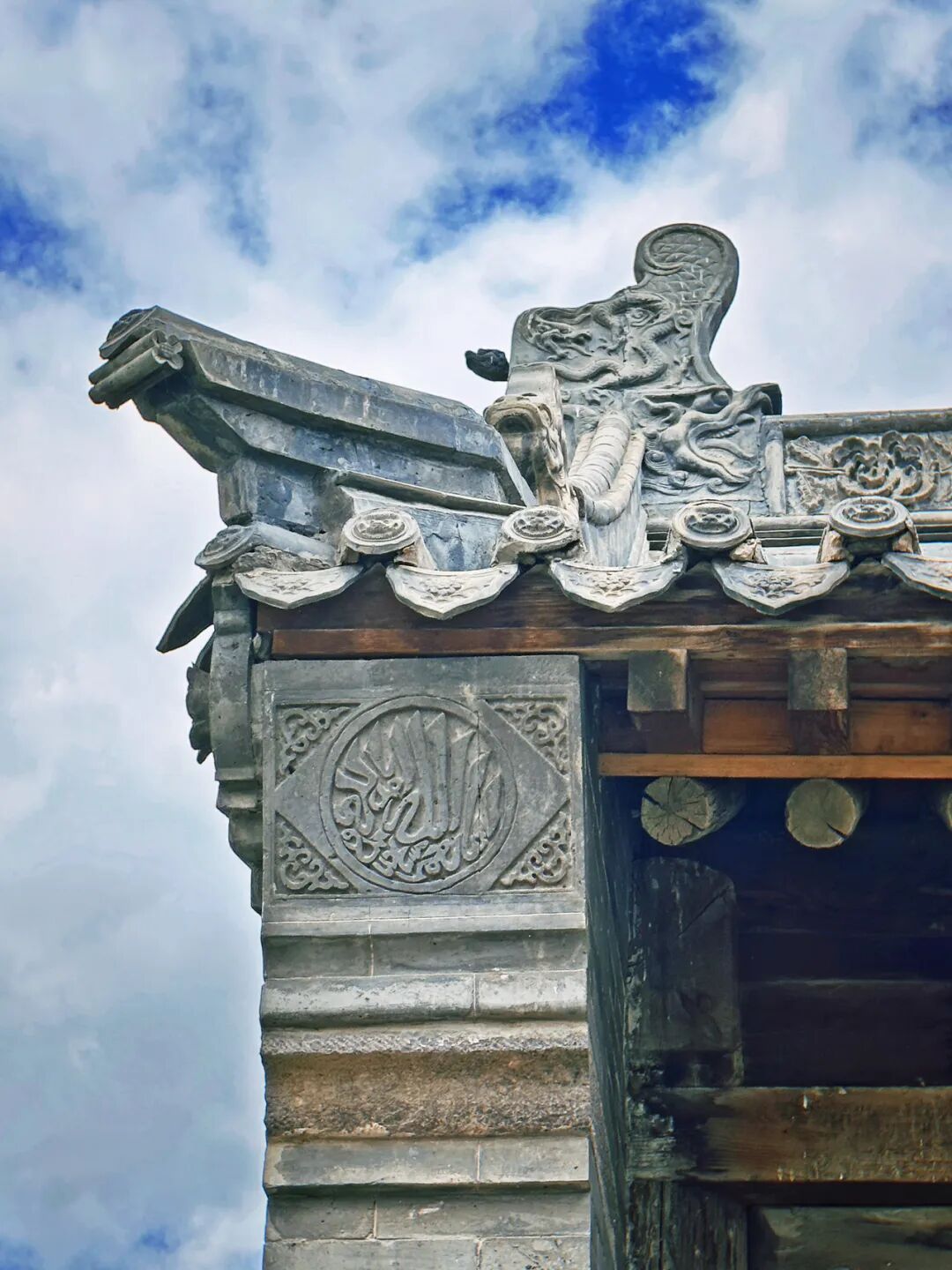
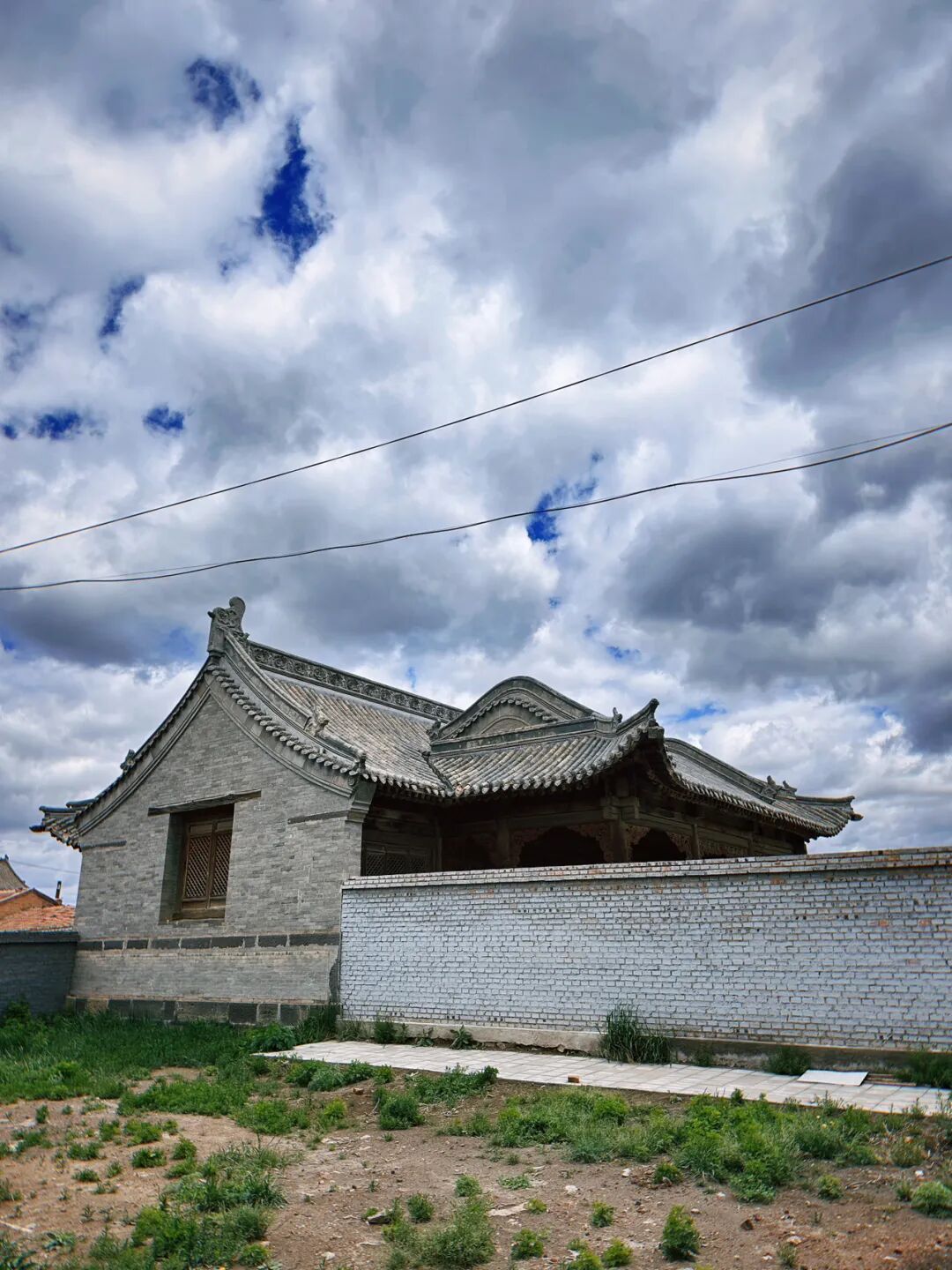
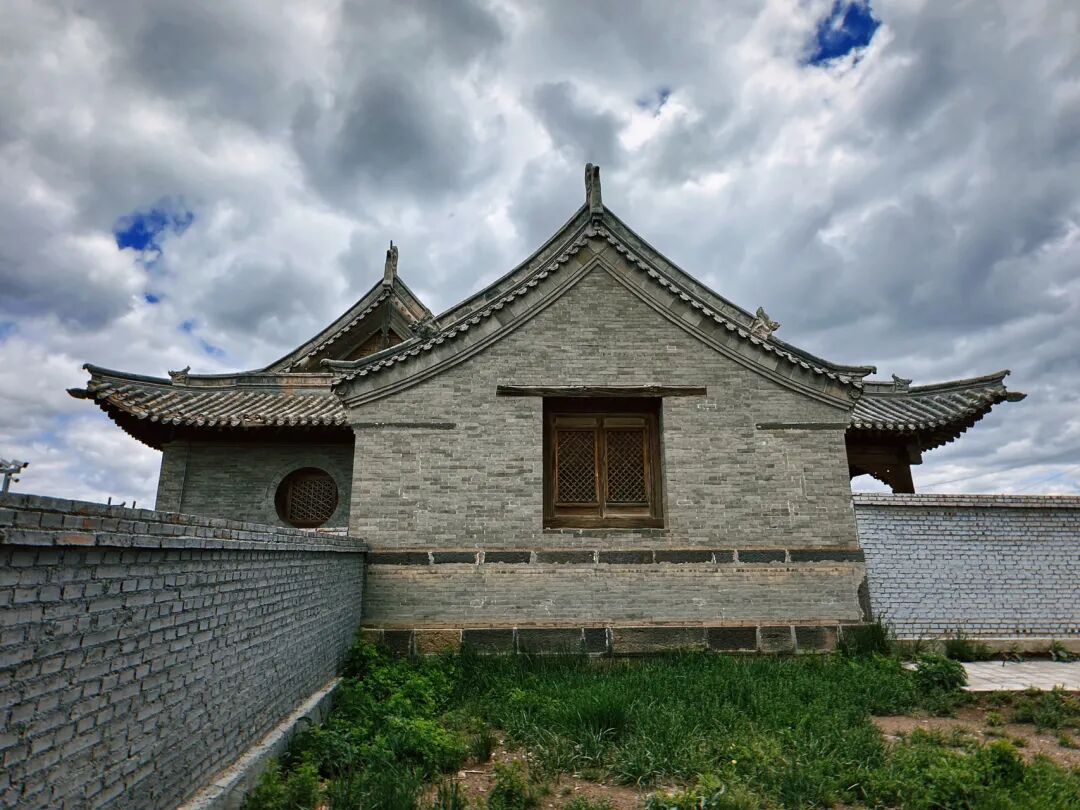
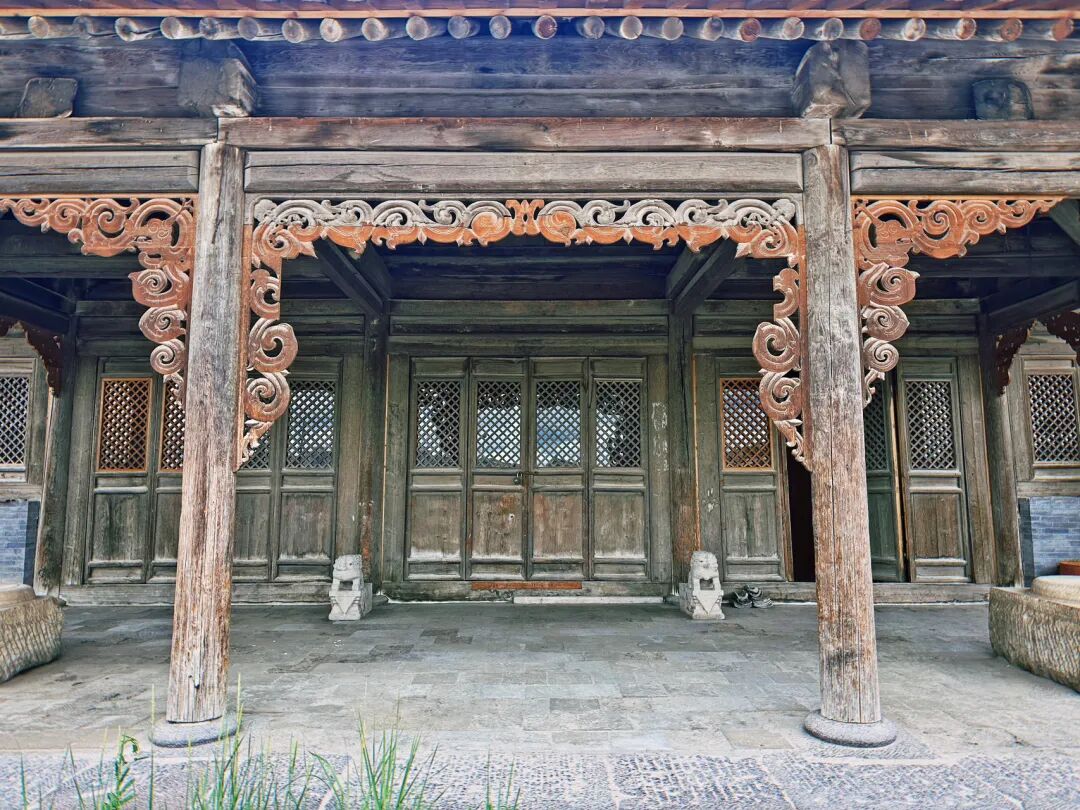
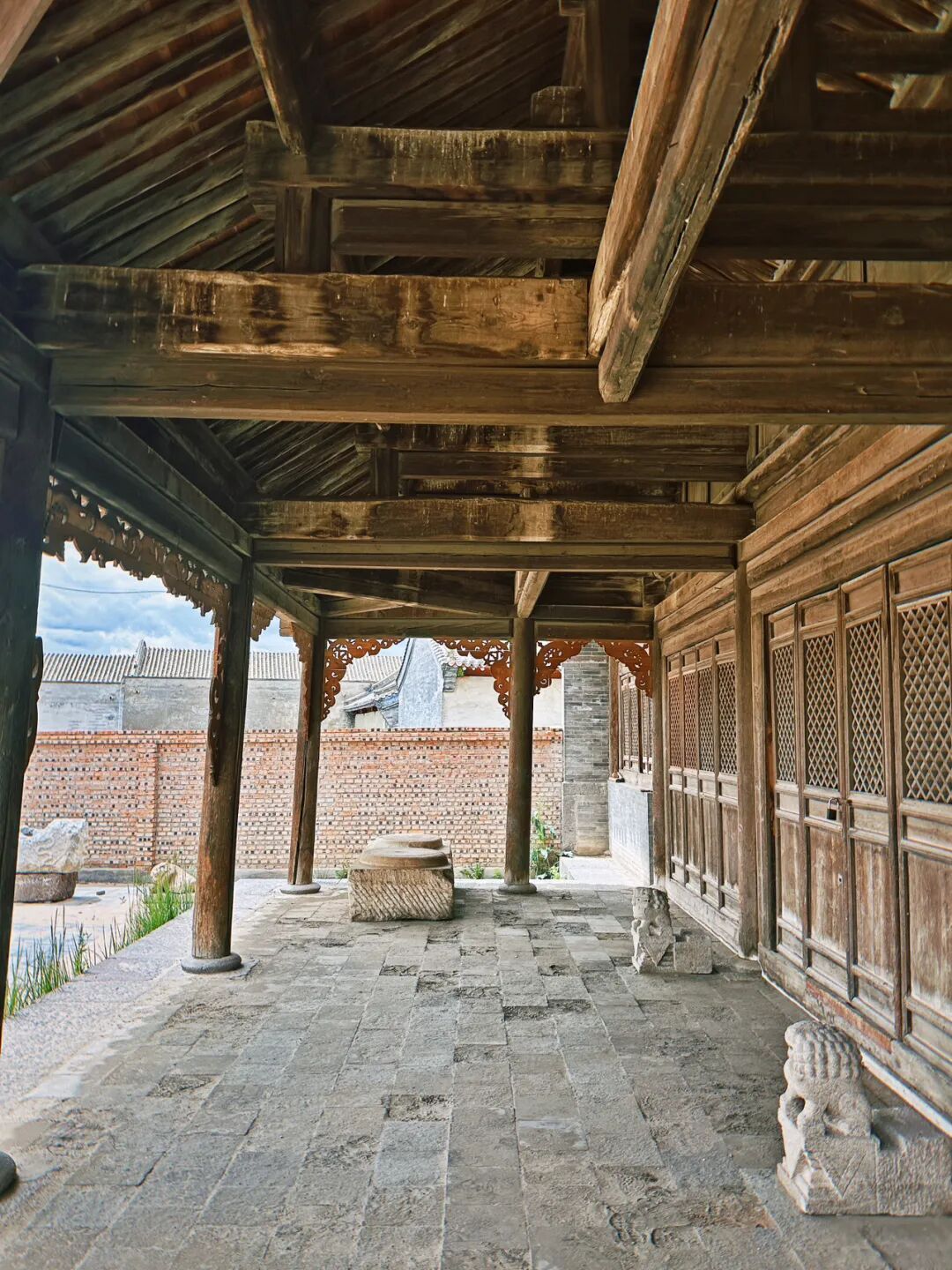
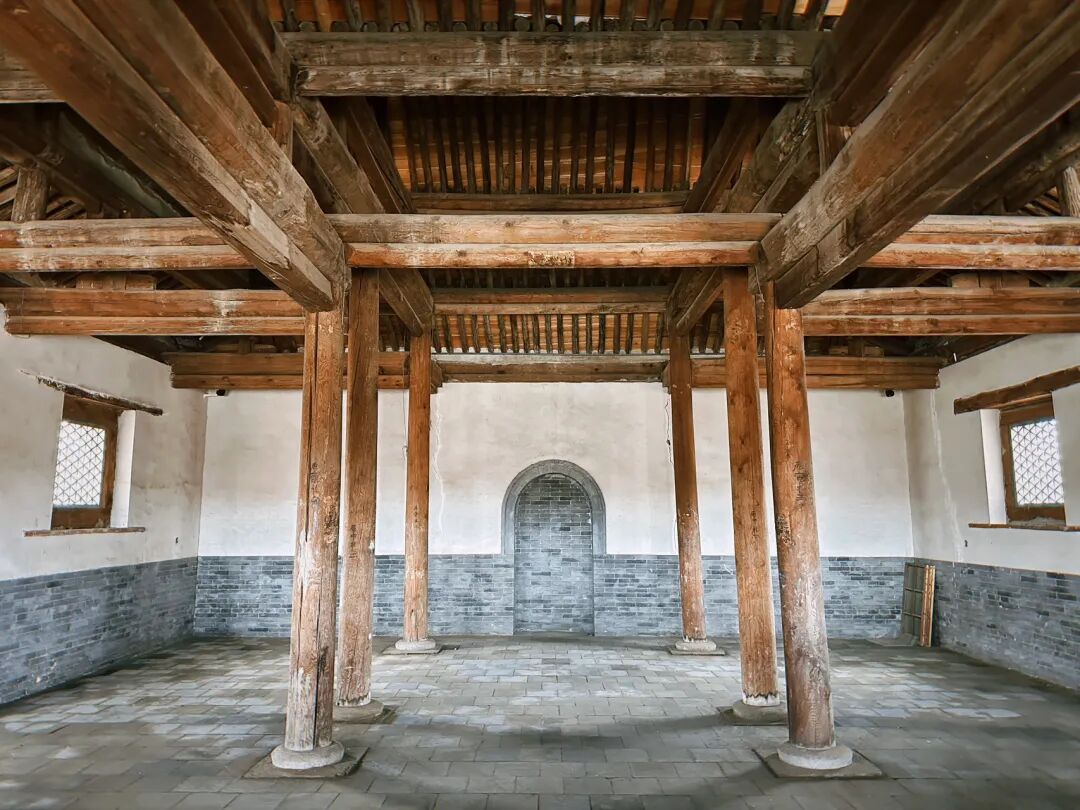
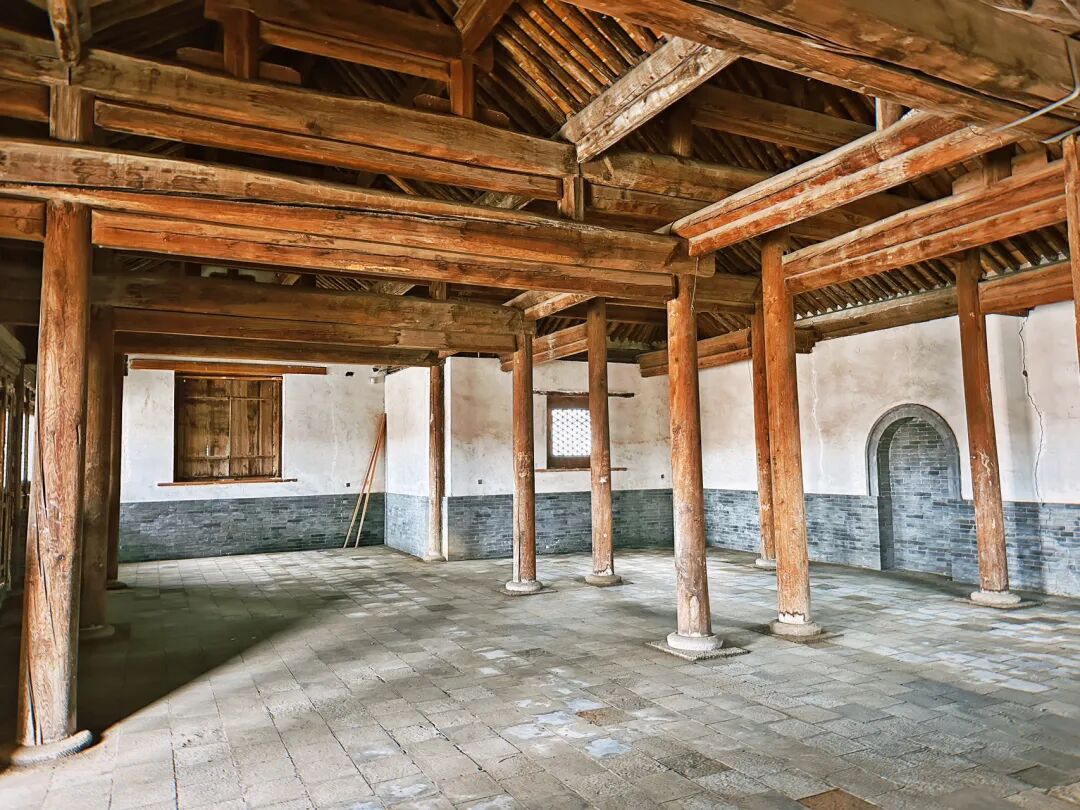
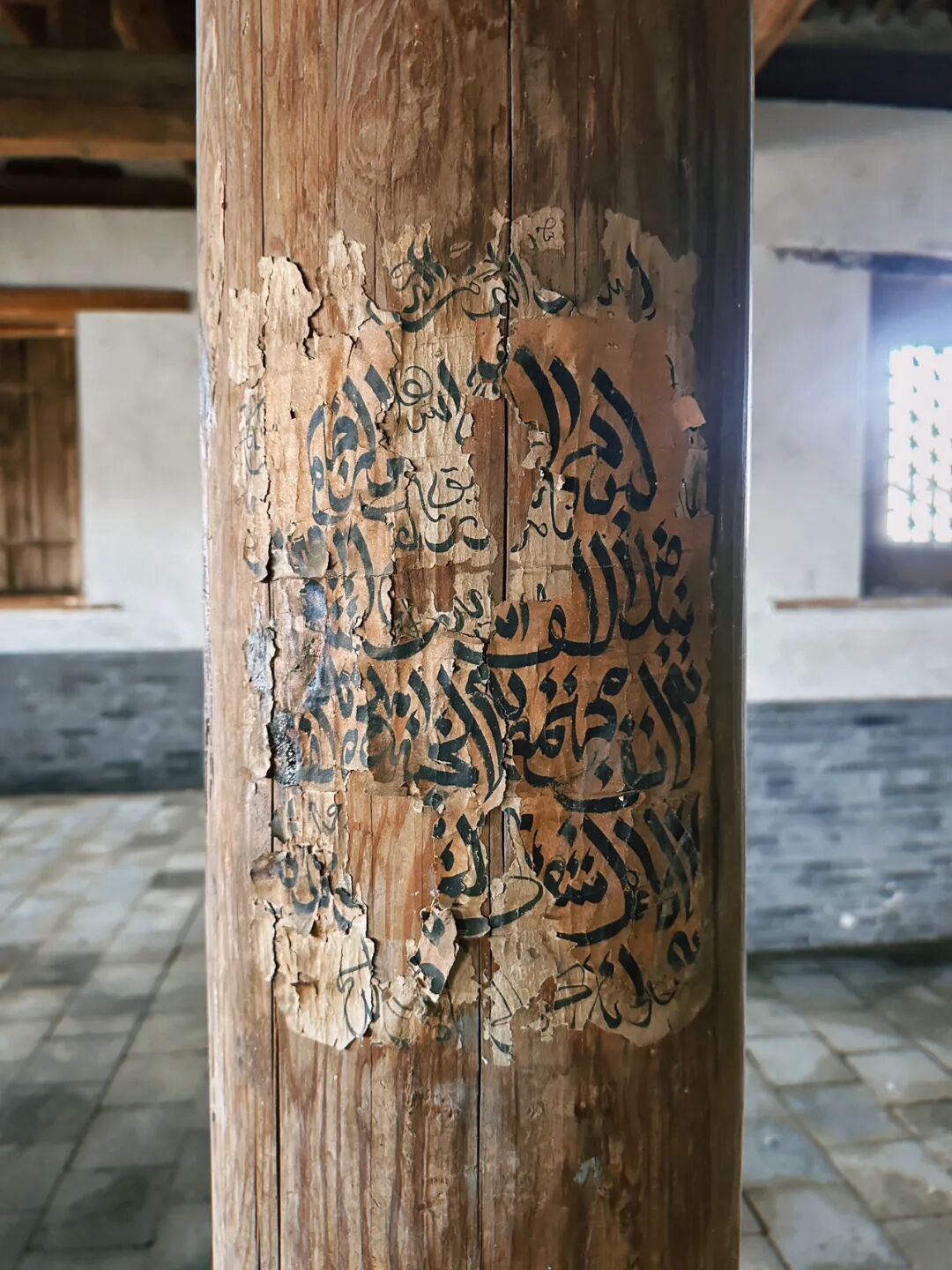
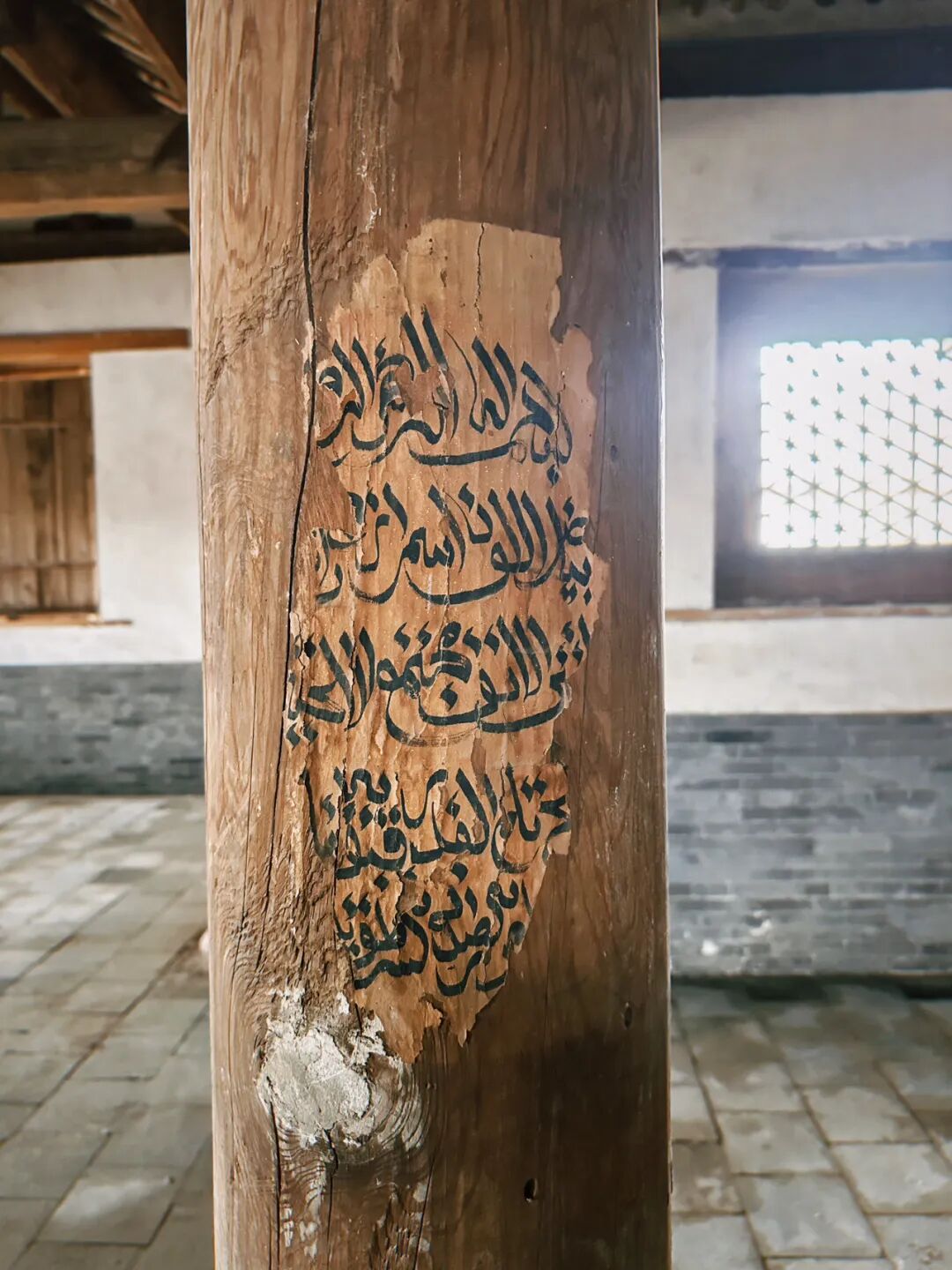
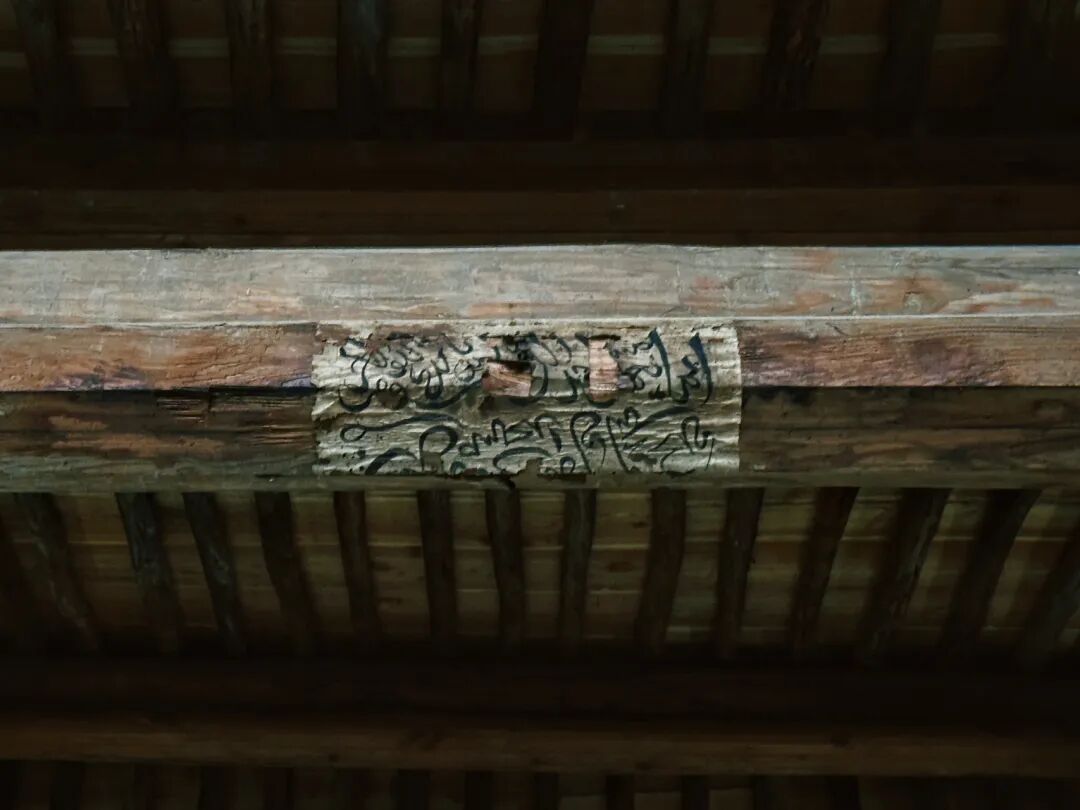
The Middle Mosque is on Nanqiangfeng Street in the ancient city. It was built in 1908 (the 34th year of the Guangxu reign) by Wang Guofu and Shan Yunxing. In 1930, He Xingzhou, Cong Dianqing, and others started rebuilding the main hall, which was finished in 1935. The Middle Mosque is currently open as usual.
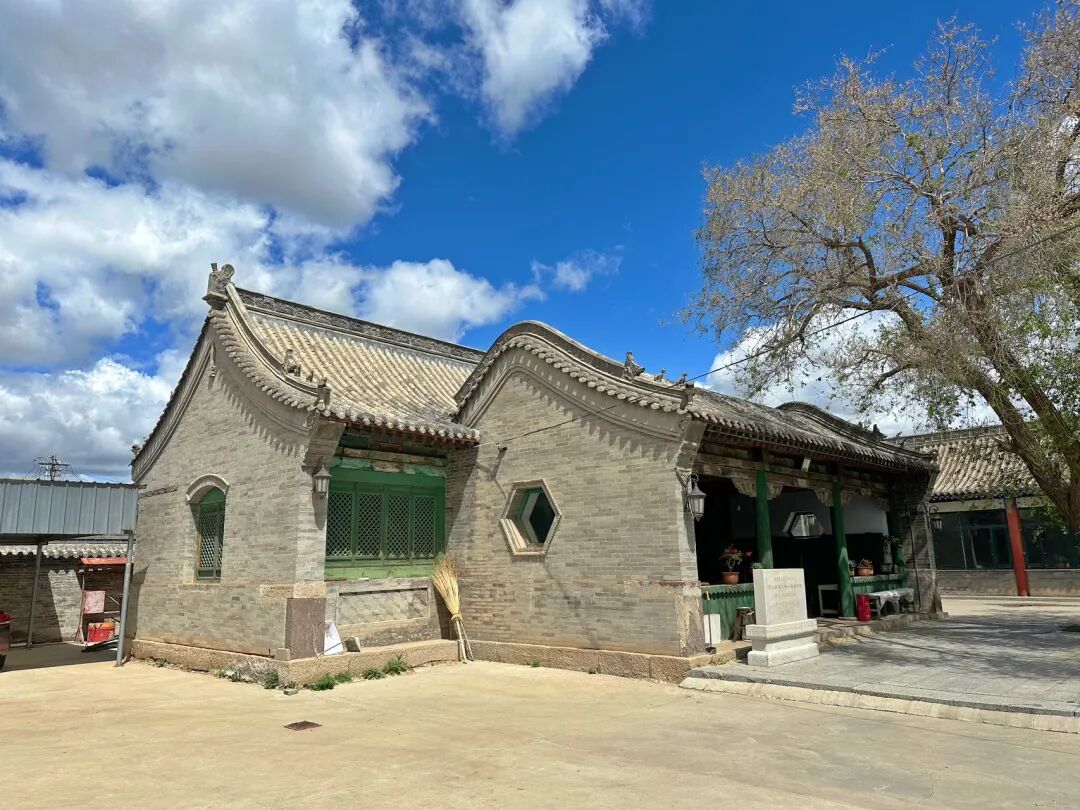
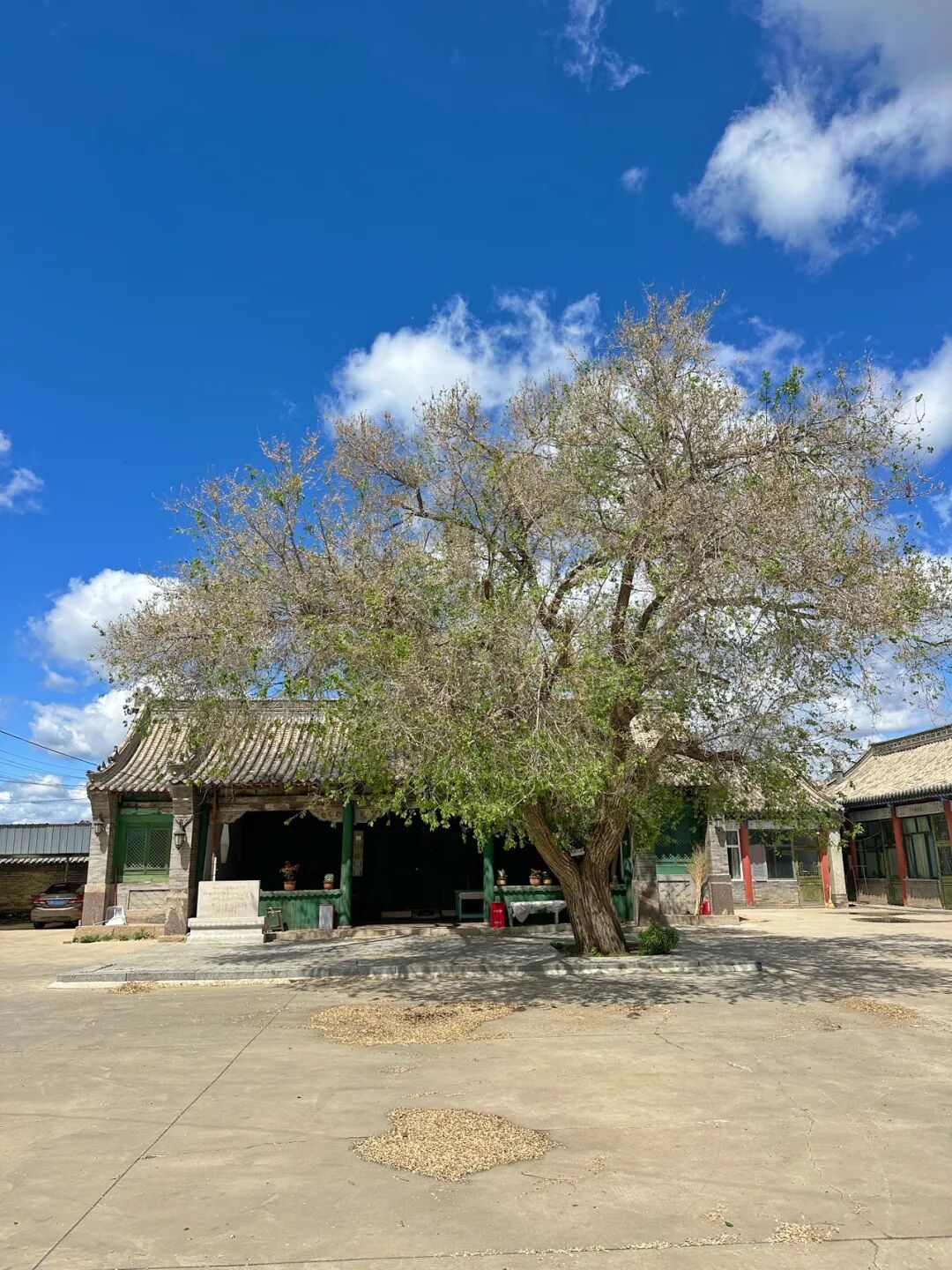
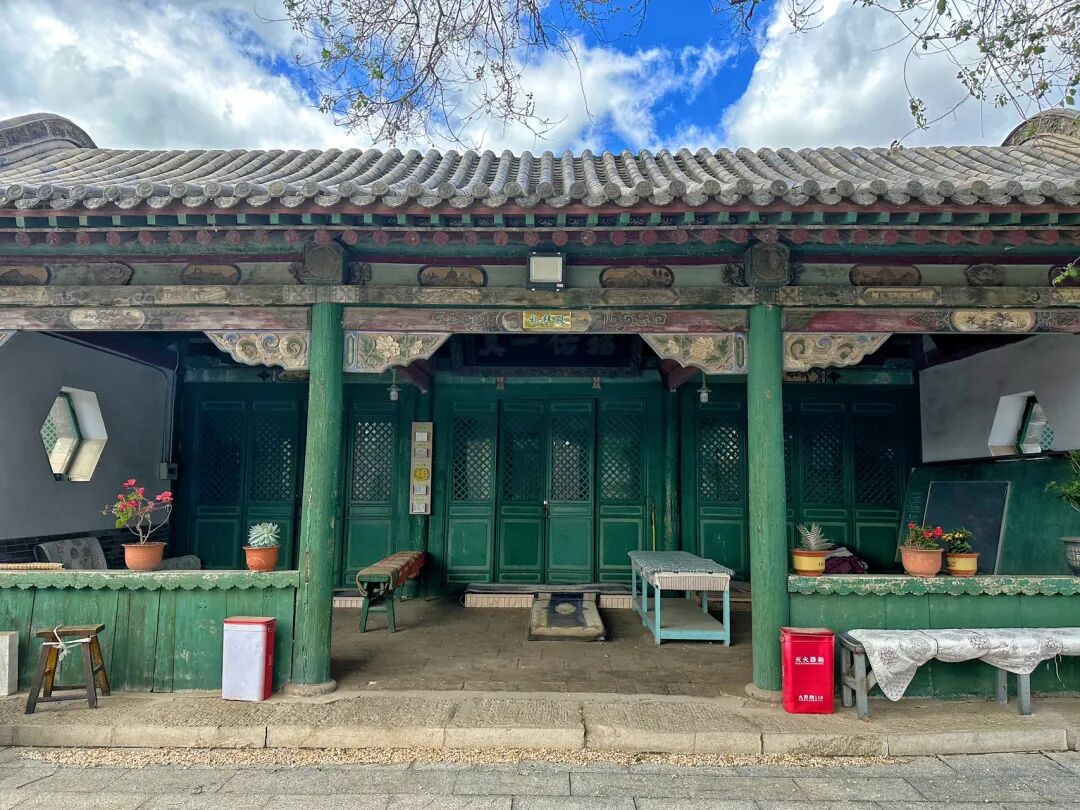
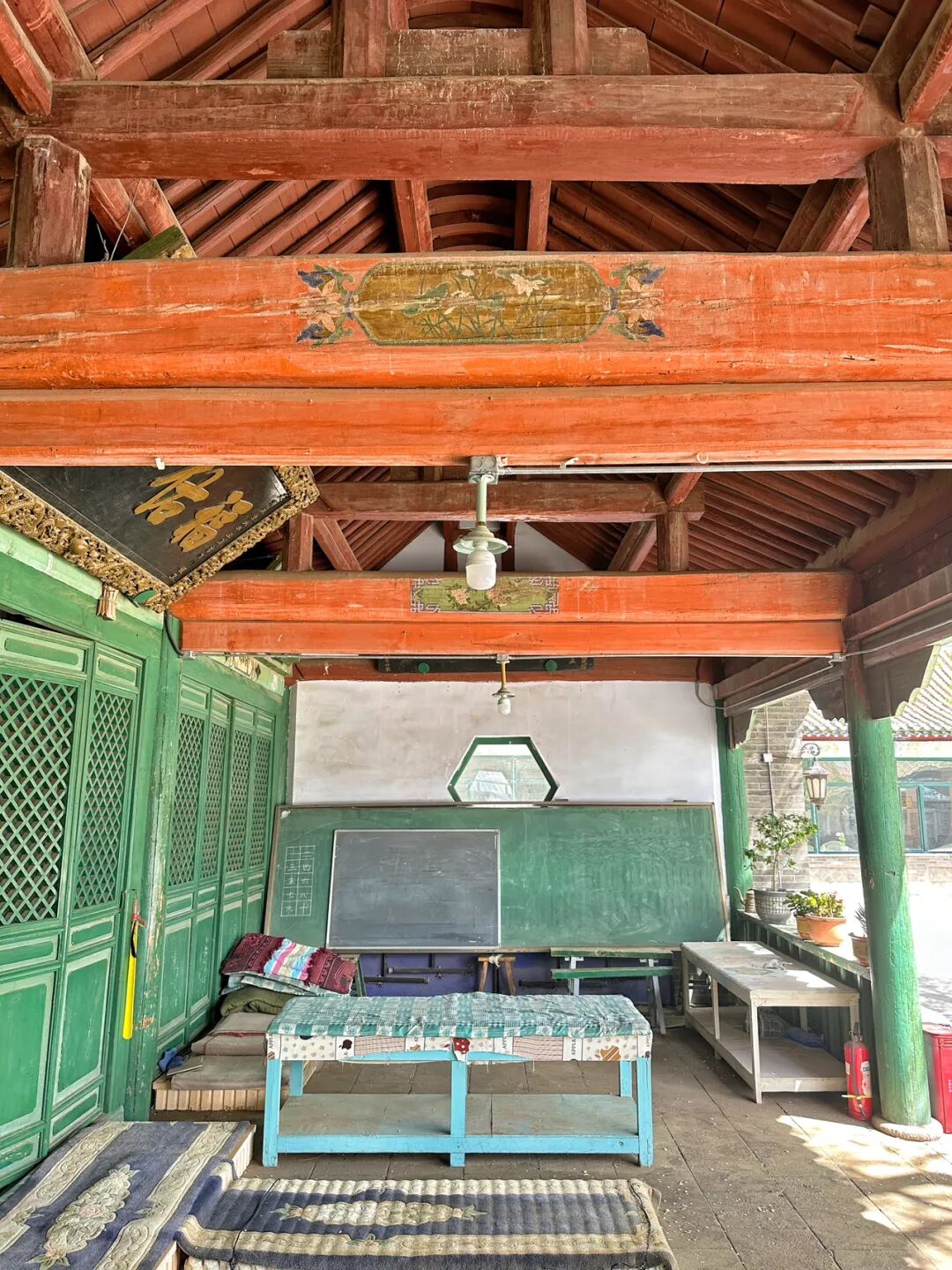
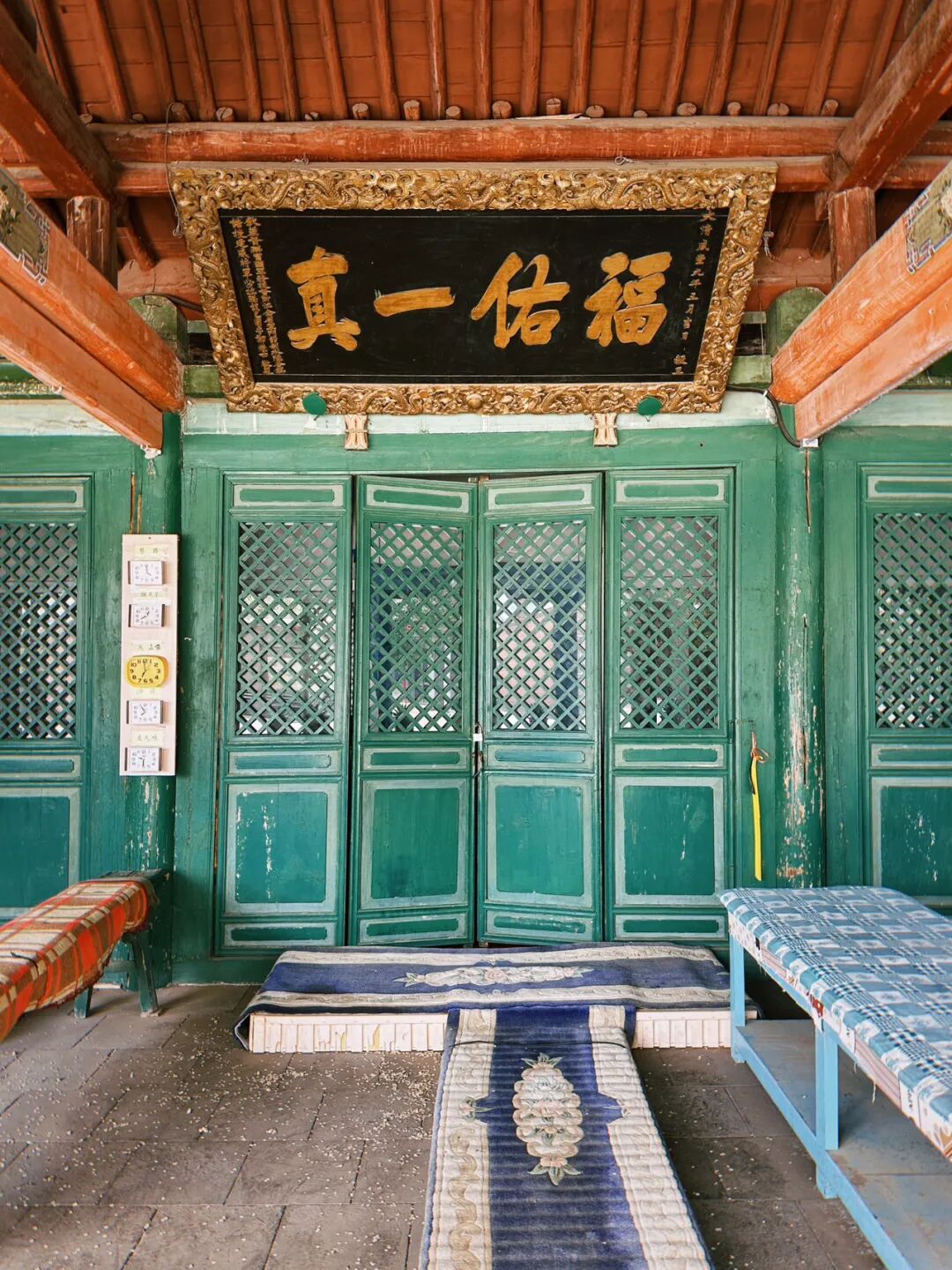
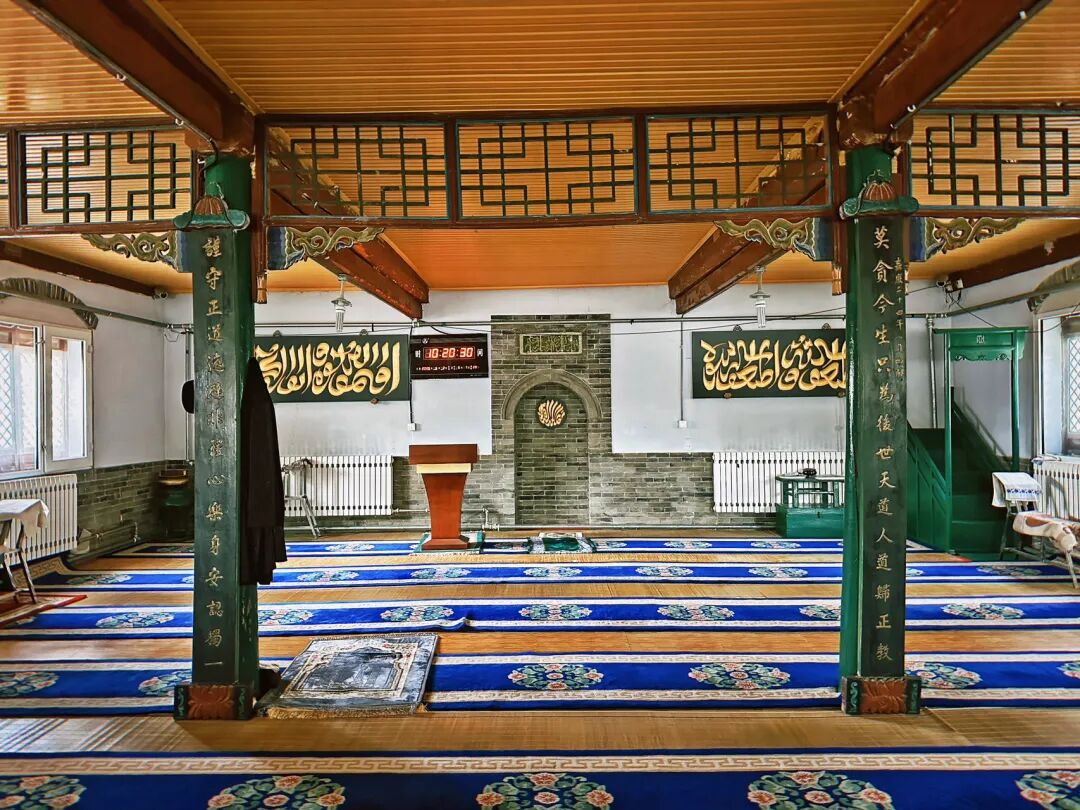
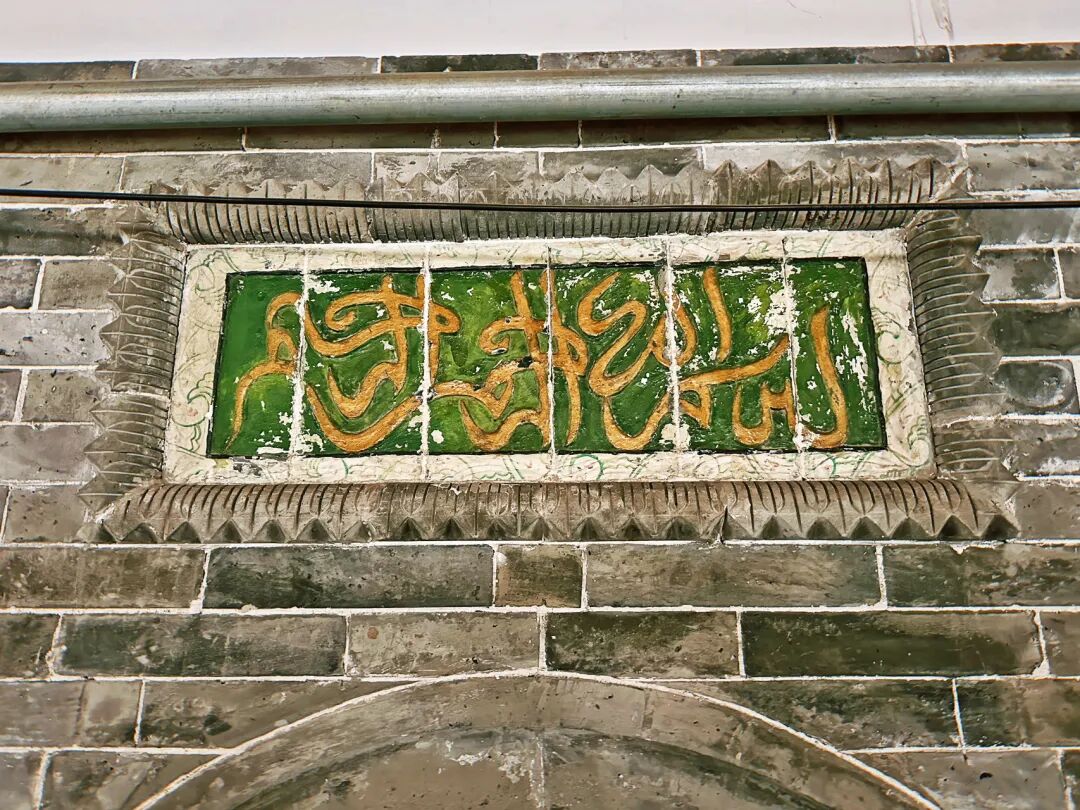
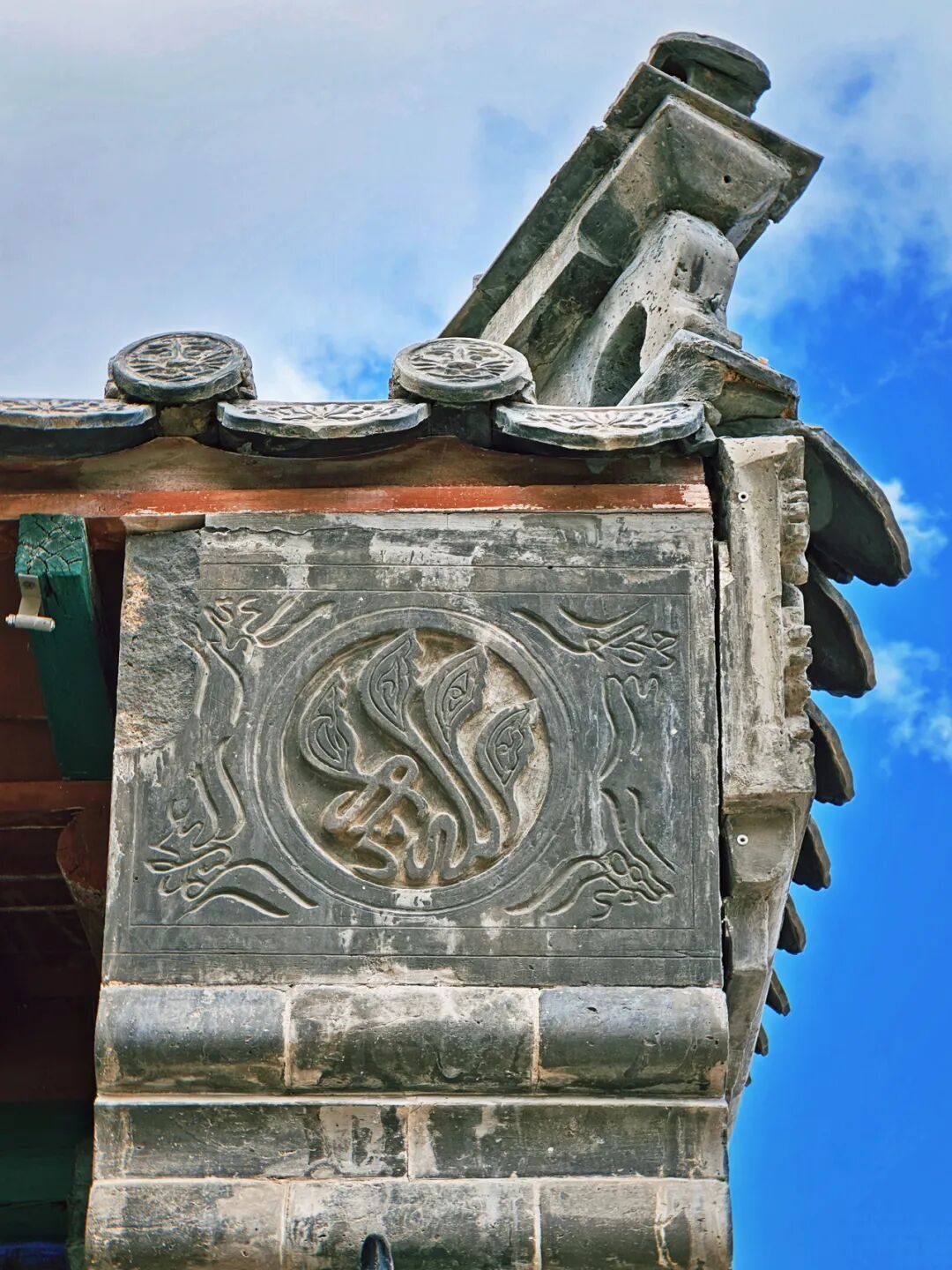
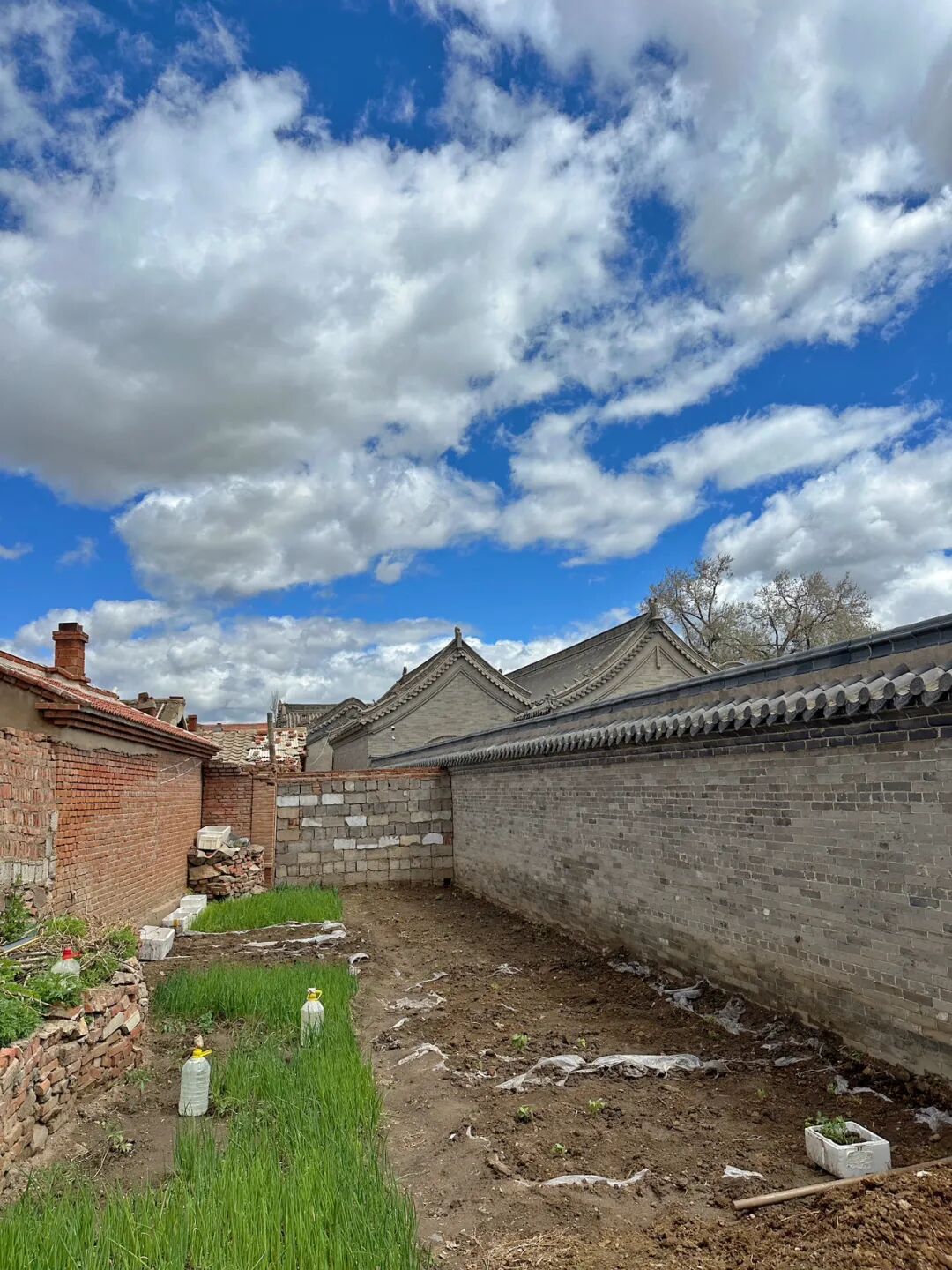
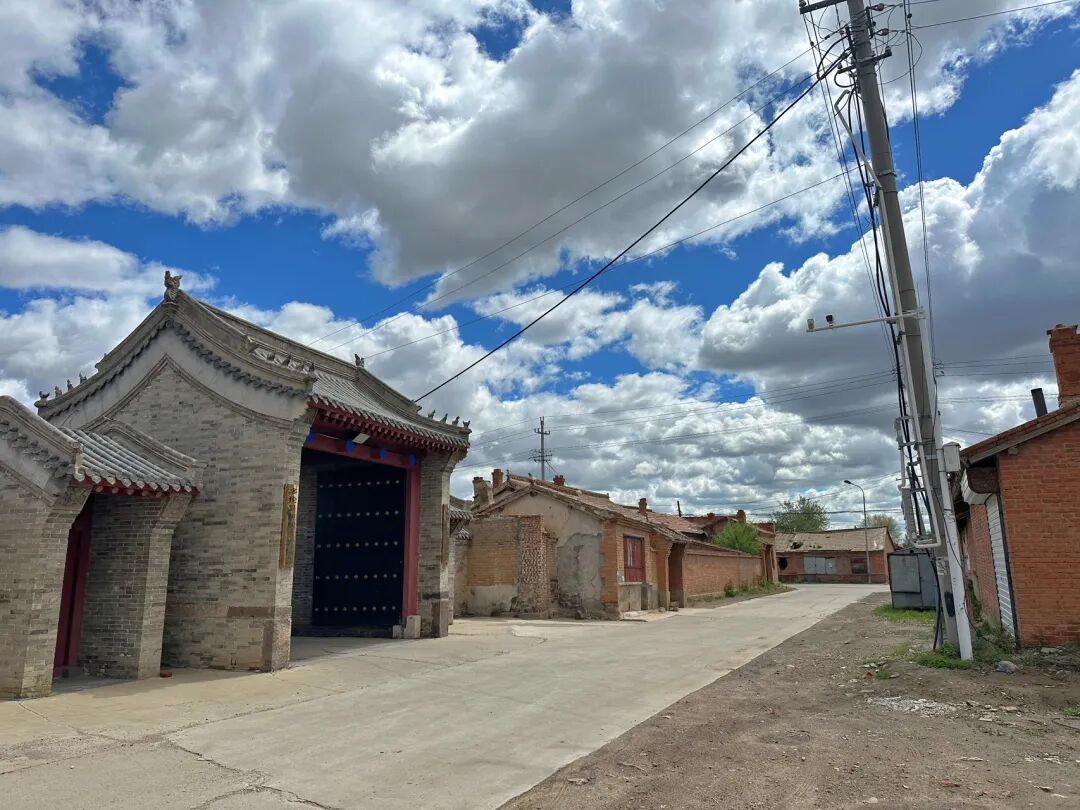
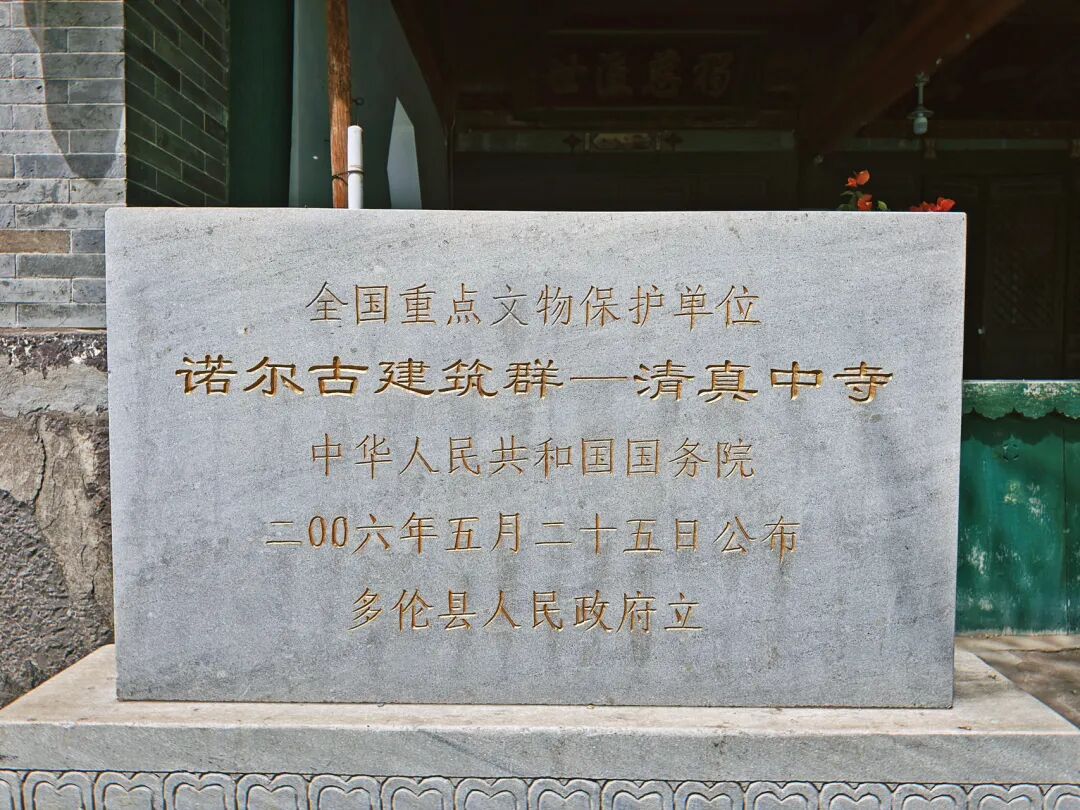
Plaques and couplets inside the Duolun Middle Mosque:
Do not be greedy for this life, only for the afterlife; follow the heavenly and human way to return to the true faith. Carefully keep to the right path, avoid what is improper, and find joy and peace in recognizing the One: Respectfully presented in the eighth month of the 24th year of the Jiaqing reign.
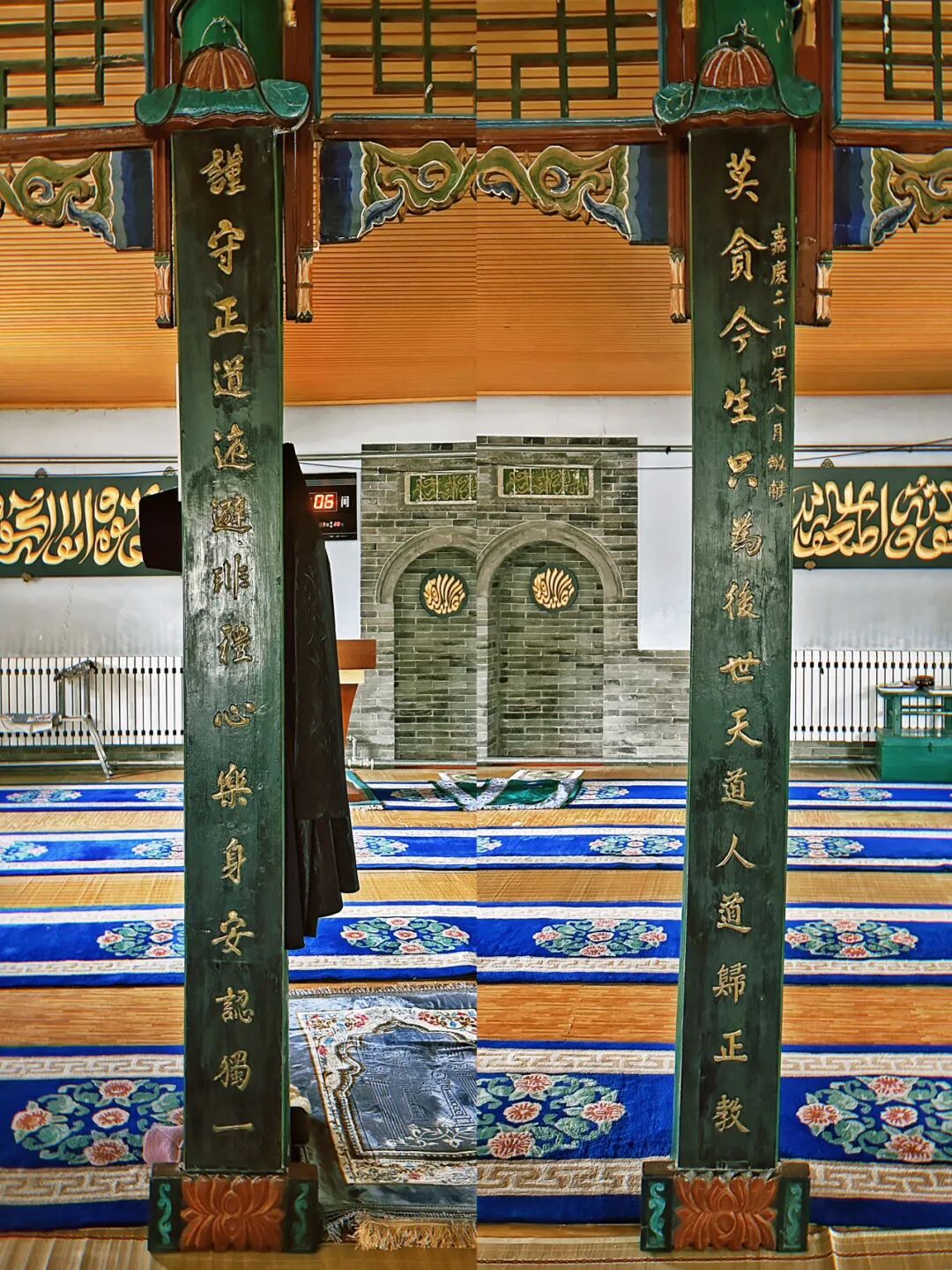
Heaven's command clearly explains the pure and unique truth, recognized since ancient times; the Prophet's practice spreads the one true faith, returning to the belief in the five daily namaz.
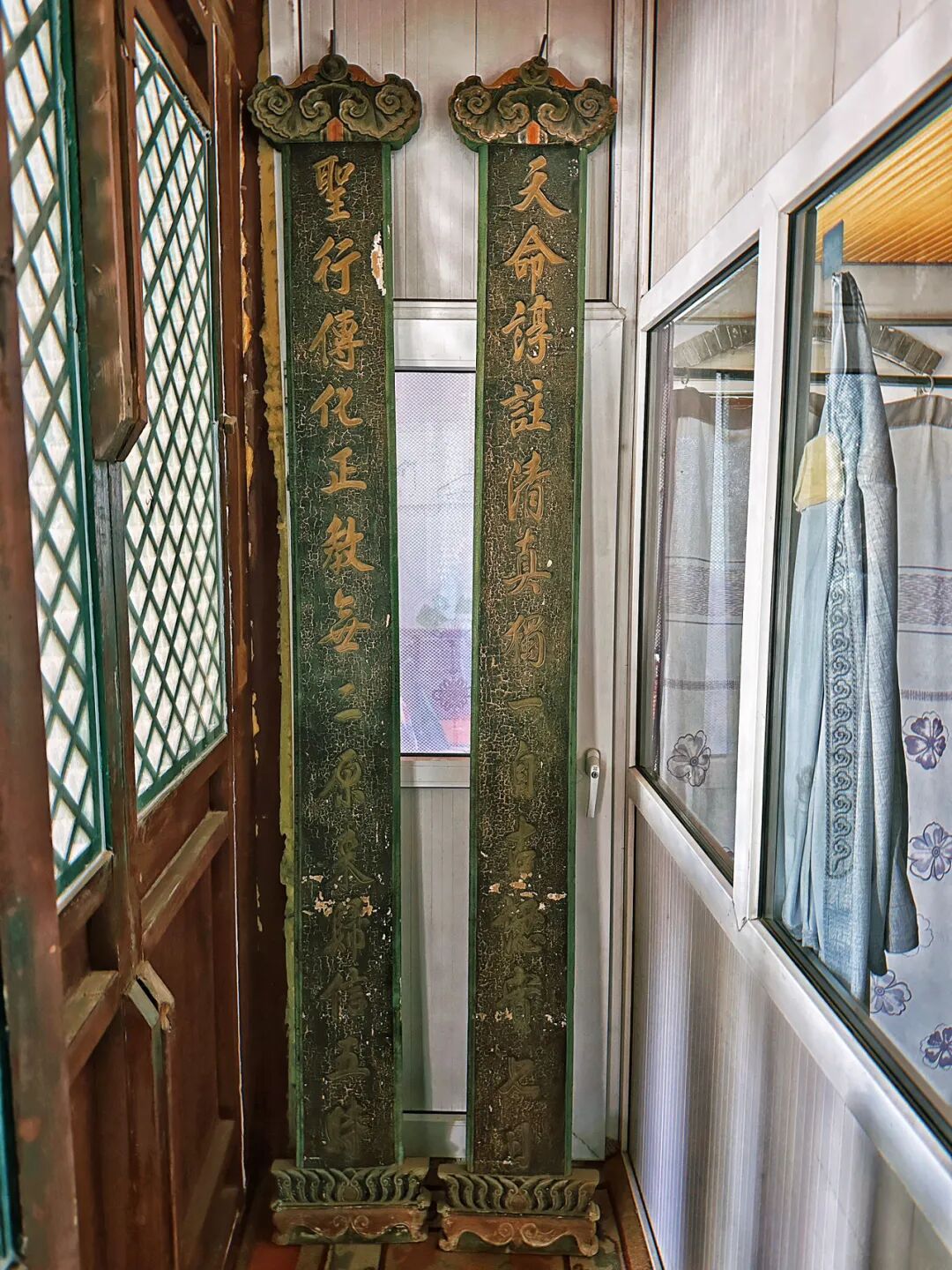
Blessings of the One True God: Presented on an auspicious day in the fifth month of the ninth year of the Xianfeng reign of the Great Qing Dynasty by Zheng Kuishi, Imperial Commissioner overseeing Ningguo military affairs, Commander-in-Chief of Zhejiang Province, in charge of all land and water forces, and titled General Jianwei, Shalamagai Baturu.
Zheng Kuishi was a famous general in the late Qing Dynasty and a Hui Muslim from Wanquan, Zhangjiakou, Hebei. He fought against the Taiping Rebellion and the Nian Army for many years. He was the first to break through the defenses of Luzhou and was wounded over twenty times in Huaiyuan, nearly losing his life, which earned him high praise from the imperial court. When Zheng Kuishi wrote the plaque for Duolun in the ninth year of the Xianfeng reign, he was serving as the Commander-in-Chief of Zhejiang and overseeing military affairs in Ningguo, the highest rank he reached in his life. In a memorial to the throne, Li Hongzhang highly praised Zheng Kuishi, saying he was 'hardworking, resolute, and exceptionally brave... he was the first to face the enemy's sharp edge, risking his life repeatedly. He suffered serious wounds eight or nine times, his body covered in scars. Among all the famous generals north and south of the Yangtze River, everyone considered Kuishi the best.'
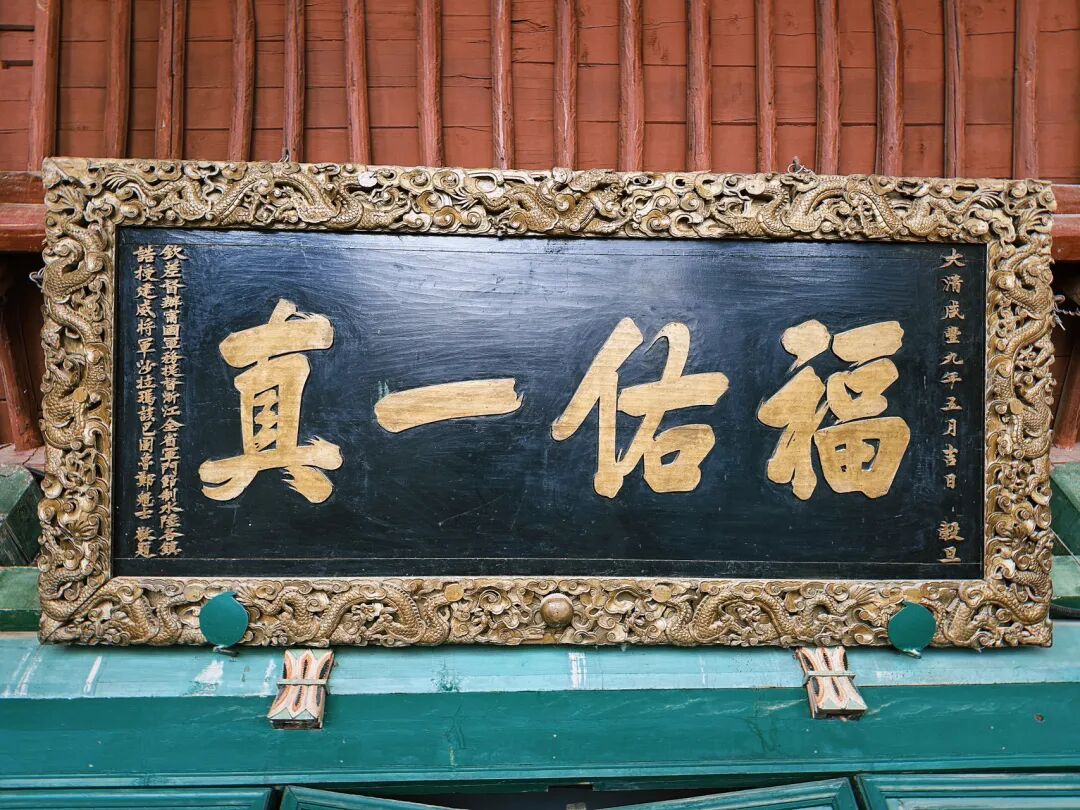
The Ancient Pure Faith: Respectfully presented by Song Rui, specially appointed Commander of the Duolun Battalion and recipient of the imperial peacock feather, in the first year of the Guangxu reign of the Great Qing Dynasty, in the month of the lotus.
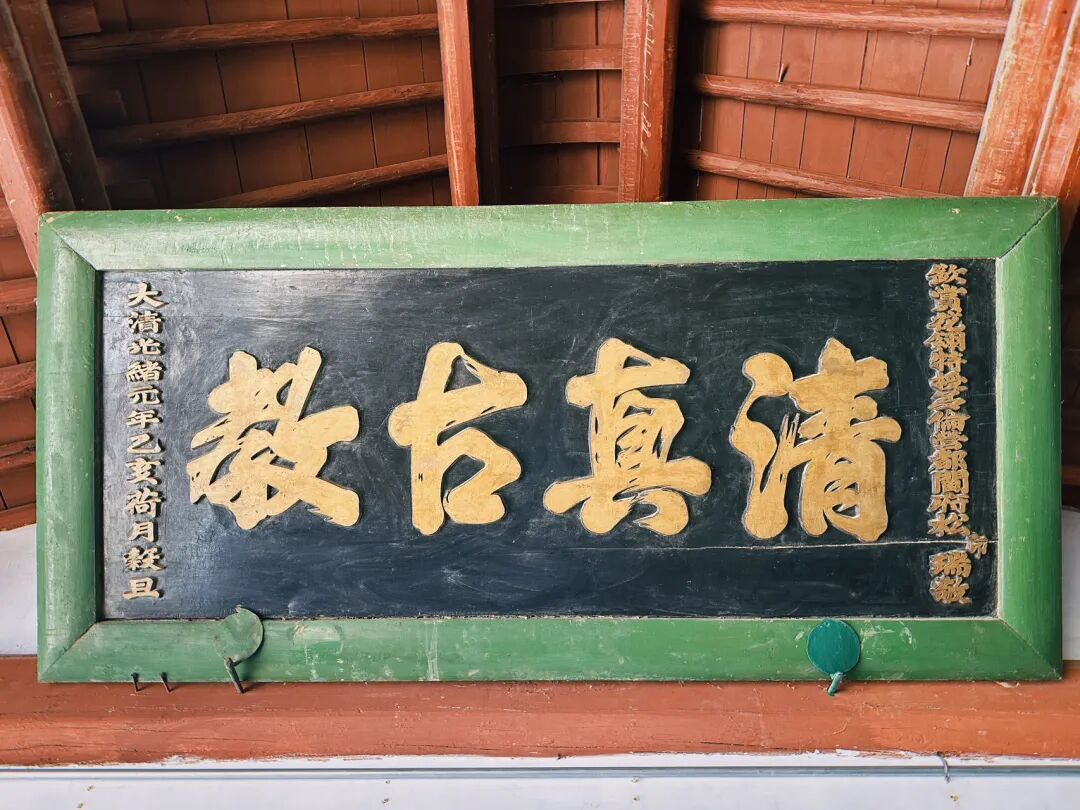
Benevolent Influence Spreads Everywhere: Presented by the acting Duolun Nuoer Magistrate, Lord Zhu Dezheng, who holds a fourth-rank title and wears a peacock feather. Respectfully presented by Hui Muslim leaders Shan Yunxing, village elder Ma Wanxing, and others in the first month of summer in the 31st year of the Guangxu reign of the Great Qing Dynasty.
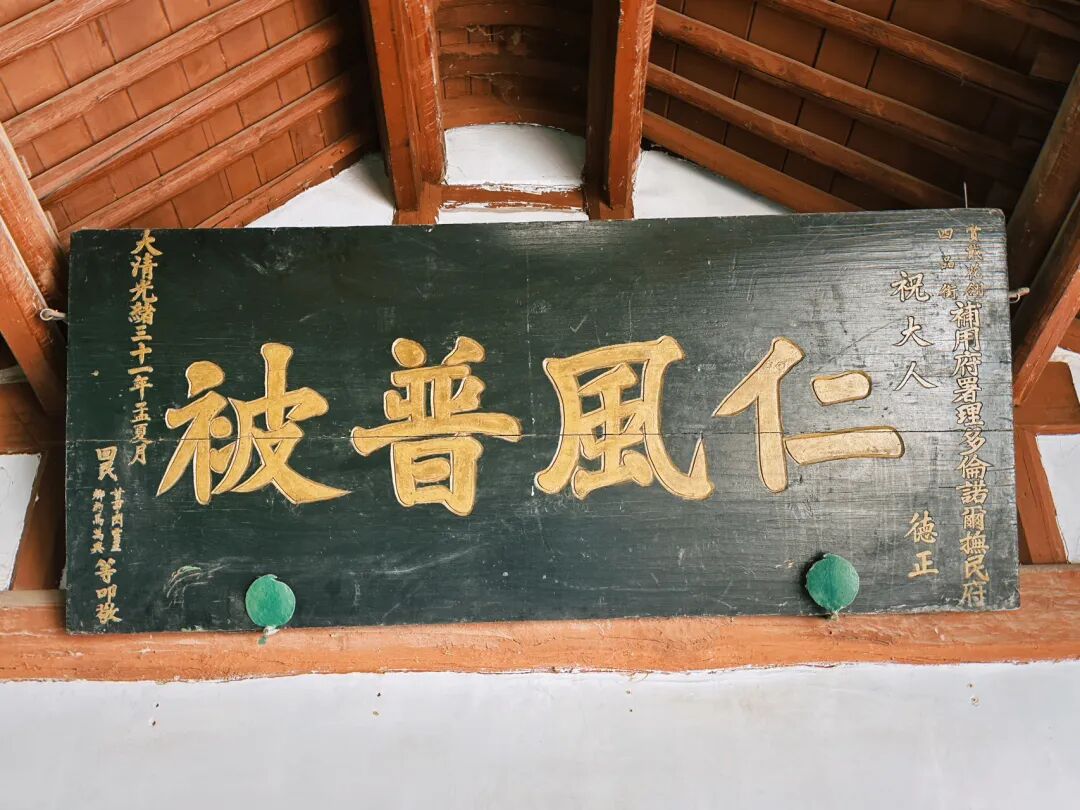
Merciful in this life, uniquely merciful in the hereafter: established in the eighth year of the Republic of China, in the seventh lunar month.
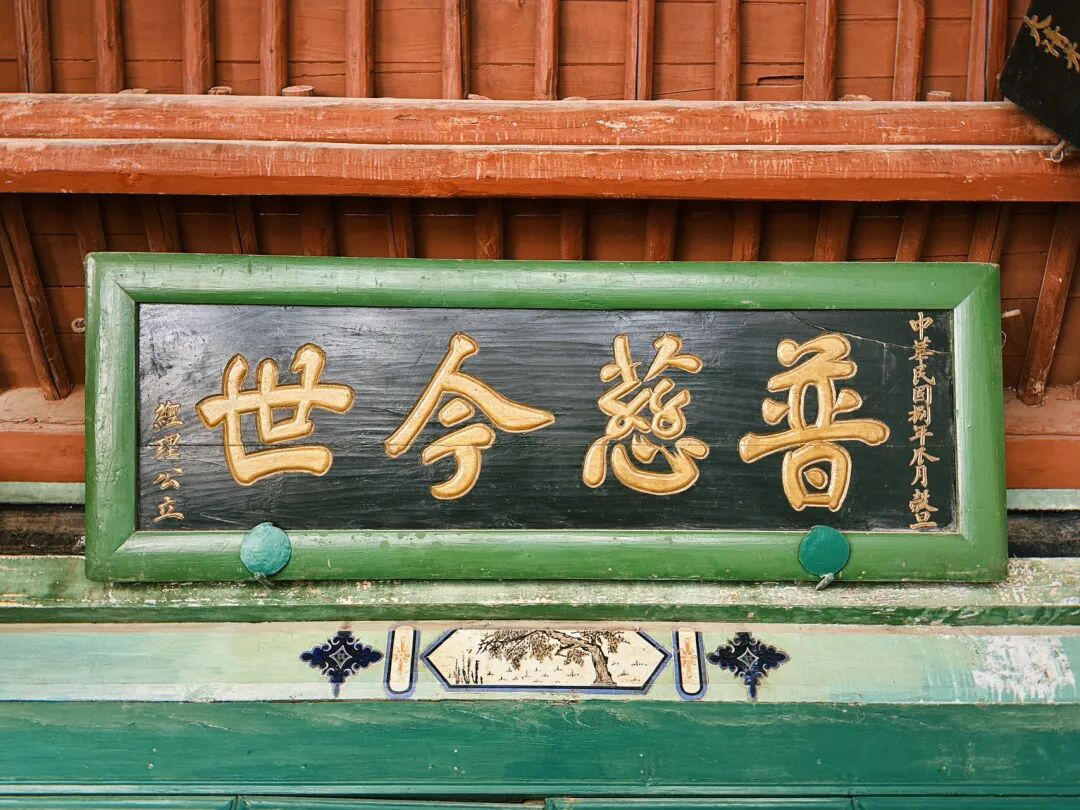
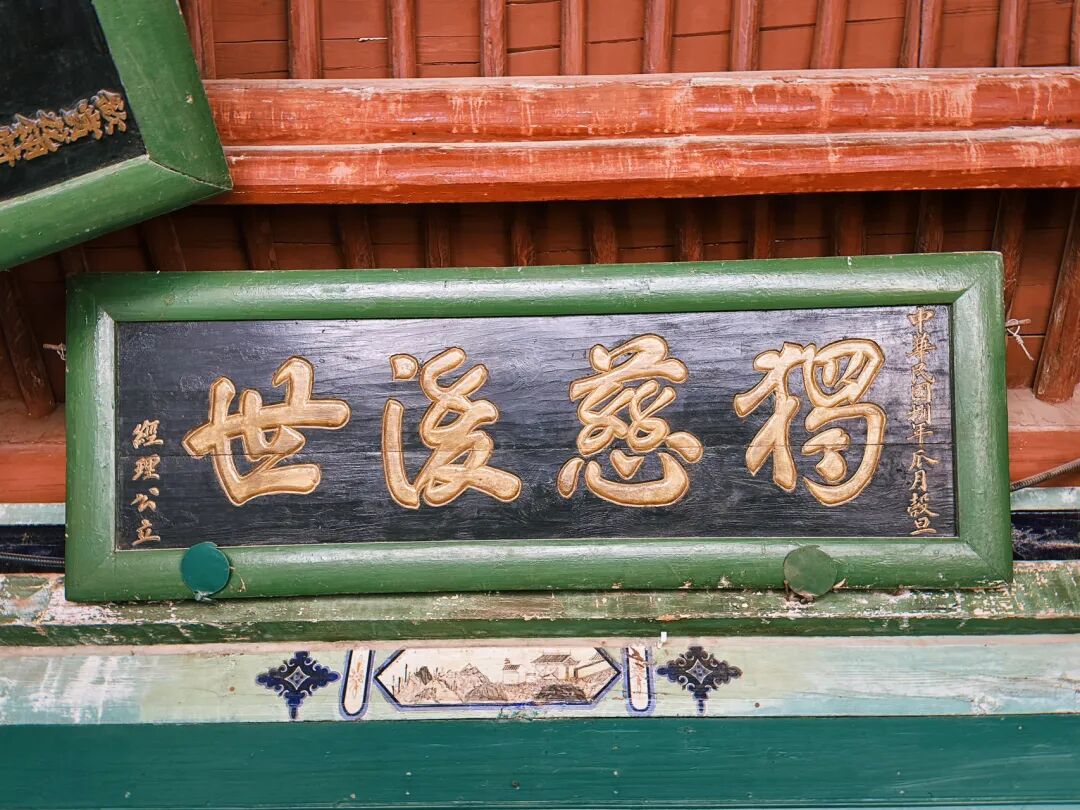
The stretch of Longzehu Road to Huimeng Street in Duolun County is full of restaurants, with over a dozen being halal. The night market features all kinds of barbecue, and the restaurants offer both Mongolian food and traditional Hui Muslim dishes, providing a wide variety.
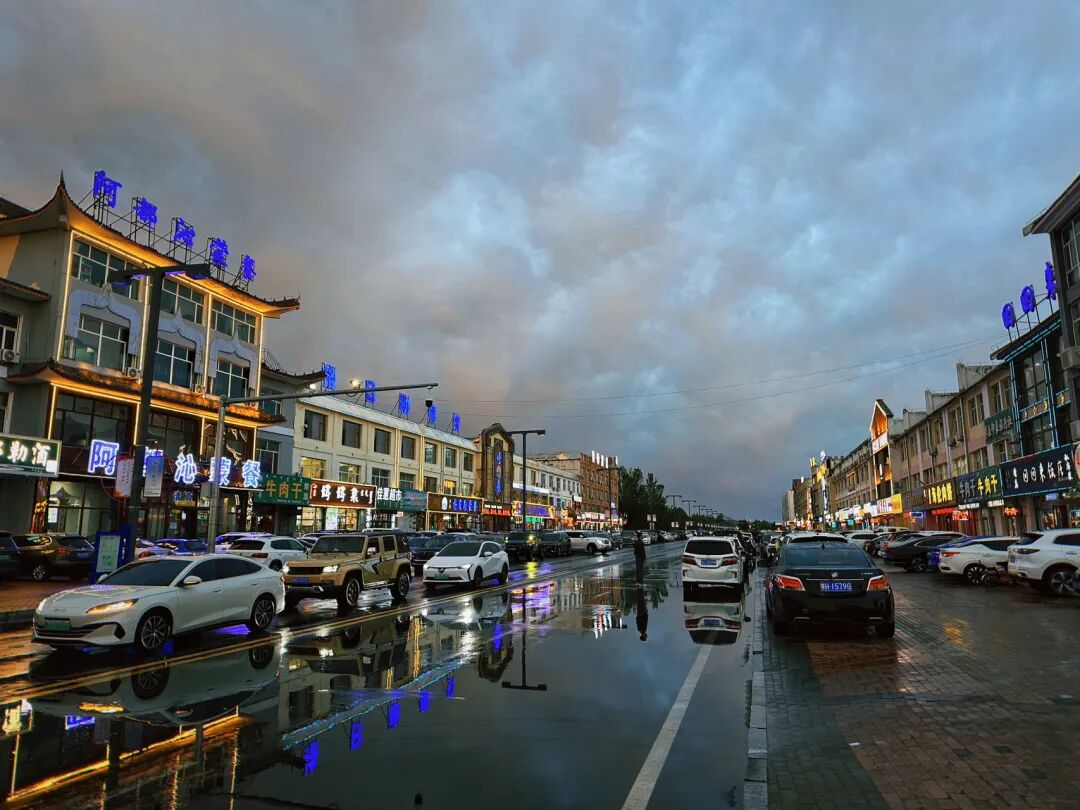
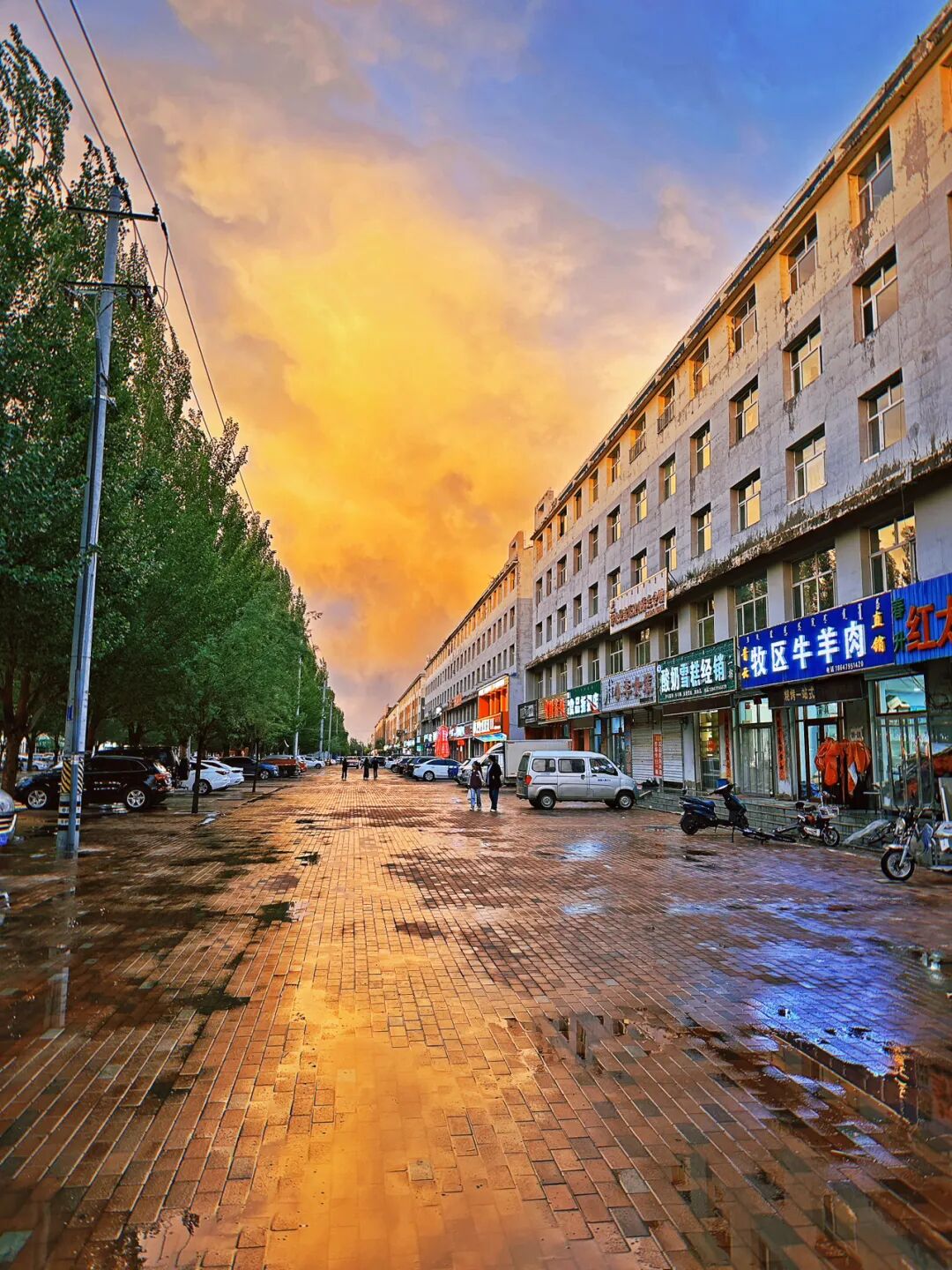
In the evening, we ate a mix of lamb leg bones, lamb spine (yangxiezi), and lamb tail tips at Laojia Banggu in Duolun, Inner Mongolia. They were stewed in a traditional broth (laotang), keeping the flavors very authentic. The lamb tail tips were very tender and tasted better than the long strips of lamb tail I have had in Beijing. Besides dipping vegetables, you can also dip dry flatbread (baiganbing). Once it is in the pot, the texture is very similar to Baoding covered flatbread (zhaobing), which I thought was quite good.
We stayed at the Duolun Hotel in the city center. The family room is great for a large group, parking at the entrance is convenient, and the Duolun night market is right behind it. The food street is just around the corner. They also serve a halal breakfast where you can get vegetables, oily milk tea, and roasted millet (chaomi).
Halal Travel Guide: Jingpeng Mosque and Hui Muslim History
Articles • ali2007fr posted the article • 0 comments • 171 views • 2026-05-20 08:14
Summary: Jingpeng Town in Hexigten Banner, Chifeng, is shown through its century-old mosque, local Hui Muslim history, and travel route from the grassland. This account keeps the mosque details, town history, food notes, and photographs in order.
Driving east from the Gonde Grassland, we reached Jingpeng Town, the capital of Hexigten Banner in Chifeng City, in 45 minutes. We performed the afternoon prayer (namaz) at Jingpeng Mosque. The imam there is from Pingliang, Gansu, and belongs to the same Shaanxi school of thought as my wife's family, so we had a great conversation. The imam comes from four generations of imams and has a high level of religious learning (erlin). He taught in Hohhot for a long time before coming to Jingpeng.
During the Kangxi reign of the Qing Dynasty, Jingpeng Town became a trade hub on the grassland, located on the main road between Mongolia and the Northeast. During the lama temple fairs, merchants from inland China brought cotton cloth, sugar, and tea to trade with the Mongols for furs, livestock, and local products. In 1723 (the second year of the Yongzheng reign), severe droughts in Shandong and Hebei forced disaster victims to head north of the Great Wall to make a living. To solve the problem of displaced people, the Qing government implemented a policy of borrowing land to support the people in the southeastern Mongolian grasslands, including Hexigten Banner. During the Qianlong reign, Hui Muslims from Yangxin and Guan counties in Shandong, and Cangzhou and Hejian in Hebei, traveled through Chifeng and Duolun to reach Jingpeng Town to trade on the grasslands, eventually settling down.
After the 19th century, the Hui Muslims in Jingpeng included families with the surnames Feng, Cong, Ma, Bai, Li, Jin, and Ha, with a population of nearly 1,000. In 1852 (the second year of the Xianfeng reign), they officially built a mosque (masjid), which started as five mud-brick rooms. In 1902 (the 28th year of the Guangxu reign), the mosque was rebuilt with funds raised under the leadership of Imam Liu Qi, Imam Ha Zhaobin, and community elders Li Wenrong, Cong Laofeng, Ma Changtai, and Jin Fengming. Liu Qi and Ha Zhaobin traveled inside the Great Wall three times to raise funds. It took four years, and the current building was completed in 1908 (the 34th year of the Guangxu reign). It was named a key cultural relic protection site of Hexigten Banner in 1992.
The north and south lecture halls and the main prayer hall of Jingpeng Mosque are Qing Dynasty structures. The main hall consists of a porch, the main hall, and a rear chamber (yaodian), with a moon-sighting tower (wangyuelou) on top of the rear chamber. The moon-sighting tower was demolished in 1967 and rebuilt after 1981.
Historically, the Hui Muslims of Jingpeng Town lived in single-story houses in the old town on the west side of the river, clustered around the mosque. However, after urban renewal in recent years, they have all moved to apartment buildings on the east side of the river. Today, you can see many restaurants and shops run by Hui Muslims in the new urban area on the east side of the river.
During the late Qing Dynasty and the Republic of China era, Jingpeng grew into one of the four major trading hubs beyond the Great Wall, alongside Zhangjiakou, Duolun, and Kulun (Ulaanbaatar). According to the elders, Hui Muslims in Jingpeng originally made a living by gathering firewood, cutting grass, and making charcoal, only starting stalls or shops after they had saved enough money.
At that time, many Hui Muslims in Jingpeng worked as Mongolian traders and horse brokers (maqiao). Mongolian traders were commonly known as 'grassland runners.' They used ox carts and camels to deliver sugar, tea, cotton cloth, and matches to the yurts of Mongolian herders, then transported local products like furs and dairy products back to places like Duolun, Chifeng, and Zhangjiakou. In the early Republic of China, there were over 20 Hui Muslim families in Jingpeng working as Mongolian traders, with 6 Hui Muslim camel caravans owning more than 300 camels.
Horse brokers (maqiao) handled horse trading. During the Republic of China era, all horse brokers in Jingpeng Town were Hui Muslims, and many inherited the business from their ancestors. The horse market was located at the base of the street lamps in the old Jingpeng street. Every autumn and winter, herders from Xilingol, Ujimqin, and Abaga would drive their horses there to sell. Hui Muslims would buy the horses, train them for a period, and then drive them to Beijing, Tianjin, and Shandong to sell. Because of this, Jingpeng Hui Muslims were skilled at training horses, and the pacing horses they trained were very popular with local wealthy merchants.
In the past, most of the people driving horse-drawn carriages in Jingpeng Town were also Hui Muslims. The trip from Jingpeng to Duolun took ten days of sleeping in the open. The drivers had to handle all kinds of situations and use their wits and courage to escape danger if they met bandits.
At its peak, one-third of the 150 shops in Jingpeng Town were run by Hui Muslims. The eight major businesses were Yuxingzhan, Tianshunxing, Xiyuxing, Detaixing, Jushunxing, Ruishengming, Heji, and Yuji. The largest was Yuxingzhan, founded by Ma Bingyu. Ma Bingyu made a living cutting grass in his early years. Later, he opened a grass shed to sell hay, and it wasn't until middle age that he opened Yuxingzhan, a grocery store that also processed rice and flour. Ma Bingyu learned business methods from Shanxi merchants, hiring Shanxi managers and mostly Shanxi workers. By the Republic of China era, Yuxingzhan had branches or warehouses in places like Great Kulun (Ulaanbaatar), Xilinhot, Chifeng, Zhangjiakou, and Beijing. Yuxingzhan had its own camel caravan. It used its own camels to transport goods in spring and autumn, and used ox carts in the various banners of Xilingol League during the summer.
The Tianshunxing business owned by Hui Muslim Liu Kuishan in Jingpeng mainly sold daily groceries and pastries, and also processed grain. It was a very powerful business in Jingpeng. Besides the pastry and grocery shop, Tianshunxing also ran the Xingshun Hotel on Dazhong Street in Jingpeng. Tianshunxing's camel caravan transported goods for other shops to carrying their own. Tianshunxing's ranch had over a thousand sheep and more than two hundred cows. They originally ran a camel farm too, but the Soviet army drove all the camels away in the summer of 1945.
In the evening, we had dinner at the Coarse Grain Steamed Dumpling (culiang zhengjiao) restaurant in Jingpeng Town. They own three shops in a row: a clay pot small pie shop, a hot pot shop (doulao xianyang huoguo), and the coarse grain steamed dumpling shop. The coarse grain steamed dumpling shop has quite a few private rooms, but not many open tables. Their menu is very rich. We ordered half an organic rooster, pressure-cooked beef with golden hook beans (huangjingou), steamed oat noodles (youmian) with diced meat, mushrooms, and vegetables in a steam pot, and lamb and bracken steamed dumplings. Their portions are huge. Four of us could not finish three dishes and two staples. Two dishes and one staple should be enough.
The rooster was delicious and the meat had a good chew; it probably wasn't farm-raised. Golden hook beans (huangjingou) are high-end beans from Northeast China, usually stewed with beef. They make them with a sweet and salty flavor. The steamed oat noodles with diced meat and mushrooms were my favorite. It is like a version of 'topped noodles' from the northern frontier. The dough of the oat steamed dumplings doesn't taste as good as white flour, but it is a way to experience what people in the northern frontier ate when they didn't have white flour. They also have black rice flour, buckwheat flour, and corn flour wrappers, offering a wide variety. Bracken is common in the mountains, but this was my first time eating it in a dumpling. It tasted pretty good.
I woke up early and rode a shared electric scooter around Jingpeng Town. The streets were clean and not crowded. After riding around, I found that the Hui Muslim breakfast spot is the Yishunzhai Lamb Soup Restaurant. We ordered lamb offal soup, boiled lamb, lamb wontons, and plain lamb head with sesame flatbread (shaobing). The lamb offal soup (yangza tang) came in a very generous portion. They served a huge plate of shredded lamb head meat that the four of us could not even finish. I thought the wontons (huntun) were the best part; the broth was very savory. The sesame flatbread (shaobing) was softer and fluffier than the kind in Beijing, and I really enjoyed the texture. view all
Summary: Jingpeng Town in Hexigten Banner, Chifeng, is shown through its century-old mosque, local Hui Muslim history, and travel route from the grassland. This account keeps the mosque details, town history, food notes, and photographs in order.
Driving east from the Gonde Grassland, we reached Jingpeng Town, the capital of Hexigten Banner in Chifeng City, in 45 minutes. We performed the afternoon prayer (namaz) at Jingpeng Mosque. The imam there is from Pingliang, Gansu, and belongs to the same Shaanxi school of thought as my wife's family, so we had a great conversation. The imam comes from four generations of imams and has a high level of religious learning (erlin). He taught in Hohhot for a long time before coming to Jingpeng.
During the Kangxi reign of the Qing Dynasty, Jingpeng Town became a trade hub on the grassland, located on the main road between Mongolia and the Northeast. During the lama temple fairs, merchants from inland China brought cotton cloth, sugar, and tea to trade with the Mongols for furs, livestock, and local products. In 1723 (the second year of the Yongzheng reign), severe droughts in Shandong and Hebei forced disaster victims to head north of the Great Wall to make a living. To solve the problem of displaced people, the Qing government implemented a policy of borrowing land to support the people in the southeastern Mongolian grasslands, including Hexigten Banner. During the Qianlong reign, Hui Muslims from Yangxin and Guan counties in Shandong, and Cangzhou and Hejian in Hebei, traveled through Chifeng and Duolun to reach Jingpeng Town to trade on the grasslands, eventually settling down.
After the 19th century, the Hui Muslims in Jingpeng included families with the surnames Feng, Cong, Ma, Bai, Li, Jin, and Ha, with a population of nearly 1,000. In 1852 (the second year of the Xianfeng reign), they officially built a mosque (masjid), which started as five mud-brick rooms. In 1902 (the 28th year of the Guangxu reign), the mosque was rebuilt with funds raised under the leadership of Imam Liu Qi, Imam Ha Zhaobin, and community elders Li Wenrong, Cong Laofeng, Ma Changtai, and Jin Fengming. Liu Qi and Ha Zhaobin traveled inside the Great Wall three times to raise funds. It took four years, and the current building was completed in 1908 (the 34th year of the Guangxu reign). It was named a key cultural relic protection site of Hexigten Banner in 1992.
The north and south lecture halls and the main prayer hall of Jingpeng Mosque are Qing Dynasty structures. The main hall consists of a porch, the main hall, and a rear chamber (yaodian), with a moon-sighting tower (wangyuelou) on top of the rear chamber. The moon-sighting tower was demolished in 1967 and rebuilt after 1981.
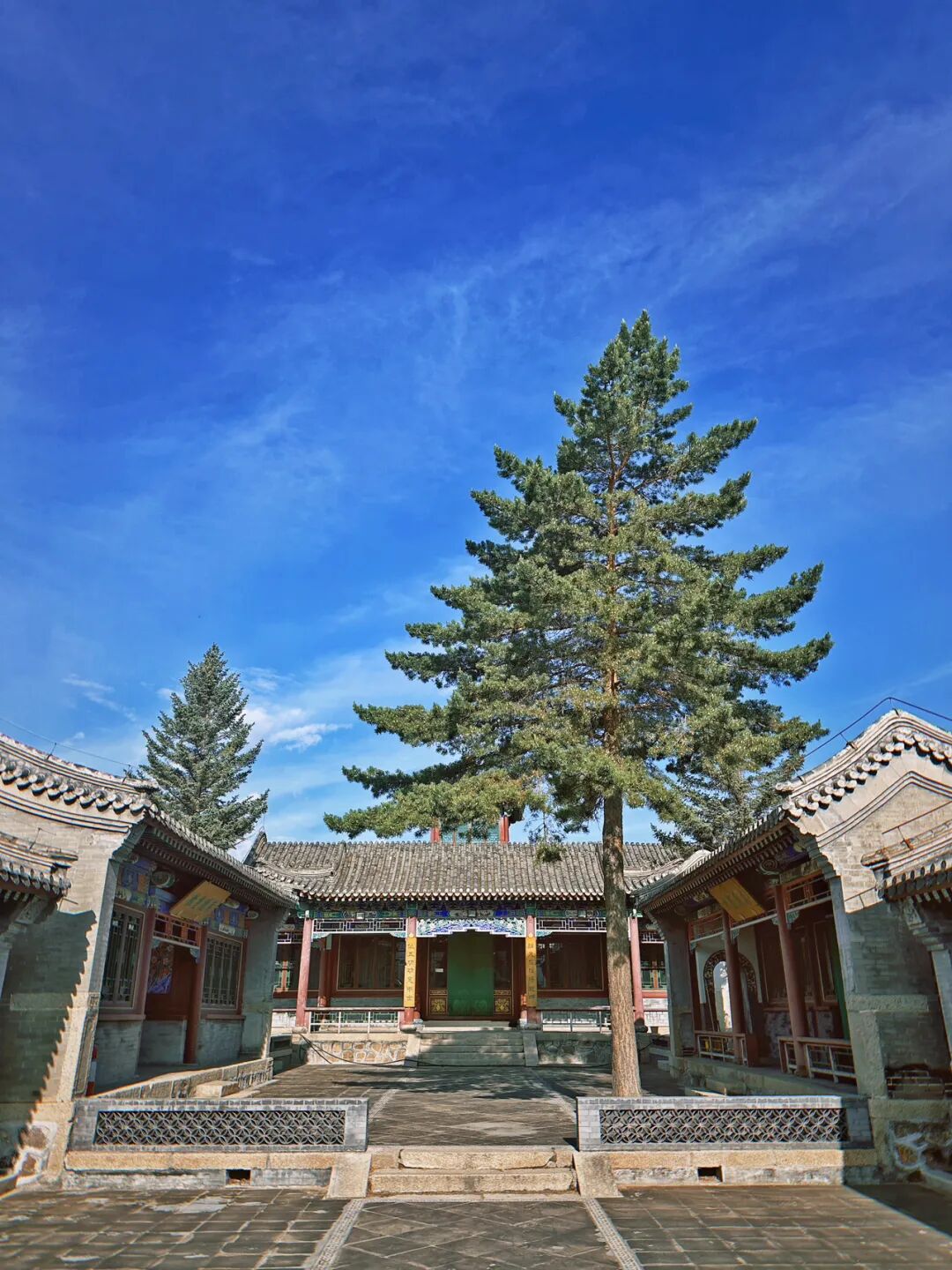
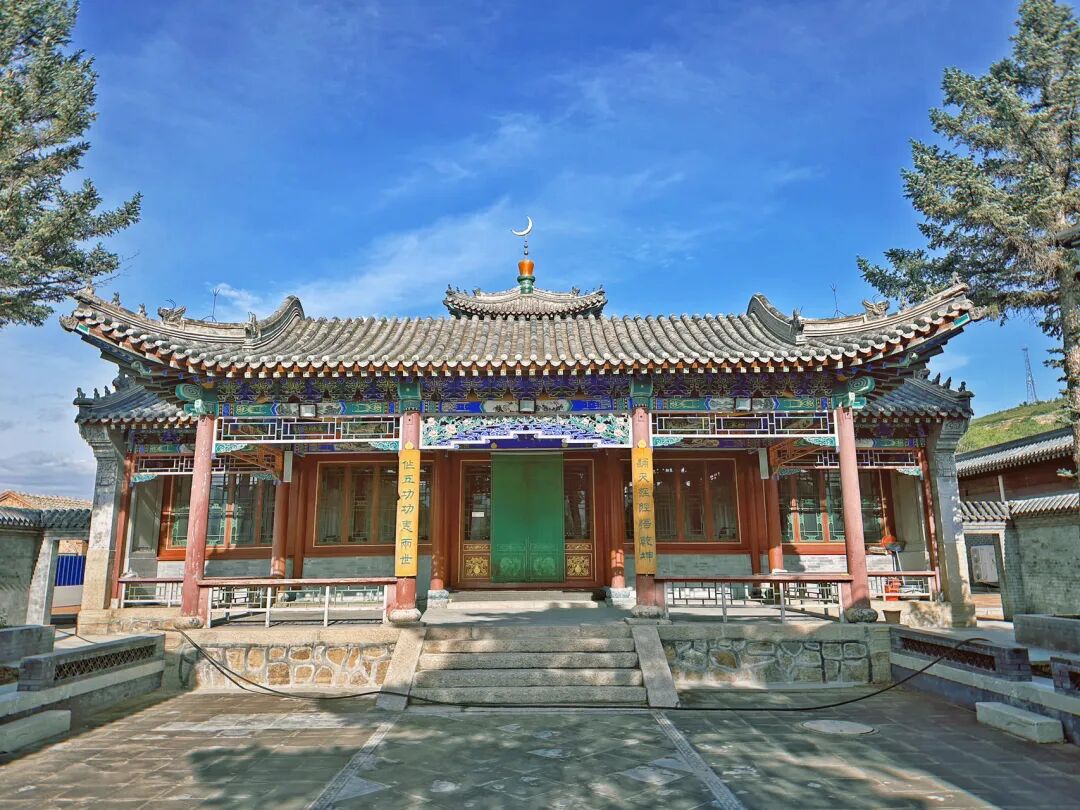
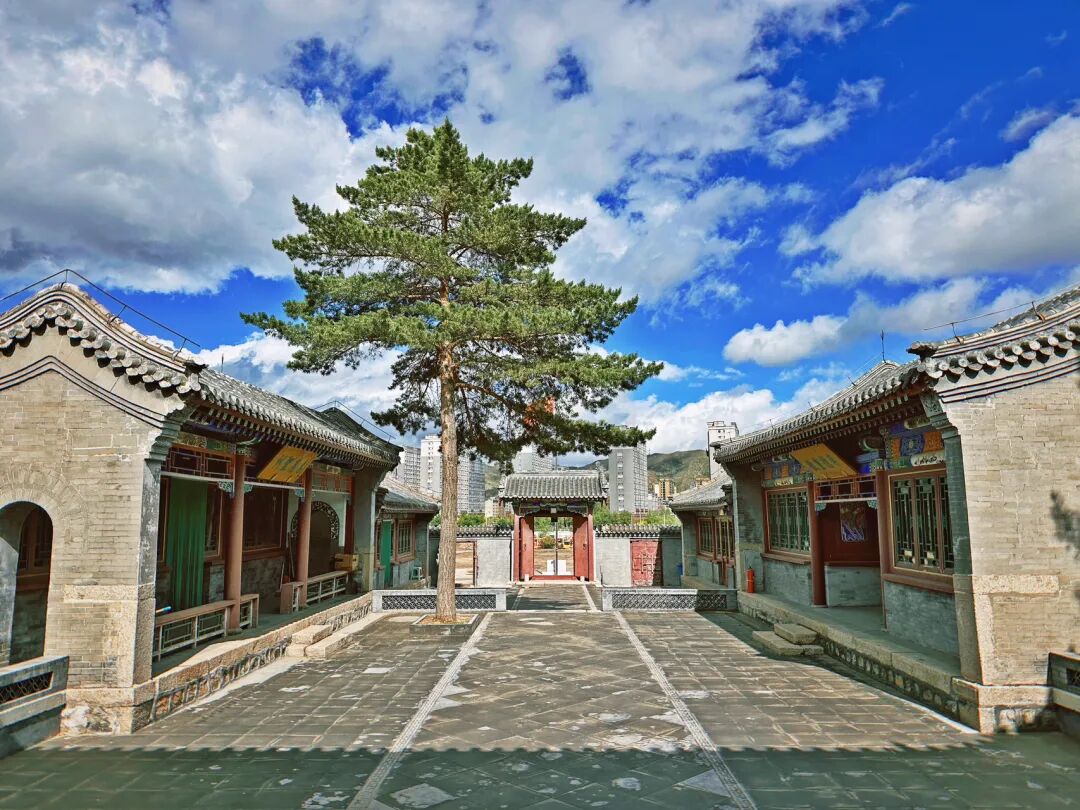
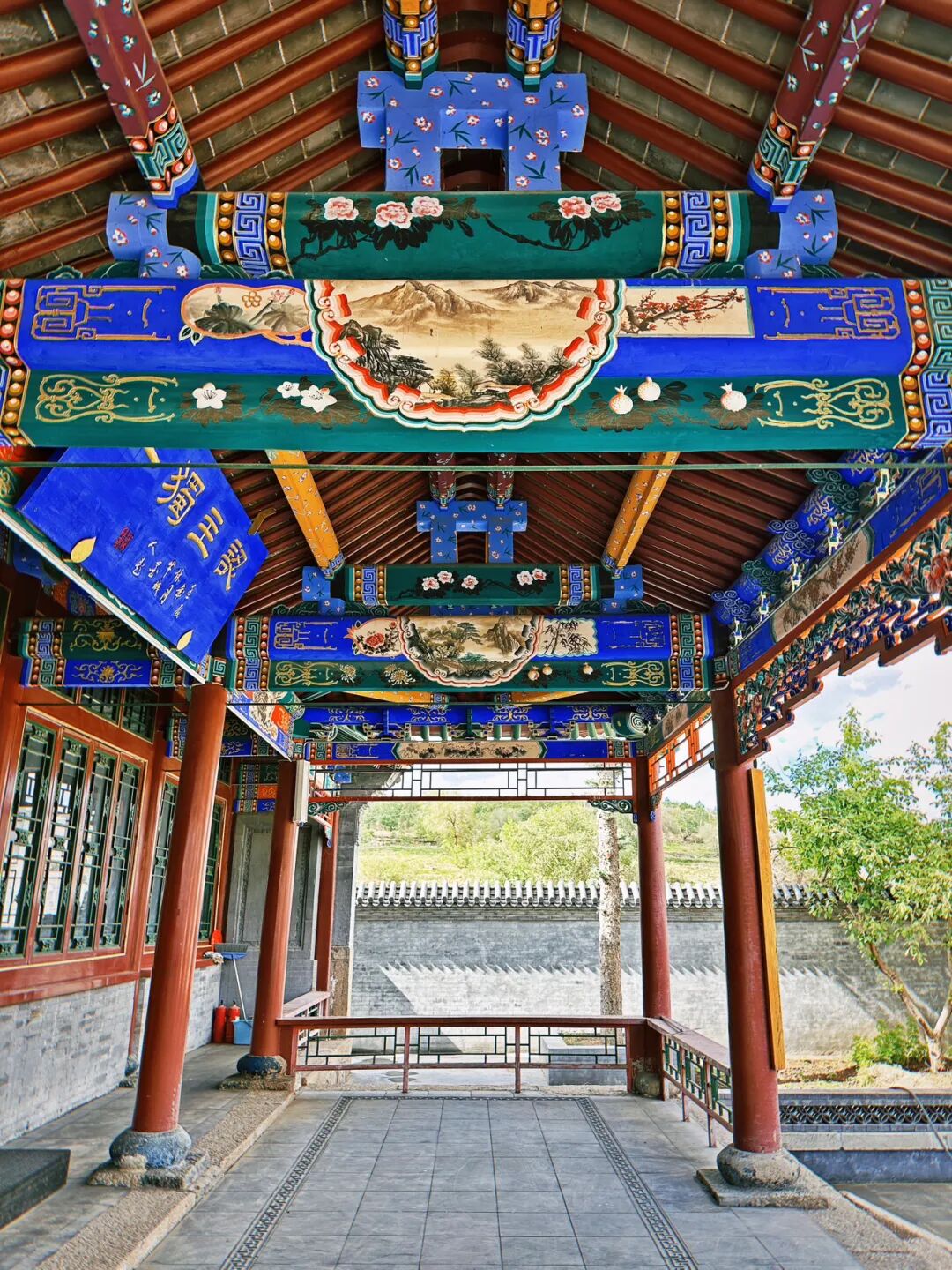
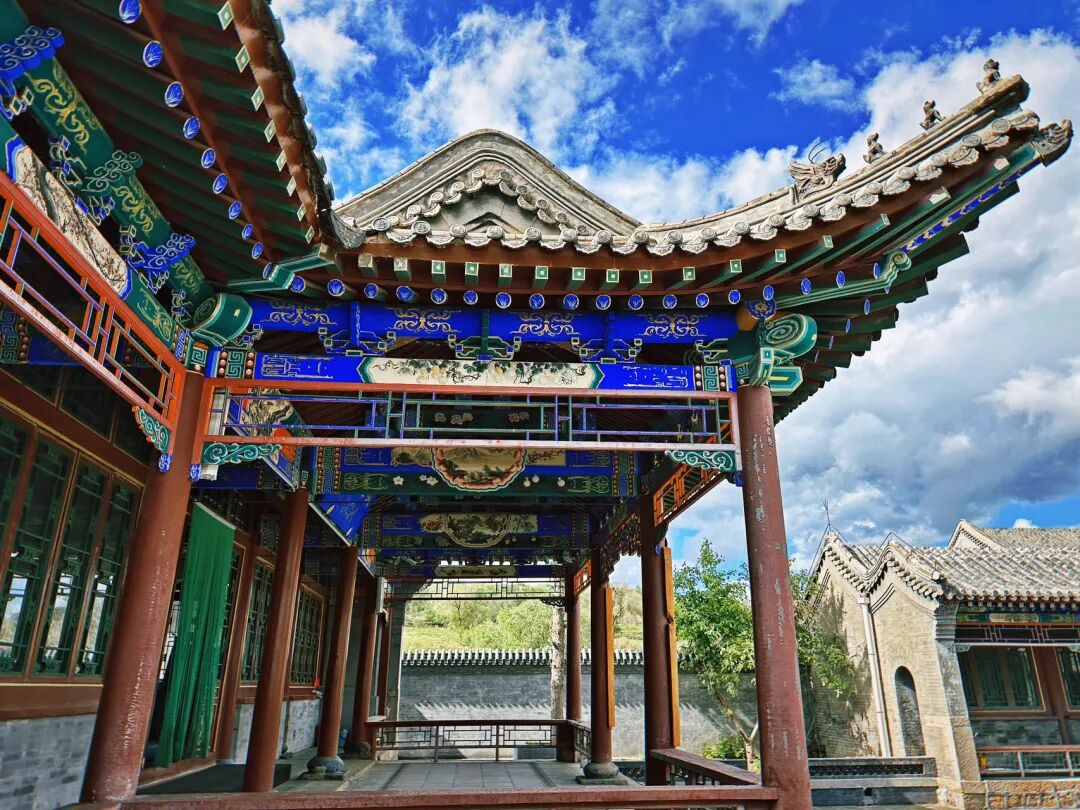
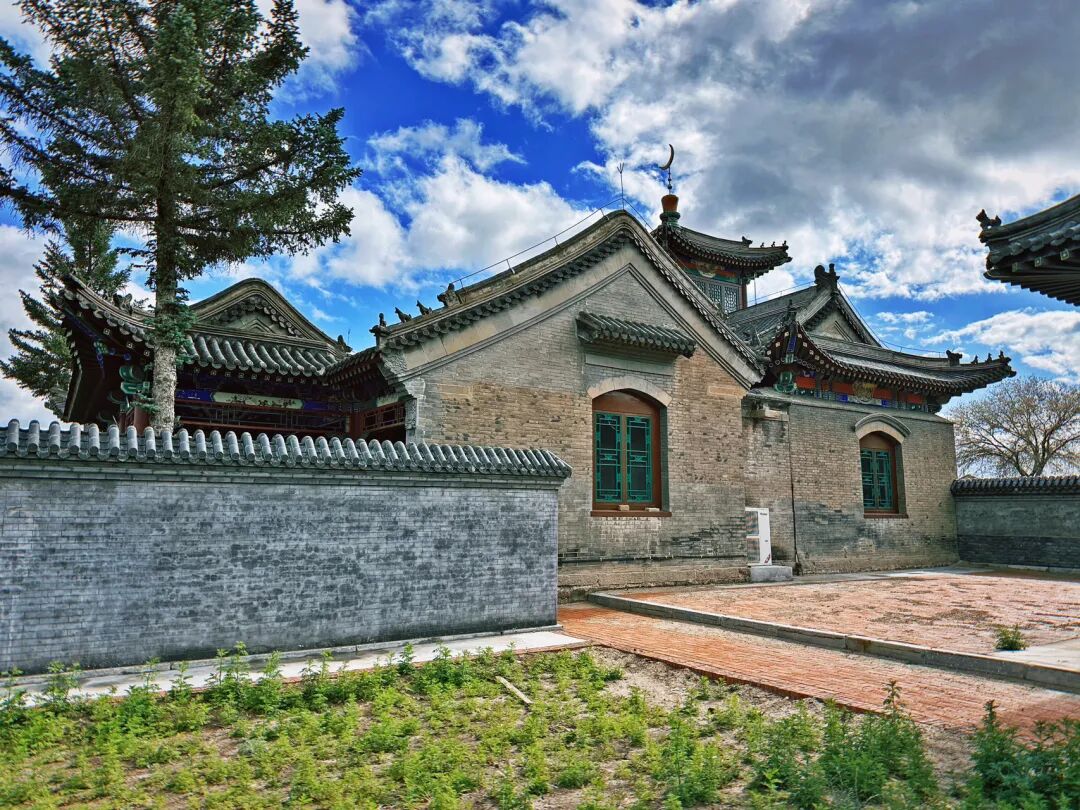
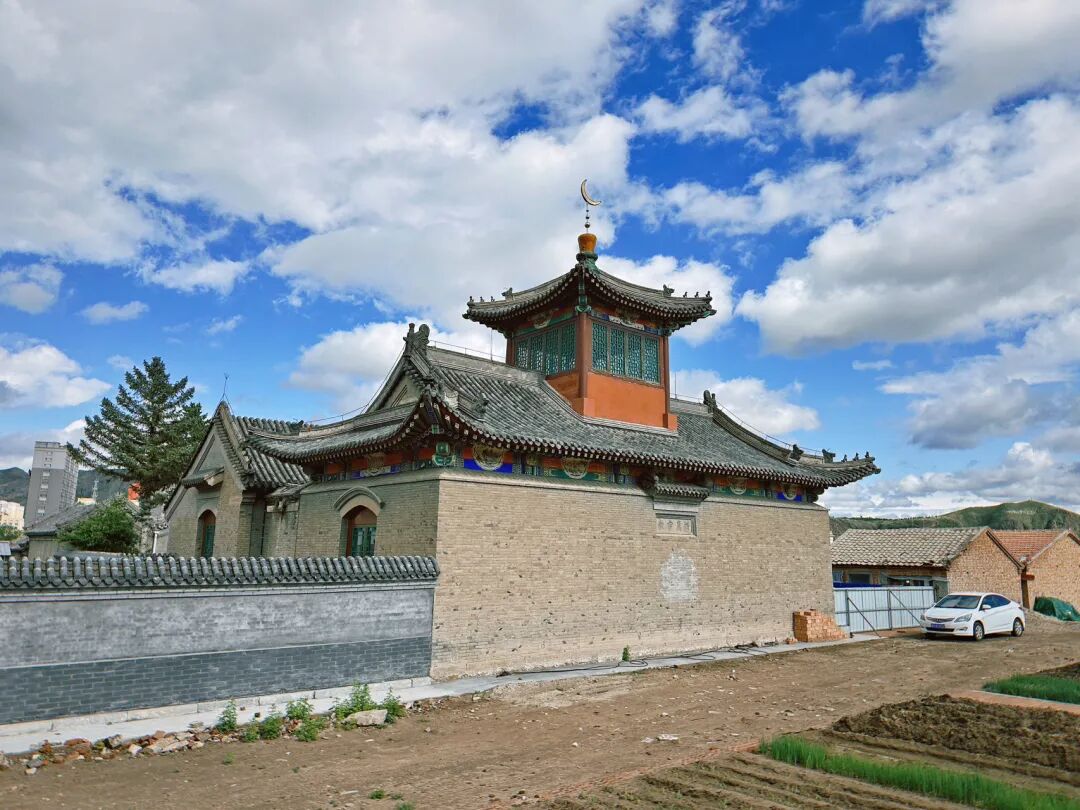
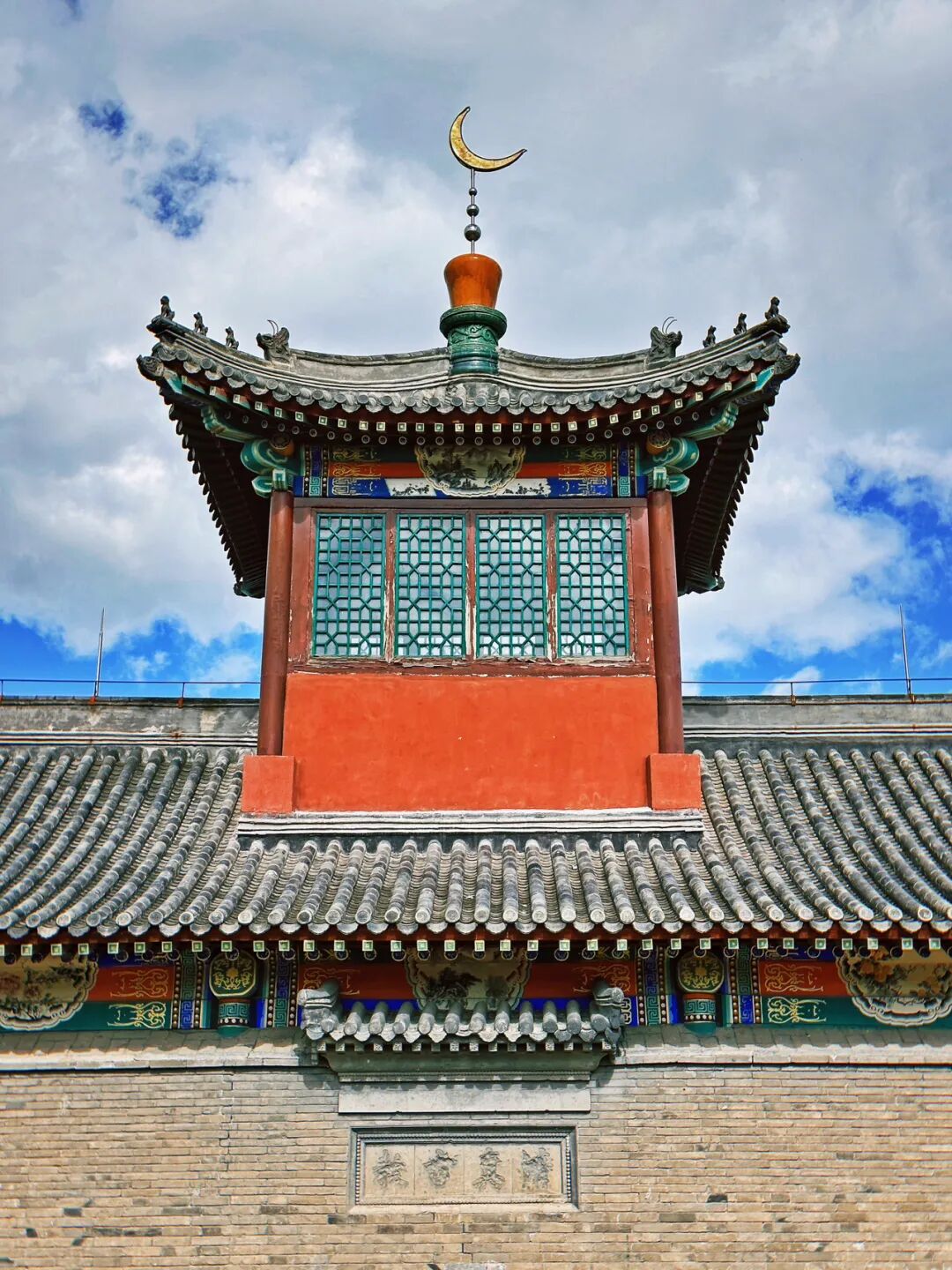
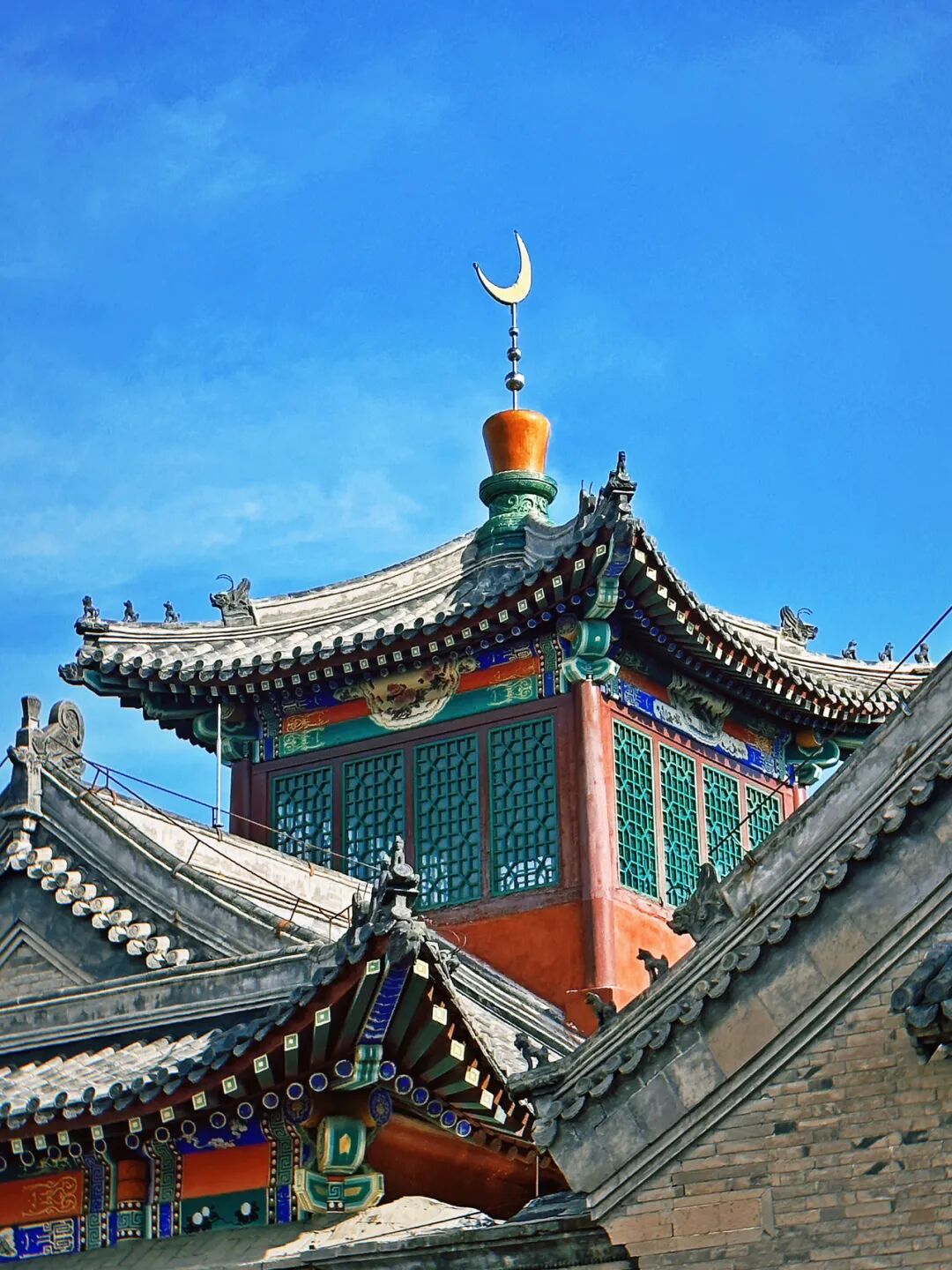
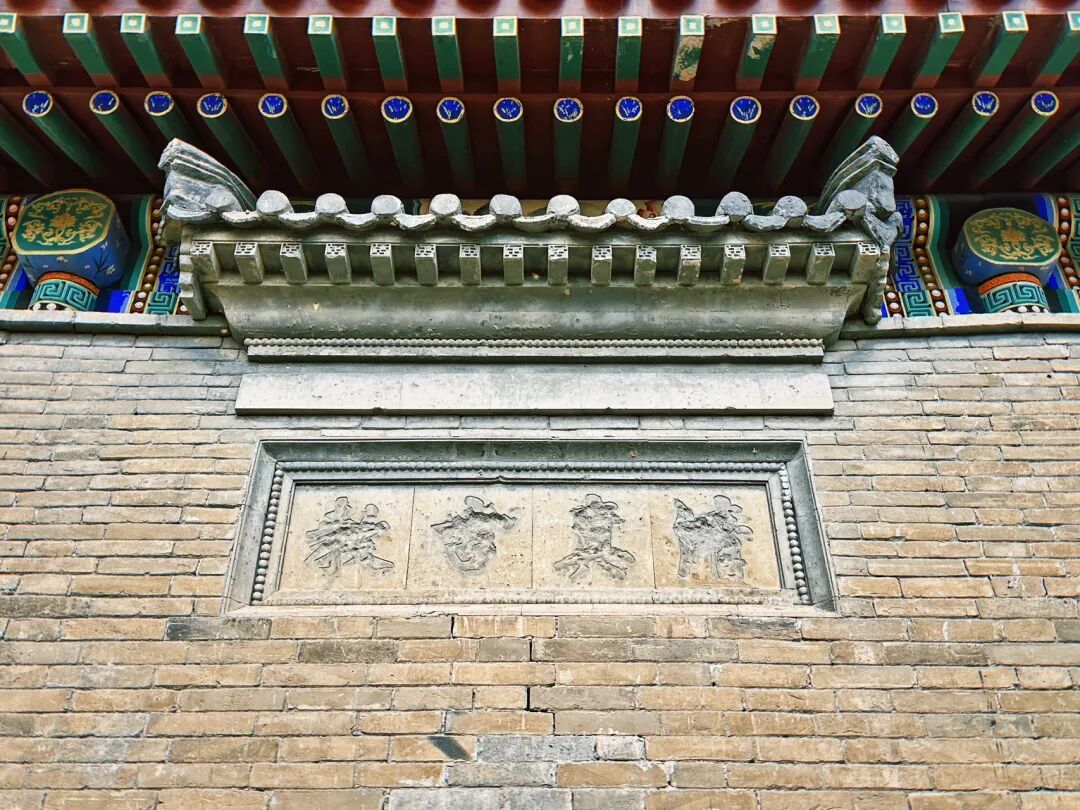
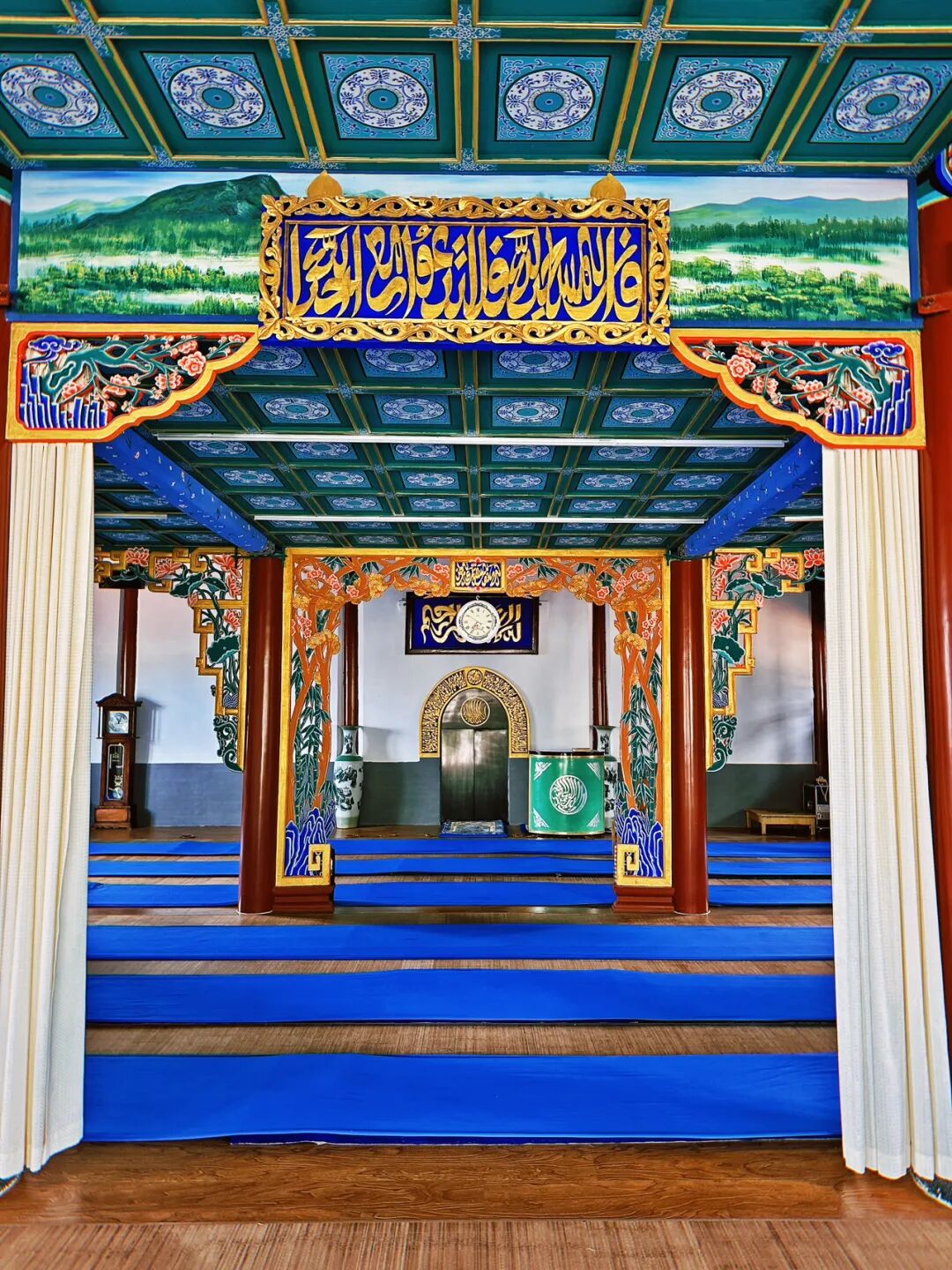
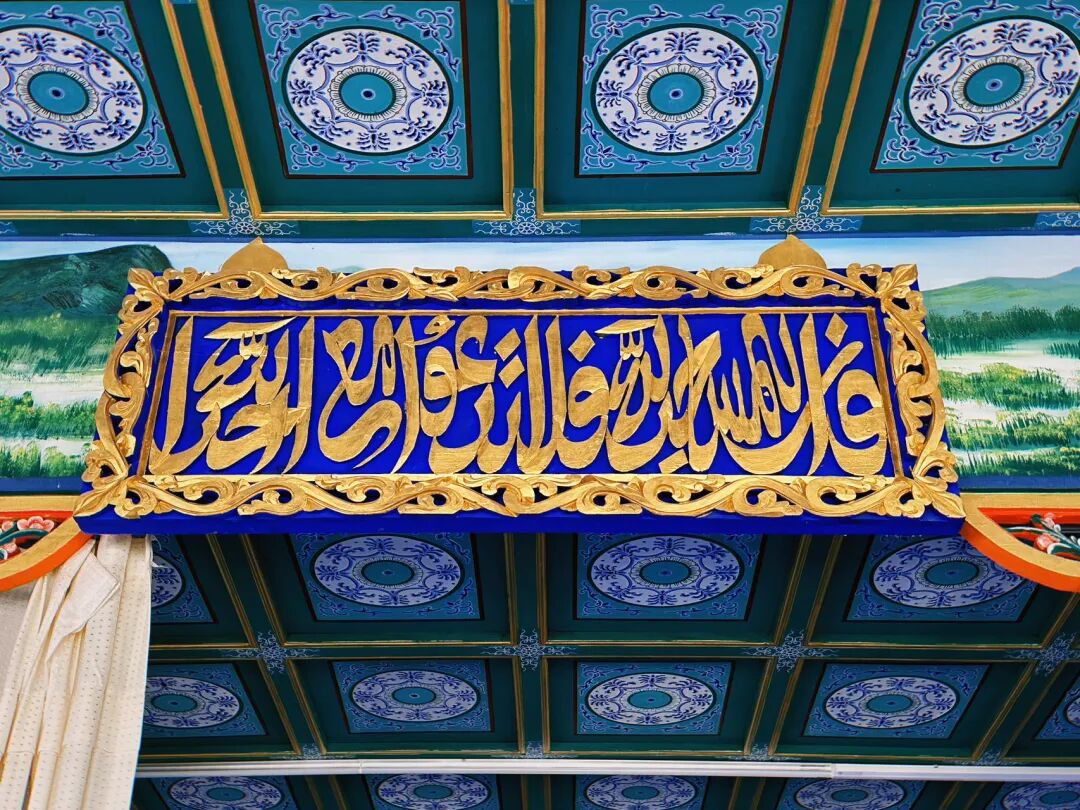
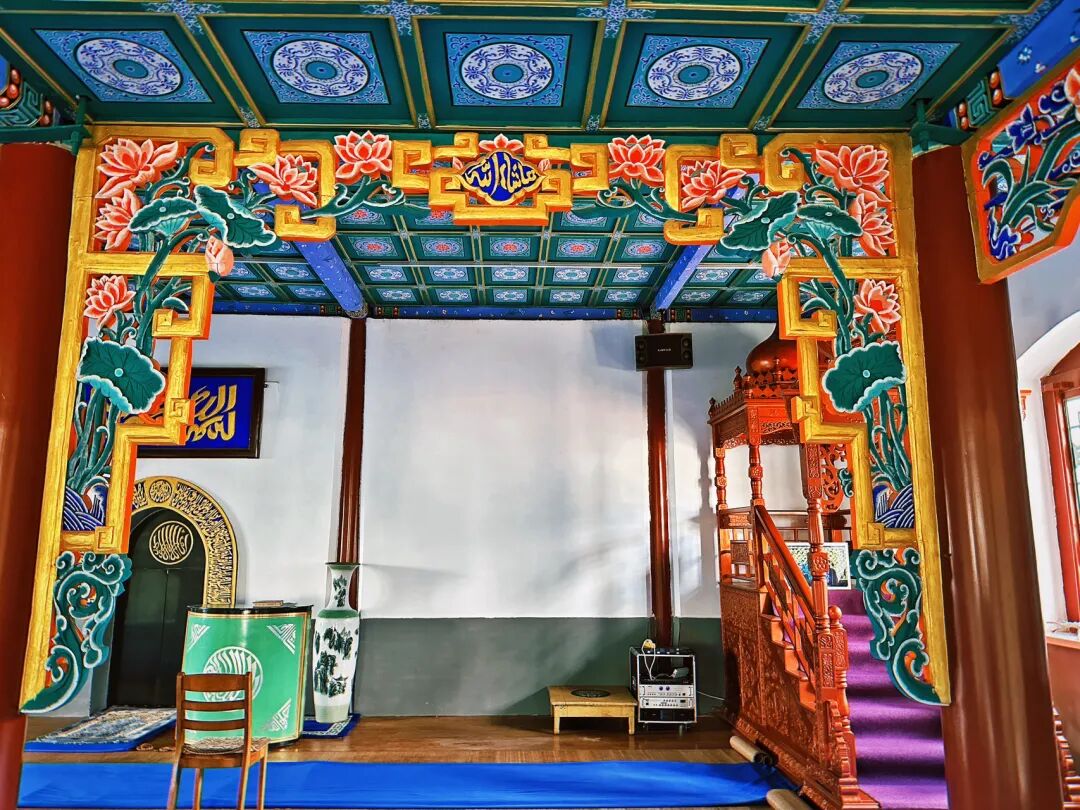
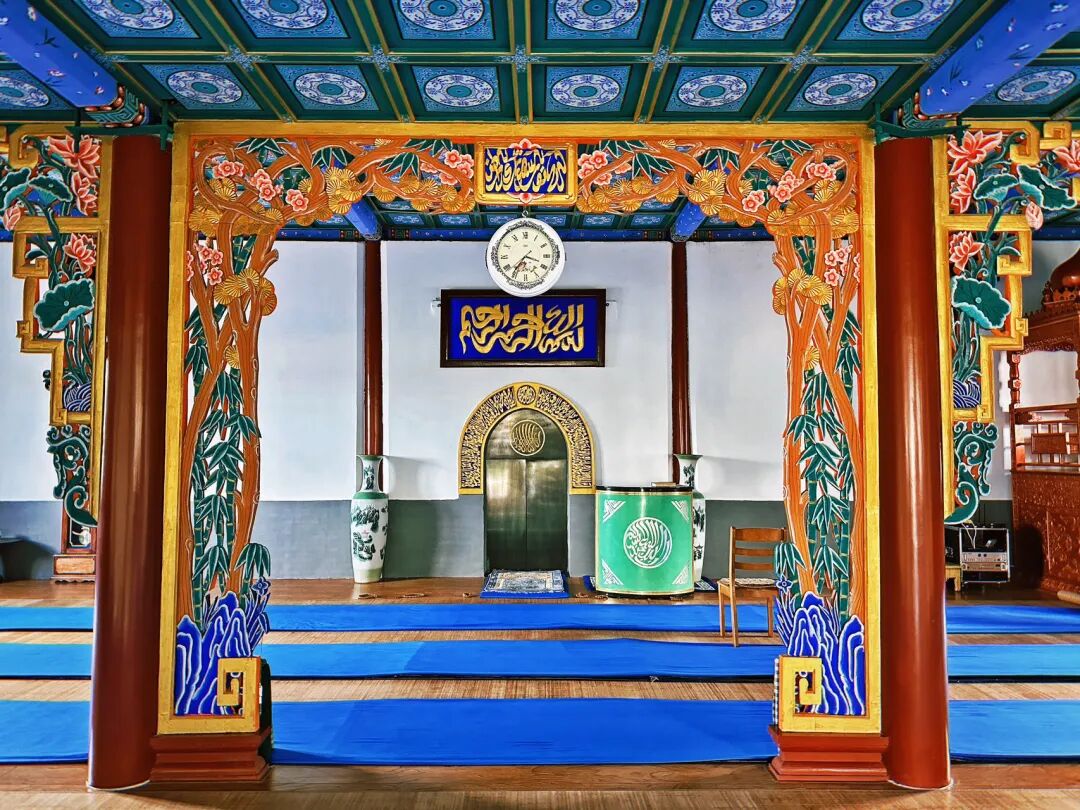
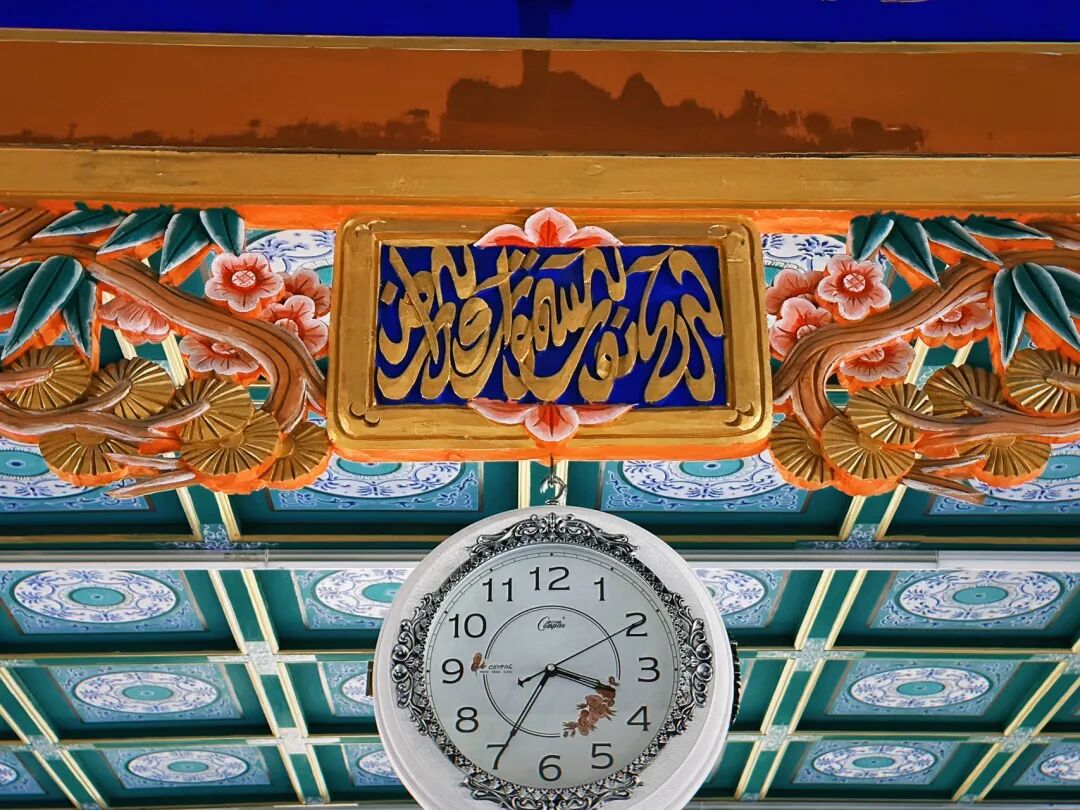
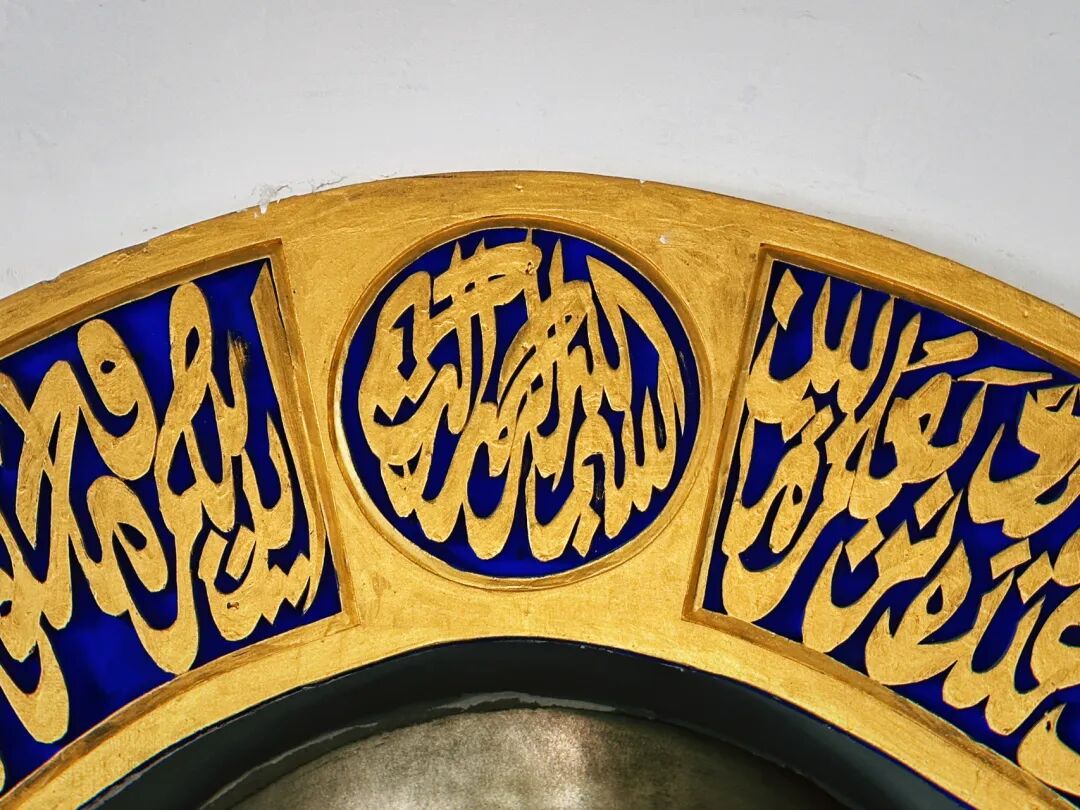
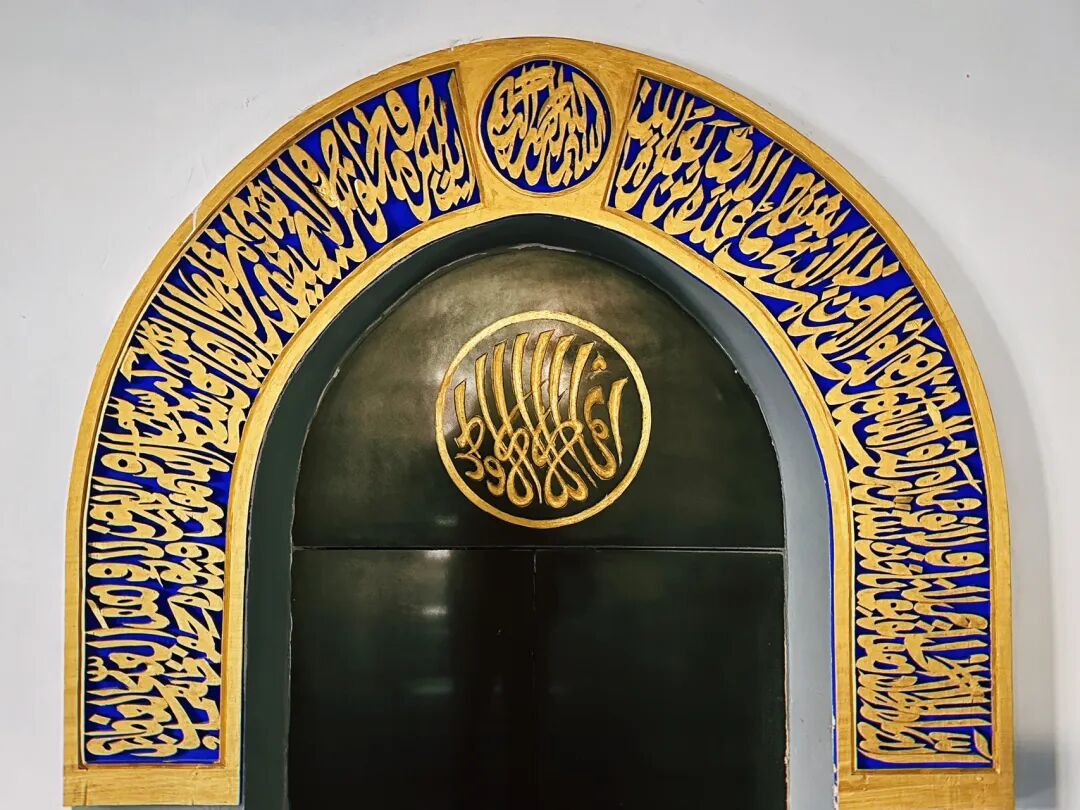
Historically, the Hui Muslims of Jingpeng Town lived in single-story houses in the old town on the west side of the river, clustered around the mosque. However, after urban renewal in recent years, they have all moved to apartment buildings on the east side of the river. Today, you can see many restaurants and shops run by Hui Muslims in the new urban area on the east side of the river.
During the late Qing Dynasty and the Republic of China era, Jingpeng grew into one of the four major trading hubs beyond the Great Wall, alongside Zhangjiakou, Duolun, and Kulun (Ulaanbaatar). According to the elders, Hui Muslims in Jingpeng originally made a living by gathering firewood, cutting grass, and making charcoal, only starting stalls or shops after they had saved enough money.
At that time, many Hui Muslims in Jingpeng worked as Mongolian traders and horse brokers (maqiao). Mongolian traders were commonly known as 'grassland runners.' They used ox carts and camels to deliver sugar, tea, cotton cloth, and matches to the yurts of Mongolian herders, then transported local products like furs and dairy products back to places like Duolun, Chifeng, and Zhangjiakou. In the early Republic of China, there were over 20 Hui Muslim families in Jingpeng working as Mongolian traders, with 6 Hui Muslim camel caravans owning more than 300 camels.
Horse brokers (maqiao) handled horse trading. During the Republic of China era, all horse brokers in Jingpeng Town were Hui Muslims, and many inherited the business from their ancestors. The horse market was located at the base of the street lamps in the old Jingpeng street. Every autumn and winter, herders from Xilingol, Ujimqin, and Abaga would drive their horses there to sell. Hui Muslims would buy the horses, train them for a period, and then drive them to Beijing, Tianjin, and Shandong to sell. Because of this, Jingpeng Hui Muslims were skilled at training horses, and the pacing horses they trained were very popular with local wealthy merchants.
In the past, most of the people driving horse-drawn carriages in Jingpeng Town were also Hui Muslims. The trip from Jingpeng to Duolun took ten days of sleeping in the open. The drivers had to handle all kinds of situations and use their wits and courage to escape danger if they met bandits.
At its peak, one-third of the 150 shops in Jingpeng Town were run by Hui Muslims. The eight major businesses were Yuxingzhan, Tianshunxing, Xiyuxing, Detaixing, Jushunxing, Ruishengming, Heji, and Yuji. The largest was Yuxingzhan, founded by Ma Bingyu. Ma Bingyu made a living cutting grass in his early years. Later, he opened a grass shed to sell hay, and it wasn't until middle age that he opened Yuxingzhan, a grocery store that also processed rice and flour. Ma Bingyu learned business methods from Shanxi merchants, hiring Shanxi managers and mostly Shanxi workers. By the Republic of China era, Yuxingzhan had branches or warehouses in places like Great Kulun (Ulaanbaatar), Xilinhot, Chifeng, Zhangjiakou, and Beijing. Yuxingzhan had its own camel caravan. It used its own camels to transport goods in spring and autumn, and used ox carts in the various banners of Xilingol League during the summer.
The Tianshunxing business owned by Hui Muslim Liu Kuishan in Jingpeng mainly sold daily groceries and pastries, and also processed grain. It was a very powerful business in Jingpeng. Besides the pastry and grocery shop, Tianshunxing also ran the Xingshun Hotel on Dazhong Street in Jingpeng. Tianshunxing's camel caravan transported goods for other shops to carrying their own. Tianshunxing's ranch had over a thousand sheep and more than two hundred cows. They originally ran a camel farm too, but the Soviet army drove all the camels away in the summer of 1945.
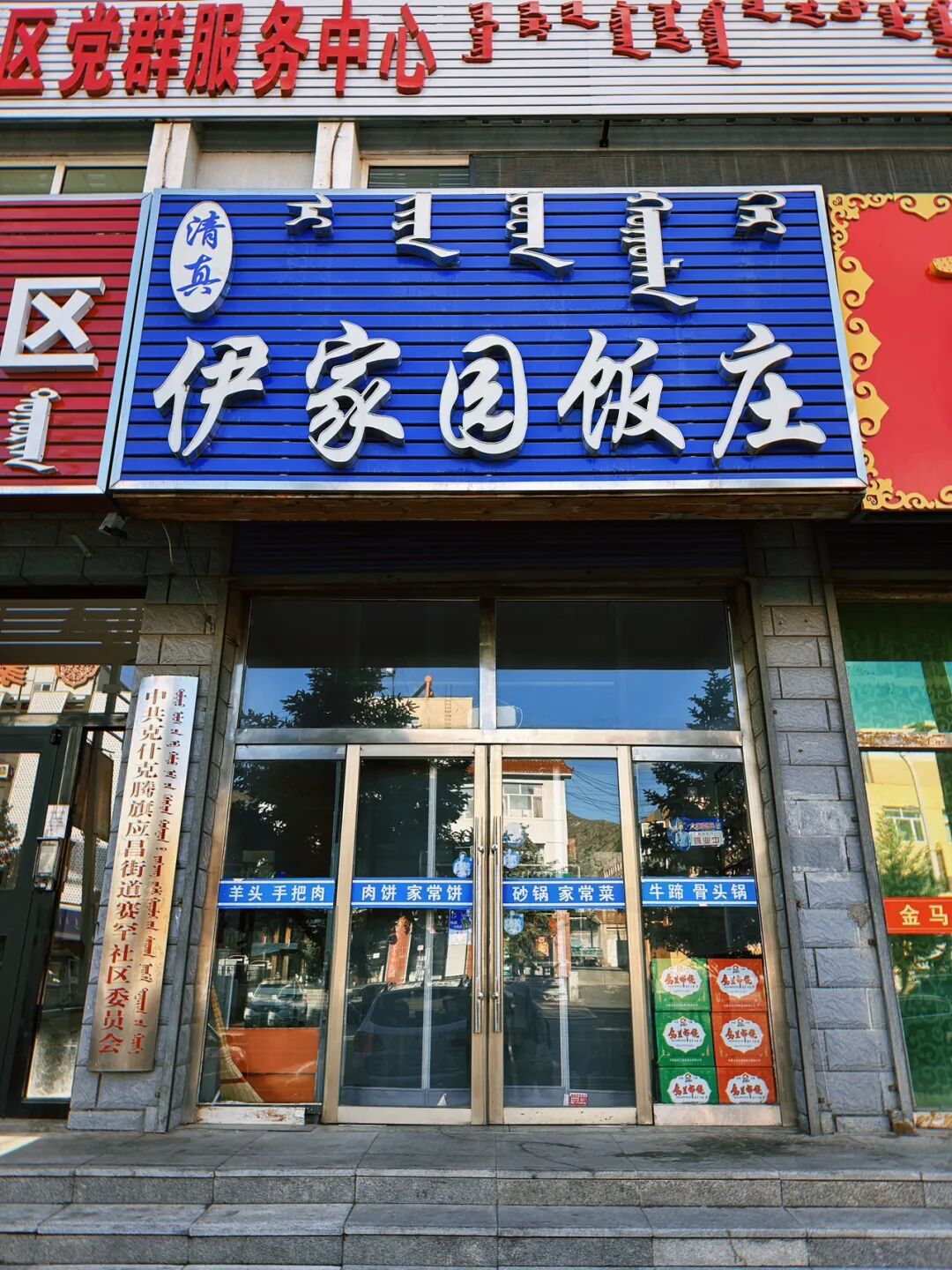
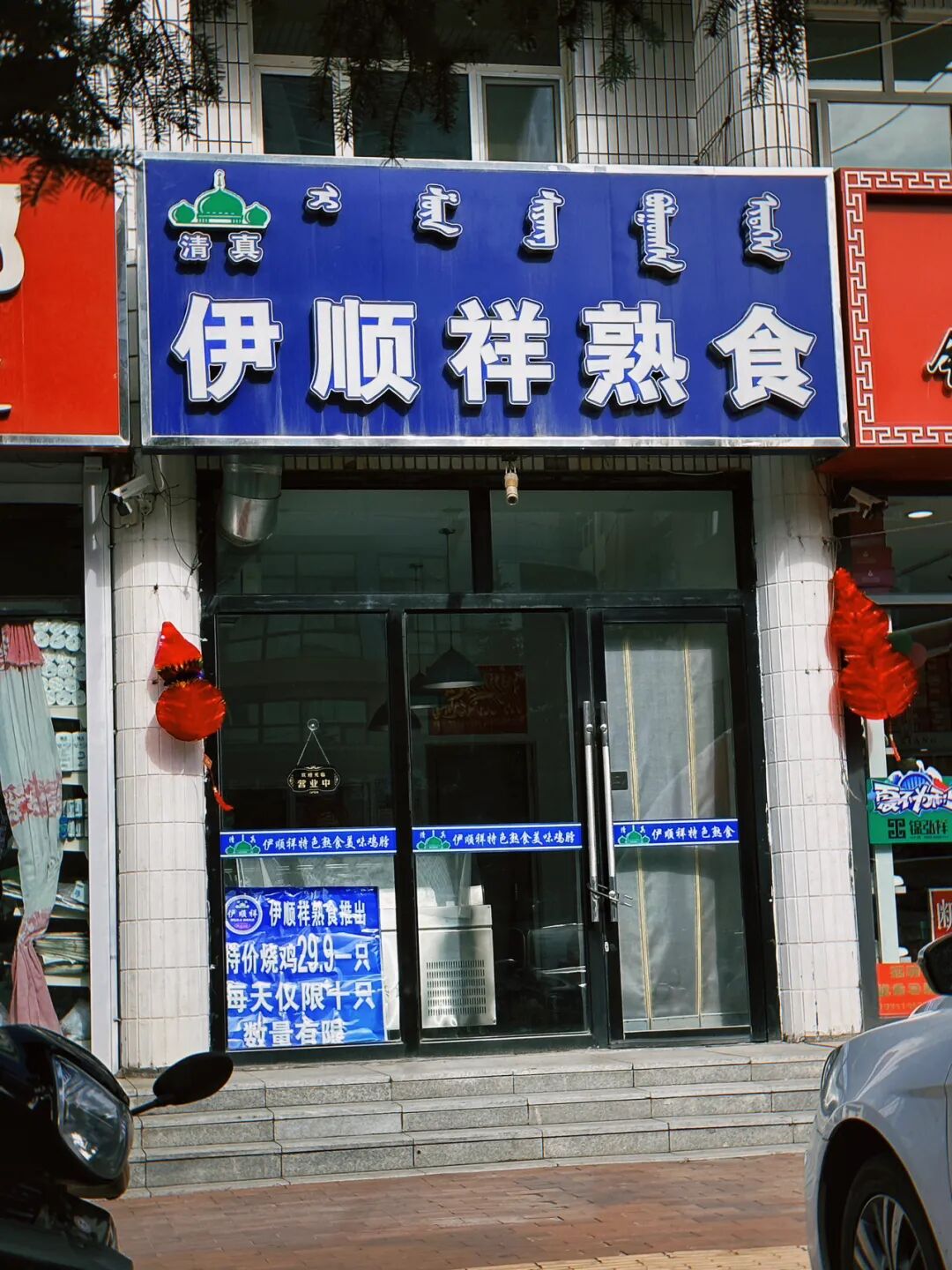
In the evening, we had dinner at the Coarse Grain Steamed Dumpling (culiang zhengjiao) restaurant in Jingpeng Town. They own three shops in a row: a clay pot small pie shop, a hot pot shop (doulao xianyang huoguo), and the coarse grain steamed dumpling shop. The coarse grain steamed dumpling shop has quite a few private rooms, but not many open tables. Their menu is very rich. We ordered half an organic rooster, pressure-cooked beef with golden hook beans (huangjingou), steamed oat noodles (youmian) with diced meat, mushrooms, and vegetables in a steam pot, and lamb and bracken steamed dumplings. Their portions are huge. Four of us could not finish three dishes and two staples. Two dishes and one staple should be enough.
The rooster was delicious and the meat had a good chew; it probably wasn't farm-raised. Golden hook beans (huangjingou) are high-end beans from Northeast China, usually stewed with beef. They make them with a sweet and salty flavor. The steamed oat noodles with diced meat and mushrooms were my favorite. It is like a version of 'topped noodles' from the northern frontier. The dough of the oat steamed dumplings doesn't taste as good as white flour, but it is a way to experience what people in the northern frontier ate when they didn't have white flour. They also have black rice flour, buckwheat flour, and corn flour wrappers, offering a wide variety. Bracken is common in the mountains, but this was my first time eating it in a dumpling. It tasted pretty good.
I woke up early and rode a shared electric scooter around Jingpeng Town. The streets were clean and not crowded. After riding around, I found that the Hui Muslim breakfast spot is the Yishunzhai Lamb Soup Restaurant. We ordered lamb offal soup, boiled lamb, lamb wontons, and plain lamb head with sesame flatbread (shaobing). The lamb offal soup (yangza tang) came in a very generous portion. They served a huge plate of shredded lamb head meat that the four of us could not even finish. I thought the wontons (huntun) were the best part; the broth was very savory. The sesame flatbread (shaobing) was softer and fluffier than the kind in Beijing, and I really enjoyed the texture.
Halal Travel Guide: Hui Muslims on the Ulan Butong Grassland
Articles • ali2007fr posted the article • 0 comments • 155 views • 2026-05-20 08:14
Summary: The Ulan Butong Grassland in Inner Mongolia is shown through its scenery, travel route, and Hui Muslim mosque communities around the area. This account keeps the place names, mosque notes, food details, and photographs from the original trip.
We started from Jingpeng Town in Hexigten Banner, Chifeng, and reached the Ulan Butong Grassland after a one-hour drive. We bought tickets to enter the grassland, rode a camel cart, walked along the wooden boardwalk, and went horseback riding. The cool weather and strong winds could not stop everyone's excitement for exploring the grassland. This was also Suleiman's first time seeing a grassland and riding a horse. He went from being afraid to even look at the horses to riding one on his own, showing how much braver the young man has become.
Inside the Ulan Butong scenic area is General's Pond (Jiangjun Paozi), an ancient battlefield where the Qing Dynasty fought the Dzungar Khanate in 1690. The Qing army, led by Prince Yu Fuquan, fought fiercely for several days here against the Oirat Mongol army led by Galdan, until Galdan ran out of ammunition and retreated. This is also a great place to reflect on history.
The biggest surprise of this trip to Ulan Butong was learning that more than 80 Hui Muslim households live inside the scenic area, and there is even a mosque (sifang).
After finishing our tour of the Ulan Butong scenic area, we exited through the east gate to have lunch. The map showed four hand-pulled noodle shops in Junmachang Village of Ulan Butong Sum, and the first one we saw by the road was one of them. We parked and went inside, but it was very crowded. A young couple was busy pulling noodles non-stop. We asked and found out there were ten orders ahead of us, so we left to try the next place. The navigation for the second shop was slightly off, and we missed the turn, so we went straight to the third and fourth shops. The third and fourth shops were right next to each other, and both served hand-pulled noodles. I was ready to park at the third one, but Zaynab had a sharp eye and noticed the fourth one also served home-style dishes, so we parked at the fourth one.
Once inside, we saw the menu on the wall featured Mongolian food and home-style dishes from local Hui Muslims. We asked and learned that the shop is run by local Hui Muslims. We ordered pot tea (guocha), yogurt pancakes (suannai bing), fried milk tofu (jiasha naidoufu), and stomach-wrapped meat (dubao rou). We really enjoyed this Mongolian meal! The pot tea came with milk skin (naipi), milk tofu (naidoufu), clotted cream (naijiaoke), fried millet (chaomi), and dried meat (fenggan rou). Our whole family loved it. They first stir-fried pure butter in the pot until fragrant, then poured in the milk tea. The milky flavor was incredibly rich, something you just cannot find in the city. Gasha milk tofu (gasha naidoufu) is a hit with kids and a specialty of the pastoral areas.
They renovated their guesthouse this year. In the morning, they serve Mongolian steamed buns (menggu baozi), Mongolian fried dough (menggu guozi), and lamb offal soup (yangza tang). If you are a fellow Muslim (dosti) looking for a place to stay in Ulan Butong, you can choose their place, called Rujia Huayi Guesthouse. Their restaurant is smoke-free and alcohol-free. The kitchen is very clean, and the staff are friendly. You can experience the local Hui Muslim culture of the grasslands here.
Following directions from the lady at the restaurant, we went to the Ulan Butong Mosque (Ulan Butong si). Behind the mosque is a large pine forest, and the environment is beautiful. The imam at the mosque is surnamed Wang and is from Cangzhou. He said that fellow Muslims (dosti) from Changying, Beijing, often visit the mosque.
In 1956, responding to a call, dozens of Hui Muslim families moved from Jingpeng Town in Chifeng to the vast grasslands of Hongshanzi to farm the land. They later formed a united ethnic cooperative, and today more than 80 Hui Muslim families still live here. After the Ulan Butong scenic area was established, more and more Hui Muslims came to visit, so the Ulan Butong Mosque was officially built in 2006. view all
Summary: The Ulan Butong Grassland in Inner Mongolia is shown through its scenery, travel route, and Hui Muslim mosque communities around the area. This account keeps the place names, mosque notes, food details, and photographs from the original trip.
We started from Jingpeng Town in Hexigten Banner, Chifeng, and reached the Ulan Butong Grassland after a one-hour drive. We bought tickets to enter the grassland, rode a camel cart, walked along the wooden boardwalk, and went horseback riding. The cool weather and strong winds could not stop everyone's excitement for exploring the grassland. This was also Suleiman's first time seeing a grassland and riding a horse. He went from being afraid to even look at the horses to riding one on his own, showing how much braver the young man has become.
Inside the Ulan Butong scenic area is General's Pond (Jiangjun Paozi), an ancient battlefield where the Qing Dynasty fought the Dzungar Khanate in 1690. The Qing army, led by Prince Yu Fuquan, fought fiercely for several days here against the Oirat Mongol army led by Galdan, until Galdan ran out of ammunition and retreated. This is also a great place to reflect on history.
The biggest surprise of this trip to Ulan Butong was learning that more than 80 Hui Muslim households live inside the scenic area, and there is even a mosque (sifang).
After finishing our tour of the Ulan Butong scenic area, we exited through the east gate to have lunch. The map showed four hand-pulled noodle shops in Junmachang Village of Ulan Butong Sum, and the first one we saw by the road was one of them. We parked and went inside, but it was very crowded. A young couple was busy pulling noodles non-stop. We asked and found out there were ten orders ahead of us, so we left to try the next place. The navigation for the second shop was slightly off, and we missed the turn, so we went straight to the third and fourth shops. The third and fourth shops were right next to each other, and both served hand-pulled noodles. I was ready to park at the third one, but Zaynab had a sharp eye and noticed the fourth one also served home-style dishes, so we parked at the fourth one.
Once inside, we saw the menu on the wall featured Mongolian food and home-style dishes from local Hui Muslims. We asked and learned that the shop is run by local Hui Muslims. We ordered pot tea (guocha), yogurt pancakes (suannai bing), fried milk tofu (jiasha naidoufu), and stomach-wrapped meat (dubao rou). We really enjoyed this Mongolian meal! The pot tea came with milk skin (naipi), milk tofu (naidoufu), clotted cream (naijiaoke), fried millet (chaomi), and dried meat (fenggan rou). Our whole family loved it. They first stir-fried pure butter in the pot until fragrant, then poured in the milk tea. The milky flavor was incredibly rich, something you just cannot find in the city. Gasha milk tofu (gasha naidoufu) is a hit with kids and a specialty of the pastoral areas.
They renovated their guesthouse this year. In the morning, they serve Mongolian steamed buns (menggu baozi), Mongolian fried dough (menggu guozi), and lamb offal soup (yangza tang). If you are a fellow Muslim (dosti) looking for a place to stay in Ulan Butong, you can choose their place, called Rujia Huayi Guesthouse. Their restaurant is smoke-free and alcohol-free. The kitchen is very clean, and the staff are friendly. You can experience the local Hui Muslim culture of the grasslands here.

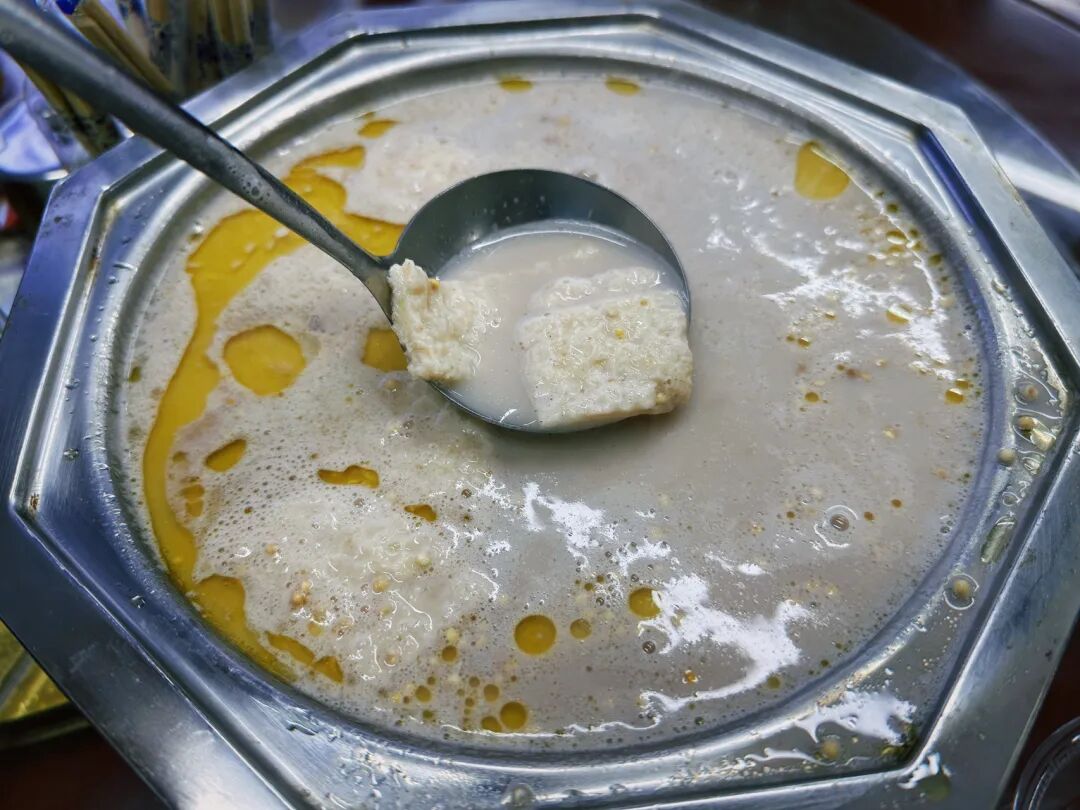
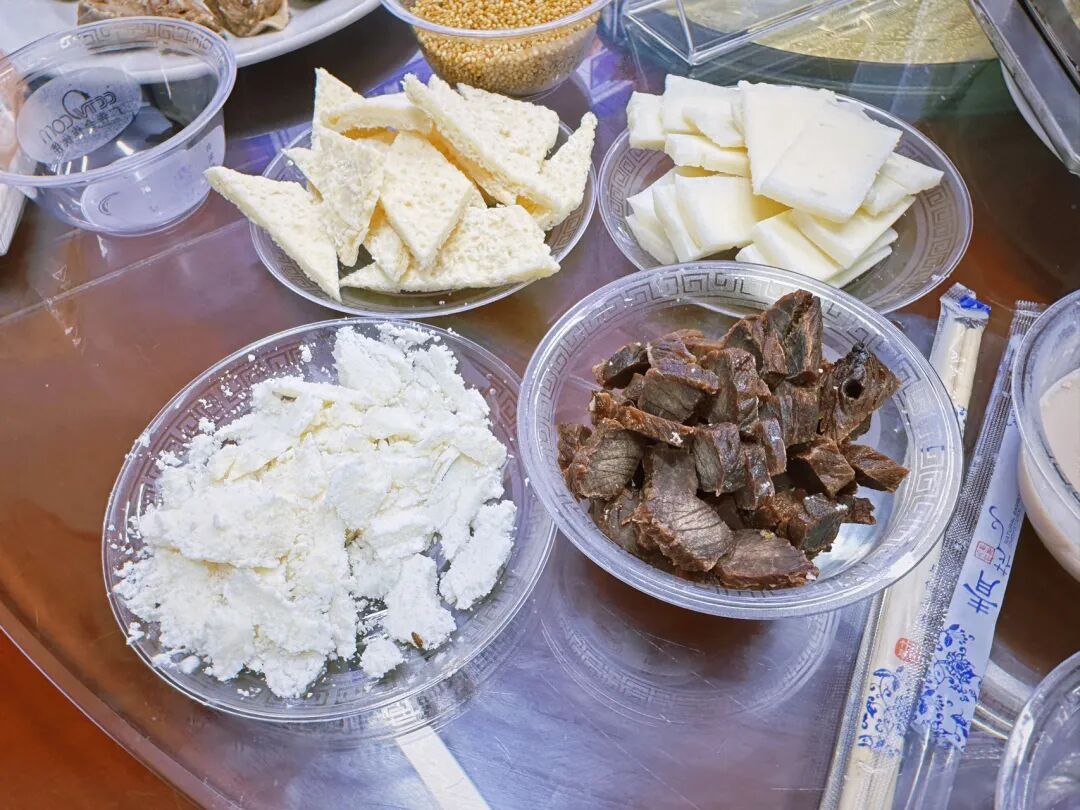
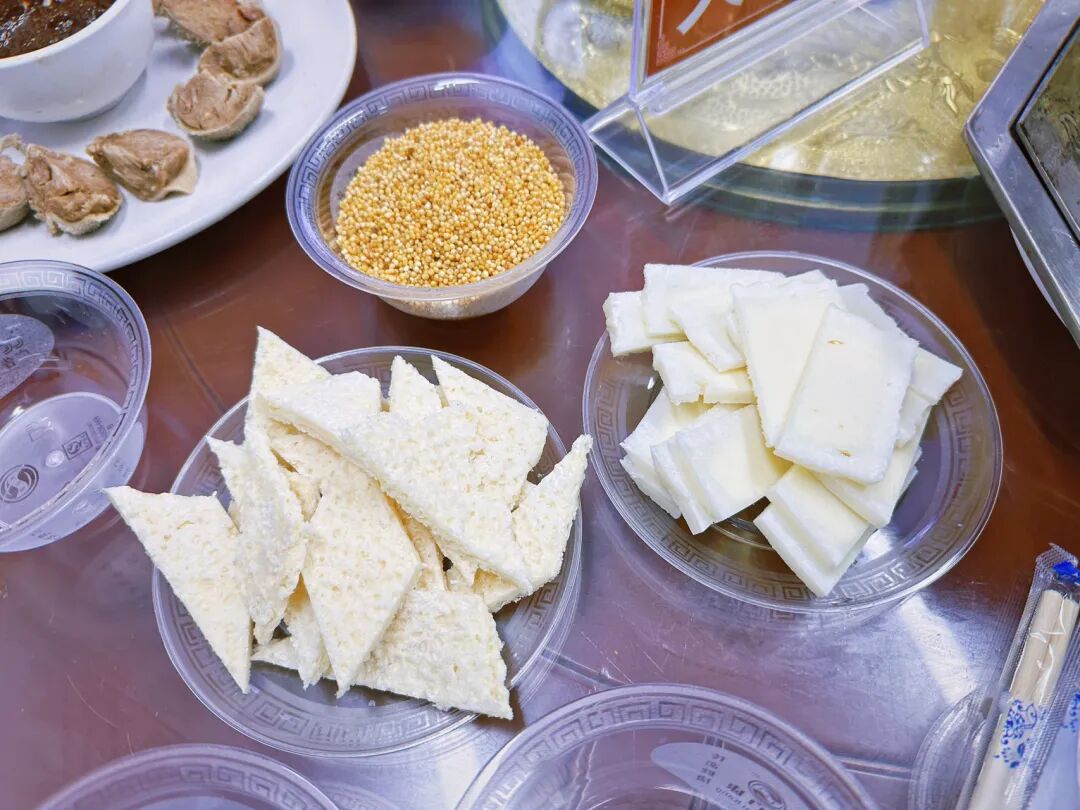
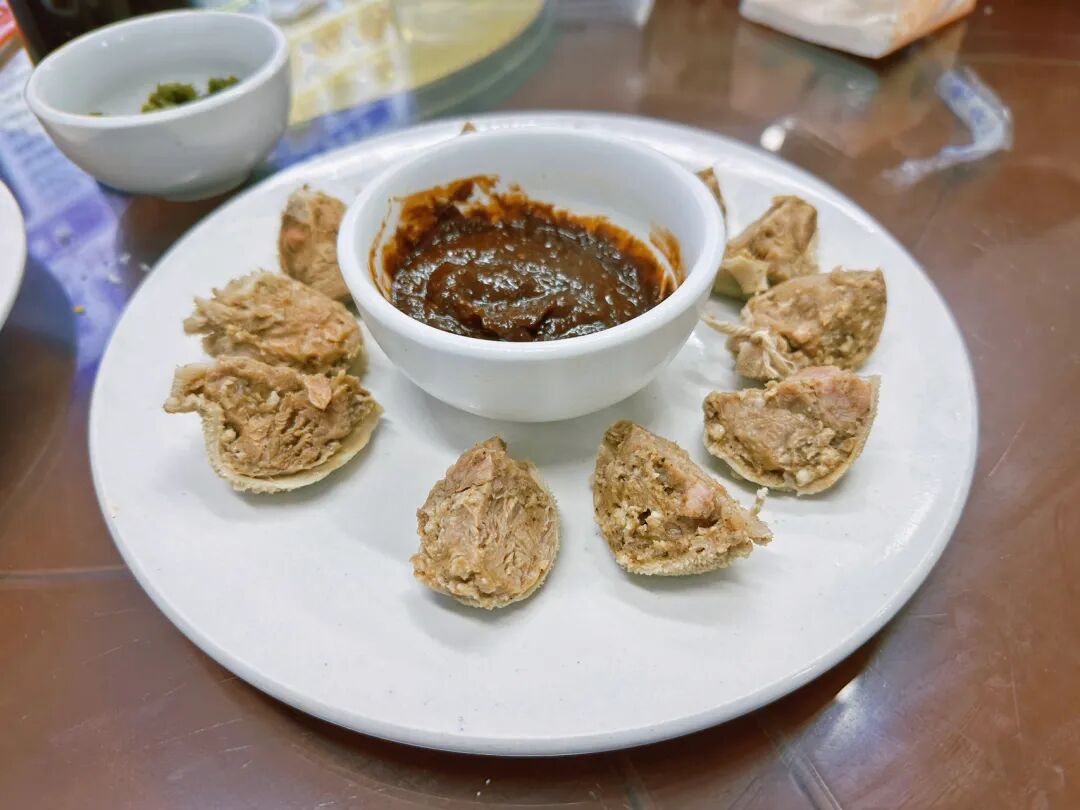
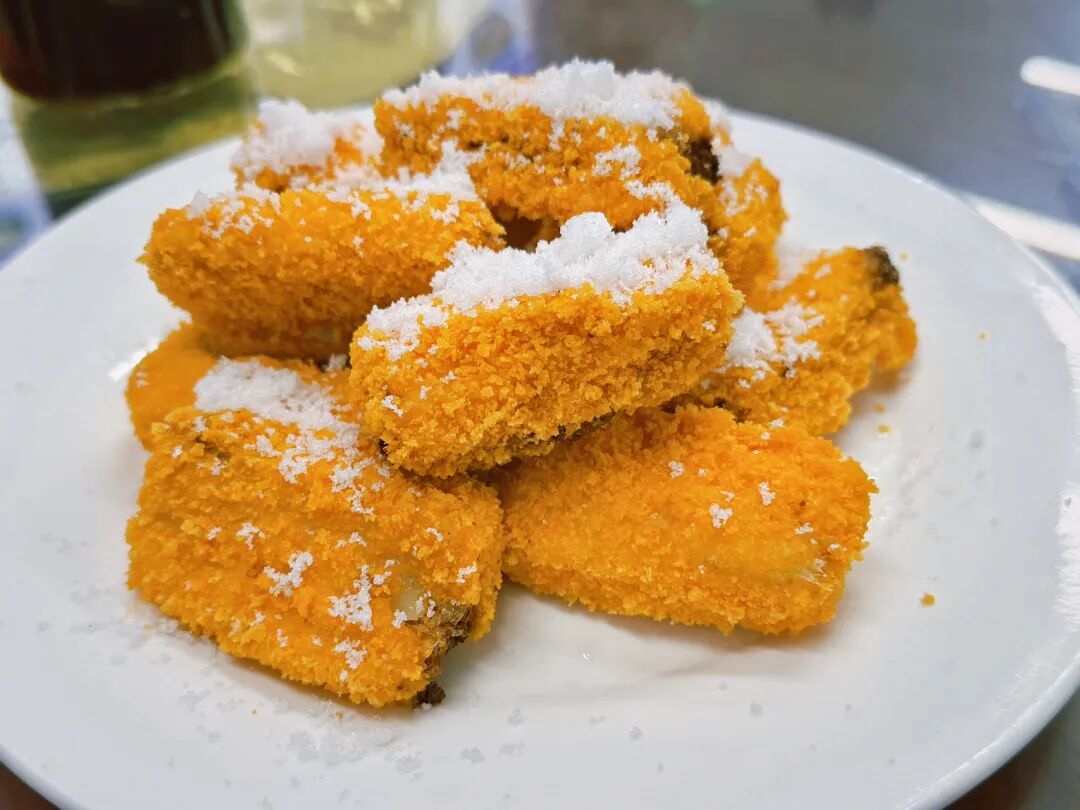
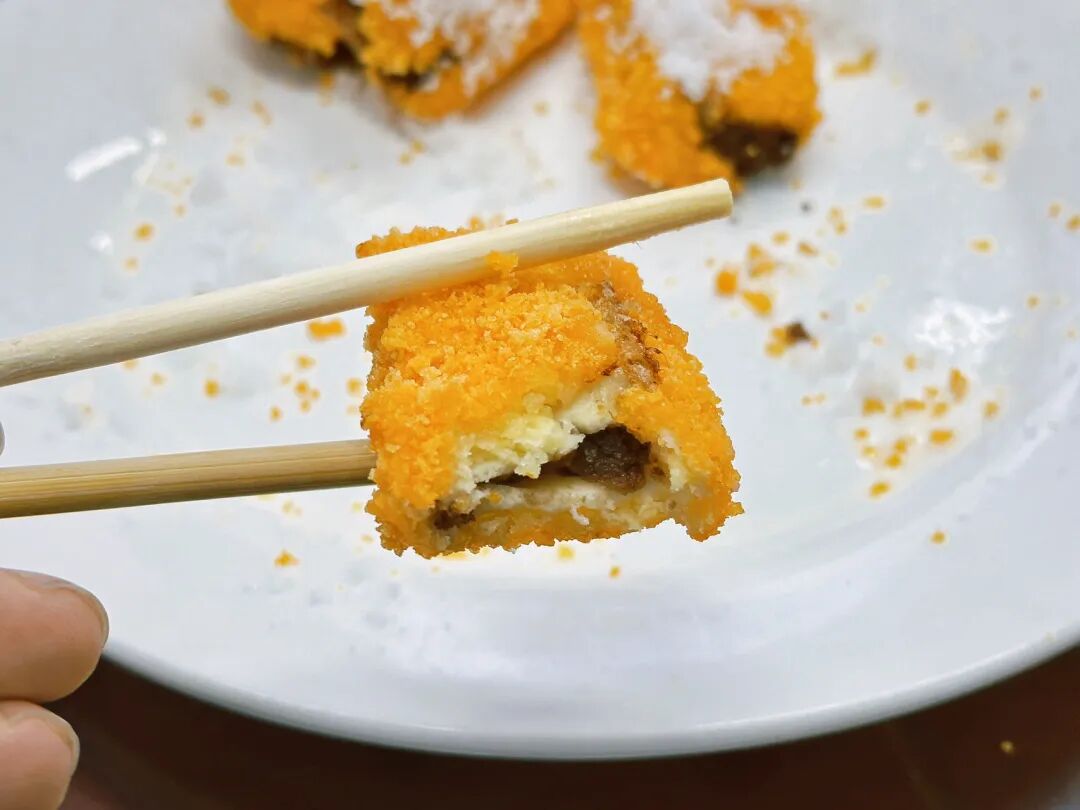
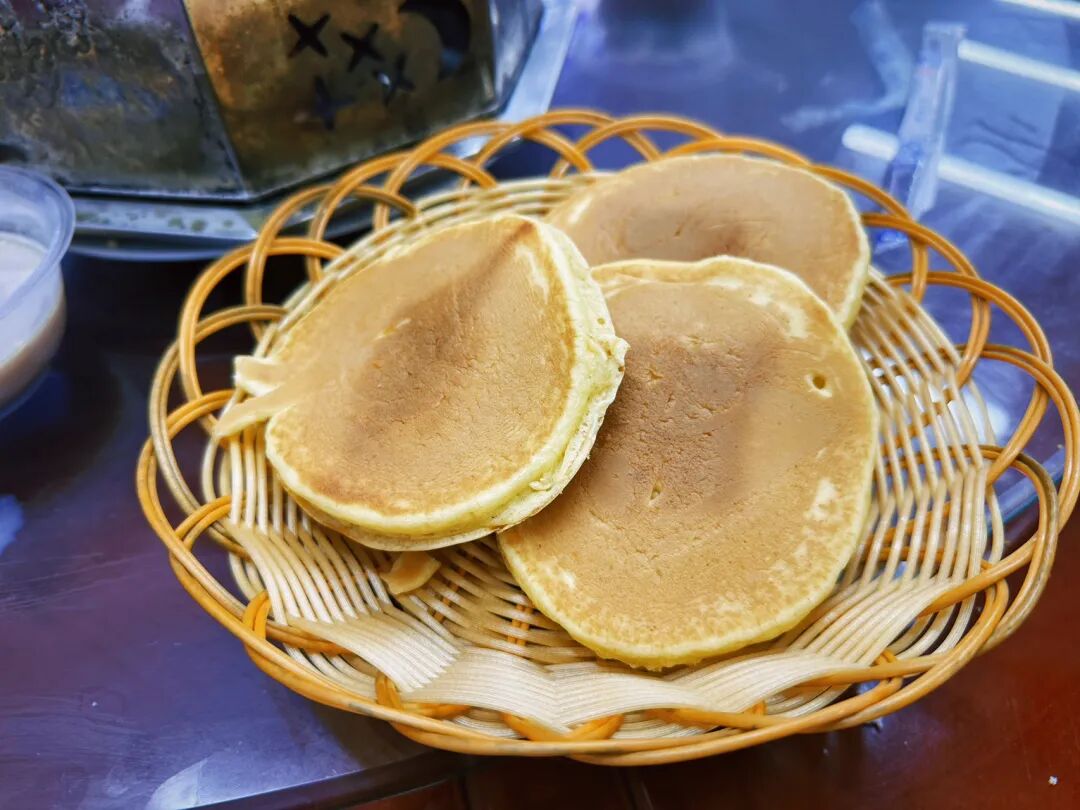
Following directions from the lady at the restaurant, we went to the Ulan Butong Mosque (Ulan Butong si). Behind the mosque is a large pine forest, and the environment is beautiful. The imam at the mosque is surnamed Wang and is from Cangzhou. He said that fellow Muslims (dosti) from Changying, Beijing, often visit the mosque.
In 1956, responding to a call, dozens of Hui Muslim families moved from Jingpeng Town in Chifeng to the vast grasslands of Hongshanzi to farm the land. They later formed a united ethnic cooperative, and today more than 80 Hui Muslim families still live here. After the Ulan Butong scenic area was established, more and more Hui Muslims came to visit, so the Ulan Butong Mosque was officially built in 2006.
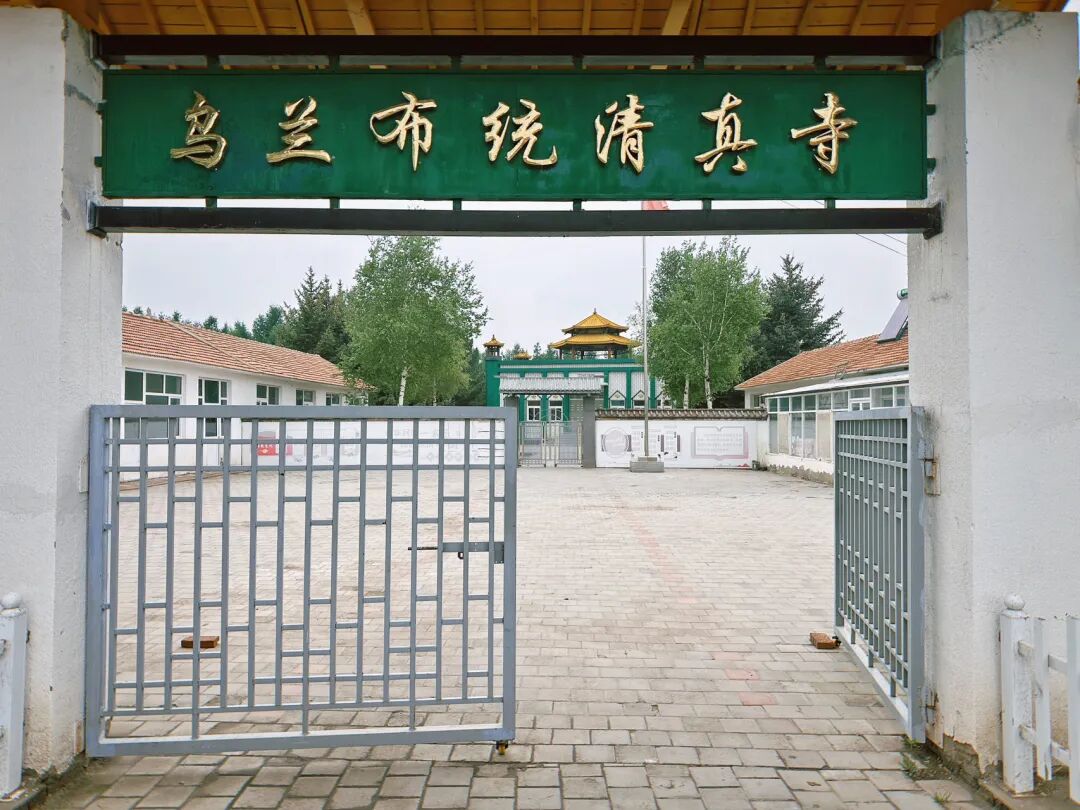
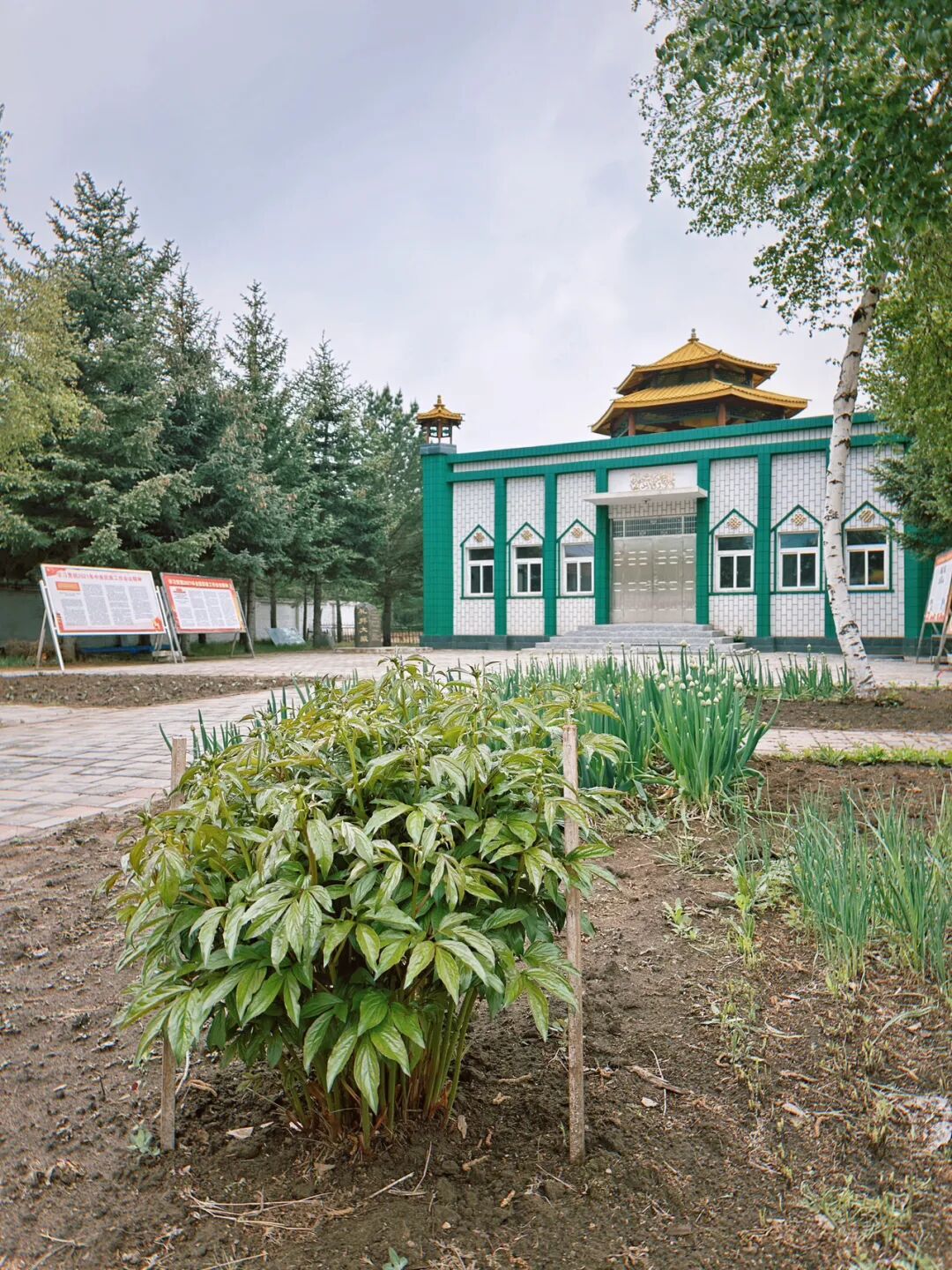
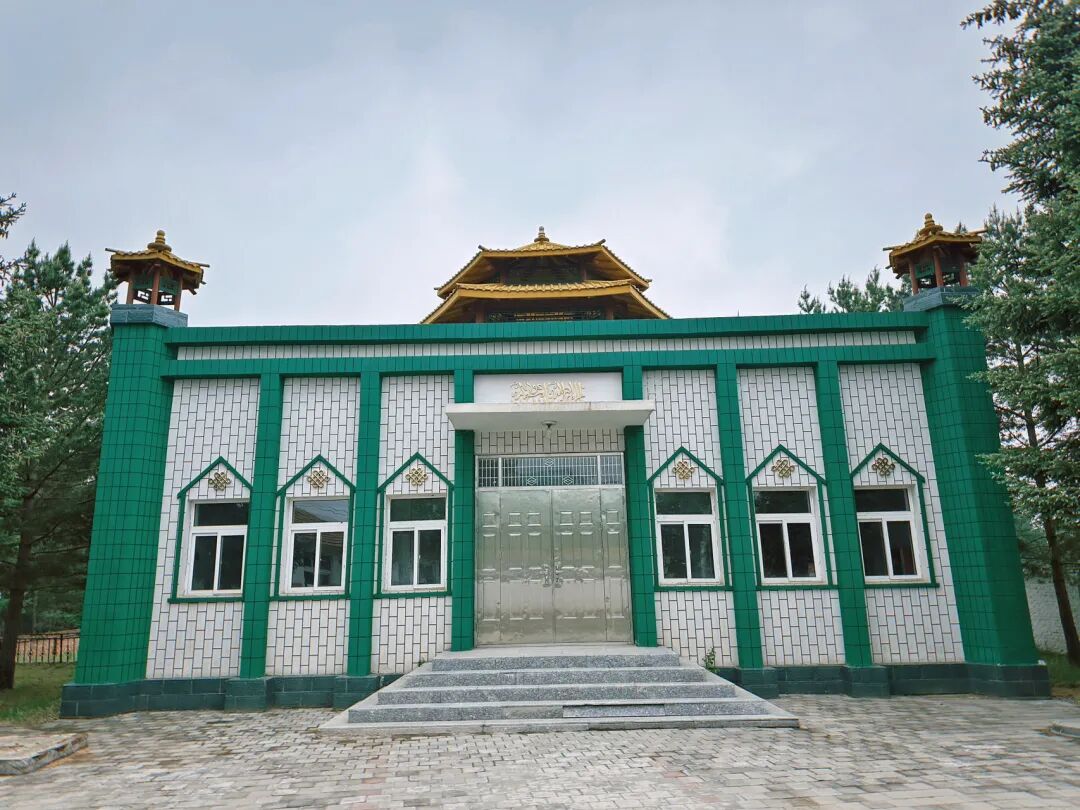
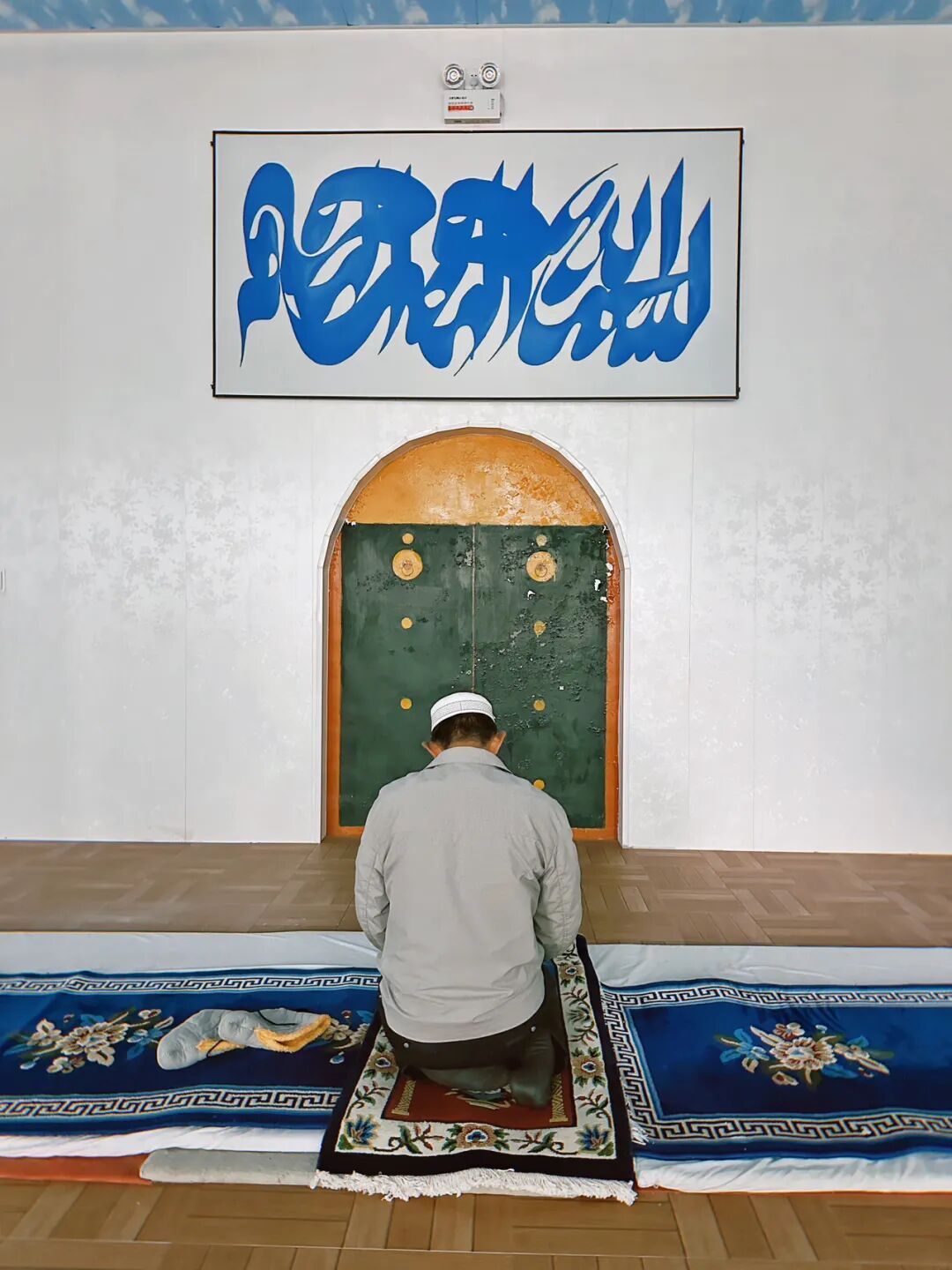
Halal Travel Guide: Yuan Shangdu Mosque and Xilingol Lamb Hotpot
Articles • ali2007fr posted the article • 0 comments • 152 views • 2026-05-20 08:14
Summary: Yuan Shangdu, also known as Xanadu, appears here through museum evidence of a Hui mosque and a meal of Xilingol lamb hotpot. This account keeps the museum notes, historical context, food details, and photographs in the original order.
We drove from Duolun County and reached the Xilingol League Cultural Heritage Museum in half an hour. The museum is inside a small hill on the Jinlianchuan Grassland, 5 kilometers south of the Xanadu (Yuan Shangdu) ruins. After parking, you can hike up the hill to the museum or take a sightseeing shuttle from the visitor center for 5 yuan per person. There are sika deer in the visitor center courtyard, which is great for kids to see. The shuttle circles the hill, giving you a great view of the Jinlianchuan Grassland.
Kublai Khan ordered the construction of Xanadu in 1256. It became the capital of the Yuan Dynasty in 1263 and served as the emperor's residence from the fourth to the ninth lunar month every year. During these imperial visits, business in Xanadu boomed. The Epitaph of Chancellor He records that everything from grain and cloth to rare and exotic goods arrived from far away. Many Semu people from Arabia, Persia, and Central Asia came to Xanadu to trade. Additionally, a Muslim observatory (Huihui Sitian Tai) was built at the Xanadu palace, managed by a Muslim named Jamaluddin. There was also a Muslim pharmacy (Huihui Yaowuyuan) managed by a darughachi. The National Library of China holds a four-volume manuscript of the Muslim Prescriptions (Huihui Yaofang), which was used by the Muslim pharmacy.
The founding date of the Xanadu mosque (Huihui Si) is unknown. It was originally located southwest of the palace city but was destroyed in May 1321. The History of Yuan records that the Xanadu mosque was destroyed to build the Imperial Teacher Hall on its site. Archaeological research suggests that the main hall in the middle courtyard of site No. 34 in Xanadu, which still has a 2-meter-high rammed earth foundation on its west side, may be the original site of the mosque. In 1324, the Xanadu mosque was rebuilt at a new location and renamed the Mosque (Libai Si). The History of Yuan records that 40,000 ingots of paper money were granted to build mosques in Xanadu and Datong.
Besides the mosque, there were many graves of Muslim people in Xanadu. When excavating the foundation of the Da'an Pavilion in the palace city, 12 Islamic tombstone tops were found in the stone base of the outer wall. More tombstone tops were also found in the pillars supporting the gate arch at the Mingde Gate, the south gate of the imperial city. These tombstone tops were likely taken from a Hui Muslim cemetery and reused. One of these tombstone tops is now on display at the Xilingol League Cultural Heritage Museum. It features praises to Allah and the Prophet on the top, with the Shahada (the Islamic declaration of faith) on both sides.
Shangdu was burned down twice during the late Yuan Dynasty. In 1358 (the 18th year of the Zhizheng era), the Han-Song army captured Shangdu. The History of Yuan records that the palaces of Shangdu were completely destroyed. In 1368 (the 28th year of the Zhizheng era), the Ming army captured Shangdu again. The Beixun Siji records that all palaces and government offices were burned down. The mosque in Shangdu was likely destroyed at this time, and the local Islamic community disappeared.
The Xilingol League Cultural Heritage Museum displays many artifacts unearthed from the ruins of Shangdu. The blue glazed tiles from the Muqing Pavilion are the most beautiful. It is believed that the Muqing Pavilion was previously the site of the Shangdu Islamic Observatory.
After leaving the ruins of Shangdu, it takes two hours to drive back to Xilinhot. You will pass groups of volcanic hills on the grassland, which is a stunning sight.
We ate hot pot lamb (shuan yangrou) at Chunhui in Xilinhot. We ordered a set for two, which included lamb, beef, a mix of tofu, a mix of vegetables, two large and four small lamb skewers, a pot of Pu'er tea, and a serving of hand-rolled noodles. We also added a serving of fresh lamb, a serving of cold oat noodles (youmian), and two bottles of yogurt.
Their meat is truly delicious. The Sunite black-headed lamb and Abaga Banner free-range beef are both specialties of Xilingol League. The cold oat noodles are very appetizing. They are sweet and sour, making them hard to stop eating, much like cold skin noodles (liangpi) in Northwest China. A special feature of this place is the generous amount of dipping sauce ingredients provided. You can add crushed peanuts, dried shrimp, minced garlic, and minced ginger into the pot, or skip them if you prefer the original flavor. Fresh chive flower sauce is also great for adding flavor here. It is delicious to dip the cooked lamb directly into it. Their yogurt is also very good. It is pure, unsweetened, and thick, very similar to Xinjiang yogurt.
If you visit Xilinhot, I recommend the local Hui Muslims breakfast spot Shuangyueyuan. It is inside a residential area on Hanggai Road, and parking is very easy.
We ordered deep-fried dough sticks (youtiao), tofu pudding (doufunao), brown sugar crispy flatbread (tangsubing), milk tea, lamb and pickled cabbage buns, and lamb and celery buns. Everything was delicious. The deep-fried dough sticks (youtiao) were very fluffy and went perfectly with the milk tea and tofu pudding (doufunao). The milk tea was rich and oily with its own milk skin (naipizi). It was much thicker than what we make in Beijing, and one sip made me feel like I was on the grasslands. For the tofu pudding (doufunao), you can add your own soybeans, fresh chive flowers, and cilantro. It tasted great. The brown sugar crispy flatbread (tangsubing) had a brown sugar filling. It was so flaky that it crumbled at a touch, so you have to eat it over a metal tray. The kids loved it. The buns were large with plenty of filling. Two are enough for one person, and the pickled cabbage filling was the best. view all
Summary: Yuan Shangdu, also known as Xanadu, appears here through museum evidence of a Hui mosque and a meal of Xilingol lamb hotpot. This account keeps the museum notes, historical context, food details, and photographs in the original order.
We drove from Duolun County and reached the Xilingol League Cultural Heritage Museum in half an hour. The museum is inside a small hill on the Jinlianchuan Grassland, 5 kilometers south of the Xanadu (Yuan Shangdu) ruins. After parking, you can hike up the hill to the museum or take a sightseeing shuttle from the visitor center for 5 yuan per person. There are sika deer in the visitor center courtyard, which is great for kids to see. The shuttle circles the hill, giving you a great view of the Jinlianchuan Grassland.
Kublai Khan ordered the construction of Xanadu in 1256. It became the capital of the Yuan Dynasty in 1263 and served as the emperor's residence from the fourth to the ninth lunar month every year. During these imperial visits, business in Xanadu boomed. The Epitaph of Chancellor He records that everything from grain and cloth to rare and exotic goods arrived from far away. Many Semu people from Arabia, Persia, and Central Asia came to Xanadu to trade. Additionally, a Muslim observatory (Huihui Sitian Tai) was built at the Xanadu palace, managed by a Muslim named Jamaluddin. There was also a Muslim pharmacy (Huihui Yaowuyuan) managed by a darughachi. The National Library of China holds a four-volume manuscript of the Muslim Prescriptions (Huihui Yaofang), which was used by the Muslim pharmacy.
The founding date of the Xanadu mosque (Huihui Si) is unknown. It was originally located southwest of the palace city but was destroyed in May 1321. The History of Yuan records that the Xanadu mosque was destroyed to build the Imperial Teacher Hall on its site. Archaeological research suggests that the main hall in the middle courtyard of site No. 34 in Xanadu, which still has a 2-meter-high rammed earth foundation on its west side, may be the original site of the mosque. In 1324, the Xanadu mosque was rebuilt at a new location and renamed the Mosque (Libai Si). The History of Yuan records that 40,000 ingots of paper money were granted to build mosques in Xanadu and Datong.
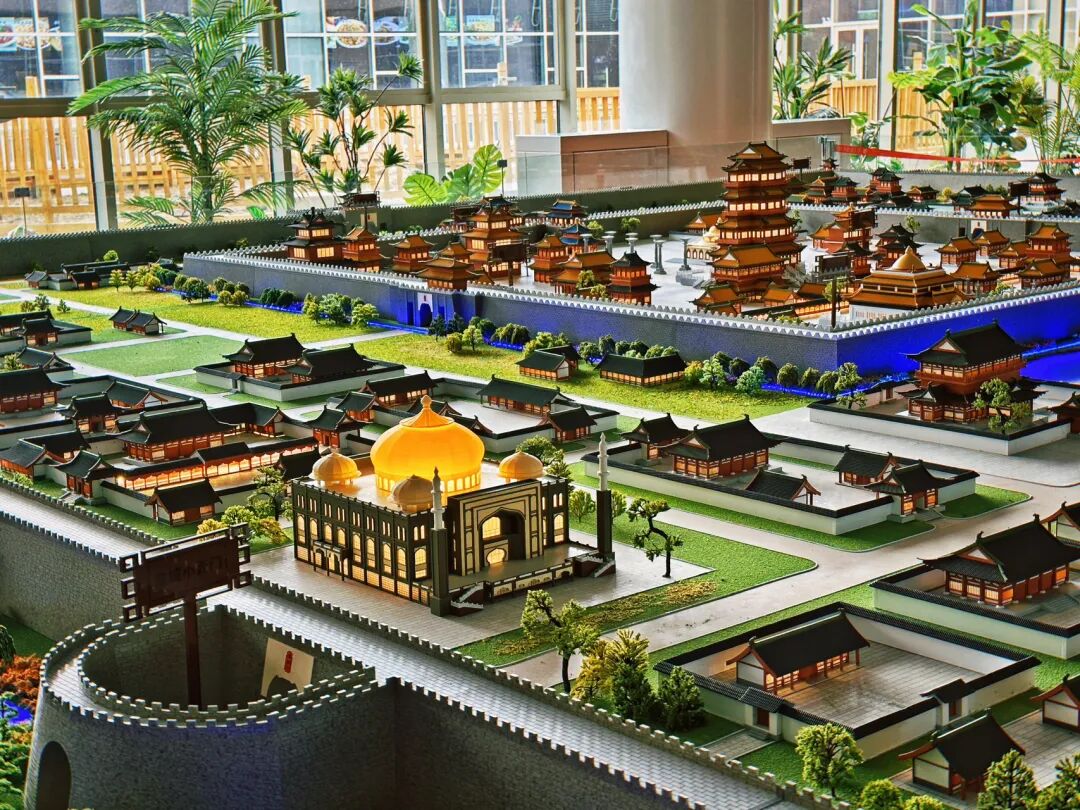
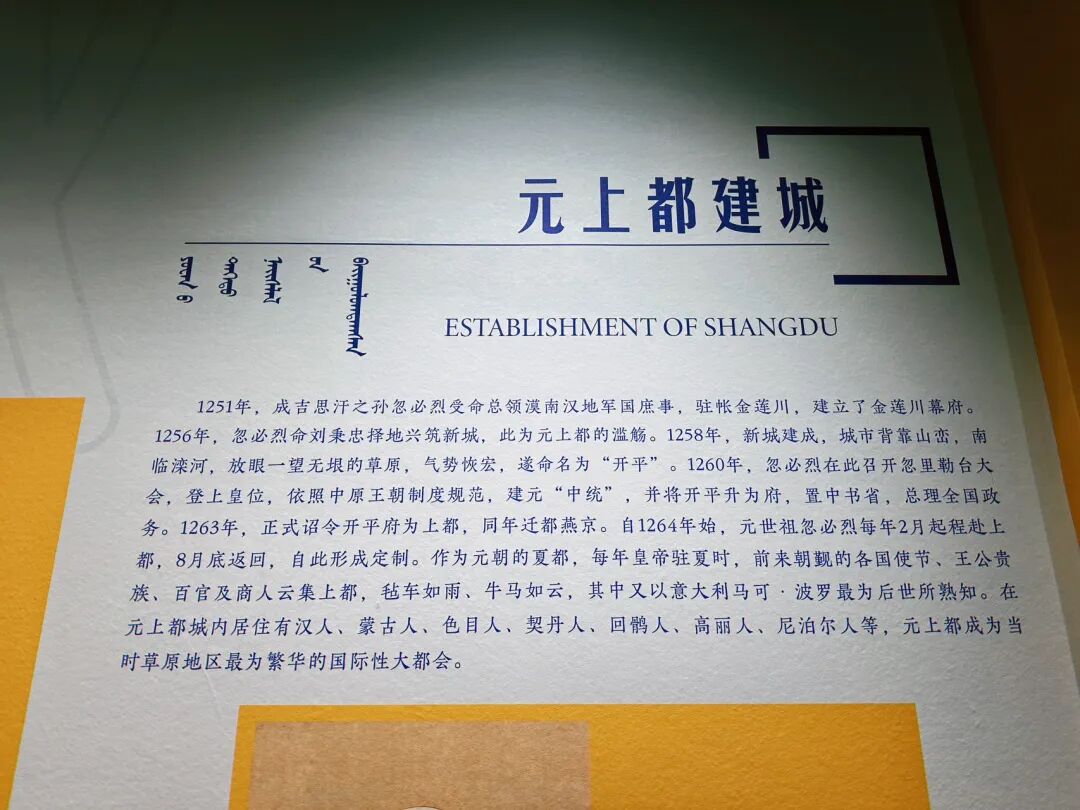
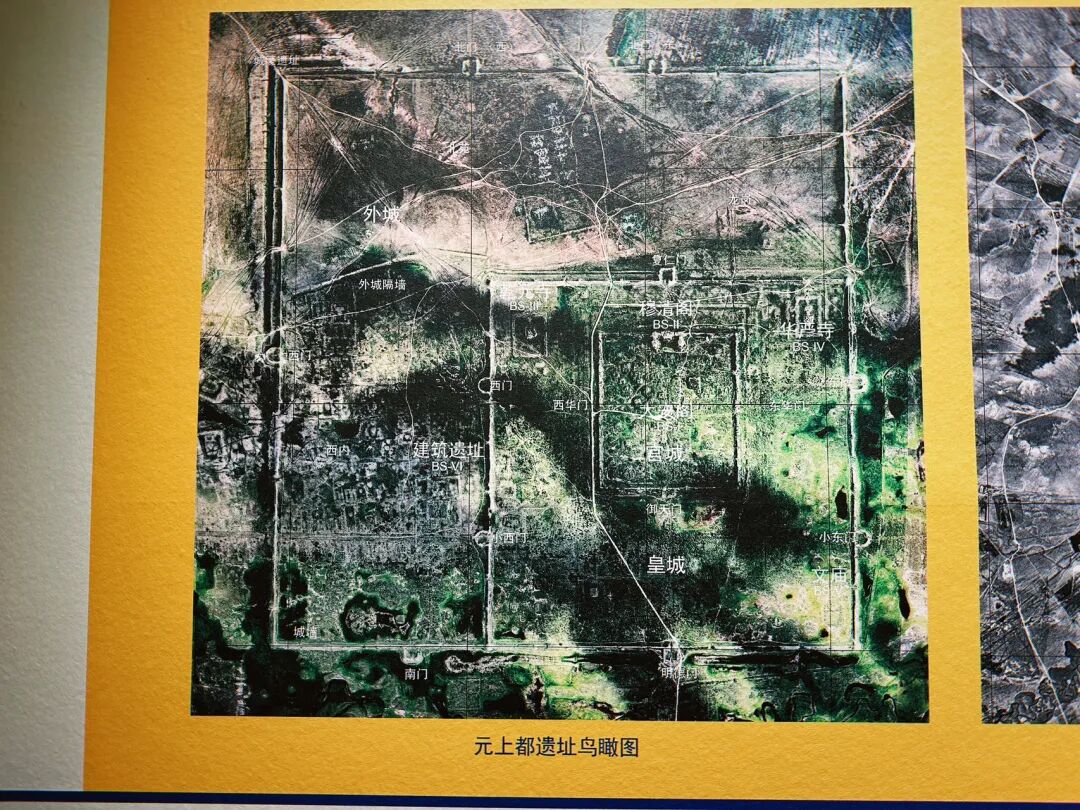
Besides the mosque, there were many graves of Muslim people in Xanadu. When excavating the foundation of the Da'an Pavilion in the palace city, 12 Islamic tombstone tops were found in the stone base of the outer wall. More tombstone tops were also found in the pillars supporting the gate arch at the Mingde Gate, the south gate of the imperial city. These tombstone tops were likely taken from a Hui Muslim cemetery and reused. One of these tombstone tops is now on display at the Xilingol League Cultural Heritage Museum. It features praises to Allah and the Prophet on the top, with the Shahada (the Islamic declaration of faith) on both sides.
Shangdu was burned down twice during the late Yuan Dynasty. In 1358 (the 18th year of the Zhizheng era), the Han-Song army captured Shangdu. The History of Yuan records that the palaces of Shangdu were completely destroyed. In 1368 (the 28th year of the Zhizheng era), the Ming army captured Shangdu again. The Beixun Siji records that all palaces and government offices were burned down. The mosque in Shangdu was likely destroyed at this time, and the local Islamic community disappeared.
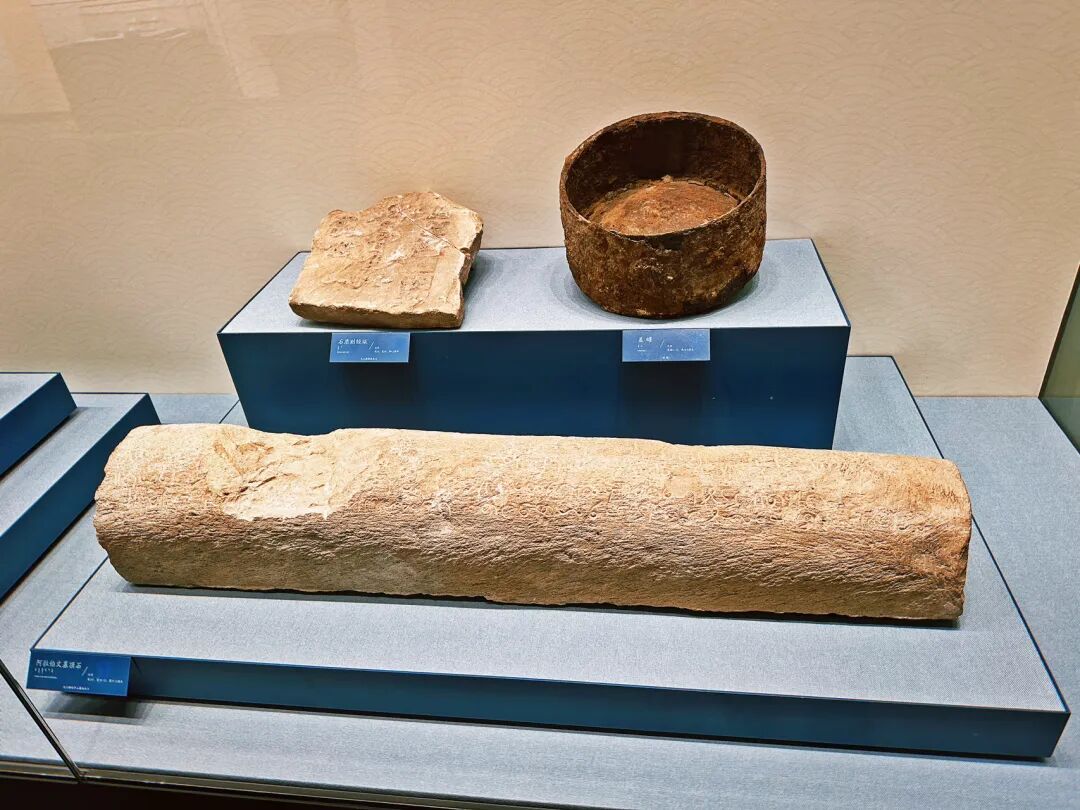
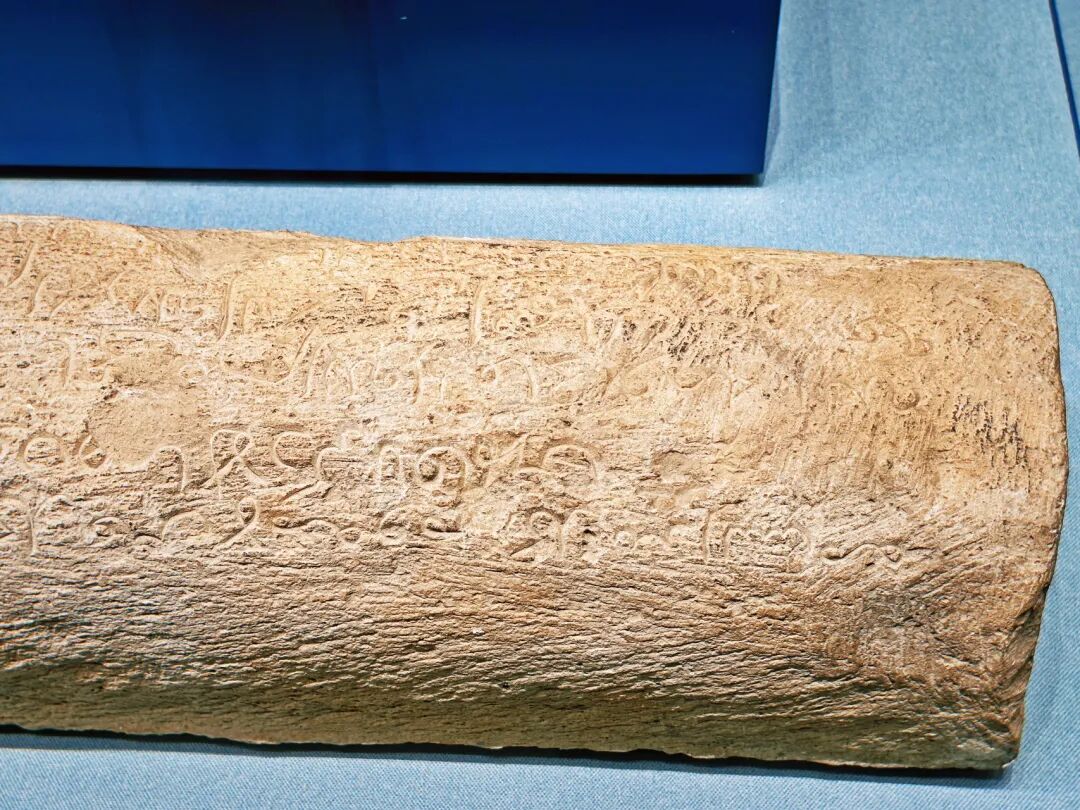
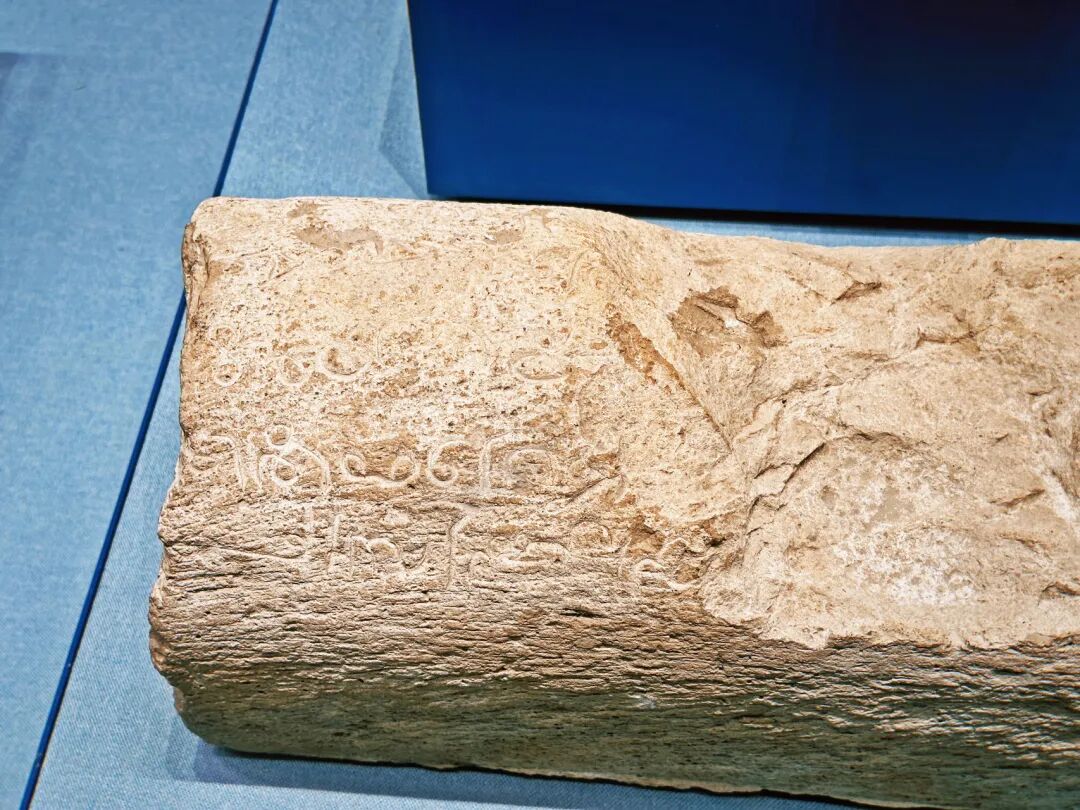
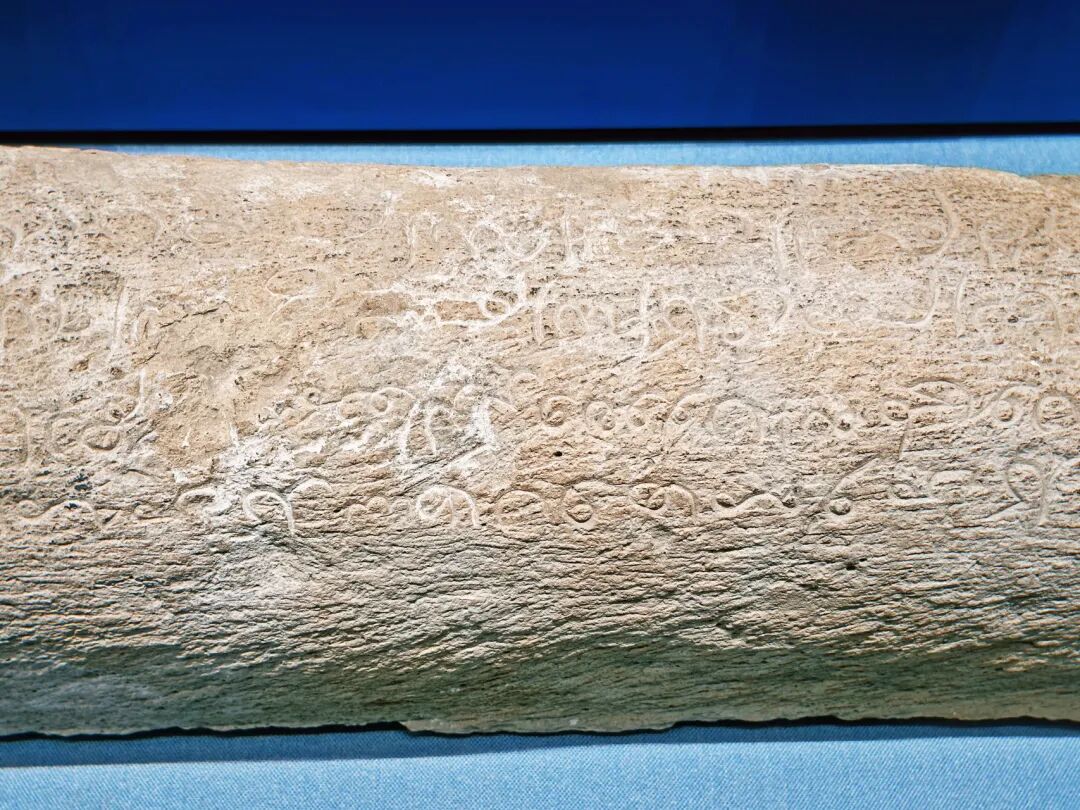
The Xilingol League Cultural Heritage Museum displays many artifacts unearthed from the ruins of Shangdu. The blue glazed tiles from the Muqing Pavilion are the most beautiful. It is believed that the Muqing Pavilion was previously the site of the Shangdu Islamic Observatory.
After leaving the ruins of Shangdu, it takes two hours to drive back to Xilinhot. You will pass groups of volcanic hills on the grassland, which is a stunning sight.
We ate hot pot lamb (shuan yangrou) at Chunhui in Xilinhot. We ordered a set for two, which included lamb, beef, a mix of tofu, a mix of vegetables, two large and four small lamb skewers, a pot of Pu'er tea, and a serving of hand-rolled noodles. We also added a serving of fresh lamb, a serving of cold oat noodles (youmian), and two bottles of yogurt.
Their meat is truly delicious. The Sunite black-headed lamb and Abaga Banner free-range beef are both specialties of Xilingol League. The cold oat noodles are very appetizing. They are sweet and sour, making them hard to stop eating, much like cold skin noodles (liangpi) in Northwest China. A special feature of this place is the generous amount of dipping sauce ingredients provided. You can add crushed peanuts, dried shrimp, minced garlic, and minced ginger into the pot, or skip them if you prefer the original flavor. Fresh chive flower sauce is also great for adding flavor here. It is delicious to dip the cooked lamb directly into it. Their yogurt is also very good. It is pure, unsweetened, and thick, very similar to Xinjiang yogurt.
If you visit Xilinhot, I recommend the local Hui Muslims breakfast spot Shuangyueyuan. It is inside a residential area on Hanggai Road, and parking is very easy.
We ordered deep-fried dough sticks (youtiao), tofu pudding (doufunao), brown sugar crispy flatbread (tangsubing), milk tea, lamb and pickled cabbage buns, and lamb and celery buns. Everything was delicious. The deep-fried dough sticks (youtiao) were very fluffy and went perfectly with the milk tea and tofu pudding (doufunao). The milk tea was rich and oily with its own milk skin (naipizi). It was much thicker than what we make in Beijing, and one sip made me feel like I was on the grasslands. For the tofu pudding (doufunao), you can add your own soybeans, fresh chive flowers, and cilantro. It tasted great. The brown sugar crispy flatbread (tangsubing) had a brown sugar filling. It was so flaky that it crumbled at a touch, so you have to eat it over a metal tray. The kids loved it. The buns were large with plenty of filling. Two are enough for one person, and the pickled cabbage filling was the best.
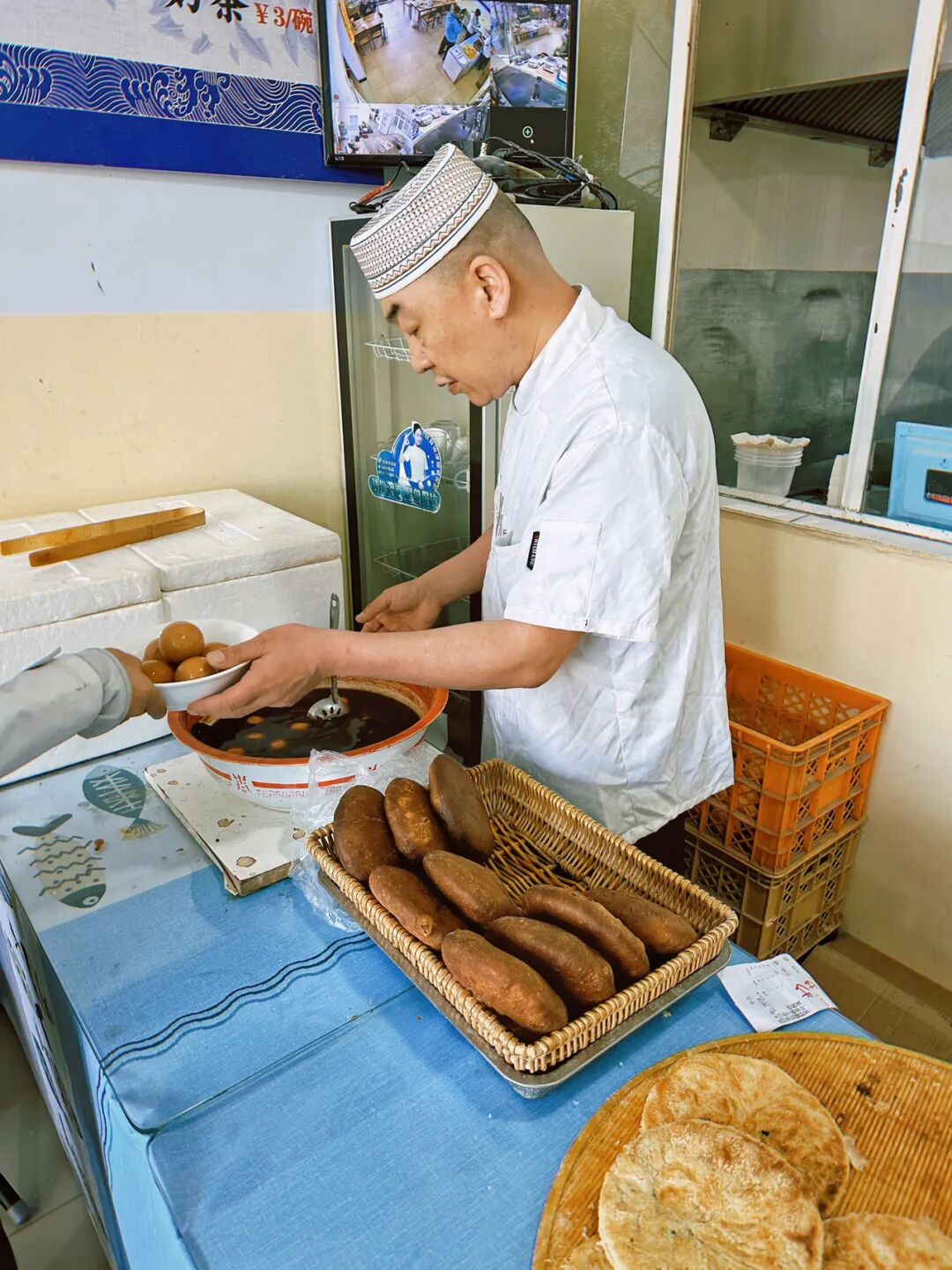
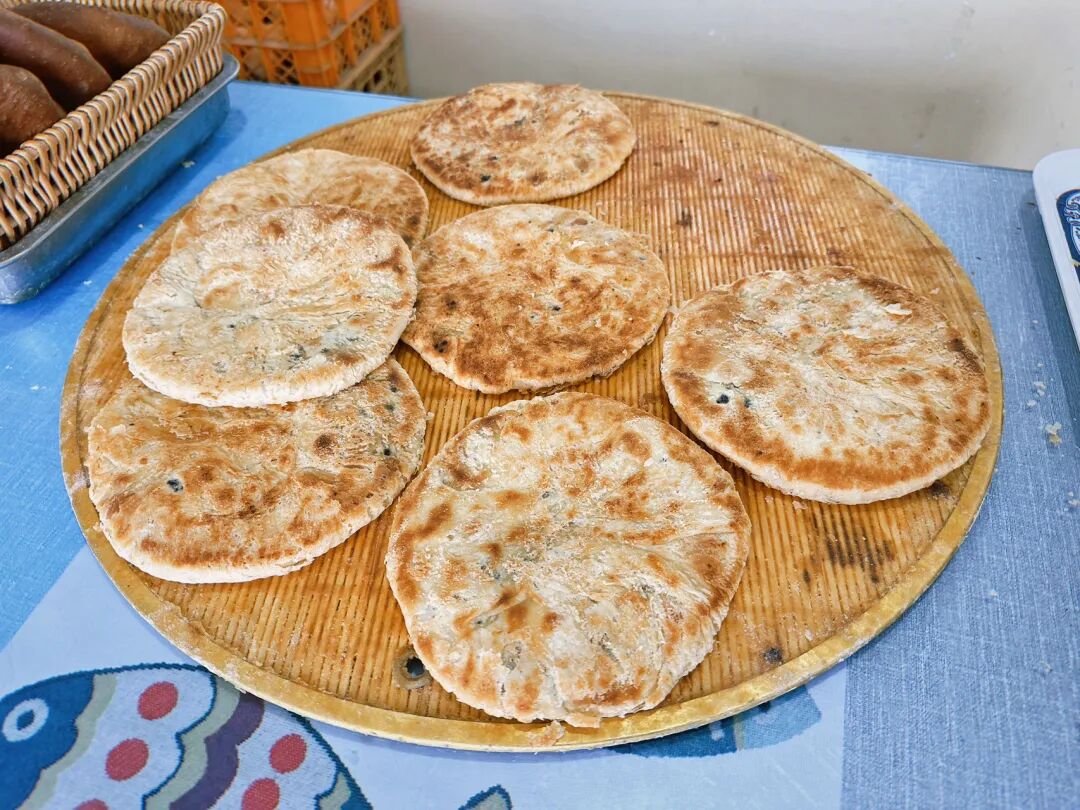
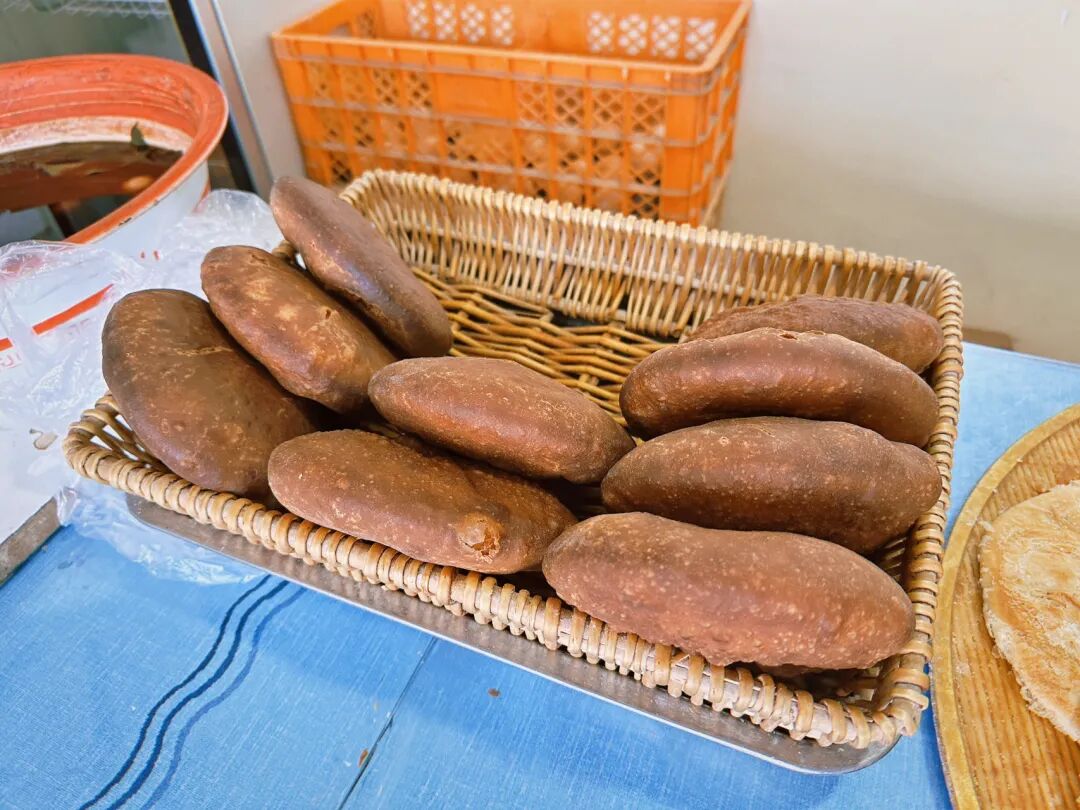
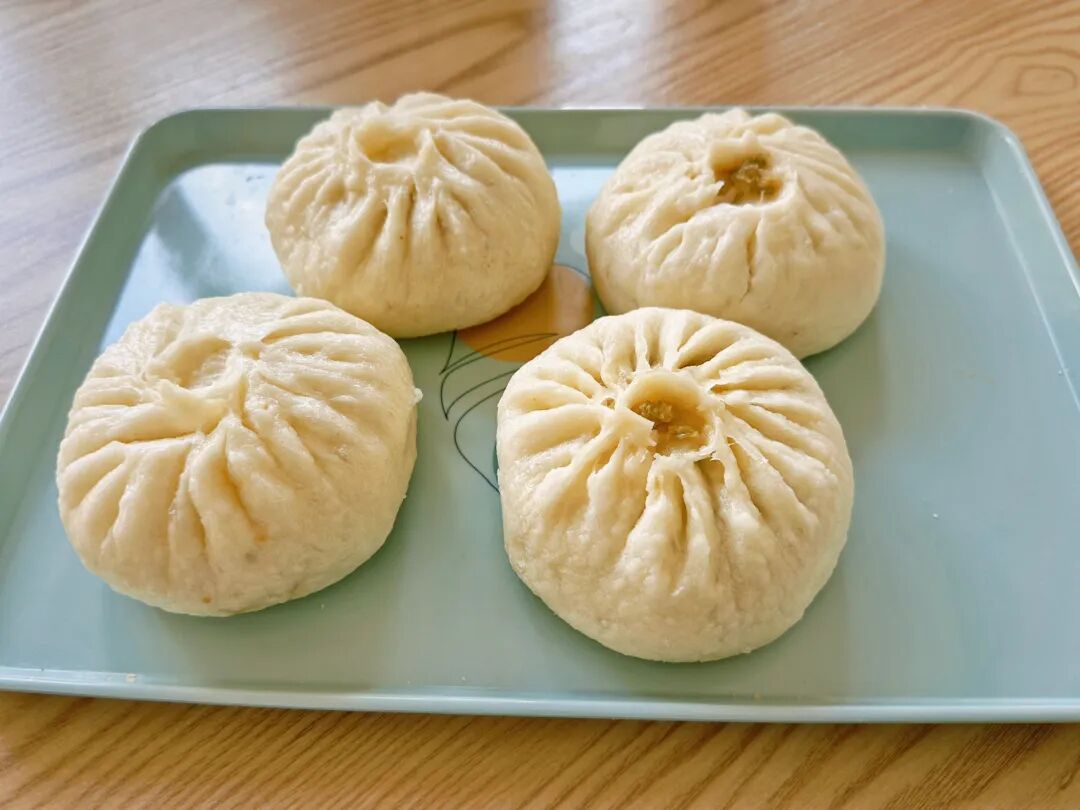
Halal Travel Guide: Chifeng — Beidasi Mosque and Muslim Food
Articles • ali2007fr posted the article • 0 comments • 211 views • 2026-05-18 21:14
Summary: Chifeng — Beidasi Mosque and Muslim Food is presented here as a firsthand travel account in clear English, beginning with this scene: I headed to Chifeng, Inner Mongolia, on February 11. It takes two and a half hours by high-speed train from Beijing Chaoyang Station. The account keeps its focus on Chifeng Mosque, Inner Mongolia, Halal Food while preserving the names, places, food, and historical details from the Chinese source.
I headed to Chifeng, Inner Mongolia, on February 11. It takes two and a half hours by high-speed train from Beijing Chaoyang Station.
After arriving in Chifeng, I first went to the Reidian residential area on Gangtie Street to eat Fengsi lamb soup (yangtang) and hanging-oven flatbread (shaobing). Most people eating at these small shops in the neighborhood are locals. I haven't seen flatbread made in a hanging oven for many years. It was truly delicious.
From Chengde and Pingquan to Chifeng, Hui Muslims who traveled through Gubeikou after the Qing Dynasty began popularized the clear-broth version of lamb soup. This kind of lamb soup doesn't need much seasoning; it tastes great just from the natural flavor of the meat. At this shop, you can choose lamb offal, tripe strips, or head meat. I had the head meat, and they gave me a generous portion. Right after I ordered, the shop received a large order for one hundred flatbreads. They used up all their dough, but I felt very grateful to have gotten mine.
After breakfast, I went to visit the famous Chifeng North Mosque. In the early Qing Dynasty, Hui Muslims from Shandong and Hebei kept traveling through Gubeikou and Chengde to make a living in eastern Inner Mongolia. In the 1730s, ten Hui Muslim families with surnames like Zhang, Ma, and Bai moved from Shandong and Hebei to settle in Chifeng. They were known as the ten great Hui Muslim families, or the 'Zhanshanhu' settlers.
In 1739 (the fourth year of the Qianlong reign), elder Zhang Yueming of Chifeng led the effort to lease seven mu and six fen of land from Mongol princes. They built five mud rooms and three main halls, which became the earliest Chifeng Mosque.
In 1742 (the seventh year of the Qianlong reign), elder Ma Fen, who once ran the Desheng Security Bureau in Shenyang, initiated the renovation of the mosque. He paid for the foundation, and the imam and several elders traveled to various places to collect donations (nietie). Later, elder Ma Fen went to Shenyang to hire craftsmen. Construction took four years and was completed in 1747 (the twelfth year of the Qianlong reign). All the wood used was red pine from the southern mountains of Chifeng. Since then, the imam of the North Mosque has always been a scripture reader from the Ma family line.
The North Mosque underwent a major renovation in 2011. Now, another round of repairs is starting, so the main hall is locked. For now, namaz is held in the south building. I was very sorry that I couldn't get a close look at the beautiful mihrab inside the main hall this time.
The main hall of the Chifeng North Mosque consists of a porch, the main hall, a rear kiln-style hall, and a moon-watching tower (wangyuelou) on top of the kiln hall. The tower has a double-eaved hexagonal roof with a gilded bronze treasure vase on top, and the wooden carvings feature two dragons playing with a pearl. The porch sits on a Sumeru pedestal, and the wooden carvings between the eaves pillars feature cloud and flower patterns, which are very characteristic of the Northeast.
The stone, wood, and brick carvings at the North Mosque are all very exquisite:
The beams of the porch are painted with Suzhou-style art, and the wooden dragon heads are very rare in China.
The stone carvings on the gable walls of the main hall feature bats representing 'good fortune' and intertwined passionflower vines.
The stone base of the corner pillar of the main hall features a phoenix, peony, sun, and moon design.
The drum-shaped stone base in front of the porch.
The brick carvings on the roof corners feature calligraphy. This style of calligraphy is related to the spread of the Shandong school of scripture hall education in the Northeast.
At noon, I ate buckwheat noodles (bo mian), a specialty of Aohan Banner, in front of the Chifeng South Mosque. These noodles are made by kneading buckwheat dough until it is quite firm, then using a special knife with handles on both sides to slice the dough directly on a board. The boiled noodles can be topped with various sauces, usually including pickled cabbage, eggplant, or celery, and served with fresh leek flower sauce.
There are many halal restaurants next to the Chifeng South Mosque. By the beginning of the 19th century, the Hui Muslim population in Chifeng had grown to over 300 households. In 1801 (the sixth year of the Jiaqing reign), Hui Muslims with the surname Zhang decided to set aside five mu of land from their cemetery to build the Chifeng South Mosque. Part of the construction funds were raised through donations (nietie) from various mosques and Hui Muslim communities, and the Zhang family covered the rest. Construction of the South Mosque began in 1802 (the seventh year of the Jiaqing reign) and was completed the following year. After 1958, the South Mosque (Nandasi) was occupied and later demolished to be rebuilt as Changqing Park. After the 1980s, Hui Muslims in Chifeng proposed restoring the South Mosque. After years of effort in the 1990s, the current South Mosque was finally completed in 1997.
I bought a few prayer cards (qihuci) at this shop next to the South Mosque.
My impression of this trip to Chifeng is that the streets are full of roasted chicken shops. There are so many kinds of roasted chicken, smoked chicken, and braised chicken. Do people in Chifeng really love eating chicken?
I also bought roasted chicken and braised chicken at two shops to try. The taste was okay, just a bit salty. The first roasted chicken shop was opened by a Hui Muslim named Liu from Jinchanggouliang Town. This is a small town rich in gold and silver under Aohan Banner in Chifeng. After the Rehe administrative system was established during the Yongzheng reign, many people came here to pan for gold. In 1893, the Qing Dynasty officially set up a general bureau to mine gold, with more than 4,000 people at its peak.
I didn't expect there to be a small halal food court next to Changqing Park in Chifeng. It has all the classic snacks like octopus balls (zhangyu xiaowanzi), grilled cold noodles (kao lengmian), iron-plate squid (tieban youyu), grilled gluten (kao mianjin), grilled scallops (kao shanbei), and stinky tofu (chou doufu). There is even a conveyor belt hot pot (huizhuan xiaohuoguo) in the back, and many children come here to eat. I also pretended to be a kid and had some grilled cold noodles and iron-plate squid. Actually, when I was little, I also loved eating iron-plate squid from the Longfu Mosque snack shop, but we really didn't have the others back then. view all
Summary: Chifeng — Beidasi Mosque and Muslim Food is presented here as a firsthand travel account in clear English, beginning with this scene: I headed to Chifeng, Inner Mongolia, on February 11. It takes two and a half hours by high-speed train from Beijing Chaoyang Station. The account keeps its focus on Chifeng Mosque, Inner Mongolia, Halal Food while preserving the names, places, food, and historical details from the Chinese source.
I headed to Chifeng, Inner Mongolia, on February 11. It takes two and a half hours by high-speed train from Beijing Chaoyang Station.
After arriving in Chifeng, I first went to the Reidian residential area on Gangtie Street to eat Fengsi lamb soup (yangtang) and hanging-oven flatbread (shaobing). Most people eating at these small shops in the neighborhood are locals. I haven't seen flatbread made in a hanging oven for many years. It was truly delicious.
From Chengde and Pingquan to Chifeng, Hui Muslims who traveled through Gubeikou after the Qing Dynasty began popularized the clear-broth version of lamb soup. This kind of lamb soup doesn't need much seasoning; it tastes great just from the natural flavor of the meat. At this shop, you can choose lamb offal, tripe strips, or head meat. I had the head meat, and they gave me a generous portion. Right after I ordered, the shop received a large order for one hundred flatbreads. They used up all their dough, but I felt very grateful to have gotten mine.
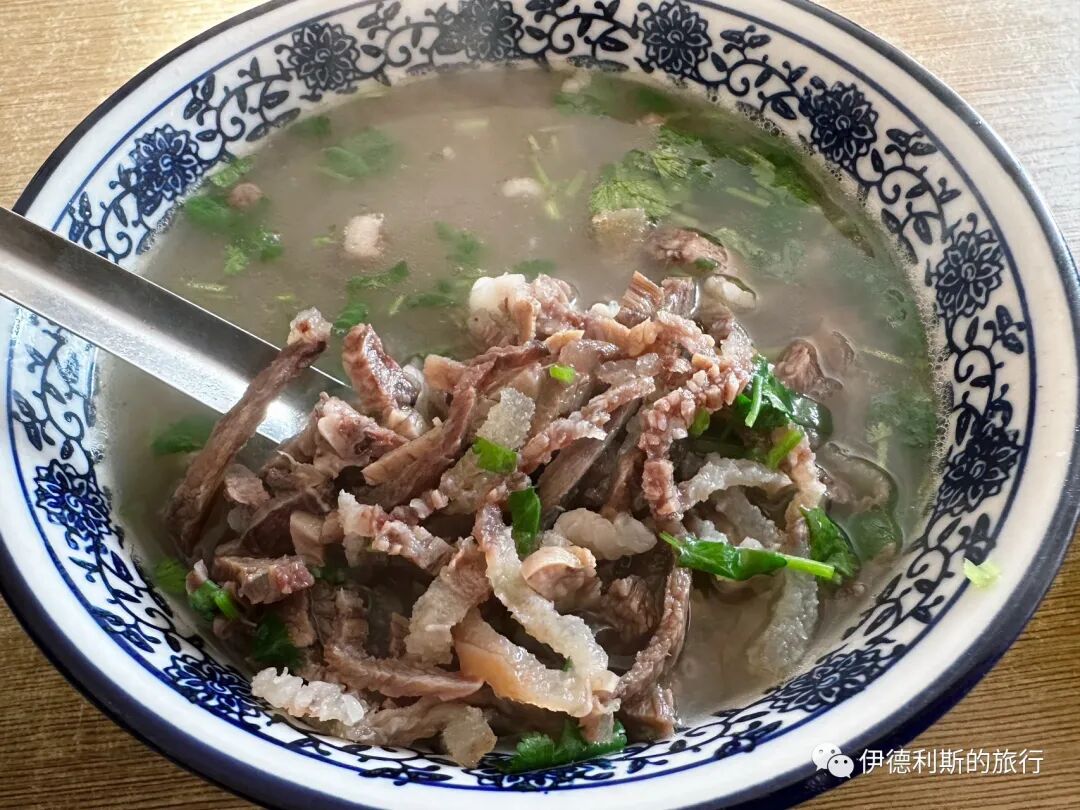
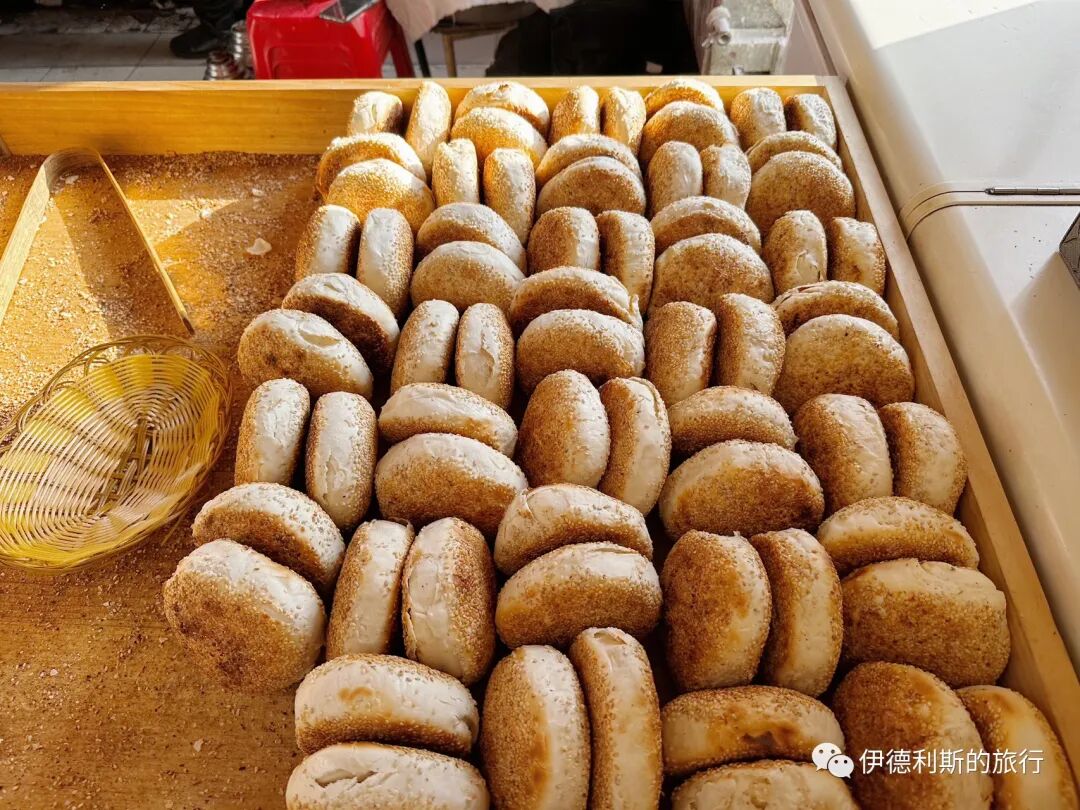
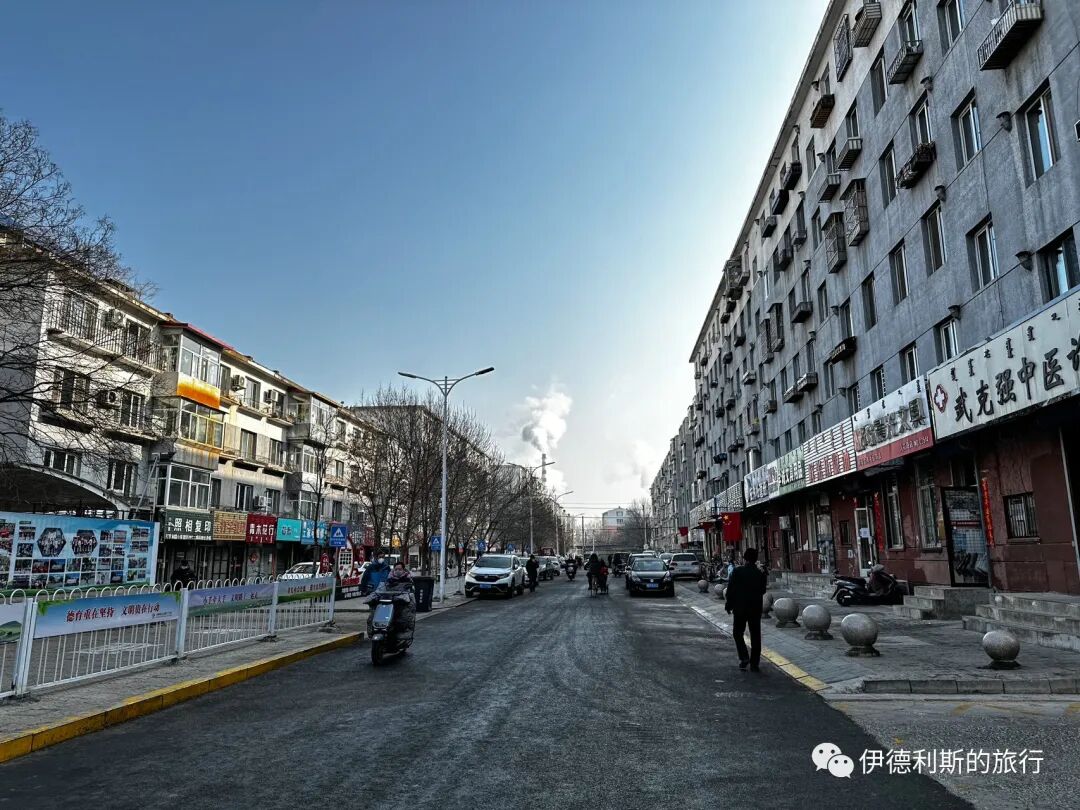
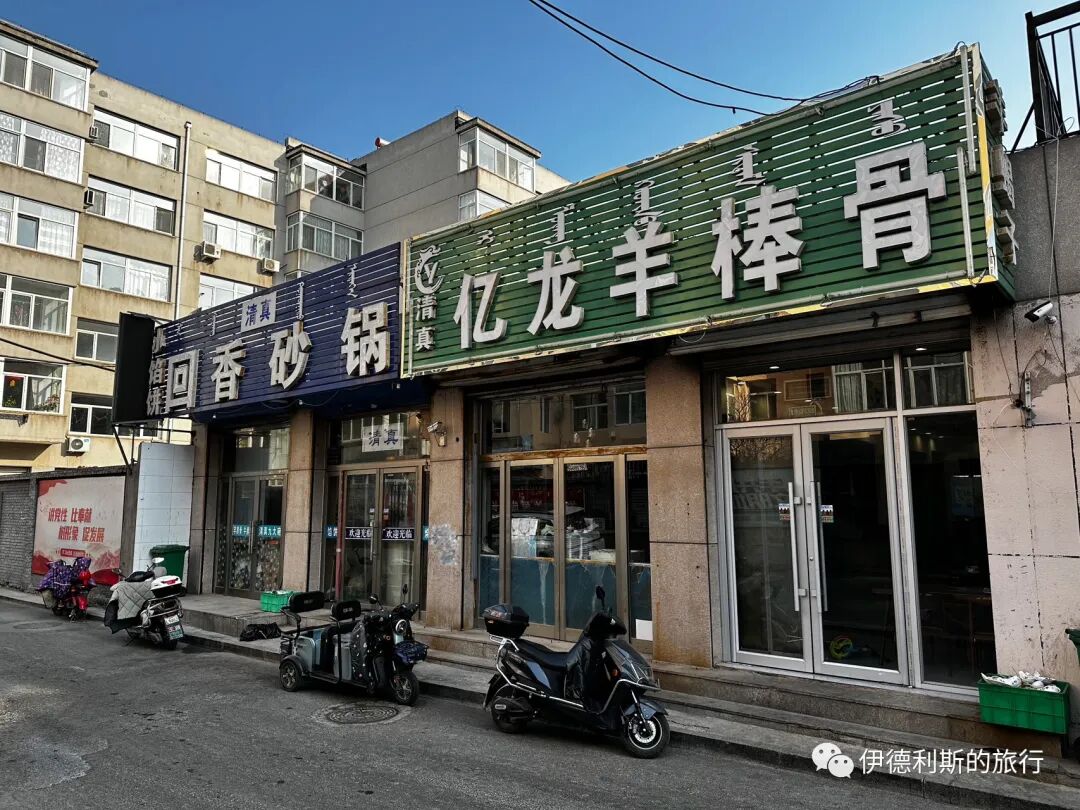
After breakfast, I went to visit the famous Chifeng North Mosque. In the early Qing Dynasty, Hui Muslims from Shandong and Hebei kept traveling through Gubeikou and Chengde to make a living in eastern Inner Mongolia. In the 1730s, ten Hui Muslim families with surnames like Zhang, Ma, and Bai moved from Shandong and Hebei to settle in Chifeng. They were known as the ten great Hui Muslim families, or the 'Zhanshanhu' settlers.
In 1739 (the fourth year of the Qianlong reign), elder Zhang Yueming of Chifeng led the effort to lease seven mu and six fen of land from Mongol princes. They built five mud rooms and three main halls, which became the earliest Chifeng Mosque.
In 1742 (the seventh year of the Qianlong reign), elder Ma Fen, who once ran the Desheng Security Bureau in Shenyang, initiated the renovation of the mosque. He paid for the foundation, and the imam and several elders traveled to various places to collect donations (nietie). Later, elder Ma Fen went to Shenyang to hire craftsmen. Construction took four years and was completed in 1747 (the twelfth year of the Qianlong reign). All the wood used was red pine from the southern mountains of Chifeng. Since then, the imam of the North Mosque has always been a scripture reader from the Ma family line.
The North Mosque underwent a major renovation in 2011. Now, another round of repairs is starting, so the main hall is locked. For now, namaz is held in the south building. I was very sorry that I couldn't get a close look at the beautiful mihrab inside the main hall this time.
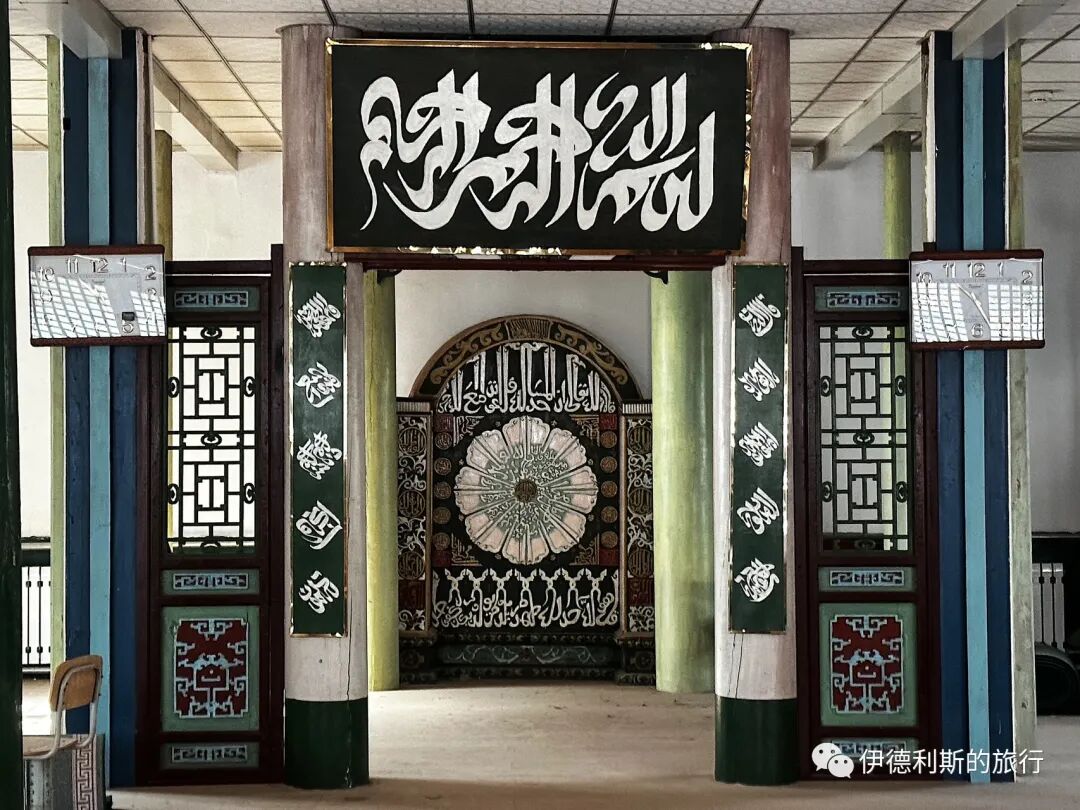
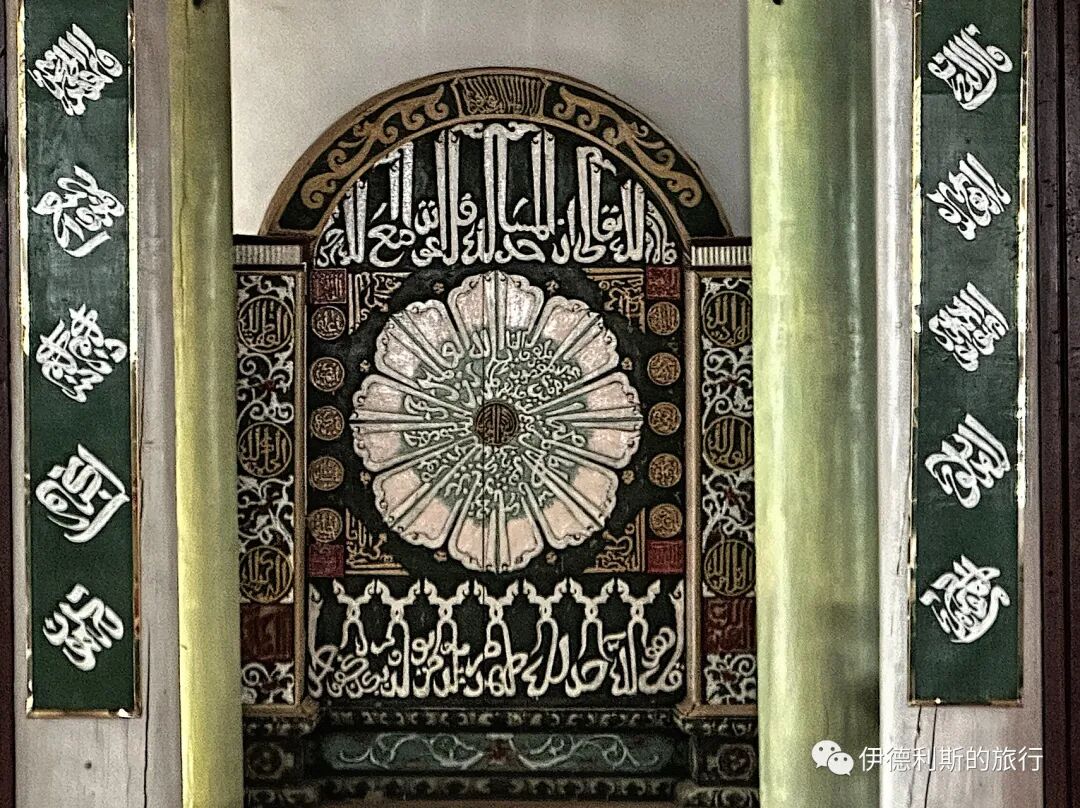
The main hall of the Chifeng North Mosque consists of a porch, the main hall, a rear kiln-style hall, and a moon-watching tower (wangyuelou) on top of the kiln hall. The tower has a double-eaved hexagonal roof with a gilded bronze treasure vase on top, and the wooden carvings feature two dragons playing with a pearl. The porch sits on a Sumeru pedestal, and the wooden carvings between the eaves pillars feature cloud and flower patterns, which are very characteristic of the Northeast.
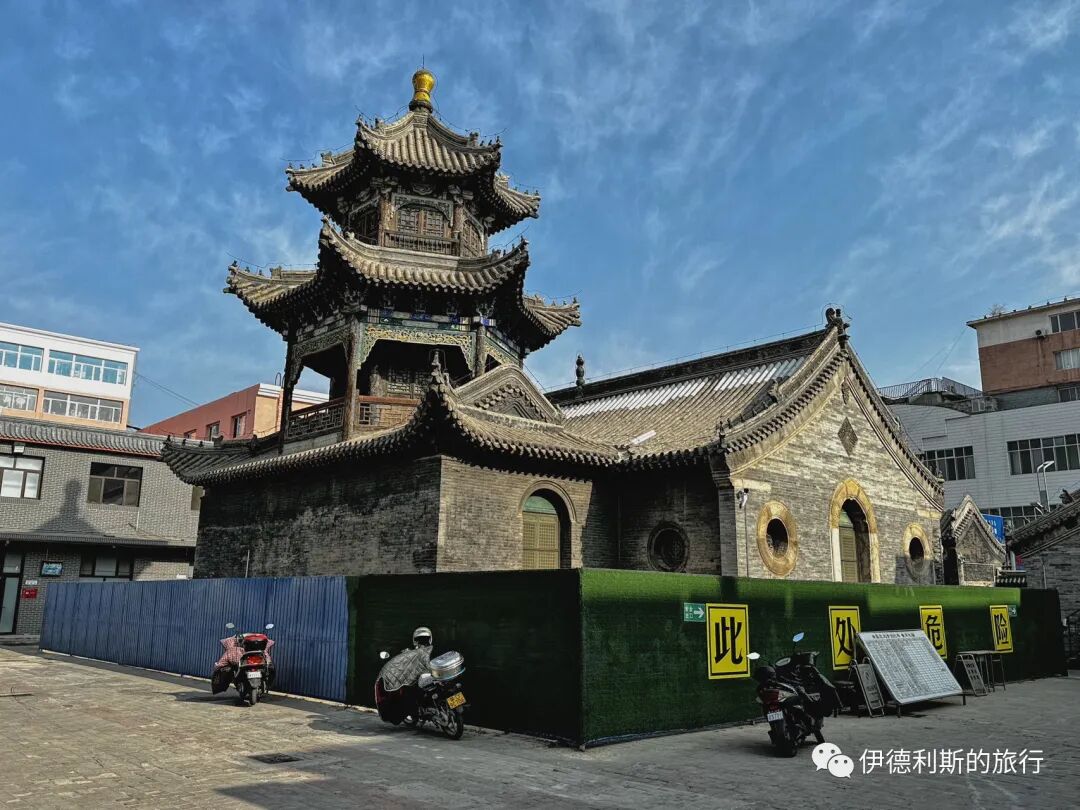
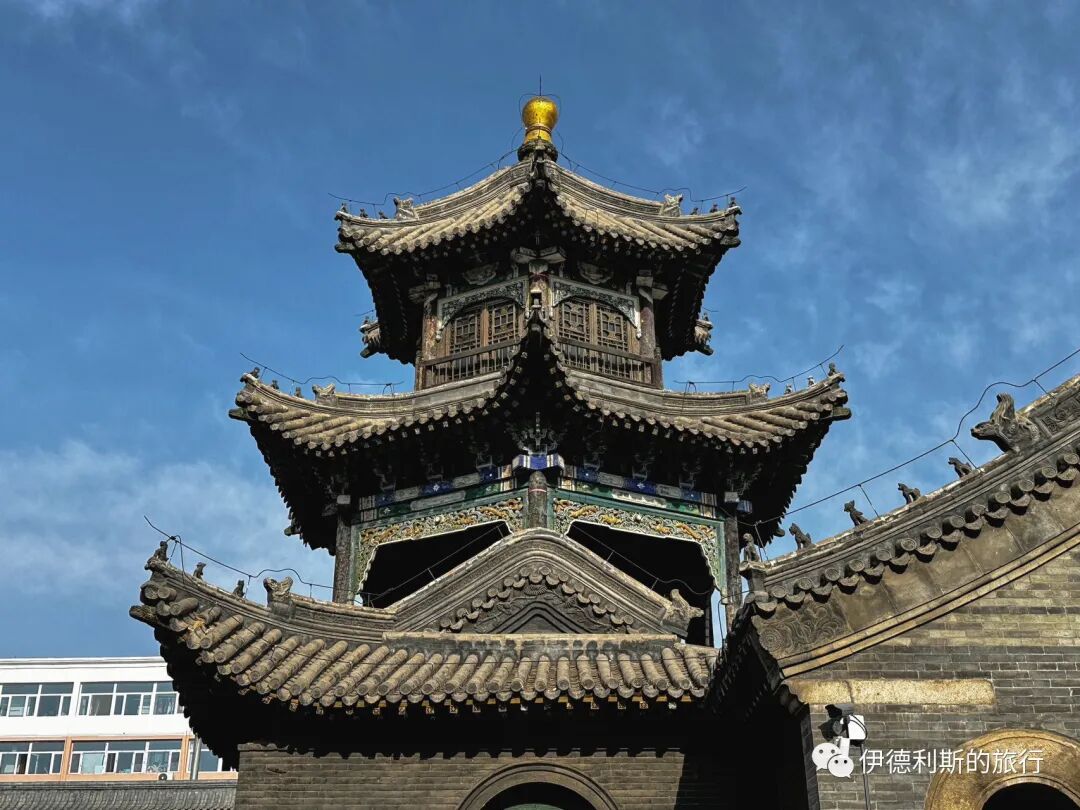
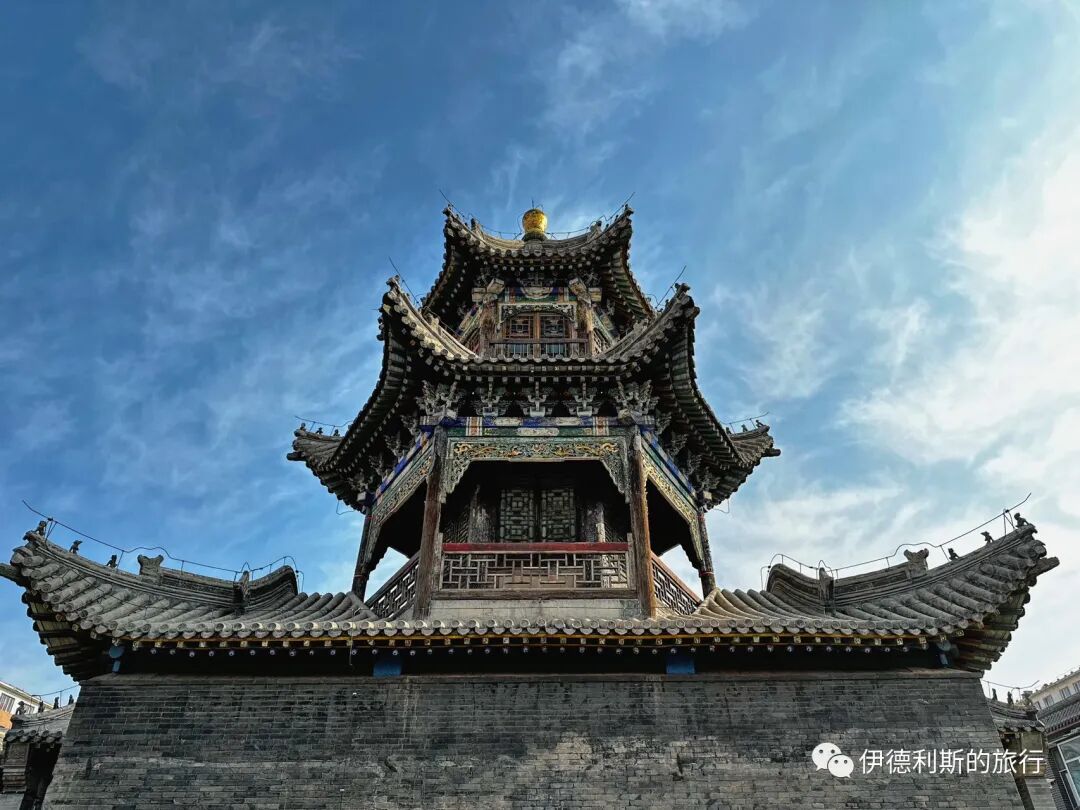
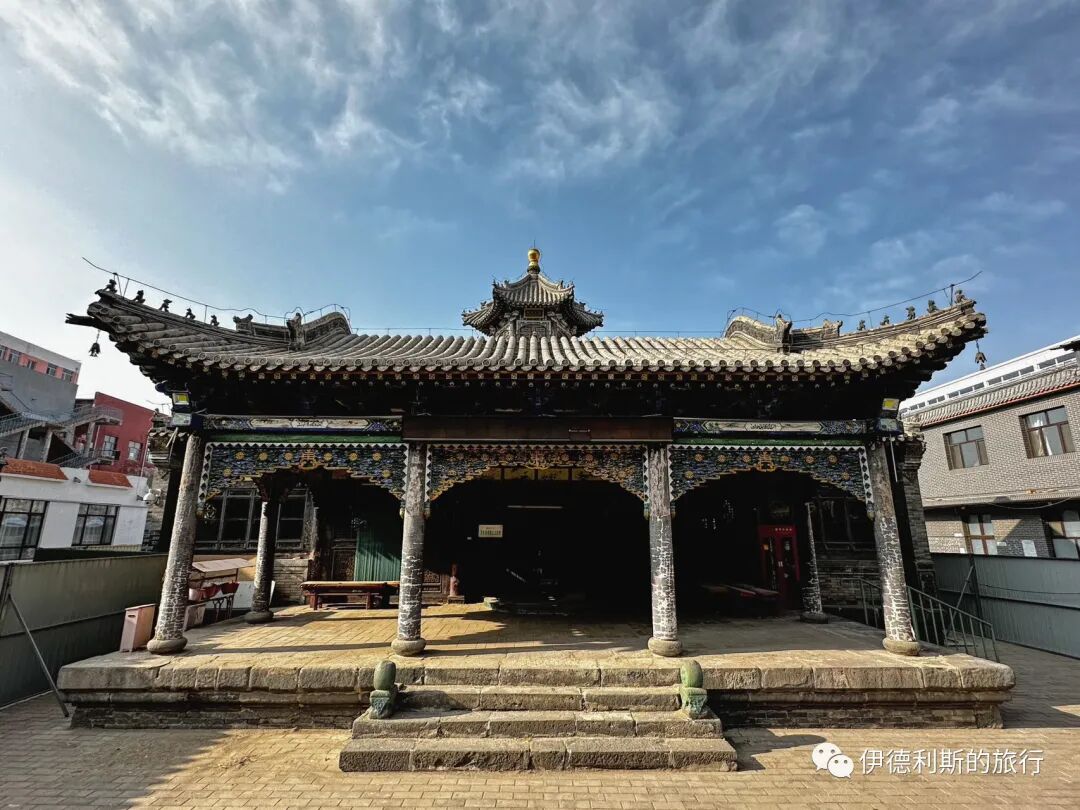
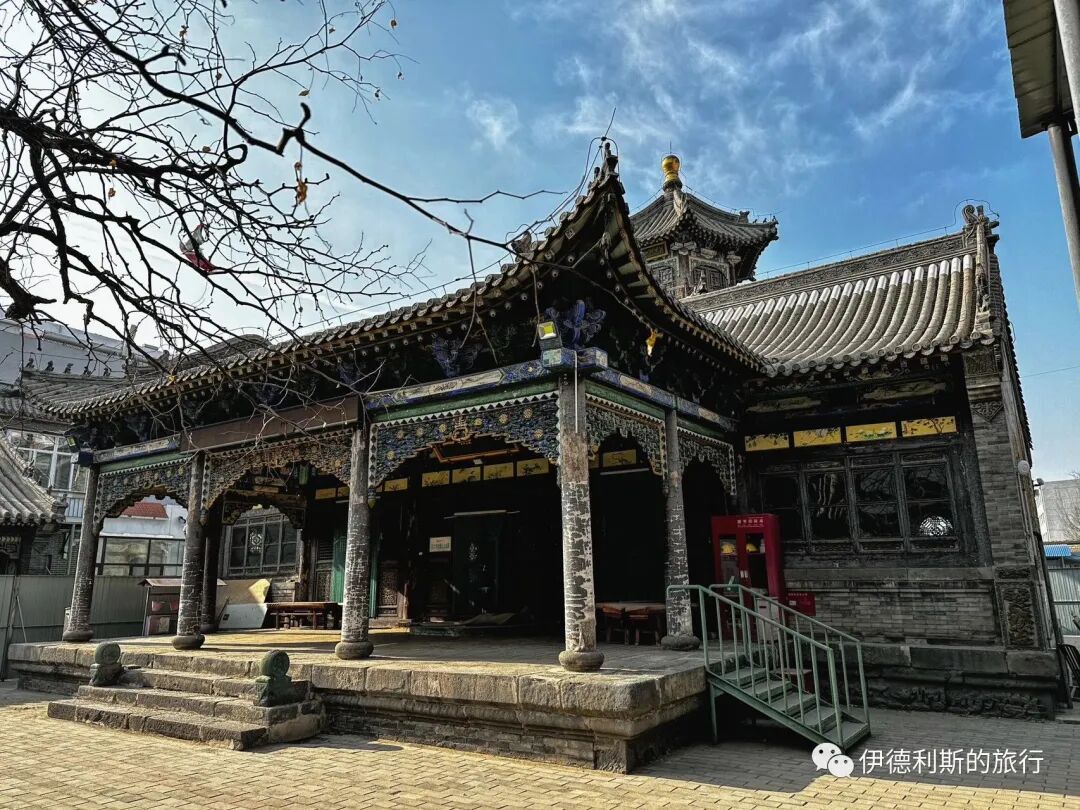
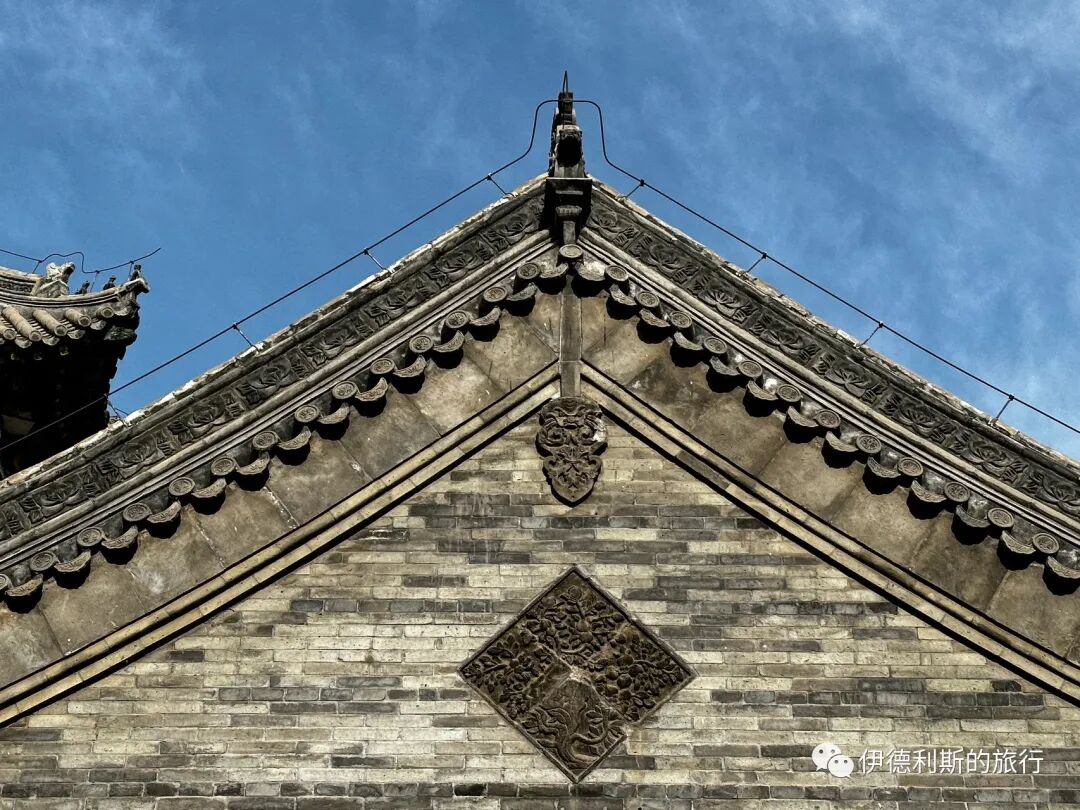
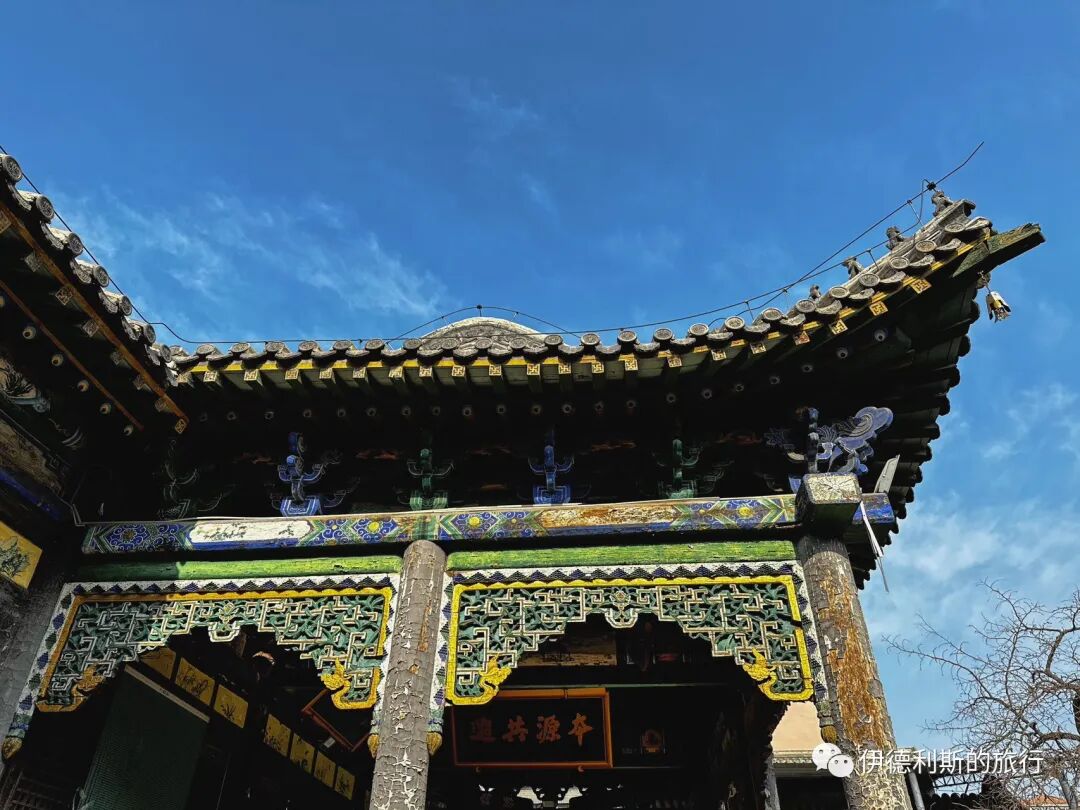
The stone, wood, and brick carvings at the North Mosque are all very exquisite:
The beams of the porch are painted with Suzhou-style art, and the wooden dragon heads are very rare in China.
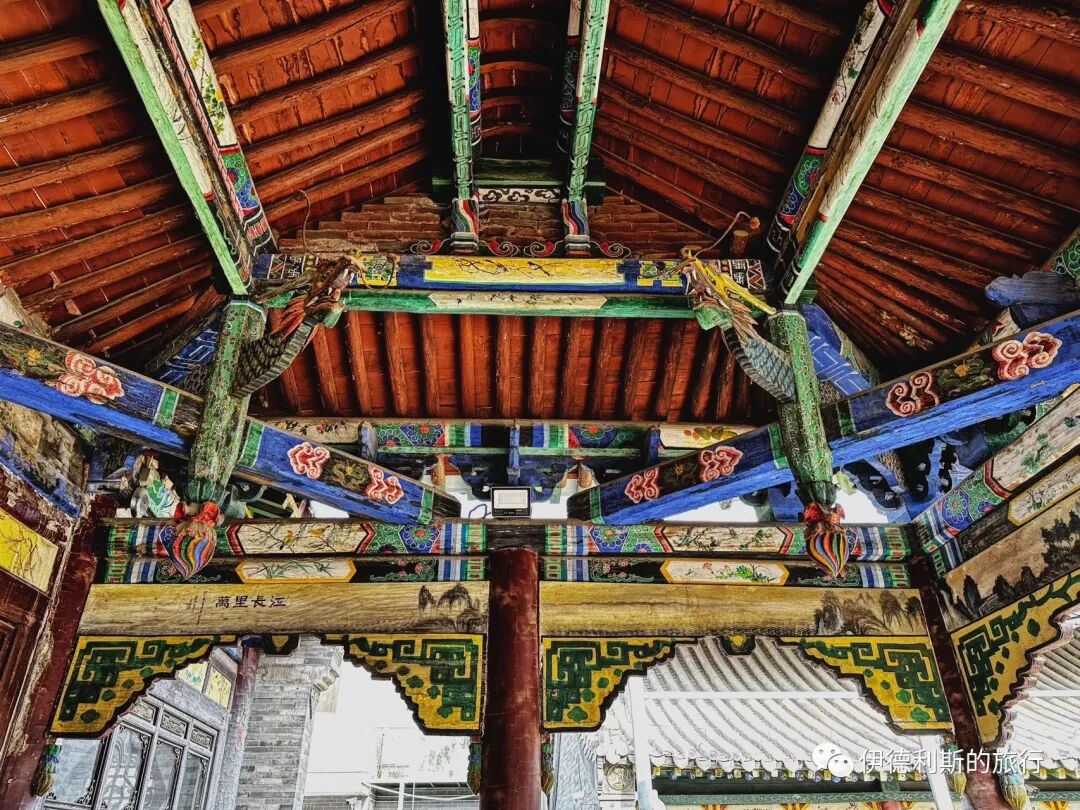
The stone carvings on the gable walls of the main hall feature bats representing 'good fortune' and intertwined passionflower vines.
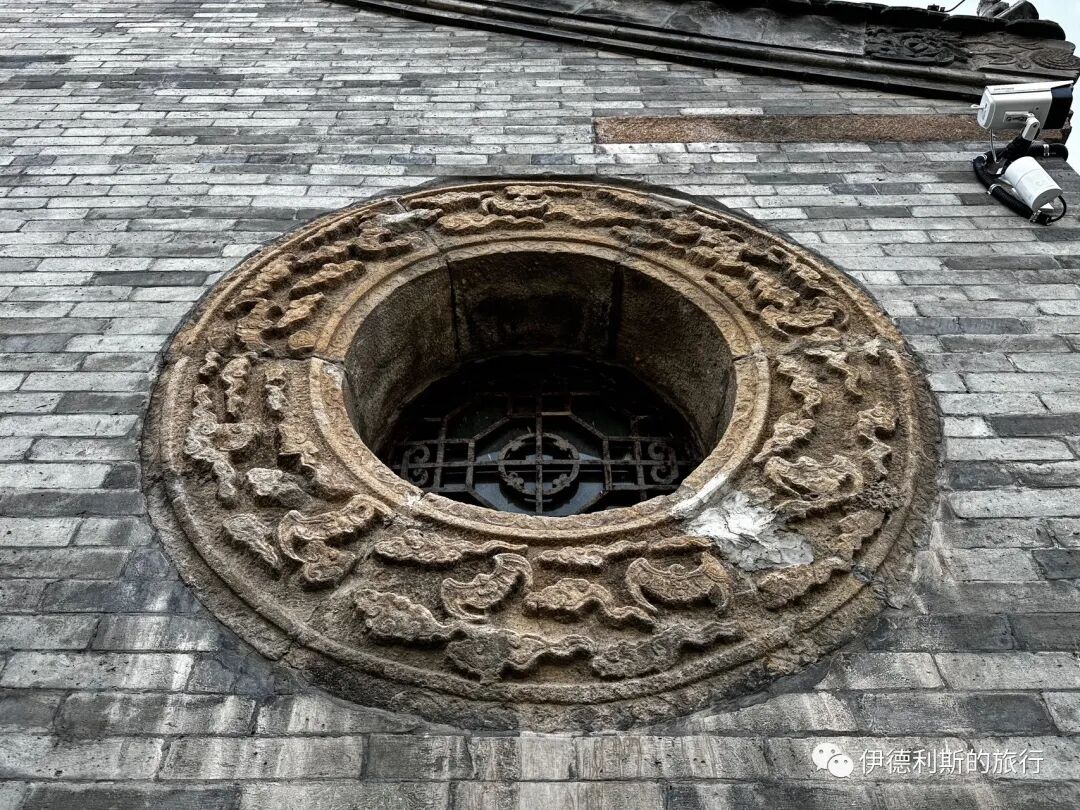
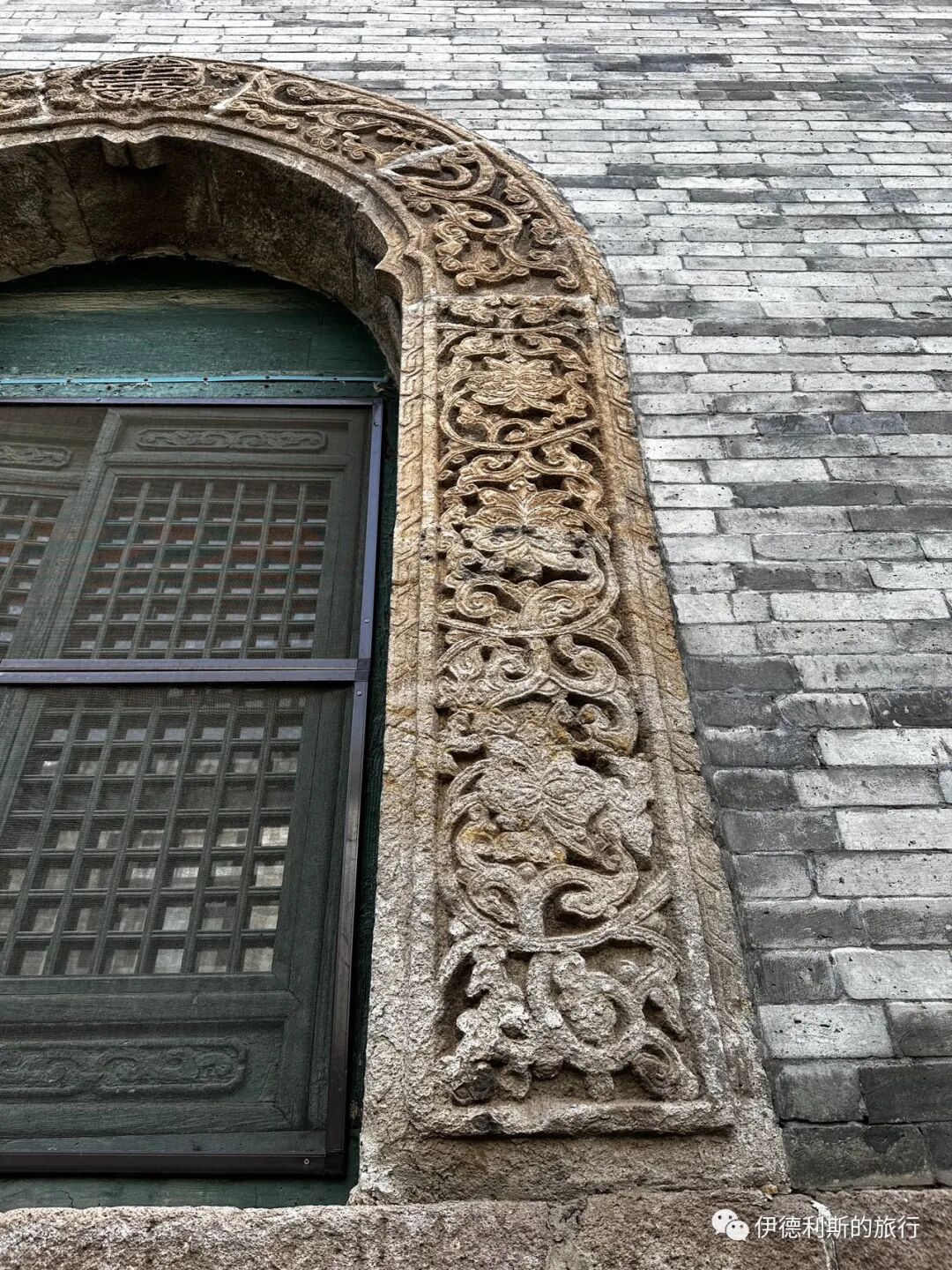
The stone base of the corner pillar of the main hall features a phoenix, peony, sun, and moon design.
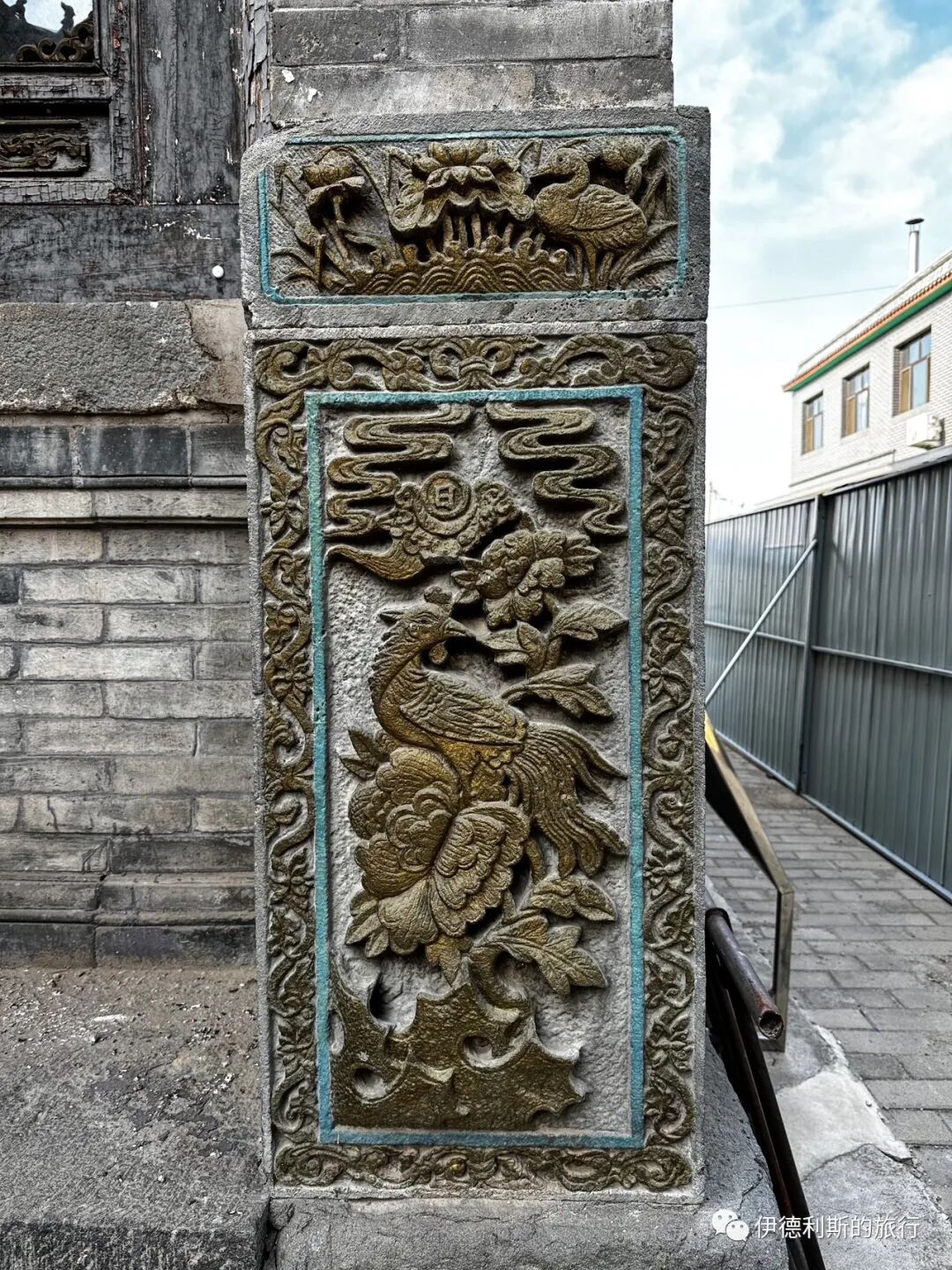
The drum-shaped stone base in front of the porch.
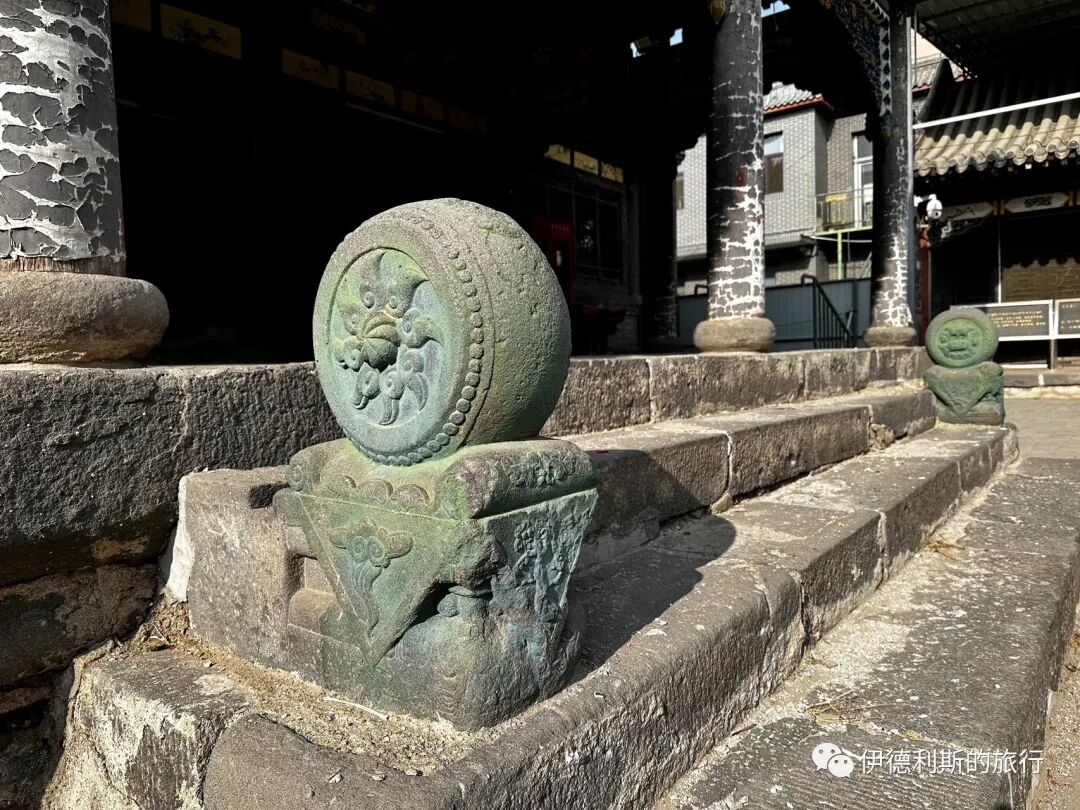
The brick carvings on the roof corners feature calligraphy. This style of calligraphy is related to the spread of the Shandong school of scripture hall education in the Northeast.
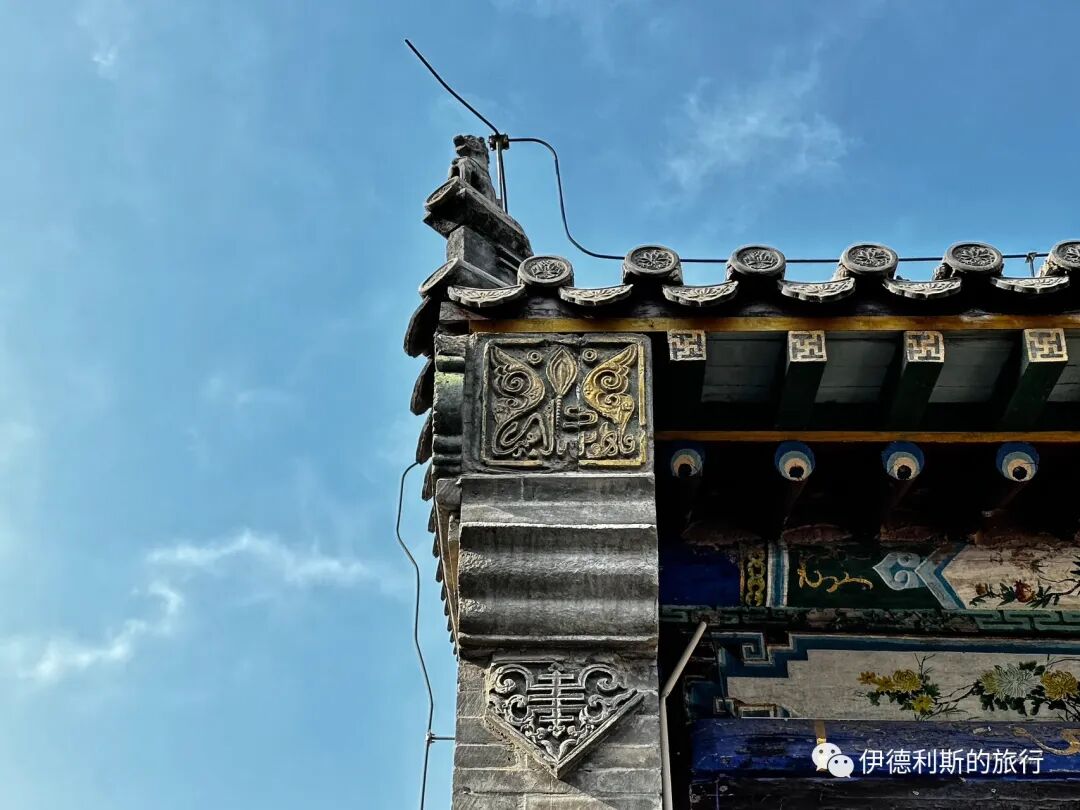
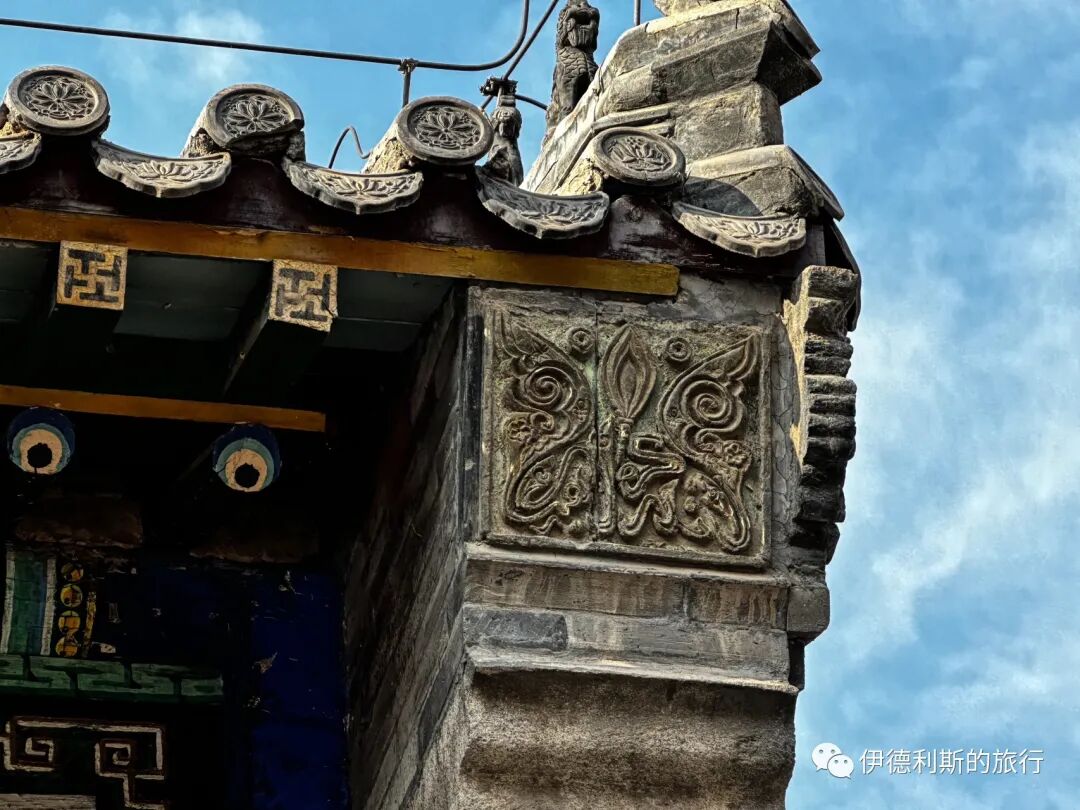
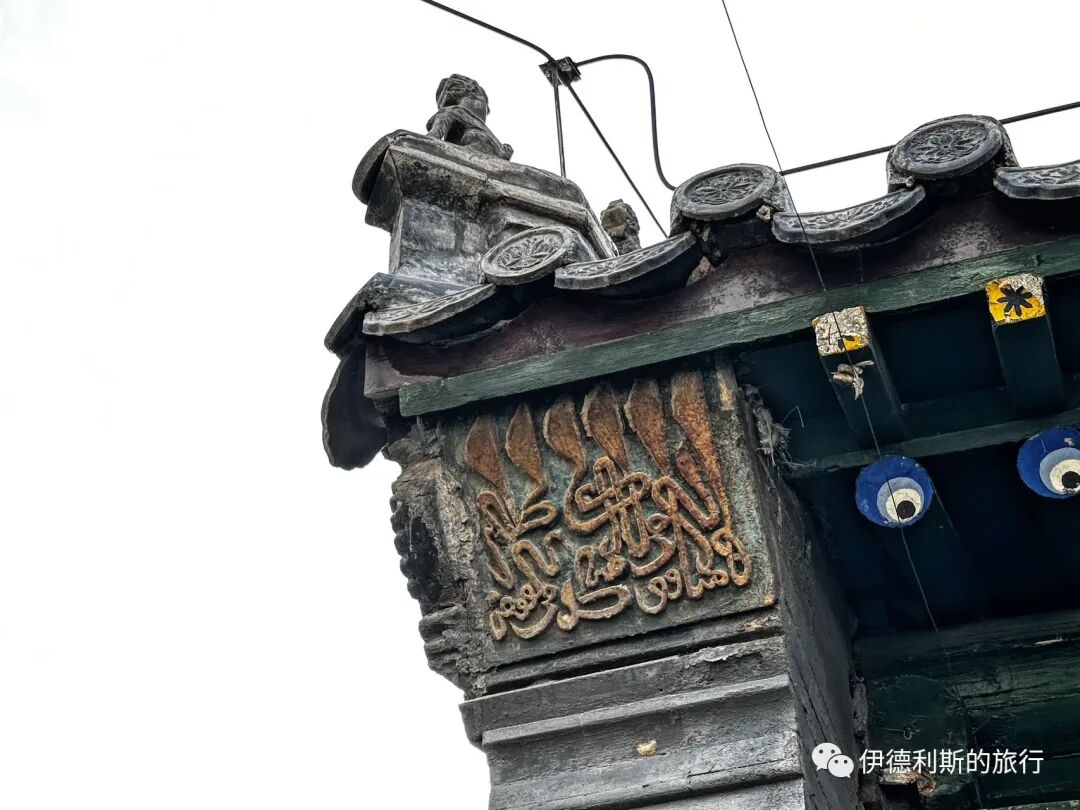
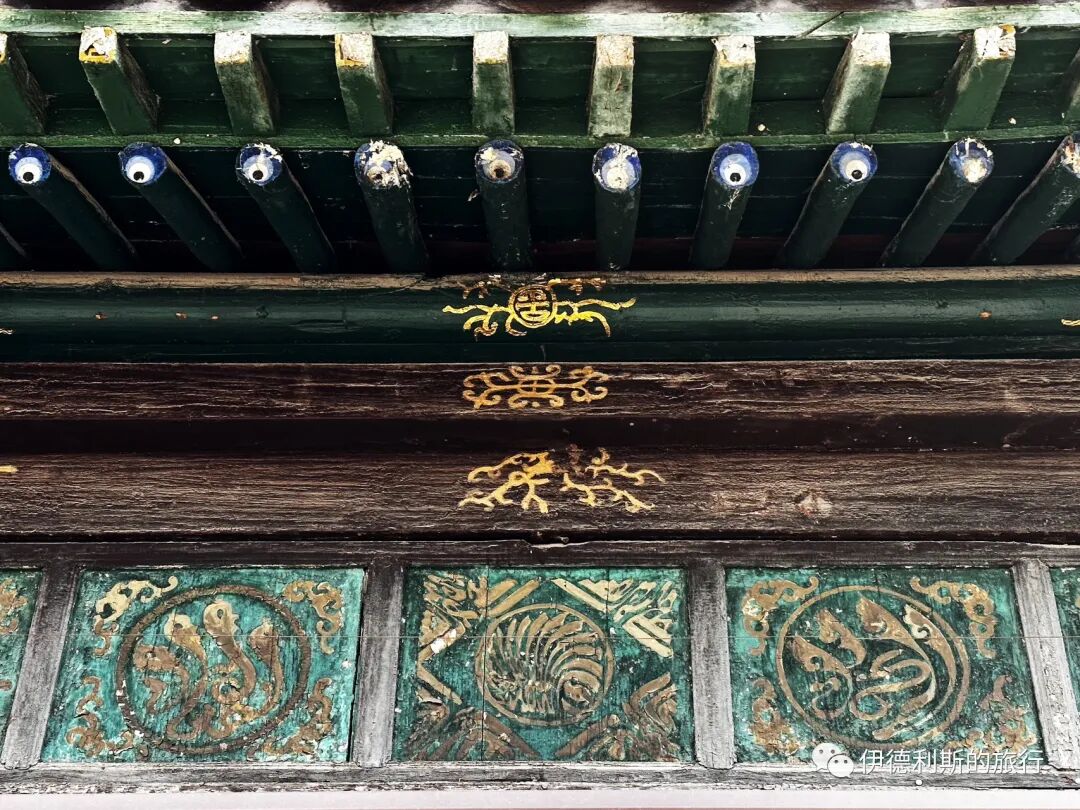
At noon, I ate buckwheat noodles (bo mian), a specialty of Aohan Banner, in front of the Chifeng South Mosque. These noodles are made by kneading buckwheat dough until it is quite firm, then using a special knife with handles on both sides to slice the dough directly on a board. The boiled noodles can be topped with various sauces, usually including pickled cabbage, eggplant, or celery, and served with fresh leek flower sauce.
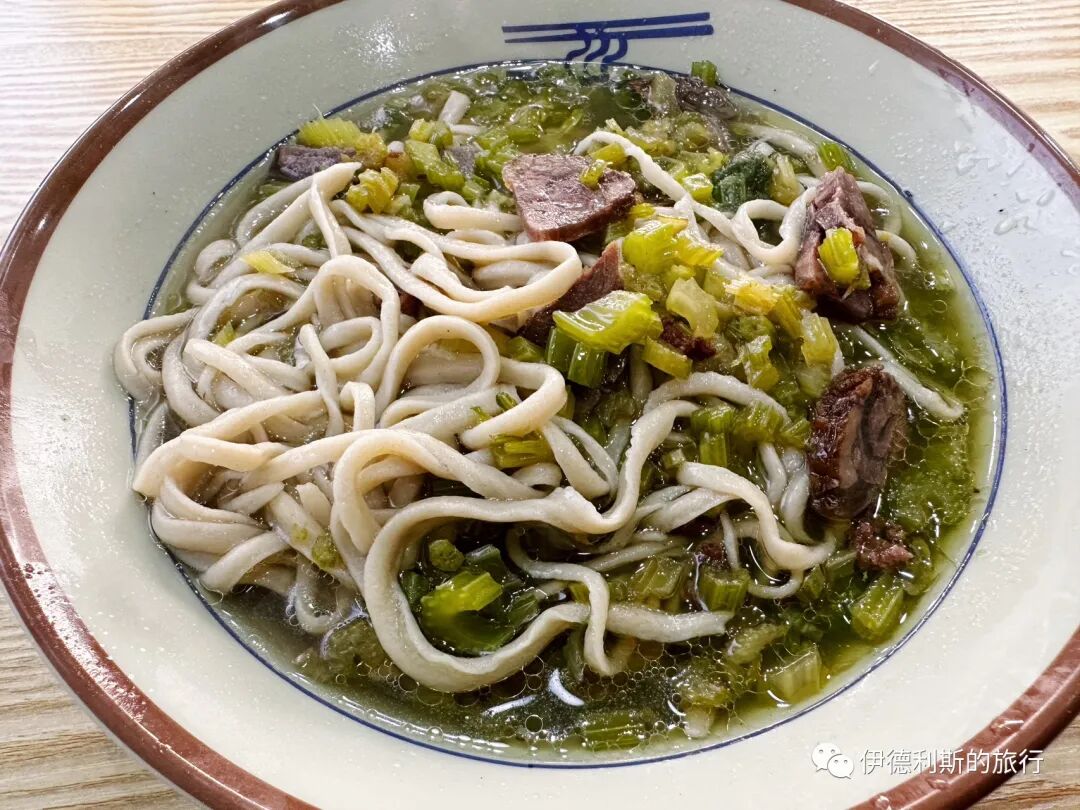
There are many halal restaurants next to the Chifeng South Mosque. By the beginning of the 19th century, the Hui Muslim population in Chifeng had grown to over 300 households. In 1801 (the sixth year of the Jiaqing reign), Hui Muslims with the surname Zhang decided to set aside five mu of land from their cemetery to build the Chifeng South Mosque. Part of the construction funds were raised through donations (nietie) from various mosques and Hui Muslim communities, and the Zhang family covered the rest. Construction of the South Mosque began in 1802 (the seventh year of the Jiaqing reign) and was completed the following year. After 1958, the South Mosque (Nandasi) was occupied and later demolished to be rebuilt as Changqing Park. After the 1980s, Hui Muslims in Chifeng proposed restoring the South Mosque. After years of effort in the 1990s, the current South Mosque was finally completed in 1997.
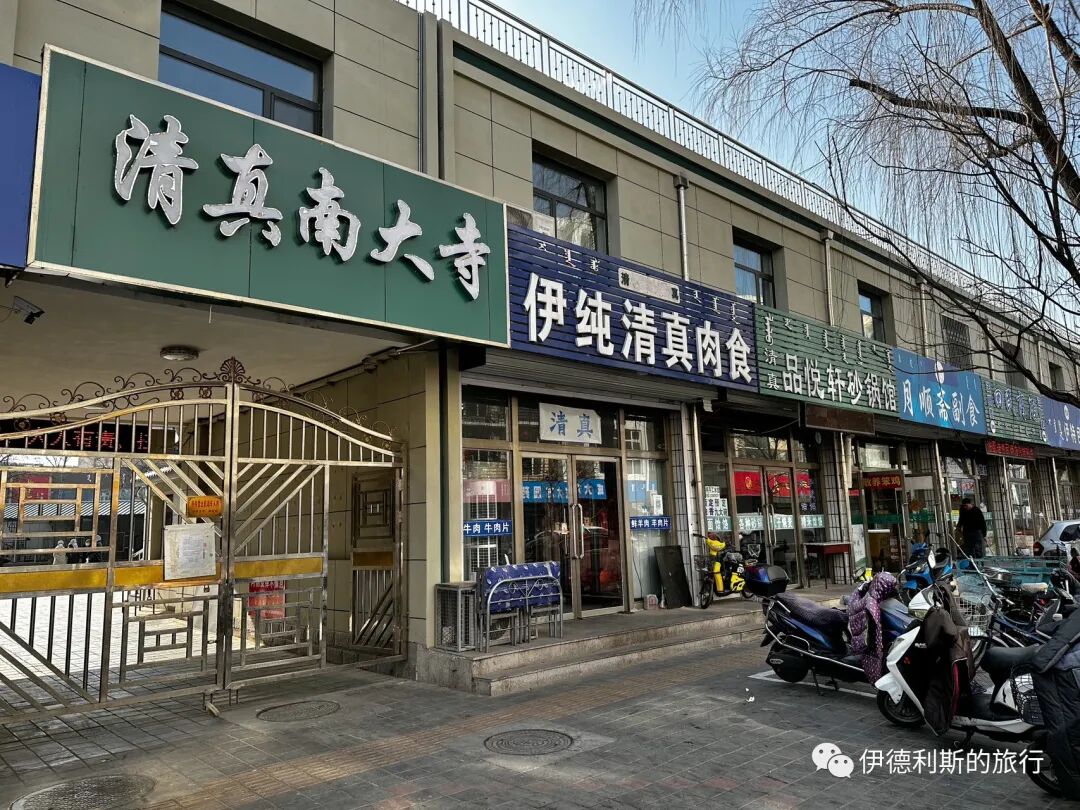
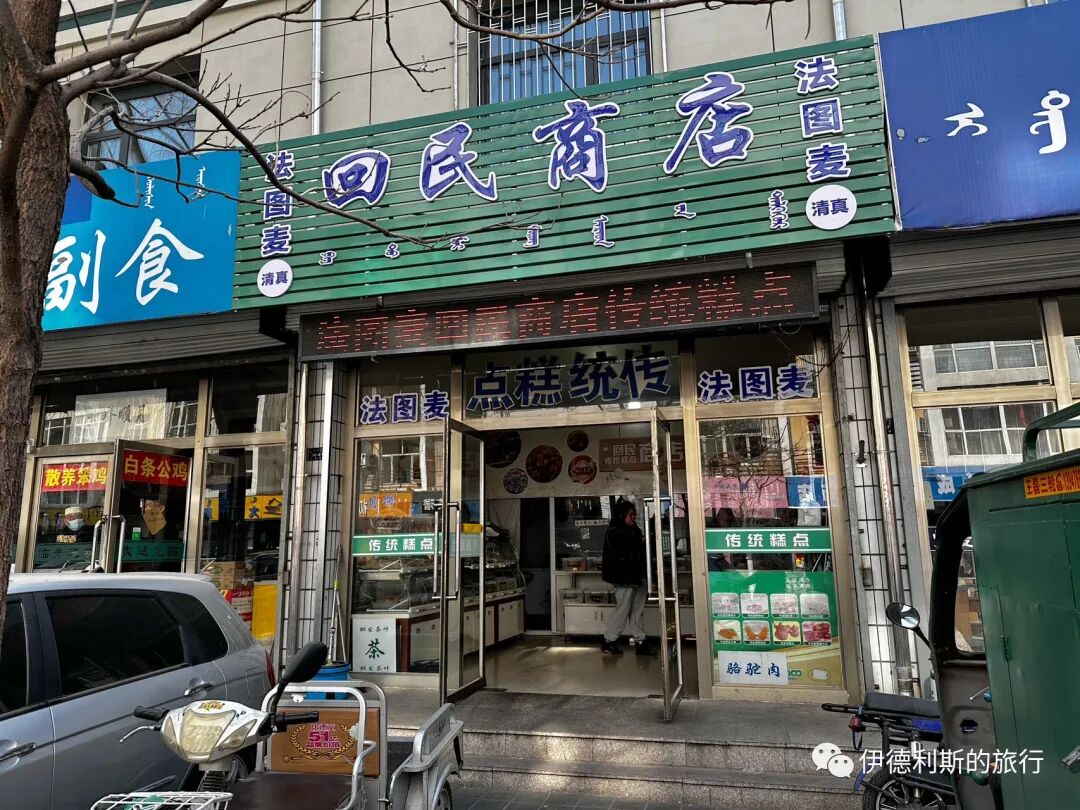
I bought a few prayer cards (qihuci) at this shop next to the South Mosque.
My impression of this trip to Chifeng is that the streets are full of roasted chicken shops. There are so many kinds of roasted chicken, smoked chicken, and braised chicken. Do people in Chifeng really love eating chicken?
I also bought roasted chicken and braised chicken at two shops to try. The taste was okay, just a bit salty. The first roasted chicken shop was opened by a Hui Muslim named Liu from Jinchanggouliang Town. This is a small town rich in gold and silver under Aohan Banner in Chifeng. After the Rehe administrative system was established during the Yongzheng reign, many people came here to pan for gold. In 1893, the Qing Dynasty officially set up a general bureau to mine gold, with more than 4,000 people at its peak.
I didn't expect there to be a small halal food court next to Changqing Park in Chifeng. It has all the classic snacks like octopus balls (zhangyu xiaowanzi), grilled cold noodles (kao lengmian), iron-plate squid (tieban youyu), grilled gluten (kao mianjin), grilled scallops (kao shanbei), and stinky tofu (chou doufu). There is even a conveyor belt hot pot (huizhuan xiaohuoguo) in the back, and many children come here to eat. I also pretended to be a kid and had some grilled cold noodles and iron-plate squid. Actually, when I was little, I also loved eating iron-plate squid from the Longfu Mosque snack shop, but we really didn't have the others back then.
Halal Travel Guide: Inner Mongolia - 12 Historic Mosques, Part 1
Articles • ali2007fr posted the article • 0 comments • 284 views • 2026-05-20 09:54
Summary: This first part of the Inner Mongolia mosque series introduces historic Hui Muslim mosques shaped by Qing-era migration, frontier trade, and settlement on the grasslands. The article covers founding dates, mosque layouts, carved woodwork, inscriptions, and the communities that built and maintained these sites.
I am sharing 12 historic mosque buildings I visited in Inner Mongolia, moving from east to west.
Chifeng North Mosque: First built in 1739 and rebuilt in 1747.
Jingpeng Mosque: First built in 1852 and rebuilt in 1908.
Duolun South Mosque: First built during the Yongzheng reign and expanded in 1761.
Duolun North Mosque: Built in 1798.
Duolun West Mosque: Built in 1880.
Duolun Central Mosque: First built in 1908 and rebuilt in 1935.
Longshengzhuang Mosque: First built in 1751 and expanded in 1831 and 1926.
Hohhot Great Mosque: First built in 1693 and expanded in 1798 and 1925.
Chasuqi Great Mosque: First built in 1760 and rebuilt in 1909.
Salaqi Mosque: First built in 1747 and renovated in 1947.
Baotou Great Mosque: First built in 1743, renovated in 1833, and expanded in 1913.
Baotou Small Mosque: First built in 1908 and rebuilt in 1918.
Chifeng North Mosque
During the early Qing Dynasty, Hui Muslims from Shandong and Hebei provinces kept traveling through Gubeikou and Chengde to find work in eastern Inner Mongolia. In the 1730s, ten Hui Muslim families with surnames like Zhang, Ma, and Bai moved from Shandong and Hebei to settle in Chifeng. They were known as the ten great Hui Muslim families or the original settlers (zhanshanhu).
In 1739 (the fourth year of the Qianlong reign), a community elder named Zhang Yueming led the effort to lease seven point six mu of land from a Mongol prince. They built five mud rooms and a three-room main prayer hall, which became the first Chifeng mosque.
In 1742 (the seventh year of the Qianlong reign), elder Ma Fen, who once ran the Desheng Security Bureau in Shenyang, started a project to rebuild the mosque. He bought a plot of land, and the imam and several elders traveled to different places to collect donations through fundraising letters (nietie). Afterward, elder Ma Fen went to Shenyang to hire craftsmen. Construction took four years and finished in 1747 (the twelfth year of the Qianlong reign). All the wood used came from red pine trees in the mountains south of Chifeng. From then on, the imam of the North Mosque was always a scripture reader from the Ma family line.
The main prayer hall of the North Mosque consists of a front porch (juanpeng), the main hall, the rear niche (yaodian), and a moon-sighting tower (wangyuelou) on top of the niche. The moon-sighting tower has a double-eaved hexagonal roof with a gilded bronze vase on top and intricate carvings of two dragons playing with a pearl. The front porch sits on a pedestal base (xumizuo). Between the eaves pillars, there are openwork carvings of clouds and flowers, which is a very distinct style from Northeast China.
The beams of the front porch are painted with Suzhou-style patterns and feature wooden dragon head carvings, which are very rare in the country.
The beautiful stone carvings on the gable walls of the main hall feature bats representing good fortune and intertwined lotus patterns.
The phoenix, peony, sun, and moon carvings on the corner stone pillars of the main hall.
The drum-shaped stone bases (baogushi) in front of the porch.
The calligraphic brick carvings on the gable ends (xitou). This style of calligraphy relates to the Shandong school of scripture hall education that spread through the Northeast region.
Jingpeng Mosque (Jingpeng Si).
During the Kangxi reign of the Qing Dynasty, Jingpeng Town became a major trading hub on the grasslands, located on the main route between Mongolia and the Northeast. During the lama temple fairs, merchants from inland China brought cotton cloth, sugar, and tea to trade with the Mongols for furs, livestock, and local products. In 1723 (the second year of the Yongzheng reign), severe droughts in Shandong and Hebei forced disaster victims to head north to find work. To solve the problem of displaced people, the Qing government implemented a policy of borrowing land to support the people in the southeastern Mongolian grasslands, including Hexigten Banner. During the Qianlong reign, Hui Muslims from Yangxin and Guan counties in Shandong, and Cangzhou and Hejian in Hebei, traveled through Chifeng and Duolun to reach Jingpeng Town to trade on the grasslands, eventually settling there.
After the 19th century, the Hui Muslim population in Jingpeng reached nearly 1,000, with family names including Feng, Cong, Ma, Bai, Li, Jin, and Ha. In 1852 (the second year of the Xianfeng reign), they officially built a mosque (masjid), which started as five mud-brick rooms. In 1902 (the 28th year of the Guangxu reign), community elders including Liu Qi, imam Ha Zhaobin, Li Wenrong, Cong Laofeng, Ma Changtai, and Jin Fengming led a fundraising effort to rebuild the Jingpeng Mosque. Liu Qi and Ha Zhaobin traveled inside the Great Wall three times to collect funds. After four years, the current building was completed in 1908 (the 34th year of the Guangxu reign). It was named a key cultural relic protection site of Hexigten Banner in 1992.
The north and south lecture halls and the main hall of the Jingpeng Mosque are all Qing Dynasty structures. The main hall consists of a porch, the main hall itself, and a rear kiln-style hall (yaodian) topped with a moon-watching tower (wangyuelou). The moon-watching tower was torn down in 1967 and rebuilt after 1981.
Duolun South Mosque (Duolun Nansi).
Duolun County is located at the southeastern end of Xilin Gol League and was once a political and economic center on the Mongolian grasslands during the Qing Dynasty. In 1691 (the 30th year of the Kangxi reign), Emperor Kangxi held the Duolun Alliance with the nobles of the three Outer Mongolian tribes and the forty-eight banners of Inner Mongolia, officially bringing Outer Mongolia into the Qing territory. Later, at the request of Mongolian nobles, Kangxi allowed inland merchants to open trade routes between China and the Mongolian grasslands, granting them official titles and favorable treatment. This caused merchants from Beijing, Tianjin, Hebei, Shanxi, Shandong, and Shaanxi to flock there, quickly turning Duolun into a commercial hub for Mongolian trade. In 1710 (the 49th year of the Kangxi reign), Xinghua Town was officially established in Duolun. In 1741 (the sixth year of the Qianlong reign), Xinshengying was built north of Xinghua Town, forming the layout of the old city of Duolun.
After the city of Duolun was established, Hui Muslims from Hebei, Shandong, Shanxi, and Henan traveled through Zhangjiakou to trade on the grasslands, moving back and forth between the Mongolian plains and inland China. In his book 'Records of Dolon Nor' published in 1908, the late Qing Japanese scholar Jian Hongsheng recorded that the Hui Muslim population in Duolun had already reached 3,000.
The Hui Muslims of Duolun built six mosques: the South Mosque, North Mosque, East Mosque, West Mosque, Central Mosque, and Da'erhao Mosque. The Da'erhao Mosque was transferred to Guyuan County in 1950, and the East Mosque was demolished in the 1960s. Today, the old city still preserves the South, North, East, and West mosques. In 2006, they were collectively listed as a national-level cultural relic protection site under the name 'Duolun Ancient Architectural Complex'.
The South Mosque is the first mosque in Duolun, located on Taiping Street in the old city. It was first built during the Yongzheng reign, and in 1761 (the 26th year of the Qianlong reign), Hui Muslim merchants Mo Tianming and Ma Guifang initiated an expansion to create the current structure. In July 1933, after the anti-Japanese hero General Ji Hongchang recaptured Duolun, the Hui Muslims of Duolun hosted a banquet for him at the South Mosque. The South Mosque is currently closed and not open for visitors.
Duolun North Mosque
The North Mosque is located on Erdao Street in the old city. It was built in 1798 (the third year of the Jiaqing reign) with funds donated by Hui Muslim merchants from the cattle, horse, and camel trade. It later became the largest mosque (masjid) in the city. In July 1933, after the anti-Japanese hero General Ji Hongchang recaptured Duolun, he stayed at the North Mosque for a short time. Today, the North Mosque is active and holds regular services.
Duolun West Mosque
During the Tongzhi reign, some Hui Muslims from Shaanxi, Ningxia, and Gansu moved to Duolun to settle down. Since then, Hui Muslims from North China have been called "Kouli people," while those from the Northwest have been called "Westerners."
The East Mosque was located outside Nanjin Fort in the old city. It was started in 1869 (the eighth year of the Tongzhi reign) by Hui Muslims Xiu Mingliang and Liu Changfu from Shaanxi, and was completed in 1878 (the first year of the Guangxu reign). The West Mosque is located on Daxijie Street in the old city. It was built in 1880 (the fifth year of the Guangxu reign) by camel merchants Li Xianyu and Wang Jichen, who were from Ningxia and Gansu. After the 1960s, the East Mosque was completely demolished, and the gate and the north and south lecture halls of the West Mosque were also torn down. Today, only the main prayer hall of the West Mosque remains, and it is open to the public as a historical site.
Duolun Central Mosque
The Central Mosque is located on Nanquangfeng Street in the old city. It was built in 1908 (the 34th year of the Guangxu reign) by Wang Guofu and Shan Yunxing. In 1930, He Xingzhou, Cong Dianqing, and others initiated the reconstruction of the main hall, which was completed in 1935. The Central Mosque is currently open for regular activities.
The Duolun Central Mosque houses plaques and couplets from various mosques in Duolun: Do not be greedy for this life, only for the afterlife; the heavenly way and human way return to the true faith. Carefully guard the righteous path, avoid what is improper, keep your heart happy and your body at peace, and recognize the One. Dedicated in the eighth month of the 24th year of the Jiaqing reign.
Heavenly decree teaches the pure and unique faith, recognizing the truth since ancient times through the seven days; the Prophet's practice spreads the righteous faith, which is one and returns to the belief in the five daily prayers.
Blessings of the One True God: Dedicated on a lucky day in the fifth month of the ninth year of the Xianfeng reign of the Great Qing Dynasty by Zheng Kuishi, Imperial Commissioner overseeing military affairs in Ningguo, Commander-in-Chief of the Zhejiang provincial military, controller of all land and water garrisons, and specially granted the title of Jianwei General and Shalama Gai Batulu.
Zheng Kuishi was a famous general in the late Qing Dynasty and a Hui Muslim from Wanquan, Zhangjiakou, Hebei. He fought against the Taiping Rebellion and the Nian Army for many years. He was the first to break through Luzhou and suffered over twenty wounds in Huaiyuan, nearly losing his life, which earned him great praise from the imperial court. When Zheng Kuishi inscribed the plaque for Duolun in the ninth year of the Xianfeng reign, he was serving as the Commander-in-Chief of Zhejiang and overseeing military affairs in Ningguo, which was the highest rank he reached in his life. In a memorial to the throne, Li Hongzhang highly praised Zheng Kuishi, saying he was "hardworking, resolute, and brave beyond compare... he was the first to face the enemy's sharp edge, braving death, and suffered severe wounds eight or nine times. His body was covered in scars, and among all the famous generals north and south of the Yangtze River, everyone considered Kuishi the best."
The Ancient Pure Faith: Respectfully presented by Song Rui, who was specially granted a peacock feather and served as the Duolun Camp Commander. A lucky day in the sixth month of the first year of the Guangxu reign of the Great Qing Dynasty.
Benevolence spreads everywhere: To the honorable official Zhu, who wears a peacock feather (hualing) and holds a fourth-rank title while serving as the acting prefect of Duolunnuo'er. Respectfully presented in the first month of summer in the 31st year of the Guangxu reign of the Qing Dynasty by Hui Muslim community leaders Shan Yunxing, village head Ma Wanxing, and others.
Merciful in this life, uniquely merciful in the hereafter: Dedicated in the seventh lunar month of the eighth year of the Republic of China, managed by the public.
Longshengzhuang Mosque.
Longshengzhuang sits on the border of Shanxi and Inner Mongolia. From the Qing Dynasty to the early Republic of China, it was a crossroads for trade routes between Hohhot, Datong, and Zhangjiakou. It was a key town for Shanxi merchants trading in Mongolia and was officially named Longshengzhuang in 1765 (the 30th year of the Qianlong reign). Shanxi merchants traveling to Mongolia brought rice, flour, tea, oil, wine, and daily goods from Longshengzhuang to Mongolia. They returned with furs, livestock, and leather, bringing great wealth to the town.
The economy of Longshengzhuang peaked during the Xianfeng reign, with 500,000 sheep sold and transported through the town each year. Longshengzhuang reached its height in the early Republic of China. The town had over 300 shops and more than a dozen stables (madian) used for trading and transporting cattle, horses, and sheep. At that time, the street from the south to the north of Longshengzhuang stretched nearly 2 kilometers, lined with rows of shops.
Starting in the early Qing Dynasty, Hui Muslims from Hebei and Shandong moved to Longshengzhuang in Inner Mongolia to do business. In the late Qing Dynasty, many Hui Muslims from Shaanxi also migrated there. During the Guangxu reign of the Qing Dynasty, the Hui Muslim population in Longshengzhuang grew to two or three thousand. In the early Republic of China, it reached a peak of over five thousand people. At that time, Longshengzhuang had a large halal restaurant and nearly twenty businesses including livestock traders, brokers, and stables. After the Ping-Sui Railway opened in 1921, Longshengzhuang declined rapidly. After the 1930s, many people moved away. Today, only about 30 Hui Muslims remain, mostly elderly, and there are no longer any halal restaurants.
Longshengzhuang Mosque was first built in 1751 (the 16th year of the Qianlong reign of the Qing Dynasty). It originally had only three main halls. As more Hui Muslims came to do business, they added 13 main halls, a front gate, a second gate, side rooms, and a screen wall in 1831 (the 11th year of the Daoguang reign), creating a three-courtyard layout.
The mosque's porch (juanpeng) was expanded in 1926 and features beautiful ironwork decorations from the Republic of China era.
The main hall was also expanded in 1926. view all
Summary: This first part of the Inner Mongolia mosque series introduces historic Hui Muslim mosques shaped by Qing-era migration, frontier trade, and settlement on the grasslands. The article covers founding dates, mosque layouts, carved woodwork, inscriptions, and the communities that built and maintained these sites.
I am sharing 12 historic mosque buildings I visited in Inner Mongolia, moving from east to west.
Chifeng North Mosque: First built in 1739 and rebuilt in 1747.
Jingpeng Mosque: First built in 1852 and rebuilt in 1908.
Duolun South Mosque: First built during the Yongzheng reign and expanded in 1761.
Duolun North Mosque: Built in 1798.
Duolun West Mosque: Built in 1880.
Duolun Central Mosque: First built in 1908 and rebuilt in 1935.
Longshengzhuang Mosque: First built in 1751 and expanded in 1831 and 1926.
Hohhot Great Mosque: First built in 1693 and expanded in 1798 and 1925.
Chasuqi Great Mosque: First built in 1760 and rebuilt in 1909.
Salaqi Mosque: First built in 1747 and renovated in 1947.
Baotou Great Mosque: First built in 1743, renovated in 1833, and expanded in 1913.
Baotou Small Mosque: First built in 1908 and rebuilt in 1918.
Chifeng North Mosque
During the early Qing Dynasty, Hui Muslims from Shandong and Hebei provinces kept traveling through Gubeikou and Chengde to find work in eastern Inner Mongolia. In the 1730s, ten Hui Muslim families with surnames like Zhang, Ma, and Bai moved from Shandong and Hebei to settle in Chifeng. They were known as the ten great Hui Muslim families or the original settlers (zhanshanhu).
In 1739 (the fourth year of the Qianlong reign), a community elder named Zhang Yueming led the effort to lease seven point six mu of land from a Mongol prince. They built five mud rooms and a three-room main prayer hall, which became the first Chifeng mosque.
In 1742 (the seventh year of the Qianlong reign), elder Ma Fen, who once ran the Desheng Security Bureau in Shenyang, started a project to rebuild the mosque. He bought a plot of land, and the imam and several elders traveled to different places to collect donations through fundraising letters (nietie). Afterward, elder Ma Fen went to Shenyang to hire craftsmen. Construction took four years and finished in 1747 (the twelfth year of the Qianlong reign). All the wood used came from red pine trees in the mountains south of Chifeng. From then on, the imam of the North Mosque was always a scripture reader from the Ma family line.
The main prayer hall of the North Mosque consists of a front porch (juanpeng), the main hall, the rear niche (yaodian), and a moon-sighting tower (wangyuelou) on top of the niche. The moon-sighting tower has a double-eaved hexagonal roof with a gilded bronze vase on top and intricate carvings of two dragons playing with a pearl. The front porch sits on a pedestal base (xumizuo). Between the eaves pillars, there are openwork carvings of clouds and flowers, which is a very distinct style from Northeast China.
The beams of the front porch are painted with Suzhou-style patterns and feature wooden dragon head carvings, which are very rare in the country.
The beautiful stone carvings on the gable walls of the main hall feature bats representing good fortune and intertwined lotus patterns.
The phoenix, peony, sun, and moon carvings on the corner stone pillars of the main hall.
The drum-shaped stone bases (baogushi) in front of the porch.
The calligraphic brick carvings on the gable ends (xitou). This style of calligraphy relates to the Shandong school of scripture hall education that spread through the Northeast region.
Jingpeng Mosque (Jingpeng Si).
During the Kangxi reign of the Qing Dynasty, Jingpeng Town became a major trading hub on the grasslands, located on the main route between Mongolia and the Northeast. During the lama temple fairs, merchants from inland China brought cotton cloth, sugar, and tea to trade with the Mongols for furs, livestock, and local products. In 1723 (the second year of the Yongzheng reign), severe droughts in Shandong and Hebei forced disaster victims to head north to find work. To solve the problem of displaced people, the Qing government implemented a policy of borrowing land to support the people in the southeastern Mongolian grasslands, including Hexigten Banner. During the Qianlong reign, Hui Muslims from Yangxin and Guan counties in Shandong, and Cangzhou and Hejian in Hebei, traveled through Chifeng and Duolun to reach Jingpeng Town to trade on the grasslands, eventually settling there.
After the 19th century, the Hui Muslim population in Jingpeng reached nearly 1,000, with family names including Feng, Cong, Ma, Bai, Li, Jin, and Ha. In 1852 (the second year of the Xianfeng reign), they officially built a mosque (masjid), which started as five mud-brick rooms. In 1902 (the 28th year of the Guangxu reign), community elders including Liu Qi, imam Ha Zhaobin, Li Wenrong, Cong Laofeng, Ma Changtai, and Jin Fengming led a fundraising effort to rebuild the Jingpeng Mosque. Liu Qi and Ha Zhaobin traveled inside the Great Wall three times to collect funds. After four years, the current building was completed in 1908 (the 34th year of the Guangxu reign). It was named a key cultural relic protection site of Hexigten Banner in 1992.
The north and south lecture halls and the main hall of the Jingpeng Mosque are all Qing Dynasty structures. The main hall consists of a porch, the main hall itself, and a rear kiln-style hall (yaodian) topped with a moon-watching tower (wangyuelou). The moon-watching tower was torn down in 1967 and rebuilt after 1981.
Duolun South Mosque (Duolun Nansi).
Duolun County is located at the southeastern end of Xilin Gol League and was once a political and economic center on the Mongolian grasslands during the Qing Dynasty. In 1691 (the 30th year of the Kangxi reign), Emperor Kangxi held the Duolun Alliance with the nobles of the three Outer Mongolian tribes and the forty-eight banners of Inner Mongolia, officially bringing Outer Mongolia into the Qing territory. Later, at the request of Mongolian nobles, Kangxi allowed inland merchants to open trade routes between China and the Mongolian grasslands, granting them official titles and favorable treatment. This caused merchants from Beijing, Tianjin, Hebei, Shanxi, Shandong, and Shaanxi to flock there, quickly turning Duolun into a commercial hub for Mongolian trade. In 1710 (the 49th year of the Kangxi reign), Xinghua Town was officially established in Duolun. In 1741 (the sixth year of the Qianlong reign), Xinshengying was built north of Xinghua Town, forming the layout of the old city of Duolun.
After the city of Duolun was established, Hui Muslims from Hebei, Shandong, Shanxi, and Henan traveled through Zhangjiakou to trade on the grasslands, moving back and forth between the Mongolian plains and inland China. In his book 'Records of Dolon Nor' published in 1908, the late Qing Japanese scholar Jian Hongsheng recorded that the Hui Muslim population in Duolun had already reached 3,000.
The Hui Muslims of Duolun built six mosques: the South Mosque, North Mosque, East Mosque, West Mosque, Central Mosque, and Da'erhao Mosque. The Da'erhao Mosque was transferred to Guyuan County in 1950, and the East Mosque was demolished in the 1960s. Today, the old city still preserves the South, North, East, and West mosques. In 2006, they were collectively listed as a national-level cultural relic protection site under the name 'Duolun Ancient Architectural Complex'.
The South Mosque is the first mosque in Duolun, located on Taiping Street in the old city. It was first built during the Yongzheng reign, and in 1761 (the 26th year of the Qianlong reign), Hui Muslim merchants Mo Tianming and Ma Guifang initiated an expansion to create the current structure. In July 1933, after the anti-Japanese hero General Ji Hongchang recaptured Duolun, the Hui Muslims of Duolun hosted a banquet for him at the South Mosque. The South Mosque is currently closed and not open for visitors.
Duolun North Mosque
The North Mosque is located on Erdao Street in the old city. It was built in 1798 (the third year of the Jiaqing reign) with funds donated by Hui Muslim merchants from the cattle, horse, and camel trade. It later became the largest mosque (masjid) in the city. In July 1933, after the anti-Japanese hero General Ji Hongchang recaptured Duolun, he stayed at the North Mosque for a short time. Today, the North Mosque is active and holds regular services.
Duolun West Mosque
During the Tongzhi reign, some Hui Muslims from Shaanxi, Ningxia, and Gansu moved to Duolun to settle down. Since then, Hui Muslims from North China have been called "Kouli people," while those from the Northwest have been called "Westerners."
The East Mosque was located outside Nanjin Fort in the old city. It was started in 1869 (the eighth year of the Tongzhi reign) by Hui Muslims Xiu Mingliang and Liu Changfu from Shaanxi, and was completed in 1878 (the first year of the Guangxu reign). The West Mosque is located on Daxijie Street in the old city. It was built in 1880 (the fifth year of the Guangxu reign) by camel merchants Li Xianyu and Wang Jichen, who were from Ningxia and Gansu. After the 1960s, the East Mosque was completely demolished, and the gate and the north and south lecture halls of the West Mosque were also torn down. Today, only the main prayer hall of the West Mosque remains, and it is open to the public as a historical site.
Duolun Central Mosque
The Central Mosque is located on Nanquangfeng Street in the old city. It was built in 1908 (the 34th year of the Guangxu reign) by Wang Guofu and Shan Yunxing. In 1930, He Xingzhou, Cong Dianqing, and others initiated the reconstruction of the main hall, which was completed in 1935. The Central Mosque is currently open for regular activities.
The Duolun Central Mosque houses plaques and couplets from various mosques in Duolun: Do not be greedy for this life, only for the afterlife; the heavenly way and human way return to the true faith. Carefully guard the righteous path, avoid what is improper, keep your heart happy and your body at peace, and recognize the One. Dedicated in the eighth month of the 24th year of the Jiaqing reign.
Heavenly decree teaches the pure and unique faith, recognizing the truth since ancient times through the seven days; the Prophet's practice spreads the righteous faith, which is one and returns to the belief in the five daily prayers.
Blessings of the One True God: Dedicated on a lucky day in the fifth month of the ninth year of the Xianfeng reign of the Great Qing Dynasty by Zheng Kuishi, Imperial Commissioner overseeing military affairs in Ningguo, Commander-in-Chief of the Zhejiang provincial military, controller of all land and water garrisons, and specially granted the title of Jianwei General and Shalama Gai Batulu.
Zheng Kuishi was a famous general in the late Qing Dynasty and a Hui Muslim from Wanquan, Zhangjiakou, Hebei. He fought against the Taiping Rebellion and the Nian Army for many years. He was the first to break through Luzhou and suffered over twenty wounds in Huaiyuan, nearly losing his life, which earned him great praise from the imperial court. When Zheng Kuishi inscribed the plaque for Duolun in the ninth year of the Xianfeng reign, he was serving as the Commander-in-Chief of Zhejiang and overseeing military affairs in Ningguo, which was the highest rank he reached in his life. In a memorial to the throne, Li Hongzhang highly praised Zheng Kuishi, saying he was "hardworking, resolute, and brave beyond compare... he was the first to face the enemy's sharp edge, braving death, and suffered severe wounds eight or nine times. His body was covered in scars, and among all the famous generals north and south of the Yangtze River, everyone considered Kuishi the best."
The Ancient Pure Faith: Respectfully presented by Song Rui, who was specially granted a peacock feather and served as the Duolun Camp Commander. A lucky day in the sixth month of the first year of the Guangxu reign of the Great Qing Dynasty.
Benevolence spreads everywhere: To the honorable official Zhu, who wears a peacock feather (hualing) and holds a fourth-rank title while serving as the acting prefect of Duolunnuo'er. Respectfully presented in the first month of summer in the 31st year of the Guangxu reign of the Qing Dynasty by Hui Muslim community leaders Shan Yunxing, village head Ma Wanxing, and others.
Merciful in this life, uniquely merciful in the hereafter: Dedicated in the seventh lunar month of the eighth year of the Republic of China, managed by the public.
Longshengzhuang Mosque.
Longshengzhuang sits on the border of Shanxi and Inner Mongolia. From the Qing Dynasty to the early Republic of China, it was a crossroads for trade routes between Hohhot, Datong, and Zhangjiakou. It was a key town for Shanxi merchants trading in Mongolia and was officially named Longshengzhuang in 1765 (the 30th year of the Qianlong reign). Shanxi merchants traveling to Mongolia brought rice, flour, tea, oil, wine, and daily goods from Longshengzhuang to Mongolia. They returned with furs, livestock, and leather, bringing great wealth to the town.
The economy of Longshengzhuang peaked during the Xianfeng reign, with 500,000 sheep sold and transported through the town each year. Longshengzhuang reached its height in the early Republic of China. The town had over 300 shops and more than a dozen stables (madian) used for trading and transporting cattle, horses, and sheep. At that time, the street from the south to the north of Longshengzhuang stretched nearly 2 kilometers, lined with rows of shops.
Starting in the early Qing Dynasty, Hui Muslims from Hebei and Shandong moved to Longshengzhuang in Inner Mongolia to do business. In the late Qing Dynasty, many Hui Muslims from Shaanxi also migrated there. During the Guangxu reign of the Qing Dynasty, the Hui Muslim population in Longshengzhuang grew to two or three thousand. In the early Republic of China, it reached a peak of over five thousand people. At that time, Longshengzhuang had a large halal restaurant and nearly twenty businesses including livestock traders, brokers, and stables. After the Ping-Sui Railway opened in 1921, Longshengzhuang declined rapidly. After the 1930s, many people moved away. Today, only about 30 Hui Muslims remain, mostly elderly, and there are no longer any halal restaurants.
Longshengzhuang Mosque was first built in 1751 (the 16th year of the Qianlong reign of the Qing Dynasty). It originally had only three main halls. As more Hui Muslims came to do business, they added 13 main halls, a front gate, a second gate, side rooms, and a screen wall in 1831 (the 11th year of the Daoguang reign), creating a three-courtyard layout.
The mosque's porch (juanpeng) was expanded in 1926 and features beautiful ironwork decorations from the Republic of China era.
The main hall was also expanded in 1926.
Halal Travel Guide: Inner Mongolia - 12 Historic Mosques, Part 2
Articles • ali2007fr posted the article • 0 comments • 252 views • 2026-05-20 09:54
Summary: This second part of the Inner Mongolia mosque series follows historic mosque communities across Chifeng, Jingpeng, Duolun, and Longshengzhuang. The article records Qing-era trade routes, Hui Muslim settlement, mosque founding dates, timber structures, plaques, stone carvings, and preserved prayer halls.
The 'Zun Da Qing Gao' plaque from 1915 (the fourth year of the Republic of China) bears the signature of the Koubei Mongolian Salt Bureau (Koubei Mengyanju). From the Qing Dynasty to the Republic of China, all salt produced in the salt lakes of the Inner Mongolian Plateau was collectively called Mongolian salt (Mengyan). In 1913, the Beiyang government used salt taxes as collateral to sign a 25 million pound sterling reorganization loan with a banking consortium from Britain, France, Germany, Russia, and Japan, which required China to hire foreigners to help reorganize salt taxes. China began salt administration reforms and established the Koubei Mongolian Salt Bureau, with its main office in Duolunuo'er and branch offices in Longshengzhuang, Fengzhen.
In 1861 (the eleventh year of the Xianfeng reign), the Fengzhen prefectural government presented the 'Dao Tong Qian Kun' plaque.
Prince De inscribed 'Shou Zhen Cun Cheng' in 1940, dating it to the '734th year of the Genghis Khan era,' which is 1940, as Prince De was a descendant of Genghis Khan. Prince Demchugdongrub was a Mongolian noble and Prince of the Sunid Right Banner who launched the 'Inner Mongolia High Autonomy Movement' in Bailingmiao in 1933 and became chairman of the puppet 'Mongolian United Autonomous Government' in 1939, which is when he inscribed this plaque.
This was inscribed in 1909 (the first year of the Xuantong reign) by Hui Muslims Deng Risheng and Ma Jiansheng from Datong. The Ma family of Hui Muslims originated from Youwei, Shanxi, and were a prominent military family during the Ming Dynasty; the 'Ma Family Army' formed by Ma Gui and his brothers and nephews in the mid-Wanli period was famous for its combat skills and earned great merit by defending Youwei against Altan Khan for six months. The Ma family has been a major Hui Muslim clan in Datong since the Ming Dynasty, and they frequently helped rebuild the Datong mosque and served as imams during the Ming and Qing dynasties. After the Qing Dynasty turned military garrisons into counties, the Ma family of Hui Muslims in Datong left the military for civilian life, achieved success in business and government, and for a time became the actual managers of the Datong mosque.
This is a commemorative plaque left by local Hui Muslims during the expansion of the prayer hall in 1926.
In 1926, the Hui Muslim general Ma Fuxiang, who was then a general and the Suiyuan military governor, inscribed the 'Qi Zun Wu Dui' and 'Kai Tian Gu Jiao' plaques to celebrate the mosque's expansion. The Great Mosque of Hohhot and the Great Mosque of Baotou also have inscriptions by Ma Fuxiang.
The Great Mosque of Hohhot.
The establishment of the community around the Great Mosque of Hohhot originated with Hui Muslim officers and soldiers in the Qing Dynasty's Green Standard Army. After the fall of the Ming Dynasty, most of the officers and soldiers guarding the Nine Frontiers joined the Qing Dynasty and were organized into the 'Green Standard Army,' which included many Hui Muslim soldiers from the three towns of Xuanhua, Datong, and Taiyuan. In 1693 (the thirty-second year of the Kangxi reign), the Qing government increased its troops in Hohhot to fight the Dzungar Khanate, which included many Hui Muslim soldiers from the Green Standard Army. At that time, the Green Standard Army's Hui Muslim soldiers and Hui Muslim merchants built the mosque community together at the north gate of the old city, which was the predecessor to the Great Mosque of Hohhot.
After the mid-Kangxi period, as there were no more wars on the borders, most of the Hui Muslim soldiers from Datong and the two garrisons of Zuoyun and Youyu became small merchants and artisans, and many Hui Muslims moved to settle near the Great Mosque of Hohhot; to this day, the dialect of Hohhot's Hui Muslims is still deeply influenced by the Datong dialect. By the late Kangxi period, two large livestock trading markets, 'Niuqiao' (Ox Bridge) and 'Yanggangzi' (Sheep Mound), had formed near the Great Mosque of Hohhot, and the cattle and sheep slaughtering industry was controlled by Hui Muslims.
The early Great Mosque of Hohhot only had a few earthen rooms, and it only reached its current size after being rebuilt in 1723 (the first year of the Yongzheng reign) and undergoing a large-scale expansion in 1789 (the fifty-fourth year of the Qianlong reign). The funds for the Qianlong-era expansion were mainly donated by three wealthy Hui Muslim merchant families: the Kang, Ma, and Chen families. To commemorate the contributions of these three families, the mosque decided to recite three extra volumes of scripture every year during the opening of the scriptures in Ramadan. Between 1923 and 1925, the Great Mosque expanded its main hall and the north and south lecture halls, creating the unique Republic-era architectural style seen today. At that time, Widow Yang from Tongdao South Street donated her own property behind the mosque, so the mosque committee decided to recite an extra box of scriptures every year during Ramadan.
The most famous imam of the Hohhot Great Mosque during the Republic of China era was Imam Wang Kuan from Niujie, Beijing. Imam Wang was a famous educator who founded the Chinese Muslim Progressive Association. In 1915, he established the first primary school for Hui Muslims in Hohhot, the Gui-Sui Hui School.
The mosque gate was built in 1892 (the 18th year of the Guangxu reign). Above it hangs a plaque inscribed with 'Great Mosque' from 1890 (the 16th year of the Guangxu reign), with plaques reading 'National Prosperity' and 'People's Peace' on either side.
After entering, you can see the brick-carved screen wall behind the main hall, built in 1896 (the 22nd year of the Guangxu reign). It is inscribed with 'Rectify the heart and be sincere in self-cultivation,' 'Recognize the Oneness of Allah,' 'Clear the heart,' and 'See one's true nature,' all written in 1924 by Ma Fuxiang, who was the Suiyuan Military Governor at the time.
The prayer hall was expanded in 1923 and consists of a porch, a front hall, a middle hall, and a kiln hall. It features a connected roof structure with five pointed pavilions on top, symbolizing the Five Pillars of Islam: faith, prayer, fasting, charity, and pilgrimage. The porch is a blend of Chinese and Western styles, featuring arched doors, Arabic plaques, couplets, and floral patterns on the walls.
The Moon-Watching Tower was built in 1939. It is 36 meters high, with a hexagonal brick base and a single-eave hexagonal pointed roof at the top.
Chasuoqi Great Mosque
Tumd Left Banner in Inner Mongolia is located west of Hohhot. During the Ming and Qing dynasties, it was the base of the Mongol Tumd tribe, known for its fertile land and abundant water and grass. In 1739 (the 4th year of the Qianlong reign), the Qing government established a sub-prefecture office in Shandai Town, Tumd Left Banner, making it an important commercial hub. Shortly after, Hui Muslims from four families arrived in Shandai to make a living: the Bai family from Gaotou in Zhengding, Hebei (now Gaotou Hui Ethnic Township in Wuji County), the Ma family from Baoding, Hebei, the Xue family from Xueying, Beijing, and the Jin family from Niujie, Beijing.
In 1760 (the 25th year of the Qianlong reign), the Shandai sub-prefecture office was abolished, and the center of the banner shifted to Chasuoqi Town. The Bai, Ma, Xue, and Jin Hui Muslim families all moved to Chasuoqi Town in the late Qianlong period. At that time, the Chasuoqi Guandi Mosque was being dismantled and moved to a new site, so the families bought the original land and built the first Chasuoqi Great Mosque.
The Chasuoqi Great Mosque originally consisted of only two mud houses facing the street. During the Daoguang reign, as the number of Hui Muslims moving to Chasuoqi increased, a mud-and-wood main hall was added. In 1909 (the first year of the Xuantong reign), Imam Wang Shi'en led the construction of the current brick-and-wood main hall. The widow of Bai Shengyu, surnamed Gan, donated bricks, tiles, wood, and the elm trees in the courtyard. Other funds came from the local community and from Hohhot, Baotou, Saratsi, Togtoh, and Longshengzhuang. The elders in charge were Luo Cheng, Bai Youfu, Ma Youfu, and Wu Fengqi. Imam Wang Shi'en was originally from Wudu, Gansu. He was deeply knowledgeable in Islamic studies and is the most famous imam in the history of the Chasuoqi Great Mosque.
Saratsi Mosque
Saratsi Town in Tumd Right Banner, Inner Mongolia, is located between Hohhot and Baotou. After the Saratsi sub-prefecture office was established in 1739 (the 4th year of the Qianlong reign), it gradually prospered and became a major trade hub on the merchant route to Mongolia. In the early Qianlong years, 23 Hui Muslim households from Shandong and Hebei moved to Saratsi via Shandai. They included families with the surnames Ma, Bai, Yang, and Wei, and most worked as livestock traders. In 1747 (the 12th year of the Qianlong reign), they raised funds to build the Saratsi Mosque in Nanyingzi.
In 1760 (the 25th year of the Qianlong reign), Saratsi was upgraded to a sub-prefecture office, also handling Mongolian-Han affairs for the Urat Three Banners, the Ordos Left Wing Middle Banner (Junwang Banner), and the Ordos Left Wing Rear Banner (Dalad Banner). After this, the number of Hui Muslims moving to Saratsi continued to grow. Around the 40th year of the Qianlong reign, the Hui Muslim population in Saratsi had grown to over 100 households and more than 400 people. In 1782 (the 47th year of the Qianlong reign), local residents expanded the main hall of the Salaqi Mosque to fifteen rooms. The mosque still has a door lintel inscribed with the date 1782, which serves as proof of this expansion.
In 1947, the south side room of the main hall suddenly collapsed. The village elders hired Wu Youlong, one of the only two college students among the Hui Muslims in Baotou at the time, who had graduated from the Civil Engineering Department of Beiyang Institute of Technology, to rebuild the hall. When designing the hall, Wu Youlong boldly placed a millstone and a roller under each pillar. This design prevented moisture from rising and also improved the lighting inside. After the renovation, the main hall took on its current form.
Baotou Great Mosque
The Baotou Great Mosque is located in the Donghe District of the old town of Baotou. It was first built in 1743 (the 8th year of the Qianlong reign) and is the most important religious building in the western Tumochuan area. Today, it is a protected cultural site of the Inner Mongolia Autonomous Region.
In 1697 (the 36th year of the Kangxi reign), after Emperor Kangxi defeated Galdan, immigrants from inland China began to flood into the Tumochuan Plain in Inner Mongolia, moving westward along the route from Hohhot to Chasugi and then to Salaqi. In the early years of the Qianlong reign, Wang Xiu, a Hui Muslim from Cangzhou, Hebei, and Bai Sanmu, a Hui Muslim from Wuding, Shandong (near present-day Binzhou and Dezhou), arrived at Baotou Village, west of Salaqi, becoming the first Hui Muslims in Baotou.
According to family records, the Wang family's ancestral home was Erdaogang Wailiushu Village in Nanjing. Their distant ancestor was a military scholar (wulinsheng) during the Ming Dynasty and later served as a military officer. In 1421 (the 19th year of the Yongle reign), the Ming Dynasty officially moved its capital to Beijing. The Wang family was ordered to escort the emperor north and was later granted land in Cangzhou. During the Yongle reign of the Ming Dynasty, the Wang family moved to their granted land at Wangjia Sheqiao and gave up their official posts to become farmers. In the early years of the Qianlong reign, the Wang family fell on hard times. Faced with a drought in Cangzhou, Wang Xiu carried his wife and children, along with a shoulder pole carrying goods, and traveled a long distance to Zhaowan in Inner Mongolia. Wang Xiu first made a living by selling mountain goods and sewing supplies door-to-door. Later, he received a piece of pasture land from a lama, bought livestock, and started a career in animal husbandry. Wang Xiu traded livestock between Inner Mongolia, Shandong, and Hebei, and his family's financial situation gradually improved.
In the early years of the Qianlong reign, Baotou Village, west of Salaqi, began to take shape, and shops and businesses opened one after another. Wang Xiu rented a slope from a Mongol person north of Baotou Village to build a house, and people called it the "Wang Family on the High Slope." After that, other Hui Muslim families, including the Bai, Ma, Yang, and Zhou families, moved into Baotou. In 1743 (the 8th year of the Qianlong reign), the Wang and Bai families mobilized other Hui Muslim families to build the first Baotou Great Mosque.
The original Baotou Great Mosque was a five-room earth-and-wood hall. It once had a plaque inscribed with "Pure and Clean" (Qingjing) dated to the 8th year of the Qianlong reign, but it was unfortunately lost later. The first imam was surnamed Fu and was hired from Hebei.
In 1809 (the 14th year of the Jiaqing reign), Baotou Village was renamed Baotou Town and gradually developed into an important commercial hub. Wang Xiu's grandson, Wang Daxing, opened the "Sanhe Horse Inn" in Baotou, and his long-distance horse trading business flourished. By 1833 (the 13th year of the Daoguang reign), there were already over 100 Hui Muslim households in Baotou, totaling six or seven hundred people. Because of this, Wang Daxing and Bai Sanmu's grandson, Bai Kede, led the effort to rebuild the earth-and-wood hall into a brick-and-tile structure and inscribed the plaques "Unique" (Duyi Wu'er), "Ancient Autumn" (Guqiu), and "Quiet One" (Jingyi). Only the plaque reading "Ancient Autumn" (Guqiu) remains, signed by community leaders (toushou) Wang Daxing and Bai Kede.
In 1913, community elders from the Ma, Wang, Chen, Ding, and Bai families hired a carpenter known as "Living Lu Ban" named Guo Sansuo to expand the main hall. He moved the porch (juanpeng) forward and added a section to the back, giving the Baotou Great Mosque its current layout. The mosque houses a plaque inscribed with "Promoting the True Faith" (Xianyang Zhengjiao) by Lieutenant General Ma Fuxiang, dating back to the second year of the Republic of China.
An appreciation of the traditional Chinese-style Arabic calligraphy found on the mihrab (mihalabu) niche and the minbar (minbaier) pulpit inside the main hall of the Baotou Great Mosque.
The qibla wall of the Baotou Great Mosque features 32 stunning pieces of traditional Chinese-style Arabic calligraphy in large-character (bangshu) script.
The architectural details of the Baotou Great Mosque, including the brick and wood carvings, are incredibly exquisite.
The swastika (wanzi) and taiji brick carvings in the main hall of the Baotou Great Mosque show the influence of different cultures.
During the late Qing Dynasty, under the trend of interpreting Islam through Confucianism, scholars like Liu Zhi introduced concepts like "taiji" and "yin-yang" into the faith. The book "Nature and Principle of Islam" (Tianfang Xingli) contains the record: "Movement creates yang, stillness creates yin; this is the manifestation of taiji, which is the manifestation of the True One." This is the end of the record.
The "endless swastika" (wanzi budao tou) is a traditional Chinese auspicious pattern. The swastika represents good fortune, and "endless" means it continues forever; it frequently appears in brick, stone, and wood carvings.
Baotou Small Mosque.
Also known as the Baotou North Mosque or Wayougou Mosque, the Baotou Small Mosque was first built in 1908 (the 34th year of the Guangxu reign). The main hall was rebuilt in 1918, and it is currently a cultural heritage site protected by Baotou City. The Baotou Small Mosque is built on a very steep slope against a cliff, making the main hall much higher than the ablution room (shuifang), which is a unique feature.
In the late Qing Dynasty, the population of Hui Muslims settling in Baotou grew steadily, expanding from the old town's Beiliang area from east to west. By the end of the Qing Dynasty, the eight streets and alleys near Wayougou had become a Hui Muslim residential area, home to inns, flour shops, oil mills, and dozens of cattle, sheep, and camel slaughterhouses. The slaughterhouses also operated as kitchens, meat shops, and livestock pens.
Because traveling between Wayougou and the Baotou Great Mosque required crossing gullies and ridges, it was very inconvenient. In the late Guangxu years, Hui Muslim families including the Chens, Mas, Dings, Yangs, and Wangs proposed digging a well in Wayougou and building an ablution room called "West Water Hall" (Xishuitang). In 1908 (the 34th year of the Guangxu reign), they bought a flat piece of land on the hillside of the West Water Hall and built the first Baotou Small Mosque.
In 1918, the elders of the small mosque raised funds to build a five-room main hall with a porch (juanpeng) against the home of elder Xing Fa. In the 1920s, Xing Fa donated the empty land at the north end of the main hall to build north and south rooms and a north wing, turning the small mosque into a complete courtyard.
After it was built, the Baotou Small Mosque was long under the jurisdiction of the Great Mosque. The imam was selected and sent monthly by the students (hailifan) of the Great Mosque, and both Eid festivals (Da'erde) and the Prophet's Birthday (Shengji) were held at the Great Mosque. After 1958, the small mosque was closed due to a merger of mosques, but it reopened in 1990. view all
Summary: This second part of the Inner Mongolia mosque series follows historic mosque communities across Chifeng, Jingpeng, Duolun, and Longshengzhuang. The article records Qing-era trade routes, Hui Muslim settlement, mosque founding dates, timber structures, plaques, stone carvings, and preserved prayer halls.
The 'Zun Da Qing Gao' plaque from 1915 (the fourth year of the Republic of China) bears the signature of the Koubei Mongolian Salt Bureau (Koubei Mengyanju). From the Qing Dynasty to the Republic of China, all salt produced in the salt lakes of the Inner Mongolian Plateau was collectively called Mongolian salt (Mengyan). In 1913, the Beiyang government used salt taxes as collateral to sign a 25 million pound sterling reorganization loan with a banking consortium from Britain, France, Germany, Russia, and Japan, which required China to hire foreigners to help reorganize salt taxes. China began salt administration reforms and established the Koubei Mongolian Salt Bureau, with its main office in Duolunuo'er and branch offices in Longshengzhuang, Fengzhen.
In 1861 (the eleventh year of the Xianfeng reign), the Fengzhen prefectural government presented the 'Dao Tong Qian Kun' plaque.
Prince De inscribed 'Shou Zhen Cun Cheng' in 1940, dating it to the '734th year of the Genghis Khan era,' which is 1940, as Prince De was a descendant of Genghis Khan. Prince Demchugdongrub was a Mongolian noble and Prince of the Sunid Right Banner who launched the 'Inner Mongolia High Autonomy Movement' in Bailingmiao in 1933 and became chairman of the puppet 'Mongolian United Autonomous Government' in 1939, which is when he inscribed this plaque.
This was inscribed in 1909 (the first year of the Xuantong reign) by Hui Muslims Deng Risheng and Ma Jiansheng from Datong. The Ma family of Hui Muslims originated from Youwei, Shanxi, and were a prominent military family during the Ming Dynasty; the 'Ma Family Army' formed by Ma Gui and his brothers and nephews in the mid-Wanli period was famous for its combat skills and earned great merit by defending Youwei against Altan Khan for six months. The Ma family has been a major Hui Muslim clan in Datong since the Ming Dynasty, and they frequently helped rebuild the Datong mosque and served as imams during the Ming and Qing dynasties. After the Qing Dynasty turned military garrisons into counties, the Ma family of Hui Muslims in Datong left the military for civilian life, achieved success in business and government, and for a time became the actual managers of the Datong mosque.
This is a commemorative plaque left by local Hui Muslims during the expansion of the prayer hall in 1926.
In 1926, the Hui Muslim general Ma Fuxiang, who was then a general and the Suiyuan military governor, inscribed the 'Qi Zun Wu Dui' and 'Kai Tian Gu Jiao' plaques to celebrate the mosque's expansion. The Great Mosque of Hohhot and the Great Mosque of Baotou also have inscriptions by Ma Fuxiang.
The Great Mosque of Hohhot.
The establishment of the community around the Great Mosque of Hohhot originated with Hui Muslim officers and soldiers in the Qing Dynasty's Green Standard Army. After the fall of the Ming Dynasty, most of the officers and soldiers guarding the Nine Frontiers joined the Qing Dynasty and were organized into the 'Green Standard Army,' which included many Hui Muslim soldiers from the three towns of Xuanhua, Datong, and Taiyuan. In 1693 (the thirty-second year of the Kangxi reign), the Qing government increased its troops in Hohhot to fight the Dzungar Khanate, which included many Hui Muslim soldiers from the Green Standard Army. At that time, the Green Standard Army's Hui Muslim soldiers and Hui Muslim merchants built the mosque community together at the north gate of the old city, which was the predecessor to the Great Mosque of Hohhot.
After the mid-Kangxi period, as there were no more wars on the borders, most of the Hui Muslim soldiers from Datong and the two garrisons of Zuoyun and Youyu became small merchants and artisans, and many Hui Muslims moved to settle near the Great Mosque of Hohhot; to this day, the dialect of Hohhot's Hui Muslims is still deeply influenced by the Datong dialect. By the late Kangxi period, two large livestock trading markets, 'Niuqiao' (Ox Bridge) and 'Yanggangzi' (Sheep Mound), had formed near the Great Mosque of Hohhot, and the cattle and sheep slaughtering industry was controlled by Hui Muslims.
The early Great Mosque of Hohhot only had a few earthen rooms, and it only reached its current size after being rebuilt in 1723 (the first year of the Yongzheng reign) and undergoing a large-scale expansion in 1789 (the fifty-fourth year of the Qianlong reign). The funds for the Qianlong-era expansion were mainly donated by three wealthy Hui Muslim merchant families: the Kang, Ma, and Chen families. To commemorate the contributions of these three families, the mosque decided to recite three extra volumes of scripture every year during the opening of the scriptures in Ramadan. Between 1923 and 1925, the Great Mosque expanded its main hall and the north and south lecture halls, creating the unique Republic-era architectural style seen today. At that time, Widow Yang from Tongdao South Street donated her own property behind the mosque, so the mosque committee decided to recite an extra box of scriptures every year during Ramadan.
The most famous imam of the Hohhot Great Mosque during the Republic of China era was Imam Wang Kuan from Niujie, Beijing. Imam Wang was a famous educator who founded the Chinese Muslim Progressive Association. In 1915, he established the first primary school for Hui Muslims in Hohhot, the Gui-Sui Hui School.
The mosque gate was built in 1892 (the 18th year of the Guangxu reign). Above it hangs a plaque inscribed with 'Great Mosque' from 1890 (the 16th year of the Guangxu reign), with plaques reading 'National Prosperity' and 'People's Peace' on either side.
After entering, you can see the brick-carved screen wall behind the main hall, built in 1896 (the 22nd year of the Guangxu reign). It is inscribed with 'Rectify the heart and be sincere in self-cultivation,' 'Recognize the Oneness of Allah,' 'Clear the heart,' and 'See one's true nature,' all written in 1924 by Ma Fuxiang, who was the Suiyuan Military Governor at the time.
The prayer hall was expanded in 1923 and consists of a porch, a front hall, a middle hall, and a kiln hall. It features a connected roof structure with five pointed pavilions on top, symbolizing the Five Pillars of Islam: faith, prayer, fasting, charity, and pilgrimage. The porch is a blend of Chinese and Western styles, featuring arched doors, Arabic plaques, couplets, and floral patterns on the walls.
The Moon-Watching Tower was built in 1939. It is 36 meters high, with a hexagonal brick base and a single-eave hexagonal pointed roof at the top.
Chasuoqi Great Mosque
Tumd Left Banner in Inner Mongolia is located west of Hohhot. During the Ming and Qing dynasties, it was the base of the Mongol Tumd tribe, known for its fertile land and abundant water and grass. In 1739 (the 4th year of the Qianlong reign), the Qing government established a sub-prefecture office in Shandai Town, Tumd Left Banner, making it an important commercial hub. Shortly after, Hui Muslims from four families arrived in Shandai to make a living: the Bai family from Gaotou in Zhengding, Hebei (now Gaotou Hui Ethnic Township in Wuji County), the Ma family from Baoding, Hebei, the Xue family from Xueying, Beijing, and the Jin family from Niujie, Beijing.
In 1760 (the 25th year of the Qianlong reign), the Shandai sub-prefecture office was abolished, and the center of the banner shifted to Chasuoqi Town. The Bai, Ma, Xue, and Jin Hui Muslim families all moved to Chasuoqi Town in the late Qianlong period. At that time, the Chasuoqi Guandi Mosque was being dismantled and moved to a new site, so the families bought the original land and built the first Chasuoqi Great Mosque.
The Chasuoqi Great Mosque originally consisted of only two mud houses facing the street. During the Daoguang reign, as the number of Hui Muslims moving to Chasuoqi increased, a mud-and-wood main hall was added. In 1909 (the first year of the Xuantong reign), Imam Wang Shi'en led the construction of the current brick-and-wood main hall. The widow of Bai Shengyu, surnamed Gan, donated bricks, tiles, wood, and the elm trees in the courtyard. Other funds came from the local community and from Hohhot, Baotou, Saratsi, Togtoh, and Longshengzhuang. The elders in charge were Luo Cheng, Bai Youfu, Ma Youfu, and Wu Fengqi. Imam Wang Shi'en was originally from Wudu, Gansu. He was deeply knowledgeable in Islamic studies and is the most famous imam in the history of the Chasuoqi Great Mosque.
Saratsi Mosque
Saratsi Town in Tumd Right Banner, Inner Mongolia, is located between Hohhot and Baotou. After the Saratsi sub-prefecture office was established in 1739 (the 4th year of the Qianlong reign), it gradually prospered and became a major trade hub on the merchant route to Mongolia. In the early Qianlong years, 23 Hui Muslim households from Shandong and Hebei moved to Saratsi via Shandai. They included families with the surnames Ma, Bai, Yang, and Wei, and most worked as livestock traders. In 1747 (the 12th year of the Qianlong reign), they raised funds to build the Saratsi Mosque in Nanyingzi.
In 1760 (the 25th year of the Qianlong reign), Saratsi was upgraded to a sub-prefecture office, also handling Mongolian-Han affairs for the Urat Three Banners, the Ordos Left Wing Middle Banner (Junwang Banner), and the Ordos Left Wing Rear Banner (Dalad Banner). After this, the number of Hui Muslims moving to Saratsi continued to grow. Around the 40th year of the Qianlong reign, the Hui Muslim population in Saratsi had grown to over 100 households and more than 400 people. In 1782 (the 47th year of the Qianlong reign), local residents expanded the main hall of the Salaqi Mosque to fifteen rooms. The mosque still has a door lintel inscribed with the date 1782, which serves as proof of this expansion.
In 1947, the south side room of the main hall suddenly collapsed. The village elders hired Wu Youlong, one of the only two college students among the Hui Muslims in Baotou at the time, who had graduated from the Civil Engineering Department of Beiyang Institute of Technology, to rebuild the hall. When designing the hall, Wu Youlong boldly placed a millstone and a roller under each pillar. This design prevented moisture from rising and also improved the lighting inside. After the renovation, the main hall took on its current form.
Baotou Great Mosque
The Baotou Great Mosque is located in the Donghe District of the old town of Baotou. It was first built in 1743 (the 8th year of the Qianlong reign) and is the most important religious building in the western Tumochuan area. Today, it is a protected cultural site of the Inner Mongolia Autonomous Region.
In 1697 (the 36th year of the Kangxi reign), after Emperor Kangxi defeated Galdan, immigrants from inland China began to flood into the Tumochuan Plain in Inner Mongolia, moving westward along the route from Hohhot to Chasugi and then to Salaqi. In the early years of the Qianlong reign, Wang Xiu, a Hui Muslim from Cangzhou, Hebei, and Bai Sanmu, a Hui Muslim from Wuding, Shandong (near present-day Binzhou and Dezhou), arrived at Baotou Village, west of Salaqi, becoming the first Hui Muslims in Baotou.
According to family records, the Wang family's ancestral home was Erdaogang Wailiushu Village in Nanjing. Their distant ancestor was a military scholar (wulinsheng) during the Ming Dynasty and later served as a military officer. In 1421 (the 19th year of the Yongle reign), the Ming Dynasty officially moved its capital to Beijing. The Wang family was ordered to escort the emperor north and was later granted land in Cangzhou. During the Yongle reign of the Ming Dynasty, the Wang family moved to their granted land at Wangjia Sheqiao and gave up their official posts to become farmers. In the early years of the Qianlong reign, the Wang family fell on hard times. Faced with a drought in Cangzhou, Wang Xiu carried his wife and children, along with a shoulder pole carrying goods, and traveled a long distance to Zhaowan in Inner Mongolia. Wang Xiu first made a living by selling mountain goods and sewing supplies door-to-door. Later, he received a piece of pasture land from a lama, bought livestock, and started a career in animal husbandry. Wang Xiu traded livestock between Inner Mongolia, Shandong, and Hebei, and his family's financial situation gradually improved.
In the early years of the Qianlong reign, Baotou Village, west of Salaqi, began to take shape, and shops and businesses opened one after another. Wang Xiu rented a slope from a Mongol person north of Baotou Village to build a house, and people called it the "Wang Family on the High Slope." After that, other Hui Muslim families, including the Bai, Ma, Yang, and Zhou families, moved into Baotou. In 1743 (the 8th year of the Qianlong reign), the Wang and Bai families mobilized other Hui Muslim families to build the first Baotou Great Mosque.
The original Baotou Great Mosque was a five-room earth-and-wood hall. It once had a plaque inscribed with "Pure and Clean" (Qingjing) dated to the 8th year of the Qianlong reign, but it was unfortunately lost later. The first imam was surnamed Fu and was hired from Hebei.
In 1809 (the 14th year of the Jiaqing reign), Baotou Village was renamed Baotou Town and gradually developed into an important commercial hub. Wang Xiu's grandson, Wang Daxing, opened the "Sanhe Horse Inn" in Baotou, and his long-distance horse trading business flourished. By 1833 (the 13th year of the Daoguang reign), there were already over 100 Hui Muslim households in Baotou, totaling six or seven hundred people. Because of this, Wang Daxing and Bai Sanmu's grandson, Bai Kede, led the effort to rebuild the earth-and-wood hall into a brick-and-tile structure and inscribed the plaques "Unique" (Duyi Wu'er), "Ancient Autumn" (Guqiu), and "Quiet One" (Jingyi). Only the plaque reading "Ancient Autumn" (Guqiu) remains, signed by community leaders (toushou) Wang Daxing and Bai Kede.
In 1913, community elders from the Ma, Wang, Chen, Ding, and Bai families hired a carpenter known as "Living Lu Ban" named Guo Sansuo to expand the main hall. He moved the porch (juanpeng) forward and added a section to the back, giving the Baotou Great Mosque its current layout. The mosque houses a plaque inscribed with "Promoting the True Faith" (Xianyang Zhengjiao) by Lieutenant General Ma Fuxiang, dating back to the second year of the Republic of China.
An appreciation of the traditional Chinese-style Arabic calligraphy found on the mihrab (mihalabu) niche and the minbar (minbaier) pulpit inside the main hall of the Baotou Great Mosque.
The qibla wall of the Baotou Great Mosque features 32 stunning pieces of traditional Chinese-style Arabic calligraphy in large-character (bangshu) script.
The architectural details of the Baotou Great Mosque, including the brick and wood carvings, are incredibly exquisite.
The swastika (wanzi) and taiji brick carvings in the main hall of the Baotou Great Mosque show the influence of different cultures.
During the late Qing Dynasty, under the trend of interpreting Islam through Confucianism, scholars like Liu Zhi introduced concepts like "taiji" and "yin-yang" into the faith. The book "Nature and Principle of Islam" (Tianfang Xingli) contains the record: "Movement creates yang, stillness creates yin; this is the manifestation of taiji, which is the manifestation of the True One." This is the end of the record.
The "endless swastika" (wanzi budao tou) is a traditional Chinese auspicious pattern. The swastika represents good fortune, and "endless" means it continues forever; it frequently appears in brick, stone, and wood carvings.
Baotou Small Mosque.
Also known as the Baotou North Mosque or Wayougou Mosque, the Baotou Small Mosque was first built in 1908 (the 34th year of the Guangxu reign). The main hall was rebuilt in 1918, and it is currently a cultural heritage site protected by Baotou City. The Baotou Small Mosque is built on a very steep slope against a cliff, making the main hall much higher than the ablution room (shuifang), which is a unique feature.
In the late Qing Dynasty, the population of Hui Muslims settling in Baotou grew steadily, expanding from the old town's Beiliang area from east to west. By the end of the Qing Dynasty, the eight streets and alleys near Wayougou had become a Hui Muslim residential area, home to inns, flour shops, oil mills, and dozens of cattle, sheep, and camel slaughterhouses. The slaughterhouses also operated as kitchens, meat shops, and livestock pens.
Because traveling between Wayougou and the Baotou Great Mosque required crossing gullies and ridges, it was very inconvenient. In the late Guangxu years, Hui Muslim families including the Chens, Mas, Dings, Yangs, and Wangs proposed digging a well in Wayougou and building an ablution room called "West Water Hall" (Xishuitang). In 1908 (the 34th year of the Guangxu reign), they bought a flat piece of land on the hillside of the West Water Hall and built the first Baotou Small Mosque.
In 1918, the elders of the small mosque raised funds to build a five-room main hall with a porch (juanpeng) against the home of elder Xing Fa. In the 1920s, Xing Fa donated the empty land at the north end of the main hall to build north and south rooms and a north wing, turning the small mosque into a complete courtyard.
After it was built, the Baotou Small Mosque was long under the jurisdiction of the Great Mosque. The imam was selected and sent monthly by the students (hailifan) of the Great Mosque, and both Eid festivals (Da'erde) and the Prophet's Birthday (Shengji) were held at the Great Mosque. After 1958, the small mosque was closed due to a merger of mosques, but it reopened in 1990.
Halal Travel Guide: Inner Mongolia - 12 Historic Mosques, Part 3
Articles • ali2007fr posted the article • 0 comments • 236 views • 2026-05-20 09:54
Summary: The final part of this Inner Mongolia mosque series is a photo-heavy record of historic Hui Muslim mosque sites and architectural details. It preserves the original image sequence while keeping the article focused on Inner Mongolia mosque heritage and local Muslim history. view all
Summary: The final part of this Inner Mongolia mosque series is a photo-heavy record of historic Hui Muslim mosque sites and architectural details. It preserves the original image sequence while keeping the article focused on Inner Mongolia mosque heritage and local Muslim history.
Halal Travel Guide: Baotou, Inner Mongolia - Five Historic Mosque Communities
Articles • ali2007fr posted the article • 0 comments • 269 views • 2026-05-20 09:38
Summary: Baotou in Inner Mongolia had five historic mosque communities from the Qing Dynasty and Republic of China era, tied to Hui Muslim trade, migration, and local settlement. This article records mosque origins, family histories, rebuilding dates, preserved tablets, and the religious geography of old Baotou.
Salachi Town in Tumed Right Banner, Inner Mongolia, sits between Hohhot and Baotou. It grew prosperous after the Salachi Assistant Magistrate's Office was set up in 1739 (the fourth year of the Qianlong reign), becoming a key trading hub on the merchant route to Mongolia. In the early Qianlong years, 23 families of Hui Muslims from Shandong and Hebei moved to Salachi from Shandai Town. These families, including the Ma, Bai, Yang, and Wei clans, mostly worked in the livestock trade. In 1747 (the twelfth year of the Qianlong reign), they pooled their money to build the Salachi Mosque (Salachi Si) in the Nanyingzi area of the town.
In 1760 (the twenty-fifth year of the Qianlong reign), Salachi was upgraded to an Assistant Magistrate's Office. It handled affairs between Mongol and Han people in the Urat Three Banners, the Ordos Left Wing Middle Banner (Junwang Banner), and the Ordos Left Wing Rear Banner (Dalad Banner). After this, the number of Hui Muslims moving to Salachi Town kept growing. By around the fortieth year of the Qianlong reign, the Hui Muslim population in Salachi had grown to over 100 families and more than 400 people. In 1782 (the forty-seventh year of the Qianlong reign), the local community expanded the main hall of the Salachi Mosque to 15 rooms. The door plaque inside the mosque still bears the date of the forty-seventh year of the Qianlong reign, serving as proof of the expansion.
In 1947, the south side room of the main hall suddenly collapsed. The community elders hired Wu Youlong, one of the only two college students among the Baotou Hui Muslims at the time, who had graduated from the Civil Engineering Department of Peiyang Institute of Technology, to rebuild the hall. When designing the hall, Wu Youlong boldly placed a millstone and a roller under each pillar. This design helped keep the pillars dry and improved the lighting inside. The rebuilt main hall took on its current form and is now a cultural heritage site protected by Baotou City.
The Great Mosque of Baotou (Baotou Dasi) is located in the Donghe District of the old city of Baotou. First built in 1743 (the eighth year of the Qianlong reign), it is the most important religious building in the western Tumed Plain and is now a protected cultural heritage site of the Inner Mongolia Autonomous Region.
In 1697 (the thirty-sixth year of the Kangxi reign), after Emperor Kangxi defeated Galdan, migrants from inland China began pouring into the Tumed Plain of Inner Mongolia, moving westward along the route from Hohhot to Chasugi and then to Salachi. In the early Qianlong years, Wang Xiu, a Hui Muslim from Cangzhou, Hebei, and Bai Sanmu, a Hui Muslim from Wuding, Shandong (near present-day Binzhou and Dezhou), arrived at Baotou Village west of Salachi, becoming the first Hui Muslims in Baotou.
According to family records, the Wang family's ancestral home was Erdaogang Wailiushu Village in Nanjing. Their distant ancestor was a military student (wulinsheng) during the Ming Dynasty and later served as a military officer. In 1421 (the nineteenth year of the Yongle reign), the Ming Dynasty officially moved its capital to Beijing. The Wang family was ordered to escort the emperor north and was later granted land in Cangzhou. During the Ming Yongle period, the Wang family moved to their granted land at Wangjia Sheqiao and gave up their official posts to become farmers. In the early Qianlong years, the Wang family fell on hard times. After a drought in Cangzhou, Wang Xiu carried his goods on a shoulder pole and traveled a long distance with his wife and children to Zhaowan in Inner Mongolia. Wang Xiu first made a living selling mountain goods and sewing supplies door-to-door. Later, he received a piece of pasture land from a lama, bought livestock, and started working in animal husbandry. Wang Xiu gradually became well-off by trading livestock between Inner Mongolia, Shandong, and Hebei.
In the early Qianlong years, Baotou Village, west of Salachi, began to take shape, and shops and businesses opened one after another. Wang Xiu rented a hillside from a Mongol person north of Baotou Village to build a house, and people called him the Wang of the High Slope (Gaopo Wangjia). After that, more Hui Muslims with the surnames Bai, Ma, Yang, and Zhou moved into Baotou. In 1743 (the eighth year of the Qianlong reign), the Wang and Bai families organized other Hui Muslim families to build the first Great Mosque of Baotou.
The original Great Mosque of Baotou was a five-room earth-and-wood hall. It once had a plaque inscribed with the words "Pure and Clean" (Qingjing) dated to the eighth year of the Qianlong reign, but it was unfortunately lost later. The first imam (ahong) was surnamed Fu and was hired from Hebei.
In 1809 (the fourteenth year of the Jiaqing reign), Baotou Village was renamed Baotou Town and gradually developed into a major commercial hub. Wang Daxing, the grandson of Wang Xiuzhi, opened the Sanhe Horse Inn (Sanhe Madian) in Baotou and ran a successful long-distance horse trading business. By 1833 (the 13th year of the Daoguang reign), the Hui Muslim population in Baotou had grown to over 100 households, totaling six or seven hundred people. Wang Daxing and Bai Kede, the grandson of Bai Sanmu, led the effort to rebuild the original earth-and-wood main hall into a brick-and-tile structure. They also inscribed plaques reading "Unique" (Duyi Wu'er), "Ancient Autumn" (Guqiu), and "Quiet One" (Jingyi). Only the "Ancient Autumn" (Guqiu) plaque remains today, signed by the community leaders (tou) Wang Daxing and Bai Kede.
In 1913, community elders from the Ma, Wang, Chen, Ding, and Bai families hired a carpenter named Guo San suo, known as the "Living Lu Ban," to expand the main hall. He moved the porch (juanpeng) forward and added a section to the back, giving the Baotou Great Mosque its current layout. The mosque houses a plaque inscribed with "Promoting the True Religion" (Xianyang Zhengjiao), gifted by Lieutenant General Ma Fuxiang in the second year of the Republic of China.
The main hall of the Baotou Great Mosque features a prayer niche (mihrab) and a pulpit (minbar) decorated with traditional Chinese-style Arabic calligraphy.
The qibla wall of the Baotou Great Mosque is decorated with 32 pieces of traditional Chinese-style large-character Arabic calligraphy, which is very impressive.
The architectural details of the Baotou Great Mosque, including the brick carvings and wood carvings, are all very exquisite.
The swastika (wanzi) and taiji brick carvings in the main hall of the Baotou Great Mosque show the influence of different cultures.
During the late Qing Dynasty, under the intellectual trend of interpreting Islam through Confucianism, scholars like Liu Zhi introduced concepts like "taiji" and "yin-yang" into the faith. The book "The Nature and Principle of Islam" (Tianfang Xingli) contains the record: "Movement creates yang, stillness creates yin; this is the manifestation of taiji, which is the manifestation of the True One."
The swastika (wanzi) is a traditional Chinese auspicious pattern. The swastika represents good fortune, and the "never-ending" (budao tou) design represents continuity. It frequently appears in architectural brick, stone, and wood carvings.
The Baotou Small Mosque, also known as the Baotou North Mosque or the Wayao Ditch Mosque (Wayao Gou Si), was first built in 1908 (the 34th year of the Guangxu reign). The main hall was rebuilt in 1918, and it is currently a Baotou municipal cultural heritage site. The Baotou Small Mosque is built on a very steep slope against a cliff. The main hall sits much higher than the ablution room (shuifang), which is a very unique feature.
In the late Qing Dynasty, the Hui Muslim population in Baotou grew steadily, expanding from the Beiliang area of the old city from east to west. By the end of the Qing Dynasty, the eight streets and alleys near Wayao Ditch had become a Hui Muslim residential area, home to horse inns, flour shops, oil mills, and dozens of cattle, sheep, and camel slaughterhouses. The slaughterhouses also operated as kitchens, meat shops, and livestock pens.
Because traveling between Wayao Ditch and the Baotou Great Mosque required crossing ditches and ridges, it was very inconvenient. In the final years of the Guangxu reign, Hui Muslim families including the Chens, Mas, Dings, Yangs, and Wangs proposed digging a well in Wayao Ditch and building a bathhouse called the "West Water Hall" (Xishui Tang). In 1908 (the 34th year of the Guangxu reign), they bought a flat piece of land on the hillside of the West Water Hall and built the first Baotou Small Mosque.
In 1918, the elders of the Small Mosque raised funds to build a five-room main hall with a porch (juanpeng) against the home of elder Xing Fa. In the 1920s, elder Xing Fa donated the empty land at the north end of the main hall to build north and south rooms and a north wing, making the Small Mosque a complete courtyard.
After it was built, the Baotou Small Mosque was long under the jurisdiction of the Great Mosque. The imam was selected monthly by the students (hailifan) of the Great Mosque, and the two Eid festivals (Duerde) and the Prophet's Birthday (Shengji) were all held at the Great Mosque. The Small Mosque was closed in 1958 due to the merger of mosques and reopened in 1990.
The Baotou Zhiluyu Mosque, also known as the Yushu Ditch Mosque (Yushu Gou Si) or the West Mosque, was first built with funds raised by "Eastern Route Hui Muslims" who came from Zhili (Hebei), Shandong, and Henan, hence its name. At the mosque entrance, there is a shop selling clear tea and beef steamed dumplings (shaomai), and another selling fried dough cakes (youbing) with vermicelli soup and buckwheat noodles. These are great for breakfast.
During the late Qing Dynasty and the Republic of China era, Baotou became a major hub for trading furs. Many Hui Muslims from Hebei came to Baotou to sell furs and livestock. Others came to work in leather tanning, soap making, or to run small stalls. By the early years of the Republic, there were over a hundred such households. In 1922, Hui Muslim families named Hai, Ma, Ge, Yang, and Wang from Hebei, Henan, and Shandong rented a house at the east end of Fuchengyuan Lane in Baotou and built the first Zhiluyu Mosque. In the autumn of 1923, Ma Jincai, Ge Taizhong, and Yang Minglu traveled to Gansu and Ningxia to collect donations (nietie). After returning, they bought a former ox-cart shop in Yushugou and officially established the Zhiluyu Mosque. In 1925, Jiang Tingshan from Linxia, Gansu, bought seventeen fur rafts at the Yellow River ferry in Baotou. He used the wood to rebuild the main hall of the Zhiluyu Mosque and renamed it the Shanganzhiluyu Mosque. The Shanganzhiluyu Mosque closed in 1966, reopened in 1982, and was renamed Yushugou Mosque. It was rebuilt into its current structure in 2008.
The Ganqingning Mosque in Baotou, also known as the Shengli Road Mosque or the Middle Mosque, was built in 1943 on Minsheng Street by He Huaizhong and He Huaicheng, Hui Muslims from Ningxia living in Baotou. In the summer of 1949, Li Fengzao, a Hui Muslim from Ningxia, donated a small building on Zhongshan Road. The upper floor served as the main hall, and they hired Imam Wang Zhen from the Longshengzhuang Mosque in Inner Mongolia as the first head of the mosque. In the winter of 1949, Li Fengzao donated a rented courtyard that had been the Yidecheng cold goods shop on Shengli Road. After clearing and renovating it, it was named the Ganqingning Mosque. The imams were mostly hired from Tongxin and Lingwu in Ningxia.
In 1958, the Ganqingning Mosque merged with the Baotou Small Mosque. The original site on Shengli Road was later occupied by a noodle workshop of a food factory and then a printing factory. It reopened in 1984, and the main hall was rebuilt in 1987.
A traditional house with a pitched roof stands at the entrance of the Shengli Road Mosque. It is now a workshop for the Huixiang Food Shop, though its original purpose is unknown.
There is a lot of good food near the Shengli Road Mosque, which I will introduce specifically later. view all
Summary: Baotou in Inner Mongolia had five historic mosque communities from the Qing Dynasty and Republic of China era, tied to Hui Muslim trade, migration, and local settlement. This article records mosque origins, family histories, rebuilding dates, preserved tablets, and the religious geography of old Baotou.
Salachi Town in Tumed Right Banner, Inner Mongolia, sits between Hohhot and Baotou. It grew prosperous after the Salachi Assistant Magistrate's Office was set up in 1739 (the fourth year of the Qianlong reign), becoming a key trading hub on the merchant route to Mongolia. In the early Qianlong years, 23 families of Hui Muslims from Shandong and Hebei moved to Salachi from Shandai Town. These families, including the Ma, Bai, Yang, and Wei clans, mostly worked in the livestock trade. In 1747 (the twelfth year of the Qianlong reign), they pooled their money to build the Salachi Mosque (Salachi Si) in the Nanyingzi area of the town.
In 1760 (the twenty-fifth year of the Qianlong reign), Salachi was upgraded to an Assistant Magistrate's Office. It handled affairs between Mongol and Han people in the Urat Three Banners, the Ordos Left Wing Middle Banner (Junwang Banner), and the Ordos Left Wing Rear Banner (Dalad Banner). After this, the number of Hui Muslims moving to Salachi Town kept growing. By around the fortieth year of the Qianlong reign, the Hui Muslim population in Salachi had grown to over 100 families and more than 400 people. In 1782 (the forty-seventh year of the Qianlong reign), the local community expanded the main hall of the Salachi Mosque to 15 rooms. The door plaque inside the mosque still bears the date of the forty-seventh year of the Qianlong reign, serving as proof of the expansion.
In 1947, the south side room of the main hall suddenly collapsed. The community elders hired Wu Youlong, one of the only two college students among the Baotou Hui Muslims at the time, who had graduated from the Civil Engineering Department of Peiyang Institute of Technology, to rebuild the hall. When designing the hall, Wu Youlong boldly placed a millstone and a roller under each pillar. This design helped keep the pillars dry and improved the lighting inside. The rebuilt main hall took on its current form and is now a cultural heritage site protected by Baotou City.
The Great Mosque of Baotou (Baotou Dasi) is located in the Donghe District of the old city of Baotou. First built in 1743 (the eighth year of the Qianlong reign), it is the most important religious building in the western Tumed Plain and is now a protected cultural heritage site of the Inner Mongolia Autonomous Region.
In 1697 (the thirty-sixth year of the Kangxi reign), after Emperor Kangxi defeated Galdan, migrants from inland China began pouring into the Tumed Plain of Inner Mongolia, moving westward along the route from Hohhot to Chasugi and then to Salachi. In the early Qianlong years, Wang Xiu, a Hui Muslim from Cangzhou, Hebei, and Bai Sanmu, a Hui Muslim from Wuding, Shandong (near present-day Binzhou and Dezhou), arrived at Baotou Village west of Salachi, becoming the first Hui Muslims in Baotou.
According to family records, the Wang family's ancestral home was Erdaogang Wailiushu Village in Nanjing. Their distant ancestor was a military student (wulinsheng) during the Ming Dynasty and later served as a military officer. In 1421 (the nineteenth year of the Yongle reign), the Ming Dynasty officially moved its capital to Beijing. The Wang family was ordered to escort the emperor north and was later granted land in Cangzhou. During the Ming Yongle period, the Wang family moved to their granted land at Wangjia Sheqiao and gave up their official posts to become farmers. In the early Qianlong years, the Wang family fell on hard times. After a drought in Cangzhou, Wang Xiu carried his goods on a shoulder pole and traveled a long distance with his wife and children to Zhaowan in Inner Mongolia. Wang Xiu first made a living selling mountain goods and sewing supplies door-to-door. Later, he received a piece of pasture land from a lama, bought livestock, and started working in animal husbandry. Wang Xiu gradually became well-off by trading livestock between Inner Mongolia, Shandong, and Hebei.
In the early Qianlong years, Baotou Village, west of Salachi, began to take shape, and shops and businesses opened one after another. Wang Xiu rented a hillside from a Mongol person north of Baotou Village to build a house, and people called him the Wang of the High Slope (Gaopo Wangjia). After that, more Hui Muslims with the surnames Bai, Ma, Yang, and Zhou moved into Baotou. In 1743 (the eighth year of the Qianlong reign), the Wang and Bai families organized other Hui Muslim families to build the first Great Mosque of Baotou.
The original Great Mosque of Baotou was a five-room earth-and-wood hall. It once had a plaque inscribed with the words "Pure and Clean" (Qingjing) dated to the eighth year of the Qianlong reign, but it was unfortunately lost later. The first imam (ahong) was surnamed Fu and was hired from Hebei.
In 1809 (the fourteenth year of the Jiaqing reign), Baotou Village was renamed Baotou Town and gradually developed into a major commercial hub. Wang Daxing, the grandson of Wang Xiuzhi, opened the Sanhe Horse Inn (Sanhe Madian) in Baotou and ran a successful long-distance horse trading business. By 1833 (the 13th year of the Daoguang reign), the Hui Muslim population in Baotou had grown to over 100 households, totaling six or seven hundred people. Wang Daxing and Bai Kede, the grandson of Bai Sanmu, led the effort to rebuild the original earth-and-wood main hall into a brick-and-tile structure. They also inscribed plaques reading "Unique" (Duyi Wu'er), "Ancient Autumn" (Guqiu), and "Quiet One" (Jingyi). Only the "Ancient Autumn" (Guqiu) plaque remains today, signed by the community leaders (tou) Wang Daxing and Bai Kede.
In 1913, community elders from the Ma, Wang, Chen, Ding, and Bai families hired a carpenter named Guo San suo, known as the "Living Lu Ban," to expand the main hall. He moved the porch (juanpeng) forward and added a section to the back, giving the Baotou Great Mosque its current layout. The mosque houses a plaque inscribed with "Promoting the True Religion" (Xianyang Zhengjiao), gifted by Lieutenant General Ma Fuxiang in the second year of the Republic of China.
The main hall of the Baotou Great Mosque features a prayer niche (mihrab) and a pulpit (minbar) decorated with traditional Chinese-style Arabic calligraphy.
The qibla wall of the Baotou Great Mosque is decorated with 32 pieces of traditional Chinese-style large-character Arabic calligraphy, which is very impressive.
The architectural details of the Baotou Great Mosque, including the brick carvings and wood carvings, are all very exquisite.
The swastika (wanzi) and taiji brick carvings in the main hall of the Baotou Great Mosque show the influence of different cultures.
During the late Qing Dynasty, under the intellectual trend of interpreting Islam through Confucianism, scholars like Liu Zhi introduced concepts like "taiji" and "yin-yang" into the faith. The book "The Nature and Principle of Islam" (Tianfang Xingli) contains the record: "Movement creates yang, stillness creates yin; this is the manifestation of taiji, which is the manifestation of the True One."
The swastika (wanzi) is a traditional Chinese auspicious pattern. The swastika represents good fortune, and the "never-ending" (budao tou) design represents continuity. It frequently appears in architectural brick, stone, and wood carvings.
The Baotou Small Mosque, also known as the Baotou North Mosque or the Wayao Ditch Mosque (Wayao Gou Si), was first built in 1908 (the 34th year of the Guangxu reign). The main hall was rebuilt in 1918, and it is currently a Baotou municipal cultural heritage site. The Baotou Small Mosque is built on a very steep slope against a cliff. The main hall sits much higher than the ablution room (shuifang), which is a very unique feature.
In the late Qing Dynasty, the Hui Muslim population in Baotou grew steadily, expanding from the Beiliang area of the old city from east to west. By the end of the Qing Dynasty, the eight streets and alleys near Wayao Ditch had become a Hui Muslim residential area, home to horse inns, flour shops, oil mills, and dozens of cattle, sheep, and camel slaughterhouses. The slaughterhouses also operated as kitchens, meat shops, and livestock pens.
Because traveling between Wayao Ditch and the Baotou Great Mosque required crossing ditches and ridges, it was very inconvenient. In the final years of the Guangxu reign, Hui Muslim families including the Chens, Mas, Dings, Yangs, and Wangs proposed digging a well in Wayao Ditch and building a bathhouse called the "West Water Hall" (Xishui Tang). In 1908 (the 34th year of the Guangxu reign), they bought a flat piece of land on the hillside of the West Water Hall and built the first Baotou Small Mosque.
In 1918, the elders of the Small Mosque raised funds to build a five-room main hall with a porch (juanpeng) against the home of elder Xing Fa. In the 1920s, elder Xing Fa donated the empty land at the north end of the main hall to build north and south rooms and a north wing, making the Small Mosque a complete courtyard.
After it was built, the Baotou Small Mosque was long under the jurisdiction of the Great Mosque. The imam was selected monthly by the students (hailifan) of the Great Mosque, and the two Eid festivals (Duerde) and the Prophet's Birthday (Shengji) were all held at the Great Mosque. The Small Mosque was closed in 1958 due to the merger of mosques and reopened in 1990.
The Baotou Zhiluyu Mosque, also known as the Yushu Ditch Mosque (Yushu Gou Si) or the West Mosque, was first built with funds raised by "Eastern Route Hui Muslims" who came from Zhili (Hebei), Shandong, and Henan, hence its name. At the mosque entrance, there is a shop selling clear tea and beef steamed dumplings (shaomai), and another selling fried dough cakes (youbing) with vermicelli soup and buckwheat noodles. These are great for breakfast.
During the late Qing Dynasty and the Republic of China era, Baotou became a major hub for trading furs. Many Hui Muslims from Hebei came to Baotou to sell furs and livestock. Others came to work in leather tanning, soap making, or to run small stalls. By the early years of the Republic, there were over a hundred such households. In 1922, Hui Muslim families named Hai, Ma, Ge, Yang, and Wang from Hebei, Henan, and Shandong rented a house at the east end of Fuchengyuan Lane in Baotou and built the first Zhiluyu Mosque. In the autumn of 1923, Ma Jincai, Ge Taizhong, and Yang Minglu traveled to Gansu and Ningxia to collect donations (nietie). After returning, they bought a former ox-cart shop in Yushugou and officially established the Zhiluyu Mosque. In 1925, Jiang Tingshan from Linxia, Gansu, bought seventeen fur rafts at the Yellow River ferry in Baotou. He used the wood to rebuild the main hall of the Zhiluyu Mosque and renamed it the Shanganzhiluyu Mosque. The Shanganzhiluyu Mosque closed in 1966, reopened in 1982, and was renamed Yushugou Mosque. It was rebuilt into its current structure in 2008.
The Ganqingning Mosque in Baotou, also known as the Shengli Road Mosque or the Middle Mosque, was built in 1943 on Minsheng Street by He Huaizhong and He Huaicheng, Hui Muslims from Ningxia living in Baotou. In the summer of 1949, Li Fengzao, a Hui Muslim from Ningxia, donated a small building on Zhongshan Road. The upper floor served as the main hall, and they hired Imam Wang Zhen from the Longshengzhuang Mosque in Inner Mongolia as the first head of the mosque. In the winter of 1949, Li Fengzao donated a rented courtyard that had been the Yidecheng cold goods shop on Shengli Road. After clearing and renovating it, it was named the Ganqingning Mosque. The imams were mostly hired from Tongxin and Lingwu in Ningxia.
In 1958, the Ganqingning Mosque merged with the Baotou Small Mosque. The original site on Shengli Road was later occupied by a noodle workshop of a food factory and then a printing factory. It reopened in 1984, and the main hall was rebuilt in 1987.
A traditional house with a pitched roof stands at the entrance of the Shengli Road Mosque. It is now a workshop for the Huixiang Food Shop, though its original purpose is unknown.
There is a lot of good food near the Shengli Road Mosque, which I will introduce specifically later.
Halal Travel Guide: Chasuqi, Inner Mongolia - Great Mosque and Tumed Plain
Articles • ali2007fr posted the article • 0 comments • 229 views • 2026-05-20 09:25
Summary: Chasuqi Grand Mosque stands on the Tumed Plain of Inner Mongolia, where Hui Muslim families from Hebei and Beijing settled during the Qianlong period. The account records the mosque origin, Qing-era donations, later rebuilding, and its links to Chasuqi town history.
Tumd Left Banner in Inner Mongolia sits west of Hohhot. During the Ming and Qing dynasties, it was home to the Mongol Tumd tribe, known for its fertile land and lush pastures. In 1739, the fourth year of the Qianlong reign, the Qing dynasty established a sub-prefecture office in Shandai Town, Tumd Left Banner, making it an important commercial hub. Soon after, Hui Muslims from four families arrived in Shandai to make a living: the Bai family from Gaotou in Zhengding, Hebei (now Gaotou Hui Ethnic Township in Wuji County), the Ma family from Baoding, Hebei, the Xue family from Xueying in Beijing, and the Jin family from Niujie in Beijing.
In 1760, the 25th year of the Qianlong reign, the Shandai office was closed, and the banner's center shifted to Qasqi Town. The Bai, Ma, Xue, and Jin Hui Muslim families all moved to Qasqi Town during the late Qianlong period. At that time, the Qasqi Guandi Mosque was being moved to a new site, so the families bought the original land and built the first Qasqi Grand Mosque.
The Qasqi Grand Mosque started with just two mud-brick rooms facing the street. During the Daoguang reign, as more Hui Muslims moved to Qasqi, they added a main prayer hall made of earth and wood. In 1909, the first year of the Xuantong reign, Imam Wang Shi'en led the construction of the current brick-and-wood main hall. Bai Shengyu's widow, Mrs. Gan, donated bricks, tiles, wood, and the elm trees from the courtyard. Other funds came from the local community and from Hohhot, Baotou, Saratsi, Togtoh, and Longshengzhuang. The community elders in charge were Luo Cheng, Bai Youfu, Ma Youfu, and Wu Fengqi. Imam Wang Shi'en was originally from Wudu, Gansu. He was a scholar of Islamic texts and the most famous imam in the history of the Qasqi Grand Mosque.
The exquisite brick carvings of the Qasqi Grand Mosque.
We ate at Xinhua Fast Food next to the mosque, ordering lamb with wood ear mushrooms and dried bean curd (fuzhu), stir-fried meat from Jiuyuan, and stir-fried sliced noodles (huishaomian). Even though it was a simple meal, the lamb was fresh and had no gamey smell, and the wood ear mushrooms were delicious. Stir-fried sliced noodles (huishaomian) originated from the oil-seared meat and knife-cut noodles of Shanxi. During the Daoguang reign of the Qing dynasty, migrants traveling west brought the dish to Inner Mongolia, where it became popular with manual laborers like porters and camel caravan drivers. The knife-cut noodles (daoxiaomian) in the dish are sliced and boiled to order, while the oil-seared meat is coated in batter and fried. It is served with garlic sprouts and bean sprouts for a balanced meal.
Hui Muslim families who moved to Qasqi in different periods:
The Bai, Xue, Jin, and Ma families during the Qianlong reign. The Bai family made their living trading horses. Every autumn, when the horses were strong and healthy, they transported them long distances to places like Hebei. Bai Shengyu was an expert horseman. It is said he could tie a copper coin to his long braid and ride at full gallop without the coin moving at all. The Xue family started out as middlemen and small traders, later buying land and becoming very wealthy in Qasqi. Xue Liang was eloquent and had many connections. He held high social status and reportedly handled seventeen murder cases.
The Wu, Luo, Yang, Qi, and Liang families during the Jiaqing period. The Wu family was originally from Mengcun, Cangzhou, Hebei. Their ancestor, Wu Juzhou, served as a military officer in the Qing army. In the early Jiaqing years, he fled with his family after killing an official in anger, moving to Togtoh County in Inner Mongolia. His second son, Wu Xiu, later moved to Qasqi. The Wu family was a martial arts family that produced many talented people. By the end of the Qing dynasty, they were involved in butchery and farming, ran an inn, and owned nearly 100 acres of paddy fields. The Luo family moved to Qasqi from the southern gate of Urumqi (Hongmiaozi), Xinjiang, where they had worked as camel drivers. During the Republic of China era, they opened the Fuchengkui fur shop, selling the furs they collected at the Sanyitang shop in the Hohhot Hui Muslim district. The Yang family came from Guyuan, Ningxia, and worked in camel transport. They moved to Chasugi in 1796, the first year of the Jiaqing reign.
During the Xianfeng and Tongzhi eras, the three main families were the Ma, Niu, and Bai families. Brothers Ma Dejun and Ma Defu moved their family here from Baoding, Hebei, to do business. The Niu family came from Wuzhong, Ningxia, and moved here during the Tongzhi era because of the Jinjipu Uprising. Bai Youfu’s family moved here from Tang County, Baoding, Hebei, during the Xianfeng and Tongzhi eras while fleeing famine with his mother. Through years of hard work and saving, they bought land and farmed. They borrowed grain and money from the Mongols and paid them back with land. By the 1930s, they owned over 10 qing of land and opened the Weilongquan and Fushunquan grain stores and grocery shops, becoming the wealthiest Hui Muslims in Chasugi.
During the Republic of China era, the five main families were the Jia, Wang, Ma, Fu, and Tao families. The Jia family arrived in Chasugi in 1914. They saved money by selling homespun cloth, bought over 30 mu of land in 1930, and continued to run small businesses. view all
Summary: Chasuqi Grand Mosque stands on the Tumed Plain of Inner Mongolia, where Hui Muslim families from Hebei and Beijing settled during the Qianlong period. The account records the mosque origin, Qing-era donations, later rebuilding, and its links to Chasuqi town history.
Tumd Left Banner in Inner Mongolia sits west of Hohhot. During the Ming and Qing dynasties, it was home to the Mongol Tumd tribe, known for its fertile land and lush pastures. In 1739, the fourth year of the Qianlong reign, the Qing dynasty established a sub-prefecture office in Shandai Town, Tumd Left Banner, making it an important commercial hub. Soon after, Hui Muslims from four families arrived in Shandai to make a living: the Bai family from Gaotou in Zhengding, Hebei (now Gaotou Hui Ethnic Township in Wuji County), the Ma family from Baoding, Hebei, the Xue family from Xueying in Beijing, and the Jin family from Niujie in Beijing.
In 1760, the 25th year of the Qianlong reign, the Shandai office was closed, and the banner's center shifted to Qasqi Town. The Bai, Ma, Xue, and Jin Hui Muslim families all moved to Qasqi Town during the late Qianlong period. At that time, the Qasqi Guandi Mosque was being moved to a new site, so the families bought the original land and built the first Qasqi Grand Mosque.
The Qasqi Grand Mosque started with just two mud-brick rooms facing the street. During the Daoguang reign, as more Hui Muslims moved to Qasqi, they added a main prayer hall made of earth and wood. In 1909, the first year of the Xuantong reign, Imam Wang Shi'en led the construction of the current brick-and-wood main hall. Bai Shengyu's widow, Mrs. Gan, donated bricks, tiles, wood, and the elm trees from the courtyard. Other funds came from the local community and from Hohhot, Baotou, Saratsi, Togtoh, and Longshengzhuang. The community elders in charge were Luo Cheng, Bai Youfu, Ma Youfu, and Wu Fengqi. Imam Wang Shi'en was originally from Wudu, Gansu. He was a scholar of Islamic texts and the most famous imam in the history of the Qasqi Grand Mosque.
The exquisite brick carvings of the Qasqi Grand Mosque.
We ate at Xinhua Fast Food next to the mosque, ordering lamb with wood ear mushrooms and dried bean curd (fuzhu), stir-fried meat from Jiuyuan, and stir-fried sliced noodles (huishaomian). Even though it was a simple meal, the lamb was fresh and had no gamey smell, and the wood ear mushrooms were delicious. Stir-fried sliced noodles (huishaomian) originated from the oil-seared meat and knife-cut noodles of Shanxi. During the Daoguang reign of the Qing dynasty, migrants traveling west brought the dish to Inner Mongolia, where it became popular with manual laborers like porters and camel caravan drivers. The knife-cut noodles (daoxiaomian) in the dish are sliced and boiled to order, while the oil-seared meat is coated in batter and fried. It is served with garlic sprouts and bean sprouts for a balanced meal.
Hui Muslim families who moved to Qasqi in different periods:
The Bai, Xue, Jin, and Ma families during the Qianlong reign. The Bai family made their living trading horses. Every autumn, when the horses were strong and healthy, they transported them long distances to places like Hebei. Bai Shengyu was an expert horseman. It is said he could tie a copper coin to his long braid and ride at full gallop without the coin moving at all. The Xue family started out as middlemen and small traders, later buying land and becoming very wealthy in Qasqi. Xue Liang was eloquent and had many connections. He held high social status and reportedly handled seventeen murder cases.
The Wu, Luo, Yang, Qi, and Liang families during the Jiaqing period. The Wu family was originally from Mengcun, Cangzhou, Hebei. Their ancestor, Wu Juzhou, served as a military officer in the Qing army. In the early Jiaqing years, he fled with his family after killing an official in anger, moving to Togtoh County in Inner Mongolia. His second son, Wu Xiu, later moved to Qasqi. The Wu family was a martial arts family that produced many talented people. By the end of the Qing dynasty, they were involved in butchery and farming, ran an inn, and owned nearly 100 acres of paddy fields. The Luo family moved to Qasqi from the southern gate of Urumqi (Hongmiaozi), Xinjiang, where they had worked as camel drivers. During the Republic of China era, they opened the Fuchengkui fur shop, selling the furs they collected at the Sanyitang shop in the Hohhot Hui Muslim district. The Yang family came from Guyuan, Ningxia, and worked in camel transport. They moved to Chasugi in 1796, the first year of the Jiaqing reign.
During the Xianfeng and Tongzhi eras, the three main families were the Ma, Niu, and Bai families. Brothers Ma Dejun and Ma Defu moved their family here from Baoding, Hebei, to do business. The Niu family came from Wuzhong, Ningxia, and moved here during the Tongzhi era because of the Jinjipu Uprising. Bai Youfu’s family moved here from Tang County, Baoding, Hebei, during the Xianfeng and Tongzhi eras while fleeing famine with his mother. Through years of hard work and saving, they bought land and farmed. They borrowed grain and money from the Mongols and paid them back with land. By the 1930s, they owned over 10 qing of land and opened the Weilongquan and Fushunquan grain stores and grocery shops, becoming the wealthiest Hui Muslims in Chasugi.
During the Republic of China era, the five main families were the Jia, Wang, Ma, Fu, and Tao families. The Jia family arrived in Chasugi in 1914. They saved money by selling homespun cloth, bought over 30 mu of land in 1930, and continued to run small businesses.
Halal Travel Guide: Duolun, Inner Mongolia - Mosques and Hui Muslim History
Articles • ali2007fr posted the article • 0 comments • 275 views • 2026-05-20 08:47
Summary: Duolun County sits on the southeastern edge of Inner Mongolia and has long been an important Hui Muslim town on the grassland route. This account keeps the original notes on mosques, local history, food, streets, and photographs from the visit.
Duolun County sits at the southeast edge of Xilin Gol League. During the Qing Dynasty, it served as the political and economic hub of the Mongolian grasslands. In 1691 (the 30th year of the Kangxi reign), Emperor Kangxi held the Dolon Nor Alliance here with nobles from the three Outer Mongolian tribes and the forty-eight banners of Inner Mongolia, officially bringing Outer Mongolia into the Qing Dynasty territory. Later, at the request of Mongolian nobles, Kangxi allowed merchants from the interior to use Duolun as a base to open trade routes across the Mongolian grasslands. He granted these merchants official titles and generous benefits, which drew crowds of traders from Beijing, Tianjin, Hebei, Shanxi, Shandong, and Shaanxi. This quickly turned Duolun into a major commercial city for trade with Mongolia. In 1710 (the 49th year of the Kangxi reign), Xinghua Town was officially established in Duolun. In 1741 (the 6th year of the Qianlong reign), Xinshengying was built north of Xinghua Town, eventually forming the layout of the old city of Duolun.
After the city of Duolun was built, Hui Muslims from Hebei, Shandong, Shanxi, and Henan traveled through Zhangjiakou to reach Duolun to trade on the grasslands, moving back and forth between the Mongolian plains and the interior. In his book Records of Dolon Nor published in 1908, the late Qing Japanese scholar Jian Hongsheng noted that the Hui Muslim population in Duolun had already reached 3,000 at that time.
Hui Muslims in Duolun built six mosque communities (fang), which were the South Mosque, North Mosque, East Mosque, West Mosque, Central Mosque, and Da'erhao Mosque. Later, the Da'erhao Mosque was transferred to Guyuan County in 1950, and the East Mosque was demolished in the 1960s. Today, the old city still preserves four ancient mosque buildings: the South Mosque, North Mosque, East Mosque, and West Mosque. In 2006, they were collectively listed as a national-level cultural heritage site under the name Nuo'er Ancient Architectural Complex.
The South Mosque is the oldest in Duolun. It is located on Taiping Street in the old city and was first built during the Yongzheng reign. In 1761 (the 26th year of the Qianlong reign), Hui Muslim merchants Mo Tianming and Ma Guifang led an expansion to create the current structure. In July 1933, after the anti-Japanese hero General Ji Hongchang recaptured Duolun, the local Hui Muslims hosted a banquet for him at the South Mosque. The South Mosque is currently closed and not open for visitors.
The North Mosque is located on Erdao Street in the old city. It was built in 1798 (the 3rd year of the Jiaqing reign) with donations from Hui Muslim merchants who ran cattle, horse, and camel transport businesses. It later became the largest mosque (masjid) in the city. In July 1933, after the anti-Japanese hero General Ji Hongchang recaptured Duolun, he stayed briefly at the North Mosque. Today, the North Mosque is active and holds regular services.
During the Tongzhi reign, some Hui Muslims from Shaanxi, Ningxia, and Gansu moved to Duolun to settle down. After that, Hui Muslims from North China were called Kouli people, while those from the Northwest were called Westerners.
The East Mosque is located outside the Nanjin Fortress in the old city. It was started in 1869 (the eighth year of the Tongzhi reign) by Hui Muslims Xiu Mingliang and Liu Changfu from Shaanxi, and finished in 1878 (the first year of the Guangxu reign). The West Mosque is on Daxi Street in the ancient city. It was built in 1880 (the fifth year of the Guangxu reign) by camel caravan merchants Li Xianyu and Wang Jichen, who were from Ningxia and Gansu. After the 1960s, the East Mosque was completely torn down, and the West Mosque's main gate and the north and south lecture halls were also demolished. Today, only the main hall of the West Mosque remains, and it is open to the public as a historical site.
The Middle Mosque is on Nanqiangfeng Street in the ancient city. It was built in 1908 (the 34th year of the Guangxu reign) by Wang Guofu and Shan Yunxing. In 1930, He Xingzhou, Cong Dianqing, and others started rebuilding the main hall, which was finished in 1935. The Middle Mosque is currently open as usual.
Plaques and couplets inside the Duolun Middle Mosque:
Do not be greedy for this life, only for the afterlife; follow the heavenly and human way to return to the true faith. Carefully keep to the right path, avoid what is improper, and find joy and peace in recognizing the One: Respectfully presented in the eighth month of the 24th year of the Jiaqing reign.
Heaven's command clearly explains the pure and unique truth, recognized since ancient times; the Prophet's practice spreads the one true faith, returning to the belief in the five daily namaz.
Blessings of the One True God: Presented on an auspicious day in the fifth month of the ninth year of the Xianfeng reign of the Great Qing Dynasty by Zheng Kuishi, Imperial Commissioner overseeing Ningguo military affairs, Commander-in-Chief of Zhejiang Province, in charge of all land and water forces, and titled General Jianwei, Shalamagai Baturu.
Zheng Kuishi was a famous general in the late Qing Dynasty and a Hui Muslim from Wanquan, Zhangjiakou, Hebei. He fought against the Taiping Rebellion and the Nian Army for many years. He was the first to break through the defenses of Luzhou and was wounded over twenty times in Huaiyuan, nearly losing his life, which earned him high praise from the imperial court. When Zheng Kuishi wrote the plaque for Duolun in the ninth year of the Xianfeng reign, he was serving as the Commander-in-Chief of Zhejiang and overseeing military affairs in Ningguo, the highest rank he reached in his life. In a memorial to the throne, Li Hongzhang highly praised Zheng Kuishi, saying he was 'hardworking, resolute, and exceptionally brave... he was the first to face the enemy's sharp edge, risking his life repeatedly. He suffered serious wounds eight or nine times, his body covered in scars. Among all the famous generals north and south of the Yangtze River, everyone considered Kuishi the best.'
The Ancient Pure Faith: Respectfully presented by Song Rui, specially appointed Commander of the Duolun Battalion and recipient of the imperial peacock feather, in the first year of the Guangxu reign of the Great Qing Dynasty, in the month of the lotus.
Benevolent Influence Spreads Everywhere: Presented by the acting Duolun Nuoer Magistrate, Lord Zhu Dezheng, who holds a fourth-rank title and wears a peacock feather. Respectfully presented by Hui Muslim leaders Shan Yunxing, village elder Ma Wanxing, and others in the first month of summer in the 31st year of the Guangxu reign of the Great Qing Dynasty.
Merciful in this life, uniquely merciful in the hereafter: established in the eighth year of the Republic of China, in the seventh lunar month.
The stretch of Longzehu Road to Huimeng Street in Duolun County is full of restaurants, with over a dozen being halal. The night market features all kinds of barbecue, and the restaurants offer both Mongolian food and traditional Hui Muslim dishes, providing a wide variety.
In the evening, we ate a mix of lamb leg bones, lamb spine (yangxiezi), and lamb tail tips at Laojia Banggu in Duolun, Inner Mongolia. They were stewed in a traditional broth (laotang), keeping the flavors very authentic. The lamb tail tips were very tender and tasted better than the long strips of lamb tail I have had in Beijing. Besides dipping vegetables, you can also dip dry flatbread (baiganbing). Once it is in the pot, the texture is very similar to Baoding covered flatbread (zhaobing), which I thought was quite good.
We stayed at the Duolun Hotel in the city center. The family room is great for a large group, parking at the entrance is convenient, and the Duolun night market is right behind it. The food street is just around the corner. They also serve a halal breakfast where you can get vegetables, oily milk tea, and roasted millet (chaomi). view all
Summary: Duolun County sits on the southeastern edge of Inner Mongolia and has long been an important Hui Muslim town on the grassland route. This account keeps the original notes on mosques, local history, food, streets, and photographs from the visit.
Duolun County sits at the southeast edge of Xilin Gol League. During the Qing Dynasty, it served as the political and economic hub of the Mongolian grasslands. In 1691 (the 30th year of the Kangxi reign), Emperor Kangxi held the Dolon Nor Alliance here with nobles from the three Outer Mongolian tribes and the forty-eight banners of Inner Mongolia, officially bringing Outer Mongolia into the Qing Dynasty territory. Later, at the request of Mongolian nobles, Kangxi allowed merchants from the interior to use Duolun as a base to open trade routes across the Mongolian grasslands. He granted these merchants official titles and generous benefits, which drew crowds of traders from Beijing, Tianjin, Hebei, Shanxi, Shandong, and Shaanxi. This quickly turned Duolun into a major commercial city for trade with Mongolia. In 1710 (the 49th year of the Kangxi reign), Xinghua Town was officially established in Duolun. In 1741 (the 6th year of the Qianlong reign), Xinshengying was built north of Xinghua Town, eventually forming the layout of the old city of Duolun.
After the city of Duolun was built, Hui Muslims from Hebei, Shandong, Shanxi, and Henan traveled through Zhangjiakou to reach Duolun to trade on the grasslands, moving back and forth between the Mongolian plains and the interior. In his book Records of Dolon Nor published in 1908, the late Qing Japanese scholar Jian Hongsheng noted that the Hui Muslim population in Duolun had already reached 3,000 at that time.
Hui Muslims in Duolun built six mosque communities (fang), which were the South Mosque, North Mosque, East Mosque, West Mosque, Central Mosque, and Da'erhao Mosque. Later, the Da'erhao Mosque was transferred to Guyuan County in 1950, and the East Mosque was demolished in the 1960s. Today, the old city still preserves four ancient mosque buildings: the South Mosque, North Mosque, East Mosque, and West Mosque. In 2006, they were collectively listed as a national-level cultural heritage site under the name Nuo'er Ancient Architectural Complex.
The South Mosque is the oldest in Duolun. It is located on Taiping Street in the old city and was first built during the Yongzheng reign. In 1761 (the 26th year of the Qianlong reign), Hui Muslim merchants Mo Tianming and Ma Guifang led an expansion to create the current structure. In July 1933, after the anti-Japanese hero General Ji Hongchang recaptured Duolun, the local Hui Muslims hosted a banquet for him at the South Mosque. The South Mosque is currently closed and not open for visitors.
The North Mosque is located on Erdao Street in the old city. It was built in 1798 (the 3rd year of the Jiaqing reign) with donations from Hui Muslim merchants who ran cattle, horse, and camel transport businesses. It later became the largest mosque (masjid) in the city. In July 1933, after the anti-Japanese hero General Ji Hongchang recaptured Duolun, he stayed briefly at the North Mosque. Today, the North Mosque is active and holds regular services.
During the Tongzhi reign, some Hui Muslims from Shaanxi, Ningxia, and Gansu moved to Duolun to settle down. After that, Hui Muslims from North China were called Kouli people, while those from the Northwest were called Westerners.
The East Mosque is located outside the Nanjin Fortress in the old city. It was started in 1869 (the eighth year of the Tongzhi reign) by Hui Muslims Xiu Mingliang and Liu Changfu from Shaanxi, and finished in 1878 (the first year of the Guangxu reign). The West Mosque is on Daxi Street in the ancient city. It was built in 1880 (the fifth year of the Guangxu reign) by camel caravan merchants Li Xianyu and Wang Jichen, who were from Ningxia and Gansu. After the 1960s, the East Mosque was completely torn down, and the West Mosque's main gate and the north and south lecture halls were also demolished. Today, only the main hall of the West Mosque remains, and it is open to the public as a historical site.
The Middle Mosque is on Nanqiangfeng Street in the ancient city. It was built in 1908 (the 34th year of the Guangxu reign) by Wang Guofu and Shan Yunxing. In 1930, He Xingzhou, Cong Dianqing, and others started rebuilding the main hall, which was finished in 1935. The Middle Mosque is currently open as usual.
Plaques and couplets inside the Duolun Middle Mosque:
Do not be greedy for this life, only for the afterlife; follow the heavenly and human way to return to the true faith. Carefully keep to the right path, avoid what is improper, and find joy and peace in recognizing the One: Respectfully presented in the eighth month of the 24th year of the Jiaqing reign.
Heaven's command clearly explains the pure and unique truth, recognized since ancient times; the Prophet's practice spreads the one true faith, returning to the belief in the five daily namaz.
Blessings of the One True God: Presented on an auspicious day in the fifth month of the ninth year of the Xianfeng reign of the Great Qing Dynasty by Zheng Kuishi, Imperial Commissioner overseeing Ningguo military affairs, Commander-in-Chief of Zhejiang Province, in charge of all land and water forces, and titled General Jianwei, Shalamagai Baturu.
Zheng Kuishi was a famous general in the late Qing Dynasty and a Hui Muslim from Wanquan, Zhangjiakou, Hebei. He fought against the Taiping Rebellion and the Nian Army for many years. He was the first to break through the defenses of Luzhou and was wounded over twenty times in Huaiyuan, nearly losing his life, which earned him high praise from the imperial court. When Zheng Kuishi wrote the plaque for Duolun in the ninth year of the Xianfeng reign, he was serving as the Commander-in-Chief of Zhejiang and overseeing military affairs in Ningguo, the highest rank he reached in his life. In a memorial to the throne, Li Hongzhang highly praised Zheng Kuishi, saying he was 'hardworking, resolute, and exceptionally brave... he was the first to face the enemy's sharp edge, risking his life repeatedly. He suffered serious wounds eight or nine times, his body covered in scars. Among all the famous generals north and south of the Yangtze River, everyone considered Kuishi the best.'
The Ancient Pure Faith: Respectfully presented by Song Rui, specially appointed Commander of the Duolun Battalion and recipient of the imperial peacock feather, in the first year of the Guangxu reign of the Great Qing Dynasty, in the month of the lotus.
Benevolent Influence Spreads Everywhere: Presented by the acting Duolun Nuoer Magistrate, Lord Zhu Dezheng, who holds a fourth-rank title and wears a peacock feather. Respectfully presented by Hui Muslim leaders Shan Yunxing, village elder Ma Wanxing, and others in the first month of summer in the 31st year of the Guangxu reign of the Great Qing Dynasty.
Merciful in this life, uniquely merciful in the hereafter: established in the eighth year of the Republic of China, in the seventh lunar month.
The stretch of Longzehu Road to Huimeng Street in Duolun County is full of restaurants, with over a dozen being halal. The night market features all kinds of barbecue, and the restaurants offer both Mongolian food and traditional Hui Muslim dishes, providing a wide variety.
In the evening, we ate a mix of lamb leg bones, lamb spine (yangxiezi), and lamb tail tips at Laojia Banggu in Duolun, Inner Mongolia. They were stewed in a traditional broth (laotang), keeping the flavors very authentic. The lamb tail tips were very tender and tasted better than the long strips of lamb tail I have had in Beijing. Besides dipping vegetables, you can also dip dry flatbread (baiganbing). Once it is in the pot, the texture is very similar to Baoding covered flatbread (zhaobing), which I thought was quite good.
We stayed at the Duolun Hotel in the city center. The family room is great for a large group, parking at the entrance is convenient, and the Duolun night market is right behind it. The food street is just around the corner. They also serve a halal breakfast where you can get vegetables, oily milk tea, and roasted millet (chaomi).
Halal Travel Guide: Jingpeng Mosque and Hui Muslim History
Articles • ali2007fr posted the article • 0 comments • 171 views • 2026-05-20 08:14
Summary: Jingpeng Town in Hexigten Banner, Chifeng, is shown through its century-old mosque, local Hui Muslim history, and travel route from the grassland. This account keeps the mosque details, town history, food notes, and photographs in order.
Driving east from the Gonde Grassland, we reached Jingpeng Town, the capital of Hexigten Banner in Chifeng City, in 45 minutes. We performed the afternoon prayer (namaz) at Jingpeng Mosque. The imam there is from Pingliang, Gansu, and belongs to the same Shaanxi school of thought as my wife's family, so we had a great conversation. The imam comes from four generations of imams and has a high level of religious learning (erlin). He taught in Hohhot for a long time before coming to Jingpeng.
During the Kangxi reign of the Qing Dynasty, Jingpeng Town became a trade hub on the grassland, located on the main road between Mongolia and the Northeast. During the lama temple fairs, merchants from inland China brought cotton cloth, sugar, and tea to trade with the Mongols for furs, livestock, and local products. In 1723 (the second year of the Yongzheng reign), severe droughts in Shandong and Hebei forced disaster victims to head north of the Great Wall to make a living. To solve the problem of displaced people, the Qing government implemented a policy of borrowing land to support the people in the southeastern Mongolian grasslands, including Hexigten Banner. During the Qianlong reign, Hui Muslims from Yangxin and Guan counties in Shandong, and Cangzhou and Hejian in Hebei, traveled through Chifeng and Duolun to reach Jingpeng Town to trade on the grasslands, eventually settling down.
After the 19th century, the Hui Muslims in Jingpeng included families with the surnames Feng, Cong, Ma, Bai, Li, Jin, and Ha, with a population of nearly 1,000. In 1852 (the second year of the Xianfeng reign), they officially built a mosque (masjid), which started as five mud-brick rooms. In 1902 (the 28th year of the Guangxu reign), the mosque was rebuilt with funds raised under the leadership of Imam Liu Qi, Imam Ha Zhaobin, and community elders Li Wenrong, Cong Laofeng, Ma Changtai, and Jin Fengming. Liu Qi and Ha Zhaobin traveled inside the Great Wall three times to raise funds. It took four years, and the current building was completed in 1908 (the 34th year of the Guangxu reign). It was named a key cultural relic protection site of Hexigten Banner in 1992.
The north and south lecture halls and the main prayer hall of Jingpeng Mosque are Qing Dynasty structures. The main hall consists of a porch, the main hall, and a rear chamber (yaodian), with a moon-sighting tower (wangyuelou) on top of the rear chamber. The moon-sighting tower was demolished in 1967 and rebuilt after 1981.
Historically, the Hui Muslims of Jingpeng Town lived in single-story houses in the old town on the west side of the river, clustered around the mosque. However, after urban renewal in recent years, they have all moved to apartment buildings on the east side of the river. Today, you can see many restaurants and shops run by Hui Muslims in the new urban area on the east side of the river.
During the late Qing Dynasty and the Republic of China era, Jingpeng grew into one of the four major trading hubs beyond the Great Wall, alongside Zhangjiakou, Duolun, and Kulun (Ulaanbaatar). According to the elders, Hui Muslims in Jingpeng originally made a living by gathering firewood, cutting grass, and making charcoal, only starting stalls or shops after they had saved enough money.
At that time, many Hui Muslims in Jingpeng worked as Mongolian traders and horse brokers (maqiao). Mongolian traders were commonly known as 'grassland runners.' They used ox carts and camels to deliver sugar, tea, cotton cloth, and matches to the yurts of Mongolian herders, then transported local products like furs and dairy products back to places like Duolun, Chifeng, and Zhangjiakou. In the early Republic of China, there were over 20 Hui Muslim families in Jingpeng working as Mongolian traders, with 6 Hui Muslim camel caravans owning more than 300 camels.
Horse brokers (maqiao) handled horse trading. During the Republic of China era, all horse brokers in Jingpeng Town were Hui Muslims, and many inherited the business from their ancestors. The horse market was located at the base of the street lamps in the old Jingpeng street. Every autumn and winter, herders from Xilingol, Ujimqin, and Abaga would drive their horses there to sell. Hui Muslims would buy the horses, train them for a period, and then drive them to Beijing, Tianjin, and Shandong to sell. Because of this, Jingpeng Hui Muslims were skilled at training horses, and the pacing horses they trained were very popular with local wealthy merchants.
In the past, most of the people driving horse-drawn carriages in Jingpeng Town were also Hui Muslims. The trip from Jingpeng to Duolun took ten days of sleeping in the open. The drivers had to handle all kinds of situations and use their wits and courage to escape danger if they met bandits.
At its peak, one-third of the 150 shops in Jingpeng Town were run by Hui Muslims. The eight major businesses were Yuxingzhan, Tianshunxing, Xiyuxing, Detaixing, Jushunxing, Ruishengming, Heji, and Yuji. The largest was Yuxingzhan, founded by Ma Bingyu. Ma Bingyu made a living cutting grass in his early years. Later, he opened a grass shed to sell hay, and it wasn't until middle age that he opened Yuxingzhan, a grocery store that also processed rice and flour. Ma Bingyu learned business methods from Shanxi merchants, hiring Shanxi managers and mostly Shanxi workers. By the Republic of China era, Yuxingzhan had branches or warehouses in places like Great Kulun (Ulaanbaatar), Xilinhot, Chifeng, Zhangjiakou, and Beijing. Yuxingzhan had its own camel caravan. It used its own camels to transport goods in spring and autumn, and used ox carts in the various banners of Xilingol League during the summer.
The Tianshunxing business owned by Hui Muslim Liu Kuishan in Jingpeng mainly sold daily groceries and pastries, and also processed grain. It was a very powerful business in Jingpeng. Besides the pastry and grocery shop, Tianshunxing also ran the Xingshun Hotel on Dazhong Street in Jingpeng. Tianshunxing's camel caravan transported goods for other shops to carrying their own. Tianshunxing's ranch had over a thousand sheep and more than two hundred cows. They originally ran a camel farm too, but the Soviet army drove all the camels away in the summer of 1945.
In the evening, we had dinner at the Coarse Grain Steamed Dumpling (culiang zhengjiao) restaurant in Jingpeng Town. They own three shops in a row: a clay pot small pie shop, a hot pot shop (doulao xianyang huoguo), and the coarse grain steamed dumpling shop. The coarse grain steamed dumpling shop has quite a few private rooms, but not many open tables. Their menu is very rich. We ordered half an organic rooster, pressure-cooked beef with golden hook beans (huangjingou), steamed oat noodles (youmian) with diced meat, mushrooms, and vegetables in a steam pot, and lamb and bracken steamed dumplings. Their portions are huge. Four of us could not finish three dishes and two staples. Two dishes and one staple should be enough.
The rooster was delicious and the meat had a good chew; it probably wasn't farm-raised. Golden hook beans (huangjingou) are high-end beans from Northeast China, usually stewed with beef. They make them with a sweet and salty flavor. The steamed oat noodles with diced meat and mushrooms were my favorite. It is like a version of 'topped noodles' from the northern frontier. The dough of the oat steamed dumplings doesn't taste as good as white flour, but it is a way to experience what people in the northern frontier ate when they didn't have white flour. They also have black rice flour, buckwheat flour, and corn flour wrappers, offering a wide variety. Bracken is common in the mountains, but this was my first time eating it in a dumpling. It tasted pretty good.
I woke up early and rode a shared electric scooter around Jingpeng Town. The streets were clean and not crowded. After riding around, I found that the Hui Muslim breakfast spot is the Yishunzhai Lamb Soup Restaurant. We ordered lamb offal soup, boiled lamb, lamb wontons, and plain lamb head with sesame flatbread (shaobing). The lamb offal soup (yangza tang) came in a very generous portion. They served a huge plate of shredded lamb head meat that the four of us could not even finish. I thought the wontons (huntun) were the best part; the broth was very savory. The sesame flatbread (shaobing) was softer and fluffier than the kind in Beijing, and I really enjoyed the texture. view all
Summary: Jingpeng Town in Hexigten Banner, Chifeng, is shown through its century-old mosque, local Hui Muslim history, and travel route from the grassland. This account keeps the mosque details, town history, food notes, and photographs in order.
Driving east from the Gonde Grassland, we reached Jingpeng Town, the capital of Hexigten Banner in Chifeng City, in 45 minutes. We performed the afternoon prayer (namaz) at Jingpeng Mosque. The imam there is from Pingliang, Gansu, and belongs to the same Shaanxi school of thought as my wife's family, so we had a great conversation. The imam comes from four generations of imams and has a high level of religious learning (erlin). He taught in Hohhot for a long time before coming to Jingpeng.
During the Kangxi reign of the Qing Dynasty, Jingpeng Town became a trade hub on the grassland, located on the main road between Mongolia and the Northeast. During the lama temple fairs, merchants from inland China brought cotton cloth, sugar, and tea to trade with the Mongols for furs, livestock, and local products. In 1723 (the second year of the Yongzheng reign), severe droughts in Shandong and Hebei forced disaster victims to head north of the Great Wall to make a living. To solve the problem of displaced people, the Qing government implemented a policy of borrowing land to support the people in the southeastern Mongolian grasslands, including Hexigten Banner. During the Qianlong reign, Hui Muslims from Yangxin and Guan counties in Shandong, and Cangzhou and Hejian in Hebei, traveled through Chifeng and Duolun to reach Jingpeng Town to trade on the grasslands, eventually settling down.
After the 19th century, the Hui Muslims in Jingpeng included families with the surnames Feng, Cong, Ma, Bai, Li, Jin, and Ha, with a population of nearly 1,000. In 1852 (the second year of the Xianfeng reign), they officially built a mosque (masjid), which started as five mud-brick rooms. In 1902 (the 28th year of the Guangxu reign), the mosque was rebuilt with funds raised under the leadership of Imam Liu Qi, Imam Ha Zhaobin, and community elders Li Wenrong, Cong Laofeng, Ma Changtai, and Jin Fengming. Liu Qi and Ha Zhaobin traveled inside the Great Wall three times to raise funds. It took four years, and the current building was completed in 1908 (the 34th year of the Guangxu reign). It was named a key cultural relic protection site of Hexigten Banner in 1992.
The north and south lecture halls and the main prayer hall of Jingpeng Mosque are Qing Dynasty structures. The main hall consists of a porch, the main hall, and a rear chamber (yaodian), with a moon-sighting tower (wangyuelou) on top of the rear chamber. The moon-sighting tower was demolished in 1967 and rebuilt after 1981.
Historically, the Hui Muslims of Jingpeng Town lived in single-story houses in the old town on the west side of the river, clustered around the mosque. However, after urban renewal in recent years, they have all moved to apartment buildings on the east side of the river. Today, you can see many restaurants and shops run by Hui Muslims in the new urban area on the east side of the river.
During the late Qing Dynasty and the Republic of China era, Jingpeng grew into one of the four major trading hubs beyond the Great Wall, alongside Zhangjiakou, Duolun, and Kulun (Ulaanbaatar). According to the elders, Hui Muslims in Jingpeng originally made a living by gathering firewood, cutting grass, and making charcoal, only starting stalls or shops after they had saved enough money.
At that time, many Hui Muslims in Jingpeng worked as Mongolian traders and horse brokers (maqiao). Mongolian traders were commonly known as 'grassland runners.' They used ox carts and camels to deliver sugar, tea, cotton cloth, and matches to the yurts of Mongolian herders, then transported local products like furs and dairy products back to places like Duolun, Chifeng, and Zhangjiakou. In the early Republic of China, there were over 20 Hui Muslim families in Jingpeng working as Mongolian traders, with 6 Hui Muslim camel caravans owning more than 300 camels.
Horse brokers (maqiao) handled horse trading. During the Republic of China era, all horse brokers in Jingpeng Town were Hui Muslims, and many inherited the business from their ancestors. The horse market was located at the base of the street lamps in the old Jingpeng street. Every autumn and winter, herders from Xilingol, Ujimqin, and Abaga would drive their horses there to sell. Hui Muslims would buy the horses, train them for a period, and then drive them to Beijing, Tianjin, and Shandong to sell. Because of this, Jingpeng Hui Muslims were skilled at training horses, and the pacing horses they trained were very popular with local wealthy merchants.
In the past, most of the people driving horse-drawn carriages in Jingpeng Town were also Hui Muslims. The trip from Jingpeng to Duolun took ten days of sleeping in the open. The drivers had to handle all kinds of situations and use their wits and courage to escape danger if they met bandits.
At its peak, one-third of the 150 shops in Jingpeng Town were run by Hui Muslims. The eight major businesses were Yuxingzhan, Tianshunxing, Xiyuxing, Detaixing, Jushunxing, Ruishengming, Heji, and Yuji. The largest was Yuxingzhan, founded by Ma Bingyu. Ma Bingyu made a living cutting grass in his early years. Later, he opened a grass shed to sell hay, and it wasn't until middle age that he opened Yuxingzhan, a grocery store that also processed rice and flour. Ma Bingyu learned business methods from Shanxi merchants, hiring Shanxi managers and mostly Shanxi workers. By the Republic of China era, Yuxingzhan had branches or warehouses in places like Great Kulun (Ulaanbaatar), Xilinhot, Chifeng, Zhangjiakou, and Beijing. Yuxingzhan had its own camel caravan. It used its own camels to transport goods in spring and autumn, and used ox carts in the various banners of Xilingol League during the summer.
The Tianshunxing business owned by Hui Muslim Liu Kuishan in Jingpeng mainly sold daily groceries and pastries, and also processed grain. It was a very powerful business in Jingpeng. Besides the pastry and grocery shop, Tianshunxing also ran the Xingshun Hotel on Dazhong Street in Jingpeng. Tianshunxing's camel caravan transported goods for other shops to carrying their own. Tianshunxing's ranch had over a thousand sheep and more than two hundred cows. They originally ran a camel farm too, but the Soviet army drove all the camels away in the summer of 1945.
In the evening, we had dinner at the Coarse Grain Steamed Dumpling (culiang zhengjiao) restaurant in Jingpeng Town. They own three shops in a row: a clay pot small pie shop, a hot pot shop (doulao xianyang huoguo), and the coarse grain steamed dumpling shop. The coarse grain steamed dumpling shop has quite a few private rooms, but not many open tables. Their menu is very rich. We ordered half an organic rooster, pressure-cooked beef with golden hook beans (huangjingou), steamed oat noodles (youmian) with diced meat, mushrooms, and vegetables in a steam pot, and lamb and bracken steamed dumplings. Their portions are huge. Four of us could not finish three dishes and two staples. Two dishes and one staple should be enough.
The rooster was delicious and the meat had a good chew; it probably wasn't farm-raised. Golden hook beans (huangjingou) are high-end beans from Northeast China, usually stewed with beef. They make them with a sweet and salty flavor. The steamed oat noodles with diced meat and mushrooms were my favorite. It is like a version of 'topped noodles' from the northern frontier. The dough of the oat steamed dumplings doesn't taste as good as white flour, but it is a way to experience what people in the northern frontier ate when they didn't have white flour. They also have black rice flour, buckwheat flour, and corn flour wrappers, offering a wide variety. Bracken is common in the mountains, but this was my first time eating it in a dumpling. It tasted pretty good.
I woke up early and rode a shared electric scooter around Jingpeng Town. The streets were clean and not crowded. After riding around, I found that the Hui Muslim breakfast spot is the Yishunzhai Lamb Soup Restaurant. We ordered lamb offal soup, boiled lamb, lamb wontons, and plain lamb head with sesame flatbread (shaobing). The lamb offal soup (yangza tang) came in a very generous portion. They served a huge plate of shredded lamb head meat that the four of us could not even finish. I thought the wontons (huntun) were the best part; the broth was very savory. The sesame flatbread (shaobing) was softer and fluffier than the kind in Beijing, and I really enjoyed the texture.
Halal Travel Guide: Hui Muslims on the Ulan Butong Grassland
Articles • ali2007fr posted the article • 0 comments • 155 views • 2026-05-20 08:14
Summary: The Ulan Butong Grassland in Inner Mongolia is shown through its scenery, travel route, and Hui Muslim mosque communities around the area. This account keeps the place names, mosque notes, food details, and photographs from the original trip.
We started from Jingpeng Town in Hexigten Banner, Chifeng, and reached the Ulan Butong Grassland after a one-hour drive. We bought tickets to enter the grassland, rode a camel cart, walked along the wooden boardwalk, and went horseback riding. The cool weather and strong winds could not stop everyone's excitement for exploring the grassland. This was also Suleiman's first time seeing a grassland and riding a horse. He went from being afraid to even look at the horses to riding one on his own, showing how much braver the young man has become.
Inside the Ulan Butong scenic area is General's Pond (Jiangjun Paozi), an ancient battlefield where the Qing Dynasty fought the Dzungar Khanate in 1690. The Qing army, led by Prince Yu Fuquan, fought fiercely for several days here against the Oirat Mongol army led by Galdan, until Galdan ran out of ammunition and retreated. This is also a great place to reflect on history.
The biggest surprise of this trip to Ulan Butong was learning that more than 80 Hui Muslim households live inside the scenic area, and there is even a mosque (sifang).
After finishing our tour of the Ulan Butong scenic area, we exited through the east gate to have lunch. The map showed four hand-pulled noodle shops in Junmachang Village of Ulan Butong Sum, and the first one we saw by the road was one of them. We parked and went inside, but it was very crowded. A young couple was busy pulling noodles non-stop. We asked and found out there were ten orders ahead of us, so we left to try the next place. The navigation for the second shop was slightly off, and we missed the turn, so we went straight to the third and fourth shops. The third and fourth shops were right next to each other, and both served hand-pulled noodles. I was ready to park at the third one, but Zaynab had a sharp eye and noticed the fourth one also served home-style dishes, so we parked at the fourth one.
Once inside, we saw the menu on the wall featured Mongolian food and home-style dishes from local Hui Muslims. We asked and learned that the shop is run by local Hui Muslims. We ordered pot tea (guocha), yogurt pancakes (suannai bing), fried milk tofu (jiasha naidoufu), and stomach-wrapped meat (dubao rou). We really enjoyed this Mongolian meal! The pot tea came with milk skin (naipi), milk tofu (naidoufu), clotted cream (naijiaoke), fried millet (chaomi), and dried meat (fenggan rou). Our whole family loved it. They first stir-fried pure butter in the pot until fragrant, then poured in the milk tea. The milky flavor was incredibly rich, something you just cannot find in the city. Gasha milk tofu (gasha naidoufu) is a hit with kids and a specialty of the pastoral areas.
They renovated their guesthouse this year. In the morning, they serve Mongolian steamed buns (menggu baozi), Mongolian fried dough (menggu guozi), and lamb offal soup (yangza tang). If you are a fellow Muslim (dosti) looking for a place to stay in Ulan Butong, you can choose their place, called Rujia Huayi Guesthouse. Their restaurant is smoke-free and alcohol-free. The kitchen is very clean, and the staff are friendly. You can experience the local Hui Muslim culture of the grasslands here.
Following directions from the lady at the restaurant, we went to the Ulan Butong Mosque (Ulan Butong si). Behind the mosque is a large pine forest, and the environment is beautiful. The imam at the mosque is surnamed Wang and is from Cangzhou. He said that fellow Muslims (dosti) from Changying, Beijing, often visit the mosque.
In 1956, responding to a call, dozens of Hui Muslim families moved from Jingpeng Town in Chifeng to the vast grasslands of Hongshanzi to farm the land. They later formed a united ethnic cooperative, and today more than 80 Hui Muslim families still live here. After the Ulan Butong scenic area was established, more and more Hui Muslims came to visit, so the Ulan Butong Mosque was officially built in 2006. view all
Summary: The Ulan Butong Grassland in Inner Mongolia is shown through its scenery, travel route, and Hui Muslim mosque communities around the area. This account keeps the place names, mosque notes, food details, and photographs from the original trip.
We started from Jingpeng Town in Hexigten Banner, Chifeng, and reached the Ulan Butong Grassland after a one-hour drive. We bought tickets to enter the grassland, rode a camel cart, walked along the wooden boardwalk, and went horseback riding. The cool weather and strong winds could not stop everyone's excitement for exploring the grassland. This was also Suleiman's first time seeing a grassland and riding a horse. He went from being afraid to even look at the horses to riding one on his own, showing how much braver the young man has become.
Inside the Ulan Butong scenic area is General's Pond (Jiangjun Paozi), an ancient battlefield where the Qing Dynasty fought the Dzungar Khanate in 1690. The Qing army, led by Prince Yu Fuquan, fought fiercely for several days here against the Oirat Mongol army led by Galdan, until Galdan ran out of ammunition and retreated. This is also a great place to reflect on history.
The biggest surprise of this trip to Ulan Butong was learning that more than 80 Hui Muslim households live inside the scenic area, and there is even a mosque (sifang).
After finishing our tour of the Ulan Butong scenic area, we exited through the east gate to have lunch. The map showed four hand-pulled noodle shops in Junmachang Village of Ulan Butong Sum, and the first one we saw by the road was one of them. We parked and went inside, but it was very crowded. A young couple was busy pulling noodles non-stop. We asked and found out there were ten orders ahead of us, so we left to try the next place. The navigation for the second shop was slightly off, and we missed the turn, so we went straight to the third and fourth shops. The third and fourth shops were right next to each other, and both served hand-pulled noodles. I was ready to park at the third one, but Zaynab had a sharp eye and noticed the fourth one also served home-style dishes, so we parked at the fourth one.
Once inside, we saw the menu on the wall featured Mongolian food and home-style dishes from local Hui Muslims. We asked and learned that the shop is run by local Hui Muslims. We ordered pot tea (guocha), yogurt pancakes (suannai bing), fried milk tofu (jiasha naidoufu), and stomach-wrapped meat (dubao rou). We really enjoyed this Mongolian meal! The pot tea came with milk skin (naipi), milk tofu (naidoufu), clotted cream (naijiaoke), fried millet (chaomi), and dried meat (fenggan rou). Our whole family loved it. They first stir-fried pure butter in the pot until fragrant, then poured in the milk tea. The milky flavor was incredibly rich, something you just cannot find in the city. Gasha milk tofu (gasha naidoufu) is a hit with kids and a specialty of the pastoral areas.
They renovated their guesthouse this year. In the morning, they serve Mongolian steamed buns (menggu baozi), Mongolian fried dough (menggu guozi), and lamb offal soup (yangza tang). If you are a fellow Muslim (dosti) looking for a place to stay in Ulan Butong, you can choose their place, called Rujia Huayi Guesthouse. Their restaurant is smoke-free and alcohol-free. The kitchen is very clean, and the staff are friendly. You can experience the local Hui Muslim culture of the grasslands here.
Following directions from the lady at the restaurant, we went to the Ulan Butong Mosque (Ulan Butong si). Behind the mosque is a large pine forest, and the environment is beautiful. The imam at the mosque is surnamed Wang and is from Cangzhou. He said that fellow Muslims (dosti) from Changying, Beijing, often visit the mosque.
In 1956, responding to a call, dozens of Hui Muslim families moved from Jingpeng Town in Chifeng to the vast grasslands of Hongshanzi to farm the land. They later formed a united ethnic cooperative, and today more than 80 Hui Muslim families still live here. After the Ulan Butong scenic area was established, more and more Hui Muslims came to visit, so the Ulan Butong Mosque was officially built in 2006.
Halal Travel Guide: Yuan Shangdu Mosque and Xilingol Lamb Hotpot
Articles • ali2007fr posted the article • 0 comments • 152 views • 2026-05-20 08:14
Summary: Yuan Shangdu, also known as Xanadu, appears here through museum evidence of a Hui mosque and a meal of Xilingol lamb hotpot. This account keeps the museum notes, historical context, food details, and photographs in the original order.
We drove from Duolun County and reached the Xilingol League Cultural Heritage Museum in half an hour. The museum is inside a small hill on the Jinlianchuan Grassland, 5 kilometers south of the Xanadu (Yuan Shangdu) ruins. After parking, you can hike up the hill to the museum or take a sightseeing shuttle from the visitor center for 5 yuan per person. There are sika deer in the visitor center courtyard, which is great for kids to see. The shuttle circles the hill, giving you a great view of the Jinlianchuan Grassland.
Kublai Khan ordered the construction of Xanadu in 1256. It became the capital of the Yuan Dynasty in 1263 and served as the emperor's residence from the fourth to the ninth lunar month every year. During these imperial visits, business in Xanadu boomed. The Epitaph of Chancellor He records that everything from grain and cloth to rare and exotic goods arrived from far away. Many Semu people from Arabia, Persia, and Central Asia came to Xanadu to trade. Additionally, a Muslim observatory (Huihui Sitian Tai) was built at the Xanadu palace, managed by a Muslim named Jamaluddin. There was also a Muslim pharmacy (Huihui Yaowuyuan) managed by a darughachi. The National Library of China holds a four-volume manuscript of the Muslim Prescriptions (Huihui Yaofang), which was used by the Muslim pharmacy.
The founding date of the Xanadu mosque (Huihui Si) is unknown. It was originally located southwest of the palace city but was destroyed in May 1321. The History of Yuan records that the Xanadu mosque was destroyed to build the Imperial Teacher Hall on its site. Archaeological research suggests that the main hall in the middle courtyard of site No. 34 in Xanadu, which still has a 2-meter-high rammed earth foundation on its west side, may be the original site of the mosque. In 1324, the Xanadu mosque was rebuilt at a new location and renamed the Mosque (Libai Si). The History of Yuan records that 40,000 ingots of paper money were granted to build mosques in Xanadu and Datong.
Besides the mosque, there were many graves of Muslim people in Xanadu. When excavating the foundation of the Da'an Pavilion in the palace city, 12 Islamic tombstone tops were found in the stone base of the outer wall. More tombstone tops were also found in the pillars supporting the gate arch at the Mingde Gate, the south gate of the imperial city. These tombstone tops were likely taken from a Hui Muslim cemetery and reused. One of these tombstone tops is now on display at the Xilingol League Cultural Heritage Museum. It features praises to Allah and the Prophet on the top, with the Shahada (the Islamic declaration of faith) on both sides.
Shangdu was burned down twice during the late Yuan Dynasty. In 1358 (the 18th year of the Zhizheng era), the Han-Song army captured Shangdu. The History of Yuan records that the palaces of Shangdu were completely destroyed. In 1368 (the 28th year of the Zhizheng era), the Ming army captured Shangdu again. The Beixun Siji records that all palaces and government offices were burned down. The mosque in Shangdu was likely destroyed at this time, and the local Islamic community disappeared.
The Xilingol League Cultural Heritage Museum displays many artifacts unearthed from the ruins of Shangdu. The blue glazed tiles from the Muqing Pavilion are the most beautiful. It is believed that the Muqing Pavilion was previously the site of the Shangdu Islamic Observatory.
After leaving the ruins of Shangdu, it takes two hours to drive back to Xilinhot. You will pass groups of volcanic hills on the grassland, which is a stunning sight.
We ate hot pot lamb (shuan yangrou) at Chunhui in Xilinhot. We ordered a set for two, which included lamb, beef, a mix of tofu, a mix of vegetables, two large and four small lamb skewers, a pot of Pu'er tea, and a serving of hand-rolled noodles. We also added a serving of fresh lamb, a serving of cold oat noodles (youmian), and two bottles of yogurt.
Their meat is truly delicious. The Sunite black-headed lamb and Abaga Banner free-range beef are both specialties of Xilingol League. The cold oat noodles are very appetizing. They are sweet and sour, making them hard to stop eating, much like cold skin noodles (liangpi) in Northwest China. A special feature of this place is the generous amount of dipping sauce ingredients provided. You can add crushed peanuts, dried shrimp, minced garlic, and minced ginger into the pot, or skip them if you prefer the original flavor. Fresh chive flower sauce is also great for adding flavor here. It is delicious to dip the cooked lamb directly into it. Their yogurt is also very good. It is pure, unsweetened, and thick, very similar to Xinjiang yogurt.
If you visit Xilinhot, I recommend the local Hui Muslims breakfast spot Shuangyueyuan. It is inside a residential area on Hanggai Road, and parking is very easy.
We ordered deep-fried dough sticks (youtiao), tofu pudding (doufunao), brown sugar crispy flatbread (tangsubing), milk tea, lamb and pickled cabbage buns, and lamb and celery buns. Everything was delicious. The deep-fried dough sticks (youtiao) were very fluffy and went perfectly with the milk tea and tofu pudding (doufunao). The milk tea was rich and oily with its own milk skin (naipizi). It was much thicker than what we make in Beijing, and one sip made me feel like I was on the grasslands. For the tofu pudding (doufunao), you can add your own soybeans, fresh chive flowers, and cilantro. It tasted great. The brown sugar crispy flatbread (tangsubing) had a brown sugar filling. It was so flaky that it crumbled at a touch, so you have to eat it over a metal tray. The kids loved it. The buns were large with plenty of filling. Two are enough for one person, and the pickled cabbage filling was the best. view all
Summary: Yuan Shangdu, also known as Xanadu, appears here through museum evidence of a Hui mosque and a meal of Xilingol lamb hotpot. This account keeps the museum notes, historical context, food details, and photographs in the original order.
We drove from Duolun County and reached the Xilingol League Cultural Heritage Museum in half an hour. The museum is inside a small hill on the Jinlianchuan Grassland, 5 kilometers south of the Xanadu (Yuan Shangdu) ruins. After parking, you can hike up the hill to the museum or take a sightseeing shuttle from the visitor center for 5 yuan per person. There are sika deer in the visitor center courtyard, which is great for kids to see. The shuttle circles the hill, giving you a great view of the Jinlianchuan Grassland.
Kublai Khan ordered the construction of Xanadu in 1256. It became the capital of the Yuan Dynasty in 1263 and served as the emperor's residence from the fourth to the ninth lunar month every year. During these imperial visits, business in Xanadu boomed. The Epitaph of Chancellor He records that everything from grain and cloth to rare and exotic goods arrived from far away. Many Semu people from Arabia, Persia, and Central Asia came to Xanadu to trade. Additionally, a Muslim observatory (Huihui Sitian Tai) was built at the Xanadu palace, managed by a Muslim named Jamaluddin. There was also a Muslim pharmacy (Huihui Yaowuyuan) managed by a darughachi. The National Library of China holds a four-volume manuscript of the Muslim Prescriptions (Huihui Yaofang), which was used by the Muslim pharmacy.
The founding date of the Xanadu mosque (Huihui Si) is unknown. It was originally located southwest of the palace city but was destroyed in May 1321. The History of Yuan records that the Xanadu mosque was destroyed to build the Imperial Teacher Hall on its site. Archaeological research suggests that the main hall in the middle courtyard of site No. 34 in Xanadu, which still has a 2-meter-high rammed earth foundation on its west side, may be the original site of the mosque. In 1324, the Xanadu mosque was rebuilt at a new location and renamed the Mosque (Libai Si). The History of Yuan records that 40,000 ingots of paper money were granted to build mosques in Xanadu and Datong.
Besides the mosque, there were many graves of Muslim people in Xanadu. When excavating the foundation of the Da'an Pavilion in the palace city, 12 Islamic tombstone tops were found in the stone base of the outer wall. More tombstone tops were also found in the pillars supporting the gate arch at the Mingde Gate, the south gate of the imperial city. These tombstone tops were likely taken from a Hui Muslim cemetery and reused. One of these tombstone tops is now on display at the Xilingol League Cultural Heritage Museum. It features praises to Allah and the Prophet on the top, with the Shahada (the Islamic declaration of faith) on both sides.
Shangdu was burned down twice during the late Yuan Dynasty. In 1358 (the 18th year of the Zhizheng era), the Han-Song army captured Shangdu. The History of Yuan records that the palaces of Shangdu were completely destroyed. In 1368 (the 28th year of the Zhizheng era), the Ming army captured Shangdu again. The Beixun Siji records that all palaces and government offices were burned down. The mosque in Shangdu was likely destroyed at this time, and the local Islamic community disappeared.
The Xilingol League Cultural Heritage Museum displays many artifacts unearthed from the ruins of Shangdu. The blue glazed tiles from the Muqing Pavilion are the most beautiful. It is believed that the Muqing Pavilion was previously the site of the Shangdu Islamic Observatory.
After leaving the ruins of Shangdu, it takes two hours to drive back to Xilinhot. You will pass groups of volcanic hills on the grassland, which is a stunning sight.
We ate hot pot lamb (shuan yangrou) at Chunhui in Xilinhot. We ordered a set for two, which included lamb, beef, a mix of tofu, a mix of vegetables, two large and four small lamb skewers, a pot of Pu'er tea, and a serving of hand-rolled noodles. We also added a serving of fresh lamb, a serving of cold oat noodles (youmian), and two bottles of yogurt.
Their meat is truly delicious. The Sunite black-headed lamb and Abaga Banner free-range beef are both specialties of Xilingol League. The cold oat noodles are very appetizing. They are sweet and sour, making them hard to stop eating, much like cold skin noodles (liangpi) in Northwest China. A special feature of this place is the generous amount of dipping sauce ingredients provided. You can add crushed peanuts, dried shrimp, minced garlic, and minced ginger into the pot, or skip them if you prefer the original flavor. Fresh chive flower sauce is also great for adding flavor here. It is delicious to dip the cooked lamb directly into it. Their yogurt is also very good. It is pure, unsweetened, and thick, very similar to Xinjiang yogurt.
If you visit Xilinhot, I recommend the local Hui Muslims breakfast spot Shuangyueyuan. It is inside a residential area on Hanggai Road, and parking is very easy.
We ordered deep-fried dough sticks (youtiao), tofu pudding (doufunao), brown sugar crispy flatbread (tangsubing), milk tea, lamb and pickled cabbage buns, and lamb and celery buns. Everything was delicious. The deep-fried dough sticks (youtiao) were very fluffy and went perfectly with the milk tea and tofu pudding (doufunao). The milk tea was rich and oily with its own milk skin (naipizi). It was much thicker than what we make in Beijing, and one sip made me feel like I was on the grasslands. For the tofu pudding (doufunao), you can add your own soybeans, fresh chive flowers, and cilantro. It tasted great. The brown sugar crispy flatbread (tangsubing) had a brown sugar filling. It was so flaky that it crumbled at a touch, so you have to eat it over a metal tray. The kids loved it. The buns were large with plenty of filling. Two are enough for one person, and the pickled cabbage filling was the best.
Halal Travel Guide: Chifeng — Beidasi Mosque and Muslim Food
Articles • ali2007fr posted the article • 0 comments • 211 views • 2026-05-18 21:14
Summary: Chifeng — Beidasi Mosque and Muslim Food is presented here as a firsthand travel account in clear English, beginning with this scene: I headed to Chifeng, Inner Mongolia, on February 11. It takes two and a half hours by high-speed train from Beijing Chaoyang Station. The account keeps its focus on Chifeng Mosque, Inner Mongolia, Halal Food while preserving the names, places, food, and historical details from the Chinese source.
I headed to Chifeng, Inner Mongolia, on February 11. It takes two and a half hours by high-speed train from Beijing Chaoyang Station.
After arriving in Chifeng, I first went to the Reidian residential area on Gangtie Street to eat Fengsi lamb soup (yangtang) and hanging-oven flatbread (shaobing). Most people eating at these small shops in the neighborhood are locals. I haven't seen flatbread made in a hanging oven for many years. It was truly delicious.
From Chengde and Pingquan to Chifeng, Hui Muslims who traveled through Gubeikou after the Qing Dynasty began popularized the clear-broth version of lamb soup. This kind of lamb soup doesn't need much seasoning; it tastes great just from the natural flavor of the meat. At this shop, you can choose lamb offal, tripe strips, or head meat. I had the head meat, and they gave me a generous portion. Right after I ordered, the shop received a large order for one hundred flatbreads. They used up all their dough, but I felt very grateful to have gotten mine.
After breakfast, I went to visit the famous Chifeng North Mosque. In the early Qing Dynasty, Hui Muslims from Shandong and Hebei kept traveling through Gubeikou and Chengde to make a living in eastern Inner Mongolia. In the 1730s, ten Hui Muslim families with surnames like Zhang, Ma, and Bai moved from Shandong and Hebei to settle in Chifeng. They were known as the ten great Hui Muslim families, or the 'Zhanshanhu' settlers.
In 1739 (the fourth year of the Qianlong reign), elder Zhang Yueming of Chifeng led the effort to lease seven mu and six fen of land from Mongol princes. They built five mud rooms and three main halls, which became the earliest Chifeng Mosque.
In 1742 (the seventh year of the Qianlong reign), elder Ma Fen, who once ran the Desheng Security Bureau in Shenyang, initiated the renovation of the mosque. He paid for the foundation, and the imam and several elders traveled to various places to collect donations (nietie). Later, elder Ma Fen went to Shenyang to hire craftsmen. Construction took four years and was completed in 1747 (the twelfth year of the Qianlong reign). All the wood used was red pine from the southern mountains of Chifeng. Since then, the imam of the North Mosque has always been a scripture reader from the Ma family line.
The North Mosque underwent a major renovation in 2011. Now, another round of repairs is starting, so the main hall is locked. For now, namaz is held in the south building. I was very sorry that I couldn't get a close look at the beautiful mihrab inside the main hall this time.
The main hall of the Chifeng North Mosque consists of a porch, the main hall, a rear kiln-style hall, and a moon-watching tower (wangyuelou) on top of the kiln hall. The tower has a double-eaved hexagonal roof with a gilded bronze treasure vase on top, and the wooden carvings feature two dragons playing with a pearl. The porch sits on a Sumeru pedestal, and the wooden carvings between the eaves pillars feature cloud and flower patterns, which are very characteristic of the Northeast.
The stone, wood, and brick carvings at the North Mosque are all very exquisite:
The beams of the porch are painted with Suzhou-style art, and the wooden dragon heads are very rare in China.
The stone carvings on the gable walls of the main hall feature bats representing 'good fortune' and intertwined passionflower vines.
The stone base of the corner pillar of the main hall features a phoenix, peony, sun, and moon design.
The drum-shaped stone base in front of the porch.
The brick carvings on the roof corners feature calligraphy. This style of calligraphy is related to the spread of the Shandong school of scripture hall education in the Northeast.
At noon, I ate buckwheat noodles (bo mian), a specialty of Aohan Banner, in front of the Chifeng South Mosque. These noodles are made by kneading buckwheat dough until it is quite firm, then using a special knife with handles on both sides to slice the dough directly on a board. The boiled noodles can be topped with various sauces, usually including pickled cabbage, eggplant, or celery, and served with fresh leek flower sauce.
There are many halal restaurants next to the Chifeng South Mosque. By the beginning of the 19th century, the Hui Muslim population in Chifeng had grown to over 300 households. In 1801 (the sixth year of the Jiaqing reign), Hui Muslims with the surname Zhang decided to set aside five mu of land from their cemetery to build the Chifeng South Mosque. Part of the construction funds were raised through donations (nietie) from various mosques and Hui Muslim communities, and the Zhang family covered the rest. Construction of the South Mosque began in 1802 (the seventh year of the Jiaqing reign) and was completed the following year. After 1958, the South Mosque (Nandasi) was occupied and later demolished to be rebuilt as Changqing Park. After the 1980s, Hui Muslims in Chifeng proposed restoring the South Mosque. After years of effort in the 1990s, the current South Mosque was finally completed in 1997.
I bought a few prayer cards (qihuci) at this shop next to the South Mosque.
My impression of this trip to Chifeng is that the streets are full of roasted chicken shops. There are so many kinds of roasted chicken, smoked chicken, and braised chicken. Do people in Chifeng really love eating chicken?
I also bought roasted chicken and braised chicken at two shops to try. The taste was okay, just a bit salty. The first roasted chicken shop was opened by a Hui Muslim named Liu from Jinchanggouliang Town. This is a small town rich in gold and silver under Aohan Banner in Chifeng. After the Rehe administrative system was established during the Yongzheng reign, many people came here to pan for gold. In 1893, the Qing Dynasty officially set up a general bureau to mine gold, with more than 4,000 people at its peak.
I didn't expect there to be a small halal food court next to Changqing Park in Chifeng. It has all the classic snacks like octopus balls (zhangyu xiaowanzi), grilled cold noodles (kao lengmian), iron-plate squid (tieban youyu), grilled gluten (kao mianjin), grilled scallops (kao shanbei), and stinky tofu (chou doufu). There is even a conveyor belt hot pot (huizhuan xiaohuoguo) in the back, and many children come here to eat. I also pretended to be a kid and had some grilled cold noodles and iron-plate squid. Actually, when I was little, I also loved eating iron-plate squid from the Longfu Mosque snack shop, but we really didn't have the others back then. view all
Summary: Chifeng — Beidasi Mosque and Muslim Food is presented here as a firsthand travel account in clear English, beginning with this scene: I headed to Chifeng, Inner Mongolia, on February 11. It takes two and a half hours by high-speed train from Beijing Chaoyang Station. The account keeps its focus on Chifeng Mosque, Inner Mongolia, Halal Food while preserving the names, places, food, and historical details from the Chinese source.
I headed to Chifeng, Inner Mongolia, on February 11. It takes two and a half hours by high-speed train from Beijing Chaoyang Station.
After arriving in Chifeng, I first went to the Reidian residential area on Gangtie Street to eat Fengsi lamb soup (yangtang) and hanging-oven flatbread (shaobing). Most people eating at these small shops in the neighborhood are locals. I haven't seen flatbread made in a hanging oven for many years. It was truly delicious.
From Chengde and Pingquan to Chifeng, Hui Muslims who traveled through Gubeikou after the Qing Dynasty began popularized the clear-broth version of lamb soup. This kind of lamb soup doesn't need much seasoning; it tastes great just from the natural flavor of the meat. At this shop, you can choose lamb offal, tripe strips, or head meat. I had the head meat, and they gave me a generous portion. Right after I ordered, the shop received a large order for one hundred flatbreads. They used up all their dough, but I felt very grateful to have gotten mine.
After breakfast, I went to visit the famous Chifeng North Mosque. In the early Qing Dynasty, Hui Muslims from Shandong and Hebei kept traveling through Gubeikou and Chengde to make a living in eastern Inner Mongolia. In the 1730s, ten Hui Muslim families with surnames like Zhang, Ma, and Bai moved from Shandong and Hebei to settle in Chifeng. They were known as the ten great Hui Muslim families, or the 'Zhanshanhu' settlers.
In 1739 (the fourth year of the Qianlong reign), elder Zhang Yueming of Chifeng led the effort to lease seven mu and six fen of land from Mongol princes. They built five mud rooms and three main halls, which became the earliest Chifeng Mosque.
In 1742 (the seventh year of the Qianlong reign), elder Ma Fen, who once ran the Desheng Security Bureau in Shenyang, initiated the renovation of the mosque. He paid for the foundation, and the imam and several elders traveled to various places to collect donations (nietie). Later, elder Ma Fen went to Shenyang to hire craftsmen. Construction took four years and was completed in 1747 (the twelfth year of the Qianlong reign). All the wood used was red pine from the southern mountains of Chifeng. Since then, the imam of the North Mosque has always been a scripture reader from the Ma family line.
The North Mosque underwent a major renovation in 2011. Now, another round of repairs is starting, so the main hall is locked. For now, namaz is held in the south building. I was very sorry that I couldn't get a close look at the beautiful mihrab inside the main hall this time.
The main hall of the Chifeng North Mosque consists of a porch, the main hall, a rear kiln-style hall, and a moon-watching tower (wangyuelou) on top of the kiln hall. The tower has a double-eaved hexagonal roof with a gilded bronze treasure vase on top, and the wooden carvings feature two dragons playing with a pearl. The porch sits on a Sumeru pedestal, and the wooden carvings between the eaves pillars feature cloud and flower patterns, which are very characteristic of the Northeast.
The stone, wood, and brick carvings at the North Mosque are all very exquisite:
The beams of the porch are painted with Suzhou-style art, and the wooden dragon heads are very rare in China.
The stone carvings on the gable walls of the main hall feature bats representing 'good fortune' and intertwined passionflower vines.
The stone base of the corner pillar of the main hall features a phoenix, peony, sun, and moon design.
The drum-shaped stone base in front of the porch.
The brick carvings on the roof corners feature calligraphy. This style of calligraphy is related to the spread of the Shandong school of scripture hall education in the Northeast.
At noon, I ate buckwheat noodles (bo mian), a specialty of Aohan Banner, in front of the Chifeng South Mosque. These noodles are made by kneading buckwheat dough until it is quite firm, then using a special knife with handles on both sides to slice the dough directly on a board. The boiled noodles can be topped with various sauces, usually including pickled cabbage, eggplant, or celery, and served with fresh leek flower sauce.
There are many halal restaurants next to the Chifeng South Mosque. By the beginning of the 19th century, the Hui Muslim population in Chifeng had grown to over 300 households. In 1801 (the sixth year of the Jiaqing reign), Hui Muslims with the surname Zhang decided to set aside five mu of land from their cemetery to build the Chifeng South Mosque. Part of the construction funds were raised through donations (nietie) from various mosques and Hui Muslim communities, and the Zhang family covered the rest. Construction of the South Mosque began in 1802 (the seventh year of the Jiaqing reign) and was completed the following year. After 1958, the South Mosque (Nandasi) was occupied and later demolished to be rebuilt as Changqing Park. After the 1980s, Hui Muslims in Chifeng proposed restoring the South Mosque. After years of effort in the 1990s, the current South Mosque was finally completed in 1997.
I bought a few prayer cards (qihuci) at this shop next to the South Mosque.
My impression of this trip to Chifeng is that the streets are full of roasted chicken shops. There are so many kinds of roasted chicken, smoked chicken, and braised chicken. Do people in Chifeng really love eating chicken?
I also bought roasted chicken and braised chicken at two shops to try. The taste was okay, just a bit salty. The first roasted chicken shop was opened by a Hui Muslim named Liu from Jinchanggouliang Town. This is a small town rich in gold and silver under Aohan Banner in Chifeng. After the Rehe administrative system was established during the Yongzheng reign, many people came here to pan for gold. In 1893, the Qing Dynasty officially set up a general bureau to mine gold, with more than 4,000 people at its peak.
I didn't expect there to be a small halal food court next to Changqing Park in Chifeng. It has all the classic snacks like octopus balls (zhangyu xiaowanzi), grilled cold noodles (kao lengmian), iron-plate squid (tieban youyu), grilled gluten (kao mianjin), grilled scallops (kao shanbei), and stinky tofu (chou doufu). There is even a conveyor belt hot pot (huizhuan xiaohuoguo) in the back, and many children come here to eat. I also pretended to be a kid and had some grilled cold noodles and iron-plate squid. Actually, when I was little, I also loved eating iron-plate squid from the Longfu Mosque snack shop, but we really didn't have the others back then.