

Sarajevo
Halal Travel Guide: Sarajevo - Ottoman Mosques, Streets and Bosniak History (Part 1)
Articles • ali2007fr posted the article • 0 comments • 191 views • 2026-05-19 06:55
Gazi Husrev Bey complex
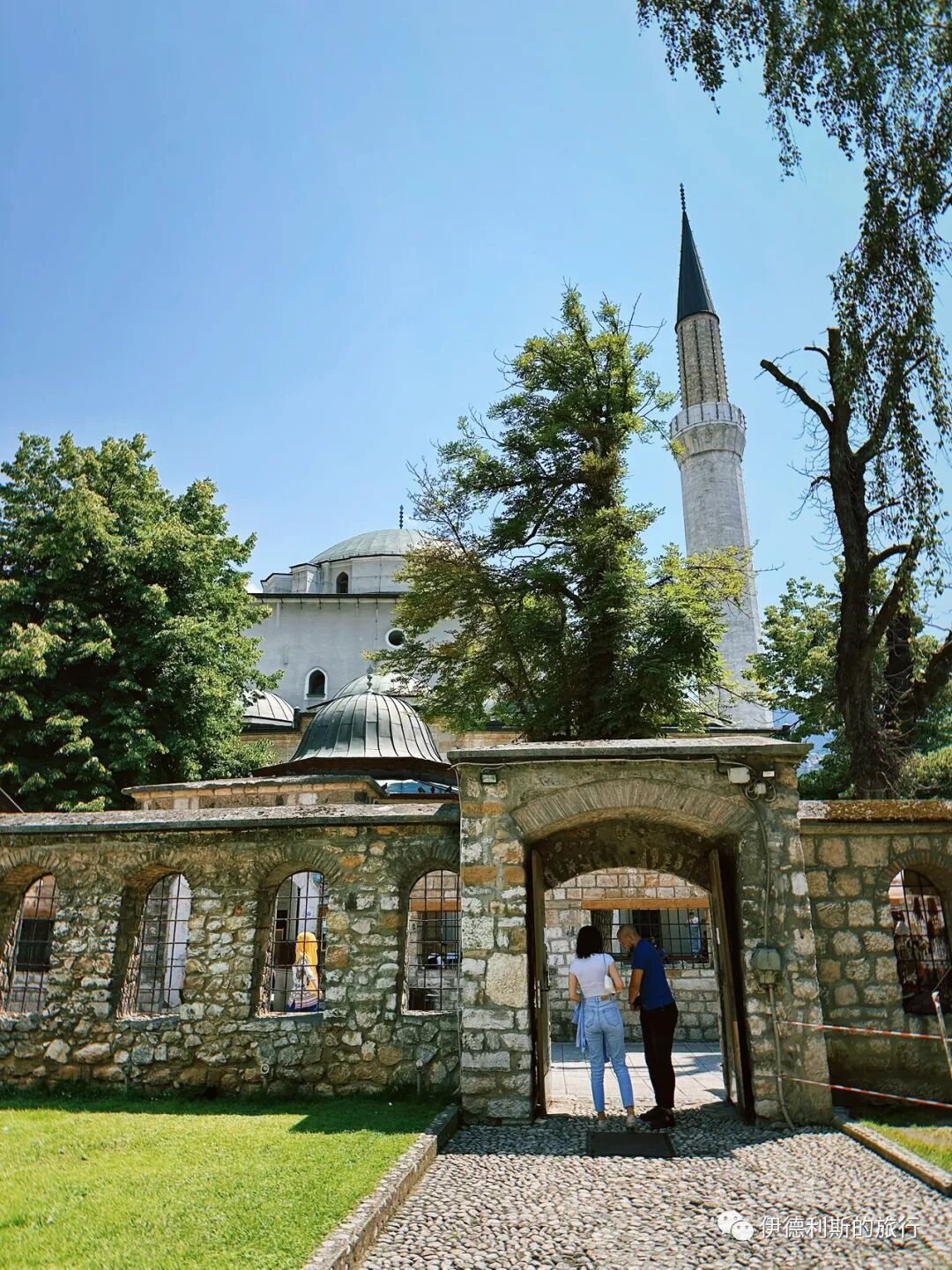
Gazi Husrev Bey was the Ottoman governor (Sanjak-bey) of Bosnia from 1521 to 1541. During his rule, the Ottoman Empire continued to expand into Croatia and Hungary. He also funded many important buildings in Sarajevo and dedicated his wealth to supporting religious and educational institutions for the long term. The foundation (Wakof) established by Gazi Husrev Bey manages the mosque, public kitchen, hostel, Sufi lodge, madrasa, library, clock tower, mausoleum, inn, hospital, fountain, primary school, and many shops in the center of the Old Bazaar in Sarajevo, making it the most important building complex in the old city.
Mosque
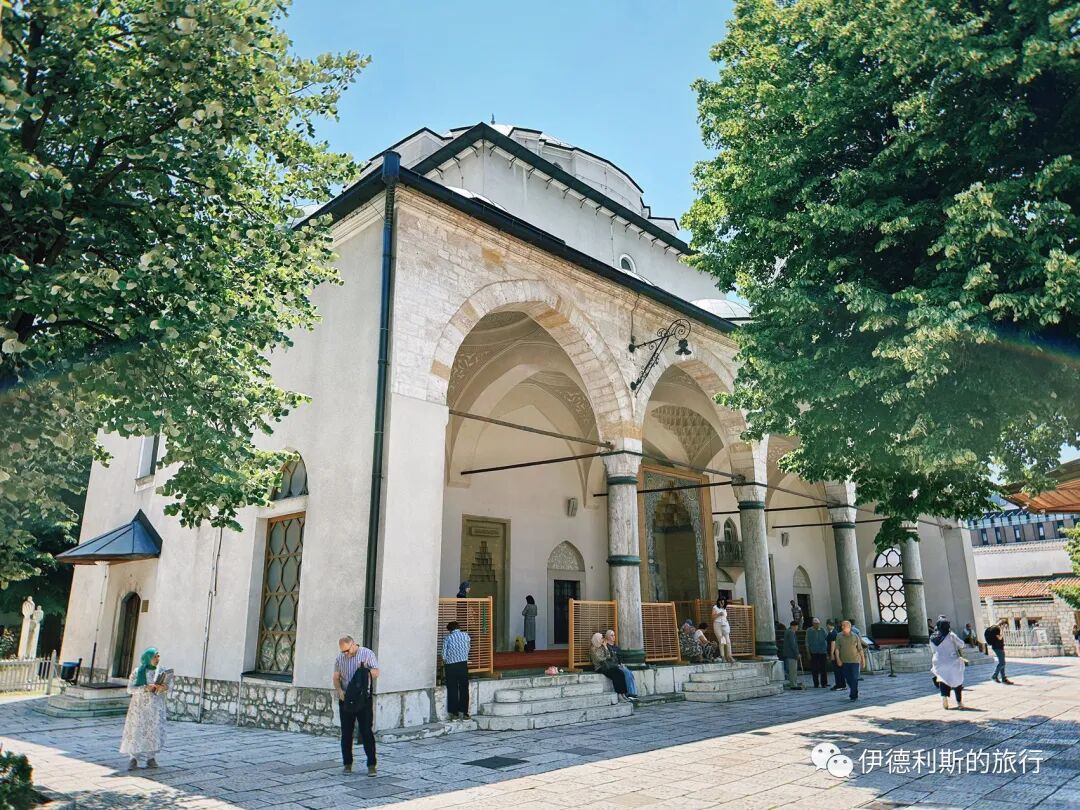
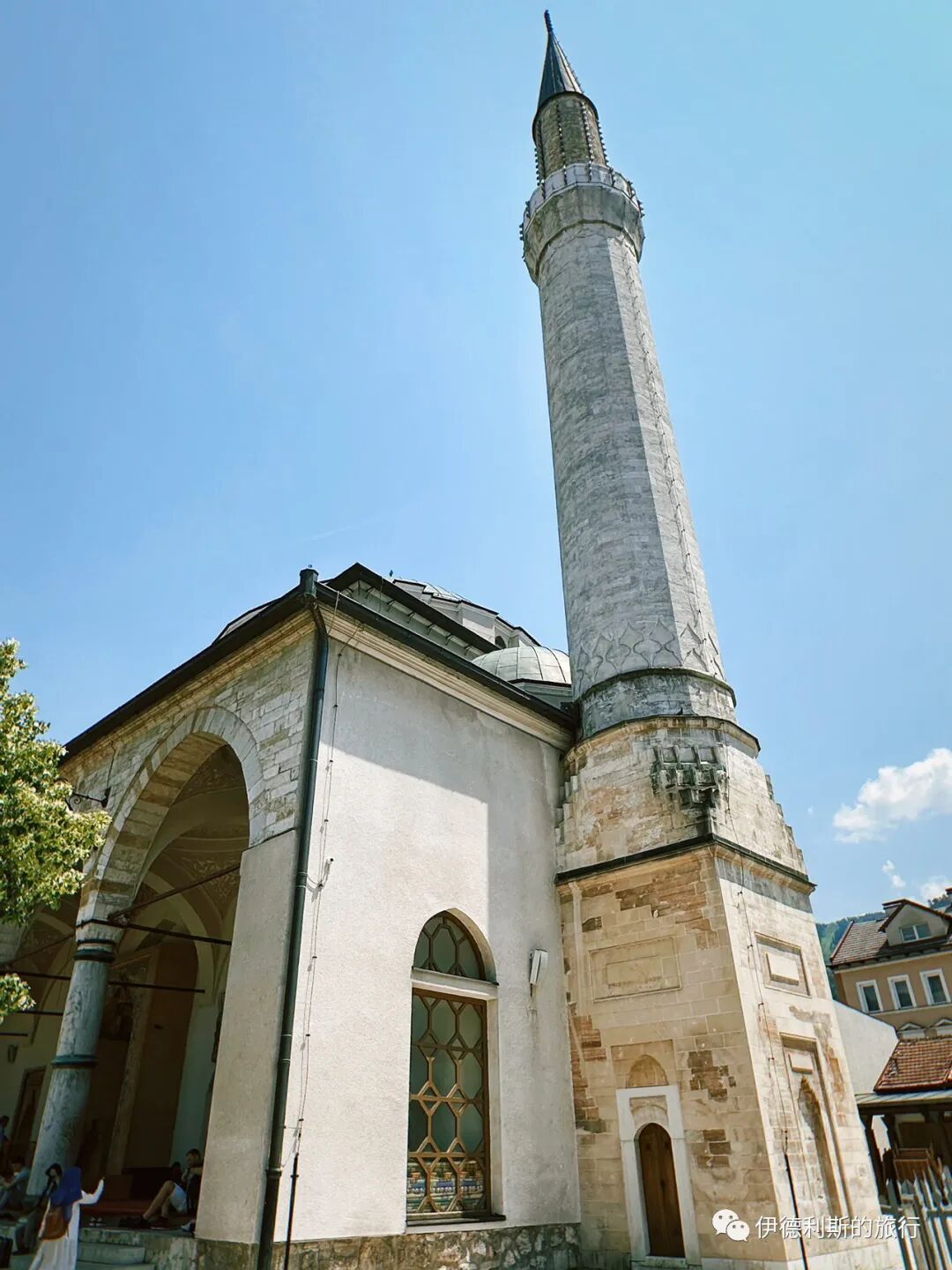
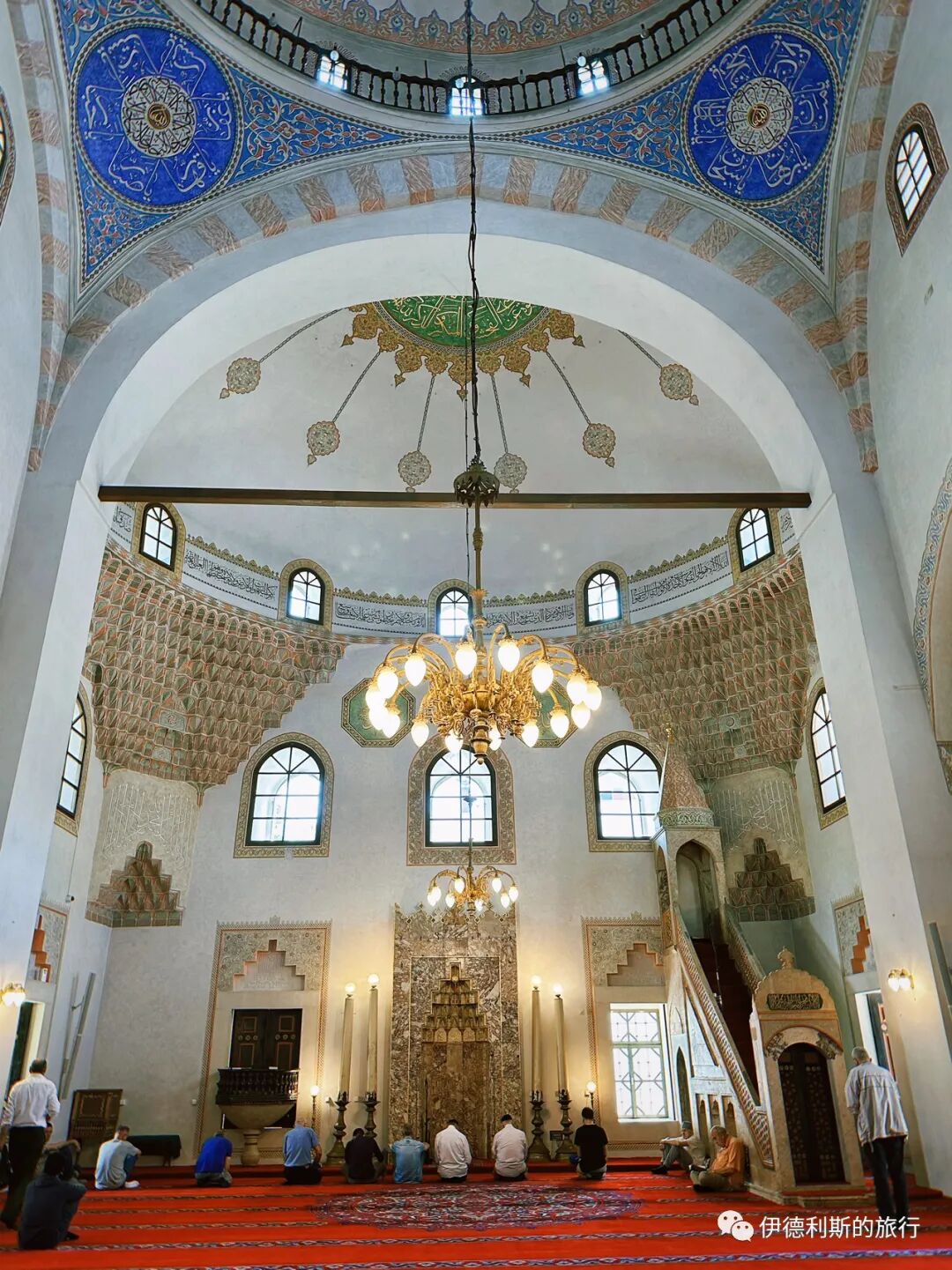
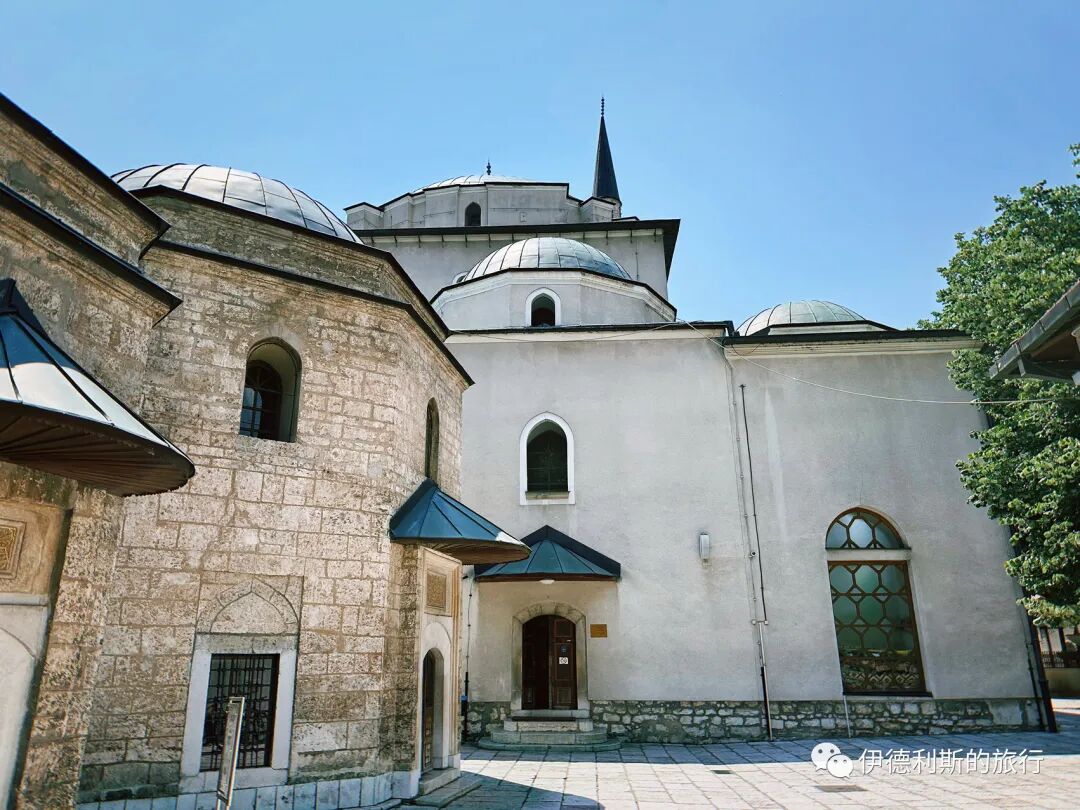
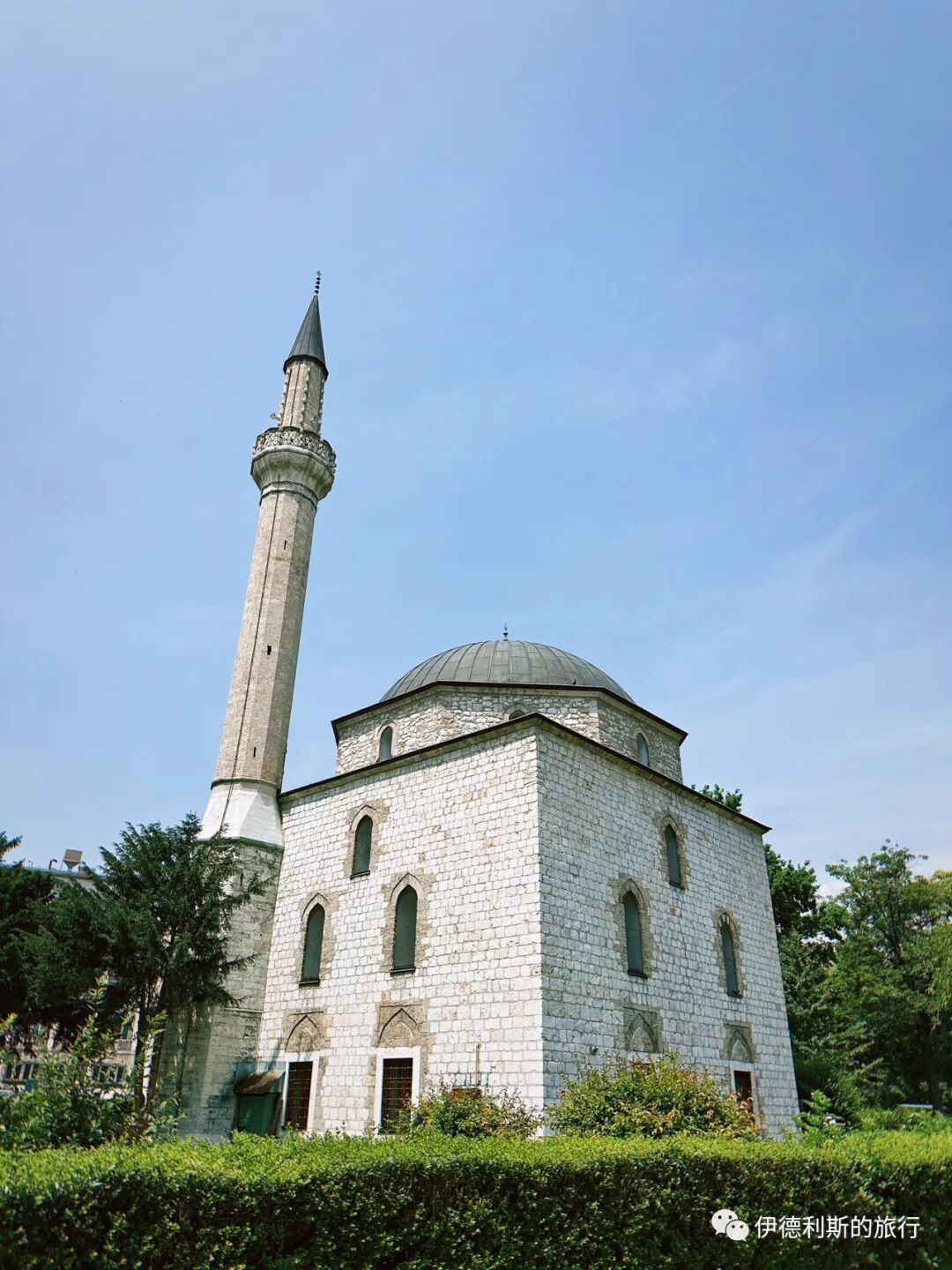
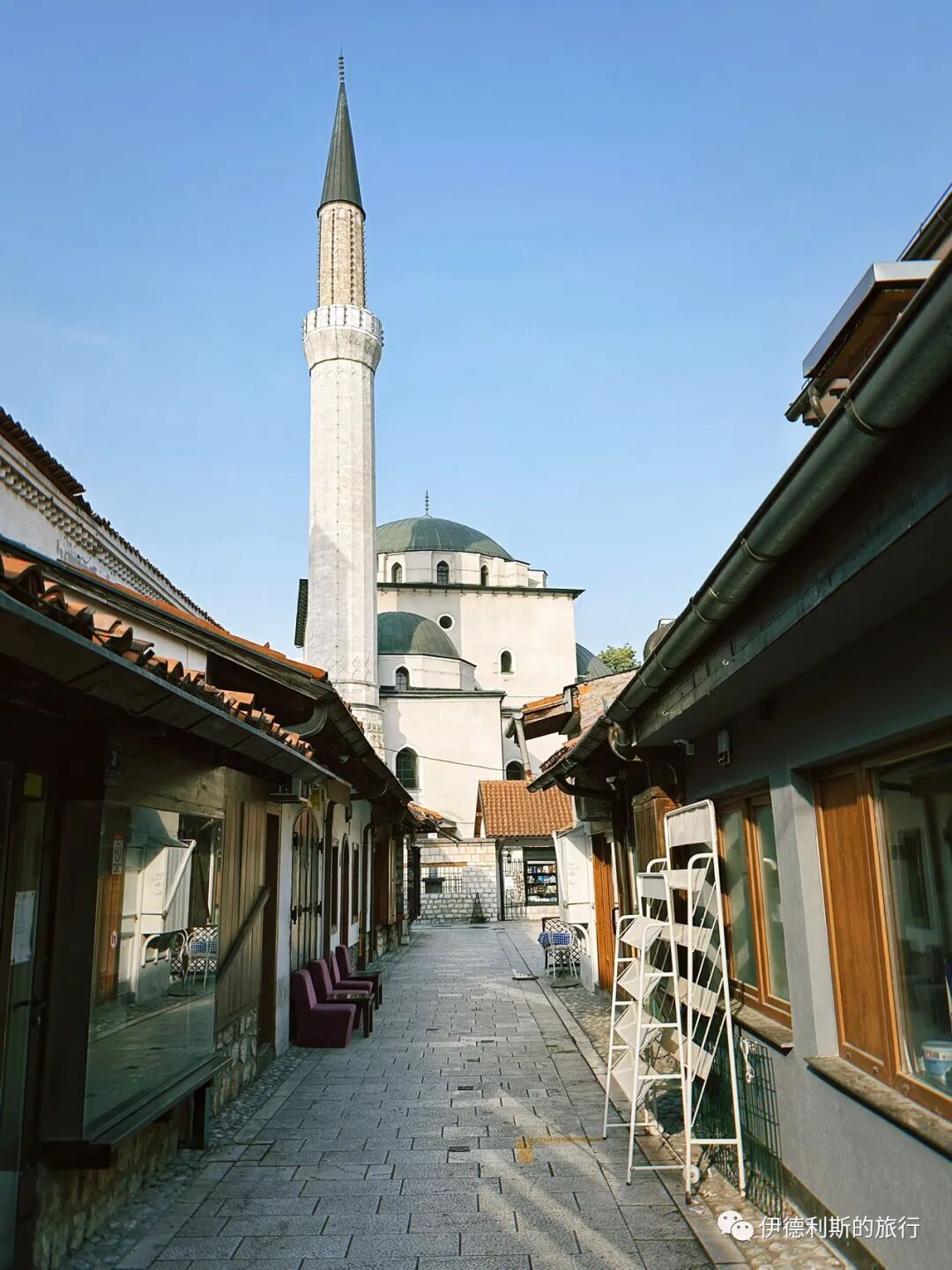
When the adhan sounded, we rushed to the Gazi Husrev Bey Mosque, the most important Friday mosque in Bosnia and Herzegovina. It is the core landmark of the Old Bazaar in Sarajevo and has been the city's central mosque since it was built in 1530. Important scenes from the movie 'Walter Defends Sarajevo,' well-known to Chinese audiences, were filmed here. It was also the first mosque in the world to have electricity and electric lights in 1898.
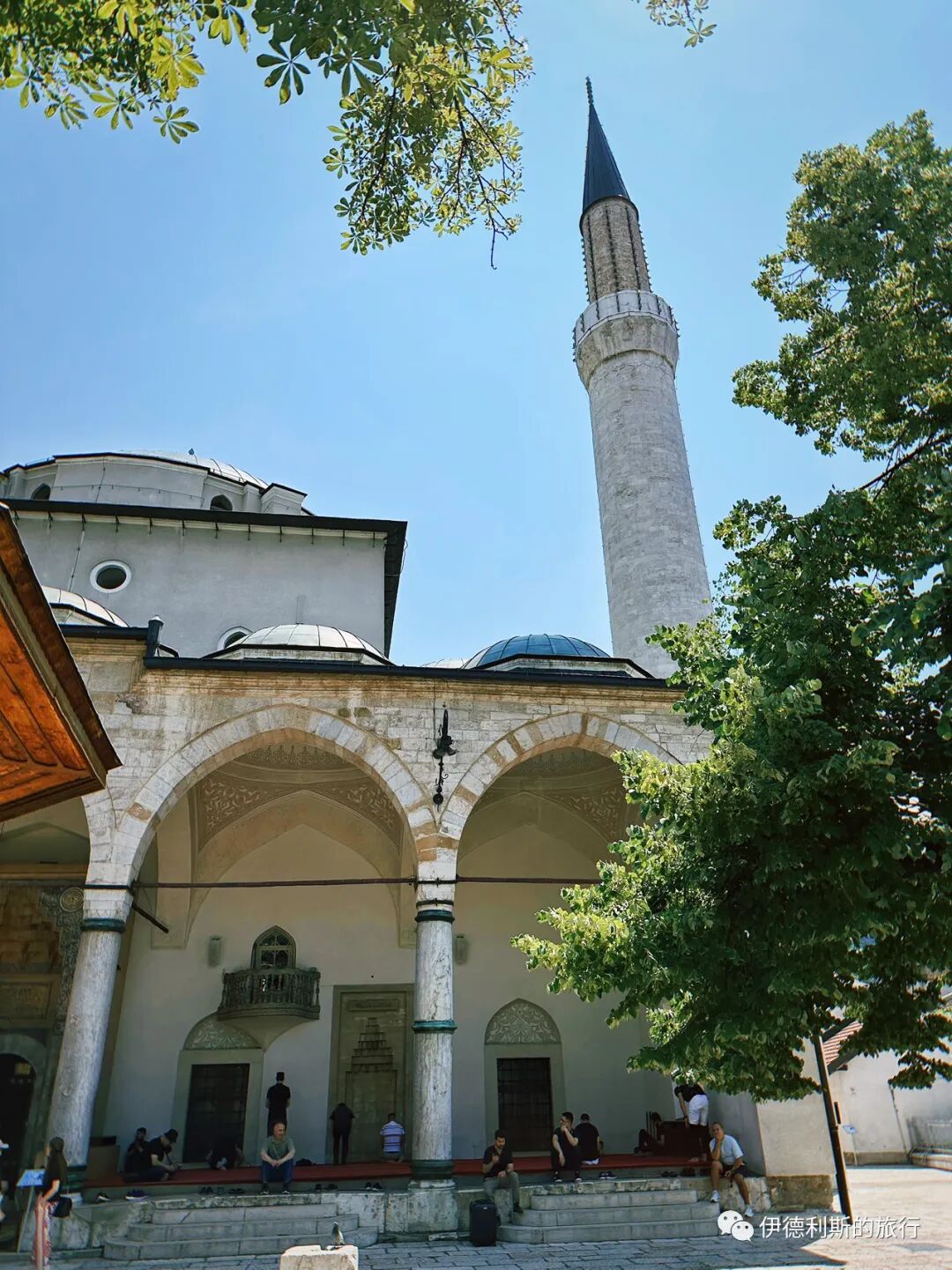
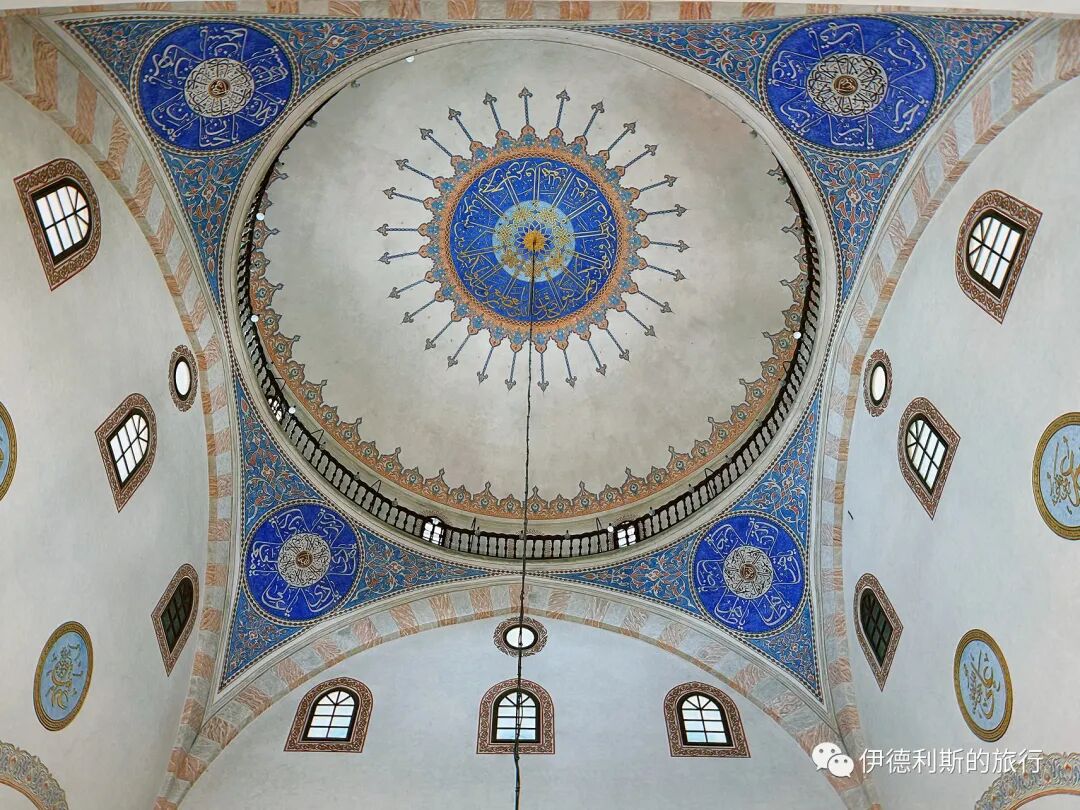
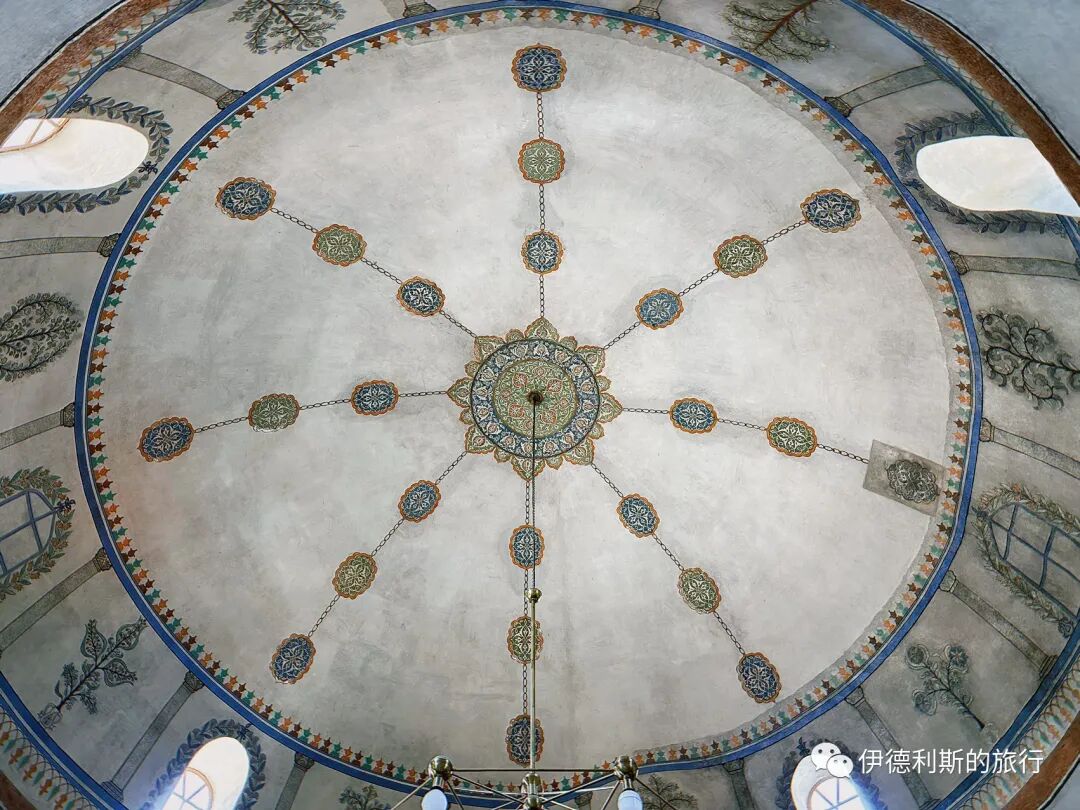
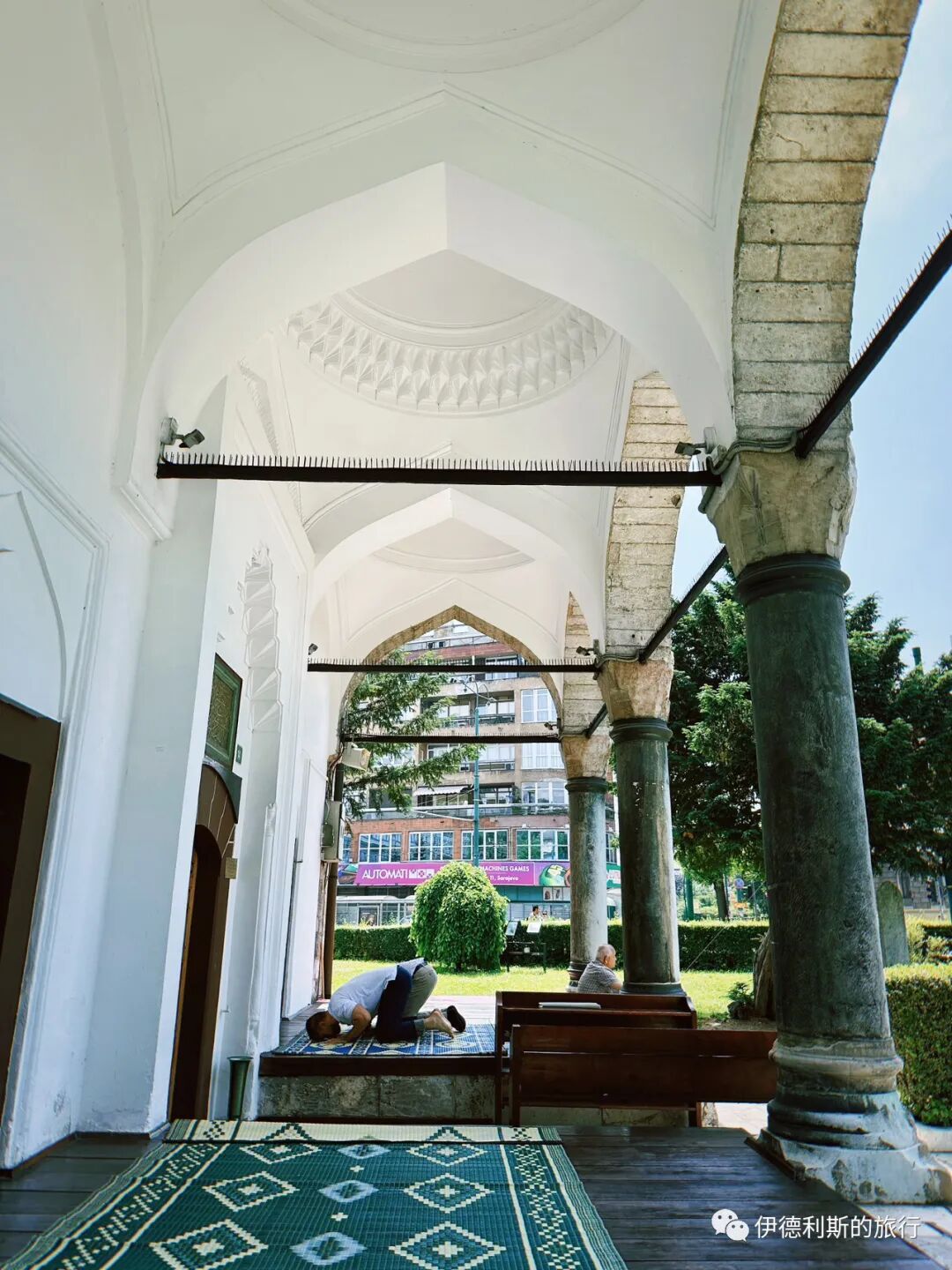
The Gazi Husrev Bey Mosque was designed and built by the Ottoman court architect Adzem Esir Ali, who came from Tabriz, Persia. He built many structures in Istanbul during the early 16th century and was one of the founders of the early Istanbul architectural school. The main hall is 13 meters long and 13 meters wide, with a central dome 26 meters high, achieving a perfect one-to-two ratio. The front porch consists of five small domes supported by four marble columns.
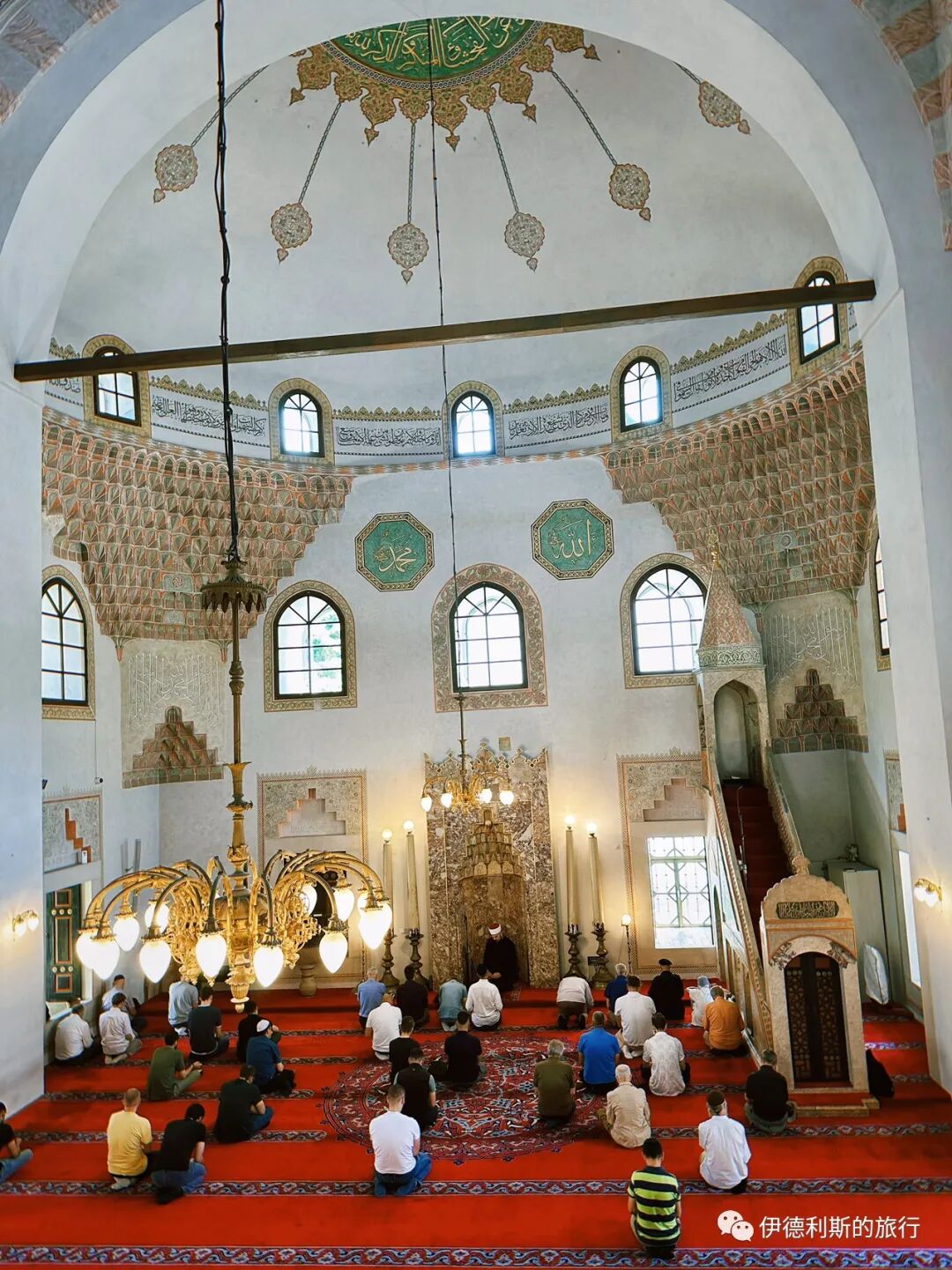
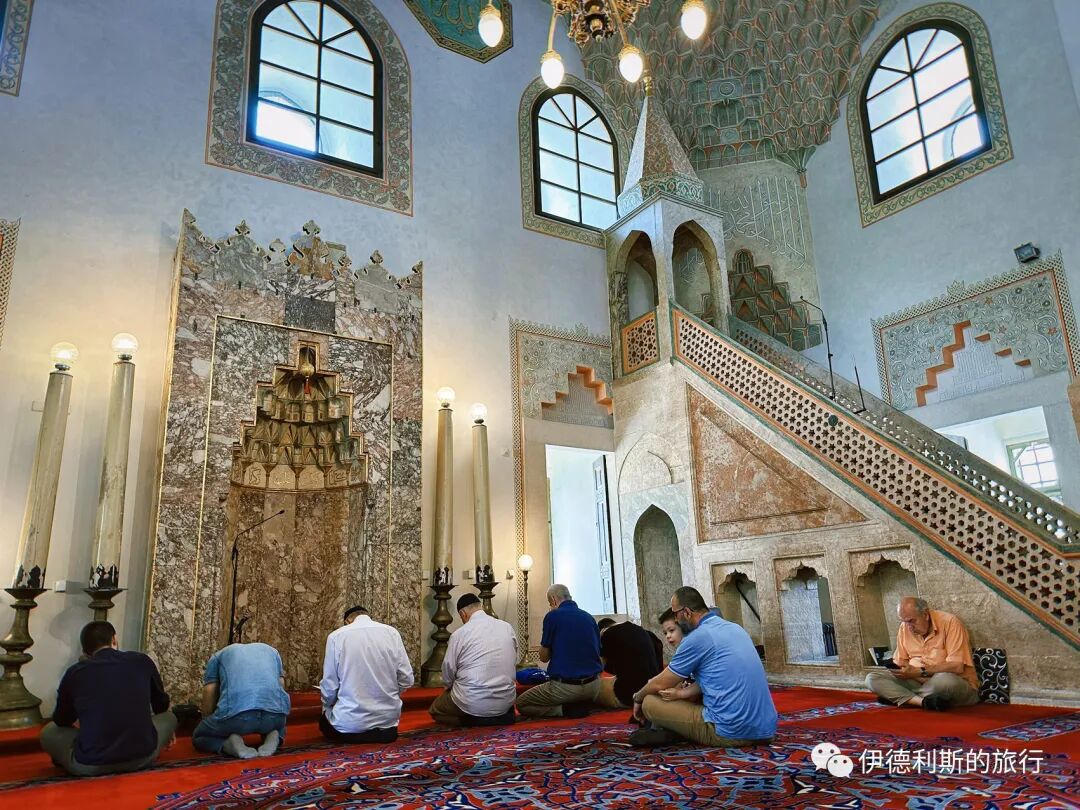
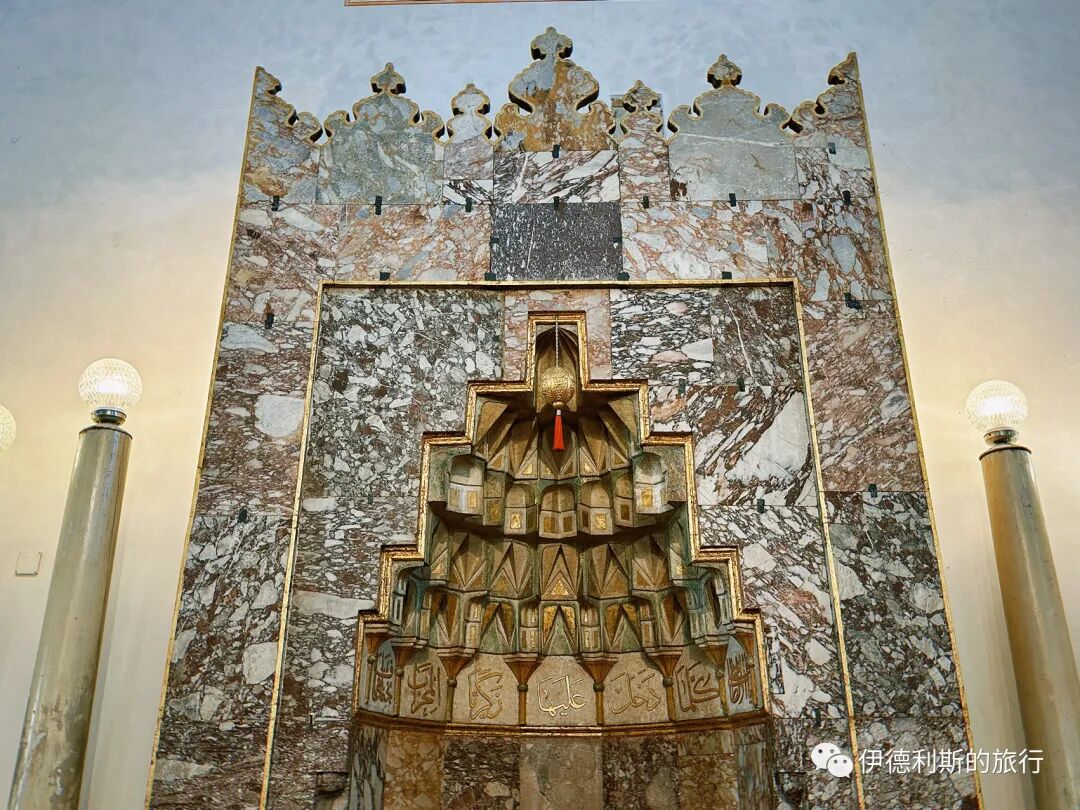
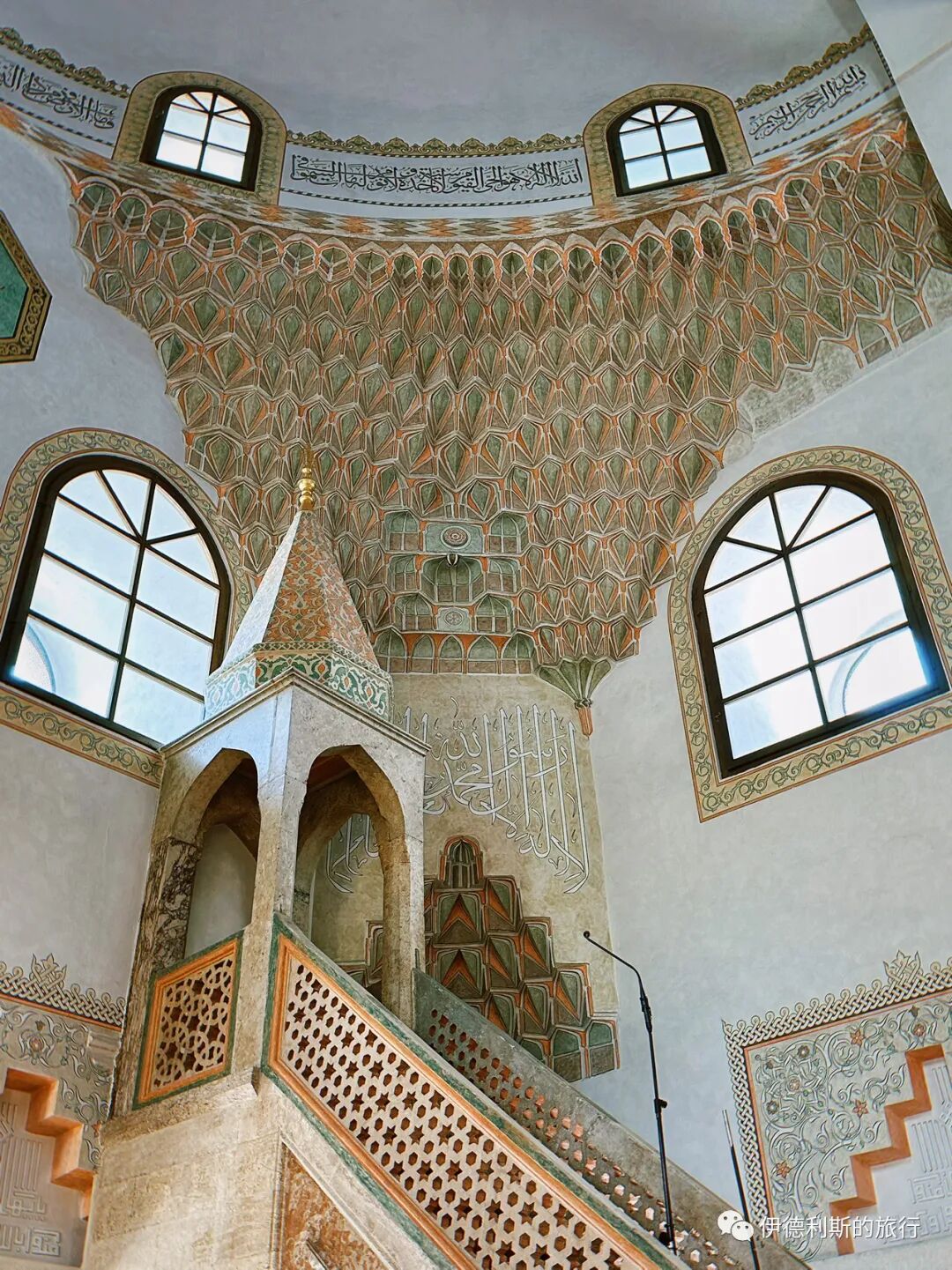
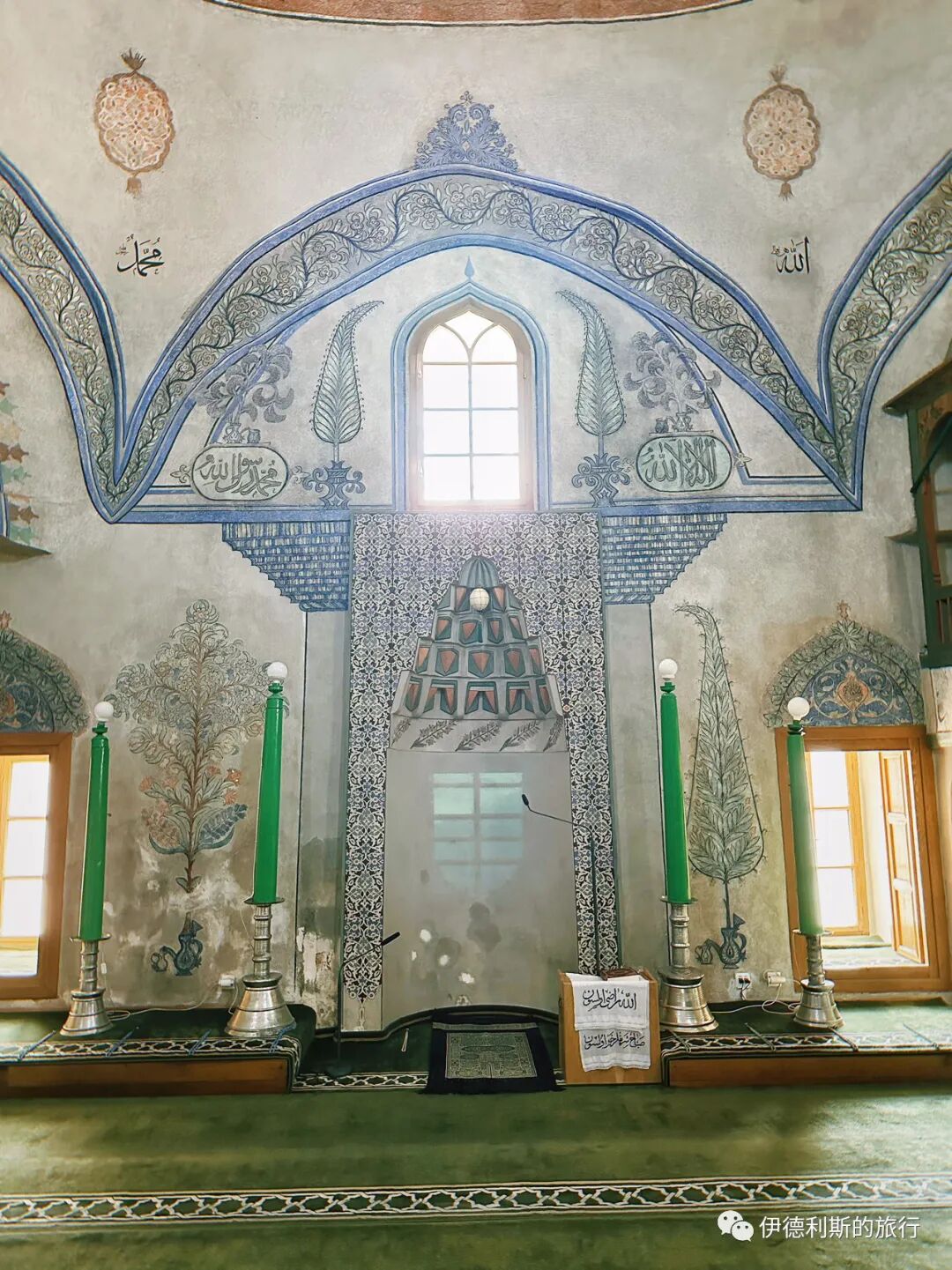
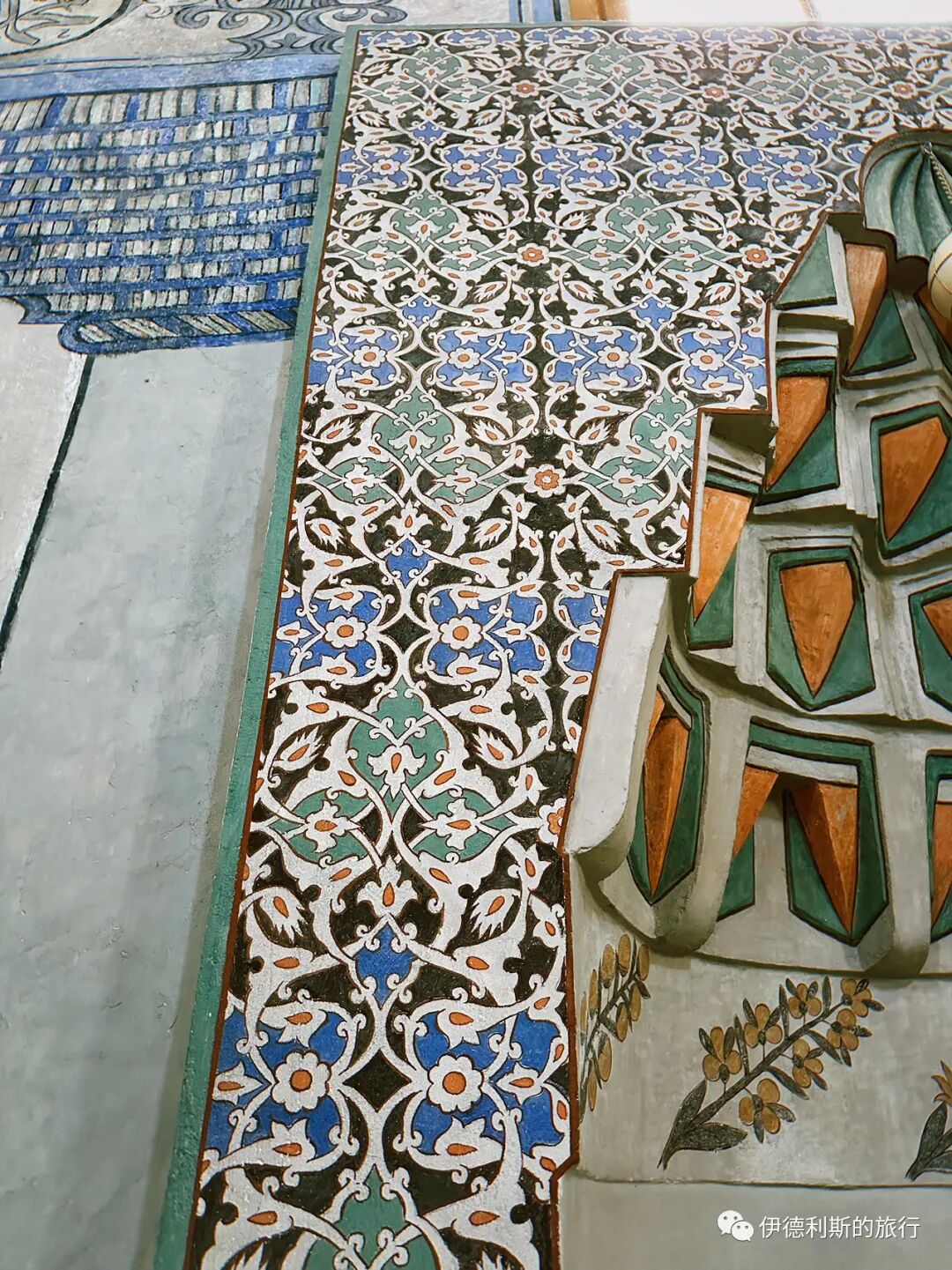
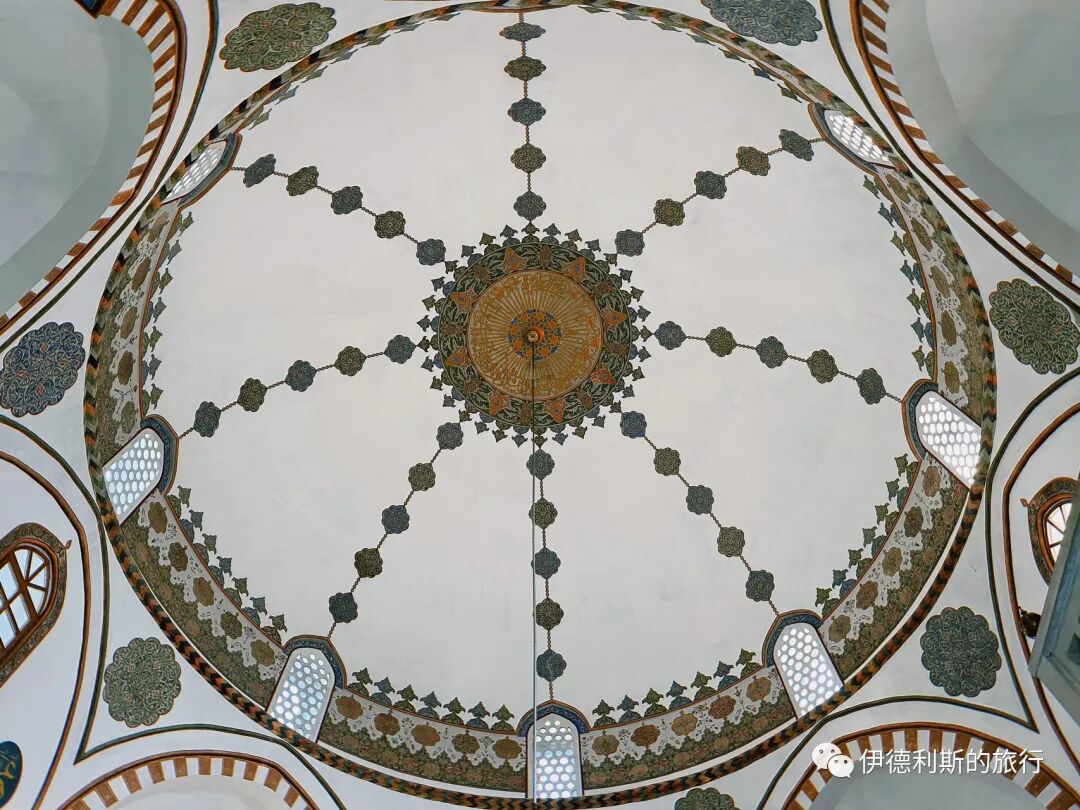
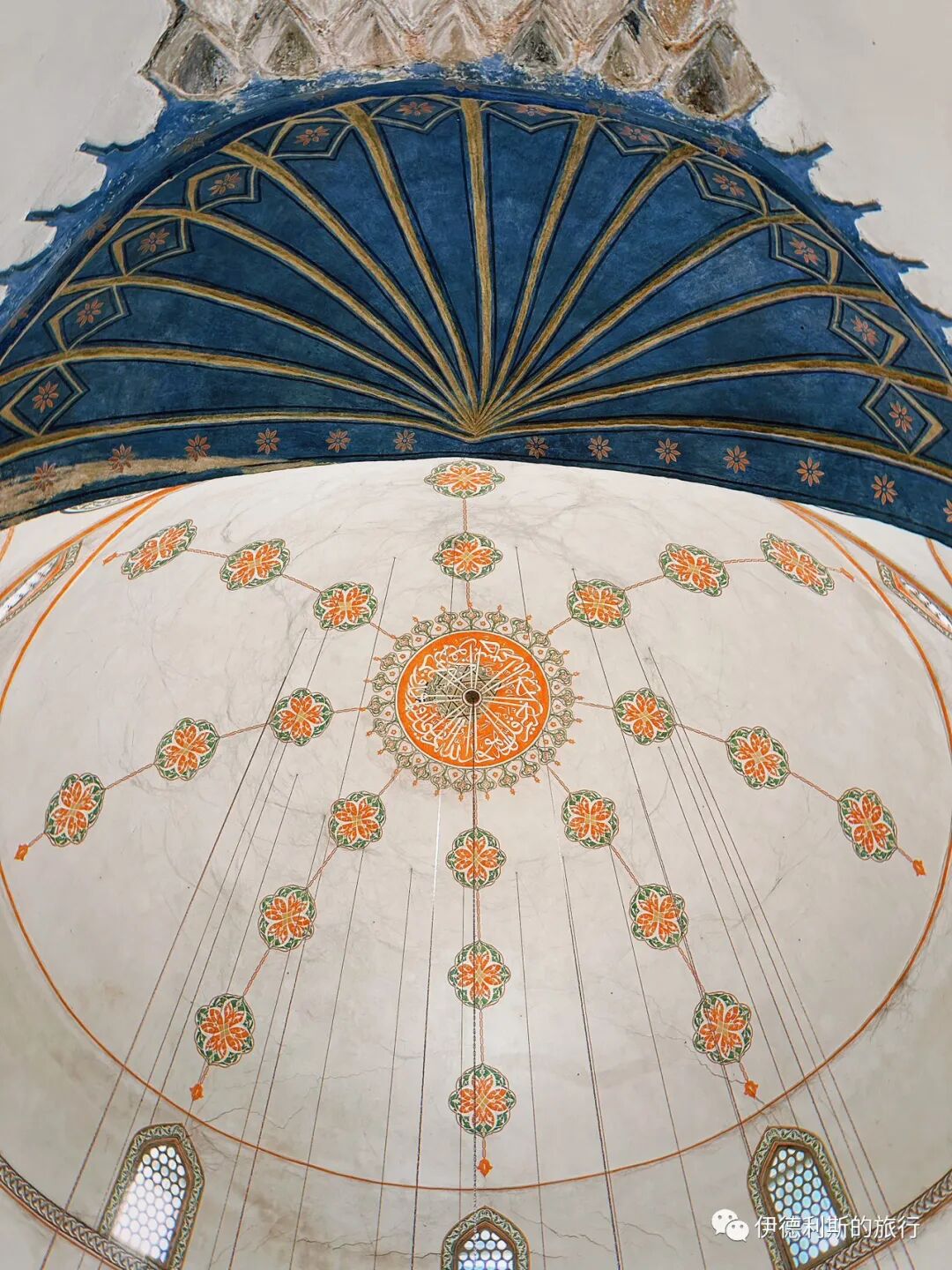
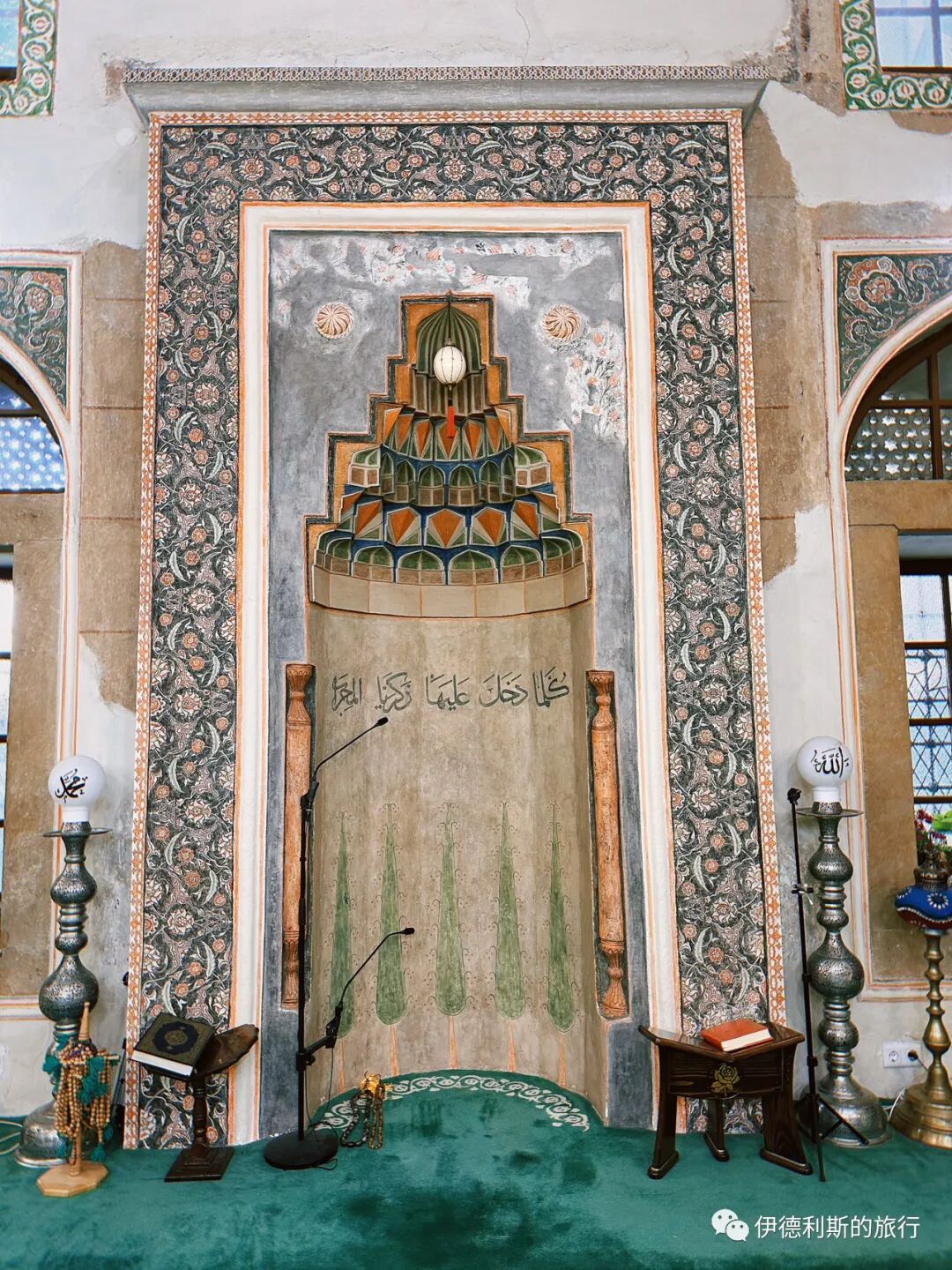
The interior paintings of the mosque were damaged by fire and later repainted in 1886 by the Austro-Hungarian Empire in a Moorish Revival style. During the Siege of Sarajevo from 1992 to 1995, the Gazi Husrev Bey Mosque was hit by over 100 mortar shells, causing major damage, and was repaired after the ceasefire in 1996. During the restoration, the late 19th-century Austro-Hungarian paintings were removed, and new interior decorations were painted by Bosnian calligrapher Hazim Numanagić between 2001 and 2002.
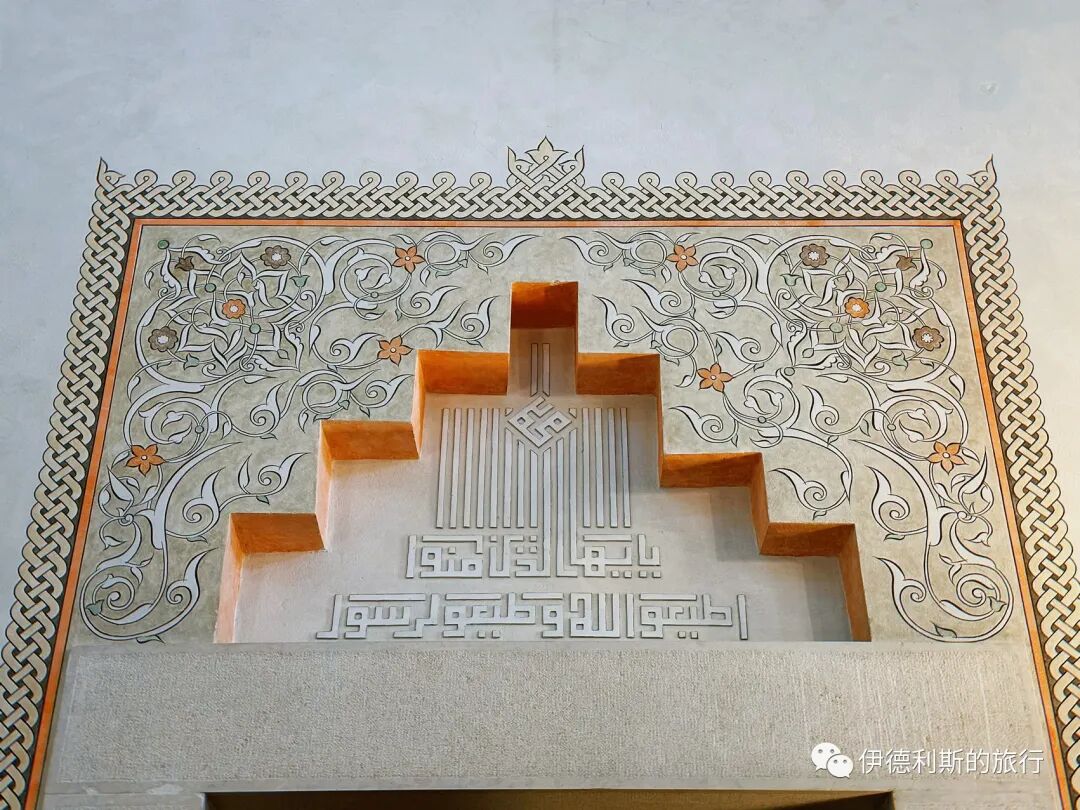
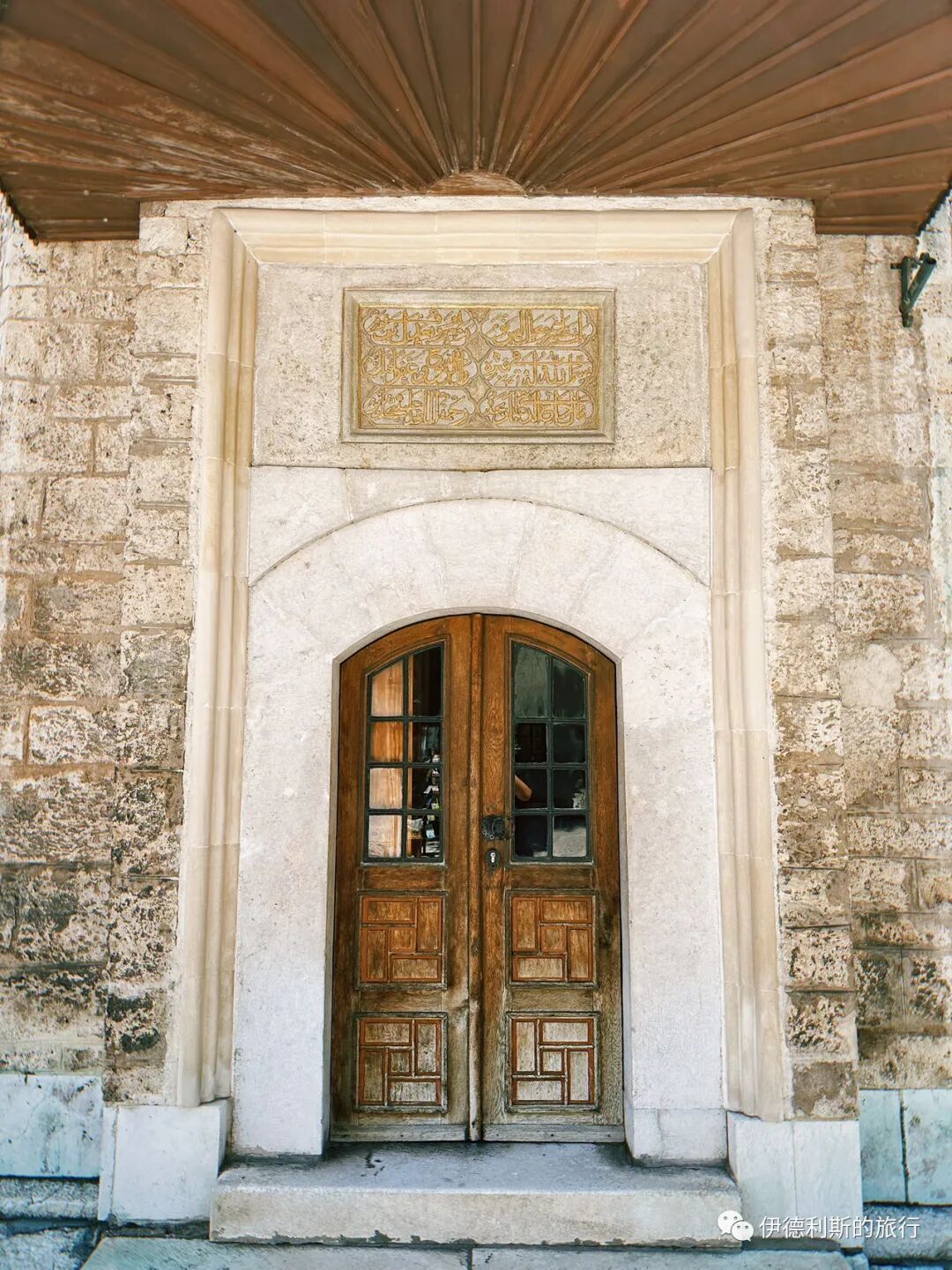
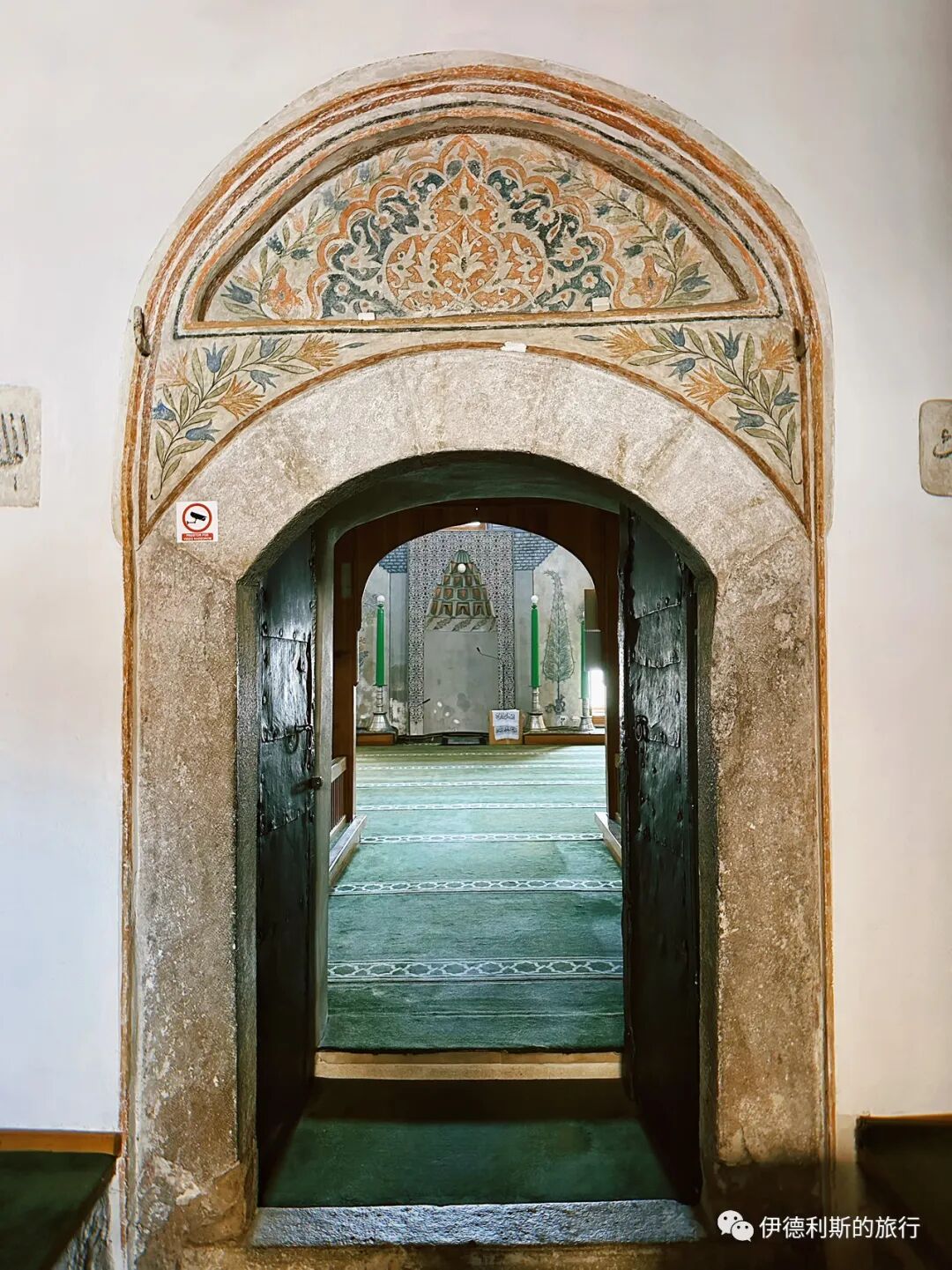
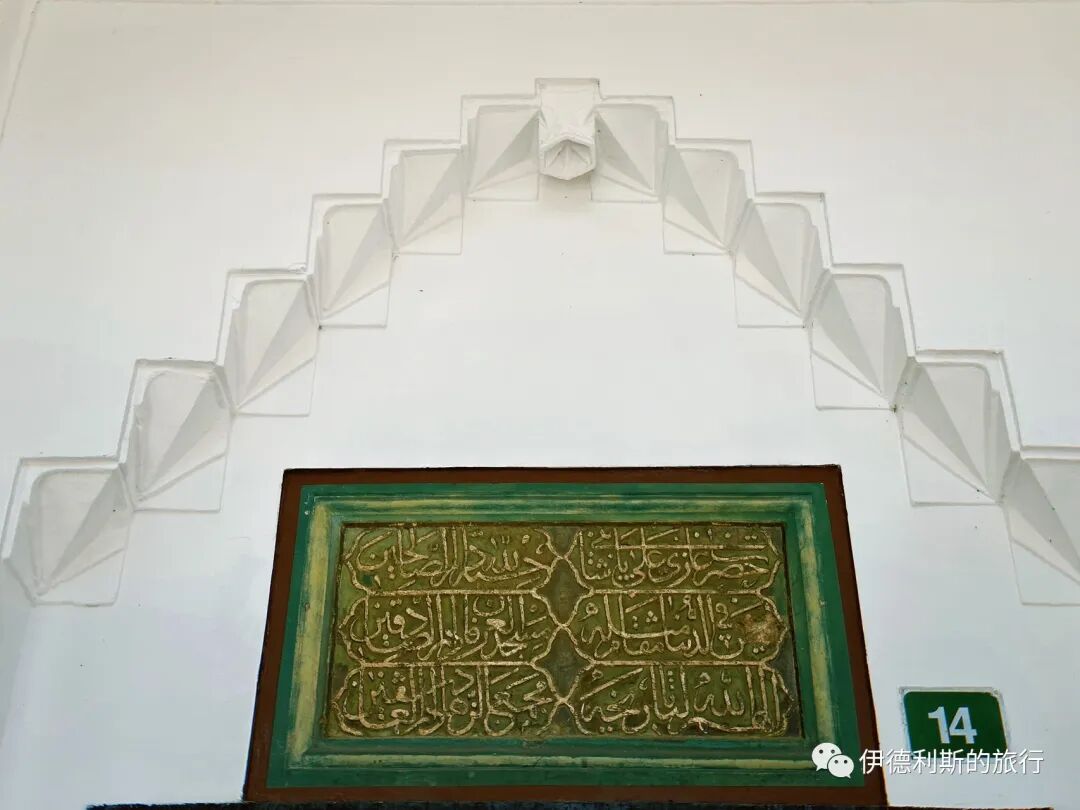
The mosque's main gate is beautifully decorated with intricate marble and gilded carvings. The Arabic calligraphy on the door adds up to the number 938, which is the year the mosque was built according to the Islamic calendar (1530/31 AD).
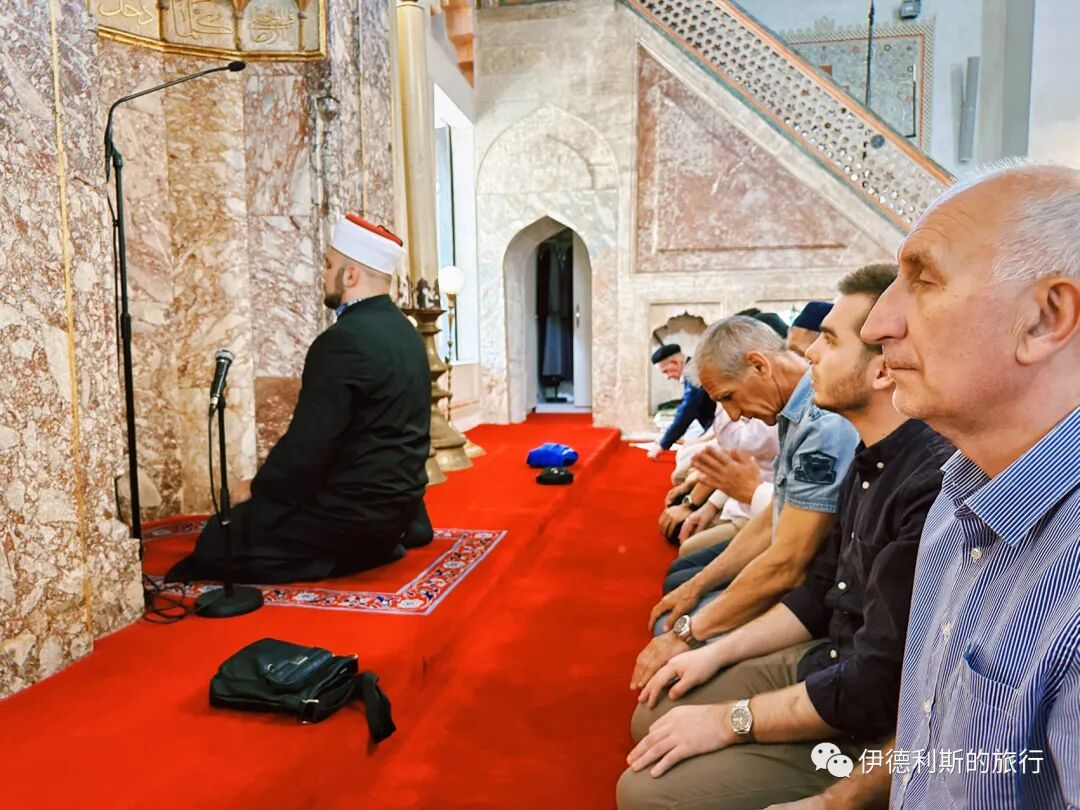
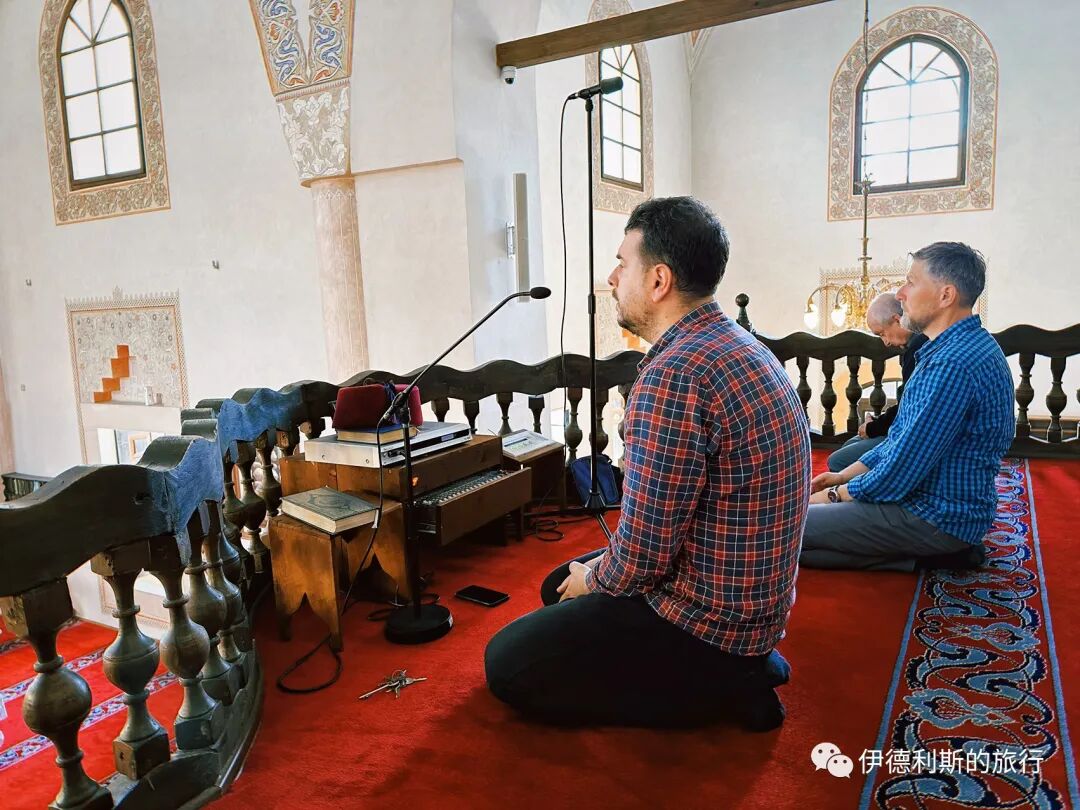
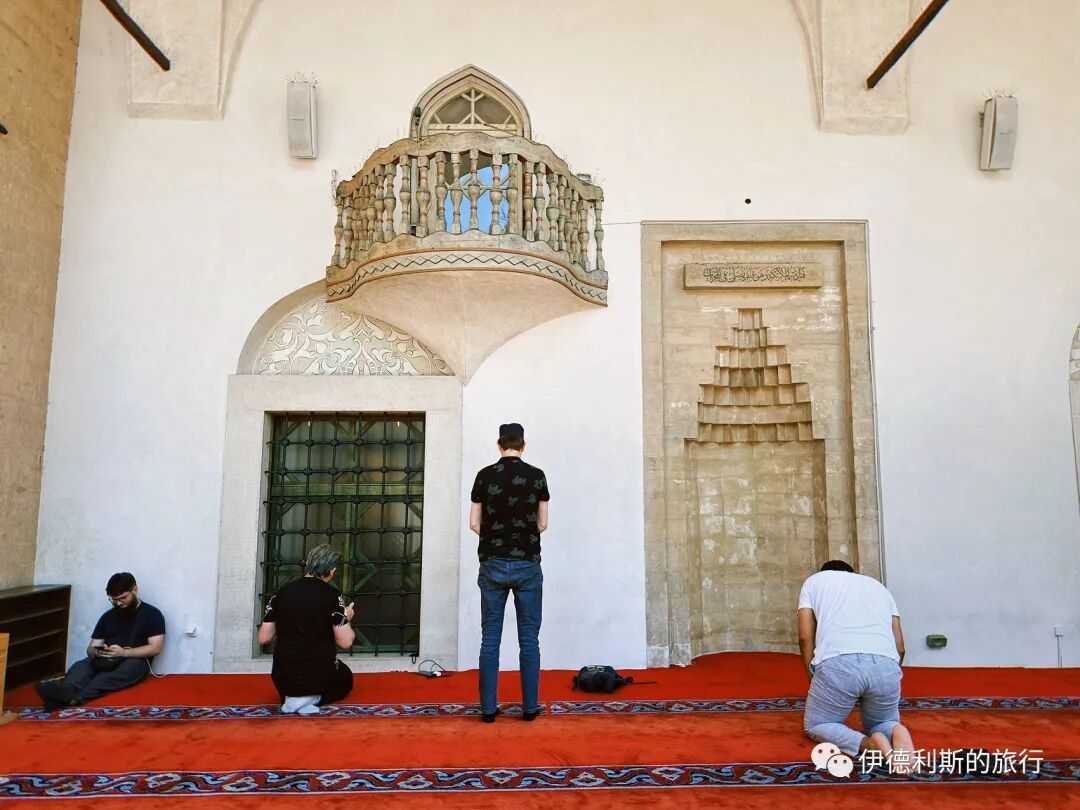
The muezzin calls the adhan and responds to the imam from a platform called Müezzin Mahfili in Turkish or Dikka in Arabic, where people also recite the Quran during nights in Ramadan. Usually, only large mosques have a Dikka platform built across from the minbar pulpit. Before sound systems existed, not everyone could hear the imam leading the namaz, so the muezzin needed to stand on the platform to make sure everyone could hear.
The area inside the railing below the Dikka platform was once a place for high-ranking officials and royalty to pray, known as the Hünkâr Mahfili. In royal mosques, the Hünkâr Mahfili is usually an elevated platform, while in smaller ones, it is a railed area on the ground floor. Today, everyone can pray here, but the railing has been kept.
Fountain
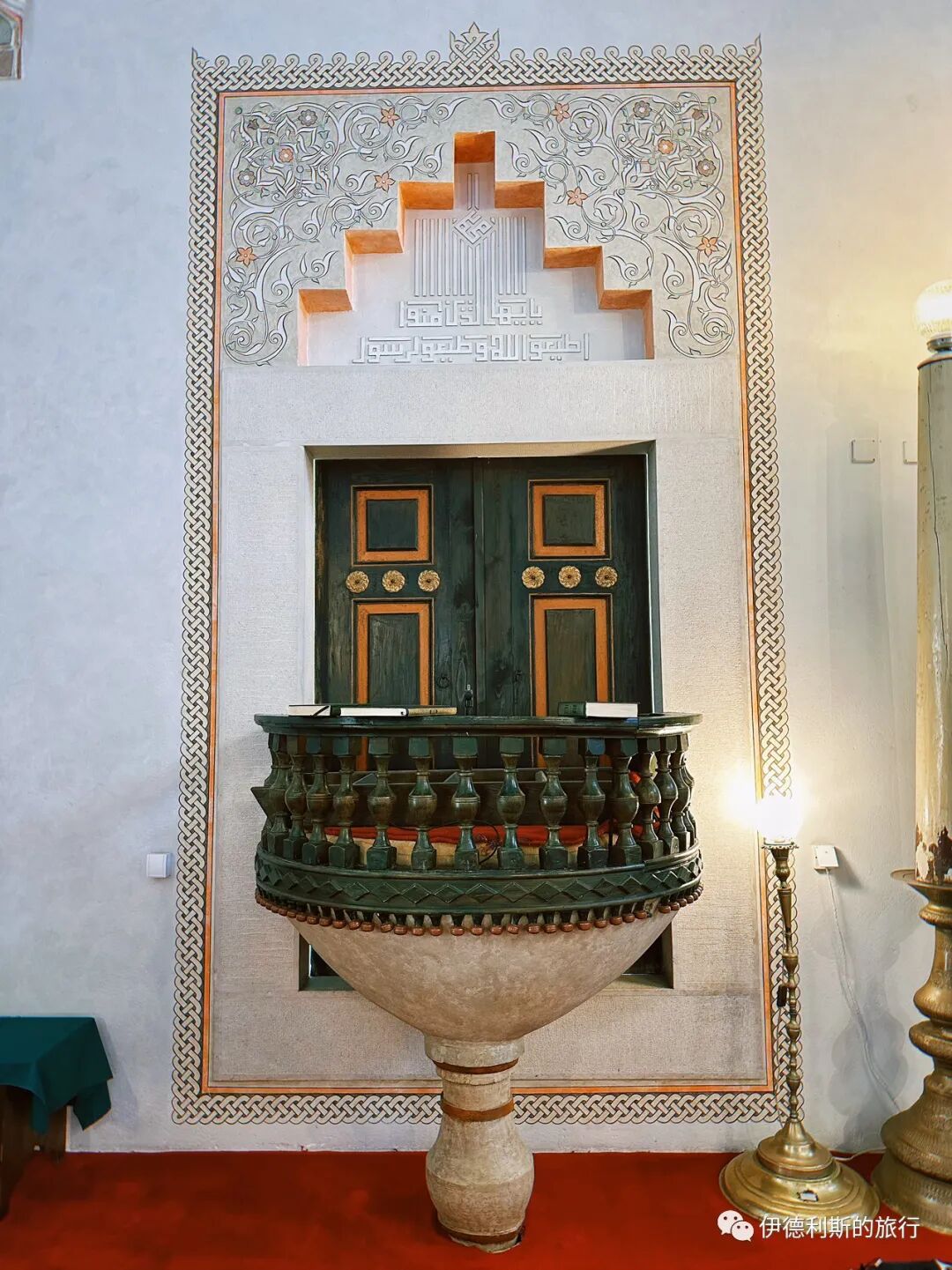
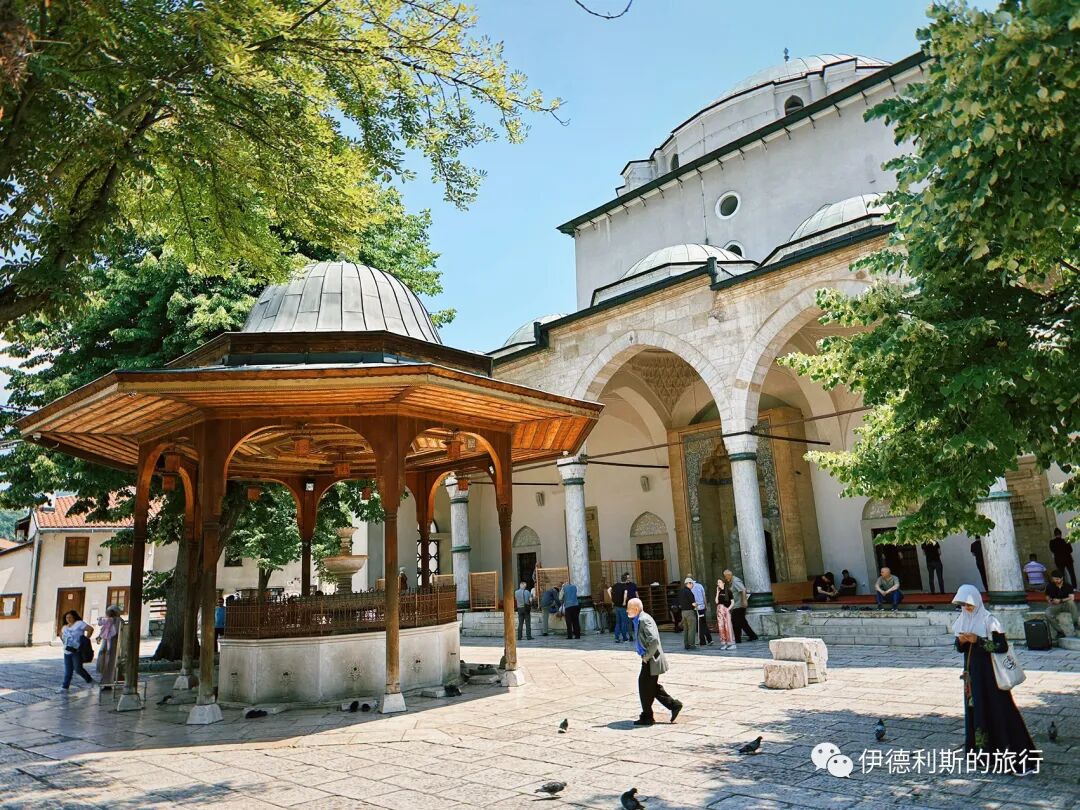
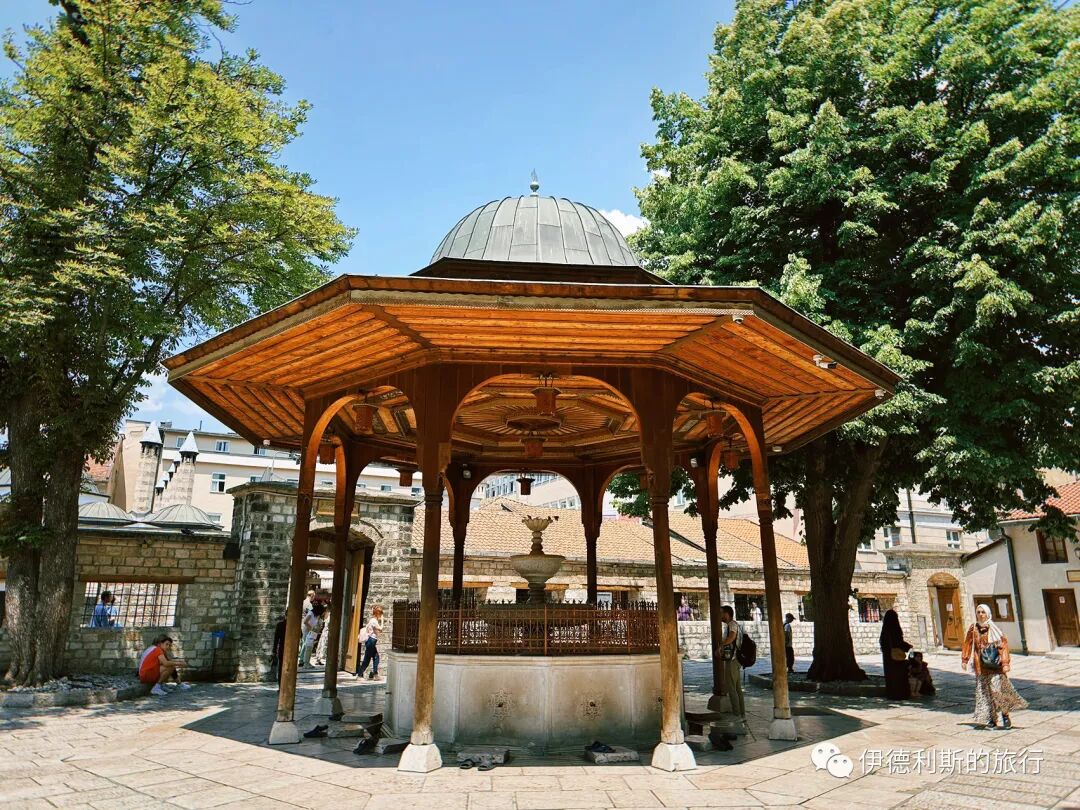
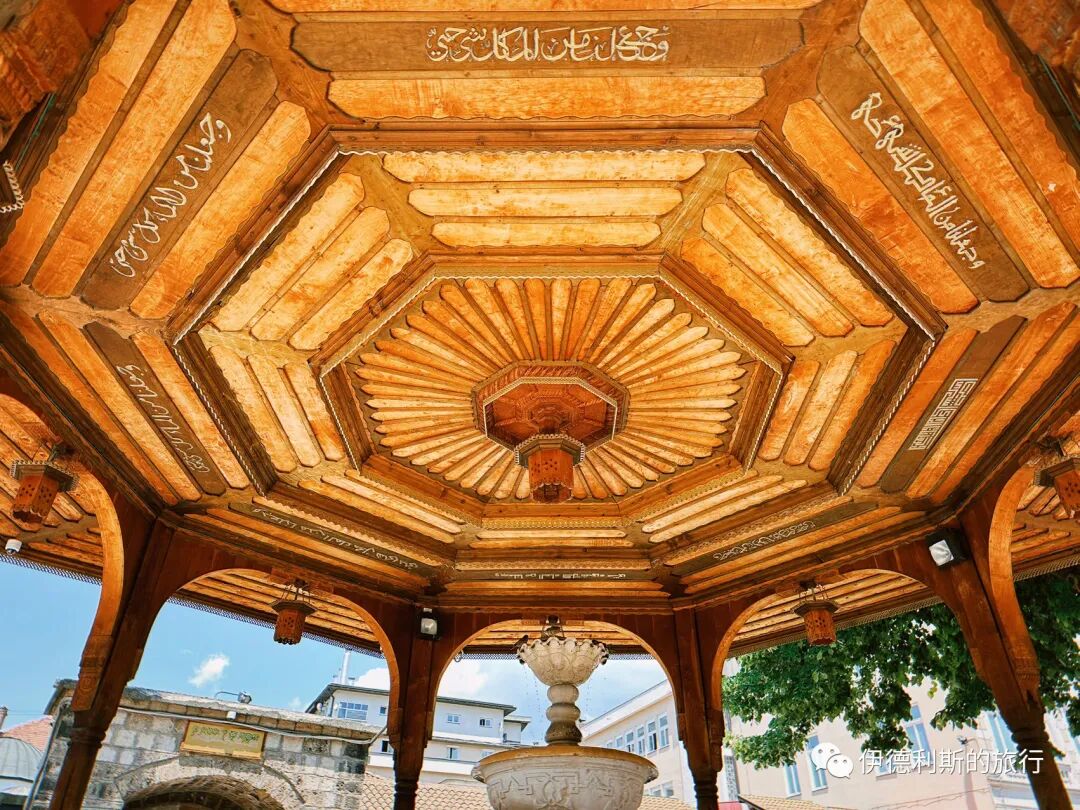
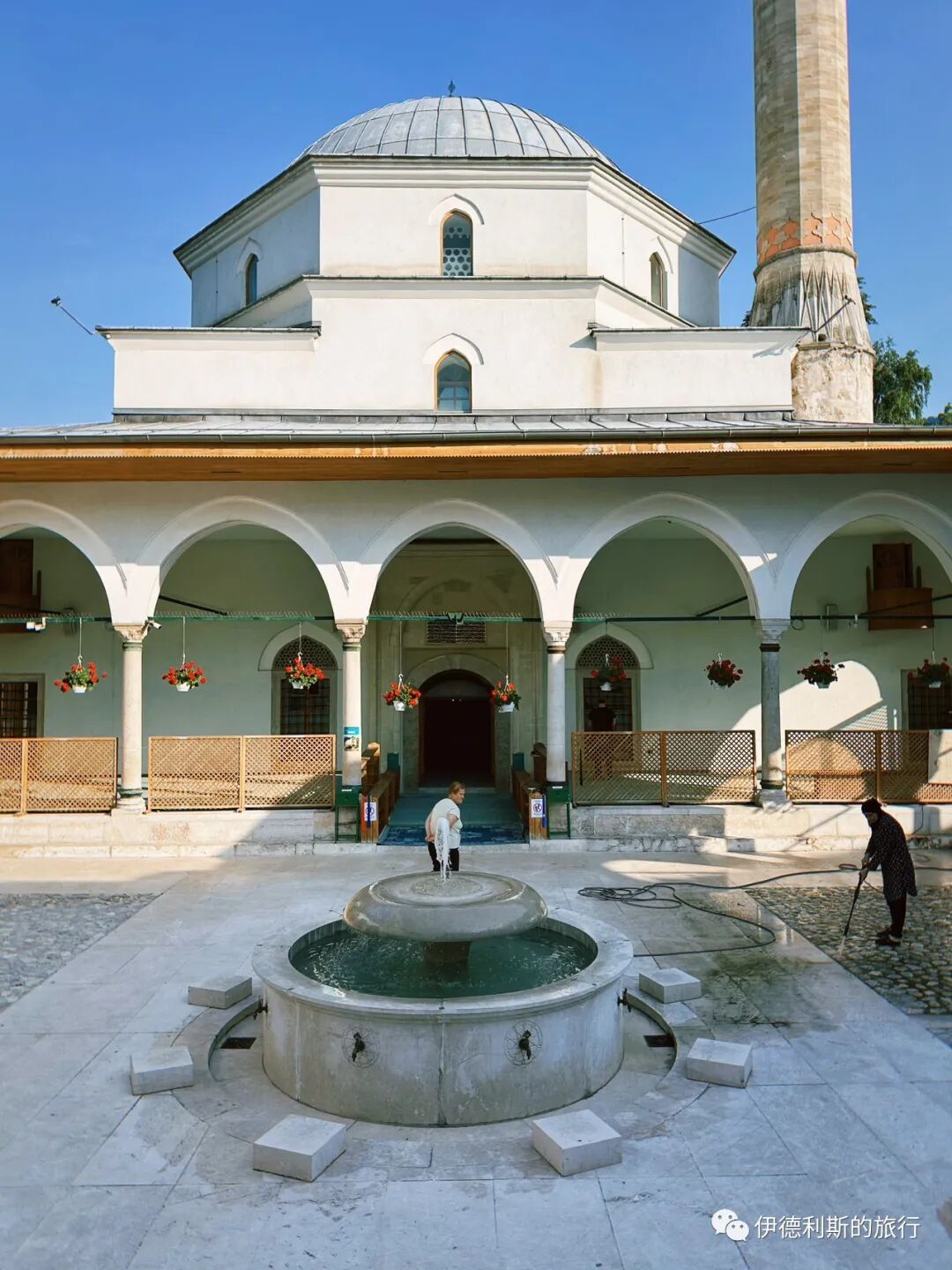
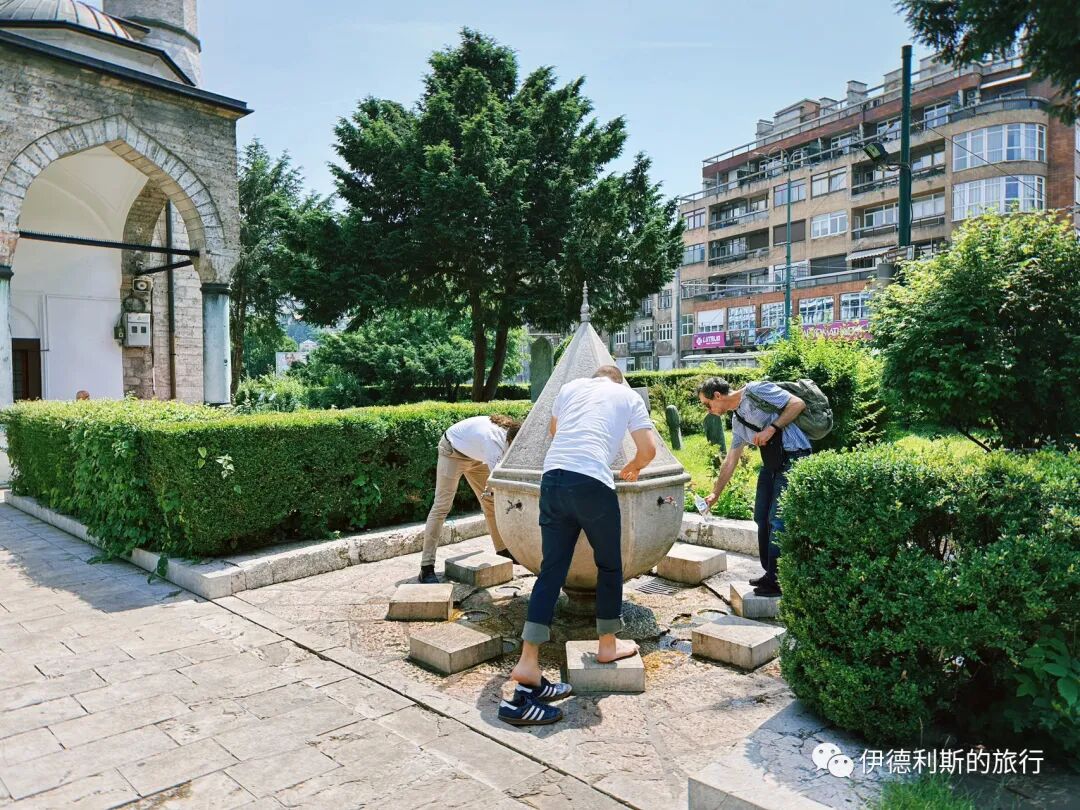
In front of the main hall of the Gazi Husrev Bey Mosque is the Shadirvan fountain. This type of fountain used for drinking and performing wudu originated in Persia and later became a typical architectural element of the Ottoman Empire, usually placed in the center of courtyards in mosques, caravanserais, dervish lodges, and madrasas.
This Shadirvan fountain was first built in 1530, with water coming from the Crnilo spring 7 kilometers away through clay pipes connected to the city of Sarajevo. It was rebuilt in 1893, modeled after the fountain at the Great Mosque of Bursa in Turkey, and connected to a modern water supply system. The fountain was severely damaged during the war from 1992 to 1995 and was rebuilt to its original appearance in 1997. You can still see three water basins from the original fountain in the mosque courtyard today.
There is a drinking fountain for passersby along the wall in the northwest corner of the courtyard, a common sight in Ottoman cities.
Muwaqqithana
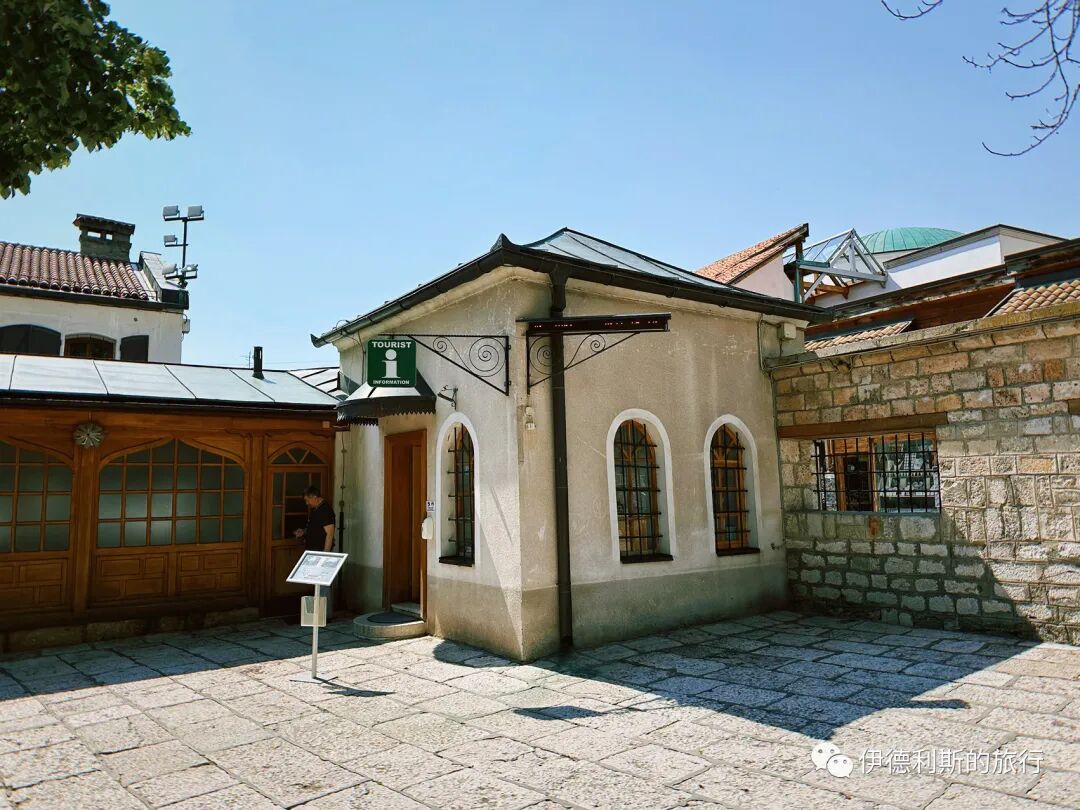
In the northwest corner of the mosque sits a small building from 1859 called the Muwaqqithana, where an astronomer known as a Muwaqqit used calculations to set the times for namaz and fasting. Early mosques mostly relied on a muezzin to watch shadow lengths and twilight to set prayer times. By the late 13th century, during the Mamluk dynasty in Egypt, specialized astronomers called Muwaqqit began to appear, and this practice gradually spread everywhere.
Mausoleum
Gazi Husrev Bey was born in 1480 to a Bosnian noble father and a mother who was the daughter of the Ottoman Sultan Bayezid II. He lost both parents when he was very young and grew up in the Ottoman court. He later earned many military honors and was appointed governor of Bosnia in 1521, becoming one of Sultan Suleiman the Magnificent's most trusted men.
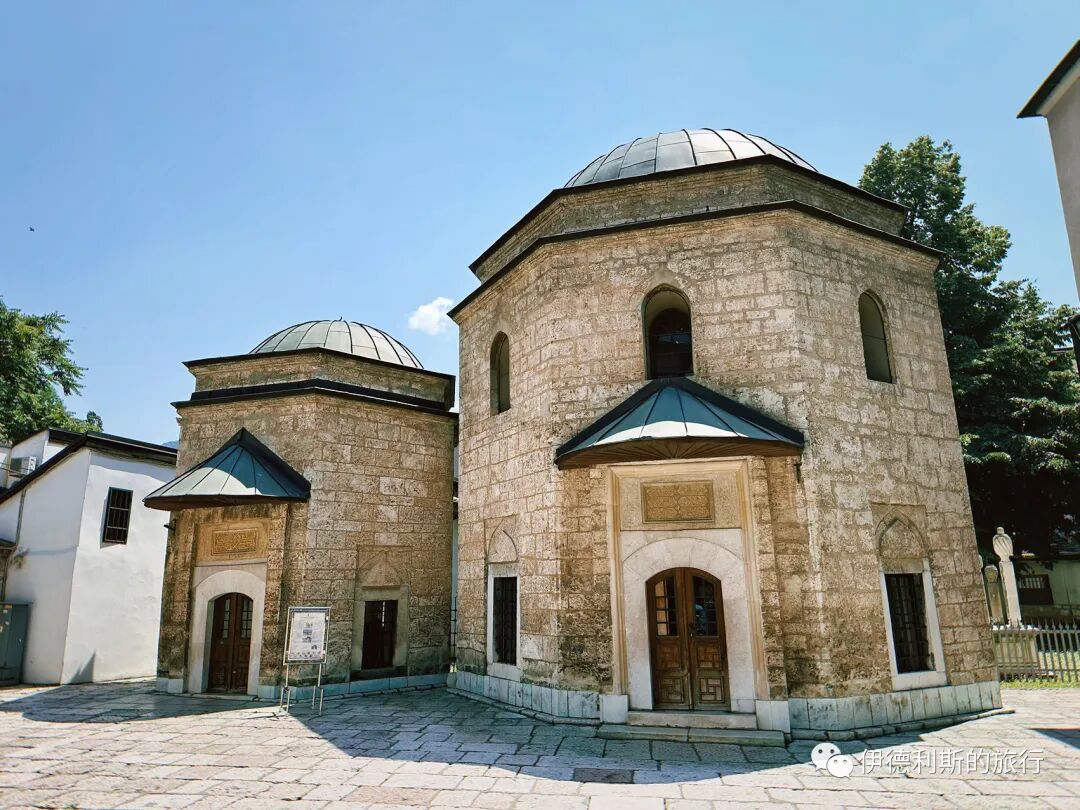
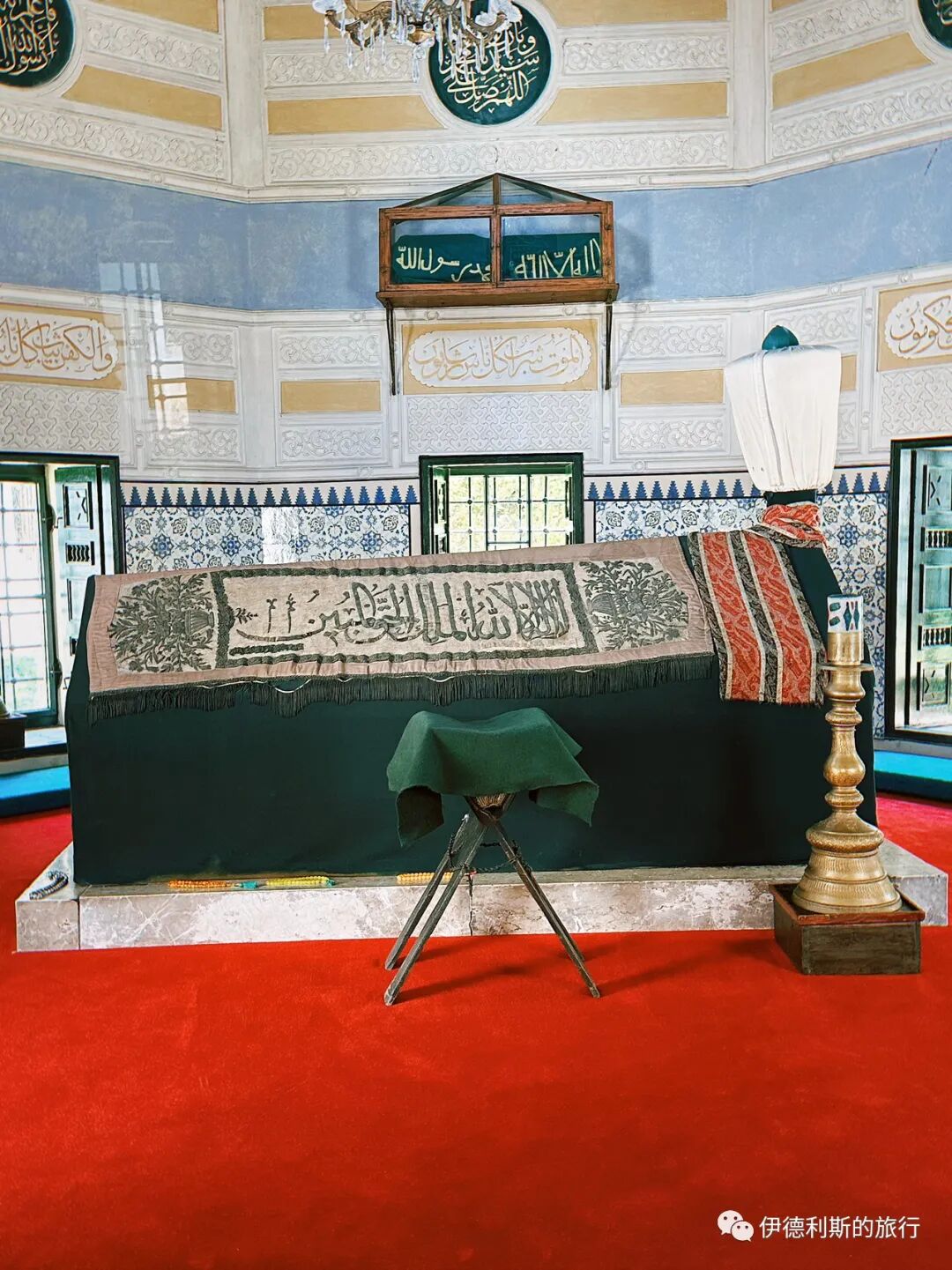
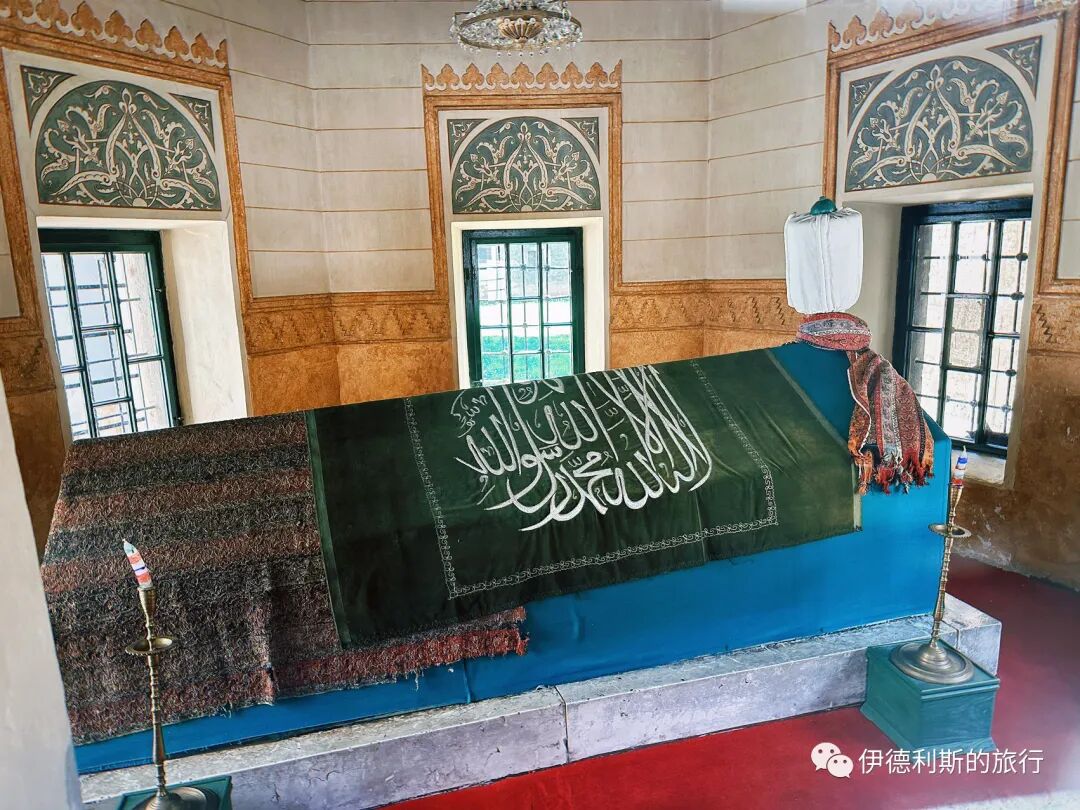
In 1541, a noble uprising broke out in Montenegro. Gazi Husrev Bey fought several battles to maintain order in the region and was eventually killed in a small village. His body was returned to Sarajevo and buried next to the Gazi Husrev Bey Mosque. The mausoleum of Gazi Husrev Bey is a typical 16th-century octagonal Ottoman tomb, which underwent repairs in 1895 and 2002.
Next to the tomb of Gazi Husrev Bey is a smaller octagonal mausoleum where his deputy, the Ottoman general Murat-beg Tardić, is buried. Murat-beg was Croatian. He became an Ottoman prisoner of war when he was young, later served under Gazi Husrev Bey, and became his close partner due to his outstanding military achievements. Murat-beg led several conquests against Croatia. In 1537, he completely crushed the military defenses of the Kingdom of Croatia, playing a major role in the westward expansion of the Ottoman Empire. Murat-beg died in 1545 and was buried next to the tomb of Gazi Husrev Bey.
Kursumlija Madrasa
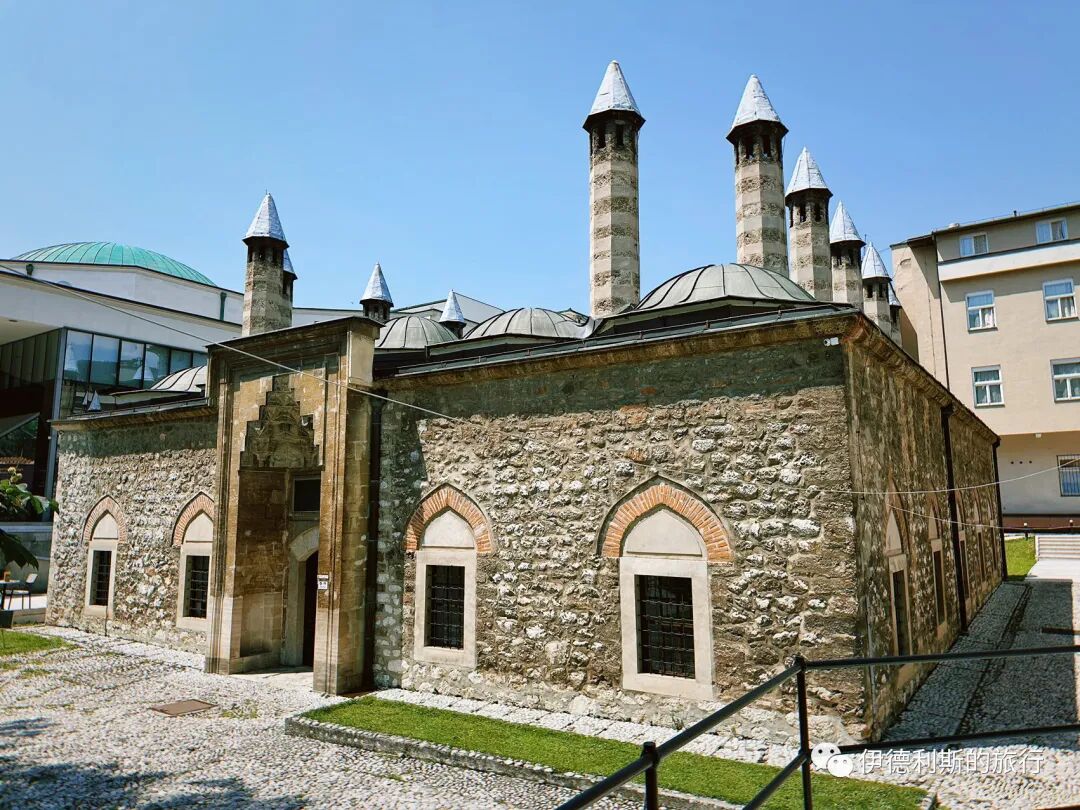
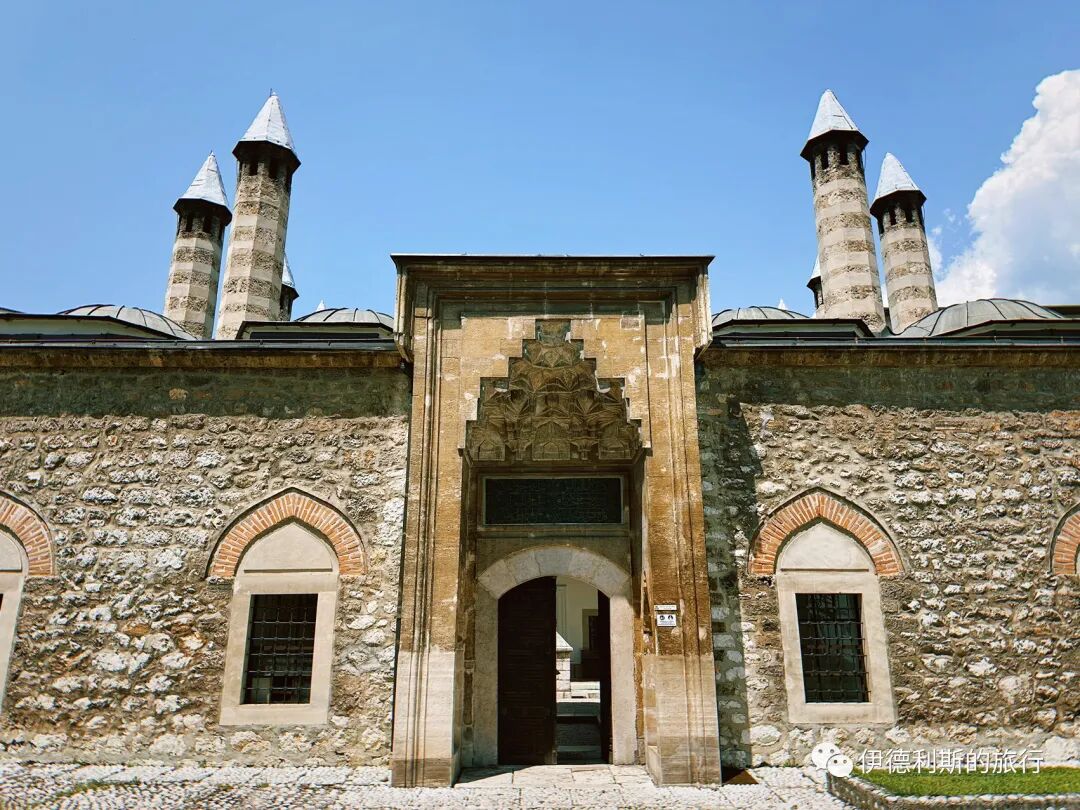
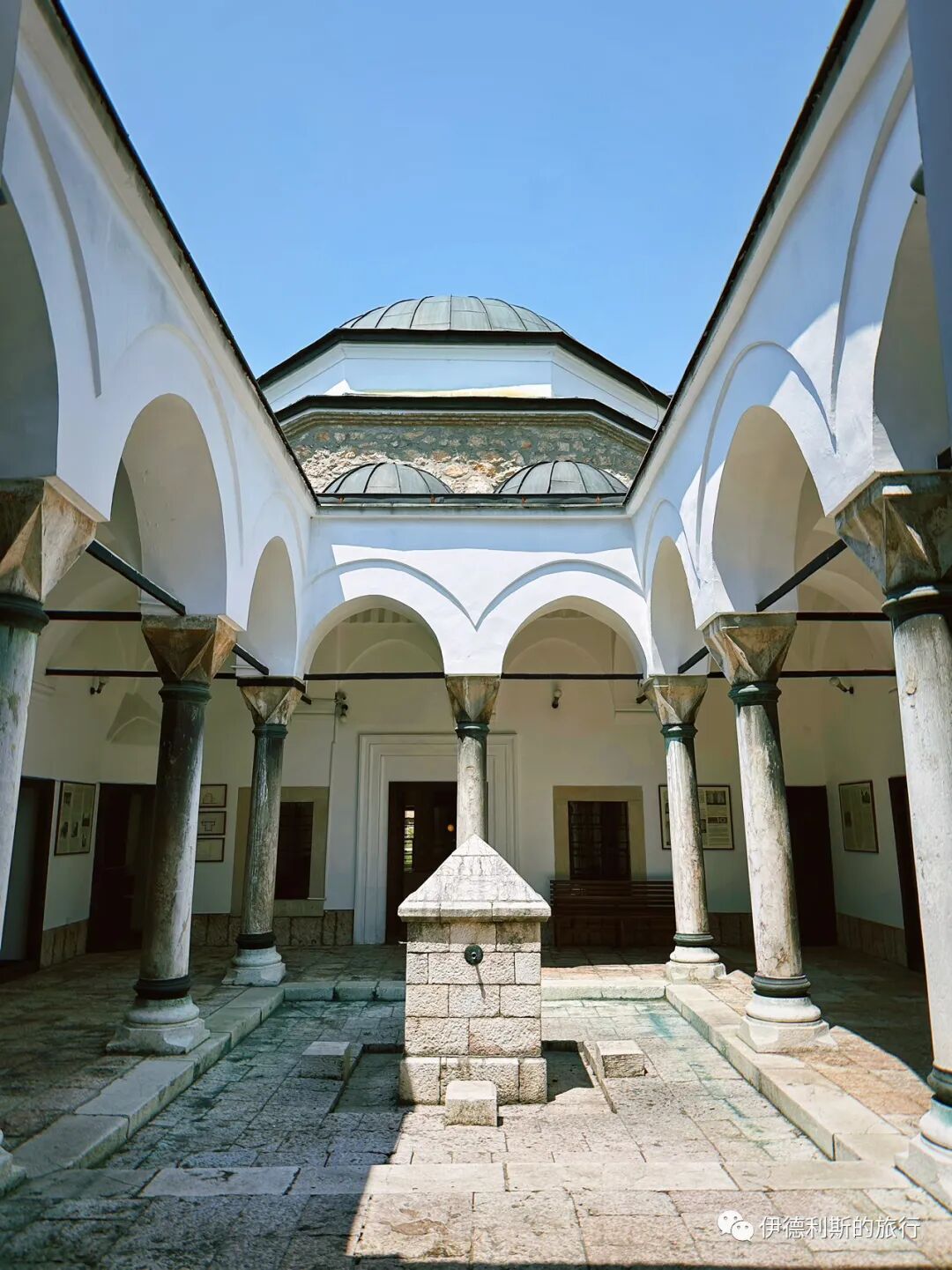
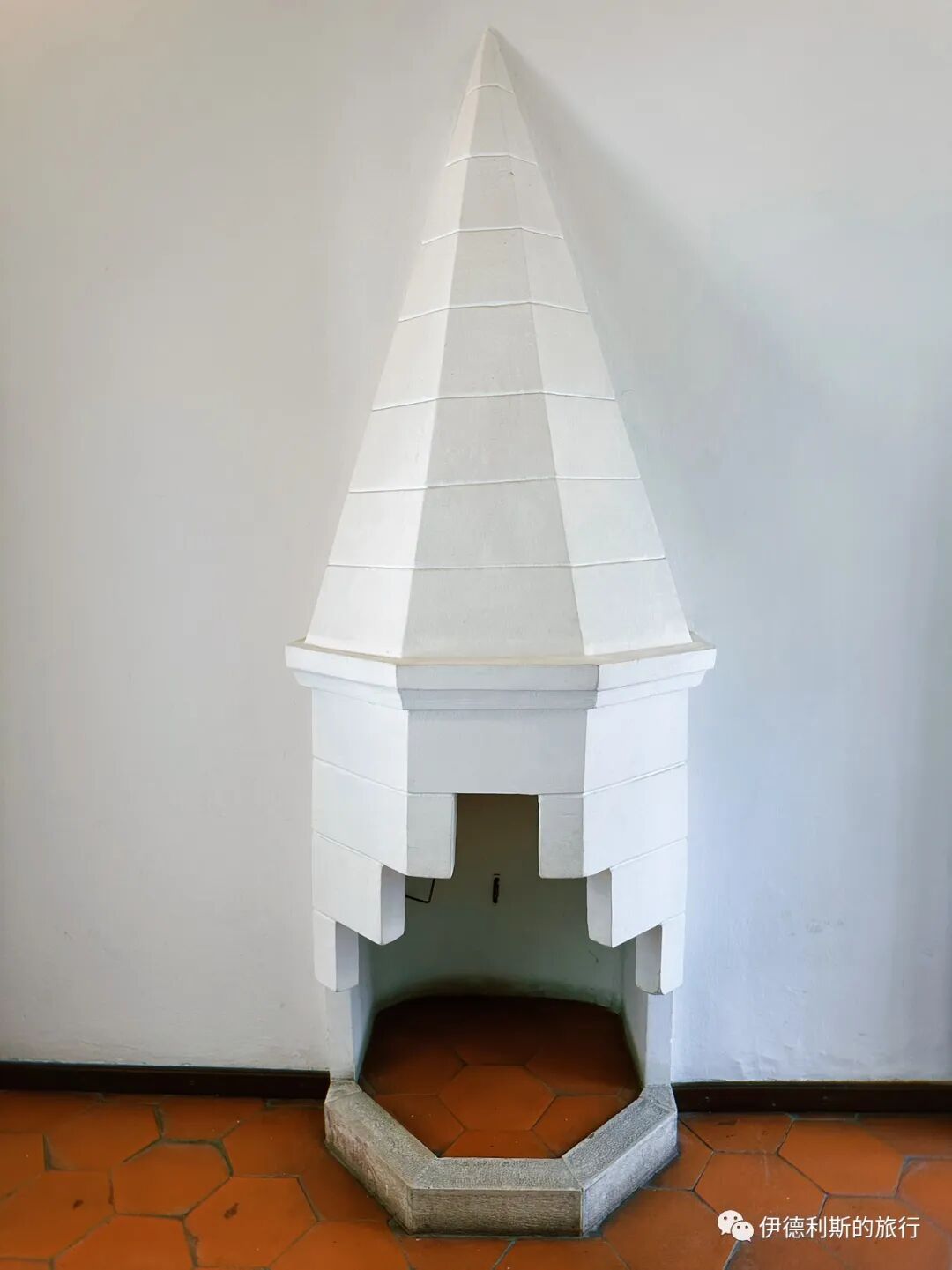
On the north side of the Gazi Husrev Bey Mosque is the Kursumlija Madrasa, built by Gazi Husrev Bey in 1537 and dedicated to his mother, the Ottoman princess Selçuka. The madrasa consists of a courtyard with 12 classrooms, each featuring a fireplace and a dome, with a fountain for wudu in the center of the courtyard. After 2013, this site became the Gazi Husrev-beg Museum, which showcases his life, the foundation complex he established, and his contributions to the urban development of Sarajevo.
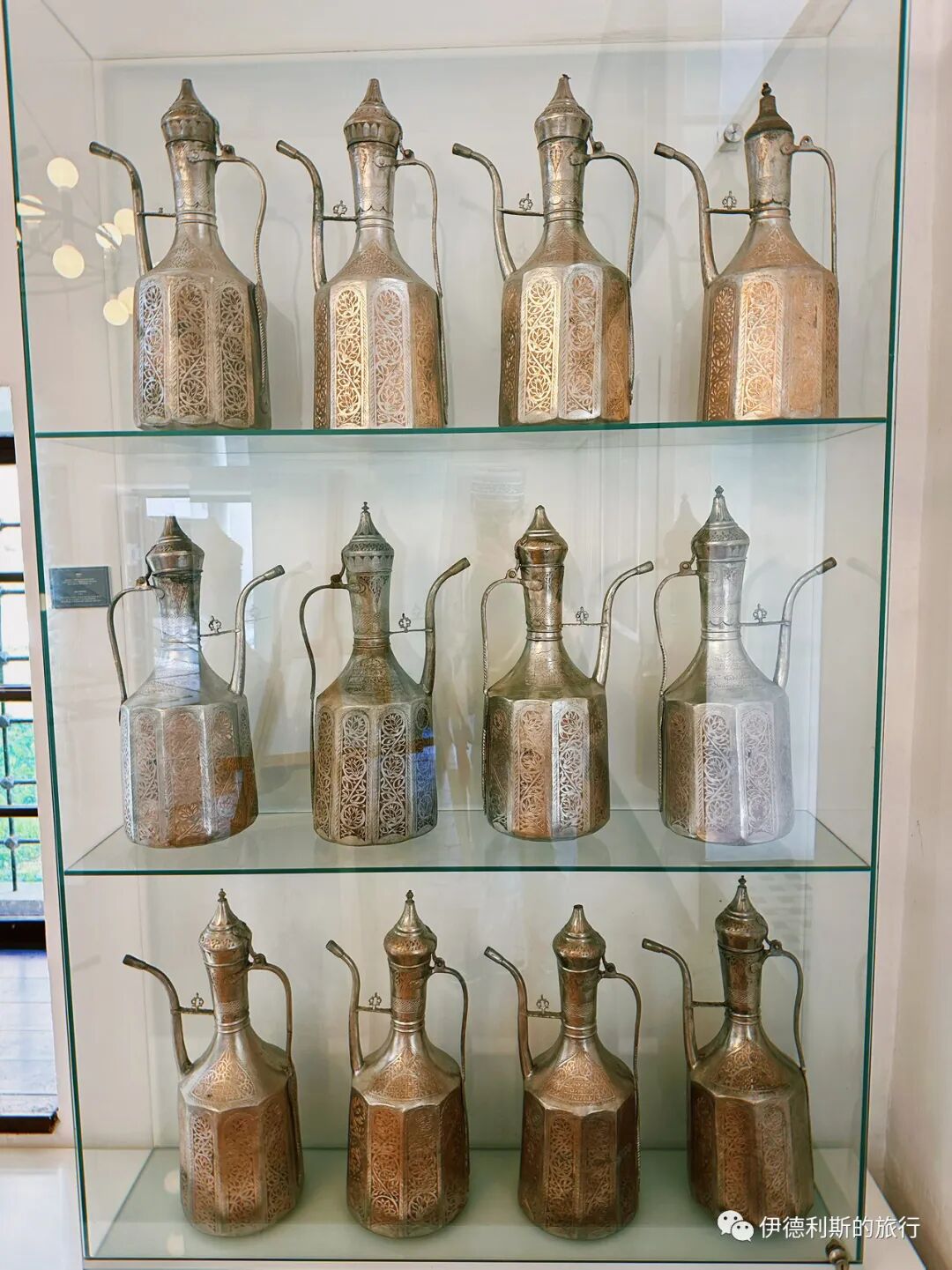
A 19th-century water jug used specifically to hold the mixed drink sharbat for Mawlid celebrations.
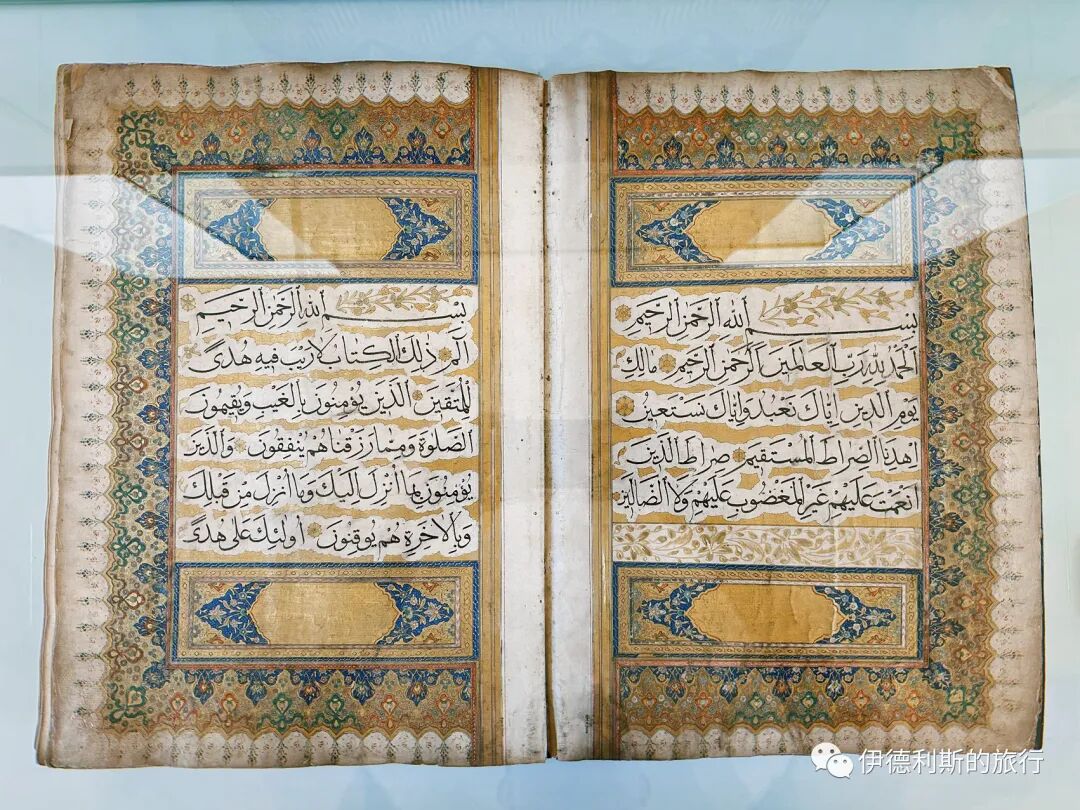
An ancient Quran copied in 1784 by Muhamed Filibevi from Plovdiv, Bulgaria.
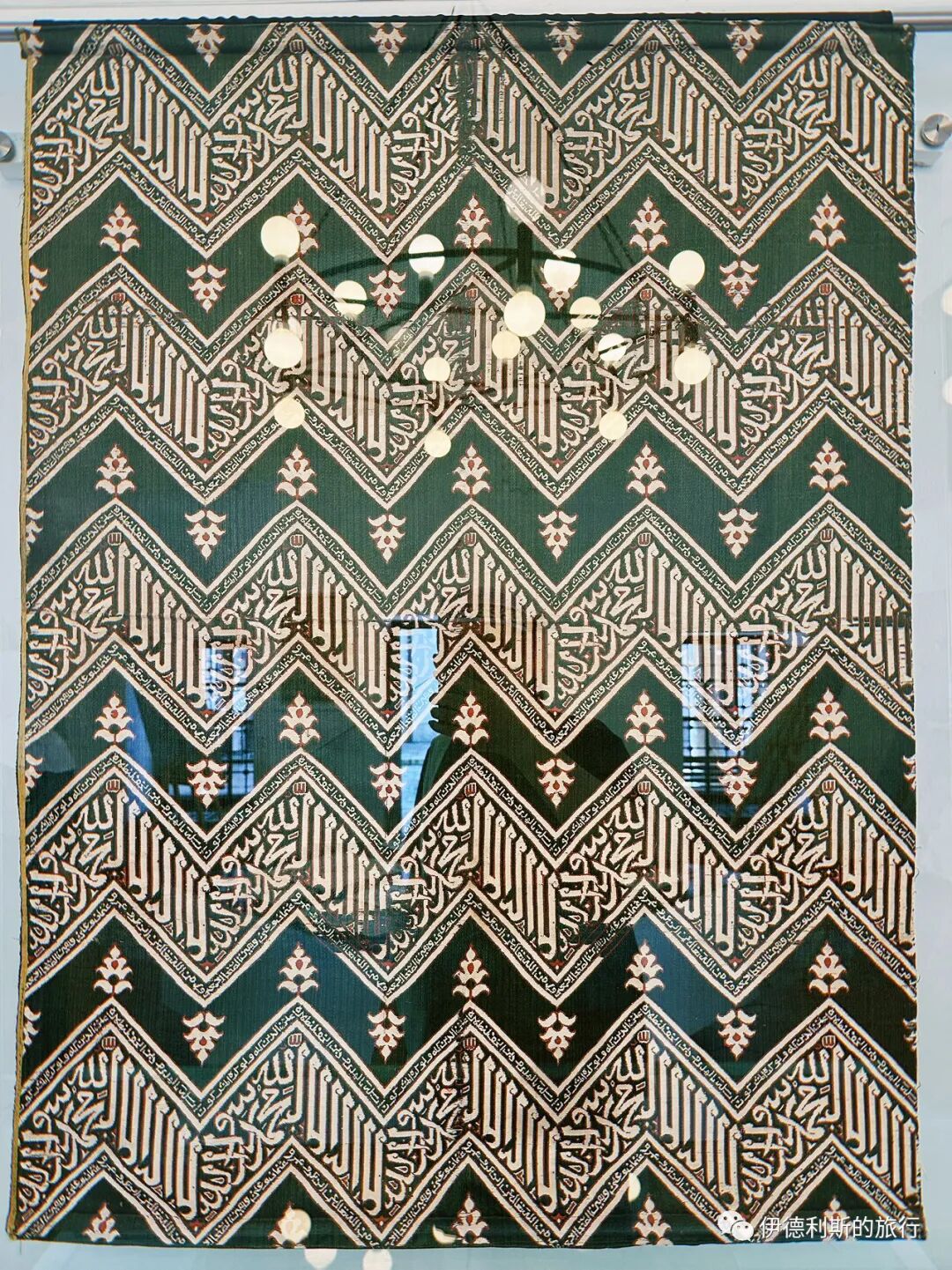
A burial shroud for the 16th-century tomb of the Prophet, gifted to Bosnia and Herzegovina by Ottoman Sultan Abdulaziz in 1867.
To the right of the madrasa is the Sufi lodge (khanqah), which is now a gallery, though it was closed when we visited.
Library
On the northwest side of the Gazi Husrev Bey Mosque is the Gazi Husrev Bey Library, founded in 1537 using the remaining funds from the construction of the madrasa. The library was originally part of the madrasa and did not have its own separate room until 1863. The library was forced to close after the Siege of Sarajevo began in 1992 and did not reopen until 2014. The new library was built with an 8.8 million dollar donation from Qatar. It houses over 100,000 manuscripts and books in Arabic, Turkish, Persian, Bosnian, and other languages, covering fields like Islam, literature, philosophy, history, medicine, and astronomy.
As the library with the richest collection of Islamic books in Bosnia and Herzegovina, the Gazi Husrev Bey Library has faced many trials over its nearly 500 years of operation, but the 1992-1995 Bosnian War was undoubtedly the most difficult. The aggressors made destroying the historical and cultural heritage of Bosnia and Herzegovina a key goal, especially targeting historical buildings that housed written records. Staff at the Gazi Husrev Bey Library risked their lives to successfully move tens of thousands of precious Islamic books to safety, making a huge contribution to saving Bosnian history and culture.
To preserve the books in the Gazi Husrev Bey Library, staff moved the book storage areas many times. In 1992, the library decided to move 21 packages containing the most precious manuscripts to the vault of the Privredna Bank. To avoid Serbian snipers on the streets, they packed the books in banana boxes, but they were then robbed by hungry civilians. Fortunately, the civilians let them go after discovering the boxes contained books instead of bananas. After many hardships, these books were finally saved until the end of the war.
The 63rd handwritten scripture by Hafiz Ibrahim Sehovic, completed in 1807. Hafiz Sehovic copied at least 66 Qurans in his lifetime, and the Gazi Husrev-beg Library holds four of them.
A handwritten scripture completed by Ahmad b. Muhammad al-Muhägir ad-Dagistani al-Makki in 1849.
A Quran selection (Juz') gifted by Ferhad-pasha Sokolovic in 1587 to a mosque in the city of Banja Luka in northwestern Bosnia and Herzegovina.
A Quran selection (Juz') gifted by Mehmed-pasha Sokolovic in 1570 to a mosque in his birthplace in eastern Bosnia.
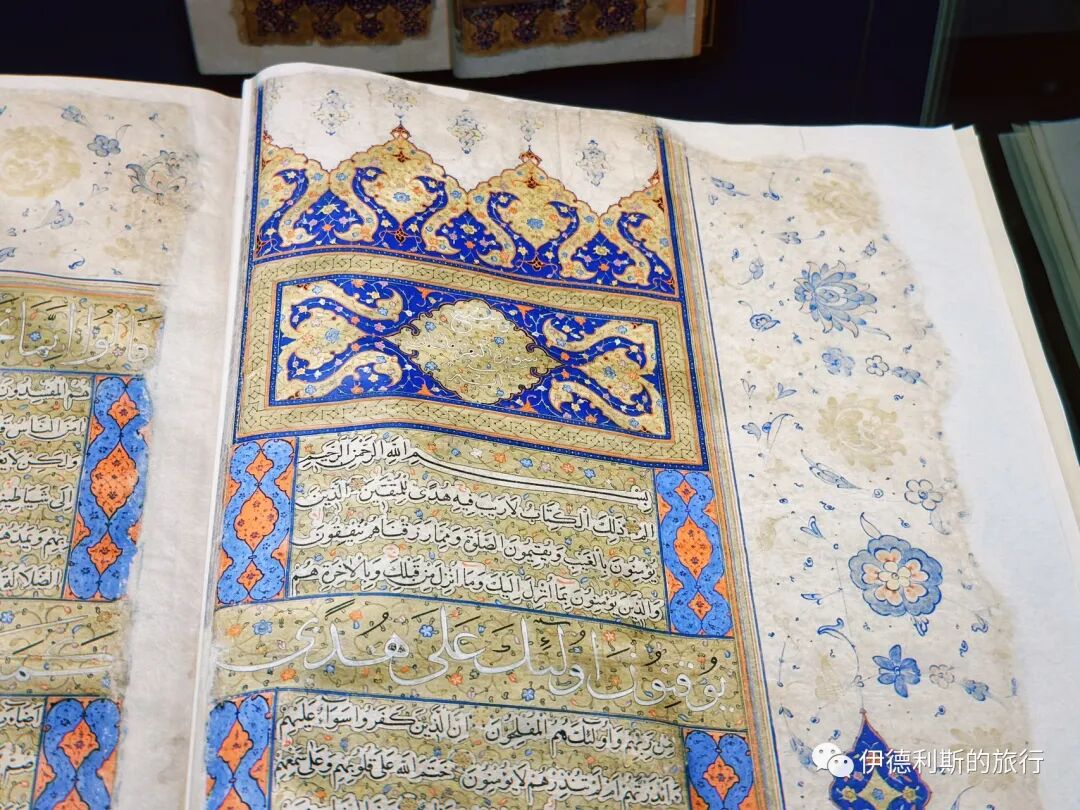
A handwritten scripture created by Abdullah b. Muhammad al-Hafiz as-Sirazi in 1572-73.
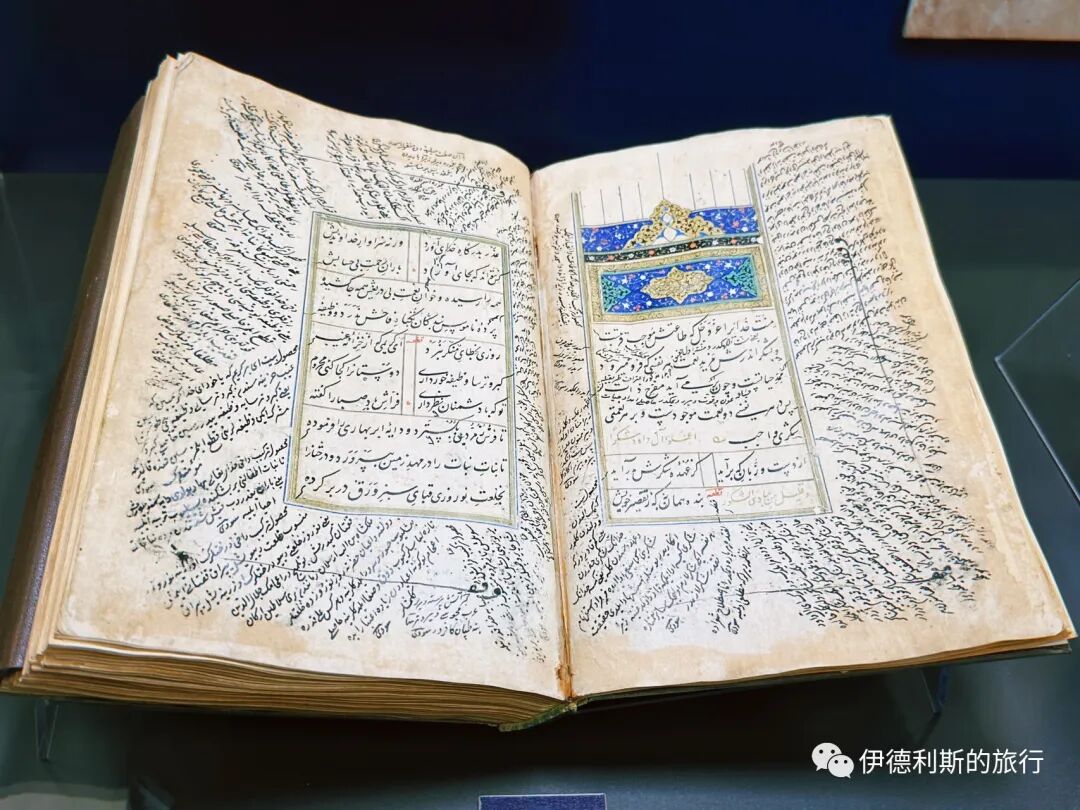
The Rose Garden (Gulistān) is a prose work written by the great Persian poet Saadi in 1258. This manuscript was annotated by the great 16th-century Bosnian classical literature critic Ahmed Sudi Bosnjak and copied by Ahmad b. al-hagg Husayn al-Mostari in 1765. Ahmed Sudi was born in eastern Bosnia and later lived in Istanbul for a long time. He was an expert in Persian literature and wrote a series of commentaries on Persian literary classics in Ottoman Turkish. These had a huge influence in the Ottoman Empire and were widely used by later Persian scholars and Western orientalists.
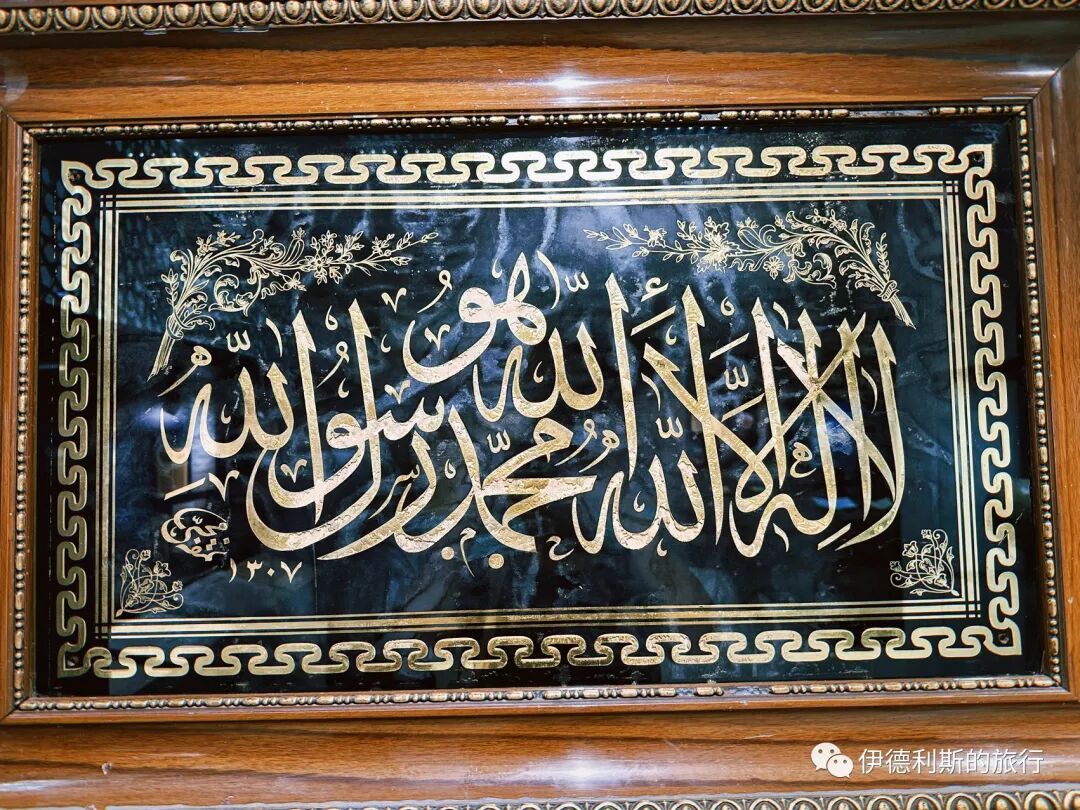
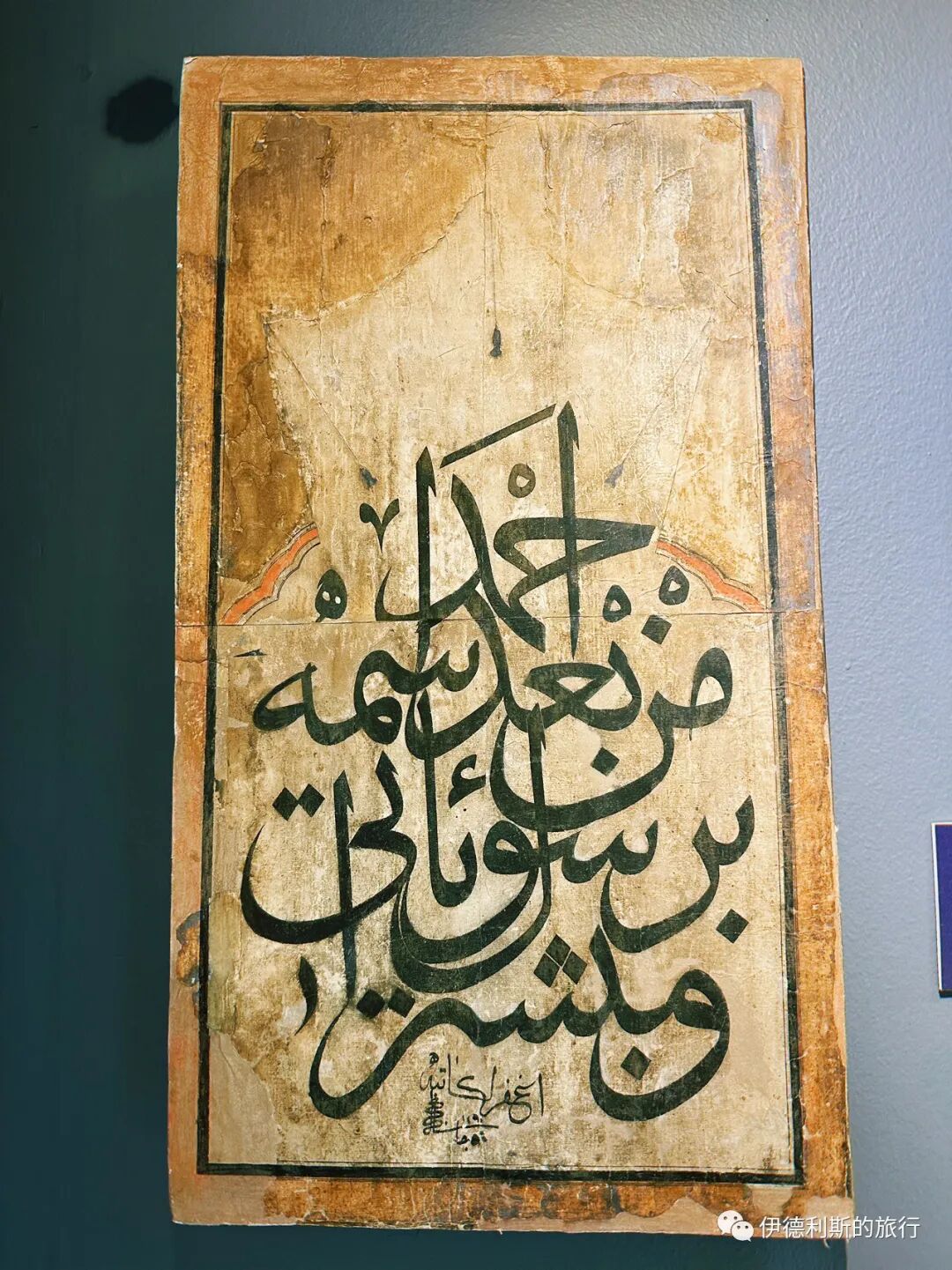
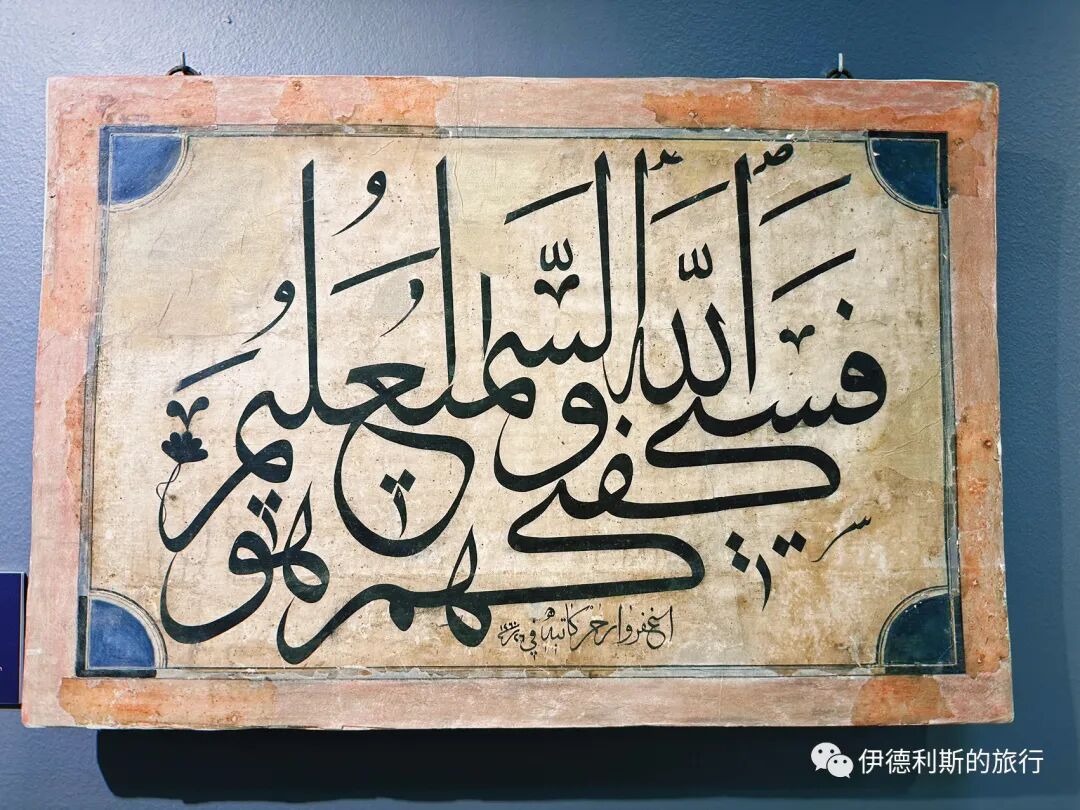
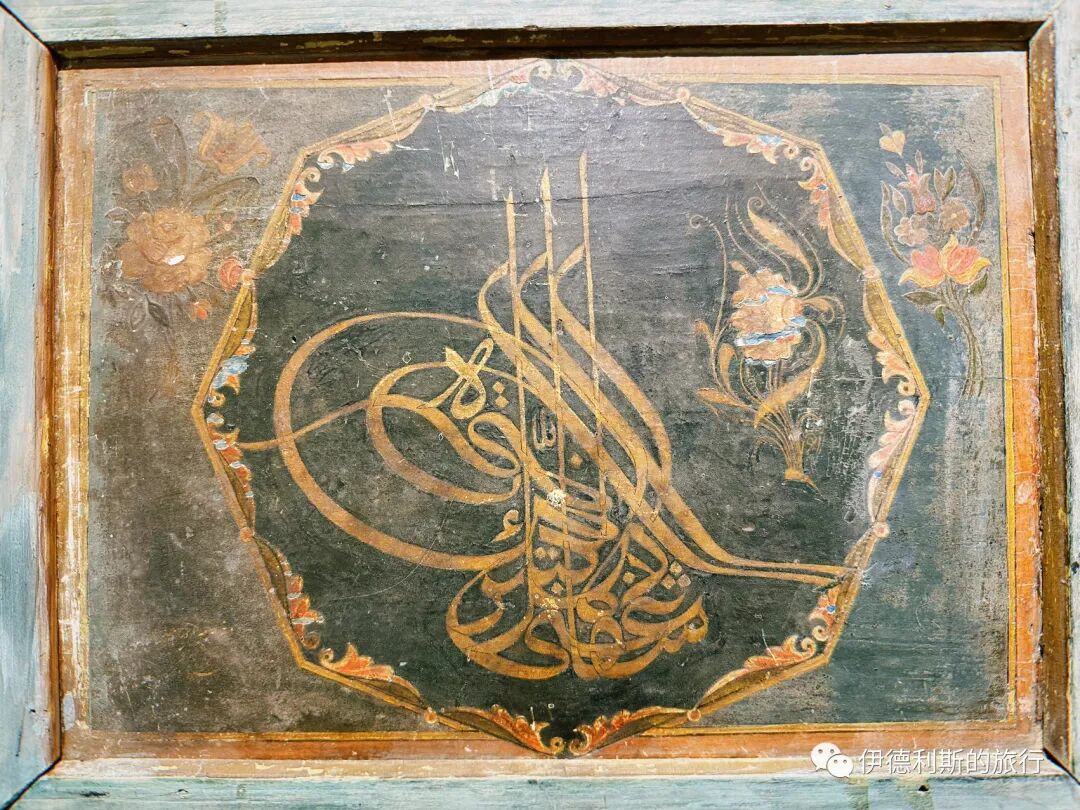
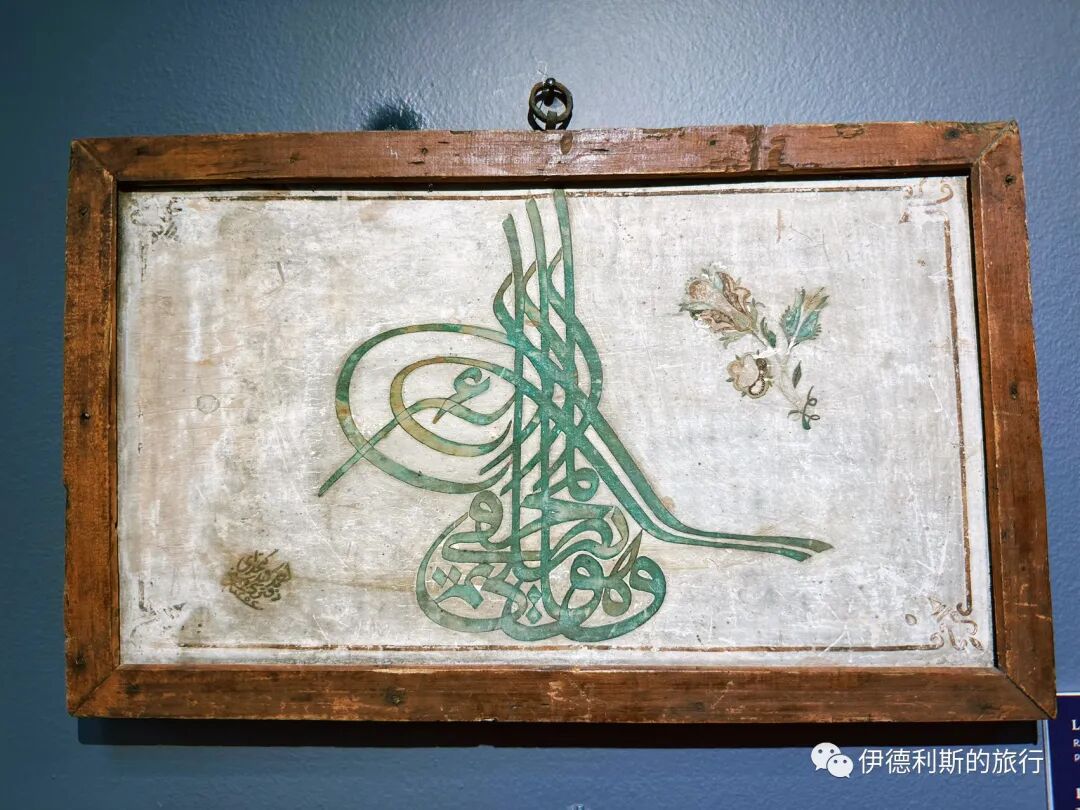
19th-century Arabic calligraphy art from Bosnia and Herzegovina, with the second and third pieces collected from an old traditional wooden mosque in Bužim, northwestern Bosnia and Herzegovina.
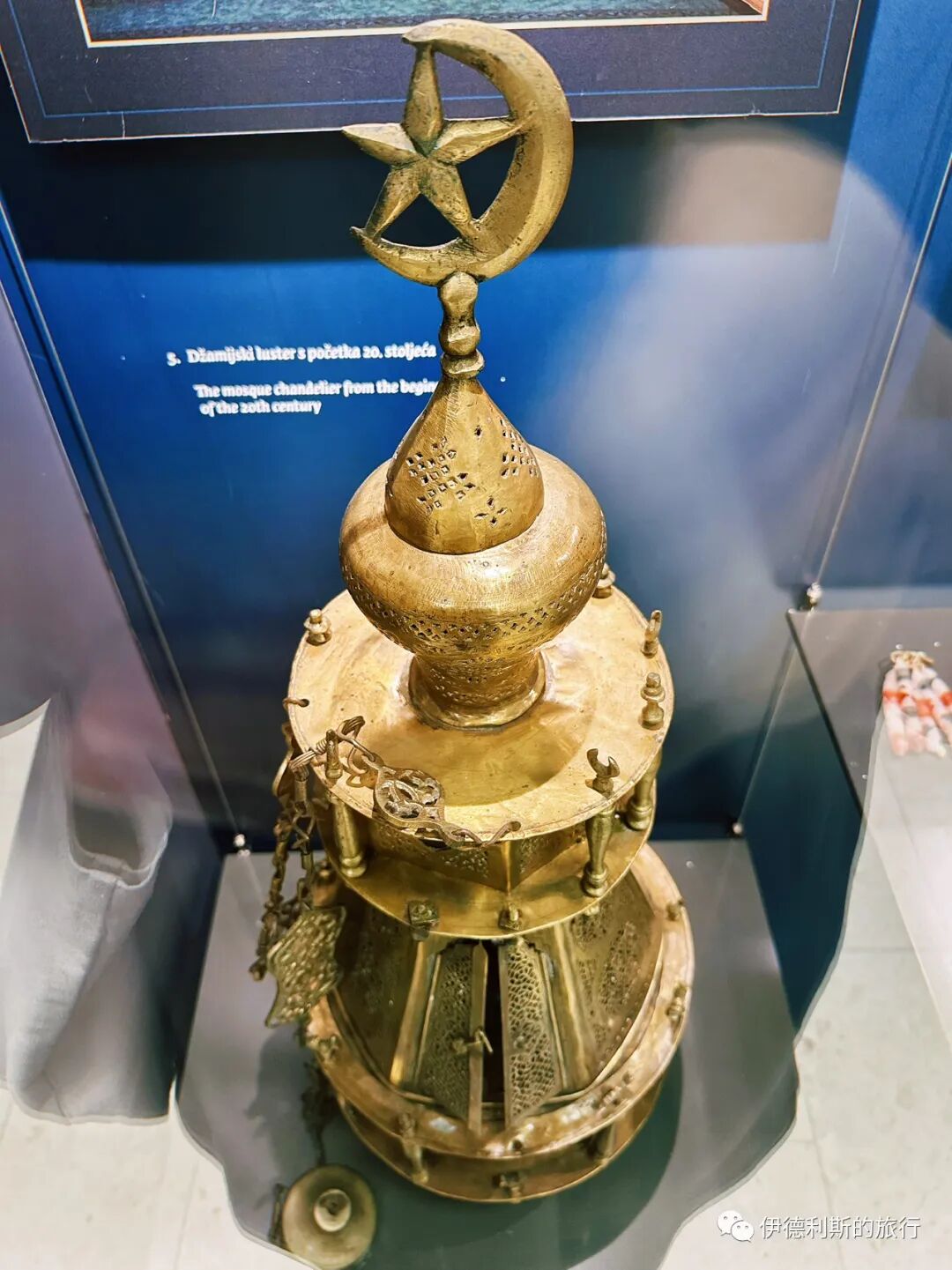
A chandelier used in a mosque in the early 20th century.
Artifacts collected in the Gazi Husrev Bey Library.
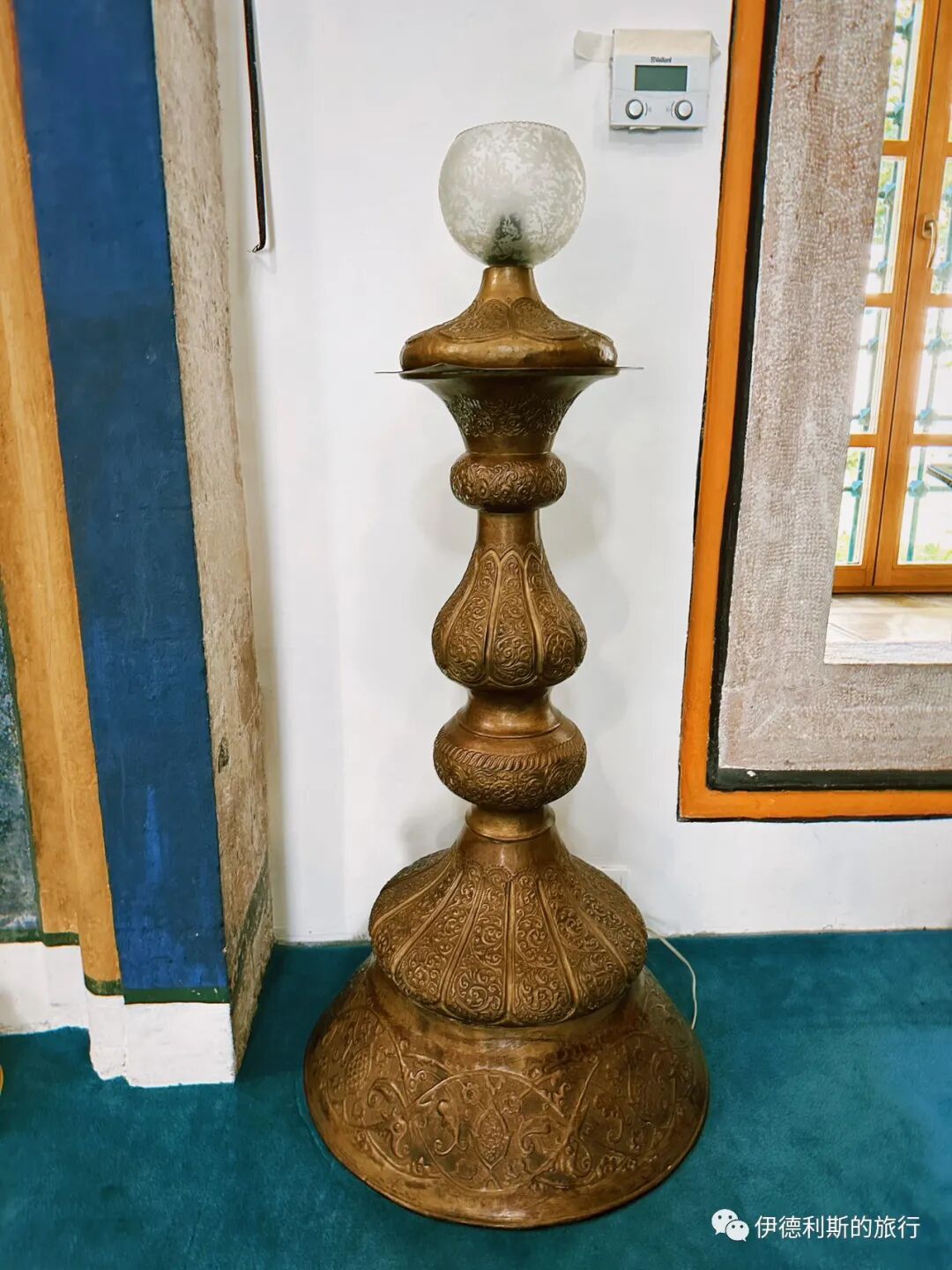
Candlesticks formerly used in mosques and Sufi lodges (tekke) in Bosnia and Herzegovina.
A stone tablet from 1613 above the gate of the Haji Osman Mosque in the southeastern Bosnian city of Foča; this mosque was demolished in 1964.
This textbook on Hanafi jurisprudence was written in the 16th century and used for a long time in Ottoman madrasas. This specific copy dates back to the 17th century.
This Arabic-Turkish dictionary was compiled in the 16th century and contains 40,000 words. It was very popular in Bosnian madrasas, and this copy was made in 1631.
A work on Islamic law copied in Foča in the second half of the 16th century.
A manuscript of the Quran from 1474.
A cannon used in the 19th century during Ramadan to signal the start and end of the daily fast.
A Turkish-language stone inscription carved in Naskh script during the 1763-4 renovation of the Hasan Pehlivan mosque in Sarajevo.
A Turkish-language stone inscription carved in Naskh script during the 1780-1 renovation of the Haji-Omer fountain in front of the Emperor's Mosque in Sarajevo.
A Turkish-language stone inscription carved in Naskh script during the 1553-4 renovation of the Mustafa Pasha mosque in the southeastern Bosnian city of Foča. This mosque was demolished in 1947.
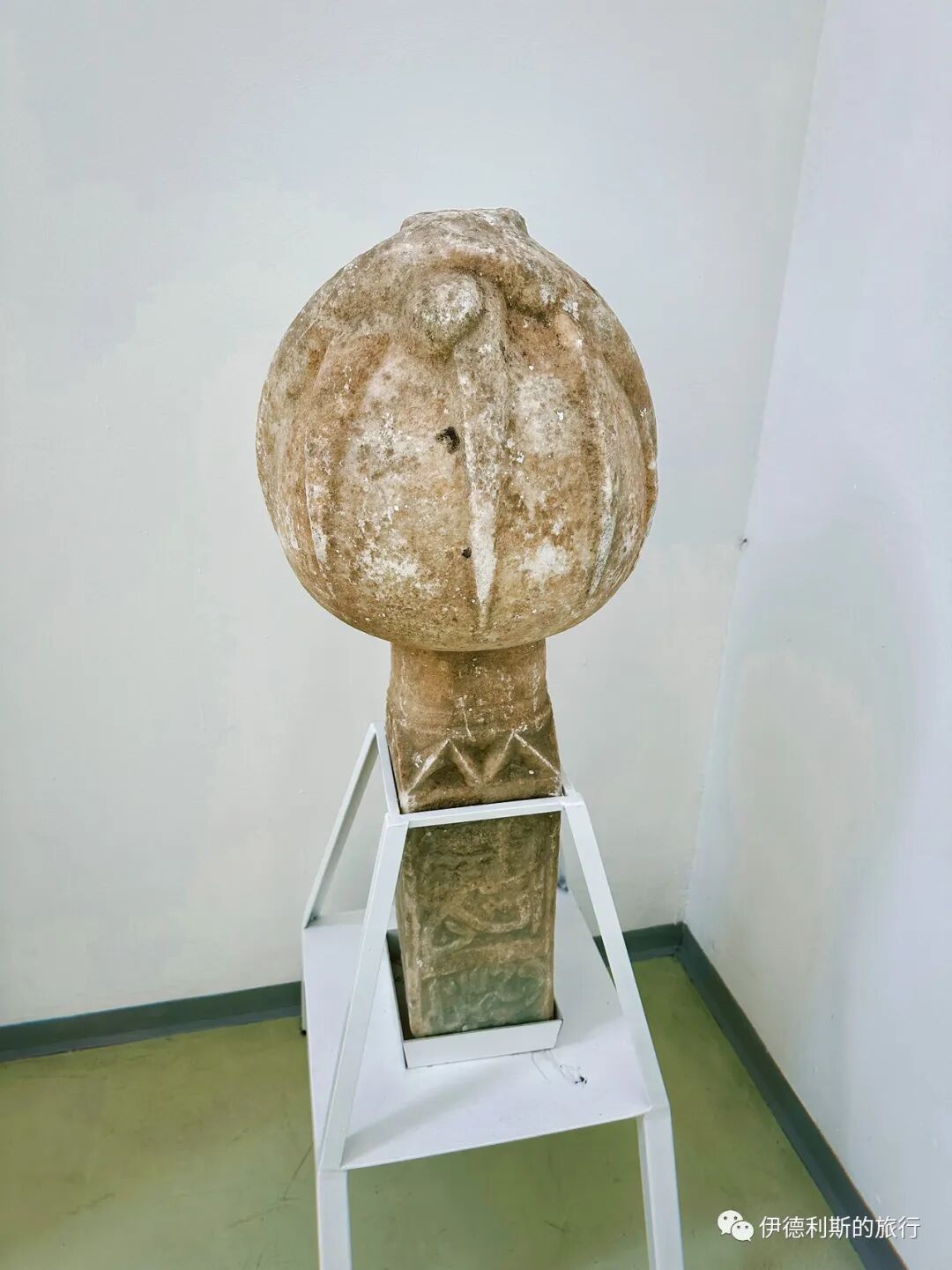
An Arabic tombstone from the grave of Turhan Emin bey, who served as the Ottoman governor (sanjak-bey) of Herzegovina. His grave is in Ustikolina in southeastern Bosnia and Herzegovina, the site of what was once the oldest mosque in the country. The turban carving at the top of the tombstone is a classic feature of Ottoman-era grave markers.
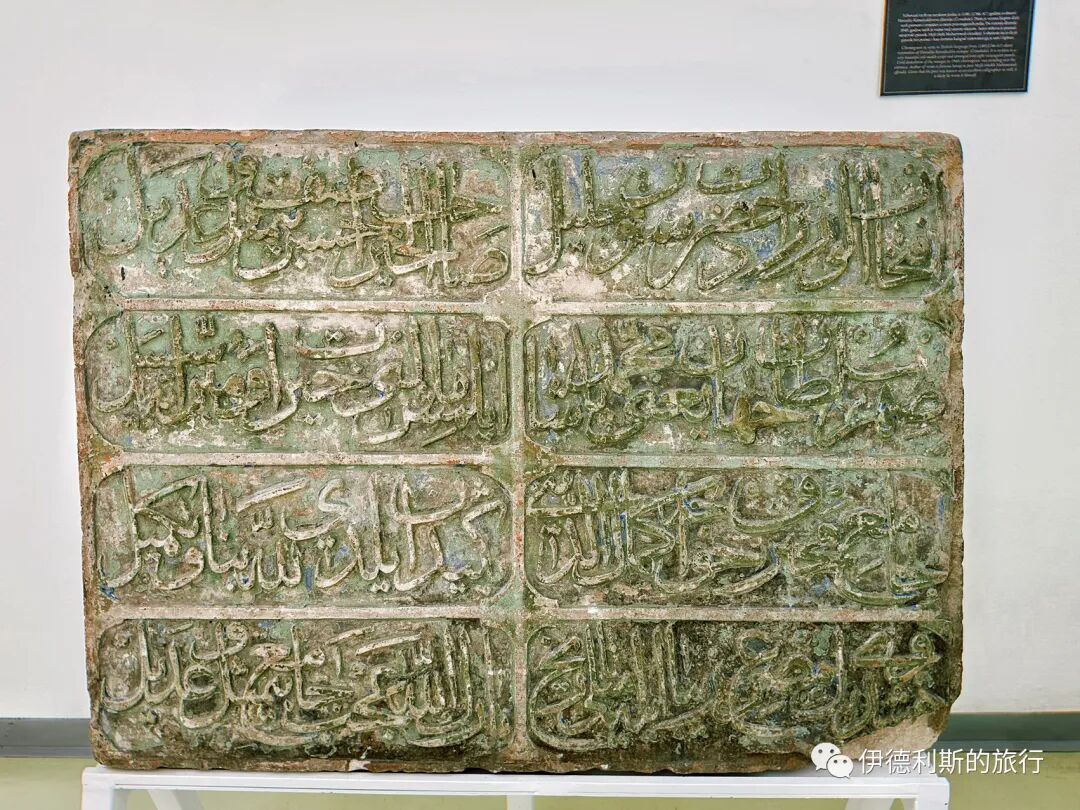
A Turkish-language commemorative stone inscription from 1857-8 on the Fadil Pasha madrasa, located on the east side of the Emperor's Mosque in Sarajevo. The author, Fadil Pasha, was a calligrapher himself.
A Turkish-language stone inscription carved on the gate during the 1766-7 renovation of the Havadza Kemaludin mosque in Sarajevo. It was written by the famous Sarajevo poet and calligrapher Sheikh Muhammad Effendi. This mosque was built in 1515 and was demolished by order of the Kingdom of Yugoslavia in 1940.
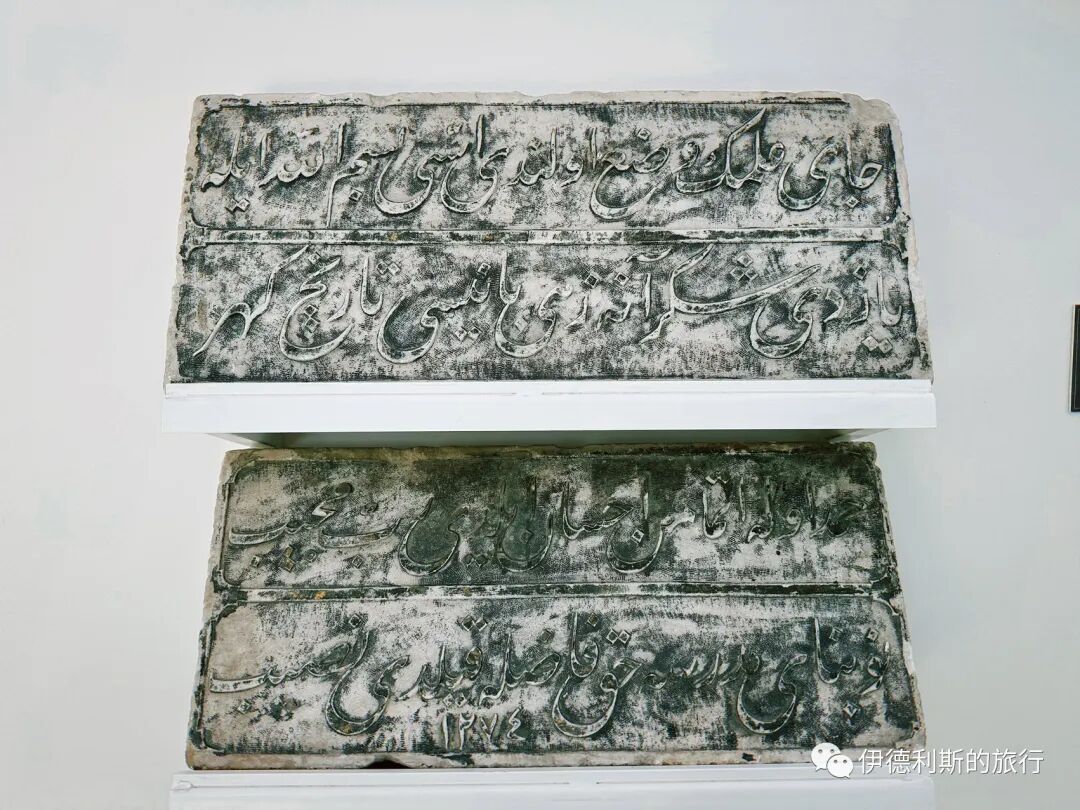
The top piece is a Turkish-language stone inscription from 1885-6, carved during the renovation of the Gazi Iskender Pasha fountain in Sarajevo using Taliq Persian hanging script. The bottom piece is a Turkish-language stone inscription from 1780-1, carved during the renovation of a fountain in the courtyard of a Sufi lodge (tekke) in the Skenderija area of Sarajevo. It also uses Taliq Persian hanging script and was written by the local mufti, Sakir.
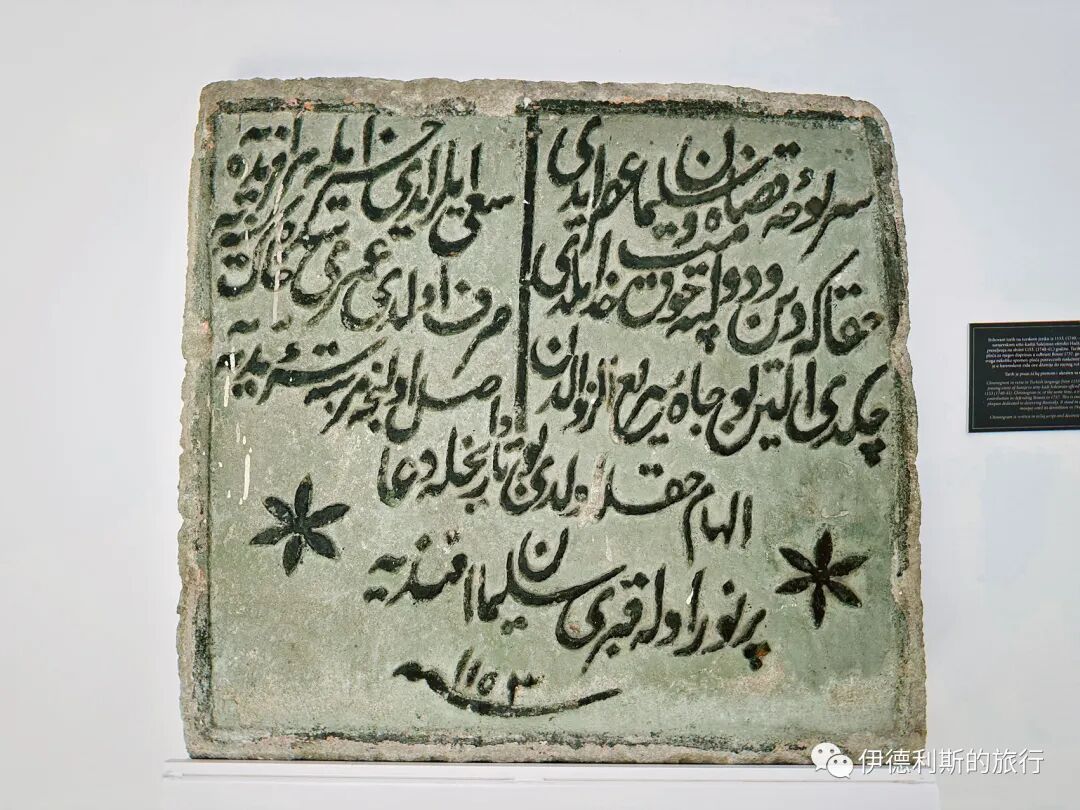
This stone monument, carved in 1740-1 to mark the passing of Sulejman-effendi Hadzimusic, records his contributions to the defense of Bosnia in 1737. It is an important historical record regarding the formation of the Bosniak nation. This stone was embedded in the wall of the mosque until the Kingdom of Yugoslavia demolished the mosque in 1940.
Bathhouse
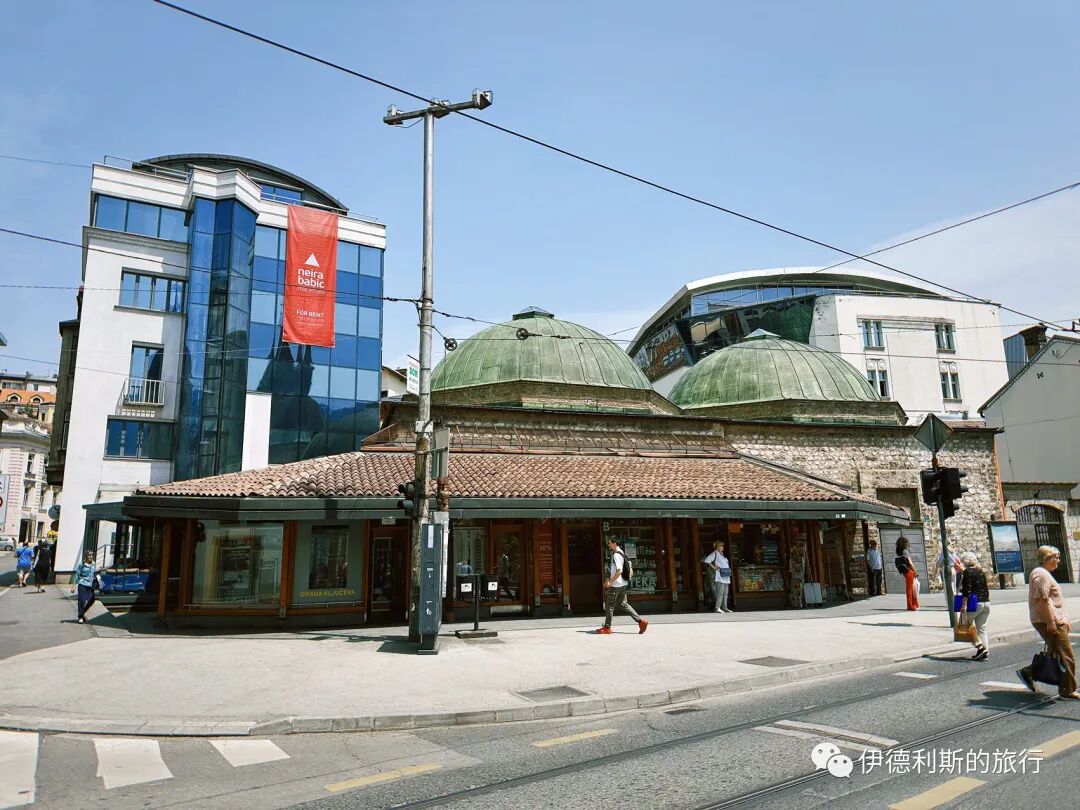
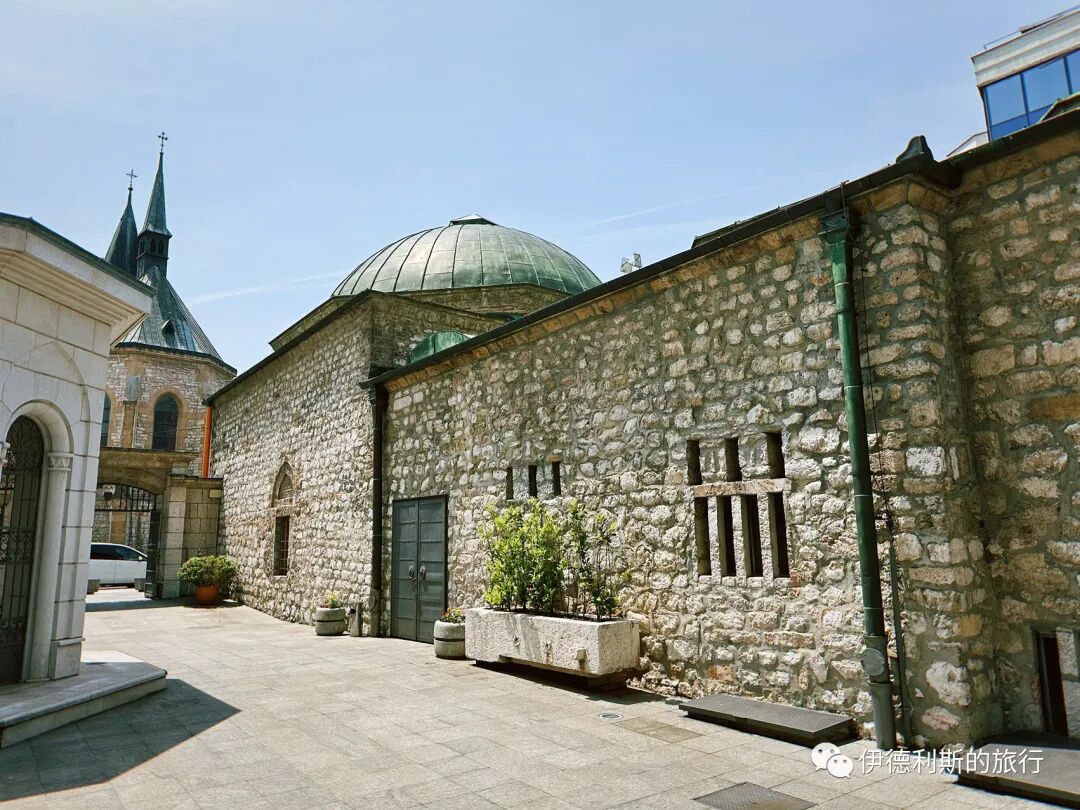
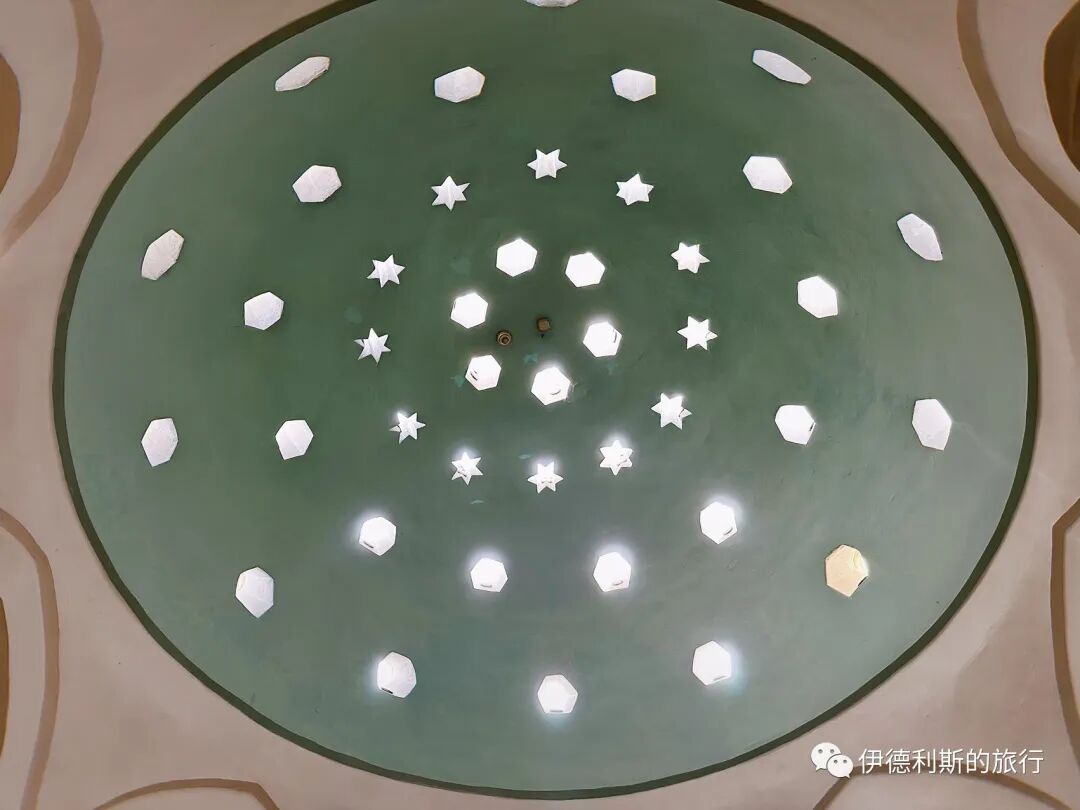
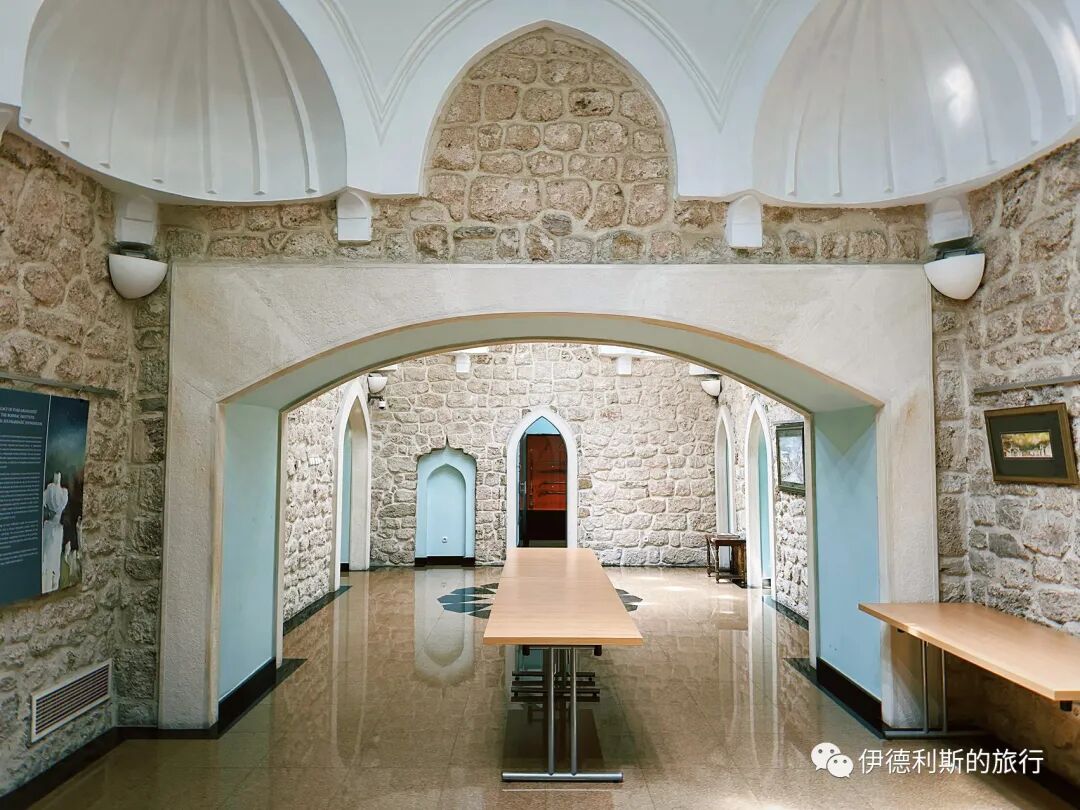
The bathhouse (hamam) of Gazi Husrev Bey was built in 1537 and is located 300 meters northwest of the mosque. The southern part of the bathhouse has two symmetrical domed buildings, which served as the main halls for the men's and women's bathing areas. You can enter individual small rooms, each with its own dome, through the corridor and cloakroom on the north side. The bathhouse suffered fires twice, once during the Habsburg invasion in 1697 and again during the Austro-Hungarian invasion in 1879. It was rebuilt after these events, and what you see today is mostly how it looked after the 1891 renovation.
After being renovated in 2000, it became part of the Bosniak Institute. It frequently hosts cultural events like book launches, concerts, literary nights, and exhibitions.
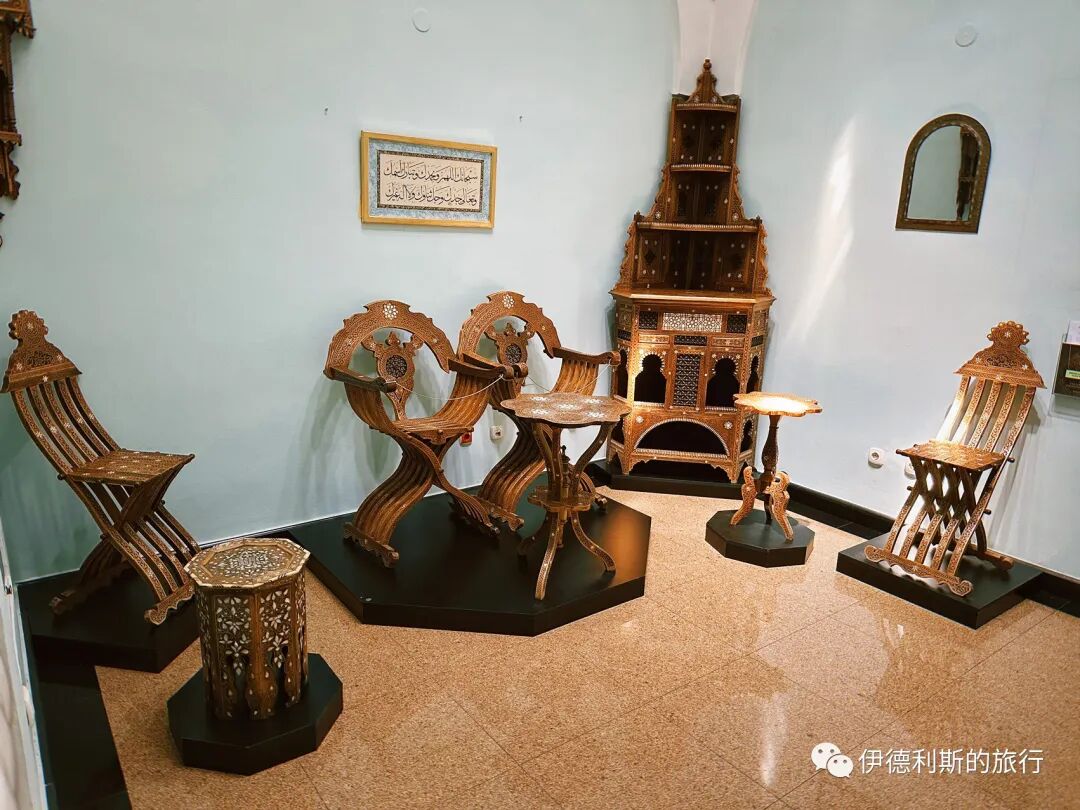
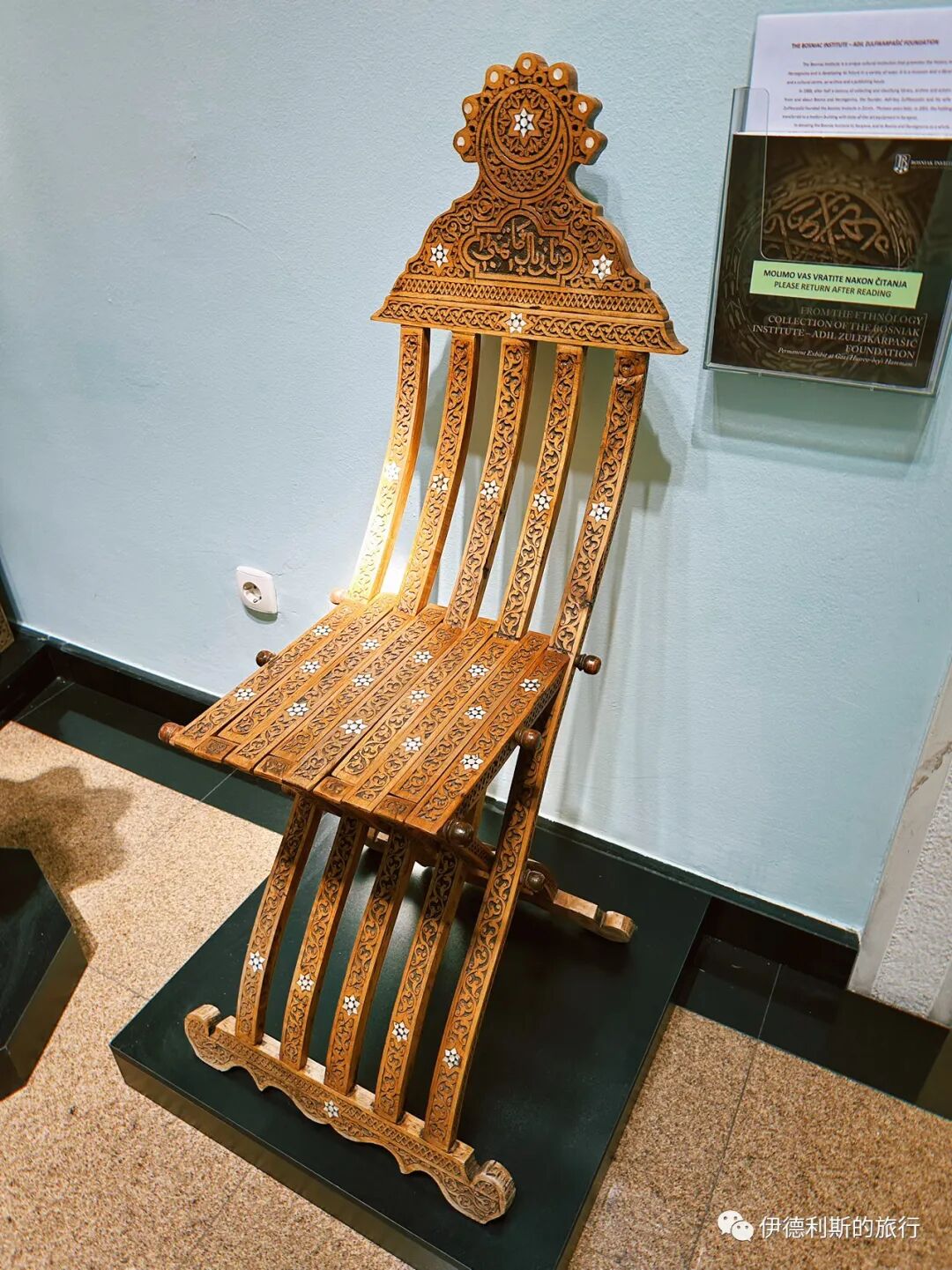
The collection of the Adil Zulfikarpasic Foundation at the Bosniak Institute features exquisite wooden furniture crafted by Bosnian artisans between the 19th and early 20th centuries.
The art exhibition at the Bosniak Institute focuses on scenes of Sarajevo and Bosnia painted by 20th-century Bosnian artists.
A painting of a Bosnian street by Đoko Mazalić from 1920. He graduated from the Royal Hungarian Academy of Fine Arts in 1914 and helped establish the National Gallery of Bosnia and Herzegovina. He was skilled at depicting Bosnian life and achieved great success in the Sarajevo cultural scene during the 1930s and 1940s.
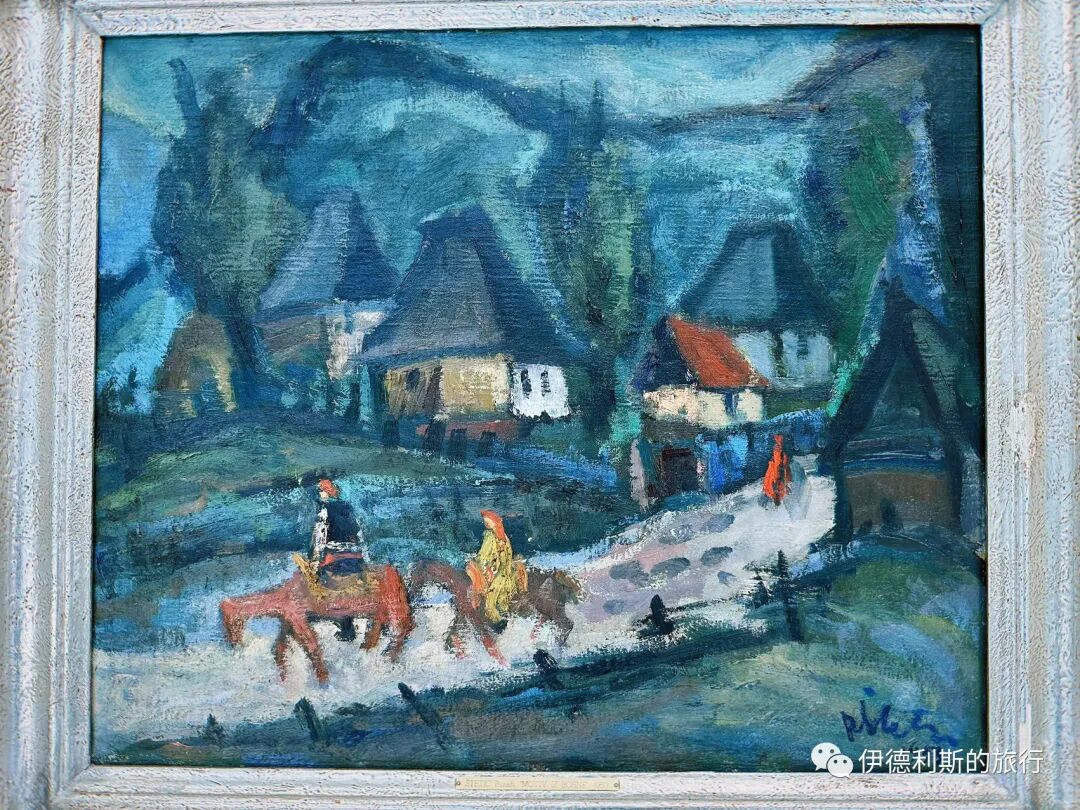
A painting of Bosnian life by Rizah Štetić from 1952. He graduated from the Royal Academy of Arts and Crafts in Zagreb, Croatia, in 1932. He became the principal of the Sarajevo State School of Crafts in 1946 and later served as a painting professor at the National Academy of Fine Arts.
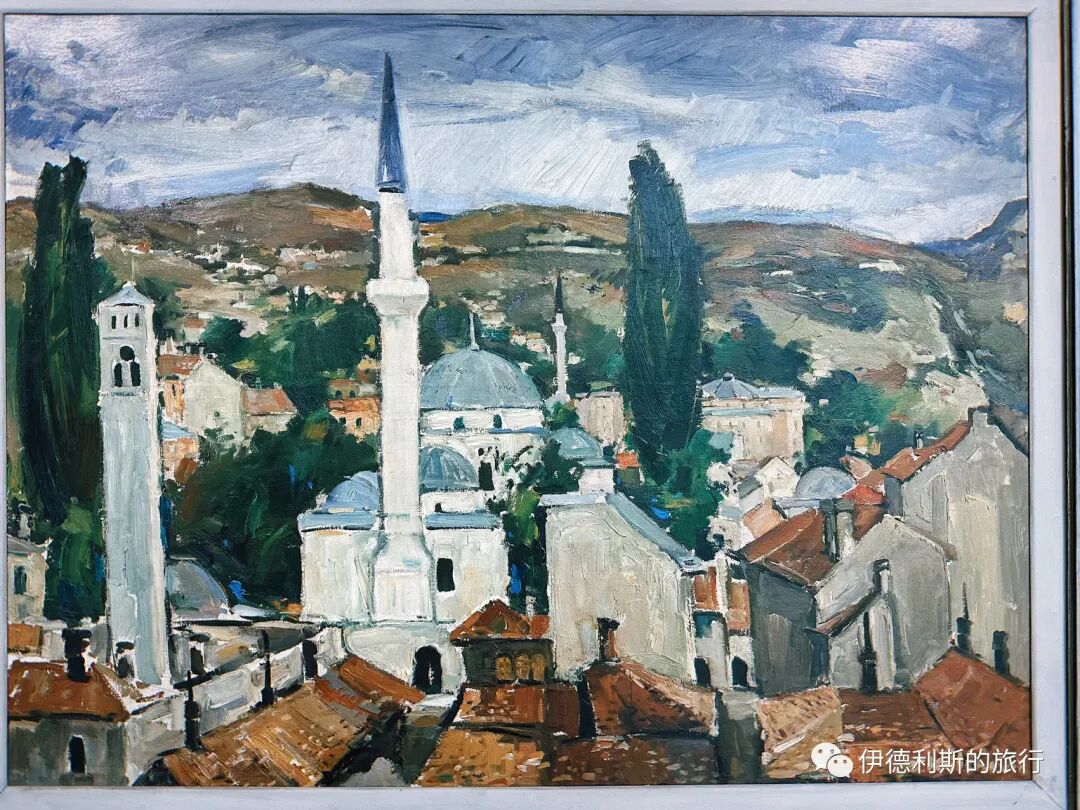
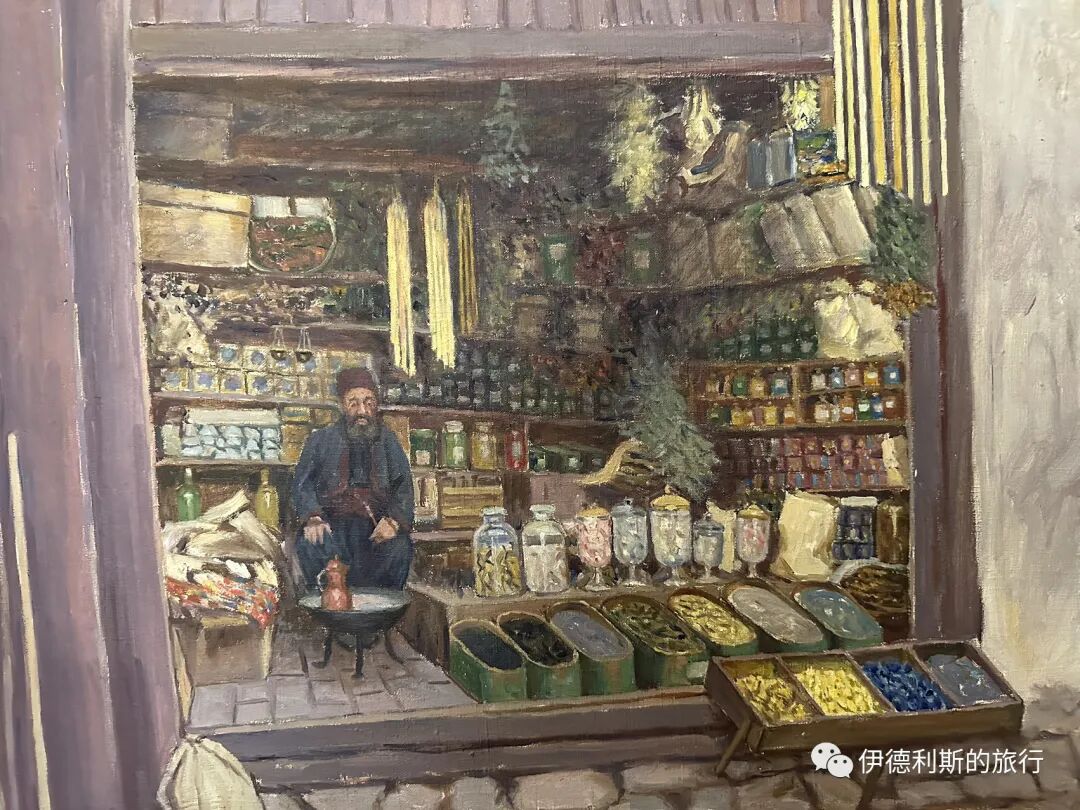
A painting of the Sarajevo Grand Bazaar by Kulenović Hakija. He graduated from the Belgrade Academy of Arts in 1928 and held an art exhibition in Sarajevo in 1932.
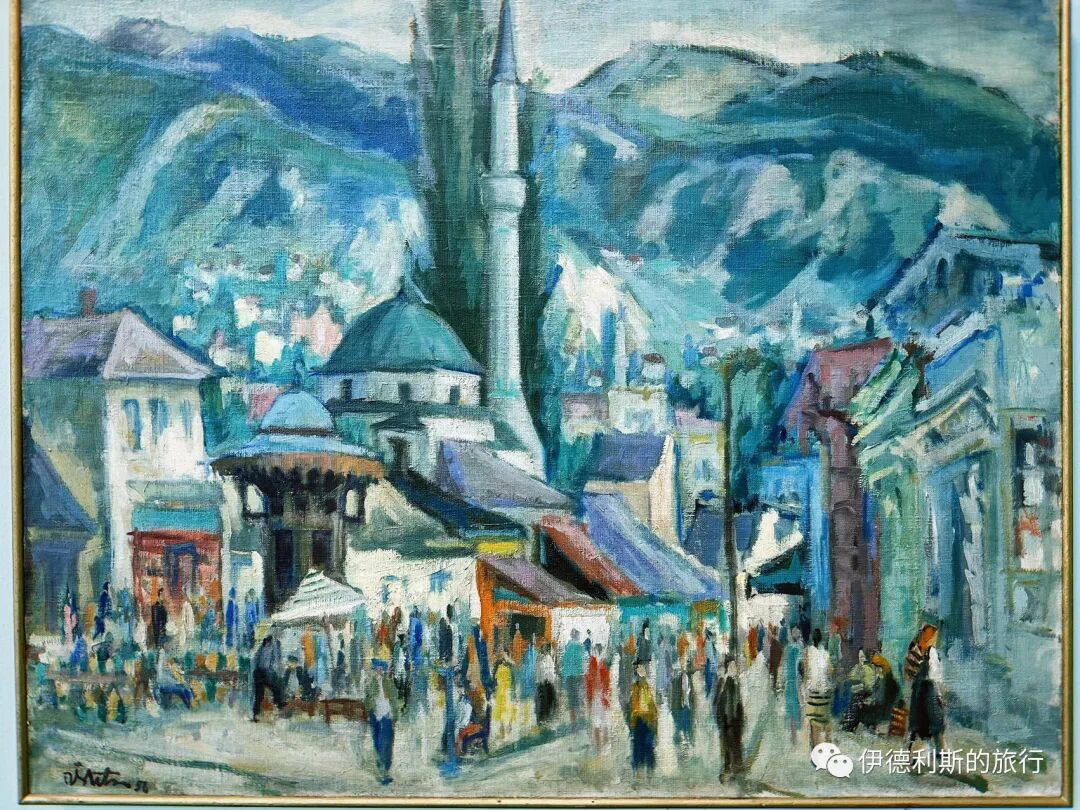
The Sarajevo bazaar painted by Rizah Štetić in 1956.
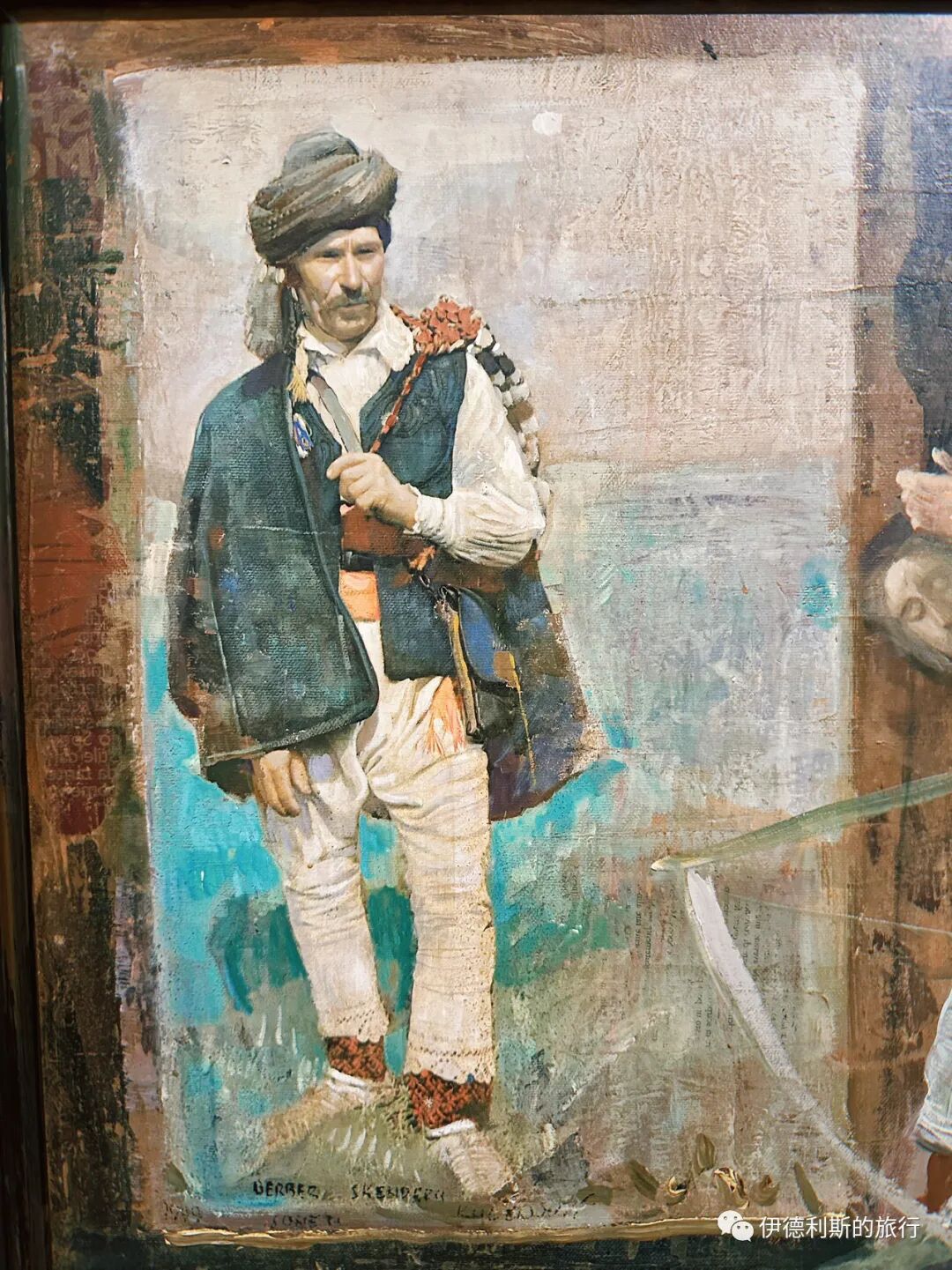
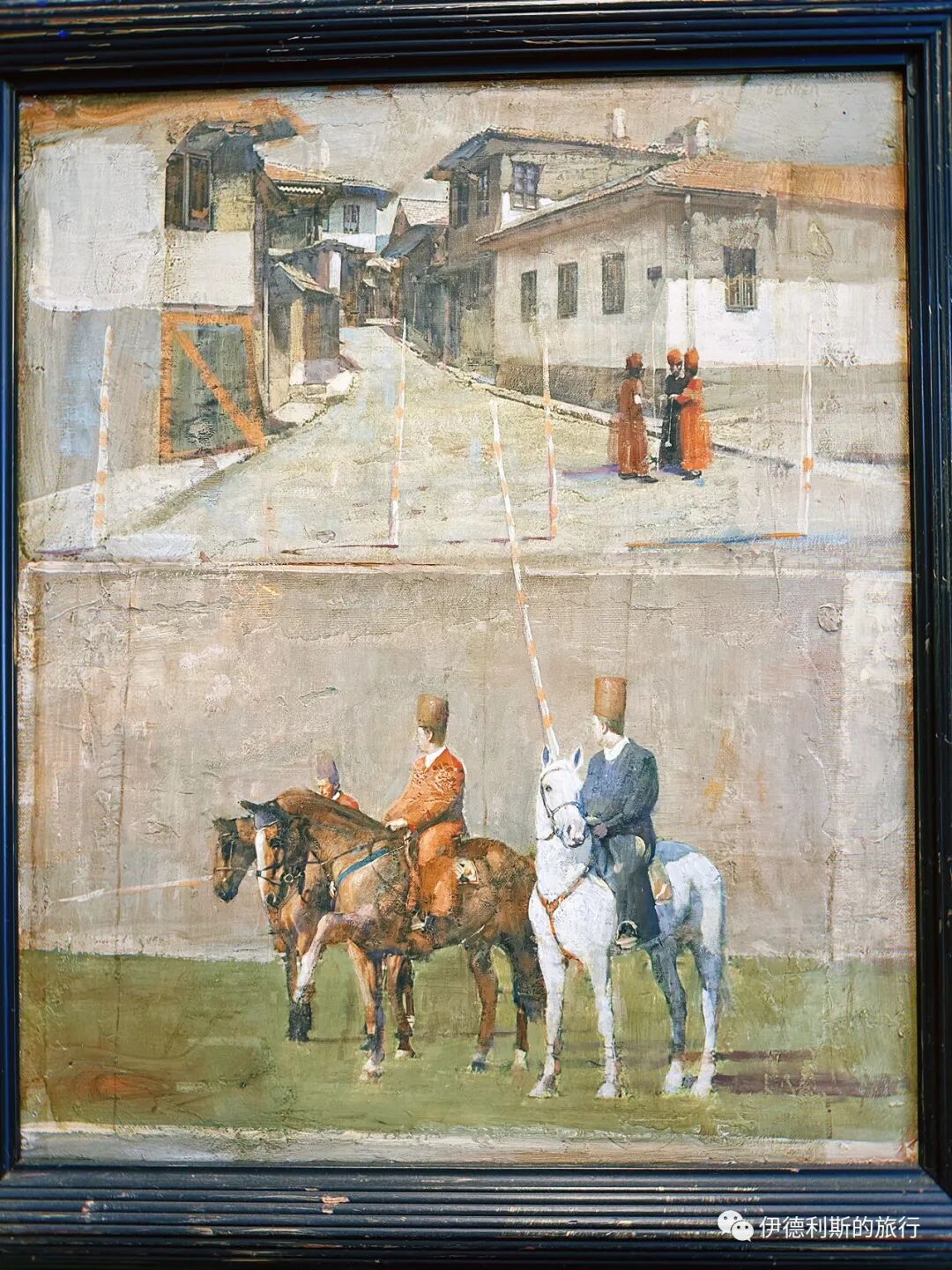
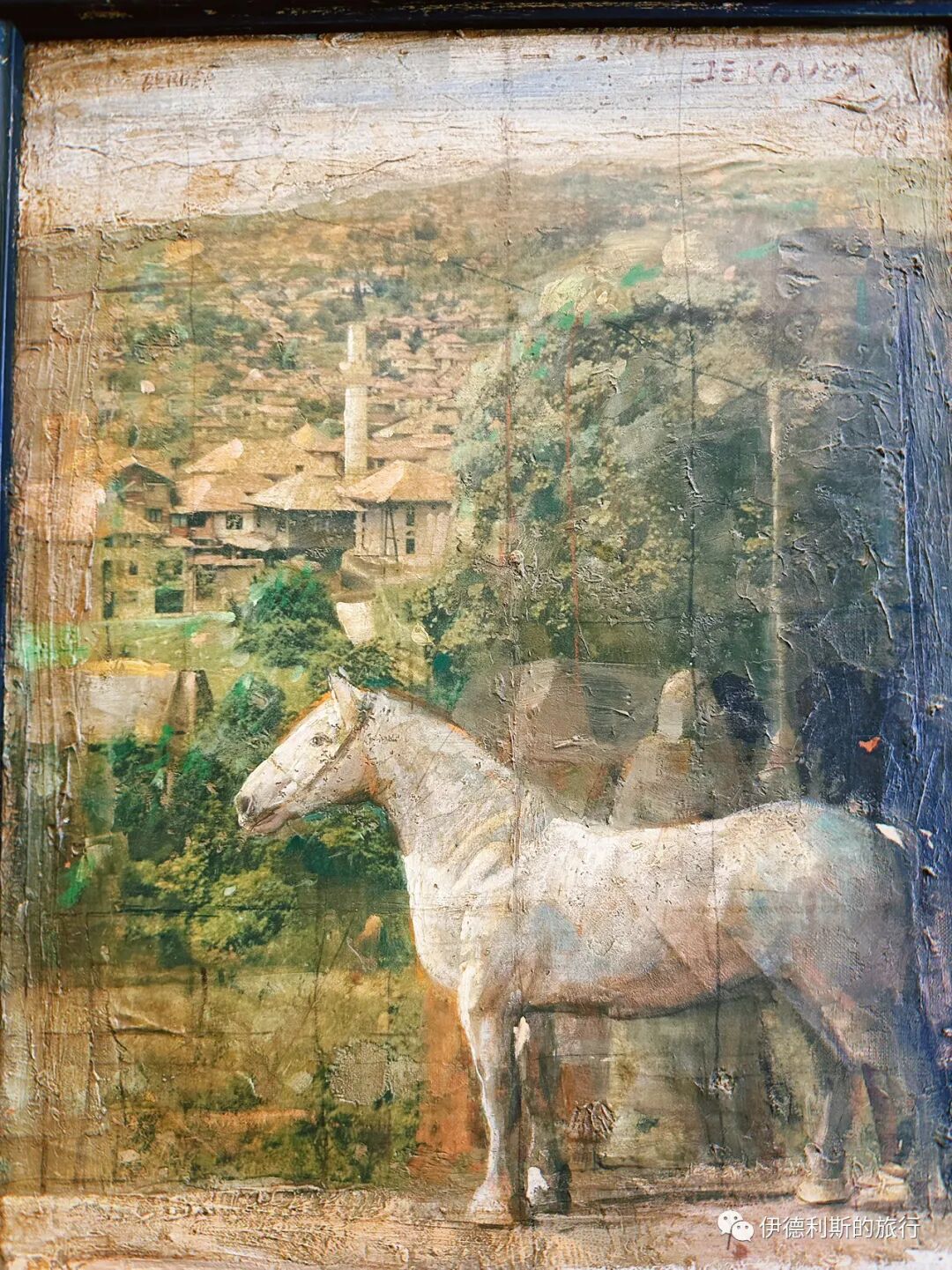
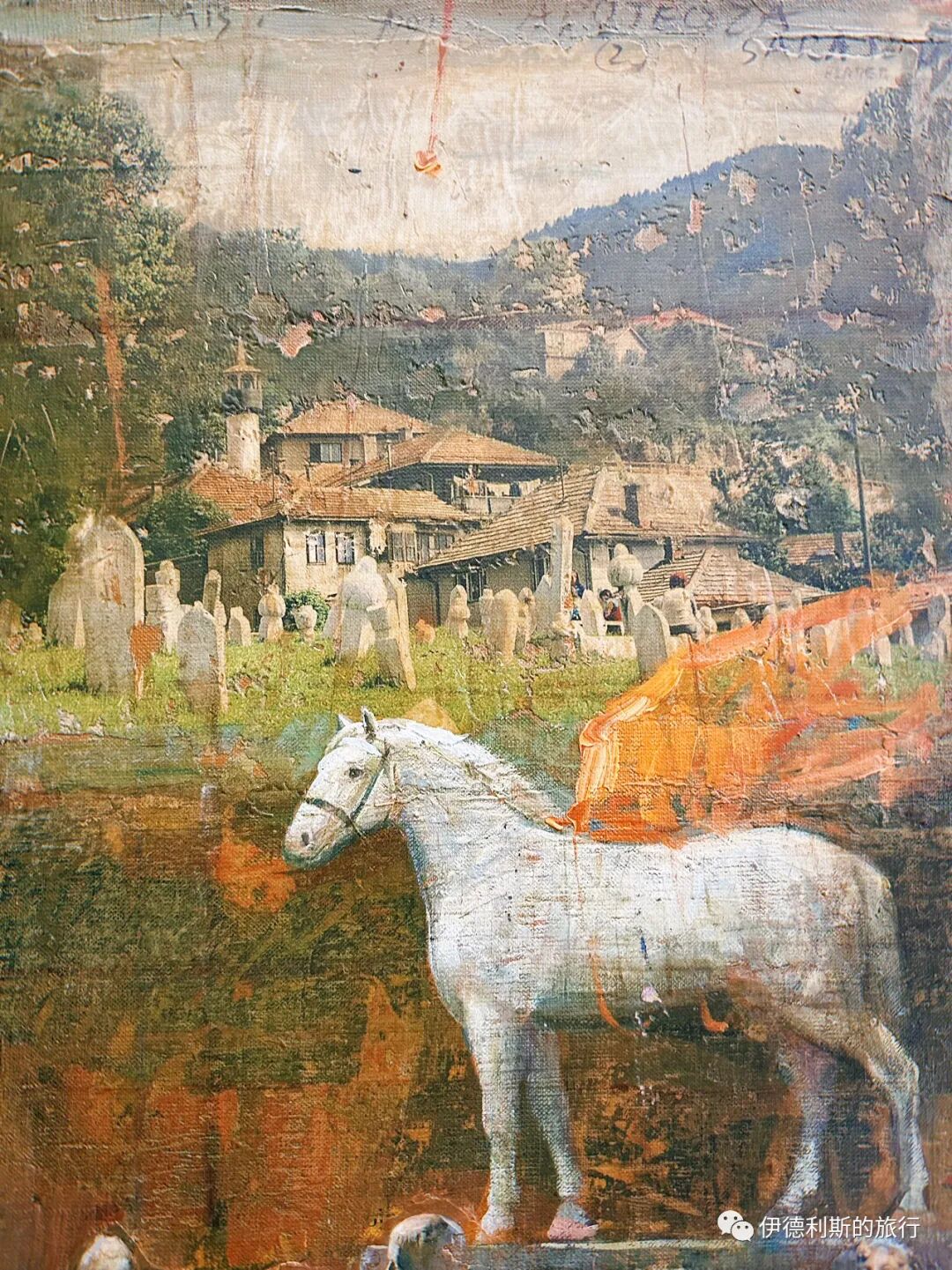
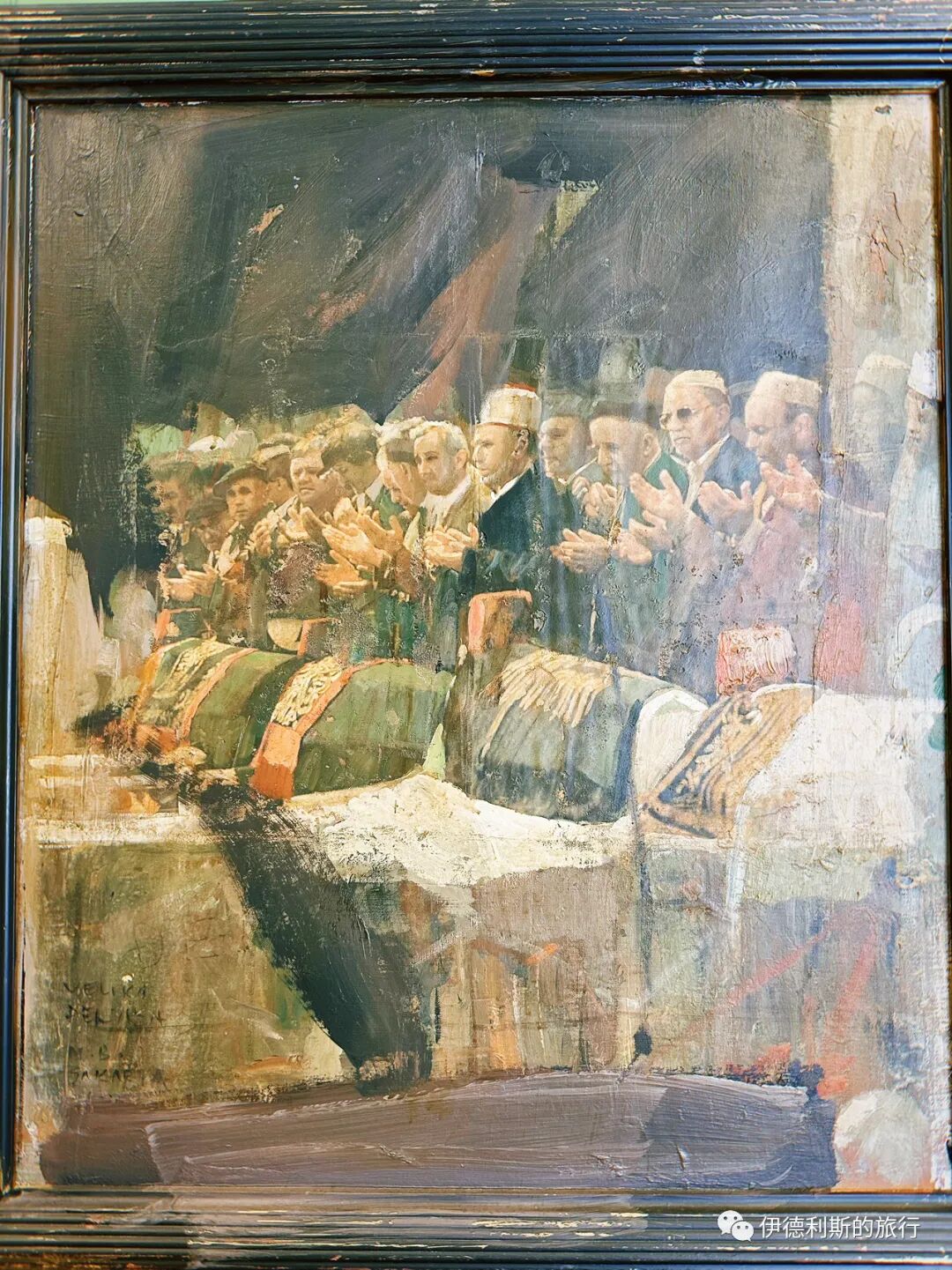
A work by the famous Bosnian artist Mersad Berber, who drew inspiration from the mysterious world of Bosnia, the layers of the Ottoman Empire, and the tragic fate of its people.
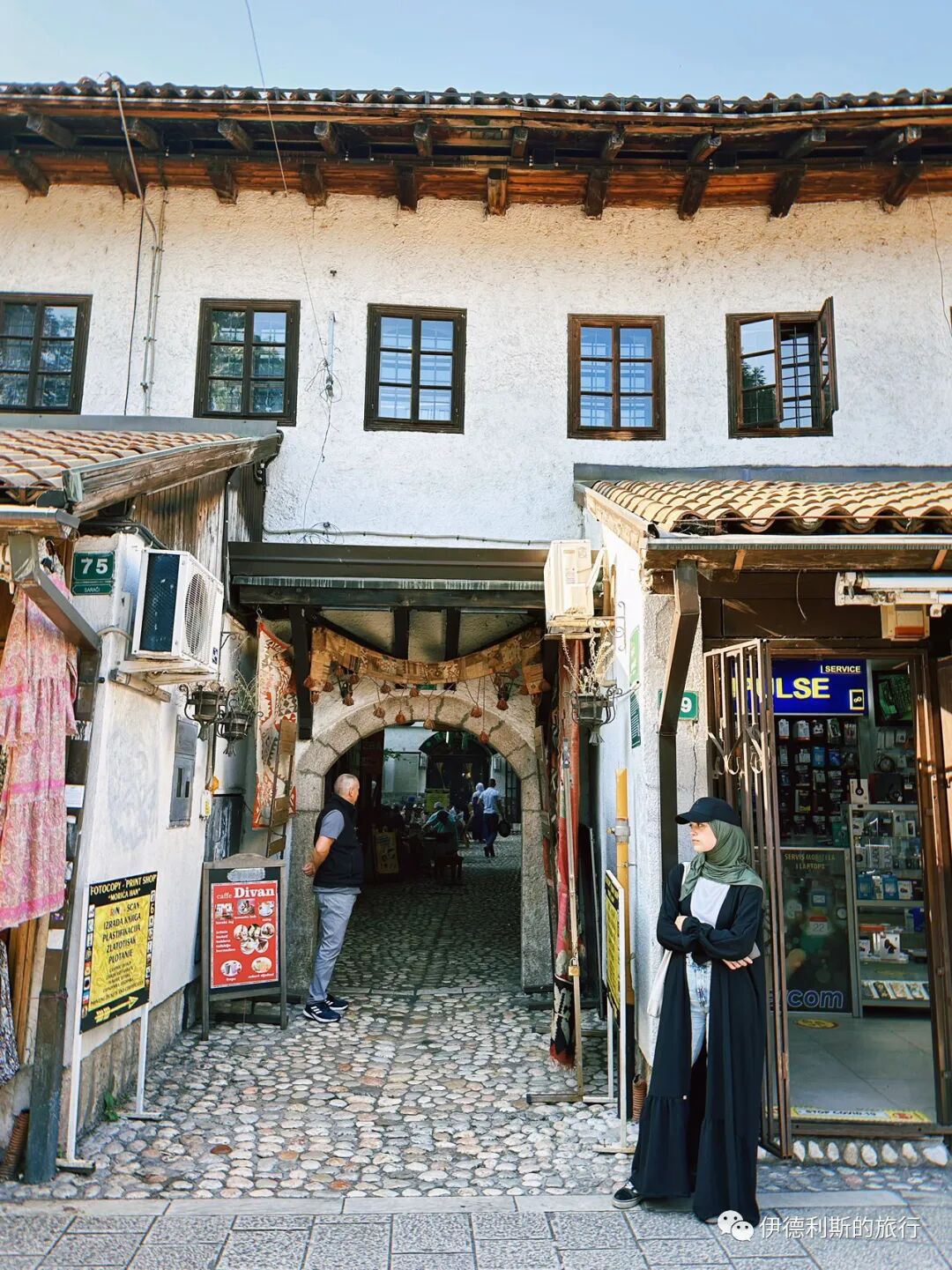
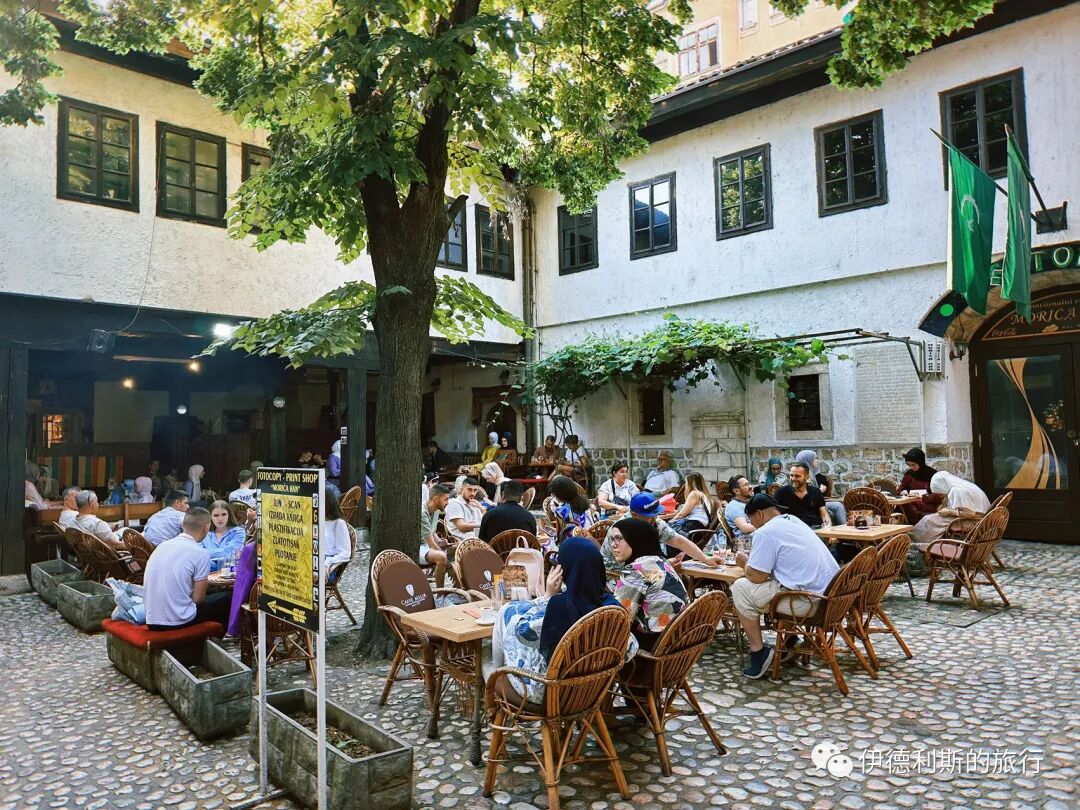
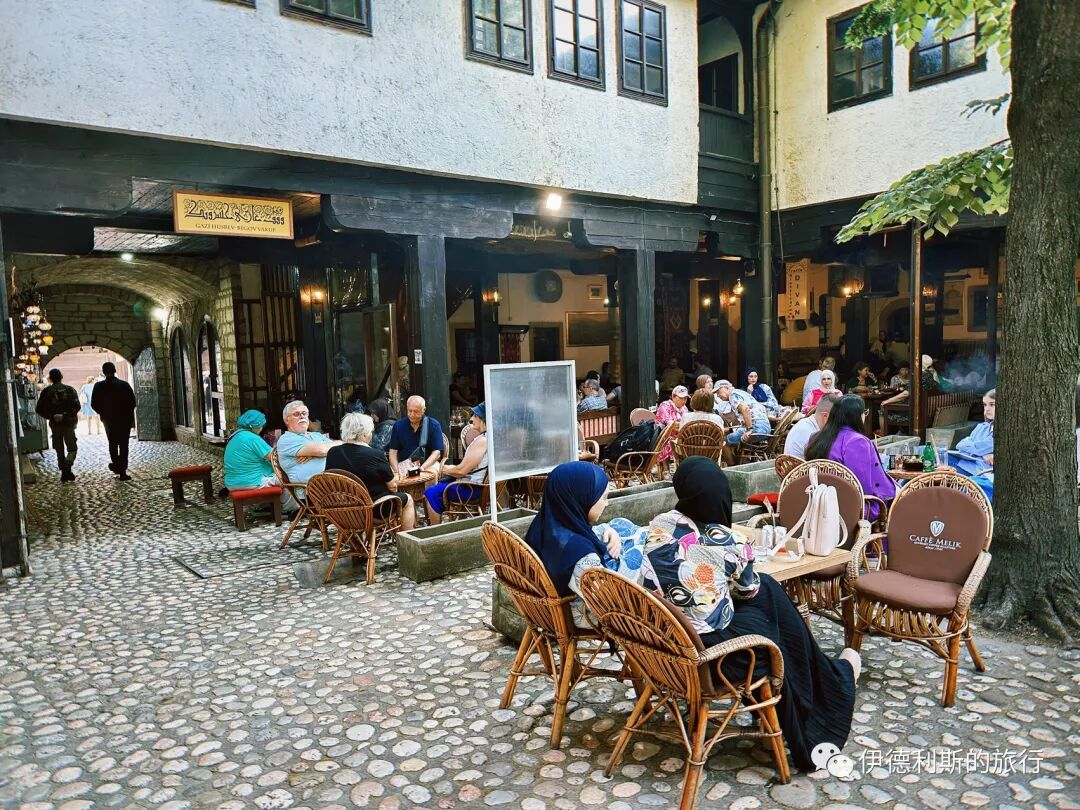
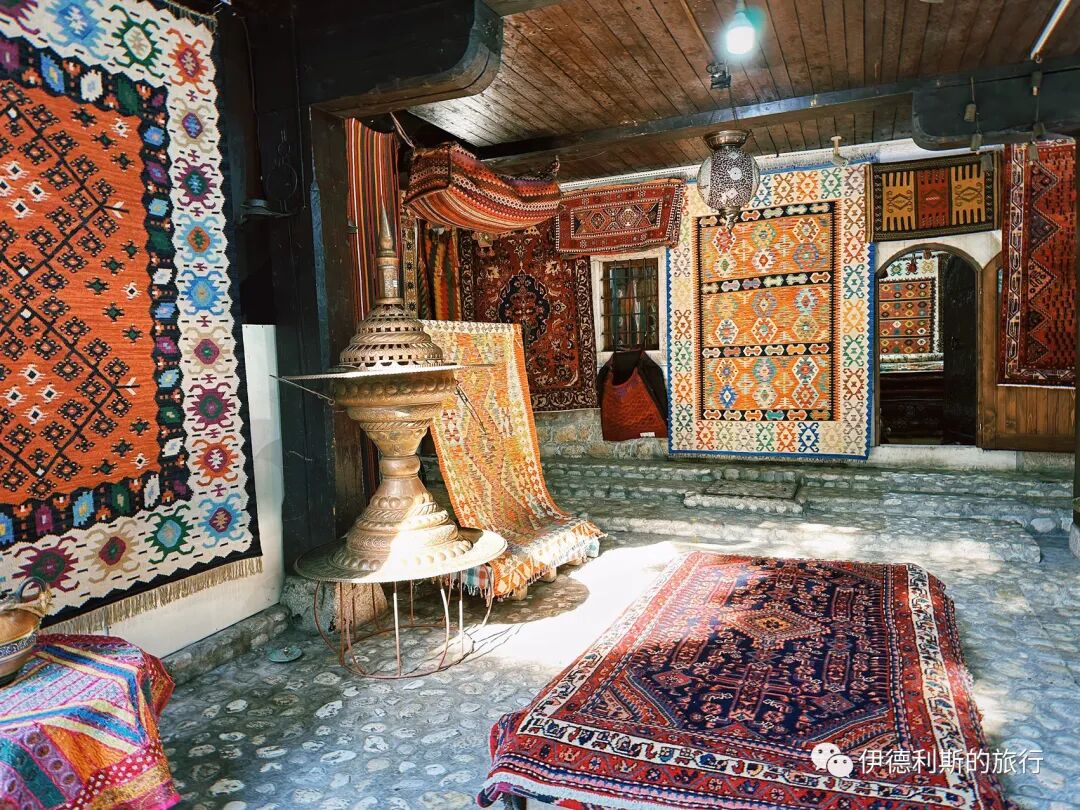
Morića Han caravanserai
Located on the northeast side of the Gazi Husrev Bey mosque is the Morića Han caravanserai, first built in 1551. It was rebuilt into its current form after a fire in 1697 and is the only remaining Ottoman caravanserai in Sarajevo. Morića Han could hold 300 guests and 70 horses. In 1878, Sarajevo citizens gathered here to form a people's committee to protest the Austro-Hungarian occupation of Bosnia and Herzegovina. Today, it is still managed by the Ghazi Husrev-beg Foundation and houses a restaurant and a Persian carpet shop.
Bezistan covered market
On the west side of the Gazi Husrev Bey mosque is the Bezistan covered market, built in 1555. It is one of the best-preserved Ottoman covered markets in Bosnia and Herzegovina. The floor of the Bezistan market is slightly lower than the surrounding streets, which keeps the interior cooler during the summer. It was originally a general goods market and still serves as a space for shops today.
Tašli Han caravanserai ruins
To the west of the Bezistan covered market are the ruins of the Tašli Han caravanserai, built between 1540 and 1543. The courtyard of the inn had a fountain and a small prayer room, and many merchants opened shops there. A fire in 1879 caused severe damage, and it completely collapsed by 1912. The site was rebuilt as a hotel in 1998, and archaeological excavations rediscovered the foundation and parts of the walls of the original inn.
Clock tower
West of the Gazi Husrev Bey Mosque stands a clock tower built in the 16th century, though the current structure was rebuilt in the 18th century. This 30-meter-tall clock tower is the highest of the 21 clock towers built by the Ottoman Empire in Bosnia and Herzegovina. It follows the lunar calendar, setting 12 o'clock at sunset each day. A mosque official called a Muvekit, who tracks the lunar calendar and the five daily namaz prayers, is responsible for adjusting the clock. The current clock mechanism was made in 1875 by the London-based company Gillett & Johnston. The top of the tower was modified during installation to make sure the clock face was clearly visible.
Public Kitchen
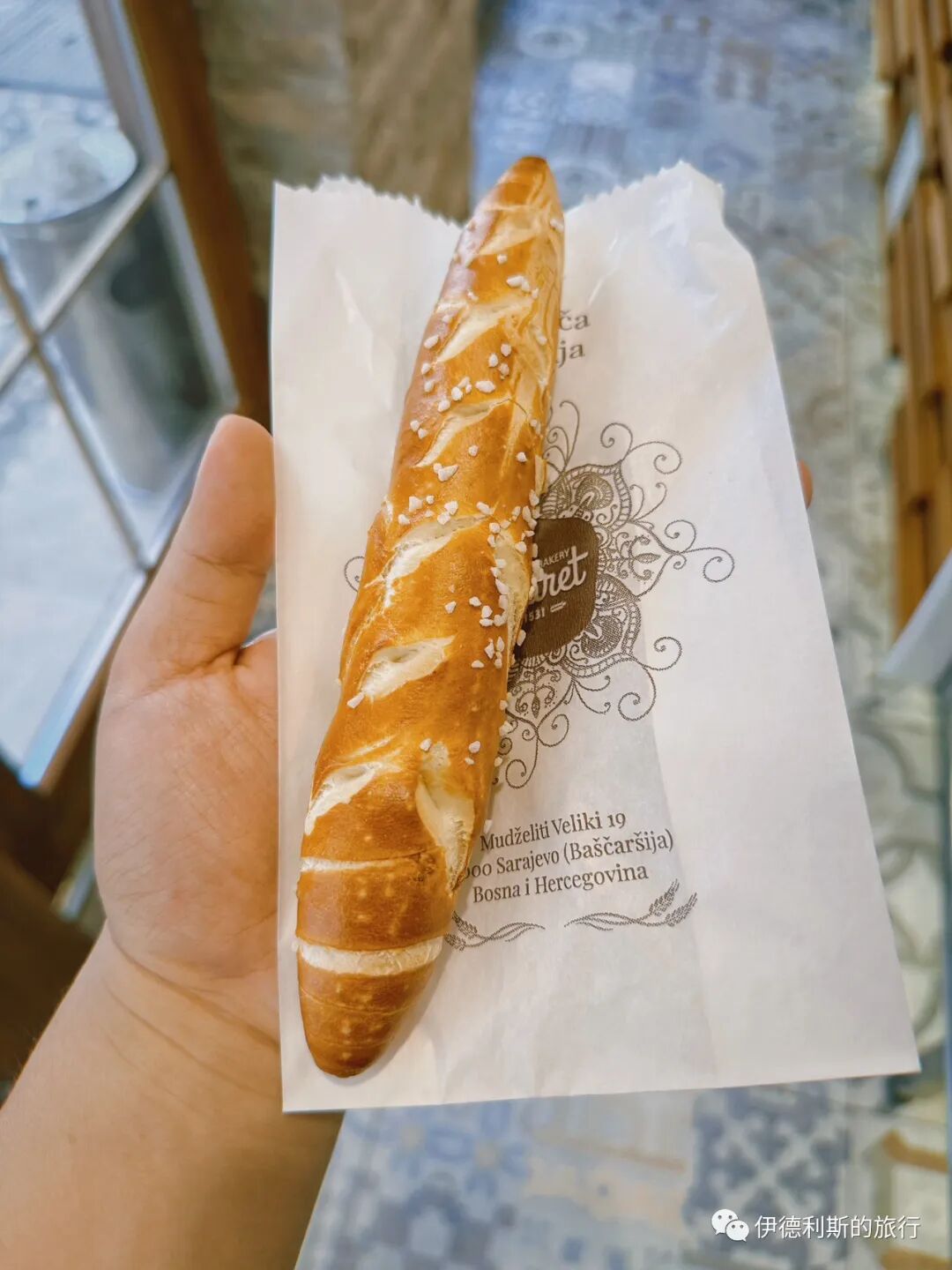
Beneath the clock tower is a public kitchen (imaret) established in 1531. It was originally run by a foundation (waqf) to distribute free food to the poor. Today, it is a very famous bakery, and the fresh bread baked on-site is very popular with the locals. Their signature item is the Kifla bread, which costs 2 yuan each. It comes in various flavors and has a rich wheat aroma. Kifla is a small bread popular in Central Europe and the Balkans with a history spanning hundreds of years. The French croissant actually evolved from the Kifla.
Muslihudin Čekrekčija Mosque
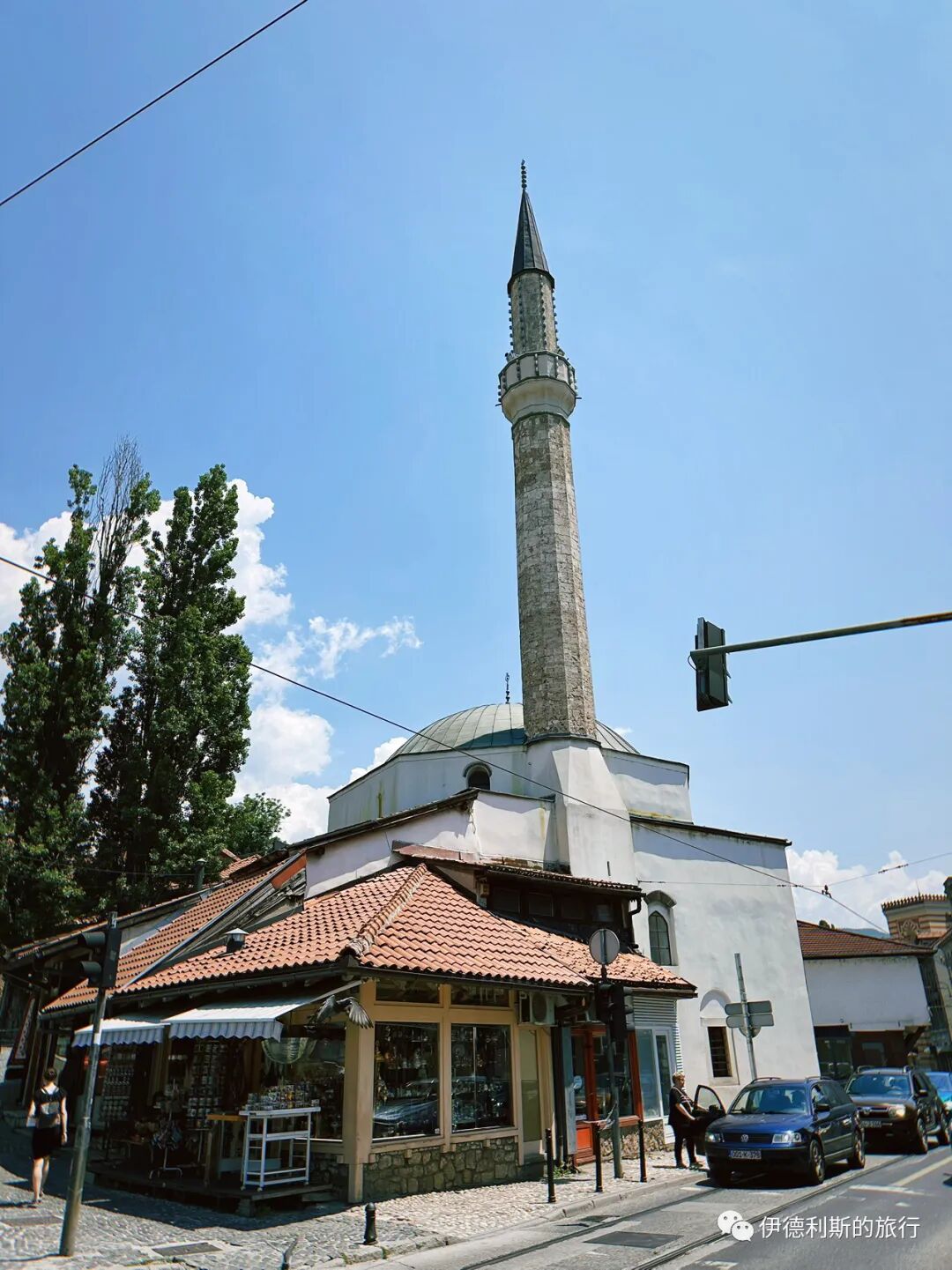
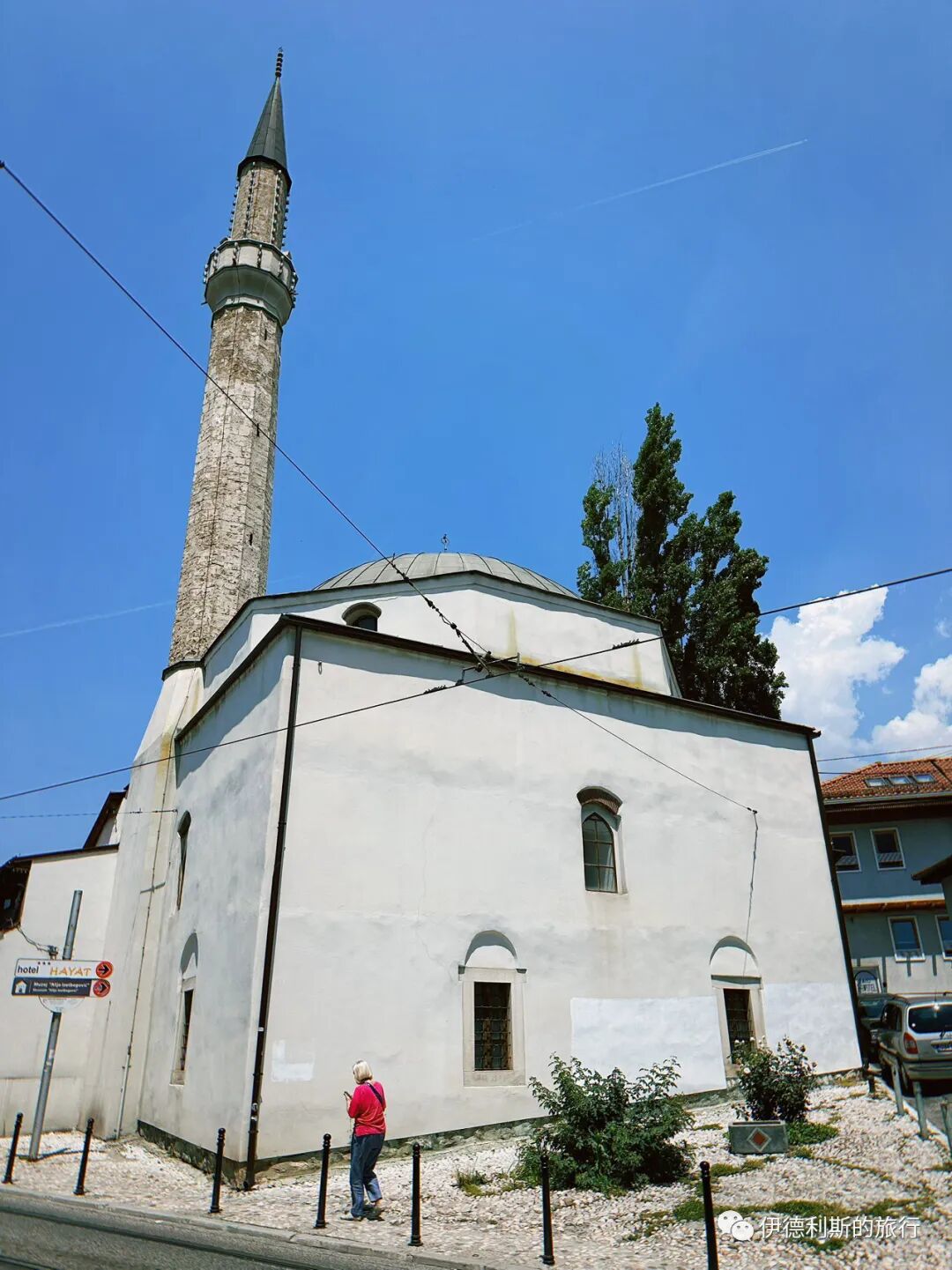
The Muslihudin Čekrekčija Mosque is located in the commercial center of Sarajevo's old town and was built by Hajji Mustafa in 1526. The mosque keeps its original 1526 endowment deed (vakufnama), which is the oldest contract document in the city of Sarajevo.
The mosque survived many major fires in Sarajevo and also survived the 1697 looting of the city by the Holy League after they defeated the Ottoman Empire. Traditional arabesque patterns are still preserved inside today. view all
Gazi Husrev Bey complex
Gazi Husrev Bey was the Ottoman governor (Sanjak-bey) of Bosnia from 1521 to 1541. During his rule, the Ottoman Empire continued to expand into Croatia and Hungary. He also funded many important buildings in Sarajevo and dedicated his wealth to supporting religious and educational institutions for the long term. The foundation (Wakof) established by Gazi Husrev Bey manages the mosque, public kitchen, hostel, Sufi lodge, madrasa, library, clock tower, mausoleum, inn, hospital, fountain, primary school, and many shops in the center of the Old Bazaar in Sarajevo, making it the most important building complex in the old city.
Mosque
When the adhan sounded, we rushed to the Gazi Husrev Bey Mosque, the most important Friday mosque in Bosnia and Herzegovina. It is the core landmark of the Old Bazaar in Sarajevo and has been the city's central mosque since it was built in 1530. Important scenes from the movie 'Walter Defends Sarajevo,' well-known to Chinese audiences, were filmed here. It was also the first mosque in the world to have electricity and electric lights in 1898.
The Gazi Husrev Bey Mosque was designed and built by the Ottoman court architect Adzem Esir Ali, who came from Tabriz, Persia. He built many structures in Istanbul during the early 16th century and was one of the founders of the early Istanbul architectural school. The main hall is 13 meters long and 13 meters wide, with a central dome 26 meters high, achieving a perfect one-to-two ratio. The front porch consists of five small domes supported by four marble columns.
The interior paintings of the mosque were damaged by fire and later repainted in 1886 by the Austro-Hungarian Empire in a Moorish Revival style. During the Siege of Sarajevo from 1992 to 1995, the Gazi Husrev Bey Mosque was hit by over 100 mortar shells, causing major damage, and was repaired after the ceasefire in 1996. During the restoration, the late 19th-century Austro-Hungarian paintings were removed, and new interior decorations were painted by Bosnian calligrapher Hazim Numanagić between 2001 and 2002.
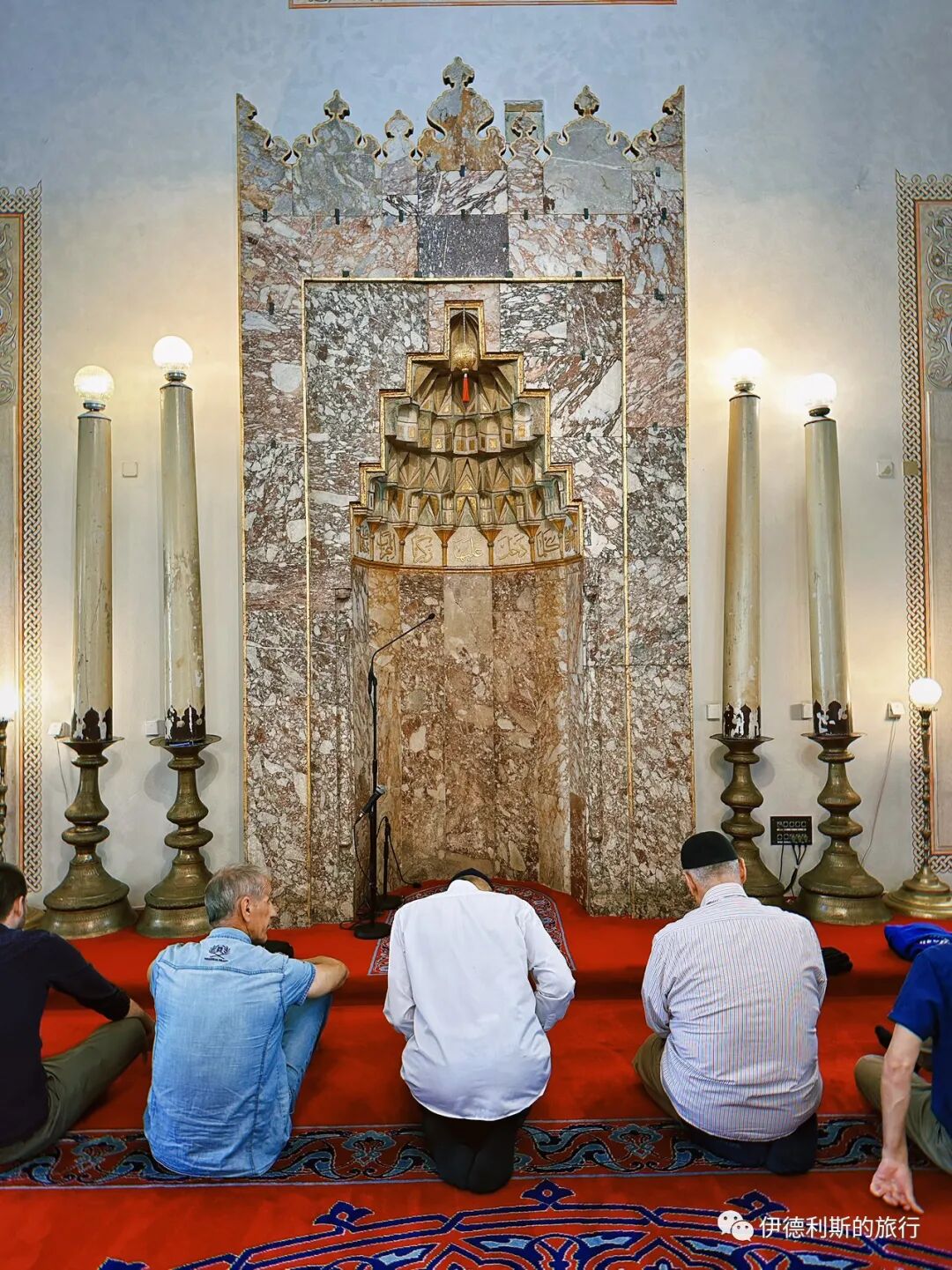
The mosque's main gate is beautifully decorated with intricate marble and gilded carvings. The Arabic calligraphy on the door adds up to the number 938, which is the year the mosque was built according to the Islamic calendar (1530/31 AD).
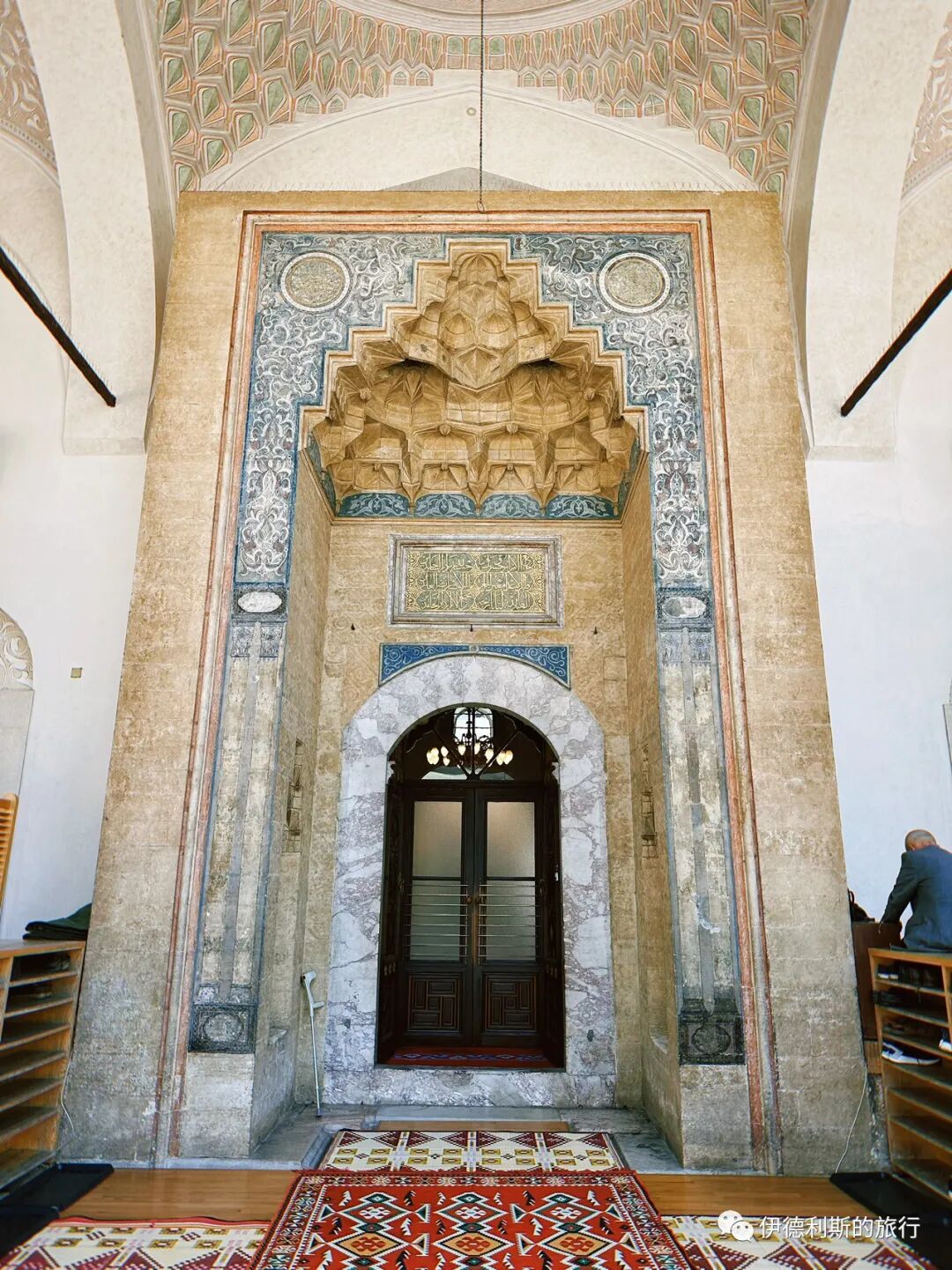
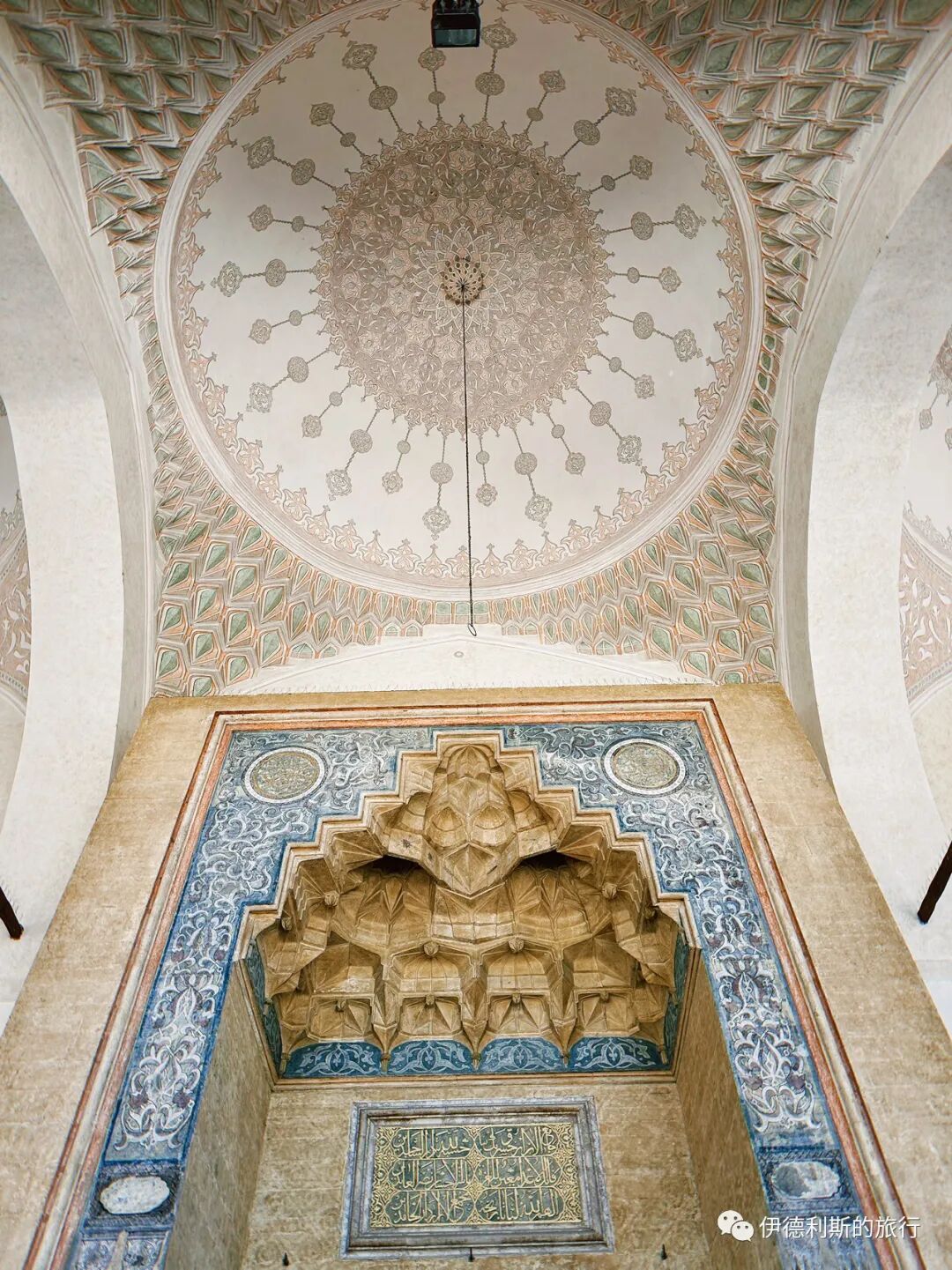
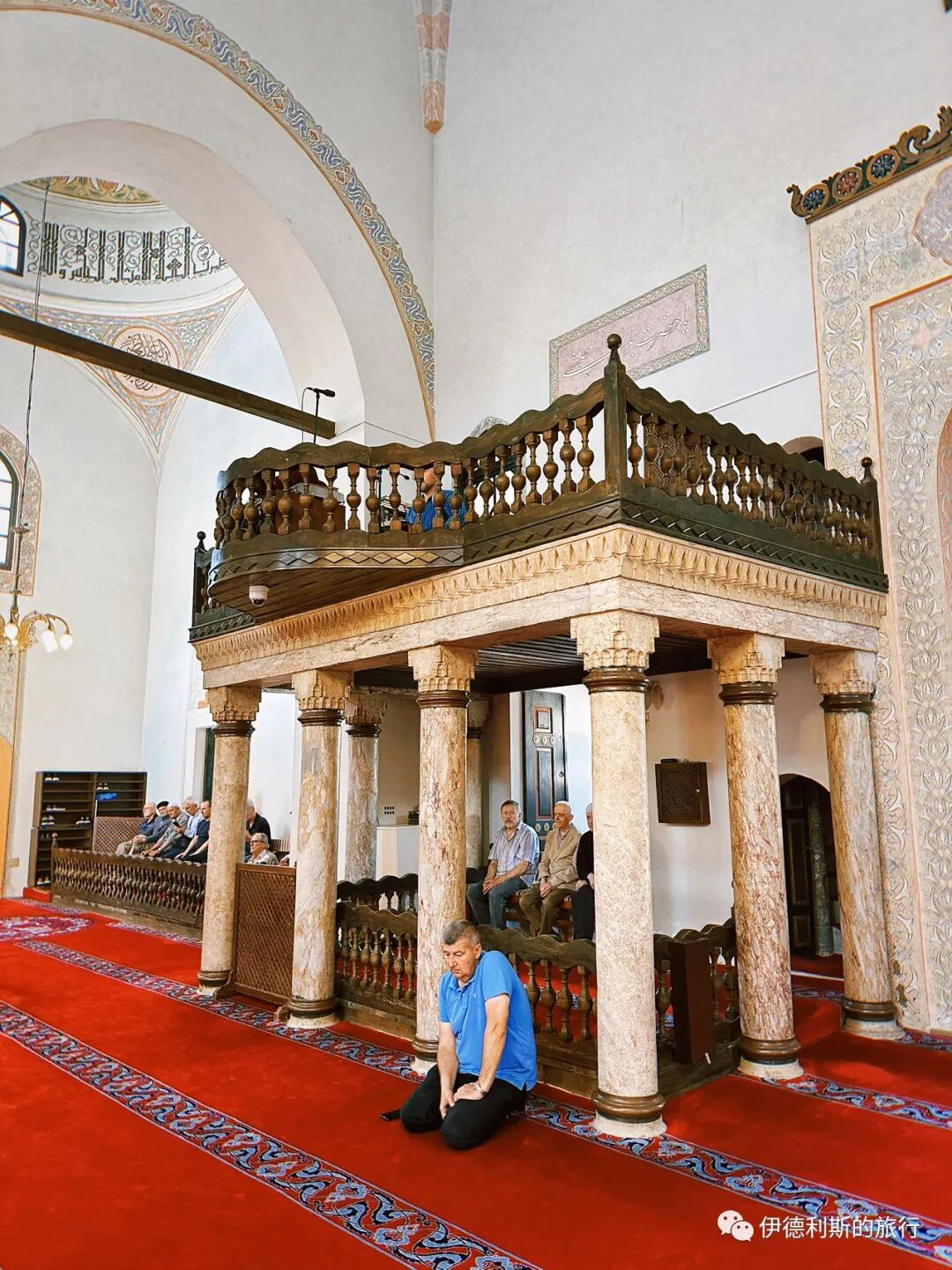
The muezzin calls the adhan and responds to the imam from a platform called Müezzin Mahfili in Turkish or Dikka in Arabic, where people also recite the Quran during nights in Ramadan. Usually, only large mosques have a Dikka platform built across from the minbar pulpit. Before sound systems existed, not everyone could hear the imam leading the namaz, so the muezzin needed to stand on the platform to make sure everyone could hear.
The area inside the railing below the Dikka platform was once a place for high-ranking officials and royalty to pray, known as the Hünkâr Mahfili. In royal mosques, the Hünkâr Mahfili is usually an elevated platform, while in smaller ones, it is a railed area on the ground floor. Today, everyone can pray here, but the railing has been kept.
Fountain
In front of the main hall of the Gazi Husrev Bey Mosque is the Shadirvan fountain. This type of fountain used for drinking and performing wudu originated in Persia and later became a typical architectural element of the Ottoman Empire, usually placed in the center of courtyards in mosques, caravanserais, dervish lodges, and madrasas.
This Shadirvan fountain was first built in 1530, with water coming from the Crnilo spring 7 kilometers away through clay pipes connected to the city of Sarajevo. It was rebuilt in 1893, modeled after the fountain at the Great Mosque of Bursa in Turkey, and connected to a modern water supply system. The fountain was severely damaged during the war from 1992 to 1995 and was rebuilt to its original appearance in 1997. You can still see three water basins from the original fountain in the mosque courtyard today.
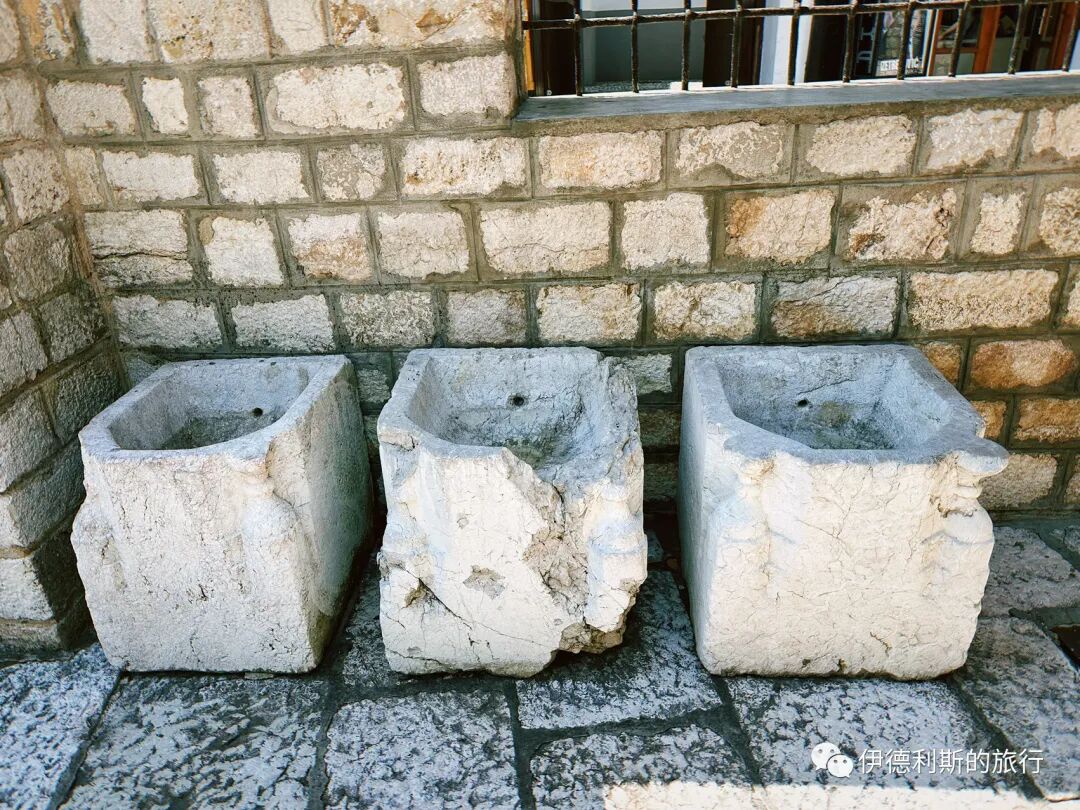
There is a drinking fountain for passersby along the wall in the northwest corner of the courtyard, a common sight in Ottoman cities.
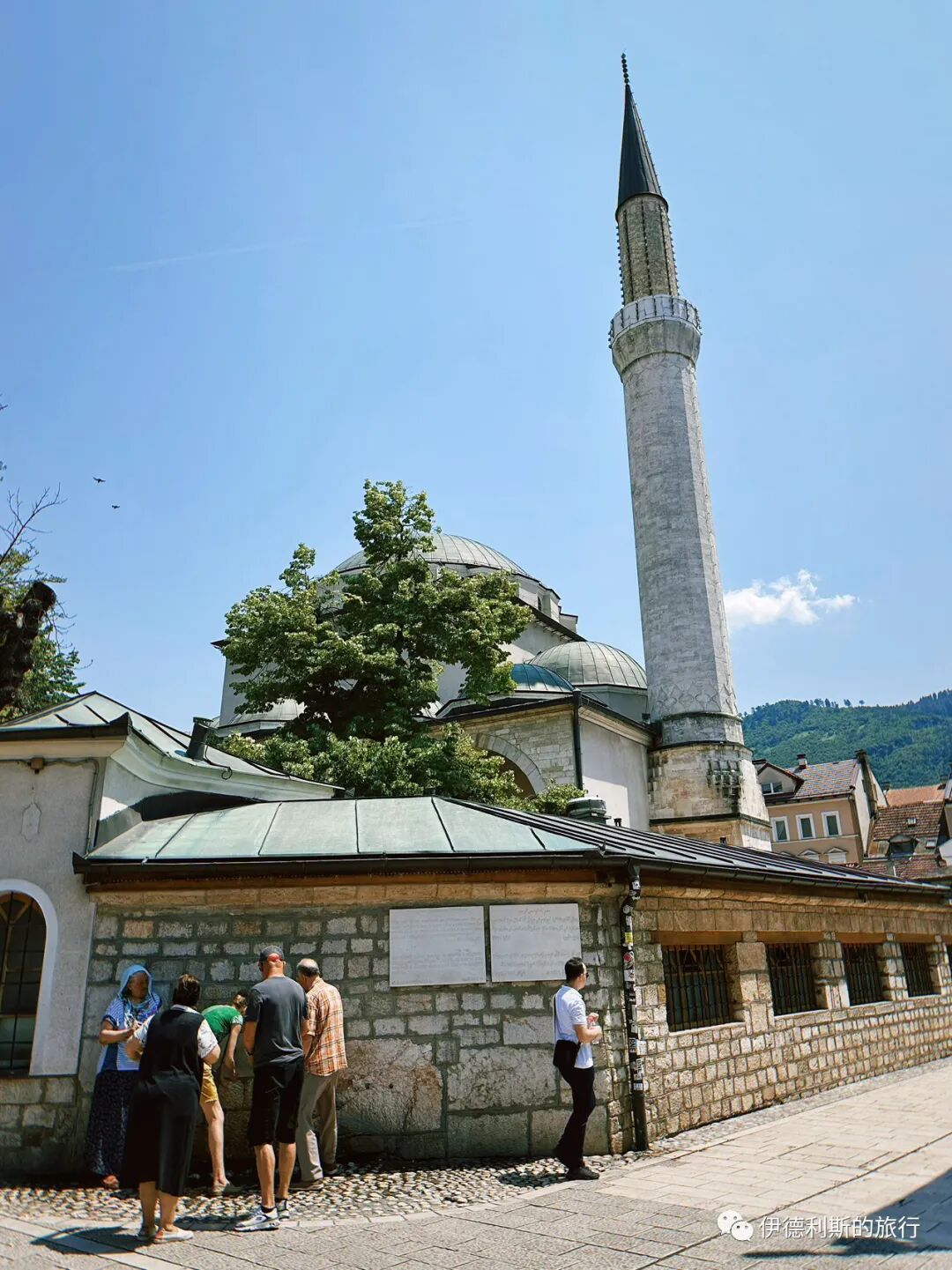
Muwaqqithana
In the northwest corner of the mosque sits a small building from 1859 called the Muwaqqithana, where an astronomer known as a Muwaqqit used calculations to set the times for namaz and fasting. Early mosques mostly relied on a muezzin to watch shadow lengths and twilight to set prayer times. By the late 13th century, during the Mamluk dynasty in Egypt, specialized astronomers called Muwaqqit began to appear, and this practice gradually spread everywhere.
Mausoleum
Gazi Husrev Bey was born in 1480 to a Bosnian noble father and a mother who was the daughter of the Ottoman Sultan Bayezid II. He lost both parents when he was very young and grew up in the Ottoman court. He later earned many military honors and was appointed governor of Bosnia in 1521, becoming one of Sultan Suleiman the Magnificent's most trusted men.
In 1541, a noble uprising broke out in Montenegro. Gazi Husrev Bey fought several battles to maintain order in the region and was eventually killed in a small village. His body was returned to Sarajevo and buried next to the Gazi Husrev Bey Mosque. The mausoleum of Gazi Husrev Bey is a typical 16th-century octagonal Ottoman tomb, which underwent repairs in 1895 and 2002.
Next to the tomb of Gazi Husrev Bey is a smaller octagonal mausoleum where his deputy, the Ottoman general Murat-beg Tardić, is buried. Murat-beg was Croatian. He became an Ottoman prisoner of war when he was young, later served under Gazi Husrev Bey, and became his close partner due to his outstanding military achievements. Murat-beg led several conquests against Croatia. In 1537, he completely crushed the military defenses of the Kingdom of Croatia, playing a major role in the westward expansion of the Ottoman Empire. Murat-beg died in 1545 and was buried next to the tomb of Gazi Husrev Bey.
Kursumlija Madrasa
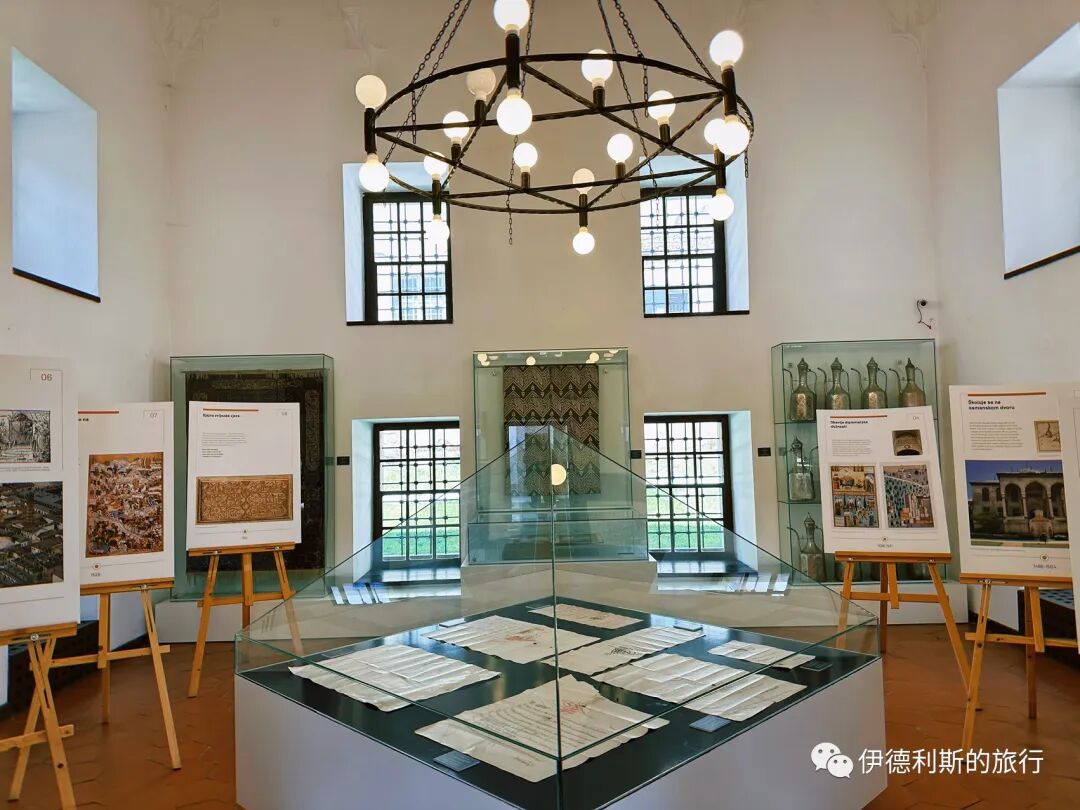
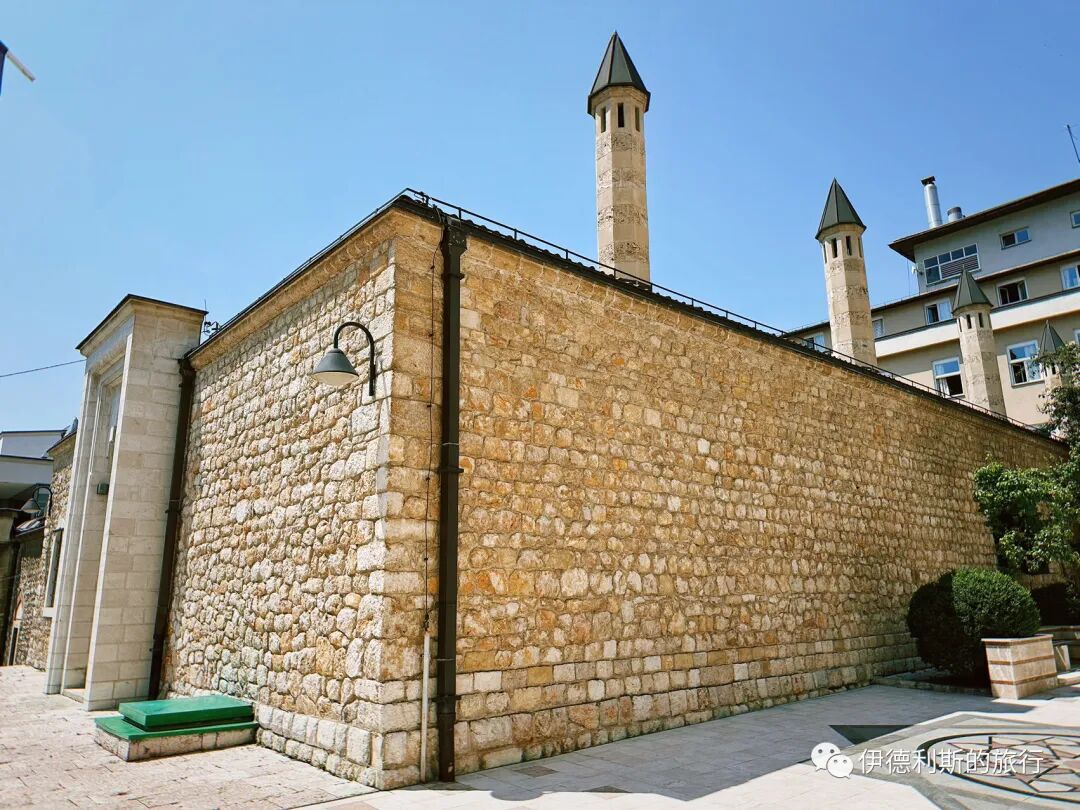
On the north side of the Gazi Husrev Bey Mosque is the Kursumlija Madrasa, built by Gazi Husrev Bey in 1537 and dedicated to his mother, the Ottoman princess Selçuka. The madrasa consists of a courtyard with 12 classrooms, each featuring a fireplace and a dome, with a fountain for wudu in the center of the courtyard. After 2013, this site became the Gazi Husrev-beg Museum, which showcases his life, the foundation complex he established, and his contributions to the urban development of Sarajevo.
A 19th-century water jug used specifically to hold the mixed drink sharbat for Mawlid celebrations.
An ancient Quran copied in 1784 by Muhamed Filibevi from Plovdiv, Bulgaria.
A burial shroud for the 16th-century tomb of the Prophet, gifted to Bosnia and Herzegovina by Ottoman Sultan Abdulaziz in 1867.
To the right of the madrasa is the Sufi lodge (khanqah), which is now a gallery, though it was closed when we visited.
Library
On the northwest side of the Gazi Husrev Bey Mosque is the Gazi Husrev Bey Library, founded in 1537 using the remaining funds from the construction of the madrasa. The library was originally part of the madrasa and did not have its own separate room until 1863. The library was forced to close after the Siege of Sarajevo began in 1992 and did not reopen until 2014. The new library was built with an 8.8 million dollar donation from Qatar. It houses over 100,000 manuscripts and books in Arabic, Turkish, Persian, Bosnian, and other languages, covering fields like Islam, literature, philosophy, history, medicine, and astronomy.
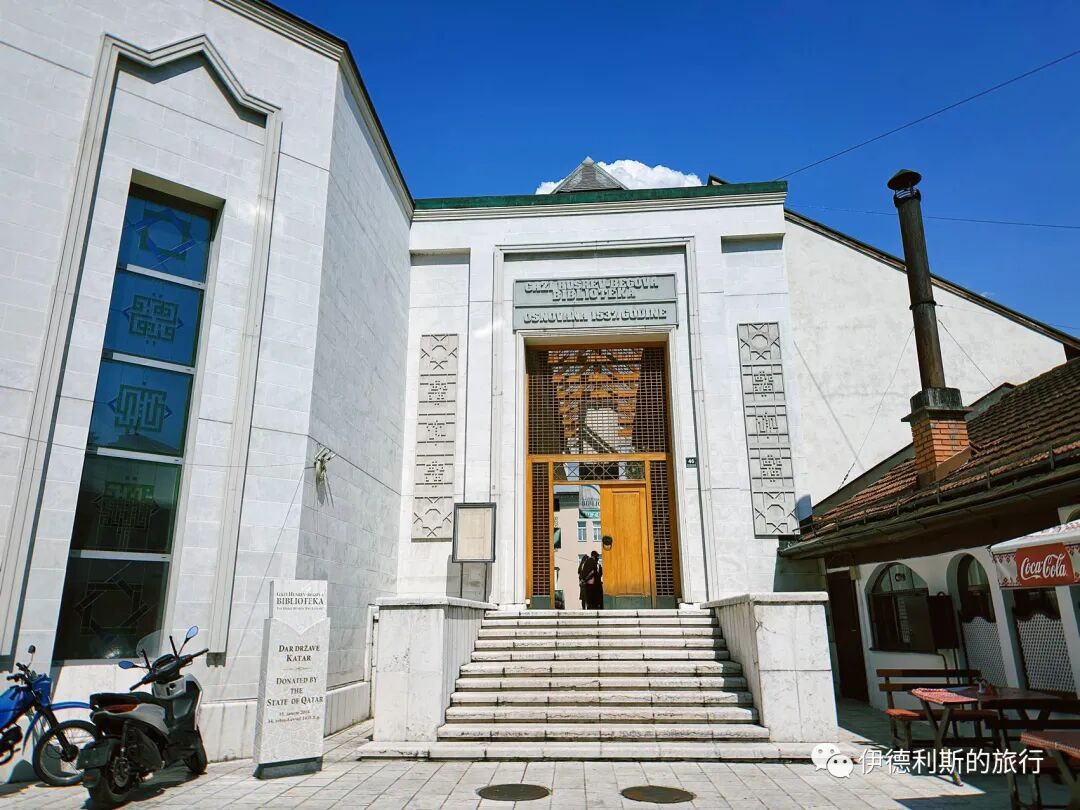
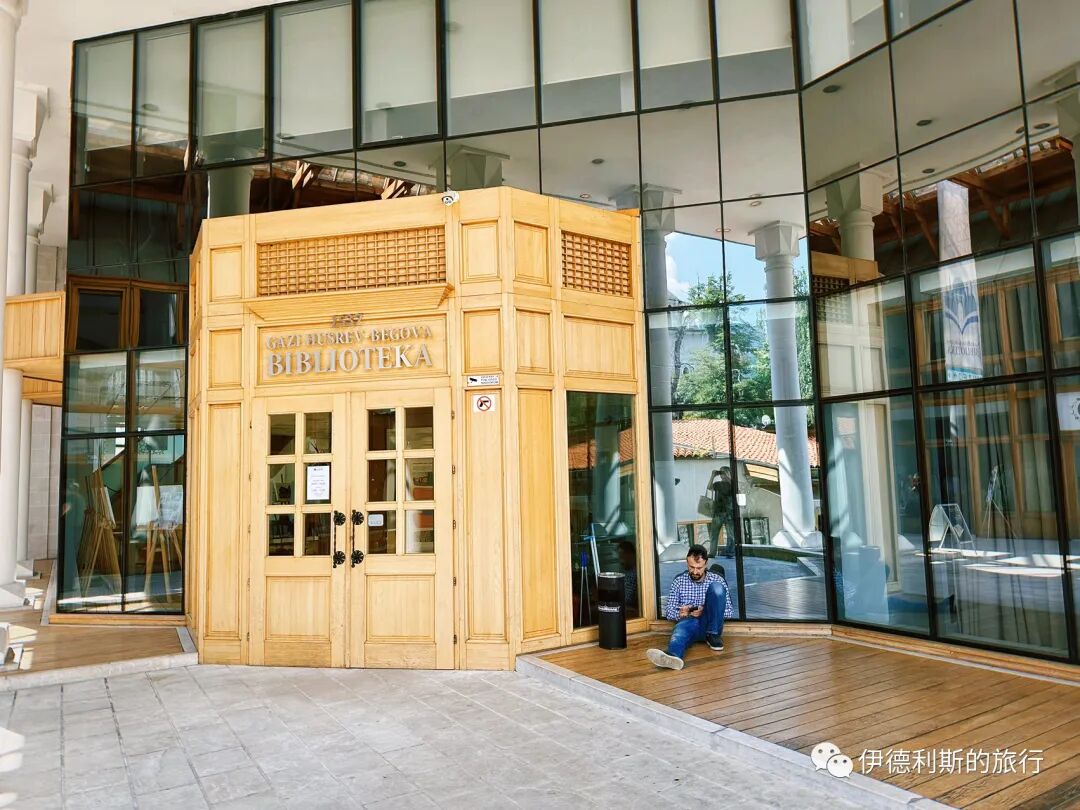
As the library with the richest collection of Islamic books in Bosnia and Herzegovina, the Gazi Husrev Bey Library has faced many trials over its nearly 500 years of operation, but the 1992-1995 Bosnian War was undoubtedly the most difficult. The aggressors made destroying the historical and cultural heritage of Bosnia and Herzegovina a key goal, especially targeting historical buildings that housed written records. Staff at the Gazi Husrev Bey Library risked their lives to successfully move tens of thousands of precious Islamic books to safety, making a huge contribution to saving Bosnian history and culture.
To preserve the books in the Gazi Husrev Bey Library, staff moved the book storage areas many times. In 1992, the library decided to move 21 packages containing the most precious manuscripts to the vault of the Privredna Bank. To avoid Serbian snipers on the streets, they packed the books in banana boxes, but they were then robbed by hungry civilians. Fortunately, the civilians let them go after discovering the boxes contained books instead of bananas. After many hardships, these books were finally saved until the end of the war.
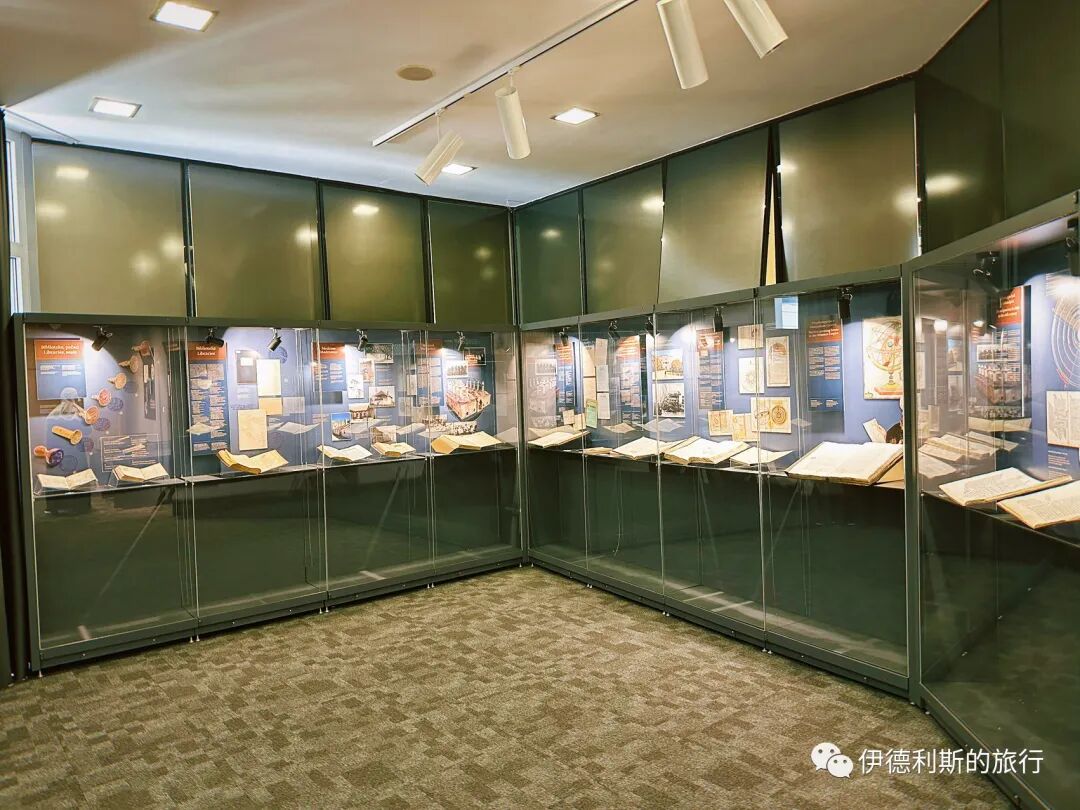
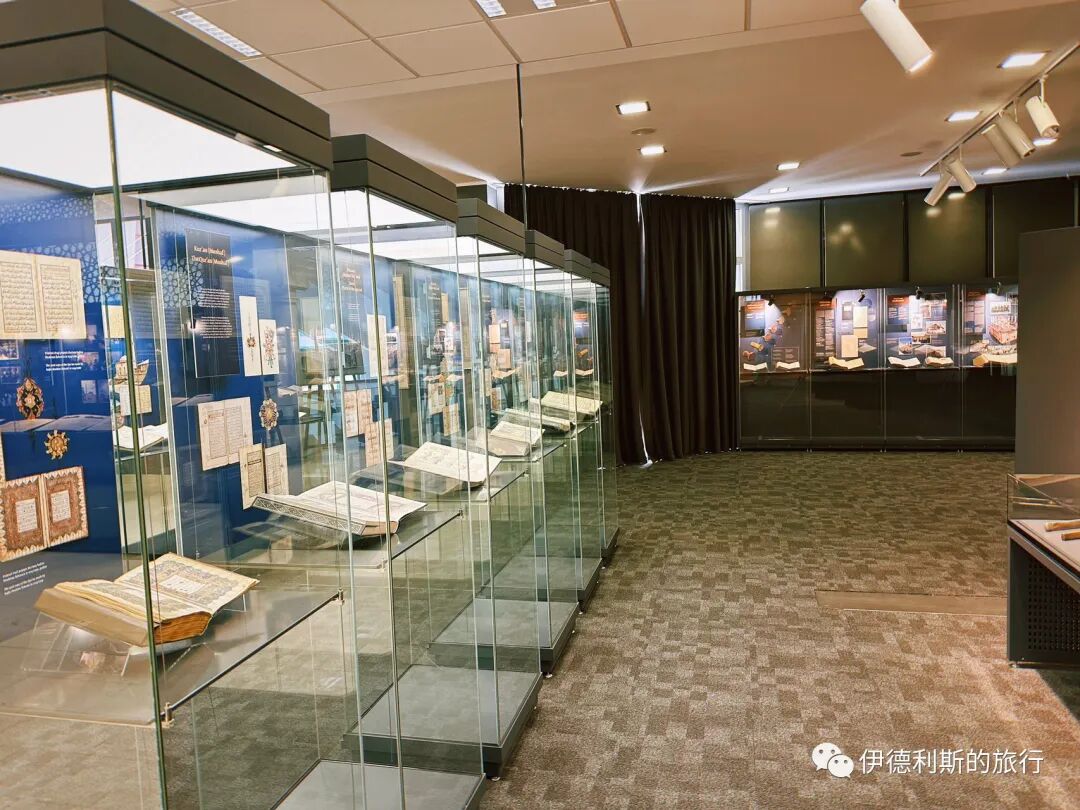
The 63rd handwritten scripture by Hafiz Ibrahim Sehovic, completed in 1807. Hafiz Sehovic copied at least 66 Qurans in his lifetime, and the Gazi Husrev-beg Library holds four of them.
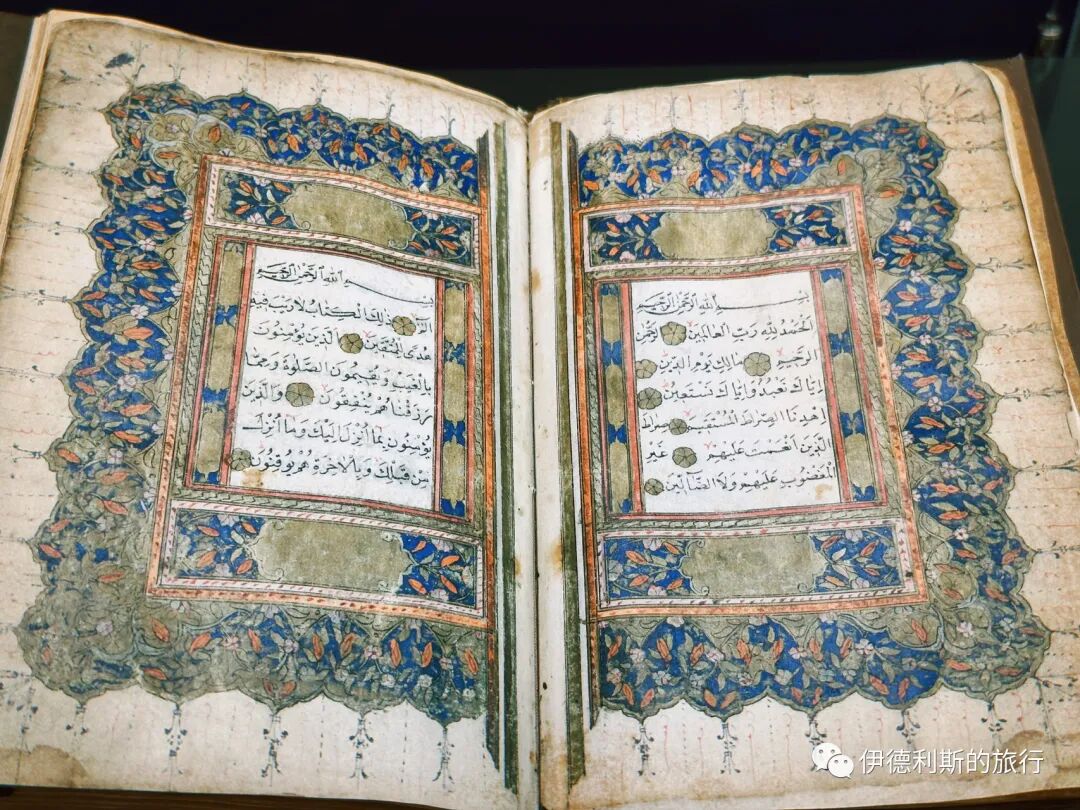
A handwritten scripture completed by Ahmad b. Muhammad al-Muhägir ad-Dagistani al-Makki in 1849.
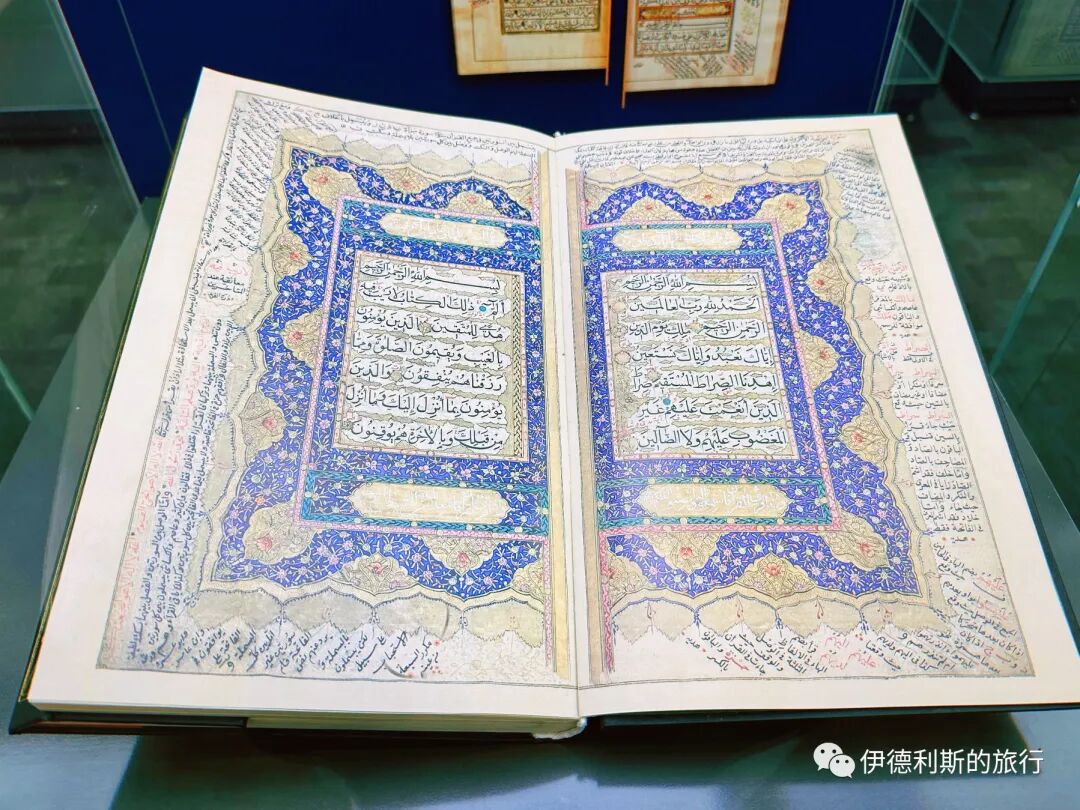
A Quran selection (Juz') gifted by Ferhad-pasha Sokolovic in 1587 to a mosque in the city of Banja Luka in northwestern Bosnia and Herzegovina.
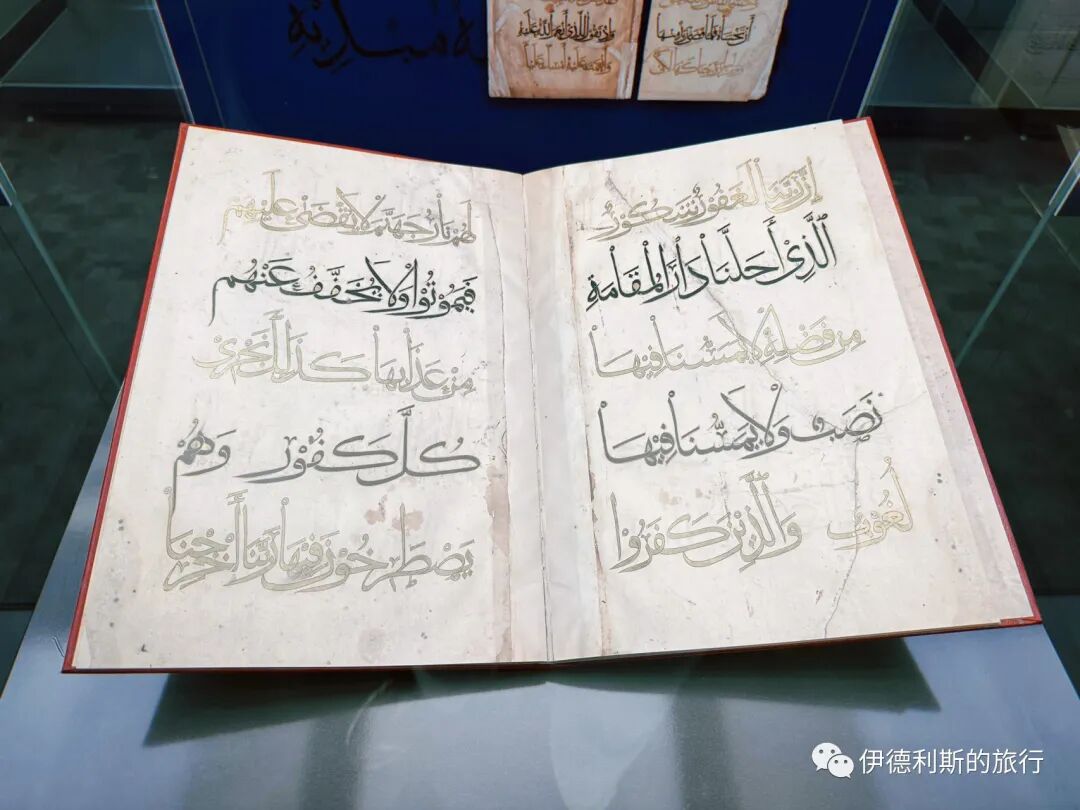
A Quran selection (Juz') gifted by Mehmed-pasha Sokolovic in 1570 to a mosque in his birthplace in eastern Bosnia.
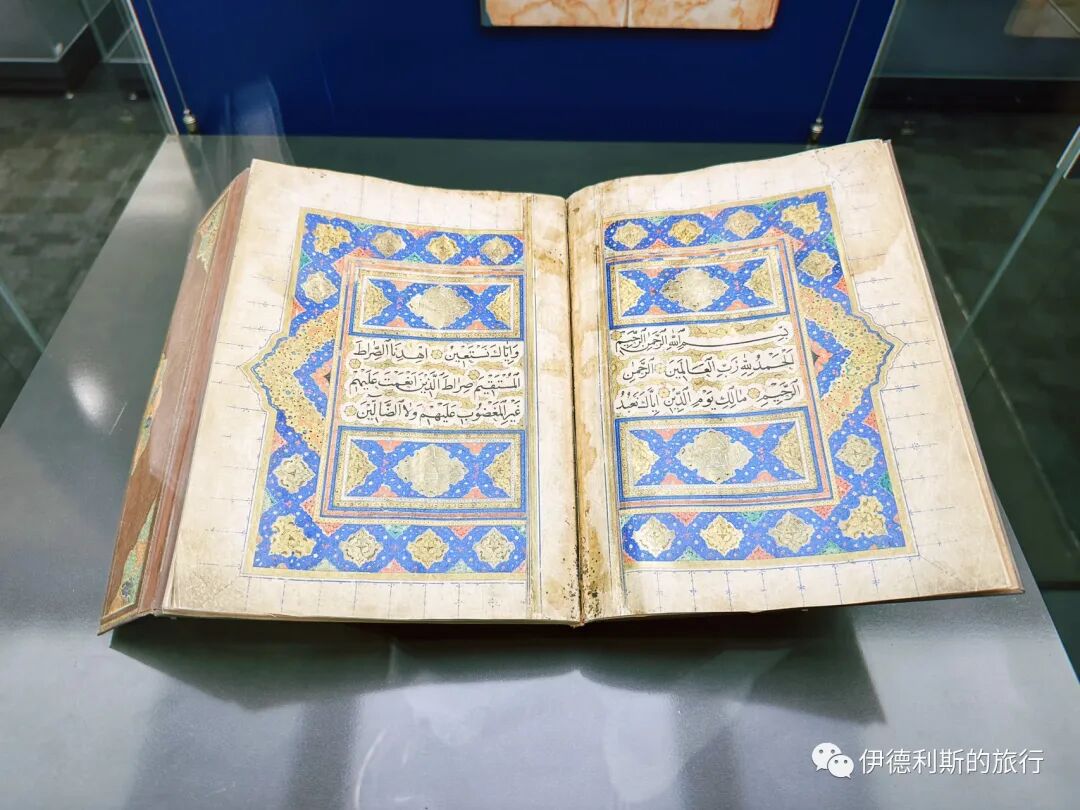
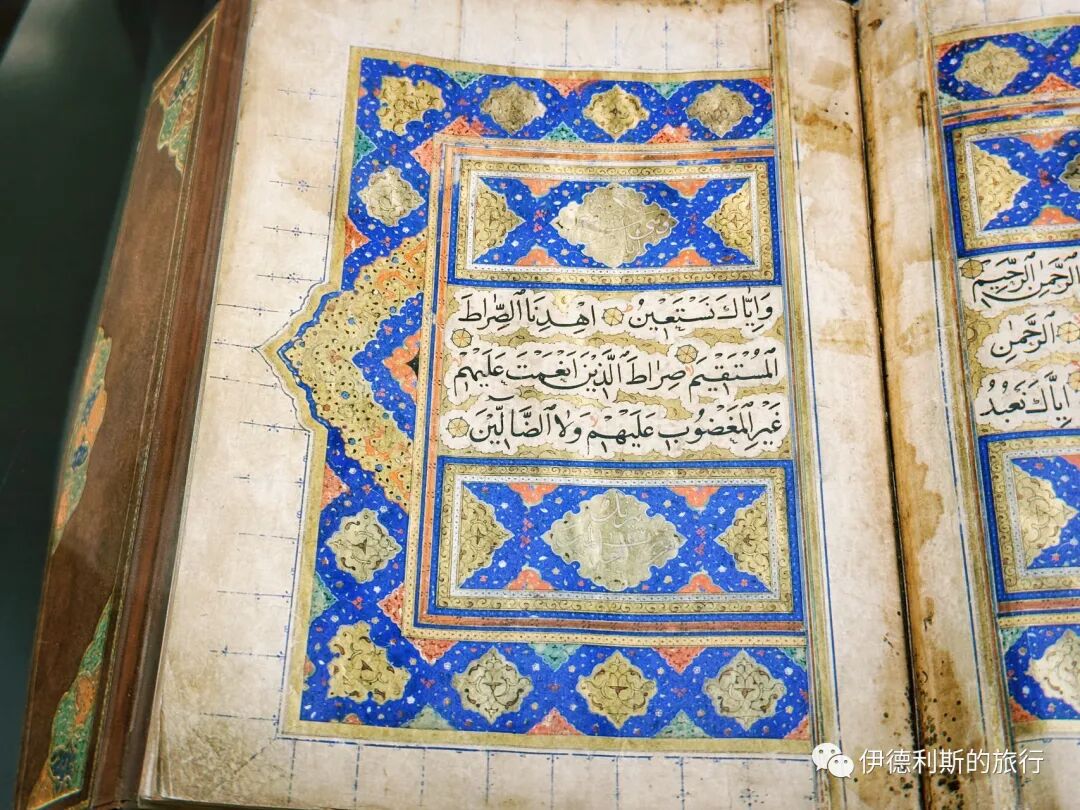
A handwritten scripture created by Abdullah b. Muhammad al-Hafiz as-Sirazi in 1572-73.
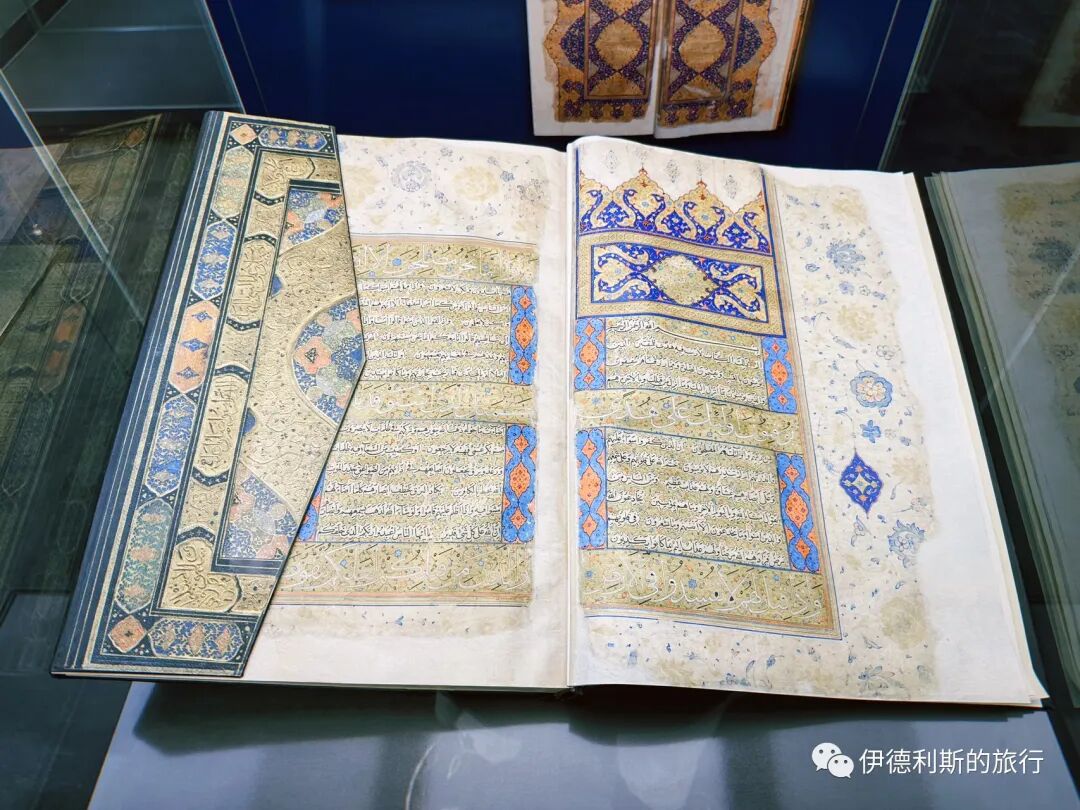
The Rose Garden (Gulistān) is a prose work written by the great Persian poet Saadi in 1258. This manuscript was annotated by the great 16th-century Bosnian classical literature critic Ahmed Sudi Bosnjak and copied by Ahmad b. al-hagg Husayn al-Mostari in 1765. Ahmed Sudi was born in eastern Bosnia and later lived in Istanbul for a long time. He was an expert in Persian literature and wrote a series of commentaries on Persian literary classics in Ottoman Turkish. These had a huge influence in the Ottoman Empire and were widely used by later Persian scholars and Western orientalists.
19th-century Arabic calligraphy art from Bosnia and Herzegovina, with the second and third pieces collected from an old traditional wooden mosque in Bužim, northwestern Bosnia and Herzegovina.
A chandelier used in a mosque in the early 20th century.
Artifacts collected in the Gazi Husrev Bey Library.
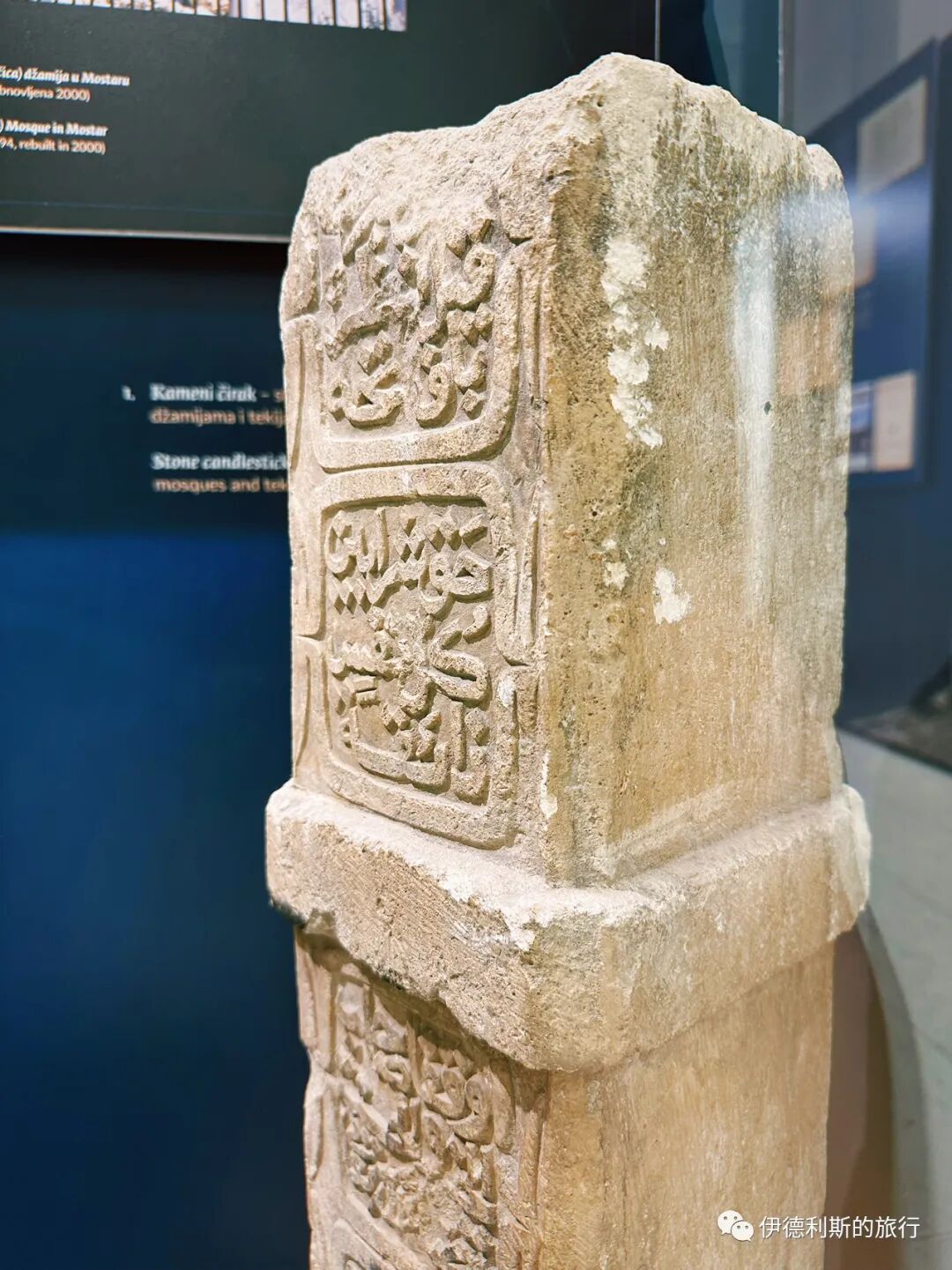
Candlesticks formerly used in mosques and Sufi lodges (tekke) in Bosnia and Herzegovina.
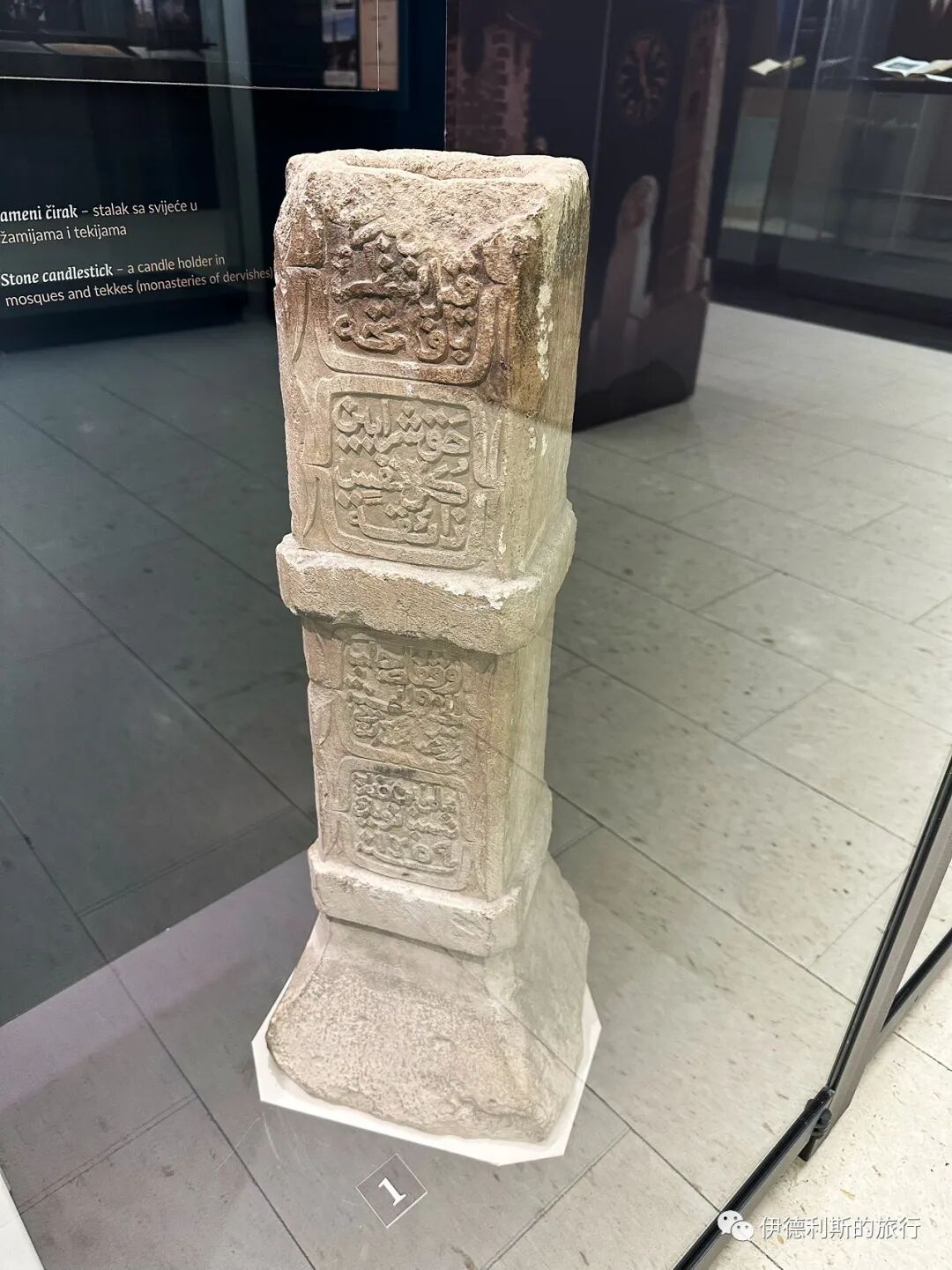
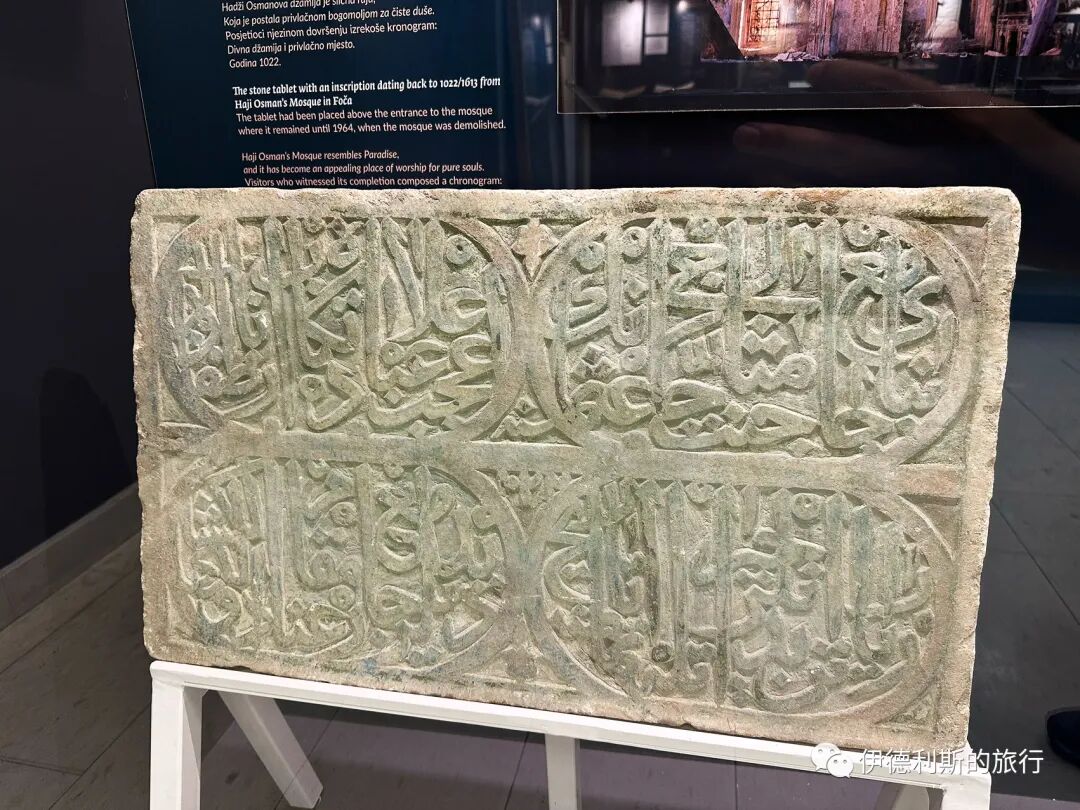
A stone tablet from 1613 above the gate of the Haji Osman Mosque in the southeastern Bosnian city of Foča; this mosque was demolished in 1964.
This textbook on Hanafi jurisprudence was written in the 16th century and used for a long time in Ottoman madrasas. This specific copy dates back to the 17th century.
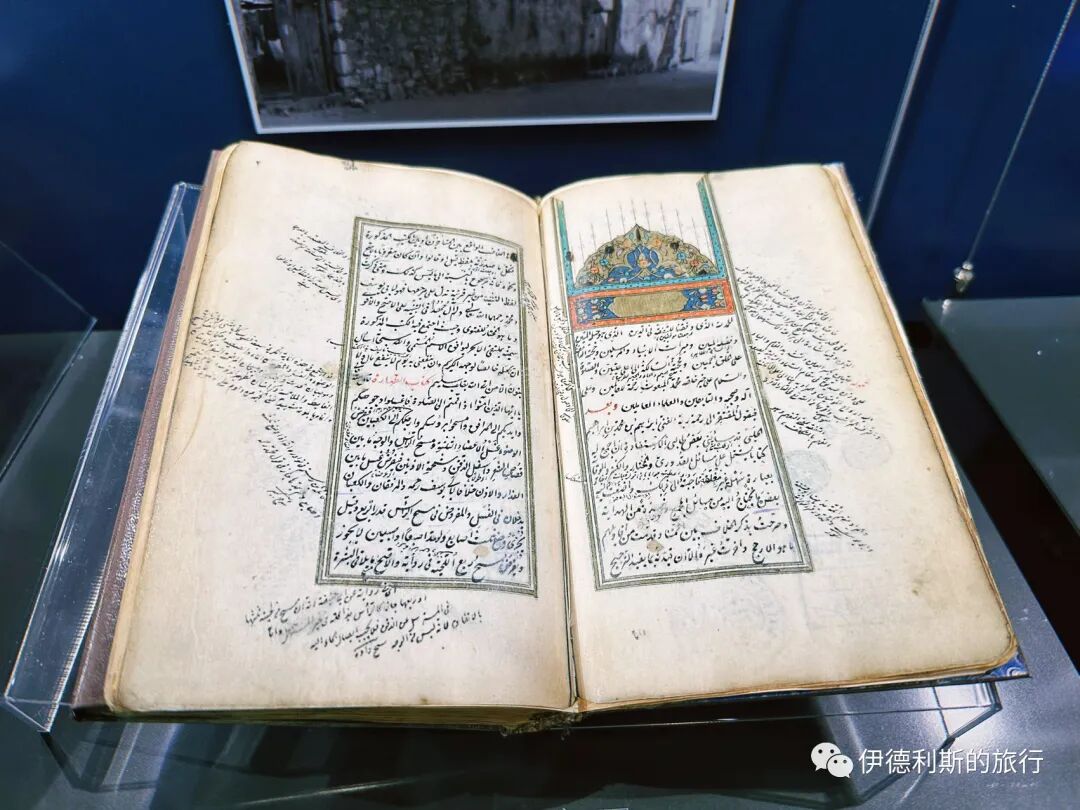
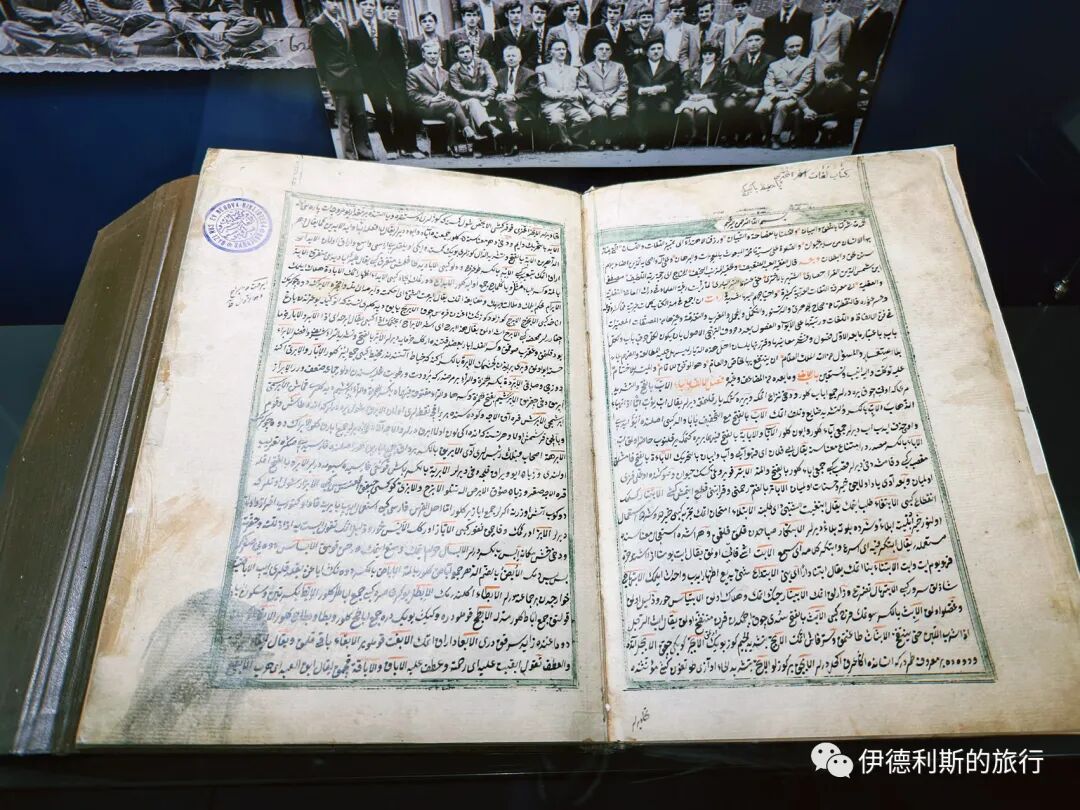
This Arabic-Turkish dictionary was compiled in the 16th century and contains 40,000 words. It was very popular in Bosnian madrasas, and this copy was made in 1631.
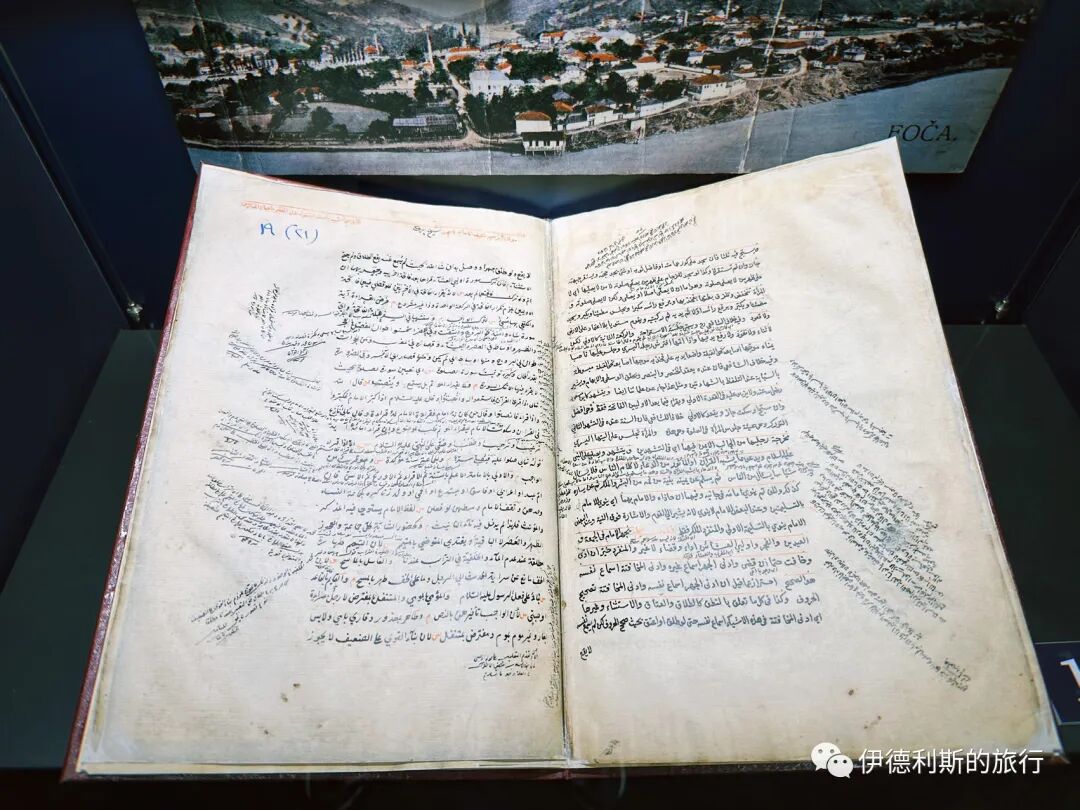
A work on Islamic law copied in Foča in the second half of the 16th century.
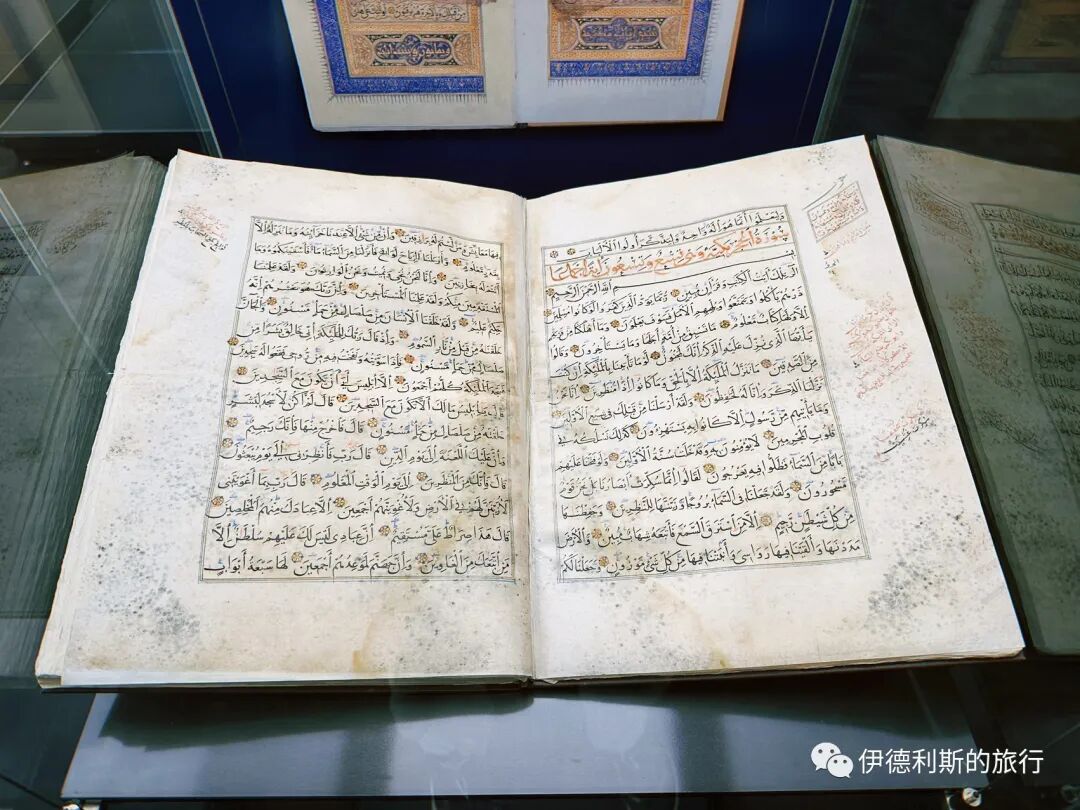
A manuscript of the Quran from 1474.
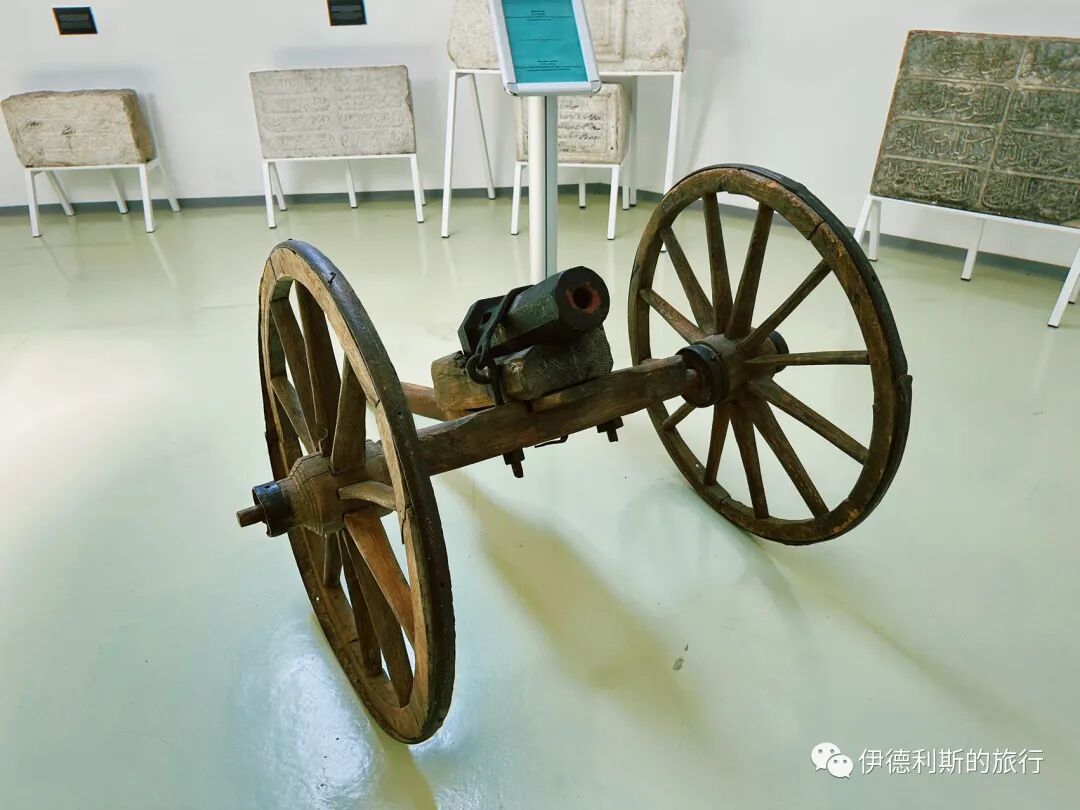
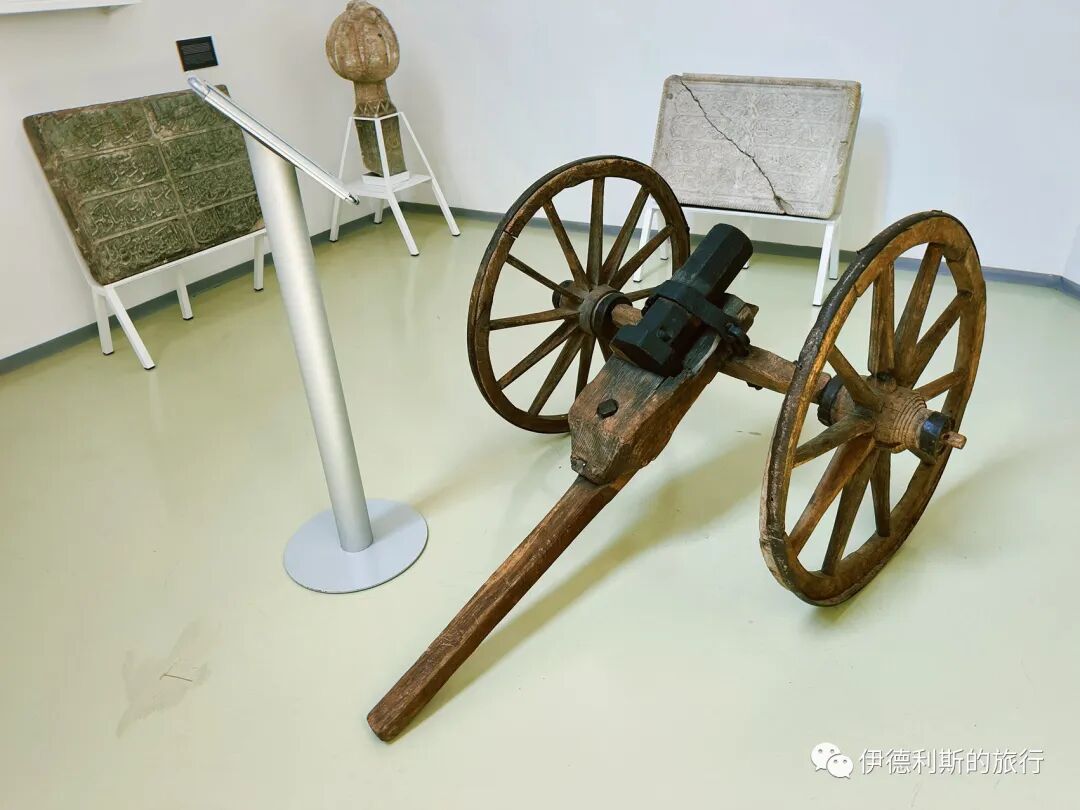
A cannon used in the 19th century during Ramadan to signal the start and end of the daily fast.
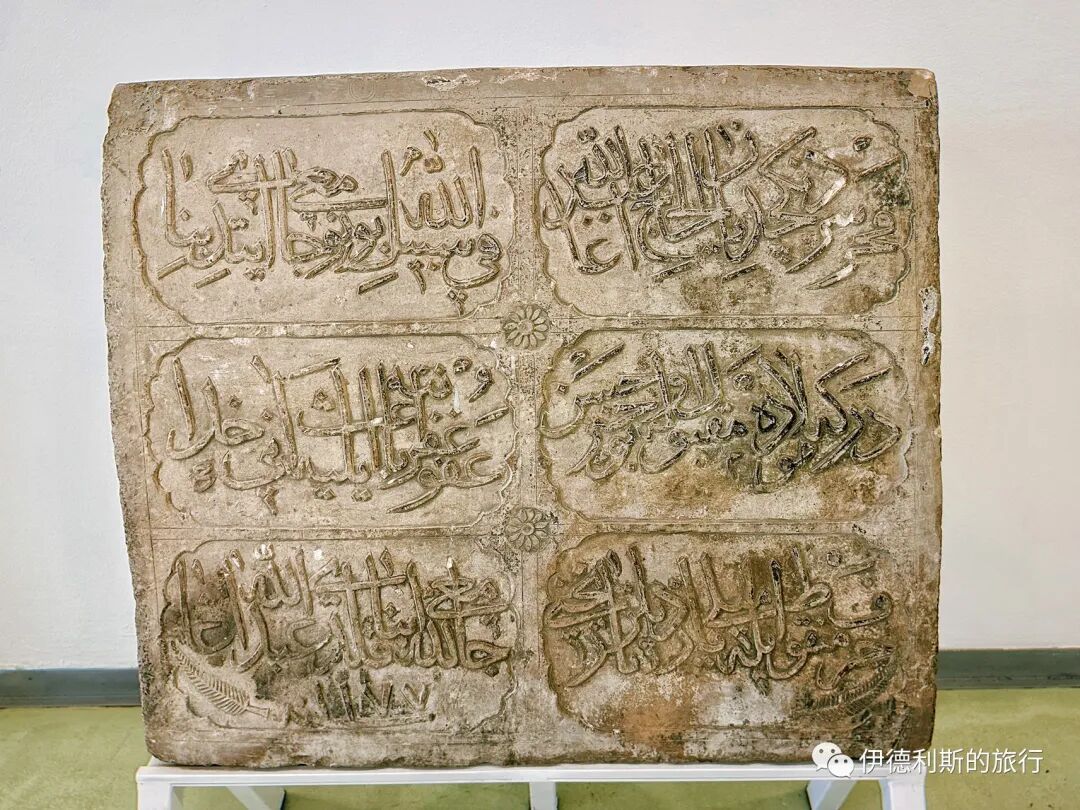
A Turkish-language stone inscription carved in Naskh script during the 1763-4 renovation of the Hasan Pehlivan mosque in Sarajevo.
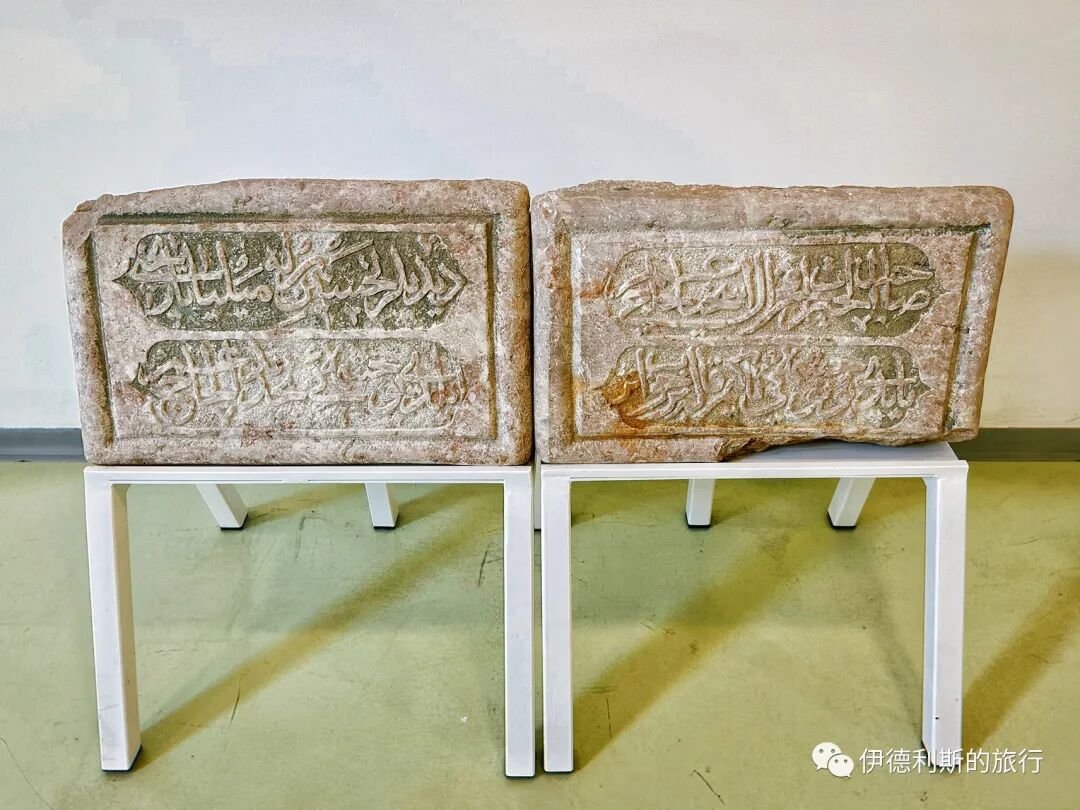
A Turkish-language stone inscription carved in Naskh script during the 1780-1 renovation of the Haji-Omer fountain in front of the Emperor's Mosque in Sarajevo.
A Turkish-language stone inscription carved in Naskh script during the 1553-4 renovation of the Mustafa Pasha mosque in the southeastern Bosnian city of Foča. This mosque was demolished in 1947.
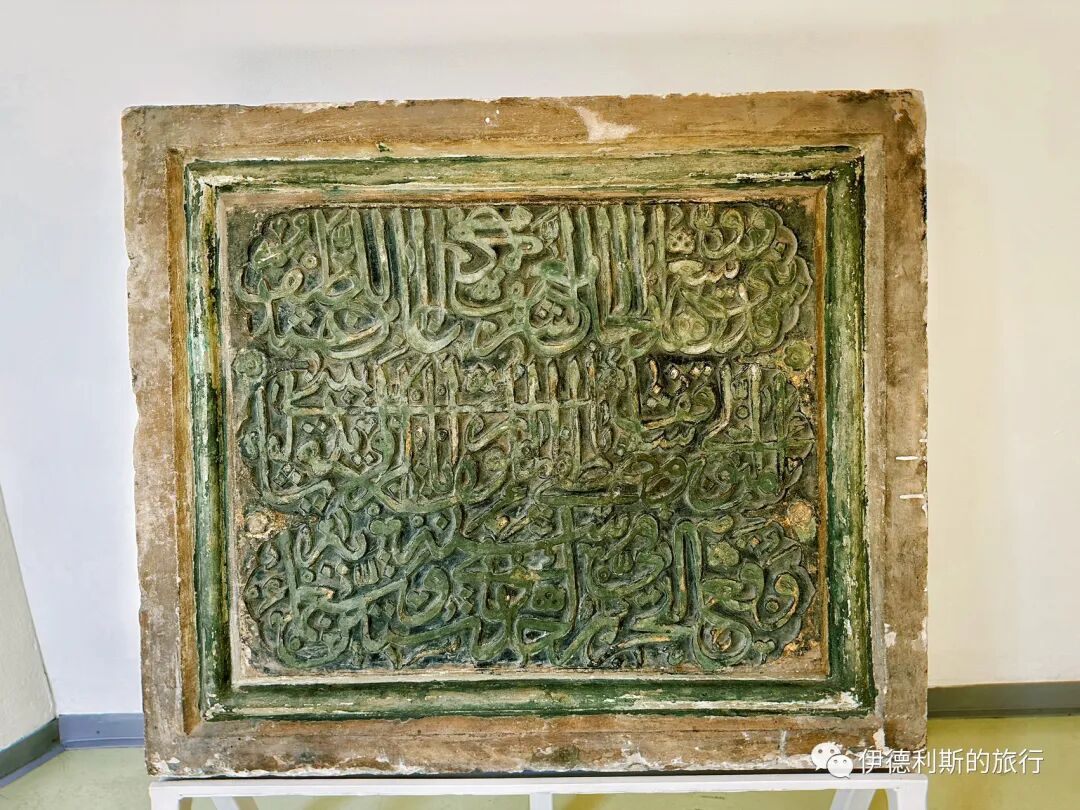
An Arabic tombstone from the grave of Turhan Emin bey, who served as the Ottoman governor (sanjak-bey) of Herzegovina. His grave is in Ustikolina in southeastern Bosnia and Herzegovina, the site of what was once the oldest mosque in the country. The turban carving at the top of the tombstone is a classic feature of Ottoman-era grave markers.
A Turkish-language commemorative stone inscription from 1857-8 on the Fadil Pasha madrasa, located on the east side of the Emperor's Mosque in Sarajevo. The author, Fadil Pasha, was a calligrapher himself.
A Turkish-language stone inscription carved on the gate during the 1766-7 renovation of the Havadza Kemaludin mosque in Sarajevo. It was written by the famous Sarajevo poet and calligrapher Sheikh Muhammad Effendi. This mosque was built in 1515 and was demolished by order of the Kingdom of Yugoslavia in 1940.
The top piece is a Turkish-language stone inscription from 1885-6, carved during the renovation of the Gazi Iskender Pasha fountain in Sarajevo using Taliq Persian hanging script. The bottom piece is a Turkish-language stone inscription from 1780-1, carved during the renovation of a fountain in the courtyard of a Sufi lodge (tekke) in the Skenderija area of Sarajevo. It also uses Taliq Persian hanging script and was written by the local mufti, Sakir.
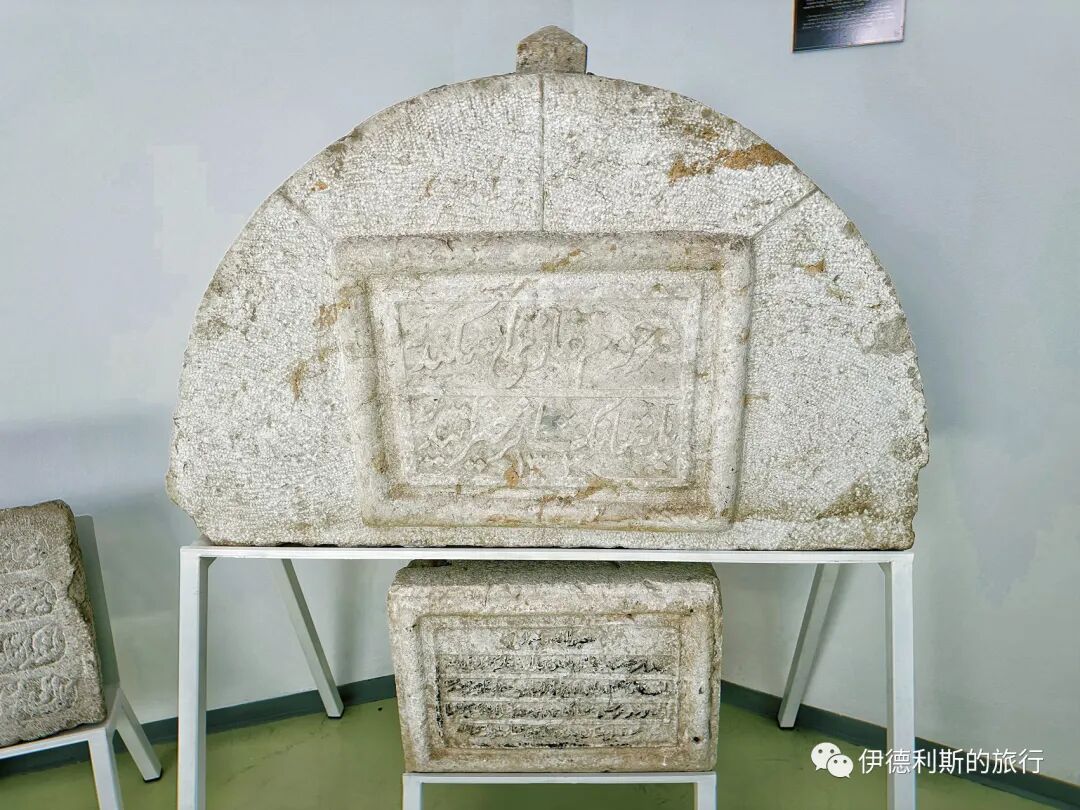
This stone monument, carved in 1740-1 to mark the passing of Sulejman-effendi Hadzimusic, records his contributions to the defense of Bosnia in 1737. It is an important historical record regarding the formation of the Bosniak nation. This stone was embedded in the wall of the mosque until the Kingdom of Yugoslavia demolished the mosque in 1940.
Bathhouse
The bathhouse (hamam) of Gazi Husrev Bey was built in 1537 and is located 300 meters northwest of the mosque. The southern part of the bathhouse has two symmetrical domed buildings, which served as the main halls for the men's and women's bathing areas. You can enter individual small rooms, each with its own dome, through the corridor and cloakroom on the north side. The bathhouse suffered fires twice, once during the Habsburg invasion in 1697 and again during the Austro-Hungarian invasion in 1879. It was rebuilt after these events, and what you see today is mostly how it looked after the 1891 renovation.
After being renovated in 2000, it became part of the Bosniak Institute. It frequently hosts cultural events like book launches, concerts, literary nights, and exhibitions.
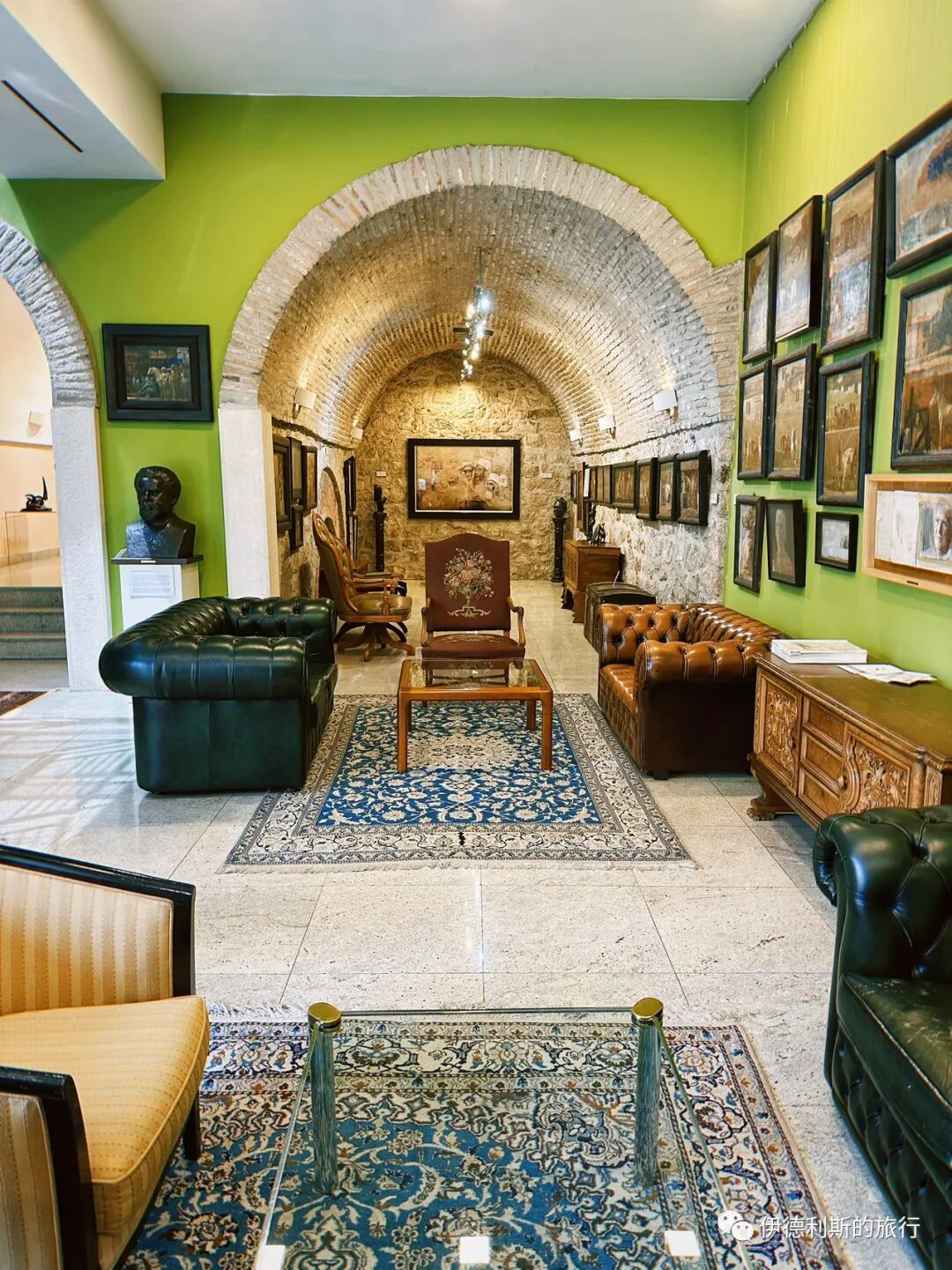
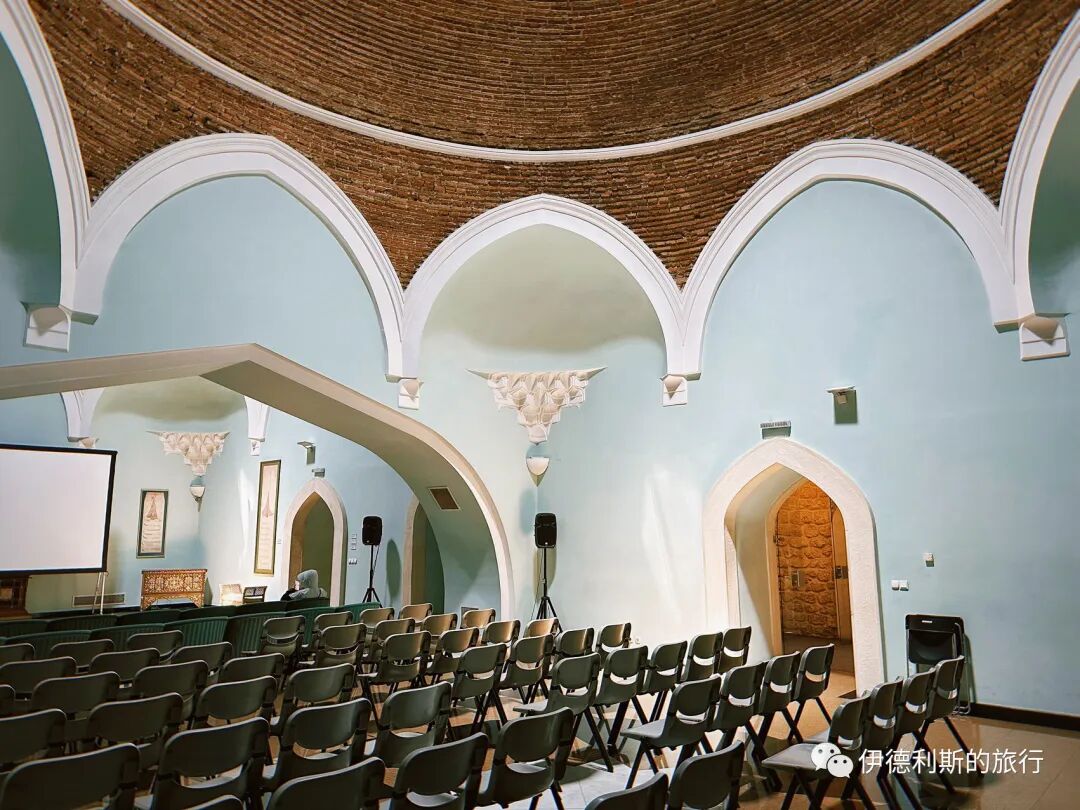
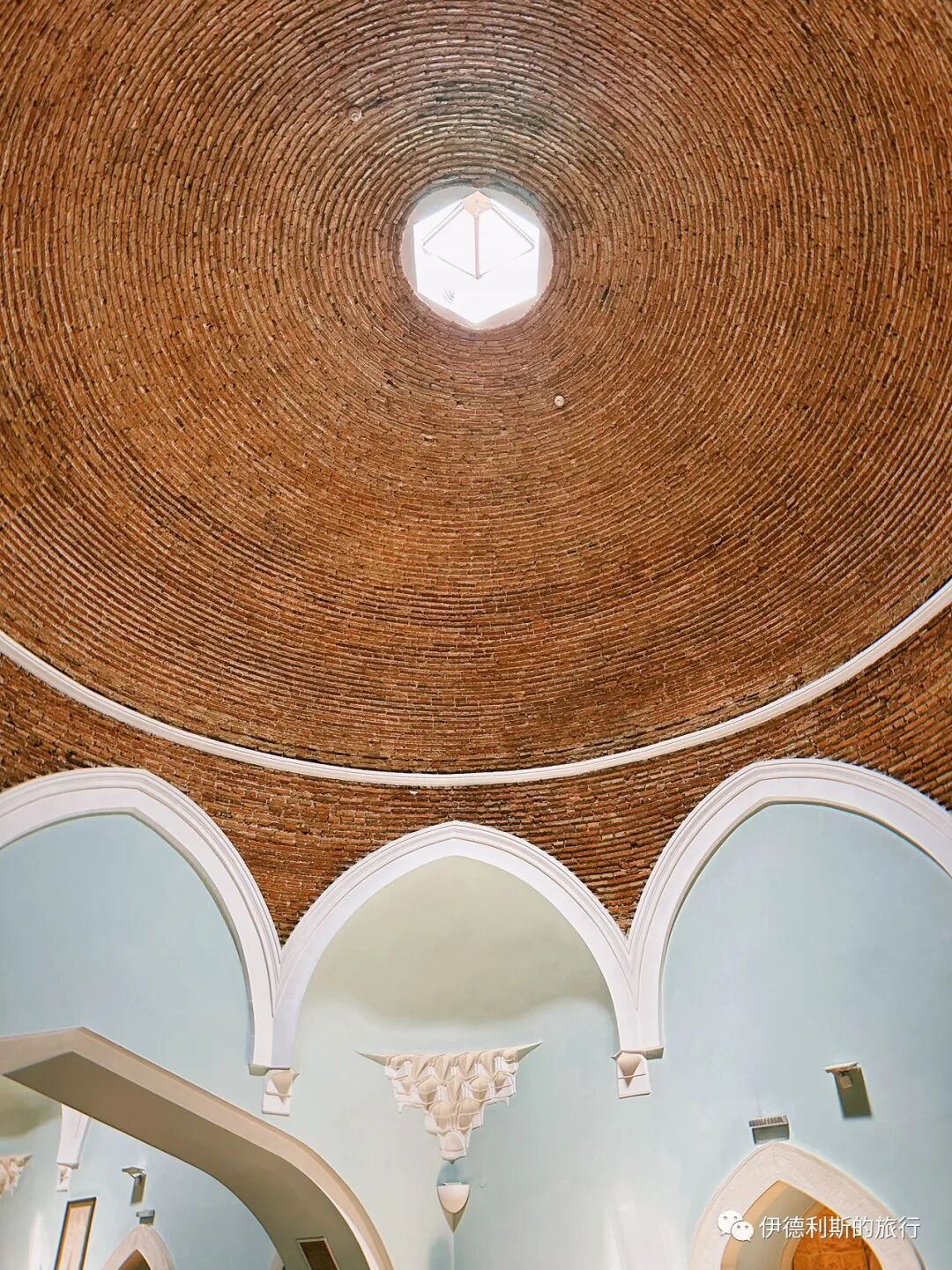
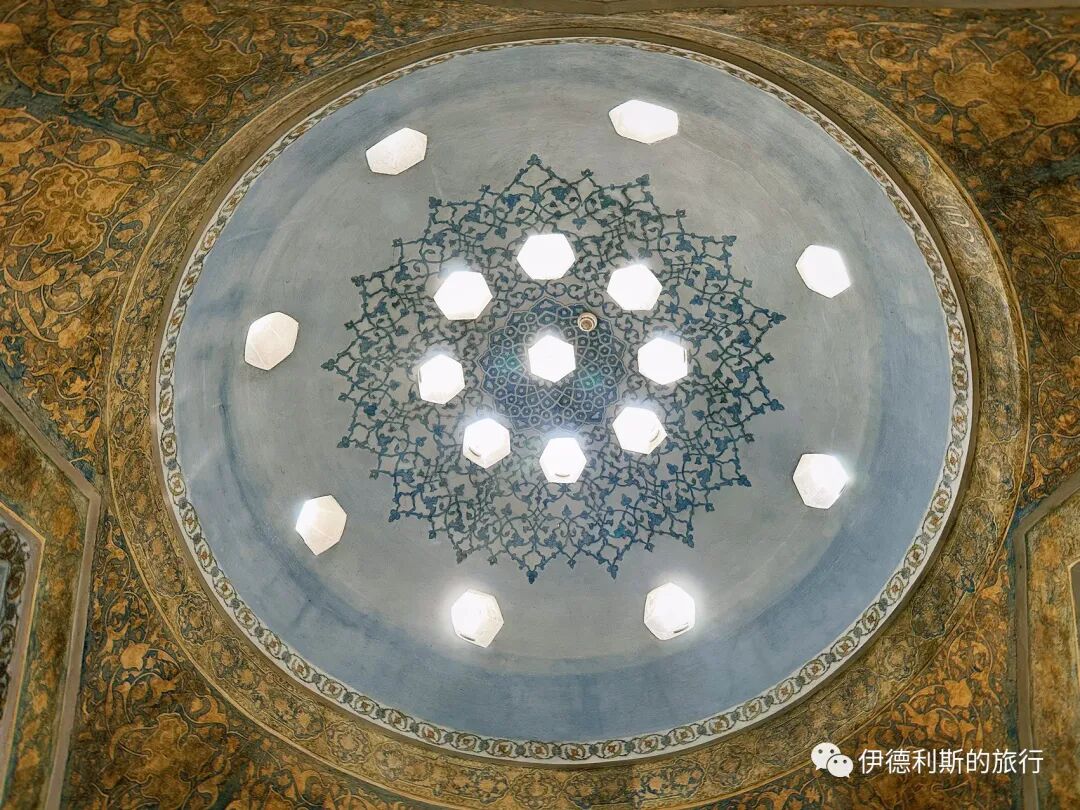
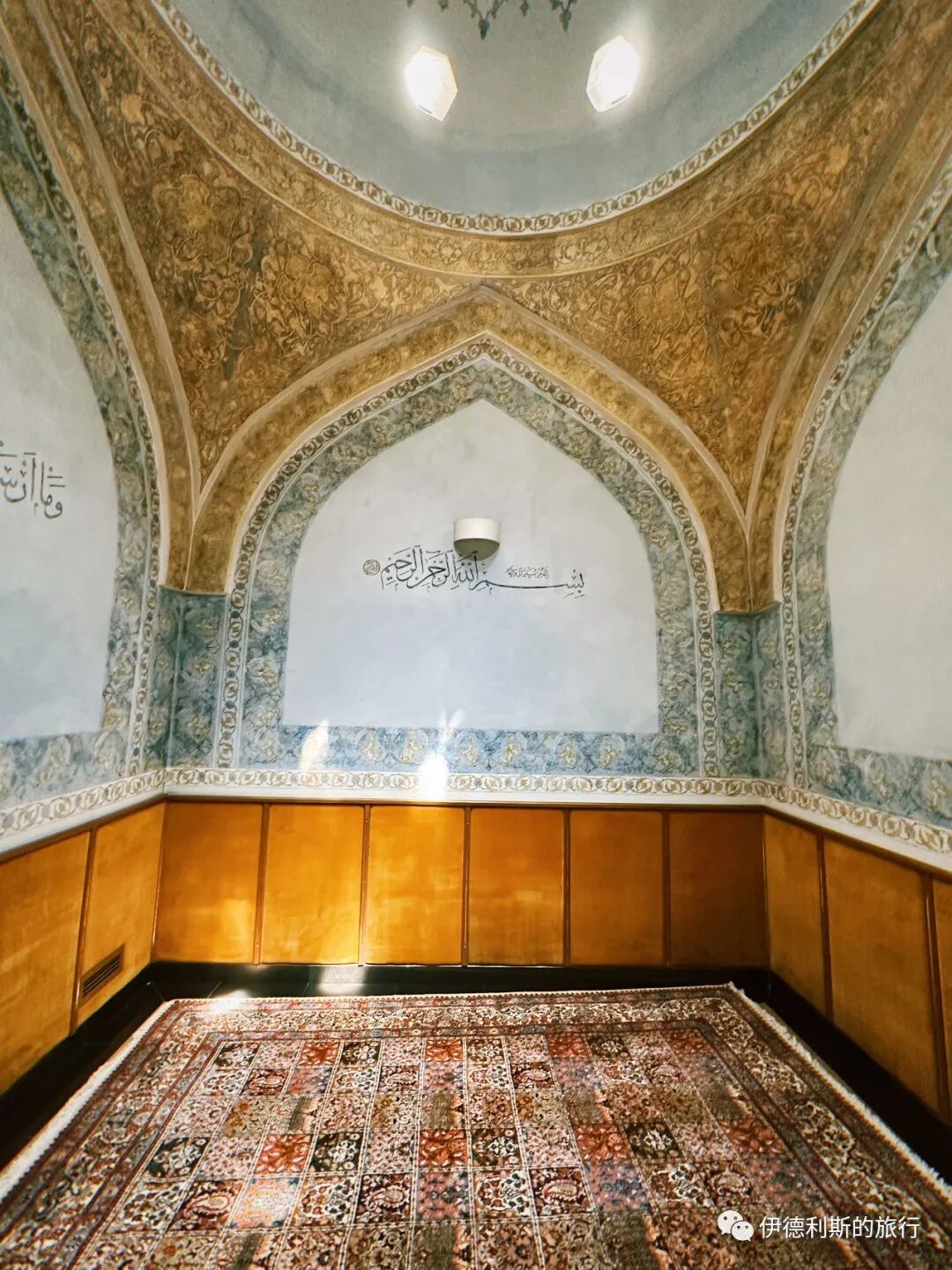
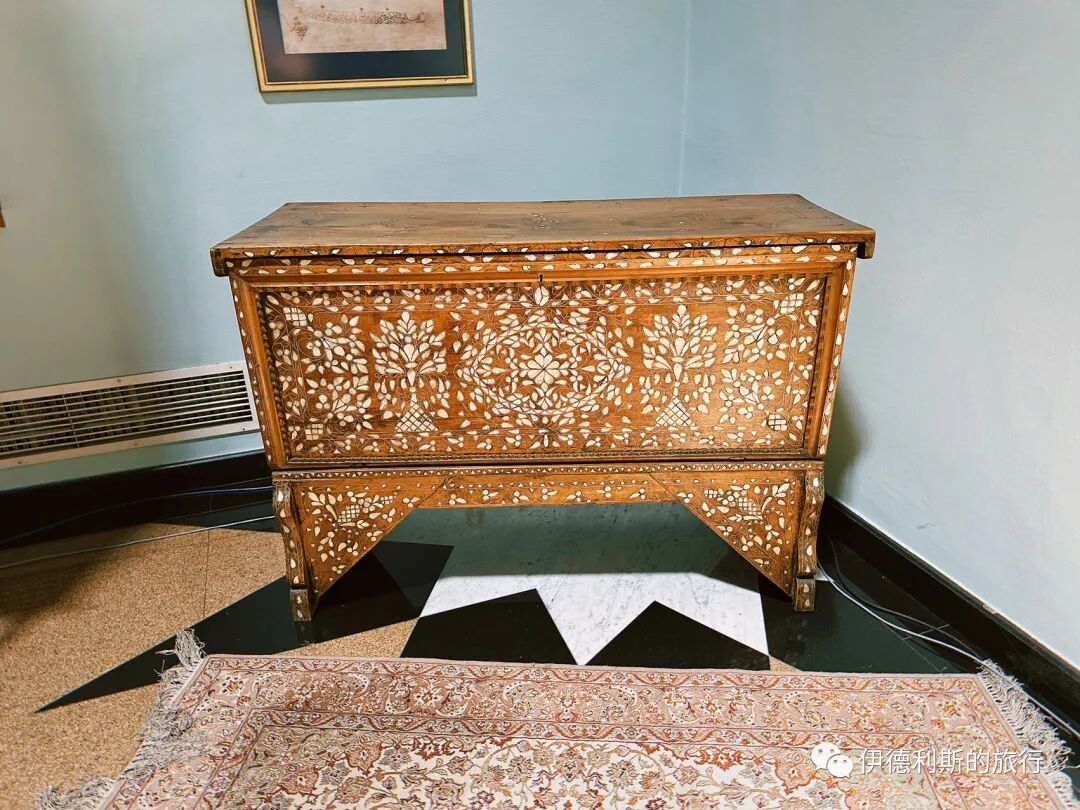
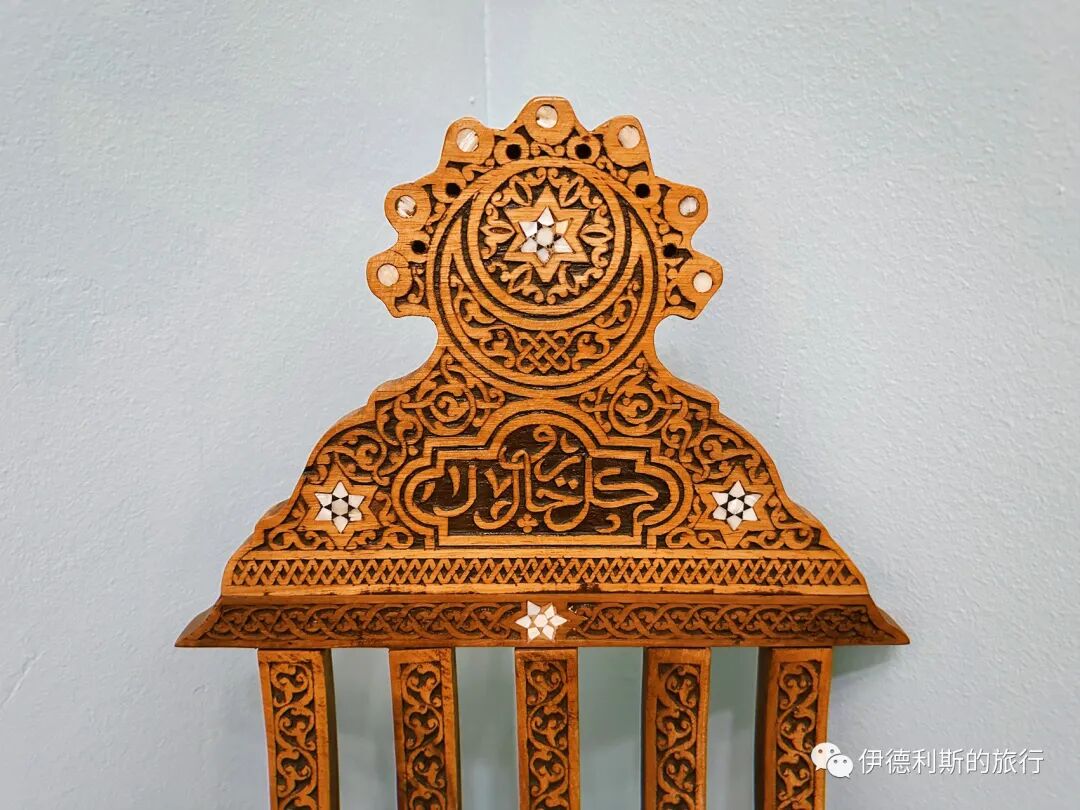
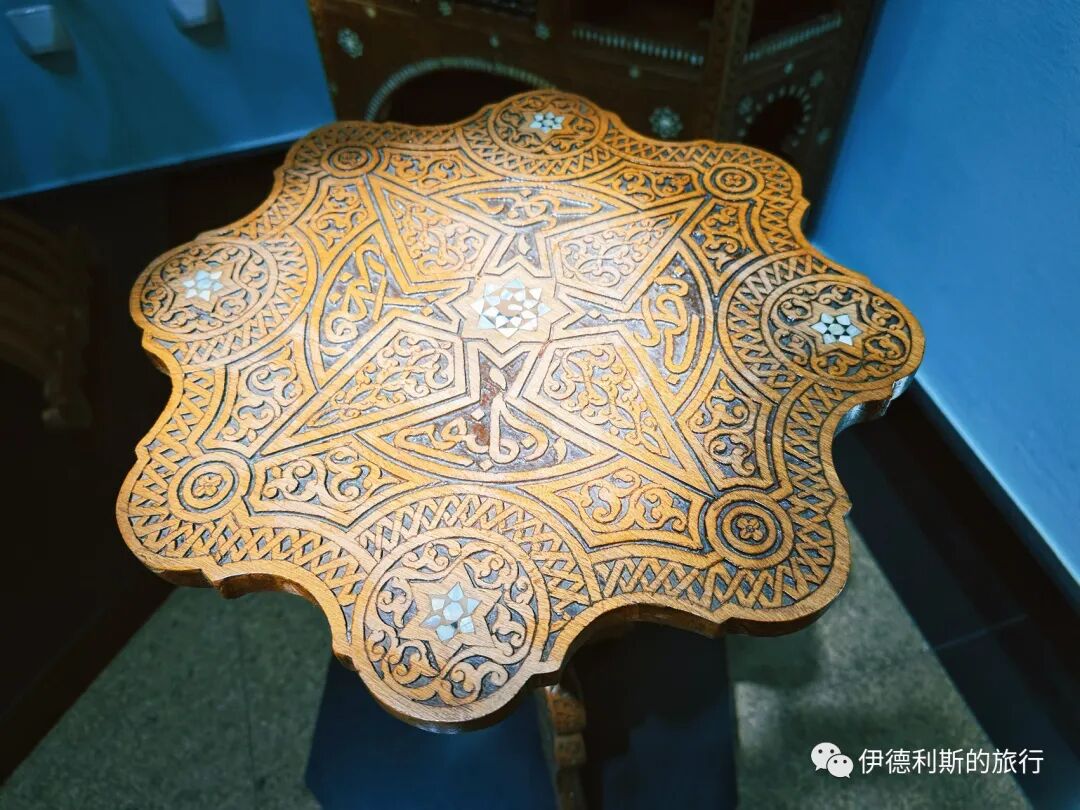
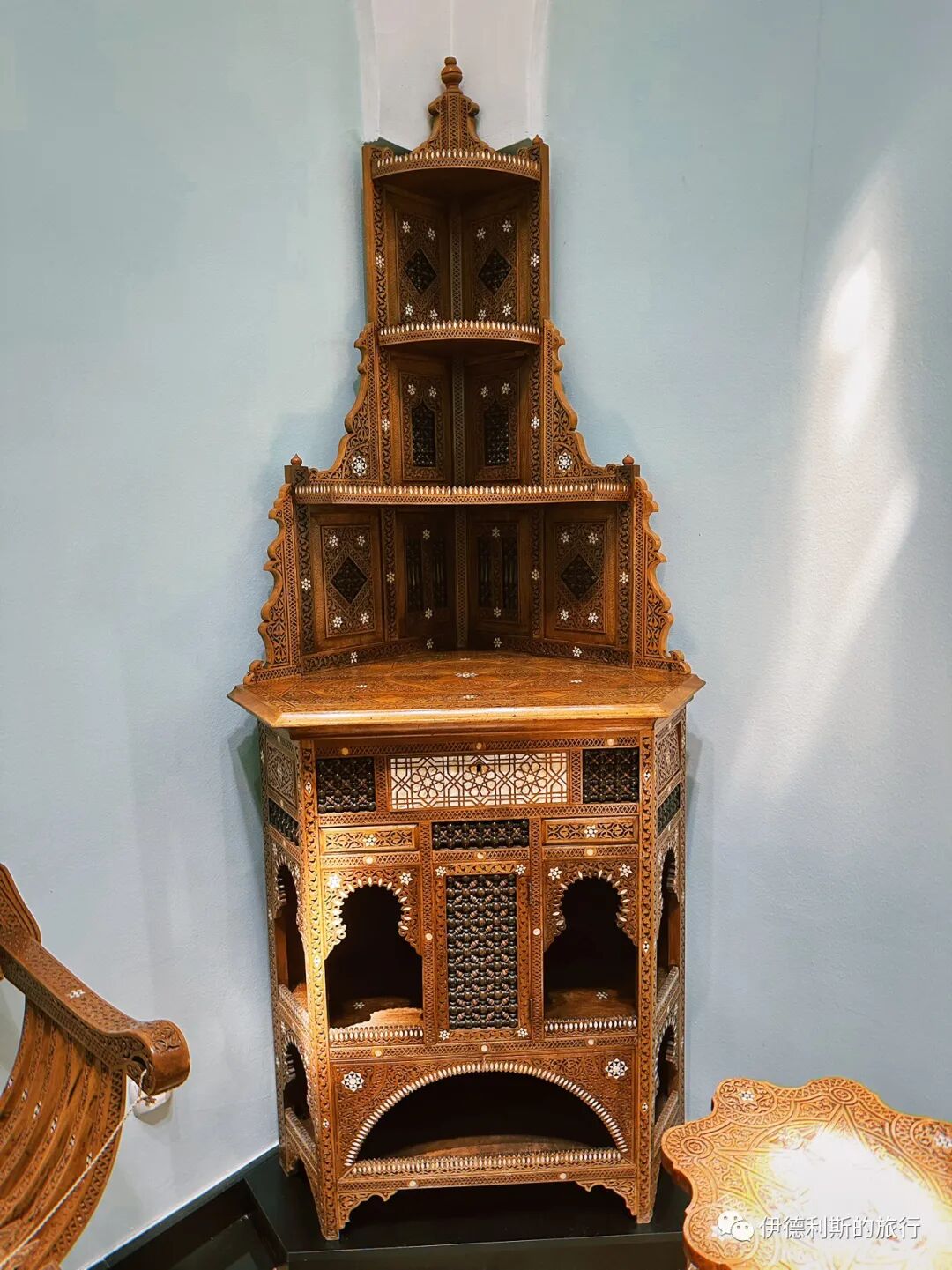
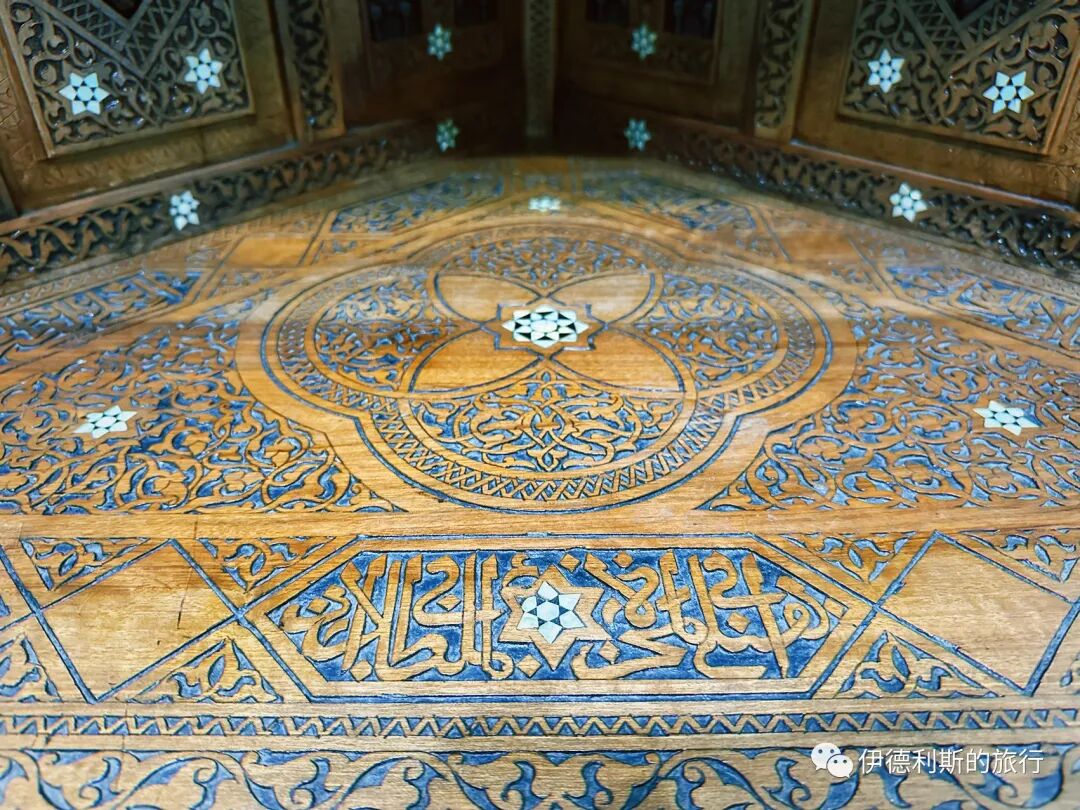
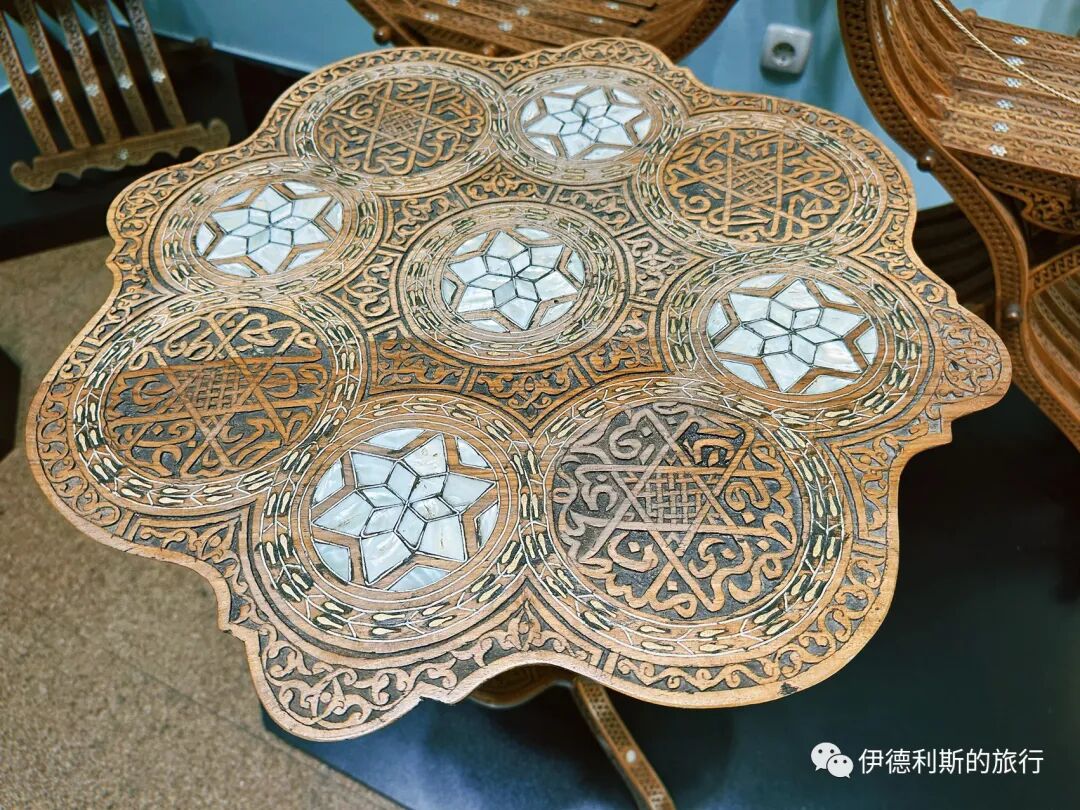
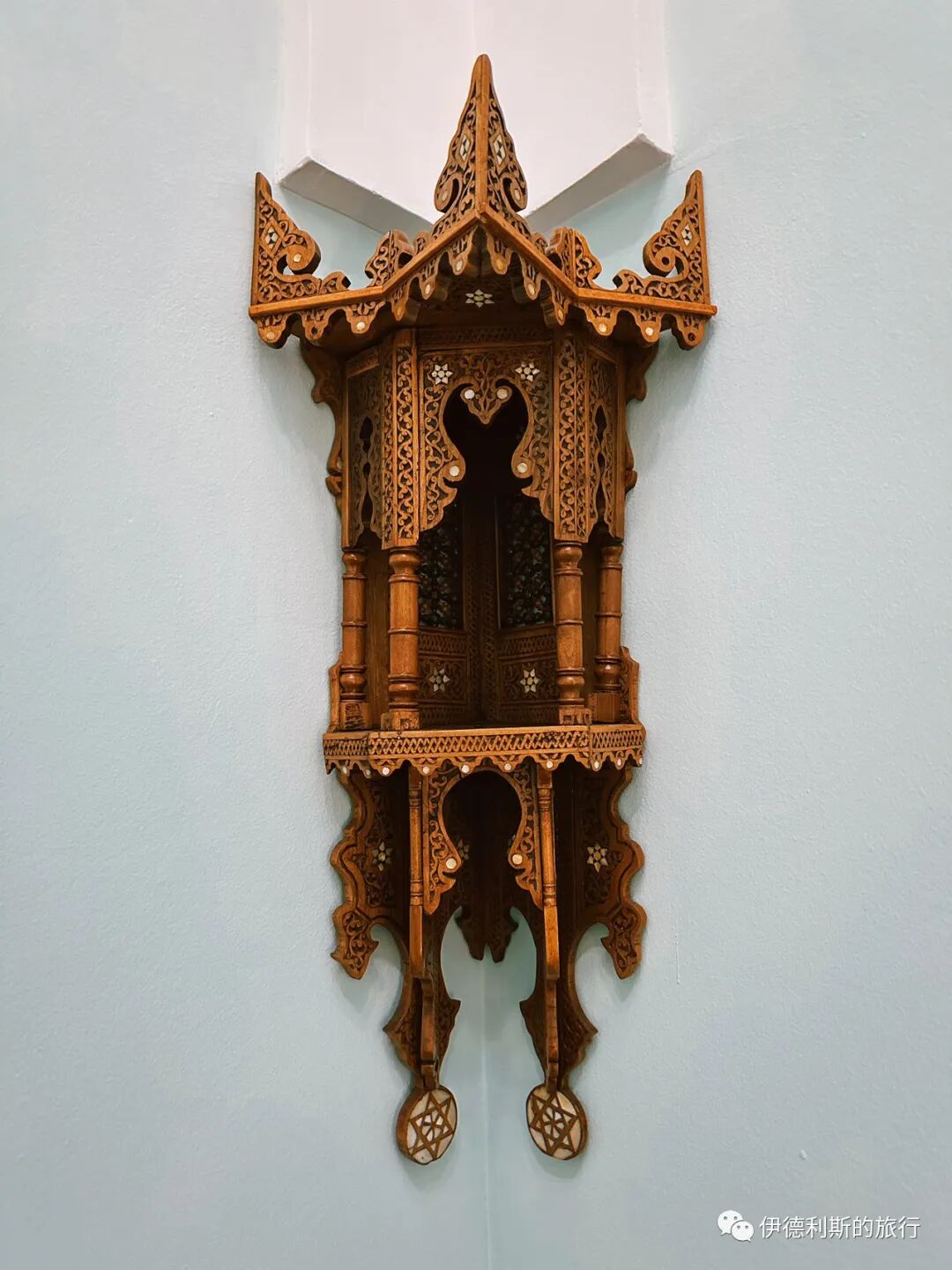
The collection of the Adil Zulfikarpasic Foundation at the Bosniak Institute features exquisite wooden furniture crafted by Bosnian artisans between the 19th and early 20th centuries.
The art exhibition at the Bosniak Institute focuses on scenes of Sarajevo and Bosnia painted by 20th-century Bosnian artists.
A painting of a Bosnian street by Đoko Mazalić from 1920. He graduated from the Royal Hungarian Academy of Fine Arts in 1914 and helped establish the National Gallery of Bosnia and Herzegovina. He was skilled at depicting Bosnian life and achieved great success in the Sarajevo cultural scene during the 1930s and 1940s.
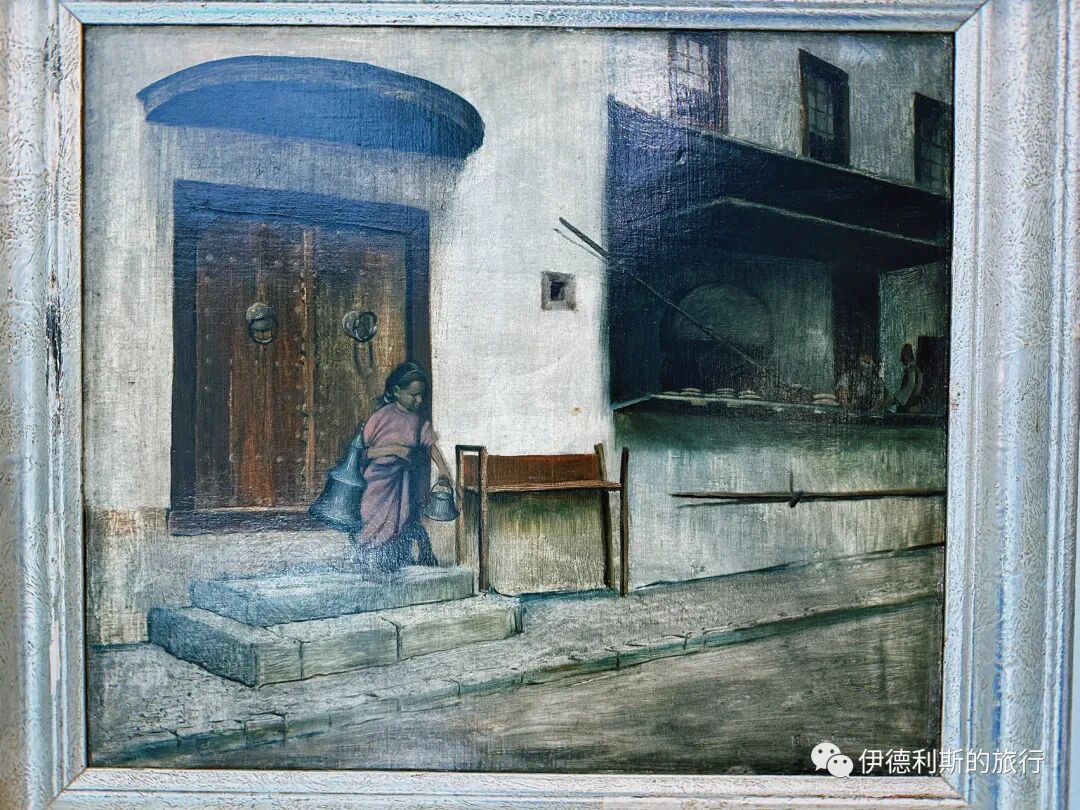
A painting of Bosnian life by Rizah Štetić from 1952. He graduated from the Royal Academy of Arts and Crafts in Zagreb, Croatia, in 1932. He became the principal of the Sarajevo State School of Crafts in 1946 and later served as a painting professor at the National Academy of Fine Arts.
A painting of the Sarajevo Grand Bazaar by Kulenović Hakija. He graduated from the Belgrade Academy of Arts in 1928 and held an art exhibition in Sarajevo in 1932.
The Sarajevo bazaar painted by Rizah Štetić in 1956.
A work by the famous Bosnian artist Mersad Berber, who drew inspiration from the mysterious world of Bosnia, the layers of the Ottoman Empire, and the tragic fate of its people.
Morića Han caravanserai
Located on the northeast side of the Gazi Husrev Bey mosque is the Morića Han caravanserai, first built in 1551. It was rebuilt into its current form after a fire in 1697 and is the only remaining Ottoman caravanserai in Sarajevo. Morića Han could hold 300 guests and 70 horses. In 1878, Sarajevo citizens gathered here to form a people's committee to protest the Austro-Hungarian occupation of Bosnia and Herzegovina. Today, it is still managed by the Ghazi Husrev-beg Foundation and houses a restaurant and a Persian carpet shop.
Bezistan covered market
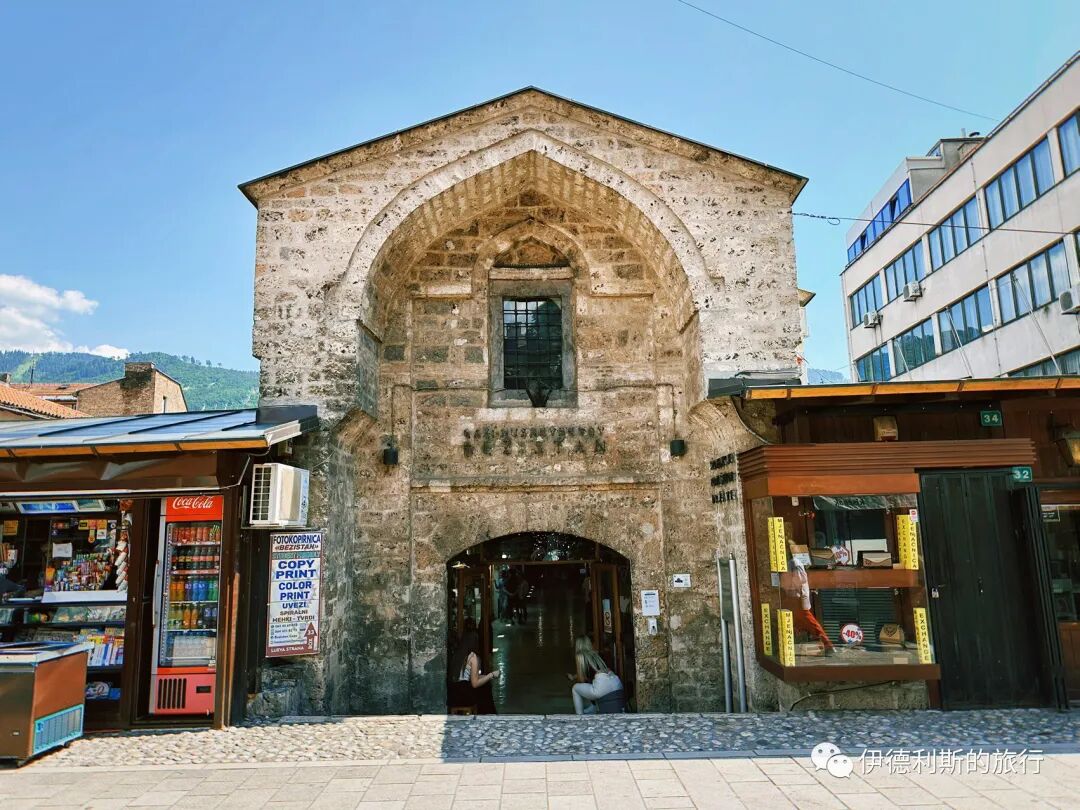
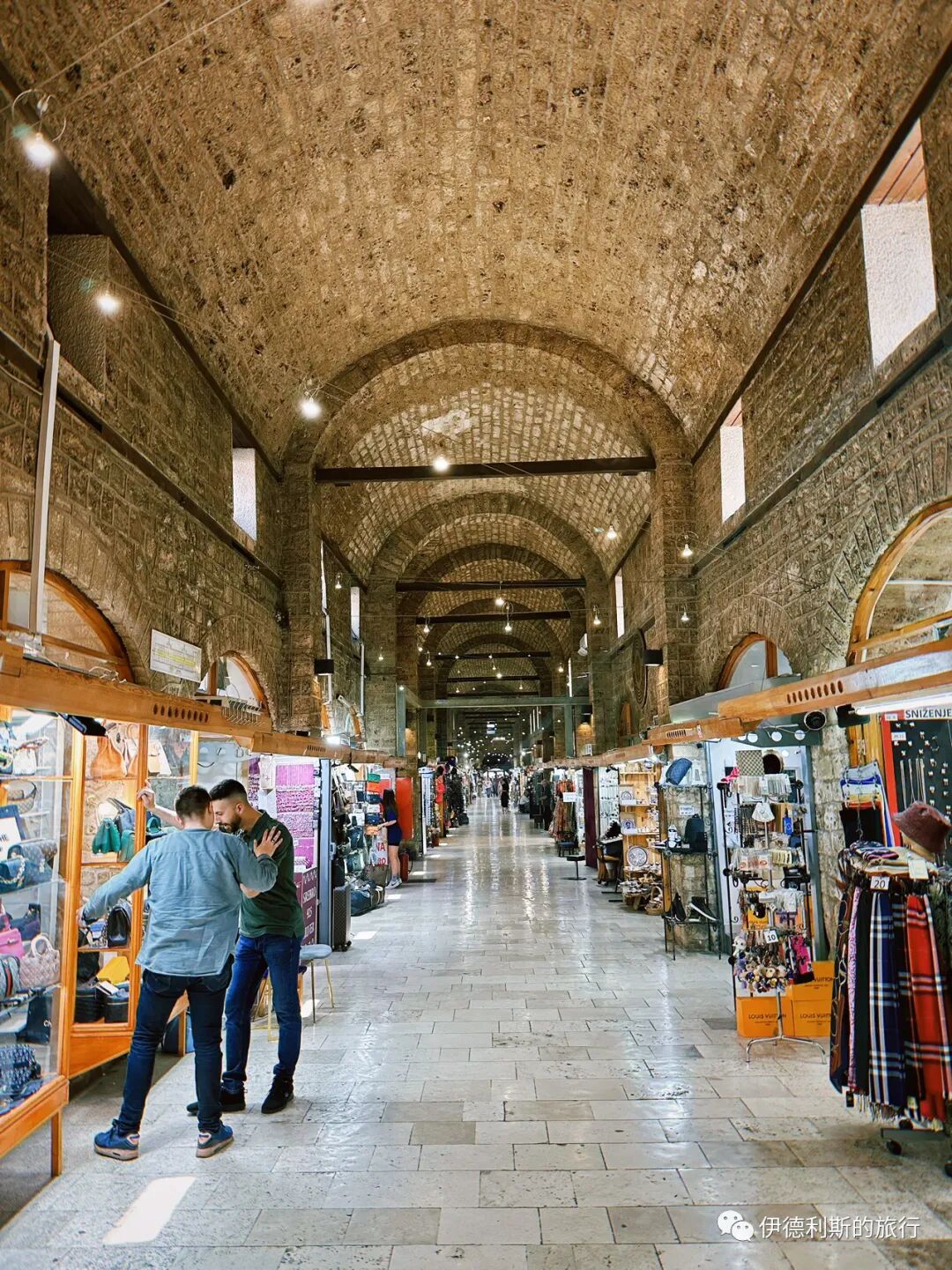
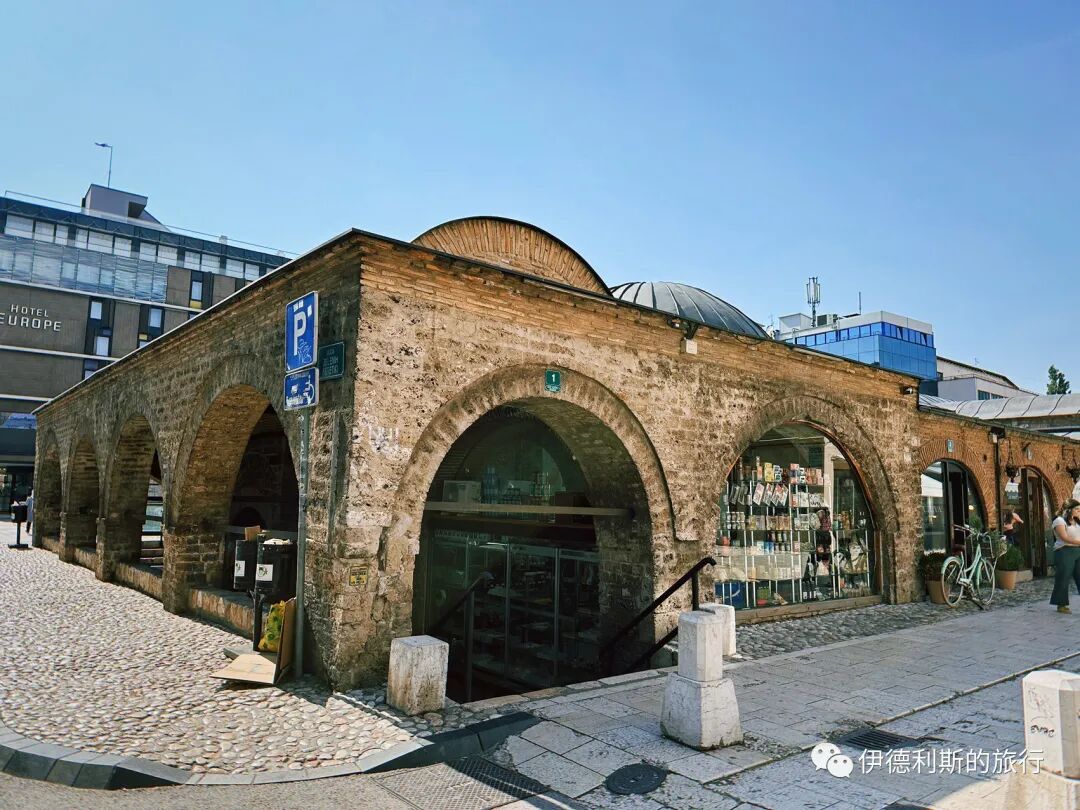
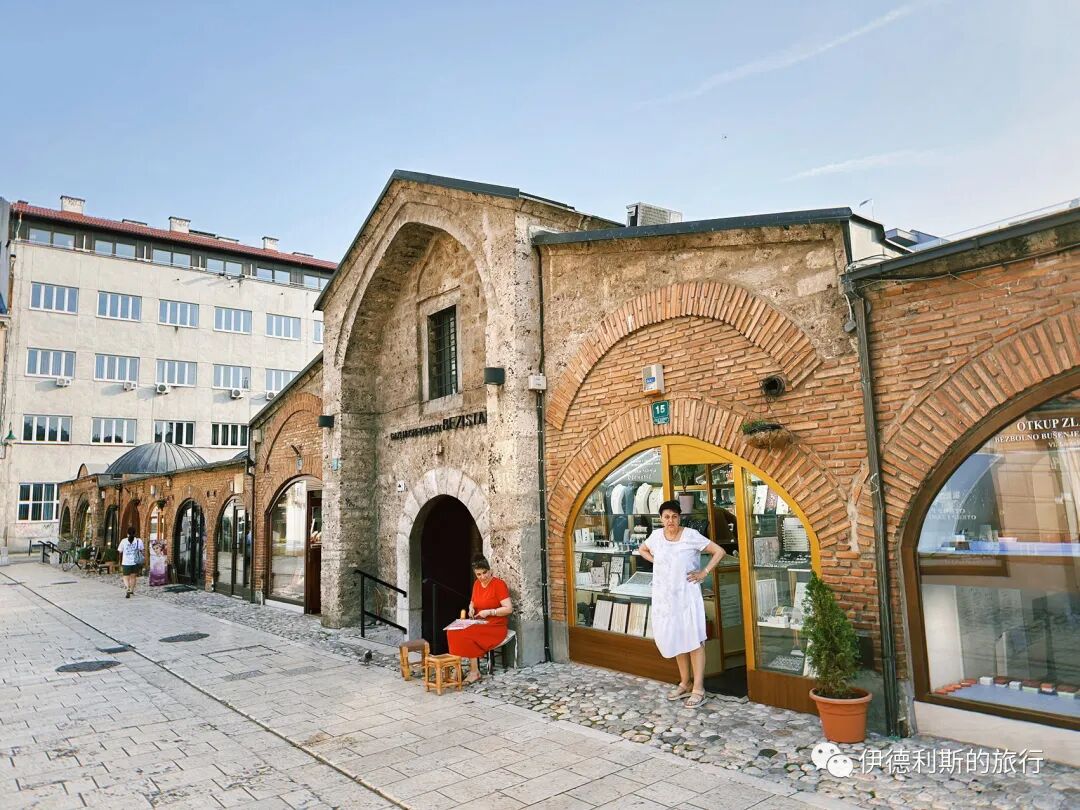
On the west side of the Gazi Husrev Bey mosque is the Bezistan covered market, built in 1555. It is one of the best-preserved Ottoman covered markets in Bosnia and Herzegovina. The floor of the Bezistan market is slightly lower than the surrounding streets, which keeps the interior cooler during the summer. It was originally a general goods market and still serves as a space for shops today.
Tašli Han caravanserai ruins
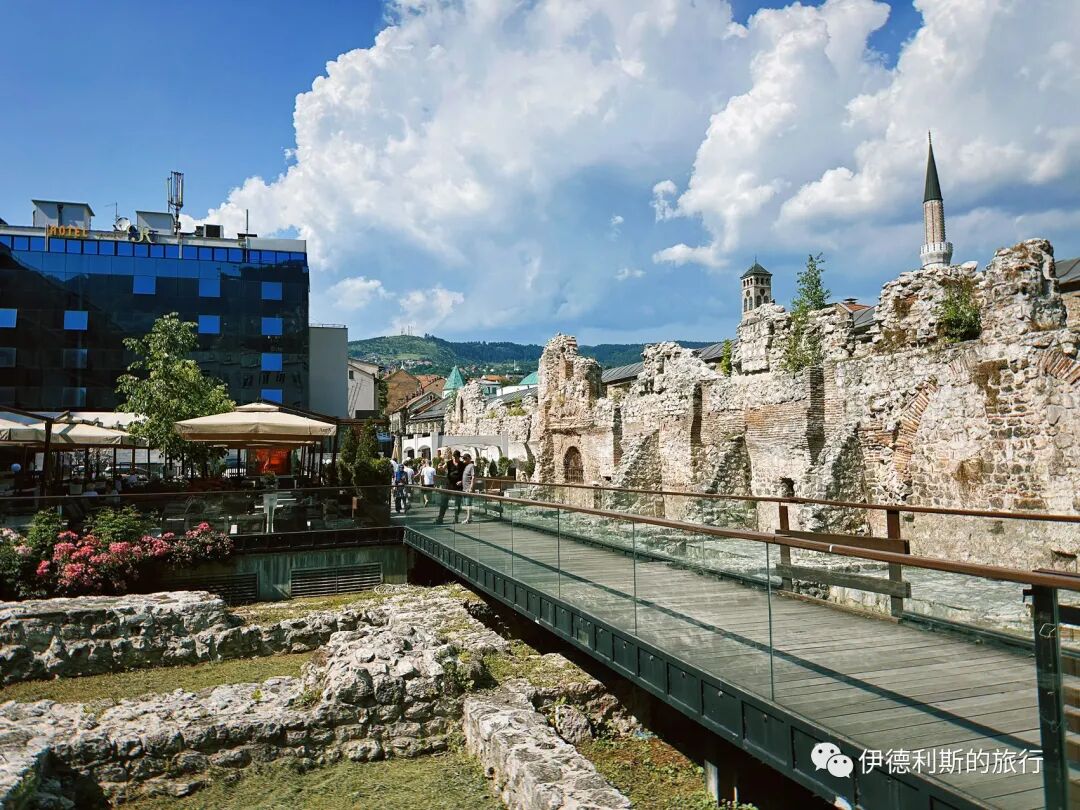
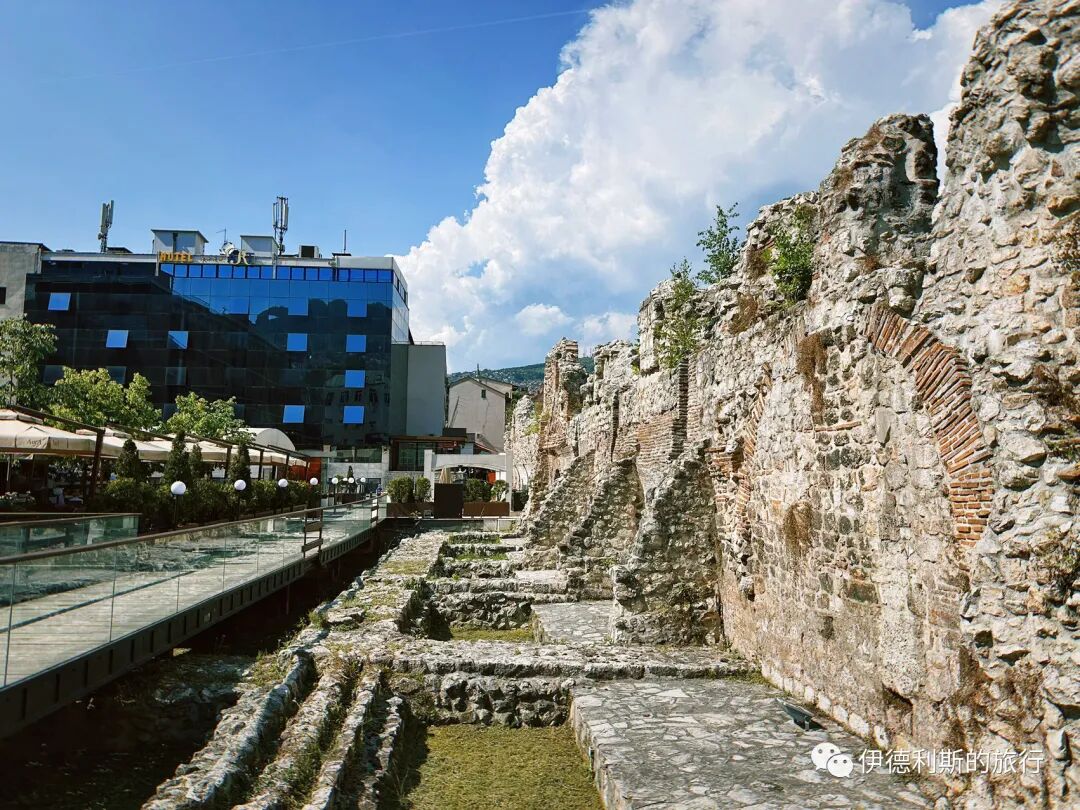
To the west of the Bezistan covered market are the ruins of the Tašli Han caravanserai, built between 1540 and 1543. The courtyard of the inn had a fountain and a small prayer room, and many merchants opened shops there. A fire in 1879 caused severe damage, and it completely collapsed by 1912. The site was rebuilt as a hotel in 1998, and archaeological excavations rediscovered the foundation and parts of the walls of the original inn.
Clock tower
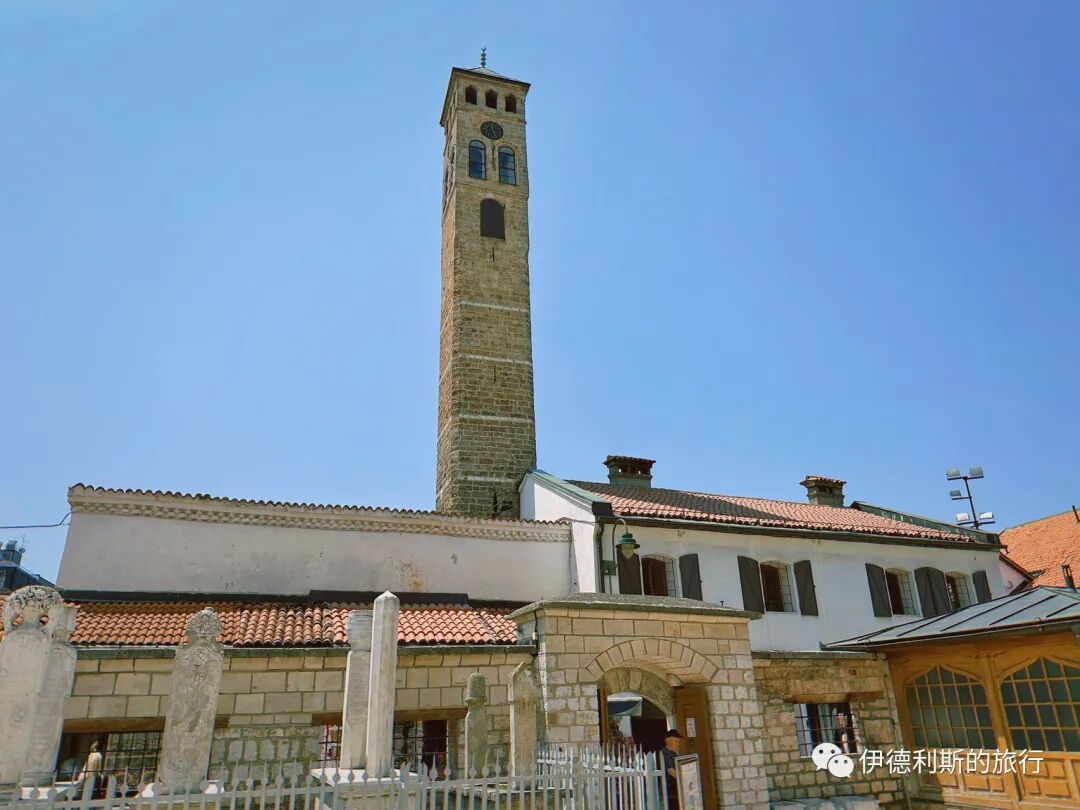
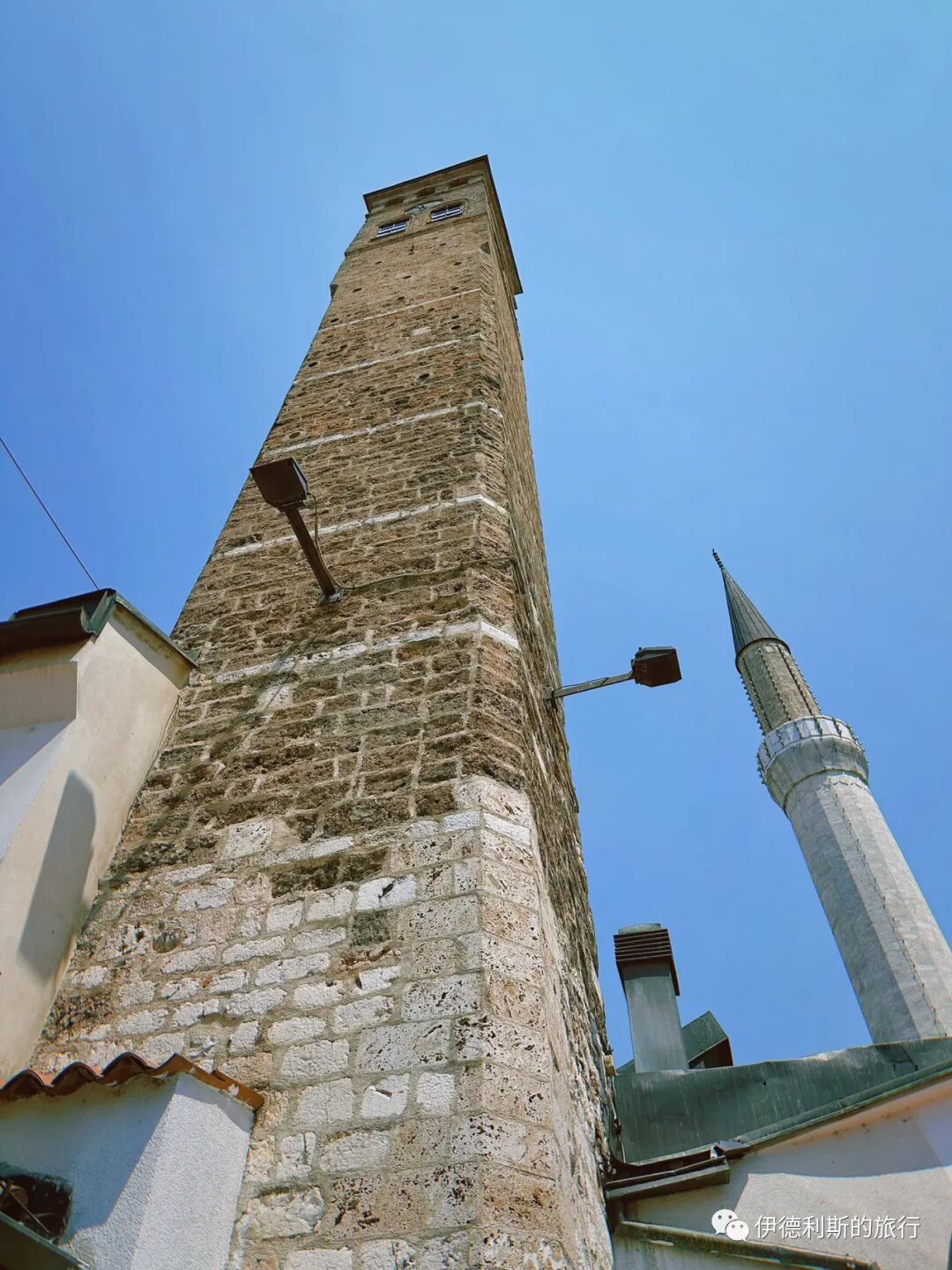
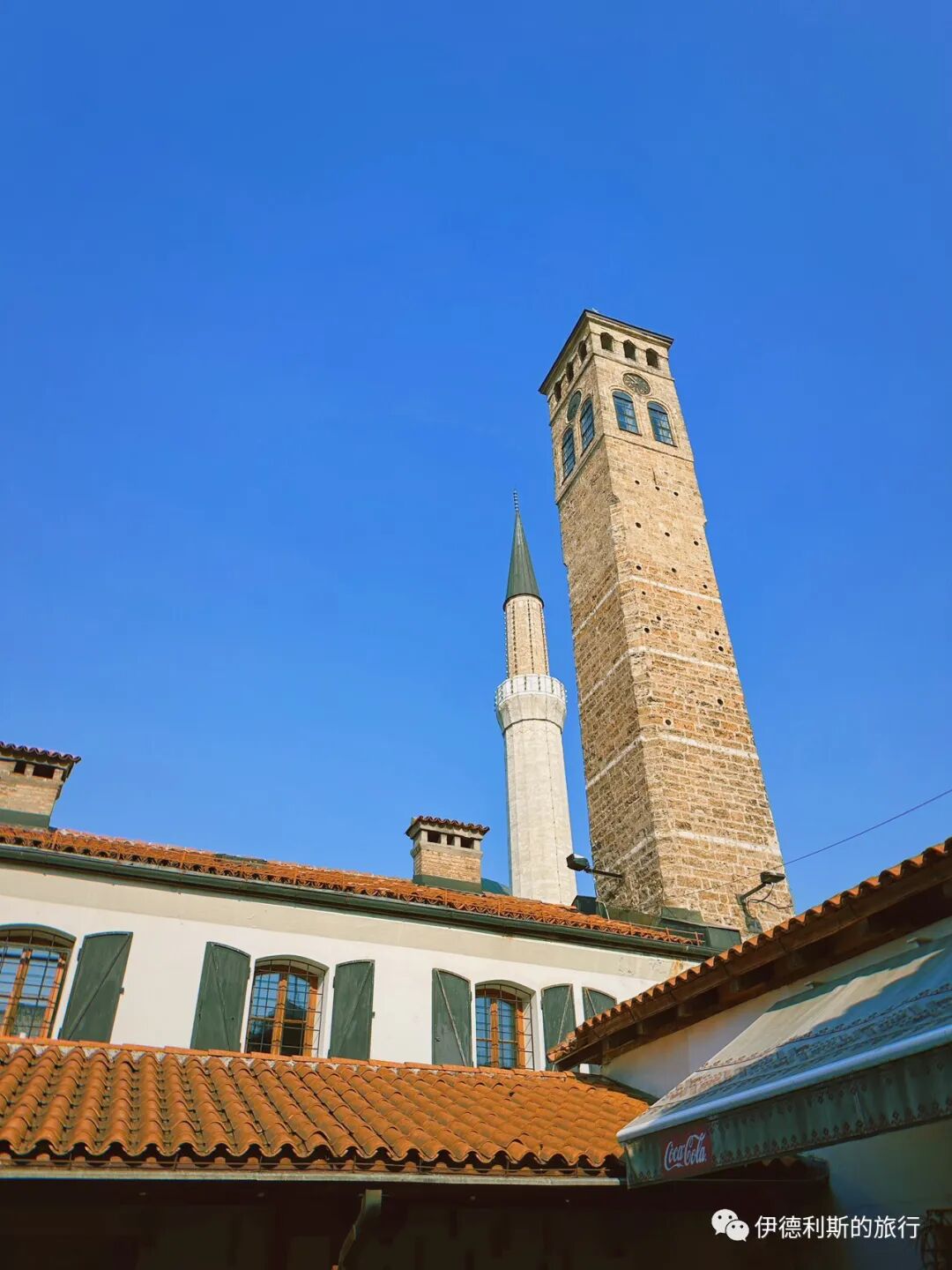
West of the Gazi Husrev Bey Mosque stands a clock tower built in the 16th century, though the current structure was rebuilt in the 18th century. This 30-meter-tall clock tower is the highest of the 21 clock towers built by the Ottoman Empire in Bosnia and Herzegovina. It follows the lunar calendar, setting 12 o'clock at sunset each day. A mosque official called a Muvekit, who tracks the lunar calendar and the five daily namaz prayers, is responsible for adjusting the clock. The current clock mechanism was made in 1875 by the London-based company Gillett & Johnston. The top of the tower was modified during installation to make sure the clock face was clearly visible.
Public Kitchen
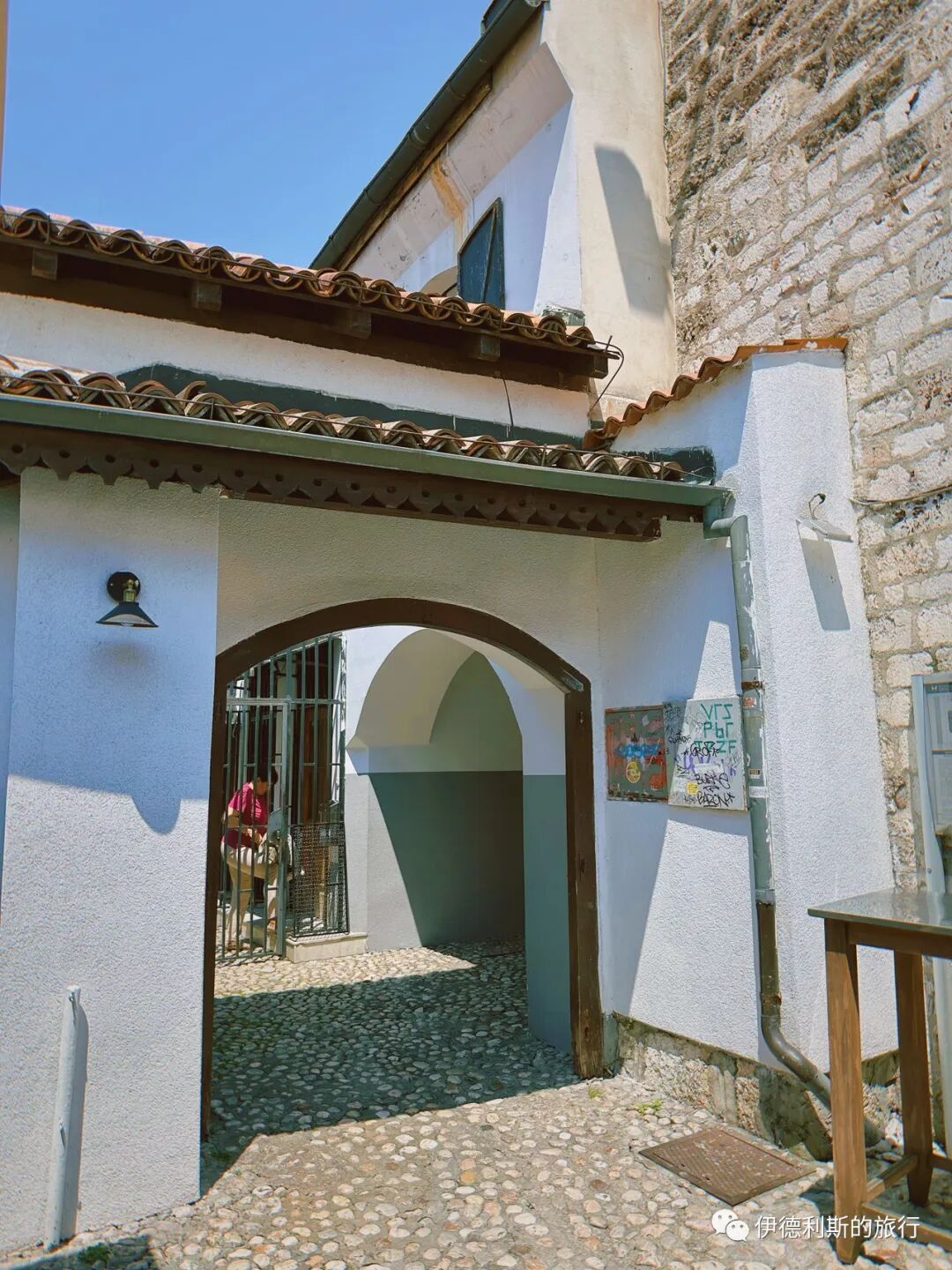
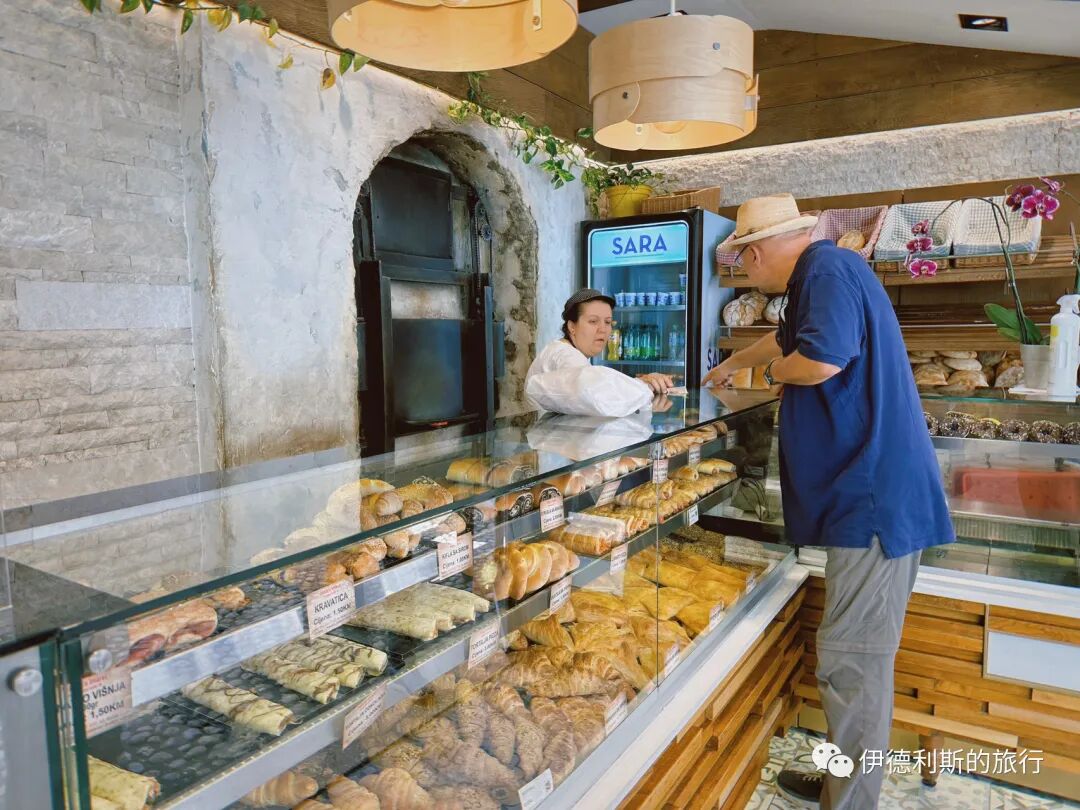
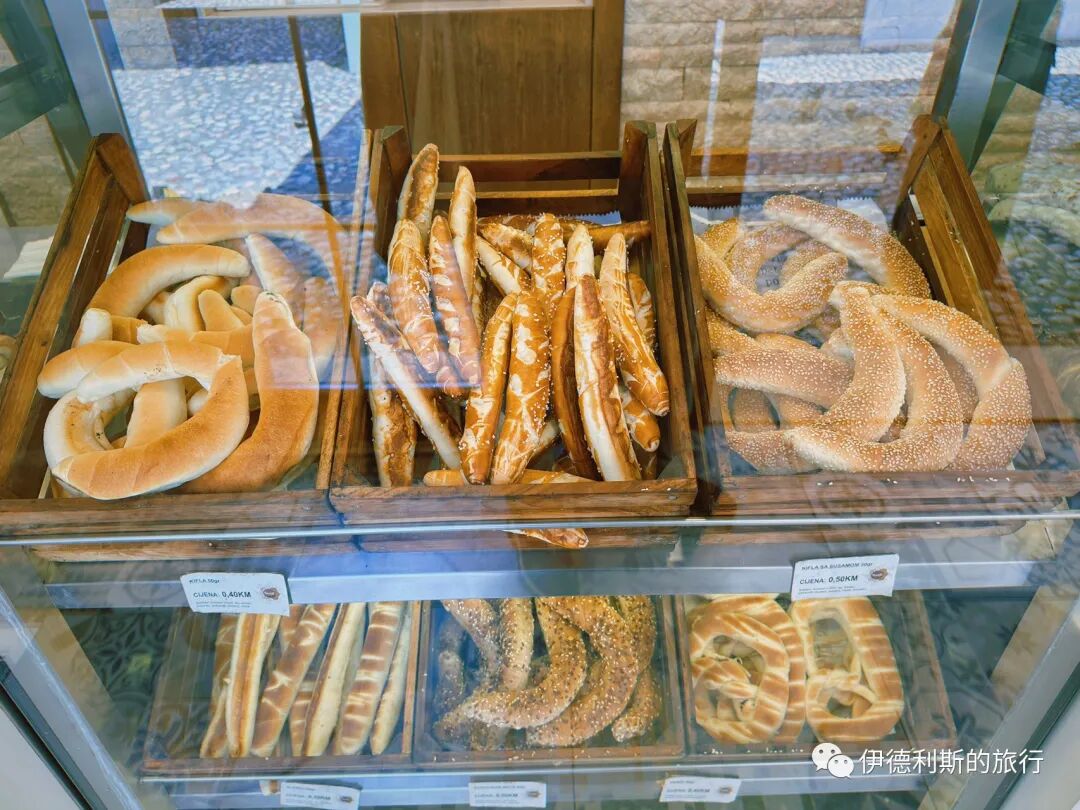
Beneath the clock tower is a public kitchen (imaret) established in 1531. It was originally run by a foundation (waqf) to distribute free food to the poor. Today, it is a very famous bakery, and the fresh bread baked on-site is very popular with the locals. Their signature item is the Kifla bread, which costs 2 yuan each. It comes in various flavors and has a rich wheat aroma. Kifla is a small bread popular in Central Europe and the Balkans with a history spanning hundreds of years. The French croissant actually evolved from the Kifla.
Muslihudin Čekrekčija Mosque
The Muslihudin Čekrekčija Mosque is located in the commercial center of Sarajevo's old town and was built by Hajji Mustafa in 1526. The mosque keeps its original 1526 endowment deed (vakufnama), which is the oldest contract document in the city of Sarajevo.
The mosque survived many major fires in Sarajevo and also survived the 1697 looting of the city by the Holy League after they defeated the Ottoman Empire. Traditional arabesque patterns are still preserved inside today.
Halal Travel Guide: Sarajevo - Ottoman Europe, Mosques and Bosniak History (Part 2)
Articles • ali2007fr posted the article • 0 comments • 144 views • 2026-05-19 06:55
Bascarsija Mosque
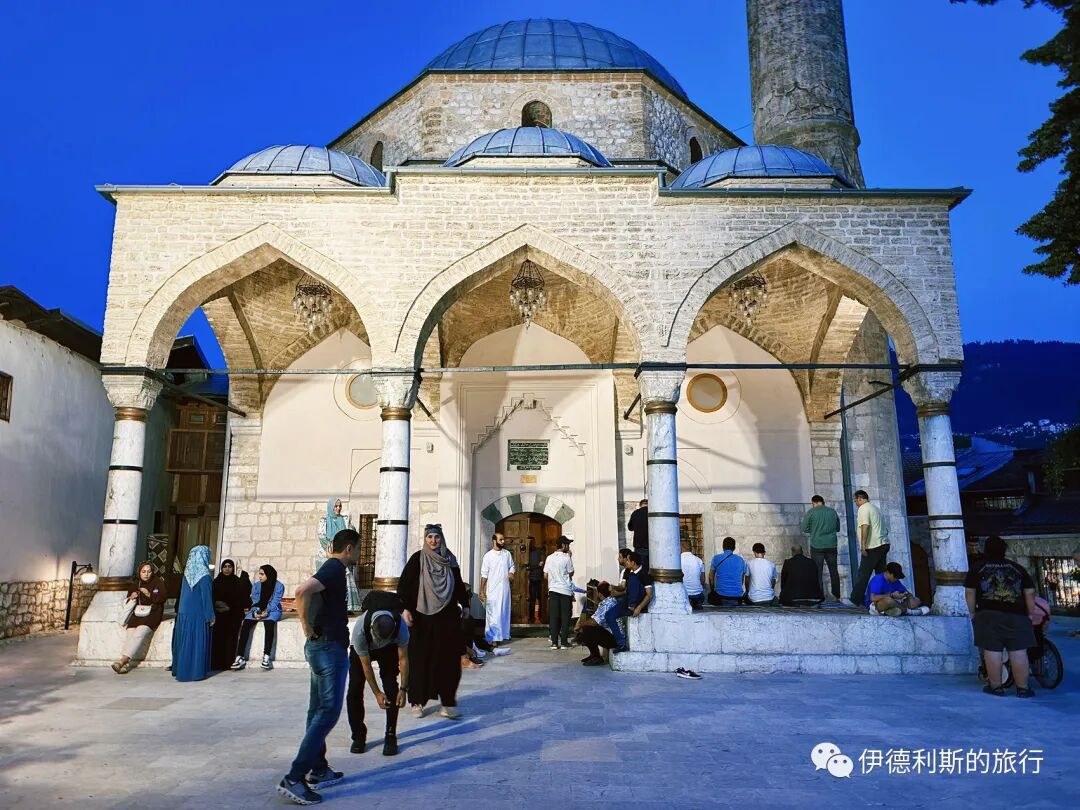
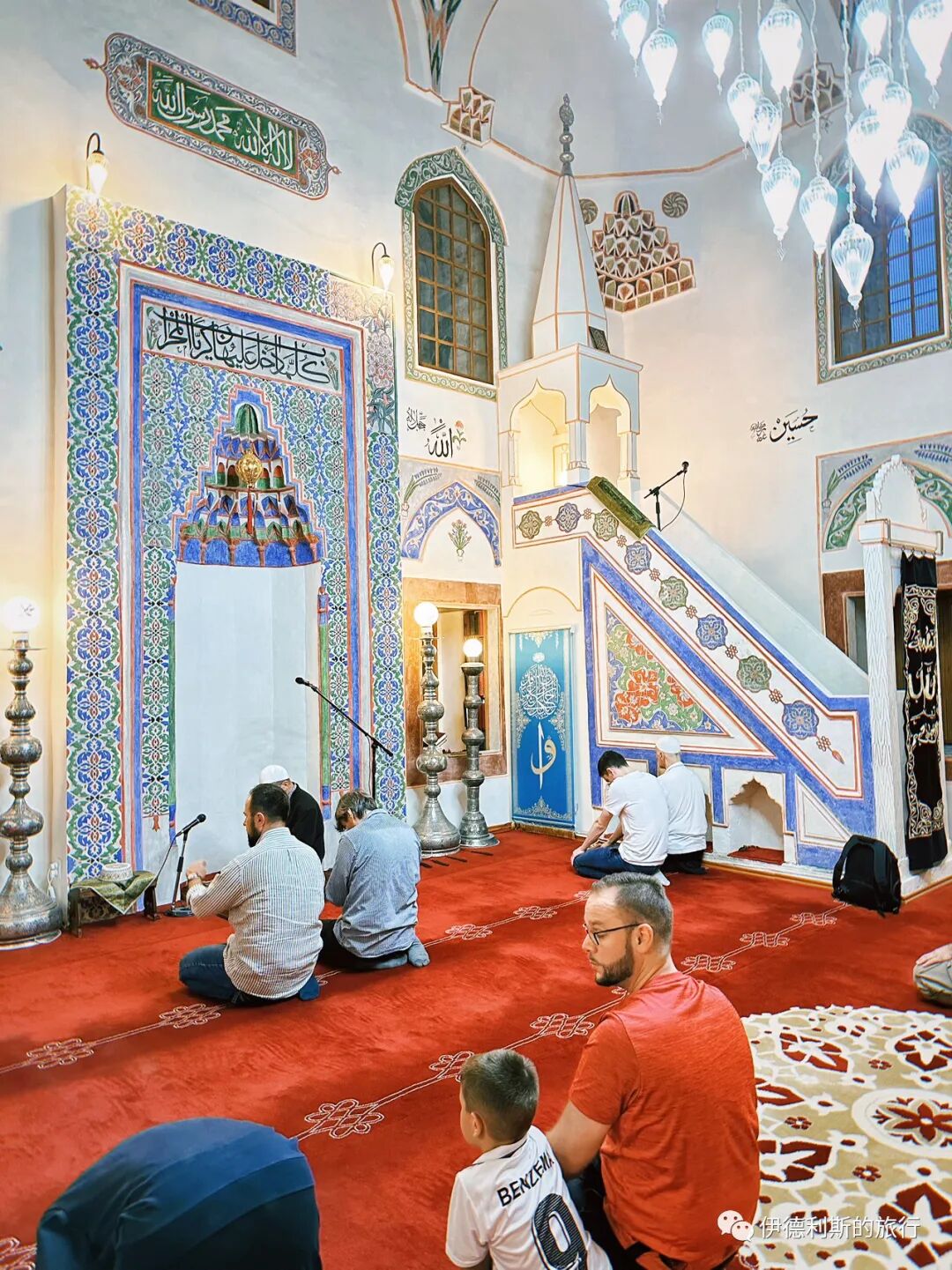
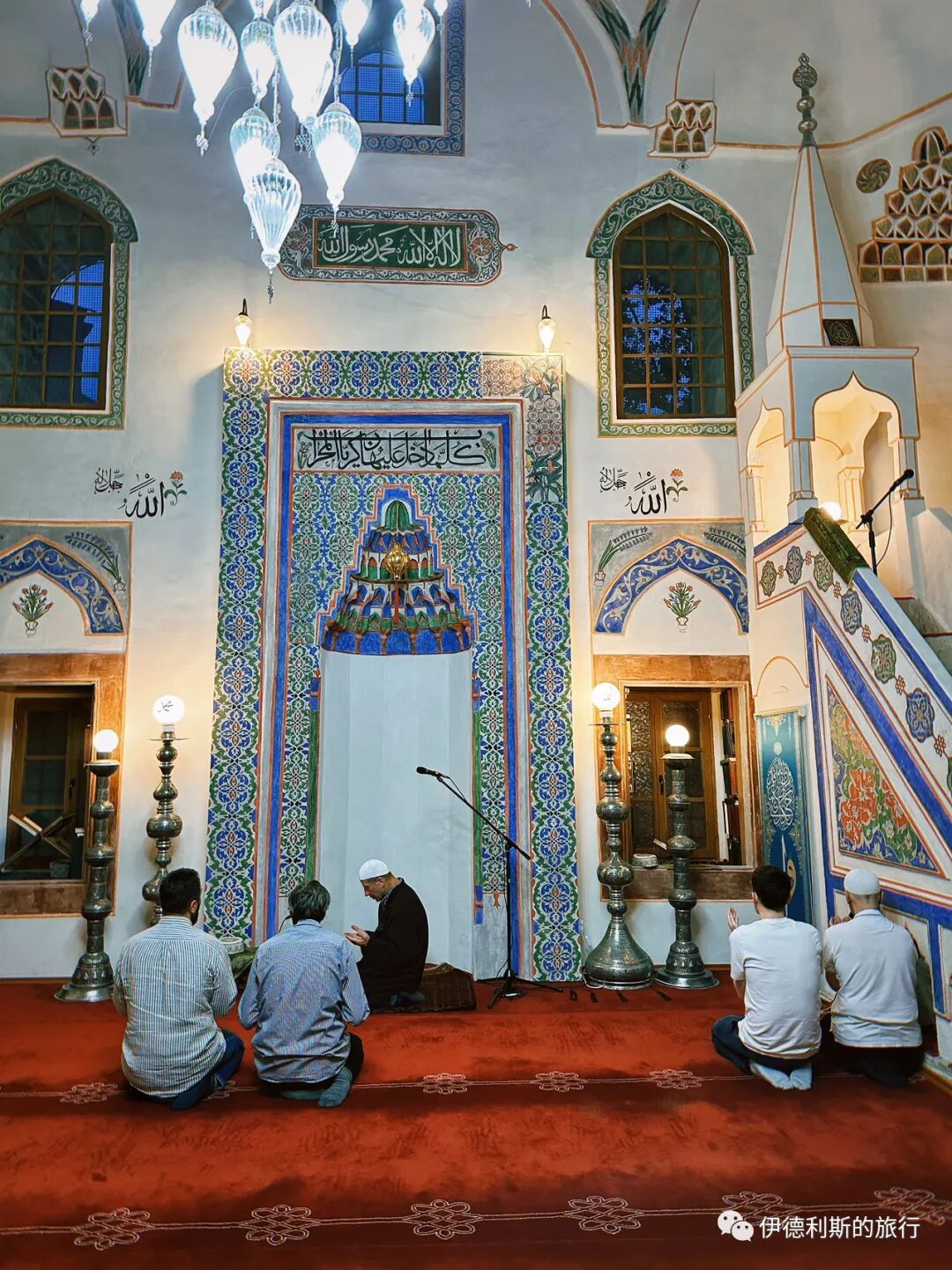
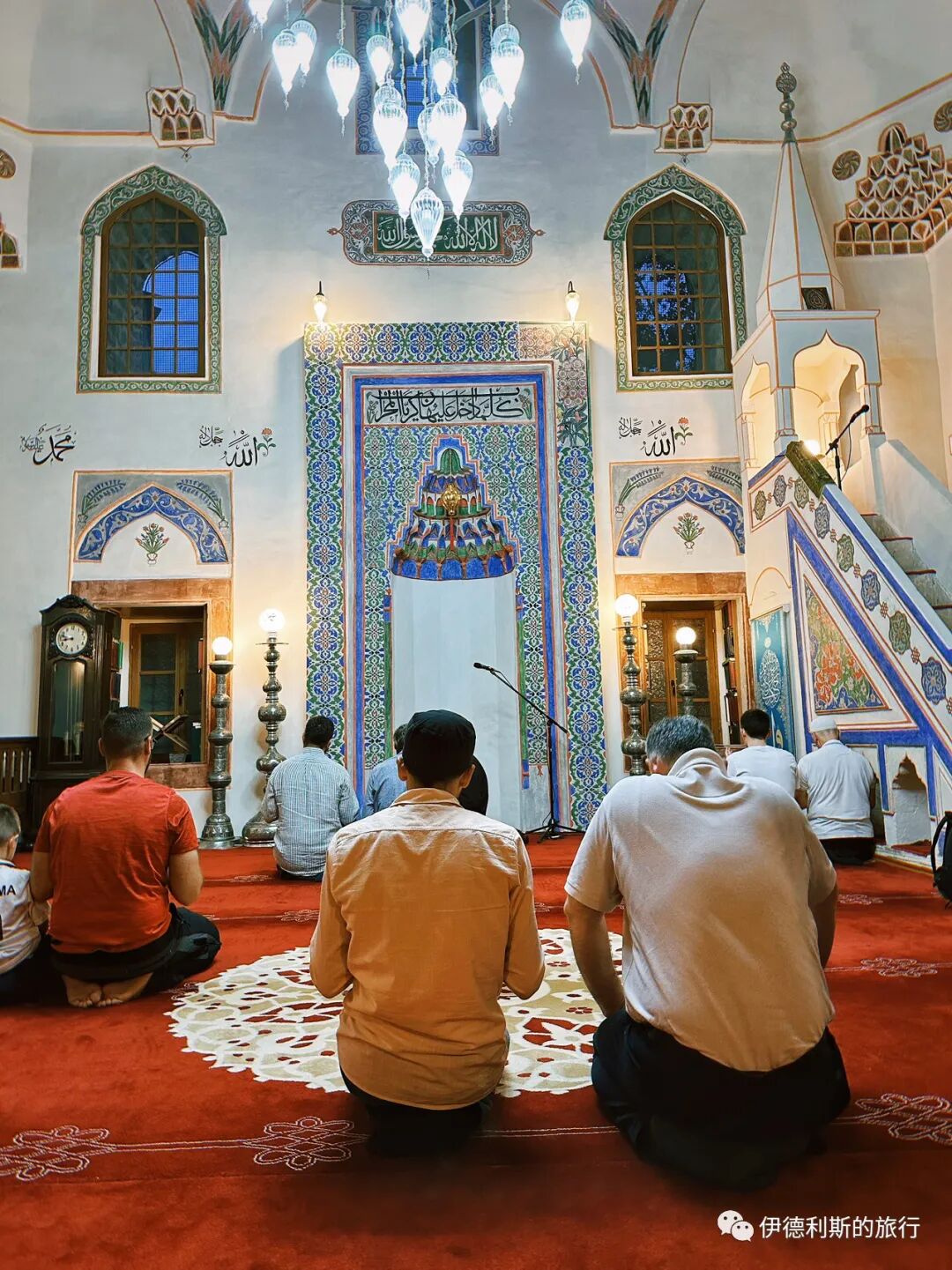
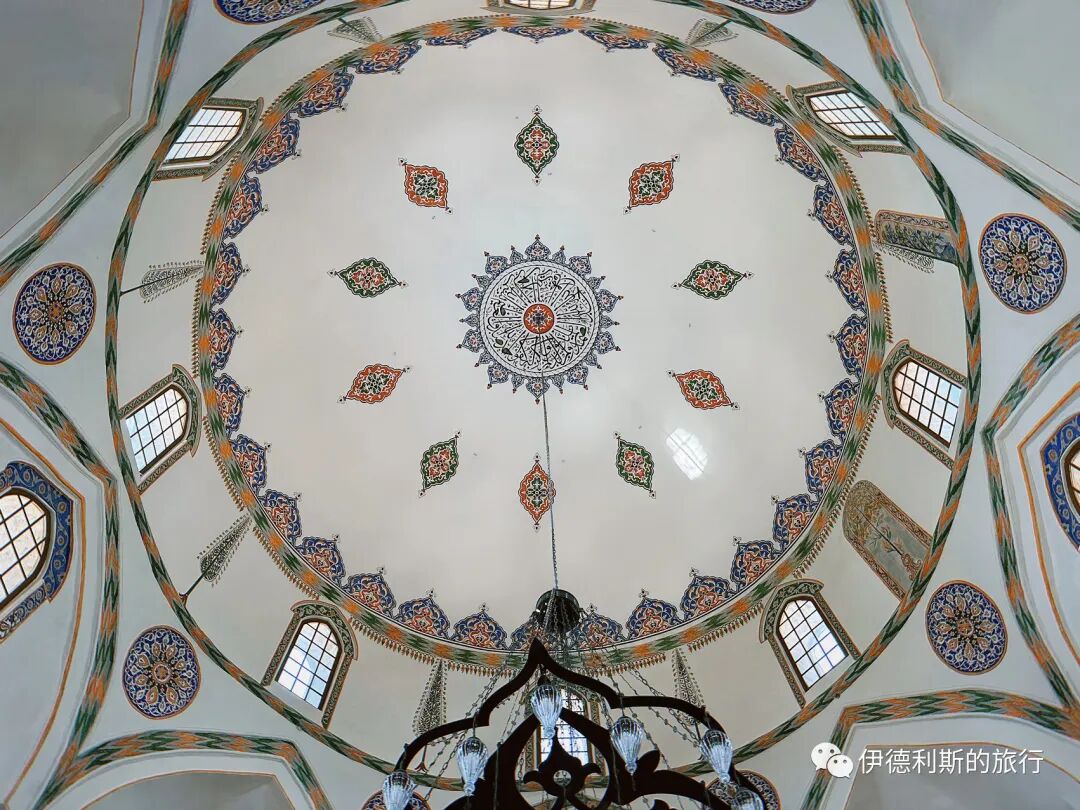
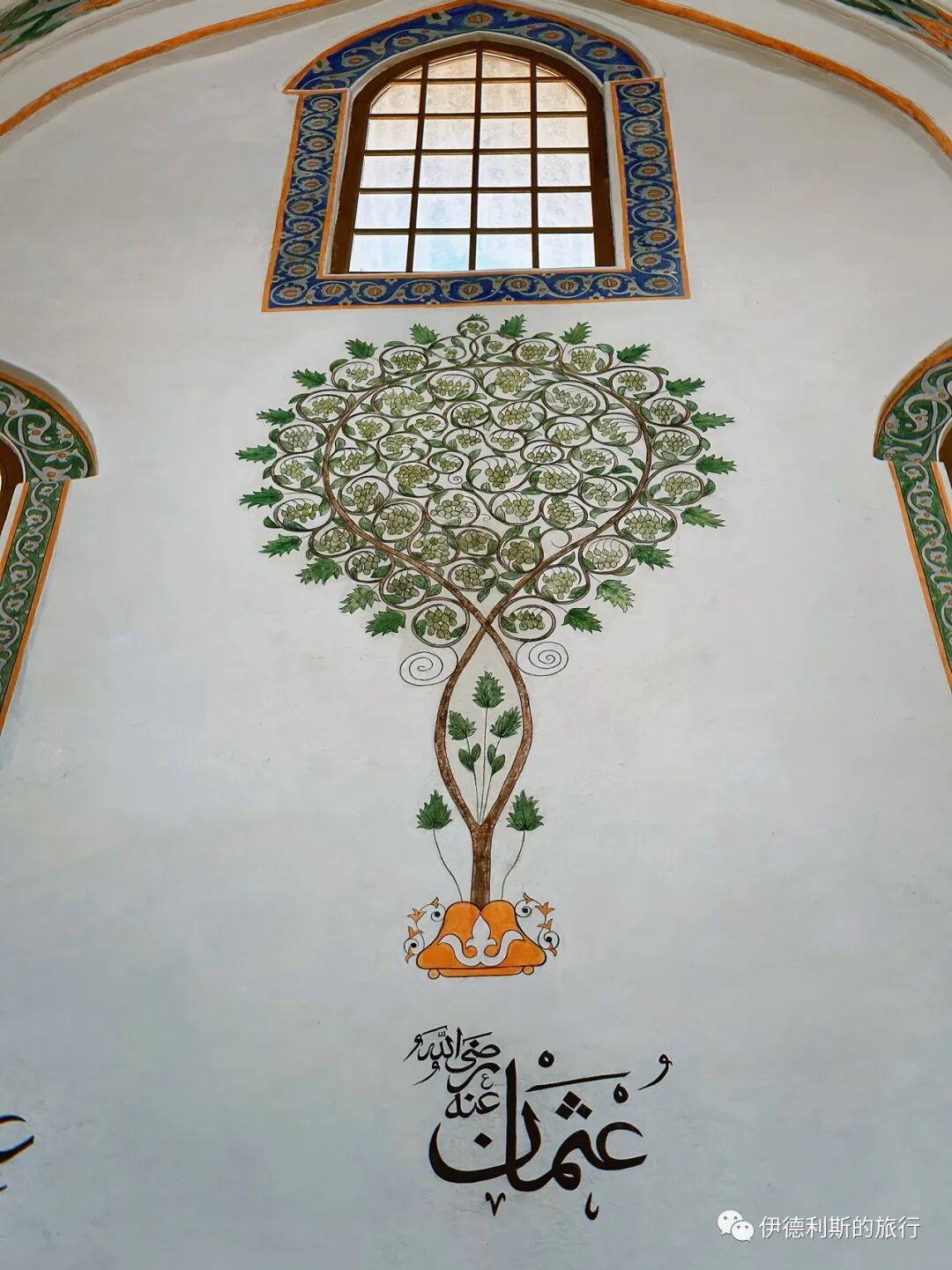
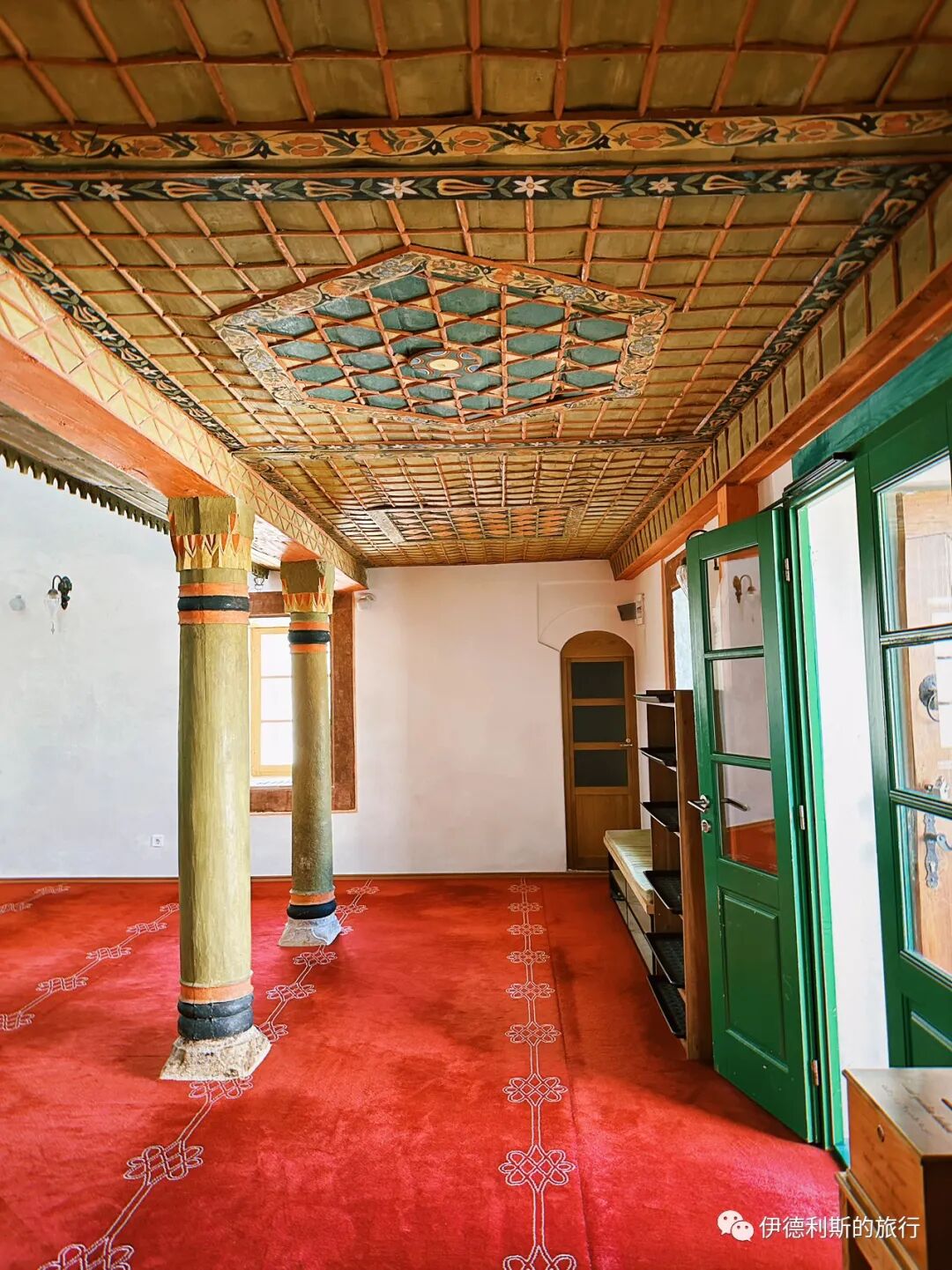
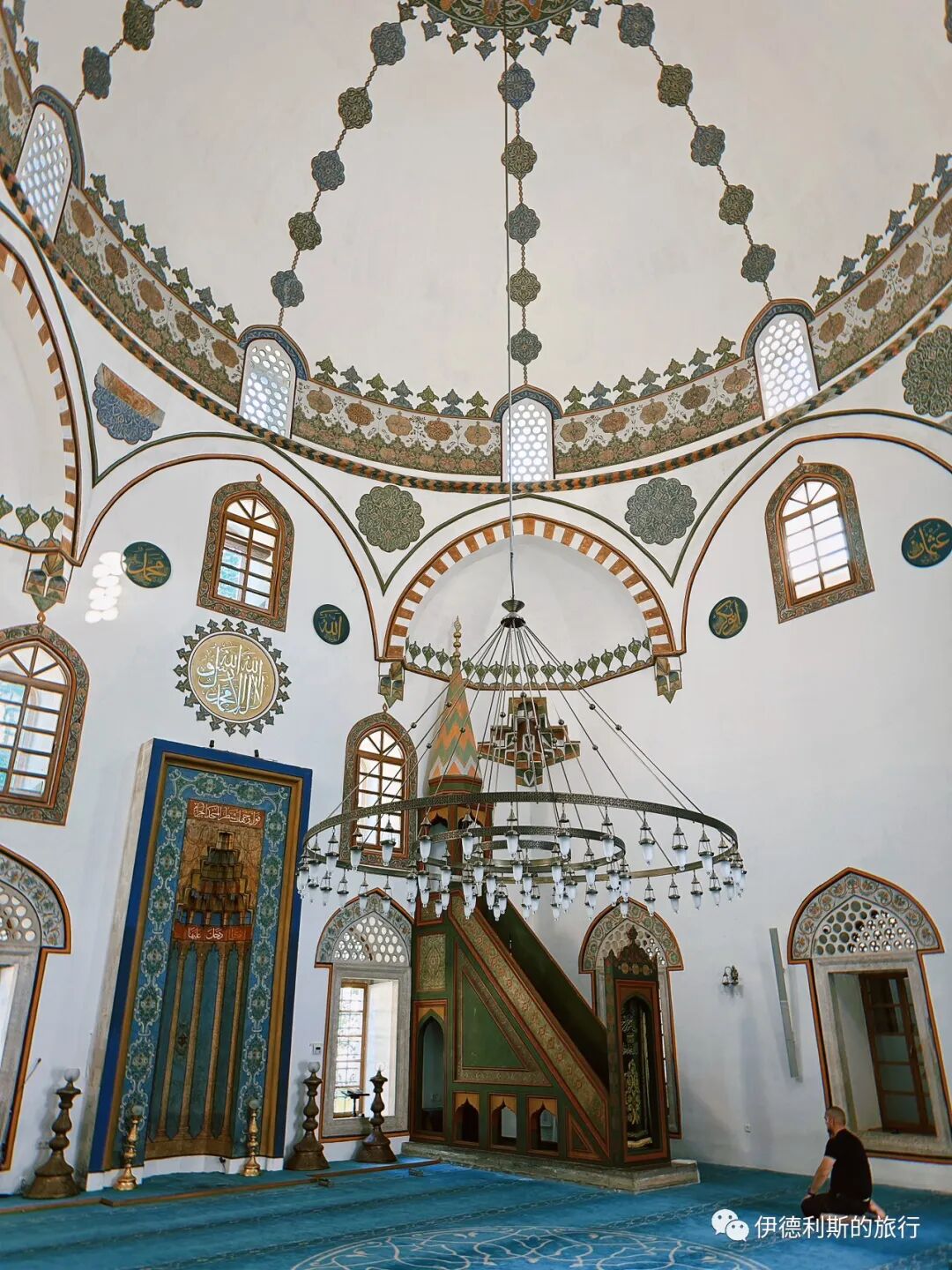
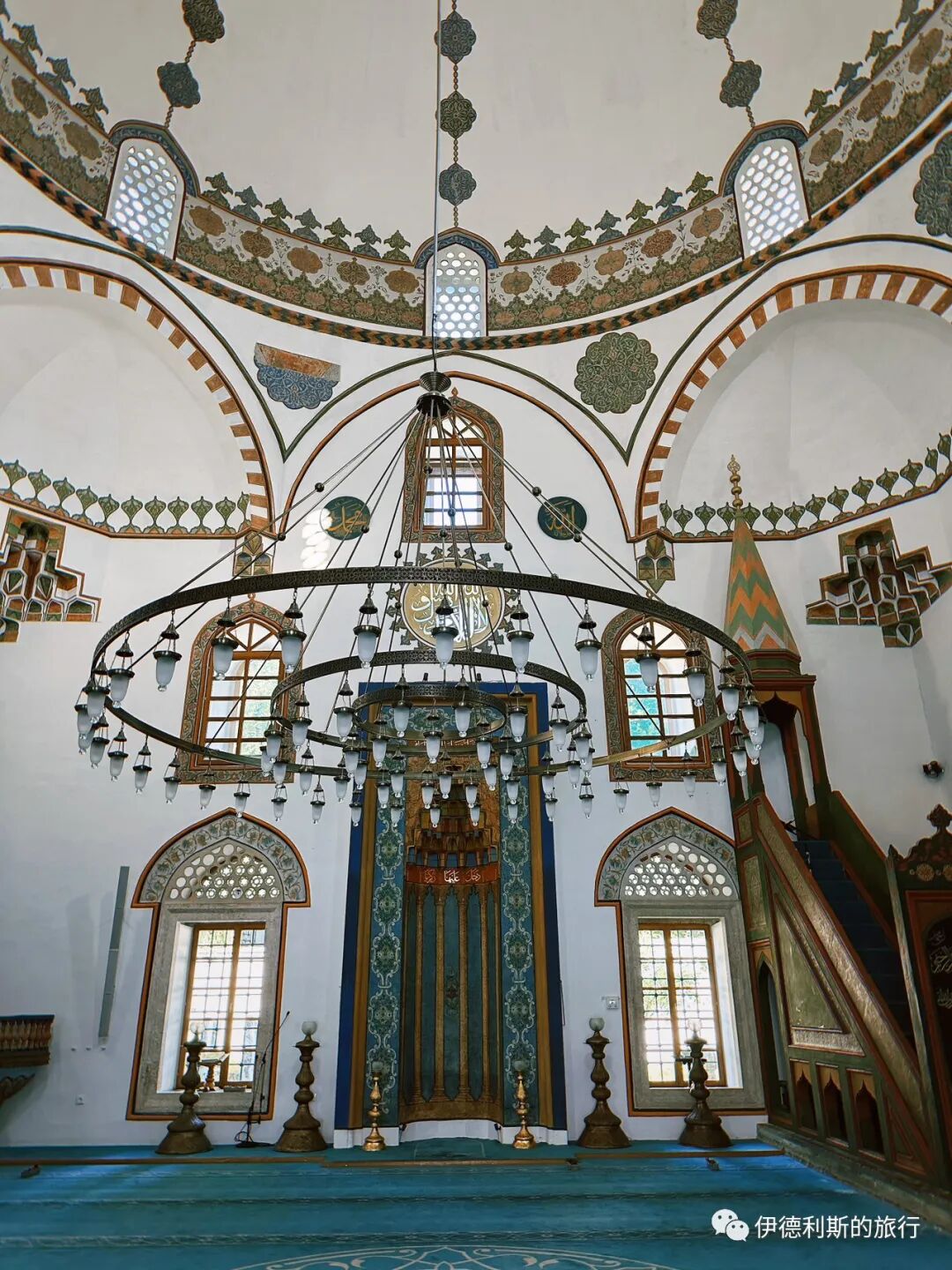
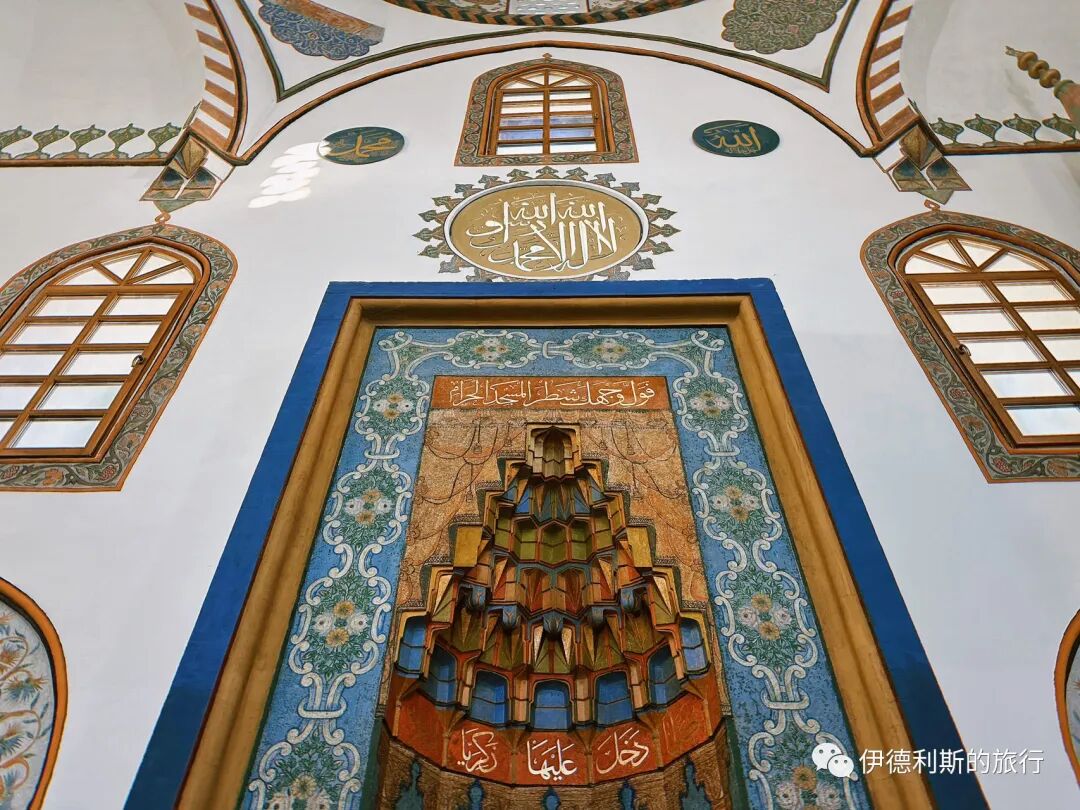
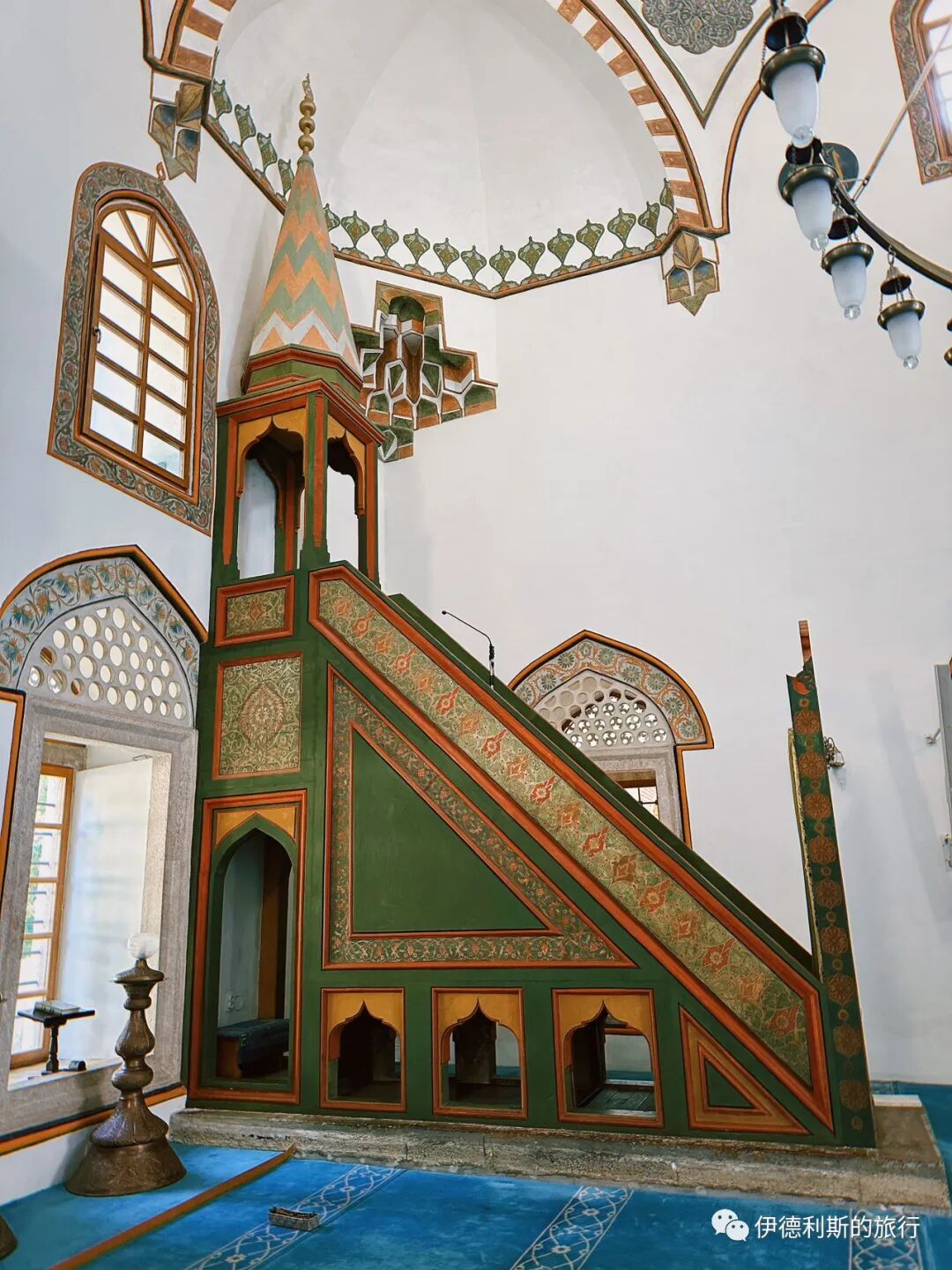
In the evening, I performed namaz at the Bascarsija Mosque (Baščaršijska džamija). The Bascarsija Mosque sits in the heart of the old bazaar in Sarajevo. Havadža Durak built it in the early 16th century, and the earliest manuscript mentioning the mosque dates back to 1528. The mosque originally had a wooden dome, but it was rebuilt with a stone dome after a fire in 1697. There is a porch with three small stone domes in front of the main hall. This was changed to a wooden roof in 1945, but it was restored to its original look in 1966. The mosque suffered heavy damage during the Siege of Sarajevo from 1992 to 1995, but it was later renovated.
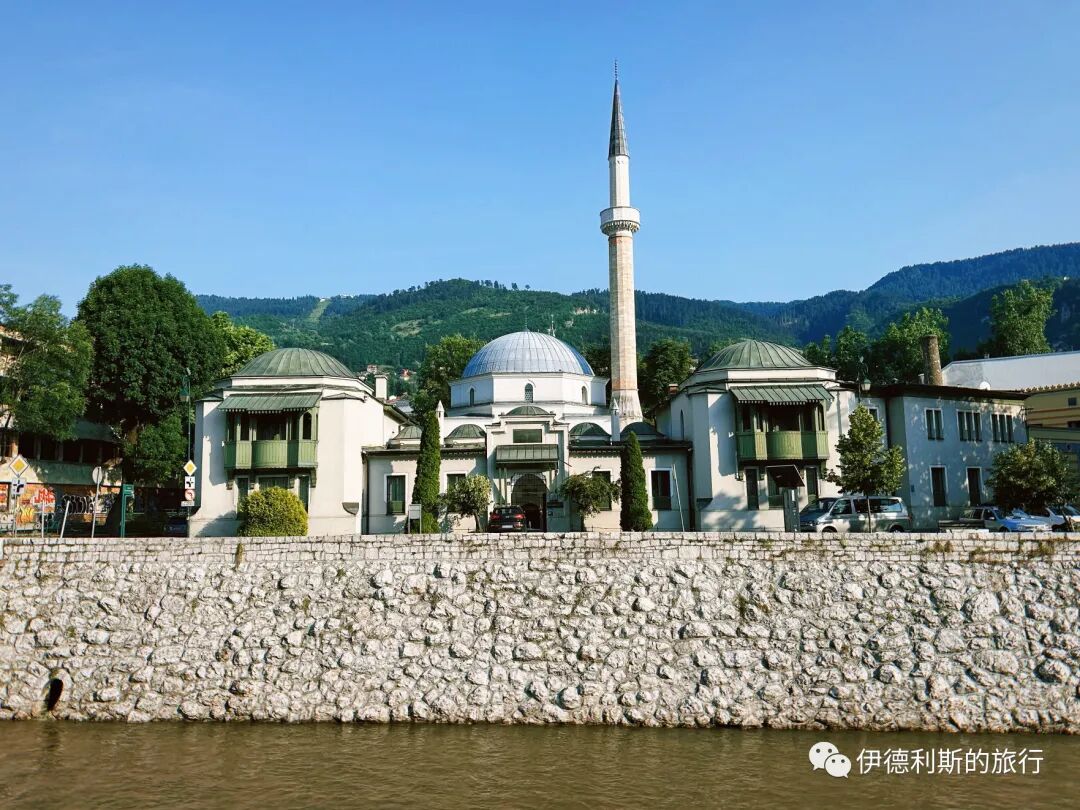
Emperor's Mosque
The Emperor's Mosque was first built in 1457. It was the first mosque constructed after the Ottoman Empire conquered Bosnia. Isaković-Hranušić oversaw the building, which was dedicated to the Ottoman Sultan Mehmed the Conqueror. The original mosque was a wooden structure. It was rebuilt in 1565 into the current classical Ottoman style and dedicated to the Ottoman Sultan Suleiman the Magnificent. Side rooms were added in 1800, and they were connected to the main hall in 1848.
The Emperor's Mosque was severely damaged twice, once during World War II and again during the Bosnian War, but it was repaired both times.
Magribija Mosque
Sheikh Magribija built the Magribija Mosque in the 15th century. Tradition says that Sheikh Magribija arrived in Sarajevo with Isa-beg, the Ottoman governor who founded the city. The original mosque building was destroyed by fire. The current structure was rebuilt in 1766 and keeps its 18th-century appearance and painted decorations. The mosque was badly damaged during the Bosnian War in 1992, leaving only the base of the minaret. It was rebuilt in 2000, and the roof and porch were repaired again in 2004.
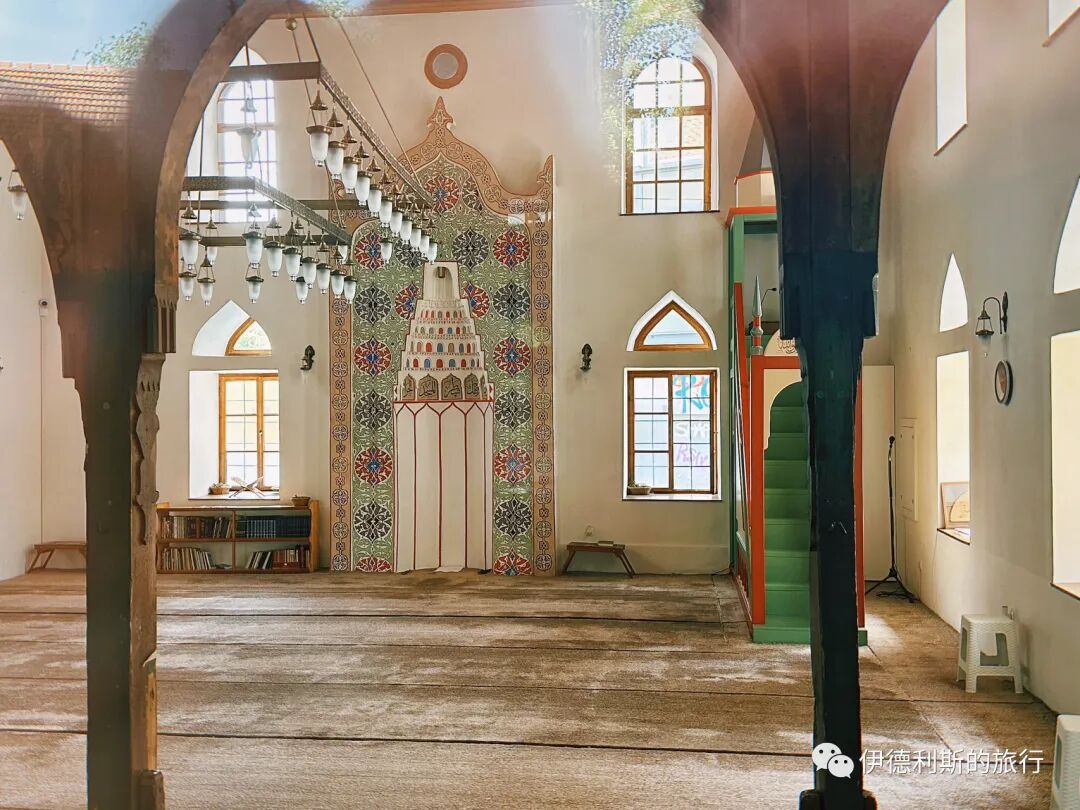
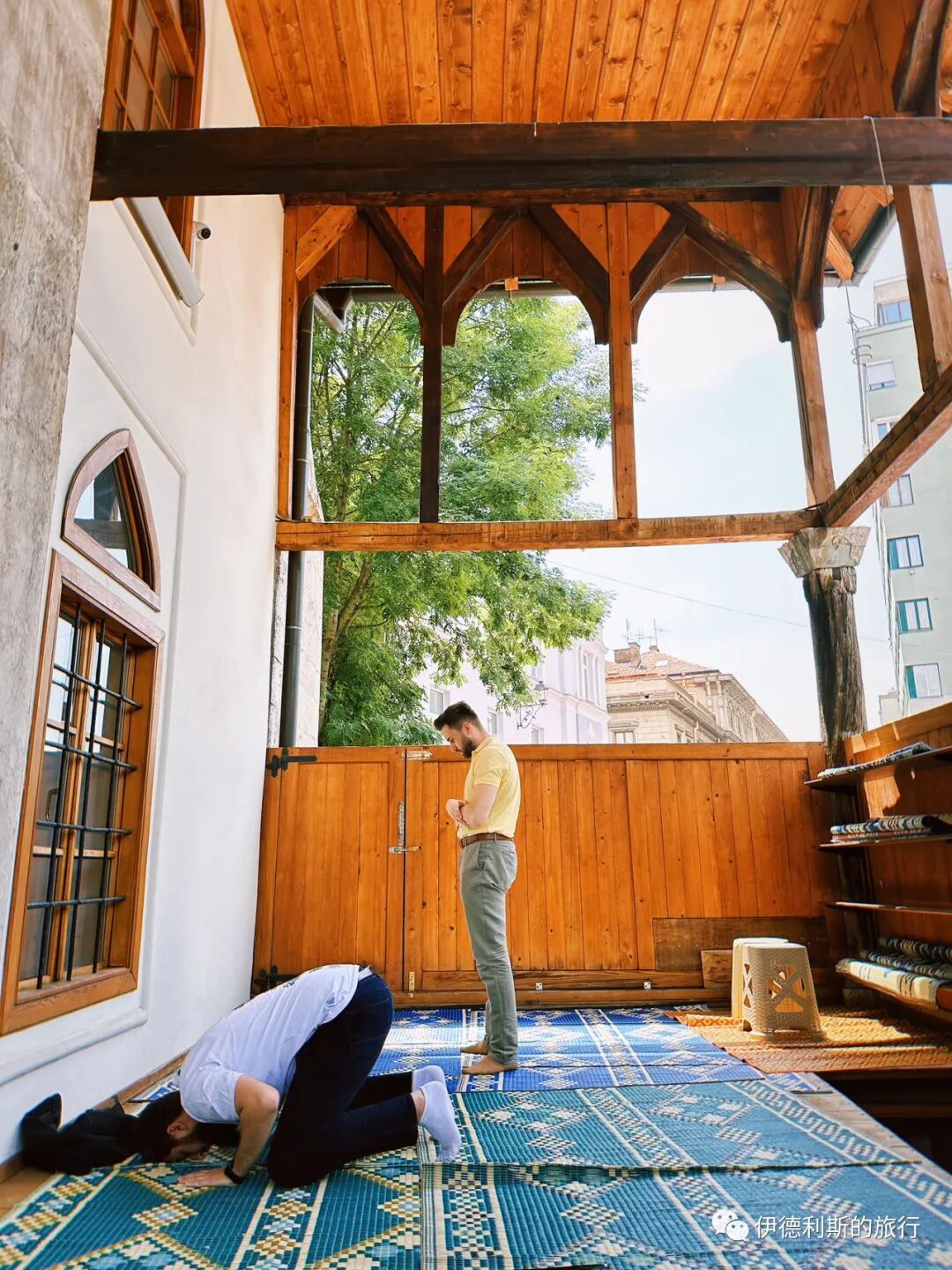
Most mosques in Sarajevo keep their main halls locked outside of prayer times (namaz), so everyone prays on the platforms on either side of the doors. Because of this, I could not enter the main hall.
Ali Pasha Mosque
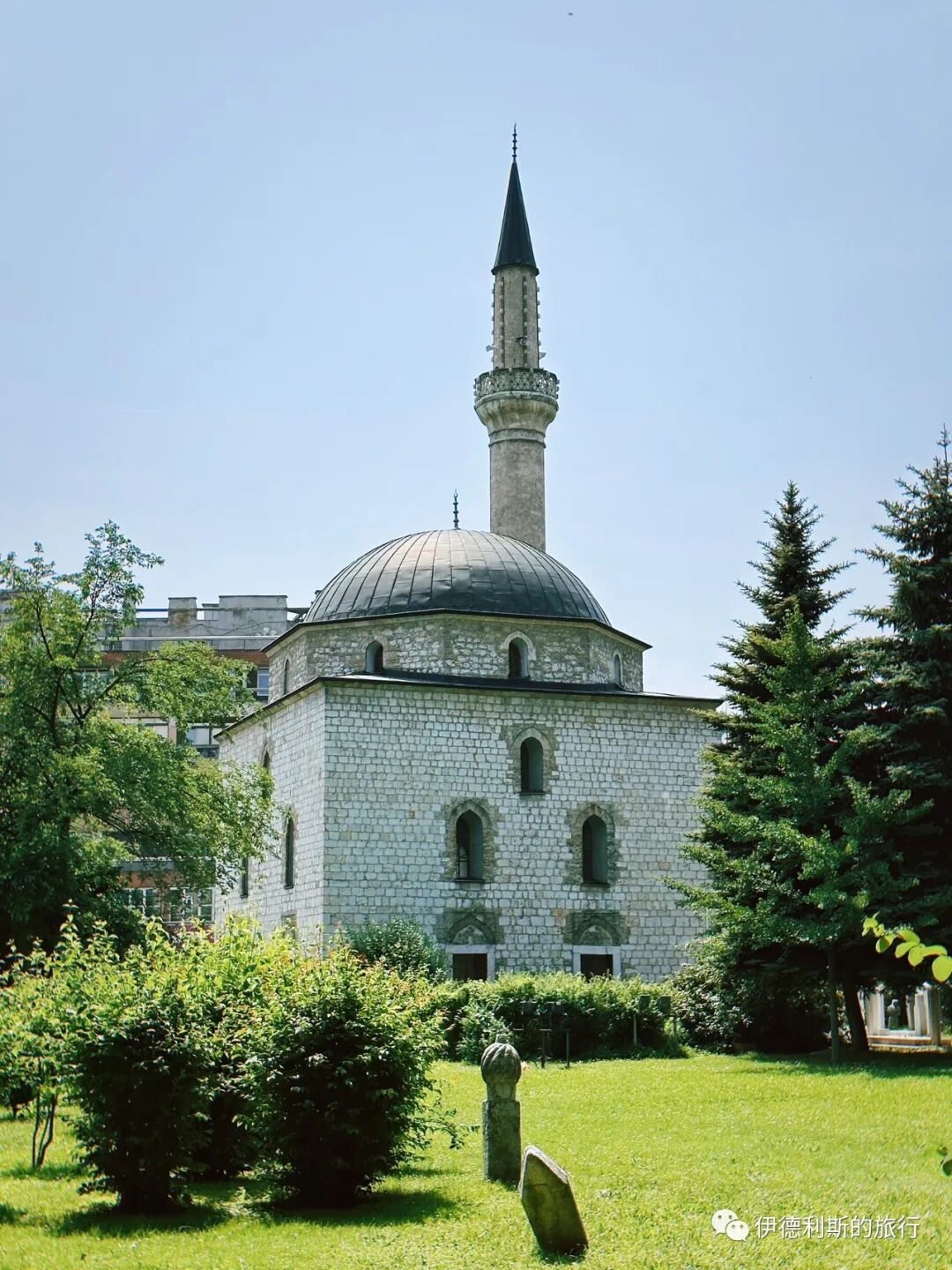
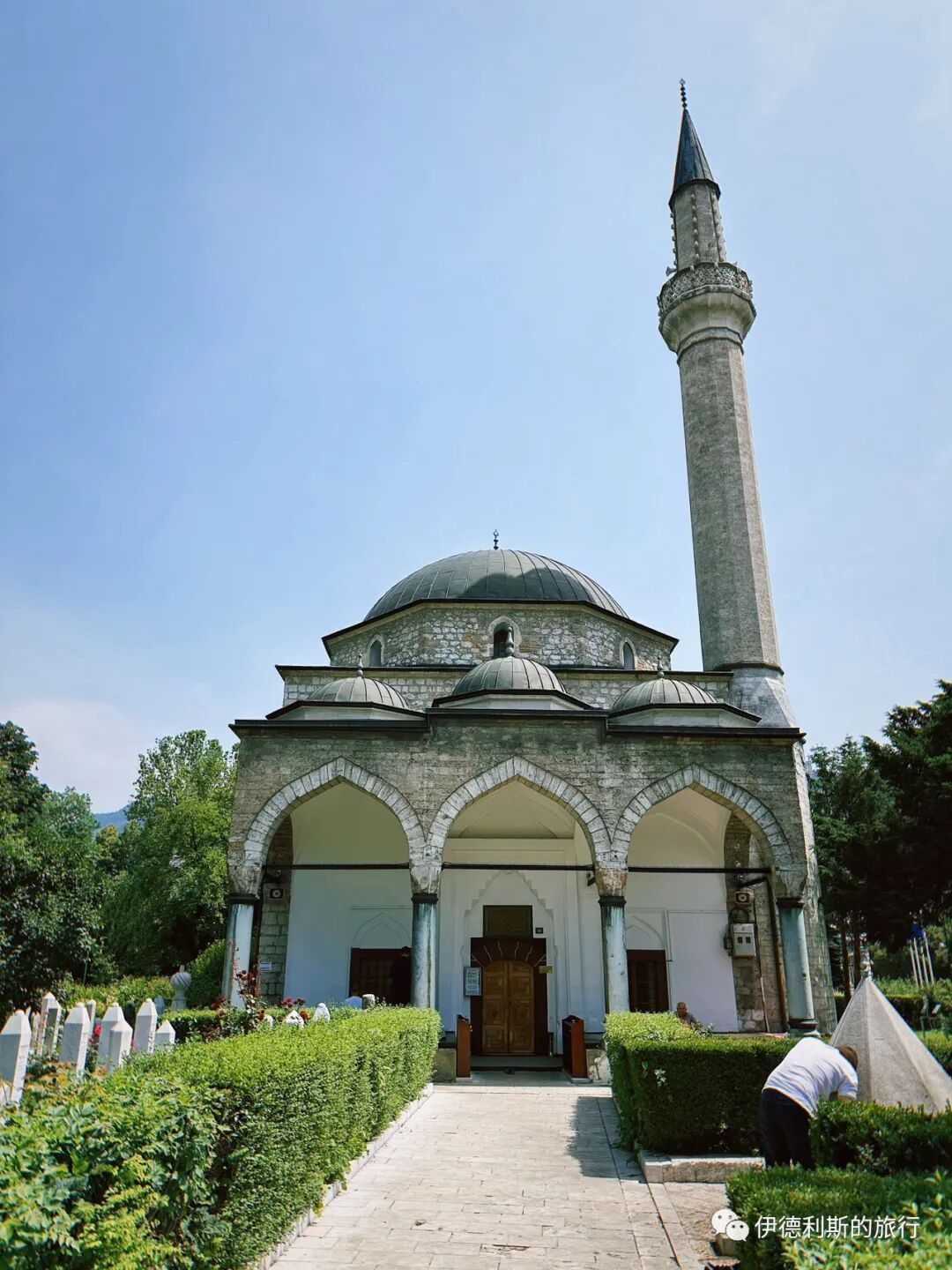
Ali Pasha Mosque was built in 1560-1561 by the Bosnian governor Ali Pasha, who was a local from Sarajevo. This is a single-domed mosque in the classical Ottoman style with beautiful architectural proportions. There used to be a large cemetery around the main hall, but it was turned into a park after tram tracks and roads were laid. A small ablution fountain was moved there in 1874. The mosque was severely damaged by shelling during the 1992-1995 Bosnian War and was renovated in 2004.
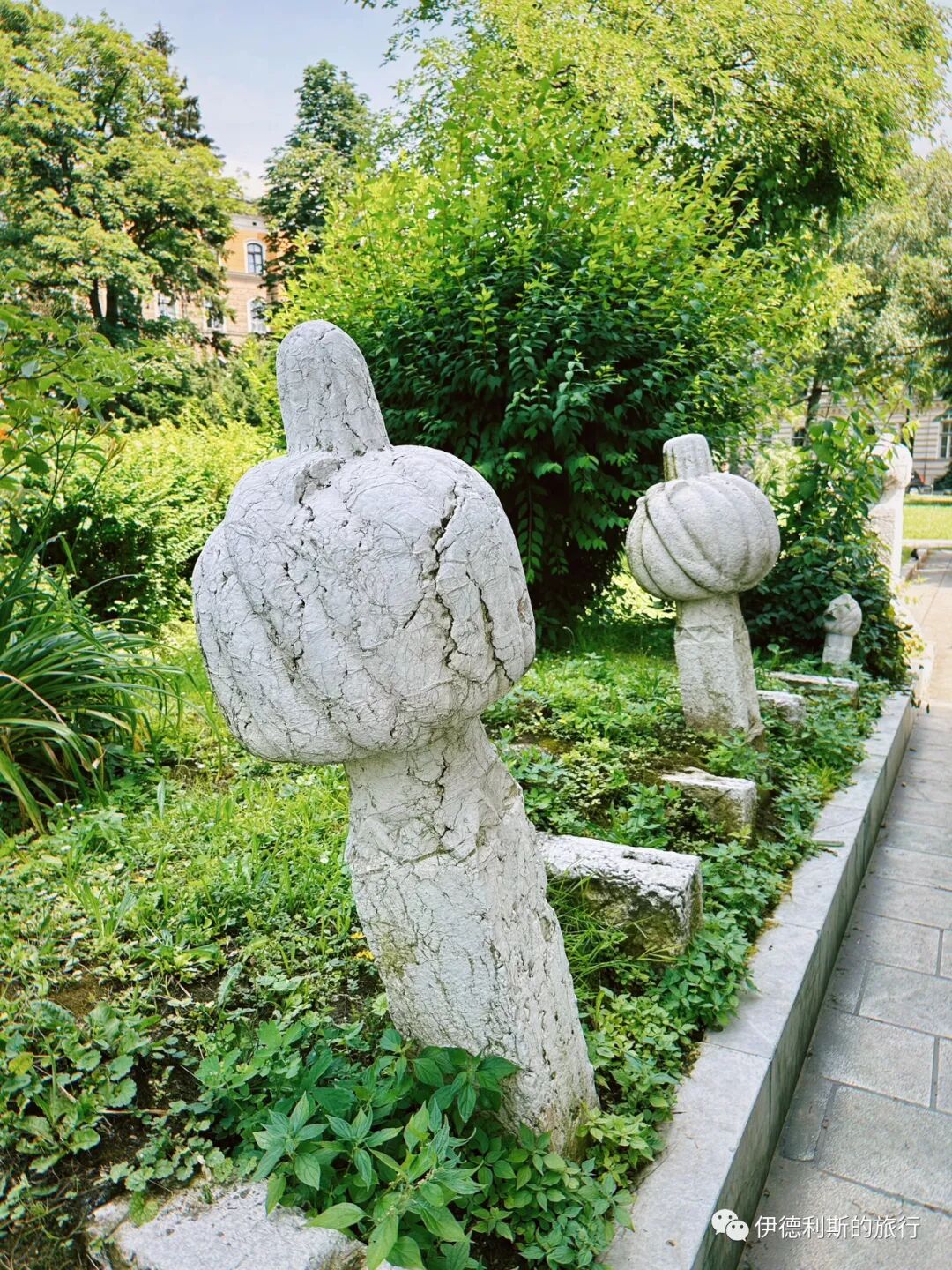
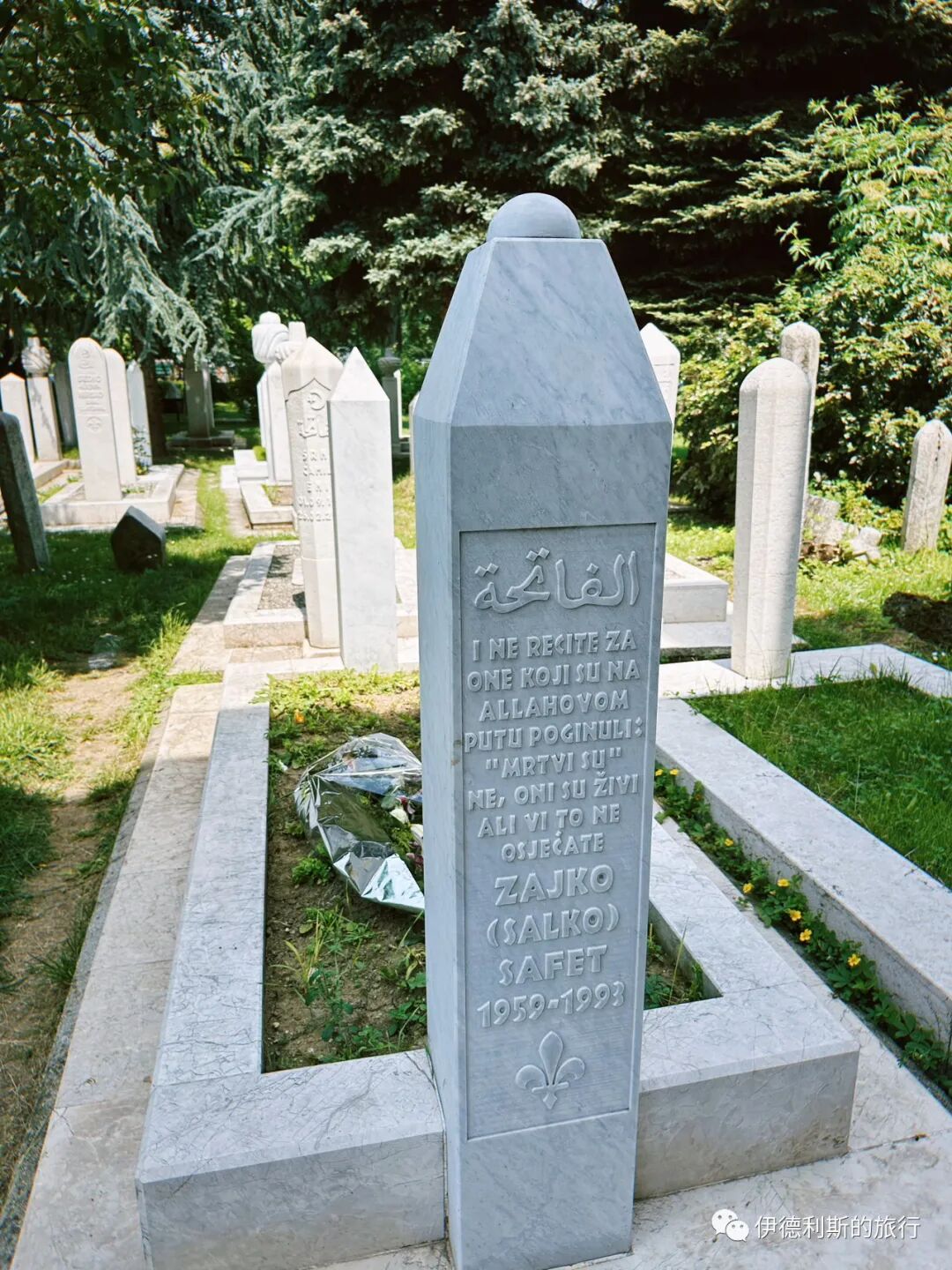
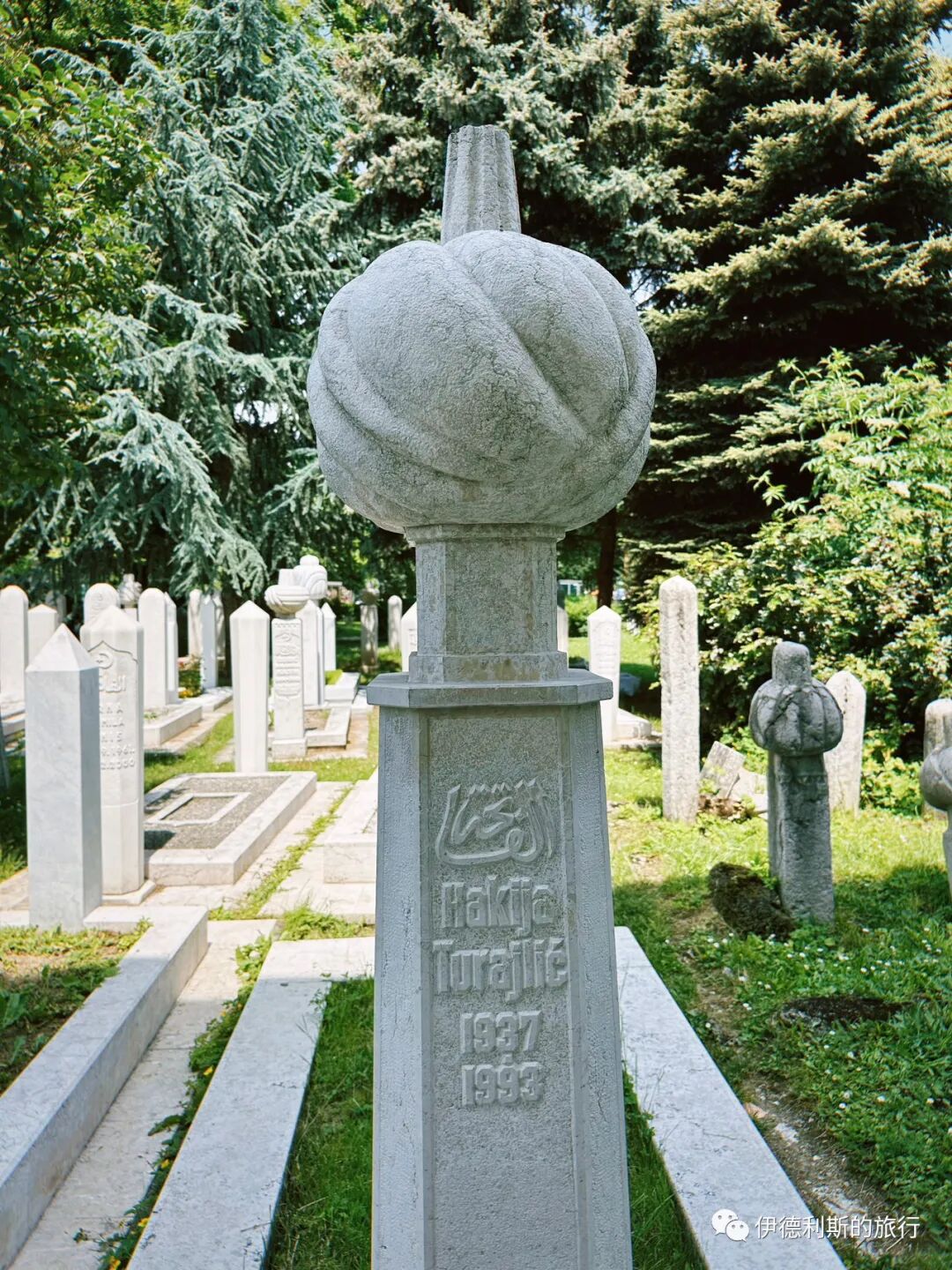
You can still see tombstones of victims from the 1993 Bosnian War next to the mosque today.
Ferhadija Mosque
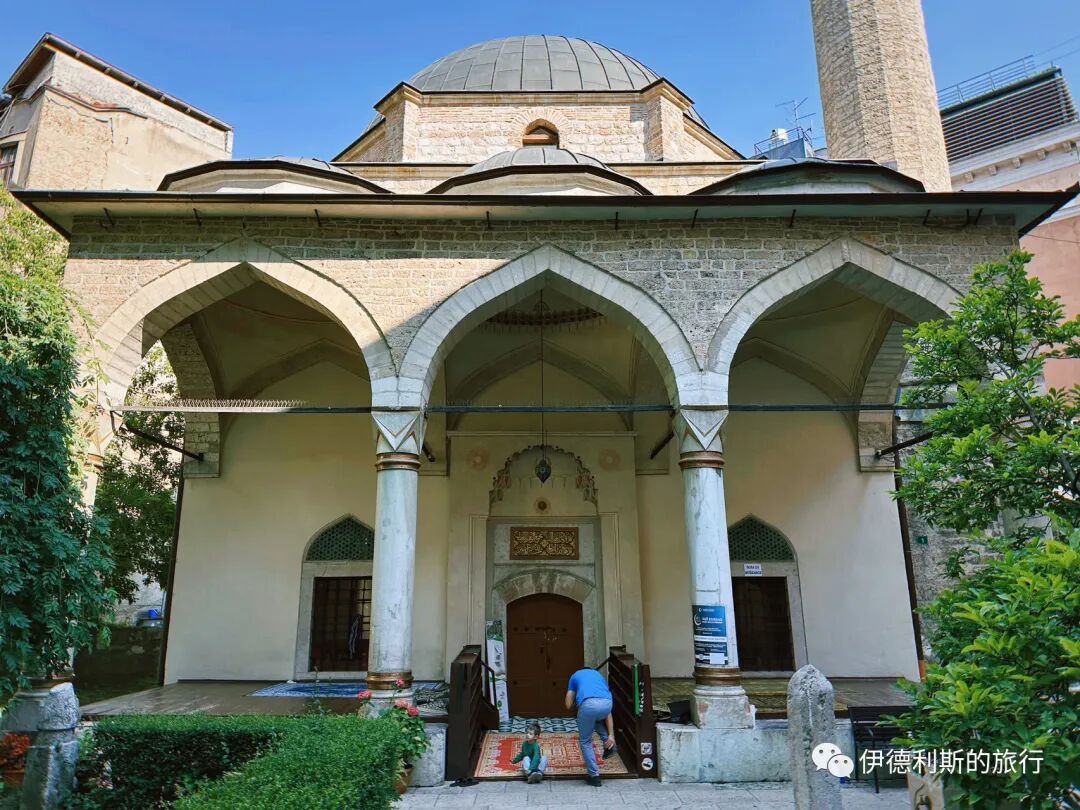
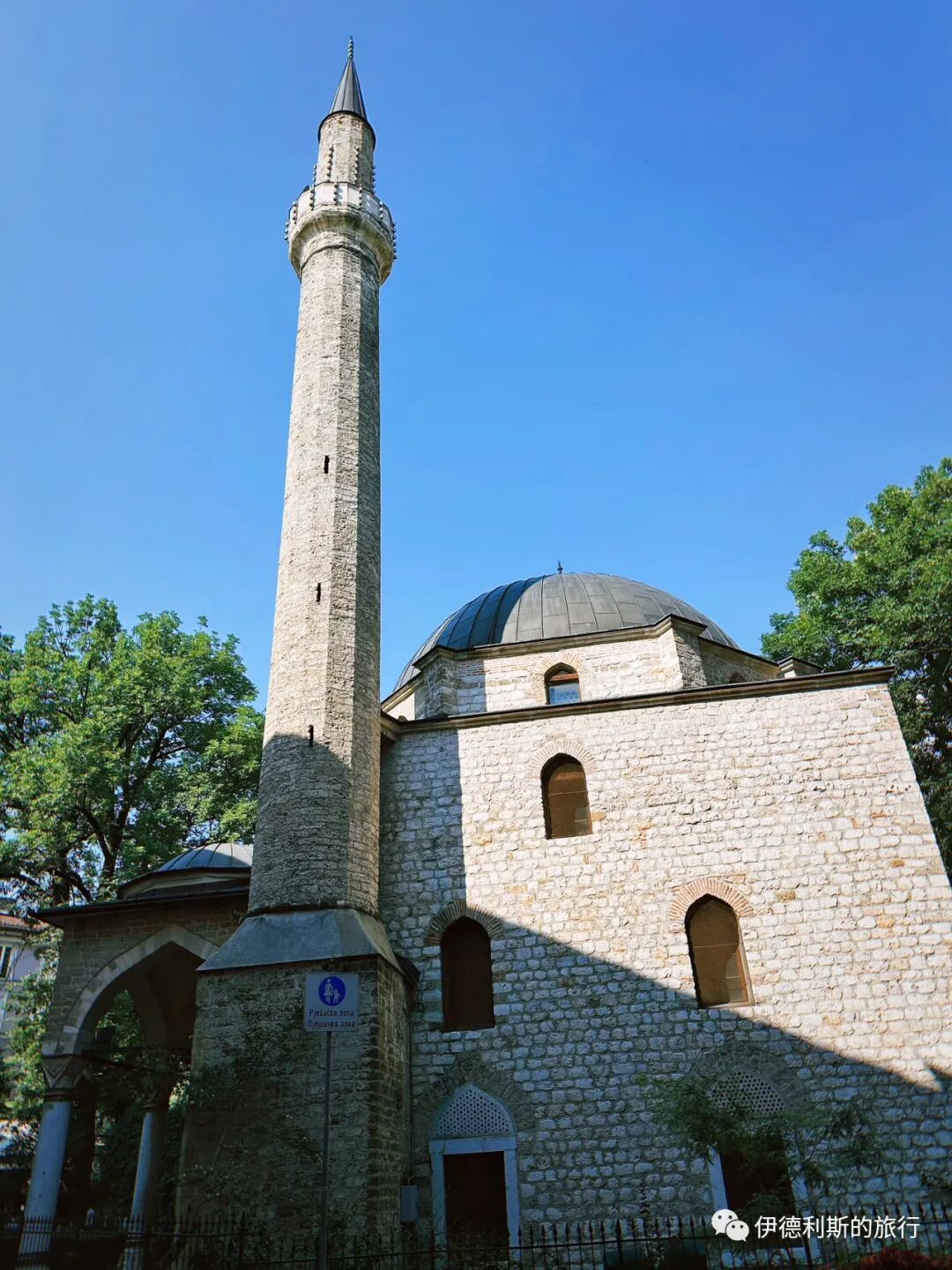
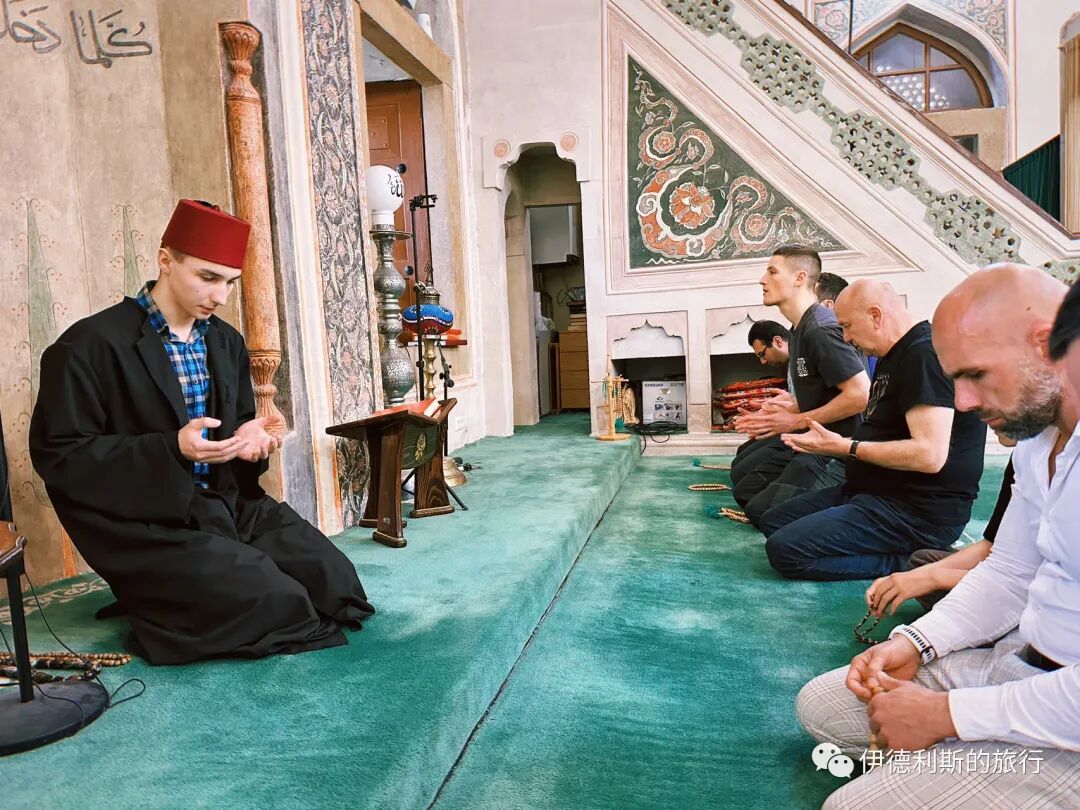
I prayed the afternoon prayer (asr) at Ferhadija Mosque in the old town of Sarajevo. The imam was very young and wore an Ottoman fez hat.
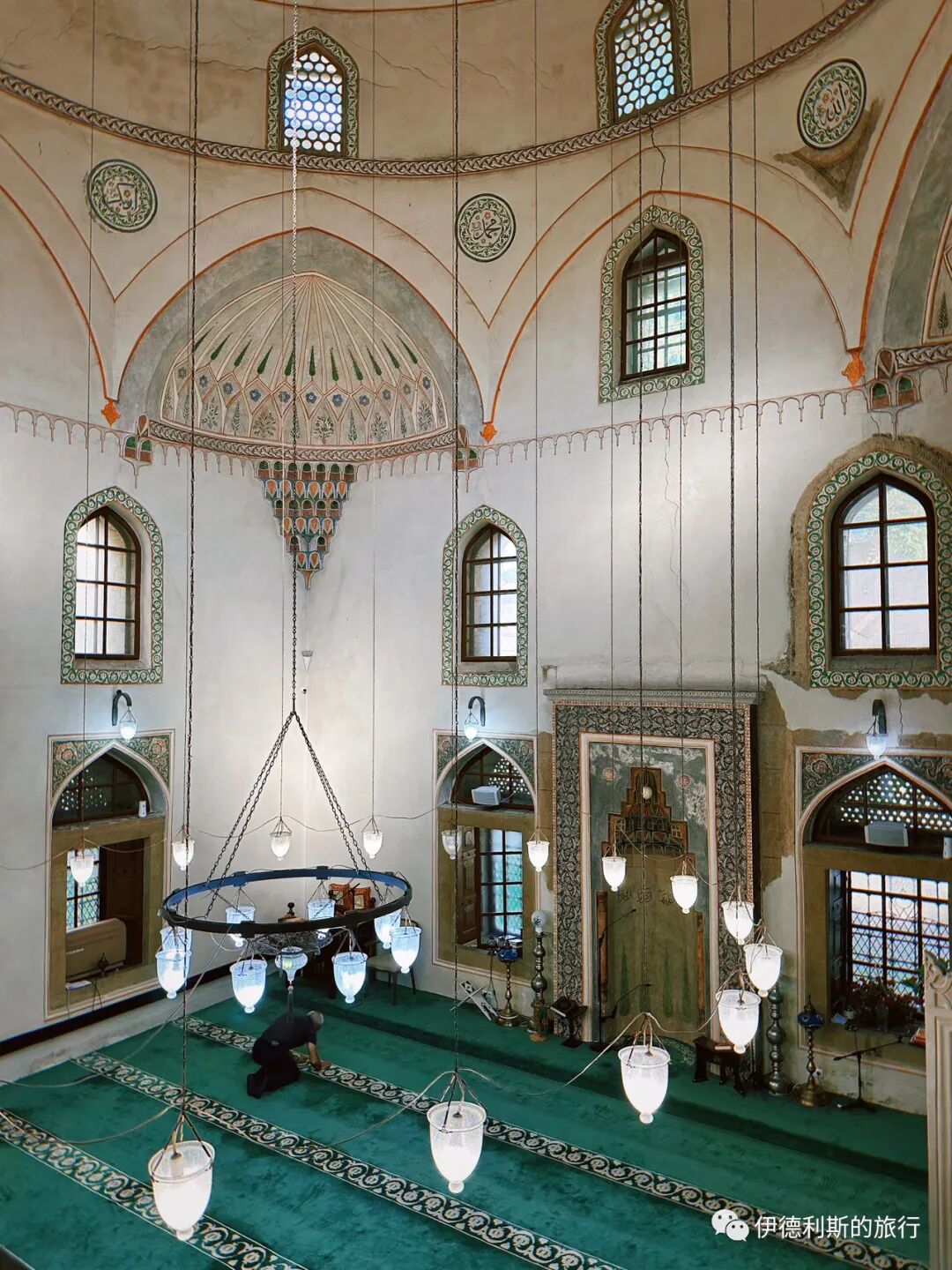
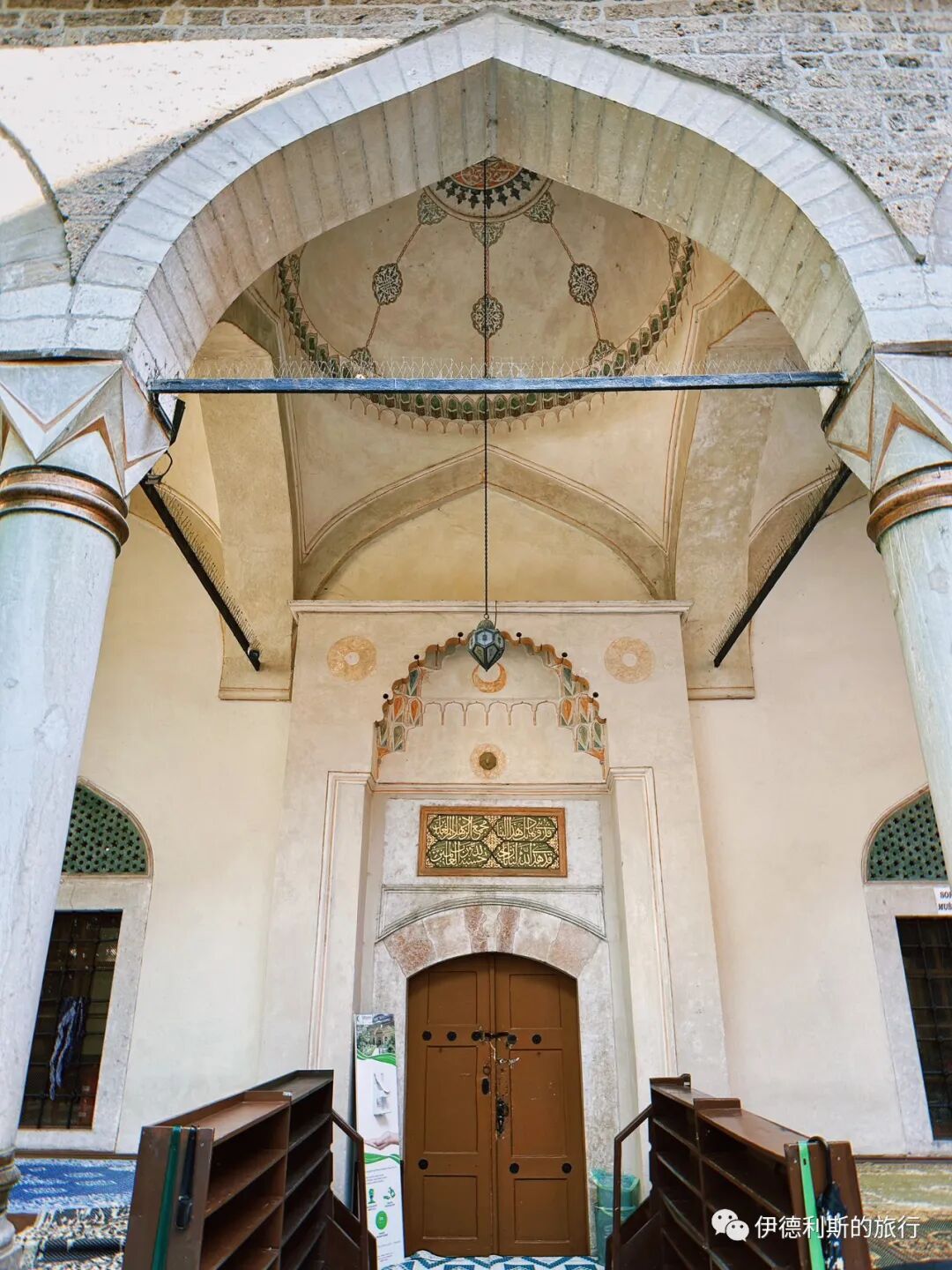
Ferhadija Mosque was built by Ferhad-beg Vuković-Desisalić in 1561-1562. The neighborhood that formed around it is also called Ferhadija. The mosque originally had a school (mekteb), a public kitchen (imaret), a water station, and a fountain, but they were all destroyed in fires in 1879 and 1897. It is a typical classical Ottoman building with a central dome over a rectangular main hall and three small domes on the front porch.
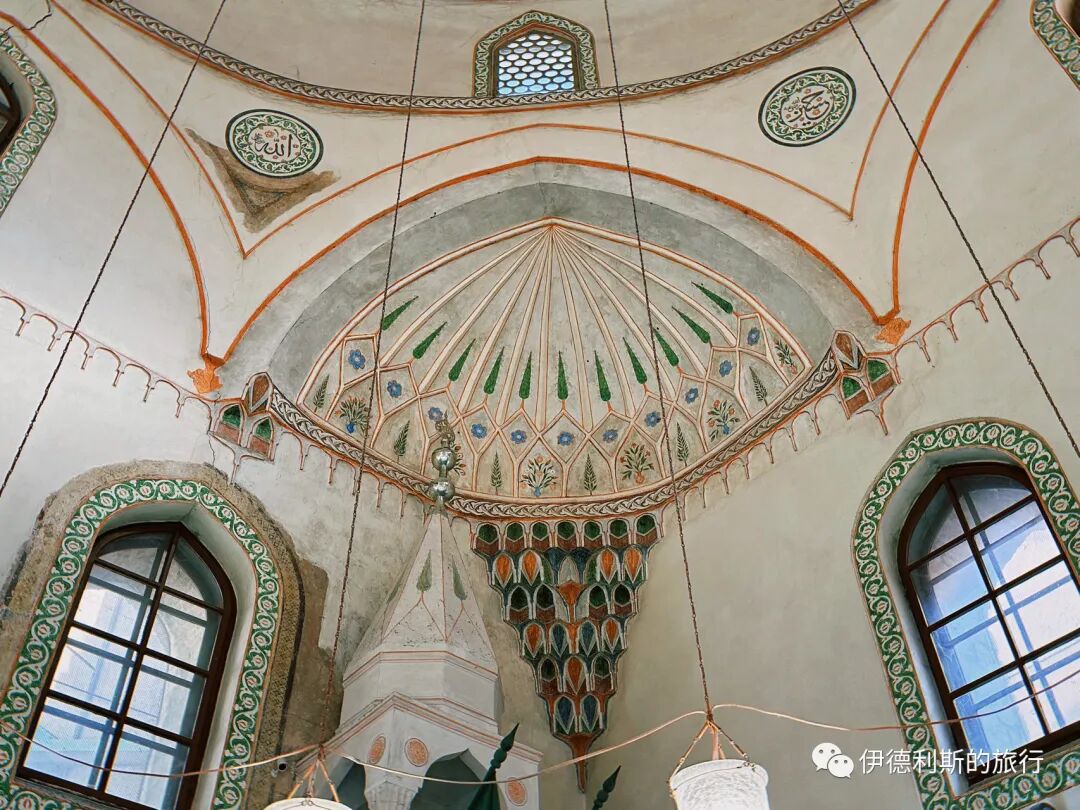
Research on the interior paintings of the mosque in 1964-1965 revealed five layers of paint from different periods. The first layer is the oldest and most valuable, dating back to the original construction in the 16th century. It was found on the dome, pendentives, squinches, and mihrab, and is known as the Rumi decorative style. The second layer features floral decorations in the center of the mihrab and parts of the dome in an 18th-century style, while the third and fourth layers date from the late 19th to the early 20th century.
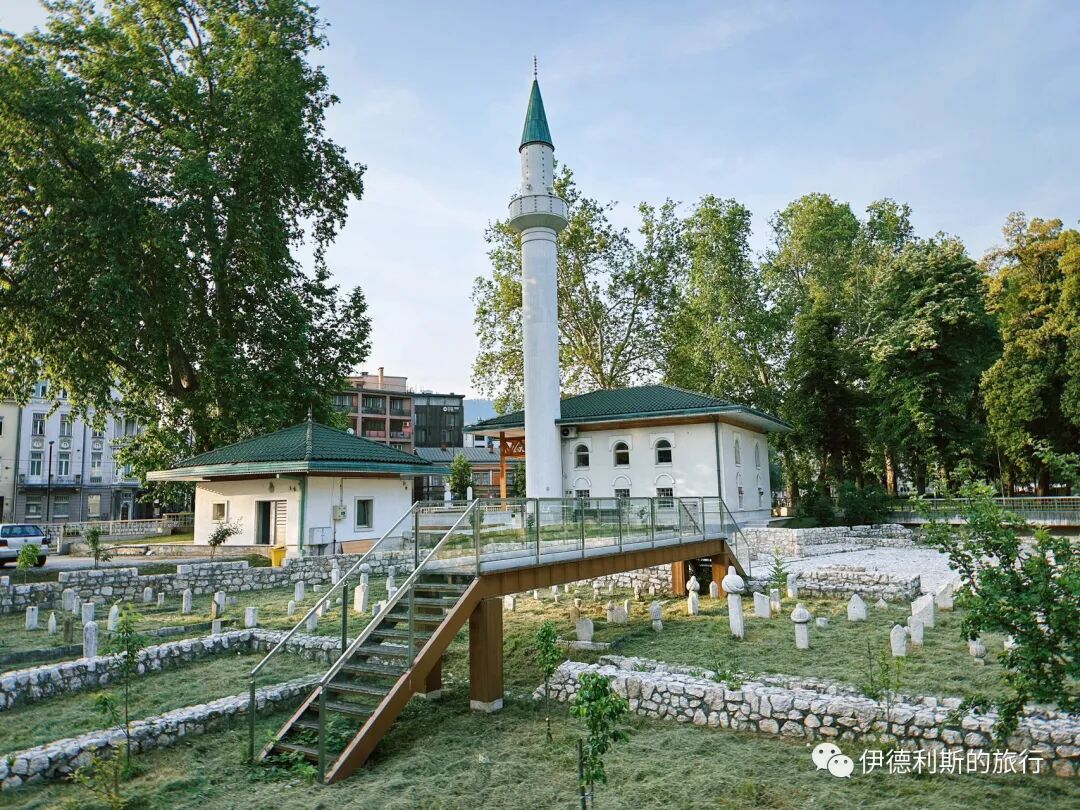
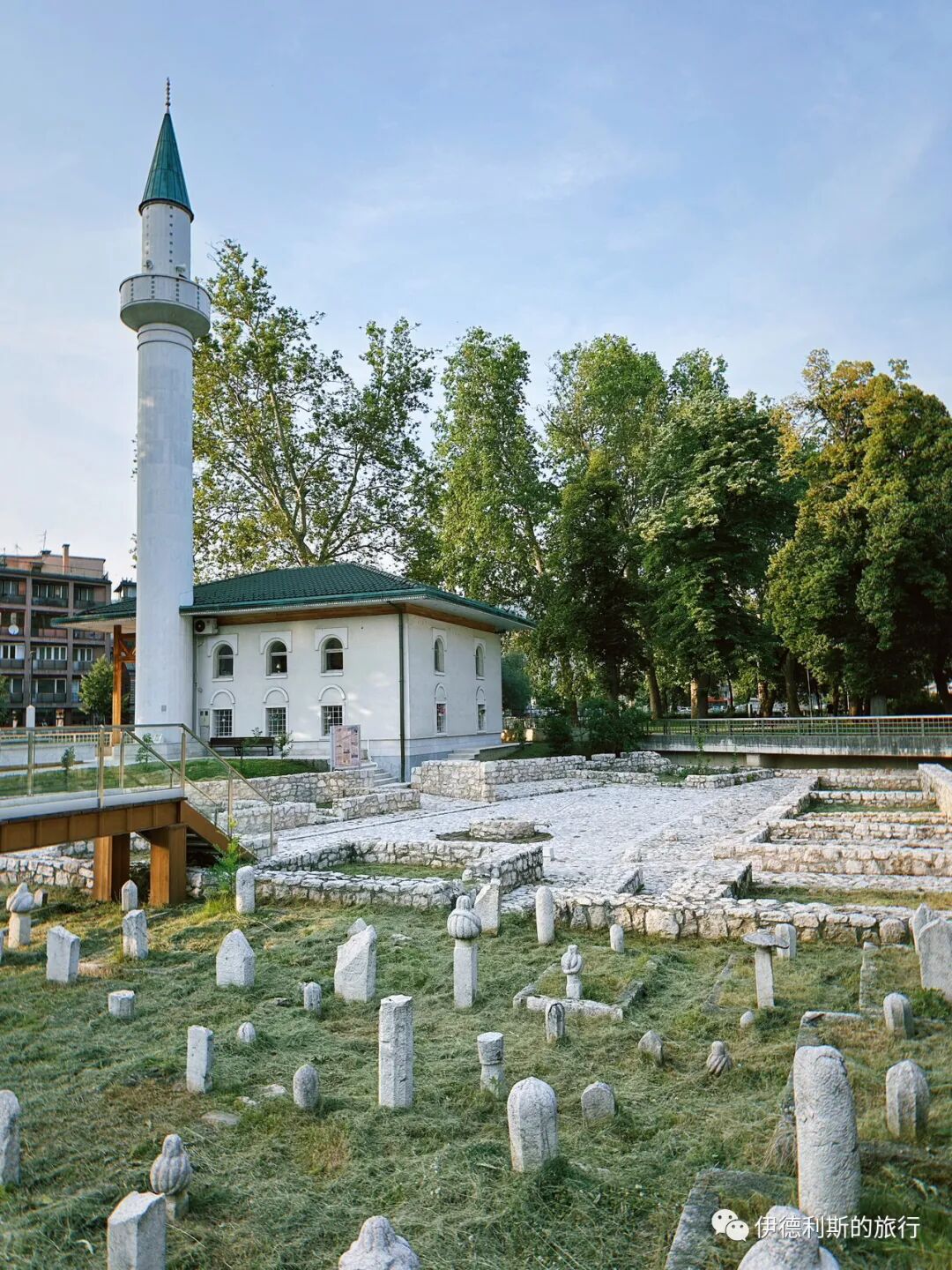
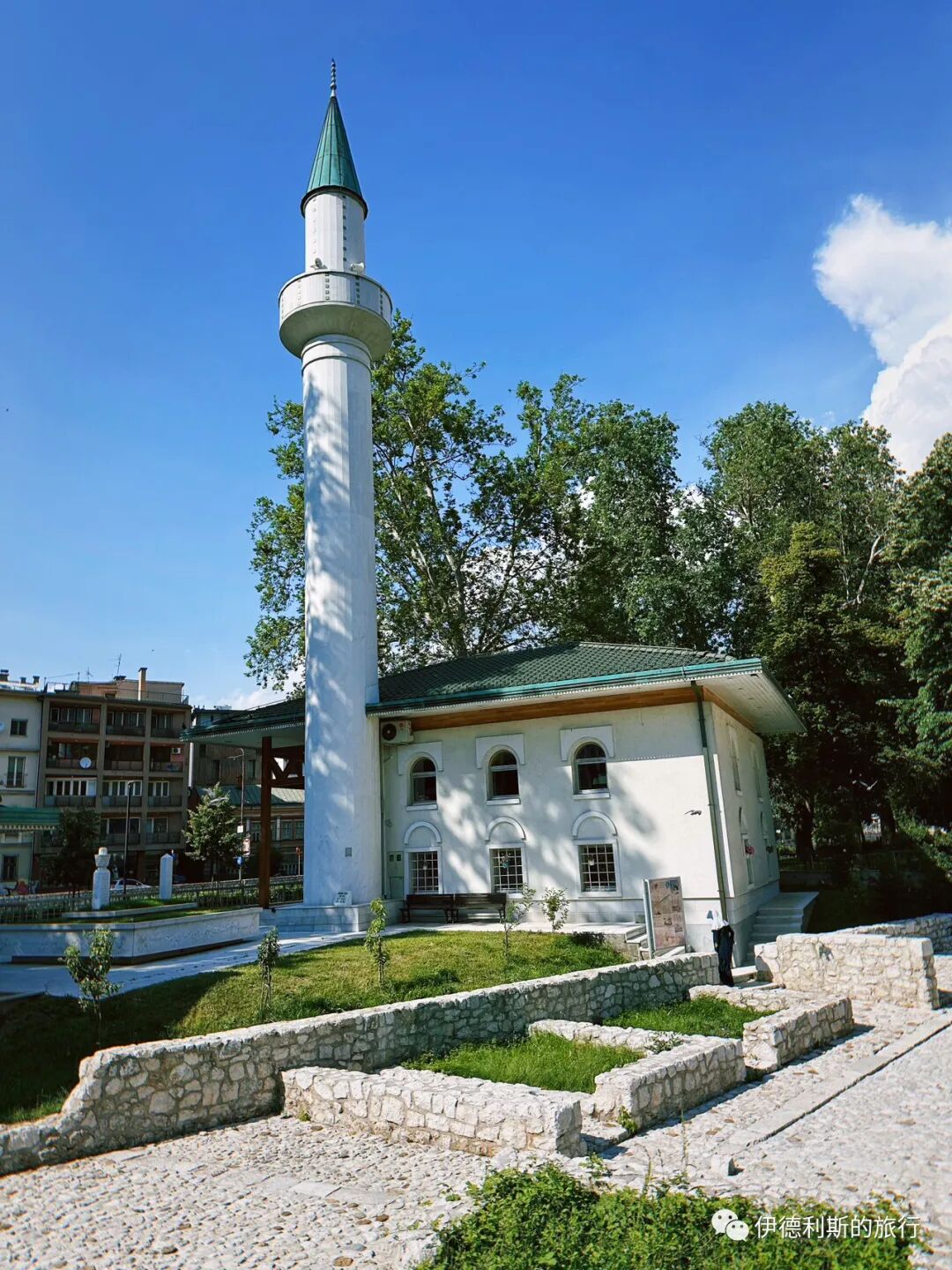
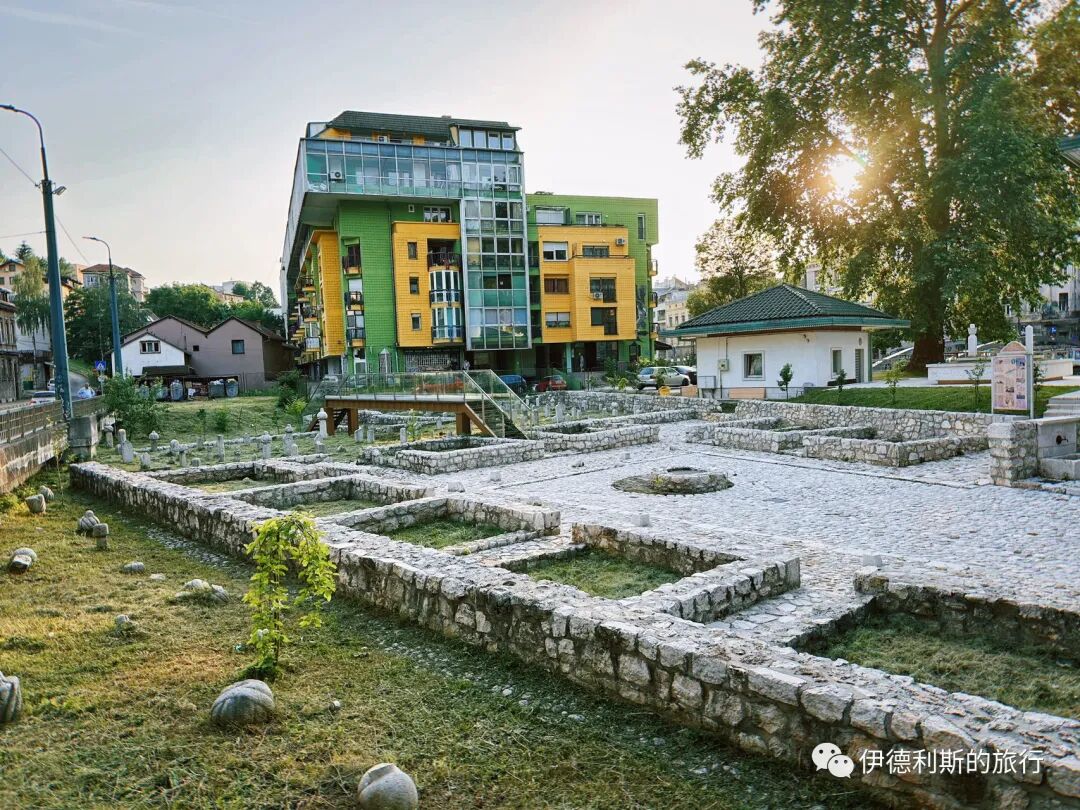
Bakrbaba Mosque archaeological site
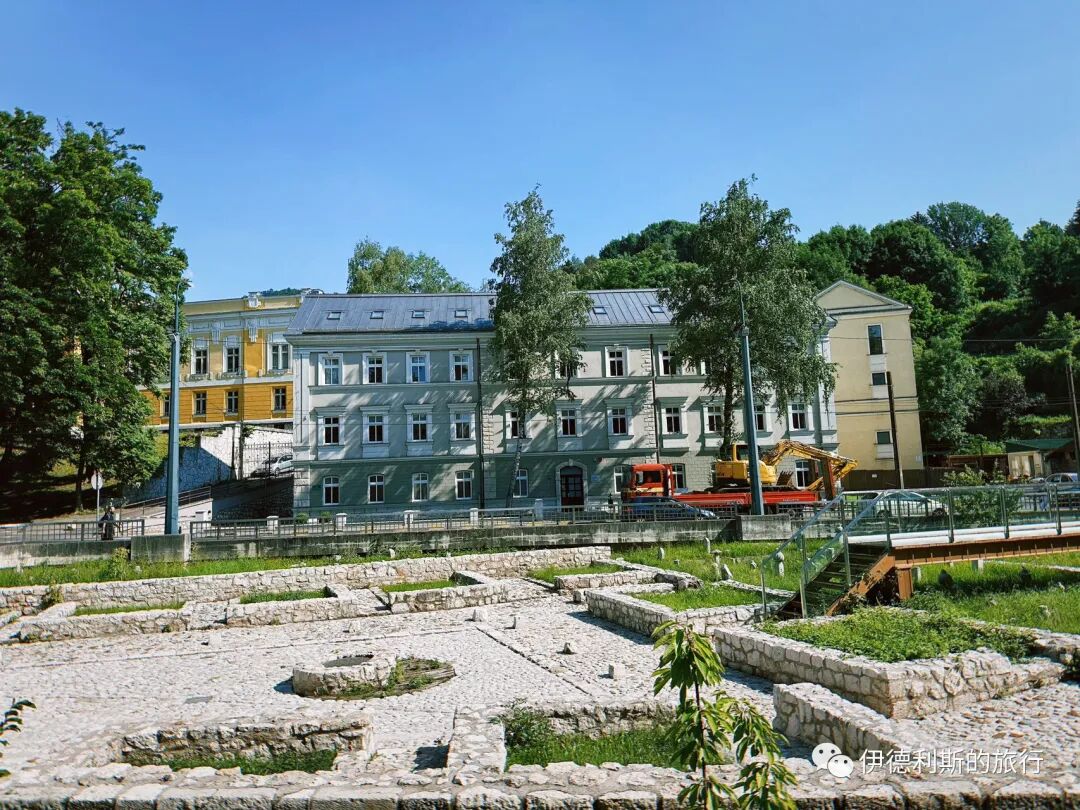
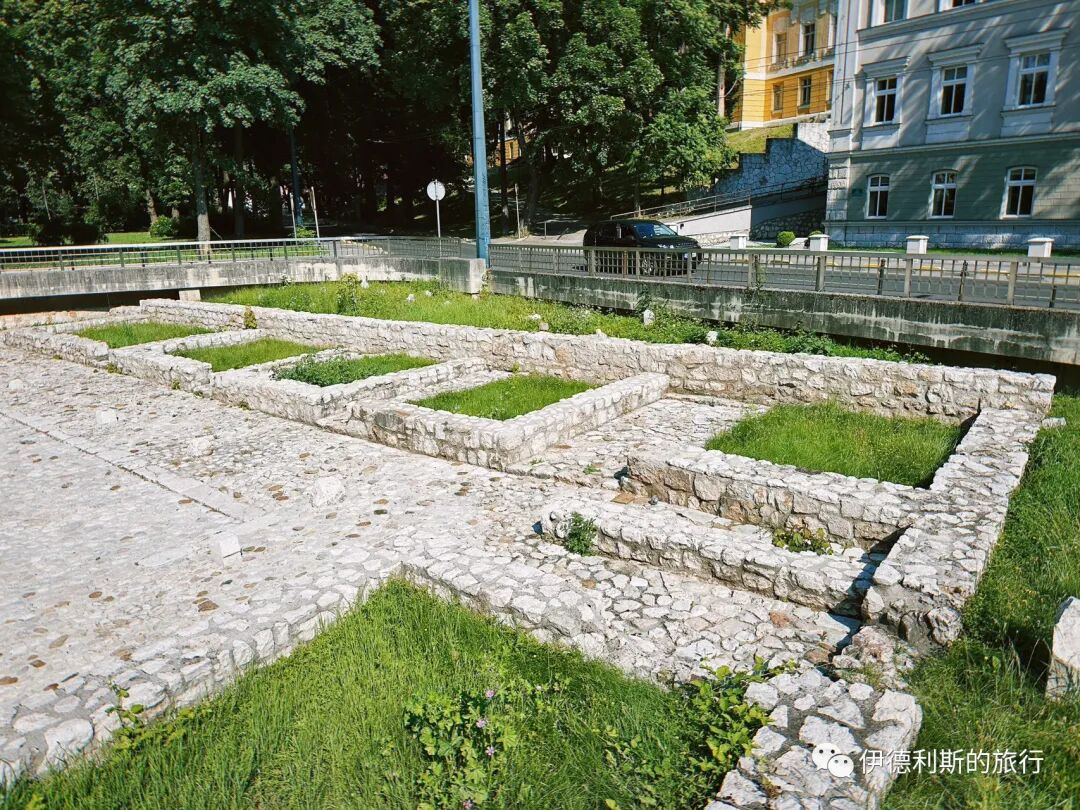
Archaeological site of the Bakrbaba Mosque, including the religious school (mekteb), primary school, and private quarters (harem).
The Bakrbaba Mosque was built in 1544 by the famous Sarajevo merchant Hajji-Alija Bakrbaba and featured a 30-meter-tall minaret at the time. In 1697, the Ottoman Empire was defeated by the Holy League of Europe, and Sarajevo was looted and burned. The Bakrbaba Mosque was destroyed in the fire but was rebuilt in the early 18th century.
A primary school and private quarters were originally built on the west side of the mosque. In 1741/2, Hajji Ismail Misrija added a religious school and a cemetery on the east side of the courtyard. Shortly after, Abdulah Efendi Kantamirija built a library across the street, making this an important educational and cultural center in Sarajevo.
After the Austro-Hungarian Empire took control of Sarajevo in 1878, the mosque was first turned into a military warehouse and was finally demolished in 1895. The primary school next to the mosque was also destroyed in 1895, the library was destroyed in 1897, and the religious school remained until the beginning of World War II.
Since 2000, at the request of Islamic scholar Hajji Hafez Halid Efendi Hadžimulić, Sarajevo began archaeological research on the Bakrbaba Mosque complex. In 2009, the reconstruction of the Bakrbaba Mosque was funded by Husein Durman, a businessman from Bursa, Turkey, and it officially opened in 2011.
Brusa Bezistan covered market.
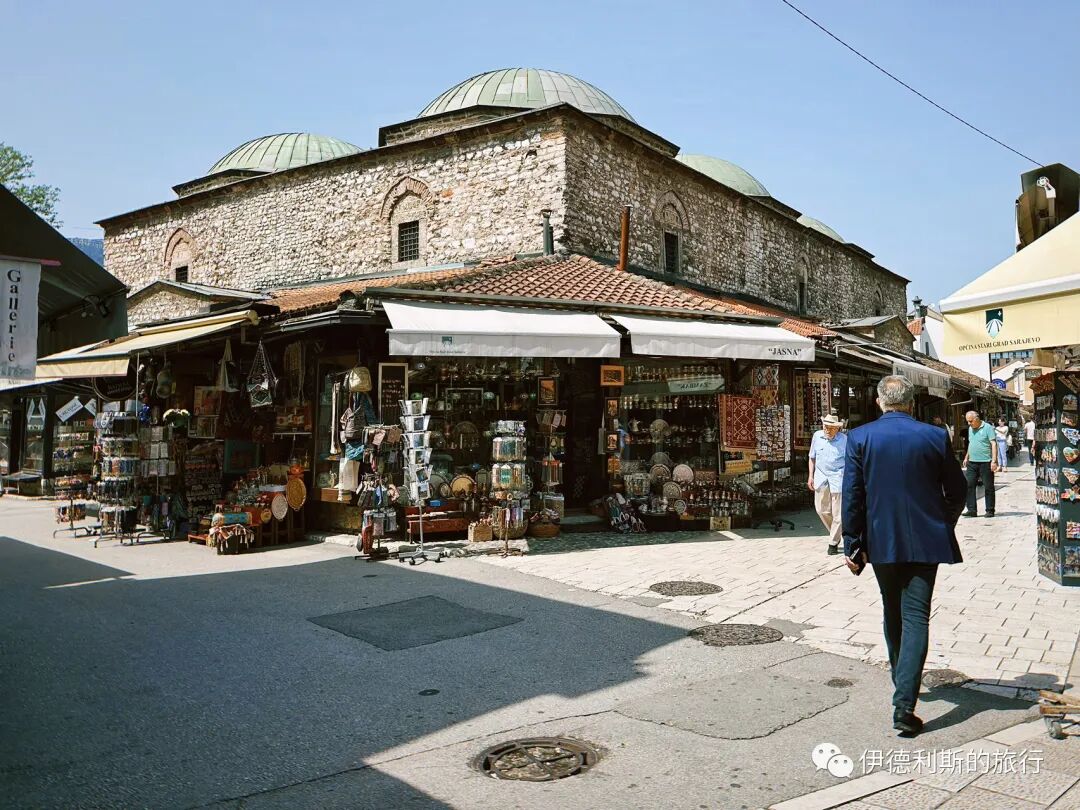
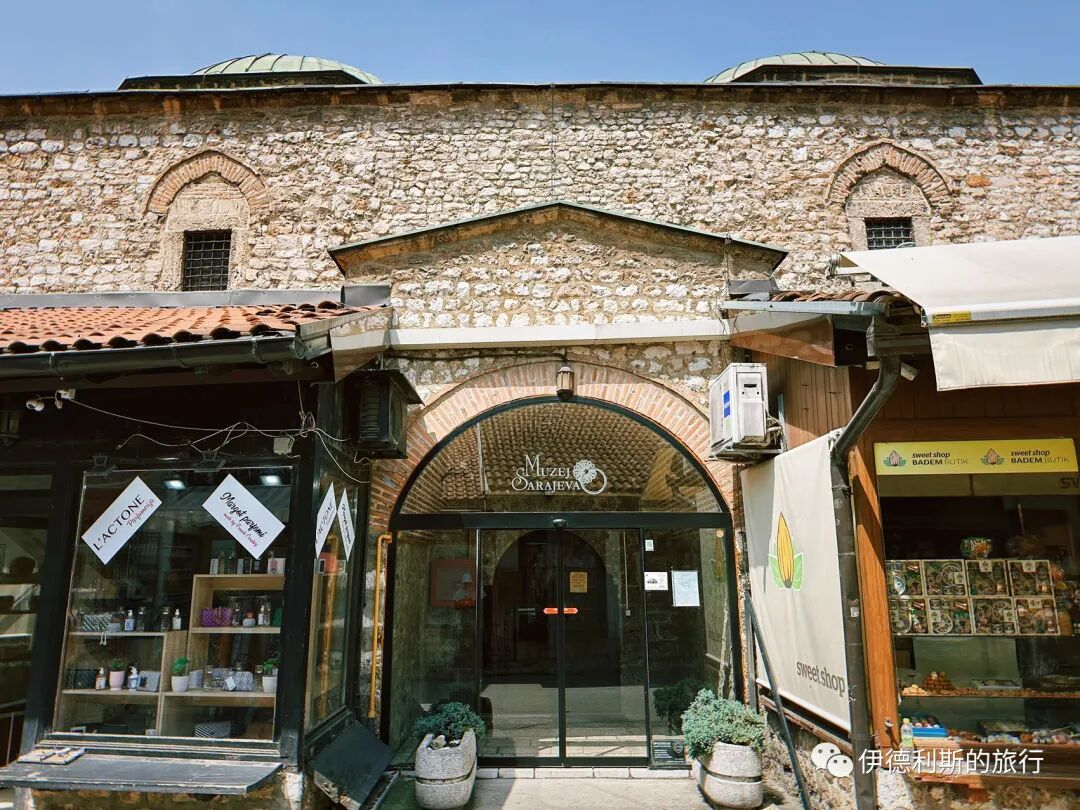
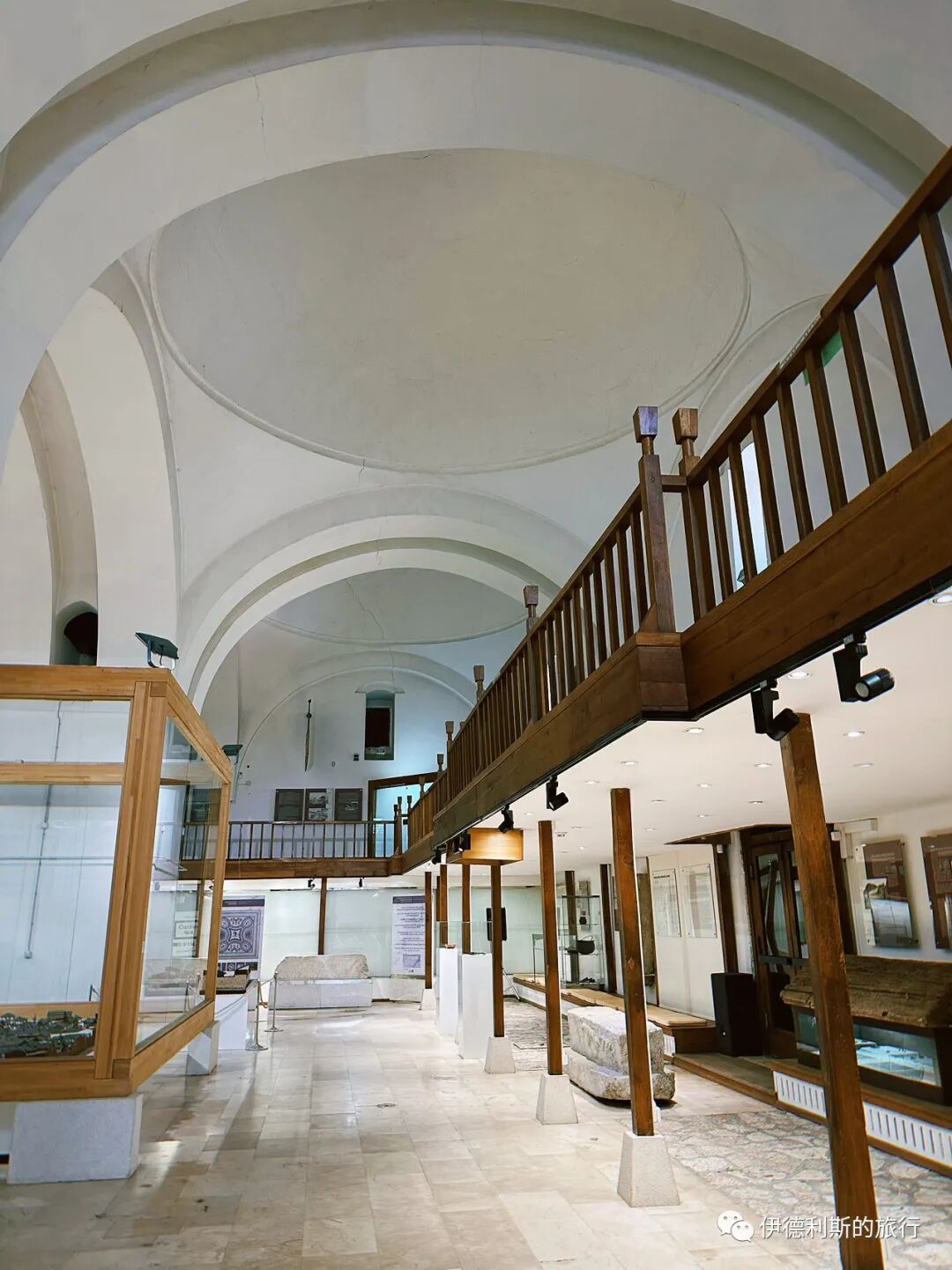
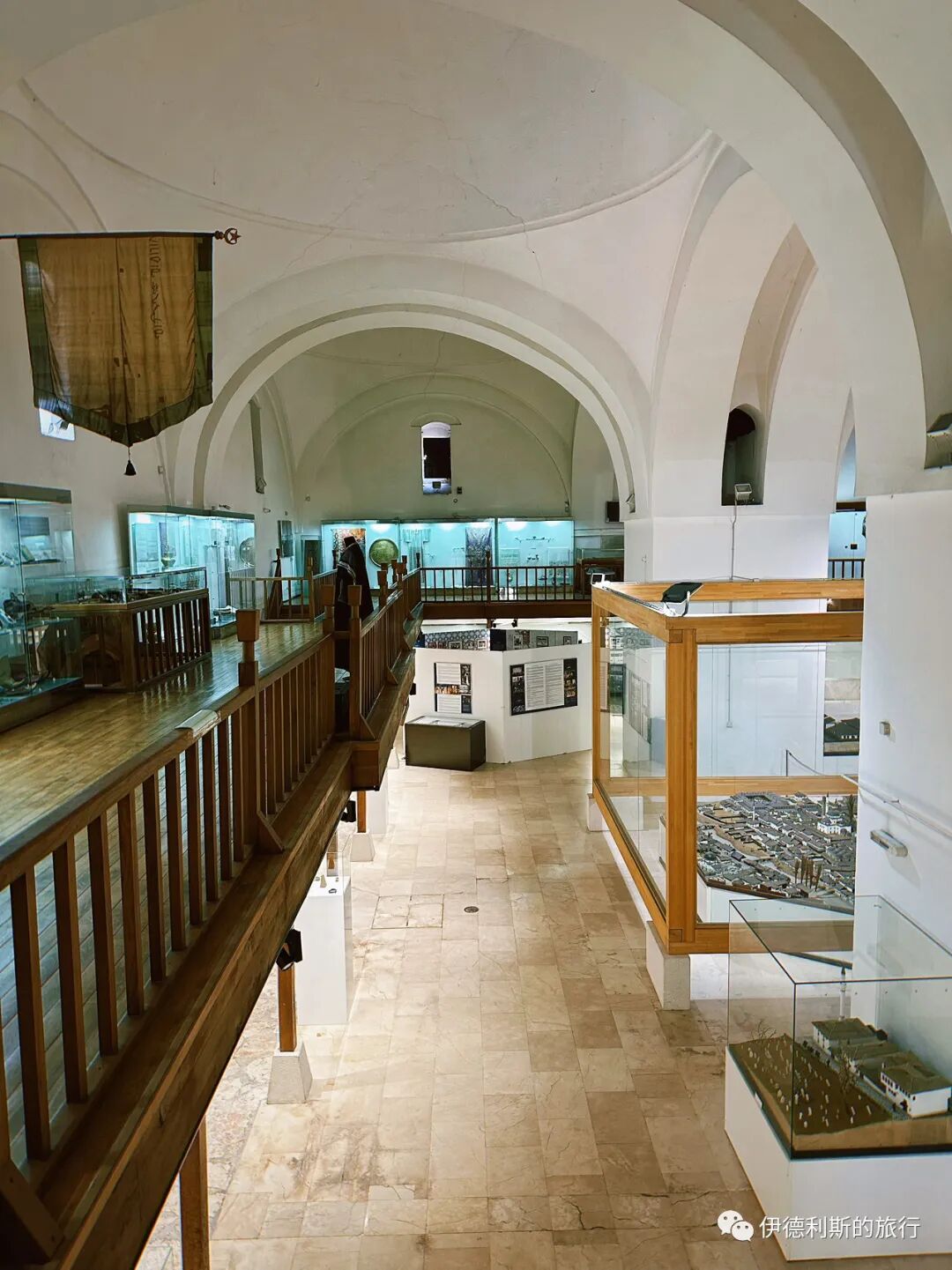
The Brusa Bezistan covered market is located in the Grand Bazaar of Sarajevo's Old Town. It was ordered to be built in 1551 by Grand Vizier Rüstem Pasha during the reign of Suleiman the Magnificent of the Ottoman Empire and was named after Bursa, the old capital of the Ottoman Empire. This market has six domes. It originally sold silk, household goods, and small furniture. Today, it is the Sarajevo Museum, which displays precious artifacts from the Ottoman period.
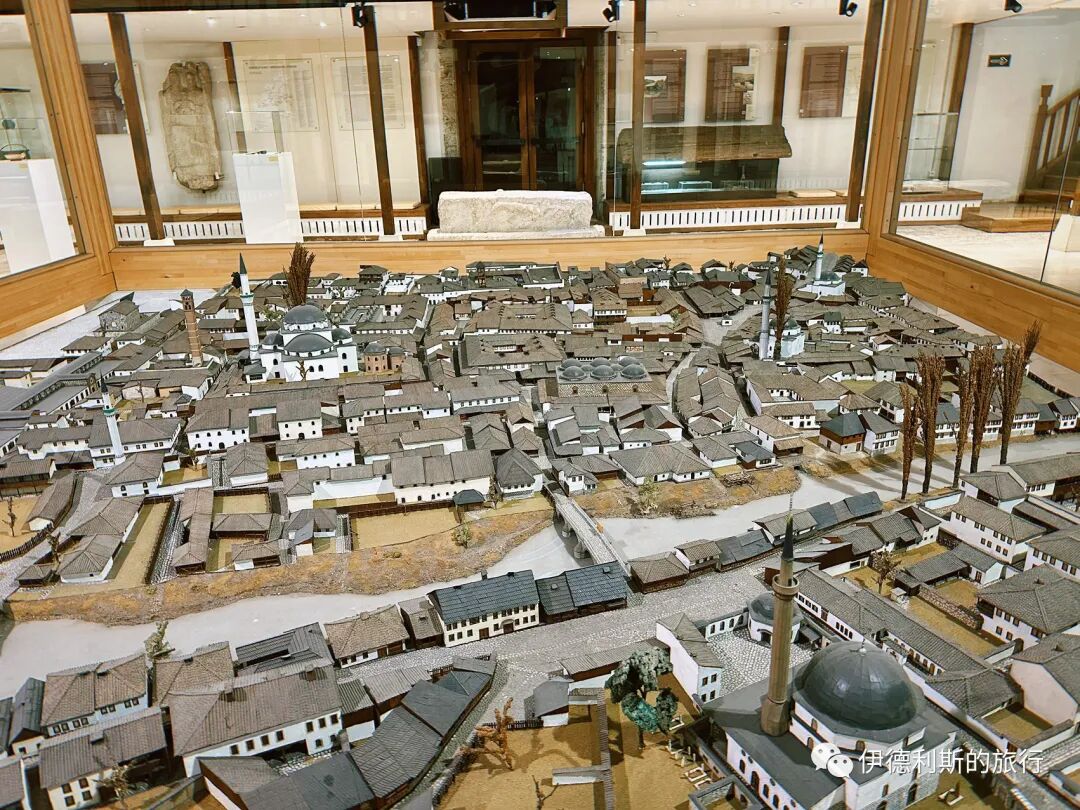
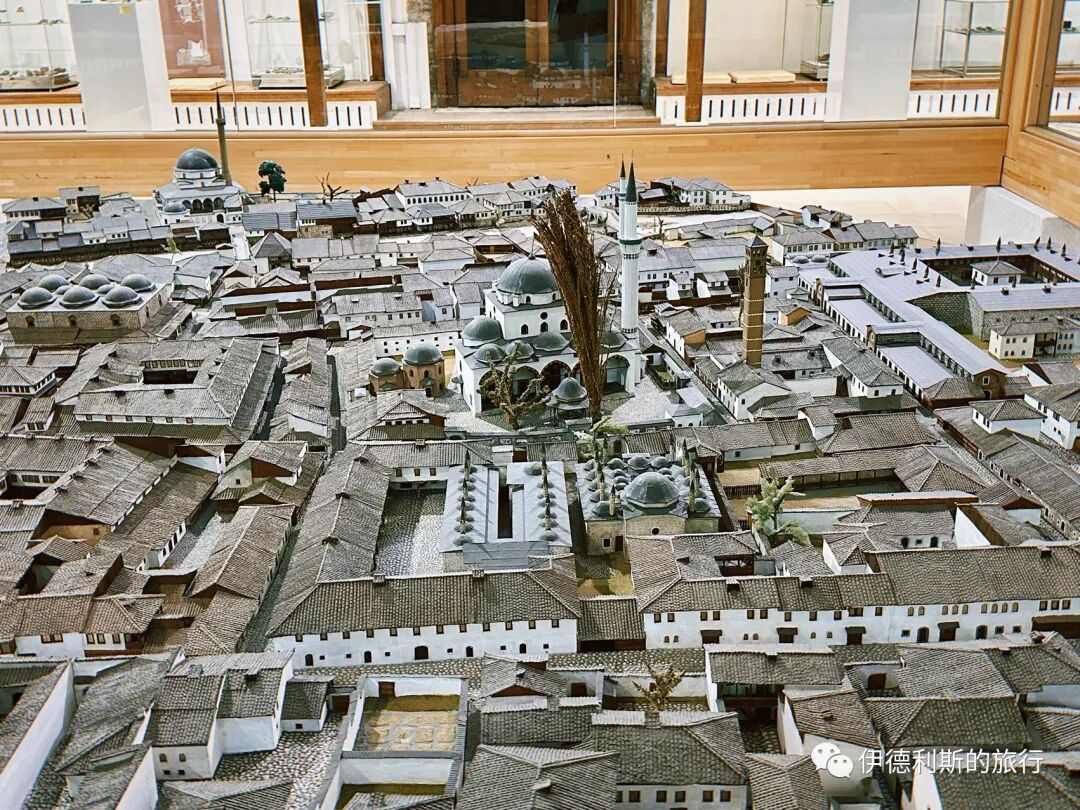
The most eye-catching item in the museum is a large sand table that meticulously restores the appearance of Sarajevo's Old Town during the Ottoman period. You can see an Ottoman architectural complex consisting of mosques, clock towers, religious schools, dervish lodges (tekke), caravanserais, markets, tombs, and fountains.
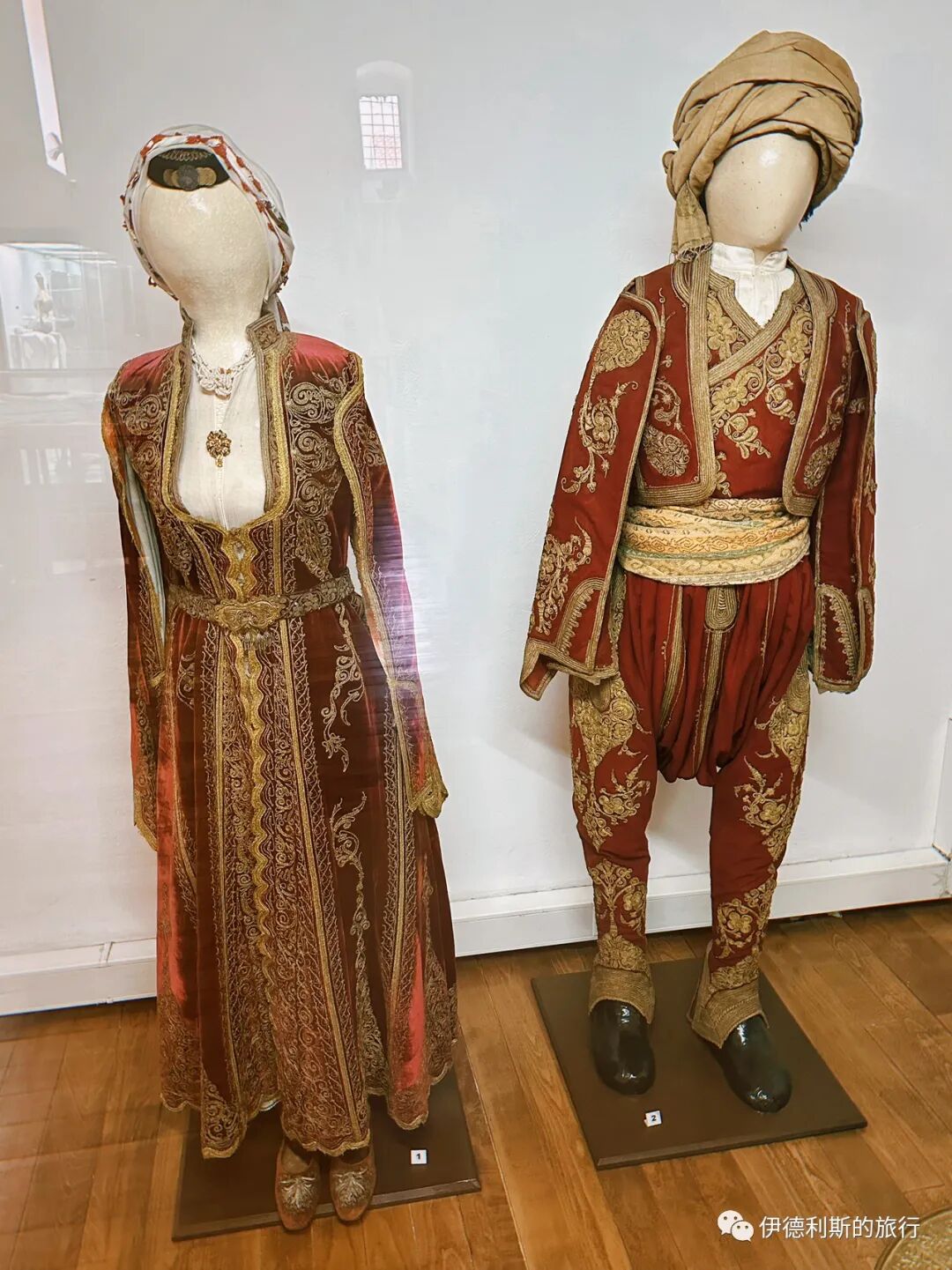
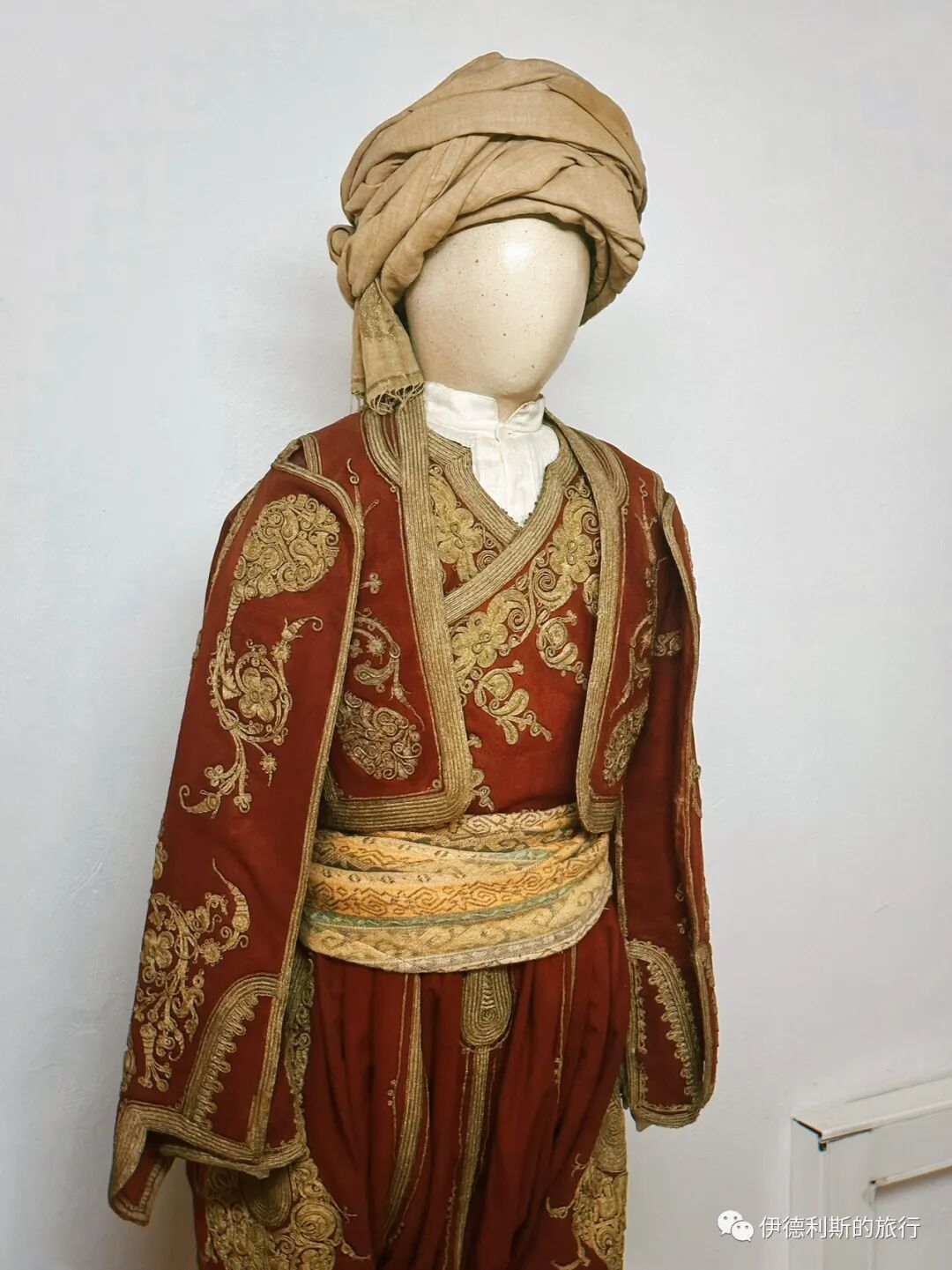
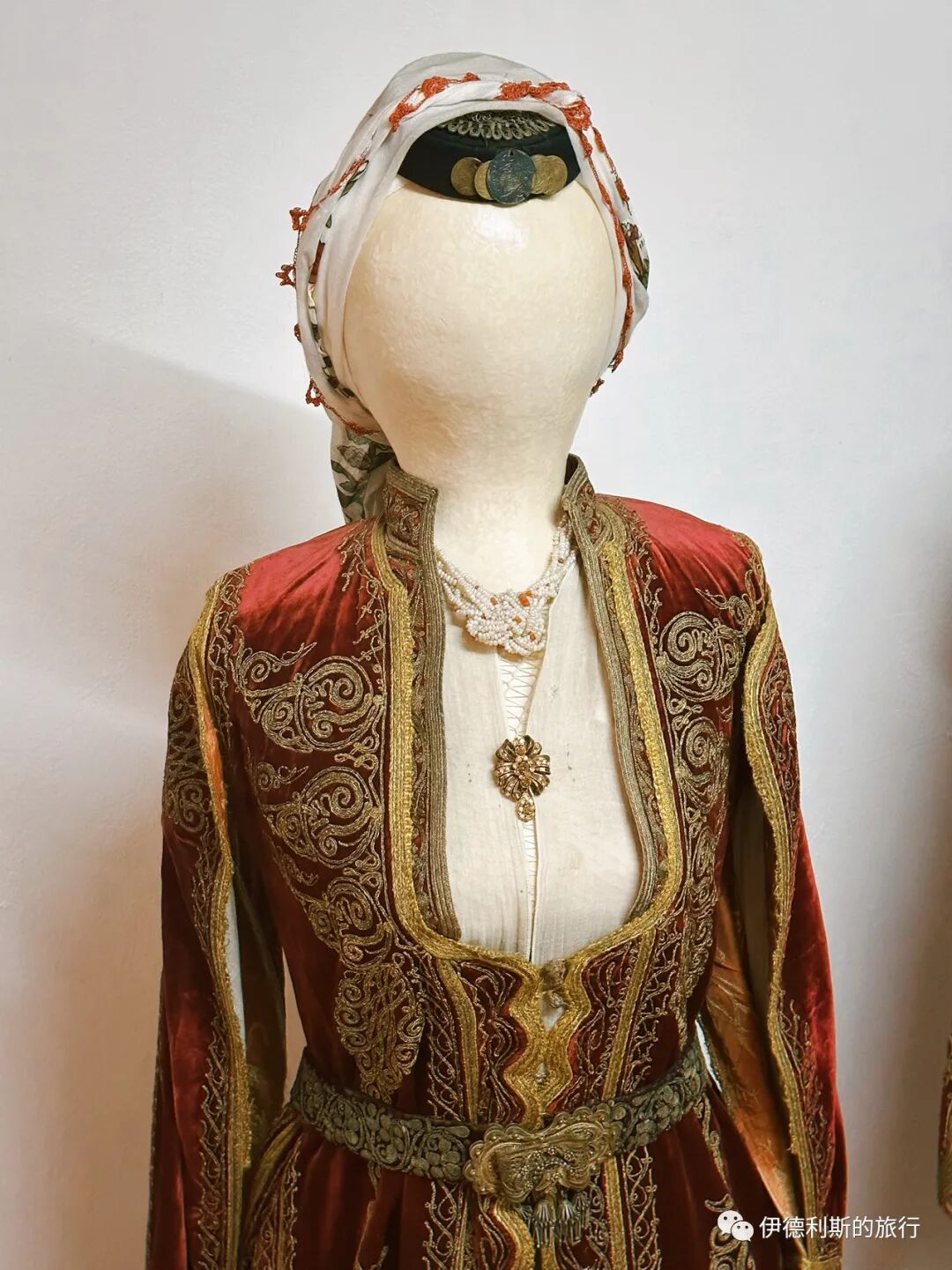
The 19th-century noble clothing of Sarajevo Muslims collected in the museum is also very exquisite.
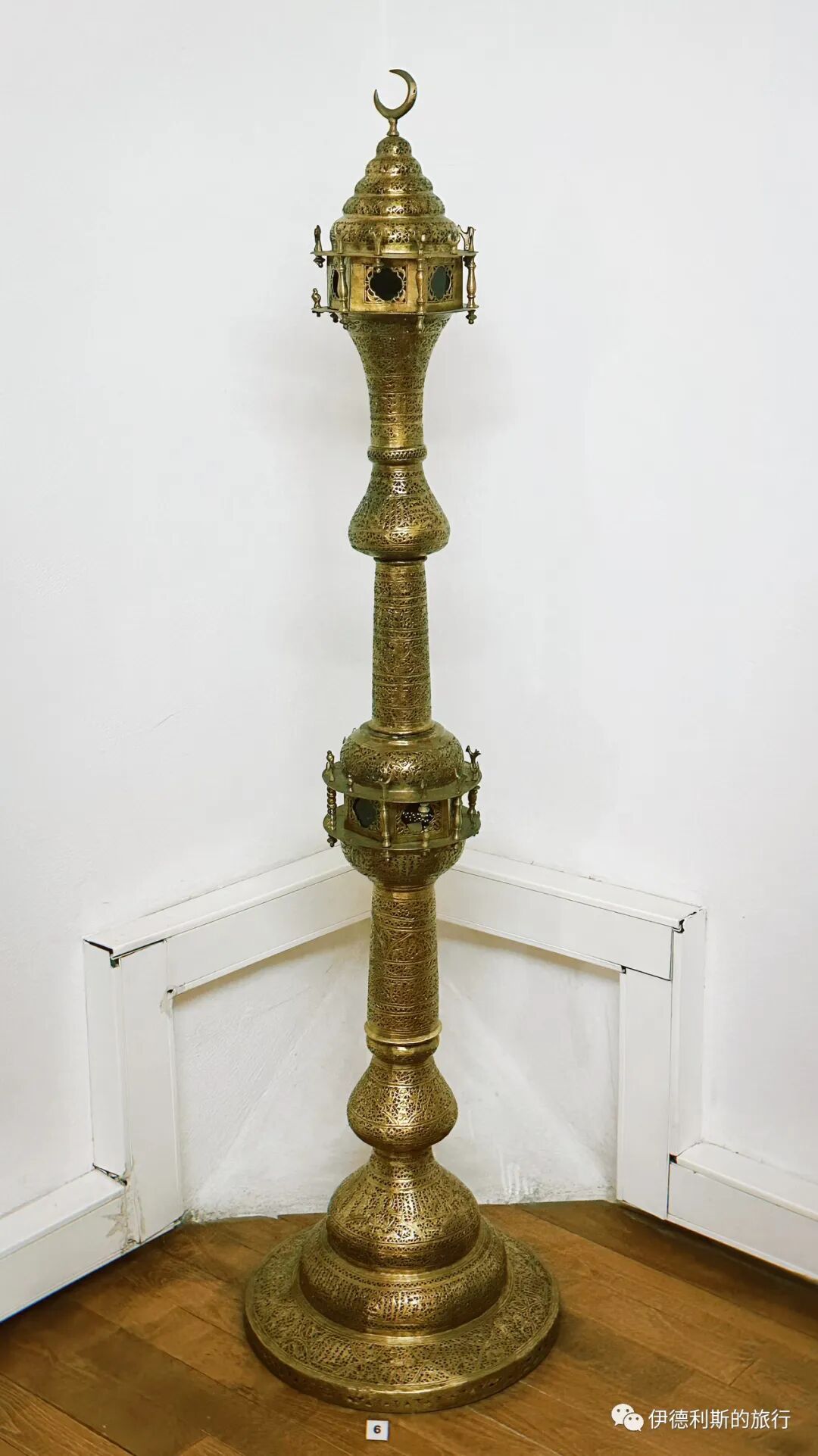
Lamp posts used in Sarajevo mosques during the 19th century.
Copper pots used by vendors selling boza (a fermented grain drink) or lemonade in the bazaar.
Food containers used in the past to bring lunch to shops.
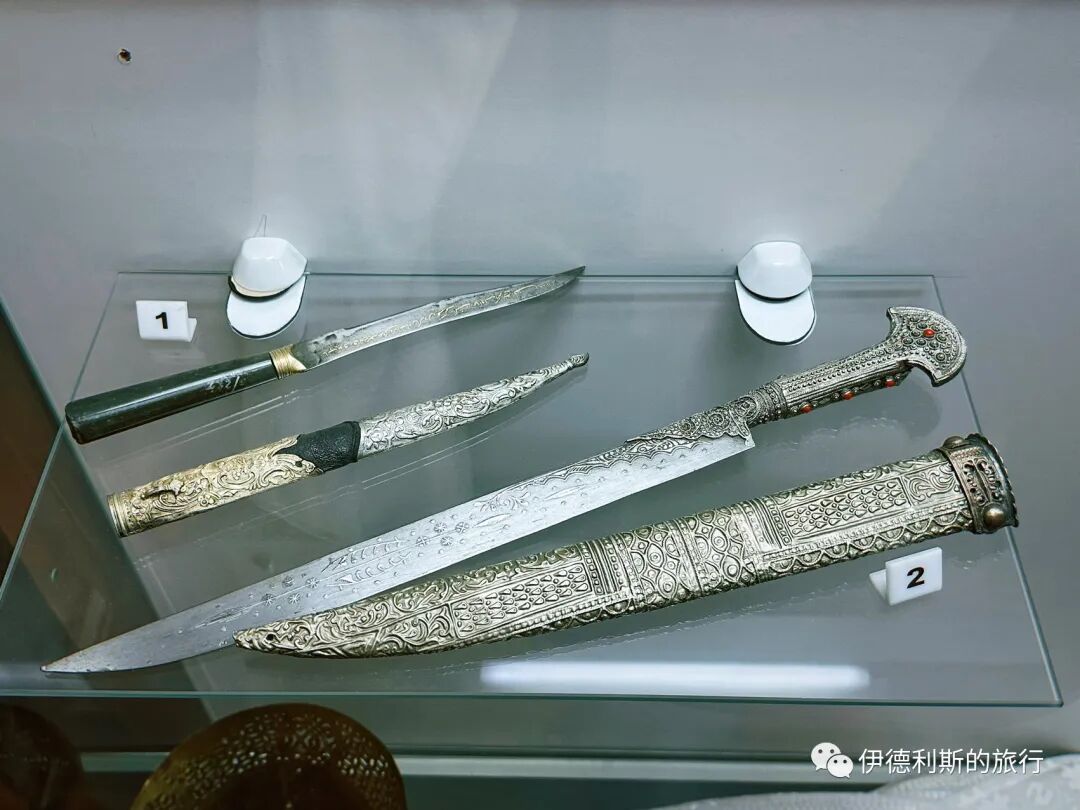
On the left is a short knife engraved with the year 1872, and on the right is a long knife inlaid with gemstones. This type of knife requires the cooperation of a goldsmith (kujundzija) and a bladesmith (bicakcija) to complete.
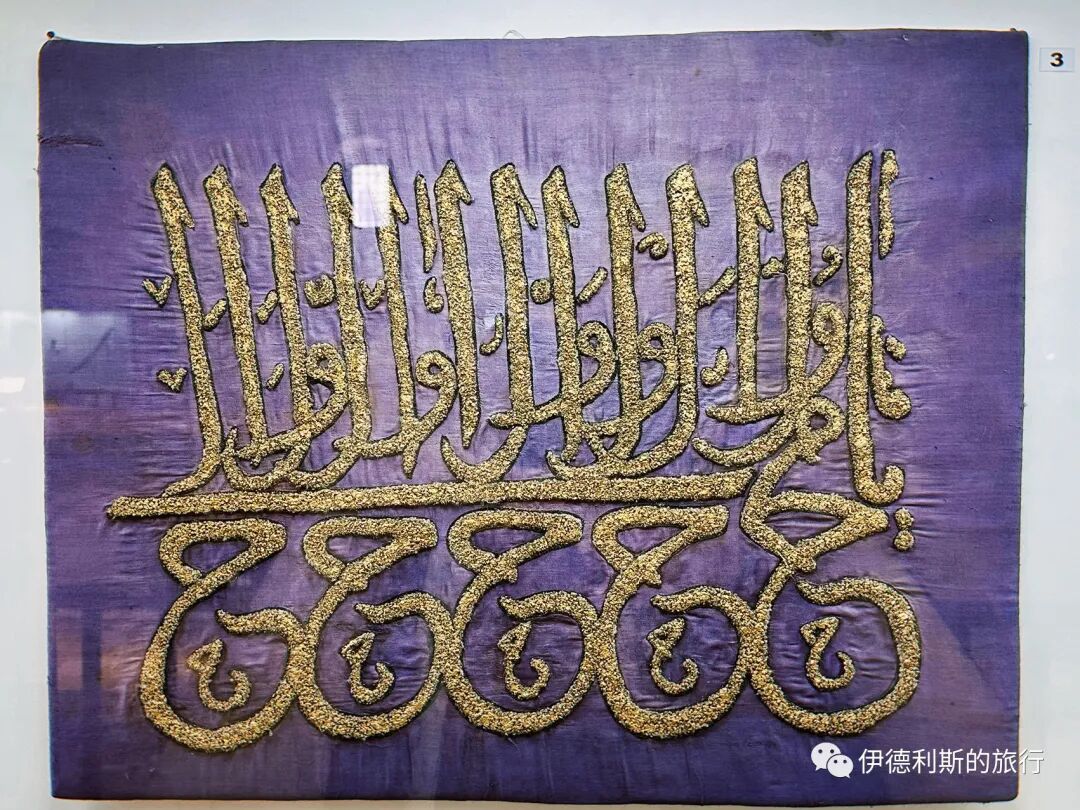
Silk embroidery calligraphy from the 19th century.
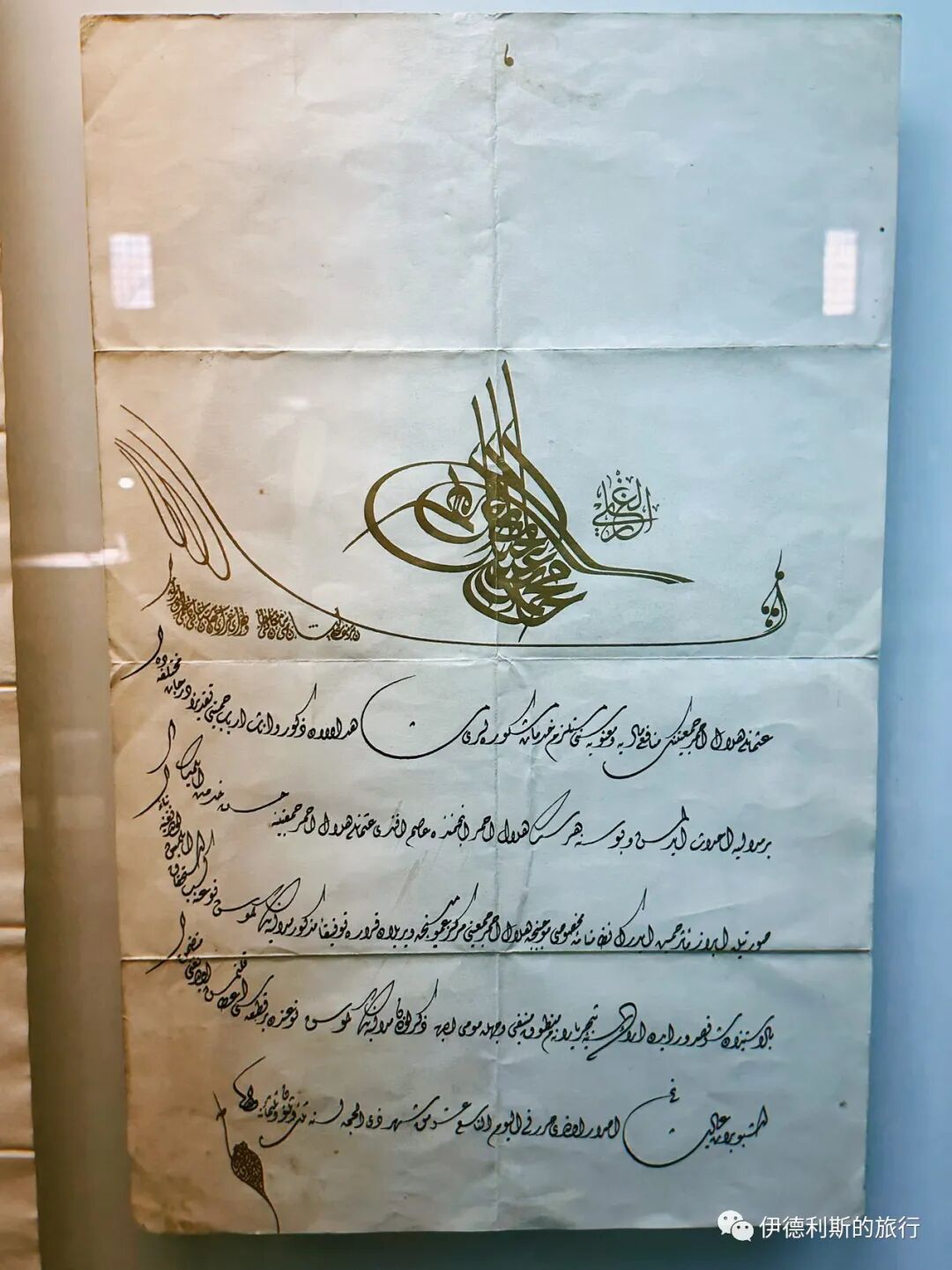
A court verdict issued in 1869.
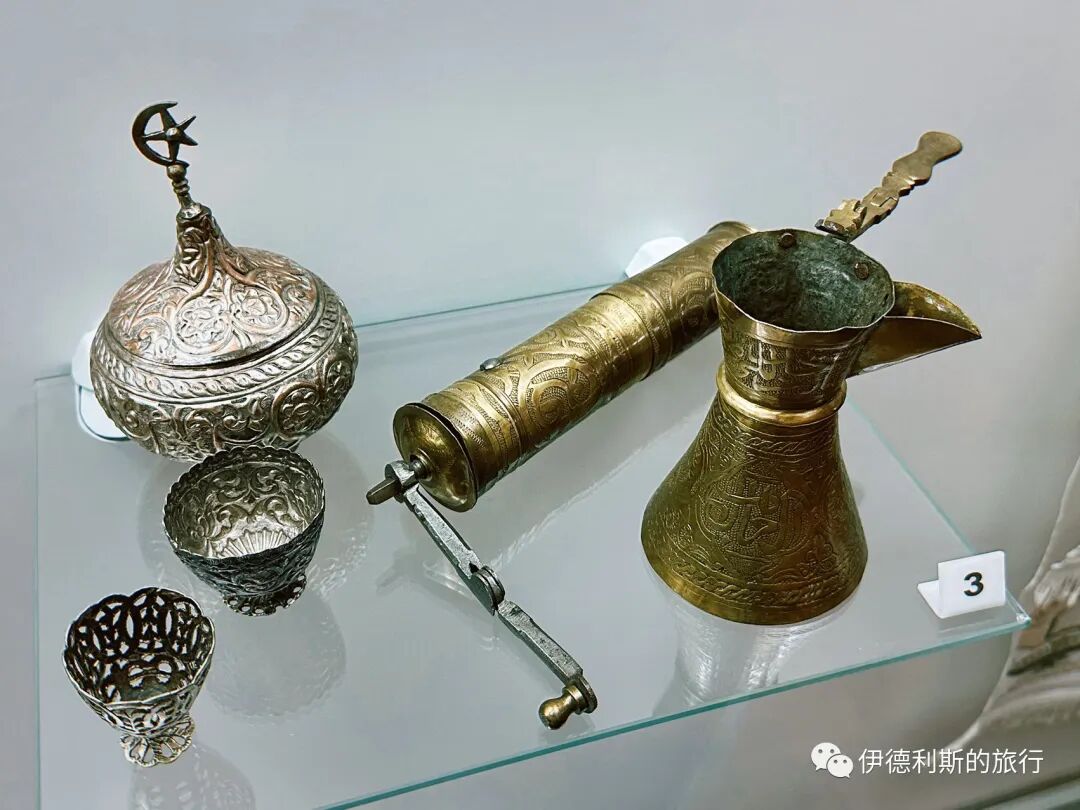
Old coffee pots and coffee cups.
Yellow Fortress (Žuta Tabija)
Climb up to the Yellow Fortress (Žuta Tabija) on the eastern outskirts of Sarajevo in the evening to get a panoramic view of the old town. Built between 1727 and 1739, the Yellow Fortress was a battery in the Sarajevo city walls and served as a key stronghold for the Ottoman Empire to defend Sarajevo against the Austro-Hungarian invasion in 1878.
Sarajevo did not have city walls for most of its history until Prince Eugene of the Habsburg Empire launched a devastating attack on the city in 1697, looting it and burning many buildings. The Ottoman Empire officially began building the city walls in 1727. Today, the Sarajevo city walls are located on the east side of the old town, with many gates and fortresses still preserved, the most famous of which are the Yellow Fortress and the White Fortress.
Mevlevi Sufi Lodge (tekke)
Below the Yellow Fortress sits a Mevlevi Sufi lodge (tekke), which was the first Sufi lodge in Sarajevo. The lodge was first built in 1462, destroyed during Prince Eugene's invasion of Sarajevo in 1697, and rebuilt in 1781. After the Austro-Hungarian Empire occupied Bosnia and Herzegovina in 1878, they strictly prohibited the maintenance of the lodge. It was eventually demolished in 1957 during the Tito era of Yugoslavia, and the building we see today was rebuilt in 2013 with donations from Turkey.
Where East meets West
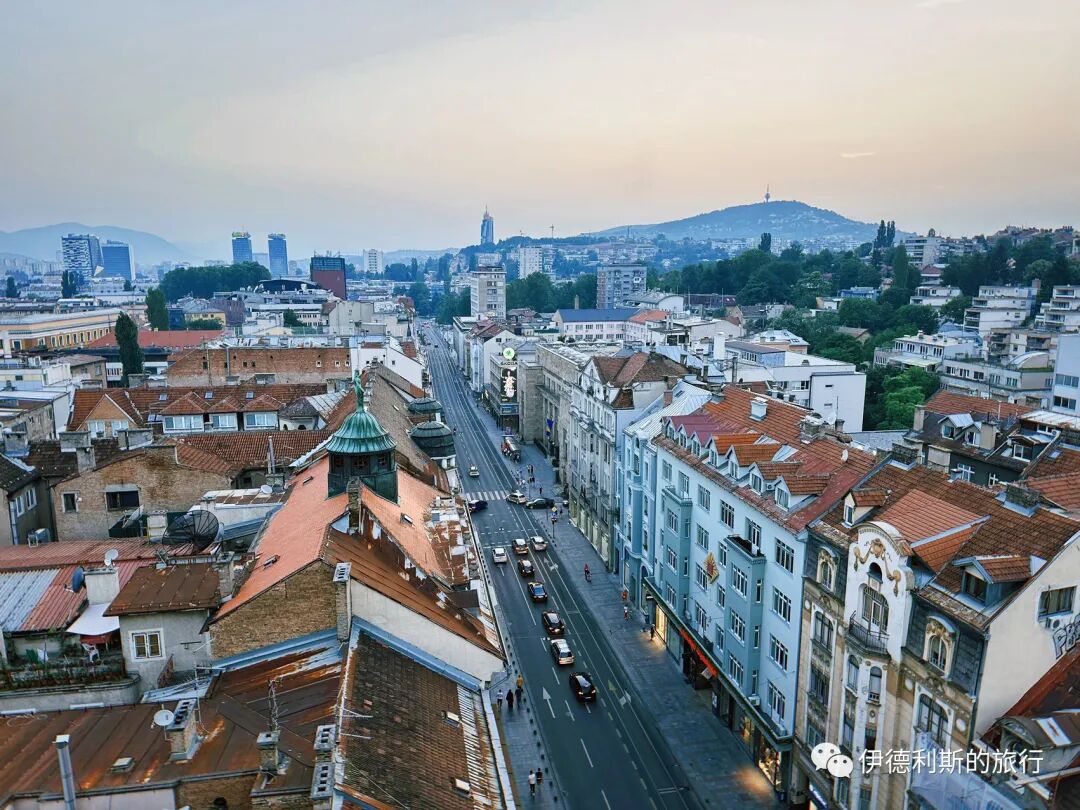
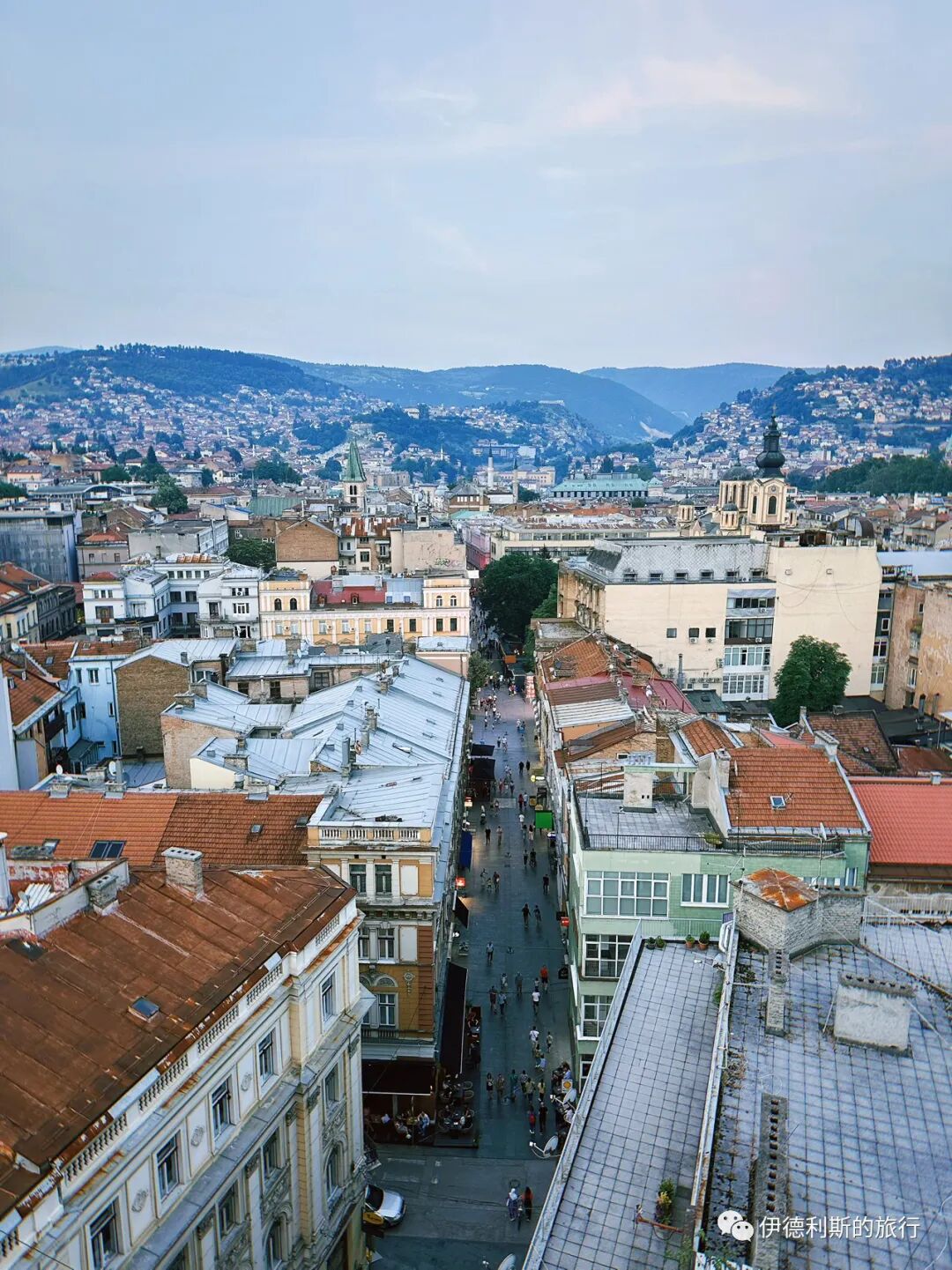
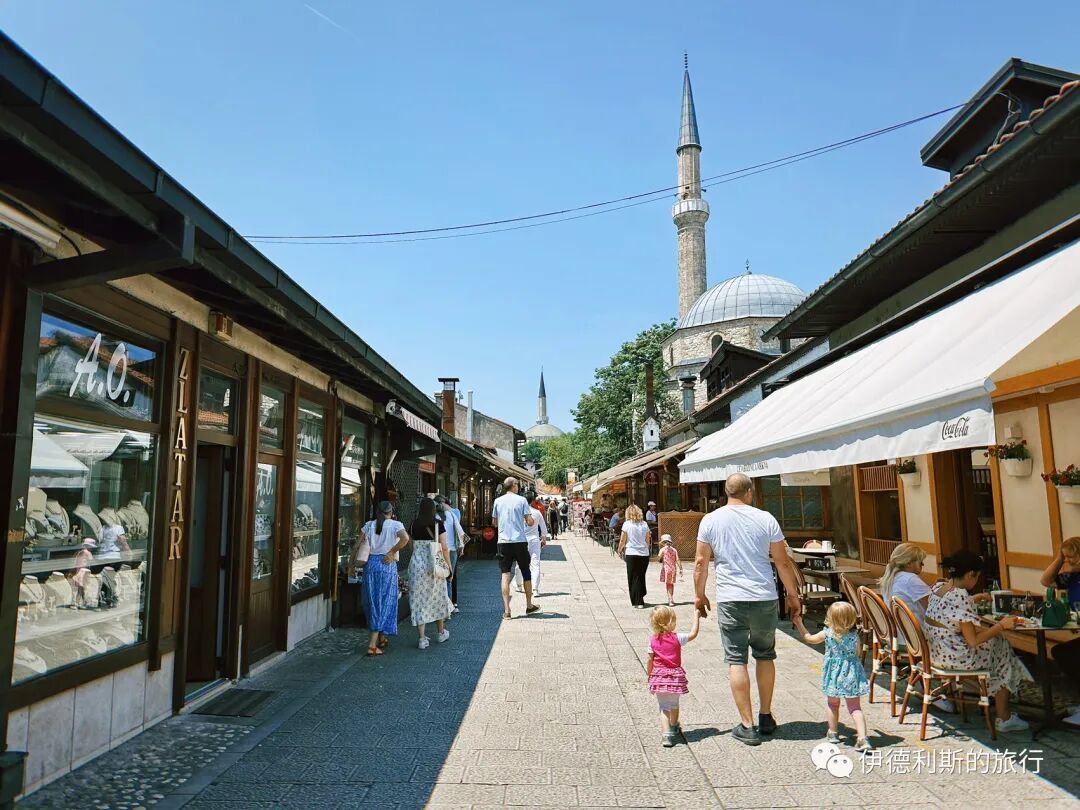
An interesting spot in Sarajevo's old town features a dividing line that separates two historic districts. To the east is the bazaar area built during the Ottoman period, and to the west is Ferhadija Street built during the Austro-Hungarian period. The city's appearance changes completely just by crossing the street. The bazaar area feels like Istanbul, and Ferhadija Street feels like Vienna. Standing on this line, you feel like you are at the crossroads of Eastern and Western cultures, and Islamic and Christian traditions. This is the unique charm of Sarajevo. view all
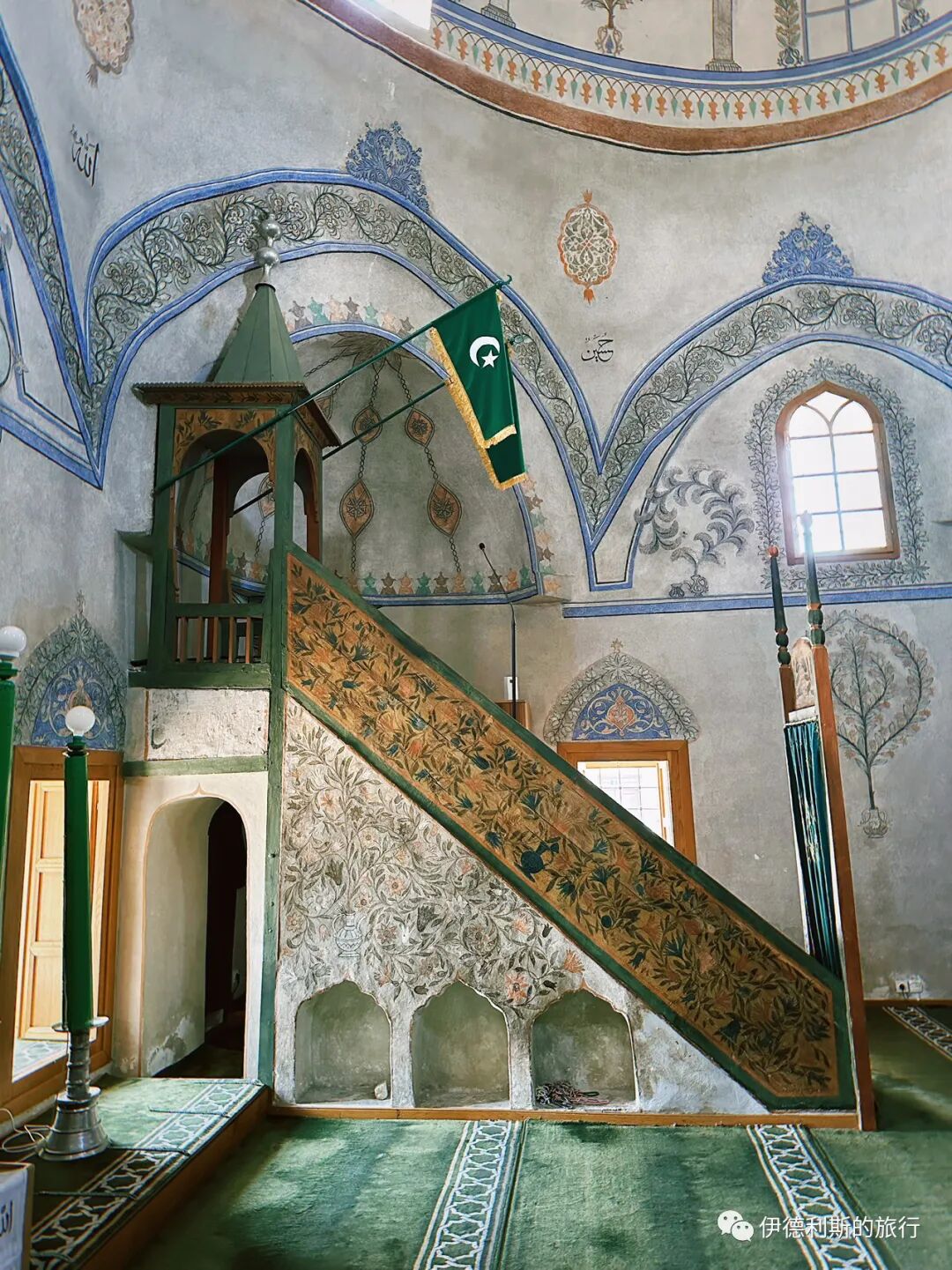
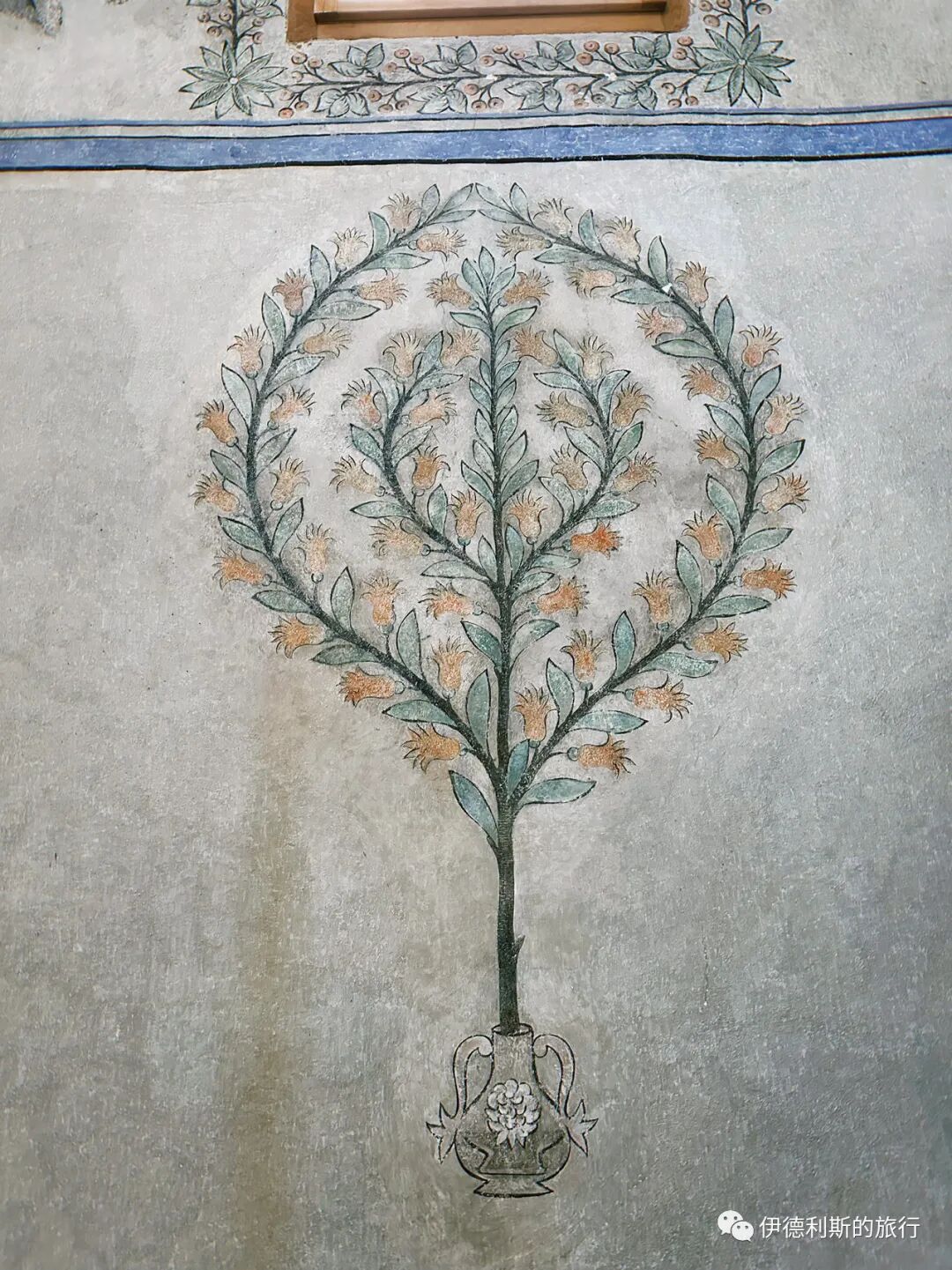
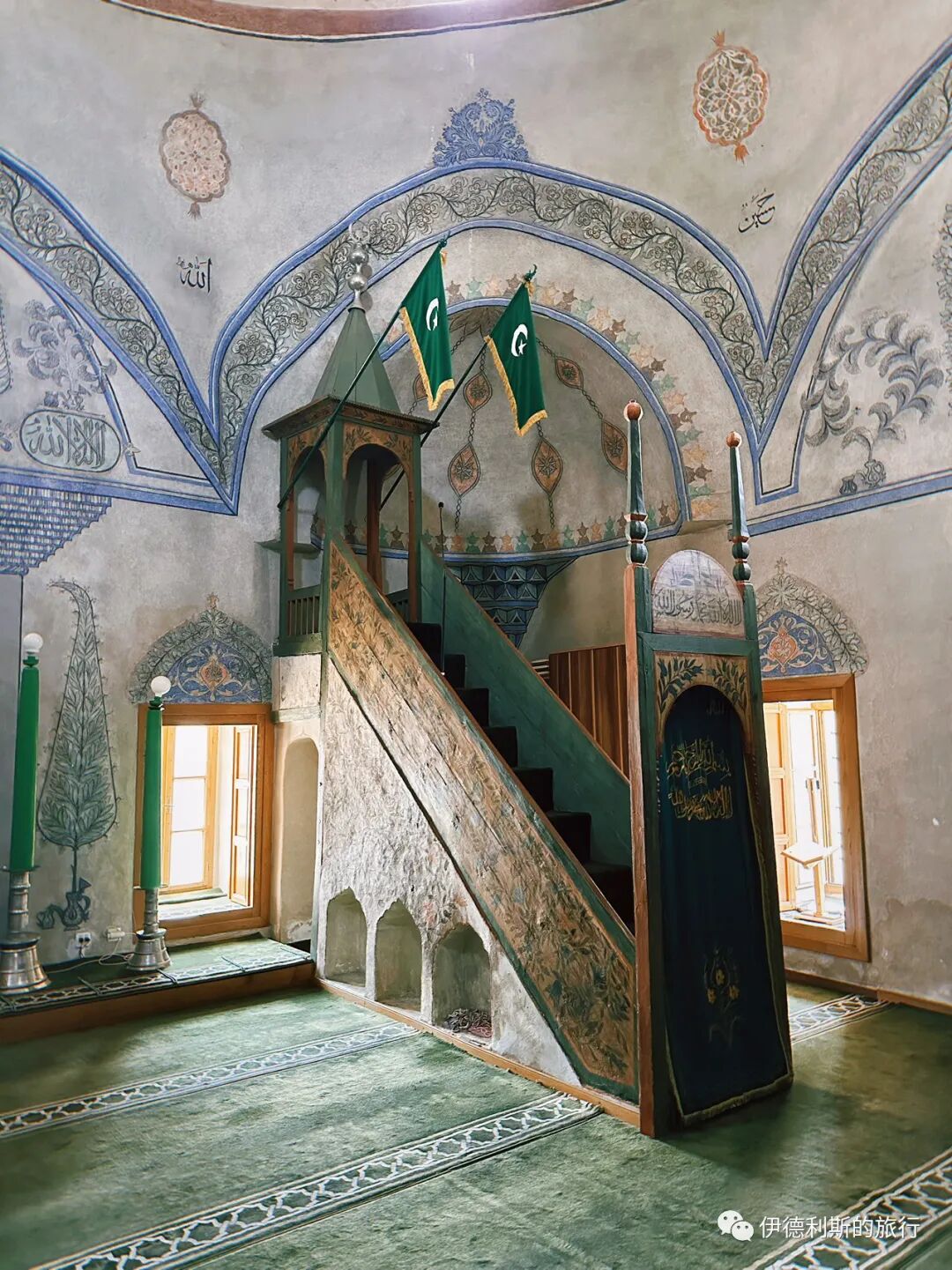
Bascarsija Mosque
In the evening, I performed namaz at the Bascarsija Mosque (Baščaršijska džamija). The Bascarsija Mosque sits in the heart of the old bazaar in Sarajevo. Havadža Durak built it in the early 16th century, and the earliest manuscript mentioning the mosque dates back to 1528. The mosque originally had a wooden dome, but it was rebuilt with a stone dome after a fire in 1697. There is a porch with three small stone domes in front of the main hall. This was changed to a wooden roof in 1945, but it was restored to its original look in 1966. The mosque suffered heavy damage during the Siege of Sarajevo from 1992 to 1995, but it was later renovated.
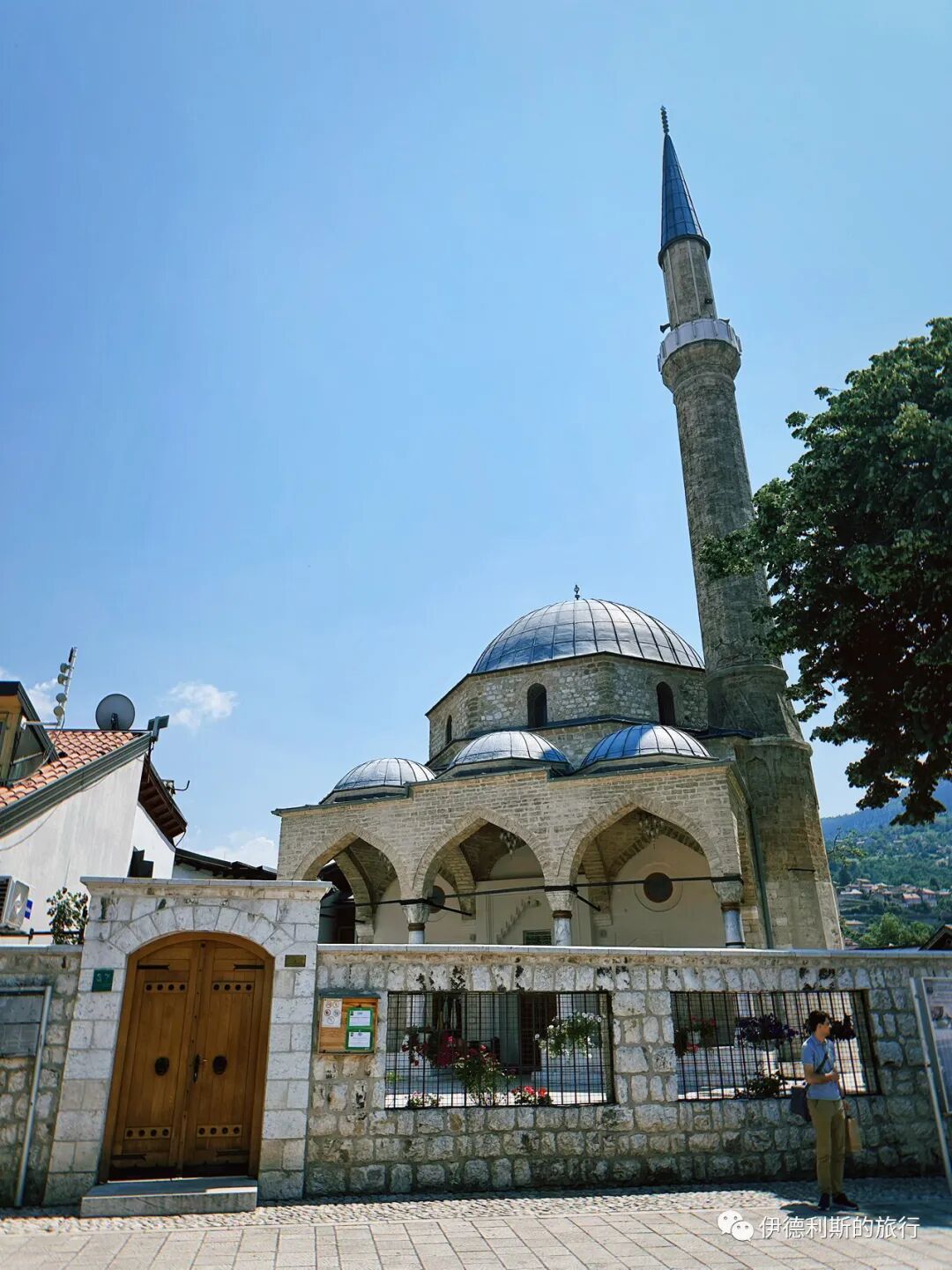
Emperor's Mosque
The Emperor's Mosque was first built in 1457. It was the first mosque constructed after the Ottoman Empire conquered Bosnia. Isaković-Hranušić oversaw the building, which was dedicated to the Ottoman Sultan Mehmed the Conqueror. The original mosque was a wooden structure. It was rebuilt in 1565 into the current classical Ottoman style and dedicated to the Ottoman Sultan Suleiman the Magnificent. Side rooms were added in 1800, and they were connected to the main hall in 1848.
The Emperor's Mosque was severely damaged twice, once during World War II and again during the Bosnian War, but it was repaired both times.
Magribija Mosque
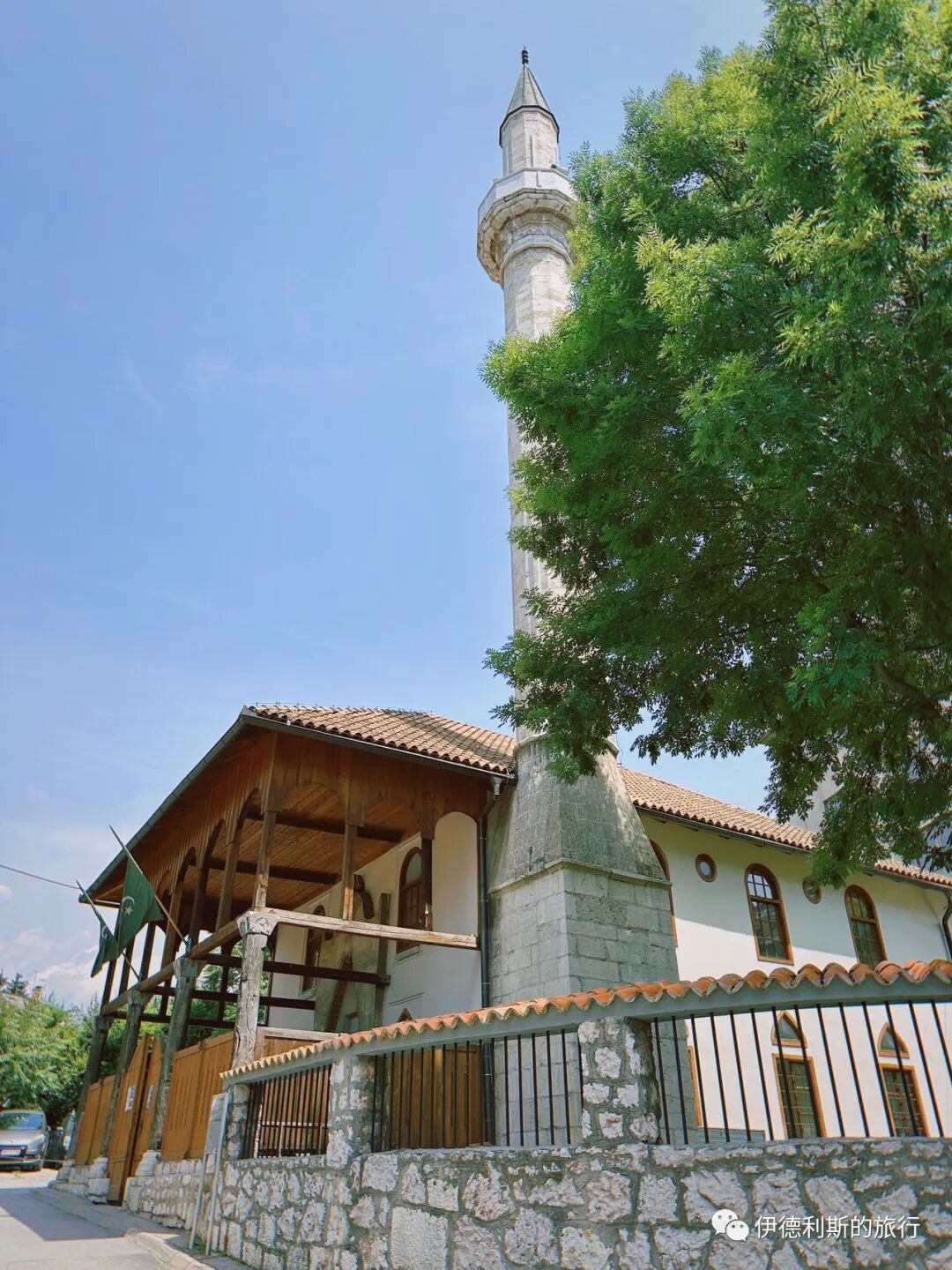
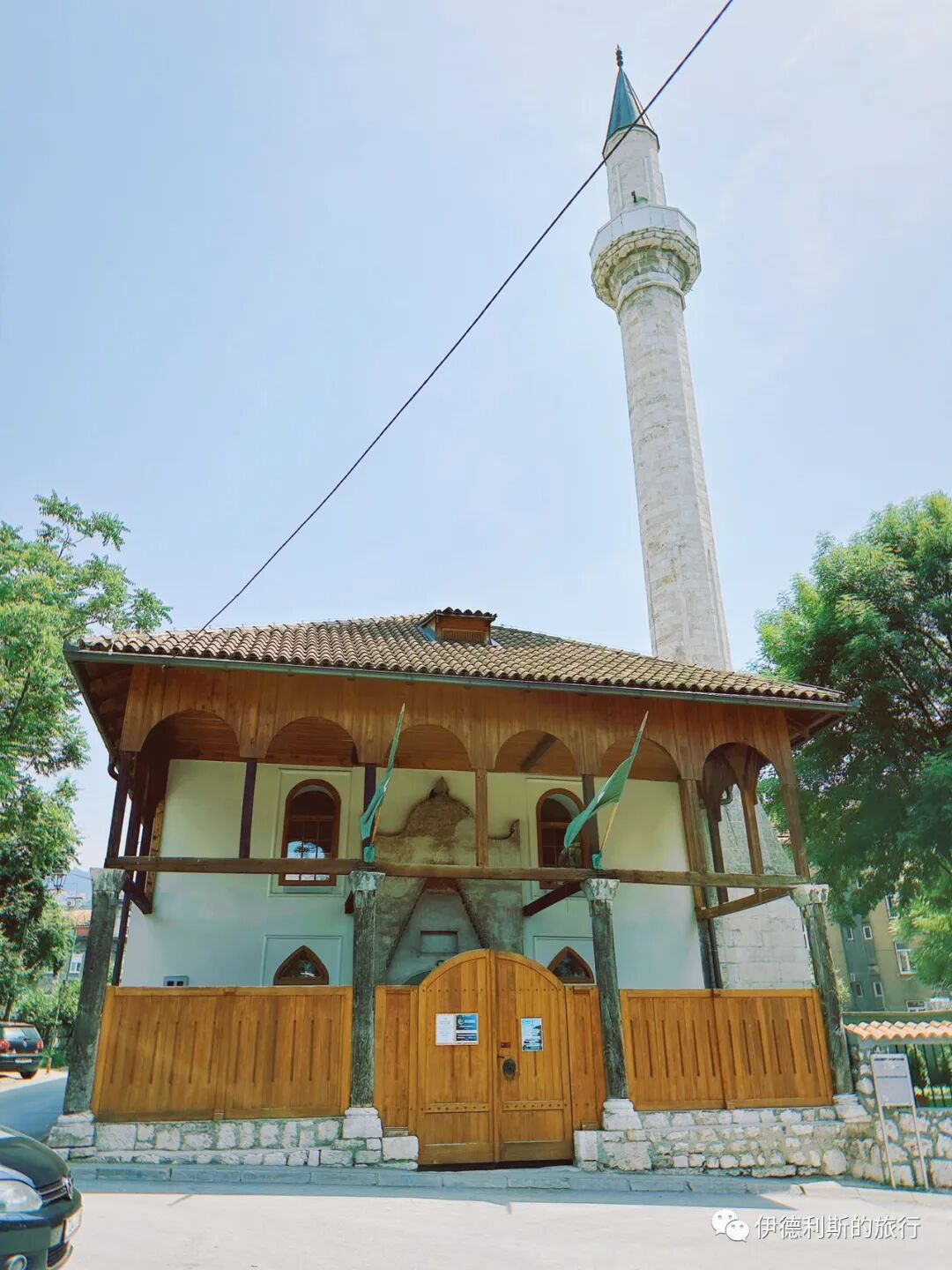
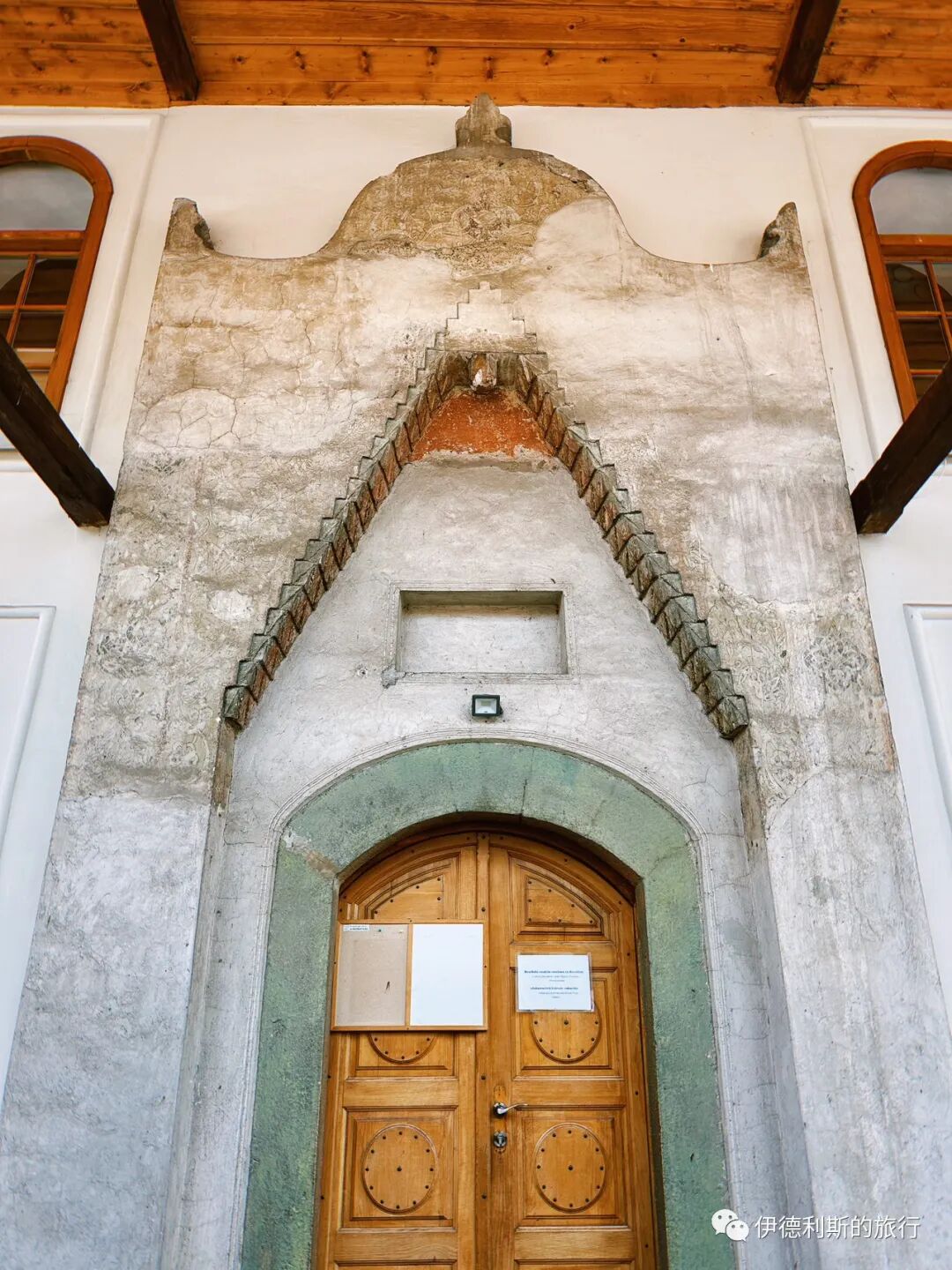
Sheikh Magribija built the Magribija Mosque in the 15th century. Tradition says that Sheikh Magribija arrived in Sarajevo with Isa-beg, the Ottoman governor who founded the city. The original mosque building was destroyed by fire. The current structure was rebuilt in 1766 and keeps its 18th-century appearance and painted decorations. The mosque was badly damaged during the Bosnian War in 1992, leaving only the base of the minaret. It was rebuilt in 2000, and the roof and porch were repaired again in 2004.
Most mosques in Sarajevo keep their main halls locked outside of prayer times (namaz), so everyone prays on the platforms on either side of the doors. Because of this, I could not enter the main hall.
Ali Pasha Mosque
Ali Pasha Mosque was built in 1560-1561 by the Bosnian governor Ali Pasha, who was a local from Sarajevo. This is a single-domed mosque in the classical Ottoman style with beautiful architectural proportions. There used to be a large cemetery around the main hall, but it was turned into a park after tram tracks and roads were laid. A small ablution fountain was moved there in 1874. The mosque was severely damaged by shelling during the 1992-1995 Bosnian War and was renovated in 2004.
You can still see tombstones of victims from the 1993 Bosnian War next to the mosque today.
Ferhadija Mosque
I prayed the afternoon prayer (asr) at Ferhadija Mosque in the old town of Sarajevo. The imam was very young and wore an Ottoman fez hat.
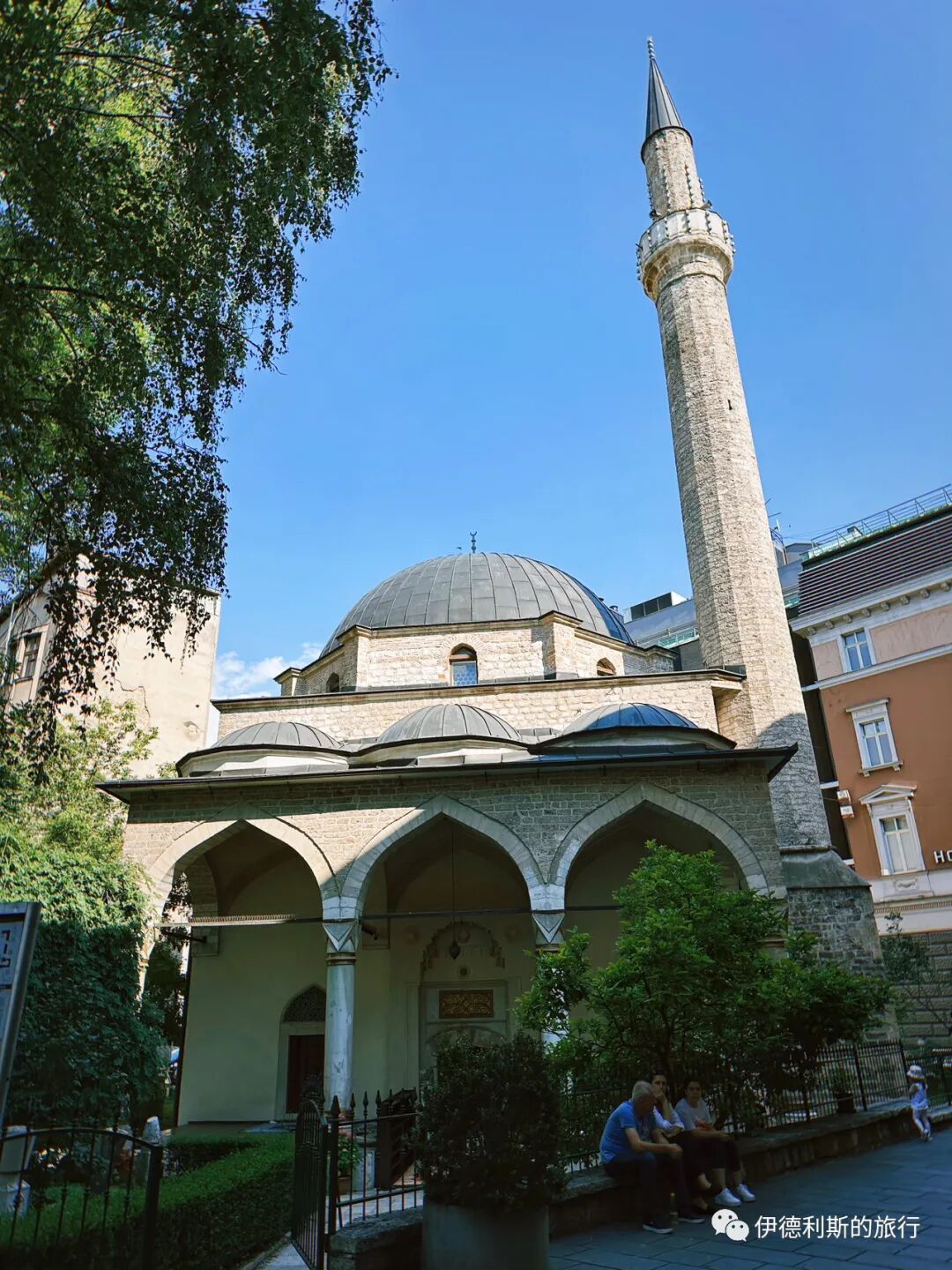
Ferhadija Mosque was built by Ferhad-beg Vuković-Desisalić in 1561-1562. The neighborhood that formed around it is also called Ferhadija. The mosque originally had a school (mekteb), a public kitchen (imaret), a water station, and a fountain, but they were all destroyed in fires in 1879 and 1897. It is a typical classical Ottoman building with a central dome over a rectangular main hall and three small domes on the front porch.
Research on the interior paintings of the mosque in 1964-1965 revealed five layers of paint from different periods. The first layer is the oldest and most valuable, dating back to the original construction in the 16th century. It was found on the dome, pendentives, squinches, and mihrab, and is known as the Rumi decorative style. The second layer features floral decorations in the center of the mihrab and parts of the dome in an 18th-century style, while the third and fourth layers date from the late 19th to the early 20th century.
Bakrbaba Mosque archaeological site
Archaeological site of the Bakrbaba Mosque, including the religious school (mekteb), primary school, and private quarters (harem).
The Bakrbaba Mosque was built in 1544 by the famous Sarajevo merchant Hajji-Alija Bakrbaba and featured a 30-meter-tall minaret at the time. In 1697, the Ottoman Empire was defeated by the Holy League of Europe, and Sarajevo was looted and burned. The Bakrbaba Mosque was destroyed in the fire but was rebuilt in the early 18th century.
A primary school and private quarters were originally built on the west side of the mosque. In 1741/2, Hajji Ismail Misrija added a religious school and a cemetery on the east side of the courtyard. Shortly after, Abdulah Efendi Kantamirija built a library across the street, making this an important educational and cultural center in Sarajevo.
After the Austro-Hungarian Empire took control of Sarajevo in 1878, the mosque was first turned into a military warehouse and was finally demolished in 1895. The primary school next to the mosque was also destroyed in 1895, the library was destroyed in 1897, and the religious school remained until the beginning of World War II.
Since 2000, at the request of Islamic scholar Hajji Hafez Halid Efendi Hadžimulić, Sarajevo began archaeological research on the Bakrbaba Mosque complex. In 2009, the reconstruction of the Bakrbaba Mosque was funded by Husein Durman, a businessman from Bursa, Turkey, and it officially opened in 2011.
Brusa Bezistan covered market.
The Brusa Bezistan covered market is located in the Grand Bazaar of Sarajevo's Old Town. It was ordered to be built in 1551 by Grand Vizier Rüstem Pasha during the reign of Suleiman the Magnificent of the Ottoman Empire and was named after Bursa, the old capital of the Ottoman Empire. This market has six domes. It originally sold silk, household goods, and small furniture. Today, it is the Sarajevo Museum, which displays precious artifacts from the Ottoman period.
The most eye-catching item in the museum is a large sand table that meticulously restores the appearance of Sarajevo's Old Town during the Ottoman period. You can see an Ottoman architectural complex consisting of mosques, clock towers, religious schools, dervish lodges (tekke), caravanserais, markets, tombs, and fountains.
The 19th-century noble clothing of Sarajevo Muslims collected in the museum is also very exquisite.
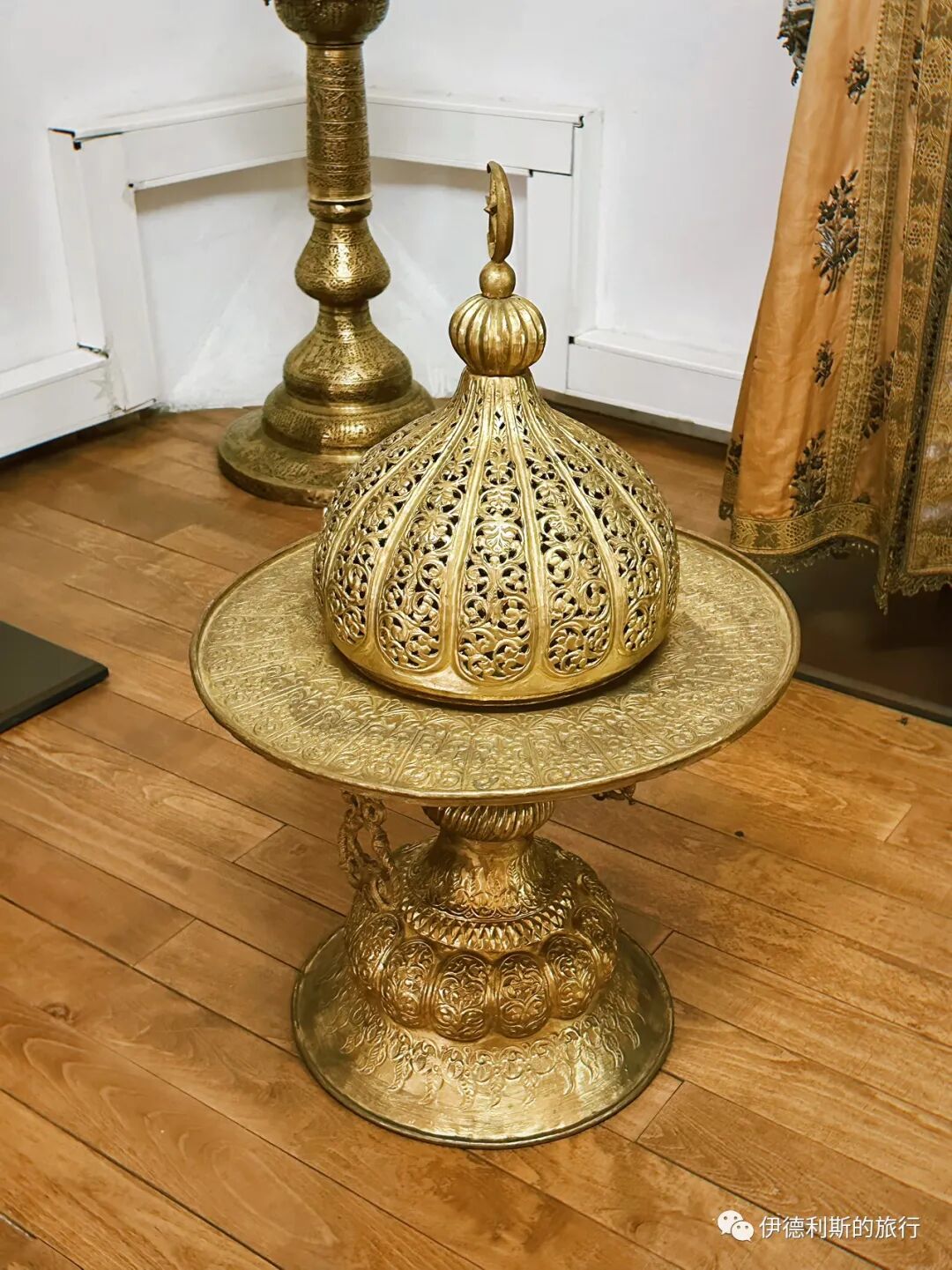
Lamp posts used in Sarajevo mosques during the 19th century.
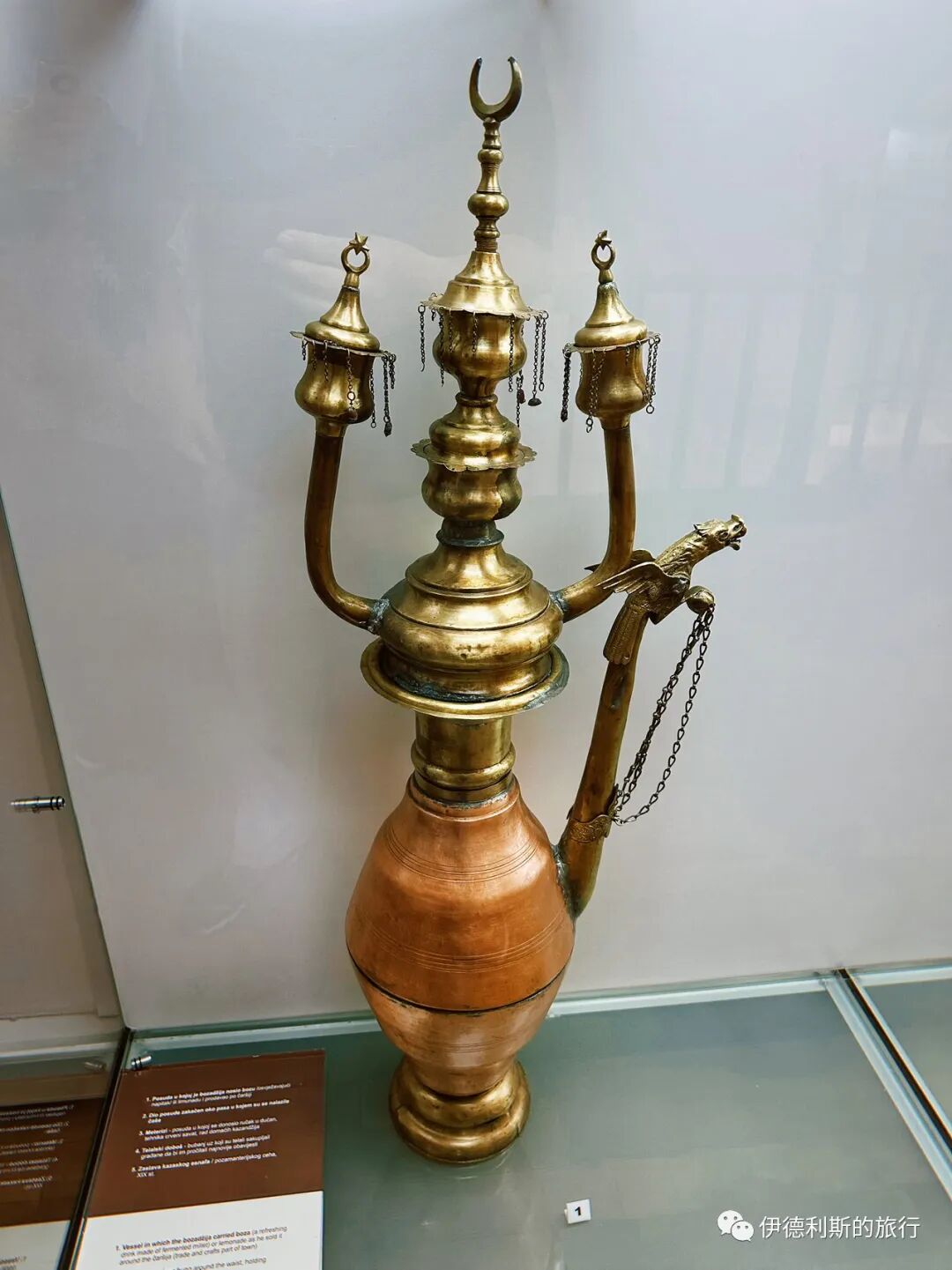
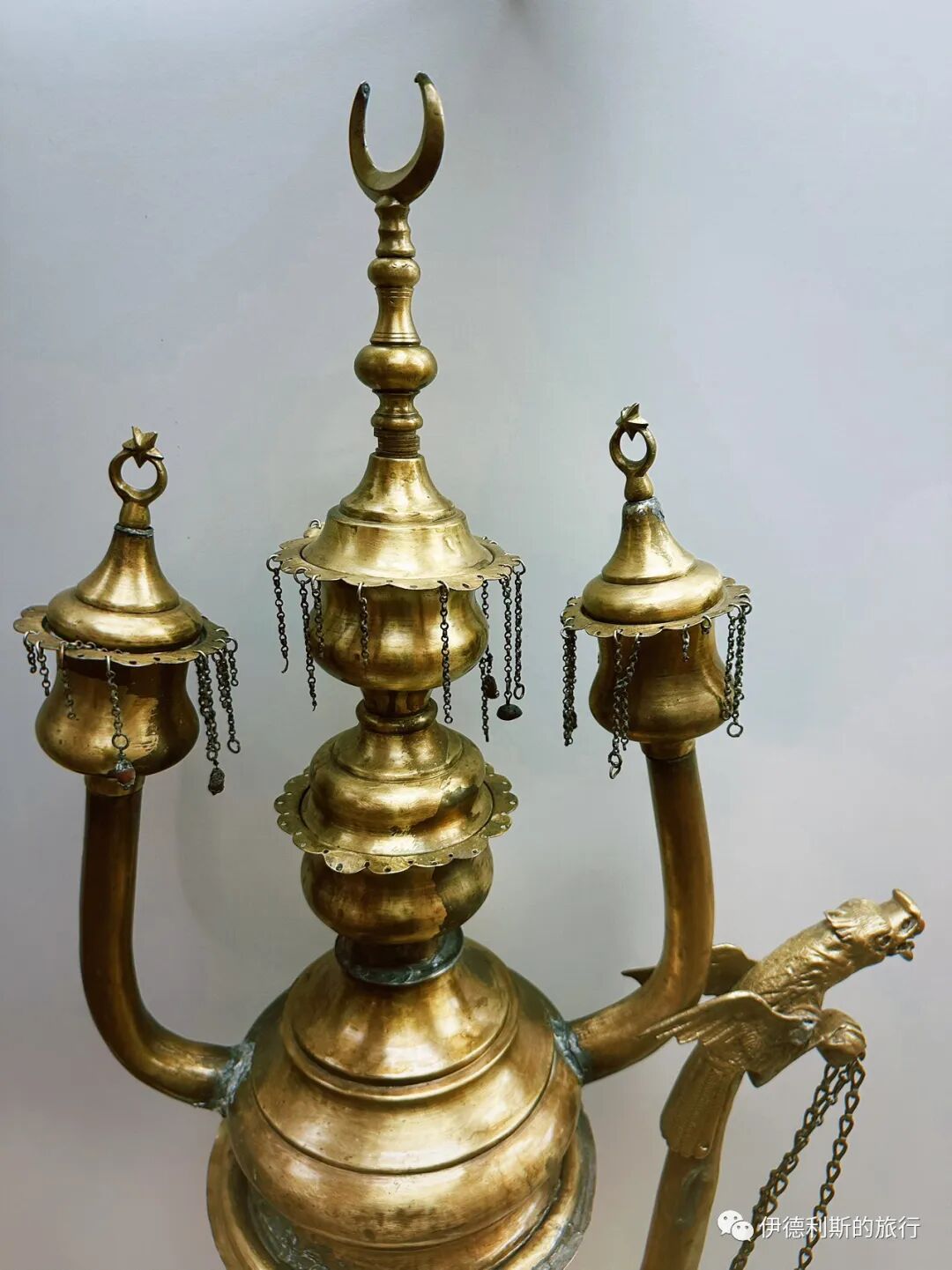
Copper pots used by vendors selling boza (a fermented grain drink) or lemonade in the bazaar.
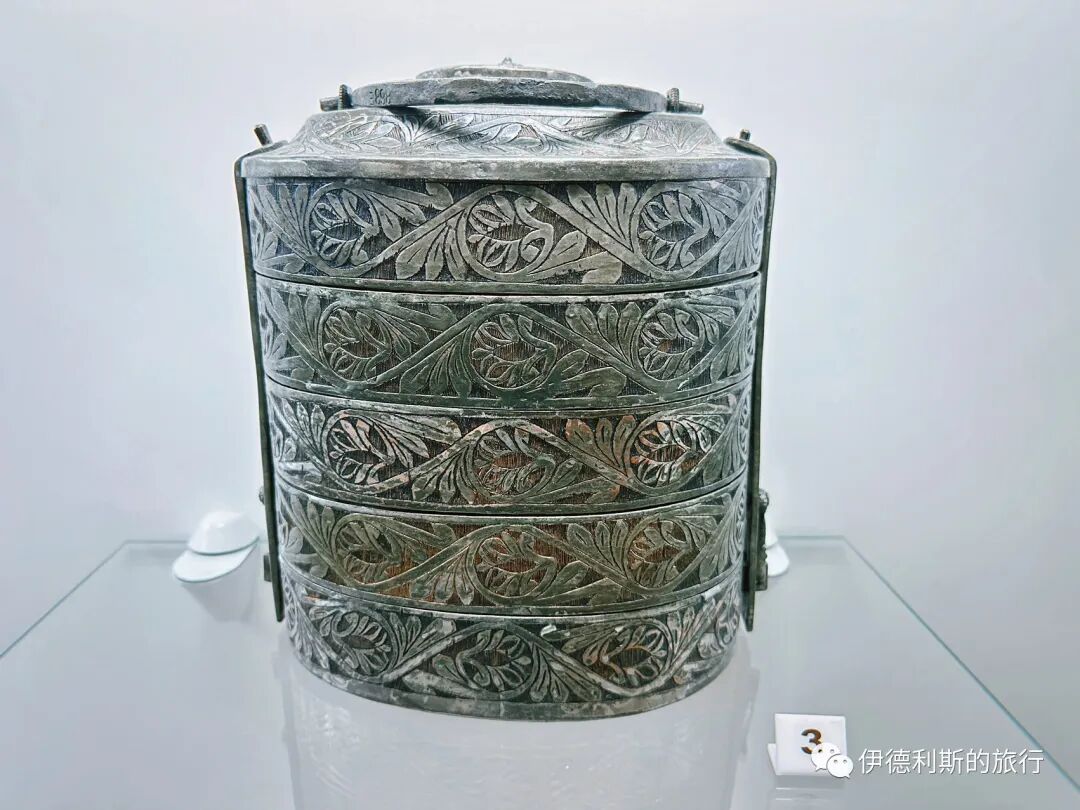
Food containers used in the past to bring lunch to shops.
On the left is a short knife engraved with the year 1872, and on the right is a long knife inlaid with gemstones. This type of knife requires the cooperation of a goldsmith (kujundzija) and a bladesmith (bicakcija) to complete.
Silk embroidery calligraphy from the 19th century.
A court verdict issued in 1869.
Old coffee pots and coffee cups.
Yellow Fortress (Žuta Tabija)
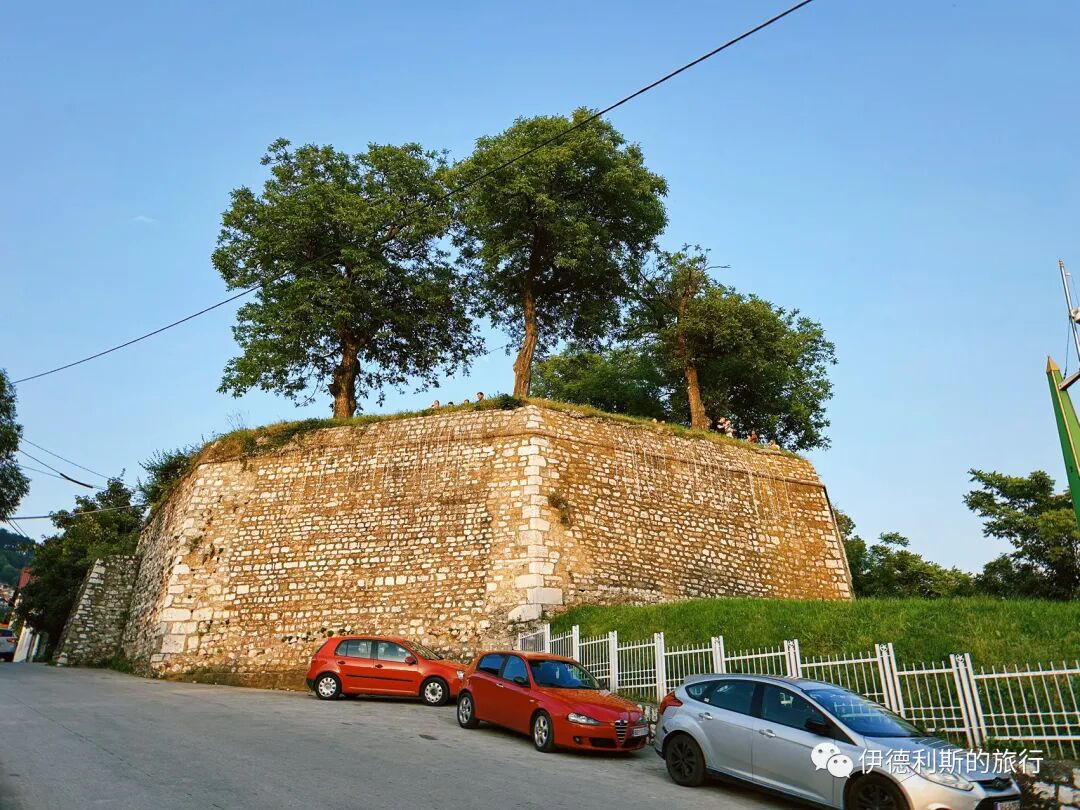
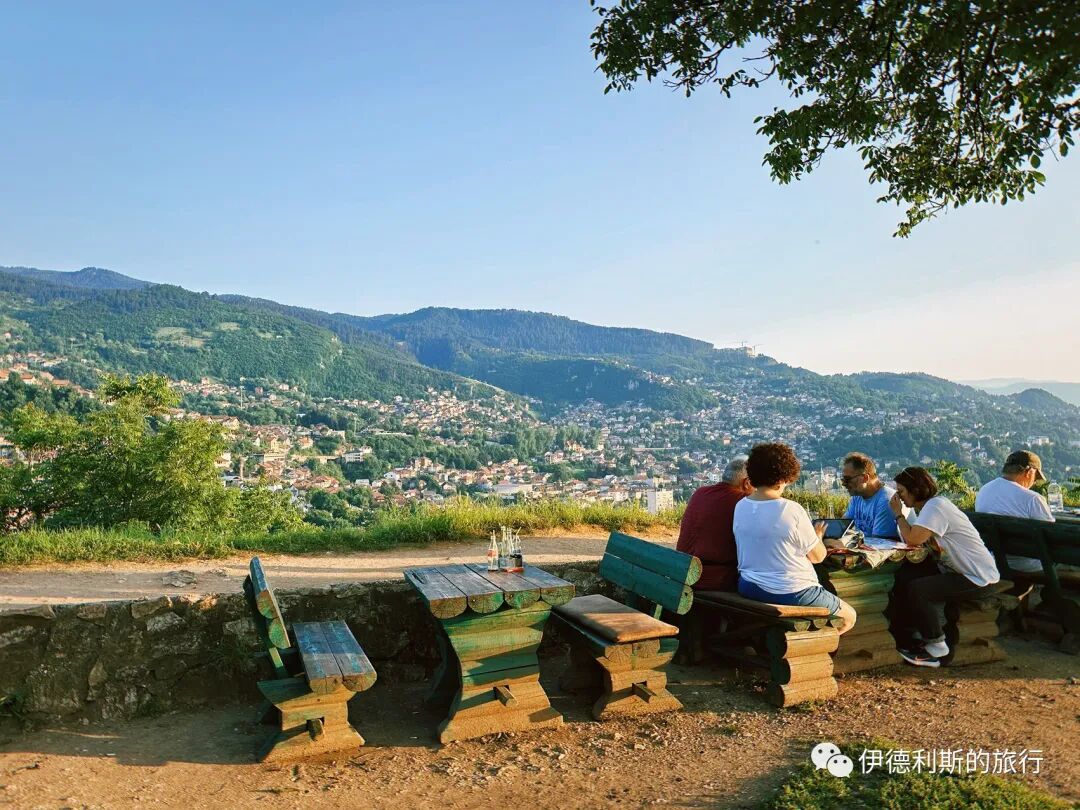
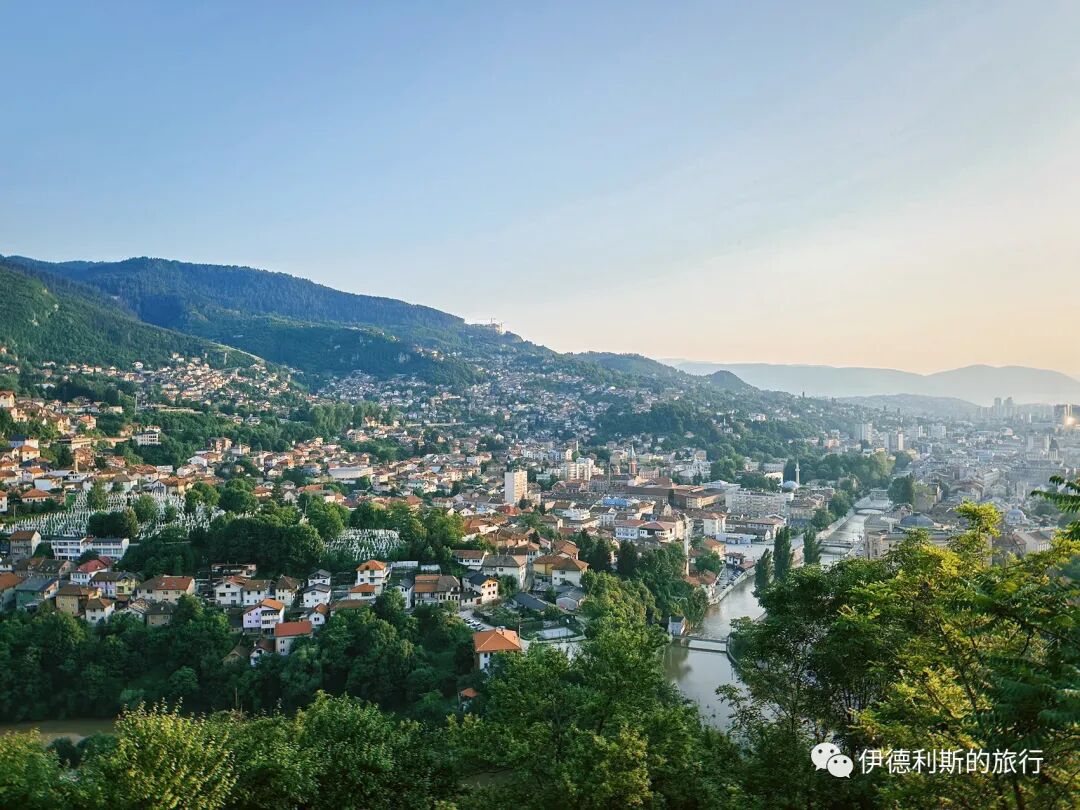
Climb up to the Yellow Fortress (Žuta Tabija) on the eastern outskirts of Sarajevo in the evening to get a panoramic view of the old town. Built between 1727 and 1739, the Yellow Fortress was a battery in the Sarajevo city walls and served as a key stronghold for the Ottoman Empire to defend Sarajevo against the Austro-Hungarian invasion in 1878.
Sarajevo did not have city walls for most of its history until Prince Eugene of the Habsburg Empire launched a devastating attack on the city in 1697, looting it and burning many buildings. The Ottoman Empire officially began building the city walls in 1727. Today, the Sarajevo city walls are located on the east side of the old town, with many gates and fortresses still preserved, the most famous of which are the Yellow Fortress and the White Fortress.
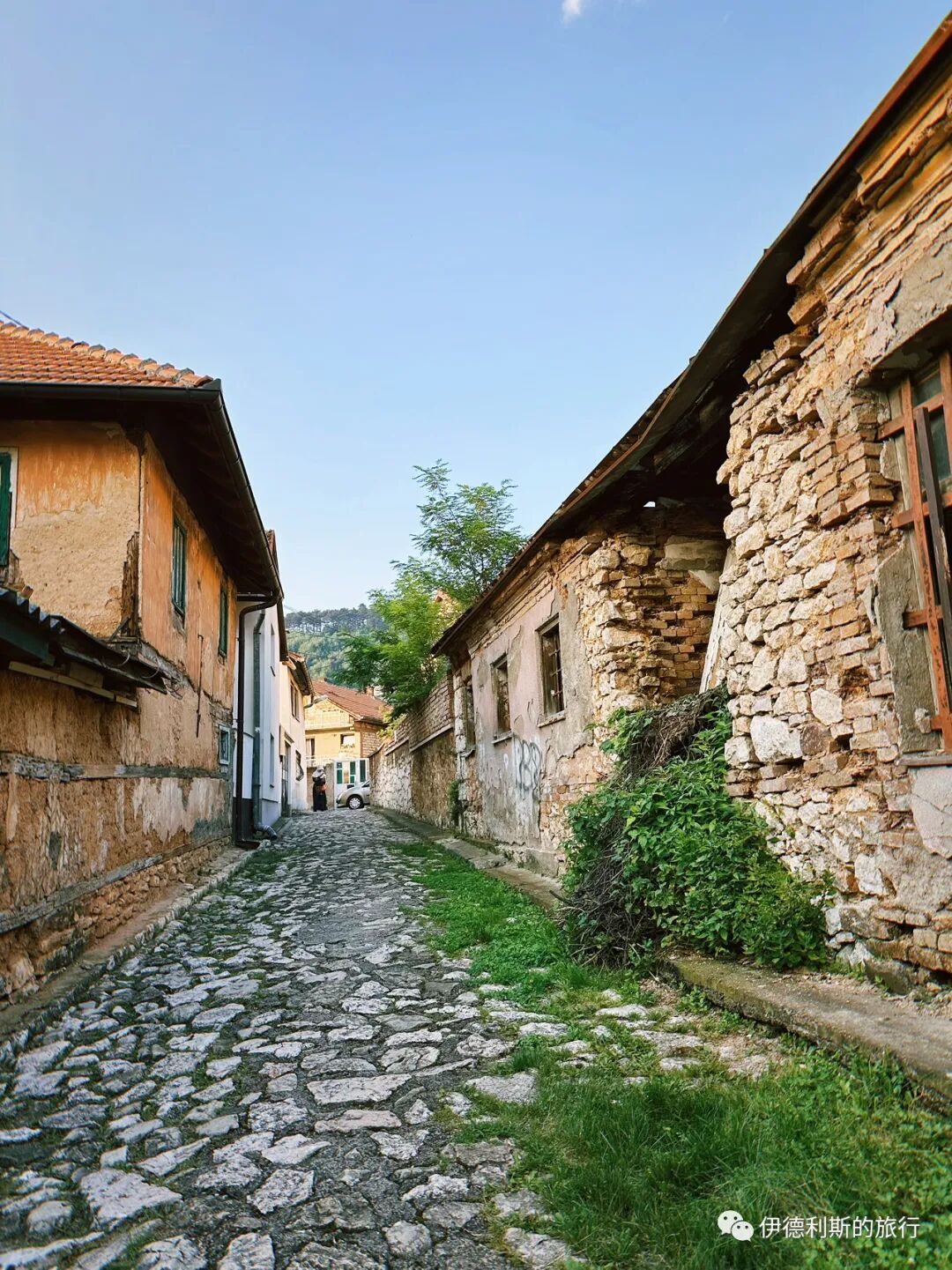
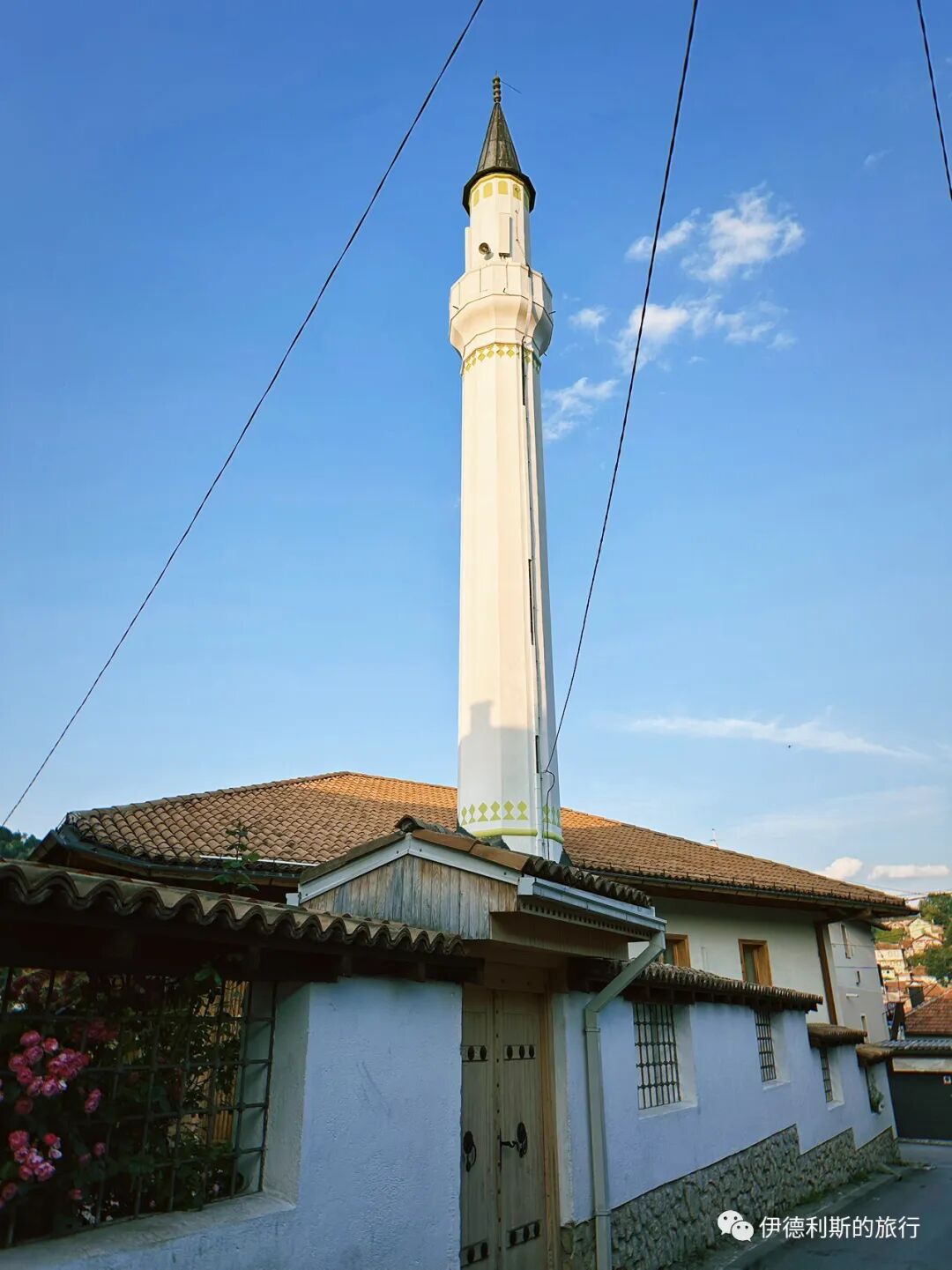
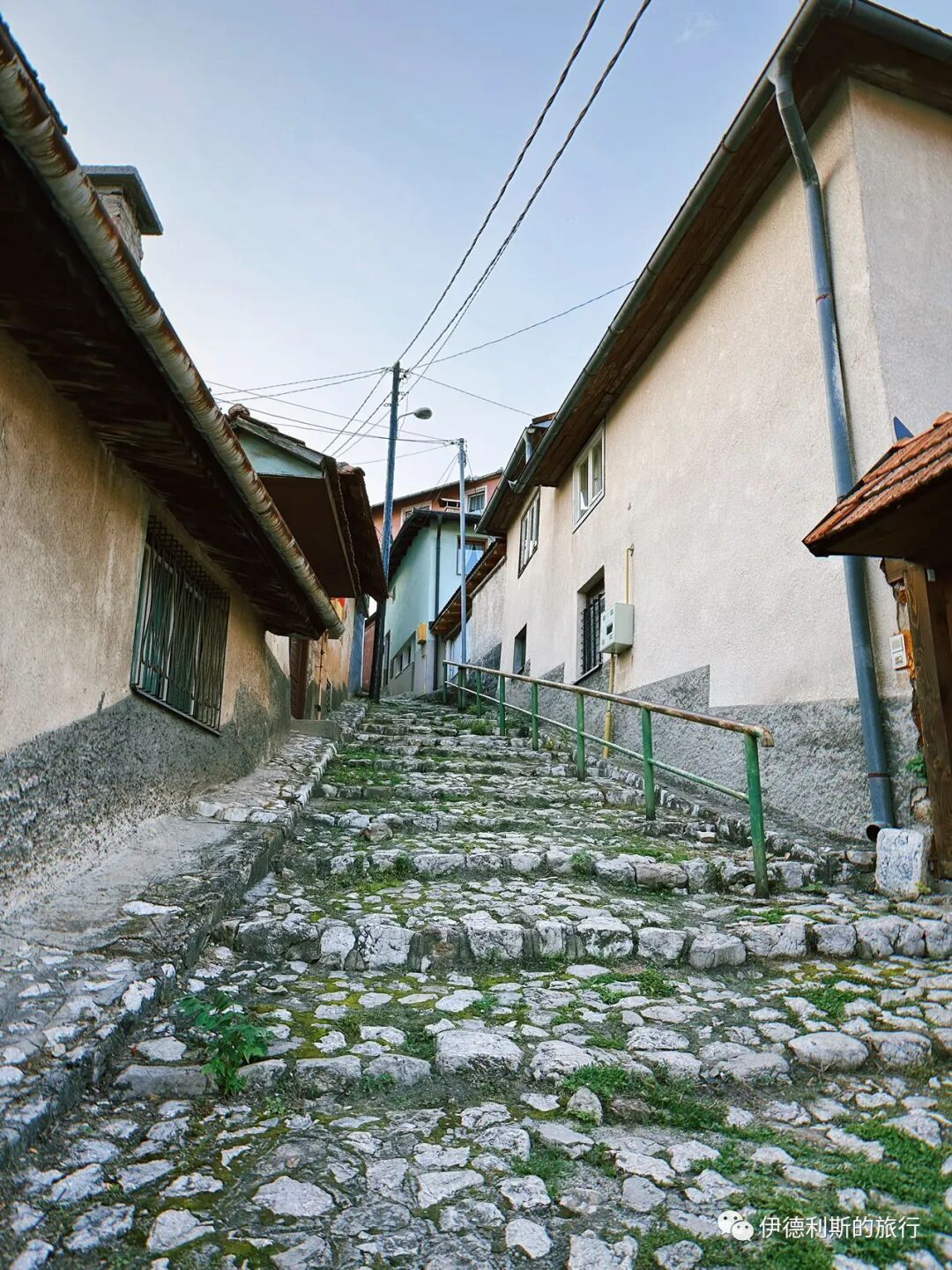
Mevlevi Sufi Lodge (tekke)
Below the Yellow Fortress sits a Mevlevi Sufi lodge (tekke), which was the first Sufi lodge in Sarajevo. The lodge was first built in 1462, destroyed during Prince Eugene's invasion of Sarajevo in 1697, and rebuilt in 1781. After the Austro-Hungarian Empire occupied Bosnia and Herzegovina in 1878, they strictly prohibited the maintenance of the lodge. It was eventually demolished in 1957 during the Tito era of Yugoslavia, and the building we see today was rebuilt in 2013 with donations from Turkey.
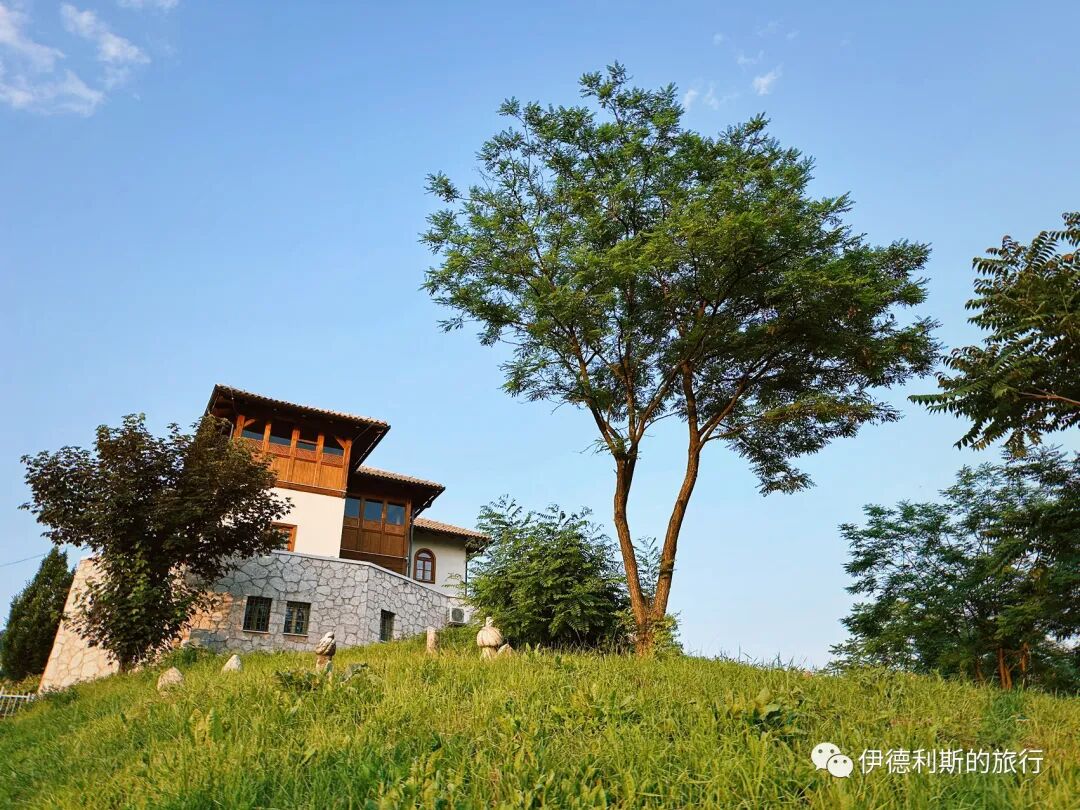
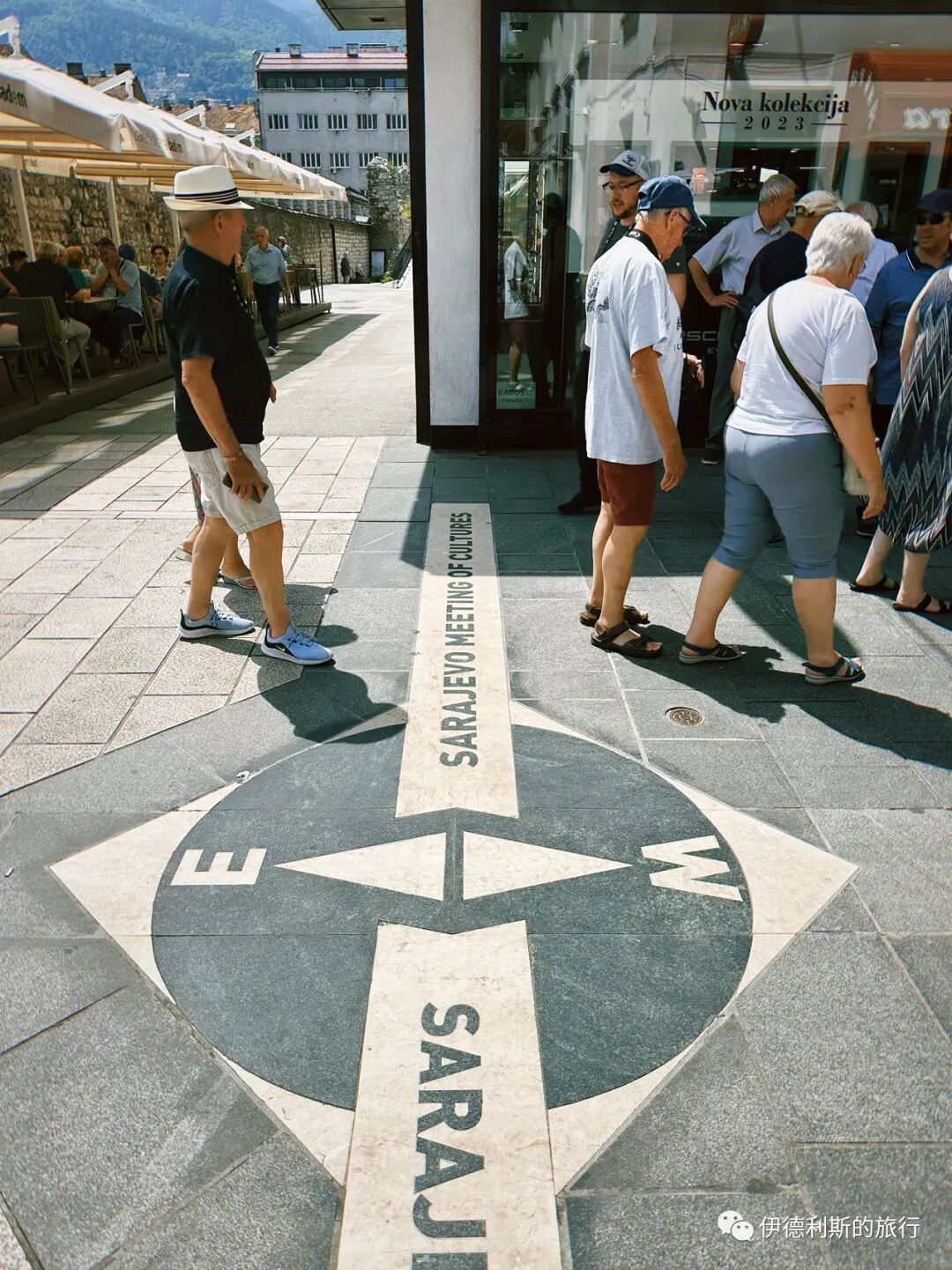
Where East meets West
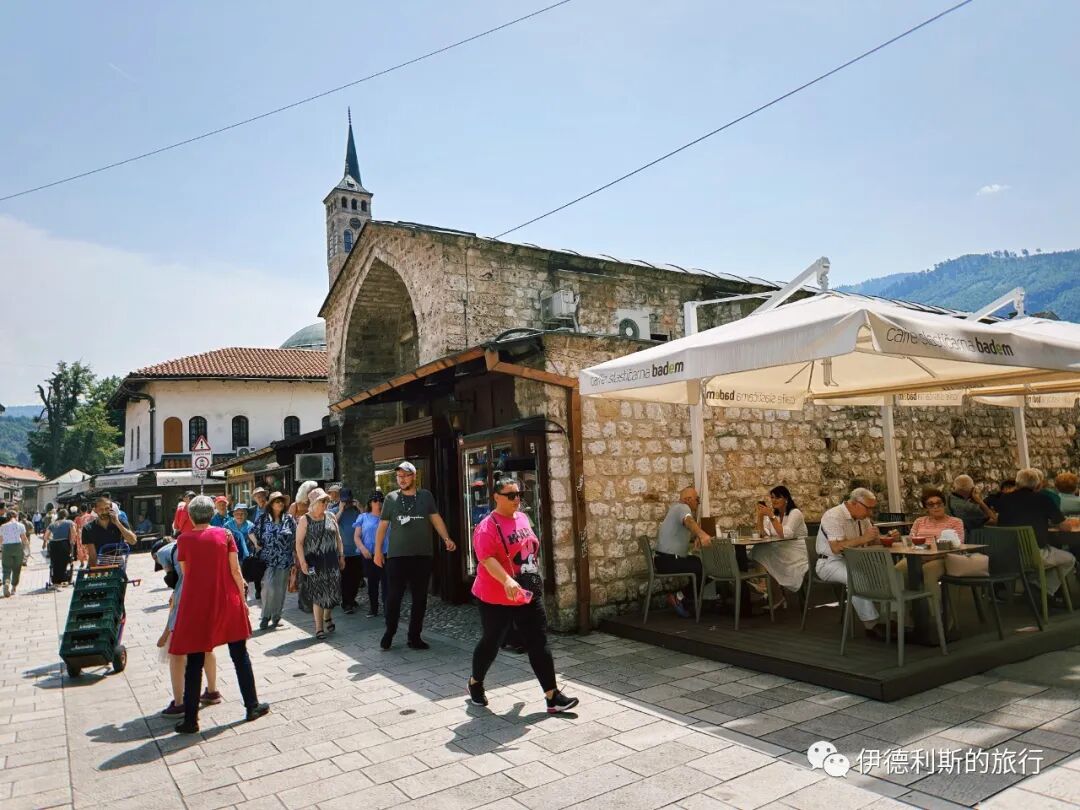
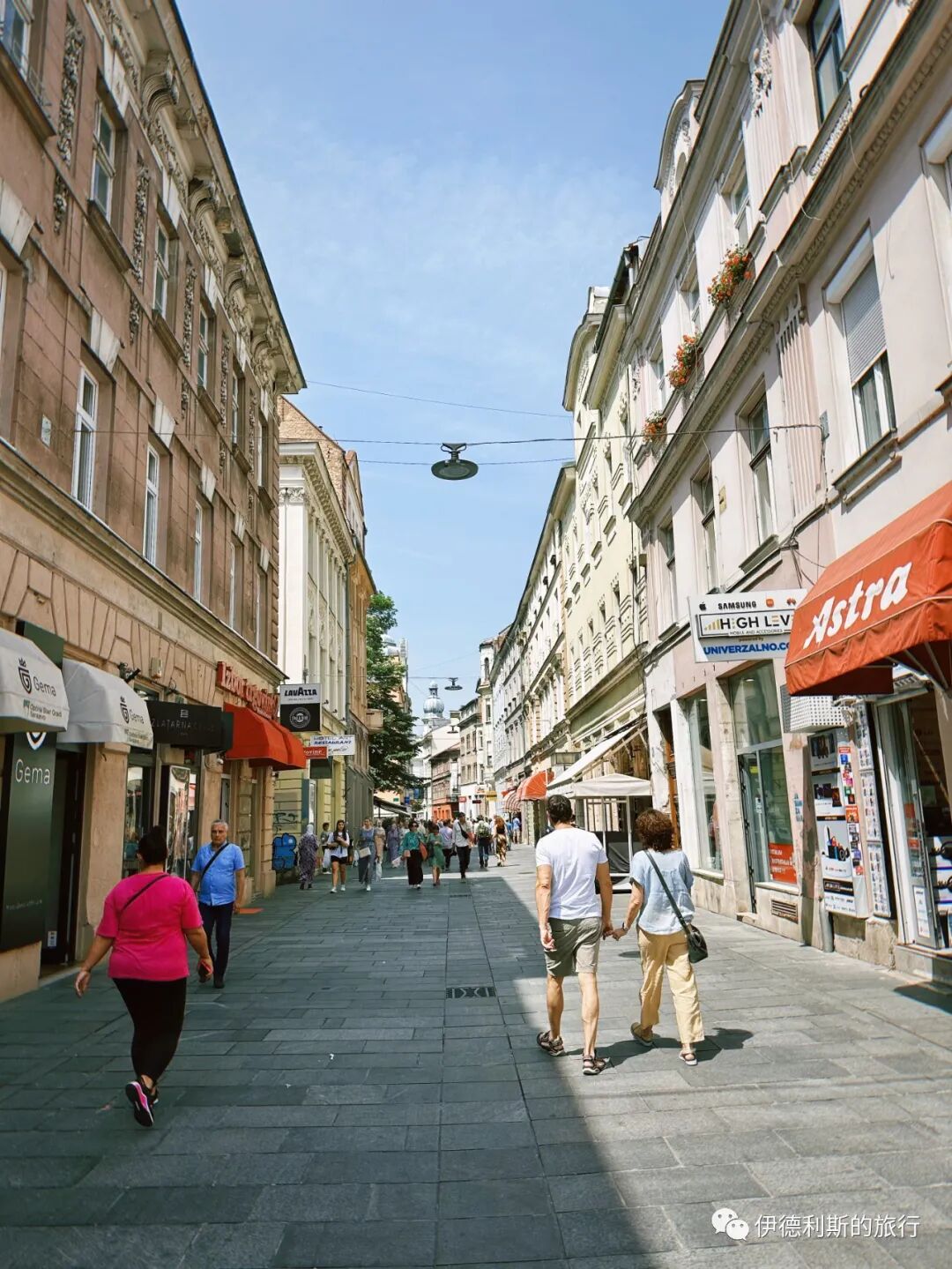
An interesting spot in Sarajevo's old town features a dividing line that separates two historic districts. To the east is the bazaar area built during the Ottoman period, and to the west is Ferhadija Street built during the Austro-Hungarian period. The city's appearance changes completely just by crossing the street. The bazaar area feels like Istanbul, and Ferhadija Street feels like Vienna. Standing on this line, you feel like you are at the crossroads of Eastern and Western cultures, and Islamic and Christian traditions. This is the unique charm of Sarajevo.
Halal Travel Guide: Sarajevo - Bosniak Life Under Ottoman Rule
Articles • ali2007fr posted the article • 0 comments • 120 views • 2026-05-19 06:55
The most interesting gallery at the National Museum of Bosnia and Herzegovina recreates the life of Bosniaks during the 19th-century Ottoman rule.
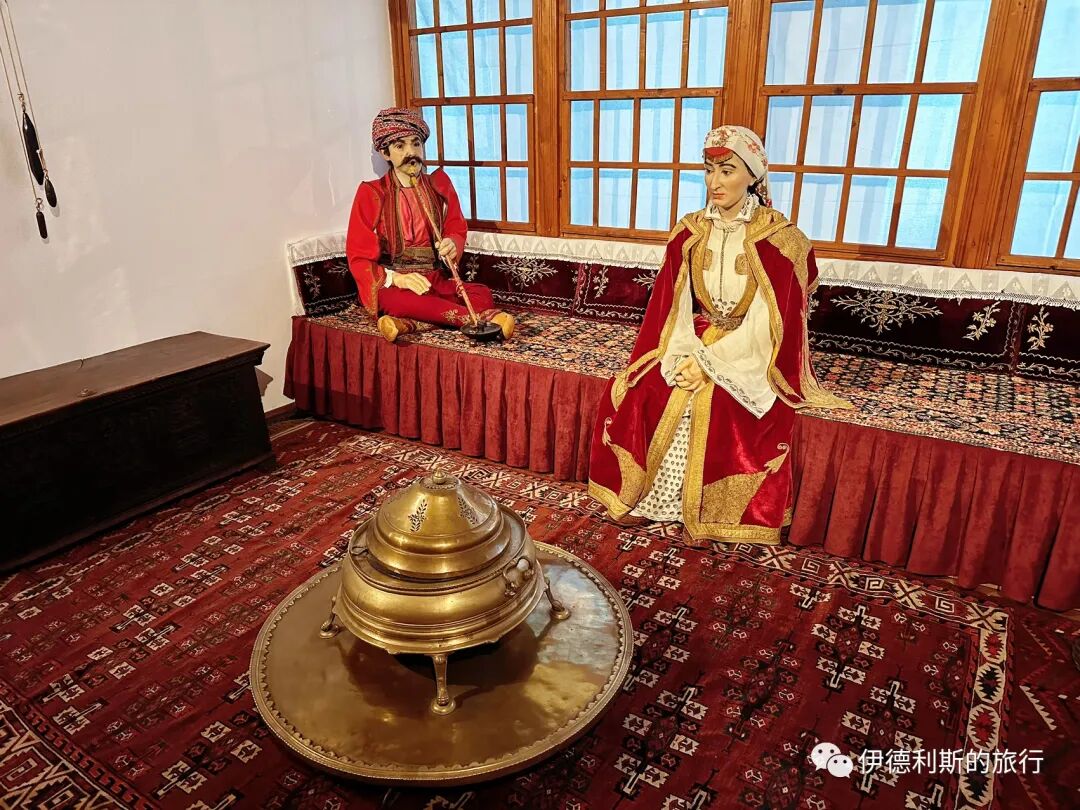
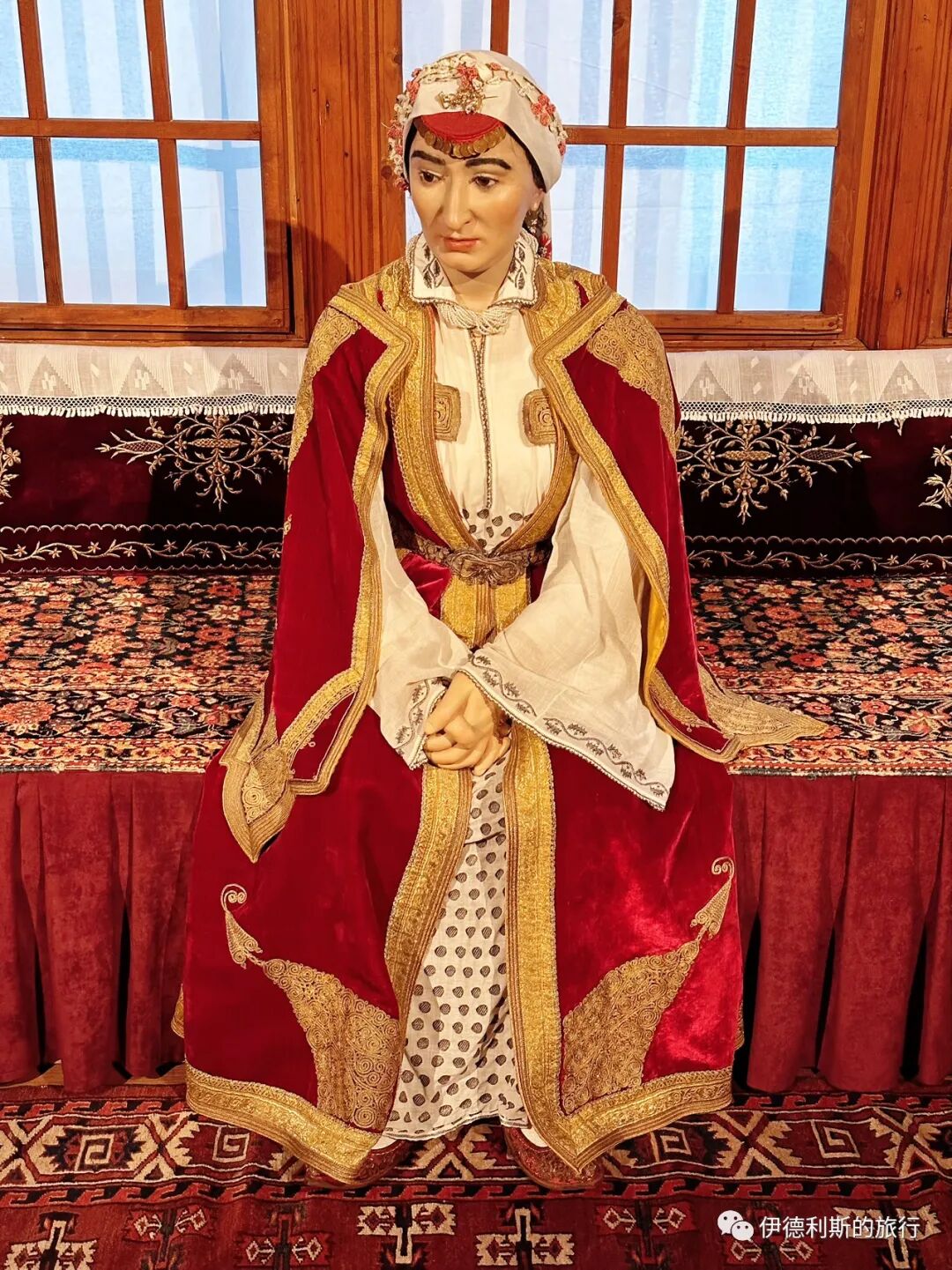
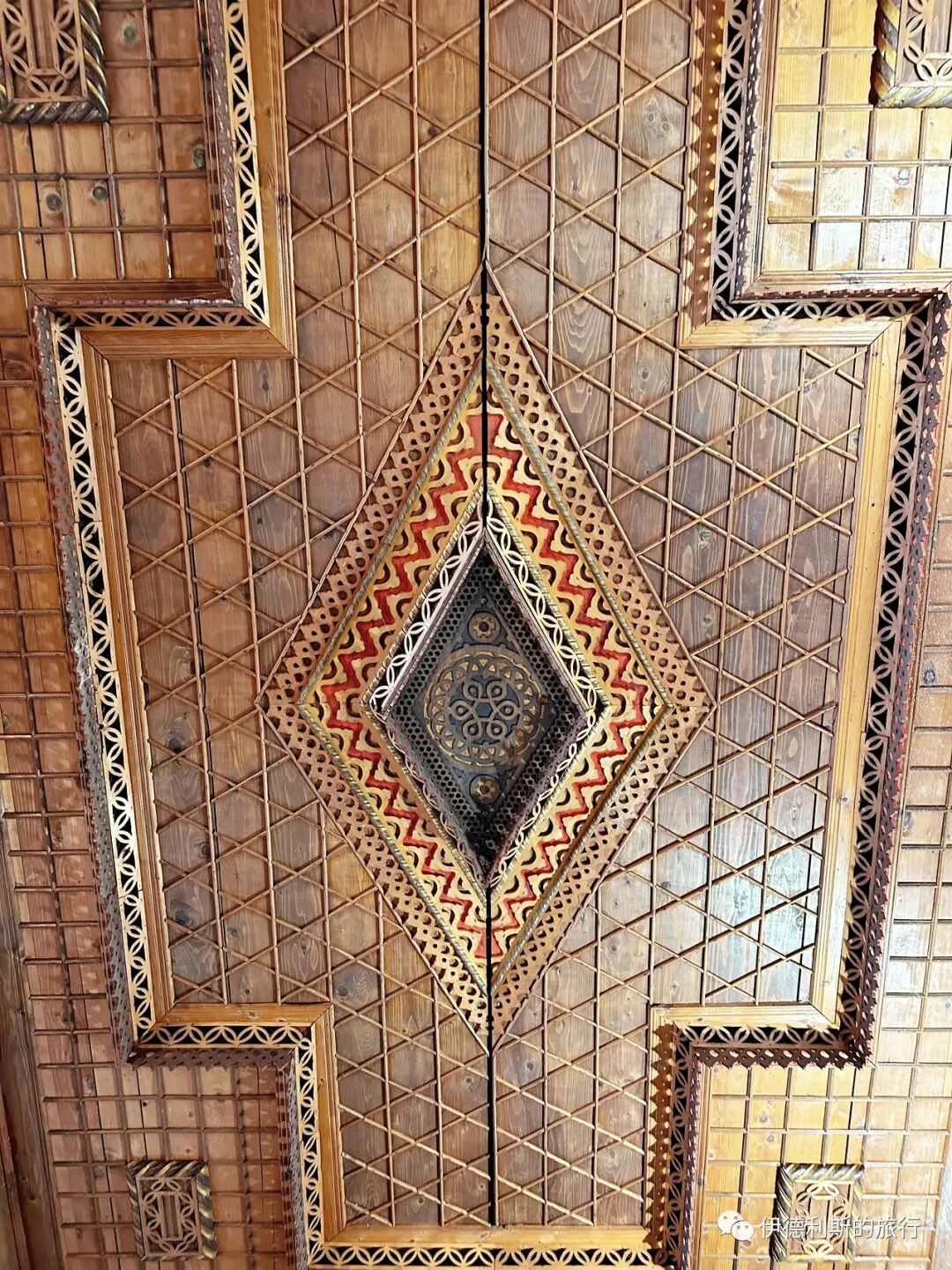
The first scene shows a Bey and his wife, who belonged to the wealthiest social class in Ottoman-ruled Bosnia. Bey is a Turkic title for a chieftain. During the middle and late Ottoman period, military officers and officials one rank below a Pasha were also called Bey. The Bey's wife in the exhibit wears an expensive dress embroidered with gold thread, and the exquisite ceiling comes from the famous Sabura family of coppersmiths in Sarajevo.
The second scene shows a court meeting in Ottoman-ruled Bosnia. In the center sits a judge (Kadi) with books of Islamic law placed in front of him. Among the four jury members beside him, one is an Orthodox village head from Herzegovina, one is a Sephardic Jewish rabbi representing the interests of Jewish merchants, and the other two are a Muslim Bey and a Janissary Agha representing the interests of the artisans' guild. The ornately decorated ceiling in the room comes from the Hadzirustembegovic family in Srebrenica, eastern Bosnia, dating back to the 19th century.
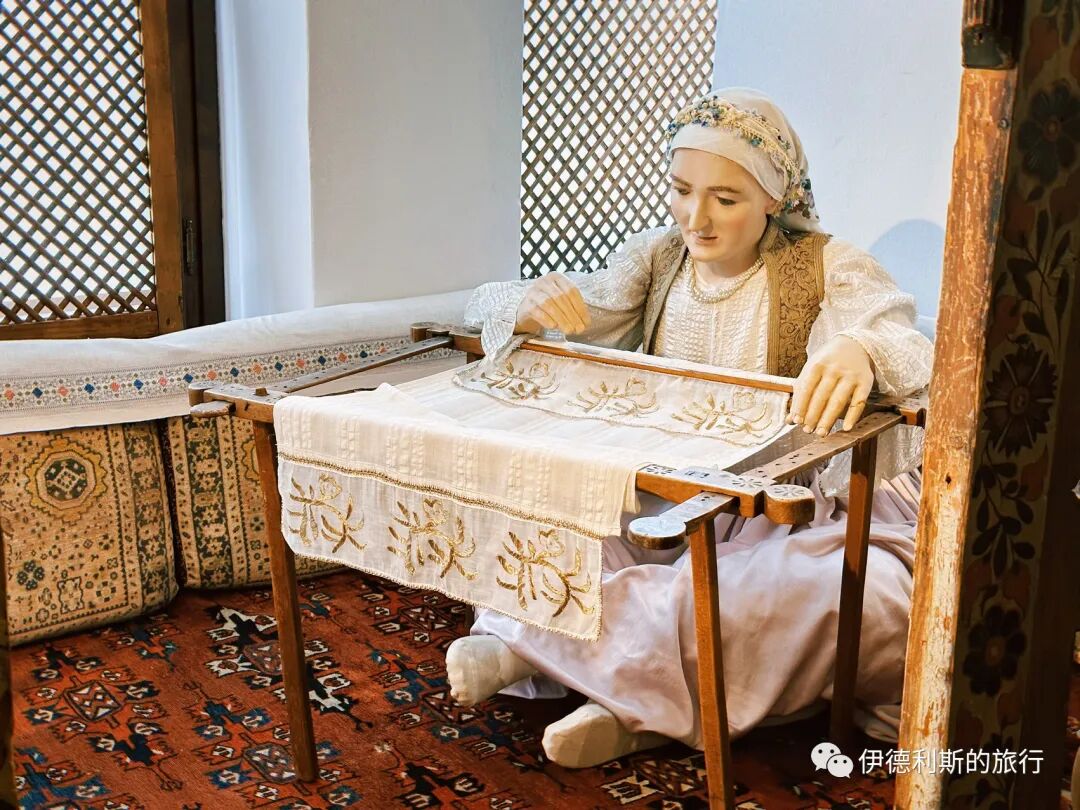
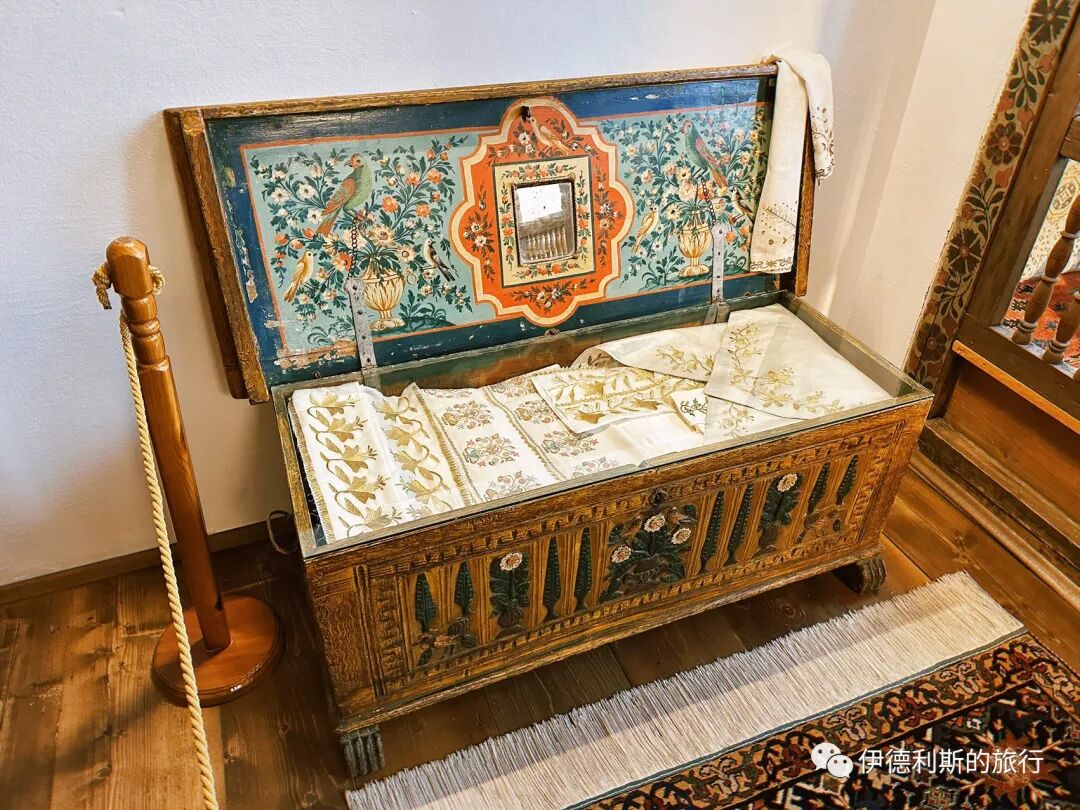
The third scene shows two ladies embroidering on a bay window terrace, with wood carvings from the famous Sabura coppersmith family of Sarajevo. This type of bay window is called a Kameriya in Bosnia. Ladies could look out at the scenery through the window grilles, and they often made their wedding dowries here. These wedding clothes were kept in a special wooden chest decorated with beautiful flower and bird patterns.
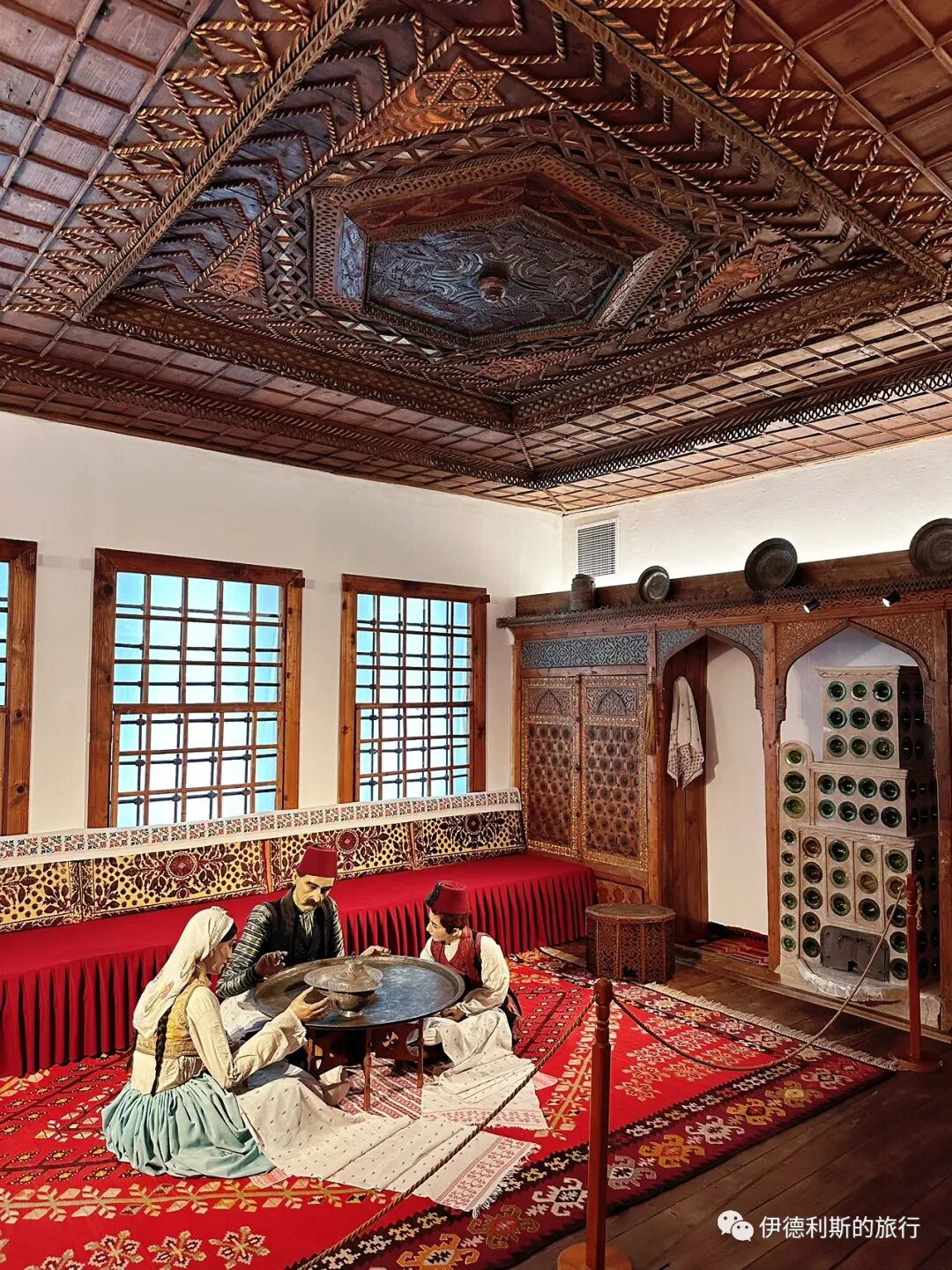
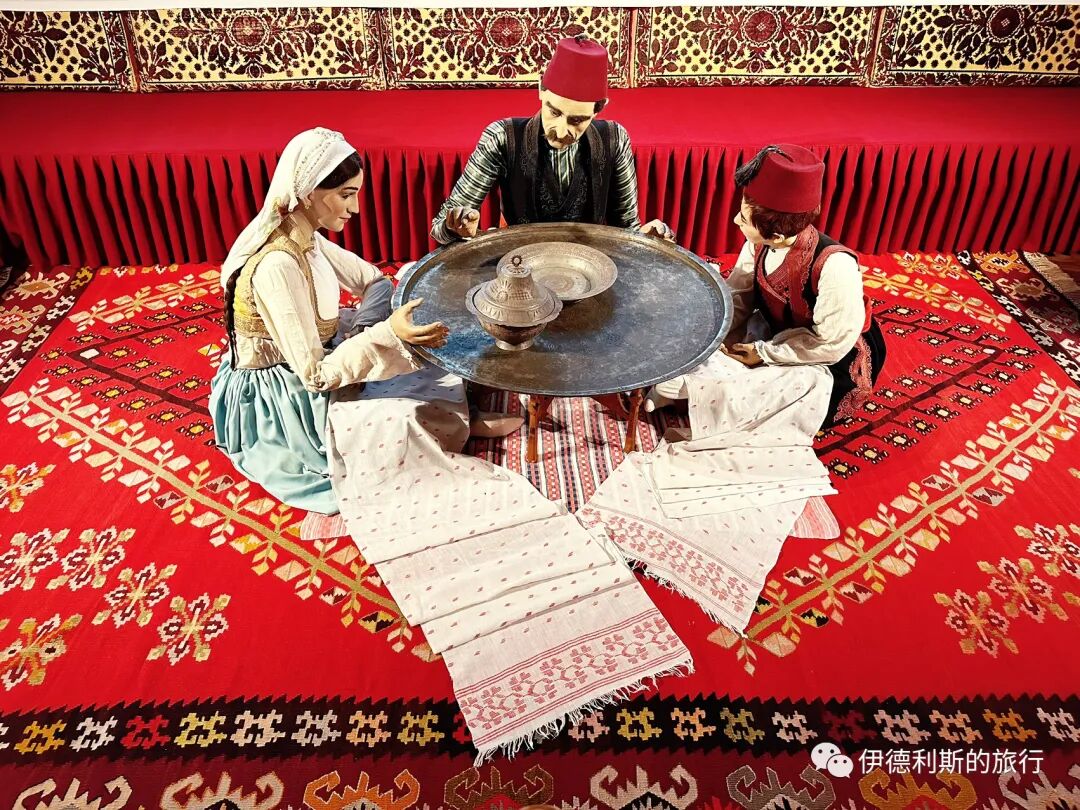
The fourth scene shows a middle-class merchant family eating. They sit around a low round table (sinija) with a copper tray (demirlija) for serving food, and the fine wood carvings on the ceiling and cabinets also come from the Sabura family.
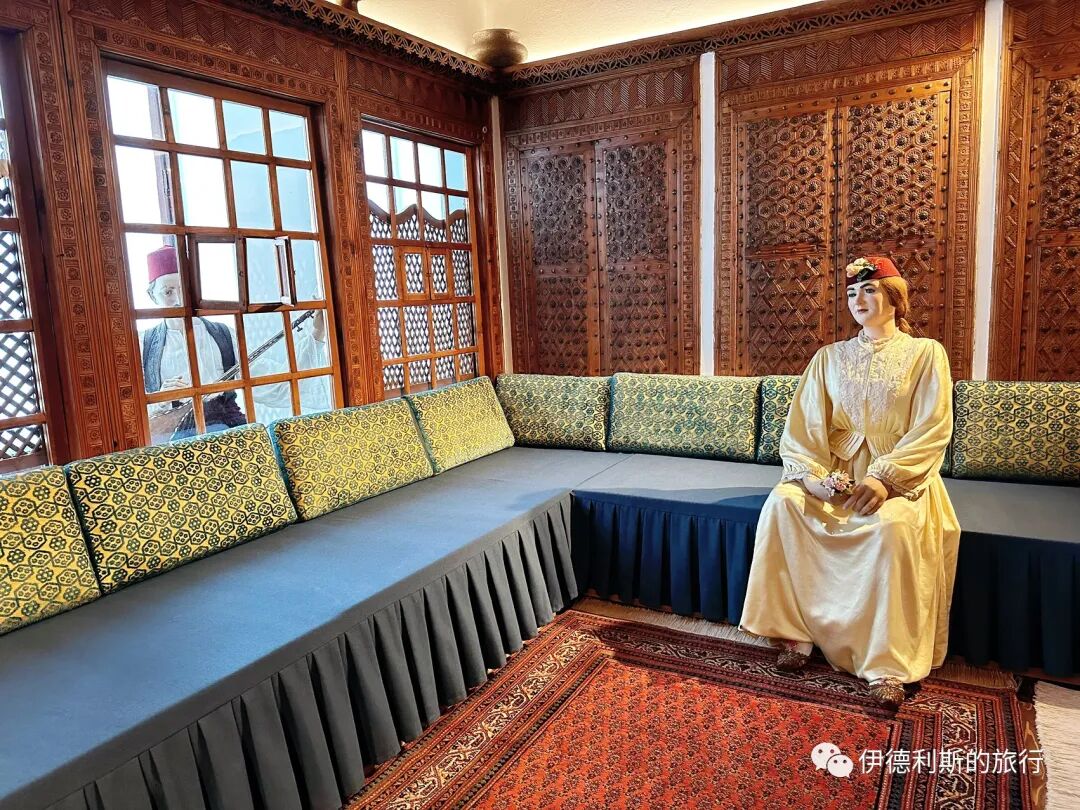
The fifth scene shows a young man courting a girl outside her window. This was a common way for young Bosniaks to communicate in the 19th century with their parents' knowledge. The wood carvings in the room come from the residence of Derviš-bey Kršlak in Jajce, central Bosnia.
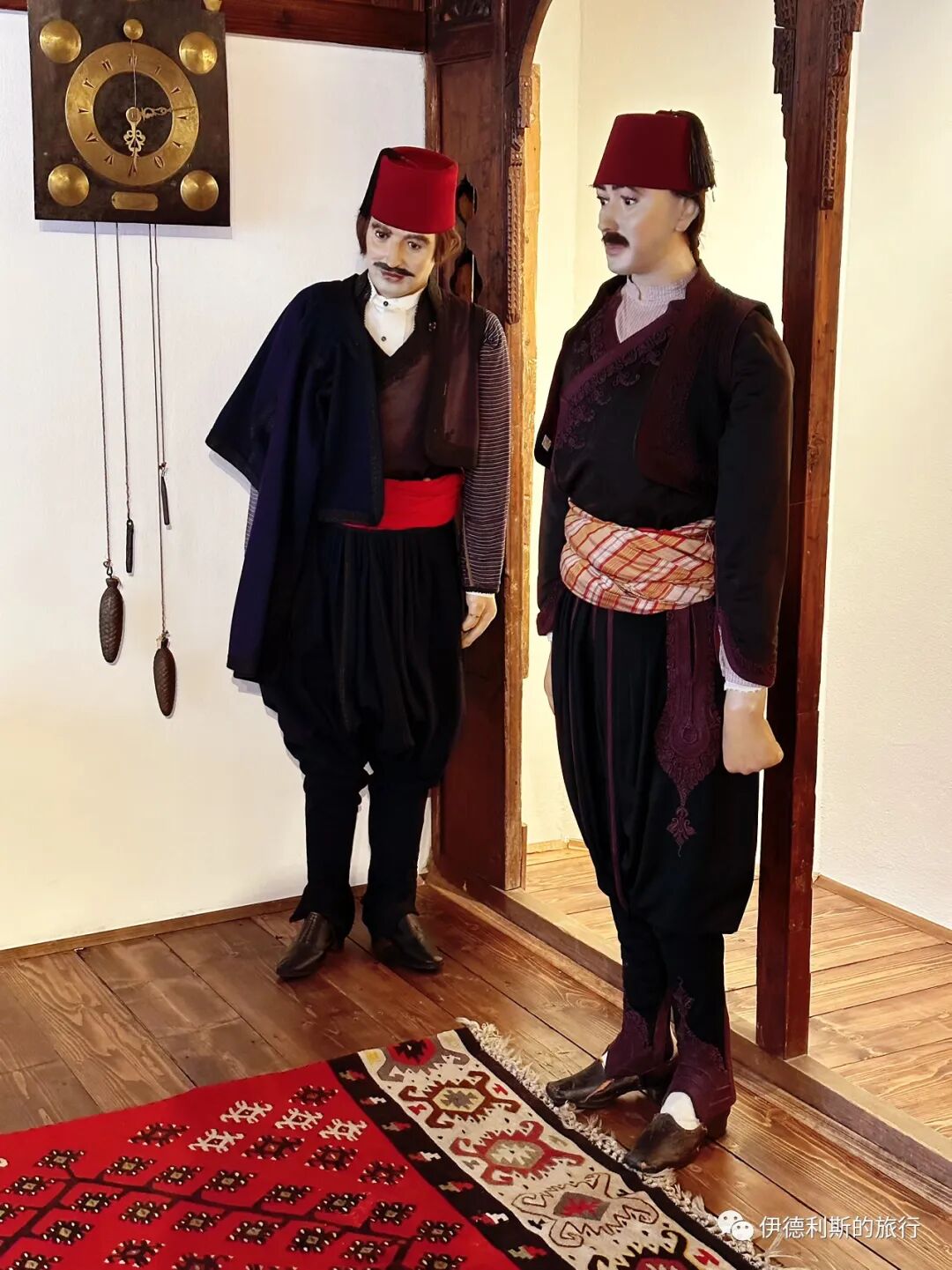
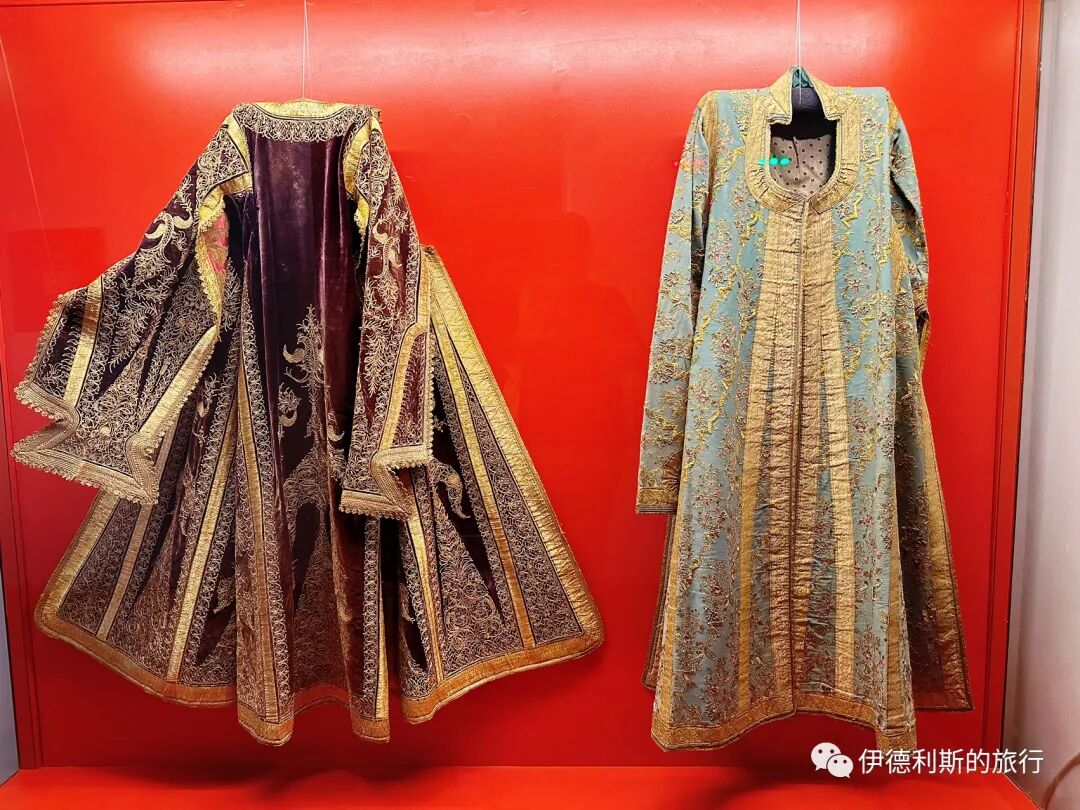
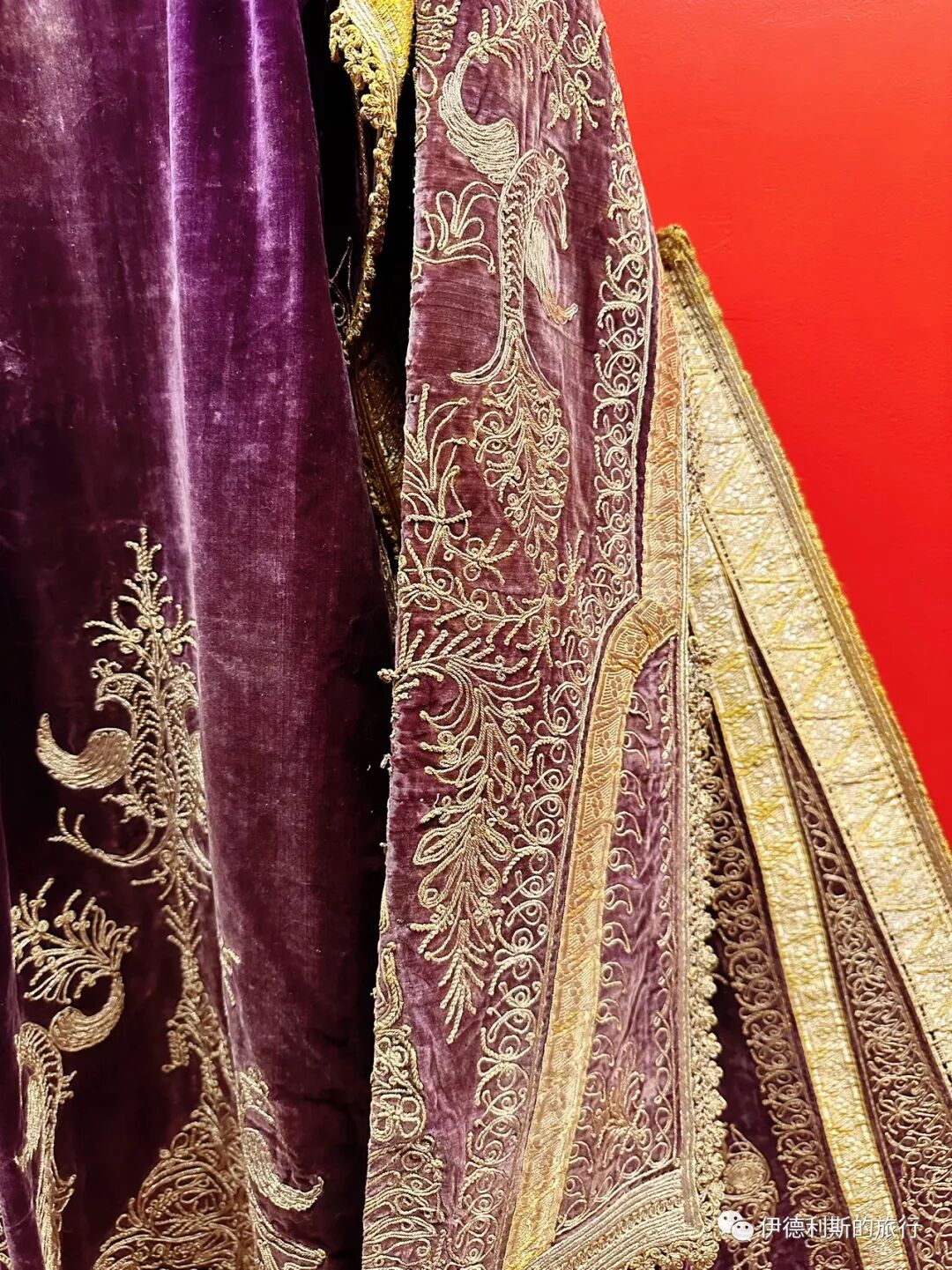
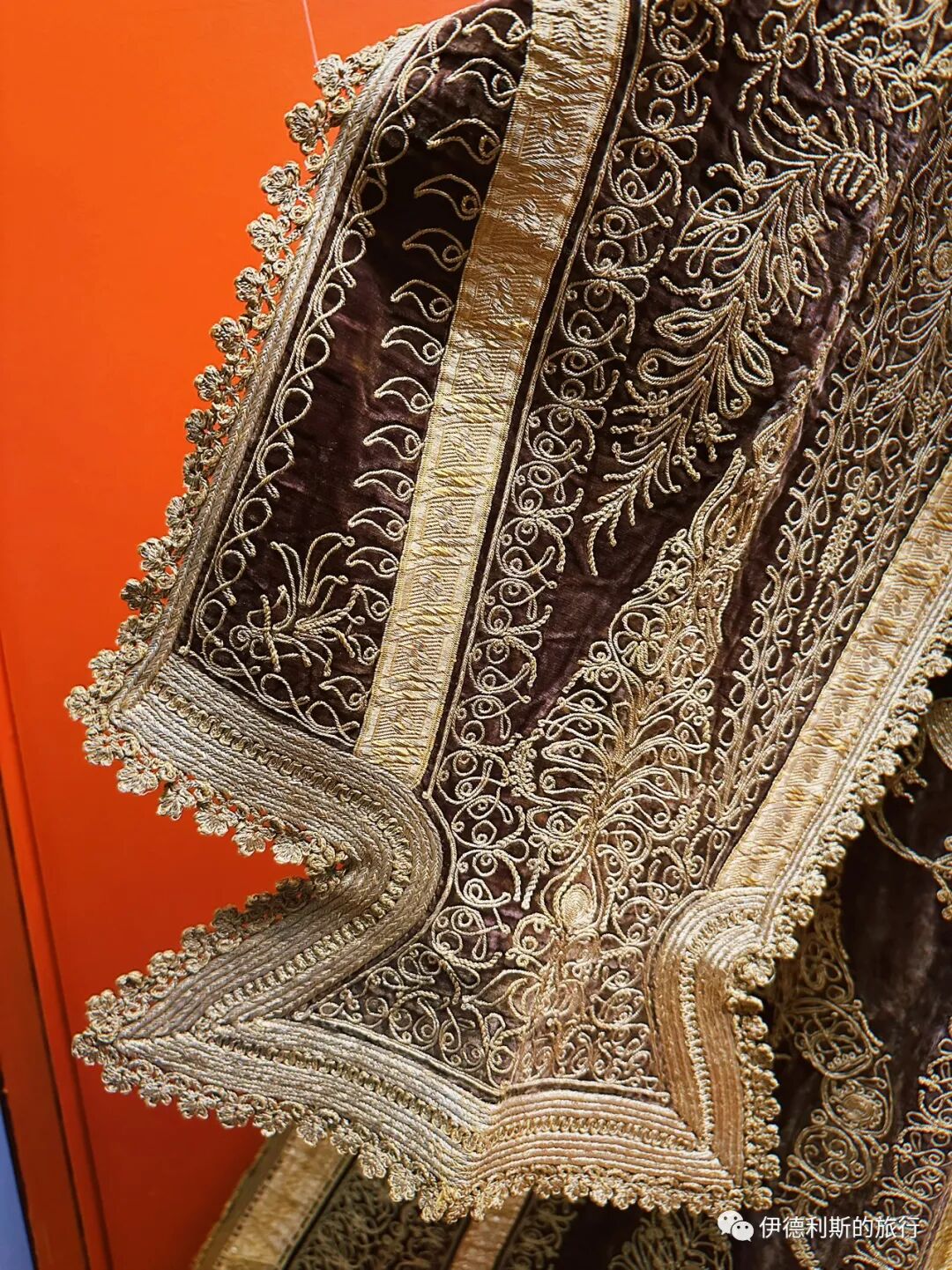
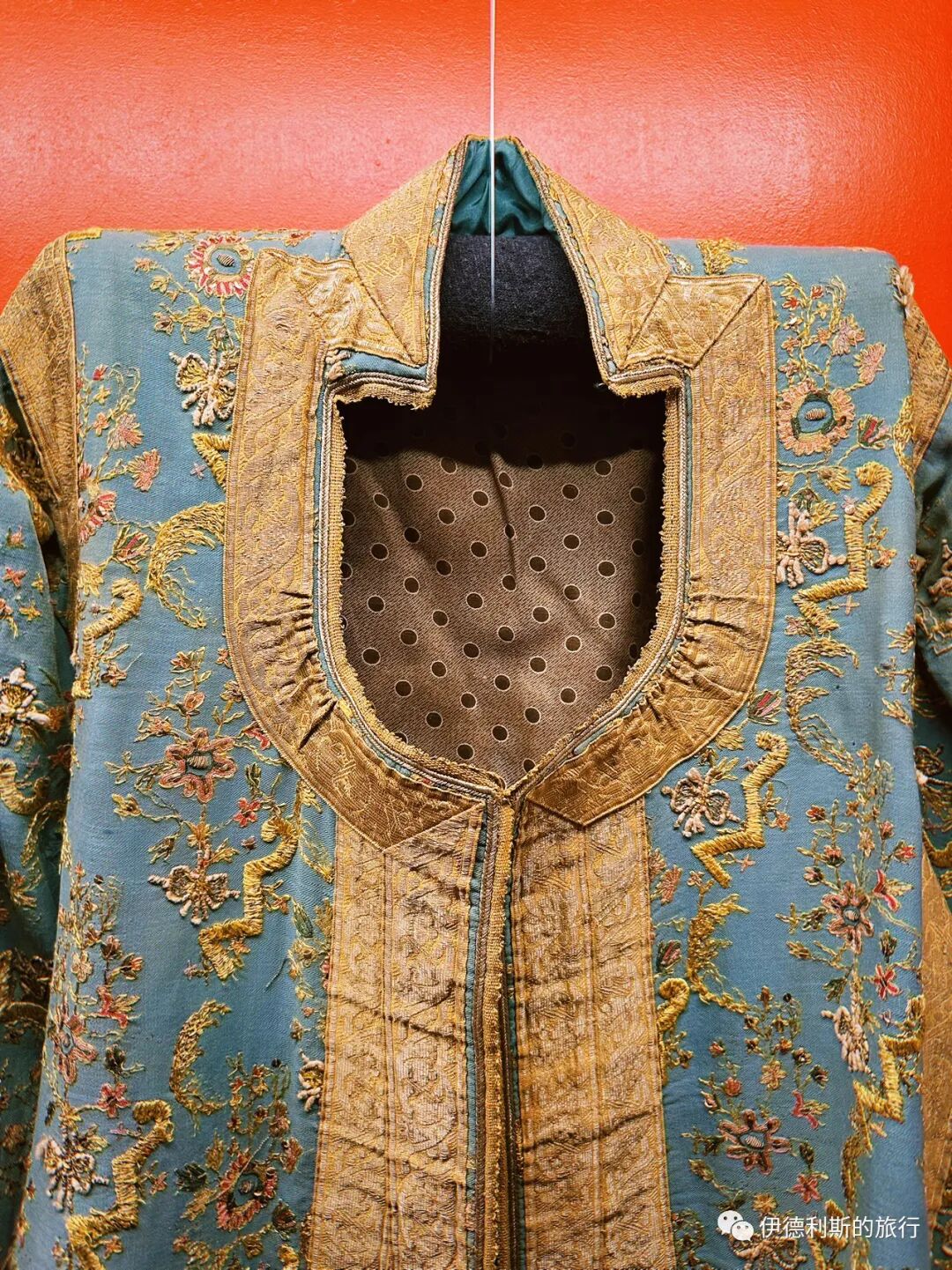
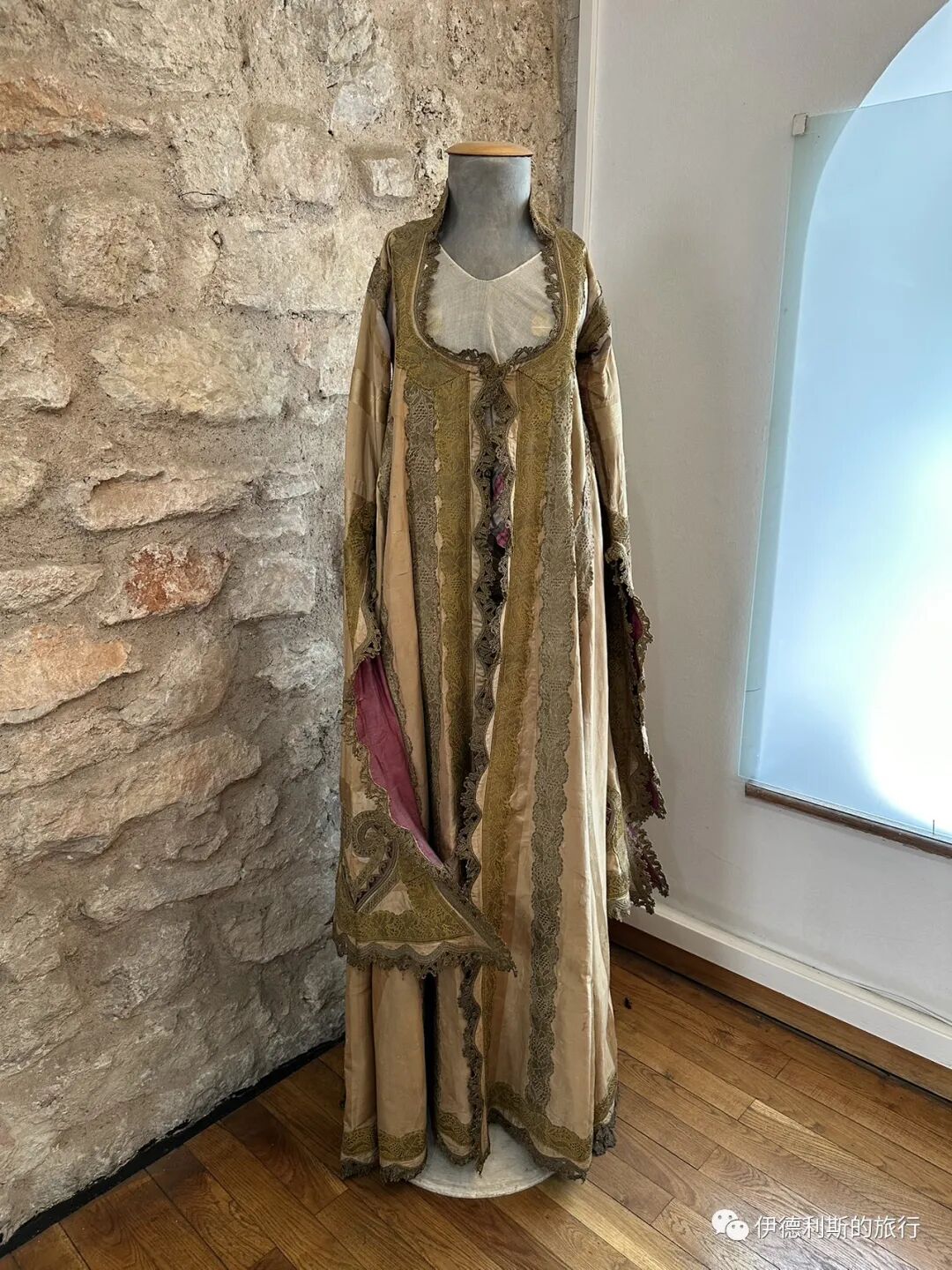
Finally, here are two more exquisite 19th-century Bosniak garments with gold thread embroidery. view all
The most interesting gallery at the National Museum of Bosnia and Herzegovina recreates the life of Bosniaks during the 19th-century Ottoman rule.
The first scene shows a Bey and his wife, who belonged to the wealthiest social class in Ottoman-ruled Bosnia. Bey is a Turkic title for a chieftain. During the middle and late Ottoman period, military officers and officials one rank below a Pasha were also called Bey. The Bey's wife in the exhibit wears an expensive dress embroidered with gold thread, and the exquisite ceiling comes from the famous Sabura family of coppersmiths in Sarajevo.
The second scene shows a court meeting in Ottoman-ruled Bosnia. In the center sits a judge (Kadi) with books of Islamic law placed in front of him. Among the four jury members beside him, one is an Orthodox village head from Herzegovina, one is a Sephardic Jewish rabbi representing the interests of Jewish merchants, and the other two are a Muslim Bey and a Janissary Agha representing the interests of the artisans' guild. The ornately decorated ceiling in the room comes from the Hadzirustembegovic family in Srebrenica, eastern Bosnia, dating back to the 19th century.
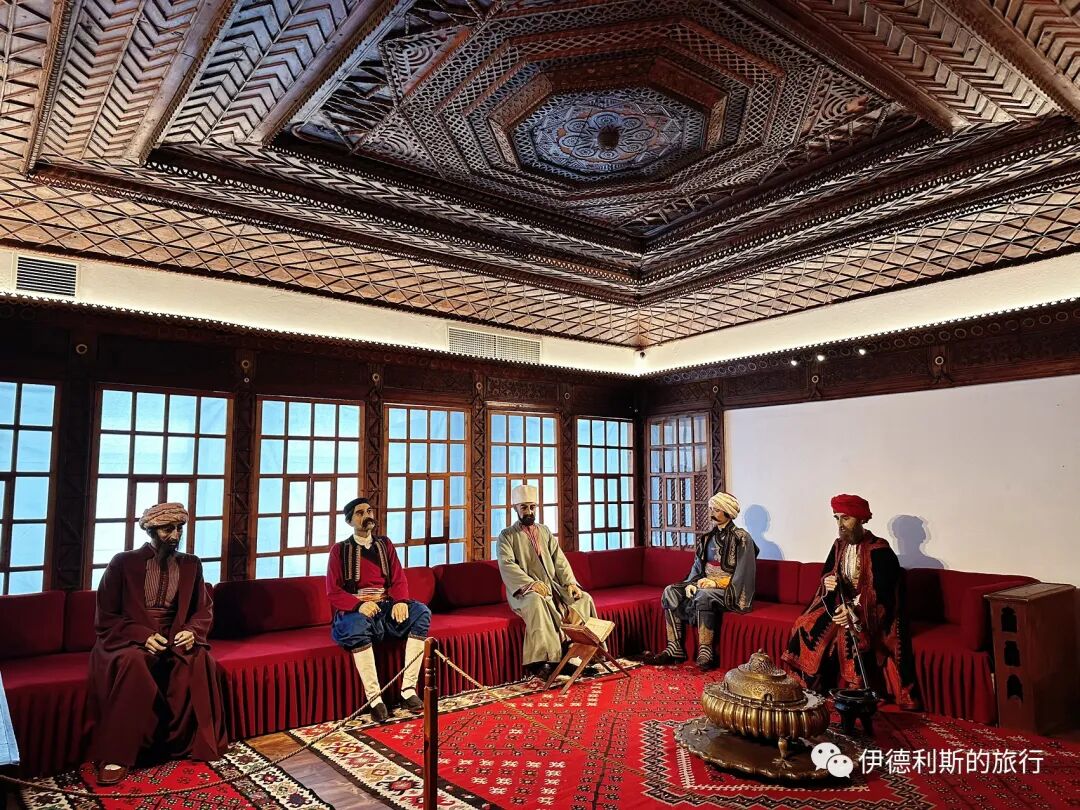
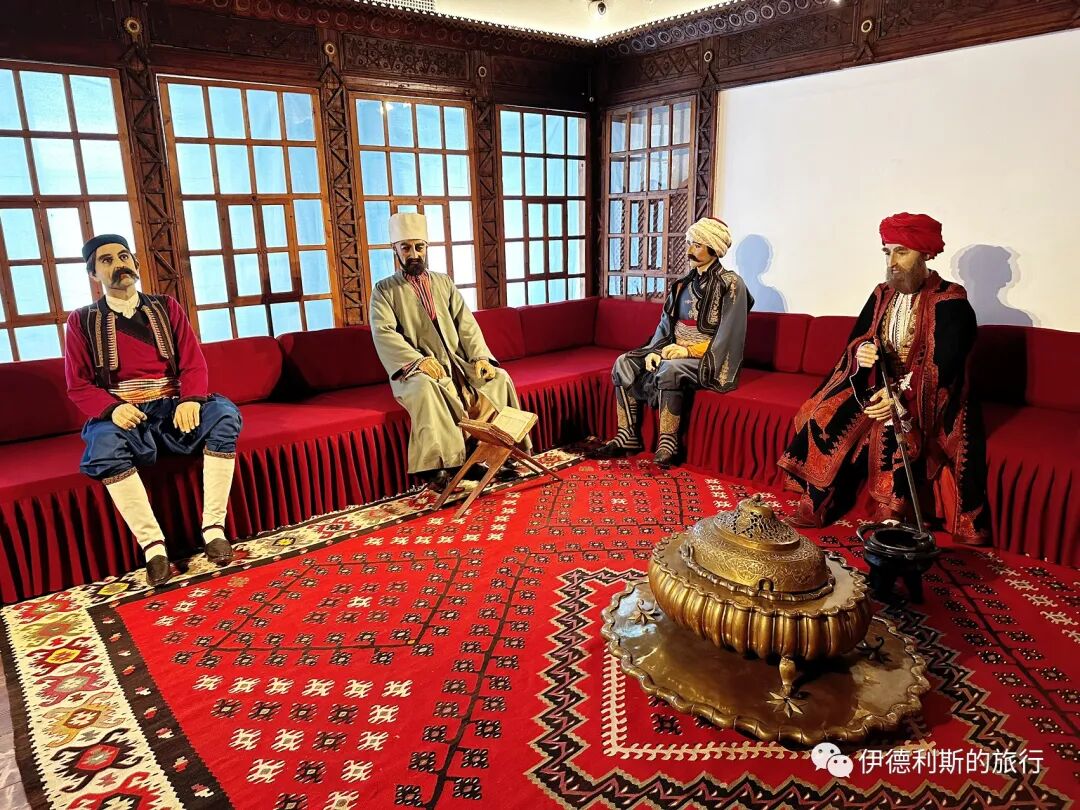
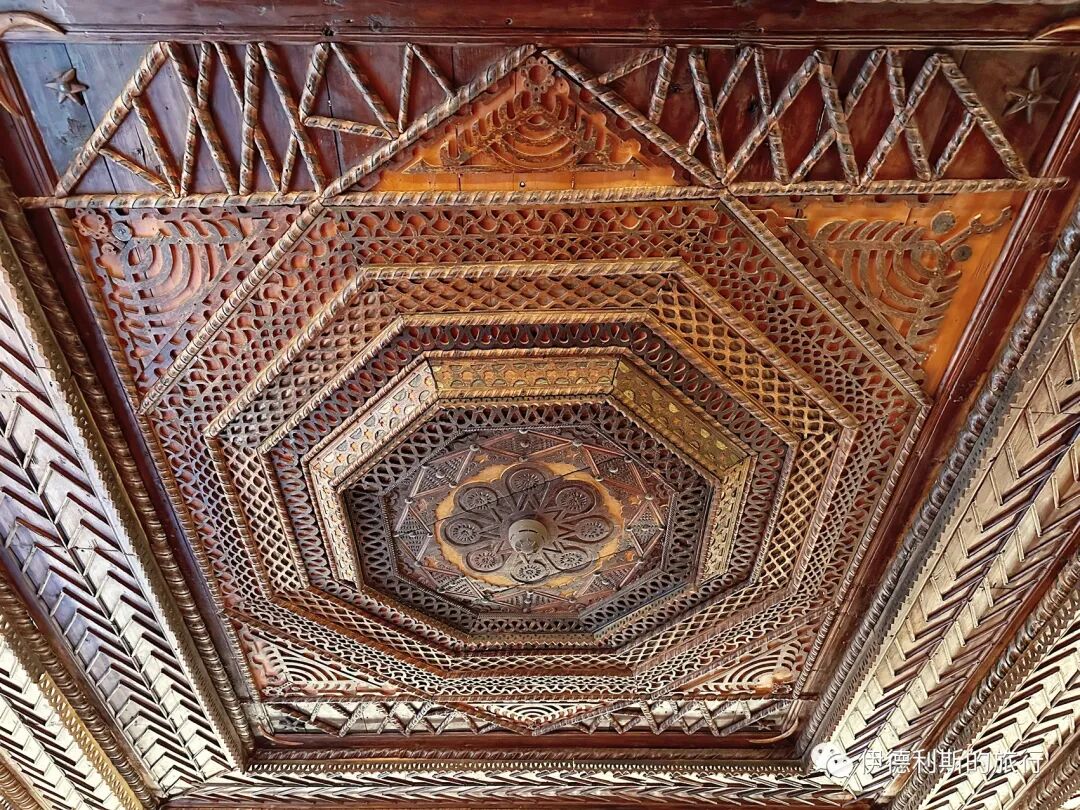
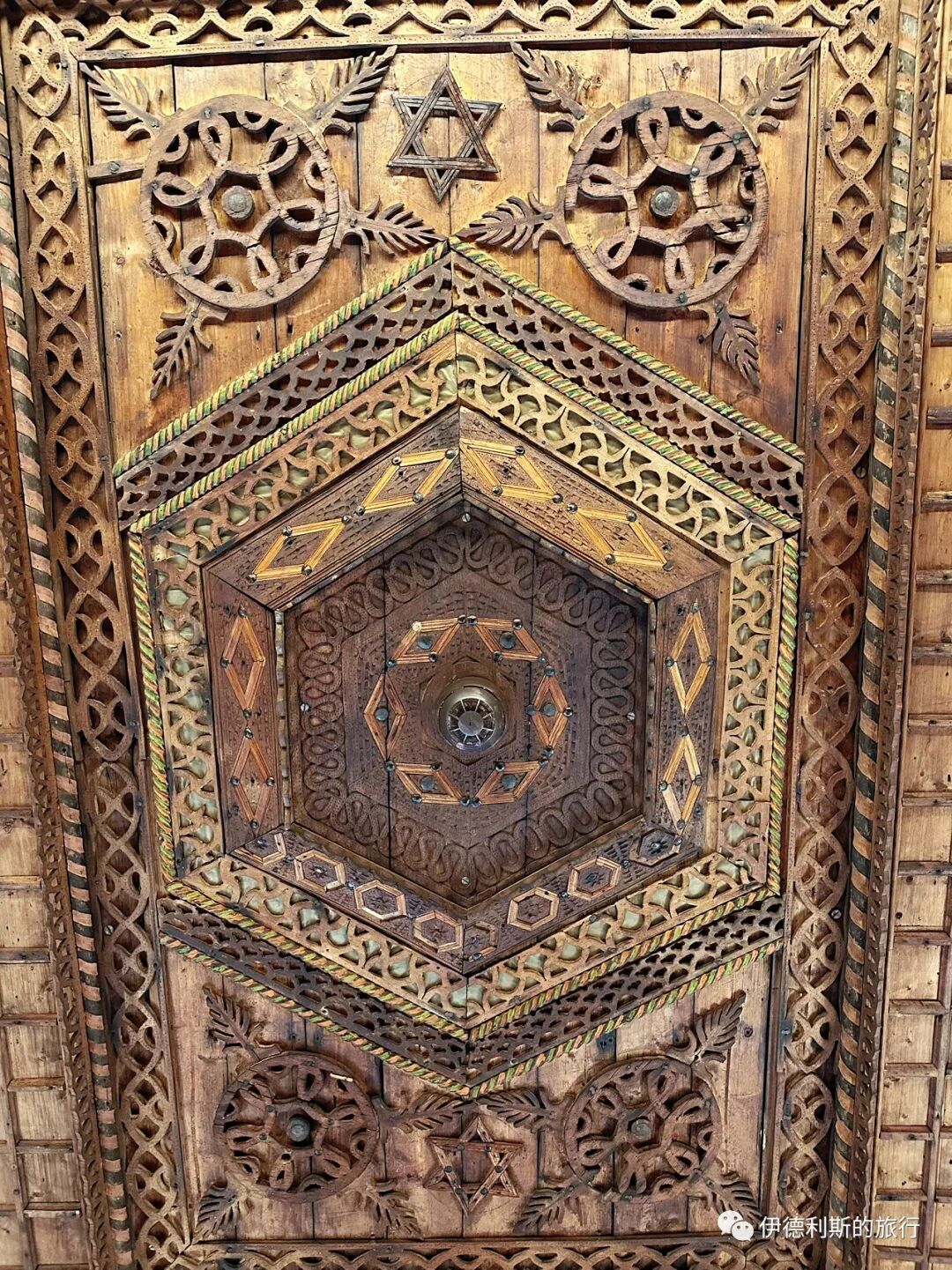
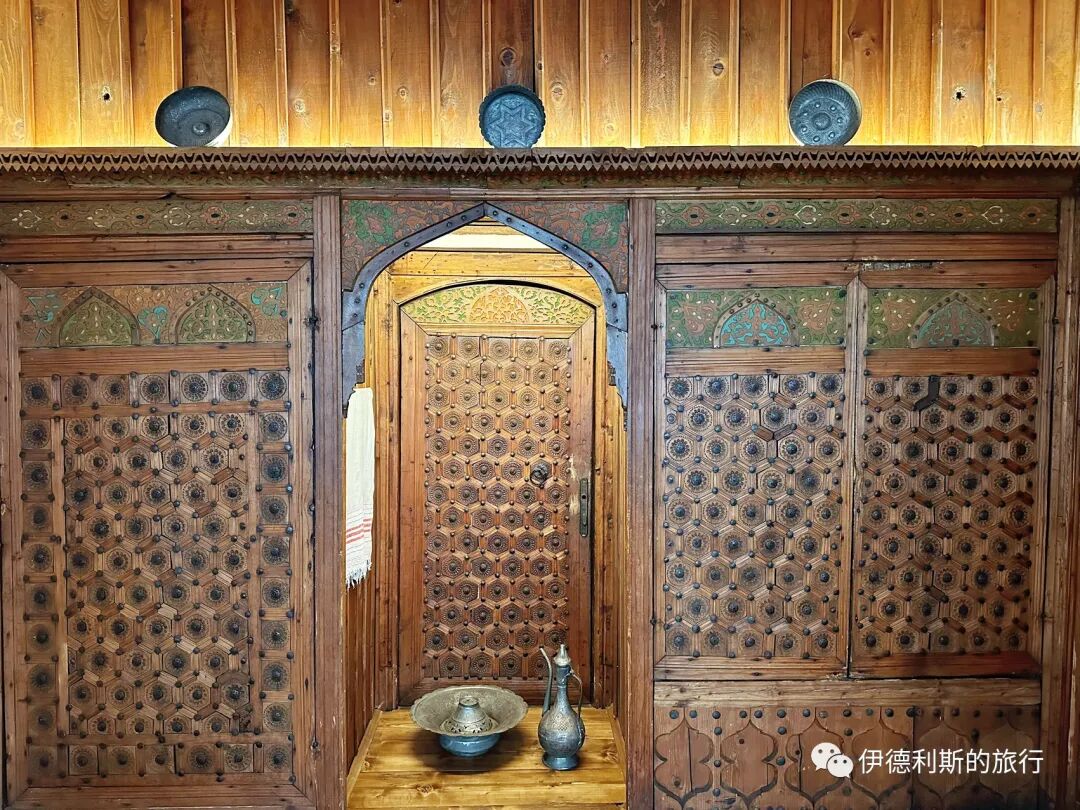
The third scene shows two ladies embroidering on a bay window terrace, with wood carvings from the famous Sabura coppersmith family of Sarajevo. This type of bay window is called a Kameriya in Bosnia. Ladies could look out at the scenery through the window grilles, and they often made their wedding dowries here. These wedding clothes were kept in a special wooden chest decorated with beautiful flower and bird patterns.
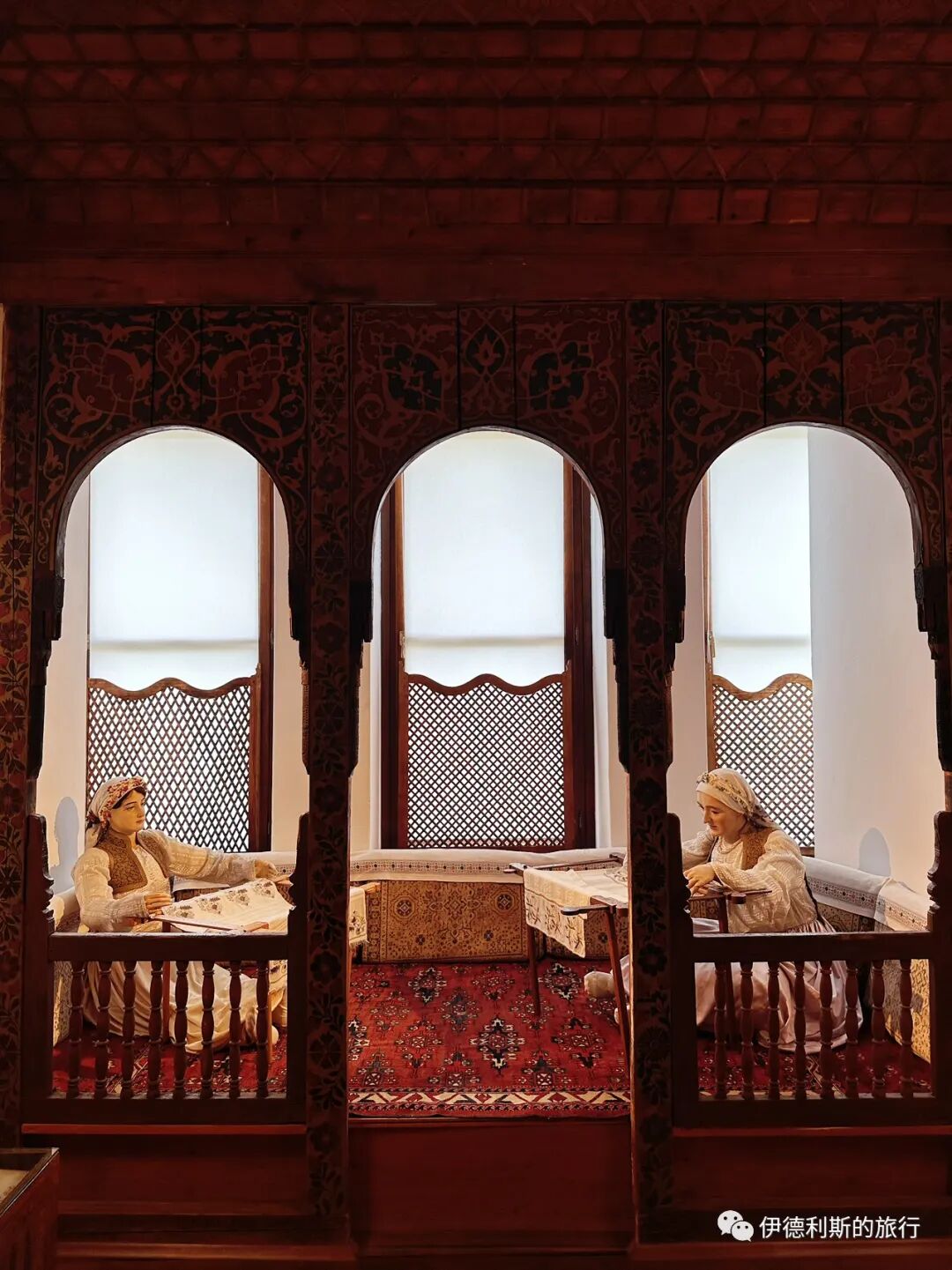
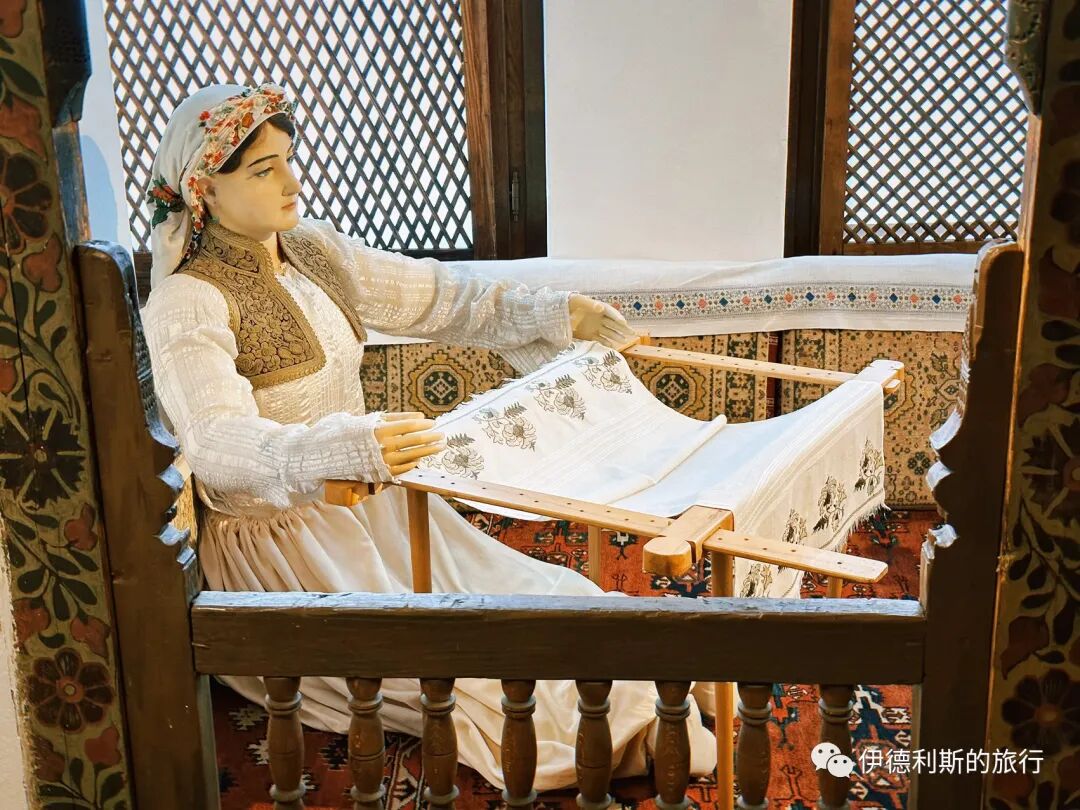
The fourth scene shows a middle-class merchant family eating. They sit around a low round table (sinija) with a copper tray (demirlija) for serving food, and the fine wood carvings on the ceiling and cabinets also come from the Sabura family.
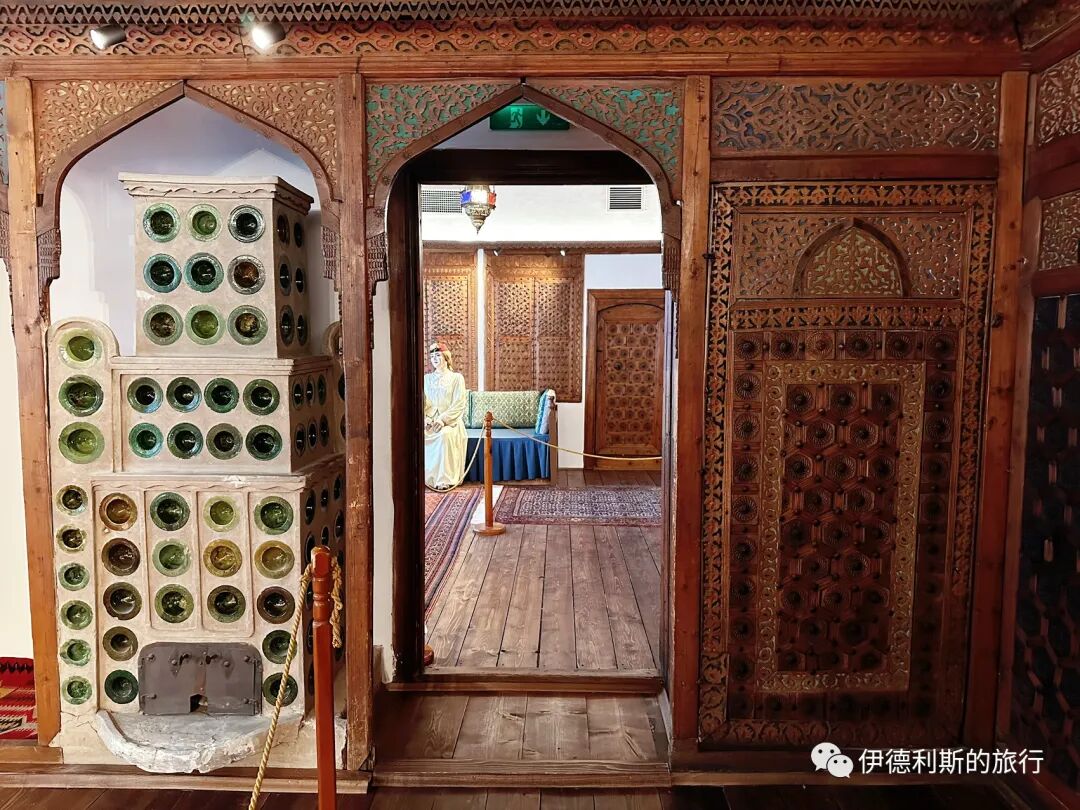
The fifth scene shows a young man courting a girl outside her window. This was a common way for young Bosniaks to communicate in the 19th century with their parents' knowledge. The wood carvings in the room come from the residence of Derviš-bey Kršlak in Jajce, central Bosnia.
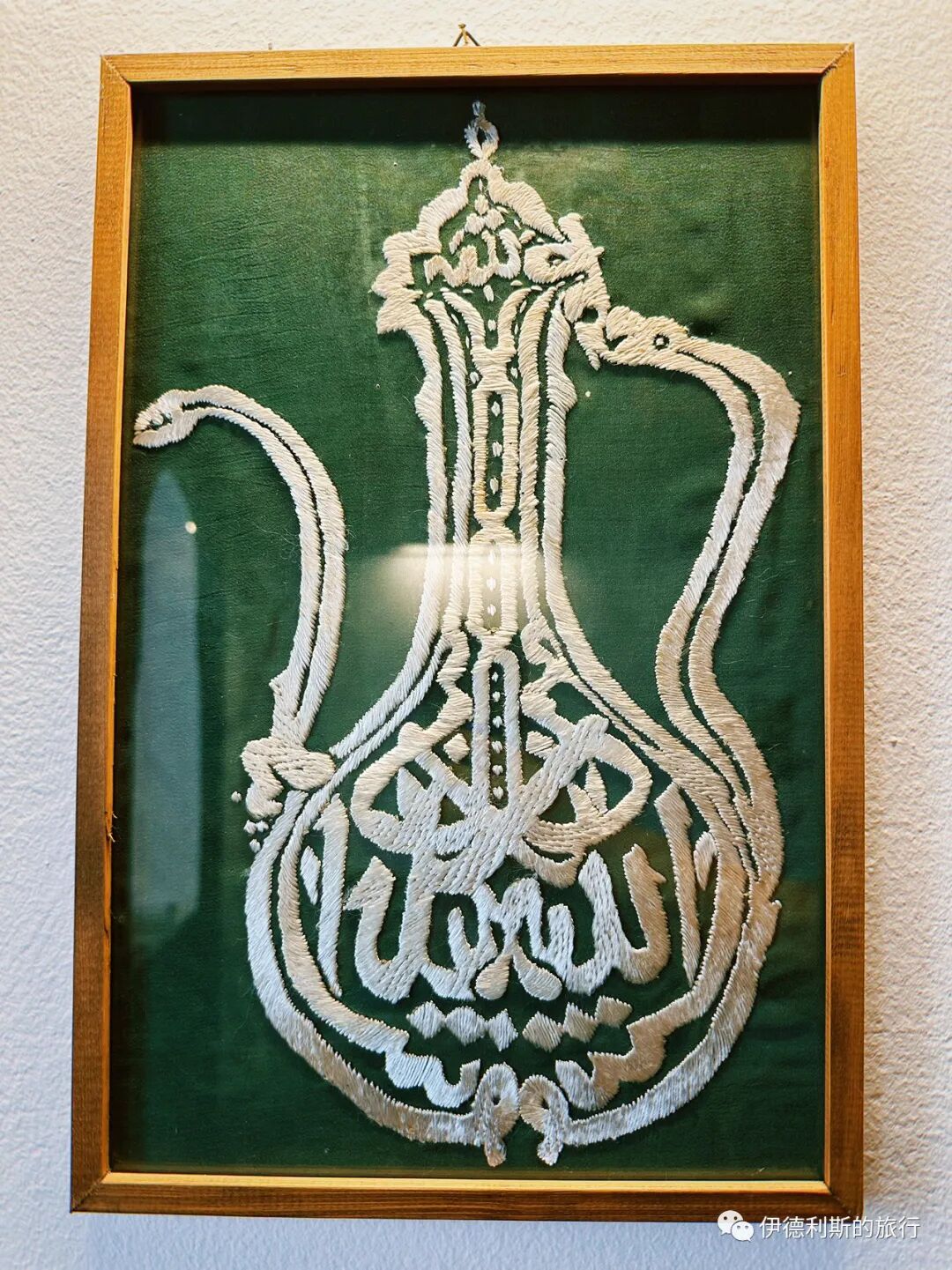
Finally, here are two more exquisite 19th-century Bosniak garments with gold thread embroidery.
Halal Travel Guide: Sarajevo - Jewish Synagogue, Muslim Aid and Shared History
Articles • ali2007fr posted the article • 0 comments • 149 views • 2026-05-19 06:54
During the Middle Ages, Christian countries persecuted and massacred Jews for a long time, while Muslim countries protected and helped them many times. I recently saw in the news that some Jewish people are standing up against Israel's crimes in Palestine and calling for peace. I believe not everyone has forgotten this history.
During the First Crusade in 1096, Christian peasants in France and Germany carried out a series of massacres against Jews in the Rhine Valley, which started a wave of anti-Semitism in Christian countries. Between 1189 and 1190, massacres of Jews broke out in places like London and York in England, until the King of England ordered the expulsion of all Jews in 1290. At the same time, under Muslim rule, Jews thrived in Baghdad, Cairo, and Damascus, which helped lead to a cultural boom.
In the Iberian Peninsula during the 12th to 15th centuries, anti-Semitism in Christian countries reached its peak. In 1492, the Spanish kingdoms of Castile and Aragon conquered Granada, the last Muslim dynasty in Andalusia. They then issued a decree to expel all Sephardic Jews who refused to convert to Christianity and banned them from taking any currency with them. Just four years later, in 1496, the Kingdom of Portugal also issued a decree to expel Jews.
When Ottoman Sultan Bayezid II heard the news, he sent his navy to transport many Jewish refugees to Ottoman territory and issued a notice across the country welcoming them. He mocked the rulers of Spain and Portugal, saying, "They have impoverished their own countries and enriched mine!" Sure enough, the Sephardic Jews from Spain and Portugal brought new technologies and crafts to the Ottoman Empire, contributing to its economic prosperity in the 16th century.
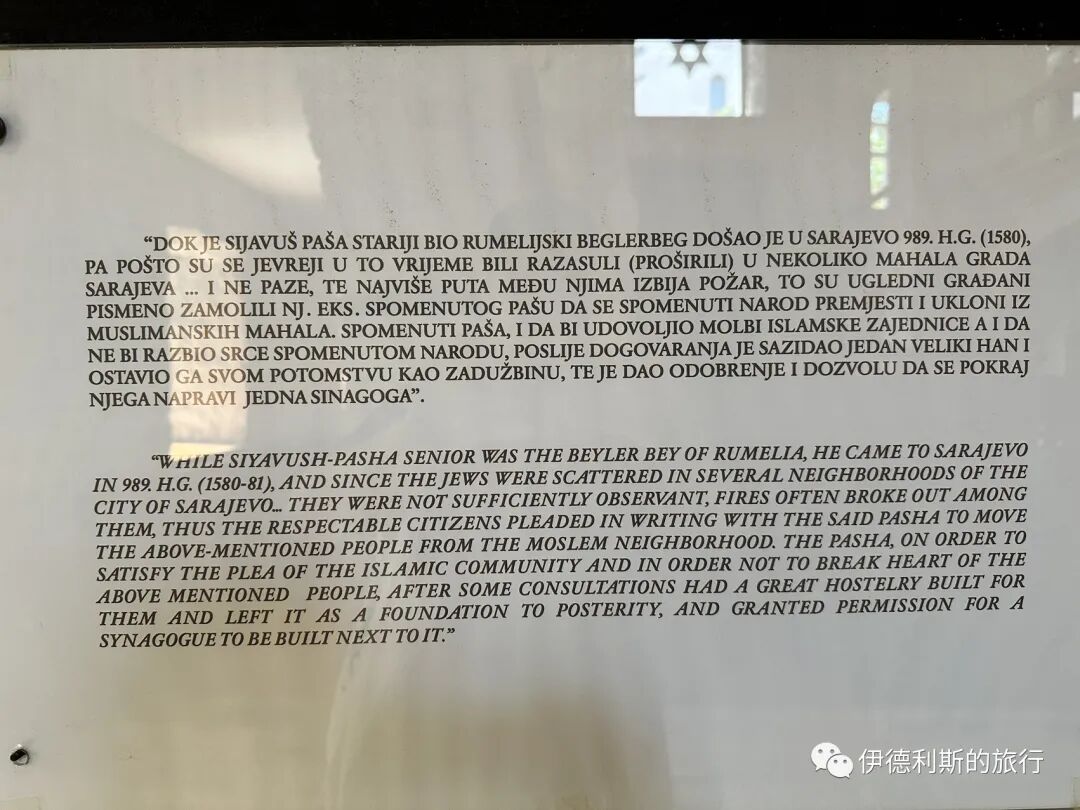
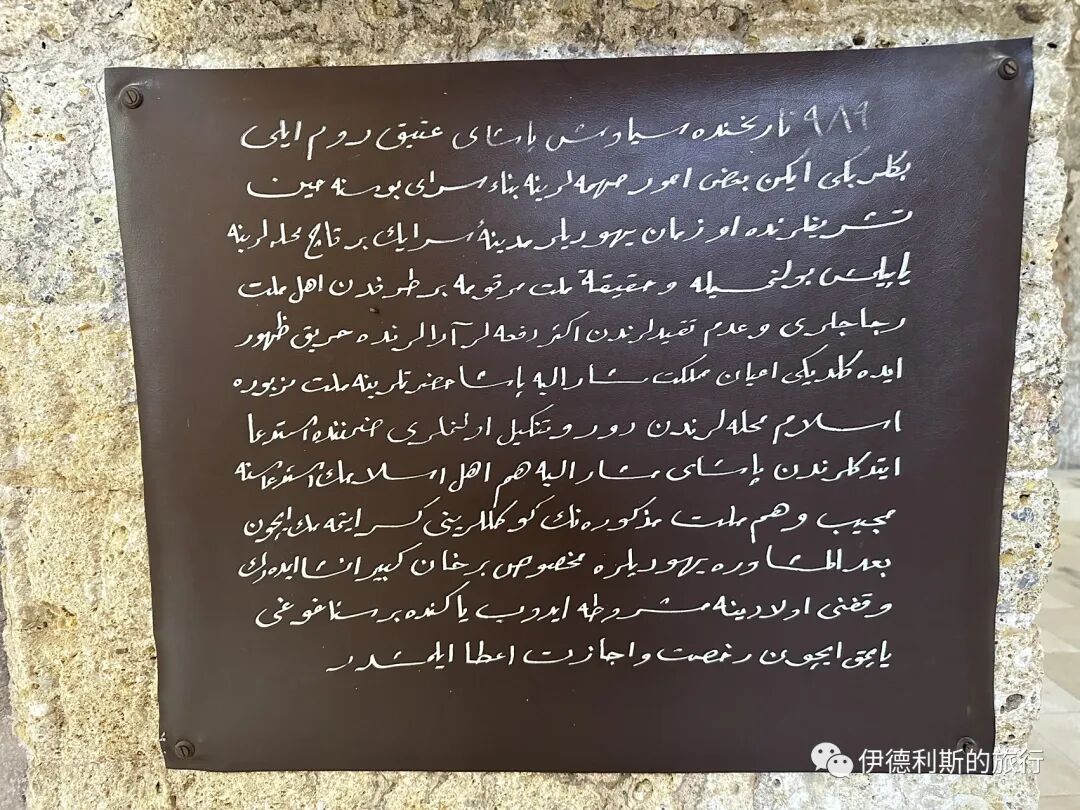
After that, Sephardic Jews began to settle in the Balkan Peninsula under Ottoman control, including in Sarajevo. In 1581, Sijavus Pasha, the governor of Rumelia in the European part of the Ottoman Empire, built a residential area and a synagogue for the Jews scattered throughout Sarajevo, which is now called the Old Synagogue. The Old Synagogue was damaged by fire in 1697 and 1788, and it was rebuilt in the early 19th century to its current appearance.
After Germany occupied Sarajevo in 1941, the Old Synagogue was used as a prison for Jews and later became a warehouse. The Croatian Ustaše organization killed 85% of the Jewish population living in Croatia and Bosnia through massacres and the establishment of concentration camps. The museum now displays the clothes that Sarajevo Jews were forced to wear with armbands, as well as ID photos of Jews who were arrested and imprisoned.
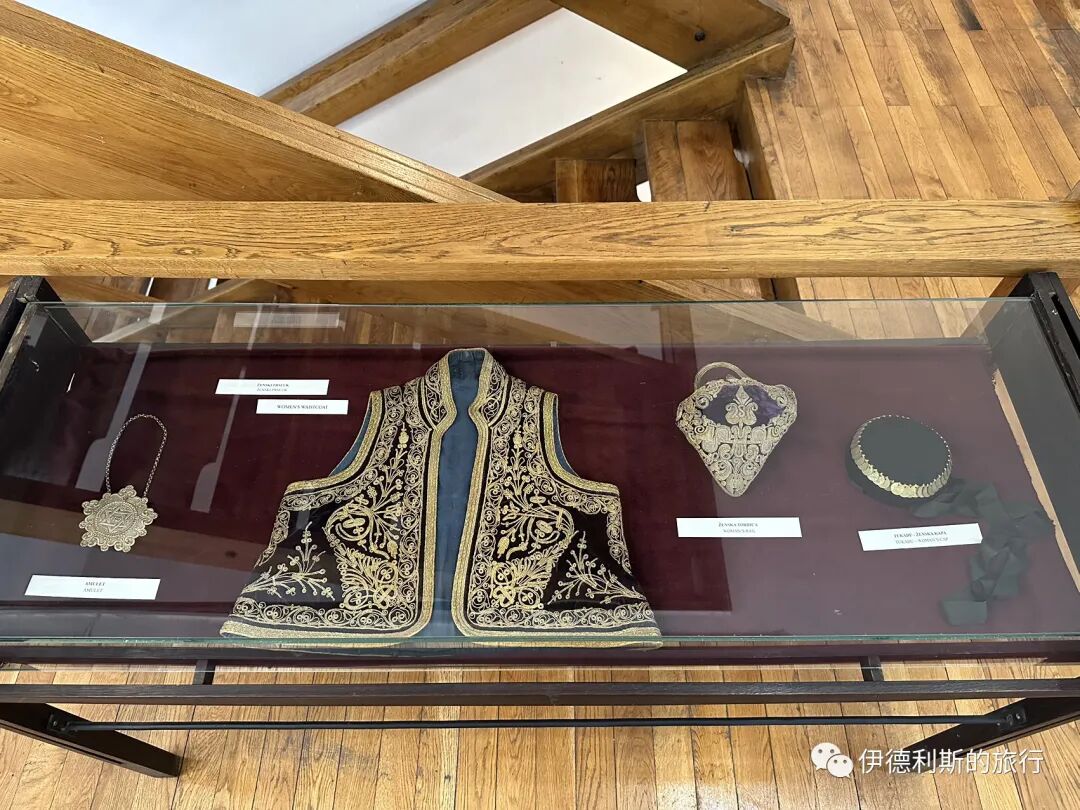
Yugoslavia restored the Old Jewish Synagogue in 1957, and the Jewish Museum of Bosnia and Herzegovina officially opened in 1966. The Old Jewish Synagogue was damaged by shells during the Siege of Sarajevo from 1992 to 1995, and it was restored again in 2003. The museum also exhibits exquisite Jewish clothing. view all
During the Middle Ages, Christian countries persecuted and massacred Jews for a long time, while Muslim countries protected and helped them many times. I recently saw in the news that some Jewish people are standing up against Israel's crimes in Palestine and calling for peace. I believe not everyone has forgotten this history.
During the First Crusade in 1096, Christian peasants in France and Germany carried out a series of massacres against Jews in the Rhine Valley, which started a wave of anti-Semitism in Christian countries. Between 1189 and 1190, massacres of Jews broke out in places like London and York in England, until the King of England ordered the expulsion of all Jews in 1290. At the same time, under Muslim rule, Jews thrived in Baghdad, Cairo, and Damascus, which helped lead to a cultural boom.
In the Iberian Peninsula during the 12th to 15th centuries, anti-Semitism in Christian countries reached its peak. In 1492, the Spanish kingdoms of Castile and Aragon conquered Granada, the last Muslim dynasty in Andalusia. They then issued a decree to expel all Sephardic Jews who refused to convert to Christianity and banned them from taking any currency with them. Just four years later, in 1496, the Kingdom of Portugal also issued a decree to expel Jews.
When Ottoman Sultan Bayezid II heard the news, he sent his navy to transport many Jewish refugees to Ottoman territory and issued a notice across the country welcoming them. He mocked the rulers of Spain and Portugal, saying, "They have impoverished their own countries and enriched mine!" Sure enough, the Sephardic Jews from Spain and Portugal brought new technologies and crafts to the Ottoman Empire, contributing to its economic prosperity in the 16th century.
After that, Sephardic Jews began to settle in the Balkan Peninsula under Ottoman control, including in Sarajevo. In 1581, Sijavus Pasha, the governor of Rumelia in the European part of the Ottoman Empire, built a residential area and a synagogue for the Jews scattered throughout Sarajevo, which is now called the Old Synagogue. The Old Synagogue was damaged by fire in 1697 and 1788, and it was rebuilt in the early 19th century to its current appearance.
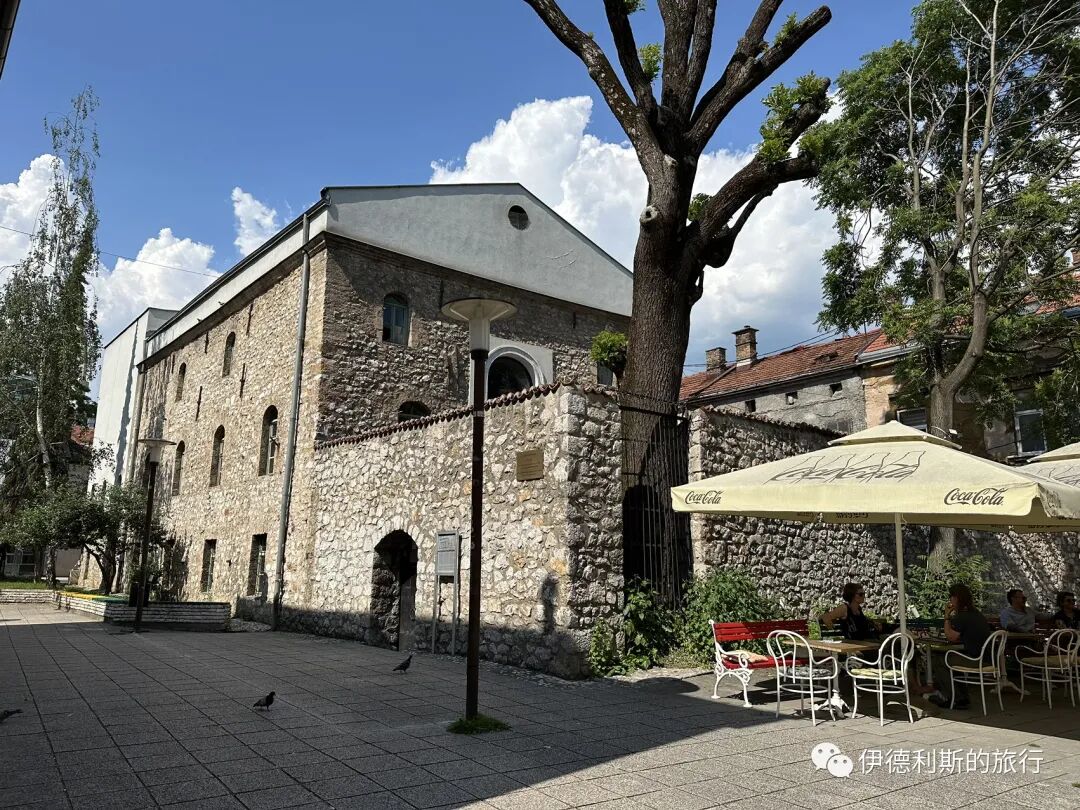
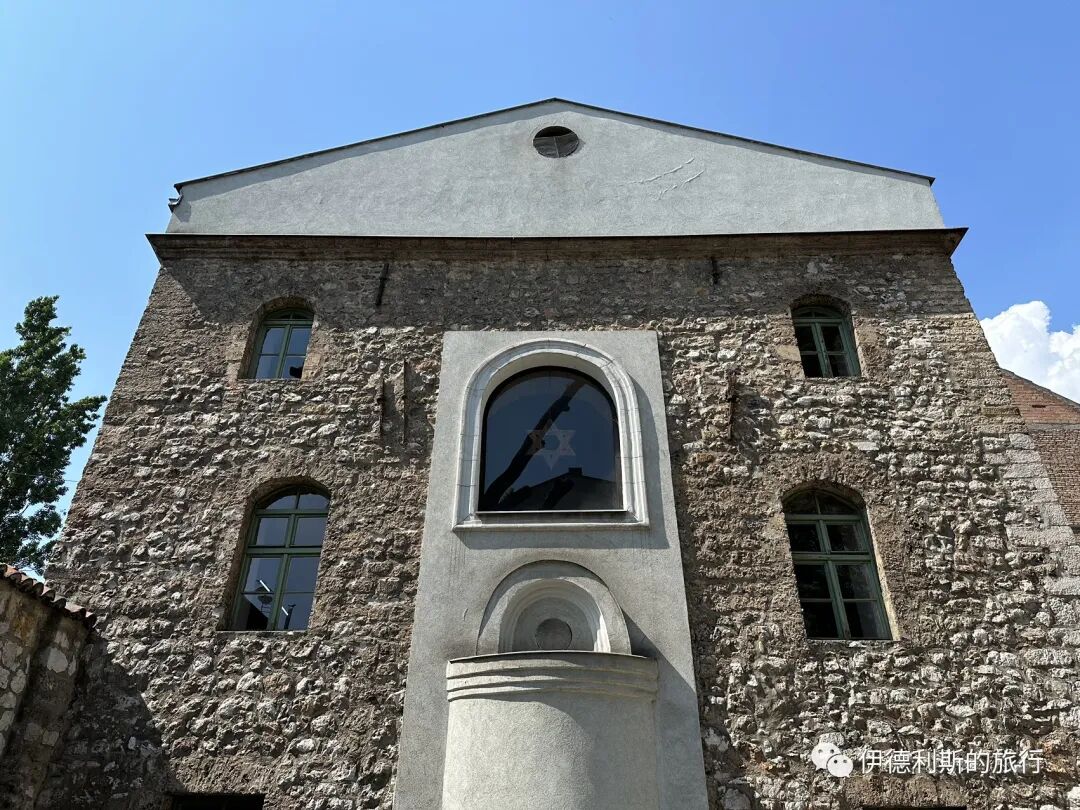
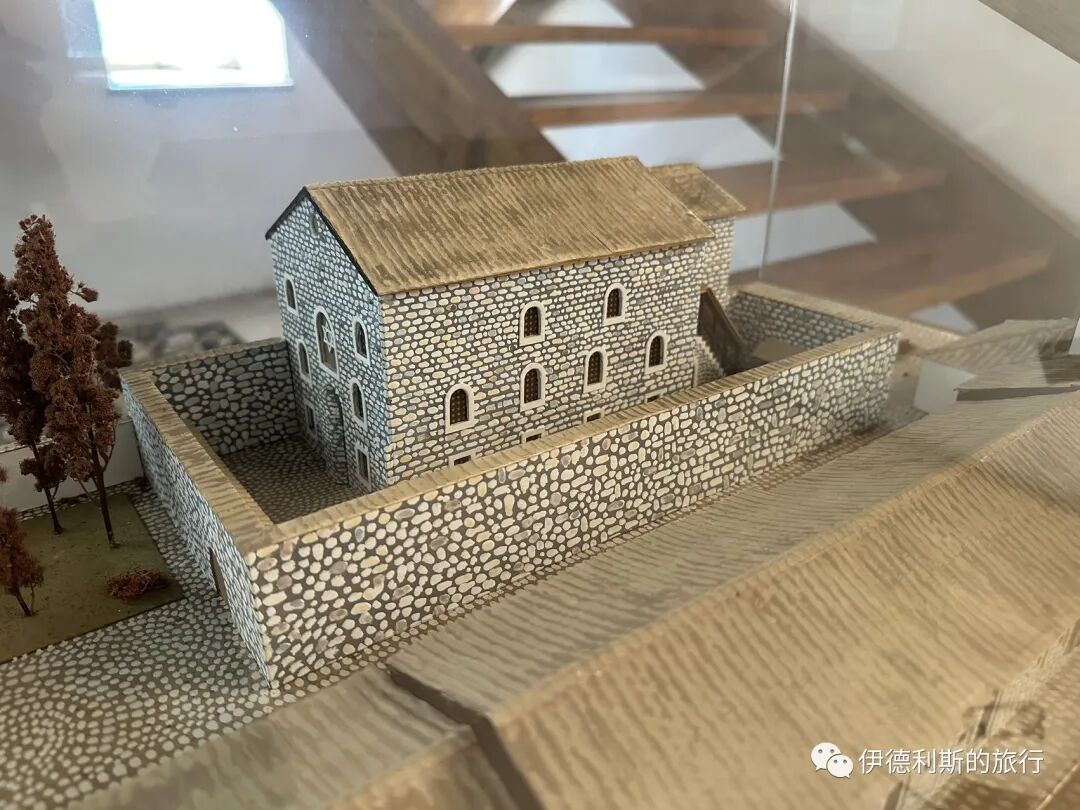
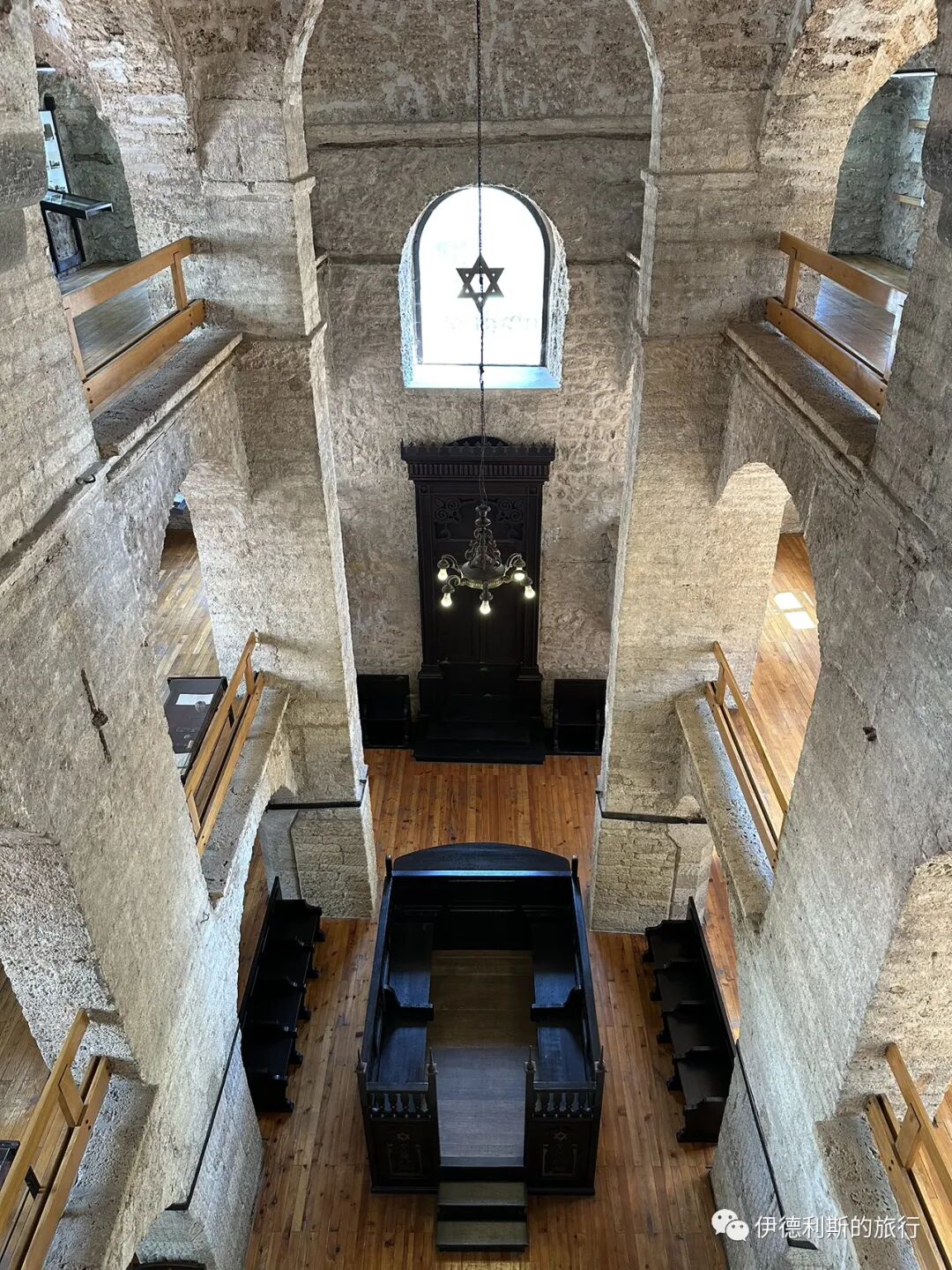
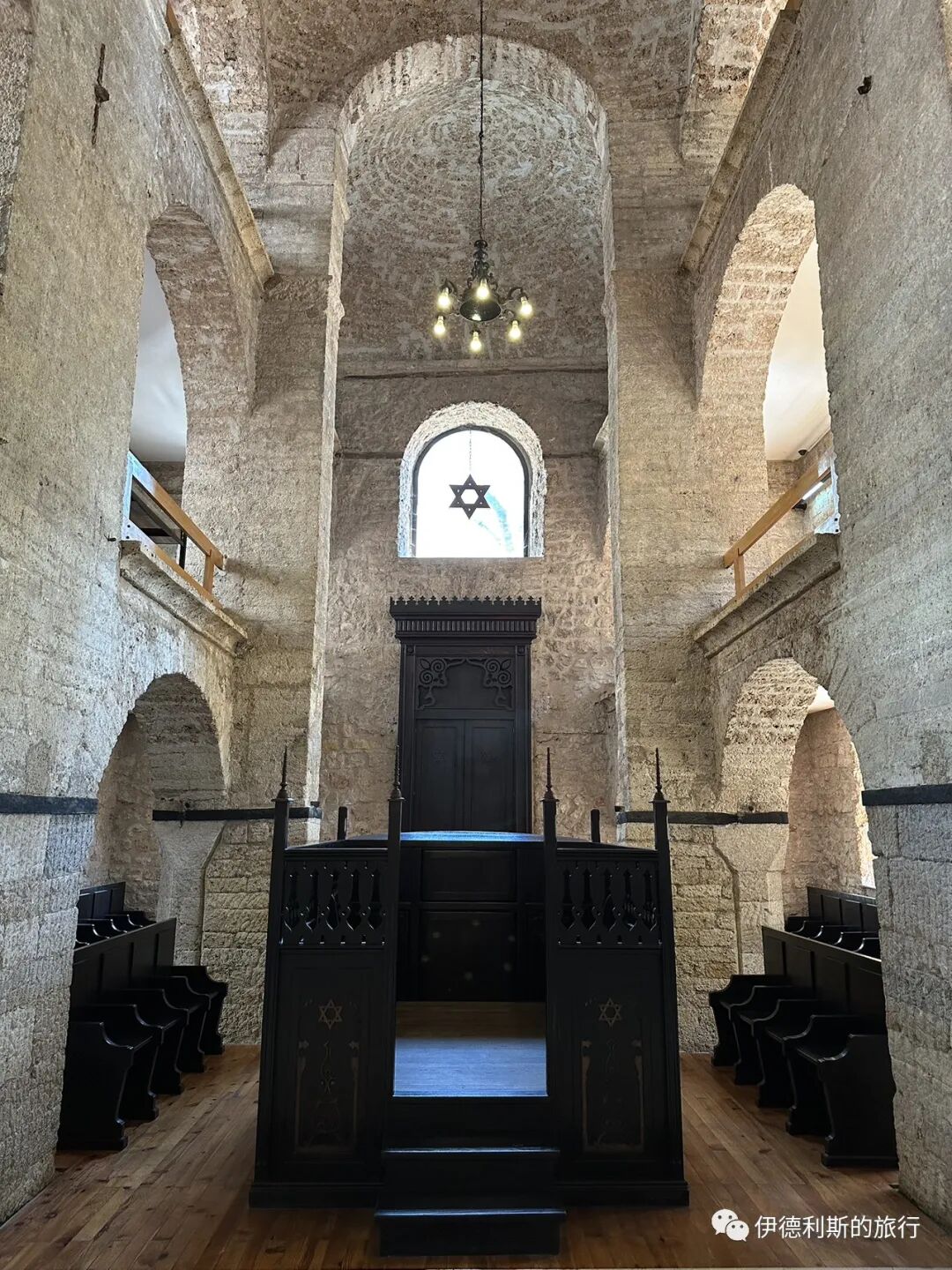
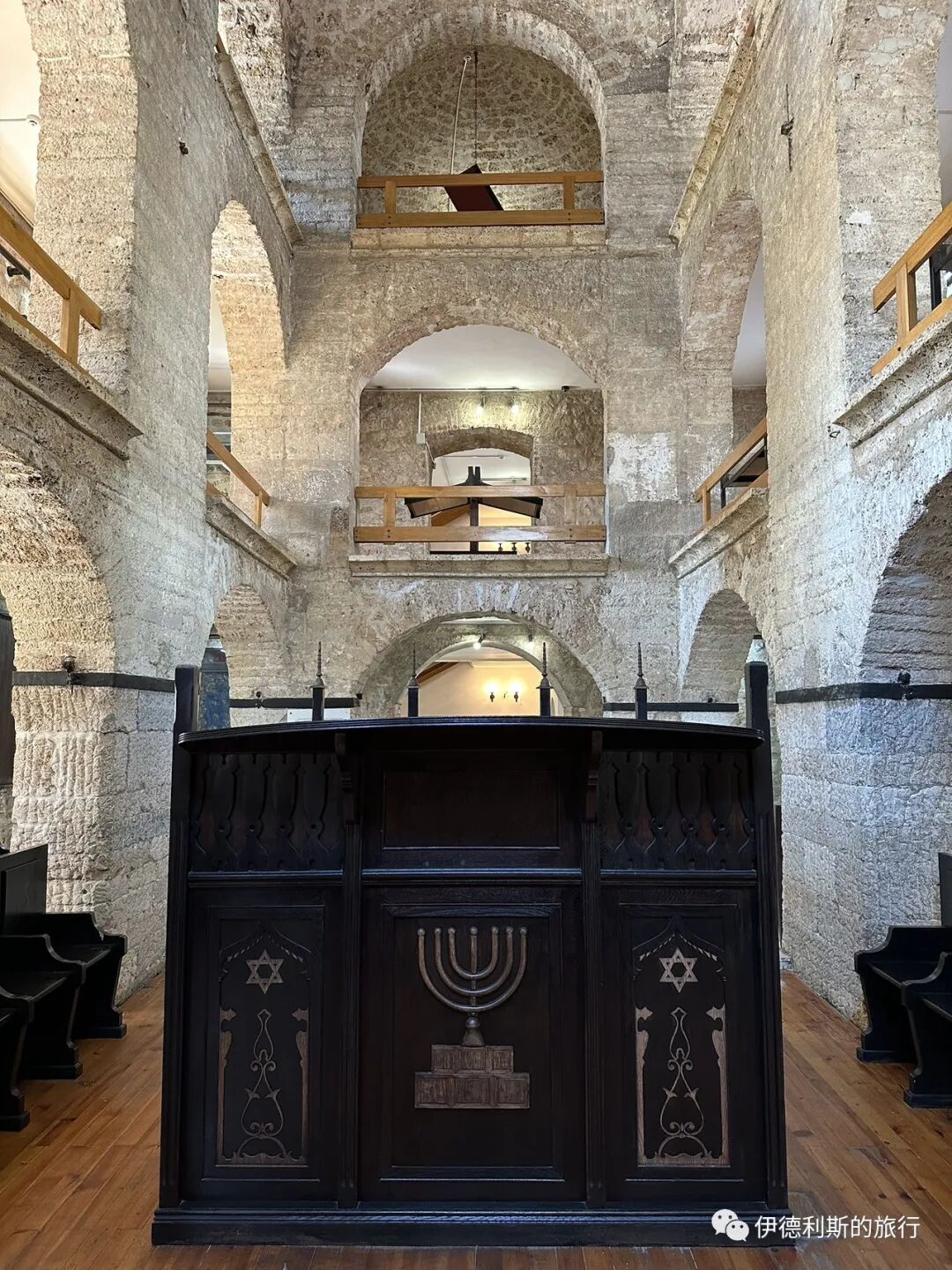
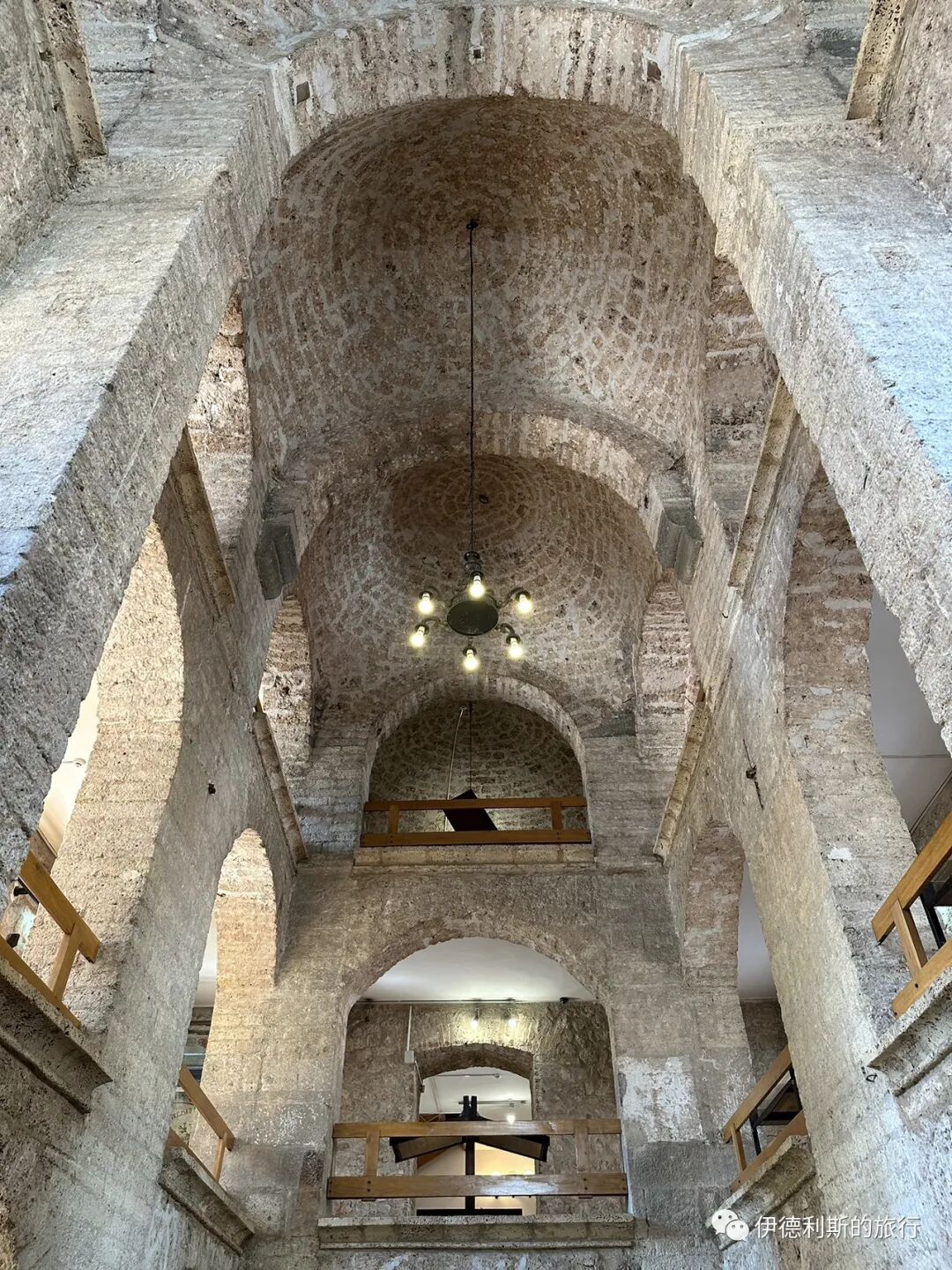
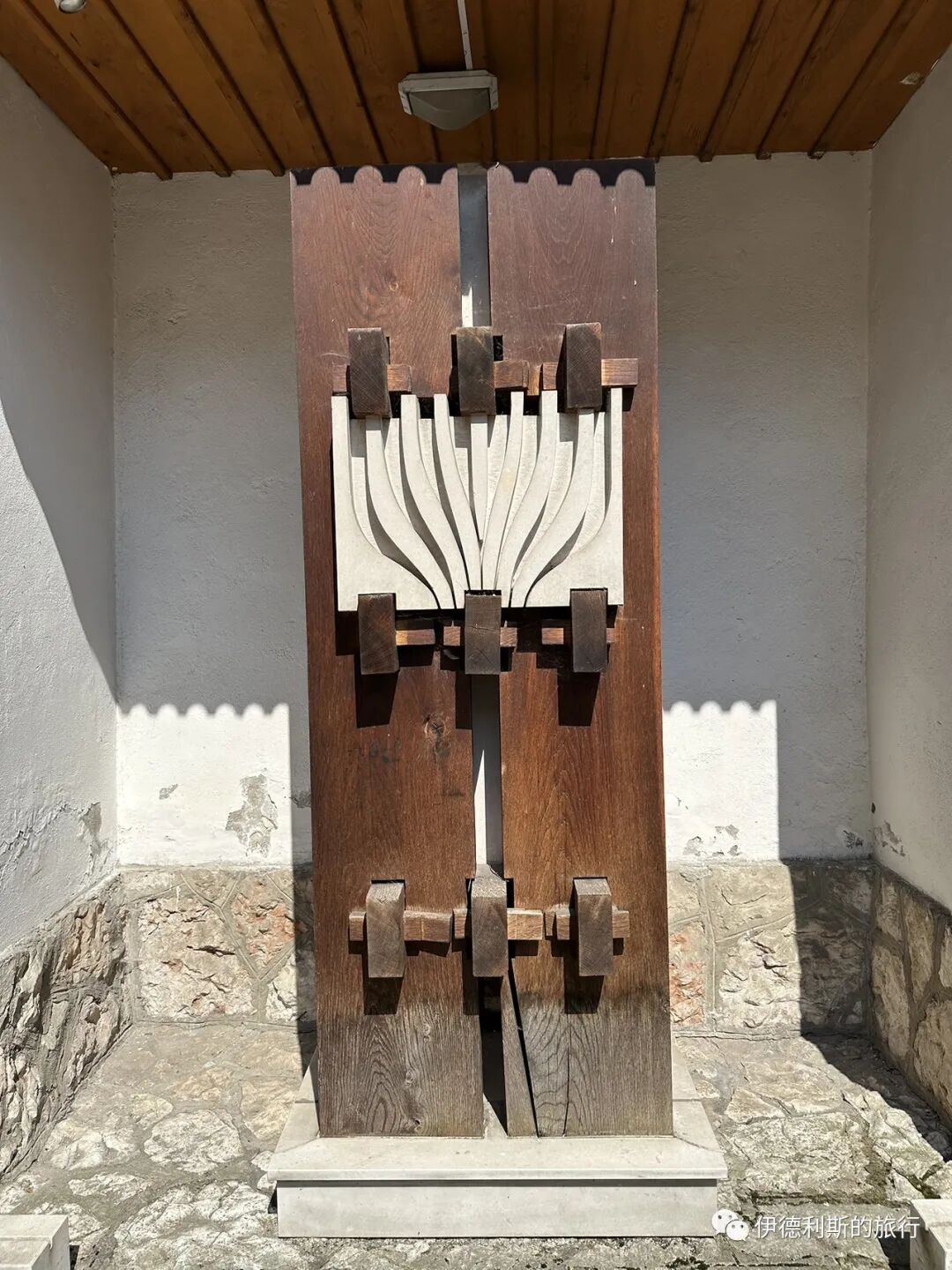
After Germany occupied Sarajevo in 1941, the Old Synagogue was used as a prison for Jews and later became a warehouse. The Croatian Ustaše organization killed 85% of the Jewish population living in Croatia and Bosnia through massacres and the establishment of concentration camps. The museum now displays the clothes that Sarajevo Jews were forced to wear with armbands, as well as ID photos of Jews who were arrested and imprisoned.
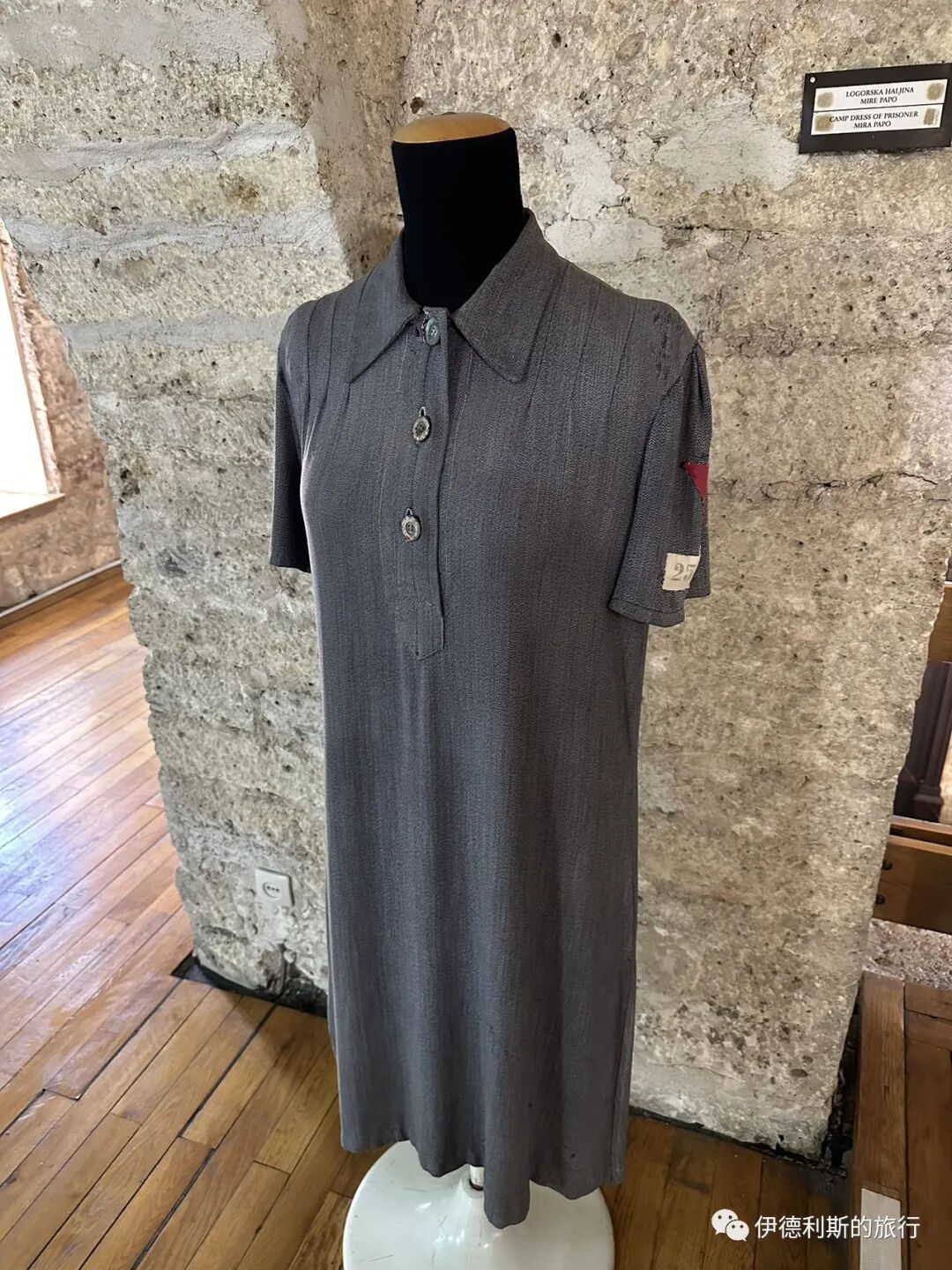
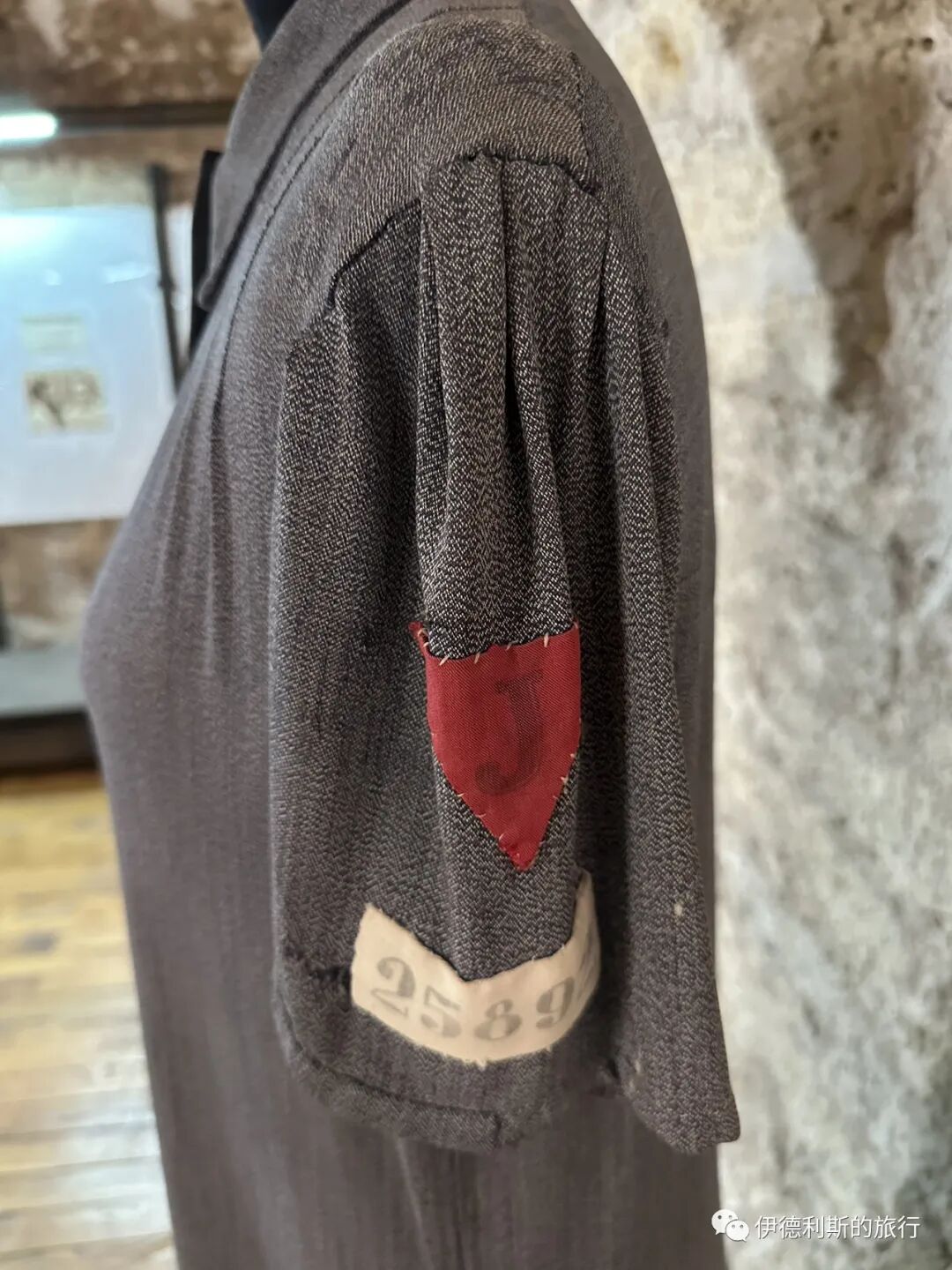
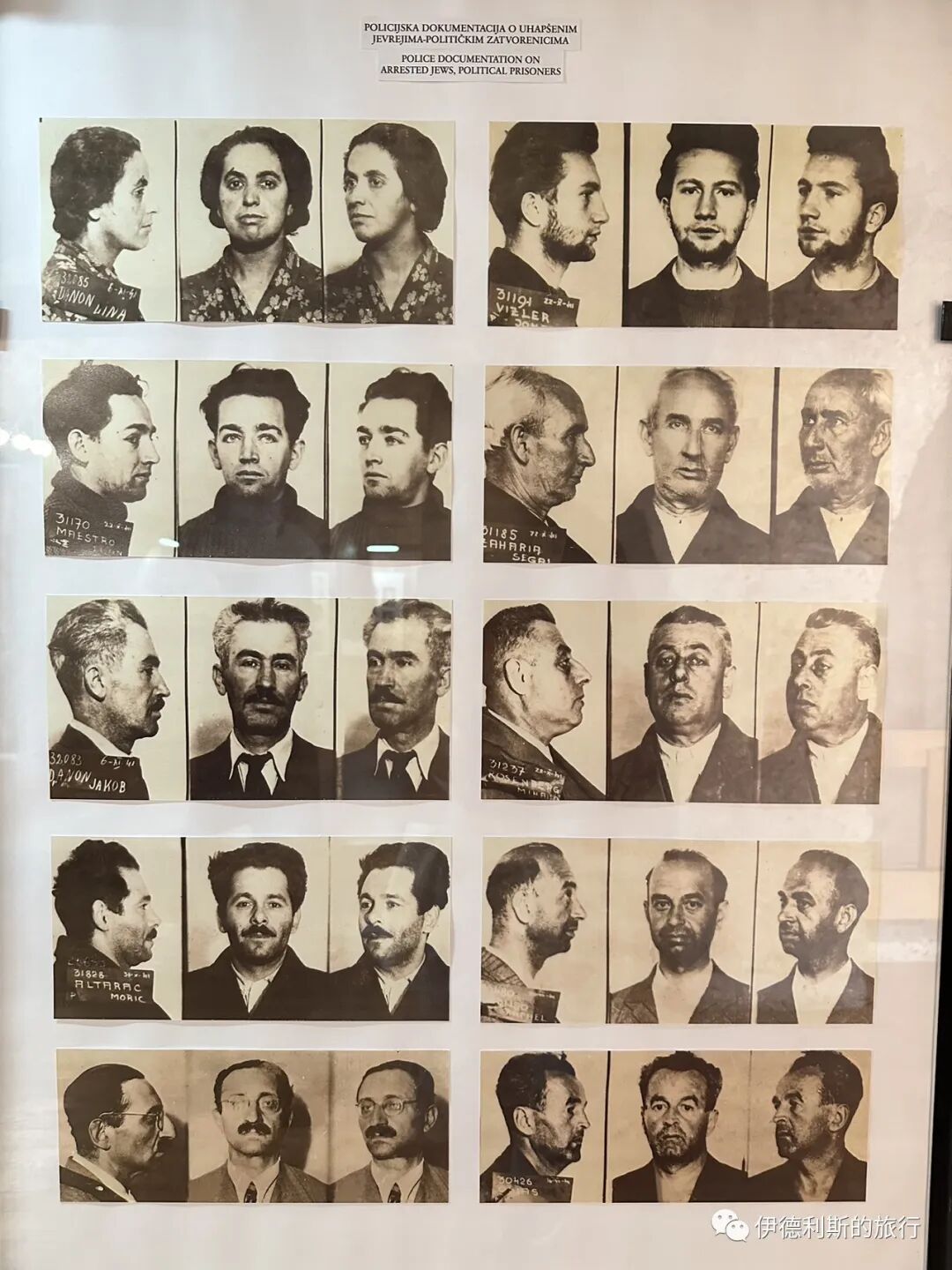
Yugoslavia restored the Old Jewish Synagogue in 1957, and the Jewish Museum of Bosnia and Herzegovina officially opened in 1966. The Old Jewish Synagogue was damaged by shells during the Siege of Sarajevo from 1992 to 1995, and it was restored again in 2003. The museum also exhibits exquisite Jewish clothing.
Halal Food Guide: Sarajevo — Bosniak Cuisine, Burek and Muslim Food Culture
Articles • ali2007fr posted the article • 0 comments • 170 views • 2026-05-19 03:44
Summary: Sarajevo Bosniak cuisine reflects the citys Muslim food culture through dishes such as burek, grilled meats, stews, and everyday bakery food. This food-focused account preserves the original meals, places, photos, and local details in natural English.
Bosniaks (Bošnjaci) are a Slavic-speaking Muslim ethnic group living in the Bosnia region of the Balkan Peninsula. They migrated from northeastern Europe to Bosnia as early as the 6th century. From 1463 to 1878, they were under Ottoman rule for over four hundred years, which strongly influenced their cultural customs and led them to become Muslims.
The identity of the Bosniaks emerged quite late. Although the Austro-Hungarian Empire began promoting a Bosniak identity in the late 19th century, the vast majority of Bosniaks identified only as Muslims until the early 1990s. After the breakup of Yugoslavia in 1992, the Bosniak identity began to shift rapidly as they sought to strengthen their connection to the state of Bosnia and Herzegovina. On September 27, 1993, representatives from all walks of life among Bosnian Muslims held a meeting and officially adopted the Bosniak ethnic identity.
After arriving in Sarajevo, we first went to the old town bazaar (Baščaršija) for lunch. This area was built in 1462 by Isa-Beg Ishaković, the first Ottoman governor of Bosnia. It has been a residential area for Bosniaks ever since and is full of halal restaurants.
We went to the famous restaurant Ćevabdžinica Petica Ferhatović near the eastern entrance. This shop was opened by the Ferhatović family during the 1984 Sarajevo Winter Olympics, though they had already started running restaurants in the old town of Sarajevo as early as 1957.
We ordered the Bosnian specialty of finger-shaped minced beef kebabs (Ćevapčići) and spicy beef sausage (Sudžuk) served with flatbread (Somun), along with side dishes of onions and cream cheese (Kajmak). We also ordered a cheese salad (Šopska salata).
The word Ćevapčići comes from the Ottoman Turkish word for grilled meat (Kevap) and the Slavic suffix "-čići" used to denote something small. It developed from Turkish kebabs in the 16th century. The version made in the Baščaršija area of Sarajevo is the most famous, and it holds an important place in Bosniak food culture.
Spicy beef sausage (Sudžuk) is a dish widely found in Central Asia, the Middle East, and the Balkans. It was first mentioned in the Compendium of the Turkic Dialects (Dīwān Lughāt al-Turk) written in the 1070s, and was later brought to Bosnia by the Ottoman Empire. To make it, beef, beef fat, and various spices are ground together, stuffed into casings, tied tightly, and then fermented and dried.
Flatbread (Somun) is similar to the pita bread of the Levant region and is a classic pairing for Bosniaks when eating grilled meats.
Cheese salad (Šopska salata) is made with tomatoes, cucumbers, onions, peppers, and brine cheese (Sirene), and its name comes from the Shopluk region in the far west of Bulgaria. Because its colors match the Bulgarian flag, this dish became a promotional food for Bulgarian tourism after 1956 and later spread widely across the former Yugoslavia.
Gazi Husrev Bey was an Ottoman governor of Bosnia in the 16th century. He was born into Bosnian nobility and, starting in 1530, funded many important buildings in Sarajevo while dedicating his wealth to support welfare and educational institutions.
To the west of the Gazi Husrev-beg Mosque stands a clock tower built in the 16th century, though the current structure was rebuilt in the 18th century. This 30-meter-tall clock tower is the highest of the 21 clock towers built by the Ottoman Empire in Bosnia and Herzegovina. It follows the Islamic calendar, where sunset is set as 12 o'clock. An official called a Muvekit, who determines the prayer times and the five daily namaz, is responsible for adjusting the clock. The current clock mechanism was made by the London-based company Gillett & Johnston in 1875. To make sure the clock was clearly visible, the top of the tower was modified during installation.
Below the clock tower is a public canteen (Imaret) established in 1531, which was originally managed by a foundation (Waqf) to distribute free food to the poor. Today, this place is a very famous bakery, and the fresh bread baked on-site is very popular with the locals. Their signature item is the Kifla bread, which costs 2 yuan each and comes in various flavors with a rich wheat aroma. Kifla is a small bread popular in Central Europe and the Balkans with a history of hundreds of years. The French croissant actually evolved from the Kifla.
The best drink to cool off in the old bazaar of Sarajevo is Boza! I drink it several times every day. Boza is a very ancient fermented malt drink. It was recorded as early as the 1070s in the Compendium of the Turkic Dialects (Divânu Lügati't-Türk). It was very popular among Turkic peoples in Central Asia at the time and spread to the Balkans with the Ottoman Empire.
Before the 16th century, Boza could be consumed freely. However, the rise of a version called Tartar Boza, which contained opium, angered the rulers at the time. By the 17th century, Sultan Mehmed IV ordered all Boza shops to close and banned people from drinking it. Since then, this ban has been tightened and relaxed many times. By the 19th century, the sweet, non-alcoholic drink boza became popular again in the Ottoman Empire.
Today, boza is an essential summer cooling drink in Bulgaria and the former Yugoslavia.
I ate Ashure pudding (ashure) in the old bazaar of Sarajevo. Ashura refers to the 10th day of the first month of the Islamic calendar. Legend says that after the Great Flood receded, the Prophet Nuh and his followers stepped off the ark on this day. They had almost no food left, so everyone pooled together seeds of various foods to make the first meal for humanity after the flood.
In his 17th-century work Book of Travels (Seyahatname), Ottoman traveler Evliya Celebi mentioned that Ashure is a porridge that should be cooked on the tenth day of the month of Muharram. Ottoman-era Ashure had no fixed recipe, as preparation varied by region and family tradition. Traditionally, People say at least seven ingredients should be used, though some believe ten ingredients should be included to match the theme of the tenth day. Common ingredients include wheat, barley, rice, white kidney beans, chickpeas, grape molasses (pekmez), pomegranate molasses, beet juice, dates, raisins, currants, apricots, figs, apples, pistachios, almonds, hazelnuts, walnuts, pine nuts, and sesame seeds. Finished Ashure can be garnished with fennel seeds, black cumin seeds, plums, pomegranate, cardamom, cinnamon, cloves, and nutmeg.
Today, you can buy Ashure in dessert shops throughout Turkey and the Balkans all year round. However, on the Day of Ashura, people still prefer to make it themselves and share it with the poor, relatives, neighbors, and friends.
In the afternoon, I ate Bosnian stew (bosanski lonac) at Aščinica Hadžibajrić F. Namika in the old bazaar of Sarajevo. The word Aščinica here means an old-fashioned Bosnian restaurant. The Hadžibajrić family has run this traditional Bosnian restaurant for over a hundred years. The current owner, Namik, stands behind the counter and serves the food you point to.
Bosnian stew dates back to the Middle Ages. It started as a home-cooked meal for Bosnian workers and later became popular with all social classes. It can be made by stewing beef, lamb, or meatballs with cabbage, potatoes, tomatoes, and carrots. When stewing, layer the meat and vegetables in the pot, then add garlic and whole peppercorns for seasoning. They also serve various stuffed vegetables (sarma), including stuffed tomatoes, stuffed grape leaves, stuffed onions, and stuffed pickled cabbage leaves. Sarma means "wrapped" in Turkish, referring to vegetables stuffed with filling and then stewed.
Drink traditional Bosnian coffee (Bosanska Kahva) in the old bazaar of Sarajevo. Coffee first arrived in the Balkan Peninsula under Ottoman rule from the Arab world in the 16th century. Sarajevo was one of the first European cities to open coffee houses, over a hundred years before cities in Western Europe.
Coffee houses are an important part of Ottoman culture. People go there to hear the day's main news, discuss daily gossip, and watch impromptu performances like shadow puppetry. Coffee houses allow people to express more ideas outside of work and worship (namaz), and they are also a great opportunity to meet like-minded friends.
Like Turkish coffee, Bosnian coffee is made by grinding roasted coffee beans into a fine powder and brewing them in a long-handled copper pot called a Džezva (known as Cezve in Turkish). However, while Turkish coffee can be brewed with cold water, Bosnian coffee must be brewed with boiling water. You can add sugar to Turkish coffee while it brews, but you cannot add sugar to Bosnian coffee. Turkish coffee is poured into a cup and served to the customer, while Bosnian coffee is served by placing the copper brewing pot and the cup together on a tray for the customer to pour themselves.
The classic Bosnian coffee set includes a copper pot, a porcelain cup with a copper base, a copper tray, a copper container for sugar cubes, and Turkish delight (Rahat Lokum). To drink it, first bite off a piece of a sugar cube and hold it under your tongue, letting the sugar melt on its own, then drink the coffee. Bosnian Turkish delight (Rahat Lokum) comes from Turkish delight (Lokum). The yellow ones are made with vanilla and the red ones are made with rose petals; you can eat them at any time while drinking coffee.
One of the coffee houses I visited is called Andar Caffe Bar. The owner Maida's grandfather, Muharem, opened a handmade shoe shop in the old bazaar of Sarajevo in 1933, which was later taken over by Maida's father, Osman. After Osman retired in 2010, Maida took over the shop. But by then, handmade shoes were no longer in demand as people bought shoes in stores, so Maida turned the shoe shop into the current coffee house while keeping many shoe-related elements inside.
There is a very famous Bosnian restaurant called Inat kuća across from the Sarajevo City Hall (Vijećnica). The traditional Bosnian house where the restaurant is located was built in the mid-17th century, originally next to the current City Hall. In 1892, when the Austro-Hungarian Empire built the City Hall and a tram station, they wanted to take over the land, but the owner, an old man named Benderija, did not want to move. After long negotiations, the old man finally agreed to move a few years later only if they gave him a bag of gold and moved his house brick by brick to the other side of the river. The Austro-Hungarian Empire had no choice but to move the house to its current location. People say during the move, the old man sat on the nearby bridge every day, carefully watching the workers move every single brick to the other side of the river.
After 1997, Inat kuća became a Bosnian restaurant where you can enjoy Bosnian cuisine and see the traditional Bosnian interior design. We ordered traditional Bosnian dumplings (klepe), cornmeal porridge (pura), rose water, and elderflower (zova) water. Klepe is made by kneading flour, eggs, and salt for the dough, and mixing minced meat, onions, salt, and pepper for the filling. The dumplings are boiled for 10 minutes, then topped with yogurt, garlic powder, and chili powder before being baked. Pura is a porridge made from cornmeal, butter, cheese, and yogurt, and it is one of the favorite breakfasts for Bosniaks.
In the morning, we had a traditional Bosnian breakfast at Restoran Čaršija, west of the Gazi Husrev-beg Mosque in Sarajevo's old town, featuring Travnik cheese, smoked cheese, cream cheese, smoked meat, spicy beef sausage (sujuk), vegetables, fruit, fried eggs, and black tea. Travnik cheese is a specialty sheep's milk cheese from Bosnia and Herzegovina, originating from the mountains of Travnik in central Bosnia. It is made by soaking fresh sheep's milk in brine for two to three months, and after draining, it tastes slightly salty and is low in fat.
We ate classic Bosnian snacks, flaky meat pie (burek) and small meat dumplings (mantije), on the streets of the old bazaar in Sarajevo. Burek is a classic Ottoman dish. People say this snack was brought from Central Asia to the Anatolian Peninsula by Turkic peoples as they migrated west, later taking its final form in the Ottoman court before spreading to the Balkan Peninsula under Ottoman rule. In Bosnia, Burek is generally called pita. Only the meat-filled version is called Burek, while the white cheese version is called Sirnica, the spinach and cheese version is called Zeljanica, and the potato version is called Krompiruša.
The word Mantije comes from the Chinese word for steamed bun (mantou). After the 13th century, it was brought along the Silk Road through Central Asia to Anatolia by Turkic peoples and Mongols, spreading throughout the Ottoman Empire, where it is known in Turkish as Manti. Before the term baozi appeared in the Northern Song Dynasty, the Chinese word mantou could refer to any stuffed flour pastry. Today, the Wu dialect still uses the term meat mantou (rou mantou), and the Manti found in West and Central Asia also refers to stuffed flour pastries.
The earliest record of Ottoman Manti appears in a cookbook written by Muhammed bin Mahmud Shirvani in the 15th century. It notes that Manti at the time was filled with lamb and chickpeas, seasoned with cinnamon and vinegar, and topped with sumac and garlic yogurt sauce. Modern Manti is mostly filled with lamb and onions. Unlike the steamed thin-skinned buns (Manti) of Central Asia, Manti in Turkey and Bosnia are usually boiled or baked and are smaller in size. Bosnian Mantije are packed tightly together, looking a bit like a baked version of pan-fried buns (shuijianbao).
I had dinner at the Old Bazaar in Sarajevo. I ordered the Bosnian specialty chicken soup (Begova Čorba), a grilled vegetable platter, and Balkan-style grilled veal patties (Teleća pljeskavica). Everything was delicious. The grilled meat here tastes much better when paired with yogurt cheese. view all
Summary: Sarajevo Bosniak cuisine reflects the citys Muslim food culture through dishes such as burek, grilled meats, stews, and everyday bakery food. This food-focused account preserves the original meals, places, photos, and local details in natural English.
Bosniaks (Bošnjaci) are a Slavic-speaking Muslim ethnic group living in the Bosnia region of the Balkan Peninsula. They migrated from northeastern Europe to Bosnia as early as the 6th century. From 1463 to 1878, they were under Ottoman rule for over four hundred years, which strongly influenced their cultural customs and led them to become Muslims.
The identity of the Bosniaks emerged quite late. Although the Austro-Hungarian Empire began promoting a Bosniak identity in the late 19th century, the vast majority of Bosniaks identified only as Muslims until the early 1990s. After the breakup of Yugoslavia in 1992, the Bosniak identity began to shift rapidly as they sought to strengthen their connection to the state of Bosnia and Herzegovina. On September 27, 1993, representatives from all walks of life among Bosnian Muslims held a meeting and officially adopted the Bosniak ethnic identity.
After arriving in Sarajevo, we first went to the old town bazaar (Baščaršija) for lunch. This area was built in 1462 by Isa-Beg Ishaković, the first Ottoman governor of Bosnia. It has been a residential area for Bosniaks ever since and is full of halal restaurants.
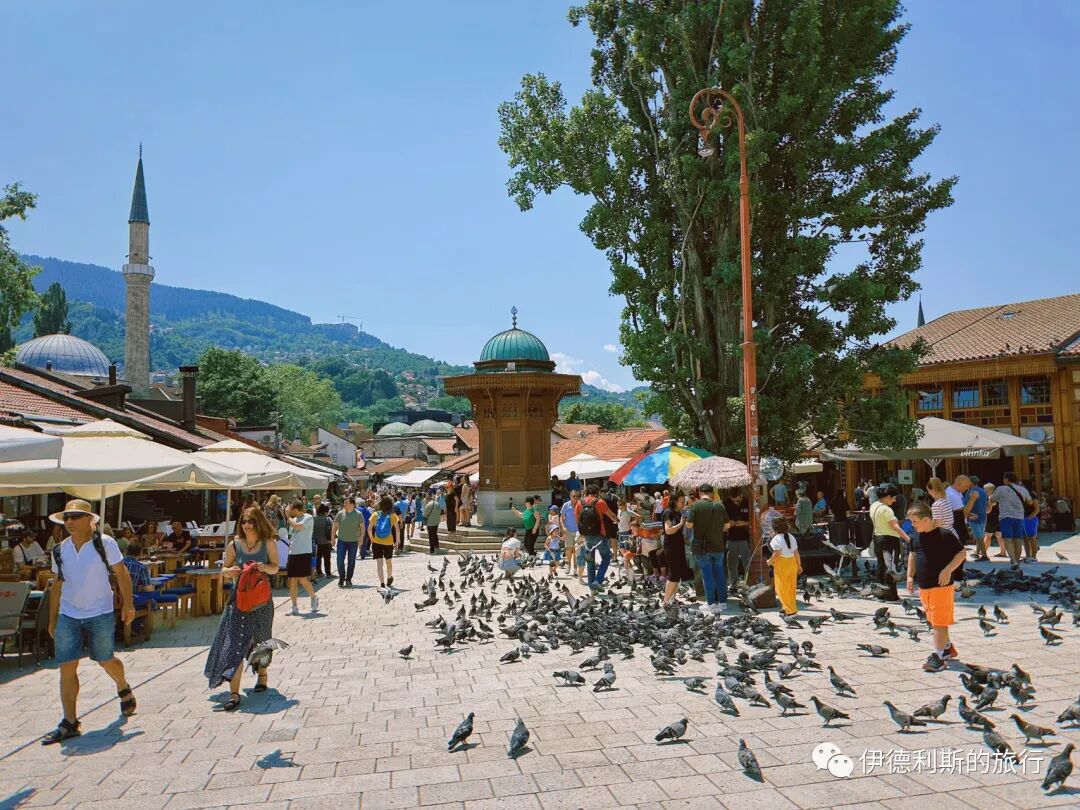
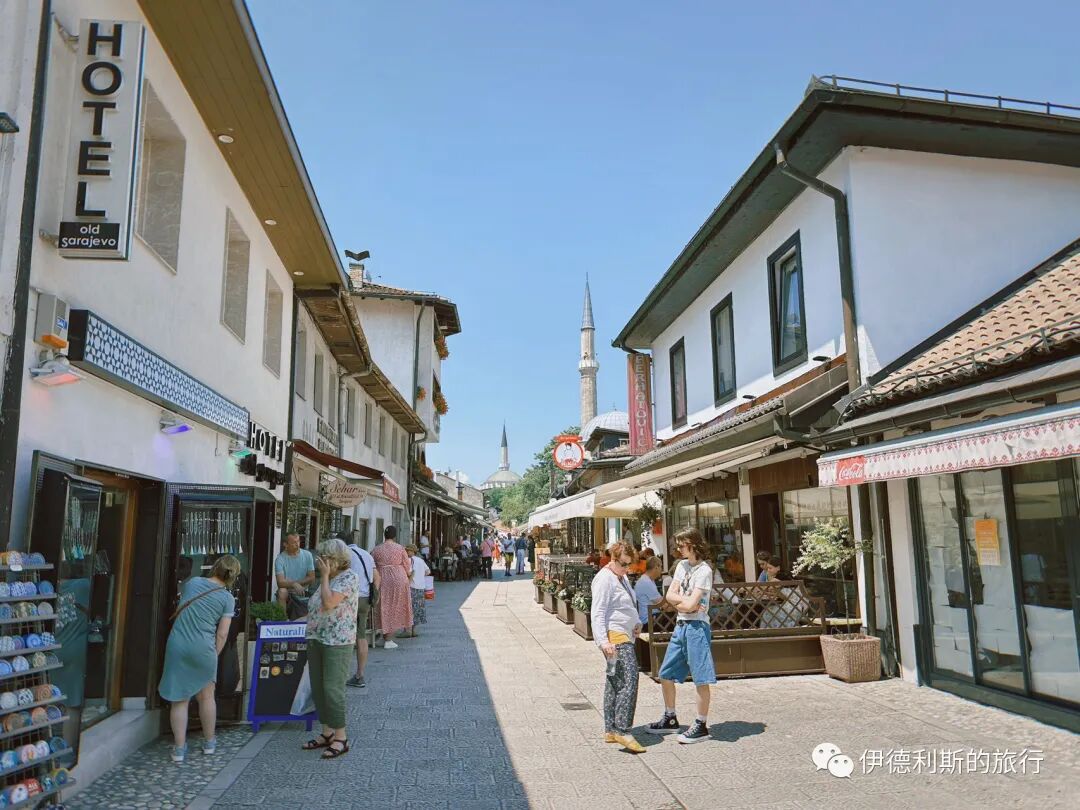
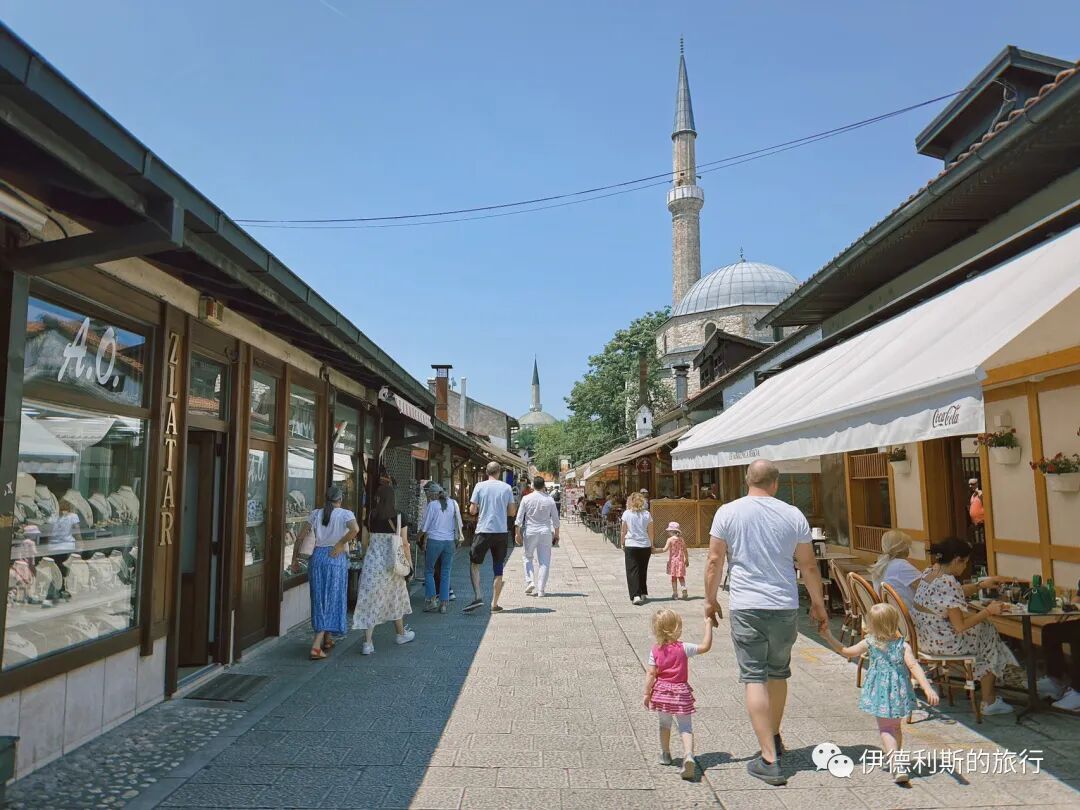
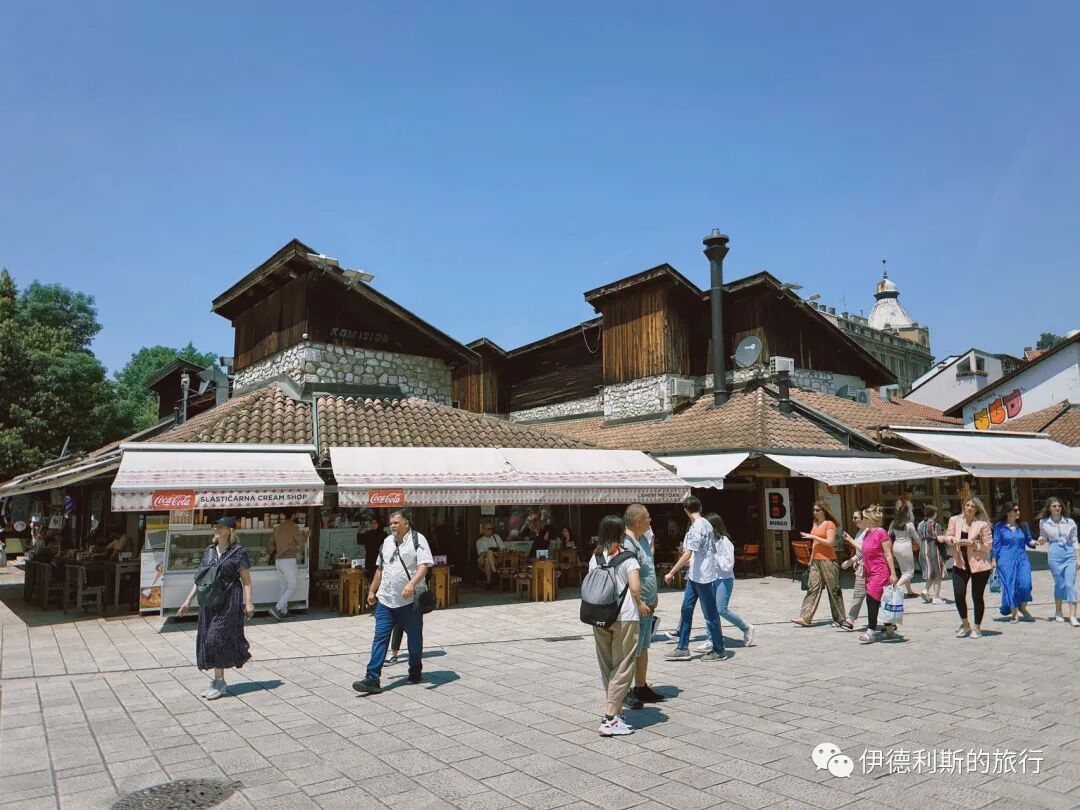
We went to the famous restaurant Ćevabdžinica Petica Ferhatović near the eastern entrance. This shop was opened by the Ferhatović family during the 1984 Sarajevo Winter Olympics, though they had already started running restaurants in the old town of Sarajevo as early as 1957.
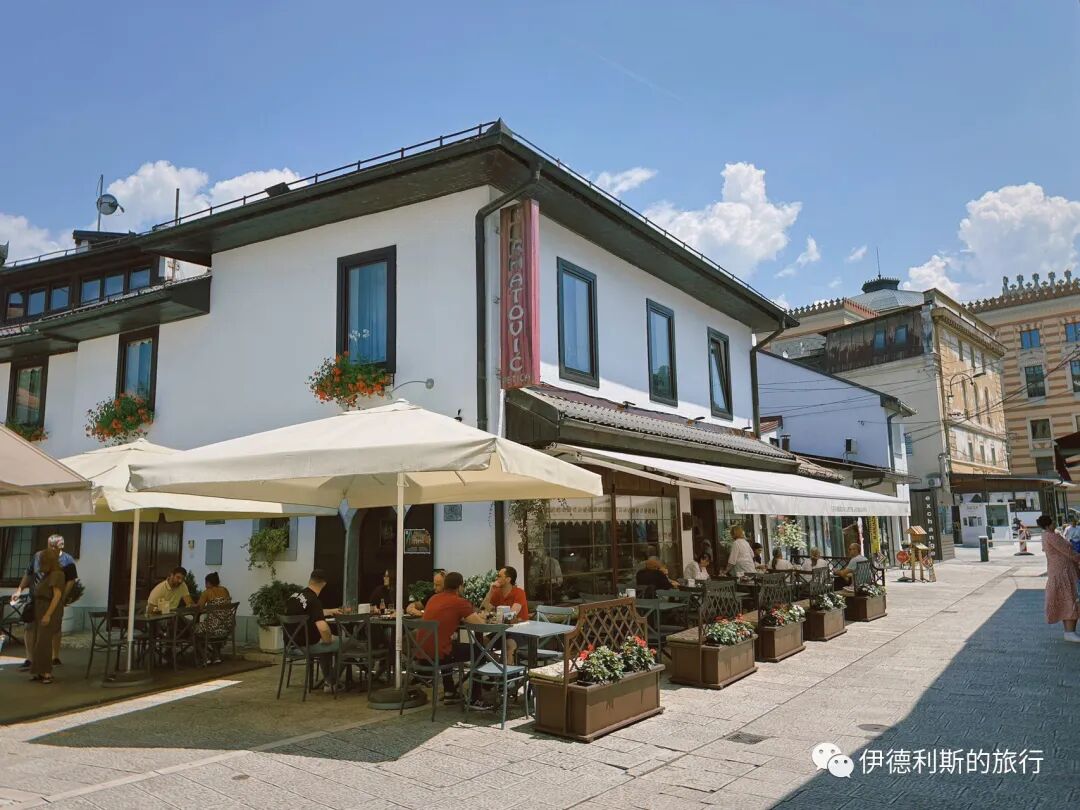
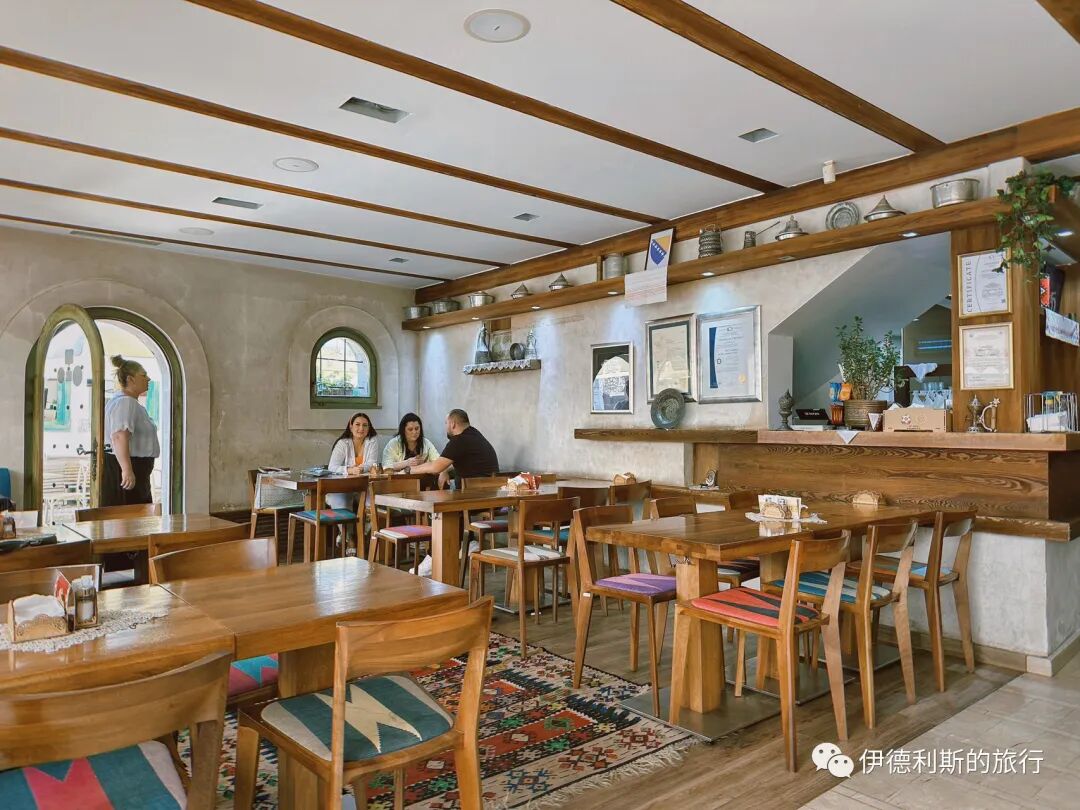
We ordered the Bosnian specialty of finger-shaped minced beef kebabs (Ćevapčići) and spicy beef sausage (Sudžuk) served with flatbread (Somun), along with side dishes of onions and cream cheese (Kajmak). We also ordered a cheese salad (Šopska salata).
The word Ćevapčići comes from the Ottoman Turkish word for grilled meat (Kevap) and the Slavic suffix "-čići" used to denote something small. It developed from Turkish kebabs in the 16th century. The version made in the Baščaršija area of Sarajevo is the most famous, and it holds an important place in Bosniak food culture.
Spicy beef sausage (Sudžuk) is a dish widely found in Central Asia, the Middle East, and the Balkans. It was first mentioned in the Compendium of the Turkic Dialects (Dīwān Lughāt al-Turk) written in the 1070s, and was later brought to Bosnia by the Ottoman Empire. To make it, beef, beef fat, and various spices are ground together, stuffed into casings, tied tightly, and then fermented and dried.
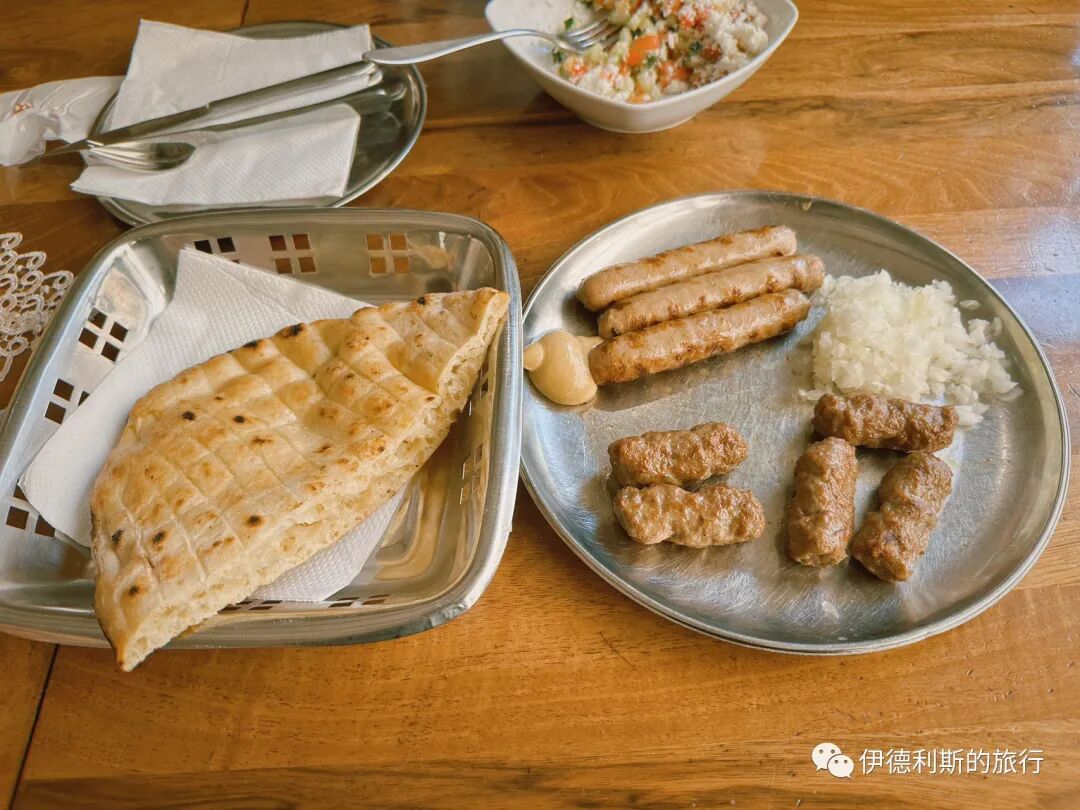
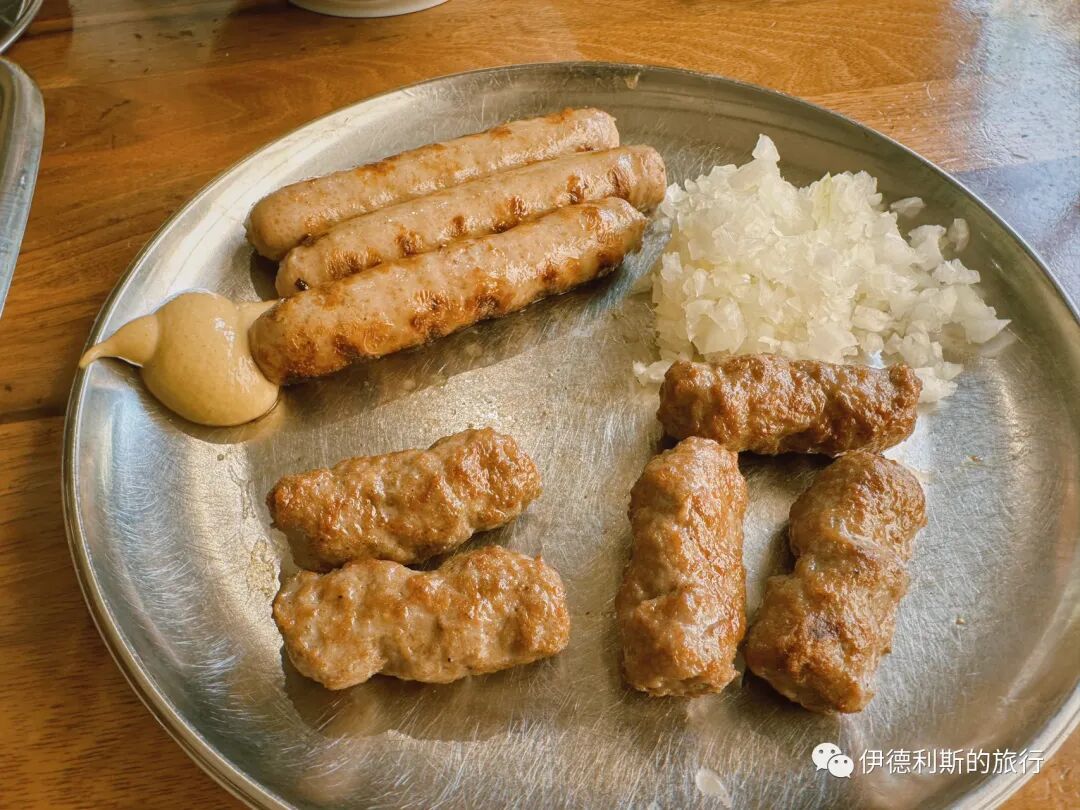
Flatbread (Somun) is similar to the pita bread of the Levant region and is a classic pairing for Bosniaks when eating grilled meats.
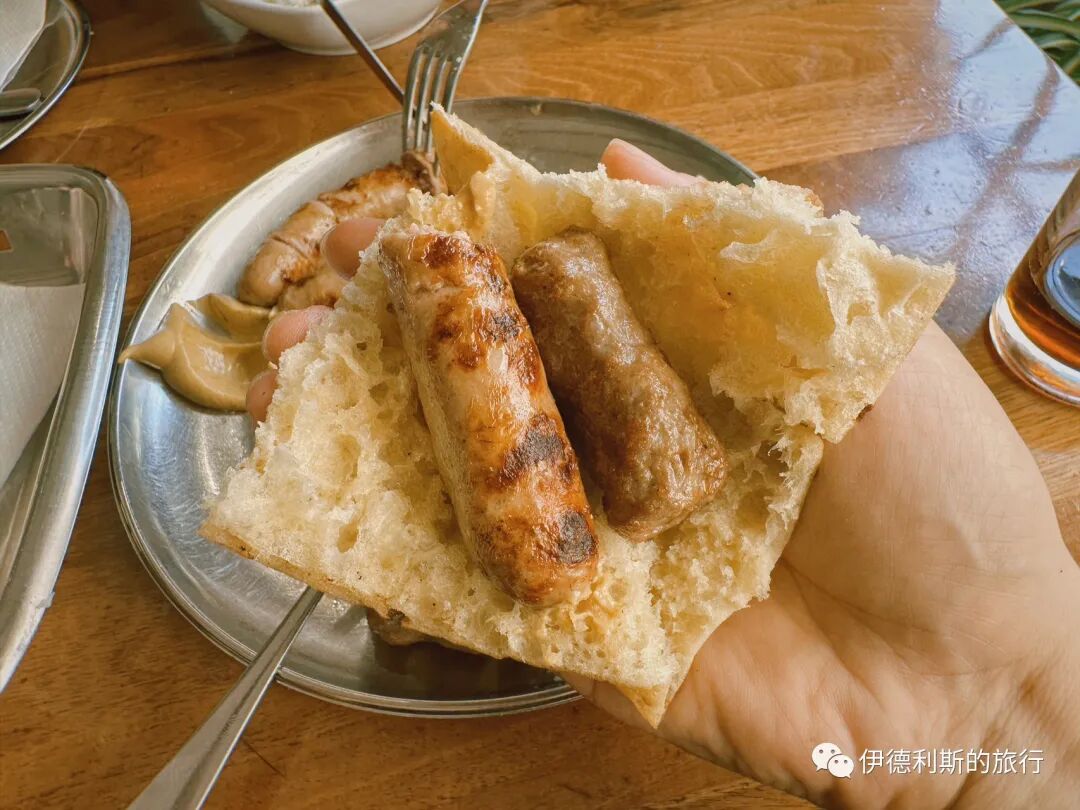
Cheese salad (Šopska salata) is made with tomatoes, cucumbers, onions, peppers, and brine cheese (Sirene), and its name comes from the Shopluk region in the far west of Bulgaria. Because its colors match the Bulgarian flag, this dish became a promotional food for Bulgarian tourism after 1956 and later spread widely across the former Yugoslavia.
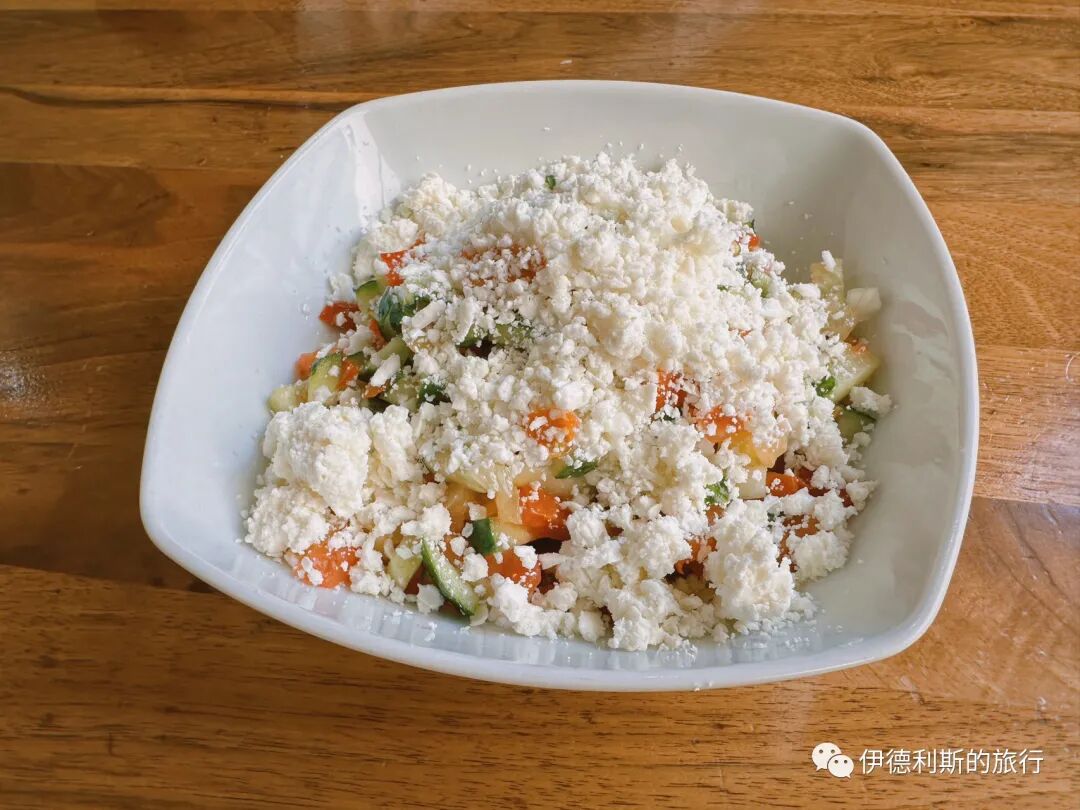
Gazi Husrev Bey was an Ottoman governor of Bosnia in the 16th century. He was born into Bosnian nobility and, starting in 1530, funded many important buildings in Sarajevo while dedicating his wealth to support welfare and educational institutions.
To the west of the Gazi Husrev-beg Mosque stands a clock tower built in the 16th century, though the current structure was rebuilt in the 18th century. This 30-meter-tall clock tower is the highest of the 21 clock towers built by the Ottoman Empire in Bosnia and Herzegovina. It follows the Islamic calendar, where sunset is set as 12 o'clock. An official called a Muvekit, who determines the prayer times and the five daily namaz, is responsible for adjusting the clock. The current clock mechanism was made by the London-based company Gillett & Johnston in 1875. To make sure the clock was clearly visible, the top of the tower was modified during installation.
Below the clock tower is a public canteen (Imaret) established in 1531, which was originally managed by a foundation (Waqf) to distribute free food to the poor. Today, this place is a very famous bakery, and the fresh bread baked on-site is very popular with the locals. Their signature item is the Kifla bread, which costs 2 yuan each and comes in various flavors with a rich wheat aroma. Kifla is a small bread popular in Central Europe and the Balkans with a history of hundreds of years. The French croissant actually evolved from the Kifla.
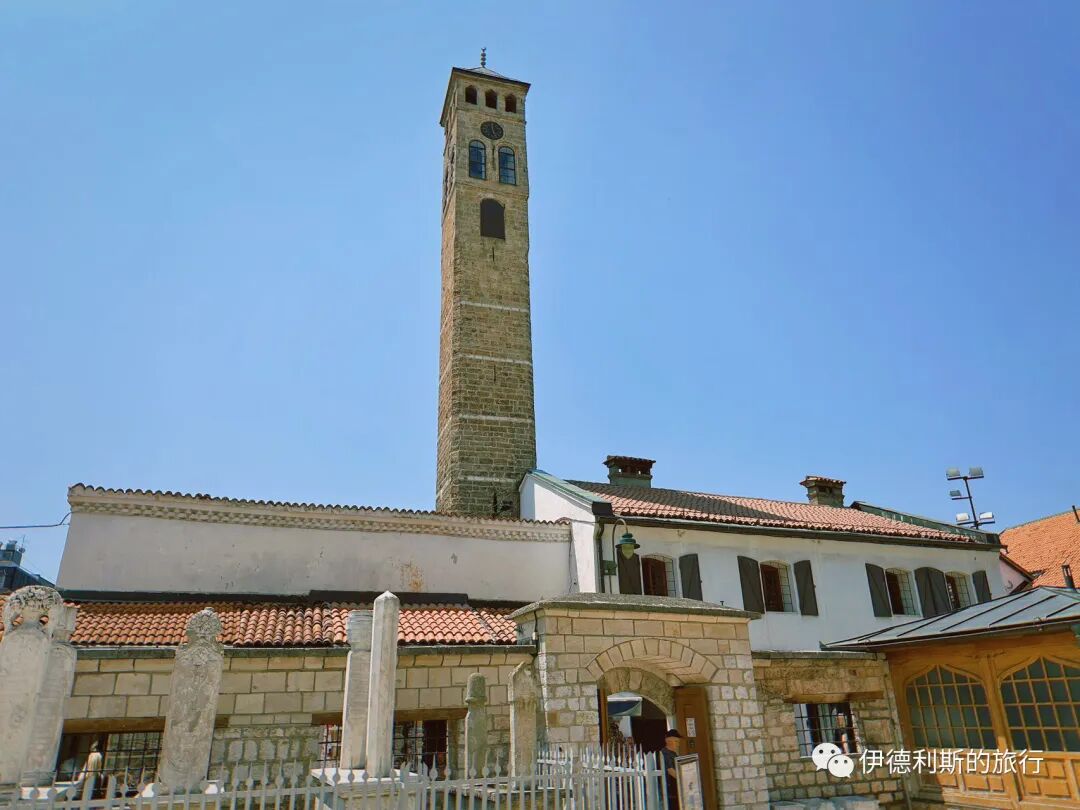
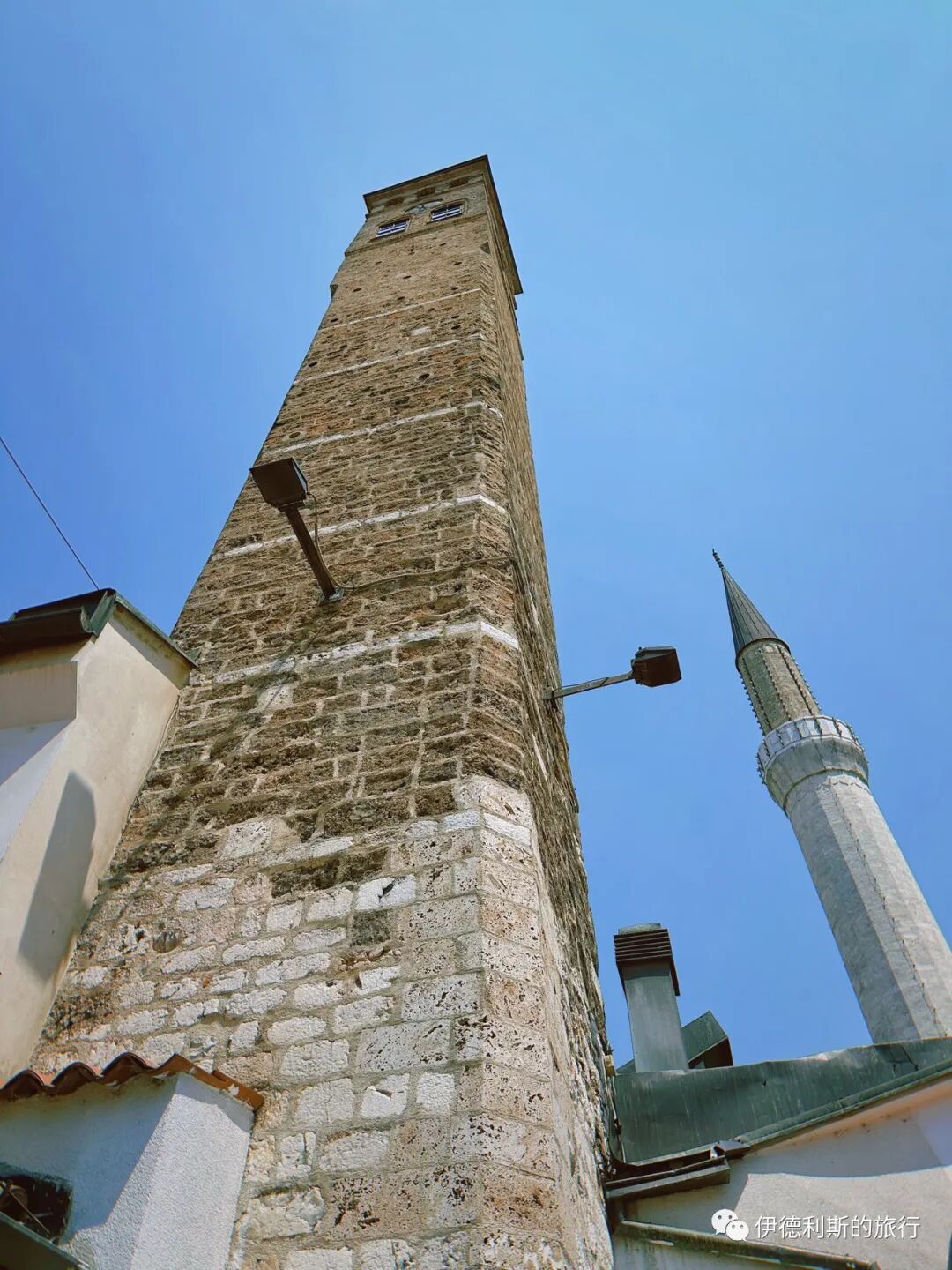
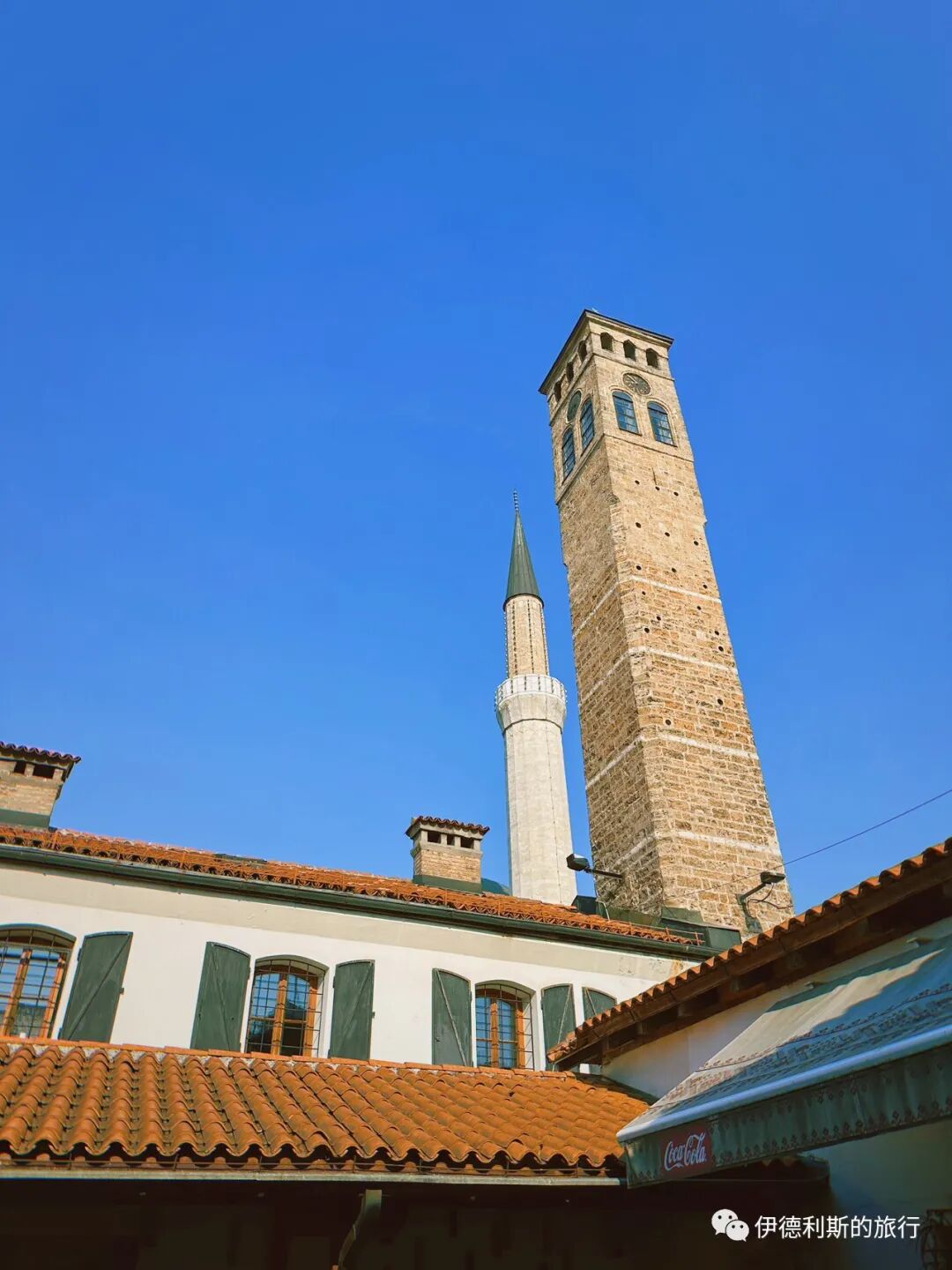
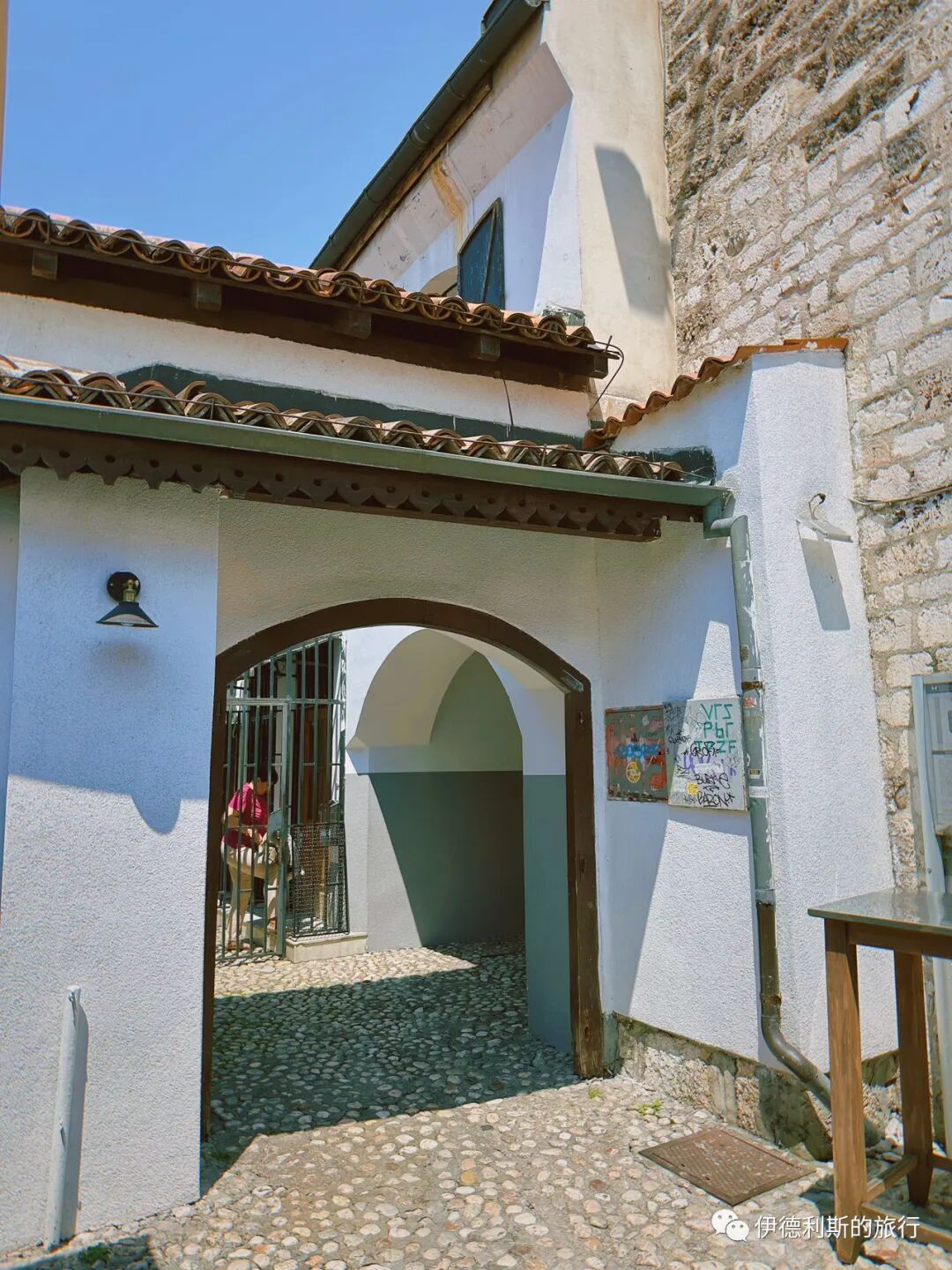
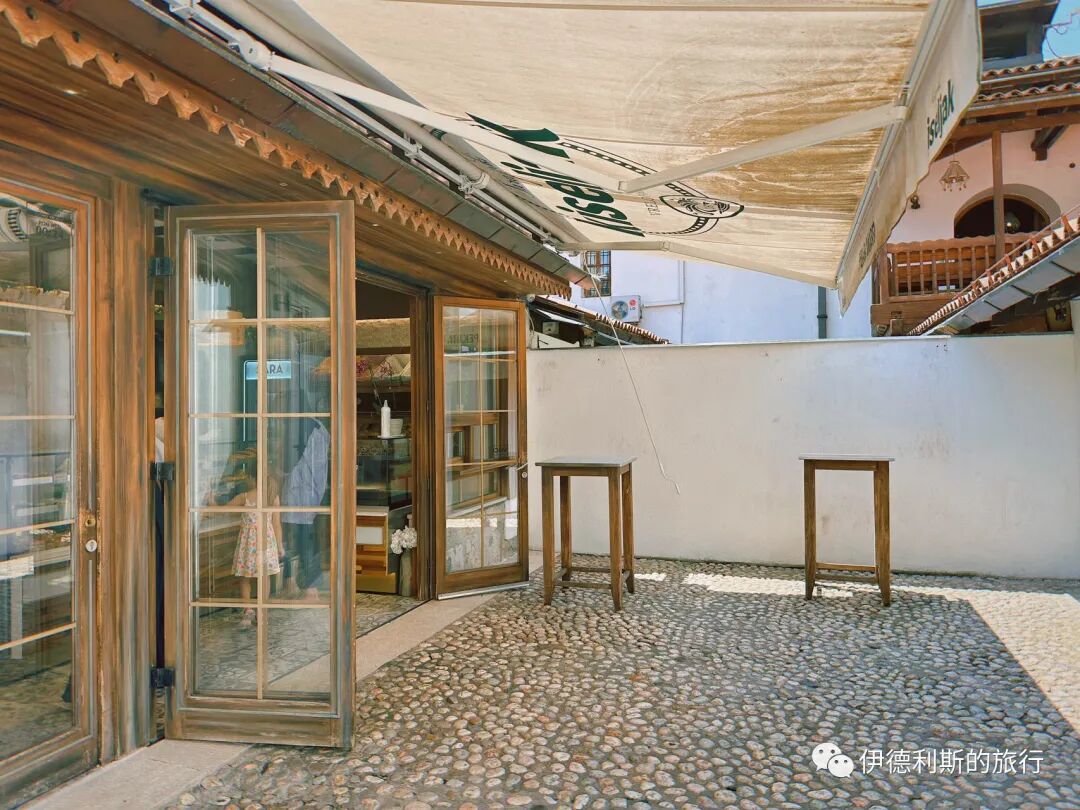
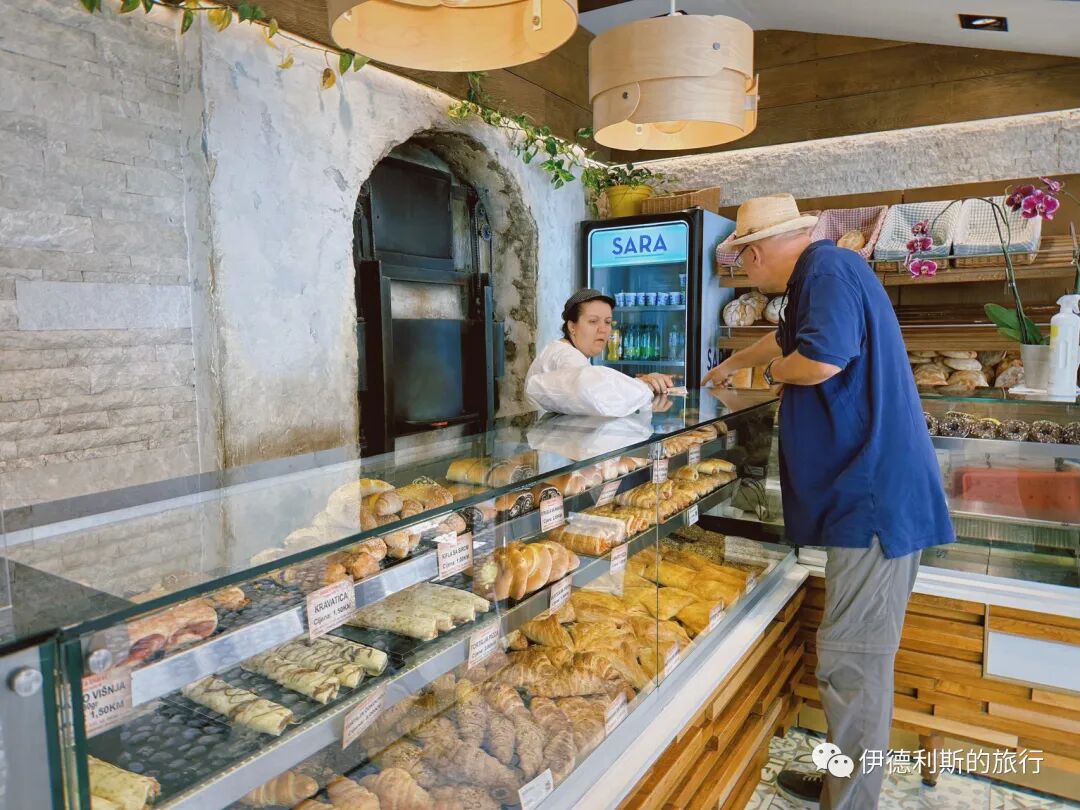
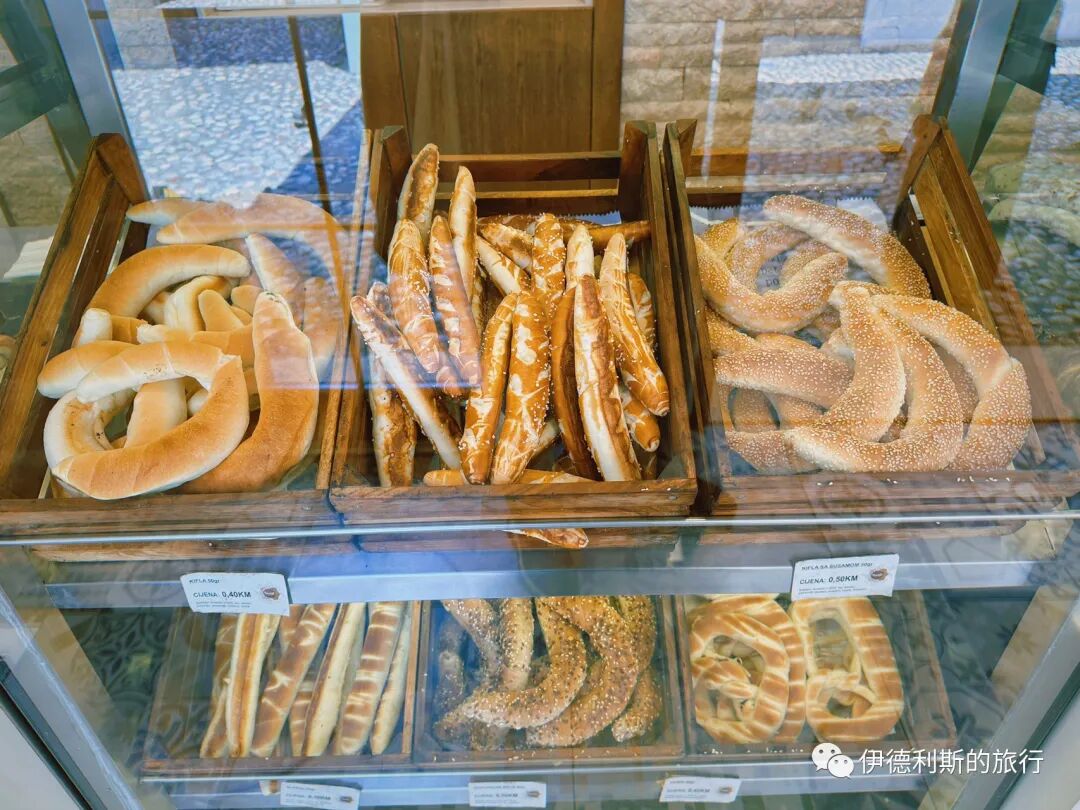
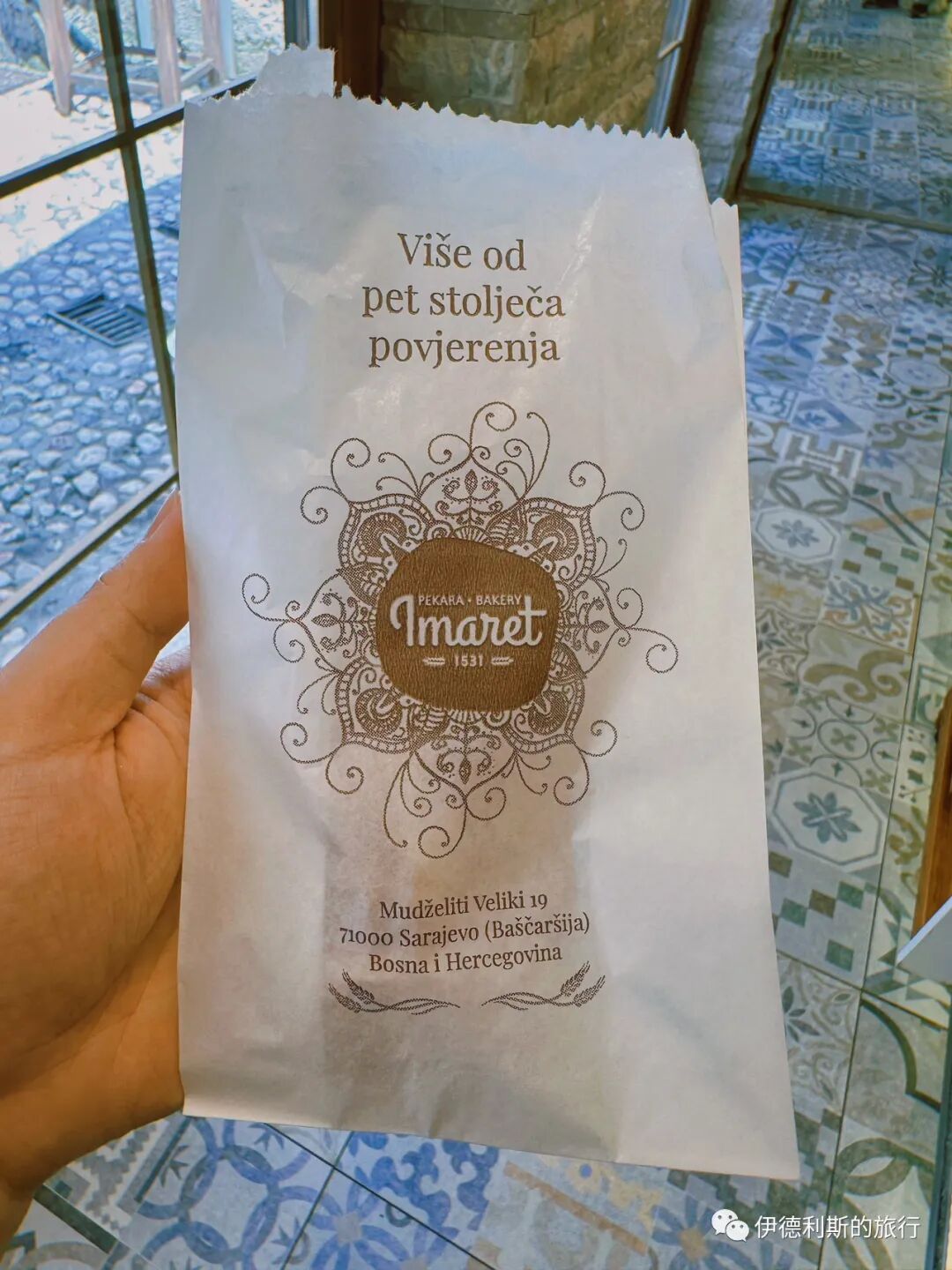
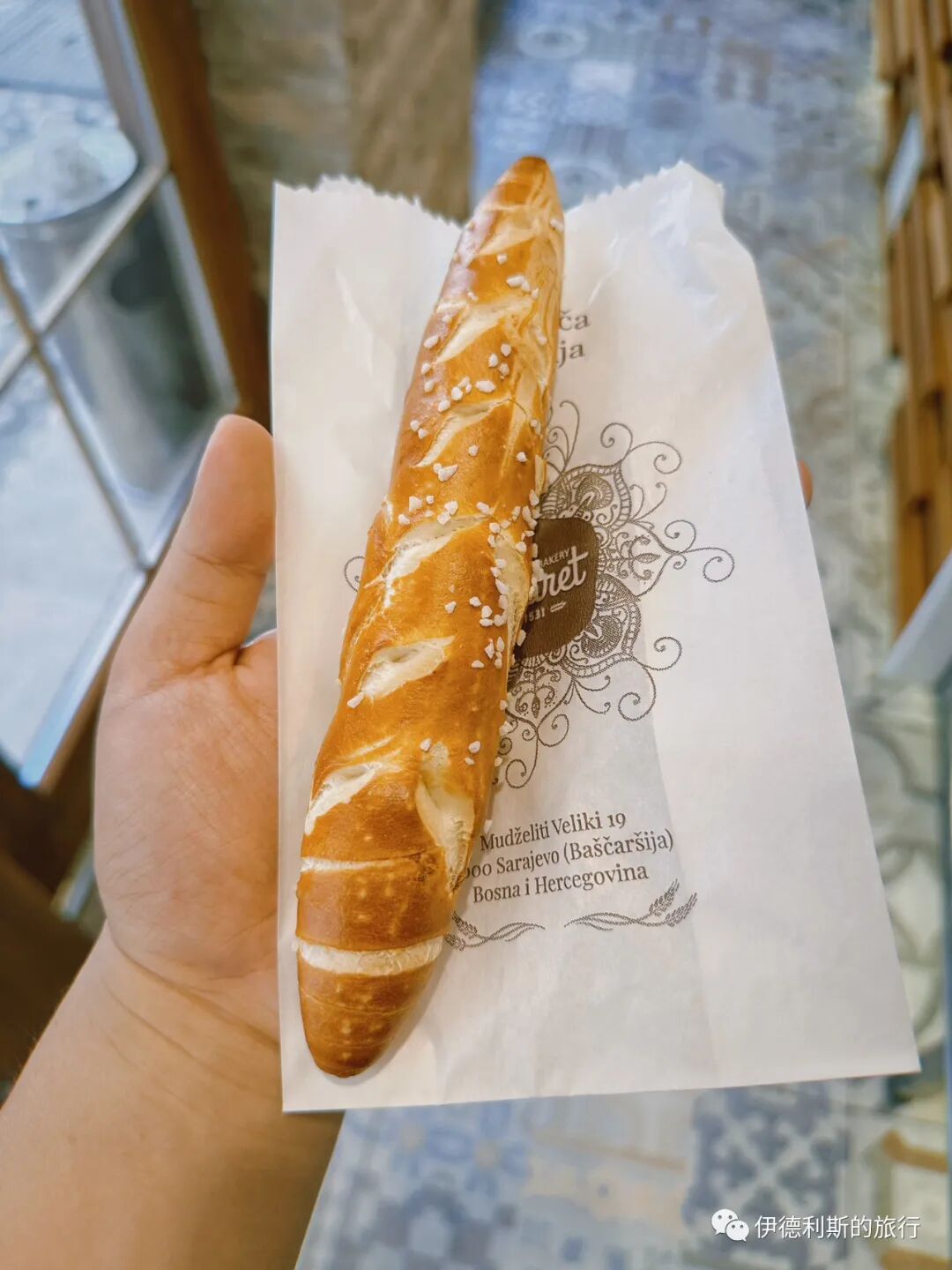
The best drink to cool off in the old bazaar of Sarajevo is Boza! I drink it several times every day. Boza is a very ancient fermented malt drink. It was recorded as early as the 1070s in the Compendium of the Turkic Dialects (Divânu Lügati't-Türk). It was very popular among Turkic peoples in Central Asia at the time and spread to the Balkans with the Ottoman Empire.
Before the 16th century, Boza could be consumed freely. However, the rise of a version called Tartar Boza, which contained opium, angered the rulers at the time. By the 17th century, Sultan Mehmed IV ordered all Boza shops to close and banned people from drinking it. Since then, this ban has been tightened and relaxed many times. By the 19th century, the sweet, non-alcoholic drink boza became popular again in the Ottoman Empire.
Today, boza is an essential summer cooling drink in Bulgaria and the former Yugoslavia.
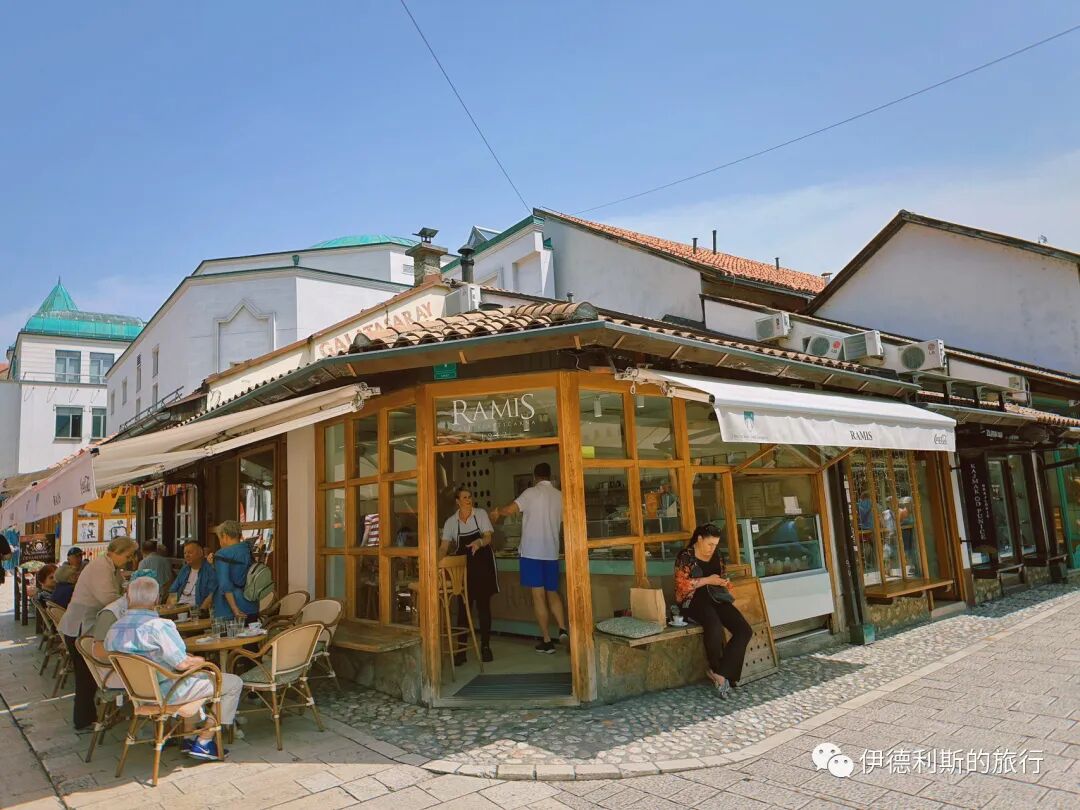
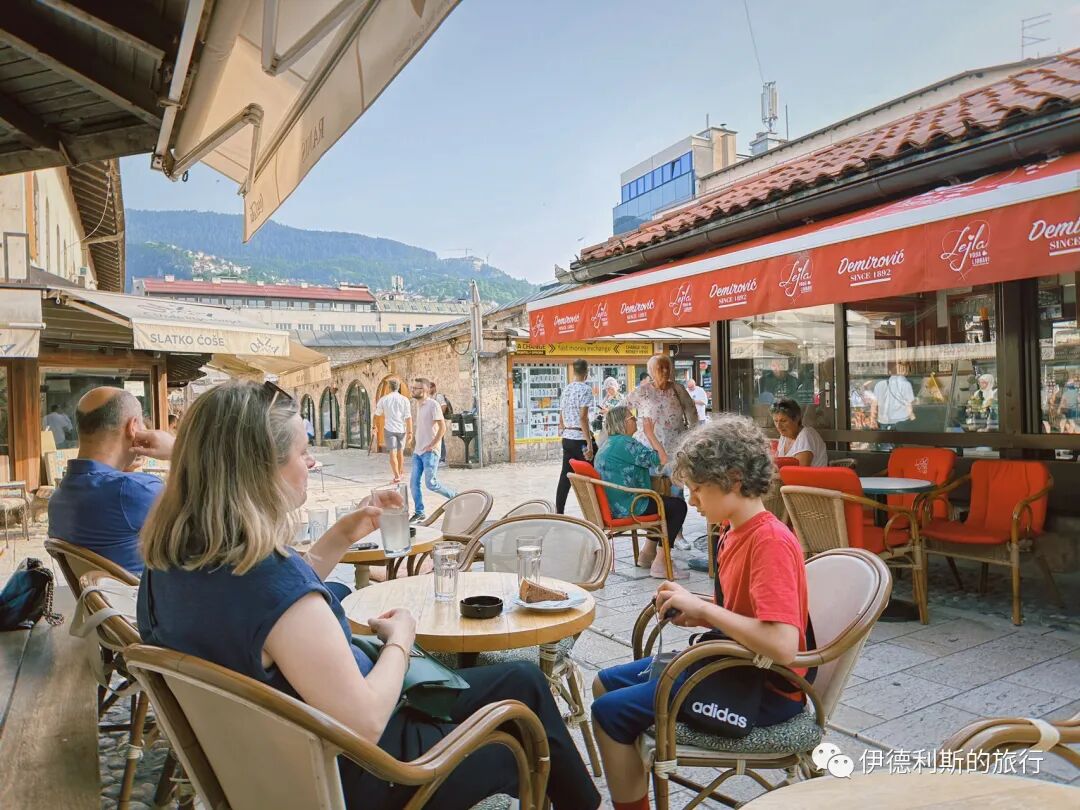
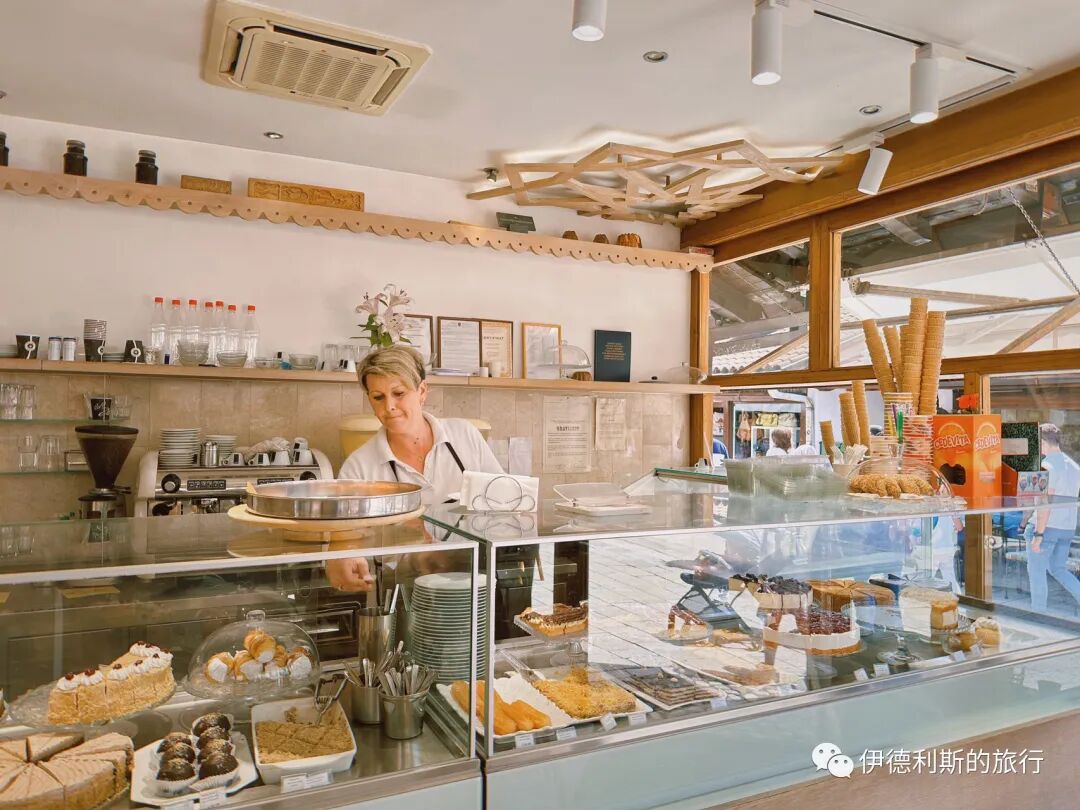
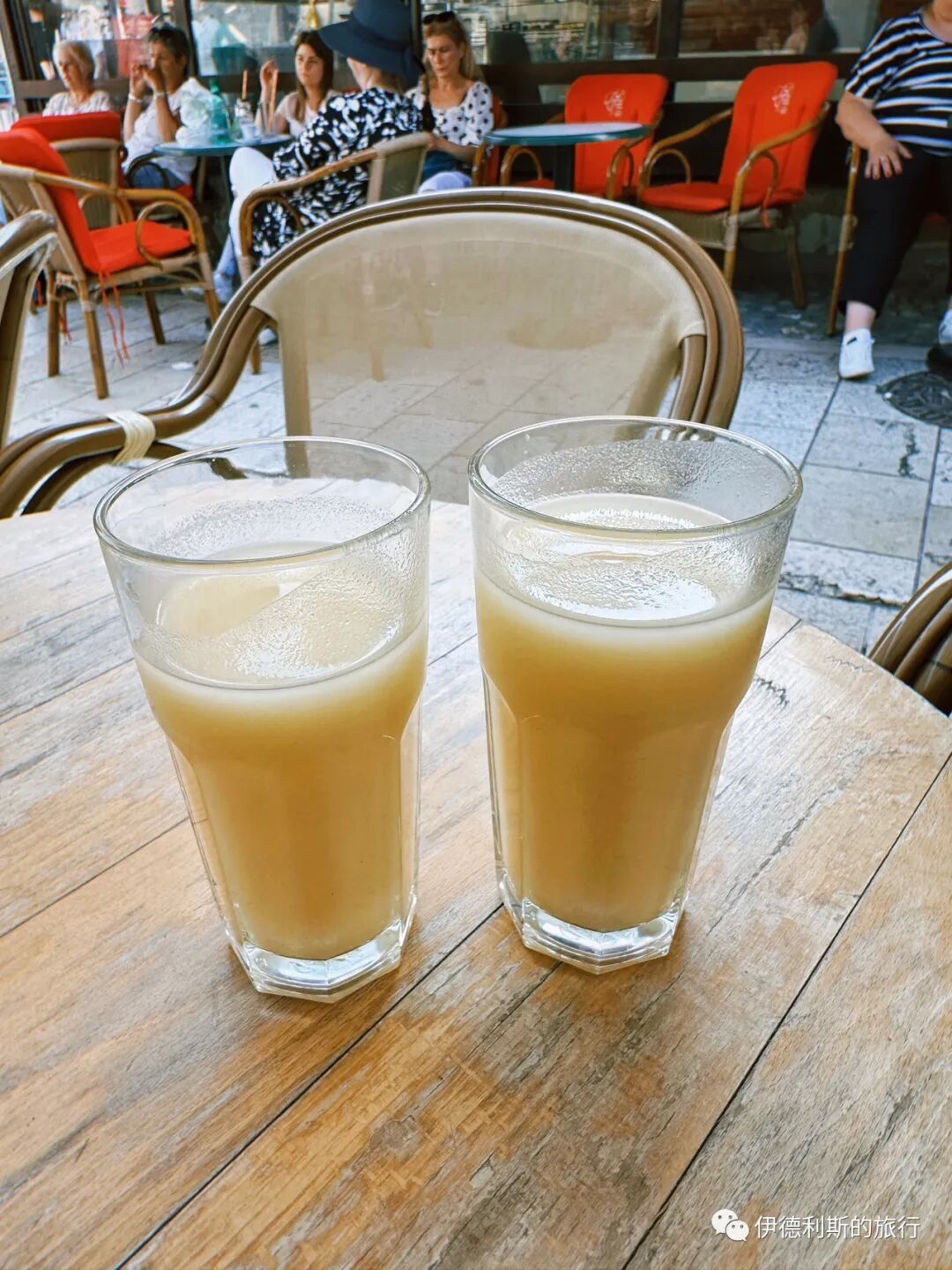
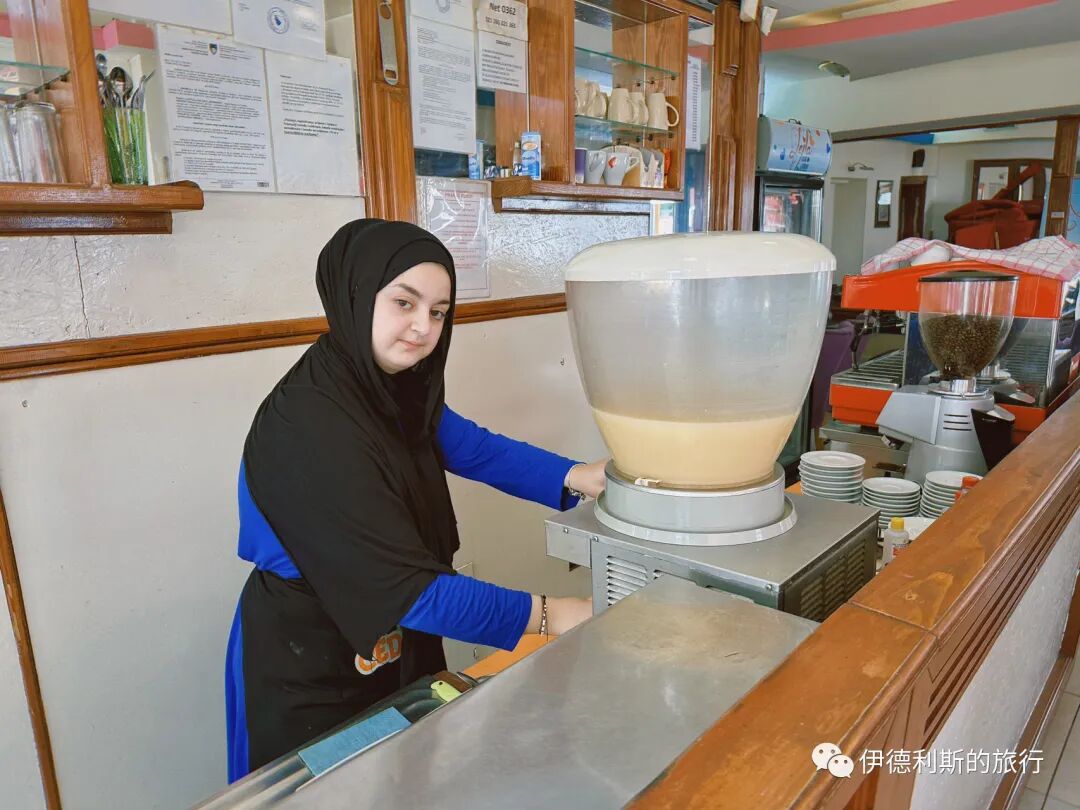
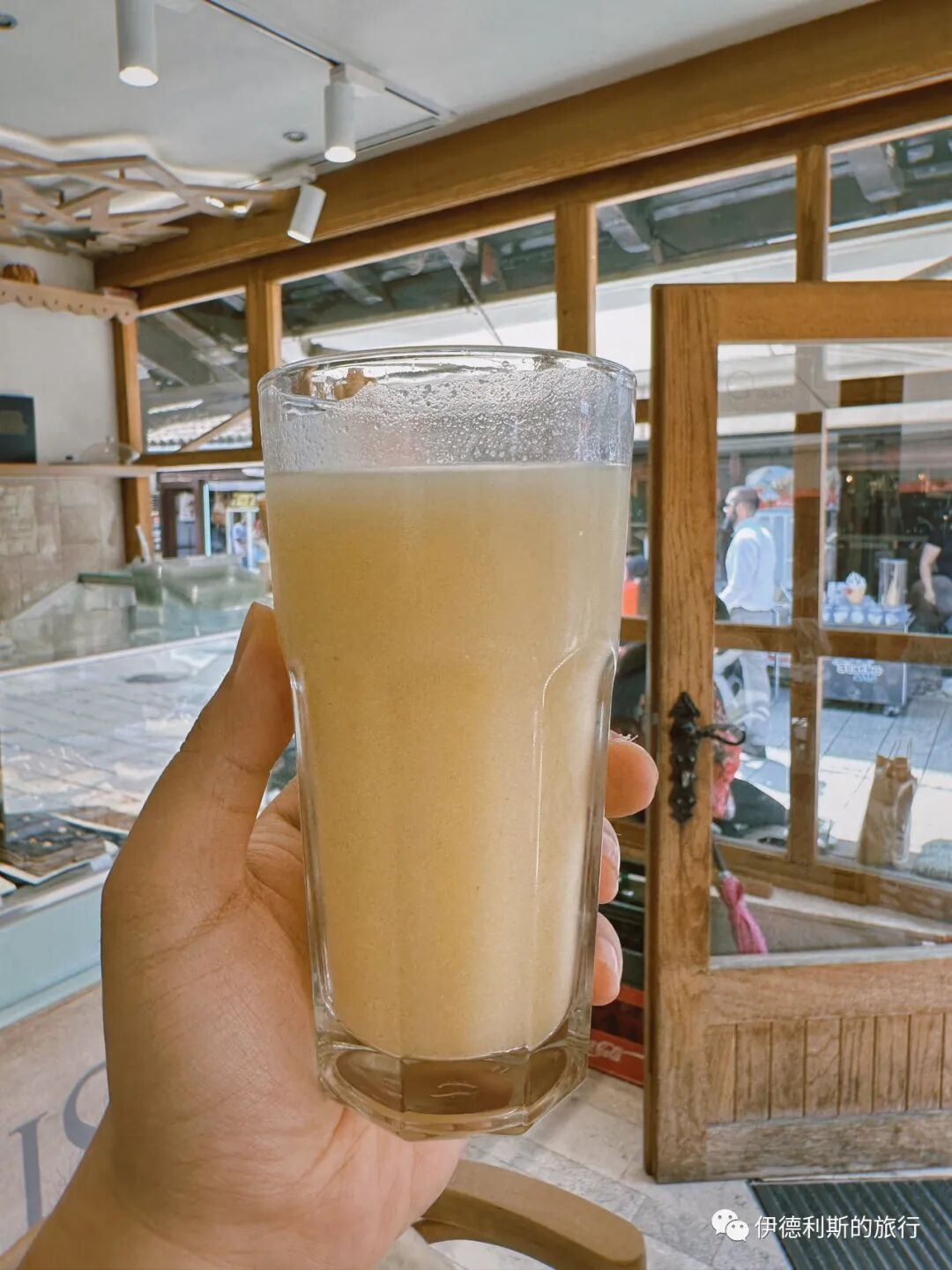
I ate Ashure pudding (ashure) in the old bazaar of Sarajevo. Ashura refers to the 10th day of the first month of the Islamic calendar. Legend says that after the Great Flood receded, the Prophet Nuh and his followers stepped off the ark on this day. They had almost no food left, so everyone pooled together seeds of various foods to make the first meal for humanity after the flood.
In his 17th-century work Book of Travels (Seyahatname), Ottoman traveler Evliya Celebi mentioned that Ashure is a porridge that should be cooked on the tenth day of the month of Muharram. Ottoman-era Ashure had no fixed recipe, as preparation varied by region and family tradition. Traditionally, People say at least seven ingredients should be used, though some believe ten ingredients should be included to match the theme of the tenth day. Common ingredients include wheat, barley, rice, white kidney beans, chickpeas, grape molasses (pekmez), pomegranate molasses, beet juice, dates, raisins, currants, apricots, figs, apples, pistachios, almonds, hazelnuts, walnuts, pine nuts, and sesame seeds. Finished Ashure can be garnished with fennel seeds, black cumin seeds, plums, pomegranate, cardamom, cinnamon, cloves, and nutmeg.
Today, you can buy Ashure in dessert shops throughout Turkey and the Balkans all year round. However, on the Day of Ashura, people still prefer to make it themselves and share it with the poor, relatives, neighbors, and friends.
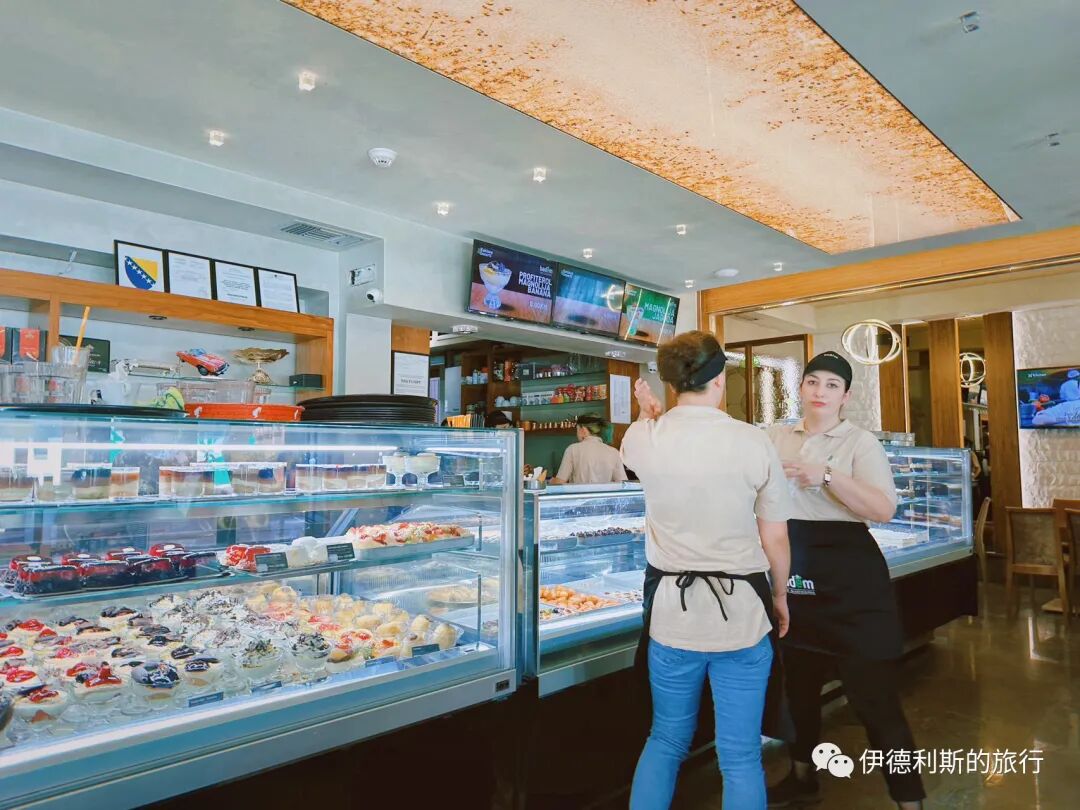
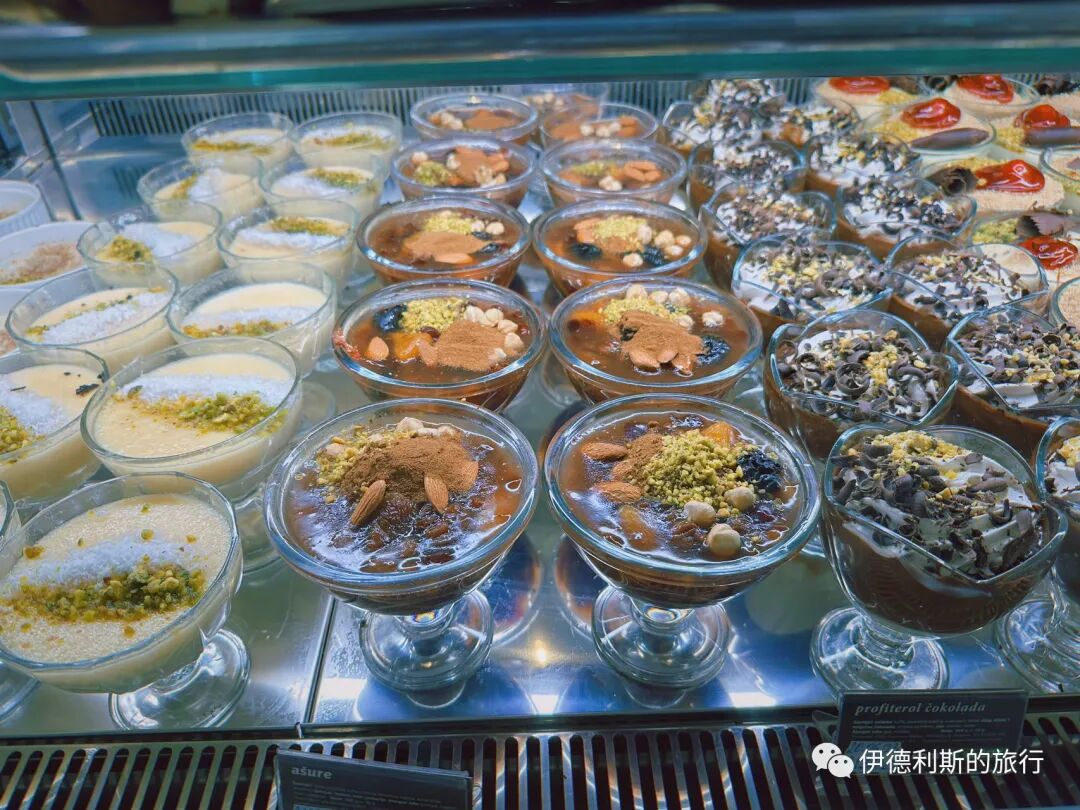
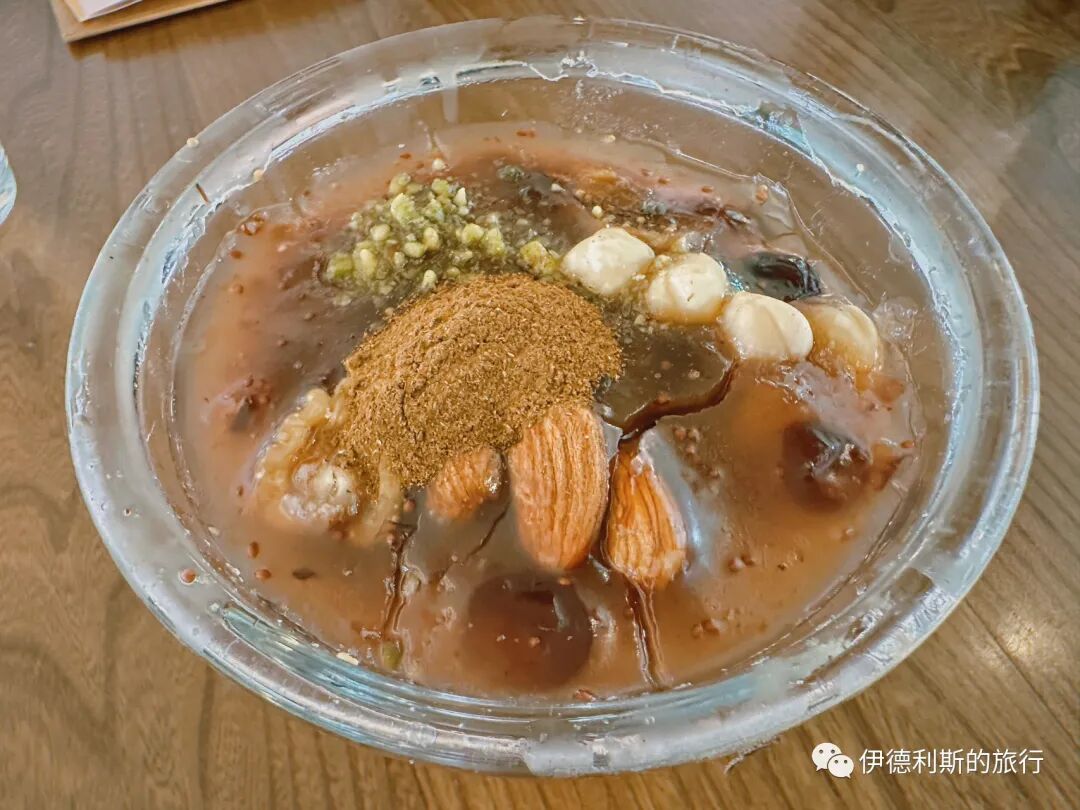
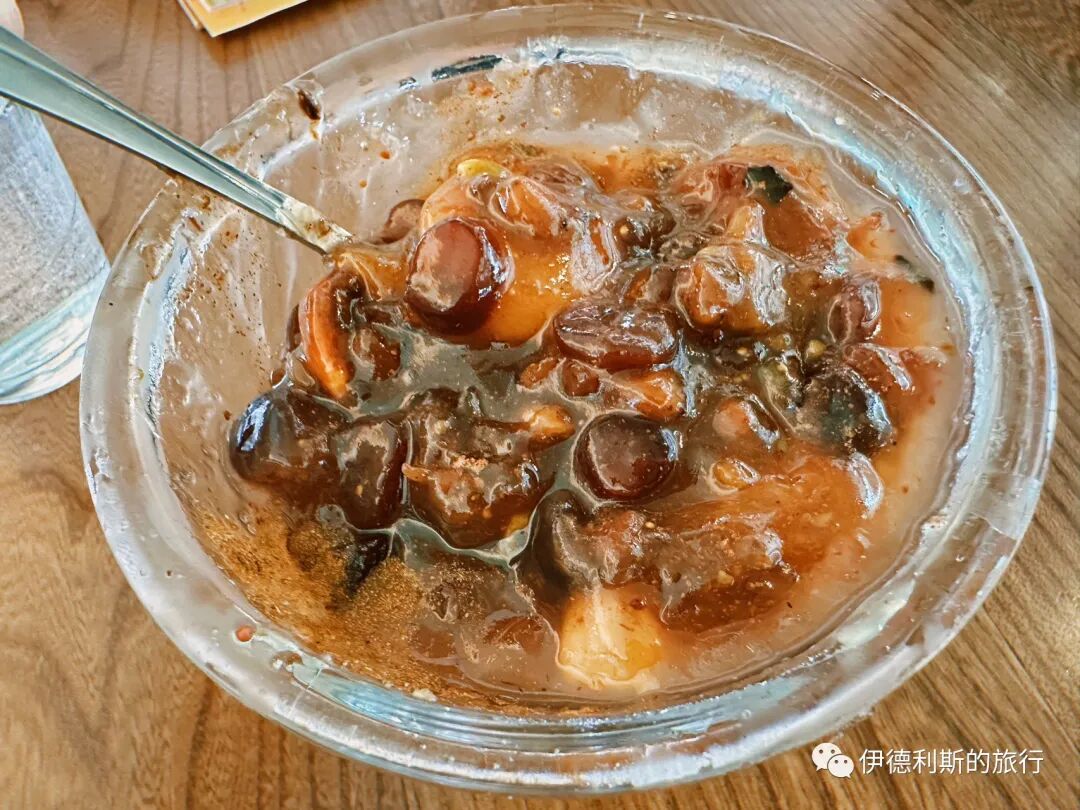
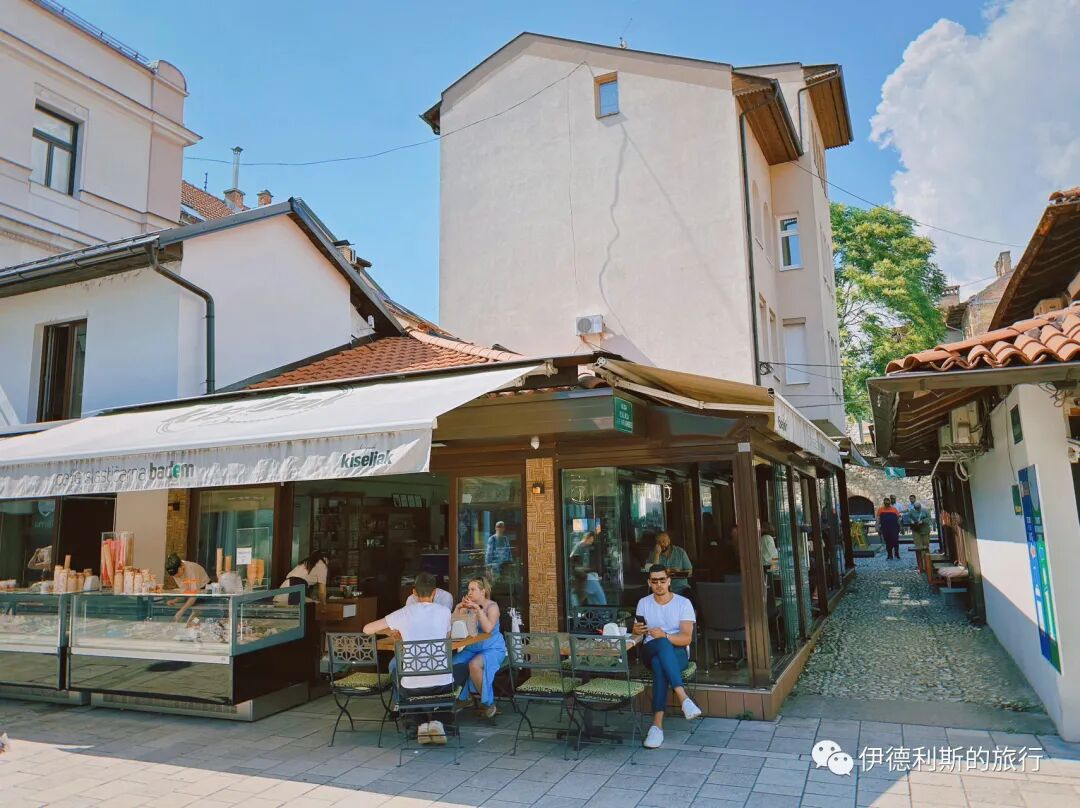
In the afternoon, I ate Bosnian stew (bosanski lonac) at Aščinica Hadžibajrić F. Namika in the old bazaar of Sarajevo. The word Aščinica here means an old-fashioned Bosnian restaurant. The Hadžibajrić family has run this traditional Bosnian restaurant for over a hundred years. The current owner, Namik, stands behind the counter and serves the food you point to.
Bosnian stew dates back to the Middle Ages. It started as a home-cooked meal for Bosnian workers and later became popular with all social classes. It can be made by stewing beef, lamb, or meatballs with cabbage, potatoes, tomatoes, and carrots. When stewing, layer the meat and vegetables in the pot, then add garlic and whole peppercorns for seasoning. They also serve various stuffed vegetables (sarma), including stuffed tomatoes, stuffed grape leaves, stuffed onions, and stuffed pickled cabbage leaves. Sarma means "wrapped" in Turkish, referring to vegetables stuffed with filling and then stewed.
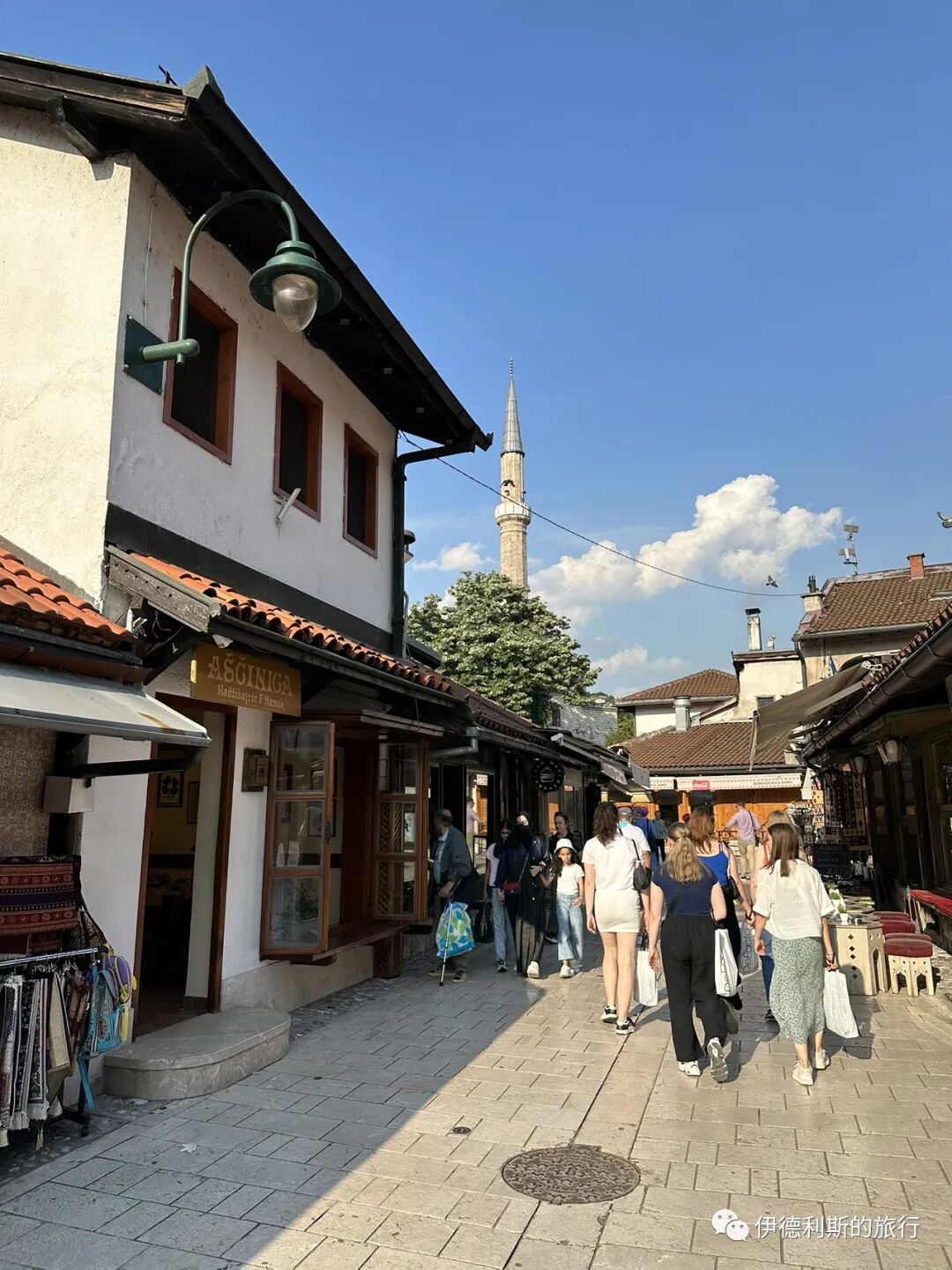
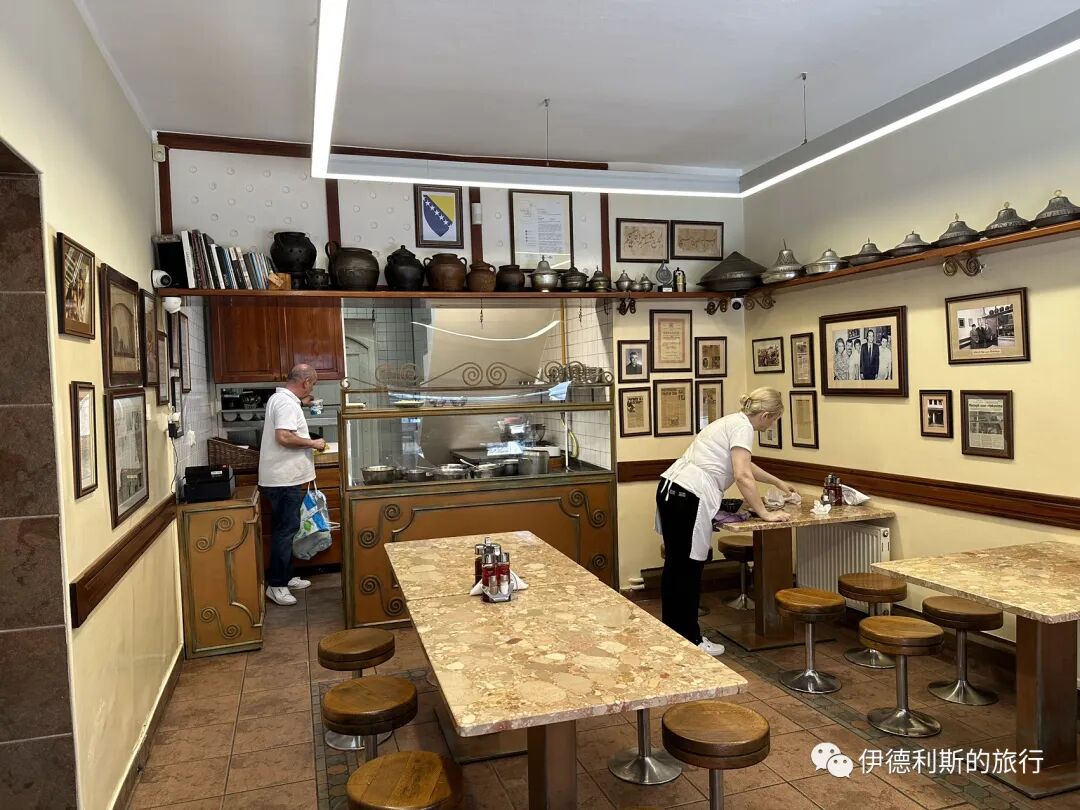
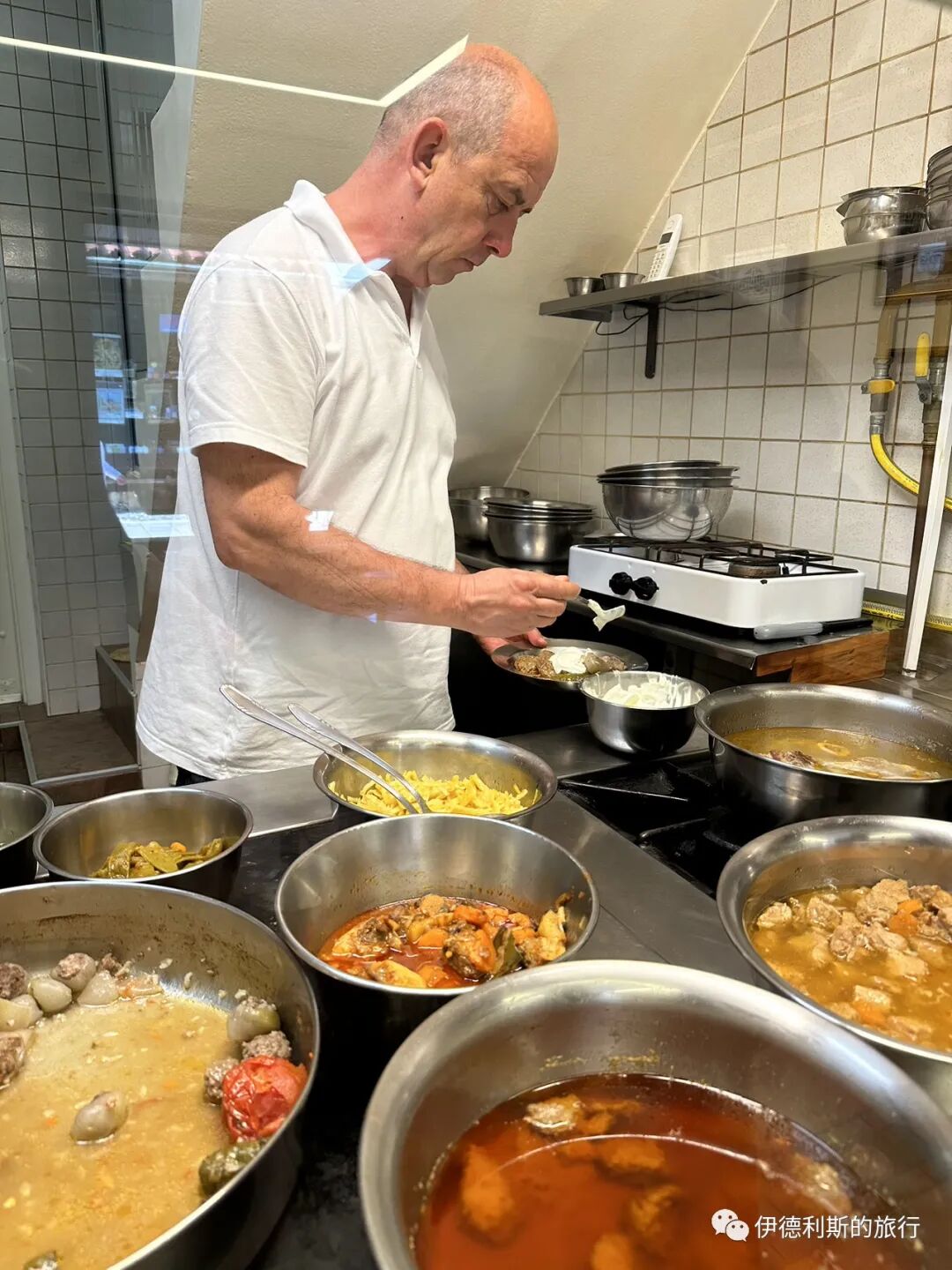
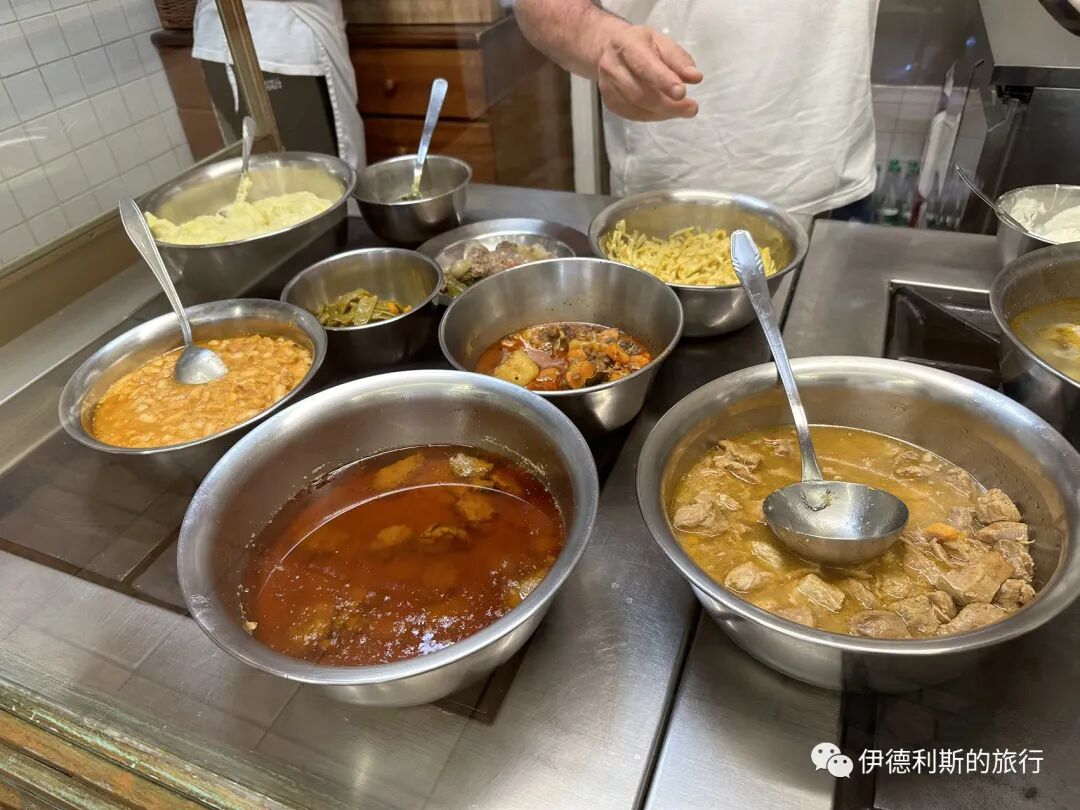
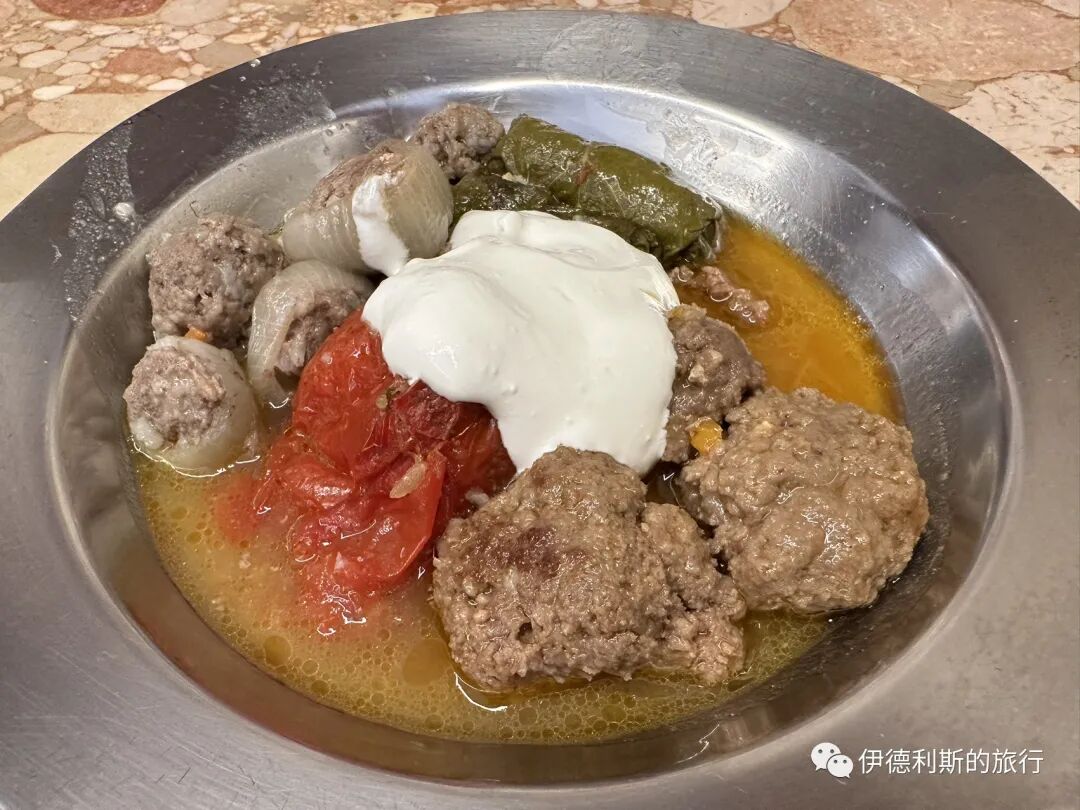
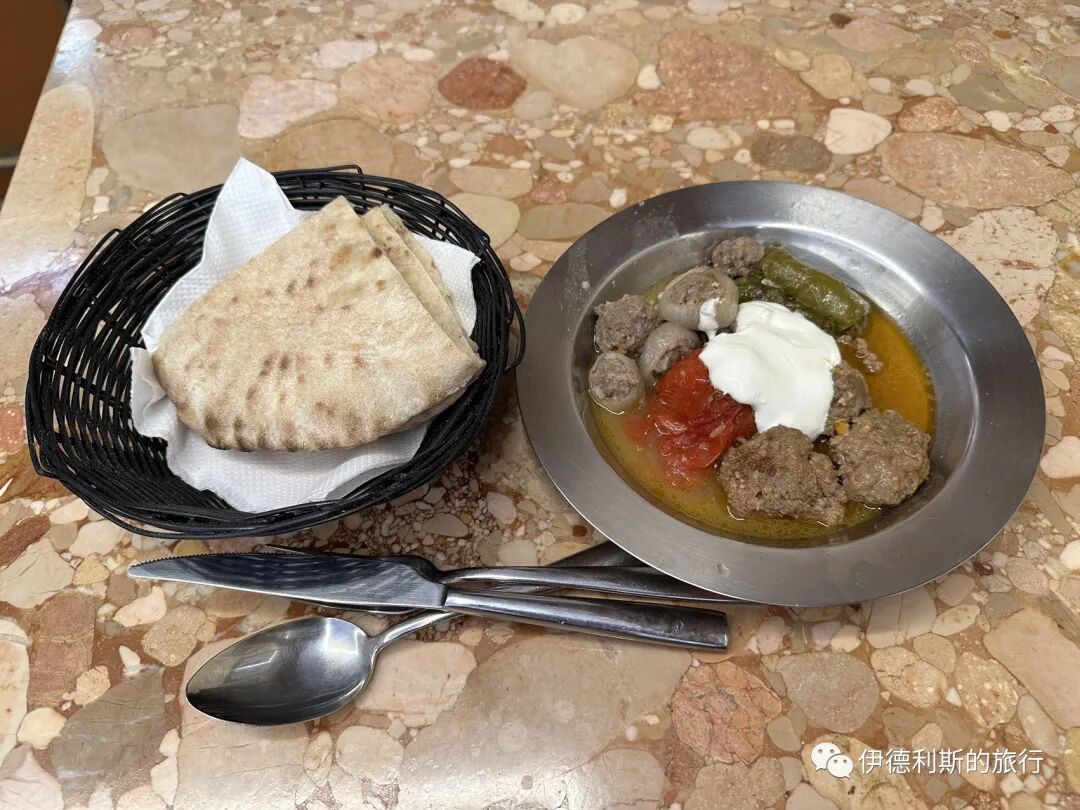
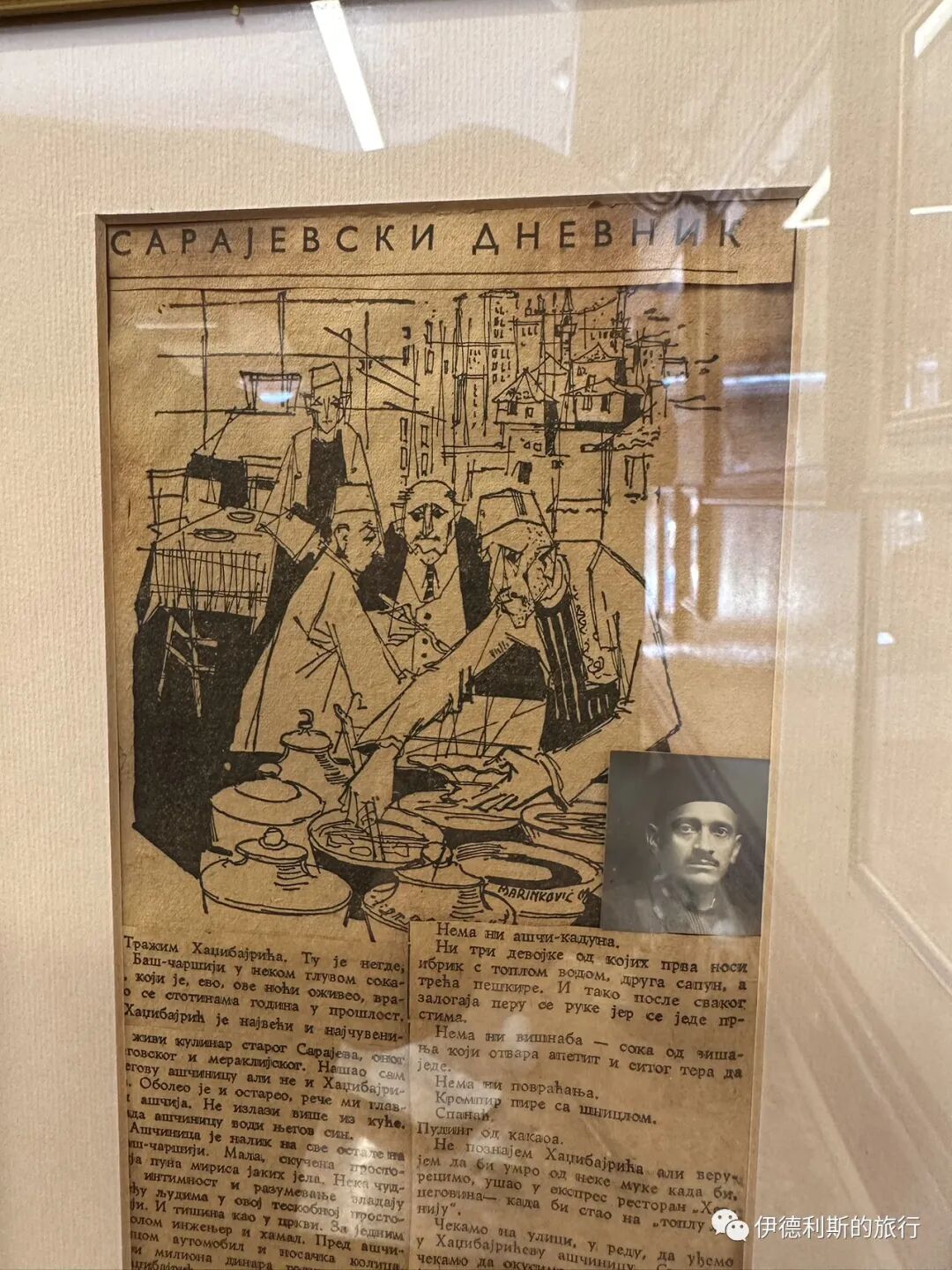
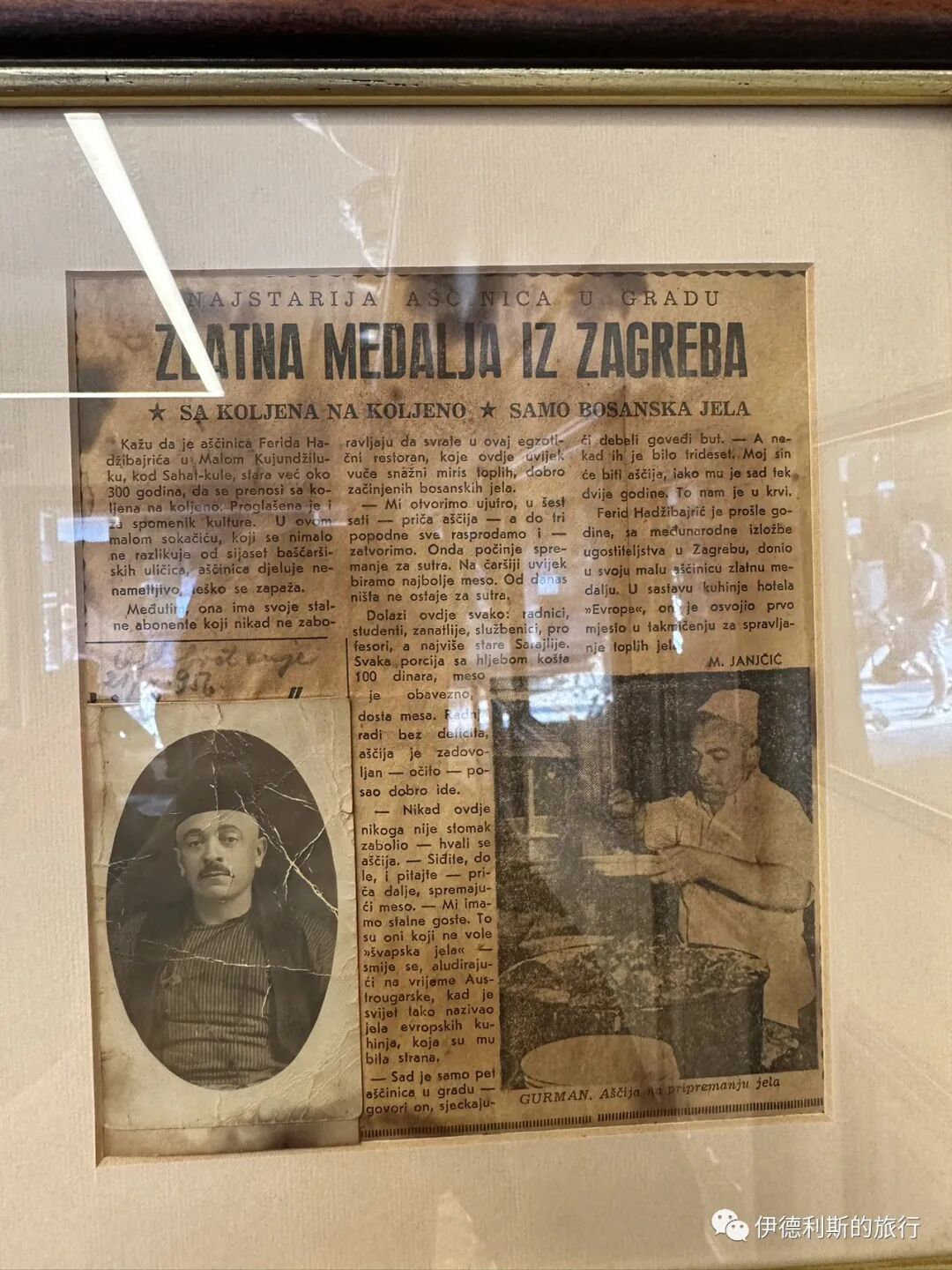
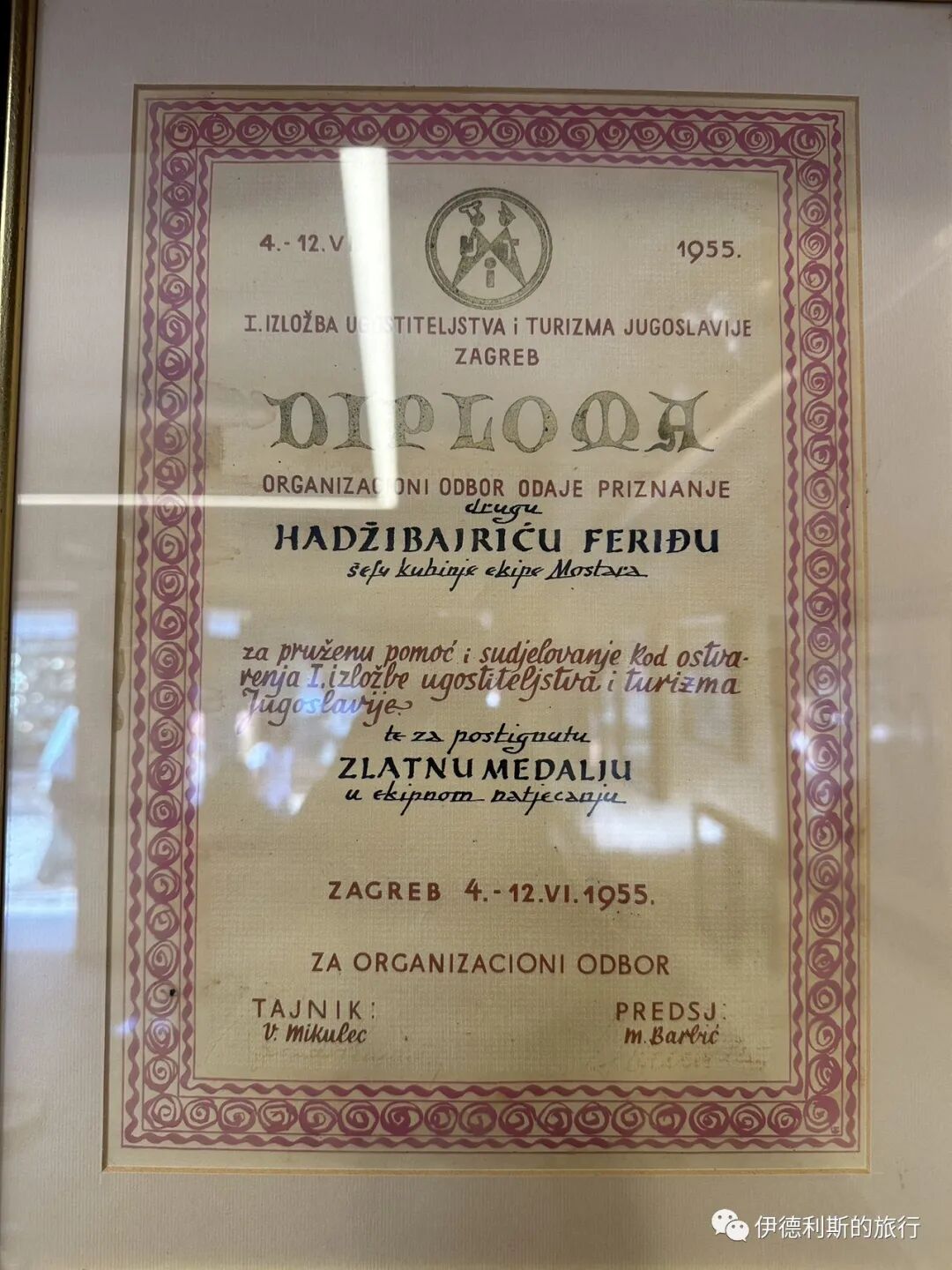
Drink traditional Bosnian coffee (Bosanska Kahva) in the old bazaar of Sarajevo. Coffee first arrived in the Balkan Peninsula under Ottoman rule from the Arab world in the 16th century. Sarajevo was one of the first European cities to open coffee houses, over a hundred years before cities in Western Europe.
Coffee houses are an important part of Ottoman culture. People go there to hear the day's main news, discuss daily gossip, and watch impromptu performances like shadow puppetry. Coffee houses allow people to express more ideas outside of work and worship (namaz), and they are also a great opportunity to meet like-minded friends.
Like Turkish coffee, Bosnian coffee is made by grinding roasted coffee beans into a fine powder and brewing them in a long-handled copper pot called a Džezva (known as Cezve in Turkish). However, while Turkish coffee can be brewed with cold water, Bosnian coffee must be brewed with boiling water. You can add sugar to Turkish coffee while it brews, but you cannot add sugar to Bosnian coffee. Turkish coffee is poured into a cup and served to the customer, while Bosnian coffee is served by placing the copper brewing pot and the cup together on a tray for the customer to pour themselves.
The classic Bosnian coffee set includes a copper pot, a porcelain cup with a copper base, a copper tray, a copper container for sugar cubes, and Turkish delight (Rahat Lokum). To drink it, first bite off a piece of a sugar cube and hold it under your tongue, letting the sugar melt on its own, then drink the coffee. Bosnian Turkish delight (Rahat Lokum) comes from Turkish delight (Lokum). The yellow ones are made with vanilla and the red ones are made with rose petals; you can eat them at any time while drinking coffee.
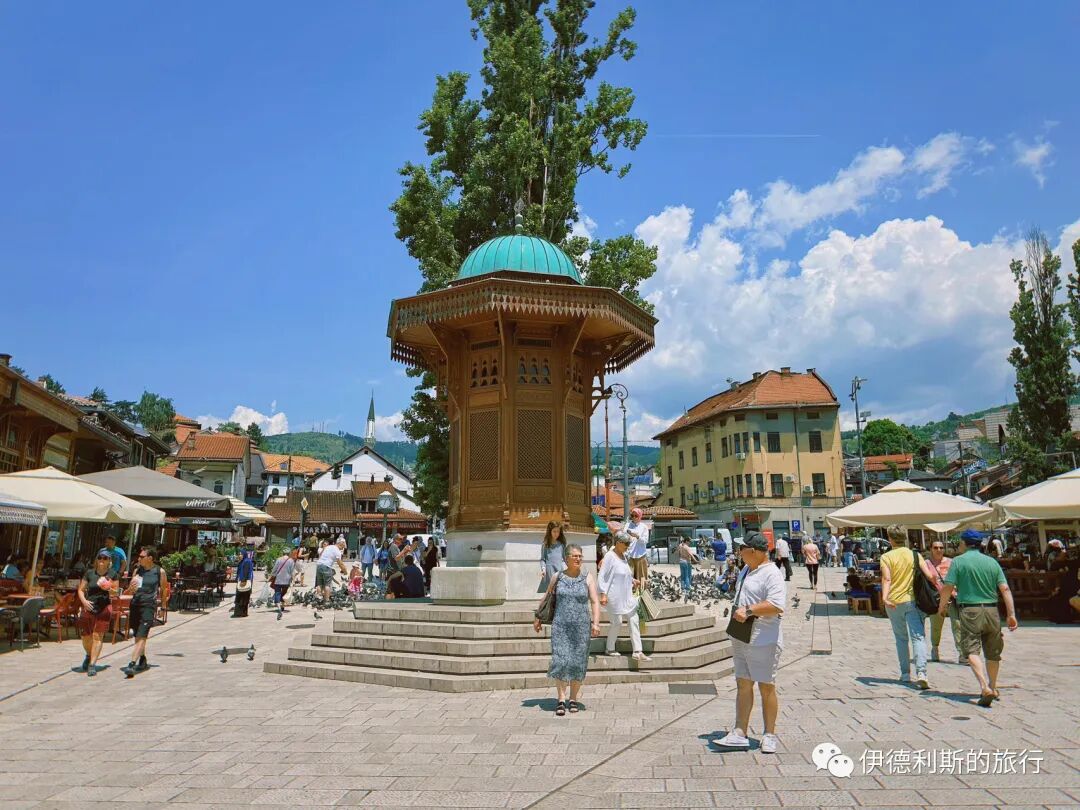
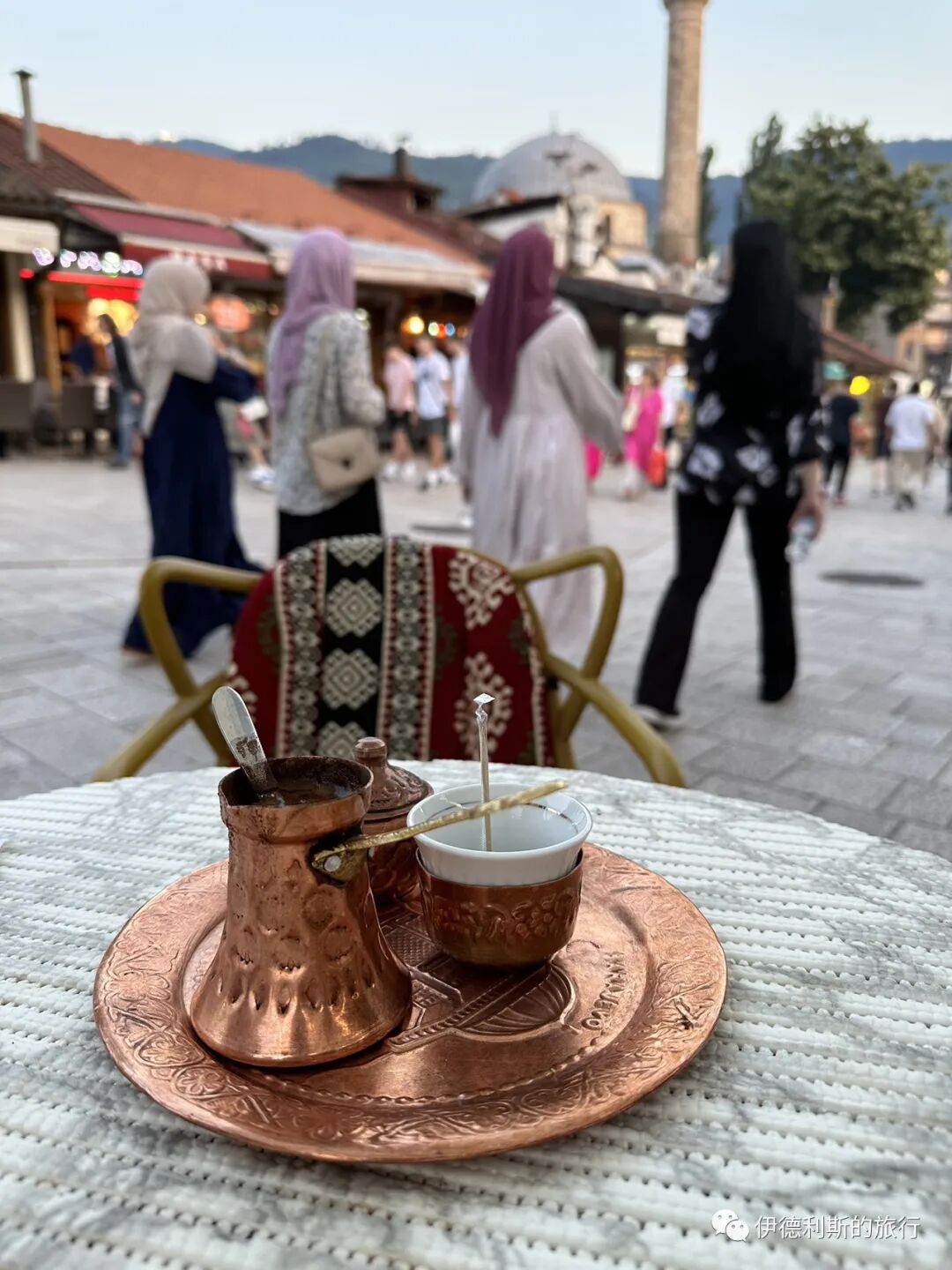
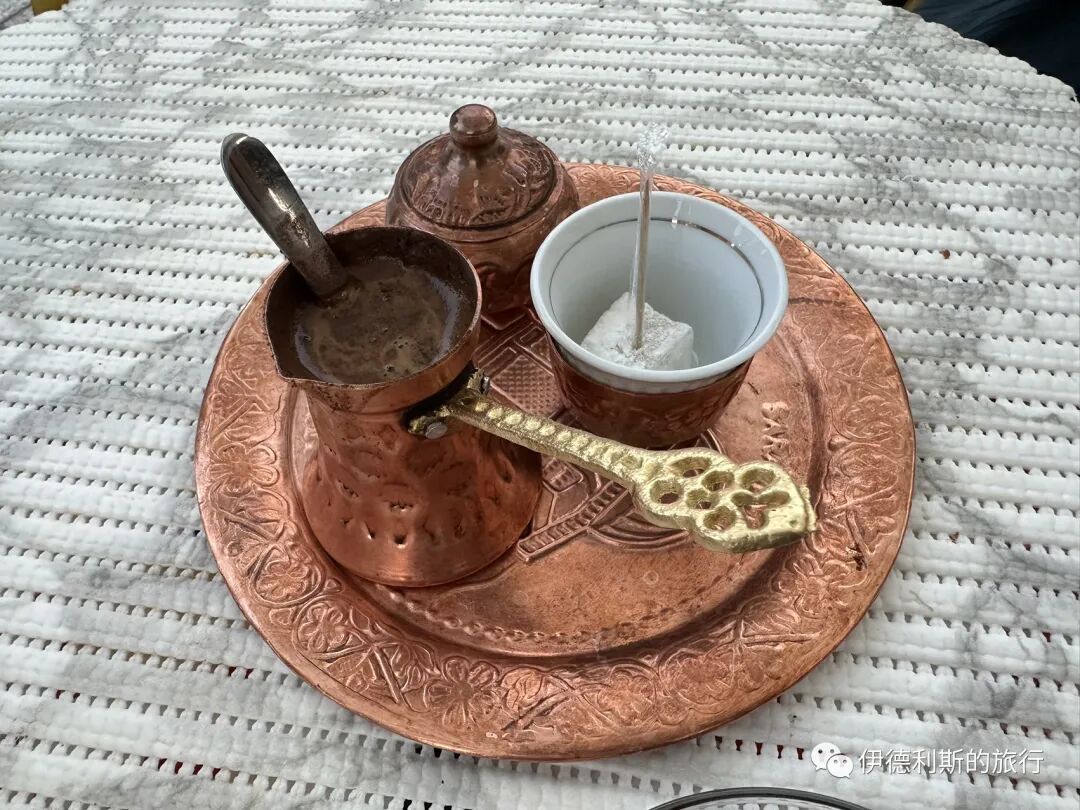
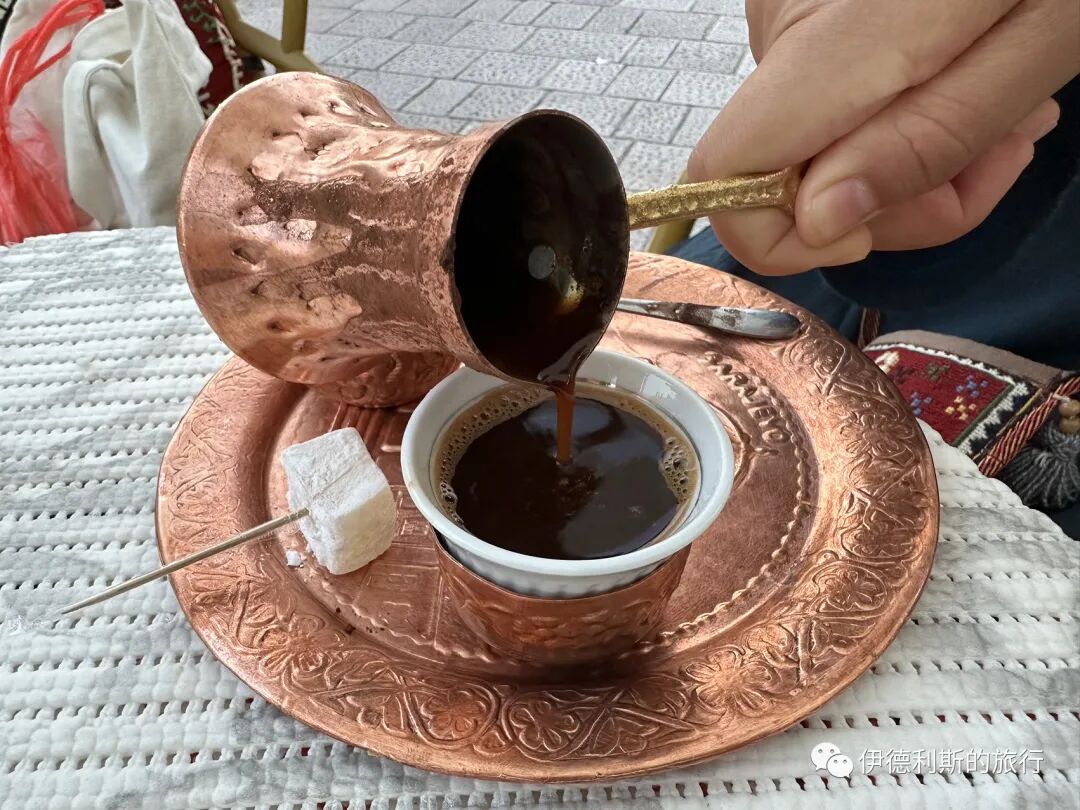
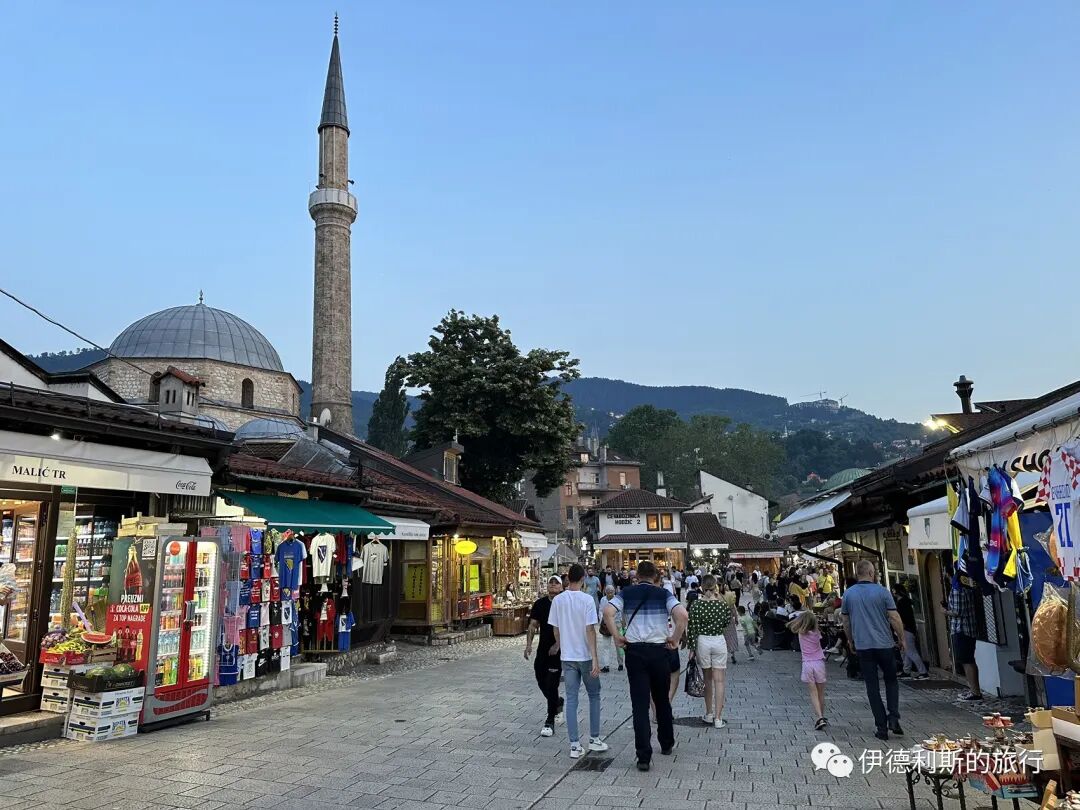
One of the coffee houses I visited is called Andar Caffe Bar. The owner Maida's grandfather, Muharem, opened a handmade shoe shop in the old bazaar of Sarajevo in 1933, which was later taken over by Maida's father, Osman. After Osman retired in 2010, Maida took over the shop. But by then, handmade shoes were no longer in demand as people bought shoes in stores, so Maida turned the shoe shop into the current coffee house while keeping many shoe-related elements inside.
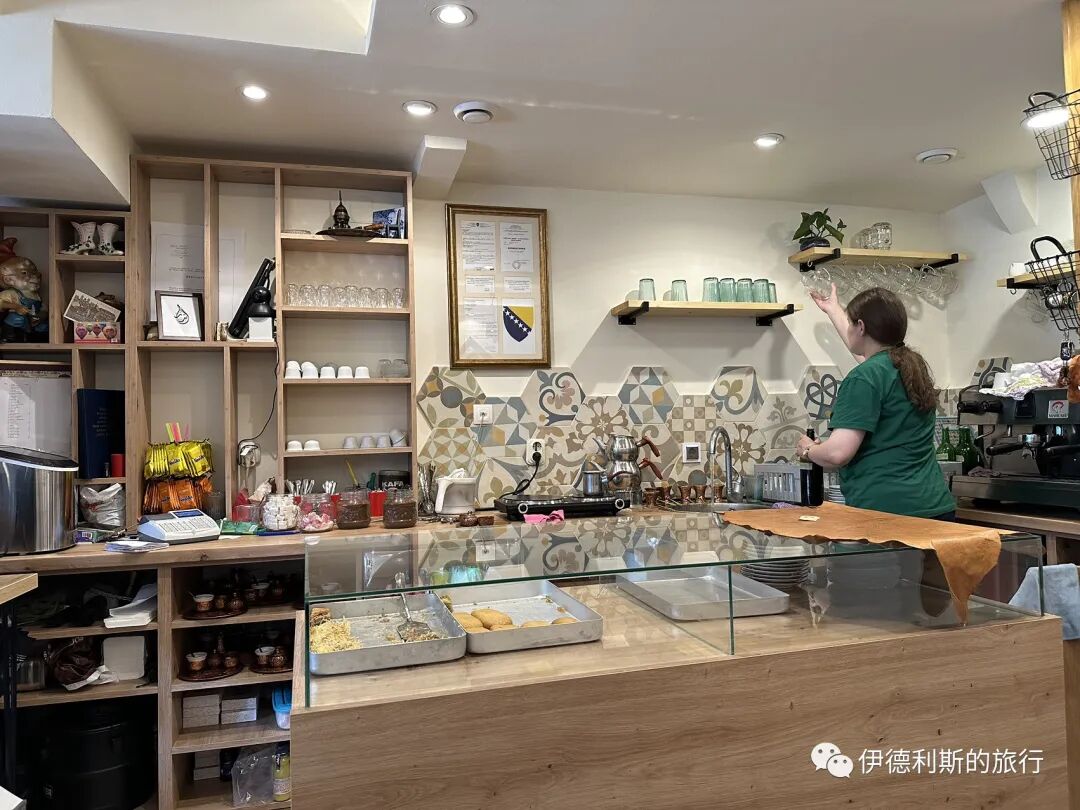
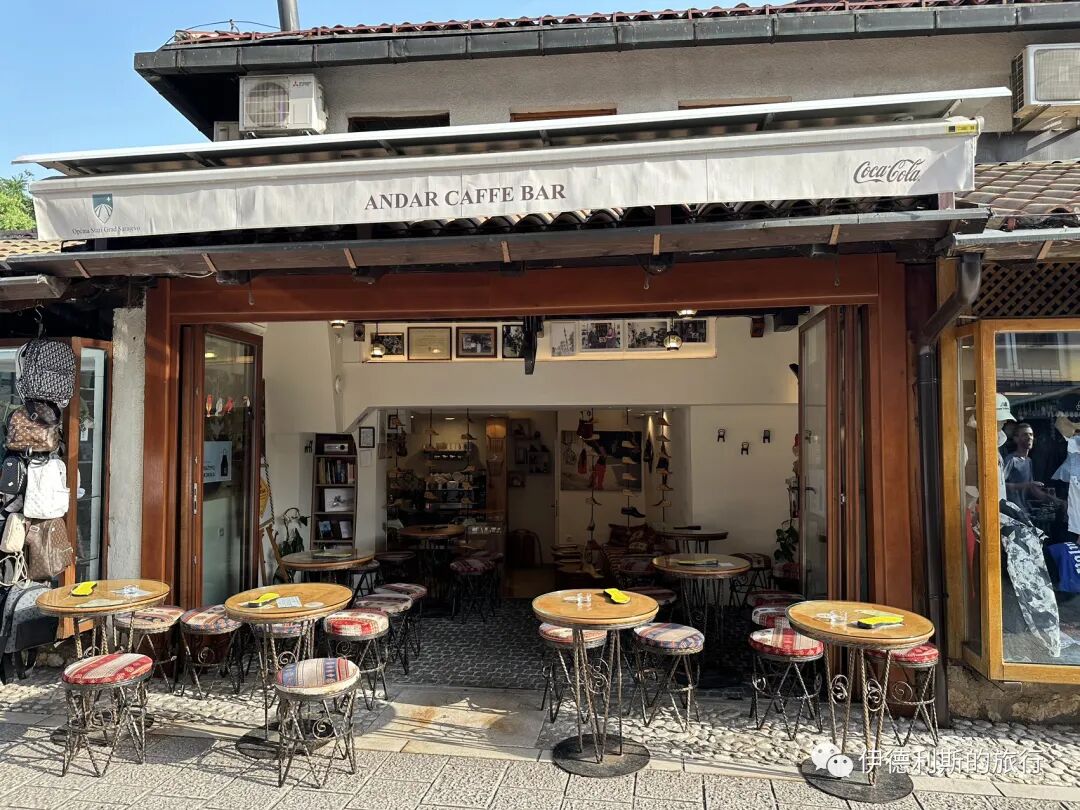
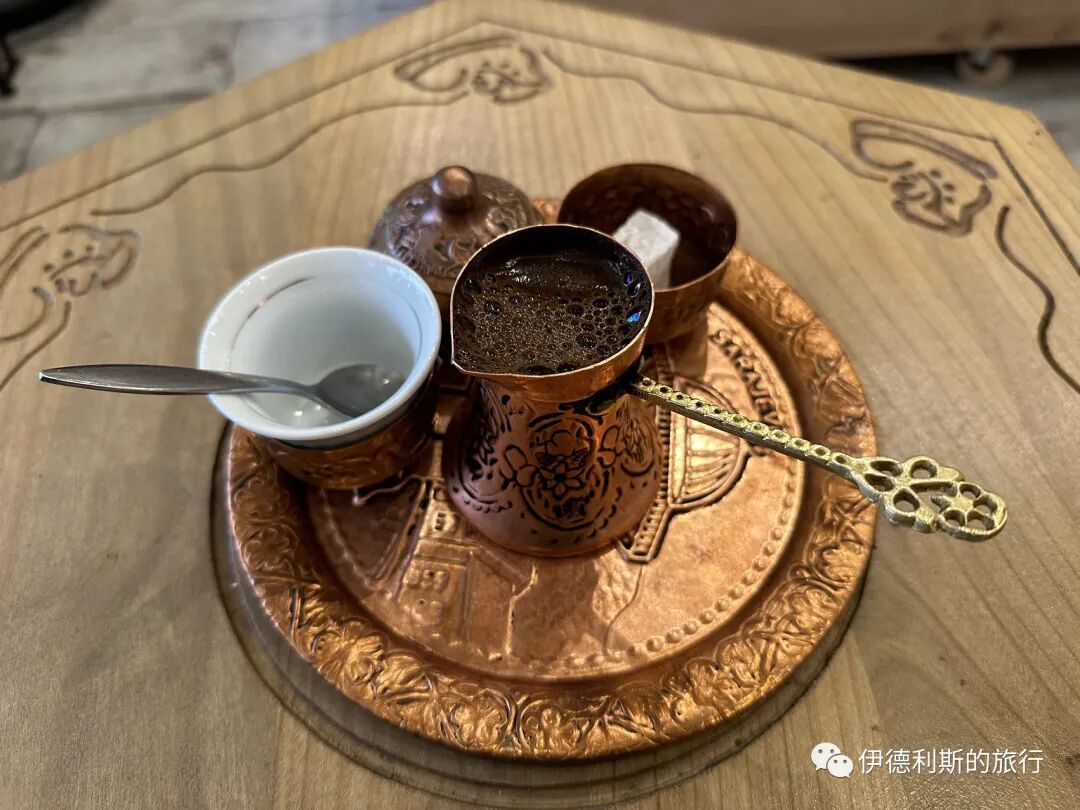
There is a very famous Bosnian restaurant called Inat kuća across from the Sarajevo City Hall (Vijećnica). The traditional Bosnian house where the restaurant is located was built in the mid-17th century, originally next to the current City Hall. In 1892, when the Austro-Hungarian Empire built the City Hall and a tram station, they wanted to take over the land, but the owner, an old man named Benderija, did not want to move. After long negotiations, the old man finally agreed to move a few years later only if they gave him a bag of gold and moved his house brick by brick to the other side of the river. The Austro-Hungarian Empire had no choice but to move the house to its current location. People say during the move, the old man sat on the nearby bridge every day, carefully watching the workers move every single brick to the other side of the river.
After 1997, Inat kuća became a Bosnian restaurant where you can enjoy Bosnian cuisine and see the traditional Bosnian interior design. We ordered traditional Bosnian dumplings (klepe), cornmeal porridge (pura), rose water, and elderflower (zova) water. Klepe is made by kneading flour, eggs, and salt for the dough, and mixing minced meat, onions, salt, and pepper for the filling. The dumplings are boiled for 10 minutes, then topped with yogurt, garlic powder, and chili powder before being baked. Pura is a porridge made from cornmeal, butter, cheese, and yogurt, and it is one of the favorite breakfasts for Bosniaks.
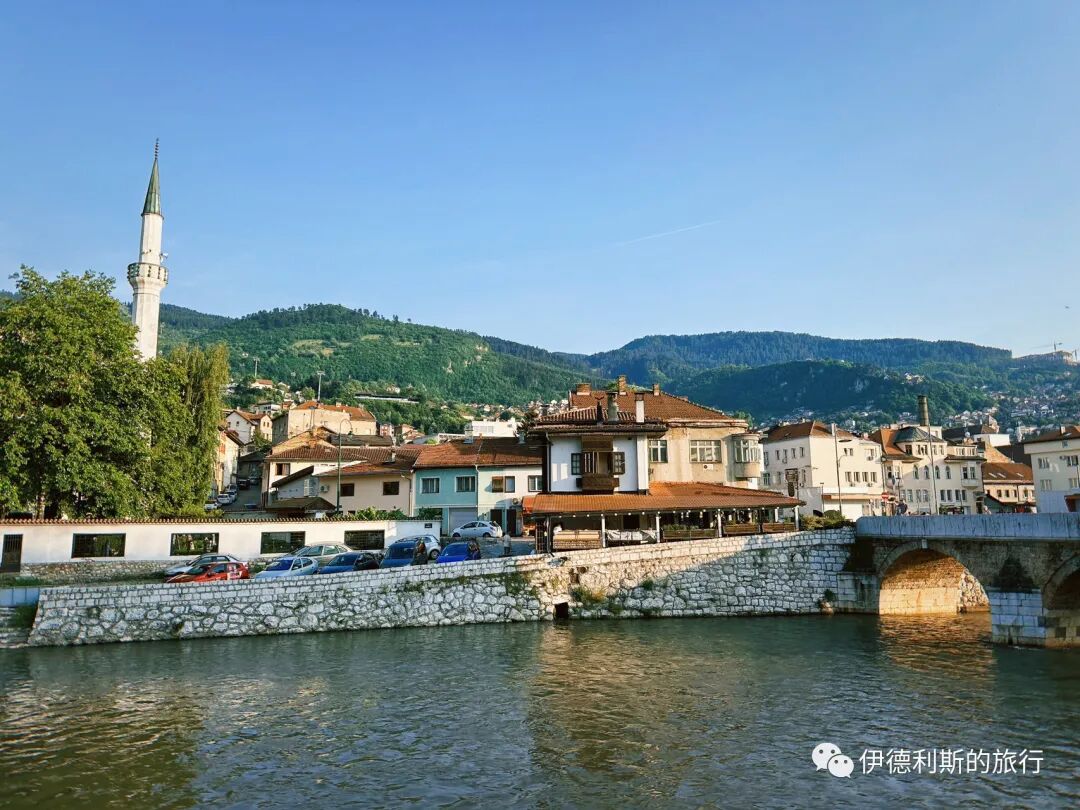
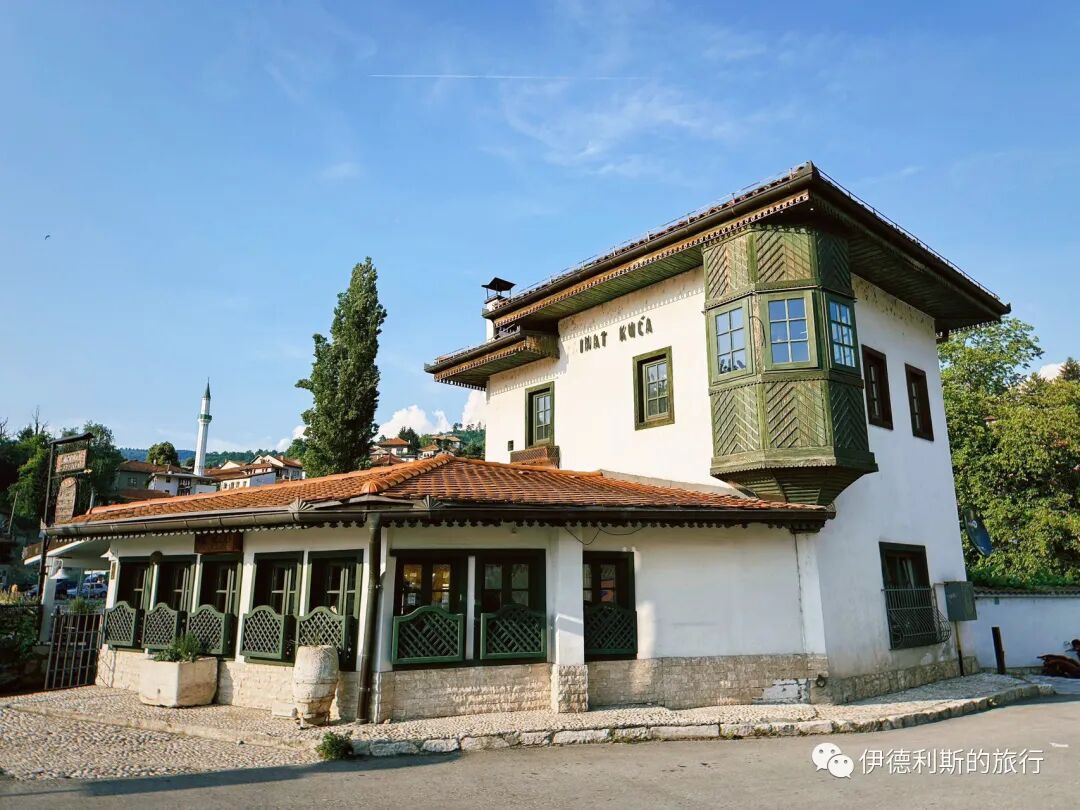
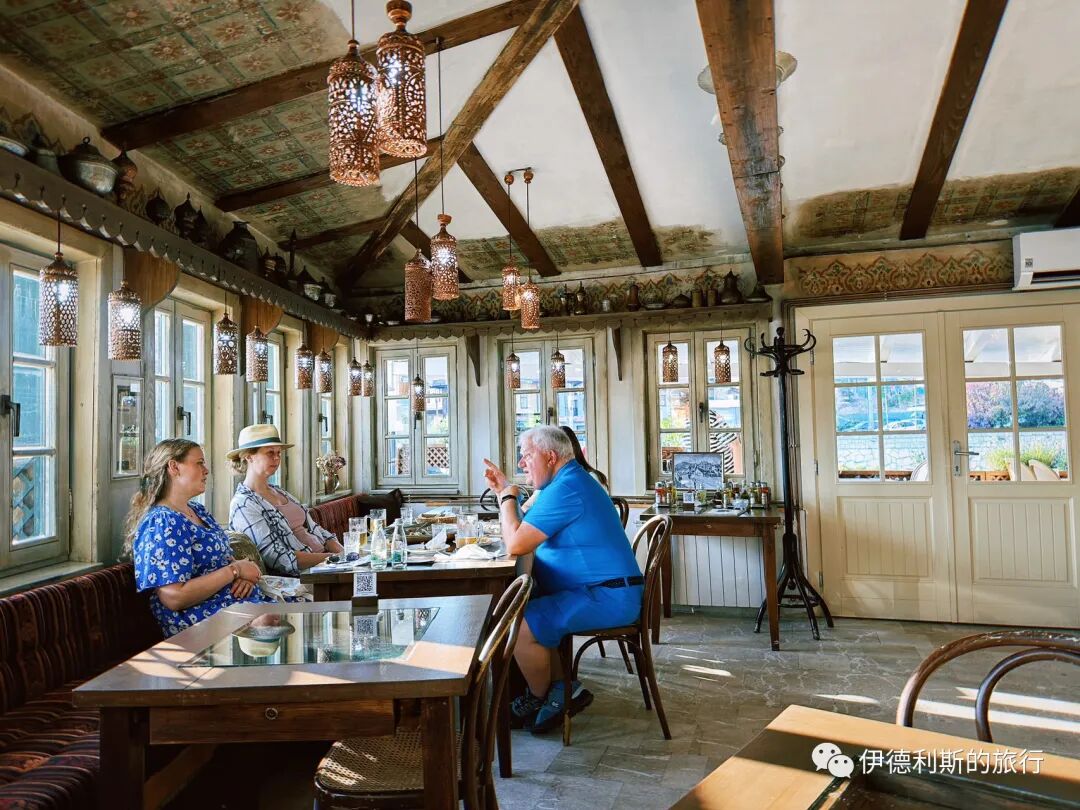
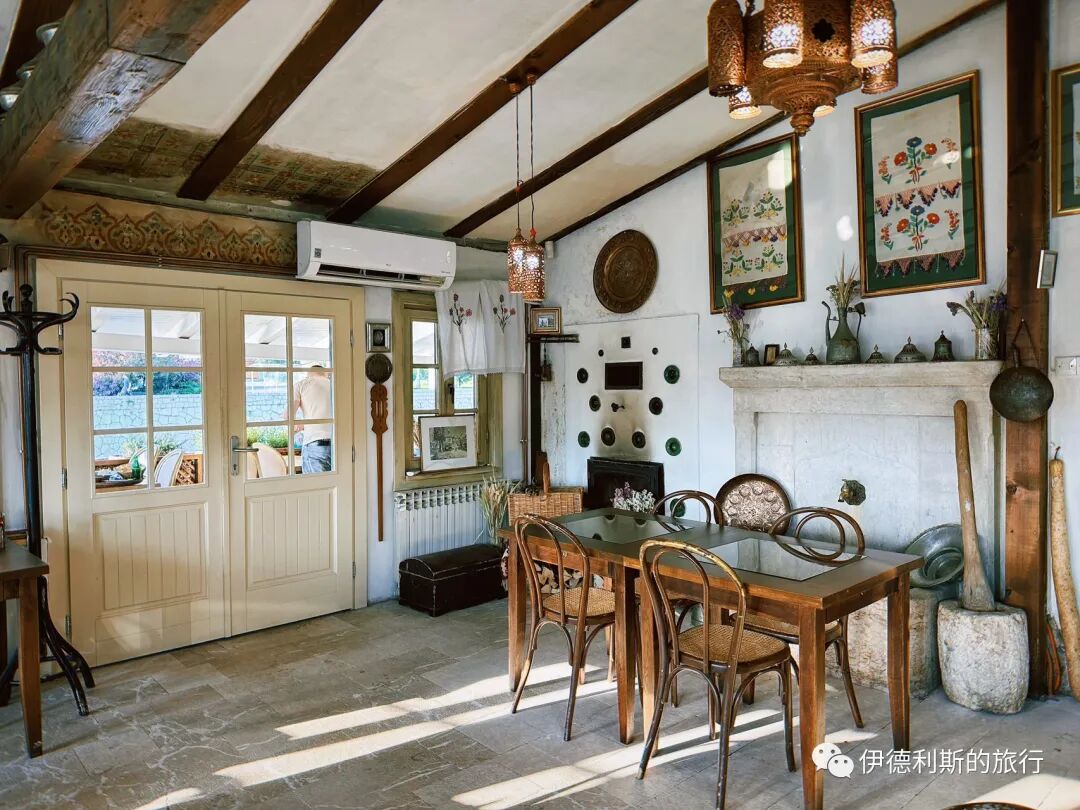
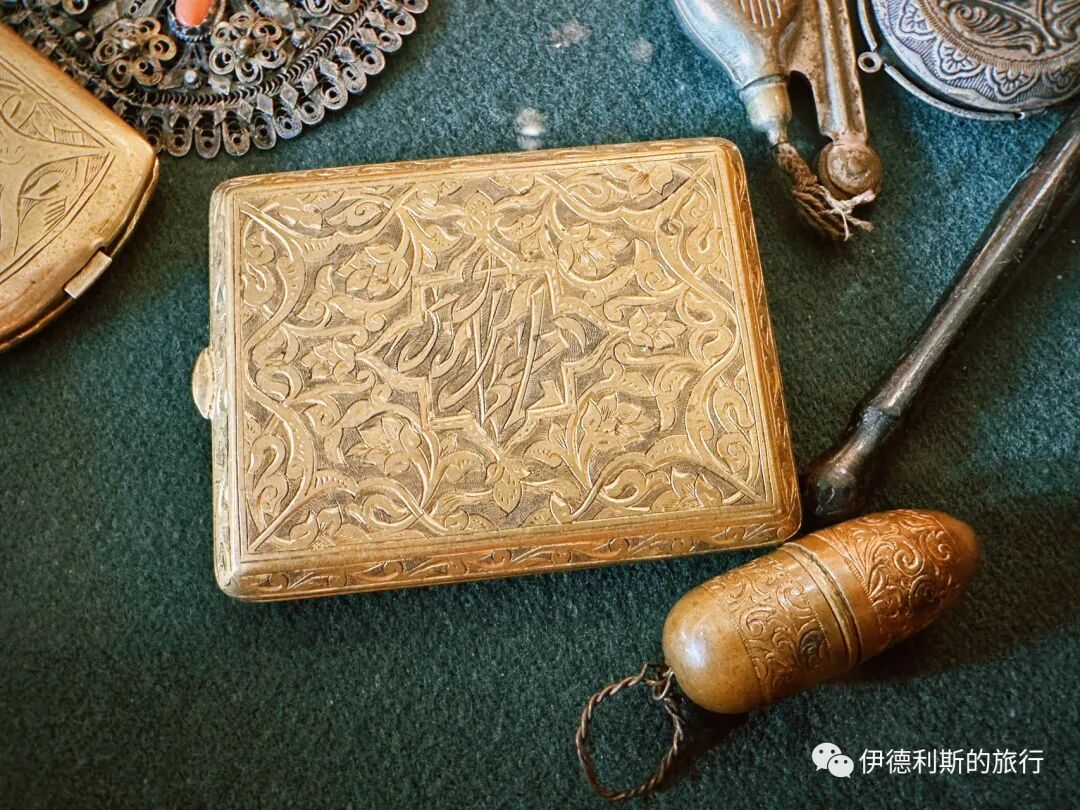
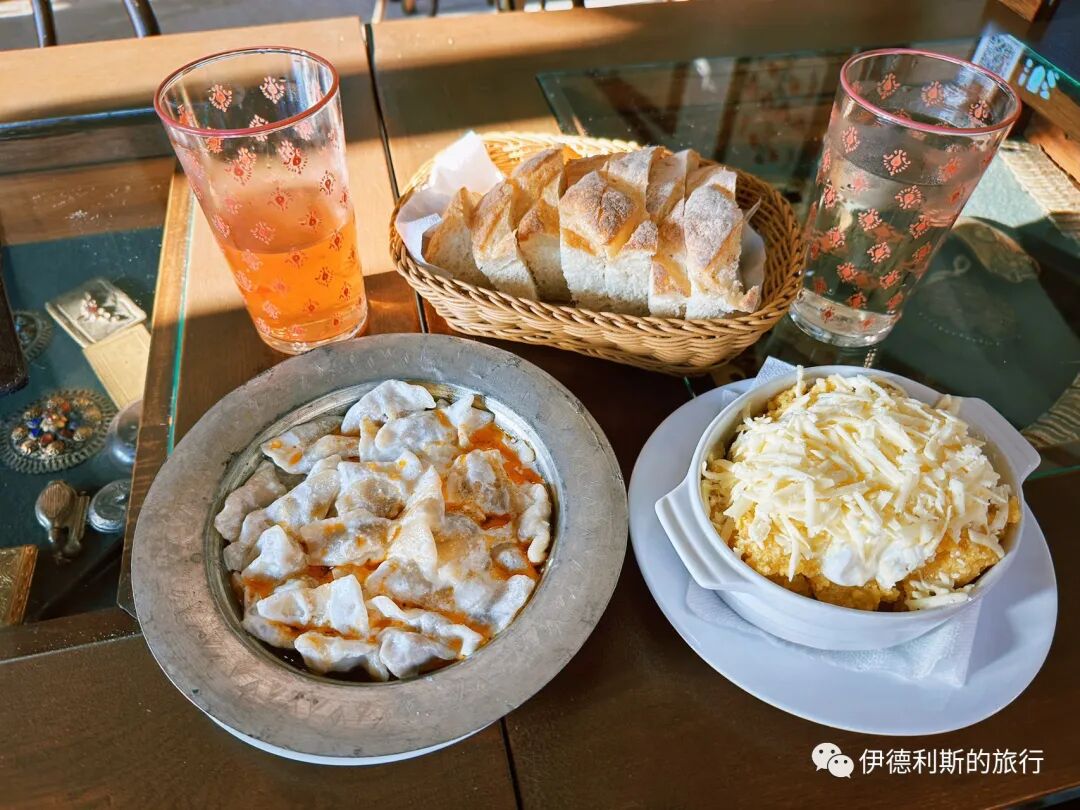
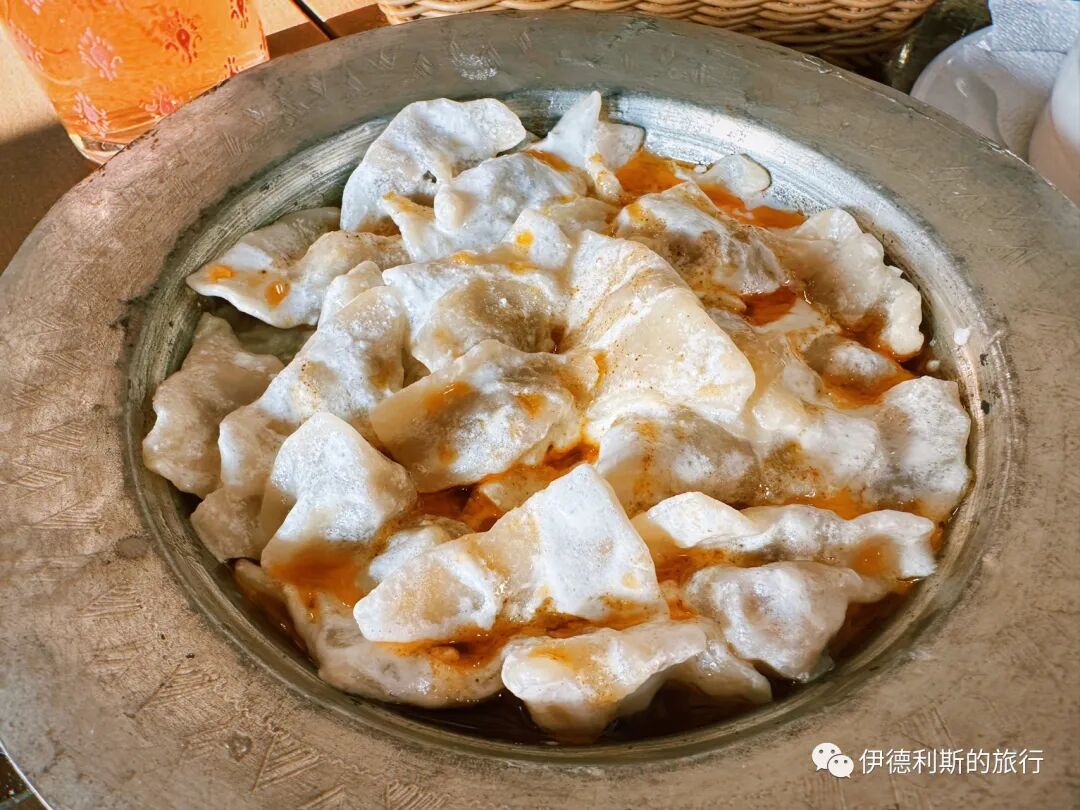
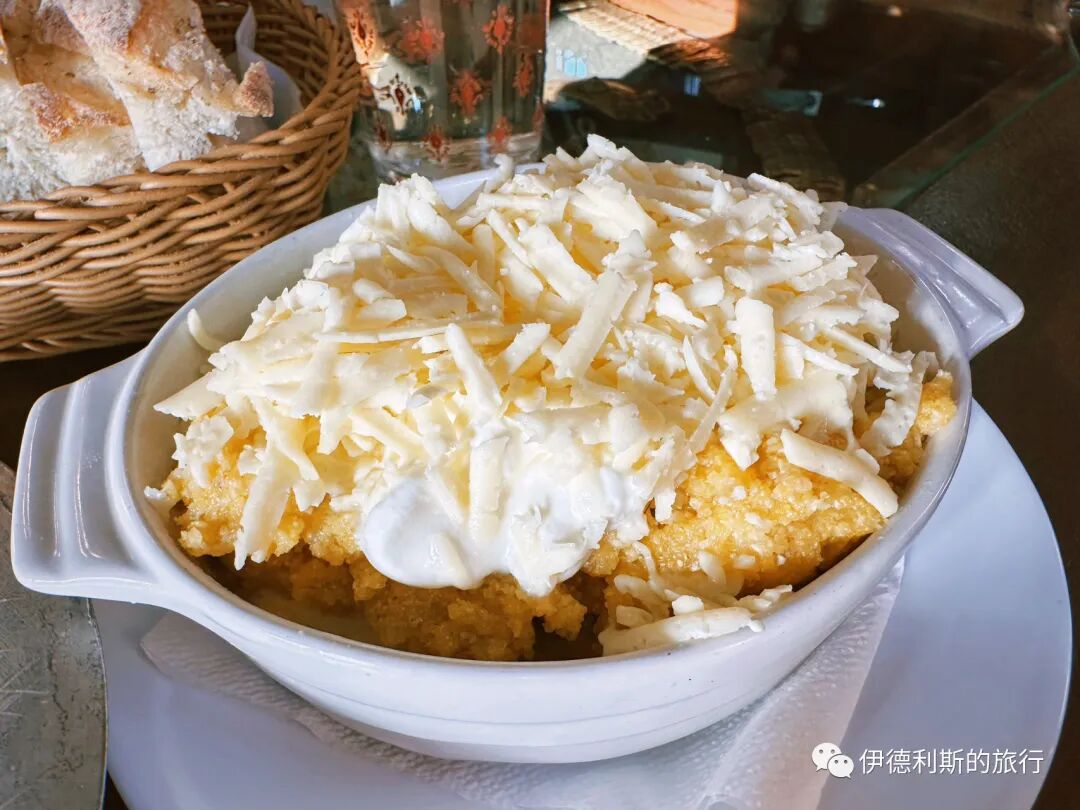
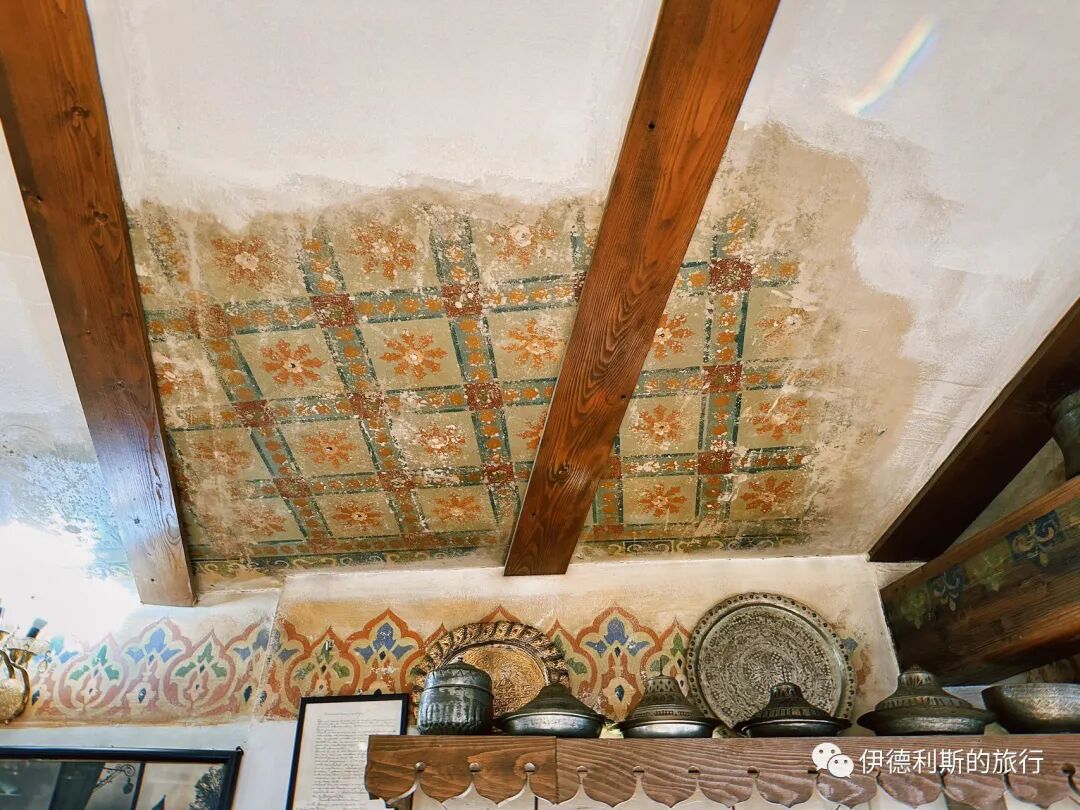
In the morning, we had a traditional Bosnian breakfast at Restoran Čaršija, west of the Gazi Husrev-beg Mosque in Sarajevo's old town, featuring Travnik cheese, smoked cheese, cream cheese, smoked meat, spicy beef sausage (sujuk), vegetables, fruit, fried eggs, and black tea. Travnik cheese is a specialty sheep's milk cheese from Bosnia and Herzegovina, originating from the mountains of Travnik in central Bosnia. It is made by soaking fresh sheep's milk in brine for two to three months, and after draining, it tastes slightly salty and is low in fat.
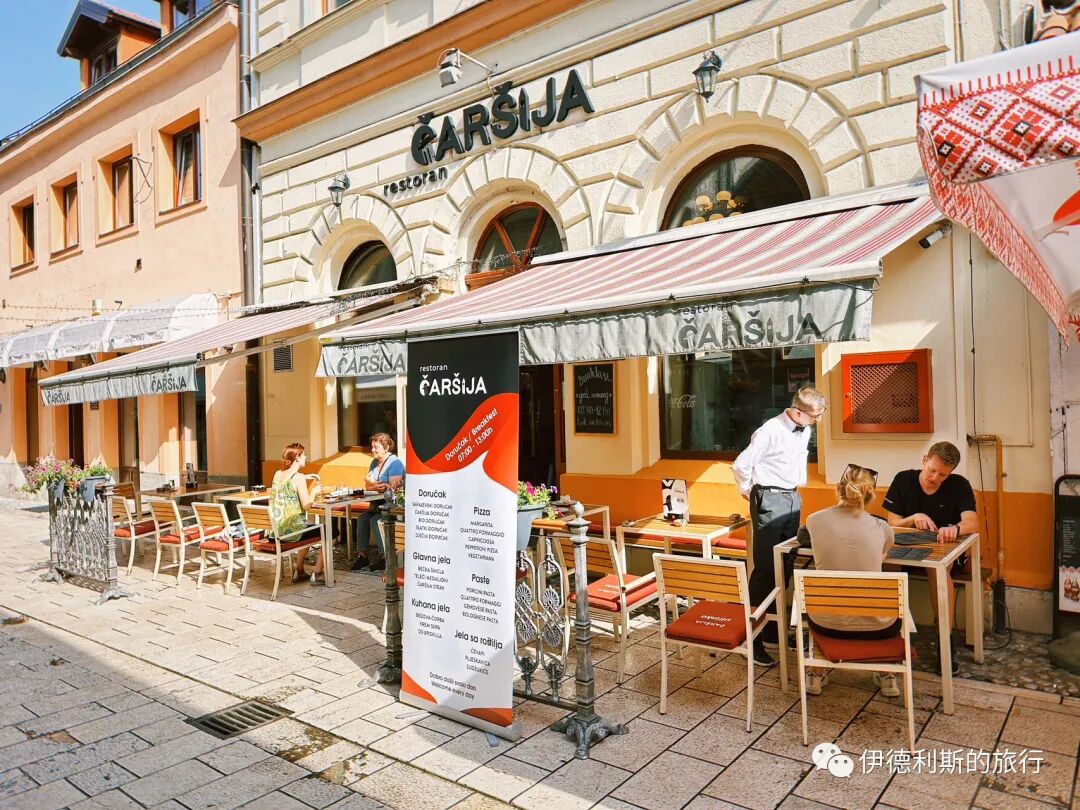
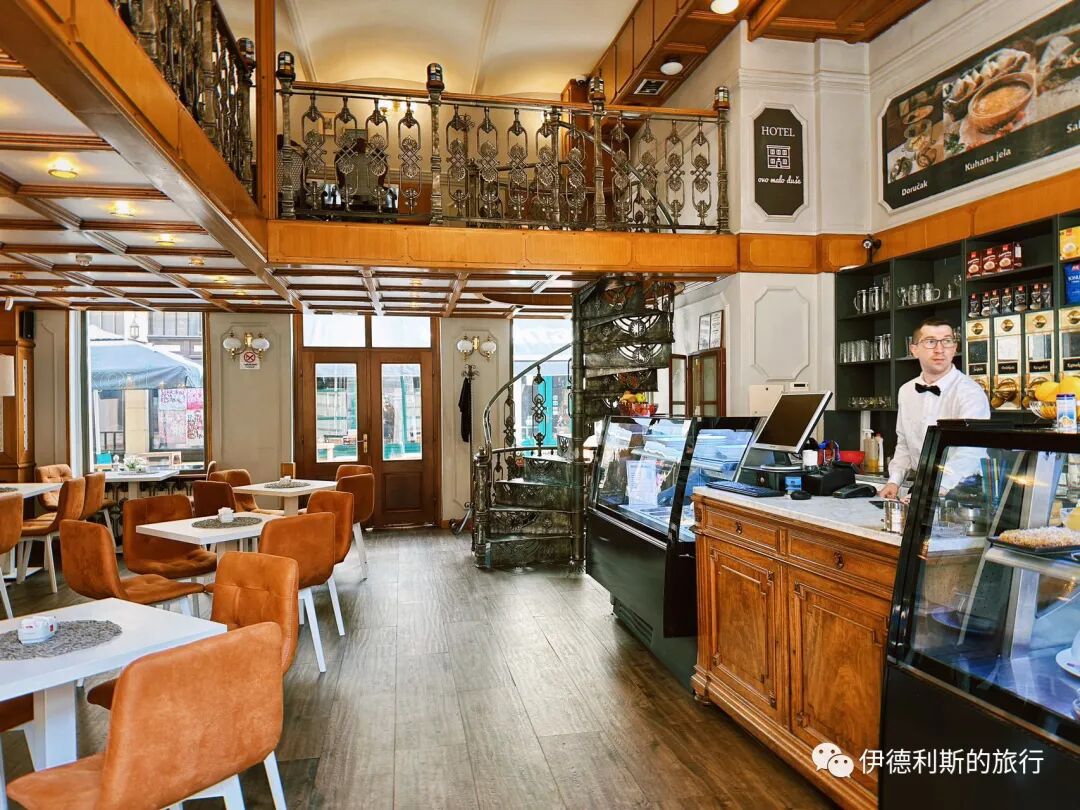
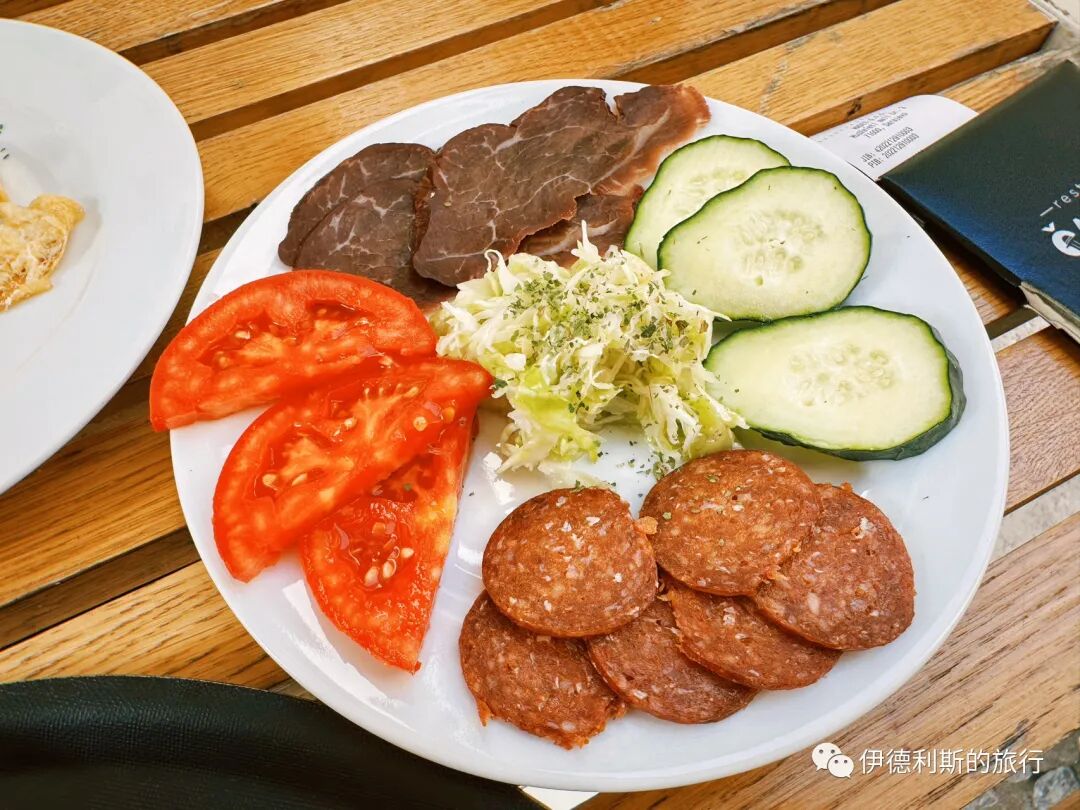
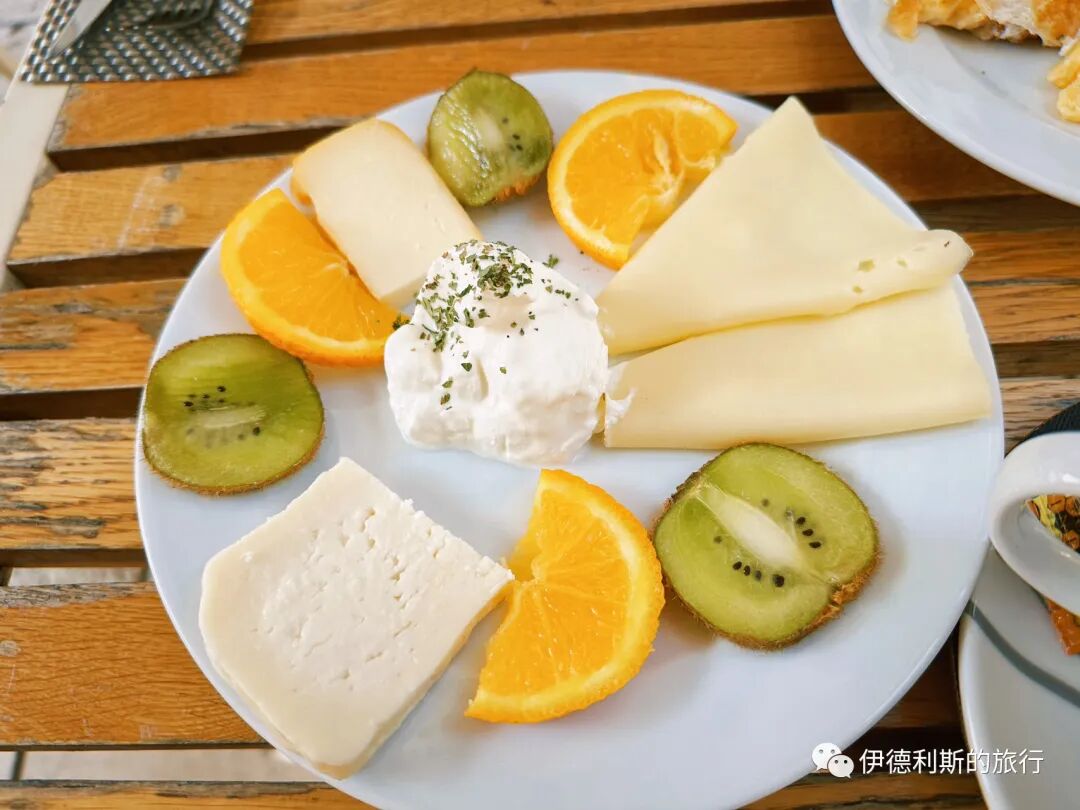
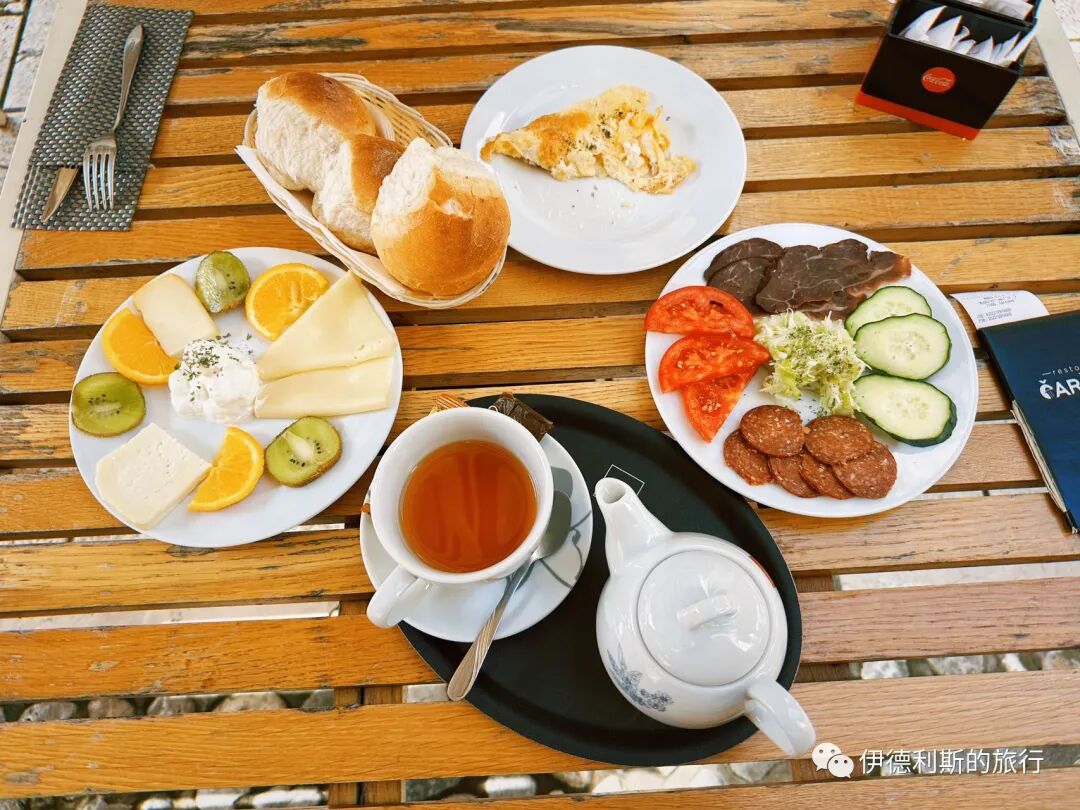
We ate classic Bosnian snacks, flaky meat pie (burek) and small meat dumplings (mantije), on the streets of the old bazaar in Sarajevo. Burek is a classic Ottoman dish. People say this snack was brought from Central Asia to the Anatolian Peninsula by Turkic peoples as they migrated west, later taking its final form in the Ottoman court before spreading to the Balkan Peninsula under Ottoman rule. In Bosnia, Burek is generally called pita. Only the meat-filled version is called Burek, while the white cheese version is called Sirnica, the spinach and cheese version is called Zeljanica, and the potato version is called Krompiruša.
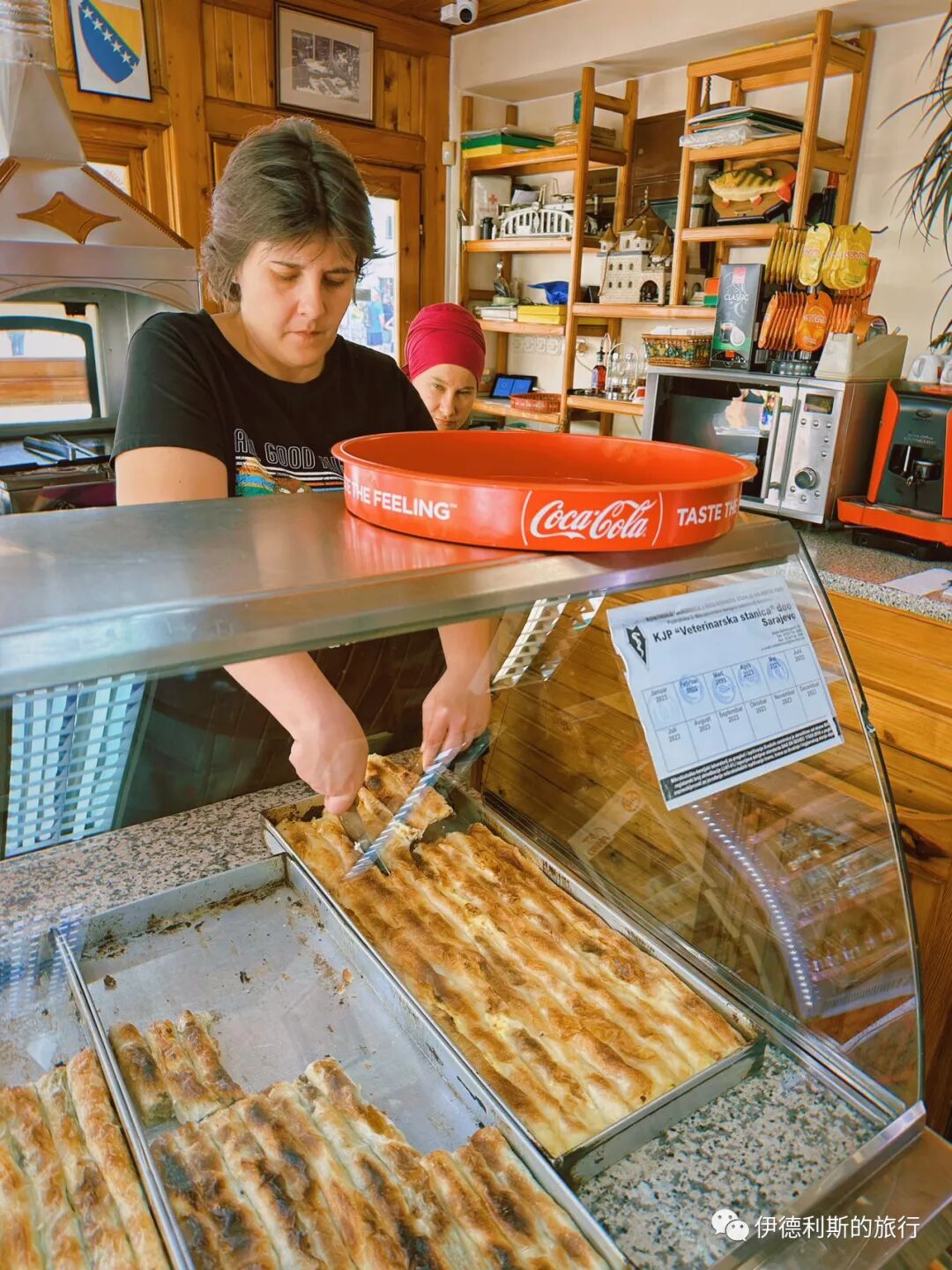
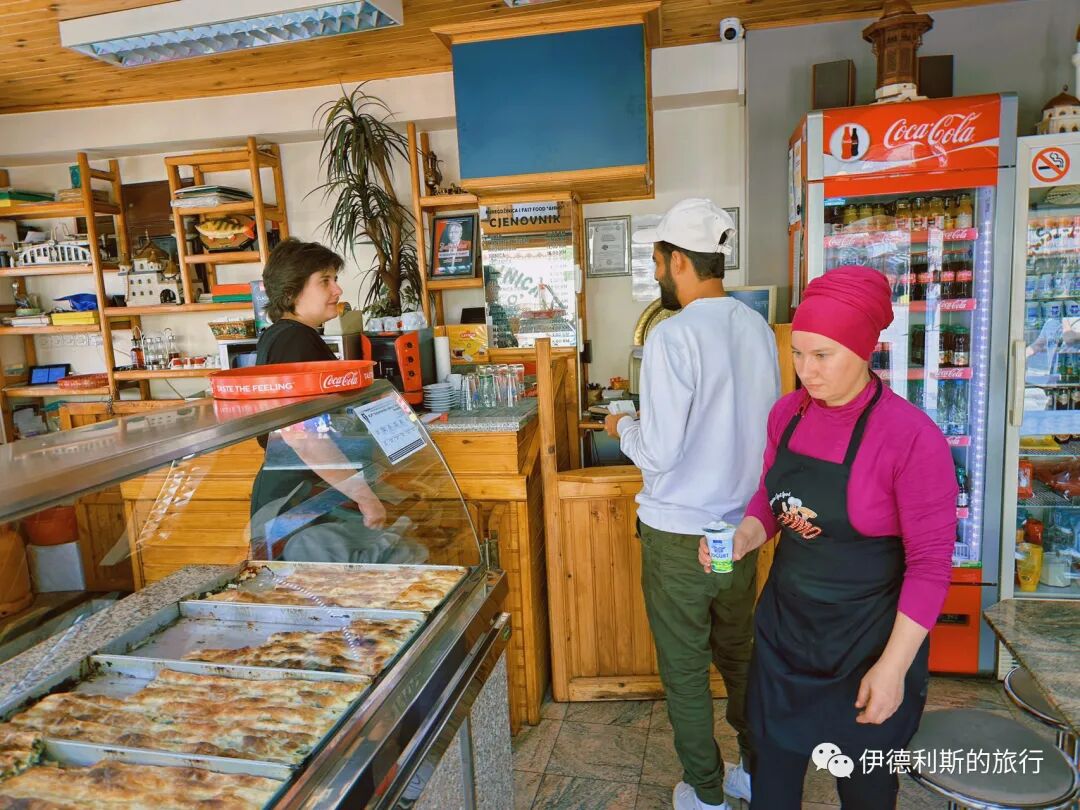
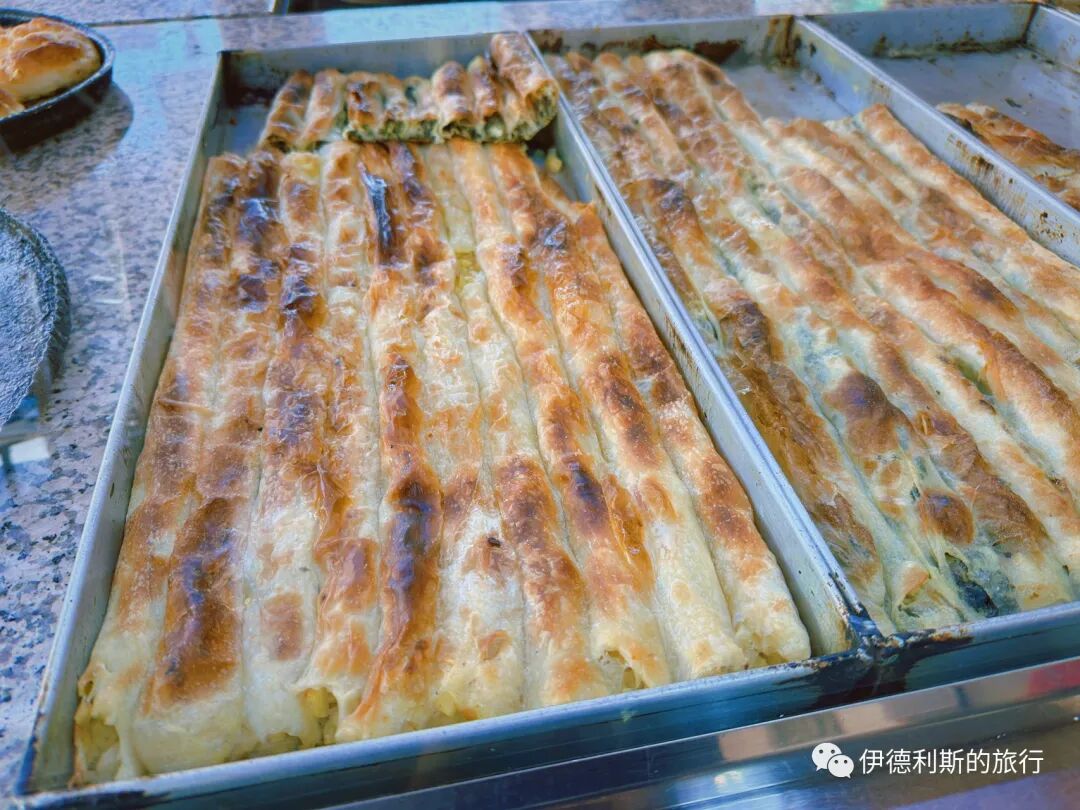
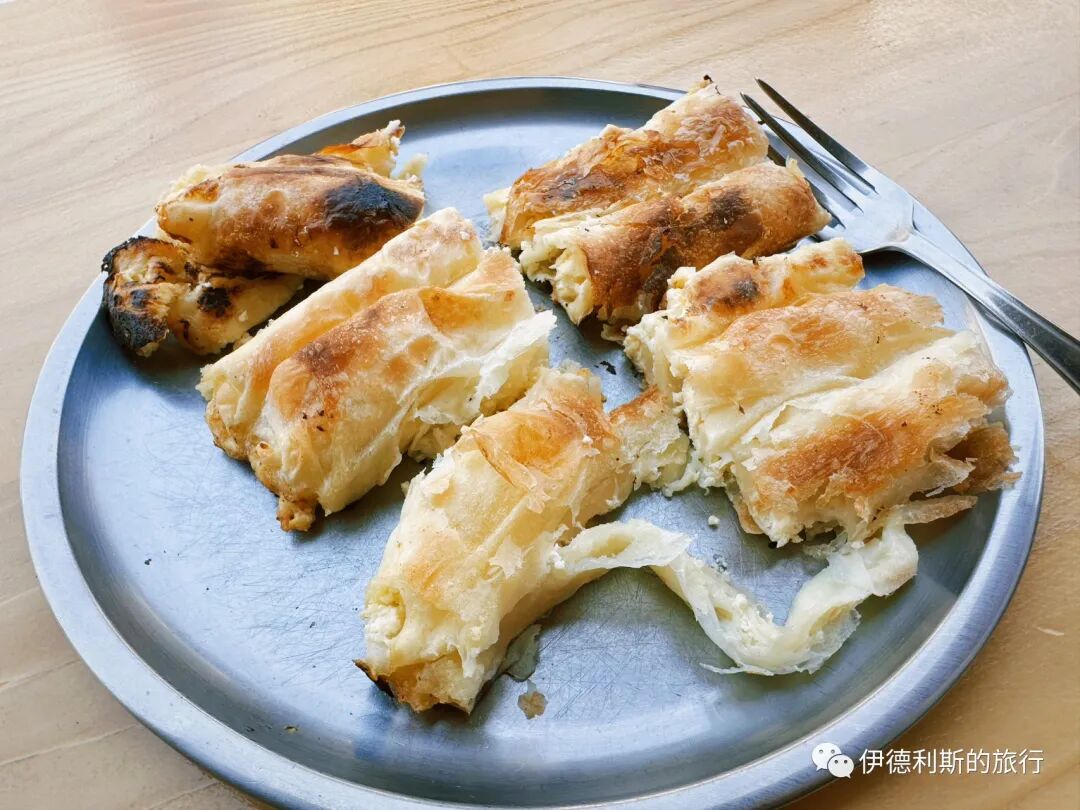
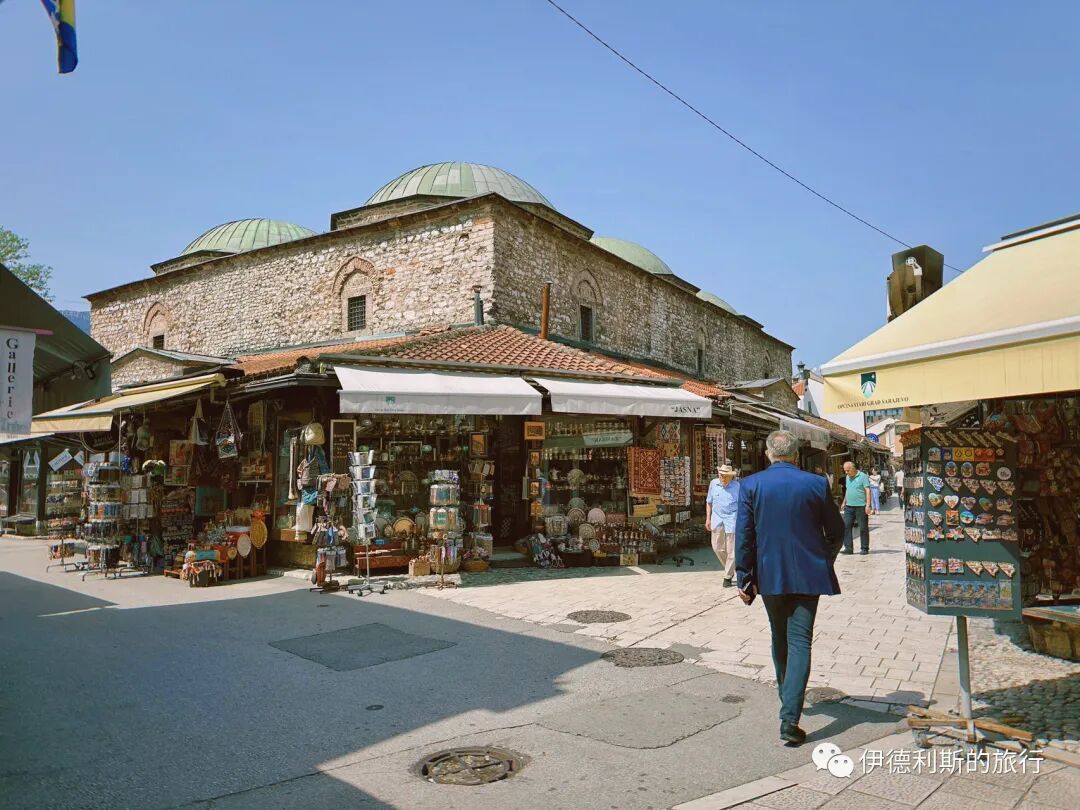
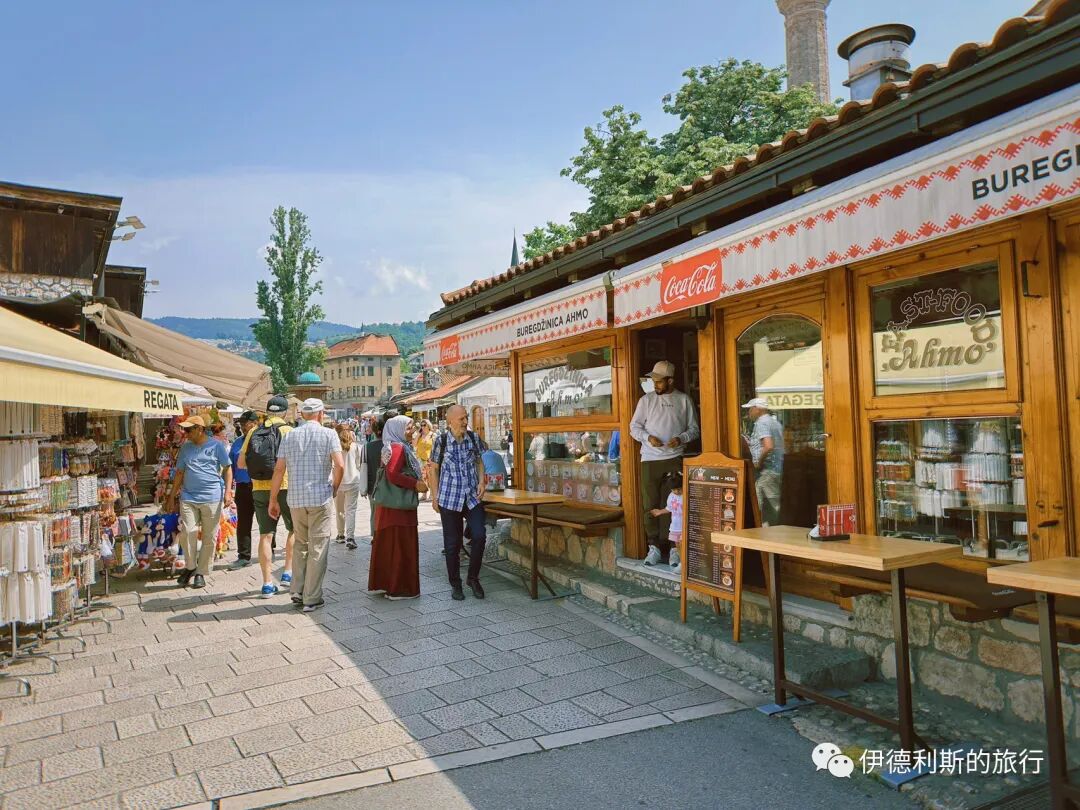
The word Mantije comes from the Chinese word for steamed bun (mantou). After the 13th century, it was brought along the Silk Road through Central Asia to Anatolia by Turkic peoples and Mongols, spreading throughout the Ottoman Empire, where it is known in Turkish as Manti. Before the term baozi appeared in the Northern Song Dynasty, the Chinese word mantou could refer to any stuffed flour pastry. Today, the Wu dialect still uses the term meat mantou (rou mantou), and the Manti found in West and Central Asia also refers to stuffed flour pastries.
The earliest record of Ottoman Manti appears in a cookbook written by Muhammed bin Mahmud Shirvani in the 15th century. It notes that Manti at the time was filled with lamb and chickpeas, seasoned with cinnamon and vinegar, and topped with sumac and garlic yogurt sauce. Modern Manti is mostly filled with lamb and onions. Unlike the steamed thin-skinned buns (Manti) of Central Asia, Manti in Turkey and Bosnia are usually boiled or baked and are smaller in size. Bosnian Mantije are packed tightly together, looking a bit like a baked version of pan-fried buns (shuijianbao).
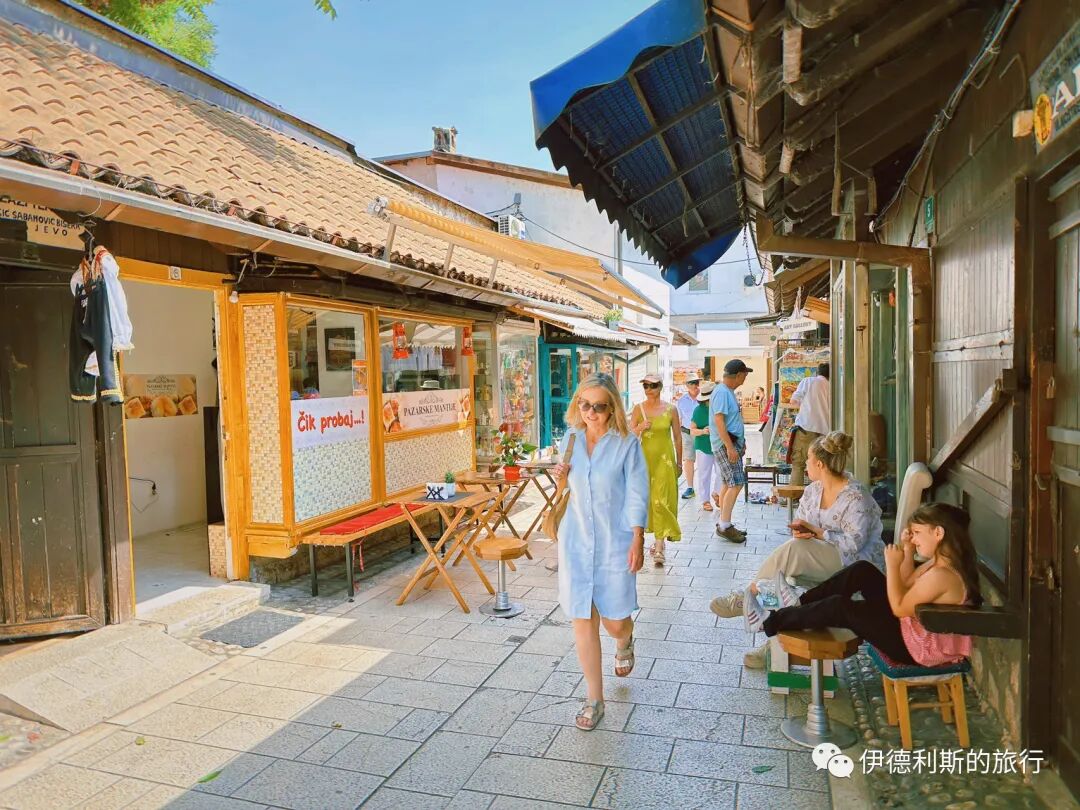
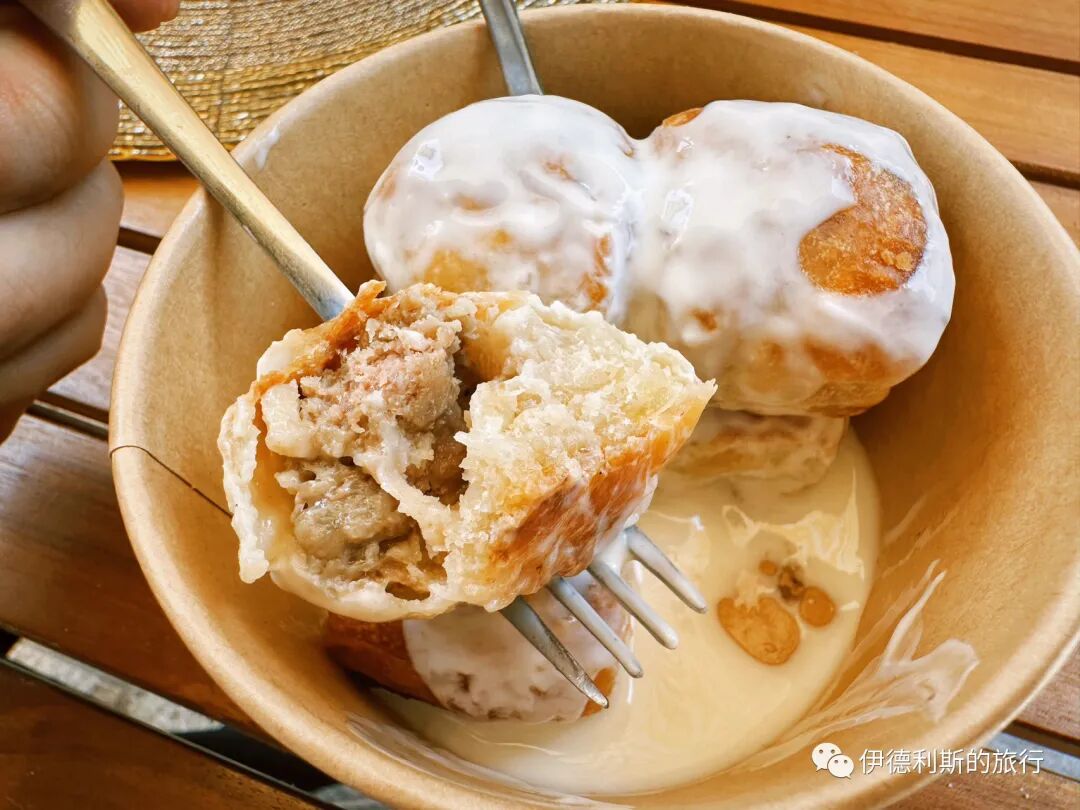

I had dinner at the Old Bazaar in Sarajevo. I ordered the Bosnian specialty chicken soup (Begova Čorba), a grilled vegetable platter, and Balkan-style grilled veal patties (Teleća pljeskavica). Everything was delicious. The grilled meat here tastes much better when paired with yogurt cheese.
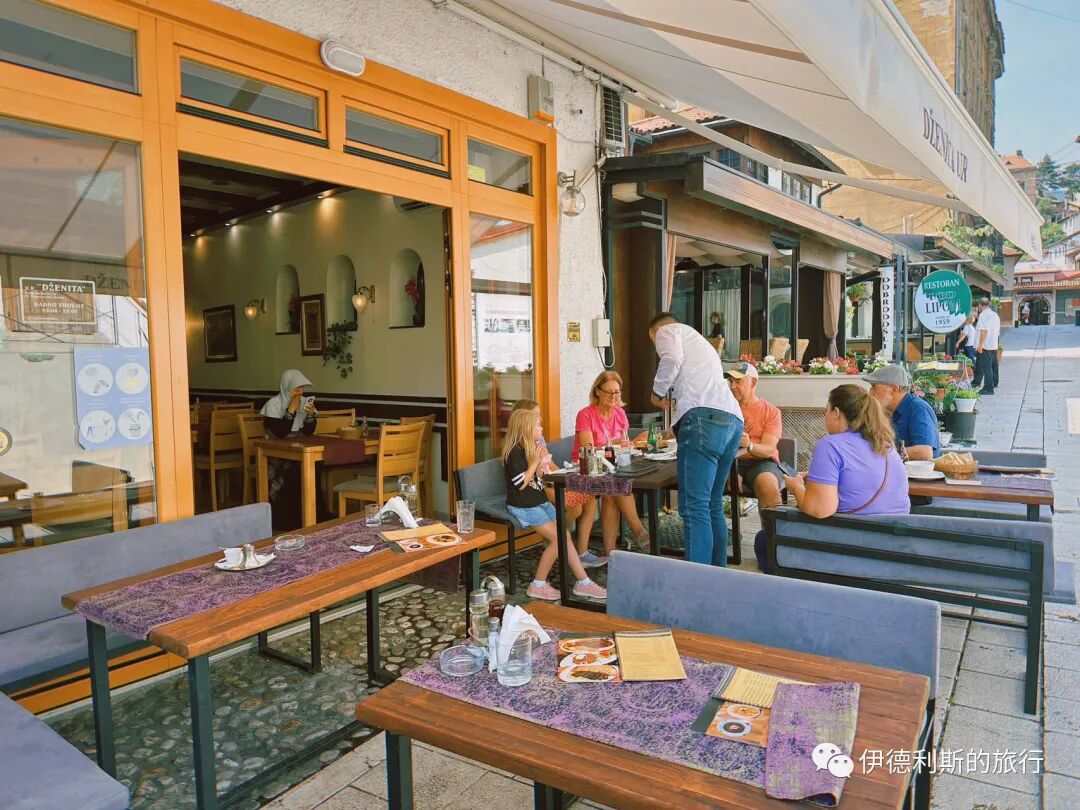
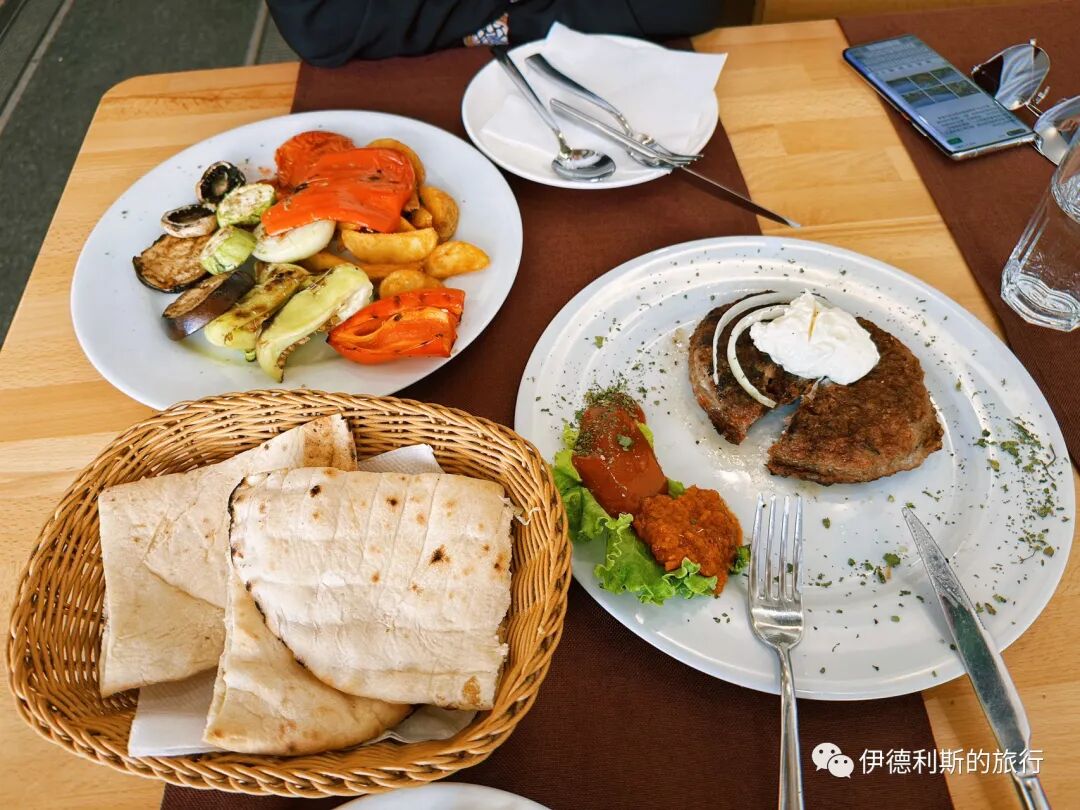
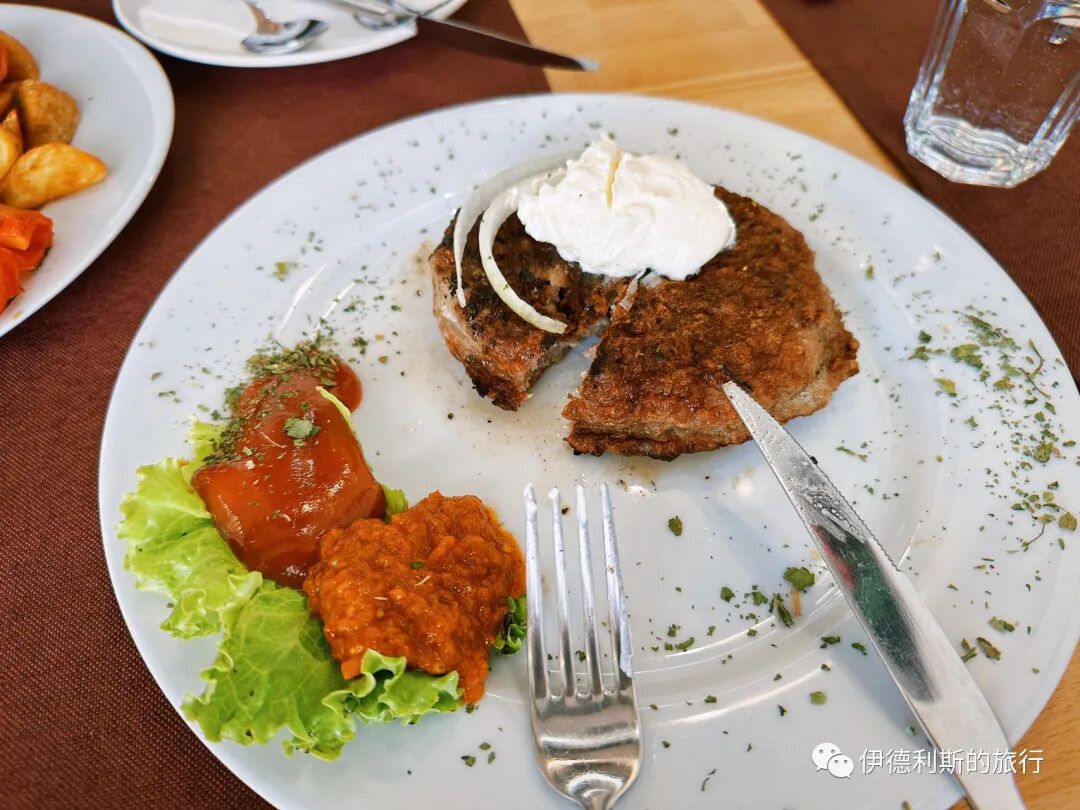
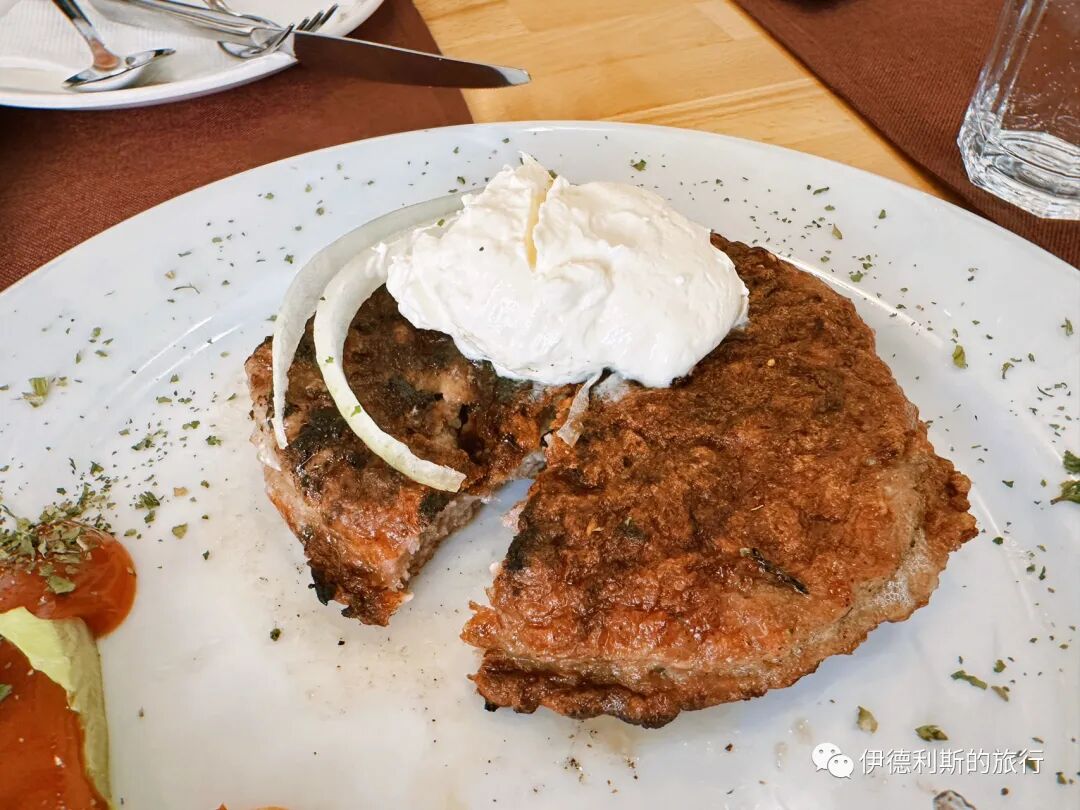
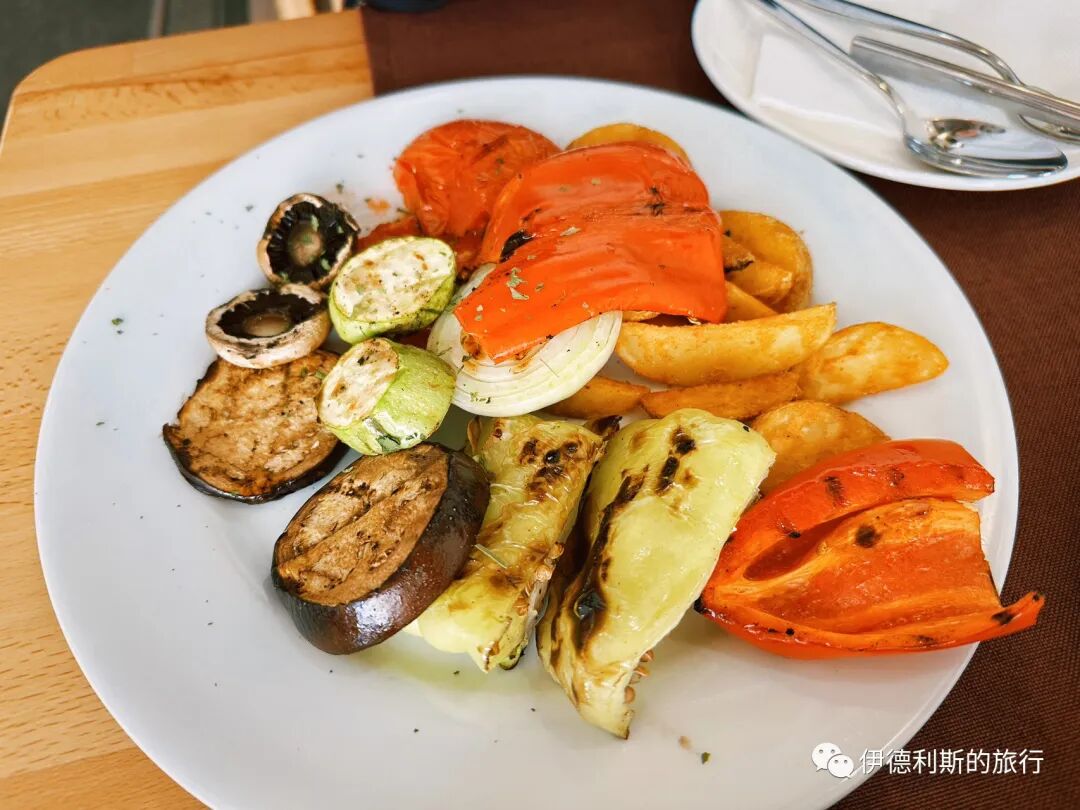
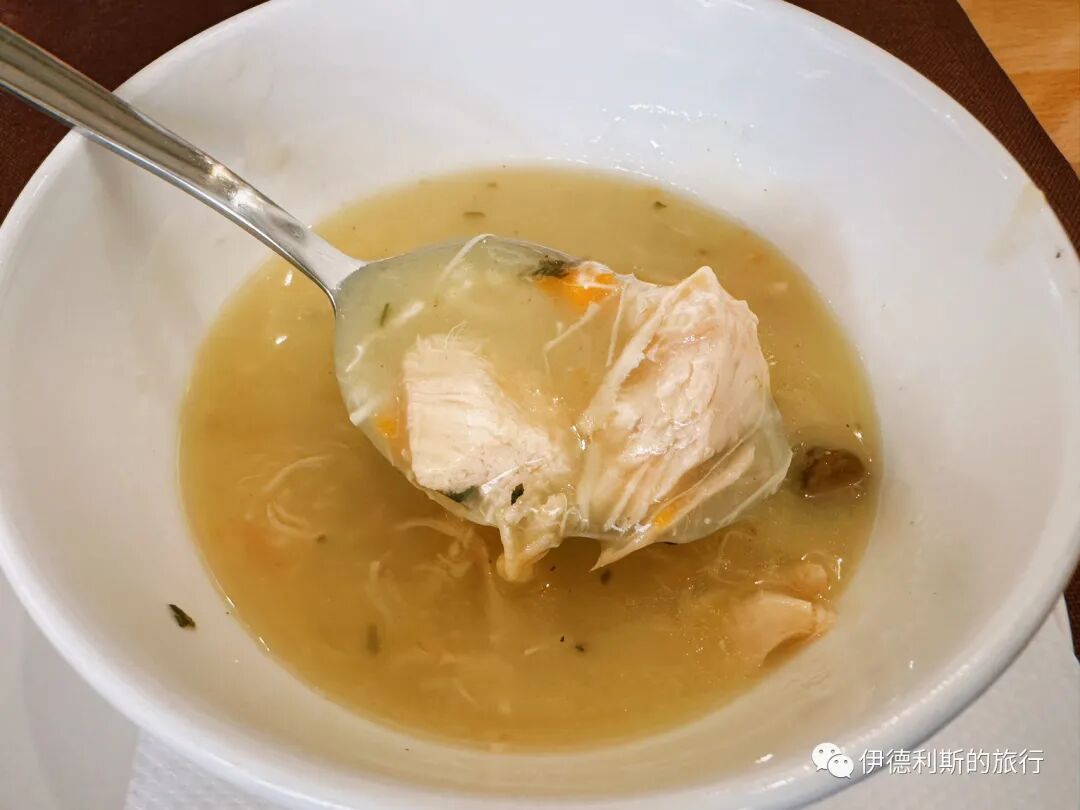
Halal Travel Guide: Sarajevo — Bosnian War Memorials and Muslim History
Articles • ali2007fr posted the article • 0 comments • 158 views • 2026-05-19 03:44
Summary: Sarajevo carries visible memories of the Bosnian War through memorials, cemeteries, streets, and sites of loss. This account records those places in a restrained travel voice while preserving the original details and image sequence.
It takes just over an hour to fly from the Asian side airport in Istanbul to Sarajevo. Sarajevo Airport is very small and does not have many daily flights. If you are among the first to get off the plane, you can go through customs without waiting in line, as there is no visa required. We booked a hotel called Villa Sky in the old town of Sarajevo on Agoda and arranged for the owner, Faris, to pick us up at the airport.
Faris is a local Bosnian, and he speaks fluent English. On the way into the city, he gave us an overview of Sarajevo and pointed out bullet holes left on buildings from the Bosnian War. Later, while walking around the streets of Sarajevo, we found other buildings that still have bullet hole marks. These bullet holes vary in size, and some are very dense. It is easy to imagine the cruelty of the war that happened 20 years ago.
The Siege of Sarajevo lasted nearly four years, from April 5, 1992, to February 29, 1996. During this time, 13,952 people were killed, including 5,434 civilians. The siege reached its peak between the second half of 1992 and the first half of 1993. Bosnian homes were looted and burned, and residents were beaten and sent to prisons and concentration camps, where many were killed. The Serbian army outside the city kept shelling Sarajevo, while Serbian forces inside the city used sniper rifles and grenades to attack people on major streets.
On February 5, 1994, Serbian forces fired a mortar into the Markale market in Sarajevo, killing 67 civilians. This is known as the Markale massacre. On August 28, 1995, the market was shelled again by Serbian forces, killing 37 people. This event led NATO to launch large-scale bombings against Serbia, which eventually brought the war to an end.
Martyr memorial wall (Shehid memorial wall)
The martyr memorial wall (Shehid memorial wall) is at the entrance of the Gazi Husrev-beg Museum in Sarajevo. It lists the names of imams, Islamic school professors, and madrasa students who died in the Bosnian War. The introduction at the front reads:
Between April 1992 and November 1995, 96 imams, Islamic school professors, and madrasa students were brutally killed during the aggression against the Republic of Bosnia and Herzegovina.
117 imams were held in concentration camps controlled by the military and police of the Republika Srpska and the Croatian Defence Council.
In the lands controlled by these forces, over 80% of Islamic religious buildings were destroyed, including 614 mosques, 218 prayer sites, 69 primary schools, 4 Sufi lodges (tekke), 37 mausoleums (turbe), and 405 other buildings belonging to the Islamic Community of Bosnia and Herzegovina.
Gazi Husrev-beg Library
An introduction at the Gazi Husrev-beg Library: By a decision of the Riyasat, the highest administrative body of the Islamic Community of Bosnia and Herzegovina, May 7th is declared 'Mosque Day.' It commemorates the Ferhadija Mosque in Banja Luka and other religious buildings of the Islamic community destroyed during the Bosnian War on May 7, 1993.
The pictures show the Čaršijska Mosque in Srebrenica destroyed in 1995, the Ferhadija Mosque in Banja Luka destroyed in 1993, the Ahmići Mosque destroyed in 1993, the Hadži-Kurtova Mosque in Mostar destroyed in 1993/4, the Magribija Mosque in Sarajevo destroyed in 1992, and the remains of a mosque destroyed in the Bosnian War discovered in 2020.
The Gazi Husrev-beg Library has a special exhibition area about the library's experience during the Bosnian War, and a film titled 'The Love of Books: A Sarajevo Story' is playing. Zainab and I stopped to watch for a long time, and we were both moved to tears by the end.
As the library with the richest collection of Islamic books in Bosnia and Herzegovina, the Gazi Husrev-beg Library has faced many trials in its nearly 500 years of operation, but the 1992-95 Bosnian War was undoubtedly the hardest. The aggressors made destroying the historical and cultural heritage of Bosnia and Herzegovina a key goal, especially historical buildings that held written heritage. Staff at the Gazi Husrev-beg Library risked their lives to successfully move tens of thousands of precious Islamic books to safe places, making a huge contribution to saving the history and culture of Bosnia and Herzegovina.
The exhibition hall displays the equipment used to microfilm important books during the war. During the Siege of Sarajevo, this equipment was brought into the city through an underground tunnel, which was the only way in or out of Sarajevo at the time. By the end of 1996, the staff had taken 5,000 microfilm photos.
The film 'The Love of Books: A Sarajevo Story' explains that to save the books in the Gazi Husrev-beg Library, the staff moved the book storage area many times. In 1992, the library decided to move 21 packages containing the most precious manuscripts into the vault of the Privredna Bank. To avoid attacks from Serb snipers on the streets, they packed the books in banana boxes, but then they ran into hungry people who robbed them. Fortunately, the hungry people let them go after discovering there were books inside instead of bananas. After going through great hardships, these books were finally saved until the end of the war.
The staff at the Gazi Husrev-beg Library risked their lives to save precious manuscripts during the Bosnian War, and they are now on display again at the library. Here are a few of them.
The first one is the Rose Garden (Gulistān), a prose work written in 1258 by the great Persian poet Saadi. This manuscript was annotated by the great 16th-century Bosnian classical literature critic Ahmed Sudi Bosnjak and copied in 1765 by Ahmad b. al-hagg Husayn al-Mostari. Ahmed Sudi was born in eastern Bosnia and later lived in Istanbul for a long time. He was an expert in Persian literature and wrote a series of commentaries on Persian literary classics in Ottoman Turkish. These had a huge influence in the Ottoman Empire and were widely used by later Persian scholars and Western Orientalists.
The second one is the 63rd handwritten Quran by hafiz Ibrahim Sehovic, completed in 1807. During his life, hafiz Sehovic copied at least 66 Qurans, and the Gazi Husrev-beg Library holds four of them.
The third one is a handwritten Quran completed in 1849 by Ahmad b. Muhammad al-Muhägir ad-Dagistani al-Makki.
The fourth one is a Quran selection (Juz') gifted by Ferhad-pasha Sokolovic in 1587 to a mosque in the city of Banja Luka in northwestern Bosnia.
The fifth one is a Quran selection (Juz') gifted by Mehmed-pasha Sokolovic in 1570 to a mosque in his birthplace in eastern Bosnia.
The sixth one is a handwritten Quran created by Abdullah b. Muhammad al-Hafiz as-Sirazi in 1572-73.
Museum of Crimes Against Humanity and Genocide 1992-1995
Located in the center of Sarajevo's old town, the Museum of Crimes Against Humanity and Genocide 1992-1995 is a place that requires a strong stomach to visit. It is the second museum to leave me with a deep psychological shadow, the first being the Gulag History Museum in Moscow. When I entered, I happened to see the Bosnian friend (dosti) selling tickets being interviewed. He was talking about his family's life during the Bosnian War, which was the first time I heard firsthand information about this war.
I will share the museum's introduction here: We must remember history! The Bosnian War began in April 1992. It is listed as one of the most brutal wars in human history. Total casualties exceeded 200,000, with over 120,000 deaths, hundreds of thousands injured, 2 million people displaced, 657 concentration camps, over 200,000 people detained, 25,000 raped, and 30,000 missing. The crimes against humanity and genocide committed during the war are among the most heinous crimes known to mankind. This genocide happened in Central Europe at the end of the 20th century. The war ended in November 1995 with the signing of the Dayton Peace Agreement.
Keeping memories alive is an important factor in avoiding new genocides and massacres, especially today as separatism and racism slowly return to the world. This museum displays a sad part of human history. In this museum, people tell many stories and show many crime scenes. The exhibits hold strong emotions and help you understand more about the war experiences of the Bosnian people. Most importantly, this museum is run by victims of the war, those who lived through it.
Understanding the impact of hatred on others is important for everyone. Without this knowledge, hatred will easily happen again.
Martyrs' Cemetery (Šehidi Cemetery)
In the afternoon, I went to visit the Kovači Cemetery below the Yellow Fortress on the east side of Sarajevo's old town. Kovači Cemetery is also called the Martyrs' Cemetery (Šehidi Cemetery). Many people who died during the Siege of Sarajevo in the Bosnian War are buried here. Alija Izetbegović, the wartime president of the Republic of Bosnia and Herzegovina, was also buried here after he returned to Allah.
Historical Museum of Bosnia and Herzegovina
The Historical Museum of Bosnia and Herzegovina was built in 1963 and is one of the representative works of Yugoslav modern architecture. The museum suffered severe damage during the Bosnian War. The staff managed to save most of the collection, and today the building still keeps the marks left by the war.
The museum features an exhibition called 'We Refugees'. During the Bosnian War, Germany and Austria took in nearly 500,000 refugees from Bosnia and Herzegovina, and many returned home after the war. The exhibition recreates a private space for refugees, containing personal files from 20 different people. This is the first time they have talked about leaving home for a new country, being separated from family, fearing for their lives, feeling like outsiders, losing their identity, the languages they lost and learned, the challenges of refugee life, new friendships and relationships, and the experience of returning to their homeland. Each person left behind an object, a document, or a photograph in their file. Even today, these items still remind them of that time.
There is a photography exhibition by Scottish photographer Jim Marshall at the Historical Museum of Bosnia and Herzegovina. He began living and working in Bosnia and Herzegovina in 1994, and in 1996 and 2011, he took a series of photos of Sarajevo street scenes from the same angles. The front desk of the Historical Museum of Bosnia and Herzegovina sells postcards of this photo series, which are worth collecting if you are traveling in Sarajevo. view all
Summary: Sarajevo carries visible memories of the Bosnian War through memorials, cemeteries, streets, and sites of loss. This account records those places in a restrained travel voice while preserving the original details and image sequence.
It takes just over an hour to fly from the Asian side airport in Istanbul to Sarajevo. Sarajevo Airport is very small and does not have many daily flights. If you are among the first to get off the plane, you can go through customs without waiting in line, as there is no visa required. We booked a hotel called Villa Sky in the old town of Sarajevo on Agoda and arranged for the owner, Faris, to pick us up at the airport.
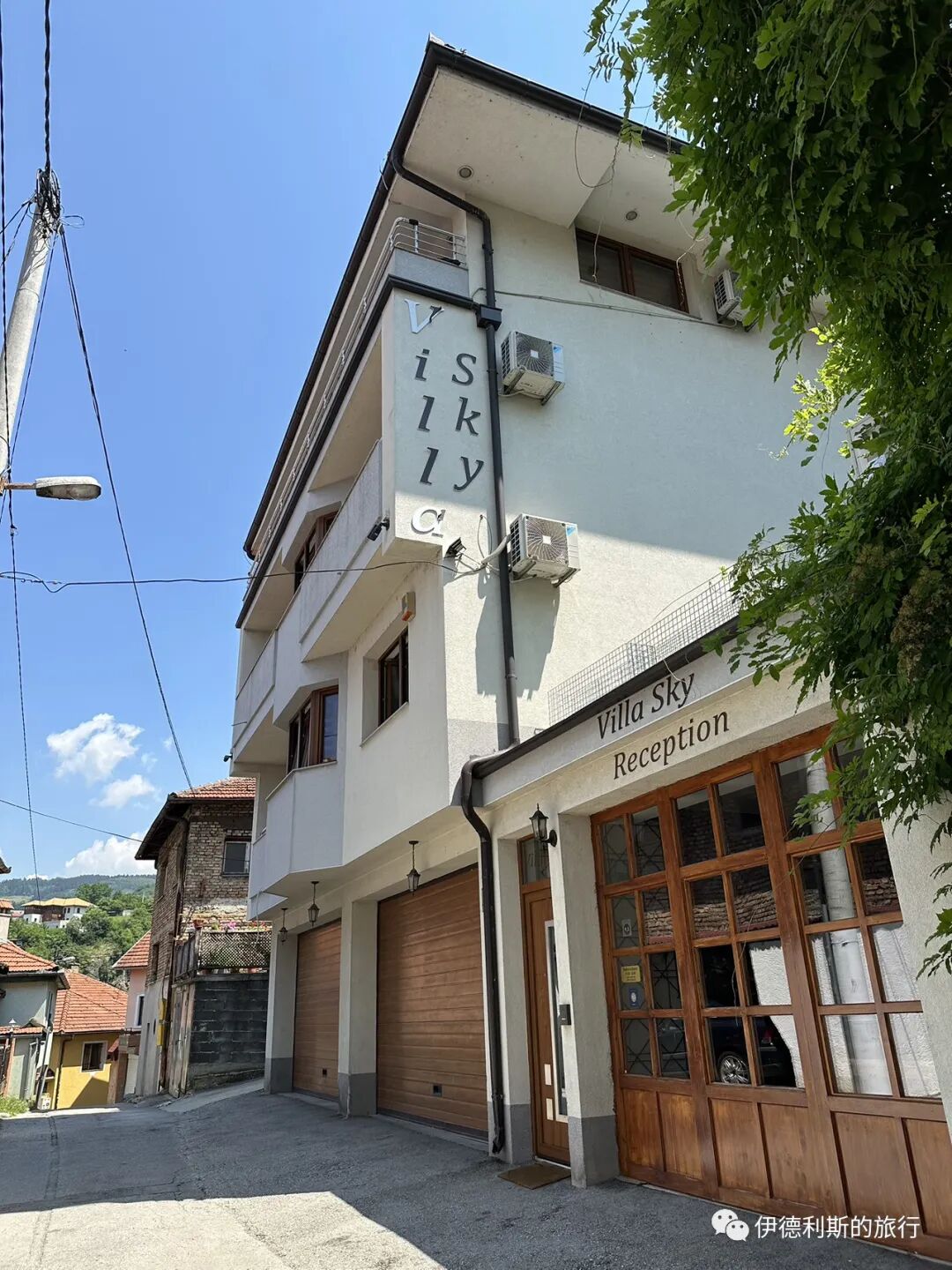
Faris is a local Bosnian, and he speaks fluent English. On the way into the city, he gave us an overview of Sarajevo and pointed out bullet holes left on buildings from the Bosnian War. Later, while walking around the streets of Sarajevo, we found other buildings that still have bullet hole marks. These bullet holes vary in size, and some are very dense. It is easy to imagine the cruelty of the war that happened 20 years ago.
The Siege of Sarajevo lasted nearly four years, from April 5, 1992, to February 29, 1996. During this time, 13,952 people were killed, including 5,434 civilians. The siege reached its peak between the second half of 1992 and the first half of 1993. Bosnian homes were looted and burned, and residents were beaten and sent to prisons and concentration camps, where many were killed. The Serbian army outside the city kept shelling Sarajevo, while Serbian forces inside the city used sniper rifles and grenades to attack people on major streets.
On February 5, 1994, Serbian forces fired a mortar into the Markale market in Sarajevo, killing 67 civilians. This is known as the Markale massacre. On August 28, 1995, the market was shelled again by Serbian forces, killing 37 people. This event led NATO to launch large-scale bombings against Serbia, which eventually brought the war to an end.
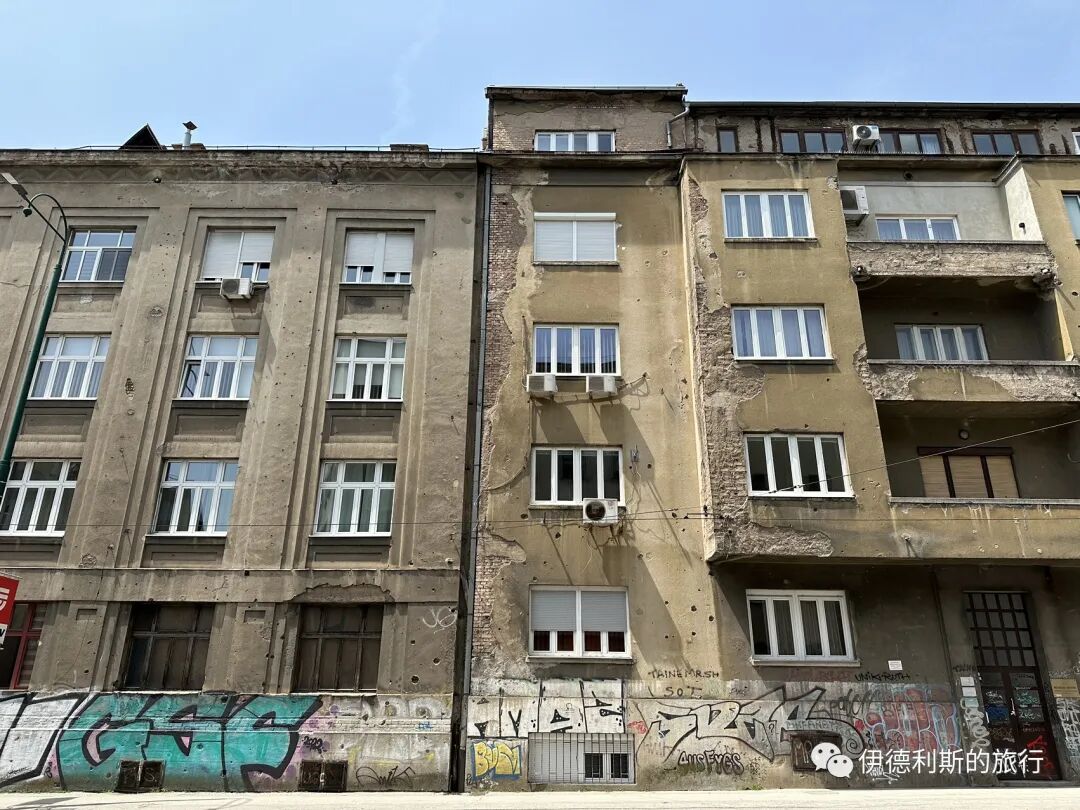
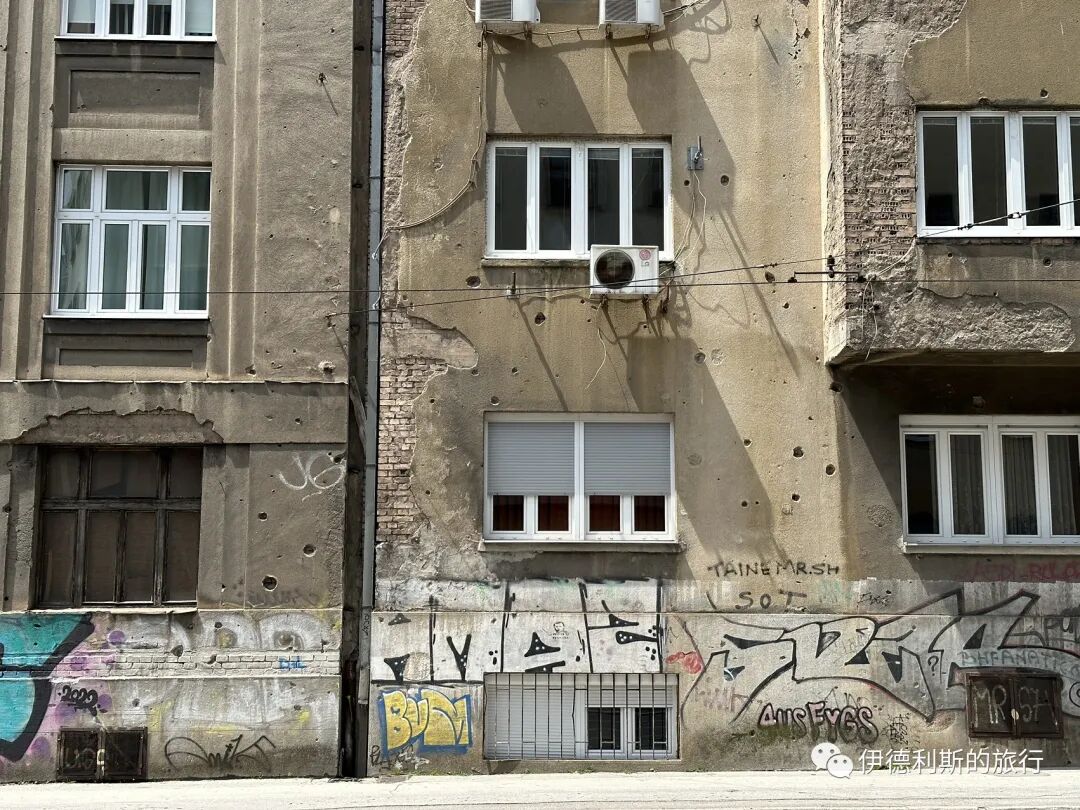
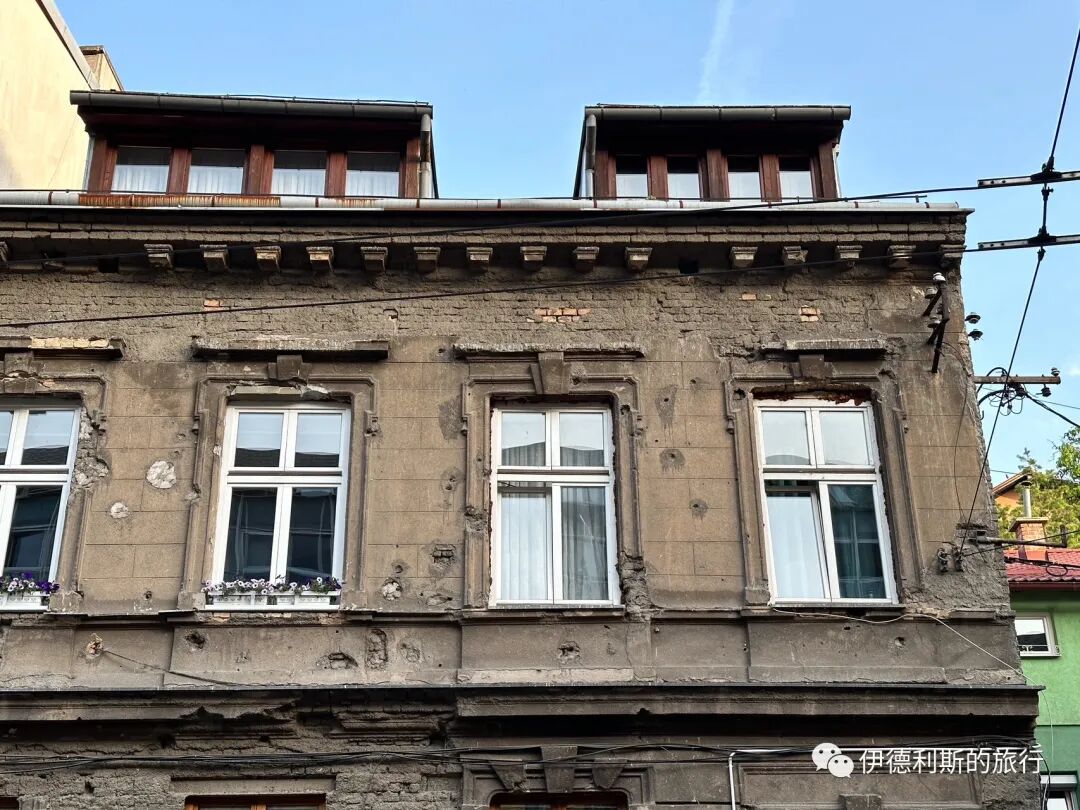
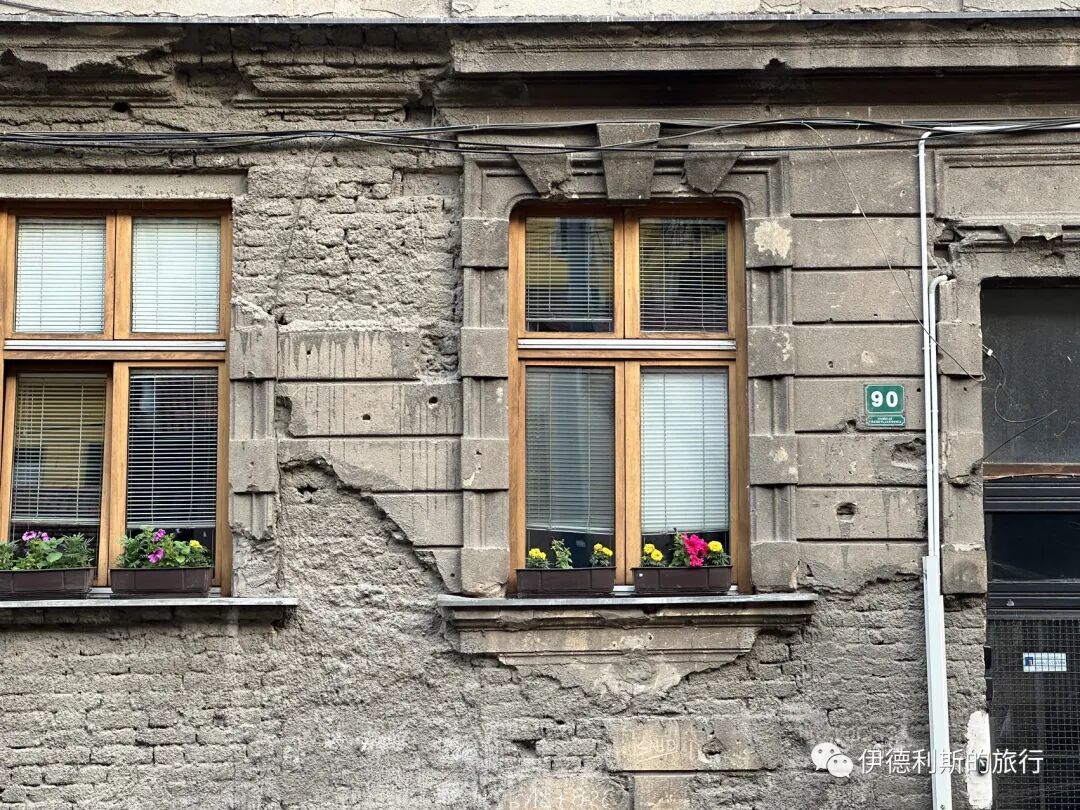
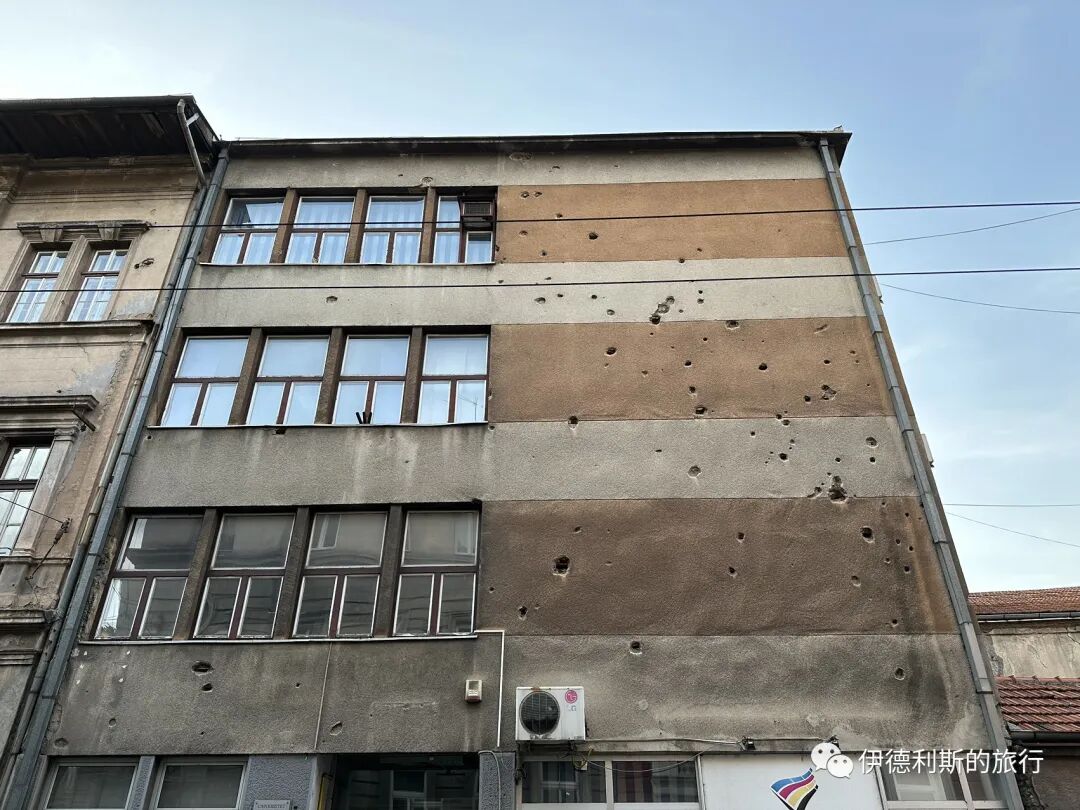
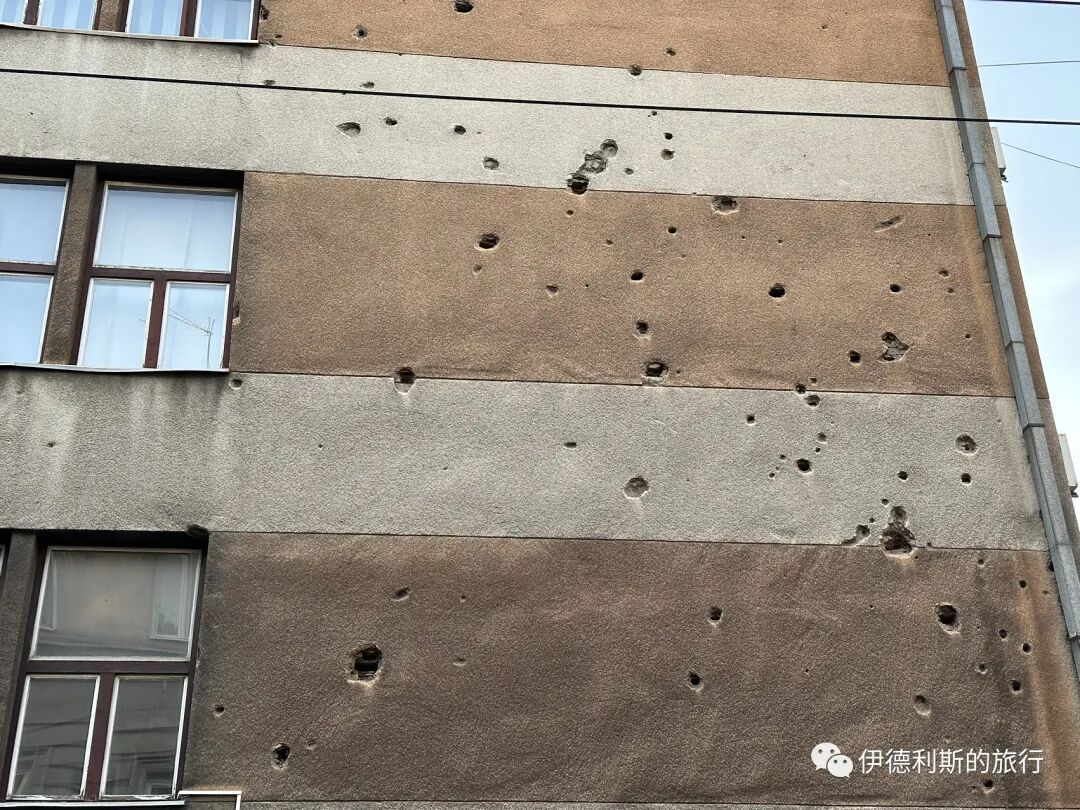
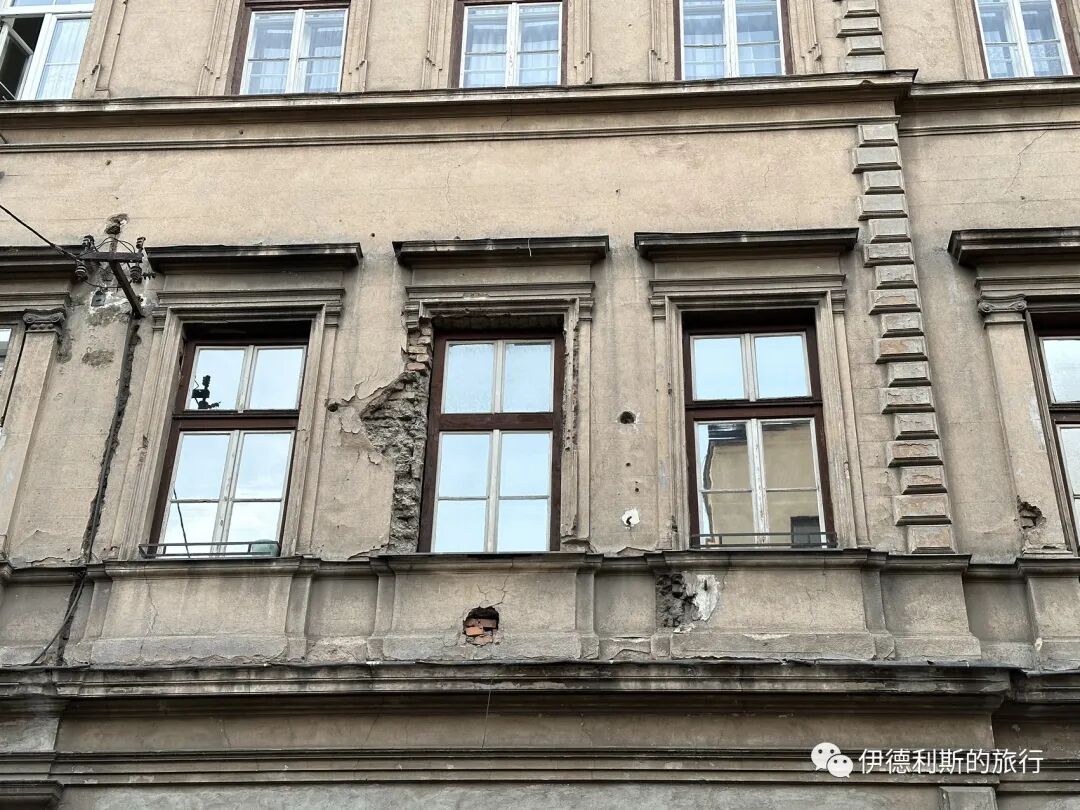
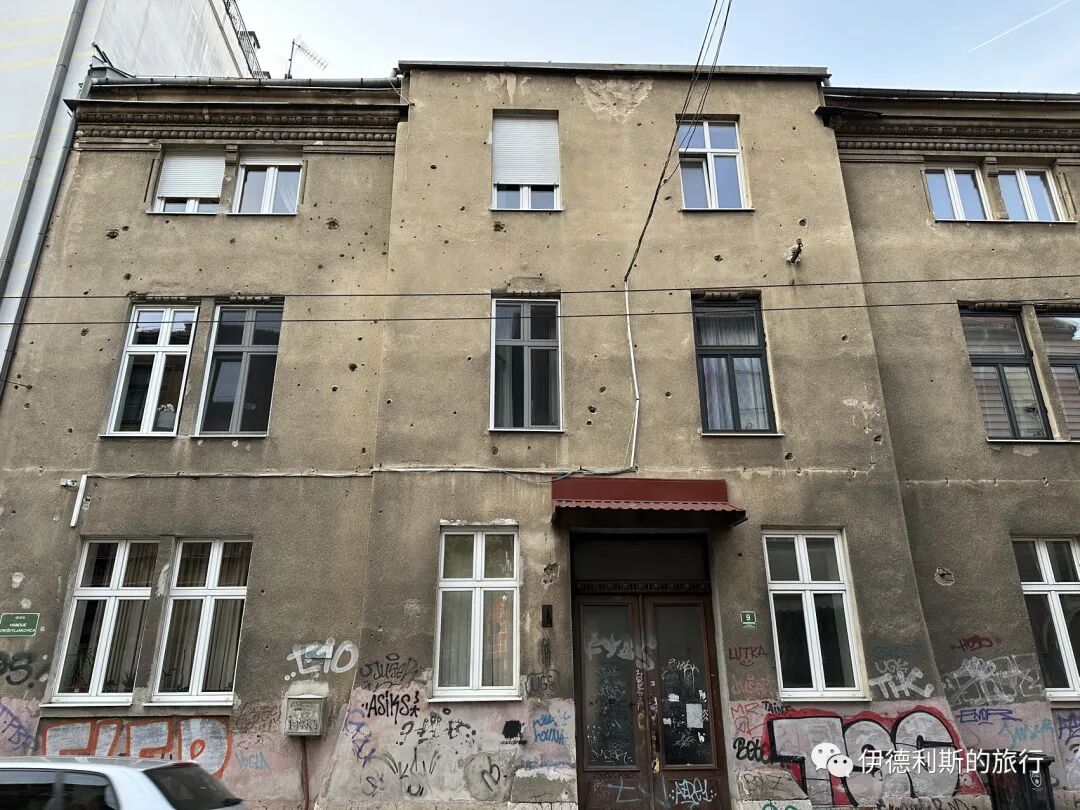
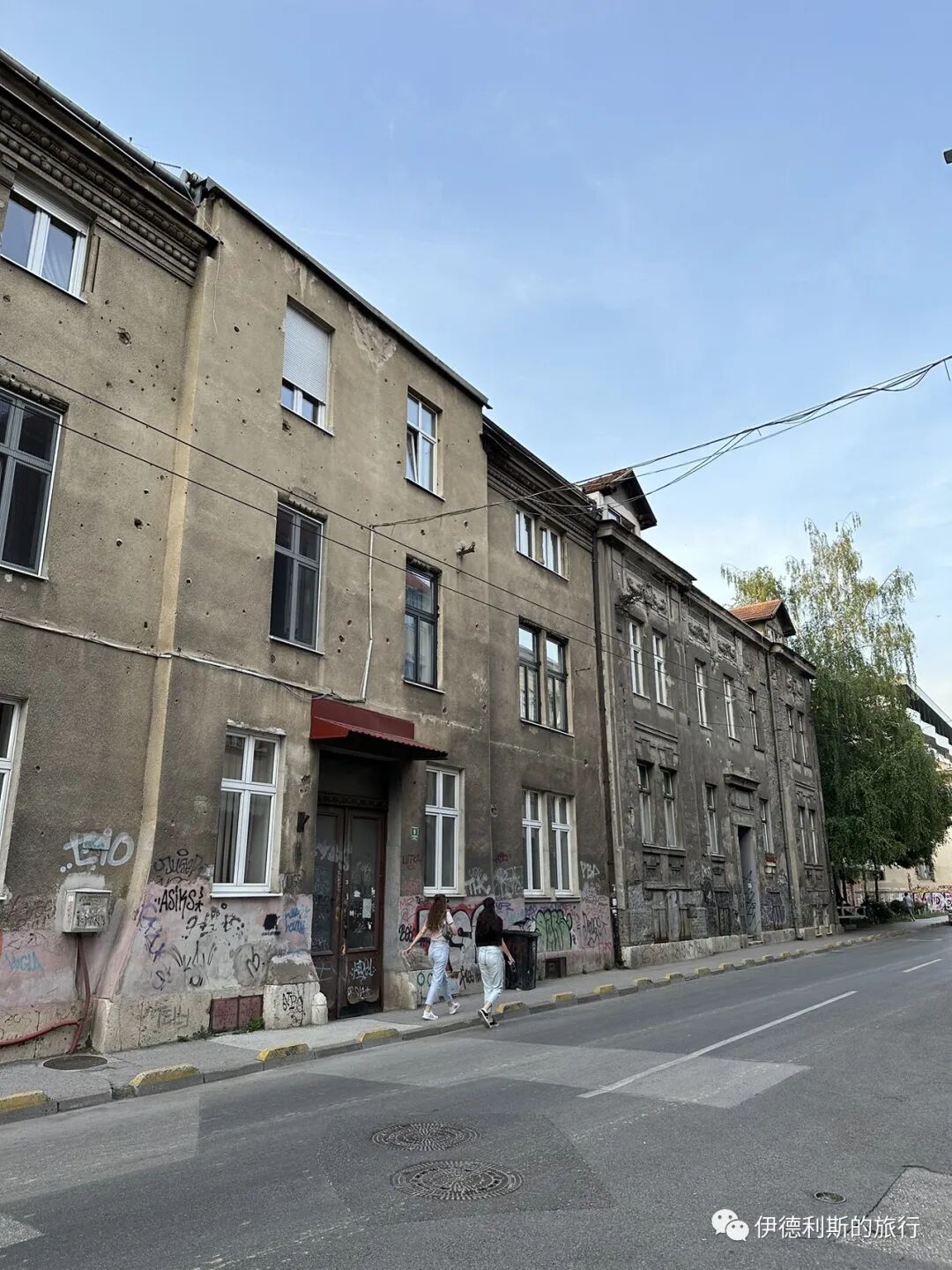
Martyr memorial wall (Shehid memorial wall)
The martyr memorial wall (Shehid memorial wall) is at the entrance of the Gazi Husrev-beg Museum in Sarajevo. It lists the names of imams, Islamic school professors, and madrasa students who died in the Bosnian War. The introduction at the front reads:
Between April 1992 and November 1995, 96 imams, Islamic school professors, and madrasa students were brutally killed during the aggression against the Republic of Bosnia and Herzegovina.
117 imams were held in concentration camps controlled by the military and police of the Republika Srpska and the Croatian Defence Council.
In the lands controlled by these forces, over 80% of Islamic religious buildings were destroyed, including 614 mosques, 218 prayer sites, 69 primary schools, 4 Sufi lodges (tekke), 37 mausoleums (turbe), and 405 other buildings belonging to the Islamic Community of Bosnia and Herzegovina.
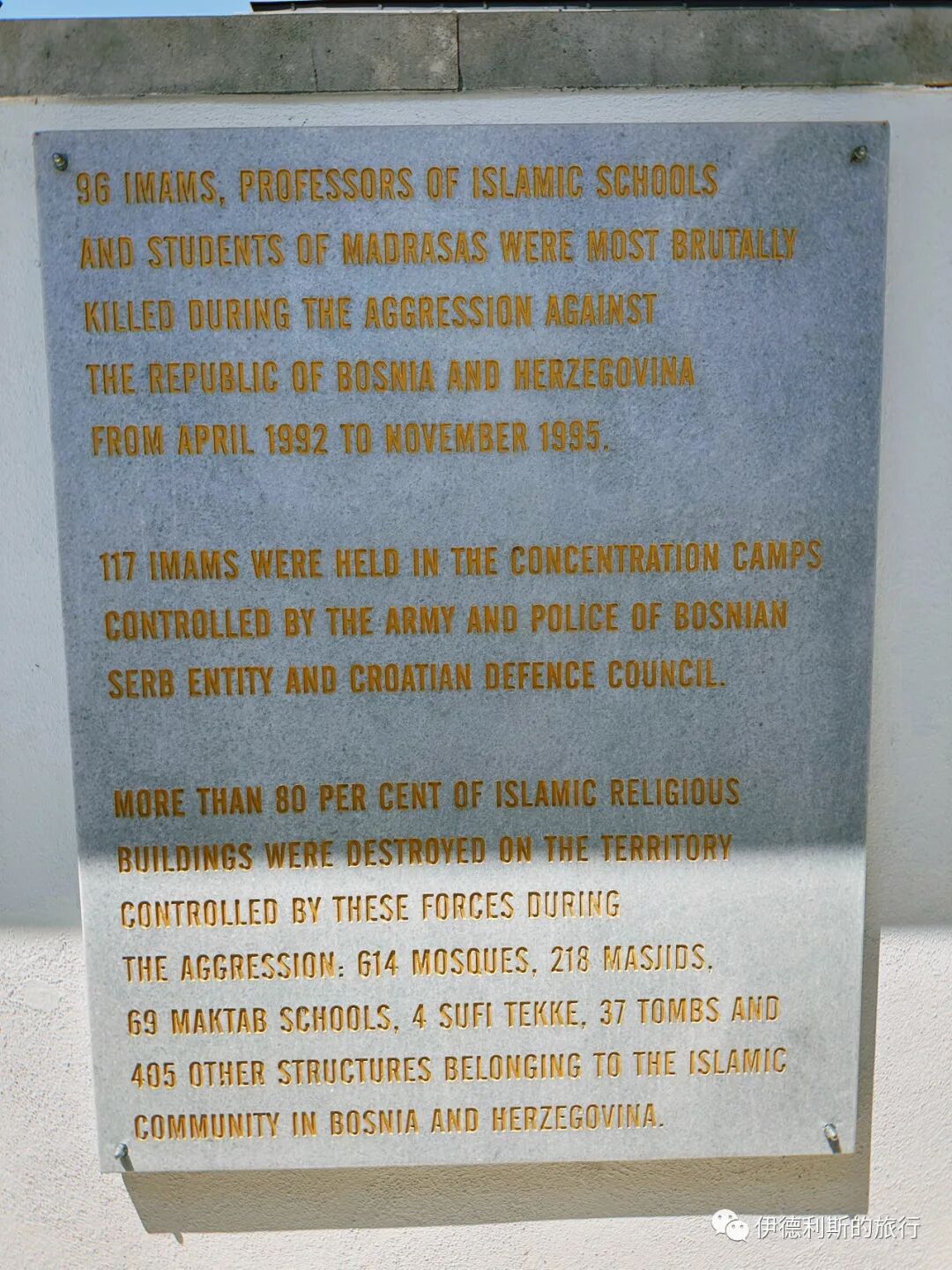
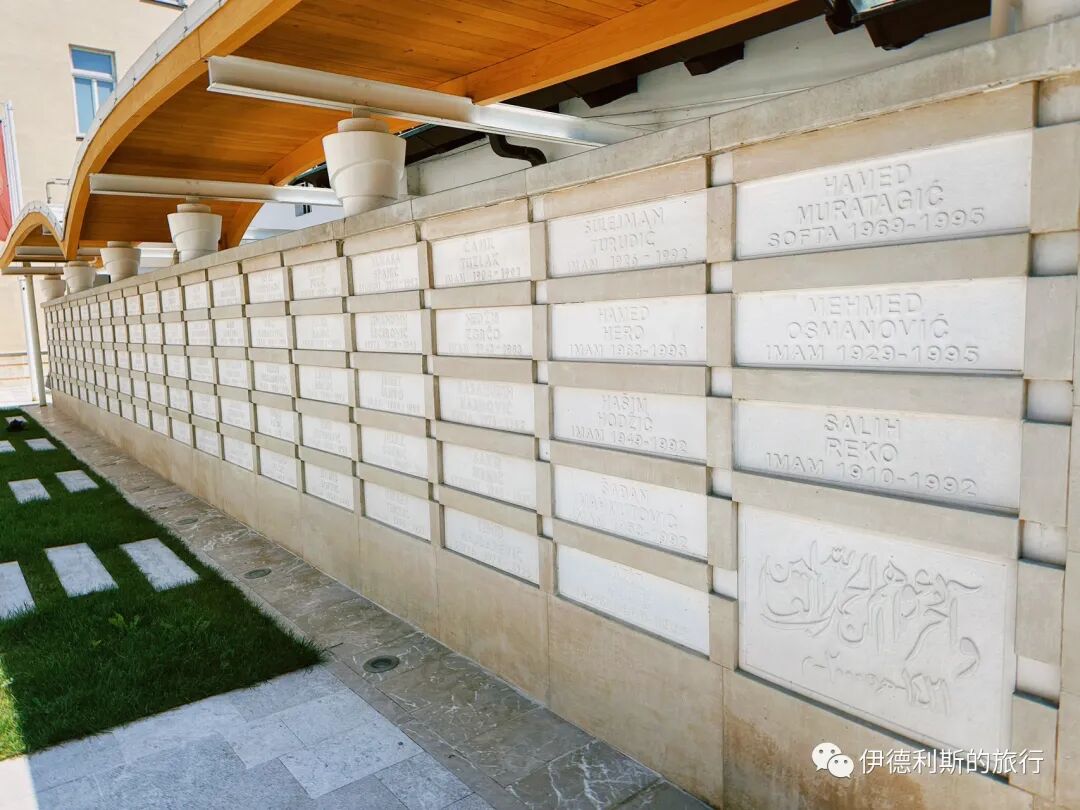
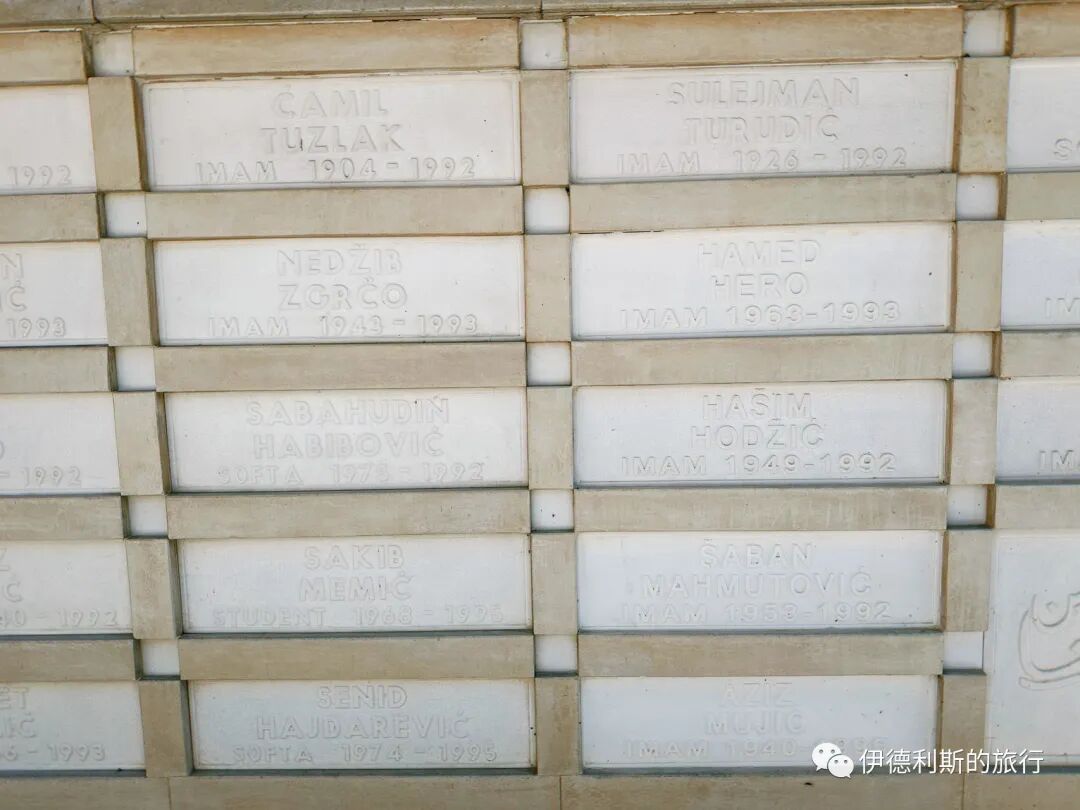
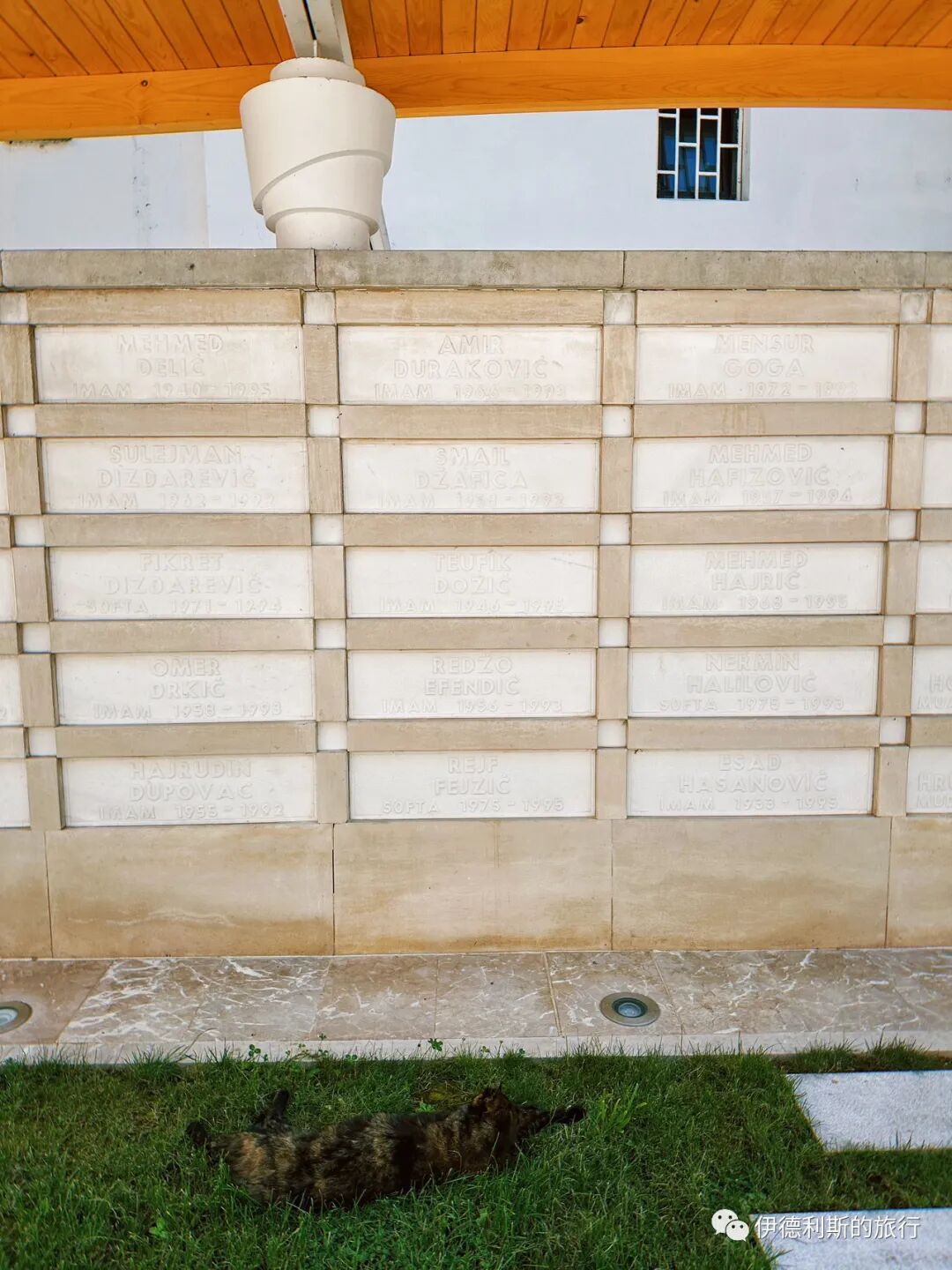
Gazi Husrev-beg Library
An introduction at the Gazi Husrev-beg Library: By a decision of the Riyasat, the highest administrative body of the Islamic Community of Bosnia and Herzegovina, May 7th is declared 'Mosque Day.' It commemorates the Ferhadija Mosque in Banja Luka and other religious buildings of the Islamic community destroyed during the Bosnian War on May 7, 1993.
The pictures show the Čaršijska Mosque in Srebrenica destroyed in 1995, the Ferhadija Mosque in Banja Luka destroyed in 1993, the Ahmići Mosque destroyed in 1993, the Hadži-Kurtova Mosque in Mostar destroyed in 1993/4, the Magribija Mosque in Sarajevo destroyed in 1992, and the remains of a mosque destroyed in the Bosnian War discovered in 2020.
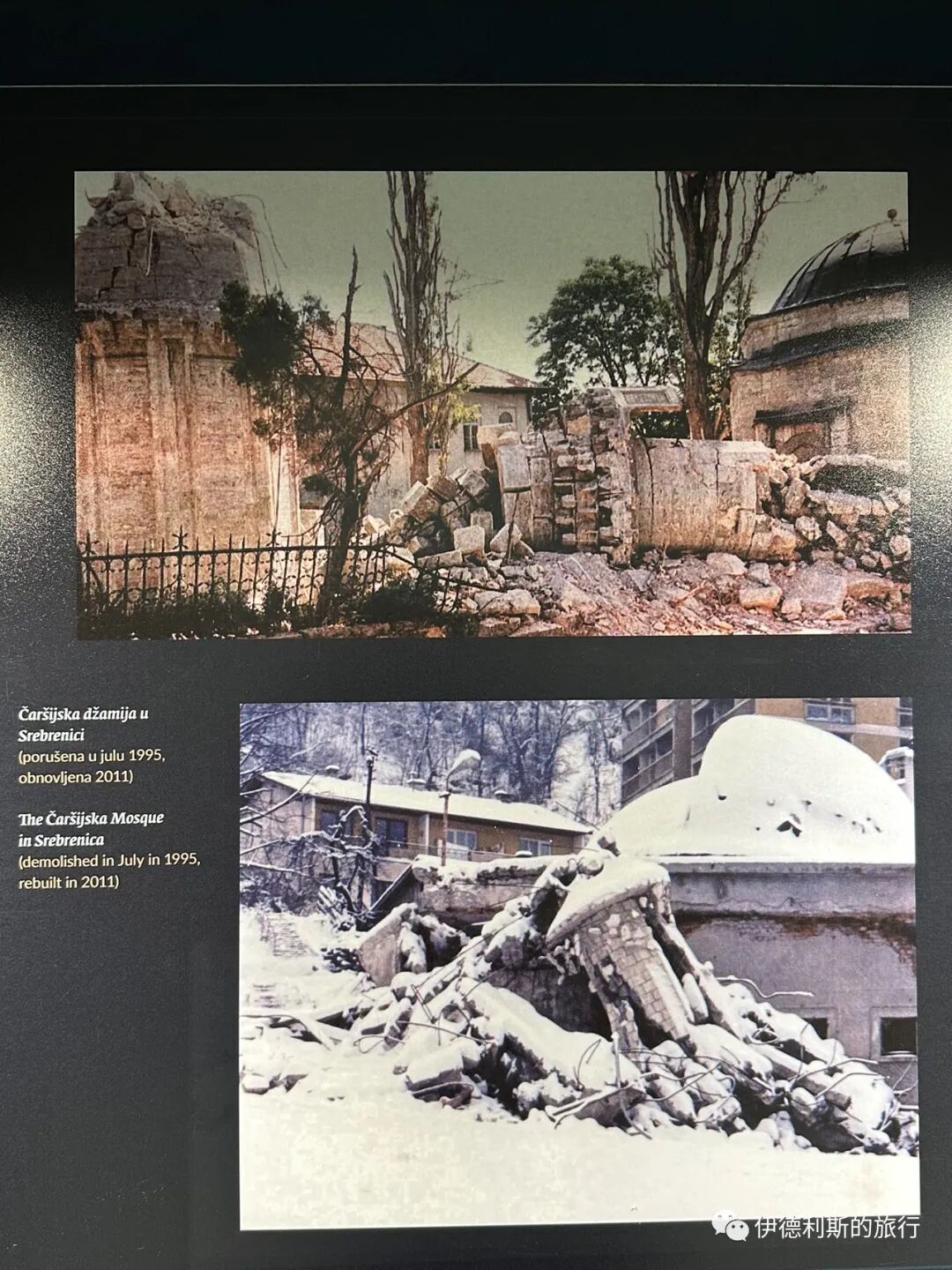
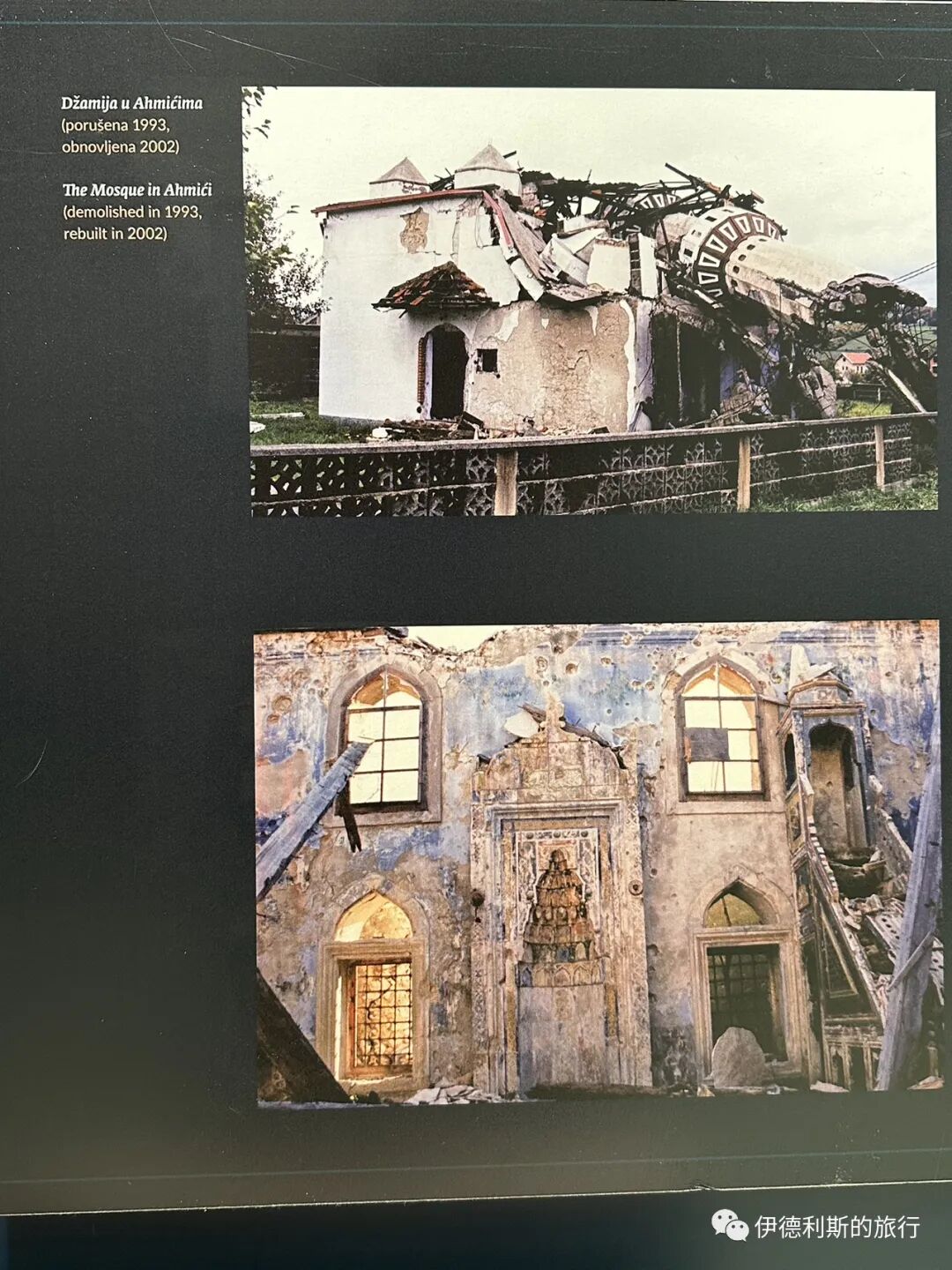
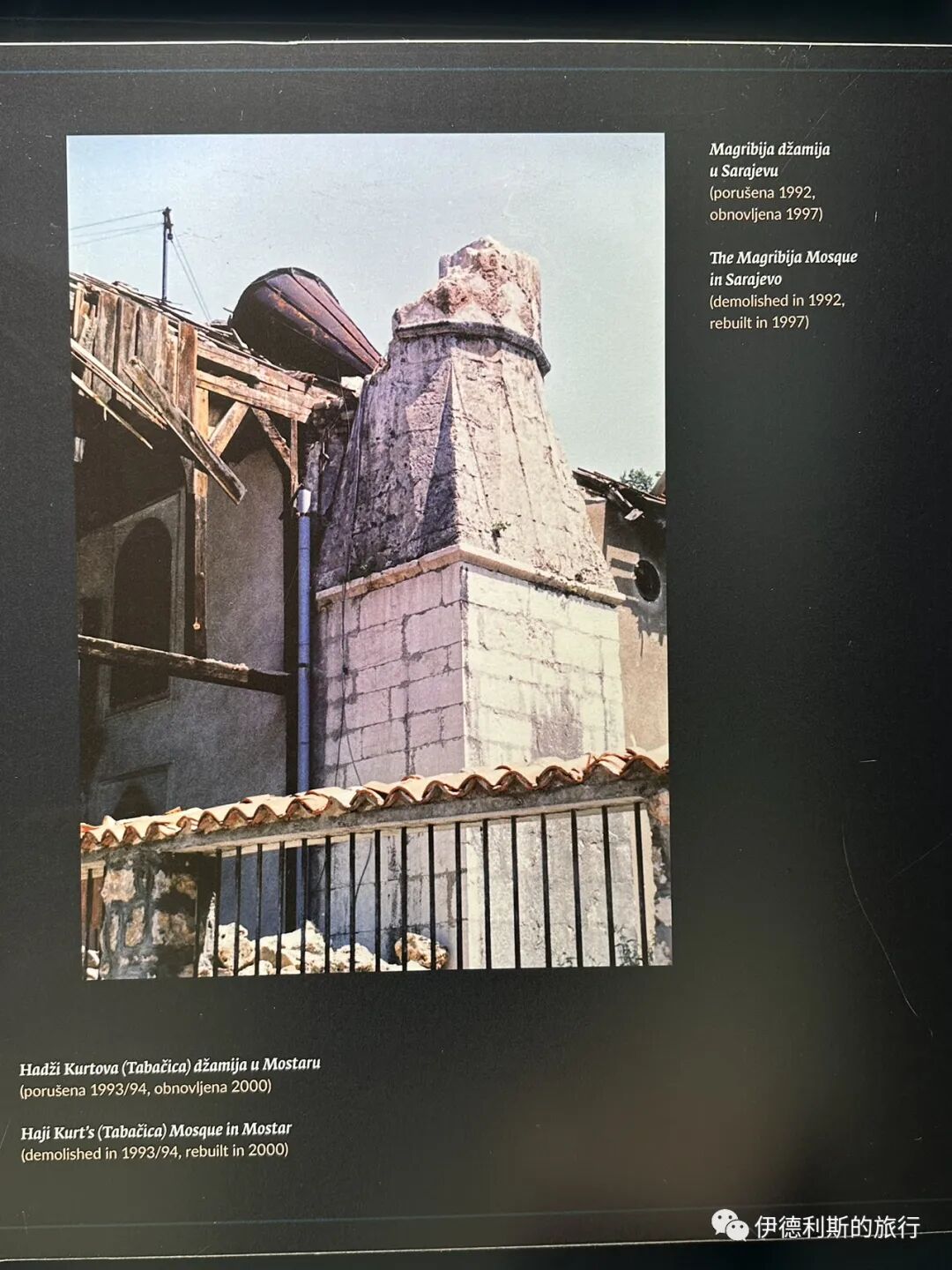
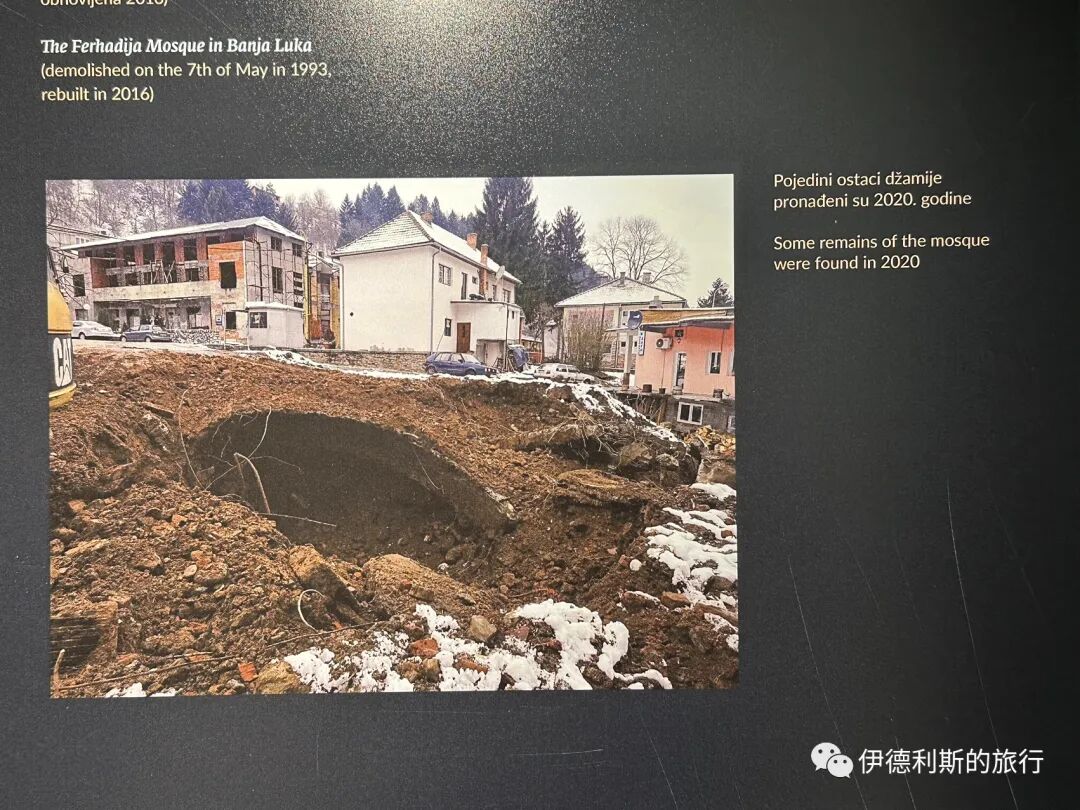
The Gazi Husrev-beg Library has a special exhibition area about the library's experience during the Bosnian War, and a film titled 'The Love of Books: A Sarajevo Story' is playing. Zainab and I stopped to watch for a long time, and we were both moved to tears by the end.
As the library with the richest collection of Islamic books in Bosnia and Herzegovina, the Gazi Husrev-beg Library has faced many trials in its nearly 500 years of operation, but the 1992-95 Bosnian War was undoubtedly the hardest. The aggressors made destroying the historical and cultural heritage of Bosnia and Herzegovina a key goal, especially historical buildings that held written heritage. Staff at the Gazi Husrev-beg Library risked their lives to successfully move tens of thousands of precious Islamic books to safe places, making a huge contribution to saving the history and culture of Bosnia and Herzegovina.
The exhibition hall displays the equipment used to microfilm important books during the war. During the Siege of Sarajevo, this equipment was brought into the city through an underground tunnel, which was the only way in or out of Sarajevo at the time. By the end of 1996, the staff had taken 5,000 microfilm photos.
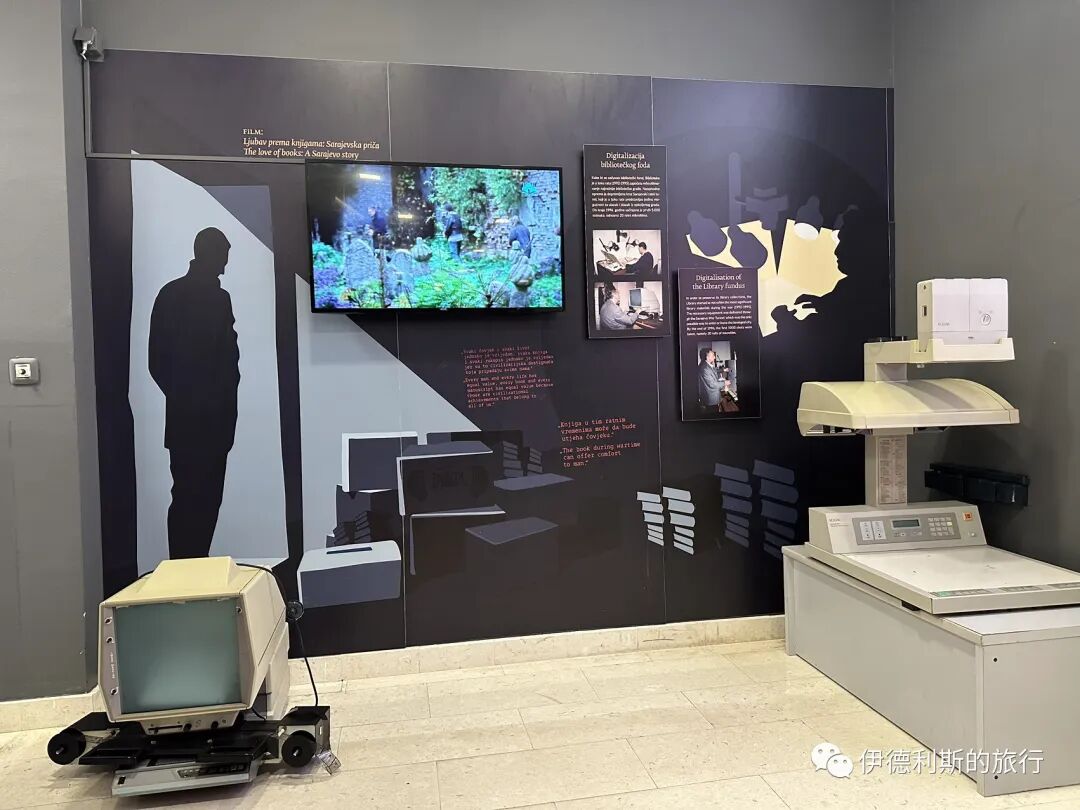
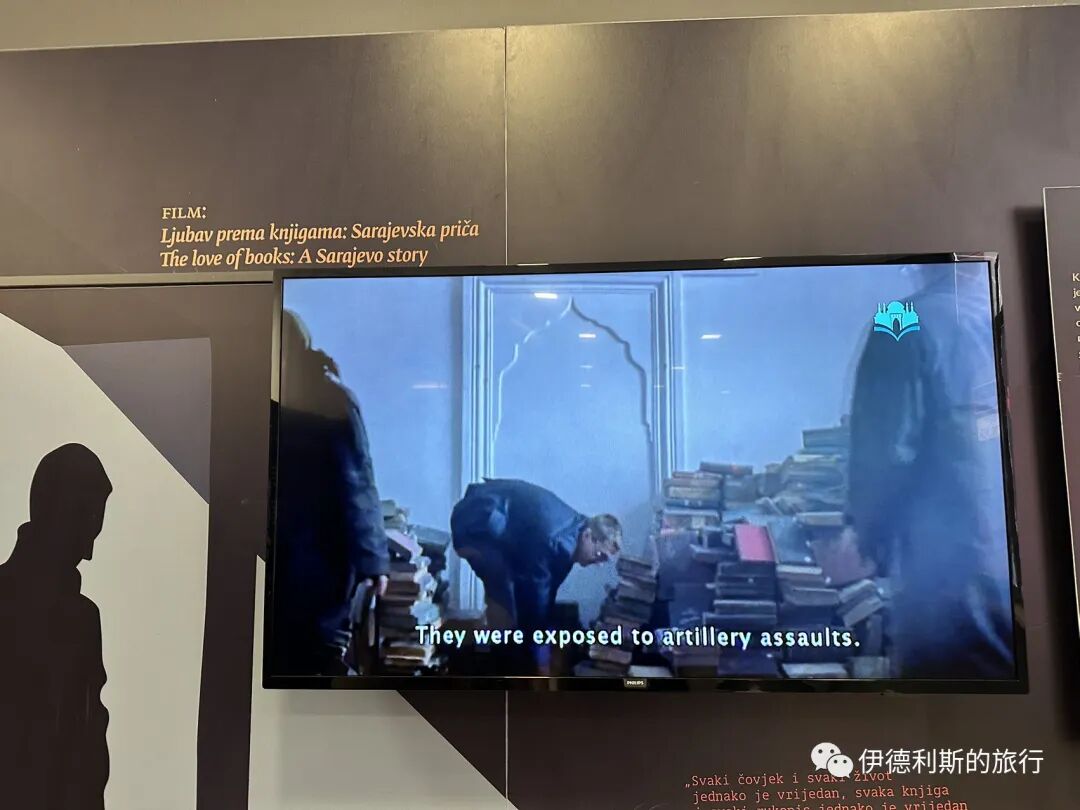
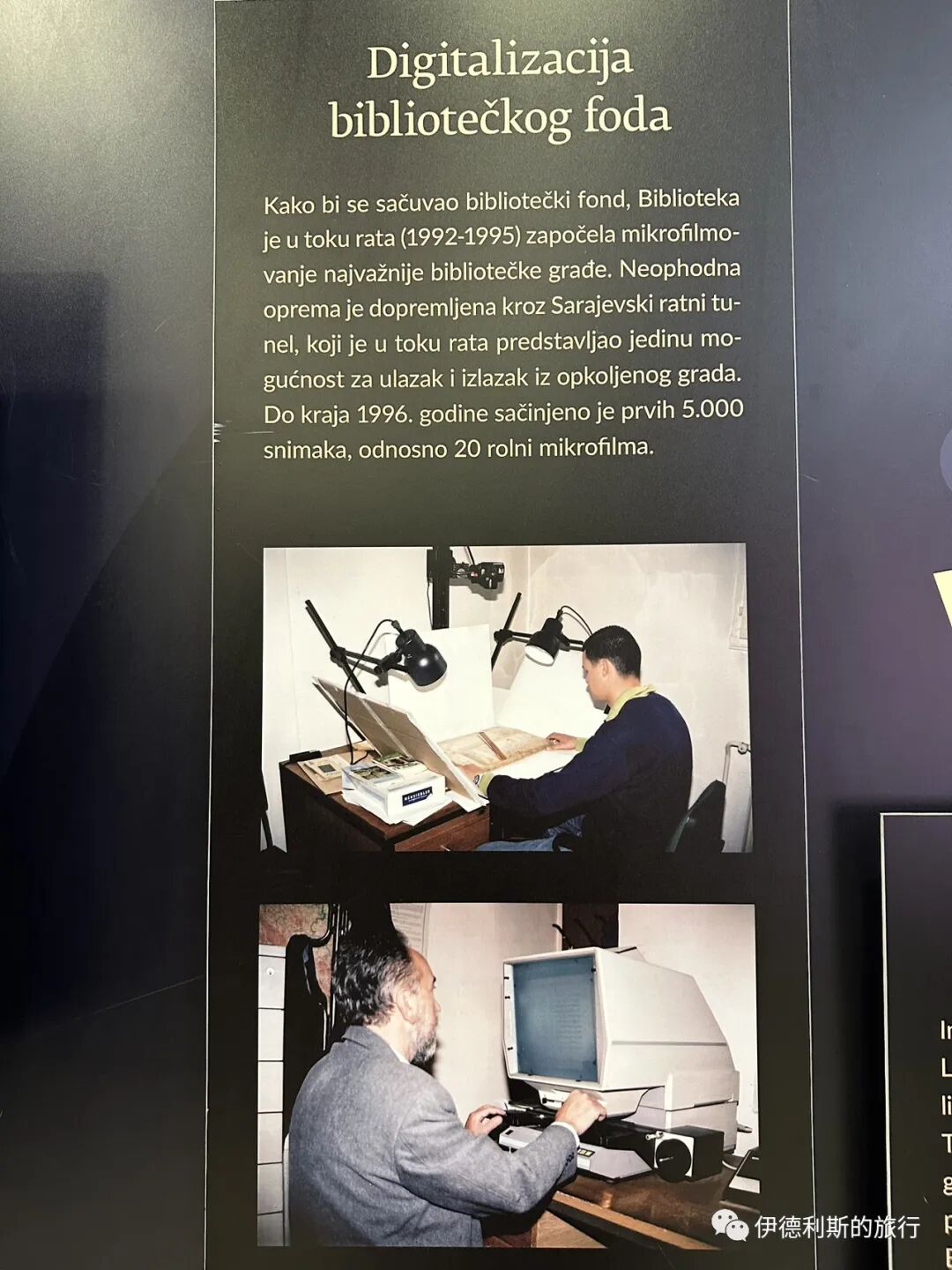
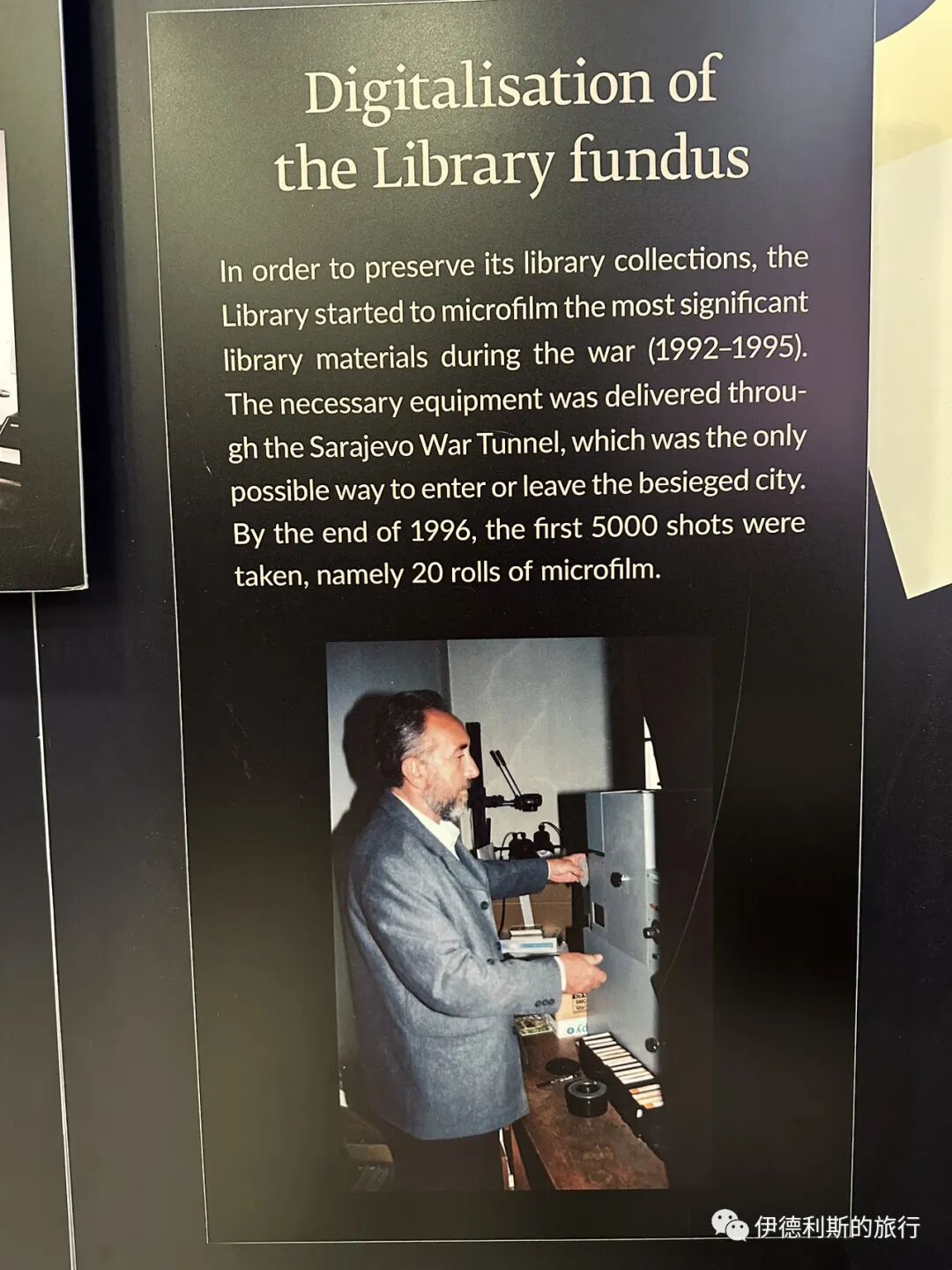
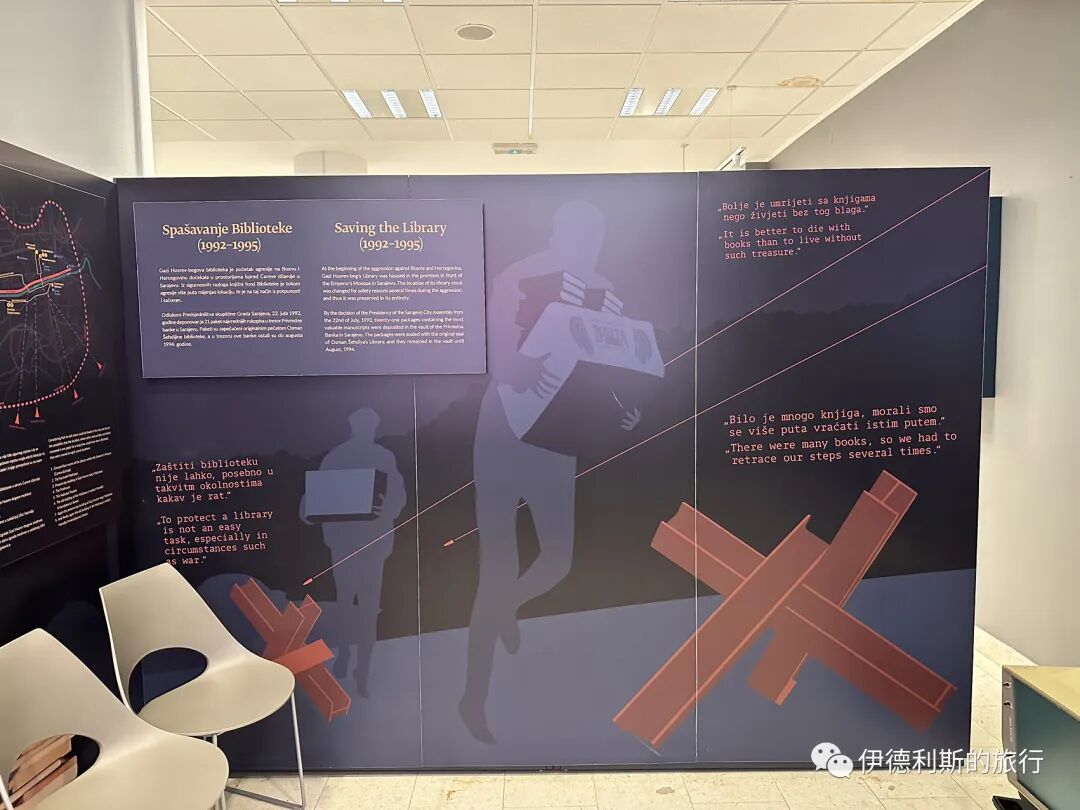
The film 'The Love of Books: A Sarajevo Story' explains that to save the books in the Gazi Husrev-beg Library, the staff moved the book storage area many times. In 1992, the library decided to move 21 packages containing the most precious manuscripts into the vault of the Privredna Bank. To avoid attacks from Serb snipers on the streets, they packed the books in banana boxes, but then they ran into hungry people who robbed them. Fortunately, the hungry people let them go after discovering there were books inside instead of bananas. After going through great hardships, these books were finally saved until the end of the war.
The staff at the Gazi Husrev-beg Library risked their lives to save precious manuscripts during the Bosnian War, and they are now on display again at the library. Here are a few of them.
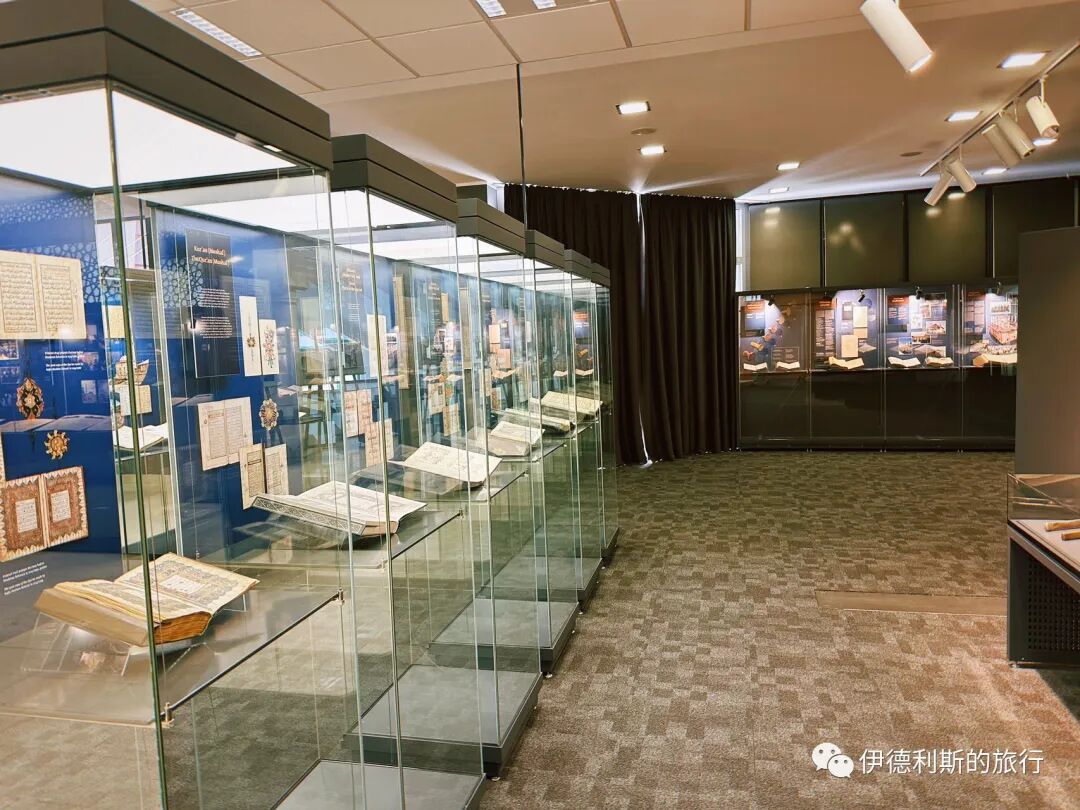
The first one is the Rose Garden (Gulistān), a prose work written in 1258 by the great Persian poet Saadi. This manuscript was annotated by the great 16th-century Bosnian classical literature critic Ahmed Sudi Bosnjak and copied in 1765 by Ahmad b. al-hagg Husayn al-Mostari. Ahmed Sudi was born in eastern Bosnia and later lived in Istanbul for a long time. He was an expert in Persian literature and wrote a series of commentaries on Persian literary classics in Ottoman Turkish. These had a huge influence in the Ottoman Empire and were widely used by later Persian scholars and Western Orientalists.
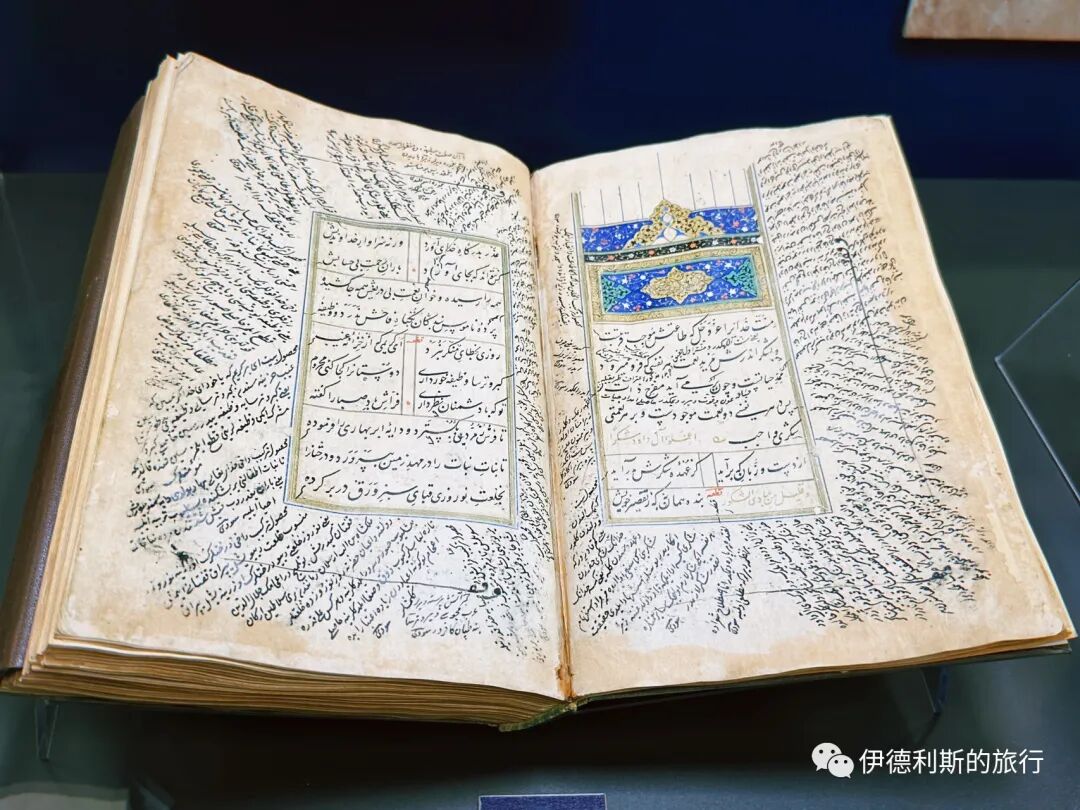
The second one is the 63rd handwritten Quran by hafiz Ibrahim Sehovic, completed in 1807. During his life, hafiz Sehovic copied at least 66 Qurans, and the Gazi Husrev-beg Library holds four of them.
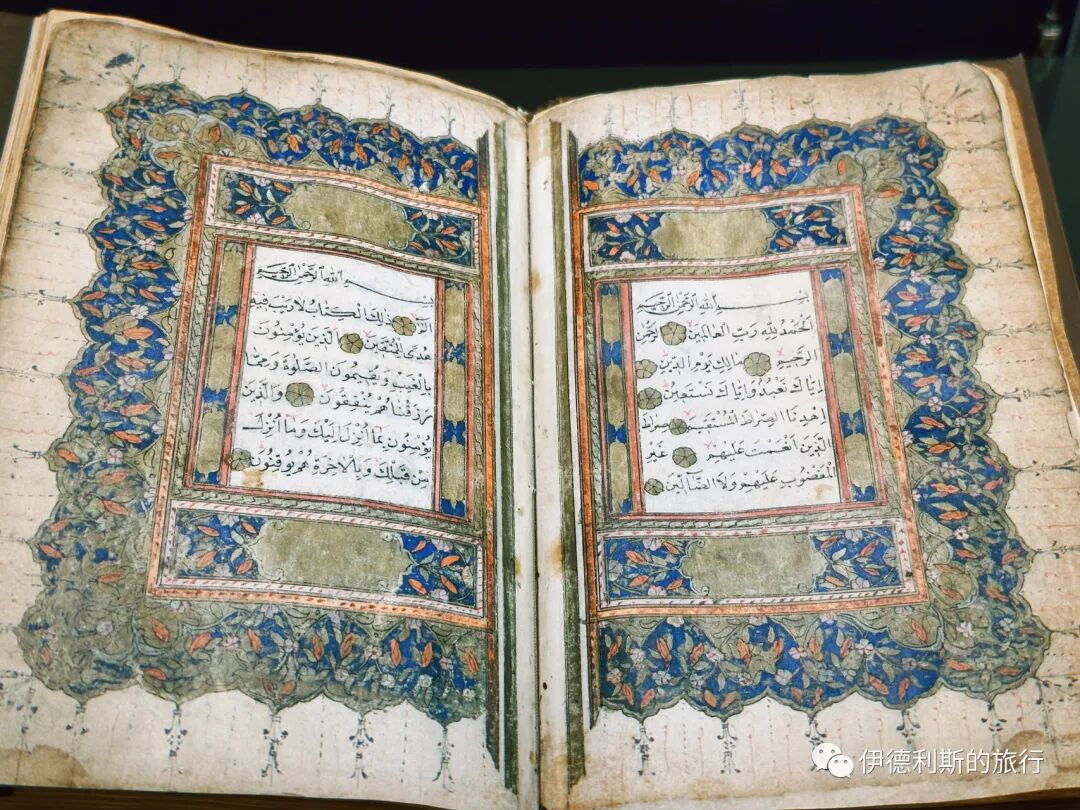
The third one is a handwritten Quran completed in 1849 by Ahmad b. Muhammad al-Muhägir ad-Dagistani al-Makki.
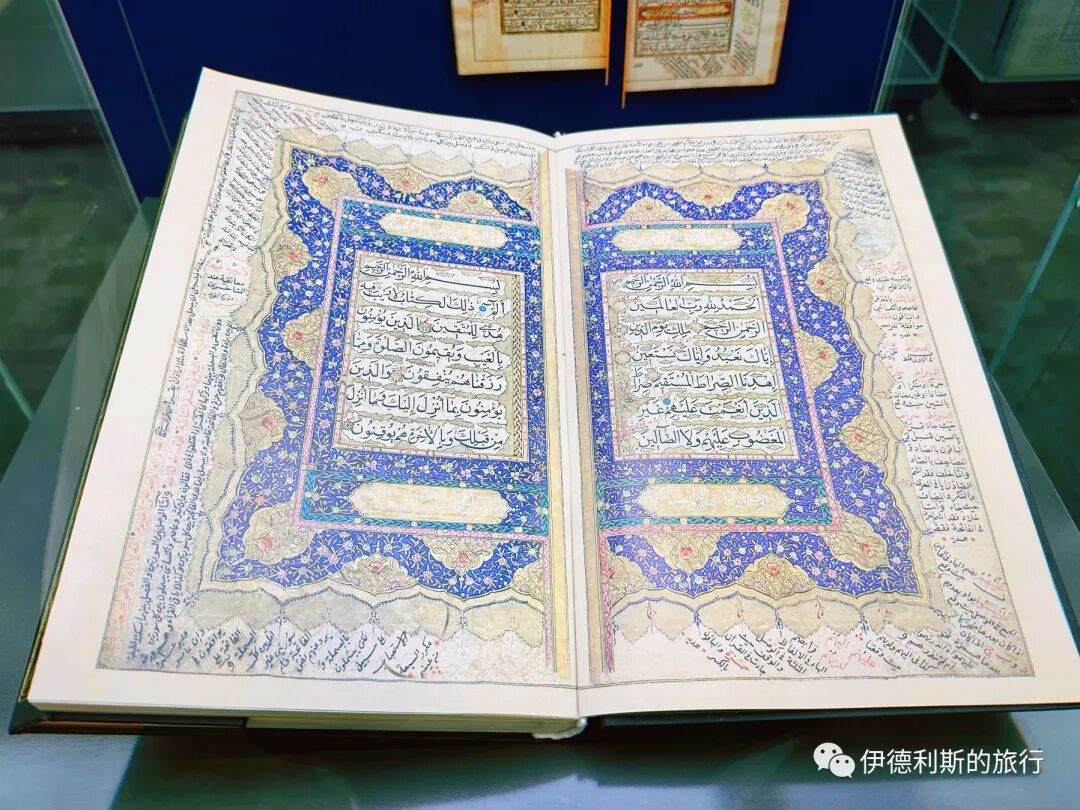
The fourth one is a Quran selection (Juz') gifted by Ferhad-pasha Sokolovic in 1587 to a mosque in the city of Banja Luka in northwestern Bosnia.
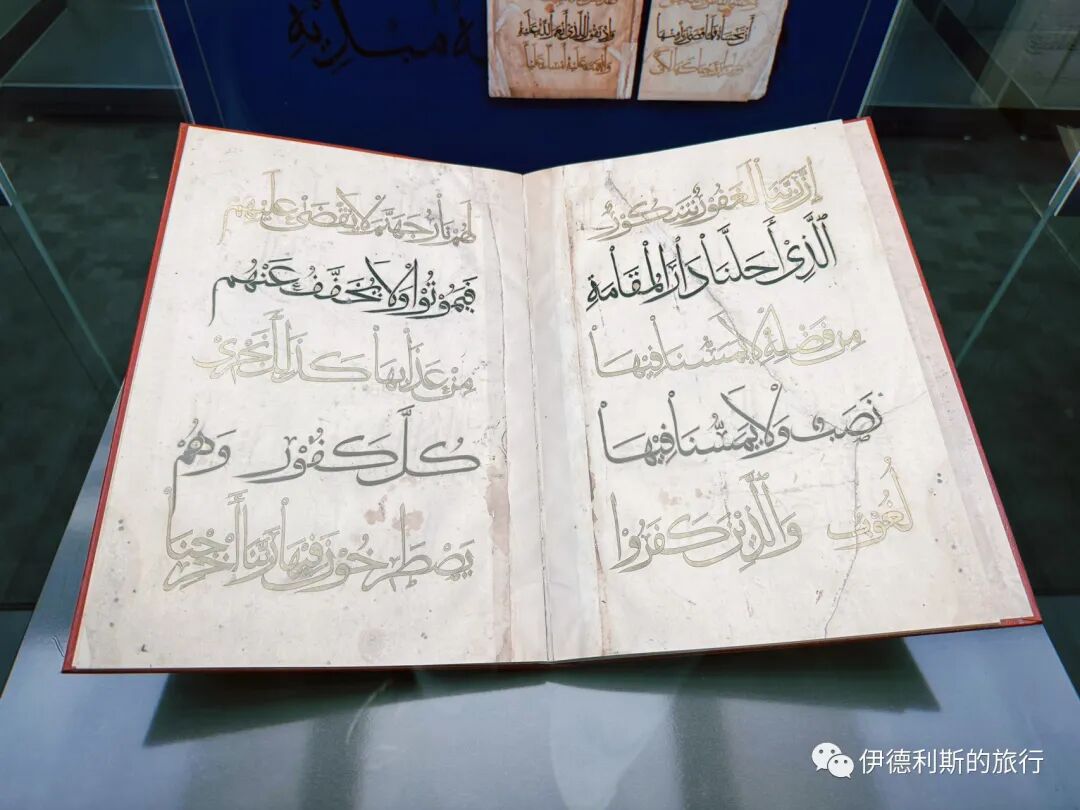
The fifth one is a Quran selection (Juz') gifted by Mehmed-pasha Sokolovic in 1570 to a mosque in his birthplace in eastern Bosnia.
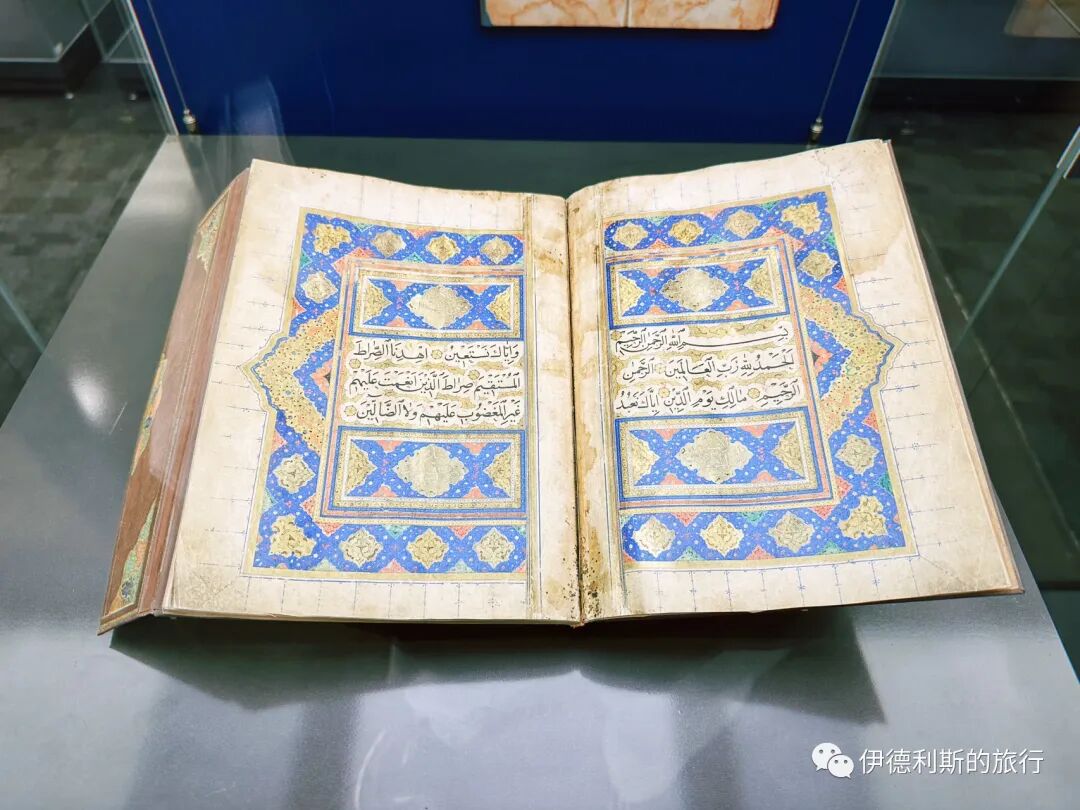
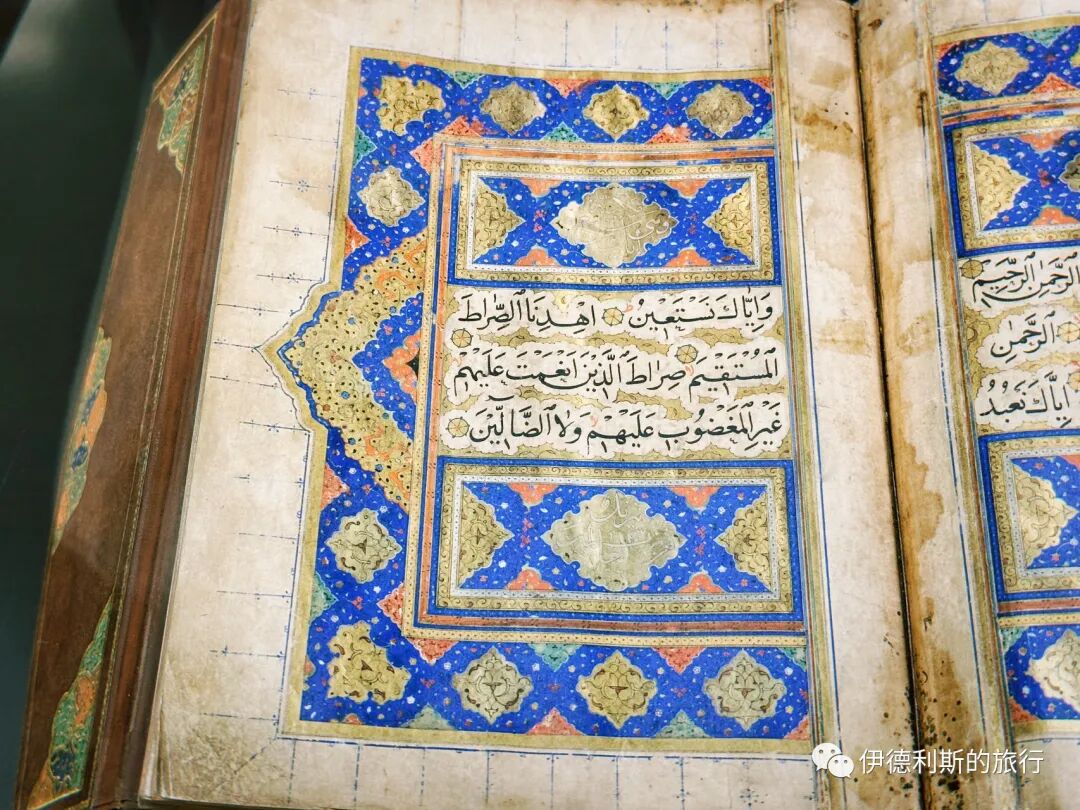
The sixth one is a handwritten Quran created by Abdullah b. Muhammad al-Hafiz as-Sirazi in 1572-73.
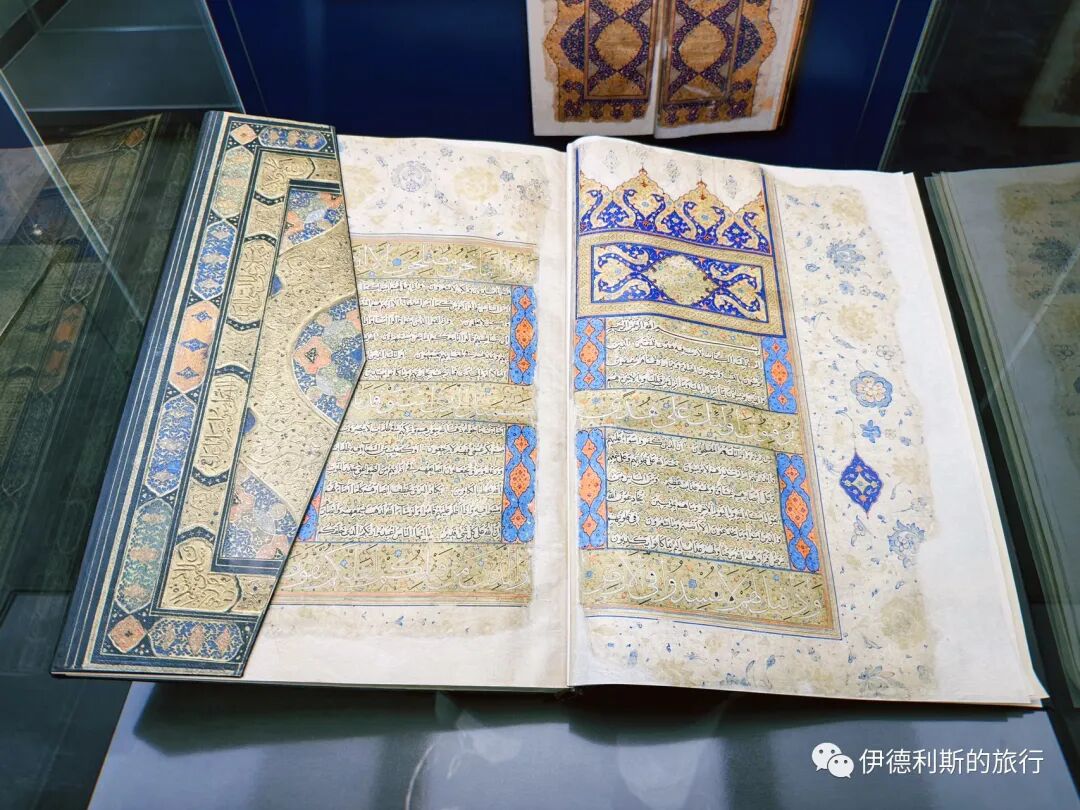
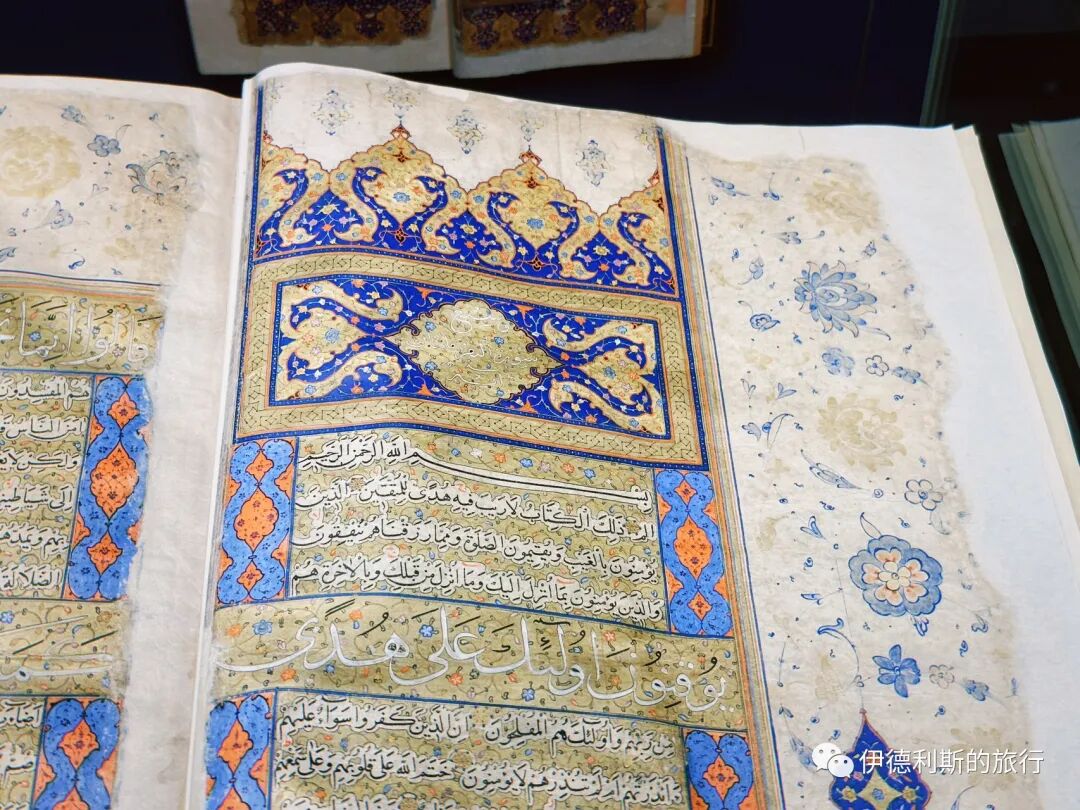
Museum of Crimes Against Humanity and Genocide 1992-1995
Located in the center of Sarajevo's old town, the Museum of Crimes Against Humanity and Genocide 1992-1995 is a place that requires a strong stomach to visit. It is the second museum to leave me with a deep psychological shadow, the first being the Gulag History Museum in Moscow. When I entered, I happened to see the Bosnian friend (dosti) selling tickets being interviewed. He was talking about his family's life during the Bosnian War, which was the first time I heard firsthand information about this war.
I will share the museum's introduction here: We must remember history! The Bosnian War began in April 1992. It is listed as one of the most brutal wars in human history. Total casualties exceeded 200,000, with over 120,000 deaths, hundreds of thousands injured, 2 million people displaced, 657 concentration camps, over 200,000 people detained, 25,000 raped, and 30,000 missing. The crimes against humanity and genocide committed during the war are among the most heinous crimes known to mankind. This genocide happened in Central Europe at the end of the 20th century. The war ended in November 1995 with the signing of the Dayton Peace Agreement.
Keeping memories alive is an important factor in avoiding new genocides and massacres, especially today as separatism and racism slowly return to the world. This museum displays a sad part of human history. In this museum, people tell many stories and show many crime scenes. The exhibits hold strong emotions and help you understand more about the war experiences of the Bosnian people. Most importantly, this museum is run by victims of the war, those who lived through it.
Understanding the impact of hatred on others is important for everyone. Without this knowledge, hatred will easily happen again.
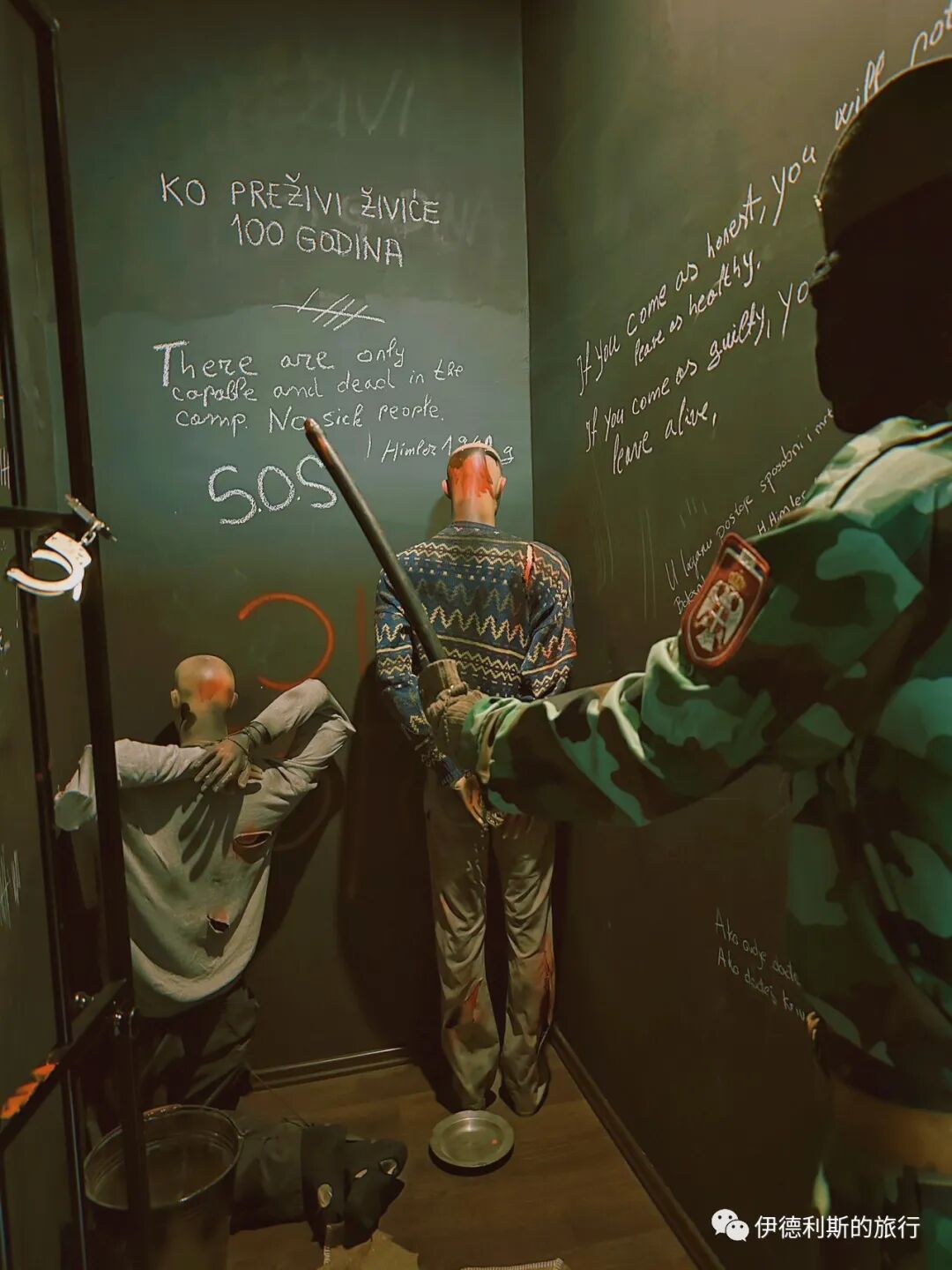
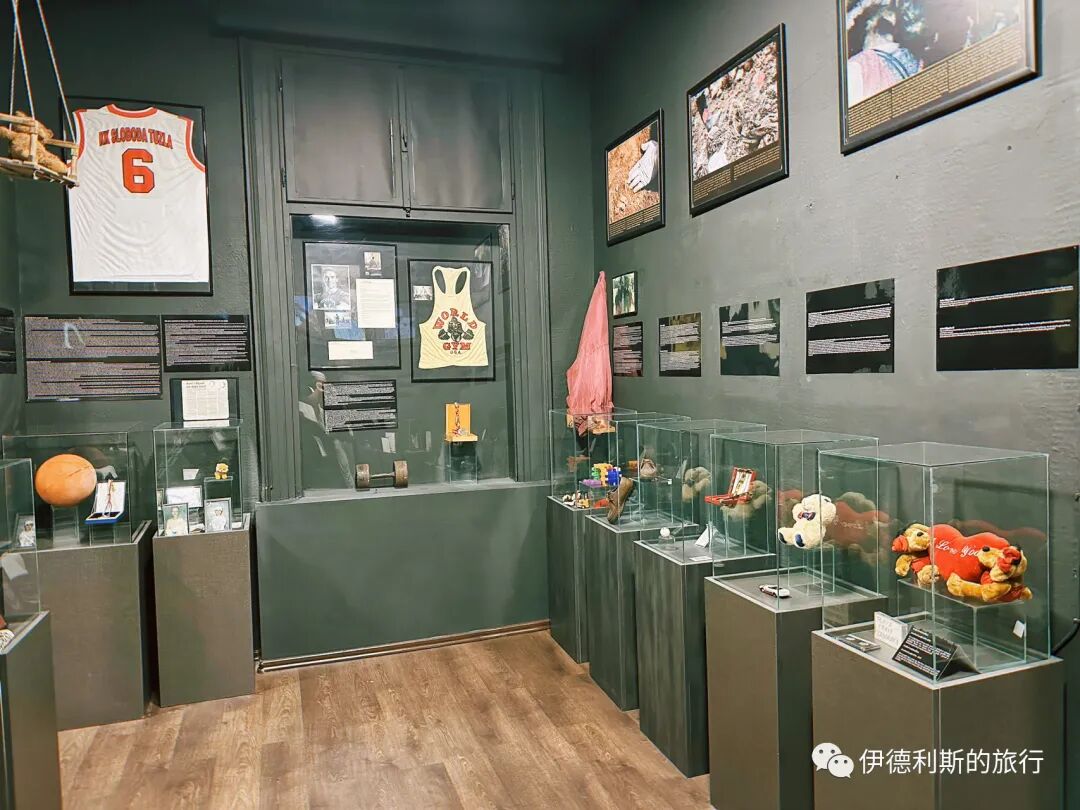
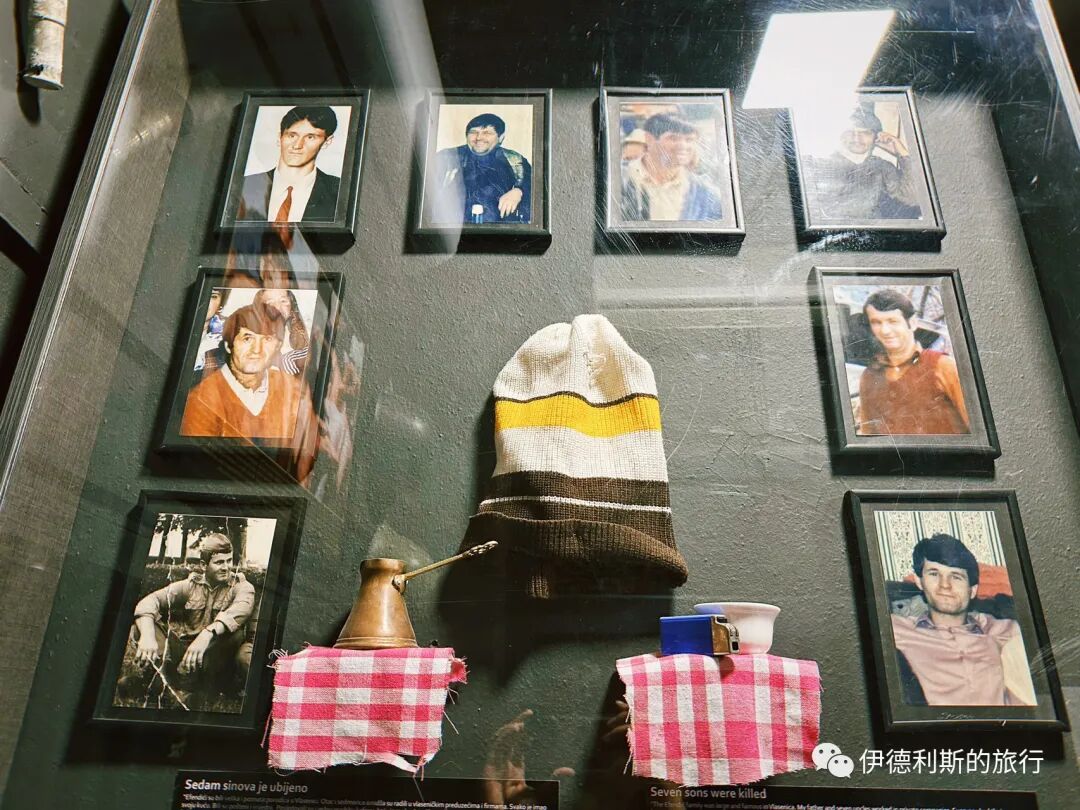
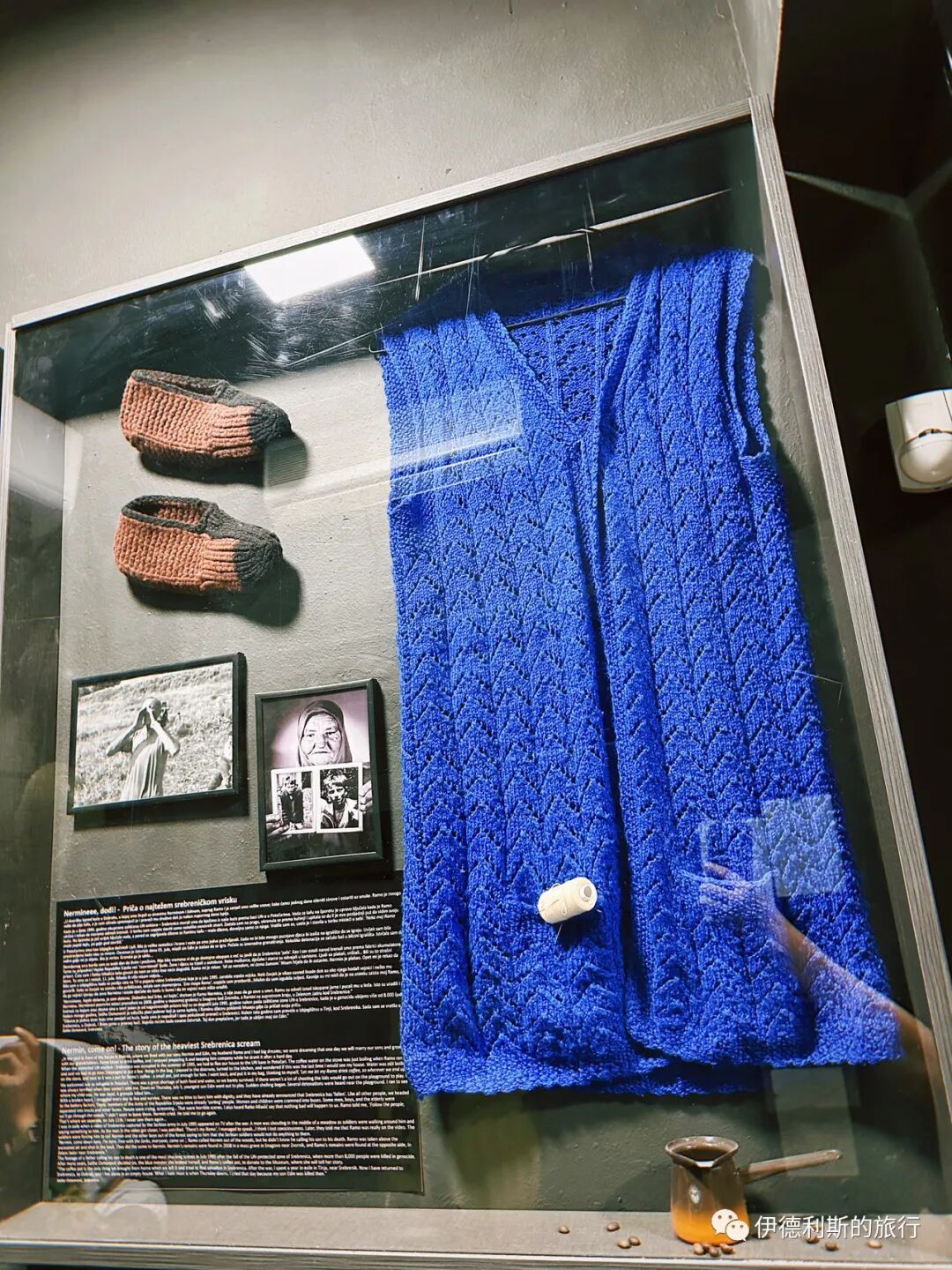
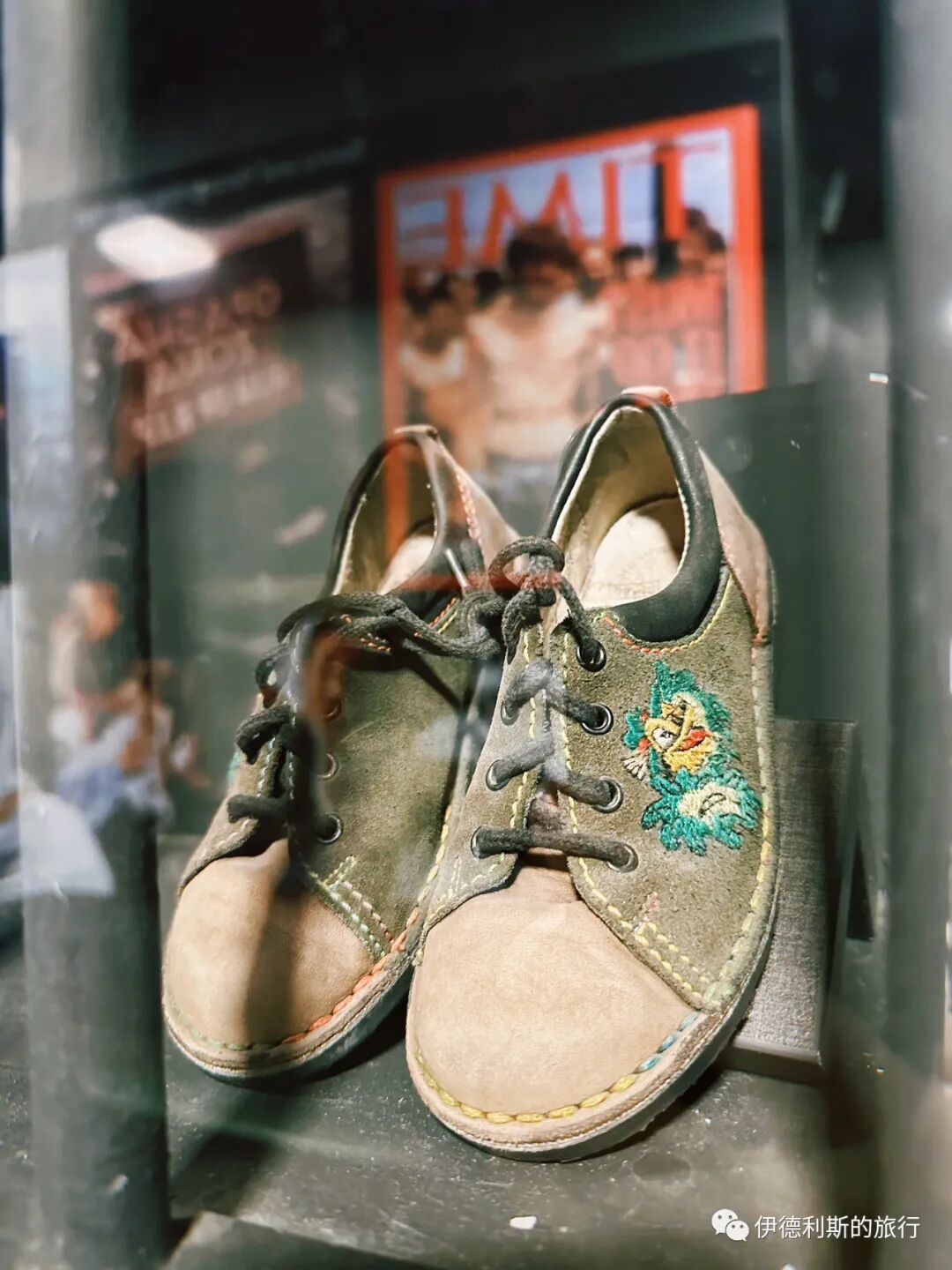
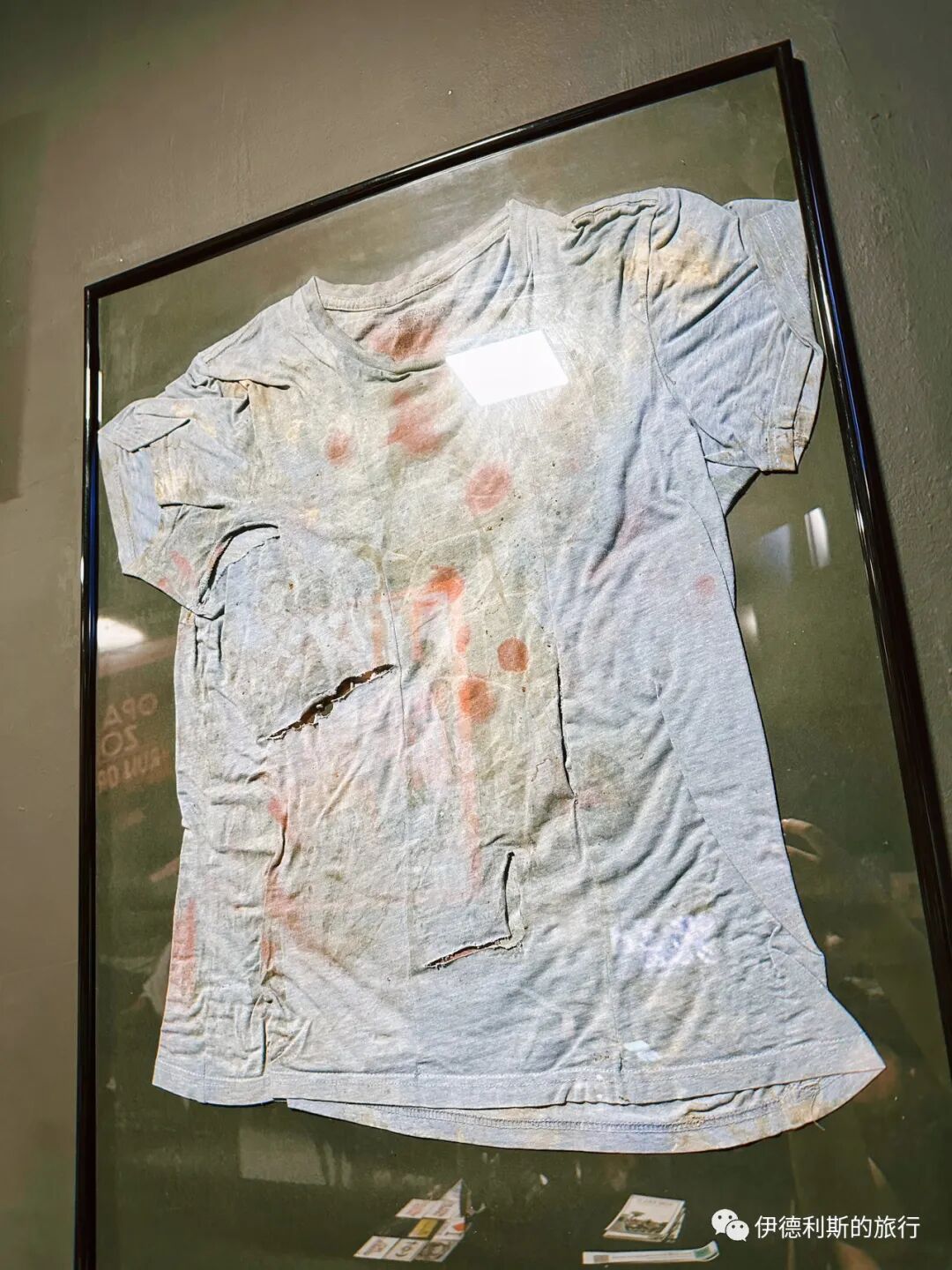
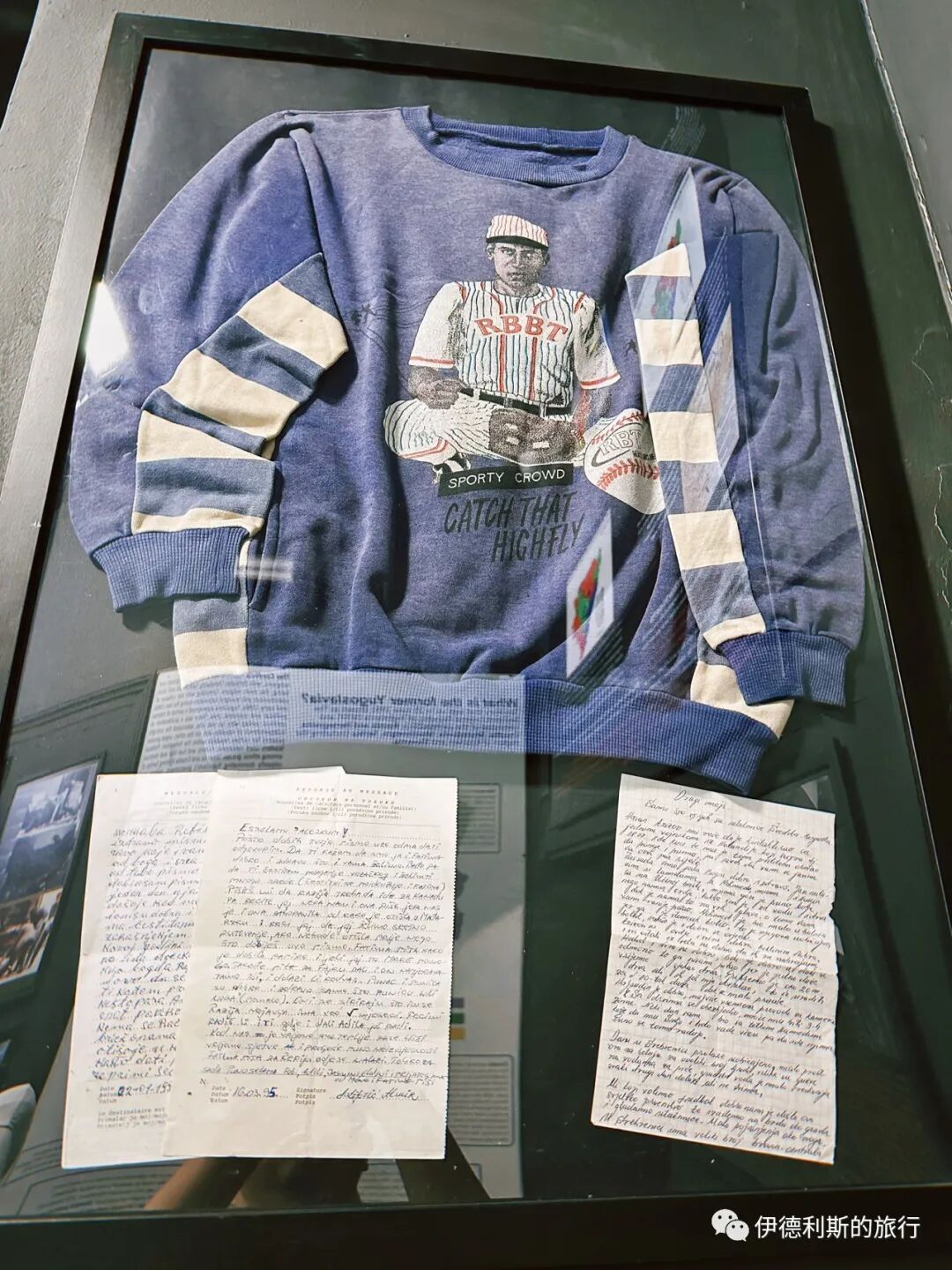
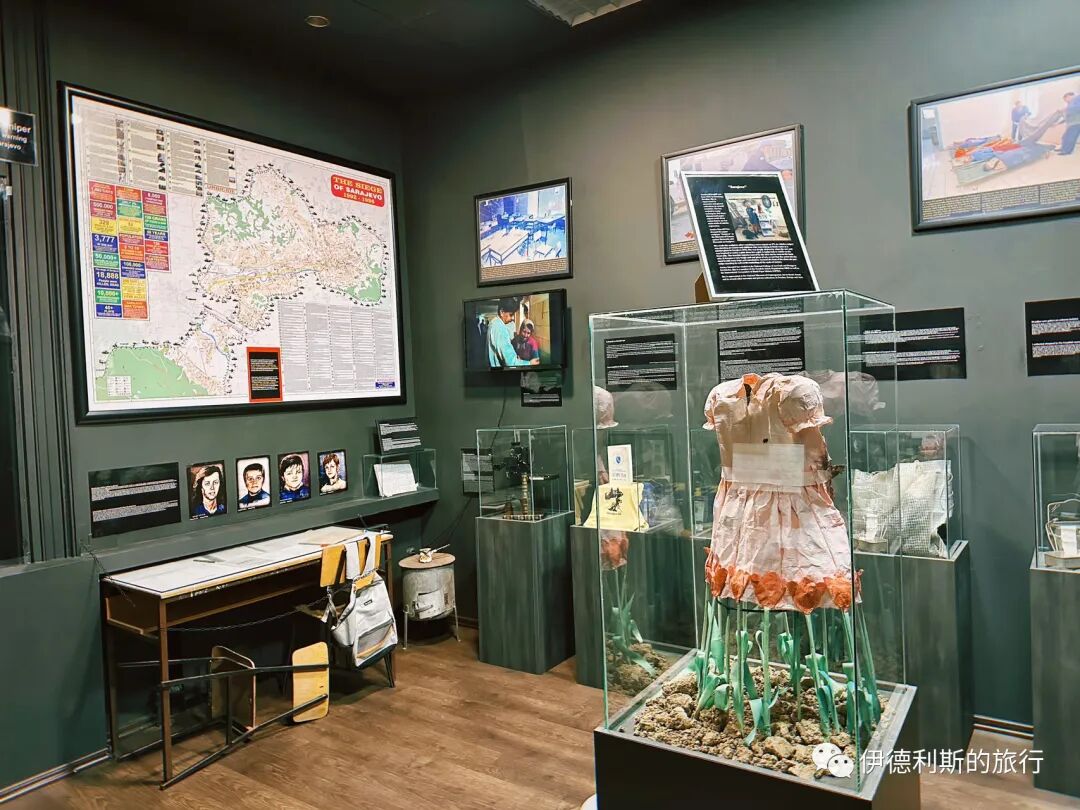
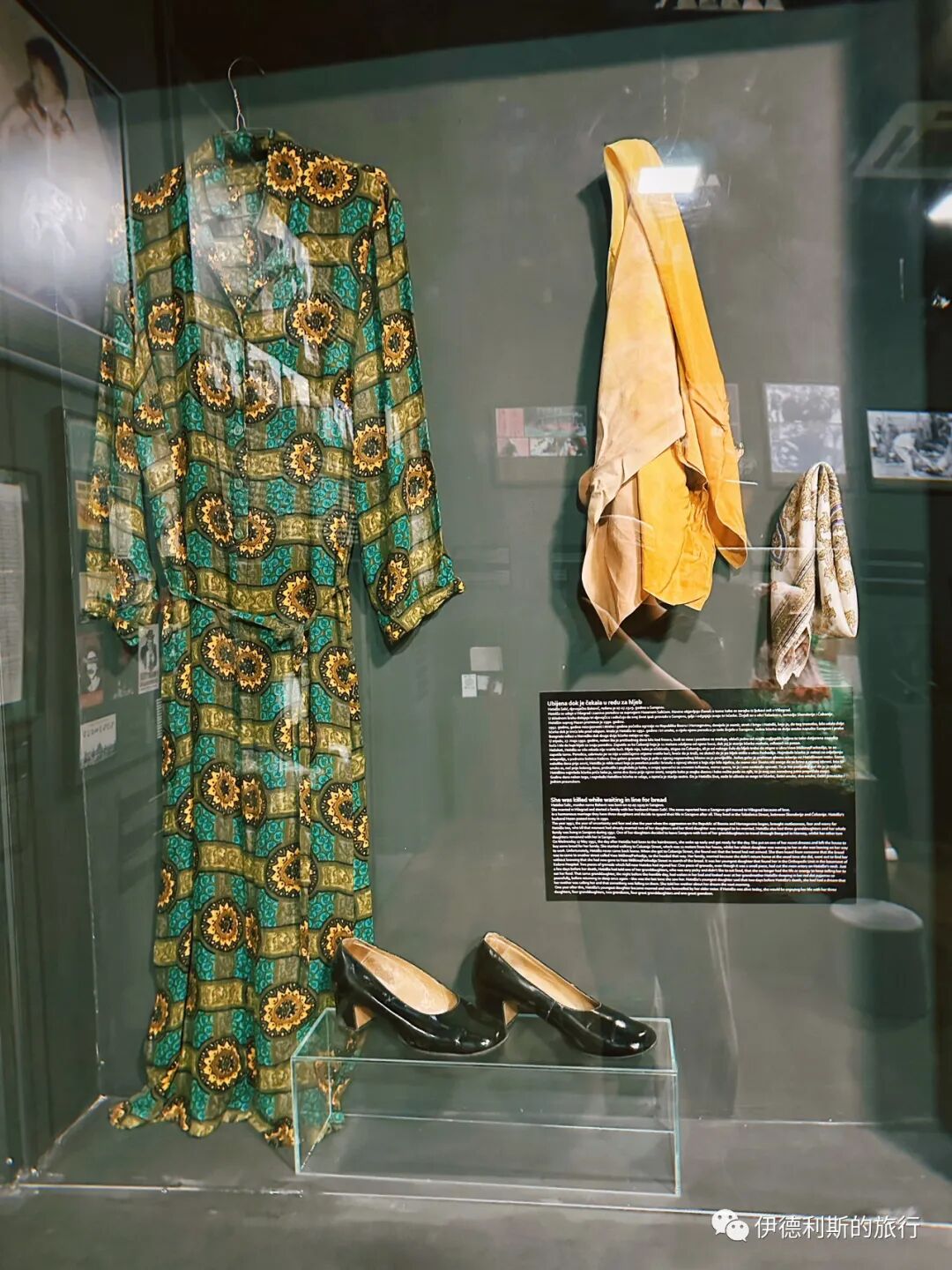
Martyrs' Cemetery (Šehidi Cemetery)
In the afternoon, I went to visit the Kovači Cemetery below the Yellow Fortress on the east side of Sarajevo's old town. Kovači Cemetery is also called the Martyrs' Cemetery (Šehidi Cemetery). Many people who died during the Siege of Sarajevo in the Bosnian War are buried here. Alija Izetbegović, the wartime president of the Republic of Bosnia and Herzegovina, was also buried here after he returned to Allah.
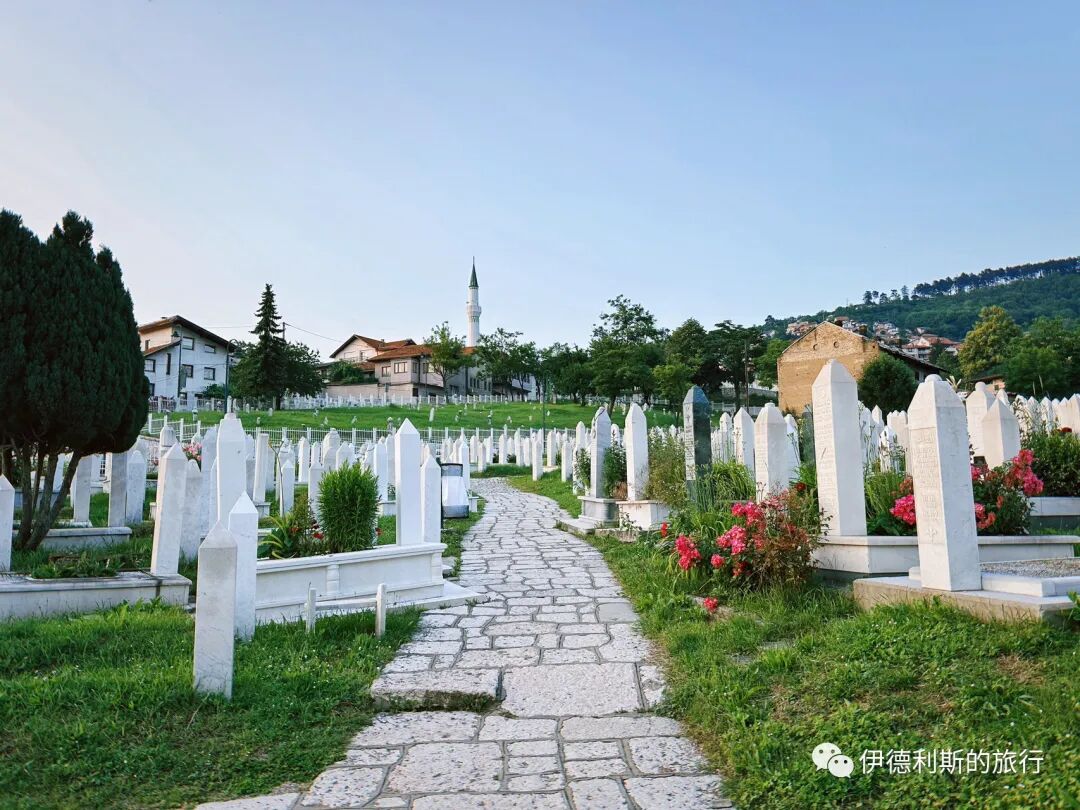
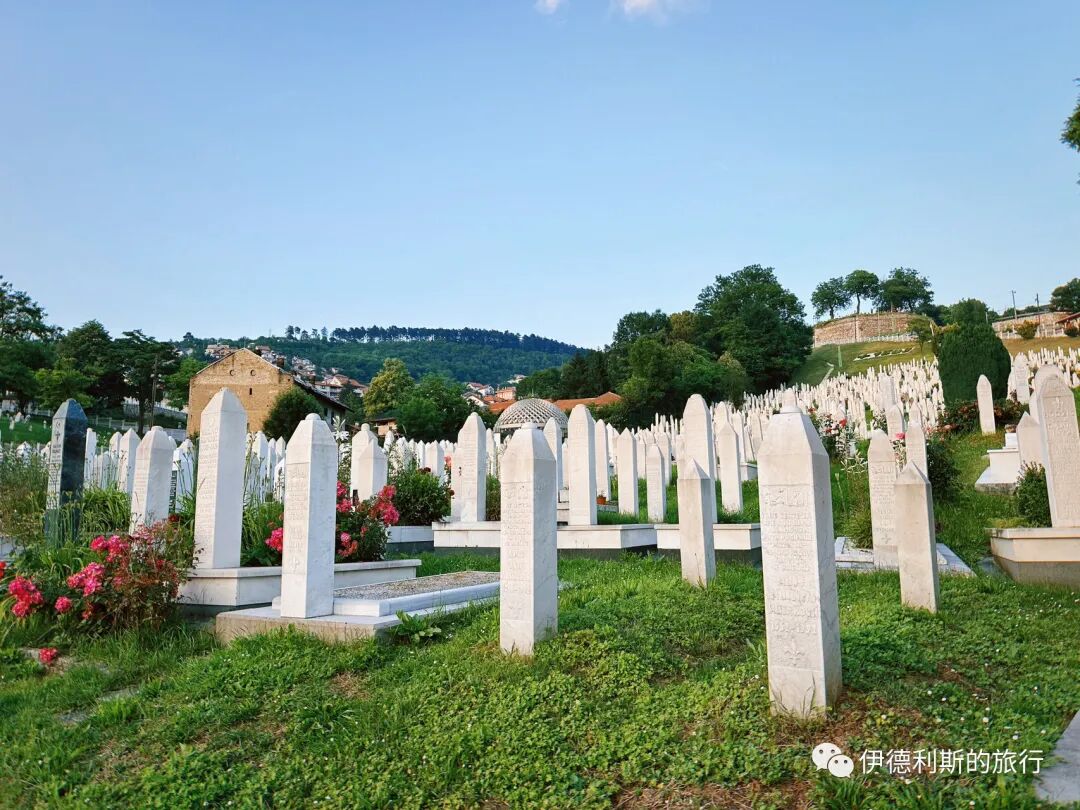
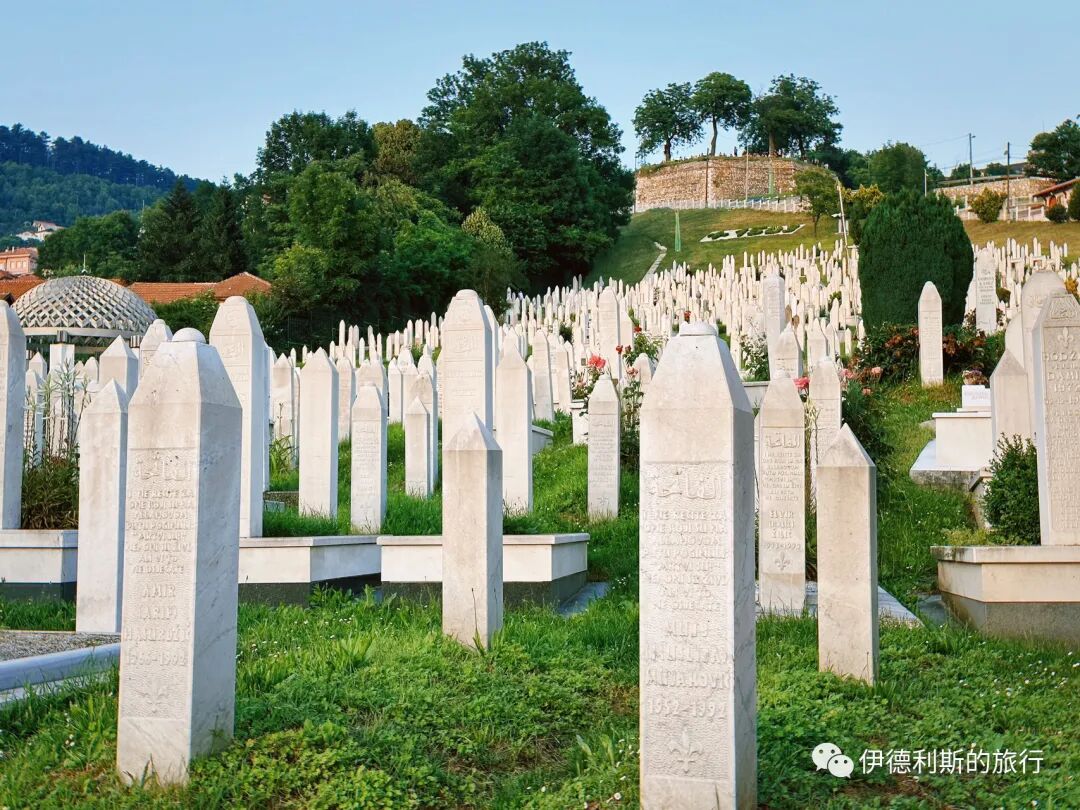
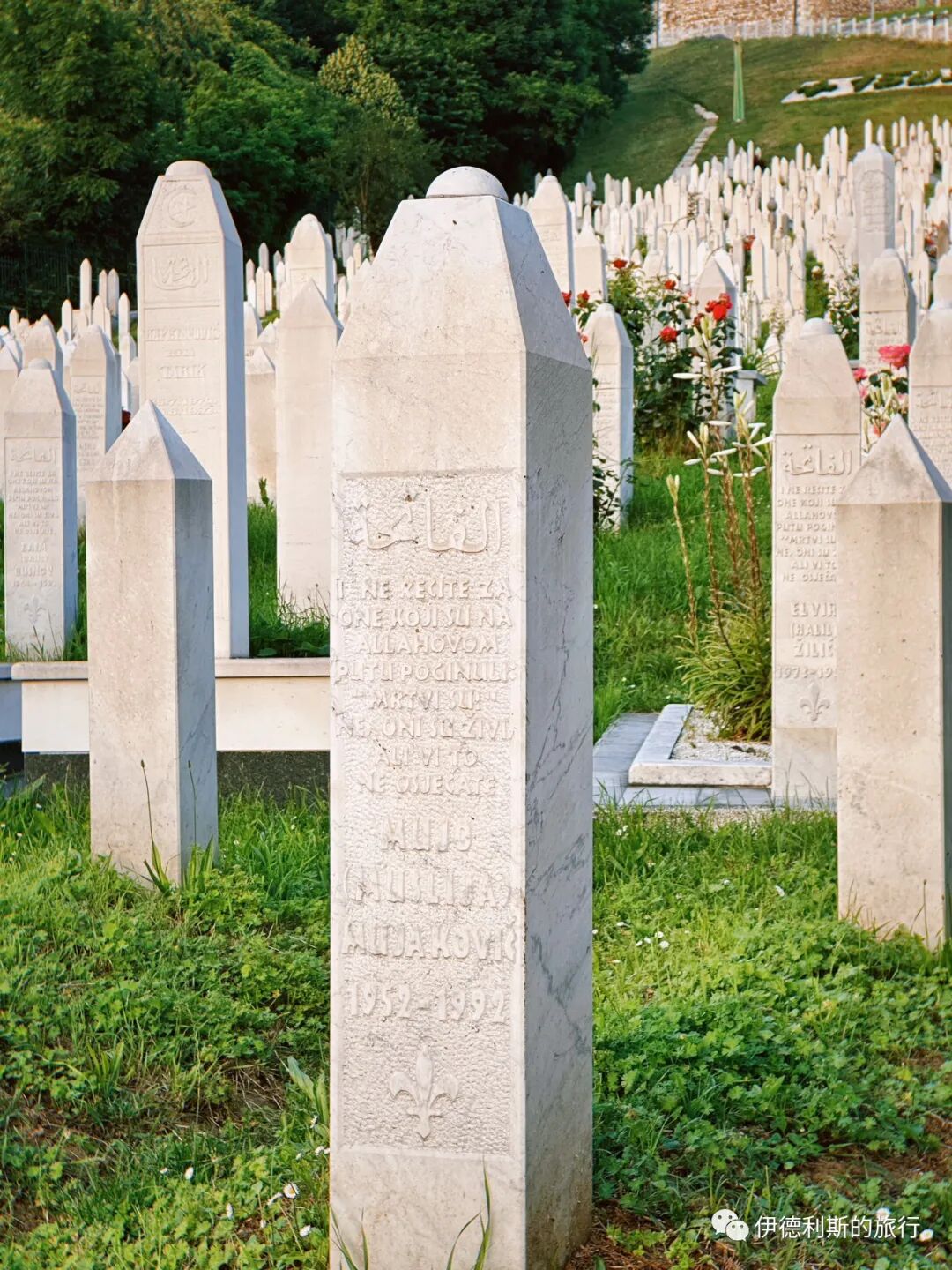
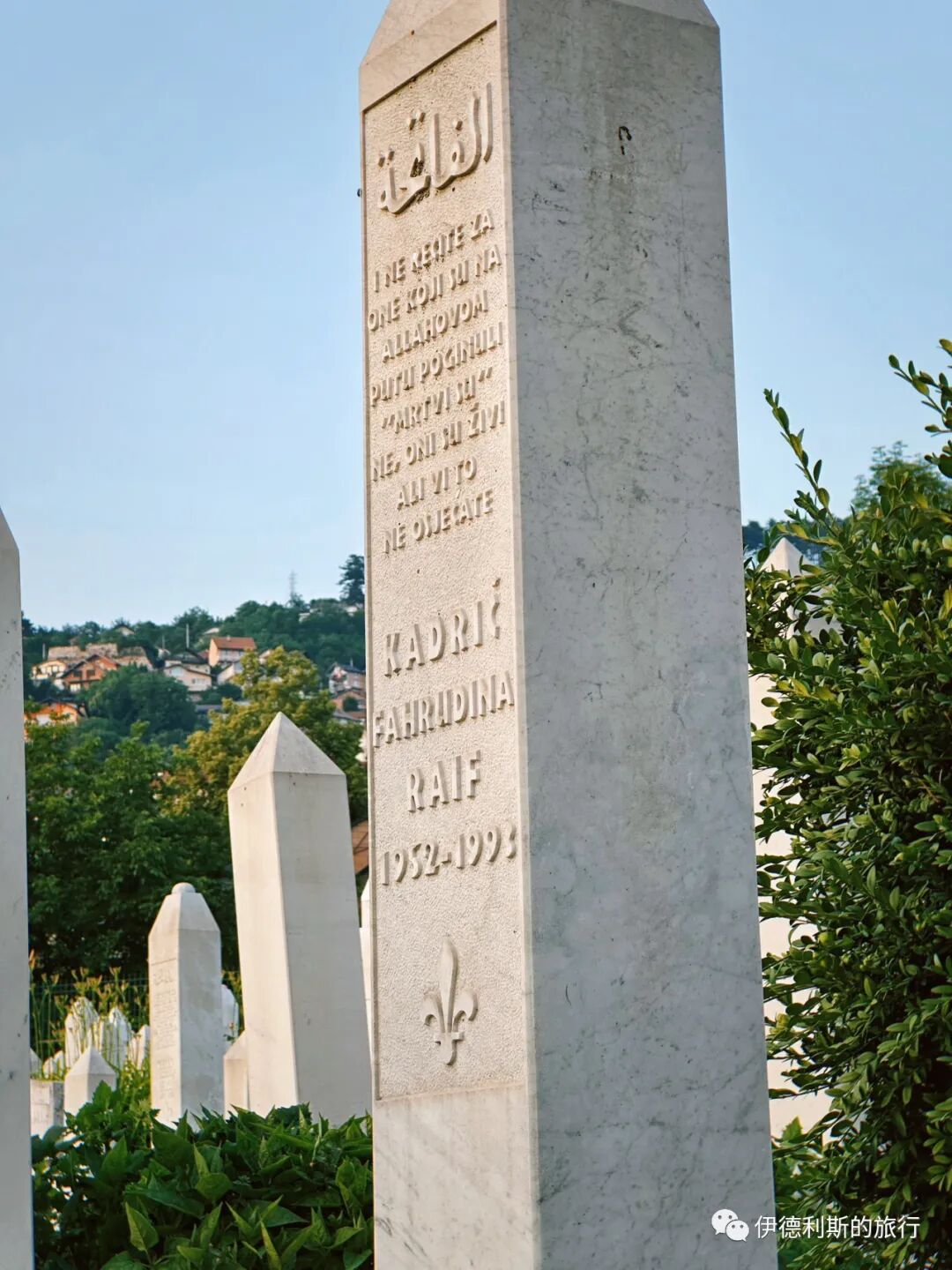
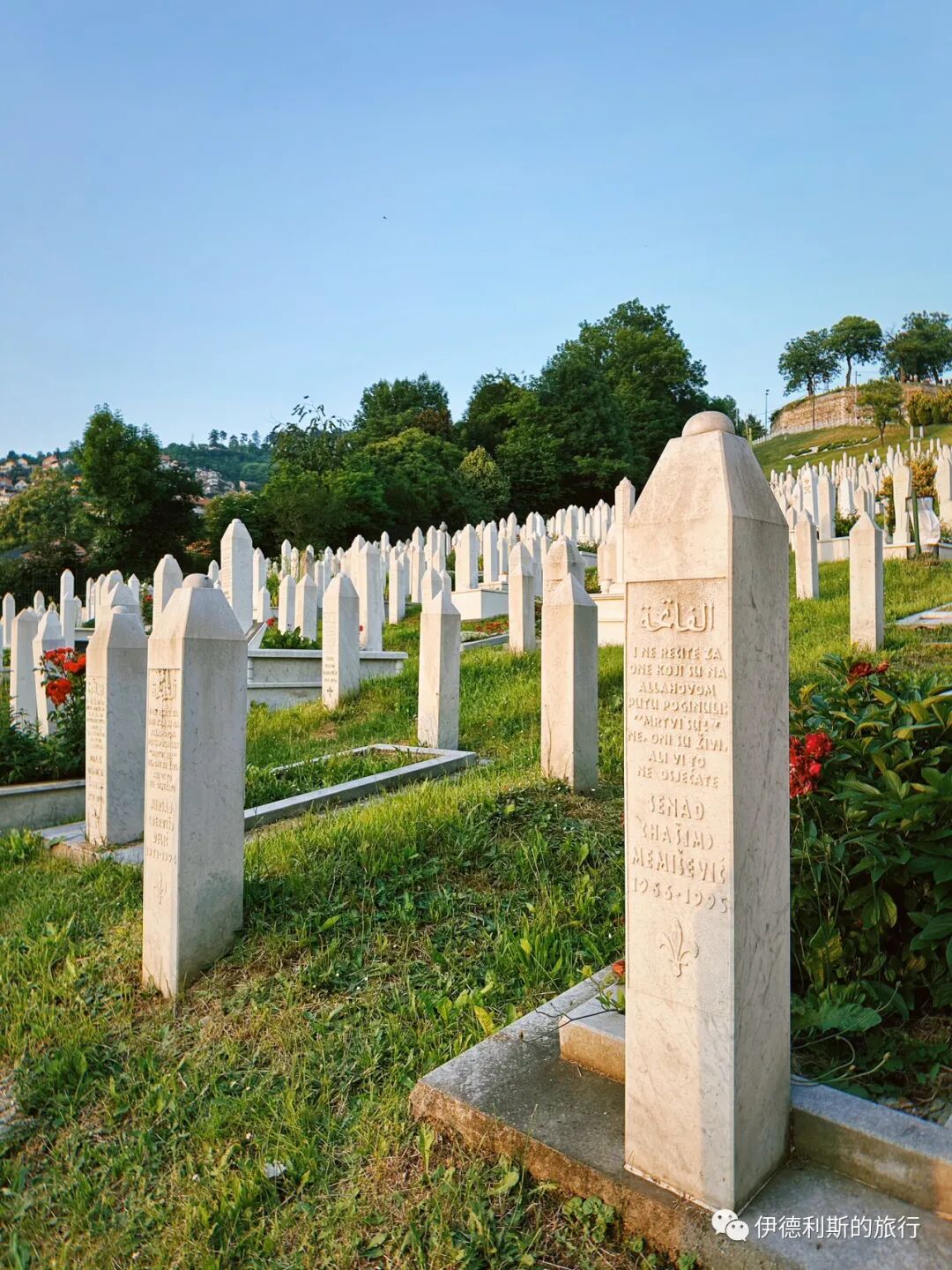
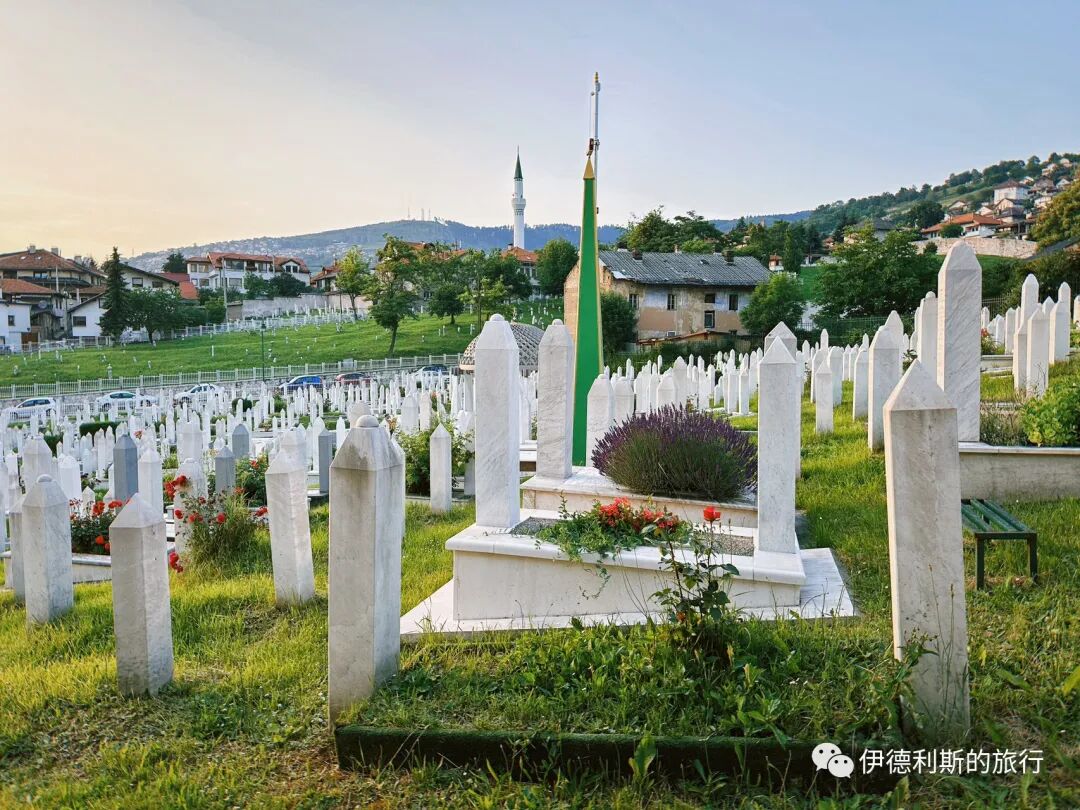
Historical Museum of Bosnia and Herzegovina
The Historical Museum of Bosnia and Herzegovina was built in 1963 and is one of the representative works of Yugoslav modern architecture. The museum suffered severe damage during the Bosnian War. The staff managed to save most of the collection, and today the building still keeps the marks left by the war.
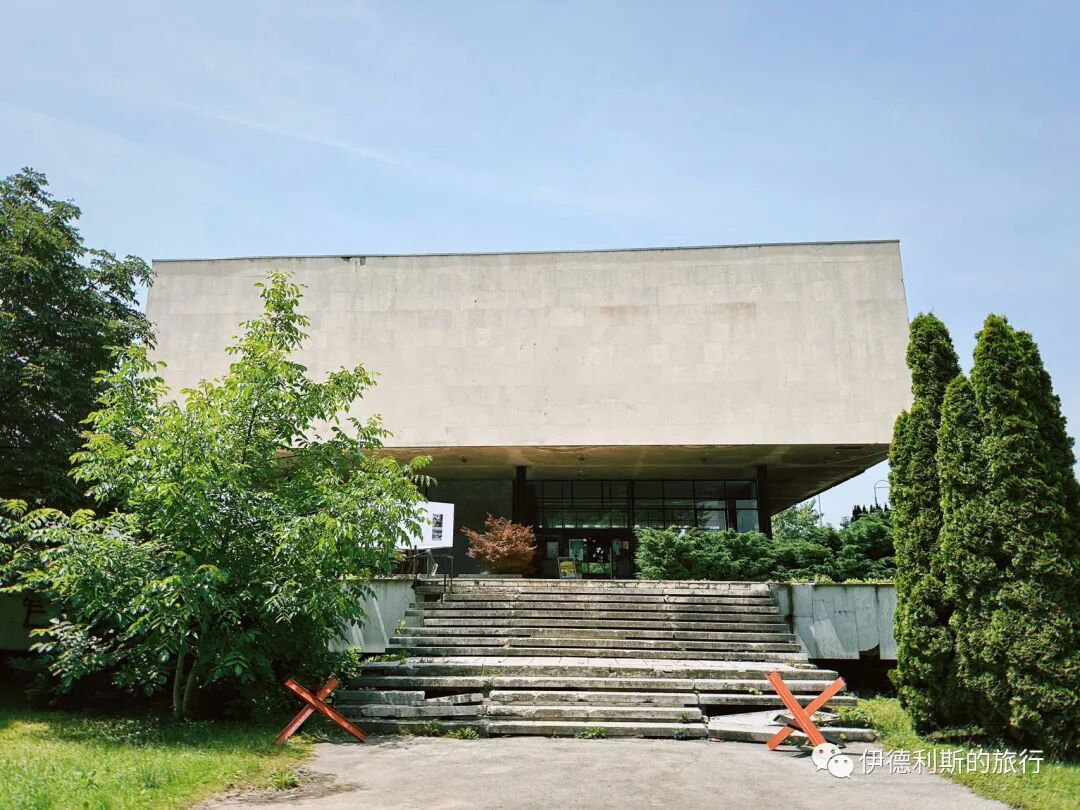
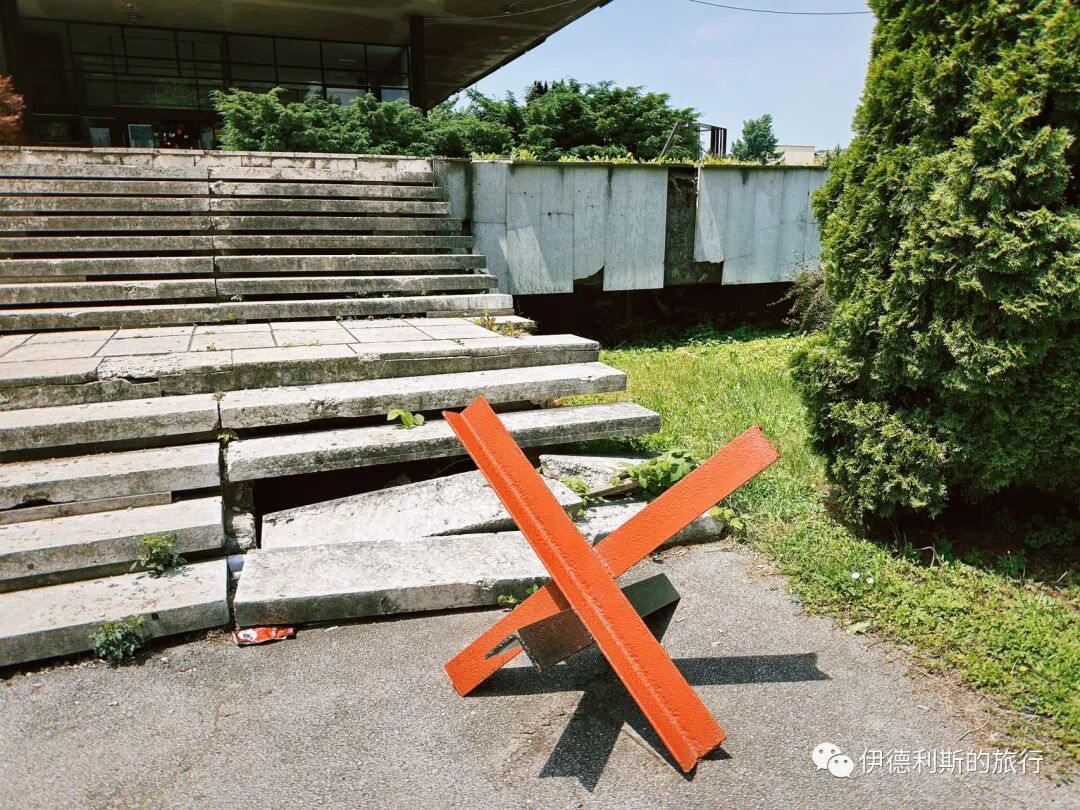
The museum features an exhibition called 'We Refugees'. During the Bosnian War, Germany and Austria took in nearly 500,000 refugees from Bosnia and Herzegovina, and many returned home after the war. The exhibition recreates a private space for refugees, containing personal files from 20 different people. This is the first time they have talked about leaving home for a new country, being separated from family, fearing for their lives, feeling like outsiders, losing their identity, the languages they lost and learned, the challenges of refugee life, new friendships and relationships, and the experience of returning to their homeland. Each person left behind an object, a document, or a photograph in their file. Even today, these items still remind them of that time.
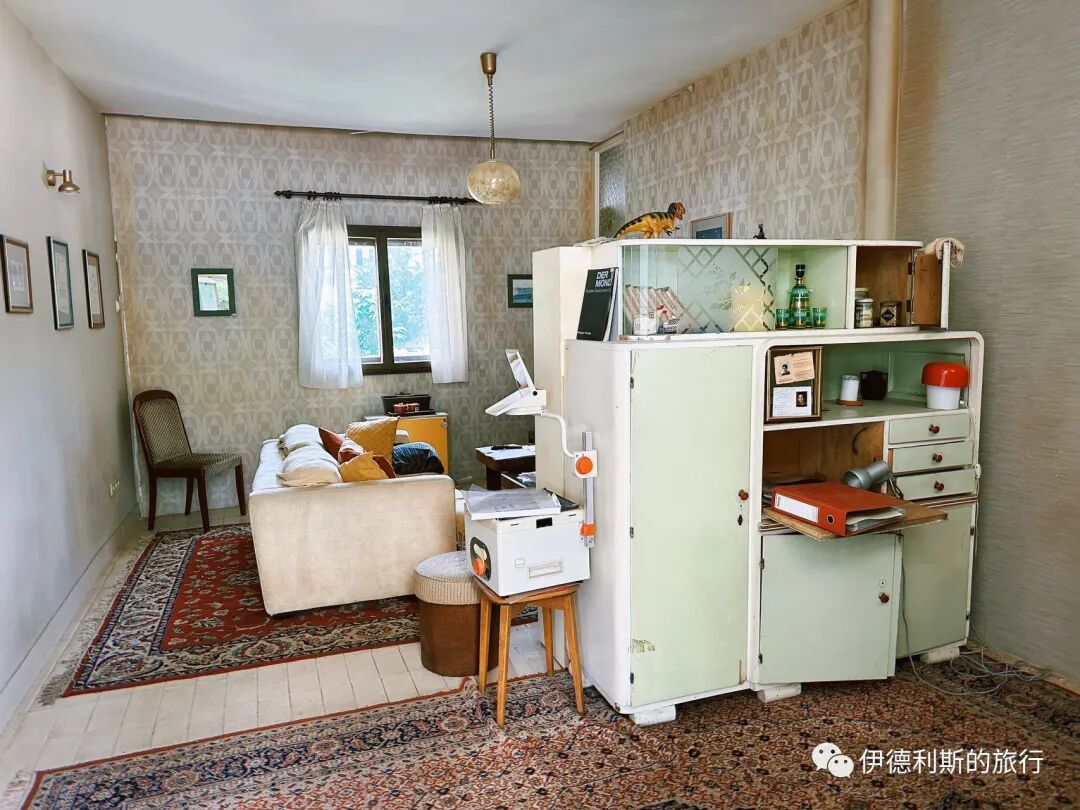
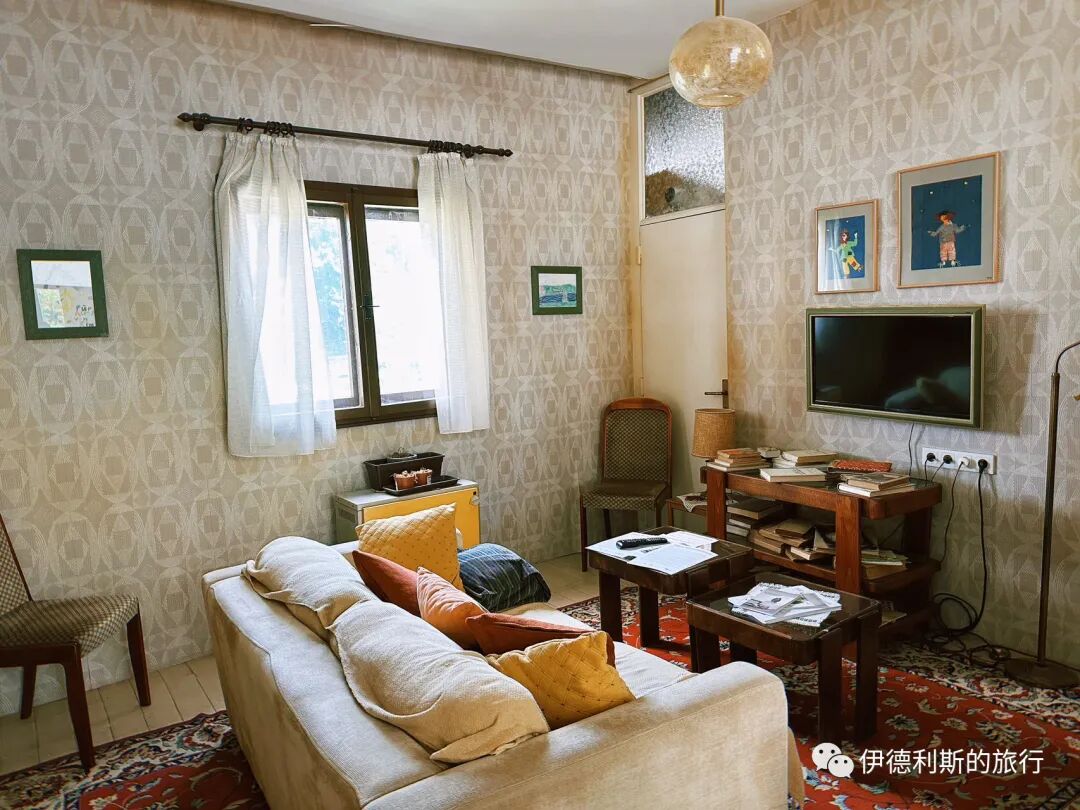
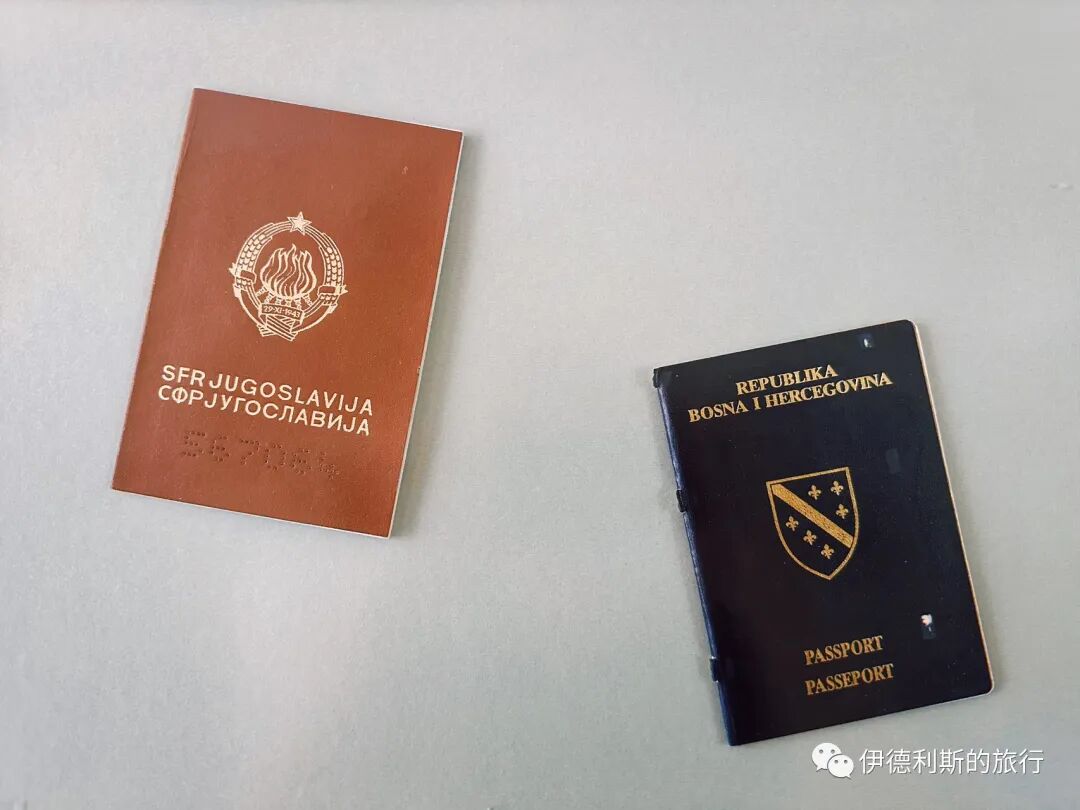
There is a photography exhibition by Scottish photographer Jim Marshall at the Historical Museum of Bosnia and Herzegovina. He began living and working in Bosnia and Herzegovina in 1994, and in 1996 and 2011, he took a series of photos of Sarajevo street scenes from the same angles. The front desk of the Historical Museum of Bosnia and Herzegovina sells postcards of this photo series, which are worth collecting if you are traveling in Sarajevo.
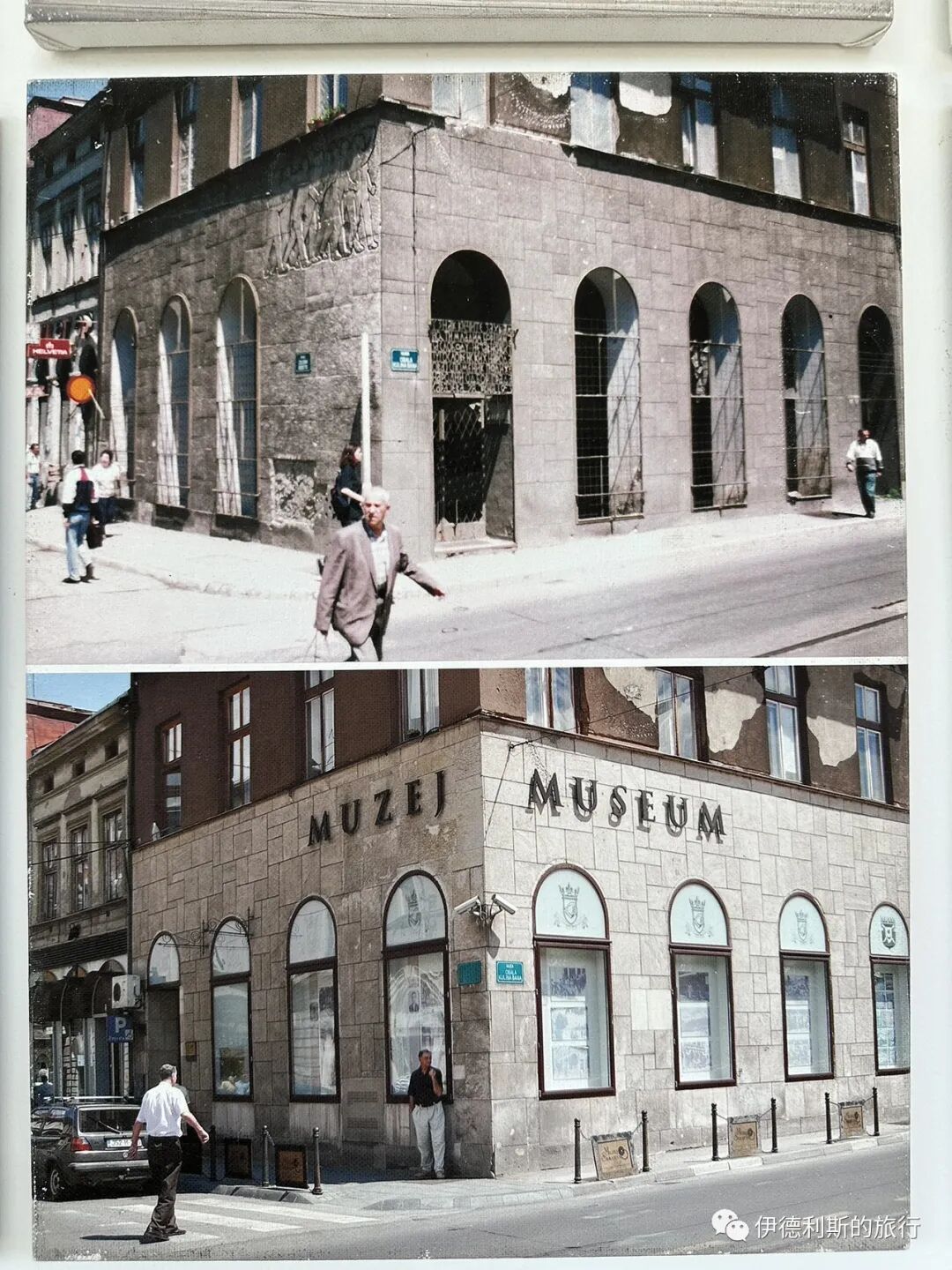
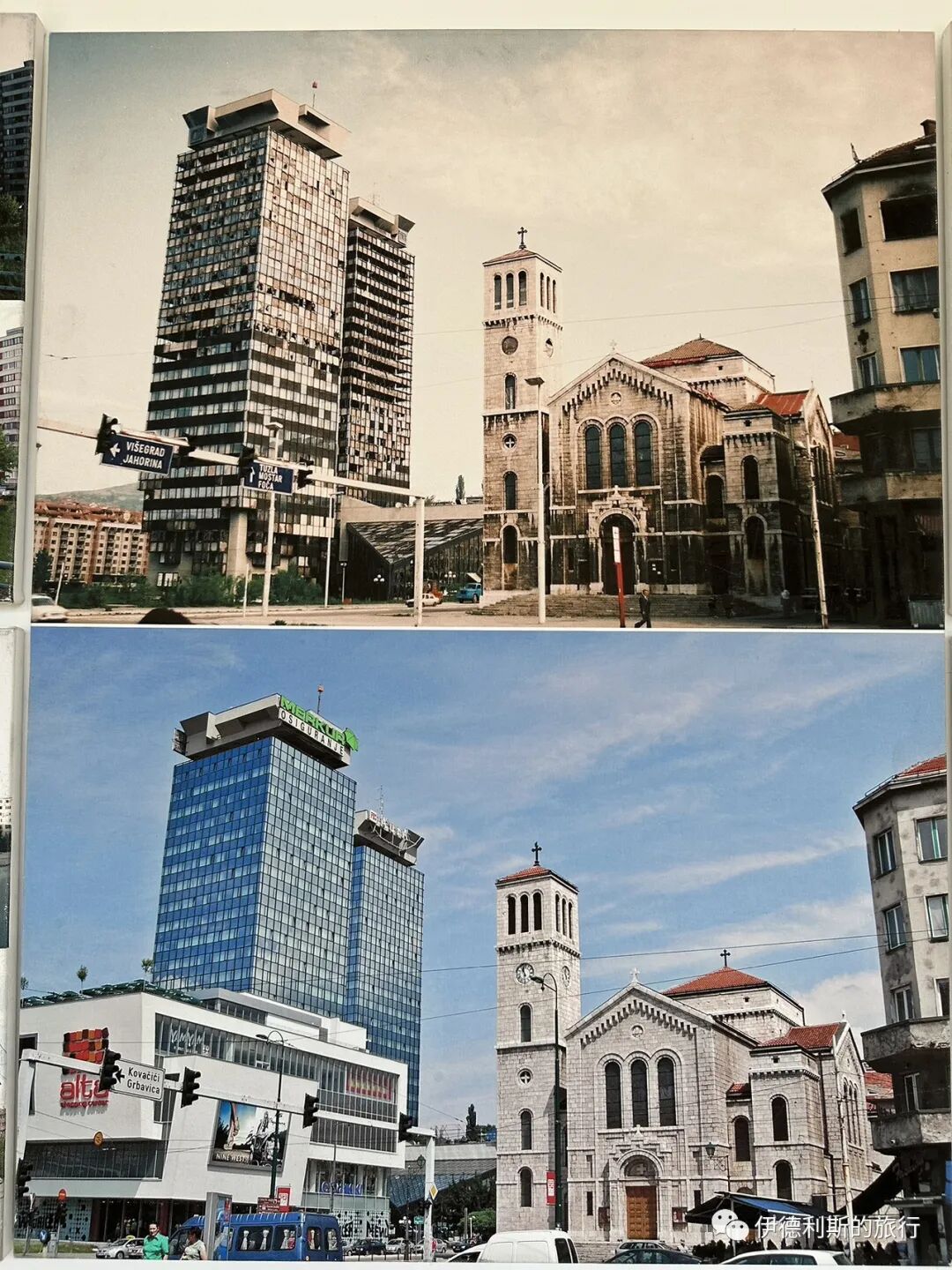
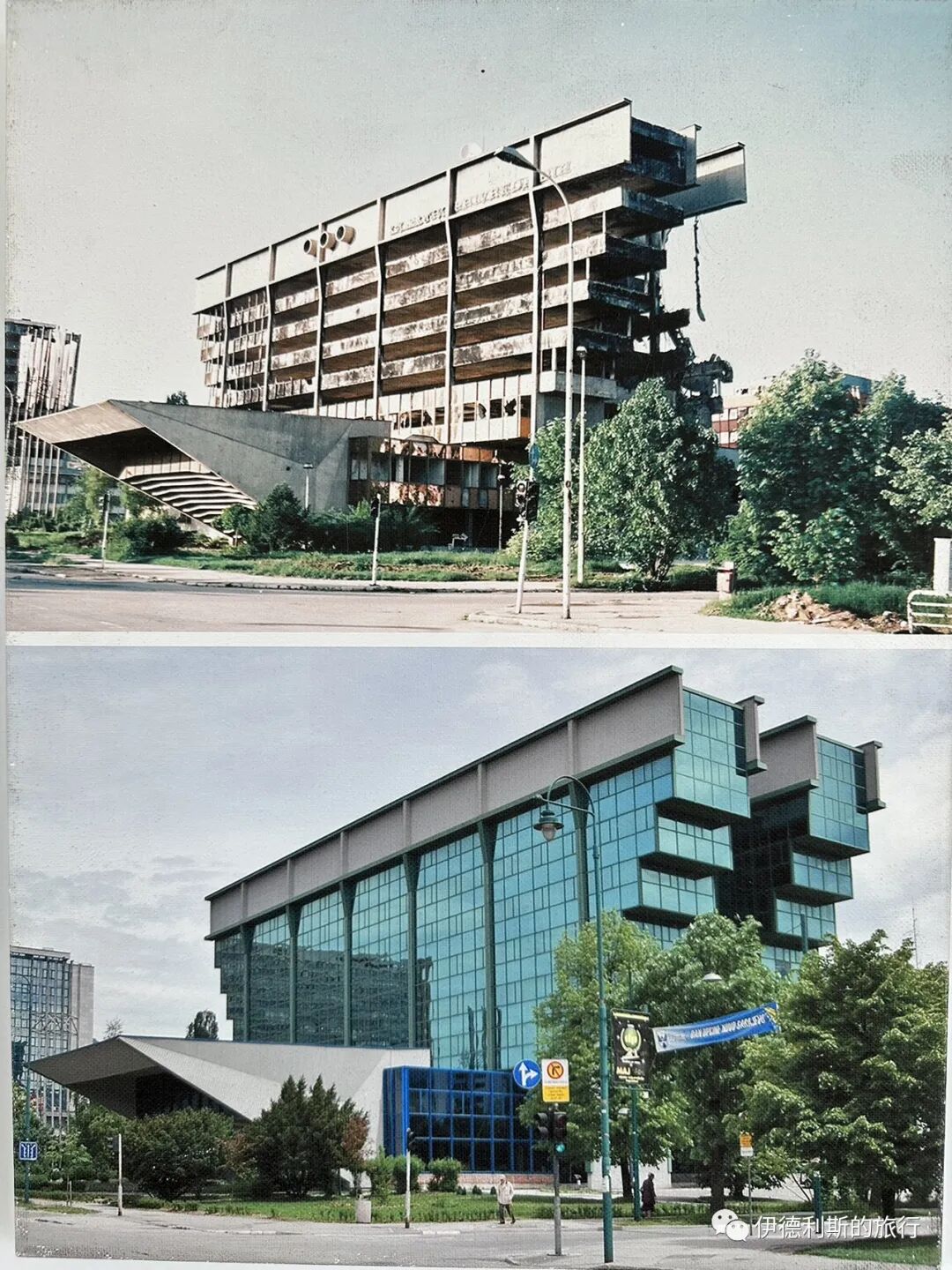
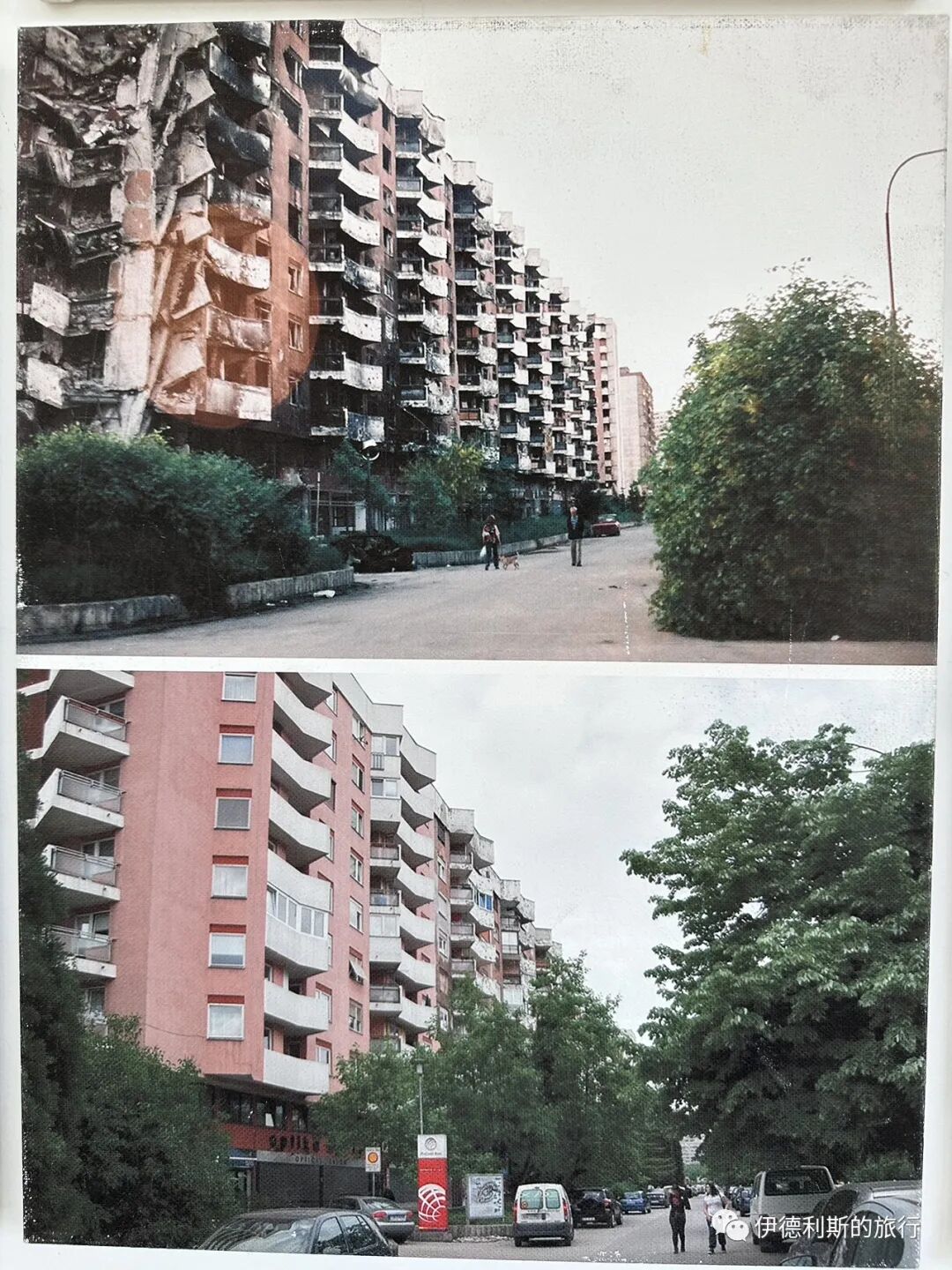
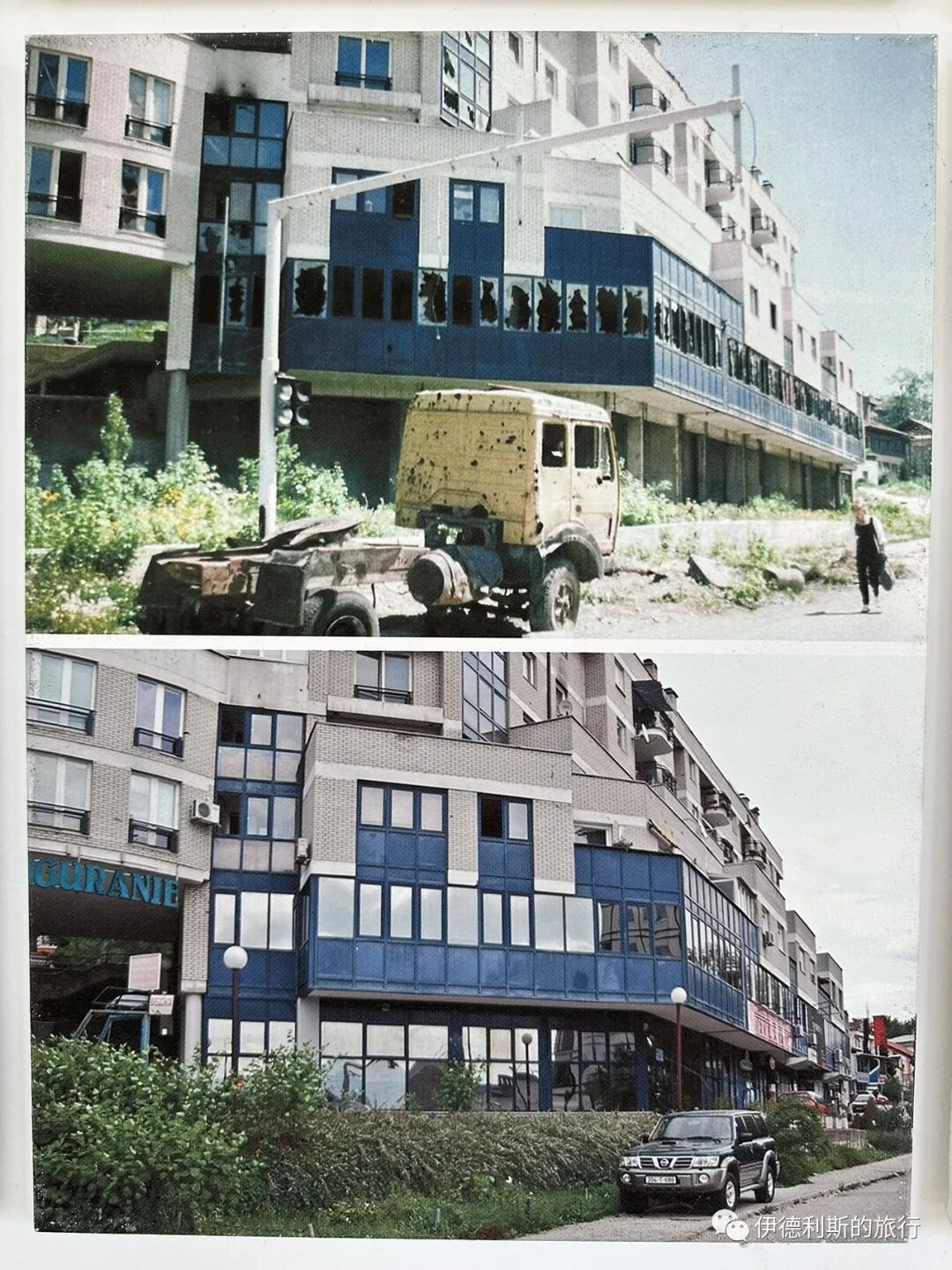
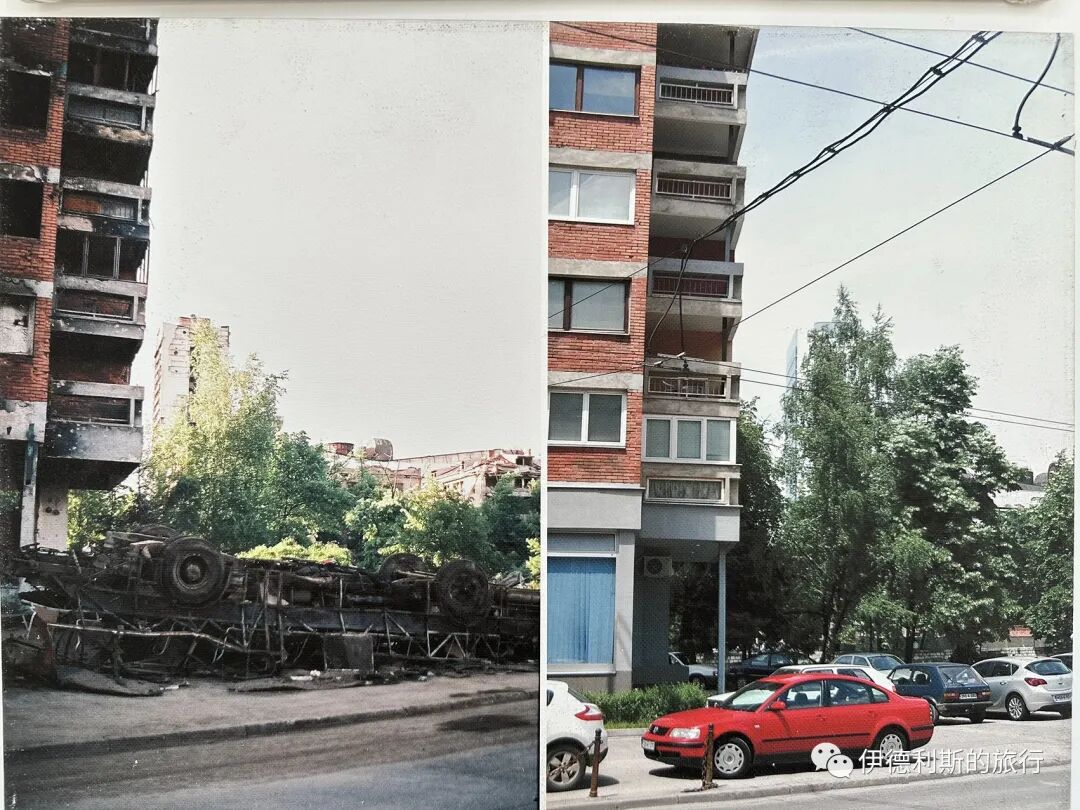
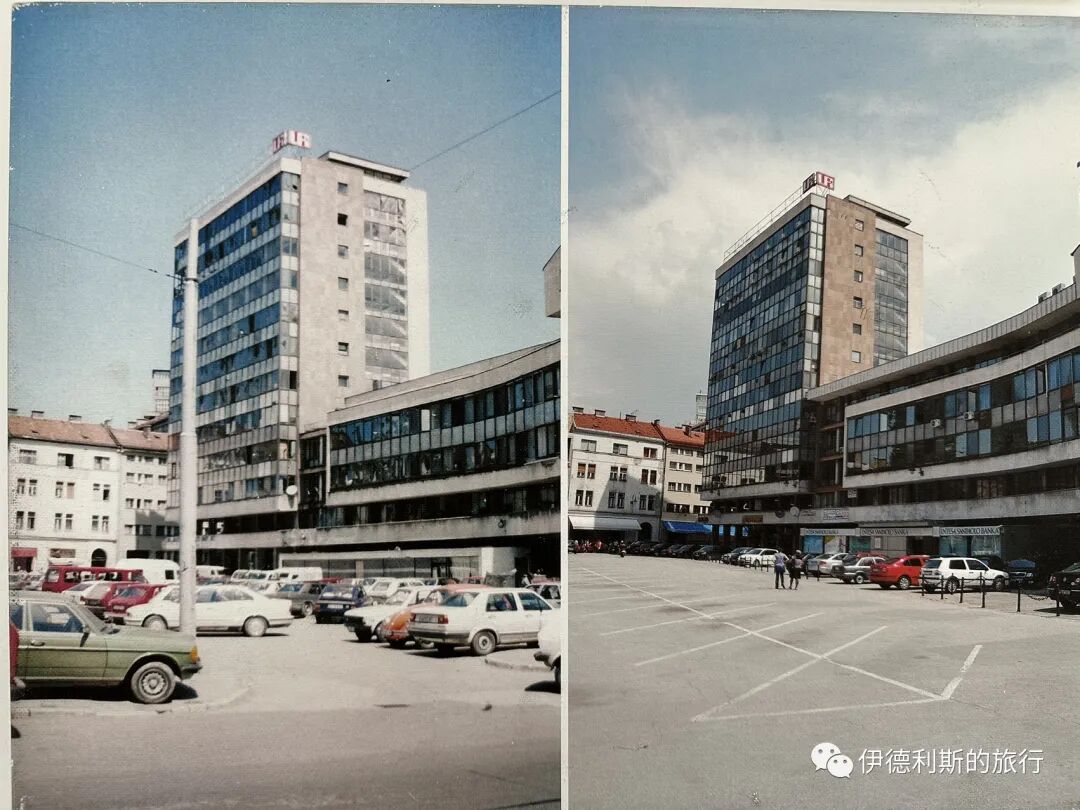
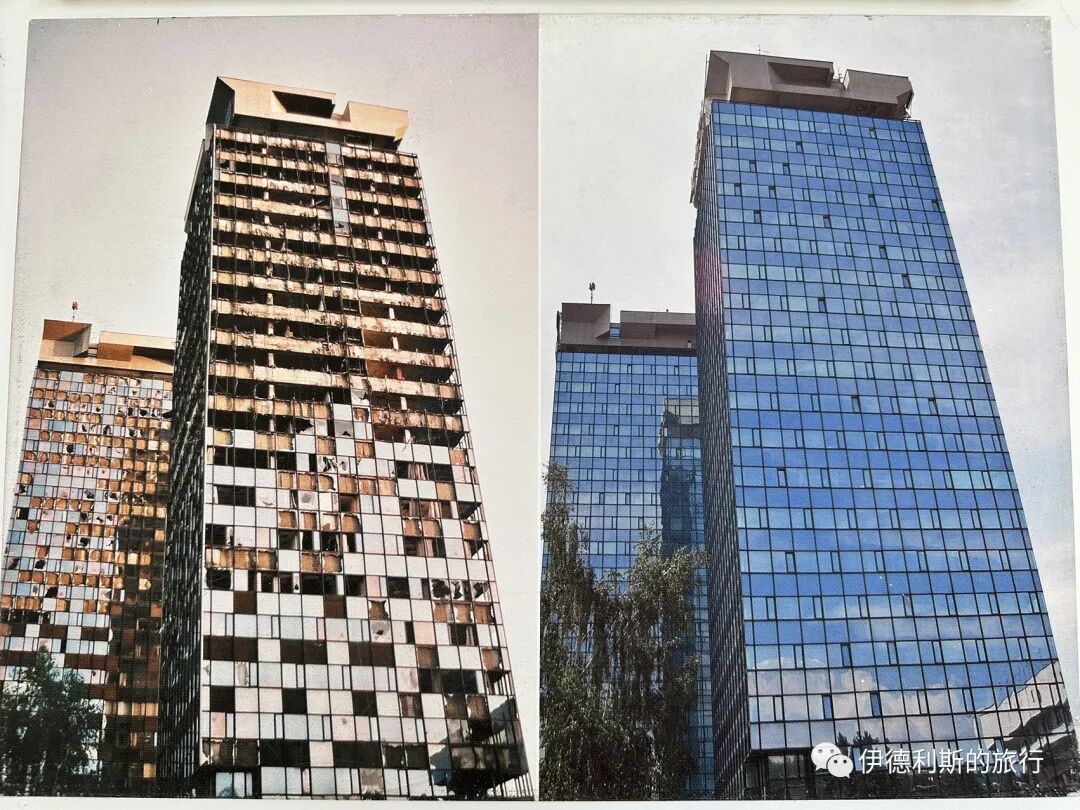
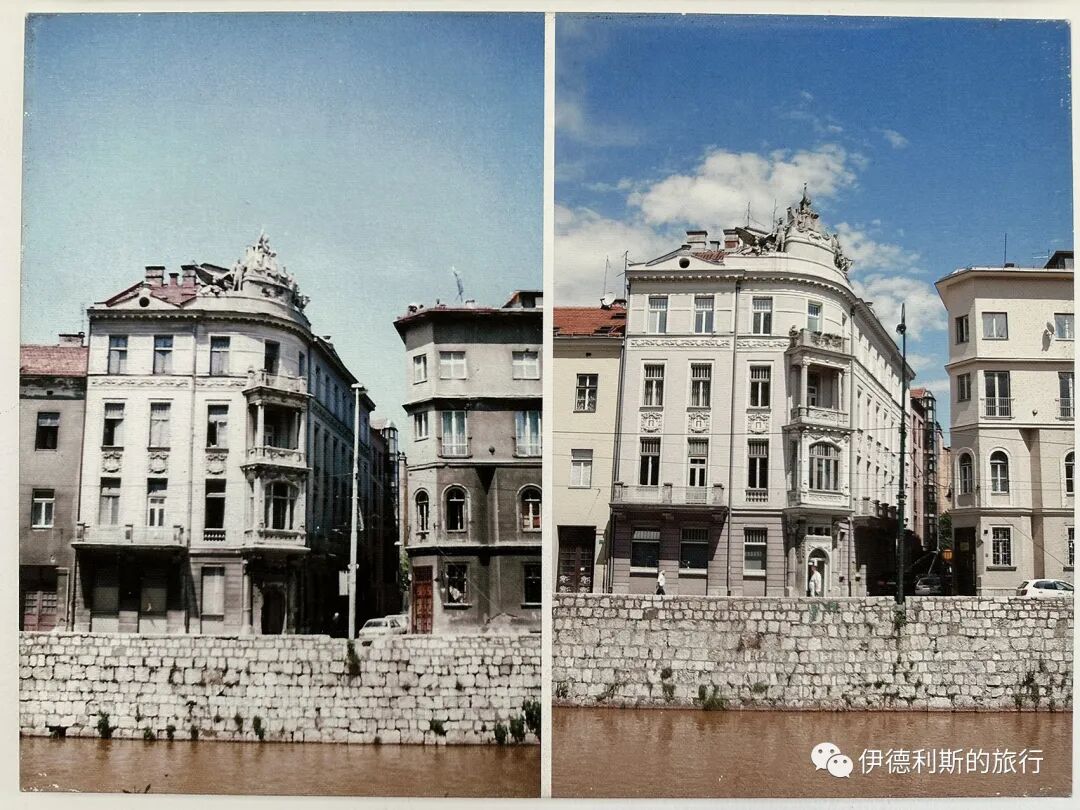
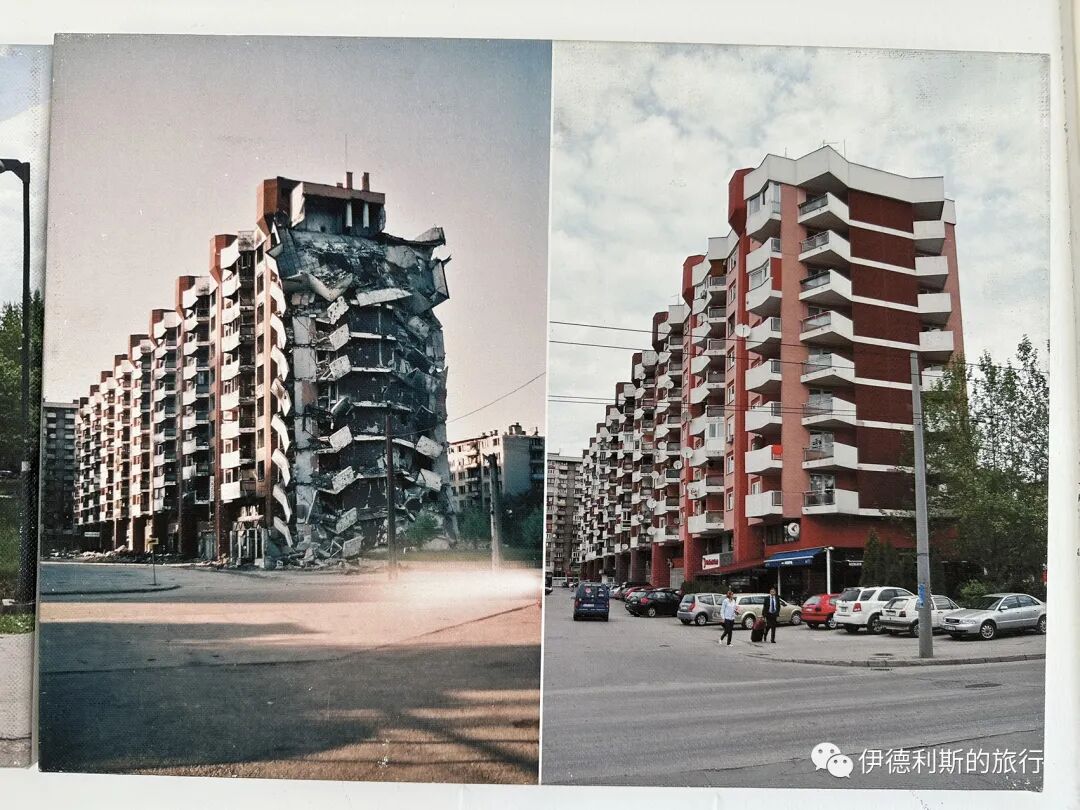
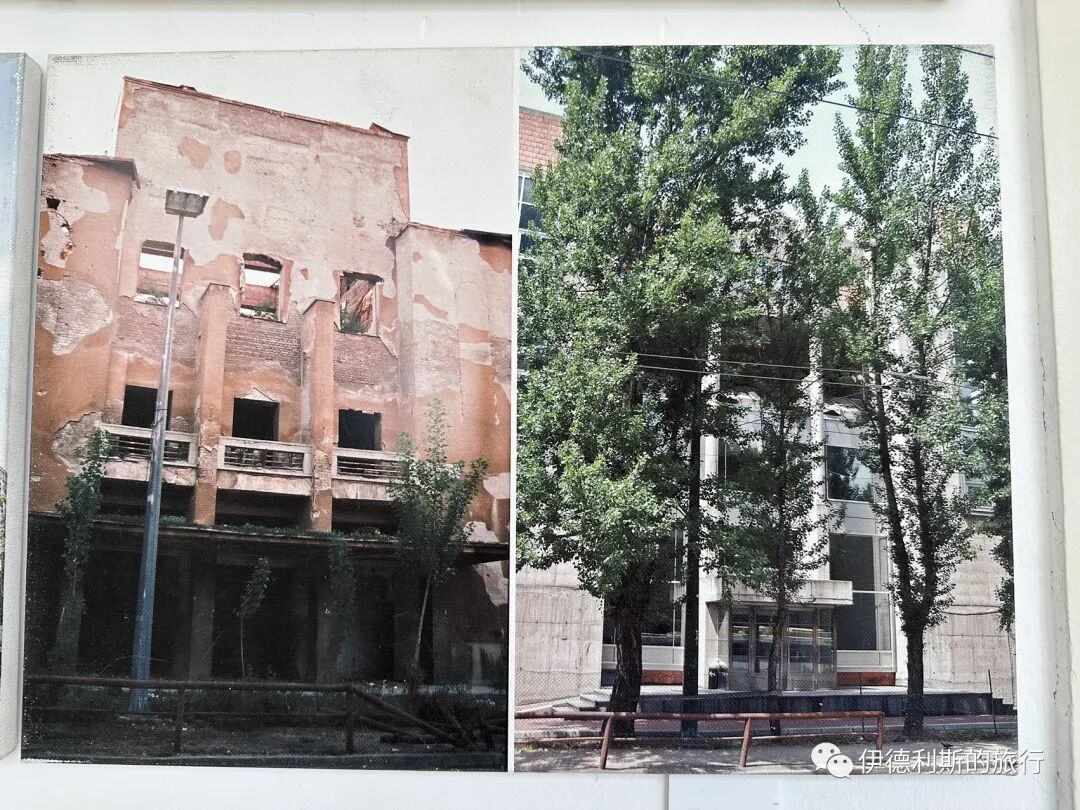
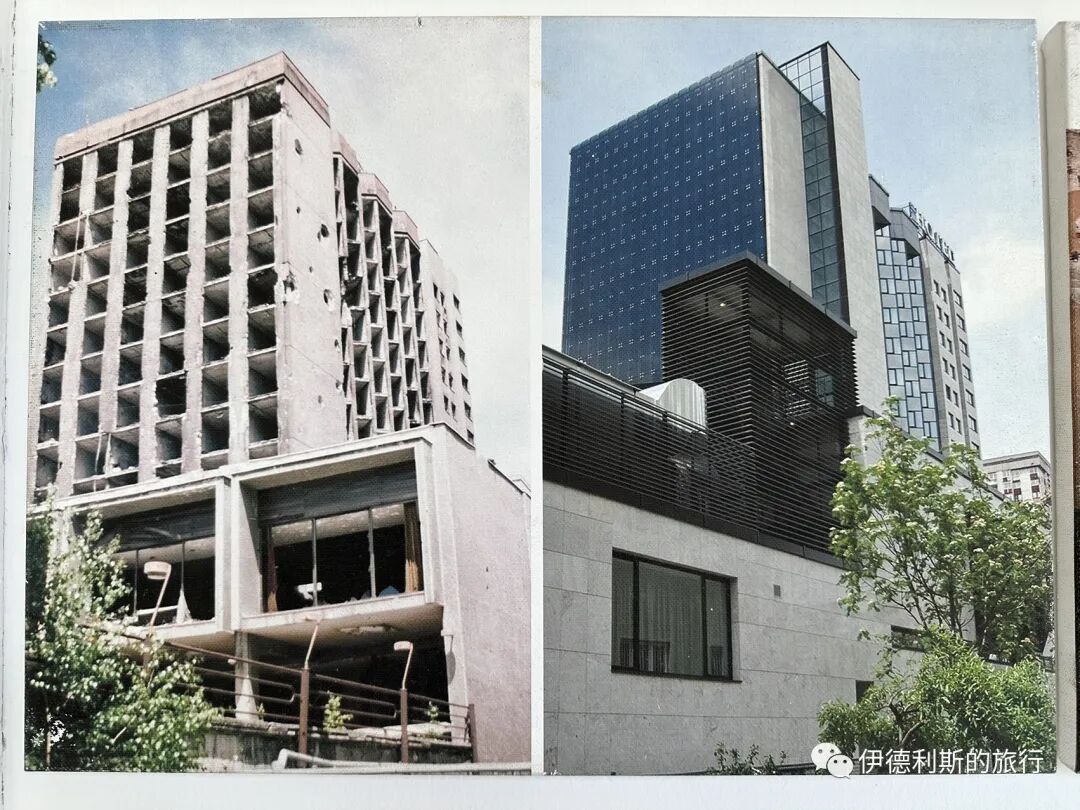
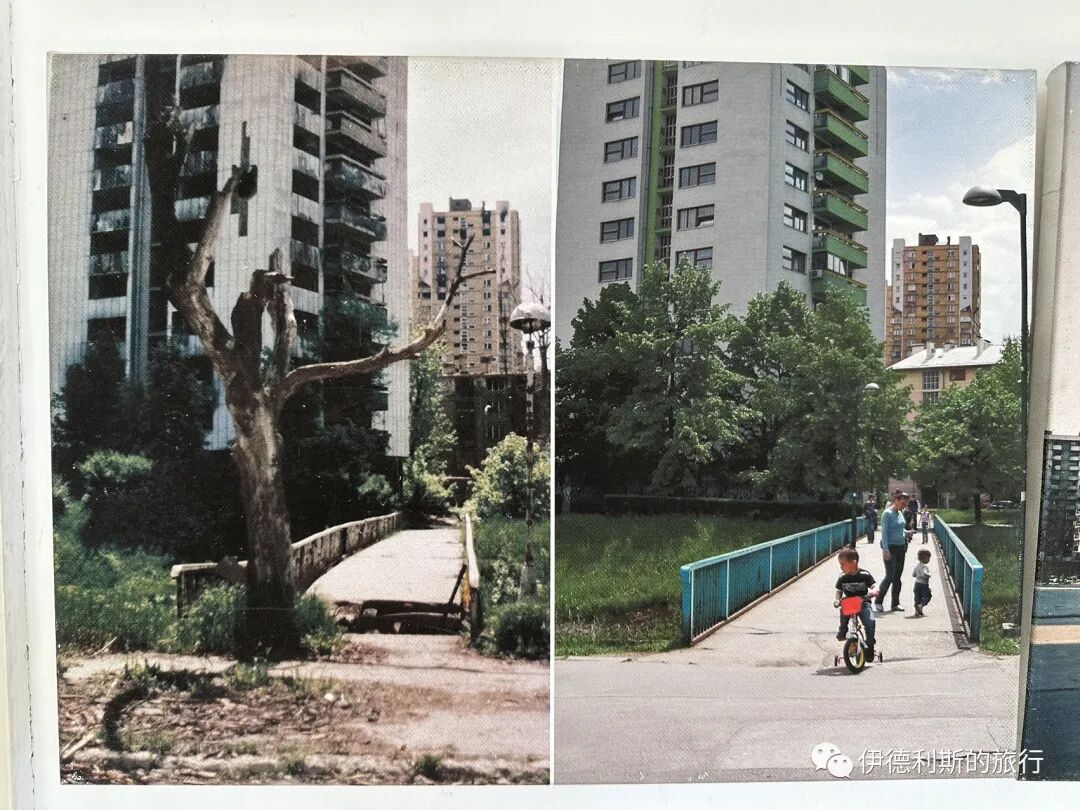
Halal Travel Guide: Sarajevo — World War I History and Austro-Hungarian Heritage
Articles • ali2007fr posted the article • 0 comments • 153 views • 2026-05-19 03:44
Summary: Sarajevo holds the memory of the event that helped trigger World War I and of the citys years under Austro-Hungarian rule. This article follows the historical sites, streets, and architecture connected to that period while preserving the source facts.
On the morning of June 28, 1914, Archduke Franz Ferdinand of the Austro-Hungarian Empire and his wife attended a reception at the Sarajevo City Hall, then set off to visit the wounded from a recent explosion at the hospital.
Sarajevo City Hall (Vijećnica) was designed by Czech architect Karel Pařík in 1891 and completed in 1896. It is the most iconic building constructed in Sarajevo during the Austro-Hungarian period.
The building uses the Moorish Revival architectural style, a new style created by European and American architects in the 19th century by drawing inspiration from classic Islamic architecture. After the Austro-Hungarian Empire occupied Bosnia and Herzegovina, they designed a series of buildings with Andalusian, Egyptian, and Syrian-style decorations and arches to promote Bosniak national identity and distinguish them from earlier Ottoman architecture.
After 1949, the Sarajevo City Hall became the National and University Library of Bosnia and Herzegovina. In 1992, during the Bosnian War, it was destroyed by Serbian artillery fire, and a vast number of archives and books were lost. After the war, the site underwent four stages of restoration and was not returned to its pre-war state until 2020.
When Archduke Ferdinand's motorcade drove from the Sarajevo City Hall to the Latin Bridge, the lead car made a wrong turn into an alley. Just as the Archduke's driver realized the mistake and prepared to reverse, an assassin waiting there spotted them. The Archduke was shot and killed, which became the spark for World War I.
The Latin Bridge (Latinska ćuprija) gets its name because it connected the Latin parish of Sarajevo. This bridge was actually rebuilt in 1798 during the Ottoman era with funding from a Sarajevo Muslim merchant named Abdulah-aga. Today, it has become a popular spot for people to experience history.
The street corner by the bridge where Archduke Ferdinand was assassinated was originally the site of Schiller's Delicatessen, built in 1908. Today, it is the Sarajevo Museum 1878-1918. Because views on the assassination of Archduke Ferdinand differ greatly between Serbs and Bosniaks, the museum tends to downplay these differences and focuses on the history of Sarajevo during the Austro-Hungarian rule.
The Bosniak staff member at the ticket office knew we were Muslims and insisted on not charging us for admission. We felt very grateful (dua).
The picture shows equipment used by Austro-Hungarian soldiers and Bosniak soldiers at the end of the 19th century on either side, while the three paintings in the middle depict the scene of the Austro-Hungarian army entering Sarajevo in 1878.
During the Russo-Turkish War of 1877-78, the Ottoman Empire was defeated by a Russian-led coalition. Afterward, the great powers held the Congress of Berlin and agreed to cede Bosnia and Herzegovina to the Austro-Hungarian Empire. The Austro-Hungarian Empire invaded Bosnia and Herzegovina at the end of July 1878. After a series of resistance efforts by Ottoman defenders and local militias, they occupied Sarajevo in October.
The picture below shows Mustafa Fadilpašić, the first mayor of Sarajevo during the Austro-Hungarian period (in office from 1878 to 1892). His family moved from Turkey to Sarajevo around 1750, and his father was a pasha in Sarajevo during the Ottoman era. Mustafa grew up in Istanbul and did not return to Sarajevo until he was 30, when he married the daughter of the largest landowner in Bosnia and Herzegovina. The Austro-Hungarian Empire occupied Sarajevo in 1878 and immediately appointed Mustafa as mayor. Under his management, the Sarajevo market flourished and municipal facilities began to modernize.
The city emblem of Sarajevo during the Austro-Hungarian period. Because the Austro-Hungarian Empire guaranteed religious freedom in the December Constitution signed in 1867, it did not try to change the religious beliefs of Bosnian Muslims.
The uniform worn by Sarajevo councilors during the Austro-Hungarian period shows they still used 19th-century Ottoman-style Western clothing paired with a fez hat. In 1829, Ottoman Sultan Mahmud II issued a decree requiring all officials to replace turbans with the fez hat, which remained the official Ottoman headwear for nearly a hundred years. From the 19th century to the early 20th century, wearing a fez hat was popular throughout the Balkan region, though some places added different decorations.
An oil painting of the old city of Sarajevo painted in the early 20th century.
Photos of officer uniforms and soldiers from the First Bosnian-Herzegovinian Infantry Regiment during World War I. The First Bosnian-Herzegovinian Infantry Regiment mainly fought on the Russian front during World War I. Statistics show that more Bosnian soldiers died on the battlefields of World War I than those from any other ethnic group in the Habsburg Empire. view all
Summary: Sarajevo holds the memory of the event that helped trigger World War I and of the citys years under Austro-Hungarian rule. This article follows the historical sites, streets, and architecture connected to that period while preserving the source facts.
On the morning of June 28, 1914, Archduke Franz Ferdinand of the Austro-Hungarian Empire and his wife attended a reception at the Sarajevo City Hall, then set off to visit the wounded from a recent explosion at the hospital.
Sarajevo City Hall (Vijećnica) was designed by Czech architect Karel Pařík in 1891 and completed in 1896. It is the most iconic building constructed in Sarajevo during the Austro-Hungarian period.
The building uses the Moorish Revival architectural style, a new style created by European and American architects in the 19th century by drawing inspiration from classic Islamic architecture. After the Austro-Hungarian Empire occupied Bosnia and Herzegovina, they designed a series of buildings with Andalusian, Egyptian, and Syrian-style decorations and arches to promote Bosniak national identity and distinguish them from earlier Ottoman architecture.
After 1949, the Sarajevo City Hall became the National and University Library of Bosnia and Herzegovina. In 1992, during the Bosnian War, it was destroyed by Serbian artillery fire, and a vast number of archives and books were lost. After the war, the site underwent four stages of restoration and was not returned to its pre-war state until 2020.
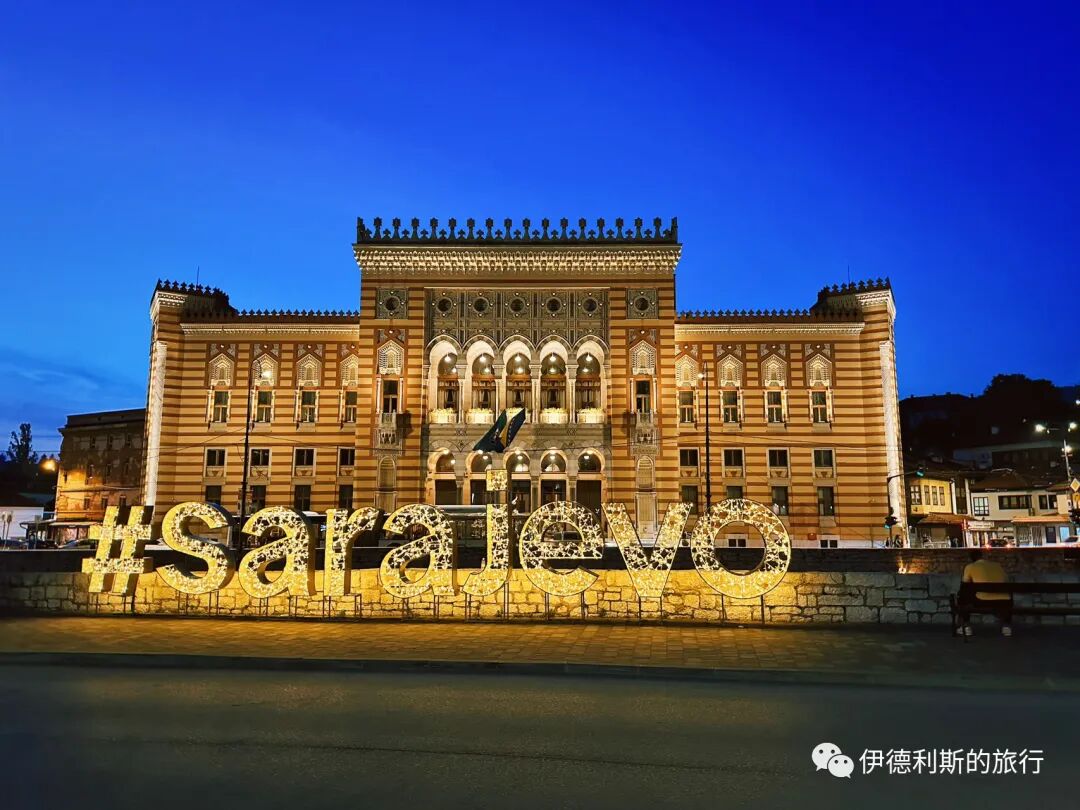
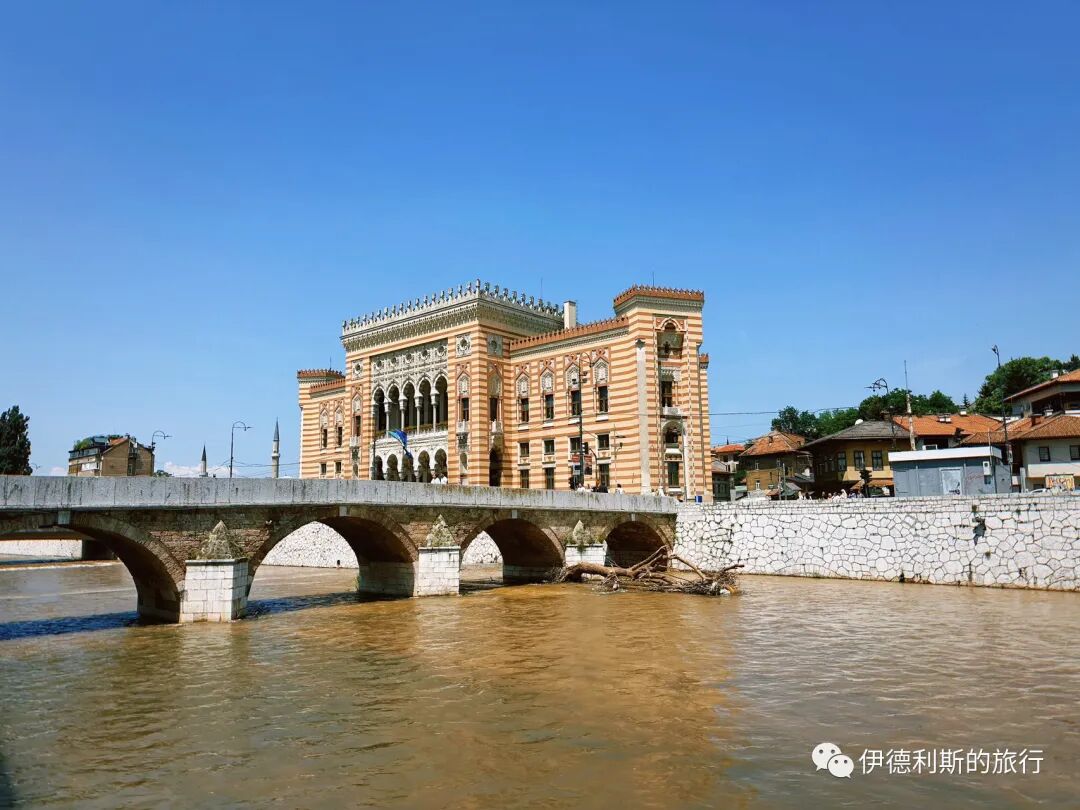
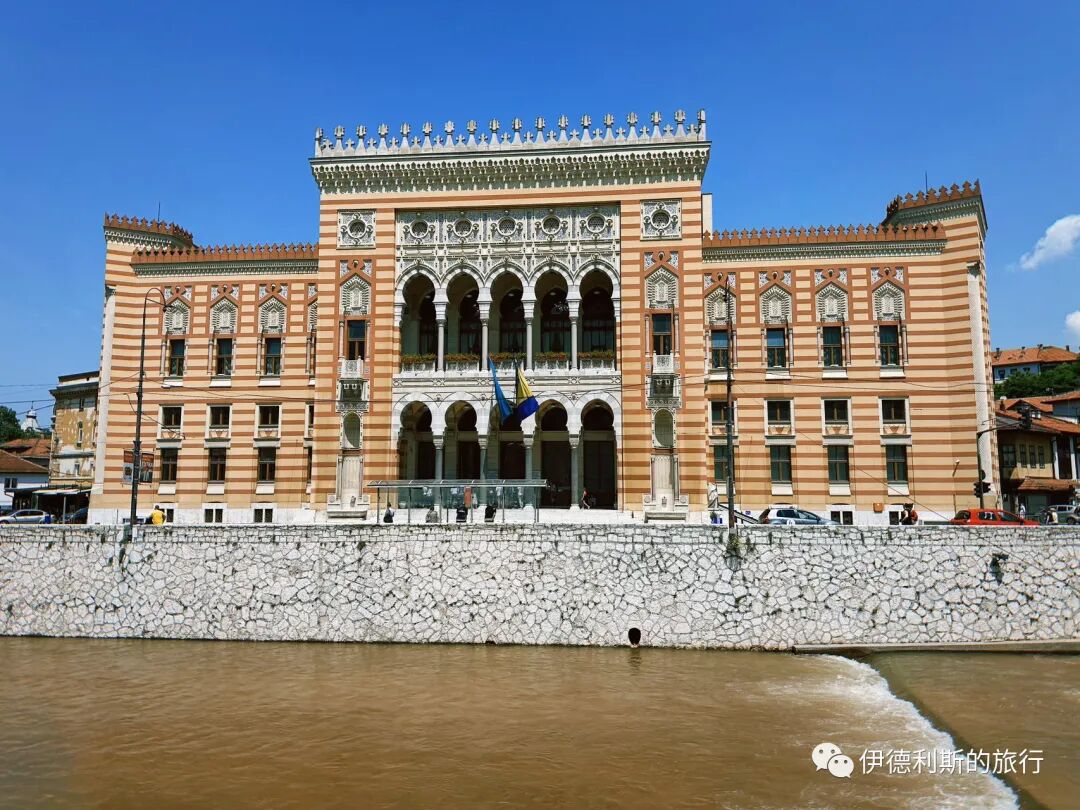
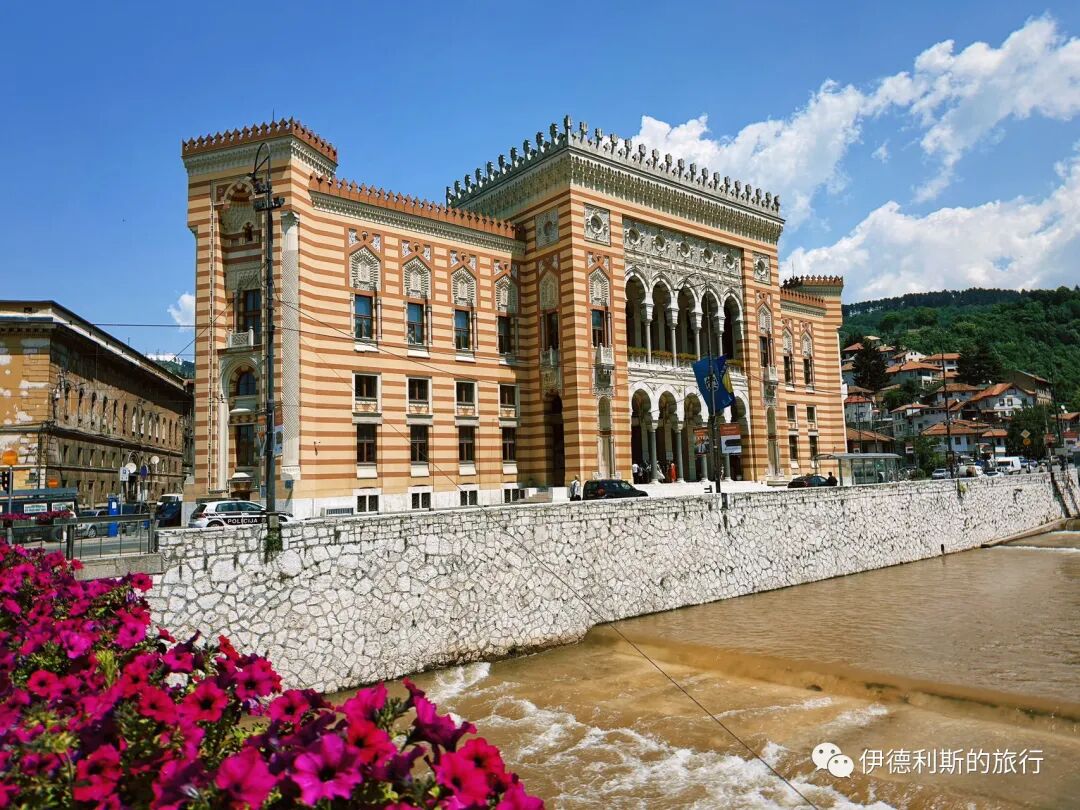
When Archduke Ferdinand's motorcade drove from the Sarajevo City Hall to the Latin Bridge, the lead car made a wrong turn into an alley. Just as the Archduke's driver realized the mistake and prepared to reverse, an assassin waiting there spotted them. The Archduke was shot and killed, which became the spark for World War I.
The Latin Bridge (Latinska ćuprija) gets its name because it connected the Latin parish of Sarajevo. This bridge was actually rebuilt in 1798 during the Ottoman era with funding from a Sarajevo Muslim merchant named Abdulah-aga. Today, it has become a popular spot for people to experience history.
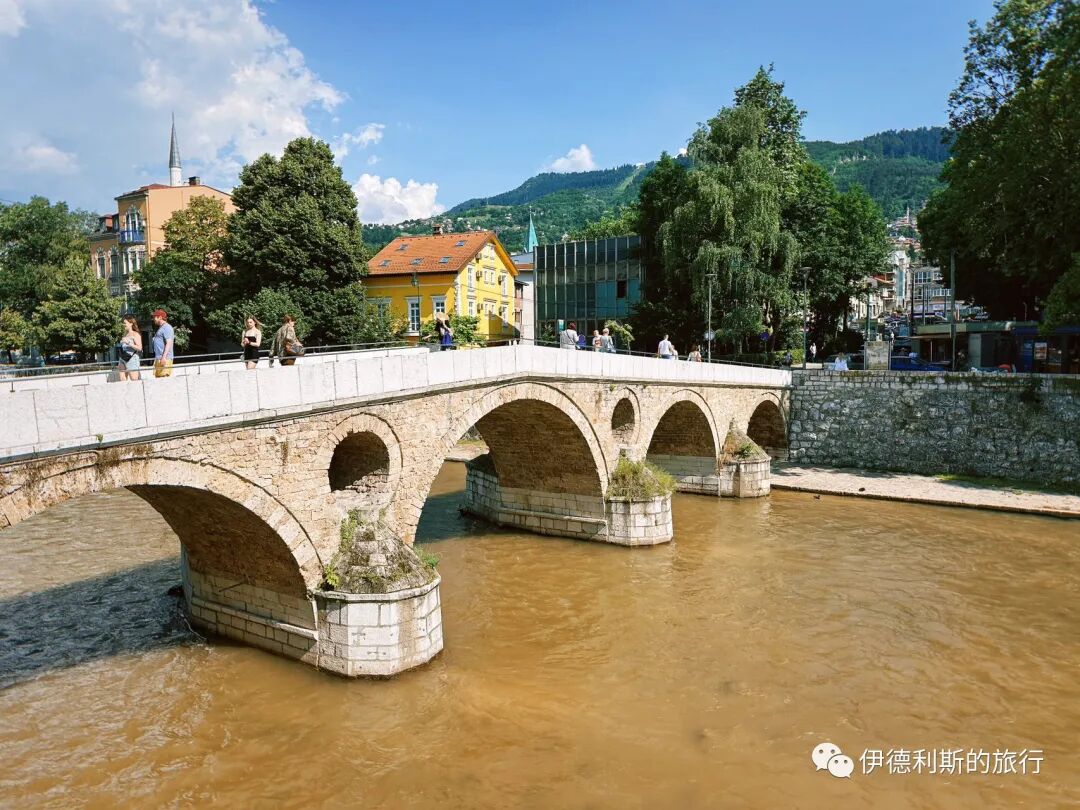
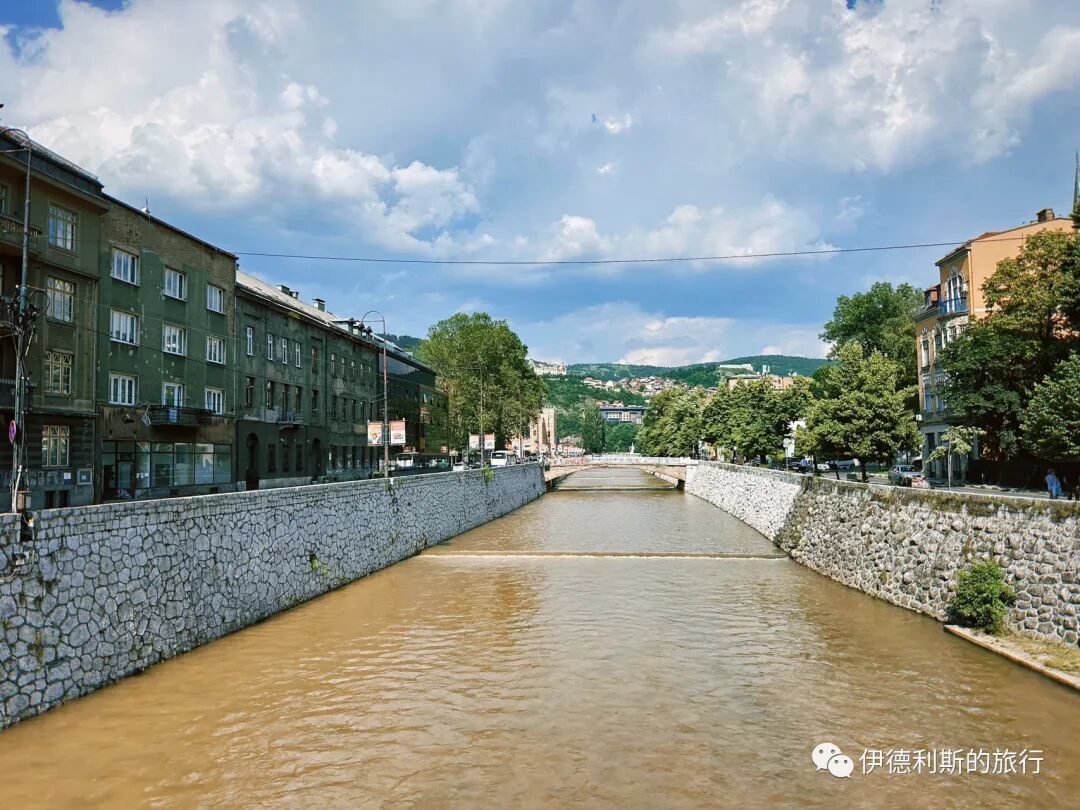
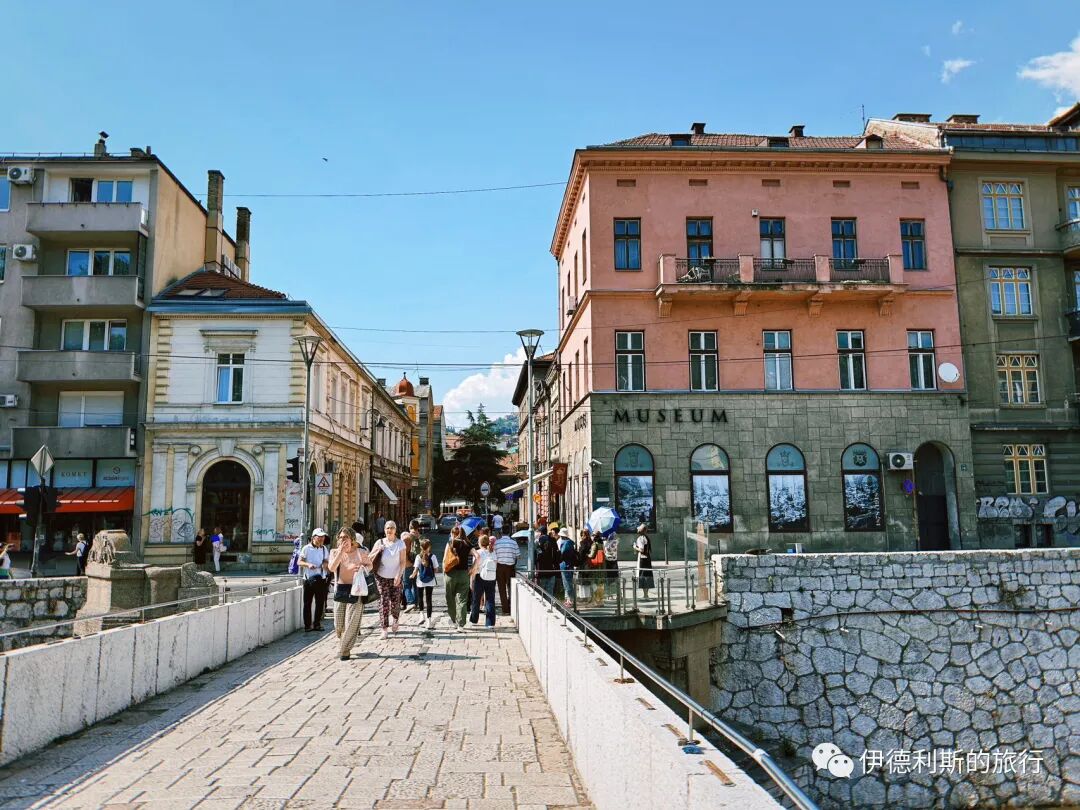
The street corner by the bridge where Archduke Ferdinand was assassinated was originally the site of Schiller's Delicatessen, built in 1908. Today, it is the Sarajevo Museum 1878-1918. Because views on the assassination of Archduke Ferdinand differ greatly between Serbs and Bosniaks, the museum tends to downplay these differences and focuses on the history of Sarajevo during the Austro-Hungarian rule.
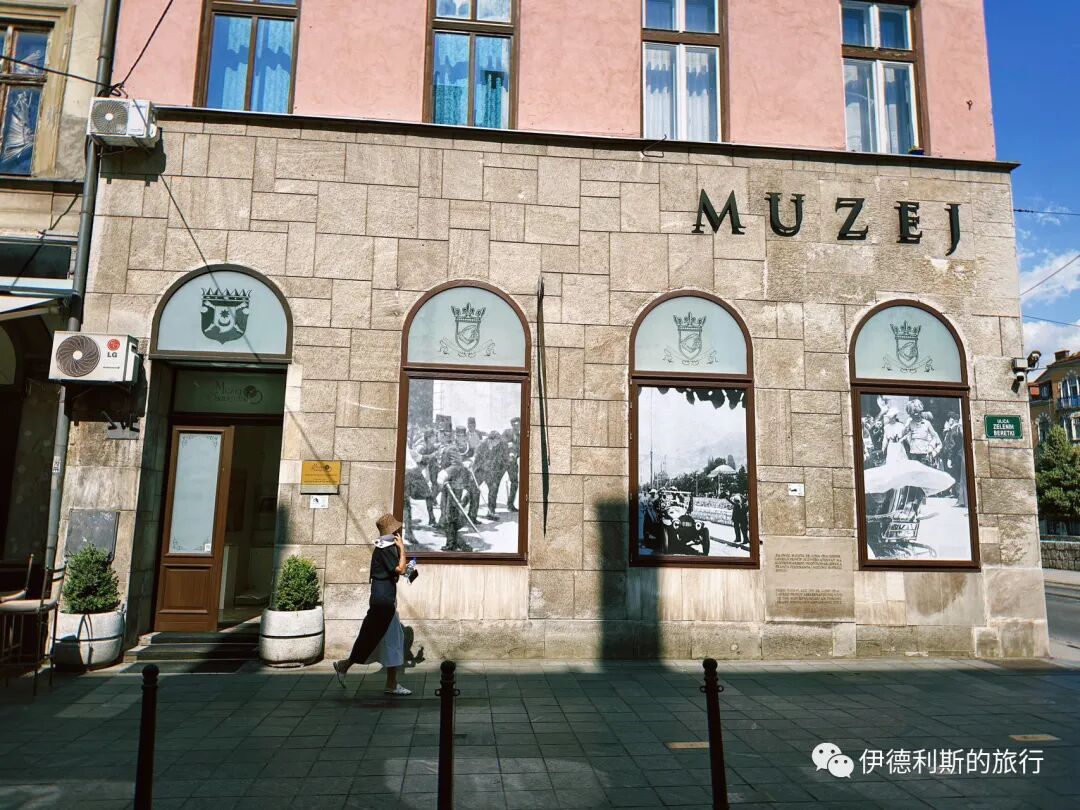
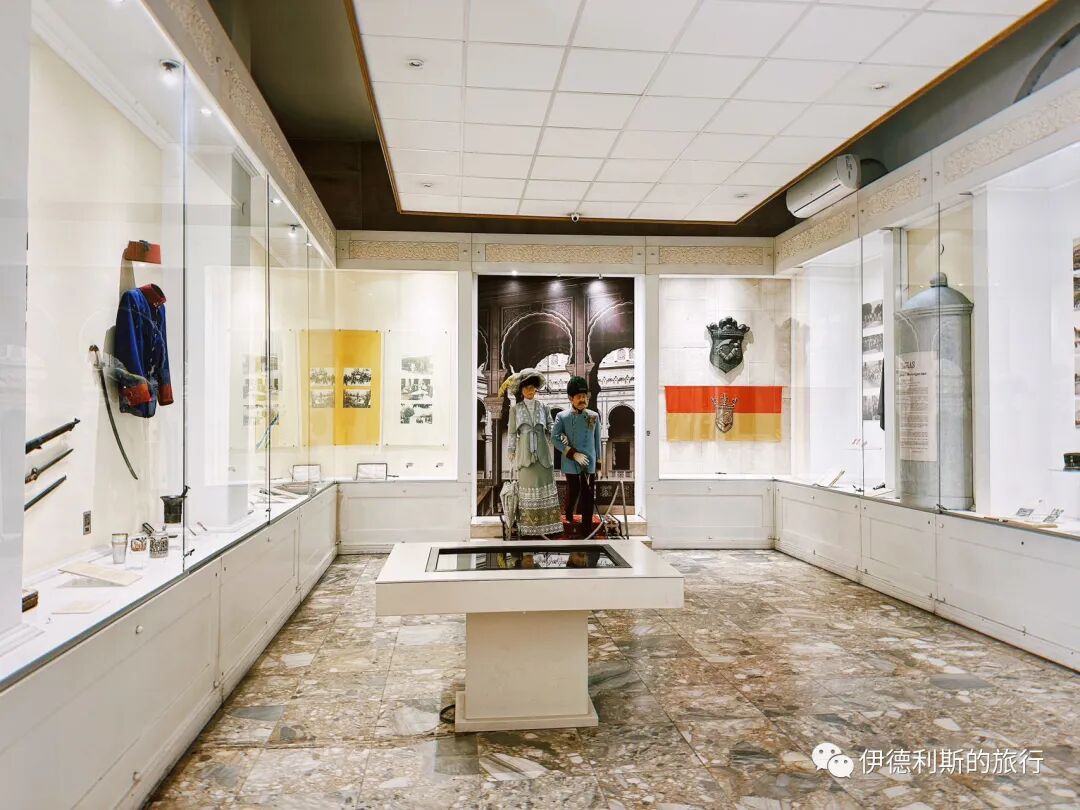
The Bosniak staff member at the ticket office knew we were Muslims and insisted on not charging us for admission. We felt very grateful (dua).
The picture shows equipment used by Austro-Hungarian soldiers and Bosniak soldiers at the end of the 19th century on either side, while the three paintings in the middle depict the scene of the Austro-Hungarian army entering Sarajevo in 1878.
During the Russo-Turkish War of 1877-78, the Ottoman Empire was defeated by a Russian-led coalition. Afterward, the great powers held the Congress of Berlin and agreed to cede Bosnia and Herzegovina to the Austro-Hungarian Empire. The Austro-Hungarian Empire invaded Bosnia and Herzegovina at the end of July 1878. After a series of resistance efforts by Ottoman defenders and local militias, they occupied Sarajevo in October.
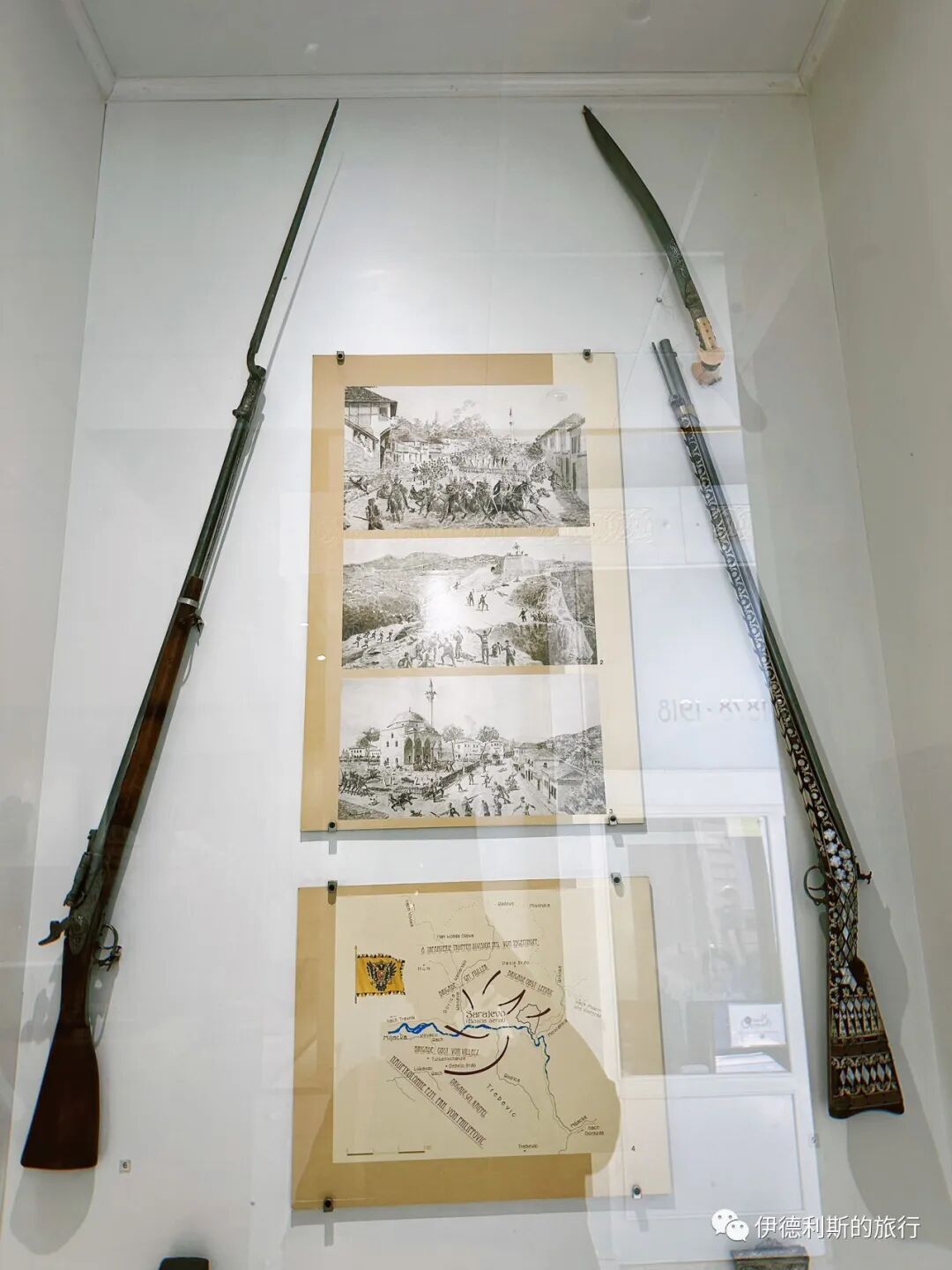
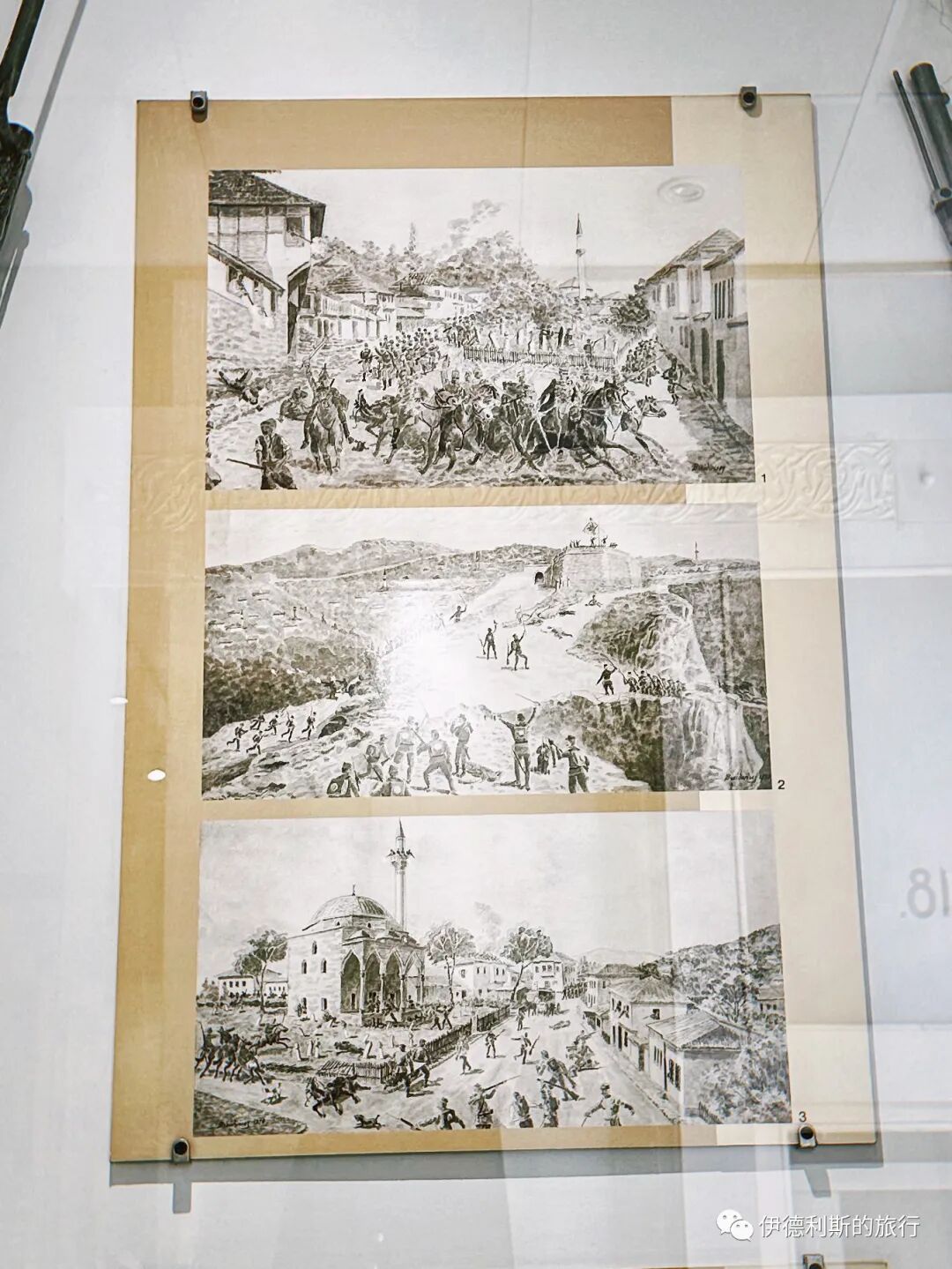
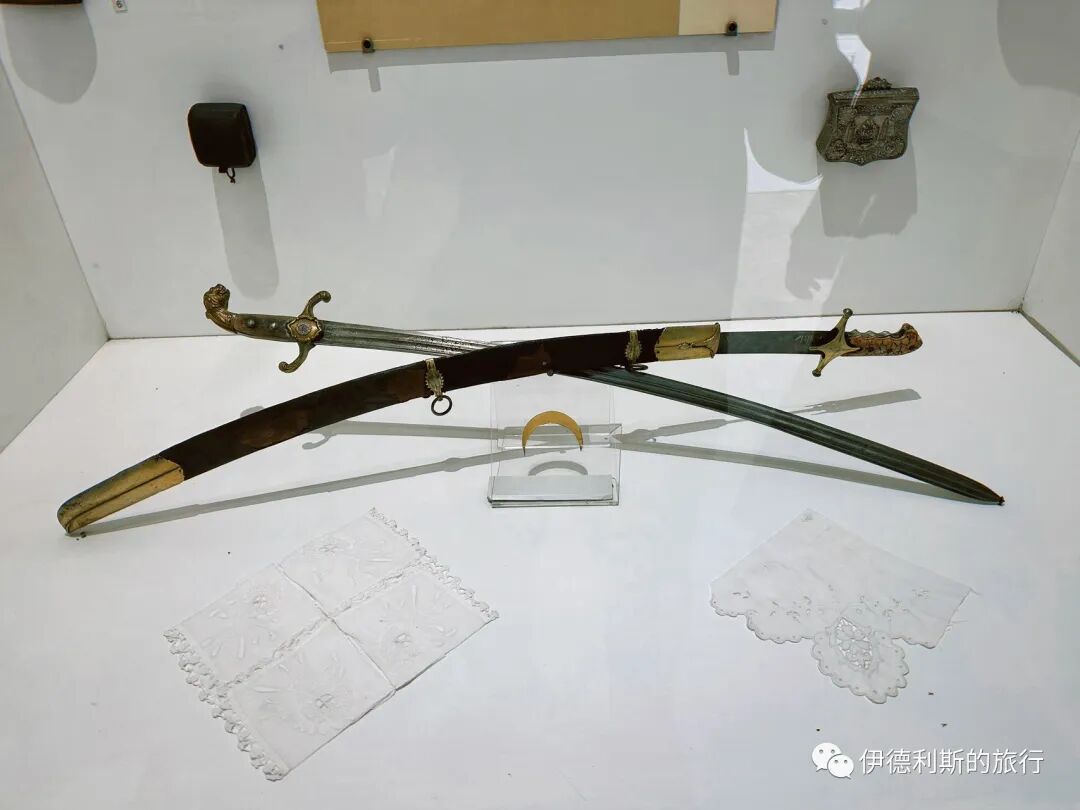
The picture below shows Mustafa Fadilpašić, the first mayor of Sarajevo during the Austro-Hungarian period (in office from 1878 to 1892). His family moved from Turkey to Sarajevo around 1750, and his father was a pasha in Sarajevo during the Ottoman era. Mustafa grew up in Istanbul and did not return to Sarajevo until he was 30, when he married the daughter of the largest landowner in Bosnia and Herzegovina. The Austro-Hungarian Empire occupied Sarajevo in 1878 and immediately appointed Mustafa as mayor. Under his management, the Sarajevo market flourished and municipal facilities began to modernize.
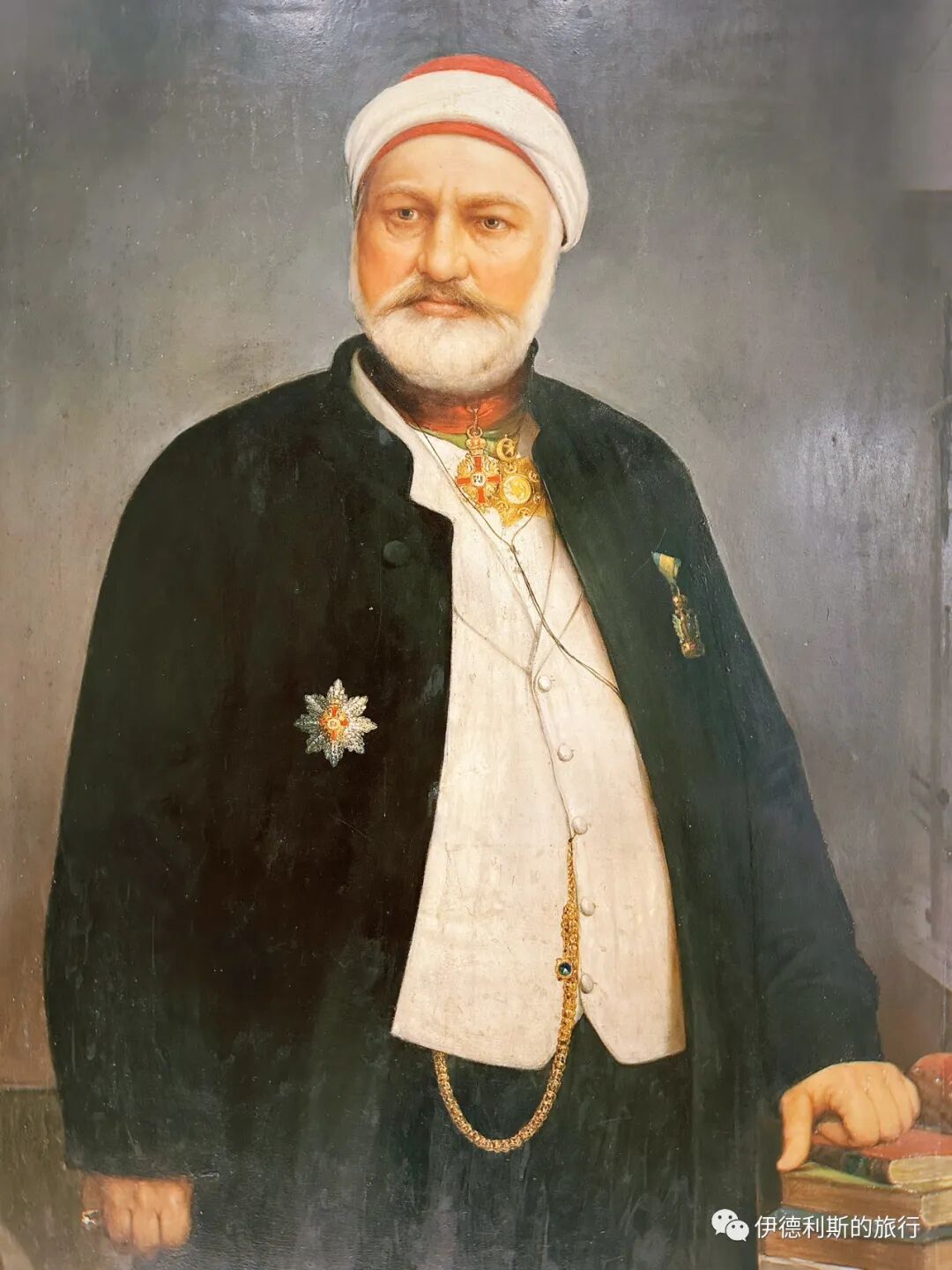
The city emblem of Sarajevo during the Austro-Hungarian period. Because the Austro-Hungarian Empire guaranteed religious freedom in the December Constitution signed in 1867, it did not try to change the religious beliefs of Bosnian Muslims.
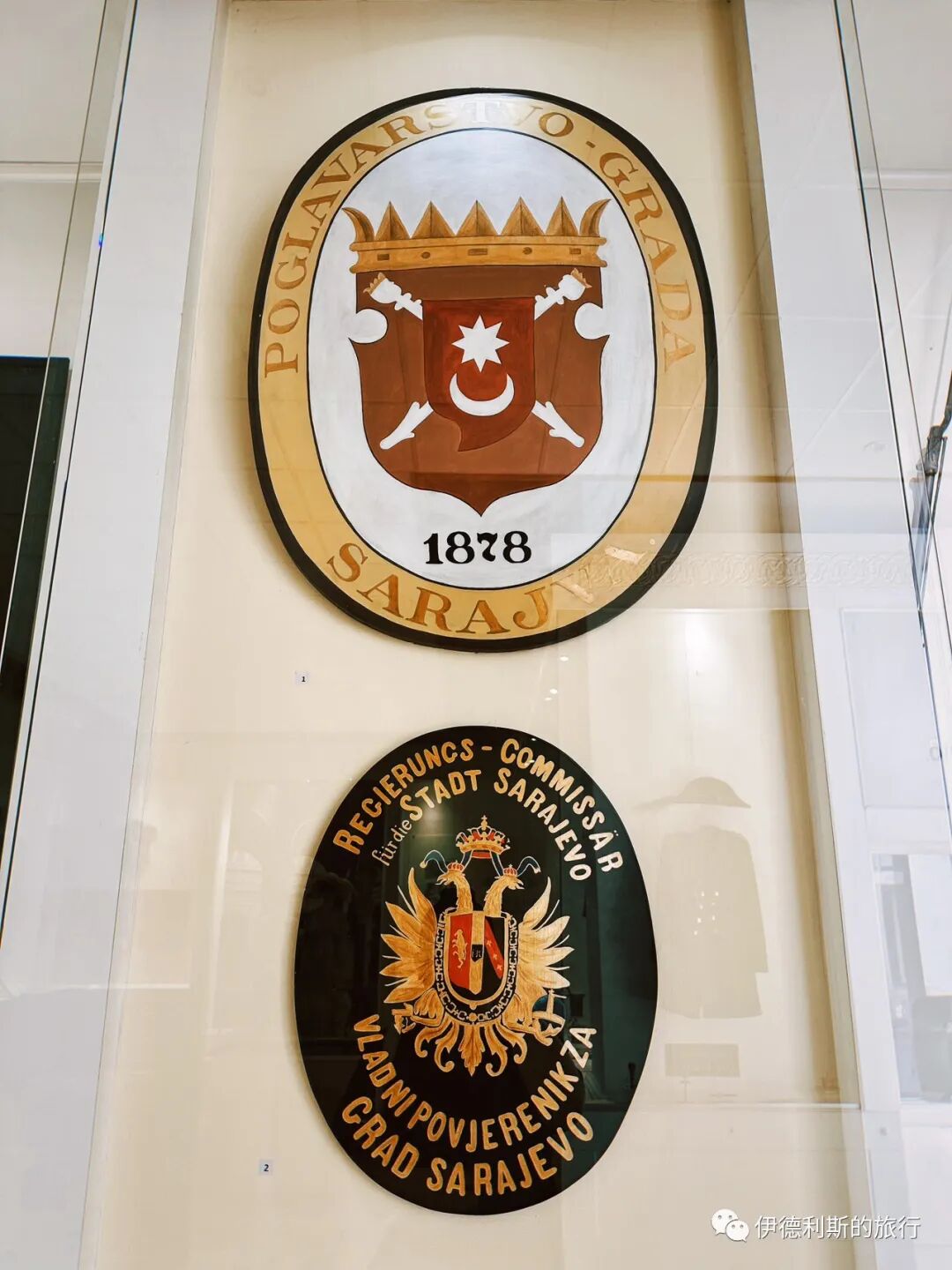
The uniform worn by Sarajevo councilors during the Austro-Hungarian period shows they still used 19th-century Ottoman-style Western clothing paired with a fez hat. In 1829, Ottoman Sultan Mahmud II issued a decree requiring all officials to replace turbans with the fez hat, which remained the official Ottoman headwear for nearly a hundred years. From the 19th century to the early 20th century, wearing a fez hat was popular throughout the Balkan region, though some places added different decorations.
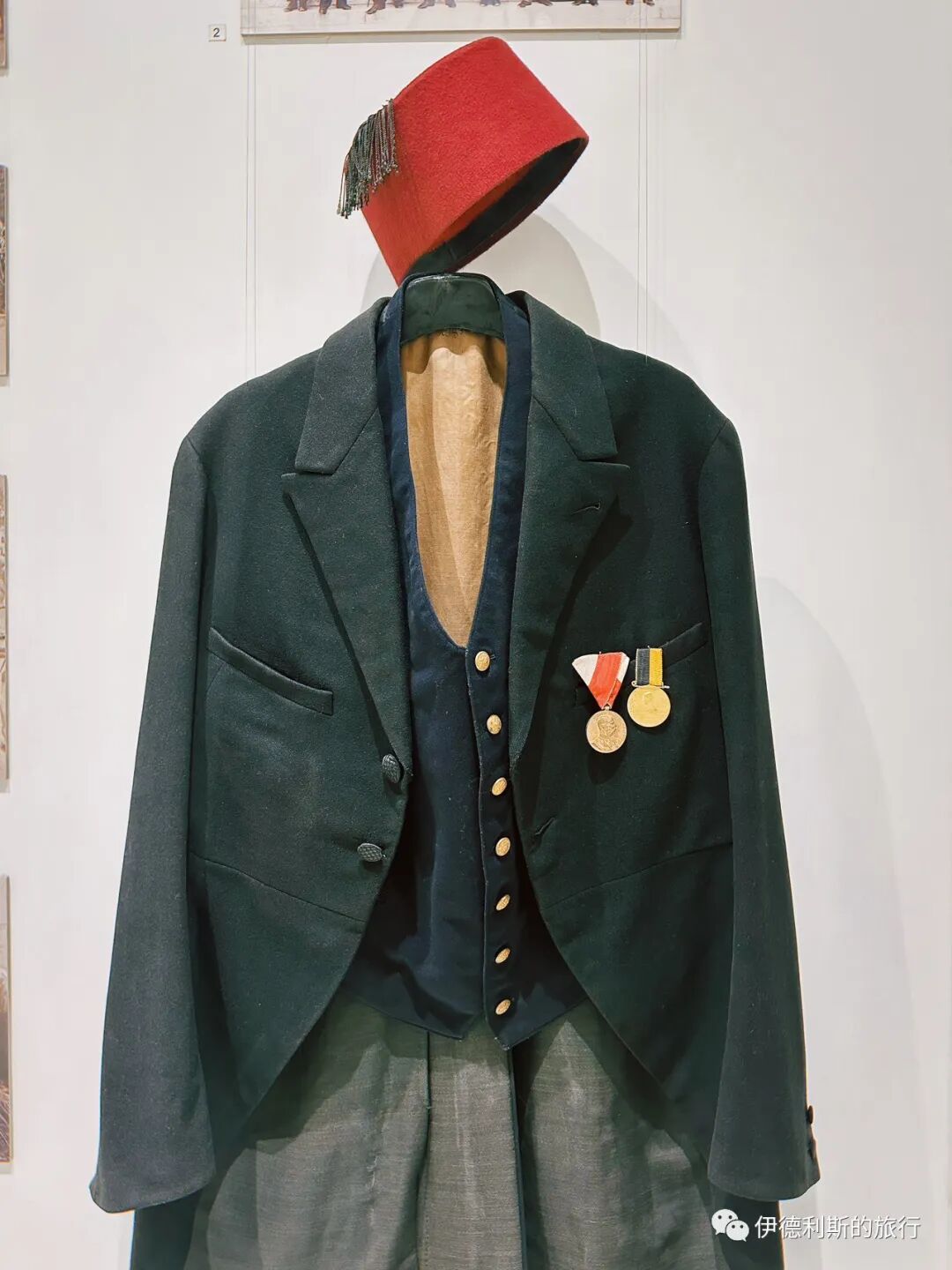
An oil painting of the old city of Sarajevo painted in the early 20th century.
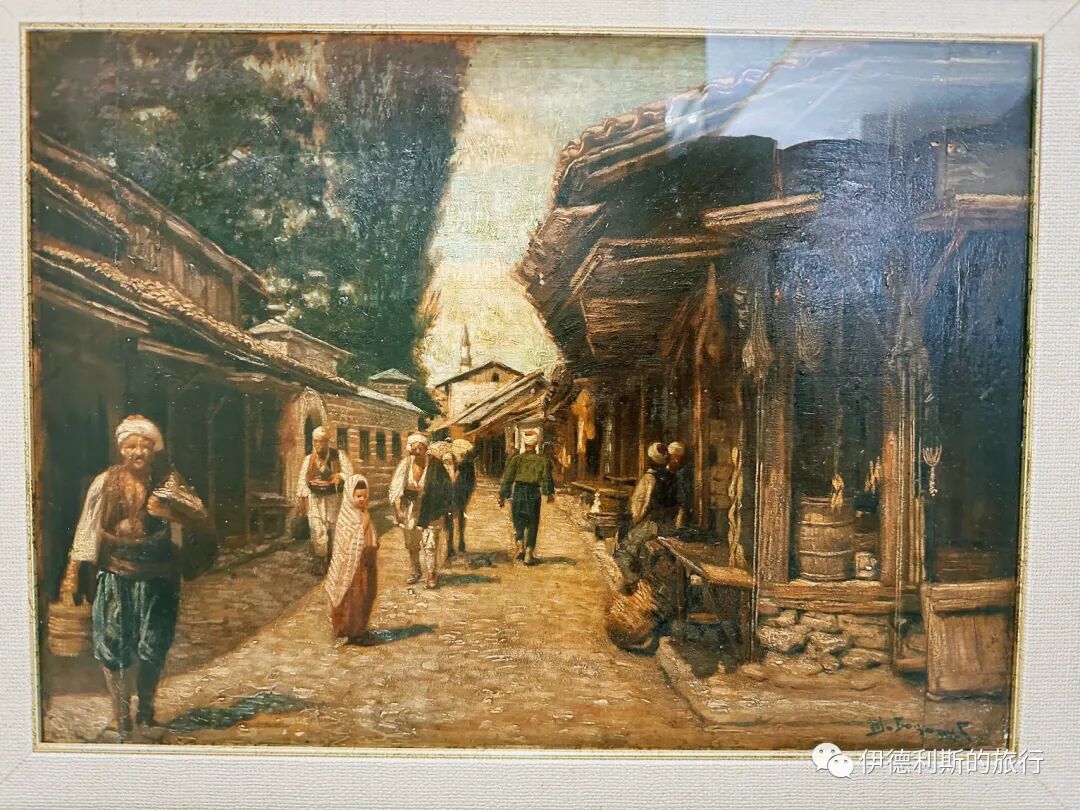
Photos of officer uniforms and soldiers from the First Bosnian-Herzegovinian Infantry Regiment during World War I. The First Bosnian-Herzegovinian Infantry Regiment mainly fought on the Russian front during World War I. Statistics show that more Bosnian soldiers died on the battlefields of World War I than those from any other ethnic group in the Habsburg Empire.
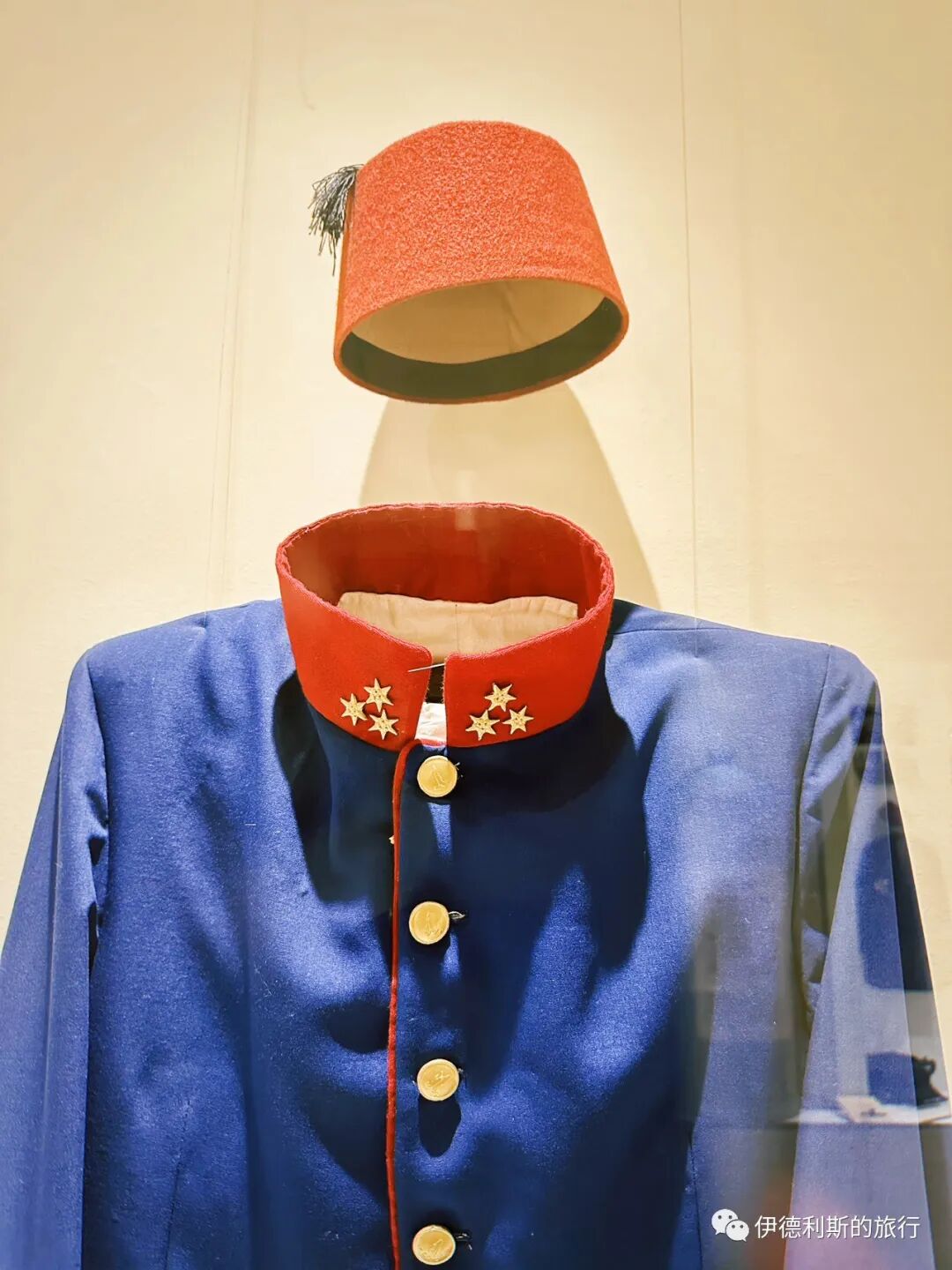
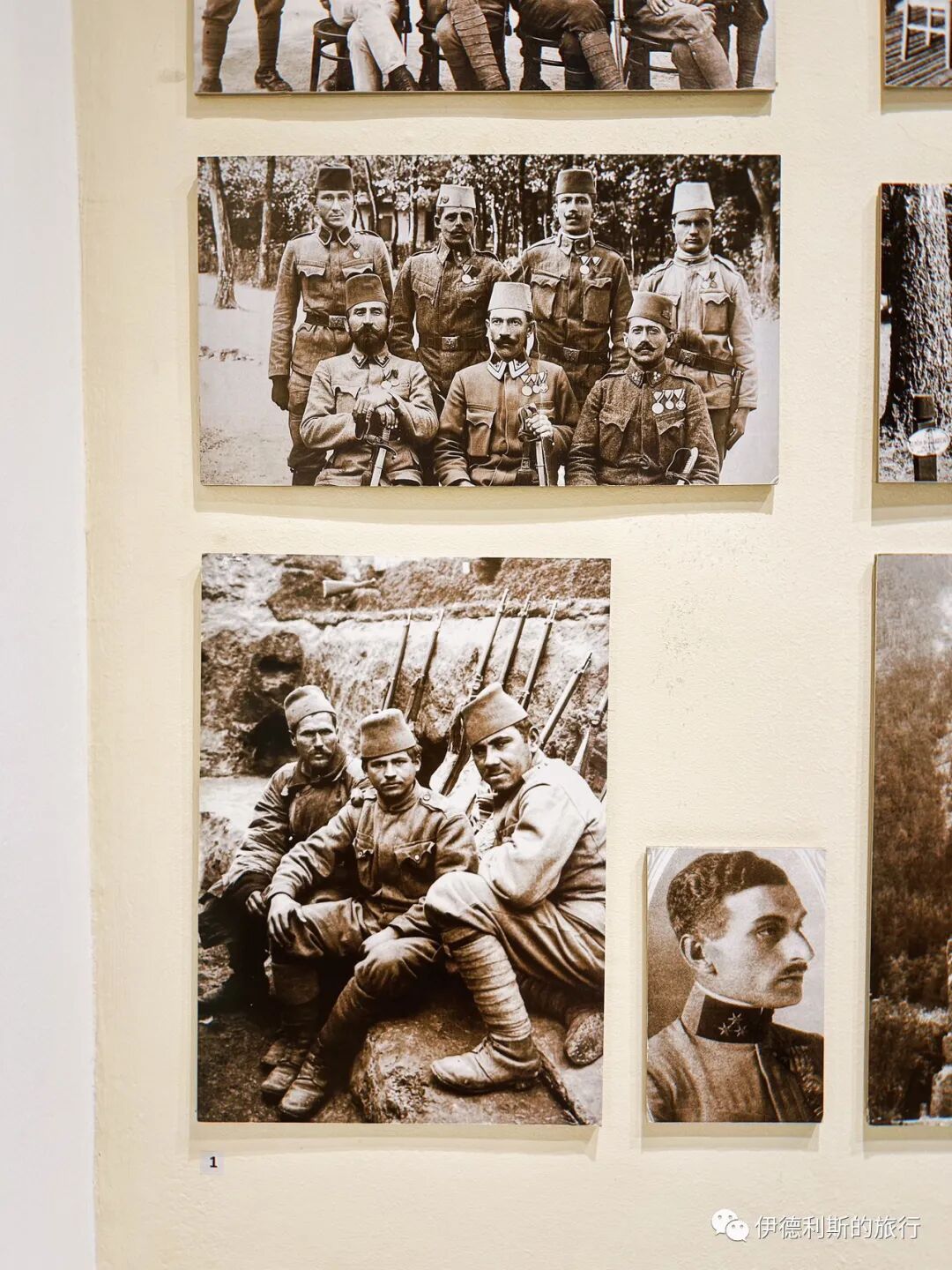
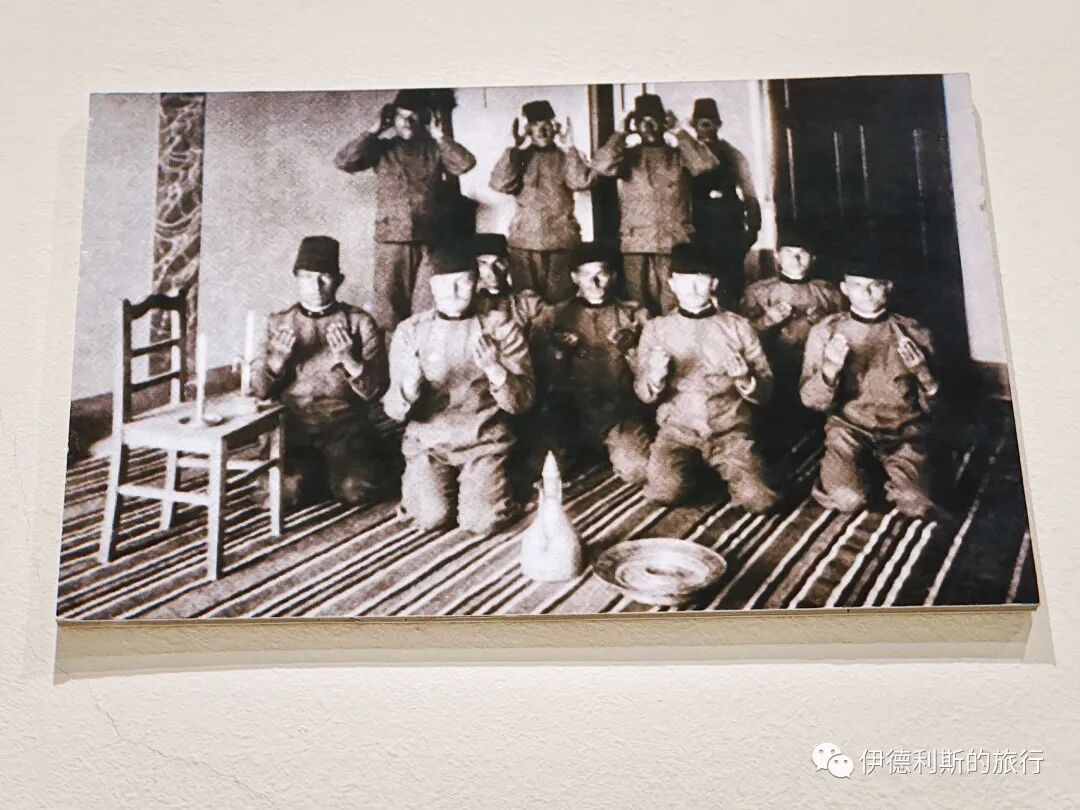
Halal Travel Guide: Sarajevo - Ottoman Mosques, Streets and Bosniak History (Part 1)
Articles • ali2007fr posted the article • 0 comments • 191 views • 2026-05-19 06:55
Gazi Husrev Bey complex
Gazi Husrev Bey was the Ottoman governor (Sanjak-bey) of Bosnia from 1521 to 1541. During his rule, the Ottoman Empire continued to expand into Croatia and Hungary. He also funded many important buildings in Sarajevo and dedicated his wealth to supporting religious and educational institutions for the long term. The foundation (Wakof) established by Gazi Husrev Bey manages the mosque, public kitchen, hostel, Sufi lodge, madrasa, library, clock tower, mausoleum, inn, hospital, fountain, primary school, and many shops in the center of the Old Bazaar in Sarajevo, making it the most important building complex in the old city.
Mosque
When the adhan sounded, we rushed to the Gazi Husrev Bey Mosque, the most important Friday mosque in Bosnia and Herzegovina. It is the core landmark of the Old Bazaar in Sarajevo and has been the city's central mosque since it was built in 1530. Important scenes from the movie 'Walter Defends Sarajevo,' well-known to Chinese audiences, were filmed here. It was also the first mosque in the world to have electricity and electric lights in 1898.
The Gazi Husrev Bey Mosque was designed and built by the Ottoman court architect Adzem Esir Ali, who came from Tabriz, Persia. He built many structures in Istanbul during the early 16th century and was one of the founders of the early Istanbul architectural school. The main hall is 13 meters long and 13 meters wide, with a central dome 26 meters high, achieving a perfect one-to-two ratio. The front porch consists of five small domes supported by four marble columns.
The interior paintings of the mosque were damaged by fire and later repainted in 1886 by the Austro-Hungarian Empire in a Moorish Revival style. During the Siege of Sarajevo from 1992 to 1995, the Gazi Husrev Bey Mosque was hit by over 100 mortar shells, causing major damage, and was repaired after the ceasefire in 1996. During the restoration, the late 19th-century Austro-Hungarian paintings were removed, and new interior decorations were painted by Bosnian calligrapher Hazim Numanagić between 2001 and 2002.
The mosque's main gate is beautifully decorated with intricate marble and gilded carvings. The Arabic calligraphy on the door adds up to the number 938, which is the year the mosque was built according to the Islamic calendar (1530/31 AD).
The muezzin calls the adhan and responds to the imam from a platform called Müezzin Mahfili in Turkish or Dikka in Arabic, where people also recite the Quran during nights in Ramadan. Usually, only large mosques have a Dikka platform built across from the minbar pulpit. Before sound systems existed, not everyone could hear the imam leading the namaz, so the muezzin needed to stand on the platform to make sure everyone could hear.
The area inside the railing below the Dikka platform was once a place for high-ranking officials and royalty to pray, known as the Hünkâr Mahfili. In royal mosques, the Hünkâr Mahfili is usually an elevated platform, while in smaller ones, it is a railed area on the ground floor. Today, everyone can pray here, but the railing has been kept.
Fountain
In front of the main hall of the Gazi Husrev Bey Mosque is the Shadirvan fountain. This type of fountain used for drinking and performing wudu originated in Persia and later became a typical architectural element of the Ottoman Empire, usually placed in the center of courtyards in mosques, caravanserais, dervish lodges, and madrasas.
This Shadirvan fountain was first built in 1530, with water coming from the Crnilo spring 7 kilometers away through clay pipes connected to the city of Sarajevo. It was rebuilt in 1893, modeled after the fountain at the Great Mosque of Bursa in Turkey, and connected to a modern water supply system. The fountain was severely damaged during the war from 1992 to 1995 and was rebuilt to its original appearance in 1997. You can still see three water basins from the original fountain in the mosque courtyard today.
There is a drinking fountain for passersby along the wall in the northwest corner of the courtyard, a common sight in Ottoman cities.
Muwaqqithana
In the northwest corner of the mosque sits a small building from 1859 called the Muwaqqithana, where an astronomer known as a Muwaqqit used calculations to set the times for namaz and fasting. Early mosques mostly relied on a muezzin to watch shadow lengths and twilight to set prayer times. By the late 13th century, during the Mamluk dynasty in Egypt, specialized astronomers called Muwaqqit began to appear, and this practice gradually spread everywhere.
Mausoleum
Gazi Husrev Bey was born in 1480 to a Bosnian noble father and a mother who was the daughter of the Ottoman Sultan Bayezid II. He lost both parents when he was very young and grew up in the Ottoman court. He later earned many military honors and was appointed governor of Bosnia in 1521, becoming one of Sultan Suleiman the Magnificent's most trusted men.
In 1541, a noble uprising broke out in Montenegro. Gazi Husrev Bey fought several battles to maintain order in the region and was eventually killed in a small village. His body was returned to Sarajevo and buried next to the Gazi Husrev Bey Mosque. The mausoleum of Gazi Husrev Bey is a typical 16th-century octagonal Ottoman tomb, which underwent repairs in 1895 and 2002.
Next to the tomb of Gazi Husrev Bey is a smaller octagonal mausoleum where his deputy, the Ottoman general Murat-beg Tardić, is buried. Murat-beg was Croatian. He became an Ottoman prisoner of war when he was young, later served under Gazi Husrev Bey, and became his close partner due to his outstanding military achievements. Murat-beg led several conquests against Croatia. In 1537, he completely crushed the military defenses of the Kingdom of Croatia, playing a major role in the westward expansion of the Ottoman Empire. Murat-beg died in 1545 and was buried next to the tomb of Gazi Husrev Bey.
Kursumlija Madrasa
On the north side of the Gazi Husrev Bey Mosque is the Kursumlija Madrasa, built by Gazi Husrev Bey in 1537 and dedicated to his mother, the Ottoman princess Selçuka. The madrasa consists of a courtyard with 12 classrooms, each featuring a fireplace and a dome, with a fountain for wudu in the center of the courtyard. After 2013, this site became the Gazi Husrev-beg Museum, which showcases his life, the foundation complex he established, and his contributions to the urban development of Sarajevo.
A 19th-century water jug used specifically to hold the mixed drink sharbat for Mawlid celebrations.
An ancient Quran copied in 1784 by Muhamed Filibevi from Plovdiv, Bulgaria.
A burial shroud for the 16th-century tomb of the Prophet, gifted to Bosnia and Herzegovina by Ottoman Sultan Abdulaziz in 1867.
To the right of the madrasa is the Sufi lodge (khanqah), which is now a gallery, though it was closed when we visited.
Library
On the northwest side of the Gazi Husrev Bey Mosque is the Gazi Husrev Bey Library, founded in 1537 using the remaining funds from the construction of the madrasa. The library was originally part of the madrasa and did not have its own separate room until 1863. The library was forced to close after the Siege of Sarajevo began in 1992 and did not reopen until 2014. The new library was built with an 8.8 million dollar donation from Qatar. It houses over 100,000 manuscripts and books in Arabic, Turkish, Persian, Bosnian, and other languages, covering fields like Islam, literature, philosophy, history, medicine, and astronomy.
As the library with the richest collection of Islamic books in Bosnia and Herzegovina, the Gazi Husrev Bey Library has faced many trials over its nearly 500 years of operation, but the 1992-1995 Bosnian War was undoubtedly the most difficult. The aggressors made destroying the historical and cultural heritage of Bosnia and Herzegovina a key goal, especially targeting historical buildings that housed written records. Staff at the Gazi Husrev Bey Library risked their lives to successfully move tens of thousands of precious Islamic books to safety, making a huge contribution to saving Bosnian history and culture.
To preserve the books in the Gazi Husrev Bey Library, staff moved the book storage areas many times. In 1992, the library decided to move 21 packages containing the most precious manuscripts to the vault of the Privredna Bank. To avoid Serbian snipers on the streets, they packed the books in banana boxes, but they were then robbed by hungry civilians. Fortunately, the civilians let them go after discovering the boxes contained books instead of bananas. After many hardships, these books were finally saved until the end of the war.
The 63rd handwritten scripture by Hafiz Ibrahim Sehovic, completed in 1807. Hafiz Sehovic copied at least 66 Qurans in his lifetime, and the Gazi Husrev-beg Library holds four of them.
A handwritten scripture completed by Ahmad b. Muhammad al-Muhägir ad-Dagistani al-Makki in 1849.
A Quran selection (Juz') gifted by Ferhad-pasha Sokolovic in 1587 to a mosque in the city of Banja Luka in northwestern Bosnia and Herzegovina.
A Quran selection (Juz') gifted by Mehmed-pasha Sokolovic in 1570 to a mosque in his birthplace in eastern Bosnia.
A handwritten scripture created by Abdullah b. Muhammad al-Hafiz as-Sirazi in 1572-73.
The Rose Garden (Gulistān) is a prose work written by the great Persian poet Saadi in 1258. This manuscript was annotated by the great 16th-century Bosnian classical literature critic Ahmed Sudi Bosnjak and copied by Ahmad b. al-hagg Husayn al-Mostari in 1765. Ahmed Sudi was born in eastern Bosnia and later lived in Istanbul for a long time. He was an expert in Persian literature and wrote a series of commentaries on Persian literary classics in Ottoman Turkish. These had a huge influence in the Ottoman Empire and were widely used by later Persian scholars and Western orientalists.
19th-century Arabic calligraphy art from Bosnia and Herzegovina, with the second and third pieces collected from an old traditional wooden mosque in Bužim, northwestern Bosnia and Herzegovina.
A chandelier used in a mosque in the early 20th century.
Artifacts collected in the Gazi Husrev Bey Library.
Candlesticks formerly used in mosques and Sufi lodges (tekke) in Bosnia and Herzegovina.
A stone tablet from 1613 above the gate of the Haji Osman Mosque in the southeastern Bosnian city of Foča; this mosque was demolished in 1964.
This textbook on Hanafi jurisprudence was written in the 16th century and used for a long time in Ottoman madrasas. This specific copy dates back to the 17th century.
This Arabic-Turkish dictionary was compiled in the 16th century and contains 40,000 words. It was very popular in Bosnian madrasas, and this copy was made in 1631.
A work on Islamic law copied in Foča in the second half of the 16th century.
A manuscript of the Quran from 1474.
A cannon used in the 19th century during Ramadan to signal the start and end of the daily fast.
A Turkish-language stone inscription carved in Naskh script during the 1763-4 renovation of the Hasan Pehlivan mosque in Sarajevo.
A Turkish-language stone inscription carved in Naskh script during the 1780-1 renovation of the Haji-Omer fountain in front of the Emperor's Mosque in Sarajevo.
A Turkish-language stone inscription carved in Naskh script during the 1553-4 renovation of the Mustafa Pasha mosque in the southeastern Bosnian city of Foča. This mosque was demolished in 1947.
An Arabic tombstone from the grave of Turhan Emin bey, who served as the Ottoman governor (sanjak-bey) of Herzegovina. His grave is in Ustikolina in southeastern Bosnia and Herzegovina, the site of what was once the oldest mosque in the country. The turban carving at the top of the tombstone is a classic feature of Ottoman-era grave markers.
A Turkish-language commemorative stone inscription from 1857-8 on the Fadil Pasha madrasa, located on the east side of the Emperor's Mosque in Sarajevo. The author, Fadil Pasha, was a calligrapher himself.
A Turkish-language stone inscription carved on the gate during the 1766-7 renovation of the Havadza Kemaludin mosque in Sarajevo. It was written by the famous Sarajevo poet and calligrapher Sheikh Muhammad Effendi. This mosque was built in 1515 and was demolished by order of the Kingdom of Yugoslavia in 1940.
The top piece is a Turkish-language stone inscription from 1885-6, carved during the renovation of the Gazi Iskender Pasha fountain in Sarajevo using Taliq Persian hanging script. The bottom piece is a Turkish-language stone inscription from 1780-1, carved during the renovation of a fountain in the courtyard of a Sufi lodge (tekke) in the Skenderija area of Sarajevo. It also uses Taliq Persian hanging script and was written by the local mufti, Sakir.
This stone monument, carved in 1740-1 to mark the passing of Sulejman-effendi Hadzimusic, records his contributions to the defense of Bosnia in 1737. It is an important historical record regarding the formation of the Bosniak nation. This stone was embedded in the wall of the mosque until the Kingdom of Yugoslavia demolished the mosque in 1940.
Bathhouse
The bathhouse (hamam) of Gazi Husrev Bey was built in 1537 and is located 300 meters northwest of the mosque. The southern part of the bathhouse has two symmetrical domed buildings, which served as the main halls for the men's and women's bathing areas. You can enter individual small rooms, each with its own dome, through the corridor and cloakroom on the north side. The bathhouse suffered fires twice, once during the Habsburg invasion in 1697 and again during the Austro-Hungarian invasion in 1879. It was rebuilt after these events, and what you see today is mostly how it looked after the 1891 renovation.
After being renovated in 2000, it became part of the Bosniak Institute. It frequently hosts cultural events like book launches, concerts, literary nights, and exhibitions.
The collection of the Adil Zulfikarpasic Foundation at the Bosniak Institute features exquisite wooden furniture crafted by Bosnian artisans between the 19th and early 20th centuries.
The art exhibition at the Bosniak Institute focuses on scenes of Sarajevo and Bosnia painted by 20th-century Bosnian artists.
A painting of a Bosnian street by Đoko Mazalić from 1920. He graduated from the Royal Hungarian Academy of Fine Arts in 1914 and helped establish the National Gallery of Bosnia and Herzegovina. He was skilled at depicting Bosnian life and achieved great success in the Sarajevo cultural scene during the 1930s and 1940s.
A painting of Bosnian life by Rizah Štetić from 1952. He graduated from the Royal Academy of Arts and Crafts in Zagreb, Croatia, in 1932. He became the principal of the Sarajevo State School of Crafts in 1946 and later served as a painting professor at the National Academy of Fine Arts.
A painting of the Sarajevo Grand Bazaar by Kulenović Hakija. He graduated from the Belgrade Academy of Arts in 1928 and held an art exhibition in Sarajevo in 1932.
The Sarajevo bazaar painted by Rizah Štetić in 1956.
A work by the famous Bosnian artist Mersad Berber, who drew inspiration from the mysterious world of Bosnia, the layers of the Ottoman Empire, and the tragic fate of its people.
Morića Han caravanserai
Located on the northeast side of the Gazi Husrev Bey mosque is the Morića Han caravanserai, first built in 1551. It was rebuilt into its current form after a fire in 1697 and is the only remaining Ottoman caravanserai in Sarajevo. Morića Han could hold 300 guests and 70 horses. In 1878, Sarajevo citizens gathered here to form a people's committee to protest the Austro-Hungarian occupation of Bosnia and Herzegovina. Today, it is still managed by the Ghazi Husrev-beg Foundation and houses a restaurant and a Persian carpet shop.
Bezistan covered market
On the west side of the Gazi Husrev Bey mosque is the Bezistan covered market, built in 1555. It is one of the best-preserved Ottoman covered markets in Bosnia and Herzegovina. The floor of the Bezistan market is slightly lower than the surrounding streets, which keeps the interior cooler during the summer. It was originally a general goods market and still serves as a space for shops today.
Tašli Han caravanserai ruins
To the west of the Bezistan covered market are the ruins of the Tašli Han caravanserai, built between 1540 and 1543. The courtyard of the inn had a fountain and a small prayer room, and many merchants opened shops there. A fire in 1879 caused severe damage, and it completely collapsed by 1912. The site was rebuilt as a hotel in 1998, and archaeological excavations rediscovered the foundation and parts of the walls of the original inn.
Clock tower
West of the Gazi Husrev Bey Mosque stands a clock tower built in the 16th century, though the current structure was rebuilt in the 18th century. This 30-meter-tall clock tower is the highest of the 21 clock towers built by the Ottoman Empire in Bosnia and Herzegovina. It follows the lunar calendar, setting 12 o'clock at sunset each day. A mosque official called a Muvekit, who tracks the lunar calendar and the five daily namaz prayers, is responsible for adjusting the clock. The current clock mechanism was made in 1875 by the London-based company Gillett & Johnston. The top of the tower was modified during installation to make sure the clock face was clearly visible.
Public Kitchen
Beneath the clock tower is a public kitchen (imaret) established in 1531. It was originally run by a foundation (waqf) to distribute free food to the poor. Today, it is a very famous bakery, and the fresh bread baked on-site is very popular with the locals. Their signature item is the Kifla bread, which costs 2 yuan each. It comes in various flavors and has a rich wheat aroma. Kifla is a small bread popular in Central Europe and the Balkans with a history spanning hundreds of years. The French croissant actually evolved from the Kifla.
Muslihudin Čekrekčija Mosque
The Muslihudin Čekrekčija Mosque is located in the commercial center of Sarajevo's old town and was built by Hajji Mustafa in 1526. The mosque keeps its original 1526 endowment deed (vakufnama), which is the oldest contract document in the city of Sarajevo.
The mosque survived many major fires in Sarajevo and also survived the 1697 looting of the city by the Holy League after they defeated the Ottoman Empire. Traditional arabesque patterns are still preserved inside today. view all
Gazi Husrev Bey complex
Gazi Husrev Bey was the Ottoman governor (Sanjak-bey) of Bosnia from 1521 to 1541. During his rule, the Ottoman Empire continued to expand into Croatia and Hungary. He also funded many important buildings in Sarajevo and dedicated his wealth to supporting religious and educational institutions for the long term. The foundation (Wakof) established by Gazi Husrev Bey manages the mosque, public kitchen, hostel, Sufi lodge, madrasa, library, clock tower, mausoleum, inn, hospital, fountain, primary school, and many shops in the center of the Old Bazaar in Sarajevo, making it the most important building complex in the old city.
Mosque
When the adhan sounded, we rushed to the Gazi Husrev Bey Mosque, the most important Friday mosque in Bosnia and Herzegovina. It is the core landmark of the Old Bazaar in Sarajevo and has been the city's central mosque since it was built in 1530. Important scenes from the movie 'Walter Defends Sarajevo,' well-known to Chinese audiences, were filmed here. It was also the first mosque in the world to have electricity and electric lights in 1898.
The Gazi Husrev Bey Mosque was designed and built by the Ottoman court architect Adzem Esir Ali, who came from Tabriz, Persia. He built many structures in Istanbul during the early 16th century and was one of the founders of the early Istanbul architectural school. The main hall is 13 meters long and 13 meters wide, with a central dome 26 meters high, achieving a perfect one-to-two ratio. The front porch consists of five small domes supported by four marble columns.
The interior paintings of the mosque were damaged by fire and later repainted in 1886 by the Austro-Hungarian Empire in a Moorish Revival style. During the Siege of Sarajevo from 1992 to 1995, the Gazi Husrev Bey Mosque was hit by over 100 mortar shells, causing major damage, and was repaired after the ceasefire in 1996. During the restoration, the late 19th-century Austro-Hungarian paintings were removed, and new interior decorations were painted by Bosnian calligrapher Hazim Numanagić between 2001 and 2002.
The mosque's main gate is beautifully decorated with intricate marble and gilded carvings. The Arabic calligraphy on the door adds up to the number 938, which is the year the mosque was built according to the Islamic calendar (1530/31 AD).
The muezzin calls the adhan and responds to the imam from a platform called Müezzin Mahfili in Turkish or Dikka in Arabic, where people also recite the Quran during nights in Ramadan. Usually, only large mosques have a Dikka platform built across from the minbar pulpit. Before sound systems existed, not everyone could hear the imam leading the namaz, so the muezzin needed to stand on the platform to make sure everyone could hear.
The area inside the railing below the Dikka platform was once a place for high-ranking officials and royalty to pray, known as the Hünkâr Mahfili. In royal mosques, the Hünkâr Mahfili is usually an elevated platform, while in smaller ones, it is a railed area on the ground floor. Today, everyone can pray here, but the railing has been kept.
Fountain
In front of the main hall of the Gazi Husrev Bey Mosque is the Shadirvan fountain. This type of fountain used for drinking and performing wudu originated in Persia and later became a typical architectural element of the Ottoman Empire, usually placed in the center of courtyards in mosques, caravanserais, dervish lodges, and madrasas.
This Shadirvan fountain was first built in 1530, with water coming from the Crnilo spring 7 kilometers away through clay pipes connected to the city of Sarajevo. It was rebuilt in 1893, modeled after the fountain at the Great Mosque of Bursa in Turkey, and connected to a modern water supply system. The fountain was severely damaged during the war from 1992 to 1995 and was rebuilt to its original appearance in 1997. You can still see three water basins from the original fountain in the mosque courtyard today.
There is a drinking fountain for passersby along the wall in the northwest corner of the courtyard, a common sight in Ottoman cities.
Muwaqqithana
In the northwest corner of the mosque sits a small building from 1859 called the Muwaqqithana, where an astronomer known as a Muwaqqit used calculations to set the times for namaz and fasting. Early mosques mostly relied on a muezzin to watch shadow lengths and twilight to set prayer times. By the late 13th century, during the Mamluk dynasty in Egypt, specialized astronomers called Muwaqqit began to appear, and this practice gradually spread everywhere.
Mausoleum
Gazi Husrev Bey was born in 1480 to a Bosnian noble father and a mother who was the daughter of the Ottoman Sultan Bayezid II. He lost both parents when he was very young and grew up in the Ottoman court. He later earned many military honors and was appointed governor of Bosnia in 1521, becoming one of Sultan Suleiman the Magnificent's most trusted men.
In 1541, a noble uprising broke out in Montenegro. Gazi Husrev Bey fought several battles to maintain order in the region and was eventually killed in a small village. His body was returned to Sarajevo and buried next to the Gazi Husrev Bey Mosque. The mausoleum of Gazi Husrev Bey is a typical 16th-century octagonal Ottoman tomb, which underwent repairs in 1895 and 2002.
Next to the tomb of Gazi Husrev Bey is a smaller octagonal mausoleum where his deputy, the Ottoman general Murat-beg Tardić, is buried. Murat-beg was Croatian. He became an Ottoman prisoner of war when he was young, later served under Gazi Husrev Bey, and became his close partner due to his outstanding military achievements. Murat-beg led several conquests against Croatia. In 1537, he completely crushed the military defenses of the Kingdom of Croatia, playing a major role in the westward expansion of the Ottoman Empire. Murat-beg died in 1545 and was buried next to the tomb of Gazi Husrev Bey.
Kursumlija Madrasa
On the north side of the Gazi Husrev Bey Mosque is the Kursumlija Madrasa, built by Gazi Husrev Bey in 1537 and dedicated to his mother, the Ottoman princess Selçuka. The madrasa consists of a courtyard with 12 classrooms, each featuring a fireplace and a dome, with a fountain for wudu in the center of the courtyard. After 2013, this site became the Gazi Husrev-beg Museum, which showcases his life, the foundation complex he established, and his contributions to the urban development of Sarajevo.
A 19th-century water jug used specifically to hold the mixed drink sharbat for Mawlid celebrations.
An ancient Quran copied in 1784 by Muhamed Filibevi from Plovdiv, Bulgaria.
A burial shroud for the 16th-century tomb of the Prophet, gifted to Bosnia and Herzegovina by Ottoman Sultan Abdulaziz in 1867.
To the right of the madrasa is the Sufi lodge (khanqah), which is now a gallery, though it was closed when we visited.
Library
On the northwest side of the Gazi Husrev Bey Mosque is the Gazi Husrev Bey Library, founded in 1537 using the remaining funds from the construction of the madrasa. The library was originally part of the madrasa and did not have its own separate room until 1863. The library was forced to close after the Siege of Sarajevo began in 1992 and did not reopen until 2014. The new library was built with an 8.8 million dollar donation from Qatar. It houses over 100,000 manuscripts and books in Arabic, Turkish, Persian, Bosnian, and other languages, covering fields like Islam, literature, philosophy, history, medicine, and astronomy.
As the library with the richest collection of Islamic books in Bosnia and Herzegovina, the Gazi Husrev Bey Library has faced many trials over its nearly 500 years of operation, but the 1992-1995 Bosnian War was undoubtedly the most difficult. The aggressors made destroying the historical and cultural heritage of Bosnia and Herzegovina a key goal, especially targeting historical buildings that housed written records. Staff at the Gazi Husrev Bey Library risked their lives to successfully move tens of thousands of precious Islamic books to safety, making a huge contribution to saving Bosnian history and culture.
To preserve the books in the Gazi Husrev Bey Library, staff moved the book storage areas many times. In 1992, the library decided to move 21 packages containing the most precious manuscripts to the vault of the Privredna Bank. To avoid Serbian snipers on the streets, they packed the books in banana boxes, but they were then robbed by hungry civilians. Fortunately, the civilians let them go after discovering the boxes contained books instead of bananas. After many hardships, these books were finally saved until the end of the war.
The 63rd handwritten scripture by Hafiz Ibrahim Sehovic, completed in 1807. Hafiz Sehovic copied at least 66 Qurans in his lifetime, and the Gazi Husrev-beg Library holds four of them.
A handwritten scripture completed by Ahmad b. Muhammad al-Muhägir ad-Dagistani al-Makki in 1849.
A Quran selection (Juz') gifted by Ferhad-pasha Sokolovic in 1587 to a mosque in the city of Banja Luka in northwestern Bosnia and Herzegovina.
A Quran selection (Juz') gifted by Mehmed-pasha Sokolovic in 1570 to a mosque in his birthplace in eastern Bosnia.
A handwritten scripture created by Abdullah b. Muhammad al-Hafiz as-Sirazi in 1572-73.
The Rose Garden (Gulistān) is a prose work written by the great Persian poet Saadi in 1258. This manuscript was annotated by the great 16th-century Bosnian classical literature critic Ahmed Sudi Bosnjak and copied by Ahmad b. al-hagg Husayn al-Mostari in 1765. Ahmed Sudi was born in eastern Bosnia and later lived in Istanbul for a long time. He was an expert in Persian literature and wrote a series of commentaries on Persian literary classics in Ottoman Turkish. These had a huge influence in the Ottoman Empire and were widely used by later Persian scholars and Western orientalists.
19th-century Arabic calligraphy art from Bosnia and Herzegovina, with the second and third pieces collected from an old traditional wooden mosque in Bužim, northwestern Bosnia and Herzegovina.
A chandelier used in a mosque in the early 20th century.
Artifacts collected in the Gazi Husrev Bey Library.
Candlesticks formerly used in mosques and Sufi lodges (tekke) in Bosnia and Herzegovina.
A stone tablet from 1613 above the gate of the Haji Osman Mosque in the southeastern Bosnian city of Foča; this mosque was demolished in 1964.
This textbook on Hanafi jurisprudence was written in the 16th century and used for a long time in Ottoman madrasas. This specific copy dates back to the 17th century.
This Arabic-Turkish dictionary was compiled in the 16th century and contains 40,000 words. It was very popular in Bosnian madrasas, and this copy was made in 1631.
A work on Islamic law copied in Foča in the second half of the 16th century.
A manuscript of the Quran from 1474.
A cannon used in the 19th century during Ramadan to signal the start and end of the daily fast.
A Turkish-language stone inscription carved in Naskh script during the 1763-4 renovation of the Hasan Pehlivan mosque in Sarajevo.
A Turkish-language stone inscription carved in Naskh script during the 1780-1 renovation of the Haji-Omer fountain in front of the Emperor's Mosque in Sarajevo.
A Turkish-language stone inscription carved in Naskh script during the 1553-4 renovation of the Mustafa Pasha mosque in the southeastern Bosnian city of Foča. This mosque was demolished in 1947.
An Arabic tombstone from the grave of Turhan Emin bey, who served as the Ottoman governor (sanjak-bey) of Herzegovina. His grave is in Ustikolina in southeastern Bosnia and Herzegovina, the site of what was once the oldest mosque in the country. The turban carving at the top of the tombstone is a classic feature of Ottoman-era grave markers.
A Turkish-language commemorative stone inscription from 1857-8 on the Fadil Pasha madrasa, located on the east side of the Emperor's Mosque in Sarajevo. The author, Fadil Pasha, was a calligrapher himself.
A Turkish-language stone inscription carved on the gate during the 1766-7 renovation of the Havadza Kemaludin mosque in Sarajevo. It was written by the famous Sarajevo poet and calligrapher Sheikh Muhammad Effendi. This mosque was built in 1515 and was demolished by order of the Kingdom of Yugoslavia in 1940.
The top piece is a Turkish-language stone inscription from 1885-6, carved during the renovation of the Gazi Iskender Pasha fountain in Sarajevo using Taliq Persian hanging script. The bottom piece is a Turkish-language stone inscription from 1780-1, carved during the renovation of a fountain in the courtyard of a Sufi lodge (tekke) in the Skenderija area of Sarajevo. It also uses Taliq Persian hanging script and was written by the local mufti, Sakir.
This stone monument, carved in 1740-1 to mark the passing of Sulejman-effendi Hadzimusic, records his contributions to the defense of Bosnia in 1737. It is an important historical record regarding the formation of the Bosniak nation. This stone was embedded in the wall of the mosque until the Kingdom of Yugoslavia demolished the mosque in 1940.
Bathhouse
The bathhouse (hamam) of Gazi Husrev Bey was built in 1537 and is located 300 meters northwest of the mosque. The southern part of the bathhouse has two symmetrical domed buildings, which served as the main halls for the men's and women's bathing areas. You can enter individual small rooms, each with its own dome, through the corridor and cloakroom on the north side. The bathhouse suffered fires twice, once during the Habsburg invasion in 1697 and again during the Austro-Hungarian invasion in 1879. It was rebuilt after these events, and what you see today is mostly how it looked after the 1891 renovation.
After being renovated in 2000, it became part of the Bosniak Institute. It frequently hosts cultural events like book launches, concerts, literary nights, and exhibitions.
The collection of the Adil Zulfikarpasic Foundation at the Bosniak Institute features exquisite wooden furniture crafted by Bosnian artisans between the 19th and early 20th centuries.
The art exhibition at the Bosniak Institute focuses on scenes of Sarajevo and Bosnia painted by 20th-century Bosnian artists.
A painting of a Bosnian street by Đoko Mazalić from 1920. He graduated from the Royal Hungarian Academy of Fine Arts in 1914 and helped establish the National Gallery of Bosnia and Herzegovina. He was skilled at depicting Bosnian life and achieved great success in the Sarajevo cultural scene during the 1930s and 1940s.
A painting of Bosnian life by Rizah Štetić from 1952. He graduated from the Royal Academy of Arts and Crafts in Zagreb, Croatia, in 1932. He became the principal of the Sarajevo State School of Crafts in 1946 and later served as a painting professor at the National Academy of Fine Arts.
A painting of the Sarajevo Grand Bazaar by Kulenović Hakija. He graduated from the Belgrade Academy of Arts in 1928 and held an art exhibition in Sarajevo in 1932.
The Sarajevo bazaar painted by Rizah Štetić in 1956.
A work by the famous Bosnian artist Mersad Berber, who drew inspiration from the mysterious world of Bosnia, the layers of the Ottoman Empire, and the tragic fate of its people.
Morića Han caravanserai
Located on the northeast side of the Gazi Husrev Bey mosque is the Morića Han caravanserai, first built in 1551. It was rebuilt into its current form after a fire in 1697 and is the only remaining Ottoman caravanserai in Sarajevo. Morića Han could hold 300 guests and 70 horses. In 1878, Sarajevo citizens gathered here to form a people's committee to protest the Austro-Hungarian occupation of Bosnia and Herzegovina. Today, it is still managed by the Ghazi Husrev-beg Foundation and houses a restaurant and a Persian carpet shop.
Bezistan covered market
On the west side of the Gazi Husrev Bey mosque is the Bezistan covered market, built in 1555. It is one of the best-preserved Ottoman covered markets in Bosnia and Herzegovina. The floor of the Bezistan market is slightly lower than the surrounding streets, which keeps the interior cooler during the summer. It was originally a general goods market and still serves as a space for shops today.
Tašli Han caravanserai ruins
To the west of the Bezistan covered market are the ruins of the Tašli Han caravanserai, built between 1540 and 1543. The courtyard of the inn had a fountain and a small prayer room, and many merchants opened shops there. A fire in 1879 caused severe damage, and it completely collapsed by 1912. The site was rebuilt as a hotel in 1998, and archaeological excavations rediscovered the foundation and parts of the walls of the original inn.
Clock tower
West of the Gazi Husrev Bey Mosque stands a clock tower built in the 16th century, though the current structure was rebuilt in the 18th century. This 30-meter-tall clock tower is the highest of the 21 clock towers built by the Ottoman Empire in Bosnia and Herzegovina. It follows the lunar calendar, setting 12 o'clock at sunset each day. A mosque official called a Muvekit, who tracks the lunar calendar and the five daily namaz prayers, is responsible for adjusting the clock. The current clock mechanism was made in 1875 by the London-based company Gillett & Johnston. The top of the tower was modified during installation to make sure the clock face was clearly visible.
Public Kitchen
Beneath the clock tower is a public kitchen (imaret) established in 1531. It was originally run by a foundation (waqf) to distribute free food to the poor. Today, it is a very famous bakery, and the fresh bread baked on-site is very popular with the locals. Their signature item is the Kifla bread, which costs 2 yuan each. It comes in various flavors and has a rich wheat aroma. Kifla is a small bread popular in Central Europe and the Balkans with a history spanning hundreds of years. The French croissant actually evolved from the Kifla.
Muslihudin Čekrekčija Mosque
The Muslihudin Čekrekčija Mosque is located in the commercial center of Sarajevo's old town and was built by Hajji Mustafa in 1526. The mosque keeps its original 1526 endowment deed (vakufnama), which is the oldest contract document in the city of Sarajevo.
The mosque survived many major fires in Sarajevo and also survived the 1697 looting of the city by the Holy League after they defeated the Ottoman Empire. Traditional arabesque patterns are still preserved inside today.
Halal Travel Guide: Sarajevo - Ottoman Europe, Mosques and Bosniak History (Part 2)
Articles • ali2007fr posted the article • 0 comments • 144 views • 2026-05-19 06:55
Bascarsija Mosque
In the evening, I performed namaz at the Bascarsija Mosque (Baščaršijska džamija). The Bascarsija Mosque sits in the heart of the old bazaar in Sarajevo. Havadža Durak built it in the early 16th century, and the earliest manuscript mentioning the mosque dates back to 1528. The mosque originally had a wooden dome, but it was rebuilt with a stone dome after a fire in 1697. There is a porch with three small stone domes in front of the main hall. This was changed to a wooden roof in 1945, but it was restored to its original look in 1966. The mosque suffered heavy damage during the Siege of Sarajevo from 1992 to 1995, but it was later renovated.
Emperor's Mosque
The Emperor's Mosque was first built in 1457. It was the first mosque constructed after the Ottoman Empire conquered Bosnia. Isaković-Hranušić oversaw the building, which was dedicated to the Ottoman Sultan Mehmed the Conqueror. The original mosque was a wooden structure. It was rebuilt in 1565 into the current classical Ottoman style and dedicated to the Ottoman Sultan Suleiman the Magnificent. Side rooms were added in 1800, and they were connected to the main hall in 1848.
The Emperor's Mosque was severely damaged twice, once during World War II and again during the Bosnian War, but it was repaired both times.
Magribija Mosque
Sheikh Magribija built the Magribija Mosque in the 15th century. Tradition says that Sheikh Magribija arrived in Sarajevo with Isa-beg, the Ottoman governor who founded the city. The original mosque building was destroyed by fire. The current structure was rebuilt in 1766 and keeps its 18th-century appearance and painted decorations. The mosque was badly damaged during the Bosnian War in 1992, leaving only the base of the minaret. It was rebuilt in 2000, and the roof and porch were repaired again in 2004.
Most mosques in Sarajevo keep their main halls locked outside of prayer times (namaz), so everyone prays on the platforms on either side of the doors. Because of this, I could not enter the main hall.
Ali Pasha Mosque
Ali Pasha Mosque was built in 1560-1561 by the Bosnian governor Ali Pasha, who was a local from Sarajevo. This is a single-domed mosque in the classical Ottoman style with beautiful architectural proportions. There used to be a large cemetery around the main hall, but it was turned into a park after tram tracks and roads were laid. A small ablution fountain was moved there in 1874. The mosque was severely damaged by shelling during the 1992-1995 Bosnian War and was renovated in 2004.
You can still see tombstones of victims from the 1993 Bosnian War next to the mosque today.
Ferhadija Mosque
I prayed the afternoon prayer (asr) at Ferhadija Mosque in the old town of Sarajevo. The imam was very young and wore an Ottoman fez hat.
Ferhadija Mosque was built by Ferhad-beg Vuković-Desisalić in 1561-1562. The neighborhood that formed around it is also called Ferhadija. The mosque originally had a school (mekteb), a public kitchen (imaret), a water station, and a fountain, but they were all destroyed in fires in 1879 and 1897. It is a typical classical Ottoman building with a central dome over a rectangular main hall and three small domes on the front porch.
Research on the interior paintings of the mosque in 1964-1965 revealed five layers of paint from different periods. The first layer is the oldest and most valuable, dating back to the original construction in the 16th century. It was found on the dome, pendentives, squinches, and mihrab, and is known as the Rumi decorative style. The second layer features floral decorations in the center of the mihrab and parts of the dome in an 18th-century style, while the third and fourth layers date from the late 19th to the early 20th century.
Bakrbaba Mosque archaeological site
Archaeological site of the Bakrbaba Mosque, including the religious school (mekteb), primary school, and private quarters (harem).
The Bakrbaba Mosque was built in 1544 by the famous Sarajevo merchant Hajji-Alija Bakrbaba and featured a 30-meter-tall minaret at the time. In 1697, the Ottoman Empire was defeated by the Holy League of Europe, and Sarajevo was looted and burned. The Bakrbaba Mosque was destroyed in the fire but was rebuilt in the early 18th century.
A primary school and private quarters were originally built on the west side of the mosque. In 1741/2, Hajji Ismail Misrija added a religious school and a cemetery on the east side of the courtyard. Shortly after, Abdulah Efendi Kantamirija built a library across the street, making this an important educational and cultural center in Sarajevo.
After the Austro-Hungarian Empire took control of Sarajevo in 1878, the mosque was first turned into a military warehouse and was finally demolished in 1895. The primary school next to the mosque was also destroyed in 1895, the library was destroyed in 1897, and the religious school remained until the beginning of World War II.
Since 2000, at the request of Islamic scholar Hajji Hafez Halid Efendi Hadžimulić, Sarajevo began archaeological research on the Bakrbaba Mosque complex. In 2009, the reconstruction of the Bakrbaba Mosque was funded by Husein Durman, a businessman from Bursa, Turkey, and it officially opened in 2011.
Brusa Bezistan covered market.
The Brusa Bezistan covered market is located in the Grand Bazaar of Sarajevo's Old Town. It was ordered to be built in 1551 by Grand Vizier Rüstem Pasha during the reign of Suleiman the Magnificent of the Ottoman Empire and was named after Bursa, the old capital of the Ottoman Empire. This market has six domes. It originally sold silk, household goods, and small furniture. Today, it is the Sarajevo Museum, which displays precious artifacts from the Ottoman period.
The most eye-catching item in the museum is a large sand table that meticulously restores the appearance of Sarajevo's Old Town during the Ottoman period. You can see an Ottoman architectural complex consisting of mosques, clock towers, religious schools, dervish lodges (tekke), caravanserais, markets, tombs, and fountains.
The 19th-century noble clothing of Sarajevo Muslims collected in the museum is also very exquisite.
Lamp posts used in Sarajevo mosques during the 19th century.
Copper pots used by vendors selling boza (a fermented grain drink) or lemonade in the bazaar.
Food containers used in the past to bring lunch to shops.
On the left is a short knife engraved with the year 1872, and on the right is a long knife inlaid with gemstones. This type of knife requires the cooperation of a goldsmith (kujundzija) and a bladesmith (bicakcija) to complete.
Silk embroidery calligraphy from the 19th century.
A court verdict issued in 1869.
Old coffee pots and coffee cups.
Yellow Fortress (Žuta Tabija)
Climb up to the Yellow Fortress (Žuta Tabija) on the eastern outskirts of Sarajevo in the evening to get a panoramic view of the old town. Built between 1727 and 1739, the Yellow Fortress was a battery in the Sarajevo city walls and served as a key stronghold for the Ottoman Empire to defend Sarajevo against the Austro-Hungarian invasion in 1878.
Sarajevo did not have city walls for most of its history until Prince Eugene of the Habsburg Empire launched a devastating attack on the city in 1697, looting it and burning many buildings. The Ottoman Empire officially began building the city walls in 1727. Today, the Sarajevo city walls are located on the east side of the old town, with many gates and fortresses still preserved, the most famous of which are the Yellow Fortress and the White Fortress.
Mevlevi Sufi Lodge (tekke)
Below the Yellow Fortress sits a Mevlevi Sufi lodge (tekke), which was the first Sufi lodge in Sarajevo. The lodge was first built in 1462, destroyed during Prince Eugene's invasion of Sarajevo in 1697, and rebuilt in 1781. After the Austro-Hungarian Empire occupied Bosnia and Herzegovina in 1878, they strictly prohibited the maintenance of the lodge. It was eventually demolished in 1957 during the Tito era of Yugoslavia, and the building we see today was rebuilt in 2013 with donations from Turkey.
Where East meets West
An interesting spot in Sarajevo's old town features a dividing line that separates two historic districts. To the east is the bazaar area built during the Ottoman period, and to the west is Ferhadija Street built during the Austro-Hungarian period. The city's appearance changes completely just by crossing the street. The bazaar area feels like Istanbul, and Ferhadija Street feels like Vienna. Standing on this line, you feel like you are at the crossroads of Eastern and Western cultures, and Islamic and Christian traditions. This is the unique charm of Sarajevo. view all
Bascarsija Mosque
In the evening, I performed namaz at the Bascarsija Mosque (Baščaršijska džamija). The Bascarsija Mosque sits in the heart of the old bazaar in Sarajevo. Havadža Durak built it in the early 16th century, and the earliest manuscript mentioning the mosque dates back to 1528. The mosque originally had a wooden dome, but it was rebuilt with a stone dome after a fire in 1697. There is a porch with three small stone domes in front of the main hall. This was changed to a wooden roof in 1945, but it was restored to its original look in 1966. The mosque suffered heavy damage during the Siege of Sarajevo from 1992 to 1995, but it was later renovated.
Emperor's Mosque
The Emperor's Mosque was first built in 1457. It was the first mosque constructed after the Ottoman Empire conquered Bosnia. Isaković-Hranušić oversaw the building, which was dedicated to the Ottoman Sultan Mehmed the Conqueror. The original mosque was a wooden structure. It was rebuilt in 1565 into the current classical Ottoman style and dedicated to the Ottoman Sultan Suleiman the Magnificent. Side rooms were added in 1800, and they were connected to the main hall in 1848.
The Emperor's Mosque was severely damaged twice, once during World War II and again during the Bosnian War, but it was repaired both times.
Magribija Mosque
Sheikh Magribija built the Magribija Mosque in the 15th century. Tradition says that Sheikh Magribija arrived in Sarajevo with Isa-beg, the Ottoman governor who founded the city. The original mosque building was destroyed by fire. The current structure was rebuilt in 1766 and keeps its 18th-century appearance and painted decorations. The mosque was badly damaged during the Bosnian War in 1992, leaving only the base of the minaret. It was rebuilt in 2000, and the roof and porch were repaired again in 2004.
Most mosques in Sarajevo keep their main halls locked outside of prayer times (namaz), so everyone prays on the platforms on either side of the doors. Because of this, I could not enter the main hall.
Ali Pasha Mosque
Ali Pasha Mosque was built in 1560-1561 by the Bosnian governor Ali Pasha, who was a local from Sarajevo. This is a single-domed mosque in the classical Ottoman style with beautiful architectural proportions. There used to be a large cemetery around the main hall, but it was turned into a park after tram tracks and roads were laid. A small ablution fountain was moved there in 1874. The mosque was severely damaged by shelling during the 1992-1995 Bosnian War and was renovated in 2004.
You can still see tombstones of victims from the 1993 Bosnian War next to the mosque today.
Ferhadija Mosque
I prayed the afternoon prayer (asr) at Ferhadija Mosque in the old town of Sarajevo. The imam was very young and wore an Ottoman fez hat.
Ferhadija Mosque was built by Ferhad-beg Vuković-Desisalić in 1561-1562. The neighborhood that formed around it is also called Ferhadija. The mosque originally had a school (mekteb), a public kitchen (imaret), a water station, and a fountain, but they were all destroyed in fires in 1879 and 1897. It is a typical classical Ottoman building with a central dome over a rectangular main hall and three small domes on the front porch.
Research on the interior paintings of the mosque in 1964-1965 revealed five layers of paint from different periods. The first layer is the oldest and most valuable, dating back to the original construction in the 16th century. It was found on the dome, pendentives, squinches, and mihrab, and is known as the Rumi decorative style. The second layer features floral decorations in the center of the mihrab and parts of the dome in an 18th-century style, while the third and fourth layers date from the late 19th to the early 20th century.
Bakrbaba Mosque archaeological site
Archaeological site of the Bakrbaba Mosque, including the religious school (mekteb), primary school, and private quarters (harem).
The Bakrbaba Mosque was built in 1544 by the famous Sarajevo merchant Hajji-Alija Bakrbaba and featured a 30-meter-tall minaret at the time. In 1697, the Ottoman Empire was defeated by the Holy League of Europe, and Sarajevo was looted and burned. The Bakrbaba Mosque was destroyed in the fire but was rebuilt in the early 18th century.
A primary school and private quarters were originally built on the west side of the mosque. In 1741/2, Hajji Ismail Misrija added a religious school and a cemetery on the east side of the courtyard. Shortly after, Abdulah Efendi Kantamirija built a library across the street, making this an important educational and cultural center in Sarajevo.
After the Austro-Hungarian Empire took control of Sarajevo in 1878, the mosque was first turned into a military warehouse and was finally demolished in 1895. The primary school next to the mosque was also destroyed in 1895, the library was destroyed in 1897, and the religious school remained until the beginning of World War II.
Since 2000, at the request of Islamic scholar Hajji Hafez Halid Efendi Hadžimulić, Sarajevo began archaeological research on the Bakrbaba Mosque complex. In 2009, the reconstruction of the Bakrbaba Mosque was funded by Husein Durman, a businessman from Bursa, Turkey, and it officially opened in 2011.
Brusa Bezistan covered market.
The Brusa Bezistan covered market is located in the Grand Bazaar of Sarajevo's Old Town. It was ordered to be built in 1551 by Grand Vizier Rüstem Pasha during the reign of Suleiman the Magnificent of the Ottoman Empire and was named after Bursa, the old capital of the Ottoman Empire. This market has six domes. It originally sold silk, household goods, and small furniture. Today, it is the Sarajevo Museum, which displays precious artifacts from the Ottoman period.
The most eye-catching item in the museum is a large sand table that meticulously restores the appearance of Sarajevo's Old Town during the Ottoman period. You can see an Ottoman architectural complex consisting of mosques, clock towers, religious schools, dervish lodges (tekke), caravanserais, markets, tombs, and fountains.
The 19th-century noble clothing of Sarajevo Muslims collected in the museum is also very exquisite.
Lamp posts used in Sarajevo mosques during the 19th century.
Copper pots used by vendors selling boza (a fermented grain drink) or lemonade in the bazaar.
Food containers used in the past to bring lunch to shops.
On the left is a short knife engraved with the year 1872, and on the right is a long knife inlaid with gemstones. This type of knife requires the cooperation of a goldsmith (kujundzija) and a bladesmith (bicakcija) to complete.
Silk embroidery calligraphy from the 19th century.
A court verdict issued in 1869.
Old coffee pots and coffee cups.
Yellow Fortress (Žuta Tabija)
Climb up to the Yellow Fortress (Žuta Tabija) on the eastern outskirts of Sarajevo in the evening to get a panoramic view of the old town. Built between 1727 and 1739, the Yellow Fortress was a battery in the Sarajevo city walls and served as a key stronghold for the Ottoman Empire to defend Sarajevo against the Austro-Hungarian invasion in 1878.
Sarajevo did not have city walls for most of its history until Prince Eugene of the Habsburg Empire launched a devastating attack on the city in 1697, looting it and burning many buildings. The Ottoman Empire officially began building the city walls in 1727. Today, the Sarajevo city walls are located on the east side of the old town, with many gates and fortresses still preserved, the most famous of which are the Yellow Fortress and the White Fortress.
Mevlevi Sufi Lodge (tekke)
Below the Yellow Fortress sits a Mevlevi Sufi lodge (tekke), which was the first Sufi lodge in Sarajevo. The lodge was first built in 1462, destroyed during Prince Eugene's invasion of Sarajevo in 1697, and rebuilt in 1781. After the Austro-Hungarian Empire occupied Bosnia and Herzegovina in 1878, they strictly prohibited the maintenance of the lodge. It was eventually demolished in 1957 during the Tito era of Yugoslavia, and the building we see today was rebuilt in 2013 with donations from Turkey.
Where East meets West
An interesting spot in Sarajevo's old town features a dividing line that separates two historic districts. To the east is the bazaar area built during the Ottoman period, and to the west is Ferhadija Street built during the Austro-Hungarian period. The city's appearance changes completely just by crossing the street. The bazaar area feels like Istanbul, and Ferhadija Street feels like Vienna. Standing on this line, you feel like you are at the crossroads of Eastern and Western cultures, and Islamic and Christian traditions. This is the unique charm of Sarajevo.
Halal Travel Guide: Sarajevo - Bosniak Life Under Ottoman Rule
Articles • ali2007fr posted the article • 0 comments • 120 views • 2026-05-19 06:55
The most interesting gallery at the National Museum of Bosnia and Herzegovina recreates the life of Bosniaks during the 19th-century Ottoman rule.
The first scene shows a Bey and his wife, who belonged to the wealthiest social class in Ottoman-ruled Bosnia. Bey is a Turkic title for a chieftain. During the middle and late Ottoman period, military officers and officials one rank below a Pasha were also called Bey. The Bey's wife in the exhibit wears an expensive dress embroidered with gold thread, and the exquisite ceiling comes from the famous Sabura family of coppersmiths in Sarajevo.
The second scene shows a court meeting in Ottoman-ruled Bosnia. In the center sits a judge (Kadi) with books of Islamic law placed in front of him. Among the four jury members beside him, one is an Orthodox village head from Herzegovina, one is a Sephardic Jewish rabbi representing the interests of Jewish merchants, and the other two are a Muslim Bey and a Janissary Agha representing the interests of the artisans' guild. The ornately decorated ceiling in the room comes from the Hadzirustembegovic family in Srebrenica, eastern Bosnia, dating back to the 19th century.
The third scene shows two ladies embroidering on a bay window terrace, with wood carvings from the famous Sabura coppersmith family of Sarajevo. This type of bay window is called a Kameriya in Bosnia. Ladies could look out at the scenery through the window grilles, and they often made their wedding dowries here. These wedding clothes were kept in a special wooden chest decorated with beautiful flower and bird patterns.
The fourth scene shows a middle-class merchant family eating. They sit around a low round table (sinija) with a copper tray (demirlija) for serving food, and the fine wood carvings on the ceiling and cabinets also come from the Sabura family.
The fifth scene shows a young man courting a girl outside her window. This was a common way for young Bosniaks to communicate in the 19th century with their parents' knowledge. The wood carvings in the room come from the residence of Derviš-bey Kršlak in Jajce, central Bosnia.
Finally, here are two more exquisite 19th-century Bosniak garments with gold thread embroidery. view all
The most interesting gallery at the National Museum of Bosnia and Herzegovina recreates the life of Bosniaks during the 19th-century Ottoman rule.
The first scene shows a Bey and his wife, who belonged to the wealthiest social class in Ottoman-ruled Bosnia. Bey is a Turkic title for a chieftain. During the middle and late Ottoman period, military officers and officials one rank below a Pasha were also called Bey. The Bey's wife in the exhibit wears an expensive dress embroidered with gold thread, and the exquisite ceiling comes from the famous Sabura family of coppersmiths in Sarajevo.
The second scene shows a court meeting in Ottoman-ruled Bosnia. In the center sits a judge (Kadi) with books of Islamic law placed in front of him. Among the four jury members beside him, one is an Orthodox village head from Herzegovina, one is a Sephardic Jewish rabbi representing the interests of Jewish merchants, and the other two are a Muslim Bey and a Janissary Agha representing the interests of the artisans' guild. The ornately decorated ceiling in the room comes from the Hadzirustembegovic family in Srebrenica, eastern Bosnia, dating back to the 19th century.
The third scene shows two ladies embroidering on a bay window terrace, with wood carvings from the famous Sabura coppersmith family of Sarajevo. This type of bay window is called a Kameriya in Bosnia. Ladies could look out at the scenery through the window grilles, and they often made their wedding dowries here. These wedding clothes were kept in a special wooden chest decorated with beautiful flower and bird patterns.
The fourth scene shows a middle-class merchant family eating. They sit around a low round table (sinija) with a copper tray (demirlija) for serving food, and the fine wood carvings on the ceiling and cabinets also come from the Sabura family.
The fifth scene shows a young man courting a girl outside her window. This was a common way for young Bosniaks to communicate in the 19th century with their parents' knowledge. The wood carvings in the room come from the residence of Derviš-bey Kršlak in Jajce, central Bosnia.
Finally, here are two more exquisite 19th-century Bosniak garments with gold thread embroidery.
Halal Travel Guide: Sarajevo - Jewish Synagogue, Muslim Aid and Shared History
Articles • ali2007fr posted the article • 0 comments • 149 views • 2026-05-19 06:54
During the Middle Ages, Christian countries persecuted and massacred Jews for a long time, while Muslim countries protected and helped them many times. I recently saw in the news that some Jewish people are standing up against Israel's crimes in Palestine and calling for peace. I believe not everyone has forgotten this history.
During the First Crusade in 1096, Christian peasants in France and Germany carried out a series of massacres against Jews in the Rhine Valley, which started a wave of anti-Semitism in Christian countries. Between 1189 and 1190, massacres of Jews broke out in places like London and York in England, until the King of England ordered the expulsion of all Jews in 1290. At the same time, under Muslim rule, Jews thrived in Baghdad, Cairo, and Damascus, which helped lead to a cultural boom.
In the Iberian Peninsula during the 12th to 15th centuries, anti-Semitism in Christian countries reached its peak. In 1492, the Spanish kingdoms of Castile and Aragon conquered Granada, the last Muslim dynasty in Andalusia. They then issued a decree to expel all Sephardic Jews who refused to convert to Christianity and banned them from taking any currency with them. Just four years later, in 1496, the Kingdom of Portugal also issued a decree to expel Jews.
When Ottoman Sultan Bayezid II heard the news, he sent his navy to transport many Jewish refugees to Ottoman territory and issued a notice across the country welcoming them. He mocked the rulers of Spain and Portugal, saying, "They have impoverished their own countries and enriched mine!" Sure enough, the Sephardic Jews from Spain and Portugal brought new technologies and crafts to the Ottoman Empire, contributing to its economic prosperity in the 16th century.
After that, Sephardic Jews began to settle in the Balkan Peninsula under Ottoman control, including in Sarajevo. In 1581, Sijavus Pasha, the governor of Rumelia in the European part of the Ottoman Empire, built a residential area and a synagogue for the Jews scattered throughout Sarajevo, which is now called the Old Synagogue. The Old Synagogue was damaged by fire in 1697 and 1788, and it was rebuilt in the early 19th century to its current appearance.
After Germany occupied Sarajevo in 1941, the Old Synagogue was used as a prison for Jews and later became a warehouse. The Croatian Ustaše organization killed 85% of the Jewish population living in Croatia and Bosnia through massacres and the establishment of concentration camps. The museum now displays the clothes that Sarajevo Jews were forced to wear with armbands, as well as ID photos of Jews who were arrested and imprisoned.
Yugoslavia restored the Old Jewish Synagogue in 1957, and the Jewish Museum of Bosnia and Herzegovina officially opened in 1966. The Old Jewish Synagogue was damaged by shells during the Siege of Sarajevo from 1992 to 1995, and it was restored again in 2003. The museum also exhibits exquisite Jewish clothing. view all
During the Middle Ages, Christian countries persecuted and massacred Jews for a long time, while Muslim countries protected and helped them many times. I recently saw in the news that some Jewish people are standing up against Israel's crimes in Palestine and calling for peace. I believe not everyone has forgotten this history.
During the First Crusade in 1096, Christian peasants in France and Germany carried out a series of massacres against Jews in the Rhine Valley, which started a wave of anti-Semitism in Christian countries. Between 1189 and 1190, massacres of Jews broke out in places like London and York in England, until the King of England ordered the expulsion of all Jews in 1290. At the same time, under Muslim rule, Jews thrived in Baghdad, Cairo, and Damascus, which helped lead to a cultural boom.
In the Iberian Peninsula during the 12th to 15th centuries, anti-Semitism in Christian countries reached its peak. In 1492, the Spanish kingdoms of Castile and Aragon conquered Granada, the last Muslim dynasty in Andalusia. They then issued a decree to expel all Sephardic Jews who refused to convert to Christianity and banned them from taking any currency with them. Just four years later, in 1496, the Kingdom of Portugal also issued a decree to expel Jews.
When Ottoman Sultan Bayezid II heard the news, he sent his navy to transport many Jewish refugees to Ottoman territory and issued a notice across the country welcoming them. He mocked the rulers of Spain and Portugal, saying, "They have impoverished their own countries and enriched mine!" Sure enough, the Sephardic Jews from Spain and Portugal brought new technologies and crafts to the Ottoman Empire, contributing to its economic prosperity in the 16th century.
After that, Sephardic Jews began to settle in the Balkan Peninsula under Ottoman control, including in Sarajevo. In 1581, Sijavus Pasha, the governor of Rumelia in the European part of the Ottoman Empire, built a residential area and a synagogue for the Jews scattered throughout Sarajevo, which is now called the Old Synagogue. The Old Synagogue was damaged by fire in 1697 and 1788, and it was rebuilt in the early 19th century to its current appearance.
After Germany occupied Sarajevo in 1941, the Old Synagogue was used as a prison for Jews and later became a warehouse. The Croatian Ustaše organization killed 85% of the Jewish population living in Croatia and Bosnia through massacres and the establishment of concentration camps. The museum now displays the clothes that Sarajevo Jews were forced to wear with armbands, as well as ID photos of Jews who were arrested and imprisoned.
Yugoslavia restored the Old Jewish Synagogue in 1957, and the Jewish Museum of Bosnia and Herzegovina officially opened in 1966. The Old Jewish Synagogue was damaged by shells during the Siege of Sarajevo from 1992 to 1995, and it was restored again in 2003. The museum also exhibits exquisite Jewish clothing.
Halal Food Guide: Sarajevo — Bosniak Cuisine, Burek and Muslim Food Culture
Articles • ali2007fr posted the article • 0 comments • 170 views • 2026-05-19 03:44
Summary: Sarajevo Bosniak cuisine reflects the citys Muslim food culture through dishes such as burek, grilled meats, stews, and everyday bakery food. This food-focused account preserves the original meals, places, photos, and local details in natural English.
Bosniaks (Bošnjaci) are a Slavic-speaking Muslim ethnic group living in the Bosnia region of the Balkan Peninsula. They migrated from northeastern Europe to Bosnia as early as the 6th century. From 1463 to 1878, they were under Ottoman rule for over four hundred years, which strongly influenced their cultural customs and led them to become Muslims.
The identity of the Bosniaks emerged quite late. Although the Austro-Hungarian Empire began promoting a Bosniak identity in the late 19th century, the vast majority of Bosniaks identified only as Muslims until the early 1990s. After the breakup of Yugoslavia in 1992, the Bosniak identity began to shift rapidly as they sought to strengthen their connection to the state of Bosnia and Herzegovina. On September 27, 1993, representatives from all walks of life among Bosnian Muslims held a meeting and officially adopted the Bosniak ethnic identity.
After arriving in Sarajevo, we first went to the old town bazaar (Baščaršija) for lunch. This area was built in 1462 by Isa-Beg Ishaković, the first Ottoman governor of Bosnia. It has been a residential area for Bosniaks ever since and is full of halal restaurants.
We went to the famous restaurant Ćevabdžinica Petica Ferhatović near the eastern entrance. This shop was opened by the Ferhatović family during the 1984 Sarajevo Winter Olympics, though they had already started running restaurants in the old town of Sarajevo as early as 1957.
We ordered the Bosnian specialty of finger-shaped minced beef kebabs (Ćevapčići) and spicy beef sausage (Sudžuk) served with flatbread (Somun), along with side dishes of onions and cream cheese (Kajmak). We also ordered a cheese salad (Šopska salata).
The word Ćevapčići comes from the Ottoman Turkish word for grilled meat (Kevap) and the Slavic suffix "-čići" used to denote something small. It developed from Turkish kebabs in the 16th century. The version made in the Baščaršija area of Sarajevo is the most famous, and it holds an important place in Bosniak food culture.
Spicy beef sausage (Sudžuk) is a dish widely found in Central Asia, the Middle East, and the Balkans. It was first mentioned in the Compendium of the Turkic Dialects (Dīwān Lughāt al-Turk) written in the 1070s, and was later brought to Bosnia by the Ottoman Empire. To make it, beef, beef fat, and various spices are ground together, stuffed into casings, tied tightly, and then fermented and dried.
Flatbread (Somun) is similar to the pita bread of the Levant region and is a classic pairing for Bosniaks when eating grilled meats.
Cheese salad (Šopska salata) is made with tomatoes, cucumbers, onions, peppers, and brine cheese (Sirene), and its name comes from the Shopluk region in the far west of Bulgaria. Because its colors match the Bulgarian flag, this dish became a promotional food for Bulgarian tourism after 1956 and later spread widely across the former Yugoslavia.
Gazi Husrev Bey was an Ottoman governor of Bosnia in the 16th century. He was born into Bosnian nobility and, starting in 1530, funded many important buildings in Sarajevo while dedicating his wealth to support welfare and educational institutions.
To the west of the Gazi Husrev-beg Mosque stands a clock tower built in the 16th century, though the current structure was rebuilt in the 18th century. This 30-meter-tall clock tower is the highest of the 21 clock towers built by the Ottoman Empire in Bosnia and Herzegovina. It follows the Islamic calendar, where sunset is set as 12 o'clock. An official called a Muvekit, who determines the prayer times and the five daily namaz, is responsible for adjusting the clock. The current clock mechanism was made by the London-based company Gillett & Johnston in 1875. To make sure the clock was clearly visible, the top of the tower was modified during installation.
Below the clock tower is a public canteen (Imaret) established in 1531, which was originally managed by a foundation (Waqf) to distribute free food to the poor. Today, this place is a very famous bakery, and the fresh bread baked on-site is very popular with the locals. Their signature item is the Kifla bread, which costs 2 yuan each and comes in various flavors with a rich wheat aroma. Kifla is a small bread popular in Central Europe and the Balkans with a history of hundreds of years. The French croissant actually evolved from the Kifla.
The best drink to cool off in the old bazaar of Sarajevo is Boza! I drink it several times every day. Boza is a very ancient fermented malt drink. It was recorded as early as the 1070s in the Compendium of the Turkic Dialects (Divânu Lügati't-Türk). It was very popular among Turkic peoples in Central Asia at the time and spread to the Balkans with the Ottoman Empire.
Before the 16th century, Boza could be consumed freely. However, the rise of a version called Tartar Boza, which contained opium, angered the rulers at the time. By the 17th century, Sultan Mehmed IV ordered all Boza shops to close and banned people from drinking it. Since then, this ban has been tightened and relaxed many times. By the 19th century, the sweet, non-alcoholic drink boza became popular again in the Ottoman Empire.
Today, boza is an essential summer cooling drink in Bulgaria and the former Yugoslavia.
I ate Ashure pudding (ashure) in the old bazaar of Sarajevo. Ashura refers to the 10th day of the first month of the Islamic calendar. Legend says that after the Great Flood receded, the Prophet Nuh and his followers stepped off the ark on this day. They had almost no food left, so everyone pooled together seeds of various foods to make the first meal for humanity after the flood.
In his 17th-century work Book of Travels (Seyahatname), Ottoman traveler Evliya Celebi mentioned that Ashure is a porridge that should be cooked on the tenth day of the month of Muharram. Ottoman-era Ashure had no fixed recipe, as preparation varied by region and family tradition. Traditionally, People say at least seven ingredients should be used, though some believe ten ingredients should be included to match the theme of the tenth day. Common ingredients include wheat, barley, rice, white kidney beans, chickpeas, grape molasses (pekmez), pomegranate molasses, beet juice, dates, raisins, currants, apricots, figs, apples, pistachios, almonds, hazelnuts, walnuts, pine nuts, and sesame seeds. Finished Ashure can be garnished with fennel seeds, black cumin seeds, plums, pomegranate, cardamom, cinnamon, cloves, and nutmeg.
Today, you can buy Ashure in dessert shops throughout Turkey and the Balkans all year round. However, on the Day of Ashura, people still prefer to make it themselves and share it with the poor, relatives, neighbors, and friends.
In the afternoon, I ate Bosnian stew (bosanski lonac) at Aščinica Hadžibajrić F. Namika in the old bazaar of Sarajevo. The word Aščinica here means an old-fashioned Bosnian restaurant. The Hadžibajrić family has run this traditional Bosnian restaurant for over a hundred years. The current owner, Namik, stands behind the counter and serves the food you point to.
Bosnian stew dates back to the Middle Ages. It started as a home-cooked meal for Bosnian workers and later became popular with all social classes. It can be made by stewing beef, lamb, or meatballs with cabbage, potatoes, tomatoes, and carrots. When stewing, layer the meat and vegetables in the pot, then add garlic and whole peppercorns for seasoning. They also serve various stuffed vegetables (sarma), including stuffed tomatoes, stuffed grape leaves, stuffed onions, and stuffed pickled cabbage leaves. Sarma means "wrapped" in Turkish, referring to vegetables stuffed with filling and then stewed.
Drink traditional Bosnian coffee (Bosanska Kahva) in the old bazaar of Sarajevo. Coffee first arrived in the Balkan Peninsula under Ottoman rule from the Arab world in the 16th century. Sarajevo was one of the first European cities to open coffee houses, over a hundred years before cities in Western Europe.
Coffee houses are an important part of Ottoman culture. People go there to hear the day's main news, discuss daily gossip, and watch impromptu performances like shadow puppetry. Coffee houses allow people to express more ideas outside of work and worship (namaz), and they are also a great opportunity to meet like-minded friends.
Like Turkish coffee, Bosnian coffee is made by grinding roasted coffee beans into a fine powder and brewing them in a long-handled copper pot called a Džezva (known as Cezve in Turkish). However, while Turkish coffee can be brewed with cold water, Bosnian coffee must be brewed with boiling water. You can add sugar to Turkish coffee while it brews, but you cannot add sugar to Bosnian coffee. Turkish coffee is poured into a cup and served to the customer, while Bosnian coffee is served by placing the copper brewing pot and the cup together on a tray for the customer to pour themselves.
The classic Bosnian coffee set includes a copper pot, a porcelain cup with a copper base, a copper tray, a copper container for sugar cubes, and Turkish delight (Rahat Lokum). To drink it, first bite off a piece of a sugar cube and hold it under your tongue, letting the sugar melt on its own, then drink the coffee. Bosnian Turkish delight (Rahat Lokum) comes from Turkish delight (Lokum). The yellow ones are made with vanilla and the red ones are made with rose petals; you can eat them at any time while drinking coffee.
One of the coffee houses I visited is called Andar Caffe Bar. The owner Maida's grandfather, Muharem, opened a handmade shoe shop in the old bazaar of Sarajevo in 1933, which was later taken over by Maida's father, Osman. After Osman retired in 2010, Maida took over the shop. But by then, handmade shoes were no longer in demand as people bought shoes in stores, so Maida turned the shoe shop into the current coffee house while keeping many shoe-related elements inside.
There is a very famous Bosnian restaurant called Inat kuća across from the Sarajevo City Hall (Vijećnica). The traditional Bosnian house where the restaurant is located was built in the mid-17th century, originally next to the current City Hall. In 1892, when the Austro-Hungarian Empire built the City Hall and a tram station, they wanted to take over the land, but the owner, an old man named Benderija, did not want to move. After long negotiations, the old man finally agreed to move a few years later only if they gave him a bag of gold and moved his house brick by brick to the other side of the river. The Austro-Hungarian Empire had no choice but to move the house to its current location. People say during the move, the old man sat on the nearby bridge every day, carefully watching the workers move every single brick to the other side of the river.
After 1997, Inat kuća became a Bosnian restaurant where you can enjoy Bosnian cuisine and see the traditional Bosnian interior design. We ordered traditional Bosnian dumplings (klepe), cornmeal porridge (pura), rose water, and elderflower (zova) water. Klepe is made by kneading flour, eggs, and salt for the dough, and mixing minced meat, onions, salt, and pepper for the filling. The dumplings are boiled for 10 minutes, then topped with yogurt, garlic powder, and chili powder before being baked. Pura is a porridge made from cornmeal, butter, cheese, and yogurt, and it is one of the favorite breakfasts for Bosniaks.
In the morning, we had a traditional Bosnian breakfast at Restoran Čaršija, west of the Gazi Husrev-beg Mosque in Sarajevo's old town, featuring Travnik cheese, smoked cheese, cream cheese, smoked meat, spicy beef sausage (sujuk), vegetables, fruit, fried eggs, and black tea. Travnik cheese is a specialty sheep's milk cheese from Bosnia and Herzegovina, originating from the mountains of Travnik in central Bosnia. It is made by soaking fresh sheep's milk in brine for two to three months, and after draining, it tastes slightly salty and is low in fat.
We ate classic Bosnian snacks, flaky meat pie (burek) and small meat dumplings (mantije), on the streets of the old bazaar in Sarajevo. Burek is a classic Ottoman dish. People say this snack was brought from Central Asia to the Anatolian Peninsula by Turkic peoples as they migrated west, later taking its final form in the Ottoman court before spreading to the Balkan Peninsula under Ottoman rule. In Bosnia, Burek is generally called pita. Only the meat-filled version is called Burek, while the white cheese version is called Sirnica, the spinach and cheese version is called Zeljanica, and the potato version is called Krompiruša.
The word Mantije comes from the Chinese word for steamed bun (mantou). After the 13th century, it was brought along the Silk Road through Central Asia to Anatolia by Turkic peoples and Mongols, spreading throughout the Ottoman Empire, where it is known in Turkish as Manti. Before the term baozi appeared in the Northern Song Dynasty, the Chinese word mantou could refer to any stuffed flour pastry. Today, the Wu dialect still uses the term meat mantou (rou mantou), and the Manti found in West and Central Asia also refers to stuffed flour pastries.
The earliest record of Ottoman Manti appears in a cookbook written by Muhammed bin Mahmud Shirvani in the 15th century. It notes that Manti at the time was filled with lamb and chickpeas, seasoned with cinnamon and vinegar, and topped with sumac and garlic yogurt sauce. Modern Manti is mostly filled with lamb and onions. Unlike the steamed thin-skinned buns (Manti) of Central Asia, Manti in Turkey and Bosnia are usually boiled or baked and are smaller in size. Bosnian Mantije are packed tightly together, looking a bit like a baked version of pan-fried buns (shuijianbao).
I had dinner at the Old Bazaar in Sarajevo. I ordered the Bosnian specialty chicken soup (Begova Čorba), a grilled vegetable platter, and Balkan-style grilled veal patties (Teleća pljeskavica). Everything was delicious. The grilled meat here tastes much better when paired with yogurt cheese. view all
Summary: Sarajevo Bosniak cuisine reflects the citys Muslim food culture through dishes such as burek, grilled meats, stews, and everyday bakery food. This food-focused account preserves the original meals, places, photos, and local details in natural English.
Bosniaks (Bošnjaci) are a Slavic-speaking Muslim ethnic group living in the Bosnia region of the Balkan Peninsula. They migrated from northeastern Europe to Bosnia as early as the 6th century. From 1463 to 1878, they were under Ottoman rule for over four hundred years, which strongly influenced their cultural customs and led them to become Muslims.
The identity of the Bosniaks emerged quite late. Although the Austro-Hungarian Empire began promoting a Bosniak identity in the late 19th century, the vast majority of Bosniaks identified only as Muslims until the early 1990s. After the breakup of Yugoslavia in 1992, the Bosniak identity began to shift rapidly as they sought to strengthen their connection to the state of Bosnia and Herzegovina. On September 27, 1993, representatives from all walks of life among Bosnian Muslims held a meeting and officially adopted the Bosniak ethnic identity.
After arriving in Sarajevo, we first went to the old town bazaar (Baščaršija) for lunch. This area was built in 1462 by Isa-Beg Ishaković, the first Ottoman governor of Bosnia. It has been a residential area for Bosniaks ever since and is full of halal restaurants.
We went to the famous restaurant Ćevabdžinica Petica Ferhatović near the eastern entrance. This shop was opened by the Ferhatović family during the 1984 Sarajevo Winter Olympics, though they had already started running restaurants in the old town of Sarajevo as early as 1957.
We ordered the Bosnian specialty of finger-shaped minced beef kebabs (Ćevapčići) and spicy beef sausage (Sudžuk) served with flatbread (Somun), along with side dishes of onions and cream cheese (Kajmak). We also ordered a cheese salad (Šopska salata).
The word Ćevapčići comes from the Ottoman Turkish word for grilled meat (Kevap) and the Slavic suffix "-čići" used to denote something small. It developed from Turkish kebabs in the 16th century. The version made in the Baščaršija area of Sarajevo is the most famous, and it holds an important place in Bosniak food culture.
Spicy beef sausage (Sudžuk) is a dish widely found in Central Asia, the Middle East, and the Balkans. It was first mentioned in the Compendium of the Turkic Dialects (Dīwān Lughāt al-Turk) written in the 1070s, and was later brought to Bosnia by the Ottoman Empire. To make it, beef, beef fat, and various spices are ground together, stuffed into casings, tied tightly, and then fermented and dried.
Flatbread (Somun) is similar to the pita bread of the Levant region and is a classic pairing for Bosniaks when eating grilled meats.
Cheese salad (Šopska salata) is made with tomatoes, cucumbers, onions, peppers, and brine cheese (Sirene), and its name comes from the Shopluk region in the far west of Bulgaria. Because its colors match the Bulgarian flag, this dish became a promotional food for Bulgarian tourism after 1956 and later spread widely across the former Yugoslavia.
Gazi Husrev Bey was an Ottoman governor of Bosnia in the 16th century. He was born into Bosnian nobility and, starting in 1530, funded many important buildings in Sarajevo while dedicating his wealth to support welfare and educational institutions.
To the west of the Gazi Husrev-beg Mosque stands a clock tower built in the 16th century, though the current structure was rebuilt in the 18th century. This 30-meter-tall clock tower is the highest of the 21 clock towers built by the Ottoman Empire in Bosnia and Herzegovina. It follows the Islamic calendar, where sunset is set as 12 o'clock. An official called a Muvekit, who determines the prayer times and the five daily namaz, is responsible for adjusting the clock. The current clock mechanism was made by the London-based company Gillett & Johnston in 1875. To make sure the clock was clearly visible, the top of the tower was modified during installation.
Below the clock tower is a public canteen (Imaret) established in 1531, which was originally managed by a foundation (Waqf) to distribute free food to the poor. Today, this place is a very famous bakery, and the fresh bread baked on-site is very popular with the locals. Their signature item is the Kifla bread, which costs 2 yuan each and comes in various flavors with a rich wheat aroma. Kifla is a small bread popular in Central Europe and the Balkans with a history of hundreds of years. The French croissant actually evolved from the Kifla.
The best drink to cool off in the old bazaar of Sarajevo is Boza! I drink it several times every day. Boza is a very ancient fermented malt drink. It was recorded as early as the 1070s in the Compendium of the Turkic Dialects (Divânu Lügati't-Türk). It was very popular among Turkic peoples in Central Asia at the time and spread to the Balkans with the Ottoman Empire.
Before the 16th century, Boza could be consumed freely. However, the rise of a version called Tartar Boza, which contained opium, angered the rulers at the time. By the 17th century, Sultan Mehmed IV ordered all Boza shops to close and banned people from drinking it. Since then, this ban has been tightened and relaxed many times. By the 19th century, the sweet, non-alcoholic drink boza became popular again in the Ottoman Empire.
Today, boza is an essential summer cooling drink in Bulgaria and the former Yugoslavia.
I ate Ashure pudding (ashure) in the old bazaar of Sarajevo. Ashura refers to the 10th day of the first month of the Islamic calendar. Legend says that after the Great Flood receded, the Prophet Nuh and his followers stepped off the ark on this day. They had almost no food left, so everyone pooled together seeds of various foods to make the first meal for humanity after the flood.
In his 17th-century work Book of Travels (Seyahatname), Ottoman traveler Evliya Celebi mentioned that Ashure is a porridge that should be cooked on the tenth day of the month of Muharram. Ottoman-era Ashure had no fixed recipe, as preparation varied by region and family tradition. Traditionally, People say at least seven ingredients should be used, though some believe ten ingredients should be included to match the theme of the tenth day. Common ingredients include wheat, barley, rice, white kidney beans, chickpeas, grape molasses (pekmez), pomegranate molasses, beet juice, dates, raisins, currants, apricots, figs, apples, pistachios, almonds, hazelnuts, walnuts, pine nuts, and sesame seeds. Finished Ashure can be garnished with fennel seeds, black cumin seeds, plums, pomegranate, cardamom, cinnamon, cloves, and nutmeg.
Today, you can buy Ashure in dessert shops throughout Turkey and the Balkans all year round. However, on the Day of Ashura, people still prefer to make it themselves and share it with the poor, relatives, neighbors, and friends.
In the afternoon, I ate Bosnian stew (bosanski lonac) at Aščinica Hadžibajrić F. Namika in the old bazaar of Sarajevo. The word Aščinica here means an old-fashioned Bosnian restaurant. The Hadžibajrić family has run this traditional Bosnian restaurant for over a hundred years. The current owner, Namik, stands behind the counter and serves the food you point to.
Bosnian stew dates back to the Middle Ages. It started as a home-cooked meal for Bosnian workers and later became popular with all social classes. It can be made by stewing beef, lamb, or meatballs with cabbage, potatoes, tomatoes, and carrots. When stewing, layer the meat and vegetables in the pot, then add garlic and whole peppercorns for seasoning. They also serve various stuffed vegetables (sarma), including stuffed tomatoes, stuffed grape leaves, stuffed onions, and stuffed pickled cabbage leaves. Sarma means "wrapped" in Turkish, referring to vegetables stuffed with filling and then stewed.
Drink traditional Bosnian coffee (Bosanska Kahva) in the old bazaar of Sarajevo. Coffee first arrived in the Balkan Peninsula under Ottoman rule from the Arab world in the 16th century. Sarajevo was one of the first European cities to open coffee houses, over a hundred years before cities in Western Europe.
Coffee houses are an important part of Ottoman culture. People go there to hear the day's main news, discuss daily gossip, and watch impromptu performances like shadow puppetry. Coffee houses allow people to express more ideas outside of work and worship (namaz), and they are also a great opportunity to meet like-minded friends.
Like Turkish coffee, Bosnian coffee is made by grinding roasted coffee beans into a fine powder and brewing them in a long-handled copper pot called a Džezva (known as Cezve in Turkish). However, while Turkish coffee can be brewed with cold water, Bosnian coffee must be brewed with boiling water. You can add sugar to Turkish coffee while it brews, but you cannot add sugar to Bosnian coffee. Turkish coffee is poured into a cup and served to the customer, while Bosnian coffee is served by placing the copper brewing pot and the cup together on a tray for the customer to pour themselves.
The classic Bosnian coffee set includes a copper pot, a porcelain cup with a copper base, a copper tray, a copper container for sugar cubes, and Turkish delight (Rahat Lokum). To drink it, first bite off a piece of a sugar cube and hold it under your tongue, letting the sugar melt on its own, then drink the coffee. Bosnian Turkish delight (Rahat Lokum) comes from Turkish delight (Lokum). The yellow ones are made with vanilla and the red ones are made with rose petals; you can eat them at any time while drinking coffee.
One of the coffee houses I visited is called Andar Caffe Bar. The owner Maida's grandfather, Muharem, opened a handmade shoe shop in the old bazaar of Sarajevo in 1933, which was later taken over by Maida's father, Osman. After Osman retired in 2010, Maida took over the shop. But by then, handmade shoes were no longer in demand as people bought shoes in stores, so Maida turned the shoe shop into the current coffee house while keeping many shoe-related elements inside.
There is a very famous Bosnian restaurant called Inat kuća across from the Sarajevo City Hall (Vijećnica). The traditional Bosnian house where the restaurant is located was built in the mid-17th century, originally next to the current City Hall. In 1892, when the Austro-Hungarian Empire built the City Hall and a tram station, they wanted to take over the land, but the owner, an old man named Benderija, did not want to move. After long negotiations, the old man finally agreed to move a few years later only if they gave him a bag of gold and moved his house brick by brick to the other side of the river. The Austro-Hungarian Empire had no choice but to move the house to its current location. People say during the move, the old man sat on the nearby bridge every day, carefully watching the workers move every single brick to the other side of the river.
After 1997, Inat kuća became a Bosnian restaurant where you can enjoy Bosnian cuisine and see the traditional Bosnian interior design. We ordered traditional Bosnian dumplings (klepe), cornmeal porridge (pura), rose water, and elderflower (zova) water. Klepe is made by kneading flour, eggs, and salt for the dough, and mixing minced meat, onions, salt, and pepper for the filling. The dumplings are boiled for 10 minutes, then topped with yogurt, garlic powder, and chili powder before being baked. Pura is a porridge made from cornmeal, butter, cheese, and yogurt, and it is one of the favorite breakfasts for Bosniaks.
In the morning, we had a traditional Bosnian breakfast at Restoran Čaršija, west of the Gazi Husrev-beg Mosque in Sarajevo's old town, featuring Travnik cheese, smoked cheese, cream cheese, smoked meat, spicy beef sausage (sujuk), vegetables, fruit, fried eggs, and black tea. Travnik cheese is a specialty sheep's milk cheese from Bosnia and Herzegovina, originating from the mountains of Travnik in central Bosnia. It is made by soaking fresh sheep's milk in brine for two to three months, and after draining, it tastes slightly salty and is low in fat.
We ate classic Bosnian snacks, flaky meat pie (burek) and small meat dumplings (mantije), on the streets of the old bazaar in Sarajevo. Burek is a classic Ottoman dish. People say this snack was brought from Central Asia to the Anatolian Peninsula by Turkic peoples as they migrated west, later taking its final form in the Ottoman court before spreading to the Balkan Peninsula under Ottoman rule. In Bosnia, Burek is generally called pita. Only the meat-filled version is called Burek, while the white cheese version is called Sirnica, the spinach and cheese version is called Zeljanica, and the potato version is called Krompiruša.
The word Mantije comes from the Chinese word for steamed bun (mantou). After the 13th century, it was brought along the Silk Road through Central Asia to Anatolia by Turkic peoples and Mongols, spreading throughout the Ottoman Empire, where it is known in Turkish as Manti. Before the term baozi appeared in the Northern Song Dynasty, the Chinese word mantou could refer to any stuffed flour pastry. Today, the Wu dialect still uses the term meat mantou (rou mantou), and the Manti found in West and Central Asia also refers to stuffed flour pastries.
The earliest record of Ottoman Manti appears in a cookbook written by Muhammed bin Mahmud Shirvani in the 15th century. It notes that Manti at the time was filled with lamb and chickpeas, seasoned with cinnamon and vinegar, and topped with sumac and garlic yogurt sauce. Modern Manti is mostly filled with lamb and onions. Unlike the steamed thin-skinned buns (Manti) of Central Asia, Manti in Turkey and Bosnia are usually boiled or baked and are smaller in size. Bosnian Mantije are packed tightly together, looking a bit like a baked version of pan-fried buns (shuijianbao).
I had dinner at the Old Bazaar in Sarajevo. I ordered the Bosnian specialty chicken soup (Begova Čorba), a grilled vegetable platter, and Balkan-style grilled veal patties (Teleća pljeskavica). Everything was delicious. The grilled meat here tastes much better when paired with yogurt cheese.
Halal Travel Guide: Sarajevo — Bosnian War Memorials and Muslim History
Articles • ali2007fr posted the article • 0 comments • 158 views • 2026-05-19 03:44
Summary: Sarajevo carries visible memories of the Bosnian War through memorials, cemeteries, streets, and sites of loss. This account records those places in a restrained travel voice while preserving the original details and image sequence.
It takes just over an hour to fly from the Asian side airport in Istanbul to Sarajevo. Sarajevo Airport is very small and does not have many daily flights. If you are among the first to get off the plane, you can go through customs without waiting in line, as there is no visa required. We booked a hotel called Villa Sky in the old town of Sarajevo on Agoda and arranged for the owner, Faris, to pick us up at the airport.
Faris is a local Bosnian, and he speaks fluent English. On the way into the city, he gave us an overview of Sarajevo and pointed out bullet holes left on buildings from the Bosnian War. Later, while walking around the streets of Sarajevo, we found other buildings that still have bullet hole marks. These bullet holes vary in size, and some are very dense. It is easy to imagine the cruelty of the war that happened 20 years ago.
The Siege of Sarajevo lasted nearly four years, from April 5, 1992, to February 29, 1996. During this time, 13,952 people were killed, including 5,434 civilians. The siege reached its peak between the second half of 1992 and the first half of 1993. Bosnian homes were looted and burned, and residents were beaten and sent to prisons and concentration camps, where many were killed. The Serbian army outside the city kept shelling Sarajevo, while Serbian forces inside the city used sniper rifles and grenades to attack people on major streets.
On February 5, 1994, Serbian forces fired a mortar into the Markale market in Sarajevo, killing 67 civilians. This is known as the Markale massacre. On August 28, 1995, the market was shelled again by Serbian forces, killing 37 people. This event led NATO to launch large-scale bombings against Serbia, which eventually brought the war to an end.
Martyr memorial wall (Shehid memorial wall)
The martyr memorial wall (Shehid memorial wall) is at the entrance of the Gazi Husrev-beg Museum in Sarajevo. It lists the names of imams, Islamic school professors, and madrasa students who died in the Bosnian War. The introduction at the front reads:
Between April 1992 and November 1995, 96 imams, Islamic school professors, and madrasa students were brutally killed during the aggression against the Republic of Bosnia and Herzegovina.
117 imams were held in concentration camps controlled by the military and police of the Republika Srpska and the Croatian Defence Council.
In the lands controlled by these forces, over 80% of Islamic religious buildings were destroyed, including 614 mosques, 218 prayer sites, 69 primary schools, 4 Sufi lodges (tekke), 37 mausoleums (turbe), and 405 other buildings belonging to the Islamic Community of Bosnia and Herzegovina.
Gazi Husrev-beg Library
An introduction at the Gazi Husrev-beg Library: By a decision of the Riyasat, the highest administrative body of the Islamic Community of Bosnia and Herzegovina, May 7th is declared 'Mosque Day.' It commemorates the Ferhadija Mosque in Banja Luka and other religious buildings of the Islamic community destroyed during the Bosnian War on May 7, 1993.
The pictures show the Čaršijska Mosque in Srebrenica destroyed in 1995, the Ferhadija Mosque in Banja Luka destroyed in 1993, the Ahmići Mosque destroyed in 1993, the Hadži-Kurtova Mosque in Mostar destroyed in 1993/4, the Magribija Mosque in Sarajevo destroyed in 1992, and the remains of a mosque destroyed in the Bosnian War discovered in 2020.
The Gazi Husrev-beg Library has a special exhibition area about the library's experience during the Bosnian War, and a film titled 'The Love of Books: A Sarajevo Story' is playing. Zainab and I stopped to watch for a long time, and we were both moved to tears by the end.
As the library with the richest collection of Islamic books in Bosnia and Herzegovina, the Gazi Husrev-beg Library has faced many trials in its nearly 500 years of operation, but the 1992-95 Bosnian War was undoubtedly the hardest. The aggressors made destroying the historical and cultural heritage of Bosnia and Herzegovina a key goal, especially historical buildings that held written heritage. Staff at the Gazi Husrev-beg Library risked their lives to successfully move tens of thousands of precious Islamic books to safe places, making a huge contribution to saving the history and culture of Bosnia and Herzegovina.
The exhibition hall displays the equipment used to microfilm important books during the war. During the Siege of Sarajevo, this equipment was brought into the city through an underground tunnel, which was the only way in or out of Sarajevo at the time. By the end of 1996, the staff had taken 5,000 microfilm photos.
The film 'The Love of Books: A Sarajevo Story' explains that to save the books in the Gazi Husrev-beg Library, the staff moved the book storage area many times. In 1992, the library decided to move 21 packages containing the most precious manuscripts into the vault of the Privredna Bank. To avoid attacks from Serb snipers on the streets, they packed the books in banana boxes, but then they ran into hungry people who robbed them. Fortunately, the hungry people let them go after discovering there were books inside instead of bananas. After going through great hardships, these books were finally saved until the end of the war.
The staff at the Gazi Husrev-beg Library risked their lives to save precious manuscripts during the Bosnian War, and they are now on display again at the library. Here are a few of them.
The first one is the Rose Garden (Gulistān), a prose work written in 1258 by the great Persian poet Saadi. This manuscript was annotated by the great 16th-century Bosnian classical literature critic Ahmed Sudi Bosnjak and copied in 1765 by Ahmad b. al-hagg Husayn al-Mostari. Ahmed Sudi was born in eastern Bosnia and later lived in Istanbul for a long time. He was an expert in Persian literature and wrote a series of commentaries on Persian literary classics in Ottoman Turkish. These had a huge influence in the Ottoman Empire and were widely used by later Persian scholars and Western Orientalists.
The second one is the 63rd handwritten Quran by hafiz Ibrahim Sehovic, completed in 1807. During his life, hafiz Sehovic copied at least 66 Qurans, and the Gazi Husrev-beg Library holds four of them.
The third one is a handwritten Quran completed in 1849 by Ahmad b. Muhammad al-Muhägir ad-Dagistani al-Makki.
The fourth one is a Quran selection (Juz') gifted by Ferhad-pasha Sokolovic in 1587 to a mosque in the city of Banja Luka in northwestern Bosnia.
The fifth one is a Quran selection (Juz') gifted by Mehmed-pasha Sokolovic in 1570 to a mosque in his birthplace in eastern Bosnia.
The sixth one is a handwritten Quran created by Abdullah b. Muhammad al-Hafiz as-Sirazi in 1572-73.
Museum of Crimes Against Humanity and Genocide 1992-1995
Located in the center of Sarajevo's old town, the Museum of Crimes Against Humanity and Genocide 1992-1995 is a place that requires a strong stomach to visit. It is the second museum to leave me with a deep psychological shadow, the first being the Gulag History Museum in Moscow. When I entered, I happened to see the Bosnian friend (dosti) selling tickets being interviewed. He was talking about his family's life during the Bosnian War, which was the first time I heard firsthand information about this war.
I will share the museum's introduction here: We must remember history! The Bosnian War began in April 1992. It is listed as one of the most brutal wars in human history. Total casualties exceeded 200,000, with over 120,000 deaths, hundreds of thousands injured, 2 million people displaced, 657 concentration camps, over 200,000 people detained, 25,000 raped, and 30,000 missing. The crimes against humanity and genocide committed during the war are among the most heinous crimes known to mankind. This genocide happened in Central Europe at the end of the 20th century. The war ended in November 1995 with the signing of the Dayton Peace Agreement.
Keeping memories alive is an important factor in avoiding new genocides and massacres, especially today as separatism and racism slowly return to the world. This museum displays a sad part of human history. In this museum, people tell many stories and show many crime scenes. The exhibits hold strong emotions and help you understand more about the war experiences of the Bosnian people. Most importantly, this museum is run by victims of the war, those who lived through it.
Understanding the impact of hatred on others is important for everyone. Without this knowledge, hatred will easily happen again.
Martyrs' Cemetery (Šehidi Cemetery)
In the afternoon, I went to visit the Kovači Cemetery below the Yellow Fortress on the east side of Sarajevo's old town. Kovači Cemetery is also called the Martyrs' Cemetery (Šehidi Cemetery). Many people who died during the Siege of Sarajevo in the Bosnian War are buried here. Alija Izetbegović, the wartime president of the Republic of Bosnia and Herzegovina, was also buried here after he returned to Allah.
Historical Museum of Bosnia and Herzegovina
The Historical Museum of Bosnia and Herzegovina was built in 1963 and is one of the representative works of Yugoslav modern architecture. The museum suffered severe damage during the Bosnian War. The staff managed to save most of the collection, and today the building still keeps the marks left by the war.
The museum features an exhibition called 'We Refugees'. During the Bosnian War, Germany and Austria took in nearly 500,000 refugees from Bosnia and Herzegovina, and many returned home after the war. The exhibition recreates a private space for refugees, containing personal files from 20 different people. This is the first time they have talked about leaving home for a new country, being separated from family, fearing for their lives, feeling like outsiders, losing their identity, the languages they lost and learned, the challenges of refugee life, new friendships and relationships, and the experience of returning to their homeland. Each person left behind an object, a document, or a photograph in their file. Even today, these items still remind them of that time.
There is a photography exhibition by Scottish photographer Jim Marshall at the Historical Museum of Bosnia and Herzegovina. He began living and working in Bosnia and Herzegovina in 1994, and in 1996 and 2011, he took a series of photos of Sarajevo street scenes from the same angles. The front desk of the Historical Museum of Bosnia and Herzegovina sells postcards of this photo series, which are worth collecting if you are traveling in Sarajevo. view all
Summary: Sarajevo carries visible memories of the Bosnian War through memorials, cemeteries, streets, and sites of loss. This account records those places in a restrained travel voice while preserving the original details and image sequence.
It takes just over an hour to fly from the Asian side airport in Istanbul to Sarajevo. Sarajevo Airport is very small and does not have many daily flights. If you are among the first to get off the plane, you can go through customs without waiting in line, as there is no visa required. We booked a hotel called Villa Sky in the old town of Sarajevo on Agoda and arranged for the owner, Faris, to pick us up at the airport.
Faris is a local Bosnian, and he speaks fluent English. On the way into the city, he gave us an overview of Sarajevo and pointed out bullet holes left on buildings from the Bosnian War. Later, while walking around the streets of Sarajevo, we found other buildings that still have bullet hole marks. These bullet holes vary in size, and some are very dense. It is easy to imagine the cruelty of the war that happened 20 years ago.
The Siege of Sarajevo lasted nearly four years, from April 5, 1992, to February 29, 1996. During this time, 13,952 people were killed, including 5,434 civilians. The siege reached its peak between the second half of 1992 and the first half of 1993. Bosnian homes were looted and burned, and residents were beaten and sent to prisons and concentration camps, where many were killed. The Serbian army outside the city kept shelling Sarajevo, while Serbian forces inside the city used sniper rifles and grenades to attack people on major streets.
On February 5, 1994, Serbian forces fired a mortar into the Markale market in Sarajevo, killing 67 civilians. This is known as the Markale massacre. On August 28, 1995, the market was shelled again by Serbian forces, killing 37 people. This event led NATO to launch large-scale bombings against Serbia, which eventually brought the war to an end.
Martyr memorial wall (Shehid memorial wall)
The martyr memorial wall (Shehid memorial wall) is at the entrance of the Gazi Husrev-beg Museum in Sarajevo. It lists the names of imams, Islamic school professors, and madrasa students who died in the Bosnian War. The introduction at the front reads:
Between April 1992 and November 1995, 96 imams, Islamic school professors, and madrasa students were brutally killed during the aggression against the Republic of Bosnia and Herzegovina.
117 imams were held in concentration camps controlled by the military and police of the Republika Srpska and the Croatian Defence Council.
In the lands controlled by these forces, over 80% of Islamic religious buildings were destroyed, including 614 mosques, 218 prayer sites, 69 primary schools, 4 Sufi lodges (tekke), 37 mausoleums (turbe), and 405 other buildings belonging to the Islamic Community of Bosnia and Herzegovina.
Gazi Husrev-beg Library
An introduction at the Gazi Husrev-beg Library: By a decision of the Riyasat, the highest administrative body of the Islamic Community of Bosnia and Herzegovina, May 7th is declared 'Mosque Day.' It commemorates the Ferhadija Mosque in Banja Luka and other religious buildings of the Islamic community destroyed during the Bosnian War on May 7, 1993.
The pictures show the Čaršijska Mosque in Srebrenica destroyed in 1995, the Ferhadija Mosque in Banja Luka destroyed in 1993, the Ahmići Mosque destroyed in 1993, the Hadži-Kurtova Mosque in Mostar destroyed in 1993/4, the Magribija Mosque in Sarajevo destroyed in 1992, and the remains of a mosque destroyed in the Bosnian War discovered in 2020.
The Gazi Husrev-beg Library has a special exhibition area about the library's experience during the Bosnian War, and a film titled 'The Love of Books: A Sarajevo Story' is playing. Zainab and I stopped to watch for a long time, and we were both moved to tears by the end.
As the library with the richest collection of Islamic books in Bosnia and Herzegovina, the Gazi Husrev-beg Library has faced many trials in its nearly 500 years of operation, but the 1992-95 Bosnian War was undoubtedly the hardest. The aggressors made destroying the historical and cultural heritage of Bosnia and Herzegovina a key goal, especially historical buildings that held written heritage. Staff at the Gazi Husrev-beg Library risked their lives to successfully move tens of thousands of precious Islamic books to safe places, making a huge contribution to saving the history and culture of Bosnia and Herzegovina.
The exhibition hall displays the equipment used to microfilm important books during the war. During the Siege of Sarajevo, this equipment was brought into the city through an underground tunnel, which was the only way in or out of Sarajevo at the time. By the end of 1996, the staff had taken 5,000 microfilm photos.
The film 'The Love of Books: A Sarajevo Story' explains that to save the books in the Gazi Husrev-beg Library, the staff moved the book storage area many times. In 1992, the library decided to move 21 packages containing the most precious manuscripts into the vault of the Privredna Bank. To avoid attacks from Serb snipers on the streets, they packed the books in banana boxes, but then they ran into hungry people who robbed them. Fortunately, the hungry people let them go after discovering there were books inside instead of bananas. After going through great hardships, these books were finally saved until the end of the war.
The staff at the Gazi Husrev-beg Library risked their lives to save precious manuscripts during the Bosnian War, and they are now on display again at the library. Here are a few of them.
The first one is the Rose Garden (Gulistān), a prose work written in 1258 by the great Persian poet Saadi. This manuscript was annotated by the great 16th-century Bosnian classical literature critic Ahmed Sudi Bosnjak and copied in 1765 by Ahmad b. al-hagg Husayn al-Mostari. Ahmed Sudi was born in eastern Bosnia and later lived in Istanbul for a long time. He was an expert in Persian literature and wrote a series of commentaries on Persian literary classics in Ottoman Turkish. These had a huge influence in the Ottoman Empire and were widely used by later Persian scholars and Western Orientalists.
The second one is the 63rd handwritten Quran by hafiz Ibrahim Sehovic, completed in 1807. During his life, hafiz Sehovic copied at least 66 Qurans, and the Gazi Husrev-beg Library holds four of them.
The third one is a handwritten Quran completed in 1849 by Ahmad b. Muhammad al-Muhägir ad-Dagistani al-Makki.
The fourth one is a Quran selection (Juz') gifted by Ferhad-pasha Sokolovic in 1587 to a mosque in the city of Banja Luka in northwestern Bosnia.
The fifth one is a Quran selection (Juz') gifted by Mehmed-pasha Sokolovic in 1570 to a mosque in his birthplace in eastern Bosnia.
The sixth one is a handwritten Quran created by Abdullah b. Muhammad al-Hafiz as-Sirazi in 1572-73.
Museum of Crimes Against Humanity and Genocide 1992-1995
Located in the center of Sarajevo's old town, the Museum of Crimes Against Humanity and Genocide 1992-1995 is a place that requires a strong stomach to visit. It is the second museum to leave me with a deep psychological shadow, the first being the Gulag History Museum in Moscow. When I entered, I happened to see the Bosnian friend (dosti) selling tickets being interviewed. He was talking about his family's life during the Bosnian War, which was the first time I heard firsthand information about this war.
I will share the museum's introduction here: We must remember history! The Bosnian War began in April 1992. It is listed as one of the most brutal wars in human history. Total casualties exceeded 200,000, with over 120,000 deaths, hundreds of thousands injured, 2 million people displaced, 657 concentration camps, over 200,000 people detained, 25,000 raped, and 30,000 missing. The crimes against humanity and genocide committed during the war are among the most heinous crimes known to mankind. This genocide happened in Central Europe at the end of the 20th century. The war ended in November 1995 with the signing of the Dayton Peace Agreement.
Keeping memories alive is an important factor in avoiding new genocides and massacres, especially today as separatism and racism slowly return to the world. This museum displays a sad part of human history. In this museum, people tell many stories and show many crime scenes. The exhibits hold strong emotions and help you understand more about the war experiences of the Bosnian people. Most importantly, this museum is run by victims of the war, those who lived through it.
Understanding the impact of hatred on others is important for everyone. Without this knowledge, hatred will easily happen again.
Martyrs' Cemetery (Šehidi Cemetery)
In the afternoon, I went to visit the Kovači Cemetery below the Yellow Fortress on the east side of Sarajevo's old town. Kovači Cemetery is also called the Martyrs' Cemetery (Šehidi Cemetery). Many people who died during the Siege of Sarajevo in the Bosnian War are buried here. Alija Izetbegović, the wartime president of the Republic of Bosnia and Herzegovina, was also buried here after he returned to Allah.
Historical Museum of Bosnia and Herzegovina
The Historical Museum of Bosnia and Herzegovina was built in 1963 and is one of the representative works of Yugoslav modern architecture. The museum suffered severe damage during the Bosnian War. The staff managed to save most of the collection, and today the building still keeps the marks left by the war.
The museum features an exhibition called 'We Refugees'. During the Bosnian War, Germany and Austria took in nearly 500,000 refugees from Bosnia and Herzegovina, and many returned home after the war. The exhibition recreates a private space for refugees, containing personal files from 20 different people. This is the first time they have talked about leaving home for a new country, being separated from family, fearing for their lives, feeling like outsiders, losing their identity, the languages they lost and learned, the challenges of refugee life, new friendships and relationships, and the experience of returning to their homeland. Each person left behind an object, a document, or a photograph in their file. Even today, these items still remind them of that time.
There is a photography exhibition by Scottish photographer Jim Marshall at the Historical Museum of Bosnia and Herzegovina. He began living and working in Bosnia and Herzegovina in 1994, and in 1996 and 2011, he took a series of photos of Sarajevo street scenes from the same angles. The front desk of the Historical Museum of Bosnia and Herzegovina sells postcards of this photo series, which are worth collecting if you are traveling in Sarajevo.
Halal Travel Guide: Sarajevo — World War I History and Austro-Hungarian Heritage
Articles • ali2007fr posted the article • 0 comments • 153 views • 2026-05-19 03:44
Summary: Sarajevo holds the memory of the event that helped trigger World War I and of the citys years under Austro-Hungarian rule. This article follows the historical sites, streets, and architecture connected to that period while preserving the source facts.
On the morning of June 28, 1914, Archduke Franz Ferdinand of the Austro-Hungarian Empire and his wife attended a reception at the Sarajevo City Hall, then set off to visit the wounded from a recent explosion at the hospital.
Sarajevo City Hall (Vijećnica) was designed by Czech architect Karel Pařík in 1891 and completed in 1896. It is the most iconic building constructed in Sarajevo during the Austro-Hungarian period.
The building uses the Moorish Revival architectural style, a new style created by European and American architects in the 19th century by drawing inspiration from classic Islamic architecture. After the Austro-Hungarian Empire occupied Bosnia and Herzegovina, they designed a series of buildings with Andalusian, Egyptian, and Syrian-style decorations and arches to promote Bosniak national identity and distinguish them from earlier Ottoman architecture.
After 1949, the Sarajevo City Hall became the National and University Library of Bosnia and Herzegovina. In 1992, during the Bosnian War, it was destroyed by Serbian artillery fire, and a vast number of archives and books were lost. After the war, the site underwent four stages of restoration and was not returned to its pre-war state until 2020.
When Archduke Ferdinand's motorcade drove from the Sarajevo City Hall to the Latin Bridge, the lead car made a wrong turn into an alley. Just as the Archduke's driver realized the mistake and prepared to reverse, an assassin waiting there spotted them. The Archduke was shot and killed, which became the spark for World War I.
The Latin Bridge (Latinska ćuprija) gets its name because it connected the Latin parish of Sarajevo. This bridge was actually rebuilt in 1798 during the Ottoman era with funding from a Sarajevo Muslim merchant named Abdulah-aga. Today, it has become a popular spot for people to experience history.
The street corner by the bridge where Archduke Ferdinand was assassinated was originally the site of Schiller's Delicatessen, built in 1908. Today, it is the Sarajevo Museum 1878-1918. Because views on the assassination of Archduke Ferdinand differ greatly between Serbs and Bosniaks, the museum tends to downplay these differences and focuses on the history of Sarajevo during the Austro-Hungarian rule.
The Bosniak staff member at the ticket office knew we were Muslims and insisted on not charging us for admission. We felt very grateful (dua).
The picture shows equipment used by Austro-Hungarian soldiers and Bosniak soldiers at the end of the 19th century on either side, while the three paintings in the middle depict the scene of the Austro-Hungarian army entering Sarajevo in 1878.
During the Russo-Turkish War of 1877-78, the Ottoman Empire was defeated by a Russian-led coalition. Afterward, the great powers held the Congress of Berlin and agreed to cede Bosnia and Herzegovina to the Austro-Hungarian Empire. The Austro-Hungarian Empire invaded Bosnia and Herzegovina at the end of July 1878. After a series of resistance efforts by Ottoman defenders and local militias, they occupied Sarajevo in October.
The picture below shows Mustafa Fadilpašić, the first mayor of Sarajevo during the Austro-Hungarian period (in office from 1878 to 1892). His family moved from Turkey to Sarajevo around 1750, and his father was a pasha in Sarajevo during the Ottoman era. Mustafa grew up in Istanbul and did not return to Sarajevo until he was 30, when he married the daughter of the largest landowner in Bosnia and Herzegovina. The Austro-Hungarian Empire occupied Sarajevo in 1878 and immediately appointed Mustafa as mayor. Under his management, the Sarajevo market flourished and municipal facilities began to modernize.
The city emblem of Sarajevo during the Austro-Hungarian period. Because the Austro-Hungarian Empire guaranteed religious freedom in the December Constitution signed in 1867, it did not try to change the religious beliefs of Bosnian Muslims.
The uniform worn by Sarajevo councilors during the Austro-Hungarian period shows they still used 19th-century Ottoman-style Western clothing paired with a fez hat. In 1829, Ottoman Sultan Mahmud II issued a decree requiring all officials to replace turbans with the fez hat, which remained the official Ottoman headwear for nearly a hundred years. From the 19th century to the early 20th century, wearing a fez hat was popular throughout the Balkan region, though some places added different decorations.
An oil painting of the old city of Sarajevo painted in the early 20th century.
Photos of officer uniforms and soldiers from the First Bosnian-Herzegovinian Infantry Regiment during World War I. The First Bosnian-Herzegovinian Infantry Regiment mainly fought on the Russian front during World War I. Statistics show that more Bosnian soldiers died on the battlefields of World War I than those from any other ethnic group in the Habsburg Empire. view all
Summary: Sarajevo holds the memory of the event that helped trigger World War I and of the citys years under Austro-Hungarian rule. This article follows the historical sites, streets, and architecture connected to that period while preserving the source facts.
On the morning of June 28, 1914, Archduke Franz Ferdinand of the Austro-Hungarian Empire and his wife attended a reception at the Sarajevo City Hall, then set off to visit the wounded from a recent explosion at the hospital.
Sarajevo City Hall (Vijećnica) was designed by Czech architect Karel Pařík in 1891 and completed in 1896. It is the most iconic building constructed in Sarajevo during the Austro-Hungarian period.
The building uses the Moorish Revival architectural style, a new style created by European and American architects in the 19th century by drawing inspiration from classic Islamic architecture. After the Austro-Hungarian Empire occupied Bosnia and Herzegovina, they designed a series of buildings with Andalusian, Egyptian, and Syrian-style decorations and arches to promote Bosniak national identity and distinguish them from earlier Ottoman architecture.
After 1949, the Sarajevo City Hall became the National and University Library of Bosnia and Herzegovina. In 1992, during the Bosnian War, it was destroyed by Serbian artillery fire, and a vast number of archives and books were lost. After the war, the site underwent four stages of restoration and was not returned to its pre-war state until 2020.
When Archduke Ferdinand's motorcade drove from the Sarajevo City Hall to the Latin Bridge, the lead car made a wrong turn into an alley. Just as the Archduke's driver realized the mistake and prepared to reverse, an assassin waiting there spotted them. The Archduke was shot and killed, which became the spark for World War I.
The Latin Bridge (Latinska ćuprija) gets its name because it connected the Latin parish of Sarajevo. This bridge was actually rebuilt in 1798 during the Ottoman era with funding from a Sarajevo Muslim merchant named Abdulah-aga. Today, it has become a popular spot for people to experience history.
The street corner by the bridge where Archduke Ferdinand was assassinated was originally the site of Schiller's Delicatessen, built in 1908. Today, it is the Sarajevo Museum 1878-1918. Because views on the assassination of Archduke Ferdinand differ greatly between Serbs and Bosniaks, the museum tends to downplay these differences and focuses on the history of Sarajevo during the Austro-Hungarian rule.
The Bosniak staff member at the ticket office knew we were Muslims and insisted on not charging us for admission. We felt very grateful (dua).
The picture shows equipment used by Austro-Hungarian soldiers and Bosniak soldiers at the end of the 19th century on either side, while the three paintings in the middle depict the scene of the Austro-Hungarian army entering Sarajevo in 1878.
During the Russo-Turkish War of 1877-78, the Ottoman Empire was defeated by a Russian-led coalition. Afterward, the great powers held the Congress of Berlin and agreed to cede Bosnia and Herzegovina to the Austro-Hungarian Empire. The Austro-Hungarian Empire invaded Bosnia and Herzegovina at the end of July 1878. After a series of resistance efforts by Ottoman defenders and local militias, they occupied Sarajevo in October.
The picture below shows Mustafa Fadilpašić, the first mayor of Sarajevo during the Austro-Hungarian period (in office from 1878 to 1892). His family moved from Turkey to Sarajevo around 1750, and his father was a pasha in Sarajevo during the Ottoman era. Mustafa grew up in Istanbul and did not return to Sarajevo until he was 30, when he married the daughter of the largest landowner in Bosnia and Herzegovina. The Austro-Hungarian Empire occupied Sarajevo in 1878 and immediately appointed Mustafa as mayor. Under his management, the Sarajevo market flourished and municipal facilities began to modernize.
The city emblem of Sarajevo during the Austro-Hungarian period. Because the Austro-Hungarian Empire guaranteed religious freedom in the December Constitution signed in 1867, it did not try to change the religious beliefs of Bosnian Muslims.
The uniform worn by Sarajevo councilors during the Austro-Hungarian period shows they still used 19th-century Ottoman-style Western clothing paired with a fez hat. In 1829, Ottoman Sultan Mahmud II issued a decree requiring all officials to replace turbans with the fez hat, which remained the official Ottoman headwear for nearly a hundred years. From the 19th century to the early 20th century, wearing a fez hat was popular throughout the Balkan region, though some places added different decorations.
An oil painting of the old city of Sarajevo painted in the early 20th century.
Photos of officer uniforms and soldiers from the First Bosnian-Herzegovinian Infantry Regiment during World War I. The First Bosnian-Herzegovinian Infantry Regiment mainly fought on the Russian front during World War I. Statistics show that more Bosnian soldiers died on the battlefields of World War I than those from any other ethnic group in the Habsburg Empire.