

Yiwu Food
China Mosque Travel Guide: Eight Historic Mosque Complexes in Longhui, Shaoyang, Hunan (Segment 2 of 3)
Articles • Hasan09 posted the article • 0 comments • 371 views • 2026-06-30 06:24
Summary: This China mosque travel guide covers eight historic mosque complexes in Longhui, Shaoyang, Hunan, with local Hui Muslim heritage and mosque travel details kept in clear English.
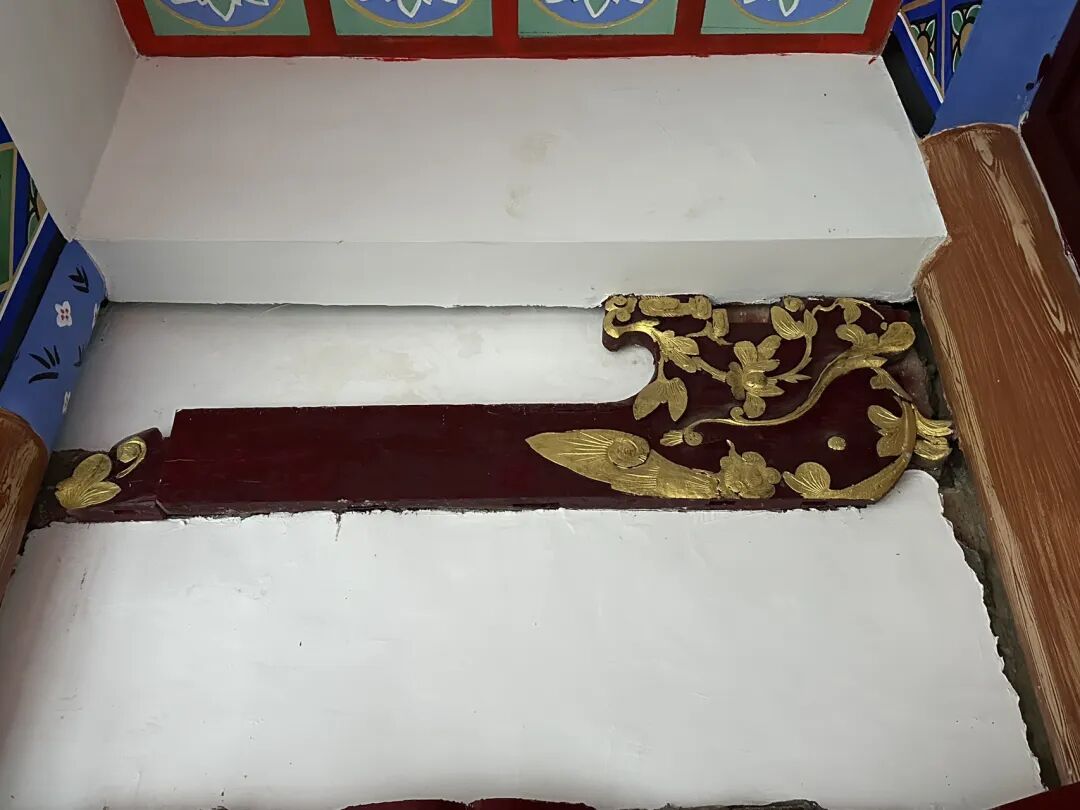
Relics at Shanjie Ancient Mosque include stone pillar bases, wood carvings, and calligraphy of the mihrab in the kiln niche.
The stone couplet on the main gate reads: Clear the murky and promote the pure to follow the great path; preserve the truth and remove the false so that every generation has successors. The calligraphy was written by Ma Linyi, a Hui Muslim educator and Minister of Education in Shaoyang during the Republic of China. He is known as the Father of Northwest Education and the founder of modern Chinese Hui Muslim education.
Ma Linyi was born in Shaoyang, Hunan, in 1865. He passed the imperial examinations in 1902 and went to Japan on a government scholarship in 1904 to study teacher training. During that time, he met Sun Yat-sen, joined the Tongmenghui in 1905, and returned home to work on new government policies and modern education. In 1906, he founded Xiejin Primary School in Shaoyang, which was the first modern school for Hui Muslims in Hunan.
In 1908, he was transferred to the Qing government's Ministry of Education as a director. That same year, he helped establish the Beijing First Islamic Primary School inside the Niujie Mosque and later helped found the Islamic Education Association. While serving as Vice Minister of Education in 1912, Ma Linyi founded the Chinese Islamic Progressive Association with the support of Sun Yat-sen and served as its president.
While in charge of education in Gansu, Ma Linyi founded 277 schools of various types and set up the Gansu Islamic Education Promotion Office, spreading over a hundred Islamic primary schools across Gansu, Ningxia, and Qinghai. He selected over a hundred young people from the Northwest for government-funded study abroad, laying the foundation for modern basic education in the Northwest.
In 1928, Ma Linyi helped found the Islamic Middle School in Niujie and served as its vice chairman. In 1929, Ma Linyi became a board member of the Beiping Chengda Teachers' College. He actively updated the curriculum and improved teaching methods, helping Chengda develop into a modern school. In his later years, Ma Linyi devoted himself to the faith and served as an advisor to Wang Jingzhai for his translation of Islamic classics. view all
Summary: This China mosque travel guide covers eight historic mosque complexes in Longhui, Shaoyang, Hunan, with local Hui Muslim heritage and mosque travel details kept in clear English.
Relics at Shanjie Ancient Mosque include stone pillar bases, wood carvings, and calligraphy of the mihrab in the kiln niche.
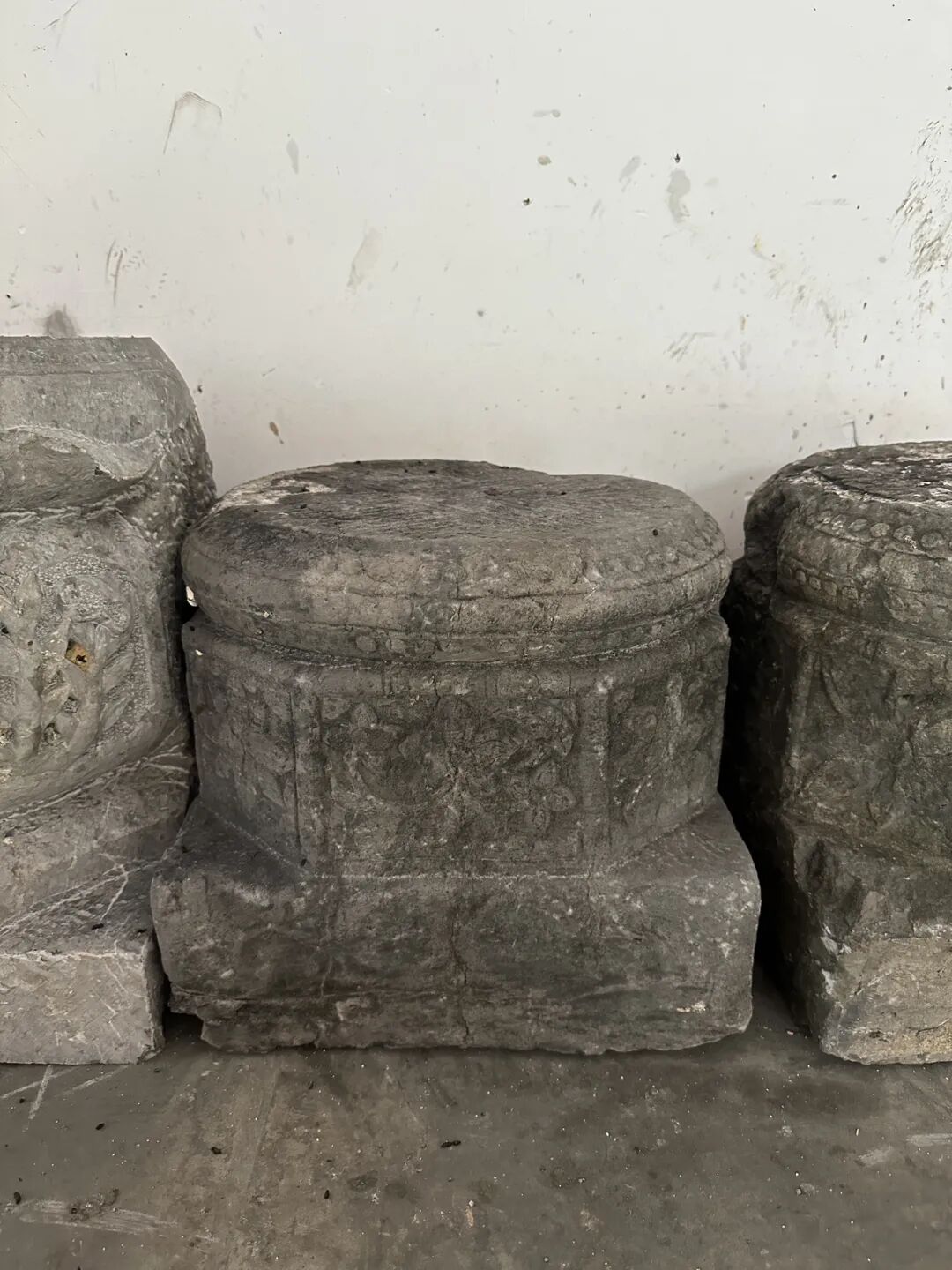
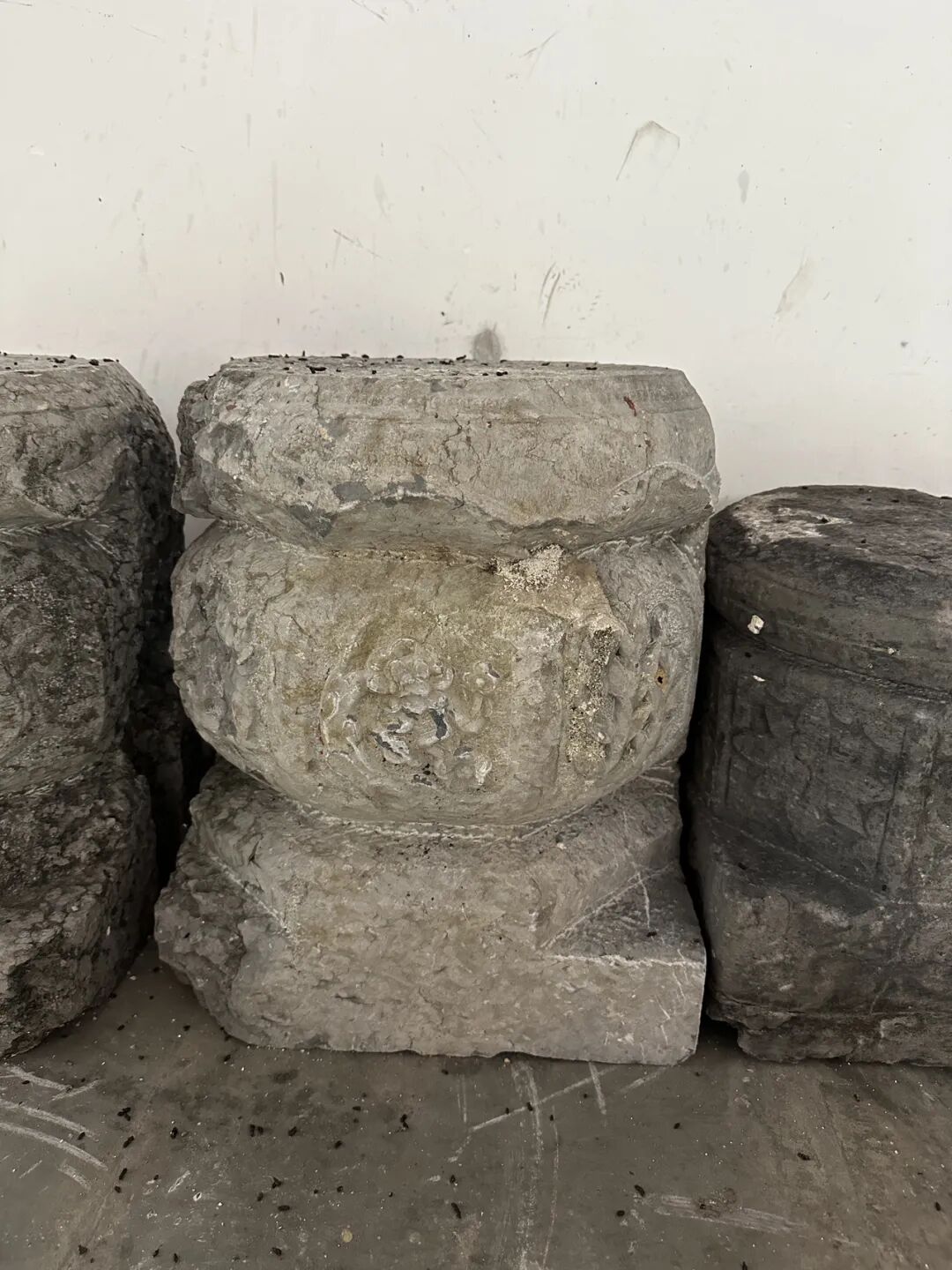
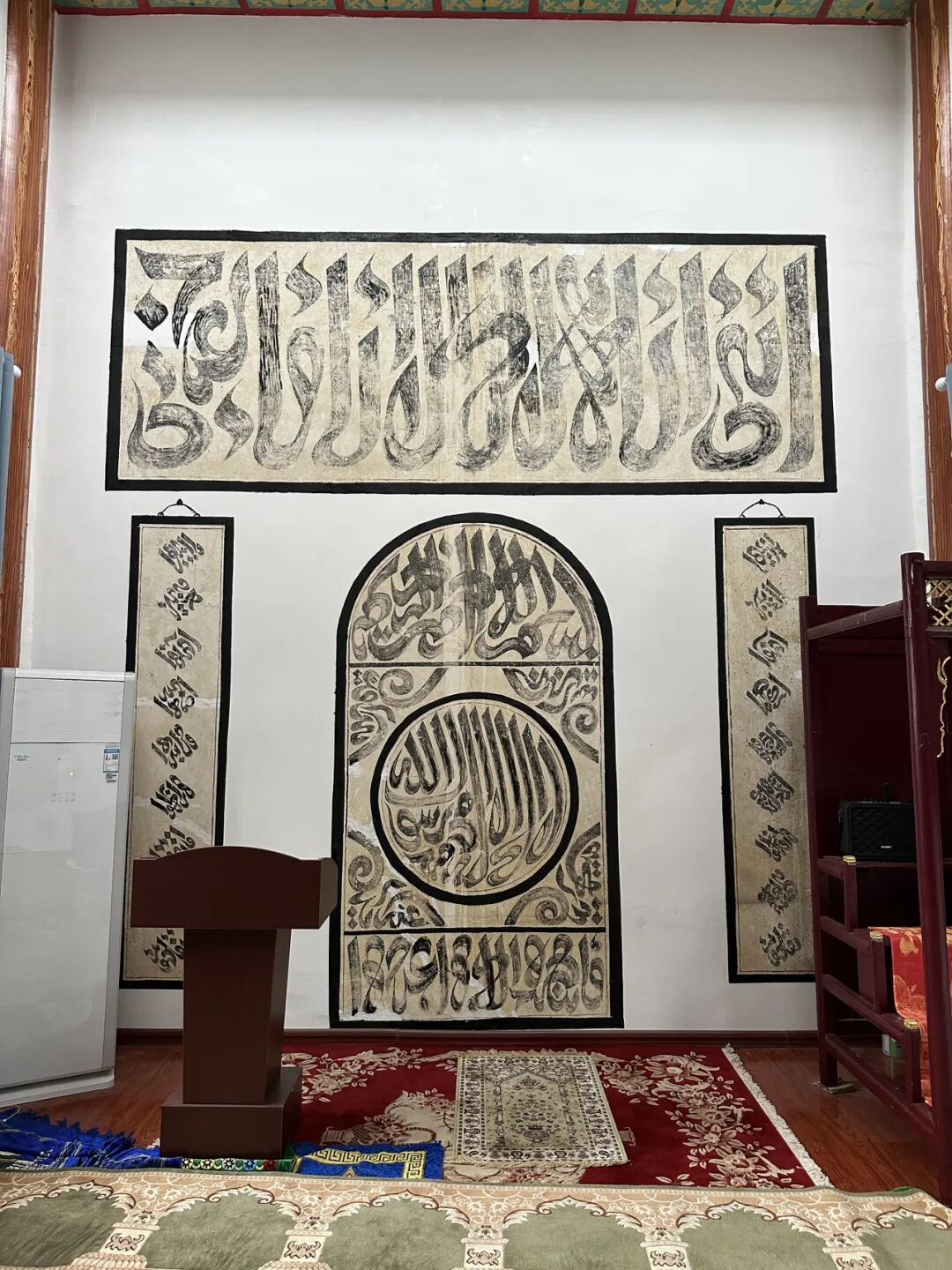
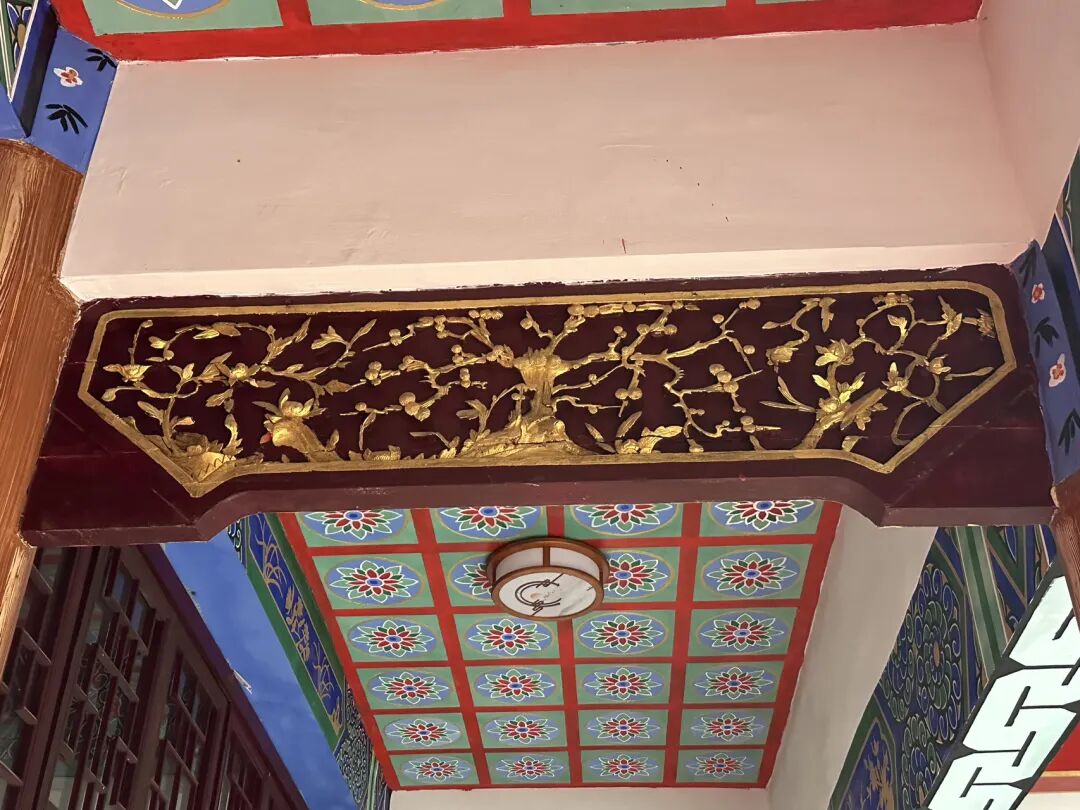
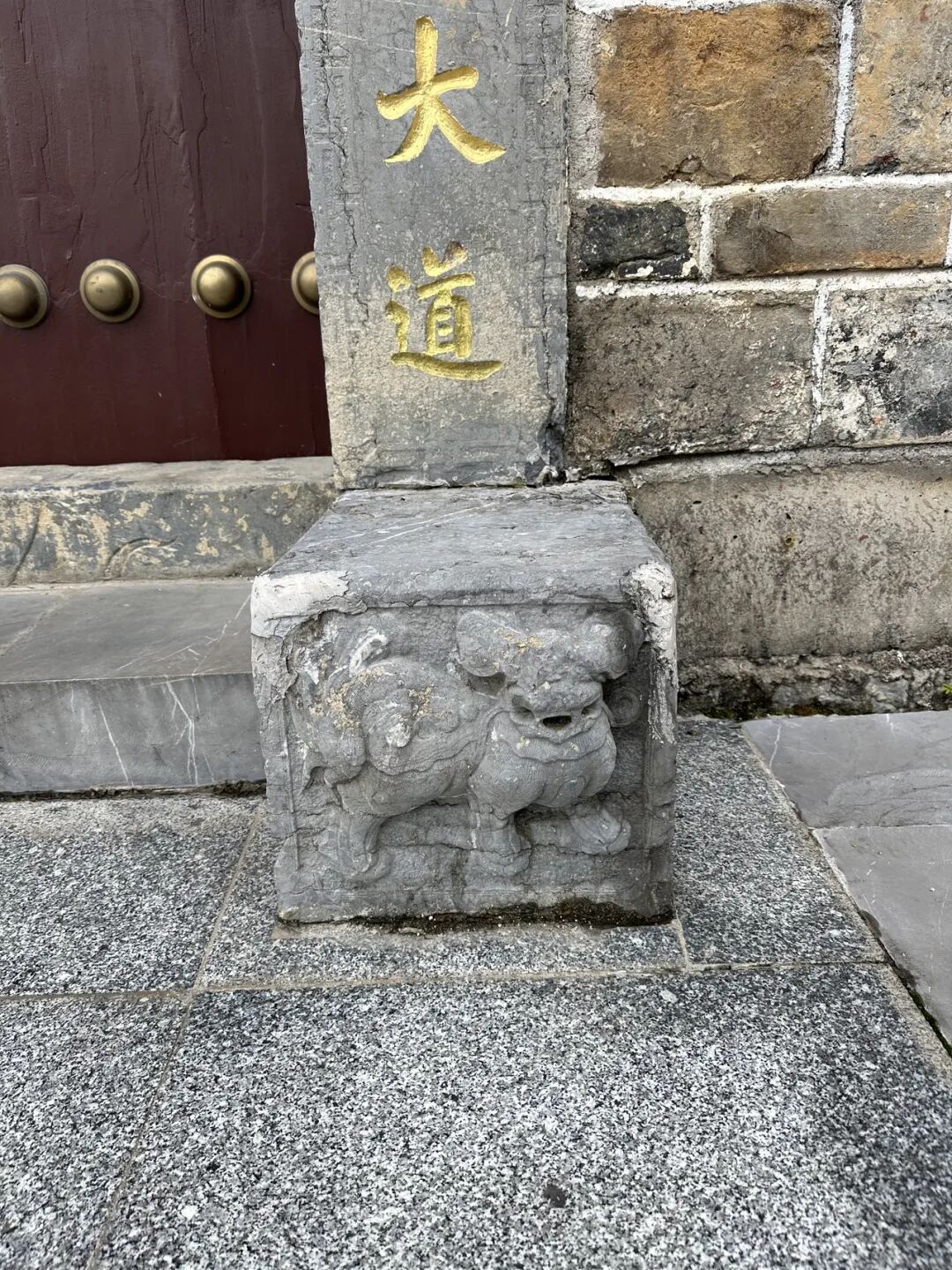
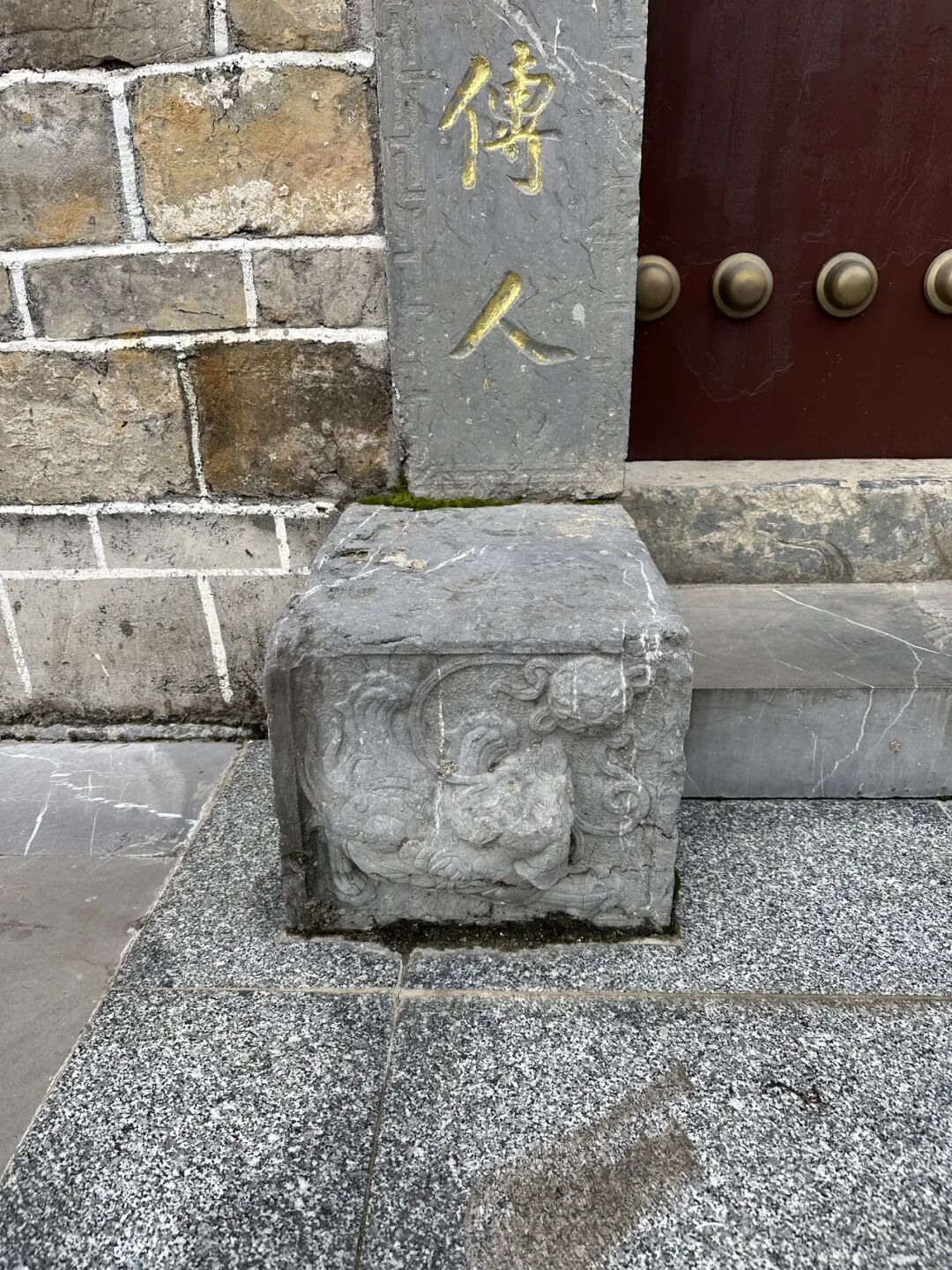
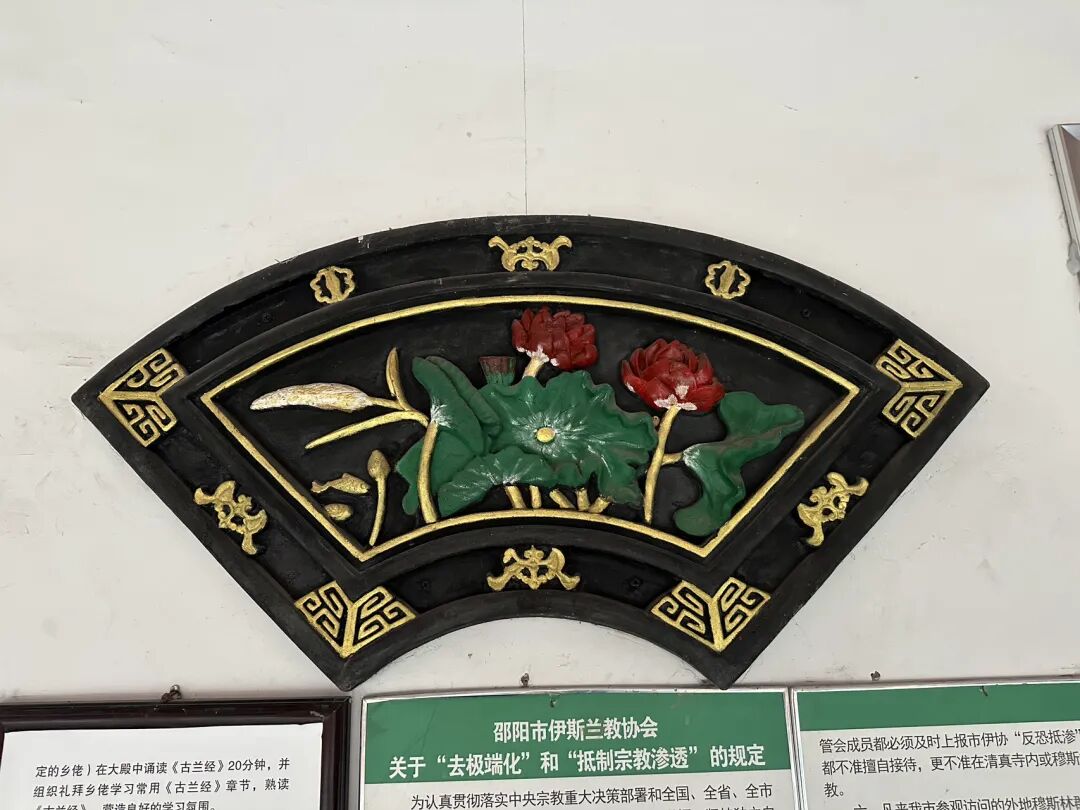
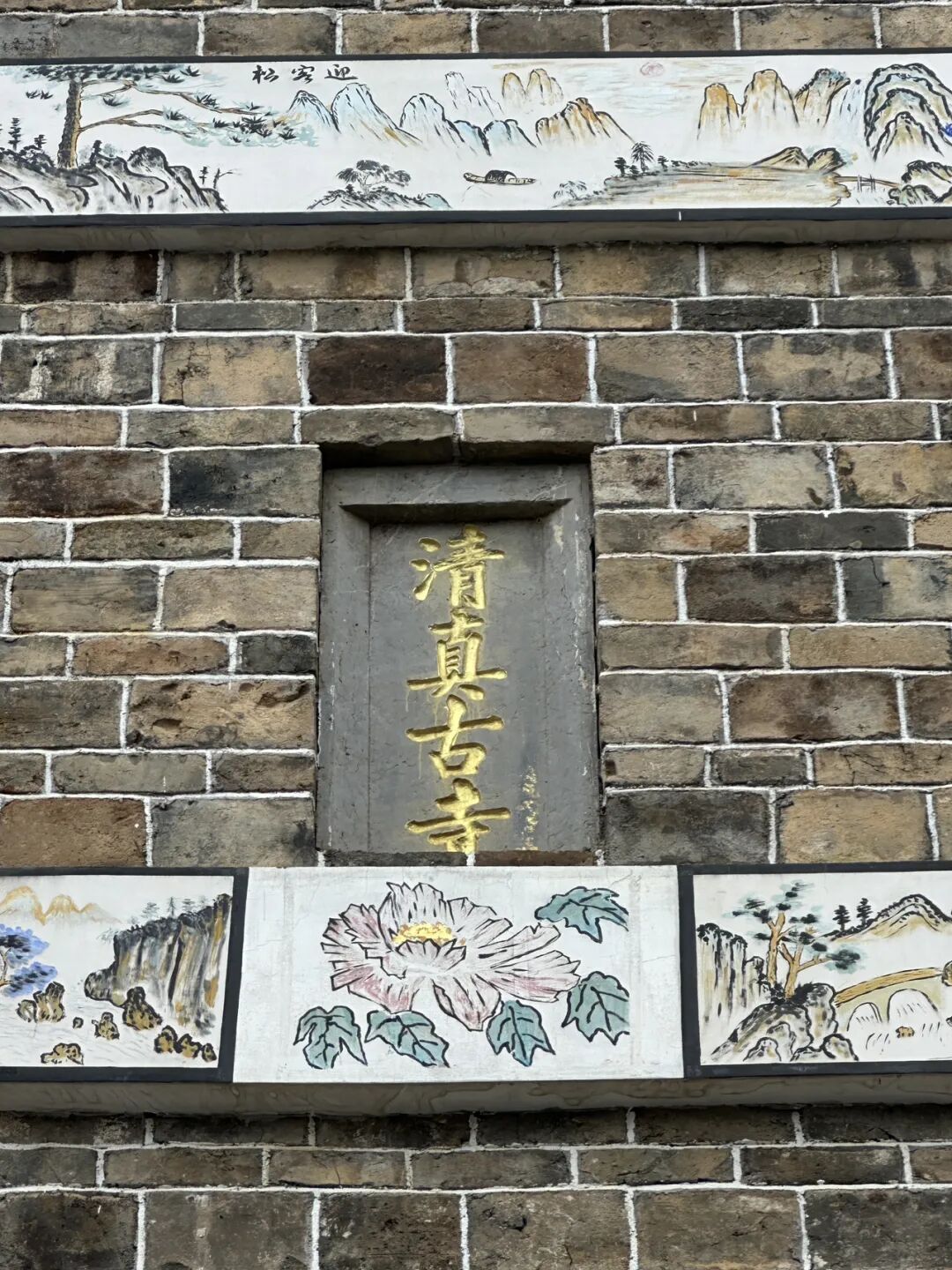
The stone couplet on the main gate reads: Clear the murky and promote the pure to follow the great path; preserve the truth and remove the false so that every generation has successors. The calligraphy was written by Ma Linyi, a Hui Muslim educator and Minister of Education in Shaoyang during the Republic of China. He is known as the Father of Northwest Education and the founder of modern Chinese Hui Muslim education.
Ma Linyi was born in Shaoyang, Hunan, in 1865. He passed the imperial examinations in 1902 and went to Japan on a government scholarship in 1904 to study teacher training. During that time, he met Sun Yat-sen, joined the Tongmenghui in 1905, and returned home to work on new government policies and modern education. In 1906, he founded Xiejin Primary School in Shaoyang, which was the first modern school for Hui Muslims in Hunan.
In 1908, he was transferred to the Qing government's Ministry of Education as a director. That same year, he helped establish the Beijing First Islamic Primary School inside the Niujie Mosque and later helped found the Islamic Education Association. While serving as Vice Minister of Education in 1912, Ma Linyi founded the Chinese Islamic Progressive Association with the support of Sun Yat-sen and served as its president.
While in charge of education in Gansu, Ma Linyi founded 277 schools of various types and set up the Gansu Islamic Education Promotion Office, spreading over a hundred Islamic primary schools across Gansu, Ningxia, and Qinghai. He selected over a hundred young people from the Northwest for government-funded study abroad, laying the foundation for modern basic education in the Northwest.
In 1928, Ma Linyi helped found the Islamic Middle School in Niujie and served as its vice chairman. In 1929, Ma Linyi became a board member of the Beiping Chengda Teachers' College. He actively updated the curriculum and improved teaching methods, helping Chengda develop into a modern school. In his later years, Ma Linyi devoted himself to the faith and served as an advisor to Wang Jingzhai for his translation of Islamic classics.
China Mosque Travel Guide: Eight Historic Mosque Complexes in Longhui, Shaoyang, Hunan (Segment 2 of 3)
Articles • yusuf908 posted the article • 0 comments • 328 views • 2026-06-30 06:24
Summary: This China mosque travel guide covers eight historic mosque complexes in Longhui, Shaoyang, Hunan, with local Hui Muslim heritage and mosque travel details kept in clear English.
Relics at Shanjie Ancient Mosque include stone pillar bases, wood carvings, and calligraphy of the mihrab in the kiln niche.
The stone couplet on the main gate reads: Clear the murky and promote the pure to follow the great path; preserve the truth and remove the false so that every generation has successors. The calligraphy was written by Ma Linyi, a Hui Muslim educator and Minister of Education in Shaoyang during the Republic of China. He is known as the Father of Northwest Education and the founder of modern Chinese Hui Muslim education.
Ma Linyi was born in Shaoyang, Hunan, in 1865. He passed the imperial examinations in 1902 and went to Japan on a government scholarship in 1904 to study teacher training. During that time, he met Sun Yat-sen, joined the Tongmenghui in 1905, and returned home to work on new government policies and modern education. In 1906, he founded Xiejin Primary School in Shaoyang, which was the first modern school for Hui Muslims in Hunan.
In 1908, he was transferred to the Qing government's Ministry of Education as a director. That same year, he helped establish the Beijing First Islamic Primary School inside the Niujie Mosque and later helped found the Islamic Education Association. While serving as Vice Minister of Education in 1912, Ma Linyi founded the Chinese Islamic Progressive Association with the support of Sun Yat-sen and served as its president.
While in charge of education in Gansu, Ma Linyi founded 277 schools of various types and set up the Gansu Islamic Education Promotion Office, spreading over a hundred Islamic primary schools across Gansu, Ningxia, and Qinghai. He selected over a hundred young people from the Northwest for government-funded study abroad, laying the foundation for modern basic education in the Northwest.
In 1928, Ma Linyi helped found the Islamic Middle School in Niujie and served as its vice chairman. In 1929, Ma Linyi became a board member of the Beiping Chengda Teachers' College. He actively updated the curriculum and improved teaching methods, helping Chengda develop into a modern school. In his later years, Ma Linyi devoted himself to the faith and served as an advisor to Wang Jingzhai for his translation of Islamic classics. view all
Summary: This China mosque travel guide covers eight historic mosque complexes in Longhui, Shaoyang, Hunan, with local Hui Muslim heritage and mosque travel details kept in clear English.
Relics at Shanjie Ancient Mosque include stone pillar bases, wood carvings, and calligraphy of the mihrab in the kiln niche.
The stone couplet on the main gate reads: Clear the murky and promote the pure to follow the great path; preserve the truth and remove the false so that every generation has successors. The calligraphy was written by Ma Linyi, a Hui Muslim educator and Minister of Education in Shaoyang during the Republic of China. He is known as the Father of Northwest Education and the founder of modern Chinese Hui Muslim education.
Ma Linyi was born in Shaoyang, Hunan, in 1865. He passed the imperial examinations in 1902 and went to Japan on a government scholarship in 1904 to study teacher training. During that time, he met Sun Yat-sen, joined the Tongmenghui in 1905, and returned home to work on new government policies and modern education. In 1906, he founded Xiejin Primary School in Shaoyang, which was the first modern school for Hui Muslims in Hunan.
In 1908, he was transferred to the Qing government's Ministry of Education as a director. That same year, he helped establish the Beijing First Islamic Primary School inside the Niujie Mosque and later helped found the Islamic Education Association. While serving as Vice Minister of Education in 1912, Ma Linyi founded the Chinese Islamic Progressive Association with the support of Sun Yat-sen and served as its president.
While in charge of education in Gansu, Ma Linyi founded 277 schools of various types and set up the Gansu Islamic Education Promotion Office, spreading over a hundred Islamic primary schools across Gansu, Ningxia, and Qinghai. He selected over a hundred young people from the Northwest for government-funded study abroad, laying the foundation for modern basic education in the Northwest.
In 1928, Ma Linyi helped found the Islamic Middle School in Niujie and served as its vice chairman. In 1929, Ma Linyi became a board member of the Beiping Chengda Teachers' College. He actively updated the curriculum and improved teaching methods, helping Chengda develop into a modern school. In his later years, Ma Linyi devoted himself to the faith and served as an advisor to Wang Jingzhai for his translation of Islamic classics.
China Mosque Travel Guide: Eight Historic Mosque Complexes in Longhui, Shaoyang, Hunan (Part 1 of 5)
Articles • yusuf908 posted the article • 0 comments • 343 views • 2026-06-30 06:24
Summary: This China mosque travel guide covers eight historic mosque complexes in Longhui, Shaoyang, Hunan, with local Hui Muslim heritage and mosque travel details kept in clear English.
This article summarizes the key points about the eight mosques (sifang) in Longhui County, Shaoyang, Hunan. It keeps the original paragraph and image order. It is for readers interested in Muslim life, Islamic culture, and Chinese Islamic writing. It also helps people search for content like Chinese halal food.
Longhui County in Shaoyang City, Hunan, has a large population of Hui Muslims. I visited eight mosques there: Taohuaping Mosque, Shanjie Ancient Mosque, East Mosque, West Mosque, South Mosque, North Mosque, Luobai Mosque, and Niejiaoting Mosque. I will share them with you below.
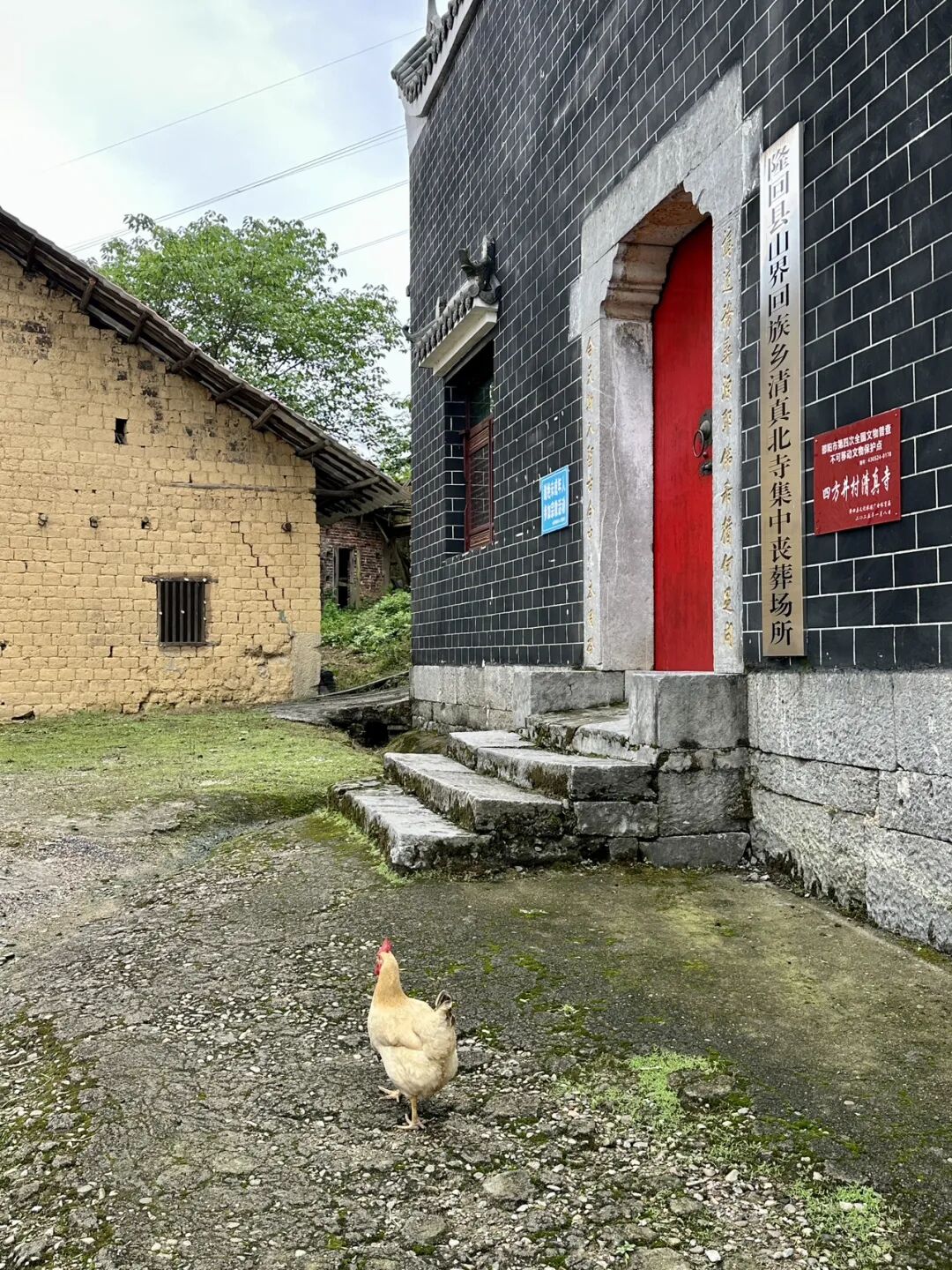
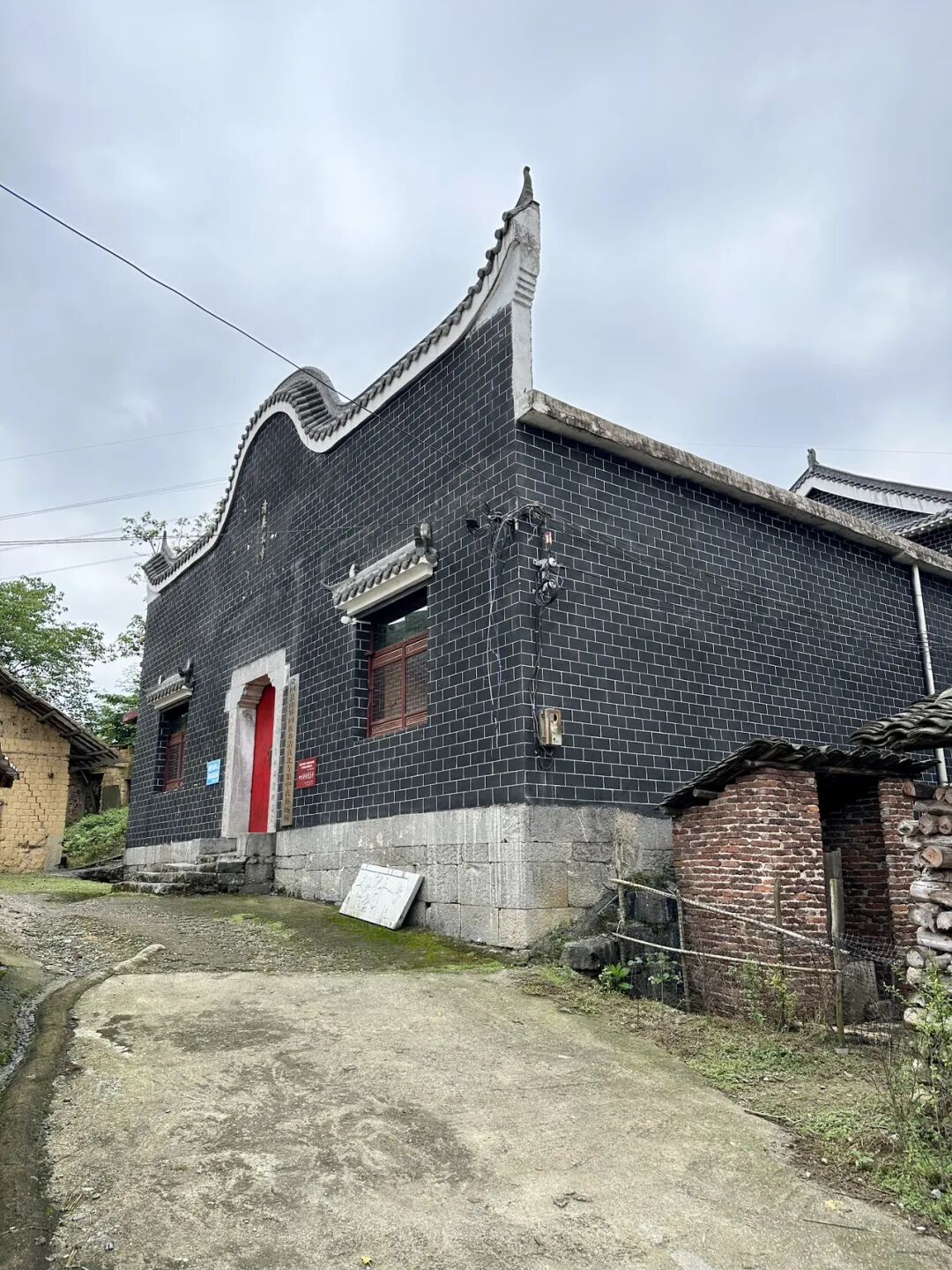
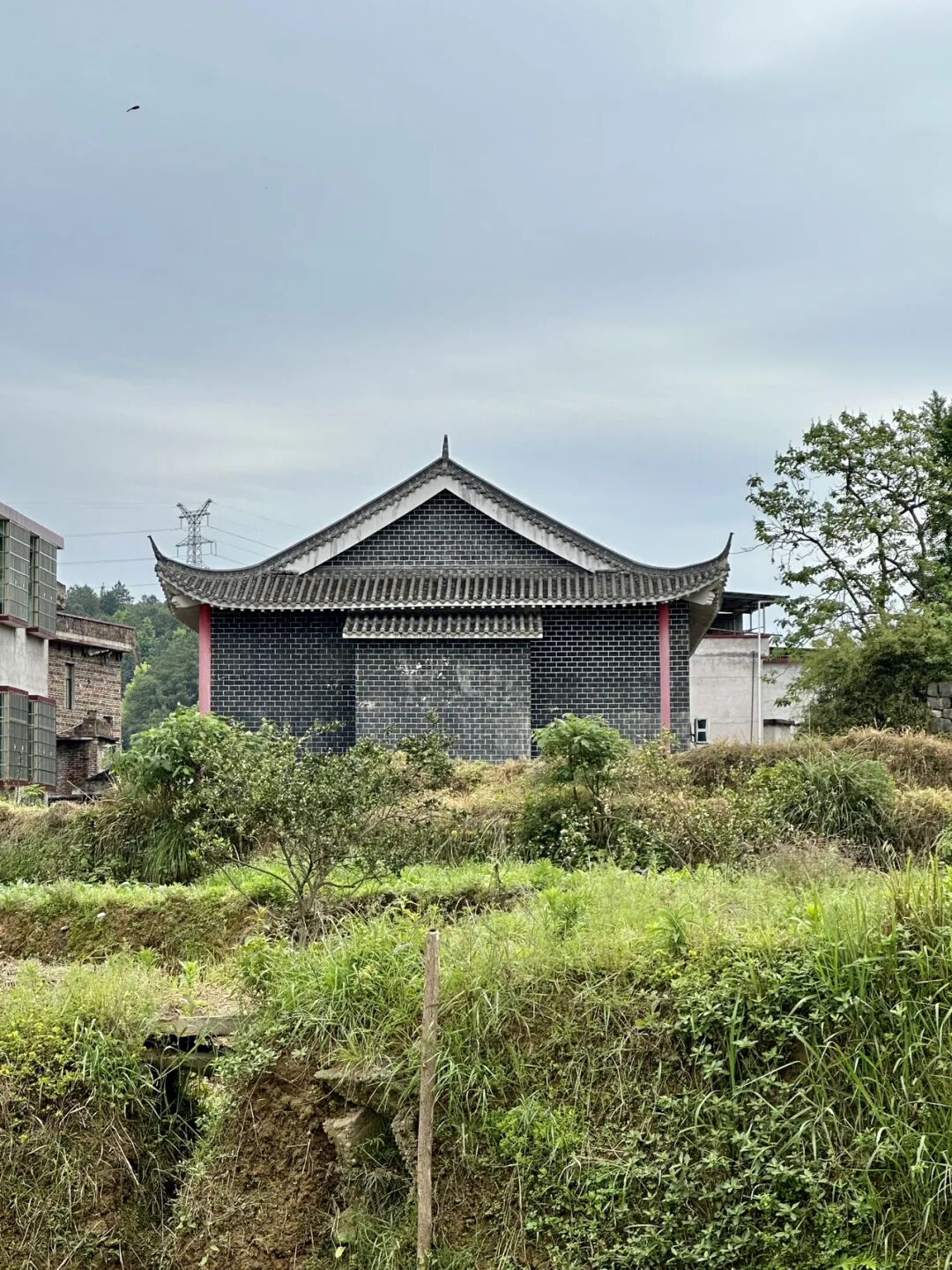
Shanjie Ancient Mosque in Longhui County, Shaoyang, Hunan, is located in Laowuli, Shanjie Township. It was first built in 1444 (the ninth year of the Zhengtong reign of the Ming Dynasty) and is the oldest mosque in Longhui. During the Hongwu reign of the Ming Dynasty, Ma Zhi, the third son of Ma Cheng, the ancestor of the Ma family Hui Muslims in Shaoyang, moved from Shaoyang to Majia Ferry in Longhui to settle down. He was the first Hui Muslim in Longhui, and Shanjie Ancient Mosque was built by the Ma family.
Shanjie Ancient Mosque was renovated in 1919 and rebuilt into its current appearance in 2018.
Shanjie Ancient Mosque has a long tradition of teaching Islamic scripture. The head imams who have taught there include Ma Yulang, Ma Fujiu, Ma Fucheng, Ma Yucheng, Ma Yaochi, and Ding Zhenyi. They also hired imams from other places like Huang Xingxiang and Li Desheng. Ma Fucheng, an imam from this mosque, taught there for the longest time. In 1945, Imam Ma Yucheng taught at the ancient mosque and recruited many students (hailifan), marking the peak of the mosque's religious activities. To this day, the mosque continues its educational work and has trained many excellent young people.
On September 2, 1939, the Wugang County, Hunan branch of the China Islamic National Salvation Association was officially established at the mosque. The mosque's imam, Ma Fucheng, was elected as an officer. Inspired by the call to resist Japanese aggression and save the country, young Hui Muslims from the mosque, including Ma Qiyun, Ma Wuyang from the North Mosque, and Su Xingmin from Beishan, signed up for the army, took up arms, and headed to the front lines in East China.
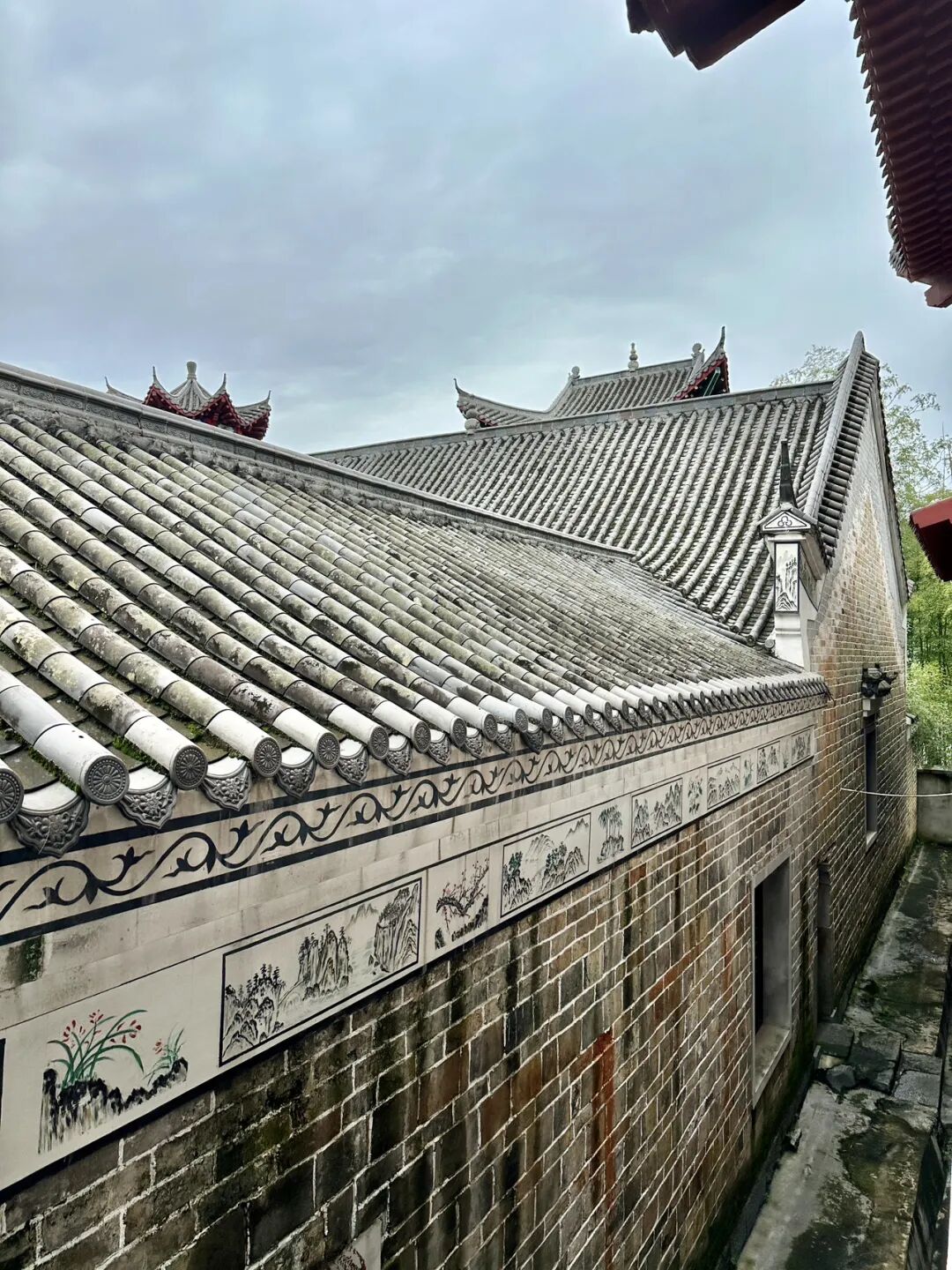
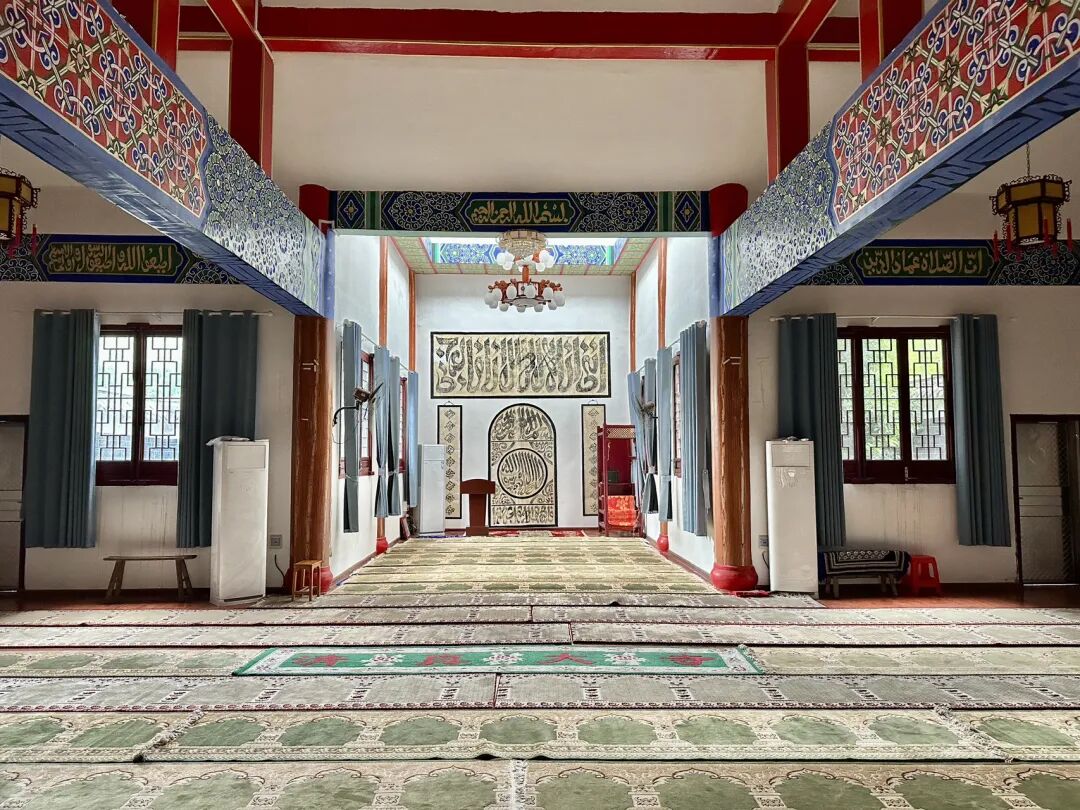
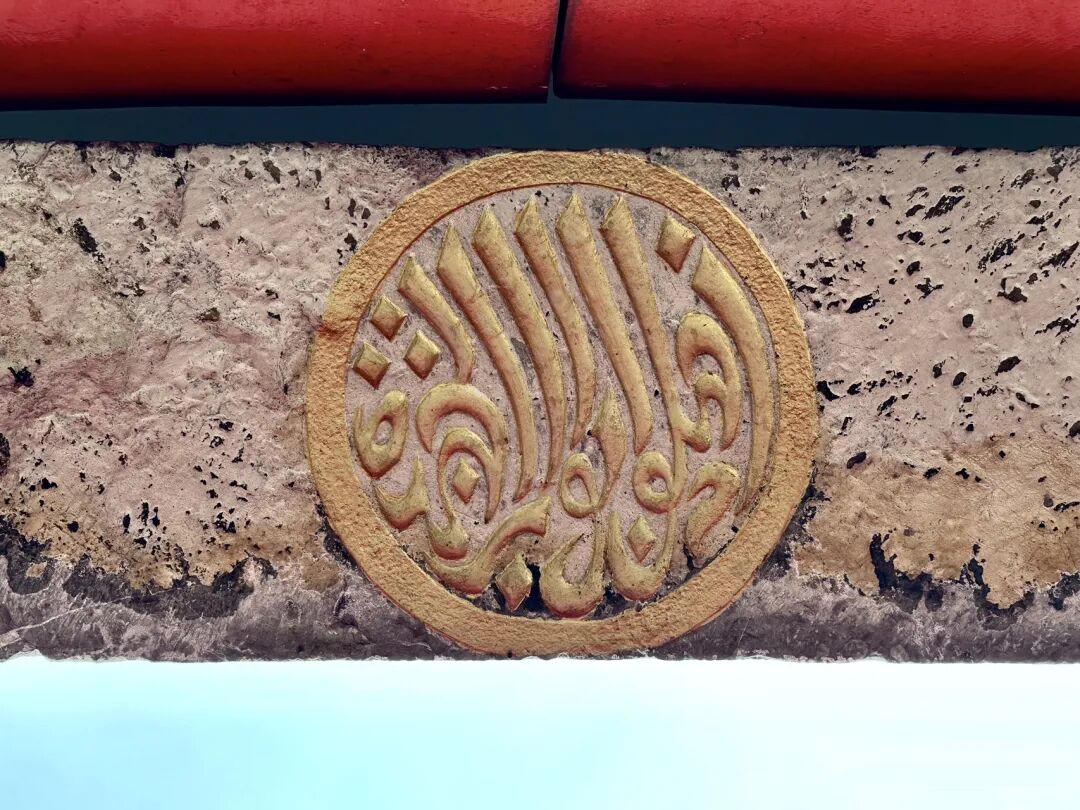
Relics at Shanjie Ancient Mosque include stone pillar bases, wood carvings, and calligraphy of the mihrab in the kiln niche.
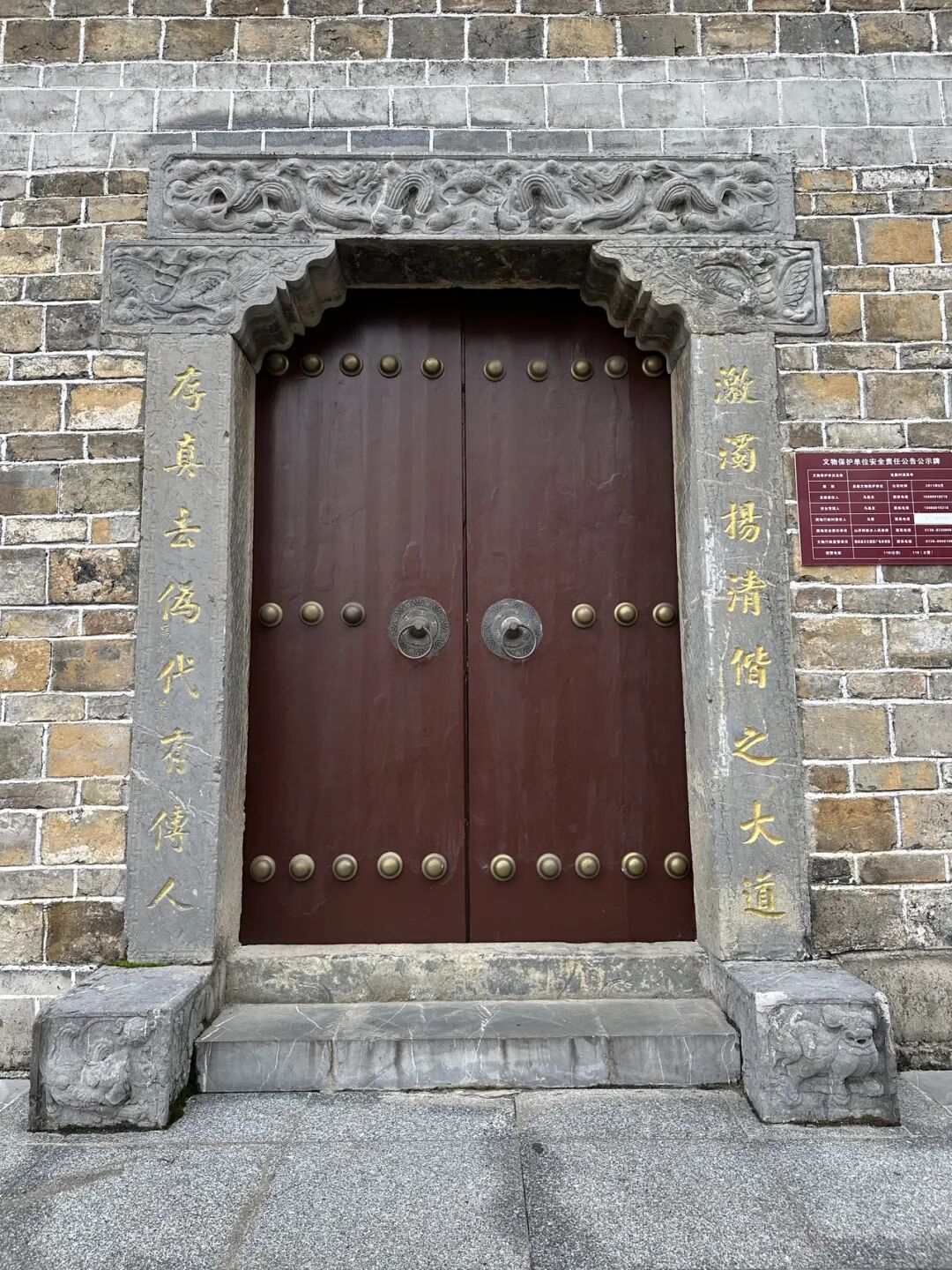
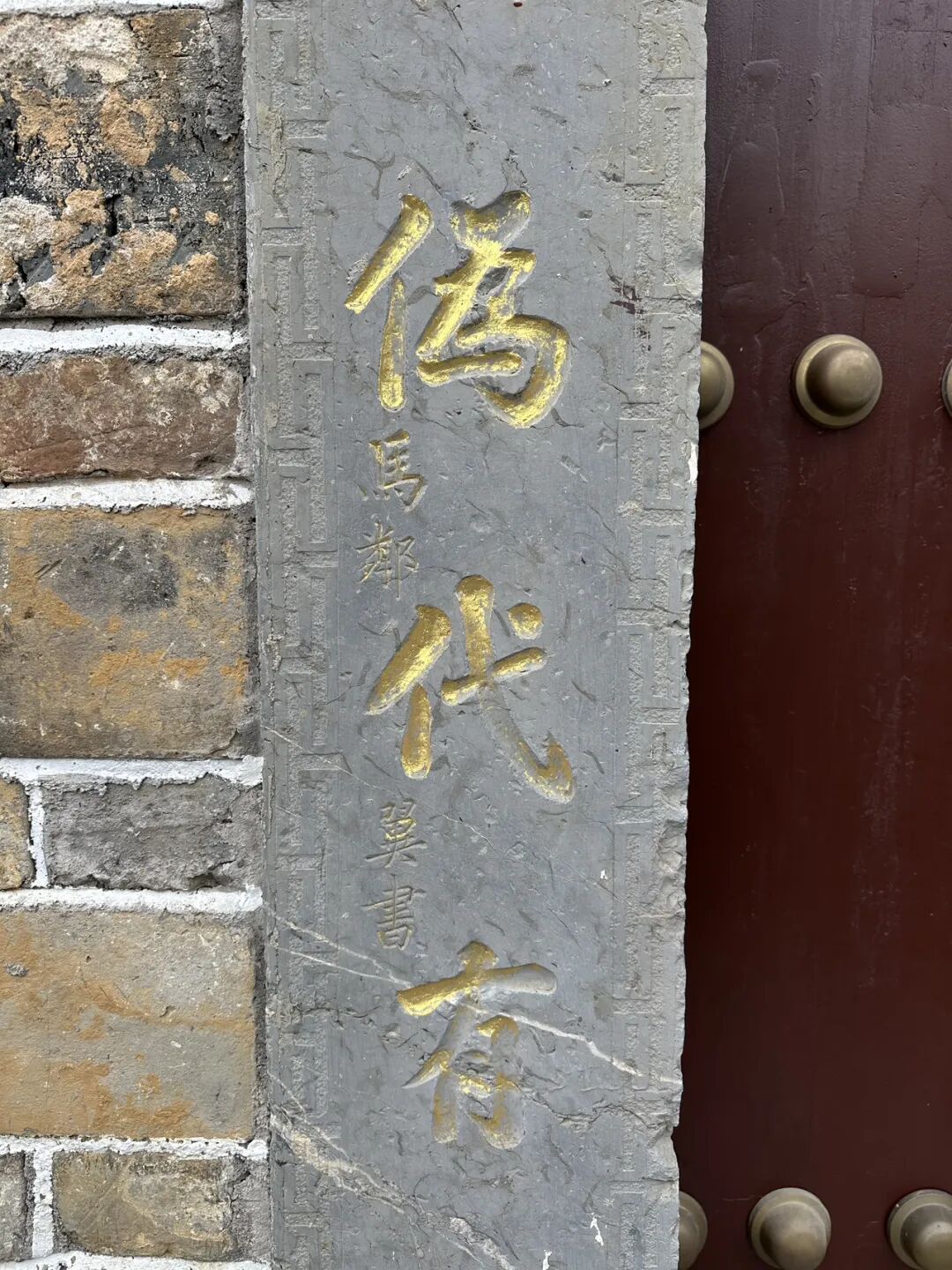
The stone couplet on the main gate reads: Clear the murky and promote the pure to follow the great path; preserve the truth and remove the false so that every generation has successors. The calligraphy was written by Ma Linyi, a Hui Muslim educator and Minister of Education in Shaoyang during the Republic of China. He is known as the Father of Northwest Education and the founder of modern Chinese Hui Muslim education.
Ma Linyi was born in Shaoyang, Hunan, in 1865. He passed the imperial examinations in 1902 and went to Japan on a government scholarship in 1904 to study teacher training. During that time, he met Sun Yat-sen, joined the Tongmenghui in 1905, and returned home to work on new government policies and modern education. In 1906, he founded Xiejin Primary School in Shaoyang, which was the first modern school for Hui Muslims in Hunan.
In 1908, he was transferred to the Qing government's Ministry of Education as a director. That same year, he helped establish the Beijing First Islamic Primary School inside the Niujie Mosque and later helped found the Islamic Education Association. While serving as Vice Minister of Education in 1912, Ma Linyi founded the Chinese Islamic Progressive Association with the support of Sun Yat-sen and served as its president.
While in charge of education in Gansu, Ma Linyi founded 277 schools of various types and set up the Gansu Islamic Education Promotion Office, spreading over a hundred Islamic primary schools across Gansu, Ningxia, and Qinghai. He selected over a hundred young people from the Northwest for government-funded study abroad, laying the foundation for modern basic education in the Northwest.
In 1928, Ma Linyi helped found the Islamic Middle School in Niujie and served as its vice chairman. In 1929, Ma Linyi became a board member of the Beiping Chengda Teachers' College. He actively updated the curriculum and improved teaching methods, helping Chengda develop into a modern school. In his later years, Ma Linyi devoted himself to the faith and served as an advisor to Wang Jingzhai for his translation of Islamic classics.
Shanjie East Mosque was first built in 1728 (the fifth year of the Yongzheng reign). The mosque has hired many imams over the years, including Su Yuebo, Ma Yulang, Ma Baochu, Zheng Liansheng, Ma Yuechi, Ma Yucheng, Tang Yuanqi, Hai Shiquan, Ma Chengyong, Ding Baohua, Ma Gen'ao, Ma Xiang'ao, and Ma Wuquan. Students from as far as Hainan and Guangxi came to study under the great imam Ma Yucheng in Gansu, and the local religious community was very prosperous.
It is a pity that the mosque was locked when I visited, so I could not go inside. view all
Summary: This China mosque travel guide covers eight historic mosque complexes in Longhui, Shaoyang, Hunan, with local Hui Muslim heritage and mosque travel details kept in clear English.
This article summarizes the key points about the eight mosques (sifang) in Longhui County, Shaoyang, Hunan. It keeps the original paragraph and image order. It is for readers interested in Muslim life, Islamic culture, and Chinese Islamic writing. It also helps people search for content like Chinese halal food.
Longhui County in Shaoyang City, Hunan, has a large population of Hui Muslims. I visited eight mosques there: Taohuaping Mosque, Shanjie Ancient Mosque, East Mosque, West Mosque, South Mosque, North Mosque, Luobai Mosque, and Niejiaoting Mosque. I will share them with you below.
Shanjie Ancient Mosque in Longhui County, Shaoyang, Hunan, is located in Laowuli, Shanjie Township. It was first built in 1444 (the ninth year of the Zhengtong reign of the Ming Dynasty) and is the oldest mosque in Longhui. During the Hongwu reign of the Ming Dynasty, Ma Zhi, the third son of Ma Cheng, the ancestor of the Ma family Hui Muslims in Shaoyang, moved from Shaoyang to Majia Ferry in Longhui to settle down. He was the first Hui Muslim in Longhui, and Shanjie Ancient Mosque was built by the Ma family.
Shanjie Ancient Mosque was renovated in 1919 and rebuilt into its current appearance in 2018.
Shanjie Ancient Mosque has a long tradition of teaching Islamic scripture. The head imams who have taught there include Ma Yulang, Ma Fujiu, Ma Fucheng, Ma Yucheng, Ma Yaochi, and Ding Zhenyi. They also hired imams from other places like Huang Xingxiang and Li Desheng. Ma Fucheng, an imam from this mosque, taught there for the longest time. In 1945, Imam Ma Yucheng taught at the ancient mosque and recruited many students (hailifan), marking the peak of the mosque's religious activities. To this day, the mosque continues its educational work and has trained many excellent young people.
On September 2, 1939, the Wugang County, Hunan branch of the China Islamic National Salvation Association was officially established at the mosque. The mosque's imam, Ma Fucheng, was elected as an officer. Inspired by the call to resist Japanese aggression and save the country, young Hui Muslims from the mosque, including Ma Qiyun, Ma Wuyang from the North Mosque, and Su Xingmin from Beishan, signed up for the army, took up arms, and headed to the front lines in East China.
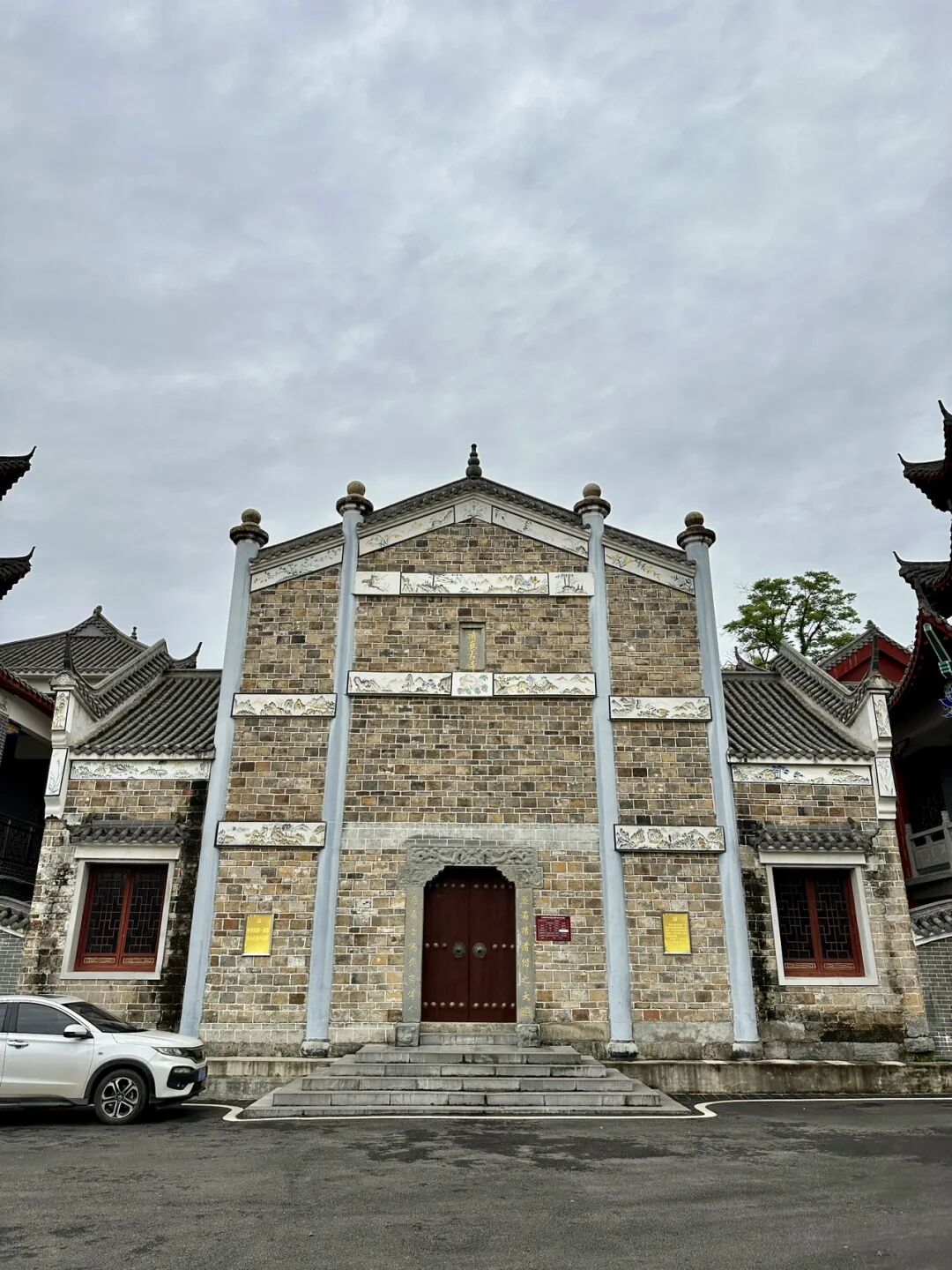
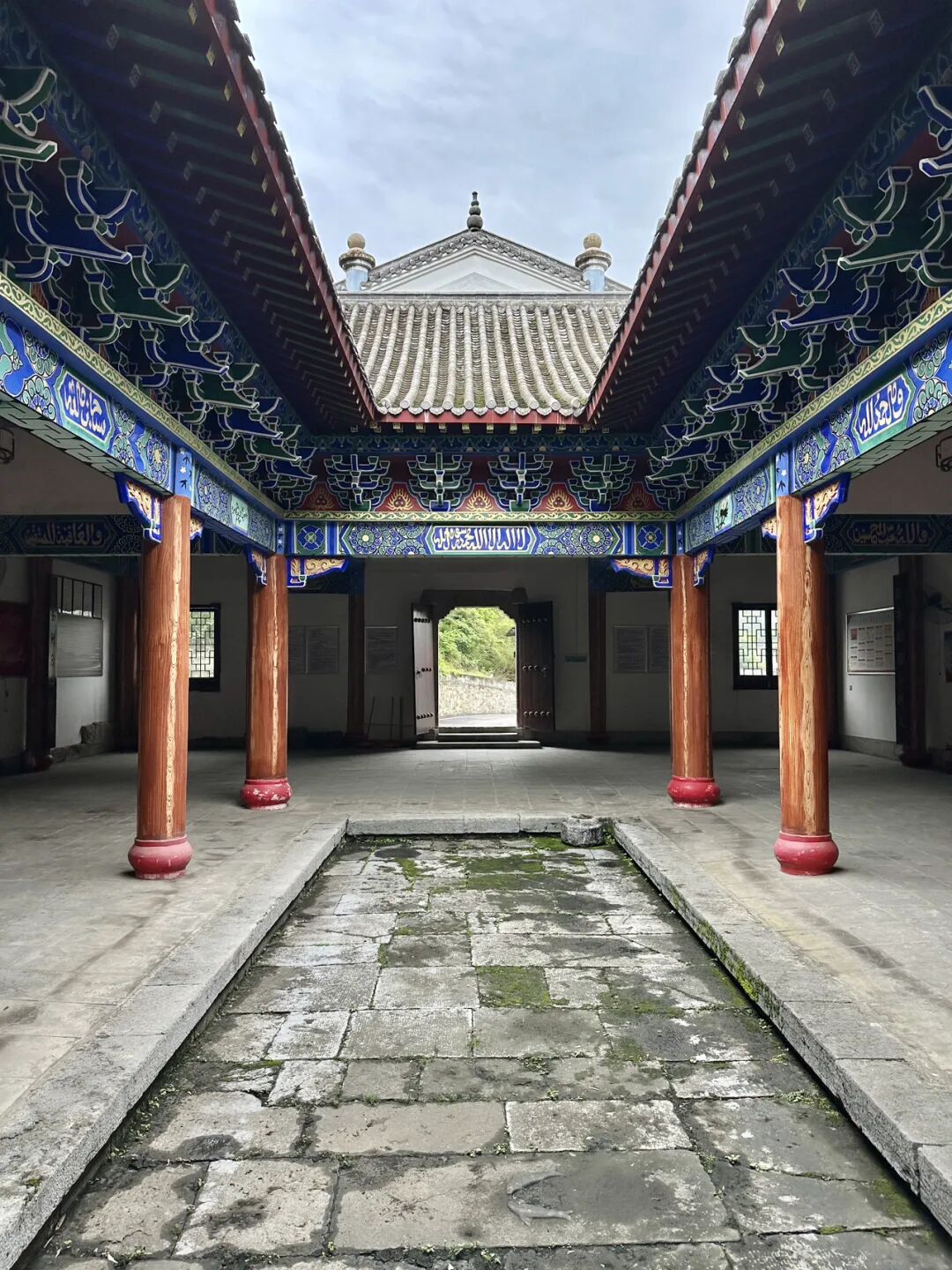
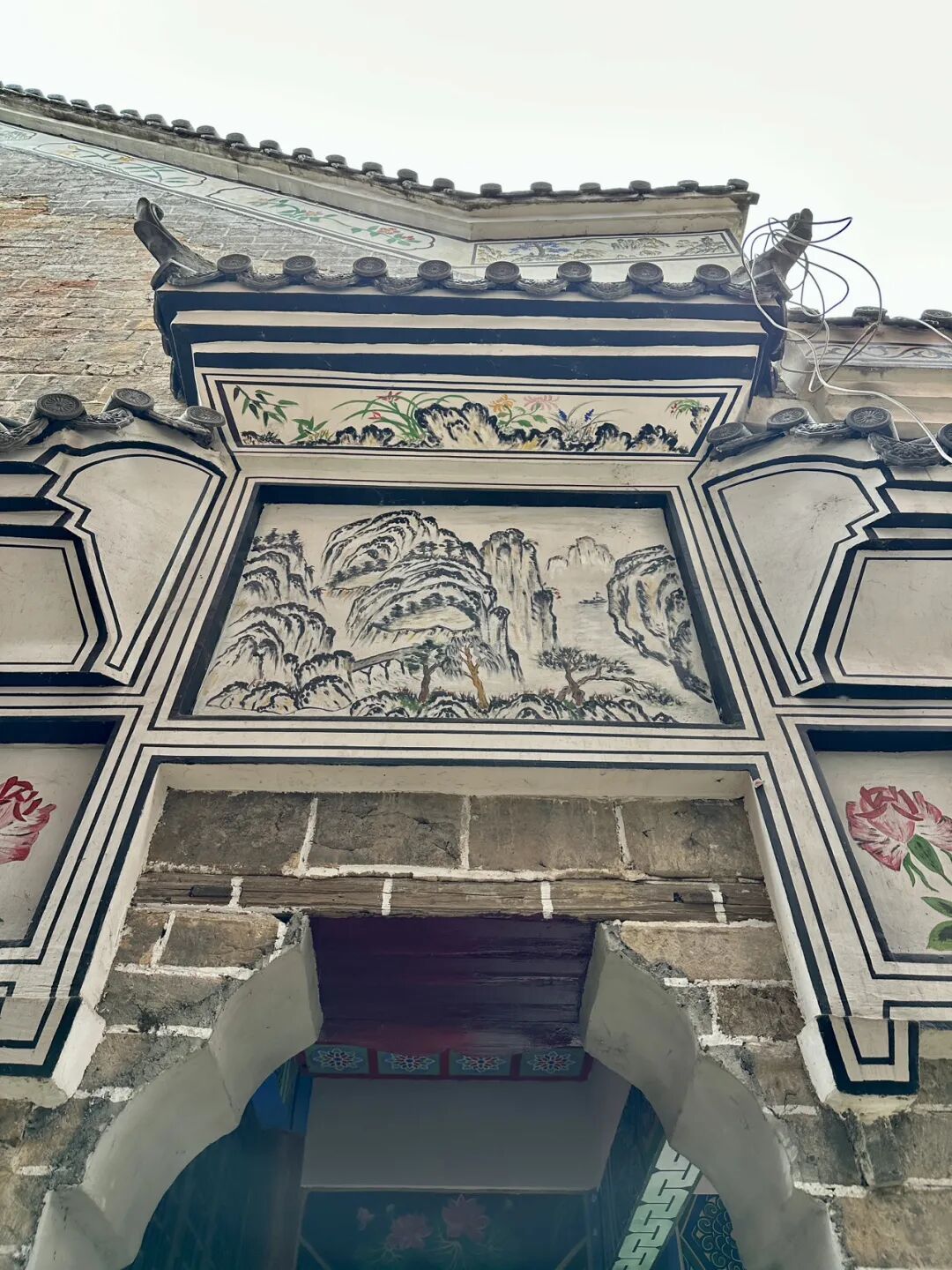
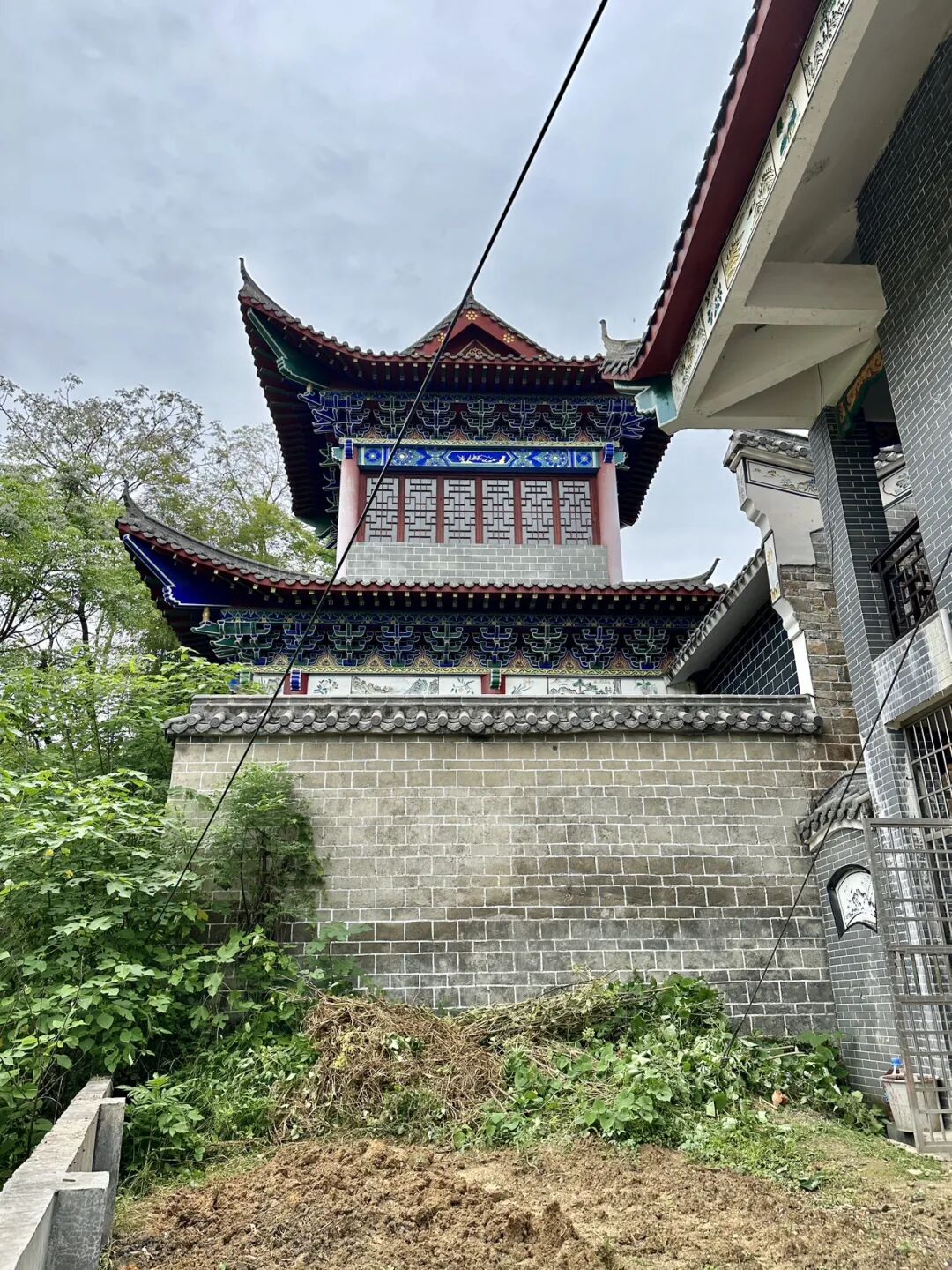
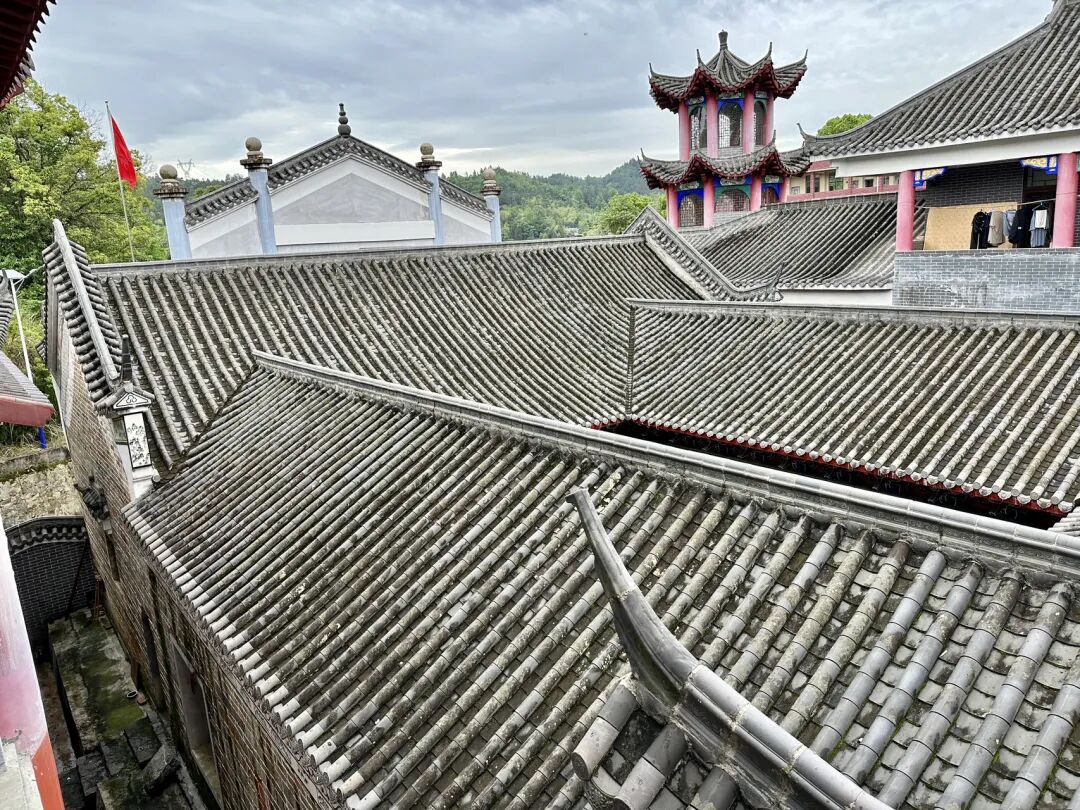
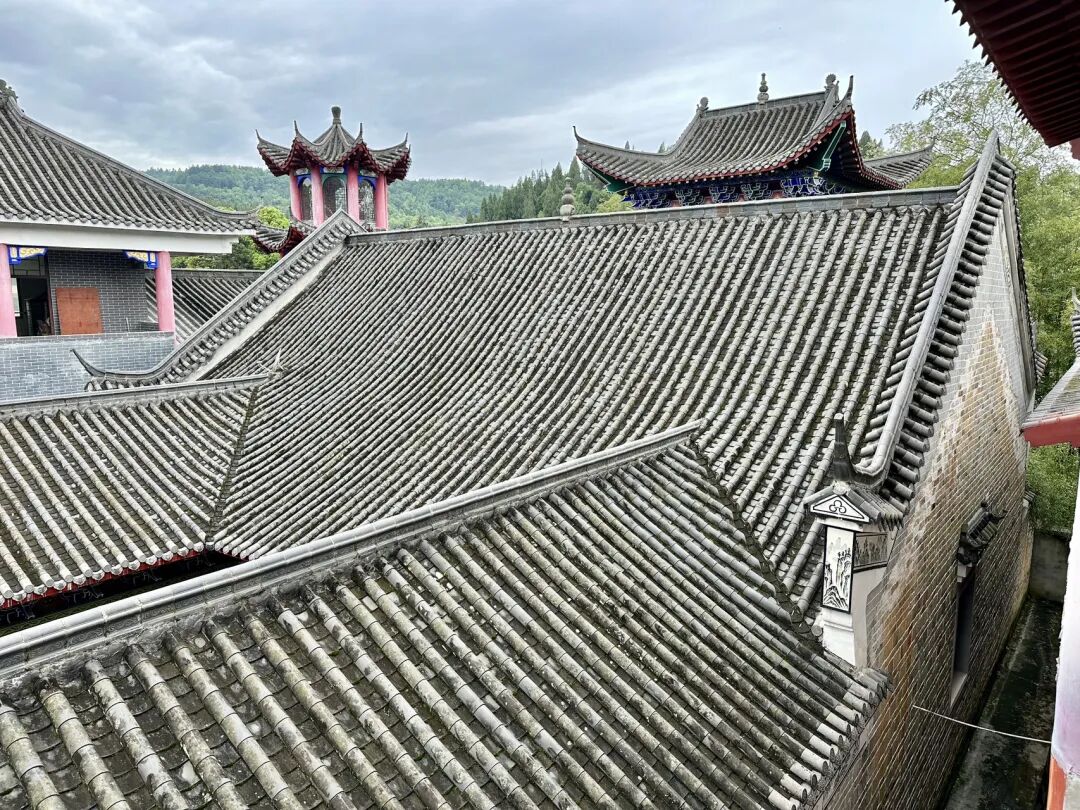
Relics at Shanjie Ancient Mosque include stone pillar bases, wood carvings, and calligraphy of the mihrab in the kiln niche.
The stone couplet on the main gate reads: Clear the murky and promote the pure to follow the great path; preserve the truth and remove the false so that every generation has successors. The calligraphy was written by Ma Linyi, a Hui Muslim educator and Minister of Education in Shaoyang during the Republic of China. He is known as the Father of Northwest Education and the founder of modern Chinese Hui Muslim education.
Ma Linyi was born in Shaoyang, Hunan, in 1865. He passed the imperial examinations in 1902 and went to Japan on a government scholarship in 1904 to study teacher training. During that time, he met Sun Yat-sen, joined the Tongmenghui in 1905, and returned home to work on new government policies and modern education. In 1906, he founded Xiejin Primary School in Shaoyang, which was the first modern school for Hui Muslims in Hunan.
In 1908, he was transferred to the Qing government's Ministry of Education as a director. That same year, he helped establish the Beijing First Islamic Primary School inside the Niujie Mosque and later helped found the Islamic Education Association. While serving as Vice Minister of Education in 1912, Ma Linyi founded the Chinese Islamic Progressive Association with the support of Sun Yat-sen and served as its president.
While in charge of education in Gansu, Ma Linyi founded 277 schools of various types and set up the Gansu Islamic Education Promotion Office, spreading over a hundred Islamic primary schools across Gansu, Ningxia, and Qinghai. He selected over a hundred young people from the Northwest for government-funded study abroad, laying the foundation for modern basic education in the Northwest.
In 1928, Ma Linyi helped found the Islamic Middle School in Niujie and served as its vice chairman. In 1929, Ma Linyi became a board member of the Beiping Chengda Teachers' College. He actively updated the curriculum and improved teaching methods, helping Chengda develop into a modern school. In his later years, Ma Linyi devoted himself to the faith and served as an advisor to Wang Jingzhai for his translation of Islamic classics.
Shanjie East Mosque was first built in 1728 (the fifth year of the Yongzheng reign). The mosque has hired many imams over the years, including Su Yuebo, Ma Yulang, Ma Baochu, Zheng Liansheng, Ma Yuechi, Ma Yucheng, Tang Yuanqi, Hai Shiquan, Ma Chengyong, Ding Baohua, Ma Gen'ao, Ma Xiang'ao, and Ma Wuquan. Students from as far as Hainan and Guangxi came to study under the great imam Ma Yucheng in Gansu, and the local religious community was very prosperous.
It is a pity that the mosque was locked when I visited, so I could not go inside.
China Mosque Travel Guide: Eight Historic Mosque Complexes in Longhui, Shaoyang, Hunan (Part 1 of 2)
Articles • Hasan09 posted the article • 0 comments • 312 views • 2026-06-30 06:24
Summary: This China mosque travel guide covers eight historic mosque complexes in Longhui, Shaoyang, Hunan, with local Hui Muslim heritage and mosque travel details kept in clear English.
This article summarizes the key points about the eight mosques (sifang) in Longhui County, Shaoyang, Hunan. It keeps the original paragraph and image order. It is for readers interested in Muslim life, Islamic culture, and Chinese Islamic writing. It also helps people search for content like Chinese halal food.
Longhui County in Shaoyang City, Hunan, has a large population of Hui Muslims. I visited eight mosques there: Taohuaping Mosque, Shanjie Ancient Mosque, East Mosque, West Mosque, South Mosque, North Mosque, Luobai Mosque, and Niejiaoting Mosque. I will share them with you below.
Shanjie Ancient Mosque in Longhui County, Shaoyang, Hunan, is located in Laowuli, Shanjie Township. It was first built in 1444 (the ninth year of the Zhengtong reign of the Ming Dynasty) and is the oldest mosque in Longhui. During the Hongwu reign of the Ming Dynasty, Ma Zhi, the third son of Ma Cheng, the ancestor of the Ma family Hui Muslims in Shaoyang, moved from Shaoyang to Majia Ferry in Longhui to settle down. He was the first Hui Muslim in Longhui, and Shanjie Ancient Mosque was built by the Ma family.
Shanjie Ancient Mosque was renovated in 1919 and rebuilt into its current appearance in 2018.
Shanjie Ancient Mosque has a long tradition of teaching Islamic scripture. The head imams who have taught there include Ma Yulang, Ma Fujiu, Ma Fucheng, Ma Yucheng, Ma Yaochi, and Ding Zhenyi. They also hired imams from other places like Huang Xingxiang and Li Desheng. Ma Fucheng, an imam from this mosque, taught there for the longest time. In 1945, Imam Ma Yucheng taught at the ancient mosque and recruited many students (hailifan), marking the peak of the mosque's religious activities. To this day, the mosque continues its educational work and has trained many excellent young people.
On September 2, 1939, the Wugang County, Hunan branch of the China Islamic National Salvation Association was officially established at the mosque. The mosque's imam, Ma Fucheng, was elected as an officer. Inspired by the call to resist Japanese aggression and save the country, young Hui Muslims from the mosque, including Ma Qiyun, Ma Wuyang from the North Mosque, and Su Xingmin from Beishan, signed up for the army, took up arms, and headed to the front lines in East China.
Relics at Shanjie Ancient Mosque include stone pillar bases, wood carvings, and calligraphy of the mihrab in the kiln niche.
The stone couplet on the main gate reads: Clear the murky and promote the pure to follow the great path; preserve the truth and remove the false so that every generation has successors. The calligraphy was written by Ma Linyi, a Hui Muslim educator and Minister of Education in Shaoyang during the Republic of China. He is known as the Father of Northwest Education and the founder of modern Chinese Hui Muslim education.
Ma Linyi was born in Shaoyang, Hunan, in 1865. He passed the imperial examinations in 1902 and went to Japan on a government scholarship in 1904 to study teacher training. During that time, he met Sun Yat-sen, joined the Tongmenghui in 1905, and returned home to work on new government policies and modern education. In 1906, he founded Xiejin Primary School in Shaoyang, which was the first modern school for Hui Muslims in Hunan.
In 1908, he was transferred to the Qing government's Ministry of Education as a director. That same year, he helped establish the Beijing First Islamic Primary School inside the Niujie Mosque and later helped found the Islamic Education Association. While serving as Vice Minister of Education in 1912, Ma Linyi founded the Chinese Islamic Progressive Association with the support of Sun Yat-sen and served as its president.
While in charge of education in Gansu, Ma Linyi founded 277 schools of various types and set up the Gansu Islamic Education Promotion Office, spreading over a hundred Islamic primary schools across Gansu, Ningxia, and Qinghai. He selected over a hundred young people from the Northwest for government-funded study abroad, laying the foundation for modern basic education in the Northwest.
In 1928, Ma Linyi helped found the Islamic Middle School in Niujie and served as its vice chairman. In 1929, Ma Linyi became a board member of the Beiping Chengda Teachers' College. He actively updated the curriculum and improved teaching methods, helping Chengda develop into a modern school. In his later years, Ma Linyi devoted himself to the faith and served as an advisor to Wang Jingzhai for his translation of Islamic classics.
Shanjie East Mosque was first built in 1728 (the fifth year of the Yongzheng reign). The mosque has hired many imams over the years, including Su Yuebo, Ma Yulang, Ma Baochu, Zheng Liansheng, Ma Yuechi, Ma Yucheng, Tang Yuanqi, Hai Shiquan, Ma Chengyong, Ding Baohua, Ma Gen'ao, Ma Xiang'ao, and Ma Wuquan. Students from as far as Hainan and Guangxi came to study under the great imam Ma Yucheng in Gansu, and the local religious community was very prosperous.
It is a pity that the mosque was locked when I visited, so I could not go inside.
Shanjie West Mosque, also known as Jiajian Village Mosque, was first built in 1836 (the 16th year of the Daoguang reign). It was expanded during the Guangxu and Republic of China periods, and the local Hui Muslims there are surnamed Ma, Huang, and Zheng. The imams who have served at the mosque include Ma Chaoxin, Zheng Liansheng, Ma Daocheng, Ma Fucheng, and Ma Liangxu. The main hall of the West Mosque collapsed in 1991. It was being rebuilt when a flood destroyed it in 1996. After raising funds again, it was officially completed at the end of 1996 and renovated again in 2013.
The mosque houses a stone tablet from the 11th year of the Guangxu reign titled 'Record of Continued Mosque Repairs,' which lists the names of the donors at that time and serves as a precious historical record.
Shanjie North Mosque, also called Sifangjing Mosque, was first built in 1824 (the 4th year of the Daoguang reign), and the local Hui Muslims there are surnamed Ma. The main hall was destroyed after 1966. It was rebuilt in 1991 and again in 2000, with only the original stone gate pillars remaining. The pillars are carved with a couplet by the Republic of China educator Ma Linyi: 'To study the Way, one must seek the source; why ask about Jesus, Buddha, or the Greeks? To unite with Heaven is to enter the path of the sages; ancient and modern, Chinese and foreign, all share the same principle.'
Regrettably, the Shanjie North Mosque was also locked when I visited, and I could not enter. view all
Summary: This China mosque travel guide covers eight historic mosque complexes in Longhui, Shaoyang, Hunan, with local Hui Muslim heritage and mosque travel details kept in clear English.
This article summarizes the key points about the eight mosques (sifang) in Longhui County, Shaoyang, Hunan. It keeps the original paragraph and image order. It is for readers interested in Muslim life, Islamic culture, and Chinese Islamic writing. It also helps people search for content like Chinese halal food.
Longhui County in Shaoyang City, Hunan, has a large population of Hui Muslims. I visited eight mosques there: Taohuaping Mosque, Shanjie Ancient Mosque, East Mosque, West Mosque, South Mosque, North Mosque, Luobai Mosque, and Niejiaoting Mosque. I will share them with you below.
Shanjie Ancient Mosque in Longhui County, Shaoyang, Hunan, is located in Laowuli, Shanjie Township. It was first built in 1444 (the ninth year of the Zhengtong reign of the Ming Dynasty) and is the oldest mosque in Longhui. During the Hongwu reign of the Ming Dynasty, Ma Zhi, the third son of Ma Cheng, the ancestor of the Ma family Hui Muslims in Shaoyang, moved from Shaoyang to Majia Ferry in Longhui to settle down. He was the first Hui Muslim in Longhui, and Shanjie Ancient Mosque was built by the Ma family.
Shanjie Ancient Mosque was renovated in 1919 and rebuilt into its current appearance in 2018.
Shanjie Ancient Mosque has a long tradition of teaching Islamic scripture. The head imams who have taught there include Ma Yulang, Ma Fujiu, Ma Fucheng, Ma Yucheng, Ma Yaochi, and Ding Zhenyi. They also hired imams from other places like Huang Xingxiang and Li Desheng. Ma Fucheng, an imam from this mosque, taught there for the longest time. In 1945, Imam Ma Yucheng taught at the ancient mosque and recruited many students (hailifan), marking the peak of the mosque's religious activities. To this day, the mosque continues its educational work and has trained many excellent young people.
On September 2, 1939, the Wugang County, Hunan branch of the China Islamic National Salvation Association was officially established at the mosque. The mosque's imam, Ma Fucheng, was elected as an officer. Inspired by the call to resist Japanese aggression and save the country, young Hui Muslims from the mosque, including Ma Qiyun, Ma Wuyang from the North Mosque, and Su Xingmin from Beishan, signed up for the army, took up arms, and headed to the front lines in East China.
Relics at Shanjie Ancient Mosque include stone pillar bases, wood carvings, and calligraphy of the mihrab in the kiln niche.
The stone couplet on the main gate reads: Clear the murky and promote the pure to follow the great path; preserve the truth and remove the false so that every generation has successors. The calligraphy was written by Ma Linyi, a Hui Muslim educator and Minister of Education in Shaoyang during the Republic of China. He is known as the Father of Northwest Education and the founder of modern Chinese Hui Muslim education.
Ma Linyi was born in Shaoyang, Hunan, in 1865. He passed the imperial examinations in 1902 and went to Japan on a government scholarship in 1904 to study teacher training. During that time, he met Sun Yat-sen, joined the Tongmenghui in 1905, and returned home to work on new government policies and modern education. In 1906, he founded Xiejin Primary School in Shaoyang, which was the first modern school for Hui Muslims in Hunan.
In 1908, he was transferred to the Qing government's Ministry of Education as a director. That same year, he helped establish the Beijing First Islamic Primary School inside the Niujie Mosque and later helped found the Islamic Education Association. While serving as Vice Minister of Education in 1912, Ma Linyi founded the Chinese Islamic Progressive Association with the support of Sun Yat-sen and served as its president.
While in charge of education in Gansu, Ma Linyi founded 277 schools of various types and set up the Gansu Islamic Education Promotion Office, spreading over a hundred Islamic primary schools across Gansu, Ningxia, and Qinghai. He selected over a hundred young people from the Northwest for government-funded study abroad, laying the foundation for modern basic education in the Northwest.
In 1928, Ma Linyi helped found the Islamic Middle School in Niujie and served as its vice chairman. In 1929, Ma Linyi became a board member of the Beiping Chengda Teachers' College. He actively updated the curriculum and improved teaching methods, helping Chengda develop into a modern school. In his later years, Ma Linyi devoted himself to the faith and served as an advisor to Wang Jingzhai for his translation of Islamic classics.
Shanjie East Mosque was first built in 1728 (the fifth year of the Yongzheng reign). The mosque has hired many imams over the years, including Su Yuebo, Ma Yulang, Ma Baochu, Zheng Liansheng, Ma Yuechi, Ma Yucheng, Tang Yuanqi, Hai Shiquan, Ma Chengyong, Ding Baohua, Ma Gen'ao, Ma Xiang'ao, and Ma Wuquan. Students from as far as Hainan and Guangxi came to study under the great imam Ma Yucheng in Gansu, and the local religious community was very prosperous.
It is a pity that the mosque was locked when I visited, so I could not go inside.
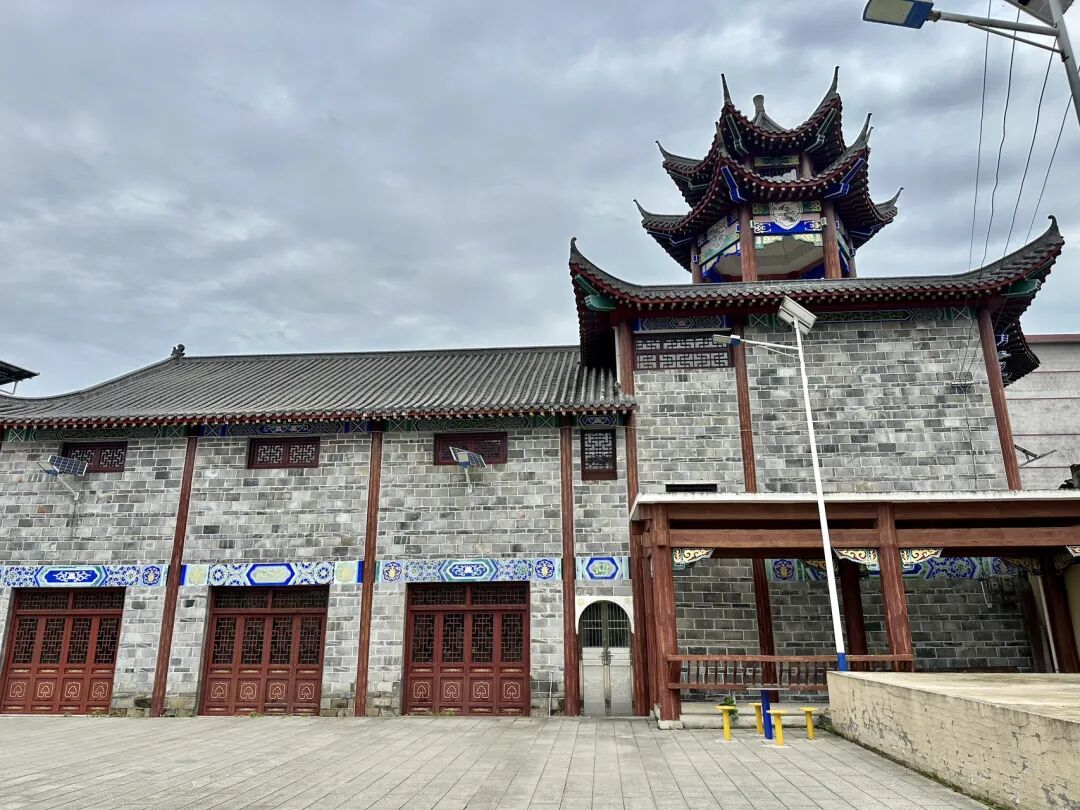
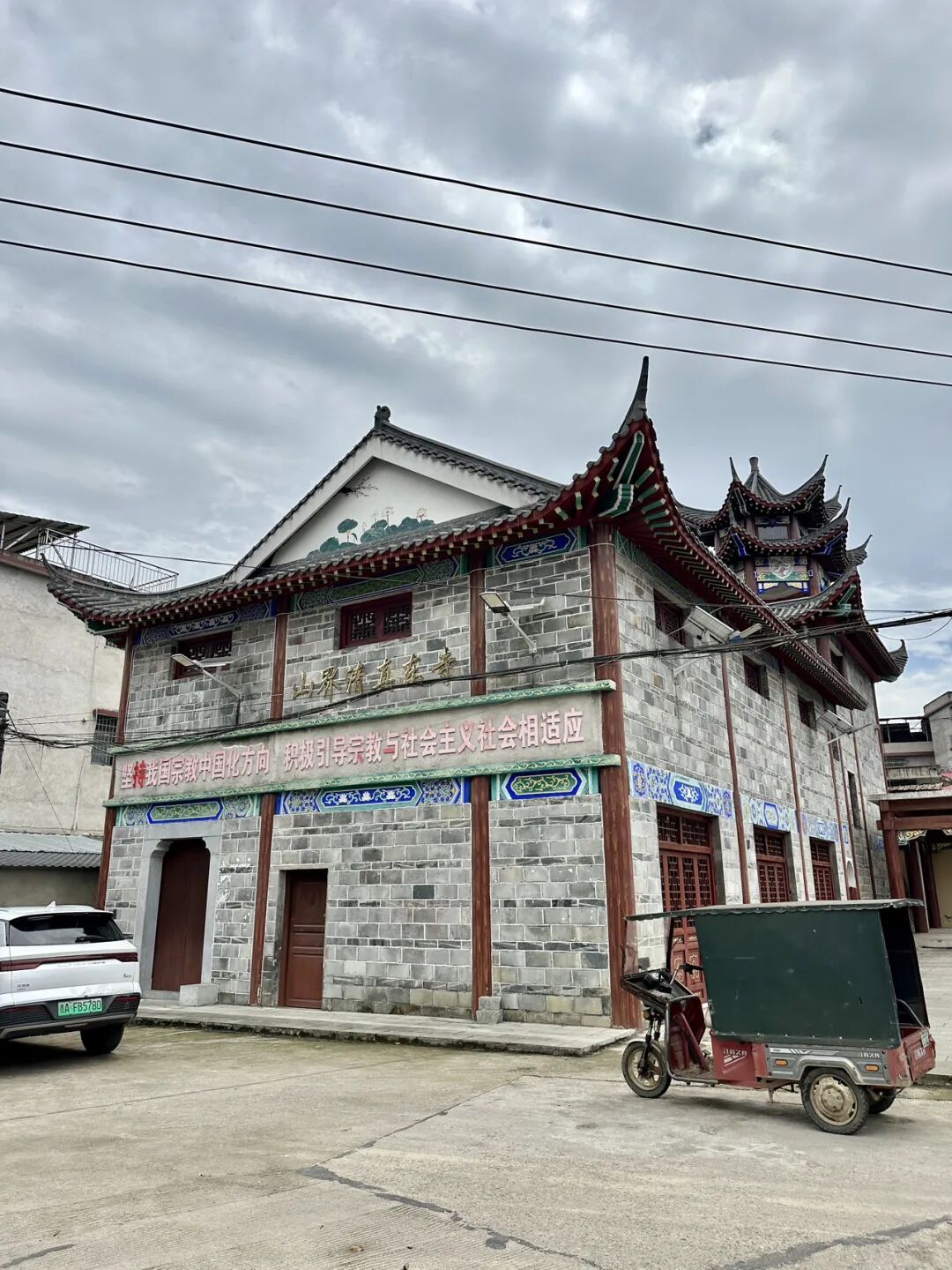
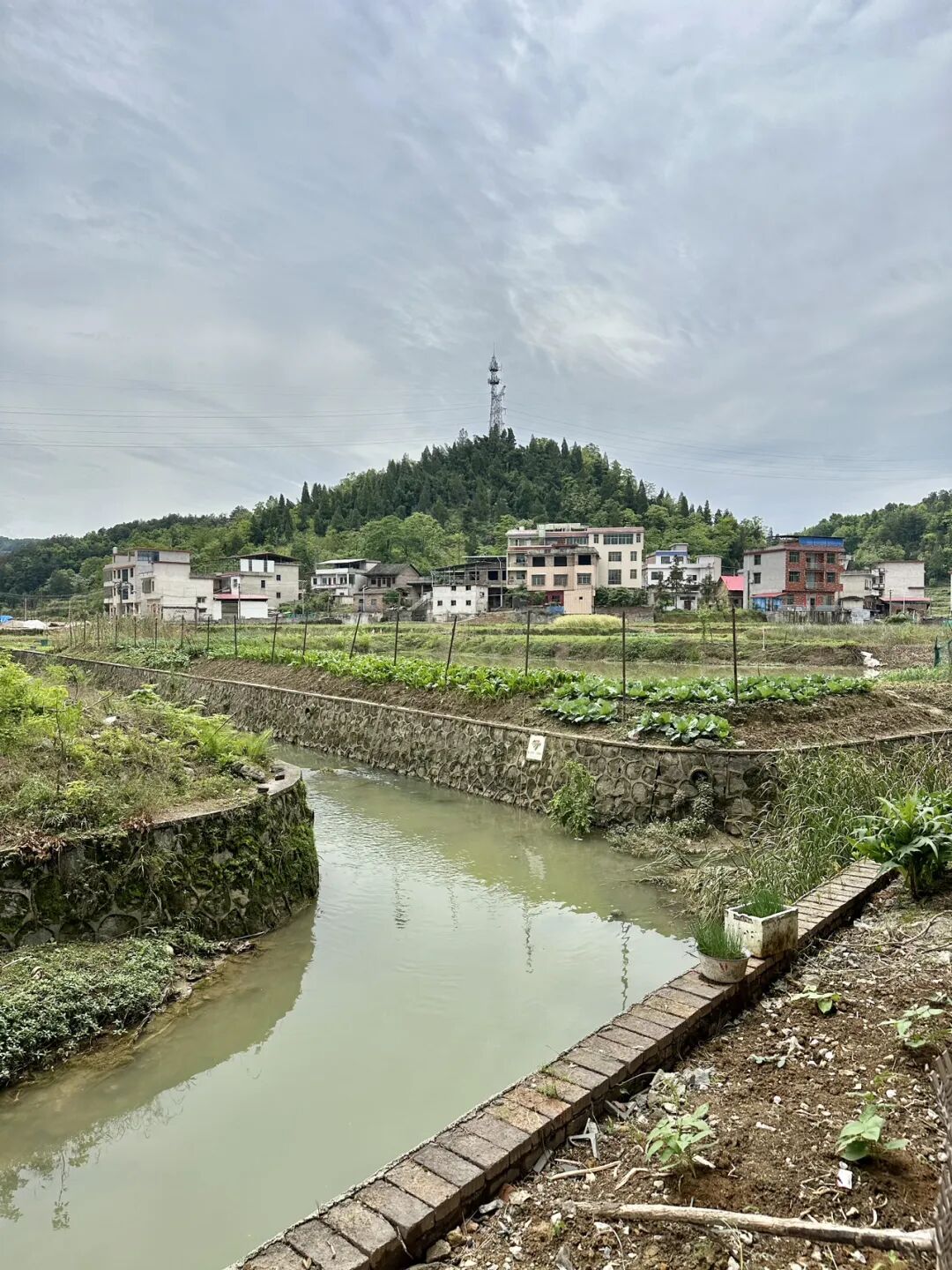
Shanjie West Mosque, also known as Jiajian Village Mosque, was first built in 1836 (the 16th year of the Daoguang reign). It was expanded during the Guangxu and Republic of China periods, and the local Hui Muslims there are surnamed Ma, Huang, and Zheng. The imams who have served at the mosque include Ma Chaoxin, Zheng Liansheng, Ma Daocheng, Ma Fucheng, and Ma Liangxu. The main hall of the West Mosque collapsed in 1991. It was being rebuilt when a flood destroyed it in 1996. After raising funds again, it was officially completed at the end of 1996 and renovated again in 2013.
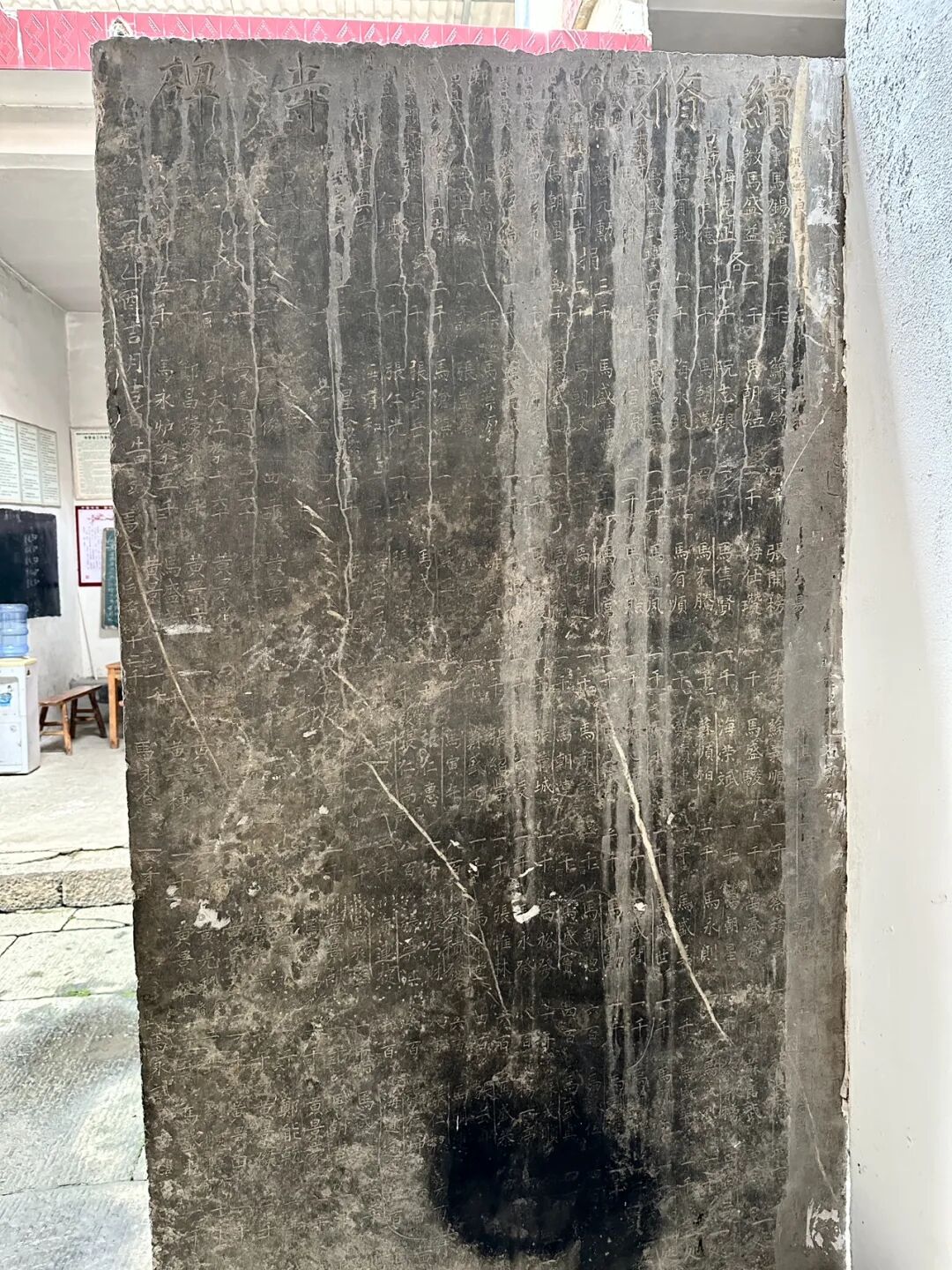
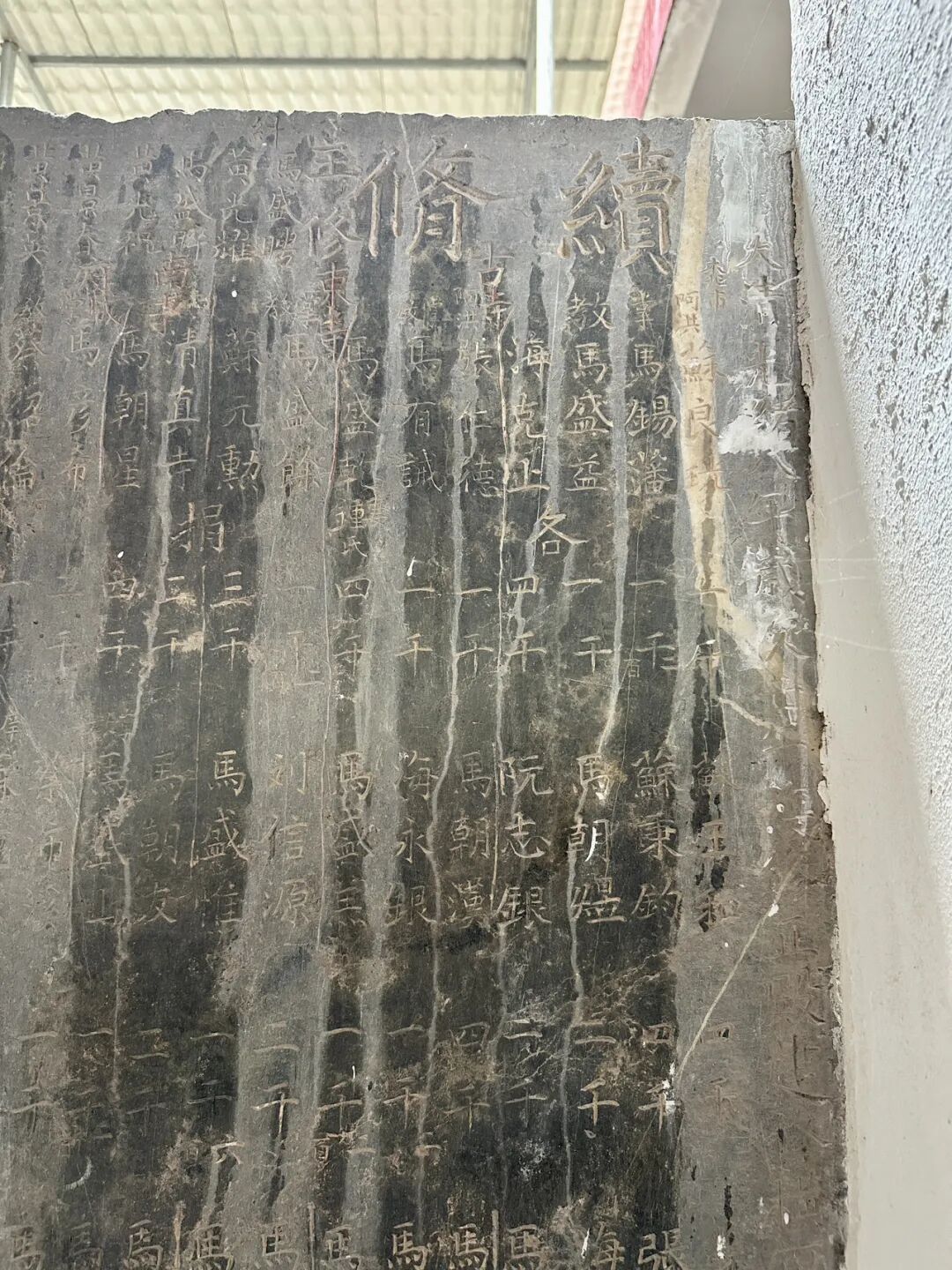
The mosque houses a stone tablet from the 11th year of the Guangxu reign titled 'Record of Continued Mosque Repairs,' which lists the names of the donors at that time and serves as a precious historical record.
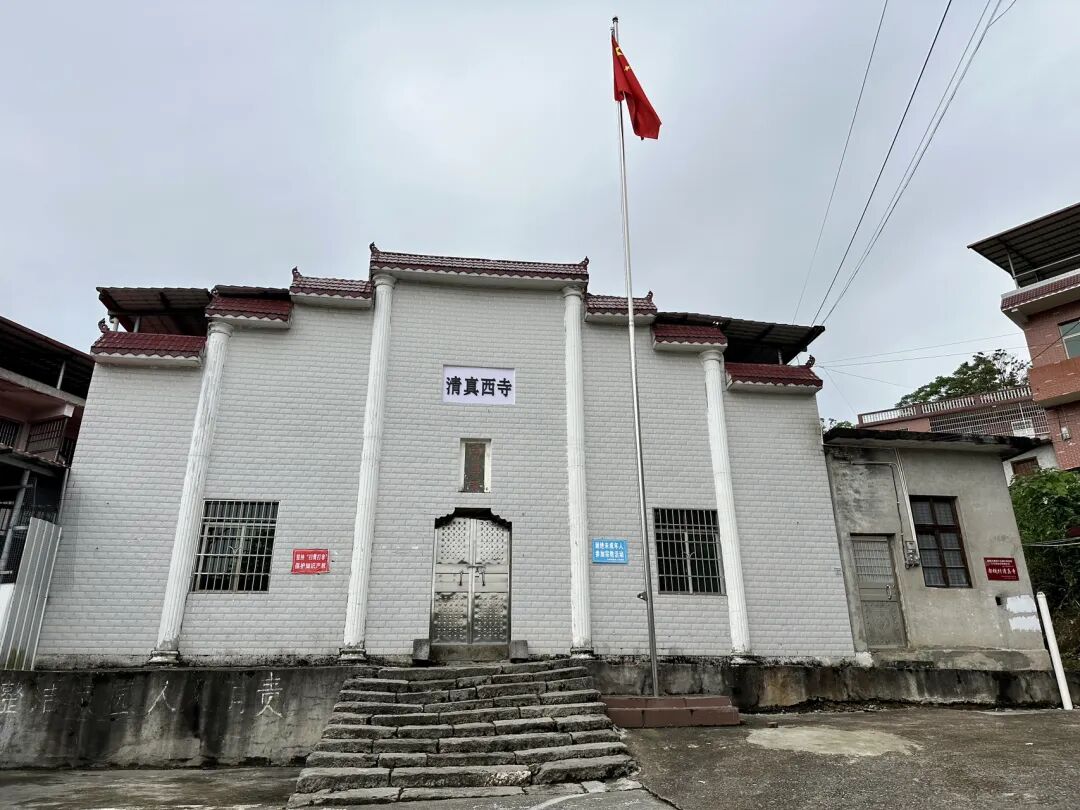
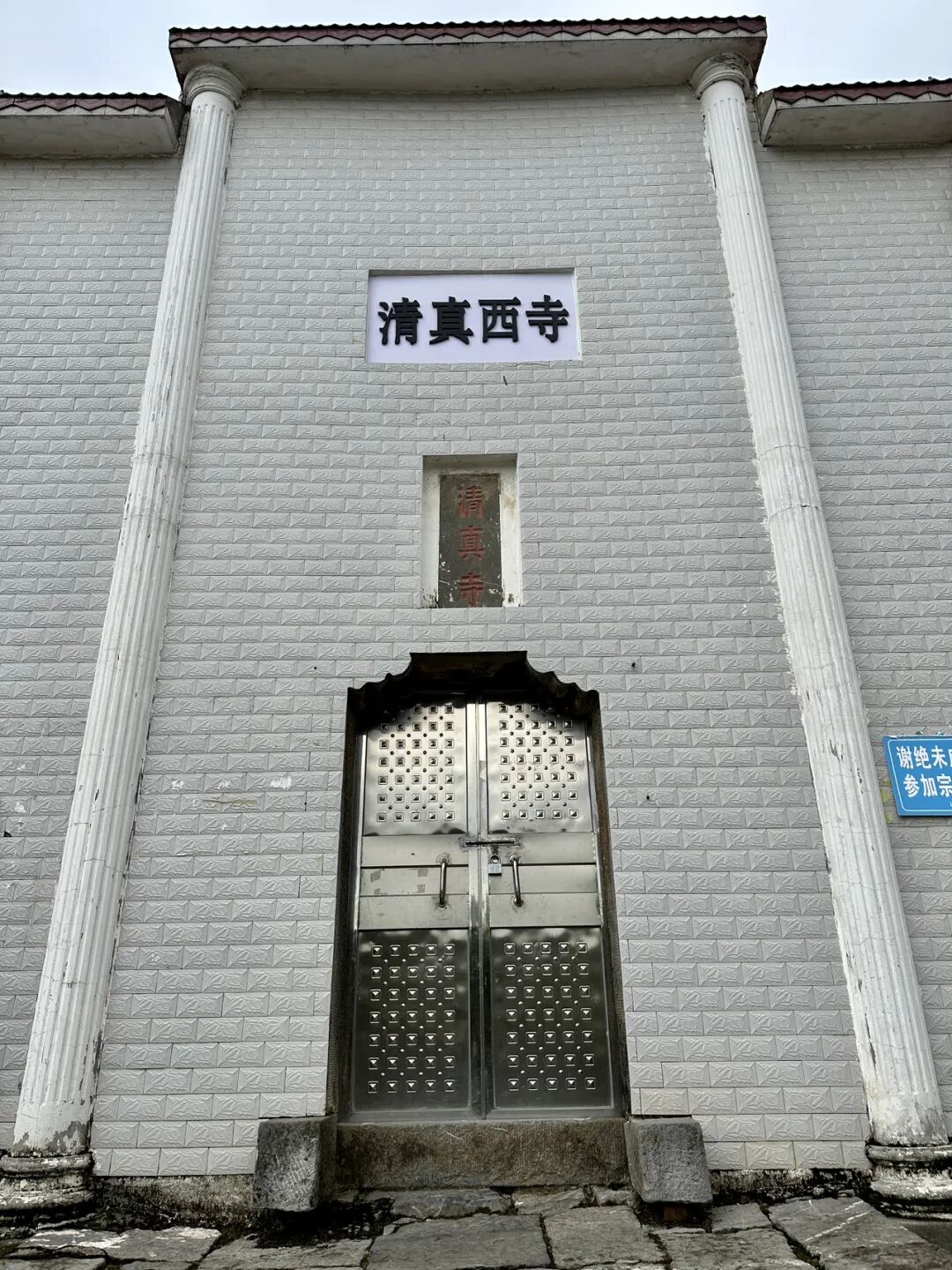
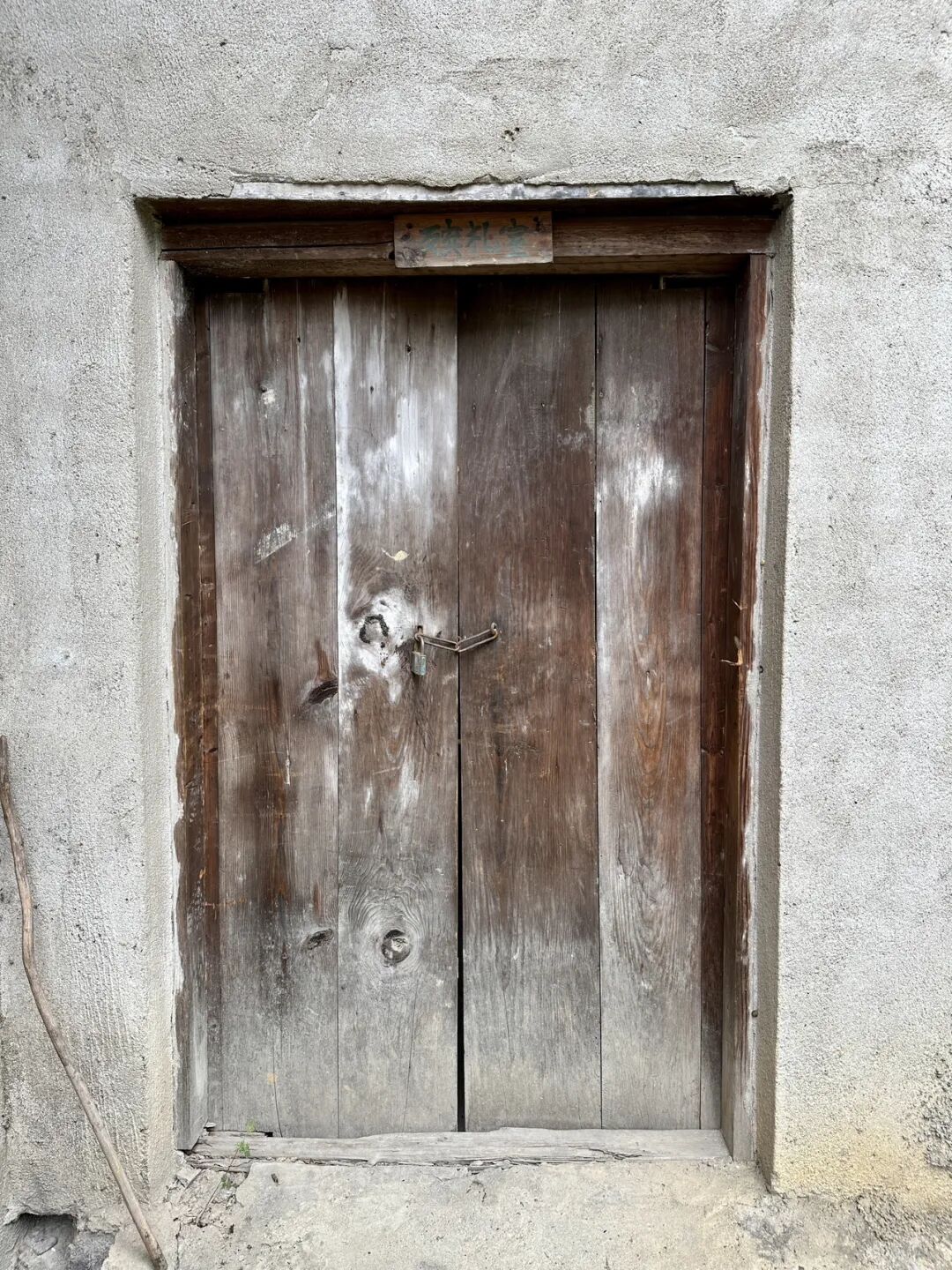
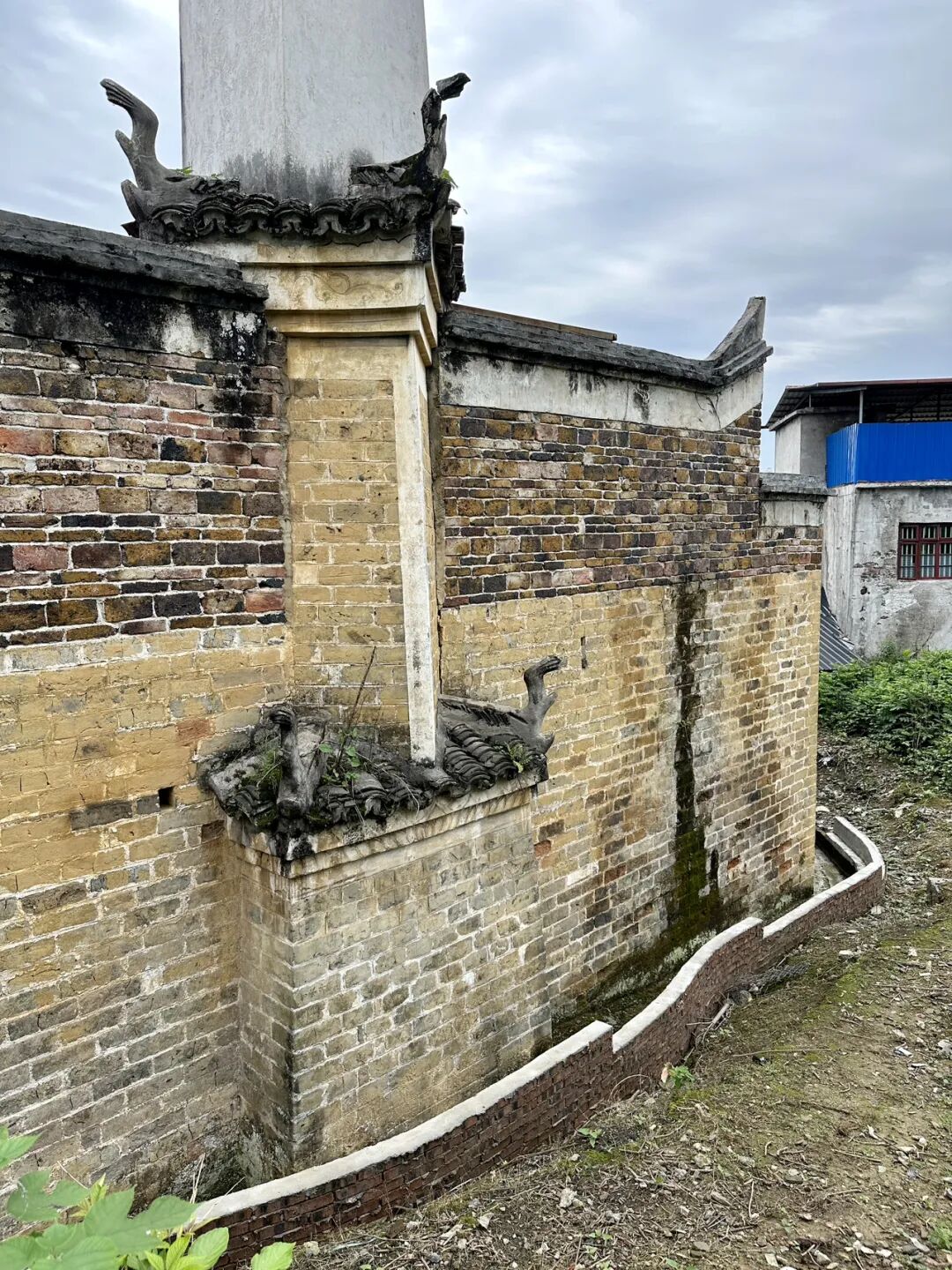
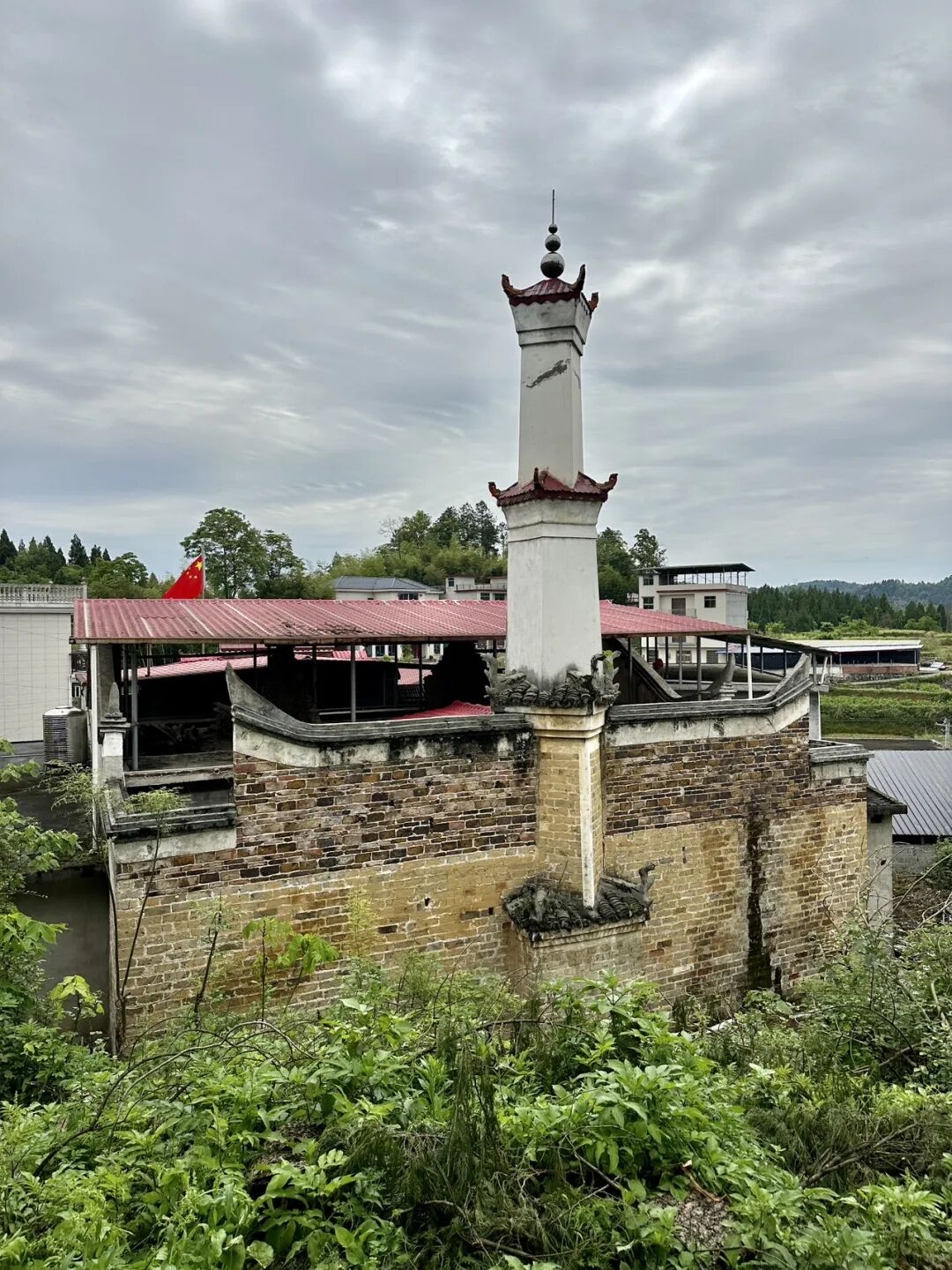
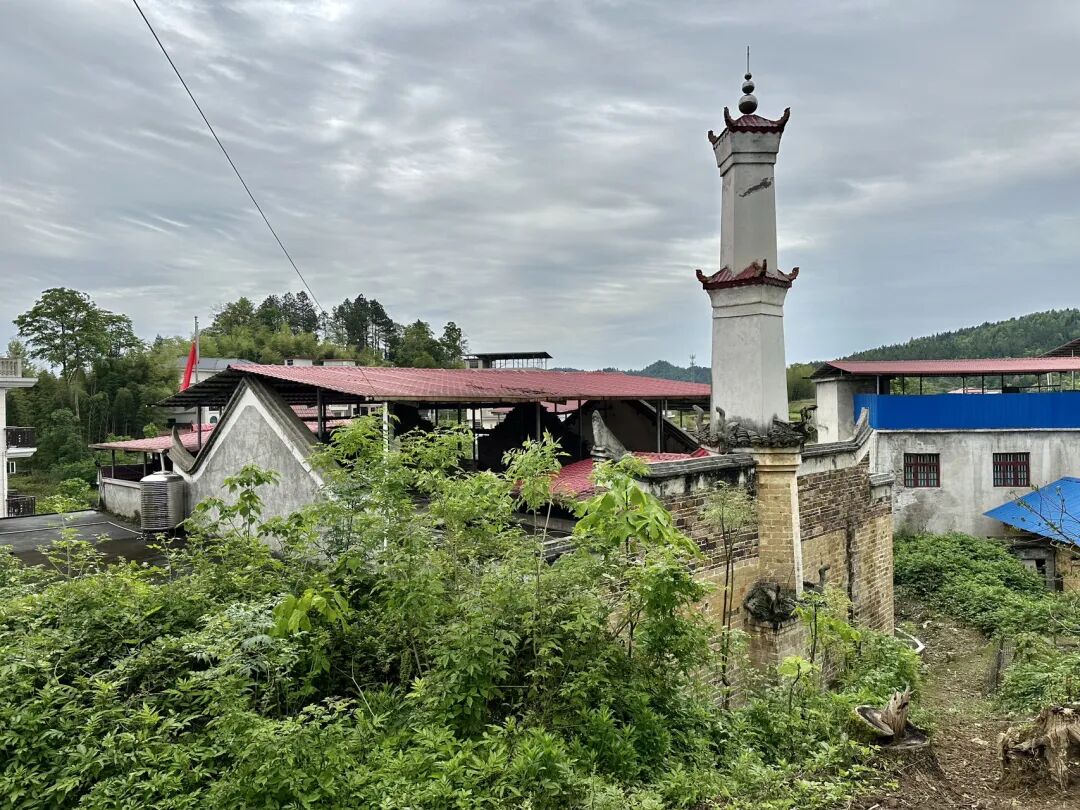
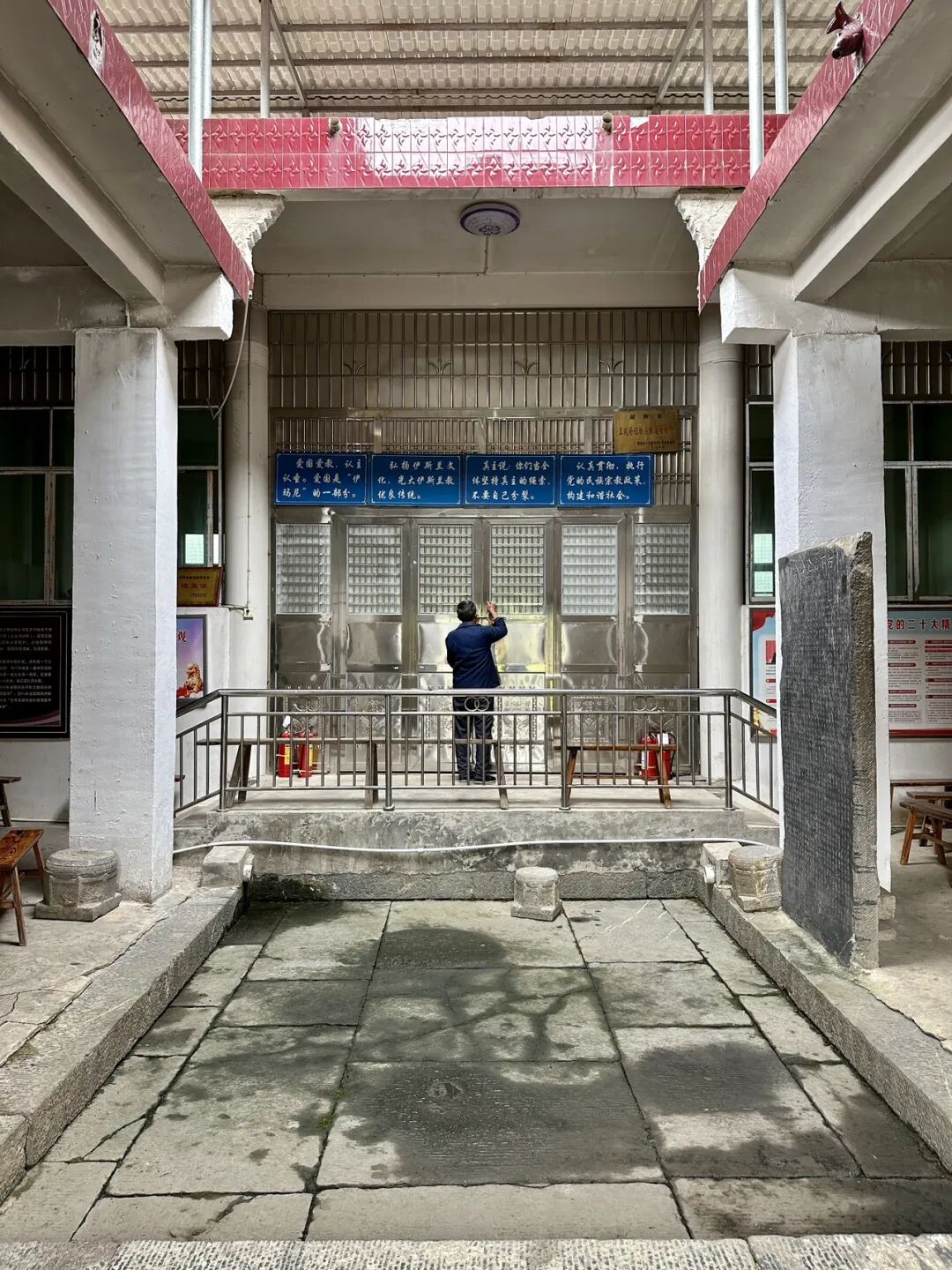
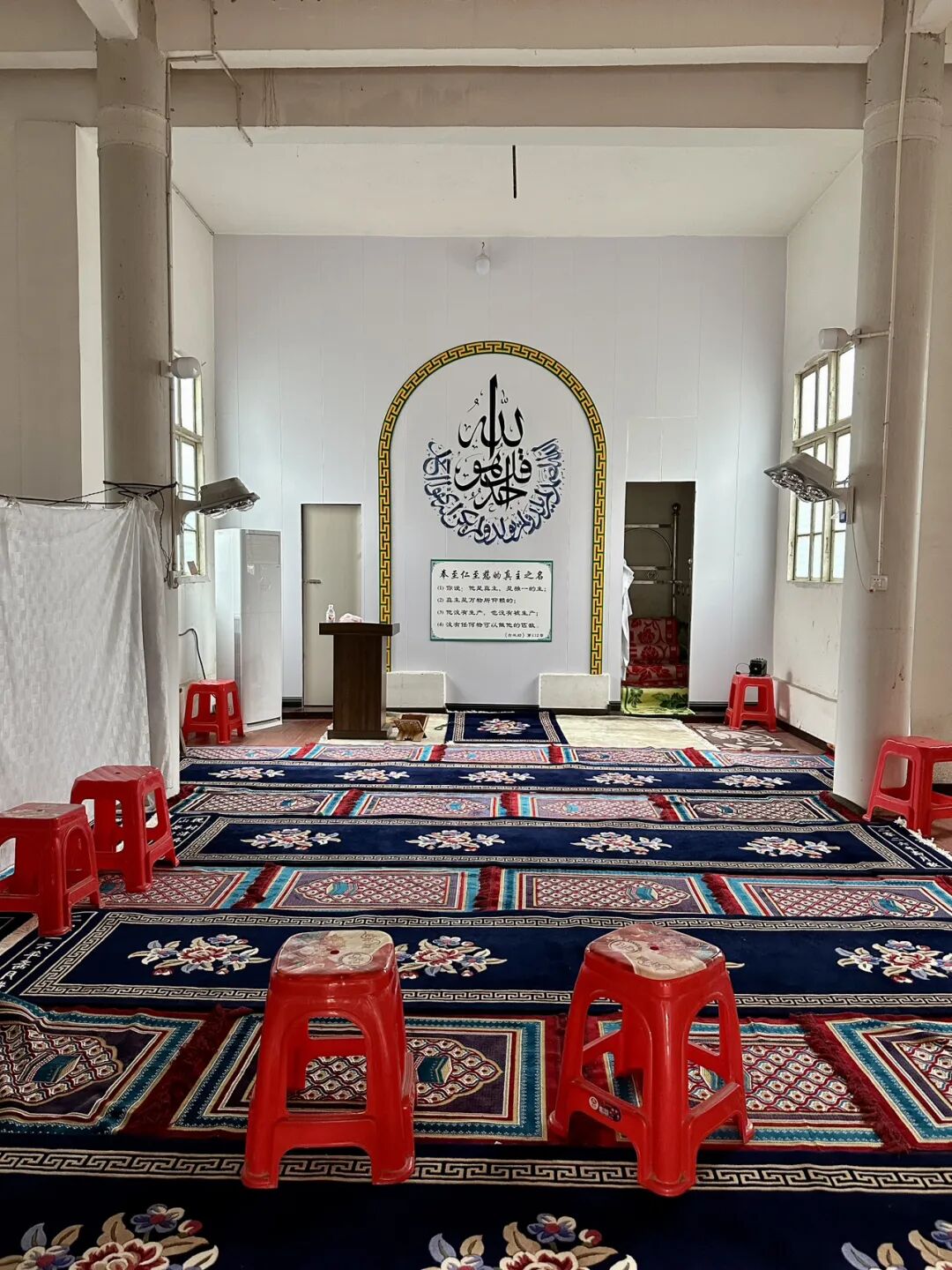
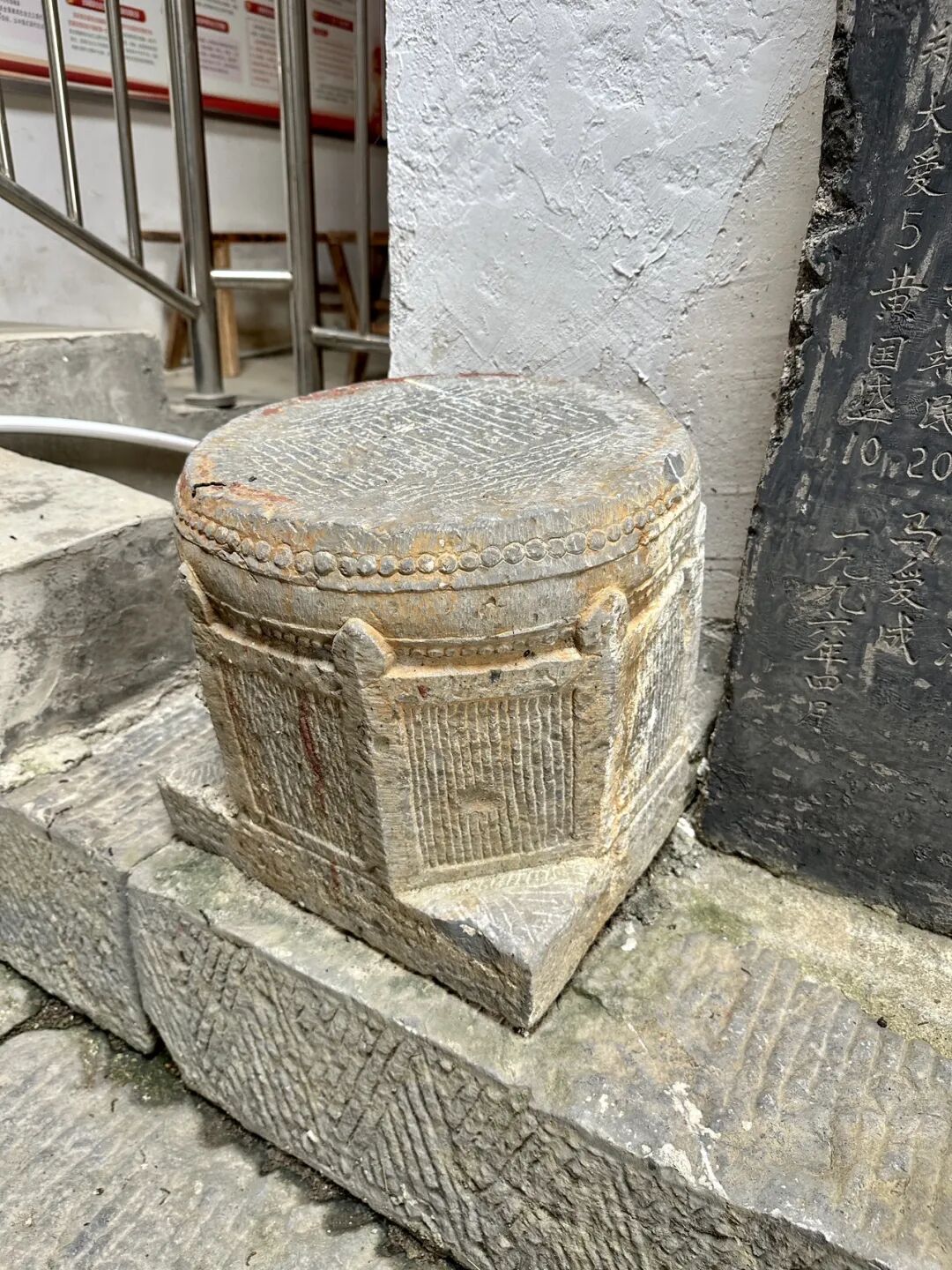
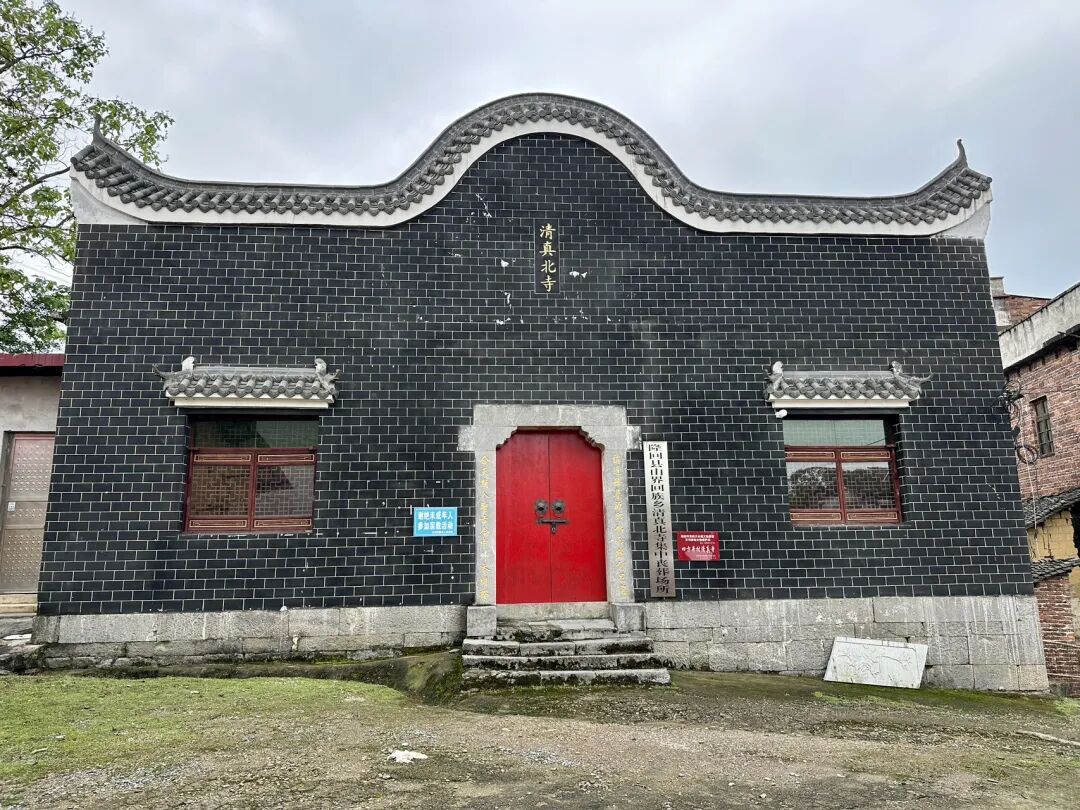
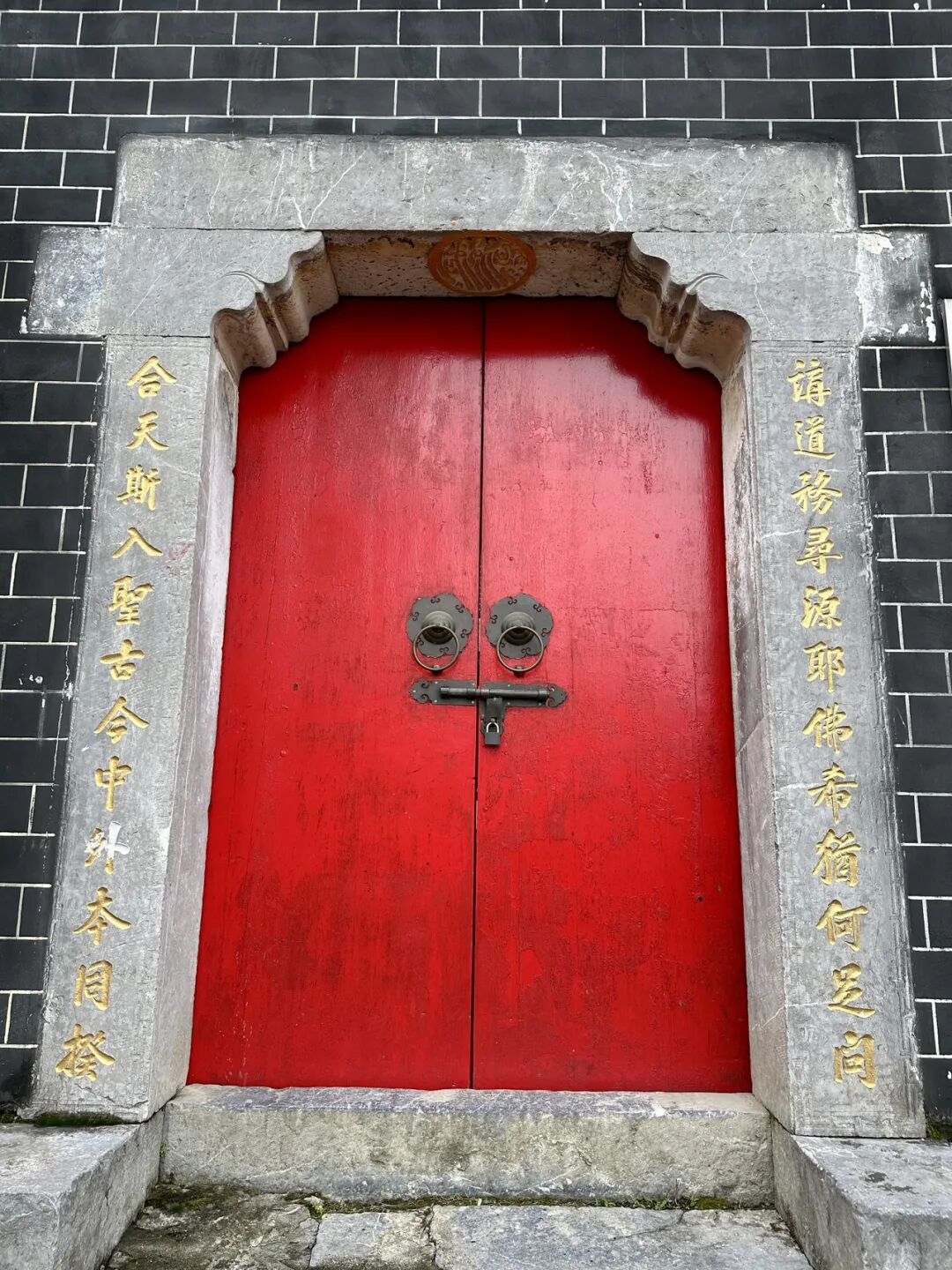
Shanjie North Mosque, also called Sifangjing Mosque, was first built in 1824 (the 4th year of the Daoguang reign), and the local Hui Muslims there are surnamed Ma. The main hall was destroyed after 1966. It was rebuilt in 1991 and again in 2000, with only the original stone gate pillars remaining. The pillars are carved with a couplet by the Republic of China educator Ma Linyi: 'To study the Way, one must seek the source; why ask about Jesus, Buddha, or the Greeks? To unite with Heaven is to enter the path of the sages; ancient and modern, Chinese and foreign, all share the same principle.'
Regrettably, the Shanjie North Mosque was also locked when I visited, and I could not enter.
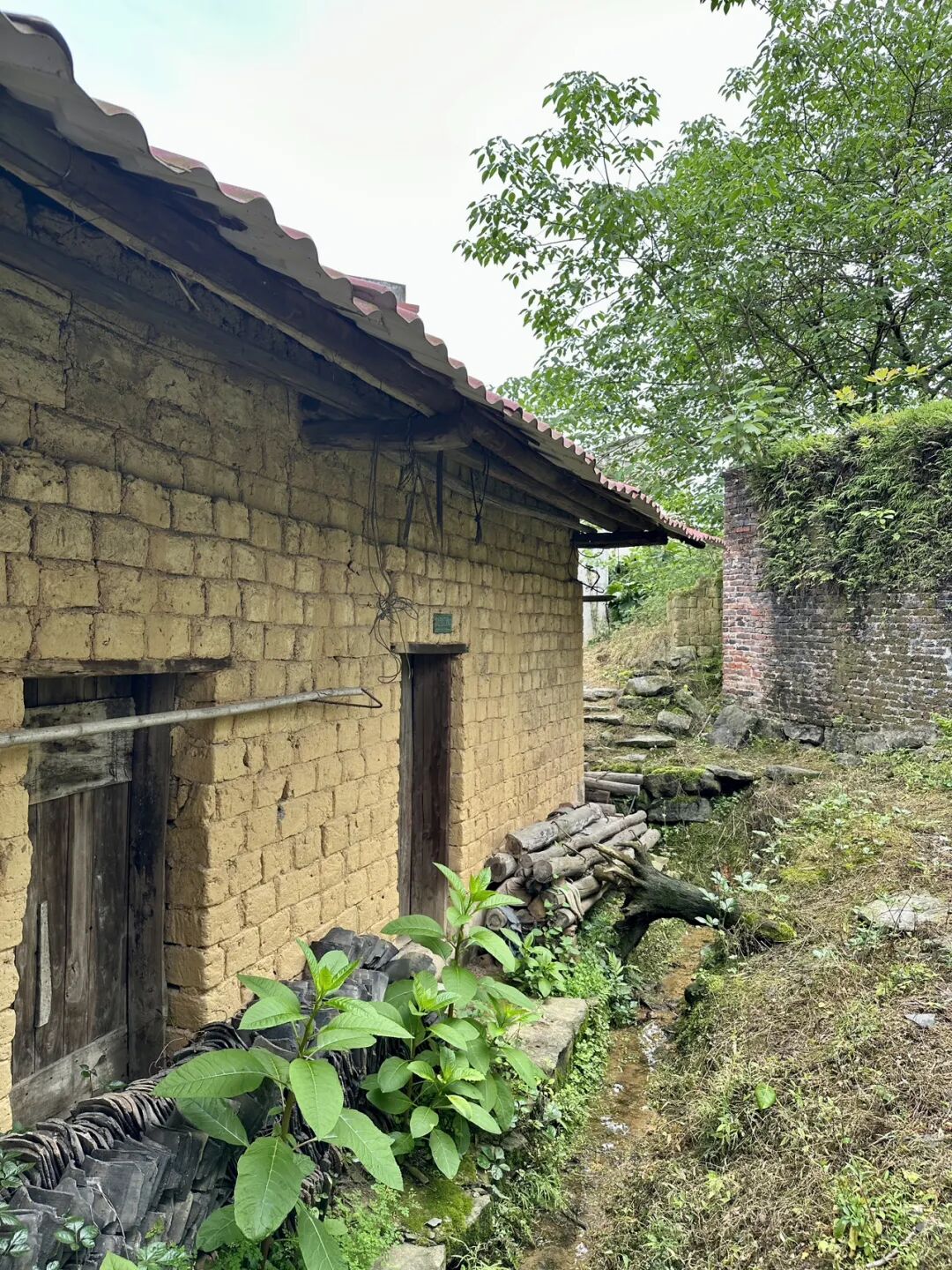
China Mosque Travel Guide: Eight Historic Mosque Complexes in Longhui, Shaoyang, Hunan (Part 1 of 2)
Articles • yusuf908 posted the article • 0 comments • 330 views • 2026-06-30 06:24
Summary: This China mosque travel guide covers eight historic mosque complexes in Longhui, Shaoyang, Hunan, with local Hui Muslim heritage and mosque travel details kept in clear English.
This article summarizes the key points about the eight mosques (sifang) in Longhui County, Shaoyang, Hunan. It keeps the original paragraph and image order. It is for readers interested in Muslim life, Islamic culture, and Chinese Islamic writing. It also helps people search for content like Chinese halal food.
Longhui County in Shaoyang City, Hunan, has a large population of Hui Muslims. I visited eight mosques there: Taohuaping Mosque, Shanjie Ancient Mosque, East Mosque, West Mosque, South Mosque, North Mosque, Luobai Mosque, and Niejiaoting Mosque. I will share them with you below.
Shanjie Ancient Mosque in Longhui County, Shaoyang, Hunan, is located in Laowuli, Shanjie Township. It was first built in 1444 (the ninth year of the Zhengtong reign of the Ming Dynasty) and is the oldest mosque in Longhui. During the Hongwu reign of the Ming Dynasty, Ma Zhi, the third son of Ma Cheng, the ancestor of the Ma family Hui Muslims in Shaoyang, moved from Shaoyang to Majia Ferry in Longhui to settle down. He was the first Hui Muslim in Longhui, and Shanjie Ancient Mosque was built by the Ma family.
Shanjie Ancient Mosque was renovated in 1919 and rebuilt into its current appearance in 2018.
Shanjie Ancient Mosque has a long tradition of teaching Islamic scripture. The head imams who have taught there include Ma Yulang, Ma Fujiu, Ma Fucheng, Ma Yucheng, Ma Yaochi, and Ding Zhenyi. They also hired imams from other places like Huang Xingxiang and Li Desheng. Ma Fucheng, an imam from this mosque, taught there for the longest time. In 1945, Imam Ma Yucheng taught at the ancient mosque and recruited many students (hailifan), marking the peak of the mosque's religious activities. To this day, the mosque continues its educational work and has trained many excellent young people.
On September 2, 1939, the Wugang County, Hunan branch of the China Islamic National Salvation Association was officially established at the mosque. The mosque's imam, Ma Fucheng, was elected as an officer. Inspired by the call to resist Japanese aggression and save the country, young Hui Muslims from the mosque, including Ma Qiyun, Ma Wuyang from the North Mosque, and Su Xingmin from Beishan, signed up for the army, took up arms, and headed to the front lines in East China.
Relics at Shanjie Ancient Mosque include stone pillar bases, wood carvings, and calligraphy of the mihrab in the kiln niche.
The stone couplet on the main gate reads: Clear the murky and promote the pure to follow the great path; preserve the truth and remove the false so that every generation has successors. The calligraphy was written by Ma Linyi, a Hui Muslim educator and Minister of Education in Shaoyang during the Republic of China. He is known as the Father of Northwest Education and the founder of modern Chinese Hui Muslim education.
Ma Linyi was born in Shaoyang, Hunan, in 1865. He passed the imperial examinations in 1902 and went to Japan on a government scholarship in 1904 to study teacher training. During that time, he met Sun Yat-sen, joined the Tongmenghui in 1905, and returned home to work on new government policies and modern education. In 1906, he founded Xiejin Primary School in Shaoyang, which was the first modern school for Hui Muslims in Hunan.
In 1908, he was transferred to the Qing government's Ministry of Education as a director. That same year, he helped establish the Beijing First Islamic Primary School inside the Niujie Mosque and later helped found the Islamic Education Association. While serving as Vice Minister of Education in 1912, Ma Linyi founded the Chinese Islamic Progressive Association with the support of Sun Yat-sen and served as its president.
While in charge of education in Gansu, Ma Linyi founded 277 schools of various types and set up the Gansu Islamic Education Promotion Office, spreading over a hundred Islamic primary schools across Gansu, Ningxia, and Qinghai. He selected over a hundred young people from the Northwest for government-funded study abroad, laying the foundation for modern basic education in the Northwest.
In 1928, Ma Linyi helped found the Islamic Middle School in Niujie and served as its vice chairman. In 1929, Ma Linyi became a board member of the Beiping Chengda Teachers' College. He actively updated the curriculum and improved teaching methods, helping Chengda develop into a modern school. In his later years, Ma Linyi devoted himself to the faith and served as an advisor to Wang Jingzhai for his translation of Islamic classics.
Shanjie East Mosque was first built in 1728 (the fifth year of the Yongzheng reign). The mosque has hired many imams over the years, including Su Yuebo, Ma Yulang, Ma Baochu, Zheng Liansheng, Ma Yuechi, Ma Yucheng, Tang Yuanqi, Hai Shiquan, Ma Chengyong, Ding Baohua, Ma Gen'ao, Ma Xiang'ao, and Ma Wuquan. Students from as far as Hainan and Guangxi came to study under the great imam Ma Yucheng in Gansu, and the local religious community was very prosperous.
It is a pity that the mosque was locked when I visited, so I could not go inside.
Shanjie West Mosque, also known as Jiajian Village Mosque, was first built in 1836 (the 16th year of the Daoguang reign). It was expanded during the Guangxu and Republic of China periods, and the local Hui Muslims there are surnamed Ma, Huang, and Zheng. The imams who have served at the mosque include Ma Chaoxin, Zheng Liansheng, Ma Daocheng, Ma Fucheng, and Ma Liangxu. The main hall of the West Mosque collapsed in 1991. It was being rebuilt when a flood destroyed it in 1996. After raising funds again, it was officially completed at the end of 1996 and renovated again in 2013.
The mosque houses a stone tablet from the 11th year of the Guangxu reign titled 'Record of Continued Mosque Repairs,' which lists the names of the donors at that time and serves as a precious historical record.
Shanjie North Mosque, also called Sifangjing Mosque, was first built in 1824 (the 4th year of the Daoguang reign), and the local Hui Muslims there are surnamed Ma. The main hall was destroyed after 1966. It was rebuilt in 1991 and again in 2000, with only the original stone gate pillars remaining. The pillars are carved with a couplet by the Republic of China educator Ma Linyi: 'To study the Way, one must seek the source; why ask about Jesus, Buddha, or the Greeks? To unite with Heaven is to enter the path of the sages; ancient and modern, Chinese and foreign, all share the same principle.'
Regrettably, the Shanjie North Mosque was also locked when I visited, and I could not enter. view all
Summary: This China mosque travel guide covers eight historic mosque complexes in Longhui, Shaoyang, Hunan, with local Hui Muslim heritage and mosque travel details kept in clear English.
This article summarizes the key points about the eight mosques (sifang) in Longhui County, Shaoyang, Hunan. It keeps the original paragraph and image order. It is for readers interested in Muslim life, Islamic culture, and Chinese Islamic writing. It also helps people search for content like Chinese halal food.
Longhui County in Shaoyang City, Hunan, has a large population of Hui Muslims. I visited eight mosques there: Taohuaping Mosque, Shanjie Ancient Mosque, East Mosque, West Mosque, South Mosque, North Mosque, Luobai Mosque, and Niejiaoting Mosque. I will share them with you below.
Shanjie Ancient Mosque in Longhui County, Shaoyang, Hunan, is located in Laowuli, Shanjie Township. It was first built in 1444 (the ninth year of the Zhengtong reign of the Ming Dynasty) and is the oldest mosque in Longhui. During the Hongwu reign of the Ming Dynasty, Ma Zhi, the third son of Ma Cheng, the ancestor of the Ma family Hui Muslims in Shaoyang, moved from Shaoyang to Majia Ferry in Longhui to settle down. He was the first Hui Muslim in Longhui, and Shanjie Ancient Mosque was built by the Ma family.
Shanjie Ancient Mosque was renovated in 1919 and rebuilt into its current appearance in 2018.
Shanjie Ancient Mosque has a long tradition of teaching Islamic scripture. The head imams who have taught there include Ma Yulang, Ma Fujiu, Ma Fucheng, Ma Yucheng, Ma Yaochi, and Ding Zhenyi. They also hired imams from other places like Huang Xingxiang and Li Desheng. Ma Fucheng, an imam from this mosque, taught there for the longest time. In 1945, Imam Ma Yucheng taught at the ancient mosque and recruited many students (hailifan), marking the peak of the mosque's religious activities. To this day, the mosque continues its educational work and has trained many excellent young people.
On September 2, 1939, the Wugang County, Hunan branch of the China Islamic National Salvation Association was officially established at the mosque. The mosque's imam, Ma Fucheng, was elected as an officer. Inspired by the call to resist Japanese aggression and save the country, young Hui Muslims from the mosque, including Ma Qiyun, Ma Wuyang from the North Mosque, and Su Xingmin from Beishan, signed up for the army, took up arms, and headed to the front lines in East China.
Relics at Shanjie Ancient Mosque include stone pillar bases, wood carvings, and calligraphy of the mihrab in the kiln niche.
The stone couplet on the main gate reads: Clear the murky and promote the pure to follow the great path; preserve the truth and remove the false so that every generation has successors. The calligraphy was written by Ma Linyi, a Hui Muslim educator and Minister of Education in Shaoyang during the Republic of China. He is known as the Father of Northwest Education and the founder of modern Chinese Hui Muslim education.
Ma Linyi was born in Shaoyang, Hunan, in 1865. He passed the imperial examinations in 1902 and went to Japan on a government scholarship in 1904 to study teacher training. During that time, he met Sun Yat-sen, joined the Tongmenghui in 1905, and returned home to work on new government policies and modern education. In 1906, he founded Xiejin Primary School in Shaoyang, which was the first modern school for Hui Muslims in Hunan.
In 1908, he was transferred to the Qing government's Ministry of Education as a director. That same year, he helped establish the Beijing First Islamic Primary School inside the Niujie Mosque and later helped found the Islamic Education Association. While serving as Vice Minister of Education in 1912, Ma Linyi founded the Chinese Islamic Progressive Association with the support of Sun Yat-sen and served as its president.
While in charge of education in Gansu, Ma Linyi founded 277 schools of various types and set up the Gansu Islamic Education Promotion Office, spreading over a hundred Islamic primary schools across Gansu, Ningxia, and Qinghai. He selected over a hundred young people from the Northwest for government-funded study abroad, laying the foundation for modern basic education in the Northwest.
In 1928, Ma Linyi helped found the Islamic Middle School in Niujie and served as its vice chairman. In 1929, Ma Linyi became a board member of the Beiping Chengda Teachers' College. He actively updated the curriculum and improved teaching methods, helping Chengda develop into a modern school. In his later years, Ma Linyi devoted himself to the faith and served as an advisor to Wang Jingzhai for his translation of Islamic classics.
Shanjie East Mosque was first built in 1728 (the fifth year of the Yongzheng reign). The mosque has hired many imams over the years, including Su Yuebo, Ma Yulang, Ma Baochu, Zheng Liansheng, Ma Yuechi, Ma Yucheng, Tang Yuanqi, Hai Shiquan, Ma Chengyong, Ding Baohua, Ma Gen'ao, Ma Xiang'ao, and Ma Wuquan. Students from as far as Hainan and Guangxi came to study under the great imam Ma Yucheng in Gansu, and the local religious community was very prosperous.
It is a pity that the mosque was locked when I visited, so I could not go inside.
Shanjie West Mosque, also known as Jiajian Village Mosque, was first built in 1836 (the 16th year of the Daoguang reign). It was expanded during the Guangxu and Republic of China periods, and the local Hui Muslims there are surnamed Ma, Huang, and Zheng. The imams who have served at the mosque include Ma Chaoxin, Zheng Liansheng, Ma Daocheng, Ma Fucheng, and Ma Liangxu. The main hall of the West Mosque collapsed in 1991. It was being rebuilt when a flood destroyed it in 1996. After raising funds again, it was officially completed at the end of 1996 and renovated again in 2013.
The mosque houses a stone tablet from the 11th year of the Guangxu reign titled 'Record of Continued Mosque Repairs,' which lists the names of the donors at that time and serves as a precious historical record.
Shanjie North Mosque, also called Sifangjing Mosque, was first built in 1824 (the 4th year of the Daoguang reign), and the local Hui Muslims there are surnamed Ma. The main hall was destroyed after 1966. It was rebuilt in 1991 and again in 2000, with only the original stone gate pillars remaining. The pillars are carved with a couplet by the Republic of China educator Ma Linyi: 'To study the Way, one must seek the source; why ask about Jesus, Buddha, or the Greeks? To unite with Heaven is to enter the path of the sages; ancient and modern, Chinese and foreign, all share the same principle.'
Regrettably, the Shanjie North Mosque was also locked when I visited, and I could not enter.
China Mosque Travel Guide: Eight Historic Mosque Complexes in Longhui, Shaoyang, Hunan
Articles • yusuf908 posted the article • 0 comments • 322 views • 2026-06-30 06:24
Summary: This China mosque travel guide covers eight historic mosque complexes in Longhui, Shaoyang, Hunan, with local Hui Muslim heritage and mosque travel details kept in clear English.
This article summarizes the key points about the eight mosques (sifang) in Longhui County, Shaoyang, Hunan. It keeps the original paragraph and image order. It is for readers interested in Muslim life, Islamic culture, and Chinese Islamic writing. It also helps people search for content like Chinese halal food.
Longhui County in Shaoyang City, Hunan, has a large population of Hui Muslims. I visited eight mosques there: Taohuaping Mosque, Shanjie Ancient Mosque, East Mosque, West Mosque, South Mosque, North Mosque, Luobai Mosque, and Niejiaoting Mosque. I will share them with you below.
Shanjie Ancient Mosque in Longhui County, Shaoyang, Hunan, is located in Laowuli, Shanjie Township. It was first built in 1444 (the ninth year of the Zhengtong reign of the Ming Dynasty) and is the oldest mosque in Longhui. During the Hongwu reign of the Ming Dynasty, Ma Zhi, the third son of Ma Cheng, the ancestor of the Ma family Hui Muslims in Shaoyang, moved from Shaoyang to Majia Ferry in Longhui to settle down. He was the first Hui Muslim in Longhui, and Shanjie Ancient Mosque was built by the Ma family.
Shanjie Ancient Mosque was renovated in 1919 and rebuilt into its current appearance in 2018.
Shanjie Ancient Mosque has a long tradition of teaching Islamic scripture. The head imams who have taught there include Ma Yulang, Ma Fujiu, Ma Fucheng, Ma Yucheng, Ma Yaochi, and Ding Zhenyi. They also hired imams from other places like Huang Xingxiang and Li Desheng. Ma Fucheng, an imam from this mosque, taught there for the longest time. In 1945, Imam Ma Yucheng taught at the ancient mosque and recruited many students (hailifan), marking the peak of the mosque's religious activities. To this day, the mosque continues its educational work and has trained many excellent young people.
On September 2, 1939, the Wugang County, Hunan branch of the China Islamic National Salvation Association was officially established at the mosque. The mosque's imam, Ma Fucheng, was elected as an officer. Inspired by the call to resist Japanese aggression and save the country, young Hui Muslims from the mosque, including Ma Qiyun, Ma Wuyang from the North Mosque, and Su Xingmin from Beishan, signed up for the army, took up arms, and headed to the front lines in East China.
Relics at Shanjie Ancient Mosque include stone pillar bases, wood carvings, and calligraphy of the mihrab in the kiln niche.
The stone couplet on the main gate reads: Clear the murky and promote the pure to follow the great path; preserve the truth and remove the false so that every generation has successors. The calligraphy was written by Ma Linyi, a Hui Muslim educator and Minister of Education in Shaoyang during the Republic of China. He is known as the Father of Northwest Education and the founder of modern Chinese Hui Muslim education.
Ma Linyi was born in Shaoyang, Hunan, in 1865. He passed the imperial examinations in 1902 and went to Japan on a government scholarship in 1904 to study teacher training. During that time, he met Sun Yat-sen, joined the Tongmenghui in 1905, and returned home to work on new government policies and modern education. In 1906, he founded Xiejin Primary School in Shaoyang, which was the first modern school for Hui Muslims in Hunan.
In 1908, he was transferred to the Qing government's Ministry of Education as a director. That same year, he helped establish the Beijing First Islamic Primary School inside the Niujie Mosque and later helped found the Islamic Education Association. While serving as Vice Minister of Education in 1912, Ma Linyi founded the Chinese Islamic Progressive Association with the support of Sun Yat-sen and served as its president.
While in charge of education in Gansu, Ma Linyi founded 277 schools of various types and set up the Gansu Islamic Education Promotion Office, spreading over a hundred Islamic primary schools across Gansu, Ningxia, and Qinghai. He selected over a hundred young people from the Northwest for government-funded study abroad, laying the foundation for modern basic education in the Northwest.
In 1928, Ma Linyi helped found the Islamic Middle School in Niujie and served as its vice chairman. In 1929, Ma Linyi became a board member of the Beiping Chengda Teachers' College. He actively updated the curriculum and improved teaching methods, helping Chengda develop into a modern school. In his later years, Ma Linyi devoted himself to the faith and served as an advisor to Wang Jingzhai for his translation of Islamic classics.
Shanjie East Mosque was first built in 1728 (the fifth year of the Yongzheng reign). The mosque has hired many imams over the years, including Su Yuebo, Ma Yulang, Ma Baochu, Zheng Liansheng, Ma Yuechi, Ma Yucheng, Tang Yuanqi, Hai Shiquan, Ma Chengyong, Ding Baohua, Ma Gen'ao, Ma Xiang'ao, and Ma Wuquan. Students from as far as Hainan and Guangxi came to study under the great imam Ma Yucheng in Gansu, and the local religious community was very prosperous.
It is a pity that the mosque was locked when I visited, so I could not go inside.
Shanjie West Mosque, also known as Jiajian Village Mosque, was first built in 1836 (the 16th year of the Daoguang reign). It was expanded during the Guangxu and Republic of China periods, and the local Hui Muslims there are surnamed Ma, Huang, and Zheng. The imams who have served at the mosque include Ma Chaoxin, Zheng Liansheng, Ma Daocheng, Ma Fucheng, and Ma Liangxu. The main hall of the West Mosque collapsed in 1991. It was being rebuilt when a flood destroyed it in 1996. After raising funds again, it was officially completed at the end of 1996 and renovated again in 2013.
The mosque houses a stone tablet from the 11th year of the Guangxu reign titled 'Record of Continued Mosque Repairs,' which lists the names of the donors at that time and serves as a precious historical record.
Shanjie North Mosque, also called Sifangjing Mosque, was first built in 1824 (the 4th year of the Daoguang reign), and the local Hui Muslims there are surnamed Ma. The main hall was destroyed after 1966. It was rebuilt in 1991 and again in 2000, with only the original stone gate pillars remaining. The pillars are carved with a couplet by the Republic of China educator Ma Linyi: 'To study the Way, one must seek the source; why ask about Jesus, Buddha, or the Greeks? To unite with Heaven is to enter the path of the sages; ancient and modern, Chinese and foreign, all share the same principle.'
Regrettably, the Shanjie North Mosque was also locked when I visited, and I could not enter.
Shanjie South Mosque was first built in 1768 (the 33rd year of the Qianlong reign). The local Hui Muslims are surnamed Ma, and the imams who have taught there include Ma Baochu, Zheng Liansheng, Li Bashan, Ma Fucheng, Ma Daocheng, and Ma Fu'en.
Ma Yingdong, a local resident, went to study in Japan in 1905 and joined the Tongmenghui. In 1907, he helped organize the 'Eastern Islamic Education Association' and founded its journal, 'Awakening the Hui' (Xing Hui Pian). After returning home from his studies, Ma Yingdong dedicated himself to Hui Muslim education and founded the modern Gongjin Primary School at Shanjie South Mosque, where he served as principal.
It is a pity that the Shanjie South Mosque was locked when I visited, so I could not go inside.
Luobai Mosque was first built in 1933, and the local community members are of the Ding surname. Hui Muslims moved to Luobai in the early Qing Dynasty. For a long time, they were affiliated with the Shanjie South Mosque, but the distance made it very inconvenient. In 1933, Imam Ding Zhenyi, a Luobai Hui Muslim who taught at the Gansu Hui Language Institute, resigned from his teaching position to return home and organize the construction of a mosque. Imam Ding traveled everywhere to raise funds and finally built Luobai Mosque at the top of the Yaolong residential area in Luobai.
Imam Ding Zhenyi taught at the Luobai village primary school in 1939, and during that time, he started an introductory class for Islamic studies at Luobai Mosque. Later, he served as the imam of Hetian Mosque in Shaoyang and Liutang Mosque in Guilin, Guangxi. He also worked as a teacher at the primary school attached to Guilin Chengda Normal School, dean and professor at the Guilin Hui Language Institute, and professor at the Hainan Hui Language School. He helped organize the Wugang Branch of the Hunan Chapter of the China Islamic National Salvation Association and served as its general secretary.
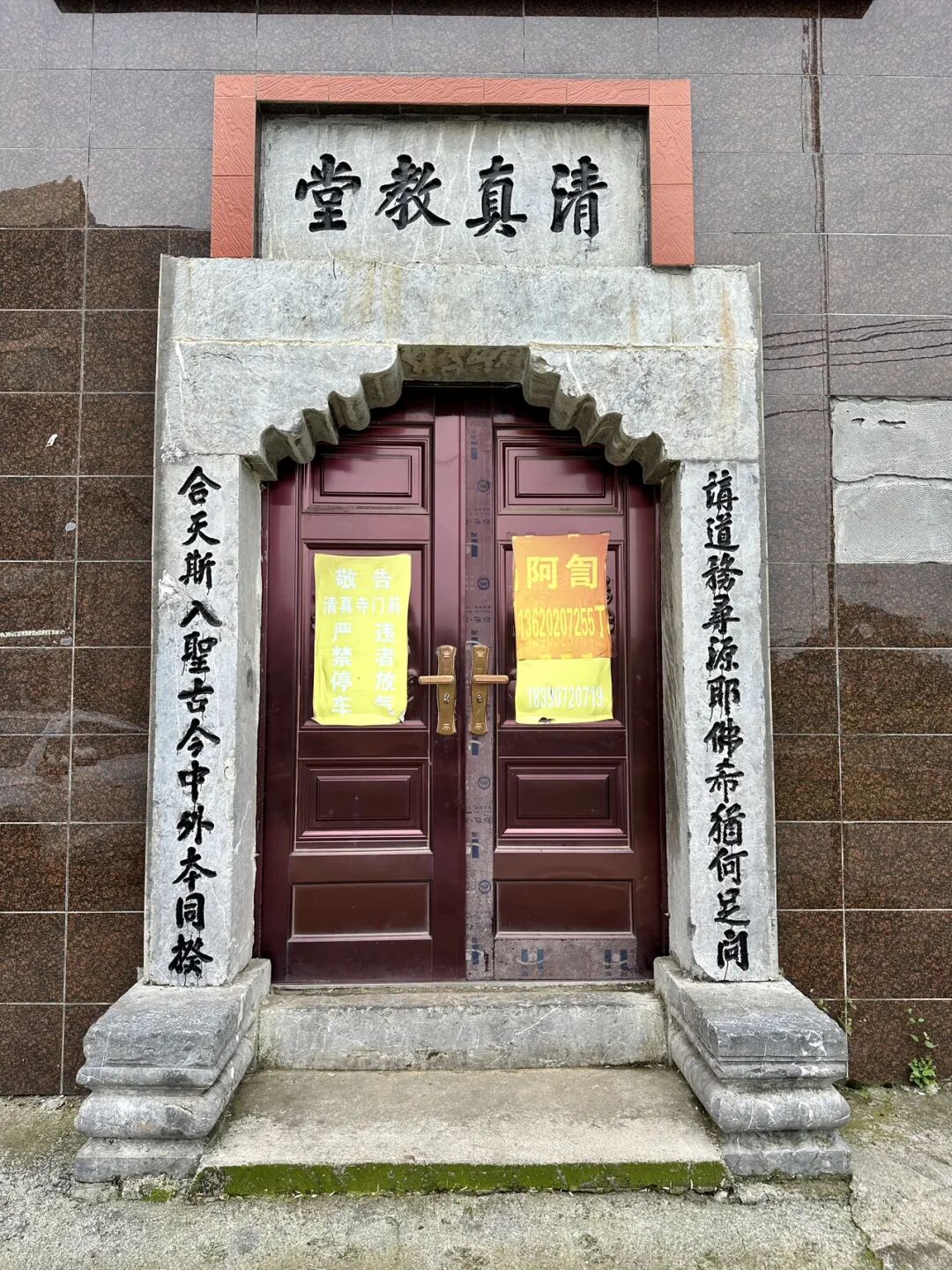
Luobai Mosque was torn down in 1970, rebuilt in 1985, and rebuilt again in 2000 into the building that stands today. The mosque still has the original door plaque reading "Islamic Mosque" (Qingzhen Jiaotang) and a pair of couplets by the Republican-era educator Ma Linyi: "When seeking the source of the truth, why ask about Jesus, Buddha, or others? To unite with Heaven is to enter the path of the sages; ancient and modern, East and West, the principle is the same."
Niejiaoting Mosque was first built in 1926, and the community members are of the Ma, Hai, and Su surnames. Most of the Hui Muslims in Beishan Township, where Niejiaoting is located, moved there from other places in the late Qing Dynasty. Because it was inconvenient to perform namaz, Ma Youde, Ma Daofeng, Hai Liancheng, and others raised funds to build the mosque. The imams at the mosque include Ma Chunming, Ma Youlin, Imam Bu, Imam Zhang, Hai Siquan, and Deng Mengjun. Niejia Pavilion Mosque was destroyed after 1966, rebuilt later, and then rebuilt again in 2008.
The mosque houses the 1948 "Zhaoxiu Mosque Stele," which serves as a precious historical witness.
Taohuaping Mosque is in the center of the county. It was first built in 1820 (the 25th year of the Jiaqing reign). In 1827 (the 7th year of the Daoguang reign), it was expanded after buying shops owned by the Su and Ma families on the front street. In 1834 (the 14th year of the Daoguang reign), it bought three more shops in front of the mosque. In 1841 (the 21st year of the Daoguang reign), the rear hall was renovated, and in 1850 (the 30th year of the Daoguang reign), the front gate archway, garden, and second gate were built.
In 1941, the Taohuaping branch of the China Islamic National Salvation Association was established inside Taohuaping Mosque. It did a lot of work for anti-Japanese propaganda, provided housing for refugees from other areas, raised money for winter clothes for soldiers, and helped with evacuations. In 1941, Bai Chongxi performed worship at Taohuaping Mosque and issued a plaque stating, "Troops are forbidden from stationing inside the mosque."
Taohuaping Mosque was expanded again in 1953 and was finally rebuilt into its current structure in 2019. Currently, Taohuaping Mosque is the mosque with the second-highest number of visitors in Longhui County, after the ancient Shanjie Mosque.
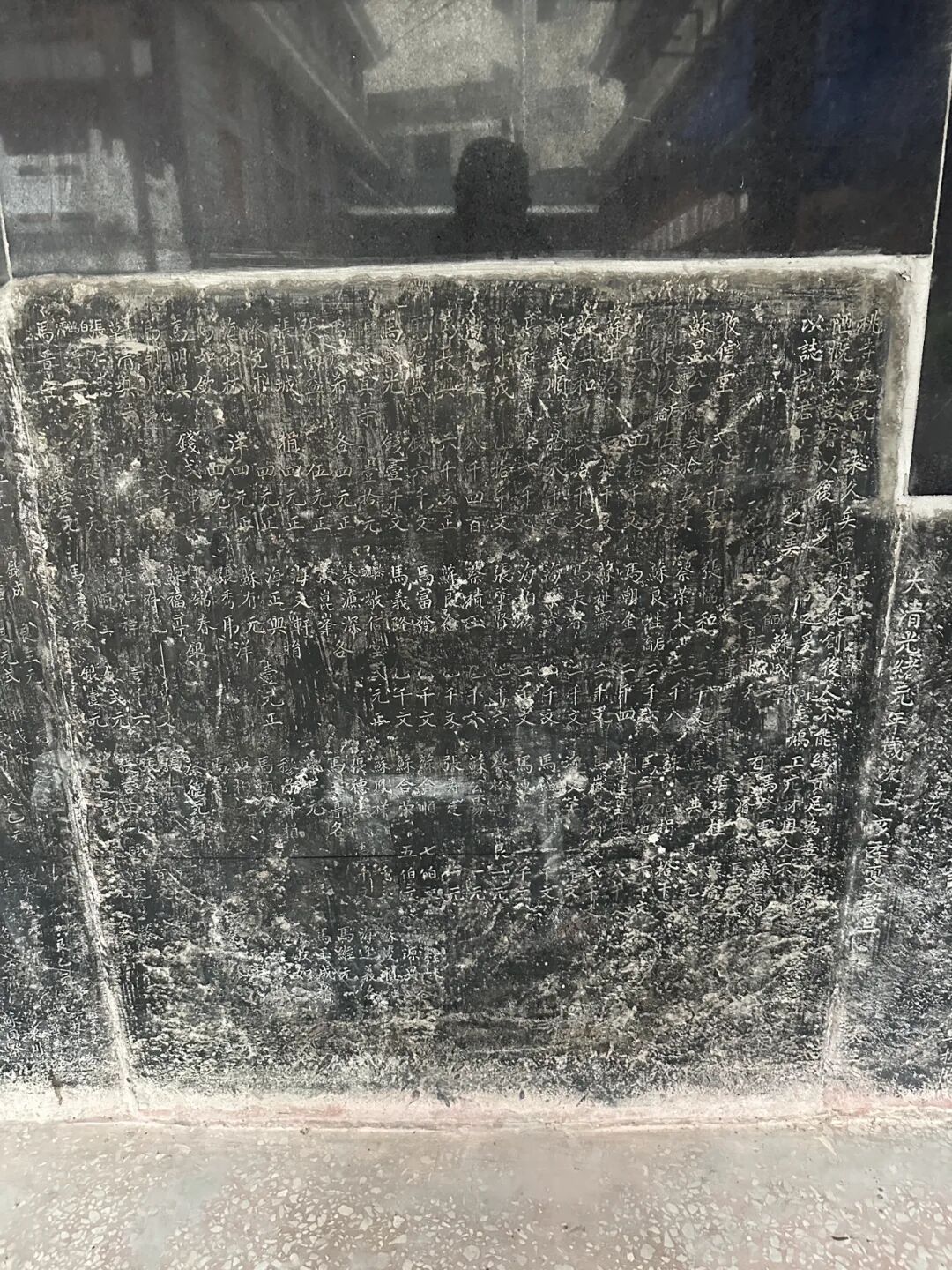
Taohuaping Mosque preserves a large number of stone tablets from the Qing Dynasty and the Republic of China, which are precious historical records:
The 1859 "Stele for Renovating the Front Gate"
The 1846 "Restoring the School" stele
The 1841 "Renovating the Rear Hall" stele
The 1834 "Righteous School Stele Record"
The 1822 "Everlasting Innovation, Building and Repairing the Everlasting, Immortal Names of Public Donors" stele
The 1928 "School Construction and Repair Stele"
The 1910 "Jingxin Hall" stele
The 1875 stele view all
Summary: This China mosque travel guide covers eight historic mosque complexes in Longhui, Shaoyang, Hunan, with local Hui Muslim heritage and mosque travel details kept in clear English.
This article summarizes the key points about the eight mosques (sifang) in Longhui County, Shaoyang, Hunan. It keeps the original paragraph and image order. It is for readers interested in Muslim life, Islamic culture, and Chinese Islamic writing. It also helps people search for content like Chinese halal food.
Longhui County in Shaoyang City, Hunan, has a large population of Hui Muslims. I visited eight mosques there: Taohuaping Mosque, Shanjie Ancient Mosque, East Mosque, West Mosque, South Mosque, North Mosque, Luobai Mosque, and Niejiaoting Mosque. I will share them with you below.
Shanjie Ancient Mosque in Longhui County, Shaoyang, Hunan, is located in Laowuli, Shanjie Township. It was first built in 1444 (the ninth year of the Zhengtong reign of the Ming Dynasty) and is the oldest mosque in Longhui. During the Hongwu reign of the Ming Dynasty, Ma Zhi, the third son of Ma Cheng, the ancestor of the Ma family Hui Muslims in Shaoyang, moved from Shaoyang to Majia Ferry in Longhui to settle down. He was the first Hui Muslim in Longhui, and Shanjie Ancient Mosque was built by the Ma family.
Shanjie Ancient Mosque was renovated in 1919 and rebuilt into its current appearance in 2018.
Shanjie Ancient Mosque has a long tradition of teaching Islamic scripture. The head imams who have taught there include Ma Yulang, Ma Fujiu, Ma Fucheng, Ma Yucheng, Ma Yaochi, and Ding Zhenyi. They also hired imams from other places like Huang Xingxiang and Li Desheng. Ma Fucheng, an imam from this mosque, taught there for the longest time. In 1945, Imam Ma Yucheng taught at the ancient mosque and recruited many students (hailifan), marking the peak of the mosque's religious activities. To this day, the mosque continues its educational work and has trained many excellent young people.
On September 2, 1939, the Wugang County, Hunan branch of the China Islamic National Salvation Association was officially established at the mosque. The mosque's imam, Ma Fucheng, was elected as an officer. Inspired by the call to resist Japanese aggression and save the country, young Hui Muslims from the mosque, including Ma Qiyun, Ma Wuyang from the North Mosque, and Su Xingmin from Beishan, signed up for the army, took up arms, and headed to the front lines in East China.
Relics at Shanjie Ancient Mosque include stone pillar bases, wood carvings, and calligraphy of the mihrab in the kiln niche.
The stone couplet on the main gate reads: Clear the murky and promote the pure to follow the great path; preserve the truth and remove the false so that every generation has successors. The calligraphy was written by Ma Linyi, a Hui Muslim educator and Minister of Education in Shaoyang during the Republic of China. He is known as the Father of Northwest Education and the founder of modern Chinese Hui Muslim education.
Ma Linyi was born in Shaoyang, Hunan, in 1865. He passed the imperial examinations in 1902 and went to Japan on a government scholarship in 1904 to study teacher training. During that time, he met Sun Yat-sen, joined the Tongmenghui in 1905, and returned home to work on new government policies and modern education. In 1906, he founded Xiejin Primary School in Shaoyang, which was the first modern school for Hui Muslims in Hunan.
In 1908, he was transferred to the Qing government's Ministry of Education as a director. That same year, he helped establish the Beijing First Islamic Primary School inside the Niujie Mosque and later helped found the Islamic Education Association. While serving as Vice Minister of Education in 1912, Ma Linyi founded the Chinese Islamic Progressive Association with the support of Sun Yat-sen and served as its president.
While in charge of education in Gansu, Ma Linyi founded 277 schools of various types and set up the Gansu Islamic Education Promotion Office, spreading over a hundred Islamic primary schools across Gansu, Ningxia, and Qinghai. He selected over a hundred young people from the Northwest for government-funded study abroad, laying the foundation for modern basic education in the Northwest.
In 1928, Ma Linyi helped found the Islamic Middle School in Niujie and served as its vice chairman. In 1929, Ma Linyi became a board member of the Beiping Chengda Teachers' College. He actively updated the curriculum and improved teaching methods, helping Chengda develop into a modern school. In his later years, Ma Linyi devoted himself to the faith and served as an advisor to Wang Jingzhai for his translation of Islamic classics.
Shanjie East Mosque was first built in 1728 (the fifth year of the Yongzheng reign). The mosque has hired many imams over the years, including Su Yuebo, Ma Yulang, Ma Baochu, Zheng Liansheng, Ma Yuechi, Ma Yucheng, Tang Yuanqi, Hai Shiquan, Ma Chengyong, Ding Baohua, Ma Gen'ao, Ma Xiang'ao, and Ma Wuquan. Students from as far as Hainan and Guangxi came to study under the great imam Ma Yucheng in Gansu, and the local religious community was very prosperous.
It is a pity that the mosque was locked when I visited, so I could not go inside.
Shanjie West Mosque, also known as Jiajian Village Mosque, was first built in 1836 (the 16th year of the Daoguang reign). It was expanded during the Guangxu and Republic of China periods, and the local Hui Muslims there are surnamed Ma, Huang, and Zheng. The imams who have served at the mosque include Ma Chaoxin, Zheng Liansheng, Ma Daocheng, Ma Fucheng, and Ma Liangxu. The main hall of the West Mosque collapsed in 1991. It was being rebuilt when a flood destroyed it in 1996. After raising funds again, it was officially completed at the end of 1996 and renovated again in 2013.
The mosque houses a stone tablet from the 11th year of the Guangxu reign titled 'Record of Continued Mosque Repairs,' which lists the names of the donors at that time and serves as a precious historical record.
Shanjie North Mosque, also called Sifangjing Mosque, was first built in 1824 (the 4th year of the Daoguang reign), and the local Hui Muslims there are surnamed Ma. The main hall was destroyed after 1966. It was rebuilt in 1991 and again in 2000, with only the original stone gate pillars remaining. The pillars are carved with a couplet by the Republic of China educator Ma Linyi: 'To study the Way, one must seek the source; why ask about Jesus, Buddha, or the Greeks? To unite with Heaven is to enter the path of the sages; ancient and modern, Chinese and foreign, all share the same principle.'
Regrettably, the Shanjie North Mosque was also locked when I visited, and I could not enter.
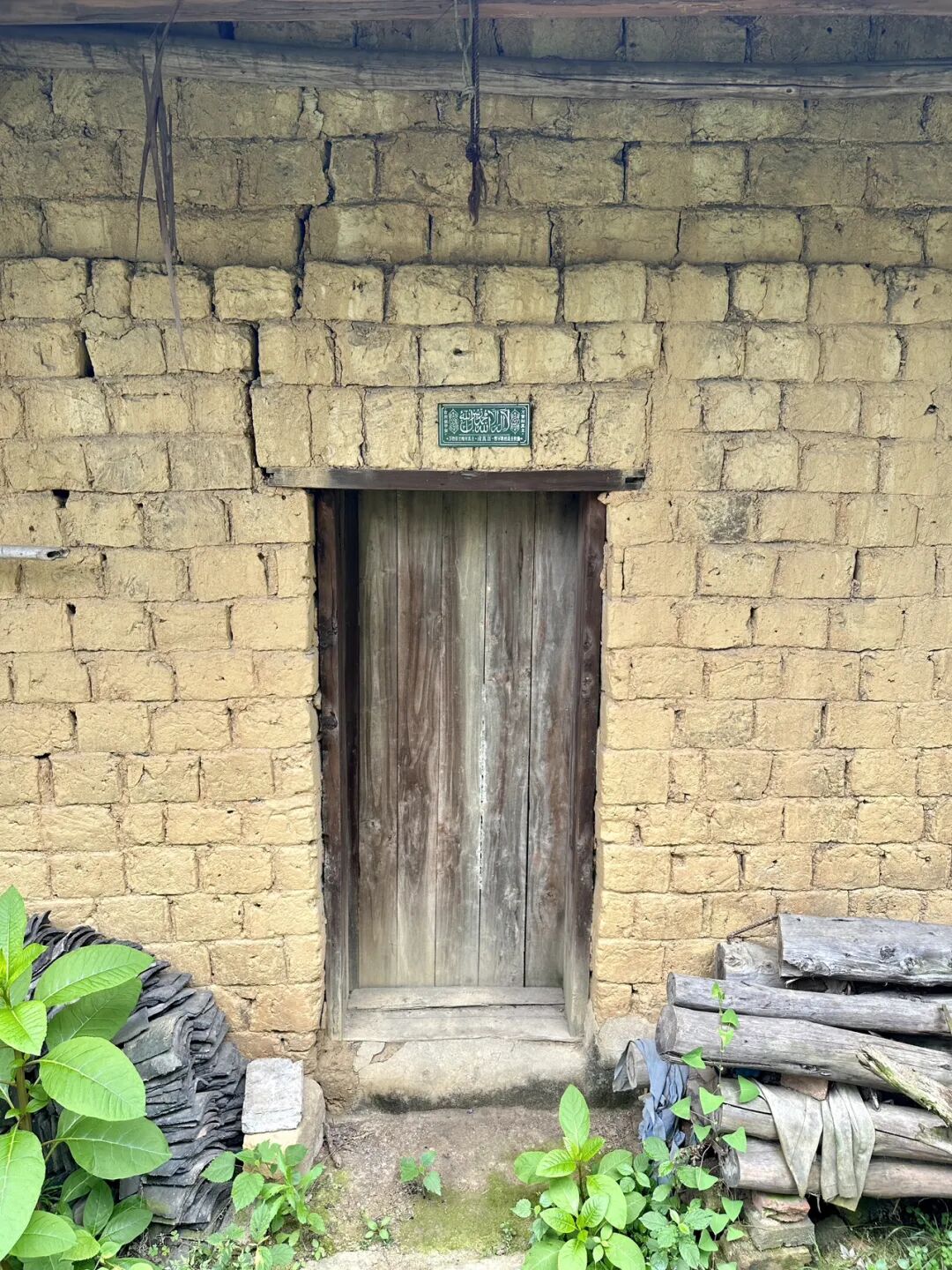
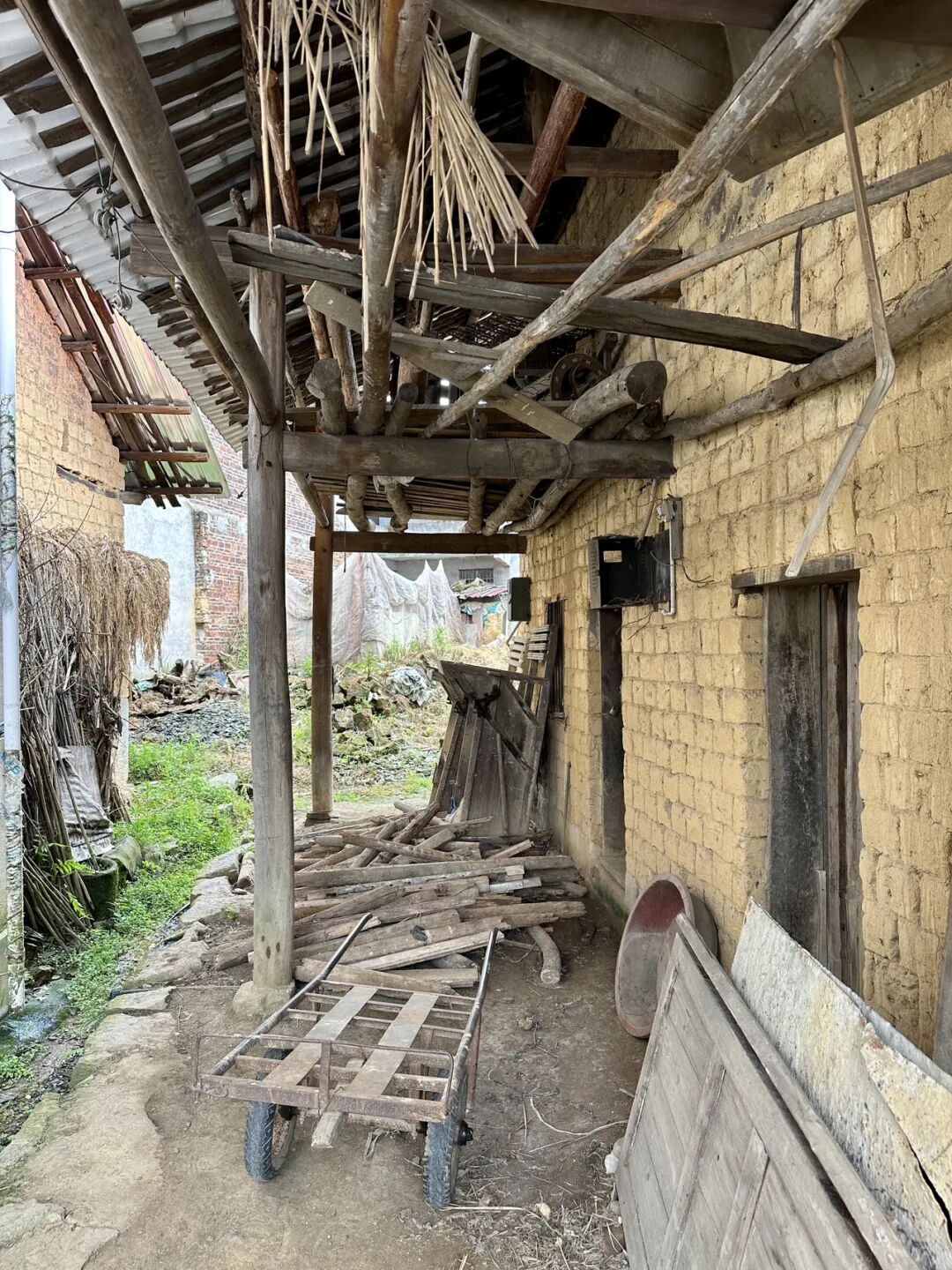
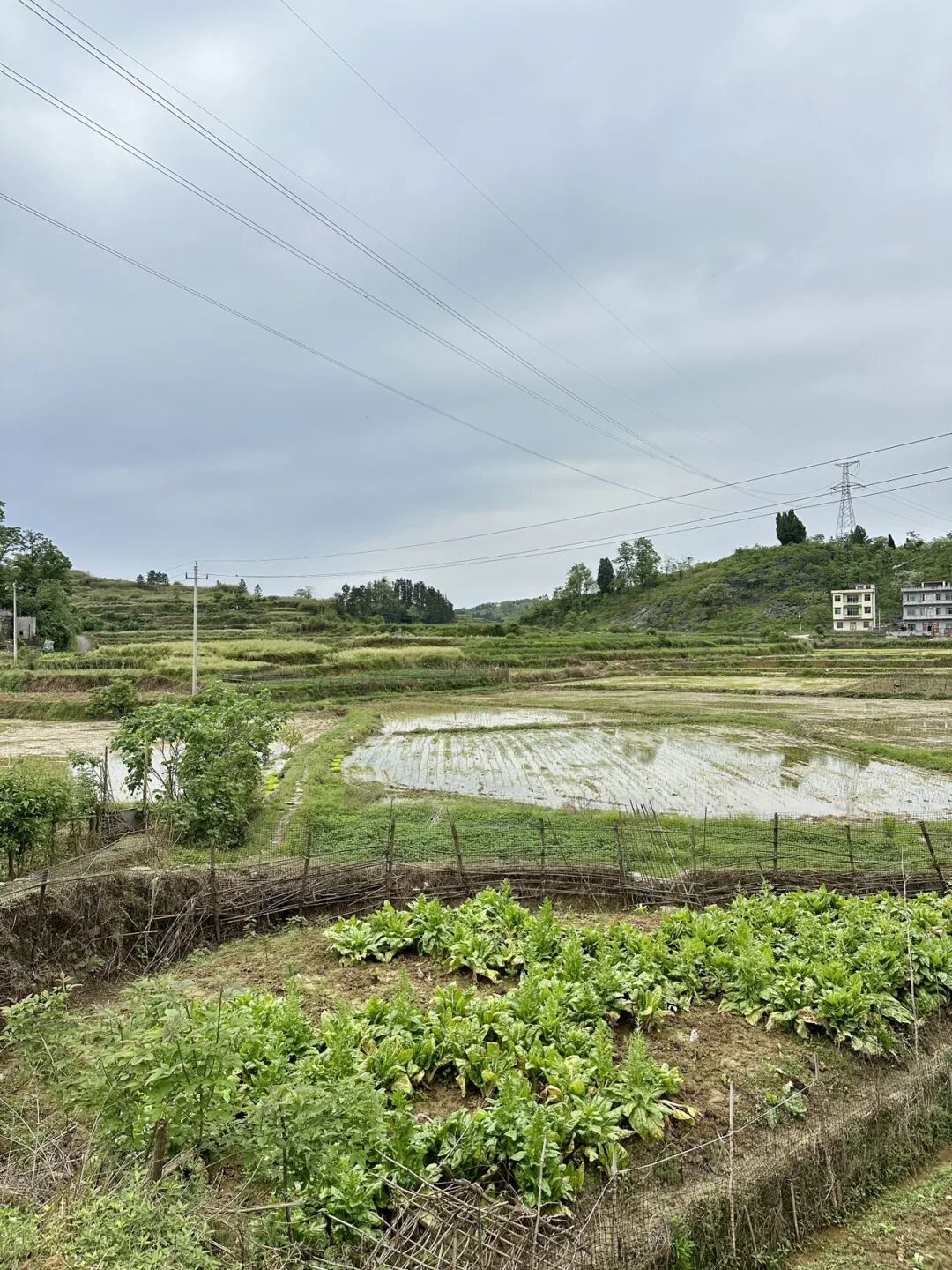
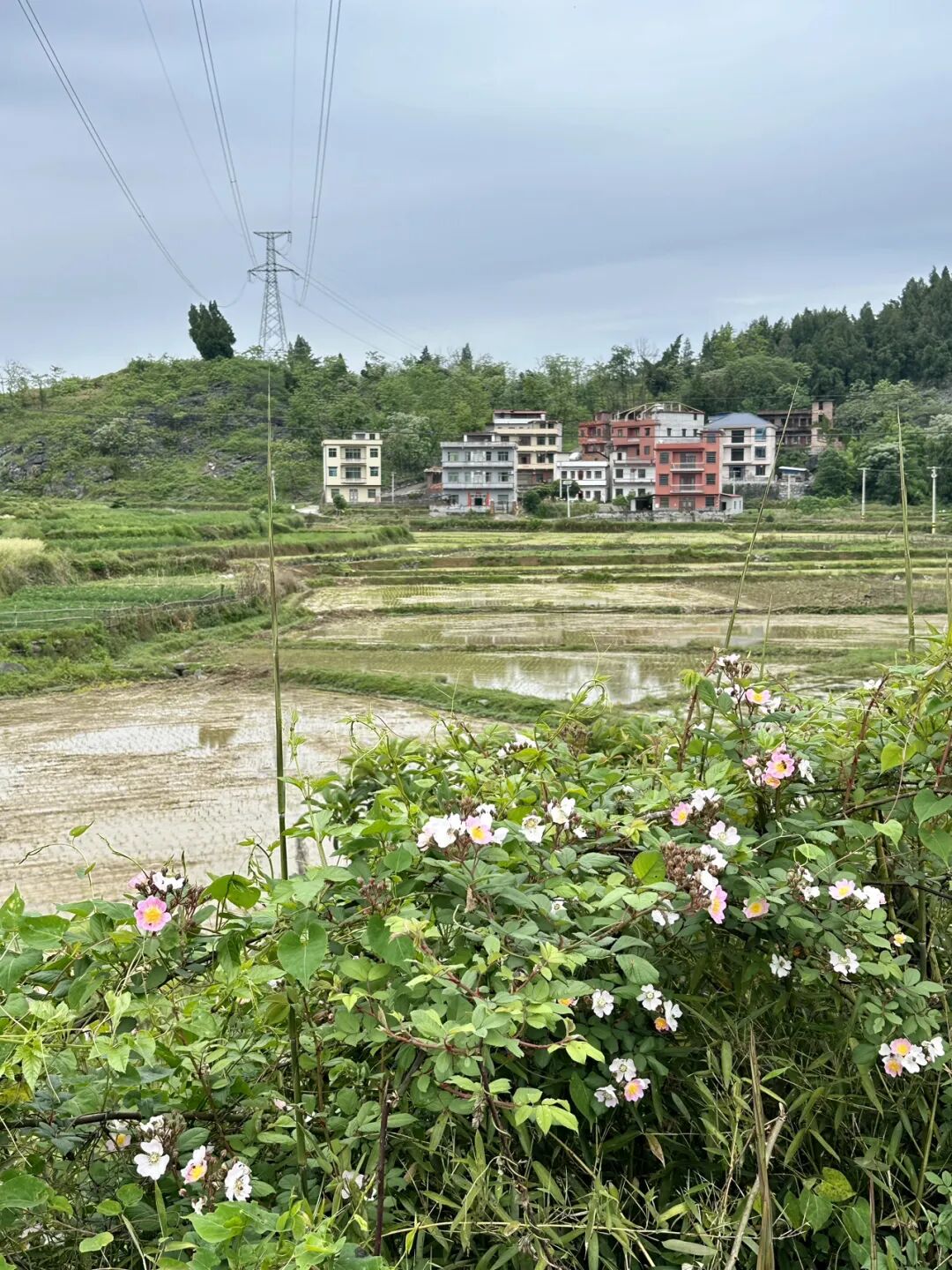
Shanjie South Mosque was first built in 1768 (the 33rd year of the Qianlong reign). The local Hui Muslims are surnamed Ma, and the imams who have taught there include Ma Baochu, Zheng Liansheng, Li Bashan, Ma Fucheng, Ma Daocheng, and Ma Fu'en.
Ma Yingdong, a local resident, went to study in Japan in 1905 and joined the Tongmenghui. In 1907, he helped organize the 'Eastern Islamic Education Association' and founded its journal, 'Awakening the Hui' (Xing Hui Pian). After returning home from his studies, Ma Yingdong dedicated himself to Hui Muslim education and founded the modern Gongjin Primary School at Shanjie South Mosque, where he served as principal.
It is a pity that the Shanjie South Mosque was locked when I visited, so I could not go inside.
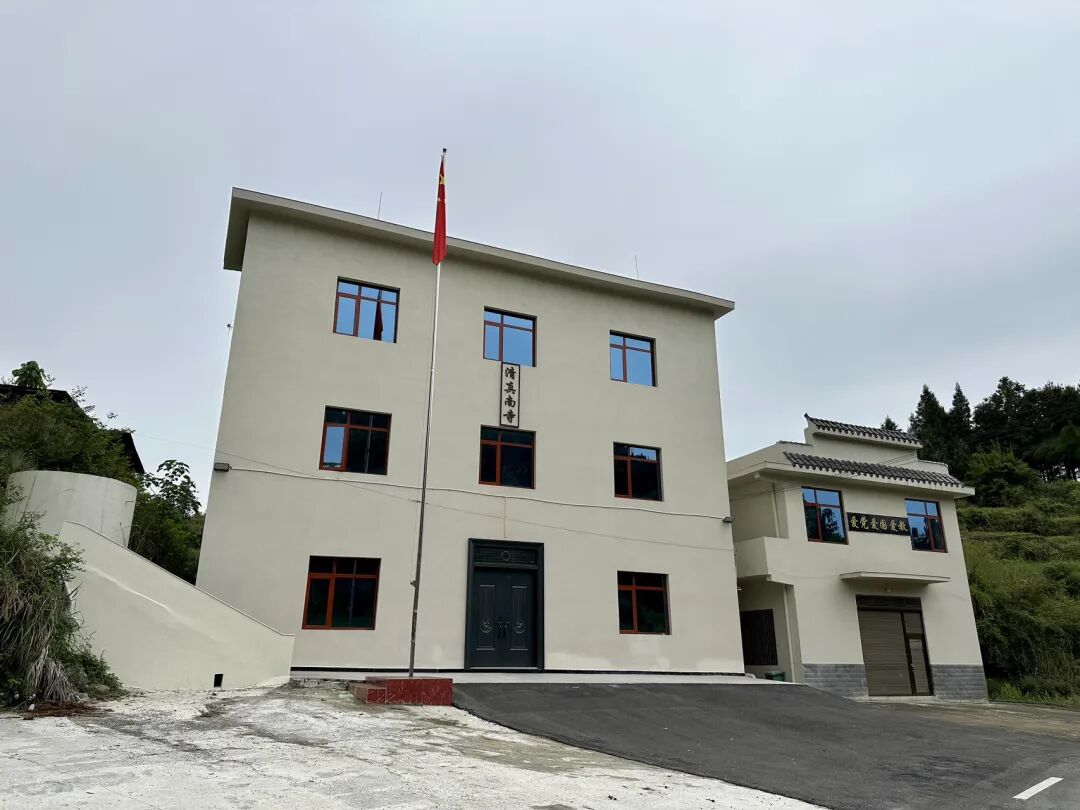
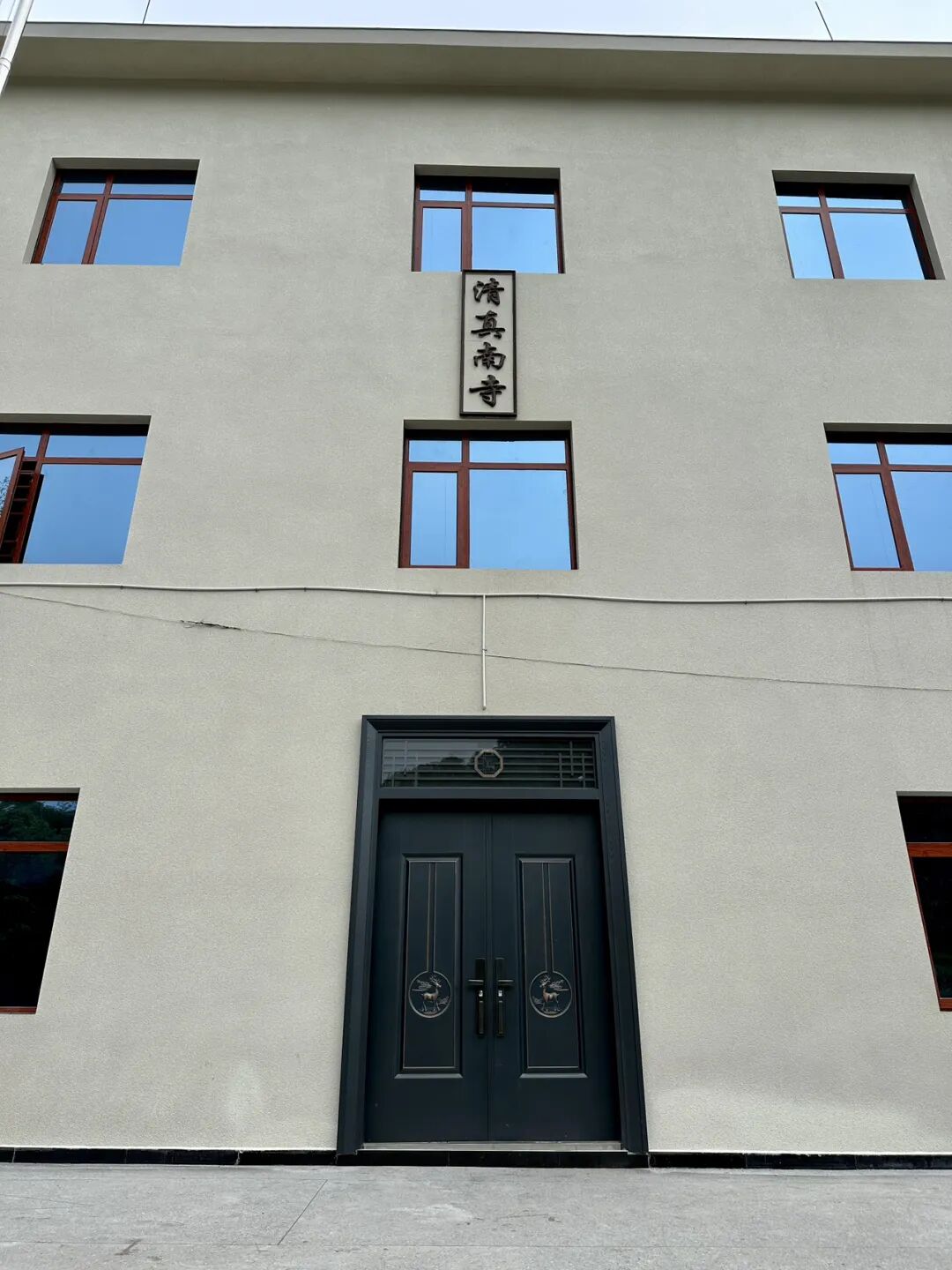
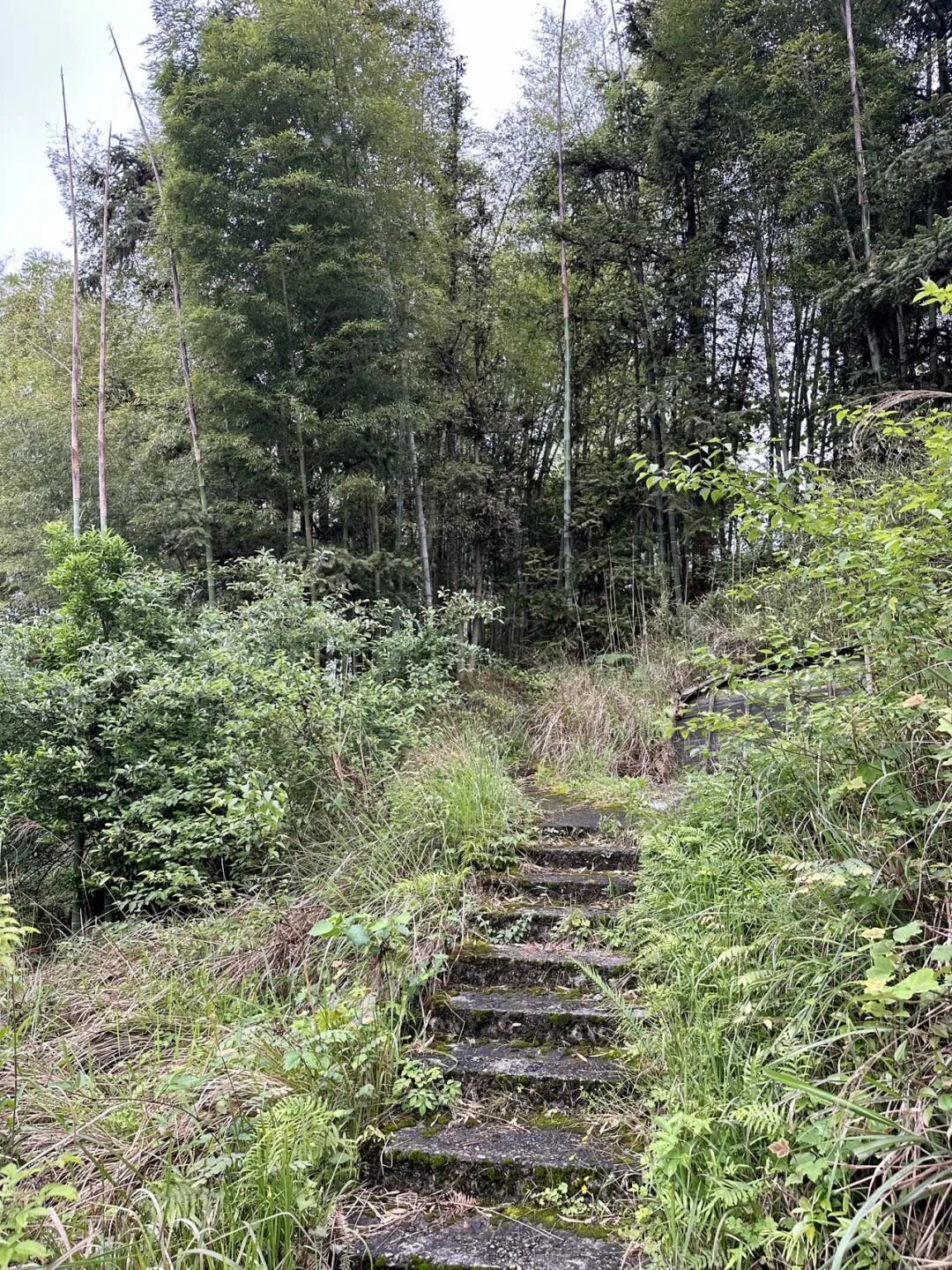
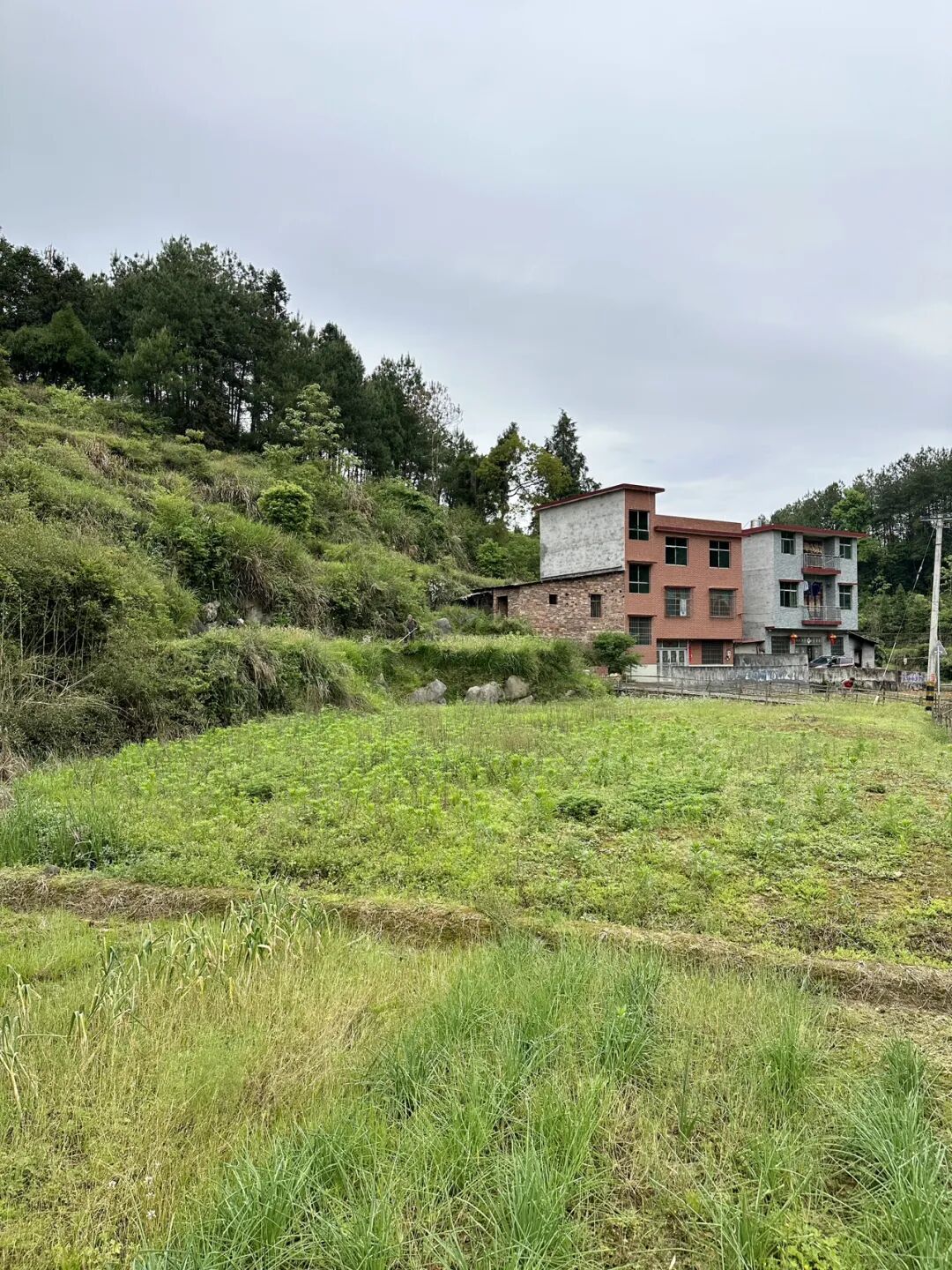
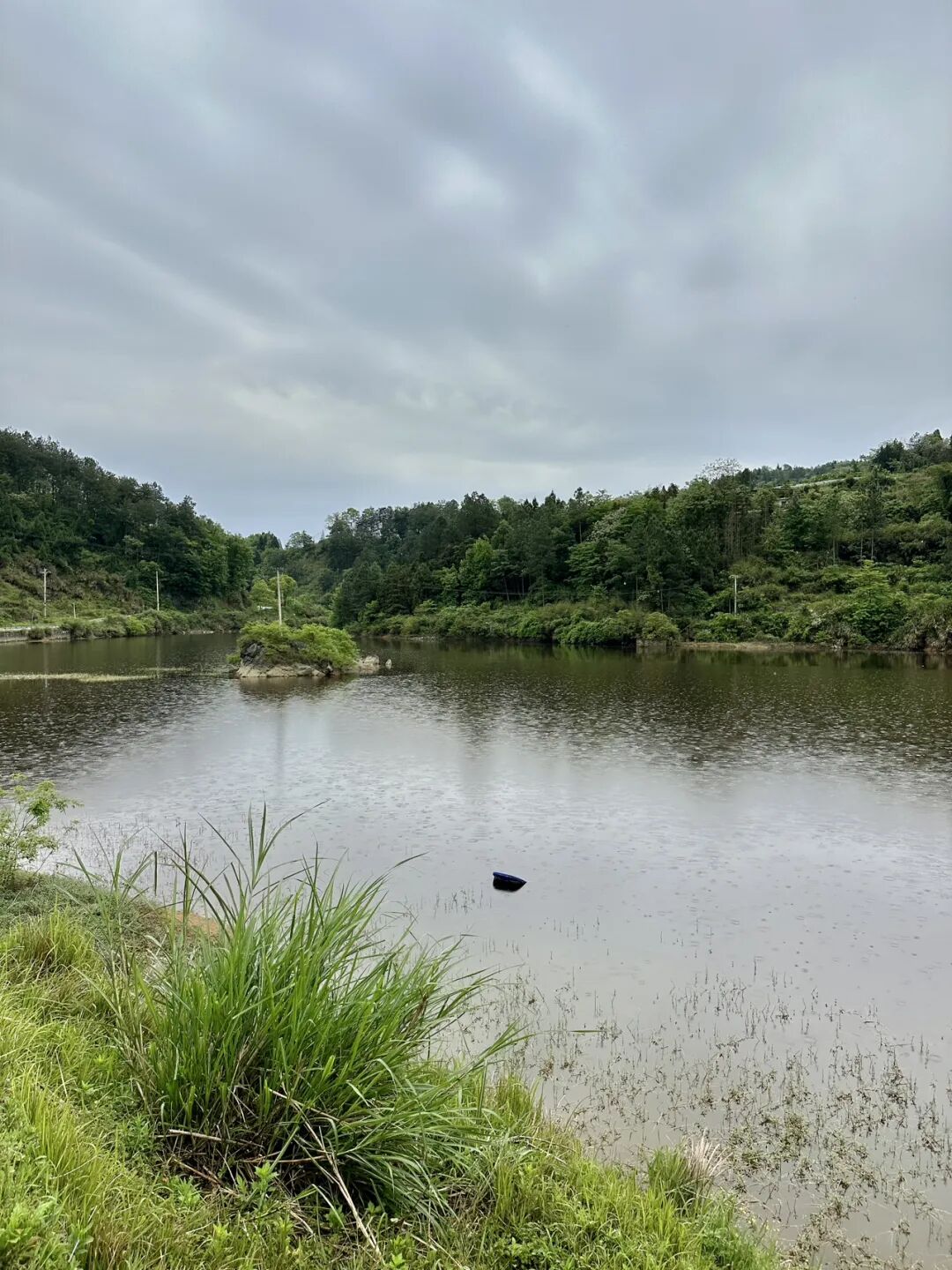
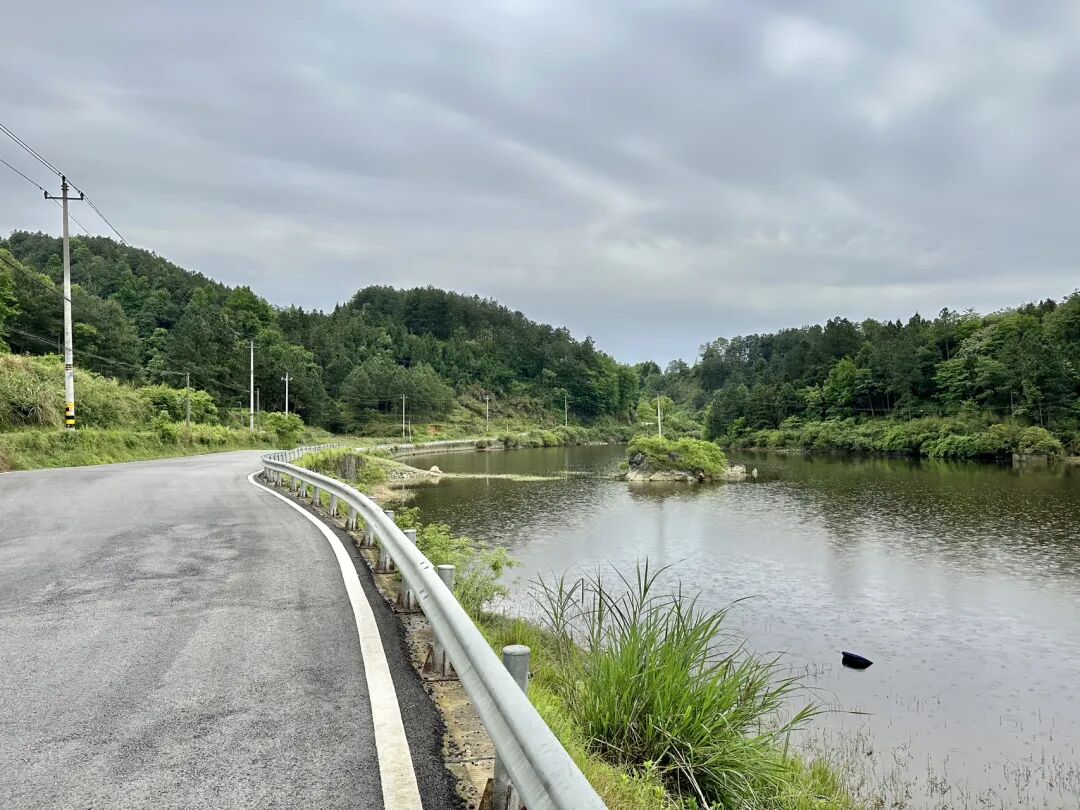
Luobai Mosque was first built in 1933, and the local community members are of the Ding surname. Hui Muslims moved to Luobai in the early Qing Dynasty. For a long time, they were affiliated with the Shanjie South Mosque, but the distance made it very inconvenient. In 1933, Imam Ding Zhenyi, a Luobai Hui Muslim who taught at the Gansu Hui Language Institute, resigned from his teaching position to return home and organize the construction of a mosque. Imam Ding traveled everywhere to raise funds and finally built Luobai Mosque at the top of the Yaolong residential area in Luobai.
Imam Ding Zhenyi taught at the Luobai village primary school in 1939, and during that time, he started an introductory class for Islamic studies at Luobai Mosque. Later, he served as the imam of Hetian Mosque in Shaoyang and Liutang Mosque in Guilin, Guangxi. He also worked as a teacher at the primary school attached to Guilin Chengda Normal School, dean and professor at the Guilin Hui Language Institute, and professor at the Hainan Hui Language School. He helped organize the Wugang Branch of the Hunan Chapter of the China Islamic National Salvation Association and served as its general secretary.
Luobai Mosque was torn down in 1970, rebuilt in 1985, and rebuilt again in 2000 into the building that stands today. The mosque still has the original door plaque reading "Islamic Mosque" (Qingzhen Jiaotang) and a pair of couplets by the Republican-era educator Ma Linyi: "When seeking the source of the truth, why ask about Jesus, Buddha, or others? To unite with Heaven is to enter the path of the sages; ancient and modern, East and West, the principle is the same."
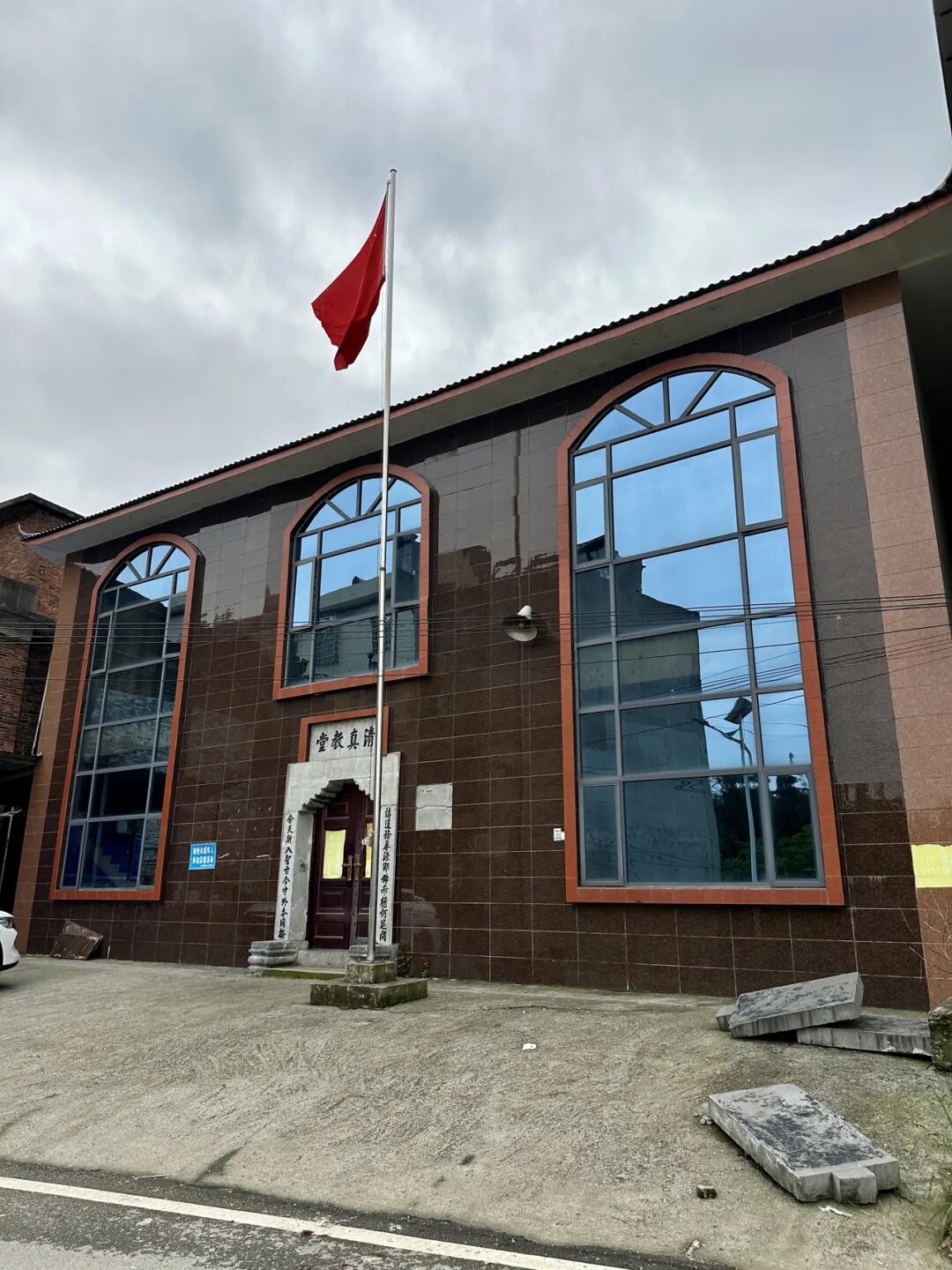
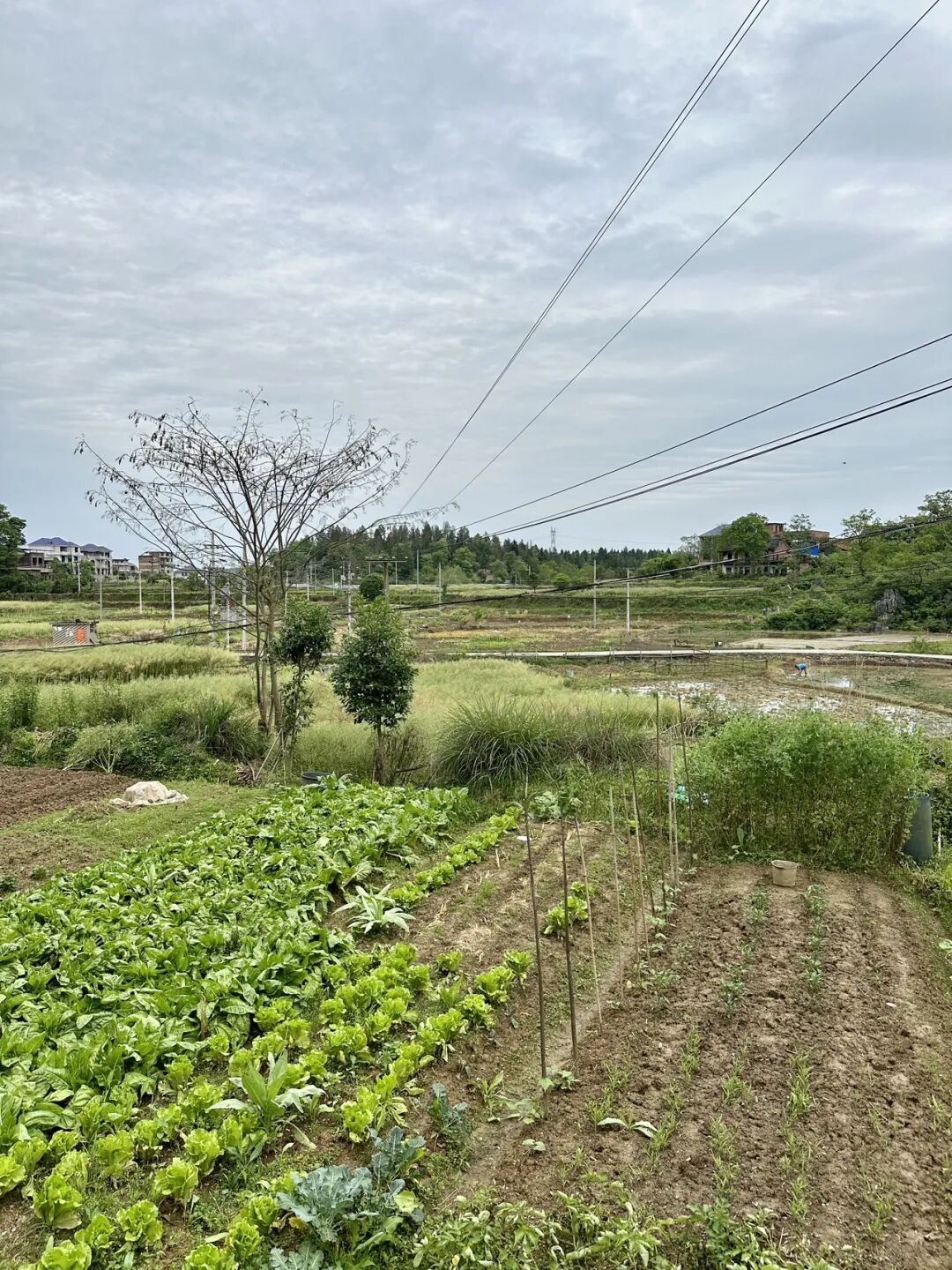
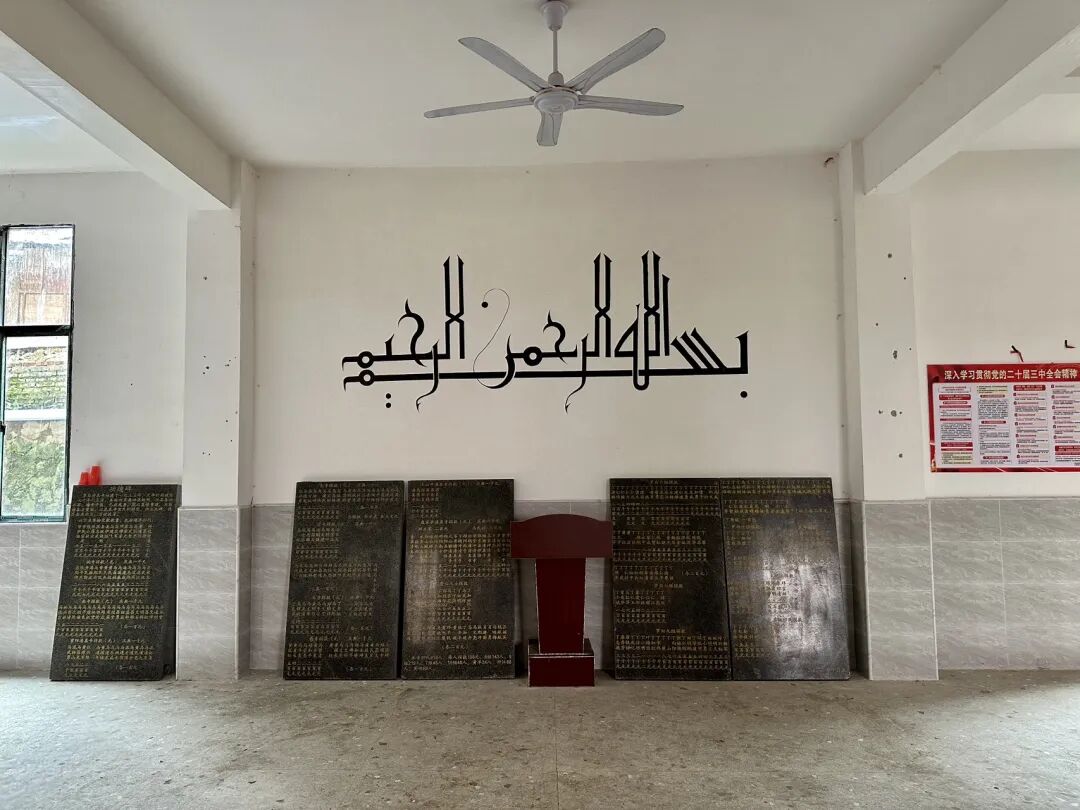
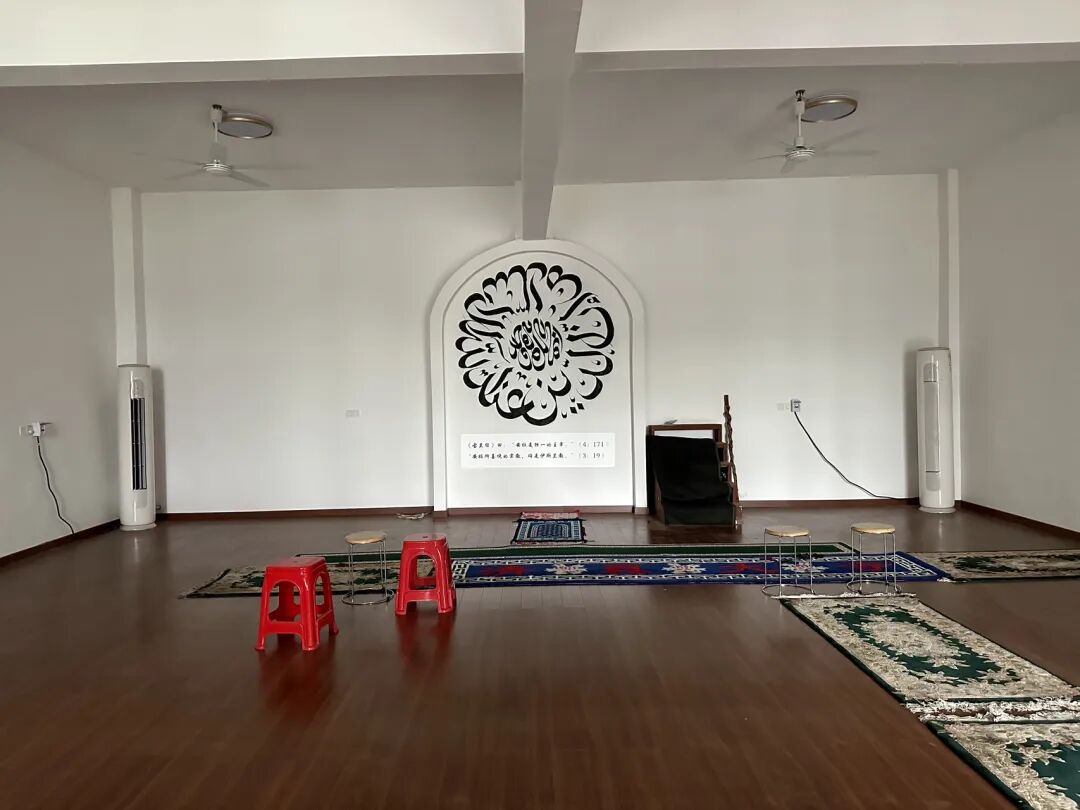
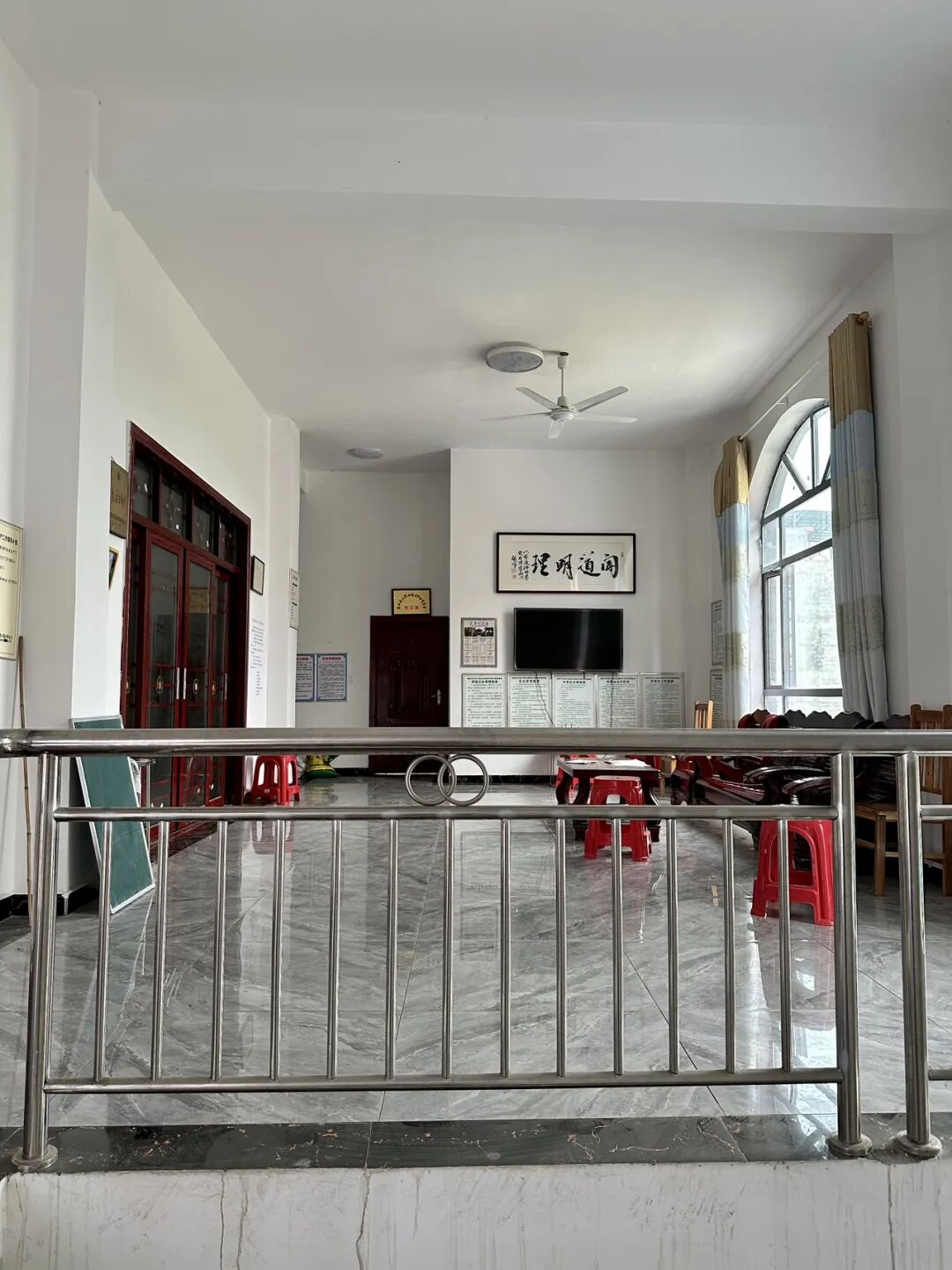
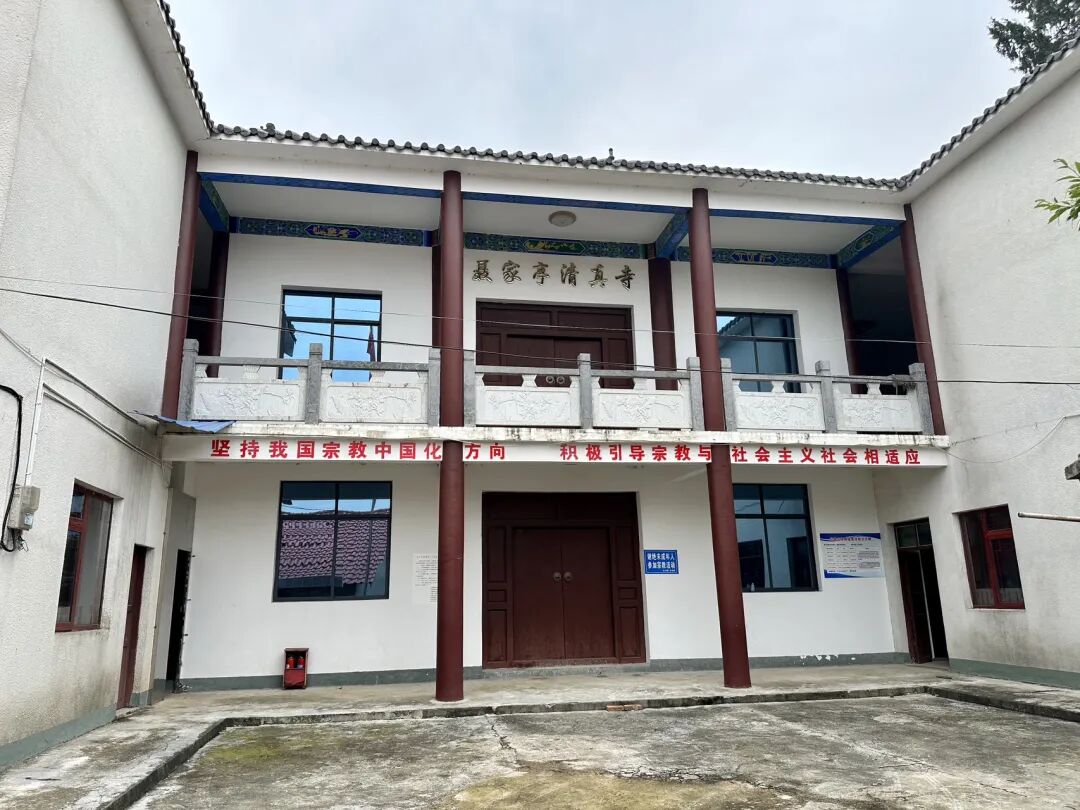
Niejiaoting Mosque was first built in 1926, and the community members are of the Ma, Hai, and Su surnames. Most of the Hui Muslims in Beishan Township, where Niejiaoting is located, moved there from other places in the late Qing Dynasty. Because it was inconvenient to perform namaz, Ma Youde, Ma Daofeng, Hai Liancheng, and others raised funds to build the mosque. The imams at the mosque include Ma Chunming, Ma Youlin, Imam Bu, Imam Zhang, Hai Siquan, and Deng Mengjun. Niejia Pavilion Mosque was destroyed after 1966, rebuilt later, and then rebuilt again in 2008.
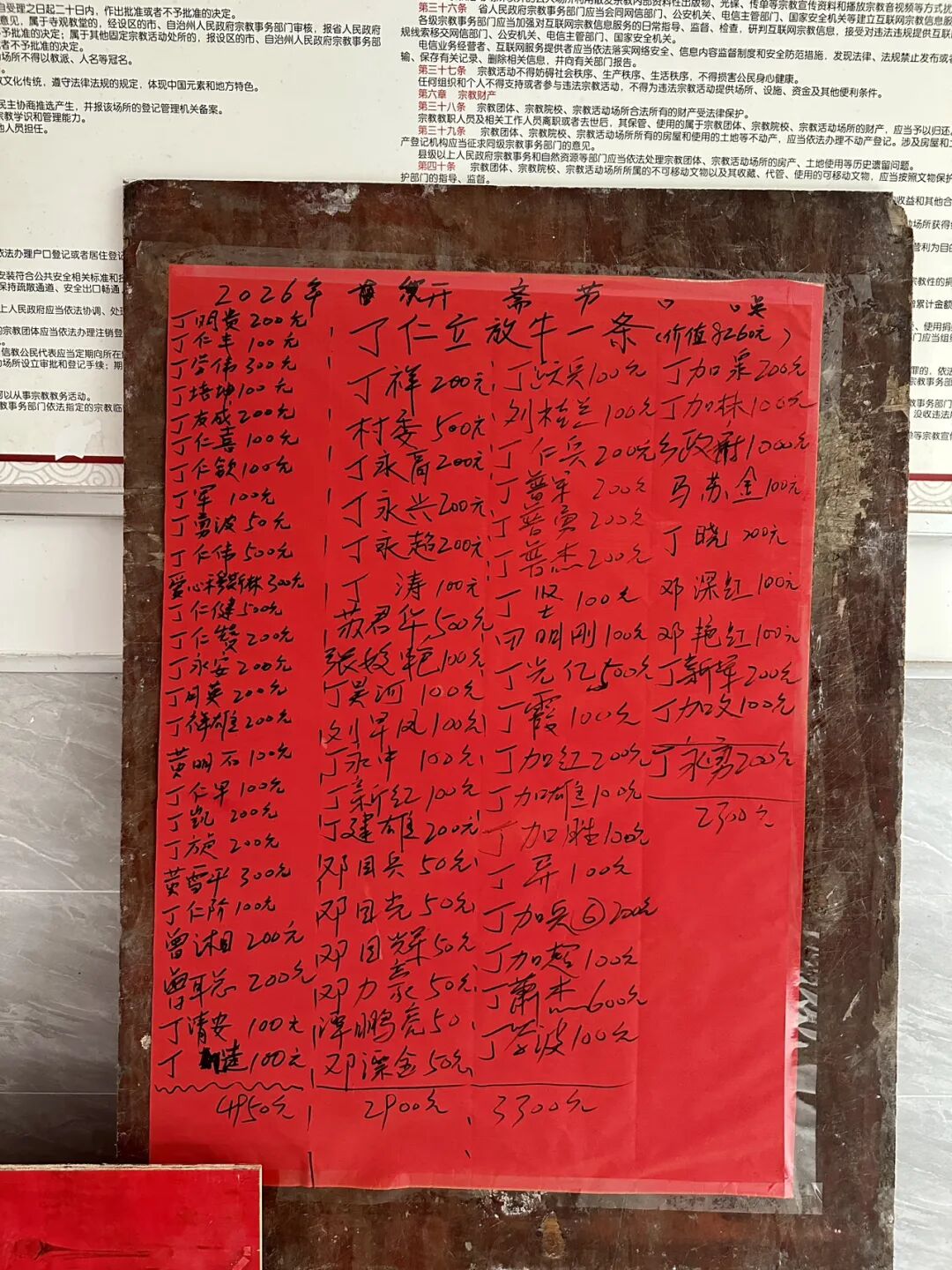
The mosque houses the 1948 "Zhaoxiu Mosque Stele," which serves as a precious historical witness.
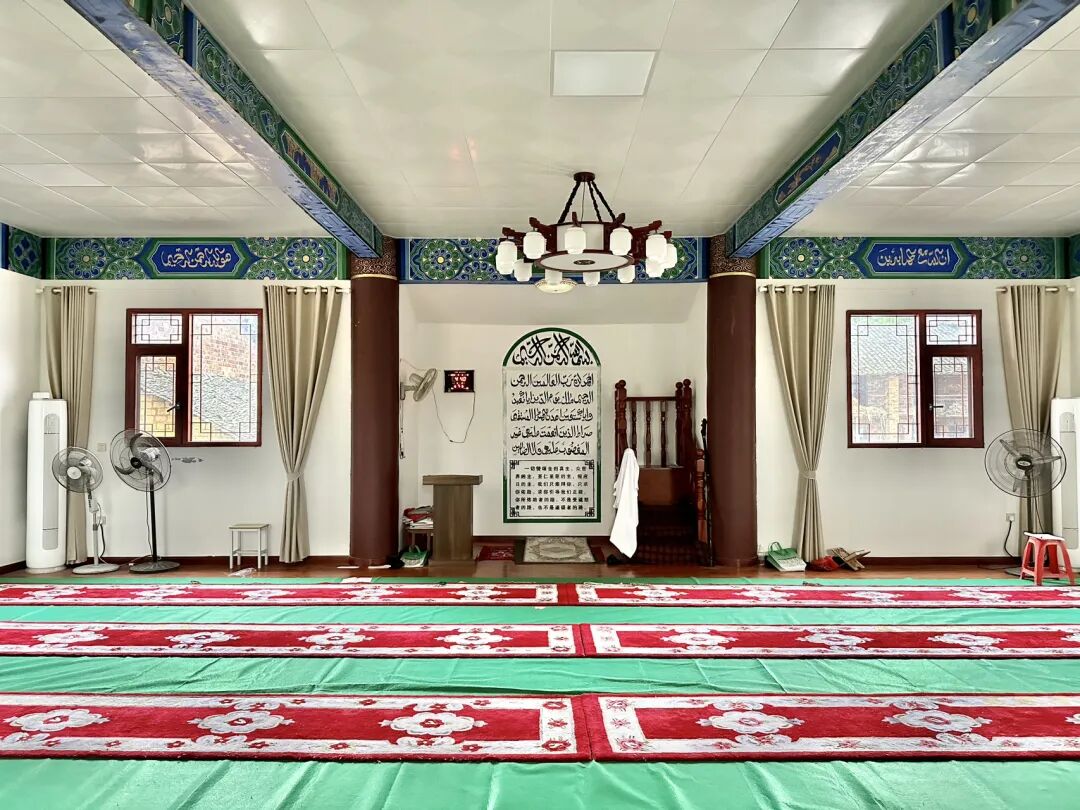
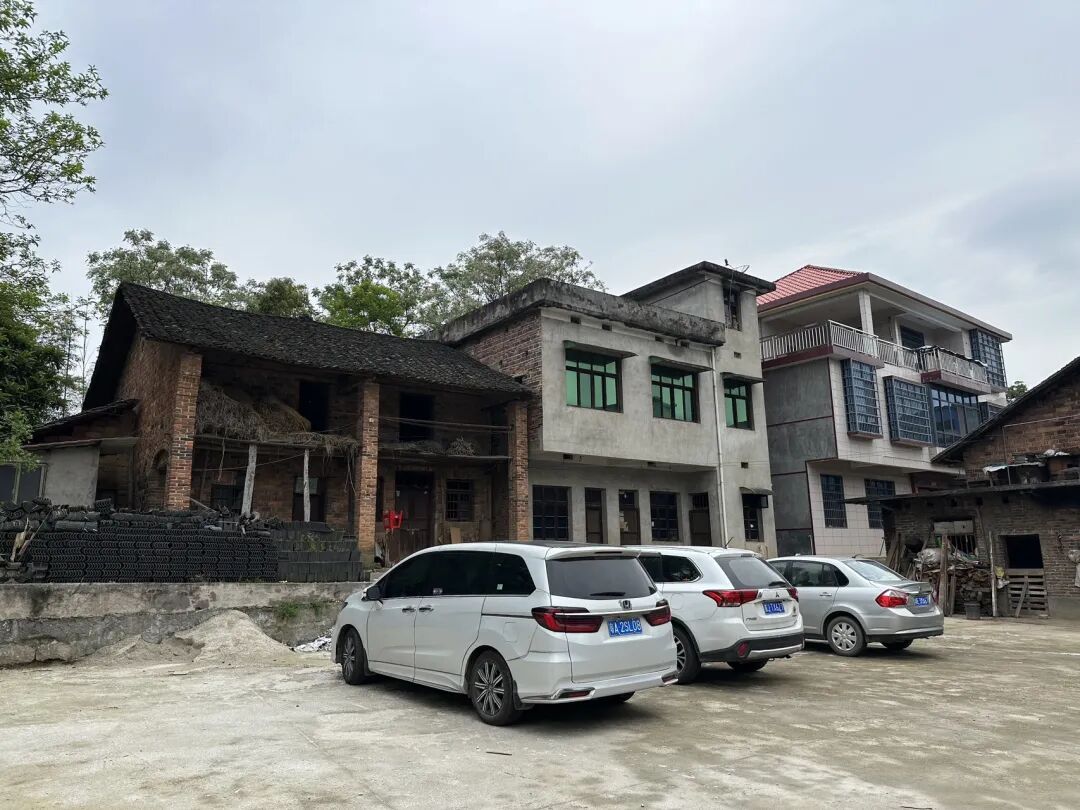
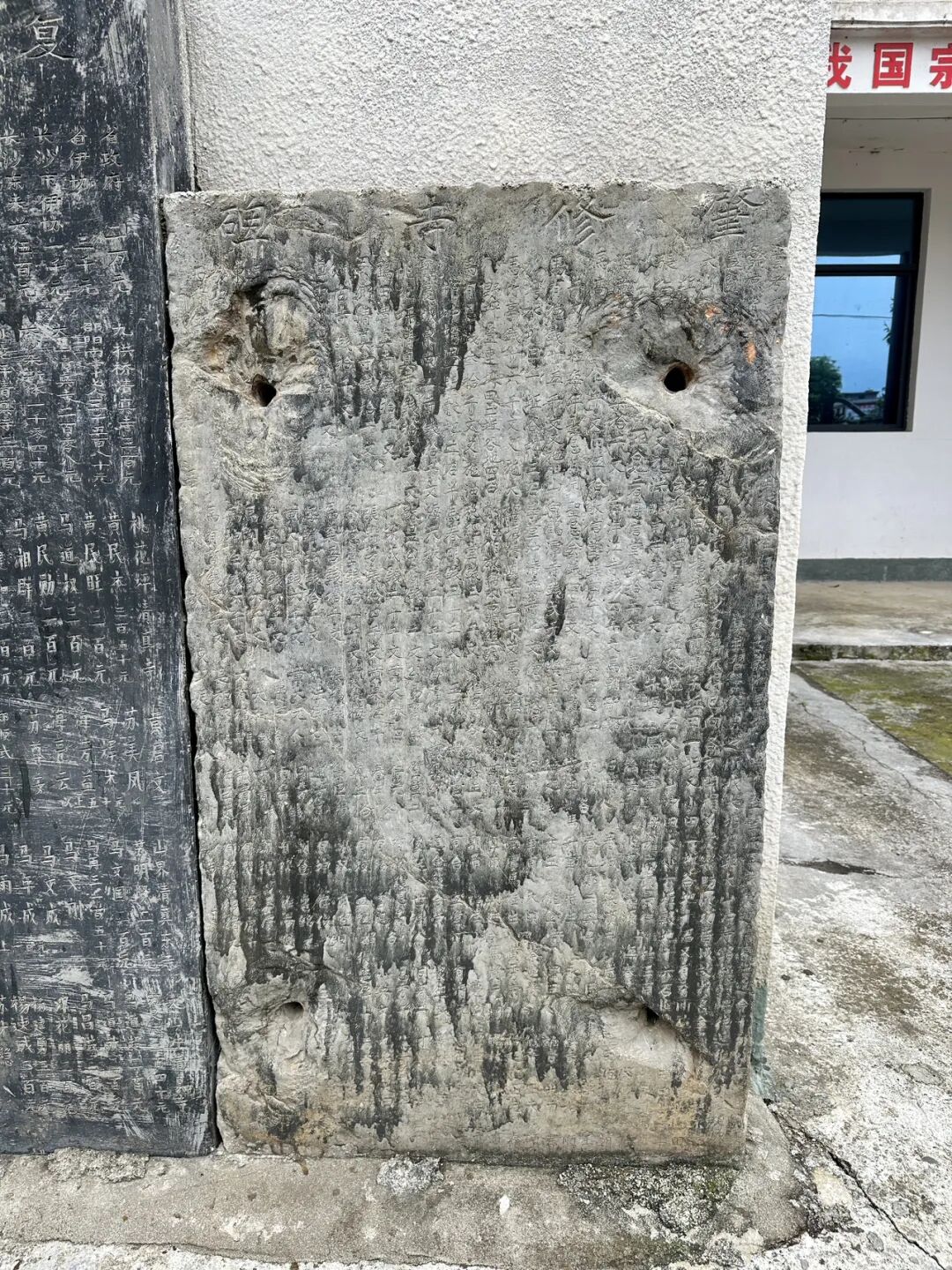
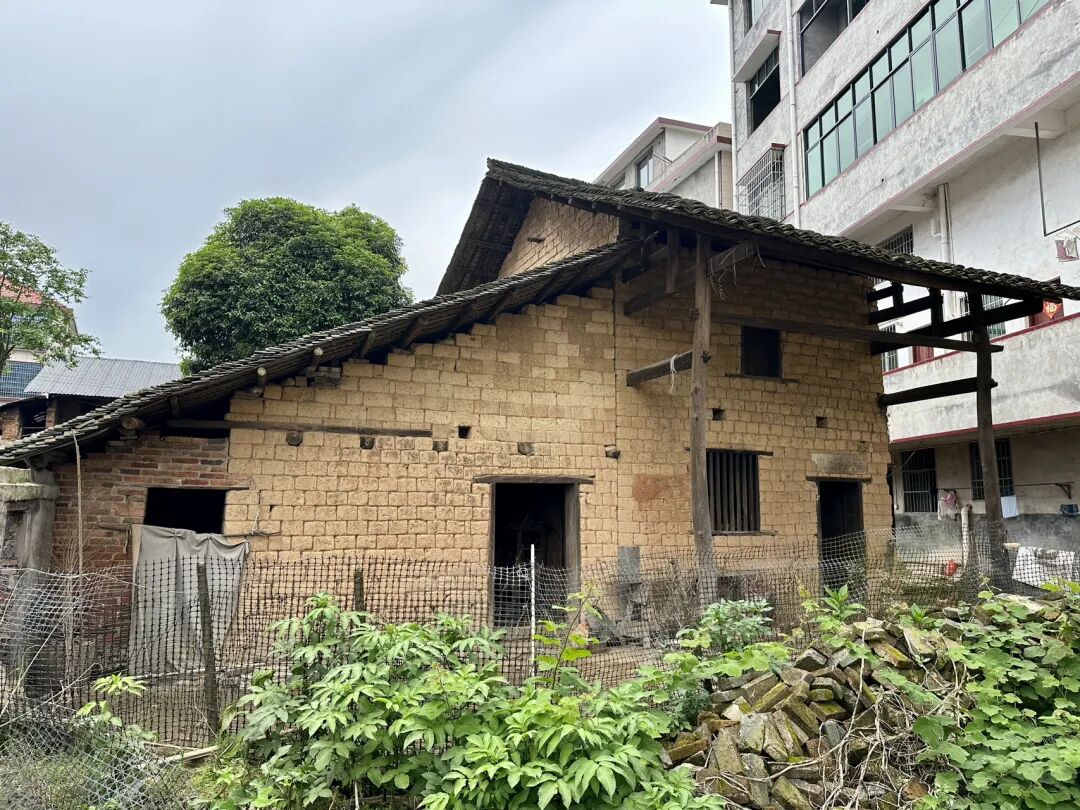
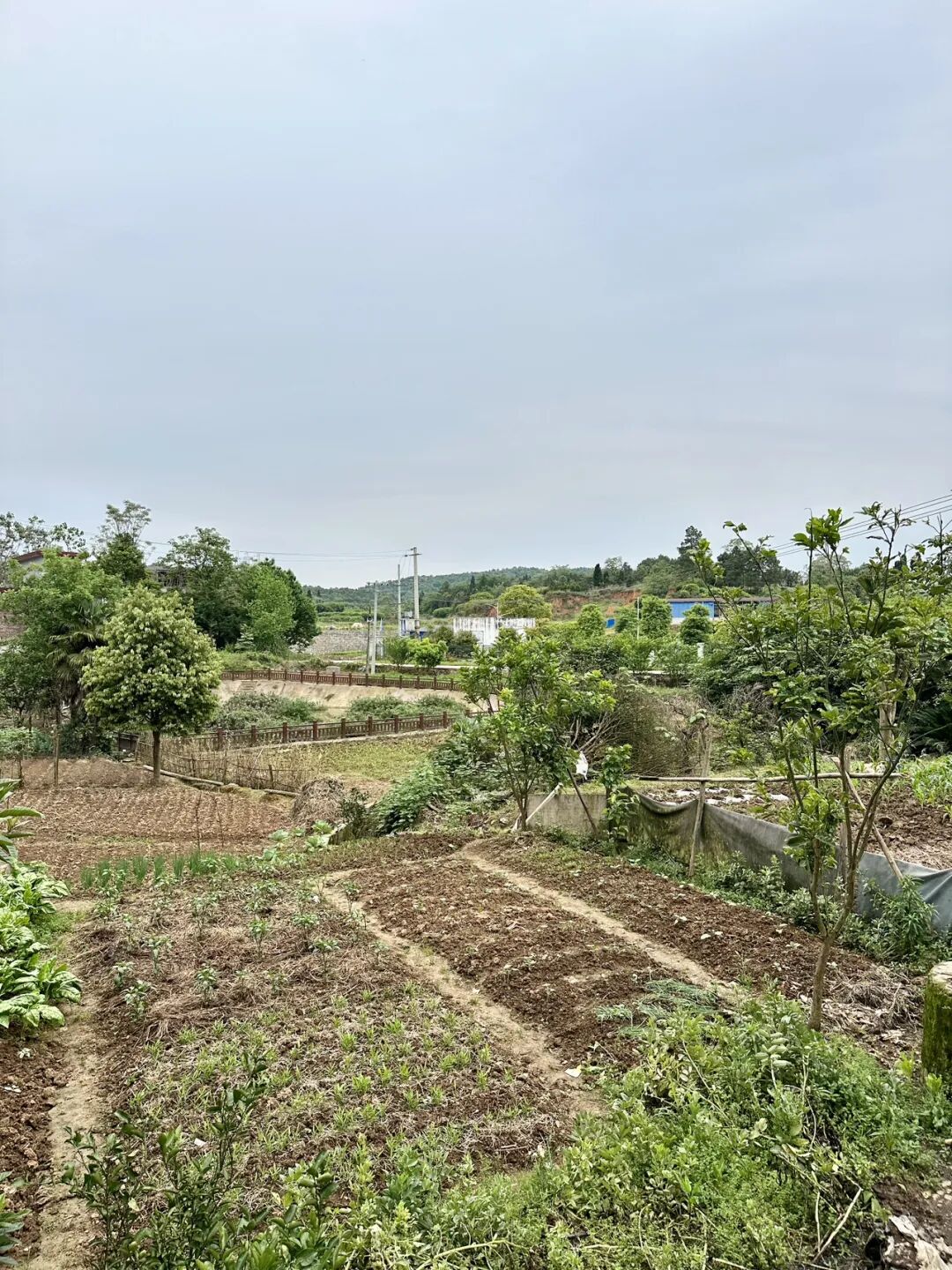
Taohuaping Mosque is in the center of the county. It was first built in 1820 (the 25th year of the Jiaqing reign). In 1827 (the 7th year of the Daoguang reign), it was expanded after buying shops owned by the Su and Ma families on the front street. In 1834 (the 14th year of the Daoguang reign), it bought three more shops in front of the mosque. In 1841 (the 21st year of the Daoguang reign), the rear hall was renovated, and in 1850 (the 30th year of the Daoguang reign), the front gate archway, garden, and second gate were built.
In 1941, the Taohuaping branch of the China Islamic National Salvation Association was established inside Taohuaping Mosque. It did a lot of work for anti-Japanese propaganda, provided housing for refugees from other areas, raised money for winter clothes for soldiers, and helped with evacuations. In 1941, Bai Chongxi performed worship at Taohuaping Mosque and issued a plaque stating, "Troops are forbidden from stationing inside the mosque."
Taohuaping Mosque was expanded again in 1953 and was finally rebuilt into its current structure in 2019. Currently, Taohuaping Mosque is the mosque with the second-highest number of visitors in Longhui County, after the ancient Shanjie Mosque.
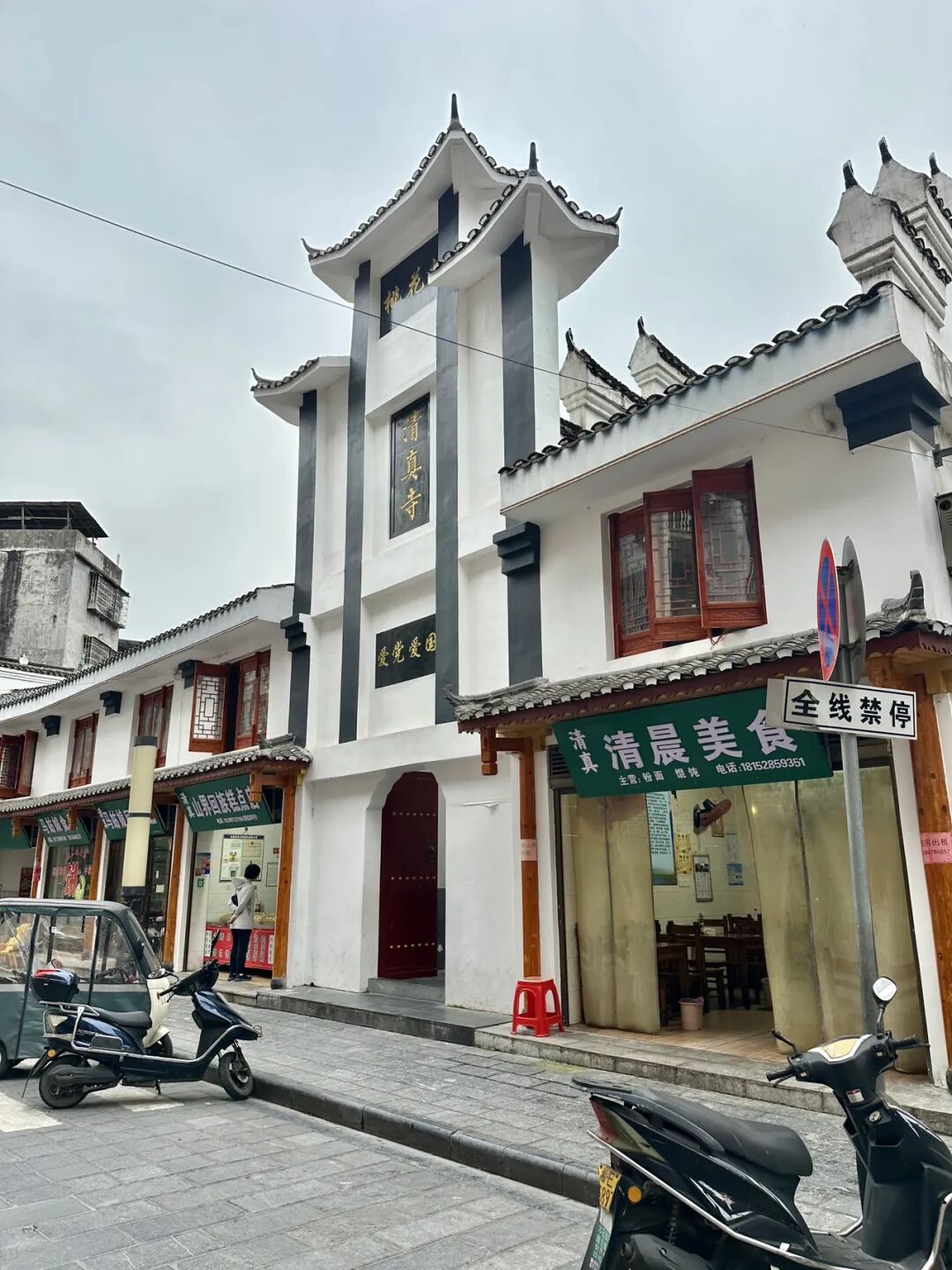
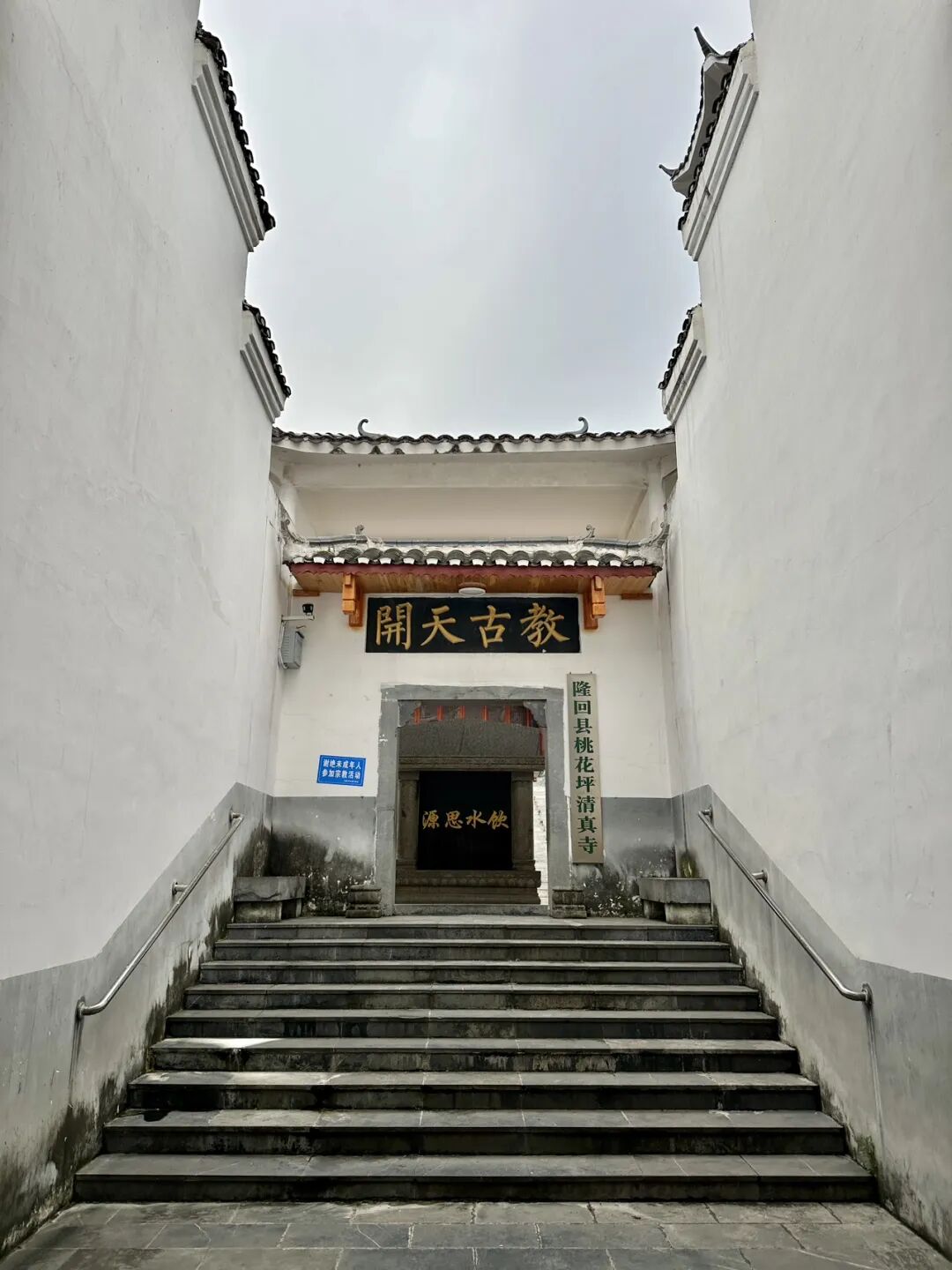
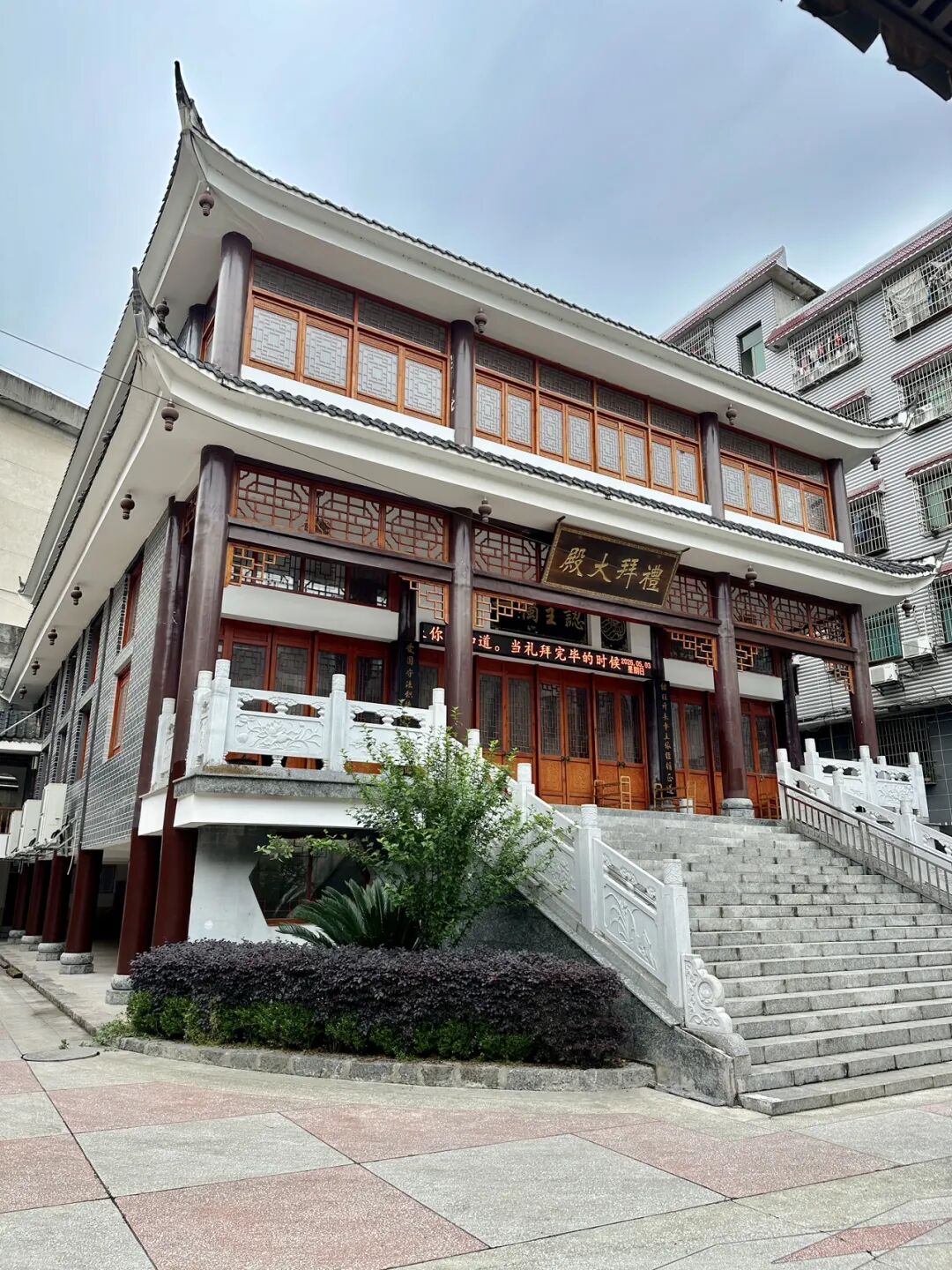
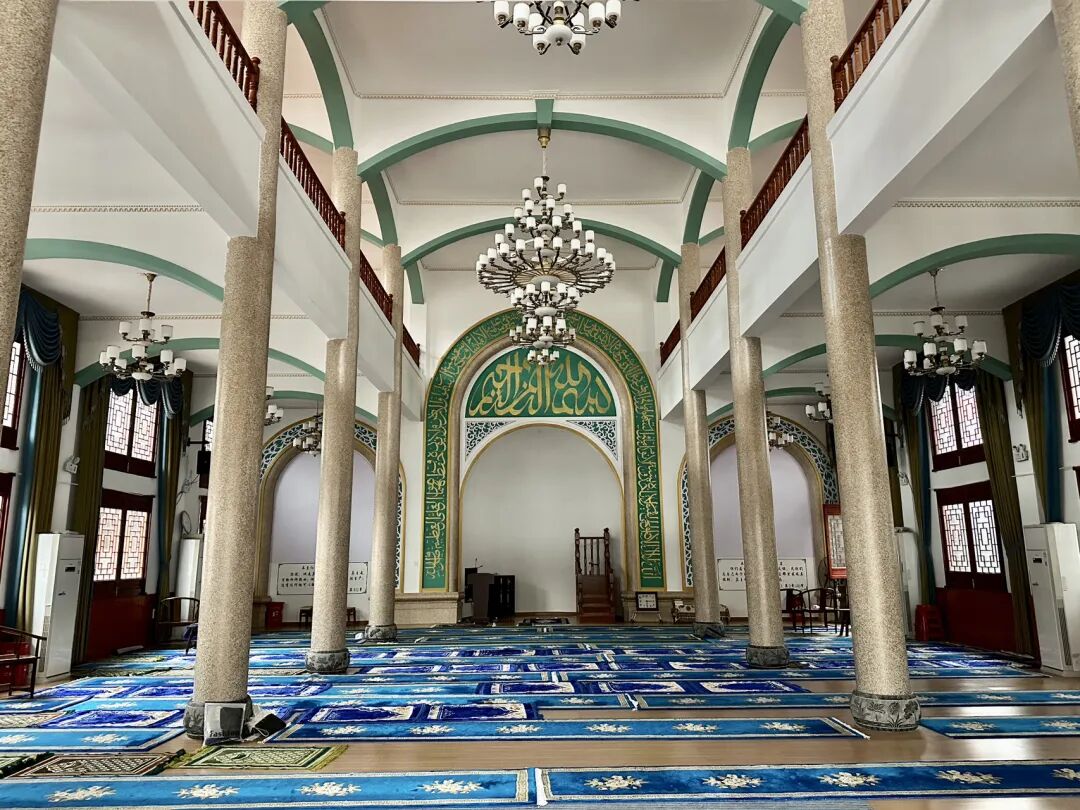
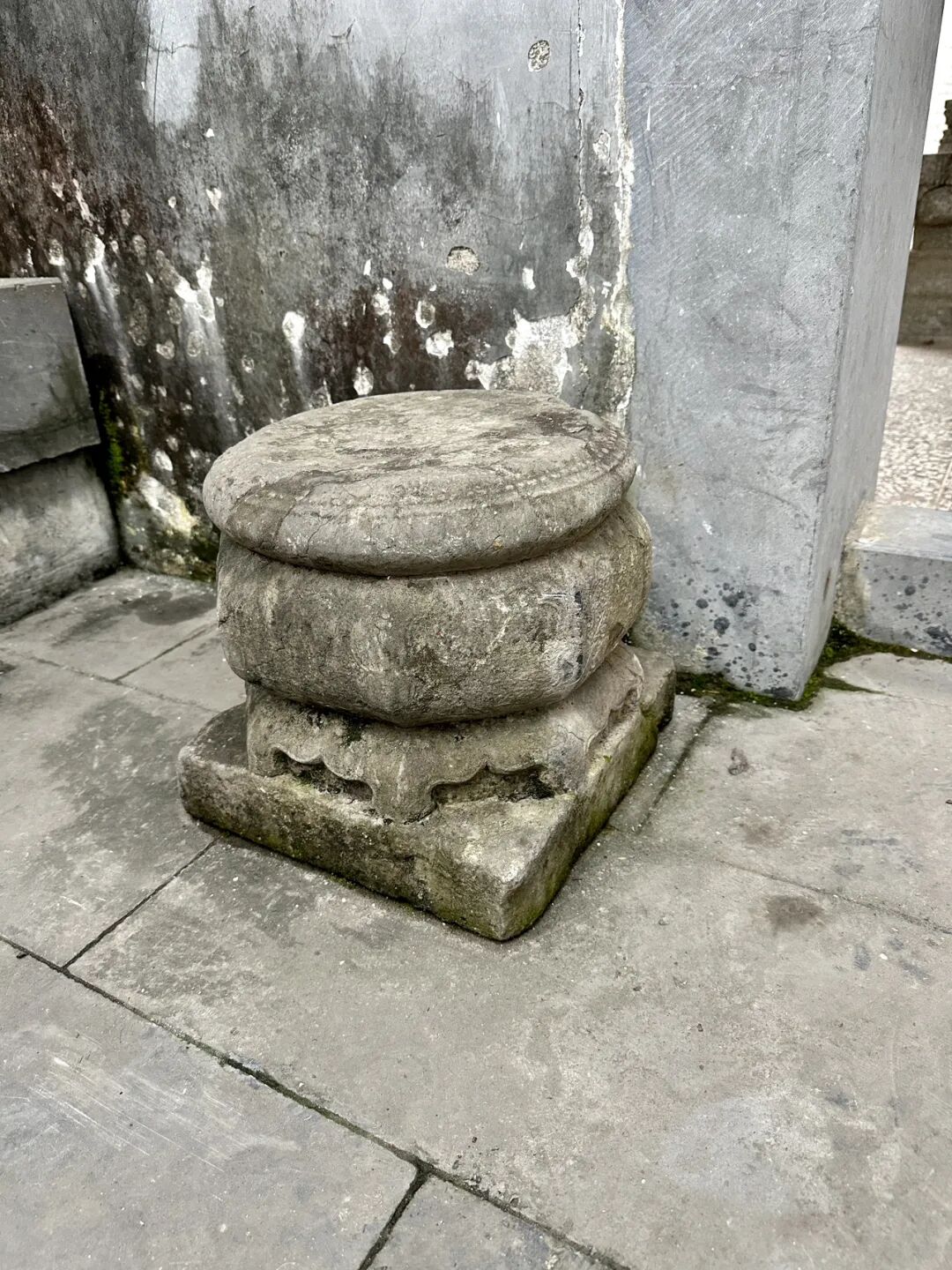
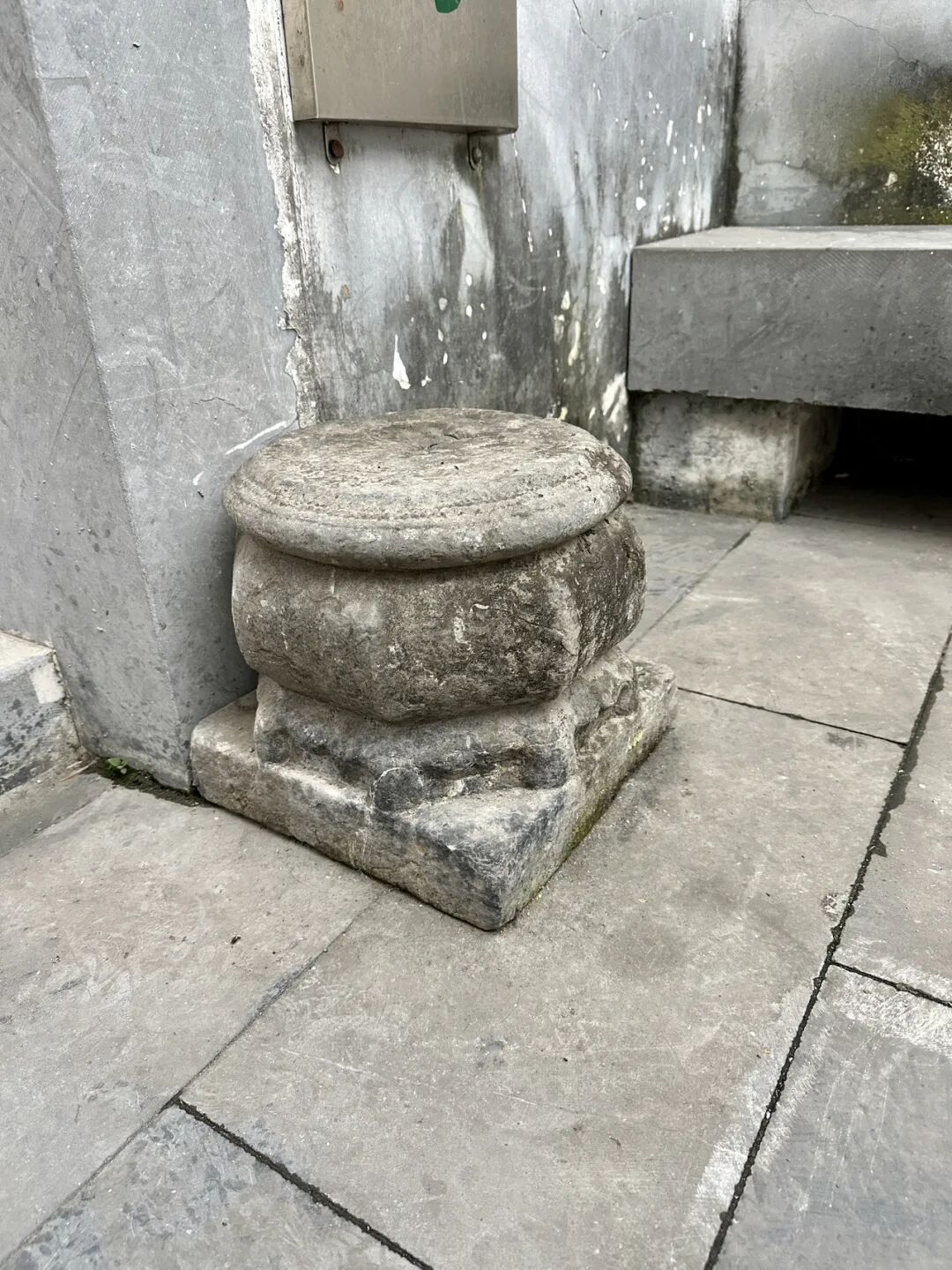
Taohuaping Mosque preserves a large number of stone tablets from the Qing Dynasty and the Republic of China, which are precious historical records:
The 1859 "Stele for Renovating the Front Gate"
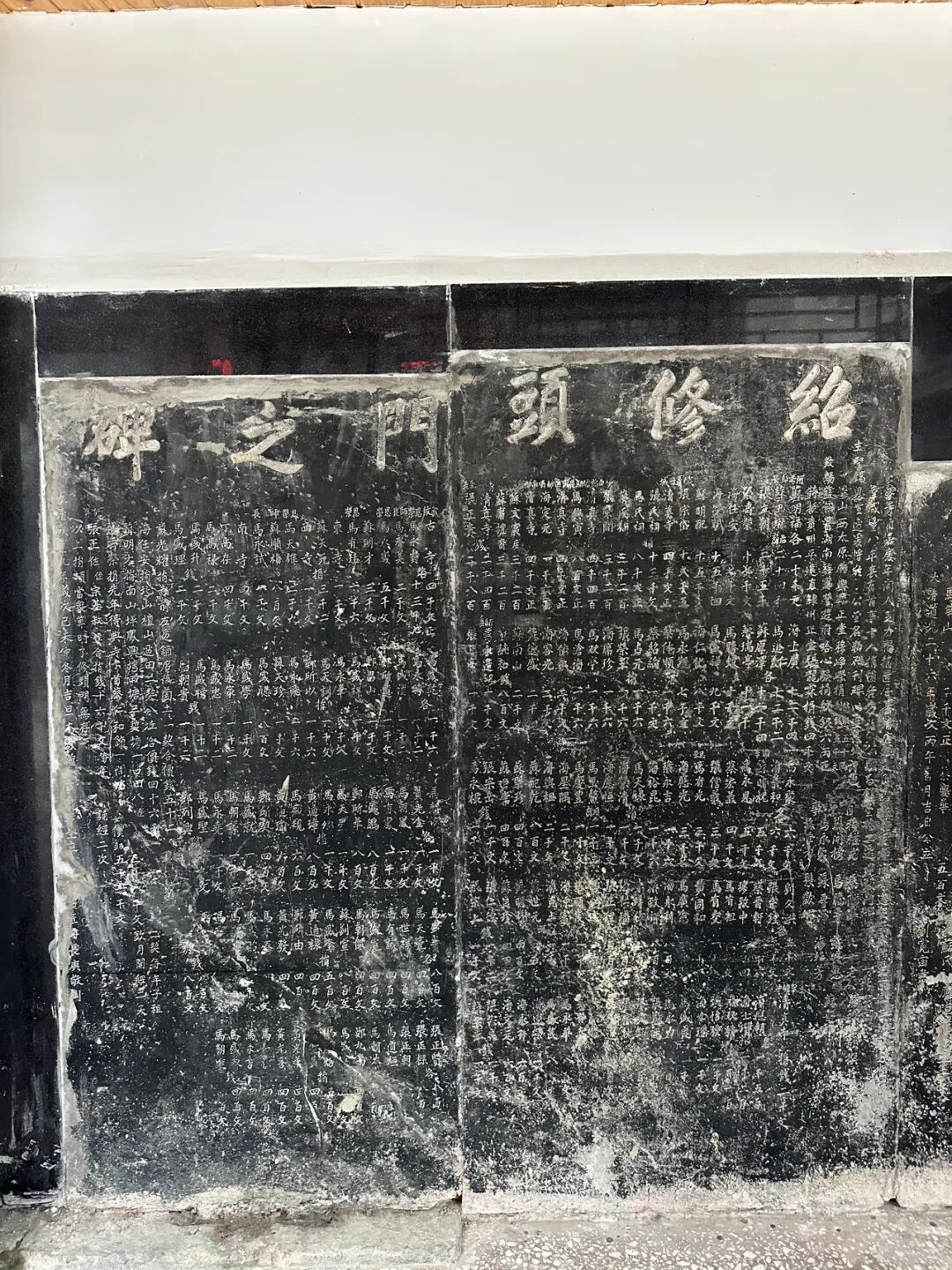
The 1846 "Restoring the School" stele
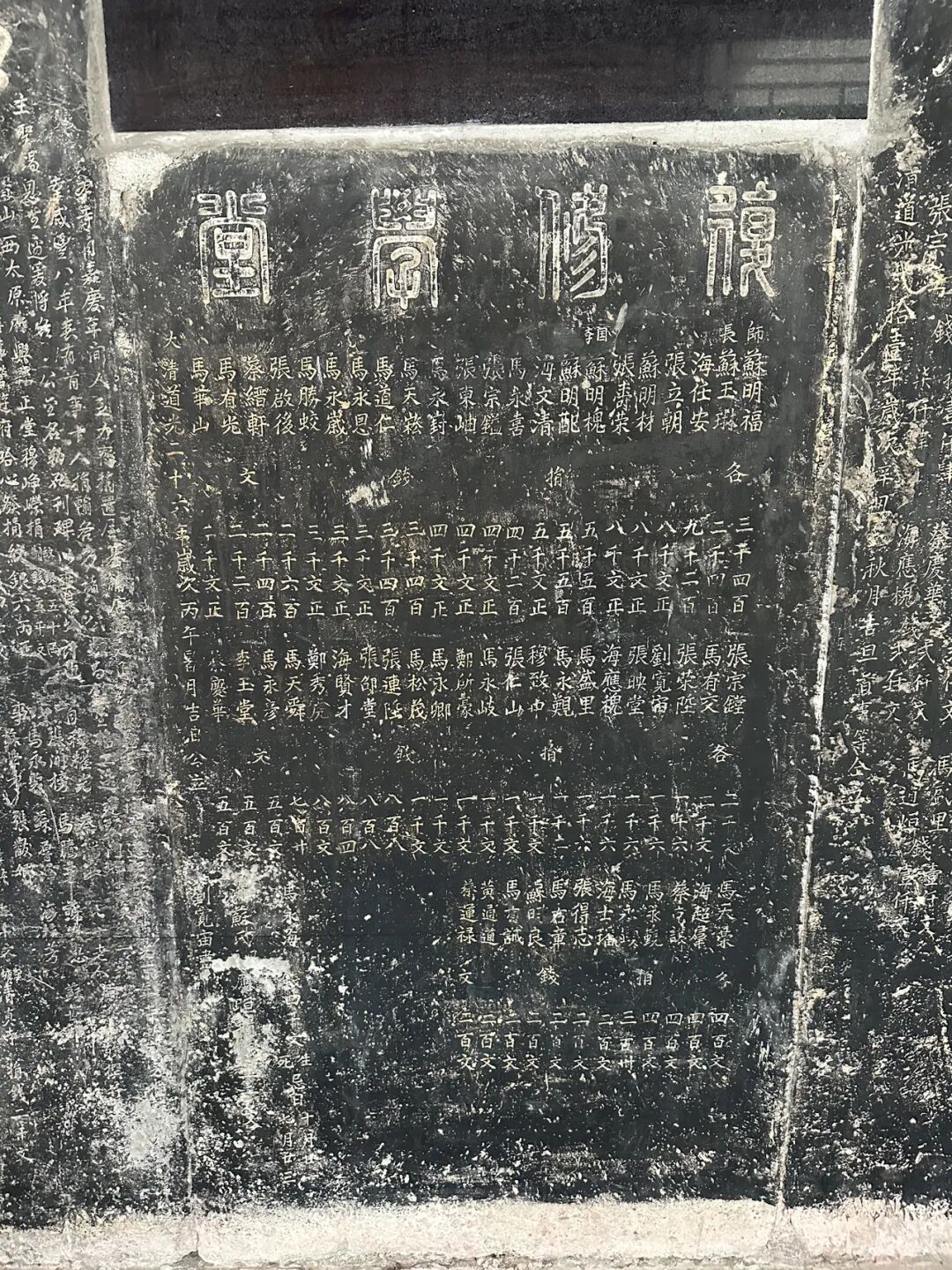
The 1841 "Renovating the Rear Hall" stele
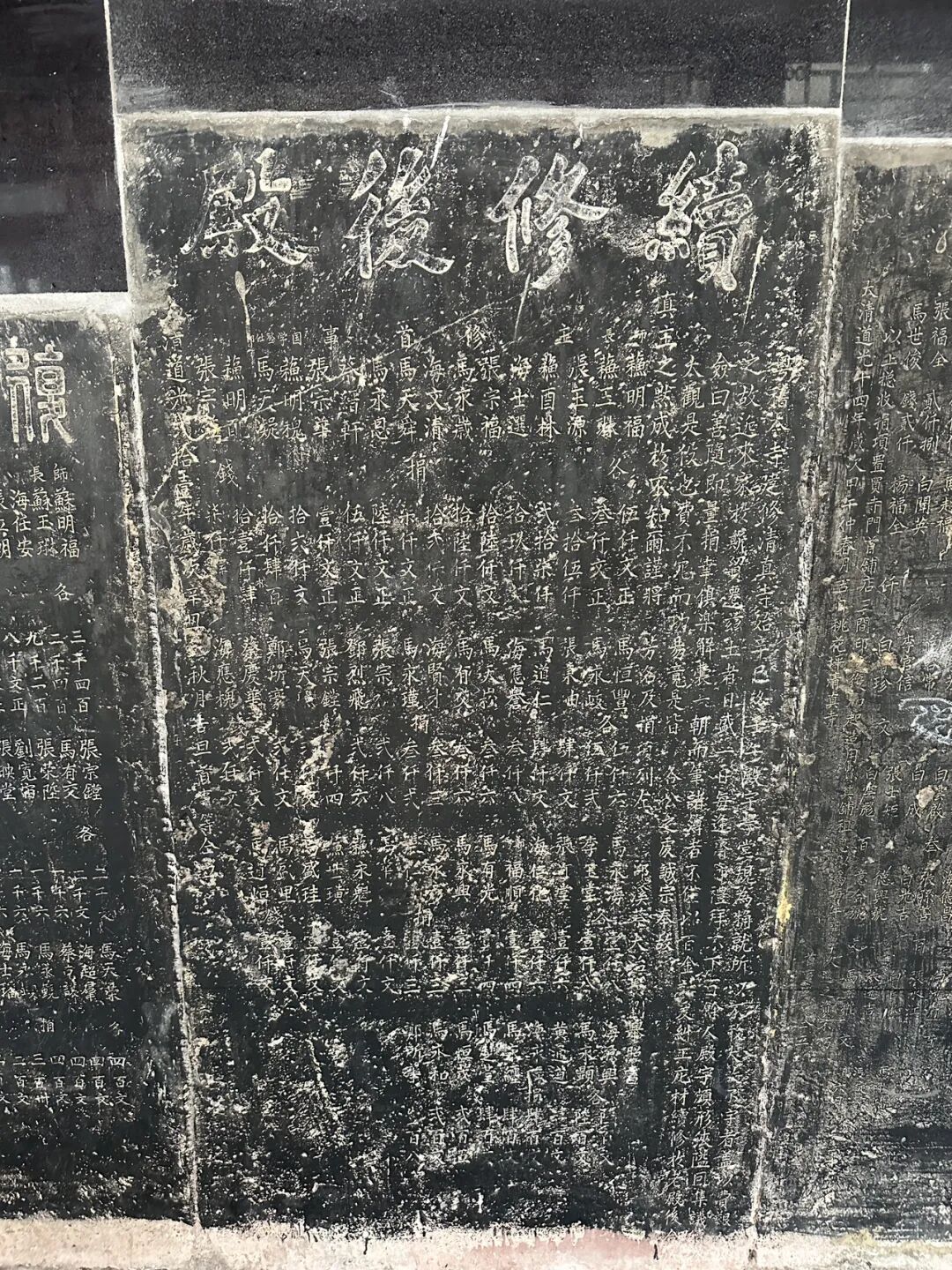
The 1834 "Righteous School Stele Record"
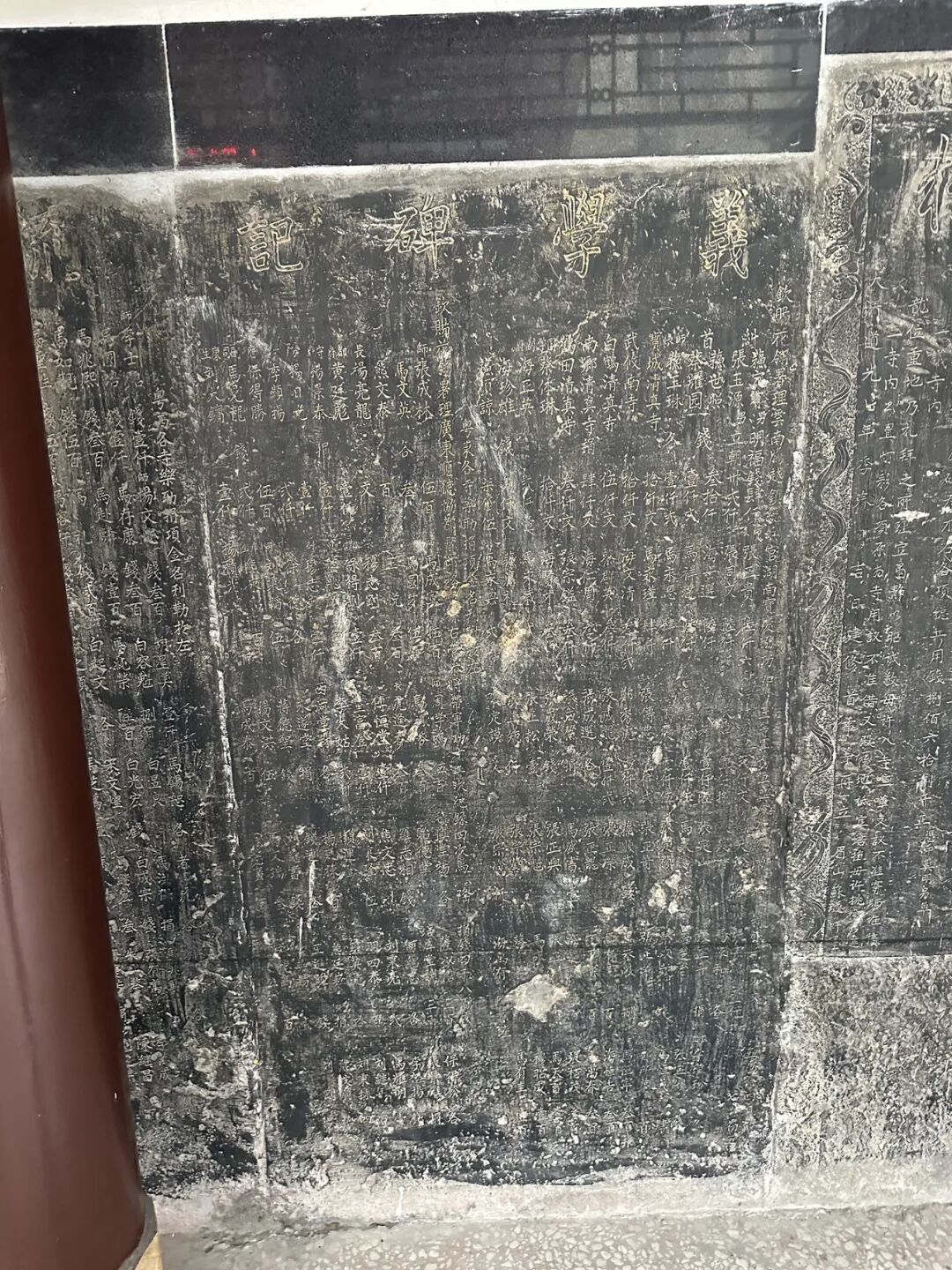
The 1822 "Everlasting Innovation, Building and Repairing the Everlasting, Immortal Names of Public Donors" stele
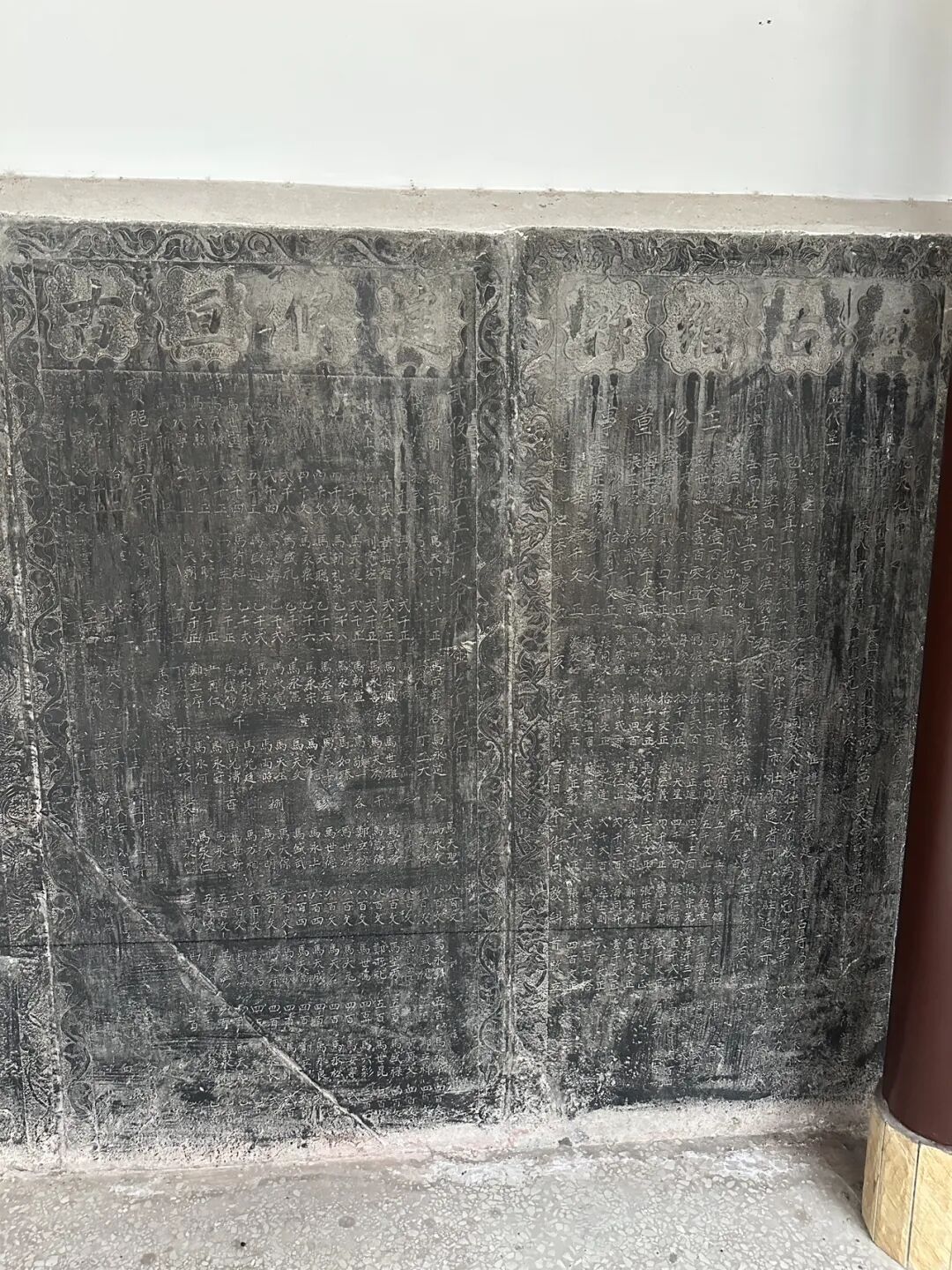
The 1928 "School Construction and Repair Stele"
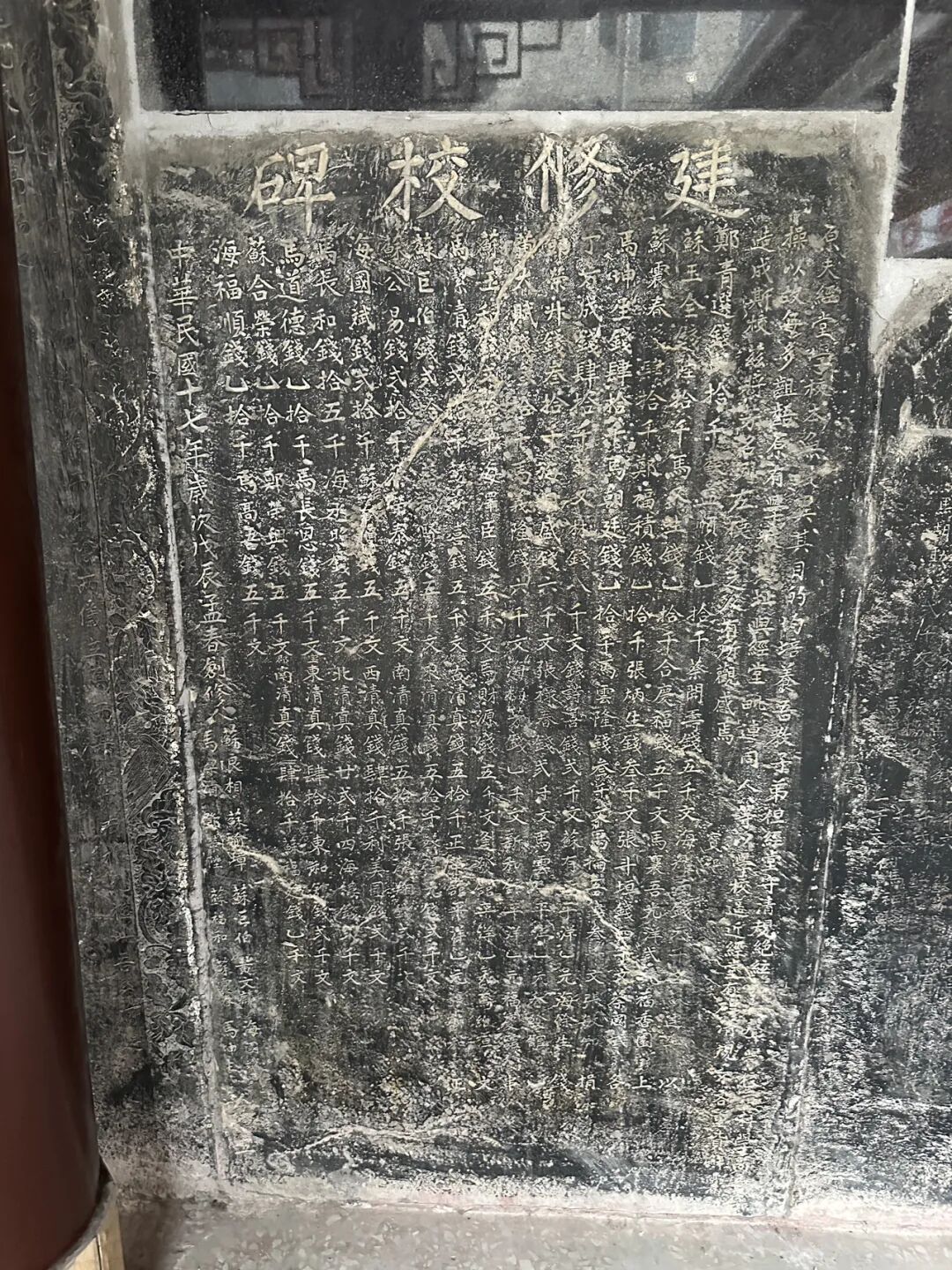
The 1910 "Jingxin Hall" stele
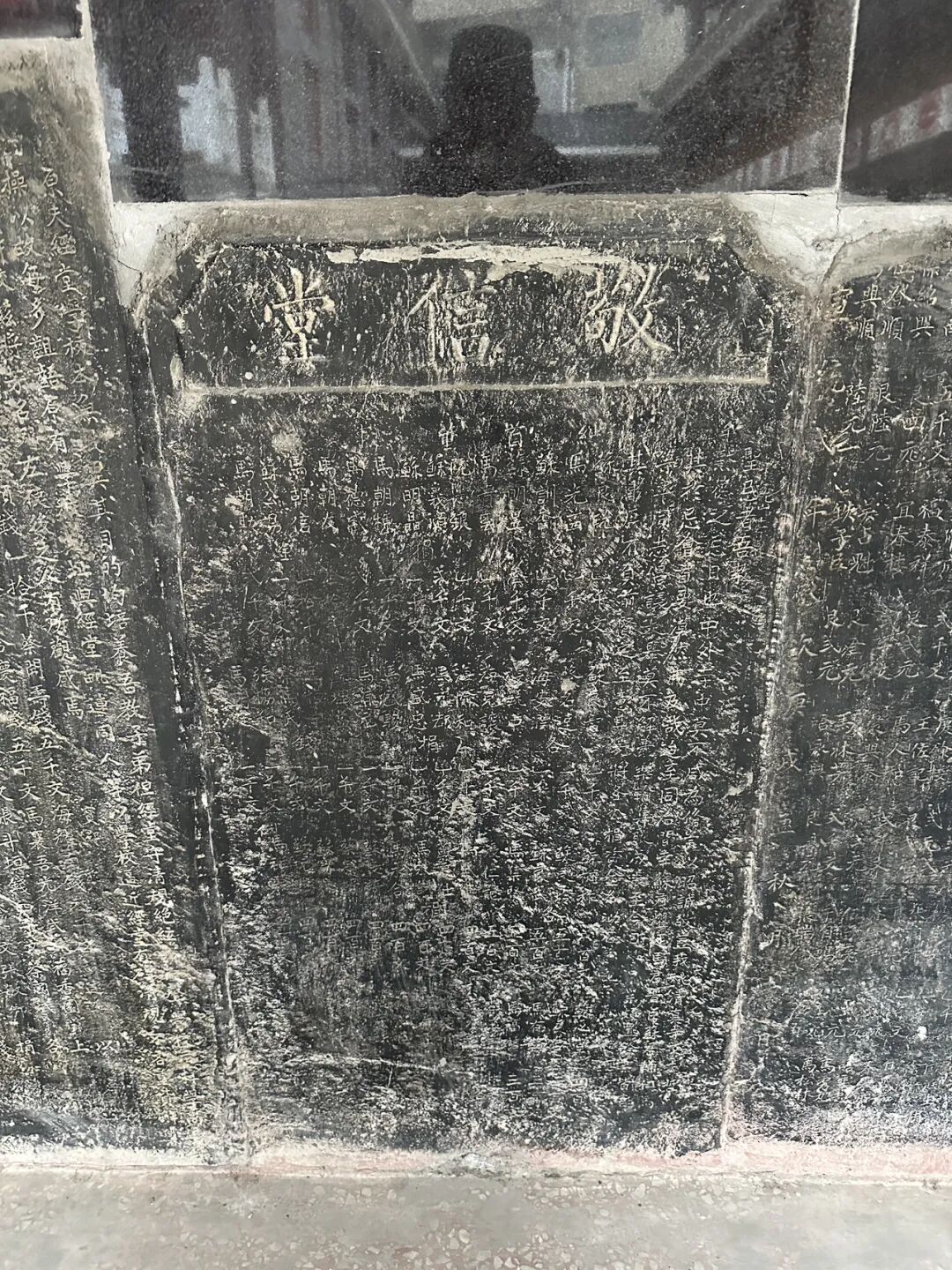
The 1875 stele
China Mosque Travel Guide: Eight Historic Mosque Complexes in Longhui, Shaoyang, Hunan (Segment 3 of 3)
Articles • yusuf908 posted the article • 0 comments • 328 views • 2026-06-22 06:34
Summary: This China mosque travel guide covers eight historic mosque complexes in Longhui, Shaoyang, Hunan, with local Hui Muslim heritage and mosque travel details kept in clear English.
Shanjie East Mosque was first built in 1728 (the fifth year of the Yongzheng reign). The mosque has hired many imams over the years, including Su Yuebo, Ma Yulang, Ma Baochu, Zheng Liansheng, Ma Yuechi, Ma Yucheng, Tang Yuanqi, Hai Shiquan, Ma Chengyong, Ding Baohua, Ma Gen'ao, Ma Xiang'ao, and Ma Wuquan. Students from as far as Hainan and Guangxi came to study under the great imam Ma Yucheng in Gansu, and the local religious community was very prosperous.
It is a pity that the mosque was locked when I visited, so I could not go inside. view all
Summary: This China mosque travel guide covers eight historic mosque complexes in Longhui, Shaoyang, Hunan, with local Hui Muslim heritage and mosque travel details kept in clear English.
Shanjie East Mosque was first built in 1728 (the fifth year of the Yongzheng reign). The mosque has hired many imams over the years, including Su Yuebo, Ma Yulang, Ma Baochu, Zheng Liansheng, Ma Yuechi, Ma Yucheng, Tang Yuanqi, Hai Shiquan, Ma Chengyong, Ding Baohua, Ma Gen'ao, Ma Xiang'ao, and Ma Wuquan. Students from as far as Hainan and Guangxi came to study under the great imam Ma Yucheng in Gansu, and the local religious community was very prosperous.
It is a pity that the mosque was locked when I visited, so I could not go inside.
China Mosque Travel Guide: Eight Historic Mosque Complexes in Longhui, Shaoyang, Hunan (Segment 1 of 3)
Articles • yusuf908 posted the article • 0 comments • 352 views • 2026-06-22 06:34
Summary: This China mosque travel guide covers eight historic mosque complexes in Longhui, Shaoyang, Hunan, with local Hui Muslim heritage and mosque travel details kept in clear English.
This article summarizes the key points about the eight mosques (sifang) in Longhui County, Shaoyang, Hunan. It keeps the original paragraph and image order. It is for readers interested in Muslim life, Islamic culture, and Chinese Islamic writing. It also helps people search for content like Chinese halal food.
Longhui County in Shaoyang City, Hunan, has a large population of Hui Muslims. I visited eight mosques there: Taohuaping Mosque, Shanjie Ancient Mosque, East Mosque, West Mosque, South Mosque, North Mosque, Luobai Mosque, and Niejiaoting Mosque. I will share them with you below.
Shanjie Ancient Mosque in Longhui County, Shaoyang, Hunan, is located in Laowuli, Shanjie Township. It was first built in 1444 (the ninth year of the Zhengtong reign of the Ming Dynasty) and is the oldest mosque in Longhui. During the Hongwu reign of the Ming Dynasty, Ma Zhi, the third son of Ma Cheng, the ancestor of the Ma family Hui Muslims in Shaoyang, moved from Shaoyang to Majia Ferry in Longhui to settle down. He was the first Hui Muslim in Longhui, and Shanjie Ancient Mosque was built by the Ma family.
Shanjie Ancient Mosque was renovated in 1919 and rebuilt into its current appearance in 2018.
Shanjie Ancient Mosque has a long tradition of teaching Islamic scripture. The head imams who have taught there include Ma Yulang, Ma Fujiu, Ma Fucheng, Ma Yucheng, Ma Yaochi, and Ding Zhenyi. They also hired imams from other places like Huang Xingxiang and Li Desheng. Ma Fucheng, an imam from this mosque, taught there for the longest time. In 1945, Imam Ma Yucheng taught at the ancient mosque and recruited many students (hailifan), marking the peak of the mosque's religious activities. To this day, the mosque continues its educational work and has trained many excellent young people.
On September 2, 1939, the Wugang County, Hunan branch of the China Islamic National Salvation Association was officially established at the mosque. The mosque's imam, Ma Fucheng, was elected as an officer. Inspired by the call to resist Japanese aggression and save the country, young Hui Muslims from the mosque, including Ma Qiyun, Ma Wuyang from the North Mosque, and Su Xingmin from Beishan, signed up for the army, took up arms, and headed to the front lines in East China. view all
Summary: This China mosque travel guide covers eight historic mosque complexes in Longhui, Shaoyang, Hunan, with local Hui Muslim heritage and mosque travel details kept in clear English.
This article summarizes the key points about the eight mosques (sifang) in Longhui County, Shaoyang, Hunan. It keeps the original paragraph and image order. It is for readers interested in Muslim life, Islamic culture, and Chinese Islamic writing. It also helps people search for content like Chinese halal food.
Longhui County in Shaoyang City, Hunan, has a large population of Hui Muslims. I visited eight mosques there: Taohuaping Mosque, Shanjie Ancient Mosque, East Mosque, West Mosque, South Mosque, North Mosque, Luobai Mosque, and Niejiaoting Mosque. I will share them with you below.
Shanjie Ancient Mosque in Longhui County, Shaoyang, Hunan, is located in Laowuli, Shanjie Township. It was first built in 1444 (the ninth year of the Zhengtong reign of the Ming Dynasty) and is the oldest mosque in Longhui. During the Hongwu reign of the Ming Dynasty, Ma Zhi, the third son of Ma Cheng, the ancestor of the Ma family Hui Muslims in Shaoyang, moved from Shaoyang to Majia Ferry in Longhui to settle down. He was the first Hui Muslim in Longhui, and Shanjie Ancient Mosque was built by the Ma family.
Shanjie Ancient Mosque was renovated in 1919 and rebuilt into its current appearance in 2018.
Shanjie Ancient Mosque has a long tradition of teaching Islamic scripture. The head imams who have taught there include Ma Yulang, Ma Fujiu, Ma Fucheng, Ma Yucheng, Ma Yaochi, and Ding Zhenyi. They also hired imams from other places like Huang Xingxiang and Li Desheng. Ma Fucheng, an imam from this mosque, taught there for the longest time. In 1945, Imam Ma Yucheng taught at the ancient mosque and recruited many students (hailifan), marking the peak of the mosque's religious activities. To this day, the mosque continues its educational work and has trained many excellent young people.
On September 2, 1939, the Wugang County, Hunan branch of the China Islamic National Salvation Association was officially established at the mosque. The mosque's imam, Ma Fucheng, was elected as an officer. Inspired by the call to resist Japanese aggression and save the country, young Hui Muslims from the mosque, including Ma Qiyun, Ma Wuyang from the North Mosque, and Su Xingmin from Beishan, signed up for the army, took up arms, and headed to the front lines in East China.
China Mosque Travel Guide: Eight Historic Mosque Complexes in Longhui, Shaoyang, Hunan (Part 4 of 5)
Articles • yusuf908 posted the article • 0 comments • 369 views • 2026-06-22 06:32
Summary: This China mosque travel guide covers eight historic mosque complexes in Longhui, Shaoyang, Hunan, with local Hui Muslim heritage and mosque travel details kept in clear English.
Taohuaping Mosque is in the center of the county. It was first built in 1820 (the 25th year of the Jiaqing reign). In 1827 (the 7th year of the Daoguang reign), it was expanded after buying shops owned by the Su and Ma families on the front street. In 1834 (the 14th year of the Daoguang reign), it bought three more shops in front of the mosque. In 1841 (the 21st year of the Daoguang reign), the rear hall was renovated, and in 1850 (the 30th year of the Daoguang reign), the front gate archway, garden, and second gate were built.
In 1941, the Taohuaping branch of the China Islamic National Salvation Association was established inside Taohuaping Mosque. It did a lot of work for anti-Japanese propaganda, provided housing for refugees from other areas, raised money for winter clothes for soldiers, and helped with evacuations. In 1941, Bai Chongxi performed worship at Taohuaping Mosque and issued a plaque stating, "Troops are forbidden from stationing inside the mosque."
Taohuaping Mosque was expanded again in 1953 and was finally rebuilt into its current structure in 2019. Currently, Taohuaping Mosque is the mosque with the second-highest number of visitors in Longhui County, after the ancient Shanjie Mosque.
Taohuaping Mosque preserves a large number of stone tablets from the Qing Dynasty and the Republic of China, which are precious historical records:
The 1859 "Stele for Renovating the Front Gate"
The 1846 "Restoring the School" stele
The 1841 "Renovating the Rear Hall" stele
The 1834 "Righteous School Stele Record"
The 1822 "Everlasting Innovation, Building and Repairing the Everlasting, Immortal Names of Public Donors" stele
The 1928 "School Construction and Repair Stele"
The 1910 "Jingxin Hall" stele view all
Summary: This China mosque travel guide covers eight historic mosque complexes in Longhui, Shaoyang, Hunan, with local Hui Muslim heritage and mosque travel details kept in clear English.
Taohuaping Mosque is in the center of the county. It was first built in 1820 (the 25th year of the Jiaqing reign). In 1827 (the 7th year of the Daoguang reign), it was expanded after buying shops owned by the Su and Ma families on the front street. In 1834 (the 14th year of the Daoguang reign), it bought three more shops in front of the mosque. In 1841 (the 21st year of the Daoguang reign), the rear hall was renovated, and in 1850 (the 30th year of the Daoguang reign), the front gate archway, garden, and second gate were built.
In 1941, the Taohuaping branch of the China Islamic National Salvation Association was established inside Taohuaping Mosque. It did a lot of work for anti-Japanese propaganda, provided housing for refugees from other areas, raised money for winter clothes for soldiers, and helped with evacuations. In 1941, Bai Chongxi performed worship at Taohuaping Mosque and issued a plaque stating, "Troops are forbidden from stationing inside the mosque."
Taohuaping Mosque was expanded again in 1953 and was finally rebuilt into its current structure in 2019. Currently, Taohuaping Mosque is the mosque with the second-highest number of visitors in Longhui County, after the ancient Shanjie Mosque.
Taohuaping Mosque preserves a large number of stone tablets from the Qing Dynasty and the Republic of China, which are precious historical records:
The 1859 "Stele for Renovating the Front Gate"
The 1846 "Restoring the School" stele
The 1841 "Renovating the Rear Hall" stele
The 1834 "Righteous School Stele Record"
The 1822 "Everlasting Innovation, Building and Repairing the Everlasting, Immortal Names of Public Donors" stele
The 1928 "School Construction and Repair Stele"
The 1910 "Jingxin Hall" stele
China Mosque Travel Guide: Eight Historic Mosque Complexes in Longhui, Shaoyang, Hunan (Part 3 of 5)
Articles • yusuf908 posted the article • 0 comments • 345 views • 2026-06-22 06:32
Summary: This China mosque travel guide covers eight historic mosque complexes in Longhui, Shaoyang, Hunan, with local Hui Muslim heritage and mosque travel details kept in clear English.
Shanjie South Mosque was first built in 1768 (the 33rd year of the Qianlong reign). The local Hui Muslims are surnamed Ma, and the imams who have taught there include Ma Baochu, Zheng Liansheng, Li Bashan, Ma Fucheng, Ma Daocheng, and Ma Fu'en.
Ma Yingdong, a local resident, went to study in Japan in 1905 and joined the Tongmenghui. In 1907, he helped organize the 'Eastern Islamic Education Association' and founded its journal, 'Awakening the Hui' (Xing Hui Pian). After returning home from his studies, Ma Yingdong dedicated himself to Hui Muslim education and founded the modern Gongjin Primary School at Shanjie South Mosque, where he served as principal.
It is a pity that the Shanjie South Mosque was locked when I visited, so I could not go inside.
Luobai Mosque was first built in 1933, and the local community members are of the Ding surname. Hui Muslims moved to Luobai in the early Qing Dynasty. For a long time, they were affiliated with the Shanjie South Mosque, but the distance made it very inconvenient. In 1933, Imam Ding Zhenyi, a Luobai Hui Muslim who taught at the Gansu Hui Language Institute, resigned from his teaching position to return home and organize the construction of a mosque. Imam Ding traveled everywhere to raise funds and finally built Luobai Mosque at the top of the Yaolong residential area in Luobai.
Imam Ding Zhenyi taught at the Luobai village primary school in 1939, and during that time, he started an introductory class for Islamic studies at Luobai Mosque. Later, he served as the imam of Hetian Mosque in Shaoyang and Liutang Mosque in Guilin, Guangxi. He also worked as a teacher at the primary school attached to Guilin Chengda Normal School, dean and professor at the Guilin Hui Language Institute, and professor at the Hainan Hui Language School. He helped organize the Wugang Branch of the Hunan Chapter of the China Islamic National Salvation Association and served as its general secretary.
Luobai Mosque was torn down in 1970, rebuilt in 1985, and rebuilt again in 2000 into the building that stands today. The mosque still has the original door plaque reading "Islamic Mosque" (Qingzhen Jiaotang) and a pair of couplets by the Republican-era educator Ma Linyi: "When seeking the source of the truth, why ask about Jesus, Buddha, or others? To unite with Heaven is to enter the path of the sages; ancient and modern, East and West, the principle is the same."
Niejiaoting Mosque was first built in 1926, and the community members are of the Ma, Hai, and Su surnames. Most of the Hui Muslims in Beishan Township, where Niejiaoting is located, moved there from other places in the late Qing Dynasty. Because it was inconvenient to perform namaz, Ma Youde, Ma Daofeng, Hai Liancheng, and others raised funds to build the mosque. The imams at the mosque include Ma Chunming, Ma Youlin, Imam Bu, Imam Zhang, Hai Siquan, and Deng Mengjun. Niejia Pavilion Mosque was destroyed after 1966, rebuilt later, and then rebuilt again in 2008.
The mosque houses the 1948 "Zhaoxiu Mosque Stele," which serves as a precious historical witness. view all
Summary: This China mosque travel guide covers eight historic mosque complexes in Longhui, Shaoyang, Hunan, with local Hui Muslim heritage and mosque travel details kept in clear English.
Shanjie South Mosque was first built in 1768 (the 33rd year of the Qianlong reign). The local Hui Muslims are surnamed Ma, and the imams who have taught there include Ma Baochu, Zheng Liansheng, Li Bashan, Ma Fucheng, Ma Daocheng, and Ma Fu'en.
Ma Yingdong, a local resident, went to study in Japan in 1905 and joined the Tongmenghui. In 1907, he helped organize the 'Eastern Islamic Education Association' and founded its journal, 'Awakening the Hui' (Xing Hui Pian). After returning home from his studies, Ma Yingdong dedicated himself to Hui Muslim education and founded the modern Gongjin Primary School at Shanjie South Mosque, where he served as principal.
It is a pity that the Shanjie South Mosque was locked when I visited, so I could not go inside.
Luobai Mosque was first built in 1933, and the local community members are of the Ding surname. Hui Muslims moved to Luobai in the early Qing Dynasty. For a long time, they were affiliated with the Shanjie South Mosque, but the distance made it very inconvenient. In 1933, Imam Ding Zhenyi, a Luobai Hui Muslim who taught at the Gansu Hui Language Institute, resigned from his teaching position to return home and organize the construction of a mosque. Imam Ding traveled everywhere to raise funds and finally built Luobai Mosque at the top of the Yaolong residential area in Luobai.
Imam Ding Zhenyi taught at the Luobai village primary school in 1939, and during that time, he started an introductory class for Islamic studies at Luobai Mosque. Later, he served as the imam of Hetian Mosque in Shaoyang and Liutang Mosque in Guilin, Guangxi. He also worked as a teacher at the primary school attached to Guilin Chengda Normal School, dean and professor at the Guilin Hui Language Institute, and professor at the Hainan Hui Language School. He helped organize the Wugang Branch of the Hunan Chapter of the China Islamic National Salvation Association and served as its general secretary.
Luobai Mosque was torn down in 1970, rebuilt in 1985, and rebuilt again in 2000 into the building that stands today. The mosque still has the original door plaque reading "Islamic Mosque" (Qingzhen Jiaotang) and a pair of couplets by the Republican-era educator Ma Linyi: "When seeking the source of the truth, why ask about Jesus, Buddha, or others? To unite with Heaven is to enter the path of the sages; ancient and modern, East and West, the principle is the same."
Niejiaoting Mosque was first built in 1926, and the community members are of the Ma, Hai, and Su surnames. Most of the Hui Muslims in Beishan Township, where Niejiaoting is located, moved there from other places in the late Qing Dynasty. Because it was inconvenient to perform namaz, Ma Youde, Ma Daofeng, Hai Liancheng, and others raised funds to build the mosque. The imams at the mosque include Ma Chunming, Ma Youlin, Imam Bu, Imam Zhang, Hai Siquan, and Deng Mengjun. Niejia Pavilion Mosque was destroyed after 1966, rebuilt later, and then rebuilt again in 2008.
The mosque houses the 1948 "Zhaoxiu Mosque Stele," which serves as a precious historical witness.
China Mosque Travel Guide: Eight Historic Mosque Complexes in Longhui, Shaoyang, Hunan (Part 2 of 5)
Articles • yusuf908 posted the article • 0 comments • 358 views • 2026-06-22 06:32
Summary: This China mosque travel guide covers eight historic mosque complexes in Longhui, Shaoyang, Hunan, with local Hui Muslim heritage and mosque travel details kept in clear English.
Shanjie West Mosque, also known as Jiajian Village Mosque, was first built in 1836 (the 16th year of the Daoguang reign). It was expanded during the Guangxu and Republic of China periods, and the local Hui Muslims there are surnamed Ma, Huang, and Zheng. The imams who have served at the mosque include Ma Chaoxin, Zheng Liansheng, Ma Daocheng, Ma Fucheng, and Ma Liangxu. The main hall of the West Mosque collapsed in 1991. It was being rebuilt when a flood destroyed it in 1996. After raising funds again, it was officially completed at the end of 1996 and renovated again in 2013.
The mosque houses a stone tablet from the 11th year of the Guangxu reign titled 'Record of Continued Mosque Repairs,' which lists the names of the donors at that time and serves as a precious historical record.
Shanjie North Mosque, also called Sifangjing Mosque, was first built in 1824 (the 4th year of the Daoguang reign), and the local Hui Muslims there are surnamed Ma. The main hall was destroyed after 1966. It was rebuilt in 1991 and again in 2000, with only the original stone gate pillars remaining. The pillars are carved with a couplet by the Republic of China educator Ma Linyi: 'To study the Way, one must seek the source; why ask about Jesus, Buddha, or the Greeks? To unite with Heaven is to enter the path of the sages; ancient and modern, Chinese and foreign, all share the same principle.'
Regrettably, the Shanjie North Mosque was also locked when I visited, and I could not enter. view all
Summary: This China mosque travel guide covers eight historic mosque complexes in Longhui, Shaoyang, Hunan, with local Hui Muslim heritage and mosque travel details kept in clear English.
Shanjie West Mosque, also known as Jiajian Village Mosque, was first built in 1836 (the 16th year of the Daoguang reign). It was expanded during the Guangxu and Republic of China periods, and the local Hui Muslims there are surnamed Ma, Huang, and Zheng. The imams who have served at the mosque include Ma Chaoxin, Zheng Liansheng, Ma Daocheng, Ma Fucheng, and Ma Liangxu. The main hall of the West Mosque collapsed in 1991. It was being rebuilt when a flood destroyed it in 1996. After raising funds again, it was officially completed at the end of 1996 and renovated again in 2013.
The mosque houses a stone tablet from the 11th year of the Guangxu reign titled 'Record of Continued Mosque Repairs,' which lists the names of the donors at that time and serves as a precious historical record.
Shanjie North Mosque, also called Sifangjing Mosque, was first built in 1824 (the 4th year of the Daoguang reign), and the local Hui Muslims there are surnamed Ma. The main hall was destroyed after 1966. It was rebuilt in 1991 and again in 2000, with only the original stone gate pillars remaining. The pillars are carved with a couplet by the Republic of China educator Ma Linyi: 'To study the Way, one must seek the source; why ask about Jesus, Buddha, or the Greeks? To unite with Heaven is to enter the path of the sages; ancient and modern, Chinese and foreign, all share the same principle.'
Regrettably, the Shanjie North Mosque was also locked when I visited, and I could not enter.
China Mosque Travel Guide: Eight Historic Mosque Complexes in Longhui, Shaoyang, Hunan (Part 5 of 5)
Articles • yusuf908 posted the article • 0 comments • 337 views • 2026-06-22 06:32
Summary: This China mosque travel guide covers eight historic mosque complexes in Longhui, Shaoyang, Hunan, with local Hui Muslim heritage and mosque travel details kept in clear English.
The 1875 stele view all
Summary: This China mosque travel guide covers eight historic mosque complexes in Longhui, Shaoyang, Hunan, with local Hui Muslim heritage and mosque travel details kept in clear English.
The 1875 stele
Muslim Travel Guide to Sichuan: Dujiangyan During Ramadan and Old Mosque Road Trip
Articles • yusuf908 posted the article • 0 comments • 387 views • 2026-06-22 06:27
Summary: This Muslim travel guide to Sichuan follows Dujiangyan during Ramadan, old mosque visits, and China mosque travel details from the original road trip.
This article summarizes the key points of 'Driving to Sichuan for Ancient Mosques during Spring Festival (Part 15): Dujiangyan during Ramadan.' It keeps the original paragraph and image order. It is for readers interested in Muslim life, Islamic culture, and Chinese Islamic writing. It also helps with searching for topics like Ramadan, Part 15, and Dujiangyan during Ramadan.
I had heard for a long time that the Ramadan atmosphere at the Dujiangyan mosque in Sichuan was excellent, and I finally got to experience it this time.
At the mosque, we had beef stewed with lotus root (niurou dun ou), cold chicken with sauce (liangban ji), steamed beef with rice flour (fenzheng niurou), twice-cooked beef (huiguo niurou), steamed eggs (zheng jidan), stir-fried garlic sprouts (chao suantai), lettuce stems braised with meat (wosun shaorou), and home-style tofu (jiachang doufu). These were all authentic Sichuan dishes.
Dujiangyan truly lives up to its reputation as the pearl of the Islamic community in western Sichuan. Many people came for the iftar meal. Chairman Sha said that in previous years they served eleven dishes and often had leftovers. This year, he specifically asked to simplify it to seven dishes and one soup. I felt the amount of food was just right.
The Hui Muslims in Dujiangyan come from diverse backgrounds. The Hai family moved from Shaoyang, Hunan, during the Wanli period of the Ming Dynasty. The Guanxian Ma family moved from Shaanxi in the mid-Ming Dynasty. The Lan family moved from Tuqiao, Chengdu, during the Qing Dynasty. The Su family moved from Xiaojin County, Sichuan, in the early Qing Dynasty. The Songpan Zhang family moved from Songpan, Sichuan, in the early Qing Dynasty. The Hebei Zhang family moved from Pidu District, Chengdu, during the Tongzhi period. The Shaanxi Ma family moved from Weinan, Shaanxi, during the Jiaqing period of the Qing Dynasty. The Qi family moved from Weinan, Shaanxi, during the Daoguang period. The Li family moved from Huihuiying in Pidu District, Chengdu, in the late Qing Dynasty. The Maogong Ma family moved from Xiaojin County, Sichuan, in the early years of the Republic of China. The Shandong Jiang family moved from Yanting, Sichuan, in the early years of the Republic of China. The Taiyuan Cai family moved from Xiaojin County, Sichuan, in the first year of the Republic of China.
The ancestor of the Dujiangyan Hai family, Hai Mengshi, was from Shunyi, Beijing. In the first year of the Hongwu period of the Ming Dynasty, he was appointed as a commander of the Imperial Guard. His grandson, Hai Chaofan, moved from Shaoyang, Hunan, to Sichuan during the Ming Wanli period.
The 'Hebei Zhang' family's ancestral home was Zhangjiawan in Tongzhou, Beijing. At the end of the Ming Dynasty, three Zhang brothers moved to Lianglukou in Pidu District, Chengdu, and led the construction of the Zhang Family Mosque (Zhangjia Si). During the Tongzhi period, Zhang Yongchun ran a Muslim restaurant on West Street in Dujiangyan and settled there.
The 'Maogong Ma' family's ancestral home was Tianbei Village in Weinan, Shaanxi. They entered Sichuan during the Qianlong period and settled in Xiaojin County. In the first year of the Republic of China, they moved to Huangchengba in Chengdu due to the Railway Protection Movement. In the sixth year of the Republic of China, their house was destroyed during the warlord chaos, and they moved to Dujiangyan again. Ma Rucong, an imam from this family, served as an imam at the Dujiangyan mosque for 33 years and passed away in 1962.
The Li family of Hui Muslims moved here from Tangyuan Town in Pidu District, Chengdu, during the Tongzhi reign. Li Guangming, a member of the family, was known as one of the Three Heroes of Guan County. He served as the magistrate of Xiaojin County during the Republic of China era, stood up to powerful figures, and was later killed by bandits.
The ancestors of the Shaanxi Ma family came from Qiaotian Village in Weinan, Shaanxi. In the 13th year of the Jiaqing reign, Ma Yingxian moved to Dujiangyan because of the White Lotus and Tianli uprisings. In the 6th year of the Daoguang reign, he bought a piece of land on South Street in Dujiangyan and opened the Daxing Mule and Horse Inn, which operated until 1949.
Next to the mosque is the Jiang Jiuxiang Pickles Workshop. Their five-kernel pine mushroom (wuren songrong) is delicious. It tastes great on its own and is a perfect match for porridge.
Dujiangyan Guan County Ancient City at night.
Starting the fast (suhur) at the Dujiangyan mosque in the morning is a special experience when everyone does it together.
Imam Sha Fuquan has been employed at the Dujiangyan mosque for 32 years. Imam Sha is from Xichang. His ancestors were descendants of Yelu Timur, the grandson of Sayyid Ajjal Shams al-Din. Yelu Timur served as the Pingzhang Zhengshi of Jianchang Road at the end of the Yuan Dynasty. He submitted to the Ming Dynasty in 1382 (the 15th year of the Hongwu reign) and was appointed as the Commander of Jianchang Guard. In 1392 (the 25th year of the Hongwu reign), he rebelled again, led an army of ten thousand to attack the city, and was captured and executed after failing. His descendants scattered. One branch fled to Huangcaoping in Miyi County, Panzhihua, where they hid their identities and changed their surname to Sha. By the third generation, they moved to Xichang, where they have lived ever since.
In 1987, Imam Sha studied under the famous Imam Yang Hua in Shaguoying, Xichang. He received his graduation robe (chuanyi guazhang) in 1990 and was admitted to the China Islamic Institute that same year. After graduating in 1994, he was hired by the Dujiangyan mosque, where he has worked ever since. Over the past thirty years, Imam Sha has taught hundreds of students (hailifan) and made significant contributions to the faith in Sichuan and the entire Southwest region. After the 2008 Wenchuan earthquake, Imam Sha led the restoration of the Dujiangyan mosque, giving it a brand-new look. view all
Summary: This Muslim travel guide to Sichuan follows Dujiangyan during Ramadan, old mosque visits, and China mosque travel details from the original road trip.
This article summarizes the key points of 'Driving to Sichuan for Ancient Mosques during Spring Festival (Part 15): Dujiangyan during Ramadan.' It keeps the original paragraph and image order. It is for readers interested in Muslim life, Islamic culture, and Chinese Islamic writing. It also helps with searching for topics like Ramadan, Part 15, and Dujiangyan during Ramadan.
I had heard for a long time that the Ramadan atmosphere at the Dujiangyan mosque in Sichuan was excellent, and I finally got to experience it this time.
At the mosque, we had beef stewed with lotus root (niurou dun ou), cold chicken with sauce (liangban ji), steamed beef with rice flour (fenzheng niurou), twice-cooked beef (huiguo niurou), steamed eggs (zheng jidan), stir-fried garlic sprouts (chao suantai), lettuce stems braised with meat (wosun shaorou), and home-style tofu (jiachang doufu). These were all authentic Sichuan dishes.
Dujiangyan truly lives up to its reputation as the pearl of the Islamic community in western Sichuan. Many people came for the iftar meal. Chairman Sha said that in previous years they served eleven dishes and often had leftovers. This year, he specifically asked to simplify it to seven dishes and one soup. I felt the amount of food was just right.
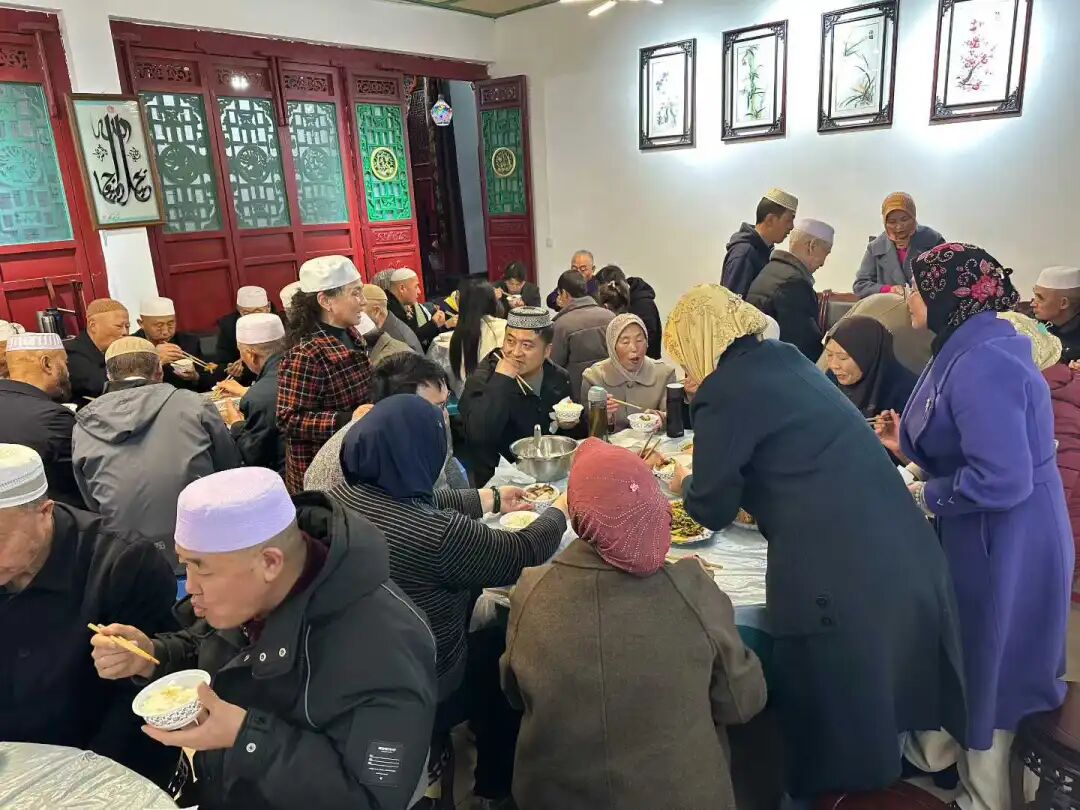
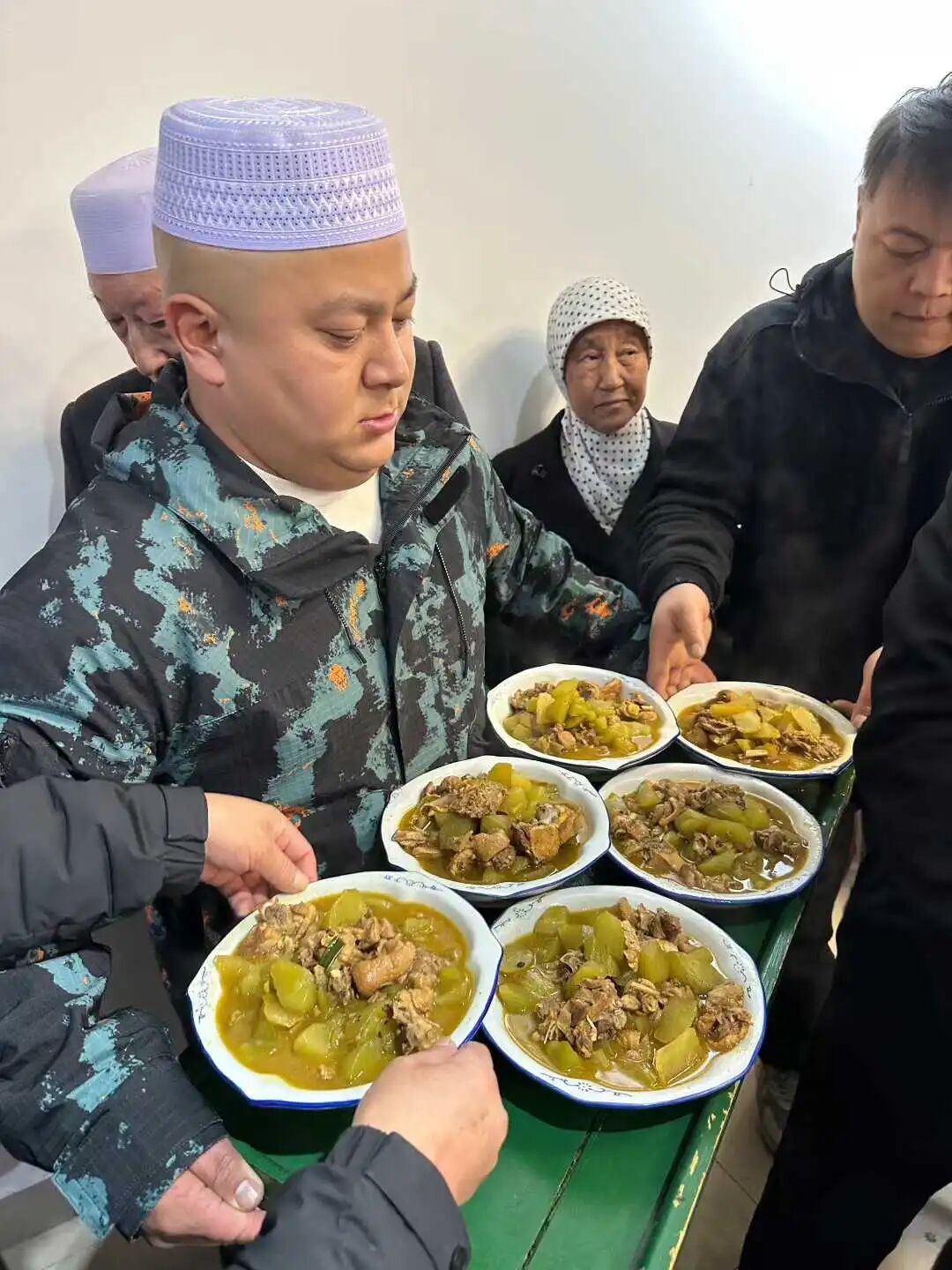
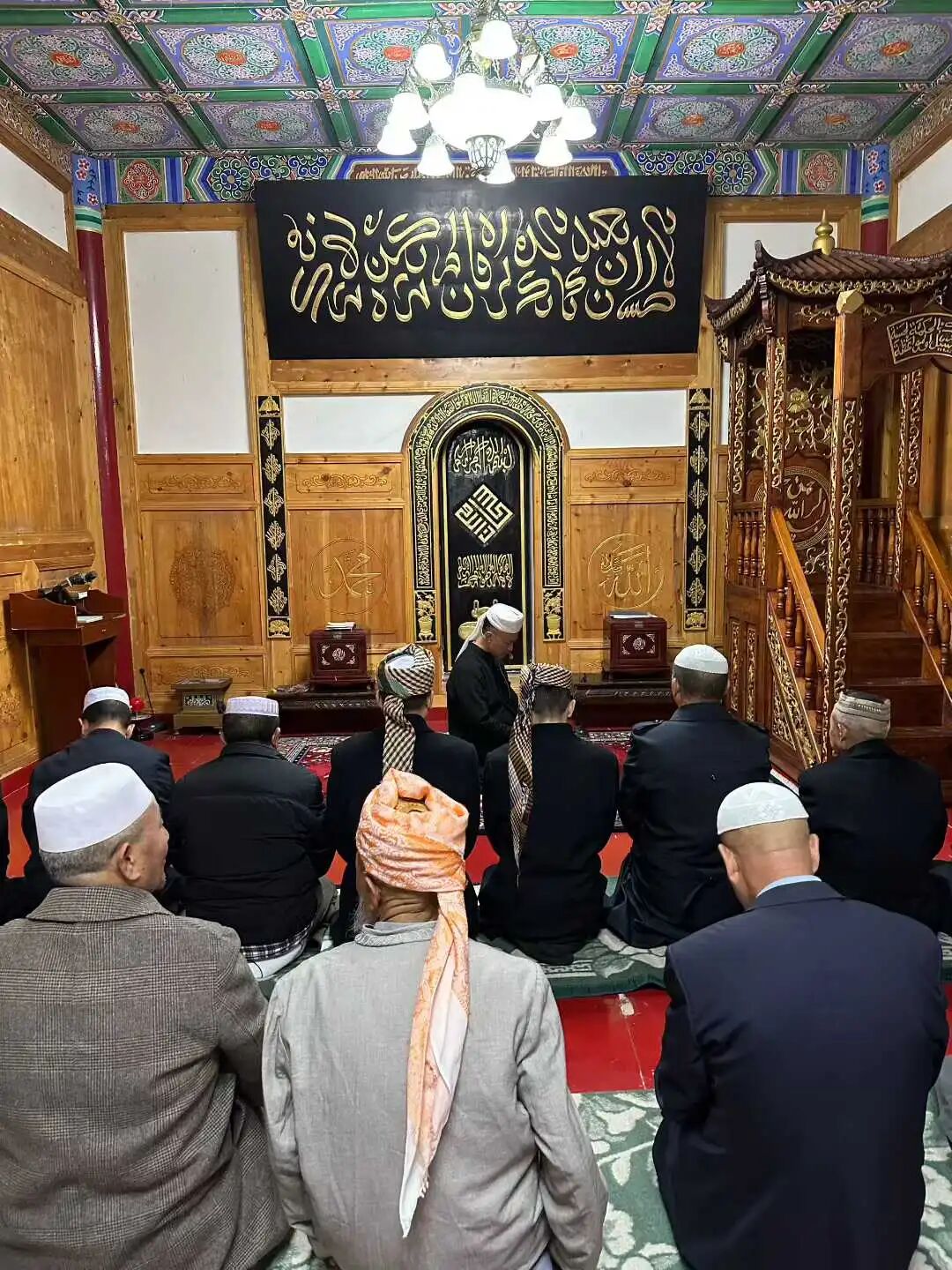
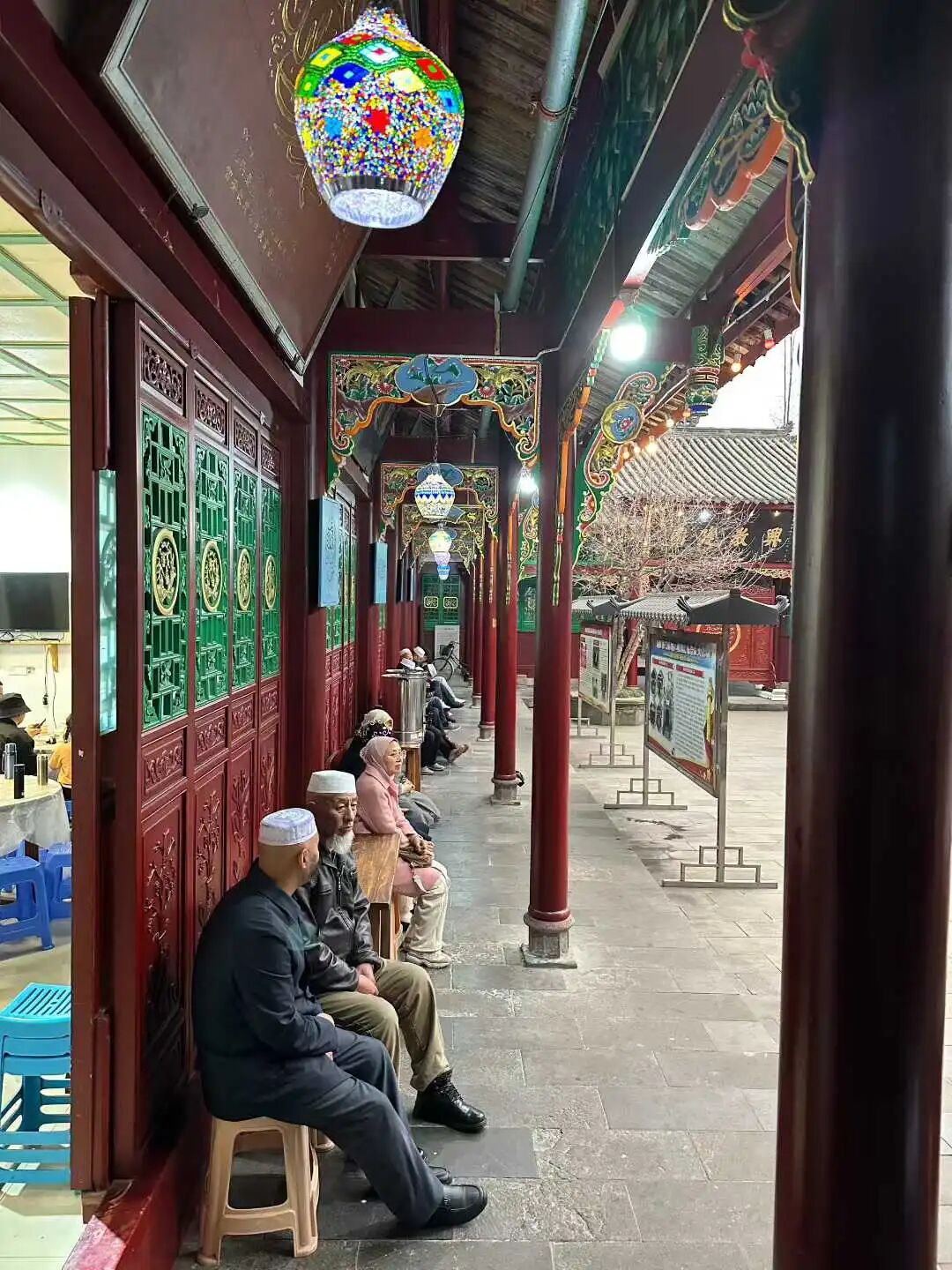
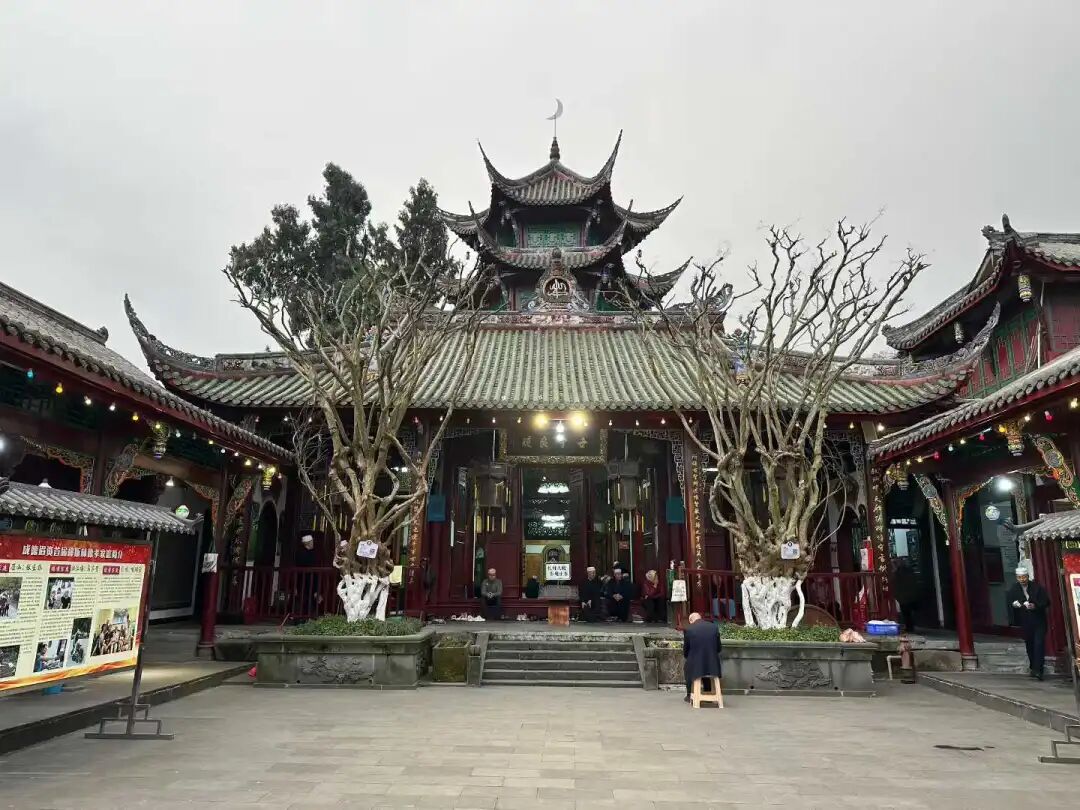
The Hui Muslims in Dujiangyan come from diverse backgrounds. The Hai family moved from Shaoyang, Hunan, during the Wanli period of the Ming Dynasty. The Guanxian Ma family moved from Shaanxi in the mid-Ming Dynasty. The Lan family moved from Tuqiao, Chengdu, during the Qing Dynasty. The Su family moved from Xiaojin County, Sichuan, in the early Qing Dynasty. The Songpan Zhang family moved from Songpan, Sichuan, in the early Qing Dynasty. The Hebei Zhang family moved from Pidu District, Chengdu, during the Tongzhi period. The Shaanxi Ma family moved from Weinan, Shaanxi, during the Jiaqing period of the Qing Dynasty. The Qi family moved from Weinan, Shaanxi, during the Daoguang period. The Li family moved from Huihuiying in Pidu District, Chengdu, in the late Qing Dynasty. The Maogong Ma family moved from Xiaojin County, Sichuan, in the early years of the Republic of China. The Shandong Jiang family moved from Yanting, Sichuan, in the early years of the Republic of China. The Taiyuan Cai family moved from Xiaojin County, Sichuan, in the first year of the Republic of China.
The ancestor of the Dujiangyan Hai family, Hai Mengshi, was from Shunyi, Beijing. In the first year of the Hongwu period of the Ming Dynasty, he was appointed as a commander of the Imperial Guard. His grandson, Hai Chaofan, moved from Shaoyang, Hunan, to Sichuan during the Ming Wanli period.
The 'Hebei Zhang' family's ancestral home was Zhangjiawan in Tongzhou, Beijing. At the end of the Ming Dynasty, three Zhang brothers moved to Lianglukou in Pidu District, Chengdu, and led the construction of the Zhang Family Mosque (Zhangjia Si). During the Tongzhi period, Zhang Yongchun ran a Muslim restaurant on West Street in Dujiangyan and settled there.
The 'Maogong Ma' family's ancestral home was Tianbei Village in Weinan, Shaanxi. They entered Sichuan during the Qianlong period and settled in Xiaojin County. In the first year of the Republic of China, they moved to Huangchengba in Chengdu due to the Railway Protection Movement. In the sixth year of the Republic of China, their house was destroyed during the warlord chaos, and they moved to Dujiangyan again. Ma Rucong, an imam from this family, served as an imam at the Dujiangyan mosque for 33 years and passed away in 1962.
The Li family of Hui Muslims moved here from Tangyuan Town in Pidu District, Chengdu, during the Tongzhi reign. Li Guangming, a member of the family, was known as one of the Three Heroes of Guan County. He served as the magistrate of Xiaojin County during the Republic of China era, stood up to powerful figures, and was later killed by bandits.
The ancestors of the Shaanxi Ma family came from Qiaotian Village in Weinan, Shaanxi. In the 13th year of the Jiaqing reign, Ma Yingxian moved to Dujiangyan because of the White Lotus and Tianli uprisings. In the 6th year of the Daoguang reign, he bought a piece of land on South Street in Dujiangyan and opened the Daxing Mule and Horse Inn, which operated until 1949.
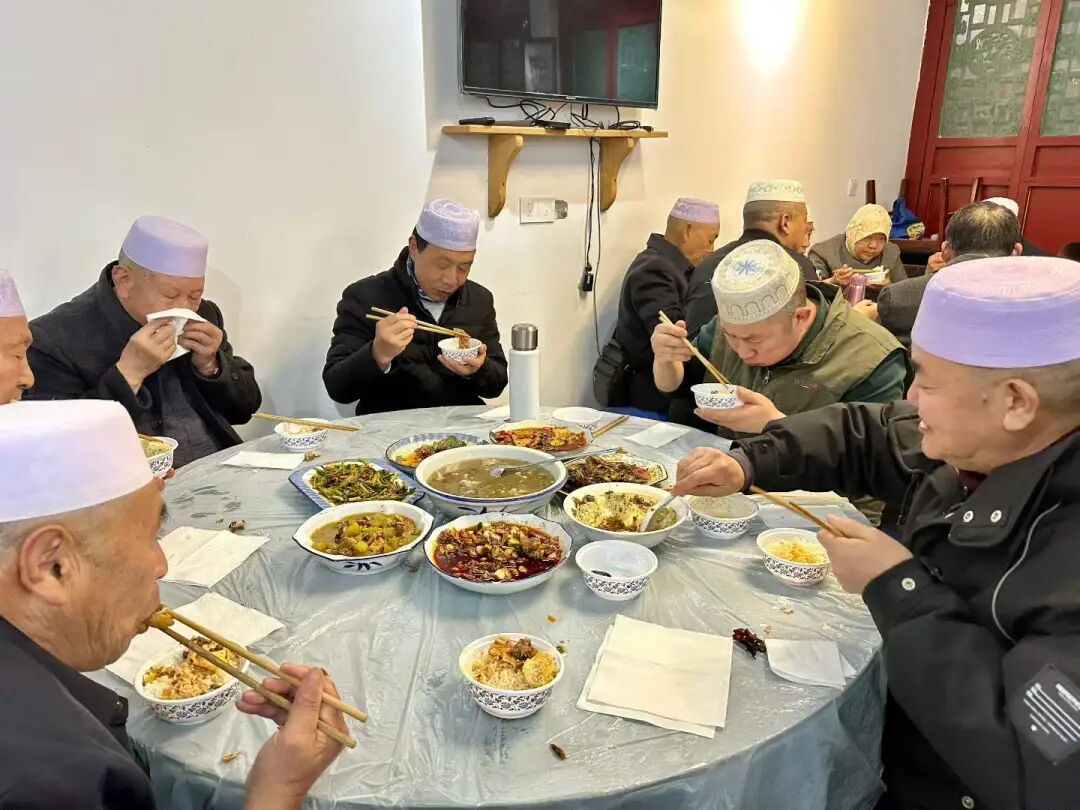
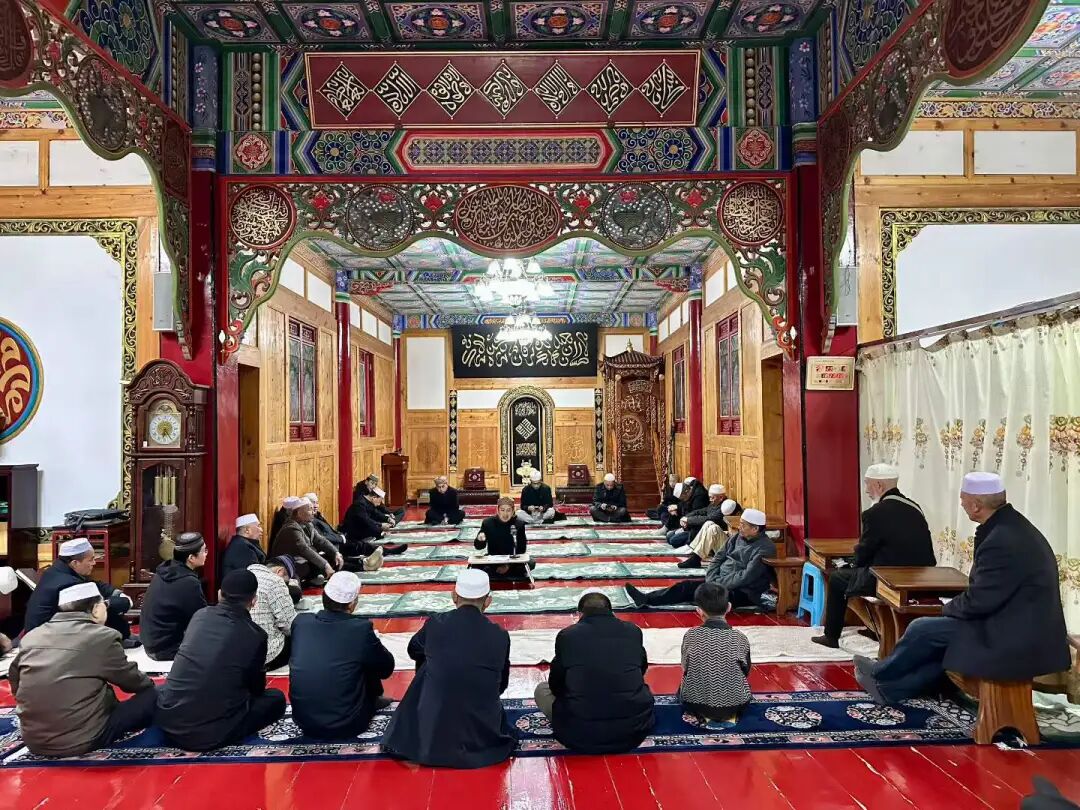
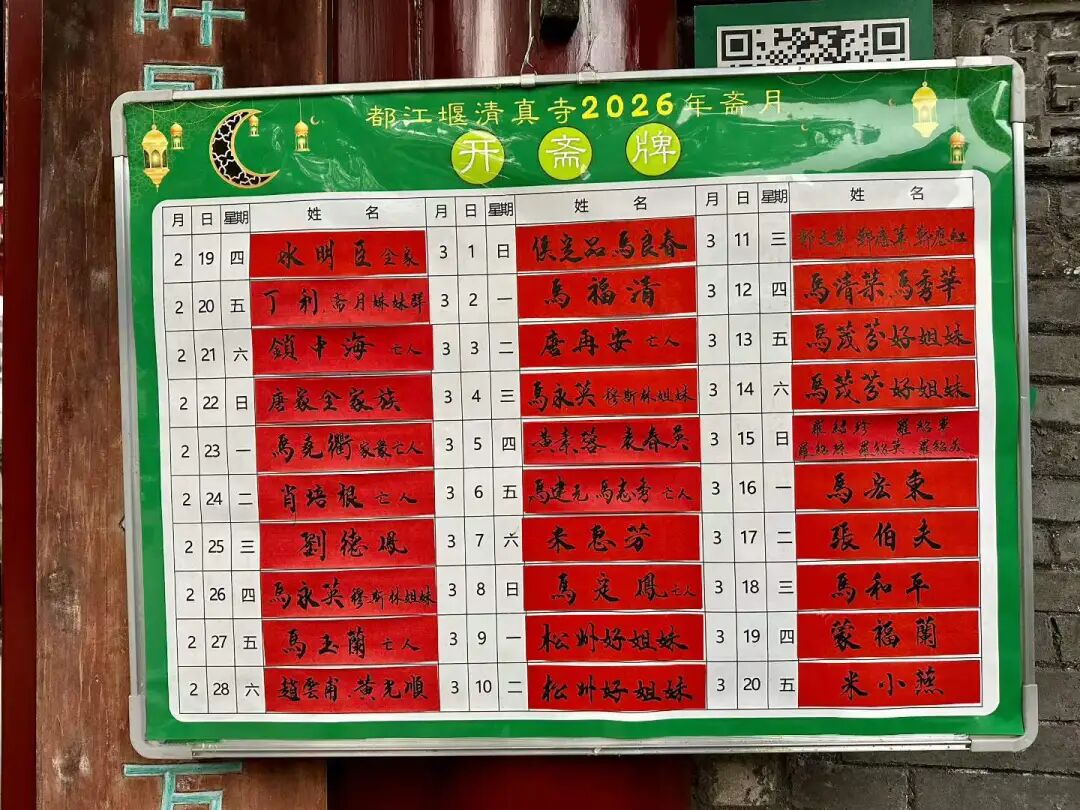
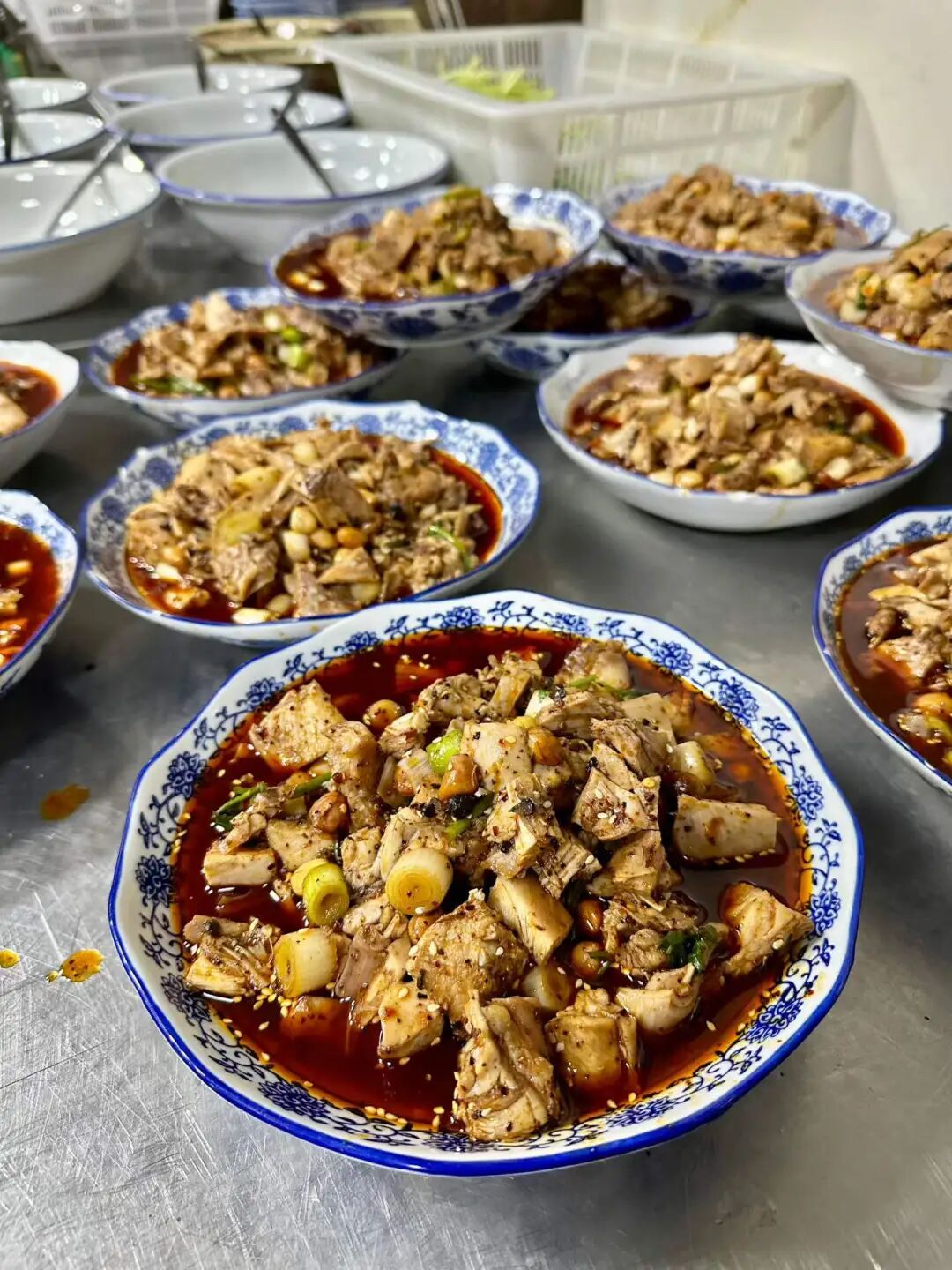
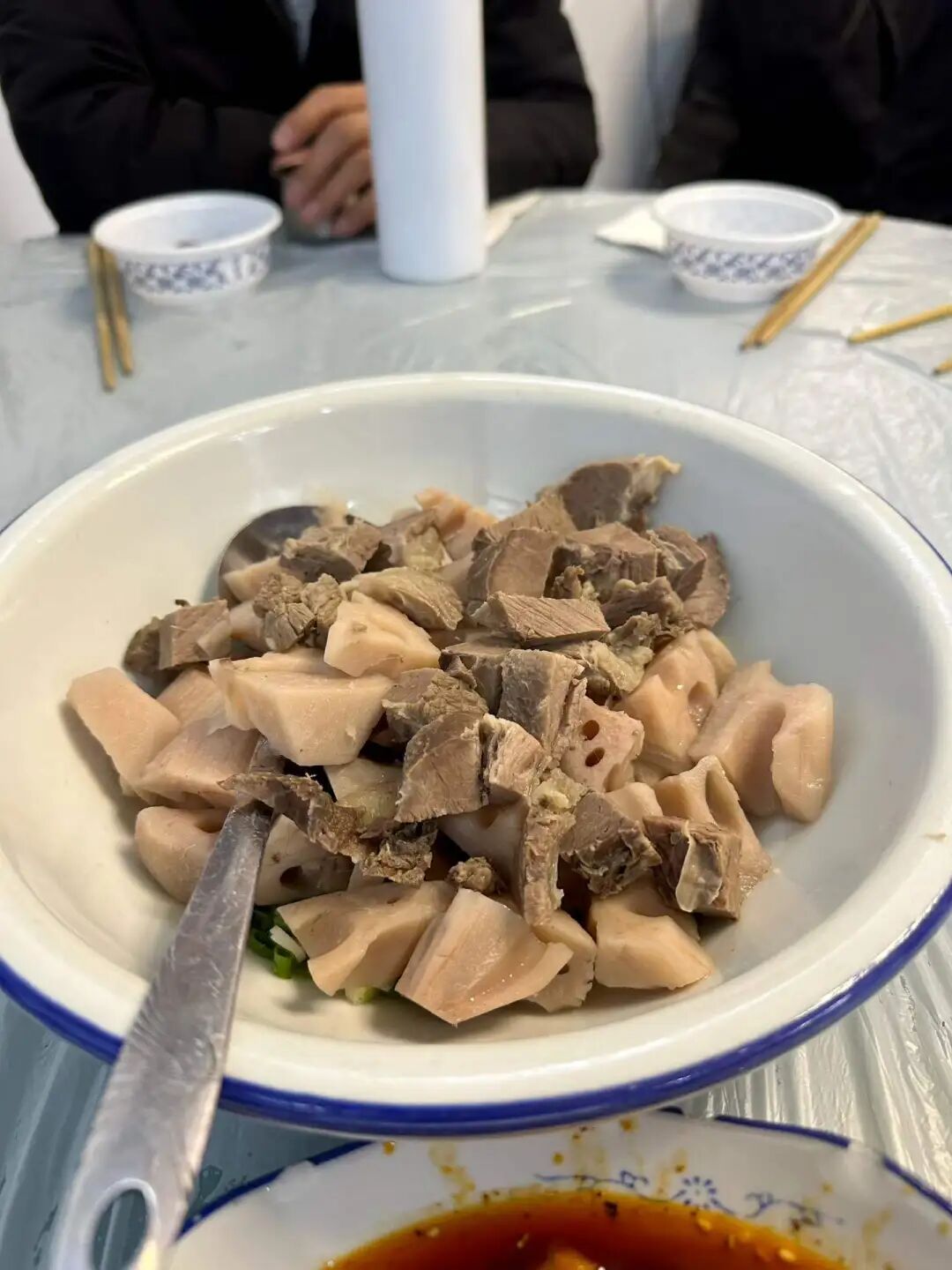
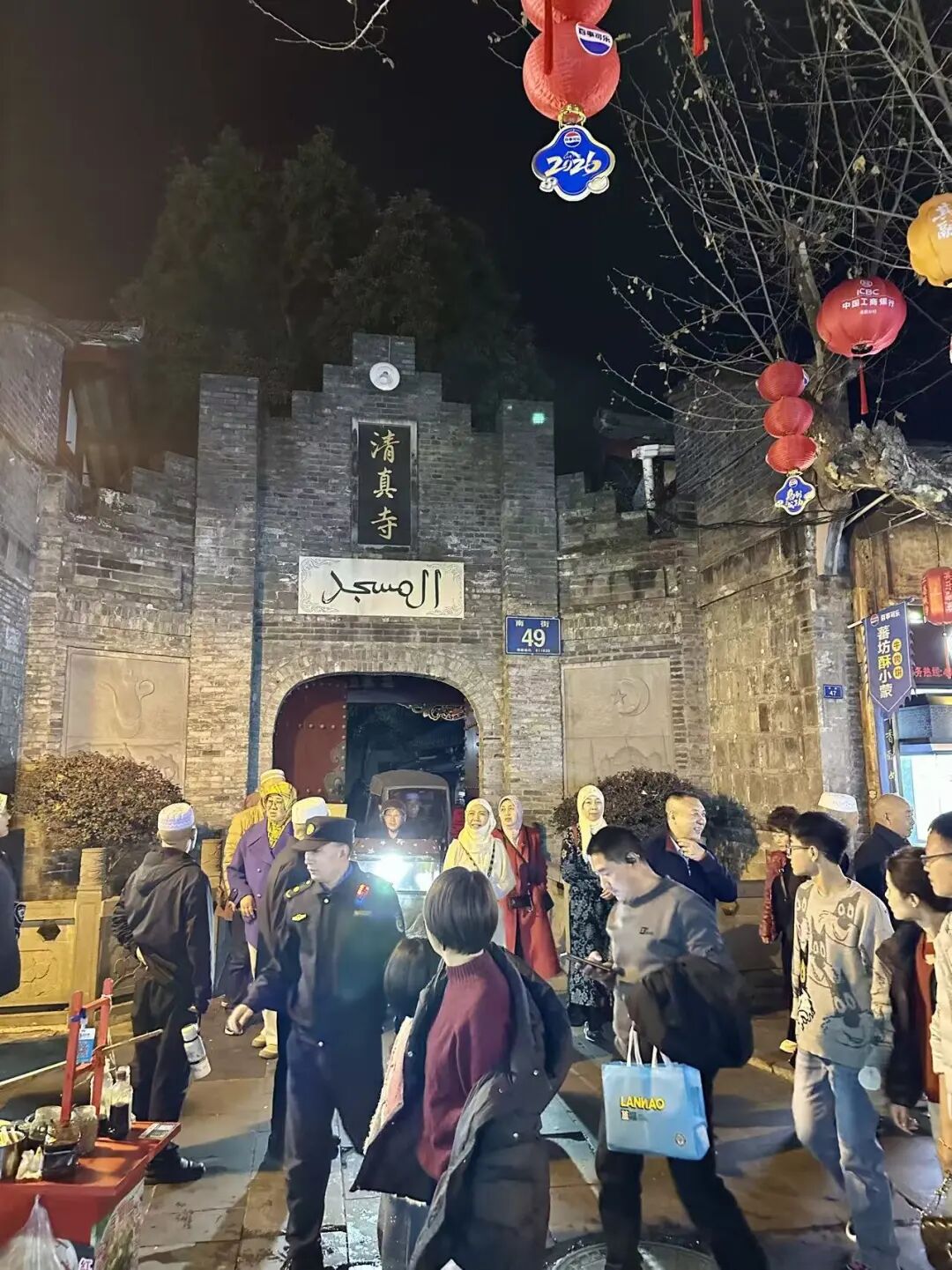
Next to the mosque is the Jiang Jiuxiang Pickles Workshop. Their five-kernel pine mushroom (wuren songrong) is delicious. It tastes great on its own and is a perfect match for porridge.
Dujiangyan Guan County Ancient City at night.
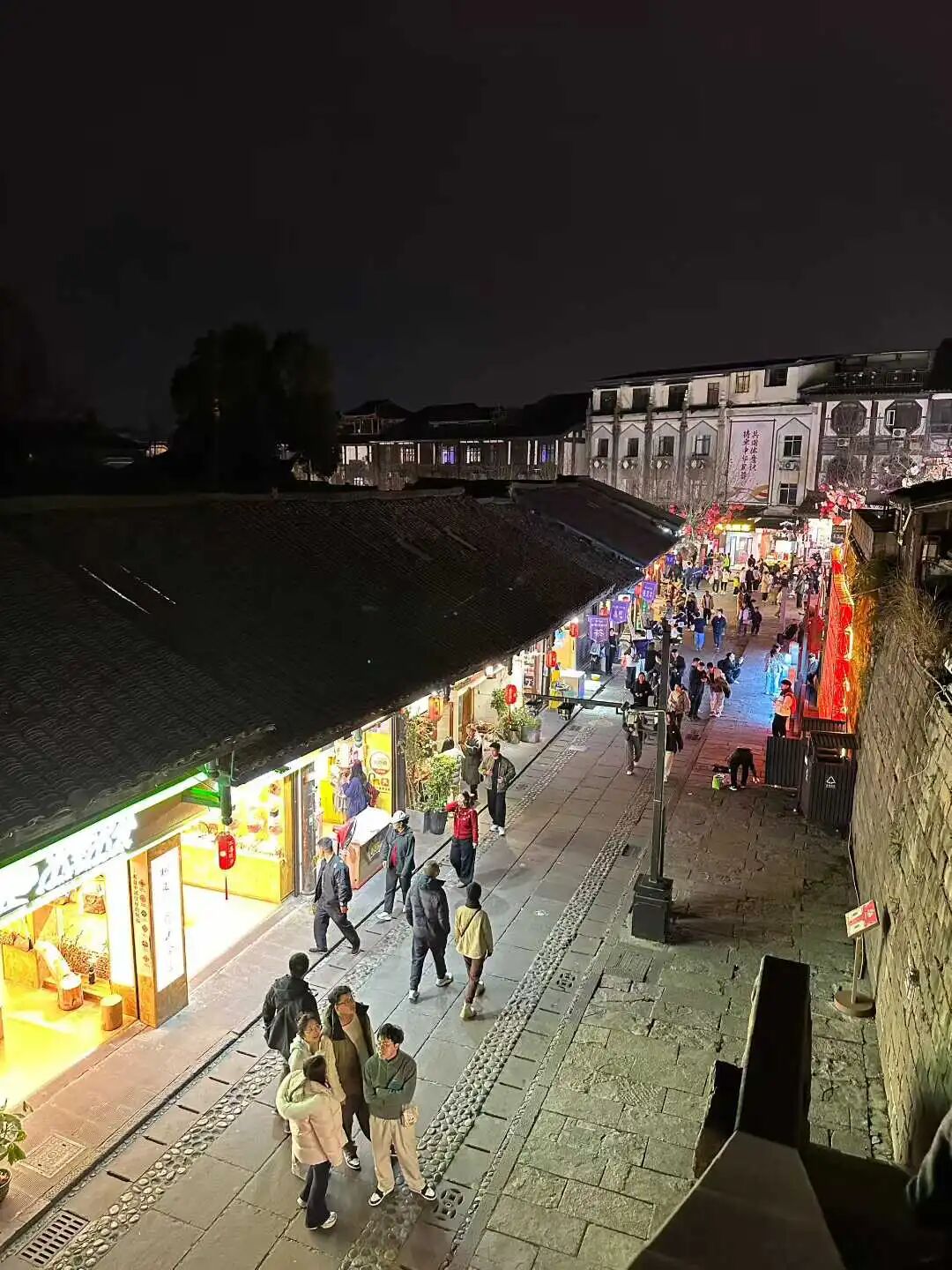
Starting the fast (suhur) at the Dujiangyan mosque in the morning is a special experience when everyone does it together.
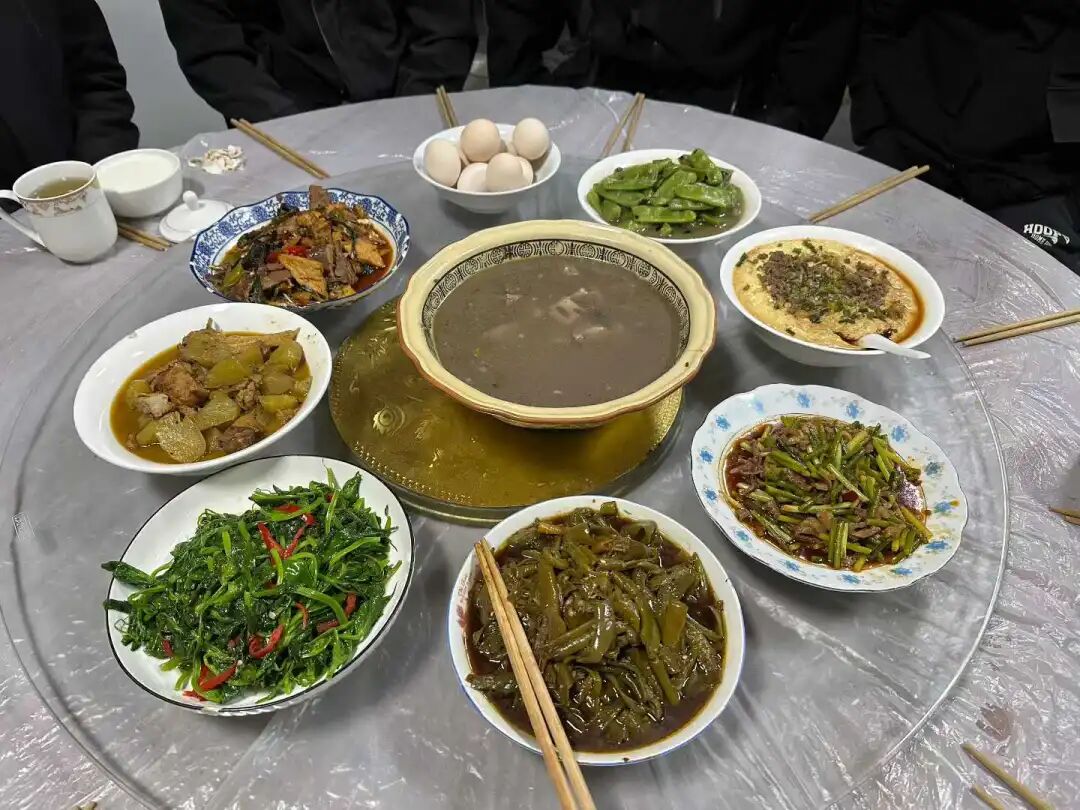
Imam Sha Fuquan has been employed at the Dujiangyan mosque for 32 years. Imam Sha is from Xichang. His ancestors were descendants of Yelu Timur, the grandson of Sayyid Ajjal Shams al-Din. Yelu Timur served as the Pingzhang Zhengshi of Jianchang Road at the end of the Yuan Dynasty. He submitted to the Ming Dynasty in 1382 (the 15th year of the Hongwu reign) and was appointed as the Commander of Jianchang Guard. In 1392 (the 25th year of the Hongwu reign), he rebelled again, led an army of ten thousand to attack the city, and was captured and executed after failing. His descendants scattered. One branch fled to Huangcaoping in Miyi County, Panzhihua, where they hid their identities and changed their surname to Sha. By the third generation, they moved to Xichang, where they have lived ever since.
In 1987, Imam Sha studied under the famous Imam Yang Hua in Shaguoying, Xichang. He received his graduation robe (chuanyi guazhang) in 1990 and was admitted to the China Islamic Institute that same year. After graduating in 1994, he was hired by the Dujiangyan mosque, where he has worked ever since. Over the past thirty years, Imam Sha has taught hundreds of students (hailifan) and made significant contributions to the faith in Sichuan and the entire Southwest region. After the 2008 Wenchuan earthquake, Imam Sha led the restoration of the Dujiangyan mosque, giving it a brand-new look.
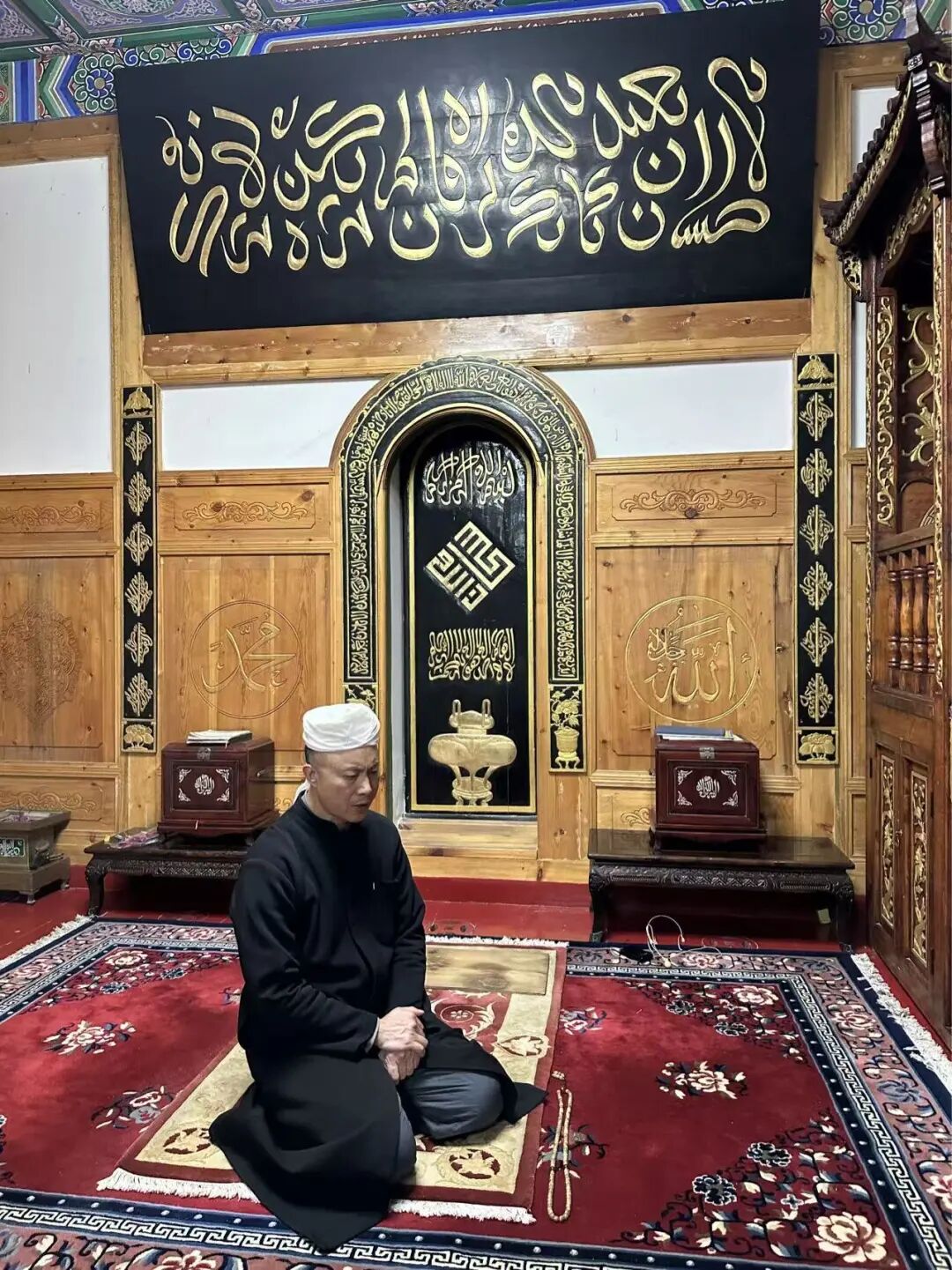
Halal Food Guide to Tianjin: Hui Muslim Tea Restaurants and Handmade Burger Shops
Articles • yusuf908 posted the article • 0 comments • 335 views • 2026-06-22 06:27
Summary: This halal food guide to Tianjin covers Hui Muslim tea restaurants, handmade burger shops, halal food in China, and local Muslim dining details.
This article covers two new tea restaurants and one handmade burger shop opened by Hui Muslims in Tianjin. It keeps the original paragraph and image order, making it perfect for readers interested in Muslim life, Islamic culture, and Chinese Islamic writing, as well as those searching for halal food in China.
I heard about two new tea restaurants and an American-style burger shop in Tianjin, so I went to try them out this weekend.
I took the intercity train to Tianjin West Station, then transferred to Line 4 to reach Tianmu. The new subway line was very empty. After leaving the Tianmu subway station, I crossed the street and saw the newly opened Cantonese tea restaurant, Hanmei, at the intersection. They used to sell rice noodle rolls (changfen) at the Shunyi Road night market before opening their own shop.
Their main dishes are roast goose and rice noodle rolls (changfen). We ordered half a roast goose, mushroom and shrimp rice noodle rolls, Cantonese-style beef rice noodle rolls, curry fish balls, tiger skin chicken feet, and radish beef offal. The roast goose tasted good, but the skin was quite fatty and felt more like the skin of Beijing roast duck. The shrimp tasted great, and the Cantonese-style beef tasted similar to the beef stew we Hui Muslims make, just a bit sweeter. The rice noodle roll skin was very thin and had a mild flavor. The curry fish balls were delicious, but the chicken feet felt a bit dry. The radish beef offal was not well-made, and the flavor was completely off. If you want to try Cantonese flavors, you can come here, but it still falls short compared to the Hui Muslim restaurants in Guangzhou or the restaurant in the Aiqun Hotel in Hong Kong. Next time I have a chance, I will come back to try their claypot rice (baozai fan).
North of Tianmu in Tianjin is Tianzhong, which used to be the compound for the Tianjin Heavy Machinery Factory, and it has many different restaurants. A new Hong Kong-style tea restaurant called Xiao Chu Jie opened on Tianzhong Road. We ordered iced lemon tea, Hong Kong-style pulled milk tea, and passion fruit tea, and we ate the 'rich mudslide' dessert and the 'leaky milk' French toast (lounaihua). Their iced lemon tea is very refreshing, and the milk tea has a strong tea flavor that is very satisfying.
The leaky milk French toast is a viral dessert in Hong Kong-style tea restaurants, essentially a luxurious, exploding version of French toast (xiduoshi). To make it, they press a small dent into the top of two thick slices of toast and pour over a thick milk sauce made from milk, condensed milk, and butter, then sprinkle a thick layer of malt cocoa powder on top. When you cut into it, the milk sauce flows out like a mudslide. Because the malt cocoa powder used in Hong Kong-style tea restaurants is the Swiss brand Ovaltine, the dish gets its name 'leaky milk' (lounaihua).
In the evening, I walked around the night market on Shunyi Road in Tianmu and ate shaved ice. Since Metro Line 4 opened, it is much easier to get to Tianmu, so I probably won't go to the Northwest Corner as often. I ate at this Ciertou Shaved Ice shop in Tianmu last year, and I came back to eat here again this time. I always order the old-fashioned shaved ice (baobing) I love, topped with sour hawthorn paste (suanmogao), sour apricots, red hawthorn berries, and red beans. It really whets the appetite. They also have fresh lychee milk ice, which is only sold during lychee season. When we arrived, the owner was just opening a crate of fresh lychees, and they looked very fresh indeed.
Shunyidao Night Market now has barbecue on one side and snacks on the other. It is great to walk around, with options like sweet soup (tangshui), teppanyaki squid, duck snacks, and octopus balls (takoyaki) available.
We kept walking through the Tianmu Shunyidao Night Market and bought some egg waffles (jidanzi). We got chocolate, beef floss, and original flavors. The egg and milk aroma was very strong. They were very hot when freshly made, so we had to let them cool down before eating. Suleiman really liked the chocolate flavor.
Then we bought some teppanyaki hot dogs, which were also very affordable.
We came to the Honghuli Food Street in Tianjin on the weekend to try a newly opened American-style burger shop. Honghuli is an old-fashioned residential area built in the 1980s. It is only one subway stop away from Tianjin West Railway Station, making it very convenient to reach. There are many Hui Muslim restaurants here, both traditional and modern. Unlike the Northwest Corner, it is not very commercialized, and most of the customers are locals.
Hello Handmade Burger Shop is on Honghu South Road, surrounded by many other food spots. The owner is a relative of the imam at Fuxingzhuang Mosque, so the food is halal and the quality is guaranteed. We had the American-style double beef burger and the black truffle black tiger shrimp burger. Both were huge. Their burger buns are unique. The green ones are made with spinach powder and the black ones with squid ink. They are custom-made and have absolutely no preservatives.
The beef patties are fresh and firm. After pan-frying, they are rich, fragrant, and juicy. The double patties give a great meaty texture, and with the sauce and toppings, the flavors build up and get better with every bite. The black tiger shrimp in the black truffle burger is plump and bouncy with a distinct sweet, fresh taste. It blends perfectly with the rich aroma of black truffle, creating a delicate yet chewy texture.
The shop is quite small, so you might have to wait for a table during meal times. If it is not too sunny, you can also eat outside by the door and chat while you eat.
Next to the burger shop is Yuansu Zhai Lao Wei Juanquan. They sell homemade dark plum drink (wumeitang) and dried tangerine peel passion fruit pear juice. Both are all-natural and cannot be kept overnight. The dark plum drink contains licorice, mint, roselle, dried tangerine peel, hawthorn, mulberry, and osmanthus. The dried tangerine peel passion fruit pear juice contains lemon, lotus seeds, and lily bulbs. Both taste great. Cold drinks go really well with burgers.
Previous Tianjin food shares:
Taking the kids to Tianjin in the summer to see the sea and eat seafood.
Tianjin's halal food is so comprehensive: pasta, yakitori, Yemeni flatbread, Swiss cheese fondue, and rice balls.
Autumn food tour in Tianjin: Syrian food, giant river prawns (luoshi xia), yellow broth ramen, Turkish restaurants, and Xinjiang fresh milk ice cream.
Taking kids out to eat in Tianjin: Yemeni food, Algerian desserts, rice noodle rolls (changfen), Japanese food, and water caltrop soup (lingjiao tang).
Eating Arabic food in Tianjin: Syrian, Yemeni, Tunisian, and Algerian.
Between the mountains and the sea: from Huairou farmhouses to seaside Western restaurants. view all
Summary: This halal food guide to Tianjin covers Hui Muslim tea restaurants, handmade burger shops, halal food in China, and local Muslim dining details.
This article covers two new tea restaurants and one handmade burger shop opened by Hui Muslims in Tianjin. It keeps the original paragraph and image order, making it perfect for readers interested in Muslim life, Islamic culture, and Chinese Islamic writing, as well as those searching for halal food in China.
I heard about two new tea restaurants and an American-style burger shop in Tianjin, so I went to try them out this weekend.
I took the intercity train to Tianjin West Station, then transferred to Line 4 to reach Tianmu. The new subway line was very empty. After leaving the Tianmu subway station, I crossed the street and saw the newly opened Cantonese tea restaurant, Hanmei, at the intersection. They used to sell rice noodle rolls (changfen) at the Shunyi Road night market before opening their own shop.
Their main dishes are roast goose and rice noodle rolls (changfen). We ordered half a roast goose, mushroom and shrimp rice noodle rolls, Cantonese-style beef rice noodle rolls, curry fish balls, tiger skin chicken feet, and radish beef offal. The roast goose tasted good, but the skin was quite fatty and felt more like the skin of Beijing roast duck. The shrimp tasted great, and the Cantonese-style beef tasted similar to the beef stew we Hui Muslims make, just a bit sweeter. The rice noodle roll skin was very thin and had a mild flavor. The curry fish balls were delicious, but the chicken feet felt a bit dry. The radish beef offal was not well-made, and the flavor was completely off. If you want to try Cantonese flavors, you can come here, but it still falls short compared to the Hui Muslim restaurants in Guangzhou or the restaurant in the Aiqun Hotel in Hong Kong. Next time I have a chance, I will come back to try their claypot rice (baozai fan).
North of Tianmu in Tianjin is Tianzhong, which used to be the compound for the Tianjin Heavy Machinery Factory, and it has many different restaurants. A new Hong Kong-style tea restaurant called Xiao Chu Jie opened on Tianzhong Road. We ordered iced lemon tea, Hong Kong-style pulled milk tea, and passion fruit tea, and we ate the 'rich mudslide' dessert and the 'leaky milk' French toast (lounaihua). Their iced lemon tea is very refreshing, and the milk tea has a strong tea flavor that is very satisfying.
The leaky milk French toast is a viral dessert in Hong Kong-style tea restaurants, essentially a luxurious, exploding version of French toast (xiduoshi). To make it, they press a small dent into the top of two thick slices of toast and pour over a thick milk sauce made from milk, condensed milk, and butter, then sprinkle a thick layer of malt cocoa powder on top. When you cut into it, the milk sauce flows out like a mudslide. Because the malt cocoa powder used in Hong Kong-style tea restaurants is the Swiss brand Ovaltine, the dish gets its name 'leaky milk' (lounaihua).
In the evening, I walked around the night market on Shunyi Road in Tianmu and ate shaved ice. Since Metro Line 4 opened, it is much easier to get to Tianmu, so I probably won't go to the Northwest Corner as often. I ate at this Ciertou Shaved Ice shop in Tianmu last year, and I came back to eat here again this time. I always order the old-fashioned shaved ice (baobing) I love, topped with sour hawthorn paste (suanmogao), sour apricots, red hawthorn berries, and red beans. It really whets the appetite. They also have fresh lychee milk ice, which is only sold during lychee season. When we arrived, the owner was just opening a crate of fresh lychees, and they looked very fresh indeed.
Shunyidao Night Market now has barbecue on one side and snacks on the other. It is great to walk around, with options like sweet soup (tangshui), teppanyaki squid, duck snacks, and octopus balls (takoyaki) available.
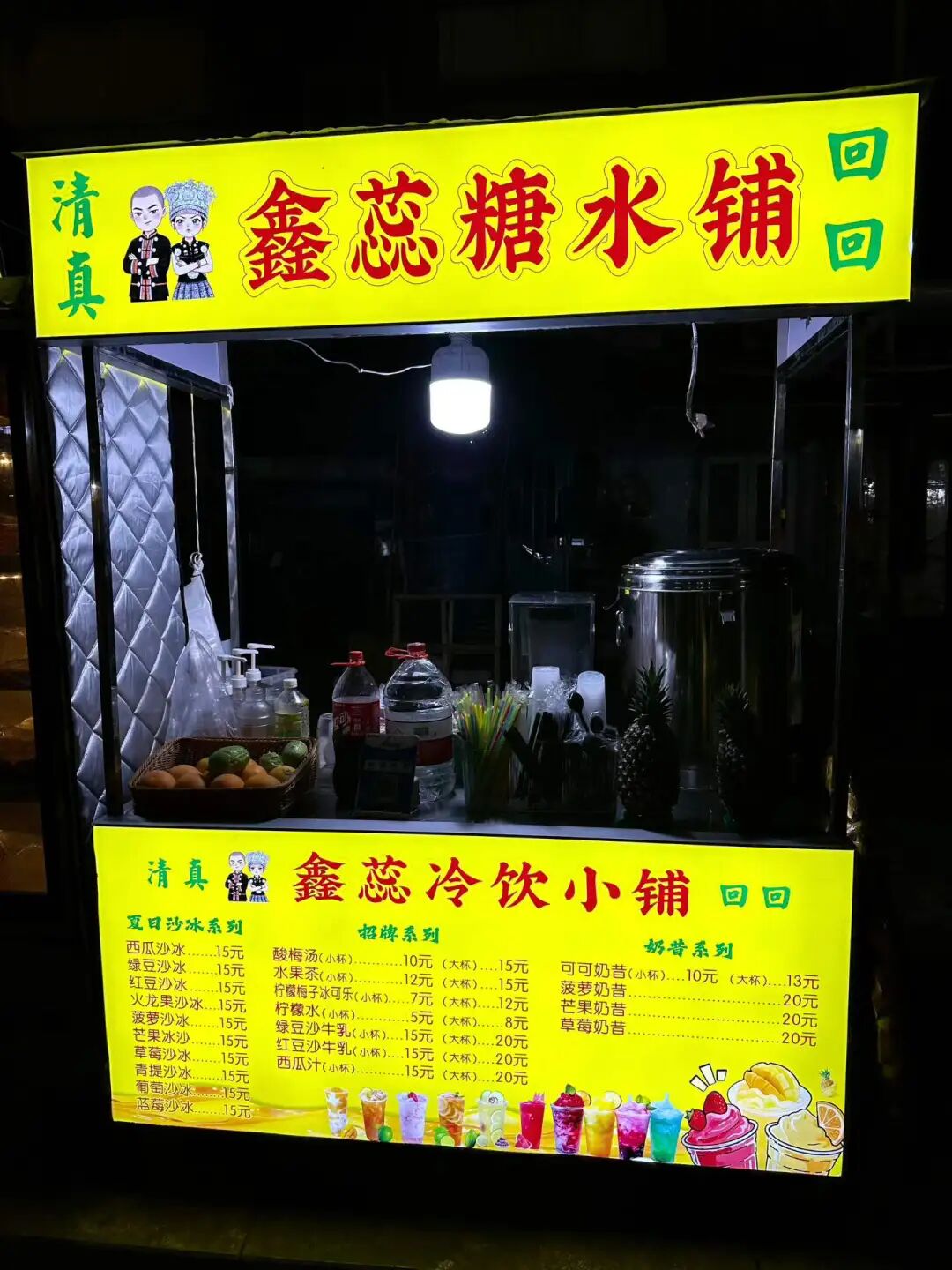
We kept walking through the Tianmu Shunyidao Night Market and bought some egg waffles (jidanzi). We got chocolate, beef floss, and original flavors. The egg and milk aroma was very strong. They were very hot when freshly made, so we had to let them cool down before eating. Suleiman really liked the chocolate flavor.
Then we bought some teppanyaki hot dogs, which were also very affordable.
We came to the Honghuli Food Street in Tianjin on the weekend to try a newly opened American-style burger shop. Honghuli is an old-fashioned residential area built in the 1980s. It is only one subway stop away from Tianjin West Railway Station, making it very convenient to reach. There are many Hui Muslim restaurants here, both traditional and modern. Unlike the Northwest Corner, it is not very commercialized, and most of the customers are locals.
Hello Handmade Burger Shop is on Honghu South Road, surrounded by many other food spots. The owner is a relative of the imam at Fuxingzhuang Mosque, so the food is halal and the quality is guaranteed. We had the American-style double beef burger and the black truffle black tiger shrimp burger. Both were huge. Their burger buns are unique. The green ones are made with spinach powder and the black ones with squid ink. They are custom-made and have absolutely no preservatives.
The beef patties are fresh and firm. After pan-frying, they are rich, fragrant, and juicy. The double patties give a great meaty texture, and with the sauce and toppings, the flavors build up and get better with every bite. The black tiger shrimp in the black truffle burger is plump and bouncy with a distinct sweet, fresh taste. It blends perfectly with the rich aroma of black truffle, creating a delicate yet chewy texture.
The shop is quite small, so you might have to wait for a table during meal times. If it is not too sunny, you can also eat outside by the door and chat while you eat.
Next to the burger shop is Yuansu Zhai Lao Wei Juanquan. They sell homemade dark plum drink (wumeitang) and dried tangerine peel passion fruit pear juice. Both are all-natural and cannot be kept overnight. The dark plum drink contains licorice, mint, roselle, dried tangerine peel, hawthorn, mulberry, and osmanthus. The dried tangerine peel passion fruit pear juice contains lemon, lotus seeds, and lily bulbs. Both taste great. Cold drinks go really well with burgers.
Previous Tianjin food shares:
Taking the kids to Tianjin in the summer to see the sea and eat seafood.
Tianjin's halal food is so comprehensive: pasta, yakitori, Yemeni flatbread, Swiss cheese fondue, and rice balls.
Autumn food tour in Tianjin: Syrian food, giant river prawns (luoshi xia), yellow broth ramen, Turkish restaurants, and Xinjiang fresh milk ice cream.
Taking kids out to eat in Tianjin: Yemeni food, Algerian desserts, rice noodle rolls (changfen), Japanese food, and water caltrop soup (lingjiao tang).
Eating Arabic food in Tianjin: Syrian, Yemeni, Tunisian, and Algerian.
Between the mountains and the sea: from Huairou farmhouses to seaside Western restaurants.
Muslim Traveler Guide to Beijing: Halal Food and African Cuisine at Beihang University
Articles • yusuf908 posted the article • 0 comments • 234 views • 2026-06-22 06:27
Summary: This Muslim traveler guide to Beijing follows an Africa Day food experience at Beihang University, with campus culture and local food details preserved.
This article summarizes the key points of tasting food from Africa's smallest country at Beihang University. It keeps the original paragraph and image order, making it suitable for readers interested in Muslim life, Islamic culture, and Chinese Islamic writing. It also helps with searching for content on Ramadan, history, and social observations.
Since May, major universities in Beijing have held international culture festivals. International students showcased their home cultures, which was very interesting. Unfortunately, most school festivals were on weekdays, and some were not open to the public. On May 24, I finally made it to the Beihang University international culture festival.
Although it was a culture festival rather than a food festival, I could still taste specialty drinks and snacks from several countries. We first drank Turkish black tea and Moroccan mint tea, then ate the Pakistani specialty noodle milk dish Pheni, which is also a classic Ramadan snack for Pakistanis.
The highlight was eating spicy peanuts, Wonjo hibiscus tea, and the milk dessert Chakery from the Gambia. This was my first time tasting snacks from this country. The Gambia is located on the Atlantic coast of West Africa. It is the smallest country in all of Africa and one of the least developed countries in the world. As early as a thousand years ago, Arab merchants crossed the Sahara Desert to trade in the Gambia and brought Islam to the country in the 9th century. Today, 96% of Gambians belong to the Maliki school of Sunni Islam.
Wonjo is an iced drink made by soaking hibiscus flowers and adding sugar and mint. It is a classic summer chilled beverage for Gambians. The Gambia is one of the original homes of the hibiscus flower, and drinking hibiscus tea here has a very long history. Chakery is a milk dessert made with millet. It is a classic West African after-dinner treat. People of different faiths share Chakery with their neighbors after festivals, showing friendships that cross religious lines.
A young man from Bangladesh sang with deep emotion, a friend (dosti) from Senegal was full of energy, and brothers from Ghana played the drums. My son, Suleiman, also grew to love the African drums.
After leaving the Beihang International Culture Festival, we went to the fourth floor of the Seventh Canteen for dinner. They were hosting a Food Voyage Culture Festival and invited Zhang Shuanqiang, the executive chef of the Ningxia Building in Beijing, to guide the cooking. We ate stir-fried beef, garlic fish fillets, and big plate chicken (dapanji). Overall, it was very affordable. The stir-fried beef went great with rice, and the garlic fish fillets were very appetizing. I really envy the students and teachers at Beihang. view all
Summary: This Muslim traveler guide to Beijing follows an Africa Day food experience at Beihang University, with campus culture and local food details preserved.
This article summarizes the key points of tasting food from Africa's smallest country at Beihang University. It keeps the original paragraph and image order, making it suitable for readers interested in Muslim life, Islamic culture, and Chinese Islamic writing. It also helps with searching for content on Ramadan, history, and social observations.
Since May, major universities in Beijing have held international culture festivals. International students showcased their home cultures, which was very interesting. Unfortunately, most school festivals were on weekdays, and some were not open to the public. On May 24, I finally made it to the Beihang University international culture festival.
Although it was a culture festival rather than a food festival, I could still taste specialty drinks and snacks from several countries. We first drank Turkish black tea and Moroccan mint tea, then ate the Pakistani specialty noodle milk dish Pheni, which is also a classic Ramadan snack for Pakistanis.
The highlight was eating spicy peanuts, Wonjo hibiscus tea, and the milk dessert Chakery from the Gambia. This was my first time tasting snacks from this country. The Gambia is located on the Atlantic coast of West Africa. It is the smallest country in all of Africa and one of the least developed countries in the world. As early as a thousand years ago, Arab merchants crossed the Sahara Desert to trade in the Gambia and brought Islam to the country in the 9th century. Today, 96% of Gambians belong to the Maliki school of Sunni Islam.
Wonjo is an iced drink made by soaking hibiscus flowers and adding sugar and mint. It is a classic summer chilled beverage for Gambians. The Gambia is one of the original homes of the hibiscus flower, and drinking hibiscus tea here has a very long history. Chakery is a milk dessert made with millet. It is a classic West African after-dinner treat. People of different faiths share Chakery with their neighbors after festivals, showing friendships that cross religious lines.
A young man from Bangladesh sang with deep emotion, a friend (dosti) from Senegal was full of energy, and brothers from Ghana played the drums. My son, Suleiman, also grew to love the African drums.
After leaving the Beihang International Culture Festival, we went to the fourth floor of the Seventh Canteen for dinner. They were hosting a Food Voyage Culture Festival and invited Zhang Shuanqiang, the executive chef of the Ningxia Building in Beijing, to guide the cooking. We ate stir-fried beef, garlic fish fillets, and big plate chicken (dapanji). Overall, it was very affordable. The stir-fried beef went great with rice, and the garlic fish fillets were very appetizing. I really envy the students and teachers at Beihang.
Halal Food Guide to Hunan: Hui Muslim Food in Longhui, Shaoyang and Local Snacks
Articles • yusuf908 posted the article • 0 comments • 262 views • 2026-06-22 06:26
Summary: This halal food guide to Hunan highlights halal food in China, Hui Muslim food in Longhui, Shaoyang, and local snacks from the original travel account.
This article summarizes the key points of why there is so much Hui Muslim food in Longhui, Shaoyang, Hunan. It keeps the original paragraph and image order. It is for readers interested in Muslim life, Islamic culture, and Chinese Islamic writing, and it helps people search for halal food in China.
Traveling from downtown Shaoyang to Longhui County, you reach the area with the highest concentration of Hui Muslims in Hunan.
The first Hui Muslims to settle in Longhui were those with the surname Ma. The ancestor of the Ma family, Ma Cheng, was originally from Taixing, Jiangsu. During the Zhizheng era of the Yuan Dynasty, he served as the Commissioner of the Privy Council. After the start of the Hongwu era in the Ming Dynasty, Ma Cheng resigned from his official post and moved to Shaoyang, Hunan to settle down. During the Hongwu era of the Ming Dynasty, Ma Cheng's third son, Ma Zhi, moved from Shaoyang to Majia Ferry in Longhui. He became the first Hui Muslim in Longhui, and his family has lived there for over 600 years.
Hui Muslims in Longhui mainly live in Shanjie Hui Ethnic Township, but those who run restaurants and noodle shops are mostly in the Longhui county seat, especially near the south side of Longhui Bridge. If you need a place to stay, the area near Daqiao Road is the most convenient. You can eat noodles at various shops there in the morning.
On our first morning, we ate at the Laoshanjie Hui Muslim Noodle Shop at the entrance of Limin Street. We ordered beef noodle soup with large slices of beef and wood ear mushroom with tofu noodle soup. I really love Shaoyang beef noodles. The broth is rich, spicy, and savory. The beef is well-seasoned, and the thick rice noodles are smooth and chewy. The red chili oil smells amazing. Slurping them down is so satisfying; the more you eat, the more you want. The wood ear mushroom with tofu here is also delicious. It soaks up all the broth and is very flavorful.
When eating noodles in Shaoyang, you cannot miss the mountain pepper oil (shanhujiaoyou). The mountain pepper (shancangzi) has a special scent that is like a mix of mint and lemon, making it cool and refreshing.
The next day, I went to another Hui Muslim noodle shop on Daqiao Road called Lanlan. I had the stir-fried beef rice noodles and beef wontons. I added 2 yuan of tofu and wood ear mushrooms, plus 2 yuan of eggs to both bowls, which made the texture much better. The stir-fried beef rice noodles were rich in beef flavor, and the noodles were smooth and well-seasoned with an authentic spicy kick. The beef wontons had thin skins and plenty of filling, and the meat was firm and bouncy. You can order a small portion if you have a smaller appetite.
At the intersection of Daqiao Road in Longhui, there is a Hui Muslim restaurant called Xiangyijiaren. It is a great place to try authentic Hunan Hui Muslim farmhouse cooking. The owner is a man named Ma from the Dong Mosque in Shanjie Hui Ethnic Township. There is no menu in the shop. They focus on seasonal dishes, cooking whatever is harvested from the fields.
As a Hunan Hui Muslim restaurant, their signature dish is definitely stir-fried yellow beef. We had been eating beef for a few days, so we wanted to try chicken. Unfortunately, at these local Hui Muslim restaurants, you have to order chicken in advance. They go to the village to slaughter the chicken fresh and cook the whole bird. So, we ended up eating river food. The owner recommended stir-fried small fish and shrimp, which were caught from the pond that same day.
The vegetables and rice in the shop are grown by the owner's family. We ordered snow peas (caidou), which were very crisp and tasty, though Hunan vegetable dishes tend to use quite a bit of oil. The owner explained that they grow two rice crops a year in Hunan. The first crop grows with a smaller temperature difference, so the taste is average. The second crop grows with a larger temperature difference, making it more fragrant. The rice in their shop is the second crop they grew themselves.
The owner was very talkative and even gave us some pickled vegetable soup for free. Shaoyang pickled vegetables (yancai) are a homemade jarred dish made from bok choy that is dried and then pickled. It is dry, fragrant, and sour. It is perfect with rice when stir-fried with chili and minced meat, and it also makes a great soup. In the end, the owner even gave us two bundles to take home and cook ourselves.
There are four Hui Muslim stir-fry restaurants on both sides of Longhui Bridge. We previously ate at Xiangyijiaren and another Hui Muslim restaurant, which both focus on small stir-fry dishes. The other two, Minzufengweilou and Yihesheng, specialize in banquet meals. We ate at Minzufengweilou this time. It seems to be the main place where Hui Muslims in Longhui host their banquets.
The restaurant has a great view overlooking the river, though it does not get many casual diners on a regular day. We ordered toothpick beef (yaqian niurou), specialty duck (fengwei ya), and yam with wood ear mushrooms (shanyao mu'er). The toothpick beef was quite salty, the specialty duck was delicious, and the yam with wood ear mushrooms was very fresh. It was a pity we still did not get to eat chicken, as you have to order it in advance to have it freshly slaughtered and cooked.
You can find traditional Hui Muslim noodles and pastries at the entrance of Taohuaping Mosque in the county town. This pastry shop is run by Hui Muslims from Shanjie. Their handmade sponge cakes (jidan gao) and sesame flatbreads (zhima bing) are excellent, with authentic milk and egg flavors. Since they contain no additives, you must eat the sponge cakes quickly, and the sesame flatbreads must be kept away from moisture.
Besides the county town, Shanjie Hui Ethnic Township is also a great place to taste Hui Muslim food. At noon, we ate braised beef steak (hongshao niupai) and vegetable dishes at Laowu Restaurant, located at the entrance of the Shanjie East Mosque. They do not have a menu, so you just discuss what to order directly. The vegetables are all fresh from the field, and you have to order the chicken ahead of time so it can be freshly slaughtered. The steak is cooked in advance, and it tastes just like the kind you make at home. view all
Summary: This halal food guide to Hunan highlights halal food in China, Hui Muslim food in Longhui, Shaoyang, and local snacks from the original travel account.
This article summarizes the key points of why there is so much Hui Muslim food in Longhui, Shaoyang, Hunan. It keeps the original paragraph and image order. It is for readers interested in Muslim life, Islamic culture, and Chinese Islamic writing, and it helps people search for halal food in China.
Traveling from downtown Shaoyang to Longhui County, you reach the area with the highest concentration of Hui Muslims in Hunan.
The first Hui Muslims to settle in Longhui were those with the surname Ma. The ancestor of the Ma family, Ma Cheng, was originally from Taixing, Jiangsu. During the Zhizheng era of the Yuan Dynasty, he served as the Commissioner of the Privy Council. After the start of the Hongwu era in the Ming Dynasty, Ma Cheng resigned from his official post and moved to Shaoyang, Hunan to settle down. During the Hongwu era of the Ming Dynasty, Ma Cheng's third son, Ma Zhi, moved from Shaoyang to Majia Ferry in Longhui. He became the first Hui Muslim in Longhui, and his family has lived there for over 600 years.
Hui Muslims in Longhui mainly live in Shanjie Hui Ethnic Township, but those who run restaurants and noodle shops are mostly in the Longhui county seat, especially near the south side of Longhui Bridge. If you need a place to stay, the area near Daqiao Road is the most convenient. You can eat noodles at various shops there in the morning.
On our first morning, we ate at the Laoshanjie Hui Muslim Noodle Shop at the entrance of Limin Street. We ordered beef noodle soup with large slices of beef and wood ear mushroom with tofu noodle soup. I really love Shaoyang beef noodles. The broth is rich, spicy, and savory. The beef is well-seasoned, and the thick rice noodles are smooth and chewy. The red chili oil smells amazing. Slurping them down is so satisfying; the more you eat, the more you want. The wood ear mushroom with tofu here is also delicious. It soaks up all the broth and is very flavorful.
When eating noodles in Shaoyang, you cannot miss the mountain pepper oil (shanhujiaoyou). The mountain pepper (shancangzi) has a special scent that is like a mix of mint and lemon, making it cool and refreshing.
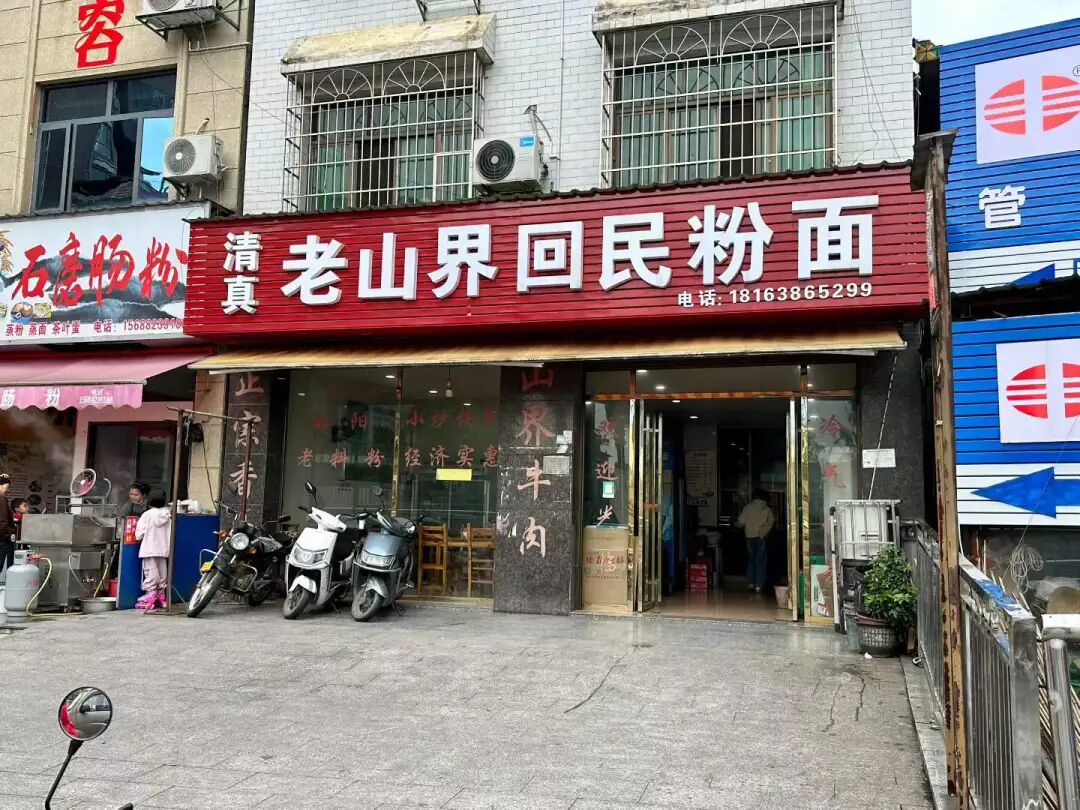
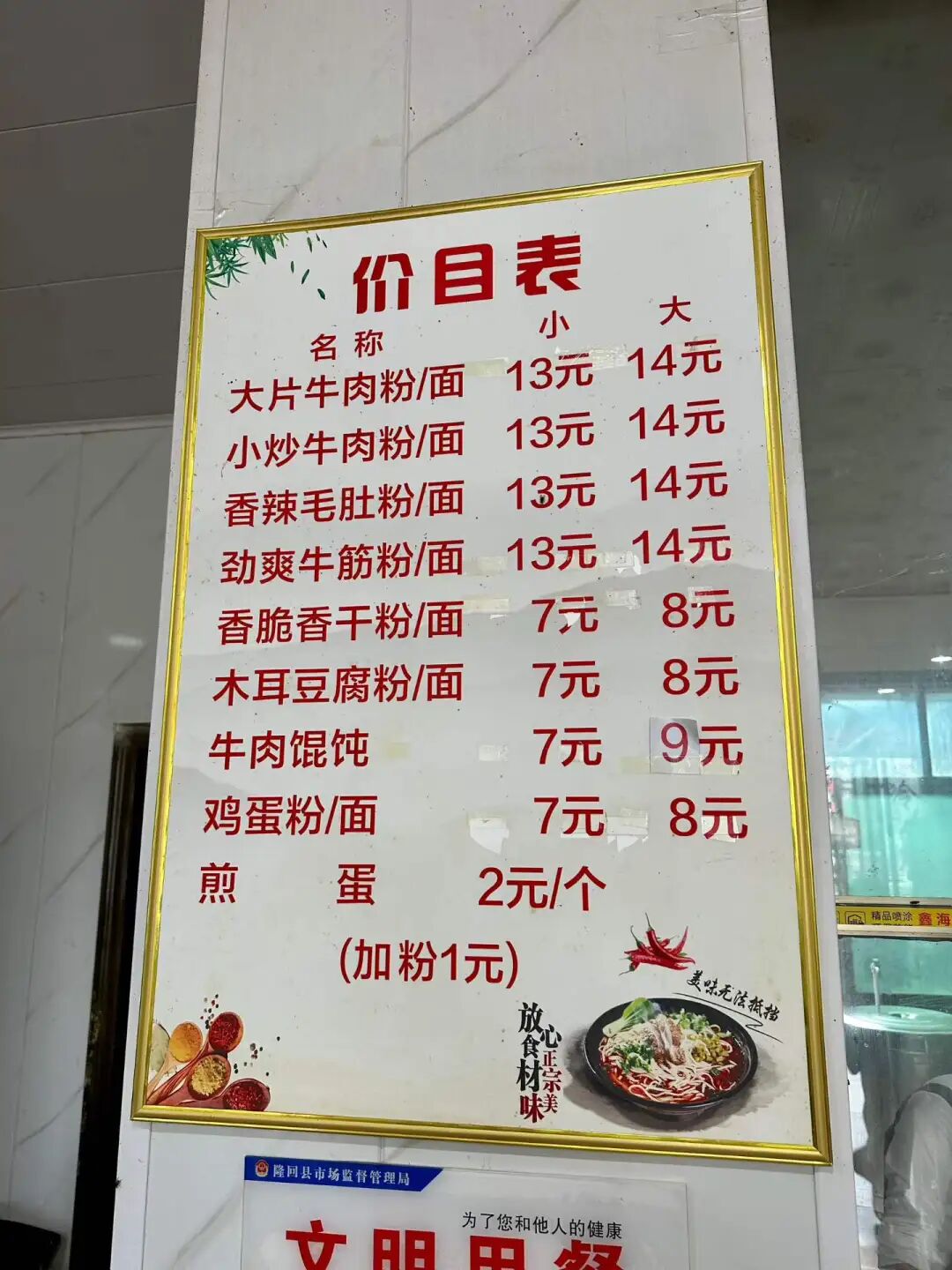
The next day, I went to another Hui Muslim noodle shop on Daqiao Road called Lanlan. I had the stir-fried beef rice noodles and beef wontons. I added 2 yuan of tofu and wood ear mushrooms, plus 2 yuan of eggs to both bowls, which made the texture much better. The stir-fried beef rice noodles were rich in beef flavor, and the noodles were smooth and well-seasoned with an authentic spicy kick. The beef wontons had thin skins and plenty of filling, and the meat was firm and bouncy. You can order a small portion if you have a smaller appetite.
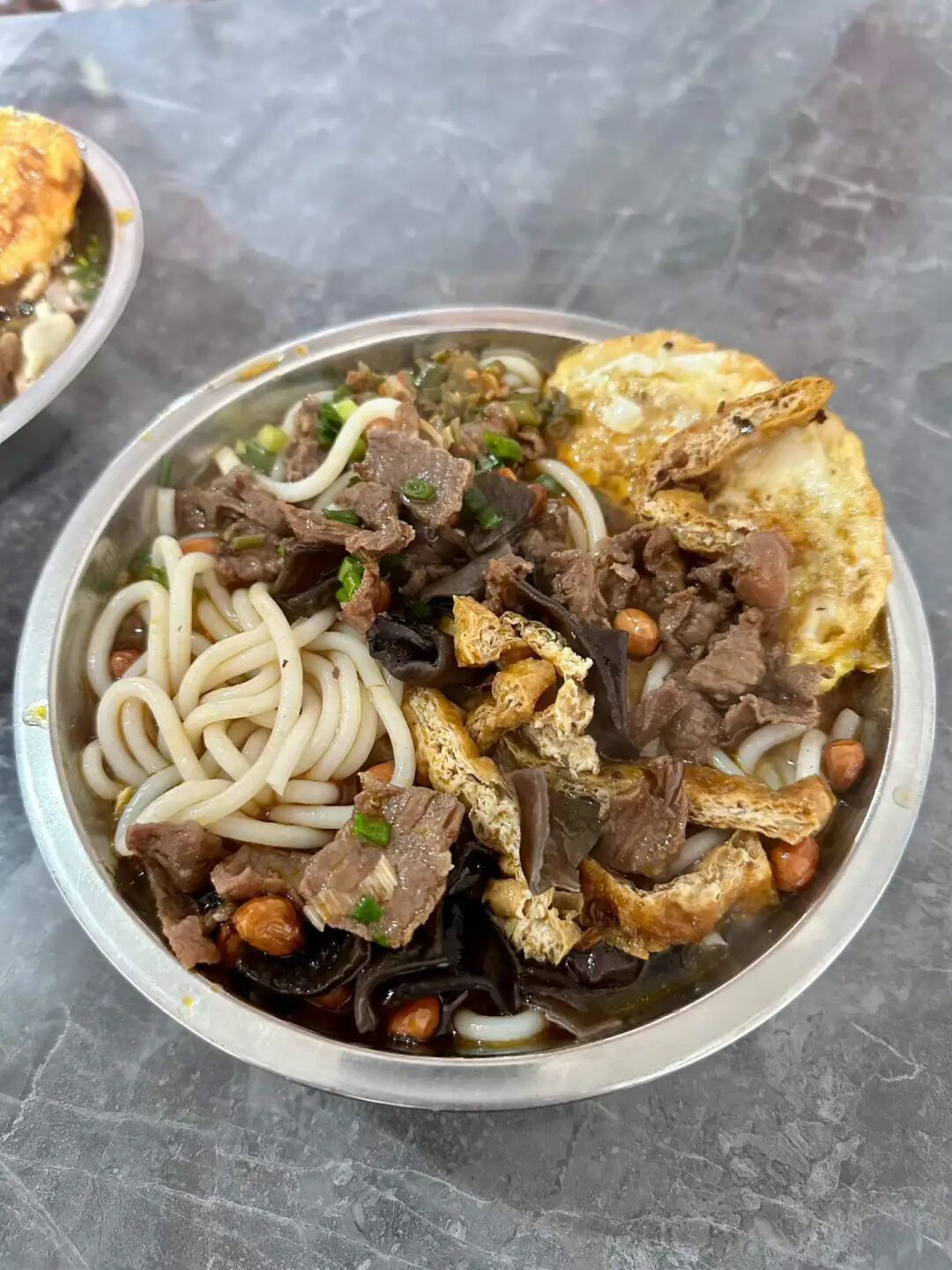
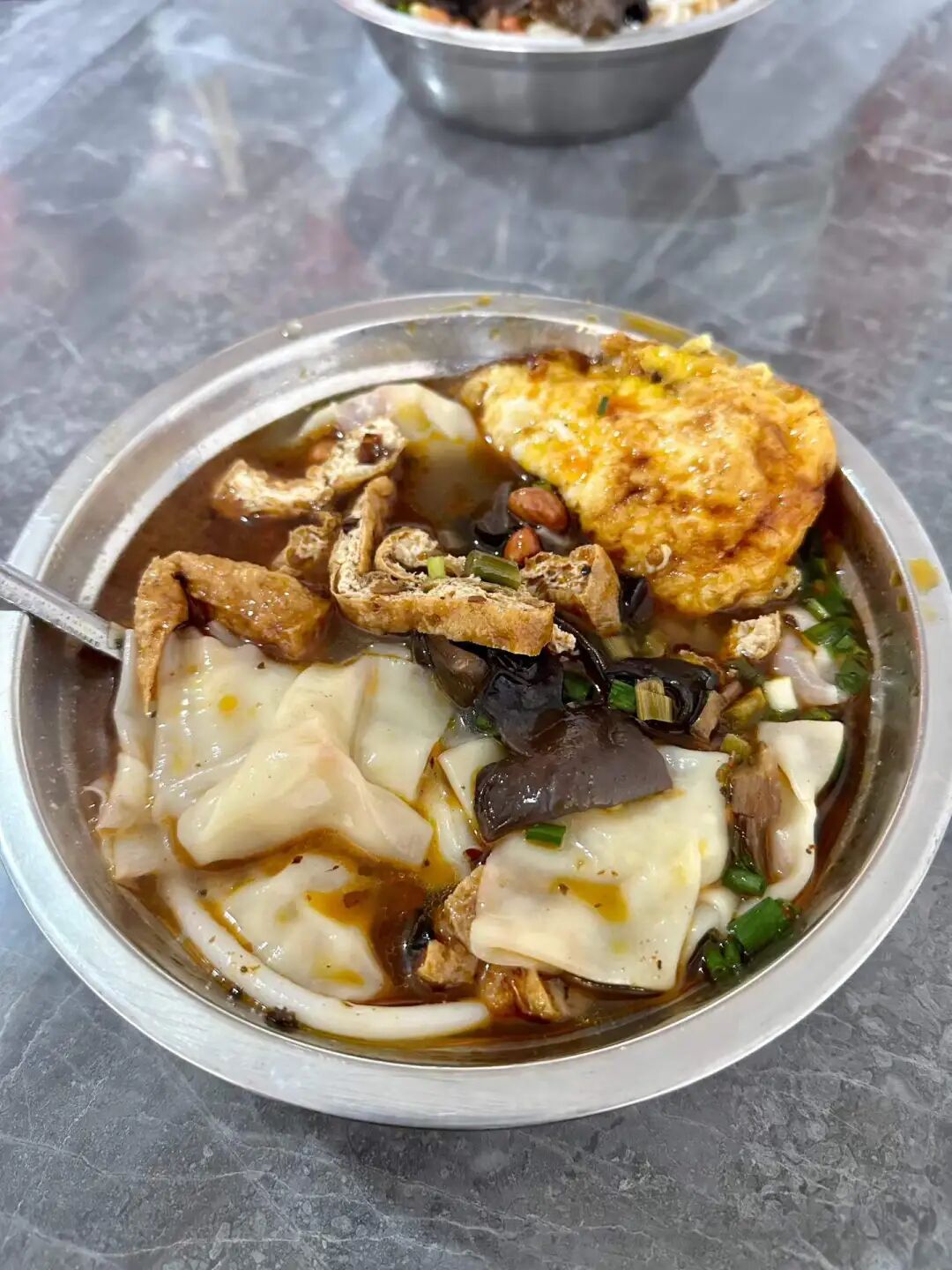
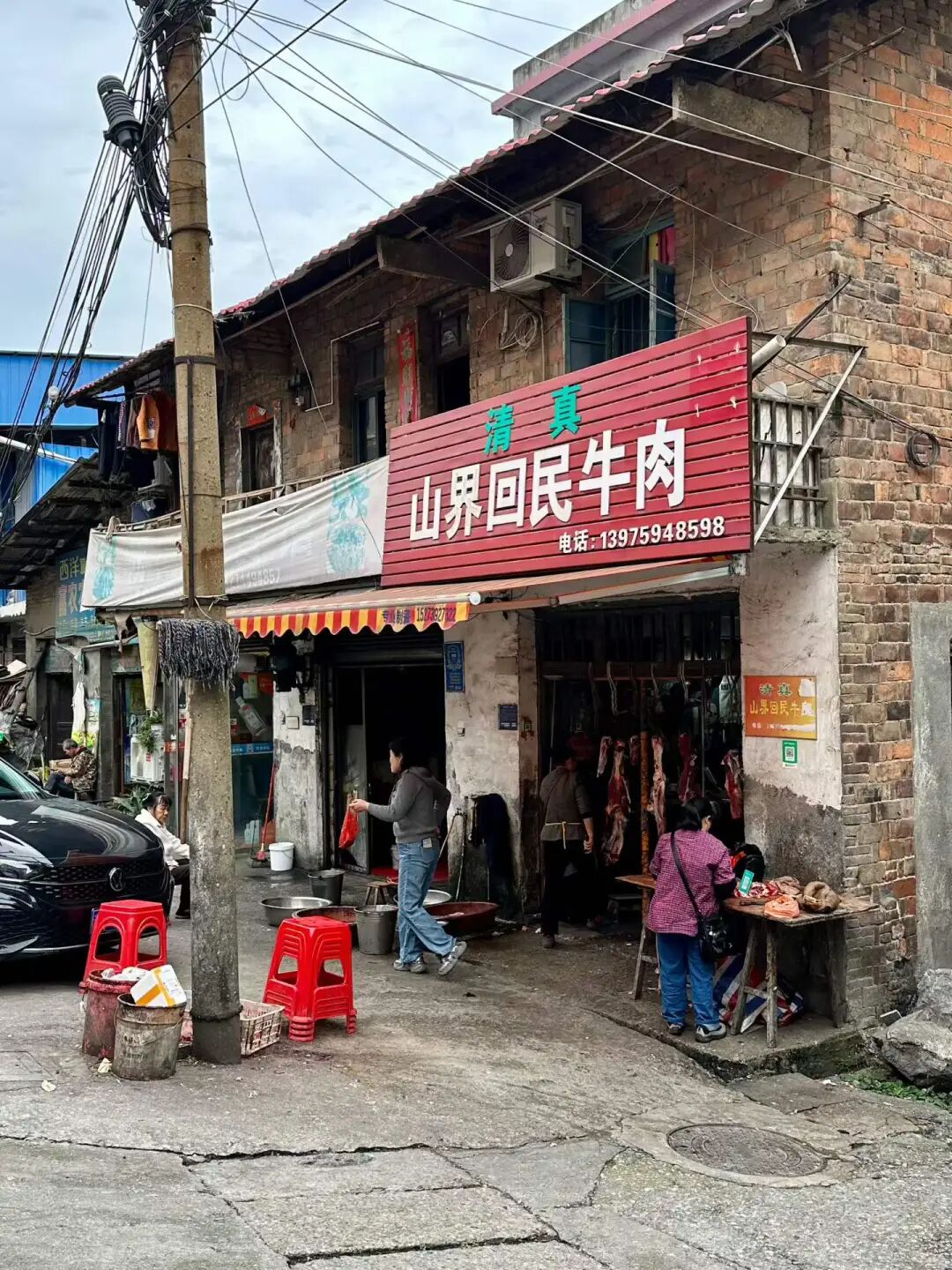
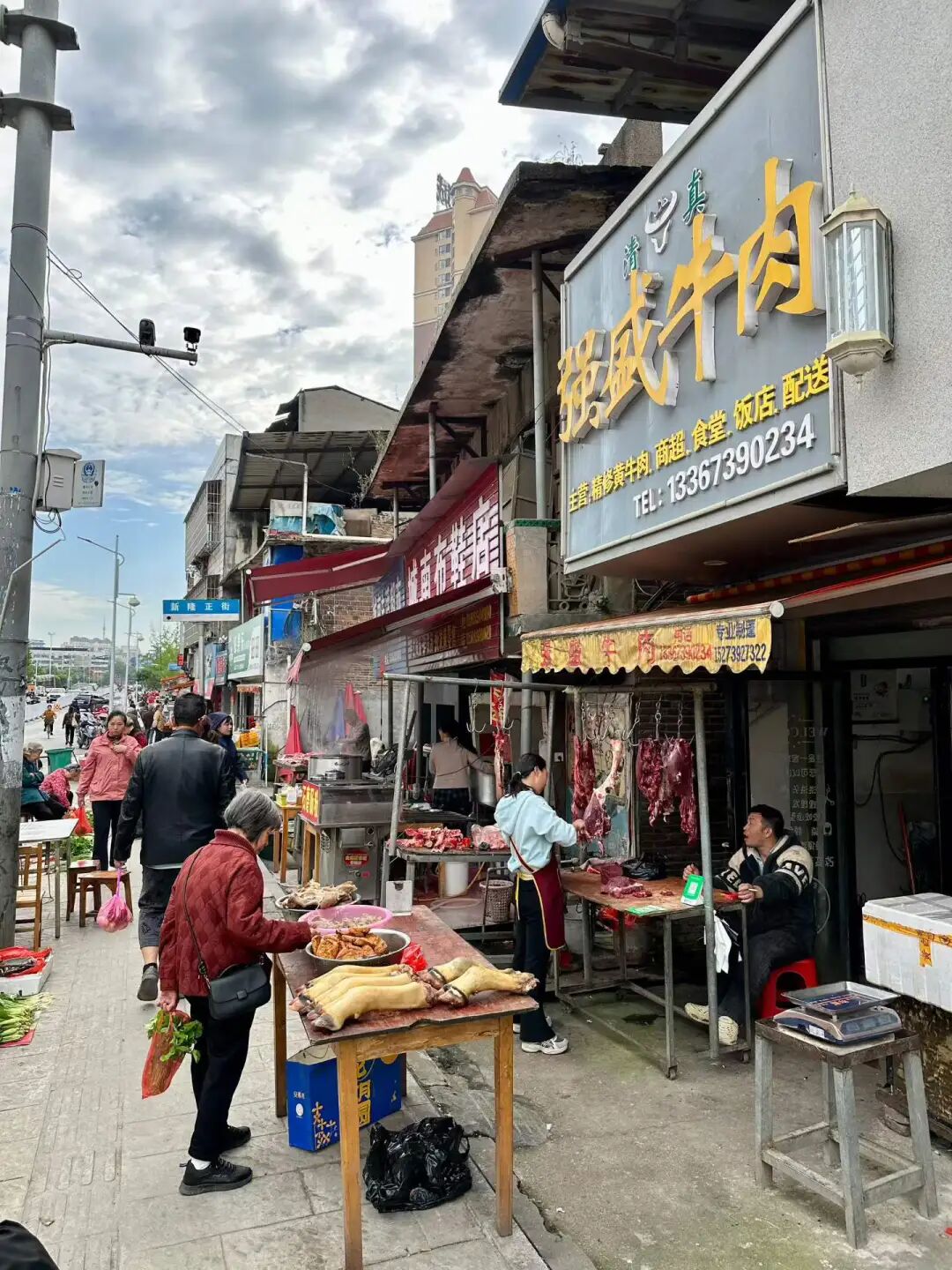
At the intersection of Daqiao Road in Longhui, there is a Hui Muslim restaurant called Xiangyijiaren. It is a great place to try authentic Hunan Hui Muslim farmhouse cooking. The owner is a man named Ma from the Dong Mosque in Shanjie Hui Ethnic Township. There is no menu in the shop. They focus on seasonal dishes, cooking whatever is harvested from the fields.
As a Hunan Hui Muslim restaurant, their signature dish is definitely stir-fried yellow beef. We had been eating beef for a few days, so we wanted to try chicken. Unfortunately, at these local Hui Muslim restaurants, you have to order chicken in advance. They go to the village to slaughter the chicken fresh and cook the whole bird. So, we ended up eating river food. The owner recommended stir-fried small fish and shrimp, which were caught from the pond that same day.
The vegetables and rice in the shop are grown by the owner's family. We ordered snow peas (caidou), which were very crisp and tasty, though Hunan vegetable dishes tend to use quite a bit of oil. The owner explained that they grow two rice crops a year in Hunan. The first crop grows with a smaller temperature difference, so the taste is average. The second crop grows with a larger temperature difference, making it more fragrant. The rice in their shop is the second crop they grew themselves.
The owner was very talkative and even gave us some pickled vegetable soup for free. Shaoyang pickled vegetables (yancai) are a homemade jarred dish made from bok choy that is dried and then pickled. It is dry, fragrant, and sour. It is perfect with rice when stir-fried with chili and minced meat, and it also makes a great soup. In the end, the owner even gave us two bundles to take home and cook ourselves.
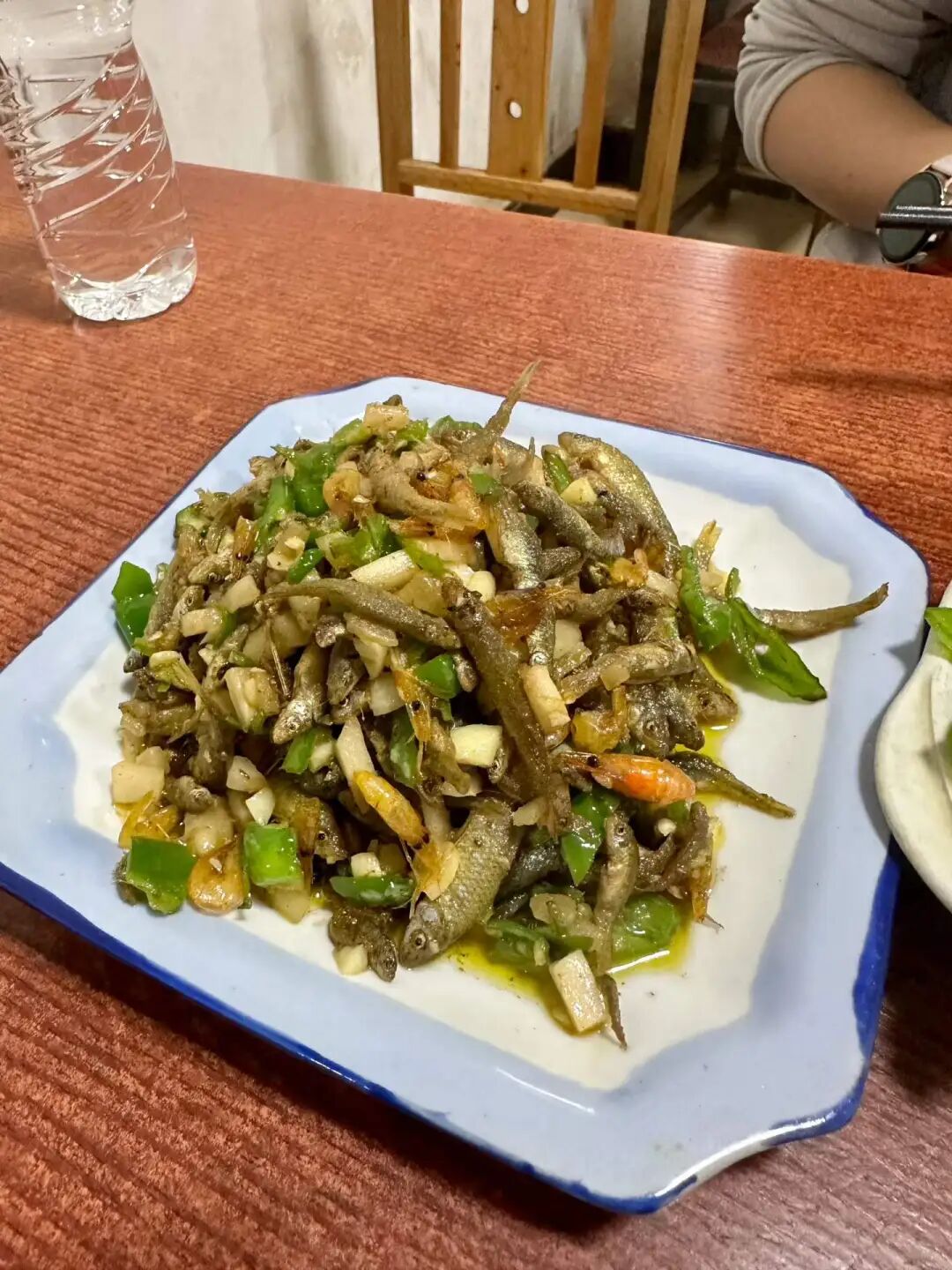
There are four Hui Muslim stir-fry restaurants on both sides of Longhui Bridge. We previously ate at Xiangyijiaren and another Hui Muslim restaurant, which both focus on small stir-fry dishes. The other two, Minzufengweilou and Yihesheng, specialize in banquet meals. We ate at Minzufengweilou this time. It seems to be the main place where Hui Muslims in Longhui host their banquets.
The restaurant has a great view overlooking the river, though it does not get many casual diners on a regular day. We ordered toothpick beef (yaqian niurou), specialty duck (fengwei ya), and yam with wood ear mushrooms (shanyao mu'er). The toothpick beef was quite salty, the specialty duck was delicious, and the yam with wood ear mushrooms was very fresh. It was a pity we still did not get to eat chicken, as you have to order it in advance to have it freshly slaughtered and cooked.
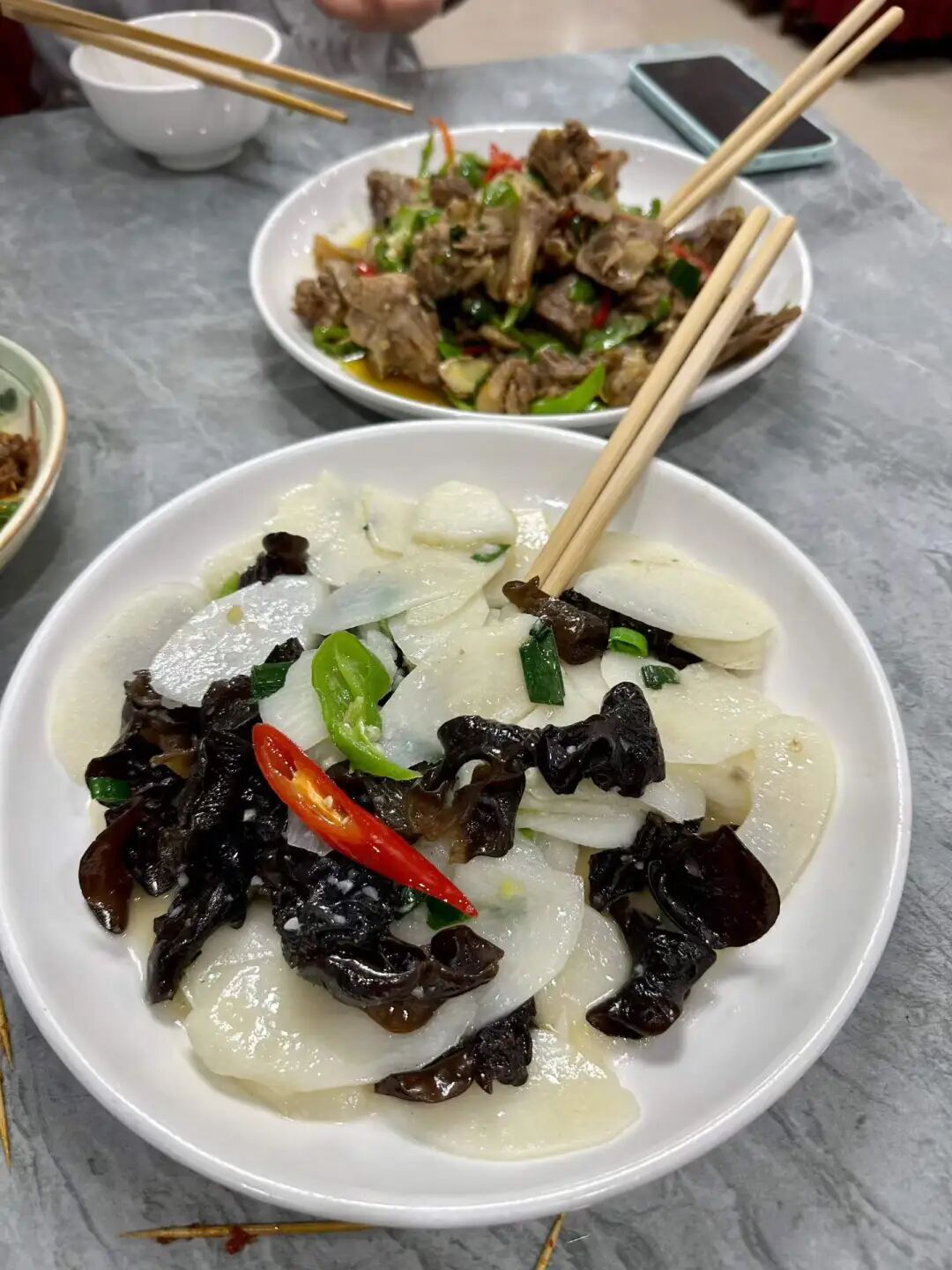
You can find traditional Hui Muslim noodles and pastries at the entrance of Taohuaping Mosque in the county town. This pastry shop is run by Hui Muslims from Shanjie. Their handmade sponge cakes (jidan gao) and sesame flatbreads (zhima bing) are excellent, with authentic milk and egg flavors. Since they contain no additives, you must eat the sponge cakes quickly, and the sesame flatbreads must be kept away from moisture.
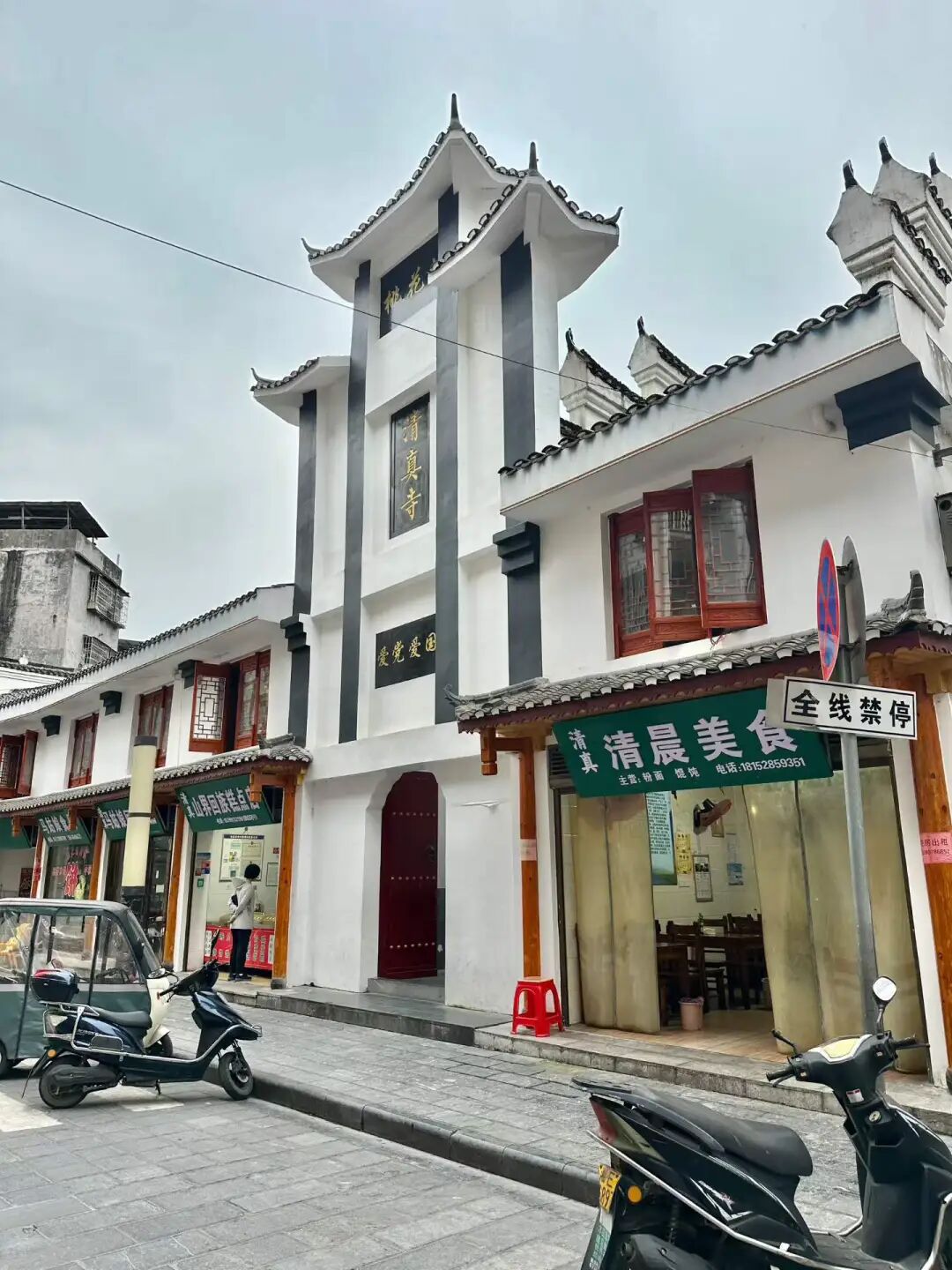
Besides the county town, Shanjie Hui Ethnic Township is also a great place to taste Hui Muslim food. At noon, we ate braised beef steak (hongshao niupai) and vegetable dishes at Laowu Restaurant, located at the entrance of the Shanjie East Mosque. They do not have a menu, so you just discuss what to order directly. The vegetables are all fresh from the field, and you have to order the chicken ahead of time so it can be freshly slaughtered. The steak is cooked in advance, and it tastes just like the kind you make at home.
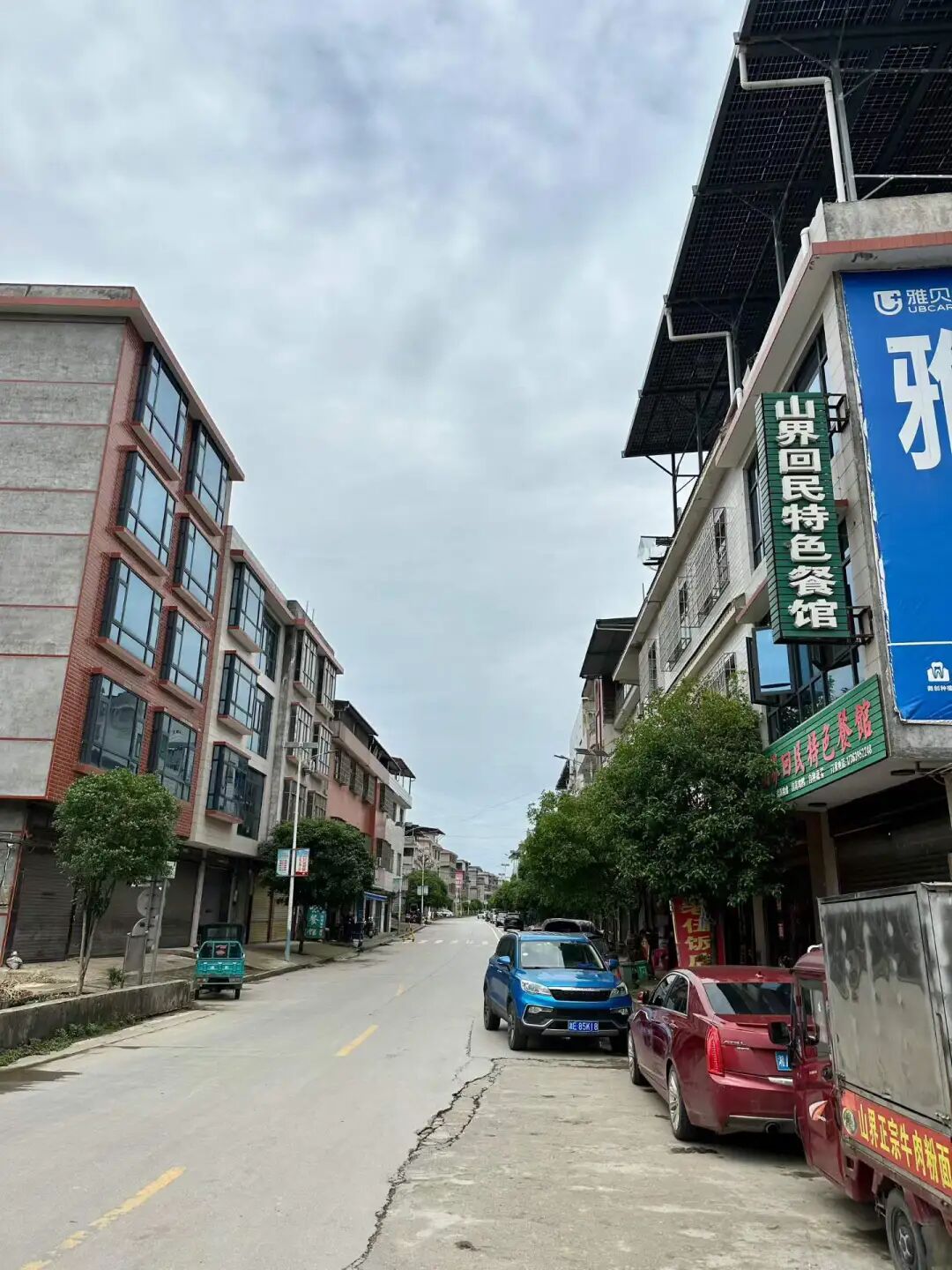
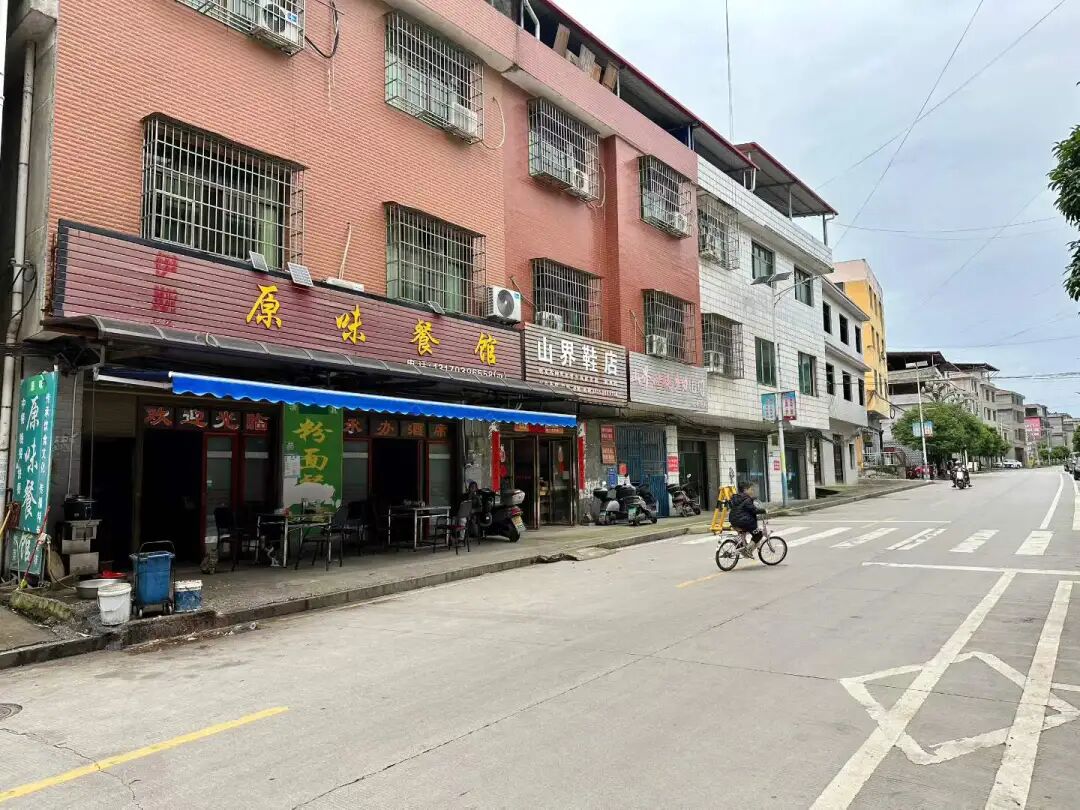
Taste Foreign Food in Yiwu
Articles • ali2007fr posted the article • 0 comments • 142 views • 2026-05-16 22:58
Summary: This travel note introduces Taste Foreign Food in Yiwu. Because I couldn't travel abroad in 2020, I made a special trip to Yiwu and ate food from all over the world. It is useful for readers interested in Yiwu Food, Halal Travel, Muslim Travel.
Because I couldn't travel abroad in 2020, I made a special trip to Yiwu and ate food from all over the world. Due to travel restrictions, the shift of trade from offline to online, and other reasons, many foreign restaurants in Yiwu have already closed. Other restaurants that are still open are also struggling; there are few tables of guests even during peak hours, and business hours have been shortened. In 2021, due to the outbreak in India, many Indian restaurants closed down. Foreign restaurants in Yiwu may continue to decline. I hope this diary can leave some memories for this city of world cuisine.
This time we ate at two Syrian restaurants, two Afghan restaurants, one Egyptian juice shop, one Malaysian Nyonya bird's nest shop, one Turkish restaurant, and one Indian restaurant. There are still many Middle Eastern and Southeast Asian restaurants we didn't visit, and I hope they can continue to stay open.
1. Syrian restaurant Madena
I flew to Yiwu after work on Friday, and it was already past twelve o'clock when I settled in and went out. Before 2020, many restaurants in Yiwu stayed open until one in the morning. After 2020, due to poor business, most restaurants closed early. We searched for a long time and finally found a street full of Middle Eastern restaurants in the Binwang Market area that was still open, but most were hookah lounges that only served light meals. We asked several places in a row and finally found a Syrian restaurant, Madena, and had a late-night snack at one in the morning.
A Pakistani restaurant; they were preparing to close when we arrived, so we didn't get to eat there this time.
Middle Eastern street full of hookah lounges
We ate chicken soup, shrimp soup, falafel, Pide cheese pie, and Syrian labneh. Their falafel was made a bit differently, but it was also very delicious.
2. Syrian dessert shop Bayt Jiddi
On Saturday morning, we ate their signature Bayt Jiddi rolls with Arabic coffee at the famous Syrian dessert shop Bayt Jiddi, and Zainab had a healthy salad. I learned about them last year after watching the video 'Syrian Pastry Chef Drifting in Yiwu' filmed by Arrow Factory. I bought their desserts online at that time, and this time I finally visited the physical store. From the owner to the pastry chefs, everyone in the shop has been unable to return home since the war began. They now consider Yiwu their home.
On the right is the owner, Omar. He came to Yiwu from Syria ten years ago. He started by running an Arabic restaurant, but later went bankrupt due to a partner's breach of trust. Six months later, he rented a small storefront again and opened the current Bayt Jiddi cafe. On the left is Omran. Before the war, he had always run a cafe and bar in Damascus and also knew how to make traditional Syrian meat pies. Because he intentionally ate until he weighed 250 jin, he avoided the military conscription physical examination.
The signature roll is a tender egg crepe wrapped with banana, kiwi, and chocolate. After rolling, it is drizzled with the kind of chocolate sauce found in molten cakes. One bite is full of sweetness! The Arabic coffee is very strong and has a distinct spicy flavor.
3. Afghan buffet restaurant Kabul
On Saturday noon, we had a buffet at the Afghan restaurant Kabul. It was my first time eating at an Afghan restaurant, and it was truly delicious! There was a wide variety and the prices were cheap. The lamb trotters melted in the mouth, and the lamb in the pilaf was so fragrant. It is a great pity that shortly after we left Yiwu, this restaurant closed down and became a permanent memory.
The person looking after the shop was a Kazakh sister from Nanshan, Urumqi, who married an Egyptian husband. Zainab was very happy to meet a fellow countrywoman in a foreign land.
Zainab and I each finished a large plate, and then we had some side dishes. The ayran and hummus were both super delicious, and their shop also had naan bread freshly made by the master, which was fantastic! I just couldn't eat any more.
4. Egyptian drink shop Leifeng Juice
While shopping in the afternoon, I drank a mango and date milkshake made by an Egyptian guy. The guy's service attitude was particularly good and enthusiastic. He has been in China for five years, and because he loves doing good deeds, he gave himself the Chinese name Leifeng.
5. Malaysian Nyonya bird's nest
In the evening, we ate at a Malaysian Nyonya bird's nest shop. The landlady is Nyonya, and the store manager also gave us local tomatoes and oranges that were picked that morning. We chose the peach gum fresh milk bird's nest, which can be paired with sugar water when eating. According to a friend, this shop closed in 2021.
6. Afghan restaurant Ariana
In the evening, we ate grilled lamb tenderloin and chicken with chickpeas at the Afghan restaurant Ariana. The chickpeas with flatbread were so delicious, and we also drank cucumber yogurt.
The Shahada made of wood pieces
Yiwu TV station was interviewing their boss about how to make milk tea, haha.
The TV was playing a tour of the Kaaba.
Yiwu also has specialized Turkish barbershops, the kind of men's barbershop that includes shaving.
7. Yunnan stinky tofu
At night, I ate stinky tofu grilled by Yunnan Hui people, which can be topped with various chili peppers and fish mint. Yiwu has a large number of halal restaurants from all over the country. The most concentrated area is the Halal Street in Nianxi New Village, while the Choujiang residential area near Chouzhou Road where I stayed is mainly Yunnan halal snacks, especially with many people from Zhaotong. In addition to the most classic Zhaotong small skewers, there is actually a Zhaotong breakfast shop with oil cakes, erkuai, thin bean powder, etc. Most of the people who come to eat grilled tofu at night are Yunnanese in Yiwu, and Yunnan dialect is spoken all around.
8. Turkish dessert shop Mado
On Sunday morning, we had a special breakfast at the Turkish restaurant Mado. Mado is a very famous Turkish ice cream chain brand, originating from the city of Kahramanmarash (Marash for short) in southeastern Turkey.
Their shop was introduced to Guangzhou and Yiwu in 2017 by Sultan, the largest Turkish restaurant in Yiwu. It should currently be the most authentic Turkish dessert shop in China. Mado's biggest feature is that it uses goat milk from their hometown of Kahramanmarash for everything, so besides ice cream, various cheeses are also their main products.
We ordered the breakfast for two, which included Turkish-style fried eggs with sausage, as well as a platter of Marash cheese, Feta cheese, and yellow cheese, layered cheese pie with green and black olives, honey with Turkish cream, tomato chili sauce, tahini syrup, cherry jam, and apricot jam—these jams are for spreading on bread—and finally Turkish black tea. Zainab felt very happy eating so many kinds of dairy products at once.
9. Indian restaurant Bombay Dhabba
On Sunday noon, we went to the Indian Bombay restaurant, Bombay Dhabba. In 2020, there were still many Indian restaurants here. It is a great pity that in 2021, due to the outbreak in India, there are very few Indian restaurants here now.
We ate their signature Chicken Tikka Biryani, Kadai lamb, vegetable curry with tofu, and green chicken curry, and also drank very delicious thick yogurt. I don't know if they made adjustments to suit the tastes of Zhejiang people, but I felt the curry wasn't extremely spicy, haha, so we were very happy eating it.
I feel that their food is really much better than some South Asian restaurants in Beijing. The only regret is that because we ordered Biryani rice, we didn't order naan. Curry with Indian naan is absolutely perfect, but their Biryani rice is also really delicious.
The 'Kadai' we ordered originally means 'iron pot' and is more popular in North India; traditionally, it is made using an iron pot. The variety of sauces in South Asia is really too rich; it is really difficult to summarize them as 'curry'.
Hanging on the wall is the famous Sufi Dargah in Rajasthan, India, Ajmer Sharif Dargah.
10. Imported supermarkets
There are many halal imported supermarkets on Chouzhou North Road, the largest of which is this Shangpin Supermarket, where you can buy seasonings for making various Middle Eastern delicacies, such as seasonings for Shawarma, seasonings for Falafel, and canned Hummus. Another Dubai supermarket has Arabic coffee, and another supermarket has Afghan green tea. view all
Summary: This travel note introduces Taste Foreign Food in Yiwu. Because I couldn't travel abroad in 2020, I made a special trip to Yiwu and ate food from all over the world. It is useful for readers interested in Yiwu Food, Halal Travel, Muslim Travel.
Because I couldn't travel abroad in 2020, I made a special trip to Yiwu and ate food from all over the world. Due to travel restrictions, the shift of trade from offline to online, and other reasons, many foreign restaurants in Yiwu have already closed. Other restaurants that are still open are also struggling; there are few tables of guests even during peak hours, and business hours have been shortened. In 2021, due to the outbreak in India, many Indian restaurants closed down. Foreign restaurants in Yiwu may continue to decline. I hope this diary can leave some memories for this city of world cuisine.
This time we ate at two Syrian restaurants, two Afghan restaurants, one Egyptian juice shop, one Malaysian Nyonya bird's nest shop, one Turkish restaurant, and one Indian restaurant. There are still many Middle Eastern and Southeast Asian restaurants we didn't visit, and I hope they can continue to stay open.
1. Syrian restaurant Madena
I flew to Yiwu after work on Friday, and it was already past twelve o'clock when I settled in and went out. Before 2020, many restaurants in Yiwu stayed open until one in the morning. After 2020, due to poor business, most restaurants closed early. We searched for a long time and finally found a street full of Middle Eastern restaurants in the Binwang Market area that was still open, but most were hookah lounges that only served light meals. We asked several places in a row and finally found a Syrian restaurant, Madena, and had a late-night snack at one in the morning.
A Pakistani restaurant; they were preparing to close when we arrived, so we didn't get to eat there this time.
Middle Eastern street full of hookah lounges
We ate chicken soup, shrimp soup, falafel, Pide cheese pie, and Syrian labneh. Their falafel was made a bit differently, but it was also very delicious.
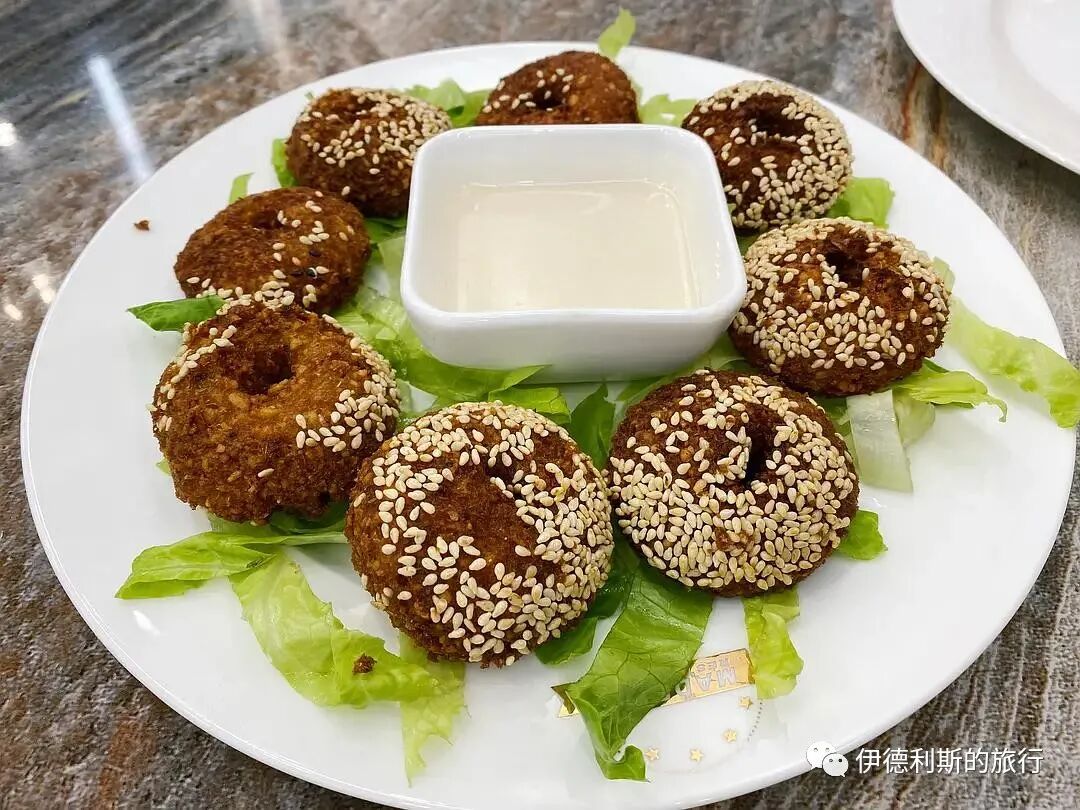
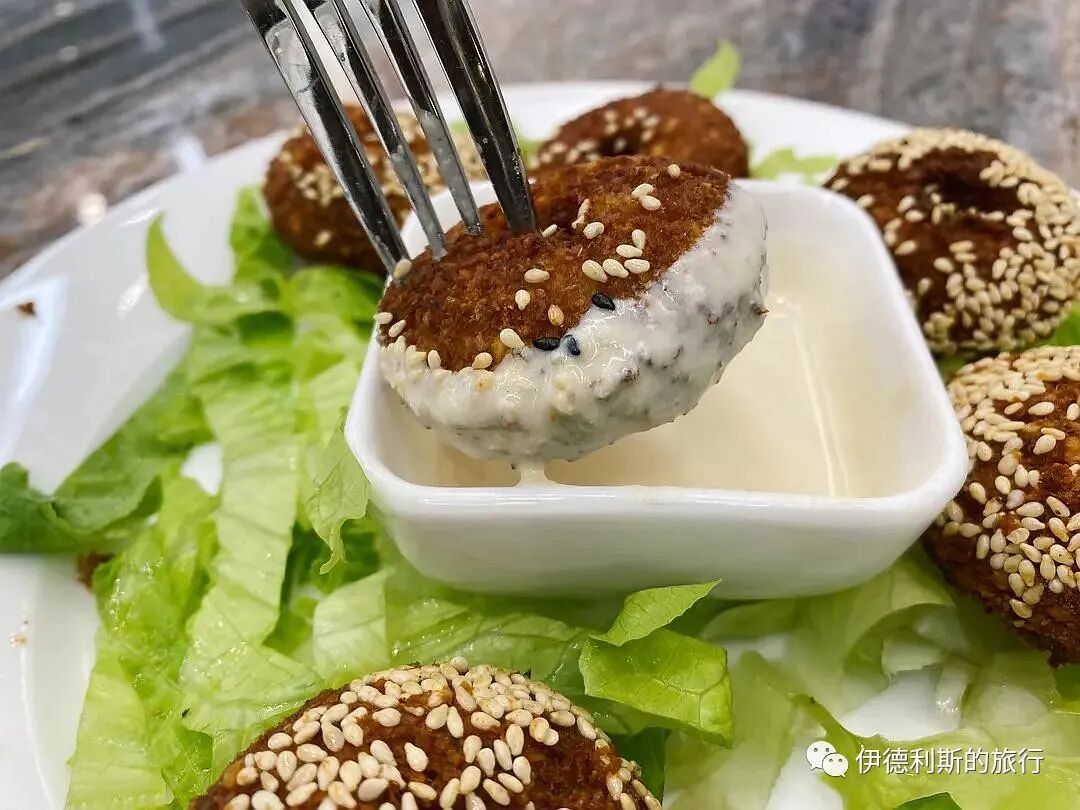
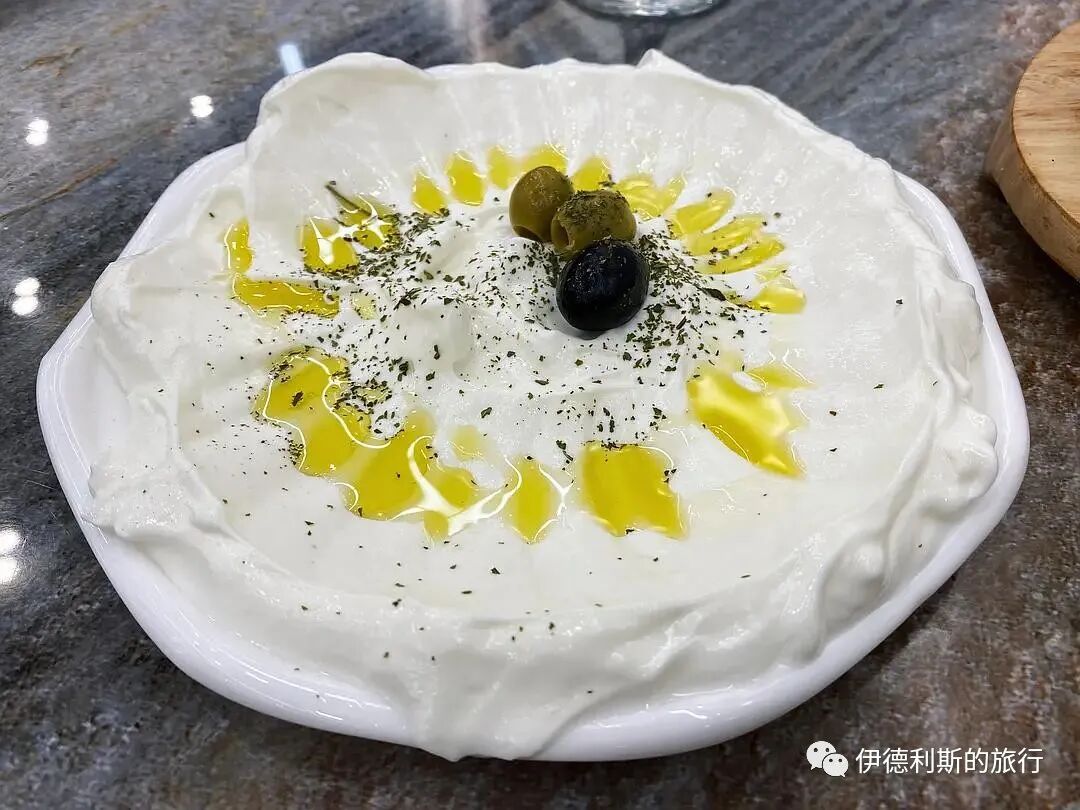
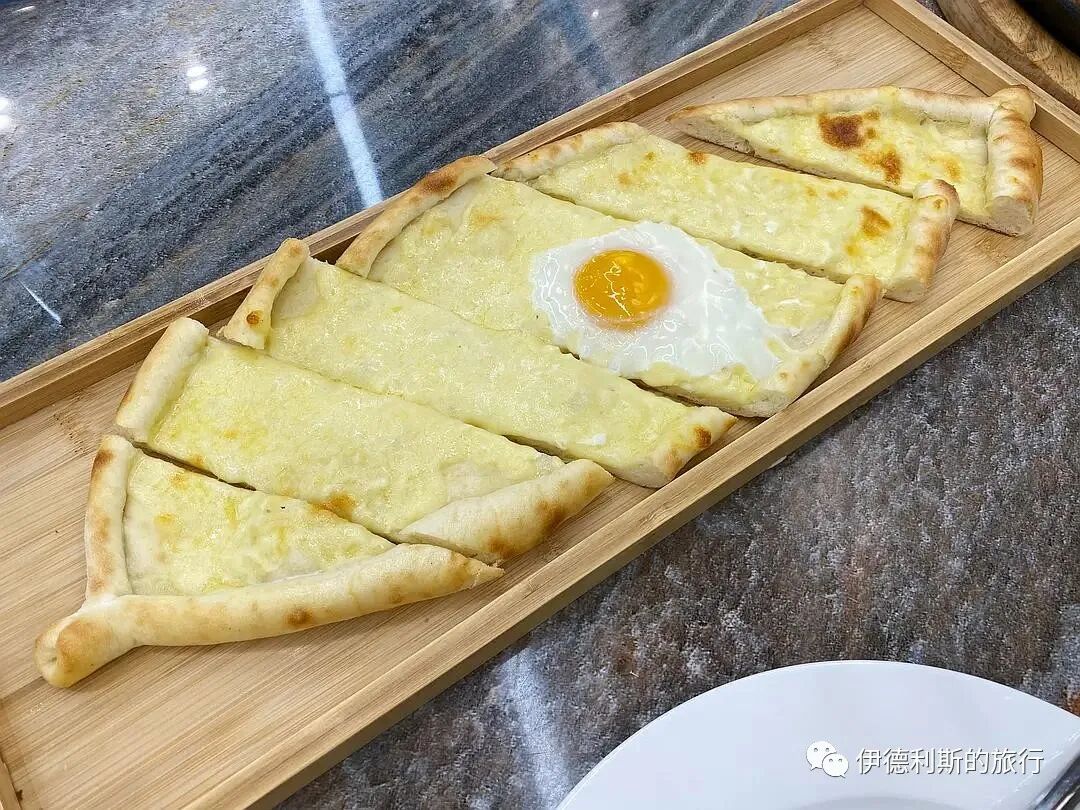
2. Syrian dessert shop Bayt Jiddi
On Saturday morning, we ate their signature Bayt Jiddi rolls with Arabic coffee at the famous Syrian dessert shop Bayt Jiddi, and Zainab had a healthy salad. I learned about them last year after watching the video 'Syrian Pastry Chef Drifting in Yiwu' filmed by Arrow Factory. I bought their desserts online at that time, and this time I finally visited the physical store. From the owner to the pastry chefs, everyone in the shop has been unable to return home since the war began. They now consider Yiwu their home.
On the right is the owner, Omar. He came to Yiwu from Syria ten years ago. He started by running an Arabic restaurant, but later went bankrupt due to a partner's breach of trust. Six months later, he rented a small storefront again and opened the current Bayt Jiddi cafe. On the left is Omran. Before the war, he had always run a cafe and bar in Damascus and also knew how to make traditional Syrian meat pies. Because he intentionally ate until he weighed 250 jin, he avoided the military conscription physical examination.
The signature roll is a tender egg crepe wrapped with banana, kiwi, and chocolate. After rolling, it is drizzled with the kind of chocolate sauce found in molten cakes. One bite is full of sweetness! The Arabic coffee is very strong and has a distinct spicy flavor.
3. Afghan buffet restaurant Kabul
On Saturday noon, we had a buffet at the Afghan restaurant Kabul. It was my first time eating at an Afghan restaurant, and it was truly delicious! There was a wide variety and the prices were cheap. The lamb trotters melted in the mouth, and the lamb in the pilaf was so fragrant. It is a great pity that shortly after we left Yiwu, this restaurant closed down and became a permanent memory.
The person looking after the shop was a Kazakh sister from Nanshan, Urumqi, who married an Egyptian husband. Zainab was very happy to meet a fellow countrywoman in a foreign land.
Zainab and I each finished a large plate, and then we had some side dishes. The ayran and hummus were both super delicious, and their shop also had naan bread freshly made by the master, which was fantastic! I just couldn't eat any more.
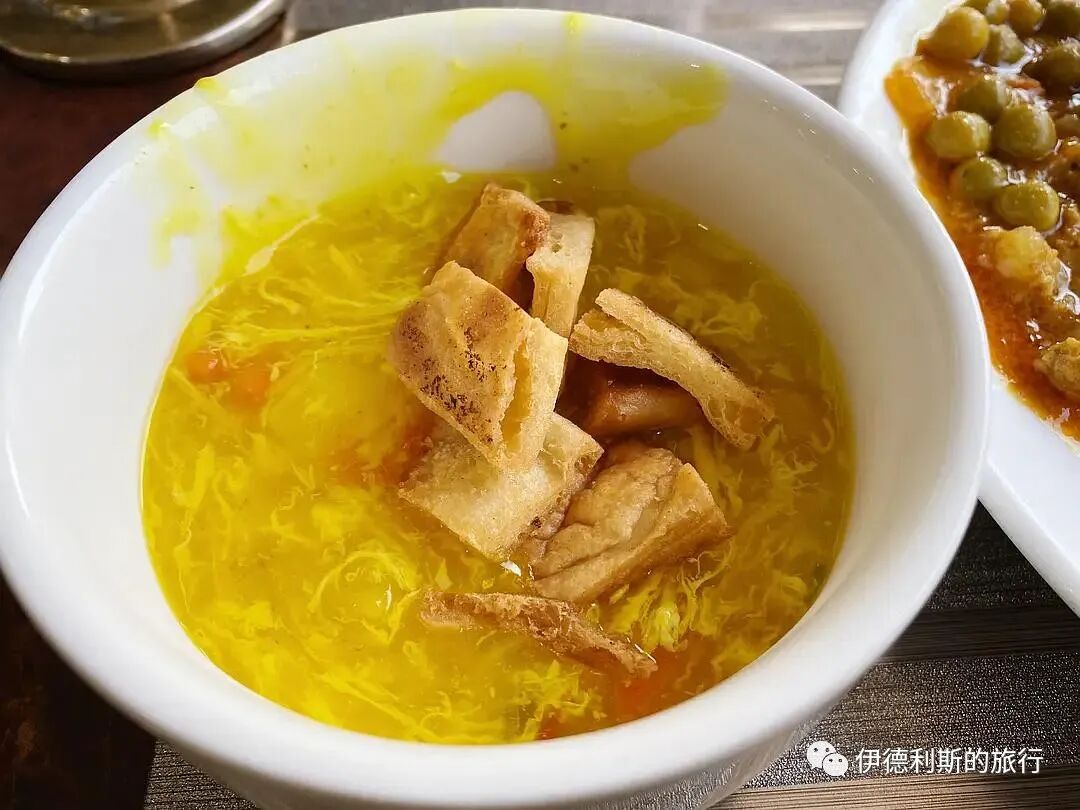
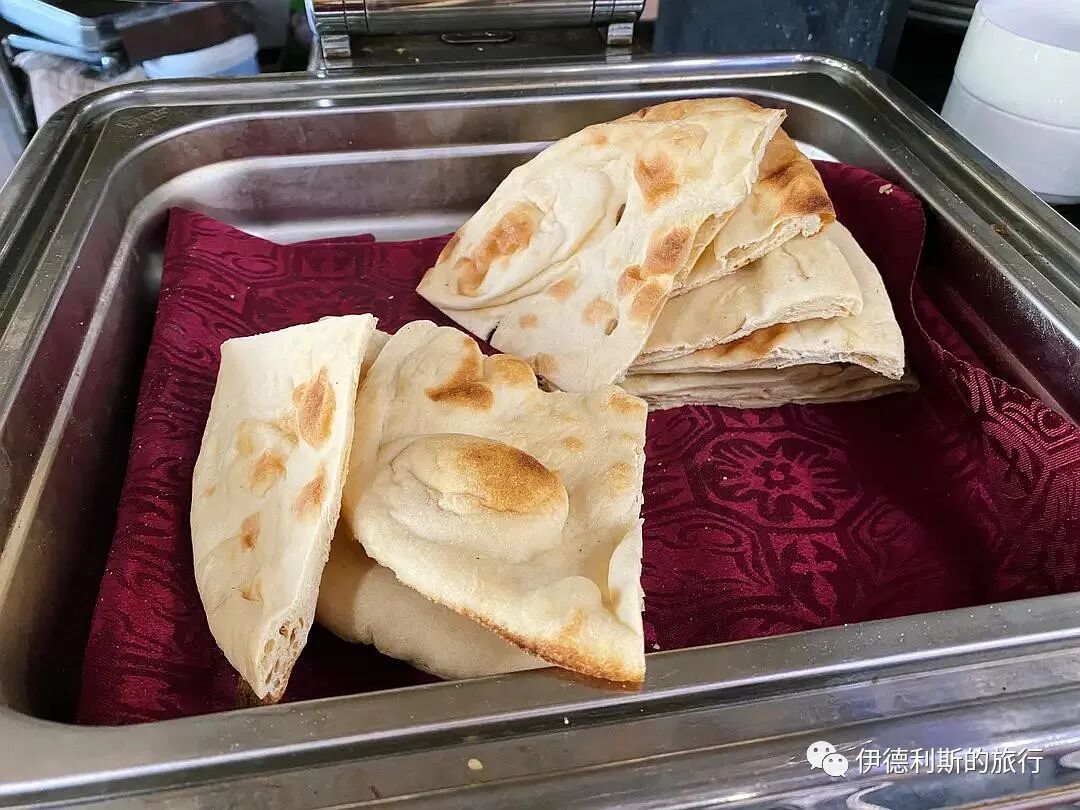
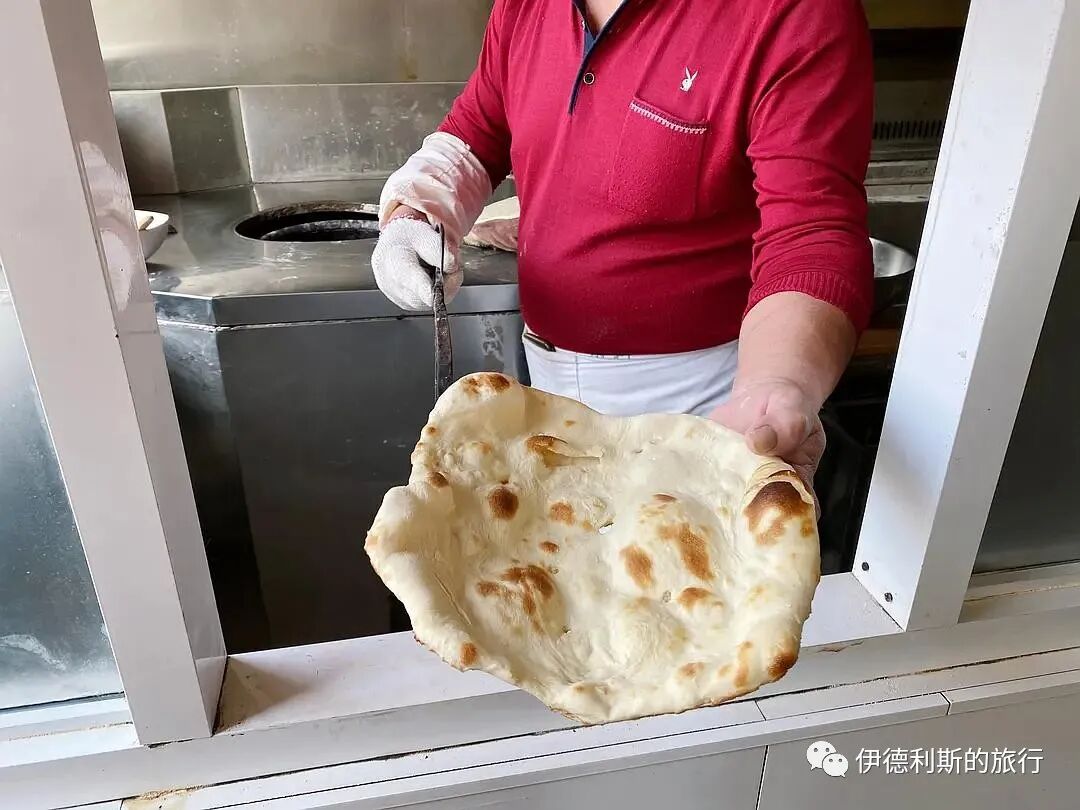
4. Egyptian drink shop Leifeng Juice
While shopping in the afternoon, I drank a mango and date milkshake made by an Egyptian guy. The guy's service attitude was particularly good and enthusiastic. He has been in China for five years, and because he loves doing good deeds, he gave himself the Chinese name Leifeng.
5. Malaysian Nyonya bird's nest
In the evening, we ate at a Malaysian Nyonya bird's nest shop. The landlady is Nyonya, and the store manager also gave us local tomatoes and oranges that were picked that morning. We chose the peach gum fresh milk bird's nest, which can be paired with sugar water when eating. According to a friend, this shop closed in 2021.
6. Afghan restaurant Ariana
In the evening, we ate grilled lamb tenderloin and chicken with chickpeas at the Afghan restaurant Ariana. The chickpeas with flatbread were so delicious, and we also drank cucumber yogurt.
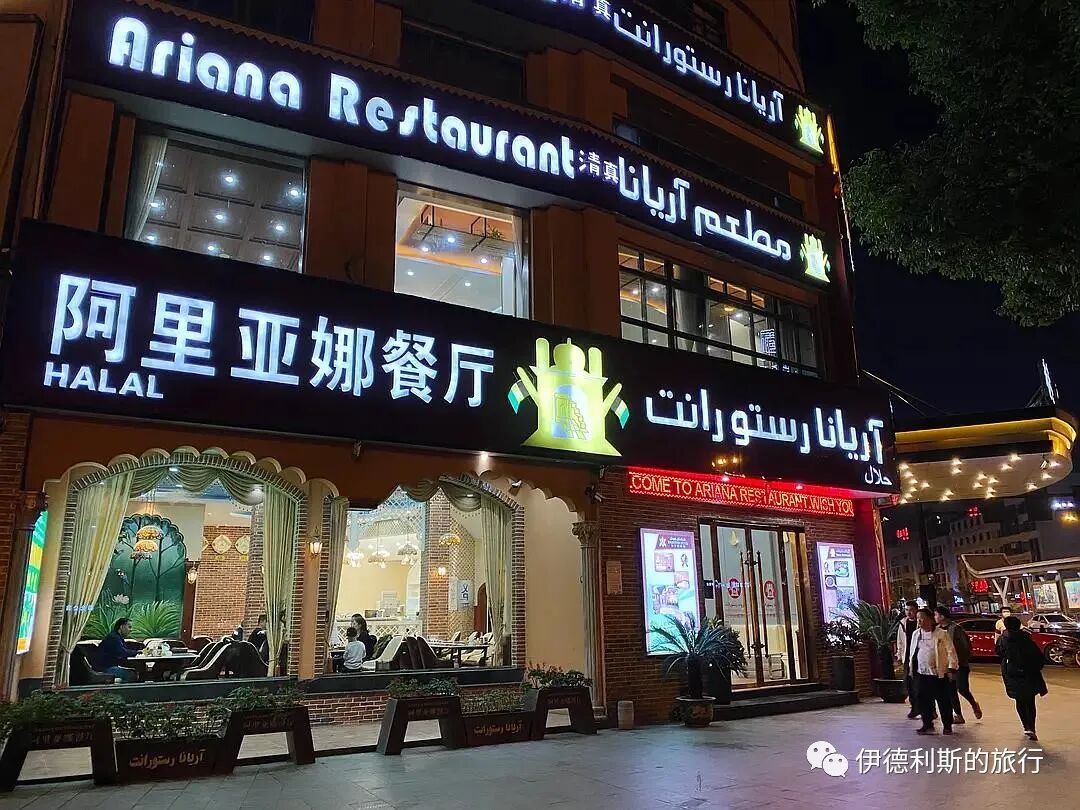
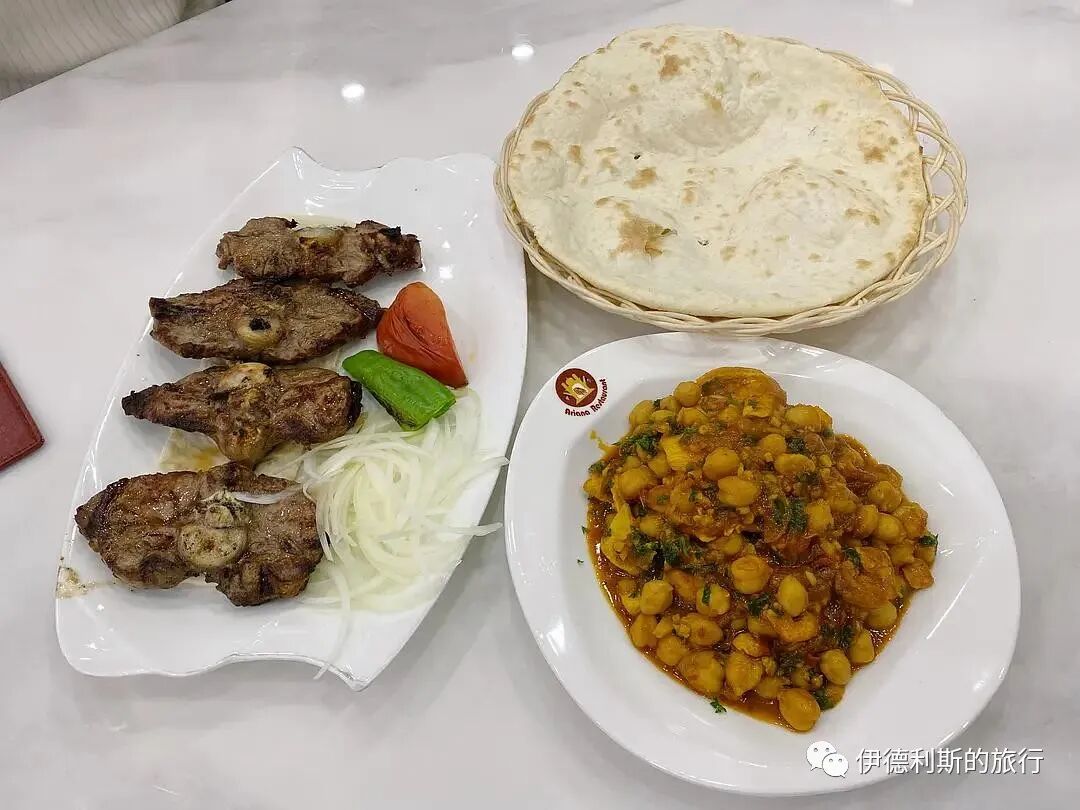
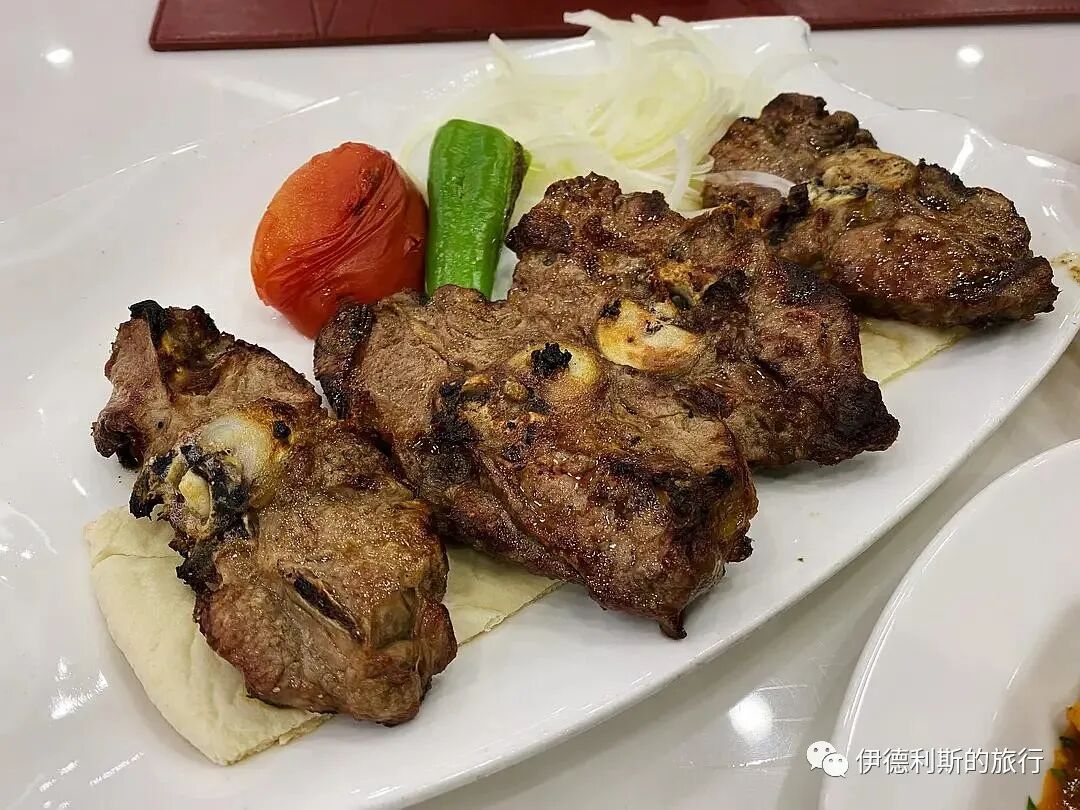
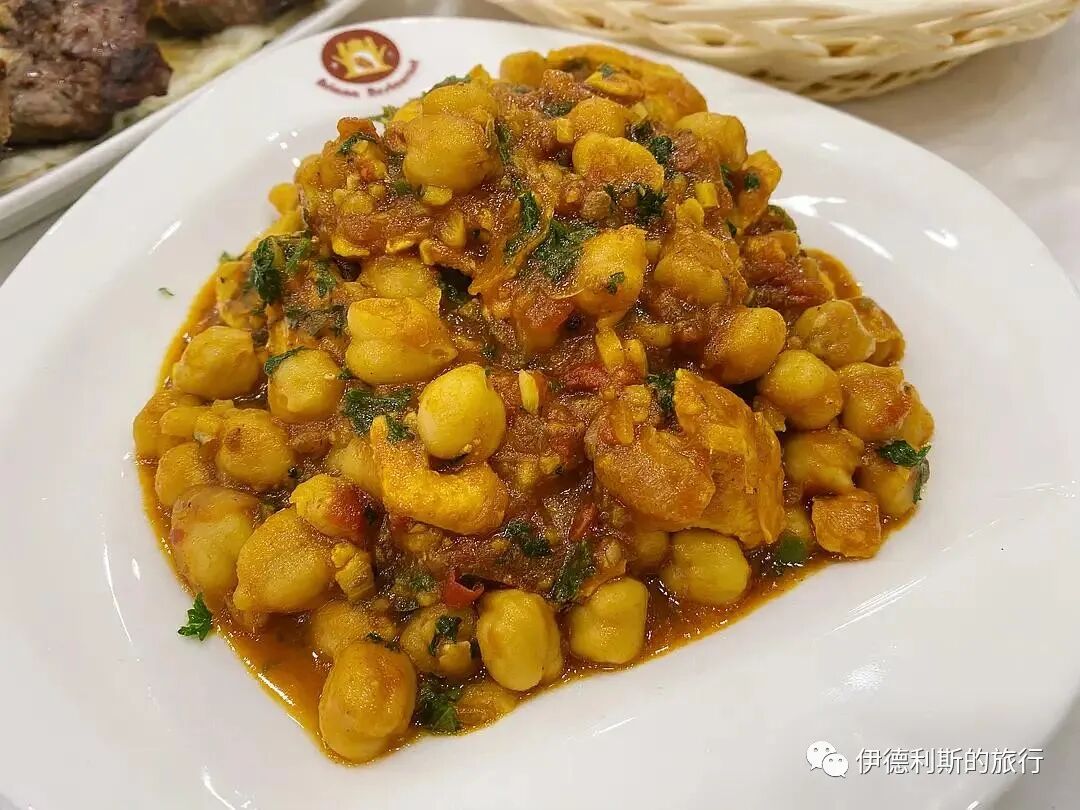
The Shahada made of wood pieces
Yiwu TV station was interviewing their boss about how to make milk tea, haha.
The TV was playing a tour of the Kaaba.
Yiwu also has specialized Turkish barbershops, the kind of men's barbershop that includes shaving.
7. Yunnan stinky tofu
At night, I ate stinky tofu grilled by Yunnan Hui people, which can be topped with various chili peppers and fish mint. Yiwu has a large number of halal restaurants from all over the country. The most concentrated area is the Halal Street in Nianxi New Village, while the Choujiang residential area near Chouzhou Road where I stayed is mainly Yunnan halal snacks, especially with many people from Zhaotong. In addition to the most classic Zhaotong small skewers, there is actually a Zhaotong breakfast shop with oil cakes, erkuai, thin bean powder, etc. Most of the people who come to eat grilled tofu at night are Yunnanese in Yiwu, and Yunnan dialect is spoken all around.
8. Turkish dessert shop Mado
On Sunday morning, we had a special breakfast at the Turkish restaurant Mado. Mado is a very famous Turkish ice cream chain brand, originating from the city of Kahramanmarash (Marash for short) in southeastern Turkey.
Their shop was introduced to Guangzhou and Yiwu in 2017 by Sultan, the largest Turkish restaurant in Yiwu. It should currently be the most authentic Turkish dessert shop in China. Mado's biggest feature is that it uses goat milk from their hometown of Kahramanmarash for everything, so besides ice cream, various cheeses are also their main products.
We ordered the breakfast for two, which included Turkish-style fried eggs with sausage, as well as a platter of Marash cheese, Feta cheese, and yellow cheese, layered cheese pie with green and black olives, honey with Turkish cream, tomato chili sauce, tahini syrup, cherry jam, and apricot jam—these jams are for spreading on bread—and finally Turkish black tea. Zainab felt very happy eating so many kinds of dairy products at once.
9. Indian restaurant Bombay Dhabba
On Sunday noon, we went to the Indian Bombay restaurant, Bombay Dhabba. In 2020, there were still many Indian restaurants here. It is a great pity that in 2021, due to the outbreak in India, there are very few Indian restaurants here now.
We ate their signature Chicken Tikka Biryani, Kadai lamb, vegetable curry with tofu, and green chicken curry, and also drank very delicious thick yogurt. I don't know if they made adjustments to suit the tastes of Zhejiang people, but I felt the curry wasn't extremely spicy, haha, so we were very happy eating it.
I feel that their food is really much better than some South Asian restaurants in Beijing. The only regret is that because we ordered Biryani rice, we didn't order naan. Curry with Indian naan is absolutely perfect, but their Biryani rice is also really delicious.
The 'Kadai' we ordered originally means 'iron pot' and is more popular in North India; traditionally, it is made using an iron pot. The variety of sauces in South Asia is really too rich; it is really difficult to summarize them as 'curry'.
Hanging on the wall is the famous Sufi Dargah in Rajasthan, India, Ajmer Sharif Dargah.
10. Imported supermarkets
There are many halal imported supermarkets on Chouzhou North Road, the largest of which is this Shangpin Supermarket, where you can buy seasonings for making various Middle Eastern delicacies, such as seasonings for Shawarma, seasonings for Falafel, and canned Hummus. Another Dubai supermarket has Arabic coffee, and another supermarket has Afghan green tea.
China Mosque Travel Guide: Eight Historic Mosque Complexes in Longhui, Shaoyang, Hunan (Segment 2 of 3)
Articles • Hasan09 posted the article • 0 comments • 371 views • 2026-06-30 06:24
Summary: This China mosque travel guide covers eight historic mosque complexes in Longhui, Shaoyang, Hunan, with local Hui Muslim heritage and mosque travel details kept in clear English.
Relics at Shanjie Ancient Mosque include stone pillar bases, wood carvings, and calligraphy of the mihrab in the kiln niche.
The stone couplet on the main gate reads: Clear the murky and promote the pure to follow the great path; preserve the truth and remove the false so that every generation has successors. The calligraphy was written by Ma Linyi, a Hui Muslim educator and Minister of Education in Shaoyang during the Republic of China. He is known as the Father of Northwest Education and the founder of modern Chinese Hui Muslim education.
Ma Linyi was born in Shaoyang, Hunan, in 1865. He passed the imperial examinations in 1902 and went to Japan on a government scholarship in 1904 to study teacher training. During that time, he met Sun Yat-sen, joined the Tongmenghui in 1905, and returned home to work on new government policies and modern education. In 1906, he founded Xiejin Primary School in Shaoyang, which was the first modern school for Hui Muslims in Hunan.
In 1908, he was transferred to the Qing government's Ministry of Education as a director. That same year, he helped establish the Beijing First Islamic Primary School inside the Niujie Mosque and later helped found the Islamic Education Association. While serving as Vice Minister of Education in 1912, Ma Linyi founded the Chinese Islamic Progressive Association with the support of Sun Yat-sen and served as its president.
While in charge of education in Gansu, Ma Linyi founded 277 schools of various types and set up the Gansu Islamic Education Promotion Office, spreading over a hundred Islamic primary schools across Gansu, Ningxia, and Qinghai. He selected over a hundred young people from the Northwest for government-funded study abroad, laying the foundation for modern basic education in the Northwest.
In 1928, Ma Linyi helped found the Islamic Middle School in Niujie and served as its vice chairman. In 1929, Ma Linyi became a board member of the Beiping Chengda Teachers' College. He actively updated the curriculum and improved teaching methods, helping Chengda develop into a modern school. In his later years, Ma Linyi devoted himself to the faith and served as an advisor to Wang Jingzhai for his translation of Islamic classics. view all
Summary: This China mosque travel guide covers eight historic mosque complexes in Longhui, Shaoyang, Hunan, with local Hui Muslim heritage and mosque travel details kept in clear English.
Relics at Shanjie Ancient Mosque include stone pillar bases, wood carvings, and calligraphy of the mihrab in the kiln niche.
The stone couplet on the main gate reads: Clear the murky and promote the pure to follow the great path; preserve the truth and remove the false so that every generation has successors. The calligraphy was written by Ma Linyi, a Hui Muslim educator and Minister of Education in Shaoyang during the Republic of China. He is known as the Father of Northwest Education and the founder of modern Chinese Hui Muslim education.
Ma Linyi was born in Shaoyang, Hunan, in 1865. He passed the imperial examinations in 1902 and went to Japan on a government scholarship in 1904 to study teacher training. During that time, he met Sun Yat-sen, joined the Tongmenghui in 1905, and returned home to work on new government policies and modern education. In 1906, he founded Xiejin Primary School in Shaoyang, which was the first modern school for Hui Muslims in Hunan.
In 1908, he was transferred to the Qing government's Ministry of Education as a director. That same year, he helped establish the Beijing First Islamic Primary School inside the Niujie Mosque and later helped found the Islamic Education Association. While serving as Vice Minister of Education in 1912, Ma Linyi founded the Chinese Islamic Progressive Association with the support of Sun Yat-sen and served as its president.
While in charge of education in Gansu, Ma Linyi founded 277 schools of various types and set up the Gansu Islamic Education Promotion Office, spreading over a hundred Islamic primary schools across Gansu, Ningxia, and Qinghai. He selected over a hundred young people from the Northwest for government-funded study abroad, laying the foundation for modern basic education in the Northwest.
In 1928, Ma Linyi helped found the Islamic Middle School in Niujie and served as its vice chairman. In 1929, Ma Linyi became a board member of the Beiping Chengda Teachers' College. He actively updated the curriculum and improved teaching methods, helping Chengda develop into a modern school. In his later years, Ma Linyi devoted himself to the faith and served as an advisor to Wang Jingzhai for his translation of Islamic classics.
China Mosque Travel Guide: Eight Historic Mosque Complexes in Longhui, Shaoyang, Hunan (Segment 2 of 3)
Articles • yusuf908 posted the article • 0 comments • 328 views • 2026-06-30 06:24
Summary: This China mosque travel guide covers eight historic mosque complexes in Longhui, Shaoyang, Hunan, with local Hui Muslim heritage and mosque travel details kept in clear English.
Relics at Shanjie Ancient Mosque include stone pillar bases, wood carvings, and calligraphy of the mihrab in the kiln niche.
The stone couplet on the main gate reads: Clear the murky and promote the pure to follow the great path; preserve the truth and remove the false so that every generation has successors. The calligraphy was written by Ma Linyi, a Hui Muslim educator and Minister of Education in Shaoyang during the Republic of China. He is known as the Father of Northwest Education and the founder of modern Chinese Hui Muslim education.
Ma Linyi was born in Shaoyang, Hunan, in 1865. He passed the imperial examinations in 1902 and went to Japan on a government scholarship in 1904 to study teacher training. During that time, he met Sun Yat-sen, joined the Tongmenghui in 1905, and returned home to work on new government policies and modern education. In 1906, he founded Xiejin Primary School in Shaoyang, which was the first modern school for Hui Muslims in Hunan.
In 1908, he was transferred to the Qing government's Ministry of Education as a director. That same year, he helped establish the Beijing First Islamic Primary School inside the Niujie Mosque and later helped found the Islamic Education Association. While serving as Vice Minister of Education in 1912, Ma Linyi founded the Chinese Islamic Progressive Association with the support of Sun Yat-sen and served as its president.
While in charge of education in Gansu, Ma Linyi founded 277 schools of various types and set up the Gansu Islamic Education Promotion Office, spreading over a hundred Islamic primary schools across Gansu, Ningxia, and Qinghai. He selected over a hundred young people from the Northwest for government-funded study abroad, laying the foundation for modern basic education in the Northwest.
In 1928, Ma Linyi helped found the Islamic Middle School in Niujie and served as its vice chairman. In 1929, Ma Linyi became a board member of the Beiping Chengda Teachers' College. He actively updated the curriculum and improved teaching methods, helping Chengda develop into a modern school. In his later years, Ma Linyi devoted himself to the faith and served as an advisor to Wang Jingzhai for his translation of Islamic classics. view all
Summary: This China mosque travel guide covers eight historic mosque complexes in Longhui, Shaoyang, Hunan, with local Hui Muslim heritage and mosque travel details kept in clear English.
Relics at Shanjie Ancient Mosque include stone pillar bases, wood carvings, and calligraphy of the mihrab in the kiln niche.
The stone couplet on the main gate reads: Clear the murky and promote the pure to follow the great path; preserve the truth and remove the false so that every generation has successors. The calligraphy was written by Ma Linyi, a Hui Muslim educator and Minister of Education in Shaoyang during the Republic of China. He is known as the Father of Northwest Education and the founder of modern Chinese Hui Muslim education.
Ma Linyi was born in Shaoyang, Hunan, in 1865. He passed the imperial examinations in 1902 and went to Japan on a government scholarship in 1904 to study teacher training. During that time, he met Sun Yat-sen, joined the Tongmenghui in 1905, and returned home to work on new government policies and modern education. In 1906, he founded Xiejin Primary School in Shaoyang, which was the first modern school for Hui Muslims in Hunan.
In 1908, he was transferred to the Qing government's Ministry of Education as a director. That same year, he helped establish the Beijing First Islamic Primary School inside the Niujie Mosque and later helped found the Islamic Education Association. While serving as Vice Minister of Education in 1912, Ma Linyi founded the Chinese Islamic Progressive Association with the support of Sun Yat-sen and served as its president.
While in charge of education in Gansu, Ma Linyi founded 277 schools of various types and set up the Gansu Islamic Education Promotion Office, spreading over a hundred Islamic primary schools across Gansu, Ningxia, and Qinghai. He selected over a hundred young people from the Northwest for government-funded study abroad, laying the foundation for modern basic education in the Northwest.
In 1928, Ma Linyi helped found the Islamic Middle School in Niujie and served as its vice chairman. In 1929, Ma Linyi became a board member of the Beiping Chengda Teachers' College. He actively updated the curriculum and improved teaching methods, helping Chengda develop into a modern school. In his later years, Ma Linyi devoted himself to the faith and served as an advisor to Wang Jingzhai for his translation of Islamic classics.
China Mosque Travel Guide: Eight Historic Mosque Complexes in Longhui, Shaoyang, Hunan (Part 1 of 5)
Articles • yusuf908 posted the article • 0 comments • 343 views • 2026-06-30 06:24
Summary: This China mosque travel guide covers eight historic mosque complexes in Longhui, Shaoyang, Hunan, with local Hui Muslim heritage and mosque travel details kept in clear English.
This article summarizes the key points about the eight mosques (sifang) in Longhui County, Shaoyang, Hunan. It keeps the original paragraph and image order. It is for readers interested in Muslim life, Islamic culture, and Chinese Islamic writing. It also helps people search for content like Chinese halal food.
Longhui County in Shaoyang City, Hunan, has a large population of Hui Muslims. I visited eight mosques there: Taohuaping Mosque, Shanjie Ancient Mosque, East Mosque, West Mosque, South Mosque, North Mosque, Luobai Mosque, and Niejiaoting Mosque. I will share them with you below.
Shanjie Ancient Mosque in Longhui County, Shaoyang, Hunan, is located in Laowuli, Shanjie Township. It was first built in 1444 (the ninth year of the Zhengtong reign of the Ming Dynasty) and is the oldest mosque in Longhui. During the Hongwu reign of the Ming Dynasty, Ma Zhi, the third son of Ma Cheng, the ancestor of the Ma family Hui Muslims in Shaoyang, moved from Shaoyang to Majia Ferry in Longhui to settle down. He was the first Hui Muslim in Longhui, and Shanjie Ancient Mosque was built by the Ma family.
Shanjie Ancient Mosque was renovated in 1919 and rebuilt into its current appearance in 2018.
Shanjie Ancient Mosque has a long tradition of teaching Islamic scripture. The head imams who have taught there include Ma Yulang, Ma Fujiu, Ma Fucheng, Ma Yucheng, Ma Yaochi, and Ding Zhenyi. They also hired imams from other places like Huang Xingxiang and Li Desheng. Ma Fucheng, an imam from this mosque, taught there for the longest time. In 1945, Imam Ma Yucheng taught at the ancient mosque and recruited many students (hailifan), marking the peak of the mosque's religious activities. To this day, the mosque continues its educational work and has trained many excellent young people.
On September 2, 1939, the Wugang County, Hunan branch of the China Islamic National Salvation Association was officially established at the mosque. The mosque's imam, Ma Fucheng, was elected as an officer. Inspired by the call to resist Japanese aggression and save the country, young Hui Muslims from the mosque, including Ma Qiyun, Ma Wuyang from the North Mosque, and Su Xingmin from Beishan, signed up for the army, took up arms, and headed to the front lines in East China.
Relics at Shanjie Ancient Mosque include stone pillar bases, wood carvings, and calligraphy of the mihrab in the kiln niche.
The stone couplet on the main gate reads: Clear the murky and promote the pure to follow the great path; preserve the truth and remove the false so that every generation has successors. The calligraphy was written by Ma Linyi, a Hui Muslim educator and Minister of Education in Shaoyang during the Republic of China. He is known as the Father of Northwest Education and the founder of modern Chinese Hui Muslim education.
Ma Linyi was born in Shaoyang, Hunan, in 1865. He passed the imperial examinations in 1902 and went to Japan on a government scholarship in 1904 to study teacher training. During that time, he met Sun Yat-sen, joined the Tongmenghui in 1905, and returned home to work on new government policies and modern education. In 1906, he founded Xiejin Primary School in Shaoyang, which was the first modern school for Hui Muslims in Hunan.
In 1908, he was transferred to the Qing government's Ministry of Education as a director. That same year, he helped establish the Beijing First Islamic Primary School inside the Niujie Mosque and later helped found the Islamic Education Association. While serving as Vice Minister of Education in 1912, Ma Linyi founded the Chinese Islamic Progressive Association with the support of Sun Yat-sen and served as its president.
While in charge of education in Gansu, Ma Linyi founded 277 schools of various types and set up the Gansu Islamic Education Promotion Office, spreading over a hundred Islamic primary schools across Gansu, Ningxia, and Qinghai. He selected over a hundred young people from the Northwest for government-funded study abroad, laying the foundation for modern basic education in the Northwest.
In 1928, Ma Linyi helped found the Islamic Middle School in Niujie and served as its vice chairman. In 1929, Ma Linyi became a board member of the Beiping Chengda Teachers' College. He actively updated the curriculum and improved teaching methods, helping Chengda develop into a modern school. In his later years, Ma Linyi devoted himself to the faith and served as an advisor to Wang Jingzhai for his translation of Islamic classics.
Shanjie East Mosque was first built in 1728 (the fifth year of the Yongzheng reign). The mosque has hired many imams over the years, including Su Yuebo, Ma Yulang, Ma Baochu, Zheng Liansheng, Ma Yuechi, Ma Yucheng, Tang Yuanqi, Hai Shiquan, Ma Chengyong, Ding Baohua, Ma Gen'ao, Ma Xiang'ao, and Ma Wuquan. Students from as far as Hainan and Guangxi came to study under the great imam Ma Yucheng in Gansu, and the local religious community was very prosperous.
It is a pity that the mosque was locked when I visited, so I could not go inside. view all
Summary: This China mosque travel guide covers eight historic mosque complexes in Longhui, Shaoyang, Hunan, with local Hui Muslim heritage and mosque travel details kept in clear English.
This article summarizes the key points about the eight mosques (sifang) in Longhui County, Shaoyang, Hunan. It keeps the original paragraph and image order. It is for readers interested in Muslim life, Islamic culture, and Chinese Islamic writing. It also helps people search for content like Chinese halal food.
Longhui County in Shaoyang City, Hunan, has a large population of Hui Muslims. I visited eight mosques there: Taohuaping Mosque, Shanjie Ancient Mosque, East Mosque, West Mosque, South Mosque, North Mosque, Luobai Mosque, and Niejiaoting Mosque. I will share them with you below.
Shanjie Ancient Mosque in Longhui County, Shaoyang, Hunan, is located in Laowuli, Shanjie Township. It was first built in 1444 (the ninth year of the Zhengtong reign of the Ming Dynasty) and is the oldest mosque in Longhui. During the Hongwu reign of the Ming Dynasty, Ma Zhi, the third son of Ma Cheng, the ancestor of the Ma family Hui Muslims in Shaoyang, moved from Shaoyang to Majia Ferry in Longhui to settle down. He was the first Hui Muslim in Longhui, and Shanjie Ancient Mosque was built by the Ma family.
Shanjie Ancient Mosque was renovated in 1919 and rebuilt into its current appearance in 2018.
Shanjie Ancient Mosque has a long tradition of teaching Islamic scripture. The head imams who have taught there include Ma Yulang, Ma Fujiu, Ma Fucheng, Ma Yucheng, Ma Yaochi, and Ding Zhenyi. They also hired imams from other places like Huang Xingxiang and Li Desheng. Ma Fucheng, an imam from this mosque, taught there for the longest time. In 1945, Imam Ma Yucheng taught at the ancient mosque and recruited many students (hailifan), marking the peak of the mosque's religious activities. To this day, the mosque continues its educational work and has trained many excellent young people.
On September 2, 1939, the Wugang County, Hunan branch of the China Islamic National Salvation Association was officially established at the mosque. The mosque's imam, Ma Fucheng, was elected as an officer. Inspired by the call to resist Japanese aggression and save the country, young Hui Muslims from the mosque, including Ma Qiyun, Ma Wuyang from the North Mosque, and Su Xingmin from Beishan, signed up for the army, took up arms, and headed to the front lines in East China.
Relics at Shanjie Ancient Mosque include stone pillar bases, wood carvings, and calligraphy of the mihrab in the kiln niche.
The stone couplet on the main gate reads: Clear the murky and promote the pure to follow the great path; preserve the truth and remove the false so that every generation has successors. The calligraphy was written by Ma Linyi, a Hui Muslim educator and Minister of Education in Shaoyang during the Republic of China. He is known as the Father of Northwest Education and the founder of modern Chinese Hui Muslim education.
Ma Linyi was born in Shaoyang, Hunan, in 1865. He passed the imperial examinations in 1902 and went to Japan on a government scholarship in 1904 to study teacher training. During that time, he met Sun Yat-sen, joined the Tongmenghui in 1905, and returned home to work on new government policies and modern education. In 1906, he founded Xiejin Primary School in Shaoyang, which was the first modern school for Hui Muslims in Hunan.
In 1908, he was transferred to the Qing government's Ministry of Education as a director. That same year, he helped establish the Beijing First Islamic Primary School inside the Niujie Mosque and later helped found the Islamic Education Association. While serving as Vice Minister of Education in 1912, Ma Linyi founded the Chinese Islamic Progressive Association with the support of Sun Yat-sen and served as its president.
While in charge of education in Gansu, Ma Linyi founded 277 schools of various types and set up the Gansu Islamic Education Promotion Office, spreading over a hundred Islamic primary schools across Gansu, Ningxia, and Qinghai. He selected over a hundred young people from the Northwest for government-funded study abroad, laying the foundation for modern basic education in the Northwest.
In 1928, Ma Linyi helped found the Islamic Middle School in Niujie and served as its vice chairman. In 1929, Ma Linyi became a board member of the Beiping Chengda Teachers' College. He actively updated the curriculum and improved teaching methods, helping Chengda develop into a modern school. In his later years, Ma Linyi devoted himself to the faith and served as an advisor to Wang Jingzhai for his translation of Islamic classics.
Shanjie East Mosque was first built in 1728 (the fifth year of the Yongzheng reign). The mosque has hired many imams over the years, including Su Yuebo, Ma Yulang, Ma Baochu, Zheng Liansheng, Ma Yuechi, Ma Yucheng, Tang Yuanqi, Hai Shiquan, Ma Chengyong, Ding Baohua, Ma Gen'ao, Ma Xiang'ao, and Ma Wuquan. Students from as far as Hainan and Guangxi came to study under the great imam Ma Yucheng in Gansu, and the local religious community was very prosperous.
It is a pity that the mosque was locked when I visited, so I could not go inside.
China Mosque Travel Guide: Eight Historic Mosque Complexes in Longhui, Shaoyang, Hunan (Part 1 of 2)
Articles • Hasan09 posted the article • 0 comments • 312 views • 2026-06-30 06:24
Summary: This China mosque travel guide covers eight historic mosque complexes in Longhui, Shaoyang, Hunan, with local Hui Muslim heritage and mosque travel details kept in clear English.
This article summarizes the key points about the eight mosques (sifang) in Longhui County, Shaoyang, Hunan. It keeps the original paragraph and image order. It is for readers interested in Muslim life, Islamic culture, and Chinese Islamic writing. It also helps people search for content like Chinese halal food.
Longhui County in Shaoyang City, Hunan, has a large population of Hui Muslims. I visited eight mosques there: Taohuaping Mosque, Shanjie Ancient Mosque, East Mosque, West Mosque, South Mosque, North Mosque, Luobai Mosque, and Niejiaoting Mosque. I will share them with you below.
Shanjie Ancient Mosque in Longhui County, Shaoyang, Hunan, is located in Laowuli, Shanjie Township. It was first built in 1444 (the ninth year of the Zhengtong reign of the Ming Dynasty) and is the oldest mosque in Longhui. During the Hongwu reign of the Ming Dynasty, Ma Zhi, the third son of Ma Cheng, the ancestor of the Ma family Hui Muslims in Shaoyang, moved from Shaoyang to Majia Ferry in Longhui to settle down. He was the first Hui Muslim in Longhui, and Shanjie Ancient Mosque was built by the Ma family.
Shanjie Ancient Mosque was renovated in 1919 and rebuilt into its current appearance in 2018.
Shanjie Ancient Mosque has a long tradition of teaching Islamic scripture. The head imams who have taught there include Ma Yulang, Ma Fujiu, Ma Fucheng, Ma Yucheng, Ma Yaochi, and Ding Zhenyi. They also hired imams from other places like Huang Xingxiang and Li Desheng. Ma Fucheng, an imam from this mosque, taught there for the longest time. In 1945, Imam Ma Yucheng taught at the ancient mosque and recruited many students (hailifan), marking the peak of the mosque's religious activities. To this day, the mosque continues its educational work and has trained many excellent young people.
On September 2, 1939, the Wugang County, Hunan branch of the China Islamic National Salvation Association was officially established at the mosque. The mosque's imam, Ma Fucheng, was elected as an officer. Inspired by the call to resist Japanese aggression and save the country, young Hui Muslims from the mosque, including Ma Qiyun, Ma Wuyang from the North Mosque, and Su Xingmin from Beishan, signed up for the army, took up arms, and headed to the front lines in East China.
Relics at Shanjie Ancient Mosque include stone pillar bases, wood carvings, and calligraphy of the mihrab in the kiln niche.
The stone couplet on the main gate reads: Clear the murky and promote the pure to follow the great path; preserve the truth and remove the false so that every generation has successors. The calligraphy was written by Ma Linyi, a Hui Muslim educator and Minister of Education in Shaoyang during the Republic of China. He is known as the Father of Northwest Education and the founder of modern Chinese Hui Muslim education.
Ma Linyi was born in Shaoyang, Hunan, in 1865. He passed the imperial examinations in 1902 and went to Japan on a government scholarship in 1904 to study teacher training. During that time, he met Sun Yat-sen, joined the Tongmenghui in 1905, and returned home to work on new government policies and modern education. In 1906, he founded Xiejin Primary School in Shaoyang, which was the first modern school for Hui Muslims in Hunan.
In 1908, he was transferred to the Qing government's Ministry of Education as a director. That same year, he helped establish the Beijing First Islamic Primary School inside the Niujie Mosque and later helped found the Islamic Education Association. While serving as Vice Minister of Education in 1912, Ma Linyi founded the Chinese Islamic Progressive Association with the support of Sun Yat-sen and served as its president.
While in charge of education in Gansu, Ma Linyi founded 277 schools of various types and set up the Gansu Islamic Education Promotion Office, spreading over a hundred Islamic primary schools across Gansu, Ningxia, and Qinghai. He selected over a hundred young people from the Northwest for government-funded study abroad, laying the foundation for modern basic education in the Northwest.
In 1928, Ma Linyi helped found the Islamic Middle School in Niujie and served as its vice chairman. In 1929, Ma Linyi became a board member of the Beiping Chengda Teachers' College. He actively updated the curriculum and improved teaching methods, helping Chengda develop into a modern school. In his later years, Ma Linyi devoted himself to the faith and served as an advisor to Wang Jingzhai for his translation of Islamic classics.
Shanjie East Mosque was first built in 1728 (the fifth year of the Yongzheng reign). The mosque has hired many imams over the years, including Su Yuebo, Ma Yulang, Ma Baochu, Zheng Liansheng, Ma Yuechi, Ma Yucheng, Tang Yuanqi, Hai Shiquan, Ma Chengyong, Ding Baohua, Ma Gen'ao, Ma Xiang'ao, and Ma Wuquan. Students from as far as Hainan and Guangxi came to study under the great imam Ma Yucheng in Gansu, and the local religious community was very prosperous.
It is a pity that the mosque was locked when I visited, so I could not go inside.
Shanjie West Mosque, also known as Jiajian Village Mosque, was first built in 1836 (the 16th year of the Daoguang reign). It was expanded during the Guangxu and Republic of China periods, and the local Hui Muslims there are surnamed Ma, Huang, and Zheng. The imams who have served at the mosque include Ma Chaoxin, Zheng Liansheng, Ma Daocheng, Ma Fucheng, and Ma Liangxu. The main hall of the West Mosque collapsed in 1991. It was being rebuilt when a flood destroyed it in 1996. After raising funds again, it was officially completed at the end of 1996 and renovated again in 2013.
The mosque houses a stone tablet from the 11th year of the Guangxu reign titled 'Record of Continued Mosque Repairs,' which lists the names of the donors at that time and serves as a precious historical record.
Shanjie North Mosque, also called Sifangjing Mosque, was first built in 1824 (the 4th year of the Daoguang reign), and the local Hui Muslims there are surnamed Ma. The main hall was destroyed after 1966. It was rebuilt in 1991 and again in 2000, with only the original stone gate pillars remaining. The pillars are carved with a couplet by the Republic of China educator Ma Linyi: 'To study the Way, one must seek the source; why ask about Jesus, Buddha, or the Greeks? To unite with Heaven is to enter the path of the sages; ancient and modern, Chinese and foreign, all share the same principle.'
Regrettably, the Shanjie North Mosque was also locked when I visited, and I could not enter. view all
Summary: This China mosque travel guide covers eight historic mosque complexes in Longhui, Shaoyang, Hunan, with local Hui Muslim heritage and mosque travel details kept in clear English.
This article summarizes the key points about the eight mosques (sifang) in Longhui County, Shaoyang, Hunan. It keeps the original paragraph and image order. It is for readers interested in Muslim life, Islamic culture, and Chinese Islamic writing. It also helps people search for content like Chinese halal food.
Longhui County in Shaoyang City, Hunan, has a large population of Hui Muslims. I visited eight mosques there: Taohuaping Mosque, Shanjie Ancient Mosque, East Mosque, West Mosque, South Mosque, North Mosque, Luobai Mosque, and Niejiaoting Mosque. I will share them with you below.
Shanjie Ancient Mosque in Longhui County, Shaoyang, Hunan, is located in Laowuli, Shanjie Township. It was first built in 1444 (the ninth year of the Zhengtong reign of the Ming Dynasty) and is the oldest mosque in Longhui. During the Hongwu reign of the Ming Dynasty, Ma Zhi, the third son of Ma Cheng, the ancestor of the Ma family Hui Muslims in Shaoyang, moved from Shaoyang to Majia Ferry in Longhui to settle down. He was the first Hui Muslim in Longhui, and Shanjie Ancient Mosque was built by the Ma family.
Shanjie Ancient Mosque was renovated in 1919 and rebuilt into its current appearance in 2018.
Shanjie Ancient Mosque has a long tradition of teaching Islamic scripture. The head imams who have taught there include Ma Yulang, Ma Fujiu, Ma Fucheng, Ma Yucheng, Ma Yaochi, and Ding Zhenyi. They also hired imams from other places like Huang Xingxiang and Li Desheng. Ma Fucheng, an imam from this mosque, taught there for the longest time. In 1945, Imam Ma Yucheng taught at the ancient mosque and recruited many students (hailifan), marking the peak of the mosque's religious activities. To this day, the mosque continues its educational work and has trained many excellent young people.
On September 2, 1939, the Wugang County, Hunan branch of the China Islamic National Salvation Association was officially established at the mosque. The mosque's imam, Ma Fucheng, was elected as an officer. Inspired by the call to resist Japanese aggression and save the country, young Hui Muslims from the mosque, including Ma Qiyun, Ma Wuyang from the North Mosque, and Su Xingmin from Beishan, signed up for the army, took up arms, and headed to the front lines in East China.
Relics at Shanjie Ancient Mosque include stone pillar bases, wood carvings, and calligraphy of the mihrab in the kiln niche.
The stone couplet on the main gate reads: Clear the murky and promote the pure to follow the great path; preserve the truth and remove the false so that every generation has successors. The calligraphy was written by Ma Linyi, a Hui Muslim educator and Minister of Education in Shaoyang during the Republic of China. He is known as the Father of Northwest Education and the founder of modern Chinese Hui Muslim education.
Ma Linyi was born in Shaoyang, Hunan, in 1865. He passed the imperial examinations in 1902 and went to Japan on a government scholarship in 1904 to study teacher training. During that time, he met Sun Yat-sen, joined the Tongmenghui in 1905, and returned home to work on new government policies and modern education. In 1906, he founded Xiejin Primary School in Shaoyang, which was the first modern school for Hui Muslims in Hunan.
In 1908, he was transferred to the Qing government's Ministry of Education as a director. That same year, he helped establish the Beijing First Islamic Primary School inside the Niujie Mosque and later helped found the Islamic Education Association. While serving as Vice Minister of Education in 1912, Ma Linyi founded the Chinese Islamic Progressive Association with the support of Sun Yat-sen and served as its president.
While in charge of education in Gansu, Ma Linyi founded 277 schools of various types and set up the Gansu Islamic Education Promotion Office, spreading over a hundred Islamic primary schools across Gansu, Ningxia, and Qinghai. He selected over a hundred young people from the Northwest for government-funded study abroad, laying the foundation for modern basic education in the Northwest.
In 1928, Ma Linyi helped found the Islamic Middle School in Niujie and served as its vice chairman. In 1929, Ma Linyi became a board member of the Beiping Chengda Teachers' College. He actively updated the curriculum and improved teaching methods, helping Chengda develop into a modern school. In his later years, Ma Linyi devoted himself to the faith and served as an advisor to Wang Jingzhai for his translation of Islamic classics.
Shanjie East Mosque was first built in 1728 (the fifth year of the Yongzheng reign). The mosque has hired many imams over the years, including Su Yuebo, Ma Yulang, Ma Baochu, Zheng Liansheng, Ma Yuechi, Ma Yucheng, Tang Yuanqi, Hai Shiquan, Ma Chengyong, Ding Baohua, Ma Gen'ao, Ma Xiang'ao, and Ma Wuquan. Students from as far as Hainan and Guangxi came to study under the great imam Ma Yucheng in Gansu, and the local religious community was very prosperous.
It is a pity that the mosque was locked when I visited, so I could not go inside.
Shanjie West Mosque, also known as Jiajian Village Mosque, was first built in 1836 (the 16th year of the Daoguang reign). It was expanded during the Guangxu and Republic of China periods, and the local Hui Muslims there are surnamed Ma, Huang, and Zheng. The imams who have served at the mosque include Ma Chaoxin, Zheng Liansheng, Ma Daocheng, Ma Fucheng, and Ma Liangxu. The main hall of the West Mosque collapsed in 1991. It was being rebuilt when a flood destroyed it in 1996. After raising funds again, it was officially completed at the end of 1996 and renovated again in 2013.
The mosque houses a stone tablet from the 11th year of the Guangxu reign titled 'Record of Continued Mosque Repairs,' which lists the names of the donors at that time and serves as a precious historical record.
Shanjie North Mosque, also called Sifangjing Mosque, was first built in 1824 (the 4th year of the Daoguang reign), and the local Hui Muslims there are surnamed Ma. The main hall was destroyed after 1966. It was rebuilt in 1991 and again in 2000, with only the original stone gate pillars remaining. The pillars are carved with a couplet by the Republic of China educator Ma Linyi: 'To study the Way, one must seek the source; why ask about Jesus, Buddha, or the Greeks? To unite with Heaven is to enter the path of the sages; ancient and modern, Chinese and foreign, all share the same principle.'
Regrettably, the Shanjie North Mosque was also locked when I visited, and I could not enter.
China Mosque Travel Guide: Eight Historic Mosque Complexes in Longhui, Shaoyang, Hunan (Part 1 of 2)
Articles • yusuf908 posted the article • 0 comments • 330 views • 2026-06-30 06:24
Summary: This China mosque travel guide covers eight historic mosque complexes in Longhui, Shaoyang, Hunan, with local Hui Muslim heritage and mosque travel details kept in clear English.
This article summarizes the key points about the eight mosques (sifang) in Longhui County, Shaoyang, Hunan. It keeps the original paragraph and image order. It is for readers interested in Muslim life, Islamic culture, and Chinese Islamic writing. It also helps people search for content like Chinese halal food.
Longhui County in Shaoyang City, Hunan, has a large population of Hui Muslims. I visited eight mosques there: Taohuaping Mosque, Shanjie Ancient Mosque, East Mosque, West Mosque, South Mosque, North Mosque, Luobai Mosque, and Niejiaoting Mosque. I will share them with you below.
Shanjie Ancient Mosque in Longhui County, Shaoyang, Hunan, is located in Laowuli, Shanjie Township. It was first built in 1444 (the ninth year of the Zhengtong reign of the Ming Dynasty) and is the oldest mosque in Longhui. During the Hongwu reign of the Ming Dynasty, Ma Zhi, the third son of Ma Cheng, the ancestor of the Ma family Hui Muslims in Shaoyang, moved from Shaoyang to Majia Ferry in Longhui to settle down. He was the first Hui Muslim in Longhui, and Shanjie Ancient Mosque was built by the Ma family.
Shanjie Ancient Mosque was renovated in 1919 and rebuilt into its current appearance in 2018.
Shanjie Ancient Mosque has a long tradition of teaching Islamic scripture. The head imams who have taught there include Ma Yulang, Ma Fujiu, Ma Fucheng, Ma Yucheng, Ma Yaochi, and Ding Zhenyi. They also hired imams from other places like Huang Xingxiang and Li Desheng. Ma Fucheng, an imam from this mosque, taught there for the longest time. In 1945, Imam Ma Yucheng taught at the ancient mosque and recruited many students (hailifan), marking the peak of the mosque's religious activities. To this day, the mosque continues its educational work and has trained many excellent young people.
On September 2, 1939, the Wugang County, Hunan branch of the China Islamic National Salvation Association was officially established at the mosque. The mosque's imam, Ma Fucheng, was elected as an officer. Inspired by the call to resist Japanese aggression and save the country, young Hui Muslims from the mosque, including Ma Qiyun, Ma Wuyang from the North Mosque, and Su Xingmin from Beishan, signed up for the army, took up arms, and headed to the front lines in East China.
Relics at Shanjie Ancient Mosque include stone pillar bases, wood carvings, and calligraphy of the mihrab in the kiln niche.
The stone couplet on the main gate reads: Clear the murky and promote the pure to follow the great path; preserve the truth and remove the false so that every generation has successors. The calligraphy was written by Ma Linyi, a Hui Muslim educator and Minister of Education in Shaoyang during the Republic of China. He is known as the Father of Northwest Education and the founder of modern Chinese Hui Muslim education.
Ma Linyi was born in Shaoyang, Hunan, in 1865. He passed the imperial examinations in 1902 and went to Japan on a government scholarship in 1904 to study teacher training. During that time, he met Sun Yat-sen, joined the Tongmenghui in 1905, and returned home to work on new government policies and modern education. In 1906, he founded Xiejin Primary School in Shaoyang, which was the first modern school for Hui Muslims in Hunan.
In 1908, he was transferred to the Qing government's Ministry of Education as a director. That same year, he helped establish the Beijing First Islamic Primary School inside the Niujie Mosque and later helped found the Islamic Education Association. While serving as Vice Minister of Education in 1912, Ma Linyi founded the Chinese Islamic Progressive Association with the support of Sun Yat-sen and served as its president.
While in charge of education in Gansu, Ma Linyi founded 277 schools of various types and set up the Gansu Islamic Education Promotion Office, spreading over a hundred Islamic primary schools across Gansu, Ningxia, and Qinghai. He selected over a hundred young people from the Northwest for government-funded study abroad, laying the foundation for modern basic education in the Northwest.
In 1928, Ma Linyi helped found the Islamic Middle School in Niujie and served as its vice chairman. In 1929, Ma Linyi became a board member of the Beiping Chengda Teachers' College. He actively updated the curriculum and improved teaching methods, helping Chengda develop into a modern school. In his later years, Ma Linyi devoted himself to the faith and served as an advisor to Wang Jingzhai for his translation of Islamic classics.
Shanjie East Mosque was first built in 1728 (the fifth year of the Yongzheng reign). The mosque has hired many imams over the years, including Su Yuebo, Ma Yulang, Ma Baochu, Zheng Liansheng, Ma Yuechi, Ma Yucheng, Tang Yuanqi, Hai Shiquan, Ma Chengyong, Ding Baohua, Ma Gen'ao, Ma Xiang'ao, and Ma Wuquan. Students from as far as Hainan and Guangxi came to study under the great imam Ma Yucheng in Gansu, and the local religious community was very prosperous.
It is a pity that the mosque was locked when I visited, so I could not go inside.
Shanjie West Mosque, also known as Jiajian Village Mosque, was first built in 1836 (the 16th year of the Daoguang reign). It was expanded during the Guangxu and Republic of China periods, and the local Hui Muslims there are surnamed Ma, Huang, and Zheng. The imams who have served at the mosque include Ma Chaoxin, Zheng Liansheng, Ma Daocheng, Ma Fucheng, and Ma Liangxu. The main hall of the West Mosque collapsed in 1991. It was being rebuilt when a flood destroyed it in 1996. After raising funds again, it was officially completed at the end of 1996 and renovated again in 2013.
The mosque houses a stone tablet from the 11th year of the Guangxu reign titled 'Record of Continued Mosque Repairs,' which lists the names of the donors at that time and serves as a precious historical record.
Shanjie North Mosque, also called Sifangjing Mosque, was first built in 1824 (the 4th year of the Daoguang reign), and the local Hui Muslims there are surnamed Ma. The main hall was destroyed after 1966. It was rebuilt in 1991 and again in 2000, with only the original stone gate pillars remaining. The pillars are carved with a couplet by the Republic of China educator Ma Linyi: 'To study the Way, one must seek the source; why ask about Jesus, Buddha, or the Greeks? To unite with Heaven is to enter the path of the sages; ancient and modern, Chinese and foreign, all share the same principle.'
Regrettably, the Shanjie North Mosque was also locked when I visited, and I could not enter. view all
Summary: This China mosque travel guide covers eight historic mosque complexes in Longhui, Shaoyang, Hunan, with local Hui Muslim heritage and mosque travel details kept in clear English.
This article summarizes the key points about the eight mosques (sifang) in Longhui County, Shaoyang, Hunan. It keeps the original paragraph and image order. It is for readers interested in Muslim life, Islamic culture, and Chinese Islamic writing. It also helps people search for content like Chinese halal food.
Longhui County in Shaoyang City, Hunan, has a large population of Hui Muslims. I visited eight mosques there: Taohuaping Mosque, Shanjie Ancient Mosque, East Mosque, West Mosque, South Mosque, North Mosque, Luobai Mosque, and Niejiaoting Mosque. I will share them with you below.
Shanjie Ancient Mosque in Longhui County, Shaoyang, Hunan, is located in Laowuli, Shanjie Township. It was first built in 1444 (the ninth year of the Zhengtong reign of the Ming Dynasty) and is the oldest mosque in Longhui. During the Hongwu reign of the Ming Dynasty, Ma Zhi, the third son of Ma Cheng, the ancestor of the Ma family Hui Muslims in Shaoyang, moved from Shaoyang to Majia Ferry in Longhui to settle down. He was the first Hui Muslim in Longhui, and Shanjie Ancient Mosque was built by the Ma family.
Shanjie Ancient Mosque was renovated in 1919 and rebuilt into its current appearance in 2018.
Shanjie Ancient Mosque has a long tradition of teaching Islamic scripture. The head imams who have taught there include Ma Yulang, Ma Fujiu, Ma Fucheng, Ma Yucheng, Ma Yaochi, and Ding Zhenyi. They also hired imams from other places like Huang Xingxiang and Li Desheng. Ma Fucheng, an imam from this mosque, taught there for the longest time. In 1945, Imam Ma Yucheng taught at the ancient mosque and recruited many students (hailifan), marking the peak of the mosque's religious activities. To this day, the mosque continues its educational work and has trained many excellent young people.
On September 2, 1939, the Wugang County, Hunan branch of the China Islamic National Salvation Association was officially established at the mosque. The mosque's imam, Ma Fucheng, was elected as an officer. Inspired by the call to resist Japanese aggression and save the country, young Hui Muslims from the mosque, including Ma Qiyun, Ma Wuyang from the North Mosque, and Su Xingmin from Beishan, signed up for the army, took up arms, and headed to the front lines in East China.
Relics at Shanjie Ancient Mosque include stone pillar bases, wood carvings, and calligraphy of the mihrab in the kiln niche.
The stone couplet on the main gate reads: Clear the murky and promote the pure to follow the great path; preserve the truth and remove the false so that every generation has successors. The calligraphy was written by Ma Linyi, a Hui Muslim educator and Minister of Education in Shaoyang during the Republic of China. He is known as the Father of Northwest Education and the founder of modern Chinese Hui Muslim education.
Ma Linyi was born in Shaoyang, Hunan, in 1865. He passed the imperial examinations in 1902 and went to Japan on a government scholarship in 1904 to study teacher training. During that time, he met Sun Yat-sen, joined the Tongmenghui in 1905, and returned home to work on new government policies and modern education. In 1906, he founded Xiejin Primary School in Shaoyang, which was the first modern school for Hui Muslims in Hunan.
In 1908, he was transferred to the Qing government's Ministry of Education as a director. That same year, he helped establish the Beijing First Islamic Primary School inside the Niujie Mosque and later helped found the Islamic Education Association. While serving as Vice Minister of Education in 1912, Ma Linyi founded the Chinese Islamic Progressive Association with the support of Sun Yat-sen and served as its president.
While in charge of education in Gansu, Ma Linyi founded 277 schools of various types and set up the Gansu Islamic Education Promotion Office, spreading over a hundred Islamic primary schools across Gansu, Ningxia, and Qinghai. He selected over a hundred young people from the Northwest for government-funded study abroad, laying the foundation for modern basic education in the Northwest.
In 1928, Ma Linyi helped found the Islamic Middle School in Niujie and served as its vice chairman. In 1929, Ma Linyi became a board member of the Beiping Chengda Teachers' College. He actively updated the curriculum and improved teaching methods, helping Chengda develop into a modern school. In his later years, Ma Linyi devoted himself to the faith and served as an advisor to Wang Jingzhai for his translation of Islamic classics.
Shanjie East Mosque was first built in 1728 (the fifth year of the Yongzheng reign). The mosque has hired many imams over the years, including Su Yuebo, Ma Yulang, Ma Baochu, Zheng Liansheng, Ma Yuechi, Ma Yucheng, Tang Yuanqi, Hai Shiquan, Ma Chengyong, Ding Baohua, Ma Gen'ao, Ma Xiang'ao, and Ma Wuquan. Students from as far as Hainan and Guangxi came to study under the great imam Ma Yucheng in Gansu, and the local religious community was very prosperous.
It is a pity that the mosque was locked when I visited, so I could not go inside.
Shanjie West Mosque, also known as Jiajian Village Mosque, was first built in 1836 (the 16th year of the Daoguang reign). It was expanded during the Guangxu and Republic of China periods, and the local Hui Muslims there are surnamed Ma, Huang, and Zheng. The imams who have served at the mosque include Ma Chaoxin, Zheng Liansheng, Ma Daocheng, Ma Fucheng, and Ma Liangxu. The main hall of the West Mosque collapsed in 1991. It was being rebuilt when a flood destroyed it in 1996. After raising funds again, it was officially completed at the end of 1996 and renovated again in 2013.
The mosque houses a stone tablet from the 11th year of the Guangxu reign titled 'Record of Continued Mosque Repairs,' which lists the names of the donors at that time and serves as a precious historical record.
Shanjie North Mosque, also called Sifangjing Mosque, was first built in 1824 (the 4th year of the Daoguang reign), and the local Hui Muslims there are surnamed Ma. The main hall was destroyed after 1966. It was rebuilt in 1991 and again in 2000, with only the original stone gate pillars remaining. The pillars are carved with a couplet by the Republic of China educator Ma Linyi: 'To study the Way, one must seek the source; why ask about Jesus, Buddha, or the Greeks? To unite with Heaven is to enter the path of the sages; ancient and modern, Chinese and foreign, all share the same principle.'
Regrettably, the Shanjie North Mosque was also locked when I visited, and I could not enter.
China Mosque Travel Guide: Eight Historic Mosque Complexes in Longhui, Shaoyang, Hunan
Articles • yusuf908 posted the article • 0 comments • 322 views • 2026-06-30 06:24
Summary: This China mosque travel guide covers eight historic mosque complexes in Longhui, Shaoyang, Hunan, with local Hui Muslim heritage and mosque travel details kept in clear English.
This article summarizes the key points about the eight mosques (sifang) in Longhui County, Shaoyang, Hunan. It keeps the original paragraph and image order. It is for readers interested in Muslim life, Islamic culture, and Chinese Islamic writing. It also helps people search for content like Chinese halal food.
Longhui County in Shaoyang City, Hunan, has a large population of Hui Muslims. I visited eight mosques there: Taohuaping Mosque, Shanjie Ancient Mosque, East Mosque, West Mosque, South Mosque, North Mosque, Luobai Mosque, and Niejiaoting Mosque. I will share them with you below.
Shanjie Ancient Mosque in Longhui County, Shaoyang, Hunan, is located in Laowuli, Shanjie Township. It was first built in 1444 (the ninth year of the Zhengtong reign of the Ming Dynasty) and is the oldest mosque in Longhui. During the Hongwu reign of the Ming Dynasty, Ma Zhi, the third son of Ma Cheng, the ancestor of the Ma family Hui Muslims in Shaoyang, moved from Shaoyang to Majia Ferry in Longhui to settle down. He was the first Hui Muslim in Longhui, and Shanjie Ancient Mosque was built by the Ma family.
Shanjie Ancient Mosque was renovated in 1919 and rebuilt into its current appearance in 2018.
Shanjie Ancient Mosque has a long tradition of teaching Islamic scripture. The head imams who have taught there include Ma Yulang, Ma Fujiu, Ma Fucheng, Ma Yucheng, Ma Yaochi, and Ding Zhenyi. They also hired imams from other places like Huang Xingxiang and Li Desheng. Ma Fucheng, an imam from this mosque, taught there for the longest time. In 1945, Imam Ma Yucheng taught at the ancient mosque and recruited many students (hailifan), marking the peak of the mosque's religious activities. To this day, the mosque continues its educational work and has trained many excellent young people.
On September 2, 1939, the Wugang County, Hunan branch of the China Islamic National Salvation Association was officially established at the mosque. The mosque's imam, Ma Fucheng, was elected as an officer. Inspired by the call to resist Japanese aggression and save the country, young Hui Muslims from the mosque, including Ma Qiyun, Ma Wuyang from the North Mosque, and Su Xingmin from Beishan, signed up for the army, took up arms, and headed to the front lines in East China.
Relics at Shanjie Ancient Mosque include stone pillar bases, wood carvings, and calligraphy of the mihrab in the kiln niche.
The stone couplet on the main gate reads: Clear the murky and promote the pure to follow the great path; preserve the truth and remove the false so that every generation has successors. The calligraphy was written by Ma Linyi, a Hui Muslim educator and Minister of Education in Shaoyang during the Republic of China. He is known as the Father of Northwest Education and the founder of modern Chinese Hui Muslim education.
Ma Linyi was born in Shaoyang, Hunan, in 1865. He passed the imperial examinations in 1902 and went to Japan on a government scholarship in 1904 to study teacher training. During that time, he met Sun Yat-sen, joined the Tongmenghui in 1905, and returned home to work on new government policies and modern education. In 1906, he founded Xiejin Primary School in Shaoyang, which was the first modern school for Hui Muslims in Hunan.
In 1908, he was transferred to the Qing government's Ministry of Education as a director. That same year, he helped establish the Beijing First Islamic Primary School inside the Niujie Mosque and later helped found the Islamic Education Association. While serving as Vice Minister of Education in 1912, Ma Linyi founded the Chinese Islamic Progressive Association with the support of Sun Yat-sen and served as its president.
While in charge of education in Gansu, Ma Linyi founded 277 schools of various types and set up the Gansu Islamic Education Promotion Office, spreading over a hundred Islamic primary schools across Gansu, Ningxia, and Qinghai. He selected over a hundred young people from the Northwest for government-funded study abroad, laying the foundation for modern basic education in the Northwest.
In 1928, Ma Linyi helped found the Islamic Middle School in Niujie and served as its vice chairman. In 1929, Ma Linyi became a board member of the Beiping Chengda Teachers' College. He actively updated the curriculum and improved teaching methods, helping Chengda develop into a modern school. In his later years, Ma Linyi devoted himself to the faith and served as an advisor to Wang Jingzhai for his translation of Islamic classics.
Shanjie East Mosque was first built in 1728 (the fifth year of the Yongzheng reign). The mosque has hired many imams over the years, including Su Yuebo, Ma Yulang, Ma Baochu, Zheng Liansheng, Ma Yuechi, Ma Yucheng, Tang Yuanqi, Hai Shiquan, Ma Chengyong, Ding Baohua, Ma Gen'ao, Ma Xiang'ao, and Ma Wuquan. Students from as far as Hainan and Guangxi came to study under the great imam Ma Yucheng in Gansu, and the local religious community was very prosperous.
It is a pity that the mosque was locked when I visited, so I could not go inside.
Shanjie West Mosque, also known as Jiajian Village Mosque, was first built in 1836 (the 16th year of the Daoguang reign). It was expanded during the Guangxu and Republic of China periods, and the local Hui Muslims there are surnamed Ma, Huang, and Zheng. The imams who have served at the mosque include Ma Chaoxin, Zheng Liansheng, Ma Daocheng, Ma Fucheng, and Ma Liangxu. The main hall of the West Mosque collapsed in 1991. It was being rebuilt when a flood destroyed it in 1996. After raising funds again, it was officially completed at the end of 1996 and renovated again in 2013.
The mosque houses a stone tablet from the 11th year of the Guangxu reign titled 'Record of Continued Mosque Repairs,' which lists the names of the donors at that time and serves as a precious historical record.
Shanjie North Mosque, also called Sifangjing Mosque, was first built in 1824 (the 4th year of the Daoguang reign), and the local Hui Muslims there are surnamed Ma. The main hall was destroyed after 1966. It was rebuilt in 1991 and again in 2000, with only the original stone gate pillars remaining. The pillars are carved with a couplet by the Republic of China educator Ma Linyi: 'To study the Way, one must seek the source; why ask about Jesus, Buddha, or the Greeks? To unite with Heaven is to enter the path of the sages; ancient and modern, Chinese and foreign, all share the same principle.'
Regrettably, the Shanjie North Mosque was also locked when I visited, and I could not enter.
Shanjie South Mosque was first built in 1768 (the 33rd year of the Qianlong reign). The local Hui Muslims are surnamed Ma, and the imams who have taught there include Ma Baochu, Zheng Liansheng, Li Bashan, Ma Fucheng, Ma Daocheng, and Ma Fu'en.
Ma Yingdong, a local resident, went to study in Japan in 1905 and joined the Tongmenghui. In 1907, he helped organize the 'Eastern Islamic Education Association' and founded its journal, 'Awakening the Hui' (Xing Hui Pian). After returning home from his studies, Ma Yingdong dedicated himself to Hui Muslim education and founded the modern Gongjin Primary School at Shanjie South Mosque, where he served as principal.
It is a pity that the Shanjie South Mosque was locked when I visited, so I could not go inside.
Luobai Mosque was first built in 1933, and the local community members are of the Ding surname. Hui Muslims moved to Luobai in the early Qing Dynasty. For a long time, they were affiliated with the Shanjie South Mosque, but the distance made it very inconvenient. In 1933, Imam Ding Zhenyi, a Luobai Hui Muslim who taught at the Gansu Hui Language Institute, resigned from his teaching position to return home and organize the construction of a mosque. Imam Ding traveled everywhere to raise funds and finally built Luobai Mosque at the top of the Yaolong residential area in Luobai.
Imam Ding Zhenyi taught at the Luobai village primary school in 1939, and during that time, he started an introductory class for Islamic studies at Luobai Mosque. Later, he served as the imam of Hetian Mosque in Shaoyang and Liutang Mosque in Guilin, Guangxi. He also worked as a teacher at the primary school attached to Guilin Chengda Normal School, dean and professor at the Guilin Hui Language Institute, and professor at the Hainan Hui Language School. He helped organize the Wugang Branch of the Hunan Chapter of the China Islamic National Salvation Association and served as its general secretary.
Luobai Mosque was torn down in 1970, rebuilt in 1985, and rebuilt again in 2000 into the building that stands today. The mosque still has the original door plaque reading "Islamic Mosque" (Qingzhen Jiaotang) and a pair of couplets by the Republican-era educator Ma Linyi: "When seeking the source of the truth, why ask about Jesus, Buddha, or others? To unite with Heaven is to enter the path of the sages; ancient and modern, East and West, the principle is the same."
Niejiaoting Mosque was first built in 1926, and the community members are of the Ma, Hai, and Su surnames. Most of the Hui Muslims in Beishan Township, where Niejiaoting is located, moved there from other places in the late Qing Dynasty. Because it was inconvenient to perform namaz, Ma Youde, Ma Daofeng, Hai Liancheng, and others raised funds to build the mosque. The imams at the mosque include Ma Chunming, Ma Youlin, Imam Bu, Imam Zhang, Hai Siquan, and Deng Mengjun. Niejia Pavilion Mosque was destroyed after 1966, rebuilt later, and then rebuilt again in 2008.
The mosque houses the 1948 "Zhaoxiu Mosque Stele," which serves as a precious historical witness.
Taohuaping Mosque is in the center of the county. It was first built in 1820 (the 25th year of the Jiaqing reign). In 1827 (the 7th year of the Daoguang reign), it was expanded after buying shops owned by the Su and Ma families on the front street. In 1834 (the 14th year of the Daoguang reign), it bought three more shops in front of the mosque. In 1841 (the 21st year of the Daoguang reign), the rear hall was renovated, and in 1850 (the 30th year of the Daoguang reign), the front gate archway, garden, and second gate were built.
In 1941, the Taohuaping branch of the China Islamic National Salvation Association was established inside Taohuaping Mosque. It did a lot of work for anti-Japanese propaganda, provided housing for refugees from other areas, raised money for winter clothes for soldiers, and helped with evacuations. In 1941, Bai Chongxi performed worship at Taohuaping Mosque and issued a plaque stating, "Troops are forbidden from stationing inside the mosque."
Taohuaping Mosque was expanded again in 1953 and was finally rebuilt into its current structure in 2019. Currently, Taohuaping Mosque is the mosque with the second-highest number of visitors in Longhui County, after the ancient Shanjie Mosque.
Taohuaping Mosque preserves a large number of stone tablets from the Qing Dynasty and the Republic of China, which are precious historical records:
The 1859 "Stele for Renovating the Front Gate"
The 1846 "Restoring the School" stele
The 1841 "Renovating the Rear Hall" stele
The 1834 "Righteous School Stele Record"
The 1822 "Everlasting Innovation, Building and Repairing the Everlasting, Immortal Names of Public Donors" stele
The 1928 "School Construction and Repair Stele"
The 1910 "Jingxin Hall" stele
The 1875 stele view all
Summary: This China mosque travel guide covers eight historic mosque complexes in Longhui, Shaoyang, Hunan, with local Hui Muslim heritage and mosque travel details kept in clear English.
This article summarizes the key points about the eight mosques (sifang) in Longhui County, Shaoyang, Hunan. It keeps the original paragraph and image order. It is for readers interested in Muslim life, Islamic culture, and Chinese Islamic writing. It also helps people search for content like Chinese halal food.
Longhui County in Shaoyang City, Hunan, has a large population of Hui Muslims. I visited eight mosques there: Taohuaping Mosque, Shanjie Ancient Mosque, East Mosque, West Mosque, South Mosque, North Mosque, Luobai Mosque, and Niejiaoting Mosque. I will share them with you below.
Shanjie Ancient Mosque in Longhui County, Shaoyang, Hunan, is located in Laowuli, Shanjie Township. It was first built in 1444 (the ninth year of the Zhengtong reign of the Ming Dynasty) and is the oldest mosque in Longhui. During the Hongwu reign of the Ming Dynasty, Ma Zhi, the third son of Ma Cheng, the ancestor of the Ma family Hui Muslims in Shaoyang, moved from Shaoyang to Majia Ferry in Longhui to settle down. He was the first Hui Muslim in Longhui, and Shanjie Ancient Mosque was built by the Ma family.
Shanjie Ancient Mosque was renovated in 1919 and rebuilt into its current appearance in 2018.
Shanjie Ancient Mosque has a long tradition of teaching Islamic scripture. The head imams who have taught there include Ma Yulang, Ma Fujiu, Ma Fucheng, Ma Yucheng, Ma Yaochi, and Ding Zhenyi. They also hired imams from other places like Huang Xingxiang and Li Desheng. Ma Fucheng, an imam from this mosque, taught there for the longest time. In 1945, Imam Ma Yucheng taught at the ancient mosque and recruited many students (hailifan), marking the peak of the mosque's religious activities. To this day, the mosque continues its educational work and has trained many excellent young people.
On September 2, 1939, the Wugang County, Hunan branch of the China Islamic National Salvation Association was officially established at the mosque. The mosque's imam, Ma Fucheng, was elected as an officer. Inspired by the call to resist Japanese aggression and save the country, young Hui Muslims from the mosque, including Ma Qiyun, Ma Wuyang from the North Mosque, and Su Xingmin from Beishan, signed up for the army, took up arms, and headed to the front lines in East China.
Relics at Shanjie Ancient Mosque include stone pillar bases, wood carvings, and calligraphy of the mihrab in the kiln niche.
The stone couplet on the main gate reads: Clear the murky and promote the pure to follow the great path; preserve the truth and remove the false so that every generation has successors. The calligraphy was written by Ma Linyi, a Hui Muslim educator and Minister of Education in Shaoyang during the Republic of China. He is known as the Father of Northwest Education and the founder of modern Chinese Hui Muslim education.
Ma Linyi was born in Shaoyang, Hunan, in 1865. He passed the imperial examinations in 1902 and went to Japan on a government scholarship in 1904 to study teacher training. During that time, he met Sun Yat-sen, joined the Tongmenghui in 1905, and returned home to work on new government policies and modern education. In 1906, he founded Xiejin Primary School in Shaoyang, which was the first modern school for Hui Muslims in Hunan.
In 1908, he was transferred to the Qing government's Ministry of Education as a director. That same year, he helped establish the Beijing First Islamic Primary School inside the Niujie Mosque and later helped found the Islamic Education Association. While serving as Vice Minister of Education in 1912, Ma Linyi founded the Chinese Islamic Progressive Association with the support of Sun Yat-sen and served as its president.
While in charge of education in Gansu, Ma Linyi founded 277 schools of various types and set up the Gansu Islamic Education Promotion Office, spreading over a hundred Islamic primary schools across Gansu, Ningxia, and Qinghai. He selected over a hundred young people from the Northwest for government-funded study abroad, laying the foundation for modern basic education in the Northwest.
In 1928, Ma Linyi helped found the Islamic Middle School in Niujie and served as its vice chairman. In 1929, Ma Linyi became a board member of the Beiping Chengda Teachers' College. He actively updated the curriculum and improved teaching methods, helping Chengda develop into a modern school. In his later years, Ma Linyi devoted himself to the faith and served as an advisor to Wang Jingzhai for his translation of Islamic classics.
Shanjie East Mosque was first built in 1728 (the fifth year of the Yongzheng reign). The mosque has hired many imams over the years, including Su Yuebo, Ma Yulang, Ma Baochu, Zheng Liansheng, Ma Yuechi, Ma Yucheng, Tang Yuanqi, Hai Shiquan, Ma Chengyong, Ding Baohua, Ma Gen'ao, Ma Xiang'ao, and Ma Wuquan. Students from as far as Hainan and Guangxi came to study under the great imam Ma Yucheng in Gansu, and the local religious community was very prosperous.
It is a pity that the mosque was locked when I visited, so I could not go inside.
Shanjie West Mosque, also known as Jiajian Village Mosque, was first built in 1836 (the 16th year of the Daoguang reign). It was expanded during the Guangxu and Republic of China periods, and the local Hui Muslims there are surnamed Ma, Huang, and Zheng. The imams who have served at the mosque include Ma Chaoxin, Zheng Liansheng, Ma Daocheng, Ma Fucheng, and Ma Liangxu. The main hall of the West Mosque collapsed in 1991. It was being rebuilt when a flood destroyed it in 1996. After raising funds again, it was officially completed at the end of 1996 and renovated again in 2013.
The mosque houses a stone tablet from the 11th year of the Guangxu reign titled 'Record of Continued Mosque Repairs,' which lists the names of the donors at that time and serves as a precious historical record.
Shanjie North Mosque, also called Sifangjing Mosque, was first built in 1824 (the 4th year of the Daoguang reign), and the local Hui Muslims there are surnamed Ma. The main hall was destroyed after 1966. It was rebuilt in 1991 and again in 2000, with only the original stone gate pillars remaining. The pillars are carved with a couplet by the Republic of China educator Ma Linyi: 'To study the Way, one must seek the source; why ask about Jesus, Buddha, or the Greeks? To unite with Heaven is to enter the path of the sages; ancient and modern, Chinese and foreign, all share the same principle.'
Regrettably, the Shanjie North Mosque was also locked when I visited, and I could not enter.
Shanjie South Mosque was first built in 1768 (the 33rd year of the Qianlong reign). The local Hui Muslims are surnamed Ma, and the imams who have taught there include Ma Baochu, Zheng Liansheng, Li Bashan, Ma Fucheng, Ma Daocheng, and Ma Fu'en.
Ma Yingdong, a local resident, went to study in Japan in 1905 and joined the Tongmenghui. In 1907, he helped organize the 'Eastern Islamic Education Association' and founded its journal, 'Awakening the Hui' (Xing Hui Pian). After returning home from his studies, Ma Yingdong dedicated himself to Hui Muslim education and founded the modern Gongjin Primary School at Shanjie South Mosque, where he served as principal.
It is a pity that the Shanjie South Mosque was locked when I visited, so I could not go inside.
Luobai Mosque was first built in 1933, and the local community members are of the Ding surname. Hui Muslims moved to Luobai in the early Qing Dynasty. For a long time, they were affiliated with the Shanjie South Mosque, but the distance made it very inconvenient. In 1933, Imam Ding Zhenyi, a Luobai Hui Muslim who taught at the Gansu Hui Language Institute, resigned from his teaching position to return home and organize the construction of a mosque. Imam Ding traveled everywhere to raise funds and finally built Luobai Mosque at the top of the Yaolong residential area in Luobai.
Imam Ding Zhenyi taught at the Luobai village primary school in 1939, and during that time, he started an introductory class for Islamic studies at Luobai Mosque. Later, he served as the imam of Hetian Mosque in Shaoyang and Liutang Mosque in Guilin, Guangxi. He also worked as a teacher at the primary school attached to Guilin Chengda Normal School, dean and professor at the Guilin Hui Language Institute, and professor at the Hainan Hui Language School. He helped organize the Wugang Branch of the Hunan Chapter of the China Islamic National Salvation Association and served as its general secretary.
Luobai Mosque was torn down in 1970, rebuilt in 1985, and rebuilt again in 2000 into the building that stands today. The mosque still has the original door plaque reading "Islamic Mosque" (Qingzhen Jiaotang) and a pair of couplets by the Republican-era educator Ma Linyi: "When seeking the source of the truth, why ask about Jesus, Buddha, or others? To unite with Heaven is to enter the path of the sages; ancient and modern, East and West, the principle is the same."
Niejiaoting Mosque was first built in 1926, and the community members are of the Ma, Hai, and Su surnames. Most of the Hui Muslims in Beishan Township, where Niejiaoting is located, moved there from other places in the late Qing Dynasty. Because it was inconvenient to perform namaz, Ma Youde, Ma Daofeng, Hai Liancheng, and others raised funds to build the mosque. The imams at the mosque include Ma Chunming, Ma Youlin, Imam Bu, Imam Zhang, Hai Siquan, and Deng Mengjun. Niejia Pavilion Mosque was destroyed after 1966, rebuilt later, and then rebuilt again in 2008.
The mosque houses the 1948 "Zhaoxiu Mosque Stele," which serves as a precious historical witness.
Taohuaping Mosque is in the center of the county. It was first built in 1820 (the 25th year of the Jiaqing reign). In 1827 (the 7th year of the Daoguang reign), it was expanded after buying shops owned by the Su and Ma families on the front street. In 1834 (the 14th year of the Daoguang reign), it bought three more shops in front of the mosque. In 1841 (the 21st year of the Daoguang reign), the rear hall was renovated, and in 1850 (the 30th year of the Daoguang reign), the front gate archway, garden, and second gate were built.
In 1941, the Taohuaping branch of the China Islamic National Salvation Association was established inside Taohuaping Mosque. It did a lot of work for anti-Japanese propaganda, provided housing for refugees from other areas, raised money for winter clothes for soldiers, and helped with evacuations. In 1941, Bai Chongxi performed worship at Taohuaping Mosque and issued a plaque stating, "Troops are forbidden from stationing inside the mosque."
Taohuaping Mosque was expanded again in 1953 and was finally rebuilt into its current structure in 2019. Currently, Taohuaping Mosque is the mosque with the second-highest number of visitors in Longhui County, after the ancient Shanjie Mosque.
Taohuaping Mosque preserves a large number of stone tablets from the Qing Dynasty and the Republic of China, which are precious historical records:
The 1859 "Stele for Renovating the Front Gate"
The 1846 "Restoring the School" stele
The 1841 "Renovating the Rear Hall" stele
The 1834 "Righteous School Stele Record"
The 1822 "Everlasting Innovation, Building and Repairing the Everlasting, Immortal Names of Public Donors" stele
The 1928 "School Construction and Repair Stele"
The 1910 "Jingxin Hall" stele
The 1875 stele
China Mosque Travel Guide: Eight Historic Mosque Complexes in Longhui, Shaoyang, Hunan (Segment 3 of 3)
Articles • yusuf908 posted the article • 0 comments • 328 views • 2026-06-22 06:34
Summary: This China mosque travel guide covers eight historic mosque complexes in Longhui, Shaoyang, Hunan, with local Hui Muslim heritage and mosque travel details kept in clear English.
Shanjie East Mosque was first built in 1728 (the fifth year of the Yongzheng reign). The mosque has hired many imams over the years, including Su Yuebo, Ma Yulang, Ma Baochu, Zheng Liansheng, Ma Yuechi, Ma Yucheng, Tang Yuanqi, Hai Shiquan, Ma Chengyong, Ding Baohua, Ma Gen'ao, Ma Xiang'ao, and Ma Wuquan. Students from as far as Hainan and Guangxi came to study under the great imam Ma Yucheng in Gansu, and the local religious community was very prosperous.
It is a pity that the mosque was locked when I visited, so I could not go inside. view all
Summary: This China mosque travel guide covers eight historic mosque complexes in Longhui, Shaoyang, Hunan, with local Hui Muslim heritage and mosque travel details kept in clear English.
Shanjie East Mosque was first built in 1728 (the fifth year of the Yongzheng reign). The mosque has hired many imams over the years, including Su Yuebo, Ma Yulang, Ma Baochu, Zheng Liansheng, Ma Yuechi, Ma Yucheng, Tang Yuanqi, Hai Shiquan, Ma Chengyong, Ding Baohua, Ma Gen'ao, Ma Xiang'ao, and Ma Wuquan. Students from as far as Hainan and Guangxi came to study under the great imam Ma Yucheng in Gansu, and the local religious community was very prosperous.
It is a pity that the mosque was locked when I visited, so I could not go inside.
China Mosque Travel Guide: Eight Historic Mosque Complexes in Longhui, Shaoyang, Hunan (Segment 1 of 3)
Articles • yusuf908 posted the article • 0 comments • 352 views • 2026-06-22 06:34
Summary: This China mosque travel guide covers eight historic mosque complexes in Longhui, Shaoyang, Hunan, with local Hui Muslim heritage and mosque travel details kept in clear English.
This article summarizes the key points about the eight mosques (sifang) in Longhui County, Shaoyang, Hunan. It keeps the original paragraph and image order. It is for readers interested in Muslim life, Islamic culture, and Chinese Islamic writing. It also helps people search for content like Chinese halal food.
Longhui County in Shaoyang City, Hunan, has a large population of Hui Muslims. I visited eight mosques there: Taohuaping Mosque, Shanjie Ancient Mosque, East Mosque, West Mosque, South Mosque, North Mosque, Luobai Mosque, and Niejiaoting Mosque. I will share them with you below.
Shanjie Ancient Mosque in Longhui County, Shaoyang, Hunan, is located in Laowuli, Shanjie Township. It was first built in 1444 (the ninth year of the Zhengtong reign of the Ming Dynasty) and is the oldest mosque in Longhui. During the Hongwu reign of the Ming Dynasty, Ma Zhi, the third son of Ma Cheng, the ancestor of the Ma family Hui Muslims in Shaoyang, moved from Shaoyang to Majia Ferry in Longhui to settle down. He was the first Hui Muslim in Longhui, and Shanjie Ancient Mosque was built by the Ma family.
Shanjie Ancient Mosque was renovated in 1919 and rebuilt into its current appearance in 2018.
Shanjie Ancient Mosque has a long tradition of teaching Islamic scripture. The head imams who have taught there include Ma Yulang, Ma Fujiu, Ma Fucheng, Ma Yucheng, Ma Yaochi, and Ding Zhenyi. They also hired imams from other places like Huang Xingxiang and Li Desheng. Ma Fucheng, an imam from this mosque, taught there for the longest time. In 1945, Imam Ma Yucheng taught at the ancient mosque and recruited many students (hailifan), marking the peak of the mosque's religious activities. To this day, the mosque continues its educational work and has trained many excellent young people.
On September 2, 1939, the Wugang County, Hunan branch of the China Islamic National Salvation Association was officially established at the mosque. The mosque's imam, Ma Fucheng, was elected as an officer. Inspired by the call to resist Japanese aggression and save the country, young Hui Muslims from the mosque, including Ma Qiyun, Ma Wuyang from the North Mosque, and Su Xingmin from Beishan, signed up for the army, took up arms, and headed to the front lines in East China. view all
Summary: This China mosque travel guide covers eight historic mosque complexes in Longhui, Shaoyang, Hunan, with local Hui Muslim heritage and mosque travel details kept in clear English.
This article summarizes the key points about the eight mosques (sifang) in Longhui County, Shaoyang, Hunan. It keeps the original paragraph and image order. It is for readers interested in Muslim life, Islamic culture, and Chinese Islamic writing. It also helps people search for content like Chinese halal food.
Longhui County in Shaoyang City, Hunan, has a large population of Hui Muslims. I visited eight mosques there: Taohuaping Mosque, Shanjie Ancient Mosque, East Mosque, West Mosque, South Mosque, North Mosque, Luobai Mosque, and Niejiaoting Mosque. I will share them with you below.
Shanjie Ancient Mosque in Longhui County, Shaoyang, Hunan, is located in Laowuli, Shanjie Township. It was first built in 1444 (the ninth year of the Zhengtong reign of the Ming Dynasty) and is the oldest mosque in Longhui. During the Hongwu reign of the Ming Dynasty, Ma Zhi, the third son of Ma Cheng, the ancestor of the Ma family Hui Muslims in Shaoyang, moved from Shaoyang to Majia Ferry in Longhui to settle down. He was the first Hui Muslim in Longhui, and Shanjie Ancient Mosque was built by the Ma family.
Shanjie Ancient Mosque was renovated in 1919 and rebuilt into its current appearance in 2018.
Shanjie Ancient Mosque has a long tradition of teaching Islamic scripture. The head imams who have taught there include Ma Yulang, Ma Fujiu, Ma Fucheng, Ma Yucheng, Ma Yaochi, and Ding Zhenyi. They also hired imams from other places like Huang Xingxiang and Li Desheng. Ma Fucheng, an imam from this mosque, taught there for the longest time. In 1945, Imam Ma Yucheng taught at the ancient mosque and recruited many students (hailifan), marking the peak of the mosque's religious activities. To this day, the mosque continues its educational work and has trained many excellent young people.
On September 2, 1939, the Wugang County, Hunan branch of the China Islamic National Salvation Association was officially established at the mosque. The mosque's imam, Ma Fucheng, was elected as an officer. Inspired by the call to resist Japanese aggression and save the country, young Hui Muslims from the mosque, including Ma Qiyun, Ma Wuyang from the North Mosque, and Su Xingmin from Beishan, signed up for the army, took up arms, and headed to the front lines in East China.
China Mosque Travel Guide: Eight Historic Mosque Complexes in Longhui, Shaoyang, Hunan (Part 4 of 5)
Articles • yusuf908 posted the article • 0 comments • 369 views • 2026-06-22 06:32
Summary: This China mosque travel guide covers eight historic mosque complexes in Longhui, Shaoyang, Hunan, with local Hui Muslim heritage and mosque travel details kept in clear English.
Taohuaping Mosque is in the center of the county. It was first built in 1820 (the 25th year of the Jiaqing reign). In 1827 (the 7th year of the Daoguang reign), it was expanded after buying shops owned by the Su and Ma families on the front street. In 1834 (the 14th year of the Daoguang reign), it bought three more shops in front of the mosque. In 1841 (the 21st year of the Daoguang reign), the rear hall was renovated, and in 1850 (the 30th year of the Daoguang reign), the front gate archway, garden, and second gate were built.
In 1941, the Taohuaping branch of the China Islamic National Salvation Association was established inside Taohuaping Mosque. It did a lot of work for anti-Japanese propaganda, provided housing for refugees from other areas, raised money for winter clothes for soldiers, and helped with evacuations. In 1941, Bai Chongxi performed worship at Taohuaping Mosque and issued a plaque stating, "Troops are forbidden from stationing inside the mosque."
Taohuaping Mosque was expanded again in 1953 and was finally rebuilt into its current structure in 2019. Currently, Taohuaping Mosque is the mosque with the second-highest number of visitors in Longhui County, after the ancient Shanjie Mosque.
Taohuaping Mosque preserves a large number of stone tablets from the Qing Dynasty and the Republic of China, which are precious historical records:
The 1859 "Stele for Renovating the Front Gate"
The 1846 "Restoring the School" stele
The 1841 "Renovating the Rear Hall" stele
The 1834 "Righteous School Stele Record"
The 1822 "Everlasting Innovation, Building and Repairing the Everlasting, Immortal Names of Public Donors" stele
The 1928 "School Construction and Repair Stele"
The 1910 "Jingxin Hall" stele view all
Summary: This China mosque travel guide covers eight historic mosque complexes in Longhui, Shaoyang, Hunan, with local Hui Muslim heritage and mosque travel details kept in clear English.
Taohuaping Mosque is in the center of the county. It was first built in 1820 (the 25th year of the Jiaqing reign). In 1827 (the 7th year of the Daoguang reign), it was expanded after buying shops owned by the Su and Ma families on the front street. In 1834 (the 14th year of the Daoguang reign), it bought three more shops in front of the mosque. In 1841 (the 21st year of the Daoguang reign), the rear hall was renovated, and in 1850 (the 30th year of the Daoguang reign), the front gate archway, garden, and second gate were built.
In 1941, the Taohuaping branch of the China Islamic National Salvation Association was established inside Taohuaping Mosque. It did a lot of work for anti-Japanese propaganda, provided housing for refugees from other areas, raised money for winter clothes for soldiers, and helped with evacuations. In 1941, Bai Chongxi performed worship at Taohuaping Mosque and issued a plaque stating, "Troops are forbidden from stationing inside the mosque."
Taohuaping Mosque was expanded again in 1953 and was finally rebuilt into its current structure in 2019. Currently, Taohuaping Mosque is the mosque with the second-highest number of visitors in Longhui County, after the ancient Shanjie Mosque.
Taohuaping Mosque preserves a large number of stone tablets from the Qing Dynasty and the Republic of China, which are precious historical records:
The 1859 "Stele for Renovating the Front Gate"
The 1846 "Restoring the School" stele
The 1841 "Renovating the Rear Hall" stele
The 1834 "Righteous School Stele Record"
The 1822 "Everlasting Innovation, Building and Repairing the Everlasting, Immortal Names of Public Donors" stele
The 1928 "School Construction and Repair Stele"
The 1910 "Jingxin Hall" stele
China Mosque Travel Guide: Eight Historic Mosque Complexes in Longhui, Shaoyang, Hunan (Part 3 of 5)
Articles • yusuf908 posted the article • 0 comments • 345 views • 2026-06-22 06:32
Summary: This China mosque travel guide covers eight historic mosque complexes in Longhui, Shaoyang, Hunan, with local Hui Muslim heritage and mosque travel details kept in clear English.
Shanjie South Mosque was first built in 1768 (the 33rd year of the Qianlong reign). The local Hui Muslims are surnamed Ma, and the imams who have taught there include Ma Baochu, Zheng Liansheng, Li Bashan, Ma Fucheng, Ma Daocheng, and Ma Fu'en.
Ma Yingdong, a local resident, went to study in Japan in 1905 and joined the Tongmenghui. In 1907, he helped organize the 'Eastern Islamic Education Association' and founded its journal, 'Awakening the Hui' (Xing Hui Pian). After returning home from his studies, Ma Yingdong dedicated himself to Hui Muslim education and founded the modern Gongjin Primary School at Shanjie South Mosque, where he served as principal.
It is a pity that the Shanjie South Mosque was locked when I visited, so I could not go inside.
Luobai Mosque was first built in 1933, and the local community members are of the Ding surname. Hui Muslims moved to Luobai in the early Qing Dynasty. For a long time, they were affiliated with the Shanjie South Mosque, but the distance made it very inconvenient. In 1933, Imam Ding Zhenyi, a Luobai Hui Muslim who taught at the Gansu Hui Language Institute, resigned from his teaching position to return home and organize the construction of a mosque. Imam Ding traveled everywhere to raise funds and finally built Luobai Mosque at the top of the Yaolong residential area in Luobai.
Imam Ding Zhenyi taught at the Luobai village primary school in 1939, and during that time, he started an introductory class for Islamic studies at Luobai Mosque. Later, he served as the imam of Hetian Mosque in Shaoyang and Liutang Mosque in Guilin, Guangxi. He also worked as a teacher at the primary school attached to Guilin Chengda Normal School, dean and professor at the Guilin Hui Language Institute, and professor at the Hainan Hui Language School. He helped organize the Wugang Branch of the Hunan Chapter of the China Islamic National Salvation Association and served as its general secretary.
Luobai Mosque was torn down in 1970, rebuilt in 1985, and rebuilt again in 2000 into the building that stands today. The mosque still has the original door plaque reading "Islamic Mosque" (Qingzhen Jiaotang) and a pair of couplets by the Republican-era educator Ma Linyi: "When seeking the source of the truth, why ask about Jesus, Buddha, or others? To unite with Heaven is to enter the path of the sages; ancient and modern, East and West, the principle is the same."
Niejiaoting Mosque was first built in 1926, and the community members are of the Ma, Hai, and Su surnames. Most of the Hui Muslims in Beishan Township, where Niejiaoting is located, moved there from other places in the late Qing Dynasty. Because it was inconvenient to perform namaz, Ma Youde, Ma Daofeng, Hai Liancheng, and others raised funds to build the mosque. The imams at the mosque include Ma Chunming, Ma Youlin, Imam Bu, Imam Zhang, Hai Siquan, and Deng Mengjun. Niejia Pavilion Mosque was destroyed after 1966, rebuilt later, and then rebuilt again in 2008.
The mosque houses the 1948 "Zhaoxiu Mosque Stele," which serves as a precious historical witness. view all
Summary: This China mosque travel guide covers eight historic mosque complexes in Longhui, Shaoyang, Hunan, with local Hui Muslim heritage and mosque travel details kept in clear English.
Shanjie South Mosque was first built in 1768 (the 33rd year of the Qianlong reign). The local Hui Muslims are surnamed Ma, and the imams who have taught there include Ma Baochu, Zheng Liansheng, Li Bashan, Ma Fucheng, Ma Daocheng, and Ma Fu'en.
Ma Yingdong, a local resident, went to study in Japan in 1905 and joined the Tongmenghui. In 1907, he helped organize the 'Eastern Islamic Education Association' and founded its journal, 'Awakening the Hui' (Xing Hui Pian). After returning home from his studies, Ma Yingdong dedicated himself to Hui Muslim education and founded the modern Gongjin Primary School at Shanjie South Mosque, where he served as principal.
It is a pity that the Shanjie South Mosque was locked when I visited, so I could not go inside.
Luobai Mosque was first built in 1933, and the local community members are of the Ding surname. Hui Muslims moved to Luobai in the early Qing Dynasty. For a long time, they were affiliated with the Shanjie South Mosque, but the distance made it very inconvenient. In 1933, Imam Ding Zhenyi, a Luobai Hui Muslim who taught at the Gansu Hui Language Institute, resigned from his teaching position to return home and organize the construction of a mosque. Imam Ding traveled everywhere to raise funds and finally built Luobai Mosque at the top of the Yaolong residential area in Luobai.
Imam Ding Zhenyi taught at the Luobai village primary school in 1939, and during that time, he started an introductory class for Islamic studies at Luobai Mosque. Later, he served as the imam of Hetian Mosque in Shaoyang and Liutang Mosque in Guilin, Guangxi. He also worked as a teacher at the primary school attached to Guilin Chengda Normal School, dean and professor at the Guilin Hui Language Institute, and professor at the Hainan Hui Language School. He helped organize the Wugang Branch of the Hunan Chapter of the China Islamic National Salvation Association and served as its general secretary.
Luobai Mosque was torn down in 1970, rebuilt in 1985, and rebuilt again in 2000 into the building that stands today. The mosque still has the original door plaque reading "Islamic Mosque" (Qingzhen Jiaotang) and a pair of couplets by the Republican-era educator Ma Linyi: "When seeking the source of the truth, why ask about Jesus, Buddha, or others? To unite with Heaven is to enter the path of the sages; ancient and modern, East and West, the principle is the same."
Niejiaoting Mosque was first built in 1926, and the community members are of the Ma, Hai, and Su surnames. Most of the Hui Muslims in Beishan Township, where Niejiaoting is located, moved there from other places in the late Qing Dynasty. Because it was inconvenient to perform namaz, Ma Youde, Ma Daofeng, Hai Liancheng, and others raised funds to build the mosque. The imams at the mosque include Ma Chunming, Ma Youlin, Imam Bu, Imam Zhang, Hai Siquan, and Deng Mengjun. Niejia Pavilion Mosque was destroyed after 1966, rebuilt later, and then rebuilt again in 2008.
The mosque houses the 1948 "Zhaoxiu Mosque Stele," which serves as a precious historical witness.
China Mosque Travel Guide: Eight Historic Mosque Complexes in Longhui, Shaoyang, Hunan (Part 2 of 5)
Articles • yusuf908 posted the article • 0 comments • 358 views • 2026-06-22 06:32
Summary: This China mosque travel guide covers eight historic mosque complexes in Longhui, Shaoyang, Hunan, with local Hui Muslim heritage and mosque travel details kept in clear English.
Shanjie West Mosque, also known as Jiajian Village Mosque, was first built in 1836 (the 16th year of the Daoguang reign). It was expanded during the Guangxu and Republic of China periods, and the local Hui Muslims there are surnamed Ma, Huang, and Zheng. The imams who have served at the mosque include Ma Chaoxin, Zheng Liansheng, Ma Daocheng, Ma Fucheng, and Ma Liangxu. The main hall of the West Mosque collapsed in 1991. It was being rebuilt when a flood destroyed it in 1996. After raising funds again, it was officially completed at the end of 1996 and renovated again in 2013.
The mosque houses a stone tablet from the 11th year of the Guangxu reign titled 'Record of Continued Mosque Repairs,' which lists the names of the donors at that time and serves as a precious historical record.
Shanjie North Mosque, also called Sifangjing Mosque, was first built in 1824 (the 4th year of the Daoguang reign), and the local Hui Muslims there are surnamed Ma. The main hall was destroyed after 1966. It was rebuilt in 1991 and again in 2000, with only the original stone gate pillars remaining. The pillars are carved with a couplet by the Republic of China educator Ma Linyi: 'To study the Way, one must seek the source; why ask about Jesus, Buddha, or the Greeks? To unite with Heaven is to enter the path of the sages; ancient and modern, Chinese and foreign, all share the same principle.'
Regrettably, the Shanjie North Mosque was also locked when I visited, and I could not enter. view all
Summary: This China mosque travel guide covers eight historic mosque complexes in Longhui, Shaoyang, Hunan, with local Hui Muslim heritage and mosque travel details kept in clear English.
Shanjie West Mosque, also known as Jiajian Village Mosque, was first built in 1836 (the 16th year of the Daoguang reign). It was expanded during the Guangxu and Republic of China periods, and the local Hui Muslims there are surnamed Ma, Huang, and Zheng. The imams who have served at the mosque include Ma Chaoxin, Zheng Liansheng, Ma Daocheng, Ma Fucheng, and Ma Liangxu. The main hall of the West Mosque collapsed in 1991. It was being rebuilt when a flood destroyed it in 1996. After raising funds again, it was officially completed at the end of 1996 and renovated again in 2013.
The mosque houses a stone tablet from the 11th year of the Guangxu reign titled 'Record of Continued Mosque Repairs,' which lists the names of the donors at that time and serves as a precious historical record.
Shanjie North Mosque, also called Sifangjing Mosque, was first built in 1824 (the 4th year of the Daoguang reign), and the local Hui Muslims there are surnamed Ma. The main hall was destroyed after 1966. It was rebuilt in 1991 and again in 2000, with only the original stone gate pillars remaining. The pillars are carved with a couplet by the Republic of China educator Ma Linyi: 'To study the Way, one must seek the source; why ask about Jesus, Buddha, or the Greeks? To unite with Heaven is to enter the path of the sages; ancient and modern, Chinese and foreign, all share the same principle.'
Regrettably, the Shanjie North Mosque was also locked when I visited, and I could not enter.
China Mosque Travel Guide: Eight Historic Mosque Complexes in Longhui, Shaoyang, Hunan (Part 5 of 5)
Articles • yusuf908 posted the article • 0 comments • 337 views • 2026-06-22 06:32
Summary: This China mosque travel guide covers eight historic mosque complexes in Longhui, Shaoyang, Hunan, with local Hui Muslim heritage and mosque travel details kept in clear English.
The 1875 stele view all
Summary: This China mosque travel guide covers eight historic mosque complexes in Longhui, Shaoyang, Hunan, with local Hui Muslim heritage and mosque travel details kept in clear English.
The 1875 stele
Muslim Travel Guide to Sichuan: Dujiangyan During Ramadan and Old Mosque Road Trip
Articles • yusuf908 posted the article • 0 comments • 387 views • 2026-06-22 06:27
Summary: This Muslim travel guide to Sichuan follows Dujiangyan during Ramadan, old mosque visits, and China mosque travel details from the original road trip.
This article summarizes the key points of 'Driving to Sichuan for Ancient Mosques during Spring Festival (Part 15): Dujiangyan during Ramadan.' It keeps the original paragraph and image order. It is for readers interested in Muslim life, Islamic culture, and Chinese Islamic writing. It also helps with searching for topics like Ramadan, Part 15, and Dujiangyan during Ramadan.
I had heard for a long time that the Ramadan atmosphere at the Dujiangyan mosque in Sichuan was excellent, and I finally got to experience it this time.
At the mosque, we had beef stewed with lotus root (niurou dun ou), cold chicken with sauce (liangban ji), steamed beef with rice flour (fenzheng niurou), twice-cooked beef (huiguo niurou), steamed eggs (zheng jidan), stir-fried garlic sprouts (chao suantai), lettuce stems braised with meat (wosun shaorou), and home-style tofu (jiachang doufu). These were all authentic Sichuan dishes.
Dujiangyan truly lives up to its reputation as the pearl of the Islamic community in western Sichuan. Many people came for the iftar meal. Chairman Sha said that in previous years they served eleven dishes and often had leftovers. This year, he specifically asked to simplify it to seven dishes and one soup. I felt the amount of food was just right.
The Hui Muslims in Dujiangyan come from diverse backgrounds. The Hai family moved from Shaoyang, Hunan, during the Wanli period of the Ming Dynasty. The Guanxian Ma family moved from Shaanxi in the mid-Ming Dynasty. The Lan family moved from Tuqiao, Chengdu, during the Qing Dynasty. The Su family moved from Xiaojin County, Sichuan, in the early Qing Dynasty. The Songpan Zhang family moved from Songpan, Sichuan, in the early Qing Dynasty. The Hebei Zhang family moved from Pidu District, Chengdu, during the Tongzhi period. The Shaanxi Ma family moved from Weinan, Shaanxi, during the Jiaqing period of the Qing Dynasty. The Qi family moved from Weinan, Shaanxi, during the Daoguang period. The Li family moved from Huihuiying in Pidu District, Chengdu, in the late Qing Dynasty. The Maogong Ma family moved from Xiaojin County, Sichuan, in the early years of the Republic of China. The Shandong Jiang family moved from Yanting, Sichuan, in the early years of the Republic of China. The Taiyuan Cai family moved from Xiaojin County, Sichuan, in the first year of the Republic of China.
The ancestor of the Dujiangyan Hai family, Hai Mengshi, was from Shunyi, Beijing. In the first year of the Hongwu period of the Ming Dynasty, he was appointed as a commander of the Imperial Guard. His grandson, Hai Chaofan, moved from Shaoyang, Hunan, to Sichuan during the Ming Wanli period.
The 'Hebei Zhang' family's ancestral home was Zhangjiawan in Tongzhou, Beijing. At the end of the Ming Dynasty, three Zhang brothers moved to Lianglukou in Pidu District, Chengdu, and led the construction of the Zhang Family Mosque (Zhangjia Si). During the Tongzhi period, Zhang Yongchun ran a Muslim restaurant on West Street in Dujiangyan and settled there.
The 'Maogong Ma' family's ancestral home was Tianbei Village in Weinan, Shaanxi. They entered Sichuan during the Qianlong period and settled in Xiaojin County. In the first year of the Republic of China, they moved to Huangchengba in Chengdu due to the Railway Protection Movement. In the sixth year of the Republic of China, their house was destroyed during the warlord chaos, and they moved to Dujiangyan again. Ma Rucong, an imam from this family, served as an imam at the Dujiangyan mosque for 33 years and passed away in 1962.
The Li family of Hui Muslims moved here from Tangyuan Town in Pidu District, Chengdu, during the Tongzhi reign. Li Guangming, a member of the family, was known as one of the Three Heroes of Guan County. He served as the magistrate of Xiaojin County during the Republic of China era, stood up to powerful figures, and was later killed by bandits.
The ancestors of the Shaanxi Ma family came from Qiaotian Village in Weinan, Shaanxi. In the 13th year of the Jiaqing reign, Ma Yingxian moved to Dujiangyan because of the White Lotus and Tianli uprisings. In the 6th year of the Daoguang reign, he bought a piece of land on South Street in Dujiangyan and opened the Daxing Mule and Horse Inn, which operated until 1949.
Next to the mosque is the Jiang Jiuxiang Pickles Workshop. Their five-kernel pine mushroom (wuren songrong) is delicious. It tastes great on its own and is a perfect match for porridge.
Dujiangyan Guan County Ancient City at night.
Starting the fast (suhur) at the Dujiangyan mosque in the morning is a special experience when everyone does it together.
Imam Sha Fuquan has been employed at the Dujiangyan mosque for 32 years. Imam Sha is from Xichang. His ancestors were descendants of Yelu Timur, the grandson of Sayyid Ajjal Shams al-Din. Yelu Timur served as the Pingzhang Zhengshi of Jianchang Road at the end of the Yuan Dynasty. He submitted to the Ming Dynasty in 1382 (the 15th year of the Hongwu reign) and was appointed as the Commander of Jianchang Guard. In 1392 (the 25th year of the Hongwu reign), he rebelled again, led an army of ten thousand to attack the city, and was captured and executed after failing. His descendants scattered. One branch fled to Huangcaoping in Miyi County, Panzhihua, where they hid their identities and changed their surname to Sha. By the third generation, they moved to Xichang, where they have lived ever since.
In 1987, Imam Sha studied under the famous Imam Yang Hua in Shaguoying, Xichang. He received his graduation robe (chuanyi guazhang) in 1990 and was admitted to the China Islamic Institute that same year. After graduating in 1994, he was hired by the Dujiangyan mosque, where he has worked ever since. Over the past thirty years, Imam Sha has taught hundreds of students (hailifan) and made significant contributions to the faith in Sichuan and the entire Southwest region. After the 2008 Wenchuan earthquake, Imam Sha led the restoration of the Dujiangyan mosque, giving it a brand-new look. view all
Summary: This Muslim travel guide to Sichuan follows Dujiangyan during Ramadan, old mosque visits, and China mosque travel details from the original road trip.
This article summarizes the key points of 'Driving to Sichuan for Ancient Mosques during Spring Festival (Part 15): Dujiangyan during Ramadan.' It keeps the original paragraph and image order. It is for readers interested in Muslim life, Islamic culture, and Chinese Islamic writing. It also helps with searching for topics like Ramadan, Part 15, and Dujiangyan during Ramadan.
I had heard for a long time that the Ramadan atmosphere at the Dujiangyan mosque in Sichuan was excellent, and I finally got to experience it this time.
At the mosque, we had beef stewed with lotus root (niurou dun ou), cold chicken with sauce (liangban ji), steamed beef with rice flour (fenzheng niurou), twice-cooked beef (huiguo niurou), steamed eggs (zheng jidan), stir-fried garlic sprouts (chao suantai), lettuce stems braised with meat (wosun shaorou), and home-style tofu (jiachang doufu). These were all authentic Sichuan dishes.
Dujiangyan truly lives up to its reputation as the pearl of the Islamic community in western Sichuan. Many people came for the iftar meal. Chairman Sha said that in previous years they served eleven dishes and often had leftovers. This year, he specifically asked to simplify it to seven dishes and one soup. I felt the amount of food was just right.
The Hui Muslims in Dujiangyan come from diverse backgrounds. The Hai family moved from Shaoyang, Hunan, during the Wanli period of the Ming Dynasty. The Guanxian Ma family moved from Shaanxi in the mid-Ming Dynasty. The Lan family moved from Tuqiao, Chengdu, during the Qing Dynasty. The Su family moved from Xiaojin County, Sichuan, in the early Qing Dynasty. The Songpan Zhang family moved from Songpan, Sichuan, in the early Qing Dynasty. The Hebei Zhang family moved from Pidu District, Chengdu, during the Tongzhi period. The Shaanxi Ma family moved from Weinan, Shaanxi, during the Jiaqing period of the Qing Dynasty. The Qi family moved from Weinan, Shaanxi, during the Daoguang period. The Li family moved from Huihuiying in Pidu District, Chengdu, in the late Qing Dynasty. The Maogong Ma family moved from Xiaojin County, Sichuan, in the early years of the Republic of China. The Shandong Jiang family moved from Yanting, Sichuan, in the early years of the Republic of China. The Taiyuan Cai family moved from Xiaojin County, Sichuan, in the first year of the Republic of China.
The ancestor of the Dujiangyan Hai family, Hai Mengshi, was from Shunyi, Beijing. In the first year of the Hongwu period of the Ming Dynasty, he was appointed as a commander of the Imperial Guard. His grandson, Hai Chaofan, moved from Shaoyang, Hunan, to Sichuan during the Ming Wanli period.
The 'Hebei Zhang' family's ancestral home was Zhangjiawan in Tongzhou, Beijing. At the end of the Ming Dynasty, three Zhang brothers moved to Lianglukou in Pidu District, Chengdu, and led the construction of the Zhang Family Mosque (Zhangjia Si). During the Tongzhi period, Zhang Yongchun ran a Muslim restaurant on West Street in Dujiangyan and settled there.
The 'Maogong Ma' family's ancestral home was Tianbei Village in Weinan, Shaanxi. They entered Sichuan during the Qianlong period and settled in Xiaojin County. In the first year of the Republic of China, they moved to Huangchengba in Chengdu due to the Railway Protection Movement. In the sixth year of the Republic of China, their house was destroyed during the warlord chaos, and they moved to Dujiangyan again. Ma Rucong, an imam from this family, served as an imam at the Dujiangyan mosque for 33 years and passed away in 1962.
The Li family of Hui Muslims moved here from Tangyuan Town in Pidu District, Chengdu, during the Tongzhi reign. Li Guangming, a member of the family, was known as one of the Three Heroes of Guan County. He served as the magistrate of Xiaojin County during the Republic of China era, stood up to powerful figures, and was later killed by bandits.
The ancestors of the Shaanxi Ma family came from Qiaotian Village in Weinan, Shaanxi. In the 13th year of the Jiaqing reign, Ma Yingxian moved to Dujiangyan because of the White Lotus and Tianli uprisings. In the 6th year of the Daoguang reign, he bought a piece of land on South Street in Dujiangyan and opened the Daxing Mule and Horse Inn, which operated until 1949.
Next to the mosque is the Jiang Jiuxiang Pickles Workshop. Their five-kernel pine mushroom (wuren songrong) is delicious. It tastes great on its own and is a perfect match for porridge.
Dujiangyan Guan County Ancient City at night.
Starting the fast (suhur) at the Dujiangyan mosque in the morning is a special experience when everyone does it together.
Imam Sha Fuquan has been employed at the Dujiangyan mosque for 32 years. Imam Sha is from Xichang. His ancestors were descendants of Yelu Timur, the grandson of Sayyid Ajjal Shams al-Din. Yelu Timur served as the Pingzhang Zhengshi of Jianchang Road at the end of the Yuan Dynasty. He submitted to the Ming Dynasty in 1382 (the 15th year of the Hongwu reign) and was appointed as the Commander of Jianchang Guard. In 1392 (the 25th year of the Hongwu reign), he rebelled again, led an army of ten thousand to attack the city, and was captured and executed after failing. His descendants scattered. One branch fled to Huangcaoping in Miyi County, Panzhihua, where they hid their identities and changed their surname to Sha. By the third generation, they moved to Xichang, where they have lived ever since.
In 1987, Imam Sha studied under the famous Imam Yang Hua in Shaguoying, Xichang. He received his graduation robe (chuanyi guazhang) in 1990 and was admitted to the China Islamic Institute that same year. After graduating in 1994, he was hired by the Dujiangyan mosque, where he has worked ever since. Over the past thirty years, Imam Sha has taught hundreds of students (hailifan) and made significant contributions to the faith in Sichuan and the entire Southwest region. After the 2008 Wenchuan earthquake, Imam Sha led the restoration of the Dujiangyan mosque, giving it a brand-new look.
Halal Food Guide to Tianjin: Hui Muslim Tea Restaurants and Handmade Burger Shops
Articles • yusuf908 posted the article • 0 comments • 335 views • 2026-06-22 06:27
Summary: This halal food guide to Tianjin covers Hui Muslim tea restaurants, handmade burger shops, halal food in China, and local Muslim dining details.
This article covers two new tea restaurants and one handmade burger shop opened by Hui Muslims in Tianjin. It keeps the original paragraph and image order, making it perfect for readers interested in Muslim life, Islamic culture, and Chinese Islamic writing, as well as those searching for halal food in China.
I heard about two new tea restaurants and an American-style burger shop in Tianjin, so I went to try them out this weekend.
I took the intercity train to Tianjin West Station, then transferred to Line 4 to reach Tianmu. The new subway line was very empty. After leaving the Tianmu subway station, I crossed the street and saw the newly opened Cantonese tea restaurant, Hanmei, at the intersection. They used to sell rice noodle rolls (changfen) at the Shunyi Road night market before opening their own shop.
Their main dishes are roast goose and rice noodle rolls (changfen). We ordered half a roast goose, mushroom and shrimp rice noodle rolls, Cantonese-style beef rice noodle rolls, curry fish balls, tiger skin chicken feet, and radish beef offal. The roast goose tasted good, but the skin was quite fatty and felt more like the skin of Beijing roast duck. The shrimp tasted great, and the Cantonese-style beef tasted similar to the beef stew we Hui Muslims make, just a bit sweeter. The rice noodle roll skin was very thin and had a mild flavor. The curry fish balls were delicious, but the chicken feet felt a bit dry. The radish beef offal was not well-made, and the flavor was completely off. If you want to try Cantonese flavors, you can come here, but it still falls short compared to the Hui Muslim restaurants in Guangzhou or the restaurant in the Aiqun Hotel in Hong Kong. Next time I have a chance, I will come back to try their claypot rice (baozai fan).
North of Tianmu in Tianjin is Tianzhong, which used to be the compound for the Tianjin Heavy Machinery Factory, and it has many different restaurants. A new Hong Kong-style tea restaurant called Xiao Chu Jie opened on Tianzhong Road. We ordered iced lemon tea, Hong Kong-style pulled milk tea, and passion fruit tea, and we ate the 'rich mudslide' dessert and the 'leaky milk' French toast (lounaihua). Their iced lemon tea is very refreshing, and the milk tea has a strong tea flavor that is very satisfying.
The leaky milk French toast is a viral dessert in Hong Kong-style tea restaurants, essentially a luxurious, exploding version of French toast (xiduoshi). To make it, they press a small dent into the top of two thick slices of toast and pour over a thick milk sauce made from milk, condensed milk, and butter, then sprinkle a thick layer of malt cocoa powder on top. When you cut into it, the milk sauce flows out like a mudslide. Because the malt cocoa powder used in Hong Kong-style tea restaurants is the Swiss brand Ovaltine, the dish gets its name 'leaky milk' (lounaihua).
In the evening, I walked around the night market on Shunyi Road in Tianmu and ate shaved ice. Since Metro Line 4 opened, it is much easier to get to Tianmu, so I probably won't go to the Northwest Corner as often. I ate at this Ciertou Shaved Ice shop in Tianmu last year, and I came back to eat here again this time. I always order the old-fashioned shaved ice (baobing) I love, topped with sour hawthorn paste (suanmogao), sour apricots, red hawthorn berries, and red beans. It really whets the appetite. They also have fresh lychee milk ice, which is only sold during lychee season. When we arrived, the owner was just opening a crate of fresh lychees, and they looked very fresh indeed.
Shunyidao Night Market now has barbecue on one side and snacks on the other. It is great to walk around, with options like sweet soup (tangshui), teppanyaki squid, duck snacks, and octopus balls (takoyaki) available.
We kept walking through the Tianmu Shunyidao Night Market and bought some egg waffles (jidanzi). We got chocolate, beef floss, and original flavors. The egg and milk aroma was very strong. They were very hot when freshly made, so we had to let them cool down before eating. Suleiman really liked the chocolate flavor.
Then we bought some teppanyaki hot dogs, which were also very affordable.
We came to the Honghuli Food Street in Tianjin on the weekend to try a newly opened American-style burger shop. Honghuli is an old-fashioned residential area built in the 1980s. It is only one subway stop away from Tianjin West Railway Station, making it very convenient to reach. There are many Hui Muslim restaurants here, both traditional and modern. Unlike the Northwest Corner, it is not very commercialized, and most of the customers are locals.
Hello Handmade Burger Shop is on Honghu South Road, surrounded by many other food spots. The owner is a relative of the imam at Fuxingzhuang Mosque, so the food is halal and the quality is guaranteed. We had the American-style double beef burger and the black truffle black tiger shrimp burger. Both were huge. Their burger buns are unique. The green ones are made with spinach powder and the black ones with squid ink. They are custom-made and have absolutely no preservatives.
The beef patties are fresh and firm. After pan-frying, they are rich, fragrant, and juicy. The double patties give a great meaty texture, and with the sauce and toppings, the flavors build up and get better with every bite. The black tiger shrimp in the black truffle burger is plump and bouncy with a distinct sweet, fresh taste. It blends perfectly with the rich aroma of black truffle, creating a delicate yet chewy texture.
The shop is quite small, so you might have to wait for a table during meal times. If it is not too sunny, you can also eat outside by the door and chat while you eat.
Next to the burger shop is Yuansu Zhai Lao Wei Juanquan. They sell homemade dark plum drink (wumeitang) and dried tangerine peel passion fruit pear juice. Both are all-natural and cannot be kept overnight. The dark plum drink contains licorice, mint, roselle, dried tangerine peel, hawthorn, mulberry, and osmanthus. The dried tangerine peel passion fruit pear juice contains lemon, lotus seeds, and lily bulbs. Both taste great. Cold drinks go really well with burgers.
Previous Tianjin food shares:
Taking the kids to Tianjin in the summer to see the sea and eat seafood.
Tianjin's halal food is so comprehensive: pasta, yakitori, Yemeni flatbread, Swiss cheese fondue, and rice balls.
Autumn food tour in Tianjin: Syrian food, giant river prawns (luoshi xia), yellow broth ramen, Turkish restaurants, and Xinjiang fresh milk ice cream.
Taking kids out to eat in Tianjin: Yemeni food, Algerian desserts, rice noodle rolls (changfen), Japanese food, and water caltrop soup (lingjiao tang).
Eating Arabic food in Tianjin: Syrian, Yemeni, Tunisian, and Algerian.
Between the mountains and the sea: from Huairou farmhouses to seaside Western restaurants. view all
Summary: This halal food guide to Tianjin covers Hui Muslim tea restaurants, handmade burger shops, halal food in China, and local Muslim dining details.
This article covers two new tea restaurants and one handmade burger shop opened by Hui Muslims in Tianjin. It keeps the original paragraph and image order, making it perfect for readers interested in Muslim life, Islamic culture, and Chinese Islamic writing, as well as those searching for halal food in China.
I heard about two new tea restaurants and an American-style burger shop in Tianjin, so I went to try them out this weekend.
I took the intercity train to Tianjin West Station, then transferred to Line 4 to reach Tianmu. The new subway line was very empty. After leaving the Tianmu subway station, I crossed the street and saw the newly opened Cantonese tea restaurant, Hanmei, at the intersection. They used to sell rice noodle rolls (changfen) at the Shunyi Road night market before opening their own shop.
Their main dishes are roast goose and rice noodle rolls (changfen). We ordered half a roast goose, mushroom and shrimp rice noodle rolls, Cantonese-style beef rice noodle rolls, curry fish balls, tiger skin chicken feet, and radish beef offal. The roast goose tasted good, but the skin was quite fatty and felt more like the skin of Beijing roast duck. The shrimp tasted great, and the Cantonese-style beef tasted similar to the beef stew we Hui Muslims make, just a bit sweeter. The rice noodle roll skin was very thin and had a mild flavor. The curry fish balls were delicious, but the chicken feet felt a bit dry. The radish beef offal was not well-made, and the flavor was completely off. If you want to try Cantonese flavors, you can come here, but it still falls short compared to the Hui Muslim restaurants in Guangzhou or the restaurant in the Aiqun Hotel in Hong Kong. Next time I have a chance, I will come back to try their claypot rice (baozai fan).
North of Tianmu in Tianjin is Tianzhong, which used to be the compound for the Tianjin Heavy Machinery Factory, and it has many different restaurants. A new Hong Kong-style tea restaurant called Xiao Chu Jie opened on Tianzhong Road. We ordered iced lemon tea, Hong Kong-style pulled milk tea, and passion fruit tea, and we ate the 'rich mudslide' dessert and the 'leaky milk' French toast (lounaihua). Their iced lemon tea is very refreshing, and the milk tea has a strong tea flavor that is very satisfying.
The leaky milk French toast is a viral dessert in Hong Kong-style tea restaurants, essentially a luxurious, exploding version of French toast (xiduoshi). To make it, they press a small dent into the top of two thick slices of toast and pour over a thick milk sauce made from milk, condensed milk, and butter, then sprinkle a thick layer of malt cocoa powder on top. When you cut into it, the milk sauce flows out like a mudslide. Because the malt cocoa powder used in Hong Kong-style tea restaurants is the Swiss brand Ovaltine, the dish gets its name 'leaky milk' (lounaihua).
In the evening, I walked around the night market on Shunyi Road in Tianmu and ate shaved ice. Since Metro Line 4 opened, it is much easier to get to Tianmu, so I probably won't go to the Northwest Corner as often. I ate at this Ciertou Shaved Ice shop in Tianmu last year, and I came back to eat here again this time. I always order the old-fashioned shaved ice (baobing) I love, topped with sour hawthorn paste (suanmogao), sour apricots, red hawthorn berries, and red beans. It really whets the appetite. They also have fresh lychee milk ice, which is only sold during lychee season. When we arrived, the owner was just opening a crate of fresh lychees, and they looked very fresh indeed.
Shunyidao Night Market now has barbecue on one side and snacks on the other. It is great to walk around, with options like sweet soup (tangshui), teppanyaki squid, duck snacks, and octopus balls (takoyaki) available.
We kept walking through the Tianmu Shunyidao Night Market and bought some egg waffles (jidanzi). We got chocolate, beef floss, and original flavors. The egg and milk aroma was very strong. They were very hot when freshly made, so we had to let them cool down before eating. Suleiman really liked the chocolate flavor.
Then we bought some teppanyaki hot dogs, which were also very affordable.
We came to the Honghuli Food Street in Tianjin on the weekend to try a newly opened American-style burger shop. Honghuli is an old-fashioned residential area built in the 1980s. It is only one subway stop away from Tianjin West Railway Station, making it very convenient to reach. There are many Hui Muslim restaurants here, both traditional and modern. Unlike the Northwest Corner, it is not very commercialized, and most of the customers are locals.
Hello Handmade Burger Shop is on Honghu South Road, surrounded by many other food spots. The owner is a relative of the imam at Fuxingzhuang Mosque, so the food is halal and the quality is guaranteed. We had the American-style double beef burger and the black truffle black tiger shrimp burger. Both were huge. Their burger buns are unique. The green ones are made with spinach powder and the black ones with squid ink. They are custom-made and have absolutely no preservatives.
The beef patties are fresh and firm. After pan-frying, they are rich, fragrant, and juicy. The double patties give a great meaty texture, and with the sauce and toppings, the flavors build up and get better with every bite. The black tiger shrimp in the black truffle burger is plump and bouncy with a distinct sweet, fresh taste. It blends perfectly with the rich aroma of black truffle, creating a delicate yet chewy texture.
The shop is quite small, so you might have to wait for a table during meal times. If it is not too sunny, you can also eat outside by the door and chat while you eat.
Next to the burger shop is Yuansu Zhai Lao Wei Juanquan. They sell homemade dark plum drink (wumeitang) and dried tangerine peel passion fruit pear juice. Both are all-natural and cannot be kept overnight. The dark plum drink contains licorice, mint, roselle, dried tangerine peel, hawthorn, mulberry, and osmanthus. The dried tangerine peel passion fruit pear juice contains lemon, lotus seeds, and lily bulbs. Both taste great. Cold drinks go really well with burgers.
Previous Tianjin food shares:
Taking the kids to Tianjin in the summer to see the sea and eat seafood.
Tianjin's halal food is so comprehensive: pasta, yakitori, Yemeni flatbread, Swiss cheese fondue, and rice balls.
Autumn food tour in Tianjin: Syrian food, giant river prawns (luoshi xia), yellow broth ramen, Turkish restaurants, and Xinjiang fresh milk ice cream.
Taking kids out to eat in Tianjin: Yemeni food, Algerian desserts, rice noodle rolls (changfen), Japanese food, and water caltrop soup (lingjiao tang).
Eating Arabic food in Tianjin: Syrian, Yemeni, Tunisian, and Algerian.
Between the mountains and the sea: from Huairou farmhouses to seaside Western restaurants.
Muslim Traveler Guide to Beijing: Halal Food and African Cuisine at Beihang University
Articles • yusuf908 posted the article • 0 comments • 234 views • 2026-06-22 06:27
Summary: This Muslim traveler guide to Beijing follows an Africa Day food experience at Beihang University, with campus culture and local food details preserved.
This article summarizes the key points of tasting food from Africa's smallest country at Beihang University. It keeps the original paragraph and image order, making it suitable for readers interested in Muslim life, Islamic culture, and Chinese Islamic writing. It also helps with searching for content on Ramadan, history, and social observations.
Since May, major universities in Beijing have held international culture festivals. International students showcased their home cultures, which was very interesting. Unfortunately, most school festivals were on weekdays, and some were not open to the public. On May 24, I finally made it to the Beihang University international culture festival.
Although it was a culture festival rather than a food festival, I could still taste specialty drinks and snacks from several countries. We first drank Turkish black tea and Moroccan mint tea, then ate the Pakistani specialty noodle milk dish Pheni, which is also a classic Ramadan snack for Pakistanis.
The highlight was eating spicy peanuts, Wonjo hibiscus tea, and the milk dessert Chakery from the Gambia. This was my first time tasting snacks from this country. The Gambia is located on the Atlantic coast of West Africa. It is the smallest country in all of Africa and one of the least developed countries in the world. As early as a thousand years ago, Arab merchants crossed the Sahara Desert to trade in the Gambia and brought Islam to the country in the 9th century. Today, 96% of Gambians belong to the Maliki school of Sunni Islam.
Wonjo is an iced drink made by soaking hibiscus flowers and adding sugar and mint. It is a classic summer chilled beverage for Gambians. The Gambia is one of the original homes of the hibiscus flower, and drinking hibiscus tea here has a very long history. Chakery is a milk dessert made with millet. It is a classic West African after-dinner treat. People of different faiths share Chakery with their neighbors after festivals, showing friendships that cross religious lines.
A young man from Bangladesh sang with deep emotion, a friend (dosti) from Senegal was full of energy, and brothers from Ghana played the drums. My son, Suleiman, also grew to love the African drums.
After leaving the Beihang International Culture Festival, we went to the fourth floor of the Seventh Canteen for dinner. They were hosting a Food Voyage Culture Festival and invited Zhang Shuanqiang, the executive chef of the Ningxia Building in Beijing, to guide the cooking. We ate stir-fried beef, garlic fish fillets, and big plate chicken (dapanji). Overall, it was very affordable. The stir-fried beef went great with rice, and the garlic fish fillets were very appetizing. I really envy the students and teachers at Beihang. view all
Summary: This Muslim traveler guide to Beijing follows an Africa Day food experience at Beihang University, with campus culture and local food details preserved.
This article summarizes the key points of tasting food from Africa's smallest country at Beihang University. It keeps the original paragraph and image order, making it suitable for readers interested in Muslim life, Islamic culture, and Chinese Islamic writing. It also helps with searching for content on Ramadan, history, and social observations.
Since May, major universities in Beijing have held international culture festivals. International students showcased their home cultures, which was very interesting. Unfortunately, most school festivals were on weekdays, and some were not open to the public. On May 24, I finally made it to the Beihang University international culture festival.
Although it was a culture festival rather than a food festival, I could still taste specialty drinks and snacks from several countries. We first drank Turkish black tea and Moroccan mint tea, then ate the Pakistani specialty noodle milk dish Pheni, which is also a classic Ramadan snack for Pakistanis.
The highlight was eating spicy peanuts, Wonjo hibiscus tea, and the milk dessert Chakery from the Gambia. This was my first time tasting snacks from this country. The Gambia is located on the Atlantic coast of West Africa. It is the smallest country in all of Africa and one of the least developed countries in the world. As early as a thousand years ago, Arab merchants crossed the Sahara Desert to trade in the Gambia and brought Islam to the country in the 9th century. Today, 96% of Gambians belong to the Maliki school of Sunni Islam.
Wonjo is an iced drink made by soaking hibiscus flowers and adding sugar and mint. It is a classic summer chilled beverage for Gambians. The Gambia is one of the original homes of the hibiscus flower, and drinking hibiscus tea here has a very long history. Chakery is a milk dessert made with millet. It is a classic West African after-dinner treat. People of different faiths share Chakery with their neighbors after festivals, showing friendships that cross religious lines.
A young man from Bangladesh sang with deep emotion, a friend (dosti) from Senegal was full of energy, and brothers from Ghana played the drums. My son, Suleiman, also grew to love the African drums.
After leaving the Beihang International Culture Festival, we went to the fourth floor of the Seventh Canteen for dinner. They were hosting a Food Voyage Culture Festival and invited Zhang Shuanqiang, the executive chef of the Ningxia Building in Beijing, to guide the cooking. We ate stir-fried beef, garlic fish fillets, and big plate chicken (dapanji). Overall, it was very affordable. The stir-fried beef went great with rice, and the garlic fish fillets were very appetizing. I really envy the students and teachers at Beihang.
Halal Food Guide to Hunan: Hui Muslim Food in Longhui, Shaoyang and Local Snacks
Articles • yusuf908 posted the article • 0 comments • 262 views • 2026-06-22 06:26
Summary: This halal food guide to Hunan highlights halal food in China, Hui Muslim food in Longhui, Shaoyang, and local snacks from the original travel account.
This article summarizes the key points of why there is so much Hui Muslim food in Longhui, Shaoyang, Hunan. It keeps the original paragraph and image order. It is for readers interested in Muslim life, Islamic culture, and Chinese Islamic writing, and it helps people search for halal food in China.
Traveling from downtown Shaoyang to Longhui County, you reach the area with the highest concentration of Hui Muslims in Hunan.
The first Hui Muslims to settle in Longhui were those with the surname Ma. The ancestor of the Ma family, Ma Cheng, was originally from Taixing, Jiangsu. During the Zhizheng era of the Yuan Dynasty, he served as the Commissioner of the Privy Council. After the start of the Hongwu era in the Ming Dynasty, Ma Cheng resigned from his official post and moved to Shaoyang, Hunan to settle down. During the Hongwu era of the Ming Dynasty, Ma Cheng's third son, Ma Zhi, moved from Shaoyang to Majia Ferry in Longhui. He became the first Hui Muslim in Longhui, and his family has lived there for over 600 years.
Hui Muslims in Longhui mainly live in Shanjie Hui Ethnic Township, but those who run restaurants and noodle shops are mostly in the Longhui county seat, especially near the south side of Longhui Bridge. If you need a place to stay, the area near Daqiao Road is the most convenient. You can eat noodles at various shops there in the morning.
On our first morning, we ate at the Laoshanjie Hui Muslim Noodle Shop at the entrance of Limin Street. We ordered beef noodle soup with large slices of beef and wood ear mushroom with tofu noodle soup. I really love Shaoyang beef noodles. The broth is rich, spicy, and savory. The beef is well-seasoned, and the thick rice noodles are smooth and chewy. The red chili oil smells amazing. Slurping them down is so satisfying; the more you eat, the more you want. The wood ear mushroom with tofu here is also delicious. It soaks up all the broth and is very flavorful.
When eating noodles in Shaoyang, you cannot miss the mountain pepper oil (shanhujiaoyou). The mountain pepper (shancangzi) has a special scent that is like a mix of mint and lemon, making it cool and refreshing.
The next day, I went to another Hui Muslim noodle shop on Daqiao Road called Lanlan. I had the stir-fried beef rice noodles and beef wontons. I added 2 yuan of tofu and wood ear mushrooms, plus 2 yuan of eggs to both bowls, which made the texture much better. The stir-fried beef rice noodles were rich in beef flavor, and the noodles were smooth and well-seasoned with an authentic spicy kick. The beef wontons had thin skins and plenty of filling, and the meat was firm and bouncy. You can order a small portion if you have a smaller appetite.
At the intersection of Daqiao Road in Longhui, there is a Hui Muslim restaurant called Xiangyijiaren. It is a great place to try authentic Hunan Hui Muslim farmhouse cooking. The owner is a man named Ma from the Dong Mosque in Shanjie Hui Ethnic Township. There is no menu in the shop. They focus on seasonal dishes, cooking whatever is harvested from the fields.
As a Hunan Hui Muslim restaurant, their signature dish is definitely stir-fried yellow beef. We had been eating beef for a few days, so we wanted to try chicken. Unfortunately, at these local Hui Muslim restaurants, you have to order chicken in advance. They go to the village to slaughter the chicken fresh and cook the whole bird. So, we ended up eating river food. The owner recommended stir-fried small fish and shrimp, which were caught from the pond that same day.
The vegetables and rice in the shop are grown by the owner's family. We ordered snow peas (caidou), which were very crisp and tasty, though Hunan vegetable dishes tend to use quite a bit of oil. The owner explained that they grow two rice crops a year in Hunan. The first crop grows with a smaller temperature difference, so the taste is average. The second crop grows with a larger temperature difference, making it more fragrant. The rice in their shop is the second crop they grew themselves.
The owner was very talkative and even gave us some pickled vegetable soup for free. Shaoyang pickled vegetables (yancai) are a homemade jarred dish made from bok choy that is dried and then pickled. It is dry, fragrant, and sour. It is perfect with rice when stir-fried with chili and minced meat, and it also makes a great soup. In the end, the owner even gave us two bundles to take home and cook ourselves.
There are four Hui Muslim stir-fry restaurants on both sides of Longhui Bridge. We previously ate at Xiangyijiaren and another Hui Muslim restaurant, which both focus on small stir-fry dishes. The other two, Minzufengweilou and Yihesheng, specialize in banquet meals. We ate at Minzufengweilou this time. It seems to be the main place where Hui Muslims in Longhui host their banquets.
The restaurant has a great view overlooking the river, though it does not get many casual diners on a regular day. We ordered toothpick beef (yaqian niurou), specialty duck (fengwei ya), and yam with wood ear mushrooms (shanyao mu'er). The toothpick beef was quite salty, the specialty duck was delicious, and the yam with wood ear mushrooms was very fresh. It was a pity we still did not get to eat chicken, as you have to order it in advance to have it freshly slaughtered and cooked.
You can find traditional Hui Muslim noodles and pastries at the entrance of Taohuaping Mosque in the county town. This pastry shop is run by Hui Muslims from Shanjie. Their handmade sponge cakes (jidan gao) and sesame flatbreads (zhima bing) are excellent, with authentic milk and egg flavors. Since they contain no additives, you must eat the sponge cakes quickly, and the sesame flatbreads must be kept away from moisture.
Besides the county town, Shanjie Hui Ethnic Township is also a great place to taste Hui Muslim food. At noon, we ate braised beef steak (hongshao niupai) and vegetable dishes at Laowu Restaurant, located at the entrance of the Shanjie East Mosque. They do not have a menu, so you just discuss what to order directly. The vegetables are all fresh from the field, and you have to order the chicken ahead of time so it can be freshly slaughtered. The steak is cooked in advance, and it tastes just like the kind you make at home. view all
Summary: This halal food guide to Hunan highlights halal food in China, Hui Muslim food in Longhui, Shaoyang, and local snacks from the original travel account.
This article summarizes the key points of why there is so much Hui Muslim food in Longhui, Shaoyang, Hunan. It keeps the original paragraph and image order. It is for readers interested in Muslim life, Islamic culture, and Chinese Islamic writing, and it helps people search for halal food in China.
Traveling from downtown Shaoyang to Longhui County, you reach the area with the highest concentration of Hui Muslims in Hunan.
The first Hui Muslims to settle in Longhui were those with the surname Ma. The ancestor of the Ma family, Ma Cheng, was originally from Taixing, Jiangsu. During the Zhizheng era of the Yuan Dynasty, he served as the Commissioner of the Privy Council. After the start of the Hongwu era in the Ming Dynasty, Ma Cheng resigned from his official post and moved to Shaoyang, Hunan to settle down. During the Hongwu era of the Ming Dynasty, Ma Cheng's third son, Ma Zhi, moved from Shaoyang to Majia Ferry in Longhui. He became the first Hui Muslim in Longhui, and his family has lived there for over 600 years.
Hui Muslims in Longhui mainly live in Shanjie Hui Ethnic Township, but those who run restaurants and noodle shops are mostly in the Longhui county seat, especially near the south side of Longhui Bridge. If you need a place to stay, the area near Daqiao Road is the most convenient. You can eat noodles at various shops there in the morning.
On our first morning, we ate at the Laoshanjie Hui Muslim Noodle Shop at the entrance of Limin Street. We ordered beef noodle soup with large slices of beef and wood ear mushroom with tofu noodle soup. I really love Shaoyang beef noodles. The broth is rich, spicy, and savory. The beef is well-seasoned, and the thick rice noodles are smooth and chewy. The red chili oil smells amazing. Slurping them down is so satisfying; the more you eat, the more you want. The wood ear mushroom with tofu here is also delicious. It soaks up all the broth and is very flavorful.
When eating noodles in Shaoyang, you cannot miss the mountain pepper oil (shanhujiaoyou). The mountain pepper (shancangzi) has a special scent that is like a mix of mint and lemon, making it cool and refreshing.
The next day, I went to another Hui Muslim noodle shop on Daqiao Road called Lanlan. I had the stir-fried beef rice noodles and beef wontons. I added 2 yuan of tofu and wood ear mushrooms, plus 2 yuan of eggs to both bowls, which made the texture much better. The stir-fried beef rice noodles were rich in beef flavor, and the noodles were smooth and well-seasoned with an authentic spicy kick. The beef wontons had thin skins and plenty of filling, and the meat was firm and bouncy. You can order a small portion if you have a smaller appetite.
At the intersection of Daqiao Road in Longhui, there is a Hui Muslim restaurant called Xiangyijiaren. It is a great place to try authentic Hunan Hui Muslim farmhouse cooking. The owner is a man named Ma from the Dong Mosque in Shanjie Hui Ethnic Township. There is no menu in the shop. They focus on seasonal dishes, cooking whatever is harvested from the fields.
As a Hunan Hui Muslim restaurant, their signature dish is definitely stir-fried yellow beef. We had been eating beef for a few days, so we wanted to try chicken. Unfortunately, at these local Hui Muslim restaurants, you have to order chicken in advance. They go to the village to slaughter the chicken fresh and cook the whole bird. So, we ended up eating river food. The owner recommended stir-fried small fish and shrimp, which were caught from the pond that same day.
The vegetables and rice in the shop are grown by the owner's family. We ordered snow peas (caidou), which were very crisp and tasty, though Hunan vegetable dishes tend to use quite a bit of oil. The owner explained that they grow two rice crops a year in Hunan. The first crop grows with a smaller temperature difference, so the taste is average. The second crop grows with a larger temperature difference, making it more fragrant. The rice in their shop is the second crop they grew themselves.
The owner was very talkative and even gave us some pickled vegetable soup for free. Shaoyang pickled vegetables (yancai) are a homemade jarred dish made from bok choy that is dried and then pickled. It is dry, fragrant, and sour. It is perfect with rice when stir-fried with chili and minced meat, and it also makes a great soup. In the end, the owner even gave us two bundles to take home and cook ourselves.
There are four Hui Muslim stir-fry restaurants on both sides of Longhui Bridge. We previously ate at Xiangyijiaren and another Hui Muslim restaurant, which both focus on small stir-fry dishes. The other two, Minzufengweilou and Yihesheng, specialize in banquet meals. We ate at Minzufengweilou this time. It seems to be the main place where Hui Muslims in Longhui host their banquets.
The restaurant has a great view overlooking the river, though it does not get many casual diners on a regular day. We ordered toothpick beef (yaqian niurou), specialty duck (fengwei ya), and yam with wood ear mushrooms (shanyao mu'er). The toothpick beef was quite salty, the specialty duck was delicious, and the yam with wood ear mushrooms was very fresh. It was a pity we still did not get to eat chicken, as you have to order it in advance to have it freshly slaughtered and cooked.
You can find traditional Hui Muslim noodles and pastries at the entrance of Taohuaping Mosque in the county town. This pastry shop is run by Hui Muslims from Shanjie. Their handmade sponge cakes (jidan gao) and sesame flatbreads (zhima bing) are excellent, with authentic milk and egg flavors. Since they contain no additives, you must eat the sponge cakes quickly, and the sesame flatbreads must be kept away from moisture.
Besides the county town, Shanjie Hui Ethnic Township is also a great place to taste Hui Muslim food. At noon, we ate braised beef steak (hongshao niupai) and vegetable dishes at Laowu Restaurant, located at the entrance of the Shanjie East Mosque. They do not have a menu, so you just discuss what to order directly. The vegetables are all fresh from the field, and you have to order the chicken ahead of time so it can be freshly slaughtered. The steak is cooked in advance, and it tastes just like the kind you make at home.
Taste Foreign Food in Yiwu
Articles • ali2007fr posted the article • 0 comments • 142 views • 2026-05-16 22:58
Summary: This travel note introduces Taste Foreign Food in Yiwu. Because I couldn't travel abroad in 2020, I made a special trip to Yiwu and ate food from all over the world. It is useful for readers interested in Yiwu Food, Halal Travel, Muslim Travel.
Because I couldn't travel abroad in 2020, I made a special trip to Yiwu and ate food from all over the world. Due to travel restrictions, the shift of trade from offline to online, and other reasons, many foreign restaurants in Yiwu have already closed. Other restaurants that are still open are also struggling; there are few tables of guests even during peak hours, and business hours have been shortened. In 2021, due to the outbreak in India, many Indian restaurants closed down. Foreign restaurants in Yiwu may continue to decline. I hope this diary can leave some memories for this city of world cuisine.
This time we ate at two Syrian restaurants, two Afghan restaurants, one Egyptian juice shop, one Malaysian Nyonya bird's nest shop, one Turkish restaurant, and one Indian restaurant. There are still many Middle Eastern and Southeast Asian restaurants we didn't visit, and I hope they can continue to stay open.
1. Syrian restaurant Madena
I flew to Yiwu after work on Friday, and it was already past twelve o'clock when I settled in and went out. Before 2020, many restaurants in Yiwu stayed open until one in the morning. After 2020, due to poor business, most restaurants closed early. We searched for a long time and finally found a street full of Middle Eastern restaurants in the Binwang Market area that was still open, but most were hookah lounges that only served light meals. We asked several places in a row and finally found a Syrian restaurant, Madena, and had a late-night snack at one in the morning.
A Pakistani restaurant; they were preparing to close when we arrived, so we didn't get to eat there this time.
Middle Eastern street full of hookah lounges
We ate chicken soup, shrimp soup, falafel, Pide cheese pie, and Syrian labneh. Their falafel was made a bit differently, but it was also very delicious.
2. Syrian dessert shop Bayt Jiddi
On Saturday morning, we ate their signature Bayt Jiddi rolls with Arabic coffee at the famous Syrian dessert shop Bayt Jiddi, and Zainab had a healthy salad. I learned about them last year after watching the video 'Syrian Pastry Chef Drifting in Yiwu' filmed by Arrow Factory. I bought their desserts online at that time, and this time I finally visited the physical store. From the owner to the pastry chefs, everyone in the shop has been unable to return home since the war began. They now consider Yiwu their home.
On the right is the owner, Omar. He came to Yiwu from Syria ten years ago. He started by running an Arabic restaurant, but later went bankrupt due to a partner's breach of trust. Six months later, he rented a small storefront again and opened the current Bayt Jiddi cafe. On the left is Omran. Before the war, he had always run a cafe and bar in Damascus and also knew how to make traditional Syrian meat pies. Because he intentionally ate until he weighed 250 jin, he avoided the military conscription physical examination.
The signature roll is a tender egg crepe wrapped with banana, kiwi, and chocolate. After rolling, it is drizzled with the kind of chocolate sauce found in molten cakes. One bite is full of sweetness! The Arabic coffee is very strong and has a distinct spicy flavor.
3. Afghan buffet restaurant Kabul
On Saturday noon, we had a buffet at the Afghan restaurant Kabul. It was my first time eating at an Afghan restaurant, and it was truly delicious! There was a wide variety and the prices were cheap. The lamb trotters melted in the mouth, and the lamb in the pilaf was so fragrant. It is a great pity that shortly after we left Yiwu, this restaurant closed down and became a permanent memory.
The person looking after the shop was a Kazakh sister from Nanshan, Urumqi, who married an Egyptian husband. Zainab was very happy to meet a fellow countrywoman in a foreign land.
Zainab and I each finished a large plate, and then we had some side dishes. The ayran and hummus were both super delicious, and their shop also had naan bread freshly made by the master, which was fantastic! I just couldn't eat any more.
4. Egyptian drink shop Leifeng Juice
While shopping in the afternoon, I drank a mango and date milkshake made by an Egyptian guy. The guy's service attitude was particularly good and enthusiastic. He has been in China for five years, and because he loves doing good deeds, he gave himself the Chinese name Leifeng.
5. Malaysian Nyonya bird's nest
In the evening, we ate at a Malaysian Nyonya bird's nest shop. The landlady is Nyonya, and the store manager also gave us local tomatoes and oranges that were picked that morning. We chose the peach gum fresh milk bird's nest, which can be paired with sugar water when eating. According to a friend, this shop closed in 2021.
6. Afghan restaurant Ariana
In the evening, we ate grilled lamb tenderloin and chicken with chickpeas at the Afghan restaurant Ariana. The chickpeas with flatbread were so delicious, and we also drank cucumber yogurt.
The Shahada made of wood pieces
Yiwu TV station was interviewing their boss about how to make milk tea, haha.
The TV was playing a tour of the Kaaba.
Yiwu also has specialized Turkish barbershops, the kind of men's barbershop that includes shaving.
7. Yunnan stinky tofu
At night, I ate stinky tofu grilled by Yunnan Hui people, which can be topped with various chili peppers and fish mint. Yiwu has a large number of halal restaurants from all over the country. The most concentrated area is the Halal Street in Nianxi New Village, while the Choujiang residential area near Chouzhou Road where I stayed is mainly Yunnan halal snacks, especially with many people from Zhaotong. In addition to the most classic Zhaotong small skewers, there is actually a Zhaotong breakfast shop with oil cakes, erkuai, thin bean powder, etc. Most of the people who come to eat grilled tofu at night are Yunnanese in Yiwu, and Yunnan dialect is spoken all around.
8. Turkish dessert shop Mado
On Sunday morning, we had a special breakfast at the Turkish restaurant Mado. Mado is a very famous Turkish ice cream chain brand, originating from the city of Kahramanmarash (Marash for short) in southeastern Turkey.
Their shop was introduced to Guangzhou and Yiwu in 2017 by Sultan, the largest Turkish restaurant in Yiwu. It should currently be the most authentic Turkish dessert shop in China. Mado's biggest feature is that it uses goat milk from their hometown of Kahramanmarash for everything, so besides ice cream, various cheeses are also their main products.
We ordered the breakfast for two, which included Turkish-style fried eggs with sausage, as well as a platter of Marash cheese, Feta cheese, and yellow cheese, layered cheese pie with green and black olives, honey with Turkish cream, tomato chili sauce, tahini syrup, cherry jam, and apricot jam—these jams are for spreading on bread—and finally Turkish black tea. Zainab felt very happy eating so many kinds of dairy products at once.
9. Indian restaurant Bombay Dhabba
On Sunday noon, we went to the Indian Bombay restaurant, Bombay Dhabba. In 2020, there were still many Indian restaurants here. It is a great pity that in 2021, due to the outbreak in India, there are very few Indian restaurants here now.
We ate their signature Chicken Tikka Biryani, Kadai lamb, vegetable curry with tofu, and green chicken curry, and also drank very delicious thick yogurt. I don't know if they made adjustments to suit the tastes of Zhejiang people, but I felt the curry wasn't extremely spicy, haha, so we were very happy eating it.
I feel that their food is really much better than some South Asian restaurants in Beijing. The only regret is that because we ordered Biryani rice, we didn't order naan. Curry with Indian naan is absolutely perfect, but their Biryani rice is also really delicious.
The 'Kadai' we ordered originally means 'iron pot' and is more popular in North India; traditionally, it is made using an iron pot. The variety of sauces in South Asia is really too rich; it is really difficult to summarize them as 'curry'.
Hanging on the wall is the famous Sufi Dargah in Rajasthan, India, Ajmer Sharif Dargah.
10. Imported supermarkets
There are many halal imported supermarkets on Chouzhou North Road, the largest of which is this Shangpin Supermarket, where you can buy seasonings for making various Middle Eastern delicacies, such as seasonings for Shawarma, seasonings for Falafel, and canned Hummus. Another Dubai supermarket has Arabic coffee, and another supermarket has Afghan green tea. view all
Summary: This travel note introduces Taste Foreign Food in Yiwu. Because I couldn't travel abroad in 2020, I made a special trip to Yiwu and ate food from all over the world. It is useful for readers interested in Yiwu Food, Halal Travel, Muslim Travel.
Because I couldn't travel abroad in 2020, I made a special trip to Yiwu and ate food from all over the world. Due to travel restrictions, the shift of trade from offline to online, and other reasons, many foreign restaurants in Yiwu have already closed. Other restaurants that are still open are also struggling; there are few tables of guests even during peak hours, and business hours have been shortened. In 2021, due to the outbreak in India, many Indian restaurants closed down. Foreign restaurants in Yiwu may continue to decline. I hope this diary can leave some memories for this city of world cuisine.
This time we ate at two Syrian restaurants, two Afghan restaurants, one Egyptian juice shop, one Malaysian Nyonya bird's nest shop, one Turkish restaurant, and one Indian restaurant. There are still many Middle Eastern and Southeast Asian restaurants we didn't visit, and I hope they can continue to stay open.
1. Syrian restaurant Madena
I flew to Yiwu after work on Friday, and it was already past twelve o'clock when I settled in and went out. Before 2020, many restaurants in Yiwu stayed open until one in the morning. After 2020, due to poor business, most restaurants closed early. We searched for a long time and finally found a street full of Middle Eastern restaurants in the Binwang Market area that was still open, but most were hookah lounges that only served light meals. We asked several places in a row and finally found a Syrian restaurant, Madena, and had a late-night snack at one in the morning.
A Pakistani restaurant; they were preparing to close when we arrived, so we didn't get to eat there this time.
Middle Eastern street full of hookah lounges
We ate chicken soup, shrimp soup, falafel, Pide cheese pie, and Syrian labneh. Their falafel was made a bit differently, but it was also very delicious.
2. Syrian dessert shop Bayt Jiddi
On Saturday morning, we ate their signature Bayt Jiddi rolls with Arabic coffee at the famous Syrian dessert shop Bayt Jiddi, and Zainab had a healthy salad. I learned about them last year after watching the video 'Syrian Pastry Chef Drifting in Yiwu' filmed by Arrow Factory. I bought their desserts online at that time, and this time I finally visited the physical store. From the owner to the pastry chefs, everyone in the shop has been unable to return home since the war began. They now consider Yiwu their home.
On the right is the owner, Omar. He came to Yiwu from Syria ten years ago. He started by running an Arabic restaurant, but later went bankrupt due to a partner's breach of trust. Six months later, he rented a small storefront again and opened the current Bayt Jiddi cafe. On the left is Omran. Before the war, he had always run a cafe and bar in Damascus and also knew how to make traditional Syrian meat pies. Because he intentionally ate until he weighed 250 jin, he avoided the military conscription physical examination.
The signature roll is a tender egg crepe wrapped with banana, kiwi, and chocolate. After rolling, it is drizzled with the kind of chocolate sauce found in molten cakes. One bite is full of sweetness! The Arabic coffee is very strong and has a distinct spicy flavor.
3. Afghan buffet restaurant Kabul
On Saturday noon, we had a buffet at the Afghan restaurant Kabul. It was my first time eating at an Afghan restaurant, and it was truly delicious! There was a wide variety and the prices were cheap. The lamb trotters melted in the mouth, and the lamb in the pilaf was so fragrant. It is a great pity that shortly after we left Yiwu, this restaurant closed down and became a permanent memory.
The person looking after the shop was a Kazakh sister from Nanshan, Urumqi, who married an Egyptian husband. Zainab was very happy to meet a fellow countrywoman in a foreign land.
Zainab and I each finished a large plate, and then we had some side dishes. The ayran and hummus were both super delicious, and their shop also had naan bread freshly made by the master, which was fantastic! I just couldn't eat any more.
4. Egyptian drink shop Leifeng Juice
While shopping in the afternoon, I drank a mango and date milkshake made by an Egyptian guy. The guy's service attitude was particularly good and enthusiastic. He has been in China for five years, and because he loves doing good deeds, he gave himself the Chinese name Leifeng.
5. Malaysian Nyonya bird's nest
In the evening, we ate at a Malaysian Nyonya bird's nest shop. The landlady is Nyonya, and the store manager also gave us local tomatoes and oranges that were picked that morning. We chose the peach gum fresh milk bird's nest, which can be paired with sugar water when eating. According to a friend, this shop closed in 2021.
6. Afghan restaurant Ariana
In the evening, we ate grilled lamb tenderloin and chicken with chickpeas at the Afghan restaurant Ariana. The chickpeas with flatbread were so delicious, and we also drank cucumber yogurt.
The Shahada made of wood pieces
Yiwu TV station was interviewing their boss about how to make milk tea, haha.
The TV was playing a tour of the Kaaba.
Yiwu also has specialized Turkish barbershops, the kind of men's barbershop that includes shaving.
7. Yunnan stinky tofu
At night, I ate stinky tofu grilled by Yunnan Hui people, which can be topped with various chili peppers and fish mint. Yiwu has a large number of halal restaurants from all over the country. The most concentrated area is the Halal Street in Nianxi New Village, while the Choujiang residential area near Chouzhou Road where I stayed is mainly Yunnan halal snacks, especially with many people from Zhaotong. In addition to the most classic Zhaotong small skewers, there is actually a Zhaotong breakfast shop with oil cakes, erkuai, thin bean powder, etc. Most of the people who come to eat grilled tofu at night are Yunnanese in Yiwu, and Yunnan dialect is spoken all around.
8. Turkish dessert shop Mado
On Sunday morning, we had a special breakfast at the Turkish restaurant Mado. Mado is a very famous Turkish ice cream chain brand, originating from the city of Kahramanmarash (Marash for short) in southeastern Turkey.
Their shop was introduced to Guangzhou and Yiwu in 2017 by Sultan, the largest Turkish restaurant in Yiwu. It should currently be the most authentic Turkish dessert shop in China. Mado's biggest feature is that it uses goat milk from their hometown of Kahramanmarash for everything, so besides ice cream, various cheeses are also their main products.
We ordered the breakfast for two, which included Turkish-style fried eggs with sausage, as well as a platter of Marash cheese, Feta cheese, and yellow cheese, layered cheese pie with green and black olives, honey with Turkish cream, tomato chili sauce, tahini syrup, cherry jam, and apricot jam—these jams are for spreading on bread—and finally Turkish black tea. Zainab felt very happy eating so many kinds of dairy products at once.
9. Indian restaurant Bombay Dhabba
On Sunday noon, we went to the Indian Bombay restaurant, Bombay Dhabba. In 2020, there were still many Indian restaurants here. It is a great pity that in 2021, due to the outbreak in India, there are very few Indian restaurants here now.
We ate their signature Chicken Tikka Biryani, Kadai lamb, vegetable curry with tofu, and green chicken curry, and also drank very delicious thick yogurt. I don't know if they made adjustments to suit the tastes of Zhejiang people, but I felt the curry wasn't extremely spicy, haha, so we were very happy eating it.
I feel that their food is really much better than some South Asian restaurants in Beijing. The only regret is that because we ordered Biryani rice, we didn't order naan. Curry with Indian naan is absolutely perfect, but their Biryani rice is also really delicious.
The 'Kadai' we ordered originally means 'iron pot' and is more popular in North India; traditionally, it is made using an iron pot. The variety of sauces in South Asia is really too rich; it is really difficult to summarize them as 'curry'.
Hanging on the wall is the famous Sufi Dargah in Rajasthan, India, Ajmer Sharif Dargah.
10. Imported supermarkets
There are many halal imported supermarkets on Chouzhou North Road, the largest of which is this Shangpin Supermarket, where you can buy seasonings for making various Middle Eastern delicacies, such as seasonings for Shawarma, seasonings for Falafel, and canned Hummus. Another Dubai supermarket has Arabic coffee, and another supermarket has Afghan green tea.