

China
Chinese Government Said Kids Can’t Enter the Mosque
Articles • napio posted the article • 0 comments • 533 views • 2026-02-26 05:01
When the holidays came, our parents would herd us into the mosque like they were carrying out some solemn duty. It was a time of mischief and trouble — a time when faith hadn’t yet been disciplined into a “problem.”
In the mosque classroom, I lit a firecracker the moment the imam turned his back. It went off loud, smoke everywhere. The older kids pinned me down on the desk, and the imam came over furious, ruler raised, and gave me a beating. My backside really hurt — but there was no fear in that pain. I wiped my tears, grinned, and kept right on reciting with the imam from that blue-covered traditional-script book, Zaxue Zhujie — “Niyya takan ratam…” In the afternoon, the potatoes in the mosque kitchen’s big pot were done, and the kids scrambled for them with pure joy. Laughter, shouting, and the sound of Qur’anic recitation all mixed together into one rough but warm river.
Back then, the mosque was more than just a place for salah. It was the school, the canteen, the daycare for the Muslim community — the most humble and real form of belonging a people could have.
When college breaks ended, friends came back and talked about volunteering at the mosque: helping students with homework across all grade levels, teaching pinyin, working through math problems. It was their way of giving back to their hometown — of repaying the debt of that pot of potatoes from childhood. The mosque was still there, like patient ground, receiving one generation of children after another.
After graduation, I became a township official in the Chinese government.
The township where I worked had several immigrant villages. People had moved out from the deep mountains of Linxia and Dingxi in Gansu — relocated from places unfit for human habitation to the flat land of Qinwang Plain. On the open wasteland, unbroken wind bent the signal towers sideways. When night fell, you could only shut the doors and windows tight and listen to the wind howl across the open land. No television. No entertainment. Life was monotonous and hard. Young people had nothing to do — so they had children. Five years, eight births — in that era when family planning carried a “one-strike” veto, this was almost an absurd miracle. Affairs at the resettlement sites were handled by two or three people from the county relocation office, whose minds were on skimming money and other things elsewhere. Family planning became the kind of thing nobody wanted to touch — whoever did was asking for trouble. The township government took over public security, agriculture, and roads — but always sidestepped family planning. Who would dare? That was a career-ending matter.
And yet the children grew up, for real.
There were several mosques at the resettlement sites — a few simple tile-roofed structures. The slightly larger building served as the prayer hall; the smaller room housed the imam. No walls around them, no signs — just standing alone at the edge of the village. The same month I reported for duty at the township, a young student who had just completed his religious training and received his credentials at Lanzhou’s Xiguan Grand Mosque arrived as well. He was draped in bright red fabric, fair-skinned and young, still looking every bit like a student.
Three years later, I rode past that mosque on the motorbike the township had issued me. The courtyard was packed with preschool-aged children with no household registration. The young imam was leading them in a game of “hawk and chick,” and laughter tumbled through the wind. The handsome young man had been darkened by the wind of Qinwang Plain, a few wisps of goatee hanging from his chin — the seal of his identity.
The immigrant village’s primary school had been built based on a plan of three children per couple — and by now it was long over capacity. The burden of watching over the children had fallen to the mosque.
The mosque became a daycare, a school — the last buffer zone.
In 2015, I went back to my hometown of Lintan and prayed Dhuhr at the West Grand Mosque. Before the prayer had even finished, the courtyard was already alive with children’s noise. The neighboring Lintan No. 1 Primary School was building a new teaching block, so the mosque gave all the classrooms of its madrasa to the school — free of charge. When that wasn’t enough, a row of portable prefab rooms was set up around the courtyard as classrooms. That arrangement lasted three years.
Then something remarkable appeared: students in matching school uniforms lined up in the mosque courtyard to do morning exercises and dance. From the loudspeakers — the outdoor adhaan speakers that had since been banned — upbeat music and songs now played. Teachers stood on the high steps of the traditional Chinese-style prayer hall, leading the exercises. The elderly men who had come for salah sat quietly on the benches by the hall entrance, waiting.
That scene was warm, harmonious — and almost unbelievable.
It was like a crack in the age: the sacred and the secular standing side by side, drawing on each other, completing each other. In that moment, Islam’s capacity for tolerance — toward children, toward all forms of seeking knowledge — was on full display in a way that was almost hard to imagine.
In 2018, during Hajj in Saudi Arabia, an imam traveling with our group showed me a surveillance video someone back home had sent him. In the courtyard of a mosque in Guanghe County, children from a holiday class were playing. A figure crept in furtively, looked around, and left. I recognized him immediately — a colleague of mine, a Hui official who in normal times would walk behind me calling me “Leader” and “Brother.”
The next day, that mosque was shut down for “rectification.” The officials in charge of religious affairs received disciplinary action.
The children’s laughter had suddenly become a liability.
Later — during Ramadan 2019 — I broke my fast at Xiaoxihu and went to the mosque next door for Tarawih. At the entrance I ran into the head imam, who warmly invited me to his office to share the iftar meal. I declined politely; I just wanted to pray in peace.
That evening’s prayer seemed to have been deliberately delayed. The head of the mosque management committee took the microphone, gathered the committee members, and moved through the mosque driving the children out — demanding that parents take every child and leave immediately. “Minors are not permitted to enter” — printed in large characters on the door of the prayer hall.
The courtyard went suddenly silent.
The imam was slow to enter the hall. Before leading the prayer, he repeatedly stressed that the rule barring minors from the mosque had to be strictly enforced. They were saying it for my benefit — I was the director from the United Front Work Department.
In that moment, I suddenly understood: the mosque was no longer the big pot of my childhood. It had become a space watched by something evil. Every footstep of a child could become grounds for a written reprimand.
Today, every mosque, every church, every Taoist temple, every Buddhist temple displays the flag, posts slogans, hangs banners — Core Socialist Values, ethnic unity, religious harmony, anti-crime campaigns… Layer upon layer of colorful rhetoric. And the most prominent of all is that cold, hard prohibition:
Minors are not permitted to enter.
The mosques in the cities are as quiet as a forgotten mountain shrine.
No children running.
No firecrackers.
No chaos of kids scrambling for potatoes.
Only echoes remain.
History does not often turn in grand narratives. It turns quietly — in the moment a child is ushered out of the gate.
When the children of a people are forbidden from entering their own sacred space, that is not merely a regulation. It is a severing of memory. It is a hollowing out of inheritance. It is a predetermined verdict on the future.
I remember that ruler.
I remember that pot of potatoes.
I remember the wind of Qinwang Plain.
I remember the expression on the old man’s face as he sat by the prayer hall door, waiting for the children to finish their exercises.
This is not nostalgia.
This is testimony.
The mosque was once the children’s courtyard.
Now, all that remains are surveillance cameras and facial recognition at the gate. view all
When the holidays came, our parents would herd us into the mosque like they were carrying out some solemn duty. It was a time of mischief and trouble — a time when faith hadn’t yet been disciplined into a “problem.”
In the mosque classroom, I lit a firecracker the moment the imam turned his back. It went off loud, smoke everywhere. The older kids pinned me down on the desk, and the imam came over furious, ruler raised, and gave me a beating. My backside really hurt — but there was no fear in that pain. I wiped my tears, grinned, and kept right on reciting with the imam from that blue-covered traditional-script book, Zaxue Zhujie — “Niyya takan ratam…” In the afternoon, the potatoes in the mosque kitchen’s big pot were done, and the kids scrambled for them with pure joy. Laughter, shouting, and the sound of Qur’anic recitation all mixed together into one rough but warm river.
Back then, the mosque was more than just a place for salah. It was the school, the canteen, the daycare for the Muslim community — the most humble and real form of belonging a people could have.
When college breaks ended, friends came back and talked about volunteering at the mosque: helping students with homework across all grade levels, teaching pinyin, working through math problems. It was their way of giving back to their hometown — of repaying the debt of that pot of potatoes from childhood. The mosque was still there, like patient ground, receiving one generation of children after another.
After graduation, I became a township official in the Chinese government.
The township where I worked had several immigrant villages. People had moved out from the deep mountains of Linxia and Dingxi in Gansu — relocated from places unfit for human habitation to the flat land of Qinwang Plain. On the open wasteland, unbroken wind bent the signal towers sideways. When night fell, you could only shut the doors and windows tight and listen to the wind howl across the open land. No television. No entertainment. Life was monotonous and hard. Young people had nothing to do — so they had children. Five years, eight births — in that era when family planning carried a “one-strike” veto, this was almost an absurd miracle. Affairs at the resettlement sites were handled by two or three people from the county relocation office, whose minds were on skimming money and other things elsewhere. Family planning became the kind of thing nobody wanted to touch — whoever did was asking for trouble. The township government took over public security, agriculture, and roads — but always sidestepped family planning. Who would dare? That was a career-ending matter.
And yet the children grew up, for real.
There were several mosques at the resettlement sites — a few simple tile-roofed structures. The slightly larger building served as the prayer hall; the smaller room housed the imam. No walls around them, no signs — just standing alone at the edge of the village. The same month I reported for duty at the township, a young student who had just completed his religious training and received his credentials at Lanzhou’s Xiguan Grand Mosque arrived as well. He was draped in bright red fabric, fair-skinned and young, still looking every bit like a student.
Three years later, I rode past that mosque on the motorbike the township had issued me. The courtyard was packed with preschool-aged children with no household registration. The young imam was leading them in a game of “hawk and chick,” and laughter tumbled through the wind. The handsome young man had been darkened by the wind of Qinwang Plain, a few wisps of goatee hanging from his chin — the seal of his identity.
The immigrant village’s primary school had been built based on a plan of three children per couple — and by now it was long over capacity. The burden of watching over the children had fallen to the mosque.
The mosque became a daycare, a school — the last buffer zone.
In 2015, I went back to my hometown of Lintan and prayed Dhuhr at the West Grand Mosque. Before the prayer had even finished, the courtyard was already alive with children’s noise. The neighboring Lintan No. 1 Primary School was building a new teaching block, so the mosque gave all the classrooms of its madrasa to the school — free of charge. When that wasn’t enough, a row of portable prefab rooms was set up around the courtyard as classrooms. That arrangement lasted three years.
Then something remarkable appeared: students in matching school uniforms lined up in the mosque courtyard to do morning exercises and dance. From the loudspeakers — the outdoor adhaan speakers that had since been banned — upbeat music and songs now played. Teachers stood on the high steps of the traditional Chinese-style prayer hall, leading the exercises. The elderly men who had come for salah sat quietly on the benches by the hall entrance, waiting.
That scene was warm, harmonious — and almost unbelievable.
It was like a crack in the age: the sacred and the secular standing side by side, drawing on each other, completing each other. In that moment, Islam’s capacity for tolerance — toward children, toward all forms of seeking knowledge — was on full display in a way that was almost hard to imagine.
In 2018, during Hajj in Saudi Arabia, an imam traveling with our group showed me a surveillance video someone back home had sent him. In the courtyard of a mosque in Guanghe County, children from a holiday class were playing. A figure crept in furtively, looked around, and left. I recognized him immediately — a colleague of mine, a Hui official who in normal times would walk behind me calling me “Leader” and “Brother.”
The next day, that mosque was shut down for “rectification.” The officials in charge of religious affairs received disciplinary action.
The children’s laughter had suddenly become a liability.
Later — during Ramadan 2019 — I broke my fast at Xiaoxihu and went to the mosque next door for Tarawih. At the entrance I ran into the head imam, who warmly invited me to his office to share the iftar meal. I declined politely; I just wanted to pray in peace.
That evening’s prayer seemed to have been deliberately delayed. The head of the mosque management committee took the microphone, gathered the committee members, and moved through the mosque driving the children out — demanding that parents take every child and leave immediately. “Minors are not permitted to enter” — printed in large characters on the door of the prayer hall.
The courtyard went suddenly silent.
The imam was slow to enter the hall. Before leading the prayer, he repeatedly stressed that the rule barring minors from the mosque had to be strictly enforced. They were saying it for my benefit — I was the director from the United Front Work Department.
In that moment, I suddenly understood: the mosque was no longer the big pot of my childhood. It had become a space watched by something evil. Every footstep of a child could become grounds for a written reprimand.
Today, every mosque, every church, every Taoist temple, every Buddhist temple displays the flag, posts slogans, hangs banners — Core Socialist Values, ethnic unity, religious harmony, anti-crime campaigns… Layer upon layer of colorful rhetoric. And the most prominent of all is that cold, hard prohibition:
Minors are not permitted to enter.
The mosques in the cities are as quiet as a forgotten mountain shrine.
No children running.
No firecrackers.
No chaos of kids scrambling for potatoes.
Only echoes remain.
History does not often turn in grand narratives. It turns quietly — in the moment a child is ushered out of the gate.
When the children of a people are forbidden from entering their own sacred space, that is not merely a regulation. It is a severing of memory. It is a hollowing out of inheritance. It is a predetermined verdict on the future.
I remember that ruler.
I remember that pot of potatoes.
I remember the wind of Qinwang Plain.
I remember the expression on the old man’s face as he sat by the prayer hall door, waiting for the children to finish their exercises.
This is not nostalgia.
This is testimony.
The mosque was once the children’s courtyard.
Now, all that remains are surveillance cameras and facial recognition at the gate.
Ex-CCP Official LEAKS how they actually demolish mosques and track believers in China. This is not what you think.
Radio·Videos • napio posted the article • 0 comments • 1595 views • 2026-02-03 10:32
TIMESTAMPS:
00:00 Intro: The Whistleblower’s Shadow
01:43 A Legacy of Faith: Born into a Religious Family
05:50 The Forbidden Lesson: A Teacher’s Legacy from June 4th
08:06 The Lone Muslim: My Life as a Minority Official
13:39 The Idealist: A Muslim Official Who "Wanted to Change Things"
15:35 Don’t Miss the Truth: Subscribe & Support
18:16 Designing the Trap: Building the Religious Surveillance System
22:53 The Double Life: Drinking, Smoking, and No Muslim Friends
24:13 The Mecca Breakdown: 4 Years of Sobriety and Redemption
28:03 The 2015 Stampede: A Turning Point in Faith
30:22 Controlling the Hajj: From Spiritual Guide to State Monitor
35:38 The Iron Cage: How the CCP Strangles Religious Life
41:27 Identity Crisis: Dealing with Anti-Muslim Hate and State Pressure
45:57 The Secret Prayer: Worshipping Inside the CCP Headquarters
49:05 The Architect of Erasure: Implementing "Sinicization of Islam"
58:29 Flag-Waving Faith: How the State Controls Hajj Delegations
01:08:44 Pay to Pray: Corruption and Bribery in the Hajj Quota System
01:14:27 The Whistleblower Targeted: VPN Use, Dissent, and Retaliation
01:18:59 The Great Escape: My Final Moments in China
01:24:19 The Core Fear: What China's Muslims Dread the Most
01:25:07 Facing the Prejudice: Addressing Myths and Skepticism
01:30:49 The Party’s Whip: How the System Strikes Everyone
01:34:18 Breaking the Silence: Why I Decided to Speak Out
The "Part-Time" Spy: Ma Ruilin spent 24 years as a Religious Affairs official in Gansu. His job? Designing the very surveillance systems used to track Muslims. His secret? He was one of them.
Quick Facts :
Subject: Ma Ruilin (Ex-CCP Cadre, United Front Work Department).
Location: Gansu, China -> Manhattan, NYC.
Conflict: Cognitive Dissonance, Religious Repression vs. Personal Faith.
Key Event: 2016 Sinicization of Islam campaign; Hajj pilgrimage awakening.
Data Point: 130,000 population county, 30,000+ Muslims under surveillance.
The Question: Is he a villain for building the system, or a hero for exposing it? Tell me in the comments.
This video contains primary source testimony regarding the "Sinicization of Islam," "Mosque Surveillance Systems," and "Gansu Religious Affairs Bureau" operations between 1999-2024.
#China #Documentary #HumanRights #SurveillanceState #MaRuilin #Insider #SpyThriller #RealStory #Uyghur #Gansu #Defector
He admits he designed the cameras that tracked his own people for 20 years before fleeing. Does his confession absolve him of his past actions? Yes or No? Explain why. view all
TIMESTAMPS:
00:00 Intro: The Whistleblower’s Shadow
01:43 A Legacy of Faith: Born into a Religious Family
05:50 The Forbidden Lesson: A Teacher’s Legacy from June 4th
08:06 The Lone Muslim: My Life as a Minority Official
13:39 The Idealist: A Muslim Official Who "Wanted to Change Things"
15:35 Don’t Miss the Truth: Subscribe & Support
18:16 Designing the Trap: Building the Religious Surveillance System
22:53 The Double Life: Drinking, Smoking, and No Muslim Friends
24:13 The Mecca Breakdown: 4 Years of Sobriety and Redemption
28:03 The 2015 Stampede: A Turning Point in Faith
30:22 Controlling the Hajj: From Spiritual Guide to State Monitor
35:38 The Iron Cage: How the CCP Strangles Religious Life
41:27 Identity Crisis: Dealing with Anti-Muslim Hate and State Pressure
45:57 The Secret Prayer: Worshipping Inside the CCP Headquarters
49:05 The Architect of Erasure: Implementing "Sinicization of Islam"
58:29 Flag-Waving Faith: How the State Controls Hajj Delegations
01:08:44 Pay to Pray: Corruption and Bribery in the Hajj Quota System
01:14:27 The Whistleblower Targeted: VPN Use, Dissent, and Retaliation
01:18:59 The Great Escape: My Final Moments in China
01:24:19 The Core Fear: What China's Muslims Dread the Most
01:25:07 Facing the Prejudice: Addressing Myths and Skepticism
01:30:49 The Party’s Whip: How the System Strikes Everyone
01:34:18 Breaking the Silence: Why I Decided to Speak Out
The "Part-Time" Spy: Ma Ruilin spent 24 years as a Religious Affairs official in Gansu. His job? Designing the very surveillance systems used to track Muslims. His secret? He was one of them.
Quick Facts :
Subject: Ma Ruilin (Ex-CCP Cadre, United Front Work Department).
Location: Gansu, China -> Manhattan, NYC.
Conflict: Cognitive Dissonance, Religious Repression vs. Personal Faith.
Key Event: 2016 Sinicization of Islam campaign; Hajj pilgrimage awakening.
Data Point: 130,000 population county, 30,000+ Muslims under surveillance.
The Question: Is he a villain for building the system, or a hero for exposing it? Tell me in the comments.
This video contains primary source testimony regarding the "Sinicization of Islam," "Mosque Surveillance Systems," and "Gansu Religious Affairs Bureau" operations between 1999-2024.
#China #Documentary #HumanRights #SurveillanceState #MaRuilin #Insider #SpyThriller #RealStory #Uyghur #Gansu #Defector
He admits he designed the cameras that tracked his own people for 20 years before fleeing. Does his confession absolve him of his past actions? Yes or No? Explain why.
From Huímín (the Hui people) to the Huízú (Hui ethnicity)- the history of islamic group in China mainland.
Articles • ahmedla posted the article • 0 comments • 388 views • 2026-01-14 10:55
Given that many people still do not understand the relationship between the Huímín and the Huízú, I feel it is necessary to share some basic knowledge.
People who believe in Islam are called Muslims. So where do the terms Huímín and Huízú come from? Historically, Islam in China wasn't called Islam; it was called Huìjiào (the Hui Religion). Those who believed in Islam were called Huìjiàotú (followers of the Hui Religion) or Huímín (the Hui people). In modern times, these Huímín were then designated as a minority ethnic group—the Huízú (Hui ethnicity). This is why people often get them confused.
From Dàshí Fǎ to Huìjiào
For a very long time, Islam was known as Huìjiào, which is connected to the history of how it came to China. According to historical records, Islam entered China in the second year of the Yonghui reign of the Tang Dynasty (651 CE). It first came to the capital, Chang'an, via the Silk Road, and to Guangzhou via the Maritime Silk Road. The Muslims who came to China at that time were mainly Arabs and Persians, though the Persians were also under Arab rule for a time. The Arabs were called the "Dàshí," and so in the Tang Dynasty, people sometimes called Islam "Dàshí Fǎ" (the Law of the Dashi).
"Dàshí Fǎ" was simple and clear: the law that the Dashi people believed in. The Tang Dynasty also used place names for other religions. For example, when Christianity came to China, it was once called "Dàqín Jǐngjiào." Dàqín was their name for Rome, and "Jǐngjiào" referred to a particular branch of Christianity (the Church of the East). They left behind a stone tablet in Zhouzhi, Shaanxi, called the "Stele on the Propagation of Dàqín Jǐngjiào in China."
When the Mongols ruled China, they also ruled over Central Asia, West Asia, and parts of Europe. The Mongol Empire included many regions in Central Asia, West Asia, and Southeastern Europe, all of which became its territories. The people of this vast empire were no longer held back by borders and could travel much more freely. Some Muslims came to inland China as soldiers for the garrisons, while others came for politics or business. As a result, a large number of foreign Muslims flowed into inland China.
During the Yuan Dynasty, a large portion of the foreign population was made up of the "Huíhuí" people. The term Huíhuí referred to the people from the Khwarazmian Empire and Eastern Iran. "Khwarazm" was once translated as the Huíhuí Country. The Huíhuí Country did not refer to the Arabian Peninsula; at that time, the Arabian Peninsula was translated as "Tiānfāng Guó" (the country of the Heavenly House, i.e., the Ka'bah). In the Tang Dynasty, there were more Arab Muslims in China, so people called their religion "Dàshí Fǎ." By the Yuan Dynasty, more Muslims were coming from the Huíhuí Country, so people started calling their religion "Huíhuíjiào" or simply "Huìjiào."
This is a bit like today, when some Muslim women in the interior of China wear headscarves and long robes. Many people don't know where they're from and think their clothing looks like that of people from Xinjiang, so they just assume they are from Xinjiang. If this misunderstanding keeps going, they might start saying they follow the "Xinjiang religion." The situation back then was similar. A large number of Huíhuí people appeared in the interior, and the religion they followed became known as "Huíhuíjiào." Even if local Han Chinese people converted to this religion, others would mistakenly call them "Huíhuí" as well.
You see the same thing in Malaysia. Because the Malay people are Muslims, the Chinese there sometimes call Islam the "Malay Religion." This is exactly what happened in the Yuan Dynasty. Since the Huíhuí people from Khwarazm all followed this religion, people called it the Huíhuí religion. And when Han people in the interior converted, they were also called "Huíhuí people."
Because people had a hard time telling the different foreign groups apart, for a while they called everyone who came from the West "Huíhuí." Later, as they learned to distinguish better, they called the Gypsies Luōlǐ Huíhuí, the Ossetians Lǜjīng Huíhuí (Green-eyed Huíhuí), the Jews Lánmào Huíhuí (Blue-capped Huíhuí), and the Christians Shízì Huíhuí (Cross Huíhuí).
Eventually, people's understanding became clearer. They started to only call followers of Islam Huíhuí, since, after all, they were the most numerous. In time, they became the main group associated with the name and came to monopolize it. Huíhuí came to mean a person who believes in Islam, and Huìjiào came to mean only Islam, not Judaism or Christianity.
The Sinicization of the Huíhuí People
Although Islam was called Huìjiào in China for a time, Islam is a universal religion; it’s not just for the Huíhuí people. So after it spread to the Han areas, many Han Chinese people accepted the faith. Because the Huíhuí were the main group practicing this religion, people also started calling the Han converts Huíhuí. By the Ming Dynasty, the Han Chinese had regained control of the government. To speed up ethnic integration, Ming law forbade foreign populations from marrying only among themselves; it required the Huíhuí and Mongols to intermarry with the Han. Intermarriage with the Han people accelerated the Sinicization of these foreign groups, and all the ethnicities quickly blended together. The foreign populations merged into the Huaxia nation, and it became difficult to tell who was originally Chinese and who was not.
The Huaxia nation is called the Han people, named after the Han Dynasty founded by Liu Bang. And who are the Han people? They are the Chinese people, the Huaxia people. The term "Han" cannot refer to Mongols, nor to Turkic peoples, nor to Tibetans. Even if Inner Mongolia, the Turkic lands, and Tibet are ruled by China, it is wrong to call Tibetans "Han," and it is wrong to call Turkic peoples "Han." They are not Han, and so they are not part of the Huaxia nation.
The Huaxia nation is not a strictly racial concept. The ancient Huaxia people were the residents of the Central Plains. As the Huaxia civilization expanded, it absorbed the Yue people of the south and the Hu peoples of the north. The Han people have continuously absorbed foreign populations, turning other ethnic groups into new Han people. In the Han mindset, Huaxia is a land of culture and etiquette, while foreigners are barbarians. When barbarians entered the Central Plains, as long as they accepted Huaxia culture and teachings, they could become students of Confucius and Mencius, citizens of Huaxia, and they were no longer considered barbarians. In this way, anyone who moved into Han areas, spoke the Chinese language, and adopted a Han surname was gradually Sinicized and became Han, no longer a foreigner.
During the Tang Dynasty, some foreign Muslims who came to China were quickly Sinicized. They took part in the imperial examinations and became government officials, like Li Shunxuan, who was of Persian origin. By the Yuan Dynasty, even more foreign Muslims poured into China. They married Han women, took Han surnames, spoke Chinese, wrote Chinese characters, wore Han clothing, and ate Han food. They were quickly Sinicized into new Han people. Mr. Chen Yuan wrote a book called A Study of the Sinicization of People from the Western Regions in the Yuan Dynasty, which discusses this very process. Sinicization means becoming Han, definitely not becoming Mongol or Manchu. By the Ming Dynasty, the Sinicization of foreign populations happened even faster. Because they were required to intermarry with the Han, their foreign bloodlines were quickly diluted. Their descendants had a large amount of Han blood and eventually blended completely into the Han people. The Han people thus include both the native Han and the Sinicized Han. The native Han are the indigenous people who have always lived here. The Sinicized Han are the foreign groups who have continuously merged into the Han people. For example, throughout history, many peoples like the Xianbei, Tangut, Jie, Qiang, Di, Jurchen, and Khitan settled in China, intermarried with the Han, and gradually assimilated, becoming new Han people. Their surnames, like "Murong," "Dongfang," and "Ouyang," all became part of the collection of Han surnames. The same happened with Arabs, Persians, and the Huíhuí people. When they came to China, they also began to marry Han women, take Han surnames, wear Han clothing, and speak Chinese. They too were soon Sinicized and became new Han people.
To give you an example, the people of North Africa were not originally Arabs; they were Berbers, Copts, Sudanese, Somalis, and so on. After the Arabs conquered these regions, the local people were rapidly Arabized, and they all eventually became Arabs.
The Han people are the same. The Dashi and Persians who came to China in the Tang and Song dynasties, and the Turkic and Huíhuí people who came in the Yuan dynasty, were all Sinicized into new Han people, just like the Xianbei and Xiongnu before them. But even after becoming Han, they held on to their Islamic faith. Because Islam was called Huìjiào, and believers were called Huíhuí, their ethnic identity became Huaxia, became Han, but their religious identity was Huìjiàotú (followers of the Hui Religion), or Huímín (people of the Hui Religion).
Chán Huí and Hàn Huí
The Great Qing Empire occupied the Han lands, and the Chinese people became subjects in their own land. The Qing also occupied the Turkic lands, Mongolia, and Tibet. During the reign of the Qianlong Emperor, Xinjiang was brought into the Qing Empire's territory. Then, the believers of Huìjiào were not just Han people anymore; Turkic peoples were now among them. Since the Turkic peoples also followed Huìjiào, they were naturally also called Huíhuí. So how did they distinguish between the Turkic Huíhuí and the Huíhuí of the Han lands? The government and historical texts called the Huíhuí of the Han lands "Shú Huí" (Assimilated Hui) or "Hàn Huí" (Han Hui), while the Huíhuí from the Turkic regions were called "Shēng Huí" (Unassimilated Hui) or "Chán Huí" (Turban-wearing Hui).
The people of Xinjiang also followed Huìjiào and had a custom of wrapping their heads in turbans, so they were called Chán Huí. This is why Xinjiang was also called Huíjiāng (the Hui Frontier) or Huíbù (the Hui Region). The followers of Huìjiào in the Han lands, on the other hand, were no different from ordinary Han people except for their religion. They didn't wear turbans but wore the queue hairstyle, they didn't speak Uyghur but spoke Chinese, and so they were called Hàn Huí.
Huíhuí refers to a follower of Huìjiào. Anyone who believes in Huìjiào can be called a Huíhuí. Besides the Hàn Huí, Dai people who became Muslim were called "Dǎi Huí," Tibetans who became Muslim were called "Zàng Huí," Mongols who became Muslim were called "Méng Huí," and Bai people who became Muslim were called "Bái Huí."
When Buddhism came to China, it influenced three main areas, forming what we know as Han Buddhism, Tibetan Buddhism, and Southern (Theravada) Buddhism. When Islam came to China, it influenced at least two main areas: the Turkic lands and the Han lands. The believers in the Turkic lands were Turkic Muslims, and the believers in the Han lands were Han Muslims. Using the historical terms, one group was the Chán Huí, and the other was the Hàn Huí. The Chán Huí are the Turkic Muslims, and the Hàn Huí are the Han Muslims.
The term Huíhuí at first meant people from Khwarazm, but later it came to refer to all followers of Huìjiào. Whether they were Turkic followers or Han followers, Chán Huí or Hàn Huí, they were all Huíhuí (followers of the Hui Religion), or Huímín (people of the Hui Religion).
A Huíhuí is a follower of Huìjiào, and these followers come from many ethnic backgrounds. Anyone who embraces Huìjiào (Islam) is a Huíhuí (Muslim). But embracing Huìjiào and becoming a Huímín doesn't mean your ethnicity changes. You can't say that believing in Huìjiào makes you a Khwarazmian, or an Iranian, or a Dashi person; that’s impossible. Just as believing in Christianity doesn't make you an Italian or a Roman, and believing in Buddhism doesn't make you an Indian or a Nepalese. As a Han person, if you embrace Huìjiào, you are still a Han person. But because Islam was called Huìjiào, if you believe in it, you are called a Huímín. But even as a Huímín, you are a Han Huímín. The term Huímín shows they are people of the Huìjiào faith; it doesn't mean they've changed their ethnicity and become foreigners. They are still Han people, just the Huímín among the Han. So even if they are Huíhuí, they are Hàn Huíhuí.
So what is a Hàn Huíhuí? To put it simply, it's a Han person who believes in Huìjiào. Who are the Hàn Huíhuí? The Muslims in the Han lands are basically all Hàn Huíhuí. As Han people migrated to Xinjiang, a large number of Hàn Huí went there too, and their customs are completely different from those of the local Muslims.
Even if someone's research shows that a certain family's ancestors were Persian, or Jewish, or Uyghur, we don't deny that. But what I want to say is this: ancestors are ancestors, and they are who they are today. Their ancestors may have been Arabs or Persians, but they are Han people now. Their ancestors were Sinicized and became Han within a few generations, so of course they are Han people too.
So why do people usually just say they are Huíhuí and not put "Hàn" in front of it? It's because in the past, China was a Han country. Everyone was Han, so was there really a need to specifically point out your Han identity? Take Christians, for example. Do they need to call themselves "Han Christians"? Do Buddhists need to emphasize that they are "Han Buddhists"? Even during the Qing Dynasty, after Xinjiang became part of the country, the interior was still a Han region, filled with Han people. When everyone is in the Han lands, do you need to go out of your way to stress your Han identity? It’s like if your surname is Li and my surname is also Li. When the Li brothers are together, do they need to spell out which member of the Li family each one is?
A Han Christian only needs to specify that they are a Han Christian when they meet a Naxi Christian, a Dai Christian, or a Jingpo Christian. A Buddhist only needs to specify they follow Han Buddhism when they meet a Tibetan Buddhist or a Southern Buddhist. The term Hàn Huí is really only useful when you put it next to Chán Huí, to show the difference between the two.
Huíhuí means a follower of the Huìjiào religion. A Hàn Huí is a Han follower of Huìjiào, or to put it plainly, a Han person who believes in Islam. Apart from their religious practices, they are no different from ordinary Han people. But some people think Huíhuí is a separate ethnicity, the Hui ethnicity. This is as absurd as saying Buddhists are an ethnicity—the "Buddhist ethnicity." The Hàn Huí of the Han lands and ordinary Han people only have a religious difference, not an ethnic one. And having a different religion doesn't mean you belong to a different ethnicity. For example, a Lebanese Arab doesn't stop being an Arab just because he converts to Christianity. In the same way, a Han person doesn't stop being Han just because he believes in Huìjiào.
The Four Common Characteristics
The standard for defining ethnicities in China is often based on the four commonalities proposed by Stalin: a common language, a common territory, a common economic life, and a common psychological make-up. If you measure the Huímín of the Han lands by these four points, you’ll find they share the exact same four characteristics as ordinary Han people, which is enough to prove that they are, in fact, the same people.
First, let's look at common language. The inland Huíhuí have spoken Chinese since ancient times; they share a common mother tongue with ordinary Han people. Some people claim their mother tongue is Arabic, but that's nonsense. Which group of Huíhuí has Arabic as their mother tongue? The Huíhuí of Hainan? The Huíhuí of the Northwest? None of them. Even the first Muslims who came to China—be they Arabs, Persians, or Jews—all started speaking Chinese after they arrived. They had no single, unified language other than Chinese. Their descendants all speak Chinese. Chinese is the common language they share with ordinary Han people.
Some might say that while they speak Chinese, it's mixed with a lot of foreign words, a dialect called "Jingtangyu" (scripture hall language). But Jingtangyu isn't a separate language. It's just Chinese with some religious vocabulary mixed in; it's still Chinese. It's like Buddhists, who might use some Sanskrit loanwords in their daily speech, like "Fótuó" (Buddha), "Pútí" (Bodhi), "Fútú" (Stupa), "Chànà" (instant), or "Jiénàn" (calamity). You wouldn't say they aren't speaking Chinese because of that.
Others claim that "Xiao'erjing" is the common language of the Chinese Huímín. That’s also nonsense. Xiao'erjing is just a way of writing Chinese sounds using the Arabic script, used by some Muslims in the Northwest. They are still writing Chinese. At most, Xiao'erjing is a phonetic system for Chinese, not a language in itself.
The Huíhuí and ordinary Han people share a common territory: the Han lands, the areas of the Han people. All Hàn Huíhuí live in the Han lands and wherever Han migrants have settled. Take Xinjiang, for instance. When Han migrants moved there, Huíhuí appeared there too, because the Huíhuí among the Han people also moved there. Or the Northeast; during the great migration period, Han people went to the Northeast, and the Huíhuí among them went as well. In minority regions, where there are fewer Han people, there are fewer Huíhuí among them. Tibet is a Tibetan region, so very few Huíhuí went there. Why? Because there were few Han migrants, and so the number of Huíhuí among them was also small. Where there are Han people, there are Huíhuí; where there are no Han people, there are no Huíhuí. Therefore, the Huíhuí and ordinary Han people share a common territory: the Han lands and the places where Han migrants have gone.
The inland Hàn Huíhuí and ordinary Han people share a common economic life. For example, in an agrarian society, everyone farms. In the cities, they do business. In pastoral areas, they herd livestock. In Xinjiang, they are part of the production and construction corps.
They also share a common psychological make-up with ordinary Han people. They have the same sense of national identity and belonging as ordinary Han people. They are unwavering in their support for one China, which is different from their Uyghur compatriots. The Huímín who moved to Xinjiang deeply despise separatists. They are of one heart with the Han people and staunchly support the Han government, seeing the Han rulers as their own people. This is enough to prove that their psychological make-up is the same as that of the Han. Because they share a common ethnic foundation with the Han, the Uyghur people call this group of Huíhuí people "Dungan."
In the eyes of the Uyghurs, a Dungan is a Han person who believes in Islam. Some say the word means "East Bank," because the Huímín came from the east. Others say it means "Eastern Han," and still others say "Tong Han" (connected with the Han). The term "Tong Han" is very fitting. "Huí rén tōng Hàn" (Hui people connected with the Han) seems to capture both the sound and the meaning well. Their hearts are truly connected with the ordinary Han people, which is why they hope the Han will govern Xinjiang and do not want to see it split away.
More Than Just Four Common Points
They share common surnames with the Han people: "Zhao, Qian, Sun, Li, Zhou, Wu, Zheng, Wang..." Their surnames are Zhang, Liu, Han, Wei, Huang, Sun, Kong, and so on. These are all Han surnames; they rarely have other kinds of surnames. For example, the late scholar Jian Bozan had the surname "Jian," which is a Uyghur surname and has been identified as such. The surnames of the Huíhuí are no different from those of the Han. Although a few of these surnames came from Arabic or Persian, they have been Sinicized to fit the pattern of Han surnames. The given names of the Huíhuí are even more filled with Han character. For instance, women often have names like "Fengxian," "Shuxian," "Xiulan," and "Yulan," while men have names like "Ma Hualong," "Ma Rulong," "Du Wenxiu," "Ma Wanfu," "Ma Fuxiang," "Ma Qi," and "Ma Lin," all of which are typically Han in style.
They share a common architectural style with the Han people. Their mosques have decorative roof ridges (wǔjǐ liùshòu), coiling dragons and phoenixes, inscribed plaques, couplets, and stone tortoise pedestals (bìxì)—all of these are the same. Many mosques have a treasure vase ornament instead of a crescent moon. The only difference is that there are no idols inside the main prayer hall. Han people like to place an idol in the center of an alcove. Han people who believe in Islam often feel that something should be placed there, so they put winding Arabic calligraphy in the center, feeling that praying towards that spot gives them more peace of mind. Strictly speaking, this is not appropriate.
They share common eating habits with ordinary Han people. The Huíhuí in the north love noodles, while those in the south prefer rice. In the Central Plains, the Huíhuí enjoy "zhēngwǎn" (steamed bowls of meat), where meat is first fried and then steamed. The steamed bowl is a classic Han dish; Arabs, Persians, and Central Asians don't have this custom. This is all part of the culture of Islam in the Han lands. Just as there is an Arab Islamic culture, a Persian Islamic culture, a Turkic Islamic culture, and a Malay Islamic culture, there is also a Han Islamic culture. When Islam came to the Han lands, the great Han nation embraced it and created a great Han Islamic culture with its own unique Han characteristics.
In matters of marriage and funerals, the Huíhuí are also similar to other Han people. They place great importance on continuing the family line and still keep family genealogies. At funerals, the eldest son leads the mourning rituals. At weddings, they have the custom of teasing the newlyweds (nàodòngfáng). In Xi'an, the custom of testing a bride's virginity still exists; they spread a white handkerchief on the bed on the wedding night. When a baby is born, they cook red-dyed eggs. In the past, their women also practiced foot-binding. After a person passes away, they observe anniversaries, the day of death, the fortieth day, and the one-hundredth day. After a death, scriptures are recited for dozens of days. Han people hire Buddhist monks to recite scriptures; the Hàn Huí hire an Ahong (Imam) to recite scriptures. In both cases, money is given after the recitation is done. Christians, not having been Sinicized in this way, do not have this custom. When there is a death, the Huímín of Xi'an perform a ritual of balancing the Qur'an on their head (dǐng jīng), which is almost identical to the Han custom of balancing a basin on the head (dǐng pén), except that other Han people have to smash the basin afterwards, while the Huímín balance a plate and circle with the scripture, pretending to give charity. Historically, the bodies of the Huíhuí were carried in a sedan chair. On the sedan chair, there was a dragon. If the deceased was a man, the dragon had a beard; if it was a woman, it was a beardless female dragon. Their folk beliefs include a belief in dragons, in possession by spirits, and in the idea that those who commit suicide cannot report to Allah but instead wander with the stars and moon. These are all Han folk beliefs.
They have a common cultural and recreational life. The Huíhuí in the eastern regions enjoy traditional operas like Henan opera, Qinqiang, and Peking opera. Those in the western regions enjoy "Hua'er" folk songs. Whether it's Peking opera, Qinqiang, or Hua'er, these are all forms of Han entertainment. The Huíhuí also practice martial arts, or gongfu, which is a traditional Han way of strengthening the body. The founder of Tai Chi came from Chenjiagou village, and Muslims with the surname Chen consider themselves part of that lineage. The techniques of Xinyi Liuhe Quan were also created and passed down by the Han. Some martial arts styles were modified by Muslims, such as Chaquan and Tangping Qishi, but the forms are still Han-style. All of these characteristics are no different from those of ordinary Han people. The only difference is that they believe in Huìjiào. After converting, they were influenced by the religion, and some of their customs changed. In their diet, although they no longer eat forbidden foods, their cooking methods are still Chinese. The inland Huímín do not make pilaf or roasted baozi.
From Huíhuí to the Huí Ethnicity
The religion of Islam was called Huìjiào, and its followers were the Huíhuí. So, what should we call the Han Chinese who convert to Islam today (new Muslims)? Can they still be called Huíhuí? If Huíhuí means Muslim, then anyone who believes in Islam is a Huíhuí. The Han Chinese who are converting to Islam now are, of course, also Huíhuí. They are new Huíhuí, new Hàn Huí. After some Han people accept Islam, their mindset becomes even more "Huíhuí" than the old Huíhuí.
Now that we've talked about the Huímín, let's discuss the Huí ethnicity (Huízú). The idea of a "Hui ethnicity" is linked to the Japanese. The Japanese wanted to divide China. First, they split off Manchuria. Manchuria was the homeland of the Manchu people, and the Japanese manipulated Puyi to establish the state of Manchukuo. They also supported Mongolian independence. The Mongols were never Han people, and they had been occupied by the Qing state. Since the Qing had fallen, they sought their independence. Beyond this, the Japanese came up with a new idea: to establish a Huíhuí state. The theory behind this was that the Huíhuí people were not Chinese and should separate from China. This Huíhuí state they imagined was not Xinjiang, because the plan for Xinjiang at the time was to establish a Turkic state. They were referring to the Huímín of the Han lands. These people had always called themselves Huíhuí, so the Japanese seized on this, saying that the Huíhuí were not Han but a foreign people who should therefore form their own independent country. The Japanese promoted this idea of a Huíhuí state and spread a lot of propaganda, but it didn't work. Later, this viewpoint was adopted by the authorities in Yan'an. They said that the followers of Huìjiào in inland China were not Han people, but the Huíhuí ethnicity, and that the Huíhuí ethnicity did not belong to the Chinese nation, so they shouldn't be part of the Republic of China but should establish a Huíhuí Republic instead. The Party at one point encouraged all Huíhuí to break away from China and form another country. But the Huíhuí themselves didn't think this way; they had always considered themselves Chinese. But the Party didn't see them as Han. It stripped them of their Han identity and treated them as a separate ethnicity, the Huíhuí ethnicity, or Huízú for short.
It's worth noting that the term Huízú had appeared before. In Qing Dynasty historical books, the term Huízú shows up occasionally, but it didn't mean an ethnicity in the modern sense. It basically referred to the community of Huìjiào followers, similar to how we might say the "car-owning crowd" today; they were the "Huìjiào crowd." Dr. Sun Yat-sen once proposed the concept of a "Republic of Five Races," which included the Han, Hui, Manchu, Tibetan, and Mongol peoples. But the "Hui" he was talking about did not refer to the followers of Huìjiào in the interior; it referred to the Turkic people of Xinjiang. Since the Turkic people of Xinjiang followed Huìjiào, Xinjiang was also called Huíjiāng, and the Turkic people were also called the Huízú. The Huízú Dr. Sun mentioned were them. So, to be precise, the five races were the Han, Turkic, Manchu, Tibetan, and Mongol, while the followers of Huìjiào in the interior were considered Han people at that time.
Later, the government classified the Turkic and Tajik peoples into six separate ethnic groups, and the Hui ethnicity had nothing to do with them. The government designated the Hàn Huíhuí of the interior as the Hui ethnicity. This required two conditions: first, you had to be a follower of Huìjiào, and second, you had to be a Chinese-speaking Han person. Those who believed in Huìjiào but didn't speak Chinese, like the Dongxiang people who speak the Dongxiang language, or the Salar people of Xunhua who speak the Salar language, were classified as the Dongxiang and Salar ethnicities, not as Hui. And you couldn't be Hui if you spoke Chinese but didn't believe in Islam. For example, the descendants of Muslims in Chendai (in Jinjiang) and Baiqi (in Hui'an) were not classified as Hui because, although their ancestors were Muslims, they themselves were not. It wasn't until after 1979 that their classification was changed to Hui. That happened much later. Even today, that part of the Hui ethnicity does not practice Islam and is no different from ordinary Han people.
The Hui ethnicity was created by separating the Han followers of Huìjiào from the rest of the Han people. When this was done, the Hui ethnicity was made up of followers of Huìjiào; they all believed in Islam. But after seventy years of atheistic education, many no longer believe in Islam. As a result, there is now a portion of non-Muslims within the Hui ethnicity. Adding to that the descendants of non-practicing Muslims on the southeast coast who were later classified as Hui, you have a situation like in Quanzhou, where there are two hundred thousand ethnic Hui, almost none of whom practice Islam. So, to be precise, the Hui is not an ethnicity that universally believes in Islam.
The original Hui ethnicity came from Han people who believed in Islam. As for the Hui ethnicity today, you can only say that a part of them believes in Islam, a part believes in Christianity, a part believes in Buddhism, and another part believes in atheism. The Hui are descendants of Muslims, but they are not all Muslims. If you want an accurate definition, the Hui ethnicity is composed of the descendants of Chinese-speaking Muslims.
The Hui people are, in fact, Han people. They speak Chinese, write Chinese characters, have Han surnames, and are no different from ordinary Han people. Their ancestors were either originally Han, or they were Sinicized Han. A portion of the Hui people's ancestors were foreigners, but after coming to China, they were quickly Sinicized and became Han. It’s just like how after the Arabs conquered North Africa, the original Berber, Sudanese, and Somali peoples were quickly assimilated by the Arabs and became new Arabs.
Let's review the difference between these three terms: Huìjiào, Huímín, and Huízú. Huìjiào is the old Chinese name for Islam; it refers to the religion of Islam. In China, there are two large groups of people who follow Huìjiào. There are twenty million followers of Huìjiào (Muslims) in China. Of these, ten million are Han people, and the other ten million are Turkic peoples. The Turkic peoples are divided into six ethnic groups. The Han Muslims were designated as the Huíhuí ethnicity. In addition, there is a very small number from the Mongol, Tibetan, Manchu, Dai, and Bai ethnic groups.
Huímín means the people of the Huìjiào faith; it refers to people who believe in Islam. Who are the Huímín? If Huímín means Muslim, then all Muslims are Huímín. By that logic, Saudi Muslims are Huímín, Malay Muslims are Huímín, Indian Muslims are Huímín, and Turkish Muslims are Huímín. All these countries would be Huímín countries.
And the Huízú is a group of people that the Chinese government separated from the Han population. The difference between them and ordinary Han people is their belief in Islam. But since a portion of the Hui people no longer believe in Islam, it is more accurate to say that the Hui ethnicity consists of the descendants of Han Muslims, rather than Han Muslims themselves.
Islam is a religion for all people, not just for the Hui people. Even if all Hui people were practicing Muslims, they would only be one part of the global Muslim community. This is not to mention that a significant number of people in the Hui ethnicity do not practice Islam. Therefore, we should not equate the Hui ethnicity with Muslims.
The Hui ethnicity comes from the Han people, but these ten million Han people are not considered Han; their Han identity has been taken from them, even though they speak Chinese, write Chinese characters, and have Han surnames. They are no different from ordinary Han people. The only difference is their belief in Islam. If they were to leave Islam, there would be no difference at all between them and ordinary Han people. Of course, once an ordinary Han person accepts Islam, they become no different from a Han follower of Huìjiào. This is because they are originally the same people. The tragedy is that after this group of people was stripped of their Han identity, they started to believe they really weren't Han. They forgot their own compatriots, stopped interacting with their relatives, and stopped spreading the message of Islam to ordinary Han people. The authorities' policy of catering to them was warmly embraced by this group. They legitimately took on the identity of a foreign population, contentedly became second-class citizens, and stopped seeing themselves as descendants of the Chinese people, as children of the legendary ancestors Yan and Huang. They really began to think of themselves as sojourners, as Arabs or Persians.
In the beginning, a few Italian missionaries came to China to spread Catholicism. If Catholics today naively believed they were Italian, that would be absurd. In the beginning, some Arabs and Persians did come to China, but they were quickly Sinicized and became Han, and their descendants were all Han. Yet now, the descendants of this group are shouting that they are Arabs or Persians and denying that they are Han. This is just as absurd and laughable as Catholics claiming they are Italian.
This group displays strong nationalistic tendencies. At every turn, they emphasize how different they are from others, that they are a separate category, not ordinary Chinese, not ordinary Han. They oppose the Han in every respect and deliberately avoid anything that seems similar to Han culture. Things that have already become habit, they don't mention. For example, terms like "sì" (temple), "wúcháng" (impermanence), "jiàomén" (religious community), and "qīngjìng" (pure and clean) were originally Buddhist terms. Terms like "Tiānjīng" (heavenly scripture), "Tiānfáng" (house of heaven/Ka'bah), "Tiānkè" (heavenly tax/zakat), "Tiānmìng" (mandate of heaven), and "Tiānqǐ" (heavenly revelation) also have a Han cultural flavor. They use these words without a second thought, assuming they were always Huíhuí terms. But if a word wasn't used in the past and hasn't become a habit, they will fiercely oppose it. For example, if a Muslim refers to Allah as "Tiān" (Heaven) or "Shàngdì" (Lord on High), they will say it is a great heresy, an act of apostasy, and an imitation of the Han. Yet they turn a blind eye to the fact that their own speech is entirely in the Han language. We are originally Han people, so how can we be "imitating"? We are simply carrying on the customs of our own nation.
Nearly all the mosques in the Han lands are built in a temple-like style, no different from the religious architecture of ordinary Han people. But now, mosques must be built in a Byzantine style to distinguish them from ordinary Han architecture. Also, it’s fine for a mosque to hang couplets—even though this is a Han custom, they have come to see it as their own. But if a family hangs couplets at home, that's not acceptable; that's imitating the Han. Then there are those who nitpick over words. For instance, you can't say "féi" (fat), you must say "zhuàng" (stout); you can't say "tián" (sweet), you must say "xián" (savory); you can't say "sǐ" (die), you must say "mò" (pass away); you can't say "shā" (kill), you must say "zǎi" (slaughter for consumption). The truth is, even if you say "mò," it's still a Chinese word. But even so, they must be different from the habits of ordinary Han people. Deliberately drawing lines and creating differences—this is a classic feature of nationalism.
Our non-Muslim compatriots are part of the same nation; we are all Han people. If you must divide the Han people into two types, you could divide them by region into southern Han and northern Han, because there are indeed significant differences between southerners and northerners. If you divide them by faith, you can also split them into two types: ordinary Han and Muslim Han. Ordinary Han people do not follow a single religion, while Muslim Han people believe in Islam. Other than that, there is no difference between us.
Common Slips of the Tongue
Ordinary Han people are our compatriots, and we are Han people too. That being the case, we should correct some mistakes we often make in our speech. Many people say that the development of Islam depends on the Hui ethnicity, that the Hui ethnicity is the vehicle for the development of Islam in China. This is nonsense. The history of the Hui ethnicity is only sixty or seventy years long. Before that, Islam had been spreading in the Han lands of China for over a thousand years. Who was responsible for spreading Islam then? It was the Huímín, not the Huízú. And the Huímín were the Han people who had embraced Islam, the Hàn Huímín, the Hàn Huíhuí. In other words, it was the Han people who carried Islam in China.
Others say that to develop Islam, we must first improve the character of the Hui ethnicity, because, after all, developing Islam in China relies on the Hui. This is also nonsense. To develop Islam, you just need Muslims. In the Han lands, you need Han Muslims. Rely on the Hui ethnicity? Are all Hui people Muslims? The two hundred thousand Hui in Quanzhou no longer practice Islam—can you rely on them? A Han person who has embraced Islam is just as reliable. So, who do we rely on to develop Islam? On Muslims, that's enough. And if you must ask which ethnicity's Muslims, then of course it must be Han Muslims. You might say we rely on the Hui ethnicity, but the Hui ethnicity is, in fact, Han people who believe in Islam.
Someone once introduced a seeker to me and said, "You should teach him more about Islam; he is Han." I replied, "Does being Han mean he must learn about Islam? Who here isn't Han? I am also Han. We speak the Chinese language, have Han surnames, have Han faces, wear Han clothes, and write Chinese characters. In what way am I not Han? You tell me." Am I not of the Hui ethnicity? Yes! But that is because others have stripped you of your ethnic identity, so you became "Hui," and you are no longer seen as Han. But in reality, you are still Han.
I've never seen a Christian introduce a friend by saying, "Here, this person is Han, tell him about Christianity!" Never. Everyone is Han, so why the need to emphasize it?
When we approach religion with a preconceived ethnic bias, we fall into a trap. When you deliberately emphasize a non-Muslim's Han identity, it shows that you have already accepted the stripping of your own identity and agreed with the way others have classified you. The implication is that you are not Han, which means you consent to this classification—and this classification is wrong. We have been Han people since ancient times, for generations, descendants of Yan and Huang. When others take away your Han identity, do you really start to believe you are not Han? If you're not Han, then what are you? An Arab? A Persian? Do you believe that yourself? A member of the Hui ethnicity? By that logic, if you believe in Buddhism, are you of the "Buddhist ethnicity"? If you believe in Taoism, do you become of the "Taoist ethnicity"?
Someone once asked me, "Teacher, our school doesn't have halal meals. Can we eat 'Hàn cān' (Han food)?" We are all Han people. Isn't all the food we eat 'Hàn cān'? What does he mean by 'Hàn cān'? He means non-halal food. But isn't a meal cooked by a Han Muslim a halal meal? It is wrong to use an ethnic concept to define what is halal and what is not. A meal cooked by a Han person is Hàn cān. If he believes in Islam, the meal he cooks is naturally a halal meal—a halal Hàn cān. If a member of the Hui ethnicity eats pork, then even if he cooks a "Huí cān" (Hui meal), you cannot eat it, because it is a non-halal Huí cān.
We cannot let the term "Hui ethnicity" be used to bind Muslims, to bind Islam, because Islam is not just for the Hui; Islam is for all of humanity. To whom should we spread the message of Islam? Not to "the Han people." I have never emphasized preaching to the Han people. I emphasize preaching to those outside the faith, meaning to non-Muslims. There are many non-Muslims, and quite a few of them are within the Hui ethnicity. Are all Han people non-Muslims? No, there are Muslims among the Han. How many? Ten million. And those who are now called the Hui ethnicity—are they not all Han Muslims? To whom do we preach? To all non-Muslims, to the sons and daughters of Huaxia, to the one-point-three billion Chinese people—not just to "the Han ethnicity." The Han people already include many Muslims; they cannot be seen as a group of non-Muslims. These are the common mistakes we must be mindful of.
We must be especially careful with our words. Some people are quick to say, "we Hui people do this," and "you Han people do that," or "we can't intermarry with you Han people," and so on. When they talk like this, they have already put a label on Islam, unconsciously treating it as the exclusive property of a certain ethnicity. For example, someone might say, "Muslims cannot intermarry with other ethnicities." This statement is completely wrong. What is an "other ethnicity"? Is the Han ethnicity an "other ethnicity" and the Hui an "inner ethnicity"? Ten million Han people in China have embraced Islam; are they still an "other ethnicity"? Islam makes no distinction between inner and outer ethnicities; anyone can believe in Islam. Islam is a world religion; you will find it among all peoples. Therefore, statements like "we must preach to the Han ethnicity," "we need to develop Han Muslims," "we cannot marry Han people," or "we must not imitate the Han"—all of these are driven by a nationalistic mindset, and these are the things we must be careful about. view all
Given that many people still do not understand the relationship between the Huímín and the Huízú, I feel it is necessary to share some basic knowledge.
People who believe in Islam are called Muslims. So where do the terms Huímín and Huízú come from? Historically, Islam in China wasn't called Islam; it was called Huìjiào (the Hui Religion). Those who believed in Islam were called Huìjiàotú (followers of the Hui Religion) or Huímín (the Hui people). In modern times, these Huímín were then designated as a minority ethnic group—the Huízú (Hui ethnicity). This is why people often get them confused.
From Dàshí Fǎ to Huìjiào
For a very long time, Islam was known as Huìjiào, which is connected to the history of how it came to China. According to historical records, Islam entered China in the second year of the Yonghui reign of the Tang Dynasty (651 CE). It first came to the capital, Chang'an, via the Silk Road, and to Guangzhou via the Maritime Silk Road. The Muslims who came to China at that time were mainly Arabs and Persians, though the Persians were also under Arab rule for a time. The Arabs were called the "Dàshí," and so in the Tang Dynasty, people sometimes called Islam "Dàshí Fǎ" (the Law of the Dashi).
"Dàshí Fǎ" was simple and clear: the law that the Dashi people believed in. The Tang Dynasty also used place names for other religions. For example, when Christianity came to China, it was once called "Dàqín Jǐngjiào." Dàqín was their name for Rome, and "Jǐngjiào" referred to a particular branch of Christianity (the Church of the East). They left behind a stone tablet in Zhouzhi, Shaanxi, called the "Stele on the Propagation of Dàqín Jǐngjiào in China."
When the Mongols ruled China, they also ruled over Central Asia, West Asia, and parts of Europe. The Mongol Empire included many regions in Central Asia, West Asia, and Southeastern Europe, all of which became its territories. The people of this vast empire were no longer held back by borders and could travel much more freely. Some Muslims came to inland China as soldiers for the garrisons, while others came for politics or business. As a result, a large number of foreign Muslims flowed into inland China.
During the Yuan Dynasty, a large portion of the foreign population was made up of the "Huíhuí" people. The term Huíhuí referred to the people from the Khwarazmian Empire and Eastern Iran. "Khwarazm" was once translated as the Huíhuí Country. The Huíhuí Country did not refer to the Arabian Peninsula; at that time, the Arabian Peninsula was translated as "Tiānfāng Guó" (the country of the Heavenly House, i.e., the Ka'bah). In the Tang Dynasty, there were more Arab Muslims in China, so people called their religion "Dàshí Fǎ." By the Yuan Dynasty, more Muslims were coming from the Huíhuí Country, so people started calling their religion "Huíhuíjiào" or simply "Huìjiào."
This is a bit like today, when some Muslim women in the interior of China wear headscarves and long robes. Many people don't know where they're from and think their clothing looks like that of people from Xinjiang, so they just assume they are from Xinjiang. If this misunderstanding keeps going, they might start saying they follow the "Xinjiang religion." The situation back then was similar. A large number of Huíhuí people appeared in the interior, and the religion they followed became known as "Huíhuíjiào." Even if local Han Chinese people converted to this religion, others would mistakenly call them "Huíhuí" as well.
You see the same thing in Malaysia. Because the Malay people are Muslims, the Chinese there sometimes call Islam the "Malay Religion." This is exactly what happened in the Yuan Dynasty. Since the Huíhuí people from Khwarazm all followed this religion, people called it the Huíhuí religion. And when Han people in the interior converted, they were also called "Huíhuí people."
Because people had a hard time telling the different foreign groups apart, for a while they called everyone who came from the West "Huíhuí." Later, as they learned to distinguish better, they called the Gypsies Luōlǐ Huíhuí, the Ossetians Lǜjīng Huíhuí (Green-eyed Huíhuí), the Jews Lánmào Huíhuí (Blue-capped Huíhuí), and the Christians Shízì Huíhuí (Cross Huíhuí).
Eventually, people's understanding became clearer. They started to only call followers of Islam Huíhuí, since, after all, they were the most numerous. In time, they became the main group associated with the name and came to monopolize it. Huíhuí came to mean a person who believes in Islam, and Huìjiào came to mean only Islam, not Judaism or Christianity.
The Sinicization of the Huíhuí People
Although Islam was called Huìjiào in China for a time, Islam is a universal religion; it’s not just for the Huíhuí people. So after it spread to the Han areas, many Han Chinese people accepted the faith. Because the Huíhuí were the main group practicing this religion, people also started calling the Han converts Huíhuí. By the Ming Dynasty, the Han Chinese had regained control of the government. To speed up ethnic integration, Ming law forbade foreign populations from marrying only among themselves; it required the Huíhuí and Mongols to intermarry with the Han. Intermarriage with the Han people accelerated the Sinicization of these foreign groups, and all the ethnicities quickly blended together. The foreign populations merged into the Huaxia nation, and it became difficult to tell who was originally Chinese and who was not.
The Huaxia nation is called the Han people, named after the Han Dynasty founded by Liu Bang. And who are the Han people? They are the Chinese people, the Huaxia people. The term "Han" cannot refer to Mongols, nor to Turkic peoples, nor to Tibetans. Even if Inner Mongolia, the Turkic lands, and Tibet are ruled by China, it is wrong to call Tibetans "Han," and it is wrong to call Turkic peoples "Han." They are not Han, and so they are not part of the Huaxia nation.
The Huaxia nation is not a strictly racial concept. The ancient Huaxia people were the residents of the Central Plains. As the Huaxia civilization expanded, it absorbed the Yue people of the south and the Hu peoples of the north. The Han people have continuously absorbed foreign populations, turning other ethnic groups into new Han people. In the Han mindset, Huaxia is a land of culture and etiquette, while foreigners are barbarians. When barbarians entered the Central Plains, as long as they accepted Huaxia culture and teachings, they could become students of Confucius and Mencius, citizens of Huaxia, and they were no longer considered barbarians. In this way, anyone who moved into Han areas, spoke the Chinese language, and adopted a Han surname was gradually Sinicized and became Han, no longer a foreigner.
During the Tang Dynasty, some foreign Muslims who came to China were quickly Sinicized. They took part in the imperial examinations and became government officials, like Li Shunxuan, who was of Persian origin. By the Yuan Dynasty, even more foreign Muslims poured into China. They married Han women, took Han surnames, spoke Chinese, wrote Chinese characters, wore Han clothing, and ate Han food. They were quickly Sinicized into new Han people. Mr. Chen Yuan wrote a book called A Study of the Sinicization of People from the Western Regions in the Yuan Dynasty, which discusses this very process. Sinicization means becoming Han, definitely not becoming Mongol or Manchu. By the Ming Dynasty, the Sinicization of foreign populations happened even faster. Because they were required to intermarry with the Han, their foreign bloodlines were quickly diluted. Their descendants had a large amount of Han blood and eventually blended completely into the Han people. The Han people thus include both the native Han and the Sinicized Han. The native Han are the indigenous people who have always lived here. The Sinicized Han are the foreign groups who have continuously merged into the Han people. For example, throughout history, many peoples like the Xianbei, Tangut, Jie, Qiang, Di, Jurchen, and Khitan settled in China, intermarried with the Han, and gradually assimilated, becoming new Han people. Their surnames, like "Murong," "Dongfang," and "Ouyang," all became part of the collection of Han surnames. The same happened with Arabs, Persians, and the Huíhuí people. When they came to China, they also began to marry Han women, take Han surnames, wear Han clothing, and speak Chinese. They too were soon Sinicized and became new Han people.
To give you an example, the people of North Africa were not originally Arabs; they were Berbers, Copts, Sudanese, Somalis, and so on. After the Arabs conquered these regions, the local people were rapidly Arabized, and they all eventually became Arabs.
The Han people are the same. The Dashi and Persians who came to China in the Tang and Song dynasties, and the Turkic and Huíhuí people who came in the Yuan dynasty, were all Sinicized into new Han people, just like the Xianbei and Xiongnu before them. But even after becoming Han, they held on to their Islamic faith. Because Islam was called Huìjiào, and believers were called Huíhuí, their ethnic identity became Huaxia, became Han, but their religious identity was Huìjiàotú (followers of the Hui Religion), or Huímín (people of the Hui Religion).
Chán Huí and Hàn Huí
The Great Qing Empire occupied the Han lands, and the Chinese people became subjects in their own land. The Qing also occupied the Turkic lands, Mongolia, and Tibet. During the reign of the Qianlong Emperor, Xinjiang was brought into the Qing Empire's territory. Then, the believers of Huìjiào were not just Han people anymore; Turkic peoples were now among them. Since the Turkic peoples also followed Huìjiào, they were naturally also called Huíhuí. So how did they distinguish between the Turkic Huíhuí and the Huíhuí of the Han lands? The government and historical texts called the Huíhuí of the Han lands "Shú Huí" (Assimilated Hui) or "Hàn Huí" (Han Hui), while the Huíhuí from the Turkic regions were called "Shēng Huí" (Unassimilated Hui) or "Chán Huí" (Turban-wearing Hui).
The people of Xinjiang also followed Huìjiào and had a custom of wrapping their heads in turbans, so they were called Chán Huí. This is why Xinjiang was also called Huíjiāng (the Hui Frontier) or Huíbù (the Hui Region). The followers of Huìjiào in the Han lands, on the other hand, were no different from ordinary Han people except for their religion. They didn't wear turbans but wore the queue hairstyle, they didn't speak Uyghur but spoke Chinese, and so they were called Hàn Huí.
Huíhuí refers to a follower of Huìjiào. Anyone who believes in Huìjiào can be called a Huíhuí. Besides the Hàn Huí, Dai people who became Muslim were called "Dǎi Huí," Tibetans who became Muslim were called "Zàng Huí," Mongols who became Muslim were called "Méng Huí," and Bai people who became Muslim were called "Bái Huí."
When Buddhism came to China, it influenced three main areas, forming what we know as Han Buddhism, Tibetan Buddhism, and Southern (Theravada) Buddhism. When Islam came to China, it influenced at least two main areas: the Turkic lands and the Han lands. The believers in the Turkic lands were Turkic Muslims, and the believers in the Han lands were Han Muslims. Using the historical terms, one group was the Chán Huí, and the other was the Hàn Huí. The Chán Huí are the Turkic Muslims, and the Hàn Huí are the Han Muslims.
The term Huíhuí at first meant people from Khwarazm, but later it came to refer to all followers of Huìjiào. Whether they were Turkic followers or Han followers, Chán Huí or Hàn Huí, they were all Huíhuí (followers of the Hui Religion), or Huímín (people of the Hui Religion).
A Huíhuí is a follower of Huìjiào, and these followers come from many ethnic backgrounds. Anyone who embraces Huìjiào (Islam) is a Huíhuí (Muslim). But embracing Huìjiào and becoming a Huímín doesn't mean your ethnicity changes. You can't say that believing in Huìjiào makes you a Khwarazmian, or an Iranian, or a Dashi person; that’s impossible. Just as believing in Christianity doesn't make you an Italian or a Roman, and believing in Buddhism doesn't make you an Indian or a Nepalese. As a Han person, if you embrace Huìjiào, you are still a Han person. But because Islam was called Huìjiào, if you believe in it, you are called a Huímín. But even as a Huímín, you are a Han Huímín. The term Huímín shows they are people of the Huìjiào faith; it doesn't mean they've changed their ethnicity and become foreigners. They are still Han people, just the Huímín among the Han. So even if they are Huíhuí, they are Hàn Huíhuí.
So what is a Hàn Huíhuí? To put it simply, it's a Han person who believes in Huìjiào. Who are the Hàn Huíhuí? The Muslims in the Han lands are basically all Hàn Huíhuí. As Han people migrated to Xinjiang, a large number of Hàn Huí went there too, and their customs are completely different from those of the local Muslims.
Even if someone's research shows that a certain family's ancestors were Persian, or Jewish, or Uyghur, we don't deny that. But what I want to say is this: ancestors are ancestors, and they are who they are today. Their ancestors may have been Arabs or Persians, but they are Han people now. Their ancestors were Sinicized and became Han within a few generations, so of course they are Han people too.
So why do people usually just say they are Huíhuí and not put "Hàn" in front of it? It's because in the past, China was a Han country. Everyone was Han, so was there really a need to specifically point out your Han identity? Take Christians, for example. Do they need to call themselves "Han Christians"? Do Buddhists need to emphasize that they are "Han Buddhists"? Even during the Qing Dynasty, after Xinjiang became part of the country, the interior was still a Han region, filled with Han people. When everyone is in the Han lands, do you need to go out of your way to stress your Han identity? It’s like if your surname is Li and my surname is also Li. When the Li brothers are together, do they need to spell out which member of the Li family each one is?
A Han Christian only needs to specify that they are a Han Christian when they meet a Naxi Christian, a Dai Christian, or a Jingpo Christian. A Buddhist only needs to specify they follow Han Buddhism when they meet a Tibetan Buddhist or a Southern Buddhist. The term Hàn Huí is really only useful when you put it next to Chán Huí, to show the difference between the two.
Huíhuí means a follower of the Huìjiào religion. A Hàn Huí is a Han follower of Huìjiào, or to put it plainly, a Han person who believes in Islam. Apart from their religious practices, they are no different from ordinary Han people. But some people think Huíhuí is a separate ethnicity, the Hui ethnicity. This is as absurd as saying Buddhists are an ethnicity—the "Buddhist ethnicity." The Hàn Huí of the Han lands and ordinary Han people only have a religious difference, not an ethnic one. And having a different religion doesn't mean you belong to a different ethnicity. For example, a Lebanese Arab doesn't stop being an Arab just because he converts to Christianity. In the same way, a Han person doesn't stop being Han just because he believes in Huìjiào.
The Four Common Characteristics
The standard for defining ethnicities in China is often based on the four commonalities proposed by Stalin: a common language, a common territory, a common economic life, and a common psychological make-up. If you measure the Huímín of the Han lands by these four points, you’ll find they share the exact same four characteristics as ordinary Han people, which is enough to prove that they are, in fact, the same people.
First, let's look at common language. The inland Huíhuí have spoken Chinese since ancient times; they share a common mother tongue with ordinary Han people. Some people claim their mother tongue is Arabic, but that's nonsense. Which group of Huíhuí has Arabic as their mother tongue? The Huíhuí of Hainan? The Huíhuí of the Northwest? None of them. Even the first Muslims who came to China—be they Arabs, Persians, or Jews—all started speaking Chinese after they arrived. They had no single, unified language other than Chinese. Their descendants all speak Chinese. Chinese is the common language they share with ordinary Han people.
Some might say that while they speak Chinese, it's mixed with a lot of foreign words, a dialect called "Jingtangyu" (scripture hall language). But Jingtangyu isn't a separate language. It's just Chinese with some religious vocabulary mixed in; it's still Chinese. It's like Buddhists, who might use some Sanskrit loanwords in their daily speech, like "Fótuó" (Buddha), "Pútí" (Bodhi), "Fútú" (Stupa), "Chànà" (instant), or "Jiénàn" (calamity). You wouldn't say they aren't speaking Chinese because of that.
Others claim that "Xiao'erjing" is the common language of the Chinese Huímín. That’s also nonsense. Xiao'erjing is just a way of writing Chinese sounds using the Arabic script, used by some Muslims in the Northwest. They are still writing Chinese. At most, Xiao'erjing is a phonetic system for Chinese, not a language in itself.
The Huíhuí and ordinary Han people share a common territory: the Han lands, the areas of the Han people. All Hàn Huíhuí live in the Han lands and wherever Han migrants have settled. Take Xinjiang, for instance. When Han migrants moved there, Huíhuí appeared there too, because the Huíhuí among the Han people also moved there. Or the Northeast; during the great migration period, Han people went to the Northeast, and the Huíhuí among them went as well. In minority regions, where there are fewer Han people, there are fewer Huíhuí among them. Tibet is a Tibetan region, so very few Huíhuí went there. Why? Because there were few Han migrants, and so the number of Huíhuí among them was also small. Where there are Han people, there are Huíhuí; where there are no Han people, there are no Huíhuí. Therefore, the Huíhuí and ordinary Han people share a common territory: the Han lands and the places where Han migrants have gone.
The inland Hàn Huíhuí and ordinary Han people share a common economic life. For example, in an agrarian society, everyone farms. In the cities, they do business. In pastoral areas, they herd livestock. In Xinjiang, they are part of the production and construction corps.
They also share a common psychological make-up with ordinary Han people. They have the same sense of national identity and belonging as ordinary Han people. They are unwavering in their support for one China, which is different from their Uyghur compatriots. The Huímín who moved to Xinjiang deeply despise separatists. They are of one heart with the Han people and staunchly support the Han government, seeing the Han rulers as their own people. This is enough to prove that their psychological make-up is the same as that of the Han. Because they share a common ethnic foundation with the Han, the Uyghur people call this group of Huíhuí people "Dungan."
In the eyes of the Uyghurs, a Dungan is a Han person who believes in Islam. Some say the word means "East Bank," because the Huímín came from the east. Others say it means "Eastern Han," and still others say "Tong Han" (connected with the Han). The term "Tong Han" is very fitting. "Huí rén tōng Hàn" (Hui people connected with the Han) seems to capture both the sound and the meaning well. Their hearts are truly connected with the ordinary Han people, which is why they hope the Han will govern Xinjiang and do not want to see it split away.
More Than Just Four Common Points
They share common surnames with the Han people: "Zhao, Qian, Sun, Li, Zhou, Wu, Zheng, Wang..." Their surnames are Zhang, Liu, Han, Wei, Huang, Sun, Kong, and so on. These are all Han surnames; they rarely have other kinds of surnames. For example, the late scholar Jian Bozan had the surname "Jian," which is a Uyghur surname and has been identified as such. The surnames of the Huíhuí are no different from those of the Han. Although a few of these surnames came from Arabic or Persian, they have been Sinicized to fit the pattern of Han surnames. The given names of the Huíhuí are even more filled with Han character. For instance, women often have names like "Fengxian," "Shuxian," "Xiulan," and "Yulan," while men have names like "Ma Hualong," "Ma Rulong," "Du Wenxiu," "Ma Wanfu," "Ma Fuxiang," "Ma Qi," and "Ma Lin," all of which are typically Han in style.
They share a common architectural style with the Han people. Their mosques have decorative roof ridges (wǔjǐ liùshòu), coiling dragons and phoenixes, inscribed plaques, couplets, and stone tortoise pedestals (bìxì)—all of these are the same. Many mosques have a treasure vase ornament instead of a crescent moon. The only difference is that there are no idols inside the main prayer hall. Han people like to place an idol in the center of an alcove. Han people who believe in Islam often feel that something should be placed there, so they put winding Arabic calligraphy in the center, feeling that praying towards that spot gives them more peace of mind. Strictly speaking, this is not appropriate.
They share common eating habits with ordinary Han people. The Huíhuí in the north love noodles, while those in the south prefer rice. In the Central Plains, the Huíhuí enjoy "zhēngwǎn" (steamed bowls of meat), where meat is first fried and then steamed. The steamed bowl is a classic Han dish; Arabs, Persians, and Central Asians don't have this custom. This is all part of the culture of Islam in the Han lands. Just as there is an Arab Islamic culture, a Persian Islamic culture, a Turkic Islamic culture, and a Malay Islamic culture, there is also a Han Islamic culture. When Islam came to the Han lands, the great Han nation embraced it and created a great Han Islamic culture with its own unique Han characteristics.
In matters of marriage and funerals, the Huíhuí are also similar to other Han people. They place great importance on continuing the family line and still keep family genealogies. At funerals, the eldest son leads the mourning rituals. At weddings, they have the custom of teasing the newlyweds (nàodòngfáng). In Xi'an, the custom of testing a bride's virginity still exists; they spread a white handkerchief on the bed on the wedding night. When a baby is born, they cook red-dyed eggs. In the past, their women also practiced foot-binding. After a person passes away, they observe anniversaries, the day of death, the fortieth day, and the one-hundredth day. After a death, scriptures are recited for dozens of days. Han people hire Buddhist monks to recite scriptures; the Hàn Huí hire an Ahong (Imam) to recite scriptures. In both cases, money is given after the recitation is done. Christians, not having been Sinicized in this way, do not have this custom. When there is a death, the Huímín of Xi'an perform a ritual of balancing the Qur'an on their head (dǐng jīng), which is almost identical to the Han custom of balancing a basin on the head (dǐng pén), except that other Han people have to smash the basin afterwards, while the Huímín balance a plate and circle with the scripture, pretending to give charity. Historically, the bodies of the Huíhuí were carried in a sedan chair. On the sedan chair, there was a dragon. If the deceased was a man, the dragon had a beard; if it was a woman, it was a beardless female dragon. Their folk beliefs include a belief in dragons, in possession by spirits, and in the idea that those who commit suicide cannot report to Allah but instead wander with the stars and moon. These are all Han folk beliefs.
They have a common cultural and recreational life. The Huíhuí in the eastern regions enjoy traditional operas like Henan opera, Qinqiang, and Peking opera. Those in the western regions enjoy "Hua'er" folk songs. Whether it's Peking opera, Qinqiang, or Hua'er, these are all forms of Han entertainment. The Huíhuí also practice martial arts, or gongfu, which is a traditional Han way of strengthening the body. The founder of Tai Chi came from Chenjiagou village, and Muslims with the surname Chen consider themselves part of that lineage. The techniques of Xinyi Liuhe Quan were also created and passed down by the Han. Some martial arts styles were modified by Muslims, such as Chaquan and Tangping Qishi, but the forms are still Han-style. All of these characteristics are no different from those of ordinary Han people. The only difference is that they believe in Huìjiào. After converting, they were influenced by the religion, and some of their customs changed. In their diet, although they no longer eat forbidden foods, their cooking methods are still Chinese. The inland Huímín do not make pilaf or roasted baozi.
From Huíhuí to the Huí Ethnicity
The religion of Islam was called Huìjiào, and its followers were the Huíhuí. So, what should we call the Han Chinese who convert to Islam today (new Muslims)? Can they still be called Huíhuí? If Huíhuí means Muslim, then anyone who believes in Islam is a Huíhuí. The Han Chinese who are converting to Islam now are, of course, also Huíhuí. They are new Huíhuí, new Hàn Huí. After some Han people accept Islam, their mindset becomes even more "Huíhuí" than the old Huíhuí.
Now that we've talked about the Huímín, let's discuss the Huí ethnicity (Huízú). The idea of a "Hui ethnicity" is linked to the Japanese. The Japanese wanted to divide China. First, they split off Manchuria. Manchuria was the homeland of the Manchu people, and the Japanese manipulated Puyi to establish the state of Manchukuo. They also supported Mongolian independence. The Mongols were never Han people, and they had been occupied by the Qing state. Since the Qing had fallen, they sought their independence. Beyond this, the Japanese came up with a new idea: to establish a Huíhuí state. The theory behind this was that the Huíhuí people were not Chinese and should separate from China. This Huíhuí state they imagined was not Xinjiang, because the plan for Xinjiang at the time was to establish a Turkic state. They were referring to the Huímín of the Han lands. These people had always called themselves Huíhuí, so the Japanese seized on this, saying that the Huíhuí were not Han but a foreign people who should therefore form their own independent country. The Japanese promoted this idea of a Huíhuí state and spread a lot of propaganda, but it didn't work. Later, this viewpoint was adopted by the authorities in Yan'an. They said that the followers of Huìjiào in inland China were not Han people, but the Huíhuí ethnicity, and that the Huíhuí ethnicity did not belong to the Chinese nation, so they shouldn't be part of the Republic of China but should establish a Huíhuí Republic instead. The Party at one point encouraged all Huíhuí to break away from China and form another country. But the Huíhuí themselves didn't think this way; they had always considered themselves Chinese. But the Party didn't see them as Han. It stripped them of their Han identity and treated them as a separate ethnicity, the Huíhuí ethnicity, or Huízú for short.
It's worth noting that the term Huízú had appeared before. In Qing Dynasty historical books, the term Huízú shows up occasionally, but it didn't mean an ethnicity in the modern sense. It basically referred to the community of Huìjiào followers, similar to how we might say the "car-owning crowd" today; they were the "Huìjiào crowd." Dr. Sun Yat-sen once proposed the concept of a "Republic of Five Races," which included the Han, Hui, Manchu, Tibetan, and Mongol peoples. But the "Hui" he was talking about did not refer to the followers of Huìjiào in the interior; it referred to the Turkic people of Xinjiang. Since the Turkic people of Xinjiang followed Huìjiào, Xinjiang was also called Huíjiāng, and the Turkic people were also called the Huízú. The Huízú Dr. Sun mentioned were them. So, to be precise, the five races were the Han, Turkic, Manchu, Tibetan, and Mongol, while the followers of Huìjiào in the interior were considered Han people at that time.
Later, the government classified the Turkic and Tajik peoples into six separate ethnic groups, and the Hui ethnicity had nothing to do with them. The government designated the Hàn Huíhuí of the interior as the Hui ethnicity. This required two conditions: first, you had to be a follower of Huìjiào, and second, you had to be a Chinese-speaking Han person. Those who believed in Huìjiào but didn't speak Chinese, like the Dongxiang people who speak the Dongxiang language, or the Salar people of Xunhua who speak the Salar language, were classified as the Dongxiang and Salar ethnicities, not as Hui. And you couldn't be Hui if you spoke Chinese but didn't believe in Islam. For example, the descendants of Muslims in Chendai (in Jinjiang) and Baiqi (in Hui'an) were not classified as Hui because, although their ancestors were Muslims, they themselves were not. It wasn't until after 1979 that their classification was changed to Hui. That happened much later. Even today, that part of the Hui ethnicity does not practice Islam and is no different from ordinary Han people.
The Hui ethnicity was created by separating the Han followers of Huìjiào from the rest of the Han people. When this was done, the Hui ethnicity was made up of followers of Huìjiào; they all believed in Islam. But after seventy years of atheistic education, many no longer believe in Islam. As a result, there is now a portion of non-Muslims within the Hui ethnicity. Adding to that the descendants of non-practicing Muslims on the southeast coast who were later classified as Hui, you have a situation like in Quanzhou, where there are two hundred thousand ethnic Hui, almost none of whom practice Islam. So, to be precise, the Hui is not an ethnicity that universally believes in Islam.
The original Hui ethnicity came from Han people who believed in Islam. As for the Hui ethnicity today, you can only say that a part of them believes in Islam, a part believes in Christianity, a part believes in Buddhism, and another part believes in atheism. The Hui are descendants of Muslims, but they are not all Muslims. If you want an accurate definition, the Hui ethnicity is composed of the descendants of Chinese-speaking Muslims.
The Hui people are, in fact, Han people. They speak Chinese, write Chinese characters, have Han surnames, and are no different from ordinary Han people. Their ancestors were either originally Han, or they were Sinicized Han. A portion of the Hui people's ancestors were foreigners, but after coming to China, they were quickly Sinicized and became Han. It’s just like how after the Arabs conquered North Africa, the original Berber, Sudanese, and Somali peoples were quickly assimilated by the Arabs and became new Arabs.
Let's review the difference between these three terms: Huìjiào, Huímín, and Huízú. Huìjiào is the old Chinese name for Islam; it refers to the religion of Islam. In China, there are two large groups of people who follow Huìjiào. There are twenty million followers of Huìjiào (Muslims) in China. Of these, ten million are Han people, and the other ten million are Turkic peoples. The Turkic peoples are divided into six ethnic groups. The Han Muslims were designated as the Huíhuí ethnicity. In addition, there is a very small number from the Mongol, Tibetan, Manchu, Dai, and Bai ethnic groups.
Huímín means the people of the Huìjiào faith; it refers to people who believe in Islam. Who are the Huímín? If Huímín means Muslim, then all Muslims are Huímín. By that logic, Saudi Muslims are Huímín, Malay Muslims are Huímín, Indian Muslims are Huímín, and Turkish Muslims are Huímín. All these countries would be Huímín countries.
And the Huízú is a group of people that the Chinese government separated from the Han population. The difference between them and ordinary Han people is their belief in Islam. But since a portion of the Hui people no longer believe in Islam, it is more accurate to say that the Hui ethnicity consists of the descendants of Han Muslims, rather than Han Muslims themselves.
Islam is a religion for all people, not just for the Hui people. Even if all Hui people were practicing Muslims, they would only be one part of the global Muslim community. This is not to mention that a significant number of people in the Hui ethnicity do not practice Islam. Therefore, we should not equate the Hui ethnicity with Muslims.
The Hui ethnicity comes from the Han people, but these ten million Han people are not considered Han; their Han identity has been taken from them, even though they speak Chinese, write Chinese characters, and have Han surnames. They are no different from ordinary Han people. The only difference is their belief in Islam. If they were to leave Islam, there would be no difference at all between them and ordinary Han people. Of course, once an ordinary Han person accepts Islam, they become no different from a Han follower of Huìjiào. This is because they are originally the same people. The tragedy is that after this group of people was stripped of their Han identity, they started to believe they really weren't Han. They forgot their own compatriots, stopped interacting with their relatives, and stopped spreading the message of Islam to ordinary Han people. The authorities' policy of catering to them was warmly embraced by this group. They legitimately took on the identity of a foreign population, contentedly became second-class citizens, and stopped seeing themselves as descendants of the Chinese people, as children of the legendary ancestors Yan and Huang. They really began to think of themselves as sojourners, as Arabs or Persians.
In the beginning, a few Italian missionaries came to China to spread Catholicism. If Catholics today naively believed they were Italian, that would be absurd. In the beginning, some Arabs and Persians did come to China, but they were quickly Sinicized and became Han, and their descendants were all Han. Yet now, the descendants of this group are shouting that they are Arabs or Persians and denying that they are Han. This is just as absurd and laughable as Catholics claiming they are Italian.
This group displays strong nationalistic tendencies. At every turn, they emphasize how different they are from others, that they are a separate category, not ordinary Chinese, not ordinary Han. They oppose the Han in every respect and deliberately avoid anything that seems similar to Han culture. Things that have already become habit, they don't mention. For example, terms like "sì" (temple), "wúcháng" (impermanence), "jiàomén" (religious community), and "qīngjìng" (pure and clean) were originally Buddhist terms. Terms like "Tiānjīng" (heavenly scripture), "Tiānfáng" (house of heaven/Ka'bah), "Tiānkè" (heavenly tax/zakat), "Tiānmìng" (mandate of heaven), and "Tiānqǐ" (heavenly revelation) also have a Han cultural flavor. They use these words without a second thought, assuming they were always Huíhuí terms. But if a word wasn't used in the past and hasn't become a habit, they will fiercely oppose it. For example, if a Muslim refers to Allah as "Tiān" (Heaven) or "Shàngdì" (Lord on High), they will say it is a great heresy, an act of apostasy, and an imitation of the Han. Yet they turn a blind eye to the fact that their own speech is entirely in the Han language. We are originally Han people, so how can we be "imitating"? We are simply carrying on the customs of our own nation.
Nearly all the mosques in the Han lands are built in a temple-like style, no different from the religious architecture of ordinary Han people. But now, mosques must be built in a Byzantine style to distinguish them from ordinary Han architecture. Also, it’s fine for a mosque to hang couplets—even though this is a Han custom, they have come to see it as their own. But if a family hangs couplets at home, that's not acceptable; that's imitating the Han. Then there are those who nitpick over words. For instance, you can't say "féi" (fat), you must say "zhuàng" (stout); you can't say "tián" (sweet), you must say "xián" (savory); you can't say "sǐ" (die), you must say "mò" (pass away); you can't say "shā" (kill), you must say "zǎi" (slaughter for consumption). The truth is, even if you say "mò," it's still a Chinese word. But even so, they must be different from the habits of ordinary Han people. Deliberately drawing lines and creating differences—this is a classic feature of nationalism.
Our non-Muslim compatriots are part of the same nation; we are all Han people. If you must divide the Han people into two types, you could divide them by region into southern Han and northern Han, because there are indeed significant differences between southerners and northerners. If you divide them by faith, you can also split them into two types: ordinary Han and Muslim Han. Ordinary Han people do not follow a single religion, while Muslim Han people believe in Islam. Other than that, there is no difference between us.
Common Slips of the Tongue
Ordinary Han people are our compatriots, and we are Han people too. That being the case, we should correct some mistakes we often make in our speech. Many people say that the development of Islam depends on the Hui ethnicity, that the Hui ethnicity is the vehicle for the development of Islam in China. This is nonsense. The history of the Hui ethnicity is only sixty or seventy years long. Before that, Islam had been spreading in the Han lands of China for over a thousand years. Who was responsible for spreading Islam then? It was the Huímín, not the Huízú. And the Huímín were the Han people who had embraced Islam, the Hàn Huímín, the Hàn Huíhuí. In other words, it was the Han people who carried Islam in China.
Others say that to develop Islam, we must first improve the character of the Hui ethnicity, because, after all, developing Islam in China relies on the Hui. This is also nonsense. To develop Islam, you just need Muslims. In the Han lands, you need Han Muslims. Rely on the Hui ethnicity? Are all Hui people Muslims? The two hundred thousand Hui in Quanzhou no longer practice Islam—can you rely on them? A Han person who has embraced Islam is just as reliable. So, who do we rely on to develop Islam? On Muslims, that's enough. And if you must ask which ethnicity's Muslims, then of course it must be Han Muslims. You might say we rely on the Hui ethnicity, but the Hui ethnicity is, in fact, Han people who believe in Islam.
Someone once introduced a seeker to me and said, "You should teach him more about Islam; he is Han." I replied, "Does being Han mean he must learn about Islam? Who here isn't Han? I am also Han. We speak the Chinese language, have Han surnames, have Han faces, wear Han clothes, and write Chinese characters. In what way am I not Han? You tell me." Am I not of the Hui ethnicity? Yes! But that is because others have stripped you of your ethnic identity, so you became "Hui," and you are no longer seen as Han. But in reality, you are still Han.
I've never seen a Christian introduce a friend by saying, "Here, this person is Han, tell him about Christianity!" Never. Everyone is Han, so why the need to emphasize it?
When we approach religion with a preconceived ethnic bias, we fall into a trap. When you deliberately emphasize a non-Muslim's Han identity, it shows that you have already accepted the stripping of your own identity and agreed with the way others have classified you. The implication is that you are not Han, which means you consent to this classification—and this classification is wrong. We have been Han people since ancient times, for generations, descendants of Yan and Huang. When others take away your Han identity, do you really start to believe you are not Han? If you're not Han, then what are you? An Arab? A Persian? Do you believe that yourself? A member of the Hui ethnicity? By that logic, if you believe in Buddhism, are you of the "Buddhist ethnicity"? If you believe in Taoism, do you become of the "Taoist ethnicity"?
Someone once asked me, "Teacher, our school doesn't have halal meals. Can we eat 'Hàn cān' (Han food)?" We are all Han people. Isn't all the food we eat 'Hàn cān'? What does he mean by 'Hàn cān'? He means non-halal food. But isn't a meal cooked by a Han Muslim a halal meal? It is wrong to use an ethnic concept to define what is halal and what is not. A meal cooked by a Han person is Hàn cān. If he believes in Islam, the meal he cooks is naturally a halal meal—a halal Hàn cān. If a member of the Hui ethnicity eats pork, then even if he cooks a "Huí cān" (Hui meal), you cannot eat it, because it is a non-halal Huí cān.
We cannot let the term "Hui ethnicity" be used to bind Muslims, to bind Islam, because Islam is not just for the Hui; Islam is for all of humanity. To whom should we spread the message of Islam? Not to "the Han people." I have never emphasized preaching to the Han people. I emphasize preaching to those outside the faith, meaning to non-Muslims. There are many non-Muslims, and quite a few of them are within the Hui ethnicity. Are all Han people non-Muslims? No, there are Muslims among the Han. How many? Ten million. And those who are now called the Hui ethnicity—are they not all Han Muslims? To whom do we preach? To all non-Muslims, to the sons and daughters of Huaxia, to the one-point-three billion Chinese people—not just to "the Han ethnicity." The Han people already include many Muslims; they cannot be seen as a group of non-Muslims. These are the common mistakes we must be mindful of.
We must be especially careful with our words. Some people are quick to say, "we Hui people do this," and "you Han people do that," or "we can't intermarry with you Han people," and so on. When they talk like this, they have already put a label on Islam, unconsciously treating it as the exclusive property of a certain ethnicity. For example, someone might say, "Muslims cannot intermarry with other ethnicities." This statement is completely wrong. What is an "other ethnicity"? Is the Han ethnicity an "other ethnicity" and the Hui an "inner ethnicity"? Ten million Han people in China have embraced Islam; are they still an "other ethnicity"? Islam makes no distinction between inner and outer ethnicities; anyone can believe in Islam. Islam is a world religion; you will find it among all peoples. Therefore, statements like "we must preach to the Han ethnicity," "we need to develop Han Muslims," "we cannot marry Han people," or "we must not imitate the Han"—all of these are driven by a nationalistic mindset, and these are the things we must be careful about.
Renovation Was Only the Start: China’s Campaign to Erase Religious Landmarks
News • napio posted the article • 0 comments • 409 views • 2026-01-14 06:08
view all
The Chinese government has begun to compel the display of portraits of Chinese political figures inside the Mosques (Masajid)
News • napio posted the article • 0 comments • 673 views • 2025-10-29 01:46
The Chinese government has begun to mandate the display of portraits of Chinese political figures inside the Mosques (Masajid)
The translated content in these two images:
To all Chairmen of the Mosque Management Committees (Majlis):
At the Fourth Quarter United Front Work Department meeting on ethnic and religious affairs, arrangements were made to rectify (tashih) the presence of Arabic script (or Al-Kitabat al-Arabiyyah) inside the main prayer hall (Musalla), on the eaves and beams, and on the clocks of our Mosques (Masajid).
Starting next Monday, October 27th, the United Front Work Departments of the Provincial and Municipal Committees will be conducting on-site supervision in Gandu Town, Qinghai province, China. to check the rectification status of all Mosques.
I urge all Mosques to implement these changes immediately. What needs to be taken down, take it down; what needs to be covered, cover it; and what needs to be replaced, replace it. There must be absolutely no visible Arabic script (Kalam Allah).
@Everyone
Forwarding Information from the Township Ethnic and Religious Affairs... Working Group (81)
8:12 AM, October 24th
Liu Fuliang @Everyone - Notice:
The County Supervision Group inspected yesterday afternoon and found that there were no portraits of the Great Leaders (Zu'ama' al-A'zham) displayed on the walls of the Mosque offices.
All Mosques are now required to print and mount the Leaders' portraits on the walls themselves in the near future. Please reply to confirm receipt. view all
The Chinese government has begun to mandate the display of portraits of Chinese political figures inside the Mosques (Masajid)
The translated content in these two images:
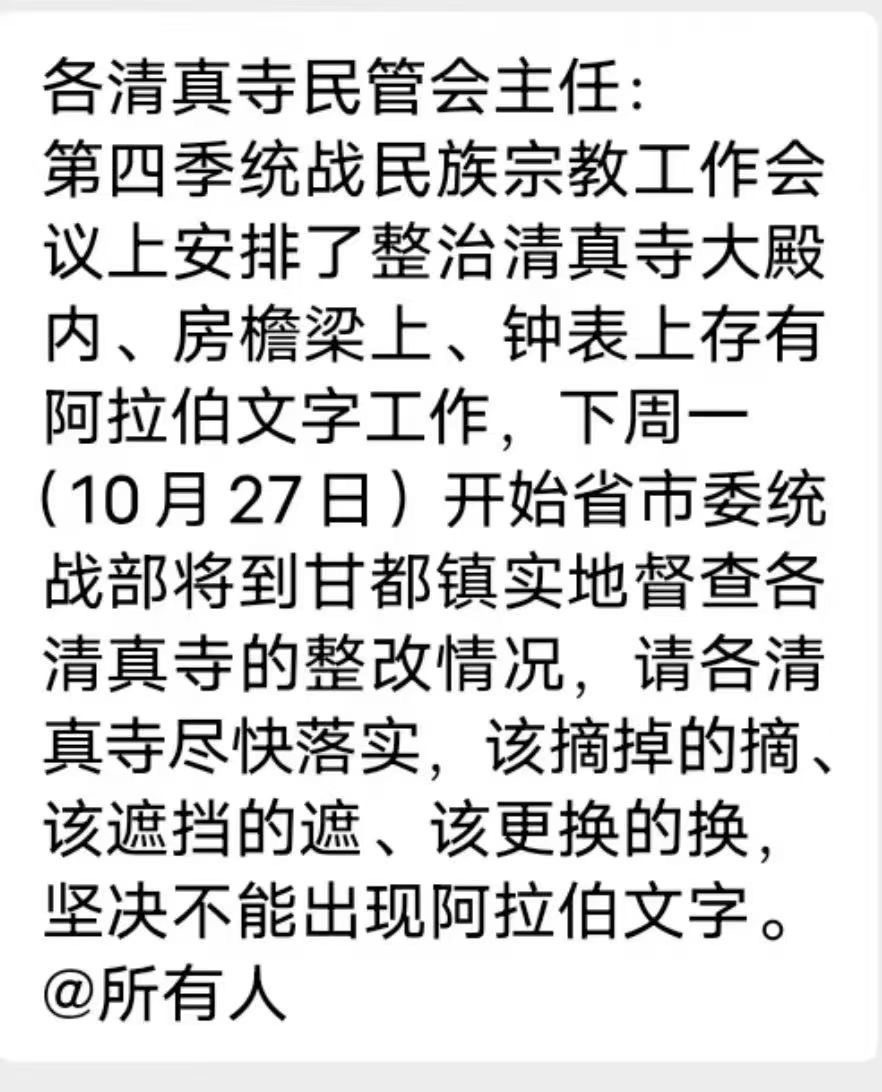
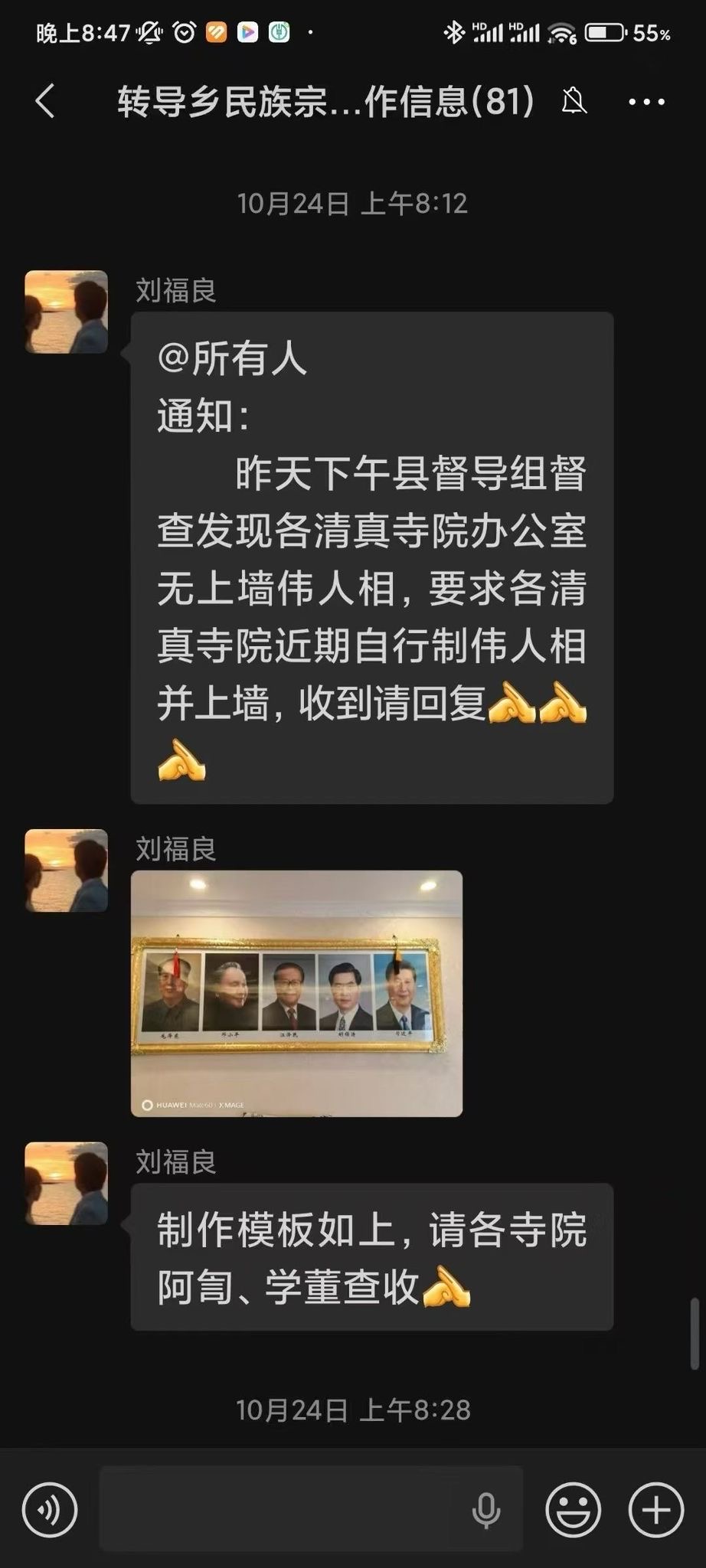
To all Chairmen of the Mosque Management Committees (Majlis):
At the Fourth Quarter United Front Work Department meeting on ethnic and religious affairs, arrangements were made to rectify (tashih) the presence of Arabic script (or Al-Kitabat al-Arabiyyah) inside the main prayer hall (Musalla), on the eaves and beams, and on the clocks of our Mosques (Masajid).
Starting next Monday, October 27th, the United Front Work Departments of the Provincial and Municipal Committees will be conducting on-site supervision in Gandu Town, Qinghai province, China. to check the rectification status of all Mosques.
I urge all Mosques to implement these changes immediately. What needs to be taken down, take it down; what needs to be covered, cover it; and what needs to be replaced, replace it. There must be absolutely no visible Arabic script (Kalam Allah).
@Everyone
Forwarding Information from the Township Ethnic and Religious Affairs... Working Group (81)
8:12 AM, October 24th
Liu Fuliang @Everyone - Notice:
The County Supervision Group inspected yesterday afternoon and found that there were no portraits of the Great Leaders (Zu'ama' al-A'zham) displayed on the walls of the Mosque offices.
All Mosques are now required to print and mount the Leaders' portraits on the walls themselves in the near future. Please reply to confirm receipt.
The Beijing Education Commission has issued a decree to completely remove "Halal" and "Hui" labels from school canteens, and to ban the use of any religious or ethnic elements.
News • napio posted the article • 0 comments • 645 views • 2025-10-29 01:22
• This is not mere "secularization," as some might call it; rather, it is a blatant policy of assimilation (or, in Arabic, tahawwul).
• 1: It prevents minority groups from openly expressing their dietary culture and their way of life (sunnah).
• 2: It is a complete erasure of the term Halal (the Divinely permissible) from the canteens, dining tables, and the entire campus environment.
• 3: It compels our Hui Muslim students to lose their separate space for their religious diet (Tayyib and Halal) by forcing them into a "mixed dining" arrangement.
• Internal Document (or: Confidential).
• The Beijing Municipal Education Commission (BMEC).
• Notice on Carrying out an Inspection, Investigation, and Rectification of School Canteens Involving Ethnic and Religious Matters.
• To the Education Committees of all Districts, Yanshan Education Committee, Social Affairs Bureau of the Economic Development Zone, all Universities and Colleges, all Secondary Vocational Schools, and all Directly-Affiliated Schools:
• Recently, some isolated localities and schools across the country have faced issues regarding the management of on-campus dining for ethnic minority teachers and students who observe Halal dietary practices, leading to some public controversy and media attention.
• Based on the requirements of relevant directives, and in order to ensure sound ethnic and religious work in schools, proactively resolve potential risks related to ethnic and religious issues in the education sector, and prevent the over-generalization (or "abuse") of the Halal concept, we are hereby issuing this notice regarding the inspection and rectification of issues in Halal canteen management:
I. Manifestation of Issues
• First, connecting the Halal diet exclusively to a specific ethnicity and simply labeling canteens as "Hui Canteens."
• Second, failing to consider the actual proportion of students in the school, and instead either exclusively running a Halal canteen or solely providing Halal meals.
• Third, using inappropriate language in canteen publicity materials, bidding announcements, and other procedures, which highlights religious factors like Halal or "Hui ethnicity."
II. Scope of Inspection
• A comprehensive investigation is to be launched across all types and levels of schools throughout the city to ascertain the complete situation, leaving no blind spots.
III. Principles for Rectification of Identified Issues
• First, Respect for Customs. This means respecting the customs and traditions of ethnic minorities and fulfilling the normal meal requirements of ethnic minority teachers and students who observe the Halal diet.
• In schools where Hui (Muslim) and other ethnic minority teachers and students are relatively concentrated, we should not impose a one-size-fits-all approach by providing only Halal meals. Instead, we must diversify the meal options through multiple channels to satisfy the dining needs of all ethnic groups, and promote mixed dining.
• Second, Accurate Definition. We must define and manage Halal food from the perspective of ethnic minority customs, strictly limiting Halal food to only those items containing animal meat or its derivatives.
• This must not be defined by Islamic religious law (Shari'ah). Food items that do not contain meat, animal fats, or dairy ingredients are not allowed to be labeled with the term "Halal."
• Third, Halal dining must not be tied to a specific ethnicity, and canteens should not be simply named "Hui Canteen" or similar.
• Fourth, for any current labeling such as Halal (Hui) Canteen, Hui (Muslim) Meal Counter, Halal (Hui) Cooking Area, or any other signs bearing the terms Halal or Hui, and any Islamic symbols (Shu'ur Islamiya), the school canteens must be thoroughly purged of these religious markers. These can be adjusted to be named Local (Ethnic) Restaurant, Local (Ethnic) Flavor Counter, or similar.
IV. Work Requirements
• First, Pay Attention to Methods. The inspection and rectification work is quite sensitive, so during the process, we must focus on the methods used, adhere to a cautious and stable approach, ensure meticulous planning and comprehensive coordination. We must adopt the principle of 'Do More, Say Less,' and 'Act, Don't Talk,' to prevent public controversy.
• Second, Ensure Harmony and Stability. All districts must strengthen policy guidance for key schools, and all units must genuinely engage in ideological work with teachers, students, and parents. We must use the summer break to actively and prudently advance the rectification to ensure harmony and stability.
• Third, Strict Deadlines. All units are requested to report the inspection results and the corresponding rectification of any issues (see Appendices 1 and 2) to the Commission via email by July 18th.
• The email subject line must specify "** School Canteen Inspection" or "** District Canteen Inspection," to be sent to the email address [email protected]. All district education committees must compile the information by district and then submit it to the Commission.
• Contact Person: Chang Yong (Higher Education) 55530245
• Zou Xiang (Primary and Secondary Schools) 55530249
• Cao Tiange (Information Submission) 1811570681
• Appendix: 1. Inspection Report Form (Primary and Secondary Schools)
1. Inspection Report Form (Higher Education)
• Beijing Municipal Education Commission
• July 15, 2025
view all
• This is not mere "secularization," as some might call it; rather, it is a blatant policy of assimilation (or, in Arabic, tahawwul).
• 1: It prevents minority groups from openly expressing their dietary culture and their way of life (sunnah).
• 2: It is a complete erasure of the term Halal (the Divinely permissible) from the canteens, dining tables, and the entire campus environment.
• 3: It compels our Hui Muslim students to lose their separate space for their religious diet (Tayyib and Halal) by forcing them into a "mixed dining" arrangement.
• Internal Document (or: Confidential).

• The Beijing Municipal Education Commission (BMEC).
• Notice on Carrying out an Inspection, Investigation, and Rectification of School Canteens Involving Ethnic and Religious Matters.
• To the Education Committees of all Districts, Yanshan Education Committee, Social Affairs Bureau of the Economic Development Zone, all Universities and Colleges, all Secondary Vocational Schools, and all Directly-Affiliated Schools:
• Recently, some isolated localities and schools across the country have faced issues regarding the management of on-campus dining for ethnic minority teachers and students who observe Halal dietary practices, leading to some public controversy and media attention.
• Based on the requirements of relevant directives, and in order to ensure sound ethnic and religious work in schools, proactively resolve potential risks related to ethnic and religious issues in the education sector, and prevent the over-generalization (or "abuse") of the Halal concept, we are hereby issuing this notice regarding the inspection and rectification of issues in Halal canteen management:
I. Manifestation of Issues
• First, connecting the Halal diet exclusively to a specific ethnicity and simply labeling canteens as "Hui Canteens."
• Second, failing to consider the actual proportion of students in the school, and instead either exclusively running a Halal canteen or solely providing Halal meals.
• Third, using inappropriate language in canteen publicity materials, bidding announcements, and other procedures, which highlights religious factors like Halal or "Hui ethnicity."

II. Scope of Inspection
• A comprehensive investigation is to be launched across all types and levels of schools throughout the city to ascertain the complete situation, leaving no blind spots.
III. Principles for Rectification of Identified Issues
• First, Respect for Customs. This means respecting the customs and traditions of ethnic minorities and fulfilling the normal meal requirements of ethnic minority teachers and students who observe the Halal diet.
• In schools where Hui (Muslim) and other ethnic minority teachers and students are relatively concentrated, we should not impose a one-size-fits-all approach by providing only Halal meals. Instead, we must diversify the meal options through multiple channels to satisfy the dining needs of all ethnic groups, and promote mixed dining.
• Second, Accurate Definition. We must define and manage Halal food from the perspective of ethnic minority customs, strictly limiting Halal food to only those items containing animal meat or its derivatives.
• This must not be defined by Islamic religious law (Shari'ah). Food items that do not contain meat, animal fats, or dairy ingredients are not allowed to be labeled with the term "Halal."
• Third, Halal dining must not be tied to a specific ethnicity, and canteens should not be simply named "Hui Canteen" or similar.

• Fourth, for any current labeling such as Halal (Hui) Canteen, Hui (Muslim) Meal Counter, Halal (Hui) Cooking Area, or any other signs bearing the terms Halal or Hui, and any Islamic symbols (Shu'ur Islamiya), the school canteens must be thoroughly purged of these religious markers. These can be adjusted to be named Local (Ethnic) Restaurant, Local (Ethnic) Flavor Counter, or similar.
IV. Work Requirements
• First, Pay Attention to Methods. The inspection and rectification work is quite sensitive, so during the process, we must focus on the methods used, adhere to a cautious and stable approach, ensure meticulous planning and comprehensive coordination. We must adopt the principle of 'Do More, Say Less,' and 'Act, Don't Talk,' to prevent public controversy.
• Second, Ensure Harmony and Stability. All districts must strengthen policy guidance for key schools, and all units must genuinely engage in ideological work with teachers, students, and parents. We must use the summer break to actively and prudently advance the rectification to ensure harmony and stability.
• Third, Strict Deadlines. All units are requested to report the inspection results and the corresponding rectification of any issues (see Appendices 1 and 2) to the Commission via email by July 18th.
• The email subject line must specify "** School Canteen Inspection" or "** District Canteen Inspection," to be sent to the email address [email protected]. All district education committees must compile the information by district and then submit it to the Commission.
• Contact Person: Chang Yong (Higher Education) 55530245
• Zou Xiang (Primary and Secondary Schools) 55530249
• Cao Tiange (Information Submission) 1811570681
• Appendix: 1. Inspection Report Form (Primary and Secondary Schools)
1. Inspection Report Form (Higher Education)
• Beijing Municipal Education Commission
• July 15, 2025
In the saline-alkali land (mainland China), the Hui People have already completely lost their religious freedom.
Articles • ahmedla posted the article • 0 comments • 583 views • 2025-10-06 08:27
When a person spends a long time in a place without freedom, like a mental institution or a prison, they lose their independence and develop deficiencies in their ability to survive in society.
This is the sickness of institutionalization.
People who are institutionalized for a long time develop mental health problems and become dependent on the very system that harms them.
They think they are trying to survive, but in reality, they are on a path to extinction.
The reason the Huimin have been able to survive in the saline-alkali land (mainland China) until today is mainly due to a kind of cultural independence, not the sort of localized adaptation that academics often discuss.
In fertile soil, adaptation might be a good thing.
But in the saline-alkali land (mainland China), where the flower of civilization cannot blossom, adaptation will lead to one's own demise.
Therefore, the great scholar Hu Dengzhou established the Jingtang (madrasah) education, rejecting the socialization of the saline-alkali land, setting up his own schools, and using the bestowing of robes and certificates as the standard for recognizing an ahong's qualifications.
And the Huimin mosque communities would only hire ahongs who were certified according to this standard.
Regarding the authority to certify an ahong, it comes from the Prophet Muhammad (peace be upon him) authorizing his disciples to carry on his sacred mission. In the context of the Huimin's Jingtang education, this was ritualized when a senior teacher would wrap a turban and bestow robes on his student to grant him the qualification of an ahong and the authority to begin teaching.
This authority to certify ahongs is both a matter of religious freedom and a right of a minority group.
The United Nations human rights covenants state: "In those States in which ethnic, religious or linguistic minorities exist, persons belonging to such minorities shall not be denied the right, in community with the other members of their group, to enjoy their own culture, to profess and practise their own religion, or to use their own language."
The governments of all signatory countries have a human rights obligation in this regard.
The Huimin should rightfully defend this right of theirs.
For the Huimin to maintain their cultural independence, the most important thing is freedom.
In education, they need the autonomy to run their own schools; for an ahong's qualification, they need certification by a senior teacher according to the master-disciple tradition; and for an ahong's appointment, they need the democratic choice of the mosque community.
—All of these must exclude the interference of secular authority.
If the Huimin could have freedom in these areas, even if they cannot realize the grand vision of spreading Islam in China, they would not perish.
But now, the authorities are systematically squeezing this space for freedom.
The most vivid aspect of this squeezing of freedom is none other than the architectural imprints expressing official ideology that are forcibly added to destroyed mosques.
It tells the Huimin that they have penetrated the most central areas of their community life.
The Huimin see it every day and deeply feel its expression of power.
The Huimin have lost the freedom to express their architectural culture in this land.
And the freedom of publication and freedom of speech have also long been lost.
The state-run Islamic institutes and ahong certificates further strip freedom from Huimin society.
When the Huimin completely lose the freedom of cultural education and ahong certification, that will be the moment their spirit withers and dies, both as an ethnic group and as a religious community.
The Huimin must understand that the official ideology is incompatible with religion.
Leaving aside the few so-called "left-leaning" special periods, let's look at Document 19, which represents the era of reform and opening up; it also states—"In the history of humanity, religion is ultimately bound to disappear; however, it will only disappear naturally after the long-term development of socialism and communism, when all the objective conditions are in place."
"The figures from religious colleges are to create a corps of young religious professionals who politically love the motherland, support the Party's leadership and the socialist system, and also have considerable religious knowledge."
"The only correct and fundamental way to solve the religious problem can only be, under the premise of guaranteeing freedom of religious belief, to gradually eliminate the social and cognitive roots of religion's existence through the gradual development of socialist material and spiritual civilization."
In other words, under normal circumstances, they wait for it to disappear naturally; in special periods, they help accelerate its disappearance.
There is not much to say about this official ideology; this is just the ecosystem of the saline-alkali land (mainland China).
Everything depends on the Huimin themselves.
If they can struggle with all their might to survive, I think no one could refuse to accept the objective fact of their existence; but if they cannot survive, then for others, their disappearance is for the best.
If the Huimin do not wish to disappear, they must avoid creating the conditions for their own disappearance.
But now, we see that on the two most important rights—cultural education and the certification of ahongs—the Huimin are rushing one after another towards institutionalization.
There's a line in The Shawshank Redemption that says: "These walls are funny. First you hate 'em, then you get used to 'em. Enough time passes, you get so you depend on 'em."
As everyone lines up to march towards institutionalization, to avoid extinction, there must be a counter-institutional force.
At this moment, the spirit of the Huimin ancestors from the Cultural Revolution era must be carried on by this counter-institutional force.
They should, in every possible way, preserve the freedom of cultural education and ahong certification, so that in the saline-alkali land (mainland China), they can rely on this bit of independence in their social existence to make a flower bloom that connects the past to the future.
Mosque schools, Arabic language schools, study groups, and da'wah groups, as long as they are de-institutionalized and independent, have taken on an extraordinary significance.
They are the reality within the illusion, the embers of the revival of our Deen after a period of madness.
Allah says: "Allah will bring forth a people He will love and who will love Him, [who are] humble toward the believers, powerful against the disbelievers; they strive in the cause of Allah and do not fear the blame of a critic." (Al-Ma'idah 5:54) view all
When a person spends a long time in a place without freedom, like a mental institution or a prison, they lose their independence and develop deficiencies in their ability to survive in society.
This is the sickness of institutionalization.
People who are institutionalized for a long time develop mental health problems and become dependent on the very system that harms them.
They think they are trying to survive, but in reality, they are on a path to extinction.
The reason the Huimin have been able to survive in the saline-alkali land (mainland China) until today is mainly due to a kind of cultural independence, not the sort of localized adaptation that academics often discuss.
In fertile soil, adaptation might be a good thing.
But in the saline-alkali land (mainland China), where the flower of civilization cannot blossom, adaptation will lead to one's own demise.
Therefore, the great scholar Hu Dengzhou established the Jingtang (madrasah) education, rejecting the socialization of the saline-alkali land, setting up his own schools, and using the bestowing of robes and certificates as the standard for recognizing an ahong's qualifications.
And the Huimin mosque communities would only hire ahongs who were certified according to this standard.
Regarding the authority to certify an ahong, it comes from the Prophet Muhammad (peace be upon him) authorizing his disciples to carry on his sacred mission. In the context of the Huimin's Jingtang education, this was ritualized when a senior teacher would wrap a turban and bestow robes on his student to grant him the qualification of an ahong and the authority to begin teaching.
This authority to certify ahongs is both a matter of religious freedom and a right of a minority group.
The United Nations human rights covenants state: "In those States in which ethnic, religious or linguistic minorities exist, persons belonging to such minorities shall not be denied the right, in community with the other members of their group, to enjoy their own culture, to profess and practise their own religion, or to use their own language."
The governments of all signatory countries have a human rights obligation in this regard.
The Huimin should rightfully defend this right of theirs.
For the Huimin to maintain their cultural independence, the most important thing is freedom.
In education, they need the autonomy to run their own schools; for an ahong's qualification, they need certification by a senior teacher according to the master-disciple tradition; and for an ahong's appointment, they need the democratic choice of the mosque community.
—All of these must exclude the interference of secular authority.
If the Huimin could have freedom in these areas, even if they cannot realize the grand vision of spreading Islam in China, they would not perish.
But now, the authorities are systematically squeezing this space for freedom.
The most vivid aspect of this squeezing of freedom is none other than the architectural imprints expressing official ideology that are forcibly added to destroyed mosques.
It tells the Huimin that they have penetrated the most central areas of their community life.
The Huimin see it every day and deeply feel its expression of power.
The Huimin have lost the freedom to express their architectural culture in this land.
And the freedom of publication and freedom of speech have also long been lost.
The state-run Islamic institutes and ahong certificates further strip freedom from Huimin society.
When the Huimin completely lose the freedom of cultural education and ahong certification, that will be the moment their spirit withers and dies, both as an ethnic group and as a religious community.
The Huimin must understand that the official ideology is incompatible with religion.
Leaving aside the few so-called "left-leaning" special periods, let's look at Document 19, which represents the era of reform and opening up; it also states—"In the history of humanity, religion is ultimately bound to disappear; however, it will only disappear naturally after the long-term development of socialism and communism, when all the objective conditions are in place."
"The figures from religious colleges are to create a corps of young religious professionals who politically love the motherland, support the Party's leadership and the socialist system, and also have considerable religious knowledge."
"The only correct and fundamental way to solve the religious problem can only be, under the premise of guaranteeing freedom of religious belief, to gradually eliminate the social and cognitive roots of religion's existence through the gradual development of socialist material and spiritual civilization."
In other words, under normal circumstances, they wait for it to disappear naturally; in special periods, they help accelerate its disappearance.
There is not much to say about this official ideology; this is just the ecosystem of the saline-alkali land (mainland China).
Everything depends on the Huimin themselves.
If they can struggle with all their might to survive, I think no one could refuse to accept the objective fact of their existence; but if they cannot survive, then for others, their disappearance is for the best.
If the Huimin do not wish to disappear, they must avoid creating the conditions for their own disappearance.
But now, we see that on the two most important rights—cultural education and the certification of ahongs—the Huimin are rushing one after another towards institutionalization.
There's a line in The Shawshank Redemption that says: "These walls are funny. First you hate 'em, then you get used to 'em. Enough time passes, you get so you depend on 'em."
As everyone lines up to march towards institutionalization, to avoid extinction, there must be a counter-institutional force.
At this moment, the spirit of the Huimin ancestors from the Cultural Revolution era must be carried on by this counter-institutional force.
They should, in every possible way, preserve the freedom of cultural education and ahong certification, so that in the saline-alkali land (mainland China), they can rely on this bit of independence in their social existence to make a flower bloom that connects the past to the future.
Mosque schools, Arabic language schools, study groups, and da'wah groups, as long as they are de-institutionalized and independent, have taken on an extraordinary significance.
They are the reality within the illusion, the embers of the revival of our Deen after a period of madness.
Allah says: "Allah will bring forth a people He will love and who will love Him, [who are] humble toward the believers, powerful against the disbelievers; they strive in the cause of Allah and do not fear the blame of a critic." (Al-Ma'idah 5:54)
Ma Zhixiong has been imprisoned once again for printing religious books for the Hui People Muslims in China
Articles • ahmedla posted the article • 0 comments • 581 views • 2025-10-06 08:11
I have heard that Ma Zhixiong has been imprisoned once again for printing religious books for the Huí People.
The charge against him is merely for undertaking the printing of religious books meant for circulation within the Huímín community; his actions were neither intended for profit nor did they harm public order.
However, the Ningxia police and courts have framed a case against him under the name of "illegal publications"—they found the books he printed in the local area and sentenced him to ten months in prison, which is infuriating.
The last time he was imprisoned, under the same charge, he was sentenced to five years (from April 19, 2016, to January 10, 2021). His mother passed away on a public bus while seeking justice for her son.
Looking back at history, the printing of religious literature by the Muslim community has been a vital aspect of its cultural heritage, something that was not interfered with even during the dark times of the Manchu Qing rule.
The Qur'an, books on Islam, and commentaries not only provide guidance for the faith but also construct the collective memory of the community.
Yet, today's Chinese government uses administrative measures to suppress and prohibit this kind of printing activity, treating a cultural act as "illegal," which has gone beyond the proper scope of the law.
The case of Ma Zhixiong reflects a worrying trend in national governance: using administrative controls and judicial intervention to suppress religious and cultural expression, attempting to erase the foundations of diverse cultures with a monolithic mindset, and making the fifty-six vibrant and colorful ethnic groups into uniform, bright red pomegranate seeds.
What is particularly infuriating about this case is how it demonstrates a naked challenge of rule by man against the rule of law.
The Chinese constitution explicitly guarantees citizens' freedom of speech, publication, and belief (Articles 35 and 36), and further stipulates that all ethnic groups have the right to use and develop their own spoken and written languages (Article 4).
In practice, however, these fundamental rights and principles of the rule of law, granted by the constitution, are often rendered meaningless by the arbitrary interpretations of the CCP's administrative bodies.
The printing Ma Zhixiong was involved in neither violated the spirit of the constitution, nor is there any evidence to show that his publications caused any substantial harm to society. The CCP government's actions of convicting and confiscating based on prejudice have neither justification nor legitimacy, and only reveal an abuse of power.
What is even more thought-provoking is how the "Sweep Away Pornography and Illegal Publications" campaign has been quietly extended into the realm of religion and culture.
How did a campaign that was supposed to target pornographic and illegal publications evolve into a tool for suppressing ethnic culture and eroding religious diversity?
The answer perhaps lies in an obsession with control—labeling any expression that does not conform to the official ideology of the Chinese Communist Party as "illegal" or "harmful" for the convenience of governance.
However, this logic of governance is akin to drinking poison to quench a thirst.
Culture and faith are the very foundation of a society's stability; suppressing their diversity will only lead to long-term division and conflict.
Ma Zhixiong's case is not an isolated incident, but an epitome of the oppression that the entire Muslim community has endured in recent years.
The arrest of Imam Ma Yuwei in Yuxi, Yunnan, still echoes in our minds.
Over these years, the religious and cultural activities of the Muslim communities living in mainland China have been repeatedly attacked.
The shutting down of religious printing houses and the confiscation of religious books all indicate that a systematic campaign to purge the cultural heritage of minority ethnic groups is underway.
If this trend is not stopped in time, it will ultimately lead to a repeat of the tragic history of the Cultural Revolution for the Huímín of today.
In recent years, international accusations of "cultural genocide" against China's Muslim communities have been constant, and this case undoubtedly shines a harsh light on the matter.
The ordeal of Ma Zhixiong makes one feel deeply the utter absence of the rule of law in a modern state. When power overrides the law, when individual freedom and the right to ethnic self-governance are stripped away by administrative orders, the so-called "rule of law" becomes nothing but empty talk, forcing us to live once again in the evils of the old society under the guise of its glossy, modern terminology.
Written after the second imprisonment of Ma Zhixiong. view all
I have heard that Ma Zhixiong has been imprisoned once again for printing religious books for the Huí People.
The charge against him is merely for undertaking the printing of religious books meant for circulation within the Huímín community; his actions were neither intended for profit nor did they harm public order.
However, the Ningxia police and courts have framed a case against him under the name of "illegal publications"—they found the books he printed in the local area and sentenced him to ten months in prison, which is infuriating.
The last time he was imprisoned, under the same charge, he was sentenced to five years (from April 19, 2016, to January 10, 2021). His mother passed away on a public bus while seeking justice for her son.
Looking back at history, the printing of religious literature by the Muslim community has been a vital aspect of its cultural heritage, something that was not interfered with even during the dark times of the Manchu Qing rule.
The Qur'an, books on Islam, and commentaries not only provide guidance for the faith but also construct the collective memory of the community.
Yet, today's Chinese government uses administrative measures to suppress and prohibit this kind of printing activity, treating a cultural act as "illegal," which has gone beyond the proper scope of the law.
The case of Ma Zhixiong reflects a worrying trend in national governance: using administrative controls and judicial intervention to suppress religious and cultural expression, attempting to erase the foundations of diverse cultures with a monolithic mindset, and making the fifty-six vibrant and colorful ethnic groups into uniform, bright red pomegranate seeds.
What is particularly infuriating about this case is how it demonstrates a naked challenge of rule by man against the rule of law.
The Chinese constitution explicitly guarantees citizens' freedom of speech, publication, and belief (Articles 35 and 36), and further stipulates that all ethnic groups have the right to use and develop their own spoken and written languages (Article 4).
In practice, however, these fundamental rights and principles of the rule of law, granted by the constitution, are often rendered meaningless by the arbitrary interpretations of the CCP's administrative bodies.
The printing Ma Zhixiong was involved in neither violated the spirit of the constitution, nor is there any evidence to show that his publications caused any substantial harm to society. The CCP government's actions of convicting and confiscating based on prejudice have neither justification nor legitimacy, and only reveal an abuse of power.
What is even more thought-provoking is how the "Sweep Away Pornography and Illegal Publications" campaign has been quietly extended into the realm of religion and culture.
How did a campaign that was supposed to target pornographic and illegal publications evolve into a tool for suppressing ethnic culture and eroding religious diversity?
The answer perhaps lies in an obsession with control—labeling any expression that does not conform to the official ideology of the Chinese Communist Party as "illegal" or "harmful" for the convenience of governance.
However, this logic of governance is akin to drinking poison to quench a thirst.
Culture and faith are the very foundation of a society's stability; suppressing their diversity will only lead to long-term division and conflict.
Ma Zhixiong's case is not an isolated incident, but an epitome of the oppression that the entire Muslim community has endured in recent years.
The arrest of Imam Ma Yuwei in Yuxi, Yunnan, still echoes in our minds.
Over these years, the religious and cultural activities of the Muslim communities living in mainland China have been repeatedly attacked.
The shutting down of religious printing houses and the confiscation of religious books all indicate that a systematic campaign to purge the cultural heritage of minority ethnic groups is underway.
If this trend is not stopped in time, it will ultimately lead to a repeat of the tragic history of the Cultural Revolution for the Huímín of today.
In recent years, international accusations of "cultural genocide" against China's Muslim communities have been constant, and this case undoubtedly shines a harsh light on the matter.
The ordeal of Ma Zhixiong makes one feel deeply the utter absence of the rule of law in a modern state. When power overrides the law, when individual freedom and the right to ethnic self-governance are stripped away by administrative orders, the so-called "rule of law" becomes nothing but empty talk, forcing us to live once again in the evils of the old society under the guise of its glossy, modern terminology.
Written after the second imprisonment of Ma Zhixiong.
removals of Arabic signage followed province-by-province implementation and were unevenly enforced.
Human Rights • napio posted the article • 0 comments • 1205 views • 2025-03-02 06:09
Bans on the use of Arabic script in public places reflect the principles contained in Document 10 that Arabic should not be considered an ethnic minority language, and that the use of Arabic is itself a sign of the recent ‘Saudization’ and ‘Arabization’. By extension, the party-state offers no formal legal protection for Arabic language education for Muslim minorities (see 5.3 Removal of Arabic Provision and 5.4 Control of Publishing), nor for the usage of Arabic calligraphic inscriptions as a distinctive marker of Hui culture.
As with other measures, removals of Arabic signage followed province-by-province implementation and were unevenly enforced. ‘Halal’ signs in Arabic were removed from shops and restaurants in Ningxia beginning in March 2018, in the wake of similar measures applied to businesses in Xinjiang. Such removals often took place overnight, with previous decor clumsily painted over. Arabic halal signs were replaced with a simple government-issued logo (see 4.3 Pan-Halalification). Following this initial implementation in Ningxia, mandates to remove Arabic signage were slowly enacted across the rest of China, with the majority coming into effect across 2019-2020.
The severity of the bans on Arabic language has varied. In some places, removals have extended to blacking out Arabic script on vases inside mosques. Elsewhere, Arabic calligraphy displayed in the interior of mosques in other locations has remained untouched. In some regions, the directives against halal signage and Arabic script have broadened to encompass businesses with Islamic-sounding Chinese names, forcing them to rebrand.
Almost 1000 signs in Linxia, Gansu, were replaced in 2018, in addition to further bans on halal labeling. In 2020, residents in Hebei and Shandong were required to cover the du’a plaques that decorate gateways to private homes. In 2018 in Pingliang, Gansu, famous for its Muslim-Chinese calligraphers and where hanging du’a is a prized local tradition, party-state officials reportedly threatened locals, stating that their doors and gates would be “broken” if they did not cover them.
Such variation in the standards for when Arabic script should be considered acceptable is further complicated by pressure from Islamophobic activists who circulate guides online detailing how to employ government tiplines to spur further crackdowns from local government. One such guide published on the question-and-answer website Zhuanlan Zhihu (roughly similar to Quora), details how in 2018, an activist used a hotline to the mayor of Ordos, Inner Mongolia, to report a signboard outside the Dongsheng Mosque in that city for containing content that “greatly overstepped the confines of religious activities” (for further details of this case, see 6.0 Surveillance and Monitoring). The signboard outside the mosque was removed as a result, and the activist’s report led to a further investigation that forced the removal of Arabic calligraphic decorations and Islamic symbols inside the mosque premises. Intervention by activists effectively ensured the local authorities had to take action that exceeded the original targets of the Sinicization campaign. Similarly, in May 2023, Islamophobic netizens reported a restaurant in Beijing for hanging a Chinese-language plaque reading “the Lord grant peace” (主赐平安). Although the sign was in Chinese, the ensuing investigation nevertheless ordered the restaurant to take their plaque down.
4.3 Pan-Halalification
Official discourse from the party-state has decried the use of halal labeling as a brand, arguing that the designation of a diverse range of products as halal in search of profit carries negative consequences for China’s economy as well as its national security. In 2016, the Party Secretary of Ningxia, Li Jianhua, denounced the overuse of halal labeling as a distortion of the market and as a danger to national security: “As expanded use of halal labeling, with products such as halal water, halal paper, halal toothpaste, and halal makeup, from the perspective of national security, we must increase our vigilance. We must recognize the slightest signs, prevent the smallest mistakes, and establish dialectical thinking, whilst also fully respecting ethnic minority customs and habits. We must work to prevent the generalization of halal labeling, seek advantage and evade harm, and provide scientific leadership.” Halal labeling has been a particular lightning rod for online Islamophobic activists, who view any use of halal labeling as a sign of spreading Islamism and de-Sinicization.
Restrictions on halal labeling began to be enforced from mid-2016, with systematic bans and regulation in place from 2018 onwards. Store owners stocking items labeled as halal outside the party-state’s narrow definition of the term have been forced to return stock to sellers or had their items confiscated and, in some instances, destroyed. In March 2017, Ningxia announced steps to remove ‘wrongly labeled’ halal products (i.e., goods labeled ‘halal’ that did not contain meat products) from markets. In early 2018, Ningxia issued new regulations on halal signage, including a standardized halal sign for businesses to display. In addition to banning the usage of any halal signage beyond the official approved provincial design, the regulations also stipulated that names, signs, and trademarks for businesses could not contain the term ‘qingzhen’ (halal) or any other words with Islamic connotations. According to the regulations, violators of halal labeling rules will receive a warning first, and will then be fined if they do not change their labels. Businesses have been threatened with removal of their business licenses or closure orders for non-compliance.
State agencies (i.e., the Food and Drug Administration, often in cooperation with local security forces or Religious and Ethnic Affairs), police businesses through frequent and far-ranging inspections to identify signs with unauthorized halal branding and stocks of products with inappropriate halal labeling. Companies found to violate these restrictions have been forced to remove halal labeling from their packaging. Indicative of the scale of such oversight, Huiji district in Zhengzhou, Henan, reported that they had conducted 25 inspections of halal produce and shopkeepers within a six-month period, and distributed over 3000 pamphlets and awareness-raising items to grassroots-level cadres and large merchants.
Inspections are sweeping in scope and can intrude significantly into business operations and space. For instance, in a neighborhood inspection conducted in 2021 in Lanzhou by the Gaolan Street Office, local businesses were reminded that halal signage must be used only on products “within the scope of halal food,” and signage at the entrances to halal restaurants must be restricted to the Chinese characters ‘qingzhen’ (清真). Display of halal signage in pinyin, English, Arabic, or Uyghur is forbidden, as is the use of Islamic symbols such as the crescent moon or a dome. Businesses were further instructed to close any prayer spaces for employees. Such measures produce substantial consequences for Muslim consumers. A lack of proper signage and branding further complicates the practice of procuring halal meat — a process already riven with ambiguities due to the lack of a nationwide standard process of certification and the proliferation of impostor halal vendors.
view all
4.2 Arabic Script
Bans on the use of Arabic script in public places reflect the principles contained in Document 10 that Arabic should not be considered an ethnic minority language, and that the use of Arabic is itself a sign of the recent ‘Saudization’ and ‘Arabization’. By extension, the party-state offers no formal legal protection for Arabic language education for Muslim minorities (see 5.3 Removal of Arabic Provision and 5.4 Control of Publishing), nor for the usage of Arabic calligraphic inscriptions as a distinctive marker of Hui culture.
As with other measures, removals of Arabic signage followed province-by-province implementation and were unevenly enforced. ‘Halal’ signs in Arabic were removed from shops and restaurants in Ningxia beginning in March 2018, in the wake of similar measures applied to businesses in Xinjiang. Such removals often took place overnight, with previous decor clumsily painted over. Arabic halal signs were replaced with a simple government-issued logo (see 4.3 Pan-Halalification). Following this initial implementation in Ningxia, mandates to remove Arabic signage were slowly enacted across the rest of China, with the majority coming into effect across 2019-2020.
The severity of the bans on Arabic language has varied. In some places, removals have extended to blacking out Arabic script on vases inside mosques. Elsewhere, Arabic calligraphy displayed in the interior of mosques in other locations has remained untouched. In some regions, the directives against halal signage and Arabic script have broadened to encompass businesses with Islamic-sounding Chinese names, forcing them to rebrand.
Almost 1000 signs in Linxia, Gansu, were replaced in 2018, in addition to further bans on halal labeling. In 2020, residents in Hebei and Shandong were required to cover the du’a plaques that decorate gateways to private homes. In 2018 in Pingliang, Gansu, famous for its Muslim-Chinese calligraphers and where hanging du’a is a prized local tradition, party-state officials reportedly threatened locals, stating that their doors and gates would be “broken” if they did not cover them.
Such variation in the standards for when Arabic script should be considered acceptable is further complicated by pressure from Islamophobic activists who circulate guides online detailing how to employ government tiplines to spur further crackdowns from local government. One such guide published on the question-and-answer website Zhuanlan Zhihu (roughly similar to Quora), details how in 2018, an activist used a hotline to the mayor of Ordos, Inner Mongolia, to report a signboard outside the Dongsheng Mosque in that city for containing content that “greatly overstepped the confines of religious activities” (for further details of this case, see 6.0 Surveillance and Monitoring). The signboard outside the mosque was removed as a result, and the activist’s report led to a further investigation that forced the removal of Arabic calligraphic decorations and Islamic symbols inside the mosque premises. Intervention by activists effectively ensured the local authorities had to take action that exceeded the original targets of the Sinicization campaign. Similarly, in May 2023, Islamophobic netizens reported a restaurant in Beijing for hanging a Chinese-language plaque reading “the Lord grant peace” (主赐平安). Although the sign was in Chinese, the ensuing investigation nevertheless ordered the restaurant to take their plaque down.
4.3 Pan-Halalification
Official discourse from the party-state has decried the use of halal labeling as a brand, arguing that the designation of a diverse range of products as halal in search of profit carries negative consequences for China’s economy as well as its national security. In 2016, the Party Secretary of Ningxia, Li Jianhua, denounced the overuse of halal labeling as a distortion of the market and as a danger to national security: “As expanded use of halal labeling, with products such as halal water, halal paper, halal toothpaste, and halal makeup, from the perspective of national security, we must increase our vigilance. We must recognize the slightest signs, prevent the smallest mistakes, and establish dialectical thinking, whilst also fully respecting ethnic minority customs and habits. We must work to prevent the generalization of halal labeling, seek advantage and evade harm, and provide scientific leadership.” Halal labeling has been a particular lightning rod for online Islamophobic activists, who view any use of halal labeling as a sign of spreading Islamism and de-Sinicization.
Restrictions on halal labeling began to be enforced from mid-2016, with systematic bans and regulation in place from 2018 onwards. Store owners stocking items labeled as halal outside the party-state’s narrow definition of the term have been forced to return stock to sellers or had their items confiscated and, in some instances, destroyed. In March 2017, Ningxia announced steps to remove ‘wrongly labeled’ halal products (i.e., goods labeled ‘halal’ that did not contain meat products) from markets. In early 2018, Ningxia issued new regulations on halal signage, including a standardized halal sign for businesses to display. In addition to banning the usage of any halal signage beyond the official approved provincial design, the regulations also stipulated that names, signs, and trademarks for businesses could not contain the term ‘qingzhen’ (halal) or any other words with Islamic connotations. According to the regulations, violators of halal labeling rules will receive a warning first, and will then be fined if they do not change their labels. Businesses have been threatened with removal of their business licenses or closure orders for non-compliance.
State agencies (i.e., the Food and Drug Administration, often in cooperation with local security forces or Religious and Ethnic Affairs), police businesses through frequent and far-ranging inspections to identify signs with unauthorized halal branding and stocks of products with inappropriate halal labeling. Companies found to violate these restrictions have been forced to remove halal labeling from their packaging. Indicative of the scale of such oversight, Huiji district in Zhengzhou, Henan, reported that they had conducted 25 inspections of halal produce and shopkeepers within a six-month period, and distributed over 3000 pamphlets and awareness-raising items to grassroots-level cadres and large merchants.
Inspections are sweeping in scope and can intrude significantly into business operations and space. For instance, in a neighborhood inspection conducted in 2021 in Lanzhou by the Gaolan Street Office, local businesses were reminded that halal signage must be used only on products “within the scope of halal food,” and signage at the entrances to halal restaurants must be restricted to the Chinese characters ‘qingzhen’ (清真). Display of halal signage in pinyin, English, Arabic, or Uyghur is forbidden, as is the use of Islamic symbols such as the crescent moon or a dome. Businesses were further instructed to close any prayer spaces for employees. Such measures produce substantial consequences for Muslim consumers. A lack of proper signage and branding further complicates the practice of procuring halal meat — a process already riven with ambiguities due to the lack of a nationwide standard process of certification and the proliferation of impostor halal vendors.
In short, Document 10’s mandates envision a homogeneous, culturally Sinicized community of faith, tightly supervised by the party-state.
Human Rights • napio posted the article • 0 comments • 1178 views • 2025-03-02 06:09
Proposal sixteen declares that religion must not obstruct the functions of secular society or the interests of the state.66 Included under this broad umbrella, the document lists education, marriage, family planning, judicial process, and other unspecified functions of the state. The document follows by establishing a strict separation of religion and the state, particularly in education, specifying that Islamic spaces are not permitted to serve as educational institutions for underaged students. The section also recommends a more thorough adherence to the principles of Xi Jinping Thought and Socialism with Chinese Characteristics in the educational curriculum as a preventative measure.67
Following on, proposal seventeen offers protections against another perceived form of foreign influence identified by the “Three Transformations” discourse: pan-halalification. The document justifies placing limitations on halal labeling to prevent the “overgeneralization” of the concept. It proclaims that such measures are necessary to protect the “legitimate rights and interests” of minority communities. Only matters pertaining to the use of food—specifically animal products—may be subject to halal designations.68 The document continues to justify such interventions in the name of keeping public order, adding that markets should not be interfered with “in the name of halal.”69 Moreover, the document rejects the use of expanded halal branding for the purpose of increasing foreign trade or exports.70
The document’s extensive outlining of the dangers of “foreign” influence and the need to guard against the “Three Transformations” reflects a greater fear of “de-Sinicization.” Fears that the erasure of “traditional” Chinese culture might be brought on by the adoption of “foreign”—specifically Arab—cultural and ideological systems became a prominent theme among China’s academic policymaking establishment prior to the beginning of the campaign.71 In prohibiting any measures that might carve out special status for Islam, the Arabic language, or halal certification, the document stresses the need for Islamic practice to conform to a perceived “Chinese” (and implicitly, Han) cultural core of nationhood. The emphasis on vigilance against the infiltration of domestic Islamic communities from outside also recalls Maoist-era tropes of Muslims being vulnerable to manipulation by those who would harm China.72
The fifth large section of the document concerns recommendations for managing service to migrant Muslims, with special emphasis placed on educating migrants to “respect local customs, religious traditions, and historical patterns.” In proposal eighteen, the document suggests that local Islamic associations ought to work in tandem with local governments to monitor and control migrants’ religious activities. The justification for such oversight is to stem the dissemination of sectarian ideologies and stop “the spread of negative remarks.”73 Local Islamic associations are tasked with preventing outsiders from preaching at mosques. While proposals nineteen and twenty are missing from the leaked document, the header’s focus on the proper management of migration suggests that they, too, likely deal with the subject.
These measures reflect the party-state’s preoccupation with migration more generally. Since coming to power in 2013, Xi Jinping has prioritized extensive oversight and management of migration. Crackdowns on resource and service distribution to migrants in the Xi era have reinforced the household registration (hukou) system’s status as an internal bordering regime.74 The party-state’s justifications for these types of interventions that place limitations on movement and service provision frequently invoke the principle of “stability maintenance”—an increasingly critical component of the CCP’s legitimating narratives.75 Notions that rural migrants possess lower levels of “quality” (素质) illustrate another tie between levels of economic development and the sense of threat from extremism in party-state narratives. Here, the party-state construes migrant mobility as vulnerable or susceptible to malign foreign influence. Implicit in these judgments is a linkage between rurality, lower levels of development, and exposure to “incorrect” or “extreme” versions of Islam that might subvert party-state authority.
In the final segments, the document lays out roles for the China Islamic Association (CIA) and its local branches in Sinicization processes. The document declares in proposal twenty-one that “the China Islamic Association is a bridge for the party and the government to unite and communicate with religious figures and the majority of the faithful.”76 As such, the document recommends increased ideological training to strengthen the CIA and provides direction for its regulatory and oversight work. In this bridge-building capacity, the document suggests that the CIA should be empowered to dictate proper matters of training clergy, setting standards for religious and scriptural interpretation, and resolving ethnic or religious conflicts.
Expanding on the roles and responsibilities to be undertaken by the CIA, the document’s pronouncements in proposal twenty-two empower the association to organize and oversee the operation of schools for training clergy in scriptural interpretation, subject to approval by the religious work department. The document highlights the need to limit the capacity of these institutions, stating the CIA must “strictly control the scale and scope of enrollments.”77 Proposal twenty-three builds on these suggestions by listing specific criteria for student acceptance and certification. As a means of standardizing and formalizing “mosque education,” the document recommends entry thresholds as well as standardized curricula and assessments. These measures would formalize what has been traditionally localized and overseen by imams directly.78 Additionally, the proposal stipulates that graduates, once scriptural education is complete, must undertake studies on the PRC’s ethnic and religious law as well as Chinese culture.
The final set of suggestions concerns the proper management of communication about Islam and Islamic identity—particularly in online spaces. Proposal twenty-four charges the CIA as well as religious work departments with control of online discourse about religious matters, including enacting strict crackdowns against those who set up “illegal” religious communities online or use online spaces for proselytization. Proposal twenty-five argues that the party-state’s religious work organs must promote positive messaging to “enhance the people’s understanding of Islam and religious believers in China.”79
In its conclusion, the document drives home that the management of Islam is of critical interest to both national and local governments. Governments and party committees in “key areas” are implored to consider the management of Islamic communities as a matter of the highest priority. Officials are reminded to be “firm Marxist atheists,” and ethnic minority cadres are implored to “lead the way in maintaining a lifestyle in keeping with modern civilization.” In a closing exhortation, cadres are implored to uphold the principles of the mass line and to strive to unite people of all ethnic backgrounds. Borrowing a favorite phrase from Xi himself, the document closes by reminding cadres that these acts should be done in the name of working towards “the realization of the China Dream of the great rejuvenation of the Chinese nation.”80
2.2 Summary: Implications of Document No. 10
The directives in Document 10 operationalize previous remarks made by Xi in the aftermath of attacks in 2014. The specific directives to establish party-state control over the aesthetics of Islamic spaces have been the single most visible aspect of the Sinicization campaign as it has been carried out beyond Xinjiang. However, in articulating a need for party-state interventions in matters of scriptural interpretation, Islamic education, halal branding, the flow of Muslim migrants, online communication, and myriad other matters, the document provides directives for the full range of policies that have become associated with the campaign. In very broad terms, the document provides a set of benchmarks for local governments and local Islamic Associations to work toward in their implementation of the campaign. While the prescriptions in some cases provide only broad sketches, they also illustrate the party-state’s priorities in managing Islam.
Of similar importance is the document’s clear and specific designation of the China Islamic Association as a bridge entity between the party-state apparatus and local communities. The enlistment of the CIA and local branches in the efforts to enforce standards of correctness in all matters ranging from architectural aesthetics, curricular content in schools, certification and branding of foodstuffs, and spiritual and ideological communication illustrates both the organization’s centrality to the success of the project and its close relationship with the party-state itself.
Expanding the party-state’s role in registering mosques, policing the content of sermons, monitoring the flow of migrants, administering religious schools, and other matters places almost all religious activity in Islamic communities under centralized control. While consolidating measures may affect little change in places with an established CIA presence, for those communities that traditionally operated outside of CIA supervision, these measures make dramatic changes in the structure of religious authority, the conduct of religious ritual, the communication of religious doctrine, and the training of clergy.
In short, Document 10’s mandates envision a homogeneous, culturally Sinicized community of faith, tightly supervised by the party-state.
view all
To curb this threat and reinforce Chinese cultural, linguistic, and aesthetic supremacy, the document makes several proposals. It advises that any newly constructed Islamic spaces must “highlight Chinese style” in their architecture. Additionally, the document stipulates that further cultural protections must be given to “traditional” Chinese-style mosques.64 Further measures establish prohibitions on the recognition of Arabic as a minority language and affording Arabic special status in education. It warns that Arabic schools must not be allowed to offer religious lessons or to be used for religious activities.65
Proposal sixteen declares that religion must not obstruct the functions of secular society or the interests of the state.66 Included under this broad umbrella, the document lists education, marriage, family planning, judicial process, and other unspecified functions of the state. The document follows by establishing a strict separation of religion and the state, particularly in education, specifying that Islamic spaces are not permitted to serve as educational institutions for underaged students. The section also recommends a more thorough adherence to the principles of Xi Jinping Thought and Socialism with Chinese Characteristics in the educational curriculum as a preventative measure.67
Following on, proposal seventeen offers protections against another perceived form of foreign influence identified by the “Three Transformations” discourse: pan-halalification. The document justifies placing limitations on halal labeling to prevent the “overgeneralization” of the concept. It proclaims that such measures are necessary to protect the “legitimate rights and interests” of minority communities. Only matters pertaining to the use of food—specifically animal products—may be subject to halal designations.68 The document continues to justify such interventions in the name of keeping public order, adding that markets should not be interfered with “in the name of halal.”69 Moreover, the document rejects the use of expanded halal branding for the purpose of increasing foreign trade or exports.70
The document’s extensive outlining of the dangers of “foreign” influence and the need to guard against the “Three Transformations” reflects a greater fear of “de-Sinicization.” Fears that the erasure of “traditional” Chinese culture might be brought on by the adoption of “foreign”—specifically Arab—cultural and ideological systems became a prominent theme among China’s academic policymaking establishment prior to the beginning of the campaign.71 In prohibiting any measures that might carve out special status for Islam, the Arabic language, or halal certification, the document stresses the need for Islamic practice to conform to a perceived “Chinese” (and implicitly, Han) cultural core of nationhood. The emphasis on vigilance against the infiltration of domestic Islamic communities from outside also recalls Maoist-era tropes of Muslims being vulnerable to manipulation by those who would harm China.72
The fifth large section of the document concerns recommendations for managing service to migrant Muslims, with special emphasis placed on educating migrants to “respect local customs, religious traditions, and historical patterns.” In proposal eighteen, the document suggests that local Islamic associations ought to work in tandem with local governments to monitor and control migrants’ religious activities. The justification for such oversight is to stem the dissemination of sectarian ideologies and stop “the spread of negative remarks.”73 Local Islamic associations are tasked with preventing outsiders from preaching at mosques. While proposals nineteen and twenty are missing from the leaked document, the header’s focus on the proper management of migration suggests that they, too, likely deal with the subject.
These measures reflect the party-state’s preoccupation with migration more generally. Since coming to power in 2013, Xi Jinping has prioritized extensive oversight and management of migration. Crackdowns on resource and service distribution to migrants in the Xi era have reinforced the household registration (hukou) system’s status as an internal bordering regime.74 The party-state’s justifications for these types of interventions that place limitations on movement and service provision frequently invoke the principle of “stability maintenance”—an increasingly critical component of the CCP’s legitimating narratives.75 Notions that rural migrants possess lower levels of “quality” (素质) illustrate another tie between levels of economic development and the sense of threat from extremism in party-state narratives. Here, the party-state construes migrant mobility as vulnerable or susceptible to malign foreign influence. Implicit in these judgments is a linkage between rurality, lower levels of development, and exposure to “incorrect” or “extreme” versions of Islam that might subvert party-state authority.
In the final segments, the document lays out roles for the China Islamic Association (CIA) and its local branches in Sinicization processes. The document declares in proposal twenty-one that “the China Islamic Association is a bridge for the party and the government to unite and communicate with religious figures and the majority of the faithful.”76 As such, the document recommends increased ideological training to strengthen the CIA and provides direction for its regulatory and oversight work. In this bridge-building capacity, the document suggests that the CIA should be empowered to dictate proper matters of training clergy, setting standards for religious and scriptural interpretation, and resolving ethnic or religious conflicts.
Expanding on the roles and responsibilities to be undertaken by the CIA, the document’s pronouncements in proposal twenty-two empower the association to organize and oversee the operation of schools for training clergy in scriptural interpretation, subject to approval by the religious work department. The document highlights the need to limit the capacity of these institutions, stating the CIA must “strictly control the scale and scope of enrollments.”77 Proposal twenty-three builds on these suggestions by listing specific criteria for student acceptance and certification. As a means of standardizing and formalizing “mosque education,” the document recommends entry thresholds as well as standardized curricula and assessments. These measures would formalize what has been traditionally localized and overseen by imams directly.78 Additionally, the proposal stipulates that graduates, once scriptural education is complete, must undertake studies on the PRC’s ethnic and religious law as well as Chinese culture.
The final set of suggestions concerns the proper management of communication about Islam and Islamic identity—particularly in online spaces. Proposal twenty-four charges the CIA as well as religious work departments with control of online discourse about religious matters, including enacting strict crackdowns against those who set up “illegal” religious communities online or use online spaces for proselytization. Proposal twenty-five argues that the party-state’s religious work organs must promote positive messaging to “enhance the people’s understanding of Islam and religious believers in China.”79
In its conclusion, the document drives home that the management of Islam is of critical interest to both national and local governments. Governments and party committees in “key areas” are implored to consider the management of Islamic communities as a matter of the highest priority. Officials are reminded to be “firm Marxist atheists,” and ethnic minority cadres are implored to “lead the way in maintaining a lifestyle in keeping with modern civilization.” In a closing exhortation, cadres are implored to uphold the principles of the mass line and to strive to unite people of all ethnic backgrounds. Borrowing a favorite phrase from Xi himself, the document closes by reminding cadres that these acts should be done in the name of working towards “the realization of the China Dream of the great rejuvenation of the Chinese nation.”80
2.2 Summary: Implications of Document No. 10
The directives in Document 10 operationalize previous remarks made by Xi in the aftermath of attacks in 2014. The specific directives to establish party-state control over the aesthetics of Islamic spaces have been the single most visible aspect of the Sinicization campaign as it has been carried out beyond Xinjiang. However, in articulating a need for party-state interventions in matters of scriptural interpretation, Islamic education, halal branding, the flow of Muslim migrants, online communication, and myriad other matters, the document provides directives for the full range of policies that have become associated with the campaign. In very broad terms, the document provides a set of benchmarks for local governments and local Islamic Associations to work toward in their implementation of the campaign. While the prescriptions in some cases provide only broad sketches, they also illustrate the party-state’s priorities in managing Islam.
Of similar importance is the document’s clear and specific designation of the China Islamic Association as a bridge entity between the party-state apparatus and local communities. The enlistment of the CIA and local branches in the efforts to enforce standards of correctness in all matters ranging from architectural aesthetics, curricular content in schools, certification and branding of foodstuffs, and spiritual and ideological communication illustrates both the organization’s centrality to the success of the project and its close relationship with the party-state itself.
Expanding the party-state’s role in registering mosques, policing the content of sermons, monitoring the flow of migrants, administering religious schools, and other matters places almost all religious activity in Islamic communities under centralized control. While consolidating measures may affect little change in places with an established CIA presence, for those communities that traditionally operated outside of CIA supervision, these measures make dramatic changes in the structure of religious authority, the conduct of religious ritual, the communication of religious doctrine, and the training of clergy.
In short, Document 10’s mandates envision a homogeneous, culturally Sinicized community of faith, tightly supervised by the party-state.
China local authorities deployed a range of tactics to defuse muslim community opposition.
Human Rights • napio posted the article • 0 comments • 1316 views • 2025-03-02 06:00
Due to the sheer numbers of mosques identified as in need of renovation, a number of building companies have advertised themselves as capable of undertaking mosque renovation projects on the basis of previous redesign projects, using architectural renderings of remodeled mosques to illustrate their work. In an ironic parallel with the official rhetoric that celebrates mosque Sinicization as a return to ‘traditional’ mosque architecture in China, many of the companies undertaking this work specialize in heritage projects. The growth in companies advertising for such tenders indicates the profitability of the projects. One company advertising their availability for renovation work priced their services at 349 RMB/square meter.
As the campaign to forcibly renovate mosques progressed, local authorities deployed a range of tactics to defuse community opposition. These practices often include pre-circulation of designs to proposed renovations to mosque committees as part of ‘consultation’ processes. The logic of Sinicization, and PRC policy-making in general, means that such renovations should appear to be supported by the community. Renovation work is often further overseen and inspected by local Islamic Association cadres, deepening their supervision of mosque affairs. For example, through an inspection of mosques in the Dongchuan district of Kunming, Yunnan, in 2022, Islamic Association cadres asserted the need for further training of imams, and thorough implementation of Party-state religious policy.
In some instances, mosque officials and religious personnel have been taken on study tours to areas where mosques had previously been Sinicized. In Pingliang, Gansu, reluctant imams were taken on study tours to Guyuan, Ningxia. As with other such study tours, this tour constitutes both a threat to the imams in question, and a demonstration by the government that Sinicization is inevitable. Other measures deployed include house-to-house visits made by cadres or PSB officials to congregation households, and threats of tax audits or salary cuts to government employees and businesses if they do not support Sinicization work. As with other policies, threats to remove licenses from imams or replace mosque committees who do not agree to the changes are also deployed to coerce individuals into agreement.
Overall, representatives of the Party-state have sought to manufacture the appearance of consent to the renovations from Muslim communities, often in the teeth of intense local opposition. Extensive efforts to shape and coordinate online conversations around renovations are also in evidence. Long essays purporting to be written by Muslim commentators in support of Sinicization circulate online, while commentators protesting renovations are censored almost instantly. Locals are generally warned not to ‘spread rumors’ about renovations online or talk to the press, and mosques are often closed to the public during renovations to prevent protests.
Despite this work and despite the existence of guides to ‘managing public opinion’ around mosque renovations, several localized protests have resisted mosque Sinicization, resulting in numerous arrests. Occasionally these protests attract international attention as was the case with those opposing renovations to the Najiaying Mosque in Yunnan in 2023. However, it is likely that many more small-scale protests have unfolded without reporting. In 2021, an imam from Zhaotong was arrested for opposing the demolition of the minaret of his mosque. Other reports state that Muslim cadres and local entrepreneurs in Yunnan have also either been arrested or removed from their posts following opposition to renovations across Yunnan. Local residents similarly reported that the imam and head of the management committee for Dongguan Great Mosque in Xining were detained and forced to sign documents supporting the renovations in 2021. Locals were again warned not to talk to the press or spread images or news. In Buga, Yunnan, after attempting to coerce the local community into signing forms giving them permission to rectify the Baoshan Mosque, the local authorities eventually deployed riot police to ensure that the demolitions proceeded. Although in the case of some famous mosques, renovations were delayed to defuse protests, ultimately proposed renovations have gone ahead. As these examples — especially the previously mentioned cases of Najiaying, Weizhou, and Zheqiao — attest, forced architectural renovations to mosques have been a flashpoint issue. Mosques are symbols of community pride, and mosque building, renovation, and expansion projects are normally funded by the community themselves.
Communities have also reported punitive actions taken against them in the wake of protests. Imams or mosque committees who spearhead opposition are replaced by figures aligned with the Party-state (see 3.0 Organization). In Yunnan, tight restrictions on fasting for Ramadan for officials in 2024 were widely perceived as punishment for public opposition to mosque Sinicization the year before. Efforts to coerce communities to accept unwanted mosque renovations provide a visible demonstration of the ‘irresistibility’ of the Sinicization program. These shows of force enhance the influence of local Islamic Associations within the mosque community and break the ability of locals to resist other changes. In general, architectural Sinicization functions as the opening move in bringing the Party-state into the mosque. Once achieved, the Party-state may impose further transformations of practice, culture, and education within mosque walls.
view all
The party-state provided funding for renovations, primarily channeled through the United Front Work Department and via the relevant branches of the CIA. Qujing City, Yunnan, estimated in 2021 that it had spent 19m RMB on supporting renovations over the preceding year. Estimates for renovations to 19 mosques in Qinghai, to be completed over two years, were costed at close to 27m RMB, according to figures in a widely circulated PPT of proposed renovations. In Xining, that would put the cost of renovations to a single mosque at around 1.4m RMB apiece. These estimates likely do not represent the full costs of renovations, as they do not include costs for adding “Chinese” decorative elements following the removal of pagodas and domes, as occurred in several Xining mosques (such as Shulinxiang Mosque, pictured below) following the initial removal of domes and minarets. This oversight reflects the logic of the campaign: “foreign” architectural elements were first removed as dangerous precursors to extremism, before appropriately “Chinese” elements were added to replace them.
Due to the sheer numbers of mosques identified as in need of renovation, a number of building companies have advertised themselves as capable of undertaking mosque renovation projects on the basis of previous redesign projects, using architectural renderings of remodeled mosques to illustrate their work. In an ironic parallel with the official rhetoric that celebrates mosque Sinicization as a return to ‘traditional’ mosque architecture in China, many of the companies undertaking this work specialize in heritage projects. The growth in companies advertising for such tenders indicates the profitability of the projects. One company advertising their availability for renovation work priced their services at 349 RMB/square meter.
As the campaign to forcibly renovate mosques progressed, local authorities deployed a range of tactics to defuse community opposition. These practices often include pre-circulation of designs to proposed renovations to mosque committees as part of ‘consultation’ processes. The logic of Sinicization, and PRC policy-making in general, means that such renovations should appear to be supported by the community. Renovation work is often further overseen and inspected by local Islamic Association cadres, deepening their supervision of mosque affairs. For example, through an inspection of mosques in the Dongchuan district of Kunming, Yunnan, in 2022, Islamic Association cadres asserted the need for further training of imams, and thorough implementation of Party-state religious policy.
In some instances, mosque officials and religious personnel have been taken on study tours to areas where mosques had previously been Sinicized. In Pingliang, Gansu, reluctant imams were taken on study tours to Guyuan, Ningxia. As with other such study tours, this tour constitutes both a threat to the imams in question, and a demonstration by the government that Sinicization is inevitable. Other measures deployed include house-to-house visits made by cadres or PSB officials to congregation households, and threats of tax audits or salary cuts to government employees and businesses if they do not support Sinicization work. As with other policies, threats to remove licenses from imams or replace mosque committees who do not agree to the changes are also deployed to coerce individuals into agreement.
Overall, representatives of the Party-state have sought to manufacture the appearance of consent to the renovations from Muslim communities, often in the teeth of intense local opposition. Extensive efforts to shape and coordinate online conversations around renovations are also in evidence. Long essays purporting to be written by Muslim commentators in support of Sinicization circulate online, while commentators protesting renovations are censored almost instantly. Locals are generally warned not to ‘spread rumors’ about renovations online or talk to the press, and mosques are often closed to the public during renovations to prevent protests.
Despite this work and despite the existence of guides to ‘managing public opinion’ around mosque renovations, several localized protests have resisted mosque Sinicization, resulting in numerous arrests. Occasionally these protests attract international attention as was the case with those opposing renovations to the Najiaying Mosque in Yunnan in 2023. However, it is likely that many more small-scale protests have unfolded without reporting. In 2021, an imam from Zhaotong was arrested for opposing the demolition of the minaret of his mosque. Other reports state that Muslim cadres and local entrepreneurs in Yunnan have also either been arrested or removed from their posts following opposition to renovations across Yunnan. Local residents similarly reported that the imam and head of the management committee for Dongguan Great Mosque in Xining were detained and forced to sign documents supporting the renovations in 2021. Locals were again warned not to talk to the press or spread images or news. In Buga, Yunnan, after attempting to coerce the local community into signing forms giving them permission to rectify the Baoshan Mosque, the local authorities eventually deployed riot police to ensure that the demolitions proceeded. Although in the case of some famous mosques, renovations were delayed to defuse protests, ultimately proposed renovations have gone ahead. As these examples — especially the previously mentioned cases of Najiaying, Weizhou, and Zheqiao — attest, forced architectural renovations to mosques have been a flashpoint issue. Mosques are symbols of community pride, and mosque building, renovation, and expansion projects are normally funded by the community themselves.
Communities have also reported punitive actions taken against them in the wake of protests. Imams or mosque committees who spearhead opposition are replaced by figures aligned with the Party-state (see 3.0 Organization). In Yunnan, tight restrictions on fasting for Ramadan for officials in 2024 were widely perceived as punishment for public opposition to mosque Sinicization the year before. Efforts to coerce communities to accept unwanted mosque renovations provide a visible demonstration of the ‘irresistibility’ of the Sinicization program. These shows of force enhance the influence of local Islamic Associations within the mosque community and break the ability of locals to resist other changes. In general, architectural Sinicization functions as the opening move in bringing the Party-state into the mosque. Once achieved, the Party-state may impose further transformations of practice, culture, and education within mosque walls.
The removal of domes, minarets, and Islamic symbols from mosques across China has been the single most visible and widely reported aspect of the Sinicization of Islam.
Human Rights • napio posted the article • 0 comments • 1583 views • 2025-03-02 05:55
The removal of domes, minarets, and Islamic symbols from mosques across China has been the single most visible and widely reported aspect of the Sinicization of Islam. Like other aspects of aesthetic Sinicization, the determination that ‘Arabic’-style elements in mosque architecture must be corrected dates to the emergence of the ‘Three Transformations’ campaign in Ningxia.
The China Islamic Association first held a conference on mosque architecture in Xi’an in April 2017. The conference concluded that in the previous decade, there had been a trend towards Arabization in mosque architecture across the country that must be corrected. In addition, mosques had grown overly large, overly ostentatious, and had exceeded approved construction specifications. Remarks made at the conference further noted that, in compliance with party-state dictates, mosques should not serve as landmarks, nor become tourist destinations. Delegates to the conference were reminded by the President of the CIA that only when Islam “integrates with Chinese culture” will it be able to “take root and grow in this land of China.” Delegates were also taken on site visits to several historic mosques in Shaanxi, including Xi’an’s famous Huajuexiang Mosque. The resulting “Conference Minutes on Mosque Architectural Style” were dispersed through the country-wide network of Islamic Associations for study.
In mid-2018, as the large-scale removal of Arabic script began across the northwest, evidence of the removal of “Arab-style” or otherwise “foreign” architectural elements from mosques and other public buildings first emerged. In practice, renovations have targeted domes, tall minarets in a non-pagoda style, and Islamic symbols, such as the crescent moon and star commonly placed atop mosque roofs. Although most of the media coverage of architectural Sinicization focuses on mosques, renovations have also targeted non-religious buildings constructed with decorative Islamic elements, such as domes or arched windows. For example, in Jinan, Shandong Province, the famous halal restaurant, Bainian Yunting Hui Hotpot Restaurant, situated next to the city’s Great Southern Mosque, removed its prominent ornamental golden domes and the Arabic script on its sign by May 2016. By July 2022, images from Baidu Maps’ street view indicated that all mentions of halal had vanished from the storefront’s branding.
Before 2017, this was a common practice for buildings located near prominent mosques (as was the case with those buildings surrounding Yinchuan’s Nanguan Mosque), or areas with a strong Hui heritage.
Often, the adoption of these Islamic architectural motifs was a deliberate choice on the part of the local authorities to promote their regions as destinations for foreign businesses or tourism. Renovations to city districts to remove architecture intended to celebrate Islamic heritage have taken place in Hohhot, Jilin, and cities throughout Ningxia (most notably, Yinchuan). In Linxia, the local government reported the removal of Islamic decorative elements from the roofs of 14 multi-storey buildings, in addition to a widespread campaign that replaced almost 1,000 shop signs with Arabic elements in 2018.
As with other aspects of the campaign, different provinces have implemented different timetables for Sinicizing mosque architecture. Mosques in Ningxia were Sinicized first — roughly between 2018-2020 — in keeping with the broader identification of Ningxia as a priority destination for Sinicization work. The campaign was subsequently implemented across the country. Several major mosques in Yunnan were among the last targeted, only undergoing Sinicization in late 2023. Much of the architectural work to renovate mosques was completed during Covid-19 lockdowns, when mosques were formally closed to worshippers. Within this broader pattern, however, authorities have worked to carefully prepare plans for renovations to mosques of particular size or historic significance to Muslim communities across China.
As of 2024, analysis suggests that all major mosques across China have now been Sinicized. A Financial Times satellite survey from 2023 found that three-quarters of the 2,132 mosques identified as having ‘Arabic’ elements had been modified or destroyed. Whilst the differing implementation timetables, and indeed the cost, scale, and complexity of the work required, mean that it is possible that some smaller mosques remain unaffected to date, it can be anticipated that ultimately all mosques in China deemed to have unacceptable architectural features will be subject to renovation.
In the earliest stages of the campaign, renovations were often crude. Given the political weight placed on the Three Transformations campaign and the definition of mosque rectification work as part of combatting extremism, authorities moved fast to renovate mosques, with little concern for the quality of work done or the state in which mosques were left. Domes and other unacceptable elements were simply torn off, sometimes in a manner so blunt that extensive damage was done to the remaining fabric of the mosque. Numerous photographs from this time period show domes stripped off mosques and simply left lying in the courtyards below. In the case of a newly refurbished mosque in Zheqiao, Gansu, the 2019 operation to remove its dome, minarets, and decorative elements to its doors and windows effectively destroyed the mosque itself. Residents were warned not to circulate images or videos of the damaged mosques. Some who posted longer videos of the demolition and damage done to the mosque were later arrested for doing so.
Early mosque Sinicization work also overlapped substantially with the moves to close or demolish mosques “lacking the correct permissions” (未批先建清真寺) and other unregistered religious venues (see 7.0 Mosque Closures). In August 2018, for instance, the local government moved to demolish Weizhou Grand Mosque in Ningxia on the grounds that it had constructed an extension that exceeded the scope of the building permits it had obtained for the work. Following fierce opposition and protests that attracted international attention, the government backed down from the plan to demolish the mosque. However, after defusing the protest, the mosque was later Sinicized, with pagoda roofs replacing its domes.
As the campaign has progressed, forced renovations have moved towards replacing ‘Arabic’ features with Chinese equivalents. As most mosques are not rebuilt wholesale — and indeed the wood-built traditional mosques held up as models to emulate are much more expensive to build — renovation often means simply replacing domes with tiled roofs and capping off shortened minarets. The resulting hybrid mosques, with their original walls unchanged, are stylistically awkward, with little harmony between original design and the new impositions. Standards for what aspects of architectural design are considered acceptable vary considerably. In a tender for renovations to a mosque in Ningxia in 2022, in addition to stating that the proposed buildings should be traditionally Chinese in style, the call also stated that the exterior colour of the mosque should be adjusted to remove any green elements. This stands in contrast to guidelines issued for mosque renovations in Hualong, Qinghai, which stated that renovations to the nine local ‘Arabic-style’ mosques should be “practical, economic, green [Islamic] and beautiful.” In one exceptional case in Jinan, even party-approved slogans in Arabic failed to meet standards of appropriateness. The outer wall of the Chinese-style Great Southern Mosque of Jinan bore the party slogan “Love Your Country, Love Your Faith” in calligraphic Arabic. However, after Sinicization, the script was hastily removed and replaced by the Twelve Core Socialist Values in Chinese (see photos on following page).
view all
4.1 Mosque and Architectural Renovations
The removal of domes, minarets, and Islamic symbols from mosques across China has been the single most visible and widely reported aspect of the Sinicization of Islam. Like other aspects of aesthetic Sinicization, the determination that ‘Arabic’-style elements in mosque architecture must be corrected dates to the emergence of the ‘Three Transformations’ campaign in Ningxia.
The China Islamic Association first held a conference on mosque architecture in Xi’an in April 2017. The conference concluded that in the previous decade, there had been a trend towards Arabization in mosque architecture across the country that must be corrected. In addition, mosques had grown overly large, overly ostentatious, and had exceeded approved construction specifications. Remarks made at the conference further noted that, in compliance with party-state dictates, mosques should not serve as landmarks, nor become tourist destinations. Delegates to the conference were reminded by the President of the CIA that only when Islam “integrates with Chinese culture” will it be able to “take root and grow in this land of China.” Delegates were also taken on site visits to several historic mosques in Shaanxi, including Xi’an’s famous Huajuexiang Mosque. The resulting “Conference Minutes on Mosque Architectural Style” were dispersed through the country-wide network of Islamic Associations for study.
In mid-2018, as the large-scale removal of Arabic script began across the northwest, evidence of the removal of “Arab-style” or otherwise “foreign” architectural elements from mosques and other public buildings first emerged. In practice, renovations have targeted domes, tall minarets in a non-pagoda style, and Islamic symbols, such as the crescent moon and star commonly placed atop mosque roofs. Although most of the media coverage of architectural Sinicization focuses on mosques, renovations have also targeted non-religious buildings constructed with decorative Islamic elements, such as domes or arched windows. For example, in Jinan, Shandong Province, the famous halal restaurant, Bainian Yunting Hui Hotpot Restaurant, situated next to the city’s Great Southern Mosque, removed its prominent ornamental golden domes and the Arabic script on its sign by May 2016. By July 2022, images from Baidu Maps’ street view indicated that all mentions of halal had vanished from the storefront’s branding.
Before 2017, this was a common practice for buildings located near prominent mosques (as was the case with those buildings surrounding Yinchuan’s Nanguan Mosque), or areas with a strong Hui heritage.
Often, the adoption of these Islamic architectural motifs was a deliberate choice on the part of the local authorities to promote their regions as destinations for foreign businesses or tourism. Renovations to city districts to remove architecture intended to celebrate Islamic heritage have taken place in Hohhot, Jilin, and cities throughout Ningxia (most notably, Yinchuan). In Linxia, the local government reported the removal of Islamic decorative elements from the roofs of 14 multi-storey buildings, in addition to a widespread campaign that replaced almost 1,000 shop signs with Arabic elements in 2018.
As with other aspects of the campaign, different provinces have implemented different timetables for Sinicizing mosque architecture. Mosques in Ningxia were Sinicized first — roughly between 2018-2020 — in keeping with the broader identification of Ningxia as a priority destination for Sinicization work. The campaign was subsequently implemented across the country. Several major mosques in Yunnan were among the last targeted, only undergoing Sinicization in late 2023. Much of the architectural work to renovate mosques was completed during Covid-19 lockdowns, when mosques were formally closed to worshippers. Within this broader pattern, however, authorities have worked to carefully prepare plans for renovations to mosques of particular size or historic significance to Muslim communities across China.
As of 2024, analysis suggests that all major mosques across China have now been Sinicized. A Financial Times satellite survey from 2023 found that three-quarters of the 2,132 mosques identified as having ‘Arabic’ elements had been modified or destroyed. Whilst the differing implementation timetables, and indeed the cost, scale, and complexity of the work required, mean that it is possible that some smaller mosques remain unaffected to date, it can be anticipated that ultimately all mosques in China deemed to have unacceptable architectural features will be subject to renovation.
In the earliest stages of the campaign, renovations were often crude. Given the political weight placed on the Three Transformations campaign and the definition of mosque rectification work as part of combatting extremism, authorities moved fast to renovate mosques, with little concern for the quality of work done or the state in which mosques were left. Domes and other unacceptable elements were simply torn off, sometimes in a manner so blunt that extensive damage was done to the remaining fabric of the mosque. Numerous photographs from this time period show domes stripped off mosques and simply left lying in the courtyards below. In the case of a newly refurbished mosque in Zheqiao, Gansu, the 2019 operation to remove its dome, minarets, and decorative elements to its doors and windows effectively destroyed the mosque itself. Residents were warned not to circulate images or videos of the damaged mosques. Some who posted longer videos of the demolition and damage done to the mosque were later arrested for doing so.
Early mosque Sinicization work also overlapped substantially with the moves to close or demolish mosques “lacking the correct permissions” (未批先建清真寺) and other unregistered religious venues (see 7.0 Mosque Closures). In August 2018, for instance, the local government moved to demolish Weizhou Grand Mosque in Ningxia on the grounds that it had constructed an extension that exceeded the scope of the building permits it had obtained for the work. Following fierce opposition and protests that attracted international attention, the government backed down from the plan to demolish the mosque. However, after defusing the protest, the mosque was later Sinicized, with pagoda roofs replacing its domes.
As the campaign has progressed, forced renovations have moved towards replacing ‘Arabic’ features with Chinese equivalents. As most mosques are not rebuilt wholesale — and indeed the wood-built traditional mosques held up as models to emulate are much more expensive to build — renovation often means simply replacing domes with tiled roofs and capping off shortened minarets. The resulting hybrid mosques, with their original walls unchanged, are stylistically awkward, with little harmony between original design and the new impositions. Standards for what aspects of architectural design are considered acceptable vary considerably. In a tender for renovations to a mosque in Ningxia in 2022, in addition to stating that the proposed buildings should be traditionally Chinese in style, the call also stated that the exterior colour of the mosque should be adjusted to remove any green elements. This stands in contrast to guidelines issued for mosque renovations in Hualong, Qinghai, which stated that renovations to the nine local ‘Arabic-style’ mosques should be “practical, economic, green [Islamic] and beautiful.” In one exceptional case in Jinan, even party-approved slogans in Arabic failed to meet standards of appropriateness. The outer wall of the Chinese-style Great Southern Mosque of Jinan bore the party slogan “Love Your Country, Love Your Faith” in calligraphic Arabic. However, after Sinicization, the script was hastily removed and replaced by the Twelve Core Socialist Values in Chinese (see photos on following page).
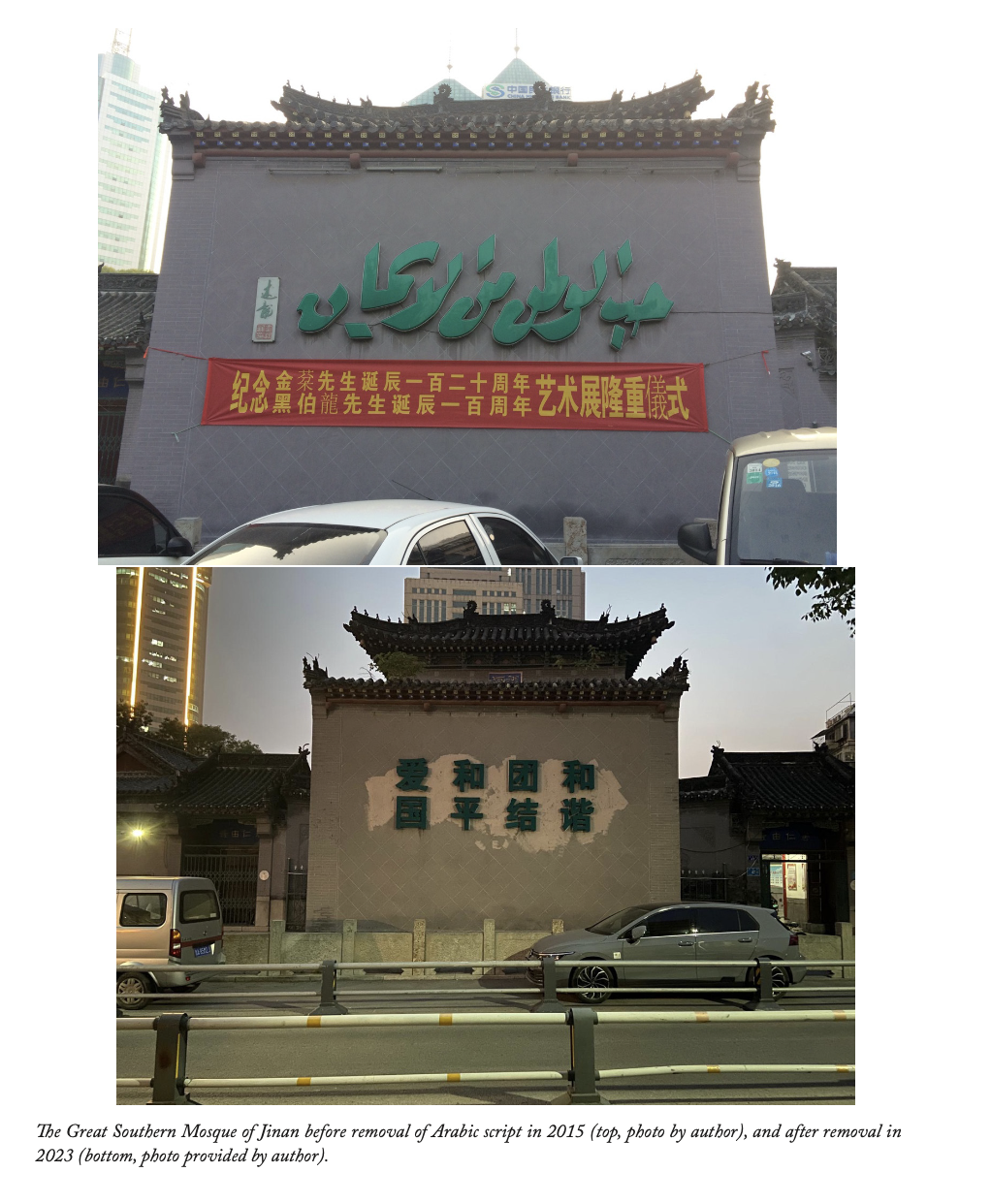
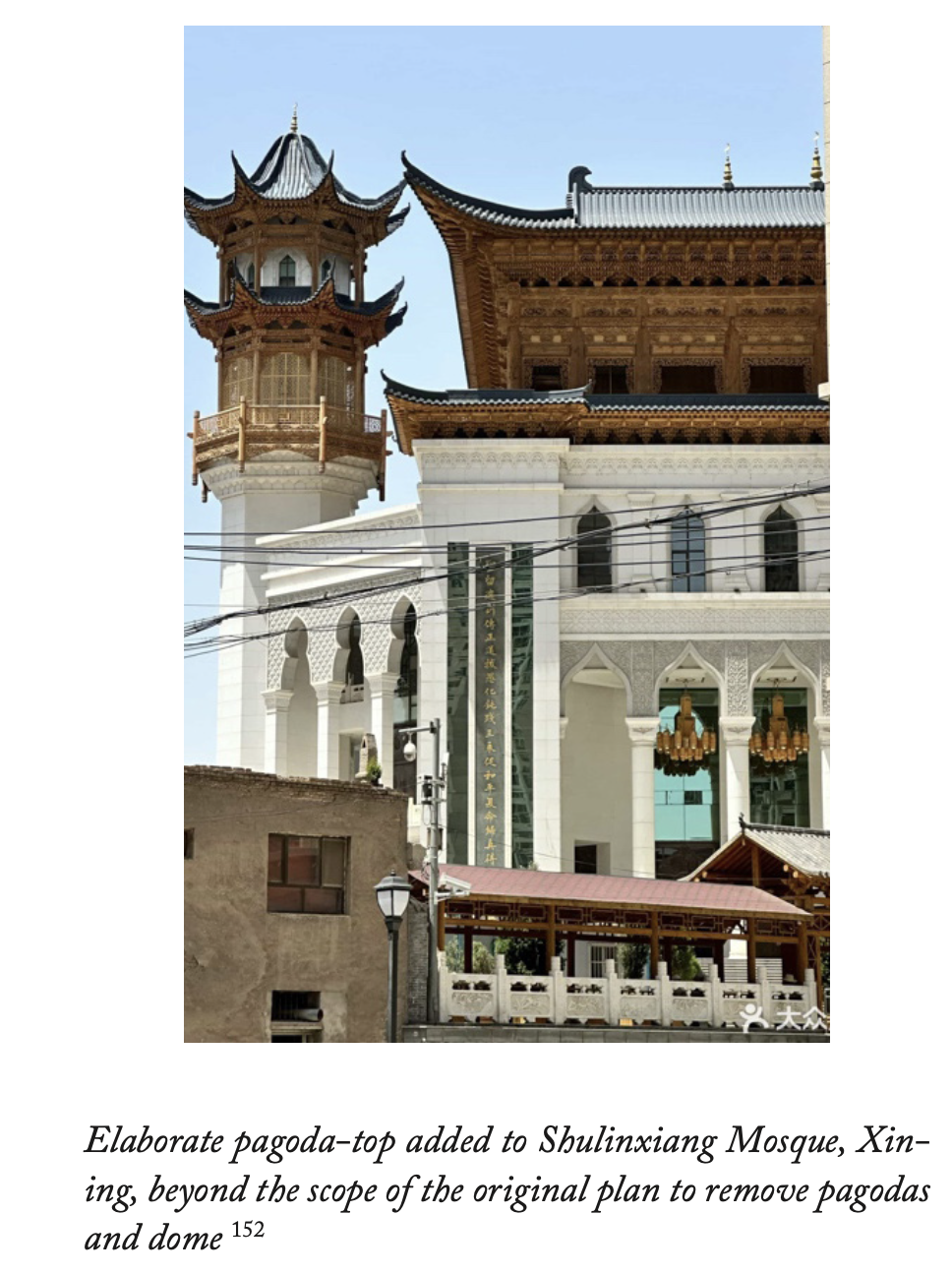
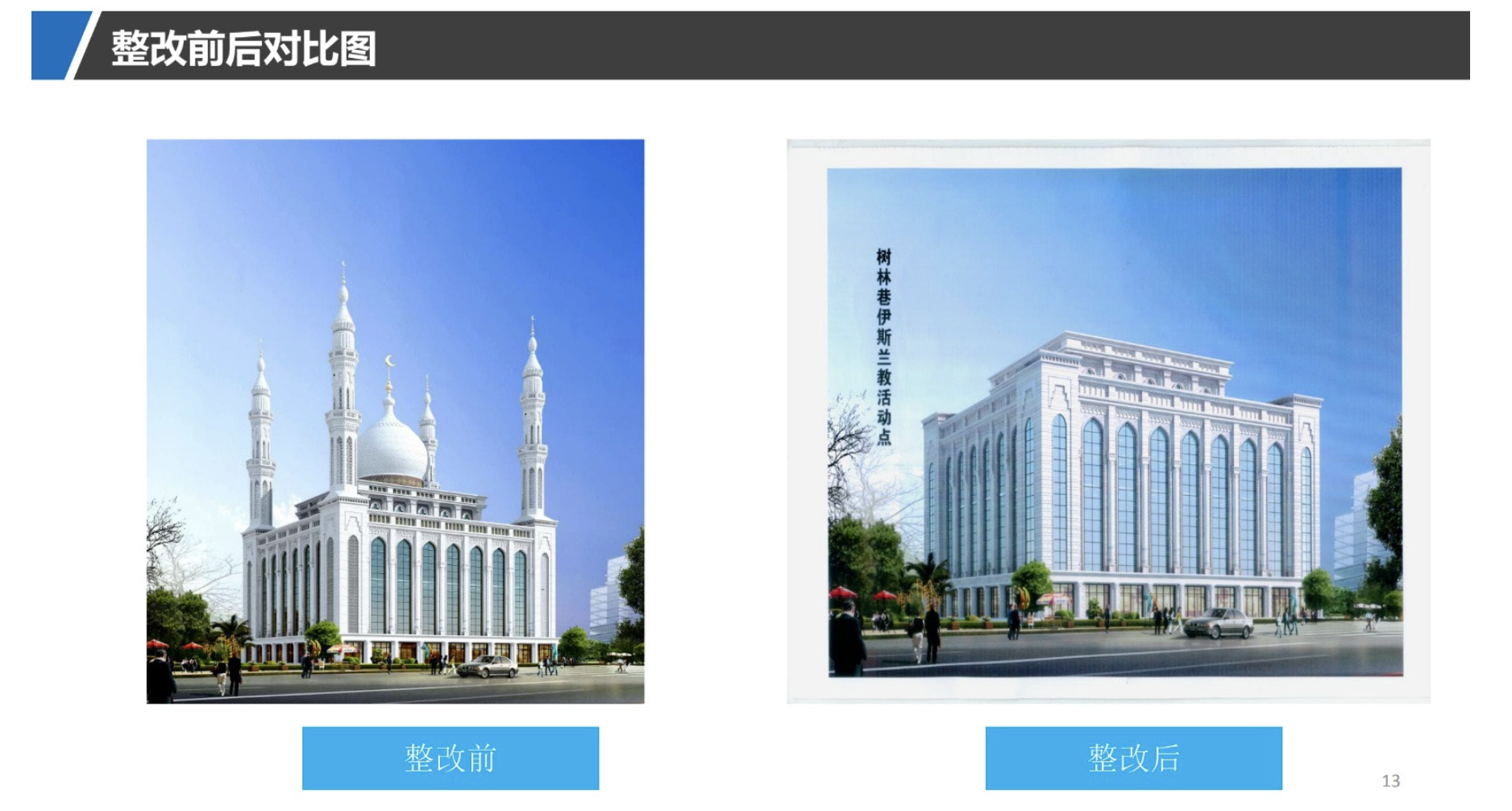
the party-state’s rhetoric implies that signifiers of Islamic identity should be restricted solely to the mosque
Human Rights • napio posted the article • 0 comments • 1211 views • 2025-03-02 05:44
The emergence of measures under the umbrella term ‘Resisting the Three Transformations’ (反三化) was one of the earliest and most visible manifestations of the Sinicization of Islam. In both cases, ‘Saudization’ and ‘Arabization’ are loosely defined, with little concrete connection made — either in justification or implementation of policy — to practices linked to Saudi Arabia or the broader Islamic world. However, both terms infer that influences from abroad are corrupting Islam in China, leaving Muslim communities vulnerable to extremism, a danger requiring state intervention. In party-state justifications, extremism is always defined as a foreign force. Both terms reinforce perceptions that ‘foreign Islam’ is dangerous. In contrast, ‘Chinese Islam’ is implied to be ‘safe’ and ‘normal’ when appropriately guided by the party-state.
The third transformation, ‘pan-halalification,’ is distinct from the other two, as this term refers to a perceived expansion of halal labeling to products and places outside of its ‘normal’ usage as defined by the party-state (i.e., in relation to the status of animal products, especially meat). This term acts as a proxy for discussion of the spread of religious influence, implicitly defining any expansion of the visibility of Islam as a threat to the party-state and a precursor to extremism. Its appearance within the Three Transformations campaign highlights the party-state’s commitment to building a secular society, with an ever-narrower demarcation of the spaces where religion is permissible.
The concept of the Three Transformations was first articulated amid counter-terror and de-extremification measures enacted in the XUAR. References to the need to counter ‘Arabization’ and ‘Saudization’ in Islam in Ningxia first officially appear outside the XUAR in a December 2016 speech given by Ningxia Party Secretary Li Jianhua to the Ningxia Autonomous Region Religious Work Conference, where such changes are explicitly mentioned alongside work in Xinjiang. Li stated that “the central government holds that we must be strictly on guard against the phenomena of ‘Arabization’ and ‘Saudization’ of Islam in regions such as Ningxia and Xinjiang, the infiltration of foreign Islam is not a religious problem but a political problem.” Li further singled out pan-halalification as an early sign of the development of religious extremism, and signaled his opposition to the idea that Arabic is a Hui language. By singling out the Arabic language, and pointing the finger at ‘infiltration’ by ‘foreign’ practices, Li’s efforts draw clear and bright lines between party-state-approved practice and the “extremism” exemplified by the ‘Three Transformations.’
In the initial stages of the campaign against the Three Transformations, the most readily observed targets of policy measures were aesthetic: markers showcasing the influence of ‘foreign’ Islam were removed from public places — particularly where they occur in public art, signage, and architecture. In practice, so-called ‘Arabic’-style mosque architecture (including tall minarets and onion domes), overtly Islamic styles of dress and veiling, the public use of Arabic script, and halal labeling and certification have been identified as evidence of the ‘Three Transformations’ and targeted for suppression. Taken together, the interventions represent an increased policing of any visual markers of Muslim presence in public space. In many instances, the party-state’s rhetoric implies that signifiers of Islamic identity should be restricted solely to the mosque.
As with other aspects of Sinicization policy, party-state action to remove aesthetic markers of foreign influence was first taken in Ningxia in 2016, continuing into 2017. The measures taken to “resist the Three Transformations” were later folded into broader Sinicization policy. After the Three Transformations campaign identified unacceptable practices of Islam linked to latent extremism, the Five-Year Plan bestowed power to define ‘normal’ practice of faith on the CIA. Interventions made by the party-state under the Three Transformations also demonstrate the intersections between counter-terrorism and ‘anti-extremist’ work and the broader Sinicization campaign, as signs of the Three Transformations are explicitly understood as signifiers indicating a vulnerability to extremism. As of 2024, mosques continue to be monitored for any evidence of the Three Transformations. Policing of mosque architecture, dress, and halal labeling continues to provide a rationale for further, programmatic interventions into Muslim communities.
In the section below, we outline examples of party-state interventions taken against practices identified as exemplary of the Three Transformations. We discuss how the party-state’s crackdown targeted mosque architecture, public use of Arabic script, halal branding and certification, practices of dress, and public broadcasting of the call to prayer (adhan).
view all
4.0 Aesthetics
The emergence of measures under the umbrella term ‘Resisting the Three Transformations’ (反三化) was one of the earliest and most visible manifestations of the Sinicization of Islam. In both cases, ‘Saudization’ and ‘Arabization’ are loosely defined, with little concrete connection made — either in justification or implementation of policy — to practices linked to Saudi Arabia or the broader Islamic world. However, both terms infer that influences from abroad are corrupting Islam in China, leaving Muslim communities vulnerable to extremism, a danger requiring state intervention. In party-state justifications, extremism is always defined as a foreign force. Both terms reinforce perceptions that ‘foreign Islam’ is dangerous. In contrast, ‘Chinese Islam’ is implied to be ‘safe’ and ‘normal’ when appropriately guided by the party-state.
The third transformation, ‘pan-halalification,’ is distinct from the other two, as this term refers to a perceived expansion of halal labeling to products and places outside of its ‘normal’ usage as defined by the party-state (i.e., in relation to the status of animal products, especially meat). This term acts as a proxy for discussion of the spread of religious influence, implicitly defining any expansion of the visibility of Islam as a threat to the party-state and a precursor to extremism. Its appearance within the Three Transformations campaign highlights the party-state’s commitment to building a secular society, with an ever-narrower demarcation of the spaces where religion is permissible.
The concept of the Three Transformations was first articulated amid counter-terror and de-extremification measures enacted in the XUAR. References to the need to counter ‘Arabization’ and ‘Saudization’ in Islam in Ningxia first officially appear outside the XUAR in a December 2016 speech given by Ningxia Party Secretary Li Jianhua to the Ningxia Autonomous Region Religious Work Conference, where such changes are explicitly mentioned alongside work in Xinjiang. Li stated that “the central government holds that we must be strictly on guard against the phenomena of ‘Arabization’ and ‘Saudization’ of Islam in regions such as Ningxia and Xinjiang, the infiltration of foreign Islam is not a religious problem but a political problem.” Li further singled out pan-halalification as an early sign of the development of religious extremism, and signaled his opposition to the idea that Arabic is a Hui language. By singling out the Arabic language, and pointing the finger at ‘infiltration’ by ‘foreign’ practices, Li’s efforts draw clear and bright lines between party-state-approved practice and the “extremism” exemplified by the ‘Three Transformations.’
In the initial stages of the campaign against the Three Transformations, the most readily observed targets of policy measures were aesthetic: markers showcasing the influence of ‘foreign’ Islam were removed from public places — particularly where they occur in public art, signage, and architecture. In practice, so-called ‘Arabic’-style mosque architecture (including tall minarets and onion domes), overtly Islamic styles of dress and veiling, the public use of Arabic script, and halal labeling and certification have been identified as evidence of the ‘Three Transformations’ and targeted for suppression. Taken together, the interventions represent an increased policing of any visual markers of Muslim presence in public space. In many instances, the party-state’s rhetoric implies that signifiers of Islamic identity should be restricted solely to the mosque.
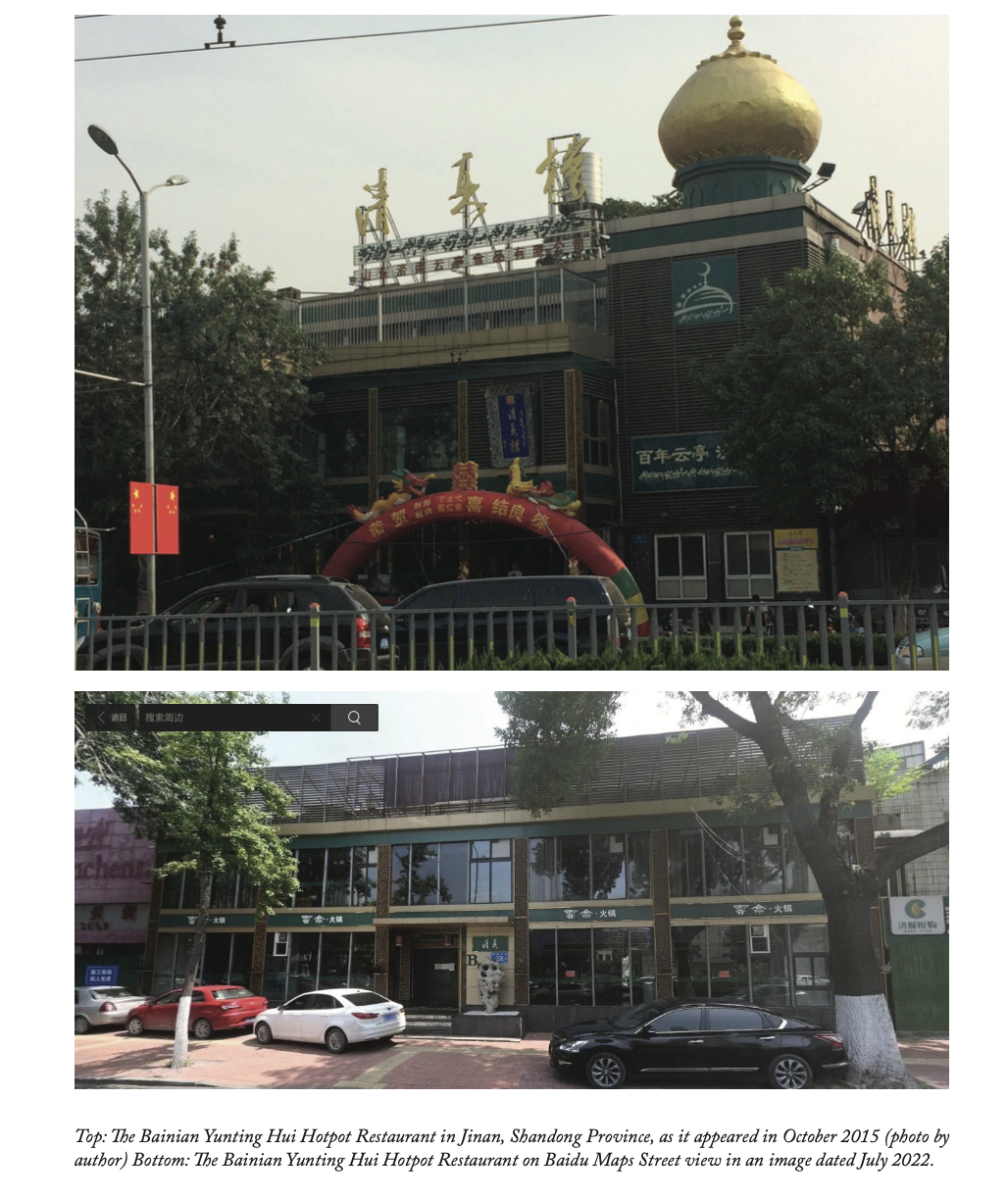
As with other aspects of Sinicization policy, party-state action to remove aesthetic markers of foreign influence was first taken in Ningxia in 2016, continuing into 2017. The measures taken to “resist the Three Transformations” were later folded into broader Sinicization policy. After the Three Transformations campaign identified unacceptable practices of Islam linked to latent extremism, the Five-Year Plan bestowed power to define ‘normal’ practice of faith on the CIA. Interventions made by the party-state under the Three Transformations also demonstrate the intersections between counter-terrorism and ‘anti-extremist’ work and the broader Sinicization campaign, as signs of the Three Transformations are explicitly understood as signifiers indicating a vulnerability to extremism. As of 2024, mosques continue to be monitored for any evidence of the Three Transformations. Policing of mosque architecture, dress, and halal labeling continues to provide a rationale for further, programmatic interventions into Muslim communities.
In the section below, we outline examples of party-state interventions taken against practices identified as exemplary of the Three Transformations. We discuss how the party-state’s crackdown targeted mosque architecture, public use of Arabic script, halal branding and certification, practices of dress, and public broadcasting of the call to prayer (adhan).
Mosque Management Committees in China
Human Rights • napio posted the article • 0 comments • 1317 views • 2025-03-02 05:31
Oversight of mosque management committees has increased dramatically, with new regulations intended to increase financial transparency and to ensure that mosques appoint state-approved imams. As noted above, mosque management committees in theory have decisive authority over the affairs of a single mosque. Formed by representatives of the local congregation, mosque management committees manage mosque buildings, the financial affairs of the congregation, and any property owned by the mosque, which in some instances includes rental properties. Mosque management committees also convene selection processes for imams. As imams often serve three-year terms before rotating to a different mosque, mosque management committees are often the greatest continuity in the life of a mosque community.
Since 2017 the party-state and the CIA have moved to assert much tighter control over mosque management committees, especially in areas of dense Muslim settlement. The new “Administrative Measures for Religious Activity Venues,” issued by SARA in 2023, require the establishment of “democratic management organizations” within each individual religious venue. The rules for composition of the committees permit “other relevant figures” to sit, opening the door for cadres to direct the affairs of religious institutions as serving committee members. The first listed duty of members of the management committee (Article 30) is to teach their fellow citizens to be patriotic and to adhere to Sinicization. Registration requirements ensure that local Party offices and the relevant district associations of national religious groups (i.e., local branches of the CIA) have broad oversight of committee composition and membership. Furthermore, religious venues are required to have a supervisory mechanism to oversee committee member behavior. If a misbehaving committee member is not removed in a timely fashion, local authorities have the power to intervene. The text also states that religious venues should not have relationships to each other.
The “Measures for the Democratic Management of Mosques,” republished by the CIA in August 2023, can be read as the official interpretation of the SARA regulations for Islamic communities. The full regulations provide extensive regulation on the duties of the committees, and the permitted scope of mosque activities. These measures explicitly place mosque management committees under CIA guidance. The Measures also include a wide range of causes for which members of the mosque management committee must be dismissed – including refusal to abide by CIA regulations, attendance at unapproved religious events, and actions that would ‘damage internal Islamic harmony’, echoing the SARA regulations.
In numerous cases, on-the-ground stipulations for mosque management committees exceed the requirements of the new regulations. These regulations have been enforced to remove mosque management committee members who might have spearheaded opposition to changes. As with many aspects of Sinicization policy, the formal changes to regulations for mosque management committees have been preceded by years of tightening regulation.
Beginning in 2018, Qinghai has trialed a requirement that leadership of the mosque management committee has been required to be held concurrently by the village Party Secretary and the head of the Village Committee. Mosque management committee members were also required to attend political training on laws, religious policy and key Party Congresses. A document issued in 2019 by the Party committee of Tianya District, in Sanya, Hainan, contains a similar stipulation that mosque committees must contain a Party member. These changes suggest that requirements for mosque management committees to contain at least some Party members may be widespread. Under the tightened rules for Party members outlined above, they cannot display religious faith nor attend religious events, meaning that a mosque management head who is also the village Party Secretary would be formally barred from routine Islamic observance.
Overall, the picture points towards much greater oversight and attention to mosque management committees. Elections to mosque committees take place under careful management of the local United Front and local Party cadres: in a 2023 example from Tianjin, twenty chosen neighbourhood representatives participated in the voting process under the watchful eye of district cadres. Mosque management committees are increasingly given extensive training: in 2024, Sichuan required mosque management committees from 14 prefectures to attend a seven-day training, with an emphasis on Sinicization and the importance of strict governance of religion.
Changes to mosque management committees have been utilized as a precursor to pushing through further measures likely to be unpalatable to the community. In Hualong, Qinghai, the head of a mosque management committee was detained for seven days for “inappropriate language” concerning the appointment of a new imam to the Xining Dongguan Great Mosque. In the wake of his detention, “revisions” were made to the composition of the mosque management committee. In Huangniwan, a village near Linxia in Gansu, an investigation into mosque finances was used as justification for removal of mosque management committee members who might have resisted proposals to merge mosques in the village (see 7.0 Mosque Mergers). In Yunnan, following high-profile protests against architectural renovations at Najiaying Mosque in summer 2023, a notice on the renovations was issued in the name of the Najiaying Mosque Management Committee and the Najiaying Mosque Supervisory Committee – however, observers noted that in fact both committees had been dismissed and replaced by Party supporters and United Front figures.
The changes to regulation of management committees allow much greater oversight of the management of individual venues. The combined impact of the duties placed on mosque management committee members requires them also to act as agents of Party religious policy, with consequences for any who resist. The on-the-ground requirement for mosque management committees to contain a Party member found in Qinghai and elsewhere in effect transform these bodies into Party committees within mosques, whilst the reinforced directives against any relationship between mosques work to atomize mosque communities, ensuring they are connected only via the Islamic Association bodies.
There are hints of resistance to this from within communities who had been used to significant self-governance. As an example, inset text messages within an essay by an Islamophobic activist describe a particularly fraught conference held to discuss proposed renovations to mosques in Weishan, Yunnan. The writer reports that at the conference, one mosque representative made the case that, as mosques are governed by their communities, “the signatures and seals of any Islamic Association or management committee are all powerless.” However, as non-compliant committee members are removed for any resistance, the ability of communities to influence the direction of their mosques decreases. In the place of genuinely democratic mosque management committees is merely a veneer of community inclusion pasted across religious policy determined from within the Islamic Associations and the United Front.
view all
3.3 Mosque Management Committees (寺管会)
Oversight of mosque management committees has increased dramatically, with new regulations intended to increase financial transparency and to ensure that mosques appoint state-approved imams. As noted above, mosque management committees in theory have decisive authority over the affairs of a single mosque. Formed by representatives of the local congregation, mosque management committees manage mosque buildings, the financial affairs of the congregation, and any property owned by the mosque, which in some instances includes rental properties. Mosque management committees also convene selection processes for imams. As imams often serve three-year terms before rotating to a different mosque, mosque management committees are often the greatest continuity in the life of a mosque community.
Since 2017 the party-state and the CIA have moved to assert much tighter control over mosque management committees, especially in areas of dense Muslim settlement. The new “Administrative Measures for Religious Activity Venues,” issued by SARA in 2023, require the establishment of “democratic management organizations” within each individual religious venue. The rules for composition of the committees permit “other relevant figures” to sit, opening the door for cadres to direct the affairs of religious institutions as serving committee members. The first listed duty of members of the management committee (Article 30) is to teach their fellow citizens to be patriotic and to adhere to Sinicization. Registration requirements ensure that local Party offices and the relevant district associations of national religious groups (i.e., local branches of the CIA) have broad oversight of committee composition and membership. Furthermore, religious venues are required to have a supervisory mechanism to oversee committee member behavior. If a misbehaving committee member is not removed in a timely fashion, local authorities have the power to intervene. The text also states that religious venues should not have relationships to each other.
The “Measures for the Democratic Management of Mosques,” republished by the CIA in August 2023, can be read as the official interpretation of the SARA regulations for Islamic communities. The full regulations provide extensive regulation on the duties of the committees, and the permitted scope of mosque activities. These measures explicitly place mosque management committees under CIA guidance. The Measures also include a wide range of causes for which members of the mosque management committee must be dismissed – including refusal to abide by CIA regulations, attendance at unapproved religious events, and actions that would ‘damage internal Islamic harmony’, echoing the SARA regulations.
In numerous cases, on-the-ground stipulations for mosque management committees exceed the requirements of the new regulations. These regulations have been enforced to remove mosque management committee members who might have spearheaded opposition to changes. As with many aspects of Sinicization policy, the formal changes to regulations for mosque management committees have been preceded by years of tightening regulation.
Beginning in 2018, Qinghai has trialed a requirement that leadership of the mosque management committee has been required to be held concurrently by the village Party Secretary and the head of the Village Committee. Mosque management committee members were also required to attend political training on laws, religious policy and key Party Congresses. A document issued in 2019 by the Party committee of Tianya District, in Sanya, Hainan, contains a similar stipulation that mosque committees must contain a Party member. These changes suggest that requirements for mosque management committees to contain at least some Party members may be widespread. Under the tightened rules for Party members outlined above, they cannot display religious faith nor attend religious events, meaning that a mosque management head who is also the village Party Secretary would be formally barred from routine Islamic observance.
Overall, the picture points towards much greater oversight and attention to mosque management committees. Elections to mosque committees take place under careful management of the local United Front and local Party cadres: in a 2023 example from Tianjin, twenty chosen neighbourhood representatives participated in the voting process under the watchful eye of district cadres. Mosque management committees are increasingly given extensive training: in 2024, Sichuan required mosque management committees from 14 prefectures to attend a seven-day training, with an emphasis on Sinicization and the importance of strict governance of religion.
Changes to mosque management committees have been utilized as a precursor to pushing through further measures likely to be unpalatable to the community. In Hualong, Qinghai, the head of a mosque management committee was detained for seven days for “inappropriate language” concerning the appointment of a new imam to the Xining Dongguan Great Mosque. In the wake of his detention, “revisions” were made to the composition of the mosque management committee. In Huangniwan, a village near Linxia in Gansu, an investigation into mosque finances was used as justification for removal of mosque management committee members who might have resisted proposals to merge mosques in the village (see 7.0 Mosque Mergers). In Yunnan, following high-profile protests against architectural renovations at Najiaying Mosque in summer 2023, a notice on the renovations was issued in the name of the Najiaying Mosque Management Committee and the Najiaying Mosque Supervisory Committee – however, observers noted that in fact both committees had been dismissed and replaced by Party supporters and United Front figures.
The changes to regulation of management committees allow much greater oversight of the management of individual venues. The combined impact of the duties placed on mosque management committee members requires them also to act as agents of Party religious policy, with consequences for any who resist. The on-the-ground requirement for mosque management committees to contain a Party member found in Qinghai and elsewhere in effect transform these bodies into Party committees within mosques, whilst the reinforced directives against any relationship between mosques work to atomize mosque communities, ensuring they are connected only via the Islamic Association bodies.
There are hints of resistance to this from within communities who had been used to significant self-governance. As an example, inset text messages within an essay by an Islamophobic activist describe a particularly fraught conference held to discuss proposed renovations to mosques in Weishan, Yunnan. The writer reports that at the conference, one mosque representative made the case that, as mosques are governed by their communities, “the signatures and seals of any Islamic Association or management committee are all powerless.” However, as non-compliant committee members are removed for any resistance, the ability of communities to influence the direction of their mosques decreases. In the place of genuinely democratic mosque management committees is merely a veneer of community inclusion pasted across religious policy determined from within the Islamic Associations and the United Front.
3.2 China Islamic Association
Human Rights • napio posted the article • 0 comments • 1411 views • 2025-03-02 05:22
Management of local branches of the China Islamic Associations (CIA) is perceived as a precondition for CCP control of mosques and Islamic communities more broadly. The Five-Year Plan and Document 10 both envisage an expanded role for the CIA, and the national structure of Islamic Associations has effectively served as implementing organizations for Sinicization policy. Formally, the CIA does not have control of individual mosques, as it is intended to serve as a conduit between religious communities and the Party-state. Individual mosque management committees are theoretically the highest authority over the affairs of a single mosque, and mosques are required to be independent of each other. Party-state policy continues to assert the mosque management committee as a representative of the democratic control of mosque affairs by the people.
As a result, the level of influence enjoyed by the Islamic Association had previously varied by region. As Doyon notes, the relationships between local Islamic Associations and mosque management committees were previously differentiated by region: in small Muslim communities, where donations were low, the local Islamic Association had significant control of mosque affairs; in larger Muslim communities with higher levels of donations, the mosque management committees were the primary directors of mosque affairs, with the Islamic Association acting primarily as a mediator between the mosque and local government. In Qinghai, Gansu, and Ningxia, mosque management committees retained primary control of imam appointments, with the CIA merely approving the chosen candidates. Mosque management committees also control finances and property for individual mosques, some of which lease space to shopkeepers. Control of mosque management committees thus ensures much tighter control of imam appointments, allowing the Party-state to install members who will stringently facilitate and enforce Sinicization policies.
The 2018 incorporation of the State Administration for Religious Affairs (SARA), the bureau which previously sat above the CIA and the other official religious organizations, into the UFWD brought religious affairs back under the direct control of the Party. In addition, changes to the CIA’s Constitution in 2022 further emphasize the extent to which the Association serves the Party, with repeated references to Xi Jinping Thought added to the text. Requirements for the head of the Islamic Association stress the importance of their political credentials, while “extensive knowledge of Islam” is listed as desirable but not essential. Where earlier constitutions stated the Association “is a patriotic religious group and Islamic religious organization for Muslims of all ethnic groups in the country,” the 2022 revision states that “The Association is a national Islamic patriotic religious group and a non-profit social organization for religious affairs, formed voluntarily by Muslims and people who care about and support the cause of Islam.” This change opens the door for non-Muslim participation in the CIA and de-emphasizes ethnicity (minzu) within the Association.
Since 2016, the CIA has expanded its roles and remit within mosque communities, fulfilling the “bridge” role anticipated in Document 10. Since the 2018 passing of the revised Regulations on Religious Affairs, SARA has issued a number of ordinances designed to regularize and regulate the activity of religious organizations, in cooperation with other relevant departments. These have included the Administrative Measures for Religious Groups (宗教团体管理办法, 2019), Notice on Registration of Legal Persons of Religious Venues (关于宗教活动场所办理法人登记事项的通知, 2019), Measures for the Administration of Islamic Hajj Affairs (伊斯兰教朝觐事务管理办法, 2020), Administrative Measures for Religious Clergy (宗教教职人员管理办法, 2021) and the Measures for the Establishment of Religious Institutes (宗教院校管理办法, 2021); and Measures for the Administration of Internet Religious Information Services (互联网宗教信息服务管理办法, 2021). As a whole, the new regulations mandate greater oversight of mosque personnel and mosque administration, with stringent requirements on financial reporting and legal duties. Dissemination and study of the new regulations has been core to CIA activity, reflecting the new emphasis within their constitution on adherence to the national legal system.
To guide implementation of the above, the CIA has issued a series of specific regulations designed for Islamic communities, collectively known as the “three measures and the one code.” Respectively, these are the “Measures for the Democratic Management of Mosques” (清真寺民主管理办法), “Measures for the Qualifications of Islamic Clergy” (伊斯兰教教职人员资格认定办法), “Measures for the Appointment of Major Clerical Positions in Islamic Activity Venues” (伊斯兰教活动场所主要教职聘任办法), and “Code of Conduct for Islamic Clergy” (伊斯兰教教职人员行为守则). The four regulations were issued in 2019, and have since been revised in 2023. Collectively, the regulations seek to standardize the patchwork of regulation of clergy and venues that had emerged since 2017.
Additionally, CIA bodies have become the visible faces of Sinicization policy by organizing lecture tours on Sinicization, overseeing architectural renovations, and hosting preaching competitions and training sessions. Despite the lack of a formal hierarchical relationship between individual mosques and the CIA, branch associations increasingly exercise authority over individual mosques, issuing directives for policy implementation as supported by the suite of SARA regulations. For instance, regulations issued by the Hohhot Islamic Association in August 2019 include stipulations that mosques should a) not permit storage of illegal religious publications, b) strengthen management of religious personnel and should not host Tablighi Jamaat missionaries, c) not permit storage of personal property in the mosque, and d) that minors cannot be forced to attend religious activities. Duplicates of the new regulations were issued to both the city United Front Department and the Huimin city district (回民区) United Front. The Hohhot Islamic Association has since established a ‘China Exceptional Traditional Culture Activity Centre’ inside Hohhot Great Mosque, with an inauguration ceremony held in December 2020.
view all
3.2 China Islamic Association
Management of local branches of the China Islamic Associations (CIA) is perceived as a precondition for CCP control of mosques and Islamic communities more broadly. The Five-Year Plan and Document 10 both envisage an expanded role for the CIA, and the national structure of Islamic Associations has effectively served as implementing organizations for Sinicization policy. Formally, the CIA does not have control of individual mosques, as it is intended to serve as a conduit between religious communities and the Party-state. Individual mosque management committees are theoretically the highest authority over the affairs of a single mosque, and mosques are required to be independent of each other. Party-state policy continues to assert the mosque management committee as a representative of the democratic control of mosque affairs by the people.
As a result, the level of influence enjoyed by the Islamic Association had previously varied by region. As Doyon notes, the relationships between local Islamic Associations and mosque management committees were previously differentiated by region: in small Muslim communities, where donations were low, the local Islamic Association had significant control of mosque affairs; in larger Muslim communities with higher levels of donations, the mosque management committees were the primary directors of mosque affairs, with the Islamic Association acting primarily as a mediator between the mosque and local government. In Qinghai, Gansu, and Ningxia, mosque management committees retained primary control of imam appointments, with the CIA merely approving the chosen candidates. Mosque management committees also control finances and property for individual mosques, some of which lease space to shopkeepers. Control of mosque management committees thus ensures much tighter control of imam appointments, allowing the Party-state to install members who will stringently facilitate and enforce Sinicization policies.
The 2018 incorporation of the State Administration for Religious Affairs (SARA), the bureau which previously sat above the CIA and the other official religious organizations, into the UFWD brought religious affairs back under the direct control of the Party. In addition, changes to the CIA’s Constitution in 2022 further emphasize the extent to which the Association serves the Party, with repeated references to Xi Jinping Thought added to the text. Requirements for the head of the Islamic Association stress the importance of their political credentials, while “extensive knowledge of Islam” is listed as desirable but not essential. Where earlier constitutions stated the Association “is a patriotic religious group and Islamic religious organization for Muslims of all ethnic groups in the country,” the 2022 revision states that “The Association is a national Islamic patriotic religious group and a non-profit social organization for religious affairs, formed voluntarily by Muslims and people who care about and support the cause of Islam.” This change opens the door for non-Muslim participation in the CIA and de-emphasizes ethnicity (minzu) within the Association.
Since 2016, the CIA has expanded its roles and remit within mosque communities, fulfilling the “bridge” role anticipated in Document 10. Since the 2018 passing of the revised Regulations on Religious Affairs, SARA has issued a number of ordinances designed to regularize and regulate the activity of religious organizations, in cooperation with other relevant departments. These have included the Administrative Measures for Religious Groups (宗教团体管理办法, 2019), Notice on Registration of Legal Persons of Religious Venues (关于宗教活动场所办理法人登记事项的通知, 2019), Measures for the Administration of Islamic Hajj Affairs (伊斯兰教朝觐事务管理办法, 2020), Administrative Measures for Religious Clergy (宗教教职人员管理办法, 2021) and the Measures for the Establishment of Religious Institutes (宗教院校管理办法, 2021); and Measures for the Administration of Internet Religious Information Services (互联网宗教信息服务管理办法, 2021). As a whole, the new regulations mandate greater oversight of mosque personnel and mosque administration, with stringent requirements on financial reporting and legal duties. Dissemination and study of the new regulations has been core to CIA activity, reflecting the new emphasis within their constitution on adherence to the national legal system.
To guide implementation of the above, the CIA has issued a series of specific regulations designed for Islamic communities, collectively known as the “three measures and the one code.” Respectively, these are the “Measures for the Democratic Management of Mosques” (清真寺民主管理办法), “Measures for the Qualifications of Islamic Clergy” (伊斯兰教教职人员资格认定办法), “Measures for the Appointment of Major Clerical Positions in Islamic Activity Venues” (伊斯兰教活动场所主要教职聘任办法), and “Code of Conduct for Islamic Clergy” (伊斯兰教教职人员行为守则). The four regulations were issued in 2019, and have since been revised in 2023. Collectively, the regulations seek to standardize the patchwork of regulation of clergy and venues that had emerged since 2017.
Additionally, CIA bodies have become the visible faces of Sinicization policy by organizing lecture tours on Sinicization, overseeing architectural renovations, and hosting preaching competitions and training sessions. Despite the lack of a formal hierarchical relationship between individual mosques and the CIA, branch associations increasingly exercise authority over individual mosques, issuing directives for policy implementation as supported by the suite of SARA regulations. For instance, regulations issued by the Hohhot Islamic Association in August 2019 include stipulations that mosques should a) not permit storage of illegal religious publications, b) strengthen management of religious personnel and should not host Tablighi Jamaat missionaries, c) not permit storage of personal property in the mosque, and d) that minors cannot be forced to attend religious activities. Duplicates of the new regulations were issued to both the city United Front Department and the Huimin city district (回民区) United Front. The Hohhot Islamic Association has since established a ‘China Exceptional Traditional Culture Activity Centre’ inside Hohhot Great Mosque, with an inauguration ceremony held in December 2020.
Part II: Sinicization in Practice: Implementation and Effects
Human Rights • napio posted the article • 0 comments • 1263 views • 2025-03-02 05:17
To analyze these processes, we have collated a database of items dealing with the implementation of Sinicization policy. The sources collected vary widely, from China Islamic Association briefings and reports, local government policy reports, and local United Front branch updates to social media posts written by individuals with interest in the implementation of Sinicization policy. While in most instances links to the original evidence are provided, in limited instances the authors have elected to provide a code in place of the original reference for social media posts made by private individuals to protect their identities. Further information is available on request from the researchers. Much information around the Sinicization of Islam is suppressed, and affected communities are discouraged from talking publicly about measures they have experienced. As a result, although we attempt to present as full and comprehensive a picture as possible to understand Sinicization in action, inevitably there is more information available on certain aspects and on certain locations. This report should be taken as a preliminary survey of these domains.
3.0 Organization
Control of religious organizations is understood as a precondition for the implementation of religious work policies. This has entailed a tightening of policies on four fronts, namely 1) an emphasis on the behavior and responsibilities of grassroots cadres, 2) tightening control over the China Islamic Association (CIA), 3) mosque committees, and 4) mosque personnel.
3.1 Policing Cadre Behavior
Across the PRC, disciplinary inspections of cadres form a key backdrop to the implementation of Sinicization policy. Performance of atheism has always been an expectation for high-ranking party officials. However, in practice, it was often tacitly accepted that village-level officials were also sometimes religiously active. Indeed, the party-state has a long, sometimes complicated history of working with and in religious communities, creating a “middle ground” in which space is made for Islamic community, in practice and law. While increased attention to grassroots cadre behavior and campaigns for ensuring moral probity among officials have been a feature of the Xi years more broadly, measures for the Sinicization of religion have been accompanied by tightening of religious discipline for cadres across the board. The religious attitudes of local officials were identified as a key barrier to the achievement of Party policy objectives, and hence, reform of grassroots cadre behavior has been prioritized as necessary for achieving the broader policy aims of the Sinicization campaign.
Such emphasis on religious discipline is most clearly seen in the 2018 revision to the Regulations on Discipline and Punishment for Chinese Communist Party, which added a clause (Article 62) specifically stating that Party members who hold religious faith themselves should be provided with “thought education.” If, following intervention, there is no change observed in their beliefs, they should be persuaded to give up their membership or stripped of it. Those who participate in activities which “use religion as incitement” are also to be expelled. The Regulations represent the most concrete instantiation of earlier commitments to atheism as a key aspect of cadre discipline found in resolutions such as the “Certain Principles for Political Life within the Party Under the New Situation” (关于新形势下党内政治生活的若干准则), passed at the sixth Plenary Session of the 18th National Congress.
A 2018 inspection tour of Ningxia conducted under the auspices of the Central Commission for Discipline Inspection found that Ningxia party organizations had ‘serious shortcomings’ in the leadership of religious work. In response, the Ningxia Party Committee launched a series of activities, intended to reassert the “Marxist view of ethnicity and religion” to cadres at all levels within the provincial system. The measures also note refinements to working practices and functional positioning for cadres dealing with ethnic and religious work. These emphasize oversight of cadres involved in such work, noting that cadres found to have taken ‘inappropriate actions’ in handling religious affairs will be strictly dealt with.
The impact of the updated Regulations can be seen across China, and especially in areas with concentrations of Islamic population. In Linxia, 4,557 cadres and party members were required to sign formal commitments of atheism. Section-level cadres were required to attend training on the spirit of the 19th National Congress of the CPC in order that they could better guide those under their supervision to realize their previously pledged commitment to atheism. Inspections were launched of all cadres found to have worn religious garments, with further monitoring of behavior following thereafter. Retired cadres in the area were also required to attend training to reassert the primacy of the Party, in a move that echoes reports from Qinghai and Ningxia that retired cadres have been banned from performing the Hajj.
In 2019, Aksai Kazakh Prefecture in Gansu reported that – in response to the issue of “Party members and public officials participating in the Hajj,” which had been raised as an issue by an earlier disciplinary inspection – the prefectural government had banned all Party members from religious belief and initiated investigations into Party members found to have previously performed the Hajj. Several were subjected to intensive personalized interventions intended to transform their thinking following these investigations, although the outcome of such interventions remains unclear from the available reports. Zhangjiachuan, Gansu, conducted similar inspections and mass training on party-state religious policies and atheism for cadres across 2020, with a particular focus on village-level cadres and on ensuring that cadres were banned from performing the Hajj. Zhangjiachuan reported improvement of pre-appointment approval mechanisms to ensure that religious believers and clergy could not serve as village cadres. The area also reported reforms to reporting procedures to ensure that responsibility for religious work could not be evaded to guarantee the implementation of religious policy at the local level.
Reassertion of the importance of cadres holding the ‘correct’ attitude to religion has functioned both as a statement of the priority that religious work has under the current regime, a rationale for the removal of cadres at the grassroots, and a tool for checking enforcement. Disciplinary oversight has further aided the development of new working methods at the grassroots level. These changes are seen most noticeably in Ningxia, which – following a 2018 disciplinary inspection – instituted a series of training for cadres on Xi Jinping Thought and approaches to religious work, as well as a series of reforms to working practices to ensure that grassroots-level officials were held accountable for fulfilling their duties in religious work. These reforms created cross-department working groups, thereby strengthening Party groups at the lowest level. These groups have allowed extensive coordination between local cadres, United Front, PSB, and other relevant organizations, effectively combating the fragmented authoritarianism that often characterizes PRC governance at the lowest level. Disciplinary inspections continue to be utilized as a method for inspecting religious work across key areas, as in the September 2023 inspection of religious work in Pingliang in Gansu.
Scrutinizing cadres suspected to hold religious beliefs through training and investigations – and threatening disciplinary measures for those found to be ‘two-faced’ – ensured that when instructions like those given in “Document 10” were circulated, local governments rushed to show that they were implementing them accordingly. For example, in Linxia from 2017 onwards, a number of departments that seemingly had little to do with Islamic work held meetings to study the spirit of Xi Jinping’s instructions, including Linxia Archives and the Environmental Bureau. Following its study meeting, the Environmental Bureau determined that its own remit included tackling the use of loudspeakers in mosques to broadcast the call to prayer under regulations on noise pollution. In 2018, Linxia convened an all-prefecture conference to study the spirit of Xi Jinping’s instructions on Islamic work. Later that month, local county leaders down to the township level in Hezheng County, Linxia were required to sign commitments to Sinicization and resisting the Three Transformations. In effect, the scope of religious work was expanded to all areas of government, leaving officials to determine the scope of implementation within their own domains.
The impact of these measures to police cadres’ behavior has been far-reaching. In areas where village cadres are now also expected to lead mosque management committees as part of further organizational changes, the presence of an official who cannot participate in the life of the community is an interruption to the normal conduct of religious affairs. In a recent case in Yunnan, Party members were explicitly banned from fasting during Ramadan, in contrast to previous years when this had been tolerated. The threat of being labelled a “two-faced official” has made that designation into a self-fulfilling prophecy: cadres who never previously saw any inherent antagonism between being a part of the party and being a member of the religious community now find themselves having to navigate complicated tensions between their professional and social worlds. Pressure to enforce the party-state’s bans by reporting those who violate them places these ‘unofficially’ religious cadres under tremendous strain.
view all
As detailed in Part I above, Sinicization is a sprawling project, with implications that touch all aspects of life in affected communities. In Part II of this report, we explore how Sinicization policy has been implemented and discuss its impact on China’s Muslim communities. To do so, we divide Sinicization policy into five main areas of implementation, namely 1) organization, 2) aesthetics, 3) scripture, language, and education, 4) surveillance and monitoring, and 5) mosque mergers. These categories are loose and do not represent policy domains as defined in state documents. Moreover, these domains should not be understood as isolated from each other – rather, actions clustered in each domain work to bolster other areas of impact. Additionally, certain measures (notably the expansion of rural surveillance and tightening of control over Party committees) act to reinforce the implementation of Sinicization policy, but are themselves part of wider authoritarian policy implementation in the contemporary PRC.
To analyze these processes, we have collated a database of items dealing with the implementation of Sinicization policy. The sources collected vary widely, from China Islamic Association briefings and reports, local government policy reports, and local United Front branch updates to social media posts written by individuals with interest in the implementation of Sinicization policy. While in most instances links to the original evidence are provided, in limited instances the authors have elected to provide a code in place of the original reference for social media posts made by private individuals to protect their identities. Further information is available on request from the researchers. Much information around the Sinicization of Islam is suppressed, and affected communities are discouraged from talking publicly about measures they have experienced. As a result, although we attempt to present as full and comprehensive a picture as possible to understand Sinicization in action, inevitably there is more information available on certain aspects and on certain locations. This report should be taken as a preliminary survey of these domains.
3.0 Organization
Control of religious organizations is understood as a precondition for the implementation of religious work policies. This has entailed a tightening of policies on four fronts, namely 1) an emphasis on the behavior and responsibilities of grassroots cadres, 2) tightening control over the China Islamic Association (CIA), 3) mosque committees, and 4) mosque personnel.
3.1 Policing Cadre Behavior
Across the PRC, disciplinary inspections of cadres form a key backdrop to the implementation of Sinicization policy. Performance of atheism has always been an expectation for high-ranking party officials. However, in practice, it was often tacitly accepted that village-level officials were also sometimes religiously active. Indeed, the party-state has a long, sometimes complicated history of working with and in religious communities, creating a “middle ground” in which space is made for Islamic community, in practice and law. While increased attention to grassroots cadre behavior and campaigns for ensuring moral probity among officials have been a feature of the Xi years more broadly, measures for the Sinicization of religion have been accompanied by tightening of religious discipline for cadres across the board. The religious attitudes of local officials were identified as a key barrier to the achievement of Party policy objectives, and hence, reform of grassroots cadre behavior has been prioritized as necessary for achieving the broader policy aims of the Sinicization campaign.
Such emphasis on religious discipline is most clearly seen in the 2018 revision to the Regulations on Discipline and Punishment for Chinese Communist Party, which added a clause (Article 62) specifically stating that Party members who hold religious faith themselves should be provided with “thought education.” If, following intervention, there is no change observed in their beliefs, they should be persuaded to give up their membership or stripped of it. Those who participate in activities which “use religion as incitement” are also to be expelled. The Regulations represent the most concrete instantiation of earlier commitments to atheism as a key aspect of cadre discipline found in resolutions such as the “Certain Principles for Political Life within the Party Under the New Situation” (关于新形势下党内政治生活的若干准则), passed at the sixth Plenary Session of the 18th National Congress.
A 2018 inspection tour of Ningxia conducted under the auspices of the Central Commission for Discipline Inspection found that Ningxia party organizations had ‘serious shortcomings’ in the leadership of religious work. In response, the Ningxia Party Committee launched a series of activities, intended to reassert the “Marxist view of ethnicity and religion” to cadres at all levels within the provincial system. The measures also note refinements to working practices and functional positioning for cadres dealing with ethnic and religious work. These emphasize oversight of cadres involved in such work, noting that cadres found to have taken ‘inappropriate actions’ in handling religious affairs will be strictly dealt with.
The impact of the updated Regulations can be seen across China, and especially in areas with concentrations of Islamic population. In Linxia, 4,557 cadres and party members were required to sign formal commitments of atheism. Section-level cadres were required to attend training on the spirit of the 19th National Congress of the CPC in order that they could better guide those under their supervision to realize their previously pledged commitment to atheism. Inspections were launched of all cadres found to have worn religious garments, with further monitoring of behavior following thereafter. Retired cadres in the area were also required to attend training to reassert the primacy of the Party, in a move that echoes reports from Qinghai and Ningxia that retired cadres have been banned from performing the Hajj.
In 2019, Aksai Kazakh Prefecture in Gansu reported that – in response to the issue of “Party members and public officials participating in the Hajj,” which had been raised as an issue by an earlier disciplinary inspection – the prefectural government had banned all Party members from religious belief and initiated investigations into Party members found to have previously performed the Hajj. Several were subjected to intensive personalized interventions intended to transform their thinking following these investigations, although the outcome of such interventions remains unclear from the available reports. Zhangjiachuan, Gansu, conducted similar inspections and mass training on party-state religious policies and atheism for cadres across 2020, with a particular focus on village-level cadres and on ensuring that cadres were banned from performing the Hajj. Zhangjiachuan reported improvement of pre-appointment approval mechanisms to ensure that religious believers and clergy could not serve as village cadres. The area also reported reforms to reporting procedures to ensure that responsibility for religious work could not be evaded to guarantee the implementation of religious policy at the local level.
Reassertion of the importance of cadres holding the ‘correct’ attitude to religion has functioned both as a statement of the priority that religious work has under the current regime, a rationale for the removal of cadres at the grassroots, and a tool for checking enforcement. Disciplinary oversight has further aided the development of new working methods at the grassroots level. These changes are seen most noticeably in Ningxia, which – following a 2018 disciplinary inspection – instituted a series of training for cadres on Xi Jinping Thought and approaches to religious work, as well as a series of reforms to working practices to ensure that grassroots-level officials were held accountable for fulfilling their duties in religious work. These reforms created cross-department working groups, thereby strengthening Party groups at the lowest level. These groups have allowed extensive coordination between local cadres, United Front, PSB, and other relevant organizations, effectively combating the fragmented authoritarianism that often characterizes PRC governance at the lowest level. Disciplinary inspections continue to be utilized as a method for inspecting religious work across key areas, as in the September 2023 inspection of religious work in Pingliang in Gansu.
Scrutinizing cadres suspected to hold religious beliefs through training and investigations – and threatening disciplinary measures for those found to be ‘two-faced’ – ensured that when instructions like those given in “Document 10” were circulated, local governments rushed to show that they were implementing them accordingly. For example, in Linxia from 2017 onwards, a number of departments that seemingly had little to do with Islamic work held meetings to study the spirit of Xi Jinping’s instructions, including Linxia Archives and the Environmental Bureau. Following its study meeting, the Environmental Bureau determined that its own remit included tackling the use of loudspeakers in mosques to broadcast the call to prayer under regulations on noise pollution. In 2018, Linxia convened an all-prefecture conference to study the spirit of Xi Jinping’s instructions on Islamic work. Later that month, local county leaders down to the township level in Hezheng County, Linxia were required to sign commitments to Sinicization and resisting the Three Transformations. In effect, the scope of religious work was expanded to all areas of government, leaving officials to determine the scope of implementation within their own domains.
The impact of these measures to police cadres’ behavior has been far-reaching. In areas where village cadres are now also expected to lead mosque management committees as part of further organizational changes, the presence of an official who cannot participate in the life of the community is an interruption to the normal conduct of religious affairs. In a recent case in Yunnan, Party members were explicitly banned from fasting during Ramadan, in contrast to previous years when this had been tolerated. The threat of being labelled a “two-faced official” has made that designation into a self-fulfilling prophecy: cadres who never previously saw any inherent antagonism between being a part of the party and being a member of the religious community now find themselves having to navigate complicated tensions between their professional and social worlds. Pressure to enforce the party-state’s bans by reporting those who violate them places these ‘unofficially’ religious cadres under tremendous strain.
The “Five Year Plan For the Sinicisation of Islam” makes several consequential declarations.
Human Rights • napio posted the article • 0 comments • 1267 views • 2025-03-02 05:11
The “Five-Year Plan for the Sinicization of Islam” makes several consequential declarations. First, it establishes the linguistic and cultural hegemony of Chinese for Islamic theology, practice, and education. By specifying in multiple instances that the proper language of scriptural exegesis, ritual observance, and religious education is the “common national language” (i.e., standard Mandarin), the CIA’s plan marginalizes Persian and Arabic as languages associated with Islamic identity. Further, the linguistic emphasis on Chinese enables the embedding of party-approved interpretations of scripture and religious texts into the canon of commonly used texts for worship.
The broad directives that allow CIA supervision of Islamic charity firmly place the management of aesthetic and material aspects of Islamic buildings under the purview of party-state development planning.
Likewise, the CIA’s plan restructures the curriculum for training practitioners of Islam in order to feature secular, Chinese commentaries. The repeated insistence that pride of place be given to the study of Chinese history and culture supplants education about the history of the transmission and development of global Islam. Instead, core texts root the practice of Islam in an almost exclusively localized tradition. In holding up Sinicized Islamic histories and exegesis as “standard,” the CIA designates those teachings and practices from abroad as extreme.
Beyond establishing control over the practice of Islam, the plan also links Sinicization directly to the state’s developmental goals. The designation of non-Chinese architectural styles as imprudently wasting public funding allows interventions by the CIA and the UFWD under the onus of pursuing anticorruption and poverty alleviation measures. The broad directives that allow CIA supervision of Islamic charity also align it with the party-state’s larger developmental agenda and firmly place the management of aesthetic and material aspects of Islamic buildings under the purview of party-state development planning.
Finally, the Five-Year Plan gives broad authority to the CIA to police what may be considered “correct” practice of Islam. In providing a strong supervisory role to the CIA over processes of scriptural interpretation, educational curriculum development, clergy and mosque personnel selection, charitable donations, and even halal branding, the plan curtails the influence of independent Islamic authority figures and centralizes power. In this empowered role, the CIA is able to act as the arbiter of standard practice of faith and also as the guarantor that Sinicization processes align with the party-state’s objectives.
view all
2.4 Summary: Implications of the “Five-Year Plan”
The “Five-Year Plan for the Sinicization of Islam” makes several consequential declarations. First, it establishes the linguistic and cultural hegemony of Chinese for Islamic theology, practice, and education. By specifying in multiple instances that the proper language of scriptural exegesis, ritual observance, and religious education is the “common national language” (i.e., standard Mandarin), the CIA’s plan marginalizes Persian and Arabic as languages associated with Islamic identity. Further, the linguistic emphasis on Chinese enables the embedding of party-approved interpretations of scripture and religious texts into the canon of commonly used texts for worship.
The broad directives that allow CIA supervision of Islamic charity firmly place the management of aesthetic and material aspects of Islamic buildings under the purview of party-state development planning.
Likewise, the CIA’s plan restructures the curriculum for training practitioners of Islam in order to feature secular, Chinese commentaries. The repeated insistence that pride of place be given to the study of Chinese history and culture supplants education about the history of the transmission and development of global Islam. Instead, core texts root the practice of Islam in an almost exclusively localized tradition. In holding up Sinicized Islamic histories and exegesis as “standard,” the CIA designates those teachings and practices from abroad as extreme.
Beyond establishing control over the practice of Islam, the plan also links Sinicization directly to the state’s developmental goals. The designation of non-Chinese architectural styles as imprudently wasting public funding allows interventions by the CIA and the UFWD under the onus of pursuing anticorruption and poverty alleviation measures. The broad directives that allow CIA supervision of Islamic charity also align it with the party-state’s larger developmental agenda and firmly place the management of aesthetic and material aspects of Islamic buildings under the purview of party-state development planning.
Finally, the Five-Year Plan gives broad authority to the CIA to police what may be considered “correct” practice of Islam. In providing a strong supervisory role to the CIA over processes of scriptural interpretation, educational curriculum development, clergy and mosque personnel selection, charitable donations, and even halal branding, the plan curtails the influence of independent Islamic authority figures and centralizes power. In this empowered role, the CIA is able to act as the arbiter of standard practice of faith and also as the guarantor that Sinicization processes align with the party-state’s objectives.
China Islamic Association Five-Year Plan for the Sinicization of Islam (2018–2022)
Human Rights • napio posted the article • 0 comments • 1283 views • 2025-03-02 05:00
The Chinese Islamic Association (CIA) has played a key role in the formulation of Sinicization policy. Working in close cooperation with the UFWD, the CIA has been pivotal in outlining standards for “correct” practice of Islam in line with ideological priorities, distributing materials related to Sinicization, facilitating the training of clergy, and promoting messages about the campaign to clergy and the general public alike. The CIA’s “Five-Year Plan for the Sinicization of Islam (2018–2022)” operationalized many of the directives established by Document 10 of the Xinjiang Papers.
The CIA’s “Five-Year Plan” begins by grounding the need for Sinicization in a party-state-approved retelling of the history of Islam in China. This introduction contends that Islam in contemporary China is “uniquely Chinese” due to a gradual process of integration of foreign Muslims into Chinese society. The report stresses the linkages between clergy and governmental bureaucracy, arguing that “during the Yuan Dynasty, specialized agencies for supervising and managing Islamic affairs were established in central and local governments.” After establishing this precedent for the central government’s intervention in the governance of religious affairs, the CIA emphasizes the historical use of Confucian texts for the purposes of Islamic scriptural exegesis. These legacies of direct governmental oversight and adaptation to Confucian traditions, the report suggests, have allowed Muslims in China to uphold patriotic values and participate fully in struggles for national liberation in the modern era.
In contrast, the CIA remarks that, in recent years, globalization has caused some Chinese Muslims to fall under the sway of “foreign” ideologies. Some unwitting Muslims, the report claims, have been misled into the perpetration of “violent terrorist acts” on the basis of falsehoods about the faith. Among the evidence that the CIA cites for the growth of this threat within Chinese Islamic society is the fact that “some places have blindly imitated foreign styles of mosque construction.” Likewise, the report attests that “some Muslim believers imitate foreign styles of clothing.” Moreover, the report cautions that concepts like halal have been “generalized” beyond traditional areas of application. Finally, the report contends that some Muslims have “rejected the study of the classics of Chinese Islam,” which are rooted in Confucian interpretation, and instead “one-sidedly stress adherence to foreign religious standards.”
In laying out these terms, the CIA grounds the “correct” practice of Islam in China in “traditional” Chinese cultural practices and texts written in the Chinese language. Embracing aesthetics of architecture or dress, or interpretations of scriptural exegesis from outside this narrow canon, is therefore marked as a sign of latent extremism. Sinicization, the report concludes, is the remedy to such dangers and the means by which China can pursue the “healthy development of Islam.”
As a counter to such dangers, the CIA outlines a program built on the ideological foundation of Xi Jinping Thought and the Core Socialist Values as outlined at the recently concluded 19th Party Congress. This framework, the report stresses, will allow for the promotion of the “Chinese character” of Islam by “advancing the development of Islamic scriptural ideology, institutions, and culture” in line with party-state principles. Essential to the success of these developmental efforts, the report outlines, is educating both clergy and the lay public of Muslim believers about Sinicization efforts, strengthening ties to Chinese culture. These dictates from the CIA implicitly affirm the party-state’s drive to restrict Islamic theology and practice to core texts written in Chinese. Further, they align the CIA’s goals for oversight of the faith with party-state developmental ideologies.
Specifically, the CIA plan outlines six broad aspects of Sinicization it intends to enact:
Intensification of patriotic education
Establishment of a “correct” standard for scriptural interpretation with “Chinese characteristics”
Tightening of rules and regulations regarding the observation of religious faith (particularly halal diet)
Strengthening of “Chinese” elements in Islamic culture
Linkage of religious communities to state-supported poverty alleviation campaigns
Establishment of party-state supervision and control over the recruitment of clergy and other personnel
1. Intensification of patriotic education
The CIA groups much of the ideological programming to be enacted throughout the campaign under the header of “patriotic education.” In pursuit of deepening patriotism, the CIA prescribes larger uptake and expansion of the “Four Enters” program—including via the study of Xi Jinping Thought in mosques. Further, the plan proposes that mosque communities should become vehicles for the transmission of patriotic content by hosting events like “sermon competitions” and various training sessions related to the Core Socialist Values. The document stresses that this curriculum should “draw further attention to the Chinese character and contemporary values of Islam in China.” The CIA’s plan effectively positions imams as agents of Sinicization and facilitators of patriotic education.
2. Establishment of a “correct” standard for scriptural interpretation with “Chinese characteristics”
Ensuring that clergy provide “correct” scriptural exegesis is also a core concern of the CIA’s Sinicization plan. Here, the CIA advocates “establishing a system of Islamic theology with Chinese characteristics (经学思想体系中国特色伊斯兰教经学思想建设).” These measures rely heavily on the dissemination of party-approved editions of religious texts (i.e., the Qur’an and Hadith) and party supervision of religious communication (i.e., sermons). The report declares that to “correctly interpret the Qur’an and Hadith,” the CIA must oversee the publication of edited and annotated versions of these texts, which must be “in keeping with the requirements for contemporary China’s developmental progress and China’s exceptional traditional culture.”
To buttress the doctrines contained within these texts, the CIA prescribes the compilation of sermons to streamline religious communication. Specifically, the plan advocates for the expansion and updating of The New Collection of Wa’z Sermons (《新编卧尔兹演讲集》), the 7th volume of which was eventually published by the CIA’s Teaching Affairs Steering Committee (中国伊斯兰教务指导委员会) in March 2021. The Five-Year Plan stresses that these sermons should “focus on the similarities between the Core Socialist Values and the core teachings and traditional virtues of Islam.”
3. Tightening of rules and regulations regarding the observation of religious faith
In addition to correcting scriptural interpretation, the CIA’s Five-Year Plan places strong emphasis on strengthening oversight and regulation of Islamic practice. The plan focuses on establishing the primacy and superiority of Chinese law and warning against interpretations of religious doctrine that would contravene national law. It justifies such measures as means by which mosque communities may prevent illegal religious activity and achieve standardization of religious practice. Primarily, the CIA prescribes additional training of teams responsible for mosque communities—namely, the “three teams” of the Islamic Association, the Mosque Management Committees, and religious teaching staff.
Beyond matters of personnel selection and control, the Five-Year Plan also emphasizes the importance of implementing regulations to prevent religion from “interfering” with society. The document stresses that governance and the application of law should not be impeded by religious activity. In particular, the CIA advocates for the use of regulations on religious practices to prevent minors from undertaking religious education and ensuring a strict separation of education and religion. In this way, the plan curtails long-established systems of mosque-based study of religious texts among young adherents for the purpose of training clergy.
view all
2.3 China Islamic Association Five-Year Plan for the Sinicization of Islam (2018–2022)
The Chinese Islamic Association (CIA) has played a key role in the formulation of Sinicization policy. Working in close cooperation with the UFWD, the CIA has been pivotal in outlining standards for “correct” practice of Islam in line with ideological priorities, distributing materials related to Sinicization, facilitating the training of clergy, and promoting messages about the campaign to clergy and the general public alike. The CIA’s “Five-Year Plan for the Sinicization of Islam (2018–2022)” operationalized many of the directives established by Document 10 of the Xinjiang Papers.
The CIA’s “Five-Year Plan” begins by grounding the need for Sinicization in a party-state-approved retelling of the history of Islam in China. This introduction contends that Islam in contemporary China is “uniquely Chinese” due to a gradual process of integration of foreign Muslims into Chinese society. The report stresses the linkages between clergy and governmental bureaucracy, arguing that “during the Yuan Dynasty, specialized agencies for supervising and managing Islamic affairs were established in central and local governments.” After establishing this precedent for the central government’s intervention in the governance of religious affairs, the CIA emphasizes the historical use of Confucian texts for the purposes of Islamic scriptural exegesis. These legacies of direct governmental oversight and adaptation to Confucian traditions, the report suggests, have allowed Muslims in China to uphold patriotic values and participate fully in struggles for national liberation in the modern era.
In contrast, the CIA remarks that, in recent years, globalization has caused some Chinese Muslims to fall under the sway of “foreign” ideologies. Some unwitting Muslims, the report claims, have been misled into the perpetration of “violent terrorist acts” on the basis of falsehoods about the faith. Among the evidence that the CIA cites for the growth of this threat within Chinese Islamic society is the fact that “some places have blindly imitated foreign styles of mosque construction.” Likewise, the report attests that “some Muslim believers imitate foreign styles of clothing.” Moreover, the report cautions that concepts like halal have been “generalized” beyond traditional areas of application. Finally, the report contends that some Muslims have “rejected the study of the classics of Chinese Islam,” which are rooted in Confucian interpretation, and instead “one-sidedly stress adherence to foreign religious standards.”
In laying out these terms, the CIA grounds the “correct” practice of Islam in China in “traditional” Chinese cultural practices and texts written in the Chinese language. Embracing aesthetics of architecture or dress, or interpretations of scriptural exegesis from outside this narrow canon, is therefore marked as a sign of latent extremism. Sinicization, the report concludes, is the remedy to such dangers and the means by which China can pursue the “healthy development of Islam.”
As a counter to such dangers, the CIA outlines a program built on the ideological foundation of Xi Jinping Thought and the Core Socialist Values as outlined at the recently concluded 19th Party Congress. This framework, the report stresses, will allow for the promotion of the “Chinese character” of Islam by “advancing the development of Islamic scriptural ideology, institutions, and culture” in line with party-state principles. Essential to the success of these developmental efforts, the report outlines, is educating both clergy and the lay public of Muslim believers about Sinicization efforts, strengthening ties to Chinese culture. These dictates from the CIA implicitly affirm the party-state’s drive to restrict Islamic theology and practice to core texts written in Chinese. Further, they align the CIA’s goals for oversight of the faith with party-state developmental ideologies.
Specifically, the CIA plan outlines six broad aspects of Sinicization it intends to enact:
Intensification of patriotic education
Establishment of a “correct” standard for scriptural interpretation with “Chinese characteristics”
Tightening of rules and regulations regarding the observation of religious faith (particularly halal diet)
Strengthening of “Chinese” elements in Islamic culture
Linkage of religious communities to state-supported poverty alleviation campaigns
Establishment of party-state supervision and control over the recruitment of clergy and other personnel
1. Intensification of patriotic education
The CIA groups much of the ideological programming to be enacted throughout the campaign under the header of “patriotic education.” In pursuit of deepening patriotism, the CIA prescribes larger uptake and expansion of the “Four Enters” program—including via the study of Xi Jinping Thought in mosques. Further, the plan proposes that mosque communities should become vehicles for the transmission of patriotic content by hosting events like “sermon competitions” and various training sessions related to the Core Socialist Values. The document stresses that this curriculum should “draw further attention to the Chinese character and contemporary values of Islam in China.” The CIA’s plan effectively positions imams as agents of Sinicization and facilitators of patriotic education.
2. Establishment of a “correct” standard for scriptural interpretation with “Chinese characteristics”
Ensuring that clergy provide “correct” scriptural exegesis is also a core concern of the CIA’s Sinicization plan. Here, the CIA advocates “establishing a system of Islamic theology with Chinese characteristics (经学思想体系中国特色伊斯兰教经学思想建设).” These measures rely heavily on the dissemination of party-approved editions of religious texts (i.e., the Qur’an and Hadith) and party supervision of religious communication (i.e., sermons). The report declares that to “correctly interpret the Qur’an and Hadith,” the CIA must oversee the publication of edited and annotated versions of these texts, which must be “in keeping with the requirements for contemporary China’s developmental progress and China’s exceptional traditional culture.”
To buttress the doctrines contained within these texts, the CIA prescribes the compilation of sermons to streamline religious communication. Specifically, the plan advocates for the expansion and updating of The New Collection of Wa’z Sermons (《新编卧尔兹演讲集》), the 7th volume of which was eventually published by the CIA’s Teaching Affairs Steering Committee (中国伊斯兰教务指导委员会) in March 2021. The Five-Year Plan stresses that these sermons should “focus on the similarities between the Core Socialist Values and the core teachings and traditional virtues of Islam.”
3. Tightening of rules and regulations regarding the observation of religious faith
In addition to correcting scriptural interpretation, the CIA’s Five-Year Plan places strong emphasis on strengthening oversight and regulation of Islamic practice. The plan focuses on establishing the primacy and superiority of Chinese law and warning against interpretations of religious doctrine that would contravene national law. It justifies such measures as means by which mosque communities may prevent illegal religious activity and achieve standardization of religious practice. Primarily, the CIA prescribes additional training of teams responsible for mosque communities—namely, the “three teams” of the Islamic Association, the Mosque Management Committees, and religious teaching staff.
Beyond matters of personnel selection and control, the Five-Year Plan also emphasizes the importance of implementing regulations to prevent religion from “interfering” with society. The document stresses that governance and the application of law should not be impeded by religious activity. In particular, the CIA advocates for the use of regulations on religious practices to prevent minors from undertaking religious education and ensuring a strict separation of education and religion. In this way, the plan curtails long-established systems of mosque-based study of religious texts among young adherents for the purpose of training clergy.
Key Documents: Xinjiang Papers Document 10 and China Islamic Association Five-Year Plan for the Sinicization of Islam (2018-2022)
Human Rights • napio posted the article • 0 comments • 1307 views • 2025-03-02 04:37
2.1 Xinjiang Papers - Document 10
The “Notice of the General Office of the Central Committee of the Communist Party of China and the General Office of the State Council on Printing and Distributing ‘Suggestions on Strengthening and Improving Islamic Work in the New Situation’” (better known as Document 10 of the Xinjiang Papers), issued on April 19, 2018, provides a detailed series of instructions for ‘Islamic work’ to be enacted over the coming years. The “Suggestions” were distributed to all levels of government and relevant departments, with instructions to relevant departments to ‘adhere to the spirit of the suggestions’ in developing concrete measures to achieve their aims. Although the “Suggestions” postdate the beginning of the Sinicization campaigns, they represent a codification of the scope and logic of the campaign.
The “Suggestions” begin with, in effect, a state of the field: “Correctly Recognizing the Current Situation and Foundational Tasks of Our Country’s Islamic Work.” The document explains that “Islam in China has, on the whole, preserved a harmonious and stable situation, but it has been influenced by global Islam and international circumstances, which have also given rise to a few prominent challenges that require a high level of close attention.” Based on this pronouncement, the document identifies its recommendations as necessary for reasons of “national political and ideological security, interethnic unity, religious harmony, societal stability, and national unity.”
Citing various “outstanding problems” with Islam in China, the document also attributes blame to negligent local officials who have allowed ‘extremism’ to fester. Ominously, the report proclaims that there are “problems in Islamic work at the grassroots level that are not managed, are not desired to be managed, or are not dared to be managed” by the party-state. Among the many dangers associated with the “external use of Islam to infiltrate China,” the document cites the “Three Transformations” as latent signs of danger. Further, the document specifies that “increased mobility of religious believers” poses challenges to the party-state’s ability to regulate Islam. The document also warns, “a few feudalistic religious privileges have arisen from the ashes,” and that “contradictions and disputes between Islamic sects and orders are unceasing.” Each of these troubles, the report reasons, leaves China vulnerable to extremism or attacks by terrorists.
The “Suggestions” provide at least seven broad categories of proposed reforms and at least twenty-five specific mandates for the management of religious faith. Overall, the document emphasizes the need to build a “System of Islamic Ideology with Chinese Characteristics (中国特色伊斯兰教经学思想体系).” To facilitate these suggestions, the document prescribes a leading role for the China Islamic Association (CIA), recommending that the association serve as a facilitator of these measures and a link between the party and the state on both national and local levels, as well as local religious communities.
These propositions stress the importance of adapting Islam to a specifically Chinese context, using the history of localized adaptation of Islam as a baseline for all Islamic practice. Further, they promote a limited reading of the history of Islam in China that draws heavily on a “correct” understanding of Islamic tradition (i.e., theological work in the Chinese language).
Among the foundational actions taken to secure the Sinicization of Islam is outlined in Proposal Five, which suggests constructing a “system of study of the classics of Islamic theology with Chinese characteristics.” To build this system of party-state-approved theology, Proposal Five calls upon officials involved in Islamic religious work to “firmly grasp the leading authority and influence of classical interpretation and firmly oppose extremists attempting to advance misinterpretations.” The document also mandates that “each region must programmatically train a core group that is highly trained in scriptural exegesis, and generally improve the scriptural exegesis and preaching abilities of those in religious circles.” In so doing, the document not only emphasizes that clergy must maintain “correct” interpretation, but also must undergo a more universal and systematic training in interpretation, supervised by the party-state.
Moving from matters of ideology, the document begins to outline a series of recommendations for “Improving the Level of Legalization of Islamic Work.” Proposal Six, which stresses the need to establish the “mindset of rule of law” in regulating Islam, declares that to “manage Islamic affairs according to the rule of law,” local religious and governmental officials must “follow the law in stopping illegal religious activities, and resolutely follow the law to crack down against illegal criminal acts committed under the pretense of advancing Islam.”
Proposal Seven builds on these specifications about establishing “a mindset of rule of law” by making extensive and specific parameters for the construction, funding, and oversight of community religious spaces—specifically, mosques. In effect, the proposal makes a commitment to reducing the overall number of mosques and places strict limitations on where and when new mosques may be constructed. Specifically, in the “western regions,” the suggestions recommend a total prohibition on new mosque construction, except in the case of relocation of migrants or in renovations taking place in urban spaces. In these exceptional cases of relocation projects or renovations to city districts, the document stresses that local governments are to uphold the principle of “demolish many and build few” (拆多建少).
Further limitations regarding expansion and construction are specified. The report dictates that mosques serving a single sect, theological tradition, or ethnic group are not to be permitted. Furthermore, any expansion of existing mosques is to be strictly monitored. Citing specific challenges related to the internal migration of Muslim populations, the document urges that central and eastern regions must “research and resolve the issue of migrant Muslims living a religious lifestyle.” Relatedly, the document warns against mosque construction in communities that lack a historic mosque or in those communities where in-migration of Muslims has made existing mosques unable to serve the community’s needs. The suggestions declare, “In principle, no new mosques are to be built.”
The document also places strict limitations on where funds for mosque construction may be raised, sanctioning only donations from local voluntary contributions from religious leaders and lay congregation. External sources of funding, specifically contributions from abroad, are expressly prohibited. Any funding for the expansion or alteration of mosque spaces must be approved and limited where possible. Expansive oversight powers regarding both construction and fundraising are recommended to be given to municipal or county departments for religious work, including the ability to enact punitive measures against unapproved or unregistered construction activities.52
Effectively, proposal seven gives broad power to the party-state to establish aesthetic control over Islamic spaces. It establishes Chinese architectural styles as the standard and opens deviations from this standard to be considered extravagant misuses of public funding or potential signs of extremism. The proposal also effectively prevents any expansion of religious communities. The restrictions on new buildings—especially those prohibiting new construction to account for shifts in populations—discourage mosque attendance or the proliferation of mosques throughout China. These interventions effectively stem the movement of Islamic migrant populations.
Proposal eight extends such management to the internal affairs of mosques—especially the supervision of mosque finances and training and management of mosque leadership—to the UFWD and Religious Work Departments. The proposal prohibits the use of borrowing to build or expand religious venues.53 In cases with “chaotic, weak or lax management or where contradictions are prominent,” proposal eight empowers local government intervention to fully replace leadership.54 Compounding these suggestions, proposal nine suggests stricter enforcement of regulations on religious personnel and advocates stripping credentials away from those clergy found to have violated the law, spread religious extremist ideas, or otherwise “undermined religious and ethnic unity and religious harmony.”55 Moreover, the document pushes the government to create an “information query system” for religious personnel to strengthen centralized supervision of mosque clergy.56
By embedding party-state authority in processes of training, management, and oversight of mosque personnel, including religious clergy, the party-state gains power to specifically dictate who is licensed to lead religious rituals and how Islam is preached. Moreover, the central placement of the UFWD and Religious Work Departments in these processes of training, certification, and management broadly gives the party-state the power to observe and monitor religious communities.
The document also urges local authorities to place limitations on the observation of religious activities. This includes enforcing a reduction in the size and scale of religious observations and implementing a general reduction in the number of religious events being held. The document further recommends a prohibition on adding religious events that “do not have historical inheritance,” preventing the introduction of new religious rituals, particularly those from foreign Islamic communities.57
Like the preceding sets of proposals, the eleventh provides a number of interventions in the conduct of religious affairs, particularly those concerned with “sectarian problems.” Specifically, it expands the role of the party-state in overseeing the management of Islamic sects, especially the Sufi menhuan (门宦, religious orders), to prevent “the revival of feudal religious privileges.” It also calls for party-state prevention of passing on spiritual authority within menhuan and empowers the party-state to manage issues with the memorialization of previous religious leaders—specifically the practice of building shrines to honor Sufi religious saints. Prohibitions against the creation of new religious sects or the splitting of existing religious communities are also established.58
As a set of final restrictions on religious practice, the document places a number of limitations on the Hajj pilgrimage, claiming these to be a necessary measure to tame the “Hajj fever” that has sprung up in certain communities. Among the steps prescribed are limitations on annual visits allowed, prohibitions on individuals taking multiple pilgrimages, and also implementing mandatory ideological training for those who would go on the Hajj—both before and after undertaking the journey.59 These measures intend to place party-state figures in charge of defining “correct” religious practices.
Next, the document moves toward measures directly aimed at securitizing Islam and preventing the spread of “extremism.” These dictates place heavy scrutiny on any practice that might be linked to “foreign” Islam and highlight the degree to which non-approved formats for religious observation have been scrutinized as threatening to ideological and national security.
Proposal thirteen provides a comprehensive discussion of why the party-state’s efforts should be focused on curbing “religious extremism.” In particular, it advises that religious extremism “creates divisions between different sects, faiths, and ethnic groups, and advocates violence.”60 As a counter, it outlines several aspects of “de-extremification work,” including curbing the “transmissions of illegal religious texts online.”61
The document continues to make a strong connection between “foreign” Islam and extremist behavior, identifying the “infiltration of foreign forces” as “not purely a religious issue, but a serious political issue.”62 It empowers the Ministry of Public Security (公安局), the Ministry of State Security (安全局), the UFWD, and the Department of Religious Work to conduct interventions against foreign Islam—especially the “Dawa Missionary Group” (the Tablighi Jamaat). Likewise, the document suggests extending increased authority to the CIA to police interactions with religious communities from overseas—in particular with regard to receiving foreign donations, which the proposal prohibits.
The proposal also advocates a crackdown on studying abroad. Those who “study religion abroad without permission” are specified as needing special intervention. Alongside these, the document stresses that those returning from studying abroad who “plan to engage in religious professions” must be strictly scrutinized.
A number of prohibitions on economic engagement are identified in proposal 14. The proposal broadly dictates that the government must prevent “religious factors” from influencing trade and finance. Here, the document is emphatic that local authorities should prevent the practice of “Islamic finance.” Further, the document states that specific enterprises or commercial associations should not be focused on a single ethnic or religious group. These measures target growing economic linkages between Muslim ethnic minority groups and business ventures from the Islamic world and reassert state control over economic engagement with foreign entities. These curtailments come in the midst of the Chinese party-state’s efforts to build economic ties with (largely majority-Muslim) countries in South and Central Asia, East Africa, and the Middle East via the Belt and Road Initiative.
Proposal fifteen engages with cultural and linguistic practices as matters of security, effectively establishing Arabic language use as threatening to China’s cultural security. The document implores measures to be taken to prevent the “de-Sinicization” (去中国化) of Islam, citing “Arabization” and “Saudification” as threats. Harking back to the introduction, proposal 15 notes growing foreign influence in a number of daily practices for Muslims.63
view all
2.0 Key Documents: Xinjiang Papers Document 10 and China Islamic Association Five-Year Plan for the Sinicization of Islam (2018-2022)
2.1 Xinjiang Papers - Document 10
The “Notice of the General Office of the Central Committee of the Communist Party of China and the General Office of the State Council on Printing and Distributing ‘Suggestions on Strengthening and Improving Islamic Work in the New Situation’” (better known as Document 10 of the Xinjiang Papers), issued on April 19, 2018, provides a detailed series of instructions for ‘Islamic work’ to be enacted over the coming years. The “Suggestions” were distributed to all levels of government and relevant departments, with instructions to relevant departments to ‘adhere to the spirit of the suggestions’ in developing concrete measures to achieve their aims. Although the “Suggestions” postdate the beginning of the Sinicization campaigns, they represent a codification of the scope and logic of the campaign.
The “Suggestions” begin with, in effect, a state of the field: “Correctly Recognizing the Current Situation and Foundational Tasks of Our Country’s Islamic Work.” The document explains that “Islam in China has, on the whole, preserved a harmonious and stable situation, but it has been influenced by global Islam and international circumstances, which have also given rise to a few prominent challenges that require a high level of close attention.” Based on this pronouncement, the document identifies its recommendations as necessary for reasons of “national political and ideological security, interethnic unity, religious harmony, societal stability, and national unity.”
Citing various “outstanding problems” with Islam in China, the document also attributes blame to negligent local officials who have allowed ‘extremism’ to fester. Ominously, the report proclaims that there are “problems in Islamic work at the grassroots level that are not managed, are not desired to be managed, or are not dared to be managed” by the party-state. Among the many dangers associated with the “external use of Islam to infiltrate China,” the document cites the “Three Transformations” as latent signs of danger. Further, the document specifies that “increased mobility of religious believers” poses challenges to the party-state’s ability to regulate Islam. The document also warns, “a few feudalistic religious privileges have arisen from the ashes,” and that “contradictions and disputes between Islamic sects and orders are unceasing.” Each of these troubles, the report reasons, leaves China vulnerable to extremism or attacks by terrorists.
The “Suggestions” provide at least seven broad categories of proposed reforms and at least twenty-five specific mandates for the management of religious faith. Overall, the document emphasizes the need to build a “System of Islamic Ideology with Chinese Characteristics (中国特色伊斯兰教经学思想体系).” To facilitate these suggestions, the document prescribes a leading role for the China Islamic Association (CIA), recommending that the association serve as a facilitator of these measures and a link between the party and the state on both national and local levels, as well as local religious communities.
These propositions stress the importance of adapting Islam to a specifically Chinese context, using the history of localized adaptation of Islam as a baseline for all Islamic practice. Further, they promote a limited reading of the history of Islam in China that draws heavily on a “correct” understanding of Islamic tradition (i.e., theological work in the Chinese language).
Among the foundational actions taken to secure the Sinicization of Islam is outlined in Proposal Five, which suggests constructing a “system of study of the classics of Islamic theology with Chinese characteristics.” To build this system of party-state-approved theology, Proposal Five calls upon officials involved in Islamic religious work to “firmly grasp the leading authority and influence of classical interpretation and firmly oppose extremists attempting to advance misinterpretations.” The document also mandates that “each region must programmatically train a core group that is highly trained in scriptural exegesis, and generally improve the scriptural exegesis and preaching abilities of those in religious circles.” In so doing, the document not only emphasizes that clergy must maintain “correct” interpretation, but also must undergo a more universal and systematic training in interpretation, supervised by the party-state.
Moving from matters of ideology, the document begins to outline a series of recommendations for “Improving the Level of Legalization of Islamic Work.” Proposal Six, which stresses the need to establish the “mindset of rule of law” in regulating Islam, declares that to “manage Islamic affairs according to the rule of law,” local religious and governmental officials must “follow the law in stopping illegal religious activities, and resolutely follow the law to crack down against illegal criminal acts committed under the pretense of advancing Islam.”
Proposal Seven builds on these specifications about establishing “a mindset of rule of law” by making extensive and specific parameters for the construction, funding, and oversight of community religious spaces—specifically, mosques. In effect, the proposal makes a commitment to reducing the overall number of mosques and places strict limitations on where and when new mosques may be constructed. Specifically, in the “western regions,” the suggestions recommend a total prohibition on new mosque construction, except in the case of relocation of migrants or in renovations taking place in urban spaces. In these exceptional cases of relocation projects or renovations to city districts, the document stresses that local governments are to uphold the principle of “demolish many and build few” (拆多建少).
Further limitations regarding expansion and construction are specified. The report dictates that mosques serving a single sect, theological tradition, or ethnic group are not to be permitted. Furthermore, any expansion of existing mosques is to be strictly monitored. Citing specific challenges related to the internal migration of Muslim populations, the document urges that central and eastern regions must “research and resolve the issue of migrant Muslims living a religious lifestyle.” Relatedly, the document warns against mosque construction in communities that lack a historic mosque or in those communities where in-migration of Muslims has made existing mosques unable to serve the community’s needs. The suggestions declare, “In principle, no new mosques are to be built.”
The document also places strict limitations on where funds for mosque construction may be raised, sanctioning only donations from local voluntary contributions from religious leaders and lay congregation. External sources of funding, specifically contributions from abroad, are expressly prohibited. Any funding for the expansion or alteration of mosque spaces must be approved and limited where possible. Expansive oversight powers regarding both construction and fundraising are recommended to be given to municipal or county departments for religious work, including the ability to enact punitive measures against unapproved or unregistered construction activities.52
Effectively, proposal seven gives broad power to the party-state to establish aesthetic control over Islamic spaces. It establishes Chinese architectural styles as the standard and opens deviations from this standard to be considered extravagant misuses of public funding or potential signs of extremism. The proposal also effectively prevents any expansion of religious communities. The restrictions on new buildings—especially those prohibiting new construction to account for shifts in populations—discourage mosque attendance or the proliferation of mosques throughout China. These interventions effectively stem the movement of Islamic migrant populations.
Proposal eight extends such management to the internal affairs of mosques—especially the supervision of mosque finances and training and management of mosque leadership—to the UFWD and Religious Work Departments. The proposal prohibits the use of borrowing to build or expand religious venues.53 In cases with “chaotic, weak or lax management or where contradictions are prominent,” proposal eight empowers local government intervention to fully replace leadership.54 Compounding these suggestions, proposal nine suggests stricter enforcement of regulations on religious personnel and advocates stripping credentials away from those clergy found to have violated the law, spread religious extremist ideas, or otherwise “undermined religious and ethnic unity and religious harmony.”55 Moreover, the document pushes the government to create an “information query system” for religious personnel to strengthen centralized supervision of mosque clergy.56
By embedding party-state authority in processes of training, management, and oversight of mosque personnel, including religious clergy, the party-state gains power to specifically dictate who is licensed to lead religious rituals and how Islam is preached. Moreover, the central placement of the UFWD and Religious Work Departments in these processes of training, certification, and management broadly gives the party-state the power to observe and monitor religious communities.
The document also urges local authorities to place limitations on the observation of religious activities. This includes enforcing a reduction in the size and scale of religious observations and implementing a general reduction in the number of religious events being held. The document further recommends a prohibition on adding religious events that “do not have historical inheritance,” preventing the introduction of new religious rituals, particularly those from foreign Islamic communities.57
Like the preceding sets of proposals, the eleventh provides a number of interventions in the conduct of religious affairs, particularly those concerned with “sectarian problems.” Specifically, it expands the role of the party-state in overseeing the management of Islamic sects, especially the Sufi menhuan (门宦, religious orders), to prevent “the revival of feudal religious privileges.” It also calls for party-state prevention of passing on spiritual authority within menhuan and empowers the party-state to manage issues with the memorialization of previous religious leaders—specifically the practice of building shrines to honor Sufi religious saints. Prohibitions against the creation of new religious sects or the splitting of existing religious communities are also established.58
As a set of final restrictions on religious practice, the document places a number of limitations on the Hajj pilgrimage, claiming these to be a necessary measure to tame the “Hajj fever” that has sprung up in certain communities. Among the steps prescribed are limitations on annual visits allowed, prohibitions on individuals taking multiple pilgrimages, and also implementing mandatory ideological training for those who would go on the Hajj—both before and after undertaking the journey.59 These measures intend to place party-state figures in charge of defining “correct” religious practices.
Next, the document moves toward measures directly aimed at securitizing Islam and preventing the spread of “extremism.” These dictates place heavy scrutiny on any practice that might be linked to “foreign” Islam and highlight the degree to which non-approved formats for religious observation have been scrutinized as threatening to ideological and national security.
Proposal thirteen provides a comprehensive discussion of why the party-state’s efforts should be focused on curbing “religious extremism.” In particular, it advises that religious extremism “creates divisions between different sects, faiths, and ethnic groups, and advocates violence.”60 As a counter, it outlines several aspects of “de-extremification work,” including curbing the “transmissions of illegal religious texts online.”61
The document continues to make a strong connection between “foreign” Islam and extremist behavior, identifying the “infiltration of foreign forces” as “not purely a religious issue, but a serious political issue.”62 It empowers the Ministry of Public Security (公安局), the Ministry of State Security (安全局), the UFWD, and the Department of Religious Work to conduct interventions against foreign Islam—especially the “Dawa Missionary Group” (the Tablighi Jamaat). Likewise, the document suggests extending increased authority to the CIA to police interactions with religious communities from overseas—in particular with regard to receiving foreign donations, which the proposal prohibits.
The proposal also advocates a crackdown on studying abroad. Those who “study religion abroad without permission” are specified as needing special intervention. Alongside these, the document stresses that those returning from studying abroad who “plan to engage in religious professions” must be strictly scrutinized.
A number of prohibitions on economic engagement are identified in proposal 14. The proposal broadly dictates that the government must prevent “religious factors” from influencing trade and finance. Here, the document is emphatic that local authorities should prevent the practice of “Islamic finance.” Further, the document states that specific enterprises or commercial associations should not be focused on a single ethnic or religious group. These measures target growing economic linkages between Muslim ethnic minority groups and business ventures from the Islamic world and reassert state control over economic engagement with foreign entities. These curtailments come in the midst of the Chinese party-state’s efforts to build economic ties with (largely majority-Muslim) countries in South and Central Asia, East Africa, and the Middle East via the Belt and Road Initiative.
Proposal fifteen engages with cultural and linguistic practices as matters of security, effectively establishing Arabic language use as threatening to China’s cultural security. The document implores measures to be taken to prevent the “de-Sinicization” (去中国化) of Islam, citing “Arabization” and “Saudification” as threats. Harking back to the introduction, proposal 15 notes growing foreign influence in a number of daily practices for Muslims.63
the party-state began the process of localized implementation of Sinicisation policies.
Human Rights • napio posted the article • 0 comments • 1201 views • 2025-03-02 04:20
The processes of standardization and ideological management undertaken in this initial phase of Sinicisation served as a precursor for the implementation of the next stage of the campaign, where the party-state turned its focus to reducing the density of mosques and gaining control over personnel management. These policies intended to deepen Sinicisation, achieve consolidation of party-state control, and compel the transformation of religious communities.
To enforce and implement these policies, the party-state has utilized a number of legal instruments. The party-state often cites statutes concerning building registration and planning. Concerns for proper maintenance of registration have also been used to justify the party-state’s involvement in the policing of religious clergy and mosque personnel. In some instances, the party-state has justified interventions on economic or financial grounds. Preservation of cultural heritage stands as yet another justification for alterations to mosque architecture. Most of these justifications align with broad goals of national security and counterterrorism. At each stage of the project, the party-state’s interventions have been accompanied by targeted surveillance to monitor implementation. The surveillance undertaken as part of the Sinicisation campaign has employed both high-tech digital infrastructure as well as on-the-ground human intelligence.
Better understanding the various parameters and directives that the campaign of Sinicisation encompasses requires an overview of the two key documents—the CIA’s Five-Year Plan and Document 10 of the Xinjiang Papers—which provide instruction on how the campaign ought to be implemented and detailed discussions of the broad objectives and basic functions of the campaign. In the following section, we provide an outline of these key documents and their implications for how Sinicisation has been pursued.
view all
Following this period of policy formulation, the party-state began the process of localized implementation of Sinicisation policies. This implementation period allowed party-state actors on subnational (and in many cases subprovincial) levels to refine tactics related to policy implementation and messaging surrounding the campaign. The localized rollout of these policies resulted in a few locations—namely, Ningxia Hui Autonomous Region and southern Gansu province—serving as early test cases for working out best practices related to policy implementation. Lessons learned from the implementation of policies in these initial locations were quickly applied to Islamic communities throughout the rest of China. By late 2019, Sinicisation policies were underway in provinces in East China. In the summer of 2021, processes of Sinicisation were being undertaken in Qinghai province. By mid-2023, these measures were being implemented in holdouts in conservative Hui communities like Najiaying and Shadian in southeastern Yunnan.
The processes of standardization and ideological management undertaken in this initial phase of Sinicisation served as a precursor for the implementation of the next stage of the campaign, where the party-state turned its focus to reducing the density of mosques and gaining control over personnel management. These policies intended to deepen Sinicisation, achieve consolidation of party-state control, and compel the transformation of religious communities.
To enforce and implement these policies, the party-state has utilized a number of legal instruments. The party-state often cites statutes concerning building registration and planning. Concerns for proper maintenance of registration have also been used to justify the party-state’s involvement in the policing of religious clergy and mosque personnel. In some instances, the party-state has justified interventions on economic or financial grounds. Preservation of cultural heritage stands as yet another justification for alterations to mosque architecture. Most of these justifications align with broad goals of national security and counterterrorism. At each stage of the project, the party-state’s interventions have been accompanied by targeted surveillance to monitor implementation. The surveillance undertaken as part of the Sinicisation campaign has employed both high-tech digital infrastructure as well as on-the-ground human intelligence.
Better understanding the various parameters and directives that the campaign of Sinicisation encompasses requires an overview of the two key documents—the CIA’s Five-Year Plan and Document 10 of the Xinjiang Papers—which provide instruction on how the campaign ought to be implemented and detailed discussions of the broad objectives and basic functions of the campaign. In the following section, we provide an outline of these key documents and their implications for how Sinicisation has been pursued.
Short history of Islam in China prior to the PRC (approximately 700-1949)
Human Rights • napio posted the article • 0 comments • 1237 views • 2025-03-02 04:07
Though China is typically not considered part of the “Islamic World,” Muslim communities have long lived within the territorial boundaries of Chinese-administered states. At present, China’s estimated Muslim population totals just over 1.8% of China’s 1.4 billion people–approximately 25 million people in all.2
Of China’s 56 recognized nationalities (referred to as 民族, “minzu”), ten are predominantly Muslim, with Hui and Uyghurs being the largest and second largest Muslim groups respectively.3
While China’s Islamic community is overwhelmingly Sunni, Muslims in China belong to a wide array of sectarian and jurisprudence traditions. In addition to the non-Sufi, primarily Hanafi schools of the Gedimu and Yihewani sects, many of China’s Muslims belong to Sufi orders, including several in the Naqshbandiyya tradition.4 Likewise, a small percentage of China’s Muslims belong to Salafi congregations.5
Geographically, China’s Islamic heartland predominantly rests in the northwestern “Qur’an Belt” (comprising Ningxia Hui Autonomous Region, Gansu, eastern Qinghai and Xinjiang Uyghur Autonomous Region).6
However, significant Islamic communities also reside in Yunnan, Henan, Hebei, Hainan, Shandong, Shaanxi and Inner Mongolia, and Hui enclave communities exist in most of China’s major cities.7
Short history of Islam in China prior to the PRC (approximately 700-1949)
The history of Islam in China stretches back almost as far as the beginning of the faith itself. Muslim traders first arrived in China via sea routes through the Indian Ocean as early as the 7th century.8 In addition, other Muslims arrived via overland travel along trade routes that made up the Silk Road. Yet another wave of Muslim settlement occurred with the arrival of Muslim (usually Turkic) armies of the Yuan Dynasty who conquered China in the 12th and 13th centuries.9
As a result, by the Ming Dynasty (1368-1644), Chinese-speaking Muslim communities existed alongside Mongolic and Turkic Muslim groups throughout China, especially in Shaanxi, Ningxia, Gansu and eastern Qinghai.10 Islam in China thus bore the influence of the Arab, Persian and Turkic Muslims, as well as the local Chinese whom they converted or with whom they intermarried. Though at the outset these communities were regarded as temporary residents in China, intermarriage and integration gave these communities a sense of rootedness in China.11
Through this long history, the process of integrating Muslims into various Sino-centered administrative states has been uneven. Internecine sectarian conflicts between rival Sufi orders led to the outbreak of violence in Qinghai, Gansu, and Ningxia as well as Yunnan in the 18th and 19th centuries. These so-called “Muslim Rebellions,” which the Qing armies brutally suppressed, resulted in devastation and massive loss of human life.12
These conflicts also sowed seeds of mistrust between Muslims and non-Muslims that still influence interethnic relations in the northwest and elsewhere today.13
In the aftermath of these conflicts, the Qing attempted several “civilizing” missions in Muslim regions.
————————————————————
2 Estimates taken from the CIA World Factbook (accessed
September 14, 2023): https://www.cia.gov/the-world-fact-
book/countries/china/#people-and-society
3 The other groups are (from largest population to smallest):
Kazakh, Dongxiang, Kyrgyz, Salar, Tajik (Pamiri), Bao’an,
Uzbek, and Tatar. See, Guo 2020, p. 3-5.
4 Ha 2022.
5Al Sudairi 2016.
6 Gladney 1991, p. 27
7 See population figures in Stroup 2022.
8 Gladney 1987, p. 498.
9 Lipman 1997, p. 31-35.
10 Gladney 1991, Lipman 1997, Israeli 2002.
11 Benite 2005.
12 Kim 2004, Atwill 2005.
13 Stroup 2024.
14 Schluessel 2020. view all
Though China is typically not considered part of the “Islamic World,” Muslim communities have long lived within the territorial boundaries of Chinese-administered states. At present, China’s estimated Muslim population totals just over 1.8% of China’s 1.4 billion people–approximately 25 million people in all.2
Of China’s 56 recognized nationalities (referred to as 民族, “minzu”), ten are predominantly Muslim, with Hui and Uyghurs being the largest and second largest Muslim groups respectively.3
While China’s Islamic community is overwhelmingly Sunni, Muslims in China belong to a wide array of sectarian and jurisprudence traditions. In addition to the non-Sufi, primarily Hanafi schools of the Gedimu and Yihewani sects, many of China’s Muslims belong to Sufi orders, including several in the Naqshbandiyya tradition.4 Likewise, a small percentage of China’s Muslims belong to Salafi congregations.5
Geographically, China’s Islamic heartland predominantly rests in the northwestern “Qur’an Belt” (comprising Ningxia Hui Autonomous Region, Gansu, eastern Qinghai and Xinjiang Uyghur Autonomous Region).6
However, significant Islamic communities also reside in Yunnan, Henan, Hebei, Hainan, Shandong, Shaanxi and Inner Mongolia, and Hui enclave communities exist in most of China’s major cities.7
Short history of Islam in China prior to the PRC (approximately 700-1949)
The history of Islam in China stretches back almost as far as the beginning of the faith itself. Muslim traders first arrived in China via sea routes through the Indian Ocean as early as the 7th century.8 In addition, other Muslims arrived via overland travel along trade routes that made up the Silk Road. Yet another wave of Muslim settlement occurred with the arrival of Muslim (usually Turkic) armies of the Yuan Dynasty who conquered China in the 12th and 13th centuries.9
As a result, by the Ming Dynasty (1368-1644), Chinese-speaking Muslim communities existed alongside Mongolic and Turkic Muslim groups throughout China, especially in Shaanxi, Ningxia, Gansu and eastern Qinghai.10 Islam in China thus bore the influence of the Arab, Persian and Turkic Muslims, as well as the local Chinese whom they converted or with whom they intermarried. Though at the outset these communities were regarded as temporary residents in China, intermarriage and integration gave these communities a sense of rootedness in China.11
Through this long history, the process of integrating Muslims into various Sino-centered administrative states has been uneven. Internecine sectarian conflicts between rival Sufi orders led to the outbreak of violence in Qinghai, Gansu, and Ningxia as well as Yunnan in the 18th and 19th centuries. These so-called “Muslim Rebellions,” which the Qing armies brutally suppressed, resulted in devastation and massive loss of human life.12
These conflicts also sowed seeds of mistrust between Muslims and non-Muslims that still influence interethnic relations in the northwest and elsewhere today.13
In the aftermath of these conflicts, the Qing attempted several “civilizing” missions in Muslim regions.
————————————————————
2 Estimates taken from the CIA World Factbook (accessed
September 14, 2023): https://www.cia.gov/the-world-fact-
book/countries/china/#people-and-society
3 The other groups are (from largest population to smallest):
Kazakh, Dongxiang, Kyrgyz, Salar, Tajik (Pamiri), Bao’an,
Uzbek, and Tatar. See, Guo 2020, p. 3-5.
4 Ha 2022.
5Al Sudairi 2016.
6 Gladney 1991, p. 27
7 See population figures in Stroup 2022.
8 Gladney 1987, p. 498.
9 Lipman 1997, p. 31-35.
10 Gladney 1991, Lipman 1997, Israeli 2002.
11 Benite 2005.
12 Kim 2004, Atwill 2005.
13 Stroup 2024.
14 Schluessel 2020.
This report lays out a comprehensive survey of the impacts of the sinicization of Islam programs on Hui communities from 2017 to the present.
Human Rights • napio posted the article • 0 comments • 1201 views • 2025-03-02 02:54
This report provides detailed analysis of key policy documents undergirding sinicization policy to reveal the framework, ambitions and proposed measures of sinicization policy. The general office of the state council’s “opinions on suggestions for strengthening and improving islamic work under the new situation”, more commonly known as document no. 10 of the xinjiang papers, and the china islamic association’s (2018) “five year plan for maintaining progress toward the sinicization of islam in our nation (2018-2022)” together provide a blueprint for radical transformation of islamic communities and social organisation, alongside further measures for reducing the numbers of mosques and additional surveillance of muslim migrants within china. Th e rhetoric of this campaign established clear norms of appropriateness for islamic religious belief and practice in accordance with standards set by the party-state. Analysis of policy implementation demonstrates that policy toward the sinicization of islam is taking place across china. The campaigns have targeted behaviours seen as precursors to extremism, ensured tighter state control of mosques and religious organisations, and have promoted ‘chinese culture’ to islamic communities. Policy implementation has been iterative and progres- sive, with progress toward campaign objectives proceed- ing at diff erent paces and to diff erent timelines in dif- ferent regions of the prc. Whilst it is likely that this is simply due to structures of implementation at the provincial level, this has also served to dilute the possibility of open community protest against sinicisation and to obscure the true impact of sinicisation measures.
The party-state applies signifi cant pressure to Islamic communities to ensure compliance with sinicization policy. These measures have included targeted arrests of key individuals, including imams, dissidents and mosque management committee members, interventions into mosque management committees and imam selection processes, ‘study visits’ for key local religious professionals and offi cials, and Public Security Bureau (PSB) deployment around forced mosque renovations considered to be of high sensitivity. Other coercive tac- tics have included leverage of health and safety regula- tions and other bureaucratic processes to enforce clo- sures, and outright threats of demolition made against targeted mosques and religious institutions. Such pro- cesses of quiet coercion have similarly served to dilute public opposition and obscure the true impact of Sini- cisation measures. In general, Ningxia Hui Autonomous Region (NHAR) has served as a testing ground for policy implementa- tion, with key measures piloted in the region prior to the formal launch of the Five-Year Plan in late 2018. Policy development in Ningxia shows links between Si- nicisation policy and counter-terror initiatives, many of them drawn from or influenced by the securitisation of identity and religion that has occurred in the Xinjiang Uyghur Autonomous Region (XUAR) since 2014. We estimate that all mosques with ‘Arabic’ features have either been subject to architectural sinicization or will be targeted in further policy cycles. Schools, nurseries and informal religious infrastructure, including unregistered mosques, have been shuttered en masse since 2017, many of them under campaigns intended to target criminal gangs and so-called “black society.” Our analysis shows that in addition to architectural renovations made to mosques and closures of informal religious establishments, from 2020 onwards, the par- ty-state has moved to close mosques in Ningxia under ‘mosque consolidation’ programmes. We suggest that over a thousand mosques in Ningxia may have been targeted, with further evidence indicating that similar programmes are now underway in Gansu and Ningxia. In addition to enforcing architectural norms, the par- ty-state’s Sincisation measures stridently police lan- guage usage within Islamic religious communities to establish the linguistic hegemony of Chinese over more the traditional Arabic and Persian. Party-state interven- tions into language and scripture mandate that Chinese should be preferred as a language of worship, and that content preached in mosques should be in line with socialism with Chinese characteristics. Additionally, the state has moved to take much tighter control of scrip- tural interpretation and Islamic education, with impacts on freedom of belief and freedom of association. The priority placed on sinicization measures both re- flects the core place of the campaign to Xi Jinping’s vi- sion of ethnic and religious policy, as well as the general advance of authoritarianism under Xi’s leadership. The sinicization of Islam reflects an increasingly authoritar- ian crackdown on both expression and practice of iden- tity across the PRC. The party-state’s policing of Islamic communities further highlights how the pursuit of such campaigns tightens central party-state administrative control over local governance structures. Measures for the sinicization of Islam have been accompanied by discipline inspections of local officials and, in some in- stances, measures to replace village-level committees. Reform of mosque management committees and bodies of the China Islamic Association has been core to en- suring implementation of measures nationwide. Enact- ment of the campaign’s wide-ranging and multifaceted mission has required institutional restructuring within the party-state bureaucracy. New inter-bureaucratic ties between party and state institutions—particularly the China Islamic Association and the United Front Work Development—have been forged to ensure coordina- tion in devising and implementing sinicization policy. Islamophobic activisms and the outsourcing of surveillance to the public has dramatically sharpened the impact of the campaign, as activists push for evermore draconian policing of Muslim communities, Islamic expression and observance. There remains a need for further research into sinicization policy and its impacts on the lives of targeted communities. sinicization is not just taking place in Islamic communities; there are parallel sinicization initiatives targeting other religious and ethnoreligious communities across the PRC. Given the grave human rights concerns posed by sinicization in Islamic communities, urgent investigation into parallel campaigns is needed. view all
This report provides detailed analysis of key policy documents undergirding sinicization policy to reveal the framework, ambitions and proposed measures of sinicization policy. The general office of the state council’s “opinions on suggestions for strengthening and improving islamic work under the new situation”, more commonly known as document no. 10 of the xinjiang papers, and the china islamic association’s (2018) “five year plan for maintaining progress toward the sinicization of islam in our nation (2018-2022)” together provide a blueprint for radical transformation of islamic communities and social organisation, alongside further measures for reducing the numbers of mosques and additional surveillance of muslim migrants within china. Th e rhetoric of this campaign established clear norms of appropriateness for islamic religious belief and practice in accordance with standards set by the party-state. Analysis of policy implementation demonstrates that policy toward the sinicization of islam is taking place across china. The campaigns have targeted behaviours seen as precursors to extremism, ensured tighter state control of mosques and religious organisations, and have promoted ‘chinese culture’ to islamic communities. Policy implementation has been iterative and progres- sive, with progress toward campaign objectives proceed- ing at diff erent paces and to diff erent timelines in dif- ferent regions of the prc. Whilst it is likely that this is simply due to structures of implementation at the provincial level, this has also served to dilute the possibility of open community protest against sinicisation and to obscure the true impact of sinicisation measures.
The party-state applies signifi cant pressure to Islamic communities to ensure compliance with sinicization policy. These measures have included targeted arrests of key individuals, including imams, dissidents and mosque management committee members, interventions into mosque management committees and imam selection processes, ‘study visits’ for key local religious professionals and offi cials, and Public Security Bureau (PSB) deployment around forced mosque renovations considered to be of high sensitivity. Other coercive tac- tics have included leverage of health and safety regula- tions and other bureaucratic processes to enforce clo- sures, and outright threats of demolition made against targeted mosques and religious institutions. Such pro- cesses of quiet coercion have similarly served to dilute public opposition and obscure the true impact of Sini- cisation measures. In general, Ningxia Hui Autonomous Region (NHAR) has served as a testing ground for policy implementa- tion, with key measures piloted in the region prior to the formal launch of the Five-Year Plan in late 2018. Policy development in Ningxia shows links between Si- nicisation policy and counter-terror initiatives, many of them drawn from or influenced by the securitisation of identity and religion that has occurred in the Xinjiang Uyghur Autonomous Region (XUAR) since 2014. We estimate that all mosques with ‘Arabic’ features have either been subject to architectural sinicization or will be targeted in further policy cycles. Schools, nurseries and informal religious infrastructure, including unregistered mosques, have been shuttered en masse since 2017, many of them under campaigns intended to target criminal gangs and so-called “black society.” Our analysis shows that in addition to architectural renovations made to mosques and closures of informal religious establishments, from 2020 onwards, the par- ty-state has moved to close mosques in Ningxia under ‘mosque consolidation’ programmes. We suggest that over a thousand mosques in Ningxia may have been targeted, with further evidence indicating that similar programmes are now underway in Gansu and Ningxia. In addition to enforcing architectural norms, the par- ty-state’s Sincisation measures stridently police lan- guage usage within Islamic religious communities to establish the linguistic hegemony of Chinese over more the traditional Arabic and Persian. Party-state interven- tions into language and scripture mandate that Chinese should be preferred as a language of worship, and that content preached in mosques should be in line with socialism with Chinese characteristics. Additionally, the state has moved to take much tighter control of scrip- tural interpretation and Islamic education, with impacts on freedom of belief and freedom of association. The priority placed on sinicization measures both re- flects the core place of the campaign to Xi Jinping’s vi- sion of ethnic and religious policy, as well as the general advance of authoritarianism under Xi’s leadership. The sinicization of Islam reflects an increasingly authoritar- ian crackdown on both expression and practice of iden- tity across the PRC. The party-state’s policing of Islamic communities further highlights how the pursuit of such campaigns tightens central party-state administrative control over local governance structures. Measures for the sinicization of Islam have been accompanied by discipline inspections of local officials and, in some in- stances, measures to replace village-level committees. Reform of mosque management committees and bodies of the China Islamic Association has been core to en- suring implementation of measures nationwide. Enact- ment of the campaign’s wide-ranging and multifaceted mission has required institutional restructuring within the party-state bureaucracy. New inter-bureaucratic ties between party and state institutions—particularly the China Islamic Association and the United Front Work Development—have been forged to ensure coordina- tion in devising and implementing sinicization policy. Islamophobic activisms and the outsourcing of surveillance to the public has dramatically sharpened the impact of the campaign, as activists push for evermore draconian policing of Muslim communities, Islamic expression and observance. There remains a need for further research into sinicization policy and its impacts on the lives of targeted communities. sinicization is not just taking place in Islamic communities; there are parallel sinicization initiatives targeting other religious and ethnoreligious communities across the PRC. Given the grave human rights concerns posed by sinicization in Islamic communities, urgent investigation into parallel campaigns is needed.
The Communist Party of China often emphasizes the freedom of ethnic and religious affairs, but strictly controls Muslims and their beliefs in Linxia Hui Autonomous…
News • napio posted the article • 0 comments • 1030 views • 2025-01-26 06:17
view all
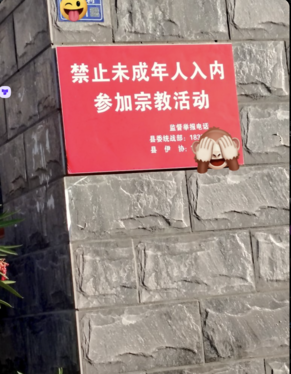
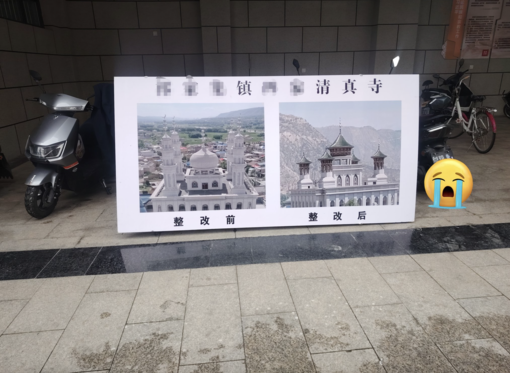
Hui Muslims who fled oppression in China are concerned about the president-elect’s vows to tighten asylum policy.
News • napio posted the article • 0 comments • 1143 views • 2025-01-26 05:39
Then they managed to get out of China and reached the soil of the United States, many by trekking through the brutal jungle in Panama known as the Darién Gap on their way to the U.S. southern border.
They are Hui Muslims, a state-recognized ethnic minority group in China, where the government is determined to crack down on Islam. As President-elect Donald J. Trump promises to build detention camps and enlist the military to carry out mass deportations, the future of this group of immigrants is precarious. Deportation could mean years in jail or labor camps.
“My mother told me to stay here,” said Yan, a single mother who came to the United States in July with her 10-year-old son, Masoud, through the Darién Gap. “‘If you come back,’” she quoted her own mother as saying, “‘there’ll be no good outcome for you. Who knows — they might even sentence you to life imprisonment.’”
In China, Yan was detained by the police for 15 days, then sent to a psychiatric hospital for more than 20 days because her phone showed that she had made small donations to two online Quran prayer groups. The police said she supported religious terrorists and called her a “radical religious fanatic.” She considers herself not very religious and doesn’t even wear a head scarf.
A growing number of Chinese are migrating to escape bleak economic prospects and political oppression. Many have joined Venezuelans, Ecuadoreans and Haitians trying to reach the United States through the Darién Gap. More than 38,000 Chinese migrants were temporarily detained on the southern border of the United States in the 2024 fiscal year, up from 24,000 the previous year, according to U.S. Customs and Border Protection. It’s not clear how many of them are Muslims.
Many Hui Muslims are making the crossing with their families.
On a recent Friday afternoon, Yan and Masoud were among the 15 adults and six children who had gathered at a three-story house in Flushing, Queens, in New York City. Most of them had stayed there, a shelter for Muslim immigrants from China, just after arriving in the United States. They get together on Fridays with newcomers to chat, pray and discuss their lives, faith and current affairs. Then they cook a big meal with the flavors of northwestern China’s cuisine: beef noodles, spicy chicken and steamed buns.
The shelter offers the immigrants free boarding for the first two weeks before they can find places to settle down. Known as Home of Muslim, it also serves as a community center where they can seek solace and support one another.
They exchange personal stories, often full of trauma, sorrow and anger, said Ma Ju, the founder and a financial backer of the shelter. Once, he walked into the living room, he said, and saw a group of women in one another’s arms, weeping.
Mr. Ma, a businessman and a critic of the government’s policies to make Islam in China more Chinese, started the shelter in February 2023 as more Chinese came from the southern border. Over 350 people have stayed at the refuge. Most of them are Hui Muslims, though some are Uyghurs, Tibetans or Han Chinese.
“They are all traumatized,” Mr. Ma said. “But sometimes, they didn’t even know what they experienced was oppression and discrimination.”
Of the roughly 25 million Muslims in China, 11 million are Hui, who have a big presence in the northwest but also live in enclaves around the nation. The Hui are better integrated into Chinese society than Uyghurs, the biggest Muslim group, who live primarily in Xinjiang. Unlike Uyghurs, who are ethnically Turkic, the Hui look similar to the country’s dominant ethnic group, the Han. The Hui haven’t faced the same degree of persecution as the Uyghurs, but the crackdown on Islam has shaken the group.
The Chinese Communist Party fears ideological competition from any religion. Across the country, the government has demolished minarets and domes of mosques, banned the public use of Arabic script, forbidden children to attend Quran schools and sent the most religious Muslims to re-education camps.
That Friday afternoon at the shelter, Yong, a Hui Muslim from Xinjiang, was one of the cooks. For years, he operated a successful halal restaurant in Urumqi, Xinjiang’s capital city. Nearly 90 percent of his customers were Uyghurs, he said. When the government expanded re-education camps in 2017, his customers started to dwindle in number. A year later, nearly 80 percent of them had disappeared, he said.
Then Yong’s three uncles and his brother-in-law, all Hui Muslims, were sent to re-education centers for going to mosques “too often” or for having studied at religious schools when they were young. His mother was taken to the local police station for questioning after she was spotted wearing a scarf at home. She was released after making a written promise that she would not wear a scarf again.
“At that time, my wife and I were living in constant fear,” Yong said, “feeling like even the slightest misstep could get us into serious trouble.” He and his wife arrived in America in May 2023, having transited the Darién Gap. He now drives an ambulance in Queens, and his wife works at a halal restaurant in New York City.
Most people I interviewed for this column asked that I use only their given names for fear that their family members in China could face harassment or worse punishment from the authorities.
Another cook at the shelter was Ye Chengxiang, a Hui Muslim from northwestern Qinghai Province. In 2017, the authorities destroyed the minaret on the mosque of his hometown. Then in 2022, Mr. Ye, also a restaurant owner, was forced to take down its halal sign amid a campaign to ban Arabic script.
Mr. Ye, 43, grew up listening to horror stories about his older family members’ experiences. He was determined to leave the country. It took him a decade to get Chinese passports for his family of four. On Dec. 11, 2023, he arrived in San Diego with his wife and two teenage daughters by way of the Darién Gap.
“There were moments on the road when it felt like I was going to die, completely unable to keep going,” he said. “But after I got to this land of freedom, the hardship was nothing. Totally worth it.”
In November, his wife, Sophie, gave birth to their third child. He recently opened a halal restaurant in Rego Park, Queens, with other Muslim immigrants. Another group who stayed at the shelter opened a halal noodle restaurant in Manhattan.
But Mr. Ma, the founder of the shelter, said Muslim migrants faced obstacles in making lives in America. Pork dishes, which many Muslims don’t eat, feature heavily in most Chinese restaurants. One former resident of the shelter, with Mr. Ma’s help, found a job at a warehouse — and was called “a terrorist” by co-workers, Han Chinese immigrants, on his first day.
After Mr. Trump won the election, Mr. Ma said, his phone rang almost nonstop for a week. The callers were anxious. They spoke little English, so they had limited access to official information.
Mr. Ma said he had invited a lawyer to the shelter to explain the importance of applying for political asylum. Most Chinese migrants entering the United States from the southern border are released on parole by immigration authorities. Then they can apply for asylum. Under the current protocols, the lawyer told them, once they had a pending case, they should be protected from deportation.
“It would be lying if anyone says they are not scared,” said Yan, the single mother. “Everyone is on edge.” She said she would accept being deported but would make the painful decision to have someone adopt her son, who has problems learning, if it meant he could stay in the United States.
“My son has to stay here,” she said. “Going back would mean no chance of survival for him.” view all
Then they managed to get out of China and reached the soil of the United States, many by trekking through the brutal jungle in Panama known as the Darién Gap on their way to the U.S. southern border.
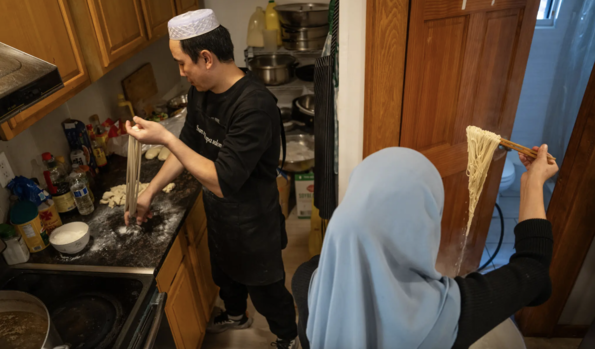
They are Hui Muslims, a state-recognized ethnic minority group in China, where the government is determined to crack down on Islam. As President-elect Donald J. Trump promises to build detention camps and enlist the military to carry out mass deportations, the future of this group of immigrants is precarious. Deportation could mean years in jail or labor camps.
“My mother told me to stay here,” said Yan, a single mother who came to the United States in July with her 10-year-old son, Masoud, through the Darién Gap. “‘If you come back,’” she quoted her own mother as saying, “‘there’ll be no good outcome for you. Who knows — they might even sentence you to life imprisonment.’”
In China, Yan was detained by the police for 15 days, then sent to a psychiatric hospital for more than 20 days because her phone showed that she had made small donations to two online Quran prayer groups. The police said she supported religious terrorists and called her a “radical religious fanatic.” She considers herself not very religious and doesn’t even wear a head scarf.
A growing number of Chinese are migrating to escape bleak economic prospects and political oppression. Many have joined Venezuelans, Ecuadoreans and Haitians trying to reach the United States through the Darién Gap. More than 38,000 Chinese migrants were temporarily detained on the southern border of the United States in the 2024 fiscal year, up from 24,000 the previous year, according to U.S. Customs and Border Protection. It’s not clear how many of them are Muslims.
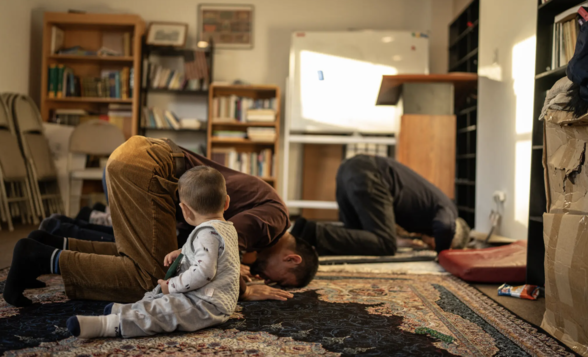
Many Hui Muslims are making the crossing with their families.
On a recent Friday afternoon, Yan and Masoud were among the 15 adults and six children who had gathered at a three-story house in Flushing, Queens, in New York City. Most of them had stayed there, a shelter for Muslim immigrants from China, just after arriving in the United States. They get together on Fridays with newcomers to chat, pray and discuss their lives, faith and current affairs. Then they cook a big meal with the flavors of northwestern China’s cuisine: beef noodles, spicy chicken and steamed buns.
The shelter offers the immigrants free boarding for the first two weeks before they can find places to settle down. Known as Home of Muslim, it also serves as a community center where they can seek solace and support one another.
They exchange personal stories, often full of trauma, sorrow and anger, said Ma Ju, the founder and a financial backer of the shelter. Once, he walked into the living room, he said, and saw a group of women in one another’s arms, weeping.
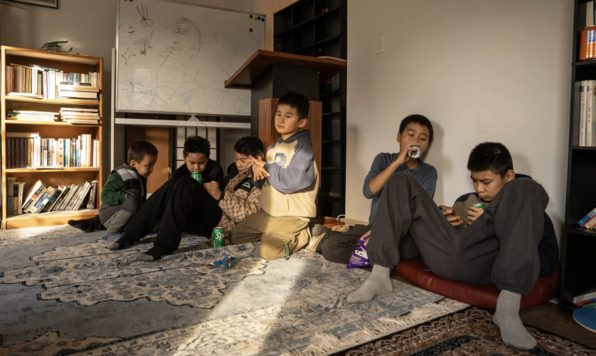
Mr. Ma, a businessman and a critic of the government’s policies to make Islam in China more Chinese, started the shelter in February 2023 as more Chinese came from the southern border. Over 350 people have stayed at the refuge. Most of them are Hui Muslims, though some are Uyghurs, Tibetans or Han Chinese.
“They are all traumatized,” Mr. Ma said. “But sometimes, they didn’t even know what they experienced was oppression and discrimination.”
Of the roughly 25 million Muslims in China, 11 million are Hui, who have a big presence in the northwest but also live in enclaves around the nation. The Hui are better integrated into Chinese society than Uyghurs, the biggest Muslim group, who live primarily in Xinjiang. Unlike Uyghurs, who are ethnically Turkic, the Hui look similar to the country’s dominant ethnic group, the Han. The Hui haven’t faced the same degree of persecution as the Uyghurs, but the crackdown on Islam has shaken the group.
The Chinese Communist Party fears ideological competition from any religion. Across the country, the government has demolished minarets and domes of mosques, banned the public use of Arabic script, forbidden children to attend Quran schools and sent the most religious Muslims to re-education camps.
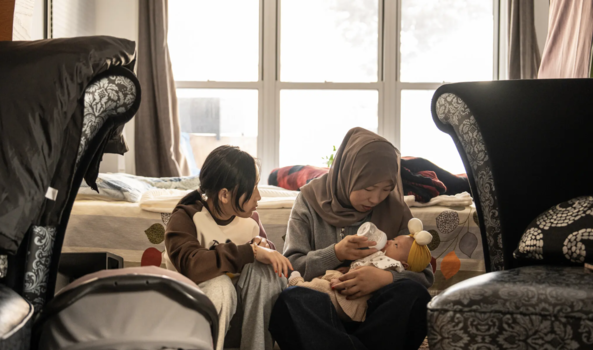
That Friday afternoon at the shelter, Yong, a Hui Muslim from Xinjiang, was one of the cooks. For years, he operated a successful halal restaurant in Urumqi, Xinjiang’s capital city. Nearly 90 percent of his customers were Uyghurs, he said. When the government expanded re-education camps in 2017, his customers started to dwindle in number. A year later, nearly 80 percent of them had disappeared, he said.
Then Yong’s three uncles and his brother-in-law, all Hui Muslims, were sent to re-education centers for going to mosques “too often” or for having studied at religious schools when they were young. His mother was taken to the local police station for questioning after she was spotted wearing a scarf at home. She was released after making a written promise that she would not wear a scarf again.
“At that time, my wife and I were living in constant fear,” Yong said, “feeling like even the slightest misstep could get us into serious trouble.” He and his wife arrived in America in May 2023, having transited the Darién Gap. He now drives an ambulance in Queens, and his wife works at a halal restaurant in New York City.
Most people I interviewed for this column asked that I use only their given names for fear that their family members in China could face harassment or worse punishment from the authorities.
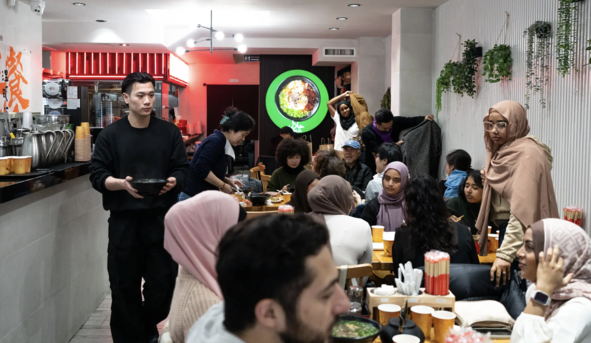
Another cook at the shelter was Ye Chengxiang, a Hui Muslim from northwestern Qinghai Province. In 2017, the authorities destroyed the minaret on the mosque of his hometown. Then in 2022, Mr. Ye, also a restaurant owner, was forced to take down its halal sign amid a campaign to ban Arabic script.
Mr. Ye, 43, grew up listening to horror stories about his older family members’ experiences. He was determined to leave the country. It took him a decade to get Chinese passports for his family of four. On Dec. 11, 2023, he arrived in San Diego with his wife and two teenage daughters by way of the Darién Gap.
“There were moments on the road when it felt like I was going to die, completely unable to keep going,” he said. “But after I got to this land of freedom, the hardship was nothing. Totally worth it.”
In November, his wife, Sophie, gave birth to their third child. He recently opened a halal restaurant in Rego Park, Queens, with other Muslim immigrants. Another group who stayed at the shelter opened a halal noodle restaurant in Manhattan.
But Mr. Ma, the founder of the shelter, said Muslim migrants faced obstacles in making lives in America. Pork dishes, which many Muslims don’t eat, feature heavily in most Chinese restaurants. One former resident of the shelter, with Mr. Ma’s help, found a job at a warehouse — and was called “a terrorist” by co-workers, Han Chinese immigrants, on his first day.
After Mr. Trump won the election, Mr. Ma said, his phone rang almost nonstop for a week. The callers were anxious. They spoke little English, so they had limited access to official information.
Mr. Ma said he had invited a lawyer to the shelter to explain the importance of applying for political asylum. Most Chinese migrants entering the United States from the southern border are released on parole by immigration authorities. Then they can apply for asylum. Under the current protocols, the lawyer told them, once they had a pending case, they should be protected from deportation.
“It would be lying if anyone says they are not scared,” said Yan, the single mother. “Everyone is on edge.” She said she would accept being deported but would make the painful decision to have someone adopt her son, who has problems learning, if it meant he could stay in the United States.
“My son has to stay here,” she said. “Going back would mean no chance of survival for him.”
Hundreds of Hui Muslims Protest Arrest of Respected Imam in Yunnan Province, China Mainland
News • davidlo posted the article • 0 comments • 1206 views • 2024-12-17 21:10
On December 15 and 16, hundreds of Hui Muslims gathered outside the city government office in Yuxi, Yunnan Province, to protest the arrest of a well-respected local imam by Chinese authorities. The incident highlights the Chinese Communist Party’s growing control over religious groups, extending beyond the predominantly Muslim regions of northwest China.
According to reports, Imam Ma Yuwei was forcibly detained by plainclothes police officers on the morning of December 15 while dining at a restaurant near Nie’er Square in Yuxi. That same day, his brother in Shadian narrowly avoided arrest thanks to strong opposition from local residents. These actions sparked outrage among the local Muslim community, who took to the streets demanding Ma Yuwei’s release. The protests continued into the morning of December 16.
Sources revealed that Ma Yuwei had been under surveillance and investigation by unidentified individuals for the past year. For safety reasons, he and his father had been living in a mosque for months and rarely ventured outside. On this rare occasion, while dining out, Ma was surrounded and taken away by armed officers. Protesters claim the police did not present an arrest warrant or official identification, and the only reason given for his detention was his preaching of the Quran.
This is not an isolated incident. In recent years, the Chinese government has increased pressure on various religious groups, including Uyghur Muslims in Xinjiang, through measures such as setting up so-called “re-education camps.” These actions have drawn widespread international condemnation.
The Yunnan protests suggest that these crackdowns may now be extending to Hui Muslim communities outside northwest China. Protesters pointed to repeated instances of oppression against Hui Muslims since 2017, including arrests, detentions, and suppressions, creating a cycle of conflict. They refuted government claims that no Hui Muslims have been detained in “camps,” arguing that substantial evidence indicates tens of thousands of Hui Muslims have been imprisoned.
Tensions remained high at the protest site. Police reportedly tried to disperse the crowd outside the city government office, leading to confrontations. Protesters began organizing efforts to identify undercover officers within the crowd to prepare for potential crackdowns. Witnesses reported seeing large numbers of military and police vehicles heading toward Yuxi overnight, raising concerns about further escalation.
Protesters have submitted a petition to the Yuxi city government demanding an explanation for Ma Yuwei’s arrest and guarantees of religious freedom for Hui Muslims. The petition also highlighted long-standing conflicts between the mosque and local authorities, including allegations regarding its religious activities and management.
This incident is another example of the worsening state of religious freedom in China. The government’s tightened control over religion has increasingly affected not only Uyghur Muslims in Xinjiang but also Hui Muslims and other religious groups, including Christians, in other regions of the country. view all
On December 15 and 16, hundreds of Hui Muslims gathered outside the city government office in Yuxi, Yunnan Province, to protest the arrest of a well-respected local imam by Chinese authorities. The incident highlights the Chinese Communist Party’s growing control over religious groups, extending beyond the predominantly Muslim regions of northwest China.
According to reports, Imam Ma Yuwei was forcibly detained by plainclothes police officers on the morning of December 15 while dining at a restaurant near Nie’er Square in Yuxi. That same day, his brother in Shadian narrowly avoided arrest thanks to strong opposition from local residents. These actions sparked outrage among the local Muslim community, who took to the streets demanding Ma Yuwei’s release. The protests continued into the morning of December 16.
Sources revealed that Ma Yuwei had been under surveillance and investigation by unidentified individuals for the past year. For safety reasons, he and his father had been living in a mosque for months and rarely ventured outside. On this rare occasion, while dining out, Ma was surrounded and taken away by armed officers. Protesters claim the police did not present an arrest warrant or official identification, and the only reason given for his detention was his preaching of the Quran.
This is not an isolated incident. In recent years, the Chinese government has increased pressure on various religious groups, including Uyghur Muslims in Xinjiang, through measures such as setting up so-called “re-education camps.” These actions have drawn widespread international condemnation.
The Yunnan protests suggest that these crackdowns may now be extending to Hui Muslim communities outside northwest China. Protesters pointed to repeated instances of oppression against Hui Muslims since 2017, including arrests, detentions, and suppressions, creating a cycle of conflict. They refuted government claims that no Hui Muslims have been detained in “camps,” arguing that substantial evidence indicates tens of thousands of Hui Muslims have been imprisoned.
Tensions remained high at the protest site. Police reportedly tried to disperse the crowd outside the city government office, leading to confrontations. Protesters began organizing efforts to identify undercover officers within the crowd to prepare for potential crackdowns. Witnesses reported seeing large numbers of military and police vehicles heading toward Yuxi overnight, raising concerns about further escalation.
Protesters have submitted a petition to the Yuxi city government demanding an explanation for Ma Yuwei’s arrest and guarantees of religious freedom for Hui Muslims. The petition also highlighted long-standing conflicts between the mosque and local authorities, including allegations regarding its religious activities and management.
This incident is another example of the worsening state of religious freedom in China. The government’s tightened control over religion has increasingly affected not only Uyghur Muslims in Xinjiang but also Hui Muslims and other religious groups, including Christians, in other regions of the country.
The Chinese government is trying to change the Eid customs, prayers and traditions by making Uyghurs consume food along with Chinese people
News • jamila posted the article • 2 comments • 1166 views • 2024-07-26 04:41
On an important Muslim holiday last month, police and security officials in China’s far-western region of Xinjiang set up camps to keep an eye on Uyghurs, took Uyghurs to see communist-themed films, and visited Uyghur homes to make sure they weren’t practicing Muslim religious activities.
The moves around the Qurban Eid, also known as Eid al-Adha or the Feast of the Sacrifice, which fell on June 17 this year in Xinjiang — one of two official Muslim holidays in China — appeared to be attempts to undermine the observation of the Muslim holy day, outside experts said.
Chinese authorities are trying to weaken Uyghurs’ ethnic and religious identity and forge their loyalty to the Chinese state and the Communist Party, while maintaining security, the experts said.
“It looks like they are trying to Sinicize Eid,” said Erkin Ekrem, a professor at Hacettepe University in Ankara, Turkey, and vice president of the World Uyghur Congress.
“The Chinese government is trying to change the Eid customs, prayers and traditions [by] making Uyghurs consume food along with Chinese people [and] adding Chinese elements to the Eid festivals, thereby removing the Muslim Eid elements,” he added.
RELATED STORIES
China pushes ‘Sinicization of Islam’ in Xinjiang as Ramadan arrives
Most Uyghurs banned from praying on Islamic holiday, even in their homes
Chinese use Muslim holiday for propaganda purposes, celebrating with Uyghurs
A screen displays Chinese President Xi Jinping near a mosque in Kashgar, northwestern China's Xinjiang region, June 4, 2019. (AFPTV)
Before 2017, when the Chinese government started cracking down on religious activities in the predominantly Muslim region, men would observe the holiday by visiting mosques for special prayers, cooking meals, spending time with relatives and welcoming guests to their homes.
Since then, authorities have also forbidden Islamic dress for women, beards for men, and Muslim names for children. They have also prevented Uyghurs from fasting during the Islamic holy month of Ramadan and encouraged the consumption of pork and alcohol, which Islam forbids.
Chinese national consciousness
On the eve of Eid, Ma Xingrui, Communist Party secretary of Xinjiang, visited communities in Urumqi, the region’s capital, and asked residents to strengthen Chinese national consciousness and insist on the Sinicization of Islam.
Public security officers celebrated the holiday with Uyghurs and other ethnicities in Xinjiang and promoted “the common consciousness of the Chinese nation,” the Xinjiang Daily reported on June 19.
The Keriye County Public Security Bureau in Hotan invited teachers at area primary schools, students and parents on June 16 to participate in social activities at a police camp to “build strong Chinese national consciousness and celebrate Eid,” the report said.
On the same day, police in Qitai county in the Changji Hui Autonomous Prefecture invited Uyghur “relatives” with whom they had been paired up under a previous monitoring program to visit a museum to watch communist-themed films.
On June 17, members of the Public Security Bureau in the prefecture’s Manas county visited Uyghur homes and danced with residents, who had no choice but to join in, the news report said.
“The police showed their concern for the public by their actions and also planted the seeds of national unity deep in everyone’s hearts,” it said.
Assimilation policies
Henryk Szadziewski, director of research at the Uyghur Human Rights Project, said public security agents interfere in Muslim holidays like Eid al-Adha to push assimilationist policies in Xinjiang.
Uyghur identification with Turkic culture along with a belief in Islam and related social and political values are considered a threat because they are outside the control of the Chinese state, he told Radio Free Asia.
Attendees watch video of a Muslim praying during a government reception held for the Eid al-Fitr holiday in Beijing, China, May 13, 2021. (Ng Han Guan/AP)
“China’s policies are intended to weaken those kinds of affinities outside which are beyond the borders of China and to ensure Uyghurs allegiances are pinned to the Chinese state and, of course, the Chinese Communist Party,” Szadziewski said.
But the Chinese government separates Islam in China from Islam in the rest of the world, Erkin Ekrem of the World Uyghur Congress said.
“In China, the Sinicization of Islam is being carried out vigorously,” he told RFA. “They are trying to create a nation away from Islamic beliefs and customs.”
“Deemphasizing the religion adding in this secular Chinese national consciousness [is] meant to delink Eid al-Adha from its religious origin,” he said. “That is one of the aims here.”
Translated by RFA Uyghur. Edited by Roseanne Gerin and Malcolm Foster. view all
On an important Muslim holiday last month, police and security officials in China’s far-western region of Xinjiang set up camps to keep an eye on Uyghurs, took Uyghurs to see communist-themed films, and visited Uyghur homes to make sure they weren’t practicing Muslim religious activities.
The moves around the Qurban Eid, also known as Eid al-Adha or the Feast of the Sacrifice, which fell on June 17 this year in Xinjiang — one of two official Muslim holidays in China — appeared to be attempts to undermine the observation of the Muslim holy day, outside experts said.
Chinese authorities are trying to weaken Uyghurs’ ethnic and religious identity and forge their loyalty to the Chinese state and the Communist Party, while maintaining security, the experts said.
“It looks like they are trying to Sinicize Eid,” said Erkin Ekrem, a professor at Hacettepe University in Ankara, Turkey, and vice president of the World Uyghur Congress.
“The Chinese government is trying to change the Eid customs, prayers and traditions [by] making Uyghurs consume food along with Chinese people [and] adding Chinese elements to the Eid festivals, thereby removing the Muslim Eid elements,” he added.
RELATED STORIES
China pushes ‘Sinicization of Islam’ in Xinjiang as Ramadan arrives
Most Uyghurs banned from praying on Islamic holiday, even in their homes
Chinese use Muslim holiday for propaganda purposes, celebrating with Uyghurs

A screen displays Chinese President Xi Jinping near a mosque in Kashgar, northwestern China's Xinjiang region, June 4, 2019. (AFPTV)
Before 2017, when the Chinese government started cracking down on religious activities in the predominantly Muslim region, men would observe the holiday by visiting mosques for special prayers, cooking meals, spending time with relatives and welcoming guests to their homes.
Since then, authorities have also forbidden Islamic dress for women, beards for men, and Muslim names for children. They have also prevented Uyghurs from fasting during the Islamic holy month of Ramadan and encouraged the consumption of pork and alcohol, which Islam forbids.
Chinese national consciousness
On the eve of Eid, Ma Xingrui, Communist Party secretary of Xinjiang, visited communities in Urumqi, the region’s capital, and asked residents to strengthen Chinese national consciousness and insist on the Sinicization of Islam.
Public security officers celebrated the holiday with Uyghurs and other ethnicities in Xinjiang and promoted “the common consciousness of the Chinese nation,” the Xinjiang Daily reported on June 19.
The Keriye County Public Security Bureau in Hotan invited teachers at area primary schools, students and parents on June 16 to participate in social activities at a police camp to “build strong Chinese national consciousness and celebrate Eid,” the report said.
On the same day, police in Qitai county in the Changji Hui Autonomous Prefecture invited Uyghur “relatives” with whom they had been paired up under a previous monitoring program to visit a museum to watch communist-themed films.
On June 17, members of the Public Security Bureau in the prefecture’s Manas county visited Uyghur homes and danced with residents, who had no choice but to join in, the news report said.
“The police showed their concern for the public by their actions and also planted the seeds of national unity deep in everyone’s hearts,” it said.
Assimilation policies
Henryk Szadziewski, director of research at the Uyghur Human Rights Project, said public security agents interfere in Muslim holidays like Eid al-Adha to push assimilationist policies in Xinjiang.
Uyghur identification with Turkic culture along with a belief in Islam and related social and political values are considered a threat because they are outside the control of the Chinese state, he told Radio Free Asia.

Attendees watch video of a Muslim praying during a government reception held for the Eid al-Fitr holiday in Beijing, China, May 13, 2021. (Ng Han Guan/AP)
“China’s policies are intended to weaken those kinds of affinities outside which are beyond the borders of China and to ensure Uyghurs allegiances are pinned to the Chinese state and, of course, the Chinese Communist Party,” Szadziewski said.
But the Chinese government separates Islam in China from Islam in the rest of the world, Erkin Ekrem of the World Uyghur Congress said.
“In China, the Sinicization of Islam is being carried out vigorously,” he told RFA. “They are trying to create a nation away from Islamic beliefs and customs.”
“Deemphasizing the religion adding in this secular Chinese national consciousness [is] meant to delink Eid al-Adha from its religious origin,” he said. “That is one of the aims here.”
Translated by RFA Uyghur. Edited by Roseanne Gerin and Malcolm Foster.
China’s War against Islam: From ‘mosque rectification program’, to Quran being burnt, pork being fed, Namaz and Hijab being banned and more
News • napio posted the article • 0 comments • 1472 views • 2023-05-12 22:44
China's war on Islam includes a total ban on religious education, harsh suppression of religious scholars, burning of the Quran, destroying mosques and cemeteries, changing prayers and zikr, forbidding the hijab, eliminating Islamic customs, forbidding learning Arabic, erasing the Muslim identity of Uyghur children and more.
The Center for Uyghur Studies (CUS) published an 88-page detailed research paper on April 28, 2023, highlighting the scale of the Communist Party of China’s transnational war against Islam and resultant repression of Uyghur Muslims with a particular focus on the Chinese government policies in East Turkestan, more commonly known as the Xinjiang Uyghur Autonomous Region of China.
The report titled, “Islamophobia in China and Attitudes of Muslim Countries”, highlights numerous instances of China’s war against Islam. It also talks about how Muslim nations have maintained studious silence at China’s treatment of Uyghur Muslims in Chinese-occupied East Turkestan or the Xinjiang province.
The research looks at the historical and systemic attempts made by the Chinese Communist Party (CCP) to “sinicize” Islam and Muslims from the inception of the People’s Republic of China in 1949. The paper also details the numerous facets of China’s conflict with Islam in East Turkistan during the past seven decades, most recently starting in 2017.
It also looks at China’s disinformation tactics in the Islamic world and the several propaganda techniques the Chinese state uses to keep Muslims from publicly criticising their treatment by China due to their religion. The report concludes with a chapter on the OIC’s failure to address the Uyghurs and the attitudes of Muslim-majority nations towards the Uyghur Genocide.
Uyghurs are a Turkish-Muslim ethnic group living in Xinjiang, the largest and most western of China’s administrative regions surrounded by Mongolia, Russia, Kazakhstan, Kyrgyzstan, Tajikistan, Afghanistan, Pakistan, and India. The Xinjiang autonomous region in China has had a long history of discord between the authorities and the Uighur population.
Islam and China
The research paper highlights how in China, Islam has been regarded as a foreign religion that came from outside China. Hence, there has been a view that Muslims as foreigners and backwards. Talking about how it originated, the research suggests that the hate for Muslims in the country began in 1949 with the emergence of the People’s Republic of China (PRC) and only worsened during the past 70 years of the CCP rule.
The report said that dislike for Islam in China is at extremely high levels. The issue was made worse by the portrayal of Islam and Muslims in the Chinese state media. A favourable and acceptable international climate for dislike towards Islam in China was also created by the “Global War on Terror” that was declared following the 9/11 attacks.
Since Xi Jinping took office, the PRC’s hostility towards Muslims has increased. Particularly, the CCP’s work conference on religious affairs that took place in 2016 marked a high point in the specific dislike for Islam. Chinese authorities have initiated a statewide crackdown on different religions, especially those that are considered foreign (like Islam and Christianity).
Persecution of Uyghur Muslims in Xinjiang seen as the most radical form of Islamophobia in China, says research
The research report by the think tank suggests that the most extreme manifestation of dislike for Islam in China has been the actions taken by Chinese authorities against Uyghur Muslims in East Turkestan or Xinjiang. Millions of Muslims have been imprisoned by the Chinese authorities under the guise of “re-education and rehabilitation,” and thousands of mosques have been razed in East Turkestan. Chinese authorities compare Islam to an “infectious disease” and Uyghur Muslims to “infected people,” highlighting the need to eradicate the faith, read the report.
The report explains the extent of the exploitation of Uyghur Muslims by Communist China
The report states that Muslims in China have experienced discrimination as a result of the Chinese government’s overt and covert support of incidents where men and women wearing the hijab are mocked, barred from public spaces like hospitals and hotels and even denied employment. Muslim categorization of food as halal or haram is fiercely opposed. Islamic attire and customs are attacked and shunned because they were seen as foreign by Chinese society.
This research piece further highlighted how the practice of discrimination against Muslims in China, particularly with regard to the Uyghurs in East Turkestan, has assumed the shape of a government policy.
The anti-Islam campaigns initiated by the Chinese authorities
In their report, the researchers discuss how the Chinese government has been attempting to eliminate Islam since its presence in the Xinjiang province. It highlights the various anti-Islam campaigns, which include a total ban on religious education, harsh suppression of religious scholars, burning of the Quran, destroying mosques and cemeteries, changing prayers and zikr, forbidding the hijab, eliminating Islamic customs, forbidding learning Arabic, and erasing the Muslim identity of Uyghur children, carried out over the years by the Communist Party of China under the leadership of Xi Jinping.
Prohibition on preaching Islam: The report states how Muslims of East Turkestan are not able to learn and teach their religion. Following the occupation of East Turkistan in 1966 until today, Muslim children are being mandatorily raised with communist ideology and Chinese culture at state schools. Chinese communists mandate that Muslim children learn atheism and communist ideology while closing down Islamic schools (Madarsa), eradicating Islam from the educational system.
After CCP assumed power in 2014, the Chinese government imprisoned Uyghurs who studied in Muslim-majority nations like Pakistan, Egypt, Saudi Arabia, and Turkey and mandated those who were still there to return. They also placed state officials in Uyghur homes to monitor them round-the-clock and completely forbid the parents from teaching their children Islamic practises like Namaz and the Quran.
A demolished mosque in Kashgar City of East Turkestan (Source: /)[/url]
In 2017, a large number of Uyghur students at Al-Azhar University were forcibly returned to China by the Chinese authorities with the assistance of the Egyptian government.
Suppression of Maulvis: As the leadership views Islamic practices as crimes and the religious leaders as criminals, religious scholars are the group in Xinjiang that faces the harshest treatment at the hands of the Chinese communist regime. The report used data released by the Uyghur Human Rights Project (UHRP), which confirms that as many as 1,000 imams have been detained since 2014 as a result of their affiliation with Islamic teaching. Most of those arrested were sentenced to 15-20 years or life in prison terms.
The report further adds that since 2017, there has been a significant upsurge in the targeting of Islamist scholars. Many Uyghur imams and clerics have been detained, imprisoned, or sent to concentration camps in 2017. Those who weren’t in jail were forced to sing and dance in support of the communist party in front of the public.
Uyghurs Cleric dancing and singing in praise of CCP (Source: /)[/url]
Burning of the Quran: The report highlights yet another strategy the CCP government employs in its war against Islam, which is the burning of their religious texts and the Quran. The report said that this practice has increased manifolds since 2014.
During China’s recent campaign against Islam in East Turkestan, people who did not voluntarily turn over religious materials to the police were subjected to severe punishments when they were found. Because of their fear, Muslims in East Turkestan were sometimes forced to dispose of the Quran by dumping it into rivers.
Since 2017, all Islamic textbooks and materials have been outlawed in China. All the religious literature and materials were gathered and burnt. Those who had such items were detained or transferred to jails or concentration camps.
Destruction of mosques and cemeteries: Chinese authorities also destroyed mosques or transformed them in addition to suppressing Imams. When the “Cultural Revolution” took place between 1966 and 1976, the policy was at its strictest.
In 2017, the process of demolishing mosques began once again. Under the “Mosque Rectification Programme,” the Chinese government led by Ji Xingping destroyed a large number of mosques throughout East Turkestan. Experts at the Australian Strategic Policy Institute (ASPI) estimate that 16,000 mosques have been destroyed since 2017, 8,500 of which have been entirely destroyed. This number accounts for 65% of the mosques in East Turkestan.
A mosque with its dome and minarets removed
Thousands of mosques have also been transformed into pig barns, restaurants, etc. The mosques that are left standing are exclusively retained for tourist and propaganda purposes; it is not permitted to enter them to perform religious services.
Zikr or prayers altered to venerate Ji Xingping: The Chinese Communist Party (CCP) forbade Uyghur Muslims from worshipping Allah and replaced the phrases in their prayers and Zikr (remembrance of God) scripts with those that honour Xi Jinping and the CCP.
In addition to mandating Imams to dance and sing communist songs, Chinese authorities have started efforts that mock Islam and Muslims. Anti-Islam signs and slogans have been plastered all over Xinjiang’s streets since 2017.
In prisons and concentration camps, these practices are all too common. The Muslim inmates are required by the prison and camp guards to thank the communist party and Xi Jinping after meals and to praise them before meals. Those who resent this are punished and denied food. Inmates are made to denounce Islam and make derogatory remarks about the Prophet.
Banning Hijab: Chinese oppression of Uyghur Muslims has been known for a long time. Earlier the Chinese police had imposed a dress code for Uyghur women, under which Muslim women are not allowed to wear long dresses. In 2020, photos appeared on social media showing police cutting the dresses of Uyghur women for being “too long”. It was also reported that Han Males are sleeping on the same bed as Uyghur Muslim women in China whose male family members, often husbands, are locked up in ‘re-education camps’ in conformity with a diktat by the Chinese regime.
In 2017, all Hijabi Uyghur women were sent to prisons and concentration camps. The “Qaraqash List,” a leaked document from the Chinese government, claims that many Uyghur women were imprisoned in concentration camps in the county of Qaraqash for donning the hijab.
Uyghur Muslims not allowed to follow Islamic traditions: Under the pretext of “fighting religious extremism and terrorism,” the Chinese government has since 2014 banned all religious practices. For instance, Islamic naming ceremonies, marriages, funerals, and Quranic recitations for the deceased have all been outlawed.
Arabic banned in China: Learning and teaching Arabic is deemed “religious extremism” in the post-2014 crackdown, and those who had done so in the past have been detained by the government. In East Turkestan, studying Arabic is currently strictly prohibited. Except for the government-run “Xinjiang Islamic Institute” (which was only left because the Chinese government needed to train imams loyal to the CPP and spread their message towards the Islamic world), there is not a single Arabic language school in the Xinjiang province.
Uyghur children’s Muslim identities being erased: One of the most anti-Islam efforts carried out by the Chinese communist state as part of the war against Islam in East Turkestan is the complete erasure of the Muslim identity of Uyghur children. Uyghur parents are sent to jails or concentration camps by the government, which forces their kids into state orphanages and boarding schools. Children are raised in these orphanages totally in accordance with communist ideology, transforming them into Han Chinese. Even the children’s Uyghur names are changed.
Uyghur Muslim children dressed in Han cultural clothing celebrating the Chinese new year
Chinese govt promotes ‘assimilation’ by forced Uyghur Muslim-Han intermarriage: On 16th November 2022, Uyghur Human Rights Project published a report on the measures taken by the Chinese government to promote intermarriage between Uyghur Muslims and Han Chinese ethnic groups. The means employed by the Chinese government consist of both incentivization and coercive actions underlines the report.
Since 2017, China has restricted or banned ethnic customs and Islamic religious rituals among the mostly Muslim Uyghurs in what they say is an effort to stamp out “religious extremism.”
Chinese regime forces Uyghur Muslims to eat pork under the initiative of ‘free food’: In 2020, an educator and medical doctor named Sayragul Sautbay revealed in a new book how Uyghur Muslims in Xinjiang are forced to eat pork.
It is notable that pork is strictly prohibited in Islam, as it has been labelled as a Haram food.
Sautbay said that Muslims were made to eat pork, even outside detention camps. She informed that students in a school in Altay in northern Xinjiang were also force-fed pork and when many refused, the soldiers were sent in to take control of the situation. The educator stated that pork is being served to kindergarten children under the initiative of ‘free food.’
China using Uyghur Muslim spies to catch other Muslims who are violating ban on fasting during Ramzan
Last month a report emerged confirming that the Chinese authorities had employed spies to ensure that the Uyghur Muslims are not fasting during Ramzan.
The report stated that the spies that Chinese officials refer to as ‘ears’ are recruited from regular civilians, police officials, and members of neighbourhood committees, citing a police officer from a region close to Turpan, or Tulufan in Chinese, in the eastern Xinjiang Uyghur Autonomous Region.
“We have many secret agents,” the police officer told Radio Free Asia. As part of broader attempts to denigrate Uyghur culture, language, and religion, China started arbitrarily imprisoning Uyghurs in ‘re-education’ camps in 2017 and also prohibited them from fasting throughout Ramadan.
Additionally, the Chinese authorities banned most Uyghurs from praying in mosques, and even in their homes, during the Eid-ul-Fitr.
Despite such ‘atrocities’, China has not faced any repercussions for its ongoing totalitarian policies, which are most affecting the Uyghurs. The Islamic world, which has surrendered itself to the Chinese whims, has maintained a tight lip against China.
view all
China's war on Islam includes a total ban on religious education, harsh suppression of religious scholars, burning of the Quran, destroying mosques and cemeteries, changing prayers and zikr, forbidding the hijab, eliminating Islamic customs, forbidding learning Arabic, erasing the Muslim identity of Uyghur children and more.
The Center for Uyghur Studies (CUS) published an 88-page detailed research paper on April 28, 2023, highlighting the scale of the Communist Party of China’s transnational war against Islam and resultant repression of Uyghur Muslims with a particular focus on the Chinese government policies in East Turkestan, more commonly known as the Xinjiang Uyghur Autonomous Region of China.
The report titled, “Islamophobia in China and Attitudes of Muslim Countries”, highlights numerous instances of China’s war against Islam. It also talks about how Muslim nations have maintained studious silence at China’s treatment of Uyghur Muslims in Chinese-occupied East Turkestan or the Xinjiang province.
The research looks at the historical and systemic attempts made by the Chinese Communist Party (CCP) to “sinicize” Islam and Muslims from the inception of the People’s Republic of China in 1949. The paper also details the numerous facets of China’s conflict with Islam in East Turkistan during the past seven decades, most recently starting in 2017.
It also looks at China’s disinformation tactics in the Islamic world and the several propaganda techniques the Chinese state uses to keep Muslims from publicly criticising their treatment by China due to their religion. The report concludes with a chapter on the OIC’s failure to address the Uyghurs and the attitudes of Muslim-majority nations towards the Uyghur Genocide.
Uyghurs are a Turkish-Muslim ethnic group living in Xinjiang, the largest and most western of China’s administrative regions surrounded by Mongolia, Russia, Kazakhstan, Kyrgyzstan, Tajikistan, Afghanistan, Pakistan, and India. The Xinjiang autonomous region in China has had a long history of discord between the authorities and the Uighur population.
Islam and China
The research paper highlights how in China, Islam has been regarded as a foreign religion that came from outside China. Hence, there has been a view that Muslims as foreigners and backwards. Talking about how it originated, the research suggests that the hate for Muslims in the country began in 1949 with the emergence of the People’s Republic of China (PRC) and only worsened during the past 70 years of the CCP rule.
The report said that dislike for Islam in China is at extremely high levels. The issue was made worse by the portrayal of Islam and Muslims in the Chinese state media. A favourable and acceptable international climate for dislike towards Islam in China was also created by the “Global War on Terror” that was declared following the 9/11 attacks.
Since Xi Jinping took office, the PRC’s hostility towards Muslims has increased. Particularly, the CCP’s work conference on religious affairs that took place in 2016 marked a high point in the specific dislike for Islam. Chinese authorities have initiated a statewide crackdown on different religions, especially those that are considered foreign (like Islam and Christianity).
Persecution of Uyghur Muslims in Xinjiang seen as the most radical form of Islamophobia in China, says research
The research report by the think tank suggests that the most extreme manifestation of dislike for Islam in China has been the actions taken by Chinese authorities against Uyghur Muslims in East Turkestan or Xinjiang. Millions of Muslims have been imprisoned by the Chinese authorities under the guise of “re-education and rehabilitation,” and thousands of mosques have been razed in East Turkestan. Chinese authorities compare Islam to an “infectious disease” and Uyghur Muslims to “infected people,” highlighting the need to eradicate the faith, read the report.
The report explains the extent of the exploitation of Uyghur Muslims by Communist China
The report states that Muslims in China have experienced discrimination as a result of the Chinese government’s overt and covert support of incidents where men and women wearing the hijab are mocked, barred from public spaces like hospitals and hotels and even denied employment. Muslim categorization of food as halal or haram is fiercely opposed. Islamic attire and customs are attacked and shunned because they were seen as foreign by Chinese society.
This research piece further highlighted how the practice of discrimination against Muslims in China, particularly with regard to the Uyghurs in East Turkestan, has assumed the shape of a government policy.
The anti-Islam campaigns initiated by the Chinese authorities
In their report, the researchers discuss how the Chinese government has been attempting to eliminate Islam since its presence in the Xinjiang province. It highlights the various anti-Islam campaigns, which include a total ban on religious education, harsh suppression of religious scholars, burning of the Quran, destroying mosques and cemeteries, changing prayers and zikr, forbidding the hijab, eliminating Islamic customs, forbidding learning Arabic, and erasing the Muslim identity of Uyghur children, carried out over the years by the Communist Party of China under the leadership of Xi Jinping.
Prohibition on preaching Islam: The report states how Muslims of East Turkestan are not able to learn and teach their religion. Following the occupation of East Turkistan in 1966 until today, Muslim children are being mandatorily raised with communist ideology and Chinese culture at state schools. Chinese communists mandate that Muslim children learn atheism and communist ideology while closing down Islamic schools (Madarsa), eradicating Islam from the educational system.
After CCP assumed power in 2014, the Chinese government imprisoned Uyghurs who studied in Muslim-majority nations like Pakistan, Egypt, Saudi Arabia, and Turkey and mandated those who were still there to return. They also placed state officials in Uyghur homes to monitor them round-the-clock and completely forbid the parents from teaching their children Islamic practises like Namaz and the Quran.
A demolished mosque in Kashgar City of East Turkestan (Source: /)[/url]
In 2017, a large number of Uyghur students at Al-Azhar University were forcibly returned to China by the Chinese authorities with the assistance of the Egyptian government.
Suppression of Maulvis: As the leadership views Islamic practices as crimes and the religious leaders as criminals, religious scholars are the group in Xinjiang that faces the harshest treatment at the hands of the Chinese communist regime. The report used data released by the Uyghur Human Rights Project (UHRP), which confirms that as many as 1,000 imams have been detained since 2014 as a result of their affiliation with Islamic teaching. Most of those arrested were sentenced to 15-20 years or life in prison terms.
The report further adds that since 2017, there has been a significant upsurge in the targeting of Islamist scholars. Many Uyghur imams and clerics have been detained, imprisoned, or sent to concentration camps in 2017. Those who weren’t in jail were forced to sing and dance in support of the communist party in front of the public.

Uyghurs Cleric dancing and singing in praise of CCP (Source: /)[/url]
Burning of the Quran: The report highlights yet another strategy the CCP government employs in its war against Islam, which is the burning of their religious texts and the Quran. The report said that this practice has increased manifolds since 2014.
During China’s recent campaign against Islam in East Turkestan, people who did not voluntarily turn over religious materials to the police were subjected to severe punishments when they were found. Because of their fear, Muslims in East Turkestan were sometimes forced to dispose of the Quran by dumping it into rivers.
Since 2017, all Islamic textbooks and materials have been outlawed in China. All the religious literature and materials were gathered and burnt. Those who had such items were detained or transferred to jails or concentration camps.
Destruction of mosques and cemeteries: Chinese authorities also destroyed mosques or transformed them in addition to suppressing Imams. When the “Cultural Revolution” took place between 1966 and 1976, the policy was at its strictest.
In 2017, the process of demolishing mosques began once again. Under the “Mosque Rectification Programme,” the Chinese government led by Ji Xingping destroyed a large number of mosques throughout East Turkestan. Experts at the Australian Strategic Policy Institute (ASPI) estimate that 16,000 mosques have been destroyed since 2017, 8,500 of which have been entirely destroyed. This number accounts for 65% of the mosques in East Turkestan.

A mosque with its dome and minarets removed
Thousands of mosques have also been transformed into pig barns, restaurants, etc. The mosques that are left standing are exclusively retained for tourist and propaganda purposes; it is not permitted to enter them to perform religious services.
Zikr or prayers altered to venerate Ji Xingping: The Chinese Communist Party (CCP) forbade Uyghur Muslims from worshipping Allah and replaced the phrases in their prayers and Zikr (remembrance of God) scripts with those that honour Xi Jinping and the CCP.
In addition to mandating Imams to dance and sing communist songs, Chinese authorities have started efforts that mock Islam and Muslims. Anti-Islam signs and slogans have been plastered all over Xinjiang’s streets since 2017.
In prisons and concentration camps, these practices are all too common. The Muslim inmates are required by the prison and camp guards to thank the communist party and Xi Jinping after meals and to praise them before meals. Those who resent this are punished and denied food. Inmates are made to denounce Islam and make derogatory remarks about the Prophet.
Banning Hijab: Chinese oppression of Uyghur Muslims has been known for a long time. Earlier the Chinese police had imposed a dress code for Uyghur women, under which Muslim women are not allowed to wear long dresses. In 2020, photos appeared on social media showing police cutting the dresses of Uyghur women for being “too long”. It was also reported that Han Males are sleeping on the same bed as Uyghur Muslim women in China whose male family members, often husbands, are locked up in ‘re-education camps’ in conformity with a diktat by the Chinese regime.
In 2017, all Hijabi Uyghur women were sent to prisons and concentration camps. The “Qaraqash List,” a leaked document from the Chinese government, claims that many Uyghur women were imprisoned in concentration camps in the county of Qaraqash for donning the hijab.
Uyghur Muslims not allowed to follow Islamic traditions: Under the pretext of “fighting religious extremism and terrorism,” the Chinese government has since 2014 banned all religious practices. For instance, Islamic naming ceremonies, marriages, funerals, and Quranic recitations for the deceased have all been outlawed.
Arabic banned in China: Learning and teaching Arabic is deemed “religious extremism” in the post-2014 crackdown, and those who had done so in the past have been detained by the government. In East Turkestan, studying Arabic is currently strictly prohibited. Except for the government-run “Xinjiang Islamic Institute” (which was only left because the Chinese government needed to train imams loyal to the CPP and spread their message towards the Islamic world), there is not a single Arabic language school in the Xinjiang province.
Uyghur children’s Muslim identities being erased: One of the most anti-Islam efforts carried out by the Chinese communist state as part of the war against Islam in East Turkestan is the complete erasure of the Muslim identity of Uyghur children. Uyghur parents are sent to jails or concentration camps by the government, which forces their kids into state orphanages and boarding schools. Children are raised in these orphanages totally in accordance with communist ideology, transforming them into Han Chinese. Even the children’s Uyghur names are changed.

Uyghur Muslim children dressed in Han cultural clothing celebrating the Chinese new year
Chinese govt promotes ‘assimilation’ by forced Uyghur Muslim-Han intermarriage: On 16th November 2022, Uyghur Human Rights Project published a report on the measures taken by the Chinese government to promote intermarriage between Uyghur Muslims and Han Chinese ethnic groups. The means employed by the Chinese government consist of both incentivization and coercive actions underlines the report.
Since 2017, China has restricted or banned ethnic customs and Islamic religious rituals among the mostly Muslim Uyghurs in what they say is an effort to stamp out “religious extremism.”
Chinese regime forces Uyghur Muslims to eat pork under the initiative of ‘free food’: In 2020, an educator and medical doctor named Sayragul Sautbay revealed in a new book how Uyghur Muslims in Xinjiang are forced to eat pork.
It is notable that pork is strictly prohibited in Islam, as it has been labelled as a Haram food.
Sautbay said that Muslims were made to eat pork, even outside detention camps. She informed that students in a school in Altay in northern Xinjiang were also force-fed pork and when many refused, the soldiers were sent in to take control of the situation. The educator stated that pork is being served to kindergarten children under the initiative of ‘free food.’
China using Uyghur Muslim spies to catch other Muslims who are violating ban on fasting during Ramzan
Last month a report emerged confirming that the Chinese authorities had employed spies to ensure that the Uyghur Muslims are not fasting during Ramzan.
The report stated that the spies that Chinese officials refer to as ‘ears’ are recruited from regular civilians, police officials, and members of neighbourhood committees, citing a police officer from a region close to Turpan, or Tulufan in Chinese, in the eastern Xinjiang Uyghur Autonomous Region.
“We have many secret agents,” the police officer told Radio Free Asia. As part of broader attempts to denigrate Uyghur culture, language, and religion, China started arbitrarily imprisoning Uyghurs in ‘re-education’ camps in 2017 and also prohibited them from fasting throughout Ramadan.
Additionally, the Chinese authorities banned most Uyghurs from praying in mosques, and even in their homes, during the Eid-ul-Fitr.
Despite such ‘atrocities’, China has not faced any repercussions for its ongoing totalitarian policies, which are most affecting the Uyghurs. The Islamic world, which has surrendered itself to the Chinese whims, has maintained a tight lip against China.
Renovation of Two Chinese Hui Mosques in Yunnan and Sichuan -written by David Fishman
Articles • Yosef posted the article • 0 comments • 1684 views • 2023-04-27 11:10
Renovation of Two Chinese Hui Mosques in Yunnan and Sichuan: On-the-Ground Observations Background: The last time I visited Dali was 2015. I rented an e-bike and went up Erhai Lake, taking pics and checking out small villages. One of those was Meiba Village 美坝村
I had stopped there because Ctrip informed me there was a minor tourist attraction in the village - the Meiba Mosque. I was curious, because as far as I knew, Dali is a region of the Bai ethnicity, (白族) and the Bai people aren't Muslims. But this was clearly a Muslim village.
Turns out it was not Bai, but a Hui village, so there you go. The mosque was small. The front building was white, matching the local Bai architecture, with gold and green highlights, some Islamic window styling, a green dome & symmetrical green-accented minarets. (2015 pic)
Unfortunately I had no idea in 2015 I'd write about it in 2023. I didn't even use Twitter then... Over the years, I have cleaned my camera roll for space, so I only have these few pics of Meiba village left, including this last shot of one of the minarets. (2015 pic)
On Sohu, I found a travel blog of someone who had also visited the village in 2015, and had some additional pictures of Meiba, its mosque, and the prayer room - and interviewed people too. Mosque in background of first picture.
Anyway. Over last few years, with so much discussion about how Chinese gov't was targeting foreign-styled mosques for renovations, I've thought about the Meiba Mosque, with its dome and minarets... I saw in 2020 it was removed from Ctrip, and was also no longer on Baidu Maps.
And then in 2020, the travel site Yunnan Explorer posted a pic of the Meiba Mosque seemingly amidst renovations...the dome was already gone and the minarets were being taken down too. (This pic of the front building was taken from the courtyard with back against prayer hall)
Fast-forward to 2023. Last week while in Dali, I noticed the Meiba Village Mosque was now back on Baidu Maps! So we decided to visit and see what it's like now. As expected, the dome & minarets have now been replaced by pagoda-like structures and the Islamic styling is GONE.
Passing through the entrance into the courtyard, the back prayer hall has been completely leveled and rebuilt as a much larger, two-story structure based on Chinese temple elements. This looked very new - completed in the last six months perhaps.
when we went, there were children running around the village and playing in the mosque courtyard. The boys all wore little taquiyah. Some of the nicer houses had fancy entrance archways with Arabic (?) over the doorways. Otherwise it looked like the other Bai villages.
In the courtyard entrance was a list of villagers and how much they had donated for zakat (it was Ramadan at the time). 200-300 CNY seemed the norm. Notice nearly everyone is surnamed Ma 马, the dominant Hui surname.
Besides the renovated exteriors, and the new, large prayer room, there were several HUGE new houses and the roads were all paved vs. last time. And very clean. It was late afternoon and there were only a few children around, no one to ask questions, so we just got pics and left.
Next: Weizhou Town, Wenchuan County, Sichuan I found myself in Weizhou by accident...because I missed an exit on the highway. Believe me, you do NOT want to miss an exit in Western Sichuan...the next exit was 30+ km! Since I had come all this way, I decide to explore a bit...
There's not much in Weizhou Town - I visited a museum and a few parks and in 30 mins I'd just about seen the whole place. On my way out, I saw the local mosque on Baidu. The street view pic was from 2016, and it had green domes, so I expected it would have some changes too.
Sure enough, when I arrived, I found the entire roof had been changed, with the domes replaced with pagodas and the green + gold aesthetic swapped for a modern Chinese color palette. I had to check the old pics several times to ensure I was aligning correctly.
2016 | 2023
I stopped to grab a bite at the halal restaurant on the street in front of the building and ask the ladies there some questions. "Hey is this a mosque? Baidu says it's a mosque, but it doesn't look like one" "Yes, this is the Weizhou Mosque" "Oh good, I couldn't tell at first"
"What happened to the building? It looks very different from the pictures on Baidu" "Oh, the government renovated the mosque" "When?" "Last few years" "Why?" "I don't know. They said it needs to look more Chinese. They spent a lot of money on the renovation...2-3 million RMB"
"Oh...are there many Hui in Wenchuan? I suppose not many?" "No, not many. Very few. Less than a thousand I guess" (Wenchuan County is part of Aba Prefecture, a Tibetan and Qiang Autonomous Region in Western Sichuan; Weizhou is the county seat. Most people here are Qiang 羌族)
"After renovations, it's still used as a mosque?" "Yes. Hui people pray here, and have activities. It's Ramadan now." "When the government did the renovations, did they change anything inside?" "Oh, no, it's all the same as before." (I saw a Ramadan fast schedule):
She gestures to a passage on the side of the kitchen. "That leads into the mosque. You can go look inside if you're interested". I venture tentatively down the hallway, emerging in a tidy courtyard in front of a large building. There's a bucket of potatoes and some grain drying.
On a blackboard on the side of the building, I find a tally of the 2023 Ramadan contributions for zakat, just like in Meiba. It's a much smaller congregation here though. There's also a signup sheet for who will lead to break the fast each week (I think?) (请开斋名单)
The prayer room is on the second floor. A small sign outside indicates the salah times for the 5 daily prayers. The interior decoration is old and perhaps a bit worn, but very clean and dust-free. No one else is around.
I go back outside to eat and find the ladies preparing their own lunch. "Hey" I say, "Isn't it Ramadan? Can you eat now?" "Oh, we're not Hui" she says. "We just work here. We don't fast". "Oh...Is the owner Hui?" "Yeah" "Where is he? "He's busy. He has a lot of businesses."
On my 30+ km highway drive back to my original destination, I reflected on the two mosques. I really regretted in both cases that I didn't get to speak directly to any Hui people in those communities to find our how they feel. But anyway, here's how I sum up my thoughts now:
1. The Chinese rationale for the removal of domes and minarets of mosques in China has been public for a few years now; the stated objective of making the visual of the mosques conform to Chinese (and not foreign) architectural styles is clearly met by these renovations.
It's been noted that mosques with more Sinitic or styling seem less likely to be affected. For example, here's the Dujiangyan city mosque, constructed in 1934, with its green tiered pagodas, crescent moon and star, unchanged. My photo + file photo from http://chinaislam.net.cn
2. At least in the two sites I visited, I couldn't see any evidence that the usage of the mosque had been impacted (or that anything besides the outward appearance had been changed). They are clearly still places of prayer, congregation, and community for practicing Hui.
3. From a PERSONAL TASTE perspective, I think the Meiba renovation looks poorly proportioned and kinda ugly. The Weizhou renovation doesn't look bad, but also you can't even tell it's a mosque anymore. IMO, the Dujiangyan mosque's fusion aesthetic is a good blend of styles:
4. I don't fool myself thinking that I discovered anything with my little field trip that will change anyone's mind. Those that think it's a Bad Thing will keep thinking it, and those that think it's Totally Fine will do the same. They'll both see confirmation here I'd expect.
view all
Renovation of Two Chinese Hui Mosques in Yunnan and Sichuan: On-the-Ground Observations Background: The last time I visited Dali was 2015. I rented an e-bike and went up Erhai Lake, taking pics and checking out small villages. One of those was Meiba Village 美坝村
I had stopped there because Ctrip informed me there was a minor tourist attraction in the village - the Meiba Mosque. I was curious, because as far as I knew, Dali is a region of the Bai ethnicity, (白族) and the Bai people aren't Muslims. But this was clearly a Muslim village.

Turns out it was not Bai, but a Hui village, so there you go. The mosque was small. The front building was white, matching the local Bai architecture, with gold and green highlights, some Islamic window styling, a green dome & symmetrical green-accented minarets. (2015 pic)

Unfortunately I had no idea in 2015 I'd write about it in 2023. I didn't even use Twitter then... Over the years, I have cleaned my camera roll for space, so I only have these few pics of Meiba village left, including this last shot of one of the minarets. (2015 pic)
On Sohu, I found a travel blog of someone who had also visited the village in 2015, and had some additional pictures of Meiba, its mosque, and the prayer room - and interviewed people too. Mosque in background of first picture.


Anyway. Over last few years, with so much discussion about how Chinese gov't was targeting foreign-styled mosques for renovations, I've thought about the Meiba Mosque, with its dome and minarets... I saw in 2020 it was removed from Ctrip, and was also no longer on Baidu Maps.
And then in 2020, the travel site Yunnan Explorer posted a pic of the Meiba Mosque seemingly amidst renovations...the dome was already gone and the minarets were being taken down too. (This pic of the front building was taken from the courtyard with back against prayer hall)

Fast-forward to 2023. Last week while in Dali, I noticed the Meiba Village Mosque was now back on Baidu Maps! So we decided to visit and see what it's like now. As expected, the dome & minarets have now been replaced by pagoda-like structures and the Islamic styling is GONE.

Passing through the entrance into the courtyard, the back prayer hall has been completely leveled and rebuilt as a much larger, two-story structure based on Chinese temple elements. This looked very new - completed in the last six months perhaps.

when we went, there were children running around the village and playing in the mosque courtyard. The boys all wore little taquiyah. Some of the nicer houses had fancy entrance archways with Arabic (?) over the doorways. Otherwise it looked like the other Bai villages.

In the courtyard entrance was a list of villagers and how much they had donated for zakat (it was Ramadan at the time). 200-300 CNY seemed the norm. Notice nearly everyone is surnamed Ma 马, the dominant Hui surname.

Besides the renovated exteriors, and the new, large prayer room, there were several HUGE new houses and the roads were all paved vs. last time. And very clean. It was late afternoon and there were only a few children around, no one to ask questions, so we just got pics and left.

Next: Weizhou Town, Wenchuan County, Sichuan I found myself in Weizhou by accident...because I missed an exit on the highway. Believe me, you do NOT want to miss an exit in Western Sichuan...the next exit was 30+ km! Since I had come all this way, I decide to explore a bit...

There's not much in Weizhou Town - I visited a museum and a few parks and in 30 mins I'd just about seen the whole place. On my way out, I saw the local mosque on Baidu. The street view pic was from 2016, and it had green domes, so I expected it would have some changes too.

Sure enough, when I arrived, I found the entire roof had been changed, with the domes replaced with pagodas and the green + gold aesthetic swapped for a modern Chinese color palette. I had to check the old pics several times to ensure I was aligning correctly.
2016 | 2023


I stopped to grab a bite at the halal restaurant on the street in front of the building and ask the ladies there some questions. "Hey is this a mosque? Baidu says it's a mosque, but it doesn't look like one" "Yes, this is the Weizhou Mosque" "Oh good, I couldn't tell at first"

"What happened to the building? It looks very different from the pictures on Baidu" "Oh, the government renovated the mosque" "When?" "Last few years" "Why?" "I don't know. They said it needs to look more Chinese. They spent a lot of money on the renovation...2-3 million RMB"

"Oh...are there many Hui in Wenchuan? I suppose not many?" "No, not many. Very few. Less than a thousand I guess" (Wenchuan County is part of Aba Prefecture, a Tibetan and Qiang Autonomous Region in Western Sichuan; Weizhou is the county seat. Most people here are Qiang 羌族)
"After renovations, it's still used as a mosque?" "Yes. Hui people pray here, and have activities. It's Ramadan now." "When the government did the renovations, did they change anything inside?" "Oh, no, it's all the same as before." (I saw a Ramadan fast schedule):

She gestures to a passage on the side of the kitchen. "That leads into the mosque. You can go look inside if you're interested". I venture tentatively down the hallway, emerging in a tidy courtyard in front of a large building. There's a bucket of potatoes and some grain drying.

On a blackboard on the side of the building, I find a tally of the 2023 Ramadan contributions for zakat, just like in Meiba. It's a much smaller congregation here though. There's also a signup sheet for who will lead to break the fast each week (I think?) (请开斋名单)

The prayer room is on the second floor. A small sign outside indicates the salah times for the 5 daily prayers. The interior decoration is old and perhaps a bit worn, but very clean and dust-free. No one else is around.


I go back outside to eat and find the ladies preparing their own lunch. "Hey" I say, "Isn't it Ramadan? Can you eat now?" "Oh, we're not Hui" she says. "We just work here. We don't fast". "Oh...Is the owner Hui?" "Yeah" "Where is he? "He's busy. He has a lot of businesses."
On my 30+ km highway drive back to my original destination, I reflected on the two mosques. I really regretted in both cases that I didn't get to speak directly to any Hui people in those communities to find our how they feel. But anyway, here's how I sum up my thoughts now:
1. The Chinese rationale for the removal of domes and minarets of mosques in China has been public for a few years now; the stated objective of making the visual of the mosques conform to Chinese (and not foreign) architectural styles is clearly met by these renovations.
It's been noted that mosques with more Sinitic or styling seem less likely to be affected. For example, here's the Dujiangyan city mosque, constructed in 1934, with its green tiered pagodas, crescent moon and star, unchanged. My photo + file photo from http://chinaislam.net.cn


2. At least in the two sites I visited, I couldn't see any evidence that the usage of the mosque had been impacted (or that anything besides the outward appearance had been changed). They are clearly still places of prayer, congregation, and community for practicing Hui.
3. From a PERSONAL TASTE perspective, I think the Meiba renovation looks poorly proportioned and kinda ugly. The Weizhou renovation doesn't look bad, but also you can't even tell it's a mosque anymore. IMO, the Dujiangyan mosque's fusion aesthetic is a good blend of styles:
4. I don't fool myself thinking that I discovered anything with my little field trip that will change anyone's mind. Those that think it's a Bad Thing will keep thinking it, and those that think it's Totally Fine will do the same. They'll both see confirmation here I'd expect.
Uyghurs, Tibetans, Southern Mongolians, and HongKongers held a joint protest in front of the White House in Washington to protest the repressive policies of the China's government.
News • yakitoriPB posted the article • 0 comments • 1163 views • 2022-10-02 23:33
view all


Chinese Government Said Kids Can’t Enter the Mosque
Articles • napio posted the article • 0 comments • 533 views • 2026-02-26 05:01
When the holidays came, our parents would herd us into the mosque like they were carrying out some solemn duty. It was a time of mischief and trouble — a time when faith hadn’t yet been disciplined into a “problem.”
In the mosque classroom, I lit a firecracker the moment the imam turned his back. It went off loud, smoke everywhere. The older kids pinned me down on the desk, and the imam came over furious, ruler raised, and gave me a beating. My backside really hurt — but there was no fear in that pain. I wiped my tears, grinned, and kept right on reciting with the imam from that blue-covered traditional-script book, Zaxue Zhujie — “Niyya takan ratam…” In the afternoon, the potatoes in the mosque kitchen’s big pot were done, and the kids scrambled for them with pure joy. Laughter, shouting, and the sound of Qur’anic recitation all mixed together into one rough but warm river.
Back then, the mosque was more than just a place for salah. It was the school, the canteen, the daycare for the Muslim community — the most humble and real form of belonging a people could have.
When college breaks ended, friends came back and talked about volunteering at the mosque: helping students with homework across all grade levels, teaching pinyin, working through math problems. It was their way of giving back to their hometown — of repaying the debt of that pot of potatoes from childhood. The mosque was still there, like patient ground, receiving one generation of children after another.
After graduation, I became a township official in the Chinese government.
The township where I worked had several immigrant villages. People had moved out from the deep mountains of Linxia and Dingxi in Gansu — relocated from places unfit for human habitation to the flat land of Qinwang Plain. On the open wasteland, unbroken wind bent the signal towers sideways. When night fell, you could only shut the doors and windows tight and listen to the wind howl across the open land. No television. No entertainment. Life was monotonous and hard. Young people had nothing to do — so they had children. Five years, eight births — in that era when family planning carried a “one-strike” veto, this was almost an absurd miracle. Affairs at the resettlement sites were handled by two or three people from the county relocation office, whose minds were on skimming money and other things elsewhere. Family planning became the kind of thing nobody wanted to touch — whoever did was asking for trouble. The township government took over public security, agriculture, and roads — but always sidestepped family planning. Who would dare? That was a career-ending matter.
And yet the children grew up, for real.
There were several mosques at the resettlement sites — a few simple tile-roofed structures. The slightly larger building served as the prayer hall; the smaller room housed the imam. No walls around them, no signs — just standing alone at the edge of the village. The same month I reported for duty at the township, a young student who had just completed his religious training and received his credentials at Lanzhou’s Xiguan Grand Mosque arrived as well. He was draped in bright red fabric, fair-skinned and young, still looking every bit like a student.
Three years later, I rode past that mosque on the motorbike the township had issued me. The courtyard was packed with preschool-aged children with no household registration. The young imam was leading them in a game of “hawk and chick,” and laughter tumbled through the wind. The handsome young man had been darkened by the wind of Qinwang Plain, a few wisps of goatee hanging from his chin — the seal of his identity.
The immigrant village’s primary school had been built based on a plan of three children per couple — and by now it was long over capacity. The burden of watching over the children had fallen to the mosque.
The mosque became a daycare, a school — the last buffer zone.
In 2015, I went back to my hometown of Lintan and prayed Dhuhr at the West Grand Mosque. Before the prayer had even finished, the courtyard was already alive with children’s noise. The neighboring Lintan No. 1 Primary School was building a new teaching block, so the mosque gave all the classrooms of its madrasa to the school — free of charge. When that wasn’t enough, a row of portable prefab rooms was set up around the courtyard as classrooms. That arrangement lasted three years.
Then something remarkable appeared: students in matching school uniforms lined up in the mosque courtyard to do morning exercises and dance. From the loudspeakers — the outdoor adhaan speakers that had since been banned — upbeat music and songs now played. Teachers stood on the high steps of the traditional Chinese-style prayer hall, leading the exercises. The elderly men who had come for salah sat quietly on the benches by the hall entrance, waiting.
That scene was warm, harmonious — and almost unbelievable.
It was like a crack in the age: the sacred and the secular standing side by side, drawing on each other, completing each other. In that moment, Islam’s capacity for tolerance — toward children, toward all forms of seeking knowledge — was on full display in a way that was almost hard to imagine.
In 2018, during Hajj in Saudi Arabia, an imam traveling with our group showed me a surveillance video someone back home had sent him. In the courtyard of a mosque in Guanghe County, children from a holiday class were playing. A figure crept in furtively, looked around, and left. I recognized him immediately — a colleague of mine, a Hui official who in normal times would walk behind me calling me “Leader” and “Brother.”
The next day, that mosque was shut down for “rectification.” The officials in charge of religious affairs received disciplinary action.
The children’s laughter had suddenly become a liability.
Later — during Ramadan 2019 — I broke my fast at Xiaoxihu and went to the mosque next door for Tarawih. At the entrance I ran into the head imam, who warmly invited me to his office to share the iftar meal. I declined politely; I just wanted to pray in peace.
That evening’s prayer seemed to have been deliberately delayed. The head of the mosque management committee took the microphone, gathered the committee members, and moved through the mosque driving the children out — demanding that parents take every child and leave immediately. “Minors are not permitted to enter” — printed in large characters on the door of the prayer hall.
The courtyard went suddenly silent.
The imam was slow to enter the hall. Before leading the prayer, he repeatedly stressed that the rule barring minors from the mosque had to be strictly enforced. They were saying it for my benefit — I was the director from the United Front Work Department.
In that moment, I suddenly understood: the mosque was no longer the big pot of my childhood. It had become a space watched by something evil. Every footstep of a child could become grounds for a written reprimand.
Today, every mosque, every church, every Taoist temple, every Buddhist temple displays the flag, posts slogans, hangs banners — Core Socialist Values, ethnic unity, religious harmony, anti-crime campaigns… Layer upon layer of colorful rhetoric. And the most prominent of all is that cold, hard prohibition:
Minors are not permitted to enter.
The mosques in the cities are as quiet as a forgotten mountain shrine.
No children running.
No firecrackers.
No chaos of kids scrambling for potatoes.
Only echoes remain.
History does not often turn in grand narratives. It turns quietly — in the moment a child is ushered out of the gate.
When the children of a people are forbidden from entering their own sacred space, that is not merely a regulation. It is a severing of memory. It is a hollowing out of inheritance. It is a predetermined verdict on the future.
I remember that ruler.
I remember that pot of potatoes.
I remember the wind of Qinwang Plain.
I remember the expression on the old man’s face as he sat by the prayer hall door, waiting for the children to finish their exercises.
This is not nostalgia.
This is testimony.
The mosque was once the children’s courtyard.
Now, all that remains are surveillance cameras and facial recognition at the gate. view all
When the holidays came, our parents would herd us into the mosque like they were carrying out some solemn duty. It was a time of mischief and trouble — a time when faith hadn’t yet been disciplined into a “problem.”
In the mosque classroom, I lit a firecracker the moment the imam turned his back. It went off loud, smoke everywhere. The older kids pinned me down on the desk, and the imam came over furious, ruler raised, and gave me a beating. My backside really hurt — but there was no fear in that pain. I wiped my tears, grinned, and kept right on reciting with the imam from that blue-covered traditional-script book, Zaxue Zhujie — “Niyya takan ratam…” In the afternoon, the potatoes in the mosque kitchen’s big pot were done, and the kids scrambled for them with pure joy. Laughter, shouting, and the sound of Qur’anic recitation all mixed together into one rough but warm river.
Back then, the mosque was more than just a place for salah. It was the school, the canteen, the daycare for the Muslim community — the most humble and real form of belonging a people could have.
When college breaks ended, friends came back and talked about volunteering at the mosque: helping students with homework across all grade levels, teaching pinyin, working through math problems. It was their way of giving back to their hometown — of repaying the debt of that pot of potatoes from childhood. The mosque was still there, like patient ground, receiving one generation of children after another.
After graduation, I became a township official in the Chinese government.
The township where I worked had several immigrant villages. People had moved out from the deep mountains of Linxia and Dingxi in Gansu — relocated from places unfit for human habitation to the flat land of Qinwang Plain. On the open wasteland, unbroken wind bent the signal towers sideways. When night fell, you could only shut the doors and windows tight and listen to the wind howl across the open land. No television. No entertainment. Life was monotonous and hard. Young people had nothing to do — so they had children. Five years, eight births — in that era when family planning carried a “one-strike” veto, this was almost an absurd miracle. Affairs at the resettlement sites were handled by two or three people from the county relocation office, whose minds were on skimming money and other things elsewhere. Family planning became the kind of thing nobody wanted to touch — whoever did was asking for trouble. The township government took over public security, agriculture, and roads — but always sidestepped family planning. Who would dare? That was a career-ending matter.
And yet the children grew up, for real.
There were several mosques at the resettlement sites — a few simple tile-roofed structures. The slightly larger building served as the prayer hall; the smaller room housed the imam. No walls around them, no signs — just standing alone at the edge of the village. The same month I reported for duty at the township, a young student who had just completed his religious training and received his credentials at Lanzhou’s Xiguan Grand Mosque arrived as well. He was draped in bright red fabric, fair-skinned and young, still looking every bit like a student.
Three years later, I rode past that mosque on the motorbike the township had issued me. The courtyard was packed with preschool-aged children with no household registration. The young imam was leading them in a game of “hawk and chick,” and laughter tumbled through the wind. The handsome young man had been darkened by the wind of Qinwang Plain, a few wisps of goatee hanging from his chin — the seal of his identity.
The immigrant village’s primary school had been built based on a plan of three children per couple — and by now it was long over capacity. The burden of watching over the children had fallen to the mosque.
The mosque became a daycare, a school — the last buffer zone.
In 2015, I went back to my hometown of Lintan and prayed Dhuhr at the West Grand Mosque. Before the prayer had even finished, the courtyard was already alive with children’s noise. The neighboring Lintan No. 1 Primary School was building a new teaching block, so the mosque gave all the classrooms of its madrasa to the school — free of charge. When that wasn’t enough, a row of portable prefab rooms was set up around the courtyard as classrooms. That arrangement lasted three years.
Then something remarkable appeared: students in matching school uniforms lined up in the mosque courtyard to do morning exercises and dance. From the loudspeakers — the outdoor adhaan speakers that had since been banned — upbeat music and songs now played. Teachers stood on the high steps of the traditional Chinese-style prayer hall, leading the exercises. The elderly men who had come for salah sat quietly on the benches by the hall entrance, waiting.
That scene was warm, harmonious — and almost unbelievable.
It was like a crack in the age: the sacred and the secular standing side by side, drawing on each other, completing each other. In that moment, Islam’s capacity for tolerance — toward children, toward all forms of seeking knowledge — was on full display in a way that was almost hard to imagine.
In 2018, during Hajj in Saudi Arabia, an imam traveling with our group showed me a surveillance video someone back home had sent him. In the courtyard of a mosque in Guanghe County, children from a holiday class were playing. A figure crept in furtively, looked around, and left. I recognized him immediately — a colleague of mine, a Hui official who in normal times would walk behind me calling me “Leader” and “Brother.”
The next day, that mosque was shut down for “rectification.” The officials in charge of religious affairs received disciplinary action.
The children’s laughter had suddenly become a liability.
Later — during Ramadan 2019 — I broke my fast at Xiaoxihu and went to the mosque next door for Tarawih. At the entrance I ran into the head imam, who warmly invited me to his office to share the iftar meal. I declined politely; I just wanted to pray in peace.
That evening’s prayer seemed to have been deliberately delayed. The head of the mosque management committee took the microphone, gathered the committee members, and moved through the mosque driving the children out — demanding that parents take every child and leave immediately. “Minors are not permitted to enter” — printed in large characters on the door of the prayer hall.
The courtyard went suddenly silent.
The imam was slow to enter the hall. Before leading the prayer, he repeatedly stressed that the rule barring minors from the mosque had to be strictly enforced. They were saying it for my benefit — I was the director from the United Front Work Department.
In that moment, I suddenly understood: the mosque was no longer the big pot of my childhood. It had become a space watched by something evil. Every footstep of a child could become grounds for a written reprimand.
Today, every mosque, every church, every Taoist temple, every Buddhist temple displays the flag, posts slogans, hangs banners — Core Socialist Values, ethnic unity, religious harmony, anti-crime campaigns… Layer upon layer of colorful rhetoric. And the most prominent of all is that cold, hard prohibition:
Minors are not permitted to enter.
The mosques in the cities are as quiet as a forgotten mountain shrine.
No children running.
No firecrackers.
No chaos of kids scrambling for potatoes.
Only echoes remain.
History does not often turn in grand narratives. It turns quietly — in the moment a child is ushered out of the gate.
When the children of a people are forbidden from entering their own sacred space, that is not merely a regulation. It is a severing of memory. It is a hollowing out of inheritance. It is a predetermined verdict on the future.
I remember that ruler.
I remember that pot of potatoes.
I remember the wind of Qinwang Plain.
I remember the expression on the old man’s face as he sat by the prayer hall door, waiting for the children to finish their exercises.
This is not nostalgia.
This is testimony.
The mosque was once the children’s courtyard.
Now, all that remains are surveillance cameras and facial recognition at the gate.
Ex-CCP Official LEAKS how they actually demolish mosques and track believers in China. This is not what you think.
Radio·Videos • napio posted the article • 0 comments • 1595 views • 2026-02-03 10:32
TIMESTAMPS:
00:00 Intro: The Whistleblower’s Shadow
01:43 A Legacy of Faith: Born into a Religious Family
05:50 The Forbidden Lesson: A Teacher’s Legacy from June 4th
08:06 The Lone Muslim: My Life as a Minority Official
13:39 The Idealist: A Muslim Official Who "Wanted to Change Things"
15:35 Don’t Miss the Truth: Subscribe & Support
18:16 Designing the Trap: Building the Religious Surveillance System
22:53 The Double Life: Drinking, Smoking, and No Muslim Friends
24:13 The Mecca Breakdown: 4 Years of Sobriety and Redemption
28:03 The 2015 Stampede: A Turning Point in Faith
30:22 Controlling the Hajj: From Spiritual Guide to State Monitor
35:38 The Iron Cage: How the CCP Strangles Religious Life
41:27 Identity Crisis: Dealing with Anti-Muslim Hate and State Pressure
45:57 The Secret Prayer: Worshipping Inside the CCP Headquarters
49:05 The Architect of Erasure: Implementing "Sinicization of Islam"
58:29 Flag-Waving Faith: How the State Controls Hajj Delegations
01:08:44 Pay to Pray: Corruption and Bribery in the Hajj Quota System
01:14:27 The Whistleblower Targeted: VPN Use, Dissent, and Retaliation
01:18:59 The Great Escape: My Final Moments in China
01:24:19 The Core Fear: What China's Muslims Dread the Most
01:25:07 Facing the Prejudice: Addressing Myths and Skepticism
01:30:49 The Party’s Whip: How the System Strikes Everyone
01:34:18 Breaking the Silence: Why I Decided to Speak Out
The "Part-Time" Spy: Ma Ruilin spent 24 years as a Religious Affairs official in Gansu. His job? Designing the very surveillance systems used to track Muslims. His secret? He was one of them.
Quick Facts :
Subject: Ma Ruilin (Ex-CCP Cadre, United Front Work Department).
Location: Gansu, China -> Manhattan, NYC.
Conflict: Cognitive Dissonance, Religious Repression vs. Personal Faith.
Key Event: 2016 Sinicization of Islam campaign; Hajj pilgrimage awakening.
Data Point: 130,000 population county, 30,000+ Muslims under surveillance.
The Question: Is he a villain for building the system, or a hero for exposing it? Tell me in the comments.
This video contains primary source testimony regarding the "Sinicization of Islam," "Mosque Surveillance Systems," and "Gansu Religious Affairs Bureau" operations between 1999-2024.
#China #Documentary #HumanRights #SurveillanceState #MaRuilin #Insider #SpyThriller #RealStory #Uyghur #Gansu #Defector
He admits he designed the cameras that tracked his own people for 20 years before fleeing. Does his confession absolve him of his past actions? Yes or No? Explain why. view all
TIMESTAMPS:
00:00 Intro: The Whistleblower’s Shadow
01:43 A Legacy of Faith: Born into a Religious Family
05:50 The Forbidden Lesson: A Teacher’s Legacy from June 4th
08:06 The Lone Muslim: My Life as a Minority Official
13:39 The Idealist: A Muslim Official Who "Wanted to Change Things"
15:35 Don’t Miss the Truth: Subscribe & Support
18:16 Designing the Trap: Building the Religious Surveillance System
22:53 The Double Life: Drinking, Smoking, and No Muslim Friends
24:13 The Mecca Breakdown: 4 Years of Sobriety and Redemption
28:03 The 2015 Stampede: A Turning Point in Faith
30:22 Controlling the Hajj: From Spiritual Guide to State Monitor
35:38 The Iron Cage: How the CCP Strangles Religious Life
41:27 Identity Crisis: Dealing with Anti-Muslim Hate and State Pressure
45:57 The Secret Prayer: Worshipping Inside the CCP Headquarters
49:05 The Architect of Erasure: Implementing "Sinicization of Islam"
58:29 Flag-Waving Faith: How the State Controls Hajj Delegations
01:08:44 Pay to Pray: Corruption and Bribery in the Hajj Quota System
01:14:27 The Whistleblower Targeted: VPN Use, Dissent, and Retaliation
01:18:59 The Great Escape: My Final Moments in China
01:24:19 The Core Fear: What China's Muslims Dread the Most
01:25:07 Facing the Prejudice: Addressing Myths and Skepticism
01:30:49 The Party’s Whip: How the System Strikes Everyone
01:34:18 Breaking the Silence: Why I Decided to Speak Out
The "Part-Time" Spy: Ma Ruilin spent 24 years as a Religious Affairs official in Gansu. His job? Designing the very surveillance systems used to track Muslims. His secret? He was one of them.
Quick Facts :
Subject: Ma Ruilin (Ex-CCP Cadre, United Front Work Department).
Location: Gansu, China -> Manhattan, NYC.
Conflict: Cognitive Dissonance, Religious Repression vs. Personal Faith.
Key Event: 2016 Sinicization of Islam campaign; Hajj pilgrimage awakening.
Data Point: 130,000 population county, 30,000+ Muslims under surveillance.
The Question: Is he a villain for building the system, or a hero for exposing it? Tell me in the comments.
This video contains primary source testimony regarding the "Sinicization of Islam," "Mosque Surveillance Systems," and "Gansu Religious Affairs Bureau" operations between 1999-2024.
#China #Documentary #HumanRights #SurveillanceState #MaRuilin #Insider #SpyThriller #RealStory #Uyghur #Gansu #Defector
He admits he designed the cameras that tracked his own people for 20 years before fleeing. Does his confession absolve him of his past actions? Yes or No? Explain why.
From Huímín (the Hui people) to the Huízú (Hui ethnicity)- the history of islamic group in China mainland.
Articles • ahmedla posted the article • 0 comments • 388 views • 2026-01-14 10:55
Given that many people still do not understand the relationship between the Huímín and the Huízú, I feel it is necessary to share some basic knowledge.
People who believe in Islam are called Muslims. So where do the terms Huímín and Huízú come from? Historically, Islam in China wasn't called Islam; it was called Huìjiào (the Hui Religion). Those who believed in Islam were called Huìjiàotú (followers of the Hui Religion) or Huímín (the Hui people). In modern times, these Huímín were then designated as a minority ethnic group—the Huízú (Hui ethnicity). This is why people often get them confused.
From Dàshí Fǎ to Huìjiào
For a very long time, Islam was known as Huìjiào, which is connected to the history of how it came to China. According to historical records, Islam entered China in the second year of the Yonghui reign of the Tang Dynasty (651 CE). It first came to the capital, Chang'an, via the Silk Road, and to Guangzhou via the Maritime Silk Road. The Muslims who came to China at that time were mainly Arabs and Persians, though the Persians were also under Arab rule for a time. The Arabs were called the "Dàshí," and so in the Tang Dynasty, people sometimes called Islam "Dàshí Fǎ" (the Law of the Dashi).
"Dàshí Fǎ" was simple and clear: the law that the Dashi people believed in. The Tang Dynasty also used place names for other religions. For example, when Christianity came to China, it was once called "Dàqín Jǐngjiào." Dàqín was their name for Rome, and "Jǐngjiào" referred to a particular branch of Christianity (the Church of the East). They left behind a stone tablet in Zhouzhi, Shaanxi, called the "Stele on the Propagation of Dàqín Jǐngjiào in China."
When the Mongols ruled China, they also ruled over Central Asia, West Asia, and parts of Europe. The Mongol Empire included many regions in Central Asia, West Asia, and Southeastern Europe, all of which became its territories. The people of this vast empire were no longer held back by borders and could travel much more freely. Some Muslims came to inland China as soldiers for the garrisons, while others came for politics or business. As a result, a large number of foreign Muslims flowed into inland China.
During the Yuan Dynasty, a large portion of the foreign population was made up of the "Huíhuí" people. The term Huíhuí referred to the people from the Khwarazmian Empire and Eastern Iran. "Khwarazm" was once translated as the Huíhuí Country. The Huíhuí Country did not refer to the Arabian Peninsula; at that time, the Arabian Peninsula was translated as "Tiānfāng Guó" (the country of the Heavenly House, i.e., the Ka'bah). In the Tang Dynasty, there were more Arab Muslims in China, so people called their religion "Dàshí Fǎ." By the Yuan Dynasty, more Muslims were coming from the Huíhuí Country, so people started calling their religion "Huíhuíjiào" or simply "Huìjiào."
This is a bit like today, when some Muslim women in the interior of China wear headscarves and long robes. Many people don't know where they're from and think their clothing looks like that of people from Xinjiang, so they just assume they are from Xinjiang. If this misunderstanding keeps going, they might start saying they follow the "Xinjiang religion." The situation back then was similar. A large number of Huíhuí people appeared in the interior, and the religion they followed became known as "Huíhuíjiào." Even if local Han Chinese people converted to this religion, others would mistakenly call them "Huíhuí" as well.
You see the same thing in Malaysia. Because the Malay people are Muslims, the Chinese there sometimes call Islam the "Malay Religion." This is exactly what happened in the Yuan Dynasty. Since the Huíhuí people from Khwarazm all followed this religion, people called it the Huíhuí religion. And when Han people in the interior converted, they were also called "Huíhuí people."
Because people had a hard time telling the different foreign groups apart, for a while they called everyone who came from the West "Huíhuí." Later, as they learned to distinguish better, they called the Gypsies Luōlǐ Huíhuí, the Ossetians Lǜjīng Huíhuí (Green-eyed Huíhuí), the Jews Lánmào Huíhuí (Blue-capped Huíhuí), and the Christians Shízì Huíhuí (Cross Huíhuí).
Eventually, people's understanding became clearer. They started to only call followers of Islam Huíhuí, since, after all, they were the most numerous. In time, they became the main group associated with the name and came to monopolize it. Huíhuí came to mean a person who believes in Islam, and Huìjiào came to mean only Islam, not Judaism or Christianity.
The Sinicization of the Huíhuí People
Although Islam was called Huìjiào in China for a time, Islam is a universal religion; it’s not just for the Huíhuí people. So after it spread to the Han areas, many Han Chinese people accepted the faith. Because the Huíhuí were the main group practicing this religion, people also started calling the Han converts Huíhuí. By the Ming Dynasty, the Han Chinese had regained control of the government. To speed up ethnic integration, Ming law forbade foreign populations from marrying only among themselves; it required the Huíhuí and Mongols to intermarry with the Han. Intermarriage with the Han people accelerated the Sinicization of these foreign groups, and all the ethnicities quickly blended together. The foreign populations merged into the Huaxia nation, and it became difficult to tell who was originally Chinese and who was not.
The Huaxia nation is called the Han people, named after the Han Dynasty founded by Liu Bang. And who are the Han people? They are the Chinese people, the Huaxia people. The term "Han" cannot refer to Mongols, nor to Turkic peoples, nor to Tibetans. Even if Inner Mongolia, the Turkic lands, and Tibet are ruled by China, it is wrong to call Tibetans "Han," and it is wrong to call Turkic peoples "Han." They are not Han, and so they are not part of the Huaxia nation.
The Huaxia nation is not a strictly racial concept. The ancient Huaxia people were the residents of the Central Plains. As the Huaxia civilization expanded, it absorbed the Yue people of the south and the Hu peoples of the north. The Han people have continuously absorbed foreign populations, turning other ethnic groups into new Han people. In the Han mindset, Huaxia is a land of culture and etiquette, while foreigners are barbarians. When barbarians entered the Central Plains, as long as they accepted Huaxia culture and teachings, they could become students of Confucius and Mencius, citizens of Huaxia, and they were no longer considered barbarians. In this way, anyone who moved into Han areas, spoke the Chinese language, and adopted a Han surname was gradually Sinicized and became Han, no longer a foreigner.
During the Tang Dynasty, some foreign Muslims who came to China were quickly Sinicized. They took part in the imperial examinations and became government officials, like Li Shunxuan, who was of Persian origin. By the Yuan Dynasty, even more foreign Muslims poured into China. They married Han women, took Han surnames, spoke Chinese, wrote Chinese characters, wore Han clothing, and ate Han food. They were quickly Sinicized into new Han people. Mr. Chen Yuan wrote a book called A Study of the Sinicization of People from the Western Regions in the Yuan Dynasty, which discusses this very process. Sinicization means becoming Han, definitely not becoming Mongol or Manchu. By the Ming Dynasty, the Sinicization of foreign populations happened even faster. Because they were required to intermarry with the Han, their foreign bloodlines were quickly diluted. Their descendants had a large amount of Han blood and eventually blended completely into the Han people. The Han people thus include both the native Han and the Sinicized Han. The native Han are the indigenous people who have always lived here. The Sinicized Han are the foreign groups who have continuously merged into the Han people. For example, throughout history, many peoples like the Xianbei, Tangut, Jie, Qiang, Di, Jurchen, and Khitan settled in China, intermarried with the Han, and gradually assimilated, becoming new Han people. Their surnames, like "Murong," "Dongfang," and "Ouyang," all became part of the collection of Han surnames. The same happened with Arabs, Persians, and the Huíhuí people. When they came to China, they also began to marry Han women, take Han surnames, wear Han clothing, and speak Chinese. They too were soon Sinicized and became new Han people.
To give you an example, the people of North Africa were not originally Arabs; they were Berbers, Copts, Sudanese, Somalis, and so on. After the Arabs conquered these regions, the local people were rapidly Arabized, and they all eventually became Arabs.
The Han people are the same. The Dashi and Persians who came to China in the Tang and Song dynasties, and the Turkic and Huíhuí people who came in the Yuan dynasty, were all Sinicized into new Han people, just like the Xianbei and Xiongnu before them. But even after becoming Han, they held on to their Islamic faith. Because Islam was called Huìjiào, and believers were called Huíhuí, their ethnic identity became Huaxia, became Han, but their religious identity was Huìjiàotú (followers of the Hui Religion), or Huímín (people of the Hui Religion).
Chán Huí and Hàn Huí
The Great Qing Empire occupied the Han lands, and the Chinese people became subjects in their own land. The Qing also occupied the Turkic lands, Mongolia, and Tibet. During the reign of the Qianlong Emperor, Xinjiang was brought into the Qing Empire's territory. Then, the believers of Huìjiào were not just Han people anymore; Turkic peoples were now among them. Since the Turkic peoples also followed Huìjiào, they were naturally also called Huíhuí. So how did they distinguish between the Turkic Huíhuí and the Huíhuí of the Han lands? The government and historical texts called the Huíhuí of the Han lands "Shú Huí" (Assimilated Hui) or "Hàn Huí" (Han Hui), while the Huíhuí from the Turkic regions were called "Shēng Huí" (Unassimilated Hui) or "Chán Huí" (Turban-wearing Hui).
The people of Xinjiang also followed Huìjiào and had a custom of wrapping their heads in turbans, so they were called Chán Huí. This is why Xinjiang was also called Huíjiāng (the Hui Frontier) or Huíbù (the Hui Region). The followers of Huìjiào in the Han lands, on the other hand, were no different from ordinary Han people except for their religion. They didn't wear turbans but wore the queue hairstyle, they didn't speak Uyghur but spoke Chinese, and so they were called Hàn Huí.
Huíhuí refers to a follower of Huìjiào. Anyone who believes in Huìjiào can be called a Huíhuí. Besides the Hàn Huí, Dai people who became Muslim were called "Dǎi Huí," Tibetans who became Muslim were called "Zàng Huí," Mongols who became Muslim were called "Méng Huí," and Bai people who became Muslim were called "Bái Huí."
When Buddhism came to China, it influenced three main areas, forming what we know as Han Buddhism, Tibetan Buddhism, and Southern (Theravada) Buddhism. When Islam came to China, it influenced at least two main areas: the Turkic lands and the Han lands. The believers in the Turkic lands were Turkic Muslims, and the believers in the Han lands were Han Muslims. Using the historical terms, one group was the Chán Huí, and the other was the Hàn Huí. The Chán Huí are the Turkic Muslims, and the Hàn Huí are the Han Muslims.
The term Huíhuí at first meant people from Khwarazm, but later it came to refer to all followers of Huìjiào. Whether they were Turkic followers or Han followers, Chán Huí or Hàn Huí, they were all Huíhuí (followers of the Hui Religion), or Huímín (people of the Hui Religion).
A Huíhuí is a follower of Huìjiào, and these followers come from many ethnic backgrounds. Anyone who embraces Huìjiào (Islam) is a Huíhuí (Muslim). But embracing Huìjiào and becoming a Huímín doesn't mean your ethnicity changes. You can't say that believing in Huìjiào makes you a Khwarazmian, or an Iranian, or a Dashi person; that’s impossible. Just as believing in Christianity doesn't make you an Italian or a Roman, and believing in Buddhism doesn't make you an Indian or a Nepalese. As a Han person, if you embrace Huìjiào, you are still a Han person. But because Islam was called Huìjiào, if you believe in it, you are called a Huímín. But even as a Huímín, you are a Han Huímín. The term Huímín shows they are people of the Huìjiào faith; it doesn't mean they've changed their ethnicity and become foreigners. They are still Han people, just the Huímín among the Han. So even if they are Huíhuí, they are Hàn Huíhuí.
So what is a Hàn Huíhuí? To put it simply, it's a Han person who believes in Huìjiào. Who are the Hàn Huíhuí? The Muslims in the Han lands are basically all Hàn Huíhuí. As Han people migrated to Xinjiang, a large number of Hàn Huí went there too, and their customs are completely different from those of the local Muslims.
Even if someone's research shows that a certain family's ancestors were Persian, or Jewish, or Uyghur, we don't deny that. But what I want to say is this: ancestors are ancestors, and they are who they are today. Their ancestors may have been Arabs or Persians, but they are Han people now. Their ancestors were Sinicized and became Han within a few generations, so of course they are Han people too.
So why do people usually just say they are Huíhuí and not put "Hàn" in front of it? It's because in the past, China was a Han country. Everyone was Han, so was there really a need to specifically point out your Han identity? Take Christians, for example. Do they need to call themselves "Han Christians"? Do Buddhists need to emphasize that they are "Han Buddhists"? Even during the Qing Dynasty, after Xinjiang became part of the country, the interior was still a Han region, filled with Han people. When everyone is in the Han lands, do you need to go out of your way to stress your Han identity? It’s like if your surname is Li and my surname is also Li. When the Li brothers are together, do they need to spell out which member of the Li family each one is?
A Han Christian only needs to specify that they are a Han Christian when they meet a Naxi Christian, a Dai Christian, or a Jingpo Christian. A Buddhist only needs to specify they follow Han Buddhism when they meet a Tibetan Buddhist or a Southern Buddhist. The term Hàn Huí is really only useful when you put it next to Chán Huí, to show the difference between the two.
Huíhuí means a follower of the Huìjiào religion. A Hàn Huí is a Han follower of Huìjiào, or to put it plainly, a Han person who believes in Islam. Apart from their religious practices, they are no different from ordinary Han people. But some people think Huíhuí is a separate ethnicity, the Hui ethnicity. This is as absurd as saying Buddhists are an ethnicity—the "Buddhist ethnicity." The Hàn Huí of the Han lands and ordinary Han people only have a religious difference, not an ethnic one. And having a different religion doesn't mean you belong to a different ethnicity. For example, a Lebanese Arab doesn't stop being an Arab just because he converts to Christianity. In the same way, a Han person doesn't stop being Han just because he believes in Huìjiào.
The Four Common Characteristics
The standard for defining ethnicities in China is often based on the four commonalities proposed by Stalin: a common language, a common territory, a common economic life, and a common psychological make-up. If you measure the Huímín of the Han lands by these four points, you’ll find they share the exact same four characteristics as ordinary Han people, which is enough to prove that they are, in fact, the same people.
First, let's look at common language. The inland Huíhuí have spoken Chinese since ancient times; they share a common mother tongue with ordinary Han people. Some people claim their mother tongue is Arabic, but that's nonsense. Which group of Huíhuí has Arabic as their mother tongue? The Huíhuí of Hainan? The Huíhuí of the Northwest? None of them. Even the first Muslims who came to China—be they Arabs, Persians, or Jews—all started speaking Chinese after they arrived. They had no single, unified language other than Chinese. Their descendants all speak Chinese. Chinese is the common language they share with ordinary Han people.
Some might say that while they speak Chinese, it's mixed with a lot of foreign words, a dialect called "Jingtangyu" (scripture hall language). But Jingtangyu isn't a separate language. It's just Chinese with some religious vocabulary mixed in; it's still Chinese. It's like Buddhists, who might use some Sanskrit loanwords in their daily speech, like "Fótuó" (Buddha), "Pútí" (Bodhi), "Fútú" (Stupa), "Chànà" (instant), or "Jiénàn" (calamity). You wouldn't say they aren't speaking Chinese because of that.
Others claim that "Xiao'erjing" is the common language of the Chinese Huímín. That’s also nonsense. Xiao'erjing is just a way of writing Chinese sounds using the Arabic script, used by some Muslims in the Northwest. They are still writing Chinese. At most, Xiao'erjing is a phonetic system for Chinese, not a language in itself.
The Huíhuí and ordinary Han people share a common territory: the Han lands, the areas of the Han people. All Hàn Huíhuí live in the Han lands and wherever Han migrants have settled. Take Xinjiang, for instance. When Han migrants moved there, Huíhuí appeared there too, because the Huíhuí among the Han people also moved there. Or the Northeast; during the great migration period, Han people went to the Northeast, and the Huíhuí among them went as well. In minority regions, where there are fewer Han people, there are fewer Huíhuí among them. Tibet is a Tibetan region, so very few Huíhuí went there. Why? Because there were few Han migrants, and so the number of Huíhuí among them was also small. Where there are Han people, there are Huíhuí; where there are no Han people, there are no Huíhuí. Therefore, the Huíhuí and ordinary Han people share a common territory: the Han lands and the places where Han migrants have gone.
The inland Hàn Huíhuí and ordinary Han people share a common economic life. For example, in an agrarian society, everyone farms. In the cities, they do business. In pastoral areas, they herd livestock. In Xinjiang, they are part of the production and construction corps.
They also share a common psychological make-up with ordinary Han people. They have the same sense of national identity and belonging as ordinary Han people. They are unwavering in their support for one China, which is different from their Uyghur compatriots. The Huímín who moved to Xinjiang deeply despise separatists. They are of one heart with the Han people and staunchly support the Han government, seeing the Han rulers as their own people. This is enough to prove that their psychological make-up is the same as that of the Han. Because they share a common ethnic foundation with the Han, the Uyghur people call this group of Huíhuí people "Dungan."
In the eyes of the Uyghurs, a Dungan is a Han person who believes in Islam. Some say the word means "East Bank," because the Huímín came from the east. Others say it means "Eastern Han," and still others say "Tong Han" (connected with the Han). The term "Tong Han" is very fitting. "Huí rén tōng Hàn" (Hui people connected with the Han) seems to capture both the sound and the meaning well. Their hearts are truly connected with the ordinary Han people, which is why they hope the Han will govern Xinjiang and do not want to see it split away.
More Than Just Four Common Points
They share common surnames with the Han people: "Zhao, Qian, Sun, Li, Zhou, Wu, Zheng, Wang..." Their surnames are Zhang, Liu, Han, Wei, Huang, Sun, Kong, and so on. These are all Han surnames; they rarely have other kinds of surnames. For example, the late scholar Jian Bozan had the surname "Jian," which is a Uyghur surname and has been identified as such. The surnames of the Huíhuí are no different from those of the Han. Although a few of these surnames came from Arabic or Persian, they have been Sinicized to fit the pattern of Han surnames. The given names of the Huíhuí are even more filled with Han character. For instance, women often have names like "Fengxian," "Shuxian," "Xiulan," and "Yulan," while men have names like "Ma Hualong," "Ma Rulong," "Du Wenxiu," "Ma Wanfu," "Ma Fuxiang," "Ma Qi," and "Ma Lin," all of which are typically Han in style.
They share a common architectural style with the Han people. Their mosques have decorative roof ridges (wǔjǐ liùshòu), coiling dragons and phoenixes, inscribed plaques, couplets, and stone tortoise pedestals (bìxì)—all of these are the same. Many mosques have a treasure vase ornament instead of a crescent moon. The only difference is that there are no idols inside the main prayer hall. Han people like to place an idol in the center of an alcove. Han people who believe in Islam often feel that something should be placed there, so they put winding Arabic calligraphy in the center, feeling that praying towards that spot gives them more peace of mind. Strictly speaking, this is not appropriate.
They share common eating habits with ordinary Han people. The Huíhuí in the north love noodles, while those in the south prefer rice. In the Central Plains, the Huíhuí enjoy "zhēngwǎn" (steamed bowls of meat), where meat is first fried and then steamed. The steamed bowl is a classic Han dish; Arabs, Persians, and Central Asians don't have this custom. This is all part of the culture of Islam in the Han lands. Just as there is an Arab Islamic culture, a Persian Islamic culture, a Turkic Islamic culture, and a Malay Islamic culture, there is also a Han Islamic culture. When Islam came to the Han lands, the great Han nation embraced it and created a great Han Islamic culture with its own unique Han characteristics.
In matters of marriage and funerals, the Huíhuí are also similar to other Han people. They place great importance on continuing the family line and still keep family genealogies. At funerals, the eldest son leads the mourning rituals. At weddings, they have the custom of teasing the newlyweds (nàodòngfáng). In Xi'an, the custom of testing a bride's virginity still exists; they spread a white handkerchief on the bed on the wedding night. When a baby is born, they cook red-dyed eggs. In the past, their women also practiced foot-binding. After a person passes away, they observe anniversaries, the day of death, the fortieth day, and the one-hundredth day. After a death, scriptures are recited for dozens of days. Han people hire Buddhist monks to recite scriptures; the Hàn Huí hire an Ahong (Imam) to recite scriptures. In both cases, money is given after the recitation is done. Christians, not having been Sinicized in this way, do not have this custom. When there is a death, the Huímín of Xi'an perform a ritual of balancing the Qur'an on their head (dǐng jīng), which is almost identical to the Han custom of balancing a basin on the head (dǐng pén), except that other Han people have to smash the basin afterwards, while the Huímín balance a plate and circle with the scripture, pretending to give charity. Historically, the bodies of the Huíhuí were carried in a sedan chair. On the sedan chair, there was a dragon. If the deceased was a man, the dragon had a beard; if it was a woman, it was a beardless female dragon. Their folk beliefs include a belief in dragons, in possession by spirits, and in the idea that those who commit suicide cannot report to Allah but instead wander with the stars and moon. These are all Han folk beliefs.
They have a common cultural and recreational life. The Huíhuí in the eastern regions enjoy traditional operas like Henan opera, Qinqiang, and Peking opera. Those in the western regions enjoy "Hua'er" folk songs. Whether it's Peking opera, Qinqiang, or Hua'er, these are all forms of Han entertainment. The Huíhuí also practice martial arts, or gongfu, which is a traditional Han way of strengthening the body. The founder of Tai Chi came from Chenjiagou village, and Muslims with the surname Chen consider themselves part of that lineage. The techniques of Xinyi Liuhe Quan were also created and passed down by the Han. Some martial arts styles were modified by Muslims, such as Chaquan and Tangping Qishi, but the forms are still Han-style. All of these characteristics are no different from those of ordinary Han people. The only difference is that they believe in Huìjiào. After converting, they were influenced by the religion, and some of their customs changed. In their diet, although they no longer eat forbidden foods, their cooking methods are still Chinese. The inland Huímín do not make pilaf or roasted baozi.
From Huíhuí to the Huí Ethnicity
The religion of Islam was called Huìjiào, and its followers were the Huíhuí. So, what should we call the Han Chinese who convert to Islam today (new Muslims)? Can they still be called Huíhuí? If Huíhuí means Muslim, then anyone who believes in Islam is a Huíhuí. The Han Chinese who are converting to Islam now are, of course, also Huíhuí. They are new Huíhuí, new Hàn Huí. After some Han people accept Islam, their mindset becomes even more "Huíhuí" than the old Huíhuí.
Now that we've talked about the Huímín, let's discuss the Huí ethnicity (Huízú). The idea of a "Hui ethnicity" is linked to the Japanese. The Japanese wanted to divide China. First, they split off Manchuria. Manchuria was the homeland of the Manchu people, and the Japanese manipulated Puyi to establish the state of Manchukuo. They also supported Mongolian independence. The Mongols were never Han people, and they had been occupied by the Qing state. Since the Qing had fallen, they sought their independence. Beyond this, the Japanese came up with a new idea: to establish a Huíhuí state. The theory behind this was that the Huíhuí people were not Chinese and should separate from China. This Huíhuí state they imagined was not Xinjiang, because the plan for Xinjiang at the time was to establish a Turkic state. They were referring to the Huímín of the Han lands. These people had always called themselves Huíhuí, so the Japanese seized on this, saying that the Huíhuí were not Han but a foreign people who should therefore form their own independent country. The Japanese promoted this idea of a Huíhuí state and spread a lot of propaganda, but it didn't work. Later, this viewpoint was adopted by the authorities in Yan'an. They said that the followers of Huìjiào in inland China were not Han people, but the Huíhuí ethnicity, and that the Huíhuí ethnicity did not belong to the Chinese nation, so they shouldn't be part of the Republic of China but should establish a Huíhuí Republic instead. The Party at one point encouraged all Huíhuí to break away from China and form another country. But the Huíhuí themselves didn't think this way; they had always considered themselves Chinese. But the Party didn't see them as Han. It stripped them of their Han identity and treated them as a separate ethnicity, the Huíhuí ethnicity, or Huízú for short.
It's worth noting that the term Huízú had appeared before. In Qing Dynasty historical books, the term Huízú shows up occasionally, but it didn't mean an ethnicity in the modern sense. It basically referred to the community of Huìjiào followers, similar to how we might say the "car-owning crowd" today; they were the "Huìjiào crowd." Dr. Sun Yat-sen once proposed the concept of a "Republic of Five Races," which included the Han, Hui, Manchu, Tibetan, and Mongol peoples. But the "Hui" he was talking about did not refer to the followers of Huìjiào in the interior; it referred to the Turkic people of Xinjiang. Since the Turkic people of Xinjiang followed Huìjiào, Xinjiang was also called Huíjiāng, and the Turkic people were also called the Huízú. The Huízú Dr. Sun mentioned were them. So, to be precise, the five races were the Han, Turkic, Manchu, Tibetan, and Mongol, while the followers of Huìjiào in the interior were considered Han people at that time.
Later, the government classified the Turkic and Tajik peoples into six separate ethnic groups, and the Hui ethnicity had nothing to do with them. The government designated the Hàn Huíhuí of the interior as the Hui ethnicity. This required two conditions: first, you had to be a follower of Huìjiào, and second, you had to be a Chinese-speaking Han person. Those who believed in Huìjiào but didn't speak Chinese, like the Dongxiang people who speak the Dongxiang language, or the Salar people of Xunhua who speak the Salar language, were classified as the Dongxiang and Salar ethnicities, not as Hui. And you couldn't be Hui if you spoke Chinese but didn't believe in Islam. For example, the descendants of Muslims in Chendai (in Jinjiang) and Baiqi (in Hui'an) were not classified as Hui because, although their ancestors were Muslims, they themselves were not. It wasn't until after 1979 that their classification was changed to Hui. That happened much later. Even today, that part of the Hui ethnicity does not practice Islam and is no different from ordinary Han people.
The Hui ethnicity was created by separating the Han followers of Huìjiào from the rest of the Han people. When this was done, the Hui ethnicity was made up of followers of Huìjiào; they all believed in Islam. But after seventy years of atheistic education, many no longer believe in Islam. As a result, there is now a portion of non-Muslims within the Hui ethnicity. Adding to that the descendants of non-practicing Muslims on the southeast coast who were later classified as Hui, you have a situation like in Quanzhou, where there are two hundred thousand ethnic Hui, almost none of whom practice Islam. So, to be precise, the Hui is not an ethnicity that universally believes in Islam.
The original Hui ethnicity came from Han people who believed in Islam. As for the Hui ethnicity today, you can only say that a part of them believes in Islam, a part believes in Christianity, a part believes in Buddhism, and another part believes in atheism. The Hui are descendants of Muslims, but they are not all Muslims. If you want an accurate definition, the Hui ethnicity is composed of the descendants of Chinese-speaking Muslims.
The Hui people are, in fact, Han people. They speak Chinese, write Chinese characters, have Han surnames, and are no different from ordinary Han people. Their ancestors were either originally Han, or they were Sinicized Han. A portion of the Hui people's ancestors were foreigners, but after coming to China, they were quickly Sinicized and became Han. It’s just like how after the Arabs conquered North Africa, the original Berber, Sudanese, and Somali peoples were quickly assimilated by the Arabs and became new Arabs.
Let's review the difference between these three terms: Huìjiào, Huímín, and Huízú. Huìjiào is the old Chinese name for Islam; it refers to the religion of Islam. In China, there are two large groups of people who follow Huìjiào. There are twenty million followers of Huìjiào (Muslims) in China. Of these, ten million are Han people, and the other ten million are Turkic peoples. The Turkic peoples are divided into six ethnic groups. The Han Muslims were designated as the Huíhuí ethnicity. In addition, there is a very small number from the Mongol, Tibetan, Manchu, Dai, and Bai ethnic groups.
Huímín means the people of the Huìjiào faith; it refers to people who believe in Islam. Who are the Huímín? If Huímín means Muslim, then all Muslims are Huímín. By that logic, Saudi Muslims are Huímín, Malay Muslims are Huímín, Indian Muslims are Huímín, and Turkish Muslims are Huímín. All these countries would be Huímín countries.
And the Huízú is a group of people that the Chinese government separated from the Han population. The difference between them and ordinary Han people is their belief in Islam. But since a portion of the Hui people no longer believe in Islam, it is more accurate to say that the Hui ethnicity consists of the descendants of Han Muslims, rather than Han Muslims themselves.
Islam is a religion for all people, not just for the Hui people. Even if all Hui people were practicing Muslims, they would only be one part of the global Muslim community. This is not to mention that a significant number of people in the Hui ethnicity do not practice Islam. Therefore, we should not equate the Hui ethnicity with Muslims.
The Hui ethnicity comes from the Han people, but these ten million Han people are not considered Han; their Han identity has been taken from them, even though they speak Chinese, write Chinese characters, and have Han surnames. They are no different from ordinary Han people. The only difference is their belief in Islam. If they were to leave Islam, there would be no difference at all between them and ordinary Han people. Of course, once an ordinary Han person accepts Islam, they become no different from a Han follower of Huìjiào. This is because they are originally the same people. The tragedy is that after this group of people was stripped of their Han identity, they started to believe they really weren't Han. They forgot their own compatriots, stopped interacting with their relatives, and stopped spreading the message of Islam to ordinary Han people. The authorities' policy of catering to them was warmly embraced by this group. They legitimately took on the identity of a foreign population, contentedly became second-class citizens, and stopped seeing themselves as descendants of the Chinese people, as children of the legendary ancestors Yan and Huang. They really began to think of themselves as sojourners, as Arabs or Persians.
In the beginning, a few Italian missionaries came to China to spread Catholicism. If Catholics today naively believed they were Italian, that would be absurd. In the beginning, some Arabs and Persians did come to China, but they were quickly Sinicized and became Han, and their descendants were all Han. Yet now, the descendants of this group are shouting that they are Arabs or Persians and denying that they are Han. This is just as absurd and laughable as Catholics claiming they are Italian.
This group displays strong nationalistic tendencies. At every turn, they emphasize how different they are from others, that they are a separate category, not ordinary Chinese, not ordinary Han. They oppose the Han in every respect and deliberately avoid anything that seems similar to Han culture. Things that have already become habit, they don't mention. For example, terms like "sì" (temple), "wúcháng" (impermanence), "jiàomén" (religious community), and "qīngjìng" (pure and clean) were originally Buddhist terms. Terms like "Tiānjīng" (heavenly scripture), "Tiānfáng" (house of heaven/Ka'bah), "Tiānkè" (heavenly tax/zakat), "Tiānmìng" (mandate of heaven), and "Tiānqǐ" (heavenly revelation) also have a Han cultural flavor. They use these words without a second thought, assuming they were always Huíhuí terms. But if a word wasn't used in the past and hasn't become a habit, they will fiercely oppose it. For example, if a Muslim refers to Allah as "Tiān" (Heaven) or "Shàngdì" (Lord on High), they will say it is a great heresy, an act of apostasy, and an imitation of the Han. Yet they turn a blind eye to the fact that their own speech is entirely in the Han language. We are originally Han people, so how can we be "imitating"? We are simply carrying on the customs of our own nation.
Nearly all the mosques in the Han lands are built in a temple-like style, no different from the religious architecture of ordinary Han people. But now, mosques must be built in a Byzantine style to distinguish them from ordinary Han architecture. Also, it’s fine for a mosque to hang couplets—even though this is a Han custom, they have come to see it as their own. But if a family hangs couplets at home, that's not acceptable; that's imitating the Han. Then there are those who nitpick over words. For instance, you can't say "féi" (fat), you must say "zhuàng" (stout); you can't say "tián" (sweet), you must say "xián" (savory); you can't say "sǐ" (die), you must say "mò" (pass away); you can't say "shā" (kill), you must say "zǎi" (slaughter for consumption). The truth is, even if you say "mò," it's still a Chinese word. But even so, they must be different from the habits of ordinary Han people. Deliberately drawing lines and creating differences—this is a classic feature of nationalism.
Our non-Muslim compatriots are part of the same nation; we are all Han people. If you must divide the Han people into two types, you could divide them by region into southern Han and northern Han, because there are indeed significant differences between southerners and northerners. If you divide them by faith, you can also split them into two types: ordinary Han and Muslim Han. Ordinary Han people do not follow a single religion, while Muslim Han people believe in Islam. Other than that, there is no difference between us.
Common Slips of the Tongue
Ordinary Han people are our compatriots, and we are Han people too. That being the case, we should correct some mistakes we often make in our speech. Many people say that the development of Islam depends on the Hui ethnicity, that the Hui ethnicity is the vehicle for the development of Islam in China. This is nonsense. The history of the Hui ethnicity is only sixty or seventy years long. Before that, Islam had been spreading in the Han lands of China for over a thousand years. Who was responsible for spreading Islam then? It was the Huímín, not the Huízú. And the Huímín were the Han people who had embraced Islam, the Hàn Huímín, the Hàn Huíhuí. In other words, it was the Han people who carried Islam in China.
Others say that to develop Islam, we must first improve the character of the Hui ethnicity, because, after all, developing Islam in China relies on the Hui. This is also nonsense. To develop Islam, you just need Muslims. In the Han lands, you need Han Muslims. Rely on the Hui ethnicity? Are all Hui people Muslims? The two hundred thousand Hui in Quanzhou no longer practice Islam—can you rely on them? A Han person who has embraced Islam is just as reliable. So, who do we rely on to develop Islam? On Muslims, that's enough. And if you must ask which ethnicity's Muslims, then of course it must be Han Muslims. You might say we rely on the Hui ethnicity, but the Hui ethnicity is, in fact, Han people who believe in Islam.
Someone once introduced a seeker to me and said, "You should teach him more about Islam; he is Han." I replied, "Does being Han mean he must learn about Islam? Who here isn't Han? I am also Han. We speak the Chinese language, have Han surnames, have Han faces, wear Han clothes, and write Chinese characters. In what way am I not Han? You tell me." Am I not of the Hui ethnicity? Yes! But that is because others have stripped you of your ethnic identity, so you became "Hui," and you are no longer seen as Han. But in reality, you are still Han.
I've never seen a Christian introduce a friend by saying, "Here, this person is Han, tell him about Christianity!" Never. Everyone is Han, so why the need to emphasize it?
When we approach religion with a preconceived ethnic bias, we fall into a trap. When you deliberately emphasize a non-Muslim's Han identity, it shows that you have already accepted the stripping of your own identity and agreed with the way others have classified you. The implication is that you are not Han, which means you consent to this classification—and this classification is wrong. We have been Han people since ancient times, for generations, descendants of Yan and Huang. When others take away your Han identity, do you really start to believe you are not Han? If you're not Han, then what are you? An Arab? A Persian? Do you believe that yourself? A member of the Hui ethnicity? By that logic, if you believe in Buddhism, are you of the "Buddhist ethnicity"? If you believe in Taoism, do you become of the "Taoist ethnicity"?
Someone once asked me, "Teacher, our school doesn't have halal meals. Can we eat 'Hàn cān' (Han food)?" We are all Han people. Isn't all the food we eat 'Hàn cān'? What does he mean by 'Hàn cān'? He means non-halal food. But isn't a meal cooked by a Han Muslim a halal meal? It is wrong to use an ethnic concept to define what is halal and what is not. A meal cooked by a Han person is Hàn cān. If he believes in Islam, the meal he cooks is naturally a halal meal—a halal Hàn cān. If a member of the Hui ethnicity eats pork, then even if he cooks a "Huí cān" (Hui meal), you cannot eat it, because it is a non-halal Huí cān.
We cannot let the term "Hui ethnicity" be used to bind Muslims, to bind Islam, because Islam is not just for the Hui; Islam is for all of humanity. To whom should we spread the message of Islam? Not to "the Han people." I have never emphasized preaching to the Han people. I emphasize preaching to those outside the faith, meaning to non-Muslims. There are many non-Muslims, and quite a few of them are within the Hui ethnicity. Are all Han people non-Muslims? No, there are Muslims among the Han. How many? Ten million. And those who are now called the Hui ethnicity—are they not all Han Muslims? To whom do we preach? To all non-Muslims, to the sons and daughters of Huaxia, to the one-point-three billion Chinese people—not just to "the Han ethnicity." The Han people already include many Muslims; they cannot be seen as a group of non-Muslims. These are the common mistakes we must be mindful of.
We must be especially careful with our words. Some people are quick to say, "we Hui people do this," and "you Han people do that," or "we can't intermarry with you Han people," and so on. When they talk like this, they have already put a label on Islam, unconsciously treating it as the exclusive property of a certain ethnicity. For example, someone might say, "Muslims cannot intermarry with other ethnicities." This statement is completely wrong. What is an "other ethnicity"? Is the Han ethnicity an "other ethnicity" and the Hui an "inner ethnicity"? Ten million Han people in China have embraced Islam; are they still an "other ethnicity"? Islam makes no distinction between inner and outer ethnicities; anyone can believe in Islam. Islam is a world religion; you will find it among all peoples. Therefore, statements like "we must preach to the Han ethnicity," "we need to develop Han Muslims," "we cannot marry Han people," or "we must not imitate the Han"—all of these are driven by a nationalistic mindset, and these are the things we must be careful about. view all
Given that many people still do not understand the relationship between the Huímín and the Huízú, I feel it is necessary to share some basic knowledge.
People who believe in Islam are called Muslims. So where do the terms Huímín and Huízú come from? Historically, Islam in China wasn't called Islam; it was called Huìjiào (the Hui Religion). Those who believed in Islam were called Huìjiàotú (followers of the Hui Religion) or Huímín (the Hui people). In modern times, these Huímín were then designated as a minority ethnic group—the Huízú (Hui ethnicity). This is why people often get them confused.
From Dàshí Fǎ to Huìjiào
For a very long time, Islam was known as Huìjiào, which is connected to the history of how it came to China. According to historical records, Islam entered China in the second year of the Yonghui reign of the Tang Dynasty (651 CE). It first came to the capital, Chang'an, via the Silk Road, and to Guangzhou via the Maritime Silk Road. The Muslims who came to China at that time were mainly Arabs and Persians, though the Persians were also under Arab rule for a time. The Arabs were called the "Dàshí," and so in the Tang Dynasty, people sometimes called Islam "Dàshí Fǎ" (the Law of the Dashi).
"Dàshí Fǎ" was simple and clear: the law that the Dashi people believed in. The Tang Dynasty also used place names for other religions. For example, when Christianity came to China, it was once called "Dàqín Jǐngjiào." Dàqín was their name for Rome, and "Jǐngjiào" referred to a particular branch of Christianity (the Church of the East). They left behind a stone tablet in Zhouzhi, Shaanxi, called the "Stele on the Propagation of Dàqín Jǐngjiào in China."
When the Mongols ruled China, they also ruled over Central Asia, West Asia, and parts of Europe. The Mongol Empire included many regions in Central Asia, West Asia, and Southeastern Europe, all of which became its territories. The people of this vast empire were no longer held back by borders and could travel much more freely. Some Muslims came to inland China as soldiers for the garrisons, while others came for politics or business. As a result, a large number of foreign Muslims flowed into inland China.
During the Yuan Dynasty, a large portion of the foreign population was made up of the "Huíhuí" people. The term Huíhuí referred to the people from the Khwarazmian Empire and Eastern Iran. "Khwarazm" was once translated as the Huíhuí Country. The Huíhuí Country did not refer to the Arabian Peninsula; at that time, the Arabian Peninsula was translated as "Tiānfāng Guó" (the country of the Heavenly House, i.e., the Ka'bah). In the Tang Dynasty, there were more Arab Muslims in China, so people called their religion "Dàshí Fǎ." By the Yuan Dynasty, more Muslims were coming from the Huíhuí Country, so people started calling their religion "Huíhuíjiào" or simply "Huìjiào."
This is a bit like today, when some Muslim women in the interior of China wear headscarves and long robes. Many people don't know where they're from and think their clothing looks like that of people from Xinjiang, so they just assume they are from Xinjiang. If this misunderstanding keeps going, they might start saying they follow the "Xinjiang religion." The situation back then was similar. A large number of Huíhuí people appeared in the interior, and the religion they followed became known as "Huíhuíjiào." Even if local Han Chinese people converted to this religion, others would mistakenly call them "Huíhuí" as well.
You see the same thing in Malaysia. Because the Malay people are Muslims, the Chinese there sometimes call Islam the "Malay Religion." This is exactly what happened in the Yuan Dynasty. Since the Huíhuí people from Khwarazm all followed this religion, people called it the Huíhuí religion. And when Han people in the interior converted, they were also called "Huíhuí people."
Because people had a hard time telling the different foreign groups apart, for a while they called everyone who came from the West "Huíhuí." Later, as they learned to distinguish better, they called the Gypsies Luōlǐ Huíhuí, the Ossetians Lǜjīng Huíhuí (Green-eyed Huíhuí), the Jews Lánmào Huíhuí (Blue-capped Huíhuí), and the Christians Shízì Huíhuí (Cross Huíhuí).
Eventually, people's understanding became clearer. They started to only call followers of Islam Huíhuí, since, after all, they were the most numerous. In time, they became the main group associated with the name and came to monopolize it. Huíhuí came to mean a person who believes in Islam, and Huìjiào came to mean only Islam, not Judaism or Christianity.
The Sinicization of the Huíhuí People
Although Islam was called Huìjiào in China for a time, Islam is a universal religion; it’s not just for the Huíhuí people. So after it spread to the Han areas, many Han Chinese people accepted the faith. Because the Huíhuí were the main group practicing this religion, people also started calling the Han converts Huíhuí. By the Ming Dynasty, the Han Chinese had regained control of the government. To speed up ethnic integration, Ming law forbade foreign populations from marrying only among themselves; it required the Huíhuí and Mongols to intermarry with the Han. Intermarriage with the Han people accelerated the Sinicization of these foreign groups, and all the ethnicities quickly blended together. The foreign populations merged into the Huaxia nation, and it became difficult to tell who was originally Chinese and who was not.
The Huaxia nation is called the Han people, named after the Han Dynasty founded by Liu Bang. And who are the Han people? They are the Chinese people, the Huaxia people. The term "Han" cannot refer to Mongols, nor to Turkic peoples, nor to Tibetans. Even if Inner Mongolia, the Turkic lands, and Tibet are ruled by China, it is wrong to call Tibetans "Han," and it is wrong to call Turkic peoples "Han." They are not Han, and so they are not part of the Huaxia nation.
The Huaxia nation is not a strictly racial concept. The ancient Huaxia people were the residents of the Central Plains. As the Huaxia civilization expanded, it absorbed the Yue people of the south and the Hu peoples of the north. The Han people have continuously absorbed foreign populations, turning other ethnic groups into new Han people. In the Han mindset, Huaxia is a land of culture and etiquette, while foreigners are barbarians. When barbarians entered the Central Plains, as long as they accepted Huaxia culture and teachings, they could become students of Confucius and Mencius, citizens of Huaxia, and they were no longer considered barbarians. In this way, anyone who moved into Han areas, spoke the Chinese language, and adopted a Han surname was gradually Sinicized and became Han, no longer a foreigner.
During the Tang Dynasty, some foreign Muslims who came to China were quickly Sinicized. They took part in the imperial examinations and became government officials, like Li Shunxuan, who was of Persian origin. By the Yuan Dynasty, even more foreign Muslims poured into China. They married Han women, took Han surnames, spoke Chinese, wrote Chinese characters, wore Han clothing, and ate Han food. They were quickly Sinicized into new Han people. Mr. Chen Yuan wrote a book called A Study of the Sinicization of People from the Western Regions in the Yuan Dynasty, which discusses this very process. Sinicization means becoming Han, definitely not becoming Mongol or Manchu. By the Ming Dynasty, the Sinicization of foreign populations happened even faster. Because they were required to intermarry with the Han, their foreign bloodlines were quickly diluted. Their descendants had a large amount of Han blood and eventually blended completely into the Han people. The Han people thus include both the native Han and the Sinicized Han. The native Han are the indigenous people who have always lived here. The Sinicized Han are the foreign groups who have continuously merged into the Han people. For example, throughout history, many peoples like the Xianbei, Tangut, Jie, Qiang, Di, Jurchen, and Khitan settled in China, intermarried with the Han, and gradually assimilated, becoming new Han people. Their surnames, like "Murong," "Dongfang," and "Ouyang," all became part of the collection of Han surnames. The same happened with Arabs, Persians, and the Huíhuí people. When they came to China, they also began to marry Han women, take Han surnames, wear Han clothing, and speak Chinese. They too were soon Sinicized and became new Han people.
To give you an example, the people of North Africa were not originally Arabs; they were Berbers, Copts, Sudanese, Somalis, and so on. After the Arabs conquered these regions, the local people were rapidly Arabized, and they all eventually became Arabs.
The Han people are the same. The Dashi and Persians who came to China in the Tang and Song dynasties, and the Turkic and Huíhuí people who came in the Yuan dynasty, were all Sinicized into new Han people, just like the Xianbei and Xiongnu before them. But even after becoming Han, they held on to their Islamic faith. Because Islam was called Huìjiào, and believers were called Huíhuí, their ethnic identity became Huaxia, became Han, but their religious identity was Huìjiàotú (followers of the Hui Religion), or Huímín (people of the Hui Religion).
Chán Huí and Hàn Huí
The Great Qing Empire occupied the Han lands, and the Chinese people became subjects in their own land. The Qing also occupied the Turkic lands, Mongolia, and Tibet. During the reign of the Qianlong Emperor, Xinjiang was brought into the Qing Empire's territory. Then, the believers of Huìjiào were not just Han people anymore; Turkic peoples were now among them. Since the Turkic peoples also followed Huìjiào, they were naturally also called Huíhuí. So how did they distinguish between the Turkic Huíhuí and the Huíhuí of the Han lands? The government and historical texts called the Huíhuí of the Han lands "Shú Huí" (Assimilated Hui) or "Hàn Huí" (Han Hui), while the Huíhuí from the Turkic regions were called "Shēng Huí" (Unassimilated Hui) or "Chán Huí" (Turban-wearing Hui).
The people of Xinjiang also followed Huìjiào and had a custom of wrapping their heads in turbans, so they were called Chán Huí. This is why Xinjiang was also called Huíjiāng (the Hui Frontier) or Huíbù (the Hui Region). The followers of Huìjiào in the Han lands, on the other hand, were no different from ordinary Han people except for their religion. They didn't wear turbans but wore the queue hairstyle, they didn't speak Uyghur but spoke Chinese, and so they were called Hàn Huí.
Huíhuí refers to a follower of Huìjiào. Anyone who believes in Huìjiào can be called a Huíhuí. Besides the Hàn Huí, Dai people who became Muslim were called "Dǎi Huí," Tibetans who became Muslim were called "Zàng Huí," Mongols who became Muslim were called "Méng Huí," and Bai people who became Muslim were called "Bái Huí."
When Buddhism came to China, it influenced three main areas, forming what we know as Han Buddhism, Tibetan Buddhism, and Southern (Theravada) Buddhism. When Islam came to China, it influenced at least two main areas: the Turkic lands and the Han lands. The believers in the Turkic lands were Turkic Muslims, and the believers in the Han lands were Han Muslims. Using the historical terms, one group was the Chán Huí, and the other was the Hàn Huí. The Chán Huí are the Turkic Muslims, and the Hàn Huí are the Han Muslims.
The term Huíhuí at first meant people from Khwarazm, but later it came to refer to all followers of Huìjiào. Whether they were Turkic followers or Han followers, Chán Huí or Hàn Huí, they were all Huíhuí (followers of the Hui Religion), or Huímín (people of the Hui Religion).
A Huíhuí is a follower of Huìjiào, and these followers come from many ethnic backgrounds. Anyone who embraces Huìjiào (Islam) is a Huíhuí (Muslim). But embracing Huìjiào and becoming a Huímín doesn't mean your ethnicity changes. You can't say that believing in Huìjiào makes you a Khwarazmian, or an Iranian, or a Dashi person; that’s impossible. Just as believing in Christianity doesn't make you an Italian or a Roman, and believing in Buddhism doesn't make you an Indian or a Nepalese. As a Han person, if you embrace Huìjiào, you are still a Han person. But because Islam was called Huìjiào, if you believe in it, you are called a Huímín. But even as a Huímín, you are a Han Huímín. The term Huímín shows they are people of the Huìjiào faith; it doesn't mean they've changed their ethnicity and become foreigners. They are still Han people, just the Huímín among the Han. So even if they are Huíhuí, they are Hàn Huíhuí.
So what is a Hàn Huíhuí? To put it simply, it's a Han person who believes in Huìjiào. Who are the Hàn Huíhuí? The Muslims in the Han lands are basically all Hàn Huíhuí. As Han people migrated to Xinjiang, a large number of Hàn Huí went there too, and their customs are completely different from those of the local Muslims.
Even if someone's research shows that a certain family's ancestors were Persian, or Jewish, or Uyghur, we don't deny that. But what I want to say is this: ancestors are ancestors, and they are who they are today. Their ancestors may have been Arabs or Persians, but they are Han people now. Their ancestors were Sinicized and became Han within a few generations, so of course they are Han people too.
So why do people usually just say they are Huíhuí and not put "Hàn" in front of it? It's because in the past, China was a Han country. Everyone was Han, so was there really a need to specifically point out your Han identity? Take Christians, for example. Do they need to call themselves "Han Christians"? Do Buddhists need to emphasize that they are "Han Buddhists"? Even during the Qing Dynasty, after Xinjiang became part of the country, the interior was still a Han region, filled with Han people. When everyone is in the Han lands, do you need to go out of your way to stress your Han identity? It’s like if your surname is Li and my surname is also Li. When the Li brothers are together, do they need to spell out which member of the Li family each one is?
A Han Christian only needs to specify that they are a Han Christian when they meet a Naxi Christian, a Dai Christian, or a Jingpo Christian. A Buddhist only needs to specify they follow Han Buddhism when they meet a Tibetan Buddhist or a Southern Buddhist. The term Hàn Huí is really only useful when you put it next to Chán Huí, to show the difference between the two.
Huíhuí means a follower of the Huìjiào religion. A Hàn Huí is a Han follower of Huìjiào, or to put it plainly, a Han person who believes in Islam. Apart from their religious practices, they are no different from ordinary Han people. But some people think Huíhuí is a separate ethnicity, the Hui ethnicity. This is as absurd as saying Buddhists are an ethnicity—the "Buddhist ethnicity." The Hàn Huí of the Han lands and ordinary Han people only have a religious difference, not an ethnic one. And having a different religion doesn't mean you belong to a different ethnicity. For example, a Lebanese Arab doesn't stop being an Arab just because he converts to Christianity. In the same way, a Han person doesn't stop being Han just because he believes in Huìjiào.
The Four Common Characteristics
The standard for defining ethnicities in China is often based on the four commonalities proposed by Stalin: a common language, a common territory, a common economic life, and a common psychological make-up. If you measure the Huímín of the Han lands by these four points, you’ll find they share the exact same four characteristics as ordinary Han people, which is enough to prove that they are, in fact, the same people.
First, let's look at common language. The inland Huíhuí have spoken Chinese since ancient times; they share a common mother tongue with ordinary Han people. Some people claim their mother tongue is Arabic, but that's nonsense. Which group of Huíhuí has Arabic as their mother tongue? The Huíhuí of Hainan? The Huíhuí of the Northwest? None of them. Even the first Muslims who came to China—be they Arabs, Persians, or Jews—all started speaking Chinese after they arrived. They had no single, unified language other than Chinese. Their descendants all speak Chinese. Chinese is the common language they share with ordinary Han people.
Some might say that while they speak Chinese, it's mixed with a lot of foreign words, a dialect called "Jingtangyu" (scripture hall language). But Jingtangyu isn't a separate language. It's just Chinese with some religious vocabulary mixed in; it's still Chinese. It's like Buddhists, who might use some Sanskrit loanwords in their daily speech, like "Fótuó" (Buddha), "Pútí" (Bodhi), "Fútú" (Stupa), "Chànà" (instant), or "Jiénàn" (calamity). You wouldn't say they aren't speaking Chinese because of that.
Others claim that "Xiao'erjing" is the common language of the Chinese Huímín. That’s also nonsense. Xiao'erjing is just a way of writing Chinese sounds using the Arabic script, used by some Muslims in the Northwest. They are still writing Chinese. At most, Xiao'erjing is a phonetic system for Chinese, not a language in itself.
The Huíhuí and ordinary Han people share a common territory: the Han lands, the areas of the Han people. All Hàn Huíhuí live in the Han lands and wherever Han migrants have settled. Take Xinjiang, for instance. When Han migrants moved there, Huíhuí appeared there too, because the Huíhuí among the Han people also moved there. Or the Northeast; during the great migration period, Han people went to the Northeast, and the Huíhuí among them went as well. In minority regions, where there are fewer Han people, there are fewer Huíhuí among them. Tibet is a Tibetan region, so very few Huíhuí went there. Why? Because there were few Han migrants, and so the number of Huíhuí among them was also small. Where there are Han people, there are Huíhuí; where there are no Han people, there are no Huíhuí. Therefore, the Huíhuí and ordinary Han people share a common territory: the Han lands and the places where Han migrants have gone.
The inland Hàn Huíhuí and ordinary Han people share a common economic life. For example, in an agrarian society, everyone farms. In the cities, they do business. In pastoral areas, they herd livestock. In Xinjiang, they are part of the production and construction corps.
They also share a common psychological make-up with ordinary Han people. They have the same sense of national identity and belonging as ordinary Han people. They are unwavering in their support for one China, which is different from their Uyghur compatriots. The Huímín who moved to Xinjiang deeply despise separatists. They are of one heart with the Han people and staunchly support the Han government, seeing the Han rulers as their own people. This is enough to prove that their psychological make-up is the same as that of the Han. Because they share a common ethnic foundation with the Han, the Uyghur people call this group of Huíhuí people "Dungan."
In the eyes of the Uyghurs, a Dungan is a Han person who believes in Islam. Some say the word means "East Bank," because the Huímín came from the east. Others say it means "Eastern Han," and still others say "Tong Han" (connected with the Han). The term "Tong Han" is very fitting. "Huí rén tōng Hàn" (Hui people connected with the Han) seems to capture both the sound and the meaning well. Their hearts are truly connected with the ordinary Han people, which is why they hope the Han will govern Xinjiang and do not want to see it split away.
More Than Just Four Common Points
They share common surnames with the Han people: "Zhao, Qian, Sun, Li, Zhou, Wu, Zheng, Wang..." Their surnames are Zhang, Liu, Han, Wei, Huang, Sun, Kong, and so on. These are all Han surnames; they rarely have other kinds of surnames. For example, the late scholar Jian Bozan had the surname "Jian," which is a Uyghur surname and has been identified as such. The surnames of the Huíhuí are no different from those of the Han. Although a few of these surnames came from Arabic or Persian, they have been Sinicized to fit the pattern of Han surnames. The given names of the Huíhuí are even more filled with Han character. For instance, women often have names like "Fengxian," "Shuxian," "Xiulan," and "Yulan," while men have names like "Ma Hualong," "Ma Rulong," "Du Wenxiu," "Ma Wanfu," "Ma Fuxiang," "Ma Qi," and "Ma Lin," all of which are typically Han in style.
They share a common architectural style with the Han people. Their mosques have decorative roof ridges (wǔjǐ liùshòu), coiling dragons and phoenixes, inscribed plaques, couplets, and stone tortoise pedestals (bìxì)—all of these are the same. Many mosques have a treasure vase ornament instead of a crescent moon. The only difference is that there are no idols inside the main prayer hall. Han people like to place an idol in the center of an alcove. Han people who believe in Islam often feel that something should be placed there, so they put winding Arabic calligraphy in the center, feeling that praying towards that spot gives them more peace of mind. Strictly speaking, this is not appropriate.
They share common eating habits with ordinary Han people. The Huíhuí in the north love noodles, while those in the south prefer rice. In the Central Plains, the Huíhuí enjoy "zhēngwǎn" (steamed bowls of meat), where meat is first fried and then steamed. The steamed bowl is a classic Han dish; Arabs, Persians, and Central Asians don't have this custom. This is all part of the culture of Islam in the Han lands. Just as there is an Arab Islamic culture, a Persian Islamic culture, a Turkic Islamic culture, and a Malay Islamic culture, there is also a Han Islamic culture. When Islam came to the Han lands, the great Han nation embraced it and created a great Han Islamic culture with its own unique Han characteristics.
In matters of marriage and funerals, the Huíhuí are also similar to other Han people. They place great importance on continuing the family line and still keep family genealogies. At funerals, the eldest son leads the mourning rituals. At weddings, they have the custom of teasing the newlyweds (nàodòngfáng). In Xi'an, the custom of testing a bride's virginity still exists; they spread a white handkerchief on the bed on the wedding night. When a baby is born, they cook red-dyed eggs. In the past, their women also practiced foot-binding. After a person passes away, they observe anniversaries, the day of death, the fortieth day, and the one-hundredth day. After a death, scriptures are recited for dozens of days. Han people hire Buddhist monks to recite scriptures; the Hàn Huí hire an Ahong (Imam) to recite scriptures. In both cases, money is given after the recitation is done. Christians, not having been Sinicized in this way, do not have this custom. When there is a death, the Huímín of Xi'an perform a ritual of balancing the Qur'an on their head (dǐng jīng), which is almost identical to the Han custom of balancing a basin on the head (dǐng pén), except that other Han people have to smash the basin afterwards, while the Huímín balance a plate and circle with the scripture, pretending to give charity. Historically, the bodies of the Huíhuí were carried in a sedan chair. On the sedan chair, there was a dragon. If the deceased was a man, the dragon had a beard; if it was a woman, it was a beardless female dragon. Their folk beliefs include a belief in dragons, in possession by spirits, and in the idea that those who commit suicide cannot report to Allah but instead wander with the stars and moon. These are all Han folk beliefs.
They have a common cultural and recreational life. The Huíhuí in the eastern regions enjoy traditional operas like Henan opera, Qinqiang, and Peking opera. Those in the western regions enjoy "Hua'er" folk songs. Whether it's Peking opera, Qinqiang, or Hua'er, these are all forms of Han entertainment. The Huíhuí also practice martial arts, or gongfu, which is a traditional Han way of strengthening the body. The founder of Tai Chi came from Chenjiagou village, and Muslims with the surname Chen consider themselves part of that lineage. The techniques of Xinyi Liuhe Quan were also created and passed down by the Han. Some martial arts styles were modified by Muslims, such as Chaquan and Tangping Qishi, but the forms are still Han-style. All of these characteristics are no different from those of ordinary Han people. The only difference is that they believe in Huìjiào. After converting, they were influenced by the religion, and some of their customs changed. In their diet, although they no longer eat forbidden foods, their cooking methods are still Chinese. The inland Huímín do not make pilaf or roasted baozi.
From Huíhuí to the Huí Ethnicity
The religion of Islam was called Huìjiào, and its followers were the Huíhuí. So, what should we call the Han Chinese who convert to Islam today (new Muslims)? Can they still be called Huíhuí? If Huíhuí means Muslim, then anyone who believes in Islam is a Huíhuí. The Han Chinese who are converting to Islam now are, of course, also Huíhuí. They are new Huíhuí, new Hàn Huí. After some Han people accept Islam, their mindset becomes even more "Huíhuí" than the old Huíhuí.
Now that we've talked about the Huímín, let's discuss the Huí ethnicity (Huízú). The idea of a "Hui ethnicity" is linked to the Japanese. The Japanese wanted to divide China. First, they split off Manchuria. Manchuria was the homeland of the Manchu people, and the Japanese manipulated Puyi to establish the state of Manchukuo. They also supported Mongolian independence. The Mongols were never Han people, and they had been occupied by the Qing state. Since the Qing had fallen, they sought their independence. Beyond this, the Japanese came up with a new idea: to establish a Huíhuí state. The theory behind this was that the Huíhuí people were not Chinese and should separate from China. This Huíhuí state they imagined was not Xinjiang, because the plan for Xinjiang at the time was to establish a Turkic state. They were referring to the Huímín of the Han lands. These people had always called themselves Huíhuí, so the Japanese seized on this, saying that the Huíhuí were not Han but a foreign people who should therefore form their own independent country. The Japanese promoted this idea of a Huíhuí state and spread a lot of propaganda, but it didn't work. Later, this viewpoint was adopted by the authorities in Yan'an. They said that the followers of Huìjiào in inland China were not Han people, but the Huíhuí ethnicity, and that the Huíhuí ethnicity did not belong to the Chinese nation, so they shouldn't be part of the Republic of China but should establish a Huíhuí Republic instead. The Party at one point encouraged all Huíhuí to break away from China and form another country. But the Huíhuí themselves didn't think this way; they had always considered themselves Chinese. But the Party didn't see them as Han. It stripped them of their Han identity and treated them as a separate ethnicity, the Huíhuí ethnicity, or Huízú for short.
It's worth noting that the term Huízú had appeared before. In Qing Dynasty historical books, the term Huízú shows up occasionally, but it didn't mean an ethnicity in the modern sense. It basically referred to the community of Huìjiào followers, similar to how we might say the "car-owning crowd" today; they were the "Huìjiào crowd." Dr. Sun Yat-sen once proposed the concept of a "Republic of Five Races," which included the Han, Hui, Manchu, Tibetan, and Mongol peoples. But the "Hui" he was talking about did not refer to the followers of Huìjiào in the interior; it referred to the Turkic people of Xinjiang. Since the Turkic people of Xinjiang followed Huìjiào, Xinjiang was also called Huíjiāng, and the Turkic people were also called the Huízú. The Huízú Dr. Sun mentioned were them. So, to be precise, the five races were the Han, Turkic, Manchu, Tibetan, and Mongol, while the followers of Huìjiào in the interior were considered Han people at that time.
Later, the government classified the Turkic and Tajik peoples into six separate ethnic groups, and the Hui ethnicity had nothing to do with them. The government designated the Hàn Huíhuí of the interior as the Hui ethnicity. This required two conditions: first, you had to be a follower of Huìjiào, and second, you had to be a Chinese-speaking Han person. Those who believed in Huìjiào but didn't speak Chinese, like the Dongxiang people who speak the Dongxiang language, or the Salar people of Xunhua who speak the Salar language, were classified as the Dongxiang and Salar ethnicities, not as Hui. And you couldn't be Hui if you spoke Chinese but didn't believe in Islam. For example, the descendants of Muslims in Chendai (in Jinjiang) and Baiqi (in Hui'an) were not classified as Hui because, although their ancestors were Muslims, they themselves were not. It wasn't until after 1979 that their classification was changed to Hui. That happened much later. Even today, that part of the Hui ethnicity does not practice Islam and is no different from ordinary Han people.
The Hui ethnicity was created by separating the Han followers of Huìjiào from the rest of the Han people. When this was done, the Hui ethnicity was made up of followers of Huìjiào; they all believed in Islam. But after seventy years of atheistic education, many no longer believe in Islam. As a result, there is now a portion of non-Muslims within the Hui ethnicity. Adding to that the descendants of non-practicing Muslims on the southeast coast who were later classified as Hui, you have a situation like in Quanzhou, where there are two hundred thousand ethnic Hui, almost none of whom practice Islam. So, to be precise, the Hui is not an ethnicity that universally believes in Islam.
The original Hui ethnicity came from Han people who believed in Islam. As for the Hui ethnicity today, you can only say that a part of them believes in Islam, a part believes in Christianity, a part believes in Buddhism, and another part believes in atheism. The Hui are descendants of Muslims, but they are not all Muslims. If you want an accurate definition, the Hui ethnicity is composed of the descendants of Chinese-speaking Muslims.
The Hui people are, in fact, Han people. They speak Chinese, write Chinese characters, have Han surnames, and are no different from ordinary Han people. Their ancestors were either originally Han, or they were Sinicized Han. A portion of the Hui people's ancestors were foreigners, but after coming to China, they were quickly Sinicized and became Han. It’s just like how after the Arabs conquered North Africa, the original Berber, Sudanese, and Somali peoples were quickly assimilated by the Arabs and became new Arabs.
Let's review the difference between these three terms: Huìjiào, Huímín, and Huízú. Huìjiào is the old Chinese name for Islam; it refers to the religion of Islam. In China, there are two large groups of people who follow Huìjiào. There are twenty million followers of Huìjiào (Muslims) in China. Of these, ten million are Han people, and the other ten million are Turkic peoples. The Turkic peoples are divided into six ethnic groups. The Han Muslims were designated as the Huíhuí ethnicity. In addition, there is a very small number from the Mongol, Tibetan, Manchu, Dai, and Bai ethnic groups.
Huímín means the people of the Huìjiào faith; it refers to people who believe in Islam. Who are the Huímín? If Huímín means Muslim, then all Muslims are Huímín. By that logic, Saudi Muslims are Huímín, Malay Muslims are Huímín, Indian Muslims are Huímín, and Turkish Muslims are Huímín. All these countries would be Huímín countries.
And the Huízú is a group of people that the Chinese government separated from the Han population. The difference between them and ordinary Han people is their belief in Islam. But since a portion of the Hui people no longer believe in Islam, it is more accurate to say that the Hui ethnicity consists of the descendants of Han Muslims, rather than Han Muslims themselves.
Islam is a religion for all people, not just for the Hui people. Even if all Hui people were practicing Muslims, they would only be one part of the global Muslim community. This is not to mention that a significant number of people in the Hui ethnicity do not practice Islam. Therefore, we should not equate the Hui ethnicity with Muslims.
The Hui ethnicity comes from the Han people, but these ten million Han people are not considered Han; their Han identity has been taken from them, even though they speak Chinese, write Chinese characters, and have Han surnames. They are no different from ordinary Han people. The only difference is their belief in Islam. If they were to leave Islam, there would be no difference at all between them and ordinary Han people. Of course, once an ordinary Han person accepts Islam, they become no different from a Han follower of Huìjiào. This is because they are originally the same people. The tragedy is that after this group of people was stripped of their Han identity, they started to believe they really weren't Han. They forgot their own compatriots, stopped interacting with their relatives, and stopped spreading the message of Islam to ordinary Han people. The authorities' policy of catering to them was warmly embraced by this group. They legitimately took on the identity of a foreign population, contentedly became second-class citizens, and stopped seeing themselves as descendants of the Chinese people, as children of the legendary ancestors Yan and Huang. They really began to think of themselves as sojourners, as Arabs or Persians.
In the beginning, a few Italian missionaries came to China to spread Catholicism. If Catholics today naively believed they were Italian, that would be absurd. In the beginning, some Arabs and Persians did come to China, but they were quickly Sinicized and became Han, and their descendants were all Han. Yet now, the descendants of this group are shouting that they are Arabs or Persians and denying that they are Han. This is just as absurd and laughable as Catholics claiming they are Italian.
This group displays strong nationalistic tendencies. At every turn, they emphasize how different they are from others, that they are a separate category, not ordinary Chinese, not ordinary Han. They oppose the Han in every respect and deliberately avoid anything that seems similar to Han culture. Things that have already become habit, they don't mention. For example, terms like "sì" (temple), "wúcháng" (impermanence), "jiàomén" (religious community), and "qīngjìng" (pure and clean) were originally Buddhist terms. Terms like "Tiānjīng" (heavenly scripture), "Tiānfáng" (house of heaven/Ka'bah), "Tiānkè" (heavenly tax/zakat), "Tiānmìng" (mandate of heaven), and "Tiānqǐ" (heavenly revelation) also have a Han cultural flavor. They use these words without a second thought, assuming they were always Huíhuí terms. But if a word wasn't used in the past and hasn't become a habit, they will fiercely oppose it. For example, if a Muslim refers to Allah as "Tiān" (Heaven) or "Shàngdì" (Lord on High), they will say it is a great heresy, an act of apostasy, and an imitation of the Han. Yet they turn a blind eye to the fact that their own speech is entirely in the Han language. We are originally Han people, so how can we be "imitating"? We are simply carrying on the customs of our own nation.
Nearly all the mosques in the Han lands are built in a temple-like style, no different from the religious architecture of ordinary Han people. But now, mosques must be built in a Byzantine style to distinguish them from ordinary Han architecture. Also, it’s fine for a mosque to hang couplets—even though this is a Han custom, they have come to see it as their own. But if a family hangs couplets at home, that's not acceptable; that's imitating the Han. Then there are those who nitpick over words. For instance, you can't say "féi" (fat), you must say "zhuàng" (stout); you can't say "tián" (sweet), you must say "xián" (savory); you can't say "sǐ" (die), you must say "mò" (pass away); you can't say "shā" (kill), you must say "zǎi" (slaughter for consumption). The truth is, even if you say "mò," it's still a Chinese word. But even so, they must be different from the habits of ordinary Han people. Deliberately drawing lines and creating differences—this is a classic feature of nationalism.
Our non-Muslim compatriots are part of the same nation; we are all Han people. If you must divide the Han people into two types, you could divide them by region into southern Han and northern Han, because there are indeed significant differences between southerners and northerners. If you divide them by faith, you can also split them into two types: ordinary Han and Muslim Han. Ordinary Han people do not follow a single religion, while Muslim Han people believe in Islam. Other than that, there is no difference between us.
Common Slips of the Tongue
Ordinary Han people are our compatriots, and we are Han people too. That being the case, we should correct some mistakes we often make in our speech. Many people say that the development of Islam depends on the Hui ethnicity, that the Hui ethnicity is the vehicle for the development of Islam in China. This is nonsense. The history of the Hui ethnicity is only sixty or seventy years long. Before that, Islam had been spreading in the Han lands of China for over a thousand years. Who was responsible for spreading Islam then? It was the Huímín, not the Huízú. And the Huímín were the Han people who had embraced Islam, the Hàn Huímín, the Hàn Huíhuí. In other words, it was the Han people who carried Islam in China.
Others say that to develop Islam, we must first improve the character of the Hui ethnicity, because, after all, developing Islam in China relies on the Hui. This is also nonsense. To develop Islam, you just need Muslims. In the Han lands, you need Han Muslims. Rely on the Hui ethnicity? Are all Hui people Muslims? The two hundred thousand Hui in Quanzhou no longer practice Islam—can you rely on them? A Han person who has embraced Islam is just as reliable. So, who do we rely on to develop Islam? On Muslims, that's enough. And if you must ask which ethnicity's Muslims, then of course it must be Han Muslims. You might say we rely on the Hui ethnicity, but the Hui ethnicity is, in fact, Han people who believe in Islam.
Someone once introduced a seeker to me and said, "You should teach him more about Islam; he is Han." I replied, "Does being Han mean he must learn about Islam? Who here isn't Han? I am also Han. We speak the Chinese language, have Han surnames, have Han faces, wear Han clothes, and write Chinese characters. In what way am I not Han? You tell me." Am I not of the Hui ethnicity? Yes! But that is because others have stripped you of your ethnic identity, so you became "Hui," and you are no longer seen as Han. But in reality, you are still Han.
I've never seen a Christian introduce a friend by saying, "Here, this person is Han, tell him about Christianity!" Never. Everyone is Han, so why the need to emphasize it?
When we approach religion with a preconceived ethnic bias, we fall into a trap. When you deliberately emphasize a non-Muslim's Han identity, it shows that you have already accepted the stripping of your own identity and agreed with the way others have classified you. The implication is that you are not Han, which means you consent to this classification—and this classification is wrong. We have been Han people since ancient times, for generations, descendants of Yan and Huang. When others take away your Han identity, do you really start to believe you are not Han? If you're not Han, then what are you? An Arab? A Persian? Do you believe that yourself? A member of the Hui ethnicity? By that logic, if you believe in Buddhism, are you of the "Buddhist ethnicity"? If you believe in Taoism, do you become of the "Taoist ethnicity"?
Someone once asked me, "Teacher, our school doesn't have halal meals. Can we eat 'Hàn cān' (Han food)?" We are all Han people. Isn't all the food we eat 'Hàn cān'? What does he mean by 'Hàn cān'? He means non-halal food. But isn't a meal cooked by a Han Muslim a halal meal? It is wrong to use an ethnic concept to define what is halal and what is not. A meal cooked by a Han person is Hàn cān. If he believes in Islam, the meal he cooks is naturally a halal meal—a halal Hàn cān. If a member of the Hui ethnicity eats pork, then even if he cooks a "Huí cān" (Hui meal), you cannot eat it, because it is a non-halal Huí cān.
We cannot let the term "Hui ethnicity" be used to bind Muslims, to bind Islam, because Islam is not just for the Hui; Islam is for all of humanity. To whom should we spread the message of Islam? Not to "the Han people." I have never emphasized preaching to the Han people. I emphasize preaching to those outside the faith, meaning to non-Muslims. There are many non-Muslims, and quite a few of them are within the Hui ethnicity. Are all Han people non-Muslims? No, there are Muslims among the Han. How many? Ten million. And those who are now called the Hui ethnicity—are they not all Han Muslims? To whom do we preach? To all non-Muslims, to the sons and daughters of Huaxia, to the one-point-three billion Chinese people—not just to "the Han ethnicity." The Han people already include many Muslims; they cannot be seen as a group of non-Muslims. These are the common mistakes we must be mindful of.
We must be especially careful with our words. Some people are quick to say, "we Hui people do this," and "you Han people do that," or "we can't intermarry with you Han people," and so on. When they talk like this, they have already put a label on Islam, unconsciously treating it as the exclusive property of a certain ethnicity. For example, someone might say, "Muslims cannot intermarry with other ethnicities." This statement is completely wrong. What is an "other ethnicity"? Is the Han ethnicity an "other ethnicity" and the Hui an "inner ethnicity"? Ten million Han people in China have embraced Islam; are they still an "other ethnicity"? Islam makes no distinction between inner and outer ethnicities; anyone can believe in Islam. Islam is a world religion; you will find it among all peoples. Therefore, statements like "we must preach to the Han ethnicity," "we need to develop Han Muslims," "we cannot marry Han people," or "we must not imitate the Han"—all of these are driven by a nationalistic mindset, and these are the things we must be careful about.
Renovation Was Only the Start: China’s Campaign to Erase Religious Landmarks
News • napio posted the article • 0 comments • 409 views • 2026-01-14 06:08
view all
The Chinese government has begun to compel the display of portraits of Chinese political figures inside the Mosques (Masajid)
News • napio posted the article • 0 comments • 673 views • 2025-10-29 01:46
The Chinese government has begun to mandate the display of portraits of Chinese political figures inside the Mosques (Masajid)
The translated content in these two images:
To all Chairmen of the Mosque Management Committees (Majlis):
At the Fourth Quarter United Front Work Department meeting on ethnic and religious affairs, arrangements were made to rectify (tashih) the presence of Arabic script (or Al-Kitabat al-Arabiyyah) inside the main prayer hall (Musalla), on the eaves and beams, and on the clocks of our Mosques (Masajid).
Starting next Monday, October 27th, the United Front Work Departments of the Provincial and Municipal Committees will be conducting on-site supervision in Gandu Town, Qinghai province, China. to check the rectification status of all Mosques.
I urge all Mosques to implement these changes immediately. What needs to be taken down, take it down; what needs to be covered, cover it; and what needs to be replaced, replace it. There must be absolutely no visible Arabic script (Kalam Allah).
@Everyone
Forwarding Information from the Township Ethnic and Religious Affairs... Working Group (81)
8:12 AM, October 24th
Liu Fuliang @Everyone - Notice:
The County Supervision Group inspected yesterday afternoon and found that there were no portraits of the Great Leaders (Zu'ama' al-A'zham) displayed on the walls of the Mosque offices.
All Mosques are now required to print and mount the Leaders' portraits on the walls themselves in the near future. Please reply to confirm receipt. view all
The Chinese government has begun to mandate the display of portraits of Chinese political figures inside the Mosques (Masajid)
The translated content in these two images:
To all Chairmen of the Mosque Management Committees (Majlis):
At the Fourth Quarter United Front Work Department meeting on ethnic and religious affairs, arrangements were made to rectify (tashih) the presence of Arabic script (or Al-Kitabat al-Arabiyyah) inside the main prayer hall (Musalla), on the eaves and beams, and on the clocks of our Mosques (Masajid).
Starting next Monday, October 27th, the United Front Work Departments of the Provincial and Municipal Committees will be conducting on-site supervision in Gandu Town, Qinghai province, China. to check the rectification status of all Mosques.
I urge all Mosques to implement these changes immediately. What needs to be taken down, take it down; what needs to be covered, cover it; and what needs to be replaced, replace it. There must be absolutely no visible Arabic script (Kalam Allah).
@Everyone
Forwarding Information from the Township Ethnic and Religious Affairs... Working Group (81)
8:12 AM, October 24th
Liu Fuliang @Everyone - Notice:
The County Supervision Group inspected yesterday afternoon and found that there were no portraits of the Great Leaders (Zu'ama' al-A'zham) displayed on the walls of the Mosque offices.
All Mosques are now required to print and mount the Leaders' portraits on the walls themselves in the near future. Please reply to confirm receipt.
The Beijing Education Commission has issued a decree to completely remove "Halal" and "Hui" labels from school canteens, and to ban the use of any religious or ethnic elements.
News • napio posted the article • 0 comments • 645 views • 2025-10-29 01:22
• This is not mere "secularization," as some might call it; rather, it is a blatant policy of assimilation (or, in Arabic, tahawwul).
• 1: It prevents minority groups from openly expressing their dietary culture and their way of life (sunnah).
• 2: It is a complete erasure of the term Halal (the Divinely permissible) from the canteens, dining tables, and the entire campus environment.
• 3: It compels our Hui Muslim students to lose their separate space for their religious diet (Tayyib and Halal) by forcing them into a "mixed dining" arrangement.
• Internal Document (or: Confidential).
• The Beijing Municipal Education Commission (BMEC).
• Notice on Carrying out an Inspection, Investigation, and Rectification of School Canteens Involving Ethnic and Religious Matters.
• To the Education Committees of all Districts, Yanshan Education Committee, Social Affairs Bureau of the Economic Development Zone, all Universities and Colleges, all Secondary Vocational Schools, and all Directly-Affiliated Schools:
• Recently, some isolated localities and schools across the country have faced issues regarding the management of on-campus dining for ethnic minority teachers and students who observe Halal dietary practices, leading to some public controversy and media attention.
• Based on the requirements of relevant directives, and in order to ensure sound ethnic and religious work in schools, proactively resolve potential risks related to ethnic and religious issues in the education sector, and prevent the over-generalization (or "abuse") of the Halal concept, we are hereby issuing this notice regarding the inspection and rectification of issues in Halal canteen management:
I. Manifestation of Issues
• First, connecting the Halal diet exclusively to a specific ethnicity and simply labeling canteens as "Hui Canteens."
• Second, failing to consider the actual proportion of students in the school, and instead either exclusively running a Halal canteen or solely providing Halal meals.
• Third, using inappropriate language in canteen publicity materials, bidding announcements, and other procedures, which highlights religious factors like Halal or "Hui ethnicity."
II. Scope of Inspection
• A comprehensive investigation is to be launched across all types and levels of schools throughout the city to ascertain the complete situation, leaving no blind spots.
III. Principles for Rectification of Identified Issues
• First, Respect for Customs. This means respecting the customs and traditions of ethnic minorities and fulfilling the normal meal requirements of ethnic minority teachers and students who observe the Halal diet.
• In schools where Hui (Muslim) and other ethnic minority teachers and students are relatively concentrated, we should not impose a one-size-fits-all approach by providing only Halal meals. Instead, we must diversify the meal options through multiple channels to satisfy the dining needs of all ethnic groups, and promote mixed dining.
• Second, Accurate Definition. We must define and manage Halal food from the perspective of ethnic minority customs, strictly limiting Halal food to only those items containing animal meat or its derivatives.
• This must not be defined by Islamic religious law (Shari'ah). Food items that do not contain meat, animal fats, or dairy ingredients are not allowed to be labeled with the term "Halal."
• Third, Halal dining must not be tied to a specific ethnicity, and canteens should not be simply named "Hui Canteen" or similar.
• Fourth, for any current labeling such as Halal (Hui) Canteen, Hui (Muslim) Meal Counter, Halal (Hui) Cooking Area, or any other signs bearing the terms Halal or Hui, and any Islamic symbols (Shu'ur Islamiya), the school canteens must be thoroughly purged of these religious markers. These can be adjusted to be named Local (Ethnic) Restaurant, Local (Ethnic) Flavor Counter, or similar.
IV. Work Requirements
• First, Pay Attention to Methods. The inspection and rectification work is quite sensitive, so during the process, we must focus on the methods used, adhere to a cautious and stable approach, ensure meticulous planning and comprehensive coordination. We must adopt the principle of 'Do More, Say Less,' and 'Act, Don't Talk,' to prevent public controversy.
• Second, Ensure Harmony and Stability. All districts must strengthen policy guidance for key schools, and all units must genuinely engage in ideological work with teachers, students, and parents. We must use the summer break to actively and prudently advance the rectification to ensure harmony and stability.
• Third, Strict Deadlines. All units are requested to report the inspection results and the corresponding rectification of any issues (see Appendices 1 and 2) to the Commission via email by July 18th.
• The email subject line must specify "** School Canteen Inspection" or "** District Canteen Inspection," to be sent to the email address [email protected]. All district education committees must compile the information by district and then submit it to the Commission.
• Contact Person: Chang Yong (Higher Education) 55530245
• Zou Xiang (Primary and Secondary Schools) 55530249
• Cao Tiange (Information Submission) 1811570681
• Appendix: 1. Inspection Report Form (Primary and Secondary Schools)
1. Inspection Report Form (Higher Education)
• Beijing Municipal Education Commission
• July 15, 2025
view all
• This is not mere "secularization," as some might call it; rather, it is a blatant policy of assimilation (or, in Arabic, tahawwul).
• 1: It prevents minority groups from openly expressing their dietary culture and their way of life (sunnah).
• 2: It is a complete erasure of the term Halal (the Divinely permissible) from the canteens, dining tables, and the entire campus environment.
• 3: It compels our Hui Muslim students to lose their separate space for their religious diet (Tayyib and Halal) by forcing them into a "mixed dining" arrangement.
• Internal Document (or: Confidential).
• The Beijing Municipal Education Commission (BMEC).
• Notice on Carrying out an Inspection, Investigation, and Rectification of School Canteens Involving Ethnic and Religious Matters.
• To the Education Committees of all Districts, Yanshan Education Committee, Social Affairs Bureau of the Economic Development Zone, all Universities and Colleges, all Secondary Vocational Schools, and all Directly-Affiliated Schools:
• Recently, some isolated localities and schools across the country have faced issues regarding the management of on-campus dining for ethnic minority teachers and students who observe Halal dietary practices, leading to some public controversy and media attention.
• Based on the requirements of relevant directives, and in order to ensure sound ethnic and religious work in schools, proactively resolve potential risks related to ethnic and religious issues in the education sector, and prevent the over-generalization (or "abuse") of the Halal concept, we are hereby issuing this notice regarding the inspection and rectification of issues in Halal canteen management:
I. Manifestation of Issues
• First, connecting the Halal diet exclusively to a specific ethnicity and simply labeling canteens as "Hui Canteens."
• Second, failing to consider the actual proportion of students in the school, and instead either exclusively running a Halal canteen or solely providing Halal meals.
• Third, using inappropriate language in canteen publicity materials, bidding announcements, and other procedures, which highlights religious factors like Halal or "Hui ethnicity."
II. Scope of Inspection
• A comprehensive investigation is to be launched across all types and levels of schools throughout the city to ascertain the complete situation, leaving no blind spots.
III. Principles for Rectification of Identified Issues
• First, Respect for Customs. This means respecting the customs and traditions of ethnic minorities and fulfilling the normal meal requirements of ethnic minority teachers and students who observe the Halal diet.
• In schools where Hui (Muslim) and other ethnic minority teachers and students are relatively concentrated, we should not impose a one-size-fits-all approach by providing only Halal meals. Instead, we must diversify the meal options through multiple channels to satisfy the dining needs of all ethnic groups, and promote mixed dining.
• Second, Accurate Definition. We must define and manage Halal food from the perspective of ethnic minority customs, strictly limiting Halal food to only those items containing animal meat or its derivatives.
• This must not be defined by Islamic religious law (Shari'ah). Food items that do not contain meat, animal fats, or dairy ingredients are not allowed to be labeled with the term "Halal."
• Third, Halal dining must not be tied to a specific ethnicity, and canteens should not be simply named "Hui Canteen" or similar.
• Fourth, for any current labeling such as Halal (Hui) Canteen, Hui (Muslim) Meal Counter, Halal (Hui) Cooking Area, or any other signs bearing the terms Halal or Hui, and any Islamic symbols (Shu'ur Islamiya), the school canteens must be thoroughly purged of these religious markers. These can be adjusted to be named Local (Ethnic) Restaurant, Local (Ethnic) Flavor Counter, or similar.
IV. Work Requirements
• First, Pay Attention to Methods. The inspection and rectification work is quite sensitive, so during the process, we must focus on the methods used, adhere to a cautious and stable approach, ensure meticulous planning and comprehensive coordination. We must adopt the principle of 'Do More, Say Less,' and 'Act, Don't Talk,' to prevent public controversy.
• Second, Ensure Harmony and Stability. All districts must strengthen policy guidance for key schools, and all units must genuinely engage in ideological work with teachers, students, and parents. We must use the summer break to actively and prudently advance the rectification to ensure harmony and stability.
• Third, Strict Deadlines. All units are requested to report the inspection results and the corresponding rectification of any issues (see Appendices 1 and 2) to the Commission via email by July 18th.
• The email subject line must specify "** School Canteen Inspection" or "** District Canteen Inspection," to be sent to the email address [email protected]. All district education committees must compile the information by district and then submit it to the Commission.
• Contact Person: Chang Yong (Higher Education) 55530245
• Zou Xiang (Primary and Secondary Schools) 55530249
• Cao Tiange (Information Submission) 1811570681
• Appendix: 1. Inspection Report Form (Primary and Secondary Schools)
1. Inspection Report Form (Higher Education)
• Beijing Municipal Education Commission
• July 15, 2025
In the saline-alkali land (mainland China), the Hui People have already completely lost their religious freedom.
Articles • ahmedla posted the article • 0 comments • 583 views • 2025-10-06 08:27
When a person spends a long time in a place without freedom, like a mental institution or a prison, they lose their independence and develop deficiencies in their ability to survive in society.
This is the sickness of institutionalization.
People who are institutionalized for a long time develop mental health problems and become dependent on the very system that harms them.
They think they are trying to survive, but in reality, they are on a path to extinction.
The reason the Huimin have been able to survive in the saline-alkali land (mainland China) until today is mainly due to a kind of cultural independence, not the sort of localized adaptation that academics often discuss.
In fertile soil, adaptation might be a good thing.
But in the saline-alkali land (mainland China), where the flower of civilization cannot blossom, adaptation will lead to one's own demise.
Therefore, the great scholar Hu Dengzhou established the Jingtang (madrasah) education, rejecting the socialization of the saline-alkali land, setting up his own schools, and using the bestowing of robes and certificates as the standard for recognizing an ahong's qualifications.
And the Huimin mosque communities would only hire ahongs who were certified according to this standard.
Regarding the authority to certify an ahong, it comes from the Prophet Muhammad (peace be upon him) authorizing his disciples to carry on his sacred mission. In the context of the Huimin's Jingtang education, this was ritualized when a senior teacher would wrap a turban and bestow robes on his student to grant him the qualification of an ahong and the authority to begin teaching.
This authority to certify ahongs is both a matter of religious freedom and a right of a minority group.
The United Nations human rights covenants state: "In those States in which ethnic, religious or linguistic minorities exist, persons belonging to such minorities shall not be denied the right, in community with the other members of their group, to enjoy their own culture, to profess and practise their own religion, or to use their own language."
The governments of all signatory countries have a human rights obligation in this regard.
The Huimin should rightfully defend this right of theirs.
For the Huimin to maintain their cultural independence, the most important thing is freedom.
In education, they need the autonomy to run their own schools; for an ahong's qualification, they need certification by a senior teacher according to the master-disciple tradition; and for an ahong's appointment, they need the democratic choice of the mosque community.
—All of these must exclude the interference of secular authority.
If the Huimin could have freedom in these areas, even if they cannot realize the grand vision of spreading Islam in China, they would not perish.
But now, the authorities are systematically squeezing this space for freedom.
The most vivid aspect of this squeezing of freedom is none other than the architectural imprints expressing official ideology that are forcibly added to destroyed mosques.
It tells the Huimin that they have penetrated the most central areas of their community life.
The Huimin see it every day and deeply feel its expression of power.
The Huimin have lost the freedom to express their architectural culture in this land.
And the freedom of publication and freedom of speech have also long been lost.
The state-run Islamic institutes and ahong certificates further strip freedom from Huimin society.
When the Huimin completely lose the freedom of cultural education and ahong certification, that will be the moment their spirit withers and dies, both as an ethnic group and as a religious community.
The Huimin must understand that the official ideology is incompatible with religion.
Leaving aside the few so-called "left-leaning" special periods, let's look at Document 19, which represents the era of reform and opening up; it also states—"In the history of humanity, religion is ultimately bound to disappear; however, it will only disappear naturally after the long-term development of socialism and communism, when all the objective conditions are in place."
"The figures from religious colleges are to create a corps of young religious professionals who politically love the motherland, support the Party's leadership and the socialist system, and also have considerable religious knowledge."
"The only correct and fundamental way to solve the religious problem can only be, under the premise of guaranteeing freedom of religious belief, to gradually eliminate the social and cognitive roots of religion's existence through the gradual development of socialist material and spiritual civilization."
In other words, under normal circumstances, they wait for it to disappear naturally; in special periods, they help accelerate its disappearance.
There is not much to say about this official ideology; this is just the ecosystem of the saline-alkali land (mainland China).
Everything depends on the Huimin themselves.
If they can struggle with all their might to survive, I think no one could refuse to accept the objective fact of their existence; but if they cannot survive, then for others, their disappearance is for the best.
If the Huimin do not wish to disappear, they must avoid creating the conditions for their own disappearance.
But now, we see that on the two most important rights—cultural education and the certification of ahongs—the Huimin are rushing one after another towards institutionalization.
There's a line in The Shawshank Redemption that says: "These walls are funny. First you hate 'em, then you get used to 'em. Enough time passes, you get so you depend on 'em."
As everyone lines up to march towards institutionalization, to avoid extinction, there must be a counter-institutional force.
At this moment, the spirit of the Huimin ancestors from the Cultural Revolution era must be carried on by this counter-institutional force.
They should, in every possible way, preserve the freedom of cultural education and ahong certification, so that in the saline-alkali land (mainland China), they can rely on this bit of independence in their social existence to make a flower bloom that connects the past to the future.
Mosque schools, Arabic language schools, study groups, and da'wah groups, as long as they are de-institutionalized and independent, have taken on an extraordinary significance.
They are the reality within the illusion, the embers of the revival of our Deen after a period of madness.
Allah says: "Allah will bring forth a people He will love and who will love Him, [who are] humble toward the believers, powerful against the disbelievers; they strive in the cause of Allah and do not fear the blame of a critic." (Al-Ma'idah 5:54) view all
When a person spends a long time in a place without freedom, like a mental institution or a prison, they lose their independence and develop deficiencies in their ability to survive in society.
This is the sickness of institutionalization.
People who are institutionalized for a long time develop mental health problems and become dependent on the very system that harms them.
They think they are trying to survive, but in reality, they are on a path to extinction.
The reason the Huimin have been able to survive in the saline-alkali land (mainland China) until today is mainly due to a kind of cultural independence, not the sort of localized adaptation that academics often discuss.
In fertile soil, adaptation might be a good thing.
But in the saline-alkali land (mainland China), where the flower of civilization cannot blossom, adaptation will lead to one's own demise.
Therefore, the great scholar Hu Dengzhou established the Jingtang (madrasah) education, rejecting the socialization of the saline-alkali land, setting up his own schools, and using the bestowing of robes and certificates as the standard for recognizing an ahong's qualifications.
And the Huimin mosque communities would only hire ahongs who were certified according to this standard.
Regarding the authority to certify an ahong, it comes from the Prophet Muhammad (peace be upon him) authorizing his disciples to carry on his sacred mission. In the context of the Huimin's Jingtang education, this was ritualized when a senior teacher would wrap a turban and bestow robes on his student to grant him the qualification of an ahong and the authority to begin teaching.
This authority to certify ahongs is both a matter of religious freedom and a right of a minority group.
The United Nations human rights covenants state: "In those States in which ethnic, religious or linguistic minorities exist, persons belonging to such minorities shall not be denied the right, in community with the other members of their group, to enjoy their own culture, to profess and practise their own religion, or to use their own language."
The governments of all signatory countries have a human rights obligation in this regard.
The Huimin should rightfully defend this right of theirs.
For the Huimin to maintain their cultural independence, the most important thing is freedom.
In education, they need the autonomy to run their own schools; for an ahong's qualification, they need certification by a senior teacher according to the master-disciple tradition; and for an ahong's appointment, they need the democratic choice of the mosque community.
—All of these must exclude the interference of secular authority.
If the Huimin could have freedom in these areas, even if they cannot realize the grand vision of spreading Islam in China, they would not perish.
But now, the authorities are systematically squeezing this space for freedom.
The most vivid aspect of this squeezing of freedom is none other than the architectural imprints expressing official ideology that are forcibly added to destroyed mosques.
It tells the Huimin that they have penetrated the most central areas of their community life.
The Huimin see it every day and deeply feel its expression of power.
The Huimin have lost the freedom to express their architectural culture in this land.
And the freedom of publication and freedom of speech have also long been lost.
The state-run Islamic institutes and ahong certificates further strip freedom from Huimin society.
When the Huimin completely lose the freedom of cultural education and ahong certification, that will be the moment their spirit withers and dies, both as an ethnic group and as a religious community.
The Huimin must understand that the official ideology is incompatible with religion.
Leaving aside the few so-called "left-leaning" special periods, let's look at Document 19, which represents the era of reform and opening up; it also states—"In the history of humanity, religion is ultimately bound to disappear; however, it will only disappear naturally after the long-term development of socialism and communism, when all the objective conditions are in place."
"The figures from religious colleges are to create a corps of young religious professionals who politically love the motherland, support the Party's leadership and the socialist system, and also have considerable religious knowledge."
"The only correct and fundamental way to solve the religious problem can only be, under the premise of guaranteeing freedom of religious belief, to gradually eliminate the social and cognitive roots of religion's existence through the gradual development of socialist material and spiritual civilization."
In other words, under normal circumstances, they wait for it to disappear naturally; in special periods, they help accelerate its disappearance.
There is not much to say about this official ideology; this is just the ecosystem of the saline-alkali land (mainland China).
Everything depends on the Huimin themselves.
If they can struggle with all their might to survive, I think no one could refuse to accept the objective fact of their existence; but if they cannot survive, then for others, their disappearance is for the best.
If the Huimin do not wish to disappear, they must avoid creating the conditions for their own disappearance.
But now, we see that on the two most important rights—cultural education and the certification of ahongs—the Huimin are rushing one after another towards institutionalization.
There's a line in The Shawshank Redemption that says: "These walls are funny. First you hate 'em, then you get used to 'em. Enough time passes, you get so you depend on 'em."
As everyone lines up to march towards institutionalization, to avoid extinction, there must be a counter-institutional force.
At this moment, the spirit of the Huimin ancestors from the Cultural Revolution era must be carried on by this counter-institutional force.
They should, in every possible way, preserve the freedom of cultural education and ahong certification, so that in the saline-alkali land (mainland China), they can rely on this bit of independence in their social existence to make a flower bloom that connects the past to the future.
Mosque schools, Arabic language schools, study groups, and da'wah groups, as long as they are de-institutionalized and independent, have taken on an extraordinary significance.
They are the reality within the illusion, the embers of the revival of our Deen after a period of madness.
Allah says: "Allah will bring forth a people He will love and who will love Him, [who are] humble toward the believers, powerful against the disbelievers; they strive in the cause of Allah and do not fear the blame of a critic." (Al-Ma'idah 5:54)
Ma Zhixiong has been imprisoned once again for printing religious books for the Hui People Muslims in China
Articles • ahmedla posted the article • 0 comments • 581 views • 2025-10-06 08:11
I have heard that Ma Zhixiong has been imprisoned once again for printing religious books for the Huí People.
The charge against him is merely for undertaking the printing of religious books meant for circulation within the Huímín community; his actions were neither intended for profit nor did they harm public order.
However, the Ningxia police and courts have framed a case against him under the name of "illegal publications"—they found the books he printed in the local area and sentenced him to ten months in prison, which is infuriating.
The last time he was imprisoned, under the same charge, he was sentenced to five years (from April 19, 2016, to January 10, 2021). His mother passed away on a public bus while seeking justice for her son.
Looking back at history, the printing of religious literature by the Muslim community has been a vital aspect of its cultural heritage, something that was not interfered with even during the dark times of the Manchu Qing rule.
The Qur'an, books on Islam, and commentaries not only provide guidance for the faith but also construct the collective memory of the community.
Yet, today's Chinese government uses administrative measures to suppress and prohibit this kind of printing activity, treating a cultural act as "illegal," which has gone beyond the proper scope of the law.
The case of Ma Zhixiong reflects a worrying trend in national governance: using administrative controls and judicial intervention to suppress religious and cultural expression, attempting to erase the foundations of diverse cultures with a monolithic mindset, and making the fifty-six vibrant and colorful ethnic groups into uniform, bright red pomegranate seeds.
What is particularly infuriating about this case is how it demonstrates a naked challenge of rule by man against the rule of law.
The Chinese constitution explicitly guarantees citizens' freedom of speech, publication, and belief (Articles 35 and 36), and further stipulates that all ethnic groups have the right to use and develop their own spoken and written languages (Article 4).
In practice, however, these fundamental rights and principles of the rule of law, granted by the constitution, are often rendered meaningless by the arbitrary interpretations of the CCP's administrative bodies.
The printing Ma Zhixiong was involved in neither violated the spirit of the constitution, nor is there any evidence to show that his publications caused any substantial harm to society. The CCP government's actions of convicting and confiscating based on prejudice have neither justification nor legitimacy, and only reveal an abuse of power.
What is even more thought-provoking is how the "Sweep Away Pornography and Illegal Publications" campaign has been quietly extended into the realm of religion and culture.
How did a campaign that was supposed to target pornographic and illegal publications evolve into a tool for suppressing ethnic culture and eroding religious diversity?
The answer perhaps lies in an obsession with control—labeling any expression that does not conform to the official ideology of the Chinese Communist Party as "illegal" or "harmful" for the convenience of governance.
However, this logic of governance is akin to drinking poison to quench a thirst.
Culture and faith are the very foundation of a society's stability; suppressing their diversity will only lead to long-term division and conflict.
Ma Zhixiong's case is not an isolated incident, but an epitome of the oppression that the entire Muslim community has endured in recent years.
The arrest of Imam Ma Yuwei in Yuxi, Yunnan, still echoes in our minds.
Over these years, the religious and cultural activities of the Muslim communities living in mainland China have been repeatedly attacked.
The shutting down of religious printing houses and the confiscation of religious books all indicate that a systematic campaign to purge the cultural heritage of minority ethnic groups is underway.
If this trend is not stopped in time, it will ultimately lead to a repeat of the tragic history of the Cultural Revolution for the Huímín of today.
In recent years, international accusations of "cultural genocide" against China's Muslim communities have been constant, and this case undoubtedly shines a harsh light on the matter.
The ordeal of Ma Zhixiong makes one feel deeply the utter absence of the rule of law in a modern state. When power overrides the law, when individual freedom and the right to ethnic self-governance are stripped away by administrative orders, the so-called "rule of law" becomes nothing but empty talk, forcing us to live once again in the evils of the old society under the guise of its glossy, modern terminology.
Written after the second imprisonment of Ma Zhixiong. view all
I have heard that Ma Zhixiong has been imprisoned once again for printing religious books for the Huí People.
The charge against him is merely for undertaking the printing of religious books meant for circulation within the Huímín community; his actions were neither intended for profit nor did they harm public order.
However, the Ningxia police and courts have framed a case against him under the name of "illegal publications"—they found the books he printed in the local area and sentenced him to ten months in prison, which is infuriating.
The last time he was imprisoned, under the same charge, he was sentenced to five years (from April 19, 2016, to January 10, 2021). His mother passed away on a public bus while seeking justice for her son.
Looking back at history, the printing of religious literature by the Muslim community has been a vital aspect of its cultural heritage, something that was not interfered with even during the dark times of the Manchu Qing rule.
The Qur'an, books on Islam, and commentaries not only provide guidance for the faith but also construct the collective memory of the community.
Yet, today's Chinese government uses administrative measures to suppress and prohibit this kind of printing activity, treating a cultural act as "illegal," which has gone beyond the proper scope of the law.
The case of Ma Zhixiong reflects a worrying trend in national governance: using administrative controls and judicial intervention to suppress religious and cultural expression, attempting to erase the foundations of diverse cultures with a monolithic mindset, and making the fifty-six vibrant and colorful ethnic groups into uniform, bright red pomegranate seeds.
What is particularly infuriating about this case is how it demonstrates a naked challenge of rule by man against the rule of law.
The Chinese constitution explicitly guarantees citizens' freedom of speech, publication, and belief (Articles 35 and 36), and further stipulates that all ethnic groups have the right to use and develop their own spoken and written languages (Article 4).
In practice, however, these fundamental rights and principles of the rule of law, granted by the constitution, are often rendered meaningless by the arbitrary interpretations of the CCP's administrative bodies.
The printing Ma Zhixiong was involved in neither violated the spirit of the constitution, nor is there any evidence to show that his publications caused any substantial harm to society. The CCP government's actions of convicting and confiscating based on prejudice have neither justification nor legitimacy, and only reveal an abuse of power.
What is even more thought-provoking is how the "Sweep Away Pornography and Illegal Publications" campaign has been quietly extended into the realm of religion and culture.
How did a campaign that was supposed to target pornographic and illegal publications evolve into a tool for suppressing ethnic culture and eroding religious diversity?
The answer perhaps lies in an obsession with control—labeling any expression that does not conform to the official ideology of the Chinese Communist Party as "illegal" or "harmful" for the convenience of governance.
However, this logic of governance is akin to drinking poison to quench a thirst.
Culture and faith are the very foundation of a society's stability; suppressing their diversity will only lead to long-term division and conflict.
Ma Zhixiong's case is not an isolated incident, but an epitome of the oppression that the entire Muslim community has endured in recent years.
The arrest of Imam Ma Yuwei in Yuxi, Yunnan, still echoes in our minds.
Over these years, the religious and cultural activities of the Muslim communities living in mainland China have been repeatedly attacked.
The shutting down of religious printing houses and the confiscation of religious books all indicate that a systematic campaign to purge the cultural heritage of minority ethnic groups is underway.
If this trend is not stopped in time, it will ultimately lead to a repeat of the tragic history of the Cultural Revolution for the Huímín of today.
In recent years, international accusations of "cultural genocide" against China's Muslim communities have been constant, and this case undoubtedly shines a harsh light on the matter.
The ordeal of Ma Zhixiong makes one feel deeply the utter absence of the rule of law in a modern state. When power overrides the law, when individual freedom and the right to ethnic self-governance are stripped away by administrative orders, the so-called "rule of law" becomes nothing but empty talk, forcing us to live once again in the evils of the old society under the guise of its glossy, modern terminology.
Written after the second imprisonment of Ma Zhixiong.
removals of Arabic signage followed province-by-province implementation and were unevenly enforced.
Human Rights • napio posted the article • 0 comments • 1205 views • 2025-03-02 06:09
Bans on the use of Arabic script in public places reflect the principles contained in Document 10 that Arabic should not be considered an ethnic minority language, and that the use of Arabic is itself a sign of the recent ‘Saudization’ and ‘Arabization’. By extension, the party-state offers no formal legal protection for Arabic language education for Muslim minorities (see 5.3 Removal of Arabic Provision and 5.4 Control of Publishing), nor for the usage of Arabic calligraphic inscriptions as a distinctive marker of Hui culture.
As with other measures, removals of Arabic signage followed province-by-province implementation and were unevenly enforced. ‘Halal’ signs in Arabic were removed from shops and restaurants in Ningxia beginning in March 2018, in the wake of similar measures applied to businesses in Xinjiang. Such removals often took place overnight, with previous decor clumsily painted over. Arabic halal signs were replaced with a simple government-issued logo (see 4.3 Pan-Halalification). Following this initial implementation in Ningxia, mandates to remove Arabic signage were slowly enacted across the rest of China, with the majority coming into effect across 2019-2020.
The severity of the bans on Arabic language has varied. In some places, removals have extended to blacking out Arabic script on vases inside mosques. Elsewhere, Arabic calligraphy displayed in the interior of mosques in other locations has remained untouched. In some regions, the directives against halal signage and Arabic script have broadened to encompass businesses with Islamic-sounding Chinese names, forcing them to rebrand.
Almost 1000 signs in Linxia, Gansu, were replaced in 2018, in addition to further bans on halal labeling. In 2020, residents in Hebei and Shandong were required to cover the du’a plaques that decorate gateways to private homes. In 2018 in Pingliang, Gansu, famous for its Muslim-Chinese calligraphers and where hanging du’a is a prized local tradition, party-state officials reportedly threatened locals, stating that their doors and gates would be “broken” if they did not cover them.
Such variation in the standards for when Arabic script should be considered acceptable is further complicated by pressure from Islamophobic activists who circulate guides online detailing how to employ government tiplines to spur further crackdowns from local government. One such guide published on the question-and-answer website Zhuanlan Zhihu (roughly similar to Quora), details how in 2018, an activist used a hotline to the mayor of Ordos, Inner Mongolia, to report a signboard outside the Dongsheng Mosque in that city for containing content that “greatly overstepped the confines of religious activities” (for further details of this case, see 6.0 Surveillance and Monitoring). The signboard outside the mosque was removed as a result, and the activist’s report led to a further investigation that forced the removal of Arabic calligraphic decorations and Islamic symbols inside the mosque premises. Intervention by activists effectively ensured the local authorities had to take action that exceeded the original targets of the Sinicization campaign. Similarly, in May 2023, Islamophobic netizens reported a restaurant in Beijing for hanging a Chinese-language plaque reading “the Lord grant peace” (主赐平安). Although the sign was in Chinese, the ensuing investigation nevertheless ordered the restaurant to take their plaque down.
4.3 Pan-Halalification
Official discourse from the party-state has decried the use of halal labeling as a brand, arguing that the designation of a diverse range of products as halal in search of profit carries negative consequences for China’s economy as well as its national security. In 2016, the Party Secretary of Ningxia, Li Jianhua, denounced the overuse of halal labeling as a distortion of the market and as a danger to national security: “As expanded use of halal labeling, with products such as halal water, halal paper, halal toothpaste, and halal makeup, from the perspective of national security, we must increase our vigilance. We must recognize the slightest signs, prevent the smallest mistakes, and establish dialectical thinking, whilst also fully respecting ethnic minority customs and habits. We must work to prevent the generalization of halal labeling, seek advantage and evade harm, and provide scientific leadership.” Halal labeling has been a particular lightning rod for online Islamophobic activists, who view any use of halal labeling as a sign of spreading Islamism and de-Sinicization.
Restrictions on halal labeling began to be enforced from mid-2016, with systematic bans and regulation in place from 2018 onwards. Store owners stocking items labeled as halal outside the party-state’s narrow definition of the term have been forced to return stock to sellers or had their items confiscated and, in some instances, destroyed. In March 2017, Ningxia announced steps to remove ‘wrongly labeled’ halal products (i.e., goods labeled ‘halal’ that did not contain meat products) from markets. In early 2018, Ningxia issued new regulations on halal signage, including a standardized halal sign for businesses to display. In addition to banning the usage of any halal signage beyond the official approved provincial design, the regulations also stipulated that names, signs, and trademarks for businesses could not contain the term ‘qingzhen’ (halal) or any other words with Islamic connotations. According to the regulations, violators of halal labeling rules will receive a warning first, and will then be fined if they do not change their labels. Businesses have been threatened with removal of their business licenses or closure orders for non-compliance.
State agencies (i.e., the Food and Drug Administration, often in cooperation with local security forces or Religious and Ethnic Affairs), police businesses through frequent and far-ranging inspections to identify signs with unauthorized halal branding and stocks of products with inappropriate halal labeling. Companies found to violate these restrictions have been forced to remove halal labeling from their packaging. Indicative of the scale of such oversight, Huiji district in Zhengzhou, Henan, reported that they had conducted 25 inspections of halal produce and shopkeepers within a six-month period, and distributed over 3000 pamphlets and awareness-raising items to grassroots-level cadres and large merchants.
Inspections are sweeping in scope and can intrude significantly into business operations and space. For instance, in a neighborhood inspection conducted in 2021 in Lanzhou by the Gaolan Street Office, local businesses were reminded that halal signage must be used only on products “within the scope of halal food,” and signage at the entrances to halal restaurants must be restricted to the Chinese characters ‘qingzhen’ (清真). Display of halal signage in pinyin, English, Arabic, or Uyghur is forbidden, as is the use of Islamic symbols such as the crescent moon or a dome. Businesses were further instructed to close any prayer spaces for employees. Such measures produce substantial consequences for Muslim consumers. A lack of proper signage and branding further complicates the practice of procuring halal meat — a process already riven with ambiguities due to the lack of a nationwide standard process of certification and the proliferation of impostor halal vendors.
view all
4.2 Arabic Script
Bans on the use of Arabic script in public places reflect the principles contained in Document 10 that Arabic should not be considered an ethnic minority language, and that the use of Arabic is itself a sign of the recent ‘Saudization’ and ‘Arabization’. By extension, the party-state offers no formal legal protection for Arabic language education for Muslim minorities (see 5.3 Removal of Arabic Provision and 5.4 Control of Publishing), nor for the usage of Arabic calligraphic inscriptions as a distinctive marker of Hui culture.
As with other measures, removals of Arabic signage followed province-by-province implementation and were unevenly enforced. ‘Halal’ signs in Arabic were removed from shops and restaurants in Ningxia beginning in March 2018, in the wake of similar measures applied to businesses in Xinjiang. Such removals often took place overnight, with previous decor clumsily painted over. Arabic halal signs were replaced with a simple government-issued logo (see 4.3 Pan-Halalification). Following this initial implementation in Ningxia, mandates to remove Arabic signage were slowly enacted across the rest of China, with the majority coming into effect across 2019-2020.
The severity of the bans on Arabic language has varied. In some places, removals have extended to blacking out Arabic script on vases inside mosques. Elsewhere, Arabic calligraphy displayed in the interior of mosques in other locations has remained untouched. In some regions, the directives against halal signage and Arabic script have broadened to encompass businesses with Islamic-sounding Chinese names, forcing them to rebrand.
Almost 1000 signs in Linxia, Gansu, were replaced in 2018, in addition to further bans on halal labeling. In 2020, residents in Hebei and Shandong were required to cover the du’a plaques that decorate gateways to private homes. In 2018 in Pingliang, Gansu, famous for its Muslim-Chinese calligraphers and where hanging du’a is a prized local tradition, party-state officials reportedly threatened locals, stating that their doors and gates would be “broken” if they did not cover them.
Such variation in the standards for when Arabic script should be considered acceptable is further complicated by pressure from Islamophobic activists who circulate guides online detailing how to employ government tiplines to spur further crackdowns from local government. One such guide published on the question-and-answer website Zhuanlan Zhihu (roughly similar to Quora), details how in 2018, an activist used a hotline to the mayor of Ordos, Inner Mongolia, to report a signboard outside the Dongsheng Mosque in that city for containing content that “greatly overstepped the confines of religious activities” (for further details of this case, see 6.0 Surveillance and Monitoring). The signboard outside the mosque was removed as a result, and the activist’s report led to a further investigation that forced the removal of Arabic calligraphic decorations and Islamic symbols inside the mosque premises. Intervention by activists effectively ensured the local authorities had to take action that exceeded the original targets of the Sinicization campaign. Similarly, in May 2023, Islamophobic netizens reported a restaurant in Beijing for hanging a Chinese-language plaque reading “the Lord grant peace” (主赐平安). Although the sign was in Chinese, the ensuing investigation nevertheless ordered the restaurant to take their plaque down.
4.3 Pan-Halalification
Official discourse from the party-state has decried the use of halal labeling as a brand, arguing that the designation of a diverse range of products as halal in search of profit carries negative consequences for China’s economy as well as its national security. In 2016, the Party Secretary of Ningxia, Li Jianhua, denounced the overuse of halal labeling as a distortion of the market and as a danger to national security: “As expanded use of halal labeling, with products such as halal water, halal paper, halal toothpaste, and halal makeup, from the perspective of national security, we must increase our vigilance. We must recognize the slightest signs, prevent the smallest mistakes, and establish dialectical thinking, whilst also fully respecting ethnic minority customs and habits. We must work to prevent the generalization of halal labeling, seek advantage and evade harm, and provide scientific leadership.” Halal labeling has been a particular lightning rod for online Islamophobic activists, who view any use of halal labeling as a sign of spreading Islamism and de-Sinicization.
Restrictions on halal labeling began to be enforced from mid-2016, with systematic bans and regulation in place from 2018 onwards. Store owners stocking items labeled as halal outside the party-state’s narrow definition of the term have been forced to return stock to sellers or had their items confiscated and, in some instances, destroyed. In March 2017, Ningxia announced steps to remove ‘wrongly labeled’ halal products (i.e., goods labeled ‘halal’ that did not contain meat products) from markets. In early 2018, Ningxia issued new regulations on halal signage, including a standardized halal sign for businesses to display. In addition to banning the usage of any halal signage beyond the official approved provincial design, the regulations also stipulated that names, signs, and trademarks for businesses could not contain the term ‘qingzhen’ (halal) or any other words with Islamic connotations. According to the regulations, violators of halal labeling rules will receive a warning first, and will then be fined if they do not change their labels. Businesses have been threatened with removal of their business licenses or closure orders for non-compliance.
State agencies (i.e., the Food and Drug Administration, often in cooperation with local security forces or Religious and Ethnic Affairs), police businesses through frequent and far-ranging inspections to identify signs with unauthorized halal branding and stocks of products with inappropriate halal labeling. Companies found to violate these restrictions have been forced to remove halal labeling from their packaging. Indicative of the scale of such oversight, Huiji district in Zhengzhou, Henan, reported that they had conducted 25 inspections of halal produce and shopkeepers within a six-month period, and distributed over 3000 pamphlets and awareness-raising items to grassroots-level cadres and large merchants.
Inspections are sweeping in scope and can intrude significantly into business operations and space. For instance, in a neighborhood inspection conducted in 2021 in Lanzhou by the Gaolan Street Office, local businesses were reminded that halal signage must be used only on products “within the scope of halal food,” and signage at the entrances to halal restaurants must be restricted to the Chinese characters ‘qingzhen’ (清真). Display of halal signage in pinyin, English, Arabic, or Uyghur is forbidden, as is the use of Islamic symbols such as the crescent moon or a dome. Businesses were further instructed to close any prayer spaces for employees. Such measures produce substantial consequences for Muslim consumers. A lack of proper signage and branding further complicates the practice of procuring halal meat — a process already riven with ambiguities due to the lack of a nationwide standard process of certification and the proliferation of impostor halal vendors.
In short, Document 10’s mandates envision a homogeneous, culturally Sinicized community of faith, tightly supervised by the party-state.
Human Rights • napio posted the article • 0 comments • 1178 views • 2025-03-02 06:09
Proposal sixteen declares that religion must not obstruct the functions of secular society or the interests of the state.66 Included under this broad umbrella, the document lists education, marriage, family planning, judicial process, and other unspecified functions of the state. The document follows by establishing a strict separation of religion and the state, particularly in education, specifying that Islamic spaces are not permitted to serve as educational institutions for underaged students. The section also recommends a more thorough adherence to the principles of Xi Jinping Thought and Socialism with Chinese Characteristics in the educational curriculum as a preventative measure.67
Following on, proposal seventeen offers protections against another perceived form of foreign influence identified by the “Three Transformations” discourse: pan-halalification. The document justifies placing limitations on halal labeling to prevent the “overgeneralization” of the concept. It proclaims that such measures are necessary to protect the “legitimate rights and interests” of minority communities. Only matters pertaining to the use of food—specifically animal products—may be subject to halal designations.68 The document continues to justify such interventions in the name of keeping public order, adding that markets should not be interfered with “in the name of halal.”69 Moreover, the document rejects the use of expanded halal branding for the purpose of increasing foreign trade or exports.70
The document’s extensive outlining of the dangers of “foreign” influence and the need to guard against the “Three Transformations” reflects a greater fear of “de-Sinicization.” Fears that the erasure of “traditional” Chinese culture might be brought on by the adoption of “foreign”—specifically Arab—cultural and ideological systems became a prominent theme among China’s academic policymaking establishment prior to the beginning of the campaign.71 In prohibiting any measures that might carve out special status for Islam, the Arabic language, or halal certification, the document stresses the need for Islamic practice to conform to a perceived “Chinese” (and implicitly, Han) cultural core of nationhood. The emphasis on vigilance against the infiltration of domestic Islamic communities from outside also recalls Maoist-era tropes of Muslims being vulnerable to manipulation by those who would harm China.72
The fifth large section of the document concerns recommendations for managing service to migrant Muslims, with special emphasis placed on educating migrants to “respect local customs, religious traditions, and historical patterns.” In proposal eighteen, the document suggests that local Islamic associations ought to work in tandem with local governments to monitor and control migrants’ religious activities. The justification for such oversight is to stem the dissemination of sectarian ideologies and stop “the spread of negative remarks.”73 Local Islamic associations are tasked with preventing outsiders from preaching at mosques. While proposals nineteen and twenty are missing from the leaked document, the header’s focus on the proper management of migration suggests that they, too, likely deal with the subject.
These measures reflect the party-state’s preoccupation with migration more generally. Since coming to power in 2013, Xi Jinping has prioritized extensive oversight and management of migration. Crackdowns on resource and service distribution to migrants in the Xi era have reinforced the household registration (hukou) system’s status as an internal bordering regime.74 The party-state’s justifications for these types of interventions that place limitations on movement and service provision frequently invoke the principle of “stability maintenance”—an increasingly critical component of the CCP’s legitimating narratives.75 Notions that rural migrants possess lower levels of “quality” (素质) illustrate another tie between levels of economic development and the sense of threat from extremism in party-state narratives. Here, the party-state construes migrant mobility as vulnerable or susceptible to malign foreign influence. Implicit in these judgments is a linkage between rurality, lower levels of development, and exposure to “incorrect” or “extreme” versions of Islam that might subvert party-state authority.
In the final segments, the document lays out roles for the China Islamic Association (CIA) and its local branches in Sinicization processes. The document declares in proposal twenty-one that “the China Islamic Association is a bridge for the party and the government to unite and communicate with religious figures and the majority of the faithful.”76 As such, the document recommends increased ideological training to strengthen the CIA and provides direction for its regulatory and oversight work. In this bridge-building capacity, the document suggests that the CIA should be empowered to dictate proper matters of training clergy, setting standards for religious and scriptural interpretation, and resolving ethnic or religious conflicts.
Expanding on the roles and responsibilities to be undertaken by the CIA, the document’s pronouncements in proposal twenty-two empower the association to organize and oversee the operation of schools for training clergy in scriptural interpretation, subject to approval by the religious work department. The document highlights the need to limit the capacity of these institutions, stating the CIA must “strictly control the scale and scope of enrollments.”77 Proposal twenty-three builds on these suggestions by listing specific criteria for student acceptance and certification. As a means of standardizing and formalizing “mosque education,” the document recommends entry thresholds as well as standardized curricula and assessments. These measures would formalize what has been traditionally localized and overseen by imams directly.78 Additionally, the proposal stipulates that graduates, once scriptural education is complete, must undertake studies on the PRC’s ethnic and religious law as well as Chinese culture.
The final set of suggestions concerns the proper management of communication about Islam and Islamic identity—particularly in online spaces. Proposal twenty-four charges the CIA as well as religious work departments with control of online discourse about religious matters, including enacting strict crackdowns against those who set up “illegal” religious communities online or use online spaces for proselytization. Proposal twenty-five argues that the party-state’s religious work organs must promote positive messaging to “enhance the people’s understanding of Islam and religious believers in China.”79
In its conclusion, the document drives home that the management of Islam is of critical interest to both national and local governments. Governments and party committees in “key areas” are implored to consider the management of Islamic communities as a matter of the highest priority. Officials are reminded to be “firm Marxist atheists,” and ethnic minority cadres are implored to “lead the way in maintaining a lifestyle in keeping with modern civilization.” In a closing exhortation, cadres are implored to uphold the principles of the mass line and to strive to unite people of all ethnic backgrounds. Borrowing a favorite phrase from Xi himself, the document closes by reminding cadres that these acts should be done in the name of working towards “the realization of the China Dream of the great rejuvenation of the Chinese nation.”80
2.2 Summary: Implications of Document No. 10
The directives in Document 10 operationalize previous remarks made by Xi in the aftermath of attacks in 2014. The specific directives to establish party-state control over the aesthetics of Islamic spaces have been the single most visible aspect of the Sinicization campaign as it has been carried out beyond Xinjiang. However, in articulating a need for party-state interventions in matters of scriptural interpretation, Islamic education, halal branding, the flow of Muslim migrants, online communication, and myriad other matters, the document provides directives for the full range of policies that have become associated with the campaign. In very broad terms, the document provides a set of benchmarks for local governments and local Islamic Associations to work toward in their implementation of the campaign. While the prescriptions in some cases provide only broad sketches, they also illustrate the party-state’s priorities in managing Islam.
Of similar importance is the document’s clear and specific designation of the China Islamic Association as a bridge entity between the party-state apparatus and local communities. The enlistment of the CIA and local branches in the efforts to enforce standards of correctness in all matters ranging from architectural aesthetics, curricular content in schools, certification and branding of foodstuffs, and spiritual and ideological communication illustrates both the organization’s centrality to the success of the project and its close relationship with the party-state itself.
Expanding the party-state’s role in registering mosques, policing the content of sermons, monitoring the flow of migrants, administering religious schools, and other matters places almost all religious activity in Islamic communities under centralized control. While consolidating measures may affect little change in places with an established CIA presence, for those communities that traditionally operated outside of CIA supervision, these measures make dramatic changes in the structure of religious authority, the conduct of religious ritual, the communication of religious doctrine, and the training of clergy.
In short, Document 10’s mandates envision a homogeneous, culturally Sinicized community of faith, tightly supervised by the party-state.
view all
To curb this threat and reinforce Chinese cultural, linguistic, and aesthetic supremacy, the document makes several proposals. It advises that any newly constructed Islamic spaces must “highlight Chinese style” in their architecture. Additionally, the document stipulates that further cultural protections must be given to “traditional” Chinese-style mosques.64 Further measures establish prohibitions on the recognition of Arabic as a minority language and affording Arabic special status in education. It warns that Arabic schools must not be allowed to offer religious lessons or to be used for religious activities.65
Proposal sixteen declares that religion must not obstruct the functions of secular society or the interests of the state.66 Included under this broad umbrella, the document lists education, marriage, family planning, judicial process, and other unspecified functions of the state. The document follows by establishing a strict separation of religion and the state, particularly in education, specifying that Islamic spaces are not permitted to serve as educational institutions for underaged students. The section also recommends a more thorough adherence to the principles of Xi Jinping Thought and Socialism with Chinese Characteristics in the educational curriculum as a preventative measure.67
Following on, proposal seventeen offers protections against another perceived form of foreign influence identified by the “Three Transformations” discourse: pan-halalification. The document justifies placing limitations on halal labeling to prevent the “overgeneralization” of the concept. It proclaims that such measures are necessary to protect the “legitimate rights and interests” of minority communities. Only matters pertaining to the use of food—specifically animal products—may be subject to halal designations.68 The document continues to justify such interventions in the name of keeping public order, adding that markets should not be interfered with “in the name of halal.”69 Moreover, the document rejects the use of expanded halal branding for the purpose of increasing foreign trade or exports.70
The document’s extensive outlining of the dangers of “foreign” influence and the need to guard against the “Three Transformations” reflects a greater fear of “de-Sinicization.” Fears that the erasure of “traditional” Chinese culture might be brought on by the adoption of “foreign”—specifically Arab—cultural and ideological systems became a prominent theme among China’s academic policymaking establishment prior to the beginning of the campaign.71 In prohibiting any measures that might carve out special status for Islam, the Arabic language, or halal certification, the document stresses the need for Islamic practice to conform to a perceived “Chinese” (and implicitly, Han) cultural core of nationhood. The emphasis on vigilance against the infiltration of domestic Islamic communities from outside also recalls Maoist-era tropes of Muslims being vulnerable to manipulation by those who would harm China.72
The fifth large section of the document concerns recommendations for managing service to migrant Muslims, with special emphasis placed on educating migrants to “respect local customs, religious traditions, and historical patterns.” In proposal eighteen, the document suggests that local Islamic associations ought to work in tandem with local governments to monitor and control migrants’ religious activities. The justification for such oversight is to stem the dissemination of sectarian ideologies and stop “the spread of negative remarks.”73 Local Islamic associations are tasked with preventing outsiders from preaching at mosques. While proposals nineteen and twenty are missing from the leaked document, the header’s focus on the proper management of migration suggests that they, too, likely deal with the subject.
These measures reflect the party-state’s preoccupation with migration more generally. Since coming to power in 2013, Xi Jinping has prioritized extensive oversight and management of migration. Crackdowns on resource and service distribution to migrants in the Xi era have reinforced the household registration (hukou) system’s status as an internal bordering regime.74 The party-state’s justifications for these types of interventions that place limitations on movement and service provision frequently invoke the principle of “stability maintenance”—an increasingly critical component of the CCP’s legitimating narratives.75 Notions that rural migrants possess lower levels of “quality” (素质) illustrate another tie between levels of economic development and the sense of threat from extremism in party-state narratives. Here, the party-state construes migrant mobility as vulnerable or susceptible to malign foreign influence. Implicit in these judgments is a linkage between rurality, lower levels of development, and exposure to “incorrect” or “extreme” versions of Islam that might subvert party-state authority.
In the final segments, the document lays out roles for the China Islamic Association (CIA) and its local branches in Sinicization processes. The document declares in proposal twenty-one that “the China Islamic Association is a bridge for the party and the government to unite and communicate with religious figures and the majority of the faithful.”76 As such, the document recommends increased ideological training to strengthen the CIA and provides direction for its regulatory and oversight work. In this bridge-building capacity, the document suggests that the CIA should be empowered to dictate proper matters of training clergy, setting standards for religious and scriptural interpretation, and resolving ethnic or religious conflicts.
Expanding on the roles and responsibilities to be undertaken by the CIA, the document’s pronouncements in proposal twenty-two empower the association to organize and oversee the operation of schools for training clergy in scriptural interpretation, subject to approval by the religious work department. The document highlights the need to limit the capacity of these institutions, stating the CIA must “strictly control the scale and scope of enrollments.”77 Proposal twenty-three builds on these suggestions by listing specific criteria for student acceptance and certification. As a means of standardizing and formalizing “mosque education,” the document recommends entry thresholds as well as standardized curricula and assessments. These measures would formalize what has been traditionally localized and overseen by imams directly.78 Additionally, the proposal stipulates that graduates, once scriptural education is complete, must undertake studies on the PRC’s ethnic and religious law as well as Chinese culture.
The final set of suggestions concerns the proper management of communication about Islam and Islamic identity—particularly in online spaces. Proposal twenty-four charges the CIA as well as religious work departments with control of online discourse about religious matters, including enacting strict crackdowns against those who set up “illegal” religious communities online or use online spaces for proselytization. Proposal twenty-five argues that the party-state’s religious work organs must promote positive messaging to “enhance the people’s understanding of Islam and religious believers in China.”79
In its conclusion, the document drives home that the management of Islam is of critical interest to both national and local governments. Governments and party committees in “key areas” are implored to consider the management of Islamic communities as a matter of the highest priority. Officials are reminded to be “firm Marxist atheists,” and ethnic minority cadres are implored to “lead the way in maintaining a lifestyle in keeping with modern civilization.” In a closing exhortation, cadres are implored to uphold the principles of the mass line and to strive to unite people of all ethnic backgrounds. Borrowing a favorite phrase from Xi himself, the document closes by reminding cadres that these acts should be done in the name of working towards “the realization of the China Dream of the great rejuvenation of the Chinese nation.”80
2.2 Summary: Implications of Document No. 10
The directives in Document 10 operationalize previous remarks made by Xi in the aftermath of attacks in 2014. The specific directives to establish party-state control over the aesthetics of Islamic spaces have been the single most visible aspect of the Sinicization campaign as it has been carried out beyond Xinjiang. However, in articulating a need for party-state interventions in matters of scriptural interpretation, Islamic education, halal branding, the flow of Muslim migrants, online communication, and myriad other matters, the document provides directives for the full range of policies that have become associated with the campaign. In very broad terms, the document provides a set of benchmarks for local governments and local Islamic Associations to work toward in their implementation of the campaign. While the prescriptions in some cases provide only broad sketches, they also illustrate the party-state’s priorities in managing Islam.
Of similar importance is the document’s clear and specific designation of the China Islamic Association as a bridge entity between the party-state apparatus and local communities. The enlistment of the CIA and local branches in the efforts to enforce standards of correctness in all matters ranging from architectural aesthetics, curricular content in schools, certification and branding of foodstuffs, and spiritual and ideological communication illustrates both the organization’s centrality to the success of the project and its close relationship with the party-state itself.
Expanding the party-state’s role in registering mosques, policing the content of sermons, monitoring the flow of migrants, administering religious schools, and other matters places almost all religious activity in Islamic communities under centralized control. While consolidating measures may affect little change in places with an established CIA presence, for those communities that traditionally operated outside of CIA supervision, these measures make dramatic changes in the structure of religious authority, the conduct of religious ritual, the communication of religious doctrine, and the training of clergy.
In short, Document 10’s mandates envision a homogeneous, culturally Sinicized community of faith, tightly supervised by the party-state.
China local authorities deployed a range of tactics to defuse muslim community opposition.
Human Rights • napio posted the article • 0 comments • 1316 views • 2025-03-02 06:00
Due to the sheer numbers of mosques identified as in need of renovation, a number of building companies have advertised themselves as capable of undertaking mosque renovation projects on the basis of previous redesign projects, using architectural renderings of remodeled mosques to illustrate their work. In an ironic parallel with the official rhetoric that celebrates mosque Sinicization as a return to ‘traditional’ mosque architecture in China, many of the companies undertaking this work specialize in heritage projects. The growth in companies advertising for such tenders indicates the profitability of the projects. One company advertising their availability for renovation work priced their services at 349 RMB/square meter.
As the campaign to forcibly renovate mosques progressed, local authorities deployed a range of tactics to defuse community opposition. These practices often include pre-circulation of designs to proposed renovations to mosque committees as part of ‘consultation’ processes. The logic of Sinicization, and PRC policy-making in general, means that such renovations should appear to be supported by the community. Renovation work is often further overseen and inspected by local Islamic Association cadres, deepening their supervision of mosque affairs. For example, through an inspection of mosques in the Dongchuan district of Kunming, Yunnan, in 2022, Islamic Association cadres asserted the need for further training of imams, and thorough implementation of Party-state religious policy.
In some instances, mosque officials and religious personnel have been taken on study tours to areas where mosques had previously been Sinicized. In Pingliang, Gansu, reluctant imams were taken on study tours to Guyuan, Ningxia. As with other such study tours, this tour constitutes both a threat to the imams in question, and a demonstration by the government that Sinicization is inevitable. Other measures deployed include house-to-house visits made by cadres or PSB officials to congregation households, and threats of tax audits or salary cuts to government employees and businesses if they do not support Sinicization work. As with other policies, threats to remove licenses from imams or replace mosque committees who do not agree to the changes are also deployed to coerce individuals into agreement.
Overall, representatives of the Party-state have sought to manufacture the appearance of consent to the renovations from Muslim communities, often in the teeth of intense local opposition. Extensive efforts to shape and coordinate online conversations around renovations are also in evidence. Long essays purporting to be written by Muslim commentators in support of Sinicization circulate online, while commentators protesting renovations are censored almost instantly. Locals are generally warned not to ‘spread rumors’ about renovations online or talk to the press, and mosques are often closed to the public during renovations to prevent protests.
Despite this work and despite the existence of guides to ‘managing public opinion’ around mosque renovations, several localized protests have resisted mosque Sinicization, resulting in numerous arrests. Occasionally these protests attract international attention as was the case with those opposing renovations to the Najiaying Mosque in Yunnan in 2023. However, it is likely that many more small-scale protests have unfolded without reporting. In 2021, an imam from Zhaotong was arrested for opposing the demolition of the minaret of his mosque. Other reports state that Muslim cadres and local entrepreneurs in Yunnan have also either been arrested or removed from their posts following opposition to renovations across Yunnan. Local residents similarly reported that the imam and head of the management committee for Dongguan Great Mosque in Xining were detained and forced to sign documents supporting the renovations in 2021. Locals were again warned not to talk to the press or spread images or news. In Buga, Yunnan, after attempting to coerce the local community into signing forms giving them permission to rectify the Baoshan Mosque, the local authorities eventually deployed riot police to ensure that the demolitions proceeded. Although in the case of some famous mosques, renovations were delayed to defuse protests, ultimately proposed renovations have gone ahead. As these examples — especially the previously mentioned cases of Najiaying, Weizhou, and Zheqiao — attest, forced architectural renovations to mosques have been a flashpoint issue. Mosques are symbols of community pride, and mosque building, renovation, and expansion projects are normally funded by the community themselves.
Communities have also reported punitive actions taken against them in the wake of protests. Imams or mosque committees who spearhead opposition are replaced by figures aligned with the Party-state (see 3.0 Organization). In Yunnan, tight restrictions on fasting for Ramadan for officials in 2024 were widely perceived as punishment for public opposition to mosque Sinicization the year before. Efforts to coerce communities to accept unwanted mosque renovations provide a visible demonstration of the ‘irresistibility’ of the Sinicization program. These shows of force enhance the influence of local Islamic Associations within the mosque community and break the ability of locals to resist other changes. In general, architectural Sinicization functions as the opening move in bringing the Party-state into the mosque. Once achieved, the Party-state may impose further transformations of practice, culture, and education within mosque walls.
view all
The party-state provided funding for renovations, primarily channeled through the United Front Work Department and via the relevant branches of the CIA. Qujing City, Yunnan, estimated in 2021 that it had spent 19m RMB on supporting renovations over the preceding year. Estimates for renovations to 19 mosques in Qinghai, to be completed over two years, were costed at close to 27m RMB, according to figures in a widely circulated PPT of proposed renovations. In Xining, that would put the cost of renovations to a single mosque at around 1.4m RMB apiece. These estimates likely do not represent the full costs of renovations, as they do not include costs for adding “Chinese” decorative elements following the removal of pagodas and domes, as occurred in several Xining mosques (such as Shulinxiang Mosque, pictured below) following the initial removal of domes and minarets. This oversight reflects the logic of the campaign: “foreign” architectural elements were first removed as dangerous precursors to extremism, before appropriately “Chinese” elements were added to replace them.
Due to the sheer numbers of mosques identified as in need of renovation, a number of building companies have advertised themselves as capable of undertaking mosque renovation projects on the basis of previous redesign projects, using architectural renderings of remodeled mosques to illustrate their work. In an ironic parallel with the official rhetoric that celebrates mosque Sinicization as a return to ‘traditional’ mosque architecture in China, many of the companies undertaking this work specialize in heritage projects. The growth in companies advertising for such tenders indicates the profitability of the projects. One company advertising their availability for renovation work priced their services at 349 RMB/square meter.
As the campaign to forcibly renovate mosques progressed, local authorities deployed a range of tactics to defuse community opposition. These practices often include pre-circulation of designs to proposed renovations to mosque committees as part of ‘consultation’ processes. The logic of Sinicization, and PRC policy-making in general, means that such renovations should appear to be supported by the community. Renovation work is often further overseen and inspected by local Islamic Association cadres, deepening their supervision of mosque affairs. For example, through an inspection of mosques in the Dongchuan district of Kunming, Yunnan, in 2022, Islamic Association cadres asserted the need for further training of imams, and thorough implementation of Party-state religious policy.
In some instances, mosque officials and religious personnel have been taken on study tours to areas where mosques had previously been Sinicized. In Pingliang, Gansu, reluctant imams were taken on study tours to Guyuan, Ningxia. As with other such study tours, this tour constitutes both a threat to the imams in question, and a demonstration by the government that Sinicization is inevitable. Other measures deployed include house-to-house visits made by cadres or PSB officials to congregation households, and threats of tax audits or salary cuts to government employees and businesses if they do not support Sinicization work. As with other policies, threats to remove licenses from imams or replace mosque committees who do not agree to the changes are also deployed to coerce individuals into agreement.
Overall, representatives of the Party-state have sought to manufacture the appearance of consent to the renovations from Muslim communities, often in the teeth of intense local opposition. Extensive efforts to shape and coordinate online conversations around renovations are also in evidence. Long essays purporting to be written by Muslim commentators in support of Sinicization circulate online, while commentators protesting renovations are censored almost instantly. Locals are generally warned not to ‘spread rumors’ about renovations online or talk to the press, and mosques are often closed to the public during renovations to prevent protests.
Despite this work and despite the existence of guides to ‘managing public opinion’ around mosque renovations, several localized protests have resisted mosque Sinicization, resulting in numerous arrests. Occasionally these protests attract international attention as was the case with those opposing renovations to the Najiaying Mosque in Yunnan in 2023. However, it is likely that many more small-scale protests have unfolded without reporting. In 2021, an imam from Zhaotong was arrested for opposing the demolition of the minaret of his mosque. Other reports state that Muslim cadres and local entrepreneurs in Yunnan have also either been arrested or removed from their posts following opposition to renovations across Yunnan. Local residents similarly reported that the imam and head of the management committee for Dongguan Great Mosque in Xining were detained and forced to sign documents supporting the renovations in 2021. Locals were again warned not to talk to the press or spread images or news. In Buga, Yunnan, after attempting to coerce the local community into signing forms giving them permission to rectify the Baoshan Mosque, the local authorities eventually deployed riot police to ensure that the demolitions proceeded. Although in the case of some famous mosques, renovations were delayed to defuse protests, ultimately proposed renovations have gone ahead. As these examples — especially the previously mentioned cases of Najiaying, Weizhou, and Zheqiao — attest, forced architectural renovations to mosques have been a flashpoint issue. Mosques are symbols of community pride, and mosque building, renovation, and expansion projects are normally funded by the community themselves.
Communities have also reported punitive actions taken against them in the wake of protests. Imams or mosque committees who spearhead opposition are replaced by figures aligned with the Party-state (see 3.0 Organization). In Yunnan, tight restrictions on fasting for Ramadan for officials in 2024 were widely perceived as punishment for public opposition to mosque Sinicization the year before. Efforts to coerce communities to accept unwanted mosque renovations provide a visible demonstration of the ‘irresistibility’ of the Sinicization program. These shows of force enhance the influence of local Islamic Associations within the mosque community and break the ability of locals to resist other changes. In general, architectural Sinicization functions as the opening move in bringing the Party-state into the mosque. Once achieved, the Party-state may impose further transformations of practice, culture, and education within mosque walls.
The removal of domes, minarets, and Islamic symbols from mosques across China has been the single most visible and widely reported aspect of the Sinicization of Islam.
Human Rights • napio posted the article • 0 comments • 1583 views • 2025-03-02 05:55
The removal of domes, minarets, and Islamic symbols from mosques across China has been the single most visible and widely reported aspect of the Sinicization of Islam. Like other aspects of aesthetic Sinicization, the determination that ‘Arabic’-style elements in mosque architecture must be corrected dates to the emergence of the ‘Three Transformations’ campaign in Ningxia.
The China Islamic Association first held a conference on mosque architecture in Xi’an in April 2017. The conference concluded that in the previous decade, there had been a trend towards Arabization in mosque architecture across the country that must be corrected. In addition, mosques had grown overly large, overly ostentatious, and had exceeded approved construction specifications. Remarks made at the conference further noted that, in compliance with party-state dictates, mosques should not serve as landmarks, nor become tourist destinations. Delegates to the conference were reminded by the President of the CIA that only when Islam “integrates with Chinese culture” will it be able to “take root and grow in this land of China.” Delegates were also taken on site visits to several historic mosques in Shaanxi, including Xi’an’s famous Huajuexiang Mosque. The resulting “Conference Minutes on Mosque Architectural Style” were dispersed through the country-wide network of Islamic Associations for study.
In mid-2018, as the large-scale removal of Arabic script began across the northwest, evidence of the removal of “Arab-style” or otherwise “foreign” architectural elements from mosques and other public buildings first emerged. In practice, renovations have targeted domes, tall minarets in a non-pagoda style, and Islamic symbols, such as the crescent moon and star commonly placed atop mosque roofs. Although most of the media coverage of architectural Sinicization focuses on mosques, renovations have also targeted non-religious buildings constructed with decorative Islamic elements, such as domes or arched windows. For example, in Jinan, Shandong Province, the famous halal restaurant, Bainian Yunting Hui Hotpot Restaurant, situated next to the city’s Great Southern Mosque, removed its prominent ornamental golden domes and the Arabic script on its sign by May 2016. By July 2022, images from Baidu Maps’ street view indicated that all mentions of halal had vanished from the storefront’s branding.
Before 2017, this was a common practice for buildings located near prominent mosques (as was the case with those buildings surrounding Yinchuan’s Nanguan Mosque), or areas with a strong Hui heritage.
Often, the adoption of these Islamic architectural motifs was a deliberate choice on the part of the local authorities to promote their regions as destinations for foreign businesses or tourism. Renovations to city districts to remove architecture intended to celebrate Islamic heritage have taken place in Hohhot, Jilin, and cities throughout Ningxia (most notably, Yinchuan). In Linxia, the local government reported the removal of Islamic decorative elements from the roofs of 14 multi-storey buildings, in addition to a widespread campaign that replaced almost 1,000 shop signs with Arabic elements in 2018.
As with other aspects of the campaign, different provinces have implemented different timetables for Sinicizing mosque architecture. Mosques in Ningxia were Sinicized first — roughly between 2018-2020 — in keeping with the broader identification of Ningxia as a priority destination for Sinicization work. The campaign was subsequently implemented across the country. Several major mosques in Yunnan were among the last targeted, only undergoing Sinicization in late 2023. Much of the architectural work to renovate mosques was completed during Covid-19 lockdowns, when mosques were formally closed to worshippers. Within this broader pattern, however, authorities have worked to carefully prepare plans for renovations to mosques of particular size or historic significance to Muslim communities across China.
As of 2024, analysis suggests that all major mosques across China have now been Sinicized. A Financial Times satellite survey from 2023 found that three-quarters of the 2,132 mosques identified as having ‘Arabic’ elements had been modified or destroyed. Whilst the differing implementation timetables, and indeed the cost, scale, and complexity of the work required, mean that it is possible that some smaller mosques remain unaffected to date, it can be anticipated that ultimately all mosques in China deemed to have unacceptable architectural features will be subject to renovation.
In the earliest stages of the campaign, renovations were often crude. Given the political weight placed on the Three Transformations campaign and the definition of mosque rectification work as part of combatting extremism, authorities moved fast to renovate mosques, with little concern for the quality of work done or the state in which mosques were left. Domes and other unacceptable elements were simply torn off, sometimes in a manner so blunt that extensive damage was done to the remaining fabric of the mosque. Numerous photographs from this time period show domes stripped off mosques and simply left lying in the courtyards below. In the case of a newly refurbished mosque in Zheqiao, Gansu, the 2019 operation to remove its dome, minarets, and decorative elements to its doors and windows effectively destroyed the mosque itself. Residents were warned not to circulate images or videos of the damaged mosques. Some who posted longer videos of the demolition and damage done to the mosque were later arrested for doing so.
Early mosque Sinicization work also overlapped substantially with the moves to close or demolish mosques “lacking the correct permissions” (未批先建清真寺) and other unregistered religious venues (see 7.0 Mosque Closures). In August 2018, for instance, the local government moved to demolish Weizhou Grand Mosque in Ningxia on the grounds that it had constructed an extension that exceeded the scope of the building permits it had obtained for the work. Following fierce opposition and protests that attracted international attention, the government backed down from the plan to demolish the mosque. However, after defusing the protest, the mosque was later Sinicized, with pagoda roofs replacing its domes.
As the campaign has progressed, forced renovations have moved towards replacing ‘Arabic’ features with Chinese equivalents. As most mosques are not rebuilt wholesale — and indeed the wood-built traditional mosques held up as models to emulate are much more expensive to build — renovation often means simply replacing domes with tiled roofs and capping off shortened minarets. The resulting hybrid mosques, with their original walls unchanged, are stylistically awkward, with little harmony between original design and the new impositions. Standards for what aspects of architectural design are considered acceptable vary considerably. In a tender for renovations to a mosque in Ningxia in 2022, in addition to stating that the proposed buildings should be traditionally Chinese in style, the call also stated that the exterior colour of the mosque should be adjusted to remove any green elements. This stands in contrast to guidelines issued for mosque renovations in Hualong, Qinghai, which stated that renovations to the nine local ‘Arabic-style’ mosques should be “practical, economic, green [Islamic] and beautiful.” In one exceptional case in Jinan, even party-approved slogans in Arabic failed to meet standards of appropriateness. The outer wall of the Chinese-style Great Southern Mosque of Jinan bore the party slogan “Love Your Country, Love Your Faith” in calligraphic Arabic. However, after Sinicization, the script was hastily removed and replaced by the Twelve Core Socialist Values in Chinese (see photos on following page).
view all
4.1 Mosque and Architectural Renovations
The removal of domes, minarets, and Islamic symbols from mosques across China has been the single most visible and widely reported aspect of the Sinicization of Islam. Like other aspects of aesthetic Sinicization, the determination that ‘Arabic’-style elements in mosque architecture must be corrected dates to the emergence of the ‘Three Transformations’ campaign in Ningxia.
The China Islamic Association first held a conference on mosque architecture in Xi’an in April 2017. The conference concluded that in the previous decade, there had been a trend towards Arabization in mosque architecture across the country that must be corrected. In addition, mosques had grown overly large, overly ostentatious, and had exceeded approved construction specifications. Remarks made at the conference further noted that, in compliance with party-state dictates, mosques should not serve as landmarks, nor become tourist destinations. Delegates to the conference were reminded by the President of the CIA that only when Islam “integrates with Chinese culture” will it be able to “take root and grow in this land of China.” Delegates were also taken on site visits to several historic mosques in Shaanxi, including Xi’an’s famous Huajuexiang Mosque. The resulting “Conference Minutes on Mosque Architectural Style” were dispersed through the country-wide network of Islamic Associations for study.
In mid-2018, as the large-scale removal of Arabic script began across the northwest, evidence of the removal of “Arab-style” or otherwise “foreign” architectural elements from mosques and other public buildings first emerged. In practice, renovations have targeted domes, tall minarets in a non-pagoda style, and Islamic symbols, such as the crescent moon and star commonly placed atop mosque roofs. Although most of the media coverage of architectural Sinicization focuses on mosques, renovations have also targeted non-religious buildings constructed with decorative Islamic elements, such as domes or arched windows. For example, in Jinan, Shandong Province, the famous halal restaurant, Bainian Yunting Hui Hotpot Restaurant, situated next to the city’s Great Southern Mosque, removed its prominent ornamental golden domes and the Arabic script on its sign by May 2016. By July 2022, images from Baidu Maps’ street view indicated that all mentions of halal had vanished from the storefront’s branding.
Before 2017, this was a common practice for buildings located near prominent mosques (as was the case with those buildings surrounding Yinchuan’s Nanguan Mosque), or areas with a strong Hui heritage.
Often, the adoption of these Islamic architectural motifs was a deliberate choice on the part of the local authorities to promote their regions as destinations for foreign businesses or tourism. Renovations to city districts to remove architecture intended to celebrate Islamic heritage have taken place in Hohhot, Jilin, and cities throughout Ningxia (most notably, Yinchuan). In Linxia, the local government reported the removal of Islamic decorative elements from the roofs of 14 multi-storey buildings, in addition to a widespread campaign that replaced almost 1,000 shop signs with Arabic elements in 2018.
As with other aspects of the campaign, different provinces have implemented different timetables for Sinicizing mosque architecture. Mosques in Ningxia were Sinicized first — roughly between 2018-2020 — in keeping with the broader identification of Ningxia as a priority destination for Sinicization work. The campaign was subsequently implemented across the country. Several major mosques in Yunnan were among the last targeted, only undergoing Sinicization in late 2023. Much of the architectural work to renovate mosques was completed during Covid-19 lockdowns, when mosques were formally closed to worshippers. Within this broader pattern, however, authorities have worked to carefully prepare plans for renovations to mosques of particular size or historic significance to Muslim communities across China.
As of 2024, analysis suggests that all major mosques across China have now been Sinicized. A Financial Times satellite survey from 2023 found that three-quarters of the 2,132 mosques identified as having ‘Arabic’ elements had been modified or destroyed. Whilst the differing implementation timetables, and indeed the cost, scale, and complexity of the work required, mean that it is possible that some smaller mosques remain unaffected to date, it can be anticipated that ultimately all mosques in China deemed to have unacceptable architectural features will be subject to renovation.
In the earliest stages of the campaign, renovations were often crude. Given the political weight placed on the Three Transformations campaign and the definition of mosque rectification work as part of combatting extremism, authorities moved fast to renovate mosques, with little concern for the quality of work done or the state in which mosques were left. Domes and other unacceptable elements were simply torn off, sometimes in a manner so blunt that extensive damage was done to the remaining fabric of the mosque. Numerous photographs from this time period show domes stripped off mosques and simply left lying in the courtyards below. In the case of a newly refurbished mosque in Zheqiao, Gansu, the 2019 operation to remove its dome, minarets, and decorative elements to its doors and windows effectively destroyed the mosque itself. Residents were warned not to circulate images or videos of the damaged mosques. Some who posted longer videos of the demolition and damage done to the mosque were later arrested for doing so.
Early mosque Sinicization work also overlapped substantially with the moves to close or demolish mosques “lacking the correct permissions” (未批先建清真寺) and other unregistered religious venues (see 7.0 Mosque Closures). In August 2018, for instance, the local government moved to demolish Weizhou Grand Mosque in Ningxia on the grounds that it had constructed an extension that exceeded the scope of the building permits it had obtained for the work. Following fierce opposition and protests that attracted international attention, the government backed down from the plan to demolish the mosque. However, after defusing the protest, the mosque was later Sinicized, with pagoda roofs replacing its domes.
As the campaign has progressed, forced renovations have moved towards replacing ‘Arabic’ features with Chinese equivalents. As most mosques are not rebuilt wholesale — and indeed the wood-built traditional mosques held up as models to emulate are much more expensive to build — renovation often means simply replacing domes with tiled roofs and capping off shortened minarets. The resulting hybrid mosques, with their original walls unchanged, are stylistically awkward, with little harmony between original design and the new impositions. Standards for what aspects of architectural design are considered acceptable vary considerably. In a tender for renovations to a mosque in Ningxia in 2022, in addition to stating that the proposed buildings should be traditionally Chinese in style, the call also stated that the exterior colour of the mosque should be adjusted to remove any green elements. This stands in contrast to guidelines issued for mosque renovations in Hualong, Qinghai, which stated that renovations to the nine local ‘Arabic-style’ mosques should be “practical, economic, green [Islamic] and beautiful.” In one exceptional case in Jinan, even party-approved slogans in Arabic failed to meet standards of appropriateness. The outer wall of the Chinese-style Great Southern Mosque of Jinan bore the party slogan “Love Your Country, Love Your Faith” in calligraphic Arabic. However, after Sinicization, the script was hastily removed and replaced by the Twelve Core Socialist Values in Chinese (see photos on following page).
the party-state’s rhetoric implies that signifiers of Islamic identity should be restricted solely to the mosque
Human Rights • napio posted the article • 0 comments • 1211 views • 2025-03-02 05:44
The emergence of measures under the umbrella term ‘Resisting the Three Transformations’ (反三化) was one of the earliest and most visible manifestations of the Sinicization of Islam. In both cases, ‘Saudization’ and ‘Arabization’ are loosely defined, with little concrete connection made — either in justification or implementation of policy — to practices linked to Saudi Arabia or the broader Islamic world. However, both terms infer that influences from abroad are corrupting Islam in China, leaving Muslim communities vulnerable to extremism, a danger requiring state intervention. In party-state justifications, extremism is always defined as a foreign force. Both terms reinforce perceptions that ‘foreign Islam’ is dangerous. In contrast, ‘Chinese Islam’ is implied to be ‘safe’ and ‘normal’ when appropriately guided by the party-state.
The third transformation, ‘pan-halalification,’ is distinct from the other two, as this term refers to a perceived expansion of halal labeling to products and places outside of its ‘normal’ usage as defined by the party-state (i.e., in relation to the status of animal products, especially meat). This term acts as a proxy for discussion of the spread of religious influence, implicitly defining any expansion of the visibility of Islam as a threat to the party-state and a precursor to extremism. Its appearance within the Three Transformations campaign highlights the party-state’s commitment to building a secular society, with an ever-narrower demarcation of the spaces where religion is permissible.
The concept of the Three Transformations was first articulated amid counter-terror and de-extremification measures enacted in the XUAR. References to the need to counter ‘Arabization’ and ‘Saudization’ in Islam in Ningxia first officially appear outside the XUAR in a December 2016 speech given by Ningxia Party Secretary Li Jianhua to the Ningxia Autonomous Region Religious Work Conference, where such changes are explicitly mentioned alongside work in Xinjiang. Li stated that “the central government holds that we must be strictly on guard against the phenomena of ‘Arabization’ and ‘Saudization’ of Islam in regions such as Ningxia and Xinjiang, the infiltration of foreign Islam is not a religious problem but a political problem.” Li further singled out pan-halalification as an early sign of the development of religious extremism, and signaled his opposition to the idea that Arabic is a Hui language. By singling out the Arabic language, and pointing the finger at ‘infiltration’ by ‘foreign’ practices, Li’s efforts draw clear and bright lines between party-state-approved practice and the “extremism” exemplified by the ‘Three Transformations.’
In the initial stages of the campaign against the Three Transformations, the most readily observed targets of policy measures were aesthetic: markers showcasing the influence of ‘foreign’ Islam were removed from public places — particularly where they occur in public art, signage, and architecture. In practice, so-called ‘Arabic’-style mosque architecture (including tall minarets and onion domes), overtly Islamic styles of dress and veiling, the public use of Arabic script, and halal labeling and certification have been identified as evidence of the ‘Three Transformations’ and targeted for suppression. Taken together, the interventions represent an increased policing of any visual markers of Muslim presence in public space. In many instances, the party-state’s rhetoric implies that signifiers of Islamic identity should be restricted solely to the mosque.
As with other aspects of Sinicization policy, party-state action to remove aesthetic markers of foreign influence was first taken in Ningxia in 2016, continuing into 2017. The measures taken to “resist the Three Transformations” were later folded into broader Sinicization policy. After the Three Transformations campaign identified unacceptable practices of Islam linked to latent extremism, the Five-Year Plan bestowed power to define ‘normal’ practice of faith on the CIA. Interventions made by the party-state under the Three Transformations also demonstrate the intersections between counter-terrorism and ‘anti-extremist’ work and the broader Sinicization campaign, as signs of the Three Transformations are explicitly understood as signifiers indicating a vulnerability to extremism. As of 2024, mosques continue to be monitored for any evidence of the Three Transformations. Policing of mosque architecture, dress, and halal labeling continues to provide a rationale for further, programmatic interventions into Muslim communities.
In the section below, we outline examples of party-state interventions taken against practices identified as exemplary of the Three Transformations. We discuss how the party-state’s crackdown targeted mosque architecture, public use of Arabic script, halal branding and certification, practices of dress, and public broadcasting of the call to prayer (adhan).
view all
4.0 Aesthetics
The emergence of measures under the umbrella term ‘Resisting the Three Transformations’ (反三化) was one of the earliest and most visible manifestations of the Sinicization of Islam. In both cases, ‘Saudization’ and ‘Arabization’ are loosely defined, with little concrete connection made — either in justification or implementation of policy — to practices linked to Saudi Arabia or the broader Islamic world. However, both terms infer that influences from abroad are corrupting Islam in China, leaving Muslim communities vulnerable to extremism, a danger requiring state intervention. In party-state justifications, extremism is always defined as a foreign force. Both terms reinforce perceptions that ‘foreign Islam’ is dangerous. In contrast, ‘Chinese Islam’ is implied to be ‘safe’ and ‘normal’ when appropriately guided by the party-state.
The third transformation, ‘pan-halalification,’ is distinct from the other two, as this term refers to a perceived expansion of halal labeling to products and places outside of its ‘normal’ usage as defined by the party-state (i.e., in relation to the status of animal products, especially meat). This term acts as a proxy for discussion of the spread of religious influence, implicitly defining any expansion of the visibility of Islam as a threat to the party-state and a precursor to extremism. Its appearance within the Three Transformations campaign highlights the party-state’s commitment to building a secular society, with an ever-narrower demarcation of the spaces where religion is permissible.
The concept of the Three Transformations was first articulated amid counter-terror and de-extremification measures enacted in the XUAR. References to the need to counter ‘Arabization’ and ‘Saudization’ in Islam in Ningxia first officially appear outside the XUAR in a December 2016 speech given by Ningxia Party Secretary Li Jianhua to the Ningxia Autonomous Region Religious Work Conference, where such changes are explicitly mentioned alongside work in Xinjiang. Li stated that “the central government holds that we must be strictly on guard against the phenomena of ‘Arabization’ and ‘Saudization’ of Islam in regions such as Ningxia and Xinjiang, the infiltration of foreign Islam is not a religious problem but a political problem.” Li further singled out pan-halalification as an early sign of the development of religious extremism, and signaled his opposition to the idea that Arabic is a Hui language. By singling out the Arabic language, and pointing the finger at ‘infiltration’ by ‘foreign’ practices, Li’s efforts draw clear and bright lines between party-state-approved practice and the “extremism” exemplified by the ‘Three Transformations.’
In the initial stages of the campaign against the Three Transformations, the most readily observed targets of policy measures were aesthetic: markers showcasing the influence of ‘foreign’ Islam were removed from public places — particularly where they occur in public art, signage, and architecture. In practice, so-called ‘Arabic’-style mosque architecture (including tall minarets and onion domes), overtly Islamic styles of dress and veiling, the public use of Arabic script, and halal labeling and certification have been identified as evidence of the ‘Three Transformations’ and targeted for suppression. Taken together, the interventions represent an increased policing of any visual markers of Muslim presence in public space. In many instances, the party-state’s rhetoric implies that signifiers of Islamic identity should be restricted solely to the mosque.
As with other aspects of Sinicization policy, party-state action to remove aesthetic markers of foreign influence was first taken in Ningxia in 2016, continuing into 2017. The measures taken to “resist the Three Transformations” were later folded into broader Sinicization policy. After the Three Transformations campaign identified unacceptable practices of Islam linked to latent extremism, the Five-Year Plan bestowed power to define ‘normal’ practice of faith on the CIA. Interventions made by the party-state under the Three Transformations also demonstrate the intersections between counter-terrorism and ‘anti-extremist’ work and the broader Sinicization campaign, as signs of the Three Transformations are explicitly understood as signifiers indicating a vulnerability to extremism. As of 2024, mosques continue to be monitored for any evidence of the Three Transformations. Policing of mosque architecture, dress, and halal labeling continues to provide a rationale for further, programmatic interventions into Muslim communities.
In the section below, we outline examples of party-state interventions taken against practices identified as exemplary of the Three Transformations. We discuss how the party-state’s crackdown targeted mosque architecture, public use of Arabic script, halal branding and certification, practices of dress, and public broadcasting of the call to prayer (adhan).
Mosque Management Committees in China
Human Rights • napio posted the article • 0 comments • 1317 views • 2025-03-02 05:31
Oversight of mosque management committees has increased dramatically, with new regulations intended to increase financial transparency and to ensure that mosques appoint state-approved imams. As noted above, mosque management committees in theory have decisive authority over the affairs of a single mosque. Formed by representatives of the local congregation, mosque management committees manage mosque buildings, the financial affairs of the congregation, and any property owned by the mosque, which in some instances includes rental properties. Mosque management committees also convene selection processes for imams. As imams often serve three-year terms before rotating to a different mosque, mosque management committees are often the greatest continuity in the life of a mosque community.
Since 2017 the party-state and the CIA have moved to assert much tighter control over mosque management committees, especially in areas of dense Muslim settlement. The new “Administrative Measures for Religious Activity Venues,” issued by SARA in 2023, require the establishment of “democratic management organizations” within each individual religious venue. The rules for composition of the committees permit “other relevant figures” to sit, opening the door for cadres to direct the affairs of religious institutions as serving committee members. The first listed duty of members of the management committee (Article 30) is to teach their fellow citizens to be patriotic and to adhere to Sinicization. Registration requirements ensure that local Party offices and the relevant district associations of national religious groups (i.e., local branches of the CIA) have broad oversight of committee composition and membership. Furthermore, religious venues are required to have a supervisory mechanism to oversee committee member behavior. If a misbehaving committee member is not removed in a timely fashion, local authorities have the power to intervene. The text also states that religious venues should not have relationships to each other.
The “Measures for the Democratic Management of Mosques,” republished by the CIA in August 2023, can be read as the official interpretation of the SARA regulations for Islamic communities. The full regulations provide extensive regulation on the duties of the committees, and the permitted scope of mosque activities. These measures explicitly place mosque management committees under CIA guidance. The Measures also include a wide range of causes for which members of the mosque management committee must be dismissed – including refusal to abide by CIA regulations, attendance at unapproved religious events, and actions that would ‘damage internal Islamic harmony’, echoing the SARA regulations.
In numerous cases, on-the-ground stipulations for mosque management committees exceed the requirements of the new regulations. These regulations have been enforced to remove mosque management committee members who might have spearheaded opposition to changes. As with many aspects of Sinicization policy, the formal changes to regulations for mosque management committees have been preceded by years of tightening regulation.
Beginning in 2018, Qinghai has trialed a requirement that leadership of the mosque management committee has been required to be held concurrently by the village Party Secretary and the head of the Village Committee. Mosque management committee members were also required to attend political training on laws, religious policy and key Party Congresses. A document issued in 2019 by the Party committee of Tianya District, in Sanya, Hainan, contains a similar stipulation that mosque committees must contain a Party member. These changes suggest that requirements for mosque management committees to contain at least some Party members may be widespread. Under the tightened rules for Party members outlined above, they cannot display religious faith nor attend religious events, meaning that a mosque management head who is also the village Party Secretary would be formally barred from routine Islamic observance.
Overall, the picture points towards much greater oversight and attention to mosque management committees. Elections to mosque committees take place under careful management of the local United Front and local Party cadres: in a 2023 example from Tianjin, twenty chosen neighbourhood representatives participated in the voting process under the watchful eye of district cadres. Mosque management committees are increasingly given extensive training: in 2024, Sichuan required mosque management committees from 14 prefectures to attend a seven-day training, with an emphasis on Sinicization and the importance of strict governance of religion.
Changes to mosque management committees have been utilized as a precursor to pushing through further measures likely to be unpalatable to the community. In Hualong, Qinghai, the head of a mosque management committee was detained for seven days for “inappropriate language” concerning the appointment of a new imam to the Xining Dongguan Great Mosque. In the wake of his detention, “revisions” were made to the composition of the mosque management committee. In Huangniwan, a village near Linxia in Gansu, an investigation into mosque finances was used as justification for removal of mosque management committee members who might have resisted proposals to merge mosques in the village (see 7.0 Mosque Mergers). In Yunnan, following high-profile protests against architectural renovations at Najiaying Mosque in summer 2023, a notice on the renovations was issued in the name of the Najiaying Mosque Management Committee and the Najiaying Mosque Supervisory Committee – however, observers noted that in fact both committees had been dismissed and replaced by Party supporters and United Front figures.
The changes to regulation of management committees allow much greater oversight of the management of individual venues. The combined impact of the duties placed on mosque management committee members requires them also to act as agents of Party religious policy, with consequences for any who resist. The on-the-ground requirement for mosque management committees to contain a Party member found in Qinghai and elsewhere in effect transform these bodies into Party committees within mosques, whilst the reinforced directives against any relationship between mosques work to atomize mosque communities, ensuring they are connected only via the Islamic Association bodies.
There are hints of resistance to this from within communities who had been used to significant self-governance. As an example, inset text messages within an essay by an Islamophobic activist describe a particularly fraught conference held to discuss proposed renovations to mosques in Weishan, Yunnan. The writer reports that at the conference, one mosque representative made the case that, as mosques are governed by their communities, “the signatures and seals of any Islamic Association or management committee are all powerless.” However, as non-compliant committee members are removed for any resistance, the ability of communities to influence the direction of their mosques decreases. In the place of genuinely democratic mosque management committees is merely a veneer of community inclusion pasted across religious policy determined from within the Islamic Associations and the United Front.
view all
3.3 Mosque Management Committees (寺管会)
Oversight of mosque management committees has increased dramatically, with new regulations intended to increase financial transparency and to ensure that mosques appoint state-approved imams. As noted above, mosque management committees in theory have decisive authority over the affairs of a single mosque. Formed by representatives of the local congregation, mosque management committees manage mosque buildings, the financial affairs of the congregation, and any property owned by the mosque, which in some instances includes rental properties. Mosque management committees also convene selection processes for imams. As imams often serve three-year terms before rotating to a different mosque, mosque management committees are often the greatest continuity in the life of a mosque community.
Since 2017 the party-state and the CIA have moved to assert much tighter control over mosque management committees, especially in areas of dense Muslim settlement. The new “Administrative Measures for Religious Activity Venues,” issued by SARA in 2023, require the establishment of “democratic management organizations” within each individual religious venue. The rules for composition of the committees permit “other relevant figures” to sit, opening the door for cadres to direct the affairs of religious institutions as serving committee members. The first listed duty of members of the management committee (Article 30) is to teach their fellow citizens to be patriotic and to adhere to Sinicization. Registration requirements ensure that local Party offices and the relevant district associations of national religious groups (i.e., local branches of the CIA) have broad oversight of committee composition and membership. Furthermore, religious venues are required to have a supervisory mechanism to oversee committee member behavior. If a misbehaving committee member is not removed in a timely fashion, local authorities have the power to intervene. The text also states that religious venues should not have relationships to each other.
The “Measures for the Democratic Management of Mosques,” republished by the CIA in August 2023, can be read as the official interpretation of the SARA regulations for Islamic communities. The full regulations provide extensive regulation on the duties of the committees, and the permitted scope of mosque activities. These measures explicitly place mosque management committees under CIA guidance. The Measures also include a wide range of causes for which members of the mosque management committee must be dismissed – including refusal to abide by CIA regulations, attendance at unapproved religious events, and actions that would ‘damage internal Islamic harmony’, echoing the SARA regulations.
In numerous cases, on-the-ground stipulations for mosque management committees exceed the requirements of the new regulations. These regulations have been enforced to remove mosque management committee members who might have spearheaded opposition to changes. As with many aspects of Sinicization policy, the formal changes to regulations for mosque management committees have been preceded by years of tightening regulation.
Beginning in 2018, Qinghai has trialed a requirement that leadership of the mosque management committee has been required to be held concurrently by the village Party Secretary and the head of the Village Committee. Mosque management committee members were also required to attend political training on laws, religious policy and key Party Congresses. A document issued in 2019 by the Party committee of Tianya District, in Sanya, Hainan, contains a similar stipulation that mosque committees must contain a Party member. These changes suggest that requirements for mosque management committees to contain at least some Party members may be widespread. Under the tightened rules for Party members outlined above, they cannot display religious faith nor attend religious events, meaning that a mosque management head who is also the village Party Secretary would be formally barred from routine Islamic observance.
Overall, the picture points towards much greater oversight and attention to mosque management committees. Elections to mosque committees take place under careful management of the local United Front and local Party cadres: in a 2023 example from Tianjin, twenty chosen neighbourhood representatives participated in the voting process under the watchful eye of district cadres. Mosque management committees are increasingly given extensive training: in 2024, Sichuan required mosque management committees from 14 prefectures to attend a seven-day training, with an emphasis on Sinicization and the importance of strict governance of religion.
Changes to mosque management committees have been utilized as a precursor to pushing through further measures likely to be unpalatable to the community. In Hualong, Qinghai, the head of a mosque management committee was detained for seven days for “inappropriate language” concerning the appointment of a new imam to the Xining Dongguan Great Mosque. In the wake of his detention, “revisions” were made to the composition of the mosque management committee. In Huangniwan, a village near Linxia in Gansu, an investigation into mosque finances was used as justification for removal of mosque management committee members who might have resisted proposals to merge mosques in the village (see 7.0 Mosque Mergers). In Yunnan, following high-profile protests against architectural renovations at Najiaying Mosque in summer 2023, a notice on the renovations was issued in the name of the Najiaying Mosque Management Committee and the Najiaying Mosque Supervisory Committee – however, observers noted that in fact both committees had been dismissed and replaced by Party supporters and United Front figures.
The changes to regulation of management committees allow much greater oversight of the management of individual venues. The combined impact of the duties placed on mosque management committee members requires them also to act as agents of Party religious policy, with consequences for any who resist. The on-the-ground requirement for mosque management committees to contain a Party member found in Qinghai and elsewhere in effect transform these bodies into Party committees within mosques, whilst the reinforced directives against any relationship between mosques work to atomize mosque communities, ensuring they are connected only via the Islamic Association bodies.
There are hints of resistance to this from within communities who had been used to significant self-governance. As an example, inset text messages within an essay by an Islamophobic activist describe a particularly fraught conference held to discuss proposed renovations to mosques in Weishan, Yunnan. The writer reports that at the conference, one mosque representative made the case that, as mosques are governed by their communities, “the signatures and seals of any Islamic Association or management committee are all powerless.” However, as non-compliant committee members are removed for any resistance, the ability of communities to influence the direction of their mosques decreases. In the place of genuinely democratic mosque management committees is merely a veneer of community inclusion pasted across religious policy determined from within the Islamic Associations and the United Front.
3.2 China Islamic Association
Human Rights • napio posted the article • 0 comments • 1411 views • 2025-03-02 05:22
Management of local branches of the China Islamic Associations (CIA) is perceived as a precondition for CCP control of mosques and Islamic communities more broadly. The Five-Year Plan and Document 10 both envisage an expanded role for the CIA, and the national structure of Islamic Associations has effectively served as implementing organizations for Sinicization policy. Formally, the CIA does not have control of individual mosques, as it is intended to serve as a conduit between religious communities and the Party-state. Individual mosque management committees are theoretically the highest authority over the affairs of a single mosque, and mosques are required to be independent of each other. Party-state policy continues to assert the mosque management committee as a representative of the democratic control of mosque affairs by the people.
As a result, the level of influence enjoyed by the Islamic Association had previously varied by region. As Doyon notes, the relationships between local Islamic Associations and mosque management committees were previously differentiated by region: in small Muslim communities, where donations were low, the local Islamic Association had significant control of mosque affairs; in larger Muslim communities with higher levels of donations, the mosque management committees were the primary directors of mosque affairs, with the Islamic Association acting primarily as a mediator between the mosque and local government. In Qinghai, Gansu, and Ningxia, mosque management committees retained primary control of imam appointments, with the CIA merely approving the chosen candidates. Mosque management committees also control finances and property for individual mosques, some of which lease space to shopkeepers. Control of mosque management committees thus ensures much tighter control of imam appointments, allowing the Party-state to install members who will stringently facilitate and enforce Sinicization policies.
The 2018 incorporation of the State Administration for Religious Affairs (SARA), the bureau which previously sat above the CIA and the other official religious organizations, into the UFWD brought religious affairs back under the direct control of the Party. In addition, changes to the CIA’s Constitution in 2022 further emphasize the extent to which the Association serves the Party, with repeated references to Xi Jinping Thought added to the text. Requirements for the head of the Islamic Association stress the importance of their political credentials, while “extensive knowledge of Islam” is listed as desirable but not essential. Where earlier constitutions stated the Association “is a patriotic religious group and Islamic religious organization for Muslims of all ethnic groups in the country,” the 2022 revision states that “The Association is a national Islamic patriotic religious group and a non-profit social organization for religious affairs, formed voluntarily by Muslims and people who care about and support the cause of Islam.” This change opens the door for non-Muslim participation in the CIA and de-emphasizes ethnicity (minzu) within the Association.
Since 2016, the CIA has expanded its roles and remit within mosque communities, fulfilling the “bridge” role anticipated in Document 10. Since the 2018 passing of the revised Regulations on Religious Affairs, SARA has issued a number of ordinances designed to regularize and regulate the activity of religious organizations, in cooperation with other relevant departments. These have included the Administrative Measures for Religious Groups (宗教团体管理办法, 2019), Notice on Registration of Legal Persons of Religious Venues (关于宗教活动场所办理法人登记事项的通知, 2019), Measures for the Administration of Islamic Hajj Affairs (伊斯兰教朝觐事务管理办法, 2020), Administrative Measures for Religious Clergy (宗教教职人员管理办法, 2021) and the Measures for the Establishment of Religious Institutes (宗教院校管理办法, 2021); and Measures for the Administration of Internet Religious Information Services (互联网宗教信息服务管理办法, 2021). As a whole, the new regulations mandate greater oversight of mosque personnel and mosque administration, with stringent requirements on financial reporting and legal duties. Dissemination and study of the new regulations has been core to CIA activity, reflecting the new emphasis within their constitution on adherence to the national legal system.
To guide implementation of the above, the CIA has issued a series of specific regulations designed for Islamic communities, collectively known as the “three measures and the one code.” Respectively, these are the “Measures for the Democratic Management of Mosques” (清真寺民主管理办法), “Measures for the Qualifications of Islamic Clergy” (伊斯兰教教职人员资格认定办法), “Measures for the Appointment of Major Clerical Positions in Islamic Activity Venues” (伊斯兰教活动场所主要教职聘任办法), and “Code of Conduct for Islamic Clergy” (伊斯兰教教职人员行为守则). The four regulations were issued in 2019, and have since been revised in 2023. Collectively, the regulations seek to standardize the patchwork of regulation of clergy and venues that had emerged since 2017.
Additionally, CIA bodies have become the visible faces of Sinicization policy by organizing lecture tours on Sinicization, overseeing architectural renovations, and hosting preaching competitions and training sessions. Despite the lack of a formal hierarchical relationship between individual mosques and the CIA, branch associations increasingly exercise authority over individual mosques, issuing directives for policy implementation as supported by the suite of SARA regulations. For instance, regulations issued by the Hohhot Islamic Association in August 2019 include stipulations that mosques should a) not permit storage of illegal religious publications, b) strengthen management of religious personnel and should not host Tablighi Jamaat missionaries, c) not permit storage of personal property in the mosque, and d) that minors cannot be forced to attend religious activities. Duplicates of the new regulations were issued to both the city United Front Department and the Huimin city district (回民区) United Front. The Hohhot Islamic Association has since established a ‘China Exceptional Traditional Culture Activity Centre’ inside Hohhot Great Mosque, with an inauguration ceremony held in December 2020.
view all
3.2 China Islamic Association
Management of local branches of the China Islamic Associations (CIA) is perceived as a precondition for CCP control of mosques and Islamic communities more broadly. The Five-Year Plan and Document 10 both envisage an expanded role for the CIA, and the national structure of Islamic Associations has effectively served as implementing organizations for Sinicization policy. Formally, the CIA does not have control of individual mosques, as it is intended to serve as a conduit between religious communities and the Party-state. Individual mosque management committees are theoretically the highest authority over the affairs of a single mosque, and mosques are required to be independent of each other. Party-state policy continues to assert the mosque management committee as a representative of the democratic control of mosque affairs by the people.
As a result, the level of influence enjoyed by the Islamic Association had previously varied by region. As Doyon notes, the relationships between local Islamic Associations and mosque management committees were previously differentiated by region: in small Muslim communities, where donations were low, the local Islamic Association had significant control of mosque affairs; in larger Muslim communities with higher levels of donations, the mosque management committees were the primary directors of mosque affairs, with the Islamic Association acting primarily as a mediator between the mosque and local government. In Qinghai, Gansu, and Ningxia, mosque management committees retained primary control of imam appointments, with the CIA merely approving the chosen candidates. Mosque management committees also control finances and property for individual mosques, some of which lease space to shopkeepers. Control of mosque management committees thus ensures much tighter control of imam appointments, allowing the Party-state to install members who will stringently facilitate and enforce Sinicization policies.
The 2018 incorporation of the State Administration for Religious Affairs (SARA), the bureau which previously sat above the CIA and the other official religious organizations, into the UFWD brought religious affairs back under the direct control of the Party. In addition, changes to the CIA’s Constitution in 2022 further emphasize the extent to which the Association serves the Party, with repeated references to Xi Jinping Thought added to the text. Requirements for the head of the Islamic Association stress the importance of their political credentials, while “extensive knowledge of Islam” is listed as desirable but not essential. Where earlier constitutions stated the Association “is a patriotic religious group and Islamic religious organization for Muslims of all ethnic groups in the country,” the 2022 revision states that “The Association is a national Islamic patriotic religious group and a non-profit social organization for religious affairs, formed voluntarily by Muslims and people who care about and support the cause of Islam.” This change opens the door for non-Muslim participation in the CIA and de-emphasizes ethnicity (minzu) within the Association.
Since 2016, the CIA has expanded its roles and remit within mosque communities, fulfilling the “bridge” role anticipated in Document 10. Since the 2018 passing of the revised Regulations on Religious Affairs, SARA has issued a number of ordinances designed to regularize and regulate the activity of religious organizations, in cooperation with other relevant departments. These have included the Administrative Measures for Religious Groups (宗教团体管理办法, 2019), Notice on Registration of Legal Persons of Religious Venues (关于宗教活动场所办理法人登记事项的通知, 2019), Measures for the Administration of Islamic Hajj Affairs (伊斯兰教朝觐事务管理办法, 2020), Administrative Measures for Religious Clergy (宗教教职人员管理办法, 2021) and the Measures for the Establishment of Religious Institutes (宗教院校管理办法, 2021); and Measures for the Administration of Internet Religious Information Services (互联网宗教信息服务管理办法, 2021). As a whole, the new regulations mandate greater oversight of mosque personnel and mosque administration, with stringent requirements on financial reporting and legal duties. Dissemination and study of the new regulations has been core to CIA activity, reflecting the new emphasis within their constitution on adherence to the national legal system.
To guide implementation of the above, the CIA has issued a series of specific regulations designed for Islamic communities, collectively known as the “three measures and the one code.” Respectively, these are the “Measures for the Democratic Management of Mosques” (清真寺民主管理办法), “Measures for the Qualifications of Islamic Clergy” (伊斯兰教教职人员资格认定办法), “Measures for the Appointment of Major Clerical Positions in Islamic Activity Venues” (伊斯兰教活动场所主要教职聘任办法), and “Code of Conduct for Islamic Clergy” (伊斯兰教教职人员行为守则). The four regulations were issued in 2019, and have since been revised in 2023. Collectively, the regulations seek to standardize the patchwork of regulation of clergy and venues that had emerged since 2017.
Additionally, CIA bodies have become the visible faces of Sinicization policy by organizing lecture tours on Sinicization, overseeing architectural renovations, and hosting preaching competitions and training sessions. Despite the lack of a formal hierarchical relationship between individual mosques and the CIA, branch associations increasingly exercise authority over individual mosques, issuing directives for policy implementation as supported by the suite of SARA regulations. For instance, regulations issued by the Hohhot Islamic Association in August 2019 include stipulations that mosques should a) not permit storage of illegal religious publications, b) strengthen management of religious personnel and should not host Tablighi Jamaat missionaries, c) not permit storage of personal property in the mosque, and d) that minors cannot be forced to attend religious activities. Duplicates of the new regulations were issued to both the city United Front Department and the Huimin city district (回民区) United Front. The Hohhot Islamic Association has since established a ‘China Exceptional Traditional Culture Activity Centre’ inside Hohhot Great Mosque, with an inauguration ceremony held in December 2020.
Part II: Sinicization in Practice: Implementation and Effects
Human Rights • napio posted the article • 0 comments • 1263 views • 2025-03-02 05:17
To analyze these processes, we have collated a database of items dealing with the implementation of Sinicization policy. The sources collected vary widely, from China Islamic Association briefings and reports, local government policy reports, and local United Front branch updates to social media posts written by individuals with interest in the implementation of Sinicization policy. While in most instances links to the original evidence are provided, in limited instances the authors have elected to provide a code in place of the original reference for social media posts made by private individuals to protect their identities. Further information is available on request from the researchers. Much information around the Sinicization of Islam is suppressed, and affected communities are discouraged from talking publicly about measures they have experienced. As a result, although we attempt to present as full and comprehensive a picture as possible to understand Sinicization in action, inevitably there is more information available on certain aspects and on certain locations. This report should be taken as a preliminary survey of these domains.
3.0 Organization
Control of religious organizations is understood as a precondition for the implementation of religious work policies. This has entailed a tightening of policies on four fronts, namely 1) an emphasis on the behavior and responsibilities of grassroots cadres, 2) tightening control over the China Islamic Association (CIA), 3) mosque committees, and 4) mosque personnel.
3.1 Policing Cadre Behavior
Across the PRC, disciplinary inspections of cadres form a key backdrop to the implementation of Sinicization policy. Performance of atheism has always been an expectation for high-ranking party officials. However, in practice, it was often tacitly accepted that village-level officials were also sometimes religiously active. Indeed, the party-state has a long, sometimes complicated history of working with and in religious communities, creating a “middle ground” in which space is made for Islamic community, in practice and law. While increased attention to grassroots cadre behavior and campaigns for ensuring moral probity among officials have been a feature of the Xi years more broadly, measures for the Sinicization of religion have been accompanied by tightening of religious discipline for cadres across the board. The religious attitudes of local officials were identified as a key barrier to the achievement of Party policy objectives, and hence, reform of grassroots cadre behavior has been prioritized as necessary for achieving the broader policy aims of the Sinicization campaign.
Such emphasis on religious discipline is most clearly seen in the 2018 revision to the Regulations on Discipline and Punishment for Chinese Communist Party, which added a clause (Article 62) specifically stating that Party members who hold religious faith themselves should be provided with “thought education.” If, following intervention, there is no change observed in their beliefs, they should be persuaded to give up their membership or stripped of it. Those who participate in activities which “use religion as incitement” are also to be expelled. The Regulations represent the most concrete instantiation of earlier commitments to atheism as a key aspect of cadre discipline found in resolutions such as the “Certain Principles for Political Life within the Party Under the New Situation” (关于新形势下党内政治生活的若干准则), passed at the sixth Plenary Session of the 18th National Congress.
A 2018 inspection tour of Ningxia conducted under the auspices of the Central Commission for Discipline Inspection found that Ningxia party organizations had ‘serious shortcomings’ in the leadership of religious work. In response, the Ningxia Party Committee launched a series of activities, intended to reassert the “Marxist view of ethnicity and religion” to cadres at all levels within the provincial system. The measures also note refinements to working practices and functional positioning for cadres dealing with ethnic and religious work. These emphasize oversight of cadres involved in such work, noting that cadres found to have taken ‘inappropriate actions’ in handling religious affairs will be strictly dealt with.
The impact of the updated Regulations can be seen across China, and especially in areas with concentrations of Islamic population. In Linxia, 4,557 cadres and party members were required to sign formal commitments of atheism. Section-level cadres were required to attend training on the spirit of the 19th National Congress of the CPC in order that they could better guide those under their supervision to realize their previously pledged commitment to atheism. Inspections were launched of all cadres found to have worn religious garments, with further monitoring of behavior following thereafter. Retired cadres in the area were also required to attend training to reassert the primacy of the Party, in a move that echoes reports from Qinghai and Ningxia that retired cadres have been banned from performing the Hajj.
In 2019, Aksai Kazakh Prefecture in Gansu reported that – in response to the issue of “Party members and public officials participating in the Hajj,” which had been raised as an issue by an earlier disciplinary inspection – the prefectural government had banned all Party members from religious belief and initiated investigations into Party members found to have previously performed the Hajj. Several were subjected to intensive personalized interventions intended to transform their thinking following these investigations, although the outcome of such interventions remains unclear from the available reports. Zhangjiachuan, Gansu, conducted similar inspections and mass training on party-state religious policies and atheism for cadres across 2020, with a particular focus on village-level cadres and on ensuring that cadres were banned from performing the Hajj. Zhangjiachuan reported improvement of pre-appointment approval mechanisms to ensure that religious believers and clergy could not serve as village cadres. The area also reported reforms to reporting procedures to ensure that responsibility for religious work could not be evaded to guarantee the implementation of religious policy at the local level.
Reassertion of the importance of cadres holding the ‘correct’ attitude to religion has functioned both as a statement of the priority that religious work has under the current regime, a rationale for the removal of cadres at the grassroots, and a tool for checking enforcement. Disciplinary oversight has further aided the development of new working methods at the grassroots level. These changes are seen most noticeably in Ningxia, which – following a 2018 disciplinary inspection – instituted a series of training for cadres on Xi Jinping Thought and approaches to religious work, as well as a series of reforms to working practices to ensure that grassroots-level officials were held accountable for fulfilling their duties in religious work. These reforms created cross-department working groups, thereby strengthening Party groups at the lowest level. These groups have allowed extensive coordination between local cadres, United Front, PSB, and other relevant organizations, effectively combating the fragmented authoritarianism that often characterizes PRC governance at the lowest level. Disciplinary inspections continue to be utilized as a method for inspecting religious work across key areas, as in the September 2023 inspection of religious work in Pingliang in Gansu.
Scrutinizing cadres suspected to hold religious beliefs through training and investigations – and threatening disciplinary measures for those found to be ‘two-faced’ – ensured that when instructions like those given in “Document 10” were circulated, local governments rushed to show that they were implementing them accordingly. For example, in Linxia from 2017 onwards, a number of departments that seemingly had little to do with Islamic work held meetings to study the spirit of Xi Jinping’s instructions, including Linxia Archives and the Environmental Bureau. Following its study meeting, the Environmental Bureau determined that its own remit included tackling the use of loudspeakers in mosques to broadcast the call to prayer under regulations on noise pollution. In 2018, Linxia convened an all-prefecture conference to study the spirit of Xi Jinping’s instructions on Islamic work. Later that month, local county leaders down to the township level in Hezheng County, Linxia were required to sign commitments to Sinicization and resisting the Three Transformations. In effect, the scope of religious work was expanded to all areas of government, leaving officials to determine the scope of implementation within their own domains.
The impact of these measures to police cadres’ behavior has been far-reaching. In areas where village cadres are now also expected to lead mosque management committees as part of further organizational changes, the presence of an official who cannot participate in the life of the community is an interruption to the normal conduct of religious affairs. In a recent case in Yunnan, Party members were explicitly banned from fasting during Ramadan, in contrast to previous years when this had been tolerated. The threat of being labelled a “two-faced official” has made that designation into a self-fulfilling prophecy: cadres who never previously saw any inherent antagonism between being a part of the party and being a member of the religious community now find themselves having to navigate complicated tensions between their professional and social worlds. Pressure to enforce the party-state’s bans by reporting those who violate them places these ‘unofficially’ religious cadres under tremendous strain.
view all
As detailed in Part I above, Sinicization is a sprawling project, with implications that touch all aspects of life in affected communities. In Part II of this report, we explore how Sinicization policy has been implemented and discuss its impact on China’s Muslim communities. To do so, we divide Sinicization policy into five main areas of implementation, namely 1) organization, 2) aesthetics, 3) scripture, language, and education, 4) surveillance and monitoring, and 5) mosque mergers. These categories are loose and do not represent policy domains as defined in state documents. Moreover, these domains should not be understood as isolated from each other – rather, actions clustered in each domain work to bolster other areas of impact. Additionally, certain measures (notably the expansion of rural surveillance and tightening of control over Party committees) act to reinforce the implementation of Sinicization policy, but are themselves part of wider authoritarian policy implementation in the contemporary PRC.
To analyze these processes, we have collated a database of items dealing with the implementation of Sinicization policy. The sources collected vary widely, from China Islamic Association briefings and reports, local government policy reports, and local United Front branch updates to social media posts written by individuals with interest in the implementation of Sinicization policy. While in most instances links to the original evidence are provided, in limited instances the authors have elected to provide a code in place of the original reference for social media posts made by private individuals to protect their identities. Further information is available on request from the researchers. Much information around the Sinicization of Islam is suppressed, and affected communities are discouraged from talking publicly about measures they have experienced. As a result, although we attempt to present as full and comprehensive a picture as possible to understand Sinicization in action, inevitably there is more information available on certain aspects and on certain locations. This report should be taken as a preliminary survey of these domains.
3.0 Organization
Control of religious organizations is understood as a precondition for the implementation of religious work policies. This has entailed a tightening of policies on four fronts, namely 1) an emphasis on the behavior and responsibilities of grassroots cadres, 2) tightening control over the China Islamic Association (CIA), 3) mosque committees, and 4) mosque personnel.
3.1 Policing Cadre Behavior
Across the PRC, disciplinary inspections of cadres form a key backdrop to the implementation of Sinicization policy. Performance of atheism has always been an expectation for high-ranking party officials. However, in practice, it was often tacitly accepted that village-level officials were also sometimes religiously active. Indeed, the party-state has a long, sometimes complicated history of working with and in religious communities, creating a “middle ground” in which space is made for Islamic community, in practice and law. While increased attention to grassroots cadre behavior and campaigns for ensuring moral probity among officials have been a feature of the Xi years more broadly, measures for the Sinicization of religion have been accompanied by tightening of religious discipline for cadres across the board. The religious attitudes of local officials were identified as a key barrier to the achievement of Party policy objectives, and hence, reform of grassroots cadre behavior has been prioritized as necessary for achieving the broader policy aims of the Sinicization campaign.
Such emphasis on religious discipline is most clearly seen in the 2018 revision to the Regulations on Discipline and Punishment for Chinese Communist Party, which added a clause (Article 62) specifically stating that Party members who hold religious faith themselves should be provided with “thought education.” If, following intervention, there is no change observed in their beliefs, they should be persuaded to give up their membership or stripped of it. Those who participate in activities which “use religion as incitement” are also to be expelled. The Regulations represent the most concrete instantiation of earlier commitments to atheism as a key aspect of cadre discipline found in resolutions such as the “Certain Principles for Political Life within the Party Under the New Situation” (关于新形势下党内政治生活的若干准则), passed at the sixth Plenary Session of the 18th National Congress.
A 2018 inspection tour of Ningxia conducted under the auspices of the Central Commission for Discipline Inspection found that Ningxia party organizations had ‘serious shortcomings’ in the leadership of religious work. In response, the Ningxia Party Committee launched a series of activities, intended to reassert the “Marxist view of ethnicity and religion” to cadres at all levels within the provincial system. The measures also note refinements to working practices and functional positioning for cadres dealing with ethnic and religious work. These emphasize oversight of cadres involved in such work, noting that cadres found to have taken ‘inappropriate actions’ in handling religious affairs will be strictly dealt with.
The impact of the updated Regulations can be seen across China, and especially in areas with concentrations of Islamic population. In Linxia, 4,557 cadres and party members were required to sign formal commitments of atheism. Section-level cadres were required to attend training on the spirit of the 19th National Congress of the CPC in order that they could better guide those under their supervision to realize their previously pledged commitment to atheism. Inspections were launched of all cadres found to have worn religious garments, with further monitoring of behavior following thereafter. Retired cadres in the area were also required to attend training to reassert the primacy of the Party, in a move that echoes reports from Qinghai and Ningxia that retired cadres have been banned from performing the Hajj.
In 2019, Aksai Kazakh Prefecture in Gansu reported that – in response to the issue of “Party members and public officials participating in the Hajj,” which had been raised as an issue by an earlier disciplinary inspection – the prefectural government had banned all Party members from religious belief and initiated investigations into Party members found to have previously performed the Hajj. Several were subjected to intensive personalized interventions intended to transform their thinking following these investigations, although the outcome of such interventions remains unclear from the available reports. Zhangjiachuan, Gansu, conducted similar inspections and mass training on party-state religious policies and atheism for cadres across 2020, with a particular focus on village-level cadres and on ensuring that cadres were banned from performing the Hajj. Zhangjiachuan reported improvement of pre-appointment approval mechanisms to ensure that religious believers and clergy could not serve as village cadres. The area also reported reforms to reporting procedures to ensure that responsibility for religious work could not be evaded to guarantee the implementation of religious policy at the local level.
Reassertion of the importance of cadres holding the ‘correct’ attitude to religion has functioned both as a statement of the priority that religious work has under the current regime, a rationale for the removal of cadres at the grassroots, and a tool for checking enforcement. Disciplinary oversight has further aided the development of new working methods at the grassroots level. These changes are seen most noticeably in Ningxia, which – following a 2018 disciplinary inspection – instituted a series of training for cadres on Xi Jinping Thought and approaches to religious work, as well as a series of reforms to working practices to ensure that grassroots-level officials were held accountable for fulfilling their duties in religious work. These reforms created cross-department working groups, thereby strengthening Party groups at the lowest level. These groups have allowed extensive coordination between local cadres, United Front, PSB, and other relevant organizations, effectively combating the fragmented authoritarianism that often characterizes PRC governance at the lowest level. Disciplinary inspections continue to be utilized as a method for inspecting religious work across key areas, as in the September 2023 inspection of religious work in Pingliang in Gansu.
Scrutinizing cadres suspected to hold religious beliefs through training and investigations – and threatening disciplinary measures for those found to be ‘two-faced’ – ensured that when instructions like those given in “Document 10” were circulated, local governments rushed to show that they were implementing them accordingly. For example, in Linxia from 2017 onwards, a number of departments that seemingly had little to do with Islamic work held meetings to study the spirit of Xi Jinping’s instructions, including Linxia Archives and the Environmental Bureau. Following its study meeting, the Environmental Bureau determined that its own remit included tackling the use of loudspeakers in mosques to broadcast the call to prayer under regulations on noise pollution. In 2018, Linxia convened an all-prefecture conference to study the spirit of Xi Jinping’s instructions on Islamic work. Later that month, local county leaders down to the township level in Hezheng County, Linxia were required to sign commitments to Sinicization and resisting the Three Transformations. In effect, the scope of religious work was expanded to all areas of government, leaving officials to determine the scope of implementation within their own domains.
The impact of these measures to police cadres’ behavior has been far-reaching. In areas where village cadres are now also expected to lead mosque management committees as part of further organizational changes, the presence of an official who cannot participate in the life of the community is an interruption to the normal conduct of religious affairs. In a recent case in Yunnan, Party members were explicitly banned from fasting during Ramadan, in contrast to previous years when this had been tolerated. The threat of being labelled a “two-faced official” has made that designation into a self-fulfilling prophecy: cadres who never previously saw any inherent antagonism between being a part of the party and being a member of the religious community now find themselves having to navigate complicated tensions between their professional and social worlds. Pressure to enforce the party-state’s bans by reporting those who violate them places these ‘unofficially’ religious cadres under tremendous strain.
The “Five Year Plan For the Sinicisation of Islam” makes several consequential declarations.
Human Rights • napio posted the article • 0 comments • 1267 views • 2025-03-02 05:11
The “Five-Year Plan for the Sinicization of Islam” makes several consequential declarations. First, it establishes the linguistic and cultural hegemony of Chinese for Islamic theology, practice, and education. By specifying in multiple instances that the proper language of scriptural exegesis, ritual observance, and religious education is the “common national language” (i.e., standard Mandarin), the CIA’s plan marginalizes Persian and Arabic as languages associated with Islamic identity. Further, the linguistic emphasis on Chinese enables the embedding of party-approved interpretations of scripture and religious texts into the canon of commonly used texts for worship.
The broad directives that allow CIA supervision of Islamic charity firmly place the management of aesthetic and material aspects of Islamic buildings under the purview of party-state development planning.
Likewise, the CIA’s plan restructures the curriculum for training practitioners of Islam in order to feature secular, Chinese commentaries. The repeated insistence that pride of place be given to the study of Chinese history and culture supplants education about the history of the transmission and development of global Islam. Instead, core texts root the practice of Islam in an almost exclusively localized tradition. In holding up Sinicized Islamic histories and exegesis as “standard,” the CIA designates those teachings and practices from abroad as extreme.
Beyond establishing control over the practice of Islam, the plan also links Sinicization directly to the state’s developmental goals. The designation of non-Chinese architectural styles as imprudently wasting public funding allows interventions by the CIA and the UFWD under the onus of pursuing anticorruption and poverty alleviation measures. The broad directives that allow CIA supervision of Islamic charity also align it with the party-state’s larger developmental agenda and firmly place the management of aesthetic and material aspects of Islamic buildings under the purview of party-state development planning.
Finally, the Five-Year Plan gives broad authority to the CIA to police what may be considered “correct” practice of Islam. In providing a strong supervisory role to the CIA over processes of scriptural interpretation, educational curriculum development, clergy and mosque personnel selection, charitable donations, and even halal branding, the plan curtails the influence of independent Islamic authority figures and centralizes power. In this empowered role, the CIA is able to act as the arbiter of standard practice of faith and also as the guarantor that Sinicization processes align with the party-state’s objectives.
view all
2.4 Summary: Implications of the “Five-Year Plan”
The “Five-Year Plan for the Sinicization of Islam” makes several consequential declarations. First, it establishes the linguistic and cultural hegemony of Chinese for Islamic theology, practice, and education. By specifying in multiple instances that the proper language of scriptural exegesis, ritual observance, and religious education is the “common national language” (i.e., standard Mandarin), the CIA’s plan marginalizes Persian and Arabic as languages associated with Islamic identity. Further, the linguistic emphasis on Chinese enables the embedding of party-approved interpretations of scripture and religious texts into the canon of commonly used texts for worship.
The broad directives that allow CIA supervision of Islamic charity firmly place the management of aesthetic and material aspects of Islamic buildings under the purview of party-state development planning.
Likewise, the CIA’s plan restructures the curriculum for training practitioners of Islam in order to feature secular, Chinese commentaries. The repeated insistence that pride of place be given to the study of Chinese history and culture supplants education about the history of the transmission and development of global Islam. Instead, core texts root the practice of Islam in an almost exclusively localized tradition. In holding up Sinicized Islamic histories and exegesis as “standard,” the CIA designates those teachings and practices from abroad as extreme.
Beyond establishing control over the practice of Islam, the plan also links Sinicization directly to the state’s developmental goals. The designation of non-Chinese architectural styles as imprudently wasting public funding allows interventions by the CIA and the UFWD under the onus of pursuing anticorruption and poverty alleviation measures. The broad directives that allow CIA supervision of Islamic charity also align it with the party-state’s larger developmental agenda and firmly place the management of aesthetic and material aspects of Islamic buildings under the purview of party-state development planning.
Finally, the Five-Year Plan gives broad authority to the CIA to police what may be considered “correct” practice of Islam. In providing a strong supervisory role to the CIA over processes of scriptural interpretation, educational curriculum development, clergy and mosque personnel selection, charitable donations, and even halal branding, the plan curtails the influence of independent Islamic authority figures and centralizes power. In this empowered role, the CIA is able to act as the arbiter of standard practice of faith and also as the guarantor that Sinicization processes align with the party-state’s objectives.
China Islamic Association Five-Year Plan for the Sinicization of Islam (2018–2022)
Human Rights • napio posted the article • 0 comments • 1283 views • 2025-03-02 05:00
The Chinese Islamic Association (CIA) has played a key role in the formulation of Sinicization policy. Working in close cooperation with the UFWD, the CIA has been pivotal in outlining standards for “correct” practice of Islam in line with ideological priorities, distributing materials related to Sinicization, facilitating the training of clergy, and promoting messages about the campaign to clergy and the general public alike. The CIA’s “Five-Year Plan for the Sinicization of Islam (2018–2022)” operationalized many of the directives established by Document 10 of the Xinjiang Papers.
The CIA’s “Five-Year Plan” begins by grounding the need for Sinicization in a party-state-approved retelling of the history of Islam in China. This introduction contends that Islam in contemporary China is “uniquely Chinese” due to a gradual process of integration of foreign Muslims into Chinese society. The report stresses the linkages between clergy and governmental bureaucracy, arguing that “during the Yuan Dynasty, specialized agencies for supervising and managing Islamic affairs were established in central and local governments.” After establishing this precedent for the central government’s intervention in the governance of religious affairs, the CIA emphasizes the historical use of Confucian texts for the purposes of Islamic scriptural exegesis. These legacies of direct governmental oversight and adaptation to Confucian traditions, the report suggests, have allowed Muslims in China to uphold patriotic values and participate fully in struggles for national liberation in the modern era.
In contrast, the CIA remarks that, in recent years, globalization has caused some Chinese Muslims to fall under the sway of “foreign” ideologies. Some unwitting Muslims, the report claims, have been misled into the perpetration of “violent terrorist acts” on the basis of falsehoods about the faith. Among the evidence that the CIA cites for the growth of this threat within Chinese Islamic society is the fact that “some places have blindly imitated foreign styles of mosque construction.” Likewise, the report attests that “some Muslim believers imitate foreign styles of clothing.” Moreover, the report cautions that concepts like halal have been “generalized” beyond traditional areas of application. Finally, the report contends that some Muslims have “rejected the study of the classics of Chinese Islam,” which are rooted in Confucian interpretation, and instead “one-sidedly stress adherence to foreign religious standards.”
In laying out these terms, the CIA grounds the “correct” practice of Islam in China in “traditional” Chinese cultural practices and texts written in the Chinese language. Embracing aesthetics of architecture or dress, or interpretations of scriptural exegesis from outside this narrow canon, is therefore marked as a sign of latent extremism. Sinicization, the report concludes, is the remedy to such dangers and the means by which China can pursue the “healthy development of Islam.”
As a counter to such dangers, the CIA outlines a program built on the ideological foundation of Xi Jinping Thought and the Core Socialist Values as outlined at the recently concluded 19th Party Congress. This framework, the report stresses, will allow for the promotion of the “Chinese character” of Islam by “advancing the development of Islamic scriptural ideology, institutions, and culture” in line with party-state principles. Essential to the success of these developmental efforts, the report outlines, is educating both clergy and the lay public of Muslim believers about Sinicization efforts, strengthening ties to Chinese culture. These dictates from the CIA implicitly affirm the party-state’s drive to restrict Islamic theology and practice to core texts written in Chinese. Further, they align the CIA’s goals for oversight of the faith with party-state developmental ideologies.
Specifically, the CIA plan outlines six broad aspects of Sinicization it intends to enact:
Intensification of patriotic education
Establishment of a “correct” standard for scriptural interpretation with “Chinese characteristics”
Tightening of rules and regulations regarding the observation of religious faith (particularly halal diet)
Strengthening of “Chinese” elements in Islamic culture
Linkage of religious communities to state-supported poverty alleviation campaigns
Establishment of party-state supervision and control over the recruitment of clergy and other personnel
1. Intensification of patriotic education
The CIA groups much of the ideological programming to be enacted throughout the campaign under the header of “patriotic education.” In pursuit of deepening patriotism, the CIA prescribes larger uptake and expansion of the “Four Enters” program—including via the study of Xi Jinping Thought in mosques. Further, the plan proposes that mosque communities should become vehicles for the transmission of patriotic content by hosting events like “sermon competitions” and various training sessions related to the Core Socialist Values. The document stresses that this curriculum should “draw further attention to the Chinese character and contemporary values of Islam in China.” The CIA’s plan effectively positions imams as agents of Sinicization and facilitators of patriotic education.
2. Establishment of a “correct” standard for scriptural interpretation with “Chinese characteristics”
Ensuring that clergy provide “correct” scriptural exegesis is also a core concern of the CIA’s Sinicization plan. Here, the CIA advocates “establishing a system of Islamic theology with Chinese characteristics (经学思想体系中国特色伊斯兰教经学思想建设).” These measures rely heavily on the dissemination of party-approved editions of religious texts (i.e., the Qur’an and Hadith) and party supervision of religious communication (i.e., sermons). The report declares that to “correctly interpret the Qur’an and Hadith,” the CIA must oversee the publication of edited and annotated versions of these texts, which must be “in keeping with the requirements for contemporary China’s developmental progress and China’s exceptional traditional culture.”
To buttress the doctrines contained within these texts, the CIA prescribes the compilation of sermons to streamline religious communication. Specifically, the plan advocates for the expansion and updating of The New Collection of Wa’z Sermons (《新编卧尔兹演讲集》), the 7th volume of which was eventually published by the CIA’s Teaching Affairs Steering Committee (中国伊斯兰教务指导委员会) in March 2021. The Five-Year Plan stresses that these sermons should “focus on the similarities between the Core Socialist Values and the core teachings and traditional virtues of Islam.”
3. Tightening of rules and regulations regarding the observation of religious faith
In addition to correcting scriptural interpretation, the CIA’s Five-Year Plan places strong emphasis on strengthening oversight and regulation of Islamic practice. The plan focuses on establishing the primacy and superiority of Chinese law and warning against interpretations of religious doctrine that would contravene national law. It justifies such measures as means by which mosque communities may prevent illegal religious activity and achieve standardization of religious practice. Primarily, the CIA prescribes additional training of teams responsible for mosque communities—namely, the “three teams” of the Islamic Association, the Mosque Management Committees, and religious teaching staff.
Beyond matters of personnel selection and control, the Five-Year Plan also emphasizes the importance of implementing regulations to prevent religion from “interfering” with society. The document stresses that governance and the application of law should not be impeded by religious activity. In particular, the CIA advocates for the use of regulations on religious practices to prevent minors from undertaking religious education and ensuring a strict separation of education and religion. In this way, the plan curtails long-established systems of mosque-based study of religious texts among young adherents for the purpose of training clergy.
view all
2.3 China Islamic Association Five-Year Plan for the Sinicization of Islam (2018–2022)
The Chinese Islamic Association (CIA) has played a key role in the formulation of Sinicization policy. Working in close cooperation with the UFWD, the CIA has been pivotal in outlining standards for “correct” practice of Islam in line with ideological priorities, distributing materials related to Sinicization, facilitating the training of clergy, and promoting messages about the campaign to clergy and the general public alike. The CIA’s “Five-Year Plan for the Sinicization of Islam (2018–2022)” operationalized many of the directives established by Document 10 of the Xinjiang Papers.
The CIA’s “Five-Year Plan” begins by grounding the need for Sinicization in a party-state-approved retelling of the history of Islam in China. This introduction contends that Islam in contemporary China is “uniquely Chinese” due to a gradual process of integration of foreign Muslims into Chinese society. The report stresses the linkages between clergy and governmental bureaucracy, arguing that “during the Yuan Dynasty, specialized agencies for supervising and managing Islamic affairs were established in central and local governments.” After establishing this precedent for the central government’s intervention in the governance of religious affairs, the CIA emphasizes the historical use of Confucian texts for the purposes of Islamic scriptural exegesis. These legacies of direct governmental oversight and adaptation to Confucian traditions, the report suggests, have allowed Muslims in China to uphold patriotic values and participate fully in struggles for national liberation in the modern era.
In contrast, the CIA remarks that, in recent years, globalization has caused some Chinese Muslims to fall under the sway of “foreign” ideologies. Some unwitting Muslims, the report claims, have been misled into the perpetration of “violent terrorist acts” on the basis of falsehoods about the faith. Among the evidence that the CIA cites for the growth of this threat within Chinese Islamic society is the fact that “some places have blindly imitated foreign styles of mosque construction.” Likewise, the report attests that “some Muslim believers imitate foreign styles of clothing.” Moreover, the report cautions that concepts like halal have been “generalized” beyond traditional areas of application. Finally, the report contends that some Muslims have “rejected the study of the classics of Chinese Islam,” which are rooted in Confucian interpretation, and instead “one-sidedly stress adherence to foreign religious standards.”
In laying out these terms, the CIA grounds the “correct” practice of Islam in China in “traditional” Chinese cultural practices and texts written in the Chinese language. Embracing aesthetics of architecture or dress, or interpretations of scriptural exegesis from outside this narrow canon, is therefore marked as a sign of latent extremism. Sinicization, the report concludes, is the remedy to such dangers and the means by which China can pursue the “healthy development of Islam.”
As a counter to such dangers, the CIA outlines a program built on the ideological foundation of Xi Jinping Thought and the Core Socialist Values as outlined at the recently concluded 19th Party Congress. This framework, the report stresses, will allow for the promotion of the “Chinese character” of Islam by “advancing the development of Islamic scriptural ideology, institutions, and culture” in line with party-state principles. Essential to the success of these developmental efforts, the report outlines, is educating both clergy and the lay public of Muslim believers about Sinicization efforts, strengthening ties to Chinese culture. These dictates from the CIA implicitly affirm the party-state’s drive to restrict Islamic theology and practice to core texts written in Chinese. Further, they align the CIA’s goals for oversight of the faith with party-state developmental ideologies.
Specifically, the CIA plan outlines six broad aspects of Sinicization it intends to enact:
Intensification of patriotic education
Establishment of a “correct” standard for scriptural interpretation with “Chinese characteristics”
Tightening of rules and regulations regarding the observation of religious faith (particularly halal diet)
Strengthening of “Chinese” elements in Islamic culture
Linkage of religious communities to state-supported poverty alleviation campaigns
Establishment of party-state supervision and control over the recruitment of clergy and other personnel
1. Intensification of patriotic education
The CIA groups much of the ideological programming to be enacted throughout the campaign under the header of “patriotic education.” In pursuit of deepening patriotism, the CIA prescribes larger uptake and expansion of the “Four Enters” program—including via the study of Xi Jinping Thought in mosques. Further, the plan proposes that mosque communities should become vehicles for the transmission of patriotic content by hosting events like “sermon competitions” and various training sessions related to the Core Socialist Values. The document stresses that this curriculum should “draw further attention to the Chinese character and contemporary values of Islam in China.” The CIA’s plan effectively positions imams as agents of Sinicization and facilitators of patriotic education.
2. Establishment of a “correct” standard for scriptural interpretation with “Chinese characteristics”
Ensuring that clergy provide “correct” scriptural exegesis is also a core concern of the CIA’s Sinicization plan. Here, the CIA advocates “establishing a system of Islamic theology with Chinese characteristics (经学思想体系中国特色伊斯兰教经学思想建设).” These measures rely heavily on the dissemination of party-approved editions of religious texts (i.e., the Qur’an and Hadith) and party supervision of religious communication (i.e., sermons). The report declares that to “correctly interpret the Qur’an and Hadith,” the CIA must oversee the publication of edited and annotated versions of these texts, which must be “in keeping with the requirements for contemporary China’s developmental progress and China’s exceptional traditional culture.”
To buttress the doctrines contained within these texts, the CIA prescribes the compilation of sermons to streamline religious communication. Specifically, the plan advocates for the expansion and updating of The New Collection of Wa’z Sermons (《新编卧尔兹演讲集》), the 7th volume of which was eventually published by the CIA’s Teaching Affairs Steering Committee (中国伊斯兰教务指导委员会) in March 2021. The Five-Year Plan stresses that these sermons should “focus on the similarities between the Core Socialist Values and the core teachings and traditional virtues of Islam.”
3. Tightening of rules and regulations regarding the observation of religious faith
In addition to correcting scriptural interpretation, the CIA’s Five-Year Plan places strong emphasis on strengthening oversight and regulation of Islamic practice. The plan focuses on establishing the primacy and superiority of Chinese law and warning against interpretations of religious doctrine that would contravene national law. It justifies such measures as means by which mosque communities may prevent illegal religious activity and achieve standardization of religious practice. Primarily, the CIA prescribes additional training of teams responsible for mosque communities—namely, the “three teams” of the Islamic Association, the Mosque Management Committees, and religious teaching staff.
Beyond matters of personnel selection and control, the Five-Year Plan also emphasizes the importance of implementing regulations to prevent religion from “interfering” with society. The document stresses that governance and the application of law should not be impeded by religious activity. In particular, the CIA advocates for the use of regulations on religious practices to prevent minors from undertaking religious education and ensuring a strict separation of education and religion. In this way, the plan curtails long-established systems of mosque-based study of religious texts among young adherents for the purpose of training clergy.
Key Documents: Xinjiang Papers Document 10 and China Islamic Association Five-Year Plan for the Sinicization of Islam (2018-2022)
Human Rights • napio posted the article • 0 comments • 1307 views • 2025-03-02 04:37
2.1 Xinjiang Papers - Document 10
The “Notice of the General Office of the Central Committee of the Communist Party of China and the General Office of the State Council on Printing and Distributing ‘Suggestions on Strengthening and Improving Islamic Work in the New Situation’” (better known as Document 10 of the Xinjiang Papers), issued on April 19, 2018, provides a detailed series of instructions for ‘Islamic work’ to be enacted over the coming years. The “Suggestions” were distributed to all levels of government and relevant departments, with instructions to relevant departments to ‘adhere to the spirit of the suggestions’ in developing concrete measures to achieve their aims. Although the “Suggestions” postdate the beginning of the Sinicization campaigns, they represent a codification of the scope and logic of the campaign.
The “Suggestions” begin with, in effect, a state of the field: “Correctly Recognizing the Current Situation and Foundational Tasks of Our Country’s Islamic Work.” The document explains that “Islam in China has, on the whole, preserved a harmonious and stable situation, but it has been influenced by global Islam and international circumstances, which have also given rise to a few prominent challenges that require a high level of close attention.” Based on this pronouncement, the document identifies its recommendations as necessary for reasons of “national political and ideological security, interethnic unity, religious harmony, societal stability, and national unity.”
Citing various “outstanding problems” with Islam in China, the document also attributes blame to negligent local officials who have allowed ‘extremism’ to fester. Ominously, the report proclaims that there are “problems in Islamic work at the grassroots level that are not managed, are not desired to be managed, or are not dared to be managed” by the party-state. Among the many dangers associated with the “external use of Islam to infiltrate China,” the document cites the “Three Transformations” as latent signs of danger. Further, the document specifies that “increased mobility of religious believers” poses challenges to the party-state’s ability to regulate Islam. The document also warns, “a few feudalistic religious privileges have arisen from the ashes,” and that “contradictions and disputes between Islamic sects and orders are unceasing.” Each of these troubles, the report reasons, leaves China vulnerable to extremism or attacks by terrorists.
The “Suggestions” provide at least seven broad categories of proposed reforms and at least twenty-five specific mandates for the management of religious faith. Overall, the document emphasizes the need to build a “System of Islamic Ideology with Chinese Characteristics (中国特色伊斯兰教经学思想体系).” To facilitate these suggestions, the document prescribes a leading role for the China Islamic Association (CIA), recommending that the association serve as a facilitator of these measures and a link between the party and the state on both national and local levels, as well as local religious communities.
These propositions stress the importance of adapting Islam to a specifically Chinese context, using the history of localized adaptation of Islam as a baseline for all Islamic practice. Further, they promote a limited reading of the history of Islam in China that draws heavily on a “correct” understanding of Islamic tradition (i.e., theological work in the Chinese language).
Among the foundational actions taken to secure the Sinicization of Islam is outlined in Proposal Five, which suggests constructing a “system of study of the classics of Islamic theology with Chinese characteristics.” To build this system of party-state-approved theology, Proposal Five calls upon officials involved in Islamic religious work to “firmly grasp the leading authority and influence of classical interpretation and firmly oppose extremists attempting to advance misinterpretations.” The document also mandates that “each region must programmatically train a core group that is highly trained in scriptural exegesis, and generally improve the scriptural exegesis and preaching abilities of those in religious circles.” In so doing, the document not only emphasizes that clergy must maintain “correct” interpretation, but also must undergo a more universal and systematic training in interpretation, supervised by the party-state.
Moving from matters of ideology, the document begins to outline a series of recommendations for “Improving the Level of Legalization of Islamic Work.” Proposal Six, which stresses the need to establish the “mindset of rule of law” in regulating Islam, declares that to “manage Islamic affairs according to the rule of law,” local religious and governmental officials must “follow the law in stopping illegal religious activities, and resolutely follow the law to crack down against illegal criminal acts committed under the pretense of advancing Islam.”
Proposal Seven builds on these specifications about establishing “a mindset of rule of law” by making extensive and specific parameters for the construction, funding, and oversight of community religious spaces—specifically, mosques. In effect, the proposal makes a commitment to reducing the overall number of mosques and places strict limitations on where and when new mosques may be constructed. Specifically, in the “western regions,” the suggestions recommend a total prohibition on new mosque construction, except in the case of relocation of migrants or in renovations taking place in urban spaces. In these exceptional cases of relocation projects or renovations to city districts, the document stresses that local governments are to uphold the principle of “demolish many and build few” (拆多建少).
Further limitations regarding expansion and construction are specified. The report dictates that mosques serving a single sect, theological tradition, or ethnic group are not to be permitted. Furthermore, any expansion of existing mosques is to be strictly monitored. Citing specific challenges related to the internal migration of Muslim populations, the document urges that central and eastern regions must “research and resolve the issue of migrant Muslims living a religious lifestyle.” Relatedly, the document warns against mosque construction in communities that lack a historic mosque or in those communities where in-migration of Muslims has made existing mosques unable to serve the community’s needs. The suggestions declare, “In principle, no new mosques are to be built.”
The document also places strict limitations on where funds for mosque construction may be raised, sanctioning only donations from local voluntary contributions from religious leaders and lay congregation. External sources of funding, specifically contributions from abroad, are expressly prohibited. Any funding for the expansion or alteration of mosque spaces must be approved and limited where possible. Expansive oversight powers regarding both construction and fundraising are recommended to be given to municipal or county departments for religious work, including the ability to enact punitive measures against unapproved or unregistered construction activities.52
Effectively, proposal seven gives broad power to the party-state to establish aesthetic control over Islamic spaces. It establishes Chinese architectural styles as the standard and opens deviations from this standard to be considered extravagant misuses of public funding or potential signs of extremism. The proposal also effectively prevents any expansion of religious communities. The restrictions on new buildings—especially those prohibiting new construction to account for shifts in populations—discourage mosque attendance or the proliferation of mosques throughout China. These interventions effectively stem the movement of Islamic migrant populations.
Proposal eight extends such management to the internal affairs of mosques—especially the supervision of mosque finances and training and management of mosque leadership—to the UFWD and Religious Work Departments. The proposal prohibits the use of borrowing to build or expand religious venues.53 In cases with “chaotic, weak or lax management or where contradictions are prominent,” proposal eight empowers local government intervention to fully replace leadership.54 Compounding these suggestions, proposal nine suggests stricter enforcement of regulations on religious personnel and advocates stripping credentials away from those clergy found to have violated the law, spread religious extremist ideas, or otherwise “undermined religious and ethnic unity and religious harmony.”55 Moreover, the document pushes the government to create an “information query system” for religious personnel to strengthen centralized supervision of mosque clergy.56
By embedding party-state authority in processes of training, management, and oversight of mosque personnel, including religious clergy, the party-state gains power to specifically dictate who is licensed to lead religious rituals and how Islam is preached. Moreover, the central placement of the UFWD and Religious Work Departments in these processes of training, certification, and management broadly gives the party-state the power to observe and monitor religious communities.
The document also urges local authorities to place limitations on the observation of religious activities. This includes enforcing a reduction in the size and scale of religious observations and implementing a general reduction in the number of religious events being held. The document further recommends a prohibition on adding religious events that “do not have historical inheritance,” preventing the introduction of new religious rituals, particularly those from foreign Islamic communities.57
Like the preceding sets of proposals, the eleventh provides a number of interventions in the conduct of religious affairs, particularly those concerned with “sectarian problems.” Specifically, it expands the role of the party-state in overseeing the management of Islamic sects, especially the Sufi menhuan (门宦, religious orders), to prevent “the revival of feudal religious privileges.” It also calls for party-state prevention of passing on spiritual authority within menhuan and empowers the party-state to manage issues with the memorialization of previous religious leaders—specifically the practice of building shrines to honor Sufi religious saints. Prohibitions against the creation of new religious sects or the splitting of existing religious communities are also established.58
As a set of final restrictions on religious practice, the document places a number of limitations on the Hajj pilgrimage, claiming these to be a necessary measure to tame the “Hajj fever” that has sprung up in certain communities. Among the steps prescribed are limitations on annual visits allowed, prohibitions on individuals taking multiple pilgrimages, and also implementing mandatory ideological training for those who would go on the Hajj—both before and after undertaking the journey.59 These measures intend to place party-state figures in charge of defining “correct” religious practices.
Next, the document moves toward measures directly aimed at securitizing Islam and preventing the spread of “extremism.” These dictates place heavy scrutiny on any practice that might be linked to “foreign” Islam and highlight the degree to which non-approved formats for religious observation have been scrutinized as threatening to ideological and national security.
Proposal thirteen provides a comprehensive discussion of why the party-state’s efforts should be focused on curbing “religious extremism.” In particular, it advises that religious extremism “creates divisions between different sects, faiths, and ethnic groups, and advocates violence.”60 As a counter, it outlines several aspects of “de-extremification work,” including curbing the “transmissions of illegal religious texts online.”61
The document continues to make a strong connection between “foreign” Islam and extremist behavior, identifying the “infiltration of foreign forces” as “not purely a religious issue, but a serious political issue.”62 It empowers the Ministry of Public Security (公安局), the Ministry of State Security (安全局), the UFWD, and the Department of Religious Work to conduct interventions against foreign Islam—especially the “Dawa Missionary Group” (the Tablighi Jamaat). Likewise, the document suggests extending increased authority to the CIA to police interactions with religious communities from overseas—in particular with regard to receiving foreign donations, which the proposal prohibits.
The proposal also advocates a crackdown on studying abroad. Those who “study religion abroad without permission” are specified as needing special intervention. Alongside these, the document stresses that those returning from studying abroad who “plan to engage in religious professions” must be strictly scrutinized.
A number of prohibitions on economic engagement are identified in proposal 14. The proposal broadly dictates that the government must prevent “religious factors” from influencing trade and finance. Here, the document is emphatic that local authorities should prevent the practice of “Islamic finance.” Further, the document states that specific enterprises or commercial associations should not be focused on a single ethnic or religious group. These measures target growing economic linkages between Muslim ethnic minority groups and business ventures from the Islamic world and reassert state control over economic engagement with foreign entities. These curtailments come in the midst of the Chinese party-state’s efforts to build economic ties with (largely majority-Muslim) countries in South and Central Asia, East Africa, and the Middle East via the Belt and Road Initiative.
Proposal fifteen engages with cultural and linguistic practices as matters of security, effectively establishing Arabic language use as threatening to China’s cultural security. The document implores measures to be taken to prevent the “de-Sinicization” (去中国化) of Islam, citing “Arabization” and “Saudification” as threats. Harking back to the introduction, proposal 15 notes growing foreign influence in a number of daily practices for Muslims.63
view all
2.0 Key Documents: Xinjiang Papers Document 10 and China Islamic Association Five-Year Plan for the Sinicization of Islam (2018-2022)
2.1 Xinjiang Papers - Document 10
The “Notice of the General Office of the Central Committee of the Communist Party of China and the General Office of the State Council on Printing and Distributing ‘Suggestions on Strengthening and Improving Islamic Work in the New Situation’” (better known as Document 10 of the Xinjiang Papers), issued on April 19, 2018, provides a detailed series of instructions for ‘Islamic work’ to be enacted over the coming years. The “Suggestions” were distributed to all levels of government and relevant departments, with instructions to relevant departments to ‘adhere to the spirit of the suggestions’ in developing concrete measures to achieve their aims. Although the “Suggestions” postdate the beginning of the Sinicization campaigns, they represent a codification of the scope and logic of the campaign.
The “Suggestions” begin with, in effect, a state of the field: “Correctly Recognizing the Current Situation and Foundational Tasks of Our Country’s Islamic Work.” The document explains that “Islam in China has, on the whole, preserved a harmonious and stable situation, but it has been influenced by global Islam and international circumstances, which have also given rise to a few prominent challenges that require a high level of close attention.” Based on this pronouncement, the document identifies its recommendations as necessary for reasons of “national political and ideological security, interethnic unity, religious harmony, societal stability, and national unity.”
Citing various “outstanding problems” with Islam in China, the document also attributes blame to negligent local officials who have allowed ‘extremism’ to fester. Ominously, the report proclaims that there are “problems in Islamic work at the grassroots level that are not managed, are not desired to be managed, or are not dared to be managed” by the party-state. Among the many dangers associated with the “external use of Islam to infiltrate China,” the document cites the “Three Transformations” as latent signs of danger. Further, the document specifies that “increased mobility of religious believers” poses challenges to the party-state’s ability to regulate Islam. The document also warns, “a few feudalistic religious privileges have arisen from the ashes,” and that “contradictions and disputes between Islamic sects and orders are unceasing.” Each of these troubles, the report reasons, leaves China vulnerable to extremism or attacks by terrorists.
The “Suggestions” provide at least seven broad categories of proposed reforms and at least twenty-five specific mandates for the management of religious faith. Overall, the document emphasizes the need to build a “System of Islamic Ideology with Chinese Characteristics (中国特色伊斯兰教经学思想体系).” To facilitate these suggestions, the document prescribes a leading role for the China Islamic Association (CIA), recommending that the association serve as a facilitator of these measures and a link between the party and the state on both national and local levels, as well as local religious communities.
These propositions stress the importance of adapting Islam to a specifically Chinese context, using the history of localized adaptation of Islam as a baseline for all Islamic practice. Further, they promote a limited reading of the history of Islam in China that draws heavily on a “correct” understanding of Islamic tradition (i.e., theological work in the Chinese language).
Among the foundational actions taken to secure the Sinicization of Islam is outlined in Proposal Five, which suggests constructing a “system of study of the classics of Islamic theology with Chinese characteristics.” To build this system of party-state-approved theology, Proposal Five calls upon officials involved in Islamic religious work to “firmly grasp the leading authority and influence of classical interpretation and firmly oppose extremists attempting to advance misinterpretations.” The document also mandates that “each region must programmatically train a core group that is highly trained in scriptural exegesis, and generally improve the scriptural exegesis and preaching abilities of those in religious circles.” In so doing, the document not only emphasizes that clergy must maintain “correct” interpretation, but also must undergo a more universal and systematic training in interpretation, supervised by the party-state.
Moving from matters of ideology, the document begins to outline a series of recommendations for “Improving the Level of Legalization of Islamic Work.” Proposal Six, which stresses the need to establish the “mindset of rule of law” in regulating Islam, declares that to “manage Islamic affairs according to the rule of law,” local religious and governmental officials must “follow the law in stopping illegal religious activities, and resolutely follow the law to crack down against illegal criminal acts committed under the pretense of advancing Islam.”
Proposal Seven builds on these specifications about establishing “a mindset of rule of law” by making extensive and specific parameters for the construction, funding, and oversight of community religious spaces—specifically, mosques. In effect, the proposal makes a commitment to reducing the overall number of mosques and places strict limitations on where and when new mosques may be constructed. Specifically, in the “western regions,” the suggestions recommend a total prohibition on new mosque construction, except in the case of relocation of migrants or in renovations taking place in urban spaces. In these exceptional cases of relocation projects or renovations to city districts, the document stresses that local governments are to uphold the principle of “demolish many and build few” (拆多建少).
Further limitations regarding expansion and construction are specified. The report dictates that mosques serving a single sect, theological tradition, or ethnic group are not to be permitted. Furthermore, any expansion of existing mosques is to be strictly monitored. Citing specific challenges related to the internal migration of Muslim populations, the document urges that central and eastern regions must “research and resolve the issue of migrant Muslims living a religious lifestyle.” Relatedly, the document warns against mosque construction in communities that lack a historic mosque or in those communities where in-migration of Muslims has made existing mosques unable to serve the community’s needs. The suggestions declare, “In principle, no new mosques are to be built.”
The document also places strict limitations on where funds for mosque construction may be raised, sanctioning only donations from local voluntary contributions from religious leaders and lay congregation. External sources of funding, specifically contributions from abroad, are expressly prohibited. Any funding for the expansion or alteration of mosque spaces must be approved and limited where possible. Expansive oversight powers regarding both construction and fundraising are recommended to be given to municipal or county departments for religious work, including the ability to enact punitive measures against unapproved or unregistered construction activities.52
Effectively, proposal seven gives broad power to the party-state to establish aesthetic control over Islamic spaces. It establishes Chinese architectural styles as the standard and opens deviations from this standard to be considered extravagant misuses of public funding or potential signs of extremism. The proposal also effectively prevents any expansion of religious communities. The restrictions on new buildings—especially those prohibiting new construction to account for shifts in populations—discourage mosque attendance or the proliferation of mosques throughout China. These interventions effectively stem the movement of Islamic migrant populations.
Proposal eight extends such management to the internal affairs of mosques—especially the supervision of mosque finances and training and management of mosque leadership—to the UFWD and Religious Work Departments. The proposal prohibits the use of borrowing to build or expand religious venues.53 In cases with “chaotic, weak or lax management or where contradictions are prominent,” proposal eight empowers local government intervention to fully replace leadership.54 Compounding these suggestions, proposal nine suggests stricter enforcement of regulations on religious personnel and advocates stripping credentials away from those clergy found to have violated the law, spread religious extremist ideas, or otherwise “undermined religious and ethnic unity and religious harmony.”55 Moreover, the document pushes the government to create an “information query system” for religious personnel to strengthen centralized supervision of mosque clergy.56
By embedding party-state authority in processes of training, management, and oversight of mosque personnel, including religious clergy, the party-state gains power to specifically dictate who is licensed to lead religious rituals and how Islam is preached. Moreover, the central placement of the UFWD and Religious Work Departments in these processes of training, certification, and management broadly gives the party-state the power to observe and monitor religious communities.
The document also urges local authorities to place limitations on the observation of religious activities. This includes enforcing a reduction in the size and scale of religious observations and implementing a general reduction in the number of religious events being held. The document further recommends a prohibition on adding religious events that “do not have historical inheritance,” preventing the introduction of new religious rituals, particularly those from foreign Islamic communities.57
Like the preceding sets of proposals, the eleventh provides a number of interventions in the conduct of religious affairs, particularly those concerned with “sectarian problems.” Specifically, it expands the role of the party-state in overseeing the management of Islamic sects, especially the Sufi menhuan (门宦, religious orders), to prevent “the revival of feudal religious privileges.” It also calls for party-state prevention of passing on spiritual authority within menhuan and empowers the party-state to manage issues with the memorialization of previous religious leaders—specifically the practice of building shrines to honor Sufi religious saints. Prohibitions against the creation of new religious sects or the splitting of existing religious communities are also established.58
As a set of final restrictions on religious practice, the document places a number of limitations on the Hajj pilgrimage, claiming these to be a necessary measure to tame the “Hajj fever” that has sprung up in certain communities. Among the steps prescribed are limitations on annual visits allowed, prohibitions on individuals taking multiple pilgrimages, and also implementing mandatory ideological training for those who would go on the Hajj—both before and after undertaking the journey.59 These measures intend to place party-state figures in charge of defining “correct” religious practices.
Next, the document moves toward measures directly aimed at securitizing Islam and preventing the spread of “extremism.” These dictates place heavy scrutiny on any practice that might be linked to “foreign” Islam and highlight the degree to which non-approved formats for religious observation have been scrutinized as threatening to ideological and national security.
Proposal thirteen provides a comprehensive discussion of why the party-state’s efforts should be focused on curbing “religious extremism.” In particular, it advises that religious extremism “creates divisions between different sects, faiths, and ethnic groups, and advocates violence.”60 As a counter, it outlines several aspects of “de-extremification work,” including curbing the “transmissions of illegal religious texts online.”61
The document continues to make a strong connection between “foreign” Islam and extremist behavior, identifying the “infiltration of foreign forces” as “not purely a religious issue, but a serious political issue.”62 It empowers the Ministry of Public Security (公安局), the Ministry of State Security (安全局), the UFWD, and the Department of Religious Work to conduct interventions against foreign Islam—especially the “Dawa Missionary Group” (the Tablighi Jamaat). Likewise, the document suggests extending increased authority to the CIA to police interactions with religious communities from overseas—in particular with regard to receiving foreign donations, which the proposal prohibits.
The proposal also advocates a crackdown on studying abroad. Those who “study religion abroad without permission” are specified as needing special intervention. Alongside these, the document stresses that those returning from studying abroad who “plan to engage in religious professions” must be strictly scrutinized.
A number of prohibitions on economic engagement are identified in proposal 14. The proposal broadly dictates that the government must prevent “religious factors” from influencing trade and finance. Here, the document is emphatic that local authorities should prevent the practice of “Islamic finance.” Further, the document states that specific enterprises or commercial associations should not be focused on a single ethnic or religious group. These measures target growing economic linkages between Muslim ethnic minority groups and business ventures from the Islamic world and reassert state control over economic engagement with foreign entities. These curtailments come in the midst of the Chinese party-state’s efforts to build economic ties with (largely majority-Muslim) countries in South and Central Asia, East Africa, and the Middle East via the Belt and Road Initiative.
Proposal fifteen engages with cultural and linguistic practices as matters of security, effectively establishing Arabic language use as threatening to China’s cultural security. The document implores measures to be taken to prevent the “de-Sinicization” (去中国化) of Islam, citing “Arabization” and “Saudification” as threats. Harking back to the introduction, proposal 15 notes growing foreign influence in a number of daily practices for Muslims.63
the party-state began the process of localized implementation of Sinicisation policies.
Human Rights • napio posted the article • 0 comments • 1201 views • 2025-03-02 04:20
The processes of standardization and ideological management undertaken in this initial phase of Sinicisation served as a precursor for the implementation of the next stage of the campaign, where the party-state turned its focus to reducing the density of mosques and gaining control over personnel management. These policies intended to deepen Sinicisation, achieve consolidation of party-state control, and compel the transformation of religious communities.
To enforce and implement these policies, the party-state has utilized a number of legal instruments. The party-state often cites statutes concerning building registration and planning. Concerns for proper maintenance of registration have also been used to justify the party-state’s involvement in the policing of religious clergy and mosque personnel. In some instances, the party-state has justified interventions on economic or financial grounds. Preservation of cultural heritage stands as yet another justification for alterations to mosque architecture. Most of these justifications align with broad goals of national security and counterterrorism. At each stage of the project, the party-state’s interventions have been accompanied by targeted surveillance to monitor implementation. The surveillance undertaken as part of the Sinicisation campaign has employed both high-tech digital infrastructure as well as on-the-ground human intelligence.
Better understanding the various parameters and directives that the campaign of Sinicisation encompasses requires an overview of the two key documents—the CIA’s Five-Year Plan and Document 10 of the Xinjiang Papers—which provide instruction on how the campaign ought to be implemented and detailed discussions of the broad objectives and basic functions of the campaign. In the following section, we provide an outline of these key documents and their implications for how Sinicisation has been pursued.
view all
Following this period of policy formulation, the party-state began the process of localized implementation of Sinicisation policies. This implementation period allowed party-state actors on subnational (and in many cases subprovincial) levels to refine tactics related to policy implementation and messaging surrounding the campaign. The localized rollout of these policies resulted in a few locations—namely, Ningxia Hui Autonomous Region and southern Gansu province—serving as early test cases for working out best practices related to policy implementation. Lessons learned from the implementation of policies in these initial locations were quickly applied to Islamic communities throughout the rest of China. By late 2019, Sinicisation policies were underway in provinces in East China. In the summer of 2021, processes of Sinicisation were being undertaken in Qinghai province. By mid-2023, these measures were being implemented in holdouts in conservative Hui communities like Najiaying and Shadian in southeastern Yunnan.
The processes of standardization and ideological management undertaken in this initial phase of Sinicisation served as a precursor for the implementation of the next stage of the campaign, where the party-state turned its focus to reducing the density of mosques and gaining control over personnel management. These policies intended to deepen Sinicisation, achieve consolidation of party-state control, and compel the transformation of religious communities.
To enforce and implement these policies, the party-state has utilized a number of legal instruments. The party-state often cites statutes concerning building registration and planning. Concerns for proper maintenance of registration have also been used to justify the party-state’s involvement in the policing of religious clergy and mosque personnel. In some instances, the party-state has justified interventions on economic or financial grounds. Preservation of cultural heritage stands as yet another justification for alterations to mosque architecture. Most of these justifications align with broad goals of national security and counterterrorism. At each stage of the project, the party-state’s interventions have been accompanied by targeted surveillance to monitor implementation. The surveillance undertaken as part of the Sinicisation campaign has employed both high-tech digital infrastructure as well as on-the-ground human intelligence.
Better understanding the various parameters and directives that the campaign of Sinicisation encompasses requires an overview of the two key documents—the CIA’s Five-Year Plan and Document 10 of the Xinjiang Papers—which provide instruction on how the campaign ought to be implemented and detailed discussions of the broad objectives and basic functions of the campaign. In the following section, we provide an outline of these key documents and their implications for how Sinicisation has been pursued.
Short history of Islam in China prior to the PRC (approximately 700-1949)
Human Rights • napio posted the article • 0 comments • 1237 views • 2025-03-02 04:07
Though China is typically not considered part of the “Islamic World,” Muslim communities have long lived within the territorial boundaries of Chinese-administered states. At present, China’s estimated Muslim population totals just over 1.8% of China’s 1.4 billion people–approximately 25 million people in all.2
Of China’s 56 recognized nationalities (referred to as 民族, “minzu”), ten are predominantly Muslim, with Hui and Uyghurs being the largest and second largest Muslim groups respectively.3
While China’s Islamic community is overwhelmingly Sunni, Muslims in China belong to a wide array of sectarian and jurisprudence traditions. In addition to the non-Sufi, primarily Hanafi schools of the Gedimu and Yihewani sects, many of China’s Muslims belong to Sufi orders, including several in the Naqshbandiyya tradition.4 Likewise, a small percentage of China’s Muslims belong to Salafi congregations.5
Geographically, China’s Islamic heartland predominantly rests in the northwestern “Qur’an Belt” (comprising Ningxia Hui Autonomous Region, Gansu, eastern Qinghai and Xinjiang Uyghur Autonomous Region).6
However, significant Islamic communities also reside in Yunnan, Henan, Hebei, Hainan, Shandong, Shaanxi and Inner Mongolia, and Hui enclave communities exist in most of China’s major cities.7
Short history of Islam in China prior to the PRC (approximately 700-1949)
The history of Islam in China stretches back almost as far as the beginning of the faith itself. Muslim traders first arrived in China via sea routes through the Indian Ocean as early as the 7th century.8 In addition, other Muslims arrived via overland travel along trade routes that made up the Silk Road. Yet another wave of Muslim settlement occurred with the arrival of Muslim (usually Turkic) armies of the Yuan Dynasty who conquered China in the 12th and 13th centuries.9
As a result, by the Ming Dynasty (1368-1644), Chinese-speaking Muslim communities existed alongside Mongolic and Turkic Muslim groups throughout China, especially in Shaanxi, Ningxia, Gansu and eastern Qinghai.10 Islam in China thus bore the influence of the Arab, Persian and Turkic Muslims, as well as the local Chinese whom they converted or with whom they intermarried. Though at the outset these communities were regarded as temporary residents in China, intermarriage and integration gave these communities a sense of rootedness in China.11
Through this long history, the process of integrating Muslims into various Sino-centered administrative states has been uneven. Internecine sectarian conflicts between rival Sufi orders led to the outbreak of violence in Qinghai, Gansu, and Ningxia as well as Yunnan in the 18th and 19th centuries. These so-called “Muslim Rebellions,” which the Qing armies brutally suppressed, resulted in devastation and massive loss of human life.12
These conflicts also sowed seeds of mistrust between Muslims and non-Muslims that still influence interethnic relations in the northwest and elsewhere today.13
In the aftermath of these conflicts, the Qing attempted several “civilizing” missions in Muslim regions.
————————————————————
2 Estimates taken from the CIA World Factbook (accessed
September 14, 2023): https://www.cia.gov/the-world-fact-
book/countries/china/#people-and-society
3 The other groups are (from largest population to smallest):
Kazakh, Dongxiang, Kyrgyz, Salar, Tajik (Pamiri), Bao’an,
Uzbek, and Tatar. See, Guo 2020, p. 3-5.
4 Ha 2022.
5Al Sudairi 2016.
6 Gladney 1991, p. 27
7 See population figures in Stroup 2022.
8 Gladney 1987, p. 498.
9 Lipman 1997, p. 31-35.
10 Gladney 1991, Lipman 1997, Israeli 2002.
11 Benite 2005.
12 Kim 2004, Atwill 2005.
13 Stroup 2024.
14 Schluessel 2020. view all
Though China is typically not considered part of the “Islamic World,” Muslim communities have long lived within the territorial boundaries of Chinese-administered states. At present, China’s estimated Muslim population totals just over 1.8% of China’s 1.4 billion people–approximately 25 million people in all.2
Of China’s 56 recognized nationalities (referred to as 民族, “minzu”), ten are predominantly Muslim, with Hui and Uyghurs being the largest and second largest Muslim groups respectively.3
While China’s Islamic community is overwhelmingly Sunni, Muslims in China belong to a wide array of sectarian and jurisprudence traditions. In addition to the non-Sufi, primarily Hanafi schools of the Gedimu and Yihewani sects, many of China’s Muslims belong to Sufi orders, including several in the Naqshbandiyya tradition.4 Likewise, a small percentage of China’s Muslims belong to Salafi congregations.5
Geographically, China’s Islamic heartland predominantly rests in the northwestern “Qur’an Belt” (comprising Ningxia Hui Autonomous Region, Gansu, eastern Qinghai and Xinjiang Uyghur Autonomous Region).6
However, significant Islamic communities also reside in Yunnan, Henan, Hebei, Hainan, Shandong, Shaanxi and Inner Mongolia, and Hui enclave communities exist in most of China’s major cities.7
Short history of Islam in China prior to the PRC (approximately 700-1949)
The history of Islam in China stretches back almost as far as the beginning of the faith itself. Muslim traders first arrived in China via sea routes through the Indian Ocean as early as the 7th century.8 In addition, other Muslims arrived via overland travel along trade routes that made up the Silk Road. Yet another wave of Muslim settlement occurred with the arrival of Muslim (usually Turkic) armies of the Yuan Dynasty who conquered China in the 12th and 13th centuries.9
As a result, by the Ming Dynasty (1368-1644), Chinese-speaking Muslim communities existed alongside Mongolic and Turkic Muslim groups throughout China, especially in Shaanxi, Ningxia, Gansu and eastern Qinghai.10 Islam in China thus bore the influence of the Arab, Persian and Turkic Muslims, as well as the local Chinese whom they converted or with whom they intermarried. Though at the outset these communities were regarded as temporary residents in China, intermarriage and integration gave these communities a sense of rootedness in China.11
Through this long history, the process of integrating Muslims into various Sino-centered administrative states has been uneven. Internecine sectarian conflicts between rival Sufi orders led to the outbreak of violence in Qinghai, Gansu, and Ningxia as well as Yunnan in the 18th and 19th centuries. These so-called “Muslim Rebellions,” which the Qing armies brutally suppressed, resulted in devastation and massive loss of human life.12
These conflicts also sowed seeds of mistrust between Muslims and non-Muslims that still influence interethnic relations in the northwest and elsewhere today.13
In the aftermath of these conflicts, the Qing attempted several “civilizing” missions in Muslim regions.
————————————————————
2 Estimates taken from the CIA World Factbook (accessed
September 14, 2023): https://www.cia.gov/the-world-fact-
book/countries/china/#people-and-society
3 The other groups are (from largest population to smallest):
Kazakh, Dongxiang, Kyrgyz, Salar, Tajik (Pamiri), Bao’an,
Uzbek, and Tatar. See, Guo 2020, p. 3-5.
4 Ha 2022.
5Al Sudairi 2016.
6 Gladney 1991, p. 27
7 See population figures in Stroup 2022.
8 Gladney 1987, p. 498.
9 Lipman 1997, p. 31-35.
10 Gladney 1991, Lipman 1997, Israeli 2002.
11 Benite 2005.
12 Kim 2004, Atwill 2005.
13 Stroup 2024.
14 Schluessel 2020.
This report lays out a comprehensive survey of the impacts of the sinicization of Islam programs on Hui communities from 2017 to the present.
Human Rights • napio posted the article • 0 comments • 1201 views • 2025-03-02 02:54
This report provides detailed analysis of key policy documents undergirding sinicization policy to reveal the framework, ambitions and proposed measures of sinicization policy. The general office of the state council’s “opinions on suggestions for strengthening and improving islamic work under the new situation”, more commonly known as document no. 10 of the xinjiang papers, and the china islamic association’s (2018) “five year plan for maintaining progress toward the sinicization of islam in our nation (2018-2022)” together provide a blueprint for radical transformation of islamic communities and social organisation, alongside further measures for reducing the numbers of mosques and additional surveillance of muslim migrants within china. Th e rhetoric of this campaign established clear norms of appropriateness for islamic religious belief and practice in accordance with standards set by the party-state. Analysis of policy implementation demonstrates that policy toward the sinicization of islam is taking place across china. The campaigns have targeted behaviours seen as precursors to extremism, ensured tighter state control of mosques and religious organisations, and have promoted ‘chinese culture’ to islamic communities. Policy implementation has been iterative and progres- sive, with progress toward campaign objectives proceed- ing at diff erent paces and to diff erent timelines in dif- ferent regions of the prc. Whilst it is likely that this is simply due to structures of implementation at the provincial level, this has also served to dilute the possibility of open community protest against sinicisation and to obscure the true impact of sinicisation measures.
The party-state applies signifi cant pressure to Islamic communities to ensure compliance with sinicization policy. These measures have included targeted arrests of key individuals, including imams, dissidents and mosque management committee members, interventions into mosque management committees and imam selection processes, ‘study visits’ for key local religious professionals and offi cials, and Public Security Bureau (PSB) deployment around forced mosque renovations considered to be of high sensitivity. Other coercive tac- tics have included leverage of health and safety regula- tions and other bureaucratic processes to enforce clo- sures, and outright threats of demolition made against targeted mosques and religious institutions. Such pro- cesses of quiet coercion have similarly served to dilute public opposition and obscure the true impact of Sini- cisation measures. In general, Ningxia Hui Autonomous Region (NHAR) has served as a testing ground for policy implementa- tion, with key measures piloted in the region prior to the formal launch of the Five-Year Plan in late 2018. Policy development in Ningxia shows links between Si- nicisation policy and counter-terror initiatives, many of them drawn from or influenced by the securitisation of identity and religion that has occurred in the Xinjiang Uyghur Autonomous Region (XUAR) since 2014. We estimate that all mosques with ‘Arabic’ features have either been subject to architectural sinicization or will be targeted in further policy cycles. Schools, nurseries and informal religious infrastructure, including unregistered mosques, have been shuttered en masse since 2017, many of them under campaigns intended to target criminal gangs and so-called “black society.” Our analysis shows that in addition to architectural renovations made to mosques and closures of informal religious establishments, from 2020 onwards, the par- ty-state has moved to close mosques in Ningxia under ‘mosque consolidation’ programmes. We suggest that over a thousand mosques in Ningxia may have been targeted, with further evidence indicating that similar programmes are now underway in Gansu and Ningxia. In addition to enforcing architectural norms, the par- ty-state’s Sincisation measures stridently police lan- guage usage within Islamic religious communities to establish the linguistic hegemony of Chinese over more the traditional Arabic and Persian. Party-state interven- tions into language and scripture mandate that Chinese should be preferred as a language of worship, and that content preached in mosques should be in line with socialism with Chinese characteristics. Additionally, the state has moved to take much tighter control of scrip- tural interpretation and Islamic education, with impacts on freedom of belief and freedom of association. The priority placed on sinicization measures both re- flects the core place of the campaign to Xi Jinping’s vi- sion of ethnic and religious policy, as well as the general advance of authoritarianism under Xi’s leadership. The sinicization of Islam reflects an increasingly authoritar- ian crackdown on both expression and practice of iden- tity across the PRC. The party-state’s policing of Islamic communities further highlights how the pursuit of such campaigns tightens central party-state administrative control over local governance structures. Measures for the sinicization of Islam have been accompanied by discipline inspections of local officials and, in some in- stances, measures to replace village-level committees. Reform of mosque management committees and bodies of the China Islamic Association has been core to en- suring implementation of measures nationwide. Enact- ment of the campaign’s wide-ranging and multifaceted mission has required institutional restructuring within the party-state bureaucracy. New inter-bureaucratic ties between party and state institutions—particularly the China Islamic Association and the United Front Work Development—have been forged to ensure coordina- tion in devising and implementing sinicization policy. Islamophobic activisms and the outsourcing of surveillance to the public has dramatically sharpened the impact of the campaign, as activists push for evermore draconian policing of Muslim communities, Islamic expression and observance. There remains a need for further research into sinicization policy and its impacts on the lives of targeted communities. sinicization is not just taking place in Islamic communities; there are parallel sinicization initiatives targeting other religious and ethnoreligious communities across the PRC. Given the grave human rights concerns posed by sinicization in Islamic communities, urgent investigation into parallel campaigns is needed. view all
This report provides detailed analysis of key policy documents undergirding sinicization policy to reveal the framework, ambitions and proposed measures of sinicization policy. The general office of the state council’s “opinions on suggestions for strengthening and improving islamic work under the new situation”, more commonly known as document no. 10 of the xinjiang papers, and the china islamic association’s (2018) “five year plan for maintaining progress toward the sinicization of islam in our nation (2018-2022)” together provide a blueprint for radical transformation of islamic communities and social organisation, alongside further measures for reducing the numbers of mosques and additional surveillance of muslim migrants within china. Th e rhetoric of this campaign established clear norms of appropriateness for islamic religious belief and practice in accordance with standards set by the party-state. Analysis of policy implementation demonstrates that policy toward the sinicization of islam is taking place across china. The campaigns have targeted behaviours seen as precursors to extremism, ensured tighter state control of mosques and religious organisations, and have promoted ‘chinese culture’ to islamic communities. Policy implementation has been iterative and progres- sive, with progress toward campaign objectives proceed- ing at diff erent paces and to diff erent timelines in dif- ferent regions of the prc. Whilst it is likely that this is simply due to structures of implementation at the provincial level, this has also served to dilute the possibility of open community protest against sinicisation and to obscure the true impact of sinicisation measures.
The party-state applies signifi cant pressure to Islamic communities to ensure compliance with sinicization policy. These measures have included targeted arrests of key individuals, including imams, dissidents and mosque management committee members, interventions into mosque management committees and imam selection processes, ‘study visits’ for key local religious professionals and offi cials, and Public Security Bureau (PSB) deployment around forced mosque renovations considered to be of high sensitivity. Other coercive tac- tics have included leverage of health and safety regula- tions and other bureaucratic processes to enforce clo- sures, and outright threats of demolition made against targeted mosques and religious institutions. Such pro- cesses of quiet coercion have similarly served to dilute public opposition and obscure the true impact of Sini- cisation measures. In general, Ningxia Hui Autonomous Region (NHAR) has served as a testing ground for policy implementa- tion, with key measures piloted in the region prior to the formal launch of the Five-Year Plan in late 2018. Policy development in Ningxia shows links between Si- nicisation policy and counter-terror initiatives, many of them drawn from or influenced by the securitisation of identity and religion that has occurred in the Xinjiang Uyghur Autonomous Region (XUAR) since 2014. We estimate that all mosques with ‘Arabic’ features have either been subject to architectural sinicization or will be targeted in further policy cycles. Schools, nurseries and informal religious infrastructure, including unregistered mosques, have been shuttered en masse since 2017, many of them under campaigns intended to target criminal gangs and so-called “black society.” Our analysis shows that in addition to architectural renovations made to mosques and closures of informal religious establishments, from 2020 onwards, the par- ty-state has moved to close mosques in Ningxia under ‘mosque consolidation’ programmes. We suggest that over a thousand mosques in Ningxia may have been targeted, with further evidence indicating that similar programmes are now underway in Gansu and Ningxia. In addition to enforcing architectural norms, the par- ty-state’s Sincisation measures stridently police lan- guage usage within Islamic religious communities to establish the linguistic hegemony of Chinese over more the traditional Arabic and Persian. Party-state interven- tions into language and scripture mandate that Chinese should be preferred as a language of worship, and that content preached in mosques should be in line with socialism with Chinese characteristics. Additionally, the state has moved to take much tighter control of scrip- tural interpretation and Islamic education, with impacts on freedom of belief and freedom of association. The priority placed on sinicization measures both re- flects the core place of the campaign to Xi Jinping’s vi- sion of ethnic and religious policy, as well as the general advance of authoritarianism under Xi’s leadership. The sinicization of Islam reflects an increasingly authoritar- ian crackdown on both expression and practice of iden- tity across the PRC. The party-state’s policing of Islamic communities further highlights how the pursuit of such campaigns tightens central party-state administrative control over local governance structures. Measures for the sinicization of Islam have been accompanied by discipline inspections of local officials and, in some in- stances, measures to replace village-level committees. Reform of mosque management committees and bodies of the China Islamic Association has been core to en- suring implementation of measures nationwide. Enact- ment of the campaign’s wide-ranging and multifaceted mission has required institutional restructuring within the party-state bureaucracy. New inter-bureaucratic ties between party and state institutions—particularly the China Islamic Association and the United Front Work Development—have been forged to ensure coordina- tion in devising and implementing sinicization policy. Islamophobic activisms and the outsourcing of surveillance to the public has dramatically sharpened the impact of the campaign, as activists push for evermore draconian policing of Muslim communities, Islamic expression and observance. There remains a need for further research into sinicization policy and its impacts on the lives of targeted communities. sinicization is not just taking place in Islamic communities; there are parallel sinicization initiatives targeting other religious and ethnoreligious communities across the PRC. Given the grave human rights concerns posed by sinicization in Islamic communities, urgent investigation into parallel campaigns is needed.
The Communist Party of China often emphasizes the freedom of ethnic and religious affairs, but strictly controls Muslims and their beliefs in Linxia Hui Autonomous…
News • napio posted the article • 0 comments • 1030 views • 2025-01-26 06:17
view all
Hui Muslims who fled oppression in China are concerned about the president-elect’s vows to tighten asylum policy.
News • napio posted the article • 0 comments • 1143 views • 2025-01-26 05:39
Then they managed to get out of China and reached the soil of the United States, many by trekking through the brutal jungle in Panama known as the Darién Gap on their way to the U.S. southern border.
They are Hui Muslims, a state-recognized ethnic minority group in China, where the government is determined to crack down on Islam. As President-elect Donald J. Trump promises to build detention camps and enlist the military to carry out mass deportations, the future of this group of immigrants is precarious. Deportation could mean years in jail or labor camps.
“My mother told me to stay here,” said Yan, a single mother who came to the United States in July with her 10-year-old son, Masoud, through the Darién Gap. “‘If you come back,’” she quoted her own mother as saying, “‘there’ll be no good outcome for you. Who knows — they might even sentence you to life imprisonment.’”
In China, Yan was detained by the police for 15 days, then sent to a psychiatric hospital for more than 20 days because her phone showed that she had made small donations to two online Quran prayer groups. The police said she supported religious terrorists and called her a “radical religious fanatic.” She considers herself not very religious and doesn’t even wear a head scarf.
A growing number of Chinese are migrating to escape bleak economic prospects and political oppression. Many have joined Venezuelans, Ecuadoreans and Haitians trying to reach the United States through the Darién Gap. More than 38,000 Chinese migrants were temporarily detained on the southern border of the United States in the 2024 fiscal year, up from 24,000 the previous year, according to U.S. Customs and Border Protection. It’s not clear how many of them are Muslims.
Many Hui Muslims are making the crossing with their families.
On a recent Friday afternoon, Yan and Masoud were among the 15 adults and six children who had gathered at a three-story house in Flushing, Queens, in New York City. Most of them had stayed there, a shelter for Muslim immigrants from China, just after arriving in the United States. They get together on Fridays with newcomers to chat, pray and discuss their lives, faith and current affairs. Then they cook a big meal with the flavors of northwestern China’s cuisine: beef noodles, spicy chicken and steamed buns.
The shelter offers the immigrants free boarding for the first two weeks before they can find places to settle down. Known as Home of Muslim, it also serves as a community center where they can seek solace and support one another.
They exchange personal stories, often full of trauma, sorrow and anger, said Ma Ju, the founder and a financial backer of the shelter. Once, he walked into the living room, he said, and saw a group of women in one another’s arms, weeping.
Mr. Ma, a businessman and a critic of the government’s policies to make Islam in China more Chinese, started the shelter in February 2023 as more Chinese came from the southern border. Over 350 people have stayed at the refuge. Most of them are Hui Muslims, though some are Uyghurs, Tibetans or Han Chinese.
“They are all traumatized,” Mr. Ma said. “But sometimes, they didn’t even know what they experienced was oppression and discrimination.”
Of the roughly 25 million Muslims in China, 11 million are Hui, who have a big presence in the northwest but also live in enclaves around the nation. The Hui are better integrated into Chinese society than Uyghurs, the biggest Muslim group, who live primarily in Xinjiang. Unlike Uyghurs, who are ethnically Turkic, the Hui look similar to the country’s dominant ethnic group, the Han. The Hui haven’t faced the same degree of persecution as the Uyghurs, but the crackdown on Islam has shaken the group.
The Chinese Communist Party fears ideological competition from any religion. Across the country, the government has demolished minarets and domes of mosques, banned the public use of Arabic script, forbidden children to attend Quran schools and sent the most religious Muslims to re-education camps.
That Friday afternoon at the shelter, Yong, a Hui Muslim from Xinjiang, was one of the cooks. For years, he operated a successful halal restaurant in Urumqi, Xinjiang’s capital city. Nearly 90 percent of his customers were Uyghurs, he said. When the government expanded re-education camps in 2017, his customers started to dwindle in number. A year later, nearly 80 percent of them had disappeared, he said.
Then Yong’s three uncles and his brother-in-law, all Hui Muslims, were sent to re-education centers for going to mosques “too often” or for having studied at religious schools when they were young. His mother was taken to the local police station for questioning after she was spotted wearing a scarf at home. She was released after making a written promise that she would not wear a scarf again.
“At that time, my wife and I were living in constant fear,” Yong said, “feeling like even the slightest misstep could get us into serious trouble.” He and his wife arrived in America in May 2023, having transited the Darién Gap. He now drives an ambulance in Queens, and his wife works at a halal restaurant in New York City.
Most people I interviewed for this column asked that I use only their given names for fear that their family members in China could face harassment or worse punishment from the authorities.
Another cook at the shelter was Ye Chengxiang, a Hui Muslim from northwestern Qinghai Province. In 2017, the authorities destroyed the minaret on the mosque of his hometown. Then in 2022, Mr. Ye, also a restaurant owner, was forced to take down its halal sign amid a campaign to ban Arabic script.
Mr. Ye, 43, grew up listening to horror stories about his older family members’ experiences. He was determined to leave the country. It took him a decade to get Chinese passports for his family of four. On Dec. 11, 2023, he arrived in San Diego with his wife and two teenage daughters by way of the Darién Gap.
“There were moments on the road when it felt like I was going to die, completely unable to keep going,” he said. “But after I got to this land of freedom, the hardship was nothing. Totally worth it.”
In November, his wife, Sophie, gave birth to their third child. He recently opened a halal restaurant in Rego Park, Queens, with other Muslim immigrants. Another group who stayed at the shelter opened a halal noodle restaurant in Manhattan.
But Mr. Ma, the founder of the shelter, said Muslim migrants faced obstacles in making lives in America. Pork dishes, which many Muslims don’t eat, feature heavily in most Chinese restaurants. One former resident of the shelter, with Mr. Ma’s help, found a job at a warehouse — and was called “a terrorist” by co-workers, Han Chinese immigrants, on his first day.
After Mr. Trump won the election, Mr. Ma said, his phone rang almost nonstop for a week. The callers were anxious. They spoke little English, so they had limited access to official information.
Mr. Ma said he had invited a lawyer to the shelter to explain the importance of applying for political asylum. Most Chinese migrants entering the United States from the southern border are released on parole by immigration authorities. Then they can apply for asylum. Under the current protocols, the lawyer told them, once they had a pending case, they should be protected from deportation.
“It would be lying if anyone says they are not scared,” said Yan, the single mother. “Everyone is on edge.” She said she would accept being deported but would make the painful decision to have someone adopt her son, who has problems learning, if it meant he could stay in the United States.
“My son has to stay here,” she said. “Going back would mean no chance of survival for him.” view all
Then they managed to get out of China and reached the soil of the United States, many by trekking through the brutal jungle in Panama known as the Darién Gap on their way to the U.S. southern border.
They are Hui Muslims, a state-recognized ethnic minority group in China, where the government is determined to crack down on Islam. As President-elect Donald J. Trump promises to build detention camps and enlist the military to carry out mass deportations, the future of this group of immigrants is precarious. Deportation could mean years in jail or labor camps.
“My mother told me to stay here,” said Yan, a single mother who came to the United States in July with her 10-year-old son, Masoud, through the Darién Gap. “‘If you come back,’” she quoted her own mother as saying, “‘there’ll be no good outcome for you. Who knows — they might even sentence you to life imprisonment.’”
In China, Yan was detained by the police for 15 days, then sent to a psychiatric hospital for more than 20 days because her phone showed that she had made small donations to two online Quran prayer groups. The police said she supported religious terrorists and called her a “radical religious fanatic.” She considers herself not very religious and doesn’t even wear a head scarf.
A growing number of Chinese are migrating to escape bleak economic prospects and political oppression. Many have joined Venezuelans, Ecuadoreans and Haitians trying to reach the United States through the Darién Gap. More than 38,000 Chinese migrants were temporarily detained on the southern border of the United States in the 2024 fiscal year, up from 24,000 the previous year, according to U.S. Customs and Border Protection. It’s not clear how many of them are Muslims.
Many Hui Muslims are making the crossing with their families.
On a recent Friday afternoon, Yan and Masoud were among the 15 adults and six children who had gathered at a three-story house in Flushing, Queens, in New York City. Most of them had stayed there, a shelter for Muslim immigrants from China, just after arriving in the United States. They get together on Fridays with newcomers to chat, pray and discuss their lives, faith and current affairs. Then they cook a big meal with the flavors of northwestern China’s cuisine: beef noodles, spicy chicken and steamed buns.
The shelter offers the immigrants free boarding for the first two weeks before they can find places to settle down. Known as Home of Muslim, it also serves as a community center where they can seek solace and support one another.
They exchange personal stories, often full of trauma, sorrow and anger, said Ma Ju, the founder and a financial backer of the shelter. Once, he walked into the living room, he said, and saw a group of women in one another’s arms, weeping.
Mr. Ma, a businessman and a critic of the government’s policies to make Islam in China more Chinese, started the shelter in February 2023 as more Chinese came from the southern border. Over 350 people have stayed at the refuge. Most of them are Hui Muslims, though some are Uyghurs, Tibetans or Han Chinese.
“They are all traumatized,” Mr. Ma said. “But sometimes, they didn’t even know what they experienced was oppression and discrimination.”
Of the roughly 25 million Muslims in China, 11 million are Hui, who have a big presence in the northwest but also live in enclaves around the nation. The Hui are better integrated into Chinese society than Uyghurs, the biggest Muslim group, who live primarily in Xinjiang. Unlike Uyghurs, who are ethnically Turkic, the Hui look similar to the country’s dominant ethnic group, the Han. The Hui haven’t faced the same degree of persecution as the Uyghurs, but the crackdown on Islam has shaken the group.
The Chinese Communist Party fears ideological competition from any religion. Across the country, the government has demolished minarets and domes of mosques, banned the public use of Arabic script, forbidden children to attend Quran schools and sent the most religious Muslims to re-education camps.
That Friday afternoon at the shelter, Yong, a Hui Muslim from Xinjiang, was one of the cooks. For years, he operated a successful halal restaurant in Urumqi, Xinjiang’s capital city. Nearly 90 percent of his customers were Uyghurs, he said. When the government expanded re-education camps in 2017, his customers started to dwindle in number. A year later, nearly 80 percent of them had disappeared, he said.
Then Yong’s three uncles and his brother-in-law, all Hui Muslims, were sent to re-education centers for going to mosques “too often” or for having studied at religious schools when they were young. His mother was taken to the local police station for questioning after she was spotted wearing a scarf at home. She was released after making a written promise that she would not wear a scarf again.
“At that time, my wife and I were living in constant fear,” Yong said, “feeling like even the slightest misstep could get us into serious trouble.” He and his wife arrived in America in May 2023, having transited the Darién Gap. He now drives an ambulance in Queens, and his wife works at a halal restaurant in New York City.
Most people I interviewed for this column asked that I use only their given names for fear that their family members in China could face harassment or worse punishment from the authorities.
Another cook at the shelter was Ye Chengxiang, a Hui Muslim from northwestern Qinghai Province. In 2017, the authorities destroyed the minaret on the mosque of his hometown. Then in 2022, Mr. Ye, also a restaurant owner, was forced to take down its halal sign amid a campaign to ban Arabic script.
Mr. Ye, 43, grew up listening to horror stories about his older family members’ experiences. He was determined to leave the country. It took him a decade to get Chinese passports for his family of four. On Dec. 11, 2023, he arrived in San Diego with his wife and two teenage daughters by way of the Darién Gap.
“There were moments on the road when it felt like I was going to die, completely unable to keep going,” he said. “But after I got to this land of freedom, the hardship was nothing. Totally worth it.”
In November, his wife, Sophie, gave birth to their third child. He recently opened a halal restaurant in Rego Park, Queens, with other Muslim immigrants. Another group who stayed at the shelter opened a halal noodle restaurant in Manhattan.
But Mr. Ma, the founder of the shelter, said Muslim migrants faced obstacles in making lives in America. Pork dishes, which many Muslims don’t eat, feature heavily in most Chinese restaurants. One former resident of the shelter, with Mr. Ma’s help, found a job at a warehouse — and was called “a terrorist” by co-workers, Han Chinese immigrants, on his first day.
After Mr. Trump won the election, Mr. Ma said, his phone rang almost nonstop for a week. The callers were anxious. They spoke little English, so they had limited access to official information.
Mr. Ma said he had invited a lawyer to the shelter to explain the importance of applying for political asylum. Most Chinese migrants entering the United States from the southern border are released on parole by immigration authorities. Then they can apply for asylum. Under the current protocols, the lawyer told them, once they had a pending case, they should be protected from deportation.
“It would be lying if anyone says they are not scared,” said Yan, the single mother. “Everyone is on edge.” She said she would accept being deported but would make the painful decision to have someone adopt her son, who has problems learning, if it meant he could stay in the United States.
“My son has to stay here,” she said. “Going back would mean no chance of survival for him.”
Hundreds of Hui Muslims Protest Arrest of Respected Imam in Yunnan Province, China Mainland
News • davidlo posted the article • 0 comments • 1206 views • 2024-12-17 21:10
On December 15 and 16, hundreds of Hui Muslims gathered outside the city government office in Yuxi, Yunnan Province, to protest the arrest of a well-respected local imam by Chinese authorities. The incident highlights the Chinese Communist Party’s growing control over religious groups, extending beyond the predominantly Muslim regions of northwest China.
According to reports, Imam Ma Yuwei was forcibly detained by plainclothes police officers on the morning of December 15 while dining at a restaurant near Nie’er Square in Yuxi. That same day, his brother in Shadian narrowly avoided arrest thanks to strong opposition from local residents. These actions sparked outrage among the local Muslim community, who took to the streets demanding Ma Yuwei’s release. The protests continued into the morning of December 16.
Sources revealed that Ma Yuwei had been under surveillance and investigation by unidentified individuals for the past year. For safety reasons, he and his father had been living in a mosque for months and rarely ventured outside. On this rare occasion, while dining out, Ma was surrounded and taken away by armed officers. Protesters claim the police did not present an arrest warrant or official identification, and the only reason given for his detention was his preaching of the Quran.
This is not an isolated incident. In recent years, the Chinese government has increased pressure on various religious groups, including Uyghur Muslims in Xinjiang, through measures such as setting up so-called “re-education camps.” These actions have drawn widespread international condemnation.
The Yunnan protests suggest that these crackdowns may now be extending to Hui Muslim communities outside northwest China. Protesters pointed to repeated instances of oppression against Hui Muslims since 2017, including arrests, detentions, and suppressions, creating a cycle of conflict. They refuted government claims that no Hui Muslims have been detained in “camps,” arguing that substantial evidence indicates tens of thousands of Hui Muslims have been imprisoned.
Tensions remained high at the protest site. Police reportedly tried to disperse the crowd outside the city government office, leading to confrontations. Protesters began organizing efforts to identify undercover officers within the crowd to prepare for potential crackdowns. Witnesses reported seeing large numbers of military and police vehicles heading toward Yuxi overnight, raising concerns about further escalation.
Protesters have submitted a petition to the Yuxi city government demanding an explanation for Ma Yuwei’s arrest and guarantees of religious freedom for Hui Muslims. The petition also highlighted long-standing conflicts between the mosque and local authorities, including allegations regarding its religious activities and management.
This incident is another example of the worsening state of religious freedom in China. The government’s tightened control over religion has increasingly affected not only Uyghur Muslims in Xinjiang but also Hui Muslims and other religious groups, including Christians, in other regions of the country. view all
On December 15 and 16, hundreds of Hui Muslims gathered outside the city government office in Yuxi, Yunnan Province, to protest the arrest of a well-respected local imam by Chinese authorities. The incident highlights the Chinese Communist Party’s growing control over religious groups, extending beyond the predominantly Muslim regions of northwest China.
According to reports, Imam Ma Yuwei was forcibly detained by plainclothes police officers on the morning of December 15 while dining at a restaurant near Nie’er Square in Yuxi. That same day, his brother in Shadian narrowly avoided arrest thanks to strong opposition from local residents. These actions sparked outrage among the local Muslim community, who took to the streets demanding Ma Yuwei’s release. The protests continued into the morning of December 16.
Sources revealed that Ma Yuwei had been under surveillance and investigation by unidentified individuals for the past year. For safety reasons, he and his father had been living in a mosque for months and rarely ventured outside. On this rare occasion, while dining out, Ma was surrounded and taken away by armed officers. Protesters claim the police did not present an arrest warrant or official identification, and the only reason given for his detention was his preaching of the Quran.
This is not an isolated incident. In recent years, the Chinese government has increased pressure on various religious groups, including Uyghur Muslims in Xinjiang, through measures such as setting up so-called “re-education camps.” These actions have drawn widespread international condemnation.
The Yunnan protests suggest that these crackdowns may now be extending to Hui Muslim communities outside northwest China. Protesters pointed to repeated instances of oppression against Hui Muslims since 2017, including arrests, detentions, and suppressions, creating a cycle of conflict. They refuted government claims that no Hui Muslims have been detained in “camps,” arguing that substantial evidence indicates tens of thousands of Hui Muslims have been imprisoned.
Tensions remained high at the protest site. Police reportedly tried to disperse the crowd outside the city government office, leading to confrontations. Protesters began organizing efforts to identify undercover officers within the crowd to prepare for potential crackdowns. Witnesses reported seeing large numbers of military and police vehicles heading toward Yuxi overnight, raising concerns about further escalation.
Protesters have submitted a petition to the Yuxi city government demanding an explanation for Ma Yuwei’s arrest and guarantees of religious freedom for Hui Muslims. The petition also highlighted long-standing conflicts between the mosque and local authorities, including allegations regarding its religious activities and management.
This incident is another example of the worsening state of religious freedom in China. The government’s tightened control over religion has increasingly affected not only Uyghur Muslims in Xinjiang but also Hui Muslims and other religious groups, including Christians, in other regions of the country.
The Chinese government is trying to change the Eid customs, prayers and traditions by making Uyghurs consume food along with Chinese people
News • jamila posted the article • 2 comments • 1166 views • 2024-07-26 04:41
On an important Muslim holiday last month, police and security officials in China’s far-western region of Xinjiang set up camps to keep an eye on Uyghurs, took Uyghurs to see communist-themed films, and visited Uyghur homes to make sure they weren’t practicing Muslim religious activities.
The moves around the Qurban Eid, also known as Eid al-Adha or the Feast of the Sacrifice, which fell on June 17 this year in Xinjiang — one of two official Muslim holidays in China — appeared to be attempts to undermine the observation of the Muslim holy day, outside experts said.
Chinese authorities are trying to weaken Uyghurs’ ethnic and religious identity and forge their loyalty to the Chinese state and the Communist Party, while maintaining security, the experts said.
“It looks like they are trying to Sinicize Eid,” said Erkin Ekrem, a professor at Hacettepe University in Ankara, Turkey, and vice president of the World Uyghur Congress.
“The Chinese government is trying to change the Eid customs, prayers and traditions [by] making Uyghurs consume food along with Chinese people [and] adding Chinese elements to the Eid festivals, thereby removing the Muslim Eid elements,” he added.
RELATED STORIES
China pushes ‘Sinicization of Islam’ in Xinjiang as Ramadan arrives
Most Uyghurs banned from praying on Islamic holiday, even in their homes
Chinese use Muslim holiday for propaganda purposes, celebrating with Uyghurs
A screen displays Chinese President Xi Jinping near a mosque in Kashgar, northwestern China's Xinjiang region, June 4, 2019. (AFPTV)
Before 2017, when the Chinese government started cracking down on religious activities in the predominantly Muslim region, men would observe the holiday by visiting mosques for special prayers, cooking meals, spending time with relatives and welcoming guests to their homes.
Since then, authorities have also forbidden Islamic dress for women, beards for men, and Muslim names for children. They have also prevented Uyghurs from fasting during the Islamic holy month of Ramadan and encouraged the consumption of pork and alcohol, which Islam forbids.
Chinese national consciousness
On the eve of Eid, Ma Xingrui, Communist Party secretary of Xinjiang, visited communities in Urumqi, the region’s capital, and asked residents to strengthen Chinese national consciousness and insist on the Sinicization of Islam.
Public security officers celebrated the holiday with Uyghurs and other ethnicities in Xinjiang and promoted “the common consciousness of the Chinese nation,” the Xinjiang Daily reported on June 19.
The Keriye County Public Security Bureau in Hotan invited teachers at area primary schools, students and parents on June 16 to participate in social activities at a police camp to “build strong Chinese national consciousness and celebrate Eid,” the report said.
On the same day, police in Qitai county in the Changji Hui Autonomous Prefecture invited Uyghur “relatives” with whom they had been paired up under a previous monitoring program to visit a museum to watch communist-themed films.
On June 17, members of the Public Security Bureau in the prefecture’s Manas county visited Uyghur homes and danced with residents, who had no choice but to join in, the news report said.
“The police showed their concern for the public by their actions and also planted the seeds of national unity deep in everyone’s hearts,” it said.
Assimilation policies
Henryk Szadziewski, director of research at the Uyghur Human Rights Project, said public security agents interfere in Muslim holidays like Eid al-Adha to push assimilationist policies in Xinjiang.
Uyghur identification with Turkic culture along with a belief in Islam and related social and political values are considered a threat because they are outside the control of the Chinese state, he told Radio Free Asia.
Attendees watch video of a Muslim praying during a government reception held for the Eid al-Fitr holiday in Beijing, China, May 13, 2021. (Ng Han Guan/AP)
“China’s policies are intended to weaken those kinds of affinities outside which are beyond the borders of China and to ensure Uyghurs allegiances are pinned to the Chinese state and, of course, the Chinese Communist Party,” Szadziewski said.
But the Chinese government separates Islam in China from Islam in the rest of the world, Erkin Ekrem of the World Uyghur Congress said.
“In China, the Sinicization of Islam is being carried out vigorously,” he told RFA. “They are trying to create a nation away from Islamic beliefs and customs.”
“Deemphasizing the religion adding in this secular Chinese national consciousness [is] meant to delink Eid al-Adha from its religious origin,” he said. “That is one of the aims here.”
Translated by RFA Uyghur. Edited by Roseanne Gerin and Malcolm Foster. view all
On an important Muslim holiday last month, police and security officials in China’s far-western region of Xinjiang set up camps to keep an eye on Uyghurs, took Uyghurs to see communist-themed films, and visited Uyghur homes to make sure they weren’t practicing Muslim religious activities.
The moves around the Qurban Eid, also known as Eid al-Adha or the Feast of the Sacrifice, which fell on June 17 this year in Xinjiang — one of two official Muslim holidays in China — appeared to be attempts to undermine the observation of the Muslim holy day, outside experts said.
Chinese authorities are trying to weaken Uyghurs’ ethnic and religious identity and forge their loyalty to the Chinese state and the Communist Party, while maintaining security, the experts said.
“It looks like they are trying to Sinicize Eid,” said Erkin Ekrem, a professor at Hacettepe University in Ankara, Turkey, and vice president of the World Uyghur Congress.
“The Chinese government is trying to change the Eid customs, prayers and traditions [by] making Uyghurs consume food along with Chinese people [and] adding Chinese elements to the Eid festivals, thereby removing the Muslim Eid elements,” he added.
RELATED STORIES
China pushes ‘Sinicization of Islam’ in Xinjiang as Ramadan arrives
Most Uyghurs banned from praying on Islamic holiday, even in their homes
Chinese use Muslim holiday for propaganda purposes, celebrating with Uyghurs
A screen displays Chinese President Xi Jinping near a mosque in Kashgar, northwestern China's Xinjiang region, June 4, 2019. (AFPTV)
Before 2017, when the Chinese government started cracking down on religious activities in the predominantly Muslim region, men would observe the holiday by visiting mosques for special prayers, cooking meals, spending time with relatives and welcoming guests to their homes.
Since then, authorities have also forbidden Islamic dress for women, beards for men, and Muslim names for children. They have also prevented Uyghurs from fasting during the Islamic holy month of Ramadan and encouraged the consumption of pork and alcohol, which Islam forbids.
Chinese national consciousness
On the eve of Eid, Ma Xingrui, Communist Party secretary of Xinjiang, visited communities in Urumqi, the region’s capital, and asked residents to strengthen Chinese national consciousness and insist on the Sinicization of Islam.
Public security officers celebrated the holiday with Uyghurs and other ethnicities in Xinjiang and promoted “the common consciousness of the Chinese nation,” the Xinjiang Daily reported on June 19.
The Keriye County Public Security Bureau in Hotan invited teachers at area primary schools, students and parents on June 16 to participate in social activities at a police camp to “build strong Chinese national consciousness and celebrate Eid,” the report said.
On the same day, police in Qitai county in the Changji Hui Autonomous Prefecture invited Uyghur “relatives” with whom they had been paired up under a previous monitoring program to visit a museum to watch communist-themed films.
On June 17, members of the Public Security Bureau in the prefecture’s Manas county visited Uyghur homes and danced with residents, who had no choice but to join in, the news report said.
“The police showed their concern for the public by their actions and also planted the seeds of national unity deep in everyone’s hearts,” it said.
Assimilation policies
Henryk Szadziewski, director of research at the Uyghur Human Rights Project, said public security agents interfere in Muslim holidays like Eid al-Adha to push assimilationist policies in Xinjiang.
Uyghur identification with Turkic culture along with a belief in Islam and related social and political values are considered a threat because they are outside the control of the Chinese state, he told Radio Free Asia.
Attendees watch video of a Muslim praying during a government reception held for the Eid al-Fitr holiday in Beijing, China, May 13, 2021. (Ng Han Guan/AP)
“China’s policies are intended to weaken those kinds of affinities outside which are beyond the borders of China and to ensure Uyghurs allegiances are pinned to the Chinese state and, of course, the Chinese Communist Party,” Szadziewski said.
But the Chinese government separates Islam in China from Islam in the rest of the world, Erkin Ekrem of the World Uyghur Congress said.
“In China, the Sinicization of Islam is being carried out vigorously,” he told RFA. “They are trying to create a nation away from Islamic beliefs and customs.”
“Deemphasizing the religion adding in this secular Chinese national consciousness [is] meant to delink Eid al-Adha from its religious origin,” he said. “That is one of the aims here.”
Translated by RFA Uyghur. Edited by Roseanne Gerin and Malcolm Foster.
China’s War against Islam: From ‘mosque rectification program’, to Quran being burnt, pork being fed, Namaz and Hijab being banned and more
News • napio posted the article • 0 comments • 1472 views • 2023-05-12 22:44
China's war on Islam includes a total ban on religious education, harsh suppression of religious scholars, burning of the Quran, destroying mosques and cemeteries, changing prayers and zikr, forbidding the hijab, eliminating Islamic customs, forbidding learning Arabic, erasing the Muslim identity of Uyghur children and more.
The Center for Uyghur Studies (CUS) published an 88-page detailed research paper on April 28, 2023, highlighting the scale of the Communist Party of China’s transnational war against Islam and resultant repression of Uyghur Muslims with a particular focus on the Chinese government policies in East Turkestan, more commonly known as the Xinjiang Uyghur Autonomous Region of China.
The report titled, “Islamophobia in China and Attitudes of Muslim Countries”, highlights numerous instances of China’s war against Islam. It also talks about how Muslim nations have maintained studious silence at China’s treatment of Uyghur Muslims in Chinese-occupied East Turkestan or the Xinjiang province.
The research looks at the historical and systemic attempts made by the Chinese Communist Party (CCP) to “sinicize” Islam and Muslims from the inception of the People’s Republic of China in 1949. The paper also details the numerous facets of China’s conflict with Islam in East Turkistan during the past seven decades, most recently starting in 2017.
It also looks at China’s disinformation tactics in the Islamic world and the several propaganda techniques the Chinese state uses to keep Muslims from publicly criticising their treatment by China due to their religion. The report concludes with a chapter on the OIC’s failure to address the Uyghurs and the attitudes of Muslim-majority nations towards the Uyghur Genocide.
Uyghurs are a Turkish-Muslim ethnic group living in Xinjiang, the largest and most western of China’s administrative regions surrounded by Mongolia, Russia, Kazakhstan, Kyrgyzstan, Tajikistan, Afghanistan, Pakistan, and India. The Xinjiang autonomous region in China has had a long history of discord between the authorities and the Uighur population.
Islam and China
The research paper highlights how in China, Islam has been regarded as a foreign religion that came from outside China. Hence, there has been a view that Muslims as foreigners and backwards. Talking about how it originated, the research suggests that the hate for Muslims in the country began in 1949 with the emergence of the People’s Republic of China (PRC) and only worsened during the past 70 years of the CCP rule.
The report said that dislike for Islam in China is at extremely high levels. The issue was made worse by the portrayal of Islam and Muslims in the Chinese state media. A favourable and acceptable international climate for dislike towards Islam in China was also created by the “Global War on Terror” that was declared following the 9/11 attacks.
Since Xi Jinping took office, the PRC’s hostility towards Muslims has increased. Particularly, the CCP’s work conference on religious affairs that took place in 2016 marked a high point in the specific dislike for Islam. Chinese authorities have initiated a statewide crackdown on different religions, especially those that are considered foreign (like Islam and Christianity).
Persecution of Uyghur Muslims in Xinjiang seen as the most radical form of Islamophobia in China, says research
The research report by the think tank suggests that the most extreme manifestation of dislike for Islam in China has been the actions taken by Chinese authorities against Uyghur Muslims in East Turkestan or Xinjiang. Millions of Muslims have been imprisoned by the Chinese authorities under the guise of “re-education and rehabilitation,” and thousands of mosques have been razed in East Turkestan. Chinese authorities compare Islam to an “infectious disease” and Uyghur Muslims to “infected people,” highlighting the need to eradicate the faith, read the report.
The report explains the extent of the exploitation of Uyghur Muslims by Communist China
The report states that Muslims in China have experienced discrimination as a result of the Chinese government’s overt and covert support of incidents where men and women wearing the hijab are mocked, barred from public spaces like hospitals and hotels and even denied employment. Muslim categorization of food as halal or haram is fiercely opposed. Islamic attire and customs are attacked and shunned because they were seen as foreign by Chinese society.
This research piece further highlighted how the practice of discrimination against Muslims in China, particularly with regard to the Uyghurs in East Turkestan, has assumed the shape of a government policy.
The anti-Islam campaigns initiated by the Chinese authorities
In their report, the researchers discuss how the Chinese government has been attempting to eliminate Islam since its presence in the Xinjiang province. It highlights the various anti-Islam campaigns, which include a total ban on religious education, harsh suppression of religious scholars, burning of the Quran, destroying mosques and cemeteries, changing prayers and zikr, forbidding the hijab, eliminating Islamic customs, forbidding learning Arabic, and erasing the Muslim identity of Uyghur children, carried out over the years by the Communist Party of China under the leadership of Xi Jinping.
Prohibition on preaching Islam: The report states how Muslims of East Turkestan are not able to learn and teach their religion. Following the occupation of East Turkistan in 1966 until today, Muslim children are being mandatorily raised with communist ideology and Chinese culture at state schools. Chinese communists mandate that Muslim children learn atheism and communist ideology while closing down Islamic schools (Madarsa), eradicating Islam from the educational system.
After CCP assumed power in 2014, the Chinese government imprisoned Uyghurs who studied in Muslim-majority nations like Pakistan, Egypt, Saudi Arabia, and Turkey and mandated those who were still there to return. They also placed state officials in Uyghur homes to monitor them round-the-clock and completely forbid the parents from teaching their children Islamic practises like Namaz and the Quran.
A demolished mosque in Kashgar City of East Turkestan (Source: /)[/url]
In 2017, a large number of Uyghur students at Al-Azhar University were forcibly returned to China by the Chinese authorities with the assistance of the Egyptian government.
Suppression of Maulvis: As the leadership views Islamic practices as crimes and the religious leaders as criminals, religious scholars are the group in Xinjiang that faces the harshest treatment at the hands of the Chinese communist regime. The report used data released by the Uyghur Human Rights Project (UHRP), which confirms that as many as 1,000 imams have been detained since 2014 as a result of their affiliation with Islamic teaching. Most of those arrested were sentenced to 15-20 years or life in prison terms.
The report further adds that since 2017, there has been a significant upsurge in the targeting of Islamist scholars. Many Uyghur imams and clerics have been detained, imprisoned, or sent to concentration camps in 2017. Those who weren’t in jail were forced to sing and dance in support of the communist party in front of the public.
Uyghurs Cleric dancing and singing in praise of CCP (Source: /)[/url]
Burning of the Quran: The report highlights yet another strategy the CCP government employs in its war against Islam, which is the burning of their religious texts and the Quran. The report said that this practice has increased manifolds since 2014.
During China’s recent campaign against Islam in East Turkestan, people who did not voluntarily turn over religious materials to the police were subjected to severe punishments when they were found. Because of their fear, Muslims in East Turkestan were sometimes forced to dispose of the Quran by dumping it into rivers.
Since 2017, all Islamic textbooks and materials have been outlawed in China. All the religious literature and materials were gathered and burnt. Those who had such items were detained or transferred to jails or concentration camps.
Destruction of mosques and cemeteries: Chinese authorities also destroyed mosques or transformed them in addition to suppressing Imams. When the “Cultural Revolution” took place between 1966 and 1976, the policy was at its strictest.
In 2017, the process of demolishing mosques began once again. Under the “Mosque Rectification Programme,” the Chinese government led by Ji Xingping destroyed a large number of mosques throughout East Turkestan. Experts at the Australian Strategic Policy Institute (ASPI) estimate that 16,000 mosques have been destroyed since 2017, 8,500 of which have been entirely destroyed. This number accounts for 65% of the mosques in East Turkestan.
A mosque with its dome and minarets removed
Thousands of mosques have also been transformed into pig barns, restaurants, etc. The mosques that are left standing are exclusively retained for tourist and propaganda purposes; it is not permitted to enter them to perform religious services.
Zikr or prayers altered to venerate Ji Xingping: The Chinese Communist Party (CCP) forbade Uyghur Muslims from worshipping Allah and replaced the phrases in their prayers and Zikr (remembrance of God) scripts with those that honour Xi Jinping and the CCP.
In addition to mandating Imams to dance and sing communist songs, Chinese authorities have started efforts that mock Islam and Muslims. Anti-Islam signs and slogans have been plastered all over Xinjiang’s streets since 2017.
In prisons and concentration camps, these practices are all too common. The Muslim inmates are required by the prison and camp guards to thank the communist party and Xi Jinping after meals and to praise them before meals. Those who resent this are punished and denied food. Inmates are made to denounce Islam and make derogatory remarks about the Prophet.
Banning Hijab: Chinese oppression of Uyghur Muslims has been known for a long time. Earlier the Chinese police had imposed a dress code for Uyghur women, under which Muslim women are not allowed to wear long dresses. In 2020, photos appeared on social media showing police cutting the dresses of Uyghur women for being “too long”. It was also reported that Han Males are sleeping on the same bed as Uyghur Muslim women in China whose male family members, often husbands, are locked up in ‘re-education camps’ in conformity with a diktat by the Chinese regime.
In 2017, all Hijabi Uyghur women were sent to prisons and concentration camps. The “Qaraqash List,” a leaked document from the Chinese government, claims that many Uyghur women were imprisoned in concentration camps in the county of Qaraqash for donning the hijab.
Uyghur Muslims not allowed to follow Islamic traditions: Under the pretext of “fighting religious extremism and terrorism,” the Chinese government has since 2014 banned all religious practices. For instance, Islamic naming ceremonies, marriages, funerals, and Quranic recitations for the deceased have all been outlawed.
Arabic banned in China: Learning and teaching Arabic is deemed “religious extremism” in the post-2014 crackdown, and those who had done so in the past have been detained by the government. In East Turkestan, studying Arabic is currently strictly prohibited. Except for the government-run “Xinjiang Islamic Institute” (which was only left because the Chinese government needed to train imams loyal to the CPP and spread their message towards the Islamic world), there is not a single Arabic language school in the Xinjiang province.
Uyghur children’s Muslim identities being erased: One of the most anti-Islam efforts carried out by the Chinese communist state as part of the war against Islam in East Turkestan is the complete erasure of the Muslim identity of Uyghur children. Uyghur parents are sent to jails or concentration camps by the government, which forces their kids into state orphanages and boarding schools. Children are raised in these orphanages totally in accordance with communist ideology, transforming them into Han Chinese. Even the children’s Uyghur names are changed.
Uyghur Muslim children dressed in Han cultural clothing celebrating the Chinese new year
Chinese govt promotes ‘assimilation’ by forced Uyghur Muslim-Han intermarriage: On 16th November 2022, Uyghur Human Rights Project published a report on the measures taken by the Chinese government to promote intermarriage between Uyghur Muslims and Han Chinese ethnic groups. The means employed by the Chinese government consist of both incentivization and coercive actions underlines the report.
Since 2017, China has restricted or banned ethnic customs and Islamic religious rituals among the mostly Muslim Uyghurs in what they say is an effort to stamp out “religious extremism.”
Chinese regime forces Uyghur Muslims to eat pork under the initiative of ‘free food’: In 2020, an educator and medical doctor named Sayragul Sautbay revealed in a new book how Uyghur Muslims in Xinjiang are forced to eat pork.
It is notable that pork is strictly prohibited in Islam, as it has been labelled as a Haram food.
Sautbay said that Muslims were made to eat pork, even outside detention camps. She informed that students in a school in Altay in northern Xinjiang were also force-fed pork and when many refused, the soldiers were sent in to take control of the situation. The educator stated that pork is being served to kindergarten children under the initiative of ‘free food.’
China using Uyghur Muslim spies to catch other Muslims who are violating ban on fasting during Ramzan
Last month a report emerged confirming that the Chinese authorities had employed spies to ensure that the Uyghur Muslims are not fasting during Ramzan.
The report stated that the spies that Chinese officials refer to as ‘ears’ are recruited from regular civilians, police officials, and members of neighbourhood committees, citing a police officer from a region close to Turpan, or Tulufan in Chinese, in the eastern Xinjiang Uyghur Autonomous Region.
“We have many secret agents,” the police officer told Radio Free Asia. As part of broader attempts to denigrate Uyghur culture, language, and religion, China started arbitrarily imprisoning Uyghurs in ‘re-education’ camps in 2017 and also prohibited them from fasting throughout Ramadan.
Additionally, the Chinese authorities banned most Uyghurs from praying in mosques, and even in their homes, during the Eid-ul-Fitr.
Despite such ‘atrocities’, China has not faced any repercussions for its ongoing totalitarian policies, which are most affecting the Uyghurs. The Islamic world, which has surrendered itself to the Chinese whims, has maintained a tight lip against China.
view all
China's war on Islam includes a total ban on religious education, harsh suppression of religious scholars, burning of the Quran, destroying mosques and cemeteries, changing prayers and zikr, forbidding the hijab, eliminating Islamic customs, forbidding learning Arabic, erasing the Muslim identity of Uyghur children and more.
The Center for Uyghur Studies (CUS) published an 88-page detailed research paper on April 28, 2023, highlighting the scale of the Communist Party of China’s transnational war against Islam and resultant repression of Uyghur Muslims with a particular focus on the Chinese government policies in East Turkestan, more commonly known as the Xinjiang Uyghur Autonomous Region of China.
The report titled, “Islamophobia in China and Attitudes of Muslim Countries”, highlights numerous instances of China’s war against Islam. It also talks about how Muslim nations have maintained studious silence at China’s treatment of Uyghur Muslims in Chinese-occupied East Turkestan or the Xinjiang province.
The research looks at the historical and systemic attempts made by the Chinese Communist Party (CCP) to “sinicize” Islam and Muslims from the inception of the People’s Republic of China in 1949. The paper also details the numerous facets of China’s conflict with Islam in East Turkistan during the past seven decades, most recently starting in 2017.
It also looks at China’s disinformation tactics in the Islamic world and the several propaganda techniques the Chinese state uses to keep Muslims from publicly criticising their treatment by China due to their religion. The report concludes with a chapter on the OIC’s failure to address the Uyghurs and the attitudes of Muslim-majority nations towards the Uyghur Genocide.
Uyghurs are a Turkish-Muslim ethnic group living in Xinjiang, the largest and most western of China’s administrative regions surrounded by Mongolia, Russia, Kazakhstan, Kyrgyzstan, Tajikistan, Afghanistan, Pakistan, and India. The Xinjiang autonomous region in China has had a long history of discord between the authorities and the Uighur population.
Islam and China
The research paper highlights how in China, Islam has been regarded as a foreign religion that came from outside China. Hence, there has been a view that Muslims as foreigners and backwards. Talking about how it originated, the research suggests that the hate for Muslims in the country began in 1949 with the emergence of the People’s Republic of China (PRC) and only worsened during the past 70 years of the CCP rule.
The report said that dislike for Islam in China is at extremely high levels. The issue was made worse by the portrayal of Islam and Muslims in the Chinese state media. A favourable and acceptable international climate for dislike towards Islam in China was also created by the “Global War on Terror” that was declared following the 9/11 attacks.
Since Xi Jinping took office, the PRC’s hostility towards Muslims has increased. Particularly, the CCP’s work conference on religious affairs that took place in 2016 marked a high point in the specific dislike for Islam. Chinese authorities have initiated a statewide crackdown on different religions, especially those that are considered foreign (like Islam and Christianity).
Persecution of Uyghur Muslims in Xinjiang seen as the most radical form of Islamophobia in China, says research
The research report by the think tank suggests that the most extreme manifestation of dislike for Islam in China has been the actions taken by Chinese authorities against Uyghur Muslims in East Turkestan or Xinjiang. Millions of Muslims have been imprisoned by the Chinese authorities under the guise of “re-education and rehabilitation,” and thousands of mosques have been razed in East Turkestan. Chinese authorities compare Islam to an “infectious disease” and Uyghur Muslims to “infected people,” highlighting the need to eradicate the faith, read the report.
The report explains the extent of the exploitation of Uyghur Muslims by Communist China
The report states that Muslims in China have experienced discrimination as a result of the Chinese government’s overt and covert support of incidents where men and women wearing the hijab are mocked, barred from public spaces like hospitals and hotels and even denied employment. Muslim categorization of food as halal or haram is fiercely opposed. Islamic attire and customs are attacked and shunned because they were seen as foreign by Chinese society.
This research piece further highlighted how the practice of discrimination against Muslims in China, particularly with regard to the Uyghurs in East Turkestan, has assumed the shape of a government policy.
The anti-Islam campaigns initiated by the Chinese authorities
In their report, the researchers discuss how the Chinese government has been attempting to eliminate Islam since its presence in the Xinjiang province. It highlights the various anti-Islam campaigns, which include a total ban on religious education, harsh suppression of religious scholars, burning of the Quran, destroying mosques and cemeteries, changing prayers and zikr, forbidding the hijab, eliminating Islamic customs, forbidding learning Arabic, and erasing the Muslim identity of Uyghur children, carried out over the years by the Communist Party of China under the leadership of Xi Jinping.
Prohibition on preaching Islam: The report states how Muslims of East Turkestan are not able to learn and teach their religion. Following the occupation of East Turkistan in 1966 until today, Muslim children are being mandatorily raised with communist ideology and Chinese culture at state schools. Chinese communists mandate that Muslim children learn atheism and communist ideology while closing down Islamic schools (Madarsa), eradicating Islam from the educational system.
After CCP assumed power in 2014, the Chinese government imprisoned Uyghurs who studied in Muslim-majority nations like Pakistan, Egypt, Saudi Arabia, and Turkey and mandated those who were still there to return. They also placed state officials in Uyghur homes to monitor them round-the-clock and completely forbid the parents from teaching their children Islamic practises like Namaz and the Quran.
A demolished mosque in Kashgar City of East Turkestan (Source: /)[/url]
In 2017, a large number of Uyghur students at Al-Azhar University were forcibly returned to China by the Chinese authorities with the assistance of the Egyptian government.
Suppression of Maulvis: As the leadership views Islamic practices as crimes and the religious leaders as criminals, religious scholars are the group in Xinjiang that faces the harshest treatment at the hands of the Chinese communist regime. The report used data released by the Uyghur Human Rights Project (UHRP), which confirms that as many as 1,000 imams have been detained since 2014 as a result of their affiliation with Islamic teaching. Most of those arrested were sentenced to 15-20 years or life in prison terms.
The report further adds that since 2017, there has been a significant upsurge in the targeting of Islamist scholars. Many Uyghur imams and clerics have been detained, imprisoned, or sent to concentration camps in 2017. Those who weren’t in jail were forced to sing and dance in support of the communist party in front of the public.
Uyghurs Cleric dancing and singing in praise of CCP (Source: /)[/url]
Burning of the Quran: The report highlights yet another strategy the CCP government employs in its war against Islam, which is the burning of their religious texts and the Quran. The report said that this practice has increased manifolds since 2014.
During China’s recent campaign against Islam in East Turkestan, people who did not voluntarily turn over religious materials to the police were subjected to severe punishments when they were found. Because of their fear, Muslims in East Turkestan were sometimes forced to dispose of the Quran by dumping it into rivers.
Since 2017, all Islamic textbooks and materials have been outlawed in China. All the religious literature and materials were gathered and burnt. Those who had such items were detained or transferred to jails or concentration camps.
Destruction of mosques and cemeteries: Chinese authorities also destroyed mosques or transformed them in addition to suppressing Imams. When the “Cultural Revolution” took place between 1966 and 1976, the policy was at its strictest.
In 2017, the process of demolishing mosques began once again. Under the “Mosque Rectification Programme,” the Chinese government led by Ji Xingping destroyed a large number of mosques throughout East Turkestan. Experts at the Australian Strategic Policy Institute (ASPI) estimate that 16,000 mosques have been destroyed since 2017, 8,500 of which have been entirely destroyed. This number accounts for 65% of the mosques in East Turkestan.
A mosque with its dome and minarets removed
Thousands of mosques have also been transformed into pig barns, restaurants, etc. The mosques that are left standing are exclusively retained for tourist and propaganda purposes; it is not permitted to enter them to perform religious services.
Zikr or prayers altered to venerate Ji Xingping: The Chinese Communist Party (CCP) forbade Uyghur Muslims from worshipping Allah and replaced the phrases in their prayers and Zikr (remembrance of God) scripts with those that honour Xi Jinping and the CCP.
In addition to mandating Imams to dance and sing communist songs, Chinese authorities have started efforts that mock Islam and Muslims. Anti-Islam signs and slogans have been plastered all over Xinjiang’s streets since 2017.
In prisons and concentration camps, these practices are all too common. The Muslim inmates are required by the prison and camp guards to thank the communist party and Xi Jinping after meals and to praise them before meals. Those who resent this are punished and denied food. Inmates are made to denounce Islam and make derogatory remarks about the Prophet.
Banning Hijab: Chinese oppression of Uyghur Muslims has been known for a long time. Earlier the Chinese police had imposed a dress code for Uyghur women, under which Muslim women are not allowed to wear long dresses. In 2020, photos appeared on social media showing police cutting the dresses of Uyghur women for being “too long”. It was also reported that Han Males are sleeping on the same bed as Uyghur Muslim women in China whose male family members, often husbands, are locked up in ‘re-education camps’ in conformity with a diktat by the Chinese regime.
In 2017, all Hijabi Uyghur women were sent to prisons and concentration camps. The “Qaraqash List,” a leaked document from the Chinese government, claims that many Uyghur women were imprisoned in concentration camps in the county of Qaraqash for donning the hijab.
Uyghur Muslims not allowed to follow Islamic traditions: Under the pretext of “fighting religious extremism and terrorism,” the Chinese government has since 2014 banned all religious practices. For instance, Islamic naming ceremonies, marriages, funerals, and Quranic recitations for the deceased have all been outlawed.
Arabic banned in China: Learning and teaching Arabic is deemed “religious extremism” in the post-2014 crackdown, and those who had done so in the past have been detained by the government. In East Turkestan, studying Arabic is currently strictly prohibited. Except for the government-run “Xinjiang Islamic Institute” (which was only left because the Chinese government needed to train imams loyal to the CPP and spread their message towards the Islamic world), there is not a single Arabic language school in the Xinjiang province.
Uyghur children’s Muslim identities being erased: One of the most anti-Islam efforts carried out by the Chinese communist state as part of the war against Islam in East Turkestan is the complete erasure of the Muslim identity of Uyghur children. Uyghur parents are sent to jails or concentration camps by the government, which forces their kids into state orphanages and boarding schools. Children are raised in these orphanages totally in accordance with communist ideology, transforming them into Han Chinese. Even the children’s Uyghur names are changed.
Uyghur Muslim children dressed in Han cultural clothing celebrating the Chinese new year
Chinese govt promotes ‘assimilation’ by forced Uyghur Muslim-Han intermarriage: On 16th November 2022, Uyghur Human Rights Project published a report on the measures taken by the Chinese government to promote intermarriage between Uyghur Muslims and Han Chinese ethnic groups. The means employed by the Chinese government consist of both incentivization and coercive actions underlines the report.
Since 2017, China has restricted or banned ethnic customs and Islamic religious rituals among the mostly Muslim Uyghurs in what they say is an effort to stamp out “religious extremism.”
Chinese regime forces Uyghur Muslims to eat pork under the initiative of ‘free food’: In 2020, an educator and medical doctor named Sayragul Sautbay revealed in a new book how Uyghur Muslims in Xinjiang are forced to eat pork.
It is notable that pork is strictly prohibited in Islam, as it has been labelled as a Haram food.
Sautbay said that Muslims were made to eat pork, even outside detention camps. She informed that students in a school in Altay in northern Xinjiang were also force-fed pork and when many refused, the soldiers were sent in to take control of the situation. The educator stated that pork is being served to kindergarten children under the initiative of ‘free food.’
China using Uyghur Muslim spies to catch other Muslims who are violating ban on fasting during Ramzan
Last month a report emerged confirming that the Chinese authorities had employed spies to ensure that the Uyghur Muslims are not fasting during Ramzan.
The report stated that the spies that Chinese officials refer to as ‘ears’ are recruited from regular civilians, police officials, and members of neighbourhood committees, citing a police officer from a region close to Turpan, or Tulufan in Chinese, in the eastern Xinjiang Uyghur Autonomous Region.
“We have many secret agents,” the police officer told Radio Free Asia. As part of broader attempts to denigrate Uyghur culture, language, and religion, China started arbitrarily imprisoning Uyghurs in ‘re-education’ camps in 2017 and also prohibited them from fasting throughout Ramadan.
Additionally, the Chinese authorities banned most Uyghurs from praying in mosques, and even in their homes, during the Eid-ul-Fitr.
Despite such ‘atrocities’, China has not faced any repercussions for its ongoing totalitarian policies, which are most affecting the Uyghurs. The Islamic world, which has surrendered itself to the Chinese whims, has maintained a tight lip against China.
Renovation of Two Chinese Hui Mosques in Yunnan and Sichuan -written by David Fishman
Articles • Yosef posted the article • 0 comments • 1684 views • 2023-04-27 11:10
Renovation of Two Chinese Hui Mosques in Yunnan and Sichuan: On-the-Ground Observations Background: The last time I visited Dali was 2015. I rented an e-bike and went up Erhai Lake, taking pics and checking out small villages. One of those was Meiba Village 美坝村
I had stopped there because Ctrip informed me there was a minor tourist attraction in the village - the Meiba Mosque. I was curious, because as far as I knew, Dali is a region of the Bai ethnicity, (白族) and the Bai people aren't Muslims. But this was clearly a Muslim village.
Turns out it was not Bai, but a Hui village, so there you go. The mosque was small. The front building was white, matching the local Bai architecture, with gold and green highlights, some Islamic window styling, a green dome & symmetrical green-accented minarets. (2015 pic)
Unfortunately I had no idea in 2015 I'd write about it in 2023. I didn't even use Twitter then... Over the years, I have cleaned my camera roll for space, so I only have these few pics of Meiba village left, including this last shot of one of the minarets. (2015 pic)
On Sohu, I found a travel blog of someone who had also visited the village in 2015, and had some additional pictures of Meiba, its mosque, and the prayer room - and interviewed people too. Mosque in background of first picture.
Anyway. Over last few years, with so much discussion about how Chinese gov't was targeting foreign-styled mosques for renovations, I've thought about the Meiba Mosque, with its dome and minarets... I saw in 2020 it was removed from Ctrip, and was also no longer on Baidu Maps.
And then in 2020, the travel site Yunnan Explorer posted a pic of the Meiba Mosque seemingly amidst renovations...the dome was already gone and the minarets were being taken down too. (This pic of the front building was taken from the courtyard with back against prayer hall)
Fast-forward to 2023. Last week while in Dali, I noticed the Meiba Village Mosque was now back on Baidu Maps! So we decided to visit and see what it's like now. As expected, the dome & minarets have now been replaced by pagoda-like structures and the Islamic styling is GONE.
Passing through the entrance into the courtyard, the back prayer hall has been completely leveled and rebuilt as a much larger, two-story structure based on Chinese temple elements. This looked very new - completed in the last six months perhaps.
when we went, there were children running around the village and playing in the mosque courtyard. The boys all wore little taquiyah. Some of the nicer houses had fancy entrance archways with Arabic (?) over the doorways. Otherwise it looked like the other Bai villages.
In the courtyard entrance was a list of villagers and how much they had donated for zakat (it was Ramadan at the time). 200-300 CNY seemed the norm. Notice nearly everyone is surnamed Ma 马, the dominant Hui surname.
Besides the renovated exteriors, and the new, large prayer room, there were several HUGE new houses and the roads were all paved vs. last time. And very clean. It was late afternoon and there were only a few children around, no one to ask questions, so we just got pics and left.
Next: Weizhou Town, Wenchuan County, Sichuan I found myself in Weizhou by accident...because I missed an exit on the highway. Believe me, you do NOT want to miss an exit in Western Sichuan...the next exit was 30+ km! Since I had come all this way, I decide to explore a bit...
There's not much in Weizhou Town - I visited a museum and a few parks and in 30 mins I'd just about seen the whole place. On my way out, I saw the local mosque on Baidu. The street view pic was from 2016, and it had green domes, so I expected it would have some changes too.
Sure enough, when I arrived, I found the entire roof had been changed, with the domes replaced with pagodas and the green + gold aesthetic swapped for a modern Chinese color palette. I had to check the old pics several times to ensure I was aligning correctly.
2016 | 2023
I stopped to grab a bite at the halal restaurant on the street in front of the building and ask the ladies there some questions. "Hey is this a mosque? Baidu says it's a mosque, but it doesn't look like one" "Yes, this is the Weizhou Mosque" "Oh good, I couldn't tell at first"
"What happened to the building? It looks very different from the pictures on Baidu" "Oh, the government renovated the mosque" "When?" "Last few years" "Why?" "I don't know. They said it needs to look more Chinese. They spent a lot of money on the renovation...2-3 million RMB"
"Oh...are there many Hui in Wenchuan? I suppose not many?" "No, not many. Very few. Less than a thousand I guess" (Wenchuan County is part of Aba Prefecture, a Tibetan and Qiang Autonomous Region in Western Sichuan; Weizhou is the county seat. Most people here are Qiang 羌族)
"After renovations, it's still used as a mosque?" "Yes. Hui people pray here, and have activities. It's Ramadan now." "When the government did the renovations, did they change anything inside?" "Oh, no, it's all the same as before." (I saw a Ramadan fast schedule):
She gestures to a passage on the side of the kitchen. "That leads into the mosque. You can go look inside if you're interested". I venture tentatively down the hallway, emerging in a tidy courtyard in front of a large building. There's a bucket of potatoes and some grain drying.
On a blackboard on the side of the building, I find a tally of the 2023 Ramadan contributions for zakat, just like in Meiba. It's a much smaller congregation here though. There's also a signup sheet for who will lead to break the fast each week (I think?) (请开斋名单)
The prayer room is on the second floor. A small sign outside indicates the salah times for the 5 daily prayers. The interior decoration is old and perhaps a bit worn, but very clean and dust-free. No one else is around.
I go back outside to eat and find the ladies preparing their own lunch. "Hey" I say, "Isn't it Ramadan? Can you eat now?" "Oh, we're not Hui" she says. "We just work here. We don't fast". "Oh...Is the owner Hui?" "Yeah" "Where is he? "He's busy. He has a lot of businesses."
On my 30+ km highway drive back to my original destination, I reflected on the two mosques. I really regretted in both cases that I didn't get to speak directly to any Hui people in those communities to find our how they feel. But anyway, here's how I sum up my thoughts now:
1. The Chinese rationale for the removal of domes and minarets of mosques in China has been public for a few years now; the stated objective of making the visual of the mosques conform to Chinese (and not foreign) architectural styles is clearly met by these renovations.
It's been noted that mosques with more Sinitic or styling seem less likely to be affected. For example, here's the Dujiangyan city mosque, constructed in 1934, with its green tiered pagodas, crescent moon and star, unchanged. My photo + file photo from http://chinaislam.net.cn
2. At least in the two sites I visited, I couldn't see any evidence that the usage of the mosque had been impacted (or that anything besides the outward appearance had been changed). They are clearly still places of prayer, congregation, and community for practicing Hui.
3. From a PERSONAL TASTE perspective, I think the Meiba renovation looks poorly proportioned and kinda ugly. The Weizhou renovation doesn't look bad, but also you can't even tell it's a mosque anymore. IMO, the Dujiangyan mosque's fusion aesthetic is a good blend of styles:
4. I don't fool myself thinking that I discovered anything with my little field trip that will change anyone's mind. Those that think it's a Bad Thing will keep thinking it, and those that think it's Totally Fine will do the same. They'll both see confirmation here I'd expect.
view all
Renovation of Two Chinese Hui Mosques in Yunnan and Sichuan: On-the-Ground Observations Background: The last time I visited Dali was 2015. I rented an e-bike and went up Erhai Lake, taking pics and checking out small villages. One of those was Meiba Village 美坝村
I had stopped there because Ctrip informed me there was a minor tourist attraction in the village - the Meiba Mosque. I was curious, because as far as I knew, Dali is a region of the Bai ethnicity, (白族) and the Bai people aren't Muslims. But this was clearly a Muslim village.
Turns out it was not Bai, but a Hui village, so there you go. The mosque was small. The front building was white, matching the local Bai architecture, with gold and green highlights, some Islamic window styling, a green dome & symmetrical green-accented minarets. (2015 pic)
Unfortunately I had no idea in 2015 I'd write about it in 2023. I didn't even use Twitter then... Over the years, I have cleaned my camera roll for space, so I only have these few pics of Meiba village left, including this last shot of one of the minarets. (2015 pic)
On Sohu, I found a travel blog of someone who had also visited the village in 2015, and had some additional pictures of Meiba, its mosque, and the prayer room - and interviewed people too. Mosque in background of first picture.
Anyway. Over last few years, with so much discussion about how Chinese gov't was targeting foreign-styled mosques for renovations, I've thought about the Meiba Mosque, with its dome and minarets... I saw in 2020 it was removed from Ctrip, and was also no longer on Baidu Maps.
And then in 2020, the travel site Yunnan Explorer posted a pic of the Meiba Mosque seemingly amidst renovations...the dome was already gone and the minarets were being taken down too. (This pic of the front building was taken from the courtyard with back against prayer hall)
Fast-forward to 2023. Last week while in Dali, I noticed the Meiba Village Mosque was now back on Baidu Maps! So we decided to visit and see what it's like now. As expected, the dome & minarets have now been replaced by pagoda-like structures and the Islamic styling is GONE.
Passing through the entrance into the courtyard, the back prayer hall has been completely leveled and rebuilt as a much larger, two-story structure based on Chinese temple elements. This looked very new - completed in the last six months perhaps.
when we went, there were children running around the village and playing in the mosque courtyard. The boys all wore little taquiyah. Some of the nicer houses had fancy entrance archways with Arabic (?) over the doorways. Otherwise it looked like the other Bai villages.
In the courtyard entrance was a list of villagers and how much they had donated for zakat (it was Ramadan at the time). 200-300 CNY seemed the norm. Notice nearly everyone is surnamed Ma 马, the dominant Hui surname.
Besides the renovated exteriors, and the new, large prayer room, there were several HUGE new houses and the roads were all paved vs. last time. And very clean. It was late afternoon and there were only a few children around, no one to ask questions, so we just got pics and left.
Next: Weizhou Town, Wenchuan County, Sichuan I found myself in Weizhou by accident...because I missed an exit on the highway. Believe me, you do NOT want to miss an exit in Western Sichuan...the next exit was 30+ km! Since I had come all this way, I decide to explore a bit...
There's not much in Weizhou Town - I visited a museum and a few parks and in 30 mins I'd just about seen the whole place. On my way out, I saw the local mosque on Baidu. The street view pic was from 2016, and it had green domes, so I expected it would have some changes too.
Sure enough, when I arrived, I found the entire roof had been changed, with the domes replaced with pagodas and the green + gold aesthetic swapped for a modern Chinese color palette. I had to check the old pics several times to ensure I was aligning correctly.
2016 | 2023
I stopped to grab a bite at the halal restaurant on the street in front of the building and ask the ladies there some questions. "Hey is this a mosque? Baidu says it's a mosque, but it doesn't look like one" "Yes, this is the Weizhou Mosque" "Oh good, I couldn't tell at first"
"What happened to the building? It looks very different from the pictures on Baidu" "Oh, the government renovated the mosque" "When?" "Last few years" "Why?" "I don't know. They said it needs to look more Chinese. They spent a lot of money on the renovation...2-3 million RMB"
"Oh...are there many Hui in Wenchuan? I suppose not many?" "No, not many. Very few. Less than a thousand I guess" (Wenchuan County is part of Aba Prefecture, a Tibetan and Qiang Autonomous Region in Western Sichuan; Weizhou is the county seat. Most people here are Qiang 羌族)
"After renovations, it's still used as a mosque?" "Yes. Hui people pray here, and have activities. It's Ramadan now." "When the government did the renovations, did they change anything inside?" "Oh, no, it's all the same as before." (I saw a Ramadan fast schedule):
She gestures to a passage on the side of the kitchen. "That leads into the mosque. You can go look inside if you're interested". I venture tentatively down the hallway, emerging in a tidy courtyard in front of a large building. There's a bucket of potatoes and some grain drying.
On a blackboard on the side of the building, I find a tally of the 2023 Ramadan contributions for zakat, just like in Meiba. It's a much smaller congregation here though. There's also a signup sheet for who will lead to break the fast each week (I think?) (请开斋名单)
The prayer room is on the second floor. A small sign outside indicates the salah times for the 5 daily prayers. The interior decoration is old and perhaps a bit worn, but very clean and dust-free. No one else is around.
I go back outside to eat and find the ladies preparing their own lunch. "Hey" I say, "Isn't it Ramadan? Can you eat now?" "Oh, we're not Hui" she says. "We just work here. We don't fast". "Oh...Is the owner Hui?" "Yeah" "Where is he? "He's busy. He has a lot of businesses."
On my 30+ km highway drive back to my original destination, I reflected on the two mosques. I really regretted in both cases that I didn't get to speak directly to any Hui people in those communities to find our how they feel. But anyway, here's how I sum up my thoughts now:
1. The Chinese rationale for the removal of domes and minarets of mosques in China has been public for a few years now; the stated objective of making the visual of the mosques conform to Chinese (and not foreign) architectural styles is clearly met by these renovations.
It's been noted that mosques with more Sinitic or styling seem less likely to be affected. For example, here's the Dujiangyan city mosque, constructed in 1934, with its green tiered pagodas, crescent moon and star, unchanged. My photo + file photo from http://chinaislam.net.cn
2. At least in the two sites I visited, I couldn't see any evidence that the usage of the mosque had been impacted (or that anything besides the outward appearance had been changed). They are clearly still places of prayer, congregation, and community for practicing Hui.
3. From a PERSONAL TASTE perspective, I think the Meiba renovation looks poorly proportioned and kinda ugly. The Weizhou renovation doesn't look bad, but also you can't even tell it's a mosque anymore. IMO, the Dujiangyan mosque's fusion aesthetic is a good blend of styles:
4. I don't fool myself thinking that I discovered anything with my little field trip that will change anyone's mind. Those that think it's a Bad Thing will keep thinking it, and those that think it's Totally Fine will do the same. They'll both see confirmation here I'd expect.
Uyghurs, Tibetans, Southern Mongolians, and HongKongers held a joint protest in front of the White House in Washington to protest the repressive policies of the China's government.
News • yakitoriPB posted the article • 0 comments • 1163 views • 2022-10-02 23:33
view all