

Mongol Empire
Islamic World in 1550: Chain Madrasa in Crimea (Part 1A-1b-1b)
Articles • ali2007fr posted the article • 0 comments • 197 views • 2026-05-18 09:38
Summary: This block continues the Crimean Khanate site and mosque section from Islamic World in 1550, preserving the original order of text and images.
The Chain Madrasa (Zıncırlı Medrese) was built in 1500 by order of the Crimean Khan Meñli I Giray. The name of the madrasa comes from the Turkic word "Zyngyr," which means "chain." A chain hangs above the main gate of the madrasa, so everyone who enters has to lower their head. The madrasa is rectangular with a central courtyard, an entrance on one side, and 11 rooms on the other three sides. At the time, the madrasa taught Turkish and Arabic grammar, calligraphy, arithmetic, ethics, logic, proof theory, fiqh, or Islamic law, theology, and hadith studies. The full course of study took ten years.
In 1909, influenced by the Crimean Tatar Enlightenment movement, Gasprinski built a new two-story madrasa next to the old one. The madrasa closed in 1917 and became the Meñli Giray Research Institute. The institute was abolished in 1923. Later, it served as a teacher's college, a medical school, a wartime sanatorium used by German military personnel, and a mental health clinic after the war. Today, it is managed by the Bakhchysarai History, Culture, and Archaeology Museum.
Block 2 of 2 for Part 1A-1b-1 view all
Summary: This block continues the Crimean Khanate site and mosque section from Islamic World in 1550, preserving the original order of text and images.
The Chain Madrasa (Zıncırlı Medrese) was built in 1500 by order of the Crimean Khan Meñli I Giray. The name of the madrasa comes from the Turkic word "Zyngyr," which means "chain." A chain hangs above the main gate of the madrasa, so everyone who enters has to lower their head. The madrasa is rectangular with a central courtyard, an entrance on one side, and 11 rooms on the other three sides. At the time, the madrasa taught Turkish and Arabic grammar, calligraphy, arithmetic, ethics, logic, proof theory, fiqh, or Islamic law, theology, and hadith studies. The full course of study took ten years.
In 1909, influenced by the Crimean Tatar Enlightenment movement, Gasprinski built a new two-story madrasa next to the old one. The madrasa closed in 1917 and became the Meñli Giray Research Institute. The institute was abolished in 1923. Later, it served as a teacher's college, a medical school, a wartime sanatorium used by German military personnel, and a mental health clinic after the war. Today, it is managed by the Bakhchysarai History, Culture, and Archaeology Museum.
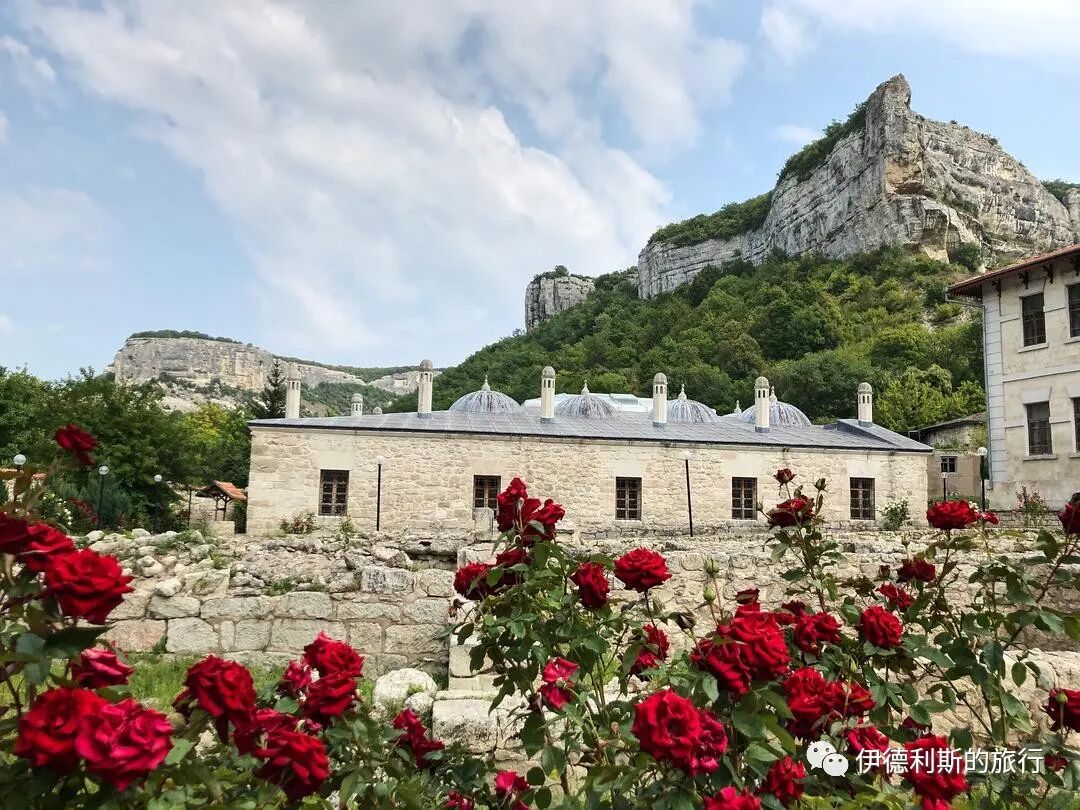
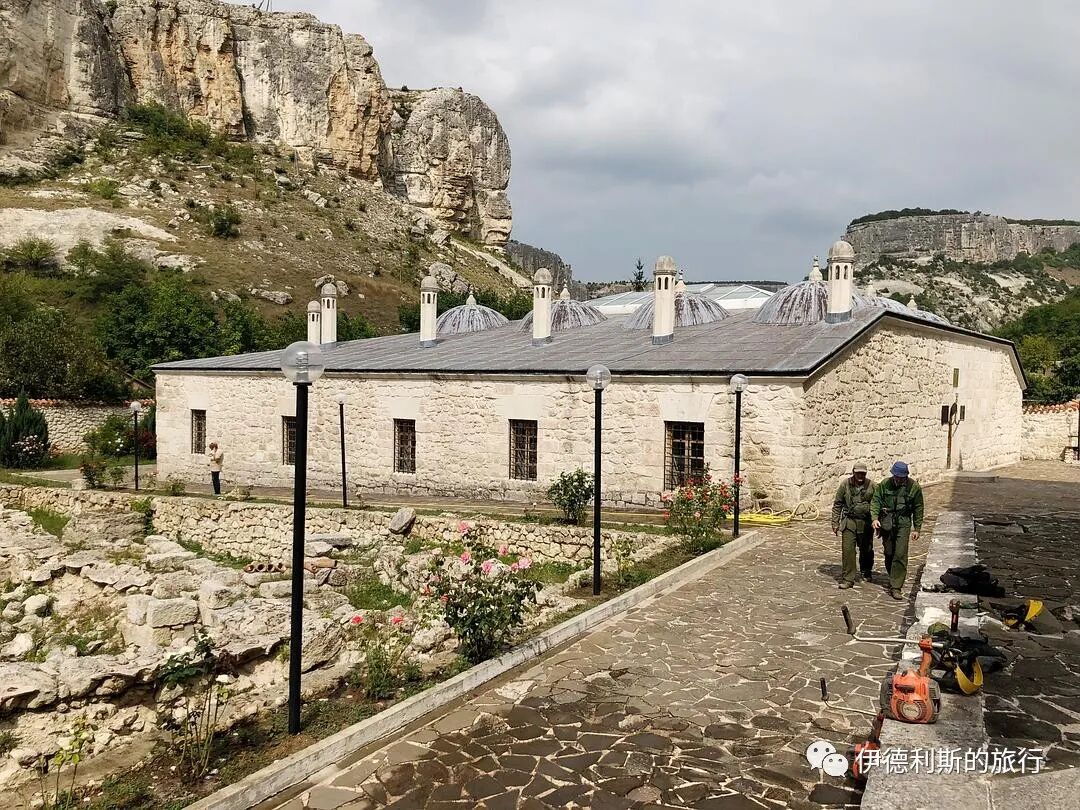
Block 2 of 2 for Part 1A-1b-1
Islamic World in 1550: Chain Madrasa in Crimea (Part 1A-1b-1b)
Articles • ali2007fr posted the article • 0 comments • 189 views • 2026-05-18 09:38
Summary: This block continues the Crimean Khanate site and mosque section from Islamic World in 1550, preserving the original order of text and images.
The Chain Madrasa (Zıncırlı Medrese) was built in 1500 by order of the Crimean Khan Meñli I Giray. The name of the madrasa comes from the Turkic word "Zyngyr," which means "chain." A chain hangs above the main gate of the madrasa, forcing everyone who enters to bow their head. The madrasa is rectangular with a central courtyard, an entrance on one side, and 11 rooms on the other three sides. At the time, the madrasa taught Turkish and Arabic grammar, calligraphy, arithmetic, ethics, logic, proof theory, Islamic law (sharia), theology, and hadith studies. The full course of study took ten years.
In 1909, influenced by the Crimean Tatar Enlightenment movement, Gasprinski built a new two-story madrasa next to the old one. The madrasa closed in 1917 and became the Meñli Giray Research Institute. The institute was abolished in 1923. Later, it served as a teacher's college, a medical school, a sanatorium for German soldiers, and a post-war psychiatric clinic. Today, it is managed by the Bakhchysarai History, Culture, and Archaeology Museum.
Block 2 of 2 for Part 1A-1b-1 view all
Summary: This block continues the Crimean Khanate site and mosque section from Islamic World in 1550, preserving the original order of text and images.
The Chain Madrasa (Zıncırlı Medrese) was built in 1500 by order of the Crimean Khan Meñli I Giray. The name of the madrasa comes from the Turkic word "Zyngyr," which means "chain." A chain hangs above the main gate of the madrasa, forcing everyone who enters to bow their head. The madrasa is rectangular with a central courtyard, an entrance on one side, and 11 rooms on the other three sides. At the time, the madrasa taught Turkish and Arabic grammar, calligraphy, arithmetic, ethics, logic, proof theory, Islamic law (sharia), theology, and hadith studies. The full course of study took ten years.
In 1909, influenced by the Crimean Tatar Enlightenment movement, Gasprinski built a new two-story madrasa next to the old one. The madrasa closed in 1917 and became the Meñli Giray Research Institute. The institute was abolished in 1923. Later, it served as a teacher's college, a medical school, a sanatorium for German soldiers, and a post-war psychiatric clinic. Today, it is managed by the Bakhchysarai History, Culture, and Archaeology Museum.
Block 2 of 2 for Part 1A-1b-1
Islamic World in 1550: Crimean Khanate Sites and Mosques (Part 1A-1b-1)
Articles • ali2007fr posted the article • 0 comments • 217 views • 2026-05-18 09:38
Summary: This block continues the Crimean Khanate section of Islamic World in 1550, preserving the same site names, captions, mosque details, images, and historical facts from the Chinese source.
The tomb of Haji I Giray (Dürbe Hacı I Giray) was built in 1501 by Mengli I Giray for his father, the founding Khan of Crimea. It is an octagonal tomb with a lead dome.
Archaeological excavations from 2006 to 2007 examined 18 graves inside the mausoleum, including 13 adults and 5 children. They were wrapped in silk and satin, with some resting on pillows stuffed with fabric scraps and fruit seeds. The mausoleum holds 8 stone sarcophagi covered in velvet, silk, and silver-threaded fabric. These likely include 4 Crimean Khans: Hacı I Giray himself, Meñli I Giray, Nur Devlet—who fought Meñli I Giray for the throne for years before losing—and Sahib I Giray, the son of Meñli I Giray and builder of Bakhchysarai.
After research finished in 2009, these individuals were reburied with Muslim rites.
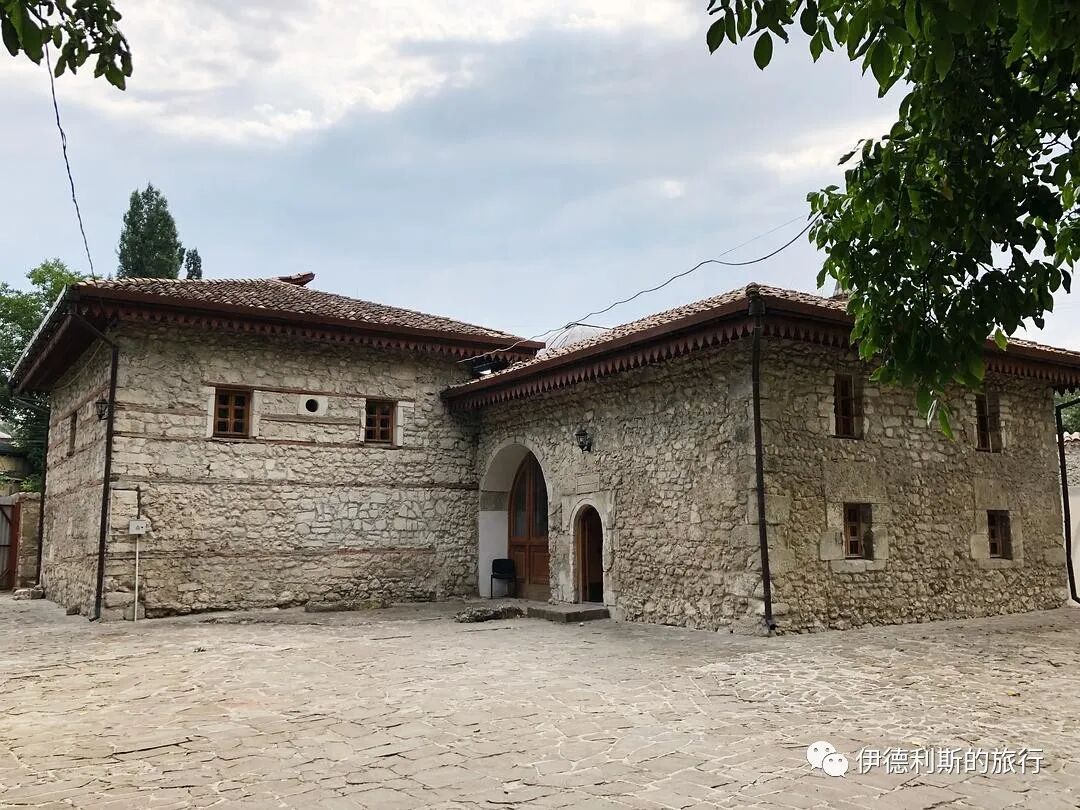
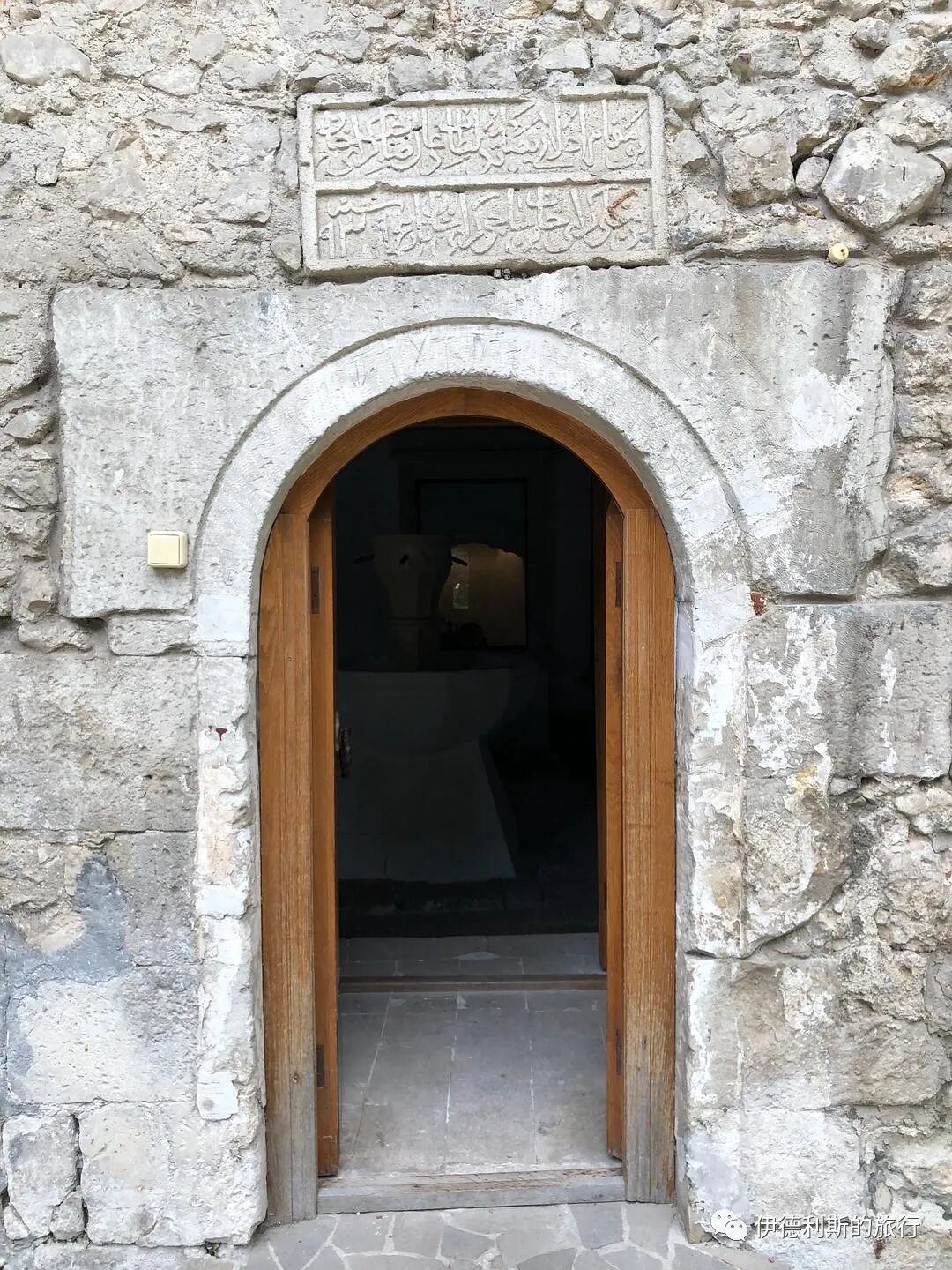
The Chain Madrasa (Zıncırlı Medrese) was built in 1500 by order of the Crimean Khan Meñli I Giray. The name of the madrasa comes from the Turkic word "Zyngyr," which means "chain." A chain hangs above the main gate of the madrasa, forcing everyone who enters to bow their head. The madrasa is rectangular with a central courtyard, an entrance on one side, and 11 rooms on the other three sides. At the time, the madrasa taught Turkish and Arabic grammar, calligraphy, arithmetic, ethics, logic, proof theory, Islamic law (sharia), theology, and hadith studies. The full course of study took ten years.
In 1909, influenced by the Crimean Tatar Enlightenment movement, Gasprinski built a new two-story madrasa next to the old one. The madrasa closed in 1917 and became the Meñli Giray Research Institute. The institute was abolished in 1923. Later, it served as a teacher's college, a medical school, a sanatorium for German soldiers, and a post-war psychiatric clinic. Today, it is managed by the Bakhchysarai History, Culture, and Archaeology Museum.
Block 1 of 4 for Part 1A-1b view all
Summary: This block continues the Crimean Khanate section of Islamic World in 1550, preserving the same site names, captions, mosque details, images, and historical facts from the Chinese source.
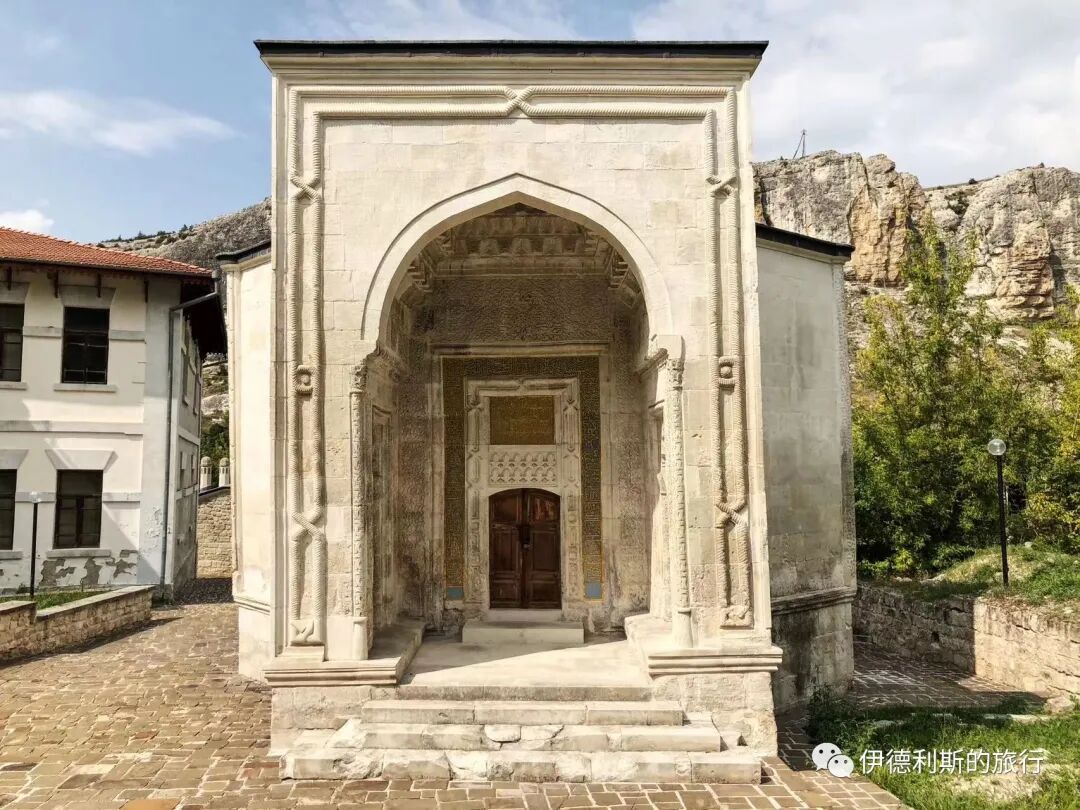
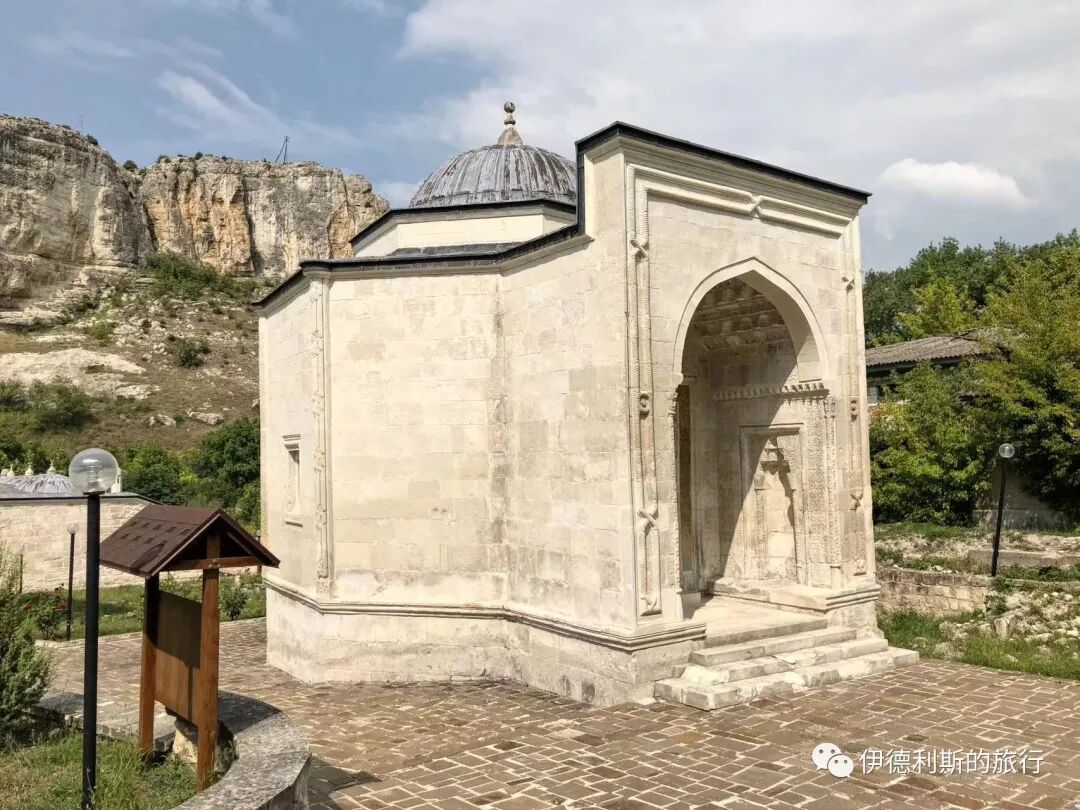
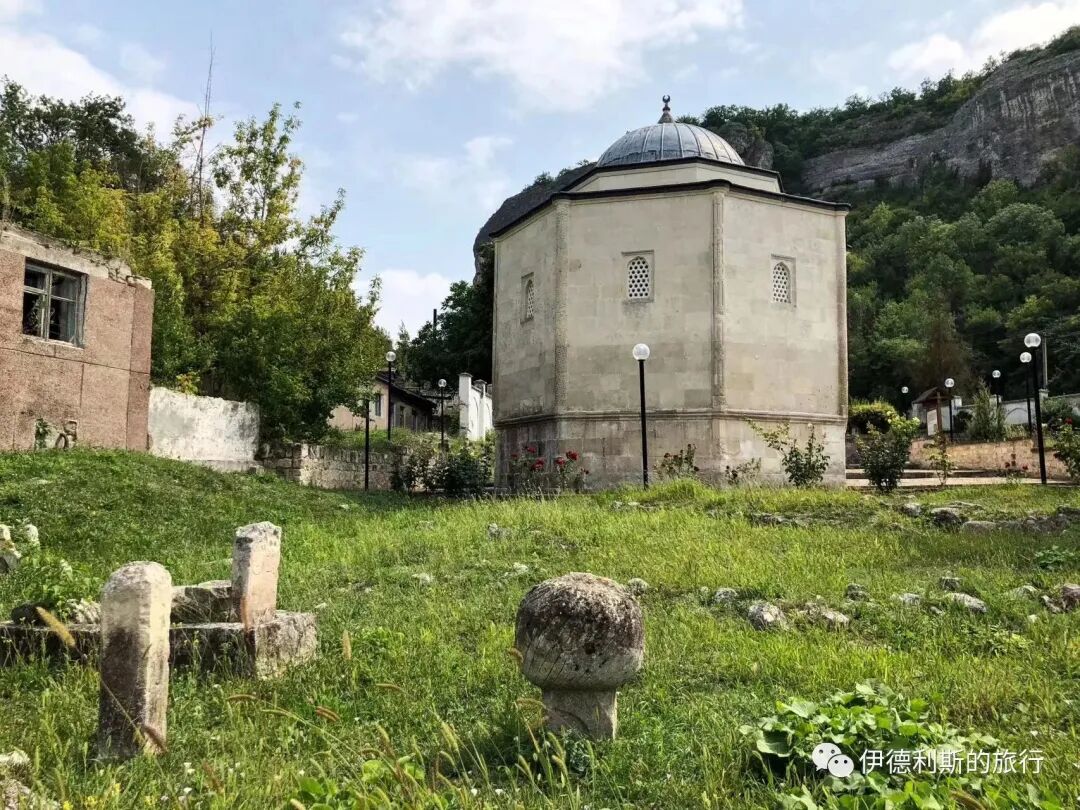
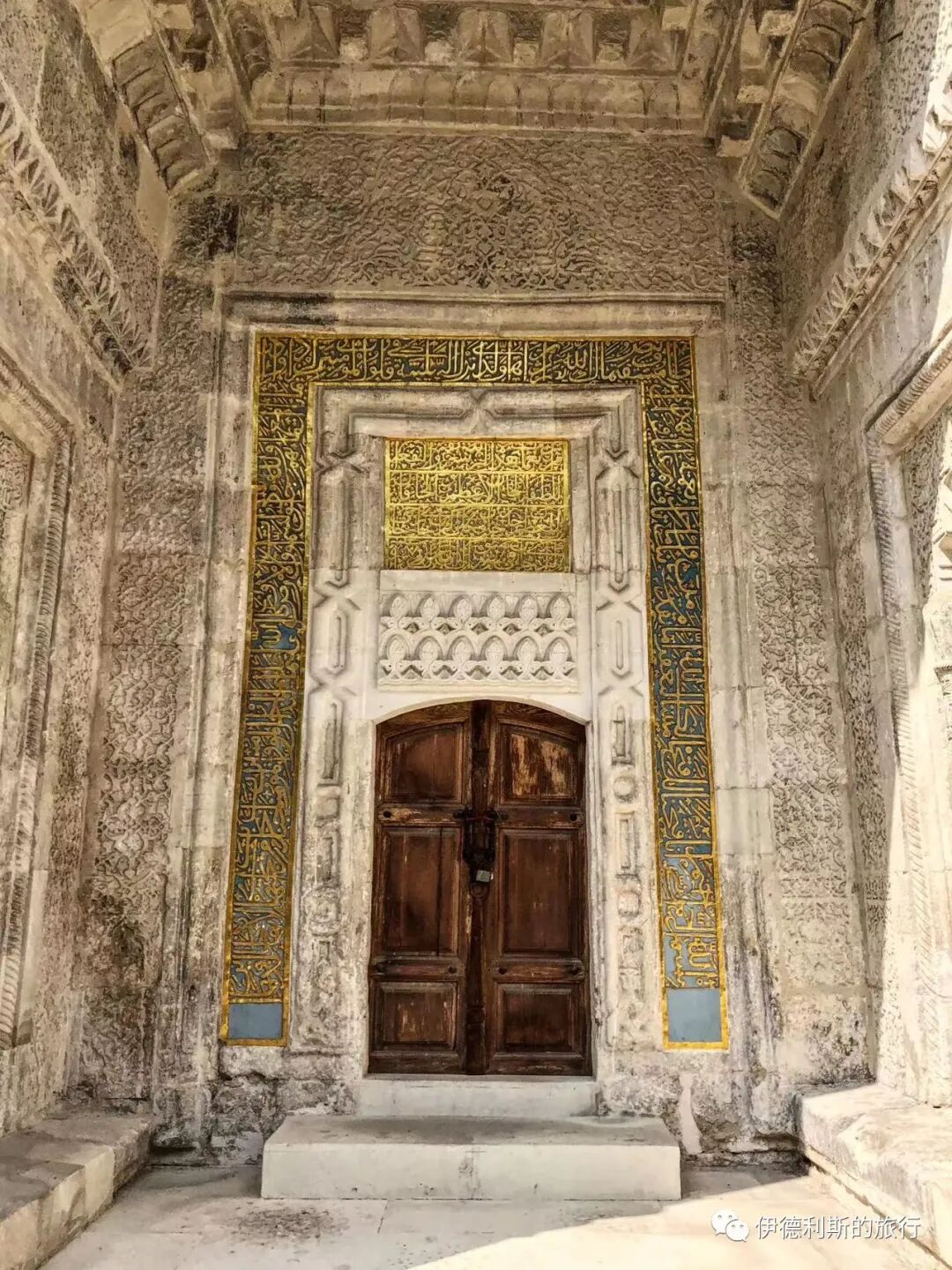
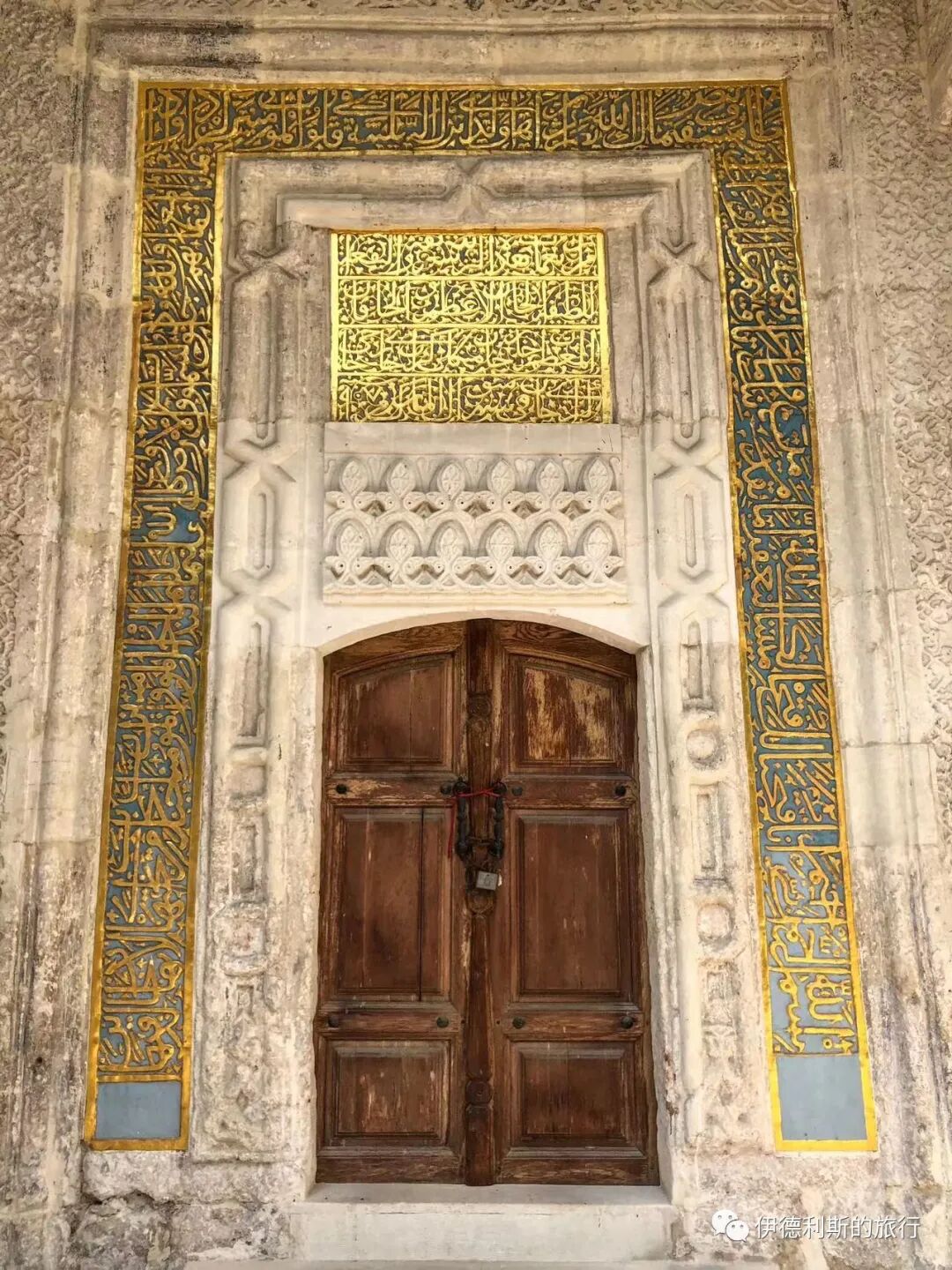
The tomb of Haji I Giray (Dürbe Hacı I Giray) was built in 1501 by Mengli I Giray for his father, the founding Khan of Crimea. It is an octagonal tomb with a lead dome.
Archaeological excavations from 2006 to 2007 examined 18 graves inside the mausoleum, including 13 adults and 5 children. They were wrapped in silk and satin, with some resting on pillows stuffed with fabric scraps and fruit seeds. The mausoleum holds 8 stone sarcophagi covered in velvet, silk, and silver-threaded fabric. These likely include 4 Crimean Khans: Hacı I Giray himself, Meñli I Giray, Nur Devlet—who fought Meñli I Giray for the throne for years before losing—and Sahib I Giray, the son of Meñli I Giray and builder of Bakhchysarai.
After research finished in 2009, these individuals were reburied with Muslim rites.
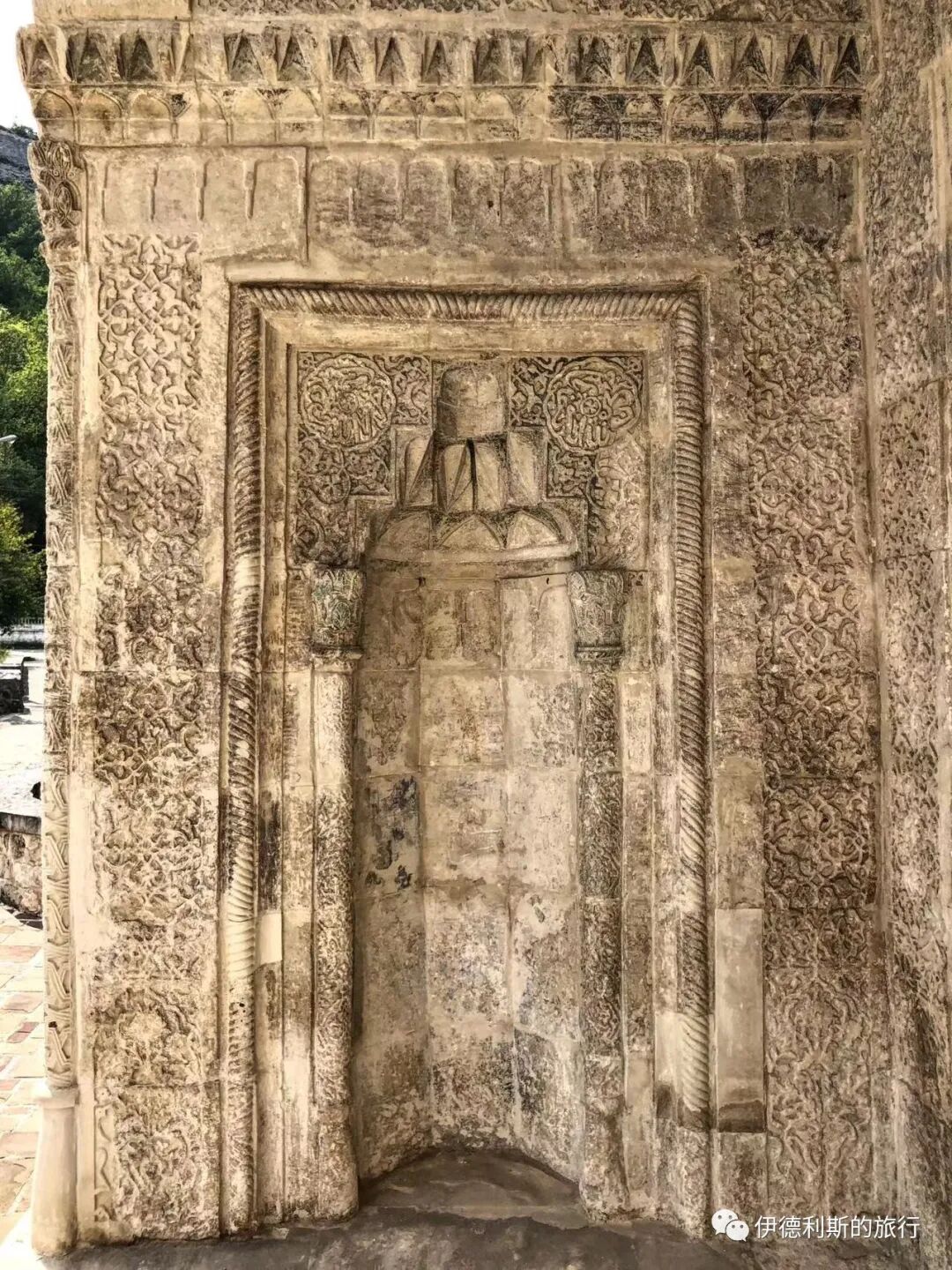
The Chain Madrasa (Zıncırlı Medrese) was built in 1500 by order of the Crimean Khan Meñli I Giray. The name of the madrasa comes from the Turkic word "Zyngyr," which means "chain." A chain hangs above the main gate of the madrasa, forcing everyone who enters to bow their head. The madrasa is rectangular with a central courtyard, an entrance on one side, and 11 rooms on the other three sides. At the time, the madrasa taught Turkish and Arabic grammar, calligraphy, arithmetic, ethics, logic, proof theory, Islamic law (sharia), theology, and hadith studies. The full course of study took ten years.
In 1909, influenced by the Crimean Tatar Enlightenment movement, Gasprinski built a new two-story madrasa next to the old one. The madrasa closed in 1917 and became the Meñli Giray Research Institute. The institute was abolished in 1923. Later, it served as a teacher's college, a medical school, a sanatorium for German soldiers, and a post-war psychiatric clinic. Today, it is managed by the Bakhchysarai History, Culture, and Archaeology Museum.
Block 1 of 4 for Part 1A-1b
Islamic World in 1550: Crimean Khanate Sites and Mosques (Part 1A-1b)
Articles • ali2007fr posted the article • 0 comments • 221 views • 2026-05-18 09:38
Summary: This block continues the Crimean Khanate section of Islamic World in 1550, preserving the same site names, captions, mosque details, images, and historical facts from the Chinese source.
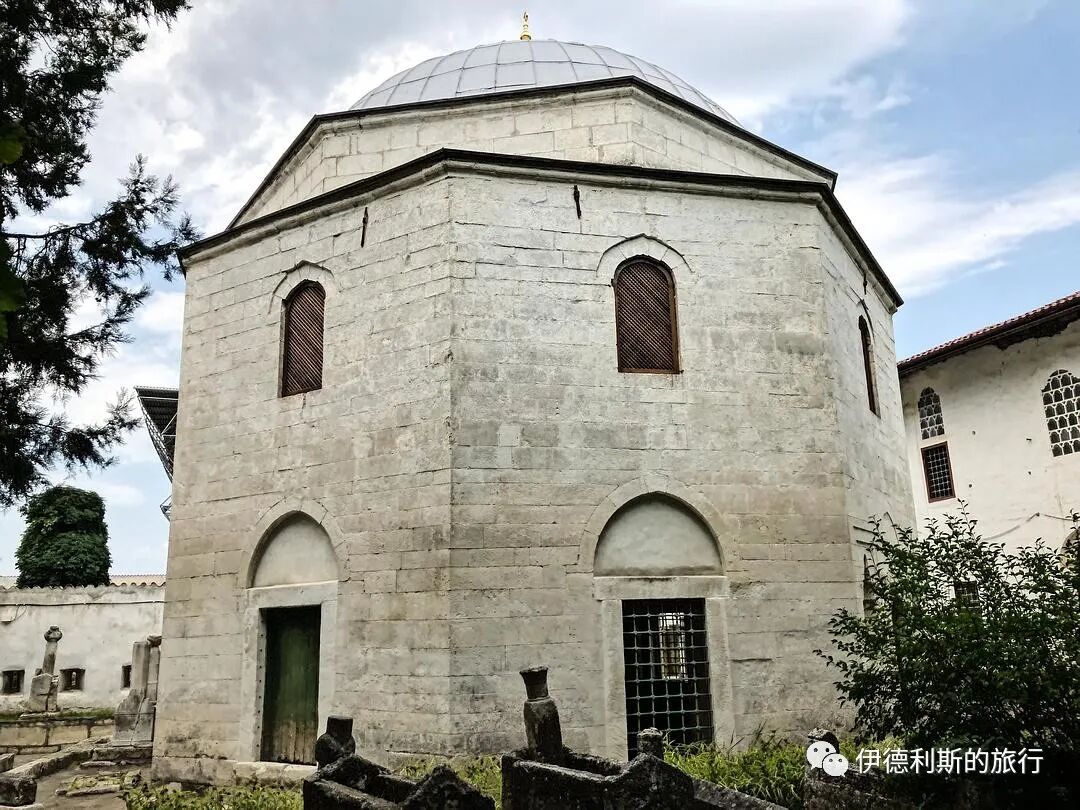
The tomb of Haji I Giray (Dürbe Hacı I Giray) was built in 1501 by Mengli I Giray for his father, the founding Khan of Crimea. It is an octagonal tomb with a lead dome.
Archaeological excavations from 2006 to 2007 examined 18 graves inside the mausoleum, including 13 adults and 5 children. They were wrapped in silk and satin, with some resting on pillows stuffed with fabric scraps and fruit seeds. The mausoleum holds 8 stone sarcophagi covered in velvet, silk, and silver-threaded fabric. These likely include 4 Crimean Khans: Hacı I Giray himself, Meñli I Giray, Nur Devlet—who fought Meñli I Giray for the throne for years before losing—and Sahib I Giray, the son of Meñli I Giray and builder of Bakhchysarai.
After research finished in 2009, these individuals were reburied with Muslim rites.
The Chain Madrasa (Zıncırlı Medrese) was built in 1500 by order of the Crimean Khan Meñli I Giray. The name of the madrasa comes from the Turkic word "Zyngyr," which means "chain." A chain hangs above the main gate of the madrasa, forcing everyone who enters to bow their head. The madrasa is rectangular with a central courtyard, an entrance on one side, and 11 rooms on the other three sides. At the time, the madrasa taught Turkish and Arabic grammar, calligraphy, arithmetic, ethics, logic, proof theory, Islamic law (sharia), theology, and hadith studies. The full course of study took ten years.
In 1909, influenced by the Crimean Tatar Enlightenment movement, Gasprinski built a new two-story madrasa next to the old one. The madrasa closed in 1917 and became the Meñli Giray Research Institute. The institute was abolished in 1923. Later, it served as a teacher's college, a medical school, a sanatorium for German soldiers, and a post-war psychiatric clinic. Today, it is managed by the Bakhchysarai History, Culture, and Archaeology Museum.
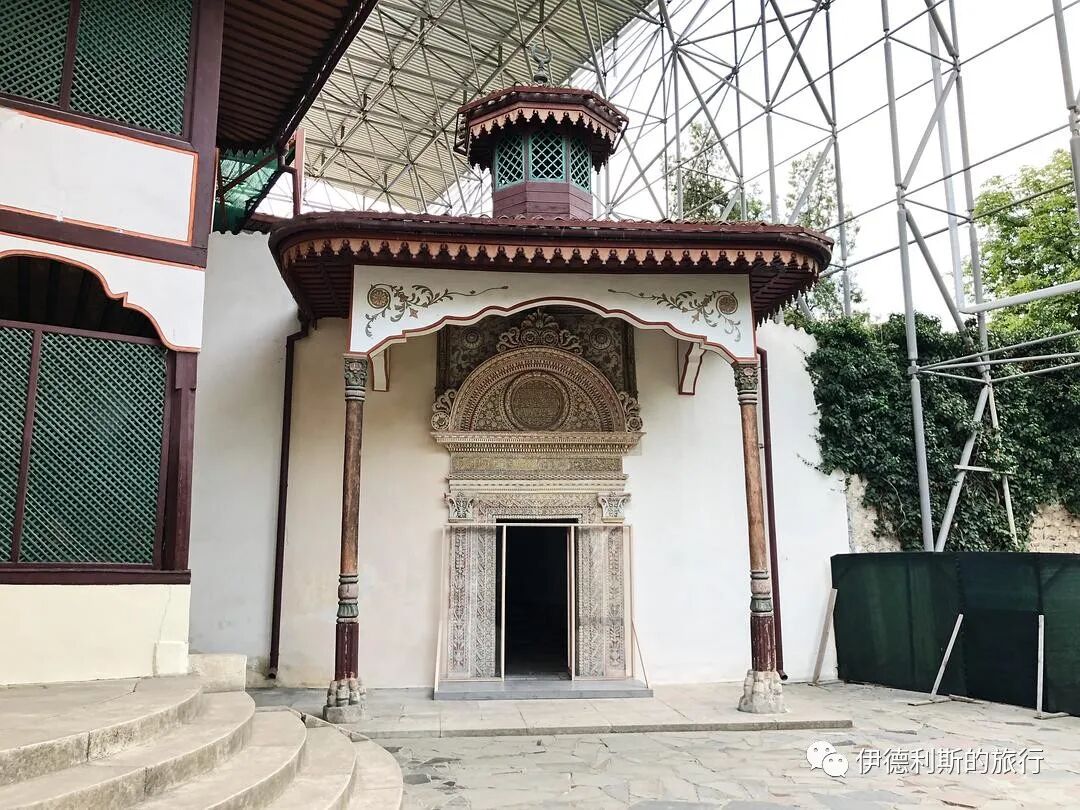
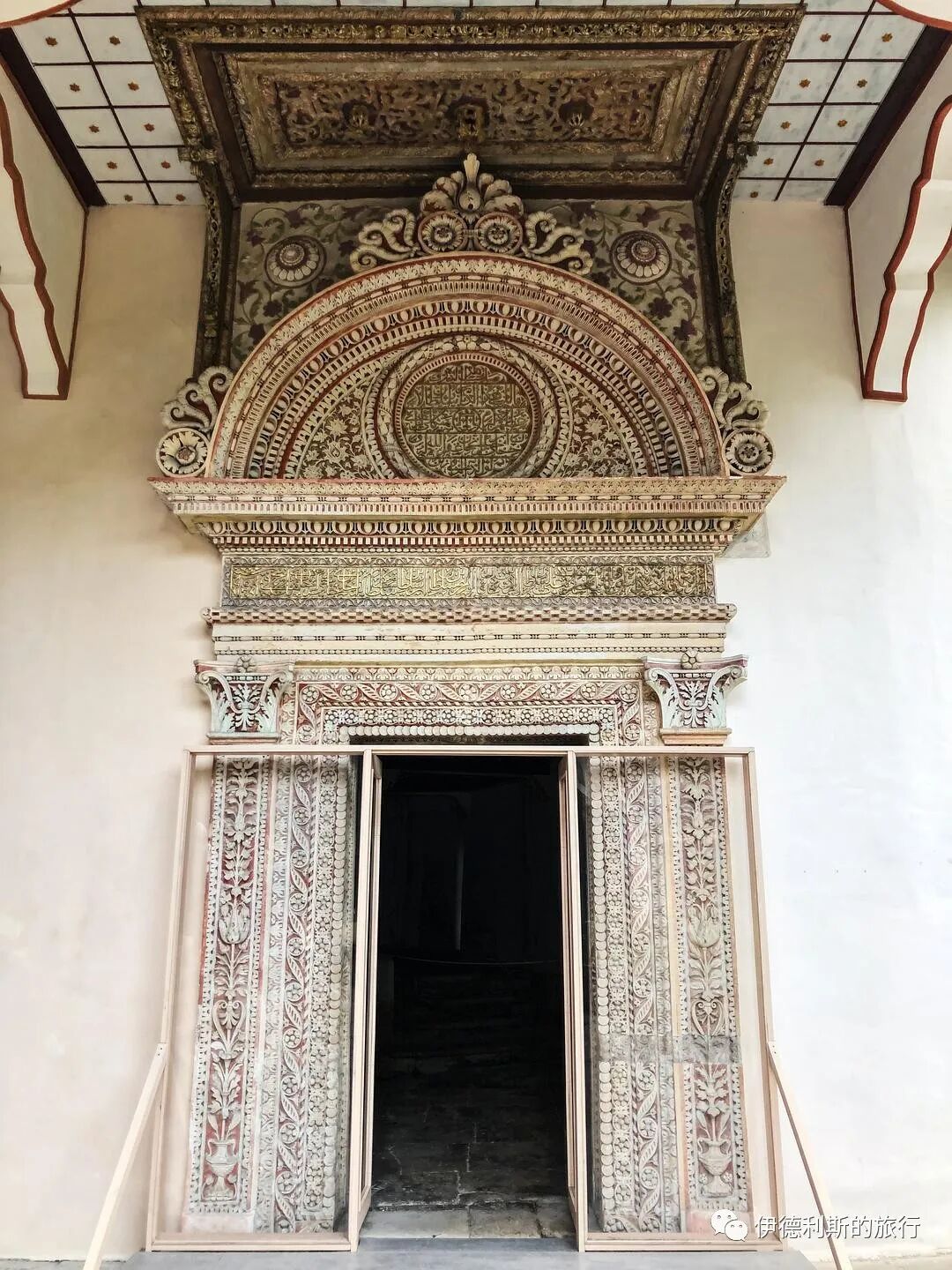
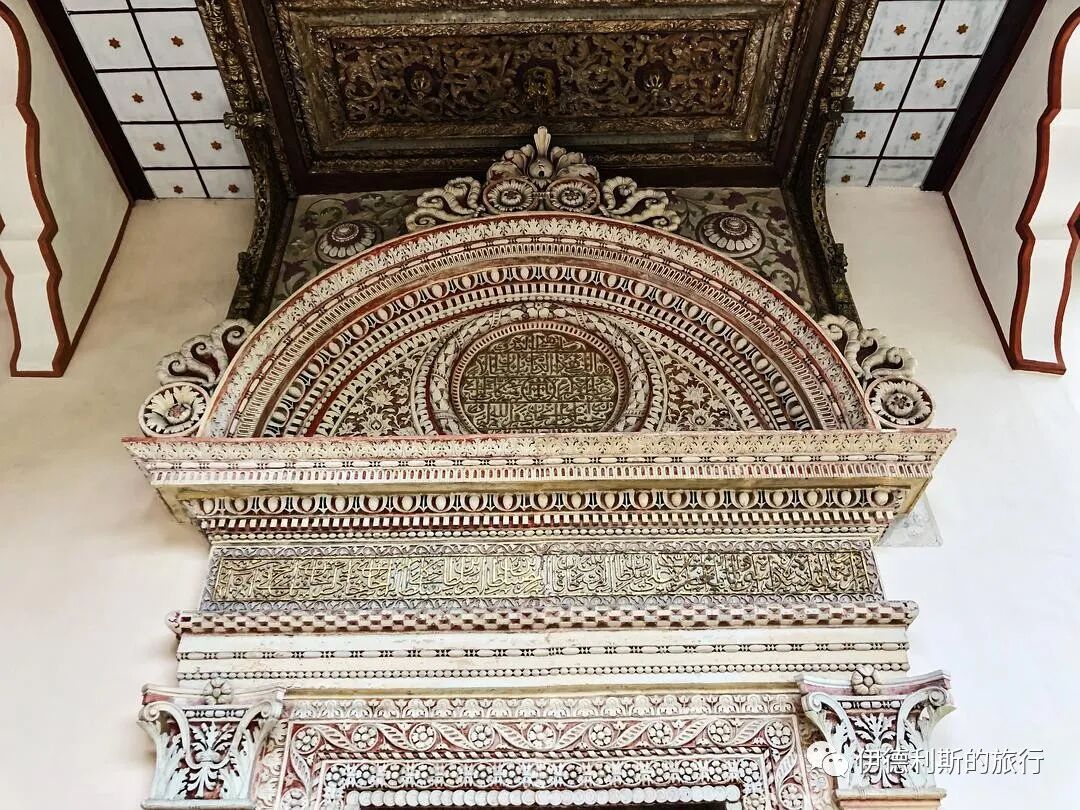
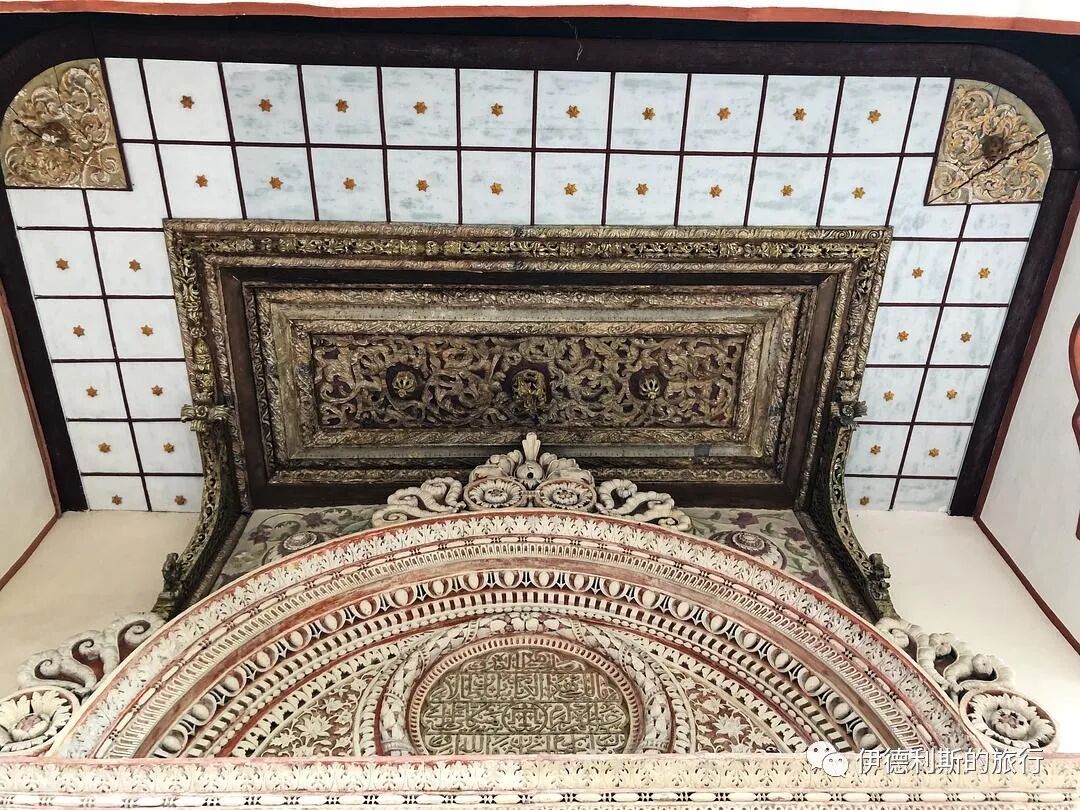
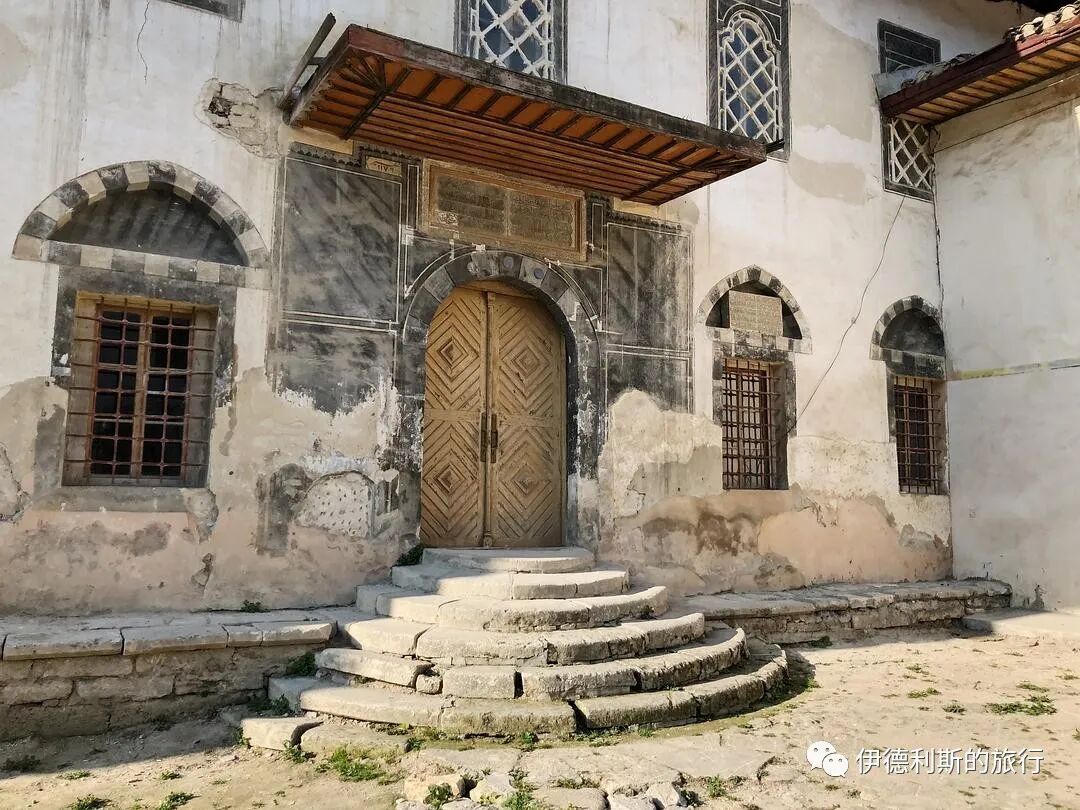
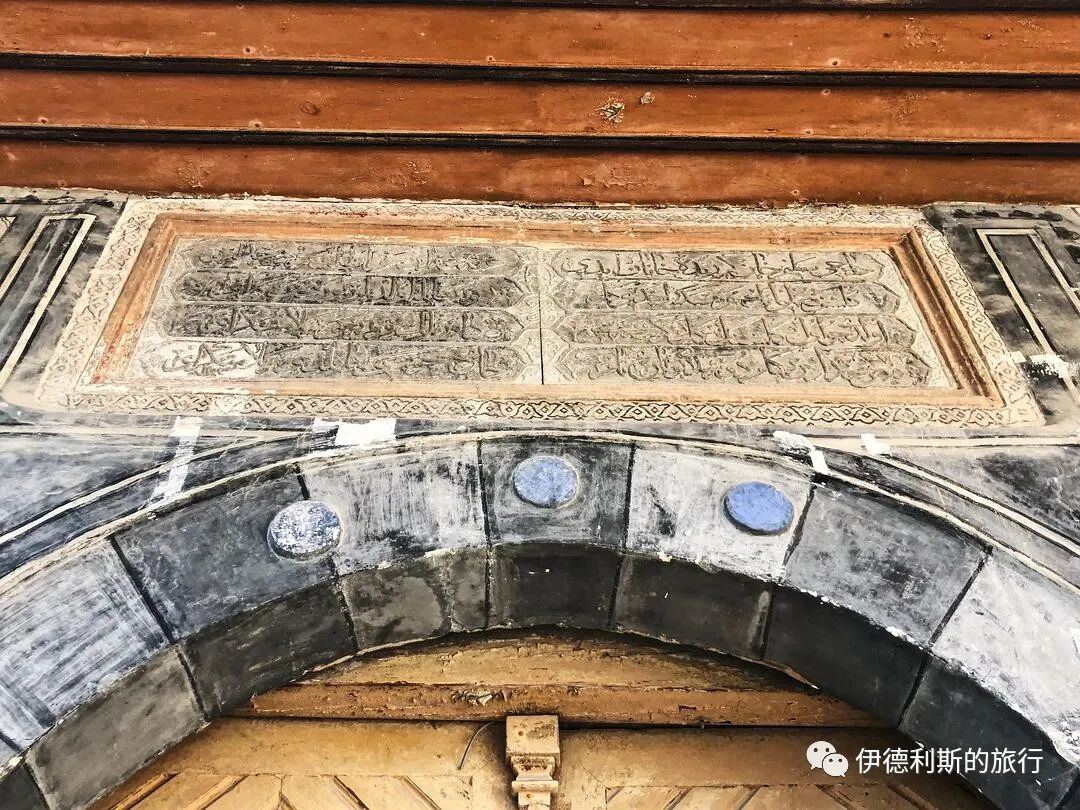
The Iron Gate (Demir Qapı) is the oldest structure in the Khan's Palace. It was built between 1503 and 1504 for the Crimean Khan by the architect Aleviz Novy, who had been invited by Ivan the Great to build churches in Moscow. The Iron Gate was likely first built at the Crimean Khan's previous residence, Devlet-Saray, and moved to the main palace building after the Bakhchysarai Khan's Palace was completed in 1532. "Demir Qapı" means "iron gate" in Crimean Tatar. The doorway is made of limestone and features Lombard-Venetian Renaissance decorative styles.
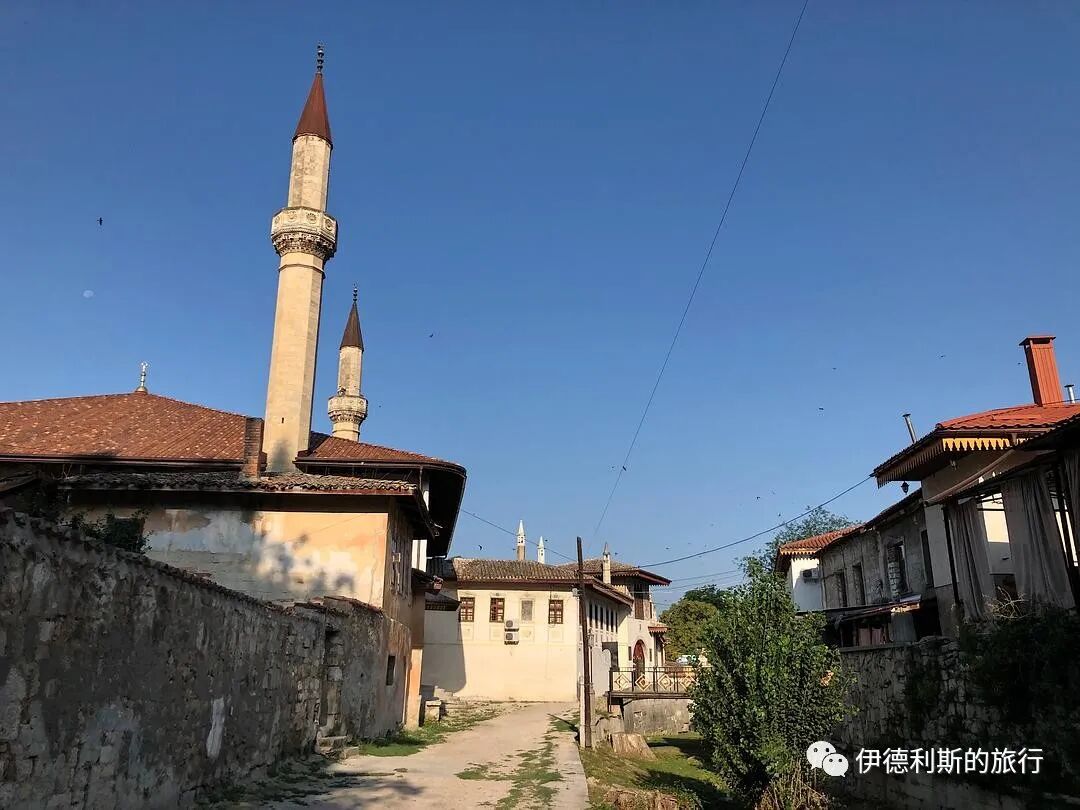
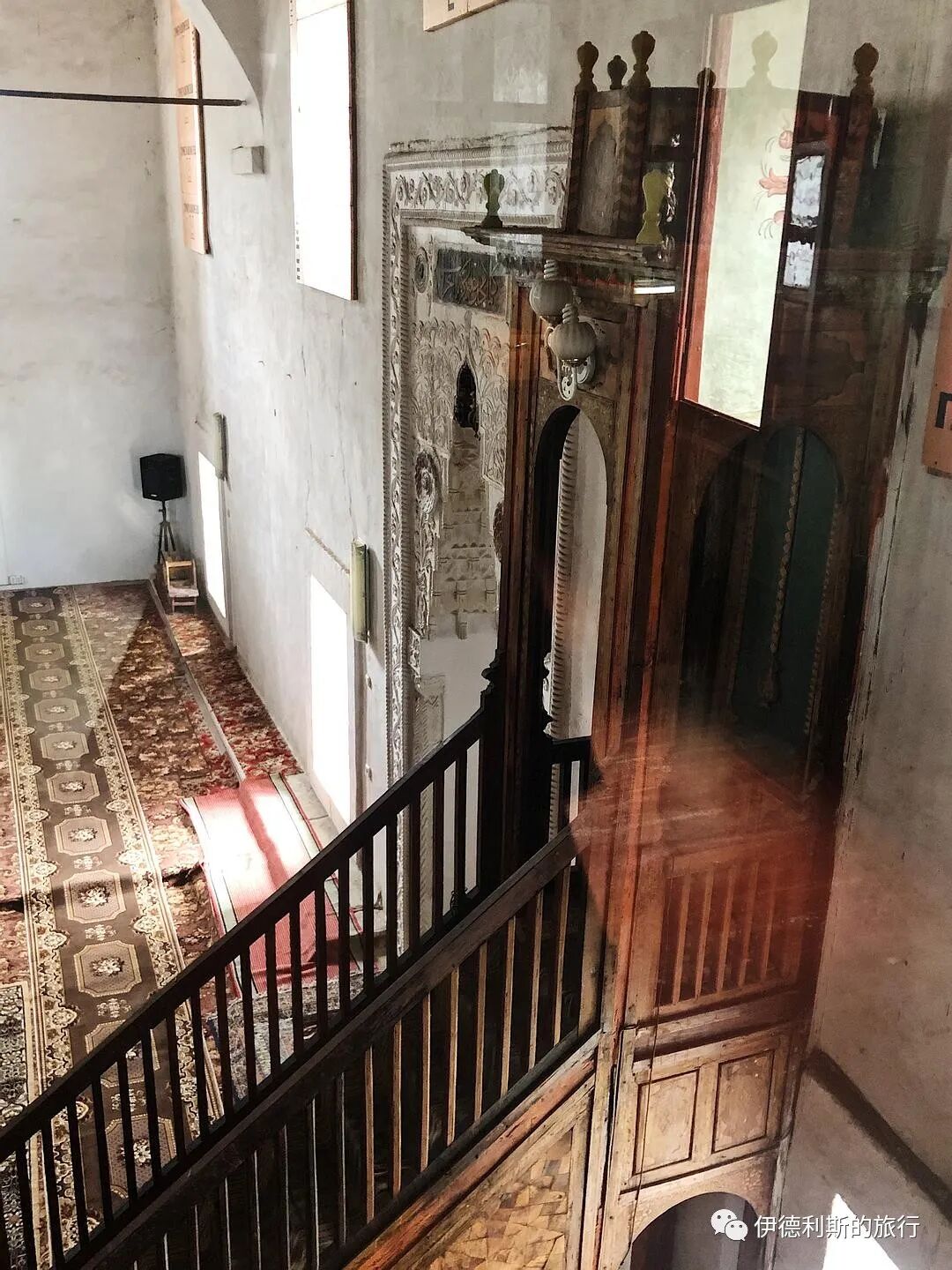
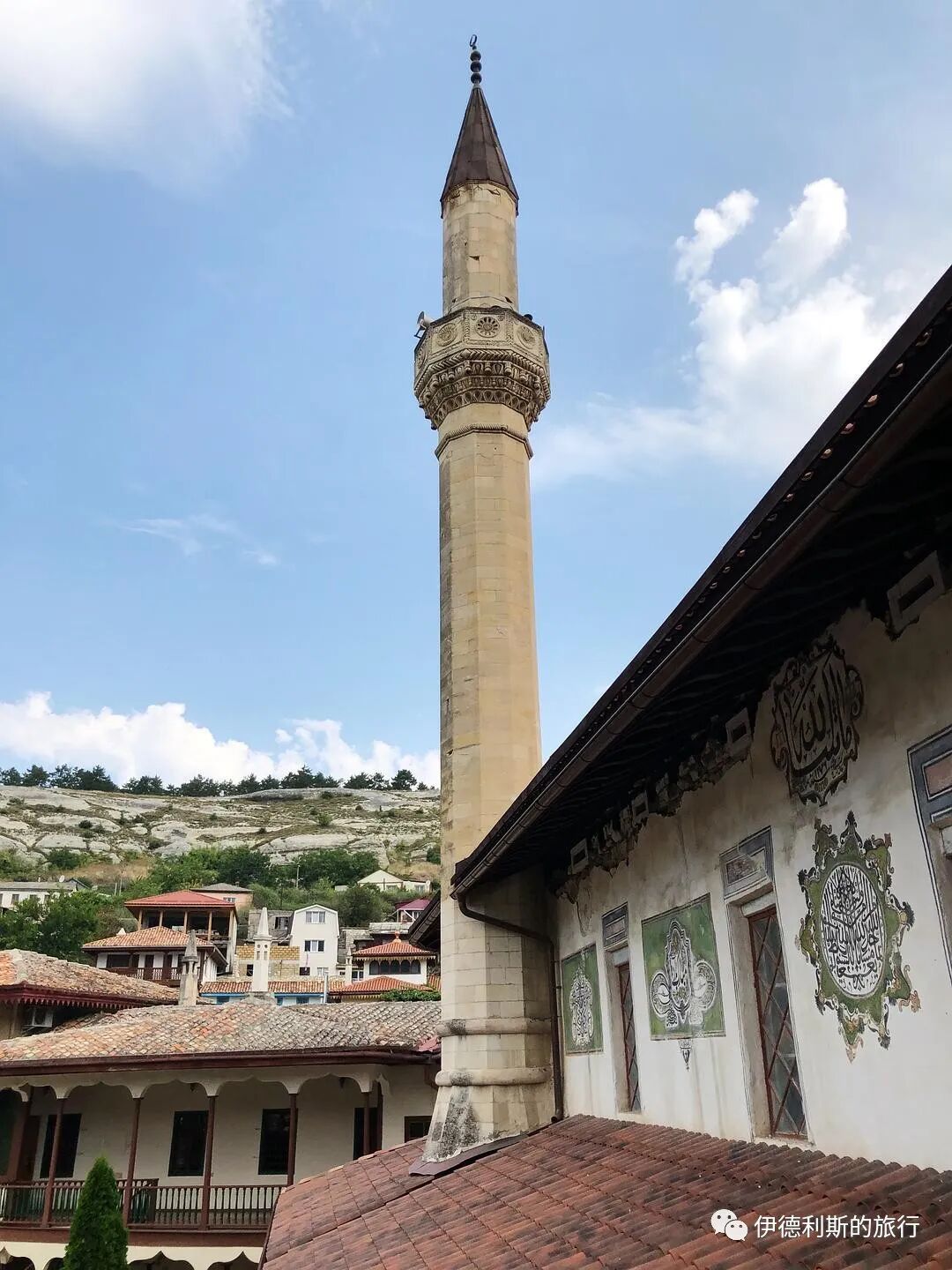
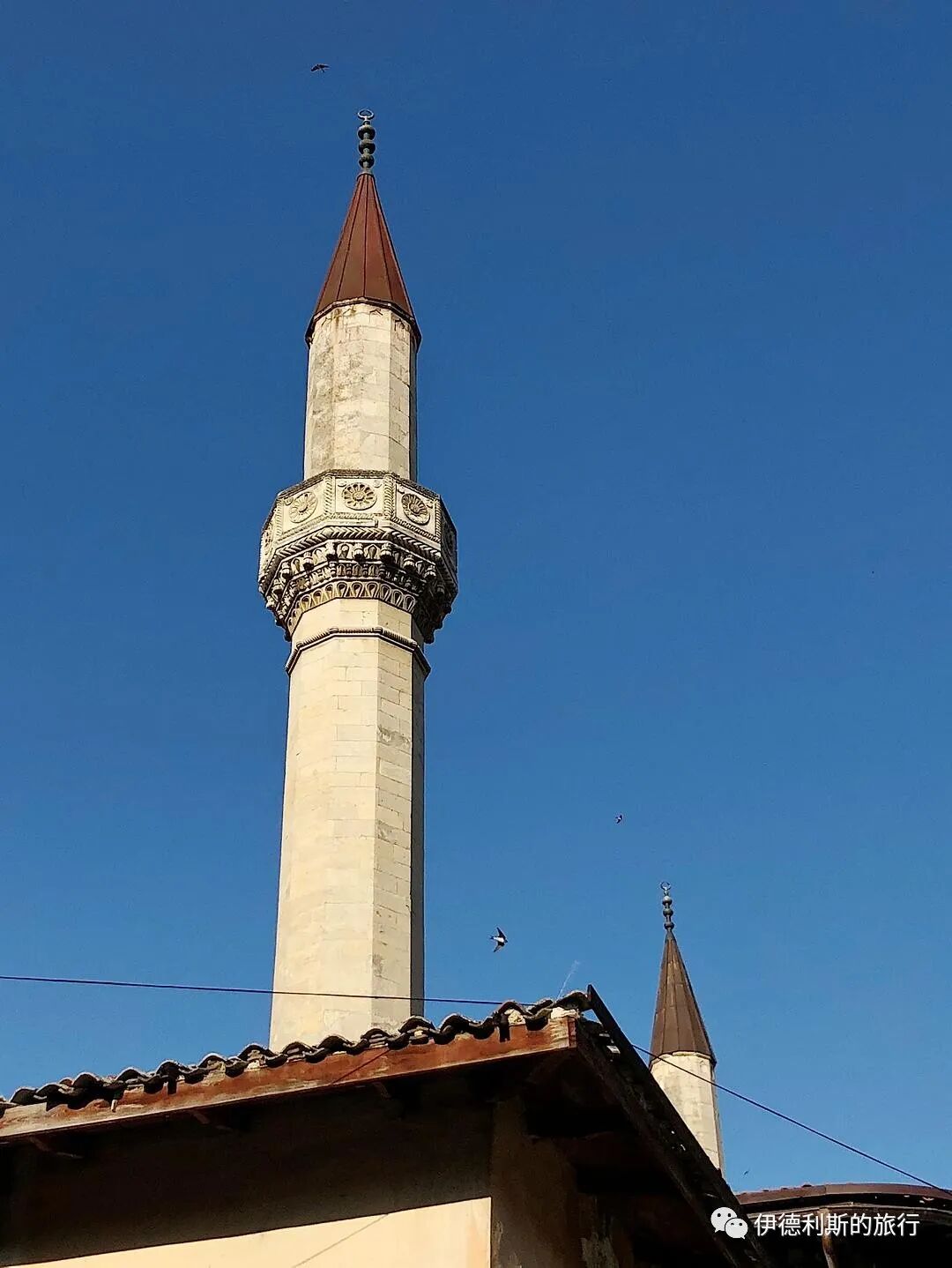
The Great Khan Mosque (Büyük Han Cami) in the Bakhchysarai Khan's Palace was built in 1532 and is one of the earliest structures in the palace. The original mosque had multiple domes, similar to the Seljuk-style mosques popular in the Ottoman Empire during the 15th century. The mosque was destroyed by fire in 1736. It was later restored by Khan Selamet II Giray (who reigned from 1740 to 1743) and converted to a tiled roof.
During the Soviet era, the mosque was closed and turned into an exhibition hall for the archaeological museum. After Russia occupied Crimea in 2014, the mosque underwent repairs, some of which caused damage to the building.
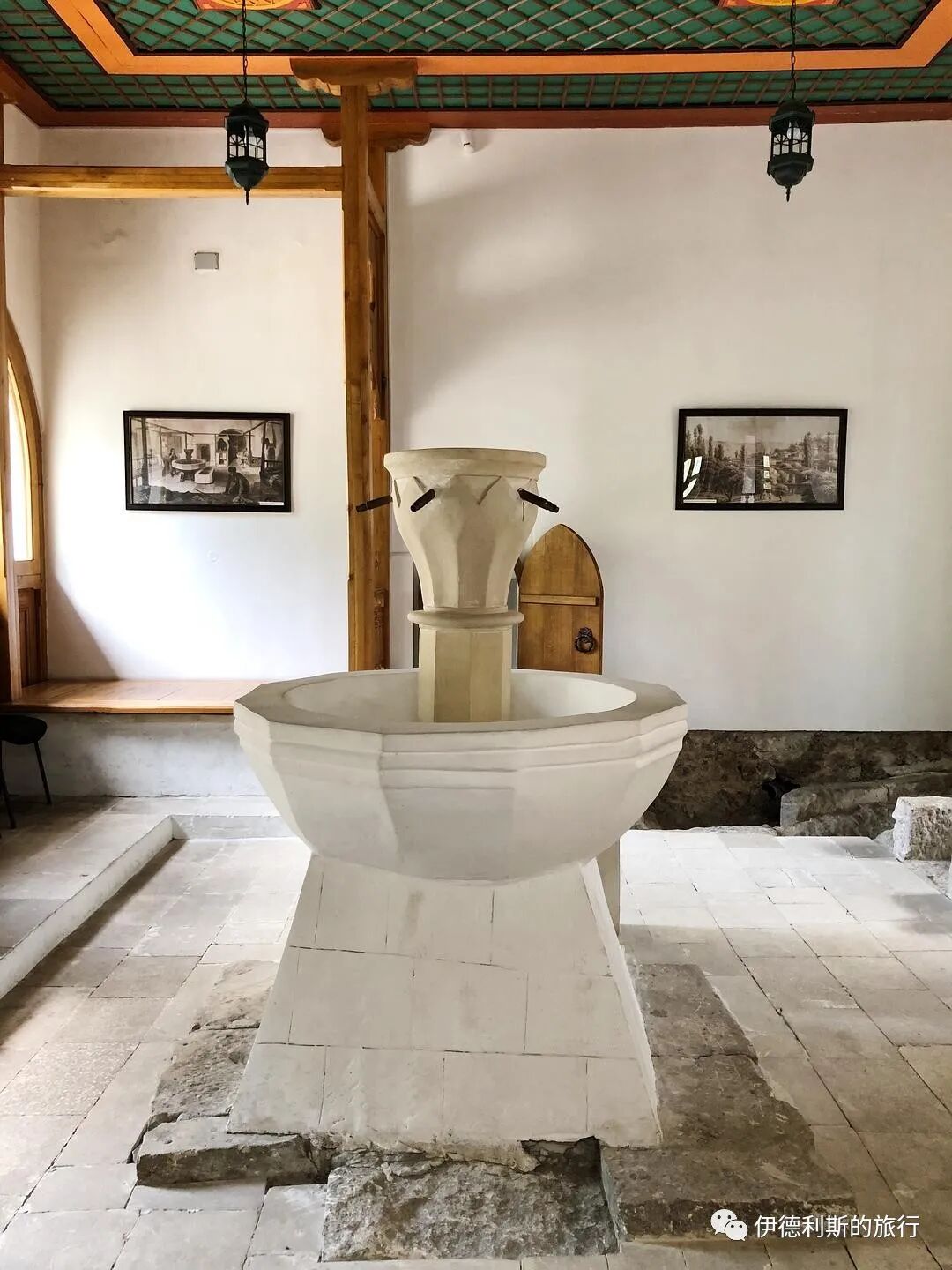
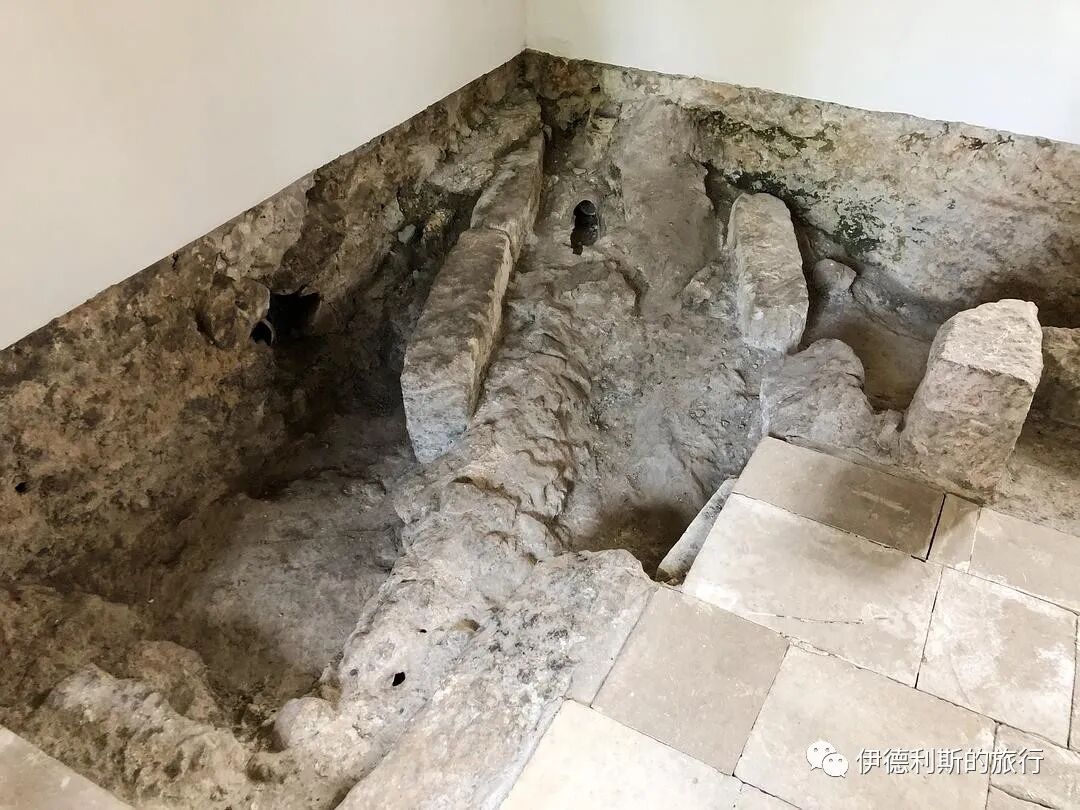
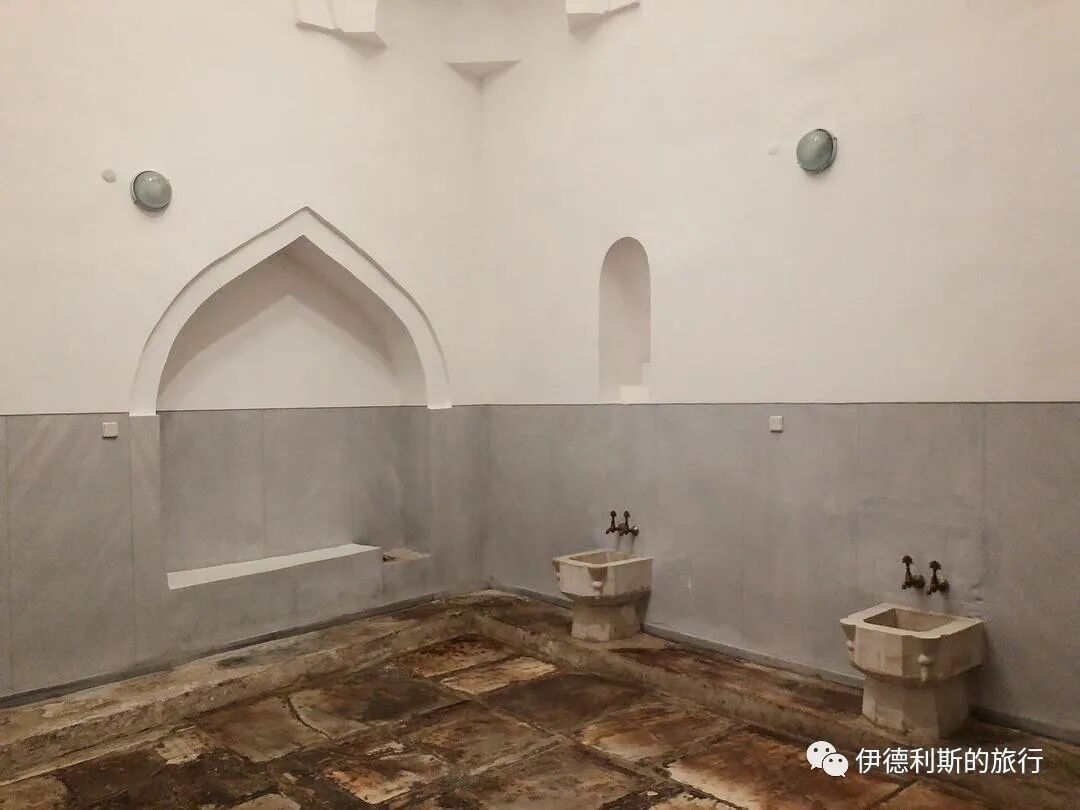
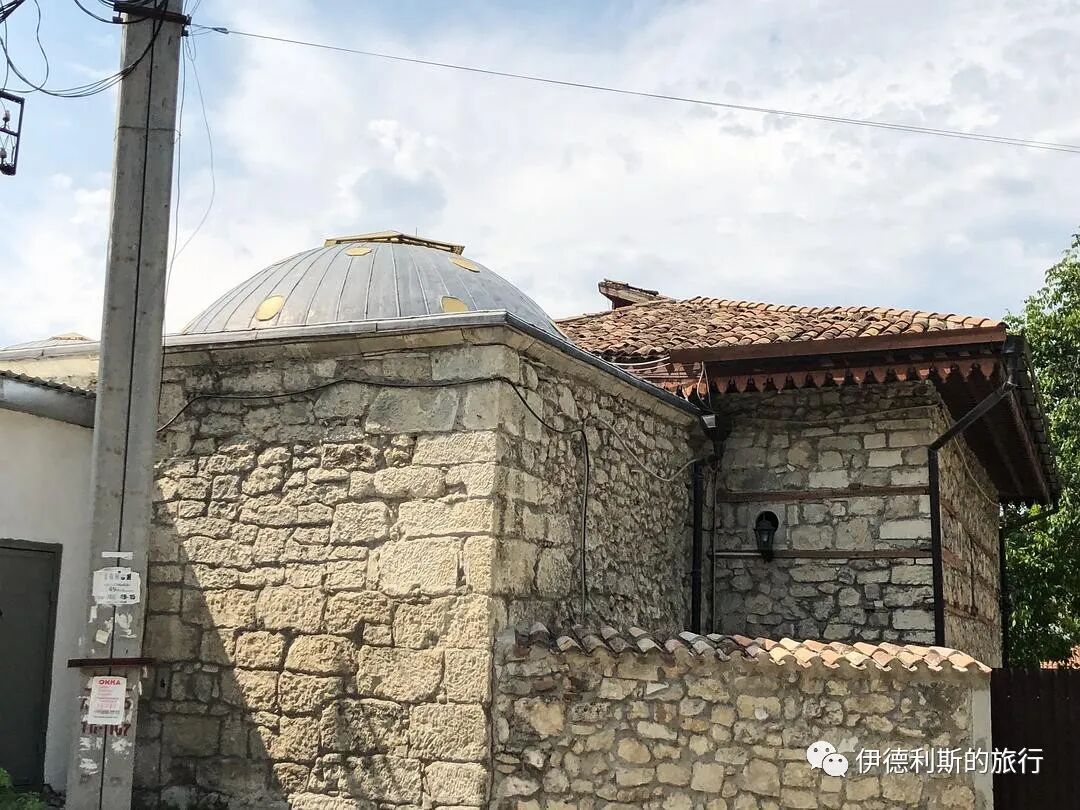
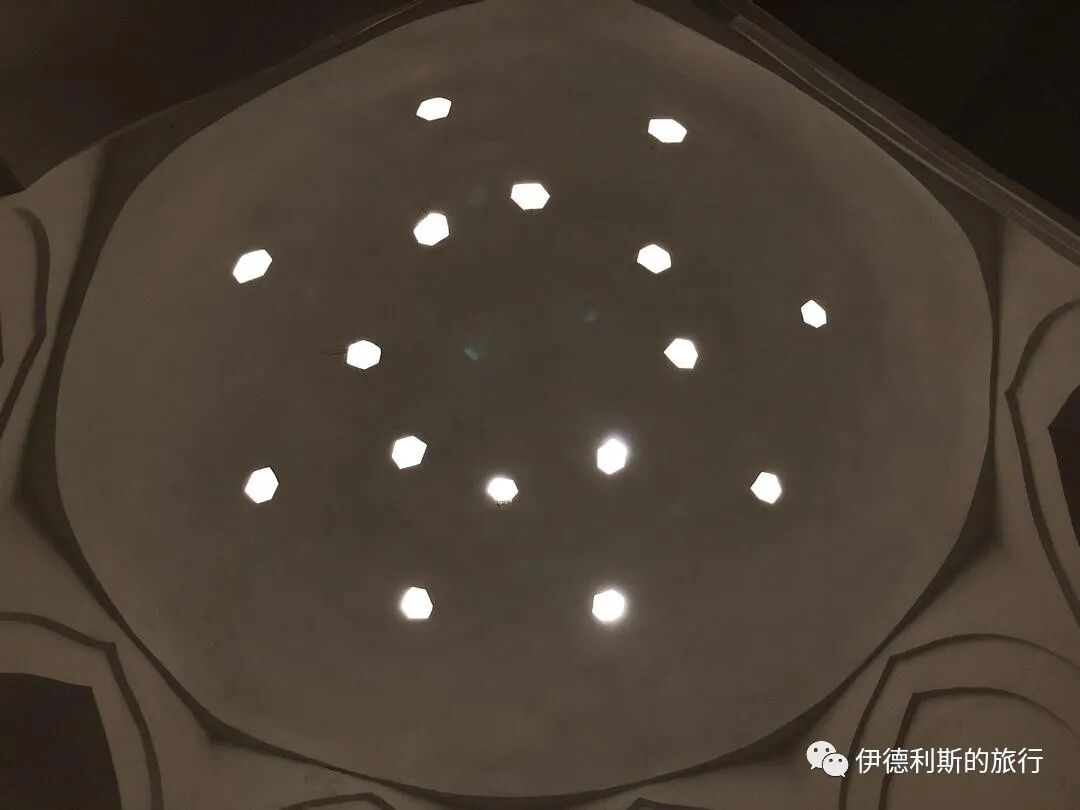
The SaryGuzel Bathhouse was built in 1532 by order of the Crimean Khan Sahib I Giray. Like the Great Khan Mosque, it is one of the earliest buildings in the Bakhchysarai Khan's Palace. In Crimean Tatar, "Sarı" means "yellow or fair-skinned," and "Güzel" means "beautiful." The SaryGuzel Bathhouse is a typical Turkish bath. A furnace in the basement heated the floor with rising hot air, and cold and hot water were supplied through lead pipes. The bathhouse is divided into men's and women's sections, each with its own dome. The domes have star-shaped cutouts for ventilation and light, and there is an indoor courtyard with a fountain at the exit.
The SaryGuzel Bathhouse operated until 1924, when it was closed because it was considered unsafe. It has since been repaired and is now open for exhibitions.
The Khan's cemetery holds the grave of the Crimean Khan Devlet I Giray (reigned 1551–1577). He was appointed Kalga (the second-in-command after the Khan) in 1530. Later, due to court struggles, he went to Istanbul and gradually gained the trust of the Ottoman Sultan Suleiman the Magnificent. In 1551, with the help of Suleiman the Magnificent, he became the Crimean Khan.
Block 2 of 2 for Part 1A-1 view all
Summary: This block continues the Crimean Khanate section of Islamic World in 1550, preserving the same site names, captions, mosque details, images, and historical facts from the Chinese source.
The tomb of Haji I Giray (Dürbe Hacı I Giray) was built in 1501 by Mengli I Giray for his father, the founding Khan of Crimea. It is an octagonal tomb with a lead dome.
Archaeological excavations from 2006 to 2007 examined 18 graves inside the mausoleum, including 13 adults and 5 children. They were wrapped in silk and satin, with some resting on pillows stuffed with fabric scraps and fruit seeds. The mausoleum holds 8 stone sarcophagi covered in velvet, silk, and silver-threaded fabric. These likely include 4 Crimean Khans: Hacı I Giray himself, Meñli I Giray, Nur Devlet—who fought Meñli I Giray for the throne for years before losing—and Sahib I Giray, the son of Meñli I Giray and builder of Bakhchysarai.
After research finished in 2009, these individuals were reburied with Muslim rites.
The Chain Madrasa (Zıncırlı Medrese) was built in 1500 by order of the Crimean Khan Meñli I Giray. The name of the madrasa comes from the Turkic word "Zyngyr," which means "chain." A chain hangs above the main gate of the madrasa, forcing everyone who enters to bow their head. The madrasa is rectangular with a central courtyard, an entrance on one side, and 11 rooms on the other three sides. At the time, the madrasa taught Turkish and Arabic grammar, calligraphy, arithmetic, ethics, logic, proof theory, Islamic law (sharia), theology, and hadith studies. The full course of study took ten years.
In 1909, influenced by the Crimean Tatar Enlightenment movement, Gasprinski built a new two-story madrasa next to the old one. The madrasa closed in 1917 and became the Meñli Giray Research Institute. The institute was abolished in 1923. Later, it served as a teacher's college, a medical school, a sanatorium for German soldiers, and a post-war psychiatric clinic. Today, it is managed by the Bakhchysarai History, Culture, and Archaeology Museum.
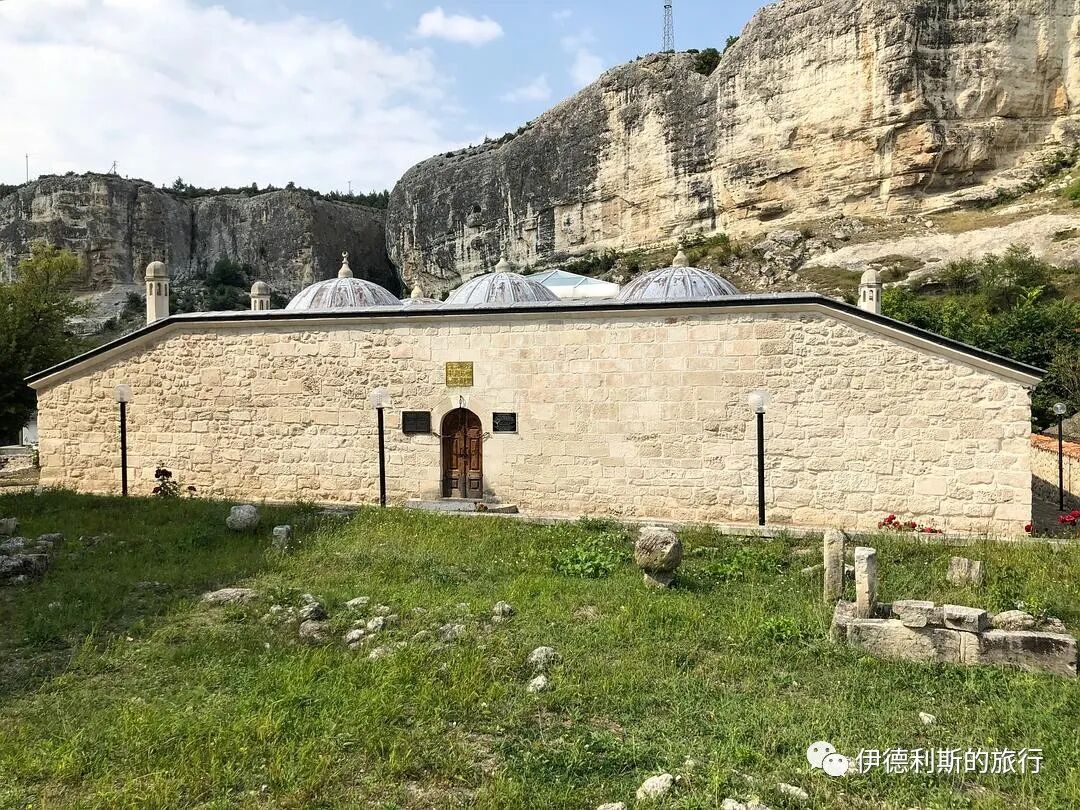
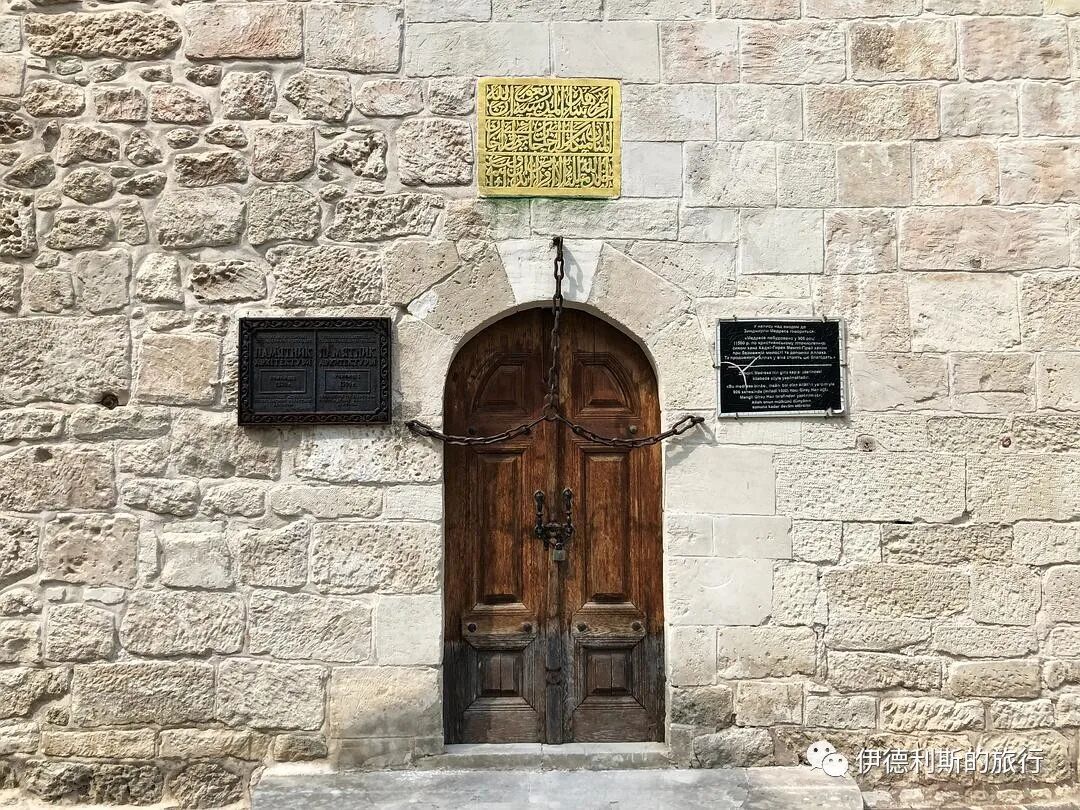
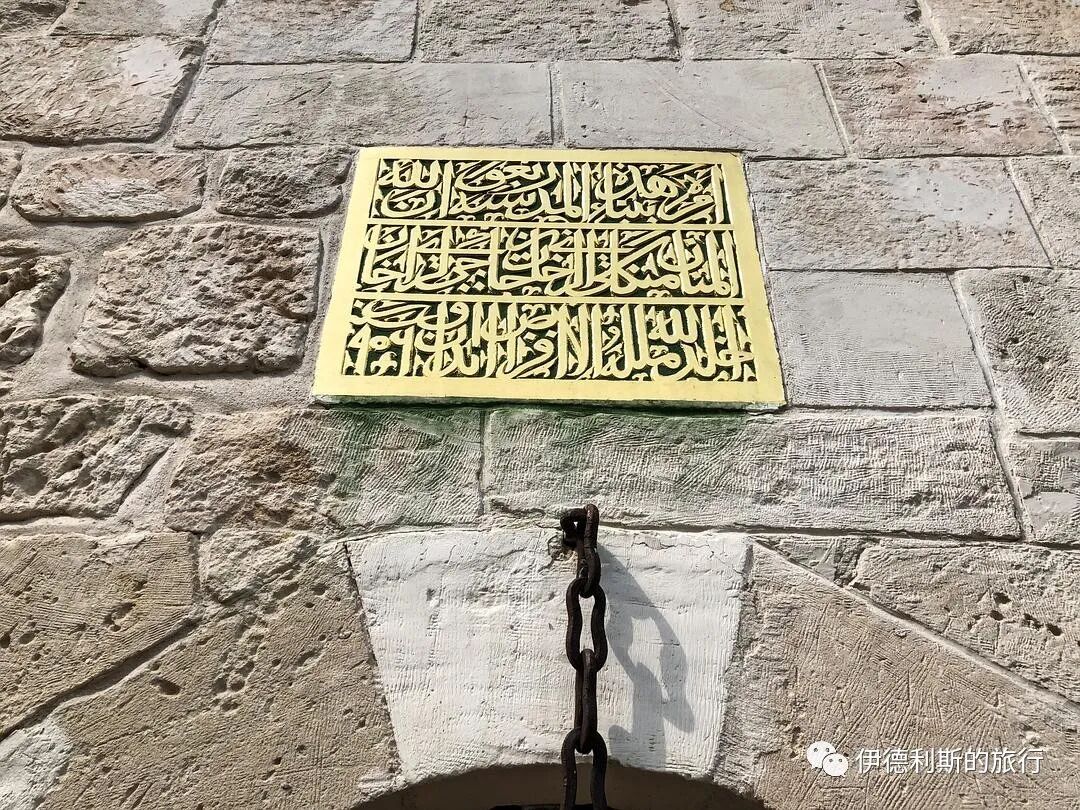
The Iron Gate (Demir Qapı) is the oldest structure in the Khan's Palace. It was built between 1503 and 1504 for the Crimean Khan by the architect Aleviz Novy, who had been invited by Ivan the Great to build churches in Moscow. The Iron Gate was likely first built at the Crimean Khan's previous residence, Devlet-Saray, and moved to the main palace building after the Bakhchysarai Khan's Palace was completed in 1532. "Demir Qapı" means "iron gate" in Crimean Tatar. The doorway is made of limestone and features Lombard-Venetian Renaissance decorative styles.
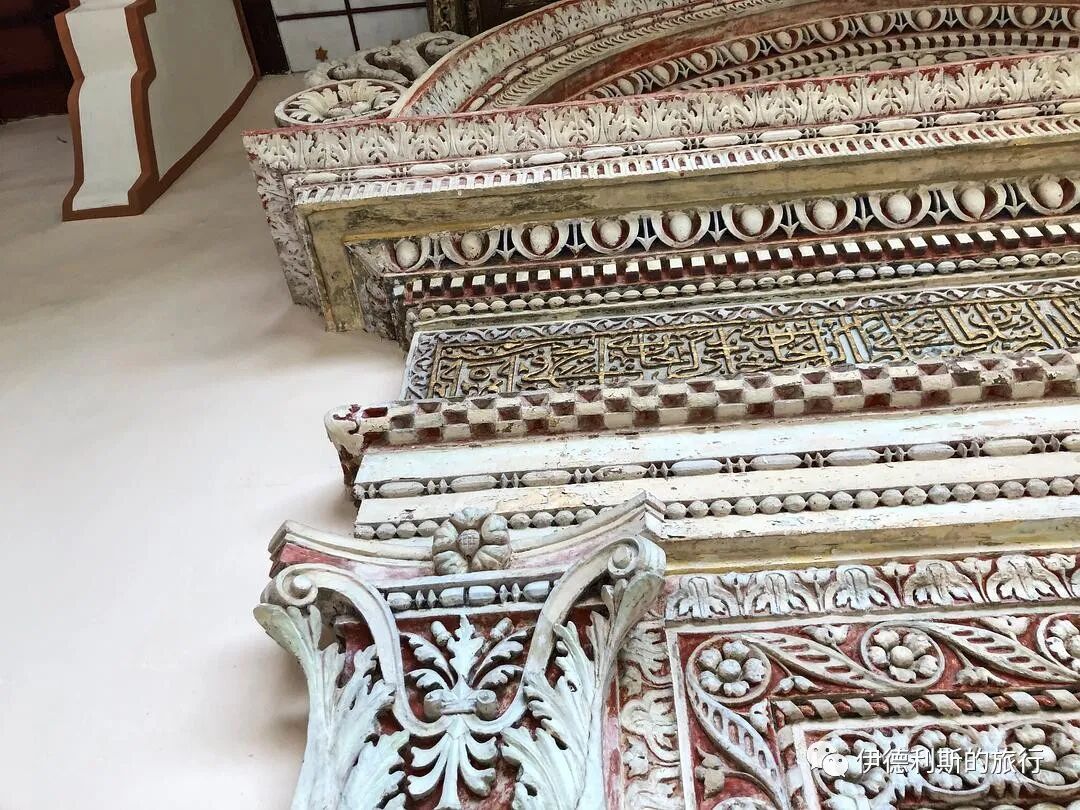
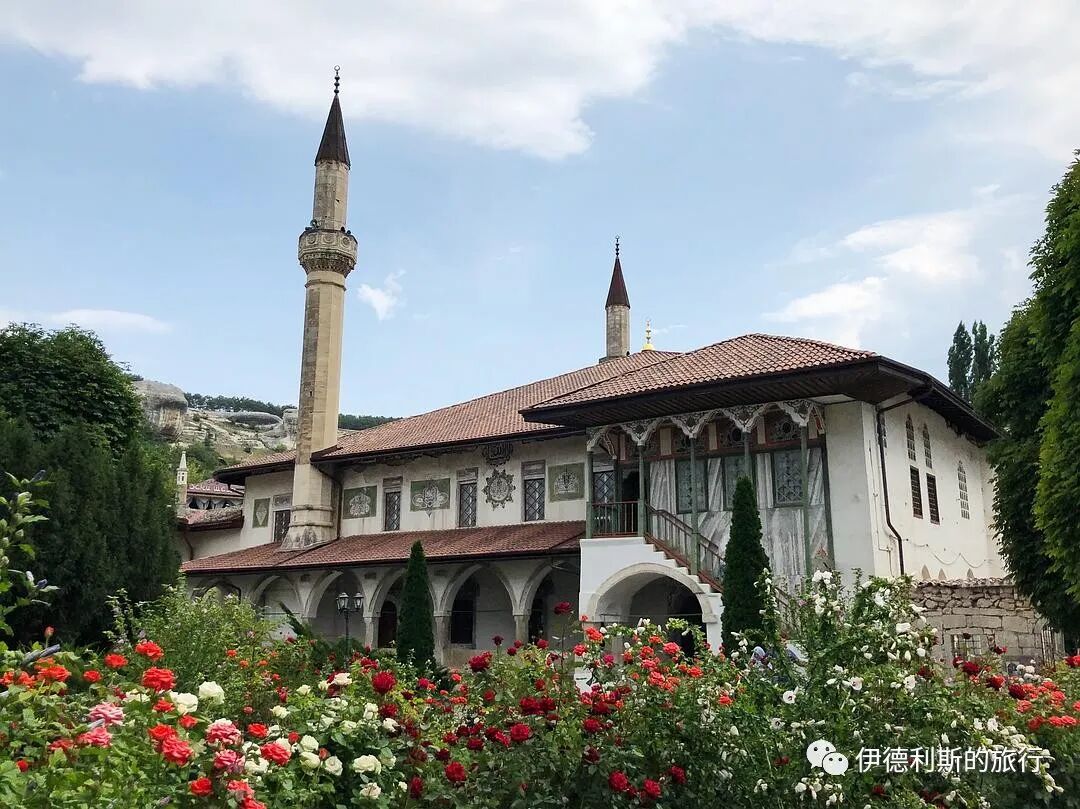
The Great Khan Mosque (Büyük Han Cami) in the Bakhchysarai Khan's Palace was built in 1532 and is one of the earliest structures in the palace. The original mosque had multiple domes, similar to the Seljuk-style mosques popular in the Ottoman Empire during the 15th century. The mosque was destroyed by fire in 1736. It was later restored by Khan Selamet II Giray (who reigned from 1740 to 1743) and converted to a tiled roof.
During the Soviet era, the mosque was closed and turned into an exhibition hall for the archaeological museum. After Russia occupied Crimea in 2014, the mosque underwent repairs, some of which caused damage to the building.
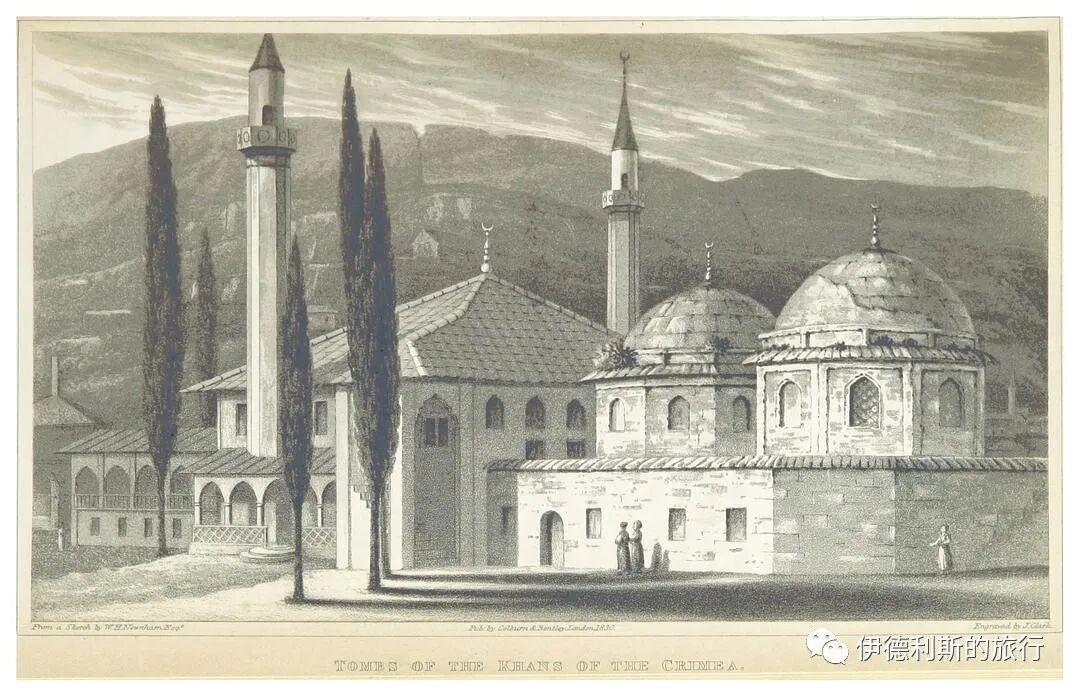
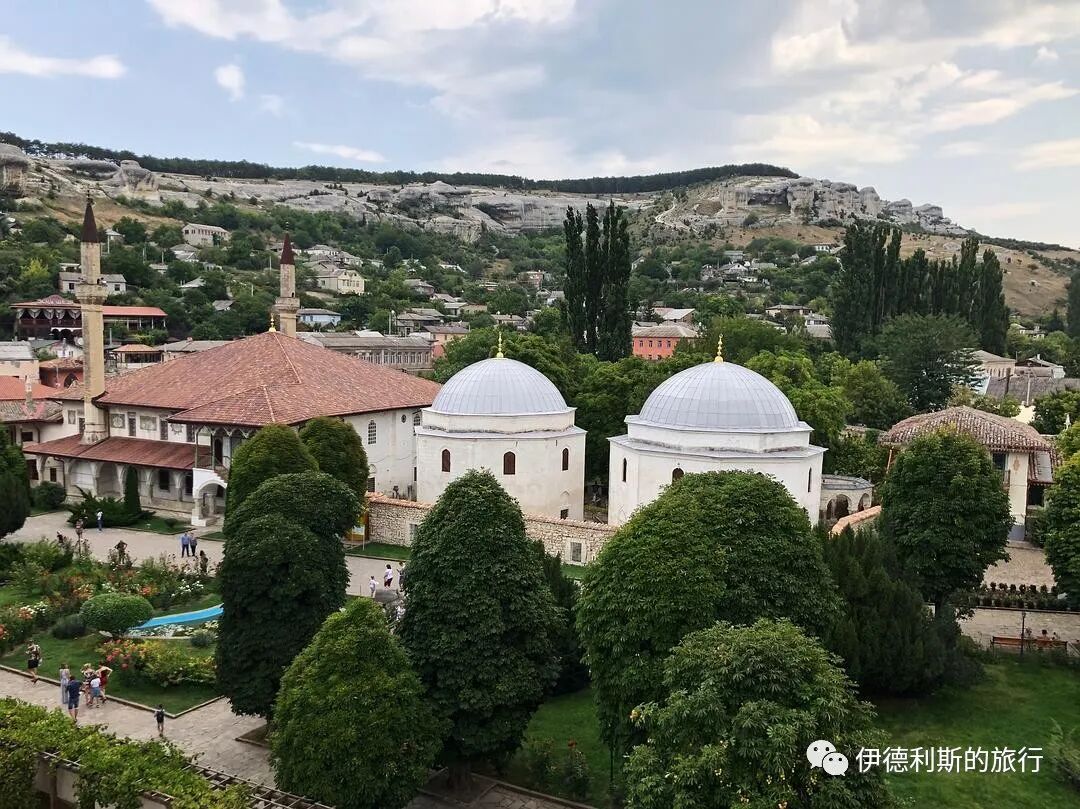
The SaryGuzel Bathhouse was built in 1532 by order of the Crimean Khan Sahib I Giray. Like the Great Khan Mosque, it is one of the earliest buildings in the Bakhchysarai Khan's Palace. In Crimean Tatar, "Sarı" means "yellow or fair-skinned," and "Güzel" means "beautiful." The SaryGuzel Bathhouse is a typical Turkish bath. A furnace in the basement heated the floor with rising hot air, and cold and hot water were supplied through lead pipes. The bathhouse is divided into men's and women's sections, each with its own dome. The domes have star-shaped cutouts for ventilation and light, and there is an indoor courtyard with a fountain at the exit.
The SaryGuzel Bathhouse operated until 1924, when it was closed because it was considered unsafe. It has since been repaired and is now open for exhibitions.
The Khan's cemetery holds the grave of the Crimean Khan Devlet I Giray (reigned 1551–1577). He was appointed Kalga (the second-in-command after the Khan) in 1530. Later, due to court struggles, he went to Istanbul and gradually gained the trust of the Ottoman Sultan Suleiman the Magnificent. In 1551, with the help of Suleiman the Magnificent, he became the Crimean Khan.
Block 2 of 2 for Part 1A-1
Islamic World in 1550: Mongol Legacy and Muslim History (Part 1A-1)
Articles • ali2007fr posted the article • 0 comments • 223 views • 2026-05-18 09:38
Summary: Islamic World in 1550: Mongol Empire Legacy and Muslim History (Part 1A) is presented here as a firsthand travel account in clear English, beginning with this scene: In our last article, "A Journey Through the Islamic World in 1550 (Part 1)," we crossed the African continent, traveled from Egypt into the Ottoman Empire, and visited Tabriz in Iran. The account keeps its focus on Mongol Empire, Islamic World, Muslim History while preserving the names, places, food, and historical details from the Chinese source.
In our last article, "A Journey Through the Islamic World in 1550 (Part 1)," we crossed the African continent, traveled from Egypt into the Ottoman Empire, and visited Tabriz in Iran. This time, we will visit 12 countries ruled by the descendants of Genghis Khan, moving from Eastern Europe into North Asia and Central Asia, and finally into South Asia.
In the early 13th century, as the Mongol Empire expanded, Genghis Khan began dividing his lands among his sons. Orda and Batu, the sons of Genghis Khan's eldest son Jochi, received lands in southern Russia and Kazakhstan, which gradually formed the Golden Horde. Hulagu Khan, the son of Genghis Khan's fourth son Tolui, received lands in Iran, Turkmenistan, Afghanistan, and parts of West Asia, which gradually formed the Ilkhanate. After the Yuan Dynasty was established in 1271, the original families of Ogedei and Chagatai, led by Kaidu, opposed Kublai Khan. This led to the formation of the Ogedei Khanate and the Chagatai Khanate, completing the four great Mongol khanates.
After the 14th century, the territory of the Ogedei Khanate was first divided between the Chagatai Khanate and the Yuan Dynasty, and later the Ilkhanate and the Chagatai Khanate also began to split apart. The Golden Horde was the last to decline, splitting into several khanates in the early 15th century.
In 1550, there were 12 countries and regimes established by descendants of Genghis Khan, ruling a vast area from Russia, Kazakhstan, Uzbekistan, and China's Xinjiang to Afghanistan, Pakistan, and India. They were:
1. The Crimean Khanate ruled the Crimean Peninsula.
2. The Astrakhan Khanate ruled the Volga Delta.
3. The Nogai Horde ruled the region between the Volga and Ural rivers.
4. The Qasim Khanate ruled Kasimov in the modern-day Ryazan Oblast of Russia.
5. The Kazan Khanate ruled the middle Volga region.
6. The Siberian Khanate ruled the area around the Irtysh River.
7. The Kazakh Khanate ruled the Kazakh Steppe.
8. The Khanate of Khiva ruled the Khwarezm region.
9. The Khanate of Bukhara ruled the Transoxiana region of Central Asia.
10. The Yarkent Khanate ruled the southern Xinjiang region.
11. Haidar ruled the Kashmir region.
12. The Arghun dynasty ruled southern Afghanistan and the Sindh region of Pakistan.
Additionally, the Mughal Empire was briefly overthrown at this time, and its second emperor, Humayun, was in exile in Persia.
1. The Crimean Khanate in Ukraine (1441–1783).
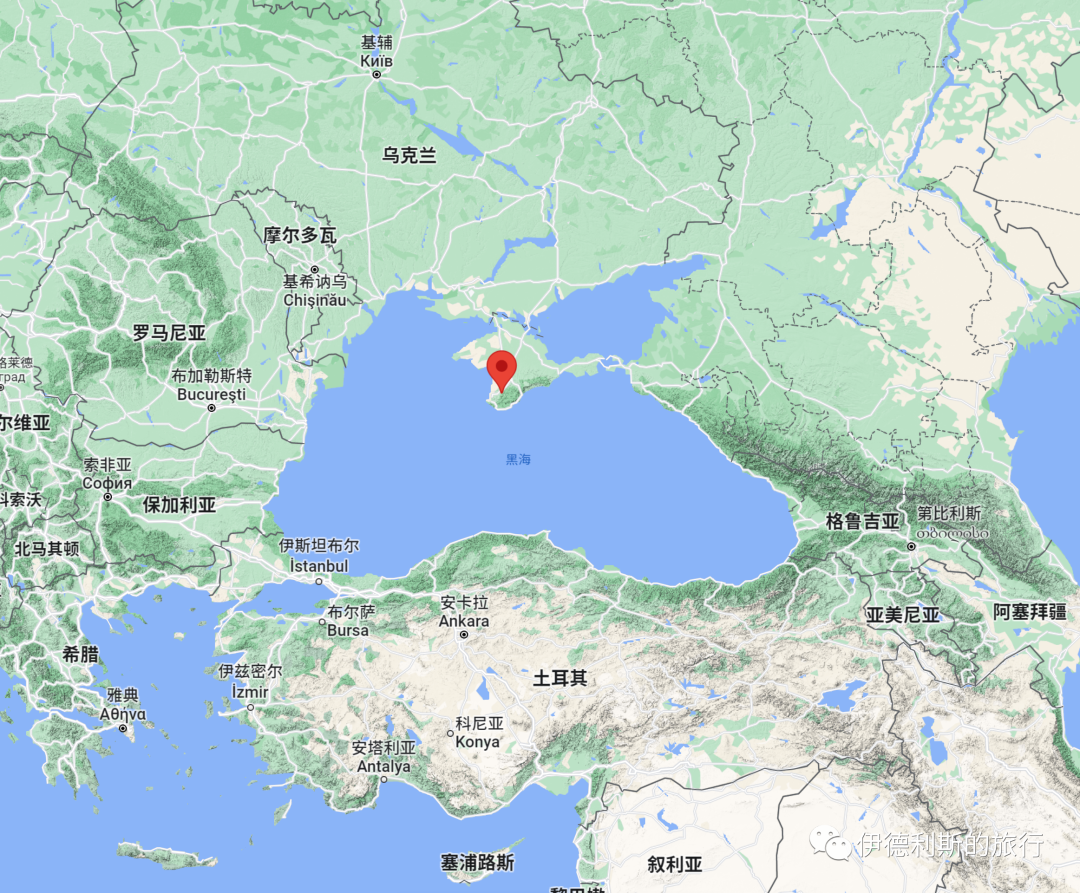
We start this journey on the Crimean Peninsula on the northern shore of the Black Sea.
The Khan of the Crimean Khanate was a descendant of Tuka-Timur, the thirteenth son of Jochi, who was Genghis Khan's eldest son. In the 1260s, the Golden Horde gave the Crimean Peninsula to the ancestor of the Crimean Khans, Uran Timur, to rule. The khanate was officially established in 1441.
Around 1500, the Crimean Khan Mengli I Giray built the capital of Salachik. In 1532, Sahib I Giray, the son of Mengli I Giray, established a new capital called Bakhchisarai in a valley two kilometers downstream from Salachik. For the next 250 years, generations of Crimean Khans built palaces and various mosque buildings here.
In 1550, the Khan ruling the Crimean Khanate was Sahib I Giray. He ascended the throne with the help of the Ottoman Empire. Later, he joined forces with the Ottoman Sultan Suleiman the Magnificent to attack the Moldavians, and in 1541, he raided Moscow and brought back spoils of war.
The location of Bakhchisarai, the capital of the Crimean Khanate.
The tomb of Haji I Giray (Dürbe Hacı I Giray) was built in 1501 by Mengli I Giray for his father, the founding Khan of Crimea. It is an octagonal tomb with a lead dome.
Archaeological excavations from 2006 to 2007 examined 18 graves inside the mausoleum, including 13 adults and 5 children. They were wrapped in silk and satin, with some resting on pillows stuffed with fabric scraps and fruit seeds. The mausoleum holds 8 stone sarcophagi covered in velvet, silk, and silver-threaded fabric. These likely include 4 Crimean Khans: Hacı I Giray himself, Meñli I Giray, Nur Devlet—who fought Meñli I Giray for the throne for years before losing—and Sahib I Giray, the son of Meñli I Giray and builder of Bakhchysarai.
After research finished in 2009, these individuals were reburied with Muslim rites.
The Chain Madrasa (Zıncırlı Medrese) was built in 1500 by order of the Crimean Khan Meñli I Giray. The name of the madrasa comes from the Turkic word "Zyngyr," which means "chain." A chain hangs above the main gate of the madrasa, forcing everyone who enters to bow their head. The madrasa is rectangular with a central courtyard, an entrance on one side, and 11 rooms on the other three sides. At the time, the madrasa taught Turkish and Arabic grammar, calligraphy, arithmetic, ethics, logic, proof theory, Islamic law (sharia), theology, and hadith studies. The full course of study took ten years.
In 1909, influenced by the Crimean Tatar Enlightenment movement, Gasprinski built a new two-story madrasa next to the old one. The madrasa closed in 1917 and became the Meñli Giray Research Institute. The institute was abolished in 1923. Later, it served as a teacher's college, a medical school, a sanatorium for German soldiers, and a post-war psychiatric clinic. Today, it is managed by the Bakhchysarai History, Culture, and Archaeology Museum.
The Iron Gate (Demir Qapı) is the oldest structure in the Khan's Palace. It was built between 1503 and 1504 for the Crimean Khan by the architect Aleviz Novy, who had been invited by Ivan the Great to build churches in Moscow. The Iron Gate was likely first built at the Crimean Khan's previous residence, Devlet-Saray, and moved to the main palace building after the Bakhchysarai Khan's Palace was completed in 1532. "Demir Qapı" means "iron gate" in Crimean Tatar. The doorway is made of limestone and features Lombard-Venetian Renaissance decorative styles.
The Great Khan Mosque (Büyük Han Cami) in the Bakhchysarai Khan's Palace was built in 1532 and is one of the earliest structures in the palace. The original mosque had multiple domes, similar to the Seljuk-style mosques popular in the Ottoman Empire during the 15th century. The mosque was destroyed by fire in 1736. It was later restored by Khan Selamet II Giray (who reigned from 1740 to 1743) and converted to a tiled roof.
During the Soviet era, the mosque was closed and turned into an exhibition hall for the archaeological museum. After Russia occupied Crimea in 2014, the mosque underwent repairs, some of which caused damage to the building.
The SaryGuzel Bathhouse was built in 1532 by order of the Crimean Khan Sahib I Giray. Like the Great Khan Mosque, it is one of the earliest buildings in the Bakhchysarai Khan's Palace. In Crimean Tatar, "Sarı" means "yellow or fair-skinned," and "Güzel" means "beautiful." The SaryGuzel Bathhouse is a typical Turkish bath. A furnace in the basement heated the floor with rising hot air, and cold and hot water were supplied through lead pipes. The bathhouse is divided into men's and women's sections, each with its own dome. The domes have star-shaped cutouts for ventilation and light, and there is an indoor courtyard with a fountain at the exit.
The SaryGuzel Bathhouse operated until 1924, when it was closed because it was considered unsafe. It has since been repaired and is now open for exhibitions.
The Khan's cemetery holds the grave of the Crimean Khan Devlet I Giray (reigned 1551–1577). He was appointed Kalga (the second-in-command after the Khan) in 1530. Later, due to court struggles, he went to Istanbul and gradually gained the trust of the Ottoman Sultan Suleiman the Magnificent. In 1551, with the help of Suleiman the Magnificent, he became the Crimean Khan.
Block 1 of 3 for Part 1A view all
Summary: Islamic World in 1550: Mongol Empire Legacy and Muslim History (Part 1A) is presented here as a firsthand travel account in clear English, beginning with this scene: In our last article, "A Journey Through the Islamic World in 1550 (Part 1)," we crossed the African continent, traveled from Egypt into the Ottoman Empire, and visited Tabriz in Iran. The account keeps its focus on Mongol Empire, Islamic World, Muslim History while preserving the names, places, food, and historical details from the Chinese source.
In our last article, "A Journey Through the Islamic World in 1550 (Part 1)," we crossed the African continent, traveled from Egypt into the Ottoman Empire, and visited Tabriz in Iran. This time, we will visit 12 countries ruled by the descendants of Genghis Khan, moving from Eastern Europe into North Asia and Central Asia, and finally into South Asia.
In the early 13th century, as the Mongol Empire expanded, Genghis Khan began dividing his lands among his sons. Orda and Batu, the sons of Genghis Khan's eldest son Jochi, received lands in southern Russia and Kazakhstan, which gradually formed the Golden Horde. Hulagu Khan, the son of Genghis Khan's fourth son Tolui, received lands in Iran, Turkmenistan, Afghanistan, and parts of West Asia, which gradually formed the Ilkhanate. After the Yuan Dynasty was established in 1271, the original families of Ogedei and Chagatai, led by Kaidu, opposed Kublai Khan. This led to the formation of the Ogedei Khanate and the Chagatai Khanate, completing the four great Mongol khanates.
After the 14th century, the territory of the Ogedei Khanate was first divided between the Chagatai Khanate and the Yuan Dynasty, and later the Ilkhanate and the Chagatai Khanate also began to split apart. The Golden Horde was the last to decline, splitting into several khanates in the early 15th century.
In 1550, there were 12 countries and regimes established by descendants of Genghis Khan, ruling a vast area from Russia, Kazakhstan, Uzbekistan, and China's Xinjiang to Afghanistan, Pakistan, and India. They were:
1. The Crimean Khanate ruled the Crimean Peninsula.
2. The Astrakhan Khanate ruled the Volga Delta.
3. The Nogai Horde ruled the region between the Volga and Ural rivers.
4. The Qasim Khanate ruled Kasimov in the modern-day Ryazan Oblast of Russia.
5. The Kazan Khanate ruled the middle Volga region.
6. The Siberian Khanate ruled the area around the Irtysh River.
7. The Kazakh Khanate ruled the Kazakh Steppe.
8. The Khanate of Khiva ruled the Khwarezm region.
9. The Khanate of Bukhara ruled the Transoxiana region of Central Asia.
10. The Yarkent Khanate ruled the southern Xinjiang region.
11. Haidar ruled the Kashmir region.
12. The Arghun dynasty ruled southern Afghanistan and the Sindh region of Pakistan.
Additionally, the Mughal Empire was briefly overthrown at this time, and its second emperor, Humayun, was in exile in Persia.
1. The Crimean Khanate in Ukraine (1441–1783).
We start this journey on the Crimean Peninsula on the northern shore of the Black Sea.
The Khan of the Crimean Khanate was a descendant of Tuka-Timur, the thirteenth son of Jochi, who was Genghis Khan's eldest son. In the 1260s, the Golden Horde gave the Crimean Peninsula to the ancestor of the Crimean Khans, Uran Timur, to rule. The khanate was officially established in 1441.
Around 1500, the Crimean Khan Mengli I Giray built the capital of Salachik. In 1532, Sahib I Giray, the son of Mengli I Giray, established a new capital called Bakhchisarai in a valley two kilometers downstream from Salachik. For the next 250 years, generations of Crimean Khans built palaces and various mosque buildings here.
In 1550, the Khan ruling the Crimean Khanate was Sahib I Giray. He ascended the throne with the help of the Ottoman Empire. Later, he joined forces with the Ottoman Sultan Suleiman the Magnificent to attack the Moldavians, and in 1541, he raided Moscow and brought back spoils of war.
The location of Bakhchisarai, the capital of the Crimean Khanate.
The tomb of Haji I Giray (Dürbe Hacı I Giray) was built in 1501 by Mengli I Giray for his father, the founding Khan of Crimea. It is an octagonal tomb with a lead dome.
Archaeological excavations from 2006 to 2007 examined 18 graves inside the mausoleum, including 13 adults and 5 children. They were wrapped in silk and satin, with some resting on pillows stuffed with fabric scraps and fruit seeds. The mausoleum holds 8 stone sarcophagi covered in velvet, silk, and silver-threaded fabric. These likely include 4 Crimean Khans: Hacı I Giray himself, Meñli I Giray, Nur Devlet—who fought Meñli I Giray for the throne for years before losing—and Sahib I Giray, the son of Meñli I Giray and builder of Bakhchysarai.
After research finished in 2009, these individuals were reburied with Muslim rites.
The Chain Madrasa (Zıncırlı Medrese) was built in 1500 by order of the Crimean Khan Meñli I Giray. The name of the madrasa comes from the Turkic word "Zyngyr," which means "chain." A chain hangs above the main gate of the madrasa, forcing everyone who enters to bow their head. The madrasa is rectangular with a central courtyard, an entrance on one side, and 11 rooms on the other three sides. At the time, the madrasa taught Turkish and Arabic grammar, calligraphy, arithmetic, ethics, logic, proof theory, Islamic law (sharia), theology, and hadith studies. The full course of study took ten years.
In 1909, influenced by the Crimean Tatar Enlightenment movement, Gasprinski built a new two-story madrasa next to the old one. The madrasa closed in 1917 and became the Meñli Giray Research Institute. The institute was abolished in 1923. Later, it served as a teacher's college, a medical school, a sanatorium for German soldiers, and a post-war psychiatric clinic. Today, it is managed by the Bakhchysarai History, Culture, and Archaeology Museum.
The Iron Gate (Demir Qapı) is the oldest structure in the Khan's Palace. It was built between 1503 and 1504 for the Crimean Khan by the architect Aleviz Novy, who had been invited by Ivan the Great to build churches in Moscow. The Iron Gate was likely first built at the Crimean Khan's previous residence, Devlet-Saray, and moved to the main palace building after the Bakhchysarai Khan's Palace was completed in 1532. "Demir Qapı" means "iron gate" in Crimean Tatar. The doorway is made of limestone and features Lombard-Venetian Renaissance decorative styles.
The Great Khan Mosque (Büyük Han Cami) in the Bakhchysarai Khan's Palace was built in 1532 and is one of the earliest structures in the palace. The original mosque had multiple domes, similar to the Seljuk-style mosques popular in the Ottoman Empire during the 15th century. The mosque was destroyed by fire in 1736. It was later restored by Khan Selamet II Giray (who reigned from 1740 to 1743) and converted to a tiled roof.
During the Soviet era, the mosque was closed and turned into an exhibition hall for the archaeological museum. After Russia occupied Crimea in 2014, the mosque underwent repairs, some of which caused damage to the building.
The SaryGuzel Bathhouse was built in 1532 by order of the Crimean Khan Sahib I Giray. Like the Great Khan Mosque, it is one of the earliest buildings in the Bakhchysarai Khan's Palace. In Crimean Tatar, "Sarı" means "yellow or fair-skinned," and "Güzel" means "beautiful." The SaryGuzel Bathhouse is a typical Turkish bath. A furnace in the basement heated the floor with rising hot air, and cold and hot water were supplied through lead pipes. The bathhouse is divided into men's and women's sections, each with its own dome. The domes have star-shaped cutouts for ventilation and light, and there is an indoor courtyard with a fountain at the exit.
The SaryGuzel Bathhouse operated until 1924, when it was closed because it was considered unsafe. It has since been repaired and is now open for exhibitions.
The Khan's cemetery holds the grave of the Crimean Khan Devlet I Giray (reigned 1551–1577). He was appointed Kalga (the second-in-command after the Khan) in 1530. Later, due to court struggles, he went to Istanbul and gradually gained the trust of the Ottoman Sultan Suleiman the Magnificent. In 1551, with the help of Suleiman the Magnificent, he became the Crimean Khan.
Block 1 of 3 for Part 1A
Islamic World in 1550: Mongol Empire Legacy and Muslim History (Part 1A)
Articles • ali2007fr posted the article • 0 comments • 240 views • 2026-05-18 09:38
Summary: Islamic World in 1550: Mongol Empire Legacy and Muslim History (Part 1A) is presented here as a firsthand travel account in clear English, beginning with this scene: In our last article, "A Journey Through the Islamic World in 1550 (Part 1)," we crossed the African continent, traveled from Egypt into the Ottoman Empire, and visited Tabriz in Iran. The account keeps its focus on Mongol Empire, Islamic World, Muslim History while preserving the names, places, food, and historical details from the Chinese source.
In our last article, "A Journey Through the Islamic World in 1550 (Part 1)," we crossed the African continent, traveled from Egypt into the Ottoman Empire, and visited Tabriz in Iran. This time, we will visit 12 countries ruled by the descendants of Genghis Khan, moving from Eastern Europe into North Asia and Central Asia, and finally into South Asia.
In the early 13th century, as the Mongol Empire expanded, Genghis Khan began dividing his lands among his sons. Orda and Batu, the sons of Genghis Khan's eldest son Jochi, received lands in southern Russia and Kazakhstan, which gradually formed the Golden Horde. Hulagu Khan, the son of Genghis Khan's fourth son Tolui, received lands in Iran, Turkmenistan, Afghanistan, and parts of West Asia, which gradually formed the Ilkhanate. After the Yuan Dynasty was established in 1271, the original families of Ogedei and Chagatai, led by Kaidu, opposed Kublai Khan. This led to the formation of the Ogedei Khanate and the Chagatai Khanate, completing the four great Mongol khanates.
After the 14th century, the territory of the Ogedei Khanate was first divided between the Chagatai Khanate and the Yuan Dynasty, and later the Ilkhanate and the Chagatai Khanate also began to split apart. The Golden Horde was the last to decline, splitting into several khanates in the early 15th century.
In 1550, there were 12 countries and regimes established by descendants of Genghis Khan, ruling a vast area from Russia, Kazakhstan, Uzbekistan, and China's Xinjiang to Afghanistan, Pakistan, and India. They were:
1. The Crimean Khanate ruled the Crimean Peninsula.
2. The Astrakhan Khanate ruled the Volga Delta.
3. The Nogai Horde ruled the region between the Volga and Ural rivers.
4. The Qasim Khanate ruled Kasimov in the modern-day Ryazan Oblast of Russia.
5. The Kazan Khanate ruled the middle Volga region.
6. The Siberian Khanate ruled the area around the Irtysh River.
7. The Kazakh Khanate ruled the Kazakh Steppe.
8. The Khanate of Khiva ruled the Khwarezm region.
9. The Khanate of Bukhara ruled the Transoxiana region of Central Asia.
10. The Yarkent Khanate ruled the southern Xinjiang region.
11. Haidar ruled the Kashmir region.
12. The Arghun dynasty ruled southern Afghanistan and the Sindh region of Pakistan.
Additionally, the Mughal Empire was briefly overthrown at this time, and its second emperor, Humayun, was in exile in Persia.
1. The Crimean Khanate in Ukraine (1441–1783).
We start this journey on the Crimean Peninsula on the northern shore of the Black Sea.
The Khan of the Crimean Khanate was a descendant of Tuka-Timur, the thirteenth son of Jochi, who was Genghis Khan's eldest son. In the 1260s, the Golden Horde gave the Crimean Peninsula to the ancestor of the Crimean Khans, Uran Timur, to rule. The khanate was officially established in 1441.
Around 1500, the Crimean Khan Mengli I Giray built the capital of Salachik. In 1532, Sahib I Giray, the son of Mengli I Giray, established a new capital called Bakhchisarai in a valley two kilometers downstream from Salachik. For the next 250 years, generations of Crimean Khans built palaces and various mosque buildings here.
In 1550, the Khan ruling the Crimean Khanate was Sahib I Giray. He ascended the throne with the help of the Ottoman Empire. Later, he joined forces with the Ottoman Sultan Suleiman the Magnificent to attack the Moldavians, and in 1541, he raided Moscow and brought back spoils of war.
The location of Bakhchisarai, the capital of the Crimean Khanate.
The tomb of Haji I Giray (Dürbe Hacı I Giray) was built in 1501 by Mengli I Giray for his father, the founding Khan of Crimea. It is an octagonal tomb with a lead dome.
Archaeological excavations from 2006 to 2007 examined 18 graves inside the mausoleum, including 13 adults and 5 children. They were wrapped in silk and satin, with some resting on pillows stuffed with fabric scraps and fruit seeds. The mausoleum holds 8 stone sarcophagi covered in velvet, silk, and silver-threaded fabric. These likely include 4 Crimean Khans: Hacı I Giray himself, Meñli I Giray, Nur Devlet—who fought Meñli I Giray for the throne for years before losing—and Sahib I Giray, the son of Meñli I Giray and builder of Bakhchysarai.
After research finished in 2009, these individuals were reburied with Muslim rites.
The Chain Madrasa (Zıncırlı Medrese) was built in 1500 by order of the Crimean Khan Meñli I Giray. The name of the madrasa comes from the Turkic word "Zyngyr," which means "chain." A chain hangs above the main gate of the madrasa, forcing everyone who enters to bow their head. The madrasa is rectangular with a central courtyard, an entrance on one side, and 11 rooms on the other three sides. At the time, the madrasa taught Turkish and Arabic grammar, calligraphy, arithmetic, ethics, logic, proof theory, Islamic law (sharia), theology, and hadith studies. The full course of study took ten years.
In 1909, influenced by the Crimean Tatar Enlightenment movement, Gasprinski built a new two-story madrasa next to the old one. The madrasa closed in 1917 and became the Meñli Giray Research Institute. The institute was abolished in 1923. Later, it served as a teacher's college, a medical school, a sanatorium for German soldiers, and a post-war psychiatric clinic. Today, it is managed by the Bakhchysarai History, Culture, and Archaeology Museum.
The Iron Gate (Demir Qapı) is the oldest structure in the Khan's Palace. It was built between 1503 and 1504 for the Crimean Khan by the architect Aleviz Novy, who had been invited by Ivan the Great to build churches in Moscow. The Iron Gate was likely first built at the Crimean Khan's previous residence, Devlet-Saray, and moved to the main palace building after the Bakhchysarai Khan's Palace was completed in 1532. "Demir Qapı" means "iron gate" in Crimean Tatar. The doorway is made of limestone and features Lombard-Venetian Renaissance decorative styles.
The Great Khan Mosque (Büyük Han Cami) in the Bakhchysarai Khan's Palace was built in 1532 and is one of the earliest structures in the palace. The original mosque had multiple domes, similar to the Seljuk-style mosques popular in the Ottoman Empire during the 15th century. The mosque was destroyed by fire in 1736. It was later restored by Khan Selamet II Giray (who reigned from 1740 to 1743) and converted to a tiled roof.
During the Soviet era, the mosque was closed and turned into an exhibition hall for the archaeological museum. After Russia occupied Crimea in 2014, the mosque underwent repairs, some of which caused damage to the building.
The SaryGuzel Bathhouse was built in 1532 by order of the Crimean Khan Sahib I Giray. Like the Great Khan Mosque, it is one of the earliest buildings in the Bakhchysarai Khan's Palace. In Crimean Tatar, "Sarı" means "yellow or fair-skinned," and "Güzel" means "beautiful." The SaryGuzel Bathhouse is a typical Turkish bath. A furnace in the basement heated the floor with rising hot air, and cold and hot water were supplied through lead pipes. The bathhouse is divided into men's and women's sections, each with its own dome. The domes have star-shaped cutouts for ventilation and light, and there is an indoor courtyard with a fountain at the exit.
The SaryGuzel Bathhouse operated until 1924, when it was closed because it was considered unsafe. It has since been repaired and is now open for exhibitions.
The Khan's cemetery holds the grave of the Crimean Khan Devlet I Giray (reigned 1551–1577). He was appointed Kalga (the second-in-command after the Khan) in 1530. Later, due to court struggles, he went to Istanbul and gradually gained the trust of the Ottoman Sultan Suleiman the Magnificent. In 1551, with the help of Suleiman the Magnificent, he became the Crimean Khan.
2. The Astrakhan Khanate of Russia (1466–1556)
We continue east to the mouth of the Volga River.
The Astrakhan Khanate was located in the Volga Delta. Its founder, Mahmud bin Küchük, was a prince of the Golden Horde. The Astrakhan Khanate was mainly inhabited by Astrakhan Tatars and Nogais. The Khanate's caravans traveled between Moscow, Kazan, Crimea, Central Asia, and the Transcaucasus region. In 1532, the Astrakhan Khanate began to have contact with Russia. After Russia conquered Kazan in 1552, the Astrakhan Khanate could not escape the same fate.
In 1550, the capital of the Astrakhan Khanate was Hajji Tarkhan, located on the right bank of the Volga River, 12 kilometers north of the modern city of Astrakhan. The city of Hajji Tarkhan was built by the Golden Horde in the late 13th century, appeared in the Travels of Ibn Battuta in the 14th century, was destroyed by Timur's army in 1395, and was rebuilt by the Astrakhan Khanate in the 15th century. The city was occupied by the Crimean Khanate in 1547 and was finally burned down by Ivan the Terrible in 1556.
There are currently about 60,000 Astrakhan Tatars in Russia. Most live in the Astrakhan Oblast, with half living in the city of Astrakhan, where they have their own community and several mosques.
The location of the city of Hajji Tarkhan.
The White Mosque in Astrakhan, photographed by Polinadelia in 2014.
3. The Nogai Horde in Russia and Kazakhstan (1440–1634)
Continuing east from the Volga River, you reach the grasslands of the Nogai tribes.
Nogai was the great-grandson of Jochi, the eldest son of Genghis Khan, and an important leader of the Golden Horde who ruled many Turkic-speaking tribes in the 13th century. A century later, the Golden Horde general Edigu ruled a large area from the Volga to the Ural River, and the tribes under his rule were also called the Nogai Horde.
We can find history about the Nogai Horde in the early 16th century in Russian records. In 1521, the Nogai were driven west by the Kazakhs and crossed the Volga River to attack Astrakhan. In 1522, the Kazakhs captured the capital of the Nogai Horde. In 1523, the Nogai Horde defeated the army that had briefly occupied Astrakhan.
In 1550, the Khan of the Kazan Khanate was Yosuf Khan (1549–1555), who had helped Moscow against the Kazan Khanate in 1549.
Saray-Jük was the capital of the Nogai Horde, located on the border of Europe and Asia in western Kazakhstan. This city sat on a trade route between Europe and China and was an important commercial hub during the Golden Horde period. After being destroyed by Timur in 1395, it was rebuilt in the 1430s and 1440s.
The location of Saray-Jük.
The ruins of Saray-Jük, photographed by Yakov Fedorov in 2020.
4. The Qasim Khanate in Russia (1452–1681)
We head north to the modern-day Ryazan Oblast in Russia.
The Qasim Khanate was located in Russia's Ryazan Oblast. Its founder, Qasim Khan, was the son of Ulugh Muhammad, the founder of the Kazan Khanate. The Qasim Khanate served as a buffer state between the Grand Duchy of Moscow and the Kazan Khanate and was under heavy Russian control.
In 1550, the Khan of the Qasim Khanate was Shahghali, who was installed as the Khan of the Kazan Khanate three times as a Russian vassal. In 1546, Shahghali was overthrown by the people of Kazan and fled back to the Qasim Khanate. Between 1547 and 1551, he participated in several Russian attacks on the Kazan Khanate and took part in the final Russian conquest of Kazan in 1552.
The capital of the Qasim Khanate, Qasimov, is located on the left bank of the Oka River in Russia's Ryazan Oblast, where one thousand Tatar-speaking Qasim Tatars still live today. The Khan Mosque in Qasimov was built by Shahghali in the mid-16th century. It was ordered to be demolished by Peter the Great in 1702, but the minaret (bangke ta) was preserved. This minaret is very similar to the Light Tower (Guangta) of the Huaisheng Mosque in Guangzhou.
The Khan Mosque in Qasimov, photographed by Alexander Novikov in 2014.
The location of Qasimov.
5. The Kazan Khanate in Russia (1438–1552)
We headed east to the city of Kazan on the banks of the Volga River.
The Kazan Khanate was founded by Ulugh Muhammad, a descendant of Genghis Khan's eldest son Jochi, who had ruled the Golden Horde twice. He lost control of the Golden Horde in 1436, then led his army to the Volga River and officially established the Kazan Khanate after capturing Kazan in 1438.
In 1521, the Kazan Khanate formed an alliance with the Astrakhan, Crimean, and Nogai Khanates to resist Moscow together. This caused dissatisfaction among pro-Russian factions within the Kazan Khanate, leading the state into internal conflict.
In 1550, the Khan of the Kazan Khanate was the four-year-old Ötemish Giray, though the actual rulers were his mother, Söyembikä, and the prime minister (uğlan) Qoşçaq. Seeing the instability in the Kazan Khanate, Ivan the Terrible of Russia sent a large army to besiege Kazan in February 1550, but the thawing of the Volga River forced the Russians to retreat and only attack the outskirts of the city. Throughout that year, Söyembikä and Qoşçaq fought against the pro-Russian faction, and relations with Russia continued to worsen.
The Kazan Khanate built many homes and public buildings in Kazan, including the Khan's palace, courtyards, mosques, and tombs, with tall minarets defining the city's skyline. In 1552, Ivan the Terrible invaded Kazan, destroyed the Kazan Khanate, and drove all Tatars out of the city, allowing only Russians to settle there. Between 1556 and 1562, Ivan the Terrible ordered the construction of the Kazan Kremlin on the site of the old Kazan Khanate fortress. The mosques, the Kazan Khan's palace, and the tombs were initially used as armories and ammunition depots, but were eventually completely demolished in the 18th century.
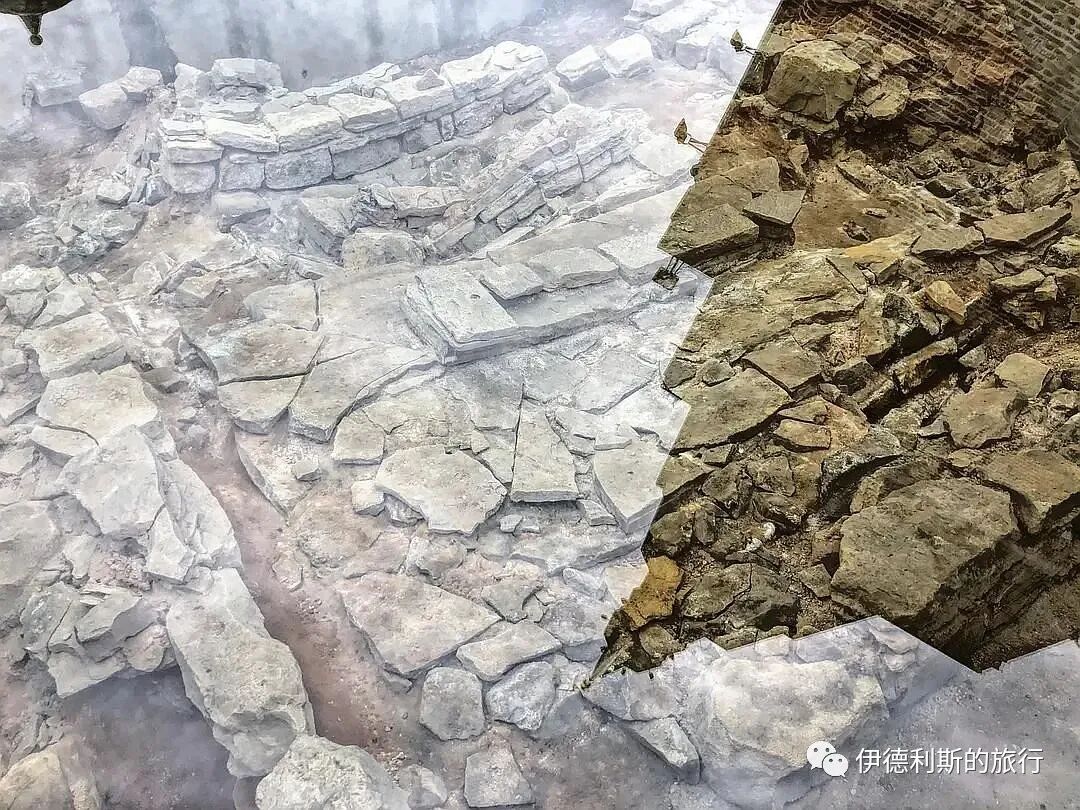
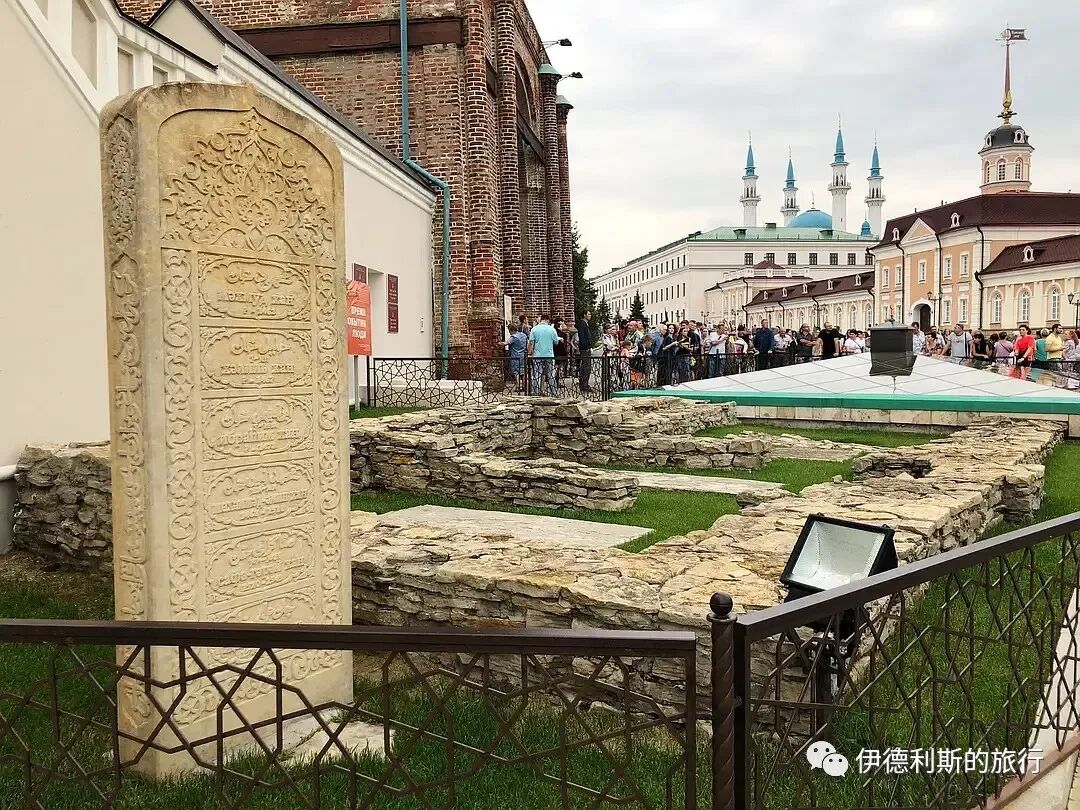
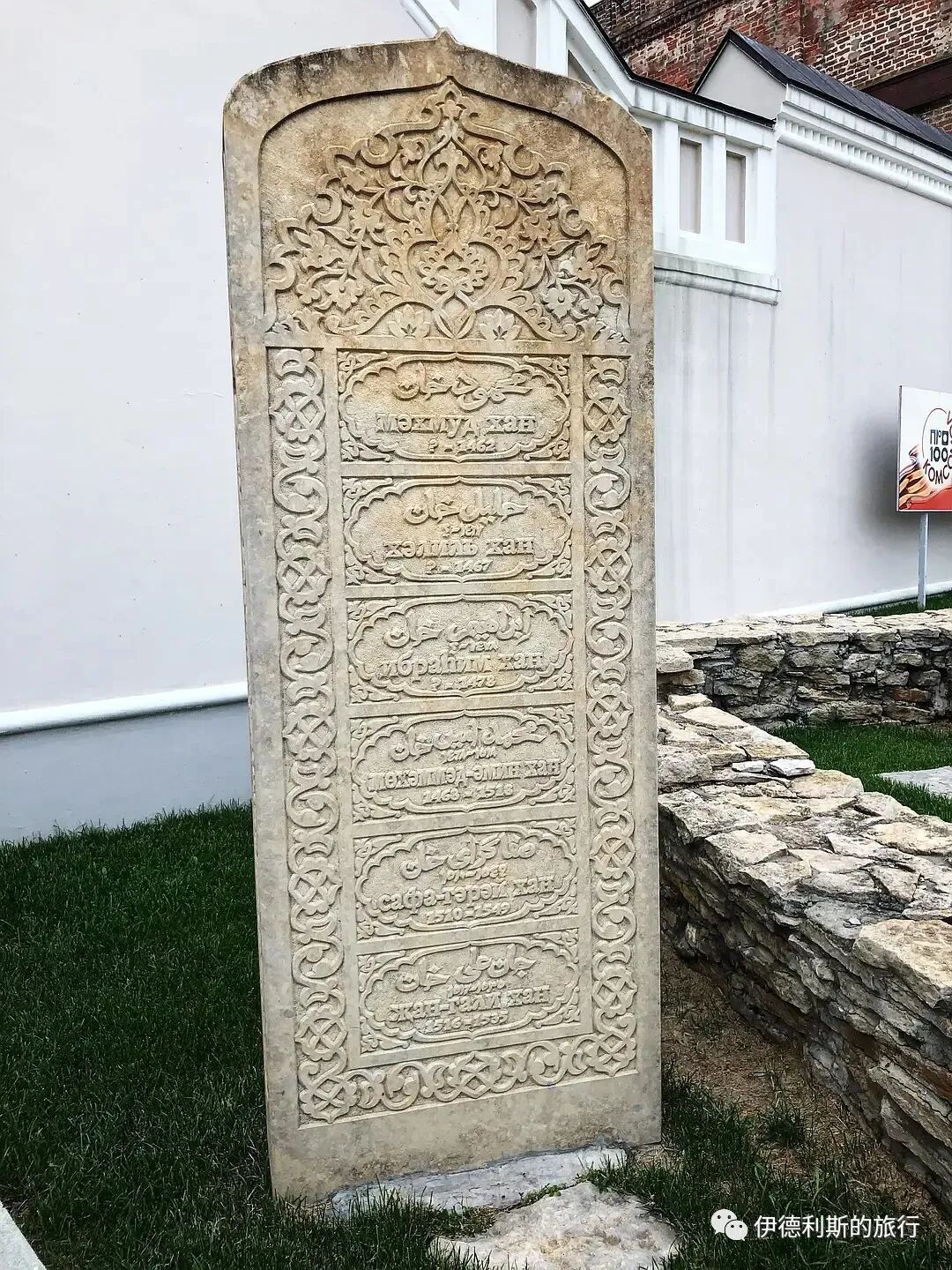
In 1977, hydraulic engineers accidentally dug up a grave while laying rainwater pipes at the Kazan Kremlin and immediately contacted the archaeology department. Archaeological excavations lasted for 10 years, eventually uncovering five graves, two of which were confirmed to be those of the actual founders of the Kazan Khanate: Mäxmüd Khan (died 1463 or 1466) and his grandson, Möxämmät Ämin (died 1518). The tomb was originally made of white stone and finally collapsed in the 17th century.
For further research, the remains of the two Kazan Khans, Mäxmüd and Möxämmät Ämin, were kept at the Institute of Archaeology of the Tatarstan Academy of Sciences for 40 years. In May 2017, after continuous efforts by the Tatar Muslims of Kazan, the two Kazan Khans were finally reburied not far from their original graves.
Between 2004 and 2005, the Institute of Archaeology of the Tatarstan Academy of Sciences re-excavated the Kazan Khan tombs and discovered the graves of four more Khans: Xalil (died 1467), İbrahim (died 1478), Safa Giray (died 1549), and Canghali (died 1535). Today, these four Kazan Khan graves are protected under a glass roof. Safa Giray Khan came from the Giray family of the Crimean Khanate and served as the Khan of Kazan three times: from 1524–1531, 1535–1546, and 1546–1549. Safa Giray was an anti-Russian Khan. His first reign ended due to Moscow's attack on Kazan, and he regained the throne four years later after Kazan nobles overthrew the pro-Russian Khan. Eleven years later, due to internal unrest in Kazan, he was overthrown again by a pro-Russian Khan. Safa Giray fled to his father-in-law's Nogai tribe, and a few months later, he returned to Kazan with a Nogai army to become the Khan for the third time. Canghali Khan was originally the Khan of the Qasim Khanate, a vassal state of the Grand Duchy of Moscow. In 1532, Grand Prince Vasily III of Moscow defeated the Kazan Khan Safa Giray and installed the 16-year-old Canghali as the pro-Russian Khan of Kazan. He died in 1535 during a coup by Kazan nobles.
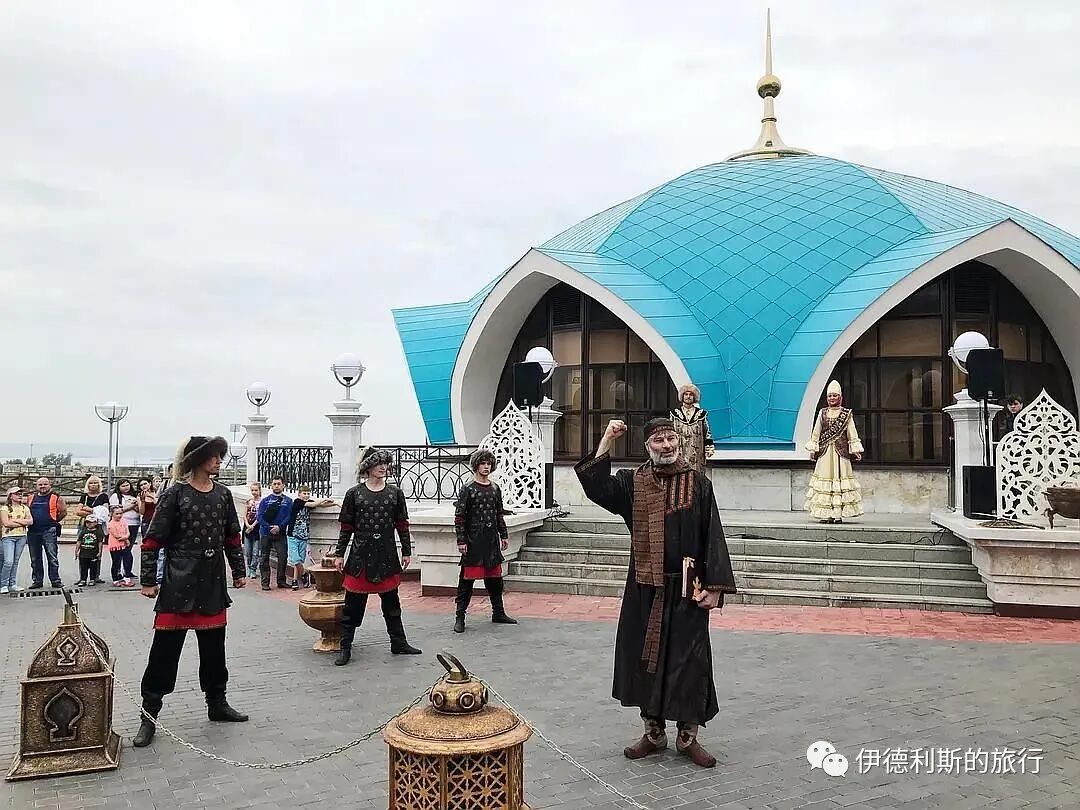
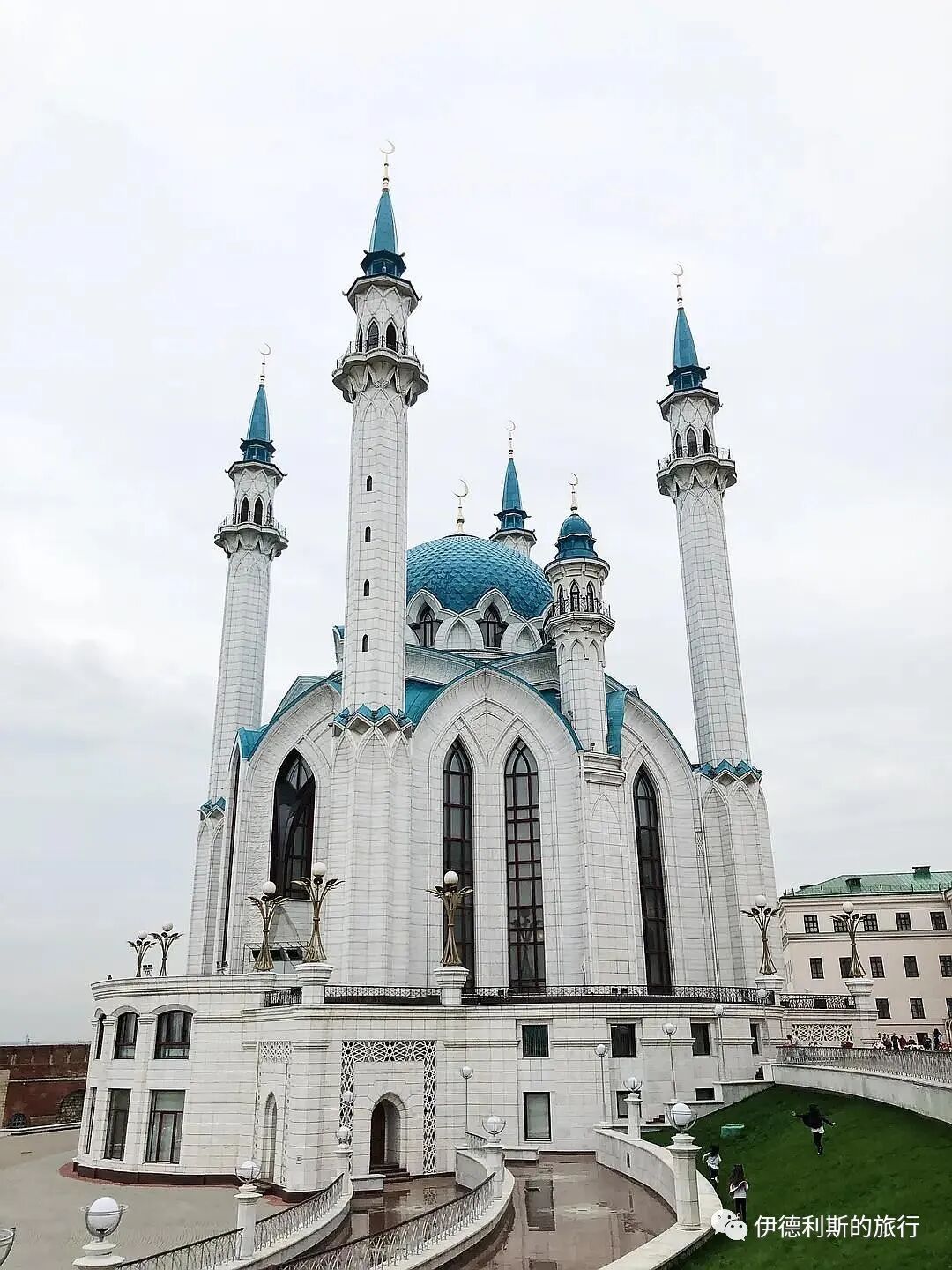
There is a performance about the Siege of Kazan at the entrance of the Kul Sharif Mosque inside the Kazan Kremlin. In 1552, when Ivan the Terrible besieged Kazan, the last imam of the Kazan Khanate, Seid Kul Sharif, led the people in a final resistance and died in the city. Today, Seid Kul Sharif is a national hero for the Kazan Tatars, and the new Kul Sharif Mosque built in 2005 is named after him.
The National Museum of the Republic of Tatarstan houses a letter written in 1523 by the Kazan Khan Sahib I Giray (reigned 1521–1524). A replica of this letter is also inside the Kazan Kremlin. In 1521, to resist the control of the Grand Duchy of Moscow, the Kazan Khanate overthrew the pro-Moscow Khan Shahghali and welcomed Sahib I Giray from Crimea to Kazan to become the new Khan.
Block 1 of 2 view all
Summary: Islamic World in 1550: Mongol Empire Legacy and Muslim History (Part 1A) is presented here as a firsthand travel account in clear English, beginning with this scene: In our last article, "A Journey Through the Islamic World in 1550 (Part 1)," we crossed the African continent, traveled from Egypt into the Ottoman Empire, and visited Tabriz in Iran. The account keeps its focus on Mongol Empire, Islamic World, Muslim History while preserving the names, places, food, and historical details from the Chinese source.
In our last article, "A Journey Through the Islamic World in 1550 (Part 1)," we crossed the African continent, traveled from Egypt into the Ottoman Empire, and visited Tabriz in Iran. This time, we will visit 12 countries ruled by the descendants of Genghis Khan, moving from Eastern Europe into North Asia and Central Asia, and finally into South Asia.
In the early 13th century, as the Mongol Empire expanded, Genghis Khan began dividing his lands among his sons. Orda and Batu, the sons of Genghis Khan's eldest son Jochi, received lands in southern Russia and Kazakhstan, which gradually formed the Golden Horde. Hulagu Khan, the son of Genghis Khan's fourth son Tolui, received lands in Iran, Turkmenistan, Afghanistan, and parts of West Asia, which gradually formed the Ilkhanate. After the Yuan Dynasty was established in 1271, the original families of Ogedei and Chagatai, led by Kaidu, opposed Kublai Khan. This led to the formation of the Ogedei Khanate and the Chagatai Khanate, completing the four great Mongol khanates.
After the 14th century, the territory of the Ogedei Khanate was first divided between the Chagatai Khanate and the Yuan Dynasty, and later the Ilkhanate and the Chagatai Khanate also began to split apart. The Golden Horde was the last to decline, splitting into several khanates in the early 15th century.
In 1550, there were 12 countries and regimes established by descendants of Genghis Khan, ruling a vast area from Russia, Kazakhstan, Uzbekistan, and China's Xinjiang to Afghanistan, Pakistan, and India. They were:
1. The Crimean Khanate ruled the Crimean Peninsula.
2. The Astrakhan Khanate ruled the Volga Delta.
3. The Nogai Horde ruled the region between the Volga and Ural rivers.
4. The Qasim Khanate ruled Kasimov in the modern-day Ryazan Oblast of Russia.
5. The Kazan Khanate ruled the middle Volga region.
6. The Siberian Khanate ruled the area around the Irtysh River.
7. The Kazakh Khanate ruled the Kazakh Steppe.
8. The Khanate of Khiva ruled the Khwarezm region.
9. The Khanate of Bukhara ruled the Transoxiana region of Central Asia.
10. The Yarkent Khanate ruled the southern Xinjiang region.
11. Haidar ruled the Kashmir region.
12. The Arghun dynasty ruled southern Afghanistan and the Sindh region of Pakistan.
Additionally, the Mughal Empire was briefly overthrown at this time, and its second emperor, Humayun, was in exile in Persia.
1. The Crimean Khanate in Ukraine (1441–1783).
We start this journey on the Crimean Peninsula on the northern shore of the Black Sea.
The Khan of the Crimean Khanate was a descendant of Tuka-Timur, the thirteenth son of Jochi, who was Genghis Khan's eldest son. In the 1260s, the Golden Horde gave the Crimean Peninsula to the ancestor of the Crimean Khans, Uran Timur, to rule. The khanate was officially established in 1441.
Around 1500, the Crimean Khan Mengli I Giray built the capital of Salachik. In 1532, Sahib I Giray, the son of Mengli I Giray, established a new capital called Bakhchisarai in a valley two kilometers downstream from Salachik. For the next 250 years, generations of Crimean Khans built palaces and various mosque buildings here.
In 1550, the Khan ruling the Crimean Khanate was Sahib I Giray. He ascended the throne with the help of the Ottoman Empire. Later, he joined forces with the Ottoman Sultan Suleiman the Magnificent to attack the Moldavians, and in 1541, he raided Moscow and brought back spoils of war.
The location of Bakhchisarai, the capital of the Crimean Khanate.
The tomb of Haji I Giray (Dürbe Hacı I Giray) was built in 1501 by Mengli I Giray for his father, the founding Khan of Crimea. It is an octagonal tomb with a lead dome.
Archaeological excavations from 2006 to 2007 examined 18 graves inside the mausoleum, including 13 adults and 5 children. They were wrapped in silk and satin, with some resting on pillows stuffed with fabric scraps and fruit seeds. The mausoleum holds 8 stone sarcophagi covered in velvet, silk, and silver-threaded fabric. These likely include 4 Crimean Khans: Hacı I Giray himself, Meñli I Giray, Nur Devlet—who fought Meñli I Giray for the throne for years before losing—and Sahib I Giray, the son of Meñli I Giray and builder of Bakhchysarai.
After research finished in 2009, these individuals were reburied with Muslim rites.
The Chain Madrasa (Zıncırlı Medrese) was built in 1500 by order of the Crimean Khan Meñli I Giray. The name of the madrasa comes from the Turkic word "Zyngyr," which means "chain." A chain hangs above the main gate of the madrasa, forcing everyone who enters to bow their head. The madrasa is rectangular with a central courtyard, an entrance on one side, and 11 rooms on the other three sides. At the time, the madrasa taught Turkish and Arabic grammar, calligraphy, arithmetic, ethics, logic, proof theory, Islamic law (sharia), theology, and hadith studies. The full course of study took ten years.
In 1909, influenced by the Crimean Tatar Enlightenment movement, Gasprinski built a new two-story madrasa next to the old one. The madrasa closed in 1917 and became the Meñli Giray Research Institute. The institute was abolished in 1923. Later, it served as a teacher's college, a medical school, a sanatorium for German soldiers, and a post-war psychiatric clinic. Today, it is managed by the Bakhchysarai History, Culture, and Archaeology Museum.
The Iron Gate (Demir Qapı) is the oldest structure in the Khan's Palace. It was built between 1503 and 1504 for the Crimean Khan by the architect Aleviz Novy, who had been invited by Ivan the Great to build churches in Moscow. The Iron Gate was likely first built at the Crimean Khan's previous residence, Devlet-Saray, and moved to the main palace building after the Bakhchysarai Khan's Palace was completed in 1532. "Demir Qapı" means "iron gate" in Crimean Tatar. The doorway is made of limestone and features Lombard-Venetian Renaissance decorative styles.
The Great Khan Mosque (Büyük Han Cami) in the Bakhchysarai Khan's Palace was built in 1532 and is one of the earliest structures in the palace. The original mosque had multiple domes, similar to the Seljuk-style mosques popular in the Ottoman Empire during the 15th century. The mosque was destroyed by fire in 1736. It was later restored by Khan Selamet II Giray (who reigned from 1740 to 1743) and converted to a tiled roof.
During the Soviet era, the mosque was closed and turned into an exhibition hall for the archaeological museum. After Russia occupied Crimea in 2014, the mosque underwent repairs, some of which caused damage to the building.
The SaryGuzel Bathhouse was built in 1532 by order of the Crimean Khan Sahib I Giray. Like the Great Khan Mosque, it is one of the earliest buildings in the Bakhchysarai Khan's Palace. In Crimean Tatar, "Sarı" means "yellow or fair-skinned," and "Güzel" means "beautiful." The SaryGuzel Bathhouse is a typical Turkish bath. A furnace in the basement heated the floor with rising hot air, and cold and hot water were supplied through lead pipes. The bathhouse is divided into men's and women's sections, each with its own dome. The domes have star-shaped cutouts for ventilation and light, and there is an indoor courtyard with a fountain at the exit.
The SaryGuzel Bathhouse operated until 1924, when it was closed because it was considered unsafe. It has since been repaired and is now open for exhibitions.
The Khan's cemetery holds the grave of the Crimean Khan Devlet I Giray (reigned 1551–1577). He was appointed Kalga (the second-in-command after the Khan) in 1530. Later, due to court struggles, he went to Istanbul and gradually gained the trust of the Ottoman Sultan Suleiman the Magnificent. In 1551, with the help of Suleiman the Magnificent, he became the Crimean Khan.
2. The Astrakhan Khanate of Russia (1466–1556)
We continue east to the mouth of the Volga River.
The Astrakhan Khanate was located in the Volga Delta. Its founder, Mahmud bin Küchük, was a prince of the Golden Horde. The Astrakhan Khanate was mainly inhabited by Astrakhan Tatars and Nogais. The Khanate's caravans traveled between Moscow, Kazan, Crimea, Central Asia, and the Transcaucasus region. In 1532, the Astrakhan Khanate began to have contact with Russia. After Russia conquered Kazan in 1552, the Astrakhan Khanate could not escape the same fate.
In 1550, the capital of the Astrakhan Khanate was Hajji Tarkhan, located on the right bank of the Volga River, 12 kilometers north of the modern city of Astrakhan. The city of Hajji Tarkhan was built by the Golden Horde in the late 13th century, appeared in the Travels of Ibn Battuta in the 14th century, was destroyed by Timur's army in 1395, and was rebuilt by the Astrakhan Khanate in the 15th century. The city was occupied by the Crimean Khanate in 1547 and was finally burned down by Ivan the Terrible in 1556.
There are currently about 60,000 Astrakhan Tatars in Russia. Most live in the Astrakhan Oblast, with half living in the city of Astrakhan, where they have their own community and several mosques.
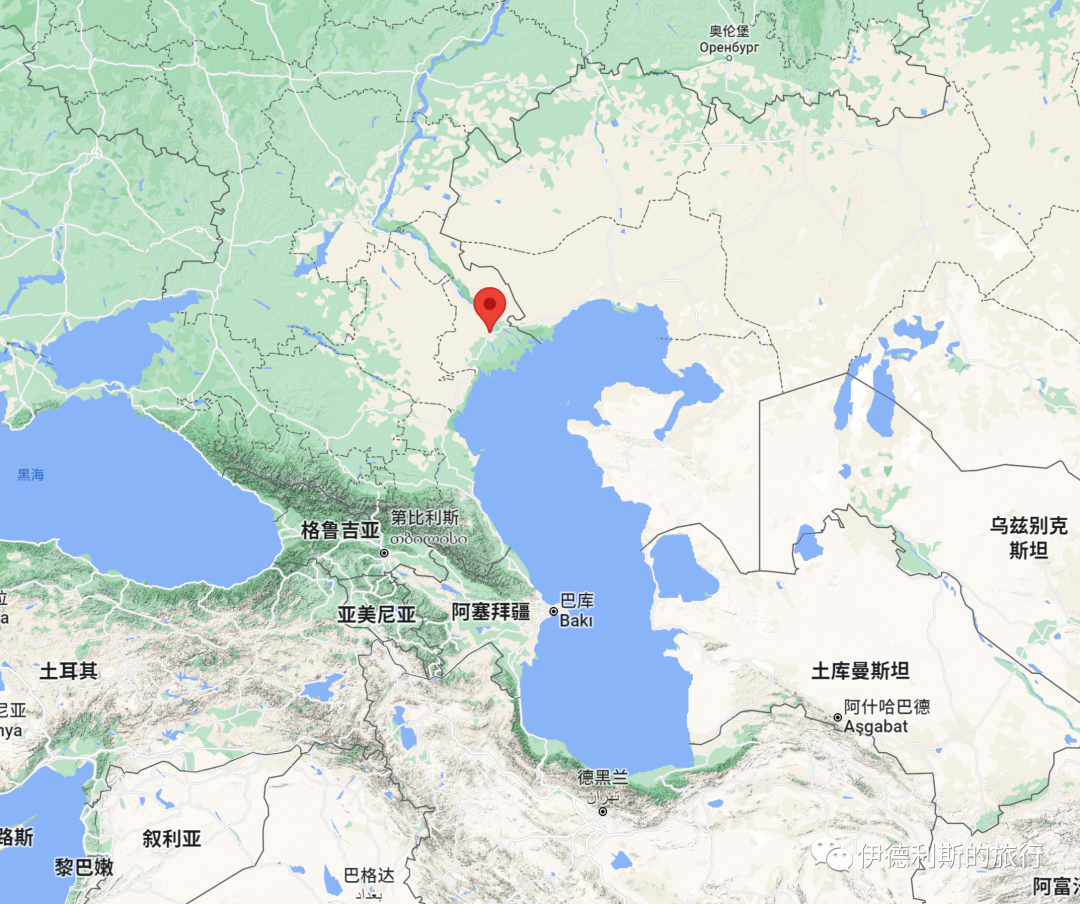
The location of the city of Hajji Tarkhan.
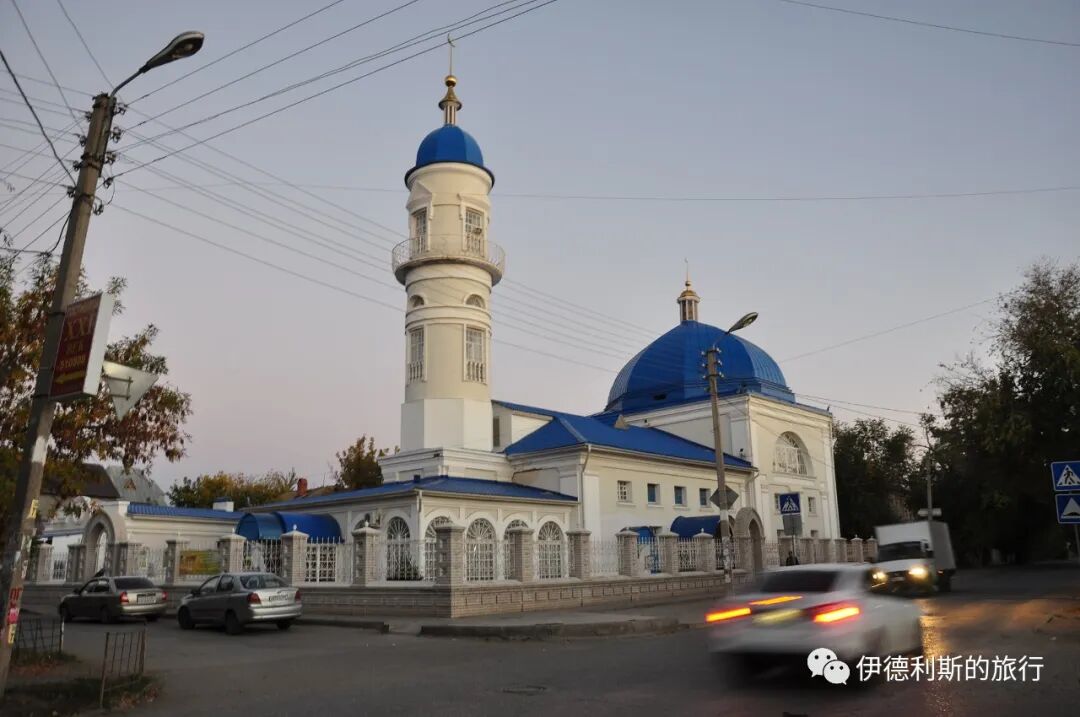
The White Mosque in Astrakhan, photographed by Polinadelia in 2014.
3. The Nogai Horde in Russia and Kazakhstan (1440–1634)
Continuing east from the Volga River, you reach the grasslands of the Nogai tribes.
Nogai was the great-grandson of Jochi, the eldest son of Genghis Khan, and an important leader of the Golden Horde who ruled many Turkic-speaking tribes in the 13th century. A century later, the Golden Horde general Edigu ruled a large area from the Volga to the Ural River, and the tribes under his rule were also called the Nogai Horde.
We can find history about the Nogai Horde in the early 16th century in Russian records. In 1521, the Nogai were driven west by the Kazakhs and crossed the Volga River to attack Astrakhan. In 1522, the Kazakhs captured the capital of the Nogai Horde. In 1523, the Nogai Horde defeated the army that had briefly occupied Astrakhan.
In 1550, the Khan of the Kazan Khanate was Yosuf Khan (1549–1555), who had helped Moscow against the Kazan Khanate in 1549.
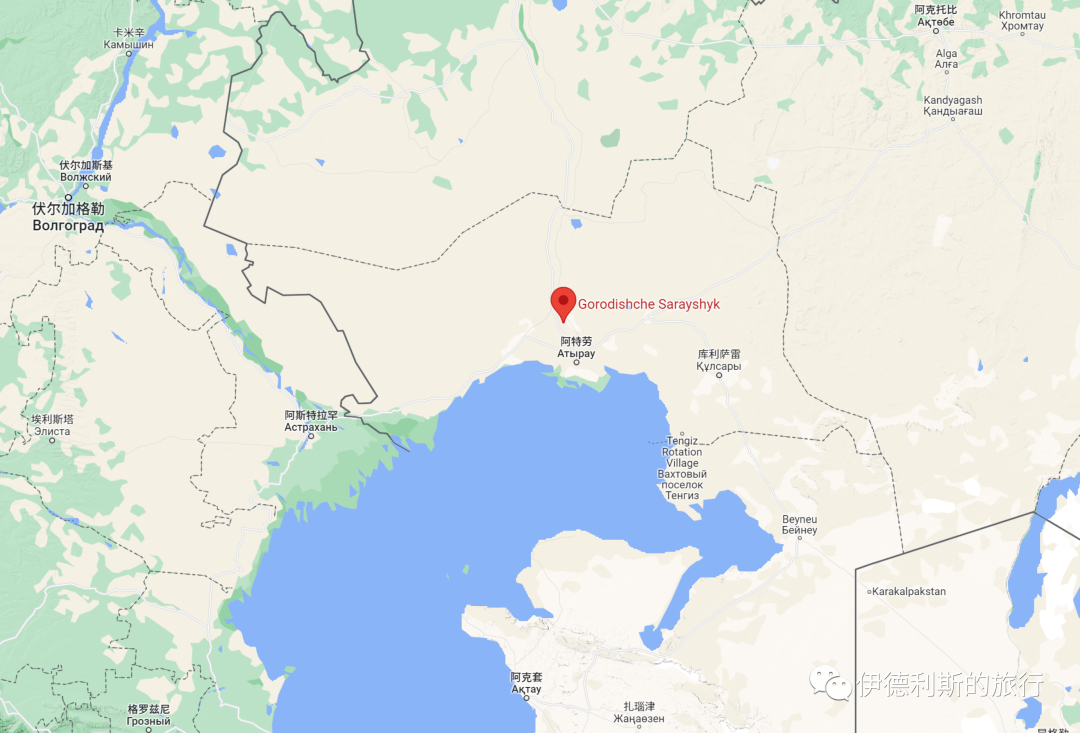
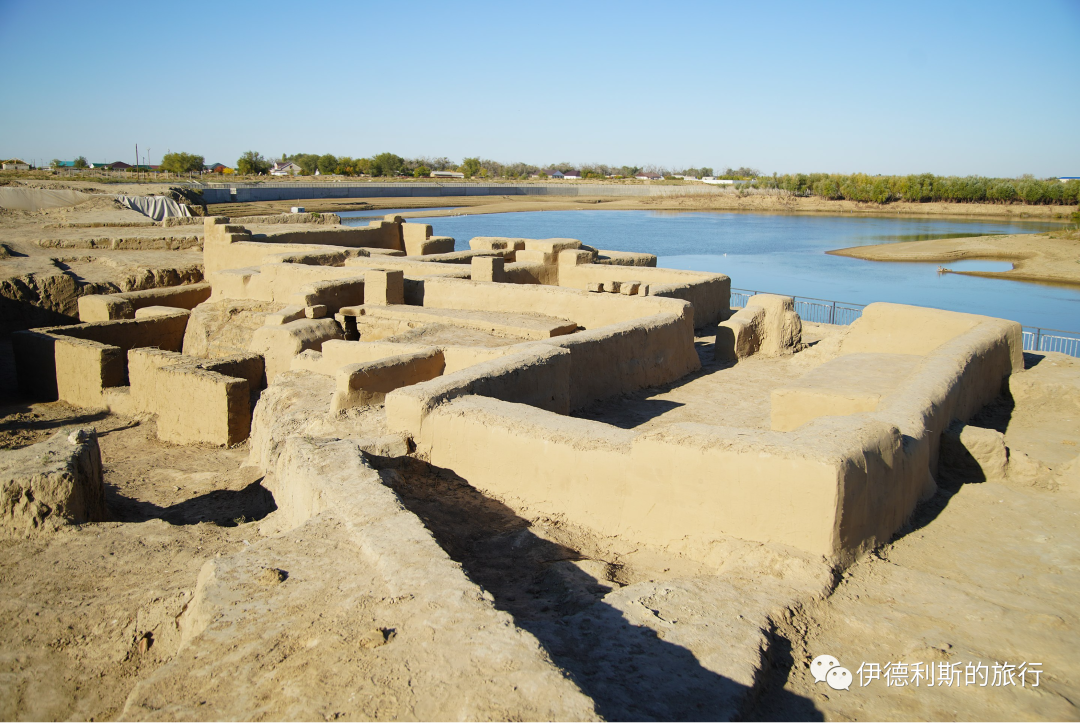
Saray-Jük was the capital of the Nogai Horde, located on the border of Europe and Asia in western Kazakhstan. This city sat on a trade route between Europe and China and was an important commercial hub during the Golden Horde period. After being destroyed by Timur in 1395, it was rebuilt in the 1430s and 1440s.
The location of Saray-Jük.
The ruins of Saray-Jük, photographed by Yakov Fedorov in 2020.
4. The Qasim Khanate in Russia (1452–1681)
We head north to the modern-day Ryazan Oblast in Russia.
The Qasim Khanate was located in Russia's Ryazan Oblast. Its founder, Qasim Khan, was the son of Ulugh Muhammad, the founder of the Kazan Khanate. The Qasim Khanate served as a buffer state between the Grand Duchy of Moscow and the Kazan Khanate and was under heavy Russian control.
In 1550, the Khan of the Qasim Khanate was Shahghali, who was installed as the Khan of the Kazan Khanate three times as a Russian vassal. In 1546, Shahghali was overthrown by the people of Kazan and fled back to the Qasim Khanate. Between 1547 and 1551, he participated in several Russian attacks on the Kazan Khanate and took part in the final Russian conquest of Kazan in 1552.
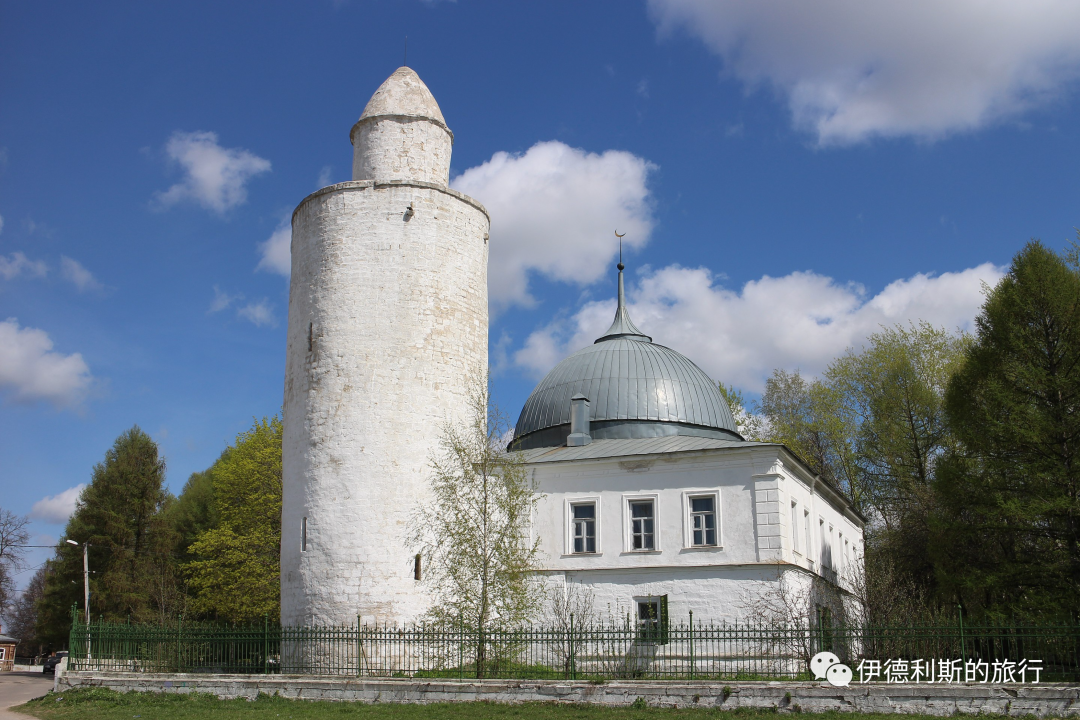
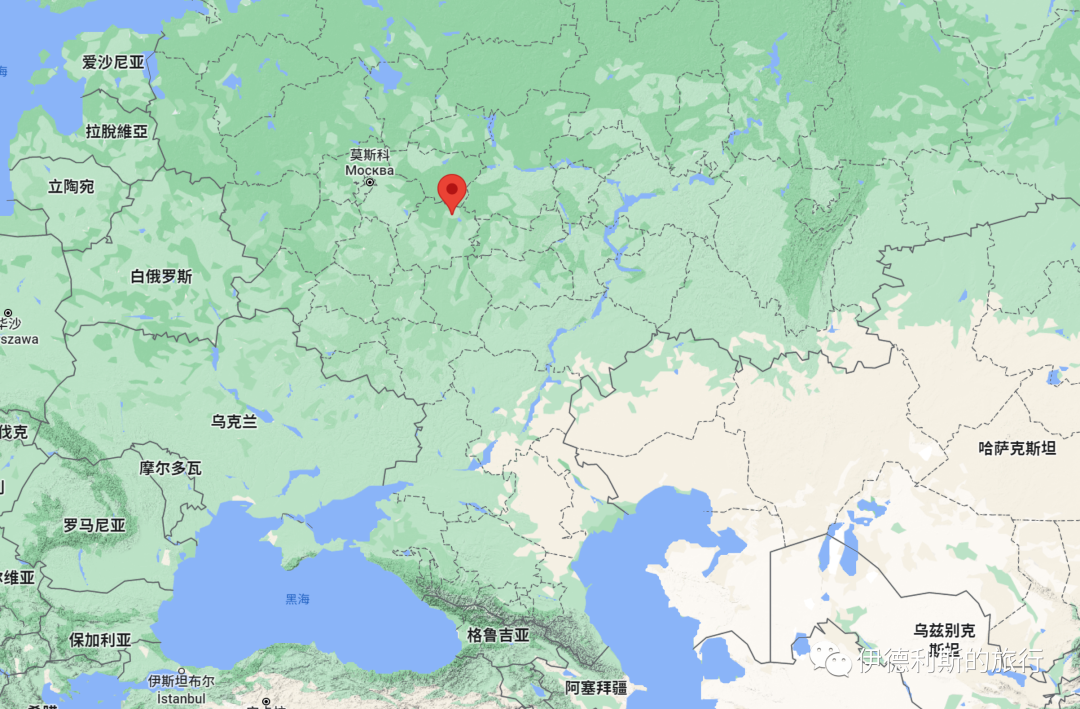
The capital of the Qasim Khanate, Qasimov, is located on the left bank of the Oka River in Russia's Ryazan Oblast, where one thousand Tatar-speaking Qasim Tatars still live today. The Khan Mosque in Qasimov was built by Shahghali in the mid-16th century. It was ordered to be demolished by Peter the Great in 1702, but the minaret (bangke ta) was preserved. This minaret is very similar to the Light Tower (Guangta) of the Huaisheng Mosque in Guangzhou.
The Khan Mosque in Qasimov, photographed by Alexander Novikov in 2014.
The location of Qasimov.
5. The Kazan Khanate in Russia (1438–1552)
We headed east to the city of Kazan on the banks of the Volga River.
The Kazan Khanate was founded by Ulugh Muhammad, a descendant of Genghis Khan's eldest son Jochi, who had ruled the Golden Horde twice. He lost control of the Golden Horde in 1436, then led his army to the Volga River and officially established the Kazan Khanate after capturing Kazan in 1438.
In 1521, the Kazan Khanate formed an alliance with the Astrakhan, Crimean, and Nogai Khanates to resist Moscow together. This caused dissatisfaction among pro-Russian factions within the Kazan Khanate, leading the state into internal conflict.
In 1550, the Khan of the Kazan Khanate was the four-year-old Ötemish Giray, though the actual rulers were his mother, Söyembikä, and the prime minister (uğlan) Qoşçaq. Seeing the instability in the Kazan Khanate, Ivan the Terrible of Russia sent a large army to besiege Kazan in February 1550, but the thawing of the Volga River forced the Russians to retreat and only attack the outskirts of the city. Throughout that year, Söyembikä and Qoşçaq fought against the pro-Russian faction, and relations with Russia continued to worsen.
The Kazan Khanate built many homes and public buildings in Kazan, including the Khan's palace, courtyards, mosques, and tombs, with tall minarets defining the city's skyline. In 1552, Ivan the Terrible invaded Kazan, destroyed the Kazan Khanate, and drove all Tatars out of the city, allowing only Russians to settle there. Between 1556 and 1562, Ivan the Terrible ordered the construction of the Kazan Kremlin on the site of the old Kazan Khanate fortress. The mosques, the Kazan Khan's palace, and the tombs were initially used as armories and ammunition depots, but were eventually completely demolished in the 18th century.
In 1977, hydraulic engineers accidentally dug up a grave while laying rainwater pipes at the Kazan Kremlin and immediately contacted the archaeology department. Archaeological excavations lasted for 10 years, eventually uncovering five graves, two of which were confirmed to be those of the actual founders of the Kazan Khanate: Mäxmüd Khan (died 1463 or 1466) and his grandson, Möxämmät Ämin (died 1518). The tomb was originally made of white stone and finally collapsed in the 17th century.
For further research, the remains of the two Kazan Khans, Mäxmüd and Möxämmät Ämin, were kept at the Institute of Archaeology of the Tatarstan Academy of Sciences for 40 years. In May 2017, after continuous efforts by the Tatar Muslims of Kazan, the two Kazan Khans were finally reburied not far from their original graves.
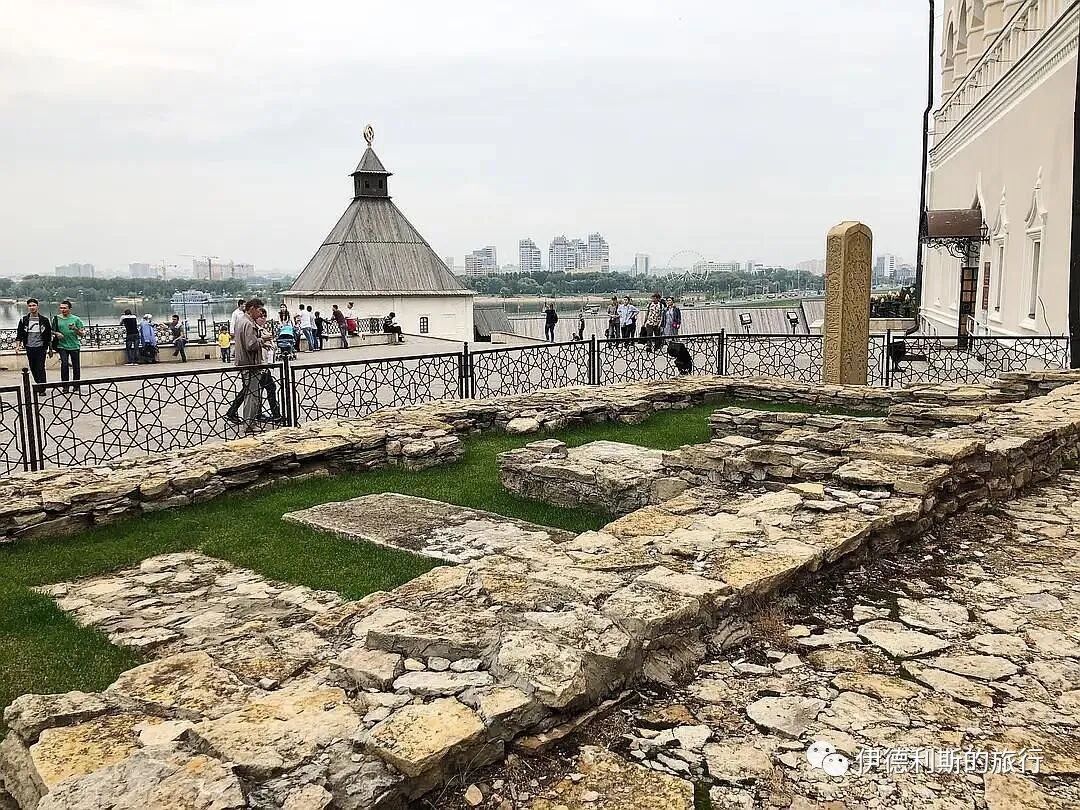
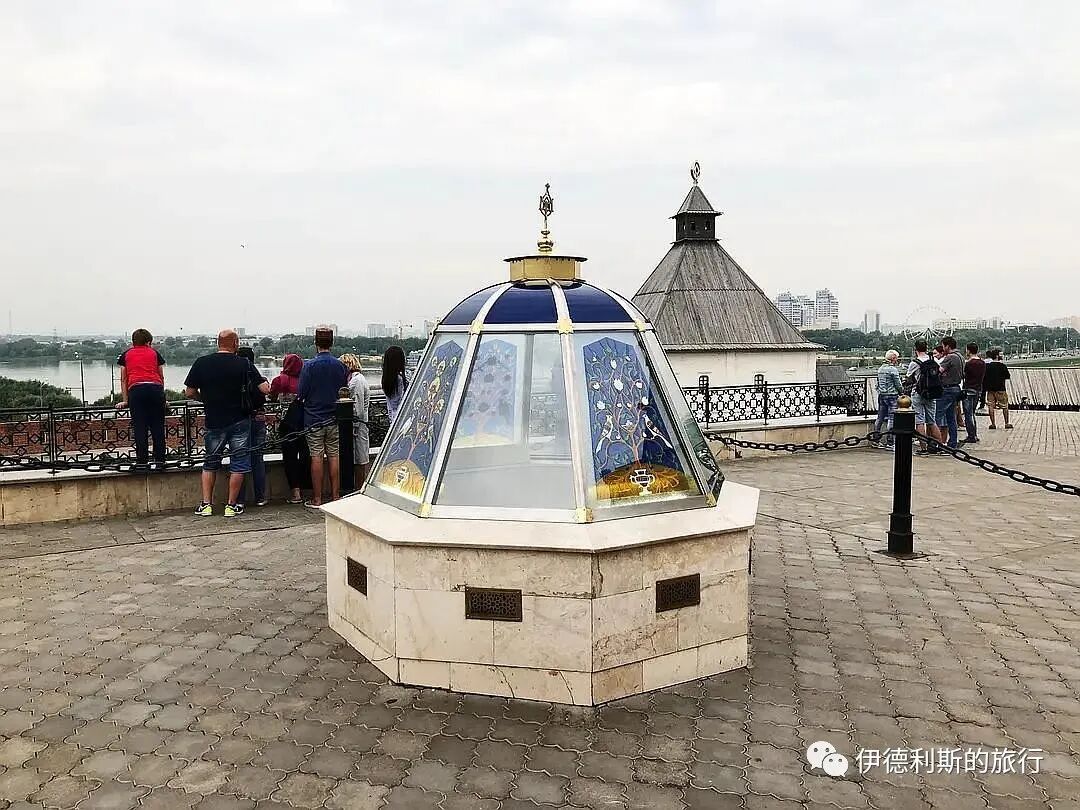
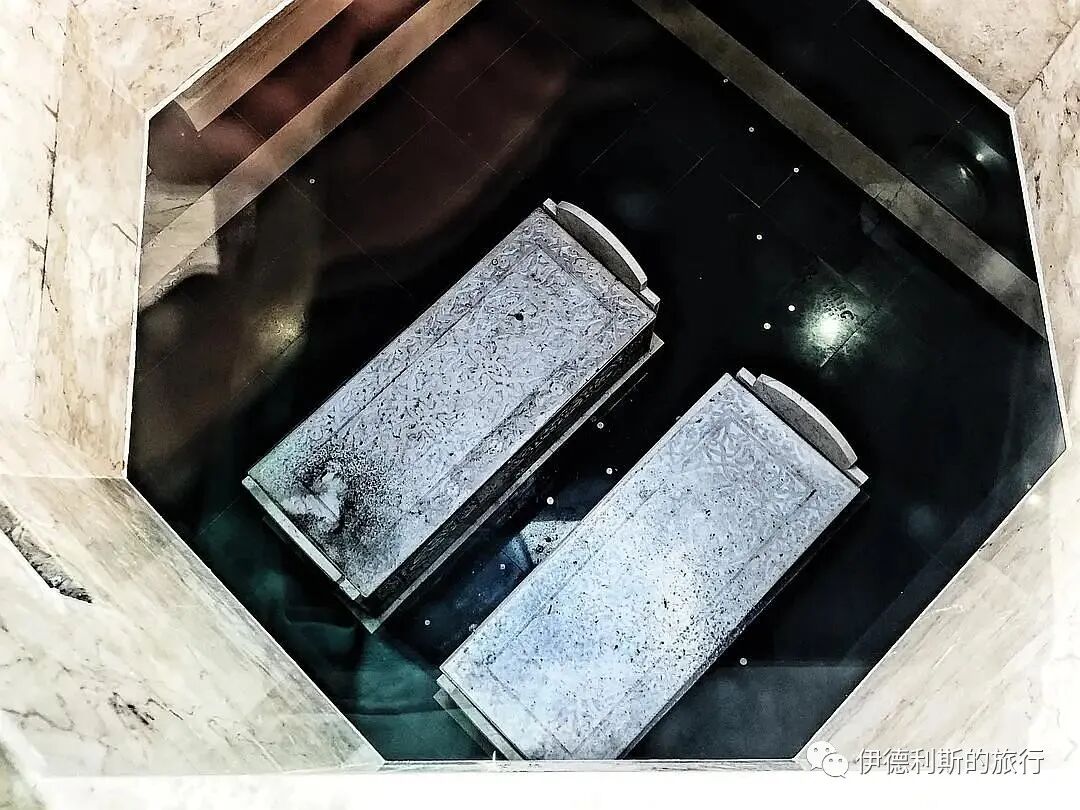
Between 2004 and 2005, the Institute of Archaeology of the Tatarstan Academy of Sciences re-excavated the Kazan Khan tombs and discovered the graves of four more Khans: Xalil (died 1467), İbrahim (died 1478), Safa Giray (died 1549), and Canghali (died 1535). Today, these four Kazan Khan graves are protected under a glass roof. Safa Giray Khan came from the Giray family of the Crimean Khanate and served as the Khan of Kazan three times: from 1524–1531, 1535–1546, and 1546–1549. Safa Giray was an anti-Russian Khan. His first reign ended due to Moscow's attack on Kazan, and he regained the throne four years later after Kazan nobles overthrew the pro-Russian Khan. Eleven years later, due to internal unrest in Kazan, he was overthrown again by a pro-Russian Khan. Safa Giray fled to his father-in-law's Nogai tribe, and a few months later, he returned to Kazan with a Nogai army to become the Khan for the third time. Canghali Khan was originally the Khan of the Qasim Khanate, a vassal state of the Grand Duchy of Moscow. In 1532, Grand Prince Vasily III of Moscow defeated the Kazan Khan Safa Giray and installed the 16-year-old Canghali as the pro-Russian Khan of Kazan. He died in 1535 during a coup by Kazan nobles.
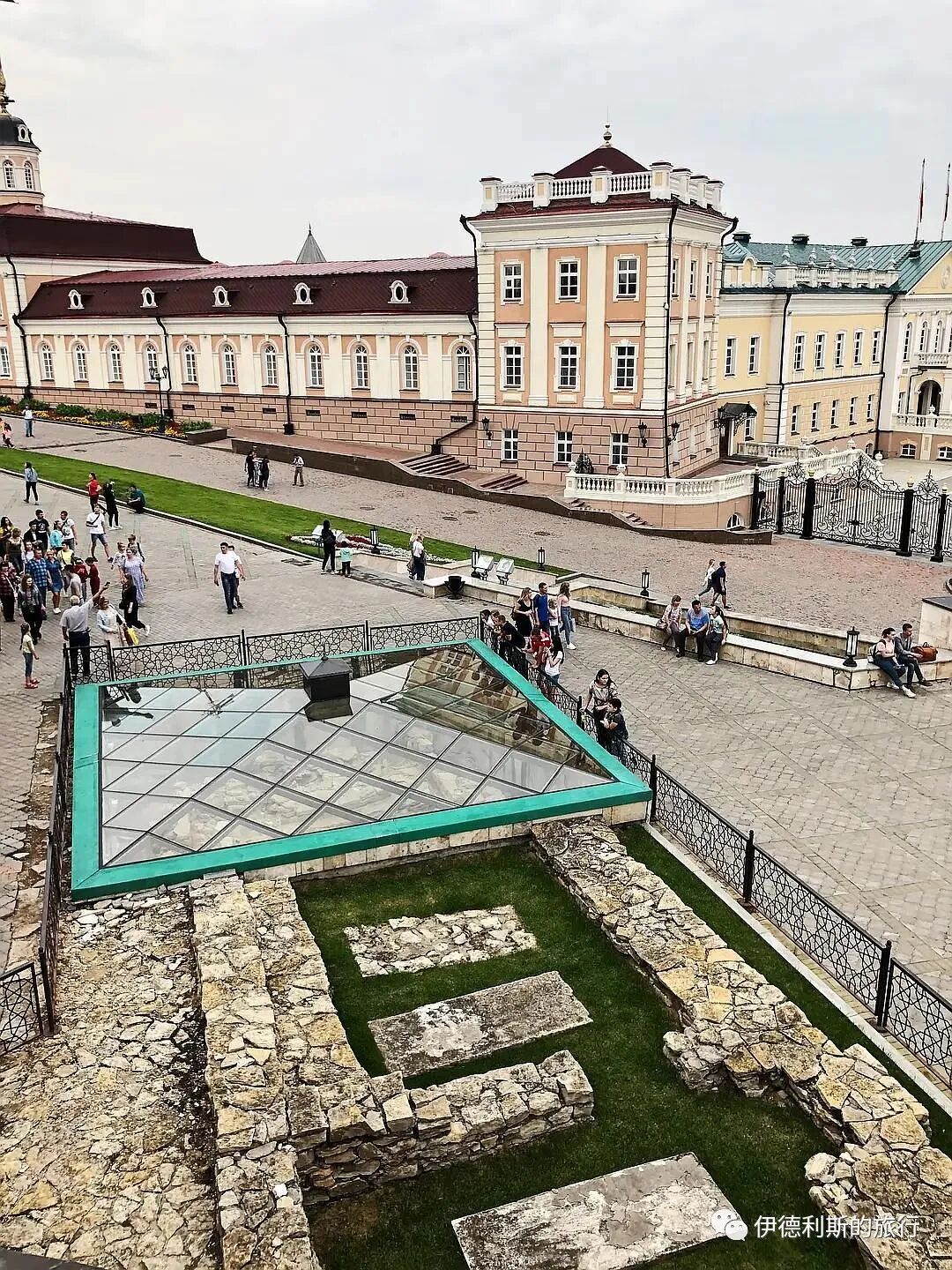
There is a performance about the Siege of Kazan at the entrance of the Kul Sharif Mosque inside the Kazan Kremlin. In 1552, when Ivan the Terrible besieged Kazan, the last imam of the Kazan Khanate, Seid Kul Sharif, led the people in a final resistance and died in the city. Today, Seid Kul Sharif is a national hero for the Kazan Tatars, and the new Kul Sharif Mosque built in 2005 is named after him.
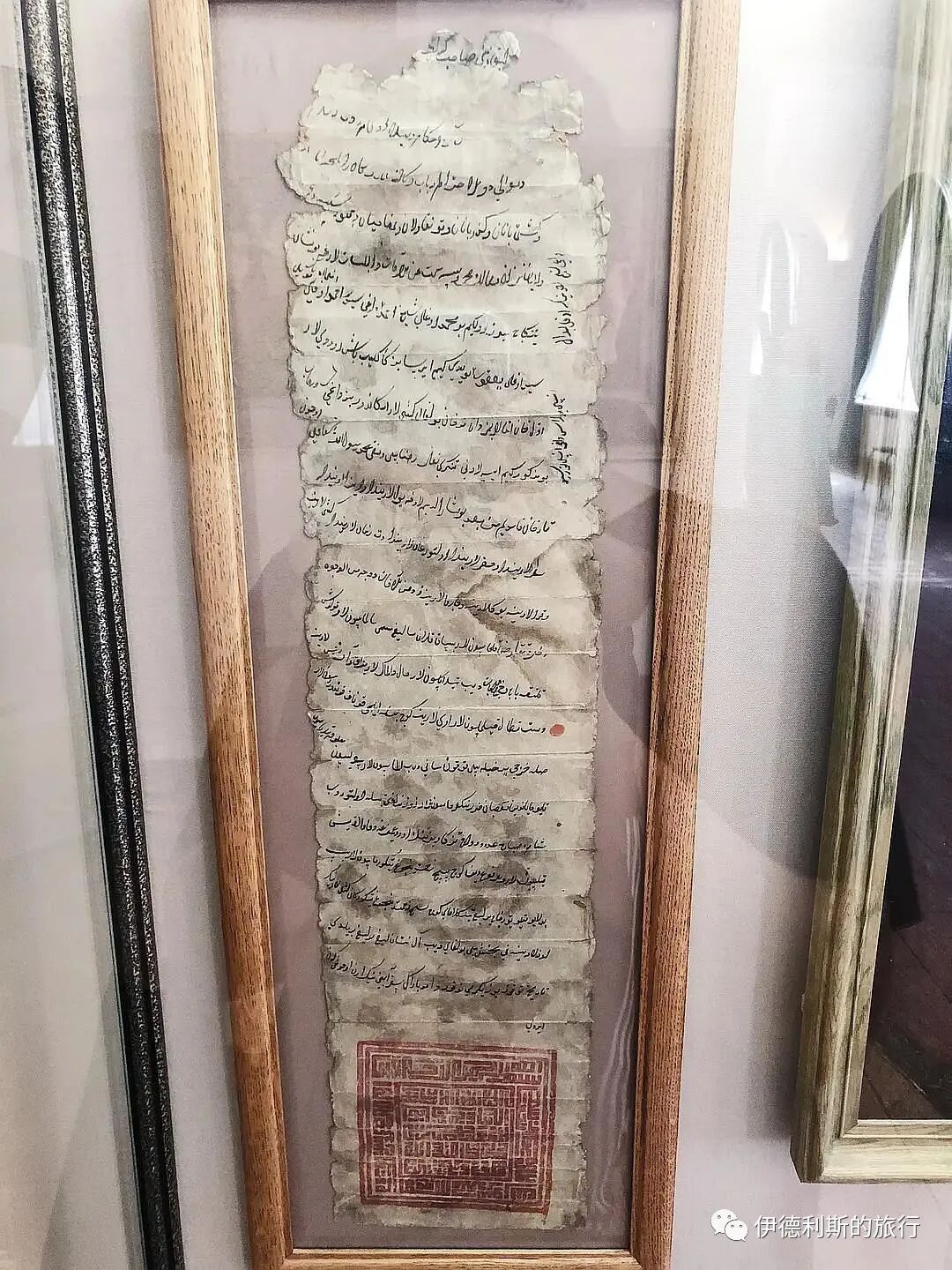
The National Museum of the Republic of Tatarstan houses a letter written in 1523 by the Kazan Khan Sahib I Giray (reigned 1521–1524). A replica of this letter is also inside the Kazan Kremlin. In 1521, to resist the control of the Grand Duchy of Moscow, the Kazan Khanate overthrew the pro-Moscow Khan Shahghali and welcomed Sahib I Giray from Crimea to Kazan to become the new Khan.
Block 1 of 2
Islamic World in 1550: Mongol Empire Legacy and Muslim History (Part 1)
Articles • ali2007fr posted the article • 0 comments • 205 views • 2026-05-18 09:38
Summary: Islamic World in 1550: Mongol Empire Legacy and Muslim History is presented here as a firsthand travel account in clear English, beginning with this scene: In our last article, "A Journey Through the Islamic World in 1550 (Part 1)," we crossed the African continent, traveled from Egypt into the Ottoman Empire, and visited Tabriz in Iran. The account keeps its focus on Mongol Empire, Islamic World, Muslim History while preserving the names, places, food, and historical details from the Chinese source.
In our last article, "A Journey Through the Islamic World in 1550 (Part 1)," we crossed the African continent, traveled from Egypt into the Ottoman Empire, and visited Tabriz in Iran. This time, we will visit 12 countries ruled by the descendants of Genghis Khan, moving from Eastern Europe into North Asia and Central Asia, and finally into South Asia.
In the early 13th century, as the Mongol Empire expanded, Genghis Khan began dividing his lands among his sons. Orda and Batu, the sons of Genghis Khan's eldest son Jochi, received lands in southern Russia and Kazakhstan, which gradually formed the Golden Horde. Hulagu Khan, the son of Genghis Khan's fourth son Tolui, received lands in Iran, Turkmenistan, Afghanistan, and parts of West Asia, which gradually formed the Ilkhanate. After the Yuan Dynasty was established in 1271, the original families of Ogedei and Chagatai, led by Kaidu, opposed Kublai Khan. This led to the formation of the Ogedei Khanate and the Chagatai Khanate, completing the four great Mongol khanates.
After the 14th century, the territory of the Ogedei Khanate was first divided between the Chagatai Khanate and the Yuan Dynasty, and later the Ilkhanate and the Chagatai Khanate also began to split apart. The Golden Horde was the last to decline, splitting into several khanates in the early 15th century.
In 1550, there were 12 countries and regimes established by descendants of Genghis Khan, ruling a vast area from Russia, Kazakhstan, Uzbekistan, and China's Xinjiang to Afghanistan, Pakistan, and India. They were:
1. The Crimean Khanate ruled the Crimean Peninsula.
2. The Astrakhan Khanate ruled the Volga Delta.
3. The Nogai Horde ruled the region between the Volga and Ural rivers.
4. The Qasim Khanate ruled Kasimov in the modern-day Ryazan Oblast of Russia.
5. The Kazan Khanate ruled the middle Volga region.
6. The Siberian Khanate ruled the area around the Irtysh River.
7. The Kazakh Khanate ruled the Kazakh Steppe.
8. The Khanate of Khiva ruled the Khwarezm region.
9. The Khanate of Bukhara ruled the Transoxiana region of Central Asia.
10. The Yarkent Khanate ruled the southern Xinjiang region.
11. Haidar ruled the Kashmir region.
12. The Arghun dynasty ruled southern Afghanistan and the Sindh region of Pakistan.
Additionally, the Mughal Empire was briefly overthrown at this time, and its second emperor, Humayun, was in exile in Persia.
1. The Crimean Khanate in Ukraine (1441–1783).
We start this journey on the Crimean Peninsula on the northern shore of the Black Sea.
The Khan of the Crimean Khanate was a descendant of Tuka-Timur, the thirteenth son of Jochi, who was Genghis Khan's eldest son. In the 1260s, the Golden Horde gave the Crimean Peninsula to the ancestor of the Crimean Khans, Uran Timur, to rule. The khanate was officially established in 1441.
Around 1500, the Crimean Khan Mengli I Giray built the capital of Salachik. In 1532, Sahib I Giray, the son of Mengli I Giray, established a new capital called Bakhchisarai in a valley two kilometers downstream from Salachik. For the next 250 years, generations of Crimean Khans built palaces and various mosque buildings here.
In 1550, the Khan ruling the Crimean Khanate was Sahib I Giray. He ascended the throne with the help of the Ottoman Empire. Later, he joined forces with the Ottoman Sultan Suleiman the Magnificent to attack the Moldavians, and in 1541, he raided Moscow and brought back spoils of war.
The location of Bakhchisarai, the capital of the Crimean Khanate.
The tomb of Haji I Giray (Dürbe Hacı I Giray) was built in 1501 by Mengli I Giray for his father, the founding Khan of Crimea. It is an octagonal tomb with a lead dome.
Archaeological excavations from 2006 to 2007 examined 18 graves inside the mausoleum, including 13 adults and 5 children. They were wrapped in silk and satin, with some resting on pillows stuffed with fabric scraps and fruit seeds. The mausoleum holds 8 stone sarcophagi covered in velvet, silk, and silver-threaded fabric. These likely include 4 Crimean Khans: Hacı I Giray himself, Meñli I Giray, Nur Devlet—who fought Meñli I Giray for the throne for years before losing—and Sahib I Giray, the son of Meñli I Giray and builder of Bakhchysarai.
After research finished in 2009, these individuals were reburied with Muslim rites.
The Chain Madrasa (Zıncırlı Medrese) was built in 1500 by order of the Crimean Khan Meñli I Giray. The name of the madrasa comes from the Turkic word "Zyngyr," which means "chain." A chain hangs above the main gate of the madrasa, forcing everyone who enters to bow their head. The madrasa is rectangular with a central courtyard, an entrance on one side, and 11 rooms on the other three sides. At the time, the madrasa taught Turkish and Arabic grammar, calligraphy, arithmetic, ethics, logic, proof theory, Islamic law (sharia), theology, and hadith studies. The full course of study took ten years.
In 1909, influenced by the Crimean Tatar Enlightenment movement, Gasprinski built a new two-story madrasa next to the old one. The madrasa closed in 1917 and became the Meñli Giray Research Institute. The institute was abolished in 1923. Later, it served as a teacher's college, a medical school, a sanatorium for German soldiers, and a post-war psychiatric clinic. Today, it is managed by the Bakhchysarai History, Culture, and Archaeology Museum.
The Iron Gate (Demir Qapı) is the oldest structure in the Khan's Palace. It was built between 1503 and 1504 for the Crimean Khan by the architect Aleviz Novy, who had been invited by Ivan the Great to build churches in Moscow. The Iron Gate was likely first built at the Crimean Khan's previous residence, Devlet-Saray, and moved to the main palace building after the Bakhchysarai Khan's Palace was completed in 1532. "Demir Qapı" means "iron gate" in Crimean Tatar. The doorway is made of limestone and features Lombard-Venetian Renaissance decorative styles.
The Great Khan Mosque (Büyük Han Cami) in the Bakhchysarai Khan's Palace was built in 1532 and is one of the earliest structures in the palace. The original mosque had multiple domes, similar to the Seljuk-style mosques popular in the Ottoman Empire during the 15th century. The mosque was destroyed by fire in 1736. It was later restored by Khan Selamet II Giray (who reigned from 1740 to 1743) and converted to a tiled roof.
During the Soviet era, the mosque was closed and turned into an exhibition hall for the archaeological museum. After Russia occupied Crimea in 2014, the mosque underwent repairs, some of which caused damage to the building.
The SaryGuzel Bathhouse was built in 1532 by order of the Crimean Khan Sahib I Giray. Like the Great Khan Mosque, it is one of the earliest buildings in the Bakhchysarai Khan's Palace. In Crimean Tatar, "Sarı" means "yellow or fair-skinned," and "Güzel" means "beautiful." The SaryGuzel Bathhouse is a typical Turkish bath. A furnace in the basement heated the floor with rising hot air, and cold and hot water were supplied through lead pipes. The bathhouse is divided into men's and women's sections, each with its own dome. The domes have star-shaped cutouts for ventilation and light, and there is an indoor courtyard with a fountain at the exit.
The SaryGuzel Bathhouse operated until 1924, when it was closed because it was considered unsafe. It has since been repaired and is now open for exhibitions.
The Khan's cemetery holds the grave of the Crimean Khan Devlet I Giray (reigned 1551–1577). He was appointed Kalga (the second-in-command after the Khan) in 1530. Later, due to court struggles, he went to Istanbul and gradually gained the trust of the Ottoman Sultan Suleiman the Magnificent. In 1551, with the help of Suleiman the Magnificent, he became the Crimean Khan.
2. The Astrakhan Khanate of Russia (1466–1556)
We continue east to the mouth of the Volga River.
The Astrakhan Khanate was located in the Volga Delta. Its founder, Mahmud bin Küchük, was a prince of the Golden Horde. The Astrakhan Khanate was mainly inhabited by Astrakhan Tatars and Nogais. The Khanate's caravans traveled between Moscow, Kazan, Crimea, Central Asia, and the Transcaucasus region. In 1532, the Astrakhan Khanate began to have contact with Russia. After Russia conquered Kazan in 1552, the Astrakhan Khanate could not escape the same fate.
In 1550, the capital of the Astrakhan Khanate was Hajji Tarkhan, located on the right bank of the Volga River, 12 kilometers north of the modern city of Astrakhan. The city of Hajji Tarkhan was built by the Golden Horde in the late 13th century, appeared in the Travels of Ibn Battuta in the 14th century, was destroyed by Timur's army in 1395, and was rebuilt by the Astrakhan Khanate in the 15th century. The city was occupied by the Crimean Khanate in 1547 and was finally burned down by Ivan the Terrible in 1556.
There are currently about 60,000 Astrakhan Tatars in Russia. Most live in the Astrakhan Oblast, with half living in the city of Astrakhan, where they have their own community and several mosques.
The location of the city of Hajji Tarkhan.
The White Mosque in Astrakhan, photographed by Polinadelia in 2014.
3. The Nogai Horde in Russia and Kazakhstan (1440–1634)
Continuing east from the Volga River, you reach the grasslands of the Nogai tribes.
Nogai was the great-grandson of Jochi, the eldest son of Genghis Khan, and an important leader of the Golden Horde who ruled many Turkic-speaking tribes in the 13th century. A century later, the Golden Horde general Edigu ruled a large area from the Volga to the Ural River, and the tribes under his rule were also called the Nogai Horde.
We can find history about the Nogai Horde in the early 16th century in Russian records. In 1521, the Nogai were driven west by the Kazakhs and crossed the Volga River to attack Astrakhan. In 1522, the Kazakhs captured the capital of the Nogai Horde. In 1523, the Nogai Horde defeated the army that had briefly occupied Astrakhan.
In 1550, the Khan of the Kazan Khanate was Yosuf Khan (1549–1555), who had helped Moscow against the Kazan Khanate in 1549.
Saray-Jük was the capital of the Nogai Horde, located on the border of Europe and Asia in western Kazakhstan. This city sat on a trade route between Europe and China and was an important commercial hub during the Golden Horde period. After being destroyed by Timur in 1395, it was rebuilt in the 1430s and 1440s.
The location of Saray-Jük.
The ruins of Saray-Jük, photographed by Yakov Fedorov in 2020.
4. The Qasim Khanate in Russia (1452–1681)
We head north to the modern-day Ryazan Oblast in Russia.
The Qasim Khanate was located in Russia's Ryazan Oblast. Its founder, Qasim Khan, was the son of Ulugh Muhammad, the founder of the Kazan Khanate. The Qasim Khanate served as a buffer state between the Grand Duchy of Moscow and the Kazan Khanate and was under heavy Russian control.
In 1550, the Khan of the Qasim Khanate was Shahghali, who was installed as the Khan of the Kazan Khanate three times as a Russian vassal. In 1546, Shahghali was overthrown by the people of Kazan and fled back to the Qasim Khanate. Between 1547 and 1551, he participated in several Russian attacks on the Kazan Khanate and took part in the final Russian conquest of Kazan in 1552.
The capital of the Qasim Khanate, Qasimov, is located on the left bank of the Oka River in Russia's Ryazan Oblast, where one thousand Tatar-speaking Qasim Tatars still live today. The Khan Mosque in Qasimov was built by Shahghali in the mid-16th century. It was ordered to be demolished by Peter the Great in 1702, but the minaret (bangke ta) was preserved. This minaret is very similar to the Light Tower (Guangta) of the Huaisheng Mosque in Guangzhou.
The Khan Mosque in Qasimov, photographed by Alexander Novikov in 2014.
The location of Qasimov.
5. The Kazan Khanate in Russia (1438–1552)
We headed east to the city of Kazan on the banks of the Volga River.
The Kazan Khanate was founded by Ulugh Muhammad, a descendant of Genghis Khan's eldest son Jochi, who had ruled the Golden Horde twice. He lost control of the Golden Horde in 1436, then led his army to the Volga River and officially established the Kazan Khanate after capturing Kazan in 1438.
In 1521, the Kazan Khanate formed an alliance with the Astrakhan, Crimean, and Nogai Khanates to resist Moscow together. This caused dissatisfaction among pro-Russian factions within the Kazan Khanate, leading the state into internal conflict.
In 1550, the Khan of the Kazan Khanate was the four-year-old Ötemish Giray, though the actual rulers were his mother, Söyembikä, and the prime minister (uğlan) Qoşçaq. Seeing the instability in the Kazan Khanate, Ivan the Terrible of Russia sent a large army to besiege Kazan in February 1550, but the thawing of the Volga River forced the Russians to retreat and only attack the outskirts of the city. Throughout that year, Söyembikä and Qoşçaq fought against the pro-Russian faction, and relations with Russia continued to worsen.
The Kazan Khanate built many homes and public buildings in Kazan, including the Khan's palace, courtyards, mosques, and tombs, with tall minarets defining the city's skyline. In 1552, Ivan the Terrible invaded Kazan, destroyed the Kazan Khanate, and drove all Tatars out of the city, allowing only Russians to settle there. Between 1556 and 1562, Ivan the Terrible ordered the construction of the Kazan Kremlin on the site of the old Kazan Khanate fortress. The mosques, the Kazan Khan's palace, and the tombs were initially used as armories and ammunition depots, but were eventually completely demolished in the 18th century.
In 1977, hydraulic engineers accidentally dug up a grave while laying rainwater pipes at the Kazan Kremlin and immediately contacted the archaeology department. Archaeological excavations lasted for 10 years, eventually uncovering five graves, two of which were confirmed to be those of the actual founders of the Kazan Khanate: Mäxmüd Khan (died 1463 or 1466) and his grandson, Möxämmät Ämin (died 1518). The tomb was originally made of white stone and finally collapsed in the 17th century.
For further research, the remains of the two Kazan Khans, Mäxmüd and Möxämmät Ämin, were kept at the Institute of Archaeology of the Tatarstan Academy of Sciences for 40 years. In May 2017, after continuous efforts by the Tatar Muslims of Kazan, the two Kazan Khans were finally reburied not far from their original graves.
Between 2004 and 2005, the Institute of Archaeology of the Tatarstan Academy of Sciences re-excavated the Kazan Khan tombs and discovered the graves of four more Khans: Xalil (died 1467), İbrahim (died 1478), Safa Giray (died 1549), and Canghali (died 1535). Today, these four Kazan Khan graves are protected under a glass roof. Safa Giray Khan came from the Giray family of the Crimean Khanate and served as the Khan of Kazan three times: from 1524–1531, 1535–1546, and 1546–1549. Safa Giray was an anti-Russian Khan. His first reign ended due to Moscow's attack on Kazan, and he regained the throne four years later after Kazan nobles overthrew the pro-Russian Khan. Eleven years later, due to internal unrest in Kazan, he was overthrown again by a pro-Russian Khan. Safa Giray fled to his father-in-law's Nogai tribe, and a few months later, he returned to Kazan with a Nogai army to become the Khan for the third time. Canghali Khan was originally the Khan of the Qasim Khanate, a vassal state of the Grand Duchy of Moscow. In 1532, Grand Prince Vasily III of Moscow defeated the Kazan Khan Safa Giray and installed the 16-year-old Canghali as the pro-Russian Khan of Kazan. He died in 1535 during a coup by Kazan nobles.
There is a performance about the Siege of Kazan at the entrance of the Kul Sharif Mosque inside the Kazan Kremlin. In 1552, when Ivan the Terrible besieged Kazan, the last imam of the Kazan Khanate, Seid Kul Sharif, led the people in a final resistance and died in the city. Today, Seid Kul Sharif is a national hero for the Kazan Tatars, and the new Kul Sharif Mosque built in 2005 is named after him.
The National Museum of the Republic of Tatarstan houses a letter written in 1523 by the Kazan Khan Sahib I Giray (reigned 1521–1524). A replica of this letter is also inside the Kazan Kremlin. In 1521, to resist the control of the Grand Duchy of Moscow, the Kazan Khanate overthrew the pro-Moscow Khan Shahghali and welcomed Sahib I Giray from Crimea to Kazan to become the new Khan.
6. The Siberian Khanate of Russia (1468-1598)
We continue heading east to the meeting point of the Irtysh River and the Siberian River.
The Siberian (Sibir) Khanate was north of the Kazakh Khanate. It was the northernmost Muslim state in history, reaching all the way to the coast of the Arctic Ocean. In the 16th century, the capital of the Siberian Khanate was Qashliq, located on the right bank of the Irtysh River. Qashliq, also called the City of Siberia, was very prosperous in the early 16th century and had close trade ties with the Kazan Khanate. Later, it was permanently destroyed by the Cossacks, and it is hard to find any traces of it now.
The location of Qashliq city
7. The Kazakh Khanate of Kazakhstan (1465-1847)
Moving south from Siberia, we enter the vast Kazakh steppe.
The founders of the Kazakh Khanate, Janybek Khan and Kerey Khan, were both descendants of Tuqa Temur, the thirteenth son of Jochi, who was the eldest son of Genghis Khan.
In 1550, the Khanate was ruled by Haqnazar Khan (1537-1580). At that time, the Kazakh Khanate had rivals on all sides. He first defeated the Nogai Khanate, then the Khanate of Khiva and the Oirats, and then the Siberian Khanate and the Yarkent Khanate. This made the Kazakh Khanate stronger than ever, earning him the title of King of Turan (Shah-i-Turan).
The capital of the Kazakh Khanate at that time was Sighnaq, located in what is now the Kyzylorda Region of Kazakhstan. This was originally the capital of the Blue Horde and served as an important trade point for steppe tribes to exchange goods with the southern farming regions.
Sighnaq photographed by Azamat Nurlybekov in 2022
The location of Sighnaq
8. The Khanate of Khiva in Turkmenistan (1511–1920)
Continuing southwest, we go deep into the heart of Central Asia.
The Khanate of Khiva was located in the Khwarezm region south of the Aral Sea. It called itself Khwarezm, and its rulers were descendants of Shiban, the fifth son of Jochi, who was the eldest son of Genghis Khan. In the 16th century, the capital of the Khanate of Khiva was Konye-Urgench, located on the border of northern Turkmenistan and Uzbekistan. After the Khanate moved its capital to Khiva in the 17th century, this place was gradually abandoned. It was named a UNESCO World Heritage site in 2005.
Before the Mongol conquest of Khwarezm, Konye-Urgench was one of the wealthiest cities in Central Asia. Most of the current ruins belong to that period, and very few remains from the Khanate of Khiva period have been preserved.
The location of Konye-Urgench
9. The Khanate of Bukhara in Uzbekistan (1500–1785)
Let us continue east into the ancient city of Bukhara.
In the early 16th century, Muhammad Shaybani, a descendant of Shiban (the fifth son of Jochi, Genghis Khan's eldest son), led Uzbek tribes living in the northern Central Asian steppes to overthrow the Timurid dynasty's rule in Transoxiana. He established the Shaybanid Dynasty (1506-1598), opening a new chapter in the history of the Transoxiana region of Central Asia.
The capital of the Shaybanid Dynasty was initially in Samarkand, but it moved to Bukhara after 1533, which is why later generations called it the Khanate of Bukhara. Bukhara served as the capital of the Khanate of Bukhara for 252 years, from 1533 to 1785, and many buildings constructed during that time remain today.
The Mir-i-Arab Madrasa was built in 1535 by order of Ubaidullah, the Khan of the Shaybanid Dynasty (reigned 1533-1539). It was named after the Khan's Sufi mentor, Mir-i-Arab (also known as Sheikh Abdullah Yamani).
To compete for territory, Khan Ubaidullah fought many wars against the Persian Safavid dynasty, the most famous being the siege of the ancient Afghan city of Herat. During many raids on Persia, the Shaybanid Dynasty captured many prisoners. People say the Khan used the money from selling three thousand Persian captives to build the Mir-i-Arab Madrasa.
The Mir-i-Arab Madrasa was built opposite the famous Kalyan mosque in Bukhara, forming a facing structure known as a "kosh."
The Mir-i-Arab Madrasa closed in the 1920s but reopened in 1947. It became the only open madrasa in Bukhara at the time, and almost all the imams of that era were trained at this school.
The Khoja Zaynuddin mosque was built in the first half of the 16th century, located next to an ancient pond (Hauz) in Bukhara. This architectural style is known as a mosque-khanaka (Mosque-Khanaka). It serves as both a mosque and a Sufi center, where people can perform namaz and hold religious gatherings (ermeli).
The Bahouddin Naqshbandi Complex is an important Sufi holy site in Central Asia, often called the 'Little Mecca' of the region. It holds the tomb of Hazrat Muhammad Bahauddin Shah Naqshband, the founder of the famous Naqshbandia Sufi order.
During the Shaybanid dynasty, the Naqshbandia order eventually outperformed other Sufi groups to become the dominant order in the khanate. Unlike other Sufi orders that favored seclusion and leaving the world behind, the Naqshbandia order followed the principles set by its founder: 'solitude in the crowd, travel in the world, caution in action, and enjoyment of the moment.'
In 1544, the Shaybanid Khan Abdulaziz (who reigned from 1539 to 1550) built a Dakhma platform with marble railings at the shrine, along with a Sufi lodge (Khanaqa) nearby. Later, a large cemetery for Bukhara's rulers appeared near the shrine, as every ruler felt honored to be buried close to it.
During the Shaybanid period of the Bukhara Khanate, Tashkent's population and size gradually recovered, making it a commercial and cultural hub along the Silk Road. Most of the historical buildings still standing in Tashkent today were built during this time. Abu Bakr Mohammed Kaffal Shashi was a famous imam and scholar in Tashkent during the Samanid dynasty. After he passed away in 976, he was buried in a garden on the outskirts of Tashkent. The current Kaffal Shashi mausoleum was rebuilt in 1541 during the Shaybanid dynasty. It features the design of a Sufi lodge (Khanaqah), including a tall archway (Iwan) and a dome. Inside, besides Kaffal Shashi, his students are also buried there, including his three main disciples. The mausoleum was once covered in beautiful tiles, but only parts remain today, and they have been restored. Additionally, the window lattices on the mausoleum gate are already 500 years old. According to Tashkent legends, applying dust from this mausoleum to one's face can help a woman become pregnant, which attracts many women who are struggling to conceive.
10. The Yarkent Khanate in China (1514-1680)
We crossed the Tianshan Mountains and arrived at the city of Shache in southern Xinjiang.
The Yarkent (Yarkent) Khanate was a state established in 1514 by Sultan Said Khan, a descendant of the Eastern Chagatai royal family. With Yarkent city (Shache) as its capital, it ruled southern Xinjiang and surrounding areas for over a hundred years until it was annexed by the Dzungar Khanate in 1680.
During the Yarkent Khanate's rule over southern Xinjiang, the Chagatai Mongols eventually shifted from nomadic life to settled living and merged into the Uyghur people. The Uyghurs also gradually developed into a modern ethnic group during this period, and the Twelve Muqam was finalized at this time as well.
'Yarkent Khanate' is actually a name used by modern scholars. In earlier local documents, the Persian word 'Moghuliye' was used, which means 'Mongol State'. Around the same time, Sultan Said Khan's cousin Babur established a state in northern India and also called it 'Moghul'. To distinguish them, Chinese usually translates them as 'Mengwu'er' and 'Mowo'er' respectively.
The founder of the Yarkent Khanate, Said Khan, was the third son of Ahmad Alaq, the ruler of Uyghurstan (modern-day Turpan area) in the eastern part of the Eastern Chagatai Khanate. In 1514, after stabilizing the Transoxiana region, the Uzbek army prepared to wipe out the Chagatai Mongols. After careful thought and discussion, Said Khan decided he could not withstand the Uzbek army's attack, so he left the Fergana Valley, crossed the Tianshan Mountains, and headed toward Yarkent.
In the spring of 1514, Said Khan led his army across the Tianshan Mountains and reached Kashgar via the Torugart Pass. At that time, southern Xinjiang was ruled by Abu Bakr, the leader of the Mongol Dughlat tribe. He was recruiting soldiers in Yarkent city. Said Khan fought a fierce battle outside the city against the Kashgar garrison and defeated the enemy. The enemy closed the gates and refused to come out, so Said Khan could not take the city and turned to attack the city of Yengisar. Said Khan besieged Yengisar for two months and finally captured it after six days of intense fighting.
Hearing that Yengisar had fallen, the Kashgar garrison abandoned the city and fled, so Said Khan marched directly toward Yarkent. When Abu Bakr heard this, he abandoned the city and fled to Hotan, and soon after, Said Khan entered Yarkent city. On September 3, 1514, Said Khan officially ascended the throne and established the Yarkent Khanate.
In 1516, Sultan Said reconciled with his older brother, Mansur Khan, who ruled the eastern part of the Eastern Chagatai Khanate. He agreed to mention Mansur's name during the khutbah (sermon) and to mint coins bearing Mansur's name. Southern Xinjiang welcomed long-awaited peace and order that year. The Tarikh-i-Rashidi describes it this way:
The reconciliation between these two brothers brought safety and prosperity to the residents. Anyone could travel alone between Hami in China and the Fergana region without needing food supplies or fearing robbery.
The location of Yarkand city.
Today, there is a site in the old city of Yarkand called Ordakul, which means royal palace pond. This was likely the location of the Yarkand Khanate's royal palace. The Tarikh-i-Rashidi describes Yarkand city during the early Yarkand Khanate period like this:
They diverted rivers into the city and built gardens. The main roads were lined with poplar trees. People walking around the city could spend half their journey in the shade of these trees, and most of the tree-lined paths had water channels on both sides.
Ordakul Mosque
To the west of Ordakul is the Jami Mosque. Jami is also translated as Jumu'ah, which refers to the weekly Friday congregational prayer. The Jami Mosque was reportedly founded by Sultan Said and later expanded during the reign of Abdullah Khan (reigned 1638–1669).
After settling down in the oases of southern Xinjiang, many Chagatai Mongols began to complain about city life and missed the nomadic life on the steppes of their homeland, Moghulistan. the small pastures in the southern Xinjiang oases could not support the needs of the Mongol army. In 1522, Sultan Said sent his son, Abdurashid Khan, to lead troops into Moghulistan and conquer the Kyrgyz people living there.
In 1526, the Kazakhs entered Moghulistan and joined forces with the Kyrgyz, reaching a total of over 200,000 people. Sultan Said realized his strength was not enough to fight them, so he ordered all the Chagatai Mongols to return to southern Xinjiang. The Chagatai Mongols' five-year attempt to return to their nomadic homeland ultimately ended in failure.
After the failure in the north, Sultan Said turned his attention to attacking the south. In 1529, Sultan Said raided the Badakhshan region, which lay between the Yarkand Khanate and the Mughal Empire. This raid caused conflict between Sultan Said and his cousin, Emperor Babur. Emperor Babur wrote a letter to Sultan Said warning him that if he continued, you will know the rest yourself.
In 1532, Sultan Said personally led an army south to prepare for an expedition to Lhasa. While crossing the Karakoram Mountains, Sultan Said suffered from severe altitude sickness and lost his strength. In 1533, he decided to return to Yarkand to recover, but he died from altitude sickness while crossing the Karakoram Mountains again.
After Sultan Said died in 1533, his son, Abdurashid Khan (reigned 1533–1560), succeeded him. Abdurashid Khan built a mausoleum for his father at the west gate of Yarkand city. Later, this also became the royal mausoleum of the Yarkand Khanate.
The current mausoleum of Sultan Said was rebuilt in 1997. view all
Summary: Islamic World in 1550: Mongol Empire Legacy and Muslim History is presented here as a firsthand travel account in clear English, beginning with this scene: In our last article, "A Journey Through the Islamic World in 1550 (Part 1)," we crossed the African continent, traveled from Egypt into the Ottoman Empire, and visited Tabriz in Iran. The account keeps its focus on Mongol Empire, Islamic World, Muslim History while preserving the names, places, food, and historical details from the Chinese source.
In our last article, "A Journey Through the Islamic World in 1550 (Part 1)," we crossed the African continent, traveled from Egypt into the Ottoman Empire, and visited Tabriz in Iran. This time, we will visit 12 countries ruled by the descendants of Genghis Khan, moving from Eastern Europe into North Asia and Central Asia, and finally into South Asia.
In the early 13th century, as the Mongol Empire expanded, Genghis Khan began dividing his lands among his sons. Orda and Batu, the sons of Genghis Khan's eldest son Jochi, received lands in southern Russia and Kazakhstan, which gradually formed the Golden Horde. Hulagu Khan, the son of Genghis Khan's fourth son Tolui, received lands in Iran, Turkmenistan, Afghanistan, and parts of West Asia, which gradually formed the Ilkhanate. After the Yuan Dynasty was established in 1271, the original families of Ogedei and Chagatai, led by Kaidu, opposed Kublai Khan. This led to the formation of the Ogedei Khanate and the Chagatai Khanate, completing the four great Mongol khanates.
After the 14th century, the territory of the Ogedei Khanate was first divided between the Chagatai Khanate and the Yuan Dynasty, and later the Ilkhanate and the Chagatai Khanate also began to split apart. The Golden Horde was the last to decline, splitting into several khanates in the early 15th century.
In 1550, there were 12 countries and regimes established by descendants of Genghis Khan, ruling a vast area from Russia, Kazakhstan, Uzbekistan, and China's Xinjiang to Afghanistan, Pakistan, and India. They were:
1. The Crimean Khanate ruled the Crimean Peninsula.
2. The Astrakhan Khanate ruled the Volga Delta.
3. The Nogai Horde ruled the region between the Volga and Ural rivers.
4. The Qasim Khanate ruled Kasimov in the modern-day Ryazan Oblast of Russia.
5. The Kazan Khanate ruled the middle Volga region.
6. The Siberian Khanate ruled the area around the Irtysh River.
7. The Kazakh Khanate ruled the Kazakh Steppe.
8. The Khanate of Khiva ruled the Khwarezm region.
9. The Khanate of Bukhara ruled the Transoxiana region of Central Asia.
10. The Yarkent Khanate ruled the southern Xinjiang region.
11. Haidar ruled the Kashmir region.
12. The Arghun dynasty ruled southern Afghanistan and the Sindh region of Pakistan.
Additionally, the Mughal Empire was briefly overthrown at this time, and its second emperor, Humayun, was in exile in Persia.
1. The Crimean Khanate in Ukraine (1441–1783).
We start this journey on the Crimean Peninsula on the northern shore of the Black Sea.
The Khan of the Crimean Khanate was a descendant of Tuka-Timur, the thirteenth son of Jochi, who was Genghis Khan's eldest son. In the 1260s, the Golden Horde gave the Crimean Peninsula to the ancestor of the Crimean Khans, Uran Timur, to rule. The khanate was officially established in 1441.
Around 1500, the Crimean Khan Mengli I Giray built the capital of Salachik. In 1532, Sahib I Giray, the son of Mengli I Giray, established a new capital called Bakhchisarai in a valley two kilometers downstream from Salachik. For the next 250 years, generations of Crimean Khans built palaces and various mosque buildings here.
In 1550, the Khan ruling the Crimean Khanate was Sahib I Giray. He ascended the throne with the help of the Ottoman Empire. Later, he joined forces with the Ottoman Sultan Suleiman the Magnificent to attack the Moldavians, and in 1541, he raided Moscow and brought back spoils of war.
The location of Bakhchisarai, the capital of the Crimean Khanate.
The tomb of Haji I Giray (Dürbe Hacı I Giray) was built in 1501 by Mengli I Giray for his father, the founding Khan of Crimea. It is an octagonal tomb with a lead dome.
Archaeological excavations from 2006 to 2007 examined 18 graves inside the mausoleum, including 13 adults and 5 children. They were wrapped in silk and satin, with some resting on pillows stuffed with fabric scraps and fruit seeds. The mausoleum holds 8 stone sarcophagi covered in velvet, silk, and silver-threaded fabric. These likely include 4 Crimean Khans: Hacı I Giray himself, Meñli I Giray, Nur Devlet—who fought Meñli I Giray for the throne for years before losing—and Sahib I Giray, the son of Meñli I Giray and builder of Bakhchysarai.
After research finished in 2009, these individuals were reburied with Muslim rites.
The Chain Madrasa (Zıncırlı Medrese) was built in 1500 by order of the Crimean Khan Meñli I Giray. The name of the madrasa comes from the Turkic word "Zyngyr," which means "chain." A chain hangs above the main gate of the madrasa, forcing everyone who enters to bow their head. The madrasa is rectangular with a central courtyard, an entrance on one side, and 11 rooms on the other three sides. At the time, the madrasa taught Turkish and Arabic grammar, calligraphy, arithmetic, ethics, logic, proof theory, Islamic law (sharia), theology, and hadith studies. The full course of study took ten years.
In 1909, influenced by the Crimean Tatar Enlightenment movement, Gasprinski built a new two-story madrasa next to the old one. The madrasa closed in 1917 and became the Meñli Giray Research Institute. The institute was abolished in 1923. Later, it served as a teacher's college, a medical school, a sanatorium for German soldiers, and a post-war psychiatric clinic. Today, it is managed by the Bakhchysarai History, Culture, and Archaeology Museum.
The Iron Gate (Demir Qapı) is the oldest structure in the Khan's Palace. It was built between 1503 and 1504 for the Crimean Khan by the architect Aleviz Novy, who had been invited by Ivan the Great to build churches in Moscow. The Iron Gate was likely first built at the Crimean Khan's previous residence, Devlet-Saray, and moved to the main palace building after the Bakhchysarai Khan's Palace was completed in 1532. "Demir Qapı" means "iron gate" in Crimean Tatar. The doorway is made of limestone and features Lombard-Venetian Renaissance decorative styles.
The Great Khan Mosque (Büyük Han Cami) in the Bakhchysarai Khan's Palace was built in 1532 and is one of the earliest structures in the palace. The original mosque had multiple domes, similar to the Seljuk-style mosques popular in the Ottoman Empire during the 15th century. The mosque was destroyed by fire in 1736. It was later restored by Khan Selamet II Giray (who reigned from 1740 to 1743) and converted to a tiled roof.
During the Soviet era, the mosque was closed and turned into an exhibition hall for the archaeological museum. After Russia occupied Crimea in 2014, the mosque underwent repairs, some of which caused damage to the building.
The SaryGuzel Bathhouse was built in 1532 by order of the Crimean Khan Sahib I Giray. Like the Great Khan Mosque, it is one of the earliest buildings in the Bakhchysarai Khan's Palace. In Crimean Tatar, "Sarı" means "yellow or fair-skinned," and "Güzel" means "beautiful." The SaryGuzel Bathhouse is a typical Turkish bath. A furnace in the basement heated the floor with rising hot air, and cold and hot water were supplied through lead pipes. The bathhouse is divided into men's and women's sections, each with its own dome. The domes have star-shaped cutouts for ventilation and light, and there is an indoor courtyard with a fountain at the exit.
The SaryGuzel Bathhouse operated until 1924, when it was closed because it was considered unsafe. It has since been repaired and is now open for exhibitions.
The Khan's cemetery holds the grave of the Crimean Khan Devlet I Giray (reigned 1551–1577). He was appointed Kalga (the second-in-command after the Khan) in 1530. Later, due to court struggles, he went to Istanbul and gradually gained the trust of the Ottoman Sultan Suleiman the Magnificent. In 1551, with the help of Suleiman the Magnificent, he became the Crimean Khan.
2. The Astrakhan Khanate of Russia (1466–1556)
We continue east to the mouth of the Volga River.
The Astrakhan Khanate was located in the Volga Delta. Its founder, Mahmud bin Küchük, was a prince of the Golden Horde. The Astrakhan Khanate was mainly inhabited by Astrakhan Tatars and Nogais. The Khanate's caravans traveled between Moscow, Kazan, Crimea, Central Asia, and the Transcaucasus region. In 1532, the Astrakhan Khanate began to have contact with Russia. After Russia conquered Kazan in 1552, the Astrakhan Khanate could not escape the same fate.
In 1550, the capital of the Astrakhan Khanate was Hajji Tarkhan, located on the right bank of the Volga River, 12 kilometers north of the modern city of Astrakhan. The city of Hajji Tarkhan was built by the Golden Horde in the late 13th century, appeared in the Travels of Ibn Battuta in the 14th century, was destroyed by Timur's army in 1395, and was rebuilt by the Astrakhan Khanate in the 15th century. The city was occupied by the Crimean Khanate in 1547 and was finally burned down by Ivan the Terrible in 1556.
There are currently about 60,000 Astrakhan Tatars in Russia. Most live in the Astrakhan Oblast, with half living in the city of Astrakhan, where they have their own community and several mosques.
The location of the city of Hajji Tarkhan.
The White Mosque in Astrakhan, photographed by Polinadelia in 2014.
3. The Nogai Horde in Russia and Kazakhstan (1440–1634)
Continuing east from the Volga River, you reach the grasslands of the Nogai tribes.
Nogai was the great-grandson of Jochi, the eldest son of Genghis Khan, and an important leader of the Golden Horde who ruled many Turkic-speaking tribes in the 13th century. A century later, the Golden Horde general Edigu ruled a large area from the Volga to the Ural River, and the tribes under his rule were also called the Nogai Horde.
We can find history about the Nogai Horde in the early 16th century in Russian records. In 1521, the Nogai were driven west by the Kazakhs and crossed the Volga River to attack Astrakhan. In 1522, the Kazakhs captured the capital of the Nogai Horde. In 1523, the Nogai Horde defeated the army that had briefly occupied Astrakhan.
In 1550, the Khan of the Kazan Khanate was Yosuf Khan (1549–1555), who had helped Moscow against the Kazan Khanate in 1549.
Saray-Jük was the capital of the Nogai Horde, located on the border of Europe and Asia in western Kazakhstan. This city sat on a trade route between Europe and China and was an important commercial hub during the Golden Horde period. After being destroyed by Timur in 1395, it was rebuilt in the 1430s and 1440s.
The location of Saray-Jük.
The ruins of Saray-Jük, photographed by Yakov Fedorov in 2020.
4. The Qasim Khanate in Russia (1452–1681)
We head north to the modern-day Ryazan Oblast in Russia.
The Qasim Khanate was located in Russia's Ryazan Oblast. Its founder, Qasim Khan, was the son of Ulugh Muhammad, the founder of the Kazan Khanate. The Qasim Khanate served as a buffer state between the Grand Duchy of Moscow and the Kazan Khanate and was under heavy Russian control.
In 1550, the Khan of the Qasim Khanate was Shahghali, who was installed as the Khan of the Kazan Khanate three times as a Russian vassal. In 1546, Shahghali was overthrown by the people of Kazan and fled back to the Qasim Khanate. Between 1547 and 1551, he participated in several Russian attacks on the Kazan Khanate and took part in the final Russian conquest of Kazan in 1552.
The capital of the Qasim Khanate, Qasimov, is located on the left bank of the Oka River in Russia's Ryazan Oblast, where one thousand Tatar-speaking Qasim Tatars still live today. The Khan Mosque in Qasimov was built by Shahghali in the mid-16th century. It was ordered to be demolished by Peter the Great in 1702, but the minaret (bangke ta) was preserved. This minaret is very similar to the Light Tower (Guangta) of the Huaisheng Mosque in Guangzhou.
The Khan Mosque in Qasimov, photographed by Alexander Novikov in 2014.
The location of Qasimov.
5. The Kazan Khanate in Russia (1438–1552)
We headed east to the city of Kazan on the banks of the Volga River.
The Kazan Khanate was founded by Ulugh Muhammad, a descendant of Genghis Khan's eldest son Jochi, who had ruled the Golden Horde twice. He lost control of the Golden Horde in 1436, then led his army to the Volga River and officially established the Kazan Khanate after capturing Kazan in 1438.
In 1521, the Kazan Khanate formed an alliance with the Astrakhan, Crimean, and Nogai Khanates to resist Moscow together. This caused dissatisfaction among pro-Russian factions within the Kazan Khanate, leading the state into internal conflict.
In 1550, the Khan of the Kazan Khanate was the four-year-old Ötemish Giray, though the actual rulers were his mother, Söyembikä, and the prime minister (uğlan) Qoşçaq. Seeing the instability in the Kazan Khanate, Ivan the Terrible of Russia sent a large army to besiege Kazan in February 1550, but the thawing of the Volga River forced the Russians to retreat and only attack the outskirts of the city. Throughout that year, Söyembikä and Qoşçaq fought against the pro-Russian faction, and relations with Russia continued to worsen.
The Kazan Khanate built many homes and public buildings in Kazan, including the Khan's palace, courtyards, mosques, and tombs, with tall minarets defining the city's skyline. In 1552, Ivan the Terrible invaded Kazan, destroyed the Kazan Khanate, and drove all Tatars out of the city, allowing only Russians to settle there. Between 1556 and 1562, Ivan the Terrible ordered the construction of the Kazan Kremlin on the site of the old Kazan Khanate fortress. The mosques, the Kazan Khan's palace, and the tombs were initially used as armories and ammunition depots, but were eventually completely demolished in the 18th century.
In 1977, hydraulic engineers accidentally dug up a grave while laying rainwater pipes at the Kazan Kremlin and immediately contacted the archaeology department. Archaeological excavations lasted for 10 years, eventually uncovering five graves, two of which were confirmed to be those of the actual founders of the Kazan Khanate: Mäxmüd Khan (died 1463 or 1466) and his grandson, Möxämmät Ämin (died 1518). The tomb was originally made of white stone and finally collapsed in the 17th century.
For further research, the remains of the two Kazan Khans, Mäxmüd and Möxämmät Ämin, were kept at the Institute of Archaeology of the Tatarstan Academy of Sciences for 40 years. In May 2017, after continuous efforts by the Tatar Muslims of Kazan, the two Kazan Khans were finally reburied not far from their original graves.
Between 2004 and 2005, the Institute of Archaeology of the Tatarstan Academy of Sciences re-excavated the Kazan Khan tombs and discovered the graves of four more Khans: Xalil (died 1467), İbrahim (died 1478), Safa Giray (died 1549), and Canghali (died 1535). Today, these four Kazan Khan graves are protected under a glass roof. Safa Giray Khan came from the Giray family of the Crimean Khanate and served as the Khan of Kazan three times: from 1524–1531, 1535–1546, and 1546–1549. Safa Giray was an anti-Russian Khan. His first reign ended due to Moscow's attack on Kazan, and he regained the throne four years later after Kazan nobles overthrew the pro-Russian Khan. Eleven years later, due to internal unrest in Kazan, he was overthrown again by a pro-Russian Khan. Safa Giray fled to his father-in-law's Nogai tribe, and a few months later, he returned to Kazan with a Nogai army to become the Khan for the third time. Canghali Khan was originally the Khan of the Qasim Khanate, a vassal state of the Grand Duchy of Moscow. In 1532, Grand Prince Vasily III of Moscow defeated the Kazan Khan Safa Giray and installed the 16-year-old Canghali as the pro-Russian Khan of Kazan. He died in 1535 during a coup by Kazan nobles.
There is a performance about the Siege of Kazan at the entrance of the Kul Sharif Mosque inside the Kazan Kremlin. In 1552, when Ivan the Terrible besieged Kazan, the last imam of the Kazan Khanate, Seid Kul Sharif, led the people in a final resistance and died in the city. Today, Seid Kul Sharif is a national hero for the Kazan Tatars, and the new Kul Sharif Mosque built in 2005 is named after him.
The National Museum of the Republic of Tatarstan houses a letter written in 1523 by the Kazan Khan Sahib I Giray (reigned 1521–1524). A replica of this letter is also inside the Kazan Kremlin. In 1521, to resist the control of the Grand Duchy of Moscow, the Kazan Khanate overthrew the pro-Moscow Khan Shahghali and welcomed Sahib I Giray from Crimea to Kazan to become the new Khan.
6. The Siberian Khanate of Russia (1468-1598)
We continue heading east to the meeting point of the Irtysh River and the Siberian River.
The Siberian (Sibir) Khanate was north of the Kazakh Khanate. It was the northernmost Muslim state in history, reaching all the way to the coast of the Arctic Ocean. In the 16th century, the capital of the Siberian Khanate was Qashliq, located on the right bank of the Irtysh River. Qashliq, also called the City of Siberia, was very prosperous in the early 16th century and had close trade ties with the Kazan Khanate. Later, it was permanently destroyed by the Cossacks, and it is hard to find any traces of it now.
The location of Qashliq city
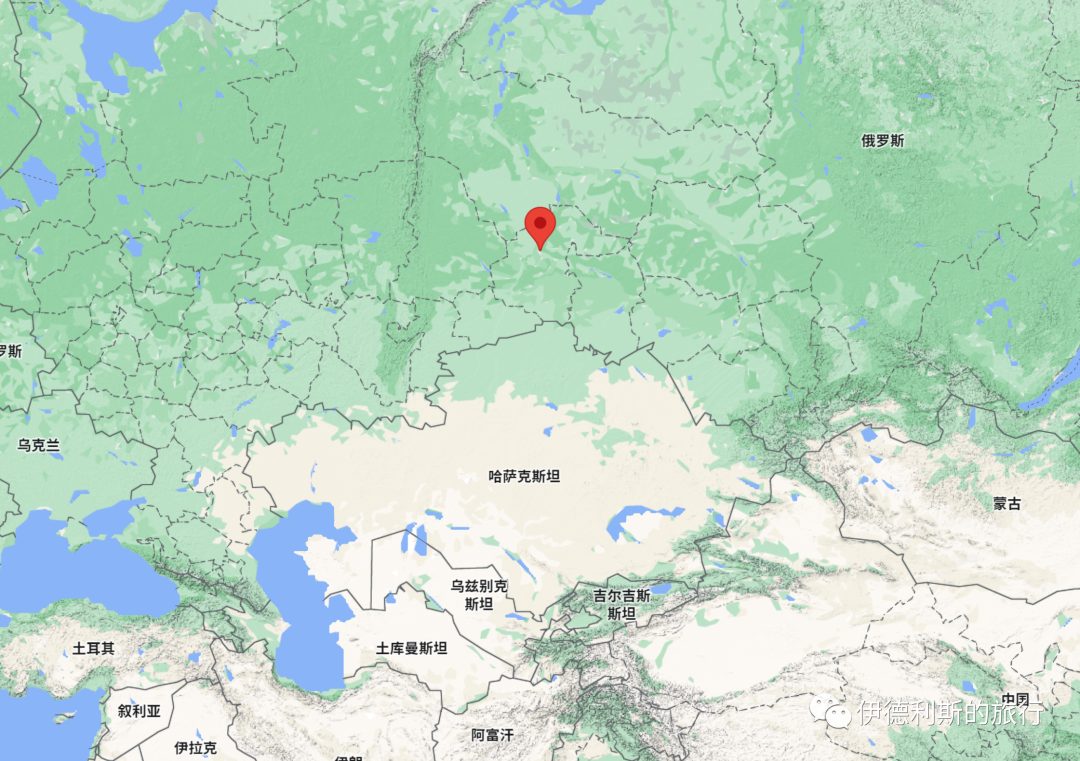
7. The Kazakh Khanate of Kazakhstan (1465-1847)
Moving south from Siberia, we enter the vast Kazakh steppe.
The founders of the Kazakh Khanate, Janybek Khan and Kerey Khan, were both descendants of Tuqa Temur, the thirteenth son of Jochi, who was the eldest son of Genghis Khan.
In 1550, the Khanate was ruled by Haqnazar Khan (1537-1580). At that time, the Kazakh Khanate had rivals on all sides. He first defeated the Nogai Khanate, then the Khanate of Khiva and the Oirats, and then the Siberian Khanate and the Yarkent Khanate. This made the Kazakh Khanate stronger than ever, earning him the title of King of Turan (Shah-i-Turan).
The capital of the Kazakh Khanate at that time was Sighnaq, located in what is now the Kyzylorda Region of Kazakhstan. This was originally the capital of the Blue Horde and served as an important trade point for steppe tribes to exchange goods with the southern farming regions.
Sighnaq photographed by Azamat Nurlybekov in 2022
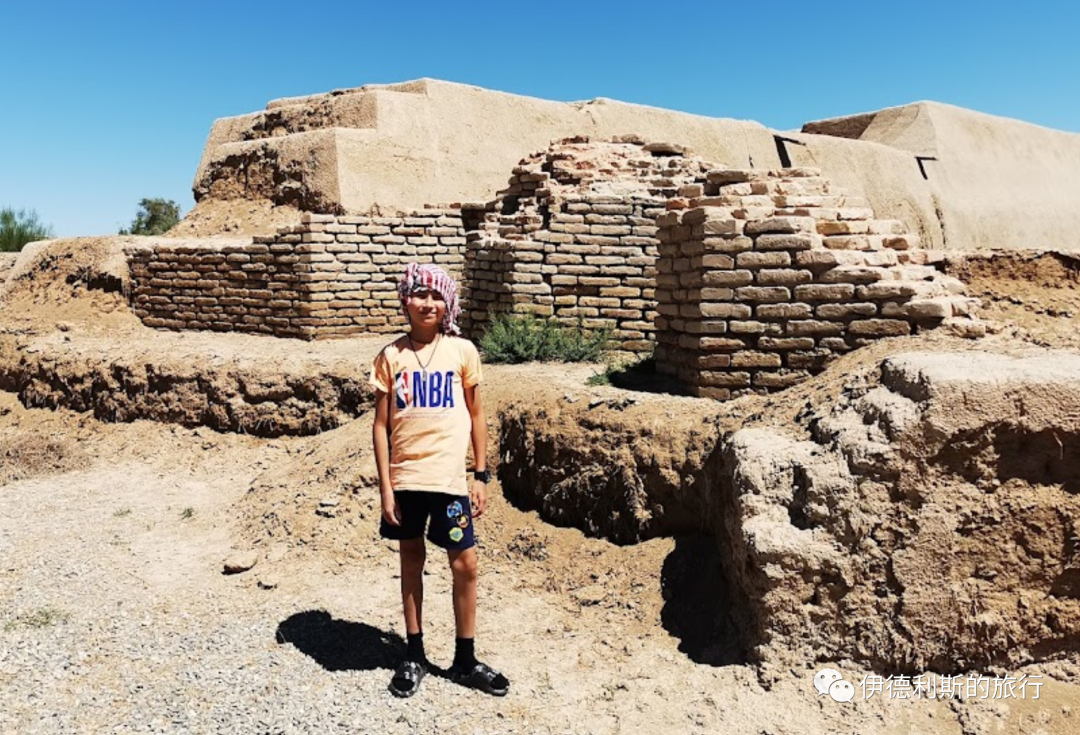
The location of Sighnaq
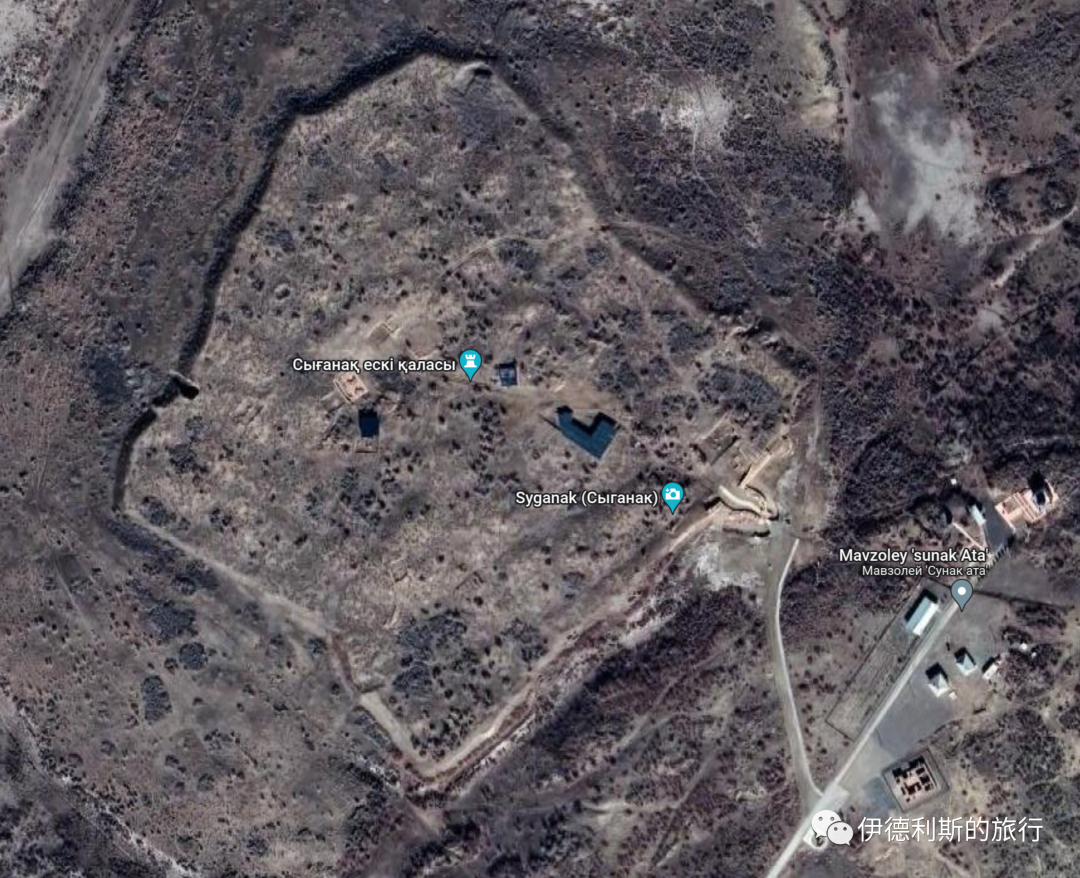
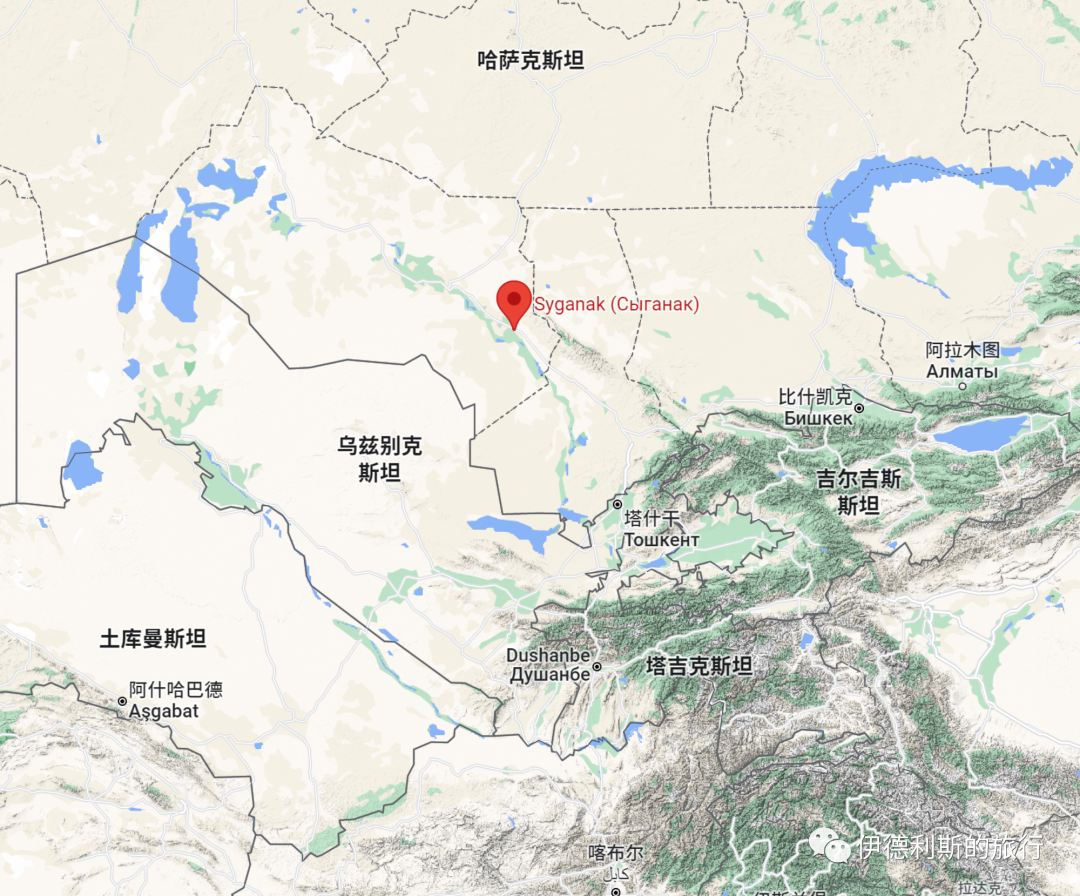
8. The Khanate of Khiva in Turkmenistan (1511–1920)
Continuing southwest, we go deep into the heart of Central Asia.
The Khanate of Khiva was located in the Khwarezm region south of the Aral Sea. It called itself Khwarezm, and its rulers were descendants of Shiban, the fifth son of Jochi, who was the eldest son of Genghis Khan. In the 16th century, the capital of the Khanate of Khiva was Konye-Urgench, located on the border of northern Turkmenistan and Uzbekistan. After the Khanate moved its capital to Khiva in the 17th century, this place was gradually abandoned. It was named a UNESCO World Heritage site in 2005.
Before the Mongol conquest of Khwarezm, Konye-Urgench was one of the wealthiest cities in Central Asia. Most of the current ruins belong to that period, and very few remains from the Khanate of Khiva period have been preserved.
The location of Konye-Urgench
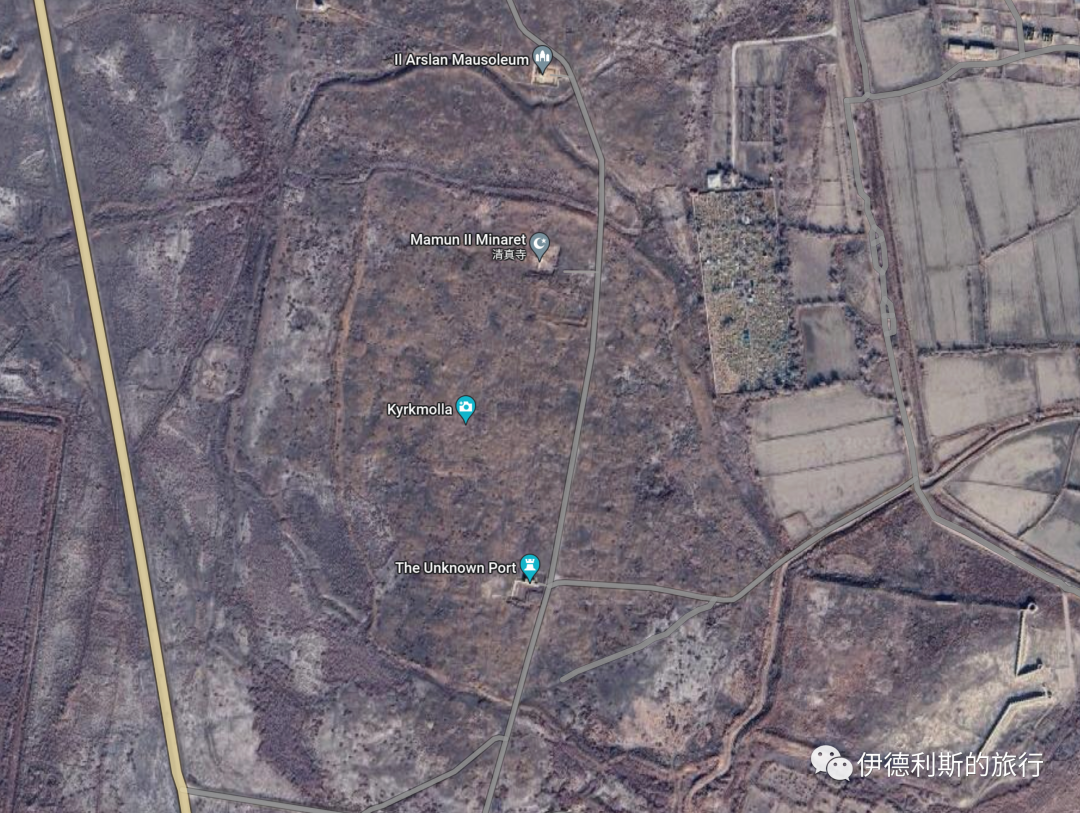
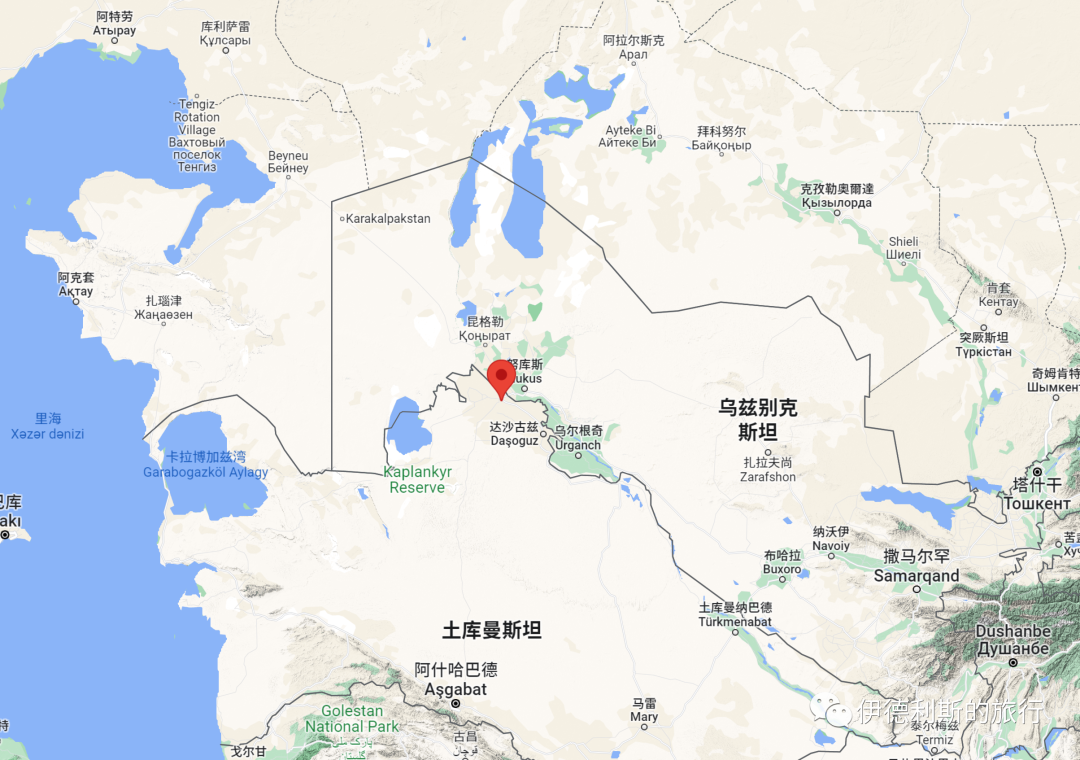
9. The Khanate of Bukhara in Uzbekistan (1500–1785)
Let us continue east into the ancient city of Bukhara.
In the early 16th century, Muhammad Shaybani, a descendant of Shiban (the fifth son of Jochi, Genghis Khan's eldest son), led Uzbek tribes living in the northern Central Asian steppes to overthrow the Timurid dynasty's rule in Transoxiana. He established the Shaybanid Dynasty (1506-1598), opening a new chapter in the history of the Transoxiana region of Central Asia.
The capital of the Shaybanid Dynasty was initially in Samarkand, but it moved to Bukhara after 1533, which is why later generations called it the Khanate of Bukhara. Bukhara served as the capital of the Khanate of Bukhara for 252 years, from 1533 to 1785, and many buildings constructed during that time remain today.
The Mir-i-Arab Madrasa was built in 1535 by order of Ubaidullah, the Khan of the Shaybanid Dynasty (reigned 1533-1539). It was named after the Khan's Sufi mentor, Mir-i-Arab (also known as Sheikh Abdullah Yamani).
To compete for territory, Khan Ubaidullah fought many wars against the Persian Safavid dynasty, the most famous being the siege of the ancient Afghan city of Herat. During many raids on Persia, the Shaybanid Dynasty captured many prisoners. People say the Khan used the money from selling three thousand Persian captives to build the Mir-i-Arab Madrasa.
The Mir-i-Arab Madrasa was built opposite the famous Kalyan mosque in Bukhara, forming a facing structure known as a "kosh."
The Mir-i-Arab Madrasa closed in the 1920s but reopened in 1947. It became the only open madrasa in Bukhara at the time, and almost all the imams of that era were trained at this school.
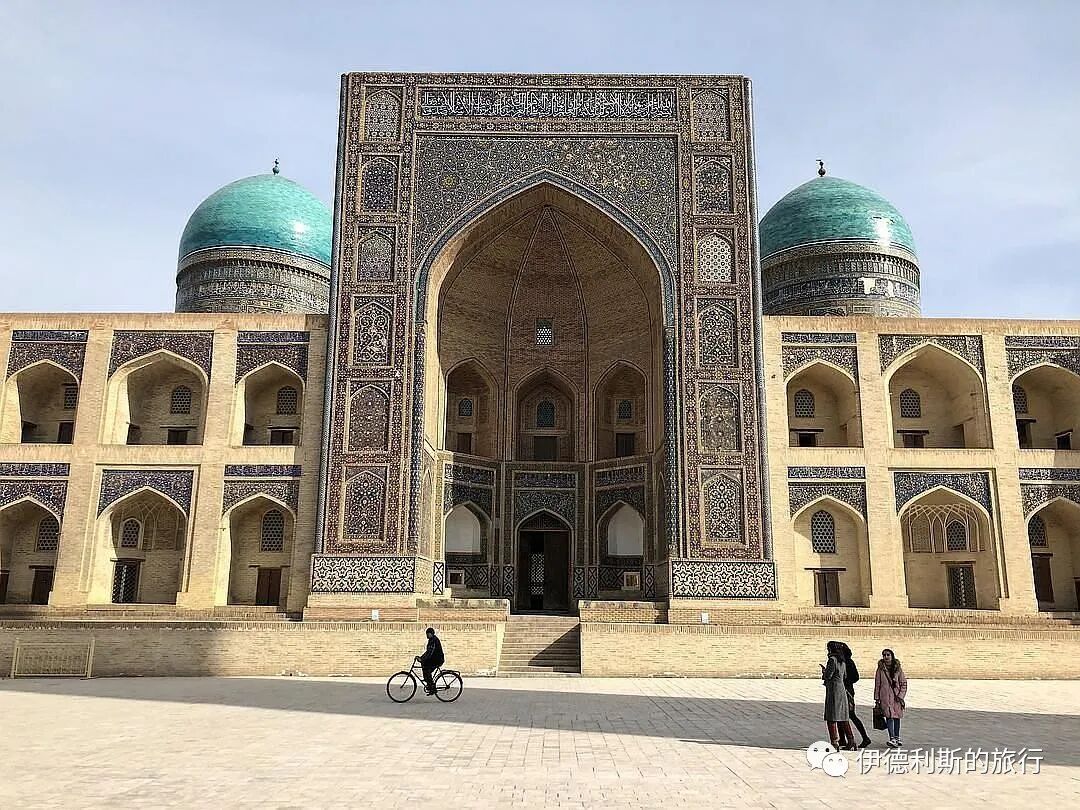
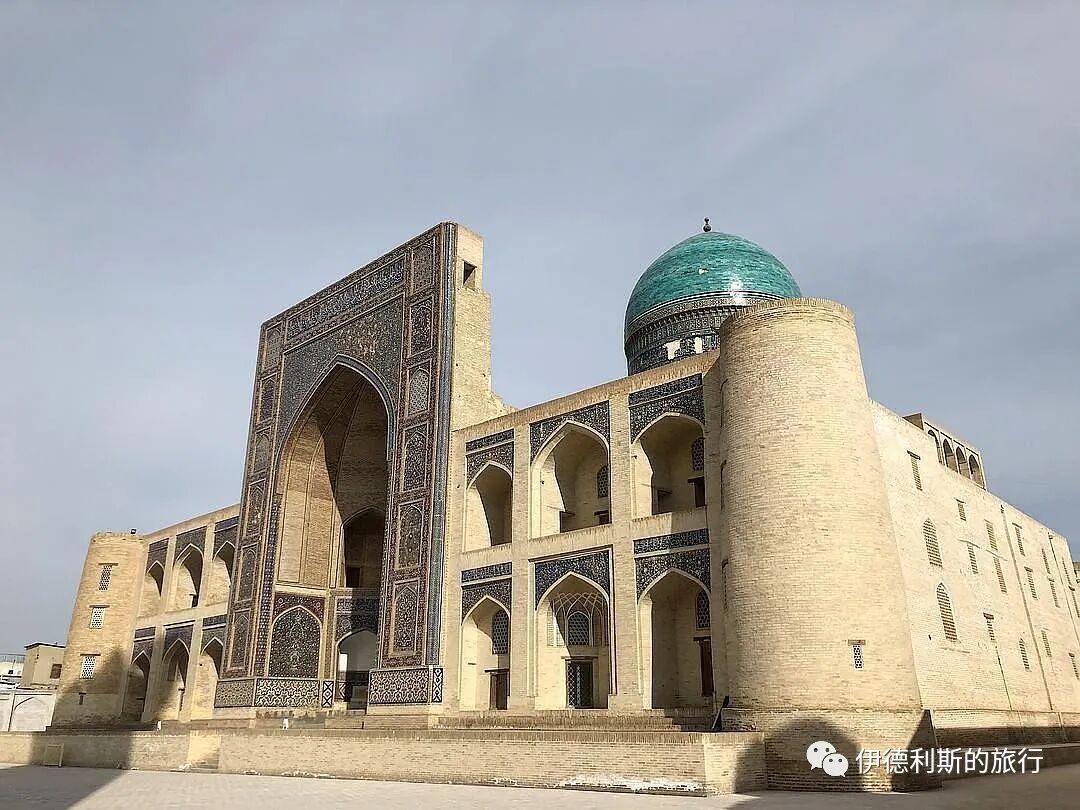
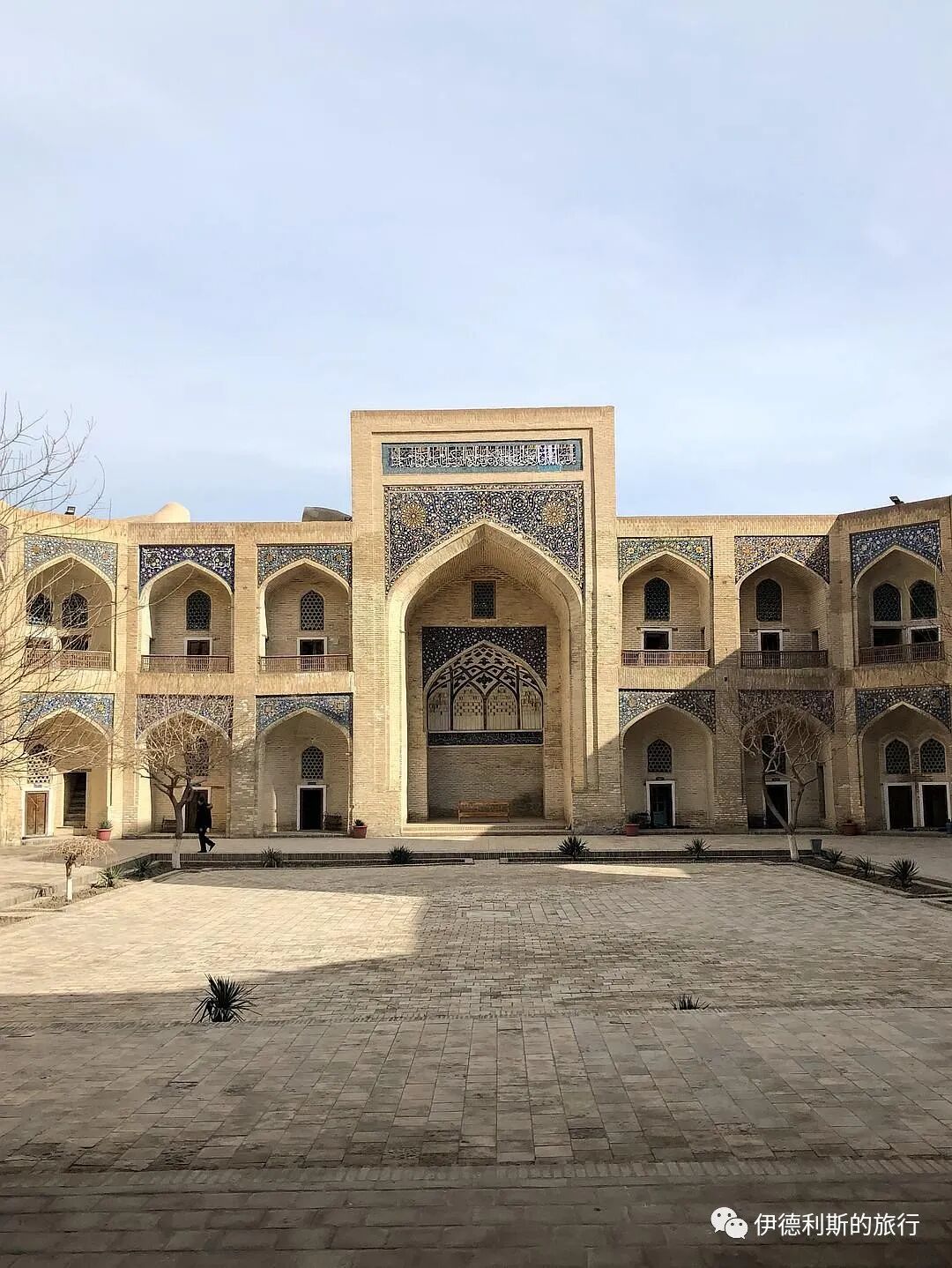
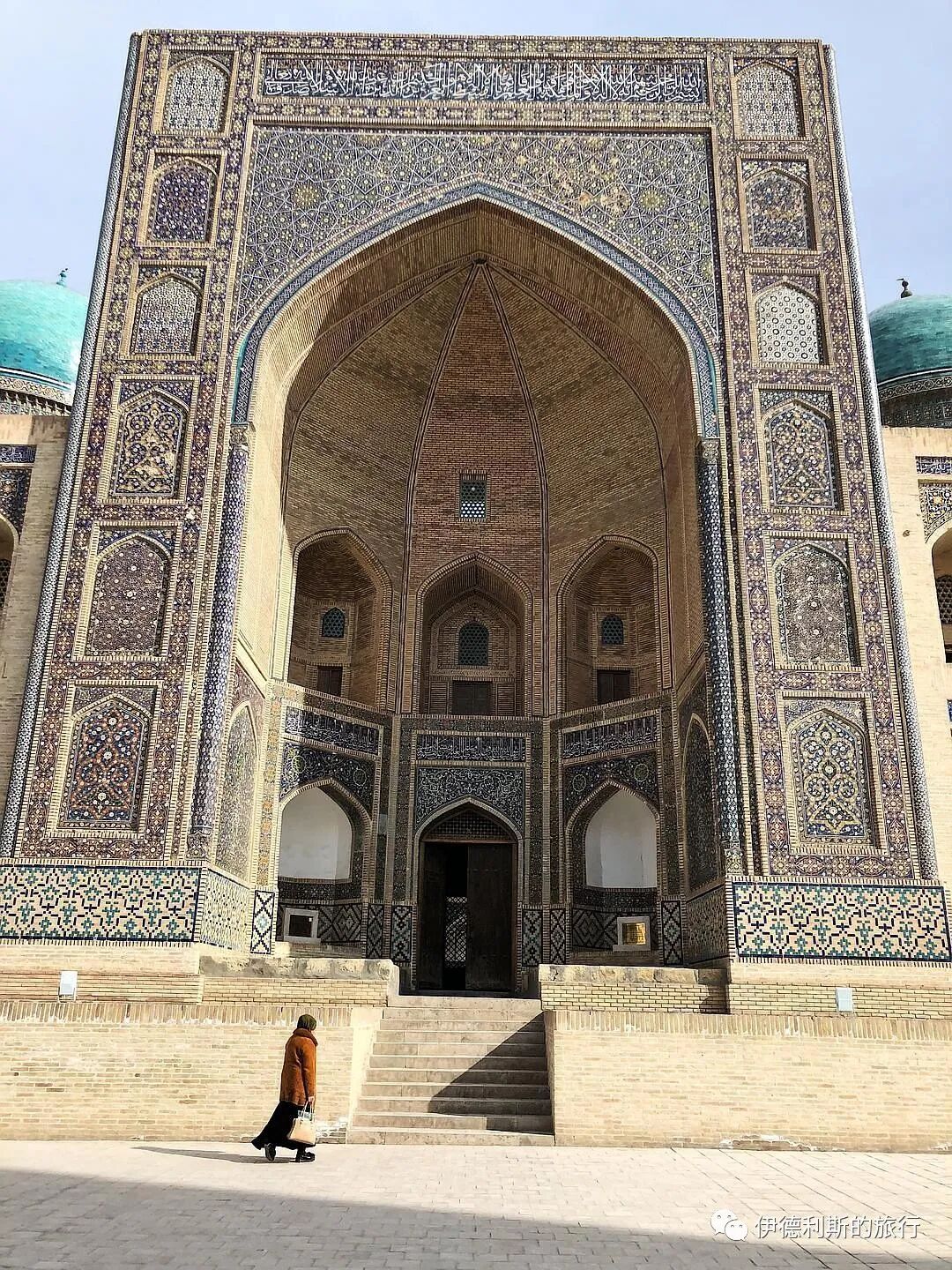
The Khoja Zaynuddin mosque was built in the first half of the 16th century, located next to an ancient pond (Hauz) in Bukhara. This architectural style is known as a mosque-khanaka (Mosque-Khanaka). It serves as both a mosque and a Sufi center, where people can perform namaz and hold religious gatherings (ermeli).
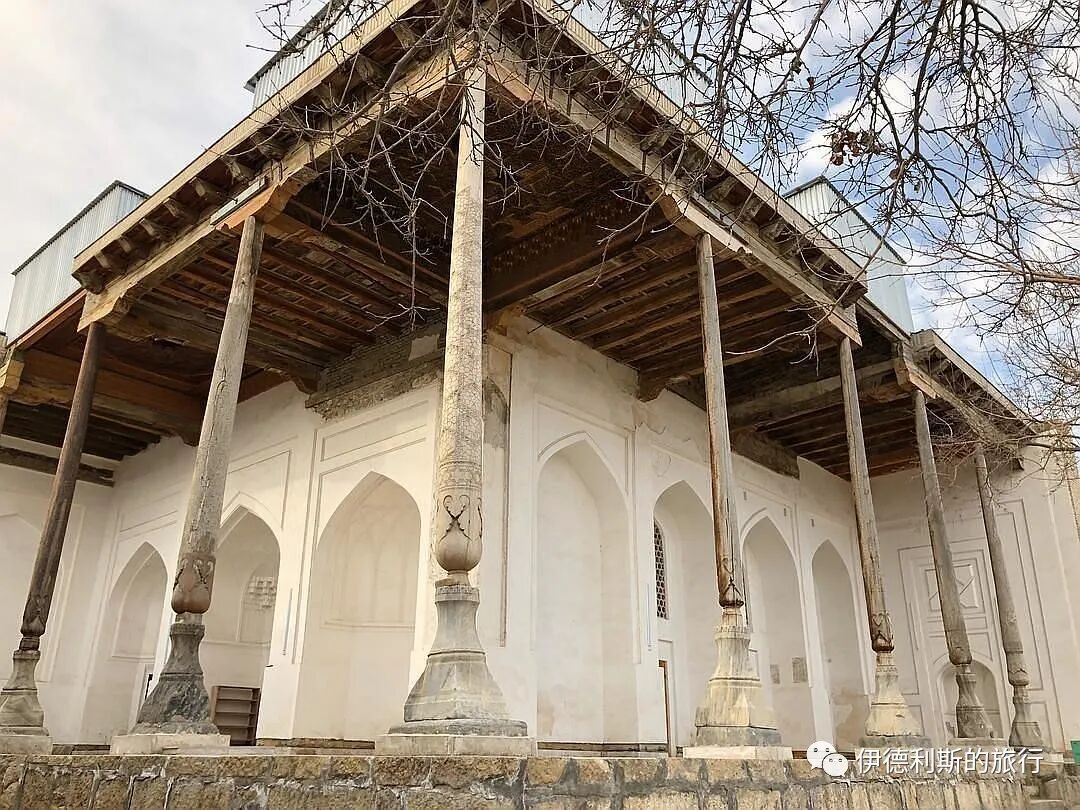
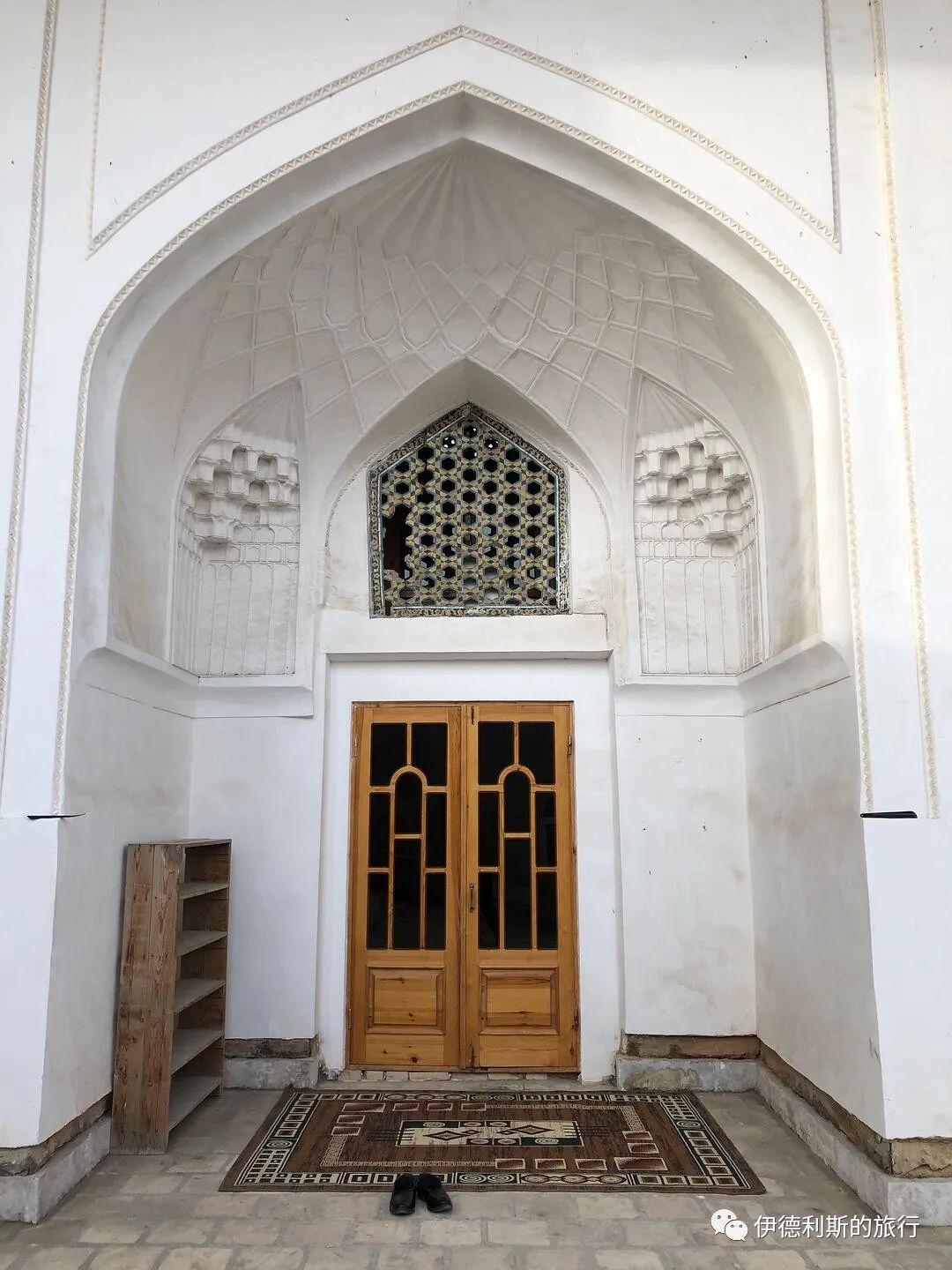
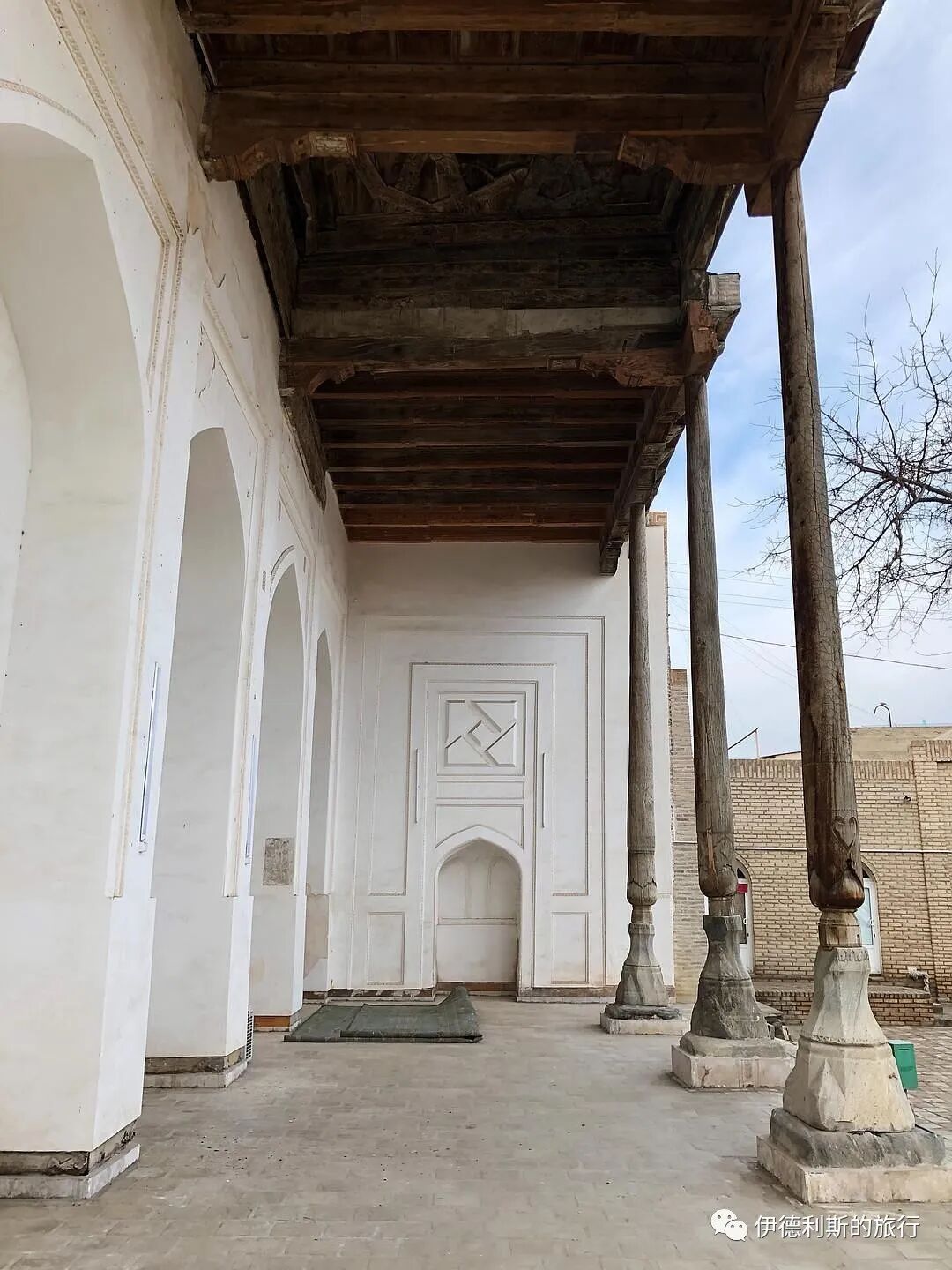
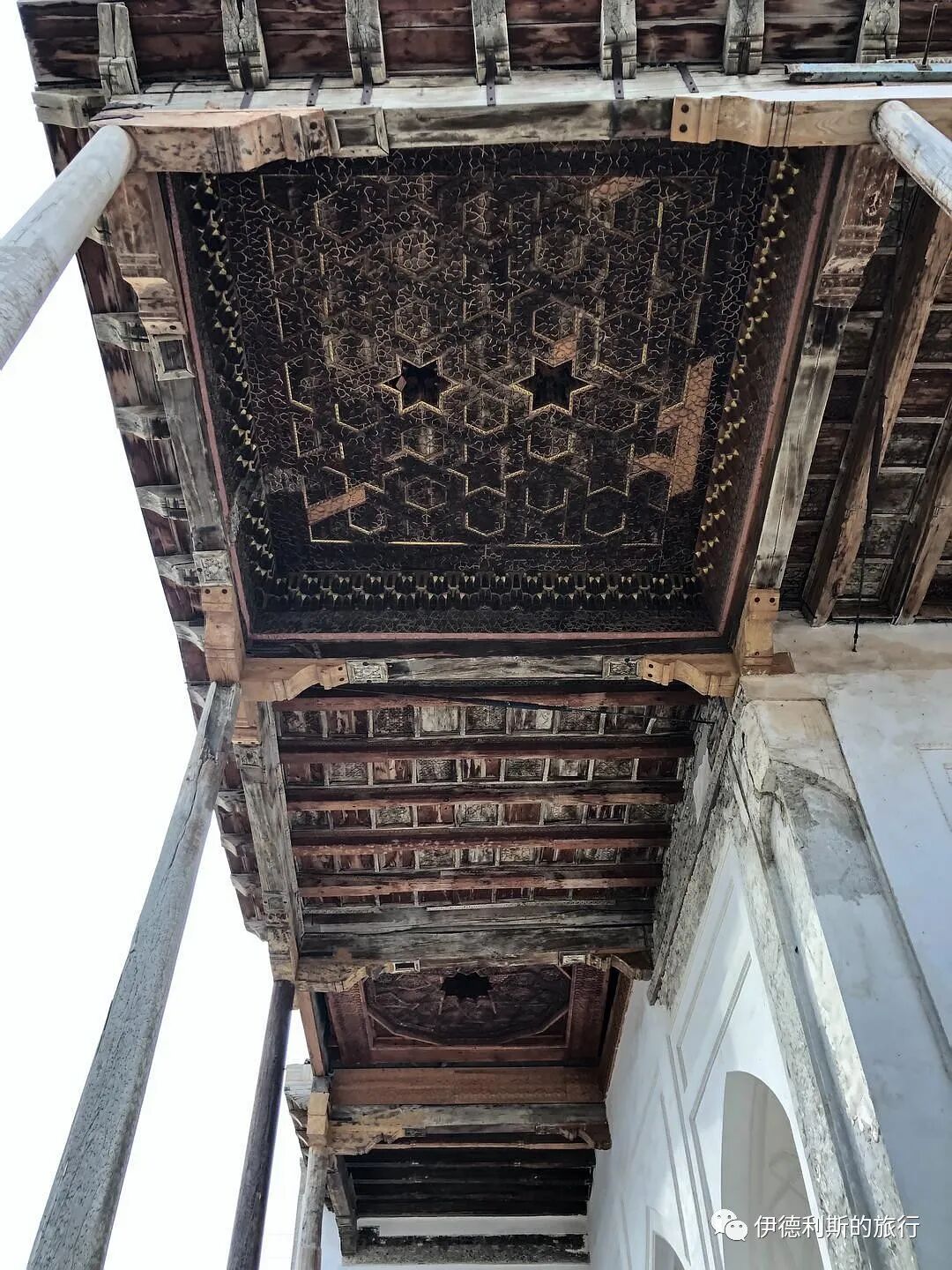
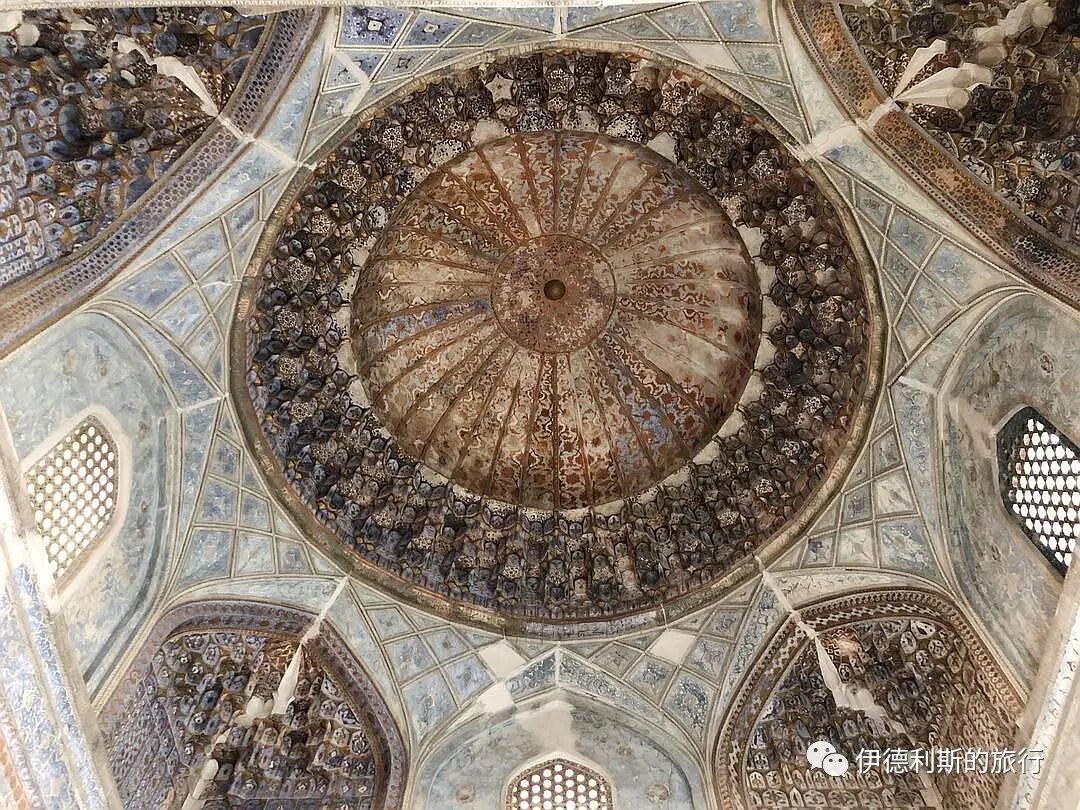
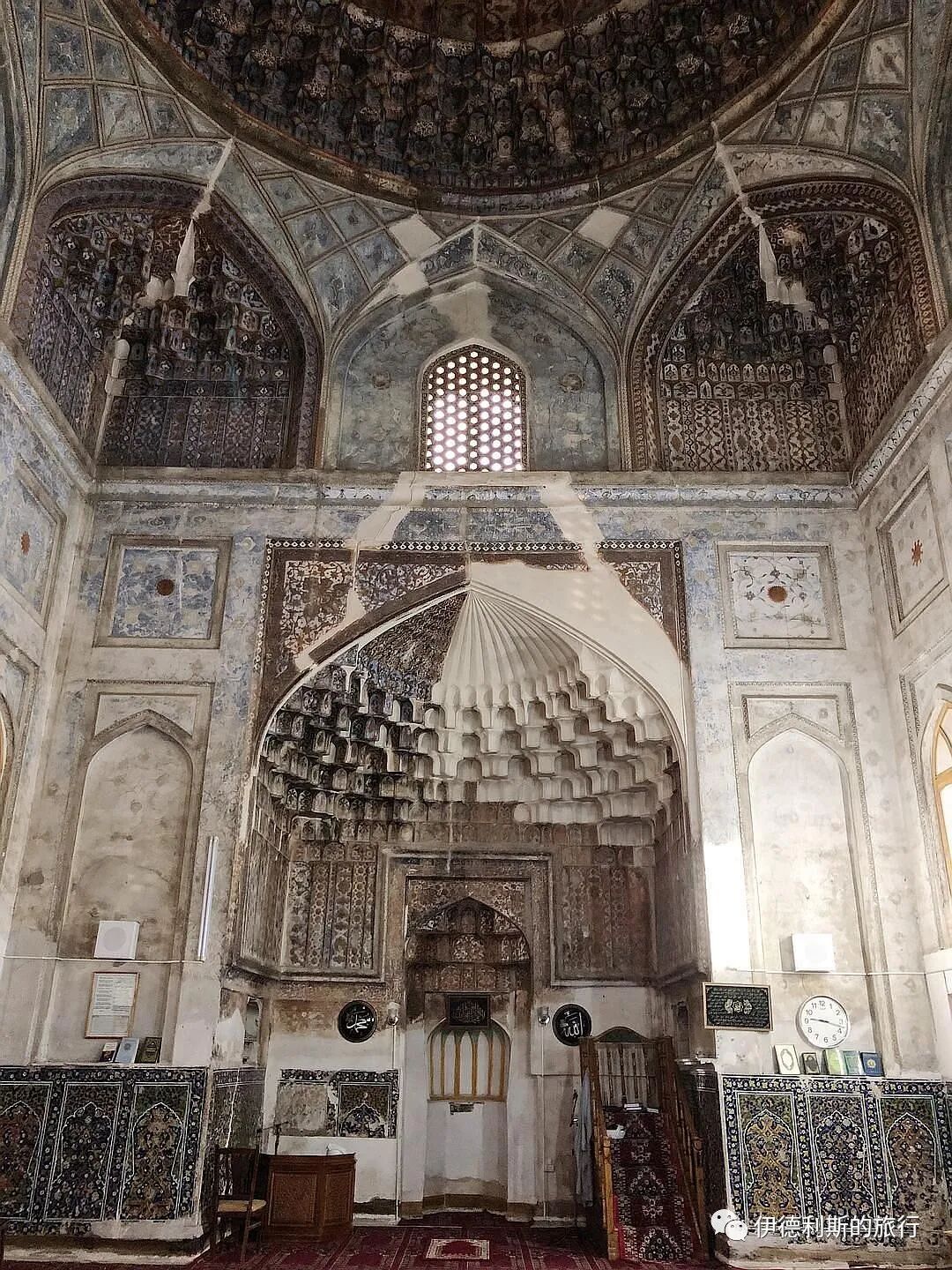
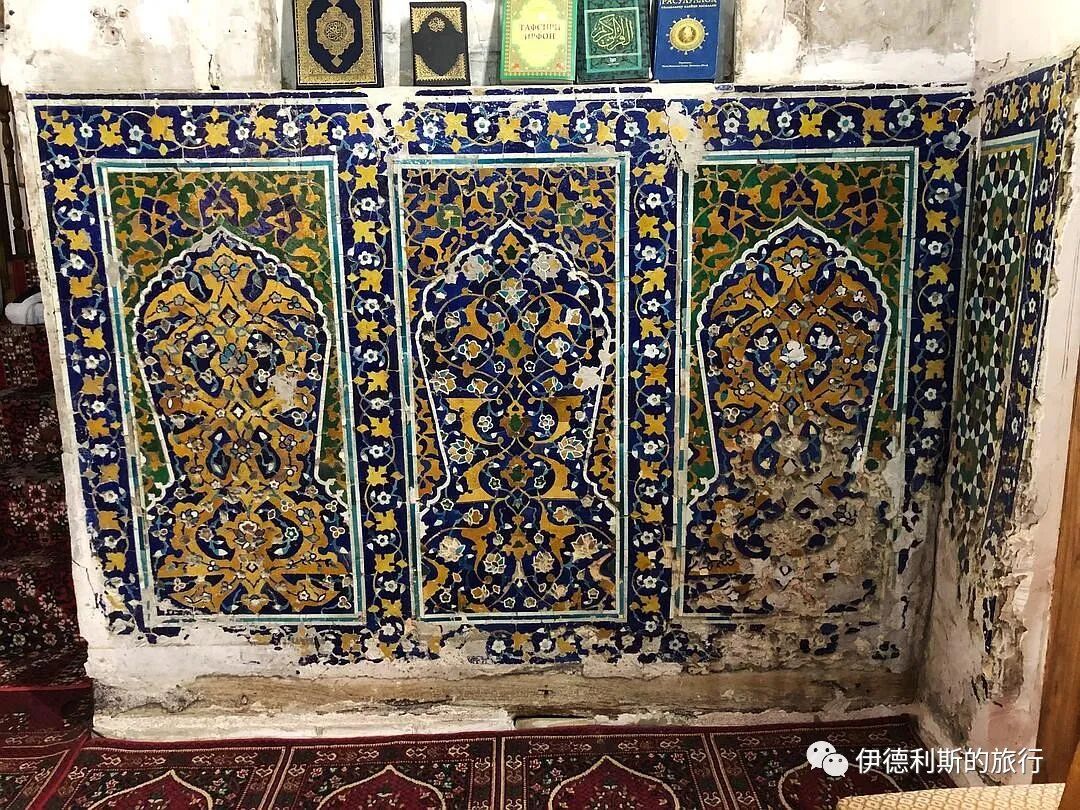
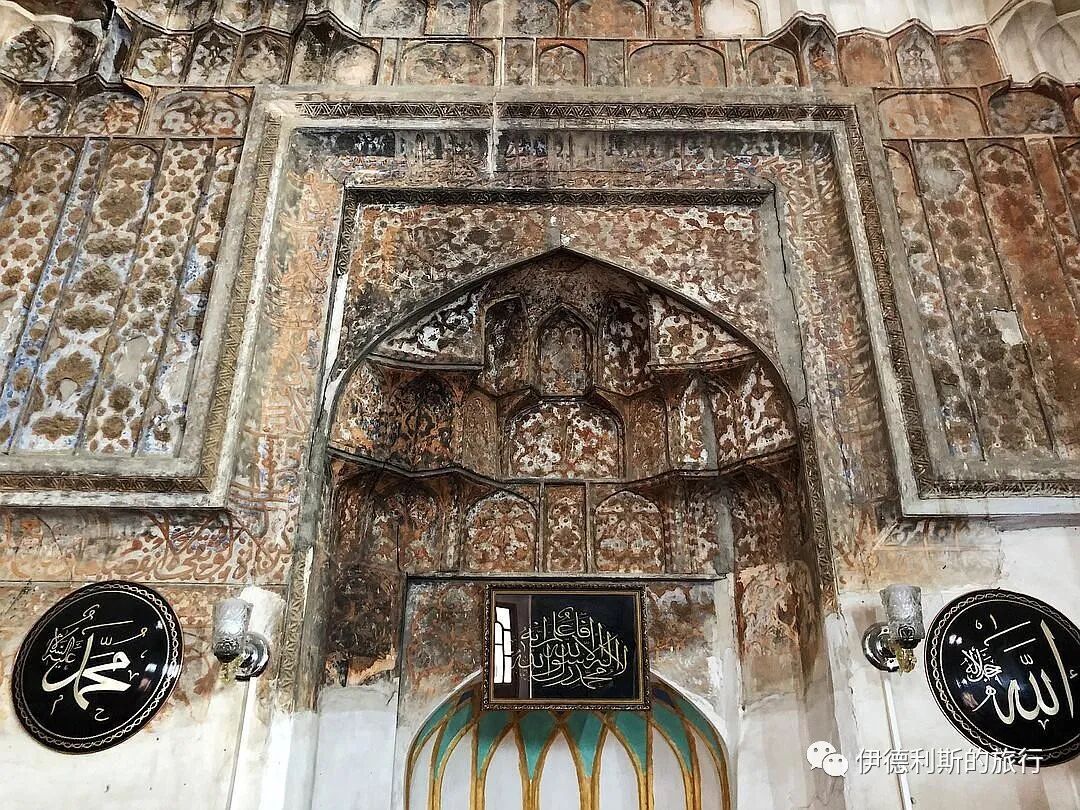
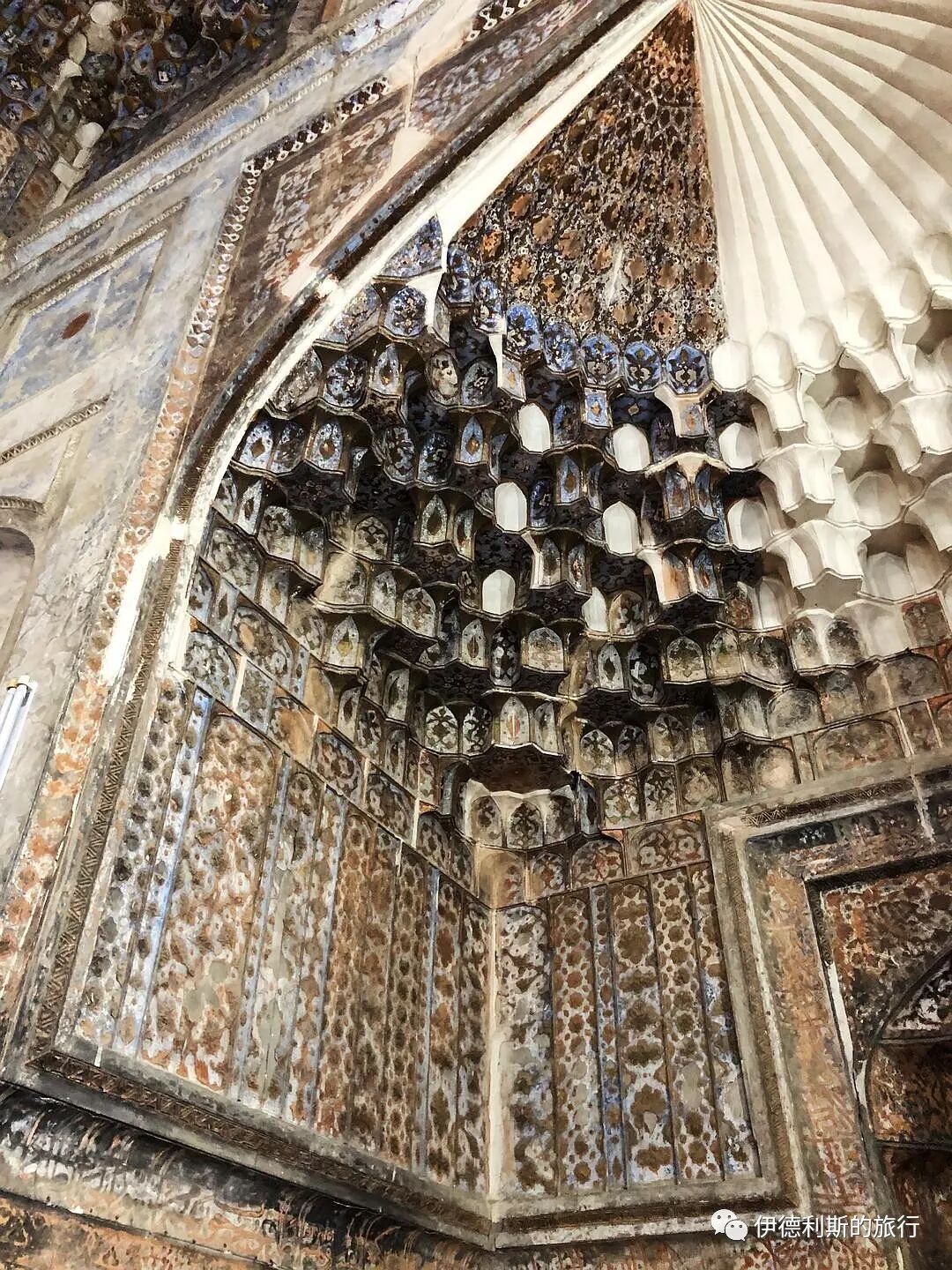
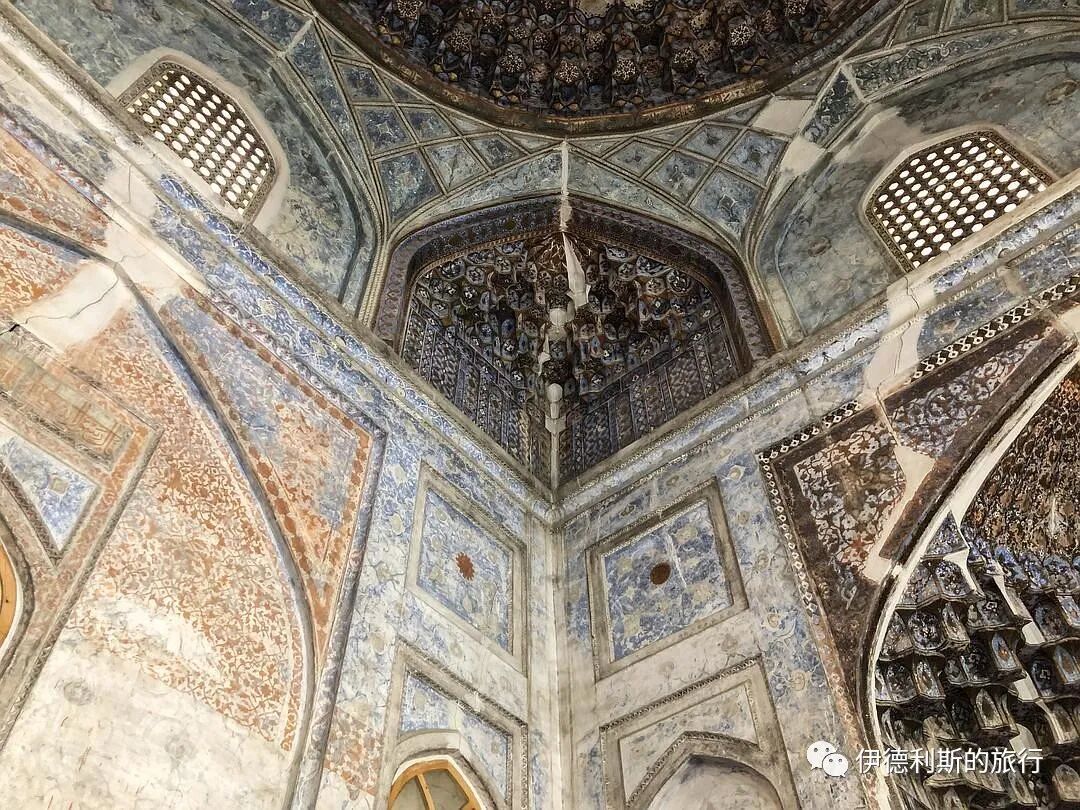
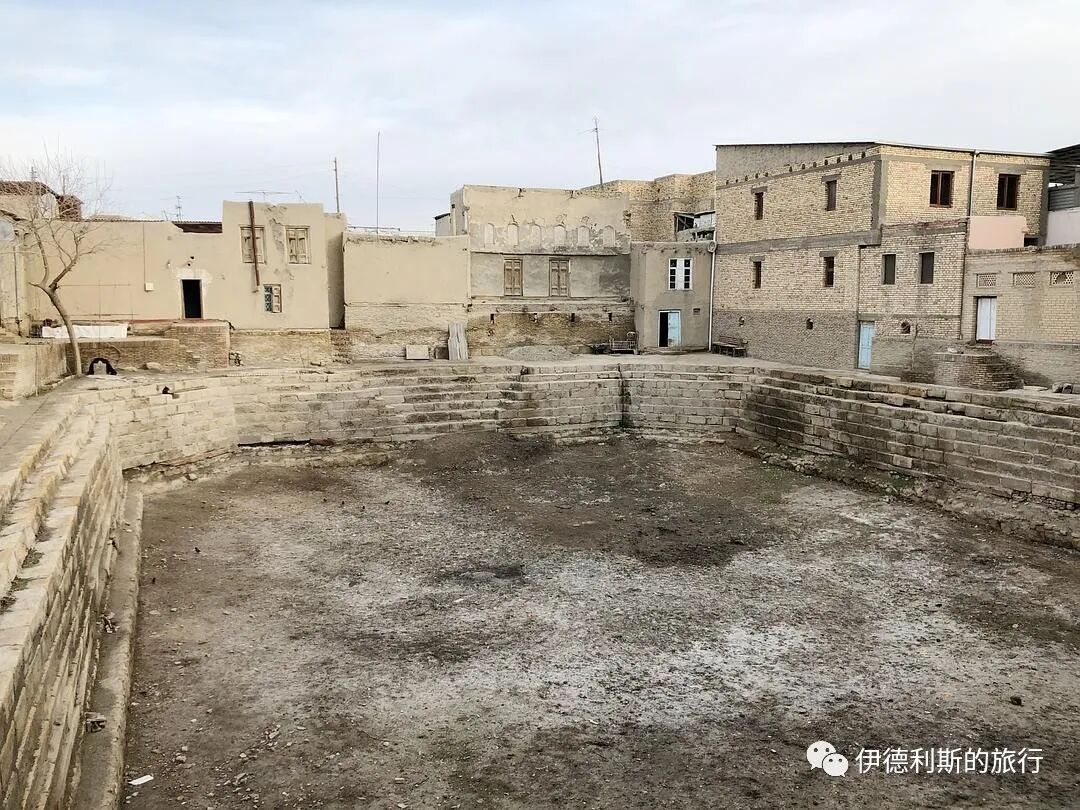
The Bahouddin Naqshbandi Complex is an important Sufi holy site in Central Asia, often called the 'Little Mecca' of the region. It holds the tomb of Hazrat Muhammad Bahauddin Shah Naqshband, the founder of the famous Naqshbandia Sufi order.
During the Shaybanid dynasty, the Naqshbandia order eventually outperformed other Sufi groups to become the dominant order in the khanate. Unlike other Sufi orders that favored seclusion and leaving the world behind, the Naqshbandia order followed the principles set by its founder: 'solitude in the crowd, travel in the world, caution in action, and enjoyment of the moment.'
In 1544, the Shaybanid Khan Abdulaziz (who reigned from 1539 to 1550) built a Dakhma platform with marble railings at the shrine, along with a Sufi lodge (Khanaqa) nearby. Later, a large cemetery for Bukhara's rulers appeared near the shrine, as every ruler felt honored to be buried close to it.
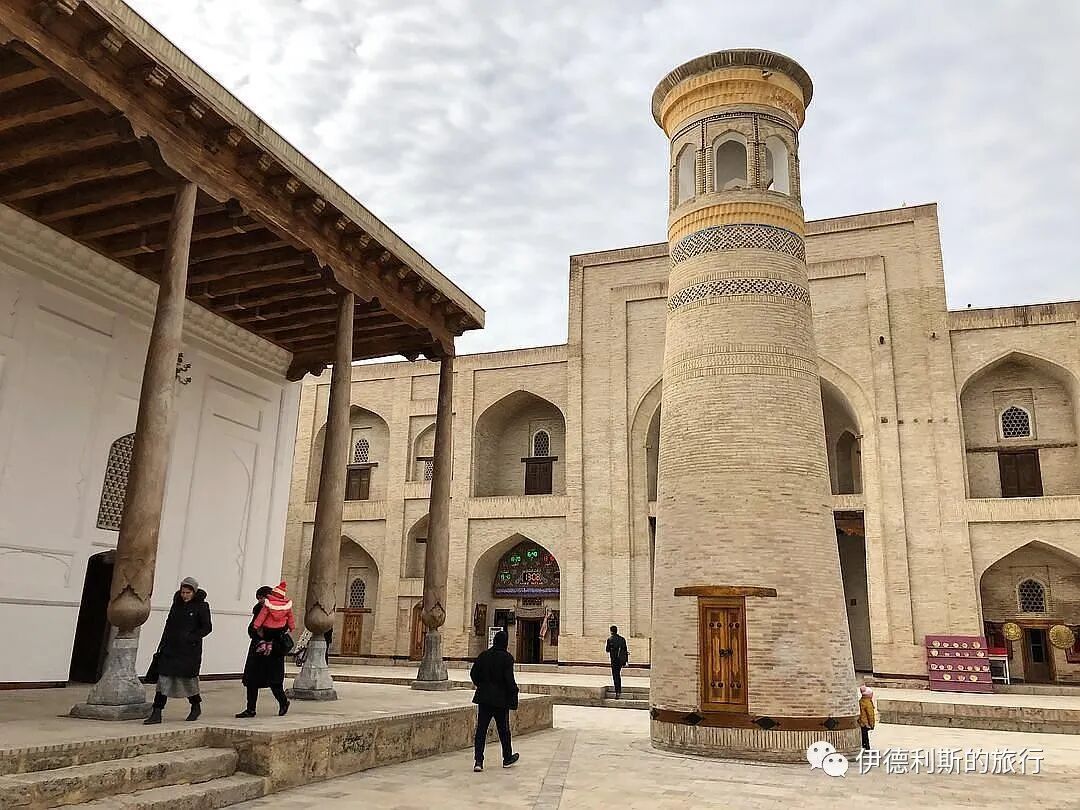
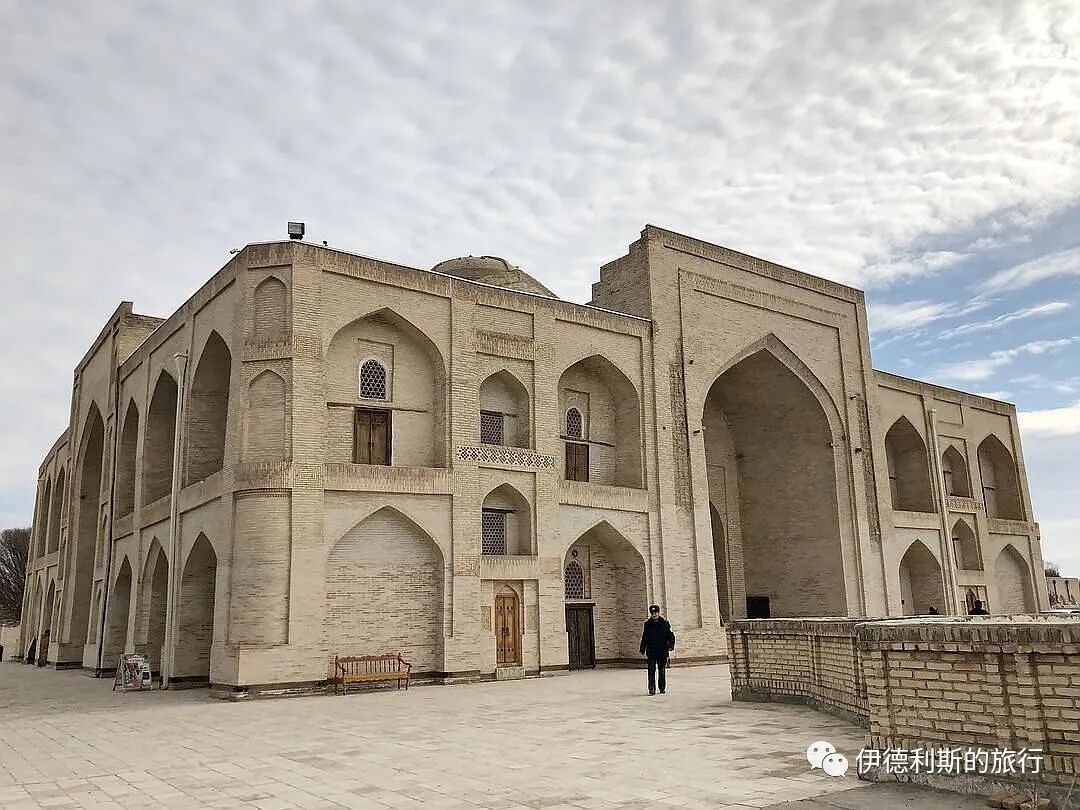
During the Shaybanid period of the Bukhara Khanate, Tashkent's population and size gradually recovered, making it a commercial and cultural hub along the Silk Road. Most of the historical buildings still standing in Tashkent today were built during this time. Abu Bakr Mohammed Kaffal Shashi was a famous imam and scholar in Tashkent during the Samanid dynasty. After he passed away in 976, he was buried in a garden on the outskirts of Tashkent. The current Kaffal Shashi mausoleum was rebuilt in 1541 during the Shaybanid dynasty. It features the design of a Sufi lodge (Khanaqah), including a tall archway (Iwan) and a dome. Inside, besides Kaffal Shashi, his students are also buried there, including his three main disciples. The mausoleum was once covered in beautiful tiles, but only parts remain today, and they have been restored. Additionally, the window lattices on the mausoleum gate are already 500 years old. According to Tashkent legends, applying dust from this mausoleum to one's face can help a woman become pregnant, which attracts many women who are struggling to conceive.
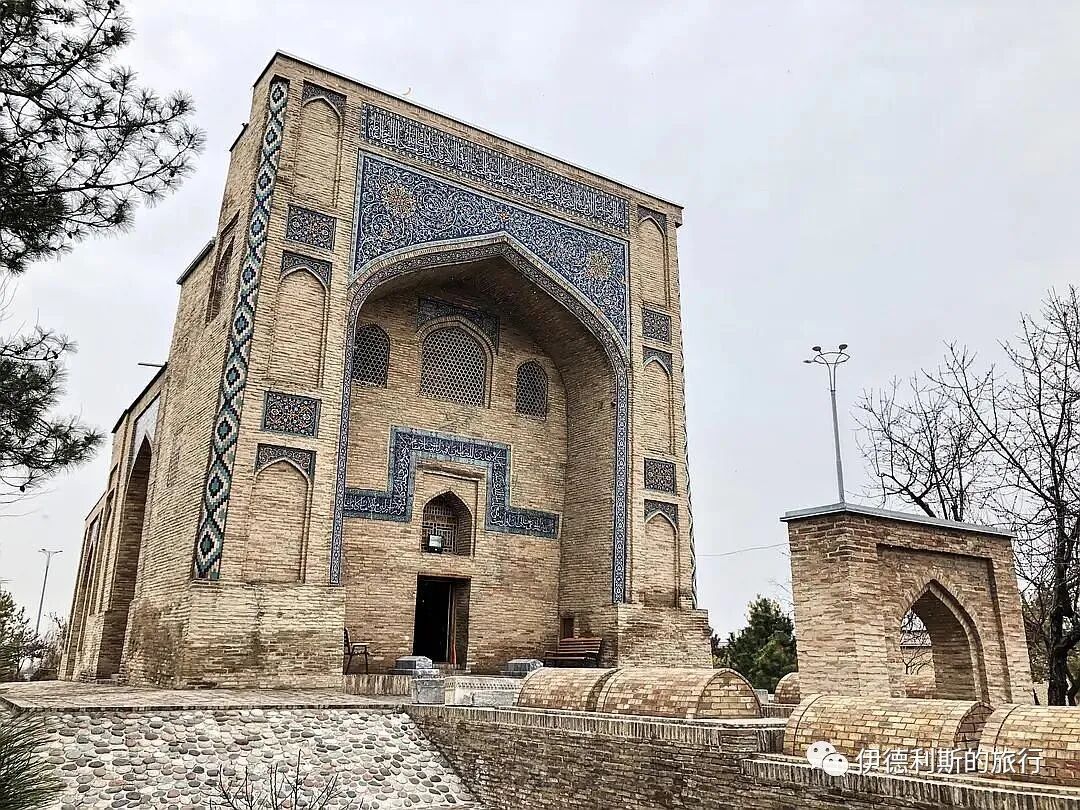
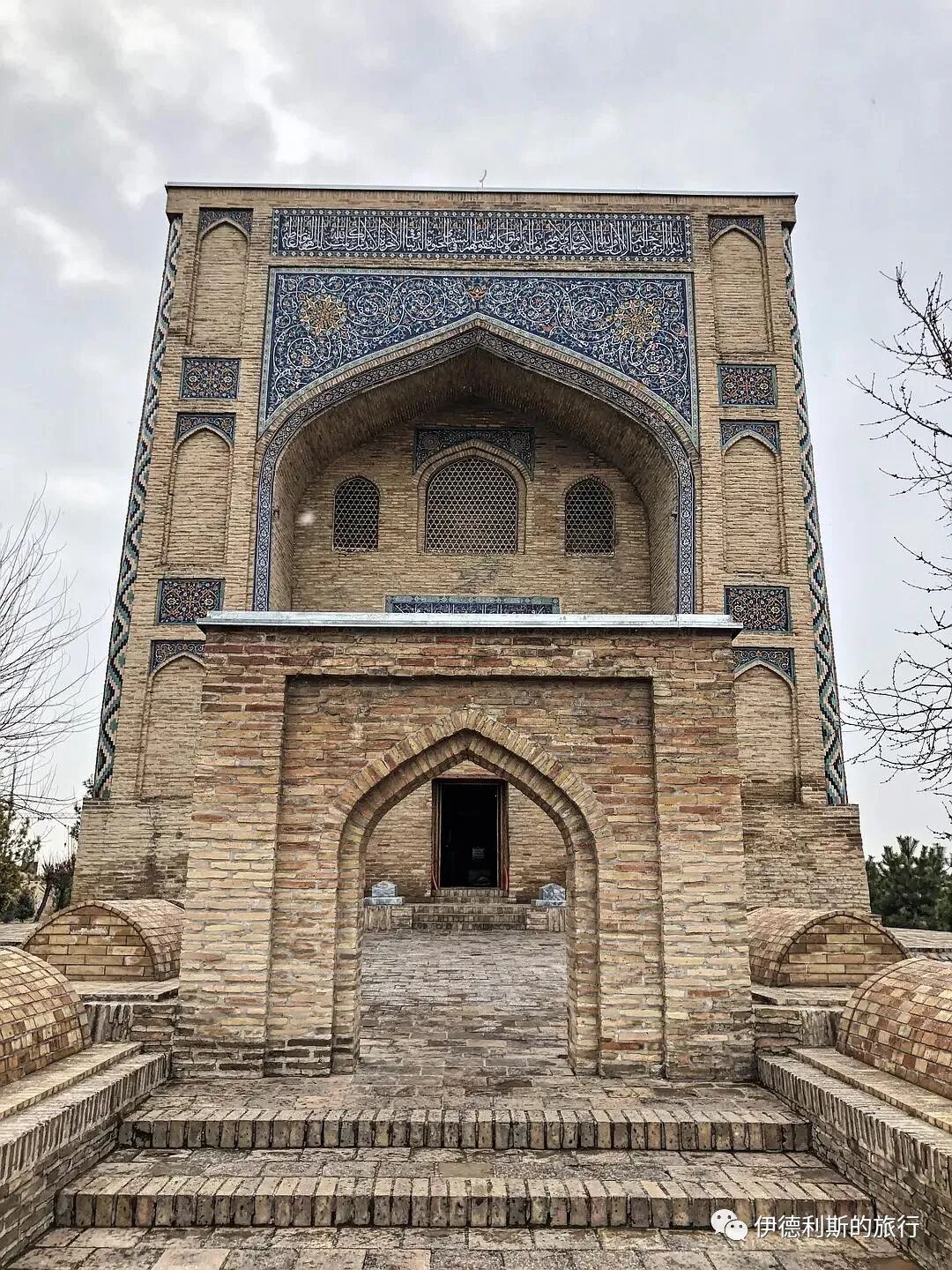
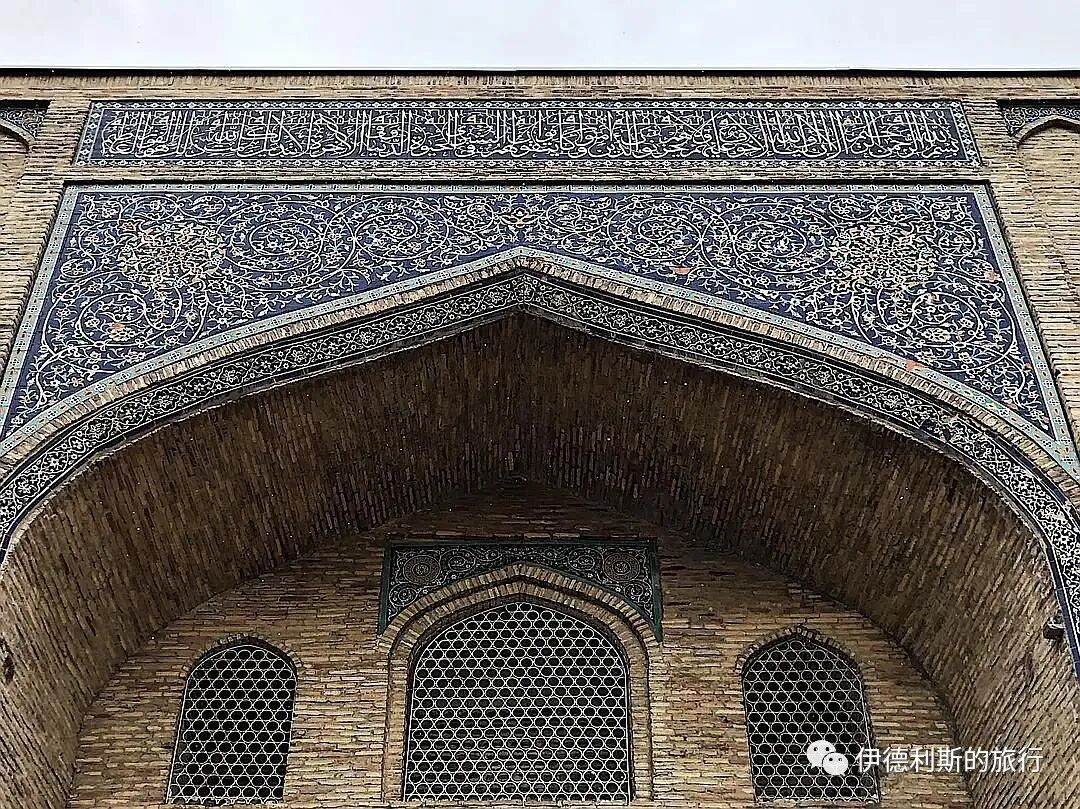
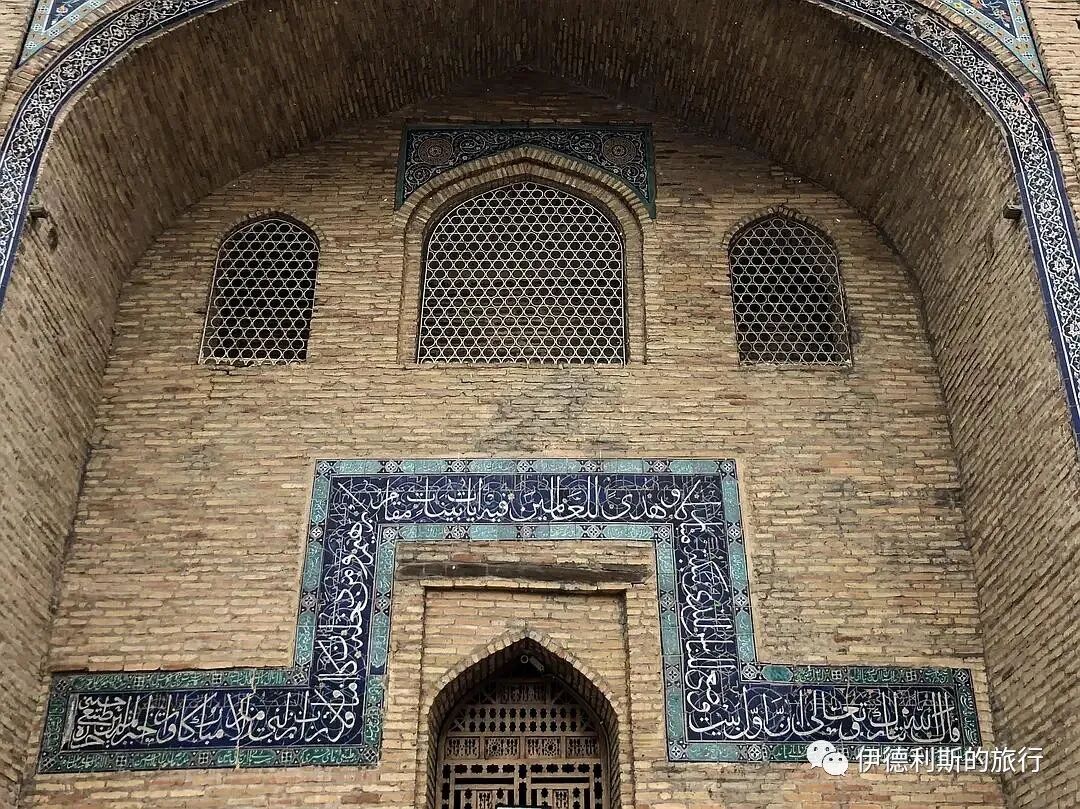
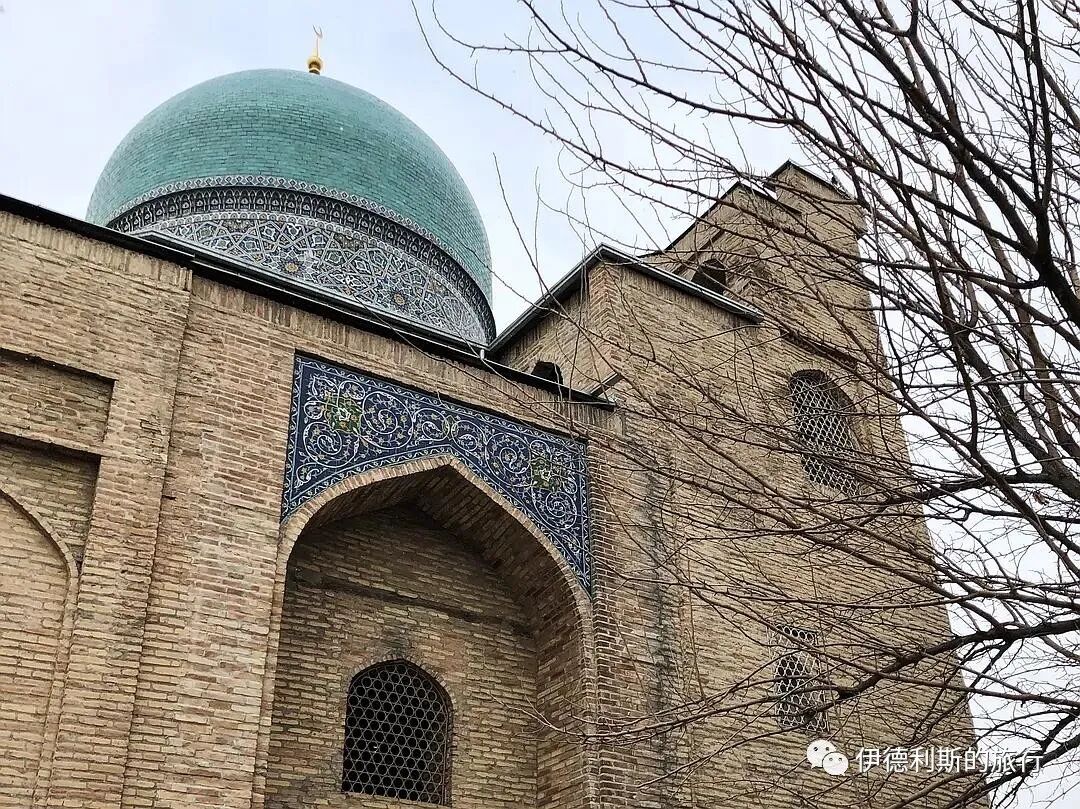
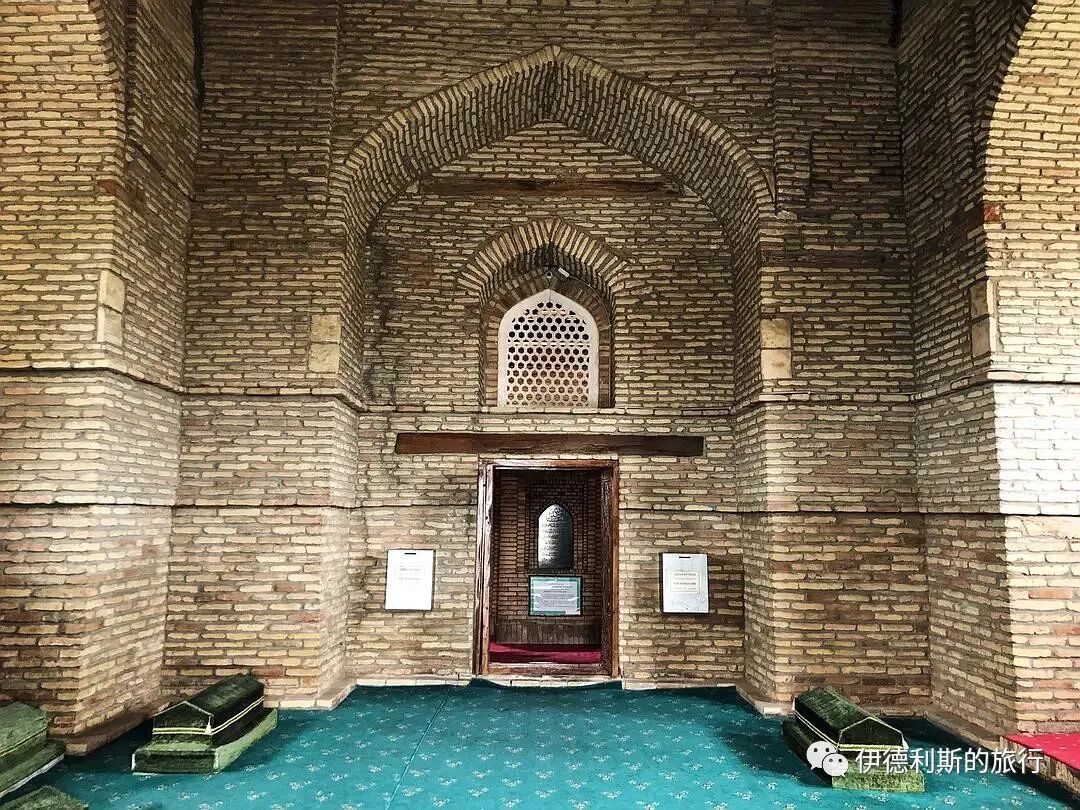
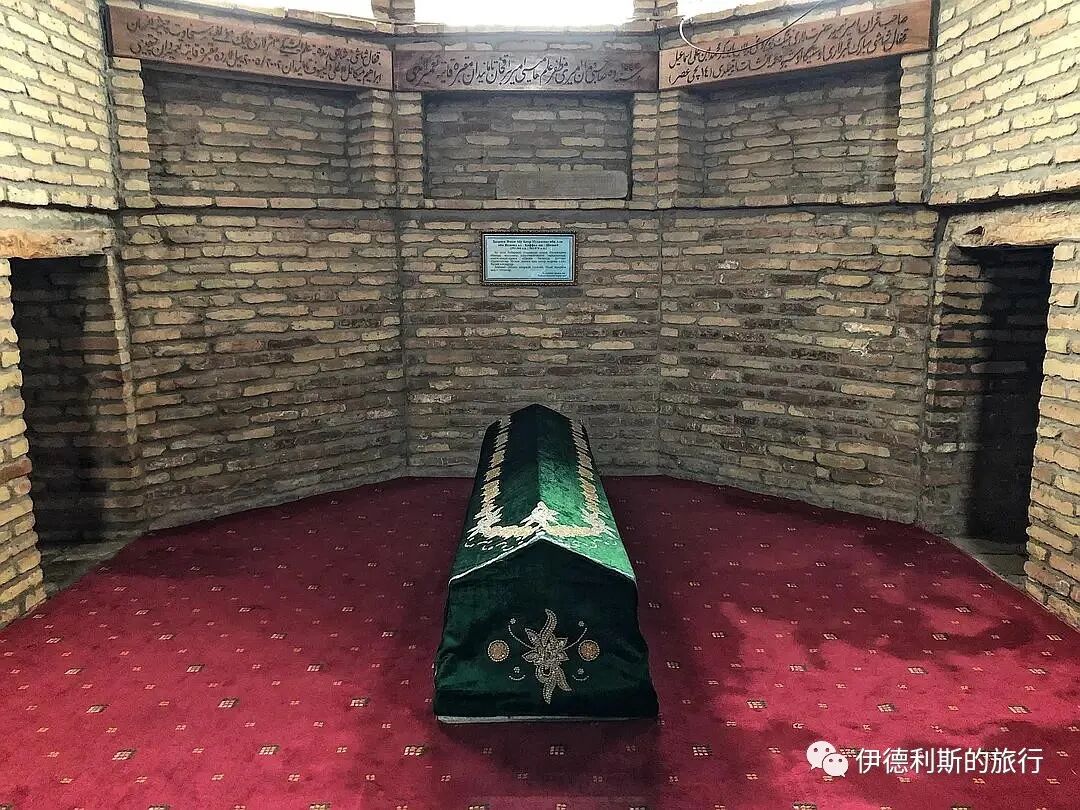
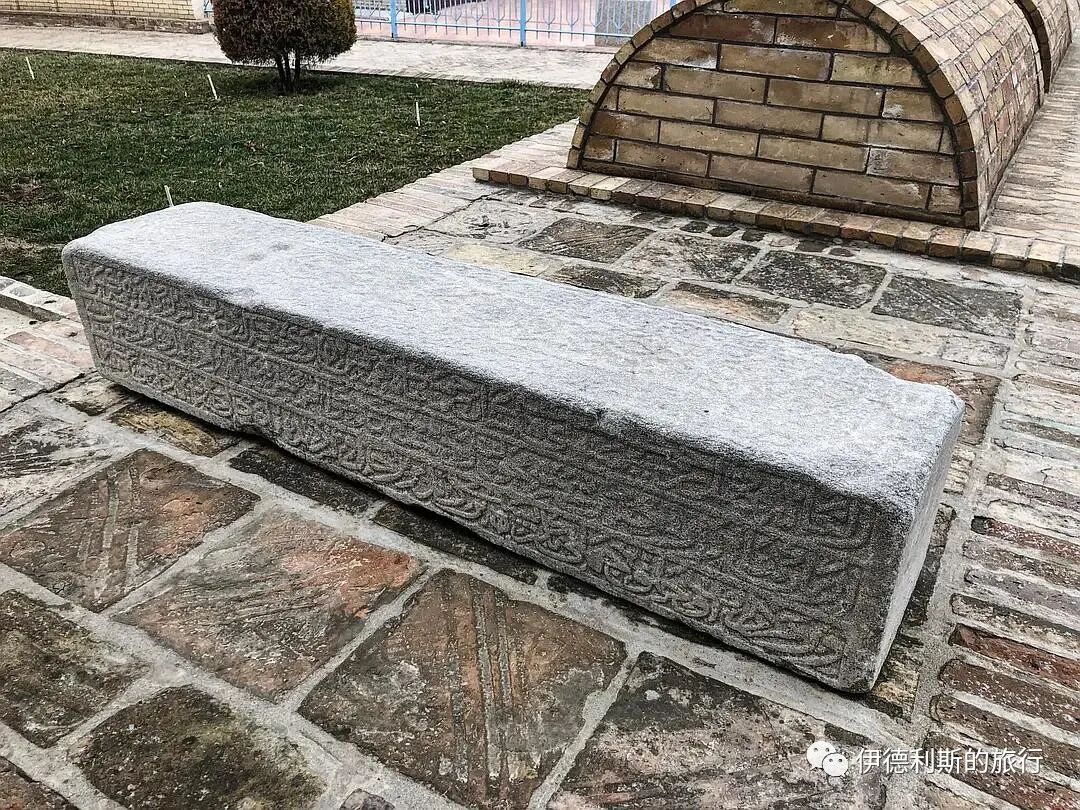
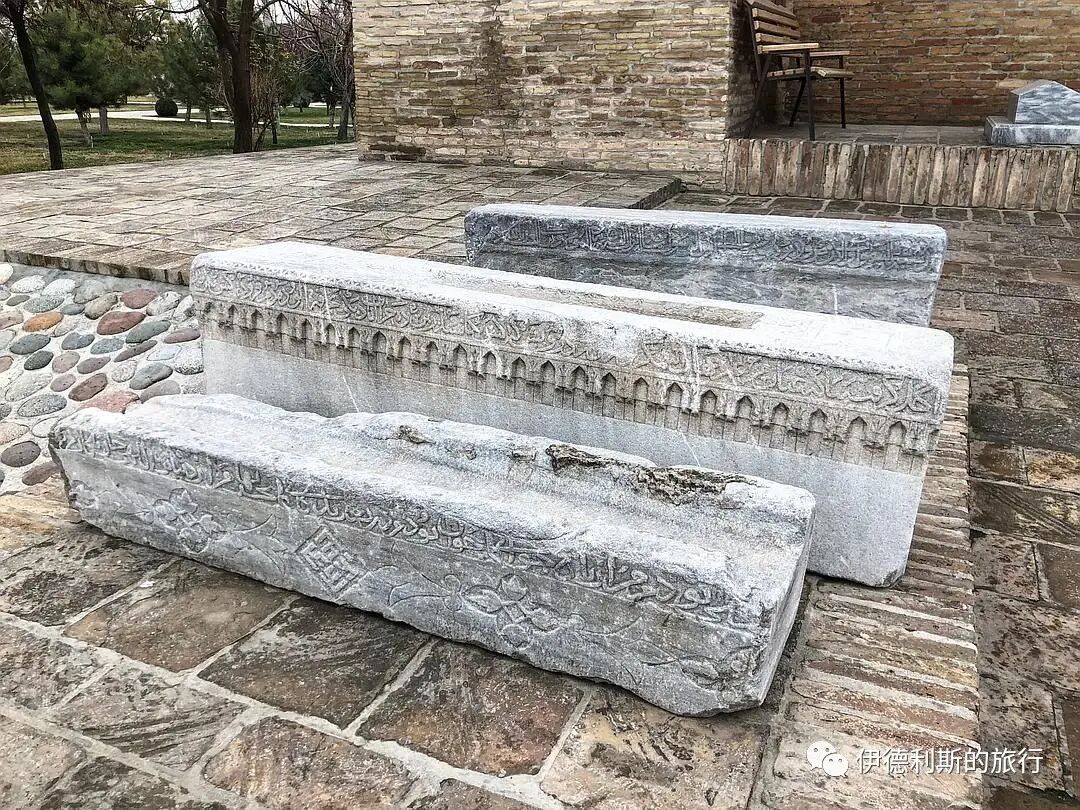
10. The Yarkent Khanate in China (1514-1680)
We crossed the Tianshan Mountains and arrived at the city of Shache in southern Xinjiang.
The Yarkent (Yarkent) Khanate was a state established in 1514 by Sultan Said Khan, a descendant of the Eastern Chagatai royal family. With Yarkent city (Shache) as its capital, it ruled southern Xinjiang and surrounding areas for over a hundred years until it was annexed by the Dzungar Khanate in 1680.
During the Yarkent Khanate's rule over southern Xinjiang, the Chagatai Mongols eventually shifted from nomadic life to settled living and merged into the Uyghur people. The Uyghurs also gradually developed into a modern ethnic group during this period, and the Twelve Muqam was finalized at this time as well.
'Yarkent Khanate' is actually a name used by modern scholars. In earlier local documents, the Persian word 'Moghuliye' was used, which means 'Mongol State'. Around the same time, Sultan Said Khan's cousin Babur established a state in northern India and also called it 'Moghul'. To distinguish them, Chinese usually translates them as 'Mengwu'er' and 'Mowo'er' respectively.
The founder of the Yarkent Khanate, Said Khan, was the third son of Ahmad Alaq, the ruler of Uyghurstan (modern-day Turpan area) in the eastern part of the Eastern Chagatai Khanate. In 1514, after stabilizing the Transoxiana region, the Uzbek army prepared to wipe out the Chagatai Mongols. After careful thought and discussion, Said Khan decided he could not withstand the Uzbek army's attack, so he left the Fergana Valley, crossed the Tianshan Mountains, and headed toward Yarkent.
In the spring of 1514, Said Khan led his army across the Tianshan Mountains and reached Kashgar via the Torugart Pass. At that time, southern Xinjiang was ruled by Abu Bakr, the leader of the Mongol Dughlat tribe. He was recruiting soldiers in Yarkent city. Said Khan fought a fierce battle outside the city against the Kashgar garrison and defeated the enemy. The enemy closed the gates and refused to come out, so Said Khan could not take the city and turned to attack the city of Yengisar. Said Khan besieged Yengisar for two months and finally captured it after six days of intense fighting.
Hearing that Yengisar had fallen, the Kashgar garrison abandoned the city and fled, so Said Khan marched directly toward Yarkent. When Abu Bakr heard this, he abandoned the city and fled to Hotan, and soon after, Said Khan entered Yarkent city. On September 3, 1514, Said Khan officially ascended the throne and established the Yarkent Khanate.
In 1516, Sultan Said reconciled with his older brother, Mansur Khan, who ruled the eastern part of the Eastern Chagatai Khanate. He agreed to mention Mansur's name during the khutbah (sermon) and to mint coins bearing Mansur's name. Southern Xinjiang welcomed long-awaited peace and order that year. The Tarikh-i-Rashidi describes it this way:
The reconciliation between these two brothers brought safety and prosperity to the residents. Anyone could travel alone between Hami in China and the Fergana region without needing food supplies or fearing robbery.
The location of Yarkand city.
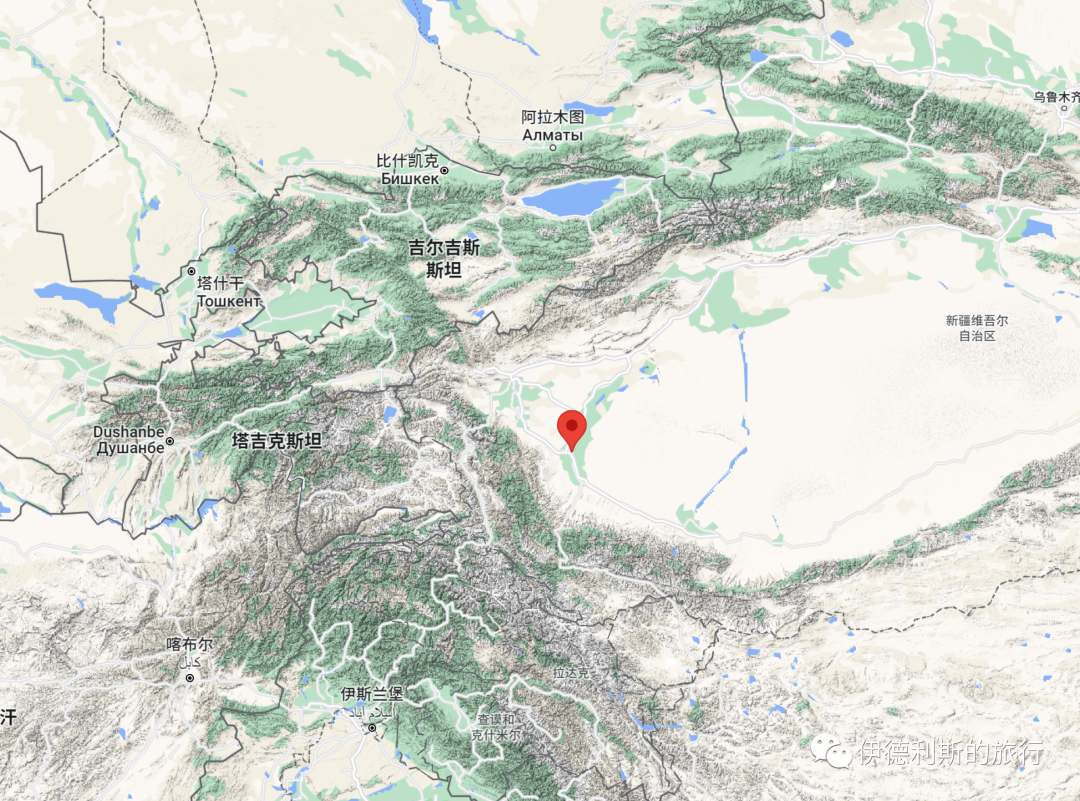
Today, there is a site in the old city of Yarkand called Ordakul, which means royal palace pond. This was likely the location of the Yarkand Khanate's royal palace. The Tarikh-i-Rashidi describes Yarkand city during the early Yarkand Khanate period like this:
They diverted rivers into the city and built gardens. The main roads were lined with poplar trees. People walking around the city could spend half their journey in the shade of these trees, and most of the tree-lined paths had water channels on both sides.
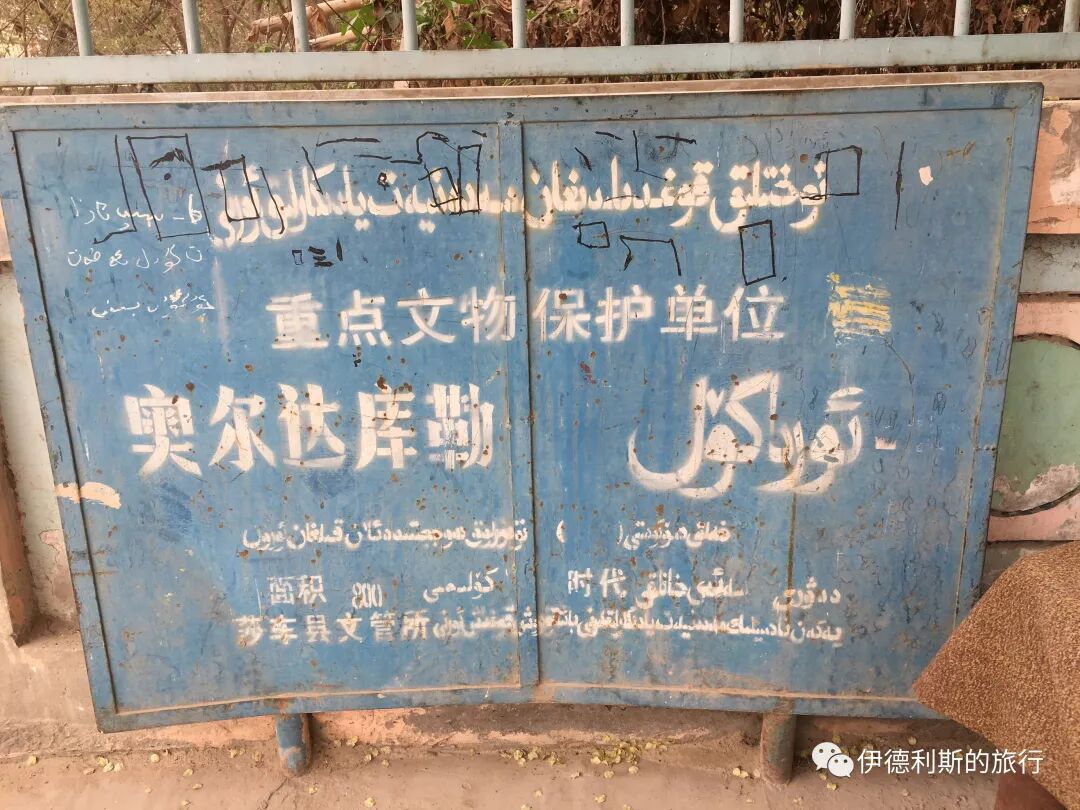
Ordakul Mosque
To the west of Ordakul is the Jami Mosque. Jami is also translated as Jumu'ah, which refers to the weekly Friday congregational prayer. The Jami Mosque was reportedly founded by Sultan Said and later expanded during the reign of Abdullah Khan (reigned 1638–1669).
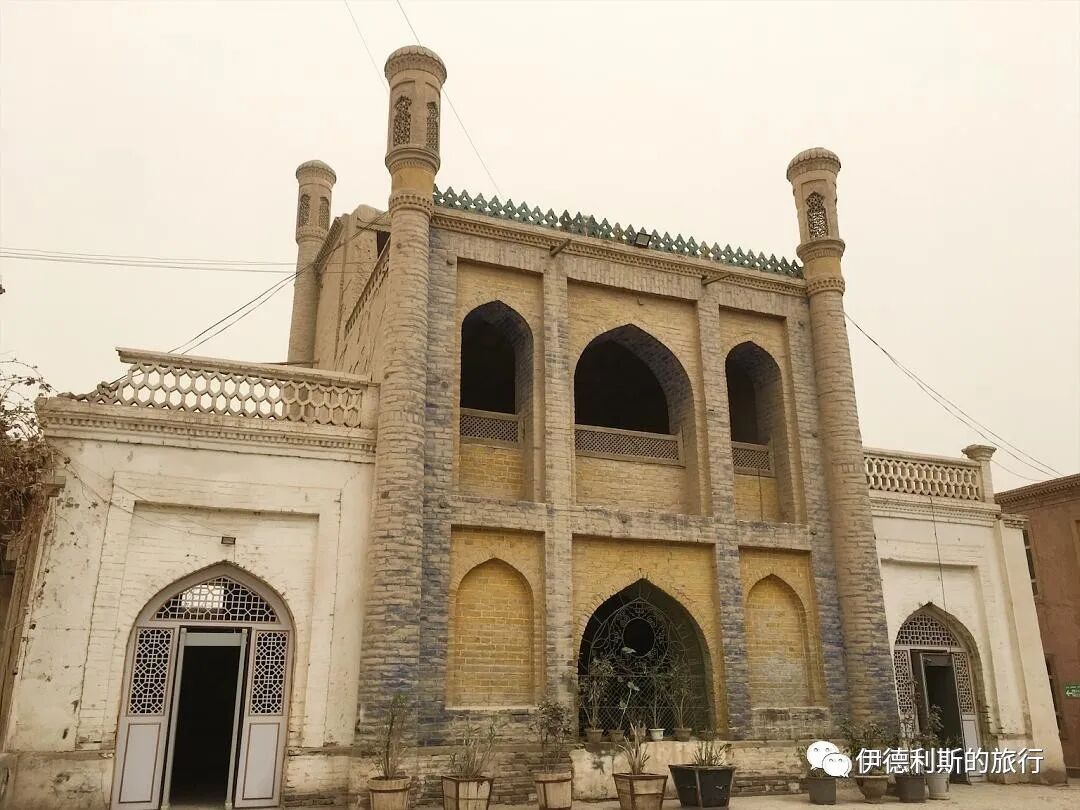
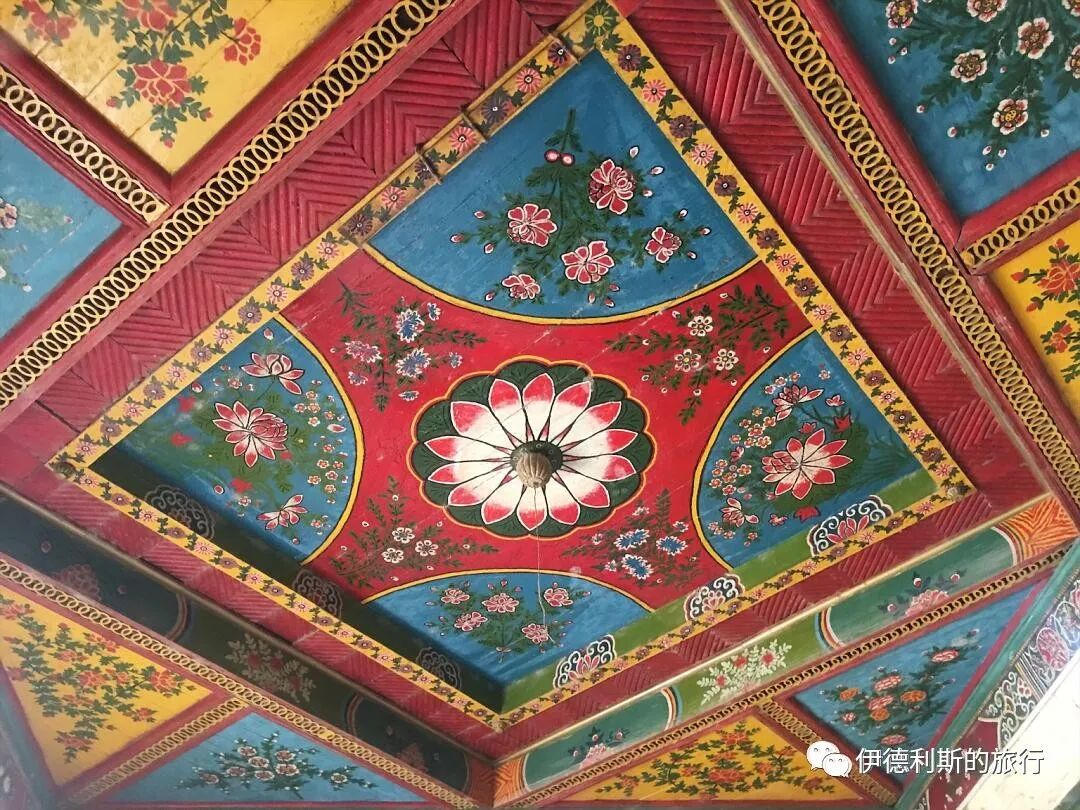
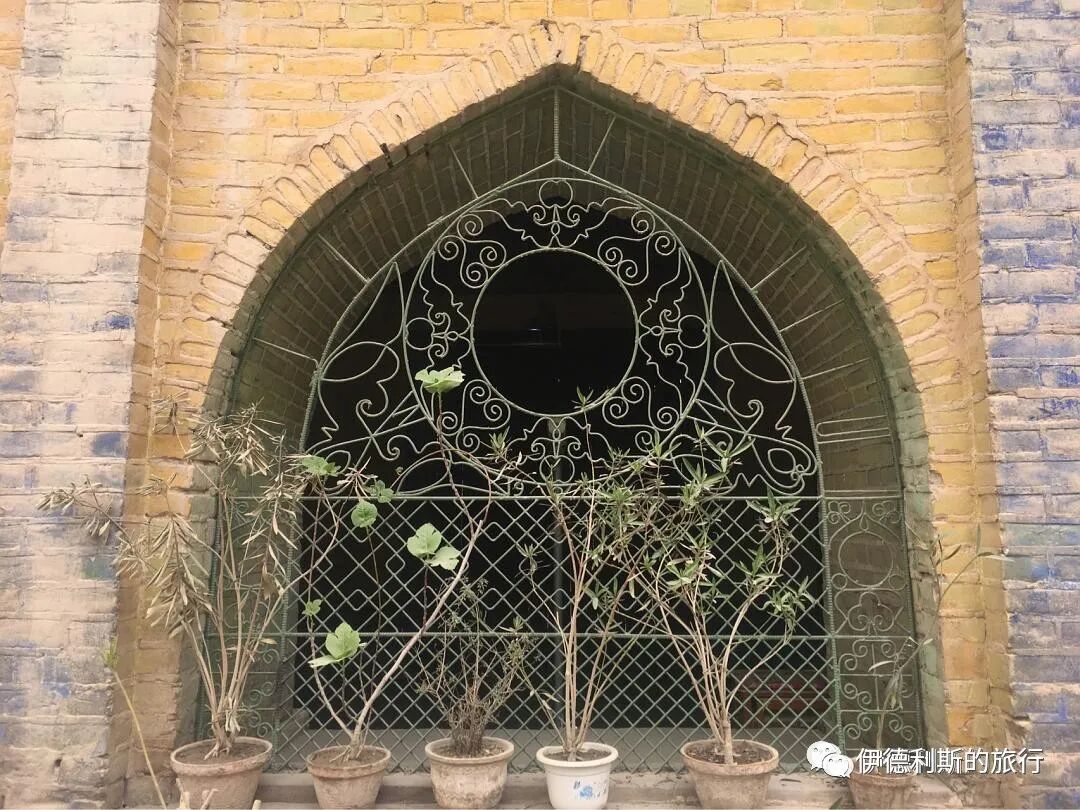
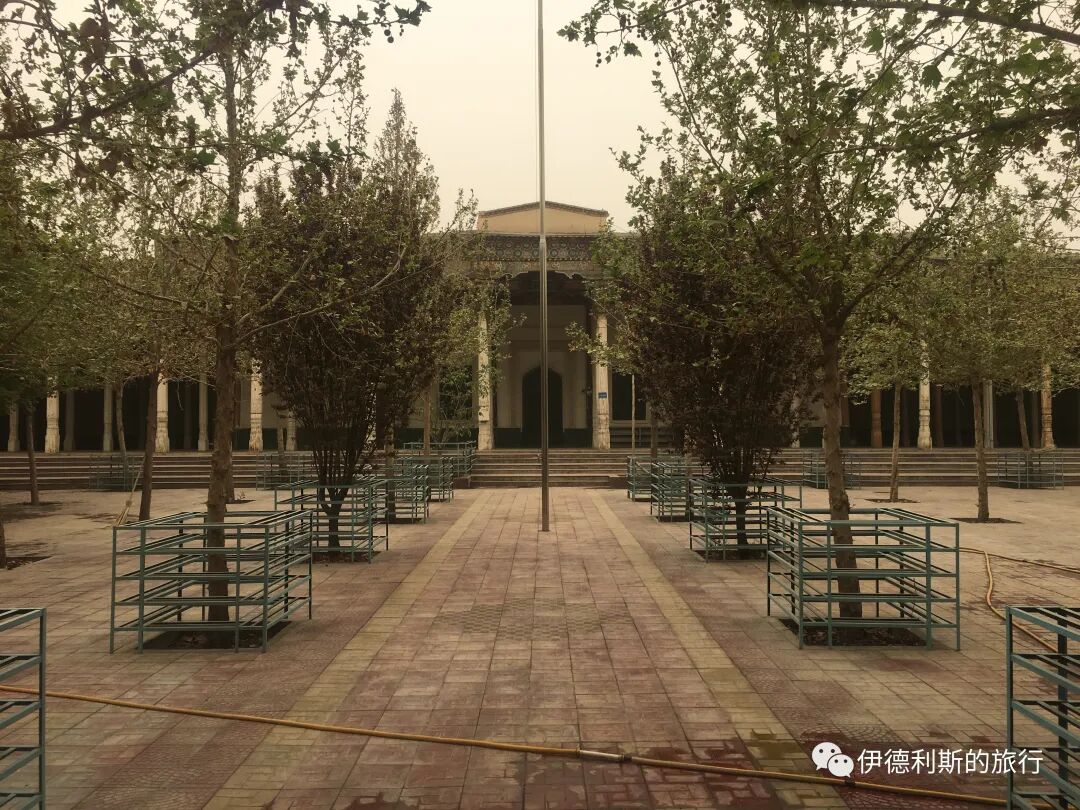
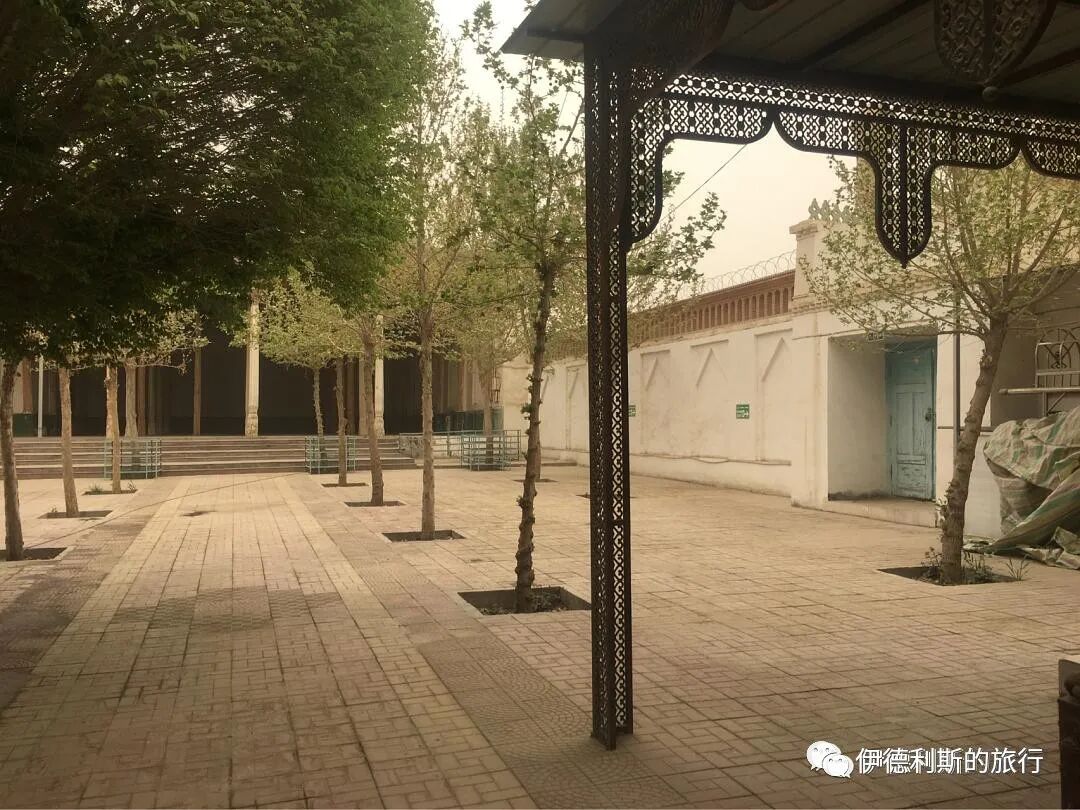
After settling down in the oases of southern Xinjiang, many Chagatai Mongols began to complain about city life and missed the nomadic life on the steppes of their homeland, Moghulistan. the small pastures in the southern Xinjiang oases could not support the needs of the Mongol army. In 1522, Sultan Said sent his son, Abdurashid Khan, to lead troops into Moghulistan and conquer the Kyrgyz people living there.
In 1526, the Kazakhs entered Moghulistan and joined forces with the Kyrgyz, reaching a total of over 200,000 people. Sultan Said realized his strength was not enough to fight them, so he ordered all the Chagatai Mongols to return to southern Xinjiang. The Chagatai Mongols' five-year attempt to return to their nomadic homeland ultimately ended in failure.
After the failure in the north, Sultan Said turned his attention to attacking the south. In 1529, Sultan Said raided the Badakhshan region, which lay between the Yarkand Khanate and the Mughal Empire. This raid caused conflict between Sultan Said and his cousin, Emperor Babur. Emperor Babur wrote a letter to Sultan Said warning him that if he continued, you will know the rest yourself.
In 1532, Sultan Said personally led an army south to prepare for an expedition to Lhasa. While crossing the Karakoram Mountains, Sultan Said suffered from severe altitude sickness and lost his strength. In 1533, he decided to return to Yarkand to recover, but he died from altitude sickness while crossing the Karakoram Mountains again.
After Sultan Said died in 1533, his son, Abdurashid Khan (reigned 1533–1560), succeeded him. Abdurashid Khan built a mausoleum for his father at the west gate of Yarkand city. Later, this also became the royal mausoleum of the Yarkand Khanate.
The current mausoleum of Sultan Said was rebuilt in 1997.
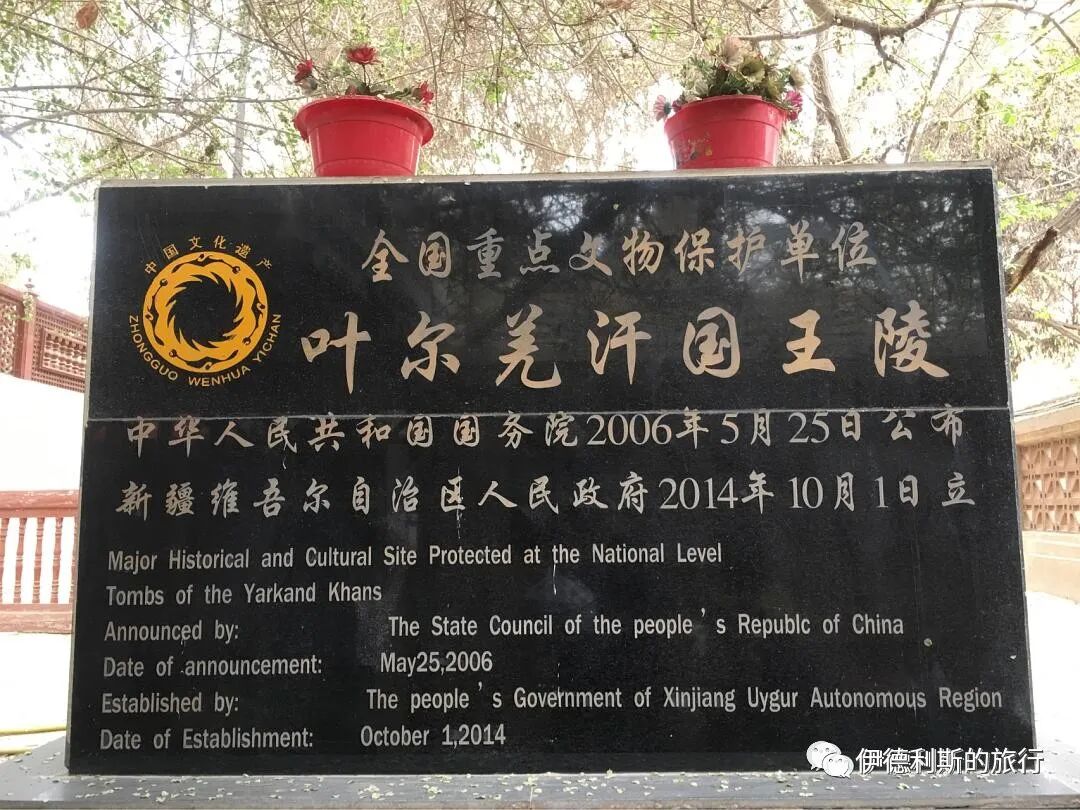
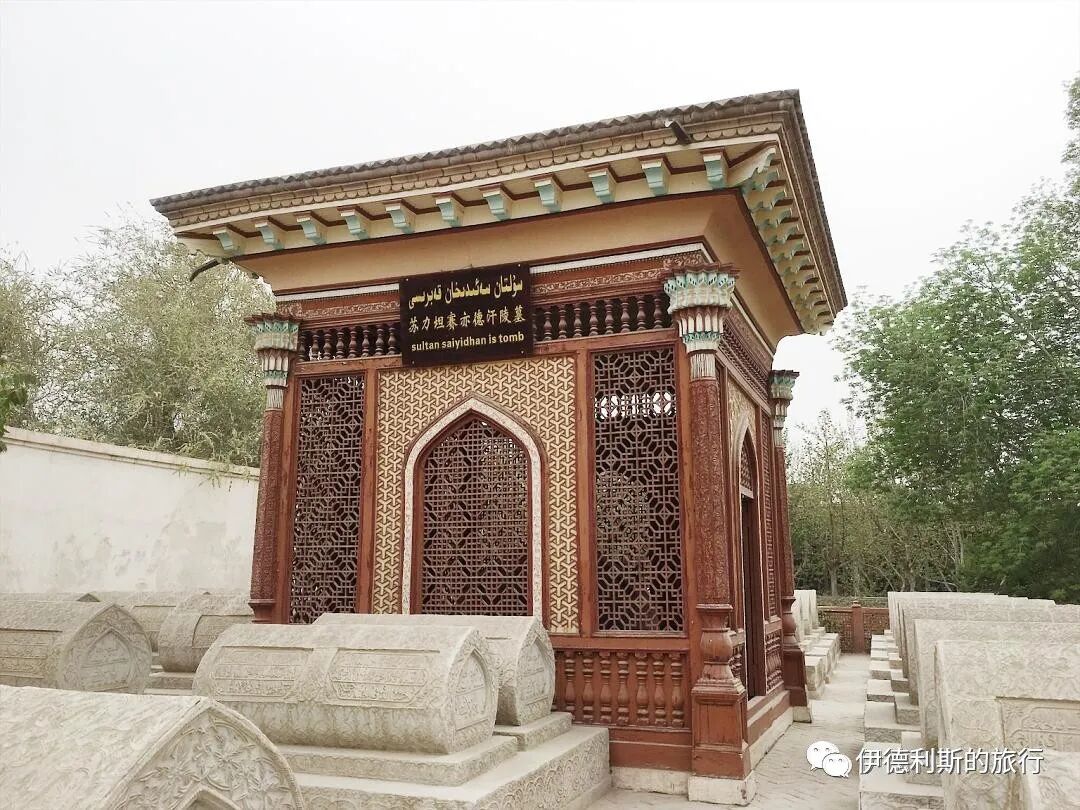
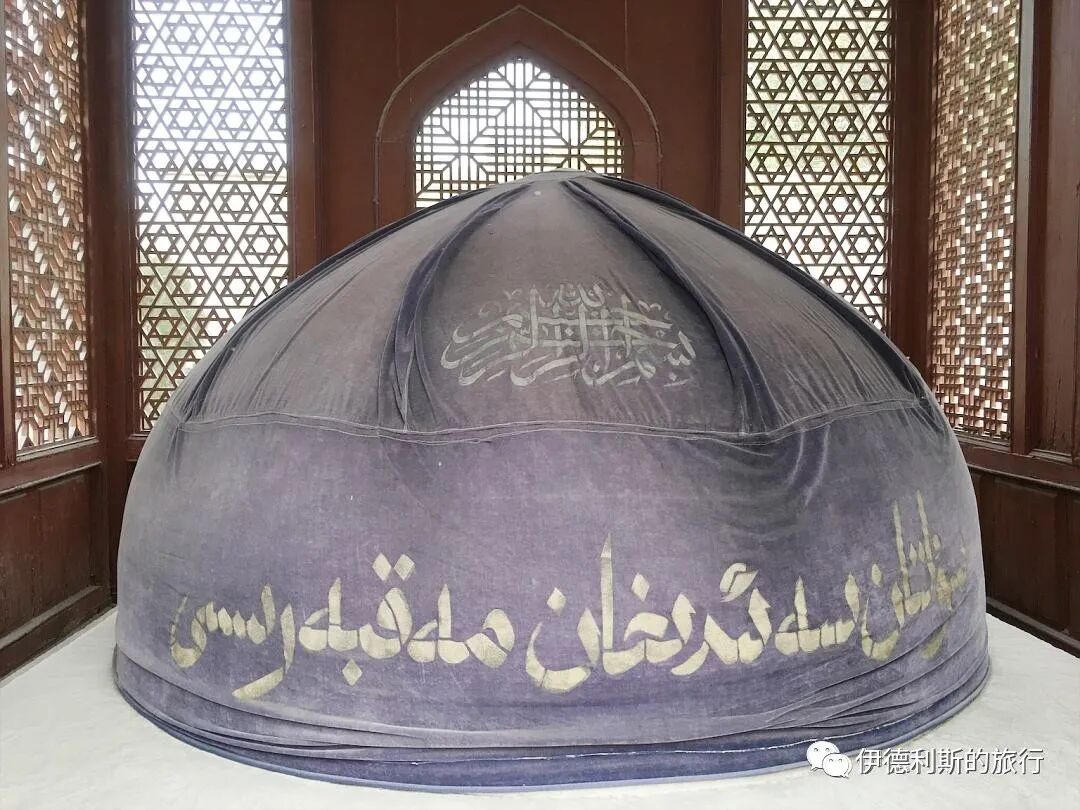
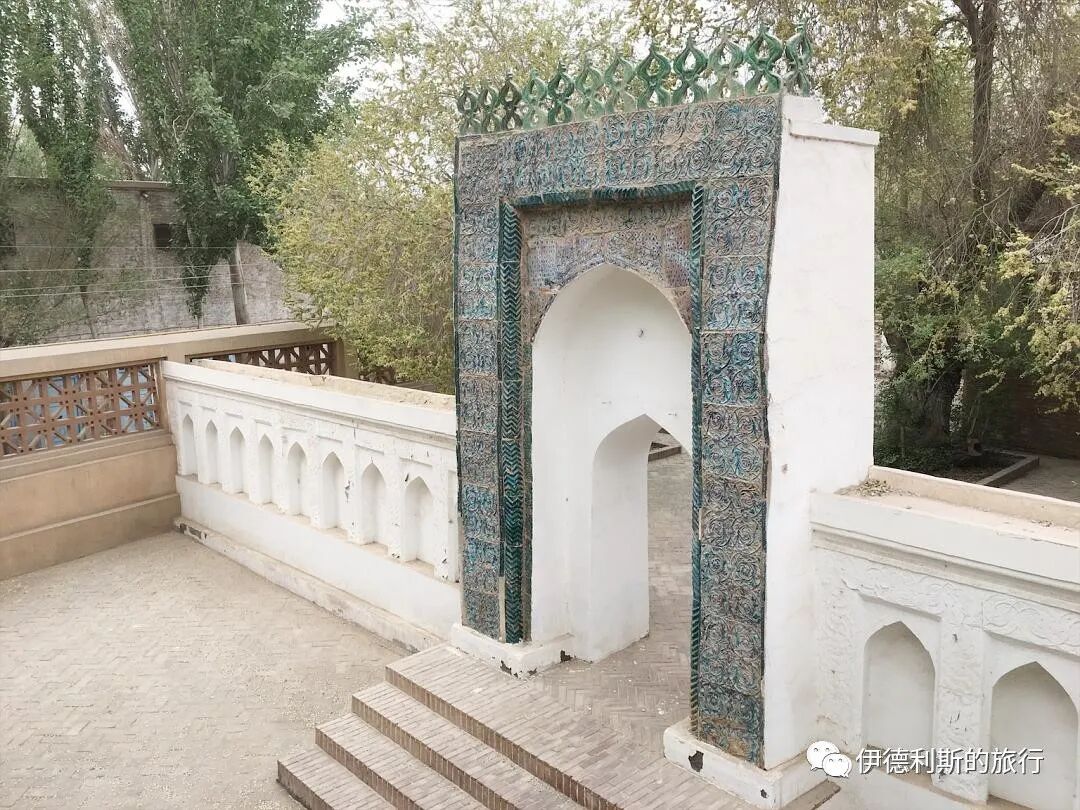
Islamic World in 1550: Mongol Empire Legacy and Muslim History (Part 1)
Articles • ali2007fr posted the article • 0 comments • 215 views • 2026-05-18 09:38
Summary: Islamic World in 1550: Mongol Empire Legacy and Muslim History is presented here as a firsthand travel account in clear English, beginning with this scene: In our last article, "A Journey Through the Islamic World in 1550 (Part 1)," we crossed the African continent, traveled from Egypt into the Ottoman Empire, and visited Tabriz in Iran. The account keeps its focus on Mongol Empire, Islamic World, Muslim History while preserving the names, places, food, and historical details from the Chinese source.
In our last article, "A Journey Through the Islamic World in 1550 (Part 1)," we crossed the African continent, traveled from Egypt into the Ottoman Empire, and visited Tabriz in Iran. This time, we will visit 12 countries ruled by the descendants of Genghis Khan, moving from Eastern Europe into North Asia and Central Asia, and finally into South Asia.
In the early 13th century, as the Mongol Empire expanded, Genghis Khan began dividing his lands among his sons. Orda and Batu, the sons of Genghis Khan's eldest son Jochi, received lands in southern Russia and Kazakhstan, which gradually formed the Golden Horde. Hulagu Khan, the son of Genghis Khan's fourth son Tolui, received lands in Iran, Turkmenistan, Afghanistan, and parts of West Asia, which gradually formed the Ilkhanate. After the Yuan Dynasty was established in 1271, the original families of Ogedei and Chagatai, led by Kaidu, opposed Kublai Khan. This led to the formation of the Ogedei Khanate and the Chagatai Khanate, completing the four great Mongol khanates.
After the 14th century, the territory of the Ogedei Khanate was first divided between the Chagatai Khanate and the Yuan Dynasty, and later the Ilkhanate and the Chagatai Khanate also began to split apart. The Golden Horde was the last to decline, splitting into several khanates in the early 15th century.
In 1550, there were 12 countries and regimes established by descendants of Genghis Khan, ruling a vast area from Russia, Kazakhstan, Uzbekistan, and China's Xinjiang to Afghanistan, Pakistan, and India. They were:
1. The Crimean Khanate ruled the Crimean Peninsula.
2. The Astrakhan Khanate ruled the Volga Delta.
3. The Nogai Horde ruled the region between the Volga and Ural rivers.
4. The Qasim Khanate ruled Kasimov in the modern-day Ryazan Oblast of Russia.
5. The Kazan Khanate ruled the middle Volga region.
6. The Siberian Khanate ruled the area around the Irtysh River.
7. The Kazakh Khanate ruled the Kazakh Steppe.
8. The Khanate of Khiva ruled the Khwarezm region.
9. The Khanate of Bukhara ruled the Transoxiana region of Central Asia.
10. The Yarkent Khanate ruled the southern Xinjiang region.
11. Haidar ruled the Kashmir region.
12. The Arghun dynasty ruled southern Afghanistan and the Sindh region of Pakistan.
Additionally, the Mughal Empire was briefly overthrown at this time, and its second emperor, Humayun, was in exile in Persia.
1. The Crimean Khanate in Ukraine (1441–1783).
We start this journey on the Crimean Peninsula on the northern shore of the Black Sea.
The Khan of the Crimean Khanate was a descendant of Tuka-Timur, the thirteenth son of Jochi, who was Genghis Khan's eldest son. In the 1260s, the Golden Horde gave the Crimean Peninsula to the ancestor of the Crimean Khans, Uran Timur, to rule. The khanate was officially established in 1441.
Around 1500, the Crimean Khan Mengli I Giray built the capital of Salachik. In 1532, Sahib I Giray, the son of Mengli I Giray, established a new capital called Bakhchisarai in a valley two kilometers downstream from Salachik. For the next 250 years, generations of Crimean Khans built palaces and various mosque buildings here.
In 1550, the Khan ruling the Crimean Khanate was Sahib I Giray. He ascended the throne with the help of the Ottoman Empire. Later, he joined forces with the Ottoman Sultan Suleiman the Magnificent to attack the Moldavians, and in 1541, he raided Moscow and brought back spoils of war.
The location of Bakhchisarai, the capital of the Crimean Khanate.
The tomb of Haji I Giray (Dürbe Hacı I Giray) was built in 1501 by Mengli I Giray for his father, the founding Khan of Crimea. It is an octagonal tomb with a lead dome.
Archaeological excavations from 2006 to 2007 examined 18 graves inside the mausoleum, including 13 adults and 5 children. They were wrapped in silk and satin, with some resting on pillows stuffed with fabric scraps and fruit seeds. The mausoleum holds 8 stone sarcophagi covered in velvet, silk, and silver-threaded fabric. These likely include 4 Crimean Khans: Hacı I Giray himself, Meñli I Giray, Nur Devlet—who fought Meñli I Giray for the throne for years before losing—and Sahib I Giray, the son of Meñli I Giray and builder of Bakhchysarai.
After research finished in 2009, these individuals were reburied with Muslim rites.
The Chain Madrasa (Zıncırlı Medrese) was built in 1500 by order of the Crimean Khan Meñli I Giray. The name of the madrasa comes from the Turkic word "Zyngyr," which means "chain." A chain hangs above the main gate of the madrasa, forcing everyone who enters to bow their head. The madrasa is rectangular with a central courtyard, an entrance on one side, and 11 rooms on the other three sides. At the time, the madrasa taught Turkish and Arabic grammar, calligraphy, arithmetic, ethics, logic, proof theory, Islamic law (sharia), theology, and hadith studies. The full course of study took ten years.
In 1909, influenced by the Crimean Tatar Enlightenment movement, Gasprinski built a new two-story madrasa next to the old one. The madrasa closed in 1917 and became the Meñli Giray Research Institute. The institute was abolished in 1923. Later, it served as a teacher's college, a medical school, a sanatorium for German soldiers, and a post-war psychiatric clinic. Today, it is managed by the Bakhchysarai History, Culture, and Archaeology Museum.
The Iron Gate (Demir Qapı) is the oldest structure in the Khan's Palace. It was built between 1503 and 1504 for the Crimean Khan by the architect Aleviz Novy, who had been invited by Ivan the Great to build churches in Moscow. The Iron Gate was likely first built at the Crimean Khan's previous residence, Devlet-Saray, and moved to the main palace building after the Bakhchysarai Khan's Palace was completed in 1532. "Demir Qapı" means "iron gate" in Crimean Tatar. The doorway is made of limestone and features Lombard-Venetian Renaissance decorative styles.
The Great Khan Mosque (Büyük Han Cami) in the Bakhchysarai Khan's Palace was built in 1532 and is one of the earliest structures in the palace. The original mosque had multiple domes, similar to the Seljuk-style mosques popular in the Ottoman Empire during the 15th century. The mosque was destroyed by fire in 1736. It was later restored by Khan Selamet II Giray (who reigned from 1740 to 1743) and converted to a tiled roof.
During the Soviet era, the mosque was closed and turned into an exhibition hall for the archaeological museum. After Russia occupied Crimea in 2014, the mosque underwent repairs, some of which caused damage to the building.
The SaryGuzel Bathhouse was built in 1532 by order of the Crimean Khan Sahib I Giray. Like the Great Khan Mosque, it is one of the earliest buildings in the Bakhchysarai Khan's Palace. In Crimean Tatar, "Sarı" means "yellow or fair-skinned," and "Güzel" means "beautiful." The SaryGuzel Bathhouse is a typical Turkish bath. A furnace in the basement heated the floor with rising hot air, and cold and hot water were supplied through lead pipes. The bathhouse is divided into men's and women's sections, each with its own dome. The domes have star-shaped cutouts for ventilation and light, and there is an indoor courtyard with a fountain at the exit.
The SaryGuzel Bathhouse operated until 1924, when it was closed because it was considered unsafe. It has since been repaired and is now open for exhibitions.
The Khan's cemetery holds the grave of the Crimean Khan Devlet I Giray (reigned 1551–1577). He was appointed Kalga (the second-in-command after the Khan) in 1530. Later, due to court struggles, he went to Istanbul and gradually gained the trust of the Ottoman Sultan Suleiman the Magnificent. In 1551, with the help of Suleiman the Magnificent, he became the Crimean Khan.
2. The Astrakhan Khanate of Russia (1466–1556)
We continue east to the mouth of the Volga River.
The Astrakhan Khanate was located in the Volga Delta. Its founder, Mahmud bin Küchük, was a prince of the Golden Horde. The Astrakhan Khanate was mainly inhabited by Astrakhan Tatars and Nogais. The Khanate's caravans traveled between Moscow, Kazan, Crimea, Central Asia, and the Transcaucasus region. In 1532, the Astrakhan Khanate began to have contact with Russia. After Russia conquered Kazan in 1552, the Astrakhan Khanate could not escape the same fate.
In 1550, the capital of the Astrakhan Khanate was Hajji Tarkhan, located on the right bank of the Volga River, 12 kilometers north of the modern city of Astrakhan. The city of Hajji Tarkhan was built by the Golden Horde in the late 13th century, appeared in the Travels of Ibn Battuta in the 14th century, was destroyed by Timur's army in 1395, and was rebuilt by the Astrakhan Khanate in the 15th century. The city was occupied by the Crimean Khanate in 1547 and was finally burned down by Ivan the Terrible in 1556.
There are currently about 60,000 Astrakhan Tatars in Russia. Most live in the Astrakhan Oblast, with half living in the city of Astrakhan, where they have their own community and several mosques.
The location of the city of Hajji Tarkhan.
The White Mosque in Astrakhan, photographed by Polinadelia in 2014.
3. The Nogai Horde in Russia and Kazakhstan (1440–1634)
Continuing east from the Volga River, you reach the grasslands of the Nogai tribes.
Nogai was the great-grandson of Jochi, the eldest son of Genghis Khan, and an important leader of the Golden Horde who ruled many Turkic-speaking tribes in the 13th century. A century later, the Golden Horde general Edigu ruled a large area from the Volga to the Ural River, and the tribes under his rule were also called the Nogai Horde.
We can find history about the Nogai Horde in the early 16th century in Russian records. In 1521, the Nogai were driven west by the Kazakhs and crossed the Volga River to attack Astrakhan. In 1522, the Kazakhs captured the capital of the Nogai Horde. In 1523, the Nogai Horde defeated the army that had briefly occupied Astrakhan.
In 1550, the Khan of the Kazan Khanate was Yosuf Khan (1549–1555), who had helped Moscow against the Kazan Khanate in 1549.
Saray-Jük was the capital of the Nogai Horde, located on the border of Europe and Asia in western Kazakhstan. This city sat on a trade route between Europe and China and was an important commercial hub during the Golden Horde period. After being destroyed by Timur in 1395, it was rebuilt in the 1430s and 1440s.
The location of Saray-Jük.
The ruins of Saray-Jük, photographed by Yakov Fedorov in 2020.
4. The Qasim Khanate in Russia (1452–1681)
We head north to the modern-day Ryazan Oblast in Russia.
The Qasim Khanate was located in Russia's Ryazan Oblast. Its founder, Qasim Khan, was the son of Ulugh Muhammad, the founder of the Kazan Khanate. The Qasim Khanate served as a buffer state between the Grand Duchy of Moscow and the Kazan Khanate and was under heavy Russian control.
In 1550, the Khan of the Qasim Khanate was Shahghali, who was installed as the Khan of the Kazan Khanate three times as a Russian vassal. In 1546, Shahghali was overthrown by the people of Kazan and fled back to the Qasim Khanate. Between 1547 and 1551, he participated in several Russian attacks on the Kazan Khanate and took part in the final Russian conquest of Kazan in 1552.
The capital of the Qasim Khanate, Qasimov, is located on the left bank of the Oka River in Russia's Ryazan Oblast, where one thousand Tatar-speaking Qasim Tatars still live today. The Khan Mosque in Qasimov was built by Shahghali in the mid-16th century. It was ordered to be demolished by Peter the Great in 1702, but the minaret (bangke ta) was preserved. This minaret is very similar to the Light Tower (Guangta) of the Huaisheng Mosque in Guangzhou.
The Khan Mosque in Qasimov, photographed by Alexander Novikov in 2014.
The location of Qasimov.
5. The Kazan Khanate in Russia (1438–1552)
We headed east to the city of Kazan on the banks of the Volga River.
The Kazan Khanate was founded by Ulugh Muhammad, a descendant of Genghis Khan's eldest son Jochi, who had ruled the Golden Horde twice. He lost control of the Golden Horde in 1436, then led his army to the Volga River and officially established the Kazan Khanate after capturing Kazan in 1438.
In 1521, the Kazan Khanate formed an alliance with the Astrakhan, Crimean, and Nogai Khanates to resist Moscow together. This caused dissatisfaction among pro-Russian factions within the Kazan Khanate, leading the state into internal conflict.
In 1550, the Khan of the Kazan Khanate was the four-year-old Ötemish Giray, though the actual rulers were his mother, Söyembikä, and the prime minister (uğlan) Qoşçaq. Seeing the instability in the Kazan Khanate, Ivan the Terrible of Russia sent a large army to besiege Kazan in February 1550, but the thawing of the Volga River forced the Russians to retreat and only attack the outskirts of the city. Throughout that year, Söyembikä and Qoşçaq fought against the pro-Russian faction, and relations with Russia continued to worsen.
The Kazan Khanate built many homes and public buildings in Kazan, including the Khan's palace, courtyards, mosques, and tombs, with tall minarets defining the city's skyline. In 1552, Ivan the Terrible invaded Kazan, destroyed the Kazan Khanate, and drove all Tatars out of the city, allowing only Russians to settle there. Between 1556 and 1562, Ivan the Terrible ordered the construction of the Kazan Kremlin on the site of the old Kazan Khanate fortress. The mosques, the Kazan Khan's palace, and the tombs were initially used as armories and ammunition depots, but were eventually completely demolished in the 18th century.
In 1977, hydraulic engineers accidentally dug up a grave while laying rainwater pipes at the Kazan Kremlin and immediately contacted the archaeology department. Archaeological excavations lasted for 10 years, eventually uncovering five graves, two of which were confirmed to be those of the actual founders of the Kazan Khanate: Mäxmüd Khan (died 1463 or 1466) and his grandson, Möxämmät Ämin (died 1518). The tomb was originally made of white stone and finally collapsed in the 17th century.
For further research, the remains of the two Kazan Khans, Mäxmüd and Möxämmät Ämin, were kept at the Institute of Archaeology of the Tatarstan Academy of Sciences for 40 years. In May 2017, after continuous efforts by the Tatar Muslims of Kazan, the two Kazan Khans were finally reburied not far from their original graves.
Between 2004 and 2005, the Institute of Archaeology of the Tatarstan Academy of Sciences re-excavated the Kazan Khan tombs and discovered the graves of four more Khans: Xalil (died 1467), İbrahim (died 1478), Safa Giray (died 1549), and Canghali (died 1535). Today, these four Kazan Khan graves are protected under a glass roof. Safa Giray Khan came from the Giray family of the Crimean Khanate and served as the Khan of Kazan three times: from 1524–1531, 1535–1546, and 1546–1549. Safa Giray was an anti-Russian Khan. His first reign ended due to Moscow's attack on Kazan, and he regained the throne four years later after Kazan nobles overthrew the pro-Russian Khan. Eleven years later, due to internal unrest in Kazan, he was overthrown again by a pro-Russian Khan. Safa Giray fled to his father-in-law's Nogai tribe, and a few months later, he returned to Kazan with a Nogai army to become the Khan for the third time. Canghali Khan was originally the Khan of the Qasim Khanate, a vassal state of the Grand Duchy of Moscow. In 1532, Grand Prince Vasily III of Moscow defeated the Kazan Khan Safa Giray and installed the 16-year-old Canghali as the pro-Russian Khan of Kazan. He died in 1535 during a coup by Kazan nobles.
There is a performance about the Siege of Kazan at the entrance of the Kul Sharif Mosque inside the Kazan Kremlin. In 1552, when Ivan the Terrible besieged Kazan, the last imam of the Kazan Khanate, Seid Kul Sharif, led the people in a final resistance and died in the city. Today, Seid Kul Sharif is a national hero for the Kazan Tatars, and the new Kul Sharif Mosque built in 2005 is named after him.
The National Museum of the Republic of Tatarstan houses a letter written in 1523 by the Kazan Khan Sahib I Giray (reigned 1521–1524). A replica of this letter is also inside the Kazan Kremlin. In 1521, to resist the control of the Grand Duchy of Moscow, the Kazan Khanate overthrew the pro-Moscow Khan Shahghali and welcomed Sahib I Giray from Crimea to Kazan to become the new Khan.
6. The Siberian Khanate of Russia (1468-1598)
We continue heading east to the meeting point of the Irtysh River and the Siberian River.
The Siberian (Sibir) Khanate was north of the Kazakh Khanate. It was the northernmost Muslim state in history, reaching all the way to the coast of the Arctic Ocean. In the 16th century, the capital of the Siberian Khanate was Qashliq, located on the right bank of the Irtysh River. Qashliq, also called the City of Siberia, was very prosperous in the early 16th century and had close trade ties with the Kazan Khanate. Later, it was permanently destroyed by the Cossacks, and it is hard to find any traces of it now.
The location of Qashliq city
7. The Kazakh Khanate of Kazakhstan (1465-1847)
Moving south from Siberia, we enter the vast Kazakh steppe.
The founders of the Kazakh Khanate, Janybek Khan and Kerey Khan, were both descendants of Tuqa Temur, the thirteenth son of Jochi, who was the eldest son of Genghis Khan.
In 1550, the Khanate was ruled by Haqnazar Khan (1537-1580). At that time, the Kazakh Khanate had rivals on all sides. He first defeated the Nogai Khanate, then the Khanate of Khiva and the Oirats, and then the Siberian Khanate and the Yarkent Khanate. This made the Kazakh Khanate stronger than ever, earning him the title of King of Turan (Shah-i-Turan).
The capital of the Kazakh Khanate at that time was Sighnaq, located in what is now the Kyzylorda Region of Kazakhstan. This was originally the capital of the Blue Horde and served as an important trade point for steppe tribes to exchange goods with the southern farming regions.
Sighnaq photographed by Azamat Nurlybekov in 2022
The location of Sighnaq
8. The Khanate of Khiva in Turkmenistan (1511–1920)
Continuing southwest, we go deep into the heart of Central Asia.
The Khanate of Khiva was located in the Khwarezm region south of the Aral Sea. It called itself Khwarezm, and its rulers were descendants of Shiban, the fifth son of Jochi, who was the eldest son of Genghis Khan. In the 16th century, the capital of the Khanate of Khiva was Konye-Urgench, located on the border of northern Turkmenistan and Uzbekistan. After the Khanate moved its capital to Khiva in the 17th century, this place was gradually abandoned. It was named a UNESCO World Heritage site in 2005.
Before the Mongol conquest of Khwarezm, Konye-Urgench was one of the wealthiest cities in Central Asia. Most of the current ruins belong to that period, and very few remains from the Khanate of Khiva period have been preserved.
The location of Konye-Urgench
9. The Khanate of Bukhara in Uzbekistan (1500–1785)
Let us continue east into the ancient city of Bukhara.
In the early 16th century, Muhammad Shaybani, a descendant of Shiban (the fifth son of Jochi, Genghis Khan's eldest son), led Uzbek tribes living in the northern Central Asian steppes to overthrow the Timurid dynasty's rule in Transoxiana. He established the Shaybanid Dynasty (1506-1598), opening a new chapter in the history of the Transoxiana region of Central Asia.
The capital of the Shaybanid Dynasty was initially in Samarkand, but it moved to Bukhara after 1533, which is why later generations called it the Khanate of Bukhara. Bukhara served as the capital of the Khanate of Bukhara for 252 years, from 1533 to 1785, and many buildings constructed during that time remain today.
The Mir-i-Arab Madrasa was built in 1535 by order of Ubaidullah, the Khan of the Shaybanid Dynasty (reigned 1533-1539). It was named after the Khan's Sufi mentor, Mir-i-Arab (also known as Sheikh Abdullah Yamani).
To compete for territory, Khan Ubaidullah fought many wars against the Persian Safavid dynasty, the most famous being the siege of the ancient Afghan city of Herat. During many raids on Persia, the Shaybanid Dynasty captured many prisoners. People say the Khan used the money from selling three thousand Persian captives to build the Mir-i-Arab Madrasa.
The Mir-i-Arab Madrasa was built opposite the famous Kalyan mosque in Bukhara, forming a facing structure known as a "kosh."
The Mir-i-Arab Madrasa closed in the 1920s but reopened in 1947. It became the only open madrasa in Bukhara at the time, and almost all the imams of that era were trained at this school.
The Khoja Zaynuddin mosque was built in the first half of the 16th century, located next to an ancient pond (Hauz) in Bukhara. This architectural style is known as a mosque-khanaka (Mosque-Khanaka). It serves as both a mosque and a Sufi center, where people can perform namaz and hold religious gatherings (ermeli).
The Bahouddin Naqshbandi Complex is an important Sufi holy site in Central Asia, often called the 'Little Mecca' of the region. It holds the tomb of Hazrat Muhammad Bahauddin Shah Naqshband, the founder of the famous Naqshbandia Sufi order.
During the Shaybanid dynasty, the Naqshbandia order eventually outperformed other Sufi groups to become the dominant order in the khanate. Unlike other Sufi orders that favored seclusion and leaving the world behind, the Naqshbandia order followed the principles set by its founder: 'solitude in the crowd, travel in the world, caution in action, and enjoyment of the moment.'
In 1544, the Shaybanid Khan Abdulaziz (who reigned from 1539 to 1550) built a Dakhma platform with marble railings at the shrine, along with a Sufi lodge (Khanaqa) nearby. Later, a large cemetery for Bukhara's rulers appeared near the shrine, as every ruler felt honored to be buried close to it.
During the Shaybanid period of the Bukhara Khanate, Tashkent's population and size gradually recovered, making it a commercial and cultural hub along the Silk Road. Most of the historical buildings still standing in Tashkent today were built during this time. Abu Bakr Mohammed Kaffal Shashi was a famous imam and scholar in Tashkent during the Samanid dynasty. After he passed away in 976, he was buried in a garden on the outskirts of Tashkent. The current Kaffal Shashi mausoleum was rebuilt in 1541 during the Shaybanid dynasty. It features the design of a Sufi lodge (Khanaqah), including a tall archway (Iwan) and a dome. Inside, besides Kaffal Shashi, his students are also buried there, including his three main disciples. The mausoleum was once covered in beautiful tiles, but only parts remain today, and they have been restored. Additionally, the window lattices on the mausoleum gate are already 500 years old. According to Tashkent legends, applying dust from this mausoleum to one's face can help a woman become pregnant, which attracts many women who are struggling to conceive.
10. The Yarkent Khanate in China (1514-1680)
We crossed the Tianshan Mountains and arrived at the city of Shache in southern Xinjiang.
The Yarkent (Yarkent) Khanate was a state established in 1514 by Sultan Said Khan, a descendant of the Eastern Chagatai royal family. With Yarkent city (Shache) as its capital, it ruled southern Xinjiang and surrounding areas for over a hundred years until it was annexed by the Dzungar Khanate in 1680.
During the Yarkent Khanate's rule over southern Xinjiang, the Chagatai Mongols eventually shifted from nomadic life to settled living and merged into the Uyghur people. The Uyghurs also gradually developed into a modern ethnic group during this period, and the Twelve Muqam was finalized at this time as well.
'Yarkent Khanate' is actually a name used by modern scholars. In earlier local documents, the Persian word 'Moghuliye' was used, which means 'Mongol State'. Around the same time, Sultan Said Khan's cousin Babur established a state in northern India and also called it 'Moghul'. To distinguish them, Chinese usually translates them as 'Mengwu'er' and 'Mowo'er' respectively.
The founder of the Yarkent Khanate, Said Khan, was the third son of Ahmad Alaq, the ruler of Uyghurstan (modern-day Turpan area) in the eastern part of the Eastern Chagatai Khanate. In 1514, after stabilizing the Transoxiana region, the Uzbek army prepared to wipe out the Chagatai Mongols. After careful thought and discussion, Said Khan decided he could not withstand the Uzbek army's attack, so he left the Fergana Valley, crossed the Tianshan Mountains, and headed toward Yarkent.
In the spring of 1514, Said Khan led his army across the Tianshan Mountains and reached Kashgar via the Torugart Pass. At that time, southern Xinjiang was ruled by Abu Bakr, the leader of the Mongol Dughlat tribe. He was recruiting soldiers in Yarkent city. Said Khan fought a fierce battle outside the city against the Kashgar garrison and defeated the enemy. The enemy closed the gates and refused to come out, so Said Khan could not take the city and turned to attack the city of Yengisar. Said Khan besieged Yengisar for two months and finally captured it after six days of intense fighting.
Hearing that Yengisar had fallen, the Kashgar garrison abandoned the city and fled, so Said Khan marched directly toward Yarkent. When Abu Bakr heard this, he abandoned the city and fled to Hotan, and soon after, Said Khan entered Yarkent city. On September 3, 1514, Said Khan officially ascended the throne and established the Yarkent Khanate.
In 1516, Sultan Said reconciled with his older brother, Mansur Khan, who ruled the eastern part of the Eastern Chagatai Khanate. He agreed to mention Mansur's name during the khutbah (sermon) and to mint coins bearing Mansur's name. Southern Xinjiang welcomed long-awaited peace and order that year. The Tarikh-i-Rashidi describes it this way:
The reconciliation between these two brothers brought safety and prosperity to the residents. Anyone could travel alone between Hami in China and the Fergana region without needing food supplies or fearing robbery.
The location of Yarkand city.
Today, there is a site in the old city of Yarkand called Ordakul, which means royal palace pond. This was likely the location of the Yarkand Khanate's royal palace. The Tarikh-i-Rashidi describes Yarkand city during the early Yarkand Khanate period like this:
They diverted rivers into the city and built gardens. The main roads were lined with poplar trees. People walking around the city could spend half their journey in the shade of these trees, and most of the tree-lined paths had water channels on both sides.
Ordakul Mosque
To the west of Ordakul is the Jami Mosque. Jami is also translated as Jumu'ah, which refers to the weekly Friday congregational prayer. The Jami Mosque was reportedly founded by Sultan Said and later expanded during the reign of Abdullah Khan (reigned 1638–1669).
After settling down in the oases of southern Xinjiang, many Chagatai Mongols began to complain about city life and missed the nomadic life on the steppes of their homeland, Moghulistan. the small pastures in the southern Xinjiang oases could not support the needs of the Mongol army. In 1522, Sultan Said sent his son, Abdurashid Khan, to lead troops into Moghulistan and conquer the Kyrgyz people living there.
In 1526, the Kazakhs entered Moghulistan and joined forces with the Kyrgyz, reaching a total of over 200,000 people. Sultan Said realized his strength was not enough to fight them, so he ordered all the Chagatai Mongols to return to southern Xinjiang. The Chagatai Mongols' five-year attempt to return to their nomadic homeland ultimately ended in failure.
After the failure in the north, Sultan Said turned his attention to attacking the south. In 1529, Sultan Said raided the Badakhshan region, which lay between the Yarkand Khanate and the Mughal Empire. This raid caused conflict between Sultan Said and his cousin, Emperor Babur. Emperor Babur wrote a letter to Sultan Said warning him that if he continued, you will know the rest yourself.
In 1532, Sultan Said personally led an army south to prepare for an expedition to Lhasa. While crossing the Karakoram Mountains, Sultan Said suffered from severe altitude sickness and lost his strength. In 1533, he decided to return to Yarkand to recover, but he died from altitude sickness while crossing the Karakoram Mountains again.
After Sultan Said died in 1533, his son, Abdurashid Khan (reigned 1533–1560), succeeded him. Abdurashid Khan built a mausoleum for his father at the west gate of Yarkand city. Later, this also became the royal mausoleum of the Yarkand Khanate.
The current mausoleum of Sultan Said was rebuilt in 1997. view all
Summary: Islamic World in 1550: Mongol Empire Legacy and Muslim History is presented here as a firsthand travel account in clear English, beginning with this scene: In our last article, "A Journey Through the Islamic World in 1550 (Part 1)," we crossed the African continent, traveled from Egypt into the Ottoman Empire, and visited Tabriz in Iran. The account keeps its focus on Mongol Empire, Islamic World, Muslim History while preserving the names, places, food, and historical details from the Chinese source.
In our last article, "A Journey Through the Islamic World in 1550 (Part 1)," we crossed the African continent, traveled from Egypt into the Ottoman Empire, and visited Tabriz in Iran. This time, we will visit 12 countries ruled by the descendants of Genghis Khan, moving from Eastern Europe into North Asia and Central Asia, and finally into South Asia.
In the early 13th century, as the Mongol Empire expanded, Genghis Khan began dividing his lands among his sons. Orda and Batu, the sons of Genghis Khan's eldest son Jochi, received lands in southern Russia and Kazakhstan, which gradually formed the Golden Horde. Hulagu Khan, the son of Genghis Khan's fourth son Tolui, received lands in Iran, Turkmenistan, Afghanistan, and parts of West Asia, which gradually formed the Ilkhanate. After the Yuan Dynasty was established in 1271, the original families of Ogedei and Chagatai, led by Kaidu, opposed Kublai Khan. This led to the formation of the Ogedei Khanate and the Chagatai Khanate, completing the four great Mongol khanates.
After the 14th century, the territory of the Ogedei Khanate was first divided between the Chagatai Khanate and the Yuan Dynasty, and later the Ilkhanate and the Chagatai Khanate also began to split apart. The Golden Horde was the last to decline, splitting into several khanates in the early 15th century.
In 1550, there were 12 countries and regimes established by descendants of Genghis Khan, ruling a vast area from Russia, Kazakhstan, Uzbekistan, and China's Xinjiang to Afghanistan, Pakistan, and India. They were:
1. The Crimean Khanate ruled the Crimean Peninsula.
2. The Astrakhan Khanate ruled the Volga Delta.
3. The Nogai Horde ruled the region between the Volga and Ural rivers.
4. The Qasim Khanate ruled Kasimov in the modern-day Ryazan Oblast of Russia.
5. The Kazan Khanate ruled the middle Volga region.
6. The Siberian Khanate ruled the area around the Irtysh River.
7. The Kazakh Khanate ruled the Kazakh Steppe.
8. The Khanate of Khiva ruled the Khwarezm region.
9. The Khanate of Bukhara ruled the Transoxiana region of Central Asia.
10. The Yarkent Khanate ruled the southern Xinjiang region.
11. Haidar ruled the Kashmir region.
12. The Arghun dynasty ruled southern Afghanistan and the Sindh region of Pakistan.
Additionally, the Mughal Empire was briefly overthrown at this time, and its second emperor, Humayun, was in exile in Persia.
1. The Crimean Khanate in Ukraine (1441–1783).
We start this journey on the Crimean Peninsula on the northern shore of the Black Sea.
The Khan of the Crimean Khanate was a descendant of Tuka-Timur, the thirteenth son of Jochi, who was Genghis Khan's eldest son. In the 1260s, the Golden Horde gave the Crimean Peninsula to the ancestor of the Crimean Khans, Uran Timur, to rule. The khanate was officially established in 1441.
Around 1500, the Crimean Khan Mengli I Giray built the capital of Salachik. In 1532, Sahib I Giray, the son of Mengli I Giray, established a new capital called Bakhchisarai in a valley two kilometers downstream from Salachik. For the next 250 years, generations of Crimean Khans built palaces and various mosque buildings here.
In 1550, the Khan ruling the Crimean Khanate was Sahib I Giray. He ascended the throne with the help of the Ottoman Empire. Later, he joined forces with the Ottoman Sultan Suleiman the Magnificent to attack the Moldavians, and in 1541, he raided Moscow and brought back spoils of war.
The location of Bakhchisarai, the capital of the Crimean Khanate.
The tomb of Haji I Giray (Dürbe Hacı I Giray) was built in 1501 by Mengli I Giray for his father, the founding Khan of Crimea. It is an octagonal tomb with a lead dome.
Archaeological excavations from 2006 to 2007 examined 18 graves inside the mausoleum, including 13 adults and 5 children. They were wrapped in silk and satin, with some resting on pillows stuffed with fabric scraps and fruit seeds. The mausoleum holds 8 stone sarcophagi covered in velvet, silk, and silver-threaded fabric. These likely include 4 Crimean Khans: Hacı I Giray himself, Meñli I Giray, Nur Devlet—who fought Meñli I Giray for the throne for years before losing—and Sahib I Giray, the son of Meñli I Giray and builder of Bakhchysarai.
After research finished in 2009, these individuals were reburied with Muslim rites.
The Chain Madrasa (Zıncırlı Medrese) was built in 1500 by order of the Crimean Khan Meñli I Giray. The name of the madrasa comes from the Turkic word "Zyngyr," which means "chain." A chain hangs above the main gate of the madrasa, forcing everyone who enters to bow their head. The madrasa is rectangular with a central courtyard, an entrance on one side, and 11 rooms on the other three sides. At the time, the madrasa taught Turkish and Arabic grammar, calligraphy, arithmetic, ethics, logic, proof theory, Islamic law (sharia), theology, and hadith studies. The full course of study took ten years.
In 1909, influenced by the Crimean Tatar Enlightenment movement, Gasprinski built a new two-story madrasa next to the old one. The madrasa closed in 1917 and became the Meñli Giray Research Institute. The institute was abolished in 1923. Later, it served as a teacher's college, a medical school, a sanatorium for German soldiers, and a post-war psychiatric clinic. Today, it is managed by the Bakhchysarai History, Culture, and Archaeology Museum.
The Iron Gate (Demir Qapı) is the oldest structure in the Khan's Palace. It was built between 1503 and 1504 for the Crimean Khan by the architect Aleviz Novy, who had been invited by Ivan the Great to build churches in Moscow. The Iron Gate was likely first built at the Crimean Khan's previous residence, Devlet-Saray, and moved to the main palace building after the Bakhchysarai Khan's Palace was completed in 1532. "Demir Qapı" means "iron gate" in Crimean Tatar. The doorway is made of limestone and features Lombard-Venetian Renaissance decorative styles.
The Great Khan Mosque (Büyük Han Cami) in the Bakhchysarai Khan's Palace was built in 1532 and is one of the earliest structures in the palace. The original mosque had multiple domes, similar to the Seljuk-style mosques popular in the Ottoman Empire during the 15th century. The mosque was destroyed by fire in 1736. It was later restored by Khan Selamet II Giray (who reigned from 1740 to 1743) and converted to a tiled roof.
During the Soviet era, the mosque was closed and turned into an exhibition hall for the archaeological museum. After Russia occupied Crimea in 2014, the mosque underwent repairs, some of which caused damage to the building.
The SaryGuzel Bathhouse was built in 1532 by order of the Crimean Khan Sahib I Giray. Like the Great Khan Mosque, it is one of the earliest buildings in the Bakhchysarai Khan's Palace. In Crimean Tatar, "Sarı" means "yellow or fair-skinned," and "Güzel" means "beautiful." The SaryGuzel Bathhouse is a typical Turkish bath. A furnace in the basement heated the floor with rising hot air, and cold and hot water were supplied through lead pipes. The bathhouse is divided into men's and women's sections, each with its own dome. The domes have star-shaped cutouts for ventilation and light, and there is an indoor courtyard with a fountain at the exit.
The SaryGuzel Bathhouse operated until 1924, when it was closed because it was considered unsafe. It has since been repaired and is now open for exhibitions.
The Khan's cemetery holds the grave of the Crimean Khan Devlet I Giray (reigned 1551–1577). He was appointed Kalga (the second-in-command after the Khan) in 1530. Later, due to court struggles, he went to Istanbul and gradually gained the trust of the Ottoman Sultan Suleiman the Magnificent. In 1551, with the help of Suleiman the Magnificent, he became the Crimean Khan.
2. The Astrakhan Khanate of Russia (1466–1556)
We continue east to the mouth of the Volga River.
The Astrakhan Khanate was located in the Volga Delta. Its founder, Mahmud bin Küchük, was a prince of the Golden Horde. The Astrakhan Khanate was mainly inhabited by Astrakhan Tatars and Nogais. The Khanate's caravans traveled between Moscow, Kazan, Crimea, Central Asia, and the Transcaucasus region. In 1532, the Astrakhan Khanate began to have contact with Russia. After Russia conquered Kazan in 1552, the Astrakhan Khanate could not escape the same fate.
In 1550, the capital of the Astrakhan Khanate was Hajji Tarkhan, located on the right bank of the Volga River, 12 kilometers north of the modern city of Astrakhan. The city of Hajji Tarkhan was built by the Golden Horde in the late 13th century, appeared in the Travels of Ibn Battuta in the 14th century, was destroyed by Timur's army in 1395, and was rebuilt by the Astrakhan Khanate in the 15th century. The city was occupied by the Crimean Khanate in 1547 and was finally burned down by Ivan the Terrible in 1556.
There are currently about 60,000 Astrakhan Tatars in Russia. Most live in the Astrakhan Oblast, with half living in the city of Astrakhan, where they have their own community and several mosques.
The location of the city of Hajji Tarkhan.
The White Mosque in Astrakhan, photographed by Polinadelia in 2014.
3. The Nogai Horde in Russia and Kazakhstan (1440–1634)
Continuing east from the Volga River, you reach the grasslands of the Nogai tribes.
Nogai was the great-grandson of Jochi, the eldest son of Genghis Khan, and an important leader of the Golden Horde who ruled many Turkic-speaking tribes in the 13th century. A century later, the Golden Horde general Edigu ruled a large area from the Volga to the Ural River, and the tribes under his rule were also called the Nogai Horde.
We can find history about the Nogai Horde in the early 16th century in Russian records. In 1521, the Nogai were driven west by the Kazakhs and crossed the Volga River to attack Astrakhan. In 1522, the Kazakhs captured the capital of the Nogai Horde. In 1523, the Nogai Horde defeated the army that had briefly occupied Astrakhan.
In 1550, the Khan of the Kazan Khanate was Yosuf Khan (1549–1555), who had helped Moscow against the Kazan Khanate in 1549.
Saray-Jük was the capital of the Nogai Horde, located on the border of Europe and Asia in western Kazakhstan. This city sat on a trade route between Europe and China and was an important commercial hub during the Golden Horde period. After being destroyed by Timur in 1395, it was rebuilt in the 1430s and 1440s.
The location of Saray-Jük.
The ruins of Saray-Jük, photographed by Yakov Fedorov in 2020.
4. The Qasim Khanate in Russia (1452–1681)
We head north to the modern-day Ryazan Oblast in Russia.
The Qasim Khanate was located in Russia's Ryazan Oblast. Its founder, Qasim Khan, was the son of Ulugh Muhammad, the founder of the Kazan Khanate. The Qasim Khanate served as a buffer state between the Grand Duchy of Moscow and the Kazan Khanate and was under heavy Russian control.
In 1550, the Khan of the Qasim Khanate was Shahghali, who was installed as the Khan of the Kazan Khanate three times as a Russian vassal. In 1546, Shahghali was overthrown by the people of Kazan and fled back to the Qasim Khanate. Between 1547 and 1551, he participated in several Russian attacks on the Kazan Khanate and took part in the final Russian conquest of Kazan in 1552.
The capital of the Qasim Khanate, Qasimov, is located on the left bank of the Oka River in Russia's Ryazan Oblast, where one thousand Tatar-speaking Qasim Tatars still live today. The Khan Mosque in Qasimov was built by Shahghali in the mid-16th century. It was ordered to be demolished by Peter the Great in 1702, but the minaret (bangke ta) was preserved. This minaret is very similar to the Light Tower (Guangta) of the Huaisheng Mosque in Guangzhou.
The Khan Mosque in Qasimov, photographed by Alexander Novikov in 2014.
The location of Qasimov.
5. The Kazan Khanate in Russia (1438–1552)
We headed east to the city of Kazan on the banks of the Volga River.
The Kazan Khanate was founded by Ulugh Muhammad, a descendant of Genghis Khan's eldest son Jochi, who had ruled the Golden Horde twice. He lost control of the Golden Horde in 1436, then led his army to the Volga River and officially established the Kazan Khanate after capturing Kazan in 1438.
In 1521, the Kazan Khanate formed an alliance with the Astrakhan, Crimean, and Nogai Khanates to resist Moscow together. This caused dissatisfaction among pro-Russian factions within the Kazan Khanate, leading the state into internal conflict.
In 1550, the Khan of the Kazan Khanate was the four-year-old Ötemish Giray, though the actual rulers were his mother, Söyembikä, and the prime minister (uğlan) Qoşçaq. Seeing the instability in the Kazan Khanate, Ivan the Terrible of Russia sent a large army to besiege Kazan in February 1550, but the thawing of the Volga River forced the Russians to retreat and only attack the outskirts of the city. Throughout that year, Söyembikä and Qoşçaq fought against the pro-Russian faction, and relations with Russia continued to worsen.
The Kazan Khanate built many homes and public buildings in Kazan, including the Khan's palace, courtyards, mosques, and tombs, with tall minarets defining the city's skyline. In 1552, Ivan the Terrible invaded Kazan, destroyed the Kazan Khanate, and drove all Tatars out of the city, allowing only Russians to settle there. Between 1556 and 1562, Ivan the Terrible ordered the construction of the Kazan Kremlin on the site of the old Kazan Khanate fortress. The mosques, the Kazan Khan's palace, and the tombs were initially used as armories and ammunition depots, but were eventually completely demolished in the 18th century.
In 1977, hydraulic engineers accidentally dug up a grave while laying rainwater pipes at the Kazan Kremlin and immediately contacted the archaeology department. Archaeological excavations lasted for 10 years, eventually uncovering five graves, two of which were confirmed to be those of the actual founders of the Kazan Khanate: Mäxmüd Khan (died 1463 or 1466) and his grandson, Möxämmät Ämin (died 1518). The tomb was originally made of white stone and finally collapsed in the 17th century.
For further research, the remains of the two Kazan Khans, Mäxmüd and Möxämmät Ämin, were kept at the Institute of Archaeology of the Tatarstan Academy of Sciences for 40 years. In May 2017, after continuous efforts by the Tatar Muslims of Kazan, the two Kazan Khans were finally reburied not far from their original graves.
Between 2004 and 2005, the Institute of Archaeology of the Tatarstan Academy of Sciences re-excavated the Kazan Khan tombs and discovered the graves of four more Khans: Xalil (died 1467), İbrahim (died 1478), Safa Giray (died 1549), and Canghali (died 1535). Today, these four Kazan Khan graves are protected under a glass roof. Safa Giray Khan came from the Giray family of the Crimean Khanate and served as the Khan of Kazan three times: from 1524–1531, 1535–1546, and 1546–1549. Safa Giray was an anti-Russian Khan. His first reign ended due to Moscow's attack on Kazan, and he regained the throne four years later after Kazan nobles overthrew the pro-Russian Khan. Eleven years later, due to internal unrest in Kazan, he was overthrown again by a pro-Russian Khan. Safa Giray fled to his father-in-law's Nogai tribe, and a few months later, he returned to Kazan with a Nogai army to become the Khan for the third time. Canghali Khan was originally the Khan of the Qasim Khanate, a vassal state of the Grand Duchy of Moscow. In 1532, Grand Prince Vasily III of Moscow defeated the Kazan Khan Safa Giray and installed the 16-year-old Canghali as the pro-Russian Khan of Kazan. He died in 1535 during a coup by Kazan nobles.
There is a performance about the Siege of Kazan at the entrance of the Kul Sharif Mosque inside the Kazan Kremlin. In 1552, when Ivan the Terrible besieged Kazan, the last imam of the Kazan Khanate, Seid Kul Sharif, led the people in a final resistance and died in the city. Today, Seid Kul Sharif is a national hero for the Kazan Tatars, and the new Kul Sharif Mosque built in 2005 is named after him.
The National Museum of the Republic of Tatarstan houses a letter written in 1523 by the Kazan Khan Sahib I Giray (reigned 1521–1524). A replica of this letter is also inside the Kazan Kremlin. In 1521, to resist the control of the Grand Duchy of Moscow, the Kazan Khanate overthrew the pro-Moscow Khan Shahghali and welcomed Sahib I Giray from Crimea to Kazan to become the new Khan.
6. The Siberian Khanate of Russia (1468-1598)
We continue heading east to the meeting point of the Irtysh River and the Siberian River.
The Siberian (Sibir) Khanate was north of the Kazakh Khanate. It was the northernmost Muslim state in history, reaching all the way to the coast of the Arctic Ocean. In the 16th century, the capital of the Siberian Khanate was Qashliq, located on the right bank of the Irtysh River. Qashliq, also called the City of Siberia, was very prosperous in the early 16th century and had close trade ties with the Kazan Khanate. Later, it was permanently destroyed by the Cossacks, and it is hard to find any traces of it now.
The location of Qashliq city
7. The Kazakh Khanate of Kazakhstan (1465-1847)
Moving south from Siberia, we enter the vast Kazakh steppe.
The founders of the Kazakh Khanate, Janybek Khan and Kerey Khan, were both descendants of Tuqa Temur, the thirteenth son of Jochi, who was the eldest son of Genghis Khan.
In 1550, the Khanate was ruled by Haqnazar Khan (1537-1580). At that time, the Kazakh Khanate had rivals on all sides. He first defeated the Nogai Khanate, then the Khanate of Khiva and the Oirats, and then the Siberian Khanate and the Yarkent Khanate. This made the Kazakh Khanate stronger than ever, earning him the title of King of Turan (Shah-i-Turan).
The capital of the Kazakh Khanate at that time was Sighnaq, located in what is now the Kyzylorda Region of Kazakhstan. This was originally the capital of the Blue Horde and served as an important trade point for steppe tribes to exchange goods with the southern farming regions.
Sighnaq photographed by Azamat Nurlybekov in 2022
The location of Sighnaq
8. The Khanate of Khiva in Turkmenistan (1511–1920)
Continuing southwest, we go deep into the heart of Central Asia.
The Khanate of Khiva was located in the Khwarezm region south of the Aral Sea. It called itself Khwarezm, and its rulers were descendants of Shiban, the fifth son of Jochi, who was the eldest son of Genghis Khan. In the 16th century, the capital of the Khanate of Khiva was Konye-Urgench, located on the border of northern Turkmenistan and Uzbekistan. After the Khanate moved its capital to Khiva in the 17th century, this place was gradually abandoned. It was named a UNESCO World Heritage site in 2005.
Before the Mongol conquest of Khwarezm, Konye-Urgench was one of the wealthiest cities in Central Asia. Most of the current ruins belong to that period, and very few remains from the Khanate of Khiva period have been preserved.
The location of Konye-Urgench
9. The Khanate of Bukhara in Uzbekistan (1500–1785)
Let us continue east into the ancient city of Bukhara.
In the early 16th century, Muhammad Shaybani, a descendant of Shiban (the fifth son of Jochi, Genghis Khan's eldest son), led Uzbek tribes living in the northern Central Asian steppes to overthrow the Timurid dynasty's rule in Transoxiana. He established the Shaybanid Dynasty (1506-1598), opening a new chapter in the history of the Transoxiana region of Central Asia.
The capital of the Shaybanid Dynasty was initially in Samarkand, but it moved to Bukhara after 1533, which is why later generations called it the Khanate of Bukhara. Bukhara served as the capital of the Khanate of Bukhara for 252 years, from 1533 to 1785, and many buildings constructed during that time remain today.
The Mir-i-Arab Madrasa was built in 1535 by order of Ubaidullah, the Khan of the Shaybanid Dynasty (reigned 1533-1539). It was named after the Khan's Sufi mentor, Mir-i-Arab (also known as Sheikh Abdullah Yamani).
To compete for territory, Khan Ubaidullah fought many wars against the Persian Safavid dynasty, the most famous being the siege of the ancient Afghan city of Herat. During many raids on Persia, the Shaybanid Dynasty captured many prisoners. People say the Khan used the money from selling three thousand Persian captives to build the Mir-i-Arab Madrasa.
The Mir-i-Arab Madrasa was built opposite the famous Kalyan mosque in Bukhara, forming a facing structure known as a "kosh."
The Mir-i-Arab Madrasa closed in the 1920s but reopened in 1947. It became the only open madrasa in Bukhara at the time, and almost all the imams of that era were trained at this school.
The Khoja Zaynuddin mosque was built in the first half of the 16th century, located next to an ancient pond (Hauz) in Bukhara. This architectural style is known as a mosque-khanaka (Mosque-Khanaka). It serves as both a mosque and a Sufi center, where people can perform namaz and hold religious gatherings (ermeli).
The Bahouddin Naqshbandi Complex is an important Sufi holy site in Central Asia, often called the 'Little Mecca' of the region. It holds the tomb of Hazrat Muhammad Bahauddin Shah Naqshband, the founder of the famous Naqshbandia Sufi order.
During the Shaybanid dynasty, the Naqshbandia order eventually outperformed other Sufi groups to become the dominant order in the khanate. Unlike other Sufi orders that favored seclusion and leaving the world behind, the Naqshbandia order followed the principles set by its founder: 'solitude in the crowd, travel in the world, caution in action, and enjoyment of the moment.'
In 1544, the Shaybanid Khan Abdulaziz (who reigned from 1539 to 1550) built a Dakhma platform with marble railings at the shrine, along with a Sufi lodge (Khanaqa) nearby. Later, a large cemetery for Bukhara's rulers appeared near the shrine, as every ruler felt honored to be buried close to it.
During the Shaybanid period of the Bukhara Khanate, Tashkent's population and size gradually recovered, making it a commercial and cultural hub along the Silk Road. Most of the historical buildings still standing in Tashkent today were built during this time. Abu Bakr Mohammed Kaffal Shashi was a famous imam and scholar in Tashkent during the Samanid dynasty. After he passed away in 976, he was buried in a garden on the outskirts of Tashkent. The current Kaffal Shashi mausoleum was rebuilt in 1541 during the Shaybanid dynasty. It features the design of a Sufi lodge (Khanaqah), including a tall archway (Iwan) and a dome. Inside, besides Kaffal Shashi, his students are also buried there, including his three main disciples. The mausoleum was once covered in beautiful tiles, but only parts remain today, and they have been restored. Additionally, the window lattices on the mausoleum gate are already 500 years old. According to Tashkent legends, applying dust from this mausoleum to one's face can help a woman become pregnant, which attracts many women who are struggling to conceive.
10. The Yarkent Khanate in China (1514-1680)
We crossed the Tianshan Mountains and arrived at the city of Shache in southern Xinjiang.
The Yarkent (Yarkent) Khanate was a state established in 1514 by Sultan Said Khan, a descendant of the Eastern Chagatai royal family. With Yarkent city (Shache) as its capital, it ruled southern Xinjiang and surrounding areas for over a hundred years until it was annexed by the Dzungar Khanate in 1680.
During the Yarkent Khanate's rule over southern Xinjiang, the Chagatai Mongols eventually shifted from nomadic life to settled living and merged into the Uyghur people. The Uyghurs also gradually developed into a modern ethnic group during this period, and the Twelve Muqam was finalized at this time as well.
'Yarkent Khanate' is actually a name used by modern scholars. In earlier local documents, the Persian word 'Moghuliye' was used, which means 'Mongol State'. Around the same time, Sultan Said Khan's cousin Babur established a state in northern India and also called it 'Moghul'. To distinguish them, Chinese usually translates them as 'Mengwu'er' and 'Mowo'er' respectively.
The founder of the Yarkent Khanate, Said Khan, was the third son of Ahmad Alaq, the ruler of Uyghurstan (modern-day Turpan area) in the eastern part of the Eastern Chagatai Khanate. In 1514, after stabilizing the Transoxiana region, the Uzbek army prepared to wipe out the Chagatai Mongols. After careful thought and discussion, Said Khan decided he could not withstand the Uzbek army's attack, so he left the Fergana Valley, crossed the Tianshan Mountains, and headed toward Yarkent.
In the spring of 1514, Said Khan led his army across the Tianshan Mountains and reached Kashgar via the Torugart Pass. At that time, southern Xinjiang was ruled by Abu Bakr, the leader of the Mongol Dughlat tribe. He was recruiting soldiers in Yarkent city. Said Khan fought a fierce battle outside the city against the Kashgar garrison and defeated the enemy. The enemy closed the gates and refused to come out, so Said Khan could not take the city and turned to attack the city of Yengisar. Said Khan besieged Yengisar for two months and finally captured it after six days of intense fighting.
Hearing that Yengisar had fallen, the Kashgar garrison abandoned the city and fled, so Said Khan marched directly toward Yarkent. When Abu Bakr heard this, he abandoned the city and fled to Hotan, and soon after, Said Khan entered Yarkent city. On September 3, 1514, Said Khan officially ascended the throne and established the Yarkent Khanate.
In 1516, Sultan Said reconciled with his older brother, Mansur Khan, who ruled the eastern part of the Eastern Chagatai Khanate. He agreed to mention Mansur's name during the khutbah (sermon) and to mint coins bearing Mansur's name. Southern Xinjiang welcomed long-awaited peace and order that year. The Tarikh-i-Rashidi describes it this way:
The reconciliation between these two brothers brought safety and prosperity to the residents. Anyone could travel alone between Hami in China and the Fergana region without needing food supplies or fearing robbery.
The location of Yarkand city.
Today, there is a site in the old city of Yarkand called Ordakul, which means royal palace pond. This was likely the location of the Yarkand Khanate's royal palace. The Tarikh-i-Rashidi describes Yarkand city during the early Yarkand Khanate period like this:
They diverted rivers into the city and built gardens. The main roads were lined with poplar trees. People walking around the city could spend half their journey in the shade of these trees, and most of the tree-lined paths had water channels on both sides.
Ordakul Mosque
To the west of Ordakul is the Jami Mosque. Jami is also translated as Jumu'ah, which refers to the weekly Friday congregational prayer. The Jami Mosque was reportedly founded by Sultan Said and later expanded during the reign of Abdullah Khan (reigned 1638–1669).
After settling down in the oases of southern Xinjiang, many Chagatai Mongols began to complain about city life and missed the nomadic life on the steppes of their homeland, Moghulistan. the small pastures in the southern Xinjiang oases could not support the needs of the Mongol army. In 1522, Sultan Said sent his son, Abdurashid Khan, to lead troops into Moghulistan and conquer the Kyrgyz people living there.
In 1526, the Kazakhs entered Moghulistan and joined forces with the Kyrgyz, reaching a total of over 200,000 people. Sultan Said realized his strength was not enough to fight them, so he ordered all the Chagatai Mongols to return to southern Xinjiang. The Chagatai Mongols' five-year attempt to return to their nomadic homeland ultimately ended in failure.
After the failure in the north, Sultan Said turned his attention to attacking the south. In 1529, Sultan Said raided the Badakhshan region, which lay between the Yarkand Khanate and the Mughal Empire. This raid caused conflict between Sultan Said and his cousin, Emperor Babur. Emperor Babur wrote a letter to Sultan Said warning him that if he continued, you will know the rest yourself.
In 1532, Sultan Said personally led an army south to prepare for an expedition to Lhasa. While crossing the Karakoram Mountains, Sultan Said suffered from severe altitude sickness and lost his strength. In 1533, he decided to return to Yarkand to recover, but he died from altitude sickness while crossing the Karakoram Mountains again.
After Sultan Said died in 1533, his son, Abdurashid Khan (reigned 1533–1560), succeeded him. Abdurashid Khan built a mausoleum for his father at the west gate of Yarkand city. Later, this also became the royal mausoleum of the Yarkand Khanate.
The current mausoleum of Sultan Said was rebuilt in 1997.
Islamic World in 1550: Haji I Giray Tomb and Chain Madrasa in Crimea
Articles • ali2007fr posted the article • 0 comments • 252 views • 2026-05-18 09:31
Summary: This block continues the Crimean Khanate section of Islamic World in 1550, preserving the same site names, captions, mosque details, images, and historical facts from the Chinese source.
The tomb of Haji I Giray (Dürbe Hacı I Giray) was built in 1501 by Mengli I Giray for his father, the founding Khan of Crimea. It is an octagonal tomb with a lead dome.
Archaeological excavations from 2006 to 2007 examined 18 graves inside the mausoleum, including 13 adults and 5 children. They were wrapped in silk and satin, with some resting on pillows stuffed with fabric scraps and fruit seeds. The mausoleum holds 8 stone sarcophagi covered in velvet, silk, and silver-threaded fabric. These likely include 4 Crimean Khans: Hacı I Giray himself, Meñli I Giray, Nur Devlet—who fought Meñli I Giray for the throne for years before losing—and Sahib I Giray, the son of Meñli I Giray and builder of Bakhchysarai.
After research finished in 2009, these individuals were reburied with Muslim rites.
The Chain Madrasa (Zıncırlı Medrese) was built in 1500 by order of the Crimean Khan Meñli I Giray. The name of the madrasa comes from the Turkic word "Zyngyr," which means "chain." A chain hangs above the main gate of the madrasa, so everyone who enters has to lower their head. The madrasa is rectangular with a central courtyard, an entrance on one side, and 11 rooms on the other three sides. At the time, the madrasa taught Turkish and Arabic grammar, calligraphy, arithmetic, ethics, logic, proof theory, fiqh, or Islamic law, theology, and hadith studies. The full course of study took ten years.
In 1909, influenced by the Crimean Tatar Enlightenment movement, Gasprinski built a new two-story madrasa next to the old one. The madrasa closed in 1917 and became the Meñli Giray Research Institute. The institute was abolished in 1923. Later, it served as a teacher's college, a medical school, a wartime sanatorium used by German military personnel, and a mental health clinic after the war. Today, it is managed by the Bakhchysarai History, Culture, and Archaeology Museum.
Block 1 of 2 for Part 1A-1b-1 view all
Summary: This block continues the Crimean Khanate section of Islamic World in 1550, preserving the same site names, captions, mosque details, images, and historical facts from the Chinese source.
The tomb of Haji I Giray (Dürbe Hacı I Giray) was built in 1501 by Mengli I Giray for his father, the founding Khan of Crimea. It is an octagonal tomb with a lead dome.
Archaeological excavations from 2006 to 2007 examined 18 graves inside the mausoleum, including 13 adults and 5 children. They were wrapped in silk and satin, with some resting on pillows stuffed with fabric scraps and fruit seeds. The mausoleum holds 8 stone sarcophagi covered in velvet, silk, and silver-threaded fabric. These likely include 4 Crimean Khans: Hacı I Giray himself, Meñli I Giray, Nur Devlet—who fought Meñli I Giray for the throne for years before losing—and Sahib I Giray, the son of Meñli I Giray and builder of Bakhchysarai.
After research finished in 2009, these individuals were reburied with Muslim rites.
The Chain Madrasa (Zıncırlı Medrese) was built in 1500 by order of the Crimean Khan Meñli I Giray. The name of the madrasa comes from the Turkic word "Zyngyr," which means "chain." A chain hangs above the main gate of the madrasa, so everyone who enters has to lower their head. The madrasa is rectangular with a central courtyard, an entrance on one side, and 11 rooms on the other three sides. At the time, the madrasa taught Turkish and Arabic grammar, calligraphy, arithmetic, ethics, logic, proof theory, fiqh, or Islamic law, theology, and hadith studies. The full course of study took ten years.
In 1909, influenced by the Crimean Tatar Enlightenment movement, Gasprinski built a new two-story madrasa next to the old one. The madrasa closed in 1917 and became the Meñli Giray Research Institute. The institute was abolished in 1923. Later, it served as a teacher's college, a medical school, a wartime sanatorium used by German military personnel, and a mental health clinic after the war. Today, it is managed by the Bakhchysarai History, Culture, and Archaeology Museum.
Block 1 of 2 for Part 1A-1b-1
Islamic World in 1550: Crimean Khanate Sites and Mosques (Part 1A-1b-4)
Articles • ali2007fr posted the article • 0 comments • 210 views • 2026-05-18 09:31
Summary: This block continues the Crimean Khanate site and mosque image section from Islamic World in 1550, preserving the original order of captions, images, and site details.
The Khan's cemetery holds the grave of the Crimean Khan Devlet I Giray (reigned 1551–1577). He was appointed Kalga (the second-in-command after the Khan) in 1530. Later, due to court struggles, he went to Istanbul and gradually gained the trust of the Ottoman Sultan Suleiman the Magnificent. In 1551, with the help of Suleiman the Magnificent, he became the Crimean Khan.
Block 4 of 4 for Part 1A-1b view all
Summary: This block continues the Crimean Khanate site and mosque image section from Islamic World in 1550, preserving the original order of captions, images, and site details.
The Khan's cemetery holds the grave of the Crimean Khan Devlet I Giray (reigned 1551–1577). He was appointed Kalga (the second-in-command after the Khan) in 1530. Later, due to court struggles, he went to Istanbul and gradually gained the trust of the Ottoman Sultan Suleiman the Magnificent. In 1551, with the help of Suleiman the Magnificent, he became the Crimean Khan.
Block 4 of 4 for Part 1A-1b
Islamic World in 1550: Crimean Khanate Sites and Mosques (Part 1A-1b-3)
Articles • ali2007fr posted the article • 0 comments • 225 views • 2026-05-18 09:31
Summary: This block continues the Crimean Khanate site and mosque image section from Islamic World in 1550, preserving the original order of captions, images, and site details.
The SaryGuzel Bathhouse was built in 1532 by order of the Crimean Khan Sahib I Giray. Like the Great Khan Mosque, it is one of the earliest buildings in the Bakhchysarai Khan's Palace. In Crimean Tatar, "Sarı" means "yellow or fair-skinned," and "Güzel" means "beautiful." The SaryGuzel Bathhouse is a typical Turkish bath. A furnace in the basement heated the floor with rising hot air, and cold and hot water were supplied through lead pipes. The bathhouse is divided into men's and women's sections, each with its own dome. The domes have star-shaped cutouts for ventilation and light, and there is an indoor courtyard with a fountain at the exit.
The SaryGuzel Bathhouse operated until 1924, when it was closed because it was considered unsafe. It has since been repaired and is now open for exhibitions.
Block 3 of 4 for Part 1A-1b view all
Summary: This block continues the Crimean Khanate site and mosque image section from Islamic World in 1550, preserving the original order of captions, images, and site details.
The SaryGuzel Bathhouse was built in 1532 by order of the Crimean Khan Sahib I Giray. Like the Great Khan Mosque, it is one of the earliest buildings in the Bakhchysarai Khan's Palace. In Crimean Tatar, "Sarı" means "yellow or fair-skinned," and "Güzel" means "beautiful." The SaryGuzel Bathhouse is a typical Turkish bath. A furnace in the basement heated the floor with rising hot air, and cold and hot water were supplied through lead pipes. The bathhouse is divided into men's and women's sections, each with its own dome. The domes have star-shaped cutouts for ventilation and light, and there is an indoor courtyard with a fountain at the exit.
The SaryGuzel Bathhouse operated until 1924, when it was closed because it was considered unsafe. It has since been repaired and is now open for exhibitions.
Block 3 of 4 for Part 1A-1b
Islamic World in 1550: Crimean Khanate Sites and Mosques (Part 1A-1b-2)
Articles • ali2007fr posted the article • 0 comments • 214 views • 2026-05-18 09:30
Summary: This block continues the Crimean Khanate site and mosque image section from Islamic World in 1550, preserving the original order of captions, images, and site details.
The Iron Gate (Demir Qapı) is the oldest structure in the Khan's Palace. It was built between 1503 and 1504 for the Crimean Khan by the architect Aleviz Novy, who had been invited by Ivan the Great to build churches in Moscow. The Iron Gate was likely first built at the Crimean Khan's previous residence, Devlet-Saray, and moved to the main palace building after the Bakhchysarai Khan's Palace was completed in 1532. "Demir Qapı" means "iron gate" in Crimean Tatar. The doorway is made of limestone and features Lombard-Venetian Renaissance decorative styles.
The Great Khan Mosque (Büyük Han Cami) in the Bakhchysarai Khan's Palace was built in 1532 and is one of the earliest structures in the palace. The original mosque had multiple domes, similar to the Seljuk-style mosques popular in the Ottoman Empire during the 15th century. The mosque was destroyed by fire in 1736. It was later restored by Khan Selamet II Giray (who reigned from 1740 to 1743) and converted to a tiled roof.
During the Soviet era, the mosque was closed and turned into an exhibition hall for the archaeological museum. After Russia occupied Crimea in 2014, the mosque underwent repairs, some of which caused damage to the building.
Block 2 of 4 for Part 1A-1b view all
Summary: This block continues the Crimean Khanate site and mosque image section from Islamic World in 1550, preserving the original order of captions, images, and site details.
The Iron Gate (Demir Qapı) is the oldest structure in the Khan's Palace. It was built between 1503 and 1504 for the Crimean Khan by the architect Aleviz Novy, who had been invited by Ivan the Great to build churches in Moscow. The Iron Gate was likely first built at the Crimean Khan's previous residence, Devlet-Saray, and moved to the main palace building after the Bakhchysarai Khan's Palace was completed in 1532. "Demir Qapı" means "iron gate" in Crimean Tatar. The doorway is made of limestone and features Lombard-Venetian Renaissance decorative styles.
The Great Khan Mosque (Büyük Han Cami) in the Bakhchysarai Khan's Palace was built in 1532 and is one of the earliest structures in the palace. The original mosque had multiple domes, similar to the Seljuk-style mosques popular in the Ottoman Empire during the 15th century. The mosque was destroyed by fire in 1736. It was later restored by Khan Selamet II Giray (who reigned from 1740 to 1743) and converted to a tiled roof.
During the Soviet era, the mosque was closed and turned into an exhibition hall for the archaeological museum. After Russia occupied Crimea in 2014, the mosque underwent repairs, some of which caused damage to the building.
Block 2 of 4 for Part 1A-1b
Islamic World in 1550: Crimean Khanate and Mongol Legacy (Part 1A-1a)
Articles • ali2007fr posted the article • 0 comments • 230 views • 2026-05-18 09:30
Summary: Islamic World in 1550: Mongol Empire Legacy and Muslim History (Part 1A) is presented here as a firsthand travel account in clear English, beginning with this scene: In our last article, "A Journey Through the Islamic World in 1550 (Part 1)," we crossed the African continent, traveled from Egypt into the Ottoman Empire, and visited Tabriz in Iran. The account keeps its focus on Mongol Empire, Islamic World, Muslim History while preserving the names, places, food, and historical details from the Chinese source.
In our last article, "A Journey Through the Islamic World in 1550 (Part 1)," we crossed the African continent, traveled from Egypt into the Ottoman Empire, and visited Tabriz in Iran. This time, we will visit 12 countries ruled by the descendants of Genghis Khan, moving from Eastern Europe into North Asia and Central Asia, and finally into South Asia.
In the early 13th century, as the Mongol Empire expanded, Genghis Khan began dividing his lands among his sons. Orda and Batu, the sons of Genghis Khan's eldest son Jochi, received lands in southern Russia and Kazakhstan, which gradually formed the Golden Horde. Hulagu Khan, the son of Genghis Khan's fourth son Tolui, received lands in Iran, Turkmenistan, Afghanistan, and parts of West Asia, which gradually formed the Ilkhanate. After the Yuan Dynasty was established in 1271, the original families of Ogedei and Chagatai, led by Kaidu, opposed Kublai Khan. This led to the formation of the Ogedei Khanate and the Chagatai Khanate, completing the four great Mongol khanates.
After the 14th century, the territory of the Ogedei Khanate was first divided between the Chagatai Khanate and the Yuan Dynasty, and later the Ilkhanate and the Chagatai Khanate also began to split apart. The Golden Horde was the last to decline, splitting into several khanates in the early 15th century.
In 1550, there were 12 countries and regimes established by descendants of Genghis Khan, ruling a vast area from Russia, Kazakhstan, Uzbekistan, and China's Xinjiang to Afghanistan, Pakistan, and India. They were:
1. The Crimean Khanate ruled the Crimean Peninsula.
2. The Astrakhan Khanate ruled the Volga Delta.
3. The Nogai Horde ruled the region between the Volga and Ural rivers.
4. The Qasim Khanate ruled Kasimov in the modern-day Ryazan Oblast of Russia.
5. The Kazan Khanate ruled the middle Volga region.
6. The Siberian Khanate ruled the area around the Irtysh River.
7. The Kazakh Khanate ruled the Kazakh Steppe.
8. The Khanate of Khiva ruled the Khwarezm region.
9. The Khanate of Bukhara ruled the Transoxiana region of Central Asia.
10. The Yarkent Khanate ruled the southern Xinjiang region.
11. Haidar ruled the Kashmir region.
12. The Arghun dynasty ruled southern Afghanistan and the Sindh region of Pakistan.
Additionally, the Mughal Empire was briefly overthrown at this time, and its second emperor, Humayun, was in exile in Persia.
1. The Crimean Khanate in Ukraine (1441–1783).
We start this journey on the Crimean Peninsula on the northern shore of the Black Sea.
The Khan of the Crimean Khanate was a descendant of Tuka-Timur, the thirteenth son of Jochi, who was Genghis Khan's eldest son. In the 1260s, the Golden Horde gave the Crimean Peninsula to the ancestor of the Crimean Khans, Uran Timur, to rule. The khanate was officially established in 1441.
Around 1500, the Crimean Khan Mengli I Giray built the capital of Salachik. In 1532, Sahib I Giray, the son of Mengli I Giray, established a new capital called Bakhchisarai in a valley two kilometers downstream from Salachik. For the next 250 years, generations of Crimean Khans built palaces and various mosque buildings here.
In 1550, the Khan ruling the Crimean Khanate was Sahib I Giray. He ascended the throne with the help of the Ottoman Empire. Later, he joined forces with the Ottoman Sultan Suleiman the Magnificent to attack the Moldavians, and in 1541, he raided Moscow and brought back spoils of war.
The location of Bakhchisarai, the capital of the Crimean Khanate.
Block 1 of 2 for Part 1A-1 view all
Summary: Islamic World in 1550: Mongol Empire Legacy and Muslim History (Part 1A) is presented here as a firsthand travel account in clear English, beginning with this scene: In our last article, "A Journey Through the Islamic World in 1550 (Part 1)," we crossed the African continent, traveled from Egypt into the Ottoman Empire, and visited Tabriz in Iran. The account keeps its focus on Mongol Empire, Islamic World, Muslim History while preserving the names, places, food, and historical details from the Chinese source.
In our last article, "A Journey Through the Islamic World in 1550 (Part 1)," we crossed the African continent, traveled from Egypt into the Ottoman Empire, and visited Tabriz in Iran. This time, we will visit 12 countries ruled by the descendants of Genghis Khan, moving from Eastern Europe into North Asia and Central Asia, and finally into South Asia.
In the early 13th century, as the Mongol Empire expanded, Genghis Khan began dividing his lands among his sons. Orda and Batu, the sons of Genghis Khan's eldest son Jochi, received lands in southern Russia and Kazakhstan, which gradually formed the Golden Horde. Hulagu Khan, the son of Genghis Khan's fourth son Tolui, received lands in Iran, Turkmenistan, Afghanistan, and parts of West Asia, which gradually formed the Ilkhanate. After the Yuan Dynasty was established in 1271, the original families of Ogedei and Chagatai, led by Kaidu, opposed Kublai Khan. This led to the formation of the Ogedei Khanate and the Chagatai Khanate, completing the four great Mongol khanates.
After the 14th century, the territory of the Ogedei Khanate was first divided between the Chagatai Khanate and the Yuan Dynasty, and later the Ilkhanate and the Chagatai Khanate also began to split apart. The Golden Horde was the last to decline, splitting into several khanates in the early 15th century.
In 1550, there were 12 countries and regimes established by descendants of Genghis Khan, ruling a vast area from Russia, Kazakhstan, Uzbekistan, and China's Xinjiang to Afghanistan, Pakistan, and India. They were:
1. The Crimean Khanate ruled the Crimean Peninsula.
2. The Astrakhan Khanate ruled the Volga Delta.
3. The Nogai Horde ruled the region between the Volga and Ural rivers.
4. The Qasim Khanate ruled Kasimov in the modern-day Ryazan Oblast of Russia.
5. The Kazan Khanate ruled the middle Volga region.
6. The Siberian Khanate ruled the area around the Irtysh River.
7. The Kazakh Khanate ruled the Kazakh Steppe.
8. The Khanate of Khiva ruled the Khwarezm region.
9. The Khanate of Bukhara ruled the Transoxiana region of Central Asia.
10. The Yarkent Khanate ruled the southern Xinjiang region.
11. Haidar ruled the Kashmir region.
12. The Arghun dynasty ruled southern Afghanistan and the Sindh region of Pakistan.
Additionally, the Mughal Empire was briefly overthrown at this time, and its second emperor, Humayun, was in exile in Persia.
1. The Crimean Khanate in Ukraine (1441–1783).
We start this journey on the Crimean Peninsula on the northern shore of the Black Sea.
The Khan of the Crimean Khanate was a descendant of Tuka-Timur, the thirteenth son of Jochi, who was Genghis Khan's eldest son. In the 1260s, the Golden Horde gave the Crimean Peninsula to the ancestor of the Crimean Khans, Uran Timur, to rule. The khanate was officially established in 1441.
Around 1500, the Crimean Khan Mengli I Giray built the capital of Salachik. In 1532, Sahib I Giray, the son of Mengli I Giray, established a new capital called Bakhchisarai in a valley two kilometers downstream from Salachik. For the next 250 years, generations of Crimean Khans built palaces and various mosque buildings here.
In 1550, the Khan ruling the Crimean Khanate was Sahib I Giray. He ascended the throne with the help of the Ottoman Empire. Later, he joined forces with the Ottoman Sultan Suleiman the Magnificent to attack the Moldavians, and in 1541, he raided Moscow and brought back spoils of war.
The location of Bakhchisarai, the capital of the Crimean Khanate.
Block 1 of 2 for Part 1A-1
Islamic World in 1550: Mongol Legacy and Muslim History (Part 1A-3)
Articles • ali2007fr posted the article • 0 comments • 236 views • 2026-05-18 09:29
Summary: This block continues Islamic World in 1550: Mongol Legacy and Muslim History (Part 1A), preserving the same sequence of places, rulers, mosque sites, images, and historical details from the Chinese source.
5. The Kazan Khanate in Russia (1438–1552)
We headed east to the city of Kazan on the banks of the Volga River.
The Kazan Khanate was founded by Ulugh Muhammad, a descendant of Genghis Khan's eldest son Jochi, who had ruled the Golden Horde twice. He lost control of the Golden Horde in 1436, then led his army to the Volga River and officially established the Kazan Khanate after capturing Kazan in 1438.
In 1521, the Kazan Khanate formed an alliance with the Astrakhan, Crimean, and Nogai Khanates to resist Moscow together. This caused dissatisfaction among pro-Russian factions within the Kazan Khanate, leading the state into internal conflict.
In 1550, the Khan of the Kazan Khanate was the four-year-old Ötemish Giray, though the actual rulers were his mother, Söyembikä, and the prime minister (uğlan) Qoşçaq. Seeing the instability in the Kazan Khanate, Ivan the Terrible of Russia sent a large army to besiege Kazan in February 1550, but the thawing of the Volga River forced the Russians to retreat and only attack the outskirts of the city. Throughout that year, Söyembikä and Qoşçaq fought against the pro-Russian faction, and relations with Russia continued to worsen.
The Kazan Khanate built many homes and public buildings in Kazan, including the Khan's palace, courtyards, mosques, and tombs, with tall minarets defining the city's skyline. In 1552, Ivan the Terrible invaded Kazan, destroyed the Kazan Khanate, and drove all Tatars out of the city, allowing only Russians to settle there. Between 1556 and 1562, Ivan the Terrible ordered the construction of the Kazan Kremlin on the site of the old Kazan Khanate fortress. The mosques, the Kazan Khan's palace, and the tombs were initially used as armories and ammunition depots, but were eventually completely demolished in the 18th century.
In 1977, hydraulic engineers accidentally dug up a grave while laying rainwater pipes at the Kazan Kremlin and immediately contacted the archaeology department. Archaeological excavations lasted for 10 years, eventually uncovering five graves, two of which were confirmed to be those of the actual founders of the Kazan Khanate: Mäxmüd Khan (died 1463 or 1466) and his grandson, Möxämmät Ämin (died 1518). The tomb was originally made of white stone and finally collapsed in the 17th century.
For further research, the remains of the two Kazan Khans, Mäxmüd and Möxämmät Ämin, were kept at the Institute of Archaeology of the Tatarstan Academy of Sciences for 40 years. In May 2017, after continuous efforts by the Tatar Muslims of Kazan, the two Kazan Khans were finally reburied not far from their original graves.
Between 2004 and 2005, the Institute of Archaeology of the Tatarstan Academy of Sciences re-excavated the Kazan Khan tombs and discovered the graves of four more Khans: Xalil (died 1467), İbrahim (died 1478), Safa Giray (died 1549), and Canghali (died 1535). Today, these four Kazan Khan graves are protected under a glass roof. Safa Giray Khan came from the Giray family of the Crimean Khanate and served as the Khan of Kazan three times: from 1524–1531, 1535–1546, and 1546–1549. Safa Giray was an anti-Russian Khan. His first reign ended due to Moscow's attack on Kazan, and he regained the throne four years later after Kazan nobles overthrew the pro-Russian Khan. Eleven years later, due to internal unrest in Kazan, he was overthrown again by a pro-Russian Khan. Safa Giray fled to his father-in-law's Nogai tribe, and a few months later, he returned to Kazan with a Nogai army to become the Khan for the third time. Canghali Khan was originally the Khan of the Qasim Khanate, a vassal state of the Grand Duchy of Moscow. In 1532, Grand Prince Vasily III of Moscow defeated the Kazan Khan Safa Giray and installed the 16-year-old Canghali as the pro-Russian Khan of Kazan. He died in 1535 during a coup by Kazan nobles.
There is a performance about the Siege of Kazan at the entrance of the Kul Sharif Mosque inside the Kazan Kremlin. In 1552, when Ivan the Terrible besieged Kazan, the last imam of the Kazan Khanate, Seid Kul Sharif, led the people in a final resistance and died in the city. Today, Seid Kul Sharif is a national hero for the Kazan Tatars, and the new Kul Sharif Mosque built in 2005 is named after him.
The National Museum of the Republic of Tatarstan houses a letter written in 1523 by the Kazan Khan Sahib I Giray (reigned 1521–1524). A replica of this letter is also inside the Kazan Kremlin. In 1521, to resist the control of the Grand Duchy of Moscow, the Kazan Khanate overthrew the pro-Moscow Khan Shahghali and welcomed Sahib I Giray from Crimea to Kazan to become the new Khan.
Block 3 of 3 for Part 1A view all
Summary: This block continues Islamic World in 1550: Mongol Legacy and Muslim History (Part 1A), preserving the same sequence of places, rulers, mosque sites, images, and historical details from the Chinese source.
5. The Kazan Khanate in Russia (1438–1552)
We headed east to the city of Kazan on the banks of the Volga River.
The Kazan Khanate was founded by Ulugh Muhammad, a descendant of Genghis Khan's eldest son Jochi, who had ruled the Golden Horde twice. He lost control of the Golden Horde in 1436, then led his army to the Volga River and officially established the Kazan Khanate after capturing Kazan in 1438.
In 1521, the Kazan Khanate formed an alliance with the Astrakhan, Crimean, and Nogai Khanates to resist Moscow together. This caused dissatisfaction among pro-Russian factions within the Kazan Khanate, leading the state into internal conflict.
In 1550, the Khan of the Kazan Khanate was the four-year-old Ötemish Giray, though the actual rulers were his mother, Söyembikä, and the prime minister (uğlan) Qoşçaq. Seeing the instability in the Kazan Khanate, Ivan the Terrible of Russia sent a large army to besiege Kazan in February 1550, but the thawing of the Volga River forced the Russians to retreat and only attack the outskirts of the city. Throughout that year, Söyembikä and Qoşçaq fought against the pro-Russian faction, and relations with Russia continued to worsen.
The Kazan Khanate built many homes and public buildings in Kazan, including the Khan's palace, courtyards, mosques, and tombs, with tall minarets defining the city's skyline. In 1552, Ivan the Terrible invaded Kazan, destroyed the Kazan Khanate, and drove all Tatars out of the city, allowing only Russians to settle there. Between 1556 and 1562, Ivan the Terrible ordered the construction of the Kazan Kremlin on the site of the old Kazan Khanate fortress. The mosques, the Kazan Khan's palace, and the tombs were initially used as armories and ammunition depots, but were eventually completely demolished in the 18th century.
In 1977, hydraulic engineers accidentally dug up a grave while laying rainwater pipes at the Kazan Kremlin and immediately contacted the archaeology department. Archaeological excavations lasted for 10 years, eventually uncovering five graves, two of which were confirmed to be those of the actual founders of the Kazan Khanate: Mäxmüd Khan (died 1463 or 1466) and his grandson, Möxämmät Ämin (died 1518). The tomb was originally made of white stone and finally collapsed in the 17th century.
For further research, the remains of the two Kazan Khans, Mäxmüd and Möxämmät Ämin, were kept at the Institute of Archaeology of the Tatarstan Academy of Sciences for 40 years. In May 2017, after continuous efforts by the Tatar Muslims of Kazan, the two Kazan Khans were finally reburied not far from their original graves.
Between 2004 and 2005, the Institute of Archaeology of the Tatarstan Academy of Sciences re-excavated the Kazan Khan tombs and discovered the graves of four more Khans: Xalil (died 1467), İbrahim (died 1478), Safa Giray (died 1549), and Canghali (died 1535). Today, these four Kazan Khan graves are protected under a glass roof. Safa Giray Khan came from the Giray family of the Crimean Khanate and served as the Khan of Kazan three times: from 1524–1531, 1535–1546, and 1546–1549. Safa Giray was an anti-Russian Khan. His first reign ended due to Moscow's attack on Kazan, and he regained the throne four years later after Kazan nobles overthrew the pro-Russian Khan. Eleven years later, due to internal unrest in Kazan, he was overthrown again by a pro-Russian Khan. Safa Giray fled to his father-in-law's Nogai tribe, and a few months later, he returned to Kazan with a Nogai army to become the Khan for the third time. Canghali Khan was originally the Khan of the Qasim Khanate, a vassal state of the Grand Duchy of Moscow. In 1532, Grand Prince Vasily III of Moscow defeated the Kazan Khan Safa Giray and installed the 16-year-old Canghali as the pro-Russian Khan of Kazan. He died in 1535 during a coup by Kazan nobles.
There is a performance about the Siege of Kazan at the entrance of the Kul Sharif Mosque inside the Kazan Kremlin. In 1552, when Ivan the Terrible besieged Kazan, the last imam of the Kazan Khanate, Seid Kul Sharif, led the people in a final resistance and died in the city. Today, Seid Kul Sharif is a national hero for the Kazan Tatars, and the new Kul Sharif Mosque built in 2005 is named after him.
The National Museum of the Republic of Tatarstan houses a letter written in 1523 by the Kazan Khan Sahib I Giray (reigned 1521–1524). A replica of this letter is also inside the Kazan Kremlin. In 1521, to resist the control of the Grand Duchy of Moscow, the Kazan Khanate overthrew the pro-Moscow Khan Shahghali and welcomed Sahib I Giray from Crimea to Kazan to become the new Khan.
Block 3 of 3 for Part 1A
Islamic World in 1550: Mongol Legacy and Muslim History (Part 1A-2)
Articles • ali2007fr posted the article • 0 comments • 245 views • 2026-05-18 09:29
Summary: This block continues Islamic World in 1550: Mongol Legacy and Muslim History (Part 1A), preserving the same sequence of places, rulers, mosque sites, images, and historical details from the Chinese source.
2. The Astrakhan Khanate of Russia (1466–1556)
We continue east to the mouth of the Volga River.
The Astrakhan Khanate was located in the Volga Delta. Its founder, Mahmud bin Küchük, was a prince of the Golden Horde. The Astrakhan Khanate was mainly inhabited by Astrakhan Tatars and Nogais. The Khanate's caravans traveled between Moscow, Kazan, Crimea, Central Asia, and the Transcaucasus region. In 1532, the Astrakhan Khanate began to have contact with Russia. After Russia conquered Kazan in 1552, the Astrakhan Khanate could not escape the same fate.
In 1550, the capital of the Astrakhan Khanate was Hajji Tarkhan, located on the right bank of the Volga River, 12 kilometers north of the modern city of Astrakhan. The city of Hajji Tarkhan was built by the Golden Horde in the late 13th century, appeared in the Travels of Ibn Battuta in the 14th century, was destroyed by Timur's army in 1395, and was rebuilt by the Astrakhan Khanate in the 15th century. The city was occupied by the Crimean Khanate in 1547 and was finally burned down by Ivan the Terrible in 1556.
There are currently about 60,000 Astrakhan Tatars in Russia. Most live in the Astrakhan Oblast, with half living in the city of Astrakhan, where they have their own community and several mosques.
The location of the city of Hajji Tarkhan.
The White Mosque in Astrakhan, photographed by Polinadelia in 2014.
3. The Nogai Horde in Russia and Kazakhstan (1440–1634)
Continuing east from the Volga River, you reach the grasslands of the Nogai tribes.
Nogai was the great-grandson of Jochi, the eldest son of Genghis Khan, and an important leader of the Golden Horde who ruled many Turkic-speaking tribes in the 13th century. A century later, the Golden Horde general Edigu ruled a large area from the Volga to the Ural River, and the tribes under his rule were also called the Nogai Horde.
We can find history about the Nogai Horde in the early 16th century in Russian records. In 1521, the Nogai were driven west by the Kazakhs and crossed the Volga River to attack Astrakhan. In 1522, the Kazakhs captured the capital of the Nogai Horde. In 1523, the Nogai Horde defeated the army that had briefly occupied Astrakhan.
In 1550, the Khan of the Kazan Khanate was Yosuf Khan (1549–1555), who had helped Moscow against the Kazan Khanate in 1549.
Saray-Jük was the capital of the Nogai Horde, located on the border of Europe and Asia in western Kazakhstan. This city sat on a trade route between Europe and China and was an important commercial hub during the Golden Horde period. After being destroyed by Timur in 1395, it was rebuilt in the 1430s and 1440s.
The location of Saray-Jük.
The ruins of Saray-Jük, photographed by Yakov Fedorov in 2020.
4. The Qasim Khanate in Russia (1452–1681)
We head north to the modern-day Ryazan Oblast in Russia.
The Qasim Khanate was located in Russia's Ryazan Oblast. Its founder, Qasim Khan, was the son of Ulugh Muhammad, the founder of the Kazan Khanate. The Qasim Khanate served as a buffer state between the Grand Duchy of Moscow and the Kazan Khanate and was under heavy Russian control.
In 1550, the Khan of the Qasim Khanate was Shahghali, who was installed as the Khan of the Kazan Khanate three times as a Russian vassal. In 1546, Shahghali was overthrown by the people of Kazan and fled back to the Qasim Khanate. Between 1547 and 1551, he participated in several Russian attacks on the Kazan Khanate and took part in the final Russian conquest of Kazan in 1552.
The capital of the Qasim Khanate, Qasimov, is located on the left bank of the Oka River in Russia's Ryazan Oblast, where one thousand Tatar-speaking Qasim Tatars still live today. The Khan Mosque in Qasimov was built by Shahghali in the mid-16th century. It was ordered to be demolished by Peter the Great in 1702, but the minaret (bangke ta) was preserved. This minaret is very similar to the Light Tower (Guangta) of the Huaisheng Mosque in Guangzhou.
The Khan Mosque in Qasimov, photographed by Alexander Novikov in 2014.
The location of Qasimov.
Block 2 of 3 for Part 1A view all
Summary: This block continues Islamic World in 1550: Mongol Legacy and Muslim History (Part 1A), preserving the same sequence of places, rulers, mosque sites, images, and historical details from the Chinese source.
2. The Astrakhan Khanate of Russia (1466–1556)
We continue east to the mouth of the Volga River.
The Astrakhan Khanate was located in the Volga Delta. Its founder, Mahmud bin Küchük, was a prince of the Golden Horde. The Astrakhan Khanate was mainly inhabited by Astrakhan Tatars and Nogais. The Khanate's caravans traveled between Moscow, Kazan, Crimea, Central Asia, and the Transcaucasus region. In 1532, the Astrakhan Khanate began to have contact with Russia. After Russia conquered Kazan in 1552, the Astrakhan Khanate could not escape the same fate.
In 1550, the capital of the Astrakhan Khanate was Hajji Tarkhan, located on the right bank of the Volga River, 12 kilometers north of the modern city of Astrakhan. The city of Hajji Tarkhan was built by the Golden Horde in the late 13th century, appeared in the Travels of Ibn Battuta in the 14th century, was destroyed by Timur's army in 1395, and was rebuilt by the Astrakhan Khanate in the 15th century. The city was occupied by the Crimean Khanate in 1547 and was finally burned down by Ivan the Terrible in 1556.
There are currently about 60,000 Astrakhan Tatars in Russia. Most live in the Astrakhan Oblast, with half living in the city of Astrakhan, where they have their own community and several mosques.
The location of the city of Hajji Tarkhan.
The White Mosque in Astrakhan, photographed by Polinadelia in 2014.
3. The Nogai Horde in Russia and Kazakhstan (1440–1634)
Continuing east from the Volga River, you reach the grasslands of the Nogai tribes.
Nogai was the great-grandson of Jochi, the eldest son of Genghis Khan, and an important leader of the Golden Horde who ruled many Turkic-speaking tribes in the 13th century. A century later, the Golden Horde general Edigu ruled a large area from the Volga to the Ural River, and the tribes under his rule were also called the Nogai Horde.
We can find history about the Nogai Horde in the early 16th century in Russian records. In 1521, the Nogai were driven west by the Kazakhs and crossed the Volga River to attack Astrakhan. In 1522, the Kazakhs captured the capital of the Nogai Horde. In 1523, the Nogai Horde defeated the army that had briefly occupied Astrakhan.
In 1550, the Khan of the Kazan Khanate was Yosuf Khan (1549–1555), who had helped Moscow against the Kazan Khanate in 1549.
Saray-Jük was the capital of the Nogai Horde, located on the border of Europe and Asia in western Kazakhstan. This city sat on a trade route between Europe and China and was an important commercial hub during the Golden Horde period. After being destroyed by Timur in 1395, it was rebuilt in the 1430s and 1440s.
The location of Saray-Jük.
The ruins of Saray-Jük, photographed by Yakov Fedorov in 2020.
4. The Qasim Khanate in Russia (1452–1681)
We head north to the modern-day Ryazan Oblast in Russia.
The Qasim Khanate was located in Russia's Ryazan Oblast. Its founder, Qasim Khan, was the son of Ulugh Muhammad, the founder of the Kazan Khanate. The Qasim Khanate served as a buffer state between the Grand Duchy of Moscow and the Kazan Khanate and was under heavy Russian control.
In 1550, the Khan of the Qasim Khanate was Shahghali, who was installed as the Khan of the Kazan Khanate three times as a Russian vassal. In 1546, Shahghali was overthrown by the people of Kazan and fled back to the Qasim Khanate. Between 1547 and 1551, he participated in several Russian attacks on the Kazan Khanate and took part in the final Russian conquest of Kazan in 1552.
The capital of the Qasim Khanate, Qasimov, is located on the left bank of the Oka River in Russia's Ryazan Oblast, where one thousand Tatar-speaking Qasim Tatars still live today. The Khan Mosque in Qasimov was built by Shahghali in the mid-16th century. It was ordered to be demolished by Peter the Great in 1702, but the minaret (bangke ta) was preserved. This minaret is very similar to the Light Tower (Guangta) of the Huaisheng Mosque in Guangzhou.
The Khan Mosque in Qasimov, photographed by Alexander Novikov in 2014.
The location of Qasimov.
Block 2 of 3 for Part 1A
Islamic World in 1550: Mongol Empire Legacy and Muslim History (Part 1B)
Articles • ali2007fr posted the article • 0 comments • 270 views • 2026-05-18 09:27
Summary: Islamic World in 1550: Mongol Empire Legacy and Muslim History (Part 1B) continues the same 1550 journey through the Mongol successor states, preserving the places, rulers, mosque sites, images, and historical details from the Chinese source. This is block 2 of 2.
Block 2 of 2
6. The Siberian Khanate of Russia (1468-1598)
We continue heading east to the meeting point of the Irtysh River and the Siberian River.
The Siberian (Sibir) Khanate was north of the Kazakh Khanate. It was the northernmost Muslim state in history, reaching all the way to the coast of the Arctic Ocean. In the 16th century, the capital of the Siberian Khanate was Qashliq, located on the right bank of the Irtysh River. Qashliq, also called the City of Siberia, was very prosperous in the early 16th century and had close trade ties with the Kazan Khanate. Later, it was permanently destroyed by the Cossacks, and it is hard to find any traces of it now.
The location of Qashliq city
7. The Kazakh Khanate of Kazakhstan (1465-1847)
Moving south from Siberia, we enter the vast Kazakh steppe.
The founders of the Kazakh Khanate, Janybek Khan and Kerey Khan, were both descendants of Tuqa Temur, the thirteenth son of Jochi, who was the eldest son of Genghis Khan.
In 1550, the Khanate was ruled by Haqnazar Khan (1537-1580). At that time, the Kazakh Khanate had rivals on all sides. He first defeated the Nogai Khanate, then the Khanate of Khiva and the Oirats, and then the Siberian Khanate and the Yarkent Khanate. This made the Kazakh Khanate stronger than ever, earning him the title of King of Turan (Shah-i-Turan).
The capital of the Kazakh Khanate at that time was Sighnaq, located in what is now the Kyzylorda Region of Kazakhstan. This was originally the capital of the Blue Horde and served as an important trade point for steppe tribes to exchange goods with the southern farming regions.
Sighnaq photographed by Azamat Nurlybekov in 2022
The location of Sighnaq
8. The Khanate of Khiva in Turkmenistan (1511–1920)
Continuing southwest, we go deep into the heart of Central Asia.
The Khanate of Khiva was located in the Khwarezm region south of the Aral Sea. It called itself Khwarezm, and its rulers were descendants of Shiban, the fifth son of Jochi, who was the eldest son of Genghis Khan. In the 16th century, the capital of the Khanate of Khiva was Konye-Urgench, located on the border of northern Turkmenistan and Uzbekistan. After the Khanate moved its capital to Khiva in the 17th century, this place was gradually abandoned. It was named a UNESCO World Heritage site in 2005.
Before the Mongol conquest of Khwarezm, Konye-Urgench was one of the wealthiest cities in Central Asia. Most of the current ruins belong to that period, and very few remains from the Khanate of Khiva period have been preserved.
The location of Konye-Urgench
9. The Khanate of Bukhara in Uzbekistan (1500–1785)
Let us continue east into the ancient city of Bukhara.
In the early 16th century, Muhammad Shaybani, a descendant of Shiban (the fifth son of Jochi, Genghis Khan's eldest son), led Uzbek tribes living in the northern Central Asian steppes to overthrow the Timurid dynasty's rule in Transoxiana. He established the Shaybanid Dynasty (1506-1598), opening a new chapter in the history of the Transoxiana region of Central Asia.
The capital of the Shaybanid Dynasty was initially in Samarkand, but it moved to Bukhara after 1533, which is why later generations called it the Khanate of Bukhara. Bukhara served as the capital of the Khanate of Bukhara for 252 years, from 1533 to 1785, and many buildings constructed during that time remain today.
The Mir-i-Arab Madrasa was built in 1535 by order of Ubaidullah, the Khan of the Shaybanid Dynasty (reigned 1533-1539). It was named after the Khan's Sufi mentor, Mir-i-Arab (also known as Sheikh Abdullah Yamani).
To compete for territory, Khan Ubaidullah fought many wars against the Persian Safavid dynasty, the most famous being the siege of the ancient Afghan city of Herat. During many raids on Persia, the Shaybanid Dynasty captured many prisoners. People say the Khan used the money from selling three thousand Persian captives to build the Mir-i-Arab Madrasa.
The Mir-i-Arab Madrasa was built opposite the famous Kalyan mosque in Bukhara, forming a facing structure known as a "kosh."
The Mir-i-Arab Madrasa closed in the 1920s but reopened in 1947. It became the only open madrasa in Bukhara at the time, and almost all the imams of that era were trained at this school.
The Khoja Zaynuddin mosque was built in the first half of the 16th century, located next to an ancient pond (Hauz) in Bukhara. This architectural style is known as a mosque-khanaka (Mosque-Khanaka). It serves as both a mosque and a Sufi center, where people can perform namaz and hold religious gatherings (ermeli).
The Bahouddin Naqshbandi Complex is an important Sufi holy site in Central Asia, often called the 'Little Mecca' of the region. It holds the tomb of Hazrat Muhammad Bahauddin Shah Naqshband, the founder of the famous Naqshbandia Sufi order.
During the Shaybanid dynasty, the Naqshbandia order eventually outperformed other Sufi groups to become the dominant order in the khanate. Unlike other Sufi orders that favored seclusion and leaving the world behind, the Naqshbandia order followed the principles set by its founder: 'solitude in the crowd, travel in the world, caution in action, and enjoyment of the moment.'
In 1544, the Shaybanid Khan Abdulaziz (who reigned from 1539 to 1550) built a Dakhma platform with marble railings at the shrine, along with a Sufi lodge (Khanaqa) nearby. Later, a large cemetery for Bukhara's rulers appeared near the shrine, as every ruler felt honored to be buried close to it.
During the Shaybanid period of the Bukhara Khanate, Tashkent's population and size gradually recovered, making it a commercial and cultural hub along the Silk Road. Most of the historical buildings still standing in Tashkent today were built during this time. Abu Bakr Mohammed Kaffal Shashi was a famous imam and scholar in Tashkent during the Samanid dynasty. After he passed away in 976, he was buried in a garden on the outskirts of Tashkent. The current Kaffal Shashi mausoleum was rebuilt in 1541 during the Shaybanid dynasty. It features the design of a Sufi lodge (Khanaqah), including a tall archway (Iwan) and a dome. Inside, besides Kaffal Shashi, his students are also buried there, including his three main disciples. The mausoleum was once covered in beautiful tiles, but only parts remain today, and they have been restored. Additionally, the window lattices on the mausoleum gate are already 500 years old. According to Tashkent legends, applying dust from this mausoleum to one's face can help a woman become pregnant, which attracts many women who are struggling to conceive.
10. The Yarkent Khanate in China (1514-1680)
We crossed the Tianshan Mountains and arrived at the city of Shache in southern Xinjiang.
The Yarkent (Yarkent) Khanate was a state established in 1514 by Sultan Said Khan, a descendant of the Eastern Chagatai royal family. With Yarkent city (Shache) as its capital, it ruled southern Xinjiang and surrounding areas for over a hundred years until it was annexed by the Dzungar Khanate in 1680.
During the Yarkent Khanate's rule over southern Xinjiang, the Chagatai Mongols eventually shifted from nomadic life to settled living and merged into the Uyghur people. The Uyghurs also gradually developed into a modern ethnic group during this period, and the Twelve Muqam was finalized at this time as well.
'Yarkent Khanate' is actually a name used by modern scholars. In earlier local documents, the Persian word 'Moghuliye' was used, which means 'Mongol State'. Around the same time, Sultan Said Khan's cousin Babur established a state in northern India and also called it 'Moghul'. To distinguish them, Chinese usually translates them as 'Mengwu'er' and 'Mowo'er' respectively.
The founder of the Yarkent Khanate, Said Khan, was the third son of Ahmad Alaq, the ruler of Uyghurstan (modern-day Turpan area) in the eastern part of the Eastern Chagatai Khanate. In 1514, after stabilizing the Transoxiana region, the Uzbek army prepared to wipe out the Chagatai Mongols. After careful thought and discussion, Said Khan decided he could not withstand the Uzbek army's attack, so he left the Fergana Valley, crossed the Tianshan Mountains, and headed toward Yarkent.
In the spring of 1514, Said Khan led his army across the Tianshan Mountains and reached Kashgar via the Torugart Pass. At that time, southern Xinjiang was ruled by Abu Bakr, the leader of the Mongol Dughlat tribe. He was recruiting soldiers in Yarkent city. Said Khan fought a fierce battle outside the city against the Kashgar garrison and defeated the enemy. The enemy closed the gates and refused to come out, so Said Khan could not take the city and turned to attack the city of Yengisar. Said Khan besieged Yengisar for two months and finally captured it after six days of intense fighting.
Hearing that Yengisar had fallen, the Kashgar garrison abandoned the city and fled, so Said Khan marched directly toward Yarkent. When Abu Bakr heard this, he abandoned the city and fled to Hotan, and soon after, Said Khan entered Yarkent city. On September 3, 1514, Said Khan officially ascended the throne and established the Yarkent Khanate.
In 1516, Sultan Said reconciled with his older brother, Mansur Khan, who ruled the eastern part of the Eastern Chagatai Khanate. He agreed to mention Mansur's name during the khutbah (sermon) and to mint coins bearing Mansur's name. Southern Xinjiang welcomed long-awaited peace and order that year. The Tarikh-i-Rashidi describes it this way:
The reconciliation between these two brothers brought safety and prosperity to the residents. Anyone could travel alone between Hami in China and the Fergana region without needing food supplies or fearing robbery.
The location of Yarkand city.
Today, there is a site in the old city of Yarkand called Ordakul, which means royal palace pond. This was likely the location of the Yarkand Khanate's royal palace. The Tarikh-i-Rashidi describes Yarkand city during the early Yarkand Khanate period like this:
They diverted rivers into the city and built gardens. The main roads were lined with poplar trees. People walking around the city could spend half their journey in the shade of these trees, and most of the tree-lined paths had water channels on both sides.
Ordakul Mosque
To the west of Ordakul is the Jami Mosque. Jami is also translated as Jumu'ah, which refers to the weekly Friday congregational prayer. The Jami Mosque was reportedly founded by Sultan Said and later expanded during the reign of Abdullah Khan (reigned 1638–1669).
After settling down in the oases of southern Xinjiang, many Chagatai Mongols began to complain about city life and missed the nomadic life on the steppes of their homeland, Moghulistan. the small pastures in the southern Xinjiang oases could not support the needs of the Mongol army. In 1522, Sultan Said sent his son, Abdurashid Khan, to lead troops into Moghulistan and conquer the Kyrgyz people living there.
In 1526, the Kazakhs entered Moghulistan and joined forces with the Kyrgyz, reaching a total of over 200,000 people. Sultan Said realized his strength was not enough to fight them, so he ordered all the Chagatai Mongols to return to southern Xinjiang. The Chagatai Mongols' five-year attempt to return to their nomadic homeland ultimately ended in failure.
After the failure in the north, Sultan Said turned his attention to attacking the south. In 1529, Sultan Said raided the Badakhshan region, which lay between the Yarkand Khanate and the Mughal Empire. This raid caused conflict between Sultan Said and his cousin, Emperor Babur. Emperor Babur wrote a letter to Sultan Said warning him that if he continued, you will know the rest yourself.
In 1532, Sultan Said personally led an army south to prepare for an expedition to Lhasa. While crossing the Karakoram Mountains, Sultan Said suffered from severe altitude sickness and lost his strength. In 1533, he decided to return to Yarkand to recover, but he died from altitude sickness while crossing the Karakoram Mountains again.
After Sultan Said died in 1533, his son, Abdurashid Khan (reigned 1533–1560), succeeded him. Abdurashid Khan built a mausoleum for his father at the west gate of Yarkand city. Later, this also became the royal mausoleum of the Yarkand Khanate.
The current mausoleum of Sultan Said was rebuilt in 1997. view all
Summary: Islamic World in 1550: Mongol Empire Legacy and Muslim History (Part 1B) continues the same 1550 journey through the Mongol successor states, preserving the places, rulers, mosque sites, images, and historical details from the Chinese source. This is block 2 of 2.
Block 2 of 2
6. The Siberian Khanate of Russia (1468-1598)
We continue heading east to the meeting point of the Irtysh River and the Siberian River.
The Siberian (Sibir) Khanate was north of the Kazakh Khanate. It was the northernmost Muslim state in history, reaching all the way to the coast of the Arctic Ocean. In the 16th century, the capital of the Siberian Khanate was Qashliq, located on the right bank of the Irtysh River. Qashliq, also called the City of Siberia, was very prosperous in the early 16th century and had close trade ties with the Kazan Khanate. Later, it was permanently destroyed by the Cossacks, and it is hard to find any traces of it now.
The location of Qashliq city
7. The Kazakh Khanate of Kazakhstan (1465-1847)
Moving south from Siberia, we enter the vast Kazakh steppe.
The founders of the Kazakh Khanate, Janybek Khan and Kerey Khan, were both descendants of Tuqa Temur, the thirteenth son of Jochi, who was the eldest son of Genghis Khan.
In 1550, the Khanate was ruled by Haqnazar Khan (1537-1580). At that time, the Kazakh Khanate had rivals on all sides. He first defeated the Nogai Khanate, then the Khanate of Khiva and the Oirats, and then the Siberian Khanate and the Yarkent Khanate. This made the Kazakh Khanate stronger than ever, earning him the title of King of Turan (Shah-i-Turan).
The capital of the Kazakh Khanate at that time was Sighnaq, located in what is now the Kyzylorda Region of Kazakhstan. This was originally the capital of the Blue Horde and served as an important trade point for steppe tribes to exchange goods with the southern farming regions.
Sighnaq photographed by Azamat Nurlybekov in 2022
The location of Sighnaq
8. The Khanate of Khiva in Turkmenistan (1511–1920)
Continuing southwest, we go deep into the heart of Central Asia.
The Khanate of Khiva was located in the Khwarezm region south of the Aral Sea. It called itself Khwarezm, and its rulers were descendants of Shiban, the fifth son of Jochi, who was the eldest son of Genghis Khan. In the 16th century, the capital of the Khanate of Khiva was Konye-Urgench, located on the border of northern Turkmenistan and Uzbekistan. After the Khanate moved its capital to Khiva in the 17th century, this place was gradually abandoned. It was named a UNESCO World Heritage site in 2005.
Before the Mongol conquest of Khwarezm, Konye-Urgench was one of the wealthiest cities in Central Asia. Most of the current ruins belong to that period, and very few remains from the Khanate of Khiva period have been preserved.
The location of Konye-Urgench
9. The Khanate of Bukhara in Uzbekistan (1500–1785)
Let us continue east into the ancient city of Bukhara.
In the early 16th century, Muhammad Shaybani, a descendant of Shiban (the fifth son of Jochi, Genghis Khan's eldest son), led Uzbek tribes living in the northern Central Asian steppes to overthrow the Timurid dynasty's rule in Transoxiana. He established the Shaybanid Dynasty (1506-1598), opening a new chapter in the history of the Transoxiana region of Central Asia.
The capital of the Shaybanid Dynasty was initially in Samarkand, but it moved to Bukhara after 1533, which is why later generations called it the Khanate of Bukhara. Bukhara served as the capital of the Khanate of Bukhara for 252 years, from 1533 to 1785, and many buildings constructed during that time remain today.
The Mir-i-Arab Madrasa was built in 1535 by order of Ubaidullah, the Khan of the Shaybanid Dynasty (reigned 1533-1539). It was named after the Khan's Sufi mentor, Mir-i-Arab (also known as Sheikh Abdullah Yamani).
To compete for territory, Khan Ubaidullah fought many wars against the Persian Safavid dynasty, the most famous being the siege of the ancient Afghan city of Herat. During many raids on Persia, the Shaybanid Dynasty captured many prisoners. People say the Khan used the money from selling three thousand Persian captives to build the Mir-i-Arab Madrasa.
The Mir-i-Arab Madrasa was built opposite the famous Kalyan mosque in Bukhara, forming a facing structure known as a "kosh."
The Mir-i-Arab Madrasa closed in the 1920s but reopened in 1947. It became the only open madrasa in Bukhara at the time, and almost all the imams of that era were trained at this school.
The Khoja Zaynuddin mosque was built in the first half of the 16th century, located next to an ancient pond (Hauz) in Bukhara. This architectural style is known as a mosque-khanaka (Mosque-Khanaka). It serves as both a mosque and a Sufi center, where people can perform namaz and hold religious gatherings (ermeli).
The Bahouddin Naqshbandi Complex is an important Sufi holy site in Central Asia, often called the 'Little Mecca' of the region. It holds the tomb of Hazrat Muhammad Bahauddin Shah Naqshband, the founder of the famous Naqshbandia Sufi order.
During the Shaybanid dynasty, the Naqshbandia order eventually outperformed other Sufi groups to become the dominant order in the khanate. Unlike other Sufi orders that favored seclusion and leaving the world behind, the Naqshbandia order followed the principles set by its founder: 'solitude in the crowd, travel in the world, caution in action, and enjoyment of the moment.'
In 1544, the Shaybanid Khan Abdulaziz (who reigned from 1539 to 1550) built a Dakhma platform with marble railings at the shrine, along with a Sufi lodge (Khanaqa) nearby. Later, a large cemetery for Bukhara's rulers appeared near the shrine, as every ruler felt honored to be buried close to it.
During the Shaybanid period of the Bukhara Khanate, Tashkent's population and size gradually recovered, making it a commercial and cultural hub along the Silk Road. Most of the historical buildings still standing in Tashkent today were built during this time. Abu Bakr Mohammed Kaffal Shashi was a famous imam and scholar in Tashkent during the Samanid dynasty. After he passed away in 976, he was buried in a garden on the outskirts of Tashkent. The current Kaffal Shashi mausoleum was rebuilt in 1541 during the Shaybanid dynasty. It features the design of a Sufi lodge (Khanaqah), including a tall archway (Iwan) and a dome. Inside, besides Kaffal Shashi, his students are also buried there, including his three main disciples. The mausoleum was once covered in beautiful tiles, but only parts remain today, and they have been restored. Additionally, the window lattices on the mausoleum gate are already 500 years old. According to Tashkent legends, applying dust from this mausoleum to one's face can help a woman become pregnant, which attracts many women who are struggling to conceive.
10. The Yarkent Khanate in China (1514-1680)
We crossed the Tianshan Mountains and arrived at the city of Shache in southern Xinjiang.
The Yarkent (Yarkent) Khanate was a state established in 1514 by Sultan Said Khan, a descendant of the Eastern Chagatai royal family. With Yarkent city (Shache) as its capital, it ruled southern Xinjiang and surrounding areas for over a hundred years until it was annexed by the Dzungar Khanate in 1680.
During the Yarkent Khanate's rule over southern Xinjiang, the Chagatai Mongols eventually shifted from nomadic life to settled living and merged into the Uyghur people. The Uyghurs also gradually developed into a modern ethnic group during this period, and the Twelve Muqam was finalized at this time as well.
'Yarkent Khanate' is actually a name used by modern scholars. In earlier local documents, the Persian word 'Moghuliye' was used, which means 'Mongol State'. Around the same time, Sultan Said Khan's cousin Babur established a state in northern India and also called it 'Moghul'. To distinguish them, Chinese usually translates them as 'Mengwu'er' and 'Mowo'er' respectively.
The founder of the Yarkent Khanate, Said Khan, was the third son of Ahmad Alaq, the ruler of Uyghurstan (modern-day Turpan area) in the eastern part of the Eastern Chagatai Khanate. In 1514, after stabilizing the Transoxiana region, the Uzbek army prepared to wipe out the Chagatai Mongols. After careful thought and discussion, Said Khan decided he could not withstand the Uzbek army's attack, so he left the Fergana Valley, crossed the Tianshan Mountains, and headed toward Yarkent.
In the spring of 1514, Said Khan led his army across the Tianshan Mountains and reached Kashgar via the Torugart Pass. At that time, southern Xinjiang was ruled by Abu Bakr, the leader of the Mongol Dughlat tribe. He was recruiting soldiers in Yarkent city. Said Khan fought a fierce battle outside the city against the Kashgar garrison and defeated the enemy. The enemy closed the gates and refused to come out, so Said Khan could not take the city and turned to attack the city of Yengisar. Said Khan besieged Yengisar for two months and finally captured it after six days of intense fighting.
Hearing that Yengisar had fallen, the Kashgar garrison abandoned the city and fled, so Said Khan marched directly toward Yarkent. When Abu Bakr heard this, he abandoned the city and fled to Hotan, and soon after, Said Khan entered Yarkent city. On September 3, 1514, Said Khan officially ascended the throne and established the Yarkent Khanate.
In 1516, Sultan Said reconciled with his older brother, Mansur Khan, who ruled the eastern part of the Eastern Chagatai Khanate. He agreed to mention Mansur's name during the khutbah (sermon) and to mint coins bearing Mansur's name. Southern Xinjiang welcomed long-awaited peace and order that year. The Tarikh-i-Rashidi describes it this way:
The reconciliation between these two brothers brought safety and prosperity to the residents. Anyone could travel alone between Hami in China and the Fergana region without needing food supplies or fearing robbery.
The location of Yarkand city.
Today, there is a site in the old city of Yarkand called Ordakul, which means royal palace pond. This was likely the location of the Yarkand Khanate's royal palace. The Tarikh-i-Rashidi describes Yarkand city during the early Yarkand Khanate period like this:
They diverted rivers into the city and built gardens. The main roads were lined with poplar trees. People walking around the city could spend half their journey in the shade of these trees, and most of the tree-lined paths had water channels on both sides.
Ordakul Mosque
To the west of Ordakul is the Jami Mosque. Jami is also translated as Jumu'ah, which refers to the weekly Friday congregational prayer. The Jami Mosque was reportedly founded by Sultan Said and later expanded during the reign of Abdullah Khan (reigned 1638–1669).
After settling down in the oases of southern Xinjiang, many Chagatai Mongols began to complain about city life and missed the nomadic life on the steppes of their homeland, Moghulistan. the small pastures in the southern Xinjiang oases could not support the needs of the Mongol army. In 1522, Sultan Said sent his son, Abdurashid Khan, to lead troops into Moghulistan and conquer the Kyrgyz people living there.
In 1526, the Kazakhs entered Moghulistan and joined forces with the Kyrgyz, reaching a total of over 200,000 people. Sultan Said realized his strength was not enough to fight them, so he ordered all the Chagatai Mongols to return to southern Xinjiang. The Chagatai Mongols' five-year attempt to return to their nomadic homeland ultimately ended in failure.
After the failure in the north, Sultan Said turned his attention to attacking the south. In 1529, Sultan Said raided the Badakhshan region, which lay between the Yarkand Khanate and the Mughal Empire. This raid caused conflict between Sultan Said and his cousin, Emperor Babur. Emperor Babur wrote a letter to Sultan Said warning him that if he continued, you will know the rest yourself.
In 1532, Sultan Said personally led an army south to prepare for an expedition to Lhasa. While crossing the Karakoram Mountains, Sultan Said suffered from severe altitude sickness and lost his strength. In 1533, he decided to return to Yarkand to recover, but he died from altitude sickness while crossing the Karakoram Mountains again.
After Sultan Said died in 1533, his son, Abdurashid Khan (reigned 1533–1560), succeeded him. Abdurashid Khan built a mausoleum for his father at the west gate of Yarkand city. Later, this also became the royal mausoleum of the Yarkand Khanate.
The current mausoleum of Sultan Said was rebuilt in 1997.
Islamic World in 1550: Mongol Empire Legacy and Muslim History (Part 2)
Articles • ali2007fr posted the article • 0 comments • 216 views • 2026-05-18 09:20
Summary: Islamic World in 1550: Mongol Empire Legacy and Muslim History is presented here as a firsthand travel account in clear English, beginning with this scene: The Altun Mosque next to the royal tomb is said to have been built in 1533, and it now looks as it did after renovations in 1735. The account keeps its focus on Mongol Empire, Islamic World, Muslim History while preserving the names, places, food, and historical details from the Chinese source.
The Altun Mosque next to the royal tomb is said to have been built in 1533, and it now looks as it did after renovations in 1735.
During the reign of Rashid Khan, foreign wars decreased significantly, but the success rate increased greatly. The national situation stabilized, and social, economic, and cultural life began to recover. According to the History of Musicians (Tavārikh-i mūsīqiyyūn) written in 1853 by the Hotan scholar Mulla Ismutulla Mujizi, during Rashid Khan's reign, Queen Amannisa Khan and the chief court musician Kidirhan organized a group of excellent musicians, singers, and poets to collect and organize the Muqam music circulating in various regions. This effort resulted in the compilation of 16 Muqam suites, including one set of suites processed by Amannisa Khan and another by Kidirhan. During the Yarkand Khanate, Muqam only existed in the form of the grand suite known as Qong Neghma. In 1879, musicians from Kashgar and Yarkand organized the Muqam again, adding the folk narrative poem Dastan and the song-and-dance form Mexirep, which made the structure of the Muqam much larger. In the 1950s, the Cultural Department of the Xinjiang Military District organized the recording of the entire Twelve Muqam as performed by the master Turdi Akhun. After being organized and edited, the musical scores were officially published in 1960, which finalized the Twelve Muqam.
A new tomb for Amannisa Khan was built at the entrance of the Yarkand Royal Tombs in the 1990s.
A statue of Amannisa Khan in the park.
The tomb of Kidirhan is located within the Yarkand Royal Tombs.
11. Haidar of Kashmir (1540-1551)
We head south, crossing the Pamir Mountains into the Kashmir Valley.
Mirza Muhammad Haidar was a Chagatai Mongol noble and a cousin of both Babur, the founder of the Mughal Empire, and Said Khan, the founder of the Yarkand Khanate. In his youth, he followed Said Khan in battle, helped establish the Yarkand Khanate, and was promoted to commander for his military achievements. After Said Khan died in 1533, the successor, Rashid Khan, killed many members of Haidar's family, forcing Haidar to flee to India to seek refuge with the Mughal Emperor Humayun. In 1540, after the Mughal Empire was conquered by the Sur Empire, Haidar led an army to conquer Kashmir, and he ruled it for 11 years in the name of the Mughal Empire.
Haidar spent five years in Kashmir writing the immortal Central Asian history book, The History of Rashid (Tarikh-i-Rashidi). This book is divided into two parts. The first part begins with the accession of Tughluq Timur, the first Khan of the Eastern Chagatai Khanate to convert to Islam, and continues through the reign of Rashid Khan of Yarkand. It spans two centuries and covers politics, economy, culture, and other aspects. The second part contains Haidar's personal experiences and observations, providing a very detailed and rare account of the founding of the Yarkand Khanate. In 1550, a noble rebellion broke out in Kashmir. Haidar was struck by an arrow and died while suppressing the rebellion, and the Shah Mir dynasty restored its rule over Kashmir.
The location of Srinagar, the capital of Kashmir.
My copy of The History of Rashid.
Haidar's tomb is located at Mazar-i-Salatin in Srinagar, and it was restored in 2018.
A photo of Haidar's tomb taken in 2018 by Bulat Sarsenbayev, the former Ambassador of Kazakhstan to India.
12. The Arghun Dynasty of Afghanistan and Pakistan (1520–1591)
We continue south into the Sindh province of Pakistan.
The Arghun dynasty was located between southern Afghanistan and Pakistan's Sindh province, and its rulers claimed to be descendants of the Ilkhanate ruler Arghun Khan. The Arghun family was originally the governor of the Timurid Empire in Kandahar, Afghanistan, and they began to oppose Babur, the founder of the Mughal Empire, in the early 16th century. Feeling threatened by Babur, the Arghun family invaded Sindh in 1520, conquered the local Samma dynasty, and began their rule over the Sindh region. In 1522, after a long siege, Babur captured Kandahar, and the Arghun dynasty officially moved its capital to Bukkur in the Sindh province of Pakistan.
In 1550, the Arghun dynasty was ruled by Shah Husayn. In 1540, the Mughal Emperor Humayun was driven out of India by the Sur Empire. Humayun asked Shah Hussain for help fighting the Sur Empire, but he was refused. Later, Humayun tried to take Sindh province but failed. In 1543, he finally left the Arghun dynasty and headed to Kandahar.
The location of Bhakkar city in Pakistan.
That is the end of the second part of our journey. In the next part, we will go deeper into the South Asian subcontinent to look at the Muslim dynasties there. view all
Summary: Islamic World in 1550: Mongol Empire Legacy and Muslim History is presented here as a firsthand travel account in clear English, beginning with this scene: The Altun Mosque next to the royal tomb is said to have been built in 1533, and it now looks as it did after renovations in 1735. The account keeps its focus on Mongol Empire, Islamic World, Muslim History while preserving the names, places, food, and historical details from the Chinese source.
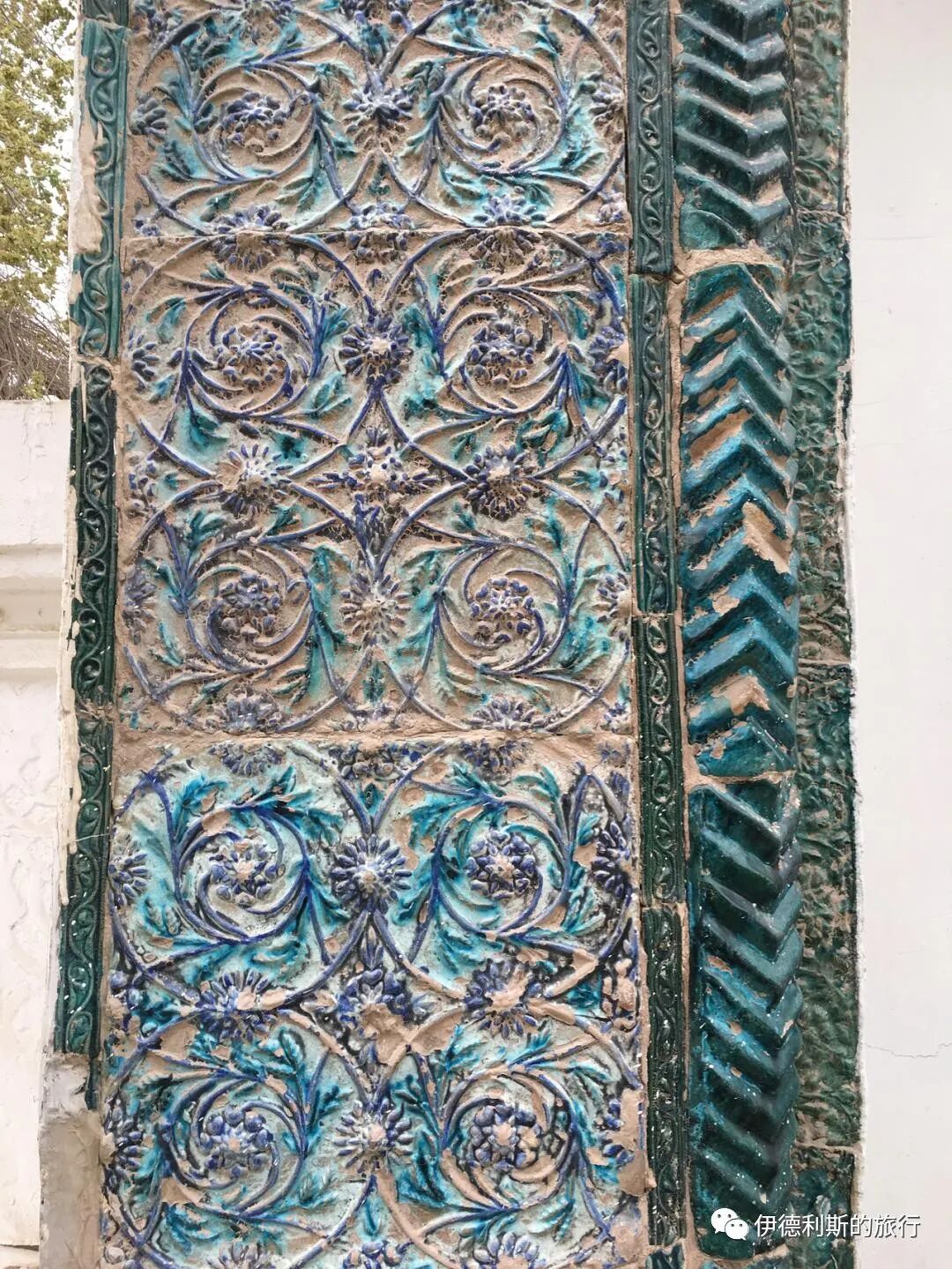
The Altun Mosque next to the royal tomb is said to have been built in 1533, and it now looks as it did after renovations in 1735.
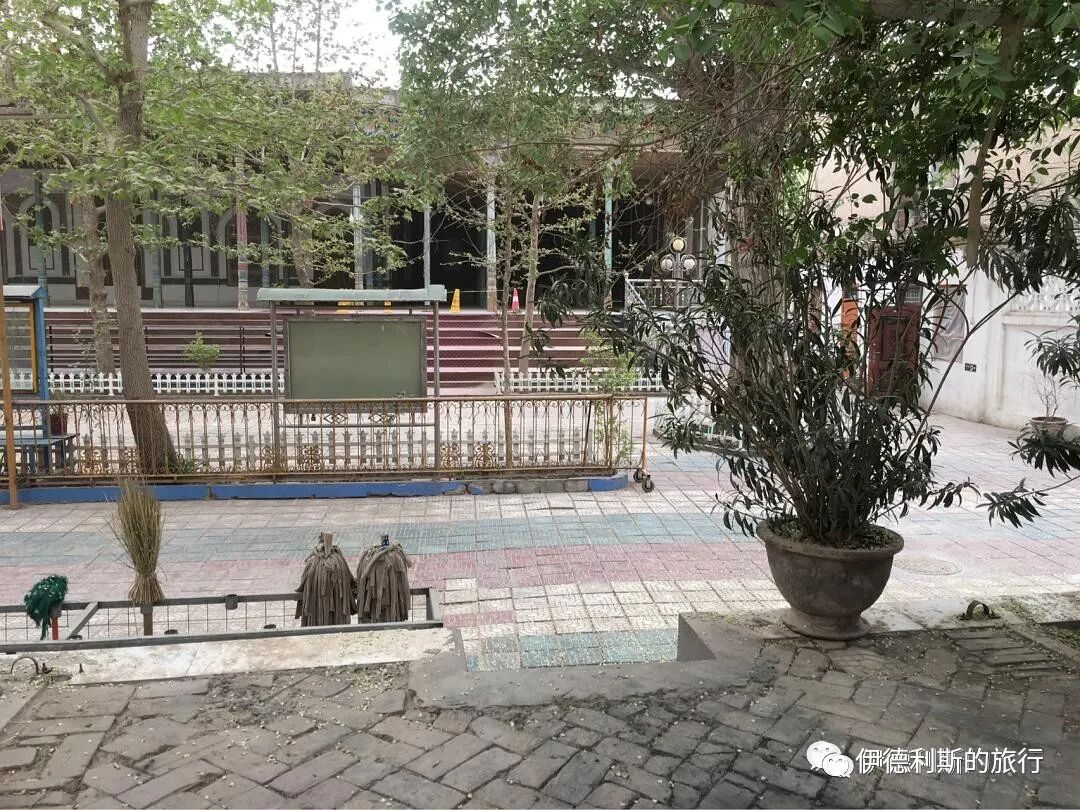
During the reign of Rashid Khan, foreign wars decreased significantly, but the success rate increased greatly. The national situation stabilized, and social, economic, and cultural life began to recover. According to the History of Musicians (Tavārikh-i mūsīqiyyūn) written in 1853 by the Hotan scholar Mulla Ismutulla Mujizi, during Rashid Khan's reign, Queen Amannisa Khan and the chief court musician Kidirhan organized a group of excellent musicians, singers, and poets to collect and organize the Muqam music circulating in various regions. This effort resulted in the compilation of 16 Muqam suites, including one set of suites processed by Amannisa Khan and another by Kidirhan. During the Yarkand Khanate, Muqam only existed in the form of the grand suite known as Qong Neghma. In 1879, musicians from Kashgar and Yarkand organized the Muqam again, adding the folk narrative poem Dastan and the song-and-dance form Mexirep, which made the structure of the Muqam much larger. In the 1950s, the Cultural Department of the Xinjiang Military District organized the recording of the entire Twelve Muqam as performed by the master Turdi Akhun. After being organized and edited, the musical scores were officially published in 1960, which finalized the Twelve Muqam.
A new tomb for Amannisa Khan was built at the entrance of the Yarkand Royal Tombs in the 1990s.
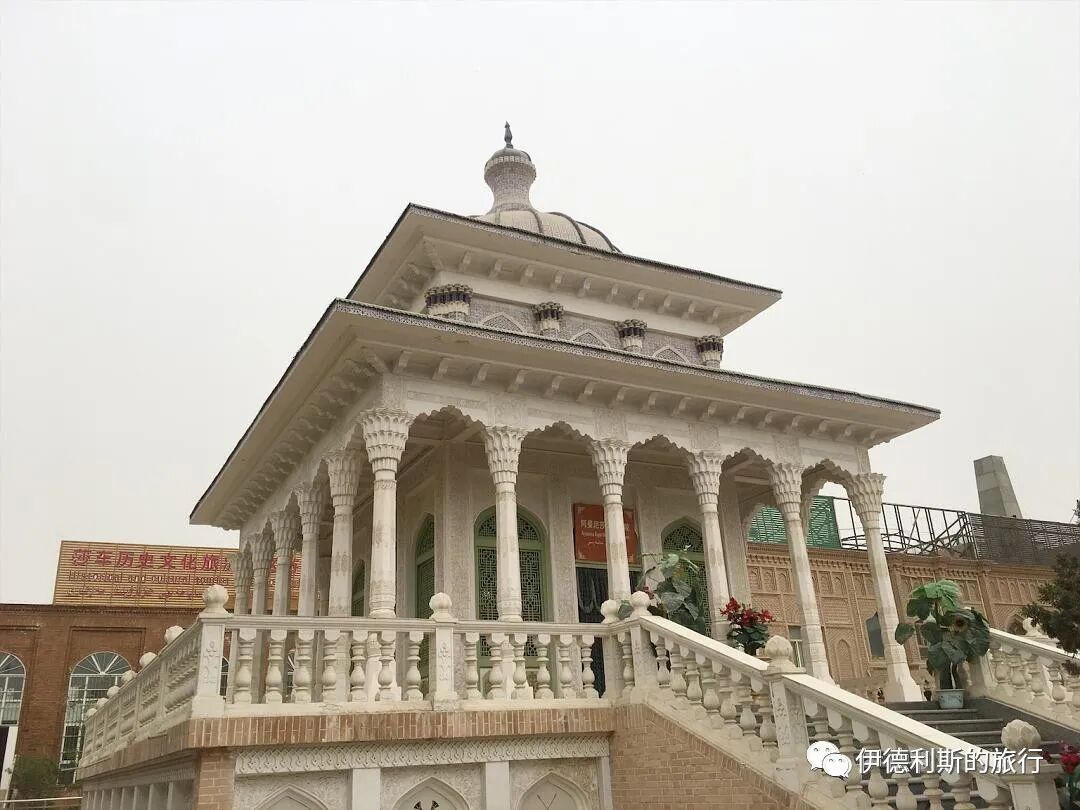
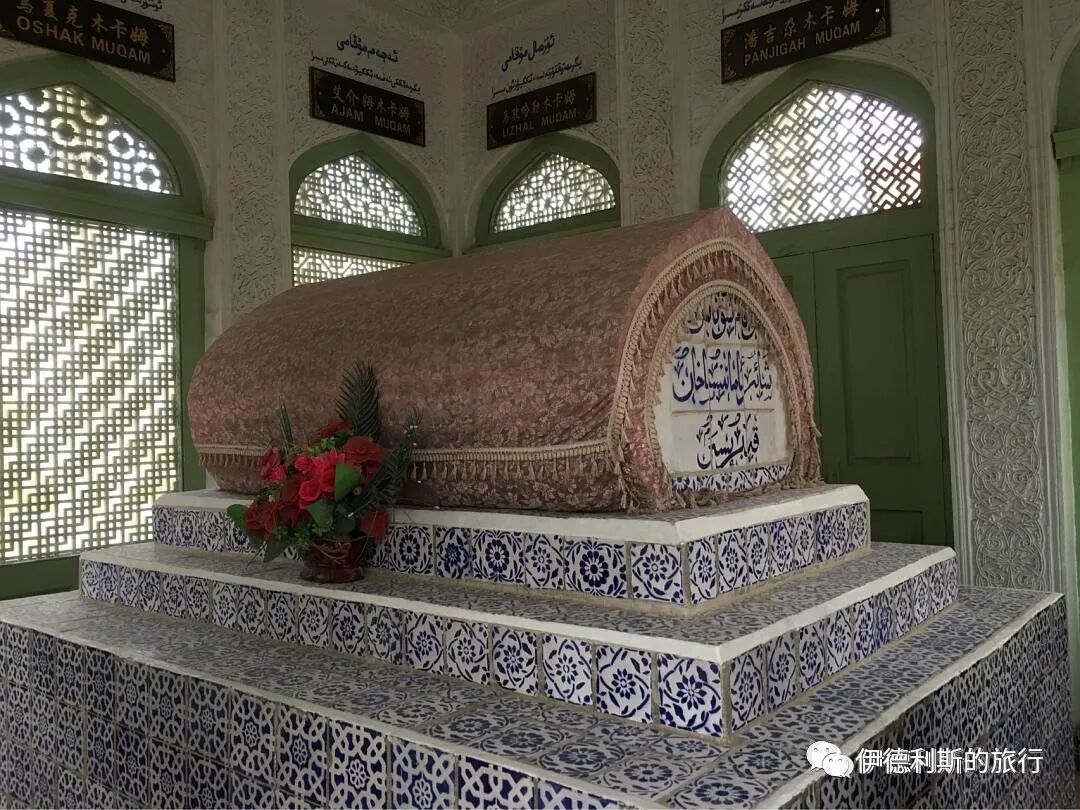
A statue of Amannisa Khan in the park.
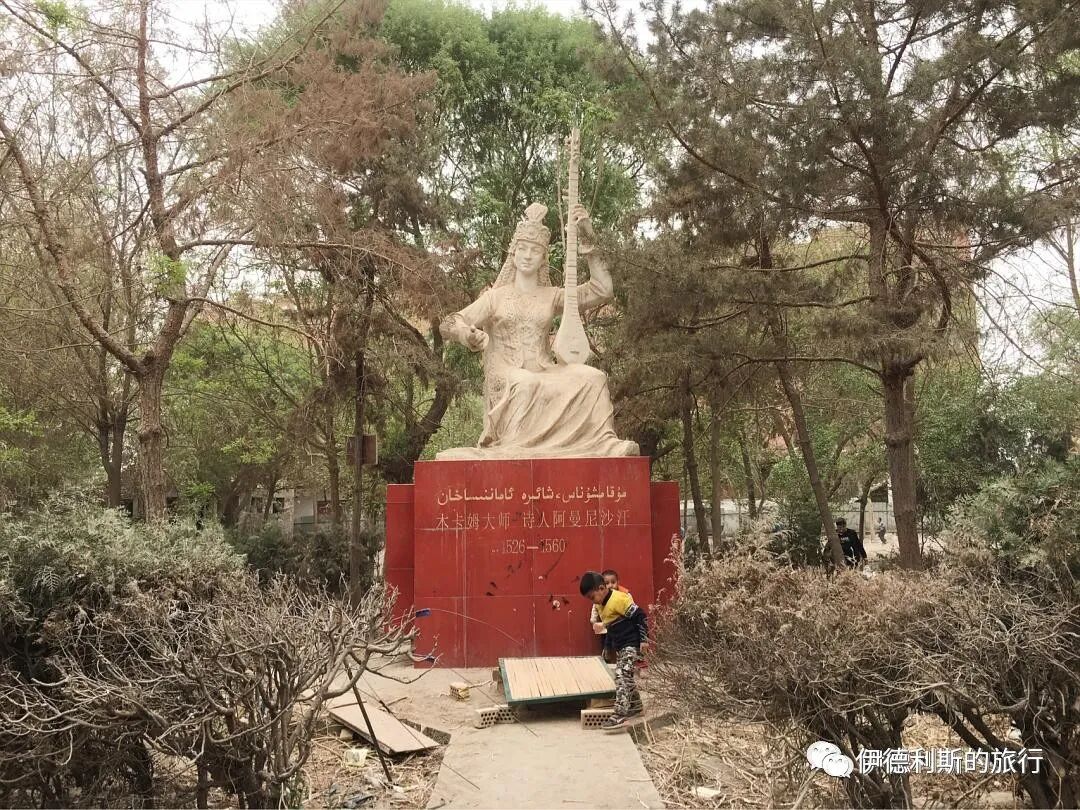
The tomb of Kidirhan is located within the Yarkand Royal Tombs.
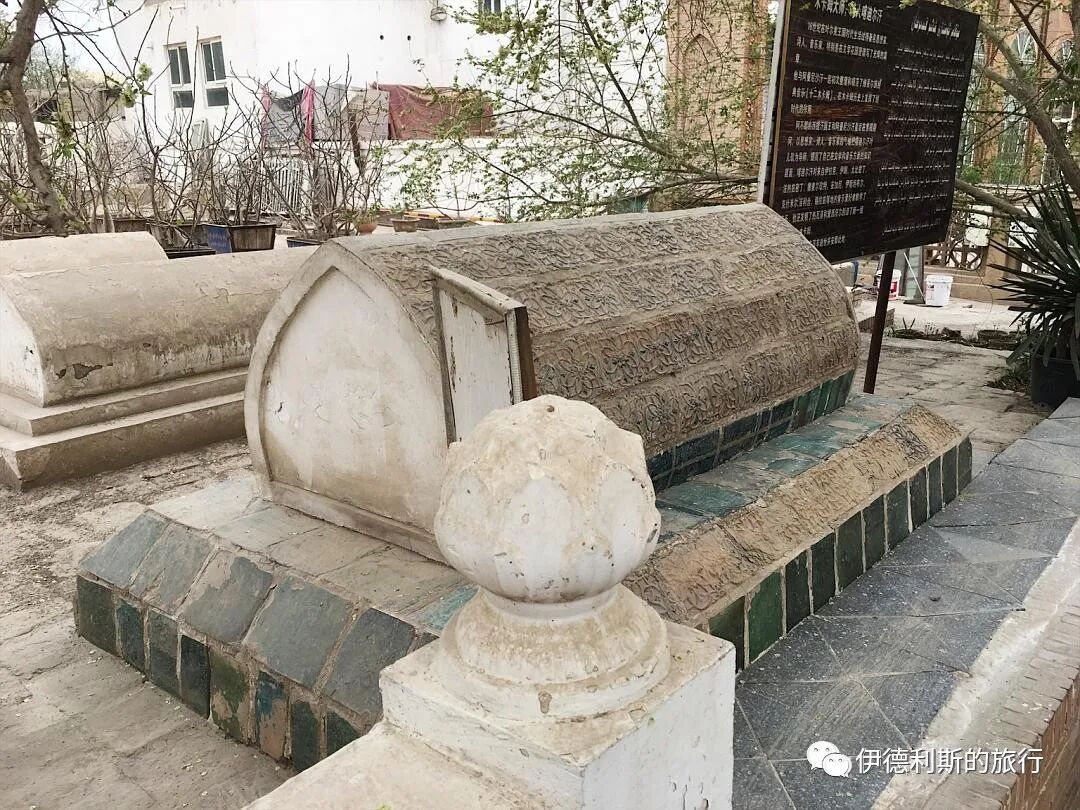
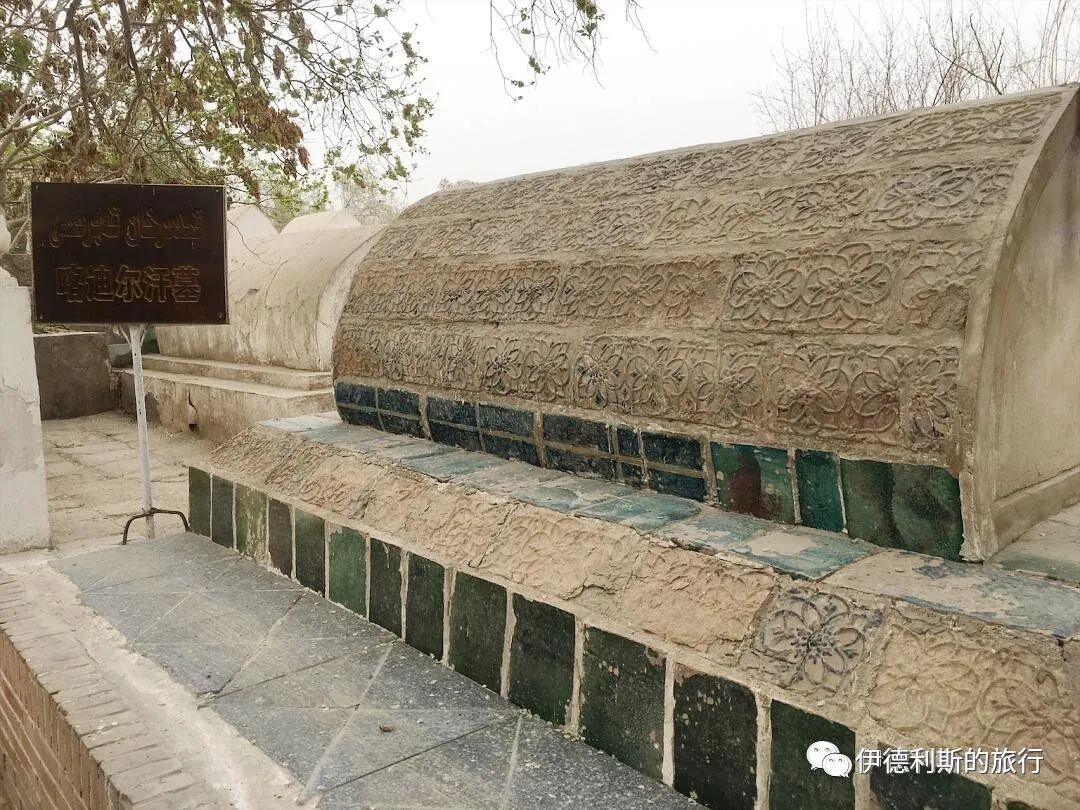
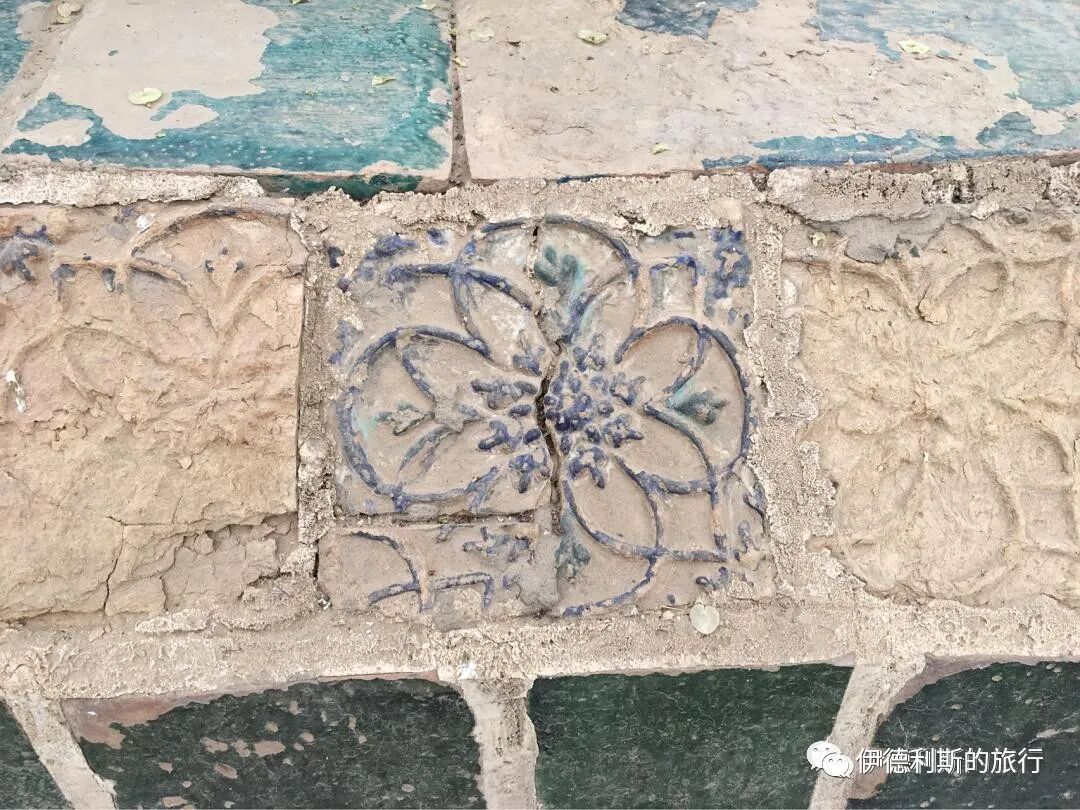
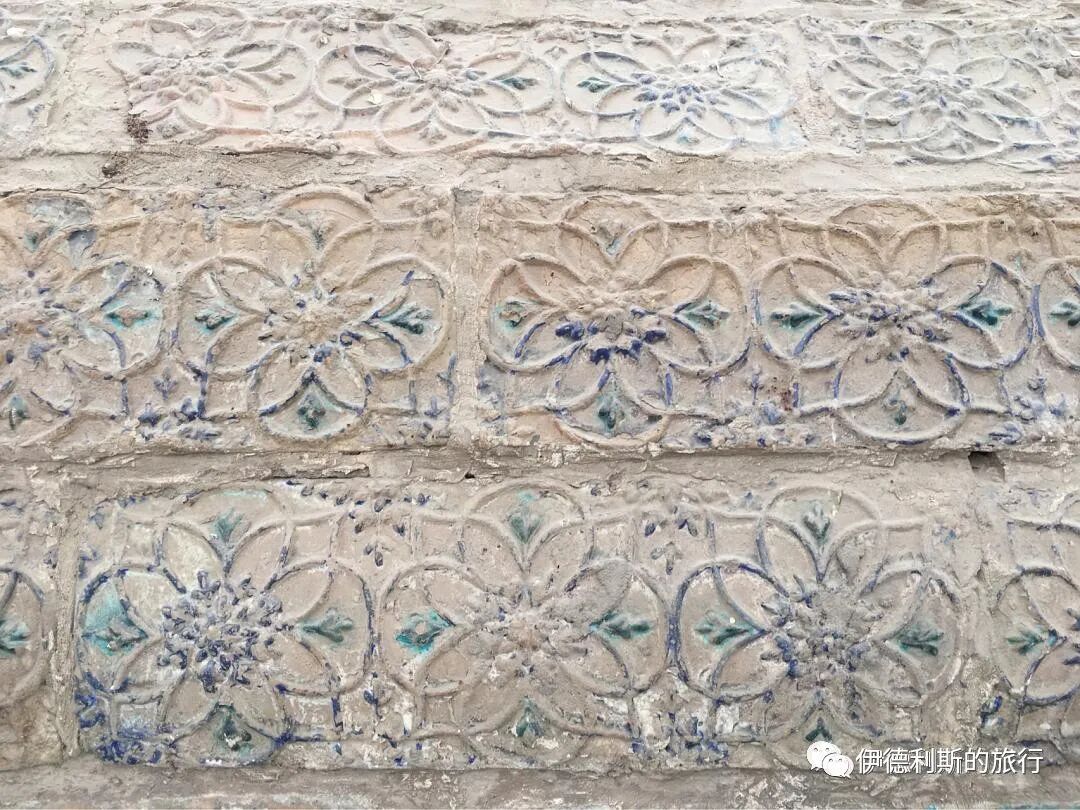
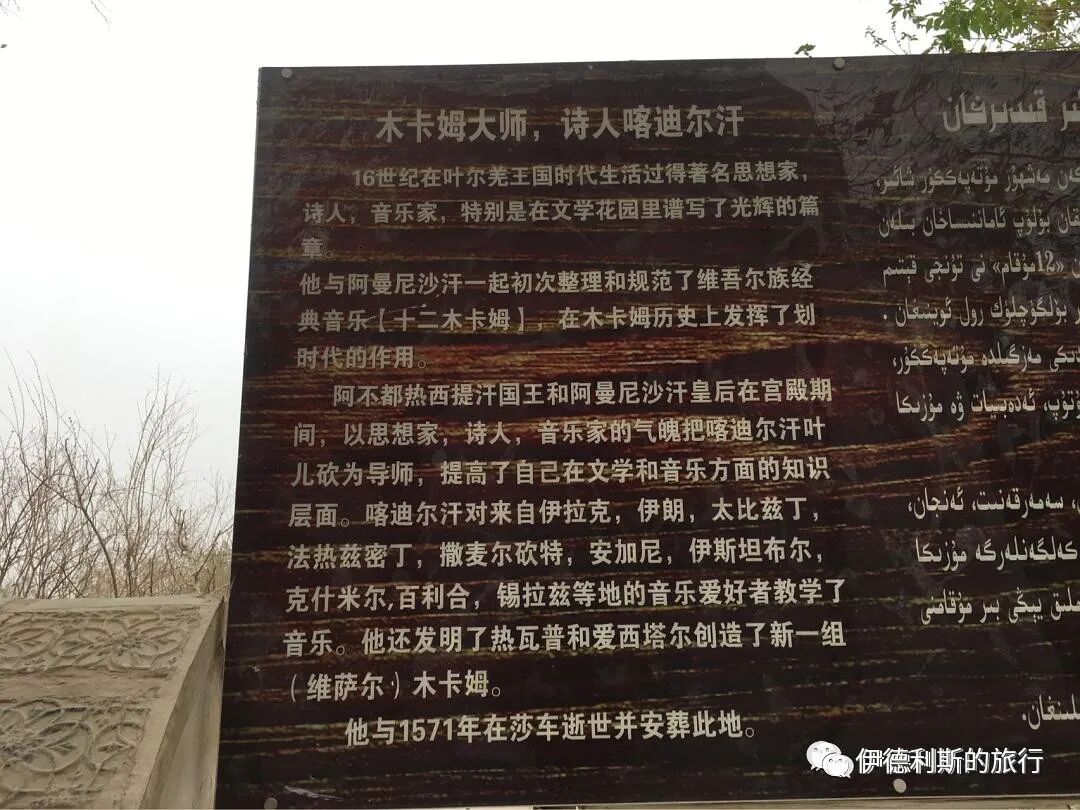
11. Haidar of Kashmir (1540-1551)
We head south, crossing the Pamir Mountains into the Kashmir Valley.
Mirza Muhammad Haidar was a Chagatai Mongol noble and a cousin of both Babur, the founder of the Mughal Empire, and Said Khan, the founder of the Yarkand Khanate. In his youth, he followed Said Khan in battle, helped establish the Yarkand Khanate, and was promoted to commander for his military achievements. After Said Khan died in 1533, the successor, Rashid Khan, killed many members of Haidar's family, forcing Haidar to flee to India to seek refuge with the Mughal Emperor Humayun. In 1540, after the Mughal Empire was conquered by the Sur Empire, Haidar led an army to conquer Kashmir, and he ruled it for 11 years in the name of the Mughal Empire.
Haidar spent five years in Kashmir writing the immortal Central Asian history book, The History of Rashid (Tarikh-i-Rashidi). This book is divided into two parts. The first part begins with the accession of Tughluq Timur, the first Khan of the Eastern Chagatai Khanate to convert to Islam, and continues through the reign of Rashid Khan of Yarkand. It spans two centuries and covers politics, economy, culture, and other aspects. The second part contains Haidar's personal experiences and observations, providing a very detailed and rare account of the founding of the Yarkand Khanate. In 1550, a noble rebellion broke out in Kashmir. Haidar was struck by an arrow and died while suppressing the rebellion, and the Shah Mir dynasty restored its rule over Kashmir.
The location of Srinagar, the capital of Kashmir.
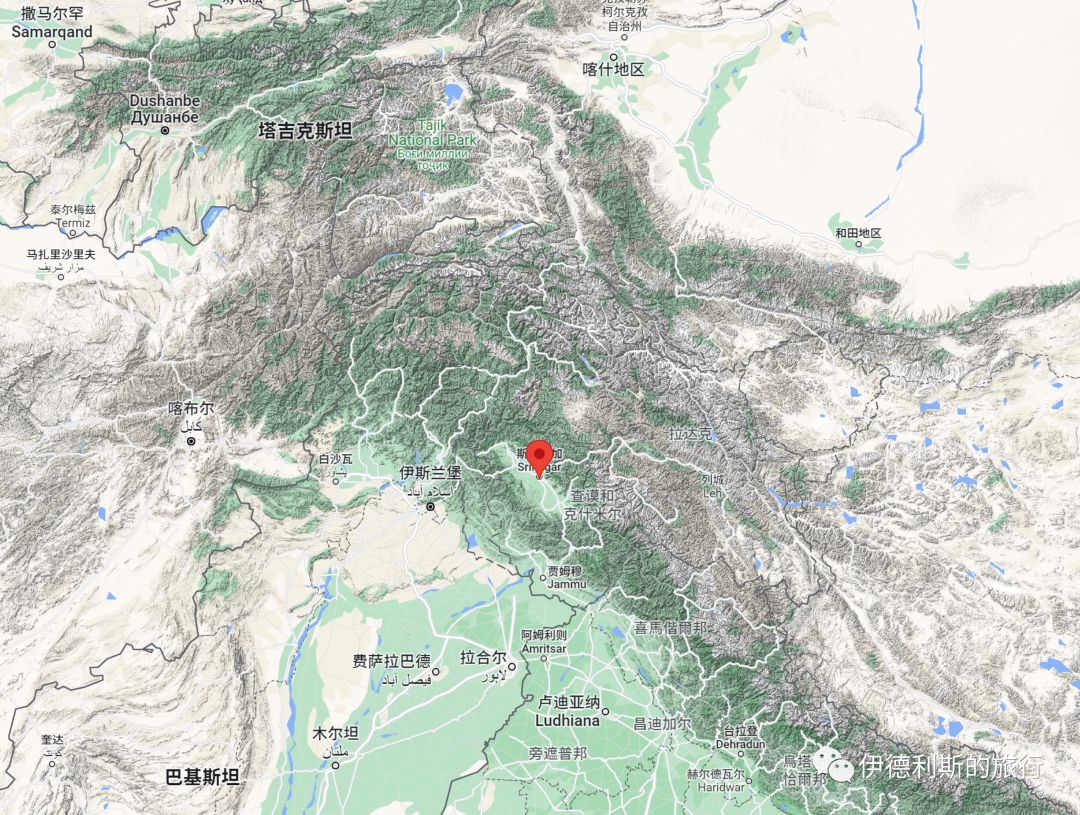
My copy of The History of Rashid.
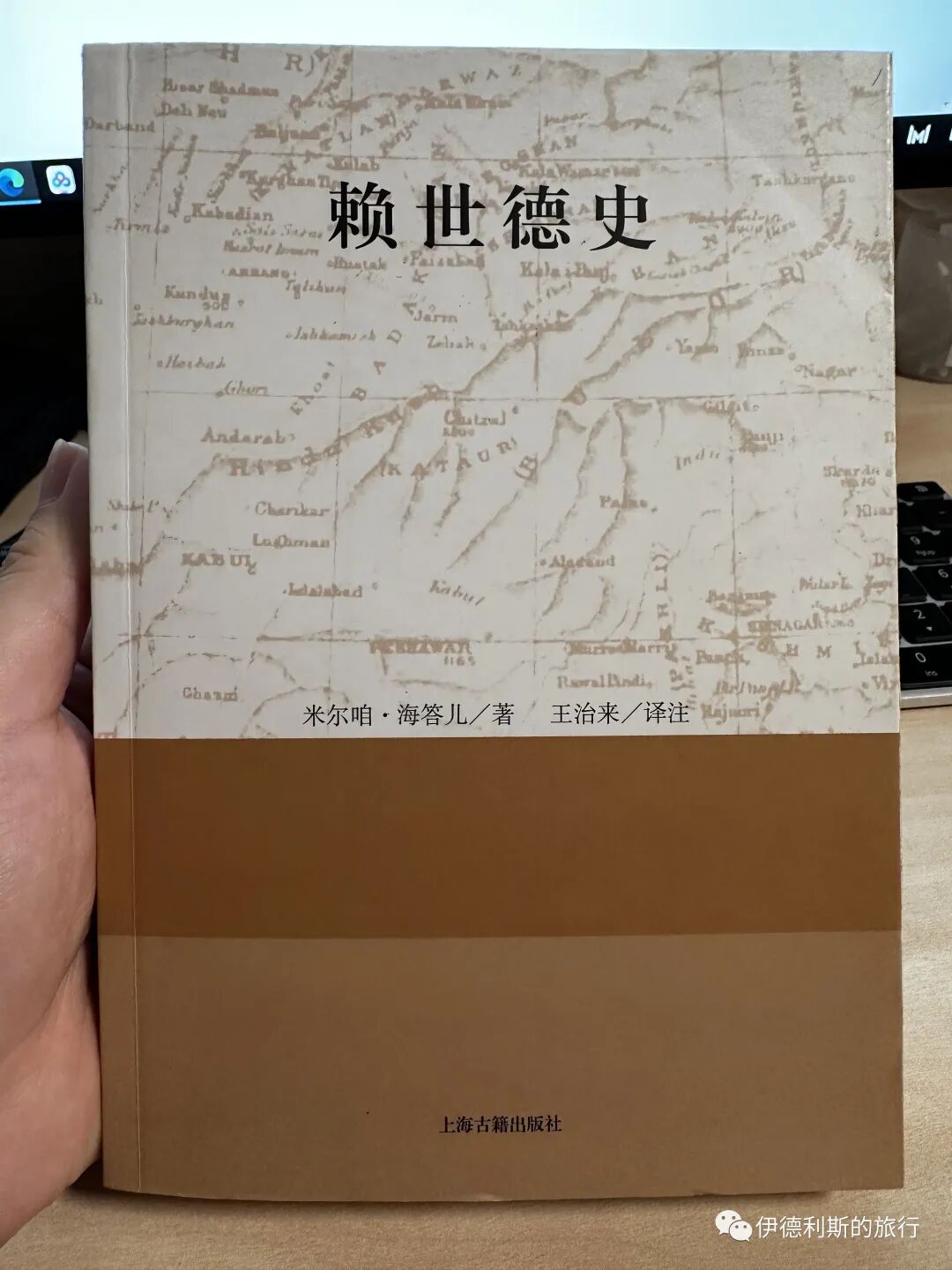
Haidar's tomb is located at Mazar-i-Salatin in Srinagar, and it was restored in 2018.
A photo of Haidar's tomb taken in 2018 by Bulat Sarsenbayev, the former Ambassador of Kazakhstan to India.
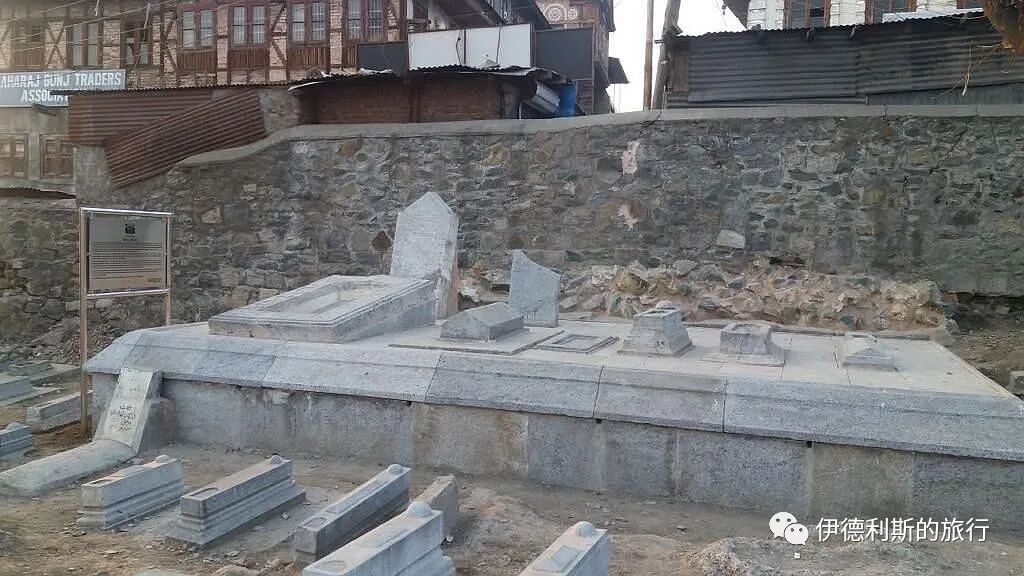
12. The Arghun Dynasty of Afghanistan and Pakistan (1520–1591)
We continue south into the Sindh province of Pakistan.
The Arghun dynasty was located between southern Afghanistan and Pakistan's Sindh province, and its rulers claimed to be descendants of the Ilkhanate ruler Arghun Khan. The Arghun family was originally the governor of the Timurid Empire in Kandahar, Afghanistan, and they began to oppose Babur, the founder of the Mughal Empire, in the early 16th century. Feeling threatened by Babur, the Arghun family invaded Sindh in 1520, conquered the local Samma dynasty, and began their rule over the Sindh region. In 1522, after a long siege, Babur captured Kandahar, and the Arghun dynasty officially moved its capital to Bukkur in the Sindh province of Pakistan.
In 1550, the Arghun dynasty was ruled by Shah Husayn. In 1540, the Mughal Emperor Humayun was driven out of India by the Sur Empire. Humayun asked Shah Hussain for help fighting the Sur Empire, but he was refused. Later, Humayun tried to take Sindh province but failed. In 1543, he finally left the Arghun dynasty and headed to Kandahar.
The location of Bhakkar city in Pakistan.
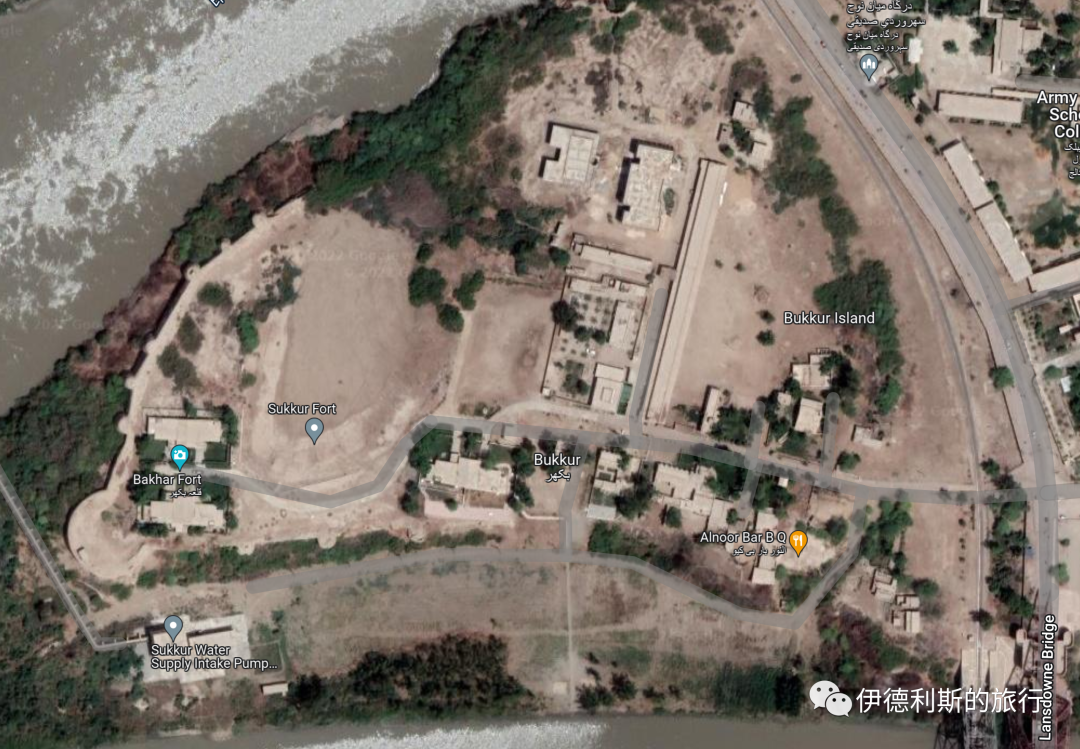
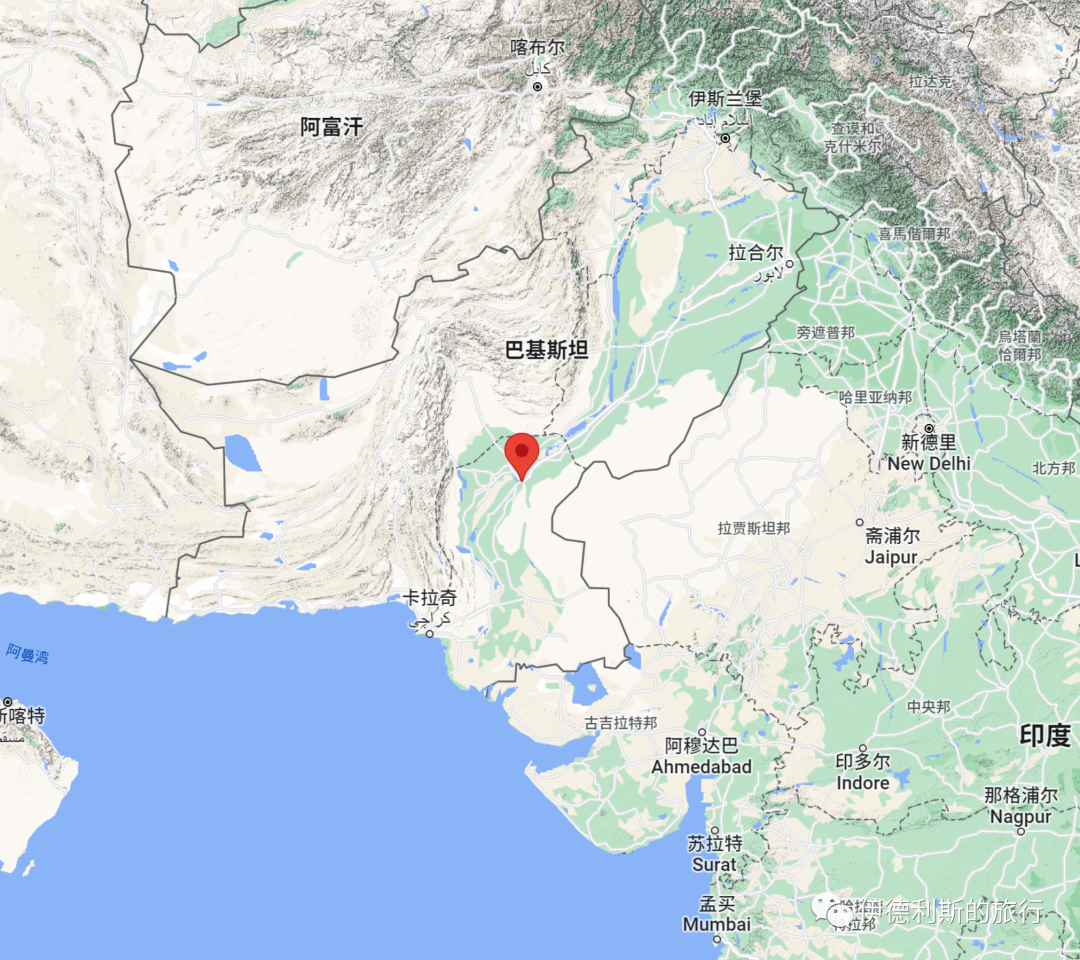
That is the end of the second part of our journey. In the next part, we will go deeper into the South Asian subcontinent to look at the Muslim dynasties there.
Islamic World in 1550: Chain Madrasa in Crimea (Part 1A-1b-1b)
Articles • ali2007fr posted the article • 0 comments • 197 views • 2026-05-18 09:38
Summary: This block continues the Crimean Khanate site and mosque section from Islamic World in 1550, preserving the original order of text and images.
The Chain Madrasa (Zıncırlı Medrese) was built in 1500 by order of the Crimean Khan Meñli I Giray. The name of the madrasa comes from the Turkic word "Zyngyr," which means "chain." A chain hangs above the main gate of the madrasa, so everyone who enters has to lower their head. The madrasa is rectangular with a central courtyard, an entrance on one side, and 11 rooms on the other three sides. At the time, the madrasa taught Turkish and Arabic grammar, calligraphy, arithmetic, ethics, logic, proof theory, fiqh, or Islamic law, theology, and hadith studies. The full course of study took ten years.
In 1909, influenced by the Crimean Tatar Enlightenment movement, Gasprinski built a new two-story madrasa next to the old one. The madrasa closed in 1917 and became the Meñli Giray Research Institute. The institute was abolished in 1923. Later, it served as a teacher's college, a medical school, a wartime sanatorium used by German military personnel, and a mental health clinic after the war. Today, it is managed by the Bakhchysarai History, Culture, and Archaeology Museum.
Block 2 of 2 for Part 1A-1b-1 view all
Summary: This block continues the Crimean Khanate site and mosque section from Islamic World in 1550, preserving the original order of text and images.
The Chain Madrasa (Zıncırlı Medrese) was built in 1500 by order of the Crimean Khan Meñli I Giray. The name of the madrasa comes from the Turkic word "Zyngyr," which means "chain." A chain hangs above the main gate of the madrasa, so everyone who enters has to lower their head. The madrasa is rectangular with a central courtyard, an entrance on one side, and 11 rooms on the other three sides. At the time, the madrasa taught Turkish and Arabic grammar, calligraphy, arithmetic, ethics, logic, proof theory, fiqh, or Islamic law, theology, and hadith studies. The full course of study took ten years.
In 1909, influenced by the Crimean Tatar Enlightenment movement, Gasprinski built a new two-story madrasa next to the old one. The madrasa closed in 1917 and became the Meñli Giray Research Institute. The institute was abolished in 1923. Later, it served as a teacher's college, a medical school, a wartime sanatorium used by German military personnel, and a mental health clinic after the war. Today, it is managed by the Bakhchysarai History, Culture, and Archaeology Museum.
Block 2 of 2 for Part 1A-1b-1
Islamic World in 1550: Chain Madrasa in Crimea (Part 1A-1b-1b)
Articles • ali2007fr posted the article • 0 comments • 189 views • 2026-05-18 09:38
Summary: This block continues the Crimean Khanate site and mosque section from Islamic World in 1550, preserving the original order of text and images.
The Chain Madrasa (Zıncırlı Medrese) was built in 1500 by order of the Crimean Khan Meñli I Giray. The name of the madrasa comes from the Turkic word "Zyngyr," which means "chain." A chain hangs above the main gate of the madrasa, forcing everyone who enters to bow their head. The madrasa is rectangular with a central courtyard, an entrance on one side, and 11 rooms on the other three sides. At the time, the madrasa taught Turkish and Arabic grammar, calligraphy, arithmetic, ethics, logic, proof theory, Islamic law (sharia), theology, and hadith studies. The full course of study took ten years.
In 1909, influenced by the Crimean Tatar Enlightenment movement, Gasprinski built a new two-story madrasa next to the old one. The madrasa closed in 1917 and became the Meñli Giray Research Institute. The institute was abolished in 1923. Later, it served as a teacher's college, a medical school, a sanatorium for German soldiers, and a post-war psychiatric clinic. Today, it is managed by the Bakhchysarai History, Culture, and Archaeology Museum.
Block 2 of 2 for Part 1A-1b-1 view all
Summary: This block continues the Crimean Khanate site and mosque section from Islamic World in 1550, preserving the original order of text and images.
The Chain Madrasa (Zıncırlı Medrese) was built in 1500 by order of the Crimean Khan Meñli I Giray. The name of the madrasa comes from the Turkic word "Zyngyr," which means "chain." A chain hangs above the main gate of the madrasa, forcing everyone who enters to bow their head. The madrasa is rectangular with a central courtyard, an entrance on one side, and 11 rooms on the other three sides. At the time, the madrasa taught Turkish and Arabic grammar, calligraphy, arithmetic, ethics, logic, proof theory, Islamic law (sharia), theology, and hadith studies. The full course of study took ten years.
In 1909, influenced by the Crimean Tatar Enlightenment movement, Gasprinski built a new two-story madrasa next to the old one. The madrasa closed in 1917 and became the Meñli Giray Research Institute. The institute was abolished in 1923. Later, it served as a teacher's college, a medical school, a sanatorium for German soldiers, and a post-war psychiatric clinic. Today, it is managed by the Bakhchysarai History, Culture, and Archaeology Museum.
Block 2 of 2 for Part 1A-1b-1
Islamic World in 1550: Crimean Khanate Sites and Mosques (Part 1A-1b-1)
Articles • ali2007fr posted the article • 0 comments • 217 views • 2026-05-18 09:38
Summary: This block continues the Crimean Khanate section of Islamic World in 1550, preserving the same site names, captions, mosque details, images, and historical facts from the Chinese source.
The tomb of Haji I Giray (Dürbe Hacı I Giray) was built in 1501 by Mengli I Giray for his father, the founding Khan of Crimea. It is an octagonal tomb with a lead dome.
Archaeological excavations from 2006 to 2007 examined 18 graves inside the mausoleum, including 13 adults and 5 children. They were wrapped in silk and satin, with some resting on pillows stuffed with fabric scraps and fruit seeds. The mausoleum holds 8 stone sarcophagi covered in velvet, silk, and silver-threaded fabric. These likely include 4 Crimean Khans: Hacı I Giray himself, Meñli I Giray, Nur Devlet—who fought Meñli I Giray for the throne for years before losing—and Sahib I Giray, the son of Meñli I Giray and builder of Bakhchysarai.
After research finished in 2009, these individuals were reburied with Muslim rites.
The Chain Madrasa (Zıncırlı Medrese) was built in 1500 by order of the Crimean Khan Meñli I Giray. The name of the madrasa comes from the Turkic word "Zyngyr," which means "chain." A chain hangs above the main gate of the madrasa, forcing everyone who enters to bow their head. The madrasa is rectangular with a central courtyard, an entrance on one side, and 11 rooms on the other three sides. At the time, the madrasa taught Turkish and Arabic grammar, calligraphy, arithmetic, ethics, logic, proof theory, Islamic law (sharia), theology, and hadith studies. The full course of study took ten years.
In 1909, influenced by the Crimean Tatar Enlightenment movement, Gasprinski built a new two-story madrasa next to the old one. The madrasa closed in 1917 and became the Meñli Giray Research Institute. The institute was abolished in 1923. Later, it served as a teacher's college, a medical school, a sanatorium for German soldiers, and a post-war psychiatric clinic. Today, it is managed by the Bakhchysarai History, Culture, and Archaeology Museum.
Block 1 of 4 for Part 1A-1b view all
Summary: This block continues the Crimean Khanate section of Islamic World in 1550, preserving the same site names, captions, mosque details, images, and historical facts from the Chinese source.
The tomb of Haji I Giray (Dürbe Hacı I Giray) was built in 1501 by Mengli I Giray for his father, the founding Khan of Crimea. It is an octagonal tomb with a lead dome.
Archaeological excavations from 2006 to 2007 examined 18 graves inside the mausoleum, including 13 adults and 5 children. They were wrapped in silk and satin, with some resting on pillows stuffed with fabric scraps and fruit seeds. The mausoleum holds 8 stone sarcophagi covered in velvet, silk, and silver-threaded fabric. These likely include 4 Crimean Khans: Hacı I Giray himself, Meñli I Giray, Nur Devlet—who fought Meñli I Giray for the throne for years before losing—and Sahib I Giray, the son of Meñli I Giray and builder of Bakhchysarai.
After research finished in 2009, these individuals were reburied with Muslim rites.
The Chain Madrasa (Zıncırlı Medrese) was built in 1500 by order of the Crimean Khan Meñli I Giray. The name of the madrasa comes from the Turkic word "Zyngyr," which means "chain." A chain hangs above the main gate of the madrasa, forcing everyone who enters to bow their head. The madrasa is rectangular with a central courtyard, an entrance on one side, and 11 rooms on the other three sides. At the time, the madrasa taught Turkish and Arabic grammar, calligraphy, arithmetic, ethics, logic, proof theory, Islamic law (sharia), theology, and hadith studies. The full course of study took ten years.
In 1909, influenced by the Crimean Tatar Enlightenment movement, Gasprinski built a new two-story madrasa next to the old one. The madrasa closed in 1917 and became the Meñli Giray Research Institute. The institute was abolished in 1923. Later, it served as a teacher's college, a medical school, a sanatorium for German soldiers, and a post-war psychiatric clinic. Today, it is managed by the Bakhchysarai History, Culture, and Archaeology Museum.
Block 1 of 4 for Part 1A-1b
Islamic World in 1550: Crimean Khanate Sites and Mosques (Part 1A-1b)
Articles • ali2007fr posted the article • 0 comments • 221 views • 2026-05-18 09:38
Summary: This block continues the Crimean Khanate section of Islamic World in 1550, preserving the same site names, captions, mosque details, images, and historical facts from the Chinese source.
The tomb of Haji I Giray (Dürbe Hacı I Giray) was built in 1501 by Mengli I Giray for his father, the founding Khan of Crimea. It is an octagonal tomb with a lead dome.
Archaeological excavations from 2006 to 2007 examined 18 graves inside the mausoleum, including 13 adults and 5 children. They were wrapped in silk and satin, with some resting on pillows stuffed with fabric scraps and fruit seeds. The mausoleum holds 8 stone sarcophagi covered in velvet, silk, and silver-threaded fabric. These likely include 4 Crimean Khans: Hacı I Giray himself, Meñli I Giray, Nur Devlet—who fought Meñli I Giray for the throne for years before losing—and Sahib I Giray, the son of Meñli I Giray and builder of Bakhchysarai.
After research finished in 2009, these individuals were reburied with Muslim rites.
The Chain Madrasa (Zıncırlı Medrese) was built in 1500 by order of the Crimean Khan Meñli I Giray. The name of the madrasa comes from the Turkic word "Zyngyr," which means "chain." A chain hangs above the main gate of the madrasa, forcing everyone who enters to bow their head. The madrasa is rectangular with a central courtyard, an entrance on one side, and 11 rooms on the other three sides. At the time, the madrasa taught Turkish and Arabic grammar, calligraphy, arithmetic, ethics, logic, proof theory, Islamic law (sharia), theology, and hadith studies. The full course of study took ten years.
In 1909, influenced by the Crimean Tatar Enlightenment movement, Gasprinski built a new two-story madrasa next to the old one. The madrasa closed in 1917 and became the Meñli Giray Research Institute. The institute was abolished in 1923. Later, it served as a teacher's college, a medical school, a sanatorium for German soldiers, and a post-war psychiatric clinic. Today, it is managed by the Bakhchysarai History, Culture, and Archaeology Museum.
The Iron Gate (Demir Qapı) is the oldest structure in the Khan's Palace. It was built between 1503 and 1504 for the Crimean Khan by the architect Aleviz Novy, who had been invited by Ivan the Great to build churches in Moscow. The Iron Gate was likely first built at the Crimean Khan's previous residence, Devlet-Saray, and moved to the main palace building after the Bakhchysarai Khan's Palace was completed in 1532. "Demir Qapı" means "iron gate" in Crimean Tatar. The doorway is made of limestone and features Lombard-Venetian Renaissance decorative styles.
The Great Khan Mosque (Büyük Han Cami) in the Bakhchysarai Khan's Palace was built in 1532 and is one of the earliest structures in the palace. The original mosque had multiple domes, similar to the Seljuk-style mosques popular in the Ottoman Empire during the 15th century. The mosque was destroyed by fire in 1736. It was later restored by Khan Selamet II Giray (who reigned from 1740 to 1743) and converted to a tiled roof.
During the Soviet era, the mosque was closed and turned into an exhibition hall for the archaeological museum. After Russia occupied Crimea in 2014, the mosque underwent repairs, some of which caused damage to the building.
The SaryGuzel Bathhouse was built in 1532 by order of the Crimean Khan Sahib I Giray. Like the Great Khan Mosque, it is one of the earliest buildings in the Bakhchysarai Khan's Palace. In Crimean Tatar, "Sarı" means "yellow or fair-skinned," and "Güzel" means "beautiful." The SaryGuzel Bathhouse is a typical Turkish bath. A furnace in the basement heated the floor with rising hot air, and cold and hot water were supplied through lead pipes. The bathhouse is divided into men's and women's sections, each with its own dome. The domes have star-shaped cutouts for ventilation and light, and there is an indoor courtyard with a fountain at the exit.
The SaryGuzel Bathhouse operated until 1924, when it was closed because it was considered unsafe. It has since been repaired and is now open for exhibitions.
The Khan's cemetery holds the grave of the Crimean Khan Devlet I Giray (reigned 1551–1577). He was appointed Kalga (the second-in-command after the Khan) in 1530. Later, due to court struggles, he went to Istanbul and gradually gained the trust of the Ottoman Sultan Suleiman the Magnificent. In 1551, with the help of Suleiman the Magnificent, he became the Crimean Khan.
Block 2 of 2 for Part 1A-1 view all
Summary: This block continues the Crimean Khanate section of Islamic World in 1550, preserving the same site names, captions, mosque details, images, and historical facts from the Chinese source.
The tomb of Haji I Giray (Dürbe Hacı I Giray) was built in 1501 by Mengli I Giray for his father, the founding Khan of Crimea. It is an octagonal tomb with a lead dome.
Archaeological excavations from 2006 to 2007 examined 18 graves inside the mausoleum, including 13 adults and 5 children. They were wrapped in silk and satin, with some resting on pillows stuffed with fabric scraps and fruit seeds. The mausoleum holds 8 stone sarcophagi covered in velvet, silk, and silver-threaded fabric. These likely include 4 Crimean Khans: Hacı I Giray himself, Meñli I Giray, Nur Devlet—who fought Meñli I Giray for the throne for years before losing—and Sahib I Giray, the son of Meñli I Giray and builder of Bakhchysarai.
After research finished in 2009, these individuals were reburied with Muslim rites.
The Chain Madrasa (Zıncırlı Medrese) was built in 1500 by order of the Crimean Khan Meñli I Giray. The name of the madrasa comes from the Turkic word "Zyngyr," which means "chain." A chain hangs above the main gate of the madrasa, forcing everyone who enters to bow their head. The madrasa is rectangular with a central courtyard, an entrance on one side, and 11 rooms on the other three sides. At the time, the madrasa taught Turkish and Arabic grammar, calligraphy, arithmetic, ethics, logic, proof theory, Islamic law (sharia), theology, and hadith studies. The full course of study took ten years.
In 1909, influenced by the Crimean Tatar Enlightenment movement, Gasprinski built a new two-story madrasa next to the old one. The madrasa closed in 1917 and became the Meñli Giray Research Institute. The institute was abolished in 1923. Later, it served as a teacher's college, a medical school, a sanatorium for German soldiers, and a post-war psychiatric clinic. Today, it is managed by the Bakhchysarai History, Culture, and Archaeology Museum.
The Iron Gate (Demir Qapı) is the oldest structure in the Khan's Palace. It was built between 1503 and 1504 for the Crimean Khan by the architect Aleviz Novy, who had been invited by Ivan the Great to build churches in Moscow. The Iron Gate was likely first built at the Crimean Khan's previous residence, Devlet-Saray, and moved to the main palace building after the Bakhchysarai Khan's Palace was completed in 1532. "Demir Qapı" means "iron gate" in Crimean Tatar. The doorway is made of limestone and features Lombard-Venetian Renaissance decorative styles.
The Great Khan Mosque (Büyük Han Cami) in the Bakhchysarai Khan's Palace was built in 1532 and is one of the earliest structures in the palace. The original mosque had multiple domes, similar to the Seljuk-style mosques popular in the Ottoman Empire during the 15th century. The mosque was destroyed by fire in 1736. It was later restored by Khan Selamet II Giray (who reigned from 1740 to 1743) and converted to a tiled roof.
During the Soviet era, the mosque was closed and turned into an exhibition hall for the archaeological museum. After Russia occupied Crimea in 2014, the mosque underwent repairs, some of which caused damage to the building.
The SaryGuzel Bathhouse was built in 1532 by order of the Crimean Khan Sahib I Giray. Like the Great Khan Mosque, it is one of the earliest buildings in the Bakhchysarai Khan's Palace. In Crimean Tatar, "Sarı" means "yellow or fair-skinned," and "Güzel" means "beautiful." The SaryGuzel Bathhouse is a typical Turkish bath. A furnace in the basement heated the floor with rising hot air, and cold and hot water were supplied through lead pipes. The bathhouse is divided into men's and women's sections, each with its own dome. The domes have star-shaped cutouts for ventilation and light, and there is an indoor courtyard with a fountain at the exit.
The SaryGuzel Bathhouse operated until 1924, when it was closed because it was considered unsafe. It has since been repaired and is now open for exhibitions.
The Khan's cemetery holds the grave of the Crimean Khan Devlet I Giray (reigned 1551–1577). He was appointed Kalga (the second-in-command after the Khan) in 1530. Later, due to court struggles, he went to Istanbul and gradually gained the trust of the Ottoman Sultan Suleiman the Magnificent. In 1551, with the help of Suleiman the Magnificent, he became the Crimean Khan.
Block 2 of 2 for Part 1A-1
Islamic World in 1550: Mongol Legacy and Muslim History (Part 1A-1)
Articles • ali2007fr posted the article • 0 comments • 223 views • 2026-05-18 09:38
Summary: Islamic World in 1550: Mongol Empire Legacy and Muslim History (Part 1A) is presented here as a firsthand travel account in clear English, beginning with this scene: In our last article, "A Journey Through the Islamic World in 1550 (Part 1)," we crossed the African continent, traveled from Egypt into the Ottoman Empire, and visited Tabriz in Iran. The account keeps its focus on Mongol Empire, Islamic World, Muslim History while preserving the names, places, food, and historical details from the Chinese source.
In our last article, "A Journey Through the Islamic World in 1550 (Part 1)," we crossed the African continent, traveled from Egypt into the Ottoman Empire, and visited Tabriz in Iran. This time, we will visit 12 countries ruled by the descendants of Genghis Khan, moving from Eastern Europe into North Asia and Central Asia, and finally into South Asia.
In the early 13th century, as the Mongol Empire expanded, Genghis Khan began dividing his lands among his sons. Orda and Batu, the sons of Genghis Khan's eldest son Jochi, received lands in southern Russia and Kazakhstan, which gradually formed the Golden Horde. Hulagu Khan, the son of Genghis Khan's fourth son Tolui, received lands in Iran, Turkmenistan, Afghanistan, and parts of West Asia, which gradually formed the Ilkhanate. After the Yuan Dynasty was established in 1271, the original families of Ogedei and Chagatai, led by Kaidu, opposed Kublai Khan. This led to the formation of the Ogedei Khanate and the Chagatai Khanate, completing the four great Mongol khanates.
After the 14th century, the territory of the Ogedei Khanate was first divided between the Chagatai Khanate and the Yuan Dynasty, and later the Ilkhanate and the Chagatai Khanate also began to split apart. The Golden Horde was the last to decline, splitting into several khanates in the early 15th century.
In 1550, there were 12 countries and regimes established by descendants of Genghis Khan, ruling a vast area from Russia, Kazakhstan, Uzbekistan, and China's Xinjiang to Afghanistan, Pakistan, and India. They were:
1. The Crimean Khanate ruled the Crimean Peninsula.
2. The Astrakhan Khanate ruled the Volga Delta.
3. The Nogai Horde ruled the region between the Volga and Ural rivers.
4. The Qasim Khanate ruled Kasimov in the modern-day Ryazan Oblast of Russia.
5. The Kazan Khanate ruled the middle Volga region.
6. The Siberian Khanate ruled the area around the Irtysh River.
7. The Kazakh Khanate ruled the Kazakh Steppe.
8. The Khanate of Khiva ruled the Khwarezm region.
9. The Khanate of Bukhara ruled the Transoxiana region of Central Asia.
10. The Yarkent Khanate ruled the southern Xinjiang region.
11. Haidar ruled the Kashmir region.
12. The Arghun dynasty ruled southern Afghanistan and the Sindh region of Pakistan.
Additionally, the Mughal Empire was briefly overthrown at this time, and its second emperor, Humayun, was in exile in Persia.
1. The Crimean Khanate in Ukraine (1441–1783).
We start this journey on the Crimean Peninsula on the northern shore of the Black Sea.
The Khan of the Crimean Khanate was a descendant of Tuka-Timur, the thirteenth son of Jochi, who was Genghis Khan's eldest son. In the 1260s, the Golden Horde gave the Crimean Peninsula to the ancestor of the Crimean Khans, Uran Timur, to rule. The khanate was officially established in 1441.
Around 1500, the Crimean Khan Mengli I Giray built the capital of Salachik. In 1532, Sahib I Giray, the son of Mengli I Giray, established a new capital called Bakhchisarai in a valley two kilometers downstream from Salachik. For the next 250 years, generations of Crimean Khans built palaces and various mosque buildings here.
In 1550, the Khan ruling the Crimean Khanate was Sahib I Giray. He ascended the throne with the help of the Ottoman Empire. Later, he joined forces with the Ottoman Sultan Suleiman the Magnificent to attack the Moldavians, and in 1541, he raided Moscow and brought back spoils of war.
The location of Bakhchisarai, the capital of the Crimean Khanate.
The tomb of Haji I Giray (Dürbe Hacı I Giray) was built in 1501 by Mengli I Giray for his father, the founding Khan of Crimea. It is an octagonal tomb with a lead dome.
Archaeological excavations from 2006 to 2007 examined 18 graves inside the mausoleum, including 13 adults and 5 children. They were wrapped in silk and satin, with some resting on pillows stuffed with fabric scraps and fruit seeds. The mausoleum holds 8 stone sarcophagi covered in velvet, silk, and silver-threaded fabric. These likely include 4 Crimean Khans: Hacı I Giray himself, Meñli I Giray, Nur Devlet—who fought Meñli I Giray for the throne for years before losing—and Sahib I Giray, the son of Meñli I Giray and builder of Bakhchysarai.
After research finished in 2009, these individuals were reburied with Muslim rites.
The Chain Madrasa (Zıncırlı Medrese) was built in 1500 by order of the Crimean Khan Meñli I Giray. The name of the madrasa comes from the Turkic word "Zyngyr," which means "chain." A chain hangs above the main gate of the madrasa, forcing everyone who enters to bow their head. The madrasa is rectangular with a central courtyard, an entrance on one side, and 11 rooms on the other three sides. At the time, the madrasa taught Turkish and Arabic grammar, calligraphy, arithmetic, ethics, logic, proof theory, Islamic law (sharia), theology, and hadith studies. The full course of study took ten years.
In 1909, influenced by the Crimean Tatar Enlightenment movement, Gasprinski built a new two-story madrasa next to the old one. The madrasa closed in 1917 and became the Meñli Giray Research Institute. The institute was abolished in 1923. Later, it served as a teacher's college, a medical school, a sanatorium for German soldiers, and a post-war psychiatric clinic. Today, it is managed by the Bakhchysarai History, Culture, and Archaeology Museum.
The Iron Gate (Demir Qapı) is the oldest structure in the Khan's Palace. It was built between 1503 and 1504 for the Crimean Khan by the architect Aleviz Novy, who had been invited by Ivan the Great to build churches in Moscow. The Iron Gate was likely first built at the Crimean Khan's previous residence, Devlet-Saray, and moved to the main palace building after the Bakhchysarai Khan's Palace was completed in 1532. "Demir Qapı" means "iron gate" in Crimean Tatar. The doorway is made of limestone and features Lombard-Venetian Renaissance decorative styles.
The Great Khan Mosque (Büyük Han Cami) in the Bakhchysarai Khan's Palace was built in 1532 and is one of the earliest structures in the palace. The original mosque had multiple domes, similar to the Seljuk-style mosques popular in the Ottoman Empire during the 15th century. The mosque was destroyed by fire in 1736. It was later restored by Khan Selamet II Giray (who reigned from 1740 to 1743) and converted to a tiled roof.
During the Soviet era, the mosque was closed and turned into an exhibition hall for the archaeological museum. After Russia occupied Crimea in 2014, the mosque underwent repairs, some of which caused damage to the building.
The SaryGuzel Bathhouse was built in 1532 by order of the Crimean Khan Sahib I Giray. Like the Great Khan Mosque, it is one of the earliest buildings in the Bakhchysarai Khan's Palace. In Crimean Tatar, "Sarı" means "yellow or fair-skinned," and "Güzel" means "beautiful." The SaryGuzel Bathhouse is a typical Turkish bath. A furnace in the basement heated the floor with rising hot air, and cold and hot water were supplied through lead pipes. The bathhouse is divided into men's and women's sections, each with its own dome. The domes have star-shaped cutouts for ventilation and light, and there is an indoor courtyard with a fountain at the exit.
The SaryGuzel Bathhouse operated until 1924, when it was closed because it was considered unsafe. It has since been repaired and is now open for exhibitions.
The Khan's cemetery holds the grave of the Crimean Khan Devlet I Giray (reigned 1551–1577). He was appointed Kalga (the second-in-command after the Khan) in 1530. Later, due to court struggles, he went to Istanbul and gradually gained the trust of the Ottoman Sultan Suleiman the Magnificent. In 1551, with the help of Suleiman the Magnificent, he became the Crimean Khan.
Block 1 of 3 for Part 1A view all
Summary: Islamic World in 1550: Mongol Empire Legacy and Muslim History (Part 1A) is presented here as a firsthand travel account in clear English, beginning with this scene: In our last article, "A Journey Through the Islamic World in 1550 (Part 1)," we crossed the African continent, traveled from Egypt into the Ottoman Empire, and visited Tabriz in Iran. The account keeps its focus on Mongol Empire, Islamic World, Muslim History while preserving the names, places, food, and historical details from the Chinese source.
In our last article, "A Journey Through the Islamic World in 1550 (Part 1)," we crossed the African continent, traveled from Egypt into the Ottoman Empire, and visited Tabriz in Iran. This time, we will visit 12 countries ruled by the descendants of Genghis Khan, moving from Eastern Europe into North Asia and Central Asia, and finally into South Asia.
In the early 13th century, as the Mongol Empire expanded, Genghis Khan began dividing his lands among his sons. Orda and Batu, the sons of Genghis Khan's eldest son Jochi, received lands in southern Russia and Kazakhstan, which gradually formed the Golden Horde. Hulagu Khan, the son of Genghis Khan's fourth son Tolui, received lands in Iran, Turkmenistan, Afghanistan, and parts of West Asia, which gradually formed the Ilkhanate. After the Yuan Dynasty was established in 1271, the original families of Ogedei and Chagatai, led by Kaidu, opposed Kublai Khan. This led to the formation of the Ogedei Khanate and the Chagatai Khanate, completing the four great Mongol khanates.
After the 14th century, the territory of the Ogedei Khanate was first divided between the Chagatai Khanate and the Yuan Dynasty, and later the Ilkhanate and the Chagatai Khanate also began to split apart. The Golden Horde was the last to decline, splitting into several khanates in the early 15th century.
In 1550, there were 12 countries and regimes established by descendants of Genghis Khan, ruling a vast area from Russia, Kazakhstan, Uzbekistan, and China's Xinjiang to Afghanistan, Pakistan, and India. They were:
1. The Crimean Khanate ruled the Crimean Peninsula.
2. The Astrakhan Khanate ruled the Volga Delta.
3. The Nogai Horde ruled the region between the Volga and Ural rivers.
4. The Qasim Khanate ruled Kasimov in the modern-day Ryazan Oblast of Russia.
5. The Kazan Khanate ruled the middle Volga region.
6. The Siberian Khanate ruled the area around the Irtysh River.
7. The Kazakh Khanate ruled the Kazakh Steppe.
8. The Khanate of Khiva ruled the Khwarezm region.
9. The Khanate of Bukhara ruled the Transoxiana region of Central Asia.
10. The Yarkent Khanate ruled the southern Xinjiang region.
11. Haidar ruled the Kashmir region.
12. The Arghun dynasty ruled southern Afghanistan and the Sindh region of Pakistan.
Additionally, the Mughal Empire was briefly overthrown at this time, and its second emperor, Humayun, was in exile in Persia.
1. The Crimean Khanate in Ukraine (1441–1783).
We start this journey on the Crimean Peninsula on the northern shore of the Black Sea.
The Khan of the Crimean Khanate was a descendant of Tuka-Timur, the thirteenth son of Jochi, who was Genghis Khan's eldest son. In the 1260s, the Golden Horde gave the Crimean Peninsula to the ancestor of the Crimean Khans, Uran Timur, to rule. The khanate was officially established in 1441.
Around 1500, the Crimean Khan Mengli I Giray built the capital of Salachik. In 1532, Sahib I Giray, the son of Mengli I Giray, established a new capital called Bakhchisarai in a valley two kilometers downstream from Salachik. For the next 250 years, generations of Crimean Khans built palaces and various mosque buildings here.
In 1550, the Khan ruling the Crimean Khanate was Sahib I Giray. He ascended the throne with the help of the Ottoman Empire. Later, he joined forces with the Ottoman Sultan Suleiman the Magnificent to attack the Moldavians, and in 1541, he raided Moscow and brought back spoils of war.
The location of Bakhchisarai, the capital of the Crimean Khanate.
The tomb of Haji I Giray (Dürbe Hacı I Giray) was built in 1501 by Mengli I Giray for his father, the founding Khan of Crimea. It is an octagonal tomb with a lead dome.
Archaeological excavations from 2006 to 2007 examined 18 graves inside the mausoleum, including 13 adults and 5 children. They were wrapped in silk and satin, with some resting on pillows stuffed with fabric scraps and fruit seeds. The mausoleum holds 8 stone sarcophagi covered in velvet, silk, and silver-threaded fabric. These likely include 4 Crimean Khans: Hacı I Giray himself, Meñli I Giray, Nur Devlet—who fought Meñli I Giray for the throne for years before losing—and Sahib I Giray, the son of Meñli I Giray and builder of Bakhchysarai.
After research finished in 2009, these individuals were reburied with Muslim rites.
The Chain Madrasa (Zıncırlı Medrese) was built in 1500 by order of the Crimean Khan Meñli I Giray. The name of the madrasa comes from the Turkic word "Zyngyr," which means "chain." A chain hangs above the main gate of the madrasa, forcing everyone who enters to bow their head. The madrasa is rectangular with a central courtyard, an entrance on one side, and 11 rooms on the other three sides. At the time, the madrasa taught Turkish and Arabic grammar, calligraphy, arithmetic, ethics, logic, proof theory, Islamic law (sharia), theology, and hadith studies. The full course of study took ten years.
In 1909, influenced by the Crimean Tatar Enlightenment movement, Gasprinski built a new two-story madrasa next to the old one. The madrasa closed in 1917 and became the Meñli Giray Research Institute. The institute was abolished in 1923. Later, it served as a teacher's college, a medical school, a sanatorium for German soldiers, and a post-war psychiatric clinic. Today, it is managed by the Bakhchysarai History, Culture, and Archaeology Museum.
The Iron Gate (Demir Qapı) is the oldest structure in the Khan's Palace. It was built between 1503 and 1504 for the Crimean Khan by the architect Aleviz Novy, who had been invited by Ivan the Great to build churches in Moscow. The Iron Gate was likely first built at the Crimean Khan's previous residence, Devlet-Saray, and moved to the main palace building after the Bakhchysarai Khan's Palace was completed in 1532. "Demir Qapı" means "iron gate" in Crimean Tatar. The doorway is made of limestone and features Lombard-Venetian Renaissance decorative styles.
The Great Khan Mosque (Büyük Han Cami) in the Bakhchysarai Khan's Palace was built in 1532 and is one of the earliest structures in the palace. The original mosque had multiple domes, similar to the Seljuk-style mosques popular in the Ottoman Empire during the 15th century. The mosque was destroyed by fire in 1736. It was later restored by Khan Selamet II Giray (who reigned from 1740 to 1743) and converted to a tiled roof.
During the Soviet era, the mosque was closed and turned into an exhibition hall for the archaeological museum. After Russia occupied Crimea in 2014, the mosque underwent repairs, some of which caused damage to the building.
The SaryGuzel Bathhouse was built in 1532 by order of the Crimean Khan Sahib I Giray. Like the Great Khan Mosque, it is one of the earliest buildings in the Bakhchysarai Khan's Palace. In Crimean Tatar, "Sarı" means "yellow or fair-skinned," and "Güzel" means "beautiful." The SaryGuzel Bathhouse is a typical Turkish bath. A furnace in the basement heated the floor with rising hot air, and cold and hot water were supplied through lead pipes. The bathhouse is divided into men's and women's sections, each with its own dome. The domes have star-shaped cutouts for ventilation and light, and there is an indoor courtyard with a fountain at the exit.
The SaryGuzel Bathhouse operated until 1924, when it was closed because it was considered unsafe. It has since been repaired and is now open for exhibitions.
The Khan's cemetery holds the grave of the Crimean Khan Devlet I Giray (reigned 1551–1577). He was appointed Kalga (the second-in-command after the Khan) in 1530. Later, due to court struggles, he went to Istanbul and gradually gained the trust of the Ottoman Sultan Suleiman the Magnificent. In 1551, with the help of Suleiman the Magnificent, he became the Crimean Khan.
Block 1 of 3 for Part 1A
Islamic World in 1550: Mongol Empire Legacy and Muslim History (Part 1A)
Articles • ali2007fr posted the article • 0 comments • 240 views • 2026-05-18 09:38
Summary: Islamic World in 1550: Mongol Empire Legacy and Muslim History (Part 1A) is presented here as a firsthand travel account in clear English, beginning with this scene: In our last article, "A Journey Through the Islamic World in 1550 (Part 1)," we crossed the African continent, traveled from Egypt into the Ottoman Empire, and visited Tabriz in Iran. The account keeps its focus on Mongol Empire, Islamic World, Muslim History while preserving the names, places, food, and historical details from the Chinese source.
In our last article, "A Journey Through the Islamic World in 1550 (Part 1)," we crossed the African continent, traveled from Egypt into the Ottoman Empire, and visited Tabriz in Iran. This time, we will visit 12 countries ruled by the descendants of Genghis Khan, moving from Eastern Europe into North Asia and Central Asia, and finally into South Asia.
In the early 13th century, as the Mongol Empire expanded, Genghis Khan began dividing his lands among his sons. Orda and Batu, the sons of Genghis Khan's eldest son Jochi, received lands in southern Russia and Kazakhstan, which gradually formed the Golden Horde. Hulagu Khan, the son of Genghis Khan's fourth son Tolui, received lands in Iran, Turkmenistan, Afghanistan, and parts of West Asia, which gradually formed the Ilkhanate. After the Yuan Dynasty was established in 1271, the original families of Ogedei and Chagatai, led by Kaidu, opposed Kublai Khan. This led to the formation of the Ogedei Khanate and the Chagatai Khanate, completing the four great Mongol khanates.
After the 14th century, the territory of the Ogedei Khanate was first divided between the Chagatai Khanate and the Yuan Dynasty, and later the Ilkhanate and the Chagatai Khanate also began to split apart. The Golden Horde was the last to decline, splitting into several khanates in the early 15th century.
In 1550, there were 12 countries and regimes established by descendants of Genghis Khan, ruling a vast area from Russia, Kazakhstan, Uzbekistan, and China's Xinjiang to Afghanistan, Pakistan, and India. They were:
1. The Crimean Khanate ruled the Crimean Peninsula.
2. The Astrakhan Khanate ruled the Volga Delta.
3. The Nogai Horde ruled the region between the Volga and Ural rivers.
4. The Qasim Khanate ruled Kasimov in the modern-day Ryazan Oblast of Russia.
5. The Kazan Khanate ruled the middle Volga region.
6. The Siberian Khanate ruled the area around the Irtysh River.
7. The Kazakh Khanate ruled the Kazakh Steppe.
8. The Khanate of Khiva ruled the Khwarezm region.
9. The Khanate of Bukhara ruled the Transoxiana region of Central Asia.
10. The Yarkent Khanate ruled the southern Xinjiang region.
11. Haidar ruled the Kashmir region.
12. The Arghun dynasty ruled southern Afghanistan and the Sindh region of Pakistan.
Additionally, the Mughal Empire was briefly overthrown at this time, and its second emperor, Humayun, was in exile in Persia.
1. The Crimean Khanate in Ukraine (1441–1783).
We start this journey on the Crimean Peninsula on the northern shore of the Black Sea.
The Khan of the Crimean Khanate was a descendant of Tuka-Timur, the thirteenth son of Jochi, who was Genghis Khan's eldest son. In the 1260s, the Golden Horde gave the Crimean Peninsula to the ancestor of the Crimean Khans, Uran Timur, to rule. The khanate was officially established in 1441.
Around 1500, the Crimean Khan Mengli I Giray built the capital of Salachik. In 1532, Sahib I Giray, the son of Mengli I Giray, established a new capital called Bakhchisarai in a valley two kilometers downstream from Salachik. For the next 250 years, generations of Crimean Khans built palaces and various mosque buildings here.
In 1550, the Khan ruling the Crimean Khanate was Sahib I Giray. He ascended the throne with the help of the Ottoman Empire. Later, he joined forces with the Ottoman Sultan Suleiman the Magnificent to attack the Moldavians, and in 1541, he raided Moscow and brought back spoils of war.
The location of Bakhchisarai, the capital of the Crimean Khanate.
The tomb of Haji I Giray (Dürbe Hacı I Giray) was built in 1501 by Mengli I Giray for his father, the founding Khan of Crimea. It is an octagonal tomb with a lead dome.
Archaeological excavations from 2006 to 2007 examined 18 graves inside the mausoleum, including 13 adults and 5 children. They were wrapped in silk and satin, with some resting on pillows stuffed with fabric scraps and fruit seeds. The mausoleum holds 8 stone sarcophagi covered in velvet, silk, and silver-threaded fabric. These likely include 4 Crimean Khans: Hacı I Giray himself, Meñli I Giray, Nur Devlet—who fought Meñli I Giray for the throne for years before losing—and Sahib I Giray, the son of Meñli I Giray and builder of Bakhchysarai.
After research finished in 2009, these individuals were reburied with Muslim rites.
The Chain Madrasa (Zıncırlı Medrese) was built in 1500 by order of the Crimean Khan Meñli I Giray. The name of the madrasa comes from the Turkic word "Zyngyr," which means "chain." A chain hangs above the main gate of the madrasa, forcing everyone who enters to bow their head. The madrasa is rectangular with a central courtyard, an entrance on one side, and 11 rooms on the other three sides. At the time, the madrasa taught Turkish and Arabic grammar, calligraphy, arithmetic, ethics, logic, proof theory, Islamic law (sharia), theology, and hadith studies. The full course of study took ten years.
In 1909, influenced by the Crimean Tatar Enlightenment movement, Gasprinski built a new two-story madrasa next to the old one. The madrasa closed in 1917 and became the Meñli Giray Research Institute. The institute was abolished in 1923. Later, it served as a teacher's college, a medical school, a sanatorium for German soldiers, and a post-war psychiatric clinic. Today, it is managed by the Bakhchysarai History, Culture, and Archaeology Museum.
The Iron Gate (Demir Qapı) is the oldest structure in the Khan's Palace. It was built between 1503 and 1504 for the Crimean Khan by the architect Aleviz Novy, who had been invited by Ivan the Great to build churches in Moscow. The Iron Gate was likely first built at the Crimean Khan's previous residence, Devlet-Saray, and moved to the main palace building after the Bakhchysarai Khan's Palace was completed in 1532. "Demir Qapı" means "iron gate" in Crimean Tatar. The doorway is made of limestone and features Lombard-Venetian Renaissance decorative styles.
The Great Khan Mosque (Büyük Han Cami) in the Bakhchysarai Khan's Palace was built in 1532 and is one of the earliest structures in the palace. The original mosque had multiple domes, similar to the Seljuk-style mosques popular in the Ottoman Empire during the 15th century. The mosque was destroyed by fire in 1736. It was later restored by Khan Selamet II Giray (who reigned from 1740 to 1743) and converted to a tiled roof.
During the Soviet era, the mosque was closed and turned into an exhibition hall for the archaeological museum. After Russia occupied Crimea in 2014, the mosque underwent repairs, some of which caused damage to the building.
The SaryGuzel Bathhouse was built in 1532 by order of the Crimean Khan Sahib I Giray. Like the Great Khan Mosque, it is one of the earliest buildings in the Bakhchysarai Khan's Palace. In Crimean Tatar, "Sarı" means "yellow or fair-skinned," and "Güzel" means "beautiful." The SaryGuzel Bathhouse is a typical Turkish bath. A furnace in the basement heated the floor with rising hot air, and cold and hot water were supplied through lead pipes. The bathhouse is divided into men's and women's sections, each with its own dome. The domes have star-shaped cutouts for ventilation and light, and there is an indoor courtyard with a fountain at the exit.
The SaryGuzel Bathhouse operated until 1924, when it was closed because it was considered unsafe. It has since been repaired and is now open for exhibitions.
The Khan's cemetery holds the grave of the Crimean Khan Devlet I Giray (reigned 1551–1577). He was appointed Kalga (the second-in-command after the Khan) in 1530. Later, due to court struggles, he went to Istanbul and gradually gained the trust of the Ottoman Sultan Suleiman the Magnificent. In 1551, with the help of Suleiman the Magnificent, he became the Crimean Khan.
2. The Astrakhan Khanate of Russia (1466–1556)
We continue east to the mouth of the Volga River.
The Astrakhan Khanate was located in the Volga Delta. Its founder, Mahmud bin Küchük, was a prince of the Golden Horde. The Astrakhan Khanate was mainly inhabited by Astrakhan Tatars and Nogais. The Khanate's caravans traveled between Moscow, Kazan, Crimea, Central Asia, and the Transcaucasus region. In 1532, the Astrakhan Khanate began to have contact with Russia. After Russia conquered Kazan in 1552, the Astrakhan Khanate could not escape the same fate.
In 1550, the capital of the Astrakhan Khanate was Hajji Tarkhan, located on the right bank of the Volga River, 12 kilometers north of the modern city of Astrakhan. The city of Hajji Tarkhan was built by the Golden Horde in the late 13th century, appeared in the Travels of Ibn Battuta in the 14th century, was destroyed by Timur's army in 1395, and was rebuilt by the Astrakhan Khanate in the 15th century. The city was occupied by the Crimean Khanate in 1547 and was finally burned down by Ivan the Terrible in 1556.
There are currently about 60,000 Astrakhan Tatars in Russia. Most live in the Astrakhan Oblast, with half living in the city of Astrakhan, where they have their own community and several mosques.
The location of the city of Hajji Tarkhan.
The White Mosque in Astrakhan, photographed by Polinadelia in 2014.
3. The Nogai Horde in Russia and Kazakhstan (1440–1634)
Continuing east from the Volga River, you reach the grasslands of the Nogai tribes.
Nogai was the great-grandson of Jochi, the eldest son of Genghis Khan, and an important leader of the Golden Horde who ruled many Turkic-speaking tribes in the 13th century. A century later, the Golden Horde general Edigu ruled a large area from the Volga to the Ural River, and the tribes under his rule were also called the Nogai Horde.
We can find history about the Nogai Horde in the early 16th century in Russian records. In 1521, the Nogai were driven west by the Kazakhs and crossed the Volga River to attack Astrakhan. In 1522, the Kazakhs captured the capital of the Nogai Horde. In 1523, the Nogai Horde defeated the army that had briefly occupied Astrakhan.
In 1550, the Khan of the Kazan Khanate was Yosuf Khan (1549–1555), who had helped Moscow against the Kazan Khanate in 1549.
Saray-Jük was the capital of the Nogai Horde, located on the border of Europe and Asia in western Kazakhstan. This city sat on a trade route between Europe and China and was an important commercial hub during the Golden Horde period. After being destroyed by Timur in 1395, it was rebuilt in the 1430s and 1440s.
The location of Saray-Jük.
The ruins of Saray-Jük, photographed by Yakov Fedorov in 2020.
4. The Qasim Khanate in Russia (1452–1681)
We head north to the modern-day Ryazan Oblast in Russia.
The Qasim Khanate was located in Russia's Ryazan Oblast. Its founder, Qasim Khan, was the son of Ulugh Muhammad, the founder of the Kazan Khanate. The Qasim Khanate served as a buffer state between the Grand Duchy of Moscow and the Kazan Khanate and was under heavy Russian control.
In 1550, the Khan of the Qasim Khanate was Shahghali, who was installed as the Khan of the Kazan Khanate three times as a Russian vassal. In 1546, Shahghali was overthrown by the people of Kazan and fled back to the Qasim Khanate. Between 1547 and 1551, he participated in several Russian attacks on the Kazan Khanate and took part in the final Russian conquest of Kazan in 1552.
The capital of the Qasim Khanate, Qasimov, is located on the left bank of the Oka River in Russia's Ryazan Oblast, where one thousand Tatar-speaking Qasim Tatars still live today. The Khan Mosque in Qasimov was built by Shahghali in the mid-16th century. It was ordered to be demolished by Peter the Great in 1702, but the minaret (bangke ta) was preserved. This minaret is very similar to the Light Tower (Guangta) of the Huaisheng Mosque in Guangzhou.
The Khan Mosque in Qasimov, photographed by Alexander Novikov in 2014.
The location of Qasimov.
5. The Kazan Khanate in Russia (1438–1552)
We headed east to the city of Kazan on the banks of the Volga River.
The Kazan Khanate was founded by Ulugh Muhammad, a descendant of Genghis Khan's eldest son Jochi, who had ruled the Golden Horde twice. He lost control of the Golden Horde in 1436, then led his army to the Volga River and officially established the Kazan Khanate after capturing Kazan in 1438.
In 1521, the Kazan Khanate formed an alliance with the Astrakhan, Crimean, and Nogai Khanates to resist Moscow together. This caused dissatisfaction among pro-Russian factions within the Kazan Khanate, leading the state into internal conflict.
In 1550, the Khan of the Kazan Khanate was the four-year-old Ötemish Giray, though the actual rulers were his mother, Söyembikä, and the prime minister (uğlan) Qoşçaq. Seeing the instability in the Kazan Khanate, Ivan the Terrible of Russia sent a large army to besiege Kazan in February 1550, but the thawing of the Volga River forced the Russians to retreat and only attack the outskirts of the city. Throughout that year, Söyembikä and Qoşçaq fought against the pro-Russian faction, and relations with Russia continued to worsen.
The Kazan Khanate built many homes and public buildings in Kazan, including the Khan's palace, courtyards, mosques, and tombs, with tall minarets defining the city's skyline. In 1552, Ivan the Terrible invaded Kazan, destroyed the Kazan Khanate, and drove all Tatars out of the city, allowing only Russians to settle there. Between 1556 and 1562, Ivan the Terrible ordered the construction of the Kazan Kremlin on the site of the old Kazan Khanate fortress. The mosques, the Kazan Khan's palace, and the tombs were initially used as armories and ammunition depots, but were eventually completely demolished in the 18th century.
In 1977, hydraulic engineers accidentally dug up a grave while laying rainwater pipes at the Kazan Kremlin and immediately contacted the archaeology department. Archaeological excavations lasted for 10 years, eventually uncovering five graves, two of which were confirmed to be those of the actual founders of the Kazan Khanate: Mäxmüd Khan (died 1463 or 1466) and his grandson, Möxämmät Ämin (died 1518). The tomb was originally made of white stone and finally collapsed in the 17th century.
For further research, the remains of the two Kazan Khans, Mäxmüd and Möxämmät Ämin, were kept at the Institute of Archaeology of the Tatarstan Academy of Sciences for 40 years. In May 2017, after continuous efforts by the Tatar Muslims of Kazan, the two Kazan Khans were finally reburied not far from their original graves.
Between 2004 and 2005, the Institute of Archaeology of the Tatarstan Academy of Sciences re-excavated the Kazan Khan tombs and discovered the graves of four more Khans: Xalil (died 1467), İbrahim (died 1478), Safa Giray (died 1549), and Canghali (died 1535). Today, these four Kazan Khan graves are protected under a glass roof. Safa Giray Khan came from the Giray family of the Crimean Khanate and served as the Khan of Kazan three times: from 1524–1531, 1535–1546, and 1546–1549. Safa Giray was an anti-Russian Khan. His first reign ended due to Moscow's attack on Kazan, and he regained the throne four years later after Kazan nobles overthrew the pro-Russian Khan. Eleven years later, due to internal unrest in Kazan, he was overthrown again by a pro-Russian Khan. Safa Giray fled to his father-in-law's Nogai tribe, and a few months later, he returned to Kazan with a Nogai army to become the Khan for the third time. Canghali Khan was originally the Khan of the Qasim Khanate, a vassal state of the Grand Duchy of Moscow. In 1532, Grand Prince Vasily III of Moscow defeated the Kazan Khan Safa Giray and installed the 16-year-old Canghali as the pro-Russian Khan of Kazan. He died in 1535 during a coup by Kazan nobles.
There is a performance about the Siege of Kazan at the entrance of the Kul Sharif Mosque inside the Kazan Kremlin. In 1552, when Ivan the Terrible besieged Kazan, the last imam of the Kazan Khanate, Seid Kul Sharif, led the people in a final resistance and died in the city. Today, Seid Kul Sharif is a national hero for the Kazan Tatars, and the new Kul Sharif Mosque built in 2005 is named after him.
The National Museum of the Republic of Tatarstan houses a letter written in 1523 by the Kazan Khan Sahib I Giray (reigned 1521–1524). A replica of this letter is also inside the Kazan Kremlin. In 1521, to resist the control of the Grand Duchy of Moscow, the Kazan Khanate overthrew the pro-Moscow Khan Shahghali and welcomed Sahib I Giray from Crimea to Kazan to become the new Khan.
Block 1 of 2 view all
Summary: Islamic World in 1550: Mongol Empire Legacy and Muslim History (Part 1A) is presented here as a firsthand travel account in clear English, beginning with this scene: In our last article, "A Journey Through the Islamic World in 1550 (Part 1)," we crossed the African continent, traveled from Egypt into the Ottoman Empire, and visited Tabriz in Iran. The account keeps its focus on Mongol Empire, Islamic World, Muslim History while preserving the names, places, food, and historical details from the Chinese source.
In our last article, "A Journey Through the Islamic World in 1550 (Part 1)," we crossed the African continent, traveled from Egypt into the Ottoman Empire, and visited Tabriz in Iran. This time, we will visit 12 countries ruled by the descendants of Genghis Khan, moving from Eastern Europe into North Asia and Central Asia, and finally into South Asia.
In the early 13th century, as the Mongol Empire expanded, Genghis Khan began dividing his lands among his sons. Orda and Batu, the sons of Genghis Khan's eldest son Jochi, received lands in southern Russia and Kazakhstan, which gradually formed the Golden Horde. Hulagu Khan, the son of Genghis Khan's fourth son Tolui, received lands in Iran, Turkmenistan, Afghanistan, and parts of West Asia, which gradually formed the Ilkhanate. After the Yuan Dynasty was established in 1271, the original families of Ogedei and Chagatai, led by Kaidu, opposed Kublai Khan. This led to the formation of the Ogedei Khanate and the Chagatai Khanate, completing the four great Mongol khanates.
After the 14th century, the territory of the Ogedei Khanate was first divided between the Chagatai Khanate and the Yuan Dynasty, and later the Ilkhanate and the Chagatai Khanate also began to split apart. The Golden Horde was the last to decline, splitting into several khanates in the early 15th century.
In 1550, there were 12 countries and regimes established by descendants of Genghis Khan, ruling a vast area from Russia, Kazakhstan, Uzbekistan, and China's Xinjiang to Afghanistan, Pakistan, and India. They were:
1. The Crimean Khanate ruled the Crimean Peninsula.
2. The Astrakhan Khanate ruled the Volga Delta.
3. The Nogai Horde ruled the region between the Volga and Ural rivers.
4. The Qasim Khanate ruled Kasimov in the modern-day Ryazan Oblast of Russia.
5. The Kazan Khanate ruled the middle Volga region.
6. The Siberian Khanate ruled the area around the Irtysh River.
7. The Kazakh Khanate ruled the Kazakh Steppe.
8. The Khanate of Khiva ruled the Khwarezm region.
9. The Khanate of Bukhara ruled the Transoxiana region of Central Asia.
10. The Yarkent Khanate ruled the southern Xinjiang region.
11. Haidar ruled the Kashmir region.
12. The Arghun dynasty ruled southern Afghanistan and the Sindh region of Pakistan.
Additionally, the Mughal Empire was briefly overthrown at this time, and its second emperor, Humayun, was in exile in Persia.
1. The Crimean Khanate in Ukraine (1441–1783).
We start this journey on the Crimean Peninsula on the northern shore of the Black Sea.
The Khan of the Crimean Khanate was a descendant of Tuka-Timur, the thirteenth son of Jochi, who was Genghis Khan's eldest son. In the 1260s, the Golden Horde gave the Crimean Peninsula to the ancestor of the Crimean Khans, Uran Timur, to rule. The khanate was officially established in 1441.
Around 1500, the Crimean Khan Mengli I Giray built the capital of Salachik. In 1532, Sahib I Giray, the son of Mengli I Giray, established a new capital called Bakhchisarai in a valley two kilometers downstream from Salachik. For the next 250 years, generations of Crimean Khans built palaces and various mosque buildings here.
In 1550, the Khan ruling the Crimean Khanate was Sahib I Giray. He ascended the throne with the help of the Ottoman Empire. Later, he joined forces with the Ottoman Sultan Suleiman the Magnificent to attack the Moldavians, and in 1541, he raided Moscow and brought back spoils of war.
The location of Bakhchisarai, the capital of the Crimean Khanate.
The tomb of Haji I Giray (Dürbe Hacı I Giray) was built in 1501 by Mengli I Giray for his father, the founding Khan of Crimea. It is an octagonal tomb with a lead dome.
Archaeological excavations from 2006 to 2007 examined 18 graves inside the mausoleum, including 13 adults and 5 children. They were wrapped in silk and satin, with some resting on pillows stuffed with fabric scraps and fruit seeds. The mausoleum holds 8 stone sarcophagi covered in velvet, silk, and silver-threaded fabric. These likely include 4 Crimean Khans: Hacı I Giray himself, Meñli I Giray, Nur Devlet—who fought Meñli I Giray for the throne for years before losing—and Sahib I Giray, the son of Meñli I Giray and builder of Bakhchysarai.
After research finished in 2009, these individuals were reburied with Muslim rites.
The Chain Madrasa (Zıncırlı Medrese) was built in 1500 by order of the Crimean Khan Meñli I Giray. The name of the madrasa comes from the Turkic word "Zyngyr," which means "chain." A chain hangs above the main gate of the madrasa, forcing everyone who enters to bow their head. The madrasa is rectangular with a central courtyard, an entrance on one side, and 11 rooms on the other three sides. At the time, the madrasa taught Turkish and Arabic grammar, calligraphy, arithmetic, ethics, logic, proof theory, Islamic law (sharia), theology, and hadith studies. The full course of study took ten years.
In 1909, influenced by the Crimean Tatar Enlightenment movement, Gasprinski built a new two-story madrasa next to the old one. The madrasa closed in 1917 and became the Meñli Giray Research Institute. The institute was abolished in 1923. Later, it served as a teacher's college, a medical school, a sanatorium for German soldiers, and a post-war psychiatric clinic. Today, it is managed by the Bakhchysarai History, Culture, and Archaeology Museum.
The Iron Gate (Demir Qapı) is the oldest structure in the Khan's Palace. It was built between 1503 and 1504 for the Crimean Khan by the architect Aleviz Novy, who had been invited by Ivan the Great to build churches in Moscow. The Iron Gate was likely first built at the Crimean Khan's previous residence, Devlet-Saray, and moved to the main palace building after the Bakhchysarai Khan's Palace was completed in 1532. "Demir Qapı" means "iron gate" in Crimean Tatar. The doorway is made of limestone and features Lombard-Venetian Renaissance decorative styles.
The Great Khan Mosque (Büyük Han Cami) in the Bakhchysarai Khan's Palace was built in 1532 and is one of the earliest structures in the palace. The original mosque had multiple domes, similar to the Seljuk-style mosques popular in the Ottoman Empire during the 15th century. The mosque was destroyed by fire in 1736. It was later restored by Khan Selamet II Giray (who reigned from 1740 to 1743) and converted to a tiled roof.
During the Soviet era, the mosque was closed and turned into an exhibition hall for the archaeological museum. After Russia occupied Crimea in 2014, the mosque underwent repairs, some of which caused damage to the building.
The SaryGuzel Bathhouse was built in 1532 by order of the Crimean Khan Sahib I Giray. Like the Great Khan Mosque, it is one of the earliest buildings in the Bakhchysarai Khan's Palace. In Crimean Tatar, "Sarı" means "yellow or fair-skinned," and "Güzel" means "beautiful." The SaryGuzel Bathhouse is a typical Turkish bath. A furnace in the basement heated the floor with rising hot air, and cold and hot water were supplied through lead pipes. The bathhouse is divided into men's and women's sections, each with its own dome. The domes have star-shaped cutouts for ventilation and light, and there is an indoor courtyard with a fountain at the exit.
The SaryGuzel Bathhouse operated until 1924, when it was closed because it was considered unsafe. It has since been repaired and is now open for exhibitions.
The Khan's cemetery holds the grave of the Crimean Khan Devlet I Giray (reigned 1551–1577). He was appointed Kalga (the second-in-command after the Khan) in 1530. Later, due to court struggles, he went to Istanbul and gradually gained the trust of the Ottoman Sultan Suleiman the Magnificent. In 1551, with the help of Suleiman the Magnificent, he became the Crimean Khan.
2. The Astrakhan Khanate of Russia (1466–1556)
We continue east to the mouth of the Volga River.
The Astrakhan Khanate was located in the Volga Delta. Its founder, Mahmud bin Küchük, was a prince of the Golden Horde. The Astrakhan Khanate was mainly inhabited by Astrakhan Tatars and Nogais. The Khanate's caravans traveled between Moscow, Kazan, Crimea, Central Asia, and the Transcaucasus region. In 1532, the Astrakhan Khanate began to have contact with Russia. After Russia conquered Kazan in 1552, the Astrakhan Khanate could not escape the same fate.
In 1550, the capital of the Astrakhan Khanate was Hajji Tarkhan, located on the right bank of the Volga River, 12 kilometers north of the modern city of Astrakhan. The city of Hajji Tarkhan was built by the Golden Horde in the late 13th century, appeared in the Travels of Ibn Battuta in the 14th century, was destroyed by Timur's army in 1395, and was rebuilt by the Astrakhan Khanate in the 15th century. The city was occupied by the Crimean Khanate in 1547 and was finally burned down by Ivan the Terrible in 1556.
There are currently about 60,000 Astrakhan Tatars in Russia. Most live in the Astrakhan Oblast, with half living in the city of Astrakhan, where they have their own community and several mosques.
The location of the city of Hajji Tarkhan.
The White Mosque in Astrakhan, photographed by Polinadelia in 2014.
3. The Nogai Horde in Russia and Kazakhstan (1440–1634)
Continuing east from the Volga River, you reach the grasslands of the Nogai tribes.
Nogai was the great-grandson of Jochi, the eldest son of Genghis Khan, and an important leader of the Golden Horde who ruled many Turkic-speaking tribes in the 13th century. A century later, the Golden Horde general Edigu ruled a large area from the Volga to the Ural River, and the tribes under his rule were also called the Nogai Horde.
We can find history about the Nogai Horde in the early 16th century in Russian records. In 1521, the Nogai were driven west by the Kazakhs and crossed the Volga River to attack Astrakhan. In 1522, the Kazakhs captured the capital of the Nogai Horde. In 1523, the Nogai Horde defeated the army that had briefly occupied Astrakhan.
In 1550, the Khan of the Kazan Khanate was Yosuf Khan (1549–1555), who had helped Moscow against the Kazan Khanate in 1549.
Saray-Jük was the capital of the Nogai Horde, located on the border of Europe and Asia in western Kazakhstan. This city sat on a trade route between Europe and China and was an important commercial hub during the Golden Horde period. After being destroyed by Timur in 1395, it was rebuilt in the 1430s and 1440s.
The location of Saray-Jük.
The ruins of Saray-Jük, photographed by Yakov Fedorov in 2020.
4. The Qasim Khanate in Russia (1452–1681)
We head north to the modern-day Ryazan Oblast in Russia.
The Qasim Khanate was located in Russia's Ryazan Oblast. Its founder, Qasim Khan, was the son of Ulugh Muhammad, the founder of the Kazan Khanate. The Qasim Khanate served as a buffer state between the Grand Duchy of Moscow and the Kazan Khanate and was under heavy Russian control.
In 1550, the Khan of the Qasim Khanate was Shahghali, who was installed as the Khan of the Kazan Khanate three times as a Russian vassal. In 1546, Shahghali was overthrown by the people of Kazan and fled back to the Qasim Khanate. Between 1547 and 1551, he participated in several Russian attacks on the Kazan Khanate and took part in the final Russian conquest of Kazan in 1552.
The capital of the Qasim Khanate, Qasimov, is located on the left bank of the Oka River in Russia's Ryazan Oblast, where one thousand Tatar-speaking Qasim Tatars still live today. The Khan Mosque in Qasimov was built by Shahghali in the mid-16th century. It was ordered to be demolished by Peter the Great in 1702, but the minaret (bangke ta) was preserved. This minaret is very similar to the Light Tower (Guangta) of the Huaisheng Mosque in Guangzhou.
The Khan Mosque in Qasimov, photographed by Alexander Novikov in 2014.
The location of Qasimov.
5. The Kazan Khanate in Russia (1438–1552)
We headed east to the city of Kazan on the banks of the Volga River.
The Kazan Khanate was founded by Ulugh Muhammad, a descendant of Genghis Khan's eldest son Jochi, who had ruled the Golden Horde twice. He lost control of the Golden Horde in 1436, then led his army to the Volga River and officially established the Kazan Khanate after capturing Kazan in 1438.
In 1521, the Kazan Khanate formed an alliance with the Astrakhan, Crimean, and Nogai Khanates to resist Moscow together. This caused dissatisfaction among pro-Russian factions within the Kazan Khanate, leading the state into internal conflict.
In 1550, the Khan of the Kazan Khanate was the four-year-old Ötemish Giray, though the actual rulers were his mother, Söyembikä, and the prime minister (uğlan) Qoşçaq. Seeing the instability in the Kazan Khanate, Ivan the Terrible of Russia sent a large army to besiege Kazan in February 1550, but the thawing of the Volga River forced the Russians to retreat and only attack the outskirts of the city. Throughout that year, Söyembikä and Qoşçaq fought against the pro-Russian faction, and relations with Russia continued to worsen.
The Kazan Khanate built many homes and public buildings in Kazan, including the Khan's palace, courtyards, mosques, and tombs, with tall minarets defining the city's skyline. In 1552, Ivan the Terrible invaded Kazan, destroyed the Kazan Khanate, and drove all Tatars out of the city, allowing only Russians to settle there. Between 1556 and 1562, Ivan the Terrible ordered the construction of the Kazan Kremlin on the site of the old Kazan Khanate fortress. The mosques, the Kazan Khan's palace, and the tombs were initially used as armories and ammunition depots, but were eventually completely demolished in the 18th century.
In 1977, hydraulic engineers accidentally dug up a grave while laying rainwater pipes at the Kazan Kremlin and immediately contacted the archaeology department. Archaeological excavations lasted for 10 years, eventually uncovering five graves, two of which were confirmed to be those of the actual founders of the Kazan Khanate: Mäxmüd Khan (died 1463 or 1466) and his grandson, Möxämmät Ämin (died 1518). The tomb was originally made of white stone and finally collapsed in the 17th century.
For further research, the remains of the two Kazan Khans, Mäxmüd and Möxämmät Ämin, were kept at the Institute of Archaeology of the Tatarstan Academy of Sciences for 40 years. In May 2017, after continuous efforts by the Tatar Muslims of Kazan, the two Kazan Khans were finally reburied not far from their original graves.
Between 2004 and 2005, the Institute of Archaeology of the Tatarstan Academy of Sciences re-excavated the Kazan Khan tombs and discovered the graves of four more Khans: Xalil (died 1467), İbrahim (died 1478), Safa Giray (died 1549), and Canghali (died 1535). Today, these four Kazan Khan graves are protected under a glass roof. Safa Giray Khan came from the Giray family of the Crimean Khanate and served as the Khan of Kazan three times: from 1524–1531, 1535–1546, and 1546–1549. Safa Giray was an anti-Russian Khan. His first reign ended due to Moscow's attack on Kazan, and he regained the throne four years later after Kazan nobles overthrew the pro-Russian Khan. Eleven years later, due to internal unrest in Kazan, he was overthrown again by a pro-Russian Khan. Safa Giray fled to his father-in-law's Nogai tribe, and a few months later, he returned to Kazan with a Nogai army to become the Khan for the third time. Canghali Khan was originally the Khan of the Qasim Khanate, a vassal state of the Grand Duchy of Moscow. In 1532, Grand Prince Vasily III of Moscow defeated the Kazan Khan Safa Giray and installed the 16-year-old Canghali as the pro-Russian Khan of Kazan. He died in 1535 during a coup by Kazan nobles.
There is a performance about the Siege of Kazan at the entrance of the Kul Sharif Mosque inside the Kazan Kremlin. In 1552, when Ivan the Terrible besieged Kazan, the last imam of the Kazan Khanate, Seid Kul Sharif, led the people in a final resistance and died in the city. Today, Seid Kul Sharif is a national hero for the Kazan Tatars, and the new Kul Sharif Mosque built in 2005 is named after him.
The National Museum of the Republic of Tatarstan houses a letter written in 1523 by the Kazan Khan Sahib I Giray (reigned 1521–1524). A replica of this letter is also inside the Kazan Kremlin. In 1521, to resist the control of the Grand Duchy of Moscow, the Kazan Khanate overthrew the pro-Moscow Khan Shahghali and welcomed Sahib I Giray from Crimea to Kazan to become the new Khan.
Block 1 of 2
Islamic World in 1550: Mongol Empire Legacy and Muslim History (Part 1)
Articles • ali2007fr posted the article • 0 comments • 205 views • 2026-05-18 09:38
Summary: Islamic World in 1550: Mongol Empire Legacy and Muslim History is presented here as a firsthand travel account in clear English, beginning with this scene: In our last article, "A Journey Through the Islamic World in 1550 (Part 1)," we crossed the African continent, traveled from Egypt into the Ottoman Empire, and visited Tabriz in Iran. The account keeps its focus on Mongol Empire, Islamic World, Muslim History while preserving the names, places, food, and historical details from the Chinese source.
In our last article, "A Journey Through the Islamic World in 1550 (Part 1)," we crossed the African continent, traveled from Egypt into the Ottoman Empire, and visited Tabriz in Iran. This time, we will visit 12 countries ruled by the descendants of Genghis Khan, moving from Eastern Europe into North Asia and Central Asia, and finally into South Asia.
In the early 13th century, as the Mongol Empire expanded, Genghis Khan began dividing his lands among his sons. Orda and Batu, the sons of Genghis Khan's eldest son Jochi, received lands in southern Russia and Kazakhstan, which gradually formed the Golden Horde. Hulagu Khan, the son of Genghis Khan's fourth son Tolui, received lands in Iran, Turkmenistan, Afghanistan, and parts of West Asia, which gradually formed the Ilkhanate. After the Yuan Dynasty was established in 1271, the original families of Ogedei and Chagatai, led by Kaidu, opposed Kublai Khan. This led to the formation of the Ogedei Khanate and the Chagatai Khanate, completing the four great Mongol khanates.
After the 14th century, the territory of the Ogedei Khanate was first divided between the Chagatai Khanate and the Yuan Dynasty, and later the Ilkhanate and the Chagatai Khanate also began to split apart. The Golden Horde was the last to decline, splitting into several khanates in the early 15th century.
In 1550, there were 12 countries and regimes established by descendants of Genghis Khan, ruling a vast area from Russia, Kazakhstan, Uzbekistan, and China's Xinjiang to Afghanistan, Pakistan, and India. They were:
1. The Crimean Khanate ruled the Crimean Peninsula.
2. The Astrakhan Khanate ruled the Volga Delta.
3. The Nogai Horde ruled the region between the Volga and Ural rivers.
4. The Qasim Khanate ruled Kasimov in the modern-day Ryazan Oblast of Russia.
5. The Kazan Khanate ruled the middle Volga region.
6. The Siberian Khanate ruled the area around the Irtysh River.
7. The Kazakh Khanate ruled the Kazakh Steppe.
8. The Khanate of Khiva ruled the Khwarezm region.
9. The Khanate of Bukhara ruled the Transoxiana region of Central Asia.
10. The Yarkent Khanate ruled the southern Xinjiang region.
11. Haidar ruled the Kashmir region.
12. The Arghun dynasty ruled southern Afghanistan and the Sindh region of Pakistan.
Additionally, the Mughal Empire was briefly overthrown at this time, and its second emperor, Humayun, was in exile in Persia.
1. The Crimean Khanate in Ukraine (1441–1783).
We start this journey on the Crimean Peninsula on the northern shore of the Black Sea.
The Khan of the Crimean Khanate was a descendant of Tuka-Timur, the thirteenth son of Jochi, who was Genghis Khan's eldest son. In the 1260s, the Golden Horde gave the Crimean Peninsula to the ancestor of the Crimean Khans, Uran Timur, to rule. The khanate was officially established in 1441.
Around 1500, the Crimean Khan Mengli I Giray built the capital of Salachik. In 1532, Sahib I Giray, the son of Mengli I Giray, established a new capital called Bakhchisarai in a valley two kilometers downstream from Salachik. For the next 250 years, generations of Crimean Khans built palaces and various mosque buildings here.
In 1550, the Khan ruling the Crimean Khanate was Sahib I Giray. He ascended the throne with the help of the Ottoman Empire. Later, he joined forces with the Ottoman Sultan Suleiman the Magnificent to attack the Moldavians, and in 1541, he raided Moscow and brought back spoils of war.
The location of Bakhchisarai, the capital of the Crimean Khanate.
The tomb of Haji I Giray (Dürbe Hacı I Giray) was built in 1501 by Mengli I Giray for his father, the founding Khan of Crimea. It is an octagonal tomb with a lead dome.
Archaeological excavations from 2006 to 2007 examined 18 graves inside the mausoleum, including 13 adults and 5 children. They were wrapped in silk and satin, with some resting on pillows stuffed with fabric scraps and fruit seeds. The mausoleum holds 8 stone sarcophagi covered in velvet, silk, and silver-threaded fabric. These likely include 4 Crimean Khans: Hacı I Giray himself, Meñli I Giray, Nur Devlet—who fought Meñli I Giray for the throne for years before losing—and Sahib I Giray, the son of Meñli I Giray and builder of Bakhchysarai.
After research finished in 2009, these individuals were reburied with Muslim rites.
The Chain Madrasa (Zıncırlı Medrese) was built in 1500 by order of the Crimean Khan Meñli I Giray. The name of the madrasa comes from the Turkic word "Zyngyr," which means "chain." A chain hangs above the main gate of the madrasa, forcing everyone who enters to bow their head. The madrasa is rectangular with a central courtyard, an entrance on one side, and 11 rooms on the other three sides. At the time, the madrasa taught Turkish and Arabic grammar, calligraphy, arithmetic, ethics, logic, proof theory, Islamic law (sharia), theology, and hadith studies. The full course of study took ten years.
In 1909, influenced by the Crimean Tatar Enlightenment movement, Gasprinski built a new two-story madrasa next to the old one. The madrasa closed in 1917 and became the Meñli Giray Research Institute. The institute was abolished in 1923. Later, it served as a teacher's college, a medical school, a sanatorium for German soldiers, and a post-war psychiatric clinic. Today, it is managed by the Bakhchysarai History, Culture, and Archaeology Museum.
The Iron Gate (Demir Qapı) is the oldest structure in the Khan's Palace. It was built between 1503 and 1504 for the Crimean Khan by the architect Aleviz Novy, who had been invited by Ivan the Great to build churches in Moscow. The Iron Gate was likely first built at the Crimean Khan's previous residence, Devlet-Saray, and moved to the main palace building after the Bakhchysarai Khan's Palace was completed in 1532. "Demir Qapı" means "iron gate" in Crimean Tatar. The doorway is made of limestone and features Lombard-Venetian Renaissance decorative styles.
The Great Khan Mosque (Büyük Han Cami) in the Bakhchysarai Khan's Palace was built in 1532 and is one of the earliest structures in the palace. The original mosque had multiple domes, similar to the Seljuk-style mosques popular in the Ottoman Empire during the 15th century. The mosque was destroyed by fire in 1736. It was later restored by Khan Selamet II Giray (who reigned from 1740 to 1743) and converted to a tiled roof.
During the Soviet era, the mosque was closed and turned into an exhibition hall for the archaeological museum. After Russia occupied Crimea in 2014, the mosque underwent repairs, some of which caused damage to the building.
The SaryGuzel Bathhouse was built in 1532 by order of the Crimean Khan Sahib I Giray. Like the Great Khan Mosque, it is one of the earliest buildings in the Bakhchysarai Khan's Palace. In Crimean Tatar, "Sarı" means "yellow or fair-skinned," and "Güzel" means "beautiful." The SaryGuzel Bathhouse is a typical Turkish bath. A furnace in the basement heated the floor with rising hot air, and cold and hot water were supplied through lead pipes. The bathhouse is divided into men's and women's sections, each with its own dome. The domes have star-shaped cutouts for ventilation and light, and there is an indoor courtyard with a fountain at the exit.
The SaryGuzel Bathhouse operated until 1924, when it was closed because it was considered unsafe. It has since been repaired and is now open for exhibitions.
The Khan's cemetery holds the grave of the Crimean Khan Devlet I Giray (reigned 1551–1577). He was appointed Kalga (the second-in-command after the Khan) in 1530. Later, due to court struggles, he went to Istanbul and gradually gained the trust of the Ottoman Sultan Suleiman the Magnificent. In 1551, with the help of Suleiman the Magnificent, he became the Crimean Khan.
2. The Astrakhan Khanate of Russia (1466–1556)
We continue east to the mouth of the Volga River.
The Astrakhan Khanate was located in the Volga Delta. Its founder, Mahmud bin Küchük, was a prince of the Golden Horde. The Astrakhan Khanate was mainly inhabited by Astrakhan Tatars and Nogais. The Khanate's caravans traveled between Moscow, Kazan, Crimea, Central Asia, and the Transcaucasus region. In 1532, the Astrakhan Khanate began to have contact with Russia. After Russia conquered Kazan in 1552, the Astrakhan Khanate could not escape the same fate.
In 1550, the capital of the Astrakhan Khanate was Hajji Tarkhan, located on the right bank of the Volga River, 12 kilometers north of the modern city of Astrakhan. The city of Hajji Tarkhan was built by the Golden Horde in the late 13th century, appeared in the Travels of Ibn Battuta in the 14th century, was destroyed by Timur's army in 1395, and was rebuilt by the Astrakhan Khanate in the 15th century. The city was occupied by the Crimean Khanate in 1547 and was finally burned down by Ivan the Terrible in 1556.
There are currently about 60,000 Astrakhan Tatars in Russia. Most live in the Astrakhan Oblast, with half living in the city of Astrakhan, where they have their own community and several mosques.
The location of the city of Hajji Tarkhan.
The White Mosque in Astrakhan, photographed by Polinadelia in 2014.
3. The Nogai Horde in Russia and Kazakhstan (1440–1634)
Continuing east from the Volga River, you reach the grasslands of the Nogai tribes.
Nogai was the great-grandson of Jochi, the eldest son of Genghis Khan, and an important leader of the Golden Horde who ruled many Turkic-speaking tribes in the 13th century. A century later, the Golden Horde general Edigu ruled a large area from the Volga to the Ural River, and the tribes under his rule were also called the Nogai Horde.
We can find history about the Nogai Horde in the early 16th century in Russian records. In 1521, the Nogai were driven west by the Kazakhs and crossed the Volga River to attack Astrakhan. In 1522, the Kazakhs captured the capital of the Nogai Horde. In 1523, the Nogai Horde defeated the army that had briefly occupied Astrakhan.
In 1550, the Khan of the Kazan Khanate was Yosuf Khan (1549–1555), who had helped Moscow against the Kazan Khanate in 1549.
Saray-Jük was the capital of the Nogai Horde, located on the border of Europe and Asia in western Kazakhstan. This city sat on a trade route between Europe and China and was an important commercial hub during the Golden Horde period. After being destroyed by Timur in 1395, it was rebuilt in the 1430s and 1440s.
The location of Saray-Jük.
The ruins of Saray-Jük, photographed by Yakov Fedorov in 2020.
4. The Qasim Khanate in Russia (1452–1681)
We head north to the modern-day Ryazan Oblast in Russia.
The Qasim Khanate was located in Russia's Ryazan Oblast. Its founder, Qasim Khan, was the son of Ulugh Muhammad, the founder of the Kazan Khanate. The Qasim Khanate served as a buffer state between the Grand Duchy of Moscow and the Kazan Khanate and was under heavy Russian control.
In 1550, the Khan of the Qasim Khanate was Shahghali, who was installed as the Khan of the Kazan Khanate three times as a Russian vassal. In 1546, Shahghali was overthrown by the people of Kazan and fled back to the Qasim Khanate. Between 1547 and 1551, he participated in several Russian attacks on the Kazan Khanate and took part in the final Russian conquest of Kazan in 1552.
The capital of the Qasim Khanate, Qasimov, is located on the left bank of the Oka River in Russia's Ryazan Oblast, where one thousand Tatar-speaking Qasim Tatars still live today. The Khan Mosque in Qasimov was built by Shahghali in the mid-16th century. It was ordered to be demolished by Peter the Great in 1702, but the minaret (bangke ta) was preserved. This minaret is very similar to the Light Tower (Guangta) of the Huaisheng Mosque in Guangzhou.
The Khan Mosque in Qasimov, photographed by Alexander Novikov in 2014.
The location of Qasimov.
5. The Kazan Khanate in Russia (1438–1552)
We headed east to the city of Kazan on the banks of the Volga River.
The Kazan Khanate was founded by Ulugh Muhammad, a descendant of Genghis Khan's eldest son Jochi, who had ruled the Golden Horde twice. He lost control of the Golden Horde in 1436, then led his army to the Volga River and officially established the Kazan Khanate after capturing Kazan in 1438.
In 1521, the Kazan Khanate formed an alliance with the Astrakhan, Crimean, and Nogai Khanates to resist Moscow together. This caused dissatisfaction among pro-Russian factions within the Kazan Khanate, leading the state into internal conflict.
In 1550, the Khan of the Kazan Khanate was the four-year-old Ötemish Giray, though the actual rulers were his mother, Söyembikä, and the prime minister (uğlan) Qoşçaq. Seeing the instability in the Kazan Khanate, Ivan the Terrible of Russia sent a large army to besiege Kazan in February 1550, but the thawing of the Volga River forced the Russians to retreat and only attack the outskirts of the city. Throughout that year, Söyembikä and Qoşçaq fought against the pro-Russian faction, and relations with Russia continued to worsen.
The Kazan Khanate built many homes and public buildings in Kazan, including the Khan's palace, courtyards, mosques, and tombs, with tall minarets defining the city's skyline. In 1552, Ivan the Terrible invaded Kazan, destroyed the Kazan Khanate, and drove all Tatars out of the city, allowing only Russians to settle there. Between 1556 and 1562, Ivan the Terrible ordered the construction of the Kazan Kremlin on the site of the old Kazan Khanate fortress. The mosques, the Kazan Khan's palace, and the tombs were initially used as armories and ammunition depots, but were eventually completely demolished in the 18th century.
In 1977, hydraulic engineers accidentally dug up a grave while laying rainwater pipes at the Kazan Kremlin and immediately contacted the archaeology department. Archaeological excavations lasted for 10 years, eventually uncovering five graves, two of which were confirmed to be those of the actual founders of the Kazan Khanate: Mäxmüd Khan (died 1463 or 1466) and his grandson, Möxämmät Ämin (died 1518). The tomb was originally made of white stone and finally collapsed in the 17th century.
For further research, the remains of the two Kazan Khans, Mäxmüd and Möxämmät Ämin, were kept at the Institute of Archaeology of the Tatarstan Academy of Sciences for 40 years. In May 2017, after continuous efforts by the Tatar Muslims of Kazan, the two Kazan Khans were finally reburied not far from their original graves.
Between 2004 and 2005, the Institute of Archaeology of the Tatarstan Academy of Sciences re-excavated the Kazan Khan tombs and discovered the graves of four more Khans: Xalil (died 1467), İbrahim (died 1478), Safa Giray (died 1549), and Canghali (died 1535). Today, these four Kazan Khan graves are protected under a glass roof. Safa Giray Khan came from the Giray family of the Crimean Khanate and served as the Khan of Kazan three times: from 1524–1531, 1535–1546, and 1546–1549. Safa Giray was an anti-Russian Khan. His first reign ended due to Moscow's attack on Kazan, and he regained the throne four years later after Kazan nobles overthrew the pro-Russian Khan. Eleven years later, due to internal unrest in Kazan, he was overthrown again by a pro-Russian Khan. Safa Giray fled to his father-in-law's Nogai tribe, and a few months later, he returned to Kazan with a Nogai army to become the Khan for the third time. Canghali Khan was originally the Khan of the Qasim Khanate, a vassal state of the Grand Duchy of Moscow. In 1532, Grand Prince Vasily III of Moscow defeated the Kazan Khan Safa Giray and installed the 16-year-old Canghali as the pro-Russian Khan of Kazan. He died in 1535 during a coup by Kazan nobles.
There is a performance about the Siege of Kazan at the entrance of the Kul Sharif Mosque inside the Kazan Kremlin. In 1552, when Ivan the Terrible besieged Kazan, the last imam of the Kazan Khanate, Seid Kul Sharif, led the people in a final resistance and died in the city. Today, Seid Kul Sharif is a national hero for the Kazan Tatars, and the new Kul Sharif Mosque built in 2005 is named after him.
The National Museum of the Republic of Tatarstan houses a letter written in 1523 by the Kazan Khan Sahib I Giray (reigned 1521–1524). A replica of this letter is also inside the Kazan Kremlin. In 1521, to resist the control of the Grand Duchy of Moscow, the Kazan Khanate overthrew the pro-Moscow Khan Shahghali and welcomed Sahib I Giray from Crimea to Kazan to become the new Khan.
6. The Siberian Khanate of Russia (1468-1598)
We continue heading east to the meeting point of the Irtysh River and the Siberian River.
The Siberian (Sibir) Khanate was north of the Kazakh Khanate. It was the northernmost Muslim state in history, reaching all the way to the coast of the Arctic Ocean. In the 16th century, the capital of the Siberian Khanate was Qashliq, located on the right bank of the Irtysh River. Qashliq, also called the City of Siberia, was very prosperous in the early 16th century and had close trade ties with the Kazan Khanate. Later, it was permanently destroyed by the Cossacks, and it is hard to find any traces of it now.
The location of Qashliq city
7. The Kazakh Khanate of Kazakhstan (1465-1847)
Moving south from Siberia, we enter the vast Kazakh steppe.
The founders of the Kazakh Khanate, Janybek Khan and Kerey Khan, were both descendants of Tuqa Temur, the thirteenth son of Jochi, who was the eldest son of Genghis Khan.
In 1550, the Khanate was ruled by Haqnazar Khan (1537-1580). At that time, the Kazakh Khanate had rivals on all sides. He first defeated the Nogai Khanate, then the Khanate of Khiva and the Oirats, and then the Siberian Khanate and the Yarkent Khanate. This made the Kazakh Khanate stronger than ever, earning him the title of King of Turan (Shah-i-Turan).
The capital of the Kazakh Khanate at that time was Sighnaq, located in what is now the Kyzylorda Region of Kazakhstan. This was originally the capital of the Blue Horde and served as an important trade point for steppe tribes to exchange goods with the southern farming regions.
Sighnaq photographed by Azamat Nurlybekov in 2022
The location of Sighnaq
8. The Khanate of Khiva in Turkmenistan (1511–1920)
Continuing southwest, we go deep into the heart of Central Asia.
The Khanate of Khiva was located in the Khwarezm region south of the Aral Sea. It called itself Khwarezm, and its rulers were descendants of Shiban, the fifth son of Jochi, who was the eldest son of Genghis Khan. In the 16th century, the capital of the Khanate of Khiva was Konye-Urgench, located on the border of northern Turkmenistan and Uzbekistan. After the Khanate moved its capital to Khiva in the 17th century, this place was gradually abandoned. It was named a UNESCO World Heritage site in 2005.
Before the Mongol conquest of Khwarezm, Konye-Urgench was one of the wealthiest cities in Central Asia. Most of the current ruins belong to that period, and very few remains from the Khanate of Khiva period have been preserved.
The location of Konye-Urgench
9. The Khanate of Bukhara in Uzbekistan (1500–1785)
Let us continue east into the ancient city of Bukhara.
In the early 16th century, Muhammad Shaybani, a descendant of Shiban (the fifth son of Jochi, Genghis Khan's eldest son), led Uzbek tribes living in the northern Central Asian steppes to overthrow the Timurid dynasty's rule in Transoxiana. He established the Shaybanid Dynasty (1506-1598), opening a new chapter in the history of the Transoxiana region of Central Asia.
The capital of the Shaybanid Dynasty was initially in Samarkand, but it moved to Bukhara after 1533, which is why later generations called it the Khanate of Bukhara. Bukhara served as the capital of the Khanate of Bukhara for 252 years, from 1533 to 1785, and many buildings constructed during that time remain today.
The Mir-i-Arab Madrasa was built in 1535 by order of Ubaidullah, the Khan of the Shaybanid Dynasty (reigned 1533-1539). It was named after the Khan's Sufi mentor, Mir-i-Arab (also known as Sheikh Abdullah Yamani).
To compete for territory, Khan Ubaidullah fought many wars against the Persian Safavid dynasty, the most famous being the siege of the ancient Afghan city of Herat. During many raids on Persia, the Shaybanid Dynasty captured many prisoners. People say the Khan used the money from selling three thousand Persian captives to build the Mir-i-Arab Madrasa.
The Mir-i-Arab Madrasa was built opposite the famous Kalyan mosque in Bukhara, forming a facing structure known as a "kosh."
The Mir-i-Arab Madrasa closed in the 1920s but reopened in 1947. It became the only open madrasa in Bukhara at the time, and almost all the imams of that era were trained at this school.
The Khoja Zaynuddin mosque was built in the first half of the 16th century, located next to an ancient pond (Hauz) in Bukhara. This architectural style is known as a mosque-khanaka (Mosque-Khanaka). It serves as both a mosque and a Sufi center, where people can perform namaz and hold religious gatherings (ermeli).
The Bahouddin Naqshbandi Complex is an important Sufi holy site in Central Asia, often called the 'Little Mecca' of the region. It holds the tomb of Hazrat Muhammad Bahauddin Shah Naqshband, the founder of the famous Naqshbandia Sufi order.
During the Shaybanid dynasty, the Naqshbandia order eventually outperformed other Sufi groups to become the dominant order in the khanate. Unlike other Sufi orders that favored seclusion and leaving the world behind, the Naqshbandia order followed the principles set by its founder: 'solitude in the crowd, travel in the world, caution in action, and enjoyment of the moment.'
In 1544, the Shaybanid Khan Abdulaziz (who reigned from 1539 to 1550) built a Dakhma platform with marble railings at the shrine, along with a Sufi lodge (Khanaqa) nearby. Later, a large cemetery for Bukhara's rulers appeared near the shrine, as every ruler felt honored to be buried close to it.
During the Shaybanid period of the Bukhara Khanate, Tashkent's population and size gradually recovered, making it a commercial and cultural hub along the Silk Road. Most of the historical buildings still standing in Tashkent today were built during this time. Abu Bakr Mohammed Kaffal Shashi was a famous imam and scholar in Tashkent during the Samanid dynasty. After he passed away in 976, he was buried in a garden on the outskirts of Tashkent. The current Kaffal Shashi mausoleum was rebuilt in 1541 during the Shaybanid dynasty. It features the design of a Sufi lodge (Khanaqah), including a tall archway (Iwan) and a dome. Inside, besides Kaffal Shashi, his students are also buried there, including his three main disciples. The mausoleum was once covered in beautiful tiles, but only parts remain today, and they have been restored. Additionally, the window lattices on the mausoleum gate are already 500 years old. According to Tashkent legends, applying dust from this mausoleum to one's face can help a woman become pregnant, which attracts many women who are struggling to conceive.
10. The Yarkent Khanate in China (1514-1680)
We crossed the Tianshan Mountains and arrived at the city of Shache in southern Xinjiang.
The Yarkent (Yarkent) Khanate was a state established in 1514 by Sultan Said Khan, a descendant of the Eastern Chagatai royal family. With Yarkent city (Shache) as its capital, it ruled southern Xinjiang and surrounding areas for over a hundred years until it was annexed by the Dzungar Khanate in 1680.
During the Yarkent Khanate's rule over southern Xinjiang, the Chagatai Mongols eventually shifted from nomadic life to settled living and merged into the Uyghur people. The Uyghurs also gradually developed into a modern ethnic group during this period, and the Twelve Muqam was finalized at this time as well.
'Yarkent Khanate' is actually a name used by modern scholars. In earlier local documents, the Persian word 'Moghuliye' was used, which means 'Mongol State'. Around the same time, Sultan Said Khan's cousin Babur established a state in northern India and also called it 'Moghul'. To distinguish them, Chinese usually translates them as 'Mengwu'er' and 'Mowo'er' respectively.
The founder of the Yarkent Khanate, Said Khan, was the third son of Ahmad Alaq, the ruler of Uyghurstan (modern-day Turpan area) in the eastern part of the Eastern Chagatai Khanate. In 1514, after stabilizing the Transoxiana region, the Uzbek army prepared to wipe out the Chagatai Mongols. After careful thought and discussion, Said Khan decided he could not withstand the Uzbek army's attack, so he left the Fergana Valley, crossed the Tianshan Mountains, and headed toward Yarkent.
In the spring of 1514, Said Khan led his army across the Tianshan Mountains and reached Kashgar via the Torugart Pass. At that time, southern Xinjiang was ruled by Abu Bakr, the leader of the Mongol Dughlat tribe. He was recruiting soldiers in Yarkent city. Said Khan fought a fierce battle outside the city against the Kashgar garrison and defeated the enemy. The enemy closed the gates and refused to come out, so Said Khan could not take the city and turned to attack the city of Yengisar. Said Khan besieged Yengisar for two months and finally captured it after six days of intense fighting.
Hearing that Yengisar had fallen, the Kashgar garrison abandoned the city and fled, so Said Khan marched directly toward Yarkent. When Abu Bakr heard this, he abandoned the city and fled to Hotan, and soon after, Said Khan entered Yarkent city. On September 3, 1514, Said Khan officially ascended the throne and established the Yarkent Khanate.
In 1516, Sultan Said reconciled with his older brother, Mansur Khan, who ruled the eastern part of the Eastern Chagatai Khanate. He agreed to mention Mansur's name during the khutbah (sermon) and to mint coins bearing Mansur's name. Southern Xinjiang welcomed long-awaited peace and order that year. The Tarikh-i-Rashidi describes it this way:
The reconciliation between these two brothers brought safety and prosperity to the residents. Anyone could travel alone between Hami in China and the Fergana region without needing food supplies or fearing robbery.
The location of Yarkand city.
Today, there is a site in the old city of Yarkand called Ordakul, which means royal palace pond. This was likely the location of the Yarkand Khanate's royal palace. The Tarikh-i-Rashidi describes Yarkand city during the early Yarkand Khanate period like this:
They diverted rivers into the city and built gardens. The main roads were lined with poplar trees. People walking around the city could spend half their journey in the shade of these trees, and most of the tree-lined paths had water channels on both sides.
Ordakul Mosque
To the west of Ordakul is the Jami Mosque. Jami is also translated as Jumu'ah, which refers to the weekly Friday congregational prayer. The Jami Mosque was reportedly founded by Sultan Said and later expanded during the reign of Abdullah Khan (reigned 1638–1669).
After settling down in the oases of southern Xinjiang, many Chagatai Mongols began to complain about city life and missed the nomadic life on the steppes of their homeland, Moghulistan. the small pastures in the southern Xinjiang oases could not support the needs of the Mongol army. In 1522, Sultan Said sent his son, Abdurashid Khan, to lead troops into Moghulistan and conquer the Kyrgyz people living there.
In 1526, the Kazakhs entered Moghulistan and joined forces with the Kyrgyz, reaching a total of over 200,000 people. Sultan Said realized his strength was not enough to fight them, so he ordered all the Chagatai Mongols to return to southern Xinjiang. The Chagatai Mongols' five-year attempt to return to their nomadic homeland ultimately ended in failure.
After the failure in the north, Sultan Said turned his attention to attacking the south. In 1529, Sultan Said raided the Badakhshan region, which lay between the Yarkand Khanate and the Mughal Empire. This raid caused conflict between Sultan Said and his cousin, Emperor Babur. Emperor Babur wrote a letter to Sultan Said warning him that if he continued, you will know the rest yourself.
In 1532, Sultan Said personally led an army south to prepare for an expedition to Lhasa. While crossing the Karakoram Mountains, Sultan Said suffered from severe altitude sickness and lost his strength. In 1533, he decided to return to Yarkand to recover, but he died from altitude sickness while crossing the Karakoram Mountains again.
After Sultan Said died in 1533, his son, Abdurashid Khan (reigned 1533–1560), succeeded him. Abdurashid Khan built a mausoleum for his father at the west gate of Yarkand city. Later, this also became the royal mausoleum of the Yarkand Khanate.
The current mausoleum of Sultan Said was rebuilt in 1997. view all
Summary: Islamic World in 1550: Mongol Empire Legacy and Muslim History is presented here as a firsthand travel account in clear English, beginning with this scene: In our last article, "A Journey Through the Islamic World in 1550 (Part 1)," we crossed the African continent, traveled from Egypt into the Ottoman Empire, and visited Tabriz in Iran. The account keeps its focus on Mongol Empire, Islamic World, Muslim History while preserving the names, places, food, and historical details from the Chinese source.
In our last article, "A Journey Through the Islamic World in 1550 (Part 1)," we crossed the African continent, traveled from Egypt into the Ottoman Empire, and visited Tabriz in Iran. This time, we will visit 12 countries ruled by the descendants of Genghis Khan, moving from Eastern Europe into North Asia and Central Asia, and finally into South Asia.
In the early 13th century, as the Mongol Empire expanded, Genghis Khan began dividing his lands among his sons. Orda and Batu, the sons of Genghis Khan's eldest son Jochi, received lands in southern Russia and Kazakhstan, which gradually formed the Golden Horde. Hulagu Khan, the son of Genghis Khan's fourth son Tolui, received lands in Iran, Turkmenistan, Afghanistan, and parts of West Asia, which gradually formed the Ilkhanate. After the Yuan Dynasty was established in 1271, the original families of Ogedei and Chagatai, led by Kaidu, opposed Kublai Khan. This led to the formation of the Ogedei Khanate and the Chagatai Khanate, completing the four great Mongol khanates.
After the 14th century, the territory of the Ogedei Khanate was first divided between the Chagatai Khanate and the Yuan Dynasty, and later the Ilkhanate and the Chagatai Khanate also began to split apart. The Golden Horde was the last to decline, splitting into several khanates in the early 15th century.
In 1550, there were 12 countries and regimes established by descendants of Genghis Khan, ruling a vast area from Russia, Kazakhstan, Uzbekistan, and China's Xinjiang to Afghanistan, Pakistan, and India. They were:
1. The Crimean Khanate ruled the Crimean Peninsula.
2. The Astrakhan Khanate ruled the Volga Delta.
3. The Nogai Horde ruled the region between the Volga and Ural rivers.
4. The Qasim Khanate ruled Kasimov in the modern-day Ryazan Oblast of Russia.
5. The Kazan Khanate ruled the middle Volga region.
6. The Siberian Khanate ruled the area around the Irtysh River.
7. The Kazakh Khanate ruled the Kazakh Steppe.
8. The Khanate of Khiva ruled the Khwarezm region.
9. The Khanate of Bukhara ruled the Transoxiana region of Central Asia.
10. The Yarkent Khanate ruled the southern Xinjiang region.
11. Haidar ruled the Kashmir region.
12. The Arghun dynasty ruled southern Afghanistan and the Sindh region of Pakistan.
Additionally, the Mughal Empire was briefly overthrown at this time, and its second emperor, Humayun, was in exile in Persia.
1. The Crimean Khanate in Ukraine (1441–1783).
We start this journey on the Crimean Peninsula on the northern shore of the Black Sea.
The Khan of the Crimean Khanate was a descendant of Tuka-Timur, the thirteenth son of Jochi, who was Genghis Khan's eldest son. In the 1260s, the Golden Horde gave the Crimean Peninsula to the ancestor of the Crimean Khans, Uran Timur, to rule. The khanate was officially established in 1441.
Around 1500, the Crimean Khan Mengli I Giray built the capital of Salachik. In 1532, Sahib I Giray, the son of Mengli I Giray, established a new capital called Bakhchisarai in a valley two kilometers downstream from Salachik. For the next 250 years, generations of Crimean Khans built palaces and various mosque buildings here.
In 1550, the Khan ruling the Crimean Khanate was Sahib I Giray. He ascended the throne with the help of the Ottoman Empire. Later, he joined forces with the Ottoman Sultan Suleiman the Magnificent to attack the Moldavians, and in 1541, he raided Moscow and brought back spoils of war.
The location of Bakhchisarai, the capital of the Crimean Khanate.
The tomb of Haji I Giray (Dürbe Hacı I Giray) was built in 1501 by Mengli I Giray for his father, the founding Khan of Crimea. It is an octagonal tomb with a lead dome.
Archaeological excavations from 2006 to 2007 examined 18 graves inside the mausoleum, including 13 adults and 5 children. They were wrapped in silk and satin, with some resting on pillows stuffed with fabric scraps and fruit seeds. The mausoleum holds 8 stone sarcophagi covered in velvet, silk, and silver-threaded fabric. These likely include 4 Crimean Khans: Hacı I Giray himself, Meñli I Giray, Nur Devlet—who fought Meñli I Giray for the throne for years before losing—and Sahib I Giray, the son of Meñli I Giray and builder of Bakhchysarai.
After research finished in 2009, these individuals were reburied with Muslim rites.
The Chain Madrasa (Zıncırlı Medrese) was built in 1500 by order of the Crimean Khan Meñli I Giray. The name of the madrasa comes from the Turkic word "Zyngyr," which means "chain." A chain hangs above the main gate of the madrasa, forcing everyone who enters to bow their head. The madrasa is rectangular with a central courtyard, an entrance on one side, and 11 rooms on the other three sides. At the time, the madrasa taught Turkish and Arabic grammar, calligraphy, arithmetic, ethics, logic, proof theory, Islamic law (sharia), theology, and hadith studies. The full course of study took ten years.
In 1909, influenced by the Crimean Tatar Enlightenment movement, Gasprinski built a new two-story madrasa next to the old one. The madrasa closed in 1917 and became the Meñli Giray Research Institute. The institute was abolished in 1923. Later, it served as a teacher's college, a medical school, a sanatorium for German soldiers, and a post-war psychiatric clinic. Today, it is managed by the Bakhchysarai History, Culture, and Archaeology Museum.
The Iron Gate (Demir Qapı) is the oldest structure in the Khan's Palace. It was built between 1503 and 1504 for the Crimean Khan by the architect Aleviz Novy, who had been invited by Ivan the Great to build churches in Moscow. The Iron Gate was likely first built at the Crimean Khan's previous residence, Devlet-Saray, and moved to the main palace building after the Bakhchysarai Khan's Palace was completed in 1532. "Demir Qapı" means "iron gate" in Crimean Tatar. The doorway is made of limestone and features Lombard-Venetian Renaissance decorative styles.
The Great Khan Mosque (Büyük Han Cami) in the Bakhchysarai Khan's Palace was built in 1532 and is one of the earliest structures in the palace. The original mosque had multiple domes, similar to the Seljuk-style mosques popular in the Ottoman Empire during the 15th century. The mosque was destroyed by fire in 1736. It was later restored by Khan Selamet II Giray (who reigned from 1740 to 1743) and converted to a tiled roof.
During the Soviet era, the mosque was closed and turned into an exhibition hall for the archaeological museum. After Russia occupied Crimea in 2014, the mosque underwent repairs, some of which caused damage to the building.
The SaryGuzel Bathhouse was built in 1532 by order of the Crimean Khan Sahib I Giray. Like the Great Khan Mosque, it is one of the earliest buildings in the Bakhchysarai Khan's Palace. In Crimean Tatar, "Sarı" means "yellow or fair-skinned," and "Güzel" means "beautiful." The SaryGuzel Bathhouse is a typical Turkish bath. A furnace in the basement heated the floor with rising hot air, and cold and hot water were supplied through lead pipes. The bathhouse is divided into men's and women's sections, each with its own dome. The domes have star-shaped cutouts for ventilation and light, and there is an indoor courtyard with a fountain at the exit.
The SaryGuzel Bathhouse operated until 1924, when it was closed because it was considered unsafe. It has since been repaired and is now open for exhibitions.
The Khan's cemetery holds the grave of the Crimean Khan Devlet I Giray (reigned 1551–1577). He was appointed Kalga (the second-in-command after the Khan) in 1530. Later, due to court struggles, he went to Istanbul and gradually gained the trust of the Ottoman Sultan Suleiman the Magnificent. In 1551, with the help of Suleiman the Magnificent, he became the Crimean Khan.
2. The Astrakhan Khanate of Russia (1466–1556)
We continue east to the mouth of the Volga River.
The Astrakhan Khanate was located in the Volga Delta. Its founder, Mahmud bin Küchük, was a prince of the Golden Horde. The Astrakhan Khanate was mainly inhabited by Astrakhan Tatars and Nogais. The Khanate's caravans traveled between Moscow, Kazan, Crimea, Central Asia, and the Transcaucasus region. In 1532, the Astrakhan Khanate began to have contact with Russia. After Russia conquered Kazan in 1552, the Astrakhan Khanate could not escape the same fate.
In 1550, the capital of the Astrakhan Khanate was Hajji Tarkhan, located on the right bank of the Volga River, 12 kilometers north of the modern city of Astrakhan. The city of Hajji Tarkhan was built by the Golden Horde in the late 13th century, appeared in the Travels of Ibn Battuta in the 14th century, was destroyed by Timur's army in 1395, and was rebuilt by the Astrakhan Khanate in the 15th century. The city was occupied by the Crimean Khanate in 1547 and was finally burned down by Ivan the Terrible in 1556.
There are currently about 60,000 Astrakhan Tatars in Russia. Most live in the Astrakhan Oblast, with half living in the city of Astrakhan, where they have their own community and several mosques.
The location of the city of Hajji Tarkhan.
The White Mosque in Astrakhan, photographed by Polinadelia in 2014.
3. The Nogai Horde in Russia and Kazakhstan (1440–1634)
Continuing east from the Volga River, you reach the grasslands of the Nogai tribes.
Nogai was the great-grandson of Jochi, the eldest son of Genghis Khan, and an important leader of the Golden Horde who ruled many Turkic-speaking tribes in the 13th century. A century later, the Golden Horde general Edigu ruled a large area from the Volga to the Ural River, and the tribes under his rule were also called the Nogai Horde.
We can find history about the Nogai Horde in the early 16th century in Russian records. In 1521, the Nogai were driven west by the Kazakhs and crossed the Volga River to attack Astrakhan. In 1522, the Kazakhs captured the capital of the Nogai Horde. In 1523, the Nogai Horde defeated the army that had briefly occupied Astrakhan.
In 1550, the Khan of the Kazan Khanate was Yosuf Khan (1549–1555), who had helped Moscow against the Kazan Khanate in 1549.
Saray-Jük was the capital of the Nogai Horde, located on the border of Europe and Asia in western Kazakhstan. This city sat on a trade route between Europe and China and was an important commercial hub during the Golden Horde period. After being destroyed by Timur in 1395, it was rebuilt in the 1430s and 1440s.
The location of Saray-Jük.
The ruins of Saray-Jük, photographed by Yakov Fedorov in 2020.
4. The Qasim Khanate in Russia (1452–1681)
We head north to the modern-day Ryazan Oblast in Russia.
The Qasim Khanate was located in Russia's Ryazan Oblast. Its founder, Qasim Khan, was the son of Ulugh Muhammad, the founder of the Kazan Khanate. The Qasim Khanate served as a buffer state between the Grand Duchy of Moscow and the Kazan Khanate and was under heavy Russian control.
In 1550, the Khan of the Qasim Khanate was Shahghali, who was installed as the Khan of the Kazan Khanate three times as a Russian vassal. In 1546, Shahghali was overthrown by the people of Kazan and fled back to the Qasim Khanate. Between 1547 and 1551, he participated in several Russian attacks on the Kazan Khanate and took part in the final Russian conquest of Kazan in 1552.
The capital of the Qasim Khanate, Qasimov, is located on the left bank of the Oka River in Russia's Ryazan Oblast, where one thousand Tatar-speaking Qasim Tatars still live today. The Khan Mosque in Qasimov was built by Shahghali in the mid-16th century. It was ordered to be demolished by Peter the Great in 1702, but the minaret (bangke ta) was preserved. This minaret is very similar to the Light Tower (Guangta) of the Huaisheng Mosque in Guangzhou.
The Khan Mosque in Qasimov, photographed by Alexander Novikov in 2014.
The location of Qasimov.
5. The Kazan Khanate in Russia (1438–1552)
We headed east to the city of Kazan on the banks of the Volga River.
The Kazan Khanate was founded by Ulugh Muhammad, a descendant of Genghis Khan's eldest son Jochi, who had ruled the Golden Horde twice. He lost control of the Golden Horde in 1436, then led his army to the Volga River and officially established the Kazan Khanate after capturing Kazan in 1438.
In 1521, the Kazan Khanate formed an alliance with the Astrakhan, Crimean, and Nogai Khanates to resist Moscow together. This caused dissatisfaction among pro-Russian factions within the Kazan Khanate, leading the state into internal conflict.
In 1550, the Khan of the Kazan Khanate was the four-year-old Ötemish Giray, though the actual rulers were his mother, Söyembikä, and the prime minister (uğlan) Qoşçaq. Seeing the instability in the Kazan Khanate, Ivan the Terrible of Russia sent a large army to besiege Kazan in February 1550, but the thawing of the Volga River forced the Russians to retreat and only attack the outskirts of the city. Throughout that year, Söyembikä and Qoşçaq fought against the pro-Russian faction, and relations with Russia continued to worsen.
The Kazan Khanate built many homes and public buildings in Kazan, including the Khan's palace, courtyards, mosques, and tombs, with tall minarets defining the city's skyline. In 1552, Ivan the Terrible invaded Kazan, destroyed the Kazan Khanate, and drove all Tatars out of the city, allowing only Russians to settle there. Between 1556 and 1562, Ivan the Terrible ordered the construction of the Kazan Kremlin on the site of the old Kazan Khanate fortress. The mosques, the Kazan Khan's palace, and the tombs were initially used as armories and ammunition depots, but were eventually completely demolished in the 18th century.
In 1977, hydraulic engineers accidentally dug up a grave while laying rainwater pipes at the Kazan Kremlin and immediately contacted the archaeology department. Archaeological excavations lasted for 10 years, eventually uncovering five graves, two of which were confirmed to be those of the actual founders of the Kazan Khanate: Mäxmüd Khan (died 1463 or 1466) and his grandson, Möxämmät Ämin (died 1518). The tomb was originally made of white stone and finally collapsed in the 17th century.
For further research, the remains of the two Kazan Khans, Mäxmüd and Möxämmät Ämin, were kept at the Institute of Archaeology of the Tatarstan Academy of Sciences for 40 years. In May 2017, after continuous efforts by the Tatar Muslims of Kazan, the two Kazan Khans were finally reburied not far from their original graves.
Between 2004 and 2005, the Institute of Archaeology of the Tatarstan Academy of Sciences re-excavated the Kazan Khan tombs and discovered the graves of four more Khans: Xalil (died 1467), İbrahim (died 1478), Safa Giray (died 1549), and Canghali (died 1535). Today, these four Kazan Khan graves are protected under a glass roof. Safa Giray Khan came from the Giray family of the Crimean Khanate and served as the Khan of Kazan three times: from 1524–1531, 1535–1546, and 1546–1549. Safa Giray was an anti-Russian Khan. His first reign ended due to Moscow's attack on Kazan, and he regained the throne four years later after Kazan nobles overthrew the pro-Russian Khan. Eleven years later, due to internal unrest in Kazan, he was overthrown again by a pro-Russian Khan. Safa Giray fled to his father-in-law's Nogai tribe, and a few months later, he returned to Kazan with a Nogai army to become the Khan for the third time. Canghali Khan was originally the Khan of the Qasim Khanate, a vassal state of the Grand Duchy of Moscow. In 1532, Grand Prince Vasily III of Moscow defeated the Kazan Khan Safa Giray and installed the 16-year-old Canghali as the pro-Russian Khan of Kazan. He died in 1535 during a coup by Kazan nobles.
There is a performance about the Siege of Kazan at the entrance of the Kul Sharif Mosque inside the Kazan Kremlin. In 1552, when Ivan the Terrible besieged Kazan, the last imam of the Kazan Khanate, Seid Kul Sharif, led the people in a final resistance and died in the city. Today, Seid Kul Sharif is a national hero for the Kazan Tatars, and the new Kul Sharif Mosque built in 2005 is named after him.
The National Museum of the Republic of Tatarstan houses a letter written in 1523 by the Kazan Khan Sahib I Giray (reigned 1521–1524). A replica of this letter is also inside the Kazan Kremlin. In 1521, to resist the control of the Grand Duchy of Moscow, the Kazan Khanate overthrew the pro-Moscow Khan Shahghali and welcomed Sahib I Giray from Crimea to Kazan to become the new Khan.
6. The Siberian Khanate of Russia (1468-1598)
We continue heading east to the meeting point of the Irtysh River and the Siberian River.
The Siberian (Sibir) Khanate was north of the Kazakh Khanate. It was the northernmost Muslim state in history, reaching all the way to the coast of the Arctic Ocean. In the 16th century, the capital of the Siberian Khanate was Qashliq, located on the right bank of the Irtysh River. Qashliq, also called the City of Siberia, was very prosperous in the early 16th century and had close trade ties with the Kazan Khanate. Later, it was permanently destroyed by the Cossacks, and it is hard to find any traces of it now.
The location of Qashliq city
7. The Kazakh Khanate of Kazakhstan (1465-1847)
Moving south from Siberia, we enter the vast Kazakh steppe.
The founders of the Kazakh Khanate, Janybek Khan and Kerey Khan, were both descendants of Tuqa Temur, the thirteenth son of Jochi, who was the eldest son of Genghis Khan.
In 1550, the Khanate was ruled by Haqnazar Khan (1537-1580). At that time, the Kazakh Khanate had rivals on all sides. He first defeated the Nogai Khanate, then the Khanate of Khiva and the Oirats, and then the Siberian Khanate and the Yarkent Khanate. This made the Kazakh Khanate stronger than ever, earning him the title of King of Turan (Shah-i-Turan).
The capital of the Kazakh Khanate at that time was Sighnaq, located in what is now the Kyzylorda Region of Kazakhstan. This was originally the capital of the Blue Horde and served as an important trade point for steppe tribes to exchange goods with the southern farming regions.
Sighnaq photographed by Azamat Nurlybekov in 2022
The location of Sighnaq
8. The Khanate of Khiva in Turkmenistan (1511–1920)
Continuing southwest, we go deep into the heart of Central Asia.
The Khanate of Khiva was located in the Khwarezm region south of the Aral Sea. It called itself Khwarezm, and its rulers were descendants of Shiban, the fifth son of Jochi, who was the eldest son of Genghis Khan. In the 16th century, the capital of the Khanate of Khiva was Konye-Urgench, located on the border of northern Turkmenistan and Uzbekistan. After the Khanate moved its capital to Khiva in the 17th century, this place was gradually abandoned. It was named a UNESCO World Heritage site in 2005.
Before the Mongol conquest of Khwarezm, Konye-Urgench was one of the wealthiest cities in Central Asia. Most of the current ruins belong to that period, and very few remains from the Khanate of Khiva period have been preserved.
The location of Konye-Urgench
9. The Khanate of Bukhara in Uzbekistan (1500–1785)
Let us continue east into the ancient city of Bukhara.
In the early 16th century, Muhammad Shaybani, a descendant of Shiban (the fifth son of Jochi, Genghis Khan's eldest son), led Uzbek tribes living in the northern Central Asian steppes to overthrow the Timurid dynasty's rule in Transoxiana. He established the Shaybanid Dynasty (1506-1598), opening a new chapter in the history of the Transoxiana region of Central Asia.
The capital of the Shaybanid Dynasty was initially in Samarkand, but it moved to Bukhara after 1533, which is why later generations called it the Khanate of Bukhara. Bukhara served as the capital of the Khanate of Bukhara for 252 years, from 1533 to 1785, and many buildings constructed during that time remain today.
The Mir-i-Arab Madrasa was built in 1535 by order of Ubaidullah, the Khan of the Shaybanid Dynasty (reigned 1533-1539). It was named after the Khan's Sufi mentor, Mir-i-Arab (also known as Sheikh Abdullah Yamani).
To compete for territory, Khan Ubaidullah fought many wars against the Persian Safavid dynasty, the most famous being the siege of the ancient Afghan city of Herat. During many raids on Persia, the Shaybanid Dynasty captured many prisoners. People say the Khan used the money from selling three thousand Persian captives to build the Mir-i-Arab Madrasa.
The Mir-i-Arab Madrasa was built opposite the famous Kalyan mosque in Bukhara, forming a facing structure known as a "kosh."
The Mir-i-Arab Madrasa closed in the 1920s but reopened in 1947. It became the only open madrasa in Bukhara at the time, and almost all the imams of that era were trained at this school.
The Khoja Zaynuddin mosque was built in the first half of the 16th century, located next to an ancient pond (Hauz) in Bukhara. This architectural style is known as a mosque-khanaka (Mosque-Khanaka). It serves as both a mosque and a Sufi center, where people can perform namaz and hold religious gatherings (ermeli).
The Bahouddin Naqshbandi Complex is an important Sufi holy site in Central Asia, often called the 'Little Mecca' of the region. It holds the tomb of Hazrat Muhammad Bahauddin Shah Naqshband, the founder of the famous Naqshbandia Sufi order.
During the Shaybanid dynasty, the Naqshbandia order eventually outperformed other Sufi groups to become the dominant order in the khanate. Unlike other Sufi orders that favored seclusion and leaving the world behind, the Naqshbandia order followed the principles set by its founder: 'solitude in the crowd, travel in the world, caution in action, and enjoyment of the moment.'
In 1544, the Shaybanid Khan Abdulaziz (who reigned from 1539 to 1550) built a Dakhma platform with marble railings at the shrine, along with a Sufi lodge (Khanaqa) nearby. Later, a large cemetery for Bukhara's rulers appeared near the shrine, as every ruler felt honored to be buried close to it.
During the Shaybanid period of the Bukhara Khanate, Tashkent's population and size gradually recovered, making it a commercial and cultural hub along the Silk Road. Most of the historical buildings still standing in Tashkent today were built during this time. Abu Bakr Mohammed Kaffal Shashi was a famous imam and scholar in Tashkent during the Samanid dynasty. After he passed away in 976, he was buried in a garden on the outskirts of Tashkent. The current Kaffal Shashi mausoleum was rebuilt in 1541 during the Shaybanid dynasty. It features the design of a Sufi lodge (Khanaqah), including a tall archway (Iwan) and a dome. Inside, besides Kaffal Shashi, his students are also buried there, including his three main disciples. The mausoleum was once covered in beautiful tiles, but only parts remain today, and they have been restored. Additionally, the window lattices on the mausoleum gate are already 500 years old. According to Tashkent legends, applying dust from this mausoleum to one's face can help a woman become pregnant, which attracts many women who are struggling to conceive.
10. The Yarkent Khanate in China (1514-1680)
We crossed the Tianshan Mountains and arrived at the city of Shache in southern Xinjiang.
The Yarkent (Yarkent) Khanate was a state established in 1514 by Sultan Said Khan, a descendant of the Eastern Chagatai royal family. With Yarkent city (Shache) as its capital, it ruled southern Xinjiang and surrounding areas for over a hundred years until it was annexed by the Dzungar Khanate in 1680.
During the Yarkent Khanate's rule over southern Xinjiang, the Chagatai Mongols eventually shifted from nomadic life to settled living and merged into the Uyghur people. The Uyghurs also gradually developed into a modern ethnic group during this period, and the Twelve Muqam was finalized at this time as well.
'Yarkent Khanate' is actually a name used by modern scholars. In earlier local documents, the Persian word 'Moghuliye' was used, which means 'Mongol State'. Around the same time, Sultan Said Khan's cousin Babur established a state in northern India and also called it 'Moghul'. To distinguish them, Chinese usually translates them as 'Mengwu'er' and 'Mowo'er' respectively.
The founder of the Yarkent Khanate, Said Khan, was the third son of Ahmad Alaq, the ruler of Uyghurstan (modern-day Turpan area) in the eastern part of the Eastern Chagatai Khanate. In 1514, after stabilizing the Transoxiana region, the Uzbek army prepared to wipe out the Chagatai Mongols. After careful thought and discussion, Said Khan decided he could not withstand the Uzbek army's attack, so he left the Fergana Valley, crossed the Tianshan Mountains, and headed toward Yarkent.
In the spring of 1514, Said Khan led his army across the Tianshan Mountains and reached Kashgar via the Torugart Pass. At that time, southern Xinjiang was ruled by Abu Bakr, the leader of the Mongol Dughlat tribe. He was recruiting soldiers in Yarkent city. Said Khan fought a fierce battle outside the city against the Kashgar garrison and defeated the enemy. The enemy closed the gates and refused to come out, so Said Khan could not take the city and turned to attack the city of Yengisar. Said Khan besieged Yengisar for two months and finally captured it after six days of intense fighting.
Hearing that Yengisar had fallen, the Kashgar garrison abandoned the city and fled, so Said Khan marched directly toward Yarkent. When Abu Bakr heard this, he abandoned the city and fled to Hotan, and soon after, Said Khan entered Yarkent city. On September 3, 1514, Said Khan officially ascended the throne and established the Yarkent Khanate.
In 1516, Sultan Said reconciled with his older brother, Mansur Khan, who ruled the eastern part of the Eastern Chagatai Khanate. He agreed to mention Mansur's name during the khutbah (sermon) and to mint coins bearing Mansur's name. Southern Xinjiang welcomed long-awaited peace and order that year. The Tarikh-i-Rashidi describes it this way:
The reconciliation between these two brothers brought safety and prosperity to the residents. Anyone could travel alone between Hami in China and the Fergana region without needing food supplies or fearing robbery.
The location of Yarkand city.
Today, there is a site in the old city of Yarkand called Ordakul, which means royal palace pond. This was likely the location of the Yarkand Khanate's royal palace. The Tarikh-i-Rashidi describes Yarkand city during the early Yarkand Khanate period like this:
They diverted rivers into the city and built gardens. The main roads were lined with poplar trees. People walking around the city could spend half their journey in the shade of these trees, and most of the tree-lined paths had water channels on both sides.
Ordakul Mosque
To the west of Ordakul is the Jami Mosque. Jami is also translated as Jumu'ah, which refers to the weekly Friday congregational prayer. The Jami Mosque was reportedly founded by Sultan Said and later expanded during the reign of Abdullah Khan (reigned 1638–1669).
After settling down in the oases of southern Xinjiang, many Chagatai Mongols began to complain about city life and missed the nomadic life on the steppes of their homeland, Moghulistan. the small pastures in the southern Xinjiang oases could not support the needs of the Mongol army. In 1522, Sultan Said sent his son, Abdurashid Khan, to lead troops into Moghulistan and conquer the Kyrgyz people living there.
In 1526, the Kazakhs entered Moghulistan and joined forces with the Kyrgyz, reaching a total of over 200,000 people. Sultan Said realized his strength was not enough to fight them, so he ordered all the Chagatai Mongols to return to southern Xinjiang. The Chagatai Mongols' five-year attempt to return to their nomadic homeland ultimately ended in failure.
After the failure in the north, Sultan Said turned his attention to attacking the south. In 1529, Sultan Said raided the Badakhshan region, which lay between the Yarkand Khanate and the Mughal Empire. This raid caused conflict between Sultan Said and his cousin, Emperor Babur. Emperor Babur wrote a letter to Sultan Said warning him that if he continued, you will know the rest yourself.
In 1532, Sultan Said personally led an army south to prepare for an expedition to Lhasa. While crossing the Karakoram Mountains, Sultan Said suffered from severe altitude sickness and lost his strength. In 1533, he decided to return to Yarkand to recover, but he died from altitude sickness while crossing the Karakoram Mountains again.
After Sultan Said died in 1533, his son, Abdurashid Khan (reigned 1533–1560), succeeded him. Abdurashid Khan built a mausoleum for his father at the west gate of Yarkand city. Later, this also became the royal mausoleum of the Yarkand Khanate.
The current mausoleum of Sultan Said was rebuilt in 1997.
Islamic World in 1550: Mongol Empire Legacy and Muslim History (Part 1)
Articles • ali2007fr posted the article • 0 comments • 215 views • 2026-05-18 09:38
Summary: Islamic World in 1550: Mongol Empire Legacy and Muslim History is presented here as a firsthand travel account in clear English, beginning with this scene: In our last article, "A Journey Through the Islamic World in 1550 (Part 1)," we crossed the African continent, traveled from Egypt into the Ottoman Empire, and visited Tabriz in Iran. The account keeps its focus on Mongol Empire, Islamic World, Muslim History while preserving the names, places, food, and historical details from the Chinese source.
In our last article, "A Journey Through the Islamic World in 1550 (Part 1)," we crossed the African continent, traveled from Egypt into the Ottoman Empire, and visited Tabriz in Iran. This time, we will visit 12 countries ruled by the descendants of Genghis Khan, moving from Eastern Europe into North Asia and Central Asia, and finally into South Asia.
In the early 13th century, as the Mongol Empire expanded, Genghis Khan began dividing his lands among his sons. Orda and Batu, the sons of Genghis Khan's eldest son Jochi, received lands in southern Russia and Kazakhstan, which gradually formed the Golden Horde. Hulagu Khan, the son of Genghis Khan's fourth son Tolui, received lands in Iran, Turkmenistan, Afghanistan, and parts of West Asia, which gradually formed the Ilkhanate. After the Yuan Dynasty was established in 1271, the original families of Ogedei and Chagatai, led by Kaidu, opposed Kublai Khan. This led to the formation of the Ogedei Khanate and the Chagatai Khanate, completing the four great Mongol khanates.
After the 14th century, the territory of the Ogedei Khanate was first divided between the Chagatai Khanate and the Yuan Dynasty, and later the Ilkhanate and the Chagatai Khanate also began to split apart. The Golden Horde was the last to decline, splitting into several khanates in the early 15th century.
In 1550, there were 12 countries and regimes established by descendants of Genghis Khan, ruling a vast area from Russia, Kazakhstan, Uzbekistan, and China's Xinjiang to Afghanistan, Pakistan, and India. They were:
1. The Crimean Khanate ruled the Crimean Peninsula.
2. The Astrakhan Khanate ruled the Volga Delta.
3. The Nogai Horde ruled the region between the Volga and Ural rivers.
4. The Qasim Khanate ruled Kasimov in the modern-day Ryazan Oblast of Russia.
5. The Kazan Khanate ruled the middle Volga region.
6. The Siberian Khanate ruled the area around the Irtysh River.
7. The Kazakh Khanate ruled the Kazakh Steppe.
8. The Khanate of Khiva ruled the Khwarezm region.
9. The Khanate of Bukhara ruled the Transoxiana region of Central Asia.
10. The Yarkent Khanate ruled the southern Xinjiang region.
11. Haidar ruled the Kashmir region.
12. The Arghun dynasty ruled southern Afghanistan and the Sindh region of Pakistan.
Additionally, the Mughal Empire was briefly overthrown at this time, and its second emperor, Humayun, was in exile in Persia.
1. The Crimean Khanate in Ukraine (1441–1783).
We start this journey on the Crimean Peninsula on the northern shore of the Black Sea.
The Khan of the Crimean Khanate was a descendant of Tuka-Timur, the thirteenth son of Jochi, who was Genghis Khan's eldest son. In the 1260s, the Golden Horde gave the Crimean Peninsula to the ancestor of the Crimean Khans, Uran Timur, to rule. The khanate was officially established in 1441.
Around 1500, the Crimean Khan Mengli I Giray built the capital of Salachik. In 1532, Sahib I Giray, the son of Mengli I Giray, established a new capital called Bakhchisarai in a valley two kilometers downstream from Salachik. For the next 250 years, generations of Crimean Khans built palaces and various mosque buildings here.
In 1550, the Khan ruling the Crimean Khanate was Sahib I Giray. He ascended the throne with the help of the Ottoman Empire. Later, he joined forces with the Ottoman Sultan Suleiman the Magnificent to attack the Moldavians, and in 1541, he raided Moscow and brought back spoils of war.
The location of Bakhchisarai, the capital of the Crimean Khanate.
The tomb of Haji I Giray (Dürbe Hacı I Giray) was built in 1501 by Mengli I Giray for his father, the founding Khan of Crimea. It is an octagonal tomb with a lead dome.
Archaeological excavations from 2006 to 2007 examined 18 graves inside the mausoleum, including 13 adults and 5 children. They were wrapped in silk and satin, with some resting on pillows stuffed with fabric scraps and fruit seeds. The mausoleum holds 8 stone sarcophagi covered in velvet, silk, and silver-threaded fabric. These likely include 4 Crimean Khans: Hacı I Giray himself, Meñli I Giray, Nur Devlet—who fought Meñli I Giray for the throne for years before losing—and Sahib I Giray, the son of Meñli I Giray and builder of Bakhchysarai.
After research finished in 2009, these individuals were reburied with Muslim rites.
The Chain Madrasa (Zıncırlı Medrese) was built in 1500 by order of the Crimean Khan Meñli I Giray. The name of the madrasa comes from the Turkic word "Zyngyr," which means "chain." A chain hangs above the main gate of the madrasa, forcing everyone who enters to bow their head. The madrasa is rectangular with a central courtyard, an entrance on one side, and 11 rooms on the other three sides. At the time, the madrasa taught Turkish and Arabic grammar, calligraphy, arithmetic, ethics, logic, proof theory, Islamic law (sharia), theology, and hadith studies. The full course of study took ten years.
In 1909, influenced by the Crimean Tatar Enlightenment movement, Gasprinski built a new two-story madrasa next to the old one. The madrasa closed in 1917 and became the Meñli Giray Research Institute. The institute was abolished in 1923. Later, it served as a teacher's college, a medical school, a sanatorium for German soldiers, and a post-war psychiatric clinic. Today, it is managed by the Bakhchysarai History, Culture, and Archaeology Museum.
The Iron Gate (Demir Qapı) is the oldest structure in the Khan's Palace. It was built between 1503 and 1504 for the Crimean Khan by the architect Aleviz Novy, who had been invited by Ivan the Great to build churches in Moscow. The Iron Gate was likely first built at the Crimean Khan's previous residence, Devlet-Saray, and moved to the main palace building after the Bakhchysarai Khan's Palace was completed in 1532. "Demir Qapı" means "iron gate" in Crimean Tatar. The doorway is made of limestone and features Lombard-Venetian Renaissance decorative styles.
The Great Khan Mosque (Büyük Han Cami) in the Bakhchysarai Khan's Palace was built in 1532 and is one of the earliest structures in the palace. The original mosque had multiple domes, similar to the Seljuk-style mosques popular in the Ottoman Empire during the 15th century. The mosque was destroyed by fire in 1736. It was later restored by Khan Selamet II Giray (who reigned from 1740 to 1743) and converted to a tiled roof.
During the Soviet era, the mosque was closed and turned into an exhibition hall for the archaeological museum. After Russia occupied Crimea in 2014, the mosque underwent repairs, some of which caused damage to the building.
The SaryGuzel Bathhouse was built in 1532 by order of the Crimean Khan Sahib I Giray. Like the Great Khan Mosque, it is one of the earliest buildings in the Bakhchysarai Khan's Palace. In Crimean Tatar, "Sarı" means "yellow or fair-skinned," and "Güzel" means "beautiful." The SaryGuzel Bathhouse is a typical Turkish bath. A furnace in the basement heated the floor with rising hot air, and cold and hot water were supplied through lead pipes. The bathhouse is divided into men's and women's sections, each with its own dome. The domes have star-shaped cutouts for ventilation and light, and there is an indoor courtyard with a fountain at the exit.
The SaryGuzel Bathhouse operated until 1924, when it was closed because it was considered unsafe. It has since been repaired and is now open for exhibitions.
The Khan's cemetery holds the grave of the Crimean Khan Devlet I Giray (reigned 1551–1577). He was appointed Kalga (the second-in-command after the Khan) in 1530. Later, due to court struggles, he went to Istanbul and gradually gained the trust of the Ottoman Sultan Suleiman the Magnificent. In 1551, with the help of Suleiman the Magnificent, he became the Crimean Khan.
2. The Astrakhan Khanate of Russia (1466–1556)
We continue east to the mouth of the Volga River.
The Astrakhan Khanate was located in the Volga Delta. Its founder, Mahmud bin Küchük, was a prince of the Golden Horde. The Astrakhan Khanate was mainly inhabited by Astrakhan Tatars and Nogais. The Khanate's caravans traveled between Moscow, Kazan, Crimea, Central Asia, and the Transcaucasus region. In 1532, the Astrakhan Khanate began to have contact with Russia. After Russia conquered Kazan in 1552, the Astrakhan Khanate could not escape the same fate.
In 1550, the capital of the Astrakhan Khanate was Hajji Tarkhan, located on the right bank of the Volga River, 12 kilometers north of the modern city of Astrakhan. The city of Hajji Tarkhan was built by the Golden Horde in the late 13th century, appeared in the Travels of Ibn Battuta in the 14th century, was destroyed by Timur's army in 1395, and was rebuilt by the Astrakhan Khanate in the 15th century. The city was occupied by the Crimean Khanate in 1547 and was finally burned down by Ivan the Terrible in 1556.
There are currently about 60,000 Astrakhan Tatars in Russia. Most live in the Astrakhan Oblast, with half living in the city of Astrakhan, where they have their own community and several mosques.
The location of the city of Hajji Tarkhan.
The White Mosque in Astrakhan, photographed by Polinadelia in 2014.
3. The Nogai Horde in Russia and Kazakhstan (1440–1634)
Continuing east from the Volga River, you reach the grasslands of the Nogai tribes.
Nogai was the great-grandson of Jochi, the eldest son of Genghis Khan, and an important leader of the Golden Horde who ruled many Turkic-speaking tribes in the 13th century. A century later, the Golden Horde general Edigu ruled a large area from the Volga to the Ural River, and the tribes under his rule were also called the Nogai Horde.
We can find history about the Nogai Horde in the early 16th century in Russian records. In 1521, the Nogai were driven west by the Kazakhs and crossed the Volga River to attack Astrakhan. In 1522, the Kazakhs captured the capital of the Nogai Horde. In 1523, the Nogai Horde defeated the army that had briefly occupied Astrakhan.
In 1550, the Khan of the Kazan Khanate was Yosuf Khan (1549–1555), who had helped Moscow against the Kazan Khanate in 1549.
Saray-Jük was the capital of the Nogai Horde, located on the border of Europe and Asia in western Kazakhstan. This city sat on a trade route between Europe and China and was an important commercial hub during the Golden Horde period. After being destroyed by Timur in 1395, it was rebuilt in the 1430s and 1440s.
The location of Saray-Jük.
The ruins of Saray-Jük, photographed by Yakov Fedorov in 2020.
4. The Qasim Khanate in Russia (1452–1681)
We head north to the modern-day Ryazan Oblast in Russia.
The Qasim Khanate was located in Russia's Ryazan Oblast. Its founder, Qasim Khan, was the son of Ulugh Muhammad, the founder of the Kazan Khanate. The Qasim Khanate served as a buffer state between the Grand Duchy of Moscow and the Kazan Khanate and was under heavy Russian control.
In 1550, the Khan of the Qasim Khanate was Shahghali, who was installed as the Khan of the Kazan Khanate three times as a Russian vassal. In 1546, Shahghali was overthrown by the people of Kazan and fled back to the Qasim Khanate. Between 1547 and 1551, he participated in several Russian attacks on the Kazan Khanate and took part in the final Russian conquest of Kazan in 1552.
The capital of the Qasim Khanate, Qasimov, is located on the left bank of the Oka River in Russia's Ryazan Oblast, where one thousand Tatar-speaking Qasim Tatars still live today. The Khan Mosque in Qasimov was built by Shahghali in the mid-16th century. It was ordered to be demolished by Peter the Great in 1702, but the minaret (bangke ta) was preserved. This minaret is very similar to the Light Tower (Guangta) of the Huaisheng Mosque in Guangzhou.
The Khan Mosque in Qasimov, photographed by Alexander Novikov in 2014.
The location of Qasimov.
5. The Kazan Khanate in Russia (1438–1552)
We headed east to the city of Kazan on the banks of the Volga River.
The Kazan Khanate was founded by Ulugh Muhammad, a descendant of Genghis Khan's eldest son Jochi, who had ruled the Golden Horde twice. He lost control of the Golden Horde in 1436, then led his army to the Volga River and officially established the Kazan Khanate after capturing Kazan in 1438.
In 1521, the Kazan Khanate formed an alliance with the Astrakhan, Crimean, and Nogai Khanates to resist Moscow together. This caused dissatisfaction among pro-Russian factions within the Kazan Khanate, leading the state into internal conflict.
In 1550, the Khan of the Kazan Khanate was the four-year-old Ötemish Giray, though the actual rulers were his mother, Söyembikä, and the prime minister (uğlan) Qoşçaq. Seeing the instability in the Kazan Khanate, Ivan the Terrible of Russia sent a large army to besiege Kazan in February 1550, but the thawing of the Volga River forced the Russians to retreat and only attack the outskirts of the city. Throughout that year, Söyembikä and Qoşçaq fought against the pro-Russian faction, and relations with Russia continued to worsen.
The Kazan Khanate built many homes and public buildings in Kazan, including the Khan's palace, courtyards, mosques, and tombs, with tall minarets defining the city's skyline. In 1552, Ivan the Terrible invaded Kazan, destroyed the Kazan Khanate, and drove all Tatars out of the city, allowing only Russians to settle there. Between 1556 and 1562, Ivan the Terrible ordered the construction of the Kazan Kremlin on the site of the old Kazan Khanate fortress. The mosques, the Kazan Khan's palace, and the tombs were initially used as armories and ammunition depots, but were eventually completely demolished in the 18th century.
In 1977, hydraulic engineers accidentally dug up a grave while laying rainwater pipes at the Kazan Kremlin and immediately contacted the archaeology department. Archaeological excavations lasted for 10 years, eventually uncovering five graves, two of which were confirmed to be those of the actual founders of the Kazan Khanate: Mäxmüd Khan (died 1463 or 1466) and his grandson, Möxämmät Ämin (died 1518). The tomb was originally made of white stone and finally collapsed in the 17th century.
For further research, the remains of the two Kazan Khans, Mäxmüd and Möxämmät Ämin, were kept at the Institute of Archaeology of the Tatarstan Academy of Sciences for 40 years. In May 2017, after continuous efforts by the Tatar Muslims of Kazan, the two Kazan Khans were finally reburied not far from their original graves.
Between 2004 and 2005, the Institute of Archaeology of the Tatarstan Academy of Sciences re-excavated the Kazan Khan tombs and discovered the graves of four more Khans: Xalil (died 1467), İbrahim (died 1478), Safa Giray (died 1549), and Canghali (died 1535). Today, these four Kazan Khan graves are protected under a glass roof. Safa Giray Khan came from the Giray family of the Crimean Khanate and served as the Khan of Kazan three times: from 1524–1531, 1535–1546, and 1546–1549. Safa Giray was an anti-Russian Khan. His first reign ended due to Moscow's attack on Kazan, and he regained the throne four years later after Kazan nobles overthrew the pro-Russian Khan. Eleven years later, due to internal unrest in Kazan, he was overthrown again by a pro-Russian Khan. Safa Giray fled to his father-in-law's Nogai tribe, and a few months later, he returned to Kazan with a Nogai army to become the Khan for the third time. Canghali Khan was originally the Khan of the Qasim Khanate, a vassal state of the Grand Duchy of Moscow. In 1532, Grand Prince Vasily III of Moscow defeated the Kazan Khan Safa Giray and installed the 16-year-old Canghali as the pro-Russian Khan of Kazan. He died in 1535 during a coup by Kazan nobles.
There is a performance about the Siege of Kazan at the entrance of the Kul Sharif Mosque inside the Kazan Kremlin. In 1552, when Ivan the Terrible besieged Kazan, the last imam of the Kazan Khanate, Seid Kul Sharif, led the people in a final resistance and died in the city. Today, Seid Kul Sharif is a national hero for the Kazan Tatars, and the new Kul Sharif Mosque built in 2005 is named after him.
The National Museum of the Republic of Tatarstan houses a letter written in 1523 by the Kazan Khan Sahib I Giray (reigned 1521–1524). A replica of this letter is also inside the Kazan Kremlin. In 1521, to resist the control of the Grand Duchy of Moscow, the Kazan Khanate overthrew the pro-Moscow Khan Shahghali and welcomed Sahib I Giray from Crimea to Kazan to become the new Khan.
6. The Siberian Khanate of Russia (1468-1598)
We continue heading east to the meeting point of the Irtysh River and the Siberian River.
The Siberian (Sibir) Khanate was north of the Kazakh Khanate. It was the northernmost Muslim state in history, reaching all the way to the coast of the Arctic Ocean. In the 16th century, the capital of the Siberian Khanate was Qashliq, located on the right bank of the Irtysh River. Qashliq, also called the City of Siberia, was very prosperous in the early 16th century and had close trade ties with the Kazan Khanate. Later, it was permanently destroyed by the Cossacks, and it is hard to find any traces of it now.
The location of Qashliq city
7. The Kazakh Khanate of Kazakhstan (1465-1847)
Moving south from Siberia, we enter the vast Kazakh steppe.
The founders of the Kazakh Khanate, Janybek Khan and Kerey Khan, were both descendants of Tuqa Temur, the thirteenth son of Jochi, who was the eldest son of Genghis Khan.
In 1550, the Khanate was ruled by Haqnazar Khan (1537-1580). At that time, the Kazakh Khanate had rivals on all sides. He first defeated the Nogai Khanate, then the Khanate of Khiva and the Oirats, and then the Siberian Khanate and the Yarkent Khanate. This made the Kazakh Khanate stronger than ever, earning him the title of King of Turan (Shah-i-Turan).
The capital of the Kazakh Khanate at that time was Sighnaq, located in what is now the Kyzylorda Region of Kazakhstan. This was originally the capital of the Blue Horde and served as an important trade point for steppe tribes to exchange goods with the southern farming regions.
Sighnaq photographed by Azamat Nurlybekov in 2022
The location of Sighnaq
8. The Khanate of Khiva in Turkmenistan (1511–1920)
Continuing southwest, we go deep into the heart of Central Asia.
The Khanate of Khiva was located in the Khwarezm region south of the Aral Sea. It called itself Khwarezm, and its rulers were descendants of Shiban, the fifth son of Jochi, who was the eldest son of Genghis Khan. In the 16th century, the capital of the Khanate of Khiva was Konye-Urgench, located on the border of northern Turkmenistan and Uzbekistan. After the Khanate moved its capital to Khiva in the 17th century, this place was gradually abandoned. It was named a UNESCO World Heritage site in 2005.
Before the Mongol conquest of Khwarezm, Konye-Urgench was one of the wealthiest cities in Central Asia. Most of the current ruins belong to that period, and very few remains from the Khanate of Khiva period have been preserved.
The location of Konye-Urgench
9. The Khanate of Bukhara in Uzbekistan (1500–1785)
Let us continue east into the ancient city of Bukhara.
In the early 16th century, Muhammad Shaybani, a descendant of Shiban (the fifth son of Jochi, Genghis Khan's eldest son), led Uzbek tribes living in the northern Central Asian steppes to overthrow the Timurid dynasty's rule in Transoxiana. He established the Shaybanid Dynasty (1506-1598), opening a new chapter in the history of the Transoxiana region of Central Asia.
The capital of the Shaybanid Dynasty was initially in Samarkand, but it moved to Bukhara after 1533, which is why later generations called it the Khanate of Bukhara. Bukhara served as the capital of the Khanate of Bukhara for 252 years, from 1533 to 1785, and many buildings constructed during that time remain today.
The Mir-i-Arab Madrasa was built in 1535 by order of Ubaidullah, the Khan of the Shaybanid Dynasty (reigned 1533-1539). It was named after the Khan's Sufi mentor, Mir-i-Arab (also known as Sheikh Abdullah Yamani).
To compete for territory, Khan Ubaidullah fought many wars against the Persian Safavid dynasty, the most famous being the siege of the ancient Afghan city of Herat. During many raids on Persia, the Shaybanid Dynasty captured many prisoners. People say the Khan used the money from selling three thousand Persian captives to build the Mir-i-Arab Madrasa.
The Mir-i-Arab Madrasa was built opposite the famous Kalyan mosque in Bukhara, forming a facing structure known as a "kosh."
The Mir-i-Arab Madrasa closed in the 1920s but reopened in 1947. It became the only open madrasa in Bukhara at the time, and almost all the imams of that era were trained at this school.
The Khoja Zaynuddin mosque was built in the first half of the 16th century, located next to an ancient pond (Hauz) in Bukhara. This architectural style is known as a mosque-khanaka (Mosque-Khanaka). It serves as both a mosque and a Sufi center, where people can perform namaz and hold religious gatherings (ermeli).
The Bahouddin Naqshbandi Complex is an important Sufi holy site in Central Asia, often called the 'Little Mecca' of the region. It holds the tomb of Hazrat Muhammad Bahauddin Shah Naqshband, the founder of the famous Naqshbandia Sufi order.
During the Shaybanid dynasty, the Naqshbandia order eventually outperformed other Sufi groups to become the dominant order in the khanate. Unlike other Sufi orders that favored seclusion and leaving the world behind, the Naqshbandia order followed the principles set by its founder: 'solitude in the crowd, travel in the world, caution in action, and enjoyment of the moment.'
In 1544, the Shaybanid Khan Abdulaziz (who reigned from 1539 to 1550) built a Dakhma platform with marble railings at the shrine, along with a Sufi lodge (Khanaqa) nearby. Later, a large cemetery for Bukhara's rulers appeared near the shrine, as every ruler felt honored to be buried close to it.
During the Shaybanid period of the Bukhara Khanate, Tashkent's population and size gradually recovered, making it a commercial and cultural hub along the Silk Road. Most of the historical buildings still standing in Tashkent today were built during this time. Abu Bakr Mohammed Kaffal Shashi was a famous imam and scholar in Tashkent during the Samanid dynasty. After he passed away in 976, he was buried in a garden on the outskirts of Tashkent. The current Kaffal Shashi mausoleum was rebuilt in 1541 during the Shaybanid dynasty. It features the design of a Sufi lodge (Khanaqah), including a tall archway (Iwan) and a dome. Inside, besides Kaffal Shashi, his students are also buried there, including his three main disciples. The mausoleum was once covered in beautiful tiles, but only parts remain today, and they have been restored. Additionally, the window lattices on the mausoleum gate are already 500 years old. According to Tashkent legends, applying dust from this mausoleum to one's face can help a woman become pregnant, which attracts many women who are struggling to conceive.
10. The Yarkent Khanate in China (1514-1680)
We crossed the Tianshan Mountains and arrived at the city of Shache in southern Xinjiang.
The Yarkent (Yarkent) Khanate was a state established in 1514 by Sultan Said Khan, a descendant of the Eastern Chagatai royal family. With Yarkent city (Shache) as its capital, it ruled southern Xinjiang and surrounding areas for over a hundred years until it was annexed by the Dzungar Khanate in 1680.
During the Yarkent Khanate's rule over southern Xinjiang, the Chagatai Mongols eventually shifted from nomadic life to settled living and merged into the Uyghur people. The Uyghurs also gradually developed into a modern ethnic group during this period, and the Twelve Muqam was finalized at this time as well.
'Yarkent Khanate' is actually a name used by modern scholars. In earlier local documents, the Persian word 'Moghuliye' was used, which means 'Mongol State'. Around the same time, Sultan Said Khan's cousin Babur established a state in northern India and also called it 'Moghul'. To distinguish them, Chinese usually translates them as 'Mengwu'er' and 'Mowo'er' respectively.
The founder of the Yarkent Khanate, Said Khan, was the third son of Ahmad Alaq, the ruler of Uyghurstan (modern-day Turpan area) in the eastern part of the Eastern Chagatai Khanate. In 1514, after stabilizing the Transoxiana region, the Uzbek army prepared to wipe out the Chagatai Mongols. After careful thought and discussion, Said Khan decided he could not withstand the Uzbek army's attack, so he left the Fergana Valley, crossed the Tianshan Mountains, and headed toward Yarkent.
In the spring of 1514, Said Khan led his army across the Tianshan Mountains and reached Kashgar via the Torugart Pass. At that time, southern Xinjiang was ruled by Abu Bakr, the leader of the Mongol Dughlat tribe. He was recruiting soldiers in Yarkent city. Said Khan fought a fierce battle outside the city against the Kashgar garrison and defeated the enemy. The enemy closed the gates and refused to come out, so Said Khan could not take the city and turned to attack the city of Yengisar. Said Khan besieged Yengisar for two months and finally captured it after six days of intense fighting.
Hearing that Yengisar had fallen, the Kashgar garrison abandoned the city and fled, so Said Khan marched directly toward Yarkent. When Abu Bakr heard this, he abandoned the city and fled to Hotan, and soon after, Said Khan entered Yarkent city. On September 3, 1514, Said Khan officially ascended the throne and established the Yarkent Khanate.
In 1516, Sultan Said reconciled with his older brother, Mansur Khan, who ruled the eastern part of the Eastern Chagatai Khanate. He agreed to mention Mansur's name during the khutbah (sermon) and to mint coins bearing Mansur's name. Southern Xinjiang welcomed long-awaited peace and order that year. The Tarikh-i-Rashidi describes it this way:
The reconciliation between these two brothers brought safety and prosperity to the residents. Anyone could travel alone between Hami in China and the Fergana region without needing food supplies or fearing robbery.
The location of Yarkand city.
Today, there is a site in the old city of Yarkand called Ordakul, which means royal palace pond. This was likely the location of the Yarkand Khanate's royal palace. The Tarikh-i-Rashidi describes Yarkand city during the early Yarkand Khanate period like this:
They diverted rivers into the city and built gardens. The main roads were lined with poplar trees. People walking around the city could spend half their journey in the shade of these trees, and most of the tree-lined paths had water channels on both sides.
Ordakul Mosque
To the west of Ordakul is the Jami Mosque. Jami is also translated as Jumu'ah, which refers to the weekly Friday congregational prayer. The Jami Mosque was reportedly founded by Sultan Said and later expanded during the reign of Abdullah Khan (reigned 1638–1669).
After settling down in the oases of southern Xinjiang, many Chagatai Mongols began to complain about city life and missed the nomadic life on the steppes of their homeland, Moghulistan. the small pastures in the southern Xinjiang oases could not support the needs of the Mongol army. In 1522, Sultan Said sent his son, Abdurashid Khan, to lead troops into Moghulistan and conquer the Kyrgyz people living there.
In 1526, the Kazakhs entered Moghulistan and joined forces with the Kyrgyz, reaching a total of over 200,000 people. Sultan Said realized his strength was not enough to fight them, so he ordered all the Chagatai Mongols to return to southern Xinjiang. The Chagatai Mongols' five-year attempt to return to their nomadic homeland ultimately ended in failure.
After the failure in the north, Sultan Said turned his attention to attacking the south. In 1529, Sultan Said raided the Badakhshan region, which lay between the Yarkand Khanate and the Mughal Empire. This raid caused conflict between Sultan Said and his cousin, Emperor Babur. Emperor Babur wrote a letter to Sultan Said warning him that if he continued, you will know the rest yourself.
In 1532, Sultan Said personally led an army south to prepare for an expedition to Lhasa. While crossing the Karakoram Mountains, Sultan Said suffered from severe altitude sickness and lost his strength. In 1533, he decided to return to Yarkand to recover, but he died from altitude sickness while crossing the Karakoram Mountains again.
After Sultan Said died in 1533, his son, Abdurashid Khan (reigned 1533–1560), succeeded him. Abdurashid Khan built a mausoleum for his father at the west gate of Yarkand city. Later, this also became the royal mausoleum of the Yarkand Khanate.
The current mausoleum of Sultan Said was rebuilt in 1997. view all
Summary: Islamic World in 1550: Mongol Empire Legacy and Muslim History is presented here as a firsthand travel account in clear English, beginning with this scene: In our last article, "A Journey Through the Islamic World in 1550 (Part 1)," we crossed the African continent, traveled from Egypt into the Ottoman Empire, and visited Tabriz in Iran. The account keeps its focus on Mongol Empire, Islamic World, Muslim History while preserving the names, places, food, and historical details from the Chinese source.
In our last article, "A Journey Through the Islamic World in 1550 (Part 1)," we crossed the African continent, traveled from Egypt into the Ottoman Empire, and visited Tabriz in Iran. This time, we will visit 12 countries ruled by the descendants of Genghis Khan, moving from Eastern Europe into North Asia and Central Asia, and finally into South Asia.
In the early 13th century, as the Mongol Empire expanded, Genghis Khan began dividing his lands among his sons. Orda and Batu, the sons of Genghis Khan's eldest son Jochi, received lands in southern Russia and Kazakhstan, which gradually formed the Golden Horde. Hulagu Khan, the son of Genghis Khan's fourth son Tolui, received lands in Iran, Turkmenistan, Afghanistan, and parts of West Asia, which gradually formed the Ilkhanate. After the Yuan Dynasty was established in 1271, the original families of Ogedei and Chagatai, led by Kaidu, opposed Kublai Khan. This led to the formation of the Ogedei Khanate and the Chagatai Khanate, completing the four great Mongol khanates.
After the 14th century, the territory of the Ogedei Khanate was first divided between the Chagatai Khanate and the Yuan Dynasty, and later the Ilkhanate and the Chagatai Khanate also began to split apart. The Golden Horde was the last to decline, splitting into several khanates in the early 15th century.
In 1550, there were 12 countries and regimes established by descendants of Genghis Khan, ruling a vast area from Russia, Kazakhstan, Uzbekistan, and China's Xinjiang to Afghanistan, Pakistan, and India. They were:
1. The Crimean Khanate ruled the Crimean Peninsula.
2. The Astrakhan Khanate ruled the Volga Delta.
3. The Nogai Horde ruled the region between the Volga and Ural rivers.
4. The Qasim Khanate ruled Kasimov in the modern-day Ryazan Oblast of Russia.
5. The Kazan Khanate ruled the middle Volga region.
6. The Siberian Khanate ruled the area around the Irtysh River.
7. The Kazakh Khanate ruled the Kazakh Steppe.
8. The Khanate of Khiva ruled the Khwarezm region.
9. The Khanate of Bukhara ruled the Transoxiana region of Central Asia.
10. The Yarkent Khanate ruled the southern Xinjiang region.
11. Haidar ruled the Kashmir region.
12. The Arghun dynasty ruled southern Afghanistan and the Sindh region of Pakistan.
Additionally, the Mughal Empire was briefly overthrown at this time, and its second emperor, Humayun, was in exile in Persia.
1. The Crimean Khanate in Ukraine (1441–1783).
We start this journey on the Crimean Peninsula on the northern shore of the Black Sea.
The Khan of the Crimean Khanate was a descendant of Tuka-Timur, the thirteenth son of Jochi, who was Genghis Khan's eldest son. In the 1260s, the Golden Horde gave the Crimean Peninsula to the ancestor of the Crimean Khans, Uran Timur, to rule. The khanate was officially established in 1441.
Around 1500, the Crimean Khan Mengli I Giray built the capital of Salachik. In 1532, Sahib I Giray, the son of Mengli I Giray, established a new capital called Bakhchisarai in a valley two kilometers downstream from Salachik. For the next 250 years, generations of Crimean Khans built palaces and various mosque buildings here.
In 1550, the Khan ruling the Crimean Khanate was Sahib I Giray. He ascended the throne with the help of the Ottoman Empire. Later, he joined forces with the Ottoman Sultan Suleiman the Magnificent to attack the Moldavians, and in 1541, he raided Moscow and brought back spoils of war.
The location of Bakhchisarai, the capital of the Crimean Khanate.
The tomb of Haji I Giray (Dürbe Hacı I Giray) was built in 1501 by Mengli I Giray for his father, the founding Khan of Crimea. It is an octagonal tomb with a lead dome.
Archaeological excavations from 2006 to 2007 examined 18 graves inside the mausoleum, including 13 adults and 5 children. They were wrapped in silk and satin, with some resting on pillows stuffed with fabric scraps and fruit seeds. The mausoleum holds 8 stone sarcophagi covered in velvet, silk, and silver-threaded fabric. These likely include 4 Crimean Khans: Hacı I Giray himself, Meñli I Giray, Nur Devlet—who fought Meñli I Giray for the throne for years before losing—and Sahib I Giray, the son of Meñli I Giray and builder of Bakhchysarai.
After research finished in 2009, these individuals were reburied with Muslim rites.
The Chain Madrasa (Zıncırlı Medrese) was built in 1500 by order of the Crimean Khan Meñli I Giray. The name of the madrasa comes from the Turkic word "Zyngyr," which means "chain." A chain hangs above the main gate of the madrasa, forcing everyone who enters to bow their head. The madrasa is rectangular with a central courtyard, an entrance on one side, and 11 rooms on the other three sides. At the time, the madrasa taught Turkish and Arabic grammar, calligraphy, arithmetic, ethics, logic, proof theory, Islamic law (sharia), theology, and hadith studies. The full course of study took ten years.
In 1909, influenced by the Crimean Tatar Enlightenment movement, Gasprinski built a new two-story madrasa next to the old one. The madrasa closed in 1917 and became the Meñli Giray Research Institute. The institute was abolished in 1923. Later, it served as a teacher's college, a medical school, a sanatorium for German soldiers, and a post-war psychiatric clinic. Today, it is managed by the Bakhchysarai History, Culture, and Archaeology Museum.
The Iron Gate (Demir Qapı) is the oldest structure in the Khan's Palace. It was built between 1503 and 1504 for the Crimean Khan by the architect Aleviz Novy, who had been invited by Ivan the Great to build churches in Moscow. The Iron Gate was likely first built at the Crimean Khan's previous residence, Devlet-Saray, and moved to the main palace building after the Bakhchysarai Khan's Palace was completed in 1532. "Demir Qapı" means "iron gate" in Crimean Tatar. The doorway is made of limestone and features Lombard-Venetian Renaissance decorative styles.
The Great Khan Mosque (Büyük Han Cami) in the Bakhchysarai Khan's Palace was built in 1532 and is one of the earliest structures in the palace. The original mosque had multiple domes, similar to the Seljuk-style mosques popular in the Ottoman Empire during the 15th century. The mosque was destroyed by fire in 1736. It was later restored by Khan Selamet II Giray (who reigned from 1740 to 1743) and converted to a tiled roof.
During the Soviet era, the mosque was closed and turned into an exhibition hall for the archaeological museum. After Russia occupied Crimea in 2014, the mosque underwent repairs, some of which caused damage to the building.
The SaryGuzel Bathhouse was built in 1532 by order of the Crimean Khan Sahib I Giray. Like the Great Khan Mosque, it is one of the earliest buildings in the Bakhchysarai Khan's Palace. In Crimean Tatar, "Sarı" means "yellow or fair-skinned," and "Güzel" means "beautiful." The SaryGuzel Bathhouse is a typical Turkish bath. A furnace in the basement heated the floor with rising hot air, and cold and hot water were supplied through lead pipes. The bathhouse is divided into men's and women's sections, each with its own dome. The domes have star-shaped cutouts for ventilation and light, and there is an indoor courtyard with a fountain at the exit.
The SaryGuzel Bathhouse operated until 1924, when it was closed because it was considered unsafe. It has since been repaired and is now open for exhibitions.
The Khan's cemetery holds the grave of the Crimean Khan Devlet I Giray (reigned 1551–1577). He was appointed Kalga (the second-in-command after the Khan) in 1530. Later, due to court struggles, he went to Istanbul and gradually gained the trust of the Ottoman Sultan Suleiman the Magnificent. In 1551, with the help of Suleiman the Magnificent, he became the Crimean Khan.
2. The Astrakhan Khanate of Russia (1466–1556)
We continue east to the mouth of the Volga River.
The Astrakhan Khanate was located in the Volga Delta. Its founder, Mahmud bin Küchük, was a prince of the Golden Horde. The Astrakhan Khanate was mainly inhabited by Astrakhan Tatars and Nogais. The Khanate's caravans traveled between Moscow, Kazan, Crimea, Central Asia, and the Transcaucasus region. In 1532, the Astrakhan Khanate began to have contact with Russia. After Russia conquered Kazan in 1552, the Astrakhan Khanate could not escape the same fate.
In 1550, the capital of the Astrakhan Khanate was Hajji Tarkhan, located on the right bank of the Volga River, 12 kilometers north of the modern city of Astrakhan. The city of Hajji Tarkhan was built by the Golden Horde in the late 13th century, appeared in the Travels of Ibn Battuta in the 14th century, was destroyed by Timur's army in 1395, and was rebuilt by the Astrakhan Khanate in the 15th century. The city was occupied by the Crimean Khanate in 1547 and was finally burned down by Ivan the Terrible in 1556.
There are currently about 60,000 Astrakhan Tatars in Russia. Most live in the Astrakhan Oblast, with half living in the city of Astrakhan, where they have their own community and several mosques.
The location of the city of Hajji Tarkhan.
The White Mosque in Astrakhan, photographed by Polinadelia in 2014.
3. The Nogai Horde in Russia and Kazakhstan (1440–1634)
Continuing east from the Volga River, you reach the grasslands of the Nogai tribes.
Nogai was the great-grandson of Jochi, the eldest son of Genghis Khan, and an important leader of the Golden Horde who ruled many Turkic-speaking tribes in the 13th century. A century later, the Golden Horde general Edigu ruled a large area from the Volga to the Ural River, and the tribes under his rule were also called the Nogai Horde.
We can find history about the Nogai Horde in the early 16th century in Russian records. In 1521, the Nogai were driven west by the Kazakhs and crossed the Volga River to attack Astrakhan. In 1522, the Kazakhs captured the capital of the Nogai Horde. In 1523, the Nogai Horde defeated the army that had briefly occupied Astrakhan.
In 1550, the Khan of the Kazan Khanate was Yosuf Khan (1549–1555), who had helped Moscow against the Kazan Khanate in 1549.
Saray-Jük was the capital of the Nogai Horde, located on the border of Europe and Asia in western Kazakhstan. This city sat on a trade route between Europe and China and was an important commercial hub during the Golden Horde period. After being destroyed by Timur in 1395, it was rebuilt in the 1430s and 1440s.
The location of Saray-Jük.
The ruins of Saray-Jük, photographed by Yakov Fedorov in 2020.
4. The Qasim Khanate in Russia (1452–1681)
We head north to the modern-day Ryazan Oblast in Russia.
The Qasim Khanate was located in Russia's Ryazan Oblast. Its founder, Qasim Khan, was the son of Ulugh Muhammad, the founder of the Kazan Khanate. The Qasim Khanate served as a buffer state between the Grand Duchy of Moscow and the Kazan Khanate and was under heavy Russian control.
In 1550, the Khan of the Qasim Khanate was Shahghali, who was installed as the Khan of the Kazan Khanate three times as a Russian vassal. In 1546, Shahghali was overthrown by the people of Kazan and fled back to the Qasim Khanate. Between 1547 and 1551, he participated in several Russian attacks on the Kazan Khanate and took part in the final Russian conquest of Kazan in 1552.
The capital of the Qasim Khanate, Qasimov, is located on the left bank of the Oka River in Russia's Ryazan Oblast, where one thousand Tatar-speaking Qasim Tatars still live today. The Khan Mosque in Qasimov was built by Shahghali in the mid-16th century. It was ordered to be demolished by Peter the Great in 1702, but the minaret (bangke ta) was preserved. This minaret is very similar to the Light Tower (Guangta) of the Huaisheng Mosque in Guangzhou.
The Khan Mosque in Qasimov, photographed by Alexander Novikov in 2014.
The location of Qasimov.
5. The Kazan Khanate in Russia (1438–1552)
We headed east to the city of Kazan on the banks of the Volga River.
The Kazan Khanate was founded by Ulugh Muhammad, a descendant of Genghis Khan's eldest son Jochi, who had ruled the Golden Horde twice. He lost control of the Golden Horde in 1436, then led his army to the Volga River and officially established the Kazan Khanate after capturing Kazan in 1438.
In 1521, the Kazan Khanate formed an alliance with the Astrakhan, Crimean, and Nogai Khanates to resist Moscow together. This caused dissatisfaction among pro-Russian factions within the Kazan Khanate, leading the state into internal conflict.
In 1550, the Khan of the Kazan Khanate was the four-year-old Ötemish Giray, though the actual rulers were his mother, Söyembikä, and the prime minister (uğlan) Qoşçaq. Seeing the instability in the Kazan Khanate, Ivan the Terrible of Russia sent a large army to besiege Kazan in February 1550, but the thawing of the Volga River forced the Russians to retreat and only attack the outskirts of the city. Throughout that year, Söyembikä and Qoşçaq fought against the pro-Russian faction, and relations with Russia continued to worsen.
The Kazan Khanate built many homes and public buildings in Kazan, including the Khan's palace, courtyards, mosques, and tombs, with tall minarets defining the city's skyline. In 1552, Ivan the Terrible invaded Kazan, destroyed the Kazan Khanate, and drove all Tatars out of the city, allowing only Russians to settle there. Between 1556 and 1562, Ivan the Terrible ordered the construction of the Kazan Kremlin on the site of the old Kazan Khanate fortress. The mosques, the Kazan Khan's palace, and the tombs were initially used as armories and ammunition depots, but were eventually completely demolished in the 18th century.
In 1977, hydraulic engineers accidentally dug up a grave while laying rainwater pipes at the Kazan Kremlin and immediately contacted the archaeology department. Archaeological excavations lasted for 10 years, eventually uncovering five graves, two of which were confirmed to be those of the actual founders of the Kazan Khanate: Mäxmüd Khan (died 1463 or 1466) and his grandson, Möxämmät Ämin (died 1518). The tomb was originally made of white stone and finally collapsed in the 17th century.
For further research, the remains of the two Kazan Khans, Mäxmüd and Möxämmät Ämin, were kept at the Institute of Archaeology of the Tatarstan Academy of Sciences for 40 years. In May 2017, after continuous efforts by the Tatar Muslims of Kazan, the two Kazan Khans were finally reburied not far from their original graves.
Between 2004 and 2005, the Institute of Archaeology of the Tatarstan Academy of Sciences re-excavated the Kazan Khan tombs and discovered the graves of four more Khans: Xalil (died 1467), İbrahim (died 1478), Safa Giray (died 1549), and Canghali (died 1535). Today, these four Kazan Khan graves are protected under a glass roof. Safa Giray Khan came from the Giray family of the Crimean Khanate and served as the Khan of Kazan three times: from 1524–1531, 1535–1546, and 1546–1549. Safa Giray was an anti-Russian Khan. His first reign ended due to Moscow's attack on Kazan, and he regained the throne four years later after Kazan nobles overthrew the pro-Russian Khan. Eleven years later, due to internal unrest in Kazan, he was overthrown again by a pro-Russian Khan. Safa Giray fled to his father-in-law's Nogai tribe, and a few months later, he returned to Kazan with a Nogai army to become the Khan for the third time. Canghali Khan was originally the Khan of the Qasim Khanate, a vassal state of the Grand Duchy of Moscow. In 1532, Grand Prince Vasily III of Moscow defeated the Kazan Khan Safa Giray and installed the 16-year-old Canghali as the pro-Russian Khan of Kazan. He died in 1535 during a coup by Kazan nobles.
There is a performance about the Siege of Kazan at the entrance of the Kul Sharif Mosque inside the Kazan Kremlin. In 1552, when Ivan the Terrible besieged Kazan, the last imam of the Kazan Khanate, Seid Kul Sharif, led the people in a final resistance and died in the city. Today, Seid Kul Sharif is a national hero for the Kazan Tatars, and the new Kul Sharif Mosque built in 2005 is named after him.
The National Museum of the Republic of Tatarstan houses a letter written in 1523 by the Kazan Khan Sahib I Giray (reigned 1521–1524). A replica of this letter is also inside the Kazan Kremlin. In 1521, to resist the control of the Grand Duchy of Moscow, the Kazan Khanate overthrew the pro-Moscow Khan Shahghali and welcomed Sahib I Giray from Crimea to Kazan to become the new Khan.
6. The Siberian Khanate of Russia (1468-1598)
We continue heading east to the meeting point of the Irtysh River and the Siberian River.
The Siberian (Sibir) Khanate was north of the Kazakh Khanate. It was the northernmost Muslim state in history, reaching all the way to the coast of the Arctic Ocean. In the 16th century, the capital of the Siberian Khanate was Qashliq, located on the right bank of the Irtysh River. Qashliq, also called the City of Siberia, was very prosperous in the early 16th century and had close trade ties with the Kazan Khanate. Later, it was permanently destroyed by the Cossacks, and it is hard to find any traces of it now.
The location of Qashliq city
7. The Kazakh Khanate of Kazakhstan (1465-1847)
Moving south from Siberia, we enter the vast Kazakh steppe.
The founders of the Kazakh Khanate, Janybek Khan and Kerey Khan, were both descendants of Tuqa Temur, the thirteenth son of Jochi, who was the eldest son of Genghis Khan.
In 1550, the Khanate was ruled by Haqnazar Khan (1537-1580). At that time, the Kazakh Khanate had rivals on all sides. He first defeated the Nogai Khanate, then the Khanate of Khiva and the Oirats, and then the Siberian Khanate and the Yarkent Khanate. This made the Kazakh Khanate stronger than ever, earning him the title of King of Turan (Shah-i-Turan).
The capital of the Kazakh Khanate at that time was Sighnaq, located in what is now the Kyzylorda Region of Kazakhstan. This was originally the capital of the Blue Horde and served as an important trade point for steppe tribes to exchange goods with the southern farming regions.
Sighnaq photographed by Azamat Nurlybekov in 2022
The location of Sighnaq
8. The Khanate of Khiva in Turkmenistan (1511–1920)
Continuing southwest, we go deep into the heart of Central Asia.
The Khanate of Khiva was located in the Khwarezm region south of the Aral Sea. It called itself Khwarezm, and its rulers were descendants of Shiban, the fifth son of Jochi, who was the eldest son of Genghis Khan. In the 16th century, the capital of the Khanate of Khiva was Konye-Urgench, located on the border of northern Turkmenistan and Uzbekistan. After the Khanate moved its capital to Khiva in the 17th century, this place was gradually abandoned. It was named a UNESCO World Heritage site in 2005.
Before the Mongol conquest of Khwarezm, Konye-Urgench was one of the wealthiest cities in Central Asia. Most of the current ruins belong to that period, and very few remains from the Khanate of Khiva period have been preserved.
The location of Konye-Urgench
9. The Khanate of Bukhara in Uzbekistan (1500–1785)
Let us continue east into the ancient city of Bukhara.
In the early 16th century, Muhammad Shaybani, a descendant of Shiban (the fifth son of Jochi, Genghis Khan's eldest son), led Uzbek tribes living in the northern Central Asian steppes to overthrow the Timurid dynasty's rule in Transoxiana. He established the Shaybanid Dynasty (1506-1598), opening a new chapter in the history of the Transoxiana region of Central Asia.
The capital of the Shaybanid Dynasty was initially in Samarkand, but it moved to Bukhara after 1533, which is why later generations called it the Khanate of Bukhara. Bukhara served as the capital of the Khanate of Bukhara for 252 years, from 1533 to 1785, and many buildings constructed during that time remain today.
The Mir-i-Arab Madrasa was built in 1535 by order of Ubaidullah, the Khan of the Shaybanid Dynasty (reigned 1533-1539). It was named after the Khan's Sufi mentor, Mir-i-Arab (also known as Sheikh Abdullah Yamani).
To compete for territory, Khan Ubaidullah fought many wars against the Persian Safavid dynasty, the most famous being the siege of the ancient Afghan city of Herat. During many raids on Persia, the Shaybanid Dynasty captured many prisoners. People say the Khan used the money from selling three thousand Persian captives to build the Mir-i-Arab Madrasa.
The Mir-i-Arab Madrasa was built opposite the famous Kalyan mosque in Bukhara, forming a facing structure known as a "kosh."
The Mir-i-Arab Madrasa closed in the 1920s but reopened in 1947. It became the only open madrasa in Bukhara at the time, and almost all the imams of that era were trained at this school.
The Khoja Zaynuddin mosque was built in the first half of the 16th century, located next to an ancient pond (Hauz) in Bukhara. This architectural style is known as a mosque-khanaka (Mosque-Khanaka). It serves as both a mosque and a Sufi center, where people can perform namaz and hold religious gatherings (ermeli).
The Bahouddin Naqshbandi Complex is an important Sufi holy site in Central Asia, often called the 'Little Mecca' of the region. It holds the tomb of Hazrat Muhammad Bahauddin Shah Naqshband, the founder of the famous Naqshbandia Sufi order.
During the Shaybanid dynasty, the Naqshbandia order eventually outperformed other Sufi groups to become the dominant order in the khanate. Unlike other Sufi orders that favored seclusion and leaving the world behind, the Naqshbandia order followed the principles set by its founder: 'solitude in the crowd, travel in the world, caution in action, and enjoyment of the moment.'
In 1544, the Shaybanid Khan Abdulaziz (who reigned from 1539 to 1550) built a Dakhma platform with marble railings at the shrine, along with a Sufi lodge (Khanaqa) nearby. Later, a large cemetery for Bukhara's rulers appeared near the shrine, as every ruler felt honored to be buried close to it.
During the Shaybanid period of the Bukhara Khanate, Tashkent's population and size gradually recovered, making it a commercial and cultural hub along the Silk Road. Most of the historical buildings still standing in Tashkent today were built during this time. Abu Bakr Mohammed Kaffal Shashi was a famous imam and scholar in Tashkent during the Samanid dynasty. After he passed away in 976, he was buried in a garden on the outskirts of Tashkent. The current Kaffal Shashi mausoleum was rebuilt in 1541 during the Shaybanid dynasty. It features the design of a Sufi lodge (Khanaqah), including a tall archway (Iwan) and a dome. Inside, besides Kaffal Shashi, his students are also buried there, including his three main disciples. The mausoleum was once covered in beautiful tiles, but only parts remain today, and they have been restored. Additionally, the window lattices on the mausoleum gate are already 500 years old. According to Tashkent legends, applying dust from this mausoleum to one's face can help a woman become pregnant, which attracts many women who are struggling to conceive.
10. The Yarkent Khanate in China (1514-1680)
We crossed the Tianshan Mountains and arrived at the city of Shache in southern Xinjiang.
The Yarkent (Yarkent) Khanate was a state established in 1514 by Sultan Said Khan, a descendant of the Eastern Chagatai royal family. With Yarkent city (Shache) as its capital, it ruled southern Xinjiang and surrounding areas for over a hundred years until it was annexed by the Dzungar Khanate in 1680.
During the Yarkent Khanate's rule over southern Xinjiang, the Chagatai Mongols eventually shifted from nomadic life to settled living and merged into the Uyghur people. The Uyghurs also gradually developed into a modern ethnic group during this period, and the Twelve Muqam was finalized at this time as well.
'Yarkent Khanate' is actually a name used by modern scholars. In earlier local documents, the Persian word 'Moghuliye' was used, which means 'Mongol State'. Around the same time, Sultan Said Khan's cousin Babur established a state in northern India and also called it 'Moghul'. To distinguish them, Chinese usually translates them as 'Mengwu'er' and 'Mowo'er' respectively.
The founder of the Yarkent Khanate, Said Khan, was the third son of Ahmad Alaq, the ruler of Uyghurstan (modern-day Turpan area) in the eastern part of the Eastern Chagatai Khanate. In 1514, after stabilizing the Transoxiana region, the Uzbek army prepared to wipe out the Chagatai Mongols. After careful thought and discussion, Said Khan decided he could not withstand the Uzbek army's attack, so he left the Fergana Valley, crossed the Tianshan Mountains, and headed toward Yarkent.
In the spring of 1514, Said Khan led his army across the Tianshan Mountains and reached Kashgar via the Torugart Pass. At that time, southern Xinjiang was ruled by Abu Bakr, the leader of the Mongol Dughlat tribe. He was recruiting soldiers in Yarkent city. Said Khan fought a fierce battle outside the city against the Kashgar garrison and defeated the enemy. The enemy closed the gates and refused to come out, so Said Khan could not take the city and turned to attack the city of Yengisar. Said Khan besieged Yengisar for two months and finally captured it after six days of intense fighting.
Hearing that Yengisar had fallen, the Kashgar garrison abandoned the city and fled, so Said Khan marched directly toward Yarkent. When Abu Bakr heard this, he abandoned the city and fled to Hotan, and soon after, Said Khan entered Yarkent city. On September 3, 1514, Said Khan officially ascended the throne and established the Yarkent Khanate.
In 1516, Sultan Said reconciled with his older brother, Mansur Khan, who ruled the eastern part of the Eastern Chagatai Khanate. He agreed to mention Mansur's name during the khutbah (sermon) and to mint coins bearing Mansur's name. Southern Xinjiang welcomed long-awaited peace and order that year. The Tarikh-i-Rashidi describes it this way:
The reconciliation between these two brothers brought safety and prosperity to the residents. Anyone could travel alone between Hami in China and the Fergana region without needing food supplies or fearing robbery.
The location of Yarkand city.
Today, there is a site in the old city of Yarkand called Ordakul, which means royal palace pond. This was likely the location of the Yarkand Khanate's royal palace. The Tarikh-i-Rashidi describes Yarkand city during the early Yarkand Khanate period like this:
They diverted rivers into the city and built gardens. The main roads were lined with poplar trees. People walking around the city could spend half their journey in the shade of these trees, and most of the tree-lined paths had water channels on both sides.
Ordakul Mosque
To the west of Ordakul is the Jami Mosque. Jami is also translated as Jumu'ah, which refers to the weekly Friday congregational prayer. The Jami Mosque was reportedly founded by Sultan Said and later expanded during the reign of Abdullah Khan (reigned 1638–1669).
After settling down in the oases of southern Xinjiang, many Chagatai Mongols began to complain about city life and missed the nomadic life on the steppes of their homeland, Moghulistan. the small pastures in the southern Xinjiang oases could not support the needs of the Mongol army. In 1522, Sultan Said sent his son, Abdurashid Khan, to lead troops into Moghulistan and conquer the Kyrgyz people living there.
In 1526, the Kazakhs entered Moghulistan and joined forces with the Kyrgyz, reaching a total of over 200,000 people. Sultan Said realized his strength was not enough to fight them, so he ordered all the Chagatai Mongols to return to southern Xinjiang. The Chagatai Mongols' five-year attempt to return to their nomadic homeland ultimately ended in failure.
After the failure in the north, Sultan Said turned his attention to attacking the south. In 1529, Sultan Said raided the Badakhshan region, which lay between the Yarkand Khanate and the Mughal Empire. This raid caused conflict between Sultan Said and his cousin, Emperor Babur. Emperor Babur wrote a letter to Sultan Said warning him that if he continued, you will know the rest yourself.
In 1532, Sultan Said personally led an army south to prepare for an expedition to Lhasa. While crossing the Karakoram Mountains, Sultan Said suffered from severe altitude sickness and lost his strength. In 1533, he decided to return to Yarkand to recover, but he died from altitude sickness while crossing the Karakoram Mountains again.
After Sultan Said died in 1533, his son, Abdurashid Khan (reigned 1533–1560), succeeded him. Abdurashid Khan built a mausoleum for his father at the west gate of Yarkand city. Later, this also became the royal mausoleum of the Yarkand Khanate.
The current mausoleum of Sultan Said was rebuilt in 1997.
Islamic World in 1550: Haji I Giray Tomb and Chain Madrasa in Crimea
Articles • ali2007fr posted the article • 0 comments • 252 views • 2026-05-18 09:31
Summary: This block continues the Crimean Khanate section of Islamic World in 1550, preserving the same site names, captions, mosque details, images, and historical facts from the Chinese source.
The tomb of Haji I Giray (Dürbe Hacı I Giray) was built in 1501 by Mengli I Giray for his father, the founding Khan of Crimea. It is an octagonal tomb with a lead dome.
Archaeological excavations from 2006 to 2007 examined 18 graves inside the mausoleum, including 13 adults and 5 children. They were wrapped in silk and satin, with some resting on pillows stuffed with fabric scraps and fruit seeds. The mausoleum holds 8 stone sarcophagi covered in velvet, silk, and silver-threaded fabric. These likely include 4 Crimean Khans: Hacı I Giray himself, Meñli I Giray, Nur Devlet—who fought Meñli I Giray for the throne for years before losing—and Sahib I Giray, the son of Meñli I Giray and builder of Bakhchysarai.
After research finished in 2009, these individuals were reburied with Muslim rites.
The Chain Madrasa (Zıncırlı Medrese) was built in 1500 by order of the Crimean Khan Meñli I Giray. The name of the madrasa comes from the Turkic word "Zyngyr," which means "chain." A chain hangs above the main gate of the madrasa, so everyone who enters has to lower their head. The madrasa is rectangular with a central courtyard, an entrance on one side, and 11 rooms on the other three sides. At the time, the madrasa taught Turkish and Arabic grammar, calligraphy, arithmetic, ethics, logic, proof theory, fiqh, or Islamic law, theology, and hadith studies. The full course of study took ten years.
In 1909, influenced by the Crimean Tatar Enlightenment movement, Gasprinski built a new two-story madrasa next to the old one. The madrasa closed in 1917 and became the Meñli Giray Research Institute. The institute was abolished in 1923. Later, it served as a teacher's college, a medical school, a wartime sanatorium used by German military personnel, and a mental health clinic after the war. Today, it is managed by the Bakhchysarai History, Culture, and Archaeology Museum.
Block 1 of 2 for Part 1A-1b-1 view all
Summary: This block continues the Crimean Khanate section of Islamic World in 1550, preserving the same site names, captions, mosque details, images, and historical facts from the Chinese source.
The tomb of Haji I Giray (Dürbe Hacı I Giray) was built in 1501 by Mengli I Giray for his father, the founding Khan of Crimea. It is an octagonal tomb with a lead dome.
Archaeological excavations from 2006 to 2007 examined 18 graves inside the mausoleum, including 13 adults and 5 children. They were wrapped in silk and satin, with some resting on pillows stuffed with fabric scraps and fruit seeds. The mausoleum holds 8 stone sarcophagi covered in velvet, silk, and silver-threaded fabric. These likely include 4 Crimean Khans: Hacı I Giray himself, Meñli I Giray, Nur Devlet—who fought Meñli I Giray for the throne for years before losing—and Sahib I Giray, the son of Meñli I Giray and builder of Bakhchysarai.
After research finished in 2009, these individuals were reburied with Muslim rites.
The Chain Madrasa (Zıncırlı Medrese) was built in 1500 by order of the Crimean Khan Meñli I Giray. The name of the madrasa comes from the Turkic word "Zyngyr," which means "chain." A chain hangs above the main gate of the madrasa, so everyone who enters has to lower their head. The madrasa is rectangular with a central courtyard, an entrance on one side, and 11 rooms on the other three sides. At the time, the madrasa taught Turkish and Arabic grammar, calligraphy, arithmetic, ethics, logic, proof theory, fiqh, or Islamic law, theology, and hadith studies. The full course of study took ten years.
In 1909, influenced by the Crimean Tatar Enlightenment movement, Gasprinski built a new two-story madrasa next to the old one. The madrasa closed in 1917 and became the Meñli Giray Research Institute. The institute was abolished in 1923. Later, it served as a teacher's college, a medical school, a wartime sanatorium used by German military personnel, and a mental health clinic after the war. Today, it is managed by the Bakhchysarai History, Culture, and Archaeology Museum.
Block 1 of 2 for Part 1A-1b-1
Islamic World in 1550: Crimean Khanate Sites and Mosques (Part 1A-1b-4)
Articles • ali2007fr posted the article • 0 comments • 210 views • 2026-05-18 09:31
Summary: This block continues the Crimean Khanate site and mosque image section from Islamic World in 1550, preserving the original order of captions, images, and site details.
The Khan's cemetery holds the grave of the Crimean Khan Devlet I Giray (reigned 1551–1577). He was appointed Kalga (the second-in-command after the Khan) in 1530. Later, due to court struggles, he went to Istanbul and gradually gained the trust of the Ottoman Sultan Suleiman the Magnificent. In 1551, with the help of Suleiman the Magnificent, he became the Crimean Khan.
Block 4 of 4 for Part 1A-1b view all
Summary: This block continues the Crimean Khanate site and mosque image section from Islamic World in 1550, preserving the original order of captions, images, and site details.
The Khan's cemetery holds the grave of the Crimean Khan Devlet I Giray (reigned 1551–1577). He was appointed Kalga (the second-in-command after the Khan) in 1530. Later, due to court struggles, he went to Istanbul and gradually gained the trust of the Ottoman Sultan Suleiman the Magnificent. In 1551, with the help of Suleiman the Magnificent, he became the Crimean Khan.
Block 4 of 4 for Part 1A-1b
Islamic World in 1550: Crimean Khanate Sites and Mosques (Part 1A-1b-3)
Articles • ali2007fr posted the article • 0 comments • 225 views • 2026-05-18 09:31
Summary: This block continues the Crimean Khanate site and mosque image section from Islamic World in 1550, preserving the original order of captions, images, and site details.
The SaryGuzel Bathhouse was built in 1532 by order of the Crimean Khan Sahib I Giray. Like the Great Khan Mosque, it is one of the earliest buildings in the Bakhchysarai Khan's Palace. In Crimean Tatar, "Sarı" means "yellow or fair-skinned," and "Güzel" means "beautiful." The SaryGuzel Bathhouse is a typical Turkish bath. A furnace in the basement heated the floor with rising hot air, and cold and hot water were supplied through lead pipes. The bathhouse is divided into men's and women's sections, each with its own dome. The domes have star-shaped cutouts for ventilation and light, and there is an indoor courtyard with a fountain at the exit.
The SaryGuzel Bathhouse operated until 1924, when it was closed because it was considered unsafe. It has since been repaired and is now open for exhibitions.
Block 3 of 4 for Part 1A-1b view all
Summary: This block continues the Crimean Khanate site and mosque image section from Islamic World in 1550, preserving the original order of captions, images, and site details.
The SaryGuzel Bathhouse was built in 1532 by order of the Crimean Khan Sahib I Giray. Like the Great Khan Mosque, it is one of the earliest buildings in the Bakhchysarai Khan's Palace. In Crimean Tatar, "Sarı" means "yellow or fair-skinned," and "Güzel" means "beautiful." The SaryGuzel Bathhouse is a typical Turkish bath. A furnace in the basement heated the floor with rising hot air, and cold and hot water were supplied through lead pipes. The bathhouse is divided into men's and women's sections, each with its own dome. The domes have star-shaped cutouts for ventilation and light, and there is an indoor courtyard with a fountain at the exit.
The SaryGuzel Bathhouse operated until 1924, when it was closed because it was considered unsafe. It has since been repaired and is now open for exhibitions.
Block 3 of 4 for Part 1A-1b
Islamic World in 1550: Crimean Khanate Sites and Mosques (Part 1A-1b-2)
Articles • ali2007fr posted the article • 0 comments • 214 views • 2026-05-18 09:30
Summary: This block continues the Crimean Khanate site and mosque image section from Islamic World in 1550, preserving the original order of captions, images, and site details.
The Iron Gate (Demir Qapı) is the oldest structure in the Khan's Palace. It was built between 1503 and 1504 for the Crimean Khan by the architect Aleviz Novy, who had been invited by Ivan the Great to build churches in Moscow. The Iron Gate was likely first built at the Crimean Khan's previous residence, Devlet-Saray, and moved to the main palace building after the Bakhchysarai Khan's Palace was completed in 1532. "Demir Qapı" means "iron gate" in Crimean Tatar. The doorway is made of limestone and features Lombard-Venetian Renaissance decorative styles.
The Great Khan Mosque (Büyük Han Cami) in the Bakhchysarai Khan's Palace was built in 1532 and is one of the earliest structures in the palace. The original mosque had multiple domes, similar to the Seljuk-style mosques popular in the Ottoman Empire during the 15th century. The mosque was destroyed by fire in 1736. It was later restored by Khan Selamet II Giray (who reigned from 1740 to 1743) and converted to a tiled roof.
During the Soviet era, the mosque was closed and turned into an exhibition hall for the archaeological museum. After Russia occupied Crimea in 2014, the mosque underwent repairs, some of which caused damage to the building.
Block 2 of 4 for Part 1A-1b view all
Summary: This block continues the Crimean Khanate site and mosque image section from Islamic World in 1550, preserving the original order of captions, images, and site details.
The Iron Gate (Demir Qapı) is the oldest structure in the Khan's Palace. It was built between 1503 and 1504 for the Crimean Khan by the architect Aleviz Novy, who had been invited by Ivan the Great to build churches in Moscow. The Iron Gate was likely first built at the Crimean Khan's previous residence, Devlet-Saray, and moved to the main palace building after the Bakhchysarai Khan's Palace was completed in 1532. "Demir Qapı" means "iron gate" in Crimean Tatar. The doorway is made of limestone and features Lombard-Venetian Renaissance decorative styles.
The Great Khan Mosque (Büyük Han Cami) in the Bakhchysarai Khan's Palace was built in 1532 and is one of the earliest structures in the palace. The original mosque had multiple domes, similar to the Seljuk-style mosques popular in the Ottoman Empire during the 15th century. The mosque was destroyed by fire in 1736. It was later restored by Khan Selamet II Giray (who reigned from 1740 to 1743) and converted to a tiled roof.
During the Soviet era, the mosque was closed and turned into an exhibition hall for the archaeological museum. After Russia occupied Crimea in 2014, the mosque underwent repairs, some of which caused damage to the building.
Block 2 of 4 for Part 1A-1b
Islamic World in 1550: Crimean Khanate and Mongol Legacy (Part 1A-1a)
Articles • ali2007fr posted the article • 0 comments • 230 views • 2026-05-18 09:30
Summary: Islamic World in 1550: Mongol Empire Legacy and Muslim History (Part 1A) is presented here as a firsthand travel account in clear English, beginning with this scene: In our last article, "A Journey Through the Islamic World in 1550 (Part 1)," we crossed the African continent, traveled from Egypt into the Ottoman Empire, and visited Tabriz in Iran. The account keeps its focus on Mongol Empire, Islamic World, Muslim History while preserving the names, places, food, and historical details from the Chinese source.
In our last article, "A Journey Through the Islamic World in 1550 (Part 1)," we crossed the African continent, traveled from Egypt into the Ottoman Empire, and visited Tabriz in Iran. This time, we will visit 12 countries ruled by the descendants of Genghis Khan, moving from Eastern Europe into North Asia and Central Asia, and finally into South Asia.
In the early 13th century, as the Mongol Empire expanded, Genghis Khan began dividing his lands among his sons. Orda and Batu, the sons of Genghis Khan's eldest son Jochi, received lands in southern Russia and Kazakhstan, which gradually formed the Golden Horde. Hulagu Khan, the son of Genghis Khan's fourth son Tolui, received lands in Iran, Turkmenistan, Afghanistan, and parts of West Asia, which gradually formed the Ilkhanate. After the Yuan Dynasty was established in 1271, the original families of Ogedei and Chagatai, led by Kaidu, opposed Kublai Khan. This led to the formation of the Ogedei Khanate and the Chagatai Khanate, completing the four great Mongol khanates.
After the 14th century, the territory of the Ogedei Khanate was first divided between the Chagatai Khanate and the Yuan Dynasty, and later the Ilkhanate and the Chagatai Khanate also began to split apart. The Golden Horde was the last to decline, splitting into several khanates in the early 15th century.
In 1550, there were 12 countries and regimes established by descendants of Genghis Khan, ruling a vast area from Russia, Kazakhstan, Uzbekistan, and China's Xinjiang to Afghanistan, Pakistan, and India. They were:
1. The Crimean Khanate ruled the Crimean Peninsula.
2. The Astrakhan Khanate ruled the Volga Delta.
3. The Nogai Horde ruled the region between the Volga and Ural rivers.
4. The Qasim Khanate ruled Kasimov in the modern-day Ryazan Oblast of Russia.
5. The Kazan Khanate ruled the middle Volga region.
6. The Siberian Khanate ruled the area around the Irtysh River.
7. The Kazakh Khanate ruled the Kazakh Steppe.
8. The Khanate of Khiva ruled the Khwarezm region.
9. The Khanate of Bukhara ruled the Transoxiana region of Central Asia.
10. The Yarkent Khanate ruled the southern Xinjiang region.
11. Haidar ruled the Kashmir region.
12. The Arghun dynasty ruled southern Afghanistan and the Sindh region of Pakistan.
Additionally, the Mughal Empire was briefly overthrown at this time, and its second emperor, Humayun, was in exile in Persia.
1. The Crimean Khanate in Ukraine (1441–1783).
We start this journey on the Crimean Peninsula on the northern shore of the Black Sea.
The Khan of the Crimean Khanate was a descendant of Tuka-Timur, the thirteenth son of Jochi, who was Genghis Khan's eldest son. In the 1260s, the Golden Horde gave the Crimean Peninsula to the ancestor of the Crimean Khans, Uran Timur, to rule. The khanate was officially established in 1441.
Around 1500, the Crimean Khan Mengli I Giray built the capital of Salachik. In 1532, Sahib I Giray, the son of Mengli I Giray, established a new capital called Bakhchisarai in a valley two kilometers downstream from Salachik. For the next 250 years, generations of Crimean Khans built palaces and various mosque buildings here.
In 1550, the Khan ruling the Crimean Khanate was Sahib I Giray. He ascended the throne with the help of the Ottoman Empire. Later, he joined forces with the Ottoman Sultan Suleiman the Magnificent to attack the Moldavians, and in 1541, he raided Moscow and brought back spoils of war.
The location of Bakhchisarai, the capital of the Crimean Khanate.
Block 1 of 2 for Part 1A-1 view all
Summary: Islamic World in 1550: Mongol Empire Legacy and Muslim History (Part 1A) is presented here as a firsthand travel account in clear English, beginning with this scene: In our last article, "A Journey Through the Islamic World in 1550 (Part 1)," we crossed the African continent, traveled from Egypt into the Ottoman Empire, and visited Tabriz in Iran. The account keeps its focus on Mongol Empire, Islamic World, Muslim History while preserving the names, places, food, and historical details from the Chinese source.
In our last article, "A Journey Through the Islamic World in 1550 (Part 1)," we crossed the African continent, traveled from Egypt into the Ottoman Empire, and visited Tabriz in Iran. This time, we will visit 12 countries ruled by the descendants of Genghis Khan, moving from Eastern Europe into North Asia and Central Asia, and finally into South Asia.
In the early 13th century, as the Mongol Empire expanded, Genghis Khan began dividing his lands among his sons. Orda and Batu, the sons of Genghis Khan's eldest son Jochi, received lands in southern Russia and Kazakhstan, which gradually formed the Golden Horde. Hulagu Khan, the son of Genghis Khan's fourth son Tolui, received lands in Iran, Turkmenistan, Afghanistan, and parts of West Asia, which gradually formed the Ilkhanate. After the Yuan Dynasty was established in 1271, the original families of Ogedei and Chagatai, led by Kaidu, opposed Kublai Khan. This led to the formation of the Ogedei Khanate and the Chagatai Khanate, completing the four great Mongol khanates.
After the 14th century, the territory of the Ogedei Khanate was first divided between the Chagatai Khanate and the Yuan Dynasty, and later the Ilkhanate and the Chagatai Khanate also began to split apart. The Golden Horde was the last to decline, splitting into several khanates in the early 15th century.
In 1550, there were 12 countries and regimes established by descendants of Genghis Khan, ruling a vast area from Russia, Kazakhstan, Uzbekistan, and China's Xinjiang to Afghanistan, Pakistan, and India. They were:
1. The Crimean Khanate ruled the Crimean Peninsula.
2. The Astrakhan Khanate ruled the Volga Delta.
3. The Nogai Horde ruled the region between the Volga and Ural rivers.
4. The Qasim Khanate ruled Kasimov in the modern-day Ryazan Oblast of Russia.
5. The Kazan Khanate ruled the middle Volga region.
6. The Siberian Khanate ruled the area around the Irtysh River.
7. The Kazakh Khanate ruled the Kazakh Steppe.
8. The Khanate of Khiva ruled the Khwarezm region.
9. The Khanate of Bukhara ruled the Transoxiana region of Central Asia.
10. The Yarkent Khanate ruled the southern Xinjiang region.
11. Haidar ruled the Kashmir region.
12. The Arghun dynasty ruled southern Afghanistan and the Sindh region of Pakistan.
Additionally, the Mughal Empire was briefly overthrown at this time, and its second emperor, Humayun, was in exile in Persia.
1. The Crimean Khanate in Ukraine (1441–1783).
We start this journey on the Crimean Peninsula on the northern shore of the Black Sea.
The Khan of the Crimean Khanate was a descendant of Tuka-Timur, the thirteenth son of Jochi, who was Genghis Khan's eldest son. In the 1260s, the Golden Horde gave the Crimean Peninsula to the ancestor of the Crimean Khans, Uran Timur, to rule. The khanate was officially established in 1441.
Around 1500, the Crimean Khan Mengli I Giray built the capital of Salachik. In 1532, Sahib I Giray, the son of Mengli I Giray, established a new capital called Bakhchisarai in a valley two kilometers downstream from Salachik. For the next 250 years, generations of Crimean Khans built palaces and various mosque buildings here.
In 1550, the Khan ruling the Crimean Khanate was Sahib I Giray. He ascended the throne with the help of the Ottoman Empire. Later, he joined forces with the Ottoman Sultan Suleiman the Magnificent to attack the Moldavians, and in 1541, he raided Moscow and brought back spoils of war.
The location of Bakhchisarai, the capital of the Crimean Khanate.
Block 1 of 2 for Part 1A-1
Islamic World in 1550: Mongol Legacy and Muslim History (Part 1A-3)
Articles • ali2007fr posted the article • 0 comments • 236 views • 2026-05-18 09:29
Summary: This block continues Islamic World in 1550: Mongol Legacy and Muslim History (Part 1A), preserving the same sequence of places, rulers, mosque sites, images, and historical details from the Chinese source.
5. The Kazan Khanate in Russia (1438–1552)
We headed east to the city of Kazan on the banks of the Volga River.
The Kazan Khanate was founded by Ulugh Muhammad, a descendant of Genghis Khan's eldest son Jochi, who had ruled the Golden Horde twice. He lost control of the Golden Horde in 1436, then led his army to the Volga River and officially established the Kazan Khanate after capturing Kazan in 1438.
In 1521, the Kazan Khanate formed an alliance with the Astrakhan, Crimean, and Nogai Khanates to resist Moscow together. This caused dissatisfaction among pro-Russian factions within the Kazan Khanate, leading the state into internal conflict.
In 1550, the Khan of the Kazan Khanate was the four-year-old Ötemish Giray, though the actual rulers were his mother, Söyembikä, and the prime minister (uğlan) Qoşçaq. Seeing the instability in the Kazan Khanate, Ivan the Terrible of Russia sent a large army to besiege Kazan in February 1550, but the thawing of the Volga River forced the Russians to retreat and only attack the outskirts of the city. Throughout that year, Söyembikä and Qoşçaq fought against the pro-Russian faction, and relations with Russia continued to worsen.
The Kazan Khanate built many homes and public buildings in Kazan, including the Khan's palace, courtyards, mosques, and tombs, with tall minarets defining the city's skyline. In 1552, Ivan the Terrible invaded Kazan, destroyed the Kazan Khanate, and drove all Tatars out of the city, allowing only Russians to settle there. Between 1556 and 1562, Ivan the Terrible ordered the construction of the Kazan Kremlin on the site of the old Kazan Khanate fortress. The mosques, the Kazan Khan's palace, and the tombs were initially used as armories and ammunition depots, but were eventually completely demolished in the 18th century.
In 1977, hydraulic engineers accidentally dug up a grave while laying rainwater pipes at the Kazan Kremlin and immediately contacted the archaeology department. Archaeological excavations lasted for 10 years, eventually uncovering five graves, two of which were confirmed to be those of the actual founders of the Kazan Khanate: Mäxmüd Khan (died 1463 or 1466) and his grandson, Möxämmät Ämin (died 1518). The tomb was originally made of white stone and finally collapsed in the 17th century.
For further research, the remains of the two Kazan Khans, Mäxmüd and Möxämmät Ämin, were kept at the Institute of Archaeology of the Tatarstan Academy of Sciences for 40 years. In May 2017, after continuous efforts by the Tatar Muslims of Kazan, the two Kazan Khans were finally reburied not far from their original graves.
Between 2004 and 2005, the Institute of Archaeology of the Tatarstan Academy of Sciences re-excavated the Kazan Khan tombs and discovered the graves of four more Khans: Xalil (died 1467), İbrahim (died 1478), Safa Giray (died 1549), and Canghali (died 1535). Today, these four Kazan Khan graves are protected under a glass roof. Safa Giray Khan came from the Giray family of the Crimean Khanate and served as the Khan of Kazan three times: from 1524–1531, 1535–1546, and 1546–1549. Safa Giray was an anti-Russian Khan. His first reign ended due to Moscow's attack on Kazan, and he regained the throne four years later after Kazan nobles overthrew the pro-Russian Khan. Eleven years later, due to internal unrest in Kazan, he was overthrown again by a pro-Russian Khan. Safa Giray fled to his father-in-law's Nogai tribe, and a few months later, he returned to Kazan with a Nogai army to become the Khan for the third time. Canghali Khan was originally the Khan of the Qasim Khanate, a vassal state of the Grand Duchy of Moscow. In 1532, Grand Prince Vasily III of Moscow defeated the Kazan Khan Safa Giray and installed the 16-year-old Canghali as the pro-Russian Khan of Kazan. He died in 1535 during a coup by Kazan nobles.
There is a performance about the Siege of Kazan at the entrance of the Kul Sharif Mosque inside the Kazan Kremlin. In 1552, when Ivan the Terrible besieged Kazan, the last imam of the Kazan Khanate, Seid Kul Sharif, led the people in a final resistance and died in the city. Today, Seid Kul Sharif is a national hero for the Kazan Tatars, and the new Kul Sharif Mosque built in 2005 is named after him.
The National Museum of the Republic of Tatarstan houses a letter written in 1523 by the Kazan Khan Sahib I Giray (reigned 1521–1524). A replica of this letter is also inside the Kazan Kremlin. In 1521, to resist the control of the Grand Duchy of Moscow, the Kazan Khanate overthrew the pro-Moscow Khan Shahghali and welcomed Sahib I Giray from Crimea to Kazan to become the new Khan.
Block 3 of 3 for Part 1A view all
Summary: This block continues Islamic World in 1550: Mongol Legacy and Muslim History (Part 1A), preserving the same sequence of places, rulers, mosque sites, images, and historical details from the Chinese source.
5. The Kazan Khanate in Russia (1438–1552)
We headed east to the city of Kazan on the banks of the Volga River.
The Kazan Khanate was founded by Ulugh Muhammad, a descendant of Genghis Khan's eldest son Jochi, who had ruled the Golden Horde twice. He lost control of the Golden Horde in 1436, then led his army to the Volga River and officially established the Kazan Khanate after capturing Kazan in 1438.
In 1521, the Kazan Khanate formed an alliance with the Astrakhan, Crimean, and Nogai Khanates to resist Moscow together. This caused dissatisfaction among pro-Russian factions within the Kazan Khanate, leading the state into internal conflict.
In 1550, the Khan of the Kazan Khanate was the four-year-old Ötemish Giray, though the actual rulers were his mother, Söyembikä, and the prime minister (uğlan) Qoşçaq. Seeing the instability in the Kazan Khanate, Ivan the Terrible of Russia sent a large army to besiege Kazan in February 1550, but the thawing of the Volga River forced the Russians to retreat and only attack the outskirts of the city. Throughout that year, Söyembikä and Qoşçaq fought against the pro-Russian faction, and relations with Russia continued to worsen.
The Kazan Khanate built many homes and public buildings in Kazan, including the Khan's palace, courtyards, mosques, and tombs, with tall minarets defining the city's skyline. In 1552, Ivan the Terrible invaded Kazan, destroyed the Kazan Khanate, and drove all Tatars out of the city, allowing only Russians to settle there. Between 1556 and 1562, Ivan the Terrible ordered the construction of the Kazan Kremlin on the site of the old Kazan Khanate fortress. The mosques, the Kazan Khan's palace, and the tombs were initially used as armories and ammunition depots, but were eventually completely demolished in the 18th century.
In 1977, hydraulic engineers accidentally dug up a grave while laying rainwater pipes at the Kazan Kremlin and immediately contacted the archaeology department. Archaeological excavations lasted for 10 years, eventually uncovering five graves, two of which were confirmed to be those of the actual founders of the Kazan Khanate: Mäxmüd Khan (died 1463 or 1466) and his grandson, Möxämmät Ämin (died 1518). The tomb was originally made of white stone and finally collapsed in the 17th century.
For further research, the remains of the two Kazan Khans, Mäxmüd and Möxämmät Ämin, were kept at the Institute of Archaeology of the Tatarstan Academy of Sciences for 40 years. In May 2017, after continuous efforts by the Tatar Muslims of Kazan, the two Kazan Khans were finally reburied not far from their original graves.
Between 2004 and 2005, the Institute of Archaeology of the Tatarstan Academy of Sciences re-excavated the Kazan Khan tombs and discovered the graves of four more Khans: Xalil (died 1467), İbrahim (died 1478), Safa Giray (died 1549), and Canghali (died 1535). Today, these four Kazan Khan graves are protected under a glass roof. Safa Giray Khan came from the Giray family of the Crimean Khanate and served as the Khan of Kazan three times: from 1524–1531, 1535–1546, and 1546–1549. Safa Giray was an anti-Russian Khan. His first reign ended due to Moscow's attack on Kazan, and he regained the throne four years later after Kazan nobles overthrew the pro-Russian Khan. Eleven years later, due to internal unrest in Kazan, he was overthrown again by a pro-Russian Khan. Safa Giray fled to his father-in-law's Nogai tribe, and a few months later, he returned to Kazan with a Nogai army to become the Khan for the third time. Canghali Khan was originally the Khan of the Qasim Khanate, a vassal state of the Grand Duchy of Moscow. In 1532, Grand Prince Vasily III of Moscow defeated the Kazan Khan Safa Giray and installed the 16-year-old Canghali as the pro-Russian Khan of Kazan. He died in 1535 during a coup by Kazan nobles.
There is a performance about the Siege of Kazan at the entrance of the Kul Sharif Mosque inside the Kazan Kremlin. In 1552, when Ivan the Terrible besieged Kazan, the last imam of the Kazan Khanate, Seid Kul Sharif, led the people in a final resistance and died in the city. Today, Seid Kul Sharif is a national hero for the Kazan Tatars, and the new Kul Sharif Mosque built in 2005 is named after him.
The National Museum of the Republic of Tatarstan houses a letter written in 1523 by the Kazan Khan Sahib I Giray (reigned 1521–1524). A replica of this letter is also inside the Kazan Kremlin. In 1521, to resist the control of the Grand Duchy of Moscow, the Kazan Khanate overthrew the pro-Moscow Khan Shahghali and welcomed Sahib I Giray from Crimea to Kazan to become the new Khan.
Block 3 of 3 for Part 1A
Islamic World in 1550: Mongol Legacy and Muslim History (Part 1A-2)
Articles • ali2007fr posted the article • 0 comments • 245 views • 2026-05-18 09:29
Summary: This block continues Islamic World in 1550: Mongol Legacy and Muslim History (Part 1A), preserving the same sequence of places, rulers, mosque sites, images, and historical details from the Chinese source.
2. The Astrakhan Khanate of Russia (1466–1556)
We continue east to the mouth of the Volga River.
The Astrakhan Khanate was located in the Volga Delta. Its founder, Mahmud bin Küchük, was a prince of the Golden Horde. The Astrakhan Khanate was mainly inhabited by Astrakhan Tatars and Nogais. The Khanate's caravans traveled between Moscow, Kazan, Crimea, Central Asia, and the Transcaucasus region. In 1532, the Astrakhan Khanate began to have contact with Russia. After Russia conquered Kazan in 1552, the Astrakhan Khanate could not escape the same fate.
In 1550, the capital of the Astrakhan Khanate was Hajji Tarkhan, located on the right bank of the Volga River, 12 kilometers north of the modern city of Astrakhan. The city of Hajji Tarkhan was built by the Golden Horde in the late 13th century, appeared in the Travels of Ibn Battuta in the 14th century, was destroyed by Timur's army in 1395, and was rebuilt by the Astrakhan Khanate in the 15th century. The city was occupied by the Crimean Khanate in 1547 and was finally burned down by Ivan the Terrible in 1556.
There are currently about 60,000 Astrakhan Tatars in Russia. Most live in the Astrakhan Oblast, with half living in the city of Astrakhan, where they have their own community and several mosques.
The location of the city of Hajji Tarkhan.
The White Mosque in Astrakhan, photographed by Polinadelia in 2014.
3. The Nogai Horde in Russia and Kazakhstan (1440–1634)
Continuing east from the Volga River, you reach the grasslands of the Nogai tribes.
Nogai was the great-grandson of Jochi, the eldest son of Genghis Khan, and an important leader of the Golden Horde who ruled many Turkic-speaking tribes in the 13th century. A century later, the Golden Horde general Edigu ruled a large area from the Volga to the Ural River, and the tribes under his rule were also called the Nogai Horde.
We can find history about the Nogai Horde in the early 16th century in Russian records. In 1521, the Nogai were driven west by the Kazakhs and crossed the Volga River to attack Astrakhan. In 1522, the Kazakhs captured the capital of the Nogai Horde. In 1523, the Nogai Horde defeated the army that had briefly occupied Astrakhan.
In 1550, the Khan of the Kazan Khanate was Yosuf Khan (1549–1555), who had helped Moscow against the Kazan Khanate in 1549.
Saray-Jük was the capital of the Nogai Horde, located on the border of Europe and Asia in western Kazakhstan. This city sat on a trade route between Europe and China and was an important commercial hub during the Golden Horde period. After being destroyed by Timur in 1395, it was rebuilt in the 1430s and 1440s.
The location of Saray-Jük.
The ruins of Saray-Jük, photographed by Yakov Fedorov in 2020.
4. The Qasim Khanate in Russia (1452–1681)
We head north to the modern-day Ryazan Oblast in Russia.
The Qasim Khanate was located in Russia's Ryazan Oblast. Its founder, Qasim Khan, was the son of Ulugh Muhammad, the founder of the Kazan Khanate. The Qasim Khanate served as a buffer state between the Grand Duchy of Moscow and the Kazan Khanate and was under heavy Russian control.
In 1550, the Khan of the Qasim Khanate was Shahghali, who was installed as the Khan of the Kazan Khanate three times as a Russian vassal. In 1546, Shahghali was overthrown by the people of Kazan and fled back to the Qasim Khanate. Between 1547 and 1551, he participated in several Russian attacks on the Kazan Khanate and took part in the final Russian conquest of Kazan in 1552.
The capital of the Qasim Khanate, Qasimov, is located on the left bank of the Oka River in Russia's Ryazan Oblast, where one thousand Tatar-speaking Qasim Tatars still live today. The Khan Mosque in Qasimov was built by Shahghali in the mid-16th century. It was ordered to be demolished by Peter the Great in 1702, but the minaret (bangke ta) was preserved. This minaret is very similar to the Light Tower (Guangta) of the Huaisheng Mosque in Guangzhou.
The Khan Mosque in Qasimov, photographed by Alexander Novikov in 2014.
The location of Qasimov.
Block 2 of 3 for Part 1A view all
Summary: This block continues Islamic World in 1550: Mongol Legacy and Muslim History (Part 1A), preserving the same sequence of places, rulers, mosque sites, images, and historical details from the Chinese source.
2. The Astrakhan Khanate of Russia (1466–1556)
We continue east to the mouth of the Volga River.
The Astrakhan Khanate was located in the Volga Delta. Its founder, Mahmud bin Küchük, was a prince of the Golden Horde. The Astrakhan Khanate was mainly inhabited by Astrakhan Tatars and Nogais. The Khanate's caravans traveled between Moscow, Kazan, Crimea, Central Asia, and the Transcaucasus region. In 1532, the Astrakhan Khanate began to have contact with Russia. After Russia conquered Kazan in 1552, the Astrakhan Khanate could not escape the same fate.
In 1550, the capital of the Astrakhan Khanate was Hajji Tarkhan, located on the right bank of the Volga River, 12 kilometers north of the modern city of Astrakhan. The city of Hajji Tarkhan was built by the Golden Horde in the late 13th century, appeared in the Travels of Ibn Battuta in the 14th century, was destroyed by Timur's army in 1395, and was rebuilt by the Astrakhan Khanate in the 15th century. The city was occupied by the Crimean Khanate in 1547 and was finally burned down by Ivan the Terrible in 1556.
There are currently about 60,000 Astrakhan Tatars in Russia. Most live in the Astrakhan Oblast, with half living in the city of Astrakhan, where they have their own community and several mosques.
The location of the city of Hajji Tarkhan.
The White Mosque in Astrakhan, photographed by Polinadelia in 2014.
3. The Nogai Horde in Russia and Kazakhstan (1440–1634)
Continuing east from the Volga River, you reach the grasslands of the Nogai tribes.
Nogai was the great-grandson of Jochi, the eldest son of Genghis Khan, and an important leader of the Golden Horde who ruled many Turkic-speaking tribes in the 13th century. A century later, the Golden Horde general Edigu ruled a large area from the Volga to the Ural River, and the tribes under his rule were also called the Nogai Horde.
We can find history about the Nogai Horde in the early 16th century in Russian records. In 1521, the Nogai were driven west by the Kazakhs and crossed the Volga River to attack Astrakhan. In 1522, the Kazakhs captured the capital of the Nogai Horde. In 1523, the Nogai Horde defeated the army that had briefly occupied Astrakhan.
In 1550, the Khan of the Kazan Khanate was Yosuf Khan (1549–1555), who had helped Moscow against the Kazan Khanate in 1549.
Saray-Jük was the capital of the Nogai Horde, located on the border of Europe and Asia in western Kazakhstan. This city sat on a trade route between Europe and China and was an important commercial hub during the Golden Horde period. After being destroyed by Timur in 1395, it was rebuilt in the 1430s and 1440s.
The location of Saray-Jük.
The ruins of Saray-Jük, photographed by Yakov Fedorov in 2020.
4. The Qasim Khanate in Russia (1452–1681)
We head north to the modern-day Ryazan Oblast in Russia.
The Qasim Khanate was located in Russia's Ryazan Oblast. Its founder, Qasim Khan, was the son of Ulugh Muhammad, the founder of the Kazan Khanate. The Qasim Khanate served as a buffer state between the Grand Duchy of Moscow and the Kazan Khanate and was under heavy Russian control.
In 1550, the Khan of the Qasim Khanate was Shahghali, who was installed as the Khan of the Kazan Khanate three times as a Russian vassal. In 1546, Shahghali was overthrown by the people of Kazan and fled back to the Qasim Khanate. Between 1547 and 1551, he participated in several Russian attacks on the Kazan Khanate and took part in the final Russian conquest of Kazan in 1552.
The capital of the Qasim Khanate, Qasimov, is located on the left bank of the Oka River in Russia's Ryazan Oblast, where one thousand Tatar-speaking Qasim Tatars still live today. The Khan Mosque in Qasimov was built by Shahghali in the mid-16th century. It was ordered to be demolished by Peter the Great in 1702, but the minaret (bangke ta) was preserved. This minaret is very similar to the Light Tower (Guangta) of the Huaisheng Mosque in Guangzhou.
The Khan Mosque in Qasimov, photographed by Alexander Novikov in 2014.
The location of Qasimov.
Block 2 of 3 for Part 1A
Islamic World in 1550: Mongol Empire Legacy and Muslim History (Part 1B)
Articles • ali2007fr posted the article • 0 comments • 270 views • 2026-05-18 09:27
Summary: Islamic World in 1550: Mongol Empire Legacy and Muslim History (Part 1B) continues the same 1550 journey through the Mongol successor states, preserving the places, rulers, mosque sites, images, and historical details from the Chinese source. This is block 2 of 2.
Block 2 of 2
6. The Siberian Khanate of Russia (1468-1598)
We continue heading east to the meeting point of the Irtysh River and the Siberian River.
The Siberian (Sibir) Khanate was north of the Kazakh Khanate. It was the northernmost Muslim state in history, reaching all the way to the coast of the Arctic Ocean. In the 16th century, the capital of the Siberian Khanate was Qashliq, located on the right bank of the Irtysh River. Qashliq, also called the City of Siberia, was very prosperous in the early 16th century and had close trade ties with the Kazan Khanate. Later, it was permanently destroyed by the Cossacks, and it is hard to find any traces of it now.
The location of Qashliq city
7. The Kazakh Khanate of Kazakhstan (1465-1847)
Moving south from Siberia, we enter the vast Kazakh steppe.
The founders of the Kazakh Khanate, Janybek Khan and Kerey Khan, were both descendants of Tuqa Temur, the thirteenth son of Jochi, who was the eldest son of Genghis Khan.
In 1550, the Khanate was ruled by Haqnazar Khan (1537-1580). At that time, the Kazakh Khanate had rivals on all sides. He first defeated the Nogai Khanate, then the Khanate of Khiva and the Oirats, and then the Siberian Khanate and the Yarkent Khanate. This made the Kazakh Khanate stronger than ever, earning him the title of King of Turan (Shah-i-Turan).
The capital of the Kazakh Khanate at that time was Sighnaq, located in what is now the Kyzylorda Region of Kazakhstan. This was originally the capital of the Blue Horde and served as an important trade point for steppe tribes to exchange goods with the southern farming regions.
Sighnaq photographed by Azamat Nurlybekov in 2022
The location of Sighnaq
8. The Khanate of Khiva in Turkmenistan (1511–1920)
Continuing southwest, we go deep into the heart of Central Asia.
The Khanate of Khiva was located in the Khwarezm region south of the Aral Sea. It called itself Khwarezm, and its rulers were descendants of Shiban, the fifth son of Jochi, who was the eldest son of Genghis Khan. In the 16th century, the capital of the Khanate of Khiva was Konye-Urgench, located on the border of northern Turkmenistan and Uzbekistan. After the Khanate moved its capital to Khiva in the 17th century, this place was gradually abandoned. It was named a UNESCO World Heritage site in 2005.
Before the Mongol conquest of Khwarezm, Konye-Urgench was one of the wealthiest cities in Central Asia. Most of the current ruins belong to that period, and very few remains from the Khanate of Khiva period have been preserved.
The location of Konye-Urgench
9. The Khanate of Bukhara in Uzbekistan (1500–1785)
Let us continue east into the ancient city of Bukhara.
In the early 16th century, Muhammad Shaybani, a descendant of Shiban (the fifth son of Jochi, Genghis Khan's eldest son), led Uzbek tribes living in the northern Central Asian steppes to overthrow the Timurid dynasty's rule in Transoxiana. He established the Shaybanid Dynasty (1506-1598), opening a new chapter in the history of the Transoxiana region of Central Asia.
The capital of the Shaybanid Dynasty was initially in Samarkand, but it moved to Bukhara after 1533, which is why later generations called it the Khanate of Bukhara. Bukhara served as the capital of the Khanate of Bukhara for 252 years, from 1533 to 1785, and many buildings constructed during that time remain today.
The Mir-i-Arab Madrasa was built in 1535 by order of Ubaidullah, the Khan of the Shaybanid Dynasty (reigned 1533-1539). It was named after the Khan's Sufi mentor, Mir-i-Arab (also known as Sheikh Abdullah Yamani).
To compete for territory, Khan Ubaidullah fought many wars against the Persian Safavid dynasty, the most famous being the siege of the ancient Afghan city of Herat. During many raids on Persia, the Shaybanid Dynasty captured many prisoners. People say the Khan used the money from selling three thousand Persian captives to build the Mir-i-Arab Madrasa.
The Mir-i-Arab Madrasa was built opposite the famous Kalyan mosque in Bukhara, forming a facing structure known as a "kosh."
The Mir-i-Arab Madrasa closed in the 1920s but reopened in 1947. It became the only open madrasa in Bukhara at the time, and almost all the imams of that era were trained at this school.
The Khoja Zaynuddin mosque was built in the first half of the 16th century, located next to an ancient pond (Hauz) in Bukhara. This architectural style is known as a mosque-khanaka (Mosque-Khanaka). It serves as both a mosque and a Sufi center, where people can perform namaz and hold religious gatherings (ermeli).
The Bahouddin Naqshbandi Complex is an important Sufi holy site in Central Asia, often called the 'Little Mecca' of the region. It holds the tomb of Hazrat Muhammad Bahauddin Shah Naqshband, the founder of the famous Naqshbandia Sufi order.
During the Shaybanid dynasty, the Naqshbandia order eventually outperformed other Sufi groups to become the dominant order in the khanate. Unlike other Sufi orders that favored seclusion and leaving the world behind, the Naqshbandia order followed the principles set by its founder: 'solitude in the crowd, travel in the world, caution in action, and enjoyment of the moment.'
In 1544, the Shaybanid Khan Abdulaziz (who reigned from 1539 to 1550) built a Dakhma platform with marble railings at the shrine, along with a Sufi lodge (Khanaqa) nearby. Later, a large cemetery for Bukhara's rulers appeared near the shrine, as every ruler felt honored to be buried close to it.
During the Shaybanid period of the Bukhara Khanate, Tashkent's population and size gradually recovered, making it a commercial and cultural hub along the Silk Road. Most of the historical buildings still standing in Tashkent today were built during this time. Abu Bakr Mohammed Kaffal Shashi was a famous imam and scholar in Tashkent during the Samanid dynasty. After he passed away in 976, he was buried in a garden on the outskirts of Tashkent. The current Kaffal Shashi mausoleum was rebuilt in 1541 during the Shaybanid dynasty. It features the design of a Sufi lodge (Khanaqah), including a tall archway (Iwan) and a dome. Inside, besides Kaffal Shashi, his students are also buried there, including his three main disciples. The mausoleum was once covered in beautiful tiles, but only parts remain today, and they have been restored. Additionally, the window lattices on the mausoleum gate are already 500 years old. According to Tashkent legends, applying dust from this mausoleum to one's face can help a woman become pregnant, which attracts many women who are struggling to conceive.
10. The Yarkent Khanate in China (1514-1680)
We crossed the Tianshan Mountains and arrived at the city of Shache in southern Xinjiang.
The Yarkent (Yarkent) Khanate was a state established in 1514 by Sultan Said Khan, a descendant of the Eastern Chagatai royal family. With Yarkent city (Shache) as its capital, it ruled southern Xinjiang and surrounding areas for over a hundred years until it was annexed by the Dzungar Khanate in 1680.
During the Yarkent Khanate's rule over southern Xinjiang, the Chagatai Mongols eventually shifted from nomadic life to settled living and merged into the Uyghur people. The Uyghurs also gradually developed into a modern ethnic group during this period, and the Twelve Muqam was finalized at this time as well.
'Yarkent Khanate' is actually a name used by modern scholars. In earlier local documents, the Persian word 'Moghuliye' was used, which means 'Mongol State'. Around the same time, Sultan Said Khan's cousin Babur established a state in northern India and also called it 'Moghul'. To distinguish them, Chinese usually translates them as 'Mengwu'er' and 'Mowo'er' respectively.
The founder of the Yarkent Khanate, Said Khan, was the third son of Ahmad Alaq, the ruler of Uyghurstan (modern-day Turpan area) in the eastern part of the Eastern Chagatai Khanate. In 1514, after stabilizing the Transoxiana region, the Uzbek army prepared to wipe out the Chagatai Mongols. After careful thought and discussion, Said Khan decided he could not withstand the Uzbek army's attack, so he left the Fergana Valley, crossed the Tianshan Mountains, and headed toward Yarkent.
In the spring of 1514, Said Khan led his army across the Tianshan Mountains and reached Kashgar via the Torugart Pass. At that time, southern Xinjiang was ruled by Abu Bakr, the leader of the Mongol Dughlat tribe. He was recruiting soldiers in Yarkent city. Said Khan fought a fierce battle outside the city against the Kashgar garrison and defeated the enemy. The enemy closed the gates and refused to come out, so Said Khan could not take the city and turned to attack the city of Yengisar. Said Khan besieged Yengisar for two months and finally captured it after six days of intense fighting.
Hearing that Yengisar had fallen, the Kashgar garrison abandoned the city and fled, so Said Khan marched directly toward Yarkent. When Abu Bakr heard this, he abandoned the city and fled to Hotan, and soon after, Said Khan entered Yarkent city. On September 3, 1514, Said Khan officially ascended the throne and established the Yarkent Khanate.
In 1516, Sultan Said reconciled with his older brother, Mansur Khan, who ruled the eastern part of the Eastern Chagatai Khanate. He agreed to mention Mansur's name during the khutbah (sermon) and to mint coins bearing Mansur's name. Southern Xinjiang welcomed long-awaited peace and order that year. The Tarikh-i-Rashidi describes it this way:
The reconciliation between these two brothers brought safety and prosperity to the residents. Anyone could travel alone between Hami in China and the Fergana region without needing food supplies or fearing robbery.
The location of Yarkand city.
Today, there is a site in the old city of Yarkand called Ordakul, which means royal palace pond. This was likely the location of the Yarkand Khanate's royal palace. The Tarikh-i-Rashidi describes Yarkand city during the early Yarkand Khanate period like this:
They diverted rivers into the city and built gardens. The main roads were lined with poplar trees. People walking around the city could spend half their journey in the shade of these trees, and most of the tree-lined paths had water channels on both sides.
Ordakul Mosque
To the west of Ordakul is the Jami Mosque. Jami is also translated as Jumu'ah, which refers to the weekly Friday congregational prayer. The Jami Mosque was reportedly founded by Sultan Said and later expanded during the reign of Abdullah Khan (reigned 1638–1669).
After settling down in the oases of southern Xinjiang, many Chagatai Mongols began to complain about city life and missed the nomadic life on the steppes of their homeland, Moghulistan. the small pastures in the southern Xinjiang oases could not support the needs of the Mongol army. In 1522, Sultan Said sent his son, Abdurashid Khan, to lead troops into Moghulistan and conquer the Kyrgyz people living there.
In 1526, the Kazakhs entered Moghulistan and joined forces with the Kyrgyz, reaching a total of over 200,000 people. Sultan Said realized his strength was not enough to fight them, so he ordered all the Chagatai Mongols to return to southern Xinjiang. The Chagatai Mongols' five-year attempt to return to their nomadic homeland ultimately ended in failure.
After the failure in the north, Sultan Said turned his attention to attacking the south. In 1529, Sultan Said raided the Badakhshan region, which lay between the Yarkand Khanate and the Mughal Empire. This raid caused conflict between Sultan Said and his cousin, Emperor Babur. Emperor Babur wrote a letter to Sultan Said warning him that if he continued, you will know the rest yourself.
In 1532, Sultan Said personally led an army south to prepare for an expedition to Lhasa. While crossing the Karakoram Mountains, Sultan Said suffered from severe altitude sickness and lost his strength. In 1533, he decided to return to Yarkand to recover, but he died from altitude sickness while crossing the Karakoram Mountains again.
After Sultan Said died in 1533, his son, Abdurashid Khan (reigned 1533–1560), succeeded him. Abdurashid Khan built a mausoleum for his father at the west gate of Yarkand city. Later, this also became the royal mausoleum of the Yarkand Khanate.
The current mausoleum of Sultan Said was rebuilt in 1997. view all
Summary: Islamic World in 1550: Mongol Empire Legacy and Muslim History (Part 1B) continues the same 1550 journey through the Mongol successor states, preserving the places, rulers, mosque sites, images, and historical details from the Chinese source. This is block 2 of 2.
Block 2 of 2
6. The Siberian Khanate of Russia (1468-1598)
We continue heading east to the meeting point of the Irtysh River and the Siberian River.
The Siberian (Sibir) Khanate was north of the Kazakh Khanate. It was the northernmost Muslim state in history, reaching all the way to the coast of the Arctic Ocean. In the 16th century, the capital of the Siberian Khanate was Qashliq, located on the right bank of the Irtysh River. Qashliq, also called the City of Siberia, was very prosperous in the early 16th century and had close trade ties with the Kazan Khanate. Later, it was permanently destroyed by the Cossacks, and it is hard to find any traces of it now.
The location of Qashliq city
7. The Kazakh Khanate of Kazakhstan (1465-1847)
Moving south from Siberia, we enter the vast Kazakh steppe.
The founders of the Kazakh Khanate, Janybek Khan and Kerey Khan, were both descendants of Tuqa Temur, the thirteenth son of Jochi, who was the eldest son of Genghis Khan.
In 1550, the Khanate was ruled by Haqnazar Khan (1537-1580). At that time, the Kazakh Khanate had rivals on all sides. He first defeated the Nogai Khanate, then the Khanate of Khiva and the Oirats, and then the Siberian Khanate and the Yarkent Khanate. This made the Kazakh Khanate stronger than ever, earning him the title of King of Turan (Shah-i-Turan).
The capital of the Kazakh Khanate at that time was Sighnaq, located in what is now the Kyzylorda Region of Kazakhstan. This was originally the capital of the Blue Horde and served as an important trade point for steppe tribes to exchange goods with the southern farming regions.
Sighnaq photographed by Azamat Nurlybekov in 2022
The location of Sighnaq
8. The Khanate of Khiva in Turkmenistan (1511–1920)
Continuing southwest, we go deep into the heart of Central Asia.
The Khanate of Khiva was located in the Khwarezm region south of the Aral Sea. It called itself Khwarezm, and its rulers were descendants of Shiban, the fifth son of Jochi, who was the eldest son of Genghis Khan. In the 16th century, the capital of the Khanate of Khiva was Konye-Urgench, located on the border of northern Turkmenistan and Uzbekistan. After the Khanate moved its capital to Khiva in the 17th century, this place was gradually abandoned. It was named a UNESCO World Heritage site in 2005.
Before the Mongol conquest of Khwarezm, Konye-Urgench was one of the wealthiest cities in Central Asia. Most of the current ruins belong to that period, and very few remains from the Khanate of Khiva period have been preserved.
The location of Konye-Urgench
9. The Khanate of Bukhara in Uzbekistan (1500–1785)
Let us continue east into the ancient city of Bukhara.
In the early 16th century, Muhammad Shaybani, a descendant of Shiban (the fifth son of Jochi, Genghis Khan's eldest son), led Uzbek tribes living in the northern Central Asian steppes to overthrow the Timurid dynasty's rule in Transoxiana. He established the Shaybanid Dynasty (1506-1598), opening a new chapter in the history of the Transoxiana region of Central Asia.
The capital of the Shaybanid Dynasty was initially in Samarkand, but it moved to Bukhara after 1533, which is why later generations called it the Khanate of Bukhara. Bukhara served as the capital of the Khanate of Bukhara for 252 years, from 1533 to 1785, and many buildings constructed during that time remain today.
The Mir-i-Arab Madrasa was built in 1535 by order of Ubaidullah, the Khan of the Shaybanid Dynasty (reigned 1533-1539). It was named after the Khan's Sufi mentor, Mir-i-Arab (also known as Sheikh Abdullah Yamani).
To compete for territory, Khan Ubaidullah fought many wars against the Persian Safavid dynasty, the most famous being the siege of the ancient Afghan city of Herat. During many raids on Persia, the Shaybanid Dynasty captured many prisoners. People say the Khan used the money from selling three thousand Persian captives to build the Mir-i-Arab Madrasa.
The Mir-i-Arab Madrasa was built opposite the famous Kalyan mosque in Bukhara, forming a facing structure known as a "kosh."
The Mir-i-Arab Madrasa closed in the 1920s but reopened in 1947. It became the only open madrasa in Bukhara at the time, and almost all the imams of that era were trained at this school.
The Khoja Zaynuddin mosque was built in the first half of the 16th century, located next to an ancient pond (Hauz) in Bukhara. This architectural style is known as a mosque-khanaka (Mosque-Khanaka). It serves as both a mosque and a Sufi center, where people can perform namaz and hold religious gatherings (ermeli).
The Bahouddin Naqshbandi Complex is an important Sufi holy site in Central Asia, often called the 'Little Mecca' of the region. It holds the tomb of Hazrat Muhammad Bahauddin Shah Naqshband, the founder of the famous Naqshbandia Sufi order.
During the Shaybanid dynasty, the Naqshbandia order eventually outperformed other Sufi groups to become the dominant order in the khanate. Unlike other Sufi orders that favored seclusion and leaving the world behind, the Naqshbandia order followed the principles set by its founder: 'solitude in the crowd, travel in the world, caution in action, and enjoyment of the moment.'
In 1544, the Shaybanid Khan Abdulaziz (who reigned from 1539 to 1550) built a Dakhma platform with marble railings at the shrine, along with a Sufi lodge (Khanaqa) nearby. Later, a large cemetery for Bukhara's rulers appeared near the shrine, as every ruler felt honored to be buried close to it.
During the Shaybanid period of the Bukhara Khanate, Tashkent's population and size gradually recovered, making it a commercial and cultural hub along the Silk Road. Most of the historical buildings still standing in Tashkent today were built during this time. Abu Bakr Mohammed Kaffal Shashi was a famous imam and scholar in Tashkent during the Samanid dynasty. After he passed away in 976, he was buried in a garden on the outskirts of Tashkent. The current Kaffal Shashi mausoleum was rebuilt in 1541 during the Shaybanid dynasty. It features the design of a Sufi lodge (Khanaqah), including a tall archway (Iwan) and a dome. Inside, besides Kaffal Shashi, his students are also buried there, including his three main disciples. The mausoleum was once covered in beautiful tiles, but only parts remain today, and they have been restored. Additionally, the window lattices on the mausoleum gate are already 500 years old. According to Tashkent legends, applying dust from this mausoleum to one's face can help a woman become pregnant, which attracts many women who are struggling to conceive.
10. The Yarkent Khanate in China (1514-1680)
We crossed the Tianshan Mountains and arrived at the city of Shache in southern Xinjiang.
The Yarkent (Yarkent) Khanate was a state established in 1514 by Sultan Said Khan, a descendant of the Eastern Chagatai royal family. With Yarkent city (Shache) as its capital, it ruled southern Xinjiang and surrounding areas for over a hundred years until it was annexed by the Dzungar Khanate in 1680.
During the Yarkent Khanate's rule over southern Xinjiang, the Chagatai Mongols eventually shifted from nomadic life to settled living and merged into the Uyghur people. The Uyghurs also gradually developed into a modern ethnic group during this period, and the Twelve Muqam was finalized at this time as well.
'Yarkent Khanate' is actually a name used by modern scholars. In earlier local documents, the Persian word 'Moghuliye' was used, which means 'Mongol State'. Around the same time, Sultan Said Khan's cousin Babur established a state in northern India and also called it 'Moghul'. To distinguish them, Chinese usually translates them as 'Mengwu'er' and 'Mowo'er' respectively.
The founder of the Yarkent Khanate, Said Khan, was the third son of Ahmad Alaq, the ruler of Uyghurstan (modern-day Turpan area) in the eastern part of the Eastern Chagatai Khanate. In 1514, after stabilizing the Transoxiana region, the Uzbek army prepared to wipe out the Chagatai Mongols. After careful thought and discussion, Said Khan decided he could not withstand the Uzbek army's attack, so he left the Fergana Valley, crossed the Tianshan Mountains, and headed toward Yarkent.
In the spring of 1514, Said Khan led his army across the Tianshan Mountains and reached Kashgar via the Torugart Pass. At that time, southern Xinjiang was ruled by Abu Bakr, the leader of the Mongol Dughlat tribe. He was recruiting soldiers in Yarkent city. Said Khan fought a fierce battle outside the city against the Kashgar garrison and defeated the enemy. The enemy closed the gates and refused to come out, so Said Khan could not take the city and turned to attack the city of Yengisar. Said Khan besieged Yengisar for two months and finally captured it after six days of intense fighting.
Hearing that Yengisar had fallen, the Kashgar garrison abandoned the city and fled, so Said Khan marched directly toward Yarkent. When Abu Bakr heard this, he abandoned the city and fled to Hotan, and soon after, Said Khan entered Yarkent city. On September 3, 1514, Said Khan officially ascended the throne and established the Yarkent Khanate.
In 1516, Sultan Said reconciled with his older brother, Mansur Khan, who ruled the eastern part of the Eastern Chagatai Khanate. He agreed to mention Mansur's name during the khutbah (sermon) and to mint coins bearing Mansur's name. Southern Xinjiang welcomed long-awaited peace and order that year. The Tarikh-i-Rashidi describes it this way:
The reconciliation between these two brothers brought safety and prosperity to the residents. Anyone could travel alone between Hami in China and the Fergana region without needing food supplies or fearing robbery.
The location of Yarkand city.
Today, there is a site in the old city of Yarkand called Ordakul, which means royal palace pond. This was likely the location of the Yarkand Khanate's royal palace. The Tarikh-i-Rashidi describes Yarkand city during the early Yarkand Khanate period like this:
They diverted rivers into the city and built gardens. The main roads were lined with poplar trees. People walking around the city could spend half their journey in the shade of these trees, and most of the tree-lined paths had water channels on both sides.
Ordakul Mosque
To the west of Ordakul is the Jami Mosque. Jami is also translated as Jumu'ah, which refers to the weekly Friday congregational prayer. The Jami Mosque was reportedly founded by Sultan Said and later expanded during the reign of Abdullah Khan (reigned 1638–1669).
After settling down in the oases of southern Xinjiang, many Chagatai Mongols began to complain about city life and missed the nomadic life on the steppes of their homeland, Moghulistan. the small pastures in the southern Xinjiang oases could not support the needs of the Mongol army. In 1522, Sultan Said sent his son, Abdurashid Khan, to lead troops into Moghulistan and conquer the Kyrgyz people living there.
In 1526, the Kazakhs entered Moghulistan and joined forces with the Kyrgyz, reaching a total of over 200,000 people. Sultan Said realized his strength was not enough to fight them, so he ordered all the Chagatai Mongols to return to southern Xinjiang. The Chagatai Mongols' five-year attempt to return to their nomadic homeland ultimately ended in failure.
After the failure in the north, Sultan Said turned his attention to attacking the south. In 1529, Sultan Said raided the Badakhshan region, which lay between the Yarkand Khanate and the Mughal Empire. This raid caused conflict between Sultan Said and his cousin, Emperor Babur. Emperor Babur wrote a letter to Sultan Said warning him that if he continued, you will know the rest yourself.
In 1532, Sultan Said personally led an army south to prepare for an expedition to Lhasa. While crossing the Karakoram Mountains, Sultan Said suffered from severe altitude sickness and lost his strength. In 1533, he decided to return to Yarkand to recover, but he died from altitude sickness while crossing the Karakoram Mountains again.
After Sultan Said died in 1533, his son, Abdurashid Khan (reigned 1533–1560), succeeded him. Abdurashid Khan built a mausoleum for his father at the west gate of Yarkand city. Later, this also became the royal mausoleum of the Yarkand Khanate.
The current mausoleum of Sultan Said was rebuilt in 1997.
Islamic World in 1550: Mongol Empire Legacy and Muslim History (Part 2)
Articles • ali2007fr posted the article • 0 comments • 216 views • 2026-05-18 09:20
Summary: Islamic World in 1550: Mongol Empire Legacy and Muslim History is presented here as a firsthand travel account in clear English, beginning with this scene: The Altun Mosque next to the royal tomb is said to have been built in 1533, and it now looks as it did after renovations in 1735. The account keeps its focus on Mongol Empire, Islamic World, Muslim History while preserving the names, places, food, and historical details from the Chinese source.
The Altun Mosque next to the royal tomb is said to have been built in 1533, and it now looks as it did after renovations in 1735.
During the reign of Rashid Khan, foreign wars decreased significantly, but the success rate increased greatly. The national situation stabilized, and social, economic, and cultural life began to recover. According to the History of Musicians (Tavārikh-i mūsīqiyyūn) written in 1853 by the Hotan scholar Mulla Ismutulla Mujizi, during Rashid Khan's reign, Queen Amannisa Khan and the chief court musician Kidirhan organized a group of excellent musicians, singers, and poets to collect and organize the Muqam music circulating in various regions. This effort resulted in the compilation of 16 Muqam suites, including one set of suites processed by Amannisa Khan and another by Kidirhan. During the Yarkand Khanate, Muqam only existed in the form of the grand suite known as Qong Neghma. In 1879, musicians from Kashgar and Yarkand organized the Muqam again, adding the folk narrative poem Dastan and the song-and-dance form Mexirep, which made the structure of the Muqam much larger. In the 1950s, the Cultural Department of the Xinjiang Military District organized the recording of the entire Twelve Muqam as performed by the master Turdi Akhun. After being organized and edited, the musical scores were officially published in 1960, which finalized the Twelve Muqam.
A new tomb for Amannisa Khan was built at the entrance of the Yarkand Royal Tombs in the 1990s.
A statue of Amannisa Khan in the park.
The tomb of Kidirhan is located within the Yarkand Royal Tombs.
11. Haidar of Kashmir (1540-1551)
We head south, crossing the Pamir Mountains into the Kashmir Valley.
Mirza Muhammad Haidar was a Chagatai Mongol noble and a cousin of both Babur, the founder of the Mughal Empire, and Said Khan, the founder of the Yarkand Khanate. In his youth, he followed Said Khan in battle, helped establish the Yarkand Khanate, and was promoted to commander for his military achievements. After Said Khan died in 1533, the successor, Rashid Khan, killed many members of Haidar's family, forcing Haidar to flee to India to seek refuge with the Mughal Emperor Humayun. In 1540, after the Mughal Empire was conquered by the Sur Empire, Haidar led an army to conquer Kashmir, and he ruled it for 11 years in the name of the Mughal Empire.
Haidar spent five years in Kashmir writing the immortal Central Asian history book, The History of Rashid (Tarikh-i-Rashidi). This book is divided into two parts. The first part begins with the accession of Tughluq Timur, the first Khan of the Eastern Chagatai Khanate to convert to Islam, and continues through the reign of Rashid Khan of Yarkand. It spans two centuries and covers politics, economy, culture, and other aspects. The second part contains Haidar's personal experiences and observations, providing a very detailed and rare account of the founding of the Yarkand Khanate. In 1550, a noble rebellion broke out in Kashmir. Haidar was struck by an arrow and died while suppressing the rebellion, and the Shah Mir dynasty restored its rule over Kashmir.
The location of Srinagar, the capital of Kashmir.
My copy of The History of Rashid.
Haidar's tomb is located at Mazar-i-Salatin in Srinagar, and it was restored in 2018.
A photo of Haidar's tomb taken in 2018 by Bulat Sarsenbayev, the former Ambassador of Kazakhstan to India.
12. The Arghun Dynasty of Afghanistan and Pakistan (1520–1591)
We continue south into the Sindh province of Pakistan.
The Arghun dynasty was located between southern Afghanistan and Pakistan's Sindh province, and its rulers claimed to be descendants of the Ilkhanate ruler Arghun Khan. The Arghun family was originally the governor of the Timurid Empire in Kandahar, Afghanistan, and they began to oppose Babur, the founder of the Mughal Empire, in the early 16th century. Feeling threatened by Babur, the Arghun family invaded Sindh in 1520, conquered the local Samma dynasty, and began their rule over the Sindh region. In 1522, after a long siege, Babur captured Kandahar, and the Arghun dynasty officially moved its capital to Bukkur in the Sindh province of Pakistan.
In 1550, the Arghun dynasty was ruled by Shah Husayn. In 1540, the Mughal Emperor Humayun was driven out of India by the Sur Empire. Humayun asked Shah Hussain for help fighting the Sur Empire, but he was refused. Later, Humayun tried to take Sindh province but failed. In 1543, he finally left the Arghun dynasty and headed to Kandahar.
The location of Bhakkar city in Pakistan.
That is the end of the second part of our journey. In the next part, we will go deeper into the South Asian subcontinent to look at the Muslim dynasties there. view all
Summary: Islamic World in 1550: Mongol Empire Legacy and Muslim History is presented here as a firsthand travel account in clear English, beginning with this scene: The Altun Mosque next to the royal tomb is said to have been built in 1533, and it now looks as it did after renovations in 1735. The account keeps its focus on Mongol Empire, Islamic World, Muslim History while preserving the names, places, food, and historical details from the Chinese source.
The Altun Mosque next to the royal tomb is said to have been built in 1533, and it now looks as it did after renovations in 1735.
During the reign of Rashid Khan, foreign wars decreased significantly, but the success rate increased greatly. The national situation stabilized, and social, economic, and cultural life began to recover. According to the History of Musicians (Tavārikh-i mūsīqiyyūn) written in 1853 by the Hotan scholar Mulla Ismutulla Mujizi, during Rashid Khan's reign, Queen Amannisa Khan and the chief court musician Kidirhan organized a group of excellent musicians, singers, and poets to collect and organize the Muqam music circulating in various regions. This effort resulted in the compilation of 16 Muqam suites, including one set of suites processed by Amannisa Khan and another by Kidirhan. During the Yarkand Khanate, Muqam only existed in the form of the grand suite known as Qong Neghma. In 1879, musicians from Kashgar and Yarkand organized the Muqam again, adding the folk narrative poem Dastan and the song-and-dance form Mexirep, which made the structure of the Muqam much larger. In the 1950s, the Cultural Department of the Xinjiang Military District organized the recording of the entire Twelve Muqam as performed by the master Turdi Akhun. After being organized and edited, the musical scores were officially published in 1960, which finalized the Twelve Muqam.
A new tomb for Amannisa Khan was built at the entrance of the Yarkand Royal Tombs in the 1990s.
A statue of Amannisa Khan in the park.
The tomb of Kidirhan is located within the Yarkand Royal Tombs.
11. Haidar of Kashmir (1540-1551)
We head south, crossing the Pamir Mountains into the Kashmir Valley.
Mirza Muhammad Haidar was a Chagatai Mongol noble and a cousin of both Babur, the founder of the Mughal Empire, and Said Khan, the founder of the Yarkand Khanate. In his youth, he followed Said Khan in battle, helped establish the Yarkand Khanate, and was promoted to commander for his military achievements. After Said Khan died in 1533, the successor, Rashid Khan, killed many members of Haidar's family, forcing Haidar to flee to India to seek refuge with the Mughal Emperor Humayun. In 1540, after the Mughal Empire was conquered by the Sur Empire, Haidar led an army to conquer Kashmir, and he ruled it for 11 years in the name of the Mughal Empire.
Haidar spent five years in Kashmir writing the immortal Central Asian history book, The History of Rashid (Tarikh-i-Rashidi). This book is divided into two parts. The first part begins with the accession of Tughluq Timur, the first Khan of the Eastern Chagatai Khanate to convert to Islam, and continues through the reign of Rashid Khan of Yarkand. It spans two centuries and covers politics, economy, culture, and other aspects. The second part contains Haidar's personal experiences and observations, providing a very detailed and rare account of the founding of the Yarkand Khanate. In 1550, a noble rebellion broke out in Kashmir. Haidar was struck by an arrow and died while suppressing the rebellion, and the Shah Mir dynasty restored its rule over Kashmir.
The location of Srinagar, the capital of Kashmir.
My copy of The History of Rashid.
Haidar's tomb is located at Mazar-i-Salatin in Srinagar, and it was restored in 2018.
A photo of Haidar's tomb taken in 2018 by Bulat Sarsenbayev, the former Ambassador of Kazakhstan to India.
12. The Arghun Dynasty of Afghanistan and Pakistan (1520–1591)
We continue south into the Sindh province of Pakistan.
The Arghun dynasty was located between southern Afghanistan and Pakistan's Sindh province, and its rulers claimed to be descendants of the Ilkhanate ruler Arghun Khan. The Arghun family was originally the governor of the Timurid Empire in Kandahar, Afghanistan, and they began to oppose Babur, the founder of the Mughal Empire, in the early 16th century. Feeling threatened by Babur, the Arghun family invaded Sindh in 1520, conquered the local Samma dynasty, and began their rule over the Sindh region. In 1522, after a long siege, Babur captured Kandahar, and the Arghun dynasty officially moved its capital to Bukkur in the Sindh province of Pakistan.
In 1550, the Arghun dynasty was ruled by Shah Husayn. In 1540, the Mughal Emperor Humayun was driven out of India by the Sur Empire. Humayun asked Shah Hussain for help fighting the Sur Empire, but he was refused. Later, Humayun tried to take Sindh province but failed. In 1543, he finally left the Arghun dynasty and headed to Kandahar.
The location of Bhakkar city in Pakistan.
That is the end of the second part of our journey. In the next part, we will go deeper into the South Asian subcontinent to look at the Muslim dynasties there.